Business RadioX ®

  • Home
  • Business RadioX ® Communities
    • Southeast
      • Alabama
        • Birmingham
      • Florida
        • Orlando
        • Pensacola
        • South Florida
        • Tampa
        • Tallahassee
      • Georgia
        • Atlanta
        • Cherokee
        • Forsyth
        • Greater Perimeter
        • Gwinnett
        • North Fulton
        • North Georgia
        • Northeast Georgia
        • Rome
        • Savannah
      • Louisiana
        • New Orleans
      • North Carolina
        • Charlotte
        • Raleigh
      • Tennessee
        • Chattanooga
        • Nashville
      • Virginia
        • Richmond
    • South Central
      • Arkansas
        • Northwest Arkansas
    • Midwest
      • Illinois
        • Chicago
      • Michigan
        • Detroit
      • Minnesota
        • Minneapolis St. Paul
      • Missouri
        • St. Louis
      • Ohio
        • Cleveland
        • Columbus
        • Dayton
    • Southwest
      • Arizona
        • Phoenix
        • Tucson
        • Valley
      • Texas
        • Austin
        • Dallas
        • Houston
    • West
      • California
        • Bay Area
        • LA
        • Pasadena
      • Colorado
        • Denver
      • Hawaii
        • Oahu
  • FAQs
  • About Us
    • Our Mission
    • Our Audience
    • Why It Works
    • What People Are Saying
    • BRX in the News
  • Resources
    • BRX Pro Tips
    • B2B Marketing: The 4Rs
    • High Velocity Selling Habits
    • Why Most B2B Media Strategies Fail
    • 9 Reasons To Sponsor A Business RadioX ® Show
  • Partner With Us
  • Veteran Business RadioX ®

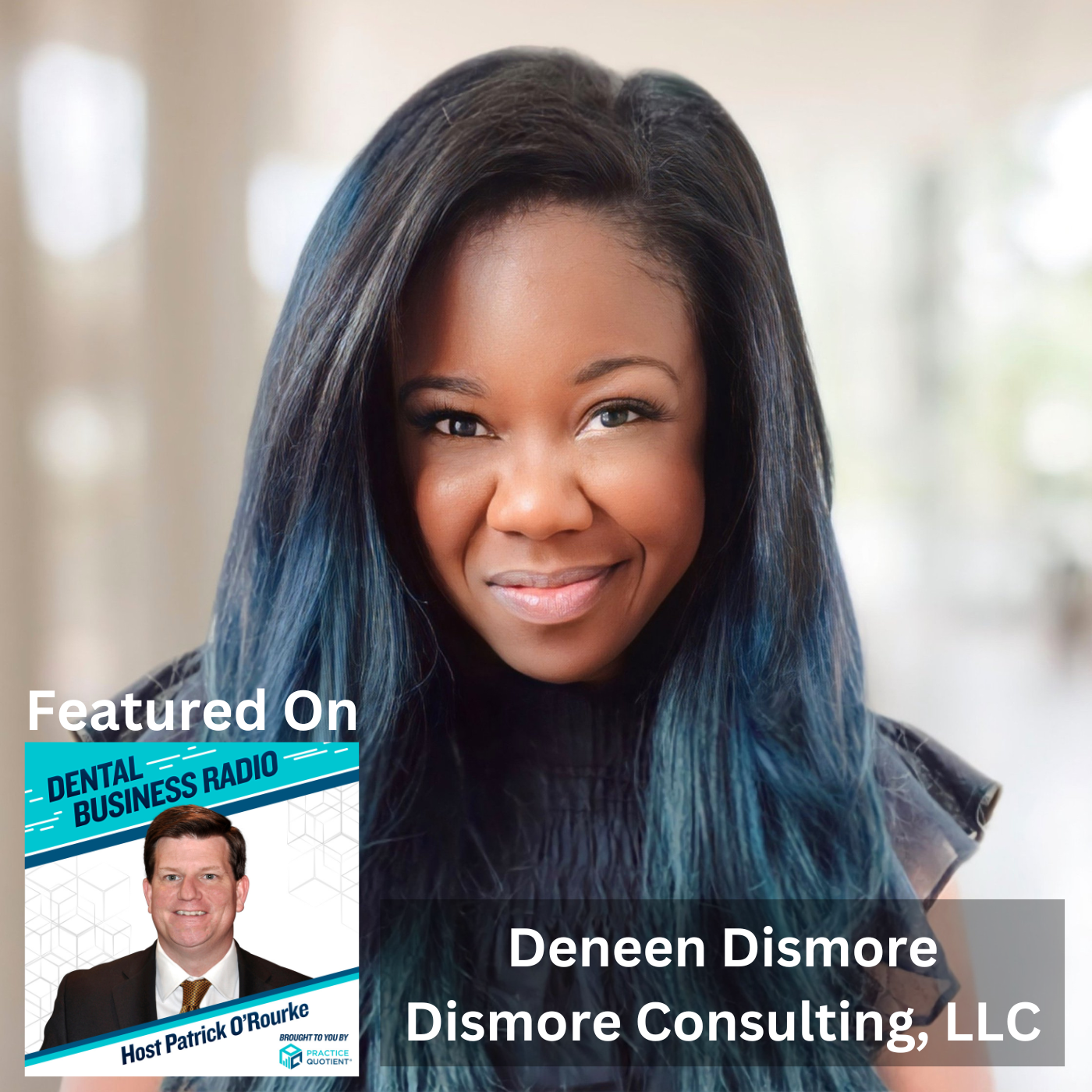
Dental Patient Acquisition, with Deneen Dismore, Dismore Consulting, LLC

December 15, 2023 by John Ray

Deneen Dismore
Dental Business Radio
Dental Patient Acquisition, with Deneen Dismore, Dismore Consulting, LLC
Loading
00:00 /
RSS Feed
Share
Link
Embed

Download file

Deneen Dismore

Dental Patient Acquisition, with Deneen Dismore, Dismore Consulting, LLC (Dental Business Radio, Episode 49)

In this episode, host Patrick O’Rourke discusses dental business strategies with guest Deneen Dismore, a new patient acquisition specialist. Deneen highlights the importance of understanding and expressing your unique selling proposition to attract the right patient demographic. She suggests focusing on building personal emotional connections with patients to drive business growth, and she emphasizes the crucial role of retention strategies in dental practices. Deneen shares how tailored welcome bags and patient relationships can generate referrals. Both Patrick and Deneen suggest hiring marketing directors for business growth and discuss the value of tracking and accountability in dental businesses.

Dental Business Radio is underwritten and presented by Practice Quotient: PPO Negotiations & Analysis and produced by the North Fulton studio of Business RadioX®.

Deneen Dismore, Dismore Consulting, LLC

Deneen Dismore
Deneen Dismore

Deneen Dismore is the outgoing CEO and Founder of Dismore Consulting and serves the dental community as a New Patient Acquisition Specialist. Born and raised in Long Island, New York, she’s no stranger to working in fast-paced environments that desire business growth.

While Deneen started her career in dentistry as the Marketing Director of two practices in Manhattan, she found her entrepreneurial calling after two career milestones. She was thrilled after nearly doubling the number of new patients in one practice. Then, Deneen led the marketing initiatives of another practice featured on Inc. 5000’s list of America’s fastest-growing companies.

While her career has led her to the hair, fitness and nutrition, and legal industries, her authority and passion remain in dentistry. And she’s served as a mentor and consultant for many other dental professionals and practice owners over the last 12 years.

Deneen is an unapologetic Harry Potter fan, a shameless self-development junkie, a huge fan of HGTV, and a self-described “outgoing introvert.” She is the proud mother of a one-year-old boy, Matthew, so staying active is a must! You can catch her working out at home, taking neighborhood walks with her son, or enjoying the occasional spin class.

Website | LinkedIn | Instagram | Facebook

Questions and Topics in this Interview:

00:03 Introduction and Sponsor Acknowledgement
01:01 Guest Introduction: Deneen Dismore
01:23 Deneen’s Background and Journey to Dental Business
02:37 Understanding the Role of a New Patient Acquisition Specialist
04:44 Deneen’s Personal Journey into the Dental Business
08:51 The Importance of Knowing Your Unique Selling Proposition
14:35 The Role of Retention in Dental Practice Growth
19:50 Comparing Marketing Strategies for Small and Large Practices
23:19 The Impact of PPOs on Dental Practices
23:49 Understanding Dental Insurance Perceptions
24:25 Creating Client Personas for Better Communication
25:51 Building Trust and Value with Patients
26:23 The iPhone Analogy: Value Over Cost
28:18 Addressing the PPO Dentist Perception
30:36 The Importance of Referrals in Dental Practice
38:16 The Power of Patient Gift Bags
40:48 Closing Remarks and Contact Information

About Dental Business Radio

Patrick O’Rourke, Host of “Dental Business Radio”

Patrick O’Rourke is the host of Dental Business Radio covers the business side of dentistry. O’Rourke and his guests cover industry trends, insights, success stories, and more in this wide-ranging show. The show’s guests include successful doctors across the spectrum of dental practice providers, as well as trusted advisors and noted industry participants.

Dental Business Radio is underwritten and presented by Practice Quotient and produced by the North Fulton studio of Business RadioX®. The show can be found on all the major podcast apps, and a complete show archive is here.

Practice Quotient

Dental Business Radio is sponsored by Patrick O’Rourke, Founder & CEO, Practice Quotient. Practice Quotient, Inc. serves as a bridge between the payor and provider communities. Their clients include general dentists and dental specialty practices across the nation of all sizes, from completely fee-for-service-only to active network participation with every dental plan possible. They work with independent practices, emerging multi-practice entities, and various large ownership entities in the dental space. Their PPO negotiations and analysis projects evaluate the merits of the various in-network participation contract options specific to your practice’s patient acquisition strategy. There is no one-size-fits-all solution.

Connect with Patrick O’Rourke and Practice Quotient

Practice Quotient Website | LinkedIn | Facebook | Patrick’s Website | Patrick’s Twitter | Patrick’s Instagram


Tagged With: Deneen Dismore, Dental Business Radio, dental insurance contracts, dental marketing, dental patients, dental practice management, dental practices, new patient acquisition, patient acquisition strategy, Patrick O'Rourke, PPO, PPO Negotiations & Analysis, Practice Quotient

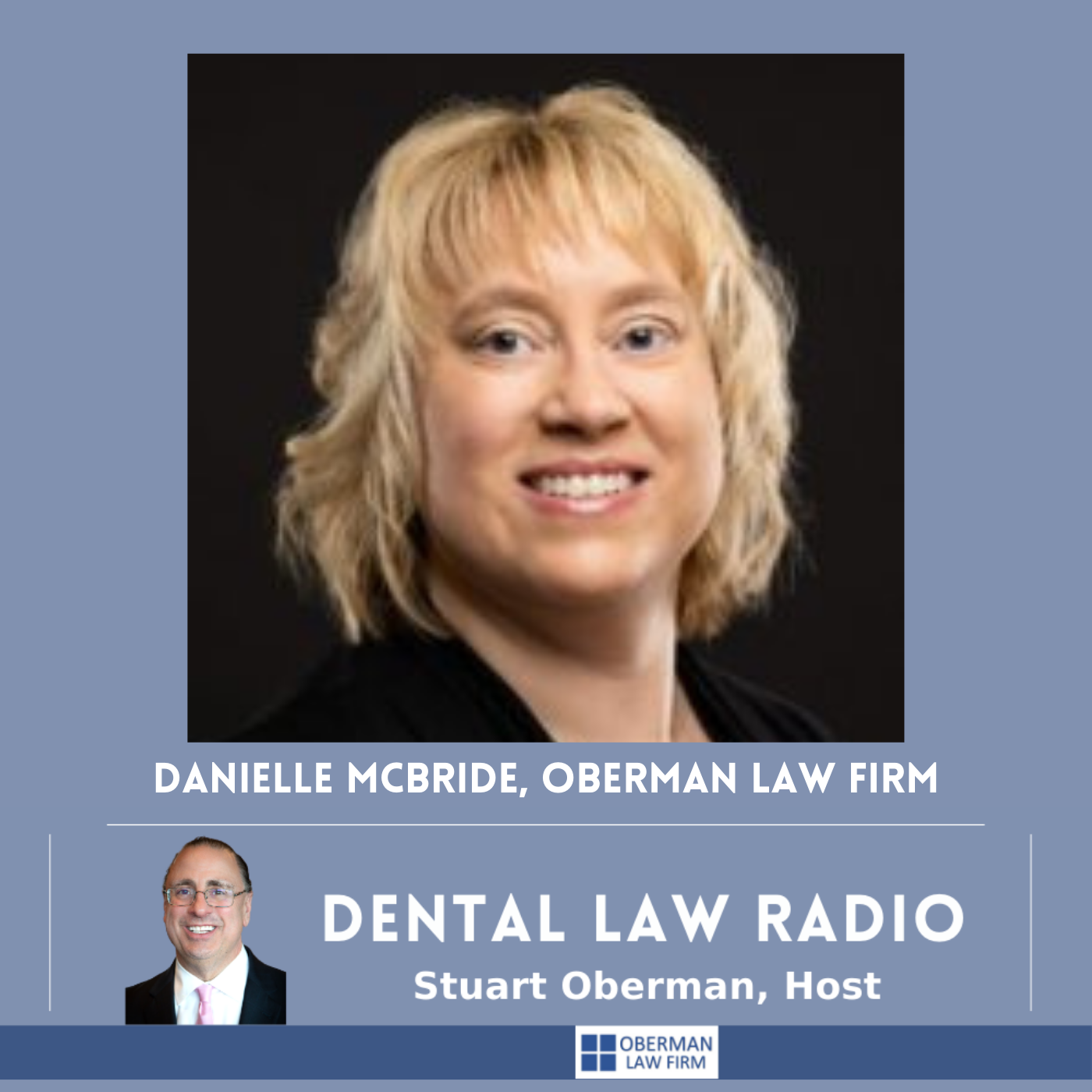
Keys to a Smooth Practice Transition, with Danielle McBride, Oberman Law Firm

January 7, 2022 by John Ray

Oberman Law Firm
Dental Law Radio
Keys to a Smooth Practice Transition, with Danielle McBride, Oberman Law Firm
Loading
00:00 /
RSS Feed
Share
Link
Embed

Download file

Oberman Law Firm

Keys to a Smooth Practice Transition, with Danielle McBride, Oberman Law Firm (Dental Law Radio, Episode 30)

Danielle McBride, Partner at Oberman Law Firm, talks with host Stuart Oberman about the elements needed for a successful and smooth sale of a dental practice. Danielle discusses ingredients like having the best advisors in the dental industry, detailed financials, quality of earnings, and much more. Dental Law Radio is underwritten and presented by Oberman Law Firm and produced by the North Fulton studio of Business RadioX®.


Danielle McBride, Partner, Oberman Law Firm

Danielle McBride
Danielle McBride, Partner, Oberman Law Firm

Danielle McBride has been practicing law for over 21 years, and her primary focus is representing healthcare clients on a local, regional, and national basis. Ms. McBride regularly consults with clients regarding simple to complex healthcare transitions, including mergers and acquisitions, employment law, governmental compliance, tax strategies, practice valuations, DSO formation and structures, employee compensation, associate and partnership contracts, joint ventures, and partnership buy-in/buy-outs.

In addition, Ms. McBride brings a wealth of knowledge and experience preparing practice valuations for clients, as well as formulating simple to complex tax strategies, and entity formations.

Ms. McBride holds a Bachelor of Arts in Sociology/Criminology from The Ohio State University, a Juris Doctor (J.D.) from Ohio Northern University Pettit College of Law, and a Master of Laws (LL.M.) in Taxation from Case Western Reserve University.

LinkedIn

TRANSCRIPT

Intro: [00:00:02] Broadcasting from the Business RadioX Studios in Atlanta, it’s time for Dental Law Radio. Dental Law Radio is brought to you by Oberman Law Firm, a leading dental-centric law firm serving dental clients on a local, regional, and national basis. Now, here’s your host, Stuart Oberman.

Stuart Oberman: [00:00:26] Welcome everyone to Dental Law Radio. We have a very, very special guest today, Danielle McBride, Partner in Oberman Law Firm. And a little background on Danielle – she’s very busy right now – Danielle has been practicing for 21 years and her primary focus is health care transactions, mergers, acquisitions on a local, regional, and national basis. Big, big in M&A transactions, employment law compliance, tax strategies – as you heard on a previous podcast. And we’re going to have some subsequent podcasts that Danielle is going to join us on – practice valuations, DSO formation. Lord, everything is DSO. Everything is scaling nowadays.

Stuart Oberman: [00:01:13] A little education background on Danielle, she graduated from Ohio Northern University with her law degree. And she has a Masters in Taxation from Case Western University. And we are absolutely delighted to have you in the studio, as we say, Danielle. And I know today you’re going to talk about keys to ensure a smooth practice transition, and you could maybe elaborate on this. It is an amazing market. It is a hot market like I’ve never seen in my years of practicing. Valuations are out the roof. Private equity is throwing money at transactions.

Stuart Oberman: [00:01:58] But there’s a lot of misconceptions about what it takes to have a smooth transition, and I really want to drill down on your expertise. You’ve been doing this for over 21 years, and I want to hear what you have to say and your thoughts all the way from due diligence to leveraging advisors. So, give me your thoughts on some matters regarding what it takes to have a smooth transition, as we say.

Danielle McBride: [00:02:29] Well, thanks, Stuart, for having me on the podcast. And, yeah, this is Keys to a Smooth Practice Transition. I kind of call this my ABCs. A is for advisors. One of the best things that you can do for yourself is to surround yourself with the best advisors you can. And they should be specialized, you know, professionals in this area, in the dental industry.

Danielle McBride: [00:02:57] Leverage your advisors that have the experience in these transactions. I mean, there are dental specific lawyers like us. There are dental accountants. There are dental finance lenders. There are dental brokers. All of these people, all of these advisors have a ton of experience. This may be your one and only transaction, buying a practice or selling a practice or merging going in with a DSO. We’ve done hundreds, if not thousands, of these transactions, these advisors have.

Danielle McBride: [00:03:29] So, you know, it’s important to get those specialized professionals to work with you. And they’re out there. And if you have at least one of those advisors, they can help you find others. If you’re in need of a dental specific lender, if you’re a buyer of a practice, if you’re in need of a dental specific accountant, there are lots of other financial business and consultants that have specialized knowledge in the dental field. And that’s my A, you know, my ABCs.

Danielle McBride: [00:04:04] The second is your business. You’ve got to know your business. And it’s important whether you’re looking to sell to a third party or to a DSO in these transactions. Knowing your business, knowing the numbers, having the data that’s going to be requested through all of the due diligence is going to be one of the most important things that you do in these transactions.

Stuart Oberman: [00:04:25] I got a question for you. I got a question for you. You do valuations. We hear –

Danielle McBride: [00:04:30] Yes. I do practice valuations. And so, one of the keys in those valuations is profitability in the practice transition.

Stuart Oberman: [00:04:37] We hear this all the time, “Know your numbers,” what does that mean? When someone says, “Well, I got to know my numbers.”

Danielle McBride: [00:04:47] Know your numbers.

Stuart Oberman: [00:04:48] What does that mean? I mean, our guys, it doesn’t seem like they understand that a lot of times.

Danielle McBride: [00:04:55] Yeah. So, knowing your numbers means a couple of different things. One is being able to get the data on new patients, and insurance plans, and how much of your practice is PPO plans versus fee for service. Those kind of numbers are important. But the key numbers are profitability.

Danielle McBride: [00:05:17] Or sometimes in these DSO transactions you hear being thrown around EBITDA, E-B-I-T-D-A, Earnings Before Income Taxes, Depreciation, and Amortization. It’s essentially, not just the net income, it’s profitability, it’s the cash flow in the practice. You got to look beyond W-2 compensation or net profit. It’s that plus add back. Discretionary expenses, I like to call them. The perks that the doctor runs through the practice.

Danielle McBride: [00:05:49] It can also be things like family on the payroll, if they’re being paid more or less than what would be fair salary for someone doing the work that they’re doing in the practice. It can also be rent. You know, looking at fair rent and whether you’re paying yourself above or below what fair market rent is on a piece of property or your office building that you also own along with the practice.

Stuart Oberman: [00:06:13] Is your specific profit margin? You hear like, “Well, you should be netting out 20 percent profit or 40 percent profit.” Is there a magic number that’s sort of advisable for those things?

Danielle McBride: [00:06:26] Well, it varies based on the specific type of practice. So, your general dental practice might be running an overhead of 60, 61 percent, 40 percent profitability. And that 40 percent of profitability is your W-2 income, your profit, your discretionary add backs, adjustments for paying yourself high rent on your building, non-recurring expenses, if you hired a consultant to come in one year, those sort of things. It’s going to vary if you’re an oral surgeon or if you’re an orthodontist or a pediatric dentist. There are different percentages for those different specialties.

Stuart Oberman: [00:07:11] Huh? Now, I know we do a lot of DSO transactions as a firm, so if they’re getting ready to sell their practice, how should they prepare due diligence? Should they say, “Hey, Danielle. I’m ready to sell my practice. I know there’s a lot of due diligence on the DSO side. Can you send me a due diligence checklist so I can start preparing for this?” How do they prepare for due diligence, which will wear them out a lot of times?

Danielle McBride: [00:07:42] Yeah. It’s going to wear them out and you’re going to get asked for stuff over and over again.

Stuart Oberman: [00:07:46] The same stuff.

Danielle McBride: [00:07:46] You’re going to send them all of your quarter one, quarter two, quarter three, quarter four financial statements and tax returns. And every insurance provider you take in the practice. Some of the banks even ask for monthly profit and loss statements for the year, especially after COVID.

Danielle McBride: [00:08:13] COVID kind of changed things from a financial perspective. From the lender’s perspective, it used to be that you could get away with sending them the years worth of financial statements and tax returns. And then, we had COVID and then they wanted to see month by month. So, we wanted to see every month of 2019, and every month of 2020, and every month of 2021 so far.

Danielle McBride: [00:08:36] So, having the ability to get at least quarterly financial statements is an important part of the due diligence. And then, they’re just going to ask you for every business insurance, every business license, every license for every staff member and doctor in the office. They’re going to ask for balance sheets.

Danielle McBride: [00:08:56] And if there are liens on the practice, which is often one thing that people forget. So, if you had an SBA loan, for instance – a lot of people had this. I just had this with a transaction – SBA EIDL Loans, you can pay those off. My client actually got an email from the SBA saying, “This is your authorization to file a UCC termination on the lien that we have on your practice.” And we needed to get that termination statement filed to clear it for the lender so that the buyer’s lender would actually fund the transaction. So, there are things like that.

Stuart Oberman: [00:09:36] Do you see a lot of PPP problems right now? Loans are not being authorized to pay back and items are being withheld on the transaction?

Danielle McBride: [00:09:48] I did earlier in the year. So many of the PPP loans have finally gotten forgiven. That that problem has started to get a little bit easier to deal with. Usually, it’s some document references on the PPP loans and that it’s been forgiven and some sort of proof to the lenders or the buyer that it’s actually been forgiven.

Danielle McBride: [00:10:12] But I did have to do a lot of escrows. And back in 2021, I first started doing transactions again after COVID opened back up and the lenders started lending again. I was having to escrow funds for PPP because the guidance came out from the IRS saying that you had to escrow the amount of the PPP loan with the bank. And the banks were like, “We don’t know how to do this.” So, you know, I was actually escrowing funds into attorney escrow accounts and holding it because the bank wasn’t prepared to do it.

Stuart Oberman: [00:10:44] Wow. So, do you recommend from an expedient standpoint smooth transaction that we have sort of a due diligence checklist, whether it’s us or whomever, provide that due diligence checklist information to whoever the adviser is and then put that information – we’ll call it a data room? And then, this way the seller or the buyer can get in there and start plucking that information. Is that something that you thought?

Danielle McBride: [00:11:16] A lot of times, if you’re working with these bigger DSOs, they will do exactly that. They’ll have some sort of service where you’re uploading your documents and they will have a checklist that they have to go through. Because a lot of the private equity lenders, they’ve got checklists and they want to see each and every one of those items checked off before they will give the green light to fund the transaction.

Stuart Oberman: [00:11:36] Now, some of these bigger deals, we hear the term quality of earnings. Quality of earnings, what does that mean? Because a lot of the buyers on the corporate side will spend a lot of money on quality of earnings. Our doctors, I don’t think, really understand what that means and how that affects their practice.

Danielle McBride: [00:11:58] Well, I think the quality of earnings is really going back to the profitability in the EBITDA of the practice and the better the cash flow is. It’s sort of like when you hear the old adage, “Okay. Well, what is my practice worth as a percentage of collections?” And everybody says, “Oh, it should be 75 percent of collections or 65 percent of collections.” Well, that’s great.

Danielle McBride: [00:12:19] But if you have two $1 million practices and one has a 65 percent overhead and the other one has a 50 percent overhead, they’re both not worth 65 percent of gross revenues. One has a better quality of earnings. One has a better cash flow. One has higher profitability. And the practice is going to support that buyer and provide a higher profit ratio for that buyer, that DSO, that corporate purchaser.

Danielle McBride: [00:12:53] And especially for a private party, too, I mean, that’s what you want to look for, a practice that has a better cash flow, higher profitability. And you can clearly see that in the tax returns. That’s another thing, too, that a lot of sellers have to think about this. A lot of them have been aggressive with their deductions, but they’ve also maybe been a little lax about putting the documentation together and being clear on that. And so, sometimes when you get a practice like that where they’re just running a ton of things through the practice, you got to sometimes do a little bit clean up because the buyer is going to ask those questions and they’re going to want to see, “Well, where is the cash flow?”

Stuart Oberman: [00:13:30] That never happens. You mean doctors are running their personal stuff through the practices? Are you kidding me?

Danielle McBride: [00:13:34] That never happens, right?

Stuart Oberman: [00:13:39] Are you saying the house payment, and the kids, and the trip – wow. Well, they call this add backs. Is that what they call those?

Danielle McBride: [00:13:51] Add backs. I like to refer to them as discretionary expenses.

Stuart Oberman: [00:13:55] Or having their six year old child, son or daughter, make $10,000 a year –

Danielle McBride: [00:14:02] Yeah. They model for the website. They got to pay them something.

Stuart Oberman: [00:14:05] Or the flyer for the office. Wow. That’s a lot of stuff. And this could be a conversation for hours and hours and hours. Well, I think that if our doctors take this information, figure out when they’re going to sell, how they’re going to sell, who their advisors are, what do they need to do to get prepared, I think this is great advice. How do they reach you if they have any questions on the sale, the due diligence?

Danielle McBride: [00:14:38] They can reach out to Oberman Law Firm at 770-886-2400. My email is danielle@obermanlaw.com. And you can go on our website, too, obermanlaw.com for information. There’s some blog posts and lots of information about the practice on there. And, yeah, reach out. Give us a call. We’ll help you. The other key to a smooth transition is not waiting until the last minute to plan for it.

Stuart Oberman: [00:15:11] Well, that never happens either, huh? Well, I know you’re a regular contributor to the firm’s newsletter, Advisor Insights. Great information coming in there. And I know in a previous podcasts, you had a great, great information on tax. I know you got some other podcasts that you’ll be on the air for. Amazing. Danielle, thank you. Thank you so much.

Stuart Oberman: [00:15:36] Ladies and gentlemen, thanks for joining us on Dental Law Radio. If you have any questions, please feel free to give us a call, 770-886-2400. And email me directly, stuart@obermanlaw.com.

Stuart Oberman: [00:15:49] Guys, ladies and gentlemen, thank you very, very much. Danielle, thank you again. Amazing job as always. We rely on you a lot on the acquisition, and tax side, and general guidance on compliance. So, thanks everyone and have a great day.


About Dental Law Radio

Hosted by Stuart Oberman, a nationally recognized authority in dental law, Dental Law Radio covers legal, business, and other operating issues and topics of vital concern to dentists and dental practice owners. The show is produced by the North Fulton studio of Business RadioX® and can be found on all the major podcast apps. The complete show archive is here.

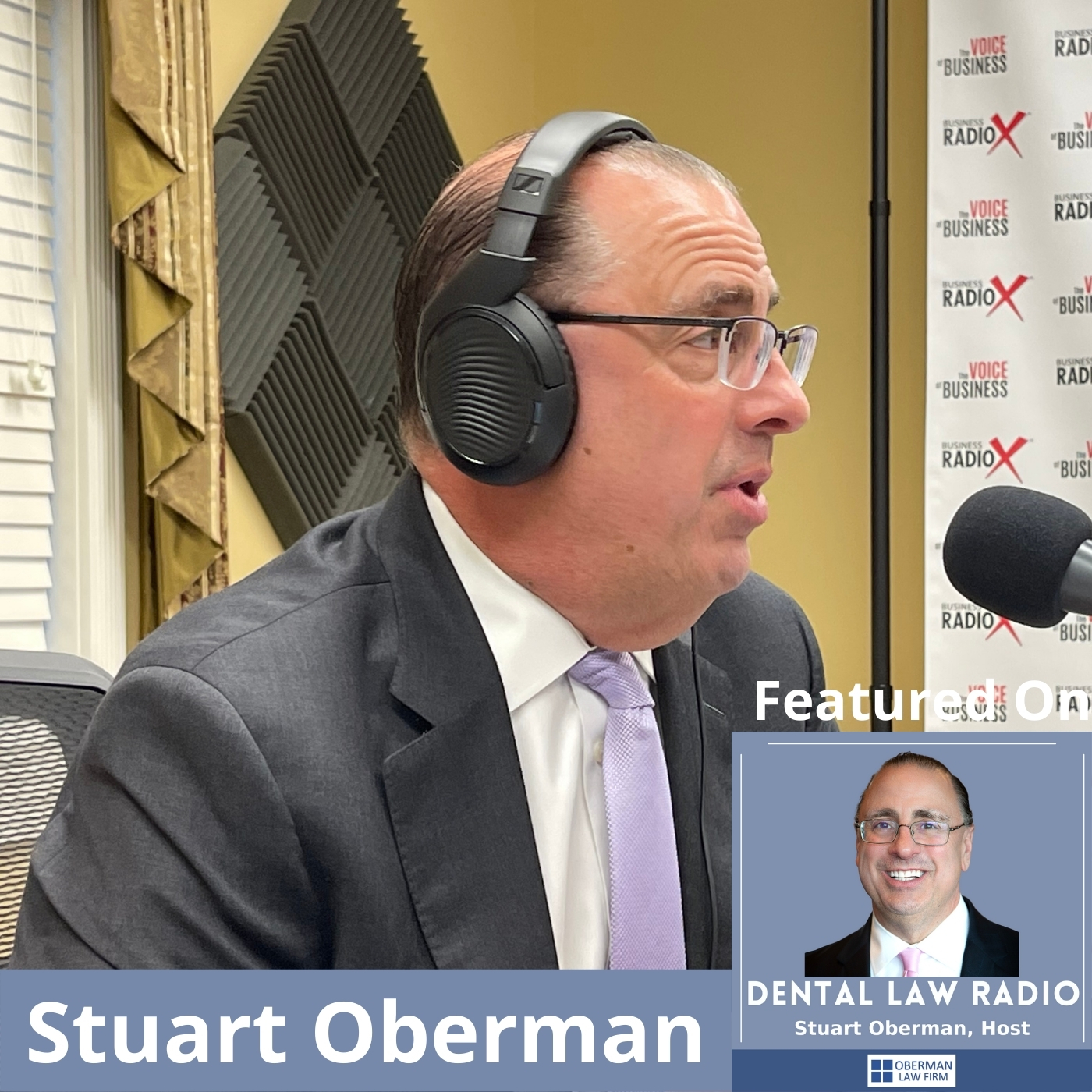
Stuart Oberman, Oberman Law Firm

Stuart Oberman
Stuart Oberman, host of “Dental Law Radio”

Stuart Oberman is the founder and President of Oberman Law Firm. Mr. Oberman graduated from Urbana University and received his law degree from John Marshall Law School. Mr. Oberman has been practicing law for over 25 years, and before going into private practice, Mr. Oberman was in-house counsel for a Fortune 500 Company. Mr. Oberman is widely regarded as the go-to attorney in the area of Dental Law, which includes DSO formation, corporate business structures, mergers and acquisitions, regulatory compliance, advertising regulations, HIPAA, Compliance, and employment law regulations that affect dental practices.

In addition, Mr. Oberman’s expertise in the health care industry includes advising clients in the complex regulatory landscape as it relates to telehealth and telemedicine, including compliance of corporate structures, third-party reimbursement, contract negotiations, technology, health care fraud and abuse law (Anti-Kickback Statute and the State Law), professional liability risk management, federal and state regulations.

As the long-term care industry evolves, Mr. Oberman has the knowledge and experience to guide clients in the long-term care sector with respect to corporate and regulatory matters, assisted living facilities, continuing care retirement communities (CCRCs). In addition, Mr. Oberman’s practice also focuses on health care facility acquisitions and other changes of ownership, as well as related licensure and Medicare/Medicaid certification matters, CCRC registrations, long-term care/skilled nursing facility management, operating agreements, assisted living licensure matters, and health care joint ventures.

In addition to his expertise in the health care industry, Mr. Oberman has a nationwide practice that focuses on all facets of contractual disputes, including corporate governance, fiduciary duty, trade secrets, unfair competition, covenants not to compete, trademark and copyright infringement, fraud, and deceptive trade practices, and other business-related matters. Mr. Oberman also represents clients throughout the United States in a wide range of practice areas, including mergers & acquisitions, partnership agreements, commercial real estate, entity formation, employment law, commercial leasing, intellectual property, and HIPAA/OSHA compliance.

Mr. Oberman is a national lecturer and has published articles in the U.S. and Canada.

LinkedIn

Oberman Law Firm

Oberman Law Firm has a long history of civic service, noted national, regional, and local clients, and stands among the Southeast’s eminent and fast-growing full-service law firms. Oberman Law Firm’s areas of practice include Business Planning, Commercial & Technology Transactions, Corporate, Employment & Labor, Estate Planning, Health Care, Intellectual Property, Litigation, Privacy & Data Security, and Real Estate.

By meeting their client’s goals and becoming a trusted partner and advocate for our clients, their attorneys are recognized as legal go-getters who provide value-added service. Their attorneys understand that in a rapidly changing legal market, clients have new expectations, constantly evolving choices, and operate in an environment of heightened reputational and commercial risk.

Oberman Law Firm’s strength is its ability to solve complex legal problems by collaborating across borders and practice areas.

Connect with Oberman Law Firm:

Company website | LinkedIn | Twitter

Tagged With: Danielle McBride, Dental Practice, dental practice management, dental practices, DSO, due diligence, Oberman Law Firm, selling a dental practice, Stuart Oberman

Top 10 Mistakes Dentists Make

December 3, 2021 by John Ray

DentalBoardComplaintsDLREpisode26Album1
Dental Law Radio
Top 10 Mistakes Dentists Make
Loading
00:00 /
RSS Feed
Share
Link
Embed

Download file

DentalBoardComplaintsDLREpisode26Album1

Top 10 Mistakes Dentists Make (Dental Law Radio, Episode 27)

With clients in about 35 states, Stuart Oberman and his dental law team at Oberman Law Firm have seen a bit of everything. In this episode of Dental Law Radio, Stuart reviews the top mistakes dentists make in their practice, starting with failure to recognize problem patients. Dental Law Radio is underwritten and presented by Oberman Law Firm and produced by the North Fulton studio of Business RadioX®.


TRANSCRIPT

Intro: [00:00:01] Broadcasting from the Business RadioX Studios in Atlanta, it’s time for Dental Law Radio. Dental Law Radio is brought to you by Oberman Law Firm, a leading dental-centric law firm serving dental clients on a local, regional, and national basis. Now, here’s your host, Stuart Oberman.

Stuart Oberman: [00:00:26] Hello everyone and welcome to Dental Law Radio. All right. Today’s topic, I am very passionate about. As I said before, we are a dental-centric law firm, Oberman Law Firm. Clients from multiple states, probably 30, 35 states last count, clients from California, Maine to Florida, all points in between. And what I see is the same, same mistakes over and over and over again, until I just have to beat my head against the wall.

Stuart Oberman: [00:01:05] So, I want to review for you Oberman’s Top Ten List of Mistakes. So, let’s start off, let’s run right into it. Mistake number one, failure to recognize problem patients. I can’t tell you how many calls a week I get, “I got this problem patient. What do I do? I got this problem right now. I got the patient in the chair. What do I do?”

Stuart Oberman: [00:01:32] Let me make this point real clear. And I’ve said this over and over and over again, you’re going to know you’ve got a problem patient before you put your hand in their mouth. You know why? Because when they called your office, they were rude. When they made the appointment, they were rude. When they went to your front desk to check in, they were rude. When they walked back to your chair, they were rude. They’ve cussed at your hygienist. They’ve cussed at your assistant. And yet you’re going to treat them. And you’ve got 17 people in your office tell you, “Doc, bad news. Doc, bad news.” And yet because you see $1,000 coming in your checkbook, you’re going to treat them.

Stuart Oberman: [00:02:14] Let me make this point clear, you touch one tooth and you bought that problem patient, and you will live with that patient forever. Get rid of that patient. Do not ever, ever, ever, ever treat a problem patient. Your gut is going to tell you, you’ve got a problem patient. And when that patient sits in your chair, before you touch them and they tell you what’s wrong, I don’t care what it is. You don’t do it. You do not do cavities. I don’t care. You do not do whatever that problem is. You get rid of that patient.

Stuart Oberman: [00:02:52] Two – a good friend of mine is going to kill me on this one – collections. Rule of thumb, my opinion is never, ever, ever send your patient to collections. We do a lot of board complaints, a lot of risk management, and I’m going to say at least 90 percent of all problems stem from collections. Once you send a patient to collections, you lose control of what the stature of that case is because then you’ve got some collection agency person harassing your patient and never ends. So, I mean, we’ve had clients before that have sent a patient to collections for a $100. So, they’ve got a problem, then they pay me $2,000 to put the fire out, so that is very good business sense. Do not send your patients to collections.

Stuart Oberman: [00:03:54] Mistake number three is, our dental offices are horrible at communication. They fail to advise the staff for the need of consistent, accurate documentation. Document your charts. Let me make this point clear, if you rely on your staff to document your charts, you’re going down a dark hole. It’s okay to delegate that. But at the end of the day, that’s your responsibility. If they put down the wrong x-ray right left side, tooth wrong.

Stuart Oberman: [00:04:25] And you go in front of the board and that board calls you out. Or you go in a deposition for malpractice claiming, that other attorney calls you out. What are you going to say? “Well, that was my staff’s problem. I didn’t do that.” And you got three people on the board or five people on the board, sitting and looking at you like, “Why do you have the wrong x-ray in the file? Why do you have the wrong x-ray marked?” “Well, it’s my staff’s problem, it’s not my problem.”

Stuart Oberman: [00:04:56] Do not rely on your staff for everything. You’ve got to document it. Teach them what is consistent, accurate, complete documentation. If it’s never in a file, it never happened. If it’s wrong in the file, it’s your responsibility.

Stuart Oberman: [00:05:16] Four – and this is an interesting problem – failure to maintain good chair side manner with patients. And let me tell you, there’s a difference. So, our younger doctors are enormously successful clinically. But the bedside manner is a little rough. It’s quick. They’re under pressure. Our doctors have been practicing a little bit longer, I would say, as a whole or probably a little bit better with chair side manner. That’s a broad statement, so I could have it in every case.

Stuart Oberman: [00:05:55] But chair side manner will keep you out of trouble. A very good friend of mine practicing for 30 years, never had a board complaint. Never had a malpractice claim. I asked her one day, I said, “How did you avoid this kind of trouble? Thirty years never had a board complaint. Malpractice claim, never.” She was, “Let me tell you what I did. First five minutes, I want to know how the family’s doing because it’s already in my chart. I know they’re married. I know the wife passed away. I know their child is sick. I know the child was sick. I know they’ve got kids in college. I know all that. So, for five minutes, I want to know how the family’s doing.”

Stuart Oberman: [00:06:41] You can spare five minutes out of your time with every patient at least five minutes to figure out what’s going on with that patient. And that, from a pure risk management standpoint, will reduce your malpractice claims. And if it’s a new patient, and you don’t get a good feeling talking to that patient, you better take action right away.

Stuart Oberman: [00:07:02] But chair side manner is so important because, look, people love you, but they don’t want to be there. They don’t want be [inaudible]. They don’t want to be poked and prodded. They’re getting divorced. They’re struggling. They’re being laid off. Their kids are in jail. Their mother is sick. They’re taking care of families. They’re going back and forth to nursing home. Their dad’s house is being foreclosed upon. People got problems.

Stuart Oberman: [00:07:29] And all you’ve got to do is be that sunshine and that light. And if there’s a problem and you’ve got a connection with that doctor, we’re painting a connection with that doctor and you got a connection with that patient. You’re going to avoid a problem. All communication.

Stuart Oberman: [00:07:47] Mistake number five, failure to designate a point person. Let me tell you, you got someone in your office that’s handling payroll, OSHA, HIPAA, Compliance, EEOC, Department of Labor, Audits, everything in between. You’ve got to have a designated point person. You can’t have every person doing everything. You can’t have the hygienist or your wife or husband who’s managing a practice do everything. You’ve got to have a point person.

Stuart Oberman: [00:08:20] What are you going to do when you get an OSHA complaint? Where’s it going to? Do you have a process? What are you going to do when a board investigator comes to your office and wants to have information? What are you going to do? Who are you going to direct that person to? Is it going to be you? You don’t have the time for that. You don’t have the resources. You don’t have the training for it. Designate that person on an H.R. standpoint.

Stuart Oberman: [00:08:48] Six, failure to avoid negative comments in charts. Let me tell you, you write something bad in a chart and a patient gets a copy of that chart, it’s going on the internet, folks. I have seen every cuss word imaginable in a chart. I’ve seen every patient called every name in the book. Every patient’s child, mother, wife, husband called everything under the sun in a chart. I’ve seen comments in there that will violate Federal Law regarding race, color, creed, sex, or origin.

Stuart Oberman: [00:09:28] Never ever, ever put anything in the chart that you would not want to put on the front of the New York Times. Because once it goes viral, you are dead in the water. There is no retraction. What are you going to do? Patient decides to go seek another doctor. It is what it is. You’re not going to please everyone and that patient is going to move to another location.

Stuart Oberman: [00:09:55] What are you going to do if all of a sudden you discover that someone in your office, because you never read the chart, put something derogatory about that patient physically, mentally, race, color, creed, sex, or origin? What are you going to do? And, now, that patient has got that file because they picked it up at 10:00 and you didn’t get to your patient until 5:00. You lost control. You absolutely lost control.

Stuart Oberman: [00:10:25] You better know what goes in your files. You better have a policy to prevent that. You better have something in writing from your staff outlining they will not violate that provision. Because, again, if it goes viral, you have a huge, huge problem.

Stuart Oberman: [00:10:42] Mistake number seven, failure to follow up with a patient. Look, I know when I’ve had dental issues, my doctor’s office will call and say how are you doing. Doctor’s offices, we have clients who have regular routine. Our clients have a regular routine. They will call that patient and say how are you doing. It only takes five minutes. You’ve got a complex procedure, “How are you doing?” Or your staff calls, “How are you doing?” Follow up.

Stuart Oberman: [00:11:18] Now, another aspect of this is follow up and document it. Because you will have a patient go south and you will call them 17 times, they will not answer 17 times. Or you call them 17 times, they don’t answer 16, they answer the 17th time. But they will swear under the sun, moon, and stars that you never, ever, ever called them. So, if you’re going to call them, document it. Document the conversation that you followed up. I can’t stress how much that means to the patients and how much of a concern it will be if you don’t get an early reading on that patient that they’ve got a problem.

Stuart Oberman: [00:12:01] So, here’s another concern with our doctors, failure to properly discharge patients from care. I get this question all the time, “I’ve got a problem patient. I wish I could discharge them, but they just won’t go away.” The answer is, you can discharge the patient at any time. Now, my general rule is, you got to be specific on your state rules, but, generally, you discharge, you give a reason, a non-combative reason. And then, you give them 30 days of emergency service.

Stuart Oberman: [00:12:37] Now, that is going to vary state by state. We’d have to check that out. But you can discharge a patient if they do not listen, if they’re not paying their bill, if they are constantly late on appointments, if they reschedule appointments. There is a process. Never ever, ever text a discharge. Never ever, ever text a discharge or send a discharge by email.

Stuart Oberman: [00:13:05] First and foremost, you’ve got to have permission to correspond with a patient by email. It’s electronic communication that involves HIPAA. Send it regular mail or send it certified mail, one of each, or FedEx. Not that I’m endorsing FedEx, UPS is fine too. But that’s a term of art. But get rid of that patient, put it in writing. And then, what you want to do is make sure you keep it for your file. “Well, I discharged that patient.” “Well, is the discharge letter in the file?” “No. But I know I did.” “I sent a certified.” “Do you have the certified receipt?” “No. But I know I did.” “I sent a FedEx.” Again, I’m not endorsing FedEx. “I sent a FedEx.” “Well, you know, I just forgot the receipt.” Figure it out.

Stuart Oberman: [00:13:56] Mistake number ten, failure to refer when needed. I don’t know why in today’s world, our doctors do not refer more cases out. In many cases, they are not qualified to do the treatment that they are doing. But yet they will certainly engage in that conduct and try to do it because they took a course on it at one time. If it’s not what you do every day and if you have to ask yourself, “Am I capable of doing that?” The answer is refer it out. The $1,000 or $2,000 that you save long term will save you a long list of headaches down the road. Refer it out. Know to say when.

Stuart Oberman: [00:14:48] So, mistake number ten, final number ten. So, when you get a board complaint, you get a malpractice claim. And I always say, “It’s not if, it’s when,” because patients are nuts and things happen. In today’s software, you have to be very, very careful to remove or modify notes because it comes up as modification in your software many times. I would not alter notes in the computer. I would do supplementals.

Stuart Oberman: [00:15:25] Look, we all go back and write notes on cases. It’s impossible to remember everything within five minutes of a meeting. You’re going to remember things that occurred at a later date. There’s nothing wrong with adding a typed out or handwritten note to supplement what you have. But if you start modifying notes to avoid a malpractice claim or a dental board complaint or deleting information, you’re in a whole different world and a whole different problem set of headaches that you never wanted to go down. So, be very, very careful what you modify in your communications.

Stuart Oberman: [00:16:08] Folks, that is a simple, simple, simple, 15 or 20 minutes presentation on mistakes. They’re simple mistakes. It’s the simple things that cause you the biggest headache. It’s not the massive things. It’s the little things that add up to the big things. Take a look at what you’re doing. Take a look at these top ten mistakes. And then, let’s look at what we need to do or how you need to improve what you’re doing. But it’s simple steps.

Stuart Oberman: [00:16:39] Thank you for joining us once again on Dental Law Radio. My name is Stuart Oberman. If you have any questions, please feel free to give me a call at 770-886-2400 or stuart, S-T-U-A-R-T, @obermanlaw.com. Thanks for joining us and have a fantastic day.


About Dental Law Radio

Hosted by Stuart Oberman, a nationally recognized authority in dental law, Dental Law Radio covers legal, business, and other operating issues and topics of vital concern to dentists and dental practice owners. The show is produced by the North Fulton studio of Business RadioX® and can be found on all the major podcast apps. The complete show archive is here.

Stuart Oberman, Oberman Law Firm

Oberman Law Firm
Stuart Oberman, host of “Dental Law Radio”

Stuart Oberman is the founder and President of Oberman Law Firm. Mr. Oberman graduated from Urbana University and received his law degree from John Marshall Law School. Mr. Oberman has been practicing law for over 25 years, and before going into private practice, Mr. Oberman was in-house counsel for a Fortune 500 Company. Mr. Oberman is widely regarded as the go-to attorney in the area of Dental Law, which includes DSO formation, corporate business structures, mergers and acquisitions, regulatory compliance, advertising regulations, HIPAA, Compliance, and employment law regulations that affect dental practices.

In addition, Mr. Oberman’s expertise in the health care industry includes advising clients in the complex regulatory landscape as it relates to telehealth and telemedicine, including compliance of corporate structures, third-party reimbursement, contract negotiations, technology, health care fraud and abuse law (Anti-Kickback Statute and the State Law), professional liability risk management, federal and state regulations.

As the long-term care industry evolves, Mr. Oberman has the knowledge and experience to guide clients in the long-term care sector with respect to corporate and regulatory matters, assisted living facilities, continuing care retirement communities (CCRCs). In addition, Mr. Oberman’s practice also focuses on health care facility acquisitions and other changes of ownership, as well as related licensure and Medicare/Medicaid certification matters, CCRC registrations, long-term care/skilled nursing facility management, operating agreements, assisted living licensure matters, and health care joint ventures.

In addition to his expertise in the health care industry, Mr. Oberman has a nationwide practice that focuses on all facets of contractual disputes, including corporate governance, fiduciary duty, trade secrets, unfair competition, covenants not to compete, trademark and copyright infringement, fraud, and deceptive trade practices, and other business-related matters. Mr. Oberman also represents clients throughout the United States in a wide range of practice areas, including mergers & acquisitions, partnership agreements, commercial real estate, entity formation, employment law, commercial leasing, intellectual property, and HIPAA/OSHA compliance.

Mr. Oberman is a national lecturer and has published articles in the U.S. and Canada.

LinkedIn

Oberman Law Firm

Oberman Law Firm has a long history of civic service, noted national, regional, and local clients, and stands among the Southeast’s eminent and fast-growing full-service law firms. Oberman Law Firm’s areas of practice include Business Planning, Commercial & Technology Transactions, Corporate, Employment & Labor, Estate Planning, Health Care, Intellectual Property, Litigation, Privacy & Data Security, and Real Estate.

By meeting their client’s goals and becoming a trusted partner and advocate for our clients, their attorneys are recognized as legal go-getters who provide value-added service. Their attorneys understand that in a rapidly changing legal market, clients have new expectations, constantly evolving choices, and operate in an environment of heightened reputational and commercial risk.

Oberman Law Firm’s strength is its ability to solve complex legal problems by collaborating across borders and practice areas.

Connect with Oberman Law Firm:

Company website | LinkedIn | Twitter

Tagged With: Dental Law Radio, dental practice management, dentists, Mistakes Dentists Make, Oberman Law Firm, Stuart Oberman

Employee Embezzlement

November 5, 2021 by John Ray

EmployeeEmbezzlementDLREpisode24Album
Dental Law Radio
Employee Embezzlement
Loading
00:00 /
RSS Feed
Share
Link
Embed

Download file

EmployeeEmbezzlementDLREpisode24Album

Employee Embezzlement (Dental Law Radio, Episode 24)

While industry statistics indicate about 40% of all dental practices are embezzled, Stuart Oberman believes the actual number is 60% or more, based on his work with clients and his conversations with other industry experts. So what are the most common employee embezzlement schemes, and how do you protect your practice? Stuart has answers in this episode. Dental Law Radio is underwritten and presented by Oberman Law Firm and produced by the North Fulton studio of Business RadioX®.

TRANSCRIPT

Intro: [00:00:02] Broadcasting from the Business RadioX Studios in Atlanta, it’s time for Dental Law Radio. Dental Law Radio is brought to you by Oberman Law Firm, a leading dental-centric law firm, serving dental clients on a local, regional and national basis. Now, here’s your host, Stuart Oberman.

Stuart Oberman: [00:00:26] Hello, everyone, and welcome to Dental Law Radio. Today’s topic is not a pleasant topic, but we are seeing a rise. Now, I have not talked about this topic in probably a couple of years because there has not been a necessarily need to but now it is rearing its ugly head.

Stuart Oberman: [00:00:48] Employee embezzlement. That’s right, folks. Employee embezzlement. And, the reason why I have not talked about this in a couple of years is because [inaudible] COVID-19. Our guys got hit number-wise. But we’re seeing an enormous rebound in our practices. Many, many, many of our practices, I’m going to say about 80% of our dental practices, had a record year. They’re busy. They’re having staff problems. They can’t keep up with the work. And, what happens is they’re simply losing track of what in the world they’re doing internally. I don’t have any other, I had no other explanation for it, is that they have no idea and can’t keep track what they’re doing internally.

Stuart Oberman: [00:01:33] So, employee embezzlement, and I will make this general statement. If you think your employees are not stealing from you, you are grossly mistaken. I’m going to give you some statistics, then I’m going to give you sort of what I think the real world is. Statistically, 40% of all dental practices are going to be embezzled, 40%. I’m going to tell you right now I believe it’s 60 to 70%. From what I’m seeing, from what I discover, when I talk to our consultants and industry experts, it’s about 60%. So, the average embezzlement statistically is about $110,000.

Stuart Oberman: [00:02:18] Now, I will tell you that statistically our average embezzlement that we handle is about 200,000 and has actually gone up to $500,000. Folks, if you don’t know where $500,000 is going, you’ve got a huge problem. You got a huge, huge problem.

Stuart Oberman: [00:02:46] So, the question is, you know, how, again, this is a relatively short podcast. This is a two-day seminar on the how’s, the why’s, the what’s, the reasons, and what you are not doing for employee embezzlement.

Stuart Oberman: [00:03:04] So, let’s take a look at some basic things here, without getting into white-collar crime to a great extent, numerous ways employees may embezzle. Take petty cash, [inaudible] you just shouldn’t have, you just shouldn’t have cash laying around. Altering deposit statements, where your deposit ticket is going. Do you even know what is being deposited in the bank?

Stuart Oberman: [00:03:32] Practice writing checks. Your practice writing checks for personal expenses. Your employees are paying their own credit cards with your money. Your office manager is writing fictitious invoices and diverting payments. And, let me tell you this, I will not give this speech, this podcast, this information to any organization that has dental office managers in it. Because that’s, I’m going to go very broad on this statement, but that is where most of the embezzlement is taking place on the management side because of the trust. So, I am not going to give this speech to that kind of audience.

Stuart Oberman: [00:04:21] So, you got phony bank accounts in a practice name and diverting payments, issuing fake refunds and taking refunds, paying their own medical expenses, bills, labs, supplies, drugs under the patient’s name. Do you even know what is being issued check-wise? So, those are just a few scenarios.

Stuart Oberman: [00:04:47] So, you know, how do you prevent this? You got to have a system in place. First and foremost, you have to have a system in place. The days are gone where you’re just running willy-nilly, you’re not paying attention and you’re trusting everyone under the sun that they’re not going to steal you blind.

Stuart Oberman: [00:05:08] So, how do you prevent it? First and foremost, you’ve got to screen your employees. In today’s world, in today’s tight labor market, our doctors are hiring bodies. Now, there are some agencies that will allow you to post for employment. Our doctors will go on those websites. And, I will guarantee you that if you pick 10 names today, and in a year you go back and say, I wonder what those employees are doing. Probably a good percent of them are going to be back looking for a job because our doctors don’t screen employees. They don’t have a hiring package. They don’t do background checks, which you have to have. For $100, your life can be very, very easy as far as background checks. They don’t check credit references. That’s a whole another area of fraud. You don’t verify information.

Stuart Oberman: [00:06:14] Good friend of mine has a recruiting agency for dental staffing. Amazing statistic, 70% of all application information, résumés are fraudulent. Seventy. You got to have procedures in place. You’ve got to implement internal controls. That’s going to vary practice to practice. But I would urge you to take a look at your system.

Stuart Oberman: [00:06:44] So, how do we prevent this? One thing you have to start doing is you’ve got to encourage employees and mandate employees to take days off for vacation because what happens is employees who are embezzling do not want to take time off because that’s where problems develop. They don’t take vacation days because that’s when problems develop. That’s when it seems to hit the proverbial fan if you will.

Stuart Oberman: [00:07:10] Rotate jobs among your employees. You want to cross-reference job descriptions. You want to have multiple people. Now, you’re going to have everyone under the sun have access to confidential information, your financials for sure, but cross-train. Enforce your regular hours. Why in the world is a team member in your office coming in at 6:00 in the morning and leaving 9 o’clock at night on a Friday or Monday through Thursday? And, why is your employee coming in on Saturdays and Sundays? And, are you checking your alarms for access? Are you checking your logs? Who’s coming in, who’s coming out? You may want to cross-reference and divide your financial responsibilities.

Stuart Oberman: [00:07:58] For goodness sakes, check your bank statements. If you are a solo practitioner, recommendation would be to have those sent to your home. After you look at them, then you could give them to the team member, or if you’re a small practice, you’re the sole owner, maybe multiple locations, have them sent to your house or your P.O. Box.

Stuart Oberman: [00:08:19] I said before eliminate petty cash. So, we could just question, you know, Stuart, you know, how do we know? What are the signs that employees may be embezzling? Flag giveaway. Failure to receive financial information in a timely manner. Let me tell you this. It’s not your employees are too busy, they don’t want to give you information. You’re asking, you’re asking and you’re asking for information, you’re not getting it. There’s a really good reason why in the world you are not getting your financials.

Stuart Oberman: [00:08:53] Employees resist change to an accounting system. Bingo. Accountability. We run into this a lot when our younger doctors who are all tech, all tech, are buying well-established practices who are not as tech. The well-established employees in those practices are kicking and screaming to change the accounting system. Why? It’s not because they don’t like you. It’s because they’re stealing their doctor blind.

Stuart Oberman: [00:09:30] Unexplained accounting adjustments. Let me tell you this. You better check, you better audit your files once a month. I don’t care if it’s 25 or 50. You better understand adjustments. Why are adjustments being made or do we make it for? Is it because Aunt Sarah was a great customer or is it because your employee, the front desk, is stealing you blind by adjustments?

Stuart Oberman: [00:09:55] In today’s world we used to say, well, you know, our collections have slowed if you’re drilling and feeling like no tomorrow, and all of a sudden you’re figuring out where your revenue’s at. Your billing cycle is good, you’ve got a huge problem.

Stuart Oberman: [00:10:10] So, what do you do? What do you do? What do you do? What do you do? First and foremost, you never, ever, ever confront the employee. You’re going to say, are you stealing from me? What are they going to say? Yes, I’m stealing you blind. So, you never confront the employee. First and foremost, hire a counselor who understands employee embezzlement on the dental side. And then, get a forensic accountant that understands auditing, that understands the Dentrix, that now understands open-source systems under today’s technology world. Do they understand the software? Do they understand Eaglesoft? So, those are just things you have to keep in mind.

Stuart Oberman: [00:11:00] Spot audit if you suspect there’s employee embezzlement. Take 25, take 30 files. Audit those files like there’s no tomorrow. Where’s the money going? Where’s the money staying? Is it coming into credit card accounts? Do you even know where your money is going? Are you looking at your EOBs? Are you reconciling your day sheets, your credit cards? What are you doing? How are you looking at it?

Stuart Oberman: [00:11:24] I will tell you, your CPA has absolutely no clue regarding embezzlement. If you think that you’re relying on your CPA to catch your embezzlement, you are grossly and sadly mistaken. Your CPA, on average the general CPA that does dental work has absolutely no clue regarding employee embezzlement or how to handle it.

Stuart Oberman: [00:11:48] So, what do you do? First and foremost, again, obtain legal counsel. Get a strategy. Work with an outside CPA or on a forensic audit. Figure out what you have, what you don’t have, and then confront. If you suspect embezzlement, everyone in your office is in play including, I’m going to say this and I’m sorry ladies and gentlemen, but your spouses. Your spouses. That is right, your spouse.

Stuart Oberman: [00:12:19] I will never forget. One of our doctors was missing about 60 to $80,000 in funds. Come to find out, the doctor was having an affair and the wife was stealing off the top to build a war chest for divorce. And then, that’s where our doctor’s 60 to $80,000 went. You can’t buy this information. So, everyone is in play, including your partners, spouses, partner’s spouses, the longtime assistants. You cannot believe who will be stealing from you.

Stuart Oberman: [00:13:00] So, overall, if you suspect that there is employee embezzlement, chances are you’re probably correct. Start with an internal audit. Start with what don’t I know. Get help immediately. Get access to information quickly. And then, formulate a game plan before you confront the employee who’s never ever in their life going to tell you, yeah, I’m stealing you blind.

Stuart Oberman: [00:13:33] And, if you think for one second that your local police department is going to help you recover 2 or $300,000, guess again. One, they’re under enormous pressure. Our police departments on a local level are under enormous pressure. They’re understaffed. During a working environment that I’ve never seen before in my life, they’re dealing with gangs, murderers, rapists, large-time thieves. Do you think they, I’m not going to say they don’t care but they don’t have the time to worry about a dentist who’s had a couple of $100,000 stolen from them.

Stuart Oberman: [00:14:19] So, again, it’s a five-hour broadcast that I could talk with all day. Take a look at what you have. If you suspect you have embezzlement, your gut instinct is probably right. Take the steps on what you need to do to get it under control and move forward.

Stuart Oberman: [00:14:36] Folks, thank you very much for joining the podcast on employee embezzlement. If you have any questions or concerns, please feel free to give us a call, Oberman Law Firm. My name is Stuart Oberman, 770-886-2400, or email me at stuart, S-T-U-A-R-T, @obermanlaw.com. Thanks for joining us and have a fantastic day.


About Dental Law Radio

Hosted by Stuart Oberman, a nationally recognized authority in dental law, Dental Law Radio covers legal, business, and other operating issues and topics of vital concern to dentists and dental practice owners. The show is produced by the North Fulton studio of Business RadioX® and can be found on all the major podcast apps. The complete show archive is here.

Stuart Oberman, Oberman Law Firm

Oberman Law Firm
Stuart Oberman, host of “Dental Law Radio”

Stuart Oberman is the founder and President of Oberman Law Firm. Mr. Oberman graduated from Urbana University and received his law degree from John Marshall Law School. Mr. Oberman has been practicing law for over 25 years, and before going into private practice, Mr. Oberman was in-house counsel for a Fortune 500 Company. Mr. Oberman is widely regarded as the go-to attorney in the area of Dental Law, which includes DSO formation, corporate business structures, mergers and acquisitions, regulatory compliance, advertising regulations, HIPAA, Compliance, and employment law regulations that affect dental practices.

In addition, Mr. Oberman’s expertise in the health care industry includes advising clients in the complex regulatory landscape as it relates to telehealth and telemedicine, including compliance of corporate structures, third-party reimbursement, contract negotiations, technology, health care fraud and abuse law (Anti-Kickback Statute and the State Law), professional liability risk management, federal and state regulations.

As the long-term care industry evolves, Mr. Oberman has the knowledge and experience to guide clients in the long-term care sector with respect to corporate and regulatory matters, assisted living facilities, continuing care retirement communities (CCRCs). In addition, Mr. Oberman’s practice also focuses on health care facility acquisitions and other changes of ownership, as well as related licensure and Medicare/Medicaid certification matters, CCRC registrations, long-term care/skilled nursing facility management, operating agreements, assisted living licensure matters, and health care joint ventures.

In addition to his expertise in the health care industry, Mr. Oberman has a nationwide practice that focuses on all facets of contractual disputes, including corporate governance, fiduciary duty, trade secrets, unfair competition, covenants not to compete, trademark and copyright infringement, fraud, and deceptive trade practices, and other business-related matters. Mr. Oberman also represents clients throughout the United States in a wide range of practice areas, including mergers & acquisitions, partnership agreements, commercial real estate, entity formation, employment law, commercial leasing, intellectual property, and HIPAA/OSHA compliance.

Mr. Oberman is a national lecturer and has published articles in the U.S. and Canada.

LinkedIn

Oberman Law Firm

Oberman Law Firm has a long history of civic service, noted national, regional, and local clients, and stands among the Southeast’s eminent and fast-growing full-service law firms. Oberman Law Firm’s areas of practice include Business Planning, Commercial & Technology Transactions, Corporate, Employment & Labor, Estate Planning, Health Care, Intellectual Property, Litigation, Privacy & Data Security, and Real Estate.

By meeting their client’s goals and becoming a trusted partner and advocate for our clients, their attorneys are recognized as legal go-getters who provide value-added service. Their attorneys understand that in a rapidly changing legal market, clients have new expectations, constantly evolving choices, and operate in an environment of heightened reputational and commercial risk.

Oberman Law Firm’s strength is its ability to solve complex legal problems by collaborating across borders and practice areas.

Connect with Oberman Law Firm:

Company website | LinkedIn | Twitter

Tagged With: Dental Law Radio, dental practice management, dental practices, embezzlement, Employee Embezzlement, employee theft, Oberman Law Firm, Stuart Oberman

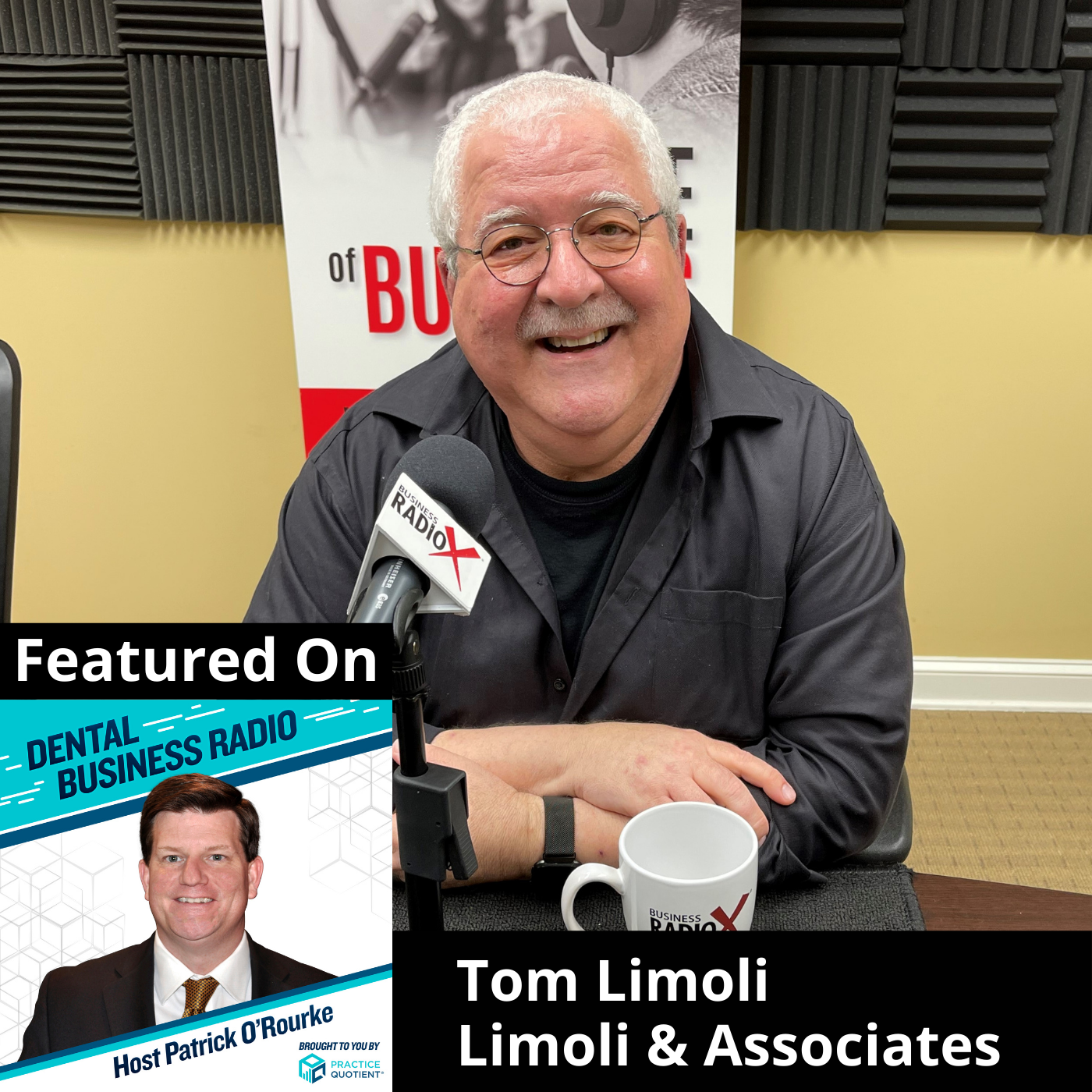
Tom Limoli, Limoli & Associates

October 25, 2021 by John Ray

Tom Limoli, Limoli & Associates
Dental Business Radio
Tom Limoli, Limoli & Associates
Loading
00:00 /
RSS Feed
Share
Link
Embed

Download file

Tom Limoli, Limoli & Associates

Tom Limoli, Limoli & Associates (Dental Business Radio, Episode 26)

If you’re a dental practice which accepts dental insurance, then, like it or not, you have financial partners in your business:  the insurance companies. Tom Limoli joined host Patrick O’Rourke on this episode to detail the mistakes he sees practices making in handling dental insurance, mistakes which result in administrative burdens and costs which undermine the entire practice. Dental Business Radio is underwritten and presented by Practice Quotient: PPO Negotiations & Analysis and produced by the North Fulton studio of Business RadioX®.

Limoli & Associates

For almost half a century, Limoli and Associates / Atlanta Dental Consultants has served all facets of the dental benefits industry by streamlining and simplifying the global reimbursement process. The overall mission being to make the delivery of dentistry more affordable through information, education, consultation and service.

Their time proven, simplified, no-nonsense approach to the execution, management delivery of third-party reimbursement benefits has been implemented in thousands of both clinical and administrative operations across the country.

Website | Facebook

Tom Limoli, Limoli & Associates

Tom Limoli, Limoli & Associates

Tom Limoli, Jr. is the prevailing expert on proper coding and administration of dental insurance benefit claims. He serves as president of Limoli and Associates/Atlanta Dental Consultants, Inc., a company that over the past quarter century has assisted dental offices in streamlining the insurance reimbursement process. Mr. Limoli’s no-nonsense approach to the management of third-party reimbursement has been implemented in thousands of dental practices across the country.

Mr. Limoli received his Bachelor of Science in Criminal Justice from Valdosta State University. Following his work with the U.S. Treasury Department’s Federal Law Enforcement Training Center, Mr. Limoli has actively investigated fraudulent claims for the insurance industry, as well as numerous other third-party fiduciaries. He is a licensed private investigator and a member of the American Association of Dental Consultants, the National Association of Dental Plans, the National Speakers Association, the National Health Care Anti-Fraud Association, and is a past president of the Academy of Dental Management Consultants.

Mr. Limoli is the editor of Dental Insurance Today, a monthly publication that addresses third-party reimbursement in the dental office. He is the author of Dental Insurance and Reimbursement Coding and Claim Submission, and co-author of Fee-for-Service Dentistry with a Managed-Care Component.

LinkedIn

About Dental Business Radio

Patrick O'Rourke
Patrick O’Rourke, Host of “Dental Business Radio”

Dental Business Radio covers the business side of dentistry. Host Patrick O’Rourke and his guests cover industry trends, insights, success stories, and more in this wide-ranging show. The show’s guests include successful doctors across the spectrum of dental practice providers, as well as trusted advisors and noted industry participants. Dental Business Radio is underwritten and presented by Practice Quotient and produced by the North Fulton studio of Business RadioX®. The show can be found on all the major podcast apps and a complete show archive is here.


Practice Quotient

Dental Business Radio is sponsored by Practice Quotient. Practice Quotient, Inc. serves as a bridge between the payor and provider communities. Their clients include general dentist and dental specialty practices across the nation of all sizes, from completely fee-for-service-only to active network participation with every dental plan possible. They work with independent practices, emerging multi-practice entities, and various large ownership entities in the dental space. Their PPO negotiations and analysis projects evaluate the merits of the various in-network participation contract options specific to your Practice’s patient acquisition strategy. There is no one-size-fits-all solution.

Connect with Practice Quotient

Website | LinkedIn | Facebook | Twitter

Tagged With: dental insurance, dental insurance benefits, dental insurance reimbursement, dental practice billing, dental practice management, Limoli and Associates, Patrick O'Rourke, PPO Negotiations & Analysis, Practice Quotient, Tom Limoli

What You Need to Know When You Terminate an Employee

September 24, 2021 by John Ray

TerminateEmployeeDLREpisode21Album
Dental Law Radio
What You Need to Know When You Terminate an Employee
Loading
00:00 /
RSS Feed
Share
Link
Embed

Download file

TerminateEmployeeDLREpisode21Album

What You Need to Know When You Terminate an Employee (Dental Law Radio, Episode 21)

In Stuart Oberman’s experience with clients, the biggest problem he sees with employee terminations is the absence of a plan, and more specifically, lack of documentation. In this episode of Dental Law Radio, Stuart outlines what a solid employee termination process should include to avoid the significant long-term costs caused by emotional, seat-of-the-pants actions. Dental Law Radio is underwritten and presented by Oberman Law Firm and produced by the North Fulton studio of Business RadioX®.

TRANSCRIPT

Intro: [00:00:02] Broadcasting from the Business RadioX studios in Atlanta, it’s time for Dental Law Radio. Dental Law Radio is brought to you by Oberman Law Firm, a leading dental-centric law firm, serving dental clients on a local, regional and national basis. Now, here’s your host, Stuart Oberman.

Stuart Oberman: [00:00:25] Hello, everyone, and welcome to Dental Law Radio. Well, this is going to be sort of part two. Last week, we spoke about how to hire an employee and some of the things that you need to include in the new hire package. And I mentioned then that it’s easy to get married; it is tough to get divorced. Well, today, we’re going to get divorced. We’re going to talk about what you need to know when you terminate an employee.

Stuart Oberman: [00:00:57] And we get these calls all the time. What do I need to know? What do I need to do? How do I need to do it? And where are my pitfalls? And I will tell you, your biggest pitfall is not having the documentation upfront, and then not having a plan when you plan to terminate. And in today’s world, firing an employee is complex and challenging. You have a lot of scenarios, wrongful termination, discrimination issues, willful termination, quitting, resigning. So, before you even think about firing an employee and will not take you long to figure out that you need to fire an employee when you make up your mind to do it, there are signs, a lot of times, already there.

Stuart Oberman: [00:01:55] So, again, the process is complex and challenging. And then how to end the termination is often the most difficult part. But I want to take a look at some key steps that you need to look at when you involuntarily terminate. Not a resignation, not those kinds of things, but when you’ve got to make the hard decision, is “I’m cutting you loose. Now, I’m going to make a plan to do it.”

Stuart Oberman: [00:02:23] So, first and foremost, you’ve got to document the process. You have to create a plan. What is your strategy for termination? We’re going to get into that. Who do you communicate the termination to with your key staff members? There are some people in your office you never want to tell you’re terminating someone because that person will find out in 15 minutes. So, you have to understand who and what positions you notify. And then, one thing you have to do is notify your IT administrator or your provider. And we’re going to go into that in a little bit because that is a key process.

Stuart Oberman: [00:03:09] So, documenting the separation of an employment process is very difficult. And I will always say, and I’ve said it in the past, when I talk to the dental schools, talk about things in writing, if it’s not in writing, it never happened; if it was not in writing, it was never a procedure; and if it was not in writing, it was never a processed. So, what happens is when you compile detailed documentation, it shows you followed the company policy through the discipline and termination process, you were already ahead of the game.

Stuart Oberman: [00:03:44] Now, that’s assuming that you have a process. So, if we’re talking about all this, and you don’t have an employee manual or process for terminating, that’s your first step. What does your employee manual say? How detailed is it? If you have an employee manual that has no instructions, it’s 20 pages, I would urge you to shred it. Call us and get you another employee manual because that is a key denominator in this whole process here.

Stuart Oberman: [00:04:14] So, you have to figure out what your effective date of the termination and record it. What day did this happen? I do not want you to rely on text. “Well, we have a text message that says they were fired on August 1st.” No, no, no, no, no, no, no. That’s not going to get it. Did you document the termination? Supporting details. Did you have performance reviews? Did you have a warning and discipline, action or process? Did you provide an official termination letter to the employee, including the date of termination? And did you outline the benefits?

Stuart Oberman: [00:04:58] Now, I’m not talking about a 36-page letter to the employee, but something in your file documenting that they received notice, and here is the separation notice, and then here is what’s going to take place benefit-wise. So, one key area is that when you fire an employee, you got a void. Who’s going to fill that position void? “Well, we’ll get around to it.” You can’t do that. You already got to have a plan in place once that employee is fired. And when you make the plan, you’ve got to outline the process and functions of that employee’s responsibility. Who’s going to take over that? Because statistically, you, as a dental practice owner, spend more time in the chair with the patient contact-wise than any other profession, face to face. You do not have the time to do this as an afterthought.

Stuart Oberman: [00:05:57] So, what happens is that when you terminate, again, you’ve got to figure out what are the key steps that I’m going to talk to my employees about? Do you have an HR reporting process? Who is that person they’re going to talk to? What is the procedure? Do you have a benefits person? Do you have a CFO who they need to talk to?

Stuart Oberman: [00:06:23] One of the most important things I want to mention right now is your IT person, whether they are in-house or whether they are a third party. When you make the decision to terminate an employee, one of the first people you’re going to call or should call and sit down with and talk to is your IT person. You’ve got to outline what access that employee has; what access they will not have; how do you cancel the computer; how do you get their phone systems back to the office, if you will; what is on their cell phone; how do you disable passwords; how do you block access? So many employees in today’s world have access after hours. How do you block that record? How do you determine whether or not that employee has downloaded your confidential information?

Stuart Oberman: [00:07:26] Again, you must have a nondisclosure agreement and a confidentiality agreement, like we discussed in part one of this podcast. How do you delete two phone messages off their phone? Where do you go with the data? That’s absolutely critical. This is one of those important steps that you can do because as soon as you terminate that employee, there are times you’re going to have to do it over the phone. There are some cases, there’s just no way around that. And I will tell you, when that person hangs up on the other end that you’ve terminated, I will tell you, they’re going to go right to their computer, and you need to shut off access immediately.

Stuart Oberman: [00:08:12] Now, what protocols do you follow? Well, how many protocols? You got to have protocols. What’s the separation package look like? Do you have a termination letter? What are the benefits? What’s related paperwork? Who is going to be their contact in HR? Do you want that former employee calling you and asking you for information? Of course not.

Stuart Oberman: [00:08:40] One of the things you’ve got to take a look at also critically from a employment law standpoint is what money do you owe them or bonuses after they are terminated? I hear so many times. “Well, Dr. Smith did some really, really, really bad dental work. I’m going to withhold about $4000 from his pay because I know there’s going to be recalls, redos, remakes.” Wrong. You can not hold money like that.

Stuart Oberman: [00:09:13] Now, if you have an employment contract that states that you can withhold a certain amount of money for a certain period of time, that’s a different scenario versus you’re a lousy employee, you’re going to cause me money after you leave, and I’m just going to withhold money from your paycheck. That will get you in trouble really quick with the Federal and State Department of Labor. So, on that employee’s final paycheck, my strong recommendation is you evaluate the final amounts, and you determine what that final amount is. If you’re going to withhold any type of compensation, you better have a really, really good reason.

Stuart Oberman: [00:10:01] Now, one thing to consider also from a benefits standpoint, does your policy manual say that they’re entitled to unused vacation, sick time, PTO time? What does your manual say? “Well, it doesn’t say anything. I don’t have that information.” That is a very, very poignant sticking point. And when that person retires, all that has to be outlined. You cannot wait to do this, or decide this or make a sort of unrushed decision after they’re terminated. So, before that employee is terminated somehow, someway, you need to make sure you’ve got their updated contact information.

Stuart Oberman: [00:10:51] One thing that absolutely drives me crazy is that employees or doctors, a lot of times will have a — I’ll use the words Gmail accounts, Yahoo accounts, Comcast account, and it’s not to single out any of those companies, but what happens is, is that the employees have their own accounts. And what happens is, also, they change their passwords without telling our doctors or employers on those accounts.

Stuart Oberman: [00:11:27] From an IT standpoint, once that termination takes place, I will tell you point blank, you’re going to lose access to that employee’s email address because they’ve changed the password. And now, you are at their ransom. What’s going to happen if that employee somehow puts the Facebook account in their name? Is there a procedure for that? What does your IT company say? Do you even have an IT company? These are the things that you’ll be long litigating items after the termination process if you do not have it squared away. Now, I would urge you to have an email address that is tied to your website and not separate Gmail accounts. Again, there’s nothing wrong with Gmail accounts, but it is very difficult if everyone has their own separate island in a dental practice or any kind of employment.

Stuart Oberman: [00:12:35] So, you’ve got to start notifying patients that this person is no longer there. And they’re going to ask why, and you’ve got to develop the company policy as to why they are not there, which is very short, sweet, to the point. You never ever give away details, You never tell exactly why. I don’t care what the situation is, but it’s got to be across the company lines.

Stuart Oberman: [00:13:06] So, one of the things we also need to take a look at is keeping employee records. You must have a secure, centralized HR to house the employee records. Never, ever, ever in your lifetime do you have employees that have control of their own personnel files because what’ll happen is when they leave, I will guarantee you that those files are gone. So, do you have backup files? Who has access to your backup files? Are you using iCloud storage? Are these records safe from interruption, natural disasters, fires? Whatever it may be, these are all contingencies. And again, I cannot stress this enough where you have to have total, total strict confidentiality with this documentation as to who the employees who are concerned.

Stuart Oberman: [00:14:11] So, those are just really a couple of things that we want to do as far as the termination process. It is very complex. Do you want to have a severance? That’s a whole another conversation. That’s a whole another day. How much do you want to pay? “Well, I don’t want to pay anything.” I will tell you, there are sometimes where it is cheaper to get rid of employees with a monetary substance and a full release of liability, and a separation notice, depending on their age. It will depend on what kind of document that looks like meets the requirements. But again, it is so much easier to get married than it is divorced, and you’ve got to have these records in order to ensure a smooth transition in the termination process. And it can get rocky, folks. As a firm, we’re on both sides of that fence. We will represent employees, and we will represent employers. So, we get really both sides of that avenue. So, we’ve got a pretty good look as to what should be there and should not be there.

Stuart Oberman: [00:15:19] Well, folks, thank you for joining us today. Two-part series, hiring checklist and what you need to know to terminate employees. Critical steps, you need both. Thank you again. If you need to reach out to us, please feel free to reach out to me at stuart@obermanlaw.com. 770-886-2400. And we will see you soon on the radio.


About Dental Law Radio

Hosted by Stuart Oberman, a nationally recognized authority in dental law, Dental Law Radio covers legal, business, and other operating issues and topics of vital concern to dentists and dental practice owners. The show is produced by the North Fulton studio of Business RadioX® and can be found on all the major podcast apps. The complete show archive is here.

Stuart Oberman, Oberman Law Firm

Oberman Law Firm
Stuart Oberman, host of “Dental Law Radio”

Stuart Oberman is the founder and President of Oberman Law Firm. Mr. Oberman graduated from Urbana University and received his law degree from John Marshall Law School. Mr. Oberman has been practicing law for over 25 years, and before going into private practice, Mr. Oberman was in-house counsel for a Fortune 500 Company. Mr. Oberman is widely regarded as the go-to attorney in the area of Dental Law, which includes DSO formation, corporate business structures, mergers and acquisitions, regulatory compliance, advertising regulations, HIPAA, Compliance, and employment law regulations that affect dental practices.

In addition, Mr. Oberman’s expertise in the health care industry includes advising clients in the complex regulatory landscape as it relates to telehealth and telemedicine, including compliance of corporate structures, third-party reimbursement, contract negotiations, technology, health care fraud and abuse law (Anti-Kickback Statute and the State Law), professional liability risk management, federal and state regulations.

As the long-term care industry evolves, Mr. Oberman has the knowledge and experience to guide clients in the long-term care sector with respect to corporate and regulatory matters, assisted living facilities, continuing care retirement communities (CCRCs). In addition, Mr. Oberman’s practice also focuses on health care facility acquisitions and other changes of ownership, as well as related licensure and Medicare/Medicaid certification matters, CCRC registrations, long-term care/skilled nursing facility management, operating agreements, assisted living licensure matters, and health care joint ventures.

In addition to his expertise in the health care industry, Mr. Oberman has a nationwide practice that focuses on all facets of contractual disputes, including corporate governance, fiduciary duty, trade secrets, unfair competition, covenants not to compete, trademark and copyright infringement, fraud, and deceptive trade practices, and other business-related matters. Mr. Oberman also represents clients throughout the United States in a wide range of practice areas, including mergers & acquisitions, partnership agreements, commercial real estate, entity formation, employment law, commercial leasing, intellectual property, and HIPAA/OSHA compliance.

Mr. Oberman is a national lecturer and has published articles in the U.S. and Canada.

LinkedIn

Oberman Law Firm

Oberman Law Firm has a long history of civic service, noted national, regional, and local clients, and stands among the Southeast’s eminent and fast-growing full-service law firms. Oberman Law Firm’s areas of practice include Business Planning, Commercial & Technology Transactions, Corporate, Employment & Labor, Estate Planning, Health Care, Intellectual Property, Litigation, Privacy & Data Security, and Real Estate.

By meeting their client’s goals and becoming a trusted partner and advocate for our clients, their attorneys are recognized as legal go-getters who provide value-added service. Their attorneys understand that in a rapidly changing legal market, clients have new expectations, constantly evolving choices, and operate in an environment of heightened reputational and commercial risk.

Oberman Law Firm’s strength is its ability to solve complex legal problems by collaborating across borders and practice areas.

Connect with Oberman Law Firm:

Company website | LinkedIn | Twitter

Tagged With: dental practice management, firing employees, Oberman Law, Oberman Law Firm, Stuart Oberman, terminate employee

A Checklist for Hiring New Employees

September 17, 2021 by John Ray

ChecklistforHiringDLREpisode20Album
Dental Law Radio
A Checklist for Hiring New Employees
Loading
00:00 /
RSS Feed
Share
Link
Embed

Download file

ChecklistforHiringDLREpisode20Album

A Checklist for Hiring New Employees (Dental Law Radio, Episode 20)

You’ve hired that new employee. Now what? As host Stuart Oberman discusses, there should be an onboarding process which involves an offer letter, a well-written employee manual (not the 20-page version downloaded from the internet), consent forms, and much more. Missing steps and inadequate documentation here sow the seeds of costly problems later. Dental Law Radio is underwritten and presented by Oberman Law Firm and produced by the North Fulton studio of Business RadioX®.

TRANSCRIPT

Intro: [00:00:01] Broadcasting from the Business RadioX studios in Atlanta, it’s time for Dental Law Radio. Dental Law Radio is brought to you by Oberman Law Firm, a leading dental-centric law firm serving dental clients on a local, regional and national basis. Now, here’s your host, Stuart Oberman.

Stuart Oberman: [00:00:26] Hello, everyone, and welcome to Dental Law Radio. So, this topic, today’s topic, a checklist for hiring new employees. I will tell you, I said this before on previous podcasts, we are very fortunate. As a law firm, we have clients in approximately 30 states all the way from California, Maine to Florida. And we do a substantial amount of HR work. Now, what does that mean, HR, human resources? So, we work with our clients on hiring, firing, internal operations, documents, non-competes, nondisclosures, non-solicitations. And one of the things that we have found out that our doctors do not – do not – onboard properly, they don’t have the processes in place, they don’t understand how to onboard, they don’t have a checklist, and they have absolutely no process in place because, at some point, without a good hiring process, if that employee does not work out your firing process, which we will cover in a subsequent podcast, will be an absolute disaster.

Stuart Oberman: [00:01:45] So, let’s take a look at a couple of things that we’ve run into. First and foremost, before that employee starts, day one, you have to have a series of forms and onboarding documents. What does that look like in your practice? You probably think, “Well, I don’t have an onboarding process.” So, then next step is you better get one because you have to have one. So, I would encourage you – encourage you – to have a new hire checklist. If you don’t have one, I’ll give you information on how to get one at the end of this podcast.

Stuart Oberman: [00:02:25] So, first and foremost, when you interview – and we covered interviewing on our previous podcasts – the proper way to interview. So, let’s assume you hire the employee. Now what? Every position that you hire has to have … or I say has to, should have an offer letter. Now, that doesn’t mean one paragraph, that means a formal offer letter, which should include a couple of things. A job description: What department are they working in? What’s their work schedule? Now, you maybe thinking, “Well, I’m going to give them an employment contract.” No. In many cases, an employment contract will get you in more trouble than not having one. So, it depends on your position within the dental practice or for those that are listening that do not own a dental practice, within your organization.

Stuart Oberman: [00:03:26] So, again, first and foremost, offer letter, job information, title, department, what is the work schedule, how long are they going to be there, what’s the compensation, what’s the benefits, what are the employer responsibilities? So, with a caveat to that, the employee benefits, assuming it’s employer’s responsibilities, should already be outlined in your employee manual.

Stuart Oberman: [00:03:56] So, we see a lot of problems with employee manuals. We have doctors that will come up to us and say, “Hey, you know what? I got an employee manual for my friend, and it’s about 25 pages.” My first thought on that is you probably need to shred it. It’s just going to get you in more trouble than not. And what are the termination conditions? It is easy to get married; it is hard to get divorced.

Stuart Oberman: [00:04:24] So, then is next step is what forms do you need from a governmental standpoint to classify and compensate employees with? And it is amazing to me how many CPAs will ask us for this information, which is, a lot of times, very basic. Again, you should have all this prepared, especially in today’s market where turnover is rampant. Of course, you got to have a W-4; for contractors, W9. It is a key concept to have your workers classified as employees or independent contractors. That’s a whole another discussion on classifications. You’re I9s, your state and federal withholdings. What are you going to do when you have multiple practices that are in multiple states? Each one is different. Do you fall for a foreign entity in that particular state, even though that is not your home base? Your E-system verification. Again, those are your basic forms. You should already have those prepared and ready to roll from day one.

Stuart Oberman: [00:05:40] So, your internal forms are a little bit different and they’re relationship-based. So, these are more what I call your protectionary forms, which every practice – and again, for those that are listening that are not dental-related – every business should have. Now, depending on your position, whether or not that is a key employee position, you will want to have a non-compete. “Well, non-competes are not enforceable.” They are absolutely enforceable. It depends on the extent. As a general rule, depending on your state, it has to be geographically specific, it cannot be overly broad, and you can’t say, “I will not allow this employee to do this anywhere in the country or in the world.” That is a recipe for disaster.

Stuart Oberman: [00:06:33] Non-disclosure forms. Every – every employee should sign a nondisclosure. What happens in your place of business must and should stay in your place of business. “Well, they won’t sign one.” Then, they should not be working in your office. Every employee signs one, including social media, cell phone, and internet policy. And I would encourage you not to get those forms off of the internet. They’re very complex employment law forms.

Stuart Oberman: [00:07:06] So, then, an employee acknowledgement handbook. So, I can’t tell you how many times I say, “What’s your employee manual say?” “Well, you know, we really did give it to him,” or “We gave it to him.” “Great! Where’s the acknowledgement form that they received it?” “Well, I don’t think they ever gave back to us.” So, honestly, unless your employee really signs an acknowledgment form, in all likelihood, you probably should assume that they did not get it.

Stuart Oberman: [00:07:34] Next, drug and alcohol consent forms for testing. Now, what are you going to do if you have a state that has legalized marijuana? That is a whole another topic for another day. That is special considerations.

Stuart Oberman: [00:07:57] Employee equipment list. Lot of our doctors, a lot of our employers will provide laptops, cellphones, equipment. You better log those in because once that employee leaves, good luck getting them back unless you inventory it. Confidentiality agreements, an absolute must. Again, what stays in the practice — what happens in practice stays in the practice.

Stuart Oberman: [00:08:24] So, then, let’s take a look at a couple of other things. These are just basic things that you really should have. So, then, in the offer letter, an employee benefits documents. You need to give the employees documents regarding life and health insurance. You can’t wait 60, 90, six months, a year later to give the employees this particular set of documents.

Stuart Oberman: [00:08:54] Cellphone plan. What is your cellphone plan? It is amazing in today’s world what employees will keep and store on their cellphones. What happens when that employee leaves and all of your data, because they downloaded it at your request, is on their cellphone? Do you have a policy to delete that? Do you have a policy that will certify from your employees when they leave that that will be deleted? Do you have an app on your phone that will essentially self-destruct the employment information that you’ve sent over to your employees? If you look at the text messages and everything else that you sent over to your employees on a daily basis, it will be amazing what data is on there, and it will be also amazing what happens if that phone is hacked, and where the data goes. Then, I would strongly recommend you specify paid vacation, time off, paid holidays, sick leave. Do not assume that your employees will know that. That’s got to be in writing.

Stuart Oberman: [00:10:07] Then, the next final data is emergency information. People move. Numbers change. Do you know how to get in touch with relatives should something happen at your office place? Now, you’ve got to be really careful with this because in some instances you’re talking about the ADA, American Disabilities Act, and EEOC. Have you obtained a brief medical history in an employment application? Again, we got to take a look at EEOC issues, especially in this world of COVID. We have to take a look at GINA Title II as far as DNA information goes. So, there’s all kind of regulatory matters we need to take a look at, whether it’s food allergies. I mean, in today’s world, we don’t know what employee problems are.

Stuart Oberman: [00:11:05] So, this is a very, very, very brief, brief summary as to what you need on a new hire checklist. And I’ll tell you, we discovered this when our doctors go through an insurance or third-party governmental audit, and they want personnel files for the last five or seven years, they want ID information, they want application information, they want checks as to whether or not those employees were checked off as far as whether or not they’re eligible to provide treatment or see patients that are on the governmental payer list, if you will.

Stuart Oberman: [00:11:50] So, those are all the things that we really want to take a look at that are absolutely mandatory because when you get a governmental order from attorney general’s office or the DOJ on a federal level, and all of a sudden, they are asking for a personnel file, you’ve got a problem if all this is not in there. And all you do is have one photograph and a one-page application process, that’s an absolute recipe for disaster on a audit.

Stuart Oberman: [00:12:18] So, hopefully you’ll take away a couple of things. Take a look at your personnel file, which should always be kept separate from all the other records, especially regarding COVID-19 shot information. That should be absolutely separate from all the other personnel files and should be maintained separately. So, in summary make sure your new hire process is in place, it’s implemented because it is so easy to get into a relationship plan-wise; it is absolutely devastating to, at times, get out of these relationships.

Stuart Oberman: [00:12:59] So, thank you for joining us today. Hopefully, you picked up a couple of good ideas. If you would, feel free to reach out to us. My name is Stuart Oberman, stuart@obermanlaw.com. 770-886-2400. And please follow us on our podcast. And I always say, if you just pick up one bit of information from each podcast, it is a fantastic day. Thanks for joining us. And we will talk to you soon.

About Dental Law Radio

Hosted by Stuart Oberman, a nationally recognized authority in dental law, Dental Law Radio covers legal, business, and other operating issues and topics of vital concern to dentists and dental practice owners. The show is produced by the North Fulton studio of Business RadioX® and can be found on all the major podcast apps. The complete show archive is here.

Stuart Oberman, Oberman Law Firm

Oberman Law Firm
Stuart Oberman, host of “Dental Law Radio”

Stuart Oberman is the founder and President of Oberman Law Firm. Mr. Oberman graduated from Urbana University and received his law degree from John Marshall Law School. Mr. Oberman has been practicing law for over 25 years, and before going into private practice, Mr. Oberman was in-house counsel for a Fortune 500 Company. Mr. Oberman is widely regarded as the go-to attorney in the area of Dental Law, which includes DSO formation, corporate business structures, mergers and acquisitions, regulatory compliance, advertising regulations, HIPAA, Compliance, and employment law regulations that affect dental practices.

In addition, Mr. Oberman’s expertise in the health care industry includes advising clients in the complex regulatory landscape as it relates to telehealth and telemedicine, including compliance of corporate structures, third-party reimbursement, contract negotiations, technology, health care fraud and abuse law (Anti-Kickback Statute and the State Law), professional liability risk management, federal and state regulations.

As the long-term care industry evolves, Mr. Oberman has the knowledge and experience to guide clients in the long-term care sector with respect to corporate and regulatory matters, assisted living facilities, continuing care retirement communities (CCRCs). In addition, Mr. Oberman’s practice also focuses on health care facility acquisitions and other changes of ownership, as well as related licensure and Medicare/Medicaid certification matters, CCRC registrations, long-term care/skilled nursing facility management, operating agreements, assisted living licensure matters, and health care joint ventures.

In addition to his expertise in the health care industry, Mr. Oberman has a nationwide practice that focuses on all facets of contractual disputes, including corporate governance, fiduciary duty, trade secrets, unfair competition, covenants not to compete, trademark and copyright infringement, fraud, and deceptive trade practices, and other business-related matters. Mr. Oberman also represents clients throughout the United States in a wide range of practice areas, including mergers & acquisitions, partnership agreements, commercial real estate, entity formation, employment law, commercial leasing, intellectual property, and HIPAA/OSHA compliance.

Mr. Oberman is a national lecturer and has published articles in the U.S. and Canada.

LinkedIn

Oberman Law Firm

Oberman Law Firm has a long history of civic service, noted national, regional, and local clients, and stands among the Southeast’s eminent and fast-growing full-service law firms. Oberman Law Firm’s areas of practice include Business Planning, Commercial & Technology Transactions, Corporate, Employment & Labor, Estate Planning, Health Care, Intellectual Property, Litigation, Privacy & Data Security, and Real Estate.

By meeting their client’s goals and becoming a trusted partner and advocate for our clients, their attorneys are recognized as legal go-getters who provide value-added service. Their attorneys understand that in a rapidly changing legal market, clients have new expectations, constantly evolving choices, and operate in an environment of heightened reputational and commercial risk.

Oberman Law Firm’s strength is its ability to solve complex legal problems by collaborating across borders and practice areas.

Connect with Oberman Law Firm:

Company website | LinkedIn | Twitter

Tagged With: checklist for hiring new employees, dental practice management, employees, Oberman Law Firm, Onboarding new hires, Stuart Oberman

How to Mitigate the Risk of Lawsuits

May 14, 2021 by John Ray

Mitigate Lawsuits
Dental Law Radio
How to Mitigate the Risk of Lawsuits
Loading
00:00 /
RSS Feed
Share
Link
Embed

Download file

Mitigate Lawsuits

How to Mitigate the Risk of Lawsuits (Dental Law Radio, Episode 4)

Host Stuart Oberman covers the basic internal procedures necessary to mitigate the risk of lawsuits in a dental practice.  Dental Law Radio is underwritten and presented by Oberman Law Firm and produced by the North Fulton studio of Business RadioX®.

TRANSCRIPT

Intro: [00:00:02] Broadcasting from the Business RadioX Studios in Atlanta, it’s time for Dental Law Radio. Dental Law Radio is brought to you by Oberman Law Firm, a leading dental-centric law firm serving dental clients on a local, regional, and national basis. Now, here’s your host, Stuart Oberman.

Stuart Oberman: [00:00:27] Hello everyone and welcome to Dental Law Radio. So, today, is going to be an interesting topic. So, as a law firm in the dental space, if you will, we have clients in about 28 states, all the way from California, Maine to Florida, and we get this question over and over and over again. How do I mitigate my risks of lawsuits?

Stuart Oberman: [00:00:55] That’s a wide topic. You got all kinds of issues to look at. You’ve got State Department of Labor, you’ve got Federal Department of Labor, you’ve got IRS, you’ve got EEOC. You have lawyers breathing down your neck for certain regulatory matters because employees’ rights have been violated. So, you know, what is the risks of a lawsuit?

Stuart Oberman: [00:01:25] And I would say it’s probably a failure to have internal proper procedures in place. What does that mean? On a 10,000 foot view, do I have an employee manual? Do I have nondisclosure agreements? Do I have cell phone, internet, policies, social media policies? Am I in compliance with the National Labor Relations Board? Am I in compliance with my State and Federal law? There’s really a couple things that you really need to have. And we’re going to talk about this on subsequent podcasts, but I want to maybe drill down on some specifics regarding employee manual because these are critical.

Stuart Oberman: [00:02:14] Every practice should have an employee manual. “Well, I’ve got one, you know, John gave it to me when I bought his practice. And, yeah, it’s not bad. You know, it’s 29 pages. It’s a little old. But I wrote on it. And I think we got employees sign over good.” Or, “You know, I went on the internet and I bought one.” Great. Great. Well, how’s that working out for you?

Stuart Oberman: [00:02:43] So, if you have an employee manual that you’ve got from someone, trash it. If you bought a practice and you implemented the employee manual that you now scratch outs or had on a Word document that is 15 years old and you decided to put different names on it, scrap it, shred it, it’s garbage. You’re going to need an up to date employee manual that has a couple of things. If your employee manual in today’s world is less than 70, 80, 90 – I think our employee manual that we draft for dental doctors on dental sides is, probably, 100 some pages – job descriptions, acknowledgments, nondisclosure agreements, all that’s got to be included. Social media, cell phone, internet policies got to be included.

Stuart Oberman: [00:03:31] So, what are some of the things that we see really need to be within these employee manuals? Again, we’re just touching on some stuff. So, one of the things that in today’s world, in today’s media world, in today’s society, you have to have non-harassment provisions. There’s no question about it. If you do not have provisions regarding harassment, regarding sex, color, creed, origin, nationality, then you are opening yourself up to a huge, huge problem. Anti-discrimination statute language should be included in your employee manual. Again, these are basics in a world within which we live. Anti-retaliation, a previous podcast we talked about OSHA, HIPAA, whistleblower. What to do if you’re fired?

Stuart Oberman: [00:04:31] In your employee manual, do you have a process for probation? Do you have a process for reporting complaints? Do you have someone in your practice – I don’t care how big you are – that is a go-to person for complaints. If you’re a doctor, chances are they’re not going to want to report to you directly regarding any kind of internal issues. You need to have a point person designated in your practice that has the authority to take down the investigation. Do you have an anonymous reporting process? And, again, I don’t care whether you’re a 20 practice owner or one practice owner.

Stuart Oberman: [00:05:16] Next one, Family Medical Leave Act. How many employees do you have? Does it even apply? There are some instances that you will say I do not need a Family Medical Leave Act. And you have to sign a document to the government that says that you do not comply or do not have to comply with the Family Medical Leave Act, because they just don’t believe you. The Emergency Paid Sick Leave Act. The Emergency Family Act. Especially in today’s world under COVID, a Medical Leave Expansion Act under FFCRA if you’re under 500 employees.

Stuart Oberman: [00:05:58] I could probably talk about this topic for about three hours on this one particular area, what it takes to have an employee manual. But you’ve got to be very careful on this area. So, the next question is, “Well, you know, I got a manual and a company gave it to me and it’s five volumes.” I’m going to be really honest with you, if you can comply with a five volume employee manual, I need to come work for you. Because I have never seen that before. And we’ll look at manuals and it will be three, four, five volumes of employee manual. How in the world can you be in compliance on that side?

Stuart Oberman: [00:06:42] It’s very basic things that will keep you out of trouble. If you’re required under your massive war and peace novel of employee manuals, there’s no way. You got too much liability, you got too many holes that it is impossible for you to comply with. Keep it short. Keep it simple. Basic stuff. Basic information. And that is probably one of the biggest ways that will keep you out of the EEOC, Department of Labor, National Labor Relations Board, governmental investigations.

Stuart Oberman: [00:07:25] So, again, it’s the basic stuff. A lot of times our doctors will get way, way complex. They don’t need it. They’re being sold stuff they don’t need, which happens a lot. So, we need to be real careful with that. So, it’s the little things that will keep you out of trouble. It’s not, you know, recreating the world, but it’s simply one wheel at a time to get you there. So, again, that’s 10,000 foot view.

Stuart Oberman: [00:07:52] We see a lot on our side. We handle as a firm a lot of H.R. issues. We see what works. We see what doesn’t. It’s a moving target between state to state. It’s a moving target between employee to employee. And it’s a moving target in today’s regulatory matters. So, hopefully, you’ve taken away, you know, one thing that you need to look at to avoid H.R. issues, to avoid any kind of compliance issues, which is understanding basic employee manual, why you need it, why you don’t. We talked about HIPAA and OSHA before, so this is all part of that particular puzzle. So, again, quick topic today, just enough to give you a 10,000 foot view, as we say.

Stuart Oberman: [00:08:37] So, I want to thank everyone for joining us today on Dental Law Radio. If you have any questions, if you have any concerns, reach out to us. Give us a call, 770-554-1400. Or send an email, stuart, S-T-U-A-R-T, @obermanlaw.com. And we hope that you will join us on subsequent podcasts. And our goal is to keep you up to date in the industry, leading edge, cutting edge information. So, thank you everyone. Have a fantastic day. And we look forward to talking to you soon. Thank you.


About Dental Law Radio

Hosted by Stuart Oberman, a nationally recognized authority in dental law, Dental Law Radio covers legal, business, and other operating issues and topics of vital concern to dentists and dental practice owners. The show is produced by the North Fulton studio of Business RadioX® and can be found on all the major podcast apps. The complete show archive is here.

Stuart Oberman, Oberman Law Firm

Oberman Law Firm
Stuart Oberman, host of “Dental Law Radio”

Stuart Oberman is the founder and President of Oberman Law Firm. Mr. Oberman graduated from Urbana University and received his law degree from John Marshall Law School. Mr. Oberman has been practicing law for over 25 years, and before going into private practice, Mr. Oberman was in-house counsel for a Fortune 500 Company. Mr. Oberman is widely regarded as the go-to attorney in the area of Dental Law, which includes DSO formation, corporate business structures, mergers and acquisitions, regulatory compliance, advertising regulations, HIPAA, Compliance, and employment law regulations that affect dental practices.

In addition, Mr. Oberman’s expertise in the health care industry includes advising clients in the complex regulatory landscape as it relates to telehealth and telemedicine, including compliance of corporate structures, third-party reimbursement, contract negotiations, technology, health care fraud and abuse law (Anti-Kickback Statute and the State Law), professional liability risk management, federal and state regulations.

As the long-term care industry evolves, Mr. Oberman has the knowledge and experience to guide clients in the long-term care sector with respect to corporate and regulatory matters, assisted living facilities, continuing care retirement communities (CCRCs). In addition, Mr. Oberman’s practice also focuses on health care facility acquisitions and other changes of ownership, as well as related licensure and Medicare/Medicaid certification matters, CCRC registrations, long-term care/skilled nursing facility management, operating agreements, assisted living licensure matters, and health care joint ventures.

In addition to his expertise in the health care industry, Mr. Oberman has a nationwide practice that focuses on all facets of contractual disputes, including corporate governance, fiduciary duty, trade secrets, unfair competition, covenants not to compete, trademark and copyright infringement, fraud, and deceptive trade practices, and other business-related matters. Mr. Oberman also represents clients throughout the United States in a wide range of practice areas, including mergers & acquisitions, partnership agreements, commercial real estate, entity formation, employment law, commercial leasing, intellectual property, and HIPAA/OSHA compliance.

Mr. Oberman is a national lecturer and has published articles in the U.S. and Canada.

LinkedIn

Oberman Law Firm

Oberman Law Firm has a long history of civic service, noted national, regional, and local clients, and stands among the Southeast’s eminent and fast-growing full-service law firms. Oberman Law Firm’s areas of practice include Business Planning, Commercial & Technology Transactions, Corporate, Employment & Labor, Estate Planning, Health Care, Intellectual Property, Litigation, Privacy & Data Security, and Real Estate.

By meeting their client’s goals and becoming a trusted partner and advocate for our clients, their attorneys are recognized as legal go-getters who provide value-added service. Their attorneys understand that in a rapidly changing legal market, clients have new expectations, constantly evolving choices, and operate in an environment of heightened reputational and commercial risk.

Oberman Law Firm’s strength is its ability to solve complex legal problems by collaborating across borders and practice areas.

Connect with Oberman Law Firm:

Company website | LinkedIn | Twitter

Tagged With: dental practice management, dental practices, employees, employment manuals, lawsuits, Oberman Law Firm, Stuart Oberman

Dr. Richard Madow, The Madow Center for Dental Practice Success

April 5, 2021 by John Ray

Rich-Madow-DBR-Album
Dental Business Radio
Dr. Richard Madow, The Madow Center for Dental Practice Success
Loading
00:00 /
RSS Feed
Share
Link
Embed

Download file

Rich-Madow-DBR-Album

Dr. Richard Madow, The Madow Center for Dental Practice Success (“Dental Business Radio” Episode 17)

Dr. Richard Madow joined host Patrick O’Rourke to discuss his dental consulting practice, why dental practices should focus more on retaining existing patients instead of acquiring new ones, and much more. “Dental Business Radio” is underwritten and presented by Practice Quotient: PPO Negotiations & Analysis and produced by the North Fulton studio of Business RadioX®.

The Madow Center for Dental Practice Success

The Madow Center for Dental Practice Success works with practices from all across North America to help them increase revenues, provide better patient treatment, increase team communication, and make dentistry fun!

Dr. Rich Madow, Principal, The Madow Center for Dental Practice Success

In 1989, Dr. Richard Madow along with his brother Dr. David Madow, founded The Madow Center For Dental Practice Success with the goal of helping their fellow dentists achieve success and happiness in their practices. Having been named a “Leader In Dental Consulting” by Dentistry Today for many years running, his publications, articles and blogs are some of the most popular in the dental profession and have reached over 100,000 practices across the world!

Known for his hilarious and spontaneous style, Rich has lectured to standing room only crowds in practically every major city in The United States and Canada, teaching dentists and team members how to enjoy their careers, supercharge their practices, define and create their own personal success, increase profitability, and have more fun than ever before.

The Madow Center For Dental Practice Success has a unique approach to coaching – instead of modules and pre-written programs, each practice is individually guided to overcome their weaknesses and grow their strengths in order to obtain greater income levels and enjoy dentistry more. For more information, please check out www.madow.com.

On a personal level, Rich is a life-long and award-winning musician, having performed in many venues across North America. He is currently writing and recording new material, and his latest album, “Coming Through With Static,” can be found on Spotify, Apple Music, and all of the regular streaming sites. Among his other achievements, Rich’s book “Is Your Frog Boiling” was an amazon.com bestseller for two full days, and he has traveled to 56 countries.

Join The Madow Center in their Facebook group to hangout with like-minded Docs and team members.

About Dental Business Radio

“Dental Business Radio” covers the business side of dentistry. Host Patrick O’Rourke and his guests cover industry trends, insights, success stories, and more in this wide-ranging show. The show’s guests include successful doctors across the spectrum of dental practice providers, as well as trusted advisors and noted industry participants. “Dental Business Radio” is underwritten and presented by Practice Quotient and produced by the North Fulton studio of Business RadioX®.

Practice Quotient

“Dental Business Radio” is sponsored by Practice Quotient. Practice Quotient, Inc. serves as a bridge between the payor and provider communities. Their clients include general dentist and dental specialty practices across the nation of all sizes, from completely fee-for-service-only to active network participation with every dental plan possible. They work with independent practices, emerging multi-practice entities, and various large ownership entities in the dental space. Their PPO negotiations and analysis projects evaluate the merits of the various in-network participation contract options specific to your Practice’s patient acquisition strategy. There is no one-size-fits-all solution.

Connect with Practice Quotient

Website | LinkedIn | Facebook | Twitter

Tagged With: dental practice management, dental practices, Dr. Rich Madow, Dr. Richard Madow, Patrick O'Rourke, PPO Negotiations & Analysis, Practice Quotient, specialty dental practices, The Madow Center for Dental Practice Success

Business RadioX ® Network


Our Most Recent Episode

CONNECT WITH US

  • Email
  • Facebook
  • LinkedIn
  • Twitter
  • YouTube

Our Mission

We help local business leaders get the word out about the important work they’re doing to serve their market, their community, and their profession.

We support and celebrate business by sharing positive business stories that traditional media ignores. Some media leans left. Some media leans right. We lean business.

Sponsor a Show

Build Relationships and Grow Your Business. Click here for more details.

Partner With Us

Discover More Here

Terms and Conditions
Privacy Policy

Connect with us

Want to keep up with the latest in pro-business news across the network? Follow us on social media for the latest stories!
  • Email
  • Facebook
  • Google+
  • LinkedIn
  • Twitter
  • YouTube

Business RadioX® Headquarters
1000 Abernathy Rd. NE
Building 400, Suite L-10
Sandy Springs, GA 30328

© 2025 Business RadioX ® · Rainmaker Platform

BRXStudioCoversLA

Wait! Don’t Miss an Episode of LA Business Radio

BRXStudioCoversDENVER

Wait! Don’t Miss an Episode of Denver Business Radio

BRXStudioCoversPENSACOLA

Wait! Don’t Miss an Episode of Pensacola Business Radio

BRXStudioCoversBIRMINGHAM

Wait! Don’t Miss an Episode of Birmingham Business Radio

BRXStudioCoversTALLAHASSEE

Wait! Don’t Miss an Episode of Tallahassee Business Radio

BRXStudioCoversRALEIGH

Wait! Don’t Miss an Episode of Raleigh Business Radio

BRXStudioCoversRICHMONDNoWhite

Wait! Don’t Miss an Episode of Richmond Business Radio

BRXStudioCoversNASHVILLENoWhite

Wait! Don’t Miss an Episode of Nashville Business Radio

BRXStudioCoversDETROIT

Wait! Don’t Miss an Episode of Detroit Business Radio

BRXStudioCoversSTLOUIS

Wait! Don’t Miss an Episode of St. Louis Business Radio

BRXStudioCoversCOLUMBUS-small

Wait! Don’t Miss an Episode of Columbus Business Radio

Coachthecoach-08-08

Wait! Don’t Miss an Episode of Coach the Coach

BRXStudioCoversBAYAREA

Wait! Don’t Miss an Episode of Bay Area Business Radio

BRXStudioCoversCHICAGO

Wait! Don’t Miss an Episode of Chicago Business Radio

Wait! Don’t Miss an Episode of Atlanta Business Radio