
Business RadioX ®

  • Home
  • Business RadioX ® Communities
    • Southeast
      • Alabama
        • Birmingham
      • Florida
        • Orlando
        • Pensacola
        • South Florida
        • Tampa
        • Tallahassee
      • Georgia
        • Atlanta
        • Cherokee
        • Forsyth
        • Greater Perimeter
        • Gwinnett
        • North Fulton
        • North Georgia
        • Northeast Georgia
        • Rome
        • Savannah
      • Louisiana
        • New Orleans
      • North Carolina
        • Charlotte
        • Raleigh
      • Tennessee
        • Chattanooga
        • Nashville
      • Virginia
        • Richmond
    • South Central
      • Arkansas
        • Northwest Arkansas
    • Midwest
      • Illinois
        • Chicago
      • Michigan
        • Detroit
      • Minnesota
        • Minneapolis St. Paul
      • Missouri
        • St. Louis
      • Ohio
        • Cleveland
        • Columbus
        • Dayton
    • Southwest
      • Arizona
        • Phoenix
        • Tucson
        • Valley
      • Texas
        • Austin
        • Dallas
        • Houston
    • West
      • California
        • Bay Area
        • LA
        • Pasadena
      • Colorado
        • Denver
      • Hawaii
        • Oahu
  • FAQs
  • About Us
    • Our Mission
    • Our Audience
    • Why It Works
    • What People Are Saying
    • BRX in the News
  • Resources
    • BRX Pro Tips
    • B2B Marketing: The 4Rs
    • High Velocity Selling Habits
    • Why Most B2B Media Strategies Fail
    • 9 Reasons To Sponsor A Business RadioX ® Show
  • Partner With Us
  • Veteran Business RadioX ®

To Your Health With Dr. Jim Morrow: Episode 6, The Keto Diet

April 10, 2019 by John Ray

North Fulton Studio
North Fulton Studio
To Your Health With Dr. Jim Morrow: Episode 6, The Keto Diet
Loading
00:00 /
RSS Feed
Share
Link
Embed

Download file

Dr. Jim Morrow, Host of “To Your Health With Dr. Jim Morrow”

Episode 6, The Keto Diet

The Keto Diet has grown significantly in popularity over the last couple of years. Is it effective? More important, is it safe? Dr. Jim Morrow calls it “the worse diet ever devised by man.” He offers reasons for this opinion, talks about his own struggles with weight, and offers recommendations.

Dr. Morrow’s Show Notes on the Keto Diet

What is a Diet?

  • The word “diet” can mean two things.
    • That food plan you follow for a period of time, to your weight
    • Whatever you eat on a daily basis.
  • The first one is what most people think about when they talk about a diet.
    • It has an artificial beginning and an artificial end, e.g. “Man, I can’t wait to lose this 20 pounds so I can get off of this diet!”
  • The problem is, that losing weight is the easy part. Keeping weight off is the hard part.

Diet Plans

  • There are as many diet plans available for you to follow as there are people in the world. And many of them will work. But, are they healthy?
  • The whole idea is to “eat less food.” That’s it, that’s what you have to do. As long as you eat less food than you have been eating, you will lose weight.
  • The hard part is that you have to eat less food FOREVER!
  • It’s the hardest thing you will EVER do. Harder than tobacco, harder than drugs, harder than anything because you have to eat.
  • So, as I tell patients, “If you want to change your weight, you have to change your life.”
  • And THAT is why it is so hard. We are who we are, we do what we do, and we like what we like. Lifestyle and genetics
  • Some of you will be like my brother-in-law, who admittedly eats to live. And some of you will be like me, live to eat. Well, the ones who eat to live will forever and for always be thinner than me. It’s a mindset, it is the way they are. It’s their nature.
  • And those like me will forever fight a battle, or have to adjust to being heavier.
  • If you follow a commercially available plan like Jenny Craig or Nutri-System, you’re very unlikely to do them for the long term. You’re just not likely to pay for that food for long.
    • I bought a month’s worth of Nutri-System’s food several years ago and in two weeks I was starving!
  • It has got to be a plan that you can stay on FOREVER. And that’s hard.
  • But what all of this boils down to is that you have to eat less food. So, to that end, I have written a book for those of you who really want to lose weight, or have a friend who wants to lose weight.
    • “Dr. Morrow’s Guaranteed Guide to Weight Loss” is a 50-page paperback book that you can purchase for $9.92 on lulu.com
    • Fifty-page book with the instructions, “Eat less food.”
    • It’s that simple, and it’s also that hard.

Keto Diet

  • A new twist on extreme weight loss is catching on in the United States. It’s called the “keto diet.”
  • The keto diet was originally formulated to treat seizures. In some patients, this does help reduce the number and severity of their seizures, although experts are not quite sure why it works.
  • It uses the body’s own fat burning system to help people lose significant weight in as little as 10 days.
  • Proponents say the diet can produce quick weight loss and provide a person with more energy.
  • The “keto” diet is any extremely low-carbohydrate diet that forces the body into a state of ketosis. This occurs when fat tissue is used for energy instead of sugar.
  • Low carbohydrate levels cause blood sugar levels to drop and the body begins breaking down fat to use as energy.
  • Keto diets vary in detail but are usually between 75 and 90 percent fat in the diet
  • Ketosis occurs when people eat a low- or no-carb diet and molecules called ketones build up in their bloodstream.
  • Ketosis is actually a mild form of ketoacidosis. Ketoacidosis mostly affects people with type 1 diabetes. In fact, it is the leading cause of death of people with diabetes who are under 24 years of age.
  • Many experts say ketosis itself is not necessarily harmful.
  • Some studies, in fact, suggest that a ketogenic diet is safe for significantly overweight or obese people.
  • However, other clinical reviews point out that patients on low-carbohydrate diets regain some of their lost weight within a year.
  • The keto diet that has been studied and that researchers say is a healthy diet is one consisting of:
    • 20 g to 30 g of carbohydrate in the form of green vegetables and salad, and
    • 80 g to 100 g of protein in the form of meat, fish, fowl, eggs, shellfish and cheese.
    • Polyunsaturated and monounsaturated fats are also included in the diet.
      • This is canola oil, olive oil, safflower oil, peanut oil, sunflower oil and corn oil.
      • Other foods high in polyunsaturated fats are walnuts, sunflower seeds, flax seeds or flax oil.
      • And fish, such as salmon, mackerel, herring, albacore tuna, and trout
    • Monounsaturated fat foods are avocados, almonds, cashews and peanuts
  • BUT this is NOT the Keto Diet that most people follow. The Keto Diet, as followed by most Americans, is not healthy.
  • Many people on keto include “High fat days” and on these days they might eat as much as a pound of bacon a day.
  • I have had patients who had well-controlled cholesterol, then started this version of the keto diet, and their cholesterol climbed 40 points or more.
  • On the true Keto diet, cholesterol has been shown to come down. But as it is practiced in most of America, cholesterol can go up. You’ll lose weight but won’t be healthy.
  • Weighing less is great, but having a normal cholesterol is extremely important also.

Long Term Weight Loss

  • The biggest issue I have with the Keto Diet is that in any form, it is not a plan that you are going to follow for very long.
  • The amount of fat that many people are taking in, by not following the original Keto Diet, is grossly unhealthy.
  • This diet, as too many people practice it every day, is the WORST DIET EVER DEVISED BY MAN.
  • There is not a fad diet, one that is intended to get a lot of weight off of you in a hurry, that you are likely to stay on, or certainly be healthy on, for a long time.
  • I do think that people need to do their very best to eat well, to be healthy.
  • But you also need to be realistic. If you go to a family reunion and everyone there is grossly overweight, you are probably not going to be a size 4. You can almost certainly lose some weight, but be realistic.
  • Be more concerned about not gaining weight. Too many people gain 5 pounds a year, look up in 5 years and have gained a lot of weight.
  • Women, you are especially unlucky when it comes to weight loss. Everyone who loses weight will lose and plateau for a while, lose then plateau again.
  • Women plateau at the beginning. Might be three months.
  • The best diet for long-term weight maintenance is one that you can and will follow for a very long time.
  • Because of that, Weight Watchers is, in my opinion, the best commercially available plan around.
    • You don’t buy your food from them,
    • You can eat anything in the world,
    • It helps you understand portion control, a novel idea for anyone dieting
    • It can be done long term, but again it is a way of life.

About Morrow Family Medicine and Dr. Jim Morrow

Morrow Family Medicine is an award-winning, state-of-the-art family practice with offices in Cumming and Milton, Georgia. The practice combines healthcare information technology with old-fashioned care to provide the type of care that many are in search of today. Two physicians, three physician assistants and two nurse practitioners are supported by a knowledgeable and friendly staff to make your visit to Morrow Family Medicine one that will remind you of the way healthcare should be.  At Morrow Family Medicine, we like to say we are “bringing the care back to healthcare!”  Morrow Family Medicine has been named the “Best of Forsyth” in Family Medicine in all five years of the award, is a three-time consecutive winner of the “Best of North Atlanta” by readers of Appen Media, and the 2019 winner of “Best of Life” in North Fulton County.

Dr. Jim Morrow, Morrow Family Medicine

Dr. Jim Morrow is the founder and CEO of Morrow Family Medicine. He has been a trailblazer and evangelist in the area of healthcare information technology, was named Physician IT Leader of the Year by HIMSS, a HIMSS Davies Award Winner, the Cumming-Forsyth Chamber of Commerce Steve Bloom Award Winner as Entrepreneur of the Year and he received a Phoenix Award as Community Leader of the Year from the Metro Atlanta Chamber of Commerce.  He is married to Peggie Morrow and together they founded the Forsyth BYOT Benefit, a charity in Forsyth County to support students in need of technology and devices. They have two Goldendoodles, a gaggle of grandchildren and enjoy life on and around Lake Lanier.

Facebook: https://www.facebook.com/MorrowFamMed/

LinkedIn: https://www.linkedin.com/company/7788088/admin/

Twitter: https://twitter.com/toyourhealthMD



Tagged With: Cumming doctor, Cumming family medicine, Cumming family practice, Cumming healthcare, Cumming md, Cumming physician, diabetic ketoacidosis (DKA), diet plans, diets, Dr. Jim Morrow, fat burn, Keto Diet, ketoacidosis, ketogenic diet, ketogenic diets, low carb diet, low fat foods, low-carbohydrate diet, Milton doctor, Milton family medicine, Milton family practice, Milton md, Milton physician, Morrow Family Medicine, Nutri-System, Nutrisystem, weight watchers

Live Well – Episode 2 (September 4, 2018)

September 4, 2018 by Mike

Gwinnett Business Radio
Live Well - Episode 2 (September 4, 2018)
Loading
00:00 /
RSS Feed
Share
Link
Embed

Download file

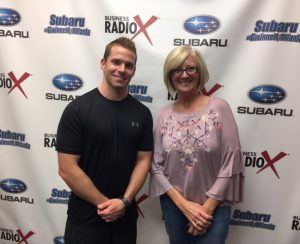
DeWitte Thompson and Stephanie Wolfe

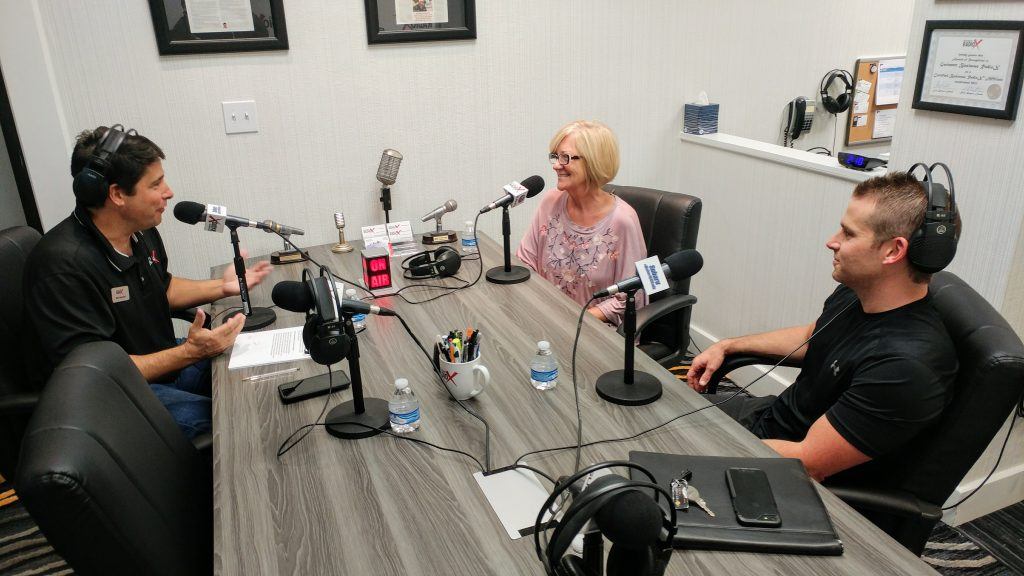
Welcome to the 2nd episode of “Live Well“. Follow the journey of Mike and Tracy as they continue their trek to better health with the help of two experts: Health and wellness coach Stephanie Wolfe and personal trainer DeWitte Thompson.

Stephanie Wolfe/The Whole Food Health Coach

Stephanie Wolfe is a National Board Certified Health and Wellness Coach, which is the highest level of training available to health coaches and is a coveted partnership with physicians and medical practitioners. She works with clients individually or as a group through a step by step process using advanced coaching methods, offering her clients full access to resources and tools to support them throughout their health journey. As a two-time cancer survivor (now 18 years clean) she knows about body systems and the nutrition that fuels them. She calls herself a “preventionist” because it is her believe that prevention is a stronger goal than finding a cure or treatment for diseases that are robbing us from our health and happiness.

DeWitte Thompson/Healthy Life & Fitness Consultants

DeWitte Thompson is a certified personal trainer and performance enhancement specialist through the National Academy of Sports Medicine and owner of Healthy Life & Fitness Consultants, Inc. DeWitte has been involved in the health and fitness industry for over 12 years working with sports teams, corporate groups, and individuals helping them to achieve their health and fitness goals. He started Healthy Life & Fitness Consultants, Inc. four years ago when he realized the need for personalized and convenient training that gets results.


Tagged With: DeWitte Thompson, dieting, diets, Exercise, healthy eating, Healthy Life and Fitness, healthy living, Mike Sammond, Stephanie Wolfe, subaru of gwinnett, the whole food health coach, Weight Loss

Element: Yoga for Weight Loss Exercise DVD Star Ashley Turner

November 10, 2009 by angishields

Dr. Fitness & the Fat Guy
Element: Yoga for Weight Loss Exercise DVD Star Ashley Turner
Loading
00:00 /
RSS Feed
Share
Link
Embed

Download file

On today’s show Dr Fitness and the Fat Guy had on Ashley Turner, an exercise dvd star who is included in the Who’s Who in Power Yoga by Yoga Journal. Did you know that recent studies show that people who practice yoga are more likely to have healthier diets? Yoga can actually jump start your path to a healthier lifestyle. Who knew? Ashley explained that doing yoga increases your awareness of your body and that mindfulness helps you lose weight. Her workouts also get your heart rate up and work the muscles throughout your whole body. Ashley stars in yoga for Weight Loss dvd which is part of the Element series. Ashley helps her celebrity clients (including Michelle Branch and Peter Yorn) lose weight and get in rock star shape with her unique mind body yoga technique based partly on her background as a Jungian psychologist. To learn more about Ashley please go to www.ashleyturner.org

For more Dr Fitness and the Fat Guy check out our Wellness Minutes blog where we give you in depth information on health, fitness and weight loss topics in 3 minutes or less every single day. iTunes Follow me on Twitter @FatGuy

Tags: ashley turner, celebrity, diets, element, health, mindfulness, Weight Loss, workout, yoga, yoga for weight loss

Tagged With: diets, element, Expert Interviews, Health, mindfulness, Weight Loss, yoga, yoga for weight loss

Transcript of Dr David Kessler The End of Overeating Interview

October 5, 2009 by angishields

Because of the huge response we have received from our interview with Dr David Kessler we decided to have the interview transcribed for your reading pleasure. We highly recommend you read Dr Kessler’s book The End of Overeating. Also a big thank you to our friend Karen Galambos with Right Type Pro who did the transcription.

Dr. Fitness and The Fat Guy

Hosts:  Dr. Adam Shafran & Lee Kantor

Guest:  Dr. David Kessler

September 21, 2009

Dr. Adam Shafran: Right now I want to bring on our next guest.  I am very excited to bring on Dr. David Kessler. He is the former FDA Commissioner. He wrote a book recently, a fantastic book. Lee cracks up about this because it is one of the only books that I have ever read cover to cover.

Lee Kantor: And not only that, Dr. Kessler, he bought the book!

Dr. Adam Shafran: I actually bought it! Instead of getting it, I actually purchased it.

Dr. David Kessler: Thanks.

Lee Kantor: He couldn’t wait.

Dr. Adam Shafran: I couldn’t wait!  The name of the book is The End of Overeating, Taking Control of the Insatiable American Appetite.  I really must say it is very enlightening. The creation of these hyperpalatable foods that we have never seen…

Lee Kantor: He is using words like “hyperpalatable”. He has never used those words before.

Dr. Adam Shafran: It is very difficult to say.  Dr. Kessler, welcome to the show.

Dr. David Kessler: It is a pleasure to be with both of you.

Dr. Adam Shafran: Take us on the journey on how you decided to write this book. Was it based out of a personal experience, where you wanted to figure out…?

Lee Kantor: How much do you weight? That’s what he wants to know!

Dr. David Kessler: I have suits in every size. Does that answer your question.

Dr. Adam Shafran: So you were a customer as well.

Dr. David Kessler: I am very much a customer. I didn’t understand why does that chocolate chip cookie have such power over me.  Why am I sitting there with a box of pizza and there is one slice left in the box and I’m thinking about who is going to get that last slice.  That was the question.  It is never quite linear.

I was Dean at Yale Medical School, I was sitting there with residents and fellows and we were around the table and I started off by asking the question, “If you want to stay alive, what are the things that you can do? What is the real evidence-based medicine that suggests what the things are you can do to prevent the major causes of death – cardiovascular disease, stroke and cancer?”

I went to the library and worked with the librarian and collected all the medical literature and she was helping me pull the articles. I noticed along the way, over three months as she was pulling the articles that she lost 30 lbs.

Dr. Adam Shafran: Was it from the exercise of pulling the articles or actually reading them?

Dr. David Kessler: It was because she was reading these articles.  We all know that excess weight is not good for us. But, when you are sitting there every day looking and reading the effects of this. It had a real effect on her.

If it were diet and exercise we’d all do it, if it were that simple. But there was something about it. What was it that was so hard for so many of us to do. I am watching Oprah one night and there was a woman on the show, very well educated, very well spoken and she said, “I eat when my husband goes off to work in the morning, I eat before he comes home at night, I eat when I am happy, I eat when I’m sad, I eat when I’m hungry, I eat when I’m not hungry. And, I don’t like myself.”  I wanted to understand what was driving this woman to do what she didn’t want to be doing. She knew what she shouldn’t be doing but she was doing it anyway. I could relate.  That was the journey for the book.

Lee Kantor: Was that the fat Oprah or the skinny Oprah (Optifast)?

Dr. David Kessler: Let me give you three characteristics. Some people when they hear this will say, “That’s not me”, others will say, “You are describing me”.  Let me give you three characteristics…it is not just people who are obese or overweight or have these characteristics; some people who are at healthy weights also have these characteristics.

  1. A hard time resisting your favorite foods.  A loss of control in the face of highly very good tasting food.
  2. A hard time stopping eating.  A lack of satiation, not feeling full, just keeping on eating.
  3. A preoccupation of thinking about food, between meals or sometimes as you are eating and your food is still in front of you and you are thinking about what you will be eating next.

Those three characteristics:  Loss of control, Lack of satiation, Preoccupation with food; those three characteristics we found in 50% of obese people, 30% of overweight people, 20% of healthy weight people. They all scored very high on those three characteristics.

It is not just a question of whether you are fat or not fat. I wanted to know what was driving that behavior.

Dr. Adam Shafran: It seems what you talk about in the book, a lot of this drive seems to be this creation of a new food group that popped up in the universe that hadn’t existed before, called hyperpalatable foods, where the right combination of sugar, the right combination of salt and the right combination of fat will change the chemistry of your brain.

Dr. David Kessler: That’s exactly right.  There are a lot of things that can capture that circuitry.  But certainly foods that are high in fat and sugar, high in fat and salt…fat, sugar and salt stimulate us to eat more. Understand how this works…let me give you four experiments, I’ll keep the science simple…A vanilla milkshake – what do you think it is about the vanilla milkshake that drives intake? Do you think it is the sugar? Do you think it is the fat? Do you think it is flavor? Which one?

Dr. Adam Shafran: Well, The Fat Guy likes to bathe sometimes in the milkshake, so it might be the actual texture.

Lee Kantor: It is the smell.

Dr. David Kessler: You think it is the texture?

Lee Kantor: You read the book, that not fair!

Dr. Adam Shafran: No, it has to do with a bunch of things. Some people respond differently to certain stimuli.

Lee Kantor: Vanilla would do nothing for me.  If it was chocolate, I’d be diving in!

Dr. David Kessler: You know what the main driver is? It is sugar. When you add fat to it it is synergistic.  It is not just any one ingredient, but you put that fat and sugar together…I asked my colleague, Gaetano Di Chiara, he is one of the great pharmacologists in Italy. Gaetano studies the affects of usually amphetamine, cocaine on the brain, he studies a brain chemical called ‘Dopamine’. What does Dopamine do? It is not pleasure, Dopamine is the chemical that locks your attention, it focuses your attention on a stimulus. We certainly see that with amphetamines and cocaine you get these big rises in Dopamine levels.

Food was always thought to give you a little bump, but then the 2nd, 3rd time you had the food there was no rise. Drugs on the one hand gave you a rise in Dopamine, food gave you a little bump but then it habituated (there was no rise).  I said, “Gaetano, let’s just not take any one food, let’s take fat and sugar together and see what happens to brain Dopamine?”  Sure enough, brain Dopamine increases. So there you see those combinations. Fat and sugar can give you this elevation in brain Dopamine.

I was very interested in the group of people who have this loss of control, lack of satiation and this preoccupation, it is some 70 million people who score high on those characteristics.  We did brain scans. We did it in two phases. The first phase we didn’t even give them the food.  The power of food comes not just from the taste, but it is from the anticipation of thinking about food.  We scanned their brains in the people who had this conditioned type of reading of a hard time of resisting their favorite foods.   Their brain reward pathways lit up just from the sight and smell of food.

Dr. Adam Shafran: Right.

Dr. David Kessler: Then what was interesting was when they started eating the food those pathways still remained elevated much more than in control groups of people who didn’t have this.  The brain pathways didn’t shut off until all the food is gone. There is a biological reason why it is so hard to resist.

Lee Kantor: Now is this something that a person should switch from food to amphetamines because they are less calories (laughing)?

Dr. Adam Shafran: (laughing)

Dr. David Kessler: The answer is an unequivocal “NO”. But in fact, what drugs work?  Very few drugs work for weight loss. What were the drugs that work but they had a lot of problems associated with them?

Dr. Adam Shafran: The Fen-Phen was the…Phentermine…

Lee Kantor: You don’t see many fat cocaine addicts.

Dr. David Kessler: It is an amphetamine-like compound. So if your brain is racing, you are not thinking about food, sure it will work.  But, that is really important, will we ever really get a drug for weight, that magic bullet?  You can do it but you are going to have to interfere with the brain’s learning, motivational, habit and memory circuits.  Maybe we get a drug that works but you are going to have give me a couple of IQ points back!

Dr. Adam Shafran: One of the things I really liked about your book is that you talk about the science of why we are the way we are and a lot of the studies and stuff that goes on in the food industry. But, you didn’t give this one cookie-cutter, blanket approach to fixing this.

Lee Kantor: How do you combat this?

Dr. Adam Shafran: Some people respond differently to certain stimuli.  You kind of talked about many things you have to kind of put in your gun as bullets to shoot at this problem.

Dr. David Kessler: This is not a disease.  There is not a quick fix. The fact is that we are all wired, our brains are wired to focus on the most salient stimuli in our environment.  What do I mean by that? If a bear walked into the studio right now, I would assure you that you are going to focus on that bear and you are going to stop interviewing me.

Lee Kantor: I don’t know, you are pretty compelling!

Dr. Adam Shafran: Don’t sell yourself short, Dr. Kessler!

Dr. David Kessler: For some of us the most salient stimuli, what can capture those brain circuits?  If you are thinking about your kids, for some people it could be alcohol, it could be gambling, it could be sex, it could be tobacco. For most of us, what is on every corner, what is available 24/7, what is socially acceptable to do?  It is eating.  What’s at the core of those stimuli that are the most salient?  Fat, Sugar and Salt.

Lee Kantor: Should you switch from one thing?  If your drug of choice is food, is the solution to switch to some other drug of choice that is better than food?

Dr. David Kessler: It is interesting, you come out on the West Coast and you watch television at 2 a.m. and there are these ads that say, “If you just had bariatric surgery and you have a resumption of alcohol or gambling, some see us at the rehab centers.” You are right, there is this crossover between different kinds of behavior and different kinds of stimuli.  We are more vulnerable than we think. No, you want to be able to substitute something that is more healthy than something that is less healthy. That is the real trick.  You don’t want to go to something that is less healthy, that is the wrong direction.

Lee Kantor: Are you really solving this problem by moving from overeating donuts to overeating grapes? Is that a win, just because grapes are healthier?

Dr. Adam Shafran: It is also the combination. It is like you are creating the perfect storm. If you do A, B and C you are going to get the same result.

Dr. David Kessler: How did we get here?  What is the business plan of the modern American food company?

Lee Kantor: To sell food, as much of it as possible.

Dr. David Kessler: So what did they do? When I was growing up we ate meals, we had structure. We didn’t eat between meals. What has been the business plan? Take fat, sugar and salt put it on every corner, make it available 24/7, make it socially acceptable to eat any time day or night, make it into entertainment. Walk into a food court, it is like we are in a food carnival. What did we expect to happen if we did that?

Dr. Adam Shafran: It is like pornography with food!  It is like a candy store where you have everything accessible any time.

Dr. David Kessler: Understand how that works…we are constantly being bombarded. Based on past experience, past learning we get cued.  What is a cue? The cue can be the sight, it can be the smell. I am walking down Powell Street and I start thinking about chocolate covered pretzels. Why? Because I had been on that street six months earlier and I got that. I forgot entirely about that but just with learning…Every time I land at San Francisco airport I start thinking about Chinese dumplings. As the plane hits the taxi-way!  The plane is the cue. What does a cue do? It activates arousal, it focuses my attention, there are thoughts of wanting. I eat for a minute and it gives me pleasure, it sort of locks out all other stresses, it distracts me. What happens the next time I get cued again?

Dr. Adam Shafran: Lee, is a smart guy.  This is a very bright doctor who is aware of it and these are the things that are happening to him on a personal level.

Lee Kantor: Pavlov would be proud.

Dr. David Kessler: Well, Pavlov would be proud. But it is not just conditioning. Pavlov got it right in part, but it is conditioned and driven behavior. It is not just learned, it is learned and motivated. If you try to break this cycle, once you’re cued…you know that inner dialogue, “Boy, that looks good. No, I shouldn’t have that. Maybe just a little, not now.” That is the stuff of obsessions and cravings so that the behavior becomes conditioned and driven. That is why we really need food rehab.

Lee Kantor: But there is always after, if you are a habitual food user.  There is the shame element too, after you have eaten that where you feel bad that you did.

Dr. David Kessler: We have to get rid of the shame. The shame is because we can’t control our behaviors. No one explained to us…we are constantly being bombarded with this cue activation reward/relief cycle.  Do we ever get any real satisfaction. I thought I was eating for nutrition. I thought I was eating for nourishment to fill me up. I didn’t realize I was eating for stimulation. But, that is what fat, sugar is all about.

Lee Kantor: But food is more than just fuel. Food is part of your culture, part of celebrations, part of lots of things that go beyond fuel.

Dr. David Kessler: That’s fine, but does it need to be layered and loaded with fat, sugar and salt?  What happened is that in the 1950s and 60s, in order to feed a hungry nation and to be able to do that economically the food industry became highly processed.  That was good, it was primarily safe, it was cheap.  What did they learn along the way? To dial in fat, sugar and salt.  Then we put the nutrition facts label, that little box. You know when you pick up M&Ms and you see it is 40% of your daily fats and you put it back, that’s my fault. At the FDA we put that on. We didn’t do that on restaurants.  Somebody said to  me, “In the food industry, Kessler, this whole obesity epidemic was your fault.”  I said, “What are you talking about?”  He said, “You didn’t put the nutrition facts information on restaurant menus.”   So you see the real explosion.

Lee Kantor: Look at cigarettes, they have a warning that says this is going to kill you and that doesn’t impact sales.

Dr. David Kessler: What is worse than tobacco? What has been the real success?

Dr. Adam Shafran: The drug that they have put into cigarettes…

Dr. David Kessler: What has really shifted? What is important? Is wasn’t laws. It wasn’t warnings. What was it?  Back 30-40 years…

Lee Kantor: It was cool to smoke.

Dr. David Kessler: What changed?

Lee Kantor: It wasn’t cool to smoke anymore.

Dr. David Kessler: Right. So we changed what scientists call the valence of stimuli. It used to be positive valent, not it is negatively valent.  If a reinforcing substance is positively valent, what are you going to do? You are going to approach it. If it is negatively valent, what are you going to do? You are going to stay away from it.  We changed how the country views tobacco. Tobacco is easy, you can live without tobacco.  You are right, food has to be enjoyable.

Lee Kantor: Yeah, but look at the media. You are bombarded with images of fat people, they are not positive.

Dr. David Kessler: We have it wrong! Let’s stay away from people and criticizing. This is not about obesity. There are people who want to be thin but they want to eat the food and any food that they want. This is about the food.  If you want to lose weight but you want the food, it is not going to happen.

Dr. Adam Shafran: Right. We have created foods that weren’t created before. This is the evolution of man and we’ve created food that will alter the chemistry of the brain to now make us eat, whether we are full or not full; we will just keep eating until we are stuffed pigs!

Dr. David Kessler: And what’s happened?

Dr. Adam Shafran: And we’re fat and we’re not happy.

Lee Kantor: As soon as we start changing the gravitational pull on Earth based on the increase in weight…then we’ll change!

Dr. Adam Shafran: I think the main thing, doctor, that you bring up in the book which is amazing to me…as humans we’ve had this change that first of all we didn’t  know was happening.  You looked at obesity rates, you looked at a lot of data and you said, “Wait, what’s happened in the 70s and 80s where all of a sudden we’ve had obesity rates that have gone through the roof? They haven’t existed before.”  How did food change and the availability of it and you create the perfect storm for obesity. I really love the idea and the concept that you don’t give this one approach, “The reason why you are fat is because you have too many starches, you have too much carbohydrates…or your protein”, where people like to focus on some external thing. Or… “If you place the food…or don’t have it in the house, you are not going to be obese.” It is not a one fix for all. There are lots of things that you need to do.

You talk about some of them. One of them is to set rules, this resonated with me. I think it is a great concept in terms of trying to change the way that you view food.

Dr. David Kessler: Yeah, but they have to be rules you want to follow. If you set rules and the rules make you feel deprived, it is not going to work. Deprivation only increases the reward value of food. That is why diets don’t work.  Sure you can 30 days, 60 days, 90 days white knuckle and with just sheer force try to resist, but that only increases the reward value. If you haven’t laid down new learning on top of that old learning, if you haven’t laid down new neural circuitry on top of that old neural circuitry you go back into your environment and you continue to get cued and bombarded with cues and all the highly palatable foods are right in front of you and all the cues.  What do you think is going to happen? Your brain is going to get activated again and you are going to gain back the weight.

Dr. Adam Shafran: Right, you are going to go right back to the same behavior and do the same thing.  It goes back to how mindful you have to be when you are going to eat. You just can’t shut off.

Dr. David Kessler: The problem, the catch, you say “be mindful”, then I am mindful and I am paying attention to it, but I want it.  That starts obsessions and cravings. In some ways, you say “be mindful” and you’re right, because a lot of this behavior is habit and it is out of consciousness but I bring it into consciousness and I then start thinking about it and ruminating about it.  “I want it”, “I don’t want it”!

Dr. Adam Shafran: It sounds like a Woody Allen movie that is going on in my head right now!

Lee Kantor: A lobotomy, I think is the way to go!

Dr. Adam Shafran: Yeah, you have to cut out a part of your brain!  Doctor…?

Dr. David Kessler: I wasn’t going to respond to that, I was just going to let that one go (laughing).  I thought I would let that one just go by.  I wasn’t going there!

Dr. Adam Shafran: It is a wonderful, wonderful book. I think it is probably one of the most powerful books about eating, overeating, about controlling behavior; especially if you are trying to lose weight. I think it is a phenomenal book.  The End of Overeating, Taking Control of the Insatiable American Appetite. Great book!  I really appreciate you taking the time…

Lee Kantor: If you want Dr. Fitness to blurb the paperback of this saying that he actually bought it with his own money…it might be worth it!

Dr. Adam Shafran: And read it! I read the whole thing cover to cover!

Dr. David Kessler: What’s the price (laughing)?

Dr. Adam Shafran: Listen, how about a hot pastrami sandwich at Ben’s Deli with some coleslaw and some half sour pickles? That’s my poison.

Dr. David Kessler: Any time, sir.

Dr. Adam Shafran: We really appreciate you coming on the show and look forward to talking in the new future.

Dr. David Kessler: Thanks a lot.

Dr. Adam Shafran: Where can we get the book?

Dr. David Kessler: Amazon has it.

Dr. Adam Shafran: Any websites?

Dr. David Kessler: www.theendofovereatingbook.com Amazon and local bookstores have it. Thanks for having me on the show.

Dr. Adam Shafran: It is always a pleasure, thank you so much for coming on the show, Dr. Kessler.

That is The End of Overeating, Taking Control of the Insatiable American Appetite. Great book, Lee. I’m sorry that you never read it. You really should read this.

Lee Kantor: Does it have pictures?

Dr. Adam Shafran: No, lots of words.

Lee Kantor: Sorry!

Dr. Adam Shafran: When you are checking out the book The End of Overeating, Taking Control of the Insatiable American Appetite at www.theendofovereatingbook.com make sure you check out Dr. Fitness & The Fat Guy at www.drfitnessandthefatguy.com, check out our blog, check out our book You Can’t Lose Weight Alone. The Partner Power Weight Loss Program now available free online.

Tags: cravings, david kessler, diets, end of overeating, fda, foods, health, lose weight, stress, sugar, Weight Loss

Tagged With: cravings, david kessler, diets, end of overeating, fda, foods, Health, lose weight, Recommendations, stress, sugar, Weight Loss

The Truth About Fad Diets

September 16, 2009 by angishields

Dr. Fitness & the Fat Guy
The Truth About Fad Diets
Loading
00:00 /
RSS Feed
Share
Link
Embed

Download file

In today’s Wellness Minute Dr Fitness and the Fat Guy tell the truth about fad diets. You know you’re on a fad diet if you are now excluding entire food groups from your diet. Losing weight should not require you to eat a few foods for the rest of your life – optimally you can eat what ever you’d like but just less of it. And if your new magic diet is promising tremendous amounts of weight that will melt off of you in a few days – run away.  Remember you didn’t gain the weight in 30 days – how in the world are you going to lose it in a short amount of time? Listen right now to hear Dr Fitness’ tips. Dr Fitness and the Fat Guy’s Wellness Minutes improve your health in 3 minutes a day or less. iTunes Follow me on Twitter @FatGuy

none

Tagged With: diet, diets, losing weight, Wellness Minute

Business RadioX ® Network


Our Most Recent Episode

CONNECT WITH US

  • Email
  • Facebook
  • LinkedIn
  • Twitter
  • YouTube

Our Mission

We help local business leaders get the word out about the important work they’re doing to serve their market, their community, and their profession.

We support and celebrate business by sharing positive business stories that traditional media ignores. Some media leans left. Some media leans right. We lean business.

Sponsor a Show

Build Relationships and Grow Your Business. Click here for more details.

Partner With Us

Discover More Here

Terms and Conditions
Privacy Policy

Connect with us

Want to keep up with the latest in pro-business news across the network? Follow us on social media for the latest stories!
  • Email
  • Facebook
  • Google+
  • LinkedIn
  • Twitter
  • YouTube

Business RadioX® Headquarters
1000 Abernathy Rd. NE
Building 400, Suite L-10
Sandy Springs, GA 30328

© 2025 Business RadioX ® · Rainmaker Platform

BRXStudioCoversLA

Wait! Don’t Miss an Episode of LA Business Radio

BRXStudioCoversDENVER

Wait! Don’t Miss an Episode of Denver Business Radio

BRXStudioCoversPENSACOLA

Wait! Don’t Miss an Episode of Pensacola Business Radio

BRXStudioCoversBIRMINGHAM

Wait! Don’t Miss an Episode of Birmingham Business Radio

BRXStudioCoversTALLAHASSEE

Wait! Don’t Miss an Episode of Tallahassee Business Radio

BRXStudioCoversRALEIGH

Wait! Don’t Miss an Episode of Raleigh Business Radio

BRXStudioCoversRICHMONDNoWhite

Wait! Don’t Miss an Episode of Richmond Business Radio

BRXStudioCoversNASHVILLENoWhite

Wait! Don’t Miss an Episode of Nashville Business Radio

BRXStudioCoversDETROIT

Wait! Don’t Miss an Episode of Detroit Business Radio

BRXStudioCoversSTLOUIS

Wait! Don’t Miss an Episode of St. Louis Business Radio

BRXStudioCoversCOLUMBUS-small

Wait! Don’t Miss an Episode of Columbus Business Radio

Coachthecoach-08-08

Wait! Don’t Miss an Episode of Coach the Coach

BRXStudioCoversBAYAREA

Wait! Don’t Miss an Episode of Bay Area Business Radio

BRXStudioCoversCHICAGO

Wait! Don’t Miss an Episode of Chicago Business Radio

Wait! Don’t Miss an Episode of Atlanta Business Radio