Business RadioX ®

  • Home
  • Business RadioX ® Communities
    • Southeast
      • Alabama
        • Birmingham
      • Florida
        • Orlando
        • Pensacola
        • South Florida
        • Tampa
        • Tallahassee
      • Georgia
        • Atlanta
        • Cherokee
        • Forsyth
        • Greater Perimeter
        • Gwinnett
        • North Fulton
        • North Georgia
        • Northeast Georgia
        • Rome
        • Savannah
      • Louisiana
        • New Orleans
      • North Carolina
        • Charlotte
        • Raleigh
      • Tennessee
        • Chattanooga
        • Nashville
      • Virginia
        • Richmond
    • South Central
      • Arkansas
        • Northwest Arkansas
    • Midwest
      • Illinois
        • Chicago
      • Michigan
        • Detroit
      • Minnesota
        • Minneapolis St. Paul
      • Missouri
        • St. Louis
      • Ohio
        • Cleveland
        • Columbus
        • Dayton
    • Southwest
      • Arizona
        • Phoenix
        • Tucson
        • Valley
      • Texas
        • Austin
        • Dallas
        • Houston
    • West
      • California
        • Bay Area
        • LA
        • Pasadena
      • Colorado
        • Denver
      • Hawaii
        • Oahu
  • FAQs
  • About Us
    • Our Mission
    • Our Audience
    • Why It Works
    • What People Are Saying
    • BRX in the News
  • Resources
    • BRX Pro Tips
    • B2B Marketing: The 4Rs
    • High Velocity Selling Habits
    • Why Most B2B Media Strategies Fail
    • 9 Reasons To Sponsor A Business RadioX ® Show
  • Partner With Us
  • Veteran Business RadioX ®

Marijuana and delta-8 THC

November 26, 2021 by John Ray

Delta-8 THC
North Fulton Studio
Marijuana and delta-8 THC
Loading
00:00 /
RSS Feed
Share
Link
Embed

Download file

Delta-8 THCMarijuana and delta-8 THC (Episode 65, To Your Health with Dr. Jim Morrow)

On this episode of To Your Health, Dr. Morrow discusses delta-8 THC, one of the cannabinoids from the hemp plant. It is not FDA evaluated or approved, and Dr. Morrow covers its risks and adverse effects. To Your Health is brought to you by Morrow Family Medicine, a Member of Village Medical, which brings the care back to healthcare.

About Morrow Family Medicine, A Member of Village Medical

Morrow Family Medicine, a Member of Village Medical, is an award-winning, state-of-the-art family practice with offices in Cumming and Milton, Georgia. The practice combines healthcare information technology with old-fashioned care to provide the type of care that many are in search of today. Two physicians, three physician assistants and two nurse practitioners are supported by a knowledgeable and friendly staff to make your visit to Morrow Family Medicine, A Member of Village Medical one that will remind you of the way healthcare should be.  At Morrow Family Medicine, a Member of Village Medical, we like to say we are “bringing the care back to healthcare!”  The practice has been named the “Best of Forsyth” in Family Medicine in all five years of the award, is a three-time consecutive winner of the “Best of North Atlanta” by readers of Appen Media, and the 2019 winner of “Best of Life” in North Fulton County.

Village Medical offers a comprehensive suite of primary care services including preventative care, treatment for illness and injury, and management of chronic conditions such as diabetes, congestive heart failure, chronic obstructive pulmonary disease (COPD) and kidney disease. Atlanta-area patients can learn more about the practice here.

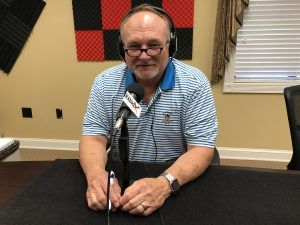
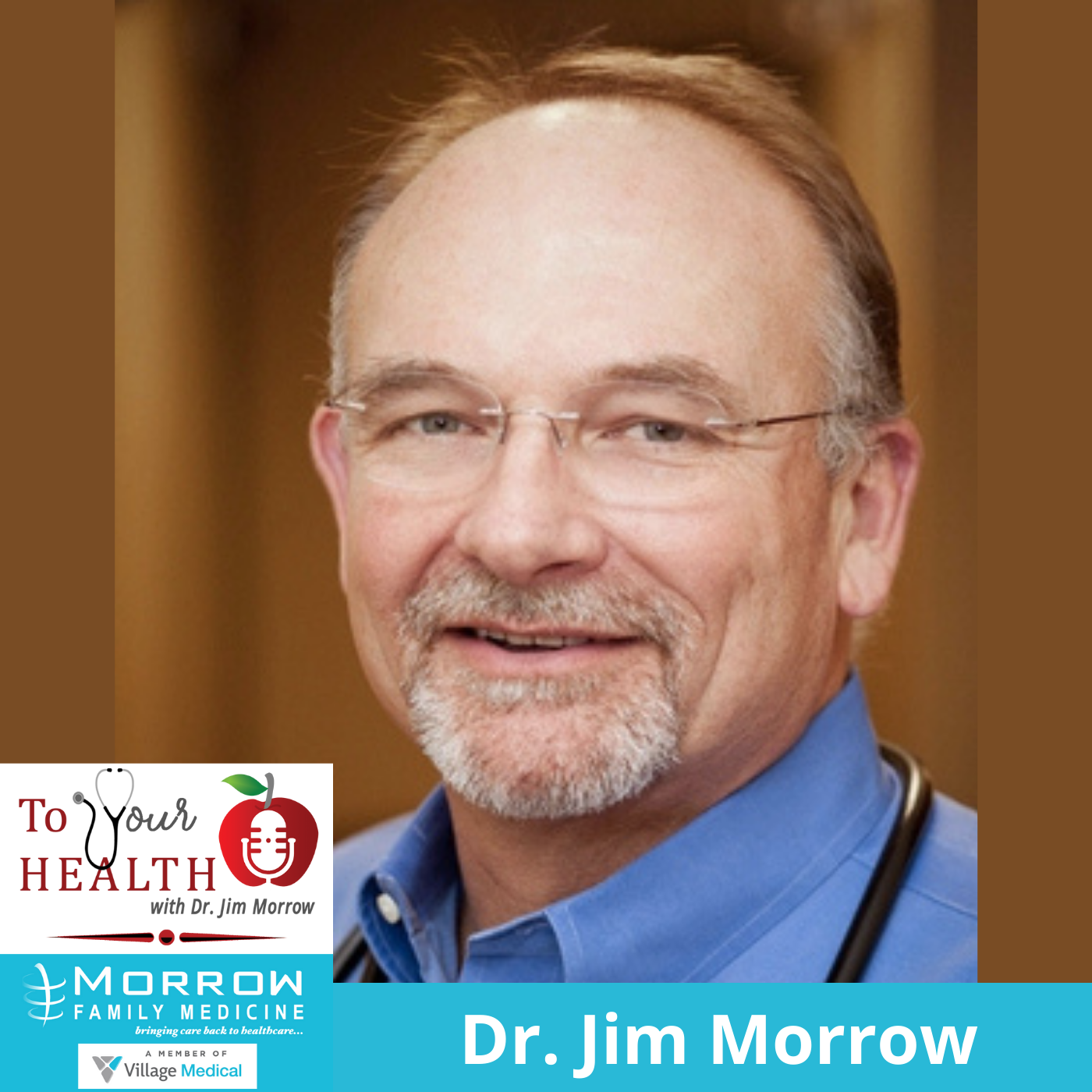
Dr. Jim Morrow, Morrow Family Medicine, and Host of To Your Health with Dr. Jim Morrow

Covid-19 misconceptionsDr. Jim Morrow is the founder and CEO of Morrow Family Medicine. He has been a trailblazer and evangelist in healthcare information technology, was named Physician IT Leader of the Year by HIMSS, a HIMSS Davies Award Winner, the Cumming-Forsyth Chamber of Commerce Steve Bloom Award Winner as Entrepreneur of the Year and he received a Phoenix Award as Community Leader of the Year from the Metro Atlanta Chamber of Commerce.  He is married to Peggie Morrow and together they founded the Forsyth BYOT Benefit, a charity in Forsyth County to support students in need of technology and devices. They have two Goldendoodles, a gaggle of grandchildren and enjoy life on and around Lake Lanier.

Facebook: https://www.facebook.com/MorrowFamMed/

LinkedIn: https://www.linkedin.com/company/7788088/admin/

Twitter: https://twitter.com/toyourhealthMD

The complete show archive of To Your Health with Dr. Jim Morrow addresses a wide range of health and wellness topics and can be found at www.toyourhealthradio.com.

Dr. Morrow’s Show Notes

Covid-19 Vaccine Booster Update


Get a darn booster.

If you wanted to be immune badly enough to get the vaccine, you clearly need a booster to stay as immune as possible.


What is this “Delta-8” that everyone is talking about?!?


  • Delta-8 tetrahydrocannabinol,
    • also known as delta-8 THC,
    • is a psychoactive substance found in the Cannabis sativa plant,
    • of which marijuana and hemp are two varieties.
      • Delta-8 THC is one of over 100 cannabinoids produced naturally by the cannabis plant
        • but is not found in significant amounts in the cannabis plant.
        • As a result, concentrated amounts of delta-8 THC are typically manufactured from hemp-derived cannabidiol (CBD).


  • It is important for consumers to be aware that delta-8 THC products
    • have not been evaluated or approved by the FDA for safe use in any context.
    • They may be marketed in ways that put public health at risk and should especially be kept out of reach of children and pets.


Here are 5 things you should know about delta-8 THC


  • Delta-8 THC products have not been evaluated or approved by the FDA for safe use and may be marketed in ways that put the public health at risk. 
  • The FDA is aware of the growing concerns surrounding delta-8 THC products currently being sold online and in stores.
  • These products have not been evaluated or approved by the FDA for safe use in any context.
  • Some concerns include variability in product formulations and product labeling,
    • other cannabinoid and terpene content,
    • and variable delta-8 THC concentrations.
    • Additionally, some of these products may be labeled simply as “hemp products,”
      • which may mislead consumers who associate “hemp” with “non-psychoactive.”
      • Furthermore, the FDA is concerned by the proliferation of products that contain delta-8 THC and are marketed for therapeutic or medical uses,
        • although they have not been approved by the FDA.
        • Selling unapproved products with unsubstantiated therapeutic claims is not only a violation of federal law,
          • but also can put consumers at risk, as these products have not been proven to be safe or effective.
          • This deceptive marketing of unproven treatments raises significant public health concerns because patients and other consumers may use them instead of approved therapies to treat serious and even fatal diseases.


  • The FDA has received adverse event reports involving delta-8 THC-containing products. 
  • From December 2020 through July 2021,
    • the FDA received adverse event reports from both consumers and law enforcement
    • describing 22 patients who consumed delta-8 THC products;
    • of these, 14 presented to a hospital or emergency room for treatment following the ingestion.
    • Of the 22 patients, 19 experienced adverse events after ingesting delta-8 THC-containing food products (e.g., brownies, gummies).
      • Adverse events included vomiting, hallucinations, trouble standing, and loss of consciousness.
    • National poison control centers received 661 exposure cases of delta-8 THC products between January 2018 and July 31, 2021,
      • 660 of which occurred between January 1, 2021, and July 31, 2021.
    • Of the 661 exposure cases:
      • 41% involved unintentional exposure to delta-8 THC and 77% of these unintentional exposures affected pediatric patients less than 18 years of age.
      • 39% involved pediatric patients less than 18 years of age
      • 18% required hospitalizations, including children who required intensive care unit (ICU) admission following exposure to these products.


  • Delta-8 THC has psychoactive and intoxicating effects.


  • Delta-8 THC has psychoactive and intoxicating effects,
    • similar to delta-9 THC (i.e., the component responsible for the “high” people may experience from using cannabis).
    • The FDA is aware of media reports of delta-8 THC products getting consumers “high.”
    • The FDA is also concerned that delta-8 THC products likely expose consumers to much higher levels of the substance than are naturally occurring in hemp cannabis raw extracts.
    • So, historical use of cannabis cannot be relied upon in establishing a level of safety for these products in humans.


  • Delta-8 THC products often involve the use of potentially harmful chemicals to create the concentrations of delta-8 THC claimed in the marketplace. 


  • The natural amount of delta-8 THC in hemp is very low,
    • and additional chemicals are needed to convert other cannabinoids in hemp, like CBD, into delta-8 THC (i.e., synthetic conversion).
  • Concerns with this process include:
    • Some manufacturers may use potentially unsafe household chemicals to make delta-8 THC through this chemical synthesis process.
    • Additional chemicals may be used to change the color of the final product.
    • The final delta-8 THC product may have potentially harmful by-products (contaminants)
      • due to the chemicals used in the process,
      • and there is uncertainty with respect to other potential contaminants that may be present or produced depending on the composition of the starting raw material.
      • If consumed or inhaled, these chemicals, including some used to synthesize delta-8 THC and the by-products created during synthesis, can be harmful.
    • Manufacturing of delta-8 THC products may occur in uncontrolled or unsanitary settings, which may lead to the presence of unsafe contaminants or other potentially harmful substances.


  • Delta-8 THC products should be kept out of the reach of children and pets.


  • Manufacturers are packaging and labeling these products in ways that may appeal to children
    • (gummies, chocolates, cookies, candies, etc.).
  • These products may be purchased online, as well as at a variety of retailers,
    • including convenience stores and gas stations, where there may not be age limits on who can purchase these products.
    • As I said, there have been numerous poison control center alerts involving pediatric patients who were exposed to delta-8 THC-containing products.
      • Also, animal poison control centers have indicated a sharp overall increase in accidental exposure of pets to these products.
      • Keep these products out of reach of children and pets. 


Why is the FDA notifying the public

about delta-8 THC?

  • A combination of factors has led the FDA to provide consumers with this information. These factors include:
    • An uptick in adverse event reports to the FDA and the nation’s poison control centers.
    • Marketing, including online marketing of products, that is appealing to children.
    • Concerns regarding contamination due to methods of manufacturing that may in some cases be used to produce marketed delta-8 THC products.
    • The FDA is actively working with federal and state partners to further address the concerns related to these products and monitoring the market for
      • product complaints,
      • adverse events,
      • and other emerging cannabis-derived products of potential concern.
      • The FDA will warn consumers about public health and safety issues and take action when necessary when FDA-regulated products violate the law. 

How to report complaints and cases of accidental exposure or adverse events:

  • If you think you are having a serious side effect that is an immediate danger to your health, call 9-1-1 or go to your local emergency room.
  • Health care professionals and patients are encouraged to report complaints and cases of accidental exposure and adverse events to the FDA’s MedWatch Safety Information and Adverse Event Reporting Program:
  • Call 800-332-1088 to report a problem.


Credit:  http://www.fda.gov/

Tagged With: adverse effects, cannabinoids, Delta-8 THC, Dr. Jim Morrow, fda, Hemp, hemp plant, Marijuana, Morrow Family Medicine, Village Medical

The Right to Try Act – Episode 36, To Your Health With Dr. Jim Morrow

July 17, 2020 by John Ray

North Fulton Studio
North Fulton Studio
The Right to Try Act - Episode 36, To Your Health With Dr. Jim Morrow
Loading
00:00 /
RSS Feed
Share
Link
Embed

Download file

Dr. Jim Morrow, Morrow Family Medicine, and Host of “To Your Health With Dr. Jim Morrow”

To Your Health With Dr. Jim Morrow – Episode 36, The Right to Try Act

The federal Right to Try Act, enacted in 2018, opens new treatment pathways for terminally ill patients who have exhausted their government-approved options. On this edition of “To Your Health,” Dr. Morrow discusses various aspects of the law. “To Your Health” is brought to you by Morrow Family Medicine, which brings the CARE back to healthcare.

About Morrow Family Medicine and Dr. Jim Morrow

Morrow Family Medicine is an award-winning, state-of-the-art family practice with offices in Cumming and Milton, Georgia. The practice combines healthcare information technology with old-fashioned care to provide the type of care that many are in search of today. Two physicians, three physician assistants and two nurse practitioners are supported by a knowledgeable and friendly staff to make your visit to Morrow Family Medicine one that will remind you of the way healthcare should be.  At Morrow Family Medicine, we like to say we are “bringing the care back to healthcare!”  Morrow Family Medicine has been named the “Best of Forsyth” in Family Medicine in all five years of the award, is a three-time consecutive winner of the “Best of North Atlanta” by readers of Appen Media, and the 2019 winner of “Best of Life” in North Fulton County.

Dr. Jim Morrow, Morrow Family Medicine, and Host of “To Your Health With Dr. Jim Morrow”

Covid-19 misconceptionsDr. Jim Morrow is the founder and CEO of Morrow Family Medicine. He has been a trailblazer and evangelist in the area of healthcare information technology, was named Physician IT Leader of the Year by HIMSS, a HIMSS Davies Award Winner, the Cumming-Forsyth Chamber of Commerce Steve Bloom Award Winner as Entrepreneur of the Year and he received a Phoenix Award as Community Leader of the Year from the Metro Atlanta Chamber of Commerce.  He is married to Peggie Morrow and together they founded the Forsyth BYOT Benefit, a charity in Forsyth County to support students in need of technology and devices. They have two Goldendoodles, a gaggle of grandchildren and enjoy life on and around Lake Lanier.

Facebook: https://www.facebook.com/MorrowFamMed/

LinkedIn: https://www.linkedin.com/company/7788088/admin/

Twitter: https://twitter.com/toyourhealthMD

The complete show archive of “To Your Health with Dr. Jim Morrow” addresses a wide range of health and wellness topics, and can be found at www.toyourhealthradio.com.

Dr. Morrow’s Show Notes

The Right to Try Act


  • On May 30, 2018, President Donald Trump signed S.204, the Right to Try Act.
    • The Right to Try Act opens a new pathway for terminally ill patients who have exhausted their government-approved options
    • and can’t get into a clinical trial to access treatments.
    • Although 41 states have passed Right to Try laws, the signing of S.204 makes Right to Try the law of the land,
      • creating a uniform system for terminal patients seeking access to investigational treatments.
  • Who qualifies for Right to Try?
    • To be eligible for Right to Try, a patient must meet the following conditions:
    • Be diagnosed with a life-threatening disease or condition;
    • Have exhausted approved treatment options;
    • Be unable to participate in a clinical trial involving the eligible investigational drug, as certified by a doctor, who is in good standing with her licensing organization and will not be compensated directly by the manufacturer for so certifying; and
    • Give written informed consent regarding the risks associated with taking the investigational treatment.
  • What is a life-threatening disease or condition?
    • Federal law defines a life-threatening disease or condition as:
      • “Diseases or conditions where the likelihood of death is high unless the course of the disease is interrupted”
  • What drugs or treatments qualify for Right to Try?
    • The treatments available under the law must meet the following conditions:
    • Have completed an FDA-approved Phase 1 clinical trial;
    • Be in an active clinical trial intended to form the basis of an application for approval
      • or be the subject of an application for approval that has been filed with the FDA; and
    • Be in ongoing active development or production and not discontinued by the manufacturer or placed on clinical hold.
  • I do not live in a state with a Right to Try law. Can I still use Right to Try?
      • 204 makes Right to Try the law of the land.
      • So long as a patient and treatment meet the qualifications of the federal law, Right to Try applies, regardless of whether the patient’s state adopted Right to Try.
  • Does medical cannabis qualify?
    • Right to Try only applies to treatments that have completed an FDA-approved Phase 1 clinical trial and remain under study in an active clinical trial.
    • If there is a Phase 2 or 3 clinical trial for medical cannabis as a treatment of an underlying terminal condition, it may qualify.
  • Does a treatment that is already FDA-approved for something else qualify for Right to Try?
    • Doctors may already prescribe treatments ‘off-label.’
      • Off-label means prescribing an FDA approved treatment for a condition, dose, or population other than what the FDA approved.
      • Therefore, no special permission is needed for a physician to prescribe treatments that are approved for other conditions.
      • Right to Try applies to treatments that are being given to patients in clinical trials but are not already FDA approved.
  • What can companies charge for treatments?
    • Federal law bans companies from making a profit on any drug or treatment that has not been approved by the FDA,
    • but the law does allow companies to recover the costs that are directly related to providing an individual treatment.
    • Existing regulations govern what can and cannot be included in the calculation for determining the direct costs that can be charged.
  • This means that a patient could be charged for the direct costs of providing their individual treatment,
    • but the company cannot make a profit.
  • How will payment work?
    • Just like with the FDA’s existing Expanded Access program, insurance companies and taxpayer-funded healthcare programs like Medicaid or Medicare are not required to cover the cost of investigational treatments,
      • but they may choose to do so.
      • Some insurance companies have covered the costs of investigational treatments used by patients under state Right to Try laws, but others have not.
      • Each patient’s cost situation will be different and determined by their individual insurance company or program and their own financial resources.
  • How do I initiate a request?
    • The patient, the patient’s representative, or physician should send a letter to the drug manufacturer’s director of compassionate use or other designated representative to discuss options for access.
  • Where can I find a list of potential treatments?
    • If your physician is not yet aware of investigational treatments, there are several websites that can assist in locating potential treatments:
      • https://clinicaltrials.gov/
        https://platform.emergingmed.com/find-clinical-trials/cri#partnerhome
        https://www.cancer.gov/about-cancer/treatment/clinical-trials/search
  • Is a drug company required to make a treatment available?
      • Drug companies are not required to provide treatments to patients under Right to Try laws.
      • It would not be appropriate to force companies to provide treatments that they do not think are the right fit for a patient
        • or if they do not have enough supply to provide the treatment outside of its clinical trial.
  • Can I make my doctor submit a request for a treatment I want to try?
      • Doctors have a responsibility to ensure that patients are given treatments that they believe, in their professional opinion, could help them.
      • A doctor who does not think a treatment will help is not obligated to make a request for the treatment.
      • In addition, doctors who pursue treatments under Right to Try must be in good standing with their state licensing or certifying board,
        • and they cannot be compensated for certifying that patients qualify for Right to Try.
  • How will a company decide if they will give me the treatment?
    • Each company will develop its own process and procedures for approving Right to Try requests.

Source:  https://righttotry.org/

Tagged With: Dr. Jim Morrow, fda, Jim Morrow, life-threatening disease, Morrow Community Foundation, Morrow Family Medicine, Right to Try, Right to Try law, terminal patients, terminally ill care, terminally ill patients

To Your Health With Dr. Jim Morrow: Episode 12, The Case to Vaccinate

July 10, 2019 by John Ray

North Fulton Studio
North Fulton Studio
To Your Health With Dr. Jim Morrow: Episode 12, The Case to Vaccinate
Loading
00:00 /
RSS Feed
Share
Link
Embed

Download file

Dr. Jim Morrow, Host, “To Your Health With Dr. Jim Morrow”

Episode 12, The Case to Vaccinate

On this edition of “To Your Health With Dr. Jim Morrow,” Dr. Jim Morrow makes the case to vaccinate, arguing that vaccines are safe, necessary, and they work. The fears “non-vaxxers” have on the side effects of vaccines are not based in any proven scientific evidence. “To Your Health” is brought to you by Morrow Family Medicine, which brings the CARE back to healthcare.

About Morrow Family Medicine and Dr. Jim Morrow

Morrow Family Medicine is an award-winning, state-of-the-art family practice with offices in Cumming and Milton, Georgia. The practice combines healthcare information technology with old-fashioned care to provide the type of care that many are in search of today. Two physicians, three physician assistants and two nurse practitioners are supported by a knowledgeable and friendly staff to make your visit to Morrow Family Medicine one that will remind you of the way healthcare should be.  At Morrow Family Medicine, we like to say we are “bringing the care back to healthcare!”  Morrow Family Medicine has been named the “Best of Forsyth” in Family Medicine in all five years of the award, is a three-time consecutive winner of the “Best of North Atlanta” by readers of Appen Media, and the 2019 winner of “Best of Life” in North Fulton County.

Dr. Jim Morrow, Morrow Family Medicine, and Host of “To Your Health With Dr. Jim Morrow”

Dr. Jim Morrow, Morrow Family Medicine, and Host of “To Your Health With Dr. Jim Morrow”

Dr. Jim Morrow is the founder and CEO of Morrow Family Medicine. He has been a trailblazer and evangelist in the area of healthcare information technology, was named Physician IT Leader of the Year by HIMSS, a HIMSS Davies Award Winner, the Cumming-Forsyth Chamber of Commerce Steve Bloom Award Winner as Entrepreneur of the Year and he received a Phoenix Award as Community Leader of the Year from the Metro Atlanta Chamber of Commerce.  He is married to Peggie Morrow and together they founded the Forsyth BYOT Benefit, a charity in Forsyth County to support students in need of technology and devices. They have two Goldendoodles, a gaggle of grandchildren and enjoy life on and around Lake Lanier.

Facebook: https://www.facebook.com/MorrowFamMed/

LinkedIn: https://www.linkedin.com/company/7788088/admin/

Twitter: https://twitter.com/toyourhealthMD

Dr. Morrow’s Show Notes

History of Vaccines

  • Edward Jenner used cowpox material to create a vaccine for smallpox in humans in 1796.
  • Louis Pasteur created a rabies vaccine for humans in 1885
  • And then, at the dawn of bacteriology, developments rapidly followed.
    • Antitoxins and vaccines against diphtheria, tetanus, anthrax, cholera, plague, typhoid, tuberculosis, and more were developed through the 1930s.
  • The middle of the 20thcentury was an active time for vaccine research and development.
    • Methods for growing viruses in the laboratory led to rapid discoveries and innovations, including the creation of vaccines for polio.
    • Researchers targeted other common childhood diseases such as measles, mumps, and rubella, and vaccines for these diseases reduced the disease burden greatly.
  • Innovative techniques now drive vaccine research, with recombinant DNA technology and new delivery techniques leading scientists in new directions.

Measles Has Been All Over The News

  • Measles Cases in 2019
    • From January 1 to June 27, 2019, 1,095** individual cases of measles have been confirmed in 28 states. This is an increase of 18 cases from the previous week. This is the greatest number of cases reported in the U.S. since 1992 and since measles was declared eliminated in 2000.
  • Why The Spread of Measles?
    • The majority of people who got measles were unvaccinated.
    • Measles is still common in many parts of the world.
    • Travelers with measles continue to bring the disease into the U.S.
    • Measles can spread when it reaches a community in the U.S. where groups of people are unvaccinated.

Common Misconceptions About Vaccines

  • “Diseases had already begun to disappear before vaccines were introduced, because of better hygiene and sanitation”.
    • Statements like this are very common with the anti-vaccine crowd, the intent apparently being to suggest that vaccines are not needed.
      • Improved socioeconomic conditions have undoubtedly had an indirect impact on disease.
      • Better nutrition, not to mention the development of antibiotics and other treatments, have increased survival rates among the sick; less crowded living conditions have reduced disease transmission; and lower birth rates have decreased the number of susceptible household contacts.
      • But looking at the actual incidence of disease over the years can leave little doubt of the significant direct impact vaccines have had, even in modern times.
  • For example, there have been periodic peaks and valleys throughout the years, but the real, permanent drop in measles coincided with the licensure and wide use of measles vaccine beginning in 1963.
  • Other vaccine-preventable diseases show a roughly similar pattern in incidence, with all except hepatitis B showing a significant drop in cases corresponding with the advent of vaccine use. (The incidence of hepatitis B has not dropped as much because infants vaccinated in routine programs will not be at high risk of disease until they are at least teenagers. Therefore a 15-year lag can be expected between the start of routine infant vaccination and a significant drop in disease incidence.)
  • Haemophilus influenzae type b (Hib) vaccine is another good example, because Hib disease was prevalent until the early- to mid- 1990s, when conjugate vaccines that can be used for infants were finally developed.
  • Are we expected to believe that better sanitation caused the incidence of each disease to drop just at the time a vaccine for that disease was introduced?
    • Since sanitation is not better now than it was in 1990, it is hard to attribute the virtual disappearance of Hib disease in children in recent years in countries with routine Hib vaccination (from an estimated 20,000 cases a year to 1,419 cases in 1993, and dropping in the United States of America) to anything other than the vaccine.
  • We can look at the experiences of several developed countries after they allowed their immunization levels to drop.
    • Three countries —Great Britain, Sweden and Japan — cut back the use of pertussis (whooping cough) vaccine because of fear about the vaccine.
    • The effect was dramatic and immediate.
      • In Great Britain, a drop in pertussis vaccination in 1974 was followed by an epidemic of more than 100,000 cases of pertussis and 36 deaths by 1978.
      • In Japan, around the same time, a drop in vaccination rates from 70% to 20%-40% led to a jump in pertussis from 393 cases and no deaths in 1974 to 13,000 cases and 41 deaths in 1979.
      • In Sweden, the annual incidence rate of pertussis per 100,000 children of 0-6 years of age increased from 700 cases in 1981 to 3,200 in 1985.
  • It seems clear from these experiences that not only would diseases not be disappearing without vaccines, but if we were to stop vaccinating, they would come back.
    • Of immediate interest is the major epidemics of diphtheria that occurred in the former Soviet Union in the 1990s, where low primary immunization rates for children and the lack of booster vaccinations for adults resulted in an increase from 839 cases in 1989 to nearly 50,000 cases and 1,700 deaths in 1994.
    • There were at least 20 imported cases in Europe and two cases in U.S. citizens who had worked in the former Soviet Union.
  • Here’s another thing you should know about vaccines. Older adults need them too.
    • Here’s why:
      • As we age, our immune system weakens. Older adults are more likely to be infected and develop complications from vaccine-preventable diseases.
      • Immunity from some vaccines can decrease over time, which means booster doses are necessary to maintain protection. Also, some bacteria or viruses change over time; this makes some annual vaccinations necessary.
      • Older adults are more likely to have a chronic condition, which can increase the risk of diseases such as influenza. Skipping a vaccine can have serious health consequences.

 Vaccine Safety: The Facts

  • ​​Many people have expressed concerns about vaccine safety.
    • The fact is vaccines save lives and protect against the spread of disease.
    • If you decide not to immunize, you’re not only putting your child at risk to catch a disease that is dangerous or deadly but also putting others in contact with your child at risk. Getting vaccinated is much better than getting the disease.
    • Indeed, some of the most devastating diseases that affect children have been greatly reduced or eradicated completely thanks to vaccination.
    • Today, we protect children and teens from 16 diseases that can have a terrible effect on their young victims if left unvaccinated.
  • Your healthcare provider knows that you care about your child’s health and safety. That’s why you need to get all the scientific facts from a medical professional you can trust before making any decisions based on stories you may have seen or heard on TV, the Internet, or from other parents.
  • Vaccines work.
    • They have kept children healthy and have saved millions of lives for more than 50 years.
    • Most childhood vaccines are 90% to 99% effective in preventing disease.
    • And if a vaccinated child does get the disease, the symptoms are usually less serious than in a child who hasn’t been vaccinated.
    • There may be mild side effects, like swelling where the shot was given, but they do not last long. And it is rare for side effects to be serious.
  • Vaccines are safe.
    • Before a vaccine is licensed in the United States, the Food and Drug Administration (FDA) reviews all aspects of development, including where and how the vaccine is made and the studies that have been conducted in people who received the vaccine.
    • The FDA will not license a vaccine unless it meets standards for effectiveness (how well the vaccine works) and safety.
    • Results of studies get reviewed again by the Centers for Disease Control and Prevention (CDC), the American Academy of Pediatrics, and the American Academy of Family Physicians before a licensed vaccine is officially recommended to be given to children.
    • Every lot of vaccine is tested to ensure quality (including safety) before the vaccine reaches the public. In addition, FDA regularly inspects places where vaccines are made.
  • Vaccines are necessary.
    • Your doctor believes that your children should receive all recommended childhood vaccines.
    • In the United States vaccines have protected children and continue to protect children from many diseases.
    • However, in many parts of the world many vaccine-preventable diseases that are rarely seen in the United States are still common.
    • Since some vaccine-preventable diseases still occur in the United States and others may be brought into the United States by Americans who travel abroad or from people visiting areas with current disease outbreaks, it’s important that your children are vaccinated.
  • Vaccines are studied.
    • To monitor the safety of vaccines after licensure, the FDA and the CDC created the Vaccine Adverse Event Reporting System (VAERS).
    • All doctors must report certain side effects of vaccines to VAERS. Parents can also file reports with VAERS.
  • Some parents are requesting that we space out their infant’s vaccinations because they are concerned that receiving multiple vaccinations at a single office visit might overwhelm the infant’s immune system.
    • Vaccine recommendations are determined after extensive studies in large clinical trials. They include studies on how vaccine recipients respond to multiple vaccines given simultaneously.
    • The overall aim is to provide early protection for infants and children against vaccine-preventable diseases that could endanger their health and life.
    • No scientific evidence exists to support that delaying vaccinations or separating them into individual antigens is beneficial for children.
    • Rather, this practice prolongs susceptibility to disease, which could result in a greater likelihood of the child becoming sick with a serious or life-threatening disease.
    • There could also be added expense (e.g., multiple office visits), additional time off from work for parents, and increased likelihood that the child will fail to get all necessary vaccinations.
  • Many patients are reading The Vaccine Book, in which the author, Dr. Bob Sears, cites studies that he interprets as showing that the amount of aluminum found in certain vaccines might be unsafe.
    • He thinks it is better to separate aluminum-containing vaccines, rather than give them according to the recommended U.S. immunization schedule. There is no science behind this.
  • Does the thimerosal in some vaccines pose a risk?
    • Thimerosal, a very effective preservative, has been used to prevent bacterial contamination in vaccine vials for more than 50 years.
    • It contains a type of mercury known as ethylmercury, which is different from the type of mercury found in fish and seafood (methylmercury). At very high levels, methylmercury can be toxic to people, especially to the neurological development of infants.
    • In recent years, several large scientific studies have determined that thimerosal in vaccines does not lead to neurologic problems, such as autism.
    • Nonetheless, because we generally try to reduce people’s exposure to mercury if at all possible, vaccine manufacturers have voluntarily changed their production methods to produce vaccines that are now free of thimerosal or have only trace amounts. They have done this because it is possible to do, not because there was any evidence that the thimerosal was harmful.
  • Some have expressed concern that some vaccines have been produced in fetal tissue.
    • The production of a few vaccines, including those for varicella, rubella, and hepatitis A, involves growing the viruses in human cell culture.
    • Two human cell lines provide the cell cultures needed for producing vaccines; these lines were developed from two legally aborted fetuses in the 1960s.
    • These cell lines are maintained to have an indefinite life span.
    • No fetal tissue has been added since the cell lines were originally created.
    • Some parents are concerned about this issue because of misinformation they have encountered on the Internet. Two such untrue statements are that ongoing abortions are needed to manufacture vaccines and vaccines are contaminated with fetal tissue.
  • The Failed Threat of Autism
    • An article linking autism to the MMR vaccine was retracted for fraud, but this misinformation persists and has caused long-lasting public health consequences.
    • Multiple studies have found no causal link between vaccination and autism, but the falsified report continues to cause parental concern.

Why Vaccinate?

  • Vaccination’s immediate benefit is individual immunity:
    • It provides long-term, sometimes lifelong protection against a disease.
      • The vaccines recommended in the early childhood immunization schedule protect children from measles, chicken pox, pneumococcal disease, and other illnesses.
      • As children grow older, additional vaccines protect them from diseases that affect adolescents and adults, as well as for diseases they may encounter during travel to other regions.
      • Travelers to certain parts of South America and Africa, for example, are required to receive the yellow fever vaccine, as the disease is still prevalent there.
  • The secondary benefit of vaccination, however, is herd immunity, also known as community immunity.
    • Herd immunity refers to the protection offered to everyone in a community by high vaccination rates.
    • With enough people immunized against a given disease, it’s difficult for the disease to gain a foothold in the community.
    • This offers some protection to those who are unable to receive vaccinations—including newborns and individuals with chronic illnesses—by reducing the likelihood of an outbreak that could expose them to the disease.
    • It also protects vaccinated individuals wh may not have been fully immunized against a disease (no vaccine is 100% effective)
  • When community vaccination rates drop below the threshold of herd immunity, widespread disease outbreaks can occur.
    • The threshold of herd immunity for polio, for example, is estimated to be between 80% and 86%;[1]if the vaccination rate drops significantly below this level, the level of community protection may not be enough to prevent the disease from spreading—primarily to those who have no prior immunity because they haven’t been vaccinated (due to chronic illnesses or vaccine refusal) or because they were vaccinated, but it was not effective.
  • This is precisely what happened in England when MMR (measles, mumps, and rubella) vaccination rates dropped.
    • Measles is extremely infectious; therefore, it has a higher herd immunity threshold than most other diseases.
    • In the late 1990s, MMR vaccination rates began to drop from more than 90% to 80% or lower—well below the level required for herd immunity against measles.
    • In response, the number of cases began to rise: while only 56 cases were confirmed in Wales and England in 1998, 1,348 were confirmed by 2008.
    • A disease whose spread in the country had been halted more than a decade prior was once again endemic.
  • Vaccination does more than just protect an individual; it protects entire communities. Sufficient vaccination levels can provide protection against disease for members of the community who would otherwise be left vulnerable.

            The best reason to vaccinate yourself or your child is, well, SCIENCE!!

Tagged With: Cumming doctor, Cumming family medicine, Cumming family physician, Cumming family practice, Cumming md, Cumming physician, Dr. Jim Morrow, ethylmercury, fda, flu vaccine, Food & Drug Administration, getting vaccinated, Haemophilus influenzae Type B vaccine, herd immunity, individual immunity, iron lung, Louis Pasteur, measles, measles vaccination, Milton doctor, Milton family doctor, Milton family physician, Milton family practice, Milton md, Morrow Family Medicine, pertussis vaccination, polio, polio vaccine, rabies vaccination, rabies vaccine, risk of autism, science of vaccinations, shingles, shingles vaccine, smallpox, smallpox vaccination, thimerosal, To Your Health, unvaccinated, vaccinations, Vaccine Adverse Event Reporting System, vaccine education, vaccine-preventable diseases, vaccines, VAERS, whooping cough vaccine

Is It Possible To Count Calories Accurately?

January 21, 2010 by angishields

Dr. Fitness & the Fat Guy
Is It Possible To Count Calories Accurately?
Loading
00:00 /
RSS Feed
Share
Link
Embed

Download file

In today’s Wellness Minute Dr Fitness and the Fat Guy share ways to make sure you are counting your calories accurately.  Writing down what you are eating is a great way to keep track of your calorie intake. But what if the food companies and restaurants are conspiring against by misrepresenting how many calories are in the food you are eating? That would not be cool. But it’s happening.  Did you know that the FDA allows for a 20% margin of error in the number of calories that are inside packaged foods? And the penalties are much greater for the company if they put in too little food – so they are incented to put in too much. Restaurants are even worse – since each meal is made by a human you are going to get human error. When some restaurant foods were tested they had as many as 3 times the amount of calories than what was listed on their menu’s nutritional information. Listen right now to hear Dr Fitness’ tips. Dr Fitness and the Fat Guy’s Wellness Minutes improve your health in 3 minutes a day or less. iTunes Follow me on Twitter @FatGuy

none

Tagged With: fda, restaurants, Wellness Minute

Transcript of Dr David Kessler The End of Overeating Interview

October 5, 2009 by angishields

Because of the huge response we have received from our interview with Dr David Kessler we decided to have the interview transcribed for your reading pleasure. We highly recommend you read Dr Kessler’s book The End of Overeating. Also a big thank you to our friend Karen Galambos with Right Type Pro who did the transcription.

Dr. Fitness and The Fat Guy

Hosts:  Dr. Adam Shafran & Lee Kantor

Guest:  Dr. David Kessler

September 21, 2009

Dr. Adam Shafran: Right now I want to bring on our next guest.  I am very excited to bring on Dr. David Kessler. He is the former FDA Commissioner. He wrote a book recently, a fantastic book. Lee cracks up about this because it is one of the only books that I have ever read cover to cover.

Lee Kantor: And not only that, Dr. Kessler, he bought the book!

Dr. Adam Shafran: I actually bought it! Instead of getting it, I actually purchased it.

Dr. David Kessler: Thanks.

Lee Kantor: He couldn’t wait.

Dr. Adam Shafran: I couldn’t wait!  The name of the book is The End of Overeating, Taking Control of the Insatiable American Appetite.  I really must say it is very enlightening. The creation of these hyperpalatable foods that we have never seen…

Lee Kantor: He is using words like “hyperpalatable”. He has never used those words before.

Dr. Adam Shafran: It is very difficult to say.  Dr. Kessler, welcome to the show.

Dr. David Kessler: It is a pleasure to be with both of you.

Dr. Adam Shafran: Take us on the journey on how you decided to write this book. Was it based out of a personal experience, where you wanted to figure out…?

Lee Kantor: How much do you weight? That’s what he wants to know!

Dr. David Kessler: I have suits in every size. Does that answer your question.

Dr. Adam Shafran: So you were a customer as well.

Dr. David Kessler: I am very much a customer. I didn’t understand why does that chocolate chip cookie have such power over me.  Why am I sitting there with a box of pizza and there is one slice left in the box and I’m thinking about who is going to get that last slice.  That was the question.  It is never quite linear.

I was Dean at Yale Medical School, I was sitting there with residents and fellows and we were around the table and I started off by asking the question, “If you want to stay alive, what are the things that you can do? What is the real evidence-based medicine that suggests what the things are you can do to prevent the major causes of death – cardiovascular disease, stroke and cancer?”

I went to the library and worked with the librarian and collected all the medical literature and she was helping me pull the articles. I noticed along the way, over three months as she was pulling the articles that she lost 30 lbs.

Dr. Adam Shafran: Was it from the exercise of pulling the articles or actually reading them?

Dr. David Kessler: It was because she was reading these articles.  We all know that excess weight is not good for us. But, when you are sitting there every day looking and reading the effects of this. It had a real effect on her.

If it were diet and exercise we’d all do it, if it were that simple. But there was something about it. What was it that was so hard for so many of us to do. I am watching Oprah one night and there was a woman on the show, very well educated, very well spoken and she said, “I eat when my husband goes off to work in the morning, I eat before he comes home at night, I eat when I am happy, I eat when I’m sad, I eat when I’m hungry, I eat when I’m not hungry. And, I don’t like myself.”  I wanted to understand what was driving this woman to do what she didn’t want to be doing. She knew what she shouldn’t be doing but she was doing it anyway. I could relate.  That was the journey for the book.

Lee Kantor: Was that the fat Oprah or the skinny Oprah (Optifast)?

Dr. David Kessler: Let me give you three characteristics. Some people when they hear this will say, “That’s not me”, others will say, “You are describing me”.  Let me give you three characteristics…it is not just people who are obese or overweight or have these characteristics; some people who are at healthy weights also have these characteristics.

  1. A hard time resisting your favorite foods.  A loss of control in the face of highly very good tasting food.
  2. A hard time stopping eating.  A lack of satiation, not feeling full, just keeping on eating.
  3. A preoccupation of thinking about food, between meals or sometimes as you are eating and your food is still in front of you and you are thinking about what you will be eating next.

Those three characteristics:  Loss of control, Lack of satiation, Preoccupation with food; those three characteristics we found in 50% of obese people, 30% of overweight people, 20% of healthy weight people. They all scored very high on those three characteristics.

It is not just a question of whether you are fat or not fat. I wanted to know what was driving that behavior.

Dr. Adam Shafran: It seems what you talk about in the book, a lot of this drive seems to be this creation of a new food group that popped up in the universe that hadn’t existed before, called hyperpalatable foods, where the right combination of sugar, the right combination of salt and the right combination of fat will change the chemistry of your brain.

Dr. David Kessler: That’s exactly right.  There are a lot of things that can capture that circuitry.  But certainly foods that are high in fat and sugar, high in fat and salt…fat, sugar and salt stimulate us to eat more. Understand how this works…let me give you four experiments, I’ll keep the science simple…A vanilla milkshake – what do you think it is about the vanilla milkshake that drives intake? Do you think it is the sugar? Do you think it is the fat? Do you think it is flavor? Which one?

Dr. Adam Shafran: Well, The Fat Guy likes to bathe sometimes in the milkshake, so it might be the actual texture.

Lee Kantor: It is the smell.

Dr. David Kessler: You think it is the texture?

Lee Kantor: You read the book, that not fair!

Dr. Adam Shafran: No, it has to do with a bunch of things. Some people respond differently to certain stimuli.

Lee Kantor: Vanilla would do nothing for me.  If it was chocolate, I’d be diving in!

Dr. David Kessler: You know what the main driver is? It is sugar. When you add fat to it it is synergistic.  It is not just any one ingredient, but you put that fat and sugar together…I asked my colleague, Gaetano Di Chiara, he is one of the great pharmacologists in Italy. Gaetano studies the affects of usually amphetamine, cocaine on the brain, he studies a brain chemical called ‘Dopamine’. What does Dopamine do? It is not pleasure, Dopamine is the chemical that locks your attention, it focuses your attention on a stimulus. We certainly see that with amphetamines and cocaine you get these big rises in Dopamine levels.

Food was always thought to give you a little bump, but then the 2nd, 3rd time you had the food there was no rise. Drugs on the one hand gave you a rise in Dopamine, food gave you a little bump but then it habituated (there was no rise).  I said, “Gaetano, let’s just not take any one food, let’s take fat and sugar together and see what happens to brain Dopamine?”  Sure enough, brain Dopamine increases. So there you see those combinations. Fat and sugar can give you this elevation in brain Dopamine.

I was very interested in the group of people who have this loss of control, lack of satiation and this preoccupation, it is some 70 million people who score high on those characteristics.  We did brain scans. We did it in two phases. The first phase we didn’t even give them the food.  The power of food comes not just from the taste, but it is from the anticipation of thinking about food.  We scanned their brains in the people who had this conditioned type of reading of a hard time of resisting their favorite foods.   Their brain reward pathways lit up just from the sight and smell of food.

Dr. Adam Shafran: Right.

Dr. David Kessler: Then what was interesting was when they started eating the food those pathways still remained elevated much more than in control groups of people who didn’t have this.  The brain pathways didn’t shut off until all the food is gone. There is a biological reason why it is so hard to resist.

Lee Kantor: Now is this something that a person should switch from food to amphetamines because they are less calories (laughing)?

Dr. Adam Shafran: (laughing)

Dr. David Kessler: The answer is an unequivocal “NO”. But in fact, what drugs work?  Very few drugs work for weight loss. What were the drugs that work but they had a lot of problems associated with them?

Dr. Adam Shafran: The Fen-Phen was the…Phentermine…

Lee Kantor: You don’t see many fat cocaine addicts.

Dr. David Kessler: It is an amphetamine-like compound. So if your brain is racing, you are not thinking about food, sure it will work.  But, that is really important, will we ever really get a drug for weight, that magic bullet?  You can do it but you are going to have to interfere with the brain’s learning, motivational, habit and memory circuits.  Maybe we get a drug that works but you are going to have give me a couple of IQ points back!

Dr. Adam Shafran: One of the things I really liked about your book is that you talk about the science of why we are the way we are and a lot of the studies and stuff that goes on in the food industry. But, you didn’t give this one cookie-cutter, blanket approach to fixing this.

Lee Kantor: How do you combat this?

Dr. Adam Shafran: Some people respond differently to certain stimuli.  You kind of talked about many things you have to kind of put in your gun as bullets to shoot at this problem.

Dr. David Kessler: This is not a disease.  There is not a quick fix. The fact is that we are all wired, our brains are wired to focus on the most salient stimuli in our environment.  What do I mean by that? If a bear walked into the studio right now, I would assure you that you are going to focus on that bear and you are going to stop interviewing me.

Lee Kantor: I don’t know, you are pretty compelling!

Dr. Adam Shafran: Don’t sell yourself short, Dr. Kessler!

Dr. David Kessler: For some of us the most salient stimuli, what can capture those brain circuits?  If you are thinking about your kids, for some people it could be alcohol, it could be gambling, it could be sex, it could be tobacco. For most of us, what is on every corner, what is available 24/7, what is socially acceptable to do?  It is eating.  What’s at the core of those stimuli that are the most salient?  Fat, Sugar and Salt.

Lee Kantor: Should you switch from one thing?  If your drug of choice is food, is the solution to switch to some other drug of choice that is better than food?

Dr. David Kessler: It is interesting, you come out on the West Coast and you watch television at 2 a.m. and there are these ads that say, “If you just had bariatric surgery and you have a resumption of alcohol or gambling, some see us at the rehab centers.” You are right, there is this crossover between different kinds of behavior and different kinds of stimuli.  We are more vulnerable than we think. No, you want to be able to substitute something that is more healthy than something that is less healthy. That is the real trick.  You don’t want to go to something that is less healthy, that is the wrong direction.

Lee Kantor: Are you really solving this problem by moving from overeating donuts to overeating grapes? Is that a win, just because grapes are healthier?

Dr. Adam Shafran: It is also the combination. It is like you are creating the perfect storm. If you do A, B and C you are going to get the same result.

Dr. David Kessler: How did we get here?  What is the business plan of the modern American food company?

Lee Kantor: To sell food, as much of it as possible.

Dr. David Kessler: So what did they do? When I was growing up we ate meals, we had structure. We didn’t eat between meals. What has been the business plan? Take fat, sugar and salt put it on every corner, make it available 24/7, make it socially acceptable to eat any time day or night, make it into entertainment. Walk into a food court, it is like we are in a food carnival. What did we expect to happen if we did that?

Dr. Adam Shafran: It is like pornography with food!  It is like a candy store where you have everything accessible any time.

Dr. David Kessler: Understand how that works…we are constantly being bombarded. Based on past experience, past learning we get cued.  What is a cue? The cue can be the sight, it can be the smell. I am walking down Powell Street and I start thinking about chocolate covered pretzels. Why? Because I had been on that street six months earlier and I got that. I forgot entirely about that but just with learning…Every time I land at San Francisco airport I start thinking about Chinese dumplings. As the plane hits the taxi-way!  The plane is the cue. What does a cue do? It activates arousal, it focuses my attention, there are thoughts of wanting. I eat for a minute and it gives me pleasure, it sort of locks out all other stresses, it distracts me. What happens the next time I get cued again?

Dr. Adam Shafran: Lee, is a smart guy.  This is a very bright doctor who is aware of it and these are the things that are happening to him on a personal level.

Lee Kantor: Pavlov would be proud.

Dr. David Kessler: Well, Pavlov would be proud. But it is not just conditioning. Pavlov got it right in part, but it is conditioned and driven behavior. It is not just learned, it is learned and motivated. If you try to break this cycle, once you’re cued…you know that inner dialogue, “Boy, that looks good. No, I shouldn’t have that. Maybe just a little, not now.” That is the stuff of obsessions and cravings so that the behavior becomes conditioned and driven. That is why we really need food rehab.

Lee Kantor: But there is always after, if you are a habitual food user.  There is the shame element too, after you have eaten that where you feel bad that you did.

Dr. David Kessler: We have to get rid of the shame. The shame is because we can’t control our behaviors. No one explained to us…we are constantly being bombarded with this cue activation reward/relief cycle.  Do we ever get any real satisfaction. I thought I was eating for nutrition. I thought I was eating for nourishment to fill me up. I didn’t realize I was eating for stimulation. But, that is what fat, sugar is all about.

Lee Kantor: But food is more than just fuel. Food is part of your culture, part of celebrations, part of lots of things that go beyond fuel.

Dr. David Kessler: That’s fine, but does it need to be layered and loaded with fat, sugar and salt?  What happened is that in the 1950s and 60s, in order to feed a hungry nation and to be able to do that economically the food industry became highly processed.  That was good, it was primarily safe, it was cheap.  What did they learn along the way? To dial in fat, sugar and salt.  Then we put the nutrition facts label, that little box. You know when you pick up M&Ms and you see it is 40% of your daily fats and you put it back, that’s my fault. At the FDA we put that on. We didn’t do that on restaurants.  Somebody said to  me, “In the food industry, Kessler, this whole obesity epidemic was your fault.”  I said, “What are you talking about?”  He said, “You didn’t put the nutrition facts information on restaurant menus.”   So you see the real explosion.

Lee Kantor: Look at cigarettes, they have a warning that says this is going to kill you and that doesn’t impact sales.

Dr. David Kessler: What is worse than tobacco? What has been the real success?

Dr. Adam Shafran: The drug that they have put into cigarettes…

Dr. David Kessler: What has really shifted? What is important? Is wasn’t laws. It wasn’t warnings. What was it?  Back 30-40 years…

Lee Kantor: It was cool to smoke.

Dr. David Kessler: What changed?

Lee Kantor: It wasn’t cool to smoke anymore.

Dr. David Kessler: Right. So we changed what scientists call the valence of stimuli. It used to be positive valent, not it is negatively valent.  If a reinforcing substance is positively valent, what are you going to do? You are going to approach it. If it is negatively valent, what are you going to do? You are going to stay away from it.  We changed how the country views tobacco. Tobacco is easy, you can live without tobacco.  You are right, food has to be enjoyable.

Lee Kantor: Yeah, but look at the media. You are bombarded with images of fat people, they are not positive.

Dr. David Kessler: We have it wrong! Let’s stay away from people and criticizing. This is not about obesity. There are people who want to be thin but they want to eat the food and any food that they want. This is about the food.  If you want to lose weight but you want the food, it is not going to happen.

Dr. Adam Shafran: Right. We have created foods that weren’t created before. This is the evolution of man and we’ve created food that will alter the chemistry of the brain to now make us eat, whether we are full or not full; we will just keep eating until we are stuffed pigs!

Dr. David Kessler: And what’s happened?

Dr. Adam Shafran: And we’re fat and we’re not happy.

Lee Kantor: As soon as we start changing the gravitational pull on Earth based on the increase in weight…then we’ll change!

Dr. Adam Shafran: I think the main thing, doctor, that you bring up in the book which is amazing to me…as humans we’ve had this change that first of all we didn’t  know was happening.  You looked at obesity rates, you looked at a lot of data and you said, “Wait, what’s happened in the 70s and 80s where all of a sudden we’ve had obesity rates that have gone through the roof? They haven’t existed before.”  How did food change and the availability of it and you create the perfect storm for obesity. I really love the idea and the concept that you don’t give this one approach, “The reason why you are fat is because you have too many starches, you have too much carbohydrates…or your protein”, where people like to focus on some external thing. Or… “If you place the food…or don’t have it in the house, you are not going to be obese.” It is not a one fix for all. There are lots of things that you need to do.

You talk about some of them. One of them is to set rules, this resonated with me. I think it is a great concept in terms of trying to change the way that you view food.

Dr. David Kessler: Yeah, but they have to be rules you want to follow. If you set rules and the rules make you feel deprived, it is not going to work. Deprivation only increases the reward value of food. That is why diets don’t work.  Sure you can 30 days, 60 days, 90 days white knuckle and with just sheer force try to resist, but that only increases the reward value. If you haven’t laid down new learning on top of that old learning, if you haven’t laid down new neural circuitry on top of that old neural circuitry you go back into your environment and you continue to get cued and bombarded with cues and all the highly palatable foods are right in front of you and all the cues.  What do you think is going to happen? Your brain is going to get activated again and you are going to gain back the weight.

Dr. Adam Shafran: Right, you are going to go right back to the same behavior and do the same thing.  It goes back to how mindful you have to be when you are going to eat. You just can’t shut off.

Dr. David Kessler: The problem, the catch, you say “be mindful”, then I am mindful and I am paying attention to it, but I want it.  That starts obsessions and cravings. In some ways, you say “be mindful” and you’re right, because a lot of this behavior is habit and it is out of consciousness but I bring it into consciousness and I then start thinking about it and ruminating about it.  “I want it”, “I don’t want it”!

Dr. Adam Shafran: It sounds like a Woody Allen movie that is going on in my head right now!

Lee Kantor: A lobotomy, I think is the way to go!

Dr. Adam Shafran: Yeah, you have to cut out a part of your brain!  Doctor…?

Dr. David Kessler: I wasn’t going to respond to that, I was just going to let that one go (laughing).  I thought I would let that one just go by.  I wasn’t going there!

Dr. Adam Shafran: It is a wonderful, wonderful book. I think it is probably one of the most powerful books about eating, overeating, about controlling behavior; especially if you are trying to lose weight. I think it is a phenomenal book.  The End of Overeating, Taking Control of the Insatiable American Appetite. Great book!  I really appreciate you taking the time…

Lee Kantor: If you want Dr. Fitness to blurb the paperback of this saying that he actually bought it with his own money…it might be worth it!

Dr. Adam Shafran: And read it! I read the whole thing cover to cover!

Dr. David Kessler: What’s the price (laughing)?

Dr. Adam Shafran: Listen, how about a hot pastrami sandwich at Ben’s Deli with some coleslaw and some half sour pickles? That’s my poison.

Dr. David Kessler: Any time, sir.

Dr. Adam Shafran: We really appreciate you coming on the show and look forward to talking in the new future.

Dr. David Kessler: Thanks a lot.

Dr. Adam Shafran: Where can we get the book?

Dr. David Kessler: Amazon has it.

Dr. Adam Shafran: Any websites?

Dr. David Kessler: www.theendofovereatingbook.com Amazon and local bookstores have it. Thanks for having me on the show.

Dr. Adam Shafran: It is always a pleasure, thank you so much for coming on the show, Dr. Kessler.

That is The End of Overeating, Taking Control of the Insatiable American Appetite. Great book, Lee. I’m sorry that you never read it. You really should read this.

Lee Kantor: Does it have pictures?

Dr. Adam Shafran: No, lots of words.

Lee Kantor: Sorry!

Dr. Adam Shafran: When you are checking out the book The End of Overeating, Taking Control of the Insatiable American Appetite at www.theendofovereatingbook.com make sure you check out Dr. Fitness & The Fat Guy at www.drfitnessandthefatguy.com, check out our blog, check out our book You Can’t Lose Weight Alone. The Partner Power Weight Loss Program now available free online.

Tags: cravings, david kessler, diets, end of overeating, fda, foods, health, lose weight, stress, sugar, Weight Loss

Tagged With: cravings, david kessler, diets, end of overeating, fda, foods, Health, lose weight, Recommendations, stress, sugar, Weight Loss

How To Read Egg Labels

September 28, 2009 by angishields

In today’s Wellness Minute Dr Fitness and the Fat Guy explain how to read egg labels. Since the FDA likes to put labels on all foods, eggs have not escaped their scrutiny. So now all you have to figure out is what all these new labels mean. Omega 3 Fortified means the hens were fed omega 3s in their feed, which therefore make their eggs omega fortified. When an egg is said to come from free range or cage free hen that means the hens have a less stressful, healthier lifestyle which in turns makes a healthier egg – an egg with similar attributes of an egg from the good old days when chickens and horses ran free.  Listen right now to hear Dr Fitness’ tips. Dr Fitness and the Fat Guy’s Wellness Minutes improve your health in 3 minutes a day or less. iTunes Follow me on Twitter @FatGuy

Tags: chicken, fda, food, stress, Tips, Wellness Minute

Tagged With: egg, fda, food, stress, Wellness Minute

Dr David Kessler Explains His New Book The End of Overeating

September 21, 2009 by angishields

Dr. Fitness & the Fat Guy
Dr David Kessler Explains His New Book The End of Overeating
Loading
00:00 /
RSS Feed
Share
Link
Embed

Download file

On today’s show Dr Fitness and the Fat Guy had on one of Dr Fitness’ favorite authors. Dr. David Kessler. He is the former Commissioner of the FDA (the same guy who changed food labels and took on the tobacco industry)  and author of the bestselling book The End of Overeating: Taking Control of the Insatiable American Appetite. This book will change the way you look at food. In the book Dr Kessler cracks the code to why you overeat. He explains that the food industry has literally made it a science to figure out exactly what makes food so delicious and addicting. He calls these foods hyper palatable. These hyper-palatable foods have been engineered in food labs to actually change your brain chemistry so that you crave and want to eat more. Restaurants and food manufacturers combine fat, sugar and salt in cleverly delicious ways to make you want it more and more. They have come up with foods that have never existed before and that humans desire with such demand that many of these companies are multi-billion dollar money machines. Dr Kessler explains why you overeat and gives you some ways to stop. And stopping is not as simple as trying harder and having willpower because these foods change your brain chemistry much like drugs or nicotine does. In order to stop you have to treat your favorite trigger foods much like an alcoholic treats liquor. You have to avoid it and avoid the places it is served. And you can’t connect the food with emotional memories. Try to reward yourself and celebrate in other ways rather than eating and going out to restaurants.  To learn more please go to his website www.theendofovereatingbook.com

For more Dr Fitness and the Fat Guy check out our Wellness Minutes blog where we give you in depth information on health, fitness and weight loss topics in 3 minutes or less every single day. iTunes Follow me on Twitter @FatGuy

Tags: author, book, david kessler, end of overeating, expert, fat, fda, food, food labels, hyper palatable foods, restaurant, salt, sugar

Tagged With: david kessler, end of overeating, expert, Expert Interviews, Fat, fda, food, food labels, restaurant, sugar

Business RadioX ® Network


Our Most Recent Episode

CONNECT WITH US

  • Email
  • Facebook
  • LinkedIn
  • Twitter
  • YouTube

Our Mission

We help local business leaders get the word out about the important work they’re doing to serve their market, their community, and their profession.

We support and celebrate business by sharing positive business stories that traditional media ignores. Some media leans left. Some media leans right. We lean business.

Sponsor a Show

Build Relationships and Grow Your Business. Click here for more details.

Partner With Us

Discover More Here

Terms and Conditions
Privacy Policy

Connect with us

Want to keep up with the latest in pro-business news across the network? Follow us on social media for the latest stories!
  • Email
  • Facebook
  • Google+
  • LinkedIn
  • Twitter
  • YouTube

Business RadioX® Headquarters
1000 Abernathy Rd. NE
Building 400, Suite L-10
Sandy Springs, GA 30328

© 2025 Business RadioX ® · Rainmaker Platform

BRXStudioCoversLA

Wait! Don’t Miss an Episode of LA Business Radio

BRXStudioCoversDENVER

Wait! Don’t Miss an Episode of Denver Business Radio

BRXStudioCoversPENSACOLA

Wait! Don’t Miss an Episode of Pensacola Business Radio

BRXStudioCoversBIRMINGHAM

Wait! Don’t Miss an Episode of Birmingham Business Radio

BRXStudioCoversTALLAHASSEE

Wait! Don’t Miss an Episode of Tallahassee Business Radio

BRXStudioCoversRALEIGH

Wait! Don’t Miss an Episode of Raleigh Business Radio

BRXStudioCoversRICHMONDNoWhite

Wait! Don’t Miss an Episode of Richmond Business Radio

BRXStudioCoversNASHVILLENoWhite

Wait! Don’t Miss an Episode of Nashville Business Radio

BRXStudioCoversDETROIT

Wait! Don’t Miss an Episode of Detroit Business Radio

BRXStudioCoversSTLOUIS

Wait! Don’t Miss an Episode of St. Louis Business Radio

BRXStudioCoversCOLUMBUS-small

Wait! Don’t Miss an Episode of Columbus Business Radio

Coachthecoach-08-08

Wait! Don’t Miss an Episode of Coach the Coach

BRXStudioCoversBAYAREA

Wait! Don’t Miss an Episode of Bay Area Business Radio

BRXStudioCoversCHICAGO

Wait! Don’t Miss an Episode of Chicago Business Radio

Wait! Don’t Miss an Episode of Atlanta Business Radio