Business RadioX ®

  • Home
  • Business RadioX ® Communities
    • Southeast
      • Alabama
        • Birmingham
      • Florida
        • Orlando
        • Pensacola
        • South Florida
        • Tampa
        • Tallahassee
      • Georgia
        • Atlanta
        • Cherokee
        • Forsyth
        • Greater Perimeter
        • Gwinnett
        • North Fulton
        • North Georgia
        • Northeast Georgia
        • Rome
        • Savannah
      • Louisiana
        • New Orleans
      • North Carolina
        • Charlotte
        • Raleigh
      • Tennessee
        • Chattanooga
        • Nashville
      • Virginia
        • Richmond
    • South Central
      • Arkansas
        • Northwest Arkansas
    • Midwest
      • Illinois
        • Chicago
      • Michigan
        • Detroit
      • Minnesota
        • Minneapolis St. Paul
      • Missouri
        • St. Louis
      • Ohio
        • Cleveland
        • Columbus
        • Dayton
    • Southwest
      • Arizona
        • Phoenix
        • Tucson
        • Valley
      • Texas
        • Austin
        • Dallas
        • Houston
    • West
      • California
        • Bay Area
        • LA
        • Pasadena
      • Colorado
        • Denver
      • Hawaii
        • Oahu
  • FAQs
  • About Us
    • Our Mission
    • Our Audience
    • Why It Works
    • What People Are Saying
    • BRX in the News
  • Resources
    • BRX Pro Tips
    • B2B Marketing: The 4Rs
    • High Velocity Selling Habits
    • Why Most B2B Media Strategies Fail
    • 9 Reasons To Sponsor A Business RadioX ® Show
  • Partner With Us
  • Veteran Business RadioX ®

Start With The End In Mind E15

November 4, 2024 by Karen

FF-Ryan-Boen-Feature
Financial Footsteps
Start With The End In Mind E15
Loading
00:00 /
RSS Feed
Share
Link
Embed

Download file

Start-With-The-End-In-Mind

Start With The End In Mind E15

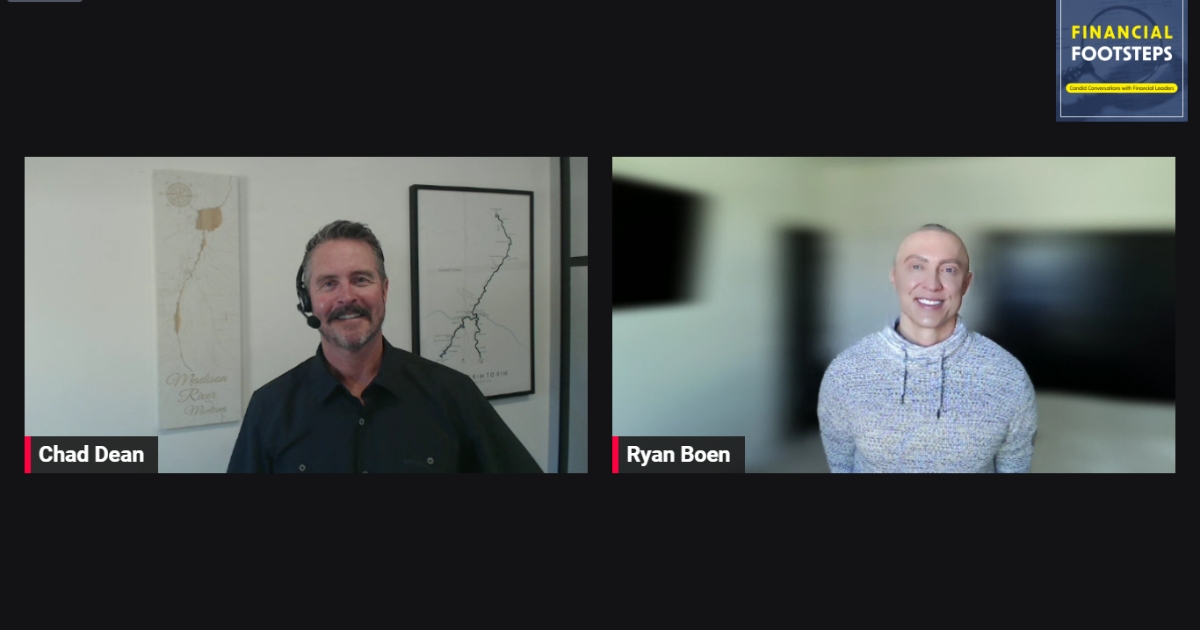
In this episode of Financial Footsteps, host Chad Dean explores the career journey of Ryan Boen, CFO EVP of Cambridge Investment Research, who grew up in a small South Dakota town and transitioned from his family’s lumber business to a successful finance career with top firms like Deloitte and Touche. Now a father, Ryan reflects on how parenthood mirrors a “startup,” filled with lessons that resonate with his professional experiences, as he shares insights on goal setting, adaptability, and the importance of having a long-term vision.

As the conversation progresses, Ryan discusses his shift from audit to strategic business roles, emphasizing the value of “starting with the end in mind” for young professionals. He highlights that energy and cultural fit can be more impactful than strict qualifications when landing roles and both he and Chad advocate for mentorship and continuous learning, providing listeners with actionable advice on self-awareness and genuine enthusiasm to share with a younger audience on platforms like TikTok and YouTube Shorts.

Ryan’s insights are compelling for not just students and those junior in their careers. His advice spans the entire spectrum of a career in accounting and finance.

Cambridge Investment Research is an independent broker-dealer and Registered Investment Advisor (RIA) that offers a flexible platform for financial professionals, allowing them to choose from a range of business models and support options. Based in Fairfield, Iowa, with another office in Phoenix, AZ, Cambridge provides financial advisors with access to an extensive array of investment solutions, including equities, fixed-income securities, mutual funds, and alternative investment products.

The firm prides itself on its advisor-centric approach, empowering advisors to operate as independent business owners while supporting them with robust technology, compliance assistance, and back-office services.

Cambridge is dedicated to supporting fee-based, fee-only, and commission-based advisors, making it a versatile partner for professionals looking to manage client portfolios with autonomy and control. Known for its commitment to integrity and flexibility, Cambridge Investment Research is frequently recognized as a leading independent broker-dealer, prioritizing advisor satisfaction and ethical business practices.

Ryan-Boen-Financial-FootstepsRyan Boen serves as the Chief Financial Officer at Cambridge Investment Research. Boen’s expertise spans financial management and operations, underpinned by a background that includes roles in a Big 4 accounting firm, startups, Fortune 500, global businesses, fintech and executive leadership.

This experience enables him to drive Cambridge’s fiscal strategies, enhance operational efficiency, and support the firm’s adaptable platform for financial professionals. His leadership emphasizes sustainable growth, leveraging analytics, and aligning financial performance with long-term organizational goals.

Connect with Ryan on LinkedIn, Facebook and Instagram.

About Financial Footsteps

Financial Footsteps is dedicated to providing insider access to successful accounting and finance leaders thereby providing ideas, insights, and ‘secrets to success’ to those aspiring to be leaders themselves.
Financial-Footsteps-square

Interactive conversations with guests will reveal the genesis for a career in accounting and finance, the great (and not so great) decisions that were made along the way, and the advice that these leaders would give to their younger selves.

About Your Host
Chad-DeanChad Dean has been an executive recruiter since 1996.  He currently is owner and CEO of a top-ranked national recruiting firm with a 33 year history servicing the Finance disciplines.

Chad Dean’s relaxed and authentic recruiting style combined with a relentless work ethic and dedication to ethical recruiting has propelled him to the highest levels of success in recruitment and career counseling. He has been sought after by CNBC, the Wall Street Journal, and numerous other publications for his expertise.

Chad Dean is a proud Arizona native, married for 21 years, with two second-generation native teenage sons. He has an MBA from Arizona State University and a BS in Biology from FHSU.

About Our Sponsor

Integrated Management Resources was founded in 1990 in Tempe Arizona.  Starting with clients like Goldman Sachs (first client and still a client today) and top Wall Street hedge funds, IMR built a robust recruiting process that digs out the most desirable ‘passive’ candidates from our client’s competitors.

IMR’s Phoenix Accounting and Finance practice services large and medium sized organizations for mid-senior level full-time placement and interim staffing.

Integrated-logo


Tagged With: Cambridge, financial services, Independent Broker Dealer, Privately Held, Registered Investment Advisor

David Foster with Asset Protection Professionals

January 1, 2024 by Tom Sheldon

Northeast Georgia Business Radio
David Foster with Asset Protection Professionals
Loading
00:00 /
RSS Feed
Share
Link
Embed

Download file

David Foster

David Foster/Asset Protection Professionals

At Asset Protection Professionals, their goals are your goals; professionally, personally, and through the generations. They work holistically with you, putting a plan in place and reviewing it annually as your business and goals in life grow and change. Don’t wait. Be courageous. Live the life you have dreamed about! Talk with Asset Protection Professionals about your business and financial plan.

Even if you have no intention of retiring, it’s important to put the systems, succession plan and people in place that can give you more day-to-day freedom while protecting the people that are counting on you


Our Community Partner for this episode of Northeast Georgia Business Radio is TruVista Communications. TruVista provides a full spectrum of services for all your communication and entertainment needs, including Internet, Video, Voice including Wireless, and Security and Home Automation. Visit them today!

Tagged With: asset protection professionals, david foster, financial services, nega, northeast georgia, tom sheldon

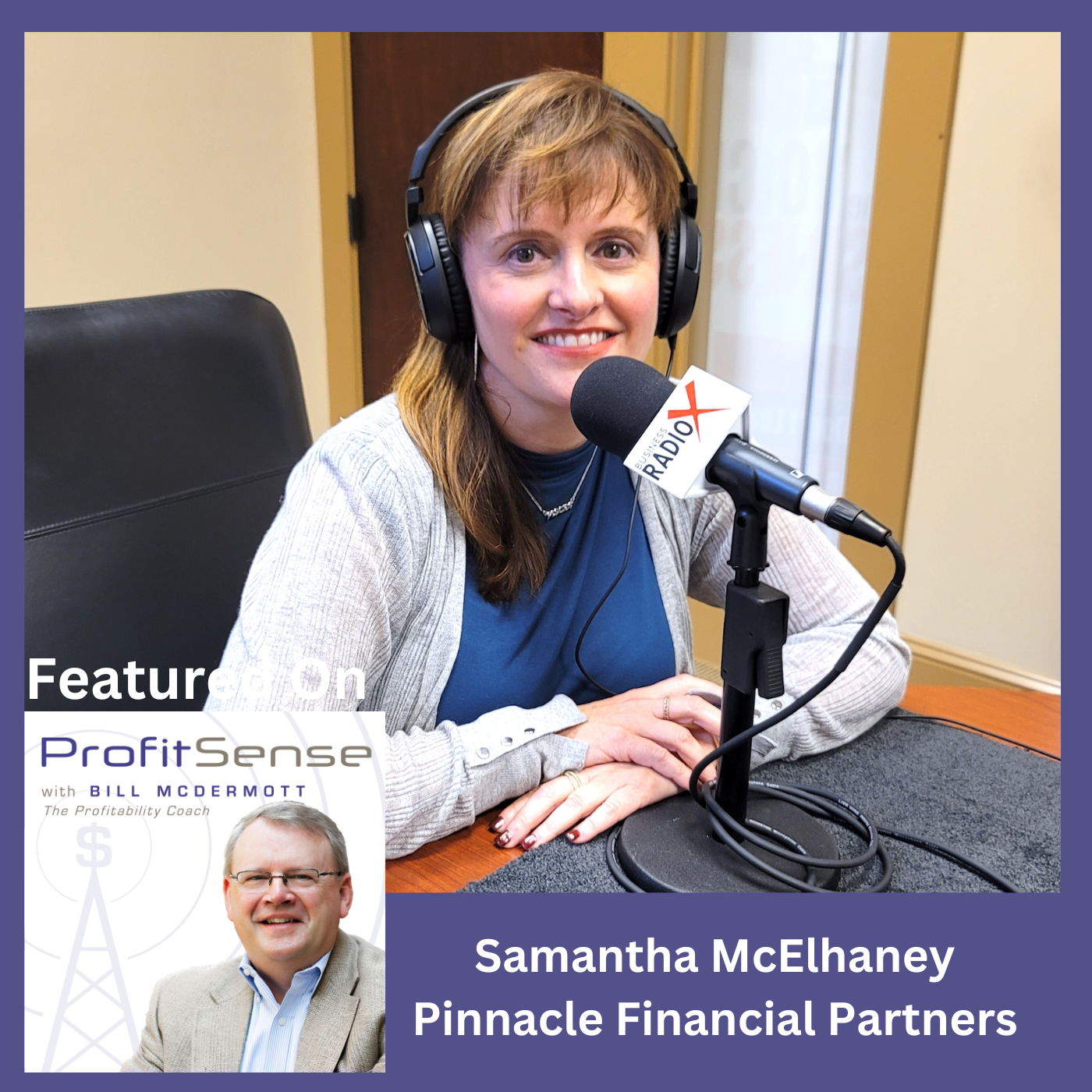
The Value of Collaboration, with Samantha McElhaney, Pinnacle Financial Partners

October 12, 2023 by John Ray

Samantha McElhaney
North Fulton Studio
The Value of Collaboration, with Samantha McElhaney, Pinnacle Financial Partners
Loading
00:00 /
RSS Feed
Share
Link
Embed

Download file

Samantha McElhaney

The Value of Collaboration, with Samantha McElhaney, Pinnacle Financial Partners

[00:00:00] Samantha McElhaney: I really like working with small business owners, but I have an opportunity right now to work with companies. And I’ve been introduced to companies in that need, 40, 50, 60 billion in financing, and they’re not getting factual information from other banks or they’re not getting the information that they need from other lenders.

[00:00:21] Samantha McElhaney: So I’m able at Pinnacle to pull in other people in different departments and all across the United States and they’re getting on the phone or they’re getting on zoom or they’re even getting in a plane and coming here to Georgia to work with me and help my prospects or my clients with those opportunities.

[00:00:41] Samantha McElhaney: And there’s no competition. There’s no, “I’ve got to meet a goal, so Sam get out of the way,” or.. I’m learning. At 30 years in my career, I’m learning just like my clients are learning of our capabilities and it’s fun. And they’re seeing it on my face, my clients are seeing it, and they’re eager to learn about what, not only capabilities we have, but how I can help, how my coworkers can help, and we’re all learning together.

[00:01:06] Samantha McElhaney: And if we can’t do it, we’re getting them in front of other institutions that can help, and there’s no fighting. among each other about that. And it’s just fantastic that we’re trying to help the business succeed.

Listen to Samantha’s full ProfitSense with Bill McDermott interview here. 


The “One Minute Interview” series is produced by John Ray and the North Fulton studio of Business RadioX® in Alpharetta. You can find the full archive of shows by following this link.

Renasant Bank has humble roots, starting in 1904 as a $100,000 bank in a Lee County, Mississippi, bakery. Since then, Renasant has grown to become one of the Southeast’s strongest financial institutions with over $13 billion in assets and more than 190 banking, lending, wealth management and financial services offices in Mississippi, Alabama, Tennessee, Georgia and Florida. All of Renasant’s success stems from each of their banker’s commitment to investing in their communities as a way of better understanding the people they serve. At Renasant Bank, they understand you because they work and live alongside you every day.

Tagged With: banking, Bill McDermott, collaboration, financial services, Pinnacle Financial Partners, ProfitSense with Bill McDermott, Sales, Samantha McElhaney, The Profitability Coach

Caring for Employees Through Self Care E27

September 29, 2022 by Karen

E27-Caring-for-Employees-Through-Self-Care-feature
Phoenix Business Radio
Caring for Employees Through Self Care E27
Loading
00:00 /
RSS Feed
Share
Link
Embed

Download file

E27-Caring-for-Employees-Through-Self-Care
Caring for Employees Through Self Care E27

Culture is a hard thing to measure but that doesn’t mean that it shouldn’t be an area that companies continue to focus priority on. It might be hard to track culture with metrics (and things like self care for employees) but it is possible and your company will see the long term shifts in the revenue, retention, and overall company improvements when focusing on company culture.

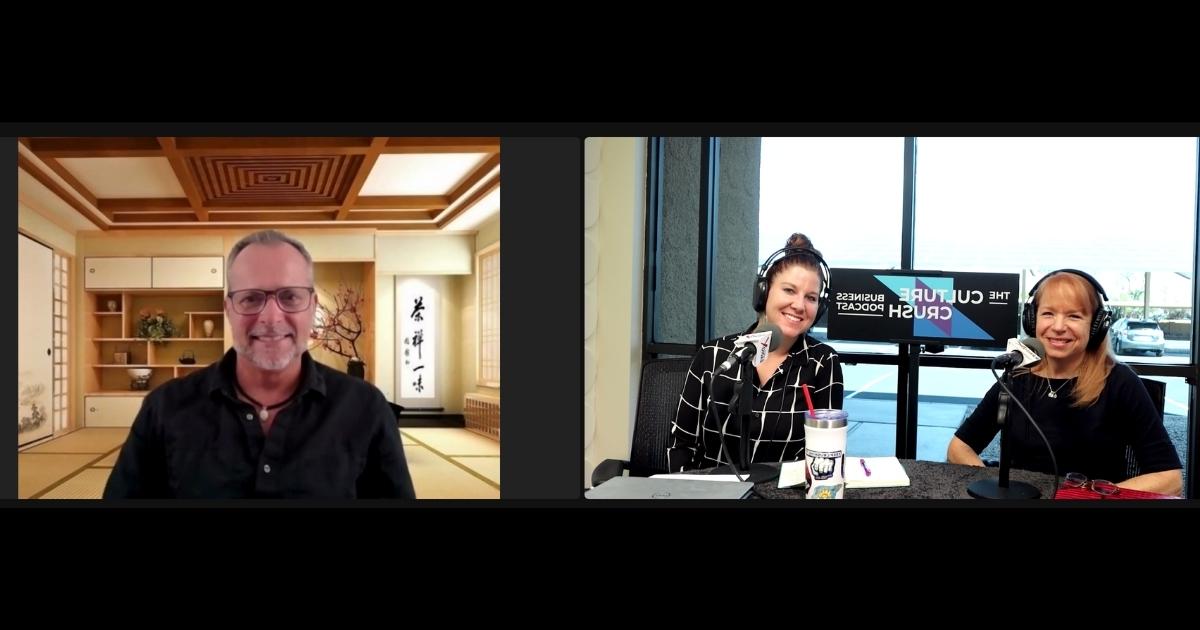
Kathleen and Neville have such amazing backgrounds and experiences in the space of self care, meditation, and human centered leadership support that it led the conversation to a deeper level. Self care and mental health directly relates and connects to the culture of the company and the employees that work there.

Culture is the web that connects and fuels everything that is part of the company; feelings, values, mission, people, and more. We discussed the need to create a visual map or web that might show this, but even then we might be able to add in everything that matters in culture.
Retention
Success
Customer support
Balance

There are companies out there that are successfully starting to incorporate self care and mental health into the workplace (such as Banner Health and EvolvedMD), but we are hoping that others can start to find these ways as well.

If you are searching for a conversation about bringing self care into the workplace and hearing about the importance behind it- this is your podcast. Kathleen’s company focuses on growing culture through supporting the employees with the self care journey (we talk about the science behind this too). Neville is an executive with his company but very focused on the deeper levels of people and shows this through the conversation.

By the end of the show, they discussed that there was a need for another episode. It wouldn’t be a part two that would extend the conversation, it would be a part two that would give folks tangible steps on dealing with stressful situations, breathing techniques, and meditation practices. We will keep everyone updated, but this follow up show will be in the works soon!

Mission Federal Credit Union is a $5.5B not-for-profit, and the largest financial services organization exclusively serving San Diego.

Mission Fed received Consumer Reports highest rating for all national banks or credit unions in 2015 and 2018, the BBB Torch Awards for Ethics in 2015 and 2017, Forbes rating as one of the best State Credit Unions and highest ranked local credit union in 2018 and best in the state in 2019, the Union Tribune’s Top Workplace Award for 2020 and the highest ranked local credit union on the Forbes America’s Best Credit Unions for 2022.

Neville-Billimoria-Phoenix-Business-RadioNeville Billimoria is an effective communications and values leader, growing organizations through external marketing, media, and sales effectiveness, as well as internal organizational alignment, corporate communications, and leadership development. He brings experience, energy, and empowerment to his leadership role as SVP Membership/Marketing and Chief Advocacy Officer at Mission Federal Credit Union.

After graduating from UC San Diego, Neville has remained involved on the UCSD Alumni Board since 2008, as well as teaching martial arts, yoga, and meditation on campus for the last 40 years. Other current Board service includes the North County Philanthropic Council Executive Committee, Real World Scholars Board, and was recently appointment to the Girl Scouts San Diego Board.

Prior board and volunteer service includes serving on the Ackerman Foundation Board, the Alliance 4 Empowerment Board, AFP- National Philanthropy Day Honorary Committee, Mission Fed Community Foundation Secretary, San Diego Nonprofit Association Board, Cause Conference Co-Chair 3 times, Advisor to the Conscious Capitalism SD Board & Founder of the Chamber of Purpose SD.
He is a frequent speaker on topics including brand as culture, purpose-driven leadership, social capital optimization and civic engagement for maximum impact.

Connect with Neville on LinkedIn.

Kathleen-Gramzay-logo-medOL

Kinessage LLC supports performance, culture, and wellness-conscious organizations, empowering leaders, managers, and teams to live more productively, confidently, and collaboratively.

Self-empowered health is taught through interactive self-activated body/mind programs that neutralize stress, release chronic tension and pain, and increase mental resiliency and long-term health for greater overall well-being.

Kathleen-Gramzay-Phoenix-Busienss-RadioKathleen Gramzay is the Founder and CEO of Kinessage LLC. She is a Body/Mind Resilience & Self-Care Expert, Speaker, Developer of Kinessage® Mindful Resilience, and the Kinessage® Release Your Pain Virtual Self-Care System.

Kathleen applies assessment skills to business helping companies solve people issues at their root cause – chronic stress, pain, and tension. She is passionate about providing leaders and teams with self-activated body/mind skill sets that restore and build mental and physical resilience to be and do their best.

Connect with Kathleen on LinkedIn.

About Culture Crush

Culture is not just a tag word to be thrown around. It is not something you throw in job descriptions to draw people to applying for jobs within a company.

According to Marcus Buckingham and Ashely Goodall in their book Nine Lies About Work, “Culture is the tenants of how we behave. It’s like a family creed. This is how we operate and treat each other in the family.”CultaureCrushKindraBanner2

As a growing company- Culture Crush Business Podcast is THE culture improvement resource that supports companies and leaders.  Our Mission is to improve company cultures so people WANT to go to work. Employees and leaders should like where they work and we think this is possible.

Within the company: Culture Crush has Vetted Resources and Partnerships with the right people and resources that can help improve your company culture.

On this podcast:  We focus on everything surrounding businesses with good company culture. We will talk with company leaders to learn about real-life experiences, tips, and best practices for creating a healthy work environment where employees are finding joy and satisfaction in their work while also striving and growing within the company.  We also find the companies that offer resources to help improve company culture and showcase them on the show to share their tips and tricks for growing culture.

About the Host

ABHOUTHOSTHEADSHOT

Kindra Maples  is spartan racer, past animal trainer, previous magician’s assistant, and has a weakness for Oreo cookie shakes. Her journey working with people actually started working with animals as a teenager (don’t worry we won’t go that far back for her bio).

She worked for over 15 years in the zoo industry working with animals and the public. Her passion of working with animals shifted into working with people in education, operations and leadership roles. From there her passion of leadership and helping people develop has continued to grow.

Then came the opportunity for leading  the Culture Crush Business Podcast and she jumped on it. Leadership, growth, and strong company cultures are all areas that Kindra is interested in diving into further.

Shout Outs

We want to thank a few people for their behind the scenes effort in helping this relaunch to come to life. James Johnson with Tailored Penguin Media Company LLC.– It is a small, but powerful video production company with a goal to deliver the very best by articulating the vision of your brand in a visually creative way. Gordon Murray with Flash PhotoVideo, LLC. -Flash Gordon has been photographing since high school and evolving since then with new products that will equip, encourage, engage, and enable. Renee Blundon with Renee Blundon Design – She is not only one of the best free divers (that’s not how she helped with the podcast) but she is great with graphics design and taking the direction for the vision that you have while also adding creative ideas to bring to your vision to life.

These are just a few of the folks that supported the relaunch of the podcast. If you would like to be part of the Culture Crush team or would like to support underwriting the show- please reach out: info@culturecrushbusiness.com

Tagged With: auto loans, business leadership training, cd rates, community focused, credit cards, credit union, financial services, kinessage selfcare, mindful resilience, real estate loans

GWBC Radio: Kittie Watson with Innolect

April 21, 2020 by angishields

Innolect-logo
GWBC Radio
GWBC Radio: Kittie Watson with Innolect
Loading
00:00 /
RSS Feed
Share
Link
Embed

Download file

Open-For-Business-Innolect

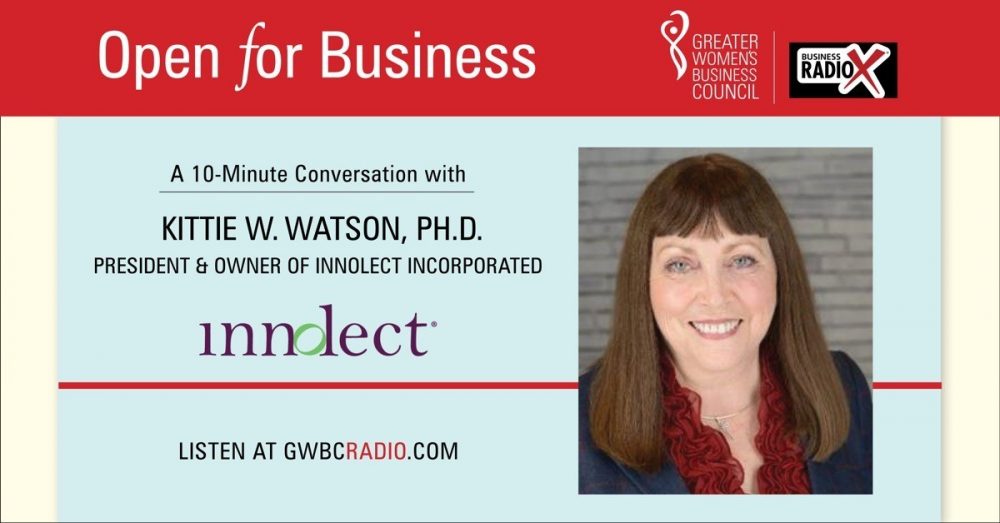
Kittie-Watson-InnolectKittie Watson is the President and founder of Innolect, and has a passion for “Growing the Leader in Everyone.” With a deep appreciation for the challenges faced by executives in high-stakes settings, she focuses on mission-critical business needs. Her expertise in transformational change, strategic communication, talent development, executive assessment and coaching is valued by Fortune 500 and diverse companies such as Bayer, Entergy, Cricket, Pfizer, Zoetis, Carolina’s Healthcare, Compass and Southern Company.

Kittie designs fresh ways to grow capability and increase ROI within leaders, teams and workplaces. Integrating her personal values and work practices, she encourages clients to build strong, vibrant leadership pipelines by partnering with nonprofit organizations. Focused on creating more inclusive cultures, she quickly sizes up the crux of tough situations and provides leaders with powerful solutions that payoff for themselves and significant stakeholders.

As one of the first and youngest female chairpersons at Tulane University, Kittie is among the top 25 most prolific women writers in communication. She has authored or co-authored 15 books, numerous articles, and been featured on ABC’s 20/20. When not supporting clients, Kittie is an advocate for social justice issues, visualizes a universe of possibilities through watercolor paintings and kayaks/hikes to relax.

Follow Innolect on LinkedIn, Facebook and Twitter.

TRANSCRIPT

Intro: [00:00:04] Broadcasting live from the Business RadioC Studios in Atlanta, Georgia, it’s time for GWBC Radio, conversations to grow your business. Now, here’s your host, Roz Lewis.

Lee Kantor: [00:00:26] Lee Kantor in for Roz Lewis today. And today on GWBC Radio, we have a great guest. We have Kittie Watson. And she is with a firm called Innolect. Welcome, Kittie.

Kittie Watson: [00:00:37] Thank you so much, Lee. I appreciate being here.

Lee Kantor: [00:00:40] Well, before we get to far into things, tell us a little bit about Innolect. How are you serving folks?

Kittie Watson: [00:00:46] Well, we are an organization development and executive development leadership consulting firm. And so, what I usually say is that we grow the leader in everyone. And what we’re doing now is really helping leaders think about how do they navigate the organizational white-water that they find themselves in, so that they can keep their talent engaged and motivated during this time of uncertainty.

Lee Kantor: [00:01:13] Now, that’s an interesting topic about leadership specifically. Do you mind talking about leadership just in general like from a macro standpoint?

Kittie Watson: [00:01:24] Not at all. How would you like me to begin?

Lee Kantor: [00:01:26] Okay.

Kittie Watson: [00:01:26] I need some direction to go into that.

Lee Kantor: [00:01:26] Okay. Here we go. Do you believe that everyone can be a leader? Or is that something some people are born with leadership skills and other people are not? Or is it something that you can take somebody, and then make them a leader or demonstrate leadership?

Kittie Watson: [00:01:45] We really believe that every person in an organization can demonstrate leadership skills. There are some that are groomed for more executive leadership for the whole organization, but whether you’re a team member or a part of an executive team, leaders can grow, and learn, and become their best selves. We really work to help people become very authentic in how they lead, so that people want to follow.

Lee Kantor: [00:02:13] So, there’s some skills that you can just kind of plus up. If I just threw a person in front of you, you’d be able to kind of work with them within their kind of personality and their traits, and then kind of plus up their leadership skills if you give them certain tools?

Kittie Watson: [00:02:31] Well, we do do a lot of executive coaching. And so, in those cases, we identify what a person needs to work on based on working with their manager or something that they’ve seen themselves. So, today, for example, I was talking to a leader that really wants to develop his executive presence, especially now during the coronavirus crisis. And what does he need to do to show up and to be authentic with them? And we talked about his need to be vulnerable, and to demonstrate courage, to be the whole person he needs to be, and to tell the truth. So there are some characteristics, especially now, that leaders can show, and we can help leaders develop those skills through the executive coaching process now.

Lee Kantor: [00:03:15] So, a leader doesn’t necessarily have to come prepared with all the answers. That’s what I’m hearing you saying. They can be vulnerable, and be authentic, and say, “Look, this is a tough time for everybody.”

Kittie Watson: [00:03:30] Definitely. I think more than anything right now, one of the great coaches that we talk about sometimes is Lou Holtz, who worked with the Notre Dame football team, winning football team. And one of the things that he said is that leaders, in particular, with their employees that the employees need to know they can trust you, they need to know that you care about them, and that you’re committed to working for excellence. That’s even during this time of uncertainty. Our employees need to know that we are there for them, but that we’re moving toward another goal, that we are going to ride this wave. And sometimes, we call it a rogue wave, something really unexpected, and that’s what people are experiencing right now. So, leaders have some important role to play during this time.

Lee Kantor: [00:04:21] Now, do you see some mistakes that organizations make when it comes to leaderships time and time again that you’re like, “Oh, here we go again”?

Kittie Watson: [00:04:30] Well, the biggest mistake is that when people are promoted from technical roles into management leadership roles, where they have the technical skills, but they don’t have the people skills. Often, we are working with leaders to help them develop the skills needed that are going to help them manage and lead. You can be really good at something technically but not know how to work with people in such a way that they want to give their best selves to work.

Lee Kantor: [00:05:01] Now, when you’re doing your coaching, and you’re working with this leader or budding leader, how do you kind of coach them up when it comes to listening?

Kittie Watson: [00:05:14] Well, listening, it’s really an area of our expertise, and it’s one that I’ve done a lot of research. And I taught at Tulane University for 20 years, actually. I was Chair of the Department of Communication. And I think the biggest thing with listening is to be aware as a leader of some of your irritating listening habits. We have developed these listening habits over years and, often, are unaware that what we might be doing to pose our employees down or to make them feel as though their ideas and contributions aren’t valued. So, for example, a leader might have an irritating listening habit of interrupting an employee when he or she is giving ideas, or he or she might immediately say something, “Yes, but we’ve done that before.” So, we can do things as leaders that would give the impression that we’re not really caring or listening to our employees.

Lee Kantor: [00:06:07] Now, where does kind of corporate culture fit into this? Does that come before the leadership or does leadership kind of drive the culture?

Kittie Watson: [00:06:16] Well, many organizations might start with a foundation that they have, that has their vision, mission and values, but it’s how it’s operationalized that becomes a culture. So, departments within an organization can have their own cultures based on the leader that’s in it. So, the leader is aligned with the organization’s values and mission, will have specific kinds of expectations that they have of their employees and themselves. And it might be inclusive behaviors, for example. It might be how we treat each other with respect. It might be how we operate and include others in a team environment and how we work as a team. All of those are part of the culture, and the leader demonstrates that and guides the team. And we really believe leaders are guides. They guide employees where they need to go for the organization to be successful.

Lee Kantor: [00:07:14] Now, when you’re working with maybe a C-suite that kind of all looks the same, how do you open their mind to the benefits of inclusion, diversity, and that everybody kind of opening up kind of a wider net maybe for your talent and your executive pool?

Kittie Watson: [00:07:32] Well, I think, when I think of an executive team, I don’t think of them as all looking the same. There is more diversity now than there has been. There still needs to be more, but in addition to the diversity that we can see, there’s so many aspects of diversity that we don’t see in the way that people think or even disabilities that a person might have. So, what we do is really begin to look at a person’s strengths and build on those strengths, so that we can then get other people that have some different strengths, so that they can move toward the goals that they’re trying to achieve.

Lee Kantor: [00:08:08] So, you like to work from the strengths outward rather than kind of work on the weaknesses first?

Kittie Watson: [00:08:15] Well, and leaders, especially in the executive team, the reason that they’ve gotten to that level is because of their ability to perform, and they have used particular strengths to get there. So, if you begin to forget about how you got there, you may not be able to maximize the benefits that you’ve acquired to the years. At the same time, we do believe that leaders continue to develop and grow. And many times in organizations, we’re looking at what we call horizontal development, and we’re trying to add a skill set. So, negotiation, or influence, or something to that effect.

Kittie Watson: [00:08:53] What we do often with leaders, especially in the C-suite, is to help them think about expanding the capacity to grow and learn. And this is more vertical development. So, it’s a person’s ability to think more strategically. It’s a person’s ability to have higher emotional intelligence, to look further out into the future. Those that are more developed with their leadership and abilities are able to look further out, make connections among things within the organizations, and not just within their own areas of expertise.

Lee Kantor: [00:09:29] So, how do you kind of get a baseline of where the leader is at and to know which areas to work on? Are they saying, “Look, I want to be better at negotiation,” or is the board saying this person has to get better at negotiation? Like how do you kind of know what area to pursue?

Kittie Watson: [00:09:46] Well, we have a number of assessment tools and ways that we look at that. I mean, some of it is individual assessment or maybe a 360-assessment where the board is involved, their peers are involved, and even their direct reports give them feedback that they might not have gotten on their own. Sometimes, it’s difficult, even when we ask for feedback, for people that work for us or with us to be as candid and direct as we might want them to be. In addition to that, our company is certified in dozens of assessment tools and instruments, and some that allow the leader to look at him or herself differently. And then, based on those that data that we get, we’re able to create an individual development plan and work in partnership with others in the organization.

Lee Kantor: [00:10:38] Now, is there kind of a timeline or a usual amount of time where the leader starts seeing kind of results that they can actually see that don’t maybe necessarily feel good, but it’s like this is really improving part of my bottom line?

Kittie Watson: [00:10:57] Well, the research shows that executive coaching, when done right, definitely pays for itself. And some of that, the payback is through retention of key people. It’s through reducing that kind of turnover. But what you’re asking about is, do you see something immediately? In some cases, yes. So, if you’re working with a leader and identifying something that they’ve never seen before, a blind spot, they can immediately see it. It may take some time to change the habit that they’ve had and have developed and reinforced through years of being who they are as a just an individual.

Kittie Watson: [00:11:36] What we find, though, because of using a business development plan focused on that individual, that you move toward the results that you want to achieve, and then you put in the practices and reinforcement that are going to allow that person to be successful over time. We also know that it’s not just the coach that makes that leader more successful, it’s the people around him or her. In particular, Lee, that their manager, or the board, or someone that has them accountability, as an accountability partner with them to help them see themselves more effectively.

Lee Kantor: [00:12:16] Now, during this crisis, is your firm proactively reaching out to your clients and saying, “Hey, let’s brainstorm,” at least discuss some ways that you’re dealing with this, and maybe there’s ways that you can help them kind of deal with this?

Kittie Watson: [00:12:33] We definitely are. And because we can operate effectively virtually, not only are we continuing our executive coaching practices and working with leaders around the United States and actually the globe with our coaching, but we’re also doing more with webinars, and group meetings, and facilitating those meetings in ways that engage people. We’re helping leaders right now think about the best ways to ensure that they’re keeping people connected, especially those that haven’t worked in a virtual environment before.

Kittie Watson: [00:13:10] So, there are many of our clients that have worked more virtually and others that have always expected the employees to be at their desk every day. And that’s very different than what we’re experiencing now. So, in the next couple of weeks, for example, we are facilitating some webinars that some organizations have requested of us. And one of those is around authentic leadership and navigating organization whitewater. So, we look at the whitewater. If you’ve gone rafting before, there are different classes of rapids. And for many organizations, this is the highest class of rapid any of us in the United States have ever seen before. And so, what do we do to keep our employees engaged, to keep them in the boat basically, so that they are not checking out on us? And we need to give them new tools, new strategies, new ways of really operating. So, we’re working with our senior leaders and leadership teams to begin to think about how they engage differently within a virtual workplace.

Lee Kantor: [00:14:21] Now, let’s talk a little bit about GWBC. Why is it important for you to be involved with that group? And what has that group done to help you and your team succeed?

Kittie Watson: [00:14:33] Well, the Greater Women’s Business Council has been a wonderful place for me to not only learn but also to grow. And I served on the board of the Greater Women’s Business Council for a number of years and won a number of awards through the service. But I think it’s by giving back that you get even more. So, by serving on the board, by serving on committees, GWBC allows you to work with other women business leaders that are in the same boat, that is because we’re talking about water. And we understand what each other is going through right now with operating very differently having our worlds, in many cases, turned upside down.

Kittie Watson: [00:15:16] And so, GWBC is doing all that it can to provide the resources and information that will allow us to navigate successfully through these uncertain times. So, it may be through radio programs like this, or it may be through providing information from the Small Business Administration on the Payroll Protection Act. But what GWBC does is to operate as a resource for women-owned businesses, not only to support each other, but to actually provide the information to help us be most successful.

Lee Kantor: [00:15:53] And it’s a good lesson for a young kind of maybe new business leaders to think about joining and being part of because, like you said, you have this sense of community and support. But also, there’s opportunities for yourself to demonstrate leadership skills by volunteering and being active as a member that can help you in your career as you go forward.

Kittie Watson: [00:16:17] Yeah. And one of the things that the BBC has done, and I have served in this role on several years, is we have a mentoring program. And that mentoring program is for new business owners to help them be successful. And it’s a wonderful opportunity to learn some things that maybe you didn’t have in your education process, to hear about best practices that other companies are using, and to learn from people that have gone through a similar journey to you. So, GWBC offers that through the women in the community. And that allows you to think differently, to explore other options, to be exposed to new tools and resources that we might not have thought of on our own.

Lee Kantor: [00:17:05] You mentioned earlier that the situation we’re in is kind of like a rogue wave. And as you mentioned, just the situation itself is a rogue wave. And then, if you couple that with an organization that’s never had to deal with remote workers, now, you’re really piling on a lot of stress and a lot of variables that they’ve never dealt with before. I’m sure you’ve got your work cut out for you when you’re trying to help these firms kind of weather the storm here.

Kittie Watson: [00:17:32] Well, it’s hard. And part of it is that even though we have heard that people say, “Bring your whole self to work,” there’s no other time like that right now where you’re having a conference call and there’s children and dogs and things in the background, right? Each person is navigating so many different things right now, whether it’s a young family, whether they live alone. And so, there’s isolation. Each of us, as a leader, needs to think about employees uniquely and what their unique needs might be during this time, so that we, as a leader, can be more of that servant leader to them and be able to help them move through this process for success when they come out the other end.

Kittie Watson: [00:18:22] It’s what we do now that’s going to provide the foundation for us to actually weather this and to come back stronger than we were before. And I believe that it’s all of our communities, and it’s GWBC, it’s a greater community of how we respond to the needs of all the people that are hurting right now. If we can do that, that we will learn some things that we can apply for the future.

Lee Kantor: [00:18:53] Amen to that. That is some great advice and wise words. Well, Kittie Watson, thank you so much for sharing your story today. If somebody wanted to learn more about Innolect, is there a website that we can share?

Kittie Watson: [00:19:05] Definitely. Our website is innolectinc.com. And that’s I-N-N-O-L-E-C-T-I-N-C dot com. And on the website, you will find different post, and information, and so many things that we’re writing right now to help organizations and to help leaders help their employees. And we hope that that can be a resource that people can use as they come out to the other side of what we’re going through right now.

Lee Kantor: [00:19:38] Well, congratulations on all your success. And thank you so much for sharing your story today.

Kittie Watson: [00:19:43] Thank you, Lee. I appreciate having the opportunity with you today.

Lee Kantor: [00:19:47] All right, this is Lee Kantor. We will see you next time on GWBC Radio.

About Your Host

Roz-Lewis-GWBCRoz Lewis is President & CEO – Greater Women’s Business Council (GWBC®), a regional partner organization of the Women’s Business Enterprise National Council (WBENC) and a member of the WBENC Board of Directors.

Previous career roles at Delta Air Lines included Flight Attendant, In-Flight Supervisor and Program Manager, Corporate Supplier Diversity.

During her career she has received numerous awards and accolades. Most notable: Atlanta Business Chronicle’s 2018 Diversity & Inclusion award; 2017 inducted into the WBE Hall of Fame by the American Institute of Diversity and Commerce and 2010 – Women Out Front Award from Georgia Tech University.

She has written and been featured in articles on GWBC® and supplier diversity for Forbes Magazine SE, Minority Business Enterprise, The Atlanta Tribune, WE- USA, Minorities and Women in Business magazines. Her quotes are published in The Girls Guide to Building a Million Dollar Business book by Susan Wilson Solovic and Guide Coaching by Ellen M. Dotts, Monique A. Honaman and Stacy L. Sollenberger. Recently, she appeared on Atlanta Business Chronicle’s BIZ on 11Alive, WXIA to talk about the importance of mentoring for women.

In 2010, Lewis was invited to the White House for Council on Women and Girls Entrepreneur Conference for the announcement of the Small Business Administration (SBA) new Women Owned Small Business Rule approved by Congress. In 2014, she was invited to the White House to participate in sessions on small business priorities and the Affordable Care Act.

Roz Lewis received her BS degree from Florida International University, Miami, FL and has the following training/certifications: Certified Purchasing Managers (CPM); Certified Professional in Supplier Diversity (CPSD), Institute for Supply Management (ISM)of Supplier Diversity and Procurement: Diversity Leadership Academy of Atlanta (DLAA), Negotiations, Supply Management Strategies and Analytical Purchasing.

Connect with Roz on LinkedIn.

About GWBC

The Greater Women’s Business Council (GWBC®) is at the forefront of redefining women business enterprises (WBEs). An increasing focus on supplier diversity means major corporations are viewing our WBEs as innovative, flexible and competitive solutions. The number of women-owned businesses is rising to reflect an increasingly diverse consumer base of women making a majority of buying decision for herself, her family and her business. GWBC-Logo

GWBC® has partnered with dozens of major companies who are committed to providing a sustainable foundation through our guiding principles to bring education, training and the standardization of national certification to women businesses in Georgia, North Carolina and South Carolina.

Tagged With: executive coaching, financial services, Healthcare, leadership development, Manufacturing, team development

Alpharetta Tech Talk: Dave Bernard, ConCap Global

February 7, 2020 by John Ray

Dave Bernard, ConCap Global
Alpharetta Tech Talk
Alpharetta Tech Talk: Dave Bernard, ConCap Global
Loading
00:00 /
RSS Feed
Share
Link
Embed

Download file

Dave Bernard, ConCap Global

“Alpharetta Tech Talk,” Episode 9: Dave Bernard, ConCap Global

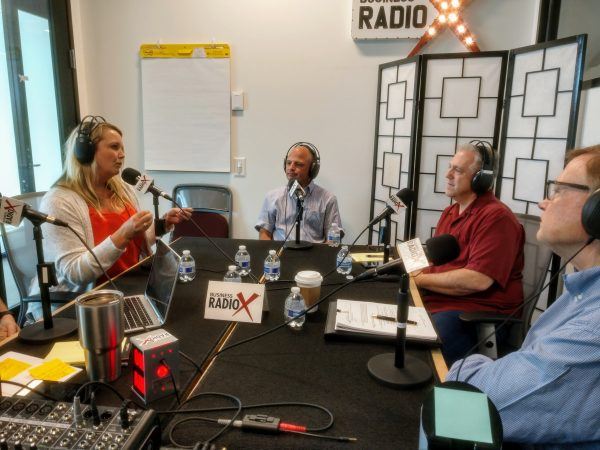
Dave Bernard, CEO and Managing Partner of ConCap Global, discussed his work in matching the world’s wealthiest investors with private companies in agtech, technology, cybersecurity, and other areas.  Many of his observations, such as “equity is deathbed capital,” run counter to what is commonly assumed. This must-listen episode of “Alpharetta Tech Talk” is hosted by John Ray and broadcast from the North Fulton Business RadioX® studio inside Renasant Bank in Alpharetta.

Dave Bernard, ConCap Global

Dave Bernard, ConCap Global

Dave Bernard is CEO and Managing Partner with ConCap Global, which brings together international investors and entrepreneurs. Dave is a serial entrepreneur, technologist, inventor, and investor living in Atlanta, GA. An expert in new and emerging technologies, Dave has co-founded several companies, including The Intellection Group (TIG), an innovative technology consulting group that was recognized as one of Georgia’s top 40 most innovative companies in 2007.

For over 30 years, Dave has held developer, managerial and executive positions in a variety of industries, including supply chain logistics, healthcare, real estate, financial services, government and academia. He also led TIG’s development of a patented technology architecture that unifies web development capabilities with voice recognition, text-to-speech, natural language, Radio-frequency identification, and GPS technologies, deliverable to wireless handheld and desktop devices.

For more information, you can contact Dave through LinkedIn or email him directly. To learn more on ConCap Global, you can find their website here.

Dave Bernard, ConCap Global

“Alpharetta Tech Talk” is broadcast from the North Fulton studio of Business RadioX®, located inside Renasant Bank in Alpharetta. Renasant Bank has humble roots, starting in 1904 as a $100,000 bank in a Lee County, Mississippi, bakery. Since then, Renasant has grown to become one of the Southeast’s strongest financial institutions with approximately $12.9 billion in assets and more than 190 banking, lending, wealth management and financial services offices in Mississippi, Alabama, Tennessee, Georgia and Florida. All of Renasant’s success stems from each of their banker’s commitment to investing in their communities as a way of better understanding the people they serve. At Renasant Bank, they understand you.


Tagged With: Dave Bernard, deals, Entrepreneurs, financial services, Funding, innovative technology, North Fulton Business Radio, North Fulton Studio, private investors, software development, Technology, technology companies, vertical markets

Bill Calpin with Digital Resolve, Luis Imery with Imery Group and Trisha Stezzi with Significance

September 23, 2019 by angishields

ABR-Feature-9-23
Atlanta Business Radio
Bill Calpin with Digital Resolve, Luis Imery with Imery Group and Trisha Stezzi with Significance
Loading
00:00 /
RSS Feed
Share
Link
Embed

Download file

ABR-Group-9-23-19

Bill Calpin is CEO for Digital Envoy, parent company of Digital Resolve, a proven online fraud protection and identity intelligence solution provider. He brings more than 30 years of successful sales, management and executive leadership experience to the company in the financial services, information services, and technology sectors. Bill has a proven track record in accelerating company growth, building the infrastructure needed to maintain fast-paced growth, and especially in identifying new markets for technology and services.

Prior to joining Digital Envoy, Bill launched Ocean Cove Associates, an independent consulting firm that focused on business acquisition and investment opportunities. Before that, he was Senior Vice President and General Manager of North America for X.HLP, Inc., a global software and services company. He also previously served as Chief Executive Officer for Abridge, an internet technology company.

Prior to Abridge, Calpin had been a member of Equifax’s executive team, starting in 1995, when the global information services firm acquired his company, UCB Services, Inc. He was President and Chief Operating Officer for UCB Services, served as Senior Vice President of Citicorp Mortgage in St. Louis, and held his earliest leadership roles with Unisys Corporation. Bill holds a degree in business administration from the University of Washington.

Follow Digital Resolve on LinkedIn and Twitter.

Luis Imery, founder of Imery Group ( Atlanta-Athens, GA), has made a name for himself as a building science enthusiast — an effort that has won him several awards for sustainable building construction. With an innate desire to shape, build and expand communities, Luis first earned a degree as a Civil Engineer in 1996.

His passion for learning and acquiring immense knowledge led to an MBA from the Terry College of Business in 2003, with a concentration in Real Estate and Entrepreneurship. That strong foundation paved the way for his illustrious career as a home designer, home builder and innovator of the entire home building process, including neighborhood development, and energy performance evaluation.

Recognizing that the green trend was growing across industries, Luis believed there was a better way to build and develop communities. He decided to learn as much as possible about sustainable building science and started Imery Group in 2009 with a mission to promote energy efficient custom home building, walkable and low impact communities and home energy rating practices. He understands all aspects of real estate development and construction and has a successful record as a project manager that is evidenced by his long-lasting relationship with top performers in the industry.

Follow Imery Group on Facebook and Twitter.

Trisha Stezzi discovered her purpose in the mid-nineties and has been creating corporate/cause collaborations to address the world’s biggest challenges ever since.  At Significance, the purpose-driven Consultancy and Speakers Bureau she founded in 2017, Trisha helps organizations and change-makers “unleash the potential of people and brands to be a force for good.” Her expertise is building strategic relationships, programs and experiences that deliver against both business and social impact goals. Doing well by doing good.

Trisha is also a Co-Founder and the Americas Lead at Sideshift, the first “social opportunity platform” – think Facebook + Linkedin meets Netflix, but focused on purpose and sustainability—no ads and no sharing of your data, just a community of people coming together to create more fulfilling and sustainable lives, organizations, communities – and the planet.

Join us Sept 28th to Oct. 3rd for Sideshift’s FREE virtual summit: Sideshift: Changing Perspectives & Redefining Sustainability. More than 50 thought-leaders, changemakers, and experts will share their solutions, stories, and wisdom to help people from all walks of life take an action step forward toward greater fulfillment and sustainability based on what personally resonates with their unique skillsets and passions.  Here are a few interview excerpts to hold you over: Raj Sisodia, Bob Chapman, and Atlanta’s own Jasmine Crowe.  Register for FREE today!

Tagged With: Custom Homes, education, Efficient Homes, financial services, Healthy Homes, High Performance Homes, insurance, Multifactor authentication, Sideshift, Significance, single sign-on

Paradigm Shift Financial Co-Founders Thomas Blottenberger and Shauna Price

August 29, 2019 by Karen

ParadigmShiftFinancialCo-FoundersThomasBlottenbergerandShaunaPrice
Phoenix Business Radio
Paradigm Shift Financial Co-Founders Thomas Blottenberger and Shauna Price
Loading
00:00 /
RSS Feed
Share
Link
Embed

Download file

Paradigm-Shift-Financial-Co-Founders-Thomas-Blottenberger-and-Shauna-Price
Paradigm Shift Financial Co-Founders Thomas Blottenberger and Shauna Price

The founders of Paradigm Shift Financial (PSF) used to work at your traditional financial firm. You know the kind: product-oriented, quota-driven, and commission-based where those with the biggest sales were touted as the best “advisors”.

They did the best they could within that system to bring value and guidance to clients independent of the commission check, all the while being reminded they weren’t driving sales hard enough. Paradigm-Shift-Financial

Finally, after feeling like they were hitting their heads against a wall, a light bulb went off.

Why work in, and fight against, an environment which seemed to put sales first and client dreams second? Why not start their own firm; bringing forth education and coaching to clients, free from the need to push products?

This “lightbulb” moment was their paradigm shift. A powerful definition of the term paradigm shift is, “an important change that happens when the usual way of thinking about or doing something is replaced by a new way”. And thus, in 2017 Paradigm Shift Financial, LLC. was born.

Since inception, the firm has been committed to and guided by its Core Values to ensure their clients achieve their dreams. Through powerful coaching, exceptional service, and engaging experiences, clients are led to discover a greater purpose for their wealth. PSF creates an environment in which all members are given the opportunity to share and participate, which engenders a community support structure that has a far-reaching impact.

Thomas-Blottenberger-on-Phoenix-Business-RadioXThomas Blottenberger spent 8 years with a big financial firm when he discovered his commitment to bring forth the most powerful strategies for his clients was not supported.

In 2017 he co-founded Paradigm Shift Financial with Shauna Price so clients could discover the truth about investment.

Shauna-Price-on-Phoenix-Business-RadioXAfter 7 years in the traditional financial industry, Shauna realized that the model was flawed, and clients were at risk. She joined forces with Thomas to alter peoples experience of money and to empower them to realize their dreams.

Follow Paradigm Shift Financial on Facebook, Twitter and Instagram.


Tagged With: financial freedom, Financial Independence, financial planning, financial services, Investment Plan, Investment Planning, wealth management

GWBC Radio: Andy Fried with UGA SBDC and Anita Davis with Business2Banker Connection

August 15, 2019 by angishields

GWBC-Feature-8-15
Atlanta Business Radio
GWBC Radio: Andy Fried with UGA SBDC and Anita Davis with Business2Banker Connection
Loading
00:00 /
RSS Feed
Share
Link
Embed

Download file

GWBC-Group-8-15

Andy Fried, a Business Consultant with the University of Georgia Small Business Development Center (UGA SBDC), has over twenty-five years’ experience in the financial, retail and real estate sectors. He began his career as a CPA with Laventhol and Horwath in New York. In 1984, Mr. Fried became owner and President of a retail business with locations throughout the New York tri-state area.

Andy sold his retail interests and moved to Atlanta where he became an owner, manager and agent of commercial real estate properties.

Connect with Andy on LinkedIn.

Anita Davis is the President and Chief Funding Matchmaker of Business2Banker Connection, Inc., a business funding solutions and strategies consulting firm. Her firm helps women owned businesses secure access to capital to execute on their growth strategies.

The number of women owned businesses continues to sky rocket. However, these companies typically maintain revenues under $100,000 annually. My goal is to remove the mental and real barriers around funding and help more women achieve their first or next million-dollar revenue target.

Connect with Anita on LinkedIn.

TRANSCRIPT

Intro: [00:00:02] Broadcasting live from the Business RadioX Studios in Atlanta, Georgia, it’s time for Atlanta Business Radio, spotlighting the city’s best businesses and the people who lead them.

Lee Kantor: [00:00:16] Lee Kantor here with Roz Lewis. And we’re very excited to have another episode of the GWBC Radio where we have conversations to grow your business. Welcome, Roz!

Roz Lewis: [00:00:26] Thank you, Lee. It’s great to be here today.

Lee Kantor: [00:00:29] I know. You got a full house, got an entourage, got paparazzi, got all kinds of folks.

Roz Lewis: [00:00:34] Oh, exactly, you know. It’s always good to have that fan base.

Lee Kantor: [00:00:38] You bring with you. So, the theme of today’s show is cash flow is queen or king, depending who we’re talking to today, and some trends in business financing. What was your thinking about putting this kind of show together?

Roz Lewis: [00:00:51] Well, one of the things is the fact that one of the biggest challenges for women businesses is, believe it or not, access to capital. And more importantly, understanding your financials. We deal with this every day at the Greater Women’s Business Council when we’re reviewing files, applications for certification. And that is so key and important in a business. It’s actually the heartbeat of the business is to have that cash available. So, we thought that it would be great to share some valuable information with our fantastic guests that are here today to share with the listening audience.

Lee Kantor: [00:01:30] And that’s aligned with the mission of GWBC, right, is to help prepare that woman on business to be successful?

Roz Lewis: [00:01:38] Yes. Our mission is actually the CEOs – to certify, educate, and then provide opportunities to grow your business.

Lee Kantor: [00:01:46] So, you want to kick it out. Who do you want to start with?

Roz Lewis: [00:01:48] Yeah, let’s kick it off by talking about who we have today. It’s going to be Andy Fried with the UGA, University of Georgia Small Business Development Center. He’s in an accounting and finance consultant. And we have Anita Davis, President and Chief Funding Matchmaker. You like that name, matchmaker?

Lee Kantor: [00:02:10] That’s good.

Roz Lewis: [00:02:13] Funding Matchmaker at her business, Business to Banker Connection. So, Andy, share with us and with the audience a little bit about the UGA Small Business Development Center.

Andy Fried: [00:02:24] Sure. Good morning, Roz. Small Business Development Center is fully-taxpayer funded. We have 17 offices in the State of Georgia. We provide guidance on all areas of business – financial management, marketing, HR, a little bit of everything. And we have a lot of resources, a lot of third-party resource partners. And we’ve got the answer. We can find you the answer. Either we haven’t ourselves, or we can direct the traffic to where we need to go.

Lee Kantor: [00:02:59] Now, what kind of businesses should kind of take advantage of your services?

Andy Fried: [00:03:04] We help every single business. I mean, I drive down Roswell Road here in Sandy Springs, and I look at just so many clients in the service business, in the retail business, manufacturing, and every sector we-

Lee Kantor: [00:03:19] So, it doesn’t have to be,”I just⁠—I’m beginning.” It could be a veteran business and “I’m plateauing,” or “I’m having some challenges. And these resources are available to me. And I didn’t even know they existed.” And it’s like kind of a free service, right? It’s not [crosstalk].

Andy Fried: [00:03:34] It’s completely free. And if you’re in business, and you’re a taxpayer, our doors are open to you.

Lee Kantor: [00:03:40] And you should take advantage of it. Like there’s no reason not, at least, have a relationship.

Andy Fried: [00:03:44] You’re paying for. You might as well take advantage of it.

Lee Kantor: [00:03:47] Exactly.

Roz Lewis: [00:03:48] Exactly. So, say that again. You said F-R-E-E.

Andy Fried: [00:03:50] F-R-E-E.

Lee Kantor: [00:03:50] Right.

Roz Lewis: [00:03:50] Okay.

Andy Fried: [00:03:51] Our organization likes to say it’s a no-cost. We don’t like to say that we’re free, but it’s a no-cost service because you are paying-

Lee Kantor: [00:04:01] You are paying through tax dollars.

Andy Fried: [00:04:01] Through your tax dollars, correct.

Lee Kantor: [00:04:03] But this is⁠—Roz, I’ve had the chance to meet with folks there in the past and currently actually. Some of the stuff on the walls are because we’re talking to somebody from that group. It’s one of these things where business people⁠—business is hard, right?

Roz Lewis: [00:04:16] Yes.

Lee Kantor: [00:04:17] So, you have a resource that’s available to just listen and just at no cost because you’re already paying for it. And companies aren’t taking advantage of it. It should just be part of their day to day. I mean, I don’t care what level of business you are in, super success or startup.

Roz Lewis: [00:04:34] Well, just, also, the information you’re going to receive by being there.

Lee Kantor: [00:04:39] There’s no negative.

Roz Lewis: [00:04:40] There is no negative. And it’s a great resource, it’s a great way to network, get counseling, get advice. I’ve always heard there have been enough mistakes made, you don’t have to create new ones. So, this is the go-to place-

Andy Fried: [00:04:56] Thank you.

Roz Lewis: [00:04:56] … in order to get information if you’re starting your business.

Andy Fried: [00:04:59] Right. So, how do you two work together?

Roz Lewis: [00:05:01] Well, with the Small Business Development Center, it’s one of the resources that the Greater Women’s Business Council uses to refer our women businesses to of saying when they’re looking at⁠—especially when they’re looking at to try to do business with the government because that in itself is an arduous venture alone. Those are the areas that we feel they can⁠—when they’re looking at understanding business planning, when they’re looking at any growth, because you also have different components of the Small Business Development Center and of SBA as well.

Lee Kantor: [00:05:39] So, now, in today’s conversation, we want to hit on the cash flow element of this, right?

Roz Lewis: [00:05:43] Absolutely.

Lee Kantor: [00:05:44] So, any tips for them, Andy? Like what are some mistakes you see that businesses are making or some opportunities?

Andy Fried: [00:05:50] Well, I didn’t mention part of our services, I’d say half of what I do at the SBDC is access to capital. Helping entrepreneurs get into business, helping entrepreneurs stay in business and grow their business, this is really what we do. And we have experts in the space of marketing, digital marketing, and HR, but my area is really access to capital and financial management. We are proudly funded by the SBA. And so, we are very much connected with the banking community, all the while the SBA bankers in Metro Atlanta and State of Georgia.

Andy Fried: [00:06:26] So, we have relationships. We know what’s a good fit for our clients, who will, who won’t, what they require. And we help them put together their entire package – their financial package, financial projection, the business plan. And Lee, just for clarification, we⁠—30% of our clients are people going into business, 70% of people already in business. So, we are helping the entire spectrum of entrepreneurs. So, the engagement looks like someone calls the office, they schedule appointment, and we unpack what they’re looking for, what they need help with, and we put together the package, whatever it needs to get done.

Lee Kantor: [00:07:10] So, now, when you’re helping this small business person, and maybe they’re not a veteran business person, like, do they even know what they don’t know? You know, they come to you with like sheets of paper and, you know, post-it notes and say, “Here’s my⁠—this is what I think is the business. And I don’t know if it will work.”

Andy Fried: [00:07:28] That’s what we do. If they bring me the back of the envelope, that really is okay.

Lee Kantor: [00:07:35] So, that is-

Andy Fried: [00:07:35] We need to start someplace. And that’s not uncommon. That’s more of a rule that it is than the exception. So, yeah, come as you are. We will figure it out and get you organized.

Lee Kantor: [00:07:47] It’s kind of a judgment-free zone. Right. You’re not judging.

Andy Fried: [00:07:50] No. There is no-

Lee Kantor: [00:07:50] Just trying to help.

Andy Fried: [00:07:50] There is no judging. It is to come as you are. Let’s have a little bit of humility, and move forward, and make some progress.

Roz Lewis: [00:07:59] Well, think about it, was it Home Depot? The owners, they started out on a napkin.

Lee Kantor: [00:08:04] Oh, really?

Roz Lewis: [00:08:05] Right, yeah. They pretty much-

Lee Kantor: [00:08:07] That’s their story?

Roz Lewis: [00:08:07] Yeah, that’s their story.

Andy Fried: [00:08:08] That’s it.

Roz Lewis: [00:08:09] Now, what about a mistake I would think, I’ve seen it happen in here, people tell me about it they started a business, but their finances and their personal, it’s kind of all in one big pile. And they want to write some stuff out, but they don’t want to show revenue. But then, they need a loan, and they haven’t shown anywhere. That kind of-

Andy Fried: [00:08:31] It’s a trap.

Lee Kantor: [00:08:32] … an intermingling of-

Andy Fried: [00:08:34] Yeah, it’s a trap.

Lee Kantor: [00:08:34] … financial resource.

Andy Fried: [00:08:35] That’s a trap. I mean, there needs to be⁠—people need to pay taxes. I mean, people do tactics to minimize income taxes. Legal, but at the same time, you go to the bank, and the bank wants to see profits.

Lee Kantor: [00:08:54] Right.

Andy Fried: [00:08:54] Right? And so, there’s some behavior that needs to be modified to get access to capital, so.

Lee Kantor: [00:09:02] Right. So, you got to be mindful. If I want a loan from the government for X number of dollars, I have to show that I can repay that, so.

Andy Fried: [00:09:10] Exactly. Exactly.

Lee Kantor: [00:09:11] Right.

Roz Lewis: [00:09:12] So, you do need to be credit-worthy.

Lee Kantor: [00:09:14] Right.

Roz Lewis: [00:09:14] Right? You got to be credit-worthy. So, you’re going to have to show some history of that. And more importantly, if you’re talking about that, talk about the fact of personal credit versus business credit.

Andy Fried: [00:09:29] So, I’ve been working that the SBDC for 12 years. And this question, Roz, comes up about business credit. And honestly, I really don’t know what that means. The acid test is your personal credit score. This is the number. The playing field is pretty much 700 above. There are banks that Anita is familiar with that will serve people less than 700 credit score. But to work with banks, the primary banks, the secondary banks, 700 credit score, personal credit score, that’s the ticket. That’s the starting point for discussion. I’m not really sure what a business credit score is. So, I know it exists, but I really don’t know when it’s used and how it’s used.

Lee Kantor: [00:10:15] And maybe this a good time to bring Anita Davis in-

Roz Lewis: [00:10:18] Yes.

Lee Kantor: [00:10:18] … to explain kind of primary and secondary bank. I don’t know what that is. So, maybe you can educate us about that.

Anita Davis: [00:10:25] That’s a great introduction, Andy, because there are banks that are your larger banks or your standard commercial banks that-

Lee Kantor: [00:10:35] They have billboards and commercials?

Anita Davis: [00:10:36] They typically do have billboards, you are right, but they have credit criteria that’s a little bit more stringent than some of the smaller banks or even some other traditional banks that will take a little bit more risk, primarily with the SBA product that will allow them to get a little bit more comfortable than maybe your local bank down the street will to get you access to that capital that you need.

Lee Kantor: [00:11:04] And then, that’s your—your firm helps a person kind of navigate this and say, “You know what, your score is not going to make it in this—in the TV ad bank. You’re going to have to go to a different bank, and maybe we can do some things to help make that happen.”

Anita Davis: [00:11:18] Absolutely. There are options available to clients that they probably don’t know because they are used to going with what they’re familiar with, what they see advertised, and that might be local. So, my company was formed to help solve that access to capital problem for most business owners. I used to be a banker, a lender for 20 years, and I’ve seen clients get declined because they may not be in a position for that particular bank. And what most business owners don’t know is that every bank has appetite for a certain type of loan or a certain type of industry.

Anita Davis: [00:11:58] So, if you go to a bank that, say, for instance, does not have a desire to add your industry into their loan portfolio, you’re probably going to be declined. However, there could be another bank in another state or another location that does have an appetite for you, and you can be approved. So, what my firm does is we help educate, we rehabilitate, we navigate, and then we match many clients into safe and sound funding solutions. So, for the last two years, what I’ve done is built a network of funding options and alternatives for clients. Most of the loans that I am successful at getting done these days are really bank loans and they’re bank loans with SBA products that you may have gotten turned down by a bank down the street.

Lee Kantor: [00:12:47] And the-

Roz Lewis: [00:12:47] So, you-

Lee Kantor: [00:12:47] Go ahead.

Roz Lewis: [00:12:49] So, you mentioned rehabilitation, therapy. What type of therapy do businesses need?

Anita Davis: [00:12:57] That’s a great question. And Andy spoke on it a little bit earlier. When you go to a bank, and your financials are not in order, then you need to have some conversations with somebody that can help instruct you on what exactly it is going to take to reposition your company. And that’s why I call it rehabilitation because, sometimes, you may need to rehabilitate your personal credit score. And there is some ways to do that effectively. Say, for instance, if you have a big credit lines with your personal credit cards, then if you reduce those credit limits to under 30%, your balance on those credit limits, that will immediately help you improve your business—your personal credit score. The banks will look at some clients that are under that 700 credit score target and help you get into a funding solution if you reposition yourself.

Lee Kantor: [00:13:58] So, some of it is this repositioning by making a call to the credit card company, but are there some things they can do as running their business that can help improve their cash flow? Maybe there’s tactics that they just weren’t aware of.

Anita Davis: [00:14:12] So, you’re right. Oftentimes, clients have a mismatch between their growth strategy and their tax strategy. And that’s really where a UGA SBDC can help a client be able to realign those strategies. If you’re going for bank funding, bank funding is going to need to see a bottomline net profit, so that they can help you acquire the capital. They use their bottomline net profit number to determine how much you qualify and how much you can repay them. If you have nothing, or you’ve minimized that to a level that you can’t qualify, you can’t afford the payment, then they’re not going to be able to help you. So, understanding that if you have a growth strategy, eventually, you’re going to be able—you’re going to grow out of bootstrapping your company. You’re going to need to have some outside funding. Then, you need to align yourself with what they’re going to look for in order to get you qualify.

Anita Davis: [00:15:09] Now, that’s bank funding. But there are also some other solutions that are non-bank funding that you may not need to use your personal credit score. So, there are solutions out here, and I’ll give a plug for Now Account because I like that service. It allows companies to start and grow their business with some capital or expediting funding. And they don’t use your personal credit score. They’ll use a business credit score. And so, Andy, was sharing, “I don’t really know what that looks like,” but certain companies will use different avenues to determine your credit worthiness. So, in this particular case, they’ll use a Dun and Bradstreet, and they’ll use a small business financial exchange score that will determine whether or not you will qualify for some initial funding options with them.

Lee Kantor: [00:15:56] So, now, if that’s the case, I don’t even know what those scores are like. Are you going to help me kind of get what my score is and give me some tools or tactics to improve my scores, so I have a better shot at this? Is that how you operate or-

Anita Davis: [00:16:10] That’s a great question. So, I’m not a reporting agency, but the score, it really is somewhat of a mystery where that score comes from. They pull together-

Roz Lewis: [00:16:20] Out of the air

Anita Davis: [00:16:20] … your payment performance, whether it’s with a credit card company or whether it is with one of your vendors. So, they look and determine how well you’re paying. And then, that gives them a pool of information to determine what your business credit score is. So, those—it is important just to pay, people. Hey, pay your-

Lee Kantor: [00:16:45] Pay on time.

Anita Davis: [00:16:45] … personal obligations.

Roz Lewis: [00:16:46] Pay on time.

Anita Davis: [00:16:48] Pay on time. And then, pay your vendors and pay them on time because all of those factors go into determining whether or not you’re credit-worthy.

Stone Payton: [00:16:58] Lee, don’t you only say first pay makes fast friends?

Anita Davis: [00:17:01] Absolutely. I think that’s a great way to think about it. I just say it’s a character issue. Banks and funding institutions are in business just like you are. And if you—they determine how much they can lend out based on the performance that—expecting a regular payment on time at a certain month every time. You don’t get to sign a contract and say, “I’m going to pay you $500 a month, and I’ll pay you $500 a month on the 15th,” but when the 15th come, “I don’t really want to pay on the 15th, I’m going to pay you on the 30th, or I’ll pay you a couple of months down the road.” That does not allow them to plan and be able to lend money out on a broad basis. So, they have to have standards for that. When you’re paying on time, it does help your ability to access capital.

Roz Lewis: [00:17:58] So, in other words, you’re saying that if I pay on time, more than likely, I’m going to get that line of credit when I need it for that potential-

Anita Davis: [00:18:09] Well, that’s-

Roz Lewis: [00:18:09] … RP that’s coming?

Anita Davis: [00:18:11] That’s a great question because paying on time, that’s the standard. It’s like dating. Don’t cheat on me. That’s the base. That’s the base.

Lee Kantor: [00:18:16] Right, that’s it.

Anita Davis: [00:18:16] That’s just-

Lee Kantor: [00:18:16] That’s table stake.

Anita Davis: [00:18:16] Exactly, exactly. So, paying your obligations on time, that’s expected. Then, they want to know if you’re looking for—again, a bank is different from other kinds of financial funding solutions. But if you’re looking at bank capital, they’re going to look for your profitability. They’re going to look to see how much debt you have. They’re going to look to see if you’re paying on time. And then, if you have some liquidity. Meaning, they look at your current obligations compared to your current liabilities to see if you’re liquid. And that goes back to what Andy does in helping clients with their cash flow and understanding business cash flow. So, it’s more than just paying your bills on time, but that’s just the baseline.

Lee Kantor: [00:19:04] Now, what about when it’s time to get this loan or maybe a loan is the appropriate thing for the business. Now, the bank is going to look at the business’s finances. And what if me, personally, I have a lot of debt, or I have no debt, and I have millions of dollars, does that come into play or is it kind of secluded by itself where it’s only looking at that in a vacuum?

Anita Davis: [00:19:28] That’s a great question as well because most lenders look at you globally. They look at your business financial situation, and they look at your personal, and they want to know that you can afford all of the obligations that you have – your mortgage, your car loans, your college tuition for your children. They want to know what those obligations are and that you can afford to pay those obligations in a timely manner. And then, they look at the business performance and determine that. So, when they look at all of those factors together, that really is how they come up with a determination as to whether you’re credit-worthy or not.

Roz Lewis: [00:20:05] And, Andy, is this what you’re seeing too?

Andy Fried: [00:20:07] Well, Lee, you can have a whole lot of money in the bank, a lot of cash, a lot of assets, fantastic credit score, but if the business is not a profitable business that you are not going to get a loan. These lenders today, a bank lender today wants to know, is the business sustainable? They don’t want to go chase your personal assets. This is work. This is time consuming, expensive. They’re lending to a business that is profitable, that can pay back the loan, regardless. They don’t really care about your—I mean, they certainly want to make sure that you have some personal strength, but is the business a sound business?

Lee Kantor: [00:20:51] So, the business stands alone?

Andy Fried: [00:20:52] It does.

Lee Kantor: [00:20:54] And then-

Andy Fried: [00:20:54] That’s correct.

Lee Kantor: [00:20:54] So, the bank will say, “Then, write yourself a check and pay—or your loan yourself the money.”

Andy Fried: [00:21:00] Well, they will go—they’ll decline the loan if it’s not a good business. That’s correct.

Roz Lewis: [00:21:06] So, in other words, you’re saying—we used the term widgets, right? It has to be something that’s going to be relevant, and that bell curve is not too short, the lifespan of it, of the business, and that there’s a future in it. I always use eight track tapes. You look great in the day, right?

Lee Kantor: [00:21:25] For a period of time, right.

Roz Lewis: [00:21:26] For a period of time.

Andy Fried: [00:21:26] Well-

Roz Lewis: [00:21:26] But today-

Lee Kantor: [00:21:27] Not so much.

Andy Fried: [00:21:28] Well, an SBA loan is 10 years. So, they’re hoping that this business will last 10 years.

Anita Davis: [00:21:34] Be around in 10 years. At least, 10 years, right?

Andy Fried: [00:21:35] Exactly.

Anita Davis: [00:21:36] But to your point, Roz, there are a lot of—there’s lots of disruption in business these days. So, companies that were very profitable years ago may not be in business now. So, a lender is looking for a viable business opportunity, and they want to see some sustainability in your company.

Lee Kantor: [00:21:56] Now, what about a loan? Like, say, I have—I get a contract somewhere, and then maybe I don’t have the money to deal with it right now, but I got this contract. So, now, can I get money from that? Is that possible?

Anita Davis: [00:22:12] There are—that’s a cash flow solution as well. So, if you have invoices, you can use your invoices to help you expedite your cash flow. They will take the invoices as an asset.

Lee Kantor: [00:22:26] Who is they?

Anita Davis: [00:22:26] They, lenders. They are lenders. They are funding solutions that may not be bank lenders. They’re nontraditional solutions that will utilize invoice financing to help you expedite your cash flow. Say, for instance, if you have a product or service, and you’re waiting for your client to pay you, you’ve offered your clients terms, 30 days, 60 days, 90-day terms, then if you need that money and faster, there’s some solutions available in the marketplace, whether it’s a line of credit from the bank, or nontraditional invoice financing solution, or sometimes factoring in depending on your size and scope. Those things will allow you to bring that cash into your business a little faster or a lot faster, and then help you be able to use that as a working capital solution. And then, you pay them, or they’ll receive the money from your client when they pay you according to the terms that you’ve set.

Roz Lewis: [00:23:21] And Andy, wouldn’t you say that this is something that you see quite often? It’s the fact that they’re very excited about getting the business, but yet, then it’s like, “Oh, my gosh. What am I going to do now? How am I going to deliver-”

Lee Kantor: [00:23:37] Deliver on the thing I promised

Roz Lewis: [00:23:37] Right, on what I promised.

Andy Fried: [00:23:39] So, this, I see all the time. And this is something called growing broke, right?

Roz Lewis: [00:23:45] Growing broke.

Andy Fried: [00:23:45] Growing broke. So-

Lee Kantor: [00:23:45] You’re sure right. That’s a good title of a book.

Andy Fried: [00:23:50] Yeah. And sadly, I see this quite often. You’ve heard the expression that companies go out of business because they’re undercapitalized, right? And this is exactly the situation where they go into business, they wake up, they go into business, and they sell widgets to a big box. And the big box, let’s not name names, but let’s say they pay their bills in 60 or 90 days, right. But you’ve got to pay-

Roz Lewis: [00:24:16] 120.

Andy Fried: [00:24:16] 120. And you’ve got to pay your labor, you’ve got to pay your landlord, you’ve got to pay utilities, insurance. They say you got to pay your employees, right?

Lee Kantor: [00:24:26] Yeah.

Andy Fried: [00:24:26] And so, you go to pay them on Friday, but you don’t collect your money from your clients on 60 days, and 90 days, and maybe 120. You had a business before. You even collect the money from your clients. And so, yes, this is something that needs to be understood and addressed at the start and before they get into trouble. So, this would be a big mistake.

Andy Fried: [00:24:50] And so in business, we make mistakes. This is, sort of, the rule. The idea in business is to avoid the big mistake. And this is where I come in and help my clients. So, understanding these tensions between day sales outstanding and the collection period, and then days payable outstanding, how fast you had to pay your bills. So, we need to get those collection periods or those payment periods in alignment very close to each other. But if you collect long and pay short, there’s just a problem. And that requires—and that’s not a problem if you’ve got adequate working capital. But if you don’t have that working capital, then it’s a problem. And then, the question becomes, how much working capital do I need? And this is exactly what I do at my office. We put our finger right on the number, and we go from there.

Lee Kantor: [00:25:40] And the working capital, the definition of that is that’s what you need kind of on the day-to-day basis and, like, kind of every day, not, “Oh, in 120 days, I’m going to get this big pile of money, but I may not make it to 120 days. So, I don’t have enough working capital, even though like on paper, it looks like everything could look okay-

Andy Fried: [00:25:59] That is correct.

Lee Kantor: [00:26:00] … but it really isn’t because on the day-to-day operations, I don’t have enough money to pay the bills today or next week. And it doesn’t matter if I’m going to get paid in two months, I’ll be out of business by then.

Andy Fried: [00:26:10] Yes.

Lee Kantor: [00:26:10] All my employees will leave.

Andy Fried: [00:26:11] Yes. So, Lee, this is truly a challenge that most business owners struggle with. They think that the profit and loss statement is the cash flow statement. The cash flow—and it’s absolutely not the profit and loss statement that informs on profitability, but there are plenty of businesses that are profitable that go out of business because profits and cash are not the same thing. That’s why there is this thing called the cash flow statement, which I would say of your listeners, maybe 95% of them have never seen the cash flow statement. So, yeah.

Lee Kantor: [00:26:44] So, let’s walk through what a cash—like what are the elements of that, and how can somebody put one in place?

Andy Fried: [00:26:49] Okay. So, cash flow statement is automatically generated by Quickbooks. I mean, most of our listeners here probably use Quickbooks, but they’ve never seen it. I daresay their CPAs never showed it to them. It’s not intuitive, not user-friendly, but it’s so absolutely critical to understanding it. And it informs on how cash leaves—comes into business and goes out of business. So, cash comes into business, from cash flow from operations, basically, your profit and loss statement on a cash flow basis. And that all happens from the P&L. And then, there’s also things that affect cash flow, that happens on the balance sheet, which is buying equipment, buying a building. That never hits the profit and loss statement. How about if you pay back those bank loans? That’s not something that never hits a profit & loss statement. That’s also on the balance sheet. And then, if the owner decides to take a distribution for the boat they want to buy, that never hits the profit and loss statement.

Andy Fried: [00:27:49] So, what the owner doesn’t really understand is that, not only do they need to manage the profit and loss statement, but they also have to match the balance sheet. And that’s something that’s really not in most business owners’ wheelhouse. They really don’t understand managing the balance sheet. They don’t understand matching accounts receivable collection periods, days payable outstanding, how long they take to pay the bills. They think paying the bills are a good thing. Paying a bill too fast is not a good thing.

Anita Davis: [00:28:16] That’s right.

Andy Fried: [00:28:16] And then, turning inventory over, they don’t really understand inventory turnover and days in inventory. And these are—they’re retailers, and they’re fantastic merchants, but they don’t know that they’re over inventory. And that affects cash flow because inventory is frozen cash flow. And so, they need guidelines, they need boundaries, they need to understand on a month-to-month basis, basically, by the 10th day of every following month, how did I do in the previous month? And so, they don’t have these tools. And so, there’s the cash flow statement, there’s balance sheet, the P&L, and they all work together. And to be—without self-promoting, but I’ve created a financial scorecard that helps people get empowered, so they don’t—they don’t really need me until after they—hopefully, they don’t need me after they use that scorecard, so.

Lee Kantor: [00:29:00] So, the scorecard is kind of a dashboard where I can see on a regular basis like, “Hey, I’m going to have a problem in two months if I don’t address this now”? Like it gives me kind of a snapshot of the future of where danger is?

Andy Fried: [00:29:11] It absolutely does. And the very bottom line, it informs you how much working capital you have and how much working capital is required based on company performance. And so, am I over-capitalized or my undercapitalized? And what am I—how does it look? And, so if you’re undercapitalized, we need to grow the bank quickly, right. The idea is-

Roz Lewis: [00:29:33] And, hopefully, to get a loan-

Lee Kantor: [00:29:33] And then-

Roz Lewis: [00:29:34] … or have a line of credit.

Lee Kantor: [00:29:34] … a lot of businesses think, “Well, I’m going to sell my way out of this problem,” right? And then, if they sell some big thing to a company that pays in three or four months, you didn’t really solve the problem. Like you might be high-fiving that you made this big sale on paper, but you could have exacerbated the situation.

Andy Fried: [00:29:53] So, one of the solutions that I Anita talked about was selling invoices in accounts receivable factor, and that’s a solution to shorten the DSO, shorten the day sales outstanding. And that’s certainly a winning tactic to shorten the collection period. But at the same time, it could be a trap. Because at this company, if it’s a staffing company that works on tight margins, let’s say 20% gross profit margin, and their overhead is 15%, and they work on a net profit margin of 5%, but then they’ve got to pay the factor 2.5% a month to collect it, well, if it takes two months to collect, that’s 5%. It’s 5%, but they’re only working on 5% in their profit, they’re not making the money, right? It’s a trap.

Anita Davis: [00:30:37] It’s very tricky.

Lee Kantor: [00:30:38] Right.

Andy Fried: [00:30:38] It’s very tricky. And 2.5% a month annualized, that’s 30% annualized interest rate. That’s like, “Help!” Who can afford that?

Lee Kantor: [00:30:50] Right.

Anita Davis: [00:30:50] So, it’s very difficult to understand the cost of capital for most companies because they don’t really have to deal with that on a daily basis.

Lee Kantor: [00:30:57] You got to know math.

Anita Davis: [00:30:58] Yeah.

Lee Kantor: [00:30:59] I think that’s the bottom line here, Roz. Math is important.

Anita Davis: [00:30:59] And math can be intimidating.

Roz Lewis: [00:31:02] You have to do well in school.

Anita Davis: [00:31:03] Yeah.

Roz Lewis: [00:31:04] So, all the kids that are listening out there today, understand how important it is to business.

Anita Davis: [00:31:08] Well, even business owners today, oftentimes, Andy and I will talk to clients that have been in business for years, and they don’t really understand their own financial statements. They’re very intimidated by the information that’s there. They’ll—”I’ll give it to my CPA. My CPA can give you the answers.” You really need to understand the answers about what’s happened in the day-to-day operations of your company. And then, get some help. Ask for guidance from somebody like UGA SBDC or somebody who is in a banker that can give you a—take a view of what your financial performance is to see where there are areas that you can need to get some help in.

Anita Davis: [00:31:52] So, the goal is to always bring your money in as fast as possible and push your payments out as long as possible, but making sure that you managing the terms of the agreements that you have with your vendors. So, if you can—there are solutions. And I think we’re going to talk about something a little bit later, like using P-cards or using credit cards to even bring money in or push money out in a way that helps you increase the performance of your company and improve your cash flow. Cash is king, and cash is queen.

Roz Lewis: [00:32:27] Yes. And talking about that, there’s so many companies today, especially major corporations, that are going to the purchasing card. And there’s a reason for that, because of the total cost of ownership of process and the invoice, especially for low-dollar items. But yet we have our women businesses and our small businesses that are somewhat averse to that. And why? Is it because of the interest rate? I mean, the cost that it is the fees, which I agree, they’re very high. But how can we get them comfortable with understanding that that will also help them with some working capital?

Lee Kantor: [00:33:09] Well, before we get into, I think, it’s super important, but let’s define P-card for some people that aren’t familiar with that terminology.

Roz Lewis: [00:33:14] Yeah, exactly. So, the P-card is a purchasing card. It is a credit card that most buyers or sourcing managers have to be able to pay that low-dollar invoice.

Lee Kantor: [00:33:26] And what’s low defined as you think for a company?

Roz Lewis: [00:33:27] Well, it depends. It depends. It could be $1000. It could actually be $10,000.

Lee Kantor: [00:33:32] Every company has a different kind of-

Roz Lewis: [00:33:33] Every company. Well, and within the company, the-

Lee Kantor: [00:33:37] Different departments, they have-

Roz Lewis: [00:33:38] Right. The different departments or within the departments, they’re going to have different level of managers, who is going to have a different level than the sourcing manager or the VP may have. And you can always ask for an increase to pay a specific invoice. But that, to me, is a very quick way of getting your money, so that you not run into the mailbox, you not run into the bank every day trying to figure out, to deposit money, or have access in order to pay those wonderful employees that you hired.

Andy Fried: [00:34:11] Well, I’m very cash flow sensitive, giving up 2.5% or 3% of my sale to Citibank. I, really, would rather not give up 2.5% to 3%. 2.5% to 3%, I don’t know. Most companies I work with, they work on maybe 5% in their profit margin, 10% in their profit margin. You give up—if you’re work on 10% and you’re giving up three points, that’s 30%, right? That’s, “Help!” I don’t want to give up 30% of my net profit. So, if I’m cash struggling, cash-challenged, I will absolutely take that P card. But as a general rule, that will not be what I want to do. I would encourage my clients to pay me with an ACH transfer, That’s a—that costs typically 50 cents a transaction, a dollar a charge transaction tops, as opposed to giving up 2.5% to 3%. So, ACH transfer has really been a big trend in business financial transactions.

Lee Kantor: [00:35:21] So, practically, how does a business switch? Like, say, they’re taking credit cards, or they’re using these P-cards, and they are paying those fees that are associated with that? Because they’re trying to be easy to work with, and they’re trying to make it easy, can then ACH be easy too? Are there ways to make that simple for the company and their clients?

Andy Fried: [00:35:38] So, Lee, I’m sure—I’m not sure what you do in your personal life, but I’m sure you work with a plumber, or an electrician, or a landscape company, and maybe on a recurring basis. And they’ll email you an invoice into your inbox, and you click on a box, and they ask you for payment. You put in your routing number, you put it in your checking account number. It’s all very secure. And this transaction costs 50 cents or a dollar. And so, instead of the person, the landscaper, mailing you an invoice, and it sits in a pile on your desk and underneath some pile of stuff, and it gets lost, and you get around to when you get around to it. But if you see it in your inbox, and all you had to do is click on a box, put in your routing number, and put in your checking account number, this accelerates collections for companies tremendously.

Lee Kantor: [00:36:37] And with less fees.

Andy Fried: [00:36:38] And with tiny fees, no credit cards. So, it’s a beautiful thing.

Roz Lewis: [00:36:42] So, looking-

Anita Davis: [00:36:43] So, by-

Roz Lewis: [00:36:43] Sorry, but for clarity, I just want to make sure. But there, to your point, we still want our audience to know, there is a charge for ACH.

Andy Fried: [00:36:51] Correct.

Roz Lewis: [00:36:52] There still is some-

Lee Kantor: [00:36:53] Right.

Andy Fried: [00:36:53] But it-

Roz Lewis: [00:36:53] But nothing to the impact of-

Andy Fried: [00:36:56] Correct.

Roz Lewis: [00:36:56] … the credit card.

Andy Fried: [00:36:57] A fraction of a fraction of the cost of credit card merchant fees. Correct.

Anita Davis: [00:37:02] So, most companies do not have a collection strategy for their business. And if—all of your customers may not allow you to ACH them. So, if they don’t, then you go to the next level.

Lee Kantor: [00:37:16] Right.

Anita Davis: [00:37:16] They might be using a P-card. And if you don’t, then you—or you use your line of credit, you’re working capital line of credit. So, there, you go down to different levels to determine, is this the way my client is going to pay me and pay me most expeditiously?

Lee Kantor: [00:37:33] Right.

Anita Davis: [00:37:33] So, you want to get that, have those conversations with your client before you bring them on board and determine how can—how will you accept payment? How will you pay me? And if you can have those conversations early on, then you get to the lowest cost of capital, which is going to be your ACH solution, if that’s the case, or your business line of credit. Then, you get those things done and in place on the front end. And then, you go down to maybe some of the more costly solutions or costly ways to bring in your payments.

Andy Fried: [00:38:07] And the issue may have nothing to do with that all. It could be just company-specific problems like billing is not done on a timely basis. Billing is done accurately. There’s poor communication between the seller and the buyer. They don’t follow up if they’re in the home-approved business, and they do a job, and they don’t call the customer after the job’s done, and they don’t ask how the job go. Just poor communication. There’s a whole host of reasons why there may be slow collections and not expensive solutions. Just a better job of running the business. I see this all the time.

Lee Kantor: [00:38:43] And then, having those systems in place ahead of time. And that’s part of the service GWBC and the SBDC does, right? That’s part of your work is to help the business person just be informed that, look, just because you’re good at plumbing, there’s a lot more to business than just plumbing, right? There’s a lot of moving parts here. And you’ve got to get your act together in these other areas if you want to be able to keep this business going over time.

Andy Fried: [00:39:08] Correct.

Roz Lewis: [00:39:08] Yeah. You’re going to be wearing a lot of hats.

Lee Kantor: [00:39:11] Right.

Roz Lewis: [00:39:11] Right? When you’re first starting your business. You’re chief cook and bottle washer.

Lee Kantor: [00:39:16] Right.

Anita Davis: [00:39:16] Yes.

Roz Lewis: [00:39:16] Right, you’re all of them.

Lee Kantor: [00:39:16] But a person has a dream, and then maybe they’re out, they’re working for somebody else, and they’re good at what they do, and they’re like, “Look, I can do this as good as this person.” And they don’t realize how many other things are happening other than just doing the work. Like doing the work is, like you said, Anita, earlier, that’s table stakes. You have to do a good job that, or you’re never going to make it in business. All these other things, these are saboteurs that are out there waiting to trip you up, right, if you don’t get this stuff right.

Roz Lewis: [00:39:43] Or you look at them as these are opportunities for you to learn and expand your knowledge about what all you need to have a successful business and determine when you need to get outside help, which is my question. At what point does a business owner look to gain assistance from a CPA or an accountant to basically help them with these financial statements?

Lee Kantor: [00:40:11] You just have to call Andy. And then-

Roz Lewis: [00:40:12] You call, and Anita.

Lee Kantor: [00:40:12] Right. Andy is free. Like-

Roz Lewis: [00:40:12] And this too.

Anita Davis: [00:40:12] Call Andy first. And then, call me.

Roz Lewis: [00:40:22] Andy will call Anita. Don’t worry.

Andy Fried: [00:40:22] Exactly.

Anita Davis: [00:40:22] But I think it’s important for you. If you don’t understand your financials, get a system in place. And they’re just—Andy mentioned early, Quickbooks is a great way to have a system. And then, if you are not comfortable with the information in your financial statements, I think that’s a great time to consider adding a CPA or—and you have to pay for services again. So-

Lee Kantor: [00:40:51] Right. Well, just like the person who is paying for their service.

Anita Davis: [00:40:53] Exactly, exactly.

Lee Kantor: [00:40:54] If they want an expert, that’s why they called the plumber. If they could do it themselves on YouTube, they would’ve done it themselves.

Anita Davis: [00:40:59] And sometimes, there are levels. So, maybe you started a bookkeeping level where somebody can just help you keep your records in order, put that into a system like Quickbooks. And then, that reporting information goes to a CPA, and you don’t have to have a CPA handling your financial statements on a monthly basis, but they may be reviewing them quarterly just to make sure that everything is in order, so you’ll be prepared when it comes time to submit your financials for your tax returns. That’s important for you to to just think through, am I handling my financials well? You know if you’re not doing any financial statements, or you’re not putting your information into some formalized system that that’s probably not—you’re probably needing some help. What do you say, Andy?

Andy Fried: [00:41:46] Yeah, I’d say that as a general rule that a person should have a full set of financial statements on their desk by the 10th day of every following month. That’s just a rule. And if it’s not the 10th day, then make of the 15th day, right? That’s a starting point. But then, it’s not enough to just print the financial statements. They really need to understand the financial statements.

Lee Kantor: [00:42:07] Right.

Roz Lewis: [00:42:07] Yes.

Lee Kantor: [00:42:07] Printing it and putting in a file doesn’t help anybody.

Andy Fried: [00:42:10] Printing it. Okay, I printed it, Andy, check. But, what does this mean?

Anita Davis: [00:42:13] What does it mean?

Andy Fried: [00:42:14] And so—and this is really where I come in. And honestly, one meeting in my office would be absolutely empowering and perhaps transformative. If they just need—if they just knew some of the benchmarks for their business, and they could be external benchmarks, industry benchmarks. So, they could be benchmarks that they’ve cooked up themselves. But there needs to be some benchmarks. So, for instance, any kind of business has sales. Most businesses have cost of goods sold or cost of services. So, sales, minus the cost of goods sold or services, equals gross profit. And so, we make sense of numbers by dividing everything into sale.

Andy Fried: [00:42:55] So, gross profit, divided by sales, is gross profit margin. This is absolutely the introduction and the advanced class of business. What is your gross profit margin? What should it be? If they say I buy something for dollar, I sold for $2, that means they’re make a dollar on a $2 sale. It’s a 50% gross profit margin. And then, when they print their financial statements the following—on the 10th day of the following month that it turns out it’s 40%, that means they gave up 10%, 10% of whatever their sales were. The sales for the month $100,000, they gave up 10%, that means $10,000 came out of that bottom line.

Andy Fried: [00:43:31] They need to have these benchmarks in place. If the overheads of their 50% gross profit, and their overhead is 40%, and their net profit is 10%, well, then, they need to make sure that every month that their overhead is within—is 40% tops. If it’s more than that, that’s coming out of the bottom line. And so, what I’m saying in English is that they need to have a budget. Every one of my clients needs to have a monthly, quarterly, annual budget. Set the benchmarks up, have the budget, take the five minutes it takes to put the actual numbers in for each month, five minutes, and compare performance against the benchmarks, and then make timely corrective actions. It’s just not that complicated, but it’s complicated if they don’t know what to do.

Anita Davis: [00:44:21] Yeah.

Lee Kantor: [00:44:22] And they don’t know the terms. And sometimes, the business owner is overwhelmed by, look, it’s hard enough to just keep the doors open and selling things. And then, you’re worrying about tax ramifications. Then, you’re worrying about, now, cash flow is more important if I’m going to get a loan. Like some of these things sound like they’re opposites. Like at one point, I’m trying to save money on my taxes. And, now I’m being told that, now, I’ve got to not save money on my taxes because I want to get a loan later on that’s going to help me grow faster, so I can save money on my taxes later. Like it sounds confusing and contradictory, some of it.

Andy Fried: [00:44:55] Well, it’s not contradictory. It’s a trap. That’s really what it is. The CPA says to business owner, “I can reduce your income taxes by deferring revenue, accelerating expenses, which will minimize your income, and minimize your income taxes,” but if this person wants to go to the bank and borrow money, or this person wants to sell their business, well, valuation is based on net income on their tax returns, a multiple of net income, three, four times net income. And the CPA has been busy minimizing income taxes, which is minimizing income. Then, the company value is minimized. And then, the chance of getting bank financing is also minimized.

Andy Fried: [00:45:37] So, the CPA can defer revenue, accelerate expenses, and it’s just deferring income taxes down the road. It’s just the business owner needs to be absolutely, economically motivated. I mean, they need to be aware of income taxes, but their primary concern should be absolute economic motivation to maximize profits. That is what we do in business is maximize profits, maximize growth, maximize access to capital, grow the business, grow the profits, and everything will follow suit. So-

Lee Kantor: [00:46:18] But we talked earlier about the importance, at some point, you’re going to hire a CPA or an accountant, someone who’s going to help you in this area. You better pick somebody that’s aligned with that kind of thinking, because if they think they’re serving you by just lowering your taxes, they may not be the right fit from a CPA standpoint, right. You’ve got to choose wisely here.

Roz Lewis: [00:46:35] So, you’ve got to have good communication with your CPA of that-

Lee Kantor: [00:46:39] Yeah, what outcome do you desire.

Roz Lewis: [00:46:40] Exactly. And I need to have a little knowledge of what your goals are-

Andy Fried: [00:46:44] Exactly.

Roz Lewis: [00:46:46] … more importantly-

Anita Davis: [00:46:47] Exactly.

Roz Lewis: [00:46:47] … so they’ll know how to advise you.

Andy Fried: [00:46:49] Right. If you’re running a lemonade stand, and you’re a mom pie, lemonade stand, and all you want to be is a lemonade mom pie, lemonade stand, then you know what? Defer, accelerate, whatever you want to do. But if you want to have 10 lemonade stands, you’re going to need access to capital and grow the business. And at some point, you’re going to want to sell this business for a lot of money, you need to be thinking maximized profits. Period. That has got to be front and center and always part of your mindset.

Lee Kantor: [00:47:20] And then, if that’s your true north, then all your decisions are going to be informed by that, and that’s what you’re going to be acting towards

Andy Fried: [00:47:26] Correct.

Anita Davis: [00:47:27] They have to be in alignment. And to Roz’s point, you do have to convey and communicate to your financial advisor, your CPA, your accountant, whoever is helping you with that, “This is my goal.” And then, they can align how they help you show your performance on your tax return because one of the great benefits of starting a business is that you can write things off. And that seems simple and great when you first start.

Lee Kantor: [00:47:55] Right.

Anita Davis: [00:47:55] But you, eventually, will grow out of that.

Lee Kantor: [00:48:00] Beyond that, right.

Anita Davis: [00:48:00] Yeah, you need to grow beyond that if you want to have 10 lemonade stands.

Lee Kantor: [00:48:03] Exactly.

Anita Davis: [00:48:04] So, you need to think strategically about, “Where I’m going, and can do this self-funded?” Most people can’t. That’s why banks exist. They do want to lend money. People always make the comments and say, “Banks don’t want to lend money.” No, that’s not true. They hire-

Lee Kantor: [00:48:20] That’s their business.

Anita Davis: [00:48:20] … really, really top, talented people to make sure that they can-

Lee Kantor: [00:48:24] Right.

Anita Davis: [00:48:24] … lend you money.

Lee Kantor: [00:48:24] But in the right-

Anita Davis: [00:48:25] So, that is their goal.

Lee Kantor: [00:48:25] With the right—they want to lend the money in the correct manner-

Anita Davis: [00:48:29] Right.

Lee Kantor: [00:48:29] … to people that wanted to use it in the correct manner.

Anita Davis: [00:48:31] Right. So, you need to understand what they’re going to be looking for. There’s a risk profile for every company when they’re going to look for capital. And so, if your risk profile meets their qualifications, then you are going-

Lee Kantor: [00:48:46] Right.

Anita Davis: [00:48:46] … to be able to access that capital. There is a lot of money out here available, and there are many, many resources to do it. You just need to be strategic about that. And then, get advisors when you’re unclear about maybe the cost of capital. Andy, how much is it going to cost me if I want to do this?

Lee Kantor: [00:49:04] Right.

Anita Davis: [00:49:04] So, that somebody can help you have a good direction to move forward with your plans. And then, of course, you can always hire me because I can find the money for you.

Lee Kantor: [00:49:12] Right. And I think, Anita, the important part of your service is that you’re looking beyond my block, right, so that if I think like, “Oh, I know the banker down the street, and he said, no. So, I’m out of luck. So, I’m not going to be able get money,” I can call you. And you have access to banks all over the place. And it’s-

Anita Davis: [00:49:28] All over the country.

Lee Kantor: [00:49:28] And there might be opportunity, like you said, in Wichita, the person might be the exact right banking fit for me that I would never even know.

Anita Davis: [00:49:36] Exactly. I’m helping a client right now that was turned down by a local bank, and we’re just getting him approved by another bank that’s in California.

Lee Kantor: [00:49:45] Right.

Anita Davis: [00:49:45] And so, it does—there ways to have what you’re looking for. You just need to know where to go. And oftentimes, it’s not going to be simple for you to do that. So, you hire somebody who can navigate that for you.

Lee Kantor: [00:49:59] Right. Now, Roz, for the GWBC, are you doing any speaking or any events that help kind of—help your people with this to help them learn about this?

Roz Lewis: [00:50:08] Lee, I’m so glad you asked that question because just in a couple of weeks, we’re going to be hosting our Power of Partnering Marketplace that’s going to held at the Gwinnett Energy Center on August 27. It’s from 8:00 a.m. to 4:30 p.m. And after that, we’ll be having a nice little reception. But come and join us. Not only that, if you enjoy today’s information, you’re going to have an opportunity to hear more and get more details from Andy Fried of UGA because he is one of our workshop speakers on cash flow. So, that is one of the beauties of hosting events like this is to be able to provide our women businesses, small businesses, minority businesses with an opportunity to learn more about how you can grow your business.

Roz Lewis: [00:51:03] So, keep that in mind. Online registration is still open at gwbc.biz, and click on events, and you will see the power of partnering marketplace and more information, including our keynote speaker who is Shawne Duperon. And she is going to talk about how leaders never received the apology they deserve. And you’re going to think, “My gosh, what is that about?” But too often, that happens. So, hopefully, you all will join us and that you’ll get a chance to meet Andy in person. And Anita will probably be there too, as well as other women businesses and major corporations that you may want to do business with.

Lee Kantor: [00:51:50] And before we wrap, I want to make sure everybody gets coordinates for the guests. Andy, if somebody wants to get a hold of you, what’s the coordinates?

Andy Fried: [00:51:57] If they Google Andy Fried, F-R-I-E-D, at UGA SBDC, they’ll find me.

Lee Kantor: [00:51:59] They’ll find you. And Anita?

Anita Davis: [00:52:08] You can look me up on my website, businesstobankerconnection.com. And then, you can always call 770-365-0858 to have a direct contact with me.

Lee Kantor: [00:52:18] And then, you two are both open to connections on LinkedIn?

Anita Davis: [00:52:22] Absolutely.

Andy Fried: [00:52:22] Sure.

Lee Kantor: [00:52:23] And Roz, more time for GWBC, if they want to learn more about the organization and some of the upcoming events?

Roz Lewis: [00:52:30] Exactly. At www.gwbc.biz. And I’m always going to leave you with a parting thought. And that is revenue is vanity, profit is sanity, but cash is queen.

Lee Kantor: [00:52:46] All right. Thank you so much for sharing your story, everybody. And we will see you all next time on GWBC Radio.


About Your Host

Roz-Lewis-GWBCRoz Lewis is President & CEO – Greater Women’s Business Council (GWBC®), a regional partner organization of the Women’s Business Enterprise National Council (WBENC) and a member of the WBENC Board of Directors.

Previous career roles at Delta Air Lines included Flight Attendant, In-Flight Supervisor and Program Manager, Corporate Supplier Diversity.

During her career she has received numerous awards and accolades. Most notable: Atlanta Business Chronicle’s 2018 Diversity & Inclusion award; 2017 inducted into the WBE Hall of Fame by the American Institute of Diversity and Commerce and 2010 – Women Out Front Award from Georgia Tech University.

She has written and been featured in articles on GWBC® and supplier diversity for Forbes Magazine SE, Minority Business Enterprise, The Atlanta Tribune, WE- USA, Minorities and Women in Business magazines. Her quotes are published in The Girls Guide to Building a Million Dollar Business book by Susan Wilson Solovic and Guide Coaching by Ellen M. Dotts, Monique A. Honaman and Stacy L. Sollenberger. Recently, she appeared on Atlanta Business Chronicle’s BIZ on 11Alive, WXIA to talk about the importance of mentoring for women.

In 2010, Lewis was invited to the White House for Council on Women and Girls Entrepreneur Conference for the announcement of the Small Business Administration (SBA) new Women Owned Small Business Rule approved by Congress. In 2014, she was invited to the White House to participate in sessions on small business priorities and the Affordable Care Act.

Roz Lewis received her BS degree from Florida International University, Miami, FL and has the following training/certifications: Certified Purchasing Managers (CPM); Certified Professional in Supplier Diversity (CPSD), Institute for Supply Management (ISM)of Supplier Diversity and Procurement: Diversity Leadership Academy of Atlanta (DLAA), Negotiations, Supply Management Strategies and Analytical Purchasing.

Connect with Roz on LinkedIn.

About GWBC

The Greater Women’s Business Council (GWBC®) is at the forefront of redefining women business enterprises (WBEs). An increasing focus on supplier diversity means major corporations are viewing our WBEs as innovative, flexible and competitive solutions. The number of women-owned businesses is rising to reflect an increasingly diverse consumer base of women making a majority of buying decision for herself, her family and her business. GWBC-Logo

GWBC® has partnered with dozens of major companies who are committed to providing a sustainable foundation through our guiding principles to bring education, training and the standardization of national certification to women businesses in Georgia, North Carolina and South Carolina.

Tagged With: financial services, Greater Women's Business Council, GWBC, professional services, University of Georgia Small Business Development Center

  • 1
  • 2
  • 3
  • 4
  • Next Page »

Business RadioX ® Network


Our Most Recent Episode

CONNECT WITH US

  • Email
  • Facebook
  • LinkedIn
  • Twitter
  • YouTube

Our Mission

We help local business leaders get the word out about the important work they’re doing to serve their market, their community, and their profession.

We support and celebrate business by sharing positive business stories that traditional media ignores. Some media leans left. Some media leans right. We lean business.

Sponsor a Show

Build Relationships and Grow Your Business. Click here for more details.

Partner With Us

Discover More Here

Terms and Conditions
Privacy Policy

Connect with us

Want to keep up with the latest in pro-business news across the network? Follow us on social media for the latest stories!
  • Email
  • Facebook
  • Google+
  • LinkedIn
  • Twitter
  • YouTube

Business RadioX® Headquarters
1000 Abernathy Rd. NE
Building 400, Suite L-10
Sandy Springs, GA 30328

© 2025 Business RadioX ® · Rainmaker Platform

BRXStudioCoversLA

Wait! Don’t Miss an Episode of LA Business Radio

BRXStudioCoversDENVER

Wait! Don’t Miss an Episode of Denver Business Radio

BRXStudioCoversPENSACOLA

Wait! Don’t Miss an Episode of Pensacola Business Radio

BRXStudioCoversBIRMINGHAM

Wait! Don’t Miss an Episode of Birmingham Business Radio

BRXStudioCoversTALLAHASSEE

Wait! Don’t Miss an Episode of Tallahassee Business Radio

BRXStudioCoversRALEIGH

Wait! Don’t Miss an Episode of Raleigh Business Radio

BRXStudioCoversRICHMONDNoWhite

Wait! Don’t Miss an Episode of Richmond Business Radio

BRXStudioCoversNASHVILLENoWhite

Wait! Don’t Miss an Episode of Nashville Business Radio

BRXStudioCoversDETROIT

Wait! Don’t Miss an Episode of Detroit Business Radio

BRXStudioCoversSTLOUIS

Wait! Don’t Miss an Episode of St. Louis Business Radio

BRXStudioCoversCOLUMBUS-small

Wait! Don’t Miss an Episode of Columbus Business Radio

Coachthecoach-08-08

Wait! Don’t Miss an Episode of Coach the Coach

BRXStudioCoversBAYAREA

Wait! Don’t Miss an Episode of Bay Area Business Radio

BRXStudioCoversCHICAGO

Wait! Don’t Miss an Episode of Chicago Business Radio

Wait! Don’t Miss an Episode of Atlanta Business Radio