
Business RadioX ®

  • Home
  • Business RadioX ® Communities
    • Southeast
      • Alabama
        • Birmingham
      • Florida
        • Orlando
        • Pensacola
        • South Florida
        • Tampa
        • Tallahassee
      • Georgia
        • Atlanta
        • Cherokee
        • Forsyth
        • Greater Perimeter
        • Gwinnett
        • North Fulton
        • North Georgia
        • Northeast Georgia
        • Rome
        • Savannah
      • Louisiana
        • New Orleans
      • North Carolina
        • Charlotte
        • Raleigh
      • Tennessee
        • Chattanooga
        • Nashville
      • Virginia
        • Richmond
    • South Central
      • Arkansas
        • Northwest Arkansas
    • Midwest
      • Illinois
        • Chicago
      • Michigan
        • Detroit
      • Minnesota
        • Minneapolis St. Paul
      • Missouri
        • St. Louis
      • Ohio
        • Cleveland
        • Columbus
        • Dayton
    • Southwest
      • Arizona
        • Phoenix
        • Tucson
        • Valley
      • Texas
        • Austin
        • Dallas
        • Houston
    • West
      • California
        • Bay Area
        • LA
        • Pasadena
      • Colorado
        • Denver
      • Hawaii
        • Oahu
  • FAQs
  • About Us
    • Our Mission
    • Our Audience
    • Why It Works
    • What People Are Saying
    • BRX in the News
  • Resources
    • BRX Pro Tips
    • B2B Marketing: The 4Rs
    • High Velocity Selling Habits
    • Why Most B2B Media Strategies Fail
    • 9 Reasons To Sponsor A Business RadioX ® Show
  • Partner With Us
  • Veteran Business RadioX ®

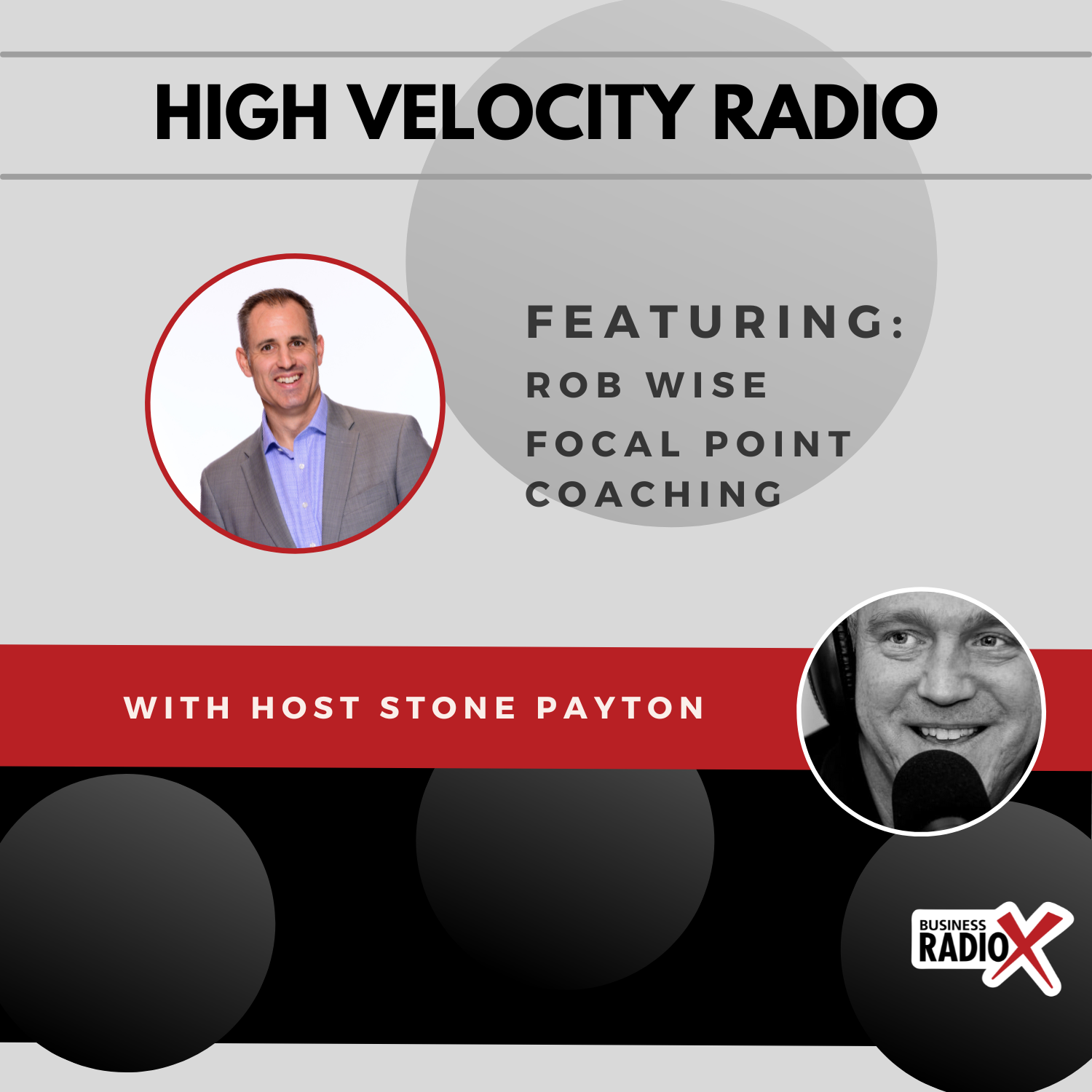
Rob Wise with Focal Point Coaching

February 27, 2025 by angishields

HVR-Focal-Point-Coaching-Feature
High Velocity Radio
Rob Wise with Focal Point Coaching
Loading
00:00 /
RSS Feed
Share
Link
Embed

Download file

Focal-Point-logo

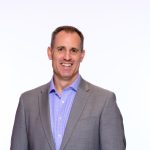
Rob-WiseRob Wise, Business and Executive Coach with Focal Point, brings a wealth of dynamic experience across the arts and education, coupled with leadership roles in education and consulting. With expertise in strategic planning, organizational systems, and operational improvement, he has played a pivotal role in independent education at both national and regional levels.

As a past President of the Houston Area Independent Schools Admission Directors and Co-Chair of the Enrollment Management Association Admissions Leadership Council, he has influenced best practices in enrollment management and institutional growth. Known for his ability to strengthen operations during times of transition, he has successfully led facility enhancements, crisis management efforts, and innovative communication strategies to drive institutional success.

Passionate about curriculum development, admissions, and faculty advancement, Rob has revitalized struggling programs, implemented innovative teaching models, and restructured assessment processes to enhance student recruitment and engagement.

His leadership extends to faculty development, forging partnerships with higher education institutions, and establishing teacher training initiatives. A strategic and trusted leader, he empowers teams, fosters collaboration, and navigates challenges with vision and expertise, ensuring sustainable institutional growth and a lasting impact on student success.

Rob empowers leaders and organizations to thrive by fostering authentic connections and designing innovative solutions. Drawing from his experience as a stage manager and technical director in theatre, with a career in educational leadership and executive coaching, he combines humanity and competence to bring people together, align teams, and create systems that empower sustainable success.

Connect with Rob on LinkedIn.

What You’ll Learn in This Episode

  • Why coaching is important to Rob
  • Rob’s journey from the entertainment industry to coaching


Transcript-iconThis transcript is machine transcribed by Sonix.


TRANSCRIPT

Intro: Broadcasting live from the Business RadioX studios in Atlanta, Georgia. It’s time for High Velocity Radio.

Stone Payton: Welcome to the High Velocity Radio show, where we celebrate top performers producing better results in less time. Stone Payton here with you this morning. Please join me in welcoming to the broadcast with Focal Point Coaching. Rob Wise. How are you man?

Rob Wise: I’m great. Good to be here. Thank you for having me.

Stone Payton: Let’s start with the mission. Purpose. What are you really out there trying to do for folks, man?

Rob Wise: So I find that, um, in my own life and working with leaders, uh, many of them feel isolated. And they feel unsettled as they try to live their lives based on perceived expectations, either their own things that they put on themselves or perceptions of others that they feel responsibility for, but without the guidance of trusted individuals in my life. A real, honest look at myself. I really wouldn’t have the same deep relationships with my wife and children, have true lasting friendships, or be that leader that others deserve. So I really believe that leaders, those who understand themselves and the teams that they work with, have the ability to inspire connection, build trust, and create a legacy of growth that resonates far beyond their immediate impact.

Stone Payton: What got you into this line of work?

Rob Wise: I have a pretty diverse set of experiences. I initially came from the entertainment industry. I majored in theater design and production and stage management, and worked in live music entertainment from when I was 18 until my early 20s, I was a stage manager, and through stage management, I actually found a job here in Houston at the High School for Performing and Visual Arts, where I was a theater teacher, a theater design teacher, and then the theater department chair. So that’s how I got into education. In education, what I found really fed me, gave me purpose, was working with young adults, teenagers also my colleagues, my peers, and helping to develop them, give them a sense of purpose, help them find their pathway. And there was one kid, she was a senior when I got there. So if you’ve ever been a teacher, you know that when you’re new, the kids test you out. And this this particular senior, she tested me every day and she would come into my office and she would have these conversations with me that at the time, I was feeling like she’s just trying to get out of the responsibilities that she has. She’s supposed to be like cleaning the costume shop or building something, doing something, anything else besides talking to me right now. But I listened to her and the next year she had graduated. The next year she came back at the end of the year. So it was almost a full year later, and we were having an end of year kind of celebration for our outgoing seniors that year. And she came up to me and she said, Mr. Weiss, I just want to let you know, I heard this has been a tough year, and I wanted to let you know that when you talk to me last year, you changed my life and you gave me purpose, and I hope you stay where you are.

Rob Wise: And that that opened my eyes to the one on one development that I really enjoy. And I find a lot of purpose in and found that purpose. And and she was the reason that I really focused on developing people and coaching people. And so when I threw the rest of my career, which is, you know, 23 years in education, I, um, that’s that was my main focus is how do I help and develop people. And so about five years ago, I formally got certified as a Cliftonstrengths coach, a global strengths coach, and did coaching one on one, kind of on the side with my job. I’m an administrator, educational administrator. And then really, this past year, I decided I needed more structure and more support. I needed a bigger network of coaches to help, you know, not just develop my the people I was coaching, but to develop myself as a coach. So I signed on with Focalpoint and have gotten that structure, that foundational piece that I was missing and, um, you know, informally started coaching when I was 25 and, um, formally, uh, through my career. And then in 2020, even more formally and now, um, looking at doing this as my full time Position because it’s just something that feeds my soul. I love seeing other people find themselves and maximize their potential in whatever industry they’re in, or whatever they’re doing at home and find kind of, you know, true happiness in, in their lives.

Stone Payton: So say more about the work, man. Have you kind of gravitated to a certain type of industry or a certain type of individual facing specific challenges? Walk us through the day to day of the the coaching work if you would.

Rob Wise: It’s interesting. My I would say my niche market is, uh, admissions, enrollment development and marketing communication director level positions in independent schools from kindergarten schools through 12th grade schools. And then also I’ve done work in higher education as well as a program coordinator and found myself coaching at that level as well. So that’s that’s my target. That’s who I that’s the those are the industries that I know that I’ve worked in and I know their their pain points. I know what it feels like to be isolated in a directorial role and not have somebody on the outside that I can really rely on, who can give me some objective work and, and objective support. And I know the pressures of those positions. They schools tend to be very steady, except in independent schools. You’re really running a company, this little independent company with the same pressures that any other company would have in fundraising and building enrollment, which is your main revenue stream, and then getting the message, the story of the school out. And those are typically 1 or 2 person offices with lots of expectations and solid deadlines and solid revenue goals. And so so you’ve got this very steady, Study even environment in a school. But then these positions typically have way more stress because they are measured and responsible for funding the school essentially. So so there’s a lot of pressure there. So that’s my niche. But what I’ve found is I actually just did a men’s retreat this past weekend, and I talked about communication styles, and I had several men come up to me and and ask, hey, would you come and do this for my company? Another said would do this for my church. So I end up finding, when I’m presenting a myriad of industries and people that that are seeking guidance and support and coaching, either in an individual or group level. So it goes from my niche to anybody else that that finds it appealing and, and is interested in having me coach. So really I my, my industry is education. But I coach people in all different industries.

Stone Payton: Well, I wanted to ask you about how the whole sales and marketing thing works for a practice like yours. But what I’m hearing, at least partially, is doing good work is a good sales tool, isn’t it?

Rob Wise: In my career, what I found is the best marketing is word of mouth. And and that comes from having really authentic experiences with people listening to what they have to say before, before I say a thing. I love the the old adage, you know, take the cotton wool out of your ears and put it in your mouth, you know. So I, I’ve, I learned that when I was 18 years old and I really valued that. So I really try to listen. And which is, you know, I’m not perfect at it. I’m not any kind of guru because I am a problem solver and I like to give solutions right away. So I really have to check myself and and listen longer and ask the right questions. Um, so when I’ve done that, well, the word of mouth is the most powerful tool. Also, you know, I think, you know, using LinkedIn and making sure that my search engine optimization is is running on my web page so that people can find me when they’re looking for a coach, especially in the Houston area. And, um, and so there’s all those digital tools, and those are great for exposure and getting a broader audience. But really, the the most effective I’ve found and meaningful is that word of mouth. Because there’s already I have a connection with that first person and people that they know and trust them when they mention, hey, I know this guy who’s a coach.

Rob Wise: He might be able to, you know, do a presentation for you or, um, you know, have a conversation with you about your industry and what, what you want to do for yourself and for your team and then also for your personal life and family. Uh, that level of trust that you have in word, in word of mouth is, is really the most powerful form of marketing I found. So that’s I rely on that and I try to build those relationships, and it’s funny how things just kind of materialize as I offer my services sometimes, you know, at a preferred rate, I will end up getting, you know, a whole bunch of clients just from one interaction where it’s it’s a favor, really, for somebody like this past weekend, it was somebody needed to fill an hour for this retreat. And I said, yeah, I would be happy to, to talk. You know, I can talk about communication styles. And they’re like, yeah, that’d be great. And so that’s typically how I market. That’s how I like to market. I use LinkedIn and Google, but I really prefer the human interaction piece of marketing. And then sales is sales should be easy if I’ve if I’ve done the authentic work, if I’ve presented myself in what my strengths are and listened to my potential clients, the sales part should be pretty easy because I can listen to them.

Rob Wise: I can hear what they’re asking for. You know, I’m having trouble with my, uh, my team, my dynamics on my team. Everybody seems to be doing their own thing, you know? Then I can ask more questions there, and I can determine if I have the tools and skills to offer them. And then at some point, I can say, you know, I do a communications assessment and a debrief. Um, maybe we can have a conversation about what that might look like for your team. And so just building that conversation through that process, really it feels very informal. And, um, you know, I don’t like I always thought I didn’t like sales, but I like sales when it’s when it’s done with integrity, when it’s done well, when I have something to offer. And if I don’t have something to offer, the sale is I know somebody who can help you. I know somebody in the industry, a coach who really knows this industry well and help you out. So that’s what I find is the most effective. Um, and the one that feels the best doesn’t feel like I’m making things up or making false promises. It’s really about integrity with myself and for my client.

Stone Payton: Earlier on in the conversation, you touched on the value of structure and a community of practice. But what? Because there are choices. What drew you to Focal Point specifically? Did something stand out about that operation that drew you in?

Rob Wise: Yeah. Um, so I looked at several different, uh, coaching firms and, and on these, honestly, it was at the prompting of my wife. My wife, uh, is my biggest cheerleader and supporter. Um, she also, you know, tells me when I’m, when I’m, I’m missing the mark for myself. And sometimes when, you know, I’m like a bull in a China shop with my, uh, my family. So she’ll she’ll call me out on my stuff, which I, you know, sometimes I don’t like in the moment, but I know I need to listen. So she told me, Rob, you, you need to do your own thing. You’ve got a mindset. That you really like to be independent and make your own choices and to run things, but you also know when you need help. And so that’s I want to see you do your thing. I want to see you own your own, whatever it is. Um, and, uh, what I found with coaching is there were a lot there’s lots of different companies out there that coach, when I looked at them, there were some that were, you know, focused mostly on CEO groups that I didn’t have, that CEO level experience and a company that I felt like I would have been an integrity being running those kinds of sessions. Um, there were others that were, you know, you get this kind of training and then you’re kind of off on your own and they might help you with marketing. But then the the continued education and the ability to contribute to the company just wasn’t there.

Rob Wise: And I kind of stumbled on Focal Point. I don’t even know how I found it. I don’t know if it was on LinkedIn or if it was in, um, a web search. But as I was kind of researching coaching firms, Focalpoint came up and I, I started reading about Focalpoint. Um, and I filled out a little contact form and, and I was called almost immediately and, um, just the the friendliness, the fervor for helping people, uh, really develop themselves to be the best person that they could be and to help with their industry appealed to me. And then as I did some more research and talked to more focalpoint coaches, um, I found that the level of training, the support, the network and, and this absolutely positive attitude that everybody has about whatever you need, like, we want to help you or we want to support you in your journey, whatever that looks like, just as a potential, you know, it’s just kind of feeling things out. Um, and then as I got further, further into it, I found that the support, the training, the ongoing training, the growth mindset that focal point has, and of course, the philosophy behind Focal Point that comes from Brian Tracy was really the most appealing to me. So, um, so I bought a Focal Point franchise and, and jumped in with, with both feet. And that’s why the point. Yeah.

Stone Payton: So what’s the most rewarding about the work these days? What’s the most fun about it for you at this point?

Rob Wise: So it’s been kind of a whirlwind. Plus the information and training from Focal Point. Um, but I would also say it’s really energizing and, you know, building, uh, course work out that’s going to help people in the future. Uh, being able to innovate, being able to develop that structure for myself and for my company has been extremely rewarding. Um, and then I think when I see the light bulb go on, I was actually coaching one of my, um, direct reports. And, you know, we I would just kind of ask her questions. She was having some frustration about this publication that we do. And, um, she kept saying, like, you know, I just feel like I don’t have ownership. And I said, tell me what you would like. What what is your ideal? What does this look like for you to feel ownership. And she goes, well, I’d like to I’d like to take all of this. And instead of writing it, I’d like to go interview people and help them to write and then put it together in a common theme and oversee all of that. And I said, great, I think you should do that. And and for her, that light bulb went on and she came back in the next day with this outline. All the people that, you know, listed out what they what she wanted to interview them about. And she was just beaming and, and seeing that, um, that light go on and that, you know, brightness in the eyes and seeing somebody love what they do and have ownership of it. That’s probably the most rewarding thing for me is, um, being able to be that guide to help people figure out one what it is they want and two, how to get it. And, um, and that’s because, you know, she looks fulfilled, uh, in her, in her work. And she’s so excited every time she comes to talk to me and show me what she’s doing. And so my job then is just to coach her and help her figure out kind of the next step and what needs to go on to help her to continue to be successful.

Stone Payton: Hobbies. Passions. Pursuits. Interests outside the scope of the coaching work. What do you do when you’re not coaching, man?

Rob Wise: Everything. Um, I I my wife rolls her eyes at me quite a bit because I’ve got lots of hobbies. Um, my. I’m a bagpiper. I play the great Highland bagpipes, the Scottish bagpipe. So I like to do that when I have time. Um, I’ve got a couple annual gigs, so I play for the city of Friendswood. Memorial day ceremony every year. I’ve been doing that for, gosh, probably 12 years now. Um, wow. So that’s really rewarding that I get to honor our, our military veterans, men and women. So that’s one thing. And then I love hiking and camping with my family. We we go up to Colorado or West Texas. Um, we’re going up, uh, to Ohio to visit my parents this summer. So we’ll stop through Arkansas, Missouri and Kentucky and do a couple of days in each spot. Uh, that’s something that that’s probably one of my biggest joys is, is camping. So those are my those are two of my hobbies, but I’ve got many others.

Stone Payton: Well, I’m so glad that I asked. And I just personally and I know so many of our listeners probably feel the same. I just love hearing the bagpipes and you just never know. That’s fantastic.

Rob Wise: I’m glad to hear that you love them because. Because sometimes, uh, I’m very conscious about how loud they are and know their practice. You don’t have to go out in the middle of nowhere and practice.

Stone Payton: I think it’s great.

Stone Payton: Before we wrap, let’s leave our listeners with a couple of pro tips. And I’m thinking in your case particularly because it is still a little fresh, maybe a pro tip or two around getting your coaching practice off the ground. You know, some things to think about to read. Do don’t do.

Rob Wise: Yeah. Um, I’m kind of in the middle of that now. So I would say the, the do. Um, one of the things that’s really helped me, that focal point is very expert in is do one thing. You know, what’s the what’s the one thing that I’m going to do today? Um, because we can get overwhelmed with thinking we have to do all the things today or this week. So I have to prioritize and go, what’s the one thing that I’m going to do right now? And I and I do that thing, and then that thing is done. And the next day I find another thing and I do that thing. So taking off those kind of bite sized pieces as you’re getting started to make it manageable, um, is important. And to be patient and to know that if I’m doing the right things each day, I will find success. And and I have found that to be absolutely true. Just just mentioning that I’m a focal point coach and that, you know, I can do a communications assessment. I was able to do, you know, an hour seminar and and get clients, you know, just out of that organically. So, um, just doing the right thing one step at a time. Uh, the other is, um, I believe in acting with integrity and being honest with myself.

Rob Wise: So if I’m honest with myself, I know what my limitations are. I know where I need to stop, I need to take a break. I need to spend time with my family, and I make sure that I honor that and take that time. Um, and that for us is, you know, a spiritual experience. You know, we’re, uh, we’re Greek Orthodox Christians. And so making sure that the church is in our home and in our lives and that we sit down together, we eat together, um, and we really listen to each other is a big part of our, our spiritual life and our family. And that gives me what I need to the energy that I need later in, in my work. Um, so if I’m honest with myself, I can see, okay, here. I’m I’m hitting my wall. I need to I need to slow down. I need to focus on my family. Um, because that’s the part that really feeds me. And then, um, the other is, you know, talk to your network. I like talking to people. I’m, I’m fairly extroverted, so making making calls and letting people know, hey, I’m a focal point coach, um, has been huge for just building awareness. Um, even if I’m not coaching them or I don’t.

Rob Wise: I don’t see any leads right away. Um, just letting people know that what I’m doing, one has been extremely helpful in just building my network out. But also it’s been really great because people have given me the feedback like, oh my gosh, Rob, you’re going to be such a great coach. I’m so glad you’re doing that. So it just reinforces that I made the right decision. So I, you know, we do not operate in a vacuum. We do not live our lives alone. We live our lives with other people. And I think it was, uh, Abraham Lincoln who said the better part of one’s life is his friendships. And that’s absolutely true, that I lean on people. I depend on people. Uh, I know that I can’t do it myself. And so I think that’s another thing I would tell somebody starting off in coaching or really any industry is, you know, lean on the people who know, lean on the people who you think might be able to help you, because a lot of times they’re going to help you in ways that you didn’t, you didn’t think about. You might call them for one thing, but they may actually give you something else that you weren’t anticipating.

Stone Payton: So what’s the best way for our listeners to tap into your work and stay connected, man?

Rob Wise: One is, you know, you can just go to my website. Um, it’s Rob wise, dot Focalpoint Coaching.com. Um, and so they can go to my website, they can connect with me there. There’s a contact form. There’s also a little assessment there to, to determine kind of where they are in their work and what they want. Um, so a little free assessment that kicks out right away gives them some results. They can follow me on LinkedIn. Always message me on LinkedIn if anybody has questions, if anybody just wants to chat. Um, I love, you know, talking. It’d be great to meet over coffee in Houston. I know a couple really good, uh, coffee shops here, and I’m a big coffee buff, so I’m always like, an in person conversation, too. So, um, those are the ways to get connected with me. And, um, and then, you know, hopefully I’ll be back on your show again and I can give you an update in the future.

Stone Payton: Well, I sure hope you will, man. Thank you so much for sharing your story, your experience and your your your passion for serving people in this way. You’re doing important work, man, and we sure appreciate you.

Rob Wise: Well, I appreciate you having me. It’s been it’s been a great experience. Thank you.

Stone Payton: Absolutely. My pleasure. All right. Until next time. This is Stone Payton for our guest today, Rob wise with Focalpoint Coaching and everyone here at the Business RadioX family saying we’ll see you in the fast lane.
 

Tagged With: Focal Point Coaching

Empowering Women in Business with Maggie Ishak, Focal Point Coaching

January 8, 2025 by John Ray

Empowering Women in Business with Maggie Ishak, Focal Point Coaching, on North Fulton Business Radio with host John Ray
North Fulton Business Radio
Empowering Women in Business with Maggie Ishak, Focal Point Coaching
Loading
00:00 /
RSS Feed
Share
Link
Embed

Download file

Empowering Women in Business with Maggie Ishak, Focal Point Coaching, on North Fulton Business Radio with host John Ray

Empowering Women in Business with Maggie Ishak, Focal Point Coaching (North Fulton Business Radio, Episode 834)

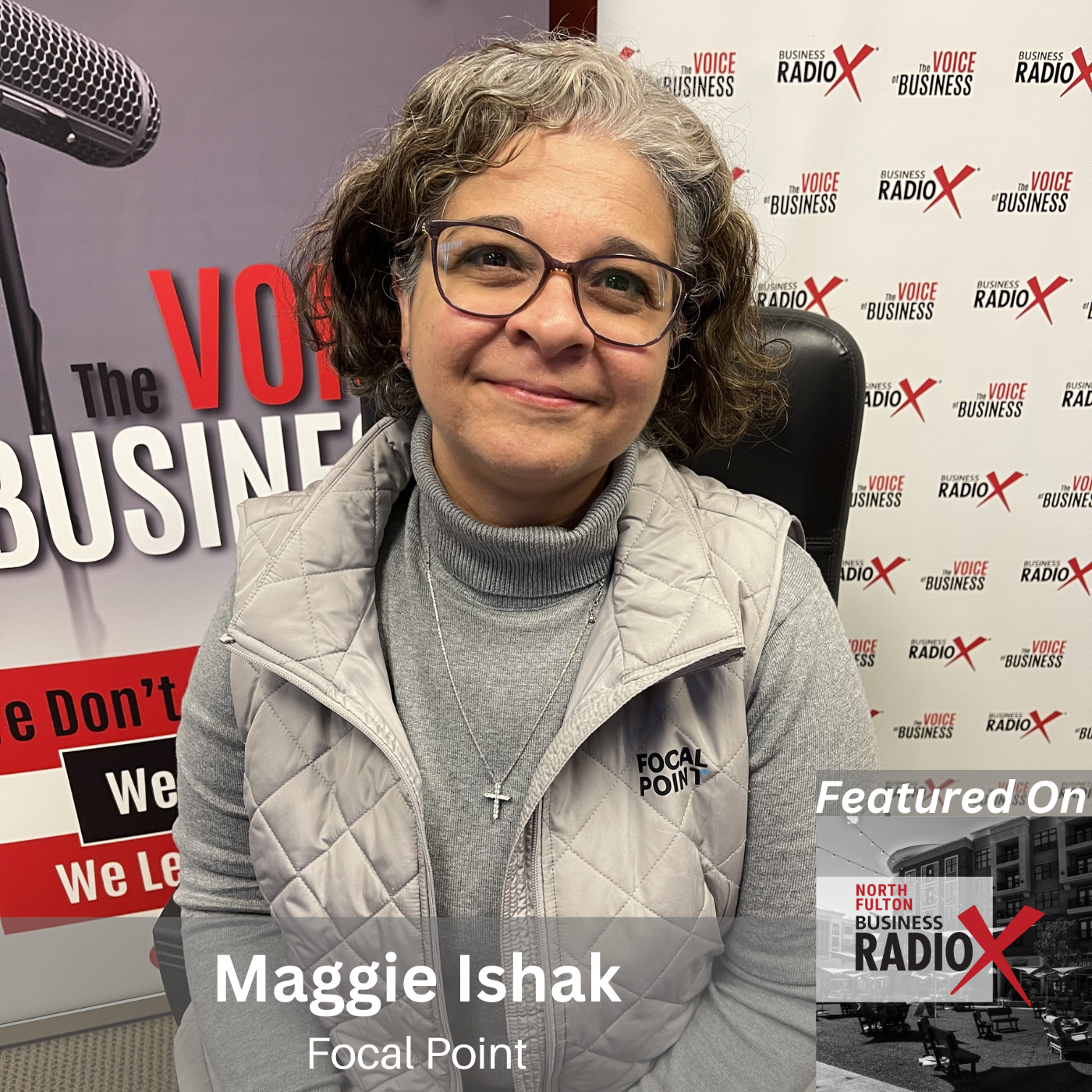
In this episode of North Fulton Business Radio, hosted by John Ray, the featured guest is Maggie Ishak, Focal Point Business Coaching. Maggie shares her journey from a 28-year corporate career to becoming a business coach specializing in helping women business owners and leaders. She discusses the unique challenges women face in both corporate and entrepreneurial settings, emphasizing the importance of time management, delegation, and setting boundaries. Maggie also highlights the value of coaching in providing accountability and strategic direction. She shares success stories, explains the differences between coaching and consulting, and outlines her various offerings, including one-on-one and group coaching, as well as specialized assessments.

John Ray is the host of North Fulton Business Radio. The show is recorded and produced by the North Fulton affiliate of Business RadioX® inside Renasant Bank in Alpharetta.

Maggie Ishak, Focal Point Coaching

Maggie Ishak is a Certified Focal Point Business and Executive Coach and a Certified Trust Edge Partner.

Maggie educates and empowers her clients to reach their professional and personal goals: to grow their businesses, to engage their teams, to manage their time, and to maintain a healthy work/life balance.

Before launching her business coaching practice, Maggie enjoyed a 28-year corporate career at Michelin North America, holding senior leadership roles including VP of Supply Chain, VP of Operations and Director of Customer Experience. Maggie left a lasting impact not only on the business results but also on the teams she coached and managed and the customers she served.

Maggie has a BS in Chemical Engineering from MIT and an MBA from Wake Forest University. Maggie lives in the Atlanta area with her husband and three teenage sons.

LinkedIn

Topics Discussed in this Episode

00:00 Introduction and Welcome to North Fulton Business Radio
00:30 Meet Maggie Ishak: Business Coach for Women
01:58 The Corporate Journey: From Engineer to Business Coach
03:23 Navigating Corporate Challenges as a Woman
10:08 Balancing Work and Family in Corporate Life
17:58 The Transition from Corporate to Entrepreneurship
20:04 The Three Eyes of the Business Owner
22:50 The Role of Coaching vs. Consulting
25:21 The Importance of Celebrating Wins
33:27 Success Stories and DISC Assessments
36:53 How to Connect with Maggie Ishak
38:20 Final Thoughts and Announcements

Renasant Bank supports North Fulton Business Radio

Renasant BankRenasant Bank has humble roots, starting in 1904 as a $100,000 bank in a Lee County, Mississippi, bakery. Since then, Renasant has become one of the Southeast’s strongest financial institutions, with over $17 billion in assets and more than 180 banking, lending, wealth management, and financial services offices throughout the region. All of Renasant’s success stems from each banker’s commitment to investing in their communities as a way to better understand the people they serve. At Renasant Bank, they understand you because they work and live alongside you every day.

Website | LinkedIn | Facebook | Instagram | X (Twitter) | YouTube

About North Fulton Business Radio and host John Ray

With over 800 shows and having featured over 1,200 guests, North Fulton Business Radio is the longest-running podcast in the North Fulton area, covering business in our community like no one else. We are the undisputed “Voice of Business” in North Fulton!

The show welcomes a wide variety of business, non-profit, and community leaders to get the word out about the important work they’re doing to serve their market, their community, and their profession. There’s no discrimination based on company size, and there’s never any “pay to play.” North Fulton Business Radio supports and celebrates business by sharing positive business stories that traditional media ignore. Some media leans left. Some media leans right. We lean business.

John Ray, Business RadioX - North Fulton, and Owner, Ray Business Advisors
John Ray, Business RadioX – North Fulton, and Owner, Ray Business Advisors

John Ray is the host of North Fulton Business Radio. The show is recorded and produced from the North Fulton studio of Business RadioX® inside Renasant Bank in Alpharetta. You can find the full archive of shows by following this link. The show is available on all the major podcast apps, including Apple Podcasts, Spotify, Google, Amazon, iHeart Radio, and many others.

The studio address is 275 South Main Street, Alpharetta, GA 30009.

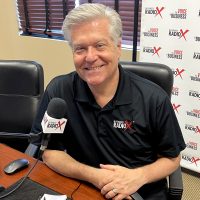
John Ray, The Generosity MindsetJohn Ray also operates his own business advisory practice. John’s services include advising solopreneurs and small professional services firms on their value, their positioning and business development, and their pricing. His clients are professionals who are selling their expertise, such as consultants, coaches, attorneys, CPAs, accountants and bookkeepers, marketing professionals, and other professional services practitioners.

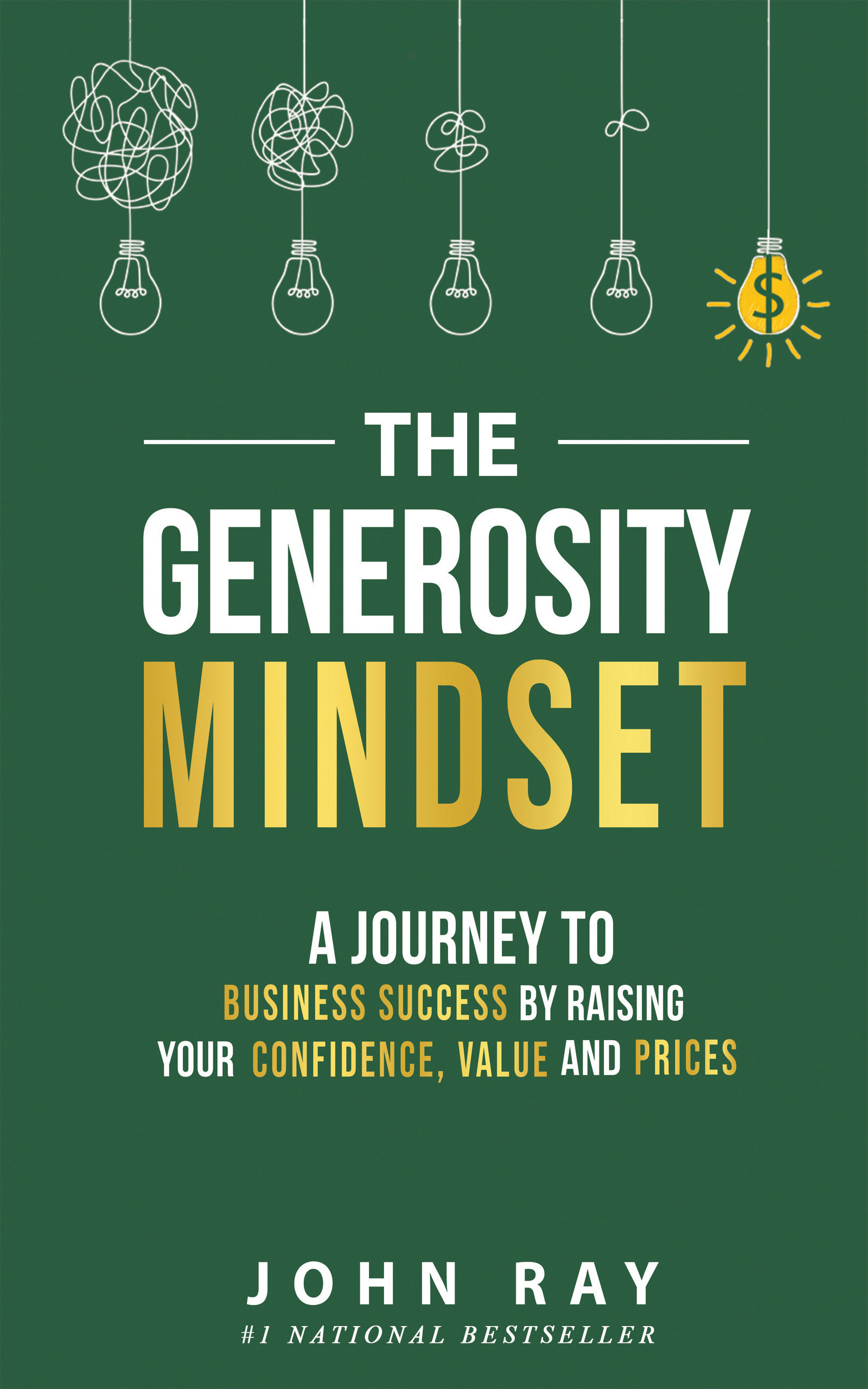
John is the national bestselling author of The Generosity Mindset: A Journey to Business Success by Raising Your Confidence, Value, and Prices.

Tagged With: business coach, Focal Point Coaching, John Ray, Maggie Ishak, North Fulton Business Radio, Women in Business, women leaders

Maggie Ishak With Focal Point Coaching

December 20, 2024 by Jacob Lapera

Atlanta Business Radio
Maggie Ishak With Focal Point Coaching
Loading
00:00 /
RSS Feed
Share
Link
Embed

Download file

Maggie Ishak is a Certified Focal Point Business and Executive Coach and a Certified Trust Edge Partner. She educates and empowers her clients to reach their professional and personal goals: to grow their businesses, to engage their teams, to manage their time, and to maintain a healthy work/life balance.

Before launching her business coaching practice, she enjoyed a 28-year corporate career at Michelin North America, holding senior leadership roles including VP of Supply Chain, VP of Operations and Director of Customer Experience.

She left a lasting impact not only on the business results but also on the teams she coached and managed and the customers she served. She has a BS Chemical Engineering from MIT and an MBA from Wake Forest University.

Maggie lives in the Atlanta area with her husband and three teenage sons.

Connect with Maggie on LinkedIn.

What You’ll Learn In This Episode

  • About Focal Point and how she serve her clients

Transcript-iconThis transcript is machine transcribed by Sonix.


TRANSCRIPT

Intro: Broadcasting live from the Business RadioX studio in Atlanta, Georgia. It’s time for Atlanta Business Radio, brought to you by Kennesaw State University’s Executive MBA program, the accelerated degree program for working professionals looking to advance their career and enhance their leadership skills. And now, here’s your host.

Lee Kantor: Lee Kantor here, another episode of Atlanta Business Radio. And this is going to be a good one. But before we get started, it’s important to recognize our sponsor, Kennesaw State University’s Executive MBA program. Without them, we couldn’t be sharing these important stories. Today on the Atlanta Business Radio, we have Maggie Ishak and she is with Focal Point Coaching. Welcome.

Maggie Ishak: I late? It’s great to be here.

Lee Kantor: I am so excited to learn what you’re up to. Tell us a little bit about your focal point coaching practice.

Maggie Ishak: Sure. So my coaching practice is almost a year old, so I’m really excited about that. I maybe I’ll take a step back and tell you how I got here. I started my career as an engineer, spent 28 years in the corporate world, and realized what I enjoyed doing was actually coaching my teams. When I look back on those 28 years, I don’t necessarily remember the business results. I remember the people and the careers that I was, the trajectories that I was able to change. And so that’s when I realized that that’s really where I need to be spending my time. So today I have my own solopreneur coaching practice, and with that I work with two primary groups of clients. One is female business owners. They might be solopreneurs like myself, or maybe they founded a business and they’re trying to grow it, or they’re trying to be more efficient with it. But I’ve also found that I’ve had good success working with teams very similar to the ones that I managed in my corporate life. And so I’ve been able to work with both of those groups and really enjoy that.

Lee Kantor: Now, in your career prior to coaching, were you working for a large enterprise level firms or were you working for kind of entrepreneurial organizations?

Maggie Ishak: So the majority of the time I was working with a very large enterprise company that was based out of Greenville, South Carolina. I spent my time in a supply chain and operations and basically grew into senior management roles there. Towards the end of my time there, I had the opportunity to work at a much smaller company that this larger company had purchased. So I spent time working in an environment that was much more entrepreneurial, a little more kind of let’s just figure it out as we go along. And so I’ve had experience working in both kinds of environments, the structured enterprise environment, as well as the smaller, more entrepreneurial environment.

Lee Kantor: Now, when it came time to kind of launching your own coaching career. Why did you choose Focal Point rather than just say, you know, I’m going to be Maggie Coaching Inc. and I’m just going to figure it out that way.

Maggie Ishak: Awesome. Yeah. Awesome question. So I did a lot of research and I talked to a lot of people, and I met several coaches who were already working with Focal Point. And one of the things that really stood out to me about Focal Point was the sense of community that they offered, even though I was going to be on my own and have my own business, I had a whole network of other coaches that I could lean on. As part of that, I went through a process with them to get certified and trained. I was part of a training cohort of 13, so I had 12 other colleagues that I went through training with, and I still keep up with them. And they’re almost like, you know, my little business family, um, we kind of went through that training program together, so we bonded over that. Um, another thing that focal point offered was the ability to have a mentor coach. So, you know, one thing I tell my clients is even as a coach, I have a coach. And so they provided that as part of their program. And I’ve got access to this whole suite and library of materials that I can use with my clients. I can take it off the shelf, I can use it as is. I can customize it. Um, and that’s typically what I do, is I take that content and customize it to meet, meet my clients needs.

Lee Kantor: So when you were deciding when you were at that point in your career where you’re going to, you know, change directions a little bit here, there was a was there a period where you were like, okay, I can do this on my own, but I’m going to do my due diligence and research. And then you found Focal Point, and then you really became enamored with their processes and systems and then decided to go that way. Or were you always kind of going, okay, I’m going to find somebody that has already been there and done that so I can kind of work with them.

Maggie Ishak: It was the former. Um, I spent about six months doing research, and in fact, I probably drove them crazy because I took so long. Um, but I did do quite a bit of due diligence and, and then it took me a while to even pull the trigger. Um, it almost feels. And I think anybody that starts a business feels like this. It’s like you’re standing on the side of a cliff looking down, and you think there’s a net down there and you think you’re going to jump, but then you’re like, okay, is there really a net? How is this going to work? Um, so it did take me quite a bit of time to make that decision. But once I lined up with Focalpoint and did that research, then it became clear to me that this was the way to go.

Lee Kantor: Um, I’m sorry to belabor this, but I think this is important for a lot of people that are in that same spot as you are, where you have obviously the knowledge and expertise to do the work, and you don’t really need, um, help in that area. But a sense of community was an important component of the decision, it sounds like.

Maggie Ishak: Absolutely. Having been in that corporate environment for almost 30 years, I was used to having people around me, and the thought of doing this 100% of my own really scared me. And I think a lot of solopreneurs probably get cold feet because of that. And so launching this business with Focal Point gave me the best of both worlds. It gave me an, you know, a place where I could kind of go pursue my entrepreneurial bug and go have my own business and work for myself. But yet I still had that community behind me. And, you know, one of the nice benefits of Focal Point is if you have a question about something, you literally can call up any coach and they will spend time with you. Um, I’ve talked to dozens of other focal point coaches and everybody is always willing to help. Everyone is willing to lend a hand. And and the sense of community is such that none of us are competing against each other. Um, there’s enough business out there for all of us. And so we kind of take the approach of all boats rise with the tide.

Lee Kantor: Now, how did you kind of land on your niche and or the two niches that you serve the teams and the women owned businesses? Was that something by design as you were going through the training, or was that something just in your heart that you were like, okay, these are the groups of people that I want to serve.

Maggie Ishak: So I’m going to say a little bit of both and I’ll share that. So I knew when I started this business that I wanted to focus on women. Um, just because having been a female in the corporate world, I oftentimes was the only lady in the room. Um, and it was tough. And I also realized that over that time, I may not have managed my time very well. I had periods where I was like, okay, I’m just about ready to throw in the towel. I saw many other women through the course of my career kind of give up on their professional goals. Um, or they became burned out. And as I started networking in the community, I met lots of other fantastic female business owners, and many of them were really strong and really capable, but just needed a little bit of help to kind of move things along. And so that’s that’s a real passion of mine, um, to work with and support and empower other women. The team piece, I will tell you, almost came a bit accidentally. Um, as I was out there networking, I had a couple of opportunities come my way and I realized I enjoyed that, and it kind of brought me back to when I was with my teams in the corporate world. So that’s where I’m spending the the focus of my time is between those two areas. But but it kind of came the female piece of it came very deliberately. The team piece came organically.

Lee Kantor: Now, can you kind of talk us through what it’s like to work with you? What is like, say, I am I have a woman owned business and I am what am I struggling with where it’s probably a good idea to contact Maggie. What are my frustrations? What, like how does a relationship begin?

Maggie Ishak: Fantastic question. So, um, typically I’m going to I’m going to break it up into kind of four areas time, team, money and strategy. So what somebody might say is something like, oh my gosh, I’m working 70 80 hours a week. I don’t have time to do Fill in the blank. I don’t have time to go to my kid’s soccer games or baseball games or whatever. Or I can’t take a vacation. So there might be something around where they’re spending their time. When it comes to team, it might look like I can’t seem to hire the right people. I can’t get them on board. They don’t seem to understand my vision. Money. It could be okay. I’m growing my revenue. My profits don’t seem to be growing. I can’t seem to get any growth with my business. Um. Or strategy? Uh, I set goals. Can’t seem to achieve them. My to do list is way too long. I can’t prioritize effectively. Um, so those are the kinds of things somebody might say that would then trigger, hey, you might want to call Maggie. She could help you. So then once I have an initial contact with somebody, my first meeting with them is typically 20 minutes. It’s typically just a discovery conversation. Tell me about your business. Um, and I like to ask the question, Lee, to open the conversation of if you could change one thing about your business, what would that be? So if you had a magic wand, what would you. What would you fix change, solve? And that typically gets the conversation going where I can understand like what is the most painful challenge that they have.

Maggie Ishak: And then I’ll ask a few more questions and try to basically confirm that what I bring to the table can help solve their their challenge. But I’m also looking to them to see do they have a willingness to change? They have a willingness to listen, um, and to maybe take somebody else’s perspective into consideration as they approach their business. If that’s all positive, what I will then do is schedule something called a strategic business review with them. I have a document that I send them to ask them to think strategically about their business, asking them questions like what are their strengths? What do they struggle? Um, what are their top three business priorities? It’s a couple of pages and it may take them, you know, 15, 20 minutes to fill that out. And then I use that for the next conversation, which is typically about an hour, um, hour, an hour and 15 where I really dig deep into their business. And it’s in that conversation that I try to bring some value to them, and I try to provide some insight into what it’s like to work with me. I do ask a lot of questions. I’m going to ask you to be introspective about your business, but I’m also going to challenge you to think through some things. And so typically in that first conversation, that second conversation, the PSBR, um, most clients will start to get a sense of the value they can get in working with me.

Maggie Ishak: Then at that point, we will then decide what program is best for them. So could it be one on one coaching? So this is very individualized, very personal and tailored to them. And we typically with clients like that, I meet with them once a week for about an hour. Or is a group coaching program more aligned with their needs? I have a couple of flavors of group coaching programs. One of them is kind of like a boot camp type program, where it’s eight sessions over about 12 to 14 weeks, where we go soup to nuts from the beginning and end up coming out of it with a strategic plan, a dashboard to be able to measure progress on their business sales plan and a marketing plan. Um, or if something like an assessment may solve their needs. So I use things like Disc assessments which assess communication styles and behavioral strengths. And in some cases, if it’s a team or maybe an organization that’s got a number of people working there, sometimes starting off with the Disc assessment works really, really well. They can understand their team strengths and behavioral styles and use that to drive an action plan. So typically those are the entry points in terms of how I start working with clients. But I do tailor and customize the program based on what the client needs.

Lee Kantor: Now when you’re in coaching, you know, obviously aligning your superpowers with their needs creates that ideal client fit. Is there anything that’s kind of a red flag where you’re like, you know what, this isn’t the type of, uh, client for me. I’m going to have to pass, and I recommend you go somewhere else, because it’s important to be able to be clear on your yeses, but also be clear on your nose.

Maggie Ishak: Absolutely. That is, uh, very, very important. So, um, I’ll maybe use a couple of examples. So in in one kind of scenario, the person may not be open to change, and they may not be open to being introspective about their business. I had somebody tell me once, um, I’ve tried goal setting. It doesn’t work. So I’m not going to do that again. I said, okay, uh, so that that likely would not be a client. That’s a good fit. Um, the other thing that may come up is if clients are bringing things to me that are really outside of my lane, and in those cases, I will refer them to another coach that I know. So for example, if somebody is really struggling with things that are, um, like all mindset based, I do do some mindset work, but I’ve got some great partners that that’s all they do. And if I think the business itself is sound, but but it’s a mindset question that I’ll refer them to one of my partners, that that’s all they focus on. So those first two conversations that I mentioned, the 20 minute and then the one hour strategic business review, that’s where we get to the bottom of that, and that’s where I can assess. Are they even a fit for coaching to begin with and or does it align with my strengths in terms of, um, really focusing on, on the operations of their business, the leadership of their business, the team aspect of their business?

Lee Kantor: Is there a story you can share that maybe illustrates how you work with somebody, maybe their problem they came to you with and how you were able to get them to a new level. Now, obviously don’t name the name of the client. Yeah, but just the problem in the solution.

Maggie Ishak: Sure, sure. I can give you a couple of examples. And these are both relatively recent. Um, I was working with a client, and one of the exercises that I do with them is to understand who is their target client. Who are they really serving? Some people know that really well, and some people really struggle and need to, you know, we spend a lot of time kind of talking through who is your target client. And one of the exercises that I do with that is something called the good, the bad and the ugly. Um, and don’t worry, doesn’t have anything to do with the movie. Uh, it’s just a little moniker that we use. Um, and the idea is to understand who’s your best client, best client or clients? What are the attributes about them that make them a good client for you? And then who would you call a client? You know, somebody that maybe you prefer not to work with at all? Um, maybe they’re not as profitable for you. Maybe they just take a lot of energy from you. And then the ugly ones, the ugly ones likely make you money, but maybe there are a lot more time consuming. And so I was going through this with a client, um, not too long ago, and she was actually pretty specific about describing her good client.

Maggie Ishak: And we went through and described all the attributes of her good client, and then she talked about her, her bad ones. And then in that same conversation, we were talking about where their marketing funds were going and what kind of activities they were spending their marketing money on. And, and I asked her just a very simple question, what kind of client are you getting from this particular marketing activity? And she literally just froze. She looked at me and she said, oh my gosh, that’s going to get us more of our bad clients. And so it was in that conversation made her realize that their marketing activities need to be aligned with attracting more of their good clients, which tend to be profitable, easier to work with than their bad clients. So that’s one example. Um, another example, and this is also pretty recent. Um, when I start working with clients, one of the first things that I do is conduct a risk assessment, which, um, disc is around understanding communication style and behavioral strengths. And there are four primary disc styles. Generally each person is strongest in one, maybe two. And what most people tend to do is address the rest of the world as if they were just like them, which is obviously not the case.

Maggie Ishak: And so this one particular client was very proud of telling me he’s like, oh, I fire clients. And I tell people, you know, as I’m having a discovery call with them, we’re not we’re not the place for you. And as I dug into this conversation with him, what became really apparent was he was discounting clients that just weren’t like him from a disc perspective. So his disc approach was to be very fast paced and make quick decisions. And not everybody’s like that. And so he also had one of these aha moments of, oh my gosh, I probably just need to be a little more patient with some of these other clients, as opposed to automatically thinking they’re not going to be good clients because they don’t make decisions as quickly as he does. And so those are kind of just maybe two examples of, of, of recent interactions where those clients came away with some, some pretty strong value in terms of understanding what they’re doing and, and how just very small tweaks, they can either drive more revenue, spend their marketing funds more effectively, or be able to work with a broader range of clients and perhaps grow their business even more quickly.

Lee Kantor: Now, before we wrap up, is there any advice you can share right now? Maybe a person’s not ready for coaching right now, but there’s some things that they can do that are actionable. Um, you know, some low hanging fruit that anybody could kind of at least explore a little bit right now.

Maggie Ishak: Yeah. That’s a that’s a great, uh, that’s a great question. Um, for me, for anybody that’s open to coaching, they are open to learning. And there’s a lot of places that we can gain education from. It could be a podcast, it could be a book. Um, it could be doing one of these assessments and then just reading the report and reflecting on that. Um, so I do have clients like that. I may recommend some podcasts or some books to them just to get their brain going. And then at the end of that, you know, maybe a couple of months later that they come back and say, okay, now I get that, now I understand this, and now I’m ready to to dive into a little more detail.

Lee Kantor: And now, is there a place for someone to go if they want to learn more and connect with you? Um, have a more substantive conversation. Do you have a website or is it social media or LinkedIn? What’s the best way to connect?

Maggie Ishak: A little bit of both. So I am on LinkedIn pretty easy to find. So Maggie Isaac is h a k. And so I’ve got um, some things on LinkedIn where somebody can see what it’s like to work with me. I do have a website as well. It’s Maggie Isaac, Dot Focalpoint Coaching.com. That link is also found on my LinkedIn profile. Um, also on both of those places is a link to book a discovery call. So if somebody is just curious about coaching, wanting to have just a very introductory no obligation phone call, you can find links on both my LinkedIn profile and on my website to book a discovery call.

Lee Kantor: And that’s Maggie e I s h a k correct. Well, Maggie, thank you so much for sharing your story today. You’re doing such important work and we appreciate you.

Maggie Ishak: Lee, thank you so much for having me. It’s been a pleasure.

Lee Kantor: All right. This is Lee Kantor. We’ll see you all next time on Atlanta Business Radio.

Tagged With: Focal Point Coaching, Maggie Ishak

Business RadioX ® Network


Our Most Recent Episode

CONNECT WITH US

  • Email
  • Facebook
  • LinkedIn
  • Twitter
  • YouTube

Our Mission

We help local business leaders get the word out about the important work they’re doing to serve their market, their community, and their profession.

We support and celebrate business by sharing positive business stories that traditional media ignores. Some media leans left. Some media leans right. We lean business.

Sponsor a Show

Build Relationships and Grow Your Business. Click here for more details.

Partner With Us

Discover More Here

Terms and Conditions
Privacy Policy

Connect with us

Want to keep up with the latest in pro-business news across the network? Follow us on social media for the latest stories!
  • Email
  • Facebook
  • Google+
  • LinkedIn
  • Twitter
  • YouTube

Business RadioX® Headquarters
1000 Abernathy Rd. NE
Building 400, Suite L-10
Sandy Springs, GA 30328

© 2025 Business RadioX ® · Rainmaker Platform

BRXStudioCoversLA

Wait! Don’t Miss an Episode of LA Business Radio

BRXStudioCoversDENVER

Wait! Don’t Miss an Episode of Denver Business Radio

BRXStudioCoversPENSACOLA

Wait! Don’t Miss an Episode of Pensacola Business Radio

BRXStudioCoversBIRMINGHAM

Wait! Don’t Miss an Episode of Birmingham Business Radio

BRXStudioCoversTALLAHASSEE

Wait! Don’t Miss an Episode of Tallahassee Business Radio

BRXStudioCoversRALEIGH

Wait! Don’t Miss an Episode of Raleigh Business Radio

BRXStudioCoversRICHMONDNoWhite

Wait! Don’t Miss an Episode of Richmond Business Radio

BRXStudioCoversNASHVILLENoWhite

Wait! Don’t Miss an Episode of Nashville Business Radio

BRXStudioCoversDETROIT

Wait! Don’t Miss an Episode of Detroit Business Radio

BRXStudioCoversSTLOUIS

Wait! Don’t Miss an Episode of St. Louis Business Radio

BRXStudioCoversCOLUMBUS-small

Wait! Don’t Miss an Episode of Columbus Business Radio

Coachthecoach-08-08

Wait! Don’t Miss an Episode of Coach the Coach

BRXStudioCoversBAYAREA

Wait! Don’t Miss an Episode of Bay Area Business Radio

BRXStudioCoversCHICAGO

Wait! Don’t Miss an Episode of Chicago Business Radio

Wait! Don’t Miss an Episode of Atlanta Business Radio