Business RadioX ®

  • Home
  • Business RadioX ® Communities
    • Southeast
      • Alabama
        • Birmingham
      • Florida
        • Orlando
        • Pensacola
        • South Florida
        • Tampa
        • Tallahassee
      • Georgia
        • Atlanta
        • Cherokee
        • Forsyth
        • Greater Perimeter
        • Gwinnett
        • North Fulton
        • North Georgia
        • Northeast Georgia
        • Rome
        • Savannah
      • Louisiana
        • New Orleans
      • North Carolina
        • Charlotte
        • Raleigh
      • Tennessee
        • Chattanooga
        • Nashville
      • Virginia
        • Richmond
    • South Central
      • Arkansas
        • Northwest Arkansas
    • Midwest
      • Illinois
        • Chicago
      • Michigan
        • Detroit
      • Minnesota
        • Minneapolis St. Paul
      • Missouri
        • St. Louis
      • Ohio
        • Cleveland
        • Columbus
        • Dayton
    • Southwest
      • Arizona
        • Phoenix
        • Tucson
        • Valley
      • Texas
        • Austin
        • Dallas
        • Houston
    • West
      • California
        • Bay Area
        • LA
        • Pasadena
      • Colorado
        • Denver
      • Hawaii
        • Oahu
  • FAQs
  • About Us
    • Our Mission
    • Our Audience
    • Why It Works
    • What People Are Saying
    • BRX in the News
  • Resources
    • BRX Pro Tips
    • B2B Marketing: The 4Rs
    • High Velocity Selling Habits
    • Why Most B2B Media Strategies Fail
    • 9 Reasons To Sponsor A Business RadioX ® Show
  • Partner With Us
  • Veteran Business RadioX ®

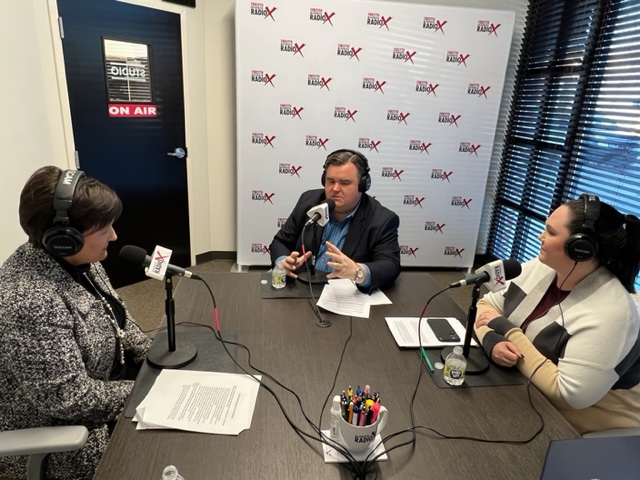
FOCO Talks Celebrating 20 years with Northside Hospital Forsyth featuring Chief Operating Officer, Lynn Jackson

December 2, 2022 by Amanda Pearch

FoCo Talks
FoCo Talks
FOCO Talks Celebrating 20 years with Northside Hospital Forsyth featuring Chief Operating Officer, Lynn Jackson
Loading
00:00 /
RSS Feed
Share
Link
Embed

Download file

Celebrating 20 years of Northside Hospital in Forsyth County

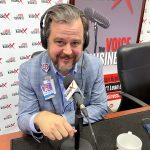
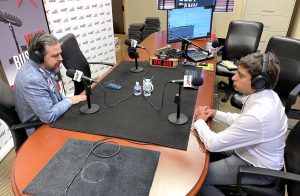
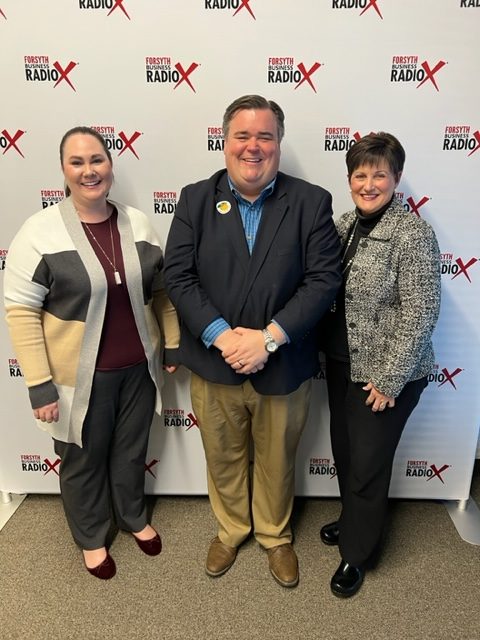
“FOCO Talks” Featuring Northside Forsyth’s, Chief Operating Officer, Lynn Jackson, Chamber President & CEO, James McCoy and VP of Community Development Laura Stewart


Lynn Jackson is the Chief Operating Officer for Northside Hospital Forsyth. The Northside Hospital health care system is one of Georgia’s leading health care providers with five acute-care hospitals in Atlanta, Canton, Cumming, Duluth and Lawrenceville and more than 250 outpatient locations across the state. Northside Hospital leads the U.S. in newborn deliveries and is among the state’s top providers of cancer care, sports medicine, cardiovascular and surgical services. They are celebrating 20 years of being in Forsyth County.

James McCoy is the President and Chief Executive Officer of the Forsyth County Chamber. Over the last 16 years he has led several successful campaigns to gain voter approval for over $2 billion dollars for education, transportation, and public safety infrastructure improvements. During his tenure at the Chamber, the organization has worked with over 400 economic development clients and commercial real estate developments that have announced the creation of over 22,000 new jobs and over $2 billion dollars of new capital investment in Forsyth County.

Laura Stewart is the enthusiastic VP of Community Development. She and the Chamber team are the voice of business, providing community leadership, information and solutions to foster a strong economic environment and a superior quality of life in Forsyth County. To learn more the Forsyth Chamber, visit www.focochamber.org. Check out their YouTube channel.


SUBSCRIBE to “FOCO Talks” wherever you enjoy your #podcasts

SERIES PRESENTED BY:

“FOCO Talks” is presented by the Forsyth County Chamber of Commerce

Broadcasted LIVE from the Forsyth Business RadioX Studio in Cumming, Georgia

Produced by Amanda Marmolejo

Tagged With: Amanda Marmolejo, amanda pearch, Brandywine Printing Inc, Derek Brooks, FOCO Talks, forsyth business radiox, Forsyth County, Forsyth County Chamber of Commerce, Healthcare, James McCoy, Laura Stewart, Lynn Jackson, Northside Hospital Forsyth

E113 Healthcare Focus with Kris Sprague, Mickey Namamura and Tony Antonios from the PMO Global Alliance

November 9, 2022 by Karen

E113-Healthcare-Focus-with-Kris-Sprague-Mickey-Namamura-and-Tony-Antonios-from-the-PMO-Global-Alliance-feature
Phoenix Business Radio
E113 Healthcare Focus with Kris Sprague, Mickey Namamura and Tony Antonios from the PMO Global Alliance
Loading
00:00 / 58:14
RSS Feed
Share
Link
Embed

Download fileDuration: 58:14

E113-Healthcare-Focus-with-Kris-Sprague-Mickey-Namamura-and-Tony-Antonios-from-the-PMO-Global-Alliance

E113 Healthcare Focus with Kris Sprague, Mickey Namamura and Tony Antonios from the PMO Global Alliance

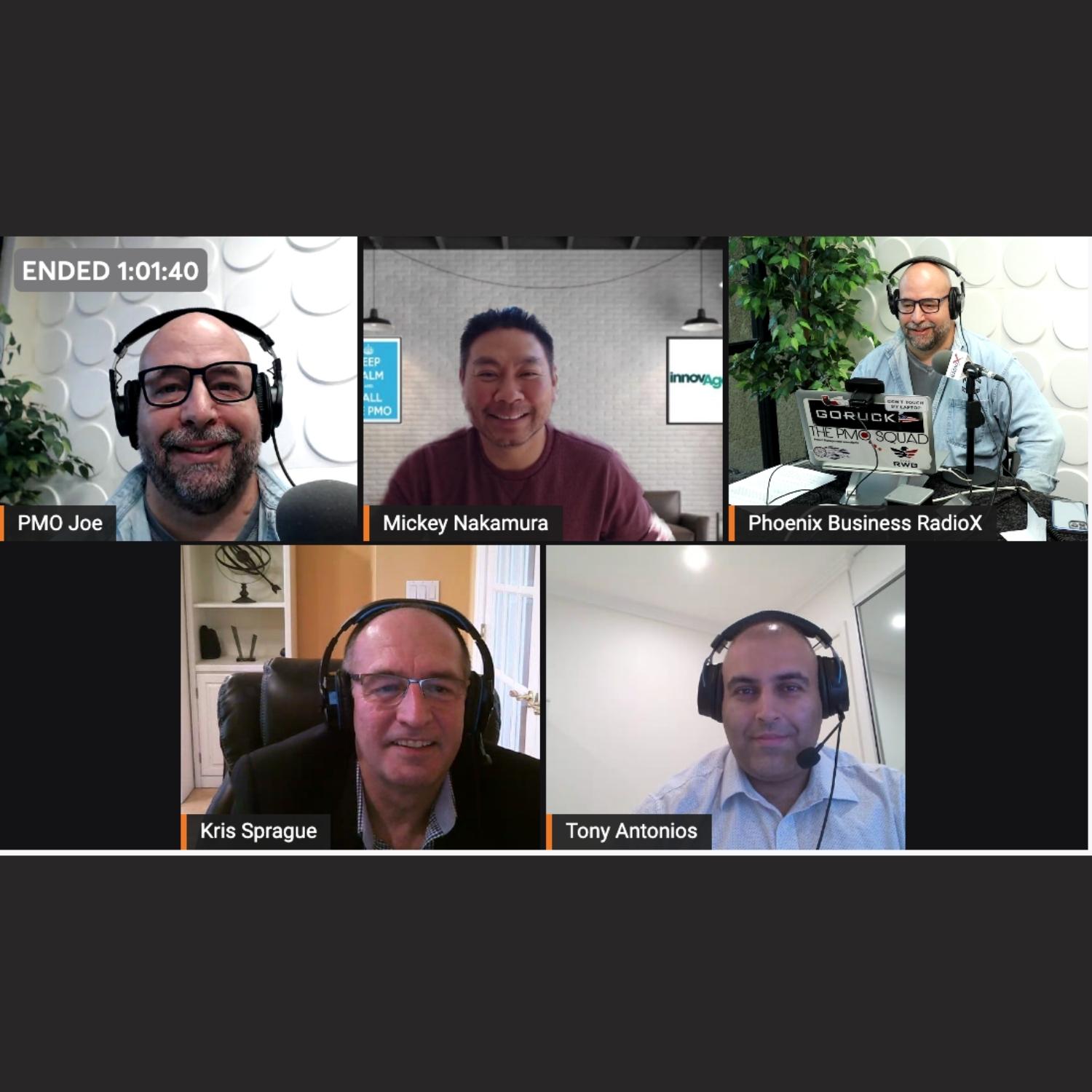
In this episode of Project Management Office Hours, PMO Joe welcomed Kris Sprague, Mickey Nakamura, and Tony Antonios all representing the PMO Global Alliance Strategic Healthcare group. In this episode we focused on the work being done by the PMOGA team as well as PMO Leadership and Project Management in Healthcare as well as trends in the industry.

One of the items the PMOGA Strategic Healthcare group is doing is penning whitepapers to help educate and communicate about healthcare project management. The first white paper they authored is, “New Ways of Working in the New Normal Post-Covid 19”. To learn more and contribute to the group you can visit the group website, https://www.pmoga.world//healthcare

We also had a great discussion on the uniqueness of project management in the healthcare industry. Mickey shared, “the impact of what they do is magnified because at the end of that It service is a potential patient that you can adversely impact, as opposed to making a mistake on some other type of industry where maybe you can go back and correct the dimensions of whatever product you have. In healthcare, it’s not a product, it’s a person.”

Listen to the entire episode to hear the full story from Kris, Mickey and Tony. 

Connect with Kris Sprague:
LinkedIn – https://www.linkedin.com/in/pmodirector/

Connect with Mickey Nakamura:
LinkedIn – https://www.linkedin.com/in/mickeynakamura/

Connect with PMOGA Strategic Healthcare Group
Website – https://www.pmoga.world//healthcare

To see the guest list for upcoming shows – https://www.thepmosquad.com/podcast

Thank you to THE PMO SQUAD and The PMO Leader for sponsoring this show.

The PMO Squad is a leading provider of PMO and Project Management services in the US. They assist clients building and improving PMOs, provide Project Management Consulting services, deliver custom Project Management Training and provide Project Management staffing services.
Learn more about The PMO Squad – https://www.thepmosquad.com

Where do PMO Leaders go for Information, Learning, Networking and Services? The PMO Leader community has “Everything You Need to Become a Great PMO Leader”. One PMO World, One Community!
Learn more about The PMO Leader – https://www.thepmoleader.com

Kris-Sprague-PMOHKris Sprague is the Head of Program and Project Planning at Regeneron. He is an executive-level professional with extensive experience building and leading project management organizations and PMOs that assist business leaders in achieving their strategy.

In 2021, he was recognized by the PMO Global Alliance (PMOGA) as one of the Top 4 PMO Leaders in the Americas and one of the world’s top sixteen.

Mickey-Nakamura-PMOHMickey Nakamura is an innovative & dynamic executive with Senior Transformation, Corporate Development, Strategic Planning & Execution, Digital IT, Information Technology, Enterprise PMO – Portfolio/Program/Project/Product, & Customer Experience successes.

He is accountable for $1.2 billion programs at diverse Fortune 100 Corporations including Healthcare, Higher Education, Government, & Start-up organizations. His passion, expertise, & talent for championing organizational high performance, change, & agility enables vision, strategy, & sustained new ways of working.

He has earned a trusted reputation for robust business solutions creating value, managing complex relationships, & achieving service excellence by promoting a servant leader & people 1st philosophy.

Tony-Antonios-PMOHTony Antonios is a Senior Leader with 10+ years’ experience across EPMO / PMO, Operations, Transformation, Product, and Service Design. His industry experience includes Telecommunications, ICT Managed Services, Healthcare, and Financial services.

Tony has a strong record of accomplishment in designing and implementing both operational and strategic change, to deliver improved financial outcomes, operational efficiency, service excellence, as well as employee and customer experience.

ABOUT YOUR HOST

Joe Pusz started THE PMO SQUAD to bring real world PMO Leadership experience to the consulting space and to advocate for Project Management through his blog PMOJOE.com. The old saying is “Do what you love and you’ll never work a day in your life.” Following this mindset Joe left Corporate America in 2013 to start THE PMO SQUAD and work with fellow Natural Born Project Managers to advance Project Management Best Practices.

ABOUT OUR SPONSOR

THE PMO SQUAD focuses exclusively on PMO and Project Management consulting. Corporate America is full of Accidental Project Managers running projects who haven’t been trained to be PMs. To help solve this problem THE PMO SQUAD is on the Leading Edge with PMO As a Service. PMO As a Service allows our clients to focus on their respective core competencies while THE PMO SQUAD delivers Project Management expertise. Contact Joe at 678-591-7868. Follow The PMO Squad on LinkedIn, Twitter and Facebook.

Where do PMO Leaders go for Information, Learning, Networking and Services? The PMO Leader community has “Everything You Need to Become a Great PMO Leader”. One PMO World, One Community! Learn more about The PMO Leader – www.thepmoleader.com

Tagged With: Healthcare, PMO, PMO Global Alliance, project management

Material Risks in a Healthcare Merger

November 4, 2022 by John Ray

Material Risks Healthcare Merger
Advisory Insights Podcast
Material Risks in a Healthcare Merger
Loading
00:00 /
RSS Feed
Share
Link
Embed

Download file

Material Risks Healthcare Merger

Material Risks in a Healthcare Merger (Advisory Insights Podcast, Episode 16)

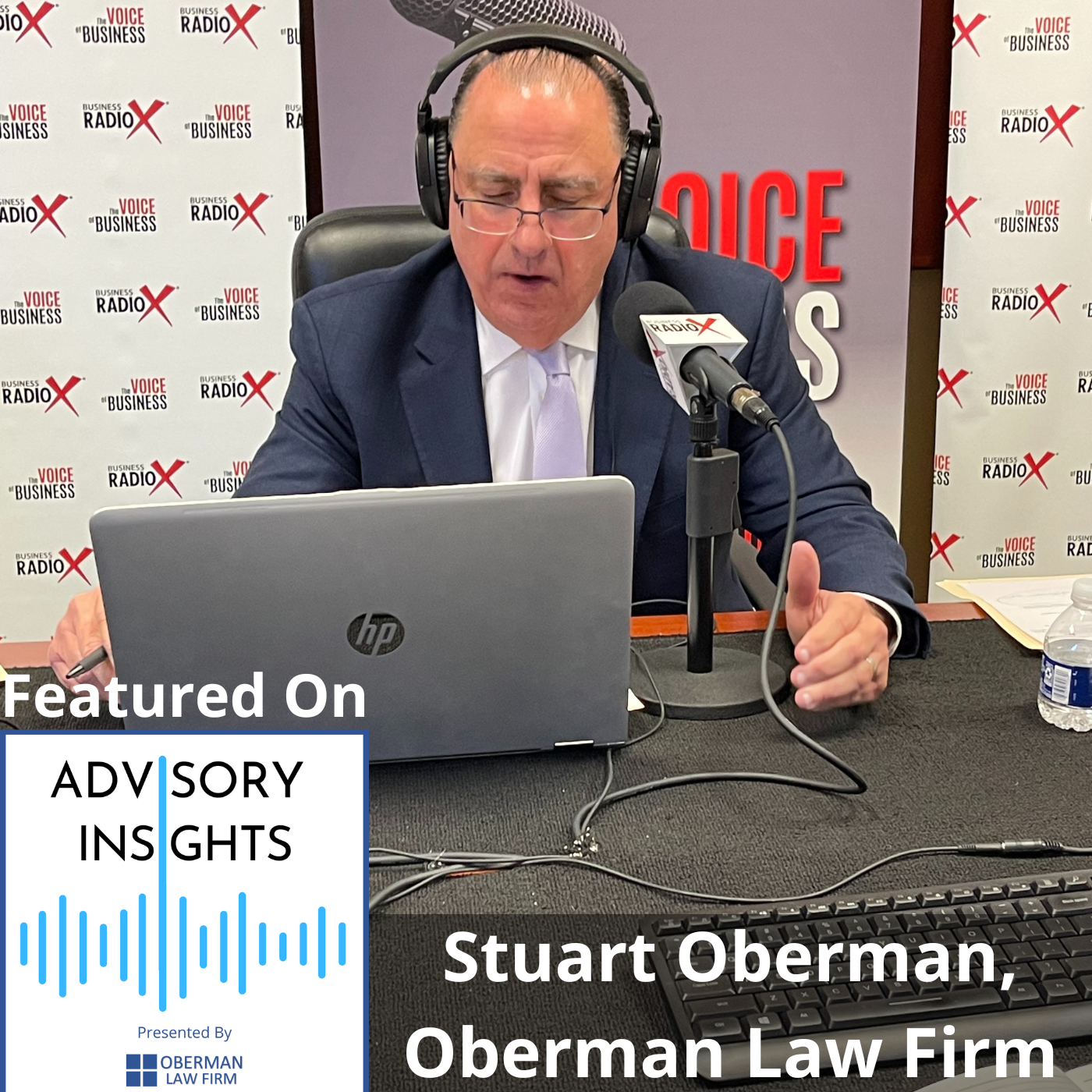
On this episode of Advisory Insights, Stuart Oberman of Oberman Law offered due diligence tips when purchasing a healthcare practice. He discussed the material risks and potential pitfalls of buying a healthcare business without fully understanding the requirements of governmental reimbursement, the importance of being knowledgeable about laws like the Anti-Kickback Statute, the Stark Law, the False Claims Act, and more.

Advisory Insights is presented by Oberman Law Firm and produced by the North Fulton studio of Business RadioX®. The series can be found on all the major podcast apps. You can find the complete show archive here.

TRANSCRIPT

Intro: [00:00:01] Broadcasting from the studios of Business RadioX, it’s time for Advisory Insights, brought to you by Oberman Law Firm, serving clients nationwide with tailored service and exceptional results. Now, here’s your host.

Stuart Oberman: [00:00:21] Welcome everyone to Advisory Insights. This is Stuart Oberman as your host. I would say I want to talk about mergers and acquisitions in health care. I will tell you, last year was an absolute blistering year in the industry. And I’ll tell you, for us, Oberman Law Firm, it was amazing last year what we did, how we did it, especially in the fourth quarter.

Stuart Oberman: [00:00:45] So, a substantial part of what we did on the mergers and acquisitions was health care related. But I want to talk about some items in general. A little background. Last year we did I think the numbers were about 135 transactions, I think maybe a little bit plus or minus. And I believe the number was a total of about $350 million worth of transactions. So, we saw a lot, a lot of things in healthcare transactions. I want to talk about a couple of things in particular.

Stuart Oberman: [00:01:17] So, first and foremost, for those that are in a highly regulated industry, especially in health care, you’ve got to be careful when you do diligence. So when you are doing a healthcare transaction, an acquisition, it should never be overlooked that what you’re doing is and has to be heavily regulated. So, one of the things that we look for is we want our buyers to sift through sellers’ records to ensure that that seller is in compliance with state and federal law, especially on the reps and warranties. That’s a whole other topic we may cover for another day.

Stuart Oberman: [00:02:07] But if you are in a healthcare-related transaction and you are the buyer, I cannot stress enough on your due diligence, do not, do not leave off compliance. So, especially – I want to talk especially about this area. If you are buying a business, whether it is a medical practice, whether it is a particular practice area in different industries, you have to be extremely careful if that buyer, or if that seller, participates in the Federal Health Care Programs. Acronym FHCP. That has to be scrutinized in every single healthcare transaction.

Stuart Oberman: [00:02:59] So, let me tell you if it is an FHCP practice or business and they get government reimbursement, there are extremely stringent provisions for participation in that particular payment structure, if you will, in how they submit claims. You have to audit how they submit claims because that is a material risk, a due that you will inherit if it is not done correctly. Once you purchase that business, you run the risk of being a successor to liability.

Stuart Oberman: [00:03:42] So, what happens is if they don’t, if the seller has not met stringent – I can’t stress this enough – stringent requirements, they are facing substantial civil fines and penalties. And also you cannot overlook the potential of clawbacks, allegations of overpayment, and in some cases, False Claims Act, FCA, liability. That is critical that you have to understand the requirements of governmental reimbursement and how they relate to any industry – I mean, excuse me, how they relate to any business in health care.

Stuart Oberman: [00:04:24] Now, what I’ll tell you is we’re seeing this a huge clampdown – the DOJ, strikeforce, regions throughout the country – fraud and abuse. Fraud and abuse under the FHCPs is rampant. Absolutely rampant. If you look at the advisory notices, the takedowns under the DOJ communications, you’re going to look at a couple of things. You’ve got to look at the Anti-Kickback Statute, AKS. If you don’t know what that is and you’re buying a business that is subsidized by governmental reimbursement, you have to get assistance with that transaction. Stark law, Physicians Self-Referral prohibition. You have to look under the criminal and civil False Claims Act.

Stuart Oberman: [00:05:20] Those under fraud and abuse will take you down financially quickly if you purchase a particular healthcare business and you’re not fully aware of this. One thing that we see a lot that is overlooked is licensures. So, depending on what business you are purchasing, every healthcare business requires certain licensure, no matter what it is. In some cases, they’re very specific. They could be generic. You have to do your due diligence under the licensure requirements in healthcare transactions because if you purchase a business and then you overlook the proper licenses, you are looking at potential disaster on a very, very expensive investment.

Stuart Oberman: [00:06:09] So, those are a couple of things. Again, I can probably speak for three hours regarding governmental reimbursement, FHCP programs, fraud and abuse. The Anti-Kickback Statute is a three-hour lecture in and of itself. Stark is a whole different world. That’s another – you know, you could easily talk an hour or 2 hours in Stark and not even hit half the topics. But I would strongly encourage you to know exactly what the False Claims Acts are and how they relate to you in the transaction.

Stuart Oberman: [00:06:42] So, folks, that’s a very, very short summary of a very complex matter. If you have a healthcare transaction, it does not have to be a large hospital. It could be a dermatology practice, dental practice, healthcare practice. It doesn’t matter. Anything that is regulated by the government in health care, especially if they take Federal Health Care Program subsidies, reimbursements, critical, folks.

Stuart Oberman: [00:07:13] Folks, that’s a very, very short topic for a long, long conversation.

Stuart Oberman: [00:07:17] I want to welcome – and thank you for joining Advisory Insights. Stuart Oberman here. Please feel free to give us a call at 770-554 – excuse me, 770-886-2400. Again, 770-886-2400. Or feel free to reach out, email, stuart, S-T-U-A-R-T, @obermanlaw.com. Folk, thanks for joining us again. We appreciate you joining us and have a fantastic day.

Outro: [00:07:45] Thank you for joining us on Advisory Insights. This show is brought to you by Oberman Law Firm, a business-centric law firm representing local, regional, and national clients in a wide range of practice areas, including healthcare mergers and acquisitions, corporate transactions, and regulatory compliance.

About Advisory Insights Podcast

Presented by Oberman Law Firm, Advisory Insights Podcast covers legal, business, HR, and other topics of vital concern to healthcare practices and other business owners. This show series can be found here as well as on all the major podcast apps.

Stuart Oberman, Oberman Law Firm

Oberman Law Firm
Stuart Oberman, Founder, Oberman Law Firm

Stuart Oberman is the founder and President of Oberman Law Firm. Mr. Oberman graduated from Urbana University and received his law degree from John Marshall Law School. Mr. Oberman has been practicing law for over 25 years, and before going into private practice, Mr. Oberman was in-house counsel for a Fortune 500 Company. Mr. Oberman is widely regarded as the go-to attorney in the area of Dental Law, which includes DSO formation, corporate business structures, mergers and acquisitions, regulatory compliance, advertising regulations, HIPAA, Compliance, and employment law regulations that affect dental practices.

In addition, Mr. Oberman’s expertise in the healthcare industry includes advising clients in the complex regulatory landscape as it relates to telehealth and telemedicine, including compliance of corporate structures, third-party reimbursement, contract negotiations, technology, health care fraud, and abuse law (Anti-Kickback Statute and the State Law), professional liability risk management, federal and state regulations.

As the long-term care industry evolves, Mr. Oberman has the knowledge and experience to guide clients in the long-term care sector with respect to corporate and regulatory matters, assisted living facilities, continuing care retirement communities (CCRCs). In addition, Mr. Oberman’s practice also focuses on health care facility acquisitions and other changes of ownership, as well as related licensure and Medicare/Medicaid certification matters, CCRC registrations, long-term care/skilled nursing facility management, operating agreements, assisted living licensure matters, and health care joint ventures.

In addition to his expertise in the health care industry, Mr. Oberman has a nationwide practice that focuses on all facets of contractual disputes, including corporate governance, fiduciary duty, trade secrets, unfair competition, covenants not to compete, trademark and copyright infringement, fraud, and deceptive trade practices, and other business-related matters. Mr. Oberman also represents clients throughout the United States in a wide range of practice areas, including mergers & acquisitions, partnership agreements, commercial real estate, entity formation, employment law, commercial leasing, intellectual property, and HIPAA/OSHA compliance.

Mr. Oberman is a national lecturer and has published articles in the U.S. and Canada.

LinkedIn

Oberman Law Firm

Oberman Law Firm has a long history of civic service, noted national, regional, and local clients, and stands among the Southeast’s eminent and fast-growing full-service law firms. Oberman Law Firm’s areas of practice include Business Planning, Commercial & Technology Transactions, Corporate, Employment & Labor, Estate Planning, Health Care, Intellectual Property, Litigation, Privacy & Data Security, and Real Estate.

By meeting their client’s goals and becoming a trusted partner and advocate for our clients, their attorneys are recognized as legal go-getters who provide value-added service. Their attorneys understand that in a rapidly changing legal market, clients have new expectations, constantly evolving choices, and operate in an environment of heightened reputational and commercial risk.

Oberman Law Firm’s strength is its ability to solve complex legal problems by collaborating across borders and practice areas.

Connect with Oberman Law Firm:

Company website | LinkedIn | Twitter

Tagged With: Dental Practice, Healthcare, merger, merger and acquisition, merger consulting, Oberman Law, Oberman Law Firm, Stuart Oberman

Edward Lindsey, Dentons

September 22, 2022 by John Ray

Dentons
Business Beat
Edward Lindsey, Dentons
Loading
00:00 /
RSS Feed
Share
Link
Embed

Download file

Dentons

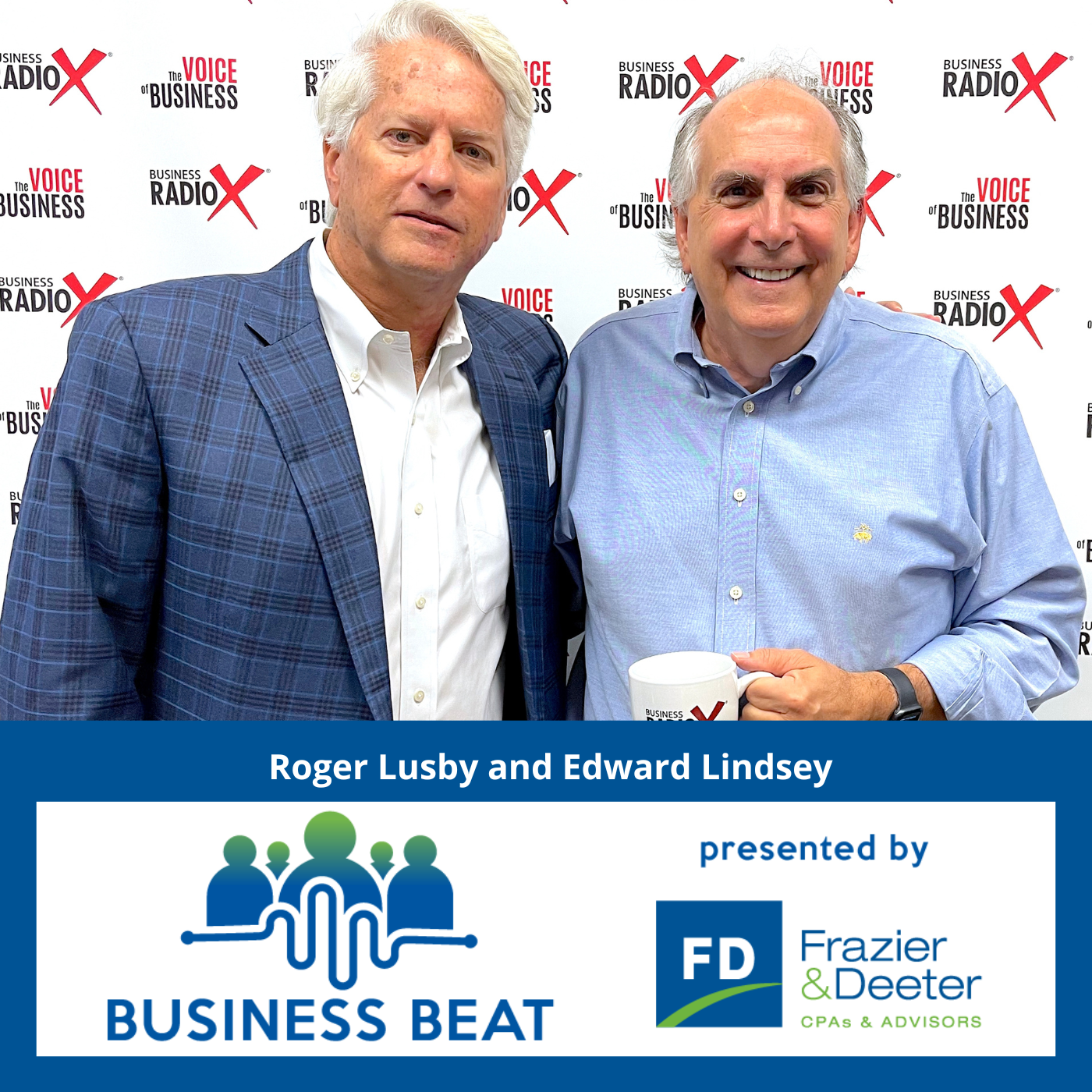
Frazier & Deeter’s Business Beat: Edward Lindsey, Dentons

Edward Lindsey, head of the Georgia State Government Affairs team at Dentons, joined host Roger Lusby on “Business Beat,” and discussed the impact key issues like transportation, education, and healthcare have on Georgia’s status as the best state for doing business. Ed also talked about his role on the state election board, and the importance of making sure that people have confidence in the outcome of elections. Ed also offered advice to businesses on how to approach government officials about their issues, emphasizing the importance of understanding the other side’s perspective. If you want to get things done in politics, he said, today’s opponents may be tomorrow’s allies.

Business Beat is presented by Alpharetta CPA firm Frazier & Deeter and is produced by the North Fulton studio of Business RadioX®

Dentons

Dentons is the world’s largest law firm, delivering quality and value to clients around the globe. Dentons is a leader on the Acritas Global Elite Brand Index, a BTI Client Service 30 Award winner and recognized by prominent business and legal publications for its innovations in client service, including founding Dentons Global Advisors. Dentons’​ polycentric approach and world-class talent challenge the status quo to advance client interests in the communities in which we live and work.

Company website | LinkedIn

Edward Lindsey, Partner, Dentons

Edward Lindsey, Partner, Dentons

Edward Lindsey is a partner in Dentons’ Public Policy practice and serves as the head of the Firm’s Georgia State Government Affairs team. His focus is on advancing the public policy interests and objectives of clients in the transportation, infrastructure, health care and education sectors.

Edward has more than 38 years of legal, political, and leadership experience, including 10 years as a Georgia state representative and 3 terms as the House majority whip. He also served on the House Appropriations, Judiciary, Education, Ways and Means, and Rules Committees. In addition, he served as a member of the Uniform Law Commission and the Georgia Commission on Family Violence. James Magazine, a statewide political journal, recognized him as one of Georgia’s most influential legislators.

Immediately prior to joining Dentons in 2016, Edward was a partner and head of the litigation practice at Goodman McGuffey Lindsey & Johnson LLP, an Atlanta-based firm he co-founded in 1990.

LinkedIn

Frazier & Deeter

The Alpharetta office of Frazier & Deeter is home to a thriving CPA tax practice, a growing advisory practice and an Employee Benefit Plan Services group. CPAs and advisors in the Frazier & Deeter Alpharetta office serve clients across North Georgia and around the country with services such as personal tax planning, estate planning, business tax planning, business tax compliance, state and local tax planning, financial statement reviews, financial statement audits, employee benefit plan audits, internal audit outsourcing, cyber security, data privacy, SOX and other regulatory compliance, mergers, and acquisitions and more. Alpharetta CPAs serve clients ranging from business owners and executives to large corporations.

Roger Lusby, Partner in Charge of Alpharetta office, Frazier & Deeter
Roger Lusby, Partner in Charge of the Alpharetta office of Frazier & Deeter

Roger Lusby, host of Frazier & Deeter’s Business Beat, is an Alpharetta CPA and Alpharetta Office Managing Partner for Frazier & Deeter. He is also a member of the Tax Department in charge of coordinating tax and accounting services for our clientele. His responsibilities include a review of a variety of tax returns with an emphasis in the individual, estate, and corporate areas. Client assistance is also provided in the areas of financial planning, executive compensation and stock option planning, estate and succession planning, international planning (FBAR, SFOP), health care, real estate, manufacturing, technology, and service companies.

You can find Frazier & Deeter on social media:

LinkedIn | Facebook | Twitter

An episode archive of Frazier & Deeter’s Business Beat can be found here.


Tagged With: Business Beat, Dentons, education, Edward Lindsey, Frazier and Deeter, Government affairs, Healthcare, infrastructure, Public Policy, Roger Lusby, Transportation

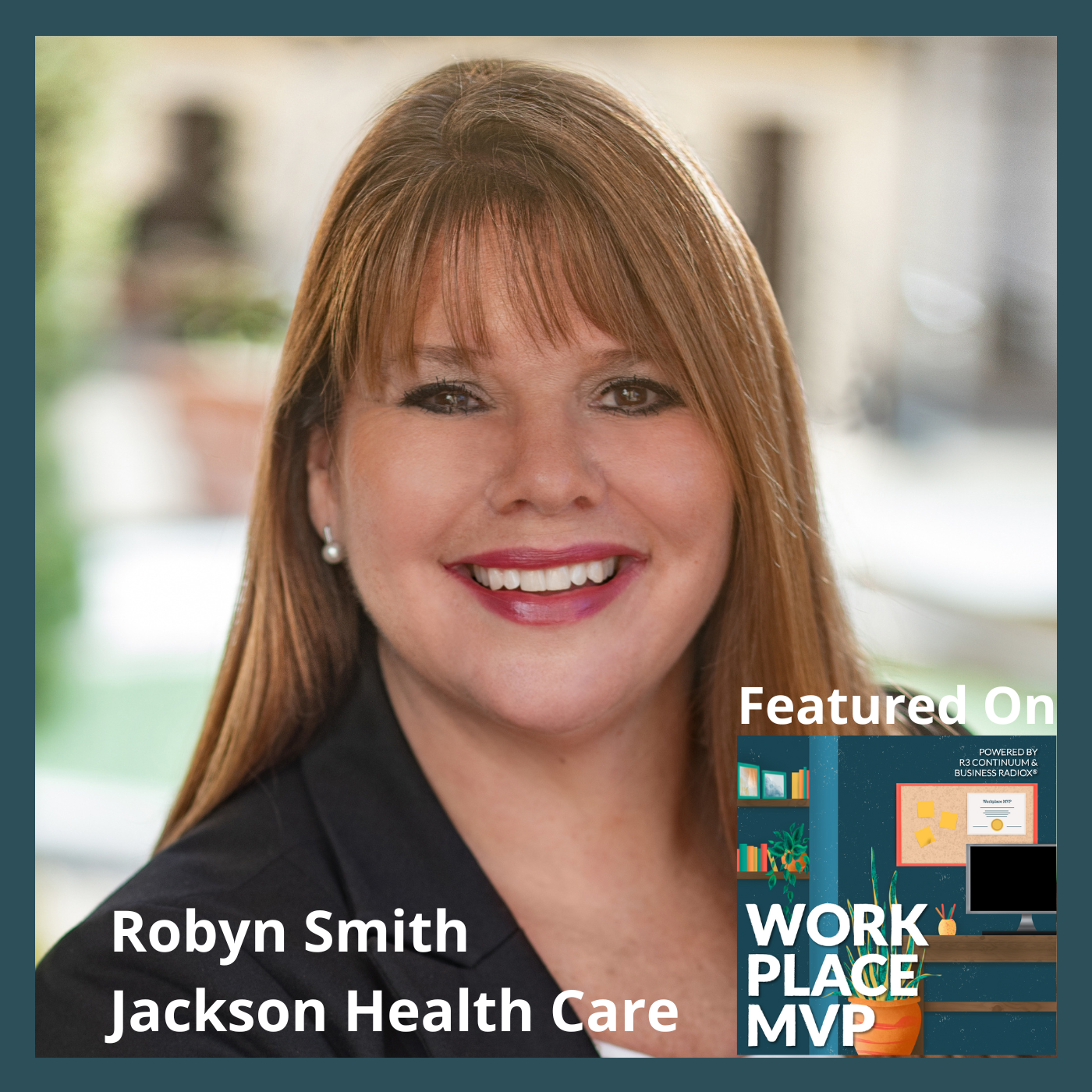
Workplace MVP: Robyn Smith, Jackson Healthcare

August 25, 2022 by John Ray

Jackson Healthcare
Minneapolis St. Paul Studio
Workplace MVP: Robyn Smith, Jackson Healthcare
Loading
00:00 /
RSS Feed
Share
Link
Embed

Download file

Jackson Healthcare

Workplace MVP: Robyn Smith, Jackson Healthcare

Robyn Smith, Executive Vice President of Human Resources for Jackson Healthcare, was the Workplace MVP on this episode. Robyn detailed the challenges Jackson Healthcare has faced throughout the pandemic and those that are ongoing, and the steps her company took to support the mental and physical well-being of its associates. She and host Jamie Gassmann discussed the creative solutions Jackson Healthcare has implemented, including virtual events, in-person events when they returned to the office, support for the challenges associates may be facing, the need for empathy, and much more.

Workplace MVP is underwritten and presented by R3 Continuum and produced by the Minneapolis-St.Paul Studio of Business RadioX®.

Jackson Healthcare

The Jackson Healthcare companies provide healthcare systems, hospitals, and medical facilities of all sizes with the skilled and specialized labor and technologies they need to deliver high-quality patient care and achieve the best possible outcomes — while connecting healthcare professionals to the temporary engagements, contract assignments, and permanent placement employment opportunities they desire.

Headquartered in metro Atlanta, they’re powered by more than 1,700 associates and over 15,000 clinician providers covering all 50 U.S. states.

Their mission is to improve the delivery of patient care and the lives of everyone we touch. This includes the patients, clinicians, and healthcare executives they work with through their companies every day, as well as their communities, the nonprofit organizations they support and each associate who is part of their family.

Company website | LinkedIn | Facebook | Twitter

Robyn Smith, Executive Vice-President of Human Resources, Jackson Healthcare

Robyn Smith, Executive Vice-President of Human Resources, Jackson Healthcare

As executive vice president of human resources, Robyn Smith brings more than 25 years of experience to her role leading Jackson Healthcare’s corporate HR team. In her position, she sets strategy for talent acquisition, benefits, training and development, career pathing, succession planning, compensation, reward programs, and workplace policies. Since joining the organization, she has been a driving force in expanding its extensive associate professional and well-being offerings. During her tenure, Jackson Healthcare became Great Place to Work certified, has appeared in consecutive years on Fortune’s Best Workplaces in Healthcare and debuted as a Best Workplace for Women and Best Workplace for Millennials.

In 2020, Robyn received the “Great Place to Work For All Leadership Award” – and on the speaker circuit, she addresses wellness and culture topics at various events each year. She serves on the board of Connections Homes, is active in Peer 150’s Human Resources Group and Atlanta CHRO leadership, and volunteers with Open Hand Atlanta and Junior Achievement.

Robyn joined Jackson Healthcare following a successful HR career in the enterprise software space and in national healthcare and staffing firms. She is a graduate of Kennesaw State University and serves on the board of Coles Business School.

LinkedIn

About Workplace MVP

Every day, around the world, organizations of all sizes face disruptive events and situations. Within those workplaces are everyday heroes in human resources, risk management, security, business continuity, and the C-suite. They don’t call themselves heroes though. On the contrary, they simply show up every day, laboring for the well-being of employees in their care, readying the workplace for and planning responses to disruption. This show, Workplace MVP, confers on these heroes the designation they deserve, Workplace MVP (Most Valuable Professionals), and gives them the forum to tell their story. As you hear their experiences, you will learn first-hand, real-life approaches to readying the workplace, responses to crisis situations, and overcoming challenges of disruption. Visit our show archive here.

Workplace MVP Host Jamie Gassmann

Jamie Gassmann, Host, “Workplace MVP”

In addition to serving as the host to the Workplace MVP podcast, Jamie Gassmann is the Director of Marketing at R3 Continuum (R3c). Collectively, she has more than fourteen years of marketing experience. Across her tenure, she has experience working in and with various industries including banking, real estate, retail, crisis management, insurance, business continuity, and more. She holds a Bachelor of Science Degree in Mass Communications with special interest in Advertising and Public Relations and a Master of Business Administration from Paseka School of Business, Minnesota State University.

R3 Continuum

R3 Continuum is a global leader in workplace behavioral health and security solutions. R3c helps ensure the psychological and physical safety of organizations and their people in today’s ever-changing and often unpredictable world. Through their continuum of tailored solutions, including evaluations, crisis response, executive optimization, protective services, and more, they help organizations maintain and cultivate a workplace of wellbeing so that their people can thrive. Learn more about R3c at www.r3c.com.

Company website | LinkedIn | Facebook | Twitter

TRANSCRIPT

Intro: [00:00:04] Broadcasting from the Business RadioX Studios, it’s time for Workplace MVP. Workplace MVP is brought to you by R3 Continuum, a global leader in workplace behavioral health and security solutions. Now, here’s your host, Jamie Gassmann.

Jamie Gassmann: [00:00:23] Hi, everyone. Your host, Jamie Gassmann, here and welcome to this episode of Workplace MVP. Since early 2020 and now into 2022, the workforce and work environments continue to experience shifts and changes. And that shifting and changing, for some, continues at a rapid or frequent pace. And some industries, such as healthcare, are experiencing shortages of staff and a limited candidate pool. While other industries are experiencing a delayed great resignation or, as some have called it, a reshuffle.

Jamie Gassmann: [00:00:56] Disruption has become a constant in our workplaces, resulting in leaders having to take a closer look at the support and resources they’re making available to employees. The workforce is not the same as it was pre-pandemic. Their view on work-life balance has shifted. Their expectations of their employer have grown. And what they need for support from their work life is different than what they would have needed pre-pandemic.

Jamie Gassmann: [00:01:22] How can employers keep up with the changes and move to a work environment employees can thrive in? How can they be creative to ensure the resources and tools they are making available to employees feels a value and appreciated?

Jamie Gassmann: [00:01:34] Well, joining us today to share the out-of-the-box resources and tools her workplace has put into place for their workforce is Workplace MVP and Executive Vice-President of Human Resources at Jackson Healthcare, Robyn Smith. Welcome to the show, Robyn.

Robyn Smith: [00:01:50] Great. Thank you. It’s so wonderful to be with you today, Jamie. Thanks for having me.

Jamie Gassmann: [00:01:55] Yeah. We absolutely appreciate you being on. And I just want to start out by having you kind of walk us through your career journey, share with us how you got into H.R. and kind of that journey you’ve taken to becoming the Executive Vice-President of Human Resources at Jackson Healthcare.

Robyn Smith: [00:02:11] Sure. So, when I graduated from college, I always knew that I wanted to be in human resources. My mother was in human resources, and I loved people, so I thought that would be a great career for me. So, I started out my career in the staffing industry, and then I moved from there into the medical field and worked for a large physician group here in Atlanta doing a lot of merger and acquisition work. And then, I moved to an international publicly traded software company, and I had a large international team and we were in 17 different countries, so that was a wonderful experience.

Robyn Smith: [00:02:56] Then, the opportunity at Jackson Healthcare came up and I just thought, what a great match for me having the staffing industry experience, having the medical industry experience, and then having software and high tech experience. So, to me, it was the perfect marriage.

Jamie Gassmann: [00:03:15] Yeah, it sounds like it. And so, talk to me a little bit about what Jackson Healthcare does. What does it provide your clients with?

Robyn Smith: [00:03:22] Jackson Healthcare is a family of highly specialized healthcare, staffing search and technology companies. The mission is to improve the delivery of patient care and the lives of everyone we touch. Our companies provide hospitals and healthcare systems with the labor and technologies they need to deliver high quality patient care and achieve the best possible outcomes, while also connecting healthcare professionals to employment opportunities that they desire. Each year, we help thousands and thousands of healthcare facilities serve more than ten million patients across all 50 states.

Jamie Gassmann: [00:04:04] Wonderful. And so, looking at kind of the conversation you and I had before, your organization, you’ve seen a lot of growth over the last few years, even before COVID. And I think you’ve even had some even more growth since COVID. So, can you talk a little bit about what that growth has looked like and the impact that’s had in your role at Jackson Health?

Robyn Smith: [00:04:27] Sure. You know, being in the healthcare industry, the needs have been more and more, especially over the last two years specifically. And our business continues to grow. And I’ve been blessed to work for an organization that continues to grow. Since I’ve been here, Jackson has tripled in size. And so, what it means for our people, it’s just wonderful to see them grow and learn new things and new skills and prosper and share that. And we’re continuing to grow because healthcare is not going away. And if anything we’ve learned in the last couple of years, is, it’s at the forefront of everything.

Jamie Gassmann: [00:05:13] Yeah. And, you know, when I start these conversations with a new guest, I’m always looking at areas that really inspire passion and get you excited about the work that you do in kind of driving these conversations. And when we were talking in our pre-show call, you talked about being really proud of the work that your team has done. And there’s a lot of great work that you shared, and we’re going to be touching a lot on it as we kind of move through the show. But tell me a little bit about the work that you’re most proud of with your team. Let’s talk a little bit about that.

Robyn Smith: [00:05:50] Sure. I am unbelievably proud of our people, and our clinicians, and our physicians that we put to work each and every day. A lot of our associates and clinicians worked around the clock. And our people worked to deploy physicians and nurses to the frontline. They were actually saving lives. These were unprecedented times. And they continue to go above and beyond to help the physicians and the clinicians get to where they needed to be to help their coworkers. Everyone leaned into the process and they worked quickly to pivot from what maybe their normal day to day job was.

Robyn Smith: [00:06:34] We found new ways to meet ongoing needs and growing needs. A few examples of this is that we had receptionists, and because the business closed for a couple of months, we cross trained them to credential clinicians and put more and more clinicians out to work on the frontlines. And other associates took on multi-specialties in the healthcare arena so that they could ramp up quickly and get more clinicians to work to care for more patients.

Robyn Smith: [00:07:09] And then, our frontline workers, they were just amazing. They worked shift after shift, overtime, just helping when the pandemic hit its peak. Not complaining. They are our unsung heroes and we owe so much to them.

Robyn Smith: [00:07:31] Our mission is to improve patient care and the lives of everyone we touch. We met our mission on patient care and pivoting to saving patient’s lives each and every day. And during COVID, we really saw the impact of all this great work that was going on.

Robyn Smith: [00:07:49] Some of the things we did, we were first to set up an emergency department outside of a hospital in the epicenter in Georgia, which the outbreak was in Albany. We set up the World Congress Center for Overflow from hospitals for more patients. We set up drive-thru vaccine centers. All of these things have never been done, so we are learning and deploying and executing at real time each and everyday.

Robyn Smith: [00:08:20] The word proud does not do it justice for all of our people and everything that they have done. Their unyielding dedication and commitment to taking care of patients and saving lives has been unprecedented.

Jamie Gassmann: [00:08:35] Wow. That’s just really impressive. And the innovation, and the project management, and the kind of forward thinking and the immediate thinking that you had to do during that time to pull that off is is absolutely impressive. I can see where it’d be something you’d be proud to say you were a part of and able to support. That’s incredible.

Jamie Gassmann: [00:08:58] And so, looking at it and in addition to that, I mean, all the great work that your employees were doing as an organization, you were all so heroic in being able to put some amazing benefits in place to support your employees so that you could keep them helping with that by giving them aid for the school.

Robyn Smith: [00:09:22] I think you said that you brought in some tutors for the children for the schoolwork. And then, you had daycares that were shut down. Can you talk through the educational and childcare resources that you did put in place for your employees, that support that you gave them to kind of lift that strain off of them as they were navigating that so that they could stay focused on supporting patients.

Robyn Smith: [00:09:51] Sure. Sure. You know, when the pandemic first started, things were changing daily, sometimes hourly. And we realized very quickly that we really needed to lean in and help our associates and their families.

Robyn Smith: [00:10:07] So, what we did is we added part-time and drop in hours at our onsite childcare center. We had some extra space available, so that’s where we set up little pods so they could bring in tutors to help. There was a cluster of three or four or six students that they could learn, of course, social distancing. But the cubes were set up enough that they could do that, that they could help each other.

Robyn Smith: [00:10:39] We deployed teachers into associates’ home from our childcare center, which had never been done in the history of that company. So, we really worked hard to get that done because we needed to continue to deploy clinicians and physicians to the frontline. Our people still needed to work but their kids needed to be taken care of. We reserved spots at distant learning centers for older students so that they could continue to learn and be in a safe environment.

Robyn Smith: [00:11:10] We did Zoom calls to engage children who were home. There were stories that came out of this. We did story time. We did arts and crafts. We did kids yoga at a specific time every week so the parents could learn to depend on that time that their children would be occupied. So, if they had an important call to be scheduled or something along those lines, that would take care of it for them. We waived tuition and offered reimbursement for added virtual school costs.

Robyn Smith: [00:11:47] You know, nobody could have anticipated any of this. So, our workforce is 70 percent female, so we have a lot of families. And so, it was really important to us to pivot and come up with creative, out-of-the-box ways to think about things and think about it differently.

Jamie Gassmann: [00:12:06] Wow. I know when we talked and I’ve shared this with you, you know, I have school-aged children and I was that working mom juggling. And, of course, my spouse was home as well. But juggling that schoolwork, and learned very quickly that was not my calling to be a teacher. I do have a whole new level of appreciation for that job.

Jamie Gassmann: [00:12:31] But just the thought of having that lift, it brought back memories to me of navigating that. And then, I teared up just thinking of how wonderful that had to have been for the employees to be able to have that lift off their shoulders and they could just focus on their work. So, kudos to you. I think that’s absolutely impressive and amazing.

Robyn Smith: [00:12:53] Thank you.

Jamie Gassmann: [00:12:54] So, additionally, in your tenure at Jackson Healthcare, you had a clinic put onsite. So, I know you talked a little bit about the clinical resources that you’ve had onsite, but you put a clinic onsite, how did that help with supporting your employees during the highest point of COVID outbreak? And even now, what are you experiencing by having that clinic put onsite? How does that come to fruition of this support system that you probably maybe didn’t think of when you initially had the idea of putting that onsite?

Robyn Smith: [00:13:24] That’s absolutely correct. We put the clinic in a few years ago, and the onsite clinic, it provides both primary and preventive care to our associates and their families. So, as we pivoted into COVID and not knowing what we were dealing with everyday and, not only finding it difficult to get into the hospitals, but some doctor’s offices even closed.

Robyn Smith: [00:13:52] And so, we made a conscious decision early on that we wanted a safe place for our associates and their families to come that was non-COVID, if you will, so they could continue to get their prescriptions filled for their maintenance meds. If they had something other than COVID, they could come and they could be treated. And they were familiar with the staff. And so, even when the office closed for just a couple of months, the utilization on the clinic stayed up around 85 percent, which is just unheard of. And so, those clinicians came in everyday to serve our population.

Robyn Smith: [00:14:37] We also offered 24/7 telemedicine services. The clinic had to pivot to some telemedicine services, and they would do COVID diagnosis over telemedicine so that they could keep seeing the other patients in the actual clinic itself. And this allowed the associates and their families to connect with the physicians from home. And so, I think it really propelled the telemedicine journey forward.

Robyn Smith: [00:15:13] We were very purposeful not to provide COVID testing in the clinic. I bet I got that question everyday, why don’t we have COVID testing. And once again, it was because we wanted a safe place for our associates and their families to get continuous, ongoing care during the time when options were very, very limited.

Robyn Smith: [00:15:35] And then, when the vaccine came out, we started offering the Moderna vaccine to associates and their families, as well as the boosters. So, that was the only thing that we pivoted on with COVID is to help them, because in the early days, it was hard to get the vaccine. So, we were constantly looking at different things that we could do to provide more services to our associates and their families.

Jamie Gassmann: [00:16:03] And has putting that in place and kind of keeping it as a clinic that people can go to that’s non-COVID, has that helped to keep your utilization of it up at this point now too? I mean, did it create kind of knowledge of it?

Robyn Smith: [00:16:22] Yes. Yeah. So, it stays around 80 to 85 percent. It’s probably one of the number one benefits that we have here on campus, because there’s just such value. And we have a partnership with a local pharmacy, so if the physician or the clinician write a prescription, they can get a same day delivery of their prescription. So, it’s not like they have to leave work and go out and pick it up because that takes a lot of time to do that. And sometimes if they’re really busy, they’ll deliver twice a day so that they’re getting the medications that they need.

Jamie Gassmann: [00:17:06] Wow. So, there’s been other creative and out-of-the-box measures that you’ve put in place to show support for your people. So, can we talk about some of those approaches? I know some of them was like therapy dogs, counselors onsite, a COVID response team. You also were prepping your managers. Can you dive into a little bit of some of these other out-of-the-box measures that you’ve done?

Robyn Smith: [00:17:30] Sure. Sure. So, we also have an onsite fitness center, so we reopened that as soon as we possibly could with limited availability and COVID-19 protocols put in place to provide the associates with the opportunity to safely exercise. Because if you think about it, everything was shut down. And so, part of our philosophy is mind, body, and spirit, and working out is part of that as well.

Robyn Smith: [00:17:59] We added some emotional wellbeing webinars, and we broke it up. We did one for the associates to talk about what issues they may be addressing. We had our onsite counselors actually do this via Teams call and answer any questions that they might have. And then, we also had a session for the managers. Because these were unprecedented times, how do you manage through all of this? How do you support your associates? And so, the counselors really speaking towards that and helping them.

Robyn Smith: [00:18:40] And we also did recorded webinars with local and national experts on topics ranging from stress management and emotional wellbeing tied to nutrition and physical health. And how parents can help their children receive better emotional support and health during this pandemic.

Robyn Smith: [00:19:02] So, there were multiple layers in there, and we just kept our pulse on it through spot surveys and kind of seeing how people were actually doing to see if we needed to add more sessions or we needed to pivot to a new topic.

Robyn Smith: [00:19:20] The executive team, we met every morning to talk about, “Okay. What’s going on today? What do we need to address today?” We also reimagined our Jackson Healthcare University, which included traditional professional development, leadership training, networking, and cultural awareness, sensitivity curriculum to better serve our associates during the pandemic. So, we moved everything to virtual and on demand. And we saw participation rate increase of up to 16 percent compared to other years. So, they were hungry for the knowledge and so we just needed to pivot and get it to them in a means that they could digest it.

Robyn Smith: [00:20:06] We also recognized the need to help our associates stay emotionally connected during the physical separation. We — our traditions. We launched virtual events and activities. We had a virtual Halloween costume contest, and we judged it, and gave away awards that we later sent to people’s homes online. We had virtual holiday decor. We did Zoom pictures with Santa, that was very creative. So, we were constantly looking at what was in our normal DNA and how could we adapt it to our associates.

Robyn Smith: [00:20:54] Also, our associates worked diligently from the onset of the pandemic to help ensure that our healthcare professionals were mobilized nationwide to provide critical lifesaving care for patients suffering from COVID-19. We looked at ways to say thank you and show appreciation for one another. And in recognition of the work our associates were doing to fight against the pandemic, we mailed a COVID-19 response team item to them. They can have a hat or a t-shirt or some type of memorabilia. And it was neat because on a lot of the Zoom or the Teams calls, they would be wearing their memorabilia very proudly that they were part of that COVID response team.

Robyn Smith: [00:21:43] We held town hall meetings with one of our physicians, the medical director from our onsite clinic. And he answered a lot of the science behind COVID because things were changing rapidly, you know, when we were thinking about coming back. Why do we have to wear masks? What’s the purpose of a mask? Why do we have to quarantine? And then, when the vaccine came out, well, what’s the best vaccine? Why do we need the vaccine? Which is constantly ongoing, whatever the flavor of the week might have been. So, we were just trying to educate and adjust for their needs and to help get the latest and greatest out to them. And our medical director was on the frontline. He was also practicing. So, he was giving real life examples of what was going on.

Robyn Smith: [00:22:44] We also decided to set up a privacy officer to report exposures or cases. And we hired a registered nurse to do this because we wanted to take it out of the hands of H.R. or managers because we’re not medical professionals. We actually wanted the nurse making those decisions. So, by August of 2021, we had over 6,000 COVID questions or inquiries that had been answered by the nurse, and she was amazing from that.

Robyn Smith: [00:23:21] Some of the other things, we talked about the Halloween costume contest, we also had an online pumpkin carving contest. So, we just tried to think about things that we could do differently. And this year, we added onsite pet therapy. So, they bring in the dogs and that’s to support the mental and wellbeing of our associates.

Robyn Smith: [00:23:47] Our company also signed the Global Mental Health Pledge through the Society for Human Resource Managers and Thrive Global, reaffirming our long standing commitment to mental health and wellbeing of our associates. And that’s really taken off.

Jamie Gassmann: [00:24:03] Wow. That’s a big list. You’ve done a lot. That’s impressive. In looking at them, you mentioned spot surveys to kind of get a gauge of employees response to that and really identify if there’s other areas that you might need to be looking into. So, how have your employees responded to that support and the continued support? You know, what are you seeing amongst your employees?

Robyn Smith: [00:24:30] Yeah. So, I’d say from my observation, for the most part, it’s been welcomed and positive. You know, when we first started to come back on campus, there were still some fear factor around that. Because, listen, some people had some extenuating medical conditions, and for those that were still unsettled, we made accommodations. There was an accommodation form they had to fill out for the nurse. And if the nurse needed to ask more medical questions, which was totally confidential, we did not have any of that information. Then, the nurse could make a proper call on what they needed.

Robyn Smith: [00:25:09] But we really tried to meet people where they were and what they were experiencing. Because then, all of a sudden, you might have had other family members living with you, other people other than your children that you were having to take care of. So, we were constantly adapting.

Robyn Smith: [00:25:28] But once we got started coming back on campus, we heard more positive feedback because they just missed each other. They missed that connectivity, that human interaction. And our campus was built around collision points just to have an impromptu conversation or an impromptu meeting. And so, a lot of that started to come back after that.

Jamie Gassmann: [00:25:59] Wow. I know. I’m in the office today and I generally am working from home still myself, but being able to be around people, it does make a difference. You know, we had lunch together. It was fantastic. I haven’t done that for a while. So, you really see things that you appreciated about that in office setting when you’ve been out of it for a while.

Jamie Gassmann: [00:26:19] So, we’re going to take a break here and hear from our sponsor. So, Workplace MVP is sponsored by R3 Continuum. R3 Continuum is a leading expert in providing behavioral health support to people and organizations facing disruption and critical incidents. Through our evidence-based interventions, specialized evaluations, and tailored behavioral health programs, R3C promotes individual and collective psychological safety and thriving. To learn more about how R3 Continuum can help your workplace make tomorrow better than today by helping your people thrive, visit www.r3c.com today.

Jamie Gassmann: [00:26:59] So, I know in talking with you in our pre-show call, you talked about a mix of employees, some working from home and some who have come back into the office. And this has kind of just shifted and changed kind of throughout the pandemic. What does your current office mix look like now?

Robyn Smith: [00:27:16] Well, it’s still a mix. So, we empower the presidents to make the decision for each one of their companies. And it’s a mix, and I would say most people are in the office Monday through Thursday. And we see a lot of uptick probably Tuesday, Wednesday, and Thursday. But I think in this day and age, it’s always going to be a hybrid model from this point forward.

Robyn Smith: [00:27:50] But, you know, back to those collision centers, they rely upon each other to get their jobs done. And when you’re credentialing a physician or a provider to go to work, there’s multiple steps, and you’ve got to find housing, and you’ve got to get their credentials done. And so, it takes a team to get that done. And so, they are really enjoying being connecting, but then they still have some times that they can work from home as well.

Jamie Gassmann: [00:28:22] So, what’s interesting about the hybrid model that we’re seeing today or the remote work versus people in the office, if you think back to before COVID, so many workplaces were strictly in the office. There was no remote work. There were no hybrid. But then, you had some where it was like, “Okay. These people can work from home because they live in a different state” or “You’ve been here a while, we’ll let you work Fridays.” You know, the reality is similar to a lot of things, I think that this was already probably something that was coming our direction and that COVID just expedited the implementation of it, really.

Robyn Smith: [00:29:00] Yes.

Jamie Gassmann: [00:29:00] I’d be interested in your thoughts on that, because we’ve already kind of had some of that happening before and this just, like, basically, you didn’t have a choice but to get comfortable with it, really.

Robyn Smith: [00:29:13] Yeah. And I think you’re right, I think it accelerated everything. But, you know, we got really good at it because we had to in a short period of time. And so, we’ve continued to refine it and perfect it, if you will. And I think you’ve got to meet your people where they’re at and you’ve got to listen to them as well. It’s important.

Jamie Gassmann: [00:29:39] Yeah. I mean, I think that the generation of workers now across the mix, if you look at people in work settings, in a lot of cases, they’re not even going to apply for a job unless they’ve got that flexibility because they know they can go somewhere else to get it. So, it’s definitely become a different work environment.

Robyn Smith: [00:29:58] Yes. I think you’re right on that. And, also, what we’re seeing is that you either have some people, to your point, that want 100 percent remote. But then, there’s a lot of people on the flip side of that that want that connectivity and need that human interaction. And that’s a real thing.

Jamie Gassmann: [00:30:17] Absolutely. And so, kind of this leads into my next question. You know, you made a comment in our call earlier, and I loved the comment, because you mentioned that we need to think out-of-the-box that this new workforce is not the workforce of pre-COVID. So, we had to look at it, kind of think out-of-the-box of how we approach that. So, can you share your thoughts and perspectives around that?

Robyn Smith: [00:30:55] Yeah. I think it’s a new day. What worked three years ago or two years ago is not working now. And to get people to return to the office and make it an enjoyable and easy experience for them, we started a Better Together Campus Connection event. And when we first came back, we did a family reunion. And we set up tables and it was all outside. And we had food and a band just to start to reconnect. We had a photo booth that they could use the different things and take pictures with people that they hadn’t been together with in a long time.

Robyn Smith: [00:31:49] We’ve done other events where we’ve brought food trucks onsite. We have a not-for-profit partnership fair that we did. We did it outside in the atrium so they could just go from place to place and ask about the nonprofits and see if they wanted to partake and volunteer there. We have done a celebration for a great place to work. We brought back Family Fun Day, which was like a carnival onsite and everybody could bring their families. We’ve done things for Earth Day and Farmer’s Market.

Robyn Smith: [00:32:31] We’re having ongoing focus groups. We listen to our associates, what they want, what’s changing, what needs to make their transition easy. And that’s one of the reasons we started with the therapy dogs, too. We just started that this past May, and now it’s a permanent fixture once a month. Everybody loves when the therapy dogs are coming.

Robyn Smith: [00:32:58] I think I talked a little bit earlier about we do pulse surveys just to see what’s going on. We do skip level meetings to see how people are feeling. We also recently launched a new initiative to help associates that are facing unexpected financial hardships. It’s called the LoveLifts Associate Relief Fund, and associates can contribute to that fund to help their fellow associates in their time of need.

Robyn Smith: [00:33:30] Unfortunately, we had an associate that passed away very unexpectedly, and they’re using that fund to help pay for some of the funeral expenses because they didn’t anticipate that. And a lot of that was feedback from our associates and what they wanted to do and what they needed.

Jamie Gassmann: [00:33:49] Wow. Like a work family and taking care of each other and really reconnecting with each other. That’s like if you go to your first family get together. You know, I can just visualize it. I bet that’s a lot of fun.

Jamie Gassmann: [00:34:05] Listening to all the different things that you’ve put into motion, a lot of your out-of-the-box thinking, for organizations, for leaders that might be listening to this who don’t have an exponential amount of resources or the finances that are available to put some of those ideas into motion, what would you say they could do at an absolute minimum, you know, that is maybe a lower cost or lower resource intensive that would be your recommendation for where they can even start to do some of that out-of-the-box ideas?

Robyn Smith: [00:34:39] There’s a few things that don’t cost any money. Listen to your people and follow through. If there’s an ask, follow through with the ask. Be authentic on your core values of your organization, that’s the lens that you view everything through. Lead with empathy. I mean, you just don’t know what that person is going through personally. You’re only seeing parts of it.

Robyn Smith: [00:35:12] Some of, maybe, the tactical things that you can do, flex the work hours or the work day. Write handwritten notes of affirmation or thanks. Giving them opportunities to connect to something bigger, like volunteer work. Give them some time off to serve at a charity of their choice. So, there’s quite a few things that you can do if you don’t have money in the budget. And lead with kindness also.

Jamie Gassmann: [00:35:44] Yeah. Kindness and empathy. I just saw a post on LinkedIn, somebody had the picture of an iceberg of leading with empathy and the importance of that. And it shows the top of the iceberg is what you can see. But what’s down below is all the things you don’t know that your employee might be going through. And just being really aware that there might be a lot of things they’re not willing to share with you.

Robyn Smith: [00:36:08] Absolutely.

Jamie Gassmann: [00:36:09] So, you’re hitting spot on with a lot of what I’ve seen other leaders really kind of honing in on, especially recently. I mean, a lot of people are still navigating interesting challenges that are kind of lingering as we continue to move into this. You know, we’re halfway through 2022, but just some things that still continue to peak for people.

Robyn Smith: [00:36:32] And then, looking at your opinion, what is the impact if you have a organizational leadership team that isn’t focusing on their work environment or monitoring that emotional state of their teams, what is the impact that they’re likely to face in today’s current kind of work environment?

Robyn Smith: [00:36:53] Yeah. Listen, the pandemic changed everything for employers and employees. And monitoring your people’s mental wellbeing is mission critical more now than ever. They’re dealing with so much more and we need to give them ongoing tools in their toolbox to be able to maneuver work, life, everything that is going on. And as the workforce is shrinking overall, we need to continue to monitor the wellbeing of employees. I think that’s going to set you apart and be a differentiator and that’s what people are looking for. I think it’s a huge miss and they’ll go seek employment elsewhere if you’re not looking out for their mental being.

Jamie Gassmann: [00:37:44] Yeah. And they’re not even holding back anymore with that. You have people just resigning without anything in place so that they can make that move. And then, along with that, you kind of touched a little bit on it, you know, the benefits to a workplace of being conscious and intentional about caring for their employees. You mentioned that you become like an employer of choice, and it really is a differentiator for you. What are some of the other benefits? I know that you’ve probably experienced from all the great work that your team has done.

Robyn Smith: [00:38:16] Yeah. So, when you focus on it, everyone reaps the rewards of those actions and those behaviors. It’s the right thing to do. A little caring goes a long, long way. And it does help you become and stay at a great place to work, which is advantageous for your associates and your customers. So, the whole ecosystem benefits from all of that, you know, from all the caring that you do.

Robyn Smith: [00:38:47] And I’ve seen it throughout the years. I’ve been in H.R. for quite a few years, and the people who have always benefited most, and even more so after the pandemic, is those that lead with the empathy and the kindness and the caring. I think that is spot on what we all need to be continuing to do ongoing.

Jamie Gassmann: [00:39:11] Yeah, absolutely. And so, if a leader is listening in, you know, looking at this constant continued disruption and challenges that workplaces are facing, what piece of advice would you give them about this new workforce that they need to be aware of or intentional in supporting?

Robyn Smith: [00:39:31] I would say, be intentional about how you lead. Servant leadership is what people are seeking. Be open to listening and really hearing what your people are saying. Look for the verbal and the nonverbal and what they mean. And lead with empathy. Your people are the most important part of your organization. Ensuring they know that you care about them and you care about them as a leader, you cannot go wrong with it.

Jamie Gassmann: [00:40:10] Yeah. Great words of advice. This has been such a great conversation, Robyn. If our listeners wanted to get a hold of you or get more information about some of the great kind of ideas and resources you’ve put in place for your team, how can they go about doing that?

Robyn Smith: [00:40:28] Thanks, Jamie. It’s been my pleasure. They can reach out to me on my email, it’s rsmith@jacksonhealthcare.com.

Jamie Gassmann: [00:40:38] Yes. Awesome. Well, again, thank you so much for being on our show and letting us celebrate that great work that you and your team have done through the pandemic and even into today. There’s just some great ideas and wonderful out-of-the-box thinking that I know I appreciated listening and learning from. But I’m sure your employees very much appreciated that level of support that you give and continue to give. So, thank you for being a part of our show and being a guest.

Jamie Gassmann: [00:41:05] And we also wanted to thank our show sponsor, R3 Continuum, for supporting the Workplace MVP podcast. And to our listeners, thank you for tuning in. If you’ve not already done so, make sure to subscribe so you get our most recent episodes and other resources. You can also follow our show on LinkedIn, Facebook, and Twitter at Workplace MVP. And if you are a workplace MVP or you know someone who is, we want to hear from you, email us at info@workplace-mvp.com. Thank you all for joining us and have a great rest of your day.


Tagged With: COVID-19, Disruption, empathy, Healthcare, Human Resources, hybrid work, Jackson Health Care, Jamie Gassmann, remote work, Robyn Smith, Workplace MVP

Achieving Systemness: Competitive Challenges

April 18, 2022 by Mike

Gwinnett Studio
Gwinnett Studio
Achieving Systemness: Competitive Challenges
Loading
00:00 /
RSS Feed
Share
Link
Embed

Download file

Scott Nygaard MD, MBA, the COO of Lee Health System in SW Florida, joins “Leader Dialogue” co-hosts Dr. Roger Spoelman, Dr. Charles (Chuck) Peck, and Ben Sawyer on the April 18th, 2022, podcast. The podcast topic “Achieving Systemness: Competitive Challenges” explores how Lee Health has navigated through the pandemic, and some of the key learnings as they emerge into the post-pandemic healthcare environment. Dr. Nygaard shares his perspective and insights on this important topic, providing practical suggestions from which all healthcare leaders could benefit.

Roger Spoelman, DBA, MBA

Roger is a healthcare executive with more than 38 years of industry experience. He most recently served as interim CEO at Trinity Health Regional Systems in New England, Ohio, and Illinois at Loyola University Health System.
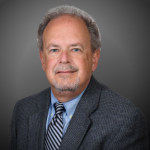
His tenure at Trinity Health included leading several hospital mergers, and later as regional executive for the corporation’s Mercy Health operations. He also is founder and executive sponsor of the Trinity Health Innovation Hub. In 2018, Roger oversaw the merger of International Aid Inc. and CURE International Inc., two organizations where he served on the Board of Directors for over a decade. He recently served as the President and CEO for CURE International Inc., which operates eight charitable hospitals in developing nations, and focuses on faith-based care that restores quality of life to pediatric patients with surgically treatable disabilities. Roger was appointed Chair of the BAMF Health board of directors in 2019. He is working closely with the company to achieve their patent-focused mission of bringing intelligence-based precision medicine to the world.

Roger is a co-host of the Baldrige Foundation Leader Dialogue program, and mentors and coaches’ numerous executives and assists organizations and their boards of directors with succession, strategy, and innovation.

Charles (Chuck) Peck, MD, FACS

Charles (Chuck) Peck is an internist and rheumatologist with more than 35 years of healthcare experience as a clinician, scientist, medical school faculty member, administrator, medical director, CEO, and partner in the global healthcare advisory company Guidehouse.
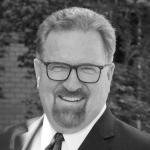
Chuck’s most recent projects include a $108M financial turnaround of a $2B integrated health system in the northeast leading to their affiliation with a leading academic health system. He was a member of President Joe Biden’s Health and Human Services transition team. Prior to joining Guidehouse, Chuck served as CEO of Piedmont Athens Regional Health System, on the board of Vizient Southern States, partner at a global healthcare consulting firm responsible for the clinical operations practice; CEO of a 150 physician group multi-specialty practice; president of the southeast and northeast regions of a large national health insurance carrier; chief medical officer of a start-up retail health clinic operator; chief medical officer/chief operations officer of a national disease management company; and CEO of an ambulatory surgery center and physician services company.

Chuck is a co-host of the Baldrige Foundation Leader Dialogue program and provides mentoring and thought leadership insights to numerous organizations and leaders across the country on a variety of operational, financial, and leadership topics.

Ben Sawyer, MBA, PT, OCS, LBB

Ben Sawyer is an ABOUT executive. He has more than 35 years of industry experience, most recently serving as CEO of SOAR Vision Group, and EVP of Care Logistics.

Ben started his healthcare career in 1985 as a Physical Therapist, focusing on sports medicine and orthopedics, and received his specialist certification as an Orthopedic Clinical Specialist (OCS) in 1997 from the American Board of Physical Therapy Specialties.

After securing his MBA, he moved into hospital administration, overseeing rehab, wellness, cardiac therapy, and occupational medicine services, specializing in team development and performance optimization. This expanded into a system leadership role overseeing performance and quality improvement. During that time Ben achieved his Lean Black Belt certification (LBB)

Ben has a gift for recognizing strategic gaps that can be turned into opportunities. For example, during the COVID-19 crisis he initiated national executive roundtables with the Baldrige Foundation via the Leader Dialogue program to help executives turn the pandemic disruption into an opportunity for improved collaboration and performance towards true Community Health beyond the walls of hospitals and to prioritize and coordinate action and resources.

Scott Nygaard/Lee Health

Lee Health is one of the largest public health systems in the U.S. and one of the largest not-for-profit public health system and safety net health systems in Florida that receives no direct tax support. They have four acute care hospitals, two specialty hospitals, and many clinics and outpatient service centers. Lee Health System has more than 1.5 million patient contacts each year with a staff of 14,000 employees, more than 4,500 volunteers and auxilians, a medical staff of more that 2,200, including the Lee Physician Group made up of over 750 primary and specialty care physicians and advanced practitioners in over 80 practice locations throughout Southwest Florida.


Leader Dialogue is presented by

Tagged With: about healthcare, baldrige foundation, baldrige leadership, ben sawyer, charles peck, chuck peck, Healthcare, healthcare challenges, healthcare leadership, leader dialogue, leader dialogue podcast, leader dialogue radio, lee health, roger spoelman, Scott Nygaard

Achieving Systemness: Empathetic Automation Opportunities

April 5, 2022 by Mike

Leader-Dialogue-Tile
Gwinnett Studio
Achieving Systemness: Empathetic Automation Opportunities
Loading
00:00 /
RSS Feed
Share
Link
Embed

Download file

Apruv Gupta MD, MPH, an expert on the topic of empathetic automation and driving care transformation, joins “Leader Dialogue” co-hosts Dr. Charles (Chuck) Peck, Dr. Darin Vercillo, and Ben Sawyer to discuss “Achieving Systemness: Empathetic Automation Opportunities” and explore how empathetic automation can help to address clinical workforce overload and shortages. Dr. Gupta shares his perspective and insights on this important topic, providing practical suggestions that can be applied immediately.

Charles (Chuck) Peck, MD, FACS

Charles (Chuck) Peck is an internist and rheumatologist with more than 35 years of healthcare experience as a clinician, scientist, medical school faculty member, administrator, medical director, CEO, and partner in the global healthcare advisory company Guidehouse.
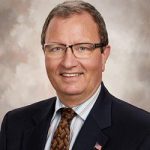
Chuck’s most recent projects include a $108M financial turnaround of a $2B integrated health system in the northeast leading to their affiliation with a leading academic health system. He was a member of President Joe Biden’s Health and Human Services transition team. Prior to joining Guidehouse, Chuck served as CEO of Piedmont Athens Regional Health System, on the board of Vizient Southern States, partner at a global healthcare consulting firm responsible for the clinical operations practice; CEO of a 150 physician group multi-specialty practice; president of the southeast and northeast regions of a large national health insurance carrier; chief medical officer of a start-up retail health clinic operator; chief medical officer/chief operations officer of a national disease management company; and CEO of an ambulatory surgery center and physician services company.

Chuck is a co-host of the Baldrige Foundation Leader Dialogue program and provides mentoring and thought leadership insights to numerous organizations and leaders across the country on a variety of operational, financial, and leadership topics.

Ben Sawyer, MBA, PT, OCS, LBB

Ben Sawyer is an ABOUT executive. He has more than 35 years of industry experience, most recently serving as CEO of SOAR Vision Group, and EVP of Care Logistics.

Ben started his healthcare career in 1985 as a Physical Therapist, focusing on sports medicine and orthopedics, and received his specialist certification as an Orthopedic Clinical Specialist (OCS) in 1997 from the American Board of Physical Therapy Specialties.

After securing his MBA, he moved into hospital administration, overseeing rehab, wellness, cardiac therapy, and occupational medicine services, specializing in team development and performance optimization. This expanded into a system leadership role overseeing performance and quality improvement. During that time Ben achieved his Lean Black Belt certification (LBB)

Ben has a gift for recognizing strategic gaps that can be turned into opportunities. For example, during the COVID-19 crisis he initiated national executive roundtables with the Baldrige Foundation via the Leader Dialogue program to help executives turn the pandemic disruption into an opportunity for improved collaboration and performance towards true Community Health beyond the walls of hospitals and to prioritize and coordinate action and resources.

Apruv Gupta/Guidehouse Consulting

Dr. Apruv Gupta completed his Internal Medicine training at Beth Israel Deaconess Medical Center in Boston, MA, and received an M.D. and Sc.B. from Brown University, as well as a M.P.H. from Harvard University. He leads care transformation at Guidehouse Consulting, and is an expert in driving transformational change, physician engagement, change management, and leadership development. He has led multiple projects in clinical operating model redesign, length of stay and throughput, clinical variation, and service line optimization. He has experience as a clinician, manager, executive, educator, and thought leader.

Dr. Gupta is also the host of the “Speaking of Making Healthcare Work For You” podcast series.

Leader Dialogue is presented by

Tagged With: about healthcare, Apruv Gupta, baldrige foundation, baldrige leadership, ben sawyer, charles peck, chuck peck, darin vercillo, Empathetic Automation, Healthcare, healthcare challenges, healthcare leadership, leader dialogue, leader dialogue podcast, leader dialogue radio, roger spoelman

Achieving Systemness: Coaching Opportunities

March 15, 2022 by Mike

Leader-Dialogue-Tile
Gwinnett Studio
Achieving Systemness: Coaching Opportunities
Loading
00:00 /
RSS Feed
Share
Link
Embed

Download file

Michael Bungay Stanier, a Rhodes Scholar and author of multiple books including “The Coaching Habit: Say Less, Ask More, and Change the Way You Lead Forever”, joins Leader Dialogue co-hosts Dr. Roger Spoelman and Ben Sawyer on the March 15, 2022 podcast. The topic is “Achieving Systemness: Coaching Opportunities” and takes a closer look at best practice coaching as leaders deal with workforce disruptions and staff burnout in the aftermath of the pandemic. Michael shares his perspective and insights on this important topic, providing practical suggestions that can be applied immediately.

Roger Spoelman, DBA, MBA

Roger is a healthcare executive with more than 38 years of industry experience. He most recently served as interim CEO at Trinity Health Regional Systems in New England, Ohio, and Illinois at Loyola University Health System.

His tenure at Trinity Health included leading several hospital mergers, and later as regional executive for the corporation’s Mercy Health operations. He also is founder and executive sponsor of the Trinity Health Innovation Hub. In 2018, Roger oversaw the merger of International Aid Inc. and CURE International Inc., two organizations where he served on the Board of Directors for over a decade. He recently served as the President and CEO for CURE International Inc., which operates eight charitable hospitals in developing nations, and focuses on faith-based care that restores quality of life to pediatric patients with surgically treatable disabilities. Roger was appointed Chair of the BAMF Health board of directors in 2019. He is working closely with the company to achieve their patent-focused mission of bringing intelligence-based precision medicine to the world.

Roger is a co-host of the Baldrige Foundation Leader Dialogue program, and mentors and coaches’ numerous executives and assists organizations and their boards of directors with succession, strategy, and innovation.

Ben Sawyer, MBA, PT, OCS, LBB

Ben Sawyer is an ABOUT executive. He has more than 35 years of industry experience, most recently serving as CEO of SOAR Vision Group, and EVP of Care Logistics.

Ben started his healthcare career in 1985 as a Physical Therapist, focusing on sports medicine and orthopedics, and received his specialist certification as an Orthopedic Clinical Specialist (OCS) in 1997 from the American Board of Physical Therapy Specialties.

After securing his MBA, he moved into hospital administration, overseeing rehab, wellness, cardiac therapy, and occupational medicine services, specializing in team development and performance optimization. This expanded into a system leadership role overseeing performance and quality improvement. During that time Ben achieved his Lean Black Belt certification (LBB)

Ben has a gift for recognizing strategic gaps that can be turned into opportunities. For example, during the COVID-19 crisis he initiated national executive roundtables with the Baldrige Foundation via the Leader Dialogue program to help executives turn the pandemic disruption into an opportunity for improved collaboration and performance towards true Community Health beyond the walls of hospitals and to prioritize and coordinate action and resources.

Michael Bungay Stanier/Author, Speaker & Business Coach

Michael Bungay Stanier has written books that have sold a million copies, including The Coaching Habit, a book that’s become the best-selling book on coaching this century. Michael founded a training and development company, Box of Crayons, that has taught coaching skills to hundreds of thousands of people around the world. He was a Rhodes Scholar and named the #1 Thought Leader in Coaching and a Coaching Guru. Michael has launched several podcasts and spoken live and virtually to crowds of thousands.

Leader Dialogue is presented by

Tagged With: about healthcare, achieving systemness, baldrige foundation, baldrige leadership, ben sawyer, Healthcare, healthcare challenges, healthcare leadership, leader dialogue, leader dialogue podcast, leader dialogue radio, mbs works, Michael Bungay Stanier, roger spoelman, the coaching habit

Achieving Systemness: Analyzing Gaps and Opportunities in Today’s Environment

March 1, 2022 by Mike

Leader-Dialogue-Tile
Gwinnett Studio
Achieving Systemness: Analyzing Gaps and Opportunities in Today’s Environment
Loading
00:00 /
RSS Feed
Share
Link
Embed

Download file

Dr. Conrad Vial, Senior Vice President and Chief Clinical Officer of Sutter Health, joins the “Leader Dialogue” co-hosts to discuss the topic of “Achieving Systemness: Analyzing Gaps and Opportunities in Today’s Environment”. Dr. Vial shares his perspective and insights on this important topic, providing practical suggestions that can be applied immediately.

Charles (Chuck) Peck, MD, FACS

Charles (Chuck) Peck is an internist and rheumatologist with more than 35 years of healthcare experience as a clinician, scientist, medical school faculty member, administrator, medical director, CEO, and partner in the global healthcare advisory company Guidehouse.

Chuck’s most recent projects include a $108M financial turnaround of a $2B integrated health system in the northeast leading to their affiliation with a leading academic health system. He was a member of President Joe Biden’s Health and Human Services transition team. Prior to joining Guidehouse, Chuck served as CEO of Piedmont Athens Regional Health System, on the board of Vizient Southern States, partner at a global healthcare consulting firm responsible for the clinical operations practice; CEO of a 150 physician group multi-specialty practice; president of the southeast and northeast regions of a large national health insurance carrier; chief medical officer of a start-up retail health clinic operator; chief medical officer/chief operations officer of a national disease management company; and CEO of an ambulatory surgery center and physician services company.

Chuck is a co-host of the Baldrige Foundation Leader Dialogue program and provides mentoring and thought leadership insights to numerous organizations and leaders across the country on a variety of operational, financial, and leadership topics.

Dr. Darin Vercillo, MD

Darin Vercillo co-founded ABOUT, drawing upon his expertise in developing and implementing medical information systems specifically designed to manage complex patient needs, medical education, and faculty and staff logistics. Darin provides clinical oversite and direction across all facets of ABOUT.

A board-certified hospitalist practicing in the Salt Lake City area, Darin also served as a clinical advisor and technical developer at the University of Utah Health Sciences Center. Previously to his work at ABOUT, Darin served as a physician knowledge engineer and interim Chief Medical Officer at TheraDoc.

Ben Sawyer, MBA, PT, OCS, LBB

Ben Sawyer is an ABOUT executive. He has more than 35 years of industry experience, most recently serving as CEO of SOAR Vision Group, and EVP of Care Logistics.

Ben started his healthcare career in 1985 as a Physical Therapist, focusing on sports medicine and orthopedics, and received his specialist certification as an Orthopedic Clinical Specialist (OCS) in 1997 from the American Board of Physical Therapy Specialties.

After securing his MBA, he moved into hospital administration, overseeing rehab, wellness, cardiac therapy, and occupational medicine services, specializing in team development and performance optimization. This expanded into a system leadership role overseeing performance and quality improvement. During that time Ben achieved his Lean Black Belt certification (LBB)

Ben has a gift for recognizing strategic gaps that can be turned into opportunities. For example, during the COVID-19 crisis he initiated national executive roundtables with the Baldrige Foundation via the Leader Dialogue program to help executives turn the pandemic disruption into an opportunity for improved collaboration and performance towards true Community Health beyond the walls of hospitals and to prioritize and coordinate action and resources.

Conrad Vial/Sutter Health

Conrad M. Vial, MD is SVP & Chief Clinical Officer with Sutter Health. He is a practicing cardiothoracic surgeon who has held various leadership roles in multi-specialty medical group practice and integrated healthcare delivery. Dr. Vial received his bachelor’s degree and medical doctorate from Stanford University. He earned a Master of Philosophy at Cambridge University in England, while also completing a postdoctoral fellowship in transplant immunology. He conducted his general surgical and cardiothoracic surgical training at Stanford University Medical Center. He has been board certified in both general surgery and cardiothoracic surgery.

Tagged With: about healthcare, baldrige foundation, baldrige leadership, ben sawyer, charles peck, chuck peck, conrad vial, darin vercillo, Healthcare, healthcare challenges, healthcare leadership, leader dialogue, leader dialogue podcast, leader dialogue radio, roger spoelman, sutter health

  • « Previous Page
  • 1
  • 2
  • 3
  • 4
  • 5
  • …
  • 25
  • Next Page »

Business RadioX ® Network


Our Most Recent Episode

CONNECT WITH US

  • Email
  • Facebook
  • LinkedIn
  • Twitter
  • YouTube

Our Mission

We help local business leaders get the word out about the important work they’re doing to serve their market, their community, and their profession.

We support and celebrate business by sharing positive business stories that traditional media ignores. Some media leans left. Some media leans right. We lean business.

Sponsor a Show

Build Relationships and Grow Your Business. Click here for more details.

Partner With Us

Discover More Here

Terms and Conditions
Privacy Policy

Connect with us

Want to keep up with the latest in pro-business news across the network? Follow us on social media for the latest stories!
  • Email
  • Facebook
  • Google+
  • LinkedIn
  • Twitter
  • YouTube

Business RadioX® Headquarters
1000 Abernathy Rd. NE
Building 400, Suite L-10
Sandy Springs, GA 30328

© 2025 Business RadioX ® · Rainmaker Platform

BRXStudioCoversLA

Wait! Don’t Miss an Episode of LA Business Radio

BRXStudioCoversDENVER

Wait! Don’t Miss an Episode of Denver Business Radio

BRXStudioCoversPENSACOLA

Wait! Don’t Miss an Episode of Pensacola Business Radio

BRXStudioCoversBIRMINGHAM

Wait! Don’t Miss an Episode of Birmingham Business Radio

BRXStudioCoversTALLAHASSEE

Wait! Don’t Miss an Episode of Tallahassee Business Radio

BRXStudioCoversRALEIGH

Wait! Don’t Miss an Episode of Raleigh Business Radio

BRXStudioCoversRICHMONDNoWhite

Wait! Don’t Miss an Episode of Richmond Business Radio

BRXStudioCoversNASHVILLENoWhite

Wait! Don’t Miss an Episode of Nashville Business Radio

BRXStudioCoversDETROIT

Wait! Don’t Miss an Episode of Detroit Business Radio

BRXStudioCoversSTLOUIS

Wait! Don’t Miss an Episode of St. Louis Business Radio

BRXStudioCoversCOLUMBUS-small

Wait! Don’t Miss an Episode of Columbus Business Radio

Coachthecoach-08-08

Wait! Don’t Miss an Episode of Coach the Coach

BRXStudioCoversBAYAREA

Wait! Don’t Miss an Episode of Bay Area Business Radio

BRXStudioCoversCHICAGO

Wait! Don’t Miss an Episode of Chicago Business Radio

Wait! Don’t Miss an Episode of Atlanta Business Radio