Business RadioX ®

  • Home
  • Business RadioX ® Communities
    • Southeast
      • Alabama
        • Birmingham
      • Florida
        • Orlando
        • Pensacola
        • South Florida
        • Tampa
        • Tallahassee
      • Georgia
        • Atlanta
        • Cherokee
        • Forsyth
        • Greater Perimeter
        • Gwinnett
        • North Fulton
        • North Georgia
        • Northeast Georgia
        • Rome
        • Savannah
      • Louisiana
        • New Orleans
      • North Carolina
        • Charlotte
        • Raleigh
      • Tennessee
        • Chattanooga
        • Nashville
      • Virginia
        • Richmond
    • South Central
      • Arkansas
        • Northwest Arkansas
    • Midwest
      • Illinois
        • Chicago
      • Michigan
        • Detroit
      • Minnesota
        • Minneapolis St. Paul
      • Missouri
        • St. Louis
      • Ohio
        • Cleveland
        • Columbus
        • Dayton
    • Southwest
      • Arizona
        • Phoenix
        • Tucson
        • Valley
      • Texas
        • Austin
        • Dallas
        • Houston
    • West
      • California
        • Bay Area
        • LA
        • Pasadena
      • Colorado
        • Denver
      • Hawaii
        • Oahu
  • FAQs
  • About Us
    • Our Mission
    • Our Audience
    • Why It Works
    • What People Are Saying
    • BRX in the News
  • Resources
    • BRX Pro Tips
    • B2B Marketing: The 4Rs
    • High Velocity Selling Habits
    • Why Most B2B Media Strategies Fail
    • 9 Reasons To Sponsor A Business RadioX ® Show
  • Partner With Us
  • Veteran Business RadioX ®

The R3 Continuum Playbook: Reducing the Stigma: Ways Leaders Can Support Employee Mental Health

March 3, 2022 by John Ray

employee mental health
Minneapolis St. Paul Studio
The R3 Continuum Playbook: Reducing the Stigma: Ways Leaders Can Support Employee Mental Health
Loading
00:00 /
RSS Feed
Share
Link
Embed

Download file

employee mental health

The R3 Continuum Playbook: Reducing the Stigma: Ways Leaders Can Support Employee Mental Health

In a recent webinar featuring Dr. Tyler Arvig, Associate Medical Director at R3 Continuum, Dr. Arvig addressed a variety of questions on employee mental health, and how leaders can make it easier for employees to request and receive behavioral health support. Dr. Arvig mentioned not only better communication, but more personal and honest conversation with employees, making modeling self-awareness and vulnerability a priority, being creative in balancing the needs of the organization with the needs of the employees, knowing when to pull in experts, and much more.

The full webinar can be found here. The R3 Continuum Playbook is presented by R3 Continuum and is produced by the Minneapolis-St.Paul Studio of Business RadioX®. R3 Continuum is the underwriter of Workplace MVP, the show which celebrates heroes in the workplace.

TRANSCRIPT

Intro: [00:00:00] Broadcasting from the Business RadioX Studios, here is your R3 Continuum Playbook. Brought to you by Workplace MVP sponsor, R3 Continuum, a global leader in workplace behavioral health, crisis, and security solutions.

Shane McNally: [00:00:14] Hi, there. My name is Shane McNally, marketing specialist for R3 Continuum. On this episode of the R3 Continuum Playbook, we are featuring a segment from a recent webinar that was done with R3 Continuum’s Associate Medical Director, Dr. Tyler Arvig.

Shane McNally: [00:00:28] The webinar was titled Reducing Stigma, Ways Leaders Can Support Employee Mental Health. And it looked into the current workplace climate, what and what employees are currently feeling, ways that leaders can start to notice if their employees may be struggling, what leaders can do to help reduce the stigma of mental health in their organization and resources available to them.

Shane McNally: [00:00:48] During the webinar, we asked our audience the question of what issues are you seeing in those around you right now. And the top three responses were anxiety, work-life imbalance, and changes in productivity. What we can gather from this is that many folks are noticing their employees or colleagues struggling, but may not know how to handle it. In this excerpt from the webinar, Dr. Tyler Arvid gives advice to leaders on what they can do to support their employees and what they should be doing to help their employees that are struggling.

Tyler Arvig: [00:01:17] So, here’s, again, these aren’t in any particular order. The first thing you can do in your organization is, make behavioral health a priority and employee health a priority not just at the H.R. level or at the wellness committee level, but at the very top, you know, your C-suite folks, your president. You know, them indicating, you know, we have a business to run and we have things to do but we care about you too. And, you know, checking me in and showing that it’s something that’s not just on paper. Like the previous slide, 96% of the companies [inaudible] H.R. policy. Most still don’t feel supported. And, we often look for H.R. to be that support and that they should be and that’s wonderful and we want them to do that. But we also want our leaders, people that hired us, that support us, that run our businesses to say, “Hey, this is a priority for us, too.”

Tyler Arvig: [00:02:23] The second point, engaging your employees, we already talked about. But, really, you know, how do you communicate with them? Don’t just do it in emails. You call them. You call them for no reason. You check in with them. Are you – are you keeping them in the fold, or are they just off on an island doing their own thing?

Tyler Arvig: [00:02:42] Modeling strength and vulnerability is a bit of what I talked about before, which is – there is no – saying the great thing about this is a bad choice of words. But, you know, with COVID-19 being what it is, there’s no us in them here. Right? We’re all experiencing these things, whether we’re at a management level or the entry-level or somewhere in the middle. We’re all experiencing those stressors and those challenges, and those things. So being able to be a little bit transparent with your folks not overly so and not over disclosing or, you know, laying out your every personal problem you ever had at their doorstep.

Tyler Arvig: [00:03:31] But, again, I’m struggling with my kid. Like, you know, last year when there was distance learning for a lot of us and a lot of our kids were struggling. Yeah. And you get parents that maybe they’re not as productive because they’re trying to help their kids in school, like, not fail. And it’s a problem, and chances are you felt that too. Share it. So, really, you know, kind of joining with your folks. And also, showing some strength in terms of, you know, effective ways to manage things. You know, they might be looking to you for some level of leadership and modeling in trying to do that.

Tyler Arvig: [00:04:11] The communication I think we’ve already addressed. But, really, it’s – the important part here is your communication is two-way. It’s not just I’m dictating to you what is. It should be a dialogue. “Hey, what do you guys think would be helpful for this problem?” And then, sharing back and forth, having an open conversation. Most really good ideas and organizations don’t come from someone at the very top that dictates something and then commands people to do it. It usually starts organically at the lower level and then gets adopted at the higher levels.

Tyler Arvig: [00:04:50] Same thing when it comes to employee health and organizational health. Make sure there’s an open dialogue there. Show some creativity when it comes to things you can alter. There are things that we can’t alter [inaudible] workday or work environment or work tasks. But there are things that we can. “I got to go pick my kid up for half an hour. You know, I can adjust my schedule or, you know, tweak.” Those kinds of things. Do it. Thinking through not, you know, did you serve your nine to five and punch in and punch out for your lunch break, but did you meet the needs of the organization?

Tyler Arvig: [00:04:50] You know, Jane mentioned earlier everyone is always fearful at the beginning that, well, what if we send everyone home, they work from home and no one is productive? And, really, that fear in our organization, at least in most organizations, didn’t come true. It turns out giving people flexibility and some creativity and changing some things actually made things more likely to get done more effectively.

Tyler Arvig: [00:05:53] You know, know your lane. And, by this, I mean, you know, we can all be better supporting our people. But you’re going to get to a point where you’re like, “This is above my pay grade. This is outside of my wheelhouse. I don’t know.” And, that’s when you want to consult with an expert. I mean, our company does this for a living. It’s what we do, right? It’s our thing. And, it’s because we realize that some of these challenges, there are a lot of them you can do on your own and you can manage on your own. But if it gets to be a bigger challenge, you’re better off trying to pull in an expert who can really give you the guidance of what you need and when you need it.

Tyler Arvig: [00:06:42] The last piece I’m going to mention here is it’s really more of a self-reflective piece. If I’m going to be a leader and I’m going to lead my folks, I need to have a good understanding of myself and what my own vulnerabilities are. Right? So, I think we’ve all found, over the course of the past couple of years and most of our lives if we’ve been leaders for long enough, there’s stuff we’re not very good at. And there are things we’re good at and there are things that we really struggle with. If I don’t have a good sense of this isn’t a strength of mine and I can’t adjust for that, I’m going to struggle to really effectively lead other people. If I don’t have a sense of, you know, what my own pain points are in my personal life, I’m not going to recognize it when I see it in my people.

Tyler Arvig: [00:07:33] So, part of, you know, being a coach or a mentor or a leader or a manager to other people is being able to look internally and go, “How am I doing? What are my strengths and weaknesses? What do I need to work on?” There’s a lot of rich material there that a lot of us haven’t had to sit and think about or deal with. But when do we do, when we try and figure some of that stuff out, we actually get much more effective in what we’re doing for our organization. So, yeah.

Shane McNally: [00:08:12] I loved your point about with be creative. You know, that’s one thing from working from home is. So, you know, for me, it’s like if I’m stumped on creating something, you know I’m having just a tough time, and I can just get up and go out to the living room and go play with my cat for like five minutes and all of a sudden I come back and it’s like, “Oh, I got up. I moved.” You know, it’s a little just different than having to take a walk down the hall or go grab a cup of coffee. It’s a little bit – you know, gives me a little bit more, I don’t know, I don’t know the word, happiness, I guess if that makes sense. So, I thought that was a good point there.

Tyler Arvig: [00:08:48] All right. So, if you have an employee who is struggling, again we’ve already talked about this, ask. You know, be inquisitive in an appropriate way. You know, if you have a good relationship, they’re going to be open. And if you have someone you consider [inaudible], try and connect them with some help. I would say start with your human resources department, know what resources your company has for folks. Maybe you have different programs, different opportunities, maybe even having an understanding of what the different benefits are that people might have, be [inaudible], be that health insurance or employee assistance or whatever it is.

Tyler Arvig: [00:09:35] One of the things people that often need help, often struggle with, is they don’t know where to go or what to do, and so they just don’t do it. So, it’s our responsibility but also kind of our honor to be able to say, “Hey, you’re struggling and here, here are some things I think can help.” And help them. Don’t just say, “Oh, go talk to H.R.” You know, maybe have a conversation and maybe, you know, facilitate it. Do something a little bit more active to get them help.

Tyler Arvig: [00:10:06] And then, you know, directing resources kind of falls within that as well. But, you know, there are a lot of resources out there right now, a lot of the resources, even in private mental health treatment. You know, now telemedicine is not only a thing. It’s been a thing for a long time. It’s becoming the norm. I can see a psychiatrist or a therapist or whoever without leaving my desk. It’s much easier to get access to some of those things than it used to be. So, you know, you have apps on your smartphone, that kind of thing.

Tyler Arvig: [00:10:43] So, there are lots of resources out there. It’s not your job to know what all those are, but do know what’s available to your people and be able to talk to those a little bit. Because, again, a lot of our people are struggling. And if we can do anything we can do to help get them the help they need at that moment, it’s going to help them.

Tyler Arvig: [00:11:07] And by the way, there’s a real business element to this that I think it’s missed, and that is all these things like asking how you’re doing and directing the resources and doing a warm handoff on some of these things. These are things that will ingratiate your employees to your organization in a way that other organizations that don’t do that kind of stuff. Don’t – you know, to them, you’re just – you know, those organizations might be just a paycheck if you can take those extra steps in these cases. You know, even if you don’t pay the highest or even if you make them work a few extra hours, they’re going to do that because you care about them as people. And one of the things with, you know, people talk about the great resignation, it’s not just about pay. I mean, you might leave for a bigger paycheck. You might leave for, you know, personal reasons. A lot of it is, my employer doesn’t care about me. My manager doesn’t care about me. I was struggling and they said they didn’t care. If I’m struggling, [inaudible], it doesn’t mean I won’t leave, but the odds of me leaving are much lower if I feel like I’m in a place where I should be and you value me as a person. So, just things to be aware of.

Shane McNally: [00:12:31] This information is extremely important for leaders, but it’s also good for people at any level in a company. While the best support for an organization starts at the top, it’s important to know how to assist someone that may be struggling.

Shane McNally: [00:12:43] Looking for more information on how you can begin implementing a more supportive behavioral health program for your employees? R3 Continuum can help. Learn more about R3 Continuum services and contact us at www.r3c.com or email us directly at info@r3c.com.


Show Underwriter

R3 Continuum (R3c) is a global leader in workplace behavioral health and security solutions. R3c helps ensure the psychological and physical safety of organizations and their people in today’s ever-changing and often unpredictable world. Through their continuum of tailored solutions, including evaluations, crisis response, executive optimization, protective services, and more, they help organizations maintain and cultivate a workplace of wellbeing so that their people can thrive. Learn more about R3c at www.r3c.com.

R3 Continuum is the underwriter of Workplace MVP, a show which celebrates the everyday heroes–Workplace Most Valuable Professionals–in human resources, risk management, security, business continuity, and the C-suite who resolutely labor for the well-being of employees in their care, readying the workplace for and planning responses to disruption.

Connect with R3 Continuum:  Website | LinkedIn | Facebook | Twitter

Tagged With: anxiety, behavioral health, Dr. Tyler Arvig, employee mental health, employees, HR, R3 Continuum, R3 Continuum Playbook, Workplace MVP, workplace wellness

Melodie Carlson, Sunrise Banks

February 21, 2022 by John Ray

Sunrise Banks
Minneapolis St. Paul Business Radio
Melodie Carlson, Sunrise Banks
Loading
00:00 /
RSS Feed
Share
Link
Embed

Download file

Sunrise Banks

Melodie Carlson, Sunrise Banks (Minneapolis-St. Paul Business Radio, Episode 33)

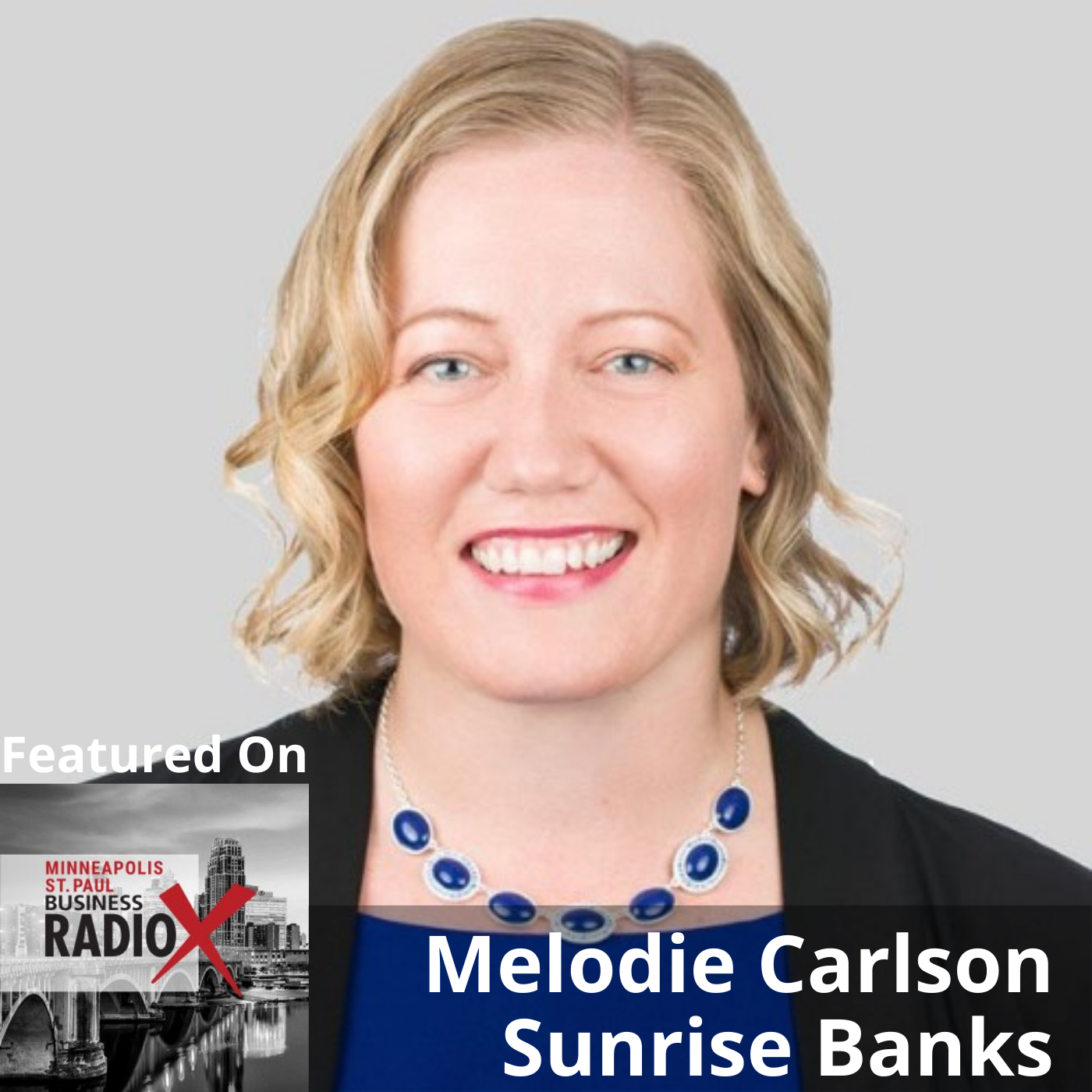
Melodie Carlson, Chief Operating Officer for Sunrise Banks, reflected with host John Ray on the company’s human resources philosophies and practices, and how they have aided in the growth and development of the company. Melodie talked about flexibility in dealing with employees, how Sunrise managed the shift to remote work during the pandemic, employee communication, trusting employees and avoiding micro-management, her advice for work-from-home teams, and much more. Minneapolis-St. Paul Business Radio is produced virtually by the Minneapolis St. Paul studio of Business RadioX®.

Sunrise Banks

Sunrise Banks is a community bank headquartered in St. Paul, Minn. The bank offers traditional banking services while also partnering with fintechs to expand its reach nationally and across the globe. Sunrise is a certified B Corporation, a Community Development Financial Institution and a member of the Global Alliance for Banking on Values.

Company website | LinkedIn | Facebook

Melodie Carlson, COO, Sunrise Banks

Melodie Carlson, COO, Sunrise Banks

Melodie Carlson is Sunrise Banks’ Chief Operating Officer. Melodie’s role has evolved during her tenure at Sunrise and she has led many teams during her time with the bank. She currently leads the deposit operations, executive admin, facilities, fintech client relationships, fintech operations, human resources, internal audit, and retail banking departments.

Prior to joining Sunrise in 2015, Melodie spent 14 years at Target Corporation taking on additional responsibilities and leading teams in the internal audit, accounts payable, and payroll departments.

She started her career in public accounting at what is now called CliftonLarsonAllen (CLA), where she audited financial institutions and employee benefit plans.

 LinkedIn 

Questions and Topics Discussed in this Episode

  • How to communicate with employees while working from home.
  • 3 Steps to a Happy and Productive WFH Team
  • The benefit of one-on-one meetings with staff.
  • How to keep employees productive without micromanaging.
  • PPP loans and the mission of Sunrise Banks

Minneapolis-St. Paul Business Radio is hosted by John Ray and produced virtually from the Minneapolis St. Paul studio of Business RadioX® .  You can find the full archive of shows by following this link. The show is available on all the major podcast apps, including Apple Podcasts, Spotify, Google, Amazon, iHeart Radio, Stitcher, TuneIn, and others.

Tagged With: b corporation, Employee Engagement, employees, HR, Human Resources, Melodie Carlson, Minneapolis St Paul Business Radio, PPP loans, remote work, Sunrise Banks

Workplace MVP: John Baldino, Humareso

December 2, 2021 by John Ray

Humareso
Minneapolis St. Paul Studio
Workplace MVP: John Baldino, Humareso
Loading
00:00 /
RSS Feed
Share
Link
Embed

Download file

Humareso

Workplace MVP: John Baldino, Humareso

In an engaging conversation, John Baldino, President of Humareso, and host Jamie Gassmann review changes in the HR landscape changes over the last two years, important trends, and look ahead to 2022. They discuss flexibility in work arrangements, compensation and inflation, cultural fabric, diversity, equity and inclusion, and much more. Workplace MVP is underwritten and presented by R3 Continuum and produced by the Minneapolis-St.Paul Studio of Business RadioX®.

Humareso

Humareso is able to strategize with your company and develop plans to manage talent, recruit for skill gaps based on employee inventories, assess markets for growth, develop long-range succession plans and influence a culture of enthusiastic buy-in. Humareso handles all facets of employee engagement and business development. Humareso provides HR solutions and administration for small businesses trying to manage budget and growth.

Humareso sits strategically to support an organization’s vital talent needs. Talent is what they believe in cultivating. They look to drive organizational health through true employee engagement, strategic workforce planning and invested management training. Having a culture that values people, policy, and performance in the right measures is the differential needed to stand apart from other organizations. Whether your organization has 10 or 100,000 employees, dynamic human resources will build corporate strength and recognize talent contribution.

Company website | LinkedIn

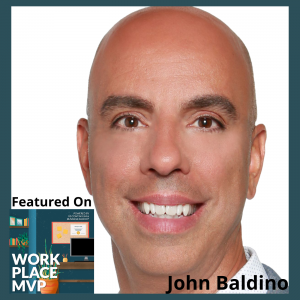
John Baldino, MSHRD SPHR SHRM-SCP, Founder and President, Humareso

John Baldino, MSHRD SPHR SHRM-SCP, Founder and President, Humareso

With 30 years of human resources experience, John’s passion of setting contributors and companies up for success is still going strong.  John is a keynote for US and International Conferences where he shares content and thoughts on leadership, collaboration, and innovation, employee success, organizational design and development as well as inclusion and diversity.

He is the winner of the 2020 Greater Philadelphia HR Consultant of the Year award. John is currently the President of Humareso, a global human resources consulting firm, and the proud dad of 3 amazing young adults.

LinkedIn

R3 Continuum

R3 Continuum is a global leader in workplace behavioral health and security solutions. R3c helps ensure the psychological and physical safety of organizations and their people in today’s ever-changing and often unpredictable world. Through their continuum of tailored solutions, including evaluations, crisis response, executive optimization, protective services, and more, they help organizations maintain and cultivate a workplace of wellbeing so that their people can thrive. Learn more about R3c at www.r3c.com.

Company website | LinkedIn | Facebook | Twitter

About Workplace MVP

Every day, around the world, organizations of all sizes face disruptive events and situations. Within those workplaces are everyday heroes in human resources, risk management, security, business continuity, and the C-suite. They don’t call themselves heroes though. On the contrary, they simply show up every day, laboring for the well-being of employees in their care, readying the workplace for and planning responses to disruption. This show, Workplace MVP, confers on these heroes the designation they deserve, Workplace MVP (Most Valuable Professionals), and gives them the forum to tell their story. As you hear their experiences, you will learn first-hand, real-life approaches to readying the workplace, responses to crisis situations, and overcoming challenges of disruption. Visit our show archive here.

Workplace MVP Host Jamie Gassmann
Jamie Gassmann, Host, “Workplace MVP”

In addition to serving as the host to the Workplace MVP podcast, Jamie Gassmann is the Director of Marketing at R3 Continuum (R3c). Collectively, she has more than fourteen years of marketing experience. Across her tenure, she has experience working in and with various industries including banking, real estate, retail, crisis management, insurance, business continuity, and more. She holds a Bachelor of Science Degree in Mass Communications with special interest in Advertising and Public Relations and a Master of Business Administration from Paseka School of Business, Minnesota State University.

TRANSCRIPT

Intro: [00:00:04] Broadcasting from the Business RadioX Studios, it’s time for Workplace MVP. Workplace MVP is brought to you by R3 Continuum, a global leader in workplace behavioral health, crisis, and security solutions. Now, here’s your host, Jamie Gassmann.

Jamie Gassmann: [00:00:30] Hi, everyone. Your host, Jamie Gassmann, here, and welcome to this episode of Workplace MVP. As we near the end of 2021 and gear up for 2022, I thought it would be a great time to reflect on what we, as business and H.R. leaders, have navigated over this last year. Some of the challenges and complexities experienced in 2020 followed us into 2021 and really never left. But just like with any year, 2021 brought focus and importance in areas of our business that needed to be focused on.

Jamie Gassmann: [00:01:03] And today, we will be talking with Workplace MVP John Baldino, President of Humareso, to share from his perspective when looking at the human side of business, what are the key areas of focus for H.R. and business leaders in 2021, and what does he see as areas of importance going into 2022. So, with that, welcome to the show, John.

John Baldino: [00:01:28] Hey, Jamie. Thanks so much for having me.

Jamie Gassmann: [00:01:30] Absolutely. I’m looking forward to connecting with you on this topic. I think you bring some great perspective. So, with that, let’s start out with learning a little bit about your career journey to being President of Humareso.

John Baldino: [00:01:45] So, yeah, thank you. It is one of the things that you alluded to, looking back on 2021, it’s 30 years for me involved this year with H.R., leadership development, organizational design and development. It’s frightening for that 30 years. I can’t believe it. But I’ve had a really great journey in terms of the kinds of organizations I’ve been able to be a part of. And so, through retail and restaurant, nonprofit, education, banking and finance, distribution and manufacturing, just so many areas of industry.

John Baldino: [00:02:26] And I got the privilege of starting Humareso in 2012, so it’s been a little over nine years, and it’s been a great time. Really, I’m thankful to say, a smart move to start the H.R. consulting firm that I did. And we’re just having a blast, honestly, with the work that we get to do with companies across the country, also in a variety of industries. So, it’s really fun.

Jamie Gassmann: [00:02:50] Yeah. And probably a great time right now, obviously. I’m sure your services are called upon even more as people are navigating different complexities and challenges that maybe they haven’t thought that they would experience. So, with that, tell us a little bit about Humareso, and what your organization does, and some of the services that you provide.

John Baldino: [00:03:13] Yeah. I try to tell people, we are as much of an all-in-one for everything H.R. as possible. And the way that we can do that is because we have some wonderful people on staff who are just phenomenal and they represent disciplined areas of H.R. And so, we support companies with a lot of, say, blocking and tackling, compliance administration, direct hire, recruiting, things that they need to get done day in, day out for that employee experience and life cycle.

John Baldino: [00:03:49] But we’re also involved with things that are a little beyond. So, technology, really an interesting path to constantly travel because technology changes so much. And what makes sense for a company at its particular genesis. So, you might use something today that when you double in size, you might not use next year. And so, helping navigate through that. But then, areas of mergers and acquisition, organizational development, learning management, executive coaching, just things where sometimes we overlook those components and think that they are nice to have.

John Baldino: [00:04:24] But, really, in the competitive marketplace today, they’re a must-have. You can’t just kind of put things aside anymore. You can’t ignore compensation. You can’t ignore employee sentiment. What’s happening with our people? Are they engaged? It’s not just how do you feel. It’s how are you productive. And so, I think organizations are much smarter about that than ever before. And so, we get a lot of opportunity to support companies doing a lot of that work.

Jamie Gassmann: [00:04:55] Yeah. Absolutely. It’s like the human side of business has become even more of a focal point and level of importance for businesses, particularly over this last year.

John Baldino: [00:05:06] For sure. For sure. And it’s funny, I mean, you and I have talked about this before, right? When people first connect with Humareso, they’re like, “I’m not sure how to say the name.” And I’m like, “It’s Humareso. It’s Italian for human resources.” And people are always like, “That’s fantastic.” That’s a total lie.

John Baldino: [00:05:27] But the focus for me is to get people to be thoughtful about that idea of human resources. It’s actually a global consideration. I appreciate the fact that in the U.S., we think of it as sort of a department. But, really, it’s a functional relational component of how organizations exist and thrive across the globe.

John Baldino: [00:05:49] So, you’re right, that human-centered perspective is not merely emotional. And I hate to say it, I still get to talk to some CEOs who, “This is all kind of fluff, blah, blah, blah.” And usually, they’re the CEOs that are struggling the most. And I want to just say to them, “Listen. Relax. It doesn’t mean that you have to get a warm blanket and sit in front of a fireplace and just get in touch with your feelings. That’s not what this means. It means you have real people with real concerns and real desires to contribute in their work and in the organization. So, don’t overlook that. Pay attention.”

Jamie Gassmann: [00:06:27] Absolutely. And they want to do good work for you, especially if you show that care and compassion and value that they’re seeking.

John Baldino: [00:06:35] Absolutely.

Jamie Gassmann: [00:06:36] And, obviously, you kind of already mentioned, we’re going to be talking about trending over the last year. So, from your perspective, just to level set as we kind of get into this dialogue, if you were going to look at over this last year, what were some of the key trends that you feel were most impactful to the human side of business?

John Baldino: [00:06:58] I mean, listen, we can be buzzword and trendy for at least an hour, right? Certainly, I think from a new term, we saw this year that the phrase The Great Resignation being used, and people struggling to find talent to fill open roles, and all of the perspective that went along with that. It’s because of unemployment. It’s because people are lazy. And everybody is an armchair coach to tell you exactly what’s wrong with the world.

John Baldino: [00:07:33] In many ways, though, I think that I’ve also heard probably a better phrase, instead of The Great Resignation, I look back and see it as a great reshuffle. And I think what talent has chosen to do this past year is say, “Where can I best thrive? Where can I best invest? Who’s going to like the fact that I’m bringing what I bring to the table? Who will like it the most?” And that may mean that I take my toys and go to another company in order to do that. And so, the talent is still in the marketplace. It’s just reshuffled. It’s out of where it was and onto someplace else.

John Baldino: [00:08:13] And if your organization winds up being one of the organizations whose bench has cleared, you may need to look in the mirror long and hard as to why your organization is the one reshuffled out of as opposed to into. And so, I think for sure that’s something that organizations have had to pay attention to this past year differently.

John Baldino: [00:08:39] And let me just add this, too, I want to be respectful of data. There’s absolutely data that would say this past year – and I’ll try to do this. I might say it twice – there’s jobs that people are filling right now and open jobs where we need people. If you add that number together, it’s more than the number of people available to work. That there’s less people available for all the jobs that are possible, both currently filled and opened. Our birthrate is down. For every two adults, we’re trending at about 1.7. So, we’re not regenerating the same number and haven’t for years. And so, we’re seeing a little bit of that catching up with us, for sure. I’m not ignoring the data.

John Baldino: [00:09:27] But I would also say, there are companies that are able to hire and they have hundreds of people this past year, hundreds of people this past year. Well, where are they coming from? They may be coming from your company if you haven’t paid attention to what’s happening with your team.

Jamie Gassmann: [00:09:43] Yeah. Absolutely. And there were a couple of other areas, too, you mentioned, like from an entrepreneurial spirit with that next generation of workforce.

John Baldino: [00:09:53] I mean, you and I know, we have this spirit even within us. And I’ll speak for myself, I’m not a young person anymore. I pretend I am. I think like I am probably to the chagrin of my spouse. But I’m not really a young person.

John Baldino: [00:10:11] We’ve encouraged a very entrepreneurial approach to commerce. There are so many younger – and I do mean younger by age – who are coming out of school, who very much feel like I don’t ever want to work in-house for someone. I want to start my own company,” whether that’s a product or a service, whether it’s tech based or not. There are just opportunities all over the place. You can start your own website and have product delivered to somebody for $199. I mean, this dropship stuff is just like easy peasy now.

John Baldino: [00:10:49] And so, there’s people who are like, “The heck with that. I’m not working for Baldino. I’m going to work for myself.” And that entrepreneurial spirit you can’t ignore. And so, what has that done this past year? It’s actually taking people out of the workforce as well who don’t desire a W-2 relationship with a company. They don’t want it.

Jamie Gassmann: [00:11:09] So interesting. And I’ve seen that. And I think you and I will talk about it a little bit later about that shift to consulting work. And that we’ve seen some of the writing on the wall for that years before, even pre-COVID. And I’m always kind of looking at, “Well, pre-COVID that was already happening. It just expedited it.” Which we’ve seen across a lot of different other areas.

Jamie Gassmann: [00:11:35] And another area, too, that we’re going to talk about a little bit later is that diversity, equity, and inclusion focus in workplaces. And I think you have some really exciting things to share on that different perspectives of how a workplace can be looking at that within their own space as well.

John Baldino: [00:11:53] Absolutely. We’ll talk more about that. But for sure to at least whet the appetite, honestly, we’re watching verbal responses followed by physical movement from people who are saying, “You say you’re about these things -” organization “- but you’re not. And so, I’m calling you out on it. And if you don’t change it, I’m leaving because I can go somewhere where the value around equity and fostering a sense of belonging is real. It’s active. We can talk about it. I can point to it. And you just want me to know we hired diverse talent.”

John Baldino: [00:12:35] Well, first of all, what does that mean? And second of all, how long are they staying? Because you can hire diverse talent, let’s say, in certain buckets. But in six months, there’s a good chance they won’t be there if your organization isn’t prepped for it. And other people are now going out the door with those folks who’ve been brought in just because they represent some sort of diverse group. That’s not the way to do it.

Jamie Gassmann: [00:12:57] Yeah. No, it’s so exciting to talk about that with you in terms of some of your perspective of how you helped workplaces to really embrace that in a way that’s helpful and really demonstrating what it’s meant to demonstrate. So, that’ll be really exciting.

Jamie Gassmann: [00:13:15] So, diving into The Great Resignations, and we’ve all heard about that and the impact of that. And I think in some ways we probably saw that, but maybe differently than, you know, just hearing some of the data that you shared, probably maybe differently than what we maybe anticipated. I think maybe some retired earlier than they anticipated. And with that, we had people leaving the job market that would have maybe stayed, like, five years longer. But then, to your point, just having less amount of that employee candidate pool based on just there aren’t as many workers out there. So, talk to me a little bit about that trend of the great reshuffle and share kind of some of your perspective a little bit deeper on that.

John Baldino: [00:14:01] For sure. It’s really interesting, honestly, even with what you just shared, that, certainly, there were people who COVID amplified their desire to get out of the workforce. There are definitely people who took early retirement. There are people who were furloughed or laid off from their organization.

John Baldino: [00:14:22] And when the opportunity presented itself to return, they self-selected out and said, “This whole pandemic thing isn’t done yet. I’m not interested in trying to navigate what this means, masks, no masks, vaccines, no vaccine. I just don’t want to be involved with it. And so, I’m not coming back or certainly I’m not coming back to the degree that I used to work. I’ll come back part time -” which we’re seeing that as well “- not full time. I only want to take a role where I can work from home completely because perhaps I’m immunocompromised or I’m a caretaker and I’m concerned about being a carrier for some of these things.”

John Baldino: [00:15:05] So, from a health perspective, absolutely, that’s impacted some of that reshuffle. I’d also say from an opportunity standpoint. So, what do I mean? There are plenty of professionals pre-pandemic who were involved in the – I’m going to use the big industry title – hospitality industry, so that would be things like hotel, restaurants, concierge-based services, spas, all of those areas, who were laid off and laid off for months. And when they were able to come back, came back at a very constrained schedule because it just wasn’t busy enough. People were not getting massages. I mean, think about some of that. You might be worried about health issues. Who wants to come and have a massage? Not as many as once did, let’s say, or other kinds of treatments.

John Baldino: [00:16:01] So, those folks decided, “I got to shuffle myself out of hospitality and into something that is not going to be as influenced by what’s potentially happening in the world, mandates that may yet come down the pike. I’m going to get into something else.” And so, right now, for sure, I’m seeing hospitality-based organizations struggling to find talent, struggling to find talent.

John Baldino: [00:16:26] Add to that the way in which some organizations – think about cities like New York, where so much hospitality happens in New York City. I mean, my goodness, so much of the economy is based on it – people are saying, “You want me to to not only do the work that I’m supposed to do, but now also be a representative of the city’s health mandates, and help to tell people what it’s supposed to be, and don’t sit here, and put your mask on.”

John Baldino: [00:16:54] People have chosen to say, “I am not interested in any of that. I don’t get paid enough for that. I’m not a professional in that degree. I want to use my professional expertise in a different way.” And so, they’ve reshuffled themselves, again, out of that vein of work.

John Baldino: [00:17:09] And lastly, you know, I also want to make sure I give a shoutout to some of the reshuffle as well, for those roles where you have to be in-person. You can’t do it remotely. And I think that we have to be really careful in the business community – because I think we’ve done this – to not make people feel badly for having work that they have to do physically. Just because your organization cannot give you a fully remote job doesn’t mean your organization is barbaric. That is not what it means.

John Baldino: [00:17:46] And we know that there’s going to be a lot of people listening to this while they’re having a meal and maybe you ordered that meal from somewhere. Well, who in the world cooked it and delivered it to you? People. Real people. And so, they couldn’t do it through Zoom. That sandwich would not taste as good if it was only through Zoom. It had to be physically done. So, let’s stop giving people a hard time because I do think that’s influenced the reshuffle as well. We’ve made some of our own employees feel badly as if they had some substandard job. That’s ridiculous.

Jamie Gassmann: [00:18:23] That’s such an interesting point. I mean, when you think about that, it’s like the people going in to make your coffee. Yeah, I could have made a pot of coffee at home, but there’s something about that Starbucks cup that just gives me a little satisfaction for the day.

John Baldino: [00:18:45] And hopefully you’re not going up to that drive-thru window saying, “Thank you so much for this coffee.” Isn’t it terrible that you had to come into work? Wouldn’t you rather have a job where you can work at home? I mean, again, I know that sounds ridiculous, but I think that we have unintentionally sort of made sort of a caste system between what it means to work from home and not being better than having to go in and work somewhere.

Jamie Gassmann: [00:19:08] Yeah. I mean, because there are some employees who they like to work in the office and they want to get back in the office. And, yes, there’s going to be some who are like, “I really prefer to work at home.” But that’s the beauty of our employees, is that difference and what their likes and dislikes and those types of things. So, yeah, interesting points all around.

Jamie Gassmann: [00:19:32] And so, when we talked previously, you indicated there is also another kind of business trend with larger organizations where they’re paying substantial salaries for some entry level or just above entry level positions, that is increasing some of the pay structure that’s having an impact on some of the smaller businesses that might be trying to hire. Can you talk a little bit to some of that trend that you’re seeing?

John Baldino: [00:19:57] Yeah, for sure. I mean, that is absolutely a trend. And I would say, I get asked about compensation a ton this year. Compensation from an external competitive standpoint and then pay equity from an internal standpoint. What are we doing with our own people? Forget about what’s happening externally. Are we paying people equitably for similar work within our company? Well, there’s a good chance that if you are bringing people in at this point, you’re bringing them in higher because you’re trying to compete.

John Baldino: [00:20:31] And all of a sudden, those legacy employees who’ve been there are trending downward because you’re starting people so much higher. So, what are we doing about that? That then becomes now your legacy employees start to feel some sort of way about your company and may think about exiting the company because of that. So, compensation on both sides has been really difficult.

John Baldino: [00:20:51] What we’re seeing is, you know, a large organization could easily say, “We’re just going to throw a bunch of money at this problem. And so, we need people at this particular level -” and I’ll make up something just for the sake of it being easy “- customer service rep. And we’re going to pay this much per hour.” And you’ve got a smaller organization that has a few customer service reps and they can’t compete at that hourly rate the way that Amazon or Verizon or Aramark or just pick whatever large, large enterprise level organization you would like to. And so, they price themselves out of the competition, those smaller companies. They can’t compete at that level.

John Baldino: [00:21:33] And if you are a job seeker, whether active or passive, and somebody calls you and says, “Hey, I got a job for you and you’re going to make $6 more an hour, $10 more an hour than you’re making right now.” Honestly, I see people leave for 50 cents, let alone the numbers that I just mentioned. Holy cow. You think that employee is going to come back to you and say, “Hey, John. I love working for you. They’re going to pay me $6 more an hour. Can you match that?” If I’m a small business, there’s a great chance I’m going to say, “No, I can’t. I can’t do it.” And so, now I’m losing talent because I can’t afford to compete at that compensation level.

John Baldino: [00:22:16] But the risk on the other side, as I see it, is at some point, this compensation thing is going to level out. We’re going to have to right size it a bit because it’s unsustainable. It can’t go on forever. It’s very much, in my opinion, like the housing crisis going back to ’07, ’08, ’09. Things are going to just eventually kind of crash. You just can’t keep saying this is worth more, worth more, worth more, worth more.

John Baldino: [00:22:41] So, what will happen for those people who went to those large companies? They’re likely going to do a riff. They’re going to do a reduction in force. You’re going to get your pink slip, whatever phrase you’re used to. And Verizon will right size. I’m not saying anything out of turn, we’ve seen Verizon, as an example, do this in years past, lay off a number of people, wait a few months, and start to rehire people. And they’ll rehire them at the new lower readjusted rates of pay. And, now, we’ve got all kinds of people on unemployment waiting for that readjustment to happen. And we watch that take its toll on our system.

John Baldino: [00:23:24] And I think organizations need to be wise to kind of wait for that. Take your time. I know it’s going to be stressful right now, but take your time that’s coming sooner than you think.

Jamie Gassmann: [00:23:35] So interesting. I’m guessing that’s contributing to some of the reshuffle, too, is just the opportunities out there for other workers. And, you know, being in the crisis response arena – that our sponsor is part of – some of the things I’ve heard spoken about is just when a situation like the pandemic happens, people start to rethink their situation. And so, some of that pricing that you’re saying probably are more in tune to what’s going on because they’re starting to look at what’s better for me and what should I do for myself, and it becomes enticing.

John Baldino: [00:24:14] Yeah. I mean, it’s hard to say no. Let’s be honest, you’re 26 years old and you’ve got a couple of years under your belt, maybe, of some professional work, and someone wants to pay you 20 percent, 25 percent, 30 percent more than you’re making right now, how are you saying no to that? That would be really hard. You’ve got student loans that you know you’re going to have to pay for. I mean, you just have things that are just realistic.

John Baldino: [00:24:39] And if my grandfather were still here, he’d say, “Get what’s yours as fast as you can get it.” That’s kind of the perspective that some people, for sure, are hearing. And it’s hard to talk them out of that.

Jamie Gassmann: [00:24:53] Yeah. Especially when you’re younger in your career, too, a lot of people say, “Now is your time.” You’ve got a whole 40 years left to work kind of mentality. So, looking at that and talking 40 years out, what is the long term impact that maybe some of that pricing for salaries impact is on, maybe the individual, but also on the organizations?

John Baldino: [00:25:20] Well, I mean, it’s such a great question. You know, I wish I knew in full. So, obviously, I’m anecdotal a little bit with some of the answer. But I would say, I mean, first of all, we have to realign expectations.

John Baldino: [00:25:37] I spoke to somebody about a-week-and-a-half ago, literally, 27 years old, and has a job making $150,000 a year. I’m like, “Are they hiring?” I mean, I have my own company, but I don’t even know what I would have done at 27 years old with $150,000 a year, nothing good. Let me just actually say that, I could at least say nothing good.

John Baldino: [00:26:05] Now, let’s say that the market readjusts, as I just shared. Like, what do you want that person at 29 years old to expect now? They’re going have a hard time going back into the job market and take even 90,000 as a salary, because it’s just going to seem so low compared to what they got used to quickly. That’s where I think we’re going to see a longer term impact because there’s a better chance of those individuals saying, “The heck with this. You’re not paying me what I’m worth. I’m going to go do my own thing. I’m going to go start my own thing. I’m going to go partner up with somebody and try to get something done differently.”

John Baldino: [00:26:44] Some of that may work. As an entrepreneur, obviously, I believe in that, because I started a business as well. But not everybody is going to be able to do that. And, certainly, the reality is, especially for those who’ve started companies, you don’t start making $150,000 your first year. I mean, you don’t. So, if you think starting your business is a guarantee to get you that kind of money right away to match where you’ve been, you’re going to be disappointed.

John Baldino: [00:27:14] And even now, I see entrepreneurs with those who are trying to be entrepreneurial get out of it because the expectation hasn’t been aligned correctly. So, I think long term, we’re going to struggle with that individually.

John Baldino: [00:27:28] As far as organizations are concerned, I think organizations are going to have to be honest about budgets. Because one of two things is going to happen, you’re going to have that huge reduction in force that I mentioned or we’re going to continue to see past the long pricing to cover for these things. I mean, we all go into that grocery store. Holy cow. Holy cow. Who’s paying for that? Or the gas line or whatever, we see what the prices are right now. That’s not sustainable, either. I mean, when you start looking at chicken as being expensive, don’t even bother putting the steaks out. Just don’t bother, because how could I afford it? And that’s where I think that markets are going to have to readjust as well. It’s just not sustainable.

Jamie Gassmann: [00:28:18] Yeah. Because that additional cost to cover those salaries, it’s got to get passed on to somebody.

John Baldino: [00:28:26] Somebody and it’s just you and me, right? It’s when we start saying 6.99 a pound is cheap. And you’re like, “Wait. What am I saying? What am I saying?”

Jamie Gassmann: [00:28:36] Years ago I said, “If they ever moved the coffees to over $5, I’m not buying them.” Well, they’re over $5 and I’m still buying them.

John Baldino: [00:28:44] I just got one this morning.

Jamie Gassmann: [00:28:49] I just got one this morning. So, you bring up a really good kind of points, so segueing into that next trend that we talked about, that entrepreneurial spirit and just seeing this next generation of workforce, you know, having more of that spirit and wanting to look at moving into more kind of consultancy or starting their own businesses. You had indicated when we talked before that this has been taught in us, and it makes me think about my 11-year-old at home who’s like, “I’m going to be a YouTube star someday, mom. They make good money.” And I’m going, “Oh, boy. Yes, they do.” But to get to that, how did they do that? So, what changes are you seeing with this shift of that entrepreneurial spirit? I mean, there’s got to be some pros and cons to that.

John Baldino: [00:29:38] Sure. I mean, look, we’re in the Shark Tank generation. I mean, we’ve encouraged people in this. And listen, I, for one, am not pooh-poohing it. I’m glad we have. Like, there have been some phenomenal inventions and ideas that have come forward as a result of people taking risks. One of my favorite shows to watch, honestly, is The Profit with Marcus Lemonis, and he’s just so smart in his approach to the entrepreneurial game. It’s right on the money.

John Baldino: [00:30:09] And so, I’m not badmouthing it. But what I’m saying is, we watch those people come forward on Shark Tank. And I know you sit on your couch and think, “What the heck is this? Who would buy this? Why do they think this is a great idea?” And we’re right, The Sharks, nobody invests in that company, right? But what we forget is, for that one person who’s standing there, that person represents another hundred who are doing the same thing, trying to put together service or product in an entrepreneurial way that they think the world wants. And they won’t. There are lots of products and services that are by the wayside or the distribution of those things that didn’t happen the way that it was meant to.

John Baldino: [00:30:54] So, disappointment has to be put together in a way to help people learn from it and encourage people back into the job market. Once again, as opposed to just thinking I’ve got to always go back to what could be the next product, the next product, the next product. Not everyone should do that. And I know that might be hard to hear as people listen to this. You know, “John, you can’t crush people’s dreams.” I’m not here to be a dream smasher. That’s not what I’m saying.

John Baldino: [00:31:27] But we need people to work in the disciplines that are functional components of how our economy is put together. We need medical professionals. We need hospitality professionals. We need retail professionals. We need food professionals. We need distribution professionals. We need folks that are understanding logistics and supply chain. And we need people who are going to understand technology in different ways. We need all of that. That has to be encouraged right now in our high schools, in our colleges.

John Baldino: [00:32:03] One of the saddest things for me – and this is a true story. So, this is a couple of years ago – someone who was actually working for my organization in marketing, and he was a recent college grad. He was a marketing associate. And I had him sign up for a digital marketing course. Humareso will take care of it. We paid for it. Just go learn a bunch of stuff. The deal was he had to present back on it to a few of us. And he came back after six weeks and presented on it.

John Baldino: [00:32:35] And he started by saying, “Thanks for letting me take this class. I just want to tell you, I’m so angry.” And I was like, “Oh, my gosh. This isn’t going to go well. Why are you angry?” He said, “Oh, no. I’m not angry at you. I’m grateful that you had me take this course. But I’m angry because I recently finished a four year degree in marketing and I learned nothing that I just learned in six weeks in this marketing course. Not one thing that I learned in these six weeks in practical marketing that I learned in my four year program that I’m now still paying for in my student loans. For that, I’m angry.”

John Baldino: [00:33:17] And I found that to be obviously sad. I was not happy for him. But what does that tell us? It tells us that we also have to realign better what’s happening in our educational system with what’s happening in our entrepreneurial outlets and in the business community. Because there’s a misalignment. It’s not where it needs to be.

Jamie Gassmann: [00:33:36] Oh, that’s such really good points. A lot of what people learn is on the job, in that hands-on, tangible, kind of real-world atmosphere. And you brought up a really interesting point with the entrepreneurs that, I think, too, maybe an employer could reframe it a little bit. I mean, that entrepreneurial spirit I could see as like an absolute benefit to a business, especially if you’re working for a smaller business. Because you want your employees thinking entrepreneurially because that helps to drive a smaller business to even more success when they treat it like it’s their own business.

John Baldino: [00:34:17] So, reframing it, maybe, for the workforce, how could an employer do that in a way that kind of attracts some of those individuals that have that spirit within them that maybe you can kind of bring them over to a company as opposed to trying to start their own gig?

John Baldino: [00:34:39] And as a small business owner or, honestly, even a mid-market company, you have to be willing to put in a little bit of the effort into that to help people have that bridge. You know, I get to talk to business owners all the time of various-sized organizations, and they will sometimes be intimidated by entrepreneurs coming back into the workforce. Or think that, “They’re only going to stay with me a year to make some money and then leave.”

John Baldino: [00:35:07] First of all, you don’t have anybody right now. Take 12 months from somebody, let’s see what happens. You have no idea what’s going to happen in 12 months. Take the 12 months. Relax. The other thing is, if you can reform that drive towards something, as you’re saying, Jamie, that benefits the organization as well without categorizing somebody in a negative way.

John Baldino: [00:35:31] I try to tell people, “Listen, you’re talking to me as I started a consulting firm. Let me paint a picture for you. I was one of those – what you would term – a corporate H.R. person for years, and I’m entrepreneurial. I don’t make sense. There shouldn’t be people like me. But guess what? There are.” And so, you can be entrepreneurial in any kind of industry, in any discipline. It’s about how to encourage it and how to define it.

John Baldino: [00:36:03] When I started Humareso, people – besides making fun of the name – were saying, “Why would you make a name? You should call it John Baldino Consulting, because everyone knows you. That’s what’s going to drive business to you.” And my response was, “If I make it about me, it will be seen smaller than I intend it to be. And so, I want to make sure I highlight the talent that I know will come.” For the first year, I was the only employee of Humareso – for the first year. But, now, all this time later and all these employees that I’m privileged enough to have be a part of the team, I’m glad I knew better than to call it Baldino Consulting, because it is much grander and larger than just me.

John Baldino: [00:36:53] So, if you can keep that long-term perspective in play as a business owner, look at your talent similarly, how can they be a part of the process for as long as they’re part of the process? And how do I encourage that? And, honestly, give them an opportunity to give me the very best that they can give me. That’s what we need to do.

Jamie Gassmann: [00:37:10] Yeah. That is such a good point. Even if it’s just for the 12 months and giving them a stepping stone, they may stay way longer than what they originally anticipated, especially if you give someone with an entrepreneurial spirit some flexibility to be able to work that spirit within the organization. It’s amazing what you can get out of it.

Jamie Gassmann: [00:37:32] And kind of touching on our last trend here in terms of over the last year, the diversity, equity, and inclusion focus that business and H.R. leaders had, you shared the term cultural fabric with me on our last conversation. I just thought that was such a great way to think about this topic. And so, can you elaborate a little bit more on what that means and how a leader can leverage that within their organization?

John Baldino: [00:38:00] Yeah. Thank you. I would say, it’s something that’s going to fight up against, I think, what some people have sort of adopted into their brains for a lot of years. We talk about cultural fit, right? And so, “I didn’t hire that person. They weren’t really a fit. The way that we are, this person isn’t really going to be able to succeed. I’m thinking of that person when I say this,” things like that.

John Baldino: [00:38:28] And what I think we know now is, there’s a bit of bias baked into cultural fit. What we’re saying is, there’s something about that person that isn’t like us. And the like me bias has been around forever. Instead, I think that what we’re smarter to do is look at the individual and say, “What would they add to what we already have?”

John Baldino: [00:38:54] And the picture that I try to give people who want to fight for cultural fit, this is what we need to be about, I try to encourage cultural fabric. Look at your organization like a tapestry. What is it that’s been woven to date? And it could be a beautiful picture on this tapestry, for sure, but where it is today? Couldn’t we be ready for a new thread to be added to this picture on the tapestry? Couldn’t we be ready for that? And we ought to be. And maybe we think it’s too scary. It might mess up the picture overall. It might. It might. It might.

John Baldino: [00:39:34] But, really, we don’t have much of a choice these days. Because if you think you’re just going to find a whole lot of people like you to do what you do the way that you do it, you’re going to be disappointed. So, this isn’t about, “Well, I guess I have to have substandard qualifications.” No. This is about how do we get work done better, wider, differently, with more innovation and creativity, and add a different colored thread to this tapestry of what we’ve built. Oh, my goodness. Now, in a couple of years when I step back, I see the picture more vibrantly. It’s even more beautiful than it was two years previous.

John Baldino: [00:40:15] And I think when we think about inclusion and equity, as for sure, areas that we have to pay attention to, that needs to be a bit more of our attention, is, what kind of fabric are we weaving? What are we ready for? What might we not be ready for but need to get ready for? And to take the risks associated with that.

John Baldino: [00:40:38] I find it really disconcerting when I’m talking to business owners who want to tell me, “John, we’re committed to diversity.” And I believe them. But you have to be committed to a much more holistic view of that word you’re using. Diversity, what does that mean for you? Is it just about persons of color or ethnicity? Is it about a particular gender? Diversity is even more than that. I’m not ignoring those often visible, diverse characteristics. Yes. Yes. You have to be open to that.

John Baldino: [00:41:12] But even beyond that. Even areas of like hiring veterans or disability. Or here’s a couple we don’t talk about enough, socioeconomics, educational backgrounds. Why on earth is it a bachelor’s degree required? Tell me why. When I look at your department and you have five people in that role, and the best one out of the five has an associate’s, does not have a bachelor’s, tell me why it’s required. Tell me why it’s required. “Well, that person is an exception.” How do you know that? You won’t hire anybody who’s like that person according to your standards. Be wider in the way in which you approach people. It’s possible. There are so many talented people out there who just haven’t had the chances that you may have had. So, don’t limit that.

Jamie Gassmann: [00:42:02] Like, most opening it up so that you can attract more of an audience with different backgrounds, different perspectives. Because keeping an open mind about the value that they can bring to that team could be really eye opening.

John Baldino: [00:42:20] For sure. One of my favorites – and when they listen to this, they will crack up laughing – there’s a pair that work at Humareso. And I’m saying a pair. And I won’t say the names. But there is one of the pair who is a 60 something black woman and the other pair is a 20 something white male. They are two peas in a pod. They are for each other like nobody’s business. You cannot get between them.

John Baldino: [00:42:54] And I’m going to tell you, they would not have a reason for their paths to intersect were it not for the opportunity of an open organization who looks at individuals with the skills or competencies, whatever you want to categorize those, with skills, knowledge, abilities, aptitudes, all of that. If we didn’t just look at that, their paths would not have crossed. And, now, they love each other, love each other, and that’s how it should be.

Jamie Gassmann: [00:43:26] Yeah. Absolutely. That’s such a great, great story. I love that. So, we’re going to just take a moment to hear from our show sponsor.

Jamie Gassmann: [00:43:35] Workplace MVP is sponsored by R3 Continuum. R3 Continuum is a global leader in providing expert, reliable, responsive, and tailored behavioral health disruption and violent solutions to promote workplace well-being and performance in the face of an ever changing and often unpredictable world. You can learn more about how R3 Continuum can tailor a solution for your organization’s unique challenges by visiting r3c.com today.

Jamie Gassmann: [00:44:03] So, now, we’re going to shift gears a little bit, John, and we’re going to talk about 2022. And I’m going to ask you to look into your crystal ball and give us some of your future predictions of what you think 2022 is going to look like. So, if we were going to identify and kind of narrow in to, like, some key areas that H.R. and business leaders need to watch for or even, to your point, focus on as they move into this new year, what would those areas be?

John Baldino: [00:44:35] This is so funny, because these are the moments where in the back of my mind, I’m like, “Six months from now, someone’s going to play this for me and tell me you were so wrong.”

Jamie Gassmann: [00:44:46] Isn’t that the risk of any predictive show, right? Or I could just do a follow up show to show how right you were.

John Baldino: [00:44:55] I like that one. Let’s prep for that. I think for sure, one of the things that has been very evident over the last couple of years is the need to be an encouragement towards overall health for our individuals who support our organizations. And I mean, overall health. More than just offering medical benefits, although that’s important. More than just offering ancillary benefits, again, that’s important. But all areas of health, so that’s physical, mental, emotional, spiritual.

John Baldino: [00:45:32] What are the ways in which we can foster opportunities for individuals to latch on to any and all of these areas and be supported? I want to make sure I paint both sides of this. We do know that if those individual contributors are healthier, they’re going to be better employees. That’s just how it is. I know that might not seem as altruistic as some may want. But it is a benefit on both sides of the equation. And that’s okay.

John Baldino: [00:46:03] So, I think that organizations coming into next year, how can they better give people opportunities and start spending money a little differently instead of maybe throwing it all into an HSA or an FSA? Can you use some of that money to go towards – I’ll call it – like a cafeteria type opportunity for people to choose areas of health that they want to focus on? Again, in those areas that I just mentioned, it’s got to be more than just here’s 150 bucks toward your gym membership. I mean, that’s great and all, but not everybody goes to the gym. Not everybody consistently goes to the gym.

John Baldino: [00:46:40] And what we sometimes do for people is if that’s really the primary benefit that we offer as an ancillary, and then they sign up and never go, then they feel guilty because they’re not going. So, we’ve we’ve actually made another problem. And so, what I would say is there are opportunities to be more customized. Let people choose how they can spend that money every month towards areas of mental health. Maybe they can chat with somebody for a few sessions over Zoom, a mental health professional. Maybe they can do a yoga class. Maybe they can do some sort of walk through the spiritual religions of the world.

John Baldino: [00:47:24] I mean, all kinds of things where people are like, “I’ve never been exposed to this kind of information. I’m really interested to know. It’s making me more centered, more aware, more compassionate, and considerate of others.” Again, how is that not going to help your organization? So, I think that that’s an area, for sure, that people who are in positions of authority or influence could encourage their organizations in, in providing that to their people. So, whole health consideration, for sure.

John Baldino: [00:47:55] I’d also say that we talked about flexibility. You mentioned it, Jaime, too, just a little while ago as well. Well, what does flexibility mean? And, again, when I talked about this before, I have staff even that are like, “I don’t want to work from home. Can I work in the office every day? I know you tell me I can work hybrid. Can I work in there every day? Because I bore a bunch of children that I love, but I’d rather not be with them 24/7 all the time. I think it’s healthy for me to have a little bit of a break, be with some adults.”

John Baldino: [00:48:28] My wife, we have three awesome young adults. They are in college and older and they’re great. My kids are all two years apart, so it was a little crazy in the early years. And my wife, we were fortunate enough that she wanted to stay home, especially with the third one, to stay home with all three. But she took two days a week to go work at Ann Taylor. She’s been there almost 18 years, I think at this point. Because she said to me, “I just want to talk to some other adults. I don’t want to be in the house.” That’s fair.

John Baldino: [00:49:06] So, how do we have some flexibility in the way in which we give people opportunities, either hybrid work, work from home, those considerations? How do we give people flexibility even in hours? Could they be full time? Does it have to be 9:00 to 5:00? Oh, my goodness. What if we did 12:00 to 8:00? Oh, no. That’s crazy. No. Actually, it’s not. For some of our organizations that are listening, your global or at the very least, your coast to coast. 8:00 p.m. on the East Coast is 5:00 p.m. on the West Coast. So, why? Let them work 12:00 to 8:00 and cover West Coast shift. Who cares? Give people opportunity and flexibility in that way. You’d be surprised how well that gets responded to.

Jamie Gassmann: [00:49:50] Yeah. Well, some people aren’t morning people. They don’t want to get up early.

John Baldino: [00:49:54] I’ve heard of them. And I will tell you the truth, I’m actually on the other side of that. I’m absolutely a morning person. I mean, I’m up at 4:30 to get to the gym. And people will look at me and say, “You’ve got something wrong with you to do that.” But I’m wired as a morning person. But come, you know, late afternoon, I got to really push myself forward because I’m crashing a bit.

Jamie Gassmann: [00:50:21] I’m a morning person too. I totally support that.

John Baldino: [00:50:25] We stand together. We’re going to stand together.

Jamie Gassmann: [00:50:27] Yes. We’re partners at the morning crew. I love it. But on the flip side, I have a husband who is a total night owl, so I totally get it. And I think creating that flexibility for employees, you know, you brought up an interesting point on our call about some people don’t want to be in that remote setting because they might be embarrassed about what comes across via their Zoom screens. And just having some kind of appreciation where the employee and understanding where that employee might be coming from because there might be something they don’t want to say in terms of why they don’t want to be in that remote world.

John Baldino: [00:51:05] And we have to remember that people didn’t buy their home or rent the apartment that they’re in thinking that they were going to have to now be on display for everybody in the office. I mean, try to remember that.

Jamie Gassmann: [00:51:18] Yeah. Absolutely. So, a couple of other areas I know we were talking about – I know we’re probably running out of time because you and I could talk for probably hours on various topics – we covered kind of the whole health of the organization and the individual and the flexibility. And then, we also talked about some tolerance for people coming into work sick. And we’re all probably starting to see that.

Jamie Gassmann: [00:51:40] You know, if you’re out shopping at the grocery store and somebody next to you starts coughing, I think we all are kind of like, “Why are you out?” But the reality is, is that, everybody has different things that they’re working through. So, how, in your opinion, is that being at work sick going to look going into this new year?

John Baldino: [00:52:03] I mean, I’ve been somebody who, even pre-pandemic, would always say to someone, “If you are sick, stay home.” There are plenty of companies that are offering personal time, sick time, that you’ve accrued or can take, so take it. That’s why it’s there. There’s nothing wonderful about you hacking up a lung in order just to be there and help to take care of it. There’s nothing wonderful about that. Go home, rest, get better, so you can be back here 100 percent. I’d rather have one day of 100 percent than two days of 50 percent. Get home and get better.

John Baldino: [00:52:38] I would also say, we also have to be thoughtful about how we force people to feel a certain way about using sick time. And I think sometimes managers are the worst when it comes to that. They make you feel badly for being sick, as if you planned on it. And always, I’ll have a manager who wants to tell me the story about someone who said they were sick and then they saw their Facebook pictures of them on the beach. And I’m like, “Listen, that’s one example. Do you want me to tell you about a hundred where people actually were really sick and needed to stay home and feel better? Let’s not make it be about the one example that you want to give me.”

John Baldino: [00:53:15] Give people the opportunity to have the freedom to use the time that they’ve earned and accrued. Be sick. Don’t work. Do you want to tell me it’s okay, “I’ll go home and I’ll log in right away.” No. Be sick and get better. Logging in at home is the same thing. You’re going to work at 50 percent. It doesn’t help me.

Jamie Gassmann: [00:53:33] Yeah. And I think your coworkers would appreciate you going home. They don’t want to catch it, even if it’s not COVID, please. So, great conversation overall. I mean, obviously, you have lots of great advice to share, lots of interesting trends that we discussed over this last year, and things that we’re looking at potentially being on the radar for 2022. If listeners wanted to get a little bit more information out of you or kind of learn more about your services, how can they get a hold of you?

John Baldino: [00:54:06] Yeah. Thank you, Jamie. Obviously, they can go to humareso.co, H-U-M-A-R-E-S-O.com. And that’ll take them right to, I would say, the bible of everything we do. I’m pretty active on social media, so please feel free to connect with me on LinkedIn. Just look for John Baldino, H.R. Or Twitter, actually, is pretty active, and that is @jbalive. As in not dead but alive, @jbalive.

Jamie Gassmann: [00:54:33] Wonderful. Well, thank you so much, John, for being on our show, and for letting us celebrate you, and for sharing your great advice and information, and your predictions for 2022. We really do appreciate you as a guest and thank you so much for your time today.

John Baldino: [00:54:47] Thank you, Jamie. I appreciate it as well.

Jamie Gassmann: [00:54:50] And we also want to thank our show sponsor, R3 Continuum, for supporting the Workplace MVP podcast. And to our listeners, thank you for tuning in. If you’ve not already done so, make sure to subscribe so you get our most recent episodes and other great resources. You can also follow our show on LinkedIn, Facebook, and Twitter at Workplace MVP. And if you are a workplace MVP or if you know someone who is, we want to hear from you. Email us at info@workplace-mvp.com. Thank you all for joining us and have a great rest of your day.



Tagged With: diversity, Diversity Equity and Inclusion, Employee Engagement, HR, Human Resources, Humareso, Jamie Gassmann, John Baldino, R3 Continuum, The Great Reshuffling, workers compensation, Workplace MVP

Workplace MVP: Stephanie Savoy, American Renal Associates, and Geoff Simpson, Presagia

November 18, 2021 by John Ray

American Renal Associates
Minneapolis St. Paul Studio
Workplace MVP: Stephanie Savoy, American Renal Associates, and Geoff Simpson, Presagia
Loading
00:00 /
RSS Feed
Share
Link
Embed

Download file

Presagia

Workplace MVP:  Stephanie Savoy, American Renal Associates, and Geoff Simpson, Presagia

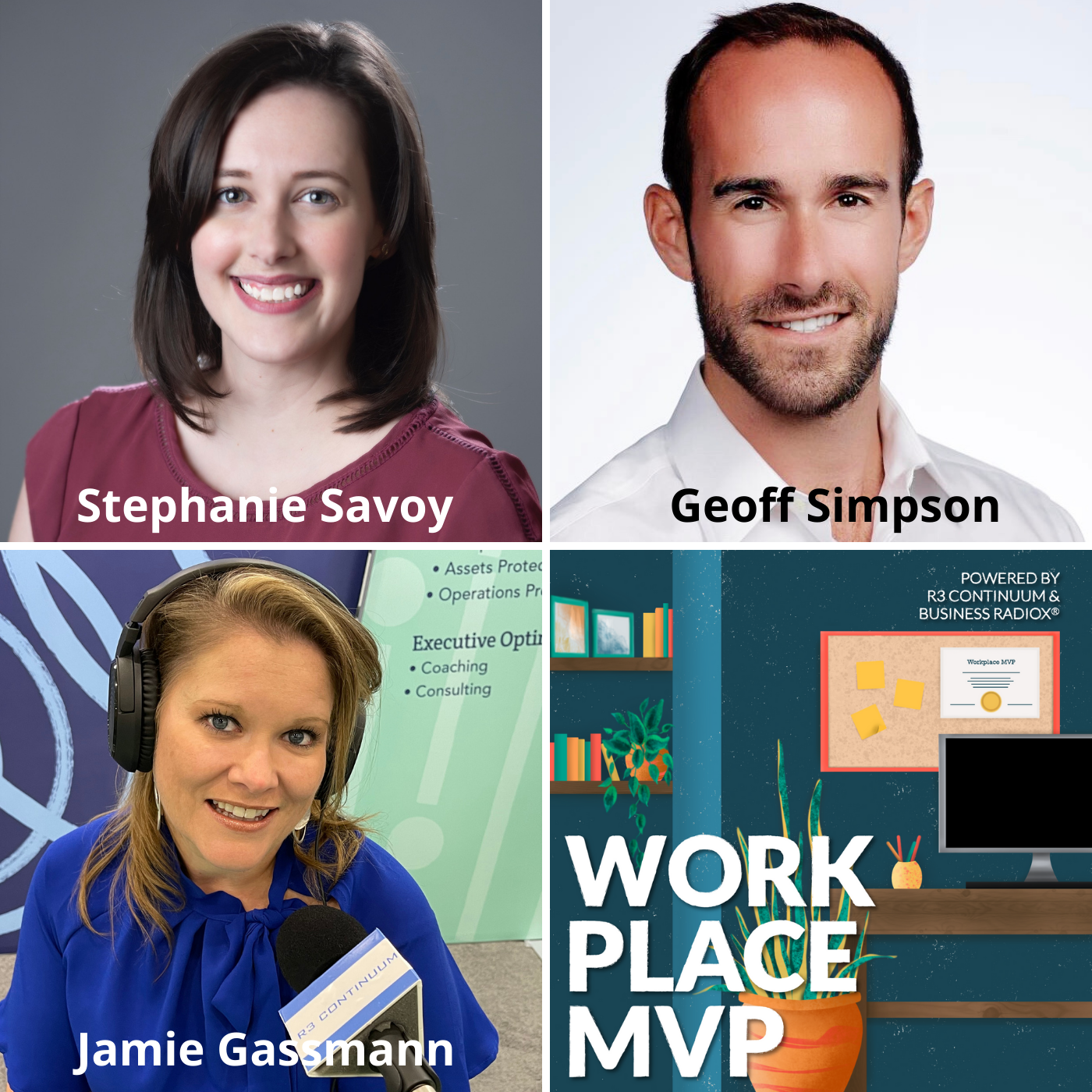
Managing leave of absence requests can be an overwhelming and complicated task for any company. Stephanie Savoy, Senior HR Manager at American Renal Associates, admits to using an “unruly” spreadsheet and relying on multiple sources to monitor changes in the law. She and Geoff Simpson with Presagia joined host Jamie Gassmann to talk about the challenges compounded by Covid, and the solutions offered by Presagia that helped American Renal Associates get a handle on their leave tracking and the confidence that they can remain in compliance. Workplace MVP is underwritten and presented by R3 Continuum and produced by the Minneapolis-St.Paul Studio of Business RadioX®.

American Renal Associates

American Renal Associates (“ARA”) is a leading provider of outpatient dialysis services in the United States. ARA operates more than 240 dialysis clinic locations in 27 states and the District of Columbia serving more than 16,900 patients with end stage renal disease. ARA operates principally through a physician partnership model, in which it partners with more than 400 local nephrologists to develop, own and operate dialysis clinics.

Company website | LinkedIn | Facebook

Stephanie Savoy, Senior Human Resources Manager, American Renal Associates

Stephanie Savoy, Senior Human Resources Manager, American Renal Associates

Stephanie Savoy, SHRM-CP is currently a Senior Human Resources Manager overseeing the Leaves Administration department at American Renal Associates (ARA).

With over 13 years in the human resources field, Stephanie has worked in non-profit biomedical research, higher education, and healthcare settings. Prior to ARA, she worked at the Massachusetts Institute of Technology in the Sloan School of Management as well as the Office of Resource Development. In addition to her expertise in leaves of absence, she has experience in a variety of HR facets including compensation, recruiting, organizational development, rewards & recognition, and D/I.

Stephanie continues to mentor and coach her staff and the entire American Renal leadership team on the leaves process and its operational impact on the organization.

LinkedIn

Presagia

Founded in 1987, Presagia has a long history of helping organizations solve complex business problems with easy-to-use solutions. Today, this means providing cloud-based absence management solutions that enable organizations to be more efficient, control lost time and risk, and strengthen compliance with federal, state and municipal leave and accommodation laws.
Their absence story began in 2006 with the acquisition of California-based AtWork Resources, a firm specialized in absence management best-practices. At this time, they also engaged the national employment law firm, Jackson Lewis, to help them identify and translate all of the federal and state leaves laws across the U.S. into technology.
Their goal was to create a software solution that would provide employers with the decision support needed to manage all laws compliantly, while also streamlining their processes. The result was the development of Presagia’s absence management platform, consisting of two integrated modules – Presagia Leave and Presagia ADA.
Company website | LinkedIn

Geoff Simpson, Vice President, Sales and Marketing, Presagia

Geoff Simpson, Vice President, Sales and Marketing, Presagia

Geoff Simpson holds a B.A. in Political Science from McGill University and has been with Presagia since 2004 in a variety of roles working on sales, marketing, and partnerships.

Working closely with companies ranging from a few hundred employees up to Fortune 500 and reviewing their issues and requirements has strongly positioned him to understand the needs of employers today while retaining extensive knowledge of Presagia’s technology.

He has authored articles, whitepapers and case studies on absence management best practices and presented at industry events.

LinkedIn


R3 Continuum

R3 Continuum is a global leader in workplace behavioral health and security solutions. R3c helps ensure the psychological and physical safety of organizations and their people in today’s ever-changing and often unpredictable world. Through their continuum of tailored solutions, including evaluations, crisis response, executive optimization, protective services, and more, they help organizations maintain and cultivate a workplace of wellbeing so that their people can thrive. Learn more about R3c at www.r3c.com.

Company website | LinkedIn | Facebook | Twitter

About Workplace MVP

Every day, around the world, organizations of all sizes face disruptive events and situations. Within those workplaces are everyday heroes in human resources, risk management, security, business continuity, and the C-suite. They don’t call themselves heroes though. On the contrary, they simply show up every day, laboring for the well-being of employees in their care, readying the workplace for and planning responses to disruption. This show, Workplace MVP, confers on these heroes the designation they deserve, Workplace MVP (Most Valuable Professionals), and gives them the forum to tell their story. As you hear their experiences, you will learn first-hand, real-life approaches to readying the workplace, responses to crisis situations, and overcoming challenges of disruption. Visit our show archive here.

Workplace MVP Host Jamie Gassmann

Jamie Gassmann, Host, “Workplace MVP”

In addition to serving as the host to the Workplace MVP podcast, Jamie Gassmann is the Director of Marketing at R3 Continuum (R3c). Collectively, she has more than fourteen years of marketing experience. Across her tenure, she has experience working in and with various industries including banking, real estate, retail, crisis management, insurance, business continuity, and more. She holds a Bachelor of Science Degree in Mass Communications with special interest in Advertising and Public Relations and a Master of Business Administration from Paseka School of Business, Minnesota State University.

TRANSCRIPT

Intro: [00:00:04] Broadcasting from the Business RadioX Studios, it’s time for Workplace MVP. Workplace MVP is brought to you by R3 Continuum, a global leader in workplace behavioral health and security solutions. Now, here’s your host, Jamie Gassmann.

Jamie Gassmann: [00:00:26] Hi, everyone. Your host, Jamie Gassmann, here and welcome to this episode of Workplace MVP.

Jamie Gassmann: [00:00:33] Navigating the various leaves of absence cases and laws can be complicated under normal circumstances. Well, over the last year and a half, employers have had to navigate anything but normal. In fact, the leave laws continue to change regularly, making it complex and difficult for H.R. leaders to stay current and knowledgeable across all the various state and federal leave laws. Combine that with helping your employees to understand what is available to them and what they need to provide to be eligible, and along with the navigation of supporting the daily needs of the workplace, H.R. leaders and business leaders have a lot to navigate.

Jamie Gassmann: [00:01:13] So, how do they find a solution that helps to ease the complexity and challenges with leaves of absence? And how can they stay current and on top of the constantly changing laws? And what are some best practice approaches to creating a seamless process in your organization?

Jamie Gassmann: [00:01:30] Well, joining us today to share their experience, both as an H.R. leader navigating the complexity of the leaves and as a solution provider, what they have seen work and not work, are Workplace MVP’s Stephanie Savoy, senior human resources manager for American Renal Associates, and Geoff Simpson, vice president of sales and marketing for Presagia. Welcome to the show, Stephanie and Geoff.

Stephanie Savoy: [00:01:56] Thank you so much. Happy to be here.

Jamie Gassmann: [00:02:00] So, let’s start out with our first Workplace MVP, Stephanie Savoy, senior human resources manager for American Renal Associates. Now, you mentioned on a previous call that you sort of fell into your H.R. career. Can you share with our audience your journey that you’ve taken with your career to this point?

Stephanie Savoy: [00:02:22] I did. Yeah. So, I think like most H.R. professionals, I definitely did fall into the H.R. world. I started my working career as a front desk receptionist at a biomedical research institute in Cambridge, Mass. I may have smiled at the right person. I landed up at MIT as an AA to an H.R. director and expanded my HR knowledge there over about eight years. Until the traffic into the city got a little bit too much for me, that’s when I found American Renal and I’ve been here for about five years now.

Jamie Gassmann: [00:02:59] Wonderful. It must have been one heck of a smile. So, tell us a little bit about what does American Renal Associates do and how big is the employee base, and just kind of any details you’d like to share about kind of what you navigate on a daily basis with that organization.

Stephanie Savoy: [00:03:17] Absolutely. So, American Renal is a provider of outpatient services for dialysis. We serve close to 17,000 patients with end-stage renal disease, and we have about 4500 employees. We have 240 clinics across the country. We are in 27 different states, including District of Columbia. So, our employee base is really varied. So, we have California, super employee-friendly; Texas; South Carolina; Massachusetts. We are all over the place. So, we definitely have to be flexible and be on our toes constantly.

Jamie Gassmann: [00:03:59] Yeah. Absolutely. It sounds like, especially when you’re navigating all those different states and having to be aware of what their rules are and their laws. So, in taking your role at American Renal Associates, what was the leave of absence management process like when you first came into the position?

Stephanie Savoy: [00:04:20] Oh, goodness. It was very, very manual. Looking back, we had multiple Word document templates for our eligibility and designation notices so that was for each and every leave situation you can imagine. We had to make sure we picked the right one. If there were any updates, we had to manually update all of our letters so that was very time-consuming.

Stephanie Savoy: [00:04:45] In addition to that, in order to track our leaves, we had an Excel spreadsheet, which over the years just grew to be giant and unruly. We just kept adding tabs for each year as each year went by. Funnily enough, we actually kicked the Excel spreadsheet once we moved to Presagia, and I tied it up with a nice, pretty bow, February 28, 2020. And then, two weeks later, the world just went upside down, so that was really great timing.

Jamie Gassmann: [00:05:20] Oh, my goodness. And what great timing. But before, you know, before you – with the Excel spreadsheet. So, obviously, there had to have been some kind of red flags you were seeing where you’re like this process is just not going to continue to work. But what were some of the kind of final, you know, “we really have to make a change”, like those final signs where you were like this is just not going to cut it going forward. What were some of those that were kind of presenting themselves that helped to kind of move in the direction of bringing on a software platform like Presagia?

Stephanie Savoy: [00:05:55] Yeah. So, we’re always looking for ways to be more efficient whether it’s saving time, saving money, making a better experience for my team and for our employees, not to mention the unruly spreadsheet kept freezing, you know, computers would just implode. It was really terrible.

Stephanie Savoy: [00:06:15] So, when I was tasked with, you know, taking a look at what can we do as a solution, I looked at different providers and services out there, and that’s when I found Presagia and they definitely offered the most robust solution for us. And not only did they have letters that would be automatically generated for each leave case, it was a tracking tool and best yet it was a compliance tool as well. Being in 20 different locations, it was wonderful to just put in someone’s details and then come up with all the information on what would apply for their specific situation.

Jamie Gassmann: [00:06:54] How did you do that beforehand? I mean, how did you – how would you keep up with like the leave laws? I mean, obviously, I know, and we’re going to get to talking about over this last year, a year and a half, you know how quickly laws continue to change. What was that like for your group prior to having a platform like Presagia? Like, how – what did you do?

Stephanie Savoy: [00:07:19] Yeah. So, it’s actually one of my favorite parts of my job is to keep up on all the regulations. I love to read. I love to just research. And so, we would rely on blogs that would have just kicked out emails every week with updates. We have outside legal counsel that we rely on to help us make sure that we’re in compliance.

Jamie Gassmann: [00:07:40] And then just kind of the news, too. We would just see the updates and be like, “Oh, we have a location in that state. We should probably look that up.” And then, you know, apply the different situations.

Jamie Gassmann: [00:07:55] That sounds very manual and time-consuming, but probably potentially a little risky to it. For some reason, you missed one clause or shift to that. You know, they changed. So interesting.

Jamie Gassmann: [00:08:07] So, now looking at, I mean, you said you tied your bow on the spreadsheet, which I’ve, you know, been in roles were the spreadsheet is the source. And then, somebody missed data sorts and everything is jumbled and you’re going, “Oh, my gosh, how do we reorganize that?” So, I can imagine what the complexity if something were to get out of sorts with, you know, where you’re managing your leaves of absence.

Jamie Gassmann: [00:08:33] So, looking at the last year, you know, you brought on Presagia right at the right time because obviously March is where a lot of organizations experienced, you know, various levels of different types of leaves, but also just changes in H.R. in general with, you know, remote work and things of that nature.

Jamie Gassmann: [00:08:52] So, talk to me about what were your leave volumes, you know? What have they been like, you know? And, did you experience a change within your organization? Because I know you mentioned before you have frontline workers, so people who would have been still, you know, accessible to the public during the last year and a half, and then you have probably some that are in a remote setting because they’re more kind of office working. So, talk to me a little bit about the dynamics of, you know, what it was like going through the last year and what kind of experience did you have with your volumes of leave?

Stephanie Savoy: [00:09:25] Yeah, definitely. So, we provide life-sustaining treatments to patients, so there’s no days off. We have to have people there administering that treatment.

Stephanie Savoy: [00:09:39] So, throughout the pandemic, it was, we need to step up for our frontline responders to deliver that treatment to our patients. Obviously, there were other situations going on where people may not have been able to be there. So, our leaves definitely increased.

Stephanie Savoy: [00:10:01] We saw pre-COVID about, you know, we were handling about 120, 130 leaves per month. At the height of the pandemic, probably in July 2020, we got to 201. It was varied reasons. You know, in the beginning of the pandemic, I think there was a lot of fear of the unknown. We saw people with underlying health conditions that if they were to get COVID, it would be really detrimental to their health and their livelihood.

Stephanie Savoy: [00:10:31] We saw COVID positive leave themselves and we saw child care leaves, too. You know, staff who maybe their children’s daycares had closed or their children’s school went remote and they had to be there to ensure that they logged in and got their education. It was definitely a test to the work-life balance scales.

Jamie Gassmann: [00:10:55] Absolutely. And so, looking at that, you know, you kind of mentioned a few of the common ones over the last year. You know, typically what are some of the common leaves or common reasons that employees are taking leaves from your experience, from what you’ve seen?

Stephanie Savoy: [00:11:11] From my experience, we usually see routine, planned surgeries, you know, unexpected injuries or illnesses, pregnancy. There’s always babies, which is the happiest leave that we can process. We love the baby pictures over here. So, those are most of the common types of leaves.

Stephanie Savoy: [00:11:31] In March 2020, we surprisingly saw an increase of military leaves, of extended military leaves, because of the National Guard. They got called. So, we saw a good amount of those come through and we’re seeing more anxiety and depression leave-related reasons. You know, just whether it’s directly related to COVID or indirectly related to COVID.

Jamie Gassmann: [00:11:58] And now, that we’re coming, you know, obviously we’re at the end of 2021, you know, still facing some of the same challenges that we started facing back in March of 2020. Are you seeing any shift in the types of leaves? Have they kind of moved in, you know, changed like all the kind of ups and downs that we’ve gone over the last year? Are you seeing that or is this kind of tapering out to be a little bit more consistent with depression, anxiety, and those types of leaves? Or is it, you know, what are you seeing?

Stephanie Savoy: [00:12:29] Yeah. We’re definitely seeing long-term effects of COVID, again whether it’s directly related or indirectly related. We are seeing more planned surgeries that get back on the schedules, which is a nice thing to see. You know, people are opening up their offices again and those are, you know, deemed okay to move forward with, and always babies, always babies.

Jamie Gassmann: [00:12:57] And that’s always a good thing, though. I agree with you. It’s always kind of fun to see the baby pictures. So, and obviously with that is the fast pace of law changing that’s happened both at a federal and a state level. So, how do you keep on top of ensuring that your organization is aware and following them? I know you mentioned the news, but I’ve got to imagine now with the Presagia solution, you have a better way to do that. Can you speak to that a little bit?

Stephanie Savoy: [00:13:31] Yeah. So, Presagia is great. They do keep up to date on the regulations. Things are coming out so fast and furious, and sometimes we’re working with Presagia to say, “Hey, have you seen this? Are you going to add that to the system?” And so, they have a compliance team themselves and we have a contact over there that we all kind of huddle together and say, “Okay, we saw this. How does it apply to us and when can we get this in the system?” So that’s been really great to just know that, okay, the system will let us know exactly all the new leaves and how it applies to our specific staff and their situations.

Jamie Gassmann: [00:14:09] Wonderful. Now, you also shared with me at a previous call that you have a motto that you’ve set for the last two years and you’re going to continue that motto going into 2022. Can you share with us your motto and why you have that as your kind of theme for the year?

Stephanie Savoy: [00:14:28] Absolutely. Yeah, for the years. I can’t believe that we’re on year three. I think pivot was a really big word in 2020. Mine is similar, but it’s patience and flexibility. Whether I’m asking that of my team to be patient and flexible with me, you know, as our workload increases, having patience and flexibility with themselves. You can – we only have so much time in the day and I’m not asking them to work nights and weekends if they don’t want to. If they want to, wonderful. I’ll take it. But I don’t want them – you know, I want them to have a really good work-life balance. So, the work is the work. You know, be patient and flexible with what comes in and just, you know, take your time. Do one thing at a time and just touch each case and tie it up at the bow and move on to the next one.

Jamie Gassmann: [00:15:20] Yeah. I love that. That’s a great motto for both professional and personal situations, especially, you know, going into the third year of some of the challenges we’ve been experiencing. So, thank you for sharing that with us.

Stephanie Savoy: [00:15:32] Thank you.

Jamie Gassmann: [00:15:33] So, now let’s shift to our second Workplace MVP, Geoff Simpson, vice president of sales and marketing at Presagia. Hi, Geoff.

Geoff Simpson: [00:15:43] Hello, Jamie. Thanks for having me.

Jamie Gassmann: [00:15:46] Absolutely. So, now you’ve been with Presagia for a while now. Can you share with us your career journey and how you’ve gotten to where you are today?

Geoff Simpson: [00:15:57] Absolutely. So, like with Stephanie, I kind of fell into the whole absence management H.R. world. I actually began with Presagia straight out of university, which is longer ago than I would like to admit at this point.

Geoff Simpson: [00:16:10] And at the time, we actually developed electronic health records for the sports medicine world. So, I began in marketing at the company, and at that time we were looking at a way to really get into the whole workforce management world. And, I worked with our leadership team, did a ton of research, and we found that there was just this huge gap in absence management and compliance with all the different leave laws out there. So, we work to really figure out what is the solution that we can provide to that market.

Geoff Simpson: [00:16:41] I then worked with the whole launch of the product, marketing of the product to eventually start working more on alliances as well, and then picked up sales, too. And that kind of led us to where we are today. Right now, I run sales marketing alliances.

Jamie Gassmann: [00:16:57] Awesome. Great story. So, tell us a little bit about what Presagia does.

Geoff Simpson: [00:17:02] Absolutely. So, we are a software company and we really focus on absence management and compliance with all of those regulations out there. And, if you think about in the U.S. alone, you have more than 500 federal state and local leave rules. We also cover Canada, and that adds about another 150 leave rules. So, there’s a lot out there.

Geoff Simpson: [00:17:24] And what we did is we actually built a Leave Rules Engine that contains all of those rules, and we did that in partnership with a large employment law firm who really helped us initially look at all the laws across the country and then figure out how do you translate those laws into technology and create solutions that really employers can use.

Geoff Simpson: [00:17:46] So, we’ve developed solutions now that go across all types of organizations that manage leave. You have our Presagia Leave Solution, which is really for typically employers with a thousand or more employees. We have our Leave Genius Pro Solution, which I’ll talk about a bit later, which is designed for small, medium businesses.

Geoff Simpson: [00:18:04] We have our Absence Compliance Engine, which is actually our rules engine, which we can license out to like software companies that want to build their own leave technology, as well as an H.R. solution for groups to provide leave administration services. So, again, software at the end of the day, but really just helping any company that needs to be able to manage leaves, accommodations, that whole absence management world.

Jamie Gassmann: [00:18:27] Wonderful. And, now you kind of – you’re touching on this but supporting many organizations through your software and your leave of absence management and their leave of absence management. So, when they first come to you, what are some of the challenges that you commonly hear that workplaces are experiencing when it comes to their leaves of absence?

Geoff Simpson: [00:18:48] Okay. So, I think this goes back a little bit to what Stephanie was saying, where there were spreadsheets that were being used. And, I think this is really common. There’s still a lot of employers who are managing leaves and absences with spreadsheets and sticky note and Outlook tasks and that very manual world.

Geoff Simpson: [00:19:10] So, the issues that you tend to see there, there are a number of them. So, there’s the efficiency side of the equation. So, it just takes a lot of time to break out a calculator and calculate does an employee have enough hours’ work to actually be able to take things like the FMLA. They have to fill in letters and all the forms need to be sent out. Huge, huge, time-consuming process. There’s compliance.

Geoff Simpson: [00:19:33] So, not everyone loves to research the laws like Stephanie, but you actually do have to always make sure you’re up to date on all those laws out there across all the jurisdictions you have your employees in.

Geoff Simpson: [00:19:47] High absence rates. That’s another piece of the equation. So, if leave is not really under control, quite often employees are taking more absences than maybe they’re even entitled to. Maybe it’s that some employers we’ve talked to they’re forgetting to return employees to work on time, so people just stay out, which has productivity impacts.

Geoff Simpson: [00:20:07] There’s poor visibility into trends. So, if you’re managing things on spreadsheets, you’re not really going to be able to report on your absence trends. So, where are you having more lost workdays? Are people not reporting leaves at all? That type of thing.

Geoff Simpson: [00:20:22] And then, also there’s the employee experience piece of the equation. So, oftentimes when employees need to take or when an employee needs to take leave, it’s oftentimes a major life event and they want to have some hand-holding going on there. And if you’re too focused having to just keep up with sending letters out and doing the tasks you have to, you’re not really able to provide that hand-holding that really leads to a better employee experience. So, those are some of the issues we see.

Jamie Gassmann: [00:20:52] Yeah. And I mean, I can see, like, you know, if there’s an intermittent leave, where they’re, you know, on, you know, part of the time off, part of the time, you know, that could get really complicated to track as well, and how do you manage that.

Jamie Gassmann: [00:21:06] So, but from an employee perspective, you know, a lot of the times employees aren’t aware of what they’re eligible to take. And to your point of the hand-holding, they’re probably not even aware of how to even handle that process. I mean, is that some of the things that you’ve heard from the employers you’ve worked with?

Geoff Simpson: [00:21:25] Definitely. And I can say just personally if I wasn’t in this world, I wouldn’t have a clue about the different leave laws that are applicable to any leave requests that I would want to make. So, I think we hear that quite a bit, that employees, they need support. They need someone who can really guide them through this process.

Jamie Gassmann: [00:21:42] Yeah. Wonderful. So, talking about the process, from your perspective, why is it so important for it to go smoothly for both the workplace and for that employee? You know, what kind of impacts can it have overall? I know you mentioned productivity. But what are some of the other impacts it can have on the organization?

Geoff Simpson: [00:22:03] Yes. So, we’ve kind of already touched on this a little bit, but one of the big ones is non-compliance. So, if you’re not knowing what laws are out there or what the laws actually provide, then you may not give employees what they’re actually entitled to, which obviously has an employee experience impact but it also has the impact of you’re not compliant with the law, which can put you at risk of backlash.

Geoff Simpson: [00:22:28] Oftentimes, letters are not set on time. So if you’re struggling, you just keep up with the very manual process. Getting things out on time and making sure you’re checking all those boxes to follow the legally required timeline may not be happening. And, again, this can just lead to lawsuits, which can be very costly. Even if you win them, they’re costly to hire a counsel and so on.

Geoff Simpson: [00:22:51] There’s also just excessive absences. So, employees staying out longer than they should, as we mentioned. Productivity impacts there. Also, just lacking lower workforce morale when other people are having to cover for an employee who is out and out for an unexpected amount of time.

Geoff Simpson: [00:23:10] Intermittent FMLA abuse, which you just met brought up, that’s a huge problem. So, intermittent FMLA is that unpredictable FMLA. You don’t know when someone’s going to be taking it, and you need to be able to stay on top of those cases to make sure that employees really are taking the amount that their healthcare providers said they need.

Geoff Simpson: [00:23:29] And then, there are also just some costs around excessive absences. So, productivity we talked about. But there’s also the cost around benefits. So, when employees are out on leave, you’re having to pay for benefits continuation and so on and they’re not actually – they’re not working at that point in time.

Geoff Simpson: [00:23:45] There’s also just the whole inefficiency piece. So, managing leave, very time-consuming, as we’ve already mentioned.

Geoff Simpson: [00:23:55] Also, oftentimes which I’m hearing that leave managers, in struggling to keep up, quite often are putting in overtime just to be able to handle the volume of the cases out there. So, it sounds like Stephanie has a better handle on that and makes sure that that’s not happening. But oftentimes there are employers when they’re still doing things very manually, they’re putting in overtime just to stay on top of things.

Jamie Gassmann: [00:24:18] Yeah, which can ultimately lead to burnout and stress in that department. So, it sounds like there’s definitely a lot of areas of ripple effects that can occur when these are poorly managed.

Geoff Simpson: [00:24:29] Yes.

Jamie Gassmann: [00:24:29] So, looking out over this last year, and I know Stephanie kind of talked to some of the interesting, you know, changes and leaves that she saw as a result of the pandemic and some of just the, you know, the shifts and turns that came as a result of us moving through the last year, year and a half, and now into the third year of this. From your knowledge of what you’ve seen with clients or just monitoring the absence management industry, what are some of the challenges that workplaces had to face with their leave management processes? And, I mean, I’m guessing some of it is just the constant change in regulations. But can you talk to some of the things that you were navigating as an organization trying to support workplaces with the leave management processes?

Geoff Simpson: [00:25:19] So, really what we were seeing there, and first off, there were a lot of challenges across the board, but really some of the things [inaudible].

Jamie Gassmann: [00:25:27] That is so true.

Geoff Simpson: [00:25:28] Absolutely.

Jamie Gassmann: [00:25:29] So true.

Geoff Simpson: [00:25:29] So, one of the things we were seeing that a lot of our clients were having was they were just downsizing. So, either people were being furloughed, downsized, whatever it may be, that led to oftentimes the H.R. and benefits teams who were responsible for managing leave, they now still had to do the same stuff as they did before, but do it with fewer actual people resources. Combine that with leave volumes went way up. So, suddenly people were taking more leave, which means you actually have a ton more case management to do with, again, fewer resources.

Geoff Simpson: [00:26:07] And then the other piece, which you just touched upon was really just around there were so many laws coming out. So when the pandemic first hit, there was an initial onslaught of, I think it was between like 10 or 20 different laws at federal state and local levels that came out. And there’s kind of the idea I think initially that that would be it. But then those laws oftentimes they sunset. Sometimes they got unexpectedly extended. Sometimes they were made permanent. Then more laws kept coming out over the last year and a half.

Geoff Simpson: [00:26:39] So, it’s really just been one of the biggest challenges that we’ve really been working to support. It’s just making sure that we’re always keeping our systems up to date with all those laws so that in turn our customers who really are stuck having to manage these are able to stay up to date with them as well.

Jamie Gassmann: [00:26:56] Yeah. Because I can imagine, you know, employees that are researching on their own with maybe not as much of the knowledge as like what somebody who’s familiar with that compliance area. It could get – I’m guessing, it could be really confusing for them. And so having clear information that’s, you know, that they could speak to those employees, I got to imagine has been a helpful hand navigating the different, you know, absence management challenges.

Jamie Gassmann: [00:27:30] So, looking at your organization, you just launched an updated version of a software that supports small to midsize businesses. So, can you talk a little bit about that and share some information around what that is and how it was created, and anything else you want to share on that?

Geoff Simpson: [00:27:50] I can. So, this is actually a really interesting one. So, I mentioned Leave Genius Pro a little bit earlier. This is the new product that we launched. And what it comes out of is we recognize that small, medium businesses, so groups that really have under a thousand employees or so, they really didn’t have any absence compliance solution that was available to them. Oftentimes, they’re too small to be able to afford to outsource, and then they’re also too small to be able to really afford the enterprise solutions that we’ve seen in the market, and that largely just comes down to cost and the resources available.

Geoff Simpson: [00:28:31] So, enterprise solutions, because they’re very complex, they’re integral system integrations that go on their full implementations go on, there’s a cost associated with that. There’s also a requirement to bring in things like I.T. resources, potentially legal resources, and others to really be able to implement these solutions.

Geoff Simpson: [00:28:51] So, the question for us became, how do you provide really a complex compliant solution to groups that can’t actually afford a comprehensive software platform? It’s not so easy.

Geoff Simpson: [00:29:04] So, we have our rules engine. And, what we did was we worked to build an incredibly easy-to-use web app called Leave Genius Pro. It’s designed to work on all devices, so your computer, your phone, your tablet, whatever you want to use it on. And, what we saw was with the small and medium business world, they need to comply with the regulations. But due to their size, they’re not going to have the same volume of leave cases that a larger employer is going to have. So, their main concern is around compliance versus when you’re talking about a larger employer that concerns are going to be compliance as well as gaining efficiencies to be able to just keep up with all the cases.

Geoff Simpson: [00:29:52] So, what we could do is we could create a tool where you remove some of the more costly items like system integrations, system training, and all those things, and just package it up in a really easy to use system that has the basics of leave administration, but also access to the entire Leave Rules Engine.

Geoff Simpson: [00:30:12] And then, we were able to basically get the price point down to a thousand a year. So, it’s something where, quite frankly, my cell phone bill is more in a given year. So, it’s something that really those small and medium businesses can actually afford and really get that compliance support that they need.

Jamie Gassmann: [00:30:29] Yeah. I mean, honestly, if you think of a thousand a year compared to a lawsuit for not complying with one of the laws, you know, you’re really – it’s an investment into kind of risk management in a way in some degree.

Jamie Gassmann: [00:30:43] So, I mean, and I got to imagine, just the thought came to me thinking about, you know, as workplaces continue to change the work environment going forward and we have more and more of this hybrid or more and more of this remote type setting, and you have employees who now can work really from anywhere. So, employers that maybe we’re used to, you know, all my employees are in one office location in this particular state that’s all I have to navigate, are now being, you know, having to kind of rethink that and realize that they need to stay compliant when they have a remote worker in a different state. Would that be correct from your perspective?

Geoff Simpson: [00:31:24] It really is going to depend a bit. In some cases, yes. In some cases, no. So, this is a thing where every employer should really talk to their legal counsel and see how they want to interpret it because oftentimes the consensus will be that it’s the office that the employee reports back to. That is going to be where essentially where the laws are applied from. But, sometimes that varies. So, it’s really about talk to legal counsel and make sure you’re covered on that.

Jamie Gassmann: [00:31:55] Yeah. Absolutely. And then circle back to Presagia to get a platform that helps you to manage it if you are needing to be in compliance.

Geoff Simpson: [00:32:04] Definitely.

Jamie Gassmann: [00:32:05] From your perspective, what are some of the benefits to leveraging a leave management platform?

Geoff Simpson: [00:32:12] So, these are, again – these are things that we’ve touched upon a bit already, but it really comes down to compliance, just efficiency and time savings. So, trying to process those letters faster, do those calculations faster, have the system track entitlement usage alert you when things are coming due or when things like entitlement exhaustion happen. Control of our absence is a big one. That visibility into your trends and risks, so being able to say in Division A I’m seeing a spike in lost workdays over the past year and things like that. And then, just again the improved employee experience is another huge benefit.

Jamie Gassmann: [00:32:56] Great. So, looking at the work that Presagia does and what you do for the company, what would you say you are most proud of?

Geoff Simpson: [00:33:07] Okay. That’s a good question. So, I would say what I’ve been most proud of is really listening to employers and working with them to find solutions to their complex problems. And, it’s really been about just throughout my career, I’ve been working with them to really try and understand their challenges and identify solutions. And then, going a step further, what I’m proud of as more a company is that we’ve really worked to constantly innovate and take all of these different challenges that employers are seeing in the market and really create solutions that are going to help make their lives easier through just being able to better manage absences and comply with all those laws out there.

Jamie Gassmann: [00:33:57] Wonderful. Always good to hear what people are most proud of. That’s a fun question to ask.

Jamie Gassmann: [00:34:03] At this point, we’re going to hear from our show sponsor. So, Workplace MVP is sponsored by R3 Continuum. And R3 Continuum is a global leader in providing expert, reliable, responsive, and tailored behavioral health disruption and violent solutions to promote workplace well-being and performance in the face of an ever-changing and often unpredictable world. You can learn more about how R3 Continuum can tailor a solution for your organization’s unique challenges by visiting r3c.com today.

Jamie Gassmann: [00:34:36] So, now I’m going to bring both of our guests back for some questions and have a little conversation around this topic a little further. So, in your opinion, what would be some of the telltale signs that it’s time for an organization to look into a resource for managing their leaves? Geoff, let’s get that perspective from you first.

Geoff Simpson: [00:34:57] Okay. Well, I’m probably a little biased here being the software guy, but I’m going to say everyone needs a solution for managing their leaves. So, but going a step further, if you’re still managing these manually, you really need to change and get a system in place. There are systems out there for all sizes of employers.

Geoff Simpson: [00:35:18] The other thing that I oftentimes will see being on the software side of the equation is there will be companies that have outsourced their leaves. And, what they will decide at some point is that they don’t have enough control over the leave process and feel that their employees are unhappy with the experience they’re receiving. So, at that point in time, they want to look and see how can we actually bring this back in-house to really up that level of customer service to their employees, then they start to look for technology.

Jamie Gassmann: [00:35:47] Great. Great answer. And how about you, Stephanie? I know you touched on this a little bit when you were sharing your own personal story. But if you were going to provide kind of a checklist for other H.R. leaders like yourself, what would you say the telltale signs are?

Stephanie Savoy: [00:36:03] Yeah. I think we mentioned this before. Missing deadlines. You know, sending out those eligibility notices and designation notices. The regulations are very clear as to the deadlines that you have to do that by. So if you’re missing deadlines, that’s really a red flag that you have to look into your process a bit further. But also turnover, burnout, and just taking advantage of your resources on your team. If somebody wants to free up their time to learn something else, you know in H.R. world, well, if there’s a solution that can free them up, that’s really wonderful.

Jamie Gassmann: [00:36:41] Yeah. Absolutely. It gives them opportunity to continue to grow in their role and then the organization. That’s great, a great tip to put on there.

Stephanie Savoy: [00:36:48] So looking at, you know, obviously, you know, as an H.R. leader, realizing you’ve got a need for an external platform or an external vendor or anything like that to help kind of manage that process, there’s going to be a cost that’s associated with it. So, you know, what recommendations do the both of you have for how a leader might put together kind of they’re basically, you know, their best case to an executive team for getting approval to move forward with bringing that solution on to help manage the claims? So, Stephanie, do you want to take that on?

Stephanie Savoy: [00:37:29] Yeah. Absolutely. I think it’s always helpful to speak the same language as your leadership team, so find out what really drives them. For us, it was to get down to the bottom dollar. What are we wasting resources on? How can we make that more efficient?

Stephanie Savoy: [00:37:48] So, I had my team track their time. How long does it take to check someone’s FMLA eligibility to get those hours? Look at the leaves in the past year. How long does it take to do one letter? And then multiply that out by a month, by a year, and just say this is the amount of money that we are spending right now. This is what we’re projecting and nobody could, you know, predict COVID. So, but, you know, this is what we’re projecting for increase in leaves and this is how we can save resources. We can save our team and really just be better for our staff members in the field.

Jamie Gassmann: [00:38:29] Great. All right. How about you, Geoff?

Geoff Simpson: [00:38:32] Yeah. So, I think actually Stephanie’s approach was really good. I think at the end of the day numbers tell a great story, and that’s a huge piece of the equation when it comes to making the case for putting technology in place.

Geoff Simpson: [00:38:45] I would just add that you should try and work with your vendors. So, if you don’t know, as much as Stephanie on kind of figuring out the numbers side, vendors have done this before. So, they can really help you articulate why you need a solution and also just the path forward on how to implement it.

Geoff Simpson: [00:39:02] At the end of the day, you need to basically build a business case. So, identify your specific challenges, be it compliance, efficiency, leave spikes, whatever that may be. Map out how you’re doing things now. And then, also just identify the gaps where you’re seeing there are issues and then determine how a solution is actually going to fill those gaps. From there, it’s about that ROI members piece that Stephanie was mentioning.

Geoff Simpson: [00:39:29] So, this can come in different forms. So, it could be that you’re looking at lost workday reductions, which then impact productivity and can lower your absence costs and things like benefits continuation. It could be about reducing your leave administration overhead so that efficiency and not spending as much time on each step in the process.

Geoff Simpson: [00:39:49] It could be around explaining just the cost of a lawsuit due to non-compliance, or just looking at how many queries you’re having to make to your legal accounts in a year about actual leave laws because there’s usually a cost associated with that.

Geoff Simpson: [00:40:02] And then, to Stephanie’s point, knowing your audience. So, a CFO is going to be very much focused on things like financial savings, whereas if your legal counsel is involved, they’re going to care more about compliance.

Geoff Simpson: [00:40:16] And then, from there, you need to figure out what is the path forward and be able to really explain it. So, what’s the cost going to be? What’s the implementation process going to look like? What are the resources that you need to bring in, like I.T., to be able to make sure that it’s going to be a successful project?

Geoff Simpson: [00:40:36] So, really it comes down to making sure you do your research and then really just clearly demonstrating that there’s a reason that you need to make that change.

Jamie Gassmann: [00:40:46] Yeah. Great advice. And, you know, and obviously, it’s timely because, you know, we talked about, you know, the last two years of the pandemic and kind of going into 2022, we still have some of that lingering and still continuing to present itself as a challenge.

Jamie Gassmann: [00:41:03] So, for our audience, you know, looking into 2022, from your perspective, what do you think it’s going to look like from a leave/absence management perspective for organizations? Geoff, why don’t you go ahead and kick us off?

Geoff Simpson: [00:41:27] All right. I’ll jump in there. So, I think to take it back a step, 2020 was a year of just trying to keep up. So, everyone was whacked in the face with this, and budgets were cut, teams shrunk, leave volumes went up, new laws came out. It was all about just do what you can and keep it going. 2021 when budgets actually came back. What we saw was a huge surge in people really looking for solutions to address leave management. And I think we’re going to continue to see that.

Geoff Simpson: [00:41:59] I think in the coming year, one of the things we’re all kind of, I think all employers are a bit worried about right now is the whole concept of the great resignation. And, a lot of employers are really trying to figure out how can we focus on the service level that we provide to our own employees to make sure that they’re happy, they feel valued, and so on.

Geoff Simpson: [00:42:24] So, I think there’s going to be a trend in looking for solutions that are going to really help employers achieve this. So, just being able to really up the level of care. I think we’re also going to keep seeing more leave laws come out and leave laws get extended.

Geoff Simpson: [00:42:41] So, I think in the next year, it’s going to be all about still paying attention to paid, unpaid leaves that keep adding more complexity to the equation.

Geoff Simpson: [00:42:51] Vaccination laws. They’re a little bit of a curveball. No one quite knows how to handle them just yet. But these are a piece where their lead management impacts are also accommodation impacts. So, I’ve heard many employers who are seeing accommodations pop up related to vaccinations, nonvaccinations, and so on.

Geoff Simpson: [00:43:12] And the other piece that keeps being an ongoing trend is ADA accommodations. So, as the law broadened, as the ADA kind of the law and the term and the definition of disability broadens and as employee awareness of the law has also grown, more and more there are requests for ADA accommodations, be it leaves or others. And I think that’s going to continue. Especially with the ongoing pandemic happening, we’re going to see more and more accommodation that’s going on.

Jamie Gassmann: [00:43:46] How about for you, Stephanie? What are some of the things you predict could 2020 would look like?

Stephanie Savoy: [00:43:52] Yeah. I echo everything Geoff said but highlighting the accommodations. Definitely, I think staff members are more familiar with the accommodation process going through 2020, and they’re more willing to speak up and say, “Hey, I need this to be able to do my job better.”

Stephanie Savoy: [00:44:11] Personally, we’re seeing increase in just accommodation requests, whether it’s, you know, work from home, medical marijuana. We’re definitely seeing an increase to all of those. So, we’ve actually just launched the accommodation module within Presagia so we’re looking forward to launching that, and definitely the vaccination as well religious and medical accommodations and tracking those and responding to those. So, that’s definitely going to be a hot topic for 2022.

Jamie Gassmann: [00:44:45] Very interesting. So, if you could give any piece of advice to our listeners, what advice would you give? And Stephanie, we’ll go ahead and start with you.

Stephanie Savoy: [00:44:54] Sure. So, I have a saying up on my wall. You can’t make everybody happy. You’re not pizza. And I think that’s really important to keep in mind. You know, as long as you treat people consistently and fairly and with respect, you’re not – not everybody is going to like what you have to say and that’s okay. You have to be okay with what you’re saying and, you know, be true to yourself and your policies and your company. So, you know, again, you’re not pizza. You can’t make everybody happy.

Jamie Gassmann: [00:45:25] I’m going to have to steal that one. I love that. That’s great. You have some great mottos. How about you, Geoff?

Geoff Simpson: [00:45:32] I mean, as somebody who had pizza for dinner last night, I can definitely attest to pizza. It really does make you happy. I want to say just not to sound like a broken record, but it’s about finding a compliance solution.

Geoff Simpson: [00:45:47] So, at the end of the day, there are just too many laws out there for any person to stay up to date on all of them so find a compliance solution. And also when you start looking, don’t be afraid to ask vendors for support as you go down this path, especially with things like helping to build a business case and figure out how to actually sell essentially the concept of a solution in-house.

Jamie Gassmann: [00:46:09] Wonderful. You both have shared some great information along with some great mottos for today, making all of our listeners hungry for pizza now. But if our listeners wanted to get a hold of you to get more information or ask questions, how can they do that? Geoff, do you want to go ahead and start that?

Geoff Simpson: [00:46:30] Yes. Absolutely. So, easiest thing is just to email me. My email is gsimpson@presagia.com. You can also always go to our website, presagia.com, and submit a request through there and it will definitely make its way to me. And I’m always happy to answer any questions, help anyone out with anything related to absence management.

Jamie Gassmann: [00:46:49] Great. And how about you, Stephanie?

Stephanie Savoy: [00:46:51] Yeah. I’m on LinkedIn. I’m happy to connect with anybody who wants to chat more about leave of absences. So, Stephanie Savoy at LinkedIn.

Jamie Gassmann: [00:46:59] Wonderful. Well, thank you both so much for being on our show and letting us celebrate you, and for sharing your stories and great advice with our listeners. We truly appreciate you being a guest. So, thank you both.

Stephanie Savoy: [00:47:11] Thank you so much.

Geoff Simpson: [00:47:12] Yes. Thank you.

Jamie Gassmann: [00:47:14] Yeah. And we also want to thank our show sponsor, R3 Continuum, for supporting the Workplace MVP podcast. And to our listeners, thank you for tuning in. If you’ve not already done so, make sure to subscribe so you get our most recent episodes and other resources. You can also follow our show on LinkedIn, Facebook, and Twitter at Workplace MVP. And if you are a Workplace MVP or know someone who is, we want to know about it so email us at info@workplace-mvp.com. Thank you all for joining us and have a great rest of your day.
 

Tagged With: American Renal Associates, employee leave, Geoff Simpson, HR, Jamie Gassmann, Leave Administration, leave law, Presagia, R3 Continuum, Stephanie Savoy, Workplace MVP

Top 10 Human Resource Mistakes in Dental Practices

October 29, 2021 by John Ray

Top10DentalHumanResourceMistakesDLREpisode23Album
Dental Law Radio
Top 10 Human Resource Mistakes in Dental Practices
Loading
00:00 /
RSS Feed
Share
Link
Embed

Download file

Top10DentalHumanResourceMistakesDLREpisode23Album

Top 10 Human Resource Mistakes in Dental Practices (Dental Law Radio, Episode 23)

As a rule, Stuart Oberman observes, HR in the dental practices he works with is “non-existent,” and remediating those lapses and blunders can be quite costly. So what are the top ten mistakes he sees in his work, and how do those problems get fixed? Use this episode of Dental Law Radio to gauge some areas of improvement your practice may require. Dental Law Radio is underwritten and presented by Oberman Law Firm and produced by the North Fulton studio of Business RadioX®.


TRANSCRIPT

Intro: [00:00:01] Broadcasting from the Business RadioX Studios in Atlanta, it’s time for Dental Law Radio. Dental Law Radio is brought to you by Oberman Law Firm, a leading dental-centric law firm serving dental clients on a local, regional, and national basis. Now, here’s your host, Stuart Oberman.

Stuart Oberman: [00:00:25] Hello everyone and welcome to Dental Law Radio. Today’s topic, H.R. I’m going to start off by saying that, as a general rule, H.R. in our dental practices is nonexistent. We run into a lot of issues regarding H.R. in our dental practices. So, what’s the topic for today? Avoid the Top Ten Dental Human Resource Mistakes.

Stuart Oberman: [00:00:57] So, I talked about before that COVID-19 exposed a lot of issues regarding H.R. Mainly, it was nonexistent. So, going forward with that, we’re seeing a little bit of improvement, but not a lot, not enough that I feel comfortable, especially with statistics regarding the Department of Labor and the increased scrutiny of the Fair Labor Standards Act.

Stuart Oberman: [00:01:25] So, a recent survey came out from the Department of Labor that 70 percent of employers are violating the Fair Labor Standards Act. If you don’t know what that is, then you need to, honestly, listen closely. You need to join our email lists, because the Fair Labor Standards Act is under federal scrutiny right now to tighten that up from the employment side.

Stuart Oberman: [00:01:55] So, let’s take a look at what are the most common mistakes. I want to keep this simple, because, again, this can very easily go down a rabbit hole. Progress is short steps, especially on the H.R. Side. You don’t have to recreate and reinvent the wheel. Just take small steps. One of the biggest questions is, number one, failure to follow employment policies and procedures.

Stuart Oberman: [00:02:22] So, I’m talking to a doctor yesterday and he’s talking about a hygienist who is off of work. She was in an accident in a totally different state that I’m in, Georgia. And this is a doctor up north. And he was outlining how and what she was not doing, what he wanted done. Point blank question, “Doctor, does she sign a nondisclosure?” “Nope.” “Doctor, do you have an employee manual?” “Nope.” “Are there any internal documents that govern employee conduct?” “Nope.”

Stuart Oberman: [00:02:59] So, the first thing I thought to myself and I didn’t say this out loud was, you’re dead in the water. You’re just dead. I mean, it’s damage control as to what it’s going to look like. So, what do we do? You have to follow policies and procedures. You have to – I can’t even stress this enough. I feel like getting up on the table and screaming. You have to have a policy manual.

Stuart Oberman: [00:03:25] Now, I looked at one this morning, it’s 30 pages. It’s better than nothing. But we’re going to have to beef that up a little bit. They’re a little bit out of compliance with some issues, so it’s probably going to be 70 or 80 pages. By the time we get through the job descriptions and everything else, we’ll be about 100. That’s the first step, is, you’ve got an employee manual.

Stuart Oberman: [00:03:43] That doctor yesterday, dead in the water. Forget about it. It was a short conversation. He wasn’t happy with the answer that I gave him, which was to protect him going forward.

Stuart Oberman: [00:03:57] Number two, failure to keep good records. When you have a Department of Labor audit, State or Federal, if it is not in writing, if it is not in a file, it never happened and you never enforced it. One thing I would strongly recommend we do is that for each employee, you have two separate files. The professional file, which is the credentialing file and regular employment file. And I said this before on previous podcasts, never ever, ever in your life let your employees control their own personnel file. Never. Keep good records.

Stuart Oberman: [00:04:40] If you keep good employee records, then you are more likely to succeed in the Department of Labor audit, OSHA audit, and other State and Federal audits, because you’ve got the documentation. You know, as we say in the board complaints, if it wasn’t in writing, it never happened. So, writing is critical.

Stuart Oberman: [00:05:07] So, one thing our doctors do not do, number three, failure to conduct performance reviews. In today’s world where turnover is greater than ever – and I was reading a publication, it’s called Boomerang. The employees that left on the mass exodus are going to now want to start coming back – the question is, do you hire those employees back? That’s an individual question that you’ve got to answer for yourself. So, are you evaluating your employees? Do you have a valuation process on a monthly, quarterly, or yearly basis?

Stuart Oberman: [00:05:47] Because if you’re going to fire an employee and you have no performance reviews, you’re already behind the eight ball. You’ve got to provide constructive criticism. You have to jointly discuss problems and concerns. And then, you’ve got to document it. If you’re going to fire an employee, the next thing is you’re going to get slapped in the back of the head with the Americans with Disabilities Act allegation or EEOC, Equal Opportunity Employment Commission, lawsuit or complaint. And you have no documentation, you might as well open up your checkbook.

Stuart Oberman: [00:06:20] Number four is a growing concern among our dental practices, failure to follow harassment and discrimination policies. This is the fastest growing segment of problems in our dental practice across the board, small, large, large scale, doesn’t matter. Harassment and discrimination policies, in plain English, you better have a policy for that. It better be in your employee manual. And you better know how to deal with the complaint on either one of those fronts, harassment or discrimination policies.

Stuart Oberman: [00:06:57] So, in today’s world, you also probably should obtain discrimination harassment policy and contact your local insurance broker for those particular coverages. But you got to have a plan. It’s got to be written. And you’ve got to have a procedure in place to enforce it if you have complaints.

Stuart Oberman: [00:07:16] Number five is a growing area of concern as far as the Federal Fair Labor Standards Act goes. Number five, failure to pay overtime to nonexempt employees. So, the law is constantly changing, states are constantly changing. You have to keep up to date as to what exempt and nonexempt is in your state. If you do not have this documented, I will guarantee you, you will be slapped hard by the State or Federal Department of Labor. States are actually worse than the IRS, especially if your employees complain on their whistleblower statute, State or Federal.

Stuart Oberman: [00:07:59] So, again, you have to understand what the Fair Labor Standards Act is, how that applies. In January, what President Biden said as far as enforcement goes and regulatory concerns.

Stuart Oberman: [00:08:15] A gray area now in the news, creating a perception of retaliation. So, I’m not saying nothing is confidential. It’s all in the news. Whistleblower came forward on Facebook, that’s common knowledge. So, in your practice, you have to have specific policies in place that if an employee complains, they will not be retaliated against, especially if you are allegedly violating Federal Law, OSHA, HIPAA, Department of Labor, whatever it may be.

Stuart Oberman: [00:08:52] There are very specific whistleblower statutes out there that if you penalize an employee for complaining to the State or Federal agency, you can be amazingly sanctioned – and I know that’s not even a good sentence. But you will get slapped. And then, you got to come on the Federal Whistleblower Statute, which is never ever, ever a good thing.

Stuart Oberman: [00:09:18] So, as employees are quitting, as employees are being fired, laid off, one thing you have to consider, number seven, your failure to consider the impact of a layoff. The days are gone where you simply fire an employee and not worry about anything. In today’s world, you have to prepare for a layoff or a fire. One thing you have to do – and I say this all the time when I speak and I tell our clients this on our calls – you have to have a nondisclosure agreement. You have to have a cell phone, social media, and internet policy.

Stuart Oberman: [00:09:59] One thing your employees will do if you fire them, they will go straight to the internet and then you have absolutely no recourse to prevent that, unless you have these nondisclosure confidentiality agreements. Your employees are going to go to three places, OSHA, HIPAA, Department of Labor for complaints. How do you deal with that? How do you deal with an employee being fired in wanting money for severance? Are you prepared to sign a release?

Stuart Oberman: [00:10:31] A complaint that is filed by an employee never ends, it seems like, once a government gets involved. If you can resolve a case with your employee prior to any litigation complaints being filed – and that includes OSHA, HIPAA, and Department of Labor, where your employees are going to go if they have problems – get the case resolved, get a severance agreement in place, and get that employee to sign a release. If that employee goes under bad terms, there’s a pretty good chance you’re going to have an ongoing problem.

Stuart Oberman: [00:11:12] One of the biggest areas that we try to take a look at, under number eight, is the failure to manage or resolve conflicts before litigation. Get the problem resolved prior to the employee leaving or litigation. Because once you step into that arena, it is a long and expensive time consuming process that you will live with for a long, long time.

Stuart Oberman: [00:11:44] In today’s employment world, you have to consider, number nine, the Americans with Disabilities Act and the Family Medical Leave Act and, also, Employee Pregnancy Act. So, the Americans with Disabilities Act applies to a specific number of employees. Every decision that you make, hiring and firing, has to be with that in mind. And under the Family Medical Leave Act, FMLA, that is 50 employees or over.

Stuart Oberman: [00:12:22] Now, what happens is, our doctors say, “Well, you know, in three or four practices and I got them all sectioned out. And I got ten employees here. I got 20 here. I got ten here. So, all my practices, I don’t have 50, but combined I have 80.”

Stuart Oberman: [00:12:36] So then, you get a question as to whether or not they are closely connected, a nexus, and whether or not you’re going to come under that particular scenario. If you’re going to scale, you have to be concerned about that because that reflects a lot of what you’re going to do internally. So, every decision has to be made, hiring and firing, regarding those particular things in mind. If you do not know what they are, if you are not familiar with those, then I suggest you contact your legal counsel. And if they don’t know, please feel free to give us call. We deal with this every day. So, cybersecurity is first and foremost on everyone’s mind in today’s world.

Stuart Oberman: [00:13:19] So, number ten, problematic. Careless use of email and the internet. Most breaches, cybersecurity experts will tell you, comes internally from poor usage of your emails, stuff is open, viruses are spread. Every, every, every practice should have a written policy on computer usage.

Stuart Oberman: [00:13:49] And let me tell you folks, the spammers are good. The phishing – and I don’t mean at Lake Lanier – is good. It gets to the point where it is, at times, impossible to tell whether or not it’s spam. And we have actually had cases that we were working on where opposing counsel, we find out has actually been sending wire transfers to fraudulent email participants on the other end, because they were hacked and they didn’t even know it. We’re talking about billions of dollars being shifted on these particular transactions.

Stuart Oberman: [00:14:34] So, you’ve got to take a look at what the policy is. It’s got to be in writing. You’ve got to have internet guidelines. You have to monitor access to your employees. And I would urge you, urge you, to reach out to your IT company, if you have one. If not, let me know. We can, certainly, try to get you in the right direction on a lot of areas. But they should be running tests to determine your vulnerability internally and whether or not your employees will open up these emails randomly, because that’s the key.

Stuart Oberman: [00:15:09] Folks, that is a long segment, I believe, on Dental Human Resource Mistakes. It’s the little things you can do to avoid the big problems. Again, I can talk probably an hour on each topic. But just take away one thing, go through this list. Make sure you are in compliance. Make sure you have outlines. Make sure you’re taking the right steps to move forward in security and prevent problems with the employees.

Stuart Oberman: [00:15:42] Folks, thank you very much for joining us. My name is Stuart Oberman. Feel free to give us a call if you have any questions or concerns, 770-886-2400, Oberman Law Firm. Or please feel free to give me an email at stuart, S-T-U-A-R-T, @obermanlaw.com. Thank you, and we will see you on radio soon.


About Dental Law Radio

Hosted by Stuart Oberman, a nationally recognized authority in dental law, Dental Law Radio covers legal, business, and other operating issues and topics of vital concern to dentists and dental practice owners. The show is produced by the North Fulton studio of Business RadioX® and can be found on all the major podcast apps. The complete show archive is here.

Stuart Oberman, Oberman Law Firm

Oberman Law Firm
Stuart Oberman, host of “Dental Law Radio”

Stuart Oberman is the founder and President of Oberman Law Firm. Mr. Oberman graduated from Urbana University and received his law degree from John Marshall Law School. Mr. Oberman has been practicing law for over 25 years, and before going into private practice, Mr. Oberman was in-house counsel for a Fortune 500 Company. Mr. Oberman is widely regarded as the go-to attorney in the area of Dental Law, which includes DSO formation, corporate business structures, mergers and acquisitions, regulatory compliance, advertising regulations, HIPAA, Compliance, and employment law regulations that affect dental practices.

In addition, Mr. Oberman’s expertise in the health care industry includes advising clients in the complex regulatory landscape as it relates to telehealth and telemedicine, including compliance of corporate structures, third-party reimbursement, contract negotiations, technology, health care fraud and abuse law (Anti-Kickback Statute and the State Law), professional liability risk management, federal and state regulations.

As the long-term care industry evolves, Mr. Oberman has the knowledge and experience to guide clients in the long-term care sector with respect to corporate and regulatory matters, assisted living facilities, continuing care retirement communities (CCRCs). In addition, Mr. Oberman’s practice also focuses on health care facility acquisitions and other changes of ownership, as well as related licensure and Medicare/Medicaid certification matters, CCRC registrations, long-term care/skilled nursing facility management, operating agreements, assisted living licensure matters, and health care joint ventures.

In addition to his expertise in the health care industry, Mr. Oberman has a nationwide practice that focuses on all facets of contractual disputes, including corporate governance, fiduciary duty, trade secrets, unfair competition, covenants not to compete, trademark and copyright infringement, fraud, and deceptive trade practices, and other business-related matters. Mr. Oberman also represents clients throughout the United States in a wide range of practice areas, including mergers & acquisitions, partnership agreements, commercial real estate, entity formation, employment law, commercial leasing, intellectual property, and HIPAA/OSHA compliance.

Mr. Oberman is a national lecturer and has published articles in the U.S. and Canada.

LinkedIn

Oberman Law Firm

Oberman Law Firm has a long history of civic service, noted national, regional, and local clients, and stands among the Southeast’s eminent and fast-growing full-service law firms. Oberman Law Firm’s areas of practice include Business Planning, Commercial & Technology Transactions, Corporate, Employment & Labor, Estate Planning, Health Care, Intellectual Property, Litigation, Privacy & Data Security, and Real Estate.

By meeting their client’s goals and becoming a trusted partner and advocate for our clients, their attorneys are recognized as legal go-getters who provide value-added service. Their attorneys understand that in a rapidly changing legal market, clients have new expectations, constantly evolving choices, and operate in an environment of heightened reputational and commercial risk.

Oberman Law Firm’s strength is its ability to solve complex legal problems by collaborating across borders and practice areas.

Connect with Oberman Law Firm:

Company website | LinkedIn | Twitter

Tagged With: Dental Law Radio, employees, HR, HR mistakes, Human Resources, Oberman Law Firm, performance reviews, Stuart Oberman

Workplace MVP LIVE from SHRM 2021: Beth King, Motif FoodWorks

October 13, 2021 by John Ray

Motif FoodWorks
Minneapolis St. Paul Studio
Workplace MVP LIVE from SHRM 2021: Beth King, Motif FoodWorks
Loading
00:00 /
RSS Feed
Share
Link
Embed

Download file

Motif FoodWorks

Workplace MVP LIVE from SHRM 2021: Beth King, Motif FoodWorks

Beth King, VP of People and Culture at Motif FoodWorks, shared her journey to HR, from a focused role to a generalist, which is her passion. She and host Jamie Gassmann discussed the difference between HR in small and large organizations, her advice to those just starting, her company’s experience during Covid, and much more.  Workplace MVP is underwritten and presented by R3 Continuum and produced by the Minneapolis-St.Paul Studio of Business RadioX®.

This show was originally broadcast live from the 2021 SHRM Annual Conference held at the Las Vegas Convention Center in Las Vegas, Nevada.

Beth King, Vice President, People & Culture at Motif FoodWorks, Inc.

Motif FoodWorks
Beth King, Vice President, People & Culture at Motif FoodWorks, Inc.

Elizabeth King is a seasoned Human Resources professional with 12+ years experience growing and cultivating dynamic organizations.

She is well respected as a business partner and thought leader who in her career has taken small companies through the Initial Public Offering (IPO) process, acquisitions, and integration processes.

She says her passion is being a generalist. She lives in Boston and has been with Motif FoodWorks since 2019.

LinkedIn


Motif Foodworks

We make plant-based food better by analyzing, discovering and designing differently. The result? Crave-worthy food that’s better tasting, more nutritious and sustainable.

Unlike other food and ingredient companies, we’re built to bring the outside in. We’re a lean, nimble organization with seasoned professionals who have lived and led food businesses, along with science and technology experts who have renovated, innovated and designed leading-edge solutions. Together, we curate and connect with world-class scientists, universities, partners and technology platforms.

We’ve assembled an unrivaled team of experts from the food industry and world-class science and academic institutions.

We integrate and apply cutting-edge technology focused on closing the biggest gaps and solving the food innovation challenges of today and tomorrow.

We’re creatively aggregating proprietary insights and an exclusive network of partnerships to holistically unlock the secret building blocks of food to rewrite today’s food design rules.

Company website

About Workplace MVP

Every day, around the world, organizations of all sizes face disruptive events and situations. Within those workplaces are everyday heroes in human resources, risk management, security, business continuity, and the C-suite. They don’t call themselves heroes though. On the contrary, they simply show up every day, laboring for the well-being of employees in their care, readying the workplace for and planning responses to disruption. This show, Workplace MVP, confers on these heroes the designation they deserve, Workplace MVP (Most Valuable Professionals), and gives them the forum to tell their story. As you hear their experiences, you will learn first-hand, real-life approaches to readying the workplace, responses to crisis situations, and overcoming challenges of disruption. Visit our show archive here.

Workplace MVP Host Jamie Gassmann

Jamie Gassmann, Host, “Workplace MVP”

In addition to serving as the host to the Workplace MVP podcast, Jamie Gassmann is the Director of Marketing at R3 Continuum (R3c). Collectively, she has more than fourteen years of marketing experience. Across her tenure, she has experience working in and with various industries including banking, real estate, retail, crisis management, insurance, business continuity, and more. She holds a Bachelor of Science Degree in Mass Communications with special interest in Advertising and Public Relations and a Master of Business Administration from Paseka School of Business, Minnesota State University.

R3 Continuum

R3 Continuum is a global leader in workplace behavioral health and security solutions. R3c helps ensure the psychological and physical safety of organizations and their people in today’s ever-changing and often unpredictable world. Through their continuum of tailored solutions, including evaluations, crisis response, executive optimization, protective services, and more, they help organizations maintain and cultivate a workplace of wellbeing so that their people can thrive. Learn more about R3c at www.r3c.com.

Company website | LinkedIn | Facebook | Twitter

TRANSCRIPT

Intro: [00:00:03] Broadcasting live from the SHRM 2021 Conference at the Las Vegas Convention Center, it’s time for Workplace MVP. Brought to you by R3 Continuum, a global leader in workplace behavioral health, crisis, and security solutions. Now, here’s your host.

Jamie Gassmann: [00:00:21] We are broadcasting from SHRM 2021 on Day two here in Las Vegas, Nevada. And with me is Beth King, the Vice President for People & Culture at Motif FoodWorks. Welcome to the show, Beth.

Beth King: [00:00:34] Thanks, Jamie. I’m excited to be here.

Jamie Gassmann: [00:00:36] So, why don’t we start off with you sharing a little bit about your journey kind of getting into H.R., and what you do as Vice President of People & Culture at Motif FoodWorks.

Beth King: [00:00:50] Sounds great. So, in terms of getting into H.R., I have to say I fell into it. I graduated college with the ever-popular liberal arts degree, which provides you with very little direction on how to actually get a job. And, my parents said, “Well, you have to get a job.” And I said, “Okay.”

Beth King: [00:01:09] And so, I started out as a recruiting coordinator, which is a very popular entryway, as you know, to H.R. and really enjoyed that. But I was lucky enough to have an opportunity to transition into a broader role and go into more of a generalist role. And, I started in a startup-like environment, which was really, really fun, and was able to take that, take my learnings from that company and move to a true startup that had gone through Series A and Series B funding, and went through an IPO with them as an H.R. manager. We were subsequently acquired and I was able to transition ultimately into an H.R. business partner.

Beth King: [00:01:53] So, my journey went from a more focused role in recruiting to a broader role and in the more generalist and business partner sector. And, that’s where I found my true passion and enjoyment, and, ultimately, that’s how I landed where I am today. And, throughout that journey, I also realized that there are so many great things about H.R. and what they can do in different types of companies whether it’s a startup, a midsize, or a very large company because I have experience in all of those. But my passion really lies in entrepreneurial ventures, in startups, and in growing something small into something mid-sized. And, that’s a really enjoyable place for me to be in H.R. But when you’re doing that, you need to have a broader perspective.

Jamie Gassmann: [00:02:47] Absolutely. So, you mentioned that there’s a lot of great things that H.R. does within all these different organizations. Let’s dive into that a little bit. Tell me a little bit about what you see as those great things. Like, what is it to you –

Beth King: [00:03:01] Sure.

Jamie Gassmann: [00:03:01] That you think is most impactful.

Beth King: [00:03:02] So, what I love about being in a small company, which is something that I’ve done several times throughout my career, is that you’re all things to everyone. So, you never have the luxury of getting bored, right? Because there’s just always something. So, one day you might be recruiting. The next day, it might be benefits. The day after that, it’s employee relations, et cetera, et cetera.

Beth King: [00:03:24] But when you have the opportunity to work for a mid-sized or a large firm, then you have the opportunity to engage with individuals who have done one thing for the majority of their careers. And, while that may not be attractive to all of us in terms of a career path, it’s a huge opportunity to learn about what does it mean to truly be a subject matter expert in XYZ area.

Beth King: [00:03:50] So, you have the opportunity in a mid or a large company to talk to people who have done payroll for 25 years and they know everything about payroll. They know everything about the state laws, they know everything about multistate, they know everything about international, they know how to interact with Treasury. And, it’s so incredible to go through your career and have those resources available to you even if it’s not your own journey, right?

Beth King: [00:04:19] And, that is what I love about working at different types of companies or having worked at different types of companies. And, it’s why I would always encourage people. If you think you love small business, that’s great, but don’t be afraid of trying something new. Don’t be afraid to go to that big or mid-sized company because you never know. And, even if it turns out not to be your thing, the insight and the information and the context that you’ll gain will be incredible, and it’ll be a wonderful addition to your own résumé.

Jamie Gassmann: [00:04:54] Absolutely. So, do you think it’s a hard transition for some that go from more of that generalist role to a more kind of subject matter, like specifics, specialty role? You know, is there a hard transition with that, do you think?

Beth King: [00:05:09] There can be. I think it depends on, obviously, the person’s interests and personality.

Jamie Gassmann: [00:05:13] Sure.

Beth King: [00:05:14] But I certainly think that we all naturally gravitate even as generalists to one discipline or another. So, for example, although I have made a career out of being a generalist, if I have the opportunity to focus my time on a specific discipline, it’s always going to be OD, organizational development.

Beth King: [00:05:37] To me, that’s what gets me excited. That’s where I see – it’s the work that is the most fun. It is the work that allows me to engage with employees in the most meaningful way for me. And, if I were to go into a specific discipline, that would be the one. But that’s not always going to be everyone’s choice.

Beth King: [00:06:02] So, I think that it doesn’t have to be a tough transition because if you just go with the discipline that excites you, that you’re passionate about, that you find joy in, and that you find to be really worthwhile for the employees, then I think it’s going to be more natural than anything else.

Jamie Gassmann: [00:06:21] Wonderful. And so, if somebody, let’s say they’re new in their career.

Beth King: [00:06:25] Sure.

Jamie Gassmann: [00:06:26] You know, maybe they work for a small organization, or maybe they work for a large organization and they’re kind of, you know, in one specialty and they’re looking at broadening that or trying to figure out where they go. You know, what are some things that have helped you in your career and kind of identifying that passion in organizational development? You know, how did you discover that?

Beth King: [00:06:45] So, I was very, very lucky early in my career. The organization that I worked for, the H.R. organization that I worked for, was actually led by someone who had done OD for about 20 years prior to joining our team. So, because of her specific background, the very nature of our day-to-day work had a bit more of an OD bent to it. So, it was a little bit more natural.

Beth King: [00:07:13] But that being said, it certainly wasn’t the only work going on in our team because we were H.R., so benefits still had to be done. Comps still had to be done. Payroll still had to be done. Recruiting. All of those things, right? We couldn’t just play around with creating trainings and what’s the next great employee engagement thing that we’re going to do for the team.

Beth King: [00:07:32] So, we had to focus our time differently. And, I would say for those folks who are looking to explore different disciplines in H.R., talk to your peers and colleagues. You know, go to – even if going to a SHRM event isn’t something that maybe is available to you, SHRM has an incredible amount of free resources that you don’t even have to be a member of SHRM to access. If you are able to get a SHRM membership, all the better because then you have even more resources available to you.

Beth King: [00:08:04] But I think one of the great things about SHRM is that it does offer a number of different points of reference and contacts even for those who, for one reason or another, may not be able to have a membership. But you can do that. I would say your local SHRM affiliates.

Beth King: [00:08:22] So, our company is based in Boston, so we have NEHRA, the New England Human Resources Association. They often will have free-to-member or pay-for-non-member events that you can go to. Look those up and just keep yourself informed. You know, do the research. Go online. I fully appreciate that keeping up with the newest labor laws isn’t exactly the world’s most riveting information. But if you want to grow and develop your H.R. career, you might want to check it out once a year or something. But there are great podcasts out there.

Jamie Gassmann: [00:09:00] Yeah.

Beth King: [00:09:01] There are great YouTube channels. There are so many wonderful resources out there. So, I would say talk to your partners and colleagues and, you know, do your research yourself and see what you think might be the right fit.

Jamie Gassmann: [00:09:15] Awesome. Awesome. So, one quick question, kind of looking at that organizational development and looking at, you know, you kind of mentioned that Motif FoodWorks does kind of almost like lab kind of work.

Beth King: [00:09:29] We have a heavy lab presence. Yes, we hired many scientists and engineers.

Jamie Gassmann: [00:09:33] So, how did the last year in terms of like, you know, I know with being that you’re involved in like managing culture and overseeing that, how did you balance that culture and support those individuals that – were they in the office? Were they considered essential? Were they hybrid? Like, how have you approached that? Because it sounds like you’ve got a lot of passion in that organizational development kind of that cultural aspect of an organization? How have you been able to implement some different things or explored your challenges [inaudible]?

Beth King: [00:10:02] Sure. So, I have to admit for our company specifically, COVID could not have come at a better time because we had about six weeks prior to COVID. So, in the state of Massachusetts, we went into lockdown on March 13, 2020, and about six weeks prior, maybe a little bit less than that, we had embarked on a buildout of our new facility, which was going to include our labs. So, the truth of the matter is in our organization we didn’t actually have our labs ready to go anyways, and they were able to be built out over the pandemic. So, it kind of worked.

Beth King: [00:10:39] But we got really creative with a lot of the work that had been going on in the office in terms of lab work. And, we had application engineers and scientists who work with food ingredients and creating different applications. They worked in their own personal kitchens, at their homes. Their families became – you know, we would send them the correct forms to sign and their families became the testers of those ingredients. Does this ingredient really do what we’re looking for it to do in the way that we want it to do it? And, what was helpful, obviously, is that we got very real-time and authentic feedback because I think most people would agree that your family is always going to be very clear if they don’t like your cooking. So, that’s the truth. So, it was very helpful to have that, right? And so, we were able to get that sort of non-biased – they weren’t going to sugarcoat it – feedback.

Jamie Gassmann: [00:11:45] That’s like your best test subject.

Beth King: [00:11:46] Exactly, exactly. I always say if we ever do a chicken nugget, give it to my kids, that’s all they eat, so.

Jamie Gassmann: [00:11:53] Oh, fantastic. Well, you can sign my kids up for that too. They’re like, you know, chicken nugget connoisseurs, right?

Beth King: [00:11:58] Exactly, exactly. Their absolute snobs. So, we were able to think creatively about what we were going to do. But our organization is not solely scientists and engineers. We also have [inaudible] staff, we have marketing staff, we have sales staff, et cetera.

Beth King: [00:12:16] And so, for those folks, you know, we really did have to get creative. Tools like Zoom and Teams became critical infrastructure for us. We did stay home for quite a bit of time in part because of COVID and in part because of the build-out, where it was like, well, if you know we’re supposed to be at home anyways, then I guess, you know, we don’t have a place to go back to. We were sort of homeless.

Beth King: [00:12:39] And then, when we came back to work, we had this big, beautiful new office with brand new labs and it was really wonderful. But we did things like we did the now-ever-prevalent Zoom happy hours. We tried to make it fun, tried to do different themes, ’80s themes. We did a “come as your favorite Nicolas Cage character,” which we had to explain to certain generations that Nicolas Cage had done more than just some Disney movies, that he had actually in fact been around since the early ’80s but that was before they were born. But it was really fun. We did things like that.

Beth King: [00:13:24] And, as I said Zoom and Teams just became critical. So, it was just kind of getting in the mindset of if I need someone using those types of tools, using Slack to get in touch, to kind of recreate that sort of grab you in the hall real quick that we get when we’re in person. Using Slack as the alternative to that has really helped. “Hey, I have a quick question.” “Hey, did you hear this?” “I’m on a meeting. They’re talking about this.” “What are they talking about? I haven’t heard about this. Can you explain it to me?”

Beth King: [00:13:53] All of that stuff was done through these new tools, or at least new-to-us tools or less frequently used tools, that really helped create remote business. And then, when we went back, we did do a hybrid model and we still are doing a hybrid model for many roles.

Beth King: [00:14:09] Lab roles, what we’ve done as we have said, you need to be here when you need to be here. Meaning, if you’re running experiments, you need to be here for that. But if you’re just analyzing data and you would prefer to work from home, then you can do that from home.

Beth King: [00:14:23] We also have employees who have that option and choose to be in the office for a variety of reasons. They like the personal interaction. Maybe, they have three more roommates at home who are also working from home and they don’t want to do that. Maybe, if someone, like myself, who’s a parent and getting work done at home is more of a challenge than it is to get work done at the office and so it’s just a productivity issue.

Beth King: [00:14:50] But we try to be as flexible as possible because we recognize that there has been a real shift in workplace culture, not just with our company but the expectations of candidates, right? Folks are looking more and more for flexibility in the workplace for that hybrid offering and what does that looks like. And, the truth of the matter as well is that we’re based in the seaport in Boston and driving in and out of the seaport on a Friday year-round is not the most pleasant experience. So, if we don’t have to have folks do that, we tend not to. But, again, some people want to go in on a Friday because maybe they want to do a happy hour after and you don’t want to drive to a happy hour.

Jamie Gassmann: [00:15:34] Yeah. No, absolutely not. And, well, and it’s just great having that flexibility and kind of meeting people where it best fits them with their lifestyle and their work style and – fantastic.

Jamie Gassmann: [00:15:46] Well, if anybody wanted to get in touch with you, Beth, and kind of hear a little bit more about, you know, your Nicolas Cage happy hours, how would they be able to do that?

Beth King: [00:15:54] Sure. So, LinkedIn, I’m under the name Beth Kelly King, would be one great way, or an email, eking@motiffoodworks.com. And, they can always check out our website, which is www.madebymotif.com.

Jamie Gassmann: [00:16:12] Fantastic. Well, thank you so much for joining us today in the show.

Beth King: [00:16:15] Thank you for having me.

Jamie Gassmann: [00:16:16] You’ve been a fabulous guest. And, I hope the rest of the SHRM Conference goes great for you.

Beth King: [00:16:20] I’m sure it will. Thank you so very much.

Jamie Gassmann: [00:16:22] And, for those listening, definitely if you are in the booth area and the Expo Hall for SHRM 2021, stop by R3 Continuum’s booth at 4076 and check out our podcast.


Tagged With: Beth King, HR, Human Resources, Jamie Gassmann, Motif FoodWorks, R3 Continuum, SHRM 2021, Workplace MVP

Workplace MVP LIVE from SHRM 2021: Sarah Chandler, NextGen Laboratories

September 30, 2021 by John Ray

NextGen Laboratories
Minneapolis St. Paul Studio
Workplace MVP LIVE from SHRM 2021: Sarah Chandler, NextGen Laboratories
Loading
00:00 /
RSS Feed
Share
Link
Embed

Download file

NextGen Laboratories

Workplace MVP LIVE from SHRM 2021: Sarah Chandler, NextGen Laboratories

Contrary to some who perceive HR roles being either “party planners or the police,” Sarah Chandler, VP of Human Resources with NextGen Laboratories believes her work as an HR professional is the “fuel that drives optimization and maximization” of her company’s talent.  She and Jamie discussed how she is supporting her front-line workers at NextGen, her philosophy on human resources, and much more.  Workplace MVP is underwritten and presented by R3 Continuum and produced by the Minneapolis-St.Paul Studio of Business RadioX®.

This show was originally broadcast live from the 2021 SHRM Annual Conference held at the Las Vegas Convention Center in Las Vegas, Nevada.

Sarah Chandler, SPHR, SHRM- SCP, Vice President of Human Resources, NextGen Laboratories

Sarah Chandler, SPHR, SHRM- SCP, Vice President of Human Resources, NextGen Laboratories

Sarah is a certified strategic HR leader fiercely committed to maximizing organizational excellence through empathetic and enthusiastic employee relations. She is a trusted thought leader and respected member of the senior leadership team.

Sarah is most passionate about creating a culture that views HR as the first and best place to turn for employee relations. She believes that HR is the service provider to the organization and its customers/employees. I come alive

Sara loves to promote the development of effective processes in the workplace, culture change, strategic & dynamic leadership, and employee program development and facilitation for efficient, effective onboarding, team-building, employee engagement, talent retention, change management, and company culture reinforcement.

LinkedIn

NextGen Laboratories

At NextGen Laboratories, they take pride in their ability to offer high-impact diagnostic results derived from next-generation technologies. Coupling their technical expertise with a dedication to providing personalized customer service, they are confident that their services will exceed expectations for a clinical laboratory. They provide premium testing solutions for a variety of businesses and non-profits. They are a service of advanced monitoring solutions that seek improved outcomes for their patients. Using innovative technology and resources, they make finding a custom-tailored solution easier and more affordable.

NextGen Laboratories strives to achieve unmatched customer care. Their job is to make your life easier at every turn. Their directors are available for consultations to help you provide the best care for your patients. They use a hands-on approach with matching medications and advising dosage changes based on testing results. At NextGen Laboratories, they believe that good testing starts with state-of-the-art equipment, which means their patient results come back faster and with greater accuracy.

Company website

About Workplace MVP

Every day, around the world, organizations of all sizes face disruptive events and situations. Within those workplaces are everyday heroes in human resources, risk management, security, business continuity, and the C-suite. They don’t call themselves heroes though. On the contrary, they simply show up every day, laboring for the well-being of employees in their care, readying the workplace for and planning responses to disruption. This show, Workplace MVP, confers on these heroes the designation they deserve, Workplace MVP (Most Valuable Professionals), and gives them the forum to tell their story. As you hear their experiences, you will learn first-hand, real-life approaches to readying the workplace, responses to crisis situations, and overcoming challenges of disruption. Visit our show archive here.

Workplace MVP Host Jamie Gassmann

Jamie Gassmann, Host, “Workplace MVP”

In addition to serving as the host to the Workplace MVP podcast, Jamie Gassmann is the Director of Marketing at R3 Continuum (R3c). Collectively, she has more than fourteen years of marketing experience. Across her tenure, she has experience working in and with various industries including banking, real estate, retail, crisis management, insurance, business continuity, and more. She holds a Bachelor of Science Degree in Mass Communications with special interest in Advertising and Public Relations and a Master of Business Administration from Paseka School of Business, Minnesota State University.

R3 Continuum

R3 Continuum is a global leader in workplace behavioral health and security solutions. R3c helps ensure the psychological and physical safety of organizations and their people in today’s ever-changing and often unpredictable world. Through their continuum of tailored solutions, including evaluations, crisis response, executive optimization, protective services, and more, they help organizations maintain and cultivate a workplace of wellbeing so that their people can thrive. Learn more about R3c at www.r3c.com.

Company website | LinkedIn | Facebook | Twitter

TRANSCRIPT

Intro: [00:00:06] Broadcasting live from the SHRM 2021 Conference at the Las Vegas Convention Center, it’s time for Workplace MVP. Brought to you by R3 Continuum, a global leader in workplace behavioral health, crisis, and security solutions. Now, here’s your host.

Jamie Gassmann: [00:00:25] Hello, everyone. And we are here at day 2 of the SHRM 2021 Conference in Las Vegas, Nevada. I’m Jamie Gassmann, your host of today’s Workplace MVP episodes. And with me, I have Sarah Chandler, who’s Vice President of Human Resources for NextGen Laboratories. Welcome to the show.

Sarah Chandler: [00:00:44] Thank you. I’m so glad to be here.

Jamie Gassmann: [00:00:46] And we’re really happy you joined us today in R3 Continuum’s booth. Talk to me about your career journey as an H.R. representative.

Sarah Chandler: [00:00:55] Sure. I fell into H.R. It was accidental. I was a receptionist and then an office manager and just really found myself with the leaders, just drawn to them, wanting to spend time with them and understand. And, the H.R. manager of my company kind of took me under her wing. And, because I demonstrated that I was trustworthy, which is one of the key cornerstones for H.R., they trusted me. And, she ended up going out on leave of absence, and I just got right into that role, fell in love with it.

Sarah Chandler: [00:01:26] So, I sort of did things backwards. I went and got my H.R. – at first, I got a two-year certificate and then I went and got certified. And then, my whole career of the last 25 years has been in human resources from every part of the whole employee lifecycle. So, I do consider myself a generalist as I’ve worked in every single touchpoint whether it be recruiting, onboarding, training and development, performance management, discipline, offboarding, all of that.

Jamie Gassmann: [00:01:58] Wow. So, I’ve heard in some of my other interviews here at the show that I kind of fell into it.

Sarah Chandler: [00:02:04] Yes.

Jamie Gassmann: [00:02:05] Now that you’re into it, if you were going to, you know what’s one thing that’s kind of like that passion? Like, what is your favorite part about this line of work?

Sarah Chandler: [00:02:14] So, I find that it suits me personally because I love people and process. And, a lot of times there’s an assumption that you just love people, we’re the party planners or the police. And, that is not my function. I feel like I’m supposed to bring out the best in people whether they are our employees or the leadership. And then, in doing so, I bring out the best in the organization. So, for me, to be the kind of fuel that drives optimization and maximization of all our talent, that’s exciting to me.

Jamie Gassmann: [00:02:53] It’s awesome. The fuel of the organization. I love that quote. That’s a very tweetable quote. That’s great.

Sarah Chandler: [00:02:58] Thank you.

Jamie Gassmann: [00:02:59] So, looking at NextGen Laboratories and I know you mentioned that you guys do some testing, but what were some of the challenges or things that you faced in your role over the last year?

Sarah Chandler: [00:03:08] So, right now, we are in a massive growth spurt, but we’re also kind of like heads down because of the pandemic. So, COVID really spiked our industry and it kind of blindsided a lot of laboratories.

Sarah Chandler: [00:03:22] So, right now, my goal is I’m doing a lot of stay interviews. I’m sort of – I feel like I’m the back help because all the frontline employees are serving the community, serving the patients or providers, and we’re still in the heat of it. So, I’m not going to implement any kind of program that requires massive organizational change when my team is already, like, fried and burnt and working at max capacity.

Sarah Chandler: [00:03:52] So, right now, it really is a strategy of TLC. Like, I am trying to be present and listen, and we implemented a thank-you day, where you could take one day off paid any time, you know, in addition to holidays and vacation, all of that. But our employees really weren’t going on vacation and taking sick time. And, I’ve told people you can call out sad, not just call out sick, you know if you just need a personal day to be with your families, and we’re all sort of in this together. So, by giving grace to your coworker, when you need it, they’re going to give grace to you.

Sarah Chandler: [00:04:28] I also implemented an every Monday matters message. So, we just send something out every Monday that’s kind of an inspiration, like keep going, something to think about, and also something that we want all our employees to know because we found that in uncertainty, people need information and communication. And, if you don’t give a message, they’ll make one up and it’s almost always worse than the truth. So, we’re trying to communicate all the needs to know so that they don’t have to, like, look over their shoulder and go, “What am I missing?” And you know, “What am I doing?”

Jamie Gassmann: [00:05:06] Yeah. So, with that, you know, obviously communication, I hear that a lot, especially over this last year, you know, and knowing that your team is fried, you know, email might not be the best mode of method for communication.

Sarah Chandler: [00:05:19] That’s right.

Jamie Gassmann: [00:05:20] So, have you had to get creative in how you’ve tried to send those messages out? And what are some of those creative approaches you’ve taken?

Sarah Chandler: [00:05:27] So, we do have key people in different locations who will print things, and so we send them in a PDF format so they can be printed in the break room. We’ve also sort of made the break room like a genuine place that people want to go to rest. So, there’s snacks. It’s comforting. There’s lockers, you know. We’re trying to create an environment where people can really thrive.

Jamie Gassmann: [00:05:52] Yeah. Absolutely. That’s fantastic. And so, now you’re here at SHRM.

Sarah Chandler: [00:05:56] Yes.

Jamie Gassmann: [00:05:56] You know and obviously lots of different educational sessions you can attend. What are a few things that you’re hoping to get out of this conference that you can take back to your team?

Sarah Chandler: [00:06:05] So, I was very, you know, nervous about coming because of the pandemic, because of getting away from work. But to be honest with you, like everyone else, I have pandemic fatigue, Zoom fatigue, and I’m like, I just need to go and be with the people. And, I knew it was going to be different. I wanted to be able to pivot and adjust and connect.

Sarah Chandler: [00:06:28] SHRM has always been a source for me, like a touch base. You know, wherever I’m working, whatever problem I have, I usually go immediately to the website and, you know, just bounce things off, get templates, or read the latest article. It’s like Google search, you know, about H.R., so I use it quite often. And so, being at SHRM, being a member of H.R., to me it’s like taking a step that says if I’m not growing, how can I expect my organization to keep growing?

Sarah Chandler: [00:07:03] So, I have to remain curious. I have to be open-minded. I have to be willing to adapt. And, this is a very different SHRM. And, like everything else, it’s disappointing, but it’s inspiring because look at how creative we’ve gotten and look at the things that we’re doing. And, the world is just different now. And so, I want to be where the people that are changing the world for the better are and I think that’s SHRM.

Jamie Gassmann: [00:07:34] Oh, that’s a great way to end this interview.

Sarah Chandler: [00:07:37] Thank you.

Jamie Gassmann: [00:07:38] And, if anybody was going to want to reach out to you and kind of learn a little bit more about some of the approaches you’ve taken, how would they be able to do that?

Sarah Chandler: [00:07:45] So, my platform is really LinkedIn. So, I don’t want LinkedIn to become personal, although I do see posts that are going that direction. I’m trying so hard to keep it business, and our lives are blended. But if I want and I do share relevant personal information about myself on LinkedIn, but I do so in a way that I believe maximizes myself at work. And, I just feel like, you know, I want to be open to others as they have been open to me. And, you know, I’m not a big fan of formal mentorship. I have mentors that don’t even know they’re mentoring me, you know, because you can emulate and you can follow and you can find things that people have written and apply them and immediately be better for it.

Sarah Chandler: [00:08:36] I’ve also gotten guts in H.R. to ask questions, to ask really, like I’m not afraid of looking dumb anymore. Like, you know, I used to be so hung up on I need to look credible because I’m H.R. And, now, you know, it’s absolutely okay to say, you know, the situation is dynamic and it’s ever-changing, and I’d be interested in your opinion on this. Can I bounce something off of you? Most people are open to that.

Jamie Gassmann: [00:09:01] Yeah, absolutely showing that vulnerability.

Sarah Chandler: [00:09:03] That’s right.

Jamie Gassmann: [00:09:04] And allowing others to see that.

Sarah Chandler: [00:09:06] Yes.

Jamie Gassmann: [00:09:06] That they know it’s okay to be that sometimes.

Sarah Chandler: [00:09:08] I guess that’s a long answer of saying yes, I’m open to people contacting me.

Jamie Gassmann: [00:09:11] Yeah. Call me on, or reach out to me on LinkedIn.

Sarah Chandler: [00:09:14] Anytime. Yeah. I do my best, right?

Jamie Gassmann: [00:09:16] Well, it is really a work-life balance, right?

Sarah Chandler: [00:09:18] It is.

Jamie Gassmann: [00:09:18] And LinkedIn is kind of merging in that direction a little bit as well, but, well, you’ve been amazing to have on the show.

Sarah Chandler: [00:09:24] [Inaudible] It’s nice.

Jamie Gassmann: [00:09:24] Thank you so much for joining us. And, if you’re in the SHRM expo area, stop by Booth 4076 and check out our show. We’d be happy to have you on. And thanks again.

Sarah Chandler: [00:09:35] Thank you.


Tagged With: HR, Human Resources, Jamie Gassmann, NextGen Laboratories, R3 Continuum, Sarah Chandler, Workplace MVP

Employer Job Interviews and Covid-19 Questions

September 3, 2021 by John Ray

EmployerJobInterviews18DLRAlbum
Dental Law Radio
Employer Job Interviews and Covid-19 Questions
Loading
00:00 /
RSS Feed
Share
Link
Embed

Download file

EmployerJobInterviews18DLRAlbum

Employer Job Interviews and Covid-19 Questions (Dental Law Radio, Episode 18)

The hot question for dental practices seeking to hire is whether they can ask candidates about their vaccination status. The issue goes deeper than just a simple yes or no. As Stuart Oberman explains in this episode, he finds that HR is the biggest nightmare for dental practices, and that sloppy employer practices and documentation produce sweeping violations which go well beyond just one question in an interview. Dental Law Radio is underwritten and presented by Oberman Law Firm and produced by the North Fulton studio of Business RadioX®.

TRANSCRIPT

Intro: [00:00:01] Broadcasting from the Business RadioX studios in Atlanta, it’s time for Dental Law Radio. Dental Law Radio is brought to you by Oberman Law Firm, a leading dental-centric law firm serving dental clients on a local, regional and national basis. Now, here’s your host, Stuart Oberman.

Stuart Oberman: [00:00:26] Hello, ladies and gentlemen. And welcome to Dental Law Radio. Our previous segments have dealt specifically with COVID-19. We’re going to conclude this series with what happens regarding interviews. So, if we digress a little bit on our first segments, we went through complex governmental matters, employee resistance, mandates.

Stuart Oberman: [00:00:55] Now, what we’re seeing is that in this job market, we’re seeing a lot of turnover in our dental practices and, actually, across the board on our nondental clients. So, we’re getting a lot of questions. Again, this particular topic, employer job interviews, COVID-19 questions, that’s a whole another day – that’s a whole another day that we could speak about for another eight hours. But one thing that we want to do, we just want to touch on some pros and cons, some yes and nos, things you can and can’t do on interviews. Because I will tell you, in today’s world, if you think that the potential employees are not recording your conversations, your job interviews, you have another thing coming. I will assure you. And also, nowadays, we’re doing Zoom interviews, and we’re hiring people without even shaking the hands and kissing the babies. So, then, what do you do? Now, you’re on Zoom. And you don’t even know you’re being recorded on Zoom.

Stuart Oberman: [00:02:09] So, what happens is, is that, now, someone who’s not experienced in your office, it could be a wide variety of positions that do your “hiring and firing,” that are not HR-trained, that either have been the old front desk; or, now, we’ve got the hygienist who’s now interviewing; and now, we got the office manager who used to answer the phones three weeks ago, now, they’re doing the interviews. So, you’ve just opened up the door to huge potential problems if you do not – and I repeat – if you do not understand what you can and cannot do.

Stuart Oberman: [00:02:55] So, very, very succinctly. So, we get these questions, “Can I require vaccinations?” and tell people who I’m hiring, “You are now required to get a vaccination the first day”? The answer is yes. Now, that guidance is constantly changing. Last year when we started all this, COVID-19, the overall prevailing view was no because there is too much risk. Now, we’re seeing mandates on top of mandates, on top of mandates from employers. So, if you have procedures in place, if you have dotted all of your Is and crossed your Ts regarding compliance with the Americans with Disabilities Act, EEOC, the CDC, OSHA, EEO and the FDA, then, yes, there’s probably a pretty good likelihood that you will be able to require that new hires be vaccinated, but you can’t do it arbitrarily.

Stuart Oberman: [00:04:02] Now, I will say this that guidance from the ADA and EEOC, in many cases, is unsettled. So, the guidance today is yes, we can mandate, but we have to have very, very stringent federal law, state law, local law compliance on these policies. So, then, what happened is, is that let’s say you mandate that your hire does not want to get a vaccination. So, now, you’re in a couple areas. You’re in the ADA, American with Disabilities Act, EEOC because you love this new employee, this employee-to-be. So, you have to indicate that you’ve got an accommodation. medically and disability and religiously for that person because they do not and cannot get vaccinated for a wide variety of reasons.

Stuart Oberman: [00:05:12] Now, I will tell you, the sloppiest thing our dental practices do is try to maintain HR. HR is a nightmare for our dental practices. And I’ll say our employer clients, in general. So, one thing you cannot do is that you cannot intermingle the vaccination exemptions, protocols or compliance into the employer’s regular personnel file. These have to be treated as separate confidential medical records.

Stuart Oberman: [00:05:55] Now, we’ve had cases where the employers have literally given over the employee files to them to manage. That is literally like putting the fox in the henhouse. You cannot give your employees their own personnel files to manage, because I will guarantee you, if that employee is fired, leaves, discharged, that record is gone. And then, you’re going to ask me for advice. And I would say, “Where’s your file?” Are you going to say, “I don’t have it.” And I’m going to say, “Where is it at?” And then, you’re going to say, “The employee had it.” I’m going to say, “Great. At least, you had one but, now, we’re in a whole different ballgame.”

Stuart Oberman: [00:06:40] So, on the mandates, the EEOC provides guidance that employers may lawfully — a vaccination policies, even for those that are just starting. Now, the key is that’s a lot of variance there, that’s a lot of governmental guidance agency-wise. So, you have to constantly keep track of what’s going on with all these agencies. Again, I know I keep saying it, OSHA, CDC, EEOC, EO, FDA, all those will change guidance in a heartbeat, and you’ve got to keep track of that, and you have to adjust your written policies – and notice I said written policies – either way. You’ve got to stay on top of this. And honestly, you can’t leave it to one person in your office, HR to cover this. You can’t leave it to payroll. Half the time you’re lucky if you get your payroll correct from payroll companies; nevertheless, handled to HR on a complicated matter like this.

Stuart Oberman: [00:07:42] So, again, I will stress, stay on top of this. Stay on top of this. Seek counsel if you have any questions, concerns whatsoever. If you want to reach out to us, please feel free to email me directly at stuart@obermanlaw.com. We try to provide as much guidance as we can. You could get added to our newsletter. We try to put out publications as much as possible, at least a couple of times a month, on these kinds of issues, related to vaccination issues. We’ll be doing a lot of industry webinars and some live events. So, the resources are out there. Use them because this is an extremely difficult trap for the unwary.

Stuart Oberman: [00:08:37] So, that is really going to conclude our multipart segment on COVID-19, really for now, until the government issues additional guidance. Then, we’re going to have to, obviously, modify some things. So, let’s jump with thank you for joining us. It has been a pleasure. If you have any questions, concerns, please feel free to reach out to us. And have a great day. And we look forward to having you join us on subsequent Dental Law Radio podcasts. Have a great day.

About Dental Law Radio

Hosted by Stuart Oberman, a nationally recognized authority in dental law, Dental Law Radio covers legal, business, and other operating issues and topics of vital concern to dentists and dental practice owners. The show is produced by the North Fulton studio of Business RadioX® and can be found on all the major podcast apps. The complete show archive is here.

Stuart Oberman, Oberman Law Firm

Oberman Law Firm
Stuart Oberman, host of “Dental Law Radio”

Stuart Oberman is the founder and President of Oberman Law Firm. Mr. Oberman graduated from Urbana University and received his law degree from John Marshall Law School. Mr. Oberman has been practicing law for over 25 years, and before going into private practice, Mr. Oberman was in-house counsel for a Fortune 500 Company. Mr. Oberman is widely regarded as the go-to attorney in the area of Dental Law, which includes DSO formation, corporate business structures, mergers and acquisitions, regulatory compliance, advertising regulations, HIPAA, Compliance, and employment law regulations that affect dental practices.

In addition, Mr. Oberman’s expertise in the health care industry includes advising clients in the complex regulatory landscape as it relates to telehealth and telemedicine, including compliance of corporate structures, third-party reimbursement, contract negotiations, technology, health care fraud and abuse law (Anti-Kickback Statute and the State Law), professional liability risk management, federal and state regulations.

As the long-term care industry evolves, Mr. Oberman has the knowledge and experience to guide clients in the long-term care sector with respect to corporate and regulatory matters, assisted living facilities, continuing care retirement communities (CCRCs). In addition, Mr. Oberman’s practice also focuses on health care facility acquisitions and other changes of ownership, as well as related licensure and Medicare/Medicaid certification matters, CCRC registrations, long-term care/skilled nursing facility management, operating agreements, assisted living licensure matters, and health care joint ventures.

In addition to his expertise in the health care industry, Mr. Oberman has a nationwide practice that focuses on all facets of contractual disputes, including corporate governance, fiduciary duty, trade secrets, unfair competition, covenants not to compete, trademark and copyright infringement, fraud, and deceptive trade practices, and other business-related matters. Mr. Oberman also represents clients throughout the United States in a wide range of practice areas, including mergers & acquisitions, partnership agreements, commercial real estate, entity formation, employment law, commercial leasing, intellectual property, and HIPAA/OSHA compliance.

Mr. Oberman is a national lecturer and has published articles in the U.S. and Canada.

LinkedIn

Oberman Law Firm

Oberman Law Firm has a long history of civic service, noted national, regional, and local clients, and stands among the Southeast’s eminent and fast-growing full-service law firms. Oberman Law Firm’s areas of practice include Business Planning, Commercial & Technology Transactions, Corporate, Employment & Labor, Estate Planning, Health Care, Intellectual Property, Litigation, Privacy & Data Security, and Real Estate.

By meeting their client’s goals and becoming a trusted partner and advocate for our clients, their attorneys are recognized as legal go-getters who provide value-added service. Their attorneys understand that in a rapidly changing legal market, clients have new expectations, constantly evolving choices, and operate in an environment of heightened reputational and commercial risk.

Oberman Law Firm’s strength is its ability to solve complex legal problems by collaborating across borders and practice areas.

Connect with Oberman Law Firm:

Company website | LinkedIn | Twitter

Tagged With: COVID-19, Covid-19 Questions, employer liability, HR, Job Interviews, Oberman Law Firm, Stuart Oberman

2021 HR Internal Audit Checklist

June 18, 2021 by John Ray

DLREpisode10DSOsAlbum
Dental Law Radio
2021 HR Internal Audit Checklist
Loading
00:00 /
RSS Feed
Share
Link
Embed

Download file

DLREpisode10DSOsAlbum

2021 HR Internal Audit Checklist (Dental Law Radio, Episode 9)

Does your dental practice have an employee manual with up-to-date provisions addressing bullying? Workplace violence? Do you have a cell phone policy? An internet policy? Have these policies been examined and updated recently? If not, your practice is at risk. Host Stuart Oberman offers a checklist all dental practices should review to ensure their HR processes and policies are adequate. Dental Law Radio is underwritten and presented by Oberman Law Firm and produced by the North Fulton studio of Business RadioX®.

TRANSCRIPT

Intro: [00:00:02] Broadcasting from the Business RadioX studios in Atlanta, it’s time for Dental Law Radio Dental Law Radio is brought to you by Oberman Law Firm, a leading dental centric law firm serving dental clients on a local, regional and national basis. Now, here’s your host, Stuart Oberman.

Stuart Oberman: [00:00:27] Hello, everyone, and welcome. Today’s topic, HR, the favorite topic within a dental practice, human resources. So, a couple of things I want to talk about. As COVID-19 has involved, and I know everyone’s sort of getting COVID-19 out, if you will, but from an HR standpoint, it has taught us an invaluable lesson of how unprepared our dental practices were.

Stuart Oberman: [00:00:52] So, what we’re going to do is we’re going to go through this topic of 2021 internal audit checklist. What do our doctors need to know from an internal HR standpoint? There’s a couple of things that we want to take a look at. First and foremost, employee files and records, critical. Every HR starts with employees’ files and records. So, some basic information, and I know this sounds elementary like, “Yes, I know we do this,” but I will tell you, when things come about, and things hit the fan with the employees, our doctors are missing this information, and sometimes it is absolutely critical.

Stuart Oberman: [00:01:36] So, what do we want to do? First off, employee files and records. First and foremost, employees never, ever in a million years have control of their own personnel file because what happens is employees are terminated, they’re fired, they quit. And I will tell you, the first thing that goes is their own personal records, especially if they have disciplinary problems.

Stuart Oberman: [00:02:00] So, what do we do? So, what should be included in our basic employee files and records? First, from a basic standpoint, we have to review and update the person employee information. What does that include? Home address and mailing address. So, what happens is if you’ve got to send out a termination letter, we’ve got to send out a separation notice, and you have the wrong address. Then, employees complain. 30, 60, 90 days later, they report you because they haven’t received their separation notice. And now, you get a notice from the government, the Department of Labor, that, “Hey, you haven’t said the separation notice out.” Basic information.

Stuart Oberman: [00:02:36] Phone numbers, how do you get a hold of your employees? We have some doctors that their employees, you change your number seem like every week. So, again, if they’re fired, discharged, whatever, how do you get hold of them? So then, take a look at your insurance benefits, your 401(k) benefits and other benefits. Are you in compliance? Are they offered to your employees? Is there a name change?

Stuart Oberman: [00:03:05] We were doing an estate planning the other day and a particular client didn’t realize that she doesn’t know if the Social Security Administration ever changed her legal name. So, we did a will based upon her maiden name, and she’s been married for 20 years. And our client couldn’t tell us what was on file for her legal name. So, those are the simple things that we need to take a look at.

Stuart Oberman: [00:03:39] Emergency contacts. What are you going to do, who are you going to call if one of your employees has a stroke in your office, has a medical issue? Who are you going to call? Dependent information, children. Basic file information. Is this elementary? Yes. “Well, I’ve got all this information,” but you’re going to be surprised of what you don’t have should this case arise.

Stuart Oberman: [00:04:02] So, HR. HR starts – I can’t stress this enough, every HR has to start with a foundation, which is employee manual. I talk about this all the time, I talk about it for years, and it’s amazing to me that our doctor manuals are 15-20 years old. They’re put together because the practice that they purchased 15 years ago, all they did was change the name, they bought it from a friend, they got it online on the Internet, and they paid a couple of thousand dollars for something that’s 25 pages. So, HR is absolutely critical.

Stuart Oberman: [00:04:40] One thing you have to do in today’s world is confirm that you’re manual is up to date, federal and state law. We get calls all the time, the office manager will say, I’ve been working on this manual for six months. I need help. Can you put it together?” And we say, “Within 10 to 14 days, you’ll have it. It’ll be up to date. It’ll be in compliance.” So, if you’re working on putting a manual together for six months to a year, how in the world is your office manager keeping up to date as to what’s going on? The answer is they’re not.

Stuart Oberman: [00:05:18] So, another important issue is dress code. Do you have a dress code policy? Is it defined and acceptable? How do you address tattoos? How do you address non-traditional hair colors? How do you address body piercings? What’s going to happen if you tell that one individual, “Well, you can’t do this. You can’t do that. You can’t wear this. You can’t have that,” now, you’ve singled out an employee. Now, we’ve got all kinds of problems; where if we have it on employee manuals, it’s across the board. Everyone has to comply with it. And if they don’t, then you’ve got a problem, and it’s something you need to address. Or what happens if they choose to, one day, violate it and you have no company policy? How do you handle that?

Stuart Oberman: [00:06:11] Do you have a cell phone policy? I know we talked about this on a previous podcast. What happens if you have data on your cell phone that needs to be destroyed? Can you say whether or not your employees are actually taking pictures of you on their phone that eventually is going to be published? Or are they recording your conversations? What’s the policy?

Stuart Oberman: [00:06:39] Social media policy. Is there restrictions? Internet policy? A pipeline was just hacked. Do you have a policy in place for your employees to log in remotely. Is it a separate computer? Is it a separate line? Internet line. Do you have a policy where they can’t check their emails on your desktop in your practice? Is there a dating policy in the workplace? What’s the policy? If you don’t have a workplace policy, are you setting yourself up for sexual harassment issues?

Stuart Oberman: [00:07:26] And that brings us to the next point. All policy manuals should have an anti-harassment, anti-discrimination, anti-bullying provision. How do you handle workplace violence? And how do you handle drug and alcohol in the workplace? What are you going to do if one of your employees comes back from a state that allows the uses of marijuana but violates your policy? What are you going to do? What are you going to do with violence? You have an employee, male or female, their spouses constantly coming up, their boyfriends coming up, their girlfriends coming up and harassing them in your office, harassing your staff, what are you going to do? Do you have a policy and procedure for that?

Stuart Oberman: [00:08:19] Bullying. Some employees are very aggressive, some are not aggressive, some are overly aggressive, how do you handle it? Anti-Discrimination, do you have a policy and procedure in place where you indicate that you will not tolerate any kind of violation of Title VII, race, color, creed, sexual origin. Anti-harassment, sexual or otherwise, what’s the policy? All these are issues that if you don’t address, the state and federal government will – primarily, federal – and you have EOC issue breathing down your neck very, very quickly if you don’t get this under control.

Stuart Oberman: [00:09:03] So, these are just a couple of things that we need to address from an HR standpoint. Do you have a termination policy? Do you have a review policy? Are your employees reviewed? Do you have a probation policy? Do you have a compliance reporting policy? Do you have a policy and procedure in place where they can report to an outside third party that they have sexual harassment issues, or anti-discrimination issues, or bullying, or workplace violence? What’s the policies in place for that? How do you handle it?

Stuart Oberman: [00:09:38] So, this is a very, very short podcast. Again, I could probably talk about five hours on this entire slide, but I want to make sure that this is a very synced and to-the-point issues. These issues do not involve changing the world of a massive overhaul in your practice. These are very, very simple issues that if addressed and addressed properly, you will save yourself, your staff a lot of headaches down the road.

Stuart Oberman: [00:10:12] So, HR, you got to know about it. You got to appoint someone to oversee this, you cannot do it, should not do it. You should be reviewing your policies and procedures, at least monthly. Implement any change, any security issues that you need. Do you have a policy in place if you are hacked? What do you do? How do you do it? How do you respond? Who are the people you’re going to call?

Stuart Oberman: [00:10:42] So, again, HR, huge issue, huge concern, COVID-19 sort of brought all this out into the forefront, but these are very, very specific things that we need to take a look at. So, if anyone has any questions, concerns, please feel free to give us a call – Oberman Law Firm, my name is Stuart Oberman – 770-554-1400 or send me an email, love to hear from you, stuart@obermanlaw.com. Thank you again. And we so appreciate you listening to our podcast. And I wish everyone to have a fantastic day. Take care.


About Dental Law Radio

Hosted by Stuart Oberman, a nationally recognized authority in dental law, Dental Law Radio covers legal, business, and other operating issues and topics of vital concern to dentists and dental practice owners. The show is produced by the North Fulton studio of Business RadioX® and can be found on all the major podcast apps. The complete show archive is here.

Stuart Oberman, Oberman Law Firm

Oberman Law Firm
Stuart Oberman, host of “Dental Law Radio”

Stuart Oberman is the founder and President of Oberman Law Firm. Mr. Oberman graduated from Urbana University and received his law degree from John Marshall Law School. Mr. Oberman has been practicing law for over 25 years, and before going into private practice, Mr. Oberman was in-house counsel for a Fortune 500 Company. Mr. Oberman is widely regarded as the go-to attorney in the area of Dental Law, which includes DSO formation, corporate business structures, mergers and acquisitions, regulatory compliance, advertising regulations, HIPAA, Compliance, and employment law regulations that affect dental practices.

In addition, Mr. Oberman’s expertise in the health care industry includes advising clients in the complex regulatory landscape as it relates to telehealth and telemedicine, including compliance of corporate structures, third-party reimbursement, contract negotiations, technology, health care fraud and abuse law (Anti-Kickback Statute and the State Law), professional liability risk management, federal and state regulations.

As the long-term care industry evolves, Mr. Oberman has the knowledge and experience to guide clients in the long-term care sector with respect to corporate and regulatory matters, assisted living facilities, continuing care retirement communities (CCRCs). In addition, Mr. Oberman’s practice also focuses on health care facility acquisitions and other changes of ownership, as well as related licensure and Medicare/Medicaid certification matters, CCRC registrations, long-term care/skilled nursing facility management, operating agreements, assisted living licensure matters, and health care joint ventures.

In addition to his expertise in the health care industry, Mr. Oberman has a nationwide practice that focuses on all facets of contractual disputes, including corporate governance, fiduciary duty, trade secrets, unfair competition, covenants not to compete, trademark and copyright infringement, fraud, and deceptive trade practices, and other business-related matters. Mr. Oberman also represents clients throughout the United States in a wide range of practice areas, including mergers & acquisitions, partnership agreements, commercial real estate, entity formation, employment law, commercial leasing, intellectual property, and HIPAA/OSHA compliance.

Mr. Oberman is a national lecturer and has published articles in the U.S. and Canada.

LinkedIn

Oberman Law Firm

Oberman Law Firm has a long history of civic service, noted national, regional, and local clients, and stands among the Southeast’s eminent and fast-growing full-service law firms. Oberman Law Firm’s areas of practice include Business Planning, Commercial & Technology Transactions, Corporate, Employment & Labor, Estate Planning, Health Care, Intellectual Property, Litigation, Privacy & Data Security, and Real Estate.

By meeting their client’s goals and becoming a trusted partner and advocate for our clients, their attorneys are recognized as legal go-getters who provide value-added service. Their attorneys understand that in a rapidly changing legal market, clients have new expectations, constantly evolving choices, and operate in an environment of heightened reputational and commercial risk.

Oberman Law Firm’s strength is its ability to solve complex legal problems by collaborating across borders and practice areas.

Connect with Oberman Law Firm:

Company website | LinkedIn | Twitter

Tagged With: dental practices, dentists, HR, Human Resources, Oberman Law Firm, Stuart Oberman

  • « Previous Page
  • 1
  • 2
  • 3
  • 4
  • 5
  • 6
  • 7
  • Next Page »

Business RadioX ® Network


Our Most Recent Episode

CONNECT WITH US

  • Email
  • Facebook
  • LinkedIn
  • Twitter
  • YouTube

Our Mission

We help local business leaders get the word out about the important work they’re doing to serve their market, their community, and their profession.

We support and celebrate business by sharing positive business stories that traditional media ignores. Some media leans left. Some media leans right. We lean business.

Sponsor a Show

Build Relationships and Grow Your Business. Click here for more details.

Partner With Us

Discover More Here

Terms and Conditions
Privacy Policy

Connect with us

Want to keep up with the latest in pro-business news across the network? Follow us on social media for the latest stories!
  • Email
  • Facebook
  • Google+
  • LinkedIn
  • Twitter
  • YouTube

Business RadioX® Headquarters
1000 Abernathy Rd. NE
Building 400, Suite L-10
Sandy Springs, GA 30328

© 2025 Business RadioX ® · Rainmaker Platform

BRXStudioCoversLA

Wait! Don’t Miss an Episode of LA Business Radio

BRXStudioCoversDENVER

Wait! Don’t Miss an Episode of Denver Business Radio

BRXStudioCoversPENSACOLA

Wait! Don’t Miss an Episode of Pensacola Business Radio

BRXStudioCoversBIRMINGHAM

Wait! Don’t Miss an Episode of Birmingham Business Radio

BRXStudioCoversTALLAHASSEE

Wait! Don’t Miss an Episode of Tallahassee Business Radio

BRXStudioCoversRALEIGH

Wait! Don’t Miss an Episode of Raleigh Business Radio

BRXStudioCoversRICHMONDNoWhite

Wait! Don’t Miss an Episode of Richmond Business Radio

BRXStudioCoversNASHVILLENoWhite

Wait! Don’t Miss an Episode of Nashville Business Radio

BRXStudioCoversDETROIT

Wait! Don’t Miss an Episode of Detroit Business Radio

BRXStudioCoversSTLOUIS

Wait! Don’t Miss an Episode of St. Louis Business Radio

BRXStudioCoversCOLUMBUS-small

Wait! Don’t Miss an Episode of Columbus Business Radio

Coachthecoach-08-08

Wait! Don’t Miss an Episode of Coach the Coach

BRXStudioCoversBAYAREA

Wait! Don’t Miss an Episode of Bay Area Business Radio

BRXStudioCoversCHICAGO

Wait! Don’t Miss an Episode of Chicago Business Radio

Wait! Don’t Miss an Episode of Atlanta Business Radio