Business RadioX ®

  • Home
  • Business RadioX ® Communities
    • Southeast
      • Alabama
        • Birmingham
      • Florida
        • Orlando
        • Pensacola
        • South Florida
        • Tampa
        • Tallahassee
      • Georgia
        • Atlanta
        • Cherokee
        • Forsyth
        • Greater Perimeter
        • Gwinnett
        • North Fulton
        • North Georgia
        • Northeast Georgia
        • Rome
        • Savannah
      • Louisiana
        • New Orleans
      • North Carolina
        • Charlotte
        • Raleigh
      • Tennessee
        • Chattanooga
        • Nashville
      • Virginia
        • Richmond
    • South Central
      • Arkansas
        • Northwest Arkansas
    • Midwest
      • Illinois
        • Chicago
      • Michigan
        • Detroit
      • Minnesota
        • Minneapolis St. Paul
      • Missouri
        • St. Louis
      • Ohio
        • Cleveland
        • Columbus
        • Dayton
    • Southwest
      • Arizona
        • Phoenix
        • Tucson
        • Valley
      • Texas
        • Austin
        • Dallas
        • Houston
    • West
      • California
        • Bay Area
        • LA
        • Pasadena
      • Colorado
        • Denver
      • Hawaii
        • Oahu
  • FAQs
  • About Us
    • Our Mission
    • Our Audience
    • Why It Works
    • What People Are Saying
    • BRX in the News
  • Resources
    • BRX Pro Tips
    • B2B Marketing: The 4Rs
    • High Velocity Selling Habits
    • Why Most B2B Media Strategies Fail
    • 9 Reasons To Sponsor A Business RadioX ® Show
  • Partner With Us
  • Veteran Business RadioX ®

Using Demand Generation to Scale Revenue, with Josh Sweeney, FounderScale

August 7, 2023 by John Ray

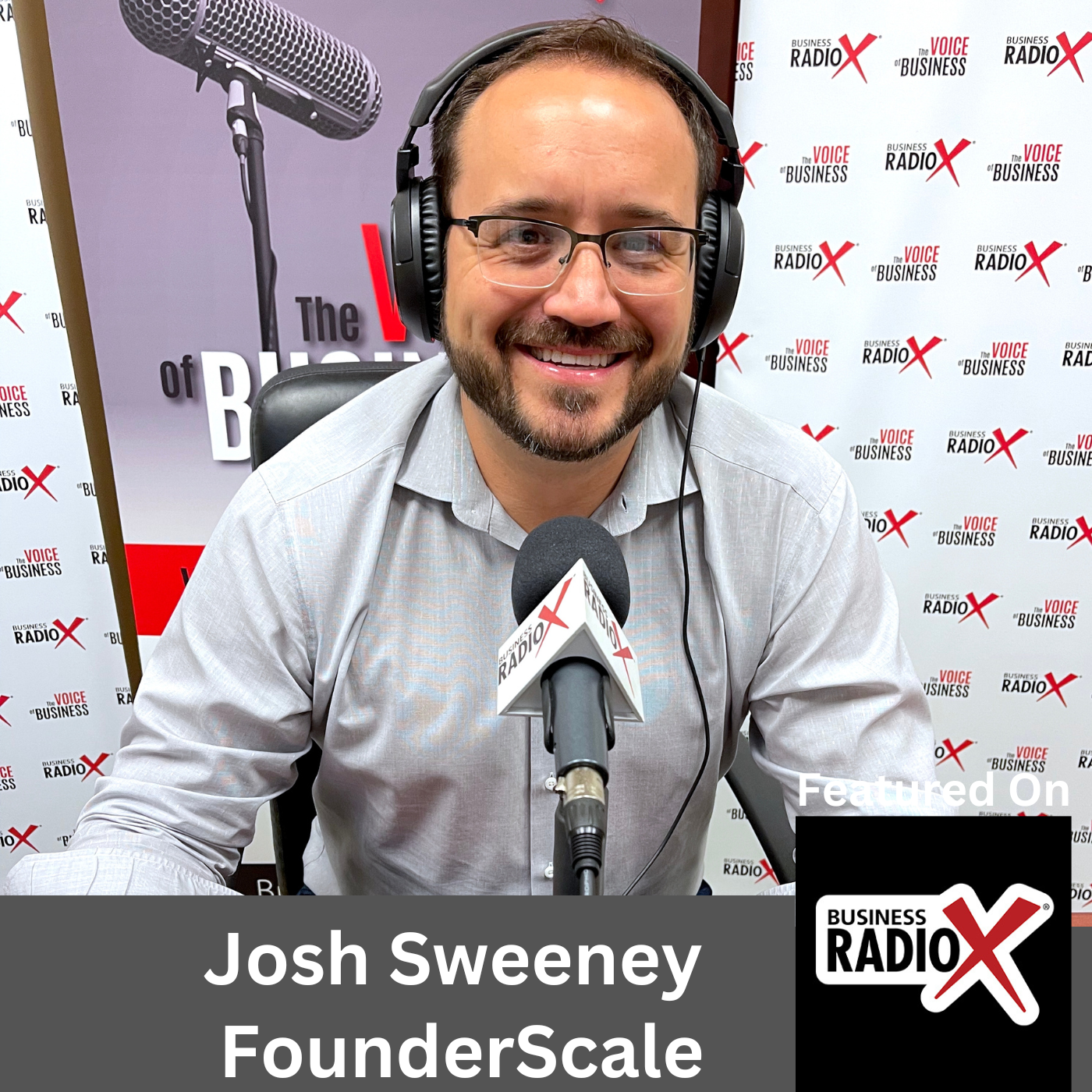
Josh Sweeney
North Fulton Business Radio
Using Demand Generation to Scale Revenue, with Josh Sweeney, FounderScale
Loading
00:00 /
RSS Feed
Share
Link
Embed

Download file

Josh Sweeney

Using Demand Generation to Scale Revenue, with Josh Sweeney, FounderScale (North Fulton Business Radio, Episode 687)

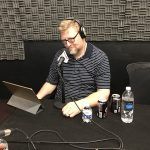
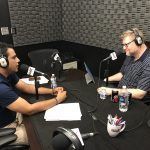
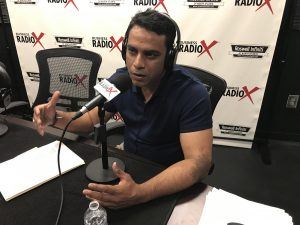
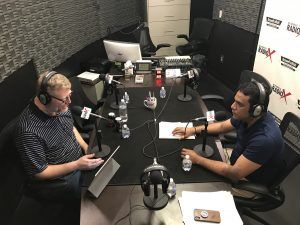
Josh Sweeney, CEO at FounderScale, joined host John Ray to discuss how his firm helps business owners scale their revenue. He talked about the limitations of lead generation, the difference between lead generation and demand generation, planning for revenue growth and being patient, customizing strategies based on the business, when to start demand generation, and much more.

North Fulton Business Radio is broadcast from the North Fulton studio of Business RadioX® inside Renasant Bank in Alpharetta.

FounderScale

FounderScale’s goal is to work with team members and clients who share the company values: people who love what they do, take ownership, have an open mind when solving problems, and desire to go big in their endeavors.

FounderScale offers fractional CRO services, demand generation, and HubSpot consulting to engage prospects, build relationships, and scale revenue. 

Website | LinkedIn

Josh Sweeney, Founder & CEO, FounderScale

Josh Sweeney, Founder & CEO, FounderScale

Josh Sweeney is a seasoned entrepreneur whose mission is to help founders increase revenue so that they can have a positive impact on their team, family, and community.

He delivers on that mission by helping founders go from founder revenue to scalable revenue.

LinkedIn | Instagram


Questions and Topics in this Interview:

  • How to Scale Revenue with Demand Generation
  • Founder Revenue to Scalable Revenue
  • How Marketing for Small B2B Companies Differs from General Perception
  • Entrepreneurship & Exits
  • Founder Peer Groups, Mentoring, & Forums

North Fulton Business Radio is hosted by John Ray and broadcast and produced from the North Fulton studio of Business RadioX® inside Renasant Bank in Alpharetta. You can find the full archive of shows by following this link. The show is available on all the major podcast apps, including Apple Podcasts, Spotify, Google, Amazon, iHeart Radio, Stitcher, TuneIn, and others.
RenasantBank


Renasant Bank has humble roots, starting in 1904 as a $100,000 bank in a Lee County, Mississippi, bakery. Since then, Renasant has become one of the Southeast’s strongest financial institutions with over $13 billion in assets and more than 190 banking, lending, wealth management, and financial services offices in Mississippi, Alabama, Tennessee, Georgia, and Florida. All of Renasant’s success stems from each of their banker’s commitment to investing in their communities as a way of better understanding the people they serve. At Renasant Bank, they understand you because they work and live alongside you every day.
Since 2000, Office Angels® has been restoring joy to the life of small business owners, enabling them to focus on what they do best. At the same time, we honor and support at-home experts who wish to continue working on an as-needed basis. Not a temp firm or a placement service, Office Angels matches a business owner’s support needs with Angels who have the talent and experience necessary to handle work that is essential to creating and maintaining a successful small business. Need help with administrative tasks, bookkeeping, marketing, presentations, workshops, speaking engagements, and more? Visit us at https://officeangels.us/.
Tagged With: b2b sales, demand generation, engagement, Entrepreneurs, founderscale, hubspot, John Ray, josh sweeney, lead generation, North Fulton Business Radio, Office Angels, renasant bank, revenue, Scalable revenue

Decision Vision Episode 109: Should I Become a Digital Nomad? – An Interview with Maria Joyner, FounderScale

March 25, 2021 by John Ray

FounderScale
Decision Vision
Decision Vision Episode 109: Should I Become a Digital Nomad? - An Interview with Maria Joyner, FounderScale
Loading
00:00 /
RSS Feed
Share
Link
Embed

Download file

FounderScale

Decision Vision Episode 109:  Should I Become a Digital Nomad? – An Interview with Maria Joyner, FounderScale

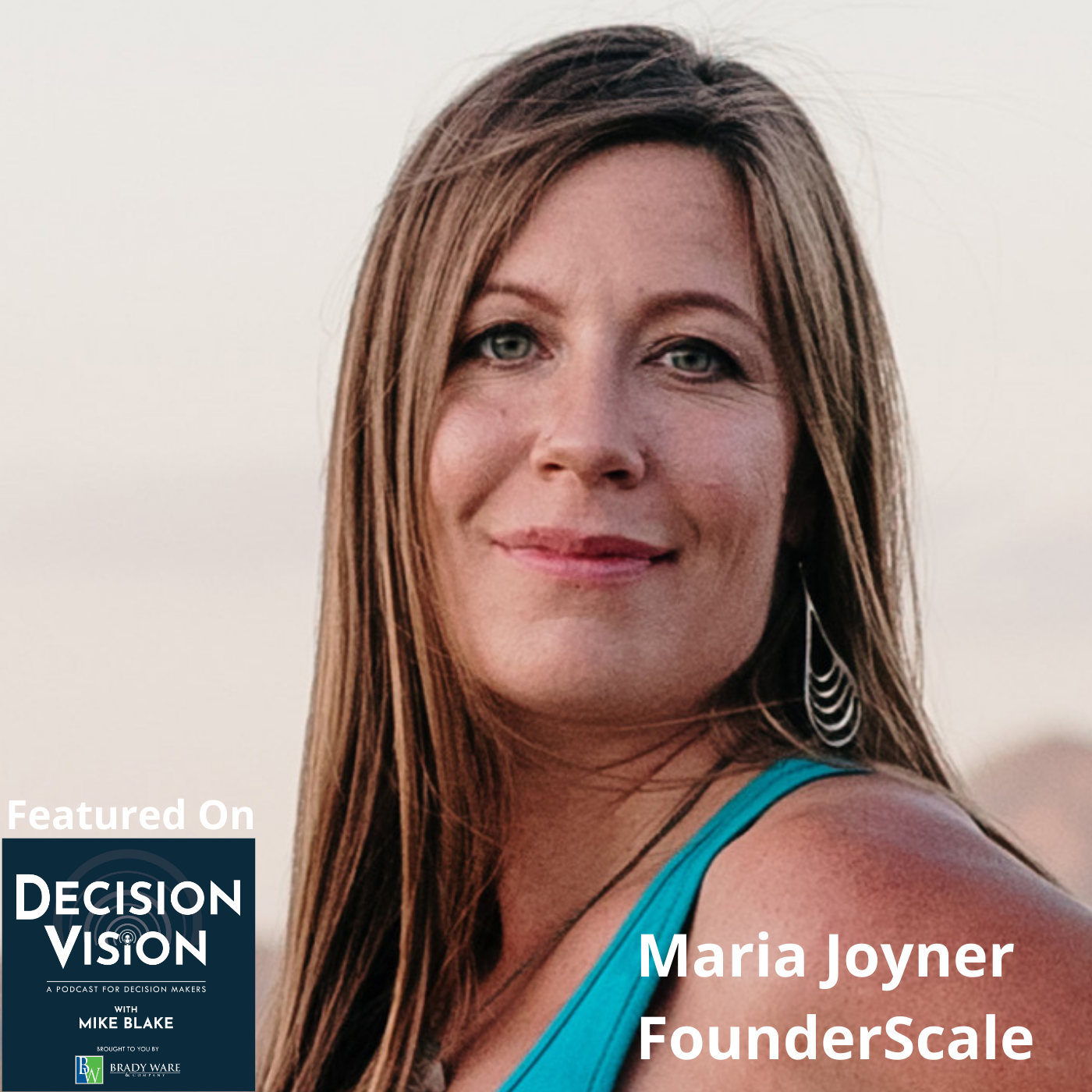
In a “trans-pandemic” environment, does becoming a digital nomad make sense? Maria Joyner, FounderScale, tells host Mike Blake her story of moving from Atlanta to Costa Rica and the well-being she has discovered as a “digital nomad.” “Decision Vision” is presented by Brady Ware & Company.

FounderScale

FounderScale helps founder-led B2B businesses increase sales by reducing friction in the sales and marketing process. As a founder and entrepreneur-led company, the team understands that business growth is tied directly to the ability to drive sales.

Maria Joyner, FounderScale

Maria Joyner is an entrepreneur and marketing technologist with a background in email deliverability, marketing automation, and scaling B2B startups. As the Marketing Automation Practice Lead, she brings years of Hubspot and marketing automation experience to help founders get the most out of their marketing technology stack. She works from the jungles of Costa Rica where she lives with her husband and son. Maria spends her free time trail running, hiking through the mountains, exploring hidden waterfalls, and learning how to surf.

Company website | LinkedIn | Joyner LinkedIn

Mike Blake, Brady Ware & Company

Mike Blake, Host of the “Decision Vision” podcast series

Michael Blake is the host of the “Decision Vision” podcast series and a Director of Brady Ware & Company. Mike specializes in the valuation of intellectual property-driven firms, such as software firms, aerospace firms, and professional services firms, most frequently in the capacity as a transaction advisor, helping clients obtain great outcomes from complex transaction opportunities. He is also a specialist in the appraisal of intellectual properties as stand-alone assets, such as software, trade secrets, and patents.

Mike has been a full-time business appraiser for 13 years with public accounting firms, boutique business appraisal firms, and an owner of his own firm. Prior to that, he spent 8 years in venture capital and investment banking, including transactions in the U.S., Israel, Russia, Ukraine, and Belarus.

Brady Ware & Company

Brady Ware & Company is a regional full-service accounting and advisory firm which helps businesses and entrepreneurs make visions a reality. Brady Ware services clients nationally from its offices in Alpharetta, GA; Columbus and Dayton, OH; and Richmond, IN. The firm is growth-minded, committed to the regions in which they operate, and most importantly, they make significant investments in their people and service offerings to meet the changing financial needs of those they are privileged to serve. The firm is dedicated to providing results that make a difference for its clients.

Decision Vision Podcast Series

“Decision Vision” is a podcast covering topics and issues facing small business owners and connecting them with solutions from leading experts. This series is presented by Brady Ware & Company. If you are a decision-maker for a small business, we’d love to hear from you. Contact us at decisionvision@bradyware.com and make sure to listen to every Thursday to the “Decision Vision” podcast.

Past episodes of “Decision Vision” can be found at decisionvisionpodcast.com. “Decision Vision” is produced and broadcast by the North Fulton studio of Business RadioX®.

Visit Brady Ware & Company on social media:

LinkedIn:  https://www.linkedin.com/company/brady-ware/

Facebook: https://www.facebook.com/bradywareCPAs/

Twitter: https://twitter.com/BradyWare

Instagram: https://www.instagram.com/bradywarecompany/

TRANSCRIPT

Intro: [00:00:01] Welcome to Decision Vision, a podcast series focusing on critical business decisions. Brought to you by Brady Ware & Company. Brady Ware is a regional full service accounting and advisory firm that helps businesses and entrepreneurs make visions a reality.

Mike Blake: [00:00:20] Welcome to Decision Vision, a podcast giving you, the listener, clear vision to make great decisions. In each episode, we discuss the process of decision making on a different topic from the business owners’ or executives’ perspective. We aren’t necessarily telling you what to do, but we can put you in a position to make an informed decision on your own and understand when you might need help along the way.

Mike Blake: [00:00:40] My name is Mike Blake, and I’m your host for today’s program. I’m a director at Brady Ware & Company, a full service accounting firm based in Dayton, Ohio, with offices in Dayton; Columbus, Ohio; Richmond, Indiana; and Alpharetta, Georgia. Brady Ware is sponsoring this podcast, which is being recorded in Atlanta per social distancing protocols. If you like this podcast, please subscribe on your favorite podcast aggregator, and please consider leaving a review of the podcast as well.

Mike Blake: [00:01:06] So, this week’s topic is, Should I become a digital nomad? And being a digital nomad, historically, has had a certain meaning. It’s now evolved, I think, particularly in the wake of the pandemic or during this – what I call – trans-pandemic period here. But, historically, a digital nomad refer to somebody who would wander usually from country to country – though not necessarily – but would wander from country to country doing their thing. Visiting spots wherever they felt like. And often would not stay long enough to run afoul of local immigration laws. And most countries let you stay in a place for about 90 days or so before they want you to either register for some sort of permanent residency or get the heck out of there.

Mike Blake: [00:02:03] And there are others that do it domestically. Rod Burkert, who was a guest on one of our early podcasts, has been living with his wife in a recreational vehicle for the last decade or so, I think. And so, they’re constantly moving about the country. I don’t know if they’ve ever crossed over to Canada or Mexico. I have to ask him about that. But, certainly, they would qualify as a digital nomad.

Mike Blake: [00:02:25] But, historically, being a digital nomad has been associated with somebody who has gone outside, who left the country, or is working from outside the country where their principal employment is at least nominally located. And, you know, a few things kind of bring this to the forefront. Number one, the pandemic has forcefully, I think, taught us a lesson that most of us, particularly in the professional services world, really can work from anywhere.

Mike Blake: [00:03:02] I’m going to tell you that I think I have met fewer than 50 percent of my clients in person. It may be down to 25 percent. They just don’t need to see me. Certainly, seeing me in person has no value on any level. And while people in my world will sometimes do site visits to an appraiser company, I don’t do a lot of those because I work with tech companies. And all I would do is I, basically, show up, I’d see some cubicles, and conference rooms, and maybe a ping pong table or something. So, there’s really not much use to doing a site visit. I mean, you wouldn’t even see servers anymore. Everything’s on the Cloud. So, I’m fortunate that, you know, I truly can work from anywhere and that’s been demonstrated.

Mike Blake: [00:03:49] But I think a lot of people are finding out that they truly can work from anywhere. Now, not everybody wants to do that. I know many people that are yearning to go back to the office. They like having their work set up separate. They like having sort of the permanency of a workspace. And, look, not everybody’s home is well set up to work from home. If you have kids and you’re trying to work in your kitchen table, boy, my hat is off to you. That is not easy.

Mike Blake: [00:04:18] But, you know, we’re finding out that we can do that. And, of course, you know, I think every time we have massive social upheaval, every time we have an election cycle, there’s somebody who is happy with the outcome, there’s somebody who is not happy with the outcome. And a lot of them say, “Well, I’m going to emigrate.” Which, in most cases, is madness because, frankly, most countries don’t want us there. It’s not that easy to immigrate to most countries, particularly ones that we would consider developed. Now, in other countries, it is easier. Some countries in Central America and Eastern Europe do make it easier to a certain extent, we’re going to talk about that. So, the option is there. But, you know, it’s not that easy to pick up and move.

Mike Blake: [00:05:05] But I do think there’s a certain romanticism about it. I’m seeing more articles about being a digital nomad. I’m seeing more articles about going to a place like the Republic of Georgia or to Estonia or to Portugal where a lot of American retirees are going. And, of course, there’s a lot of interest in Central America where, you know, the American cultural presence has been there for quite some time. And some of those countries even still use the U.S. dollar as their currency or at least have their currencies pegged to the U.S. dollar. And so, I think a lot of people are at least sort of thinking about it. You know, could we pack up and move? Maybe not for the rest of my life. But maybe we do it for a year. And we enjoy a beach on the Caribbean and we enjoy, you know, being in a different culture. And we enjoy maybe there’s some economic benefit to living a lower cost of living or in some cases simply a simpler lifestyle.

Mike Blake: [00:06:04] So, I think that’s an interesting topic. I certainly find it intriguing. And joining us today to talk about this is my friend Maria Joyner, who is co-founder of FounderScale. A B2B marketing and sales operations agency that helps B2B organizations drive revenue utilizing marketing technologies like HubSpot. She hails from one of my favorite cities in the planet, which is Savannah, Georgia. Well, Thunderbolt to be exact, and she’ll have to tell me what Thunderbolt is. I’ve lived in Georgia for 18 years, I have no clue where Thunderbolt is, except I gather it’s near Savannah.

Mike Blake: [00:06:40] Maria is an accomplished marketing technologist and entrepreneur that is living her dream in Costa Rica. And she and I go back to the old Startup Lounge day. She knew me before I had gray hair. Prior to moving to Central America, Maria spent ten years in Atlanta studying and growing technology startups. She took her previous company, Synapp.io – by the way, one of the first companies to do a dot io before everybody thought it was cool – an email deliverability startup from pre-revenue to $2 million in annual sales in less than 18 months. As founder and entrepreneur of this company, she’s leading a team that understands that business growth is tied directly to the ability to drive sales. Maria Joyner, welcome to the program.

Maria Joyner: [00:07:23] Thanks for having me.

Mike Blake: [00:07:25] So, Maria, you’re here – and then I remember – I mean, not in a way that’s like traumatic or anything, but I do remember because I looked at it with such admiration – when you left. And sort of one day, from my perspective – we’re not the best friends in the world, but we know each other – and, frankly, one day you were here and then it seemed like the next day you popped up and said, “Hey, I’ve moved to Central America. Adios”, or something like that. So, how long ago was that? And where exactly in Central America did you move to?

Maria Joyner: [00:08:01] Yes. So, it was about five years ago that I took the leap to leave the States and move to Costa Rica. So, I’m located in Costa Rica in the Guanacaste Region near Lake Arenal. So, a lot of people may be familiar with the Arenal Volcano. It’s the perfect pyramid shaped volcano in Costa Rica.

Mike Blake: [00:08:25] Is that volcano active? I hope not.

Maria Joyner: [00:08:27] It is an active volcano, but it is in a period of inactivity since, I think, 2011 or 2010. But it hasn’t had a huge explosion since 1968, when there was a very large explosion. They didn’t actually know it was a volcano in 1968.

Mike Blake: [00:08:48] So, how is it that you chose to move to Costa Rica as opposed to someplace else?

Maria Joyner: [00:08:54] So, when I was part of Synapp.io, I came to visit Costa Rica for a couple of days with – a friend of mine has a group travel company called Under 30 Experiences. So, it’s a small group travel, 8 to 12 people, and they focus on going to places that are locally owned, self-sustainable, that focuses on ecotourism. And so, I went with them to a Costa Rica rainforest retreat, which was located at a permaculture farm off the grid, self-sustainable, near La Fortuna, Costa Rica, near the Arenal Volcano.

Maria Joyner: [00:09:33] And I was there a few days. And I was really fascinated by how everything worked. Like, I wanted to see what was underneath the hood. It was like they grew everything they eat. They support guests who come through here. Their whole design works in unison with nature. And I was really fascinated by these natural systems that work together. We work with technology systems all the time and we create systems, but I was really fascinated how they can work in such unison with nature.

Maria Joyner: [00:10:02] So, after that visit, I decided to make it a company-wide part at Synapp.io that anybody in the whole company could work from wherever they wanted, it was June of 2015. And it was essentially so I could come back to Costa Rica and volunteer on the farm. So, it was really self-serving. And so, I came down here one month past, two months past, three months past, my co-founders were like, “Maria, what the hell is going on?” And I decided it was time to come home. I came back and tried to just fall back into my life, fall back into duties of a VP of marketing and growth, and all of that. And I just was somewhere else. And my co-founders sat me down and they were like, “Look, it’s all over your face. You’re somewhere else, just go.” And so, with that, I had the permission to make a big life change.

Mike Blake: [00:11:01] Now, when you did that, were you still able to retain your role with the company or did you have to exit the company at that point?

Maria Joyner: [00:11:08] Yes. So, yes, I exited the company. One of the challenges that we ran into at the off the grid self-sustainable farm was the internet. The internet is solar powered. So, you have solar powered internet in the middle of rainy season, which is, I mean, basically June through November, depending on where you are in the country. And there isn’t much internet. And so, I wasn’t necessarily able to perform my duties the last month I was there because it was peak rainy season. Which, it made that argument very difficult to make that, “Oh, yeah. I can move to Costa Rica and continue running the company.”

Mike Blake: [00:11:48] Interesting. And now that you’ve been there five years, is it any better? The internet, I mean.

Maria Joyner: [00:11:54] Yes. Yes. So, when I moved down here, I was able to get satellite, I think, maxed at five megs, and I thought that that was just awful. Then, I moved to another farm, and the internet maxed out at three megs, and I thought that was just awful. And where I’ve lived the past year-and-a-half, it maxes out at two megs. However, Costa Rica over the past years has been putting a lot of effort into building out the fiber optic infrastructure. And so, where I’m at right now, I actually rent an apartment really close to my house that gets fiber optic so we can have conversations like this and so I can have a productive work week. But locations that are more appealing to tourists have excellent internet here. Like, at the beaches, you’re looking 50 to 100 megs, sometimes 200 megs in places.

Mike Blake: [00:12:50] So, I didn’t know the full background of the story. So, you moved down – I’m sorry – you visited Costa Rica with the intent of learning about, basically, a way of life. And it sounded like you kind of accidentally fell in love with it. It doesn’t sound like it was your intent that you were necessarily intending to leave the country and live elsewhere at that time.

Maria Joyner: [00:13:16] Oh, my gosh. Absolutely not. I was so happy with my life in the States. I love the team. I was loving the journey that Synapp.io was on. I love the team we built. And I thought, I mean, in my mind, I couldn’t have – if you had asked me before I came to Costa Rica, what would you do in your life to make to make it better or happier? I would have said nothing. And I remember stepping off of the van, like out of the van, and onto this farm. And I almost felt like somebody grabbed my soul and shook it. Like, I had this just huge just, “Whoa. What is this place? And what is this? Just what is this?” And after seeing Costa Rica, there was just no going back. Like, I had seen just a whole different way of life. And that wasn’t my intention. And I wanted to go back and sort of just carry on with life how it was. But I guess once that whiplash is so strong, it just never goes back to being the same.

Mike Blake: [00:14:17] And, you know, to me, it sounds like you’re exposed to two things at once. And I’m curious if there’s a way to separate the two or not. You’re exposed to a permaculture way of life, which I guess, theoretically, could occur any place if you have the community to drive and sustain it. And, of course, you’re also in a foreign country, Costa Rica, which has its own culture, traditions, language, et cetera, et cetera. And I’m curious, did you give any thought to exploring whether or not – actually, I’m going to rephrase this question. Have you ever given thought to whether or not it was the permaculture that drew you, or the Costa Rican cultural experience that drew you, or were they so intermingled that you either can’t tell or it doesn’t matter?

Maria Joyner: [00:15:10] The permaculture is what drew me and the Costa Rican experience is what sold me. That was the Kool-Aid that I drink.

Mike Blake: [00:15:18] I’m curious. I’ve never been to Central America. What was it about the Costa Rican experience that that was the Kool-Aid?

Maria Joyner: [00:15:29] The people. And, obviously, we can’t be general and say the people, but people are happy here. The Costa Rican motto is Pura Vida, which means the pure life. And I mean, as a tourist, maybe it gets overused. But locals, “Good morning. Goodbye. How are you? I’m good.” Pura Vida is the two words that say it all. And it’s really evident in the way that people live their lives. For example, if you are in a bank waiting for two hours – because that’s normal here – to make a deposit, nobody is stressed out. Nobody is looking at their watch. Everybody is Pura Vida.

Maria Joyner: [00:16:15] And not just that, people who live here love this country. They love all the natural wonders it offers. They love to show tourists the country. And I guess with that being said, I think that the Costa Ricans don’t necessarily treat Americans in a way that isn’t welcoming. I’ve been to other countries that I have, like, been treated in a way that it was very obvious that I was not wanted there. And I think Costa Rica really embraces tourism and they love showing people their country.

Maria Joyner: [00:16:51] And so, I think that this just laid back, but not too laid back, way of life is, like, really what keeps me here. Because I’m a product of my environment. So, whatever environment I put myself in, that’s what the output is going to be. And so, if I can if I’m in a high paced, high stress environment, I’m going to be high paced, high stress. And so, one of the things I realized by doing the exact same things I was doing in the United States and moving them here to Costa Rica, from a work perspective, is, I was able to remove that high stress and continue the high pace – I don’t want to say no stress – but with low stress here just because of the environment around me.

Mike Blake: [00:17:36] So, you initially went down, you weren’t planning on staying, you fell in love with the place, came back. And then, it sounds like at that point you decided that when you were going, you were going for good. What was that process from sort of that day until you landed in Costa Rica with whatever belongings you had, what was that process like? How long did it take you to execute?

Maria Joyner: [00:18:01] All right. So, I remember it was October, maybe it was October 21, 2015, and I remember I had a boyfriend that time and I’m like, “We have to go. We have to move to Costa Rica. It has to happen.” And he was like, “Okay.” And so, that was October 21st. We landed here, I think, it was January 23, 2016. And so, once I made the decision at the end of October to make everything happen, I contacted two of the friends that I made when I was volunteering at the permaculture farm. I mean, everybody at the farm knew I wanted to move there. So, I just was like, “Yeah. I’m moving. It’s happening.” And I asked if they could help me find a place to live that has internet that could support what I needed to do marketing, technology work.

Maria Joyner: [00:18:52] And then, I just started the process of selling my stuff. I think the most helpful thing to me was having feet on the ground, was having somebody who was local, finding a house for me, talking to the telecommunication companies. Because if you think telecommunication companies are difficult in the United States, try coming down here. And so, that was a huge help to me. And I flew to Costa Rica December 11, 2015. All of this is so embedded in my mind. It was such an impactful time. And I came down here for about 11 days to look at the house that I was going to move into. But, essentially, it was just a trip to travel around the country and see more of the country. And so, I got everything in order in December. The house looked good. I talked to the owner. It was all great. And then, yeah, we flew back in January. We came back in January.

Maria Joyner: [00:19:46] So, a couple of things really helped us. The first thing is, is the home we were living in, the owner of the home told us to leave anything we don’t want to take or we don’t want to sell. So, I don’t know that we would have been able to pull this off if we had to sell and get rid of everything in our house. So, that was the first thing that was a huge benefit. The second thing was I actually paid a friend to fly down with us so we could bring four more suitcases.

Mike Blake: [00:20:14] Really?

Mike Blake: [00:20:15] Yeah. So, shipping is like $5 or 10 a pound. Think of a cast iron pan, like a cast iron pan to get that down here, we’re talking like 25 bucks. So, I actually paid a friend to fly down, so it’s cheaper to buy her plane ticket. And we flew Southwest because Southwest has two free checked bags. And it was cheaper for me to pay for her plane ticket. I think it was just one way and made a round trip than to ship everything. And that is kind of what we did. And I brought two dogs with with me, so they were emotional smart animals, so they sat under the seat in front of us. So, it was a super smooth trip once we got on the plane.

Maria Joyner: [00:20:59] However, two days before we were set to fly out, I got a phone call from my friend – because we were going to fly Atlanta to Baltimore, Baltimore to Houston, Houston to Costa Rica, because that was the Southwest route at the time. Well, I got a call from my friend. She’s like, “Did you not see that there’s been a huge blizzard in Baltimore and all the airports are closed down?” I was like, “What?”

Mike Blake: [00:21:22] No, I did not see that.

Maria Joyner: [00:21:23] Yeah. And in my mind, I thought there is nothing that’s going to keep me from flying out and going to Costa Rica in two days. And so, I changed all of our airline plans. There was actually not a blizzard in Atlanta, but all the roads were iced over in Atlanta. So, we actually rented a car, drove 11 hours to Houston so we could fly out of Houston direct to Costa Rica, and still end up making our original flights. So, it was a pretty smooth process until that last two days scramble at the end. And then, once we landed, it was just smooth sailing.

Mike Blake: [00:21:58] Now, how about getting a visa? Was it difficult to obtain a visa that would allow you to to stay there long term?

Maria Joyner: [00:22:06] So, for the past five years, basically, what I’ve had to do – well, the past four years, what I’ve had to do is cross the border every 90 days to get a renewed visa. So, in Costa Rica, they allow you to stay 90 days and then all you have to do to renew your visa is cross into another country and come back. Unless you’re purchasing things, you don’t have to stay, like, three days or anything. I mean, usually immigration makes you stay an hour on whichever side it is within Nicaragua or Panama. And you pay just a small fee to exit, a small fee to come back in, and then you’re good for another 90 days. They do require that you show an exit ticket with those. So, you can buy an airline – I mean, some people buy airline tickets and cancel them just so they have something to show immigration when they come back in the country.

Maria Joyner: [00:22:55] But after doing that for so many years, probably about a-year-and-a-half ago, two years ago, they started just being a little more difficult at immigration coming in to Costa Rica. They’re like, “You’ve been doing this for the past four years. You either need to file for permanent residency or we’re not going to give you your full 90 days.” And so, you know, I’ve never really had any issues they made some comments like that. And so, after that happened a couple of times, I decided it was time to start exploring permanent residency.

Mike Blake: [00:23:26] And once you decide to do that, how difficult was that to obtain?

Maria Joyner: [00:23:31] Well, I had a good friend of mine that I had known since we were working at the ranch and he had been working with me. And I’ve always been joking for years, like, “Why don’t we just get married so I don’t have to cross the border?” And in this time of us joking about this, I guess we fell in love and so we ended up getting married. I always tell people it was for residency, but we actually do love each other. So, I got married.

Maria Joyner: [00:23:56] And there are multiple ways to get permanent residency here. The first way is a rentee style, which is you rent here. And I think the process is something like you put 60 grand in a bank account, you don’t touch it for five years, and then you have residency. I think that’s one way.

Maria Joyner: [00:24:13] The other way is investing. So, if you make an investment of $250,000 or more, you can get residency. And I believe since COVID, they have lowered that number substantially. I think it’s either 200 or 175 now because they’re trying to encourage people to take a permanent residency. You can get it through marriage, you can get it through having a child, or you can get it through retiring here. So, like, a U.S. retiree can live here off of their Social Security. And Costa Rica offers a path for people to come down and retire here.

Maria Joyner: [00:24:47] So, I chose the marriage route because that made the most sense to me, and it is the least expensive. And so, we got married, let’s see, two years ago – maybe two years ago. So, coming up on the third year, I’m also able to file for naturalization, which would mean that I could get dual citizenship between Costa Rica and United States.

Mike Blake: [00:25:11] So, when you moved down, I mean, did you have any exposure to Latin America? Did you happen to speak Spanish? Was there anything that gave you a head start in terms of assimilating? You know, because most Americans don’t travel abroad, because we’re separated from a lot of countries by an ocean and all that. I think many Americans would find moving abroad daunting. How is that for you? Was the language an issue? Was cultural adaptation or homesickness ever an issue? Or how was that for you?

Maria Joyner: [00:25:45] So, when I told my dad that I was going to move to Costa Rica, I might as well have been telling him that I was going to move to the Middle East. It was a very, very large shock. However, after he’s done all of his research. I mean, Costa Rica, for Americans, is the only country in Central America that we can buy land. Any other country, Americans cannot buy land without a cosigner that is a local. Here in Costa Rica, you can buy land. So, Costa Rica does a good job of making it easy for Americans to come down here. And they also make it easy for the residency process.

Maria Joyner: [00:26:21] However, some of the things here that are huge culture shock is a total lack of inefficiency across practically everything. And I think that that’s why a lot of people, they get frustrated here. So, for example, the internet went out in the office – I feel like this happen anywhere – but, you know, it was out for a week and finally we found someone we knew. And the company who came and looked at it, unofficial visit. But things like that. I spent four months without internet at home. And I went to the office every single day. It was super polite, like, “Hi. I still don’t have internet. Can you please send someone to look at it?” And so, just a total lack of inefficiency can lead to extreme stress.

Maria Joyner: [00:27:12] And some other things here, if you have to make a deposit in the bank, you could be there two-and-a-half hours and that’s normal. So, that’s another thing that is extreme lack of inefficiency. Things like BillPay, PayPal, those things aren’t really common here. So, most of the contractors that come over and help us out or work for me or kind of help us out with our baby or at the house, it’s all cash. There’s not a lot of electronic transactions here, so that’s another challenge. I think, I guess the main theme of one of the big challenges here is just banking in itself.

Mike Blake: [00:27:47] That’s interesting. Now, in Costa Rica, my understanding is a fairly large American population, as you said, that they are deliberately trying to attract American retirees. Do you ever interact with them? Or have you decided to try and keep yourself as locally embedded as possible?

Maria Joyner: [00:28:07] So, when I first moved here, the first year-and-a-half I was here, I was in rural Costa Rica, and I was the only foreigner in the whole town. And so, I really enjoyed that. I intentionally didn’t want to move to the area I’m living now because I’m like, “Oh, it’s just a bunch of foreigners. I’m not here to live with foreigners, so I don’t want to live there.” And the reason I decided to move here is I saw it’s just beautiful. The Lake Arenal area is just stunning, totally gorgeous. And so, now, I’m in this area.

Maria Joyner: [00:28:41] I think I read a stat of it, around Lake Arenal, which is 88 square kilometers, there are over 5,000 houses owned by foreigners. That’s not total foreigners, and they’re just 5,000 houses owned by foreigners. Just to give you an idea of how large the population is in just this area. But you don’t really feel it. I mean, it’s all green as far as you can see. There’s not any high rise condos or anything like that.

Maria Joyner: [00:29:06] But because of where I live now, I do interact a lot more with with foreigners. And that’s always an interesting thing to see, because you’ll still see people who have down here 30 years and never tried to speak Spanish a day in their life. So, there’s just very interesting things that we’ll see with immigrants.

Mike Blake: [00:29:23] It is remarkable. You know, I lived in former Soviet Union for a number of years. And, you know, I took a similar approach. I didn’t live in the rural area. I lived in the city. But I definitely limited my access to Americans because I thought that it just would be too easy to go back to that as a crutch and not assimilate. And that was going to impact my experience and, frankly, my ability to work in the country. And you’re right, it’s amazing how many people, rather than try to learn the language, go through what I think is a much more difficult exercise of trying to get by without learning the local language. But I guess it can be done.

Mike Blake: [00:30:06] So, let me ask, you’ve been there for five years. Do you feel like a native? And if so, how long did it take you before you felt like Costa Rica was really your home and maybe America even feels more like the foreign country now?

Maria Joyner: [00:30:21] So, that’s an interesting question, because the moment that I talked about earlier when I stepped off the shuttle at that farm, at that moment, I really felt that I had come home. It was just a really incredible moment. And I think moving down here, you know, maybe after a couple of months, that’s when I really started to be comfortable. I spoke Spanish before I moved here, but not fluent. I mean, like everybody, I took it in high school. I took a little more advanced than most people in high school. I mean, I got up to like Advanced Placement classes, but I hadn’t spoken in 15 years.

Maria Joyner: [00:30:55] And so, I did have a little bit of a head start coming down here because it wasn’t just present tense. I mean, I think Spanish has 21 different tenses. So, I had some background, but it’s still like – for example, to be in a restaurant with somebody and be listening to a conversation passively, that took years to happen. You know, it took years for me to be able to sit down and listen to a conversation without having to actively listen to every word and process it in my mind and go through that.

Maria Joyner: [00:31:23] So, from a language perspective, it’s a couple of years to really feel completely comfortable. To feel comfortable calling the telecommunication companies. To feel comfortable talking to somebody about business ideas in Spanish instead of English. So, that took a couple of years. As far as feeling like whether I’m at home, I totally feel that I’m a foreigner in the United States when I go back now. I think the thing about Costa Rica that really is appealing to me, it’s the first place I’ve ever felt that I can be totally 100 percent myself. And it’s just an awesome feeling.

Mike Blake: [00:32:02] Well, it is. I mean, and that’s a great reason to move. You know, in America, we’re trained to think of people that come to the United States, because that’s our mythos. That’s sort of our thing. And then, there are people that don’t feel in place where they are. And so, they come or at least try to come to the United States to build that new life where they’re a better fit. But there are cases where, you know, Americans feel like they’re a better fit just in a different culture, a different environment. It certainly sounds like that’s been the case for you.

Maria Joyner: [00:32:34] Yeah. It’s funny, one of the times I went back to the United States a couple of years ago, we went over to visit some of my friends who have kids. And I was like, “Oh, my gosh. There is a tree in the backyard.” So, I climbed the tree and my boyfriend at the time came down, he was like, “Get down from that tree.” I’m like, “Why? It’s just a tree. I’m just climbing it.” He said, “You can’t do that here.” And it was just one of the first moments that I was like, “Wow.” Like, it’s just climbing a tree. Why is that such a big deal?

Maria Joyner: [00:33:01] But it just sort of made me realize that, you know, here, you can kind of just do what makes you happy. In the States, there is an image you have to maintain and certain things you do and certain things that you don’t that are expected by society. And I think those expectations are so much more embedded in us as a culture in the States. And I think that that is something that is really appealing to me here is, people are accepting of everybody.

Mike Blake: [00:33:29] So, you’re now with your new company, FounderScale. I’m curious, how has it mattered at all with your clients and prospects that you’re not inside the United States? That you are, in fact, located working out and just sit tight there in Costa Rica?

Maria Joyner: [00:33:53] So, when I first moved down here – so one of the clients I currently have, I have been working with since 2015. And he has been totally understanding of the internet problems. And it’s been a great working relationship. One of the clients that I had when I moved down here, they were fairly stressed with the internet issues. I got a lot of pressure from them to move to the city and try to find somewhere that had better internet. And I think that one of the benefits of consulting for so many years is, it becomes really easy to know the red flags and be aware of the questions that could cause friction after a contract sign and avoid that.

Maria Joyner: [00:34:36] So, you know, I’m very open and upfront with clients when I talk to them. Even though I do have great internet, I mean, there’s power outages here. I mean, there’s plenty of things that are out of control in a way that maybe wouldn’t be out of control in the States. And so, I’m very upfront with clients and I let them know, “Okay. I don’t always have great internet. Sometimes we may not be able to connect via video. Sometimes we may not be able to connect at all.” So, I allow those expectations, but then I kind of go a step further now and I’m like, “Hey, I may be out two hours a day going on a hike or may be out two hours a day surfing.” Just so there’s an expectation that I’m not always available. So, that’s just not an expectation. And so, living here has helped really identify, like, what my clients need to know to feel that they can always contact me.

Maria Joyner: [00:35:31] But more than all of that, accept you’re really freaking awesome work all the time. And then, my location is never an issue. Like, that’s really the secret. I think so many people come to Costa Rica and they ask me, “How do you make it work? Like, how do you get clients? How do you stay here?” And I mean, getting clients, fortunately, I have a great network in Atlanta that has just worked through referrals since I moved down here. So, that has been a blessing. But keeping clients is just doing awesome work. And if you do awesome work, no matter where you are, the client really isn’t going to care about your location.

Maria Joyner: [00:36:06] You know, I think that’s right. You know, I think, really, the big issue is not that your remote, it’s just you happen to be in a place where the internet is not all that – at least was not all that reliable. If you’d have that same issue saying – I’m doing a picking – let’s say, Fort Wayne, Indiana, you still have that same issue. Right? So, it was just the infrastructure. But what’s kind of interesting is that sounds like it – and maybe I’m putting words in your mouth, so feel free to tell me to fly a kite, but it sounds like in a way it forced you to confront what is the ideal client. And really force them and forcing yourself sort of a discipline of the right client to take. If it’s a client that just needs me to be available 24/7 with 99.9 percent of time, that’s just not the client that you’re going to serve. And I suspect you didn’t move to Costa Rica just so you could bring that stress level down there with you, right?

Maria Joyner: [00:37:03] Yeah. That’s absolutely right. And right now, I am working with a client that is the best line of workers in my entire career. And I look at this and I’m like, this is sort of pinnacle because, you know, it’s taken years to get here. And I think the other big thing, too, with working remote is overcommunication. And this is something that I’ve been working with for the past five years. So, over communicating everything.

Maria Joyner: [00:37:29] And, now, ever since COVID started, I’ve felt like I’ve been at a competitive advantage because I’ve already been doing this for five years. When COVID started, everyone’s like, “Oh, no. We’ve got to go work from home.” And they’re working through the issues of how to communicate. Because it’s a lot more difficult when you can’t just walk up to someone’s desk. Or someone is like, “Talk to me when I’m not busy.” We lose that now that we’re working remote. And so, I think that I’m kind of a competitive advantage from the communication perspective. But I think that any client you want to work with anywhere, I think it really comes down to communication, and clarity in communication, and clarity in expectations.

Mike Blake: [00:38:10] Yeah. I think that’s right. I mean, as it happens, I’ve effectively worked from home most of the time at least for ten years. And, at the end of the day, for most companies, if you’re performing – as I like to say, if you’re throwing up the numbers because I’m a finance guy – if you’re throwing out the numbers, nobody cares where you are. People are going to start to care about that if you’re not throwing out the numbers. Like the smart company says and one of the companies I work for, Arpeggio, was smart about this. They said, “Look, this is not what we would advise our other employees to do, but it seems to work for you and we’re not going to get in the way of it. So, you go, do you.”

Mike Blake: [00:38:48] And I think one thing that does give people, like you and me, that advantage, because we’ve been working remotely as a matter of course for so long is, we do have those more advanced sensibilities and communication skills. And we know what’s going wrong when our microphone doesn’t work, our camera doesn’t work, because we’ve had to do that when it wasn’t nearly as easy to fix, for one. And, you know, clients have come to accept that – you know, they’ve come to realize that the in-person contact doesn’t matter. And we’ve also had to build better management systems. A lot of managers can outwork their mistakes by “managing by walking around”. You go around, you fix things. That’s also micromanagement. You manage after the fact. Not before. You cannot do that now. If you try to manage that way now, you will get killed.

Maria Joyner: [00:39:48] Yeah. Yeah. That’s so true. And I think you bring up a really good point, too, when you were talking about identifying the right people to work with. That’s another factor that I always look out for, is the micromanager questions – or the micromanagement questions, because that’s another red flag for, I guess, for being an employee, too, not just the contractor.

Mike Blake: [00:40:13] Yeah. I think that’s right. I manage a team of three, and one is across town Atlanta, a couple of them are in Ohio. And, you know, I can’t go to their desk and look over their shoulder and make sure things are being done right. But at the end of the day, it’s about better management. So, I’m curious, you know, we’re working in Costa Rica, living in Costa Rica, have you picked up any local clients or is that even a realistic possibility where you are?

Maria Joyner: [00:40:42] So, that’s definitely on the roadmap. So, one of the technologies we heavily focus on is HubSpot. And we help companies better utilize that technology to generate revenue. And so, I’m in the process of building a team here right now. But as far as signing local clients, we haven’t started going down that road yet for a couple of reasons. One, the price point is very different for a client. I mean, this is actually an assumption. So, I should validate this before saying it. But my assumption would be that the price point a U.S. based client would pay would be very different to the price point a Costa Rica based client would pay. I could be wrong, but I think that would be my assumption.

Maria Joyner: [00:41:32] And then, two, one of the things that I’ve seen is most of the business in Costa Rica really does happen in the city. So, for example, there is chapter of entrepreneur’s organization down here that I was looking to get plugged into. And I mean, everybody who participates is really in the city. So, I think that, that in itself, could be a hindrance because I have no desire to travel to the city, not even for a quick trip. San Jose is about four hours from me. The last time I went, I went to go buy running shoes. Eight hour round trip to go buy running shoes. I would not want to do that trip on a monthly or even a bimonthly basis. So, I think that some of it is my reluctance to go to the city because I didn’t move down here to be in the city.

Maria Joyner: [00:42:16] And I guess the other side is just getting getting our team to a point where we can handle having international clients, because I would love to be able to work with Spanish versed clients versus English versed clients. So, that’s in the roadmap, but I don’t see that really manifesting for probably another year or so.

Mike Blake: [00:42:34] Okay. We’re talking with Maria Joyner of FounderScale, and the topic is, Should I become a digital nomad? So, a question I think that a lot of folks in your position must wrestle with is, how easy is it for you to get back to the United States if something happened that were a true emergency, maybe a family emergency or something? Is it hard to get back to the United States? Is that something that concerns you? Is that something you’ve had planned out? Where are you with that in your mind?

Maria Joyner: [00:43:04] So, fortunately, where I live, I’m an hour away from Liberia airport. So, there’s two airports in Costa Rica, there’s Liberia, which is in the North Pacific, and San Jose, which is in the central part of the country. And so, for COVID times, I mean, I’m sure things will be a little bit more complicated right now just because of the availability of flights. But in previous emergencies, for example, a couple of years ago, my grandfather, I found out he was being rushed to the hospital and I just had a feeling. And the next day I was on a plane. And so, it was very simple. I mean, if cost isn’t a problem, it’s pretty simple to get back to the United States. Right now with COVID, I know that the availability of flights is a concern. But, historically, it hasn’t been an issue to just drop and go.

Mike Blake: [00:43:54] Okay. What about access to health care? Have you had to use the local health care system? Has it been an issue for you?

Maria Joyner: [00:44:03] So, I had a child a year ago. And I live in an area where there are a lot of women with children. And most of them that were that are American immigrants, they opted to use a private hospital to have their child care birth, which you pay, I think, five grand for that. And so, I had the option of using free health care, because if you are a pregnant woman in Costa Rica, you’re protected by law. And you get taken care of, your baby is taken care of with no charge. And so, I used the public health care system and my experience was great.

Maria Joyner: [00:44:41] I look at things like giving birth. People have been doing that for thousands and thousands and thousands of years. It’s not like it’s some super specific surgery or something.

Maria Joyner: [00:44:51] Right. You’re not growing a new limb.

Maria Joyner: [00:44:52] Exactly. And so, I had a lot of faith in the system and I had a great experience. But some of the things that my American friends who are having children were asking did you get this test or did you get that test, or did they tell you this, did they tell you that. I think the availability of information, the availability of tests, and a lot of the things that we may have in the United States being a first world, that stuff is here, but not necessarily available in the public health care system.

Maria Joyner: [00:45:19] But, honestly, for me, I wasn’t bombarded with all the different things that were medically available to me and we just focus on the basics. So, I had a great experience. I mean, I found some of the check ups to be a little redundant. They’d ask the same questions in every checkup. So, I guess they did in the States, you know, that I’m thinking about it. They always ask the same questions.

Mike Blake: [00:45:40] Yeah. I don’t think that’s unique to Costa Rica.

Maria Joyner: [00:45:43] Yeah. No. But I’ve had good experiences with it. And I’ve also had emergency experiences with the health care system. And it’s all been great for me. So, I feel fairly confident that staying here long term that I’ll be taking care of.

Mike Blake: [00:46:04] What about taxes? I’m not trying to get into a specific situation, to your specific situation, of course. But I’m curious, do you have to pay taxes both in the U.S. and Costa Rica? Does one offset the other? How has that worked for you?

Maria Joyner: [00:46:18] So, my company is U.S based, my clients are U.S based, and I don’t own any land in Costa Rica right now, so all of my taxes I pay are in the United States as of right now. In the event that I open a bank account here or that I buy land here, I will – well, if I open a bank account here, I think legally I have to report that money to the United States and there is some foreign exclusion or foreign income exclusion. However, my income is in the United States, so I haven’t gone that route. And the other upcoming event that would require me to pay taxes in Costa Rica would be buying property here, because there are property taxes. So, right now, it’s just United States.

Mike Blake: [00:47:04] Okay. And that explains why you’re going to the bank a lot. I remember when I lived in Minsk and I’d be paid in dollars, and somebody have to wire it over a correspondence bank, and then actually physically go pick up my cash. I don’t know if that works exactly that way for you. But I’m familiar with those bank trips.

Maria Joyner: [00:47:21] Yeah. I think the big thing with the bank is, if I have to deposit money into a Costa Rican account here, the option is doing a wire transfer, it’s just a little too complicated to just do that for everyday transactions. And I guess that does add up. So, it’s just usually going in and making deposits in the bank. So, I still utilize all my U.S. Banks here. So, anybody who is listening to this that does want to be a digital nomad, there are two banks that I recommend.

Maria Joyner: [00:47:49] Charles Schwab has a high yield checking accounts that’s connected to a brokerage account and they refund all ATM fees. So, you’re going to be pulling out a lot of cash, at least, abroad. So, Charles Schwab refunds any fees charged by banks. And there are banks on here that charge $9. So, that really is a big help. And then, Capital One, they don’t refund the ATM fees, but their Capital One accounts, they don’t do foreign transaction fees. And it’s very simple to move money in between your accounts. And so, those are the two banks that I recommend people get before they come down here.

Maria Joyner: [00:48:26] I have friends who still use credit unions from the States who are living down here. And the monthly fees that they accumulate are in the thousands of dollars between foreign transaction fees and ATM fees.

Mike Blake: [00:48:38] We’re running out of time, but I want to sneak in a couple more questions before we let you go. And one, I’m curious now that you’ve been here for a good long time and, I mean, you’ve had such a life experience here from moving down here to getting married to having a baby. I mean, you’ve really been through it. If you had to do it all over again in terms of the process of moving down and getting yourself settled and integrated, is there anything that you’d do differently?

Maria Joyner: [00:49:03] So, I think that if I did anything differently, it would have drastically affected every part of my experience. But I will say that when I first moved down here, the first year-and-a-half, we tried doing a community style farm. So, we had two couples and then a couple other people living in one house, working on a farm together, growing our food, cooking meals together, and all of that. I would probably not do that again. That was a very challenging experience.

Maria Joyner: [00:49:37] But I really knew that I was down in Costa Rica for a reason. And because of that, because I felt like I knew that this is where I want to be, it was easy for me to go through very difficult experiences as part of that community living. Because I knew that these experiences were going to get me where I eventually needed to go. But that would be the big thing that I would change would be I probably wouldn’t have tried living doing the community living experiments.

Mike Blake: [00:50:05] Okay. Well, Maria, this has been great. And I think our listeners, if they’re thinking about the digital nomad life experience, I think there’s a lot they can learn from what you’ve described and discussed in this episode. If somebody has a question they want to follow up with that we haven’t touched on or didn’t go deep enough for them, is it oaky if they contact you? And if so, what’s the best way to do that?

Maria Joyner: [00:50:26] Yeah. For sure. I’d be happy to talk to anybody who is interested in Costa Rica or being a digital nomad, wven though I’m not too nomadic these days. I think the best way to contact me would be on Twitter, @mariajoyner is my handle, and that would be the best way to get a response.

Mike Blake: [00:50:44] Okay. Well, thank you so much. And that’s going to wrap it up for today’s program. I’d like to thank Maria Joyner so much for joining us and sharing her expertise with us.

Mike Blake: [00:50:54] We’ll be exploring a new topic each week, so please tune in so that when you’re faced with your next business decision, you have clear vision when making it. If you enjoy these podcasts, please consider leaving a review with your favorite podcast aggregator. It helps people find us so we can help them. Once again, this is Mike Blake. Our sponsor is Brady Ware & Company. And this has been the Decision Vision podcast.


Tagged With: atlanta, Brady Ware, Brady Ware & Company, Costa Rica, digital nomad, founderscale, hubspot, Maria Joyner, Marketing Automation, Mike Blake

Decision Vision Episode 13: Opportunity Zones – An Interview with Vishay Singh, The GlobeHUB

May 2, 2019 by John Ray

Decision Vision
Decision Vision
Decision Vision Episode 13: Opportunity Zones – An Interview with Vishay Singh, The GlobeHUB
Loading
00:00 /
RSS Feed
Share
Link
Embed

Download file

Vishay Singh, Co-Founder of The GlobeHUB, and Michael Blake, Host of “Decision Vision”

Opportunity Zones

What is an opportunity zone? How can operating within an opportunity zone help a business? With numerous opportunity zones across the country, what are the differences entrepreneurs and investors should be aware of? In this edition of “Decision Vision” host Michael Blake, interviews Vishay Singh, Co-Founder of The GlobeHUB, a coworking space located in an opportunity zone in Chamblee, GA.

Vishay Singh, The GlobeHUB

Vishay Singh, The GlobeHUB

Vishay Singh is Co-Founder of The GlobeHUB. The GlobeHUB was established in 2016 by Kevin Henao and Vishay Singh when they felt a calling to make a lasting impact on the startup community. They had a vision to not only inspire the next generation of  entrepreneurs but to provide them the community, funding, mentorship and ecosystem that every business owner requires to succeed. Globe’s coworking spaces offer plug-and-play memberships to accelerate business growth. They understand the power of the tech community and aim to facilitate meaningful connections across our unique member network. The diversity of people and ideas make the world better and makes companies better. It’s time to put your big ideas into motion. GlobeHUB is a tech community that promotes high energy, hard work, and creative innovation. There is no better place to launch your business. Get involved! For more information, go to www.globehub.com.

Michael Blake, Brady Ware & Company

Mike Blake, Host of “Decision Vision”

Michael Blake is Host of the “Decision Vision” podcast series and a Director of Brady Ware & Company. Mike specializes in the valuation of intellectual property-driven firms, such as software firms, aerospace firms and professional services firms, most frequently in the capacity as a transaction advisor, helping clients obtain great outcomes from complex transaction opportunities. He is also a specialist in the appraisal of intellectual properties as stand-alone assets, such as software, trade secrets, and patents.


Mike has been a full-time business appraiser for 13 years with public accounting firms, boutique business appraisal firms, and an owner of his own firm. Prior to that, he spent 8 years in venture capital and investment banking, including transactions in the U.S., Israel, Russia, Ukraine, and Belarus.

Brady Ware & Company

Brady Ware & Company is a regional full-service accounting and advisory firm which helps businesses and entrepreneurs make visions a reality. Brady Ware services clients nationally from its offices in Alpharetta, GA; Columbus and Dayton, OH; and Richmond, IN. The firm is growth minded, committed to the regions in which they operate, and most importantly, they make significant investments in their people and service offerings to meet the changing financial needs of those they are privileged to serve. The firm is dedicated to providing results that make a difference for its clients.

Decision Vision Podcast Series

“Decision Vision” is a podcast covering topics and issues facing small business owners and connecting them with solutions from leading experts. This series is presented by Brady Ware & Company. If you are a decision maker for a small business, we’d love to hear from you. Contact us at decisionvision@bradyware.com and make sure to listen to every Thursday to the “Decision Vision” podcast. Past episodes of “Decision Vision” can be found here. “Decision Vision” is produced and broadcast by Business RadioX®.

Visit Brady Ware & Company on social media:

LinkedIn: https://www.linkedin.com/company/brady-ware/

Facebook: https://www.facebook.com/bradywareCPAs/

Twitter: https://twitter.com/BradyWare

Instagram: https://www.instagram.com/bradywarecompany/


Show Transcript

Intro: [00:00:01] Welcome to Decision Vision, a podcast series focusing on critical business decisions, brought to you by Brady Ware & Company. Brady Ware is a regional, full-service accounting and advisory firm that helps businesses and entrepreneurs make visions a reality.

Michael Blake: [00:00:20] And welcome back to another episode of Decision Vision, a podcast giving you, the listener, clear vision to make great decisions. In each episode, we’re discussing the process of decision making on a different topic. Rather than making recommendations because everyone’s circumstances are different, we’ll talk to subject matter experts about how they would recommend thinking about that decision.

Michael Blake: [00:00:39] Hi. My name is Mike Blake, and I’m your host for today’s program. I’m a Director at Brady Ware & Company, a full-service accounting firm based in Dayton, Ohio, with offices in Dayton; Columbus, Ohio; Richmond, Indiana; and Alpharetta, Georgia, which is where we are recording today. Brady Ware is also sponsoring this podcast. If you like this podcast, please subscribe on your favorite podcast aggregator, and please also consider leaving a review of the podcast as well.

Michael Blake: [00:01:04] So, I’m going to apologize to listeners right off the bat. In Atlanta here, it is the height of allergy season. And, generally speaking, once the pollen count gets above a thousand, the air becomes toxic. So, I’m on a combination of cocktail to, sort of, keep me off my feet. And I don’t have a cough button, but I will try to turn my head if that happens. And if you don’t suffer from allergies, feel blessed that you you don’t suffer from that. But I’m a launch panel guy. We play hurt, and we’re going to continue on through this podcast. We’ll get through the episode.

Michael Blake: [00:01:41] And today, we’re going to talk about opportunity zones. And opportunity zones are newly created, tax-break-driven investment areas that are designed to promote private investment in economically distressed communities. And they’re an interesting topic because – and this is a personal ideological view – I think, anytime we can harness market forces to promote social welfare, I think, that’s a good thing to do. There are actually many of these across the country. And as it turns out, I’m very fortunate to live very close to an opportunity zone. So, I look forward to seeing how that leads to some development of my own community.

Michael Blake: [00:02:20] Joining us today is Vishay Singh, Co-Founder of the Globe Hub, which is Chamblee’s premiere co-working and entrepreneurship facilitation space located a Peachtree-Dekalb Airport. And for those of you not in the Atlanta area, PDK airport is Georgia’s second largest commercial airport. So, when Super Bowl 53 happened here, and all the other billionaires came in on their jets, that’s where they came in.

Michael Blake: [00:02:43] The Globe Hub was established in 2016 by Kevin Henao and Vishay when they felt a calling to make a lasting impact on the startup community. They had a vision to not only inspire the next generation of entrepreneurs but to provide them the community, funding, mentorship, and ecosystem that every business owner requires to succeed. Vishay is a successful serial entrepreneur, whose current venture MapMeLocal. And maybe if we have a few minutes at the end of the podcast, we’ll get a chance to learn a little bit about that as well.

Michael Blake: [00:03:11] Globe Hub’s co-working spaces offer plug-and-play memberships to accelerate business growth. They understand the power of the tech community and aim to facilitate meaningful connections across their unique member network. The diversity of people and ideas makes the world better and makes companies better. They’re a technology community that promotes high energy, hard work, and creative innovation. On a personal note, I’m very proud to say that Brady Ware is a member of the Globe Hub, and I personally find it an excellent resource for my own professional needs. Vishay, welcome to the podcast. Thanks for coming on.

Vishay Singh: [00:03:41] Thank you, Mike. I appreciate it.

Michael Blake: [00:03:43] So, we have a lot to talk about but let’s, sort of, dive right in. Why did you start the Globe Hub? Why do you feel there is a need to create a new co-working space? We’ve got a lot of these things right in Atlanta now. Why do we need a new one?

Vishay Singh: [00:04:04] Actually, I think, for me, it was probably the second step to my needs. It was Kevin, my co-founder, who actually came up with that vision because he spent a lot more time in that building. And the building is in a prime location, as you’re aware. And it is outdated. It had the ’80s look. And Kevin was in a poky hole upstairs, small office, and always had this vision of, “Man. I wish I could just have a bigger space, have larger boardrooms, share it with everybody, and keep my rental down while I’m growing up my business called SameDay Printing.”

Vishay Singh: [00:04:48] And when I got there, I was in Marietta, Georgia, and I had met a bunch of entrepreneurs that wanted to expand with me. And we were like, “Man, we can be in Marietta Georgia. We should get somewhere to more of the inner city, and be where the hype is, and be closer to more millennials, and where the excitement is.”

Vishay Singh: [00:05:08] So, we started looking. And then, when we found 1954 Airport Road, we stumbled upon Kevin, and what he was doing, and we immediately fell in love with it. And, sometimes, entrepreneurs go with gut feel versus just the pure science of why co-working, etcetera. But I think, what we saw instantly, the differences was with that location was you could drive in, you could park, and it was all on the ground floor. You had no hassle of worrying about how to get upstairs or how to get to you office, and how do you park your vehicle, etcetera. You can eliminate all those thought processes and hurdles, as I call them, from your thought process because you’re so focused in what you’re trying to do.

Vishay Singh: [00:05:56] So, you just want to get into a space, and you want to be inspired, and you want to be with a community, and you want to build a business. So, that’s how we decided just to say “Okay, let’s just take what we have and create a Globe Hub,” but we understand that co-working, potentially, could be the red ocean. I think, there’s still a lot of space of it, especially we’re going to talk further about opportunity zones and how our strategy would differ.

Vishay Singh: [00:06:21] But the long story and the short story of it, I always felt that, and I’ve always been passionate about helping entrepreneurs. I just couldn’t figure out whether thinking too small. So, I needed to think bigger, and I needed to think and dream a bit bigger on how to do this. And I think that’s potentially coming together. But that’s when we decide, we said, “Let’s just do it. Let’s just create the space first. Let’s crawl before we dream and drink a lot of beer, and we make nothing happen,” right?

Vishay Singh: [00:06:49] So, we did it. Baby steps first. We got 10,000 square feet. We’ve told community. We’ve flushed that community as well to get more and more of the right entrepreneurs there to be able to, then, create an ecosystem that starts to support itself. And like you said, a system that we’re each another could help each another. We even crowdsource to each another. We crowdfund to each another. When somebody’s stuck and really can’t get any angel money or something, we become the angels. And we all chip in whatever we’ve got in our pockets to help that person get the next contract or the next deal, so that they can get to the next level.

Michael Blake: [00:07:22] I didn’t know that.

Vishay Singh: [00:07:22] That’s exactly what’s goes on in the ecosystem. So, we don’t like — again, it’s not about sitting and waiting. If somebody needs something, and we can’t get it from an outside source, all the guys look in and say, “Let’s see how we could just crowdsource it ourselves.”

Michael Blake: [00:07:37] In a way, it’s kind of a microcosm of the Chamblee area, right? I’ve lived in Chamblee since 2005. And in the last three or four years, somebody figured out that Chamblee has a Marta Station, and it is right at the intersection of 285 and 85, And, of course, the airport there. Chamblee is booming, right?

Vishay Singh: [00:07:56] That’s right.

Michael Blake: [00:07:57] Is that part of the calculus? Was that something you’re excited about with Globe Hub kind of being in the middle of that renaissance that Chamblee’s enjoying now?

Vishay Singh: [00:08:04] Absolutely. I mean, I would say right place, right time. Nothing more than that. A lot of things can happen by accident. I mean, we went into downtown, we went into midtown, we looked at other places before we landed up at the Globe building and met Kevin, as well as the building entrepreneur who owns the building, Robert Muller. And decided, “Man, this is the right place.”

Vishay Singh: [00:08:31] And then, you slowly start to discover, well, it’s a hub zone. And then, what is the hub zone? What does the hub zone mean? And then, next thing is we figured out, there’s this press release and the meeting downtown about opportunity zones. And by the way, we looked on the map, and, boom, we are on an opportunity zone. What does that mean? And how does that potentially help us and help the he entrepreneur within us?

Vishay Singh: [00:08:52] But Chamblee is blooming. That’s another thing that we — It’s as a consequence of Brookhaven being overfull, and Buckhead, and that overflow that’s happening. It’s just a natural consequence, I guess. And I think it’s bound to spread into Doraville and places like that. So, I think that’s exciting to have all that and to see all that flourishing around us, as well as to see the potential of the hub zone area, which is the PDK area and the three-mile radius around it, which needs to now come up with a strategy and a plan on how that’s going to unfold itself and become or join into that overflow of where the Whole Foods is and this building across of Clermont, etcetera. So, very, very exciting stuff going on there.

Michael Blake: [00:09:46] You talked about the serendipity of real estate. So, we moved into Chamblee back in 2005, and I had zero to do with that decision. We just moved back to Atlanta, or I moved to Atlanta, my wife went back. She’d been here. I know nothing about real estate. I’m not even very good of monopoly. So, we’re very fortunate that we happened to move into the right place.

Michael Blake: [00:10:10] And your commitment goes beyond just sort of cheerleading. I mean, you’ve put in us substantial financial stake in this. In making that investment, do you see that as a business opportunity, as well as a social project, or do you see it more as purely a social project?

Vishay Singh: [00:10:28] I think it’s a hybrid. I think the environment does lend itself to being profitable. And it’s not as if we’re not profitable. The ecosystem and being full, we had capacity, we can grow upwards by virtue of membership and monetizing other spaces by being creative. So, we have reached that level of profitability.

Vishay Singh: [00:10:54] Is it highly profitable to just have one of that? Absolutely not. I think it’s the great American model where, typically, like franchises and/or similar sort of businesses where you’re doing one well, you need to duplicate it in order to reach good revenues and reach good valuations. Sometimes, when you look online, and you look at the evaluations of WeWork and Industrious, it’s amazing that they’ve got those numbers, and they’ve got those valuations. So, from that perspective, there’s definitely an opportunity.

Vishay Singh: [00:11:33] And I think, on the other hand, it’s helping entrepreneurs. So, I don’t know if that’s social, but if we look at helping entrepreneurs, the way we do it and by no means, we are in absolute shock triangle. We are having a huge purse string, per se. But with our micro funding methodology, and bootstrapping, and working with entrepreneurs, if they succeed, we succeed.

Vishay Singh: [00:11:59] So, from, that, that’s how we’re landing into – and we’ll talk about it later, I guess – the Founders Institute and why we’re doing that. It’s just tying that up into a mechanism where they could be that risk, the risk of investing time, investing money, and then being rewarded with upsides of one or two of those startups becoming successful in Chamblee.

Michael Blake: [00:12:24] So, you found Globe Hub in 2016. You’re at 1954 Airport Road. A little over a year goes by, next thing you know, they slapped an opportunity zone basically right on top of you.

Vishay Singh: [00:12:37] Absolutely.

Michael Blake: [00:12:38] And you’re right in the middle. It basically covers the Peachtree Dekalb Airport, that mini industrial complex there. Did you know what an opportunity zone was or was going to be? Do you have any idea that was going to happen or is that just you, sort of, woke up one day, and it was like a big present?

Vishay Singh: [00:12:55] That’s exactly what it is. It’s the latter. It just happened. I’ve always been aware of economic zones or development zones. And the opportunity zone by definition means the same thing. But it’s a positive effect. It’s it’s great to be in that. It gives us a larger opportunity because as I was just trying to look online and trying to look on how many opportunity zones actually do have incubators, and so far, possibly may have found one that’s a veteran on somebody up in Virginia that’s fallen into that space, and so have we.

Vishay Singh: [00:13:31] So, it looks like we are one of two that are in the zone, which actually complements and lends ourselves into the strategy of how we were thinking of expanding because what could make us different is our plan now of, actually, working the dream of building entrepreneurs but, perhaps, what we could do is build these further hubs in opportunity zones and work in those cities and create a sustainable environment for startups that are funded and, also, help with the marketing of main streets.

Michael Blake: [00:14:13] So, there is this opportunity zone, and I have to confess, I don’t know a lot about it until a few months ago. What is an opportunity zone? For whom is it an opportunity?

Vishay Singh: [00:14:25] Absolutely. So, I keep this piece of paper here because it’s kind of technical, but we won’t get into technical jargon. But the bottom line, the opportunities is on the left and the right side. So, the left side is taxpayers, and people that have capital gains events, and/or postpone capital gains events because they just simply don’t want to pay the tax on it. It’s an opportunity for them because, then, they could liquidate their position, be it a stock, be it a partnership, be it a sale of a business. And that the gain that they’re supposed to pay immediately could not defer through a 1031 exchange, I think it’s called, for property. If they could not do that, they have this chance now to invest it in an opportunity zone.

Vishay Singh: [00:15:17] And that investment could go two ways. It could go in into a property and enhance a property, and there’s rules sets against that, or it could come into a hub like ours and be invested into startups, in our case, and/or it could be invested into small to medium businesses, even if it’s a restaurant, a mom and pop store that’s doing really good and needs that extra capital. That money could be used. So, on that side, that’s the advantage.

Vishay Singh: [00:15:47] On this side, the opportunity is for entrepreneurs to maybe get out of their basements, and start thinking bigger and bring out the ideas, and really have a good opportunity of having some, if I may call it, venture fund or having some access to angel money that could help them get the small businesses or startups and ignited. And the whole idea is, then, to uplift that community, uplift the environment, and create a sustainable environment that makes it a retainer. It retains entrepreneurs and retains the younger audience, the younger people to stay back home versus go to Silicon Valley and other places.

Michael Blake: [00:16:35] So, this, I think, is a very important point because I’m an economist by training. So, I’ll apologize to everybody for that now. But one of the things that they teach us in economics, at least, until you get to the graduate level is that you, sort of, set taxes aside. All the models assume there’s no taxes, right? And if somebody knows of a place where there’s actually no taxes, please let me know, I’d love to go there. But it calls into focus, the fact that taxes do matter. And I think the way this works, your basic and deferred capital gains for up to 10 years, if I’m not mistaken. Correct?

Vishay Singh: [00:17:10] That’s right.

Michael Blake: [00:17:10] So, that increases the return on the same investment, whether you’re making the opportunity zone or not, at that level of risk. And therefore, it’s going to be more attractive. And it’s not just attractive to the investor but the entrepreneur. I imagine on a certain level, an entrepreneur can make an investment in their own business, right? And that means they get to defer or somehow offset their own capital gains as well.

Vishay Singh: [00:17:39] That’s right, yes. As long as it’s done in the zone, and they’re improving that zone by the definition of those regulations, which is still pending final publication, but it’s almost there, you can absolutely — I think that’s absolutely doable.

Michael Blake: [00:17:55] And any kind of business, it could be an e-commerce business, it could be a service business, it could be a software startup.

Vishay Singh: [00:18:01] Absolutely. From where it stands right now, it seems to be pretty clear that that would be covered. There is pending clarity on the regulations with the IRS. So, we were expecting to be published end of March, but it hasn’t come out as yet. We anticipate hopefully now, May or June. But that was pieces of the actual discussion by the forums that took place in DC, where interested parties went and lobbied further to have clarity that it can cover these broader spectrums.

Michael Blake: [00:18:37] Well, if it gives you any comfort, we have about 50 accountants back in my office, they’re tearing their hair out because the IRS has not even published final guidelines on all of the Tax Cut and Jobs Act at the end of 2017. So, we’re still guessing. And even if you do Turbo Tax for your own taxes now, the program says, “Well, this is what we think it’s going to be, but the regulations aren’t final yet.”

Vishay Singh: [00:19:02] That’s right.

Michael Blake: [00:19:02] So, IRS has a lot of regulations to write. So, are you seeing this impact to Globe Hub? Are you seeing an uptick in interest, in activity? And if so, what does that look like?

Vishay Singh: [00:19:13] Definitely. I mean, we’ve seen a positive impact on it. I think that’s how. I think it’s also contributed us to being at full capacity because it’s definitely encouraging a lot of startup entrepreneurs and a lot of businesses to want to think about how they could be part of the zone, how could they get access to capital. And strangely, a lot of the businesses that come in, it’s not purely just looking at, “How could I just get access to capital?” It’s working out, by definition, complementary to what they trying to do.

Vishay Singh: [00:19:49] So, like Chamblee is growing in that film industry. It’s growing in leaps and bounds with studios and the like. So, we’re finding a lot of inquiries that those entrepreneurs are saying, “We want to set up a studio. We want to set up an office there because we want to launch films. So, we want to raise funds for creating films in Chamblee.” So, we’ve seen quite a bit of that. We’ve seen other entrepreneurs in tech and non-tech come through and make inquiries because they’ve learned or heard about the OZ. And we have the double whammy where you can, also, if you’re in our zone, you’re also a hub zone, which allows you to get some extra points when you qualify to do government contracting as well.

Michael Blake: [00:20:38] Oh.

Vishay Singh: [00:20:38] So, there’s that advantage too.

Michael Blake: [00:20:41] And doing some homework before our conversation today, I looked on a map, and there are lots of these opportunity zones all across the country, right? So, for our listeners that are outside of Atlanta, outside of Georgia, chances are very good. If you live in the United States, you live close to an opportunity zone. Is that accurate? Did I read that correctly?

Vishay Singh: [00:21:01] I think that’s quite correct. If you just Google it and just put up “opportunity zone map,” you’ll get the maps that come up, and you’ll see all the brown dots. It’s spread out throughout the US. And chances are if you are in a major city like Atlanta, there’s one near you. I live in Marietta, and there’s several zones in Marietta, and really good opportunities for building acquisitions and/or rejuvenation of certain buildings, which will turn Marietta around in the next 10 years from what I can see.

Michael Blake: [00:21:38] So, in order to take advantage of an opportunity zone, do you have to apply for a license? Do you have to file anything, or do you have that level of knowledge, or do you just check a box? How do you sort of tell the IRS, “Hey, I’m in an opportunity zone, so give me these benefits”?

Vishay Singh: [00:21:54] Sure. I think it’s not about the — yeah, it’s about a process. There is paperwork, but it’s nothing that I can see that’s a special application. It’s more, “Who is that investor? And does that investor have a capital gain event? And is he or she investing in your business?” And then, there is a form that the investor will fill in and file with the IRS return. And there’s a simple methodology that that could be a partnership or whatever in which they put the money into. So, it’s just transactional like as if you’re investing in any other business.

Vishay Singh: [00:22:33] And then, from you, as a business owner, it’s the basic requirements of, “Do you have an LLC, or do you have a company, or do you have a partnership? And do you have a business license in in that area?” And I think the business license will help confirm that you are in the zone and, perhaps, a lease agreement, or, in our case, we have the membership agreement coupled with a lease agreement, if both are needed. And that’s only for purposes of your accountants, auditors having that to satisfy them.

Vishay Singh: [00:23:01] I don’t think the IRS — the IRS seems to be quite lenient with not being too red tape about this. I think they understand this is a process for entrepreneurs. And I think, finally, America’s getting to understand that entrepreneurs need less red tape and get easier access to money, so that they can run with their business ideas or, at least, one business idea.

Michael Blake: [00:23:27] Yeah. I’m sure there’s a forum for that. I don’t know what the number of the form is, but if you just go to irs.gov, and you do a search for opportunity zone, chances are very good. There’ll be links that pop up, and you can see what the form looks like. And it’s comforting to know this is not a place the IRS is really digging in and making it a massive bureaucratic challenge.

Michael Blake: [00:23:48] So, a lot of listeners, when you hear something like an opportunity zone, you’re creating a tax incentive to invest in a certain area, I think, in many people’s minds, I think, with some fairness, it evokes, “Well, if you have to offer an incentive to invest in a particular area, it must be a disaster area. It must be rat-infested. It must be gang infested. It must be dilapidated,” whatever lousy adjective you have, right? Is that necessarily the case if I’m going into an opportunity hub? Do I need to be prepared to walk into a disaster area?

Vishay Singh: [00:24:25] I think, I’m smiling because, I think, every time when I drive around with Kevin, because he grew up in the neighborhood, and until you’ve lived there, it’s like, that probably aptly describes what Chamblee, Brookhaven was many, many, many years ago. Unfortunately, I didn’t have the privilege of seeing that. But having grown up in South Africa, I’ve seen a lot of that.

Vishay Singh: [00:24:44] So, almost many areas start off like that. And, eventually, the right ideas come about, the right ways of cleaning up a city, the right ways of creating good sustainable economy or businesses in there to sustain the environment, and bringing on better homes, etcetera help build up an area.

Vishay Singh: [00:25:07] So, I think you’re absolutely right, there are those areas. They are definitely part of it. And I think it’s a long, long-term vision in terms of this process that that would happen. And it’s possible that certain pockets of that will happen.

Vishay Singh: [00:25:24] The opportunities within the opportunity zone is what I call the sandwich zones. The sandwich zones are the zones that are kind of like us where we are somewhere in between, where Chamblee is booming, Brookhaven is full out and is doing well. Chamblee is booming, and there’s these pockets in Chamblee that are opportunity zones, and that can be turned around, and compliment the entire ecosystem. So, there’s those.

Vishay Singh: [00:25:53] So, what you have to do is just put a magnifying glass on and look for those because those are going to be easier for you to start a business in and have direct access to a more affluent community or more affluent buyers just around you in the eight-mile radius, right?

Vishay Singh: [00:26:10] And then, those that have, I would say, the entrepreneurs with grit, and gut, and maybe deeper pockets are going to go for the other areas, which could be as bad as what you describe, but they still see a longer-term opportunity in that. And they would come out on the other side and probably redevelop it, or create something about it, or create a new form of sustainable buildings, et cetera, or homes or properties because those things are included.

Vishay Singh: [00:26:40] So, by definition, the IRS has included apartment living or anything to do with some form of commercial mix like live, work, play, etcetera, seems to be covered. So, I think those really deep areas, let’s call it poverty-stricken or crime-ridden, that could be cleaned up could absolutely be done as well.

Vishay Singh: [00:27:05] There’s a lot of that in Macon Georgia. And I’ve been traveling to Macon Georgia back and forth and doing a little bit of spec projects there. And we would love to get into the main streets. Our target, our focus is going to be main streets of Atlanta because we have this whole theory that main streets are sick and we can help fix it by bringing in a Globe Hub into each main street. Maybe not as big as what we have. Maybe a smaller model an express model. But then, collaborating working with those businesses and the city to create some form of digital marketing altogether in one single platform. And that’s where we’ll probably talk a little bit later with the MapMeLocal software.

Michael Blake: [00:27:44] Okay.

Vishay Singh: [00:27:44] Yeah.

Michael Blake: [00:27:44] Good. So, you mentioned in passing, I do want to touch on this. You’re involved in the Founders Institute.

Vishay Singh: [00:27:53] Correct.

Michael Blake: [00:27:54] Am I correct in saying you’re creating the Atlanta Chapter of Founders Institute?

Vishay Singh: [00:27:58] Correct.

Michael Blake: [00:27:58] Is that correct?

Vishay Singh: [00:27:58] Correct, yeah.

Michael Blake: [00:27:59] It’s the first presence in the area.

Vishay Singh: [00:28:01] Correct.

Michael Blake: [00:28:01] What is that? What’s the elevator pitch for Founders Institute?

Vishay Singh: [00:28:03] If I had to just say it simply, it’s designed for people coming out of corporate environment and/or startup entrepreneurs, maybe the one vice versa. But it’s designed for people like that that are thinking about entrepreneurship or wanting to become an entrepreneur, and they just need a way to understand how that entire environment works, and understand what hurdles they will face, and understand, basically, the Founders Institute will give you a really good platform to get you through that.

Vishay Singh: [00:28:45] Founders Institute, basically, in Atlanta, having gone through the process now, by definition, what we’re going to be doing is pulling together very experienced entrepreneurs in Atlanta, in our own environment, from larger companies to smaller companies that have experienced even from bankruptcy to building 100 million companies to come share the experiences with these want-to-be or wannabe entrepreneurs in a 16-week program. The program is well-defined, but it’s the experience of the entrepreneur that’s already gone through it coupled with the theory behind it that will be shared in evening classes to these startup entrepreneurs.

Michael Blake: [00:29:35] So, essentially, that’s the first stage. And the second stage is if you get through all that, you know you want to become an entrepreneur, you don’t particularly drop out, you get through that hard phase, and you know what you’re going to be in for, and you really want to do it, then you go to the next stage of going through the funds instead maybe going up to Silicon Valley and/or looking within the Globe Hub for funding and getting your startup up and running.

Michael Blake: [00:30:00] It’s an interesting approach. You touched upon something that I do when I advise people to the think about entrepreneurship. I feel like I do people the best service when they say, “I think I want to start my own business,” by trying to scare them out of it and try to show them how ugly and how terrifying it is. For every Jeff Bezos out there that is glamorous and is, obviously, enormously successful as a transformative business, there are others that are not that. And even though they may not fail, it’s a slog. It’s probably harder than the day job that you just left. Certainly more stressful than the day job that you just left.

Michael Blake: [00:30:41] And it sounds like you take that approach where, “Hey, you want to be an entrepreneur, great. But before you take the plunge, let’s give you a sort of a little look as to what you’re really signing up for because it’s not all what they publish in Fast Company, for example, or on the magazine.”

Vishay Singh: [00:30:57] Absolutely. It’s an absolute window. Actually, Founders Institute encourages you to keep your day job. Therefore, they put the program on 6:00 in the evening and run it for two hours once a week, so that you can get kick started. Once you go through the program, in that process, you’re then encourage to, “Do you want to incorporate?” And there’s a lawyer that will come, and show you how to incorporate, and get you to take that step.

Vishay Singh: [00:31:19] So, you can take those baby steps towards heading to where you want to be successful. But it is about the truth of it is we want to get you to a point where you don’t — like most of us, entrepreneurs, went through a lot of pain. Even though we did our MBAs and stuff like that, we still go through a lot of pain in growing a business. And that pain is a consequence of maybe not understanding the entire landscape and not having had sufficient coaches, mentors, experienced entrepreneurs like yourself, Michael, and everybody else around us that has had gone through a couple of ventures to say, “You know what, this is what happens. This is my experience. It may not happen to you, but just be aware of this.”.

Vishay Singh: [00:32:06] The academic side is great, but when you get through nuts and bolts, it’s all about you. And entrepreneurship, for me, is, by definition, entering within. That’s how I see entrepreneurship is the moment you become an entrepreneur is actually entering into your own self and challenging your own self into how you’re going to break all these barriers and create a successful business.

Michael Blake: [00:32:31] You mentioned the MBA. So, I have an MBA myself. And I’ve started a couple of businesses. And I found, frankly, the MBA did not teach me a lot of the blocking and tackling. It’s fine. My MBA, at least, would teach me, if I want to go to Wall Street, I want to work for Bain or McKinsey, Home Depot’s corporate department, lots of tools to help you there.

Vishay Singh: [00:32:55] That’s right.

Michael Blake: [00:32:55] That was 20 years ago, my diploma is in a cave painting in France somewhere. But nevertheless, the basic MBA doesn’t necessarily teach you how do you send an invoice, how do you negotiate, how do you set a fee, how do you create a proposal, how do you become an amateur graphics designer, so you’re not just sending dense text things to everybody. And how do you deal with the stress, the loneliness, the thing about you might have a panic attack because you’re not sure how you’re going to make payroll the next four days.

Vishay Singh: [00:33:27] That’s right.

Michael Blake: [00:33:27] So, I think, it’s so real. And even for myself or somebody who has done it, I mentor, I teach entrepreneurship, I’ve helped people in business planning competitions. Even with all that, it’s still punch me in the face and was jarring.

Vishay Singh: [00:33:40] That’s right.

Michael Blake: [00:33:40] So, to whatever extent that the Founders Institute can prepare people for that, for that first punch, if you will, I think that’s going to make all the world a difference because, personally, I felt it. So, I went on the Founders Institute website, again, preparing for this interview, and it turns out the Atlanta part says coming soon.

Vishay Singh: [00:34:05] Sure.

Michael Blake: [00:34:05] So, you can’t necessarily sign up yet. You can’t get on the mailing list, which now I’m on. When do you think you’re going to launch? When are you going to open for business?

Vishay Singh: [00:34:13] The official launch will be May 16th. We’ll have an invitation. We’ll send an invitation. We’ll run some ads as well, adverts and email as you mentioned. And put it on our Globe Hub digital assets. So, 16th of May, we’ll have the first gathering. And then the website and signing up on the website should be, I’d say, after next week. We, ourselves, have to graduate and totally understand how it’s a large portal, and it’s a large organization. It’s a great brand.

Vishay Singh: [00:34:47] Adeo Ressi’s pretty phenomenal entrepreneur himself, the CEO of Founders Institute. And he takes personal pride in making sure it’s him or his COO that works with each new city that comes about. So, we had to go, my team had to go through a six-week process with them. And every week, we had to go through kind of funny assignments that felt like we were back in MBA school, but quite practical and quite relevant because when we finished off, it was like, “Okay, we got it.”.

Vishay Singh: [00:35:18] It is more about understanding the depth of the portal, understanding the depth of an intensity of making sure we communicate the right things to the people, and then making sure that we make an environment that’s going to be exactly what you described. It’s going to be an environment with the right entrepreneurs, sharing the right experiences to people that want to become entrepreneurs in that way.

Vishay Singh: [00:35:40] They’ll have that fail safe. They’ll have the mechanisms to help them achieve success faster even if it could be a small business. I mean, of course, everybody wants to have the big tech idea or the big innovative idea, but if you’ve got a good solid business that you know it’s going to make you 500k to a million, nothing wrong with that.

Michael Blake: [00:36:01] Nothing. And I call those meat and potatoes businesses, right?

Vishay Singh: [00:36:04] That’s it.

Michael Blake: [00:36:04] They’re not necessarily sexy. All they do is make money.

Vishay Singh: [00:36:06] That’s it. That’s it. Nothing wrong with that-

Michael Blake: [00:36:08] Nothing wrong with that.

Vishay Singh: [00:36:09] … because that’s what turns economies, that’s what changes cities, and that’s what creates employment.

Michael Blake: [00:36:15] All right. So, I want to give you a chance to talk a little bit just about MapMeLocal because I know that’s the big venture that you’re involved in now, before we wrap up here. What’s the elevator pitch of MapMeLocal, and kind of where are you with that?

Vishay Singh: [00:36:28] So, yes. It’s pivoting, and it’s growing. MapMeLocal has always had success in the — I would say, the immediate goal was to help small entrepreneurs or somehow help small businesses, especially businesses that had bricks and mortar. We focus on local search and we focus on getting Google My Business right. And besides the Google My Business, a lot of entrepreneurs just don’t stand that behind that, there’s some little piece of SEO work, the little secrets that need to be executed. And then, the calls start to happen, and people start to get this.

Vishay Singh: [00:37:07] So, we’ve always been doing that. And we’ve had success and failure in it. And that’s a good thing because what we’re achieving over time as the service is vertical is to make sure that we are able to help small businesses, and succeed at it, and get them the right amount of local searches that they need, which is their digital billboard at the end of the day.

Vishay Singh: [00:37:34] And that ecosystem is completely changed from your yellow pages, to putting up a billboard sign, and sending out pamphlets, and doing that. Basically, that service is working well but where we pivoting to and we’ve always been getting close to this is we’re building a software that literally pins and maps out events, festivals. And what we want to do is map out main streets in America.

Vishay Singh: [00:38:01] So, that’s MapMeLocal and the idea was first conceived was to how to build something that we could map it out better than Google would and privatize it. In other words, it’s, then, focused for the city, and the city would have absolute control over it, and they’d be able to use it as a marketing tool. And so, with the small businesses, be able to use it as a marketing tool without having to go through spending lots of money to try and get found online.

Michael Blake: [00:38:34] And I’m going to go off the script a little bit because it brings up a question I find really interesting. Local search has been around, has been a topic for, at least, 15 years, and a minimum since the iPhone was introduced, and probably even a bit earlier than that. Why has that been such a hard nut to crack? Nobody’s really figured that out yet. Why?

Vishay Singh: [00:38:57] It’s as a consequence of the evolving technology and the very fact that everything evolves. Just like your website has evolved over time, and people evolve, and people’s behavior evolves as well.

Michael Blake: [00:39:11] Stupid people.

Vishay Singh: [00:39:14] So, everybody changes the way they want to do things, and people want more. Don’t make me think IoT systems ,right? Internet of Things system. So, when you look at your device, the device has grown from typing in something to, “Hey, Siri, tell me where I can get my nearest tacos, or give me the address to RadioX.” That’s how it goes these days. So, voice just changed the environment.

Vishay Singh: [00:39:38] The landscape of local searches has changed, but I wouldn’t say drastically. I would think that because Google is the godfather of it right now, they have their methodology of changing algorithms, and they have the mentality of wanting to do things better every time. So, that kind of impacts on where you’re at.

Vishay Singh: [00:39:59] And then, it’s just broad. The depth of it is just not about Google My Business. It’s about that, plus it’s about your web page where you have your contact us, and you have your pin. And then, it depends on your business. It could be, then, about OpenTable, it could be about Yelp, it could be about Citysearch. So, there’s all these directories, right? And then, there’s these godfathers of the directories as well that enforces axiom, that control data. And it spreads from this.

Vishay Singh: [00:40:28] So, everybody has a role to play in it. And when you think about it as Brabys or the Yellow Pages, that’s why the Yellow Pages existed because nobody could really control it until it got together and published it into one publication. It’s the same thing that’s happening in the internet. So, it’s a question of how do you manage of that? How do you get through all that to make it successful for your business?

Michael Blake: [00:40:55] Okay, I will look forward to seeing the evolution of the post pivot MapMeLocal.

Vishay Singh: [00:41:02] Okay.

Michael Blake: [00:41:03] All right. It’s about time to wrap up. How can people contact you or follow you to learn more about opportunity zones, Globe Hub, Founders, and all these things you’re interested in? How can people follow you?

Vishay Singh: [00:41:12] Absolutely. Just contact us or visit us online at the globehub.com. You will find our social, that’s stable at Instagram. We’ve got Facebook. We’ve got Twitter. I have also mapmelocal.com. You’ll get my personal Facebook and Twitter through mapmelocal. You’ll find me through that. So, those are the best ways to try to contact us or just e-mail me at vishay@theglobehub.com.

Michael Blake: [00:41:45] All right. Well, that’s going to wrap it up for today’s program. I’d like to thank Vishay Singh so much for joining us and sharing his expertise with us.

Michael Blake: [00:41:52] We’ll be exploring a new topic each week. So, please tune in, so that when you’re faced with your next business decision, you have clear vision when making it. If you enjoy this podcast, please consider leaving a review with your favorite podcast aggregator. It helps people find us so that we can help them. Once, again, this is Mike Blake. Our sponsor’s Brady Ware & Company. And this has been the Decision Vision Podcast.

Tagged With: coworking, coworking space, Crowd Funding, Dayton accounting, Dayton business advisory, Dayton CPA, Dayton CPA firm, Doraville, economic development zones, Founder Institute, Founders Institute, GlobeHUB, helping entrepreneurs, hub zone, hubspot, increasing access to capital, Industrious, IRS, Macon, mapmelocal, mapmelocal.com, mapping events, mapping festivals, Michael Blake, micro funding, Mike Blake, opportunity zones, OZ, sandwich zones, startup incubator, startups, tech startups, The GlobeHUB, Vishay Singh, WeWork

Josh Harcus and Sara Harcus co-owners of Huify and Grace Swartz founder of Renaissance Fit and Being with Grace

September 12, 2014 by angishields

Wilmington-BRX-Tile
Wilmington Business Radio
Josh Harcus and Sara Harcus co-owners of Huify and Grace Swartz founder of Renaissance Fit and Being with Grace
Loading
00:00 /
RSS Feed
Share
Link
Embed

Download file

BRX 9112014

Josh Harcus and Sara Harcus  Co-Owners of Huify

We love inbound marketing  because we’ve seen the results it provides for us and for our clients. Lead conversion rates are significantly higher than industry averages when a company serves as a resource and not a soapbox.  Founded in 2012, we are a gallant group of skilled individuals who are passionate about what we do. Our team has an abundance of variety, with backgrounds in marketing, writing, and graphic design. Our office is located in coastal Wilmington, NC. When not hard at work you’ll find Hüify members lurking in the nearby coffee shop, lounging in the company hammock, or conquering video games in the conference room. Josh serves as the Head of Inbound Strategy at Hüify. His experience has helped him steer Hüify in the direction of online marketing. Long gone are the fluffy vanity metrics as a means for indicating success – Josh has turned the company’s focus to genuine, measurable, and attainable outcomes that help take Hüify’s clients beyond the stagnating threshold of mediocrity and into new levels of reach for their brand. Josh began to capitalize on his talent for performing at a young age with the start of his first company, Magik Productions. After growing his company and professionally busking for 12 years, Josh added DJ’ing to his business arsenal, which he used to pull off the largest student-led event in UNCW history. Over 2,500 students attended the event, which was organized completely through Facebook. The success of this event testified to the growing magnitude of social media’s effect on human interaction. Josh has consulted brands such as Car and Driver, Springer Global Publishing, and Compact Power Equipment Rental. He has also spoken at conferences alongside Google, Facebook, Bing, and Hubspot. Sara Harcus graduated from UNCW with a B.S. in Chemistry in December 2012. On that same day she married her husband and best friend, Josh Harcus. She now owns and operates Hüify with Josh as the Head of Content Development. The analytical training she received at the Department of Chemistry and Biochemistry at UNCW has helped contribute to Hüify’s overall mission of decreasing the cost of acquiring new customers for their clients.    Connect with Huify’s team at:  LinkedIn   Facebook


Grace Swartz – Renaissance Fitness Programs and Being with Grace

Grace is a part time  host for Health Beat/Your Hometown Show on WWAYtv3.  She moved here from Charlotte where she began her Fitness Career. As a result of her total being philosophy  the  BODY*SOUL*HOLY SPIRIT*class was developed which builds SPIRITUAL MUSCLE as well as physical.  The class was inspired by the “Inten*Sati’ training of Patricia Moreno.  Grace is a Personal Trainer and Group Exercise Coach with a focus on mature health and well-being. Private sessions are customized . Group Classes are available at New You Inspired, the only Christian fitness studio in Wilmington and other locations in Wilmington and Leland.

Originally from NYC, Grace spent 20 years as an Ad Agency Account Manager before moving to Dupont, where she led the corporate Marketing Excellence Awards Program, helped employees adapt Continuous Improvement to their business Areas, and produced motivational meetings and business  seminars.  This is where she met her husband, Randy , a native North Carolinian.

When asked if she misses New York, Grace says, “ It’s always been Randy’s mission to come back home, and we love it here in Wilmington.  This is the last stop for us. So, I look forward to coaching wellness here for a long time.”  Connect with Grace at:   Twitter   Facebook


Tagged With: grace swartz, hubspot, huify, inbound marketing, sara harcus

Business RadioX ® Network


Our Most Recent Episode

CONNECT WITH US

  • Email
  • Facebook
  • LinkedIn
  • Twitter
  • YouTube

Our Mission

We help local business leaders get the word out about the important work they’re doing to serve their market, their community, and their profession.

We support and celebrate business by sharing positive business stories that traditional media ignores. Some media leans left. Some media leans right. We lean business.

Sponsor a Show

Build Relationships and Grow Your Business. Click here for more details.

Partner With Us

Discover More Here

Terms and Conditions
Privacy Policy

Connect with us

Want to keep up with the latest in pro-business news across the network? Follow us on social media for the latest stories!
  • Email
  • Facebook
  • Google+
  • LinkedIn
  • Twitter
  • YouTube

Business RadioX® Headquarters
1000 Abernathy Rd. NE
Building 400, Suite L-10
Sandy Springs, GA 30328

© 2025 Business RadioX ® · Rainmaker Platform

BRXStudioCoversLA

Wait! Don’t Miss an Episode of LA Business Radio

BRXStudioCoversDENVER

Wait! Don’t Miss an Episode of Denver Business Radio

BRXStudioCoversPENSACOLA

Wait! Don’t Miss an Episode of Pensacola Business Radio

BRXStudioCoversBIRMINGHAM

Wait! Don’t Miss an Episode of Birmingham Business Radio

BRXStudioCoversTALLAHASSEE

Wait! Don’t Miss an Episode of Tallahassee Business Radio

BRXStudioCoversRALEIGH

Wait! Don’t Miss an Episode of Raleigh Business Radio

BRXStudioCoversRICHMONDNoWhite

Wait! Don’t Miss an Episode of Richmond Business Radio

BRXStudioCoversNASHVILLENoWhite

Wait! Don’t Miss an Episode of Nashville Business Radio

BRXStudioCoversDETROIT

Wait! Don’t Miss an Episode of Detroit Business Radio

BRXStudioCoversSTLOUIS

Wait! Don’t Miss an Episode of St. Louis Business Radio

BRXStudioCoversCOLUMBUS-small

Wait! Don’t Miss an Episode of Columbus Business Radio

Coachthecoach-08-08

Wait! Don’t Miss an Episode of Coach the Coach

BRXStudioCoversBAYAREA

Wait! Don’t Miss an Episode of Bay Area Business Radio

BRXStudioCoversCHICAGO

Wait! Don’t Miss an Episode of Chicago Business Radio

Wait! Don’t Miss an Episode of Atlanta Business Radio