Business RadioX ®

  • Home
  • Business RadioX ® Communities
    • Southeast
      • Alabama
        • Birmingham
      • Florida
        • Orlando
        • Pensacola
        • South Florida
        • Tampa
        • Tallahassee
      • Georgia
        • Atlanta
        • Cherokee
        • Forsyth
        • Greater Perimeter
        • Gwinnett
        • North Fulton
        • North Georgia
        • Northeast Georgia
        • Rome
        • Savannah
      • Louisiana
        • New Orleans
      • North Carolina
        • Charlotte
        • Raleigh
      • Tennessee
        • Chattanooga
        • Nashville
      • Virginia
        • Richmond
    • South Central
      • Arkansas
        • Northwest Arkansas
    • Midwest
      • Illinois
        • Chicago
      • Michigan
        • Detroit
      • Minnesota
        • Minneapolis St. Paul
      • Missouri
        • St. Louis
      • Ohio
        • Cleveland
        • Columbus
        • Dayton
    • Southwest
      • Arizona
        • Phoenix
        • Tucson
        • Valley
      • Texas
        • Austin
        • Dallas
        • Houston
    • West
      • California
        • Bay Area
        • LA
        • Pasadena
      • Colorado
        • Denver
      • Hawaii
        • Oahu
  • FAQs
  • About Us
    • Our Mission
    • Our Audience
    • Why It Works
    • What People Are Saying
    • BRX in the News
  • Resources
    • BRX Pro Tips
    • B2B Marketing: The 4Rs
    • High Velocity Selling Habits
    • Why Most B2B Media Strategies Fail
    • 9 Reasons To Sponsor A Business RadioX ® Show
  • Partner With Us
  • Veteran Business RadioX ®

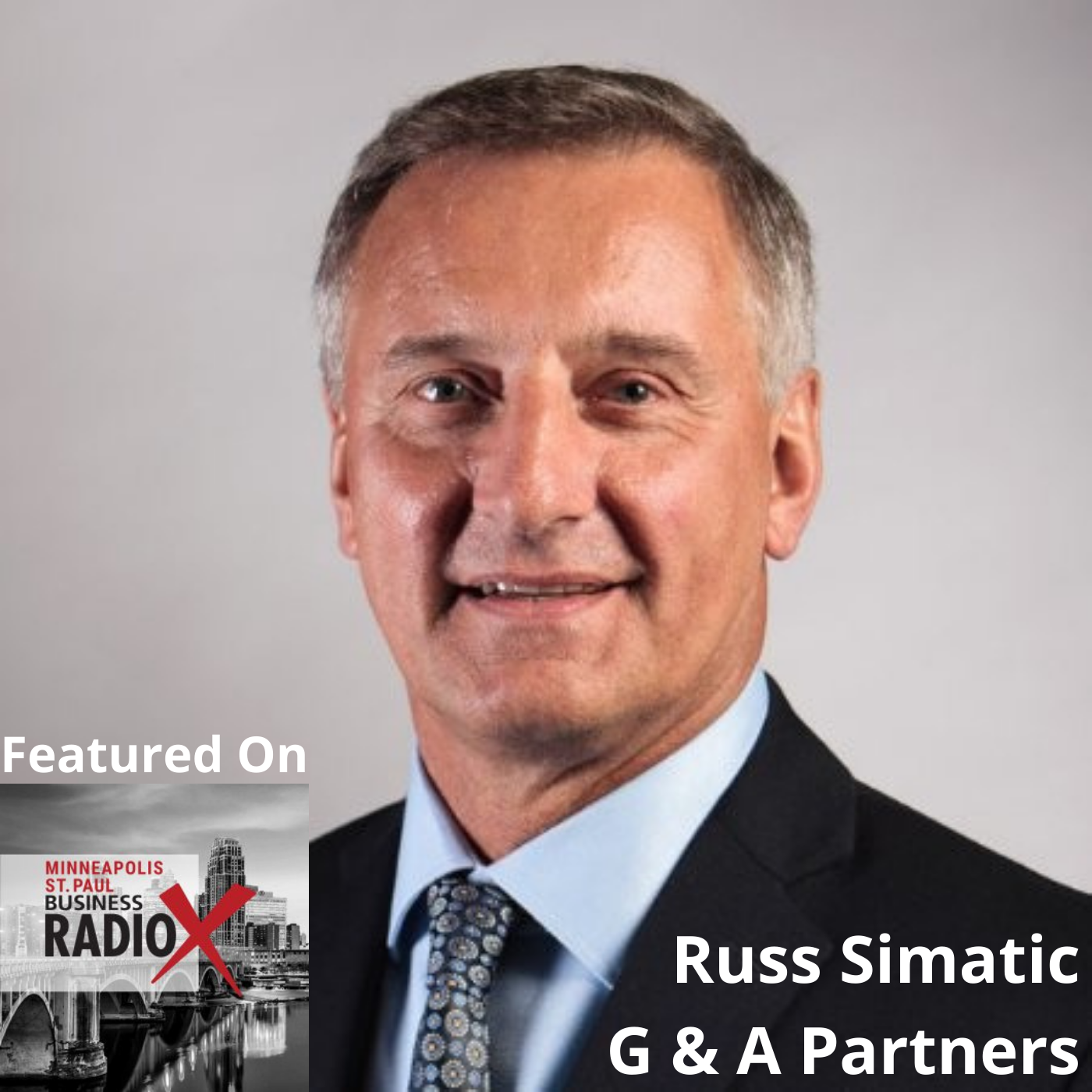
Russ Simatic, G&A Partners

December 29, 2021 by John Ray

G&A Partners
Minneapolis St. Paul Business Radio
Russ Simatic, G&A Partners
Loading
00:00 /
RSS Feed
Share
Link
Embed

Download file

G&A Partners

Russ Simatic, G&A Partners (Minneapolis-St. Paul Business Radio, Episode 29)

Russ Simatic, Minnesota Regional Sales Director for G&A Partners, discusses G&A’s work as a professional employer organization (PEO), “an HR toolbox” for organizations. When he owned his own business, he came to understand first-hand the value a PEO offers to alleviate vexing issues employers face with human resources. Russ and host John Ray discussed myths about outsourced HR functions, the recent changes in the industry, a look ahead to 2022, and much more. Minneapolis-St. Paul Business Radio is produced virtually by the Minneapolis St. Paul studio of Business RadioX®.

G&A Partners

G&A Partners is a professional Human Resources organization that provides comprehensive Human Resource Solutions and Services that are customized specifically for each of their client’s needs.

Their goal is to position your company for optimal growth and provide you with the most important commodity of all—time to grow.

Whether you need human resource outsourcing, payroll processing, payroll tax return filing, help with employee benefits, workers’ compensation coverage, unemployment claims management, regulatory compliance assistance, or a host of other services, G&A is your one-stop shop for targeted, highly responsive HR solutions.

G&A Partners prides itself on its proven expertise at providing the ideal mix of services for each client’s unique needs. With G&A as your strategic partner, you can feel secure turning your HR and administrative concerns over to us.

Company website | LinkedIn 

Russ Simatic, Regional Sales Director – Minnesota, G&A Partners
G&A Partners
Russ Simatic, Regional Sales Director – Minnesota, G & A Partners

Russ Simatic is an advocate for small, medium, and large businesses. He has dedicated the past ten-plus years to helping business owners and CEOs succeed in a variety of industries. He is an extremely talented and highly effective business executive with over 30 years of diversified business experience leading sales, operations, and marketing teams with Fortune 500 companies and as an entrepreneur. Today Russ uses his knowledge of Business, Human Resources, and the PEO industry to help his clients grow their business and bottom-line profits by providing them with cost-effective, efficient HR solutions and services. Russ’s honest and open communication style has created winning cultures wherever he has worked, and he uses those skills to build lasting relations with his friends, clients, and prospects.

When Russ isn’t helping his clients grow their businesses, he loves spending quality time with his family, grandchildren, and friends, preferably at their family cabin in Crosslake MN. Russ enjoys participating in outdoor activities like Golfing, Boating, Fishing, Grouse Hunting, and Gardening. Russ grew up in Wisconsin so the cheddar runs deep in his veins. He is an avid Badgers and Packer fan and a GB shareholder too. Having lived in Minnesota for the past 25 years he is also a fan of the Vikings, Twins, and Wild. No border battle here.

LinkedIn

Questions and Topics Discussed in this Episode

  • Who is G&A Partners?
  • How G&A has helped businesses during the pandemic
  • What G&A is doing to help businesses with recruiting and retention?
  • Tapping into new industries – who G&A serves
  • Discuss post-pandemic workplace (what businesses are asking)
  • Trends you will see in the workplace in 2022

Minneapolis-St. Paul Business Radio is hosted by John Ray and produced virtually from the Minneapolis St. Paul studio of Business RadioX® .  You can find the full archive of shows by following this link. The show is available on all the major podcast apps, including Apple Podcasts, Spotify, Google, Amazon, iHeart Radio, Stitcher, TuneIn, and others.
Tagged With: employee benefit outsourcing, employee benefits, G&A Partners, Human Resources, peo, professional employer organization, Russ SImatic

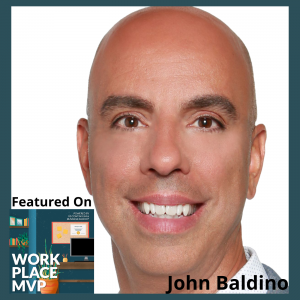
Workplace MVP: John Baldino, Humareso

December 2, 2021 by John Ray

Humareso
Minneapolis St. Paul Studio
Workplace MVP: John Baldino, Humareso
Loading
00:00 /
RSS Feed
Share
Link
Embed

Download file

Humareso

Workplace MVP: John Baldino, Humareso

In an engaging conversation, John Baldino, President of Humareso, and host Jamie Gassmann review changes in the HR landscape changes over the last two years, important trends, and look ahead to 2022. They discuss flexibility in work arrangements, compensation and inflation, cultural fabric, diversity, equity and inclusion, and much more. Workplace MVP is underwritten and presented by R3 Continuum and produced by the Minneapolis-St.Paul Studio of Business RadioX®.

Humareso

Humareso is able to strategize with your company and develop plans to manage talent, recruit for skill gaps based on employee inventories, assess markets for growth, develop long-range succession plans and influence a culture of enthusiastic buy-in. Humareso handles all facets of employee engagement and business development. Humareso provides HR solutions and administration for small businesses trying to manage budget and growth.

Humareso sits strategically to support an organization’s vital talent needs. Talent is what they believe in cultivating. They look to drive organizational health through true employee engagement, strategic workforce planning and invested management training. Having a culture that values people, policy, and performance in the right measures is the differential needed to stand apart from other organizations. Whether your organization has 10 or 100,000 employees, dynamic human resources will build corporate strength and recognize talent contribution.

Company website | LinkedIn

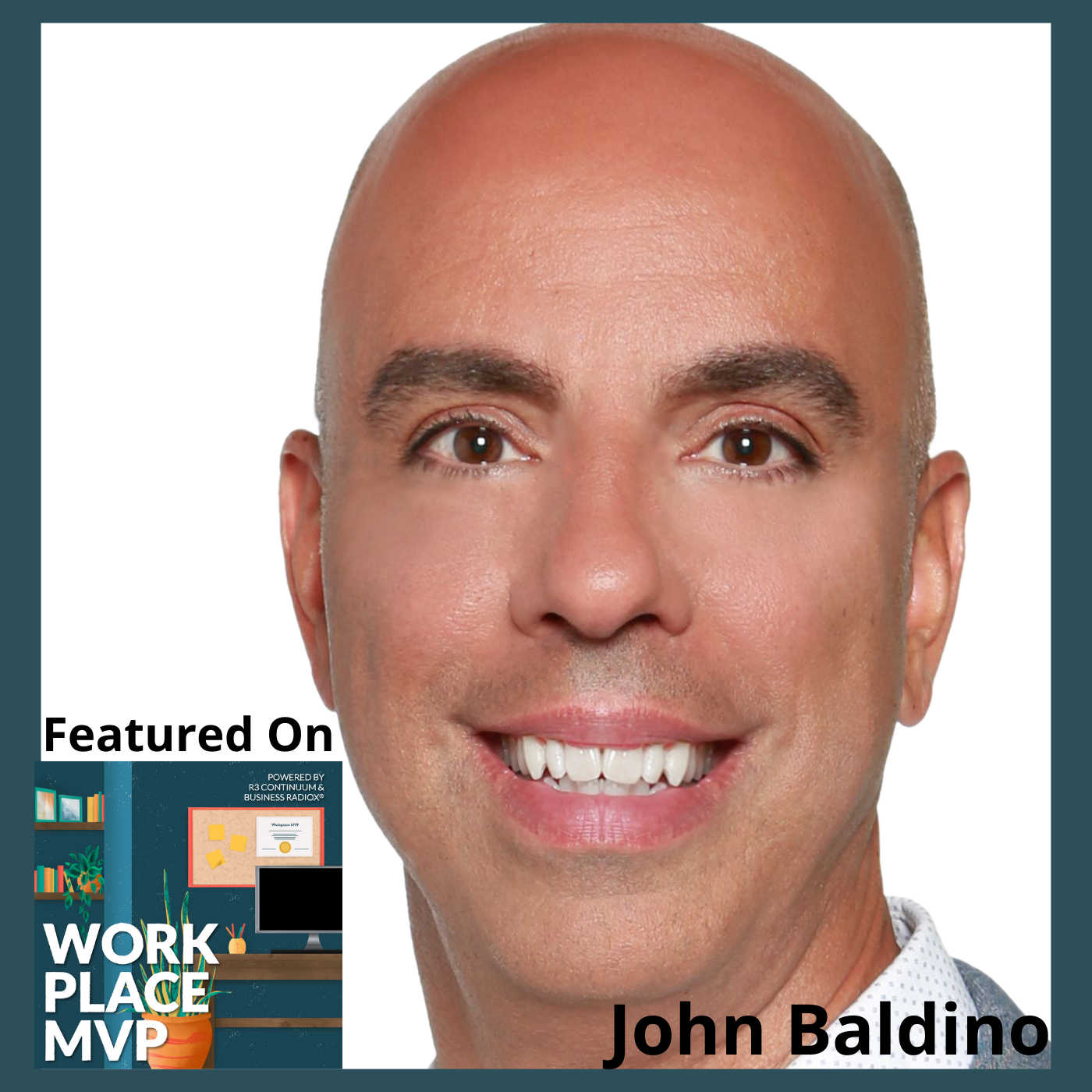
John Baldino, MSHRD SPHR SHRM-SCP, Founder and President, Humareso

John Baldino, MSHRD SPHR SHRM-SCP, Founder and President, Humareso

With 30 years of human resources experience, John’s passion of setting contributors and companies up for success is still going strong.  John is a keynote for US and International Conferences where he shares content and thoughts on leadership, collaboration, and innovation, employee success, organizational design and development as well as inclusion and diversity.

He is the winner of the 2020 Greater Philadelphia HR Consultant of the Year award. John is currently the President of Humareso, a global human resources consulting firm, and the proud dad of 3 amazing young adults.

LinkedIn

R3 Continuum

R3 Continuum is a global leader in workplace behavioral health and security solutions. R3c helps ensure the psychological and physical safety of organizations and their people in today’s ever-changing and often unpredictable world. Through their continuum of tailored solutions, including evaluations, crisis response, executive optimization, protective services, and more, they help organizations maintain and cultivate a workplace of wellbeing so that their people can thrive. Learn more about R3c at www.r3c.com.

Company website | LinkedIn | Facebook | Twitter

About Workplace MVP

Every day, around the world, organizations of all sizes face disruptive events and situations. Within those workplaces are everyday heroes in human resources, risk management, security, business continuity, and the C-suite. They don’t call themselves heroes though. On the contrary, they simply show up every day, laboring for the well-being of employees in their care, readying the workplace for and planning responses to disruption. This show, Workplace MVP, confers on these heroes the designation they deserve, Workplace MVP (Most Valuable Professionals), and gives them the forum to tell their story. As you hear their experiences, you will learn first-hand, real-life approaches to readying the workplace, responses to crisis situations, and overcoming challenges of disruption. Visit our show archive here.

Workplace MVP Host Jamie Gassmann

Jamie Gassmann, Host, “Workplace MVP”

In addition to serving as the host to the Workplace MVP podcast, Jamie Gassmann is the Director of Marketing at R3 Continuum (R3c). Collectively, she has more than fourteen years of marketing experience. Across her tenure, she has experience working in and with various industries including banking, real estate, retail, crisis management, insurance, business continuity, and more. She holds a Bachelor of Science Degree in Mass Communications with special interest in Advertising and Public Relations and a Master of Business Administration from Paseka School of Business, Minnesota State University.

TRANSCRIPT

Intro: [00:00:04] Broadcasting from the Business RadioX Studios, it’s time for Workplace MVP. Workplace MVP is brought to you by R3 Continuum, a global leader in workplace behavioral health, crisis, and security solutions. Now, here’s your host, Jamie Gassmann.

Jamie Gassmann: [00:00:30] Hi, everyone. Your host, Jamie Gassmann, here, and welcome to this episode of Workplace MVP. As we near the end of 2021 and gear up for 2022, I thought it would be a great time to reflect on what we, as business and H.R. leaders, have navigated over this last year. Some of the challenges and complexities experienced in 2020 followed us into 2021 and really never left. But just like with any year, 2021 brought focus and importance in areas of our business that needed to be focused on.

Jamie Gassmann: [00:01:03] And today, we will be talking with Workplace MVP John Baldino, President of Humareso, to share from his perspective when looking at the human side of business, what are the key areas of focus for H.R. and business leaders in 2021, and what does he see as areas of importance going into 2022. So, with that, welcome to the show, John.

John Baldino: [00:01:28] Hey, Jamie. Thanks so much for having me.

Jamie Gassmann: [00:01:30] Absolutely. I’m looking forward to connecting with you on this topic. I think you bring some great perspective. So, with that, let’s start out with learning a little bit about your career journey to being President of Humareso.

John Baldino: [00:01:45] So, yeah, thank you. It is one of the things that you alluded to, looking back on 2021, it’s 30 years for me involved this year with H.R., leadership development, organizational design and development. It’s frightening for that 30 years. I can’t believe it. But I’ve had a really great journey in terms of the kinds of organizations I’ve been able to be a part of. And so, through retail and restaurant, nonprofit, education, banking and finance, distribution and manufacturing, just so many areas of industry.

John Baldino: [00:02:26] And I got the privilege of starting Humareso in 2012, so it’s been a little over nine years, and it’s been a great time. Really, I’m thankful to say, a smart move to start the H.R. consulting firm that I did. And we’re just having a blast, honestly, with the work that we get to do with companies across the country, also in a variety of industries. So, it’s really fun.

Jamie Gassmann: [00:02:50] Yeah. And probably a great time right now, obviously. I’m sure your services are called upon even more as people are navigating different complexities and challenges that maybe they haven’t thought that they would experience. So, with that, tell us a little bit about Humareso, and what your organization does, and some of the services that you provide.

John Baldino: [00:03:13] Yeah. I try to tell people, we are as much of an all-in-one for everything H.R. as possible. And the way that we can do that is because we have some wonderful people on staff who are just phenomenal and they represent disciplined areas of H.R. And so, we support companies with a lot of, say, blocking and tackling, compliance administration, direct hire, recruiting, things that they need to get done day in, day out for that employee experience and life cycle.

John Baldino: [00:03:49] But we’re also involved with things that are a little beyond. So, technology, really an interesting path to constantly travel because technology changes so much. And what makes sense for a company at its particular genesis. So, you might use something today that when you double in size, you might not use next year. And so, helping navigate through that. But then, areas of mergers and acquisition, organizational development, learning management, executive coaching, just things where sometimes we overlook those components and think that they are nice to have.

John Baldino: [00:04:24] But, really, in the competitive marketplace today, they’re a must-have. You can’t just kind of put things aside anymore. You can’t ignore compensation. You can’t ignore employee sentiment. What’s happening with our people? Are they engaged? It’s not just how do you feel. It’s how are you productive. And so, I think organizations are much smarter about that than ever before. And so, we get a lot of opportunity to support companies doing a lot of that work.

Jamie Gassmann: [00:04:55] Yeah. Absolutely. It’s like the human side of business has become even more of a focal point and level of importance for businesses, particularly over this last year.

John Baldino: [00:05:06] For sure. For sure. And it’s funny, I mean, you and I have talked about this before, right? When people first connect with Humareso, they’re like, “I’m not sure how to say the name.” And I’m like, “It’s Humareso. It’s Italian for human resources.” And people are always like, “That’s fantastic.” That’s a total lie.

John Baldino: [00:05:27] But the focus for me is to get people to be thoughtful about that idea of human resources. It’s actually a global consideration. I appreciate the fact that in the U.S., we think of it as sort of a department. But, really, it’s a functional relational component of how organizations exist and thrive across the globe.

John Baldino: [00:05:49] So, you’re right, that human-centered perspective is not merely emotional. And I hate to say it, I still get to talk to some CEOs who, “This is all kind of fluff, blah, blah, blah.” And usually, they’re the CEOs that are struggling the most. And I want to just say to them, “Listen. Relax. It doesn’t mean that you have to get a warm blanket and sit in front of a fireplace and just get in touch with your feelings. That’s not what this means. It means you have real people with real concerns and real desires to contribute in their work and in the organization. So, don’t overlook that. Pay attention.”

Jamie Gassmann: [00:06:27] Absolutely. And they want to do good work for you, especially if you show that care and compassion and value that they’re seeking.

John Baldino: [00:06:35] Absolutely.

Jamie Gassmann: [00:06:36] And, obviously, you kind of already mentioned, we’re going to be talking about trending over the last year. So, from your perspective, just to level set as we kind of get into this dialogue, if you were going to look at over this last year, what were some of the key trends that you feel were most impactful to the human side of business?

John Baldino: [00:06:58] I mean, listen, we can be buzzword and trendy for at least an hour, right? Certainly, I think from a new term, we saw this year that the phrase The Great Resignation being used, and people struggling to find talent to fill open roles, and all of the perspective that went along with that. It’s because of unemployment. It’s because people are lazy. And everybody is an armchair coach to tell you exactly what’s wrong with the world.

John Baldino: [00:07:33] In many ways, though, I think that I’ve also heard probably a better phrase, instead of The Great Resignation, I look back and see it as a great reshuffle. And I think what talent has chosen to do this past year is say, “Where can I best thrive? Where can I best invest? Who’s going to like the fact that I’m bringing what I bring to the table? Who will like it the most?” And that may mean that I take my toys and go to another company in order to do that. And so, the talent is still in the marketplace. It’s just reshuffled. It’s out of where it was and onto someplace else.

John Baldino: [00:08:13] And if your organization winds up being one of the organizations whose bench has cleared, you may need to look in the mirror long and hard as to why your organization is the one reshuffled out of as opposed to into. And so, I think for sure that’s something that organizations have had to pay attention to this past year differently.

John Baldino: [00:08:39] And let me just add this, too, I want to be respectful of data. There’s absolutely data that would say this past year – and I’ll try to do this. I might say it twice – there’s jobs that people are filling right now and open jobs where we need people. If you add that number together, it’s more than the number of people available to work. That there’s less people available for all the jobs that are possible, both currently filled and opened. Our birthrate is down. For every two adults, we’re trending at about 1.7. So, we’re not regenerating the same number and haven’t for years. And so, we’re seeing a little bit of that catching up with us, for sure. I’m not ignoring the data.

John Baldino: [00:09:27] But I would also say, there are companies that are able to hire and they have hundreds of people this past year, hundreds of people this past year. Well, where are they coming from? They may be coming from your company if you haven’t paid attention to what’s happening with your team.

Jamie Gassmann: [00:09:43] Yeah. Absolutely. And there were a couple of other areas, too, you mentioned, like from an entrepreneurial spirit with that next generation of workforce.

John Baldino: [00:09:53] I mean, you and I know, we have this spirit even within us. And I’ll speak for myself, I’m not a young person anymore. I pretend I am. I think like I am probably to the chagrin of my spouse. But I’m not really a young person.

John Baldino: [00:10:11] We’ve encouraged a very entrepreneurial approach to commerce. There are so many younger – and I do mean younger by age – who are coming out of school, who very much feel like I don’t ever want to work in-house for someone. I want to start my own company,” whether that’s a product or a service, whether it’s tech based or not. There are just opportunities all over the place. You can start your own website and have product delivered to somebody for $199. I mean, this dropship stuff is just like easy peasy now.

John Baldino: [00:10:49] And so, there’s people who are like, “The heck with that. I’m not working for Baldino. I’m going to work for myself.” And that entrepreneurial spirit you can’t ignore. And so, what has that done this past year? It’s actually taking people out of the workforce as well who don’t desire a W-2 relationship with a company. They don’t want it.

Jamie Gassmann: [00:11:09] So interesting. And I’ve seen that. And I think you and I will talk about it a little bit later about that shift to consulting work. And that we’ve seen some of the writing on the wall for that years before, even pre-COVID. And I’m always kind of looking at, “Well, pre-COVID that was already happening. It just expedited it.” Which we’ve seen across a lot of different other areas.

Jamie Gassmann: [00:11:35] And another area, too, that we’re going to talk about a little bit later is that diversity, equity, and inclusion focus in workplaces. And I think you have some really exciting things to share on that different perspectives of how a workplace can be looking at that within their own space as well.

John Baldino: [00:11:53] Absolutely. We’ll talk more about that. But for sure to at least whet the appetite, honestly, we’re watching verbal responses followed by physical movement from people who are saying, “You say you’re about these things -” organization “- but you’re not. And so, I’m calling you out on it. And if you don’t change it, I’m leaving because I can go somewhere where the value around equity and fostering a sense of belonging is real. It’s active. We can talk about it. I can point to it. And you just want me to know we hired diverse talent.”

John Baldino: [00:12:35] Well, first of all, what does that mean? And second of all, how long are they staying? Because you can hire diverse talent, let’s say, in certain buckets. But in six months, there’s a good chance they won’t be there if your organization isn’t prepped for it. And other people are now going out the door with those folks who’ve been brought in just because they represent some sort of diverse group. That’s not the way to do it.

Jamie Gassmann: [00:12:57] Yeah. No, it’s so exciting to talk about that with you in terms of some of your perspective of how you helped workplaces to really embrace that in a way that’s helpful and really demonstrating what it’s meant to demonstrate. So, that’ll be really exciting.

Jamie Gassmann: [00:13:15] So, diving into The Great Resignations, and we’ve all heard about that and the impact of that. And I think in some ways we probably saw that, but maybe differently than, you know, just hearing some of the data that you shared, probably maybe differently than what we maybe anticipated. I think maybe some retired earlier than they anticipated. And with that, we had people leaving the job market that would have maybe stayed, like, five years longer. But then, to your point, just having less amount of that employee candidate pool based on just there aren’t as many workers out there. So, talk to me a little bit about that trend of the great reshuffle and share kind of some of your perspective a little bit deeper on that.

John Baldino: [00:14:01] For sure. It’s really interesting, honestly, even with what you just shared, that, certainly, there were people who COVID amplified their desire to get out of the workforce. There are definitely people who took early retirement. There are people who were furloughed or laid off from their organization.

John Baldino: [00:14:22] And when the opportunity presented itself to return, they self-selected out and said, “This whole pandemic thing isn’t done yet. I’m not interested in trying to navigate what this means, masks, no masks, vaccines, no vaccine. I just don’t want to be involved with it. And so, I’m not coming back or certainly I’m not coming back to the degree that I used to work. I’ll come back part time -” which we’re seeing that as well “- not full time. I only want to take a role where I can work from home completely because perhaps I’m immunocompromised or I’m a caretaker and I’m concerned about being a carrier for some of these things.”

John Baldino: [00:15:05] So, from a health perspective, absolutely, that’s impacted some of that reshuffle. I’d also say from an opportunity standpoint. So, what do I mean? There are plenty of professionals pre-pandemic who were involved in the – I’m going to use the big industry title – hospitality industry, so that would be things like hotel, restaurants, concierge-based services, spas, all of those areas, who were laid off and laid off for months. And when they were able to come back, came back at a very constrained schedule because it just wasn’t busy enough. People were not getting massages. I mean, think about some of that. You might be worried about health issues. Who wants to come and have a massage? Not as many as once did, let’s say, or other kinds of treatments.

John Baldino: [00:16:01] So, those folks decided, “I got to shuffle myself out of hospitality and into something that is not going to be as influenced by what’s potentially happening in the world, mandates that may yet come down the pike. I’m going to get into something else.” And so, right now, for sure, I’m seeing hospitality-based organizations struggling to find talent, struggling to find talent.

John Baldino: [00:16:26] Add to that the way in which some organizations – think about cities like New York, where so much hospitality happens in New York City. I mean, my goodness, so much of the economy is based on it – people are saying, “You want me to to not only do the work that I’m supposed to do, but now also be a representative of the city’s health mandates, and help to tell people what it’s supposed to be, and don’t sit here, and put your mask on.”

John Baldino: [00:16:54] People have chosen to say, “I am not interested in any of that. I don’t get paid enough for that. I’m not a professional in that degree. I want to use my professional expertise in a different way.” And so, they’ve reshuffled themselves, again, out of that vein of work.

John Baldino: [00:17:09] And lastly, you know, I also want to make sure I give a shoutout to some of the reshuffle as well, for those roles where you have to be in-person. You can’t do it remotely. And I think that we have to be really careful in the business community – because I think we’ve done this – to not make people feel badly for having work that they have to do physically. Just because your organization cannot give you a fully remote job doesn’t mean your organization is barbaric. That is not what it means.

John Baldino: [00:17:46] And we know that there’s going to be a lot of people listening to this while they’re having a meal and maybe you ordered that meal from somewhere. Well, who in the world cooked it and delivered it to you? People. Real people. And so, they couldn’t do it through Zoom. That sandwich would not taste as good if it was only through Zoom. It had to be physically done. So, let’s stop giving people a hard time because I do think that’s influenced the reshuffle as well. We’ve made some of our own employees feel badly as if they had some substandard job. That’s ridiculous.

Jamie Gassmann: [00:18:23] That’s such an interesting point. I mean, when you think about that, it’s like the people going in to make your coffee. Yeah, I could have made a pot of coffee at home, but there’s something about that Starbucks cup that just gives me a little satisfaction for the day.

John Baldino: [00:18:45] And hopefully you’re not going up to that drive-thru window saying, “Thank you so much for this coffee.” Isn’t it terrible that you had to come into work? Wouldn’t you rather have a job where you can work at home? I mean, again, I know that sounds ridiculous, but I think that we have unintentionally sort of made sort of a caste system between what it means to work from home and not being better than having to go in and work somewhere.

Jamie Gassmann: [00:19:08] Yeah. I mean, because there are some employees who they like to work in the office and they want to get back in the office. And, yes, there’s going to be some who are like, “I really prefer to work at home.” But that’s the beauty of our employees, is that difference and what their likes and dislikes and those types of things. So, yeah, interesting points all around.

Jamie Gassmann: [00:19:32] And so, when we talked previously, you indicated there is also another kind of business trend with larger organizations where they’re paying substantial salaries for some entry level or just above entry level positions, that is increasing some of the pay structure that’s having an impact on some of the smaller businesses that might be trying to hire. Can you talk a little bit to some of that trend that you’re seeing?

John Baldino: [00:19:57] Yeah, for sure. I mean, that is absolutely a trend. And I would say, I get asked about compensation a ton this year. Compensation from an external competitive standpoint and then pay equity from an internal standpoint. What are we doing with our own people? Forget about what’s happening externally. Are we paying people equitably for similar work within our company? Well, there’s a good chance that if you are bringing people in at this point, you’re bringing them in higher because you’re trying to compete.

John Baldino: [00:20:31] And all of a sudden, those legacy employees who’ve been there are trending downward because you’re starting people so much higher. So, what are we doing about that? That then becomes now your legacy employees start to feel some sort of way about your company and may think about exiting the company because of that. So, compensation on both sides has been really difficult.

John Baldino: [00:20:51] What we’re seeing is, you know, a large organization could easily say, “We’re just going to throw a bunch of money at this problem. And so, we need people at this particular level -” and I’ll make up something just for the sake of it being easy “- customer service rep. And we’re going to pay this much per hour.” And you’ve got a smaller organization that has a few customer service reps and they can’t compete at that hourly rate the way that Amazon or Verizon or Aramark or just pick whatever large, large enterprise level organization you would like to. And so, they price themselves out of the competition, those smaller companies. They can’t compete at that level.

John Baldino: [00:21:33] And if you are a job seeker, whether active or passive, and somebody calls you and says, “Hey, I got a job for you and you’re going to make $6 more an hour, $10 more an hour than you’re making right now.” Honestly, I see people leave for 50 cents, let alone the numbers that I just mentioned. Holy cow. You think that employee is going to come back to you and say, “Hey, John. I love working for you. They’re going to pay me $6 more an hour. Can you match that?” If I’m a small business, there’s a great chance I’m going to say, “No, I can’t. I can’t do it.” And so, now I’m losing talent because I can’t afford to compete at that compensation level.

John Baldino: [00:22:16] But the risk on the other side, as I see it, is at some point, this compensation thing is going to level out. We’re going to have to right size it a bit because it’s unsustainable. It can’t go on forever. It’s very much, in my opinion, like the housing crisis going back to ’07, ’08, ’09. Things are going to just eventually kind of crash. You just can’t keep saying this is worth more, worth more, worth more, worth more.

John Baldino: [00:22:41] So, what will happen for those people who went to those large companies? They’re likely going to do a riff. They’re going to do a reduction in force. You’re going to get your pink slip, whatever phrase you’re used to. And Verizon will right size. I’m not saying anything out of turn, we’ve seen Verizon, as an example, do this in years past, lay off a number of people, wait a few months, and start to rehire people. And they’ll rehire them at the new lower readjusted rates of pay. And, now, we’ve got all kinds of people on unemployment waiting for that readjustment to happen. And we watch that take its toll on our system.

John Baldino: [00:23:24] And I think organizations need to be wise to kind of wait for that. Take your time. I know it’s going to be stressful right now, but take your time that’s coming sooner than you think.

Jamie Gassmann: [00:23:35] So interesting. I’m guessing that’s contributing to some of the reshuffle, too, is just the opportunities out there for other workers. And, you know, being in the crisis response arena – that our sponsor is part of – some of the things I’ve heard spoken about is just when a situation like the pandemic happens, people start to rethink their situation. And so, some of that pricing that you’re saying probably are more in tune to what’s going on because they’re starting to look at what’s better for me and what should I do for myself, and it becomes enticing.

John Baldino: [00:24:14] Yeah. I mean, it’s hard to say no. Let’s be honest, you’re 26 years old and you’ve got a couple of years under your belt, maybe, of some professional work, and someone wants to pay you 20 percent, 25 percent, 30 percent more than you’re making right now, how are you saying no to that? That would be really hard. You’ve got student loans that you know you’re going to have to pay for. I mean, you just have things that are just realistic.

John Baldino: [00:24:39] And if my grandfather were still here, he’d say, “Get what’s yours as fast as you can get it.” That’s kind of the perspective that some people, for sure, are hearing. And it’s hard to talk them out of that.

Jamie Gassmann: [00:24:53] Yeah. Especially when you’re younger in your career, too, a lot of people say, “Now is your time.” You’ve got a whole 40 years left to work kind of mentality. So, looking at that and talking 40 years out, what is the long term impact that maybe some of that pricing for salaries impact is on, maybe the individual, but also on the organizations?

John Baldino: [00:25:20] Well, I mean, it’s such a great question. You know, I wish I knew in full. So, obviously, I’m anecdotal a little bit with some of the answer. But I would say, I mean, first of all, we have to realign expectations.

John Baldino: [00:25:37] I spoke to somebody about a-week-and-a-half ago, literally, 27 years old, and has a job making $150,000 a year. I’m like, “Are they hiring?” I mean, I have my own company, but I don’t even know what I would have done at 27 years old with $150,000 a year, nothing good. Let me just actually say that, I could at least say nothing good.

John Baldino: [00:26:05] Now, let’s say that the market readjusts, as I just shared. Like, what do you want that person at 29 years old to expect now? They’re going have a hard time going back into the job market and take even 90,000 as a salary, because it’s just going to seem so low compared to what they got used to quickly. That’s where I think we’re going to see a longer term impact because there’s a better chance of those individuals saying, “The heck with this. You’re not paying me what I’m worth. I’m going to go do my own thing. I’m going to go start my own thing. I’m going to go partner up with somebody and try to get something done differently.”

John Baldino: [00:26:44] Some of that may work. As an entrepreneur, obviously, I believe in that, because I started a business as well. But not everybody is going to be able to do that. And, certainly, the reality is, especially for those who’ve started companies, you don’t start making $150,000 your first year. I mean, you don’t. So, if you think starting your business is a guarantee to get you that kind of money right away to match where you’ve been, you’re going to be disappointed.

John Baldino: [00:27:14] And even now, I see entrepreneurs with those who are trying to be entrepreneurial get out of it because the expectation hasn’t been aligned correctly. So, I think long term, we’re going to struggle with that individually.

John Baldino: [00:27:28] As far as organizations are concerned, I think organizations are going to have to be honest about budgets. Because one of two things is going to happen, you’re going to have that huge reduction in force that I mentioned or we’re going to continue to see past the long pricing to cover for these things. I mean, we all go into that grocery store. Holy cow. Holy cow. Who’s paying for that? Or the gas line or whatever, we see what the prices are right now. That’s not sustainable, either. I mean, when you start looking at chicken as being expensive, don’t even bother putting the steaks out. Just don’t bother, because how could I afford it? And that’s where I think that markets are going to have to readjust as well. It’s just not sustainable.

Jamie Gassmann: [00:28:18] Yeah. Because that additional cost to cover those salaries, it’s got to get passed on to somebody.

John Baldino: [00:28:26] Somebody and it’s just you and me, right? It’s when we start saying 6.99 a pound is cheap. And you’re like, “Wait. What am I saying? What am I saying?”

Jamie Gassmann: [00:28:36] Years ago I said, “If they ever moved the coffees to over $5, I’m not buying them.” Well, they’re over $5 and I’m still buying them.

John Baldino: [00:28:44] I just got one this morning.

Jamie Gassmann: [00:28:49] I just got one this morning. So, you bring up a really good kind of points, so segueing into that next trend that we talked about, that entrepreneurial spirit and just seeing this next generation of workforce, you know, having more of that spirit and wanting to look at moving into more kind of consultancy or starting their own businesses. You had indicated when we talked before that this has been taught in us, and it makes me think about my 11-year-old at home who’s like, “I’m going to be a YouTube star someday, mom. They make good money.” And I’m going, “Oh, boy. Yes, they do.” But to get to that, how did they do that? So, what changes are you seeing with this shift of that entrepreneurial spirit? I mean, there’s got to be some pros and cons to that.

John Baldino: [00:29:38] Sure. I mean, look, we’re in the Shark Tank generation. I mean, we’ve encouraged people in this. And listen, I, for one, am not pooh-poohing it. I’m glad we have. Like, there have been some phenomenal inventions and ideas that have come forward as a result of people taking risks. One of my favorite shows to watch, honestly, is The Profit with Marcus Lemonis, and he’s just so smart in his approach to the entrepreneurial game. It’s right on the money.

John Baldino: [00:30:09] And so, I’m not badmouthing it. But what I’m saying is, we watch those people come forward on Shark Tank. And I know you sit on your couch and think, “What the heck is this? Who would buy this? Why do they think this is a great idea?” And we’re right, The Sharks, nobody invests in that company, right? But what we forget is, for that one person who’s standing there, that person represents another hundred who are doing the same thing, trying to put together service or product in an entrepreneurial way that they think the world wants. And they won’t. There are lots of products and services that are by the wayside or the distribution of those things that didn’t happen the way that it was meant to.

John Baldino: [00:30:54] So, disappointment has to be put together in a way to help people learn from it and encourage people back into the job market. Once again, as opposed to just thinking I’ve got to always go back to what could be the next product, the next product, the next product. Not everyone should do that. And I know that might be hard to hear as people listen to this. You know, “John, you can’t crush people’s dreams.” I’m not here to be a dream smasher. That’s not what I’m saying.

John Baldino: [00:31:27] But we need people to work in the disciplines that are functional components of how our economy is put together. We need medical professionals. We need hospitality professionals. We need retail professionals. We need food professionals. We need distribution professionals. We need folks that are understanding logistics and supply chain. And we need people who are going to understand technology in different ways. We need all of that. That has to be encouraged right now in our high schools, in our colleges.

John Baldino: [00:32:03] One of the saddest things for me – and this is a true story. So, this is a couple of years ago – someone who was actually working for my organization in marketing, and he was a recent college grad. He was a marketing associate. And I had him sign up for a digital marketing course. Humareso will take care of it. We paid for it. Just go learn a bunch of stuff. The deal was he had to present back on it to a few of us. And he came back after six weeks and presented on it.

John Baldino: [00:32:35] And he started by saying, “Thanks for letting me take this class. I just want to tell you, I’m so angry.” And I was like, “Oh, my gosh. This isn’t going to go well. Why are you angry?” He said, “Oh, no. I’m not angry at you. I’m grateful that you had me take this course. But I’m angry because I recently finished a four year degree in marketing and I learned nothing that I just learned in six weeks in this marketing course. Not one thing that I learned in these six weeks in practical marketing that I learned in my four year program that I’m now still paying for in my student loans. For that, I’m angry.”

John Baldino: [00:33:17] And I found that to be obviously sad. I was not happy for him. But what does that tell us? It tells us that we also have to realign better what’s happening in our educational system with what’s happening in our entrepreneurial outlets and in the business community. Because there’s a misalignment. It’s not where it needs to be.

Jamie Gassmann: [00:33:36] Oh, that’s such really good points. A lot of what people learn is on the job, in that hands-on, tangible, kind of real-world atmosphere. And you brought up a really interesting point with the entrepreneurs that, I think, too, maybe an employer could reframe it a little bit. I mean, that entrepreneurial spirit I could see as like an absolute benefit to a business, especially if you’re working for a smaller business. Because you want your employees thinking entrepreneurially because that helps to drive a smaller business to even more success when they treat it like it’s their own business.

John Baldino: [00:34:17] So, reframing it, maybe, for the workforce, how could an employer do that in a way that kind of attracts some of those individuals that have that spirit within them that maybe you can kind of bring them over to a company as opposed to trying to start their own gig?

John Baldino: [00:34:39] And as a small business owner or, honestly, even a mid-market company, you have to be willing to put in a little bit of the effort into that to help people have that bridge. You know, I get to talk to business owners all the time of various-sized organizations, and they will sometimes be intimidated by entrepreneurs coming back into the workforce. Or think that, “They’re only going to stay with me a year to make some money and then leave.”

John Baldino: [00:35:07] First of all, you don’t have anybody right now. Take 12 months from somebody, let’s see what happens. You have no idea what’s going to happen in 12 months. Take the 12 months. Relax. The other thing is, if you can reform that drive towards something, as you’re saying, Jamie, that benefits the organization as well without categorizing somebody in a negative way.

John Baldino: [00:35:31] I try to tell people, “Listen, you’re talking to me as I started a consulting firm. Let me paint a picture for you. I was one of those – what you would term – a corporate H.R. person for years, and I’m entrepreneurial. I don’t make sense. There shouldn’t be people like me. But guess what? There are.” And so, you can be entrepreneurial in any kind of industry, in any discipline. It’s about how to encourage it and how to define it.

John Baldino: [00:36:03] When I started Humareso, people – besides making fun of the name – were saying, “Why would you make a name? You should call it John Baldino Consulting, because everyone knows you. That’s what’s going to drive business to you.” And my response was, “If I make it about me, it will be seen smaller than I intend it to be. And so, I want to make sure I highlight the talent that I know will come.” For the first year, I was the only employee of Humareso – for the first year. But, now, all this time later and all these employees that I’m privileged enough to have be a part of the team, I’m glad I knew better than to call it Baldino Consulting, because it is much grander and larger than just me.

John Baldino: [00:36:53] So, if you can keep that long-term perspective in play as a business owner, look at your talent similarly, how can they be a part of the process for as long as they’re part of the process? And how do I encourage that? And, honestly, give them an opportunity to give me the very best that they can give me. That’s what we need to do.

Jamie Gassmann: [00:37:10] Yeah. That is such a good point. Even if it’s just for the 12 months and giving them a stepping stone, they may stay way longer than what they originally anticipated, especially if you give someone with an entrepreneurial spirit some flexibility to be able to work that spirit within the organization. It’s amazing what you can get out of it.

Jamie Gassmann: [00:37:32] And kind of touching on our last trend here in terms of over the last year, the diversity, equity, and inclusion focus that business and H.R. leaders had, you shared the term cultural fabric with me on our last conversation. I just thought that was such a great way to think about this topic. And so, can you elaborate a little bit more on what that means and how a leader can leverage that within their organization?

John Baldino: [00:38:00] Yeah. Thank you. I would say, it’s something that’s going to fight up against, I think, what some people have sort of adopted into their brains for a lot of years. We talk about cultural fit, right? And so, “I didn’t hire that person. They weren’t really a fit. The way that we are, this person isn’t really going to be able to succeed. I’m thinking of that person when I say this,” things like that.

John Baldino: [00:38:28] And what I think we know now is, there’s a bit of bias baked into cultural fit. What we’re saying is, there’s something about that person that isn’t like us. And the like me bias has been around forever. Instead, I think that what we’re smarter to do is look at the individual and say, “What would they add to what we already have?”

John Baldino: [00:38:54] And the picture that I try to give people who want to fight for cultural fit, this is what we need to be about, I try to encourage cultural fabric. Look at your organization like a tapestry. What is it that’s been woven to date? And it could be a beautiful picture on this tapestry, for sure, but where it is today? Couldn’t we be ready for a new thread to be added to this picture on the tapestry? Couldn’t we be ready for that? And we ought to be. And maybe we think it’s too scary. It might mess up the picture overall. It might. It might. It might.

John Baldino: [00:39:34] But, really, we don’t have much of a choice these days. Because if you think you’re just going to find a whole lot of people like you to do what you do the way that you do it, you’re going to be disappointed. So, this isn’t about, “Well, I guess I have to have substandard qualifications.” No. This is about how do we get work done better, wider, differently, with more innovation and creativity, and add a different colored thread to this tapestry of what we’ve built. Oh, my goodness. Now, in a couple of years when I step back, I see the picture more vibrantly. It’s even more beautiful than it was two years previous.

John Baldino: [00:40:15] And I think when we think about inclusion and equity, as for sure, areas that we have to pay attention to, that needs to be a bit more of our attention, is, what kind of fabric are we weaving? What are we ready for? What might we not be ready for but need to get ready for? And to take the risks associated with that.

John Baldino: [00:40:38] I find it really disconcerting when I’m talking to business owners who want to tell me, “John, we’re committed to diversity.” And I believe them. But you have to be committed to a much more holistic view of that word you’re using. Diversity, what does that mean for you? Is it just about persons of color or ethnicity? Is it about a particular gender? Diversity is even more than that. I’m not ignoring those often visible, diverse characteristics. Yes. Yes. You have to be open to that.

John Baldino: [00:41:12] But even beyond that. Even areas of like hiring veterans or disability. Or here’s a couple we don’t talk about enough, socioeconomics, educational backgrounds. Why on earth is it a bachelor’s degree required? Tell me why. When I look at your department and you have five people in that role, and the best one out of the five has an associate’s, does not have a bachelor’s, tell me why it’s required. Tell me why it’s required. “Well, that person is an exception.” How do you know that? You won’t hire anybody who’s like that person according to your standards. Be wider in the way in which you approach people. It’s possible. There are so many talented people out there who just haven’t had the chances that you may have had. So, don’t limit that.

Jamie Gassmann: [00:42:02] Like, most opening it up so that you can attract more of an audience with different backgrounds, different perspectives. Because keeping an open mind about the value that they can bring to that team could be really eye opening.

John Baldino: [00:42:20] For sure. One of my favorites – and when they listen to this, they will crack up laughing – there’s a pair that work at Humareso. And I’m saying a pair. And I won’t say the names. But there is one of the pair who is a 60 something black woman and the other pair is a 20 something white male. They are two peas in a pod. They are for each other like nobody’s business. You cannot get between them.

John Baldino: [00:42:54] And I’m going to tell you, they would not have a reason for their paths to intersect were it not for the opportunity of an open organization who looks at individuals with the skills or competencies, whatever you want to categorize those, with skills, knowledge, abilities, aptitudes, all of that. If we didn’t just look at that, their paths would not have crossed. And, now, they love each other, love each other, and that’s how it should be.

Jamie Gassmann: [00:43:26] Yeah. Absolutely. That’s such a great, great story. I love that. So, we’re going to just take a moment to hear from our show sponsor.

Jamie Gassmann: [00:43:35] Workplace MVP is sponsored by R3 Continuum. R3 Continuum is a global leader in providing expert, reliable, responsive, and tailored behavioral health disruption and violent solutions to promote workplace well-being and performance in the face of an ever changing and often unpredictable world. You can learn more about how R3 Continuum can tailor a solution for your organization’s unique challenges by visiting r3c.com today.

Jamie Gassmann: [00:44:03] So, now, we’re going to shift gears a little bit, John, and we’re going to talk about 2022. And I’m going to ask you to look into your crystal ball and give us some of your future predictions of what you think 2022 is going to look like. So, if we were going to identify and kind of narrow in to, like, some key areas that H.R. and business leaders need to watch for or even, to your point, focus on as they move into this new year, what would those areas be?

John Baldino: [00:44:35] This is so funny, because these are the moments where in the back of my mind, I’m like, “Six months from now, someone’s going to play this for me and tell me you were so wrong.”

Jamie Gassmann: [00:44:46] Isn’t that the risk of any predictive show, right? Or I could just do a follow up show to show how right you were.

John Baldino: [00:44:55] I like that one. Let’s prep for that. I think for sure, one of the things that has been very evident over the last couple of years is the need to be an encouragement towards overall health for our individuals who support our organizations. And I mean, overall health. More than just offering medical benefits, although that’s important. More than just offering ancillary benefits, again, that’s important. But all areas of health, so that’s physical, mental, emotional, spiritual.

John Baldino: [00:45:32] What are the ways in which we can foster opportunities for individuals to latch on to any and all of these areas and be supported? I want to make sure I paint both sides of this. We do know that if those individual contributors are healthier, they’re going to be better employees. That’s just how it is. I know that might not seem as altruistic as some may want. But it is a benefit on both sides of the equation. And that’s okay.

John Baldino: [00:46:03] So, I think that organizations coming into next year, how can they better give people opportunities and start spending money a little differently instead of maybe throwing it all into an HSA or an FSA? Can you use some of that money to go towards – I’ll call it – like a cafeteria type opportunity for people to choose areas of health that they want to focus on? Again, in those areas that I just mentioned, it’s got to be more than just here’s 150 bucks toward your gym membership. I mean, that’s great and all, but not everybody goes to the gym. Not everybody consistently goes to the gym.

John Baldino: [00:46:40] And what we sometimes do for people is if that’s really the primary benefit that we offer as an ancillary, and then they sign up and never go, then they feel guilty because they’re not going. So, we’ve we’ve actually made another problem. And so, what I would say is there are opportunities to be more customized. Let people choose how they can spend that money every month towards areas of mental health. Maybe they can chat with somebody for a few sessions over Zoom, a mental health professional. Maybe they can do a yoga class. Maybe they can do some sort of walk through the spiritual religions of the world.

John Baldino: [00:47:24] I mean, all kinds of things where people are like, “I’ve never been exposed to this kind of information. I’m really interested to know. It’s making me more centered, more aware, more compassionate, and considerate of others.” Again, how is that not going to help your organization? So, I think that that’s an area, for sure, that people who are in positions of authority or influence could encourage their organizations in, in providing that to their people. So, whole health consideration, for sure.

John Baldino: [00:47:55] I’d also say that we talked about flexibility. You mentioned it, Jaime, too, just a little while ago as well. Well, what does flexibility mean? And, again, when I talked about this before, I have staff even that are like, “I don’t want to work from home. Can I work in the office every day? I know you tell me I can work hybrid. Can I work in there every day? Because I bore a bunch of children that I love, but I’d rather not be with them 24/7 all the time. I think it’s healthy for me to have a little bit of a break, be with some adults.”

John Baldino: [00:48:28] My wife, we have three awesome young adults. They are in college and older and they’re great. My kids are all two years apart, so it was a little crazy in the early years. And my wife, we were fortunate enough that she wanted to stay home, especially with the third one, to stay home with all three. But she took two days a week to go work at Ann Taylor. She’s been there almost 18 years, I think at this point. Because she said to me, “I just want to talk to some other adults. I don’t want to be in the house.” That’s fair.

John Baldino: [00:49:06] So, how do we have some flexibility in the way in which we give people opportunities, either hybrid work, work from home, those considerations? How do we give people flexibility even in hours? Could they be full time? Does it have to be 9:00 to 5:00? Oh, my goodness. What if we did 12:00 to 8:00? Oh, no. That’s crazy. No. Actually, it’s not. For some of our organizations that are listening, your global or at the very least, your coast to coast. 8:00 p.m. on the East Coast is 5:00 p.m. on the West Coast. So, why? Let them work 12:00 to 8:00 and cover West Coast shift. Who cares? Give people opportunity and flexibility in that way. You’d be surprised how well that gets responded to.

Jamie Gassmann: [00:49:50] Yeah. Well, some people aren’t morning people. They don’t want to get up early.

John Baldino: [00:49:54] I’ve heard of them. And I will tell you the truth, I’m actually on the other side of that. I’m absolutely a morning person. I mean, I’m up at 4:30 to get to the gym. And people will look at me and say, “You’ve got something wrong with you to do that.” But I’m wired as a morning person. But come, you know, late afternoon, I got to really push myself forward because I’m crashing a bit.

Jamie Gassmann: [00:50:21] I’m a morning person too. I totally support that.

John Baldino: [00:50:25] We stand together. We’re going to stand together.

Jamie Gassmann: [00:50:27] Yes. We’re partners at the morning crew. I love it. But on the flip side, I have a husband who is a total night owl, so I totally get it. And I think creating that flexibility for employees, you know, you brought up an interesting point on our call about some people don’t want to be in that remote setting because they might be embarrassed about what comes across via their Zoom screens. And just having some kind of appreciation where the employee and understanding where that employee might be coming from because there might be something they don’t want to say in terms of why they don’t want to be in that remote world.

John Baldino: [00:51:05] And we have to remember that people didn’t buy their home or rent the apartment that they’re in thinking that they were going to have to now be on display for everybody in the office. I mean, try to remember that.

Jamie Gassmann: [00:51:18] Yeah. Absolutely. So, a couple of other areas I know we were talking about – I know we’re probably running out of time because you and I could talk for probably hours on various topics – we covered kind of the whole health of the organization and the individual and the flexibility. And then, we also talked about some tolerance for people coming into work sick. And we’re all probably starting to see that.

Jamie Gassmann: [00:51:40] You know, if you’re out shopping at the grocery store and somebody next to you starts coughing, I think we all are kind of like, “Why are you out?” But the reality is, is that, everybody has different things that they’re working through. So, how, in your opinion, is that being at work sick going to look going into this new year?

John Baldino: [00:52:03] I mean, I’ve been somebody who, even pre-pandemic, would always say to someone, “If you are sick, stay home.” There are plenty of companies that are offering personal time, sick time, that you’ve accrued or can take, so take it. That’s why it’s there. There’s nothing wonderful about you hacking up a lung in order just to be there and help to take care of it. There’s nothing wonderful about that. Go home, rest, get better, so you can be back here 100 percent. I’d rather have one day of 100 percent than two days of 50 percent. Get home and get better.

John Baldino: [00:52:38] I would also say, we also have to be thoughtful about how we force people to feel a certain way about using sick time. And I think sometimes managers are the worst when it comes to that. They make you feel badly for being sick, as if you planned on it. And always, I’ll have a manager who wants to tell me the story about someone who said they were sick and then they saw their Facebook pictures of them on the beach. And I’m like, “Listen, that’s one example. Do you want me to tell you about a hundred where people actually were really sick and needed to stay home and feel better? Let’s not make it be about the one example that you want to give me.”

John Baldino: [00:53:15] Give people the opportunity to have the freedom to use the time that they’ve earned and accrued. Be sick. Don’t work. Do you want to tell me it’s okay, “I’ll go home and I’ll log in right away.” No. Be sick and get better. Logging in at home is the same thing. You’re going to work at 50 percent. It doesn’t help me.

Jamie Gassmann: [00:53:33] Yeah. And I think your coworkers would appreciate you going home. They don’t want to catch it, even if it’s not COVID, please. So, great conversation overall. I mean, obviously, you have lots of great advice to share, lots of interesting trends that we discussed over this last year, and things that we’re looking at potentially being on the radar for 2022. If listeners wanted to get a little bit more information out of you or kind of learn more about your services, how can they get a hold of you?

John Baldino: [00:54:06] Yeah. Thank you, Jamie. Obviously, they can go to humareso.co, H-U-M-A-R-E-S-O.com. And that’ll take them right to, I would say, the bible of everything we do. I’m pretty active on social media, so please feel free to connect with me on LinkedIn. Just look for John Baldino, H.R. Or Twitter, actually, is pretty active, and that is @jbalive. As in not dead but alive, @jbalive.

Jamie Gassmann: [00:54:33] Wonderful. Well, thank you so much, John, for being on our show, and for letting us celebrate you, and for sharing your great advice and information, and your predictions for 2022. We really do appreciate you as a guest and thank you so much for your time today.

John Baldino: [00:54:47] Thank you, Jamie. I appreciate it as well.

Jamie Gassmann: [00:54:50] And we also want to thank our show sponsor, R3 Continuum, for supporting the Workplace MVP podcast. And to our listeners, thank you for tuning in. If you’ve not already done so, make sure to subscribe so you get our most recent episodes and other great resources. You can also follow our show on LinkedIn, Facebook, and Twitter at Workplace MVP. And if you are a workplace MVP or if you know someone who is, we want to hear from you. Email us at info@workplace-mvp.com. Thank you all for joining us and have a great rest of your day.


Tagged With: diversity, Diversity Equity and Inclusion, Employee Engagement, HR, Human Resources, Humareso, Jamie Gassmann, John Baldino, R3 Continuum, The Great Reshuffling, workers compensation, Workplace MVP

Top 10 Human Resource Mistakes in Dental Practices

October 29, 2021 by John Ray

Top10DentalHumanResourceMistakesDLREpisode23Album
Dental Law Radio
Top 10 Human Resource Mistakes in Dental Practices
Loading
00:00 /
RSS Feed
Share
Link
Embed

Download file

Top10DentalHumanResourceMistakesDLREpisode23Album

Top 10 Human Resource Mistakes in Dental Practices (Dental Law Radio, Episode 23)

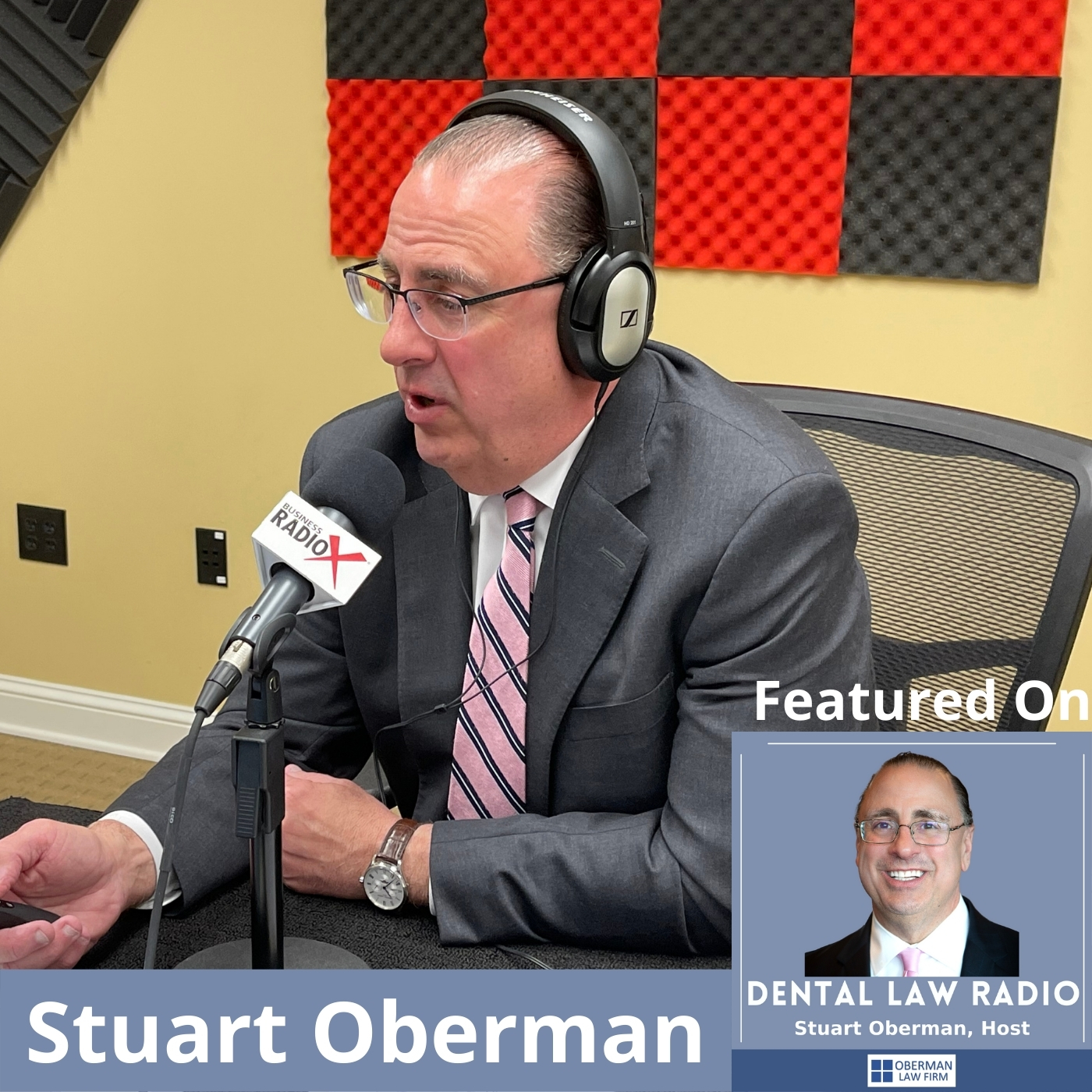
As a rule, Stuart Oberman observes, HR in the dental practices he works with is “non-existent,” and remediating those lapses and blunders can be quite costly. So what are the top ten mistakes he sees in his work, and how do those problems get fixed? Use this episode of Dental Law Radio to gauge some areas of improvement your practice may require. Dental Law Radio is underwritten and presented by Oberman Law Firm and produced by the North Fulton studio of Business RadioX®.


TRANSCRIPT

Intro: [00:00:01] Broadcasting from the Business RadioX Studios in Atlanta, it’s time for Dental Law Radio. Dental Law Radio is brought to you by Oberman Law Firm, a leading dental-centric law firm serving dental clients on a local, regional, and national basis. Now, here’s your host, Stuart Oberman.

Stuart Oberman: [00:00:25] Hello everyone and welcome to Dental Law Radio. Today’s topic, H.R. I’m going to start off by saying that, as a general rule, H.R. in our dental practices is nonexistent. We run into a lot of issues regarding H.R. in our dental practices. So, what’s the topic for today? Avoid the Top Ten Dental Human Resource Mistakes.

Stuart Oberman: [00:00:57] So, I talked about before that COVID-19 exposed a lot of issues regarding H.R. Mainly, it was nonexistent. So, going forward with that, we’re seeing a little bit of improvement, but not a lot, not enough that I feel comfortable, especially with statistics regarding the Department of Labor and the increased scrutiny of the Fair Labor Standards Act.

Stuart Oberman: [00:01:25] So, a recent survey came out from the Department of Labor that 70 percent of employers are violating the Fair Labor Standards Act. If you don’t know what that is, then you need to, honestly, listen closely. You need to join our email lists, because the Fair Labor Standards Act is under federal scrutiny right now to tighten that up from the employment side.

Stuart Oberman: [00:01:55] So, let’s take a look at what are the most common mistakes. I want to keep this simple, because, again, this can very easily go down a rabbit hole. Progress is short steps, especially on the H.R. Side. You don’t have to recreate and reinvent the wheel. Just take small steps. One of the biggest questions is, number one, failure to follow employment policies and procedures.

Stuart Oberman: [00:02:22] So, I’m talking to a doctor yesterday and he’s talking about a hygienist who is off of work. She was in an accident in a totally different state that I’m in, Georgia. And this is a doctor up north. And he was outlining how and what she was not doing, what he wanted done. Point blank question, “Doctor, does she sign a nondisclosure?” “Nope.” “Doctor, do you have an employee manual?” “Nope.” “Are there any internal documents that govern employee conduct?” “Nope.”

Stuart Oberman: [00:02:59] So, the first thing I thought to myself and I didn’t say this out loud was, you’re dead in the water. You’re just dead. I mean, it’s damage control as to what it’s going to look like. So, what do we do? You have to follow policies and procedures. You have to – I can’t even stress this enough. I feel like getting up on the table and screaming. You have to have a policy manual.

Stuart Oberman: [00:03:25] Now, I looked at one this morning, it’s 30 pages. It’s better than nothing. But we’re going to have to beef that up a little bit. They’re a little bit out of compliance with some issues, so it’s probably going to be 70 or 80 pages. By the time we get through the job descriptions and everything else, we’ll be about 100. That’s the first step, is, you’ve got an employee manual.

Stuart Oberman: [00:03:43] That doctor yesterday, dead in the water. Forget about it. It was a short conversation. He wasn’t happy with the answer that I gave him, which was to protect him going forward.

Stuart Oberman: [00:03:57] Number two, failure to keep good records. When you have a Department of Labor audit, State or Federal, if it is not in writing, if it is not in a file, it never happened and you never enforced it. One thing I would strongly recommend we do is that for each employee, you have two separate files. The professional file, which is the credentialing file and regular employment file. And I said this before on previous podcasts, never ever, ever in your life let your employees control their own personnel file. Never. Keep good records.

Stuart Oberman: [00:04:40] If you keep good employee records, then you are more likely to succeed in the Department of Labor audit, OSHA audit, and other State and Federal audits, because you’ve got the documentation. You know, as we say in the board complaints, if it wasn’t in writing, it never happened. So, writing is critical.

Stuart Oberman: [00:05:07] So, one thing our doctors do not do, number three, failure to conduct performance reviews. In today’s world where turnover is greater than ever – and I was reading a publication, it’s called Boomerang. The employees that left on the mass exodus are going to now want to start coming back – the question is, do you hire those employees back? That’s an individual question that you’ve got to answer for yourself. So, are you evaluating your employees? Do you have a valuation process on a monthly, quarterly, or yearly basis?

Stuart Oberman: [00:05:47] Because if you’re going to fire an employee and you have no performance reviews, you’re already behind the eight ball. You’ve got to provide constructive criticism. You have to jointly discuss problems and concerns. And then, you’ve got to document it. If you’re going to fire an employee, the next thing is you’re going to get slapped in the back of the head with the Americans with Disabilities Act allegation or EEOC, Equal Opportunity Employment Commission, lawsuit or complaint. And you have no documentation, you might as well open up your checkbook.

Stuart Oberman: [00:06:20] Number four is a growing concern among our dental practices, failure to follow harassment and discrimination policies. This is the fastest growing segment of problems in our dental practice across the board, small, large, large scale, doesn’t matter. Harassment and discrimination policies, in plain English, you better have a policy for that. It better be in your employee manual. And you better know how to deal with the complaint on either one of those fronts, harassment or discrimination policies.

Stuart Oberman: [00:06:57] So, in today’s world, you also probably should obtain discrimination harassment policy and contact your local insurance broker for those particular coverages. But you got to have a plan. It’s got to be written. And you’ve got to have a procedure in place to enforce it if you have complaints.

Stuart Oberman: [00:07:16] Number five is a growing area of concern as far as the Federal Fair Labor Standards Act goes. Number five, failure to pay overtime to nonexempt employees. So, the law is constantly changing, states are constantly changing. You have to keep up to date as to what exempt and nonexempt is in your state. If you do not have this documented, I will guarantee you, you will be slapped hard by the State or Federal Department of Labor. States are actually worse than the IRS, especially if your employees complain on their whistleblower statute, State or Federal.

Stuart Oberman: [00:07:59] So, again, you have to understand what the Fair Labor Standards Act is, how that applies. In January, what President Biden said as far as enforcement goes and regulatory concerns.

Stuart Oberman: [00:08:15] A gray area now in the news, creating a perception of retaliation. So, I’m not saying nothing is confidential. It’s all in the news. Whistleblower came forward on Facebook, that’s common knowledge. So, in your practice, you have to have specific policies in place that if an employee complains, they will not be retaliated against, especially if you are allegedly violating Federal Law, OSHA, HIPAA, Department of Labor, whatever it may be.

Stuart Oberman: [00:08:52] There are very specific whistleblower statutes out there that if you penalize an employee for complaining to the State or Federal agency, you can be amazingly sanctioned – and I know that’s not even a good sentence. But you will get slapped. And then, you got to come on the Federal Whistleblower Statute, which is never ever, ever a good thing.

Stuart Oberman: [00:09:18] So, as employees are quitting, as employees are being fired, laid off, one thing you have to consider, number seven, your failure to consider the impact of a layoff. The days are gone where you simply fire an employee and not worry about anything. In today’s world, you have to prepare for a layoff or a fire. One thing you have to do – and I say this all the time when I speak and I tell our clients this on our calls – you have to have a nondisclosure agreement. You have to have a cell phone, social media, and internet policy.

Stuart Oberman: [00:09:59] One thing your employees will do if you fire them, they will go straight to the internet and then you have absolutely no recourse to prevent that, unless you have these nondisclosure confidentiality agreements. Your employees are going to go to three places, OSHA, HIPAA, Department of Labor for complaints. How do you deal with that? How do you deal with an employee being fired in wanting money for severance? Are you prepared to sign a release?

Stuart Oberman: [00:10:31] A complaint that is filed by an employee never ends, it seems like, once a government gets involved. If you can resolve a case with your employee prior to any litigation complaints being filed – and that includes OSHA, HIPAA, and Department of Labor, where your employees are going to go if they have problems – get the case resolved, get a severance agreement in place, and get that employee to sign a release. If that employee goes under bad terms, there’s a pretty good chance you’re going to have an ongoing problem.

Stuart Oberman: [00:11:12] One of the biggest areas that we try to take a look at, under number eight, is the failure to manage or resolve conflicts before litigation. Get the problem resolved prior to the employee leaving or litigation. Because once you step into that arena, it is a long and expensive time consuming process that you will live with for a long, long time.

Stuart Oberman: [00:11:44] In today’s employment world, you have to consider, number nine, the Americans with Disabilities Act and the Family Medical Leave Act and, also, Employee Pregnancy Act. So, the Americans with Disabilities Act applies to a specific number of employees. Every decision that you make, hiring and firing, has to be with that in mind. And under the Family Medical Leave Act, FMLA, that is 50 employees or over.

Stuart Oberman: [00:12:22] Now, what happens is, our doctors say, “Well, you know, in three or four practices and I got them all sectioned out. And I got ten employees here. I got 20 here. I got ten here. So, all my practices, I don’t have 50, but combined I have 80.”

Stuart Oberman: [00:12:36] So then, you get a question as to whether or not they are closely connected, a nexus, and whether or not you’re going to come under that particular scenario. If you’re going to scale, you have to be concerned about that because that reflects a lot of what you’re going to do internally. So, every decision has to be made, hiring and firing, regarding those particular things in mind. If you do not know what they are, if you are not familiar with those, then I suggest you contact your legal counsel. And if they don’t know, please feel free to give us call. We deal with this every day. So, cybersecurity is first and foremost on everyone’s mind in today’s world.

Stuart Oberman: [00:13:19] So, number ten, problematic. Careless use of email and the internet. Most breaches, cybersecurity experts will tell you, comes internally from poor usage of your emails, stuff is open, viruses are spread. Every, every, every practice should have a written policy on computer usage.

Stuart Oberman: [00:13:49] And let me tell you folks, the spammers are good. The phishing – and I don’t mean at Lake Lanier – is good. It gets to the point where it is, at times, impossible to tell whether or not it’s spam. And we have actually had cases that we were working on where opposing counsel, we find out has actually been sending wire transfers to fraudulent email participants on the other end, because they were hacked and they didn’t even know it. We’re talking about billions of dollars being shifted on these particular transactions.

Stuart Oberman: [00:14:34] So, you’ve got to take a look at what the policy is. It’s got to be in writing. You’ve got to have internet guidelines. You have to monitor access to your employees. And I would urge you, urge you, to reach out to your IT company, if you have one. If not, let me know. We can, certainly, try to get you in the right direction on a lot of areas. But they should be running tests to determine your vulnerability internally and whether or not your employees will open up these emails randomly, because that’s the key.

Stuart Oberman: [00:15:09] Folks, that is a long segment, I believe, on Dental Human Resource Mistakes. It’s the little things you can do to avoid the big problems. Again, I can talk probably an hour on each topic. But just take away one thing, go through this list. Make sure you are in compliance. Make sure you have outlines. Make sure you’re taking the right steps to move forward in security and prevent problems with the employees.

Stuart Oberman: [00:15:42] Folks, thank you very much for joining us. My name is Stuart Oberman. Feel free to give us a call if you have any questions or concerns, 770-886-2400, Oberman Law Firm. Or please feel free to give me an email at stuart, S-T-U-A-R-T, @obermanlaw.com. Thank you, and we will see you on radio soon.


About Dental Law Radio

Hosted by Stuart Oberman, a nationally recognized authority in dental law, Dental Law Radio covers legal, business, and other operating issues and topics of vital concern to dentists and dental practice owners. The show is produced by the North Fulton studio of Business RadioX® and can be found on all the major podcast apps. The complete show archive is here.

Stuart Oberman, Oberman Law Firm

Oberman Law Firm
Stuart Oberman, host of “Dental Law Radio”

Stuart Oberman is the founder and President of Oberman Law Firm. Mr. Oberman graduated from Urbana University and received his law degree from John Marshall Law School. Mr. Oberman has been practicing law for over 25 years, and before going into private practice, Mr. Oberman was in-house counsel for a Fortune 500 Company. Mr. Oberman is widely regarded as the go-to attorney in the area of Dental Law, which includes DSO formation, corporate business structures, mergers and acquisitions, regulatory compliance, advertising regulations, HIPAA, Compliance, and employment law regulations that affect dental practices.

In addition, Mr. Oberman’s expertise in the health care industry includes advising clients in the complex regulatory landscape as it relates to telehealth and telemedicine, including compliance of corporate structures, third-party reimbursement, contract negotiations, technology, health care fraud and abuse law (Anti-Kickback Statute and the State Law), professional liability risk management, federal and state regulations.

As the long-term care industry evolves, Mr. Oberman has the knowledge and experience to guide clients in the long-term care sector with respect to corporate and regulatory matters, assisted living facilities, continuing care retirement communities (CCRCs). In addition, Mr. Oberman’s practice also focuses on health care facility acquisitions and other changes of ownership, as well as related licensure and Medicare/Medicaid certification matters, CCRC registrations, long-term care/skilled nursing facility management, operating agreements, assisted living licensure matters, and health care joint ventures.

In addition to his expertise in the health care industry, Mr. Oberman has a nationwide practice that focuses on all facets of contractual disputes, including corporate governance, fiduciary duty, trade secrets, unfair competition, covenants not to compete, trademark and copyright infringement, fraud, and deceptive trade practices, and other business-related matters. Mr. Oberman also represents clients throughout the United States in a wide range of practice areas, including mergers & acquisitions, partnership agreements, commercial real estate, entity formation, employment law, commercial leasing, intellectual property, and HIPAA/OSHA compliance.

Mr. Oberman is a national lecturer and has published articles in the U.S. and Canada.

LinkedIn

Oberman Law Firm

Oberman Law Firm has a long history of civic service, noted national, regional, and local clients, and stands among the Southeast’s eminent and fast-growing full-service law firms. Oberman Law Firm’s areas of practice include Business Planning, Commercial & Technology Transactions, Corporate, Employment & Labor, Estate Planning, Health Care, Intellectual Property, Litigation, Privacy & Data Security, and Real Estate.

By meeting their client’s goals and becoming a trusted partner and advocate for our clients, their attorneys are recognized as legal go-getters who provide value-added service. Their attorneys understand that in a rapidly changing legal market, clients have new expectations, constantly evolving choices, and operate in an environment of heightened reputational and commercial risk.

Oberman Law Firm’s strength is its ability to solve complex legal problems by collaborating across borders and practice areas.

Connect with Oberman Law Firm:

Company website | LinkedIn | Twitter

Tagged With: Dental Law Radio, employees, HR, HR mistakes, Human Resources, Oberman Law Firm, performance reviews, Stuart Oberman

Peter Rosen, HR Strategies & Solutions

October 22, 2021 by John Ray

HR Strategies & Solutions
North Fulton Business Radio
Peter Rosen, HR Strategies & Solutions
Loading
00:00 /
RSS Feed
Share
Link
Embed

Download file

HR Strategies & Solutions

Peter Rosen, HR Strategies & Solutions (North Fulton Business Radio, Episode 402)

With experience as both an employment attorney and a senior human resources officer for multiple companies, Peter Rosen brings a seasoned perspective to his HR consulting advisory for business and non-profit clients. Peter joined host John Ray to discuss his work at HR Strategies & Solutions, which includes HR advisory, organizational design and effectiveness reviews, investigation of employee complaints, and more.  North Fulton Business Radio is broadcast from the North Fulton studio of Business RadioX® inside Renasant Bank in Alpharetta.

HR Strategies & Solutions

HR Strategies & Solutions (HRSAS) is a boutique consultancy firm addressing the unmet HR and organizational needs of start-ups to large organizations. Let’s work together to revolutionize the way your business handles HR.

HRSAS provides HR leadership and expertise. They enable growth, improve efficiency, and prevent problems. From HR strategy development to HR recruitment, they do it all.

Their clients recognize the importance of having a strong culture resulting in an aligned, motivated, and engaged workforce. They are committed from the very top to “Doing the Right Thing” and to “Doing Things Right”.

Website | LinkedIn

Peter Rosen, President, HR Strategies & Solutions

Known for his ability to quickly build trust and credibility with his clients and colleagues, Peter Rosen, a thoughtful and practical human resources executive and consultant, has a unique capacity to understand and assimilate into a variety of corporate cultures at different stages of the corporate lifecycle.

With over 25 years of experience in both domestic and international companies, he is able to tailor his approach to specific HR situations and translate his larger corporate experience into start-up and growing environments. His contagious enthusiasm and optimism make working with him a pleasurable experience. Peter’s easy-going manner and hands-on approach help him connect with people, understand their needs, and gain buy-in for strategies that strengthen both organizations and individuals. Peter uses a practical, business-focused approach to HR issues based on both theory and experience.

He has built human resources capability and the infrastructure to support it in a variety of environments, from start-ups to Fortune 500 companies in the financial services, consumer products, technology, healthcare, and staffing industries.

He has held strategic roles in established companies like The Coca-Cola Company, SmithKline Beecham Clinical Laboratories, Norrell Corporation, Alexander and Alexander, Capital One Financial Services and TeamStaff.

As the founder and owner of a boutique human resources consulting firm, he now focuses on helping growing companies establish and implement HR infrastructure and works with their senior executives on strategic HR issues. An expert in strategic planning, employee relations, independent investigations of employee complaints, executive coaching, business development, culture building, and team building, Peter has made significant contributions to companies throughout his career and has enhanced both individual and team effectiveness.

He has developed and executed strategic human resources action plans, improved executive teams’ communication and performance, led the successful integration of acquisitions, worked collaboratively with dozens of labor unions, designed and gained acceptance for new departmental organizational structures, created and implemented new benefits programs, and successfully led change initiatives.

Peter’s reputation is one of integrity, trust, innovation, and common sense, backed up by solid experience, a strong educational background, sound business judgment, and self-awareness. He possesses a Bachelor of Science in Industrial and Labor Relations from Cornell University and a J.D. from St. John’s University School of Law with an emphasis on employment law.

Peter is a member of the New York and Georgia Bars and is certified in the Marshall Goldsmith Executive Coaching Process, the Prosci Change Management Process and Tools, and the Myers-Briggs Type Indicator.

LinkedIn

Questions and Topics Discussed in this Episode

  • Benefits of retaining an experienced HR advisor for small to mid-size companies.
  • Benefits of conducting an organizational design and effectiveness review for small and mid-size organizations.
  • Benefits of bringing in an independent and experienced HR professional to investigate internal employee complaints.
  • The role of a well-crafted company handbook.

North Fulton Business Radio is hosted by John Ray, and broadcast and produced from the North Fulton studio of Business RadioX® inside Renasant Bank in Alpharetta. You can find the full archive of shows by following this link. The show is available on all the major podcast apps, including Apple Podcasts, Spotify, Google, Amazon, iHeart Radio, Stitcher, TuneIn, and others.

RenasantBank


Renasant Bank has humble roots, starting in 1904 as a $100,000 bank in a Lee County, Mississippi, bakery. Since then, Renasant has grown to become one of the Southeast’s strongest financial institutions with over $13 billion in assets and more than 190 banking, lending, wealth management and financial services offices in Mississippi, Alabama, Tennessee, Georgia and Florida. All of Renasant’s success stems from each of their banker’s commitment to investing in their communities as a way of better understanding the people they serve. At Renasant Bank, they understand you because they work and live alongside you every day.


Special thanks to A&S Culinary Concepts for their support of this edition of North Fulton Business Radio. A&S Culinary Concepts, based in Johns Creek, is an award-winning culinary studio, celebrated for corporate catering, corporate team building, Big Green Egg Boot Camps, and private group events. They also provide oven-ready, cooked from scratch meals to go they call “Let Us Cook for You.” To see their menus and events, go to their website or call 678-336-9196.

Tagged With: hr advisory, HR Consultant, HR consulting, HR Strategies & Solutions, Human Resources, Human Resources Consulting, John Ray, North Fulton Business Radio, organizational design, Peter Rosen

Workplace MVP LIVE from SHRM 2021: Beth King, Motif FoodWorks

October 13, 2021 by John Ray

Motif FoodWorks
Minneapolis St. Paul Studio
Workplace MVP LIVE from SHRM 2021: Beth King, Motif FoodWorks
Loading
00:00 /
RSS Feed
Share
Link
Embed

Download file

Motif FoodWorks

Workplace MVP LIVE from SHRM 2021: Beth King, Motif FoodWorks

Beth King, VP of People and Culture at Motif FoodWorks, shared her journey to HR, from a focused role to a generalist, which is her passion. She and host Jamie Gassmann discussed the difference between HR in small and large organizations, her advice to those just starting, her company’s experience during Covid, and much more.  Workplace MVP is underwritten and presented by R3 Continuum and produced by the Minneapolis-St.Paul Studio of Business RadioX®.

This show was originally broadcast live from the 2021 SHRM Annual Conference held at the Las Vegas Convention Center in Las Vegas, Nevada.

Beth King, Vice President, People & Culture at Motif FoodWorks, Inc.

Motif FoodWorks
Beth King, Vice President, People & Culture at Motif FoodWorks, Inc.

Elizabeth King is a seasoned Human Resources professional with 12+ years experience growing and cultivating dynamic organizations.

She is well respected as a business partner and thought leader who in her career has taken small companies through the Initial Public Offering (IPO) process, acquisitions, and integration processes.

She says her passion is being a generalist. She lives in Boston and has been with Motif FoodWorks since 2019.

LinkedIn


Motif Foodworks

We make plant-based food better by analyzing, discovering and designing differently. The result? Crave-worthy food that’s better tasting, more nutritious and sustainable.

Unlike other food and ingredient companies, we’re built to bring the outside in. We’re a lean, nimble organization with seasoned professionals who have lived and led food businesses, along with science and technology experts who have renovated, innovated and designed leading-edge solutions. Together, we curate and connect with world-class scientists, universities, partners and technology platforms.

We’ve assembled an unrivaled team of experts from the food industry and world-class science and academic institutions.

We integrate and apply cutting-edge technology focused on closing the biggest gaps and solving the food innovation challenges of today and tomorrow.

We’re creatively aggregating proprietary insights and an exclusive network of partnerships to holistically unlock the secret building blocks of food to rewrite today’s food design rules.

Company website

About Workplace MVP

Every day, around the world, organizations of all sizes face disruptive events and situations. Within those workplaces are everyday heroes in human resources, risk management, security, business continuity, and the C-suite. They don’t call themselves heroes though. On the contrary, they simply show up every day, laboring for the well-being of employees in their care, readying the workplace for and planning responses to disruption. This show, Workplace MVP, confers on these heroes the designation they deserve, Workplace MVP (Most Valuable Professionals), and gives them the forum to tell their story. As you hear their experiences, you will learn first-hand, real-life approaches to readying the workplace, responses to crisis situations, and overcoming challenges of disruption. Visit our show archive here.

Workplace MVP Host Jamie Gassmann

Jamie Gassmann, Host, “Workplace MVP”

In addition to serving as the host to the Workplace MVP podcast, Jamie Gassmann is the Director of Marketing at R3 Continuum (R3c). Collectively, she has more than fourteen years of marketing experience. Across her tenure, she has experience working in and with various industries including banking, real estate, retail, crisis management, insurance, business continuity, and more. She holds a Bachelor of Science Degree in Mass Communications with special interest in Advertising and Public Relations and a Master of Business Administration from Paseka School of Business, Minnesota State University.

R3 Continuum

R3 Continuum is a global leader in workplace behavioral health and security solutions. R3c helps ensure the psychological and physical safety of organizations and their people in today’s ever-changing and often unpredictable world. Through their continuum of tailored solutions, including evaluations, crisis response, executive optimization, protective services, and more, they help organizations maintain and cultivate a workplace of wellbeing so that their people can thrive. Learn more about R3c at www.r3c.com.

Company website | LinkedIn | Facebook | Twitter

TRANSCRIPT

Intro: [00:00:03] Broadcasting live from the SHRM 2021 Conference at the Las Vegas Convention Center, it’s time for Workplace MVP. Brought to you by R3 Continuum, a global leader in workplace behavioral health, crisis, and security solutions. Now, here’s your host.

Jamie Gassmann: [00:00:21] We are broadcasting from SHRM 2021 on Day two here in Las Vegas, Nevada. And with me is Beth King, the Vice President for People & Culture at Motif FoodWorks. Welcome to the show, Beth.

Beth King: [00:00:34] Thanks, Jamie. I’m excited to be here.

Jamie Gassmann: [00:00:36] So, why don’t we start off with you sharing a little bit about your journey kind of getting into H.R., and what you do as Vice President of People & Culture at Motif FoodWorks.

Beth King: [00:00:50] Sounds great. So, in terms of getting into H.R., I have to say I fell into it. I graduated college with the ever-popular liberal arts degree, which provides you with very little direction on how to actually get a job. And, my parents said, “Well, you have to get a job.” And I said, “Okay.”

Beth King: [00:01:09] And so, I started out as a recruiting coordinator, which is a very popular entryway, as you know, to H.R. and really enjoyed that. But I was lucky enough to have an opportunity to transition into a broader role and go into more of a generalist role. And, I started in a startup-like environment, which was really, really fun, and was able to take that, take my learnings from that company and move to a true startup that had gone through Series A and Series B funding, and went through an IPO with them as an H.R. manager. We were subsequently acquired and I was able to transition ultimately into an H.R. business partner.

Beth King: [00:01:53] So, my journey went from a more focused role in recruiting to a broader role and in the more generalist and business partner sector. And, that’s where I found my true passion and enjoyment, and, ultimately, that’s how I landed where I am today. And, throughout that journey, I also realized that there are so many great things about H.R. and what they can do in different types of companies whether it’s a startup, a midsize, or a very large company because I have experience in all of those. But my passion really lies in entrepreneurial ventures, in startups, and in growing something small into something mid-sized. And, that’s a really enjoyable place for me to be in H.R. But when you’re doing that, you need to have a broader perspective.

Jamie Gassmann: [00:02:47] Absolutely. So, you mentioned that there’s a lot of great things that H.R. does within all these different organizations. Let’s dive into that a little bit. Tell me a little bit about what you see as those great things. Like, what is it to you –

Beth King: [00:03:01] Sure.

Jamie Gassmann: [00:03:01] That you think is most impactful.

Beth King: [00:03:02] So, what I love about being in a small company, which is something that I’ve done several times throughout my career, is that you’re all things to everyone. So, you never have the luxury of getting bored, right? Because there’s just always something. So, one day you might be recruiting. The next day, it might be benefits. The day after that, it’s employee relations, et cetera, et cetera.

Beth King: [00:03:24] But when you have the opportunity to work for a mid-sized or a large firm, then you have the opportunity to engage with individuals who have done one thing for the majority of their careers. And, while that may not be attractive to all of us in terms of a career path, it’s a huge opportunity to learn about what does it mean to truly be a subject matter expert in XYZ area.

Beth King: [00:03:50] So, you have the opportunity in a mid or a large company to talk to people who have done payroll for 25 years and they know everything about payroll. They know everything about the state laws, they know everything about multistate, they know everything about international, they know how to interact with Treasury. And, it’s so incredible to go through your career and have those resources available to you even if it’s not your own journey, right?

Beth King: [00:04:19] And, that is what I love about working at different types of companies or having worked at different types of companies. And, it’s why I would always encourage people. If you think you love small business, that’s great, but don’t be afraid of trying something new. Don’t be afraid to go to that big or mid-sized company because you never know. And, even if it turns out not to be your thing, the insight and the information and the context that you’ll gain will be incredible, and it’ll be a wonderful addition to your own résumé.

Jamie Gassmann: [00:04:54] Absolutely. So, do you think it’s a hard transition for some that go from more of that generalist role to a more kind of subject matter, like specifics, specialty role? You know, is there a hard transition with that, do you think?

Beth King: [00:05:09] There can be. I think it depends on, obviously, the person’s interests and personality.

Jamie Gassmann: [00:05:13] Sure.

Beth King: [00:05:14] But I certainly think that we all naturally gravitate even as generalists to one discipline or another. So, for example, although I have made a career out of being a generalist, if I have the opportunity to focus my time on a specific discipline, it’s always going to be OD, organizational development.

Beth King: [00:05:37] To me, that’s what gets me excited. That’s where I see – it’s the work that is the most fun. It is the work that allows me to engage with employees in the most meaningful way for me. And, if I were to go into a specific discipline, that would be the one. But that’s not always going to be everyone’s choice.

Beth King: [00:06:02] So, I think that it doesn’t have to be a tough transition because if you just go with the discipline that excites you, that you’re passionate about, that you find joy in, and that you find to be really worthwhile for the employees, then I think it’s going to be more natural than anything else.

Jamie Gassmann: [00:06:21] Wonderful. And so, if somebody, let’s say they’re new in their career.

Beth King: [00:06:25] Sure.

Jamie Gassmann: [00:06:26] You know, maybe they work for a small organization, or maybe they work for a large organization and they’re kind of, you know, in one specialty and they’re looking at broadening that or trying to figure out where they go. You know, what are some things that have helped you in your career and kind of identifying that passion in organizational development? You know, how did you discover that?

Beth King: [00:06:45] So, I was very, very lucky early in my career. The organization that I worked for, the H.R. organization that I worked for, was actually led by someone who had done OD for about 20 years prior to joining our team. So, because of her specific background, the very nature of our day-to-day work had a bit more of an OD bent to it. So, it was a little bit more natural.

Beth King: [00:07:13] But that being said, it certainly wasn’t the only work going on in our team because we were H.R., so benefits still had to be done. Comps still had to be done. Payroll still had to be done. Recruiting. All of those things, right? We couldn’t just play around with creating trainings and what’s the next great employee engagement thing that we’re going to do for the team.

Beth King: [00:07:32] So, we had to focus our time differently. And, I would say for those folks who are looking to explore different disciplines in H.R., talk to your peers and colleagues. You know, go to – even if going to a SHRM event isn’t something that maybe is available to you, SHRM has an incredible amount of free resources that you don’t even have to be a member of SHRM to access. If you are able to get a SHRM membership, all the better because then you have even more resources available to you.

Beth King: [00:08:04] But I think one of the great things about SHRM is that it does offer a number of different points of reference and contacts even for those who, for one reason or another, may not be able to have a membership. But you can do that. I would say your local SHRM affiliates.

Beth King: [00:08:22] So, our company is based in Boston, so we have NEHRA, the New England Human Resources Association. They often will have free-to-member or pay-for-non-member events that you can go to. Look those up and just keep yourself informed. You know, do the research. Go online. I fully appreciate that keeping up with the newest labor laws isn’t exactly the world’s most riveting information. But if you want to grow and develop your H.R. career, you might want to check it out once a year or something. But there are great podcasts out there.

Jamie Gassmann: [00:09:00] Yeah.

Beth King: [00:09:01] There are great YouTube channels. There are so many wonderful resources out there. So, I would say talk to your partners and colleagues and, you know, do your research yourself and see what you think might be the right fit.

Jamie Gassmann: [00:09:15] Awesome. Awesome. So, one quick question, kind of looking at that organizational development and looking at, you know, you kind of mentioned that Motif FoodWorks does kind of almost like lab kind of work.

Beth King: [00:09:29] We have a heavy lab presence. Yes, we hired many scientists and engineers.

Jamie Gassmann: [00:09:33] So, how did the last year in terms of like, you know, I know with being that you’re involved in like managing culture and overseeing that, how did you balance that culture and support those individuals that – were they in the office? Were they considered essential? Were they hybrid? Like, how have you approached that? Because it sounds like you’ve got a lot of passion in that organizational development kind of that cultural aspect of an organization? How have you been able to implement some different things or explored your challenges [inaudible]?

Beth King: [00:10:02] Sure. So, I have to admit for our company specifically, COVID could not have come at a better time because we had about six weeks prior to COVID. So, in the state of Massachusetts, we went into lockdown on March 13, 2020, and about six weeks prior, maybe a little bit less than that, we had embarked on a buildout of our new facility, which was going to include our labs. So, the truth of the matter is in our organization we didn’t actually have our labs ready to go anyways, and they were able to be built out over the pandemic. So, it kind of worked.

Beth King: [00:10:39] But we got really creative with a lot of the work that had been going on in the office in terms of lab work. And, we had application engineers and scientists who work with food ingredients and creating different applications. They worked in their own personal kitchens, at their homes. Their families became – you know, we would send them the correct forms to sign and their families became the testers of those ingredients. Does this ingredient really do what we’re looking for it to do in the way that we want it to do it? And, what was helpful, obviously, is that we got very real-time and authentic feedback because I think most people would agree that your family is always going to be very clear if they don’t like your cooking. So, that’s the truth. So, it was very helpful to have that, right? And so, we were able to get that sort of non-biased – they weren’t going to sugarcoat it – feedback.

Jamie Gassmann: [00:11:45] That’s like your best test subject.

Beth King: [00:11:46] Exactly, exactly. I always say if we ever do a chicken nugget, give it to my kids, that’s all they eat, so.

Jamie Gassmann: [00:11:53] Oh, fantastic. Well, you can sign my kids up for that too. They’re like, you know, chicken nugget connoisseurs, right?

Beth King: [00:11:58] Exactly, exactly. Their absolute snobs. So, we were able to think creatively about what we were going to do. But our organization is not solely scientists and engineers. We also have [inaudible] staff, we have marketing staff, we have sales staff, et cetera.

Beth King: [00:12:16] And so, for those folks, you know, we really did have to get creative. Tools like Zoom and Teams became critical infrastructure for us. We did stay home for quite a bit of time in part because of COVID and in part because of the build-out, where it was like, well, if you know we’re supposed to be at home anyways, then I guess, you know, we don’t have a place to go back to. We were sort of homeless.

Beth King: [00:12:39] And then, when we came back to work, we had this big, beautiful new office with brand new labs and it was really wonderful. But we did things like we did the now-ever-prevalent Zoom happy hours. We tried to make it fun, tried to do different themes, ’80s themes. We did a “come as your favorite Nicolas Cage character,” which we had to explain to certain generations that Nicolas Cage had done more than just some Disney movies, that he had actually in fact been around since the early ’80s but that was before they were born. But it was really fun. We did things like that.

Beth King: [00:13:24] And, as I said Zoom and Teams just became critical. So, it was just kind of getting in the mindset of if I need someone using those types of tools, using Slack to get in touch, to kind of recreate that sort of grab you in the hall real quick that we get when we’re in person. Using Slack as the alternative to that has really helped. “Hey, I have a quick question.” “Hey, did you hear this?” “I’m on a meeting. They’re talking about this.” “What are they talking about? I haven’t heard about this. Can you explain it to me?”

Beth King: [00:13:53] All of that stuff was done through these new tools, or at least new-to-us tools or less frequently used tools, that really helped create remote business. And then, when we went back, we did do a hybrid model and we still are doing a hybrid model for many roles.

Beth King: [00:14:09] Lab roles, what we’ve done as we have said, you need to be here when you need to be here. Meaning, if you’re running experiments, you need to be here for that. But if you’re just analyzing data and you would prefer to work from home, then you can do that from home.

Beth King: [00:14:23] We also have employees who have that option and choose to be in the office for a variety of reasons. They like the personal interaction. Maybe, they have three more roommates at home who are also working from home and they don’t want to do that. Maybe, if someone, like myself, who’s a parent and getting work done at home is more of a challenge than it is to get work done at the office and so it’s just a productivity issue.

Beth King: [00:14:50] But we try to be as flexible as possible because we recognize that there has been a real shift in workplace culture, not just with our company but the expectations of candidates, right? Folks are looking more and more for flexibility in the workplace for that hybrid offering and what does that looks like. And, the truth of the matter as well is that we’re based in the seaport in Boston and driving in and out of the seaport on a Friday year-round is not the most pleasant experience. So, if we don’t have to have folks do that, we tend not to. But, again, some people want to go in on a Friday because maybe they want to do a happy hour after and you don’t want to drive to a happy hour.

Jamie Gassmann: [00:15:34] Yeah. No, absolutely not. And, well, and it’s just great having that flexibility and kind of meeting people where it best fits them with their lifestyle and their work style and – fantastic.

Jamie Gassmann: [00:15:46] Well, if anybody wanted to get in touch with you, Beth, and kind of hear a little bit more about, you know, your Nicolas Cage happy hours, how would they be able to do that?

Beth King: [00:15:54] Sure. So, LinkedIn, I’m under the name Beth Kelly King, would be one great way, or an email, eking@motiffoodworks.com. And, they can always check out our website, which is www.madebymotif.com.

Jamie Gassmann: [00:16:12] Fantastic. Well, thank you so much for joining us today in the show.

Beth King: [00:16:15] Thank you for having me.

Jamie Gassmann: [00:16:16] You’ve been a fabulous guest. And, I hope the rest of the SHRM Conference goes great for you.

Beth King: [00:16:20] I’m sure it will. Thank you so very much.

Jamie Gassmann: [00:16:22] And, for those listening, definitely if you are in the booth area and the Expo Hall for SHRM 2021, stop by R3 Continuum’s booth at 4076 and check out our podcast.


Tagged With: Beth King, HR, Human Resources, Jamie Gassmann, Motif FoodWorks, R3 Continuum, SHRM 2021, Workplace MVP

Workplace MVP: Rosana Preston, Rosedale Transport

October 7, 2021 by John Ray

Rosedale Transport
Minneapolis St. Paul Studio
Workplace MVP: Rosana Preston, Rosedale Transport
Loading
00:00 /
RSS Feed
Share
Link
Embed

Download file

Rosedale Transport

Workplace MVP:  Rosana Preston, Rosedale Transport

Rosana Preston, Director of HR and Administration for Rosedale Transport, has decades of experience in trucking yet makes responding to changing times a priority. In this conversation with Workplace MVP host Jamie Gassmann, she cites other fundamental principles for her work and for Rosedale corporately, including a culture of transparency, respect in the workplace, consistency, and a sense of fun. As Rosana says, “You’re never too big that you can’t listen. You have to keep your finger on the pulse of what’s important to people.” Workplace MVP is underwritten and presented by R3 Continuum and produced by the Minneapolis-St.Paul Studio of Business RadioX®.

Rosedale Transport (The Rosedale Group)

The Rosedale Group is a privately held, family-owned Canadian company. Opening its door with a fleet of one truck and two customers, today Rosedale has grown to 15 terminals with a fleet of 40 straight trucks, 500 tractors, and 1300 trailers that are operated and supported by over 800 employees.

Rosedale’s growth was based on quality service, competitive rates, and the strength of its people. These factors remain to this day why customers choose Rosedale.

For years, Mississauga, Montreal, and Ottawa were their only terminals. That evolved to include London, Barrie, Quebec City, Granby, and Dalton, Georgia. In 2001, Rosedale expanded into Western Canada with terminals now in Winnipeg, Saskatoon, Regina, Edmonton, Calgary, and Vancouver.

Over their long history in transportation, they have steadily improved their people resources, technology, equipment, and terminal network. Rosedale continues to offer quality service to its customers and is committed to getting the job done, and done right.

Company website

Rosana Preston, Director, Human Resources & Administration at Rosedale Transport

Rosana Preston, Director, Human Resources & Administration at Rosedale Transport

Rosana Preston has been with Rosedale Transport since 1991. She began her career in trucking in the safety department, moved into training and development, and eventually into HR and Administration at Rosedale.

Her priority is to create a respectful workplace that encourages growth and psychological safety.

Rosana is the 2020 HR Leader of the Year from Trucking HR Canada, celebrating her 50 years in the trucking industry.

LinkedIn

R3 Continuum

R3 Continuum is a global leader in workplace behavioral health and security solutions. R3c helps ensure the psychological and physical safety of organizations and their people in today’s ever-changing and often unpredictable world. Through their continuum of tailored solutions, including evaluations, crisis response, executive optimization, protective services, and more, they help organizations maintain and cultivate a workplace of wellbeing so that their people can thrive. Learn more about R3c at www.r3c.com.

Company website | LinkedIn | Facebook | Twitter

About Workplace MVP

Every day, around the world, organizations of all sizes face disruptive events and situations. Within those workplaces are everyday heroes in human resources, risk management, security, business continuity, and the C-suite. They don’t call themselves heroes though. On the contrary, they simply show up every day, laboring for the well-being of employees in their care, readying the workplace for and planning responses to disruption. This show, Workplace MVP, confers on these heroes the designation they deserve, Workplace MVP (Most Valuable Professionals), and gives them the forum to tell their story. As you hear their experiences, you will learn first-hand, real life approaches to readying the workplace, responses to crisis situations, and overcoming challenges of disruption. Visit our show archive here.

Workplace MVP Host Jamie Gassmann

In addition to serving as the host to the Workplace MVP podcast, Jamie Gassmann is the Director of Marketing at R3 Continuum (R3c). Collectively, she has more than fourteen years of marketing experience. Across her tenure, she has experience working in and with various industries including banking, real estate, retail, crisis management, insurance, business continuity, and more. She holds a Bachelor of Science Degree in Mass Communications with special interest in Advertising and Public Relations and a Master of Business Administration from Paseka School of Business, Minnesota State University.

TRANSCRIPT

Intro: [00:00:04] Broadcasting from the Business RadioX Studios, it’s time for Workplace MVP. Workplace MVP is brought to you by R3 Continuum, a global leader in workplace behavioral health and security solutions. Now, here’s your host, Jamie Gassmann.

Jamie Gassmann: [00:00:25] Hi, everyone. Your host, Jamie Gassmann, here and welcome to this episode of Workplace MVP. When a crisis event happens, whether it is a large scale or small scale incident, the effects of the event tend to put things into perspective, leading us to reflect on our current lives and reevaluate what matters most. Over the last year with the COVID-19 pandemic, many of us have done just that. And as a result, it is leading to a dramatic increase in resignations and what is now being referred to as the great resignation.

Jamie Gassmann: [00:01:01] In April and June alone, the Department of Labor recorded a record of four million people resigned their jobs in each month. And this level resignation, coupled with a shortage of job seekers, has workplaces looking to strengthen cultures and create a work experience for their employees where they have no need to leave. What are the secrets to keeping that strong work experience that no one wants to leave?

Jamie Gassmann: [00:01:25] And with us today to share best practices for how they have been able to create a great work experience for employees is Workplace MVP Rosana Preston, Director of HR and Administration for Rosedale Transport. Welcome to the show, Rosanna.

Rosana Preston: [00:01:42] Thank you. It’s a pleasure to be here.

Jamie Gassmann: [00:01:44] So, let’s start off, walk us through your career journey and how you came into your position as Director of HR and Administration at Rosedale Transport.

Rosana Preston: [00:01:54] Well, I was kind of just trying to figure out what I wanted to do with my life, and I got a job at a nearby transportation company. And I was very fortunate in that I met many different mentors that afforded me the opportunity to move through, learn, and grow. So, my all things trucking passion started with me working for the safety department, the recruiting department, the administration, getting involved in training and development, and then moving into management.

Rosana Preston: [00:02:32] As my career continued to progress, again, I remained able to continue to grow and kept me so involved in the trucking industry with mentors and support. I moved forward and I have been able to continue my career in HR and administration as a director for Rosedale. And focus on a goal, my own goal, to be committed to creating a respectful workplace, one that encourages personal and professional growth and is psychologically safe for everyone.

Jamie Gassmann: [00:03:11] Fabulous. So, tell us a little bit about Rosedale Transport. How many employees do you have? Obviously, it does transportation like trucking. So, talk to us about, you know, where your drivers are transporting to and just kind of give us a little bit of background.

Rosana Preston: [00:03:27] I can. About 52 years ago, two gentlemen and one truck decided to start a trucking company. They had a vision. While we celebrated our 50th anniversary with a huge, huge party, that vision turned into what Rosedale is today. Predominantly, we specialized in floor covering. The transportation of floor covering represents about 60 to 70 percent of our business. The rest is general freight. We have a terminal location in Dalton, Georgia, which everyone knows is the carpet capital. So, two men and one truck grew to 15 locations across Canada, one in the U.S., and about 800 employees and 1,700 pieces of equipment.

Jamie Gassmann: [00:04:17] Wow. All from two men and a truck.

Rosana Preston: [00:04:21] Two men and truck, that’s how it all started.

Jamie Gassmann: [00:04:23] Fabulous. So, on a previous call that you and I had had, you shared that the organization has had a very strong retention history. So, can you share with us and kind of elaborate a little bit on what your retention history looks like.

Rosana Preston: [00:04:38] Absolutely. So, when we talk about retention in the trucking industry, it generally focuses with drivers because that is one of the biggest problems. I’m proud and happy to say that when I look at the company’s retention from zero to one year, we’re running at 77.3 percent. From zero to 30 years, we’re running at 85 percent. I believe our retention numbers are high because we’re a good company to work for and we’re a people company.

Rosana Preston: [00:05:09] As far as the staff – we talked a little bit about that – there’s many, many people across our organization that have received their 25 year watches, like myself, for over 30 years. And I guess we kind of joke anybody under ten years is a newbie. And, again, that speaks for the company and people just don’t leave.

Jamie Gassmann: [00:05:33] Yeah. So, obviously, are you looking at this year coming out of COVID and having organizations with this great resignation, are you seeing any impact on that or is your retention still staying strong?

Rosana Preston: [00:05:47] Our retention is still staying strong. During COVID, unfortunately, the economy and every company, I think, took a bit of a hit. And for the first time in our history, we had to lay off some employees on the operating side of the company. Most of them have been brought back.

Jamie Gassmann: [00:06:08] Great. Great. So, what do you feel is really helping to create this work environment that employees want to stay at, especially your truck drivers? I mean, you see a lot of articles that there’s hiring issues with truck drivers and even in the trucking industry in general. So, what do you think is helping with your work environment that’s making that difference?

Rosana Preston: [00:06:31] I think being visible, being honest, transparent, and down to earth has created an environment that promotes that kind of retention. Over the years, we have kept our focus on staying current. And we’re not a one size fits all type of organization. We stay current and try and know what is important to our people. And I believe those are some of the facts that promote retention.

Jamie Gassmann: [00:07:03] Yeah. So, by staying current, what types of things do you do to make sure that you’re staying current with them? Are you out having conversations with the staff? Are you doing team surveys? What are some of the things that you’re monitoring that help you to know that you’re hitting that mark?

Rosana Preston: [00:07:20] I think, first of all, staying in touch with the times. You know, today’s worker is a lot different than someone 30 years ago. We all know that today people are looking for that work-life balance. The days of people working from sunup to sundown are gone. People don’t want to do that anymore. And there’s been a lot of corporations that at one time demanded that type of time from their employees. They’re not around anymore.

Rosana Preston: [00:07:51] So, understanding the culture, understanding how people have changed, that is learning that we have to stay on top of. And not just hunker down and think, “Well, that was the way it was 40 years ago.” Because that’s not the way it is today. So, we’ve kept that focus on staying current and listening to the people, being visible. Kind of establishing that comfort where someone sees you, they’re not shy to come up and say, “Hi, How are you doing?” whether it’s the president, the vice president, or any one of the directors I mean, no one is reluctant to come and say hello, that’s for sure.

Jamie Gassmann: [00:08:31] Yeah. That’s fantastic. And you mentioned culture a couple of times. You know, why is that so important in relation to retention in your opinion?

Rosana Preston: [00:08:41] Well, we spend a lot of time at work. Sometimes we see the people that we work with more than we might see a family member. Liking what you do and where you do it makes it all the better. If you have all the other factors that work for you, such as salary, opportunities to grow, you like where you work, and you feel like you’re a part of the organization, why would you leave? I mean, other than, of course, if someone got transferred or there’s some extenuating circumstances. But why look for greener grass when your grass is already green?

Jamie Gassmann: [00:09:20] That’s a great point. And a lot of people do that, they’ll seek that greener grass. I know in my own career I’ve seen people that will leave, you know, when you’ve got things that are pretty good. And then, I, generally, see them come back, which is interesting. Do you sometimes see that in your own work environment?

Rosana Preston: [00:09:37] Oh, very much so. I mean, we have one gentleman, unfortunately, he knows that if there’s a spot open, we’ll bring him back. But he left for greener pastures. And sometimes I find people are not always honest about the job that they’re presenting, and someone leaves, and they get to their other place, and it’s not quite what they thought it was. And then, they either stay there or try and come back. We have a lot of people that we’ve rehired.

Jamie Gassmann: [00:10:06] Yeah. Interesting. And I know you’ve previously shared when you talk about the culture that you’ve built, which sounds like an amazing environment for those employees with that visibility to leadership and kind of transparency and comfort. You built that culture within the main terminal, but you’ve been able to replicate that across all the other terminals and also replicate that with your drivers that are out on the road. So, can you share a little bit about what were some of the ways that you’ve been able to kind of maintain that culture across the entire organization and all areas that employees might be working?

Rosana Preston: [00:10:48] Sure. One of the things is consistency, the same message throughout the organization. Whether you’re in Winnipeg, Montreal, or Toronto, it’s the same message. It’s the same company. We promote an inclusive management style. And respect in the workplace is paramount here. Again, so it’s the same message that transcends all the locations.

Rosana Preston: [00:11:15] One of the things we like to do a lot is have fun. And pre-COVID, I think, I was explaining to you, we celebrated everything that we possibly could. So, head office would send out a call to action that we’re going to be celebrating these days. But then, how that location is decided to celebrate it was up to them. They know what their people like. They know which day would be the best day to celebrate. And we allowed the managers and their cheerleaders were able to run with creativity, food choices, decorations. Everything was left up to them. If we were having food truck in Mississauga, that necessarily didn’t mean Montreal was going to have one. They might have done something different.

Rosana Preston: [00:12:04] Our marketing team always helped by sending all the branches out material. We probably have bought more baseball caps – I don’t know what – the Toronto Blue Jays. And we have them distributed throughout the organization. And, of course, that’s good advertising for us as well. We change them up because you can’t have the same hat two years in a row. So, different locations know what works best for them.

Rosana Preston: [00:12:34] And, of course – and, again, pre-COVID. I’m hoping we can get back to this – we always had chocolate at all of the stations, the office, the warehouse, the dispatch area. Chocolates for Valentine’s Day, Easter, Halloween. There’s just something that starts off your day when you walk in and you can put your hand in a bowl and take some chocolate and away you go.

Rosana Preston: [00:12:58] So, we would definitely want to get back to that. We might do it a little different. All the candy will be wrapped and so on. We’ll figure it out. But it certainly won’t stop us from celebrating in the future.

Jamie Gassmann: [00:13:09] Yeah. It’s amazing what chocolate can do for a work environment, right?

Rosana Preston: [00:13:13] Chocolate, and I’ll tell you one of the most popular was the ice cream truck. It was really funny. It was only going to be here in Mississauga until about 3:00 or 3:30. City drivers had gotten stuck in traffic or whatever, and they were calling and saying, “Hold the ice cream truck. I’ll be there. I’m going to be a-half-an-hour away.” So, a little thing like the ice cream truck was the highlight of everybody’s day.

Jamie Gassmann: [00:13:40] Yeah. And, you know, it breaks a little bit of business as usual and gives you something fun to look forward to. That’s fantastic.

Rosana Preston: [00:13:47] Absolutely. Absolutely.

Jamie Gassmann: [00:13:47] So, in addition to some of the fun that you’ve kind of created within that culture, you also talked a lot about some of the incentives that you’ve established. So, how did you identify what’s the right fit for the incentives? And how did that help in driving motivation and employee engagement and involvement in achieving those?

Rosana Preston: [00:14:10] We have two incentives that surround dollars, money. And one of them is a years of service bonus. And what that one is that, the years of service, every employee receives $150 every year, accumulates to a maximum of $3,000. So, a 30 year employee like myself, I look forward to getting a $3,000 bonus check just because that’s the seniority that I have. We give that bonus out at Christmas time. And a few years ago, someone questioned, was that the right time during the holiday season. So, we asked our employees, “Do you like getting your years of service bonus at the holiday season? Would you like to get it at a different time?” Overwhelmingly, everybody liked it during the holiday season. So, that’s one bonus.

Rosana Preston: [00:15:03] And the second one is a profit sharing bonus. And based on the profitability of the organization, everyone top down, bottom up, it doesn’t matter how you say it, part-time, full-time receives an annual profit sharing portion. And, again, that is something that everybody looks forward to. I’ve been here 30 years, we haven’t missed a year yet. And it’s inclusive of all employees.

Jamie Gassmann: [00:15:32] Yeah. I like that you’ve kind of got that balance of a personal type bonus as well as a team incentive bonus. You’re kind of meeting both areas of what, typically, would drive some of that motivation from employees and balance.

Jamie Gassmann: [00:15:48] So, in looking at your drivers, I know you mentioned early on that one of your objectives is to make sure that the full work environment has that psychological safety. And you talked about how you extend the culture a little bit into your drivers. But how do you extend some of that psychological safety when they’re out on the road? Because I imagine some of your drivers are probably out, you know, for the full week, they’re long road drivers. So, how are you supporting them when they’re not actually in the terminal?

Rosana Preston: [00:16:20] So, we have the city drivers and the highway drivers. Most of our highway drivers are home a minimum of twice a week. So, they don’t have runs that take them away for weeks on end, like some other carriers do. So, communication is key, and we use different forms of communication.

Rosana Preston: [00:16:42] Our line haul team, which works closely with the highway drivers, is responsible to make sure that they pass on information. We use satellite messaging. We use emails to their home. That’s something new we started a couple of years ago, sending emails out to their homes so that they can receive communications, share them with their wife, and so on. There’s always posters, events, and we try and make sure that there’s enough lead time so that everybody can see what’s going on and what’s new.

Rosana Preston: [00:17:18] We take into consideration all of our shift workers too. Like, we have people that work midnights and afternoons and so on. So, we have to make sure that the highway drivers and people on different shifts are never excluded from anything that’s going on.

Jamie Gassmann: [00:17:35] Yeah. Perfect. And I imagine, you know, receiving that information at home helps them to push that communication to their spouses or significant others if they are getting a little busy in transporting goods.

Rosana Preston: [00:17:49] Absolutely. Absolutely. Sometimes we have to put up a notice to say, “Please make sure you check your home email when you go home tonight because there’s a message from us.” But, yeah, we do find a way to communicate, that’s for sure.

Jamie Gassmann: [00:18:03] Yeah. Fantastic. So, we’re going to take a word from our sponsor real quick. So, Workplace MVP is sponsored by R3 Continuum. R3 Continuum is a global leader in providing expert, reliable, responsive, and tailored behavioral health crisis and violent solutions to promote workplace wellbeing and performance in the face of an ever changing and often unpredictable world. Learn more about how R3 Continuum can tailor a solution for your organization’s unique challenges by visiting r3c.com today.

Jamie Gassmann: [00:18:37] So, over the last year when you were navigating the pandemic, what were some of the things that you implemented that helped to maintain your work culture, especially as you had employees that moved to remote?

Rosana Preston: [00:18:49] Well, the first thing that we did was take a look at what we could change and to help promote that safety. For example, we implemented changes to longstanding procedures such as a driver will go to a customer, get paperwork, sign the paperwork, there’s an exchange of pens and paperwork and so on. So, we took a look at those things. And to lower the risk, we changed those policies that have been ingrained for years and years. We told them they don’t have to get signatures anymore. Just make sure you write down the name of the person that received the goods or that you picked up from.

Rosana Preston: [00:19:34] We formed a team across the country with individuals from all of the locations to assist with questions, and deal with concerns, and help with communication. We created a hotline for employees to reach, either by phone, because our cell phone numbers were posted, or by email, they could reach the hotline by email, again, if they had any concerns.

Rosana Preston: [00:20:01] We continue to provide personal protective equipment for all the employees. That includes canisters for the highway drivers to keep with them. When the canister is empty, they bring it back, they get a new one. So, they can wipe down where they’ve been, wiped down their trucks, and so on. We provide daily kits for the city drivers. They pick up their bills, they pick up their kit, away they go, again, to wipe down, gloves if they need them, and so on. So, we continue to do that.

Rosana Preston: [00:20:32] We’re transparent. We always let employees know. And we’re very fortunate, we have very few cases of COVID, but we did have some. And we were very transparent about it. We let all the employees in that facility know that there had been an outbreak – I don’t know that that’s an outbreak. Probably the wrong word – one individual had COVID and then we got the terminal fogged or we did whatever corrective measures we had to add and make sure, again, that it was safe.

Rosana Preston: [00:21:05] So, as an essential service, most of our employees worked from the facility. We had very few that worked remote. We did have a couple and we made sure that we always passed on through communication anything that was important to them.

Jamie Gassmann: [00:21:22] Yeah. So, were those remote employees ones that requested to work remote or were they in positions that it felt like it was, you know, more necessary that they be in a remote setting?

Rosana Preston: [00:21:34] A little bit of both. Some people were very nervous of COVID or had elderly parents at home. They felt like they might want to work from home, and we were able to facilitate that.

Jamie Gassmann: [00:21:47] Yeah. Very great. That’s always nice to be able to offer that option. So, now, everyone’s back. Obviously, you continue to work as essential workers and in the office. How are the employees now? I mean, it sounds like you still have some of the PPE procedures in place.

Rosana Preston: [00:22:09] Yes.

Jamie Gassmann: [00:22:10] You know, have things kind of started to go back to that new normalcy? Or how are the employees at this particular point with some of the COVID, if the cases have risen or things of that nature, in your area?

Rosana Preston: [00:22:24] We took a position that until the branch is heard differently from head office, everything stayed the same. So, all COVID protocols stayed in place. We still wear masks unless you’re in your own office. We wear masks as we travel through the building. We stay six feet apart. So, we have not stopped any of the COVID protocols. And we still, as I say, continue to supply all the branches from head office we could get out of here, the personal protective equipment for the people.

Jamie Gassmann: [00:23:01] Awesome. Yeah. And so, obviously, Rosedale Group is a private organization. So, some of the things that we talked about is, in your opinion, do you feel you’re at more of an advantage in creating this work environment with different incentive programs and different fun activities than maybe a larger organization might be that is a little bit more matrixed or siloed. What are some of your thoughts around that?

Rosana Preston: [00:23:32] Well, I think there’s definitely an advantage to being privately owned. But more than that, it’s the mindset of ownership. And we’re privately owned and we’re a flat organization. We don’t have a lot of red tape to go through. The management team is small. It’s a case of, you know, two doors down and walking down to see the president and saying, “What do you think about this? How if we do this?” And the same with our VP and GM and our sales manager.

Rosana Preston: [00:24:06] So, we’re privately owned and families involved in running the company. And I guess we’re blessed because we have very similar mindsets. And we’re all for, as I said, celebrating. We’re all for listening to the people. So, it’s very easy to navigate through those things. I mean, we don’t always agree. And I don’t want to create that big lie. But it’s easy. There isn’t a lot of us. We talk about it, pros and cons. We try it. More importantly, we’re not afraid to say, “Well, we won’t be trying that one anymore.” Sometimes things don’t work and you have to remember that you’re human and you just move on to the next thing.

Jamie Gassmann: [00:24:51] Yeah. And so, from a larger organization and knowing that they might have a little bit more red tape to go through or kind of more layers that they have to consider when making a decision, what are some of the things, from your opinion, that they could do in some of those maybe departments or sections of their organization that could help to instill that strong work culture?

Rosana Preston: [00:25:15] Well, I think you’re never too big that you can’t listen. You can’t pay attention. You can’t have empathy. And, I mean, we’re in business to make money, of course. But we also employ 800 people. So, you have to keep your finger on the pulse of what’s important to people. There’s no point in putting a procedure in place or a policy and it has no merit, it has no place in your organization.

Rosana Preston: [00:25:56] And we talked about that a little bit at the beginning, keeping focus on what’s new, what’s important, what’s changed, the different age demographics. You know, we have drivers that have come to us, there’s five of them just in this location, and they’ve crested 65 and they’re not ready to retire, but they know they can’t work five days a week. Well, that’s easy. You just go and you talk to ownership and say, “So-and-so has been with us 30 years. He’d like to go down to a four day workweek.”

Rosana Preston: [00:26:28] Why would you say no if the person can still do the job, still valuable to the organization from many perspectives, then, yeah. Okay. You can work four days a week. You can maybe take Wednesday off, so work Monday, Tuesday, take a break, work Thursday, Friday, move on. Again, we’re non-union. We can do a lot of those things and we, certainly, try to do our best.

Jamie Gassmann: [00:26:51] Yeah. Creating a flexible environment to meet that employee where they’re at. And I got to imagine they appreciate that so much, especially, if, like, it’s a temporary thing, they’re going to remember that.

Rosana Preston: [00:27:04] Yes. Absolutely. And, again, that holds true, like, if you have a line haul driver. And, again, this has happened. The highway driver, maybe his wife’s having surgery, so he asks if he can stay more local for a little while, maybe only do Toronto, Montreal. That way, he’ll be home for sure. And, again, you can do those things, but you have to listen and you have to balance running an organization, being profitable with the needs of the people as well as the company.

Jamie Gassmann: [00:27:33] Yeah. And that’s that whole creating that culture of transparency where the employee feels comfortable bringing that to you.

Rosana Preston: [00:27:42] Absolutely.

Jamie Gassmann: [00:27:44] So, in your opinion, just looking at what they are calling the great resignation, why do you think so many people are making career changes and moves at this particular point, from your opinion?

Rosana Preston: [00:27:58] Well, I can give you a real life example. Recently, I’d say within the last 18 months to two years, we’ve had four individuals leave the same place of employment in our industry and apply for positions at Rosedale. And we hired them all and they’re great. They have fit into our organization. They like it. They stop me sometimes in the lunchroom and tell me how much they like it here.

Rosana Preston: [00:28:30] Why didn’t four people all leave the same company? So, of course, I’m going to ask. And I found out that, basically, the years that they had there took a secondary place to how they were feeling. They didn’t like to come to work. There was broken promises. There was a lack of empathy and caring. And they were no longer happy. So, it didn’t matter that some of them had four, five, six, eight years vested. Things deteriorated for whatever reasons. And the people started to feel that and they they left.

Rosana Preston: [00:29:08] And one of the gals, she said, “If I get this job at Rosedale, great. But it isn’t going to make a difference. I’m still leaving my place of employment and I will find another job.” Fortunately, it worked out, she came to Rosedale. So, there’s an example where four people all left one company because people stopped listening, people stopped caring, and broken promises, as I said.

Jamie Gassmann: [00:29:33] Yeah. They lost that people focus.

[00:29:36] Absolutely. Absolutely.

Jamie Gassmann: [00:29:37] So crucial. So, if you could provide advice to the leaders that are listening to our show right now for what you found works in ensuring strong retention, what would that be?

Rosana Preston: [00:29:49] Well, I think you have to believe in yourself. If you believe in yourself, if you have confidence within yourself, then other people are going to believe in you as well. I find being transparent is really key. We all make mistakes, admit it, and regroup, and move forward. We’re all human and we should never act or feel as if we’re on a pedestal. I think for HR leaders, you have to stay current. You can draw on your experience, but don’t let that experience rule how you view things or rule your judgment.

Rosana Preston: [00:30:31] People are complicated, and I think you have to be careful that you avoid a rush to judgment. What works well for one person may not be the formula for another. Never stop listening. Never stop listening. And you need to build trust and have a passion for what you do. I think you have to make sure that your actions mirror your words. People say, “Oh, we have an open door. We do this. We do that.” But if it’s not real, people understand that very quickly and they don’t have any faith in you or your organization. You can do the organization a disservice. And I think those are the the important things to me.

Rosana Preston: [00:31:19] Everyone knows – I’d like to think everyone knows – if they come to me for an answer, they’re going to get an answer. It may not be the answer they were looking for, but it will be an answer. And I think that is really important. If you say you’re going to get back to somebody, get back to them.

Jamie Gassmann: [00:31:39] Yeah, absolutely. I love that advice. That’s great advice to leave our listeners with. So, if somebody listening does want to get a hold of you and learn a little bit more or just, you know, connect with you, how can they do that?

Rosana Preston: [00:31:54] Well, I would suspect email is probably the easiest. Would you agree?

Jamie Gassmann: [00:32:00] Email, yeah. Or if you’re on LinkedIn. I know some of our guests are on LinkedIn. But email can also be a great way. Absolutely.

Rosana Preston: [00:32:06] Yeah. Linkedin is fine. I don’t seem to check that as often as I should. I promise I’ll get better. But my email is R-O-S like Sam-A-N like Norman-A-P as in Peter@rosedale.ca, R-O-S-E-D-A-L-E.ca. So, it’s rosanap@rosedale.ca.

Jamie Gassmann: [00:32:32] Oh, thank you so much for joining us today, Rosanna, and being on our show, and for letting us celebrate you, and sharing your stories, and great advice with our listeners. We appreciate you, and I’m sure your organization and staff do as well.

Rosana Preston: [00:32:47] Thank you. It was certainly my pleasure. I enjoyed it and it was great. Yeah, absolutely great. Thank you.

Jamie Gassmann: [00:32:54] Yes. Absolutely. And we also want to thank our show sponsor, R3 Continuum, for supporting the Workplace MVP podcast. And to our listeners, thank you for tuning in. If you’ve not already done so, make sure to subscribe so you get our most recent episodes and other resources. And you can also follow our show on LinkedIn, Facebook, and Twitter at Workplace MVP. If you are a workplace MVP or know someone who is, please let us know. Email us at info@workplace-mvp.com. And thank you all for joining us and have a great rest of your day.

Tagged With: Human Resources, Jamie Gassmann, R3 Continuum, Rosana Preston, Rosedale Transport, The Rosedale Group, trucking, trucking industry, Workplace MVP

Workplace MVP LIVE from SHRM 2021: Katrina Branson, SBDC Louisiana, and Paula Harvey, Shulte Building Systems

September 30, 2021 by John Ray

Paula Harvey
Minneapolis St. Paul Studio
Workplace MVP LIVE from SHRM 2021: Katrina Branson, SBDC Louisiana, and Paula Harvey, Shulte Building Systems
Loading
00:00 /
RSS Feed
Share
Link
Embed

Download file

Paula Harvey

Workplace MVP LIVE from SHRM 2021: Katrina Branson, SBDC Louisiana, Paula Harvey, Shulte Building Systems

Katrina Branson with the SBDC Louisiana and Paula Harvey of Shulte Building Systems joined host Jamie Gassmann for a live show in the Workplace MVP Booth at SHRM 2021. The pandemic has created a bevy of new entrepreneurs, and Katrina talked about using her HR experience to support new business owners at the SBDC. Paula Harvey is a SHRM veteran and SHRM Foundation board member, and she discussed her career, her work with Shulte, and the SHRM Foundation. Workplace MVP is underwritten and presented by R3 Continuum and produced by the Minneapolis-St.Paul Studio of Business RadioX®.

This show was originally broadcast live from the 2021 SHRM Annual Conference held at the Las Vegas Convention Center in Las Vegas, Nevada.

Katrina Branson, Special Project Consultant, America’s Small Business Development Center Louisiana

Katrina Branson, Special Project Consultant, America’s SBDC Louisiana

Katrina Branson is Special Project Consultant for SBDC Lousiana. SBDC, funded by the SBA, is a network of centers for low or no-cost business consulting.

Katrina is also the president of her local SHRM Chapter. She has been in HR for fifteen years and part of SHRM for all of those years.

She uses her experience in human resources with business owners using the SBDC as their business grows and they hire employees.

Katrina has an MBA from Grambling State University and lives in Monroe, Louisiana.

LinkedIn

America’s SBDC Louisiana

America’s SBDC represents America’s nationwide network of Small Business Development Centers (SBDCs) – the most comprehensive small business assistance network in the United States and its territories.

SBDCs are hosted by leading universities, colleges, state economic development agencies and private partners, and funded in part by the United States Congress through a partnership with the U.S. Small Business Administration.

There are nearly 1,000 local centers available to provide no-cost business consulting and low-cost training to new and existing businesses.

Small business owners and aspiring entrepreneurs can go to their local SBDCs for FREE face-to-face business consulting and at-cost training on a variety of topics. Learn more about how SBDCs are helping local businesses start, grow and thrive.

Company website

Paula Harvey, Vice President of Human Resources and Safety, Shulte Building Systems

Paula Harvey, Vice President of Human Resources and Safety, Shulte Building Systems
Paula H. Harvey is the Vice President of Human Resources and Safety at Schulte Building Systems, Inc., a metal buildings manufacturer, in Hockley, TX. She has more than 30 years’ experience as a HR generalist in the retail, services, construction and manufacturing industries. She also owned her HR and Safety consulting firm for several years.
In addition to teaching business and leadership topics including the SHRM Learning System, Paula is an internationally recognized speaker on global and strategic business issues. Her work has been published or appeared in articles on HR topics and she co-authored three books with other HR professionals.
Paula is an active member of the Society for Human Resources Management (SHRM) and is currently serving on the board of the SHRM Foundation and the SHRM Talent Acquisition Panel. She has also served as the SE Membership Advisory Council Representative (MAC), NCSHRM State Director/President and President of Union County HR Association, and Charlotte Area SHRM. She is a member of HR Houston mentoring students on the University Liaison committee.

Paula earned her Bachelors of Business Administration in International Marketing and Operations Management from the University of Texas at Austin and her MBA with a concentration in HR Management from the University of North Carolina at Charlotte. She is a past recipient of the NCSHRM HR Professional of the Year and NCSHRM HR Humanitarian of the Year awards.

Paula lives in Cypress, TX, a suburb of Houston, with her husband, Kenneth, and their fur babies. She enjoys martial arts, church activities, spending time with her grandchildren and traveling all over the globe visiting lighthouses. She is a member of the All Fifty States Club.

LinkedIn

Shulte Building Systems

SBS is an IAS AC472 accredited manufacturer of pre-engineered metal buildings, steel framing systems and building components. We have three state-of-the-art manufacturing facilities located in Hockley, TX (HQ), Hueytown, AL and Cullman, AL. These modernized plants and a team of dedicated people help us meet the growing needs of Architects, Builders, Contractors and Erectors throughout the Midwest and Southeast United States.

Company website

About Workplace MVP

Every day, around the world, organizations of all sizes face disruptive events and situations. Within those workplaces are everyday heroes in human resources, risk management, security, business continuity, and the C-suite. They don’t call themselves heroes though. On the contrary, they simply show up every day, laboring for the well-being of employees in their care, readying the workplace for and planning responses to disruption. This show, Workplace MVP, confers on these heroes the designation they deserve, Workplace MVP (Most Valuable Professionals), and gives them the forum to tell their story. As you hear their experiences, you will learn first-hand, real-life approaches to readying the workplace, responses to crisis situations, and overcoming challenges of disruption. Visit our show archive here.

Workplace MVP Host Jamie Gassmann

Jamie Gassmann, Host, “Workplace MVP”

In addition to serving as the host to the Workplace MVP podcast, Jamie Gassmann is the Director of Marketing at R3 Continuum (R3c). Collectively, she has more than fourteen years of marketing experience. Across her tenure, she has experience working in and with various industries including banking, real estate, retail, crisis management, insurance, business continuity, and more. She holds a Bachelor of Science Degree in Mass Communications with special interest in Advertising and Public Relations and a Master of Business Administration from Paseka School of Business, Minnesota State University.

R3 Continuum

R3 Continuum is a global leader in workplace behavioral health and security solutions. R3c helps ensure the psychological and physical safety of organizations and their people in today’s ever-changing and often unpredictable world. Through their continuum of tailored solutions, including evaluations, crisis response, executive optimization, protective services, and more, they help organizations maintain and cultivate a workplace of wellbeing so that their people can thrive. Learn more about R3c at www.r3c.com.

Company website | LinkedIn | Facebook | Twitter</a

TRANSCRIPT

Intro: [00:00:03] Broadcasting live from the SHRM 2021 Conference at the Las Vegas Convention Center, it’s time for Workplace MVP. Brought to you by R3 Continuum, a global leader in workplace behavioral health, crisis, and security solutions. Now, here’s your host.

Jamie Gassmann: [00:00:21] Hello, everyone. Jamie Gassmann here, your host of Workplace MVP. And we are again broadcasting from the SHRM 2021 Conference in Las Vegas, Nevada. And, if you hear some thundering, it has started to storm, you know this 108-degree temperature. Mother Nature’s finally giving us a little bit of a cool off. But with me right now, I have two guests. I’ve got Katrina Branson, who’s a Special Project Consultant for America’s SBDC Louisiana. And I’ve got Paula Harvey, who is the VP of Human Resources for SBS Schulte Building Systems. Welcome to the show, you two.

Paula Harvey: [00:00:59] Thank you.

Katrina Branson: [00:01:01] Thank you so much for having us.

Jamie Gassmann: [00:01:02] Yeah. Really excited to talk with the both of you. So, I’m going to go ahead and kind of start with Katrina. So, Katrina, tell us a little bit about yourself, how you got into your role at SBDC, and a little bit just kind of your background.

Katrina Branson: [00:01:15] Yeah. So, I am a special project consultant with the Small Business Development Center in the State of Louisiana. We have 10 centers all across Louisiana. There is typically an SBDC center within 100 miles of where you live in the United States. We are funded by SBA, the Small Business Administration, and we are a network of centers that provides no-cost or low-cost business consulting.

Katrina Branson: [00:01:42] If you are looking to start a business and you have an existing business and you’re looking to grow a business, you come to us and we provide those resources for you. So, whether that be training, any technical assistance, we would be the person to hold your hand and walk you through the process of starting a business.

Jamie Gassmann: [00:02:02] Wow. So, talk me through, you know, kind of what are some of the normal things that are typically needed as somebody’s venturing into starting that new business.

Katrina Branson: [00:02:10] Right. We have, you know, this new renaissance of people who are wanting to start a business. You know the pandemic and COVID has really taught people that they can do things on their own now. So, we have an influx of serial entrepreneurs who are coming to us for assistance.

Katrina Branson: [00:02:29] When they come to us, typically one of the main things that we want to share with our entrepreneurs is to make sure that they have enough cash flow. That’s important when you’re starting a business, not just, you know, starting that business but making sure that you can sustain yourself within the next three to five years, so working with those small businesses, making sure that they have the cash flow in the financial projections that they need for where they’re going. So, we walk them through that process and detail those things that they are going to need when they start their business. So, we do that.

Katrina Branson: [00:03:02] We also offer a series or a plethora of training programs for how to continue to operate your business, whether that be with QuickBooks software or training that you’re going to need. So, various things like that are kind of the hub of what we are able to offer those small businesses.

Jamie Gassmann: [00:03:23] Wow. So, you’re here at the SHRM Conference. So, is H.R. kind of learning about, like, if they grow big enough that they’ve got a staff? Is that part of some of the support that you provide to them?

Katrina Branson: [00:03:34] Very good question. So, I wear many hats. I am the current president of our local SHRM chapter. So, I’ve been in human resources for about 15 years and SHRM has been a great addition to my career and my professional development and growth. I’ve been a member of SHRM for all of those 15 years that I’ve been in H.R.

Katrina Branson: [00:03:59] But being the leader of our chapter, kind of, is what brings me here. I started my career in human resources and then just kind of progressed with SBDC. So, being here allows me to not only become and continue to be well versed in the field of H.R. but to really help those small and medium-sized businesses with what they are dealing with in human resources and employee retention, especially during these times, where you’ve got those who are wanting to continue to work from home and be offered those hybrid options to be able to work from home and in the office. So, having the network and the support here at the conference is really able to allow me to take back to my hometown in the State of Louisiana, kind of what the industry is saying in those areas.

Jamie Gassmann: [00:04:55] Fascinating. So, it’s kind of almost you’re using it for the chapter but also I got to imagine some of those business owners, you know, once they get that business up and going, and do they come back downstream to kind of seek out additional help if like, okay, I’ve gotten to this point, like, and I’ve gotten out of this hundred employees, what do I do.

Katrina Branson: [00:05:14] Absolutely, absolutely. We don’t just let them go when they start their business. We are there to help them continue to grow and look at different strategies on how they can, you know, not just work in their business but work for their business. You know, we want to allow them to be able to grow and hire more employees so they can be more hands-off to really develop that strategic role that they need to be as a CEO.

Jamie Gassmann: [00:05:38] Wonderful. And so, being at the sessions, what has been some of your best takeaways that you can’t get, you know wait to get back and share with those that you kind of bring that information back to?

Katrina Branson: [00:05:49] Right. I think one of the important things really when I talk about remote workforce is really, you know, how do we retain our employees now? I mean, we have to really look at different ways that we are going to be able to support our employees. If we allow them to work remotely, how do we support them mentally when you’re sitting at home and you’re, you know, whether that be you have someone who is a mother or someone who works alone at home. But being able to support them mentally is going to be a challenge because you’re sitting at a desk and you’re sitting there all day with no human interaction if you’re working from home. So, there are just so many things that we need to change and look at and adapt to with this new dynamic of remote workforce.

Jamie Gassmann: [00:06:37] And, SHRM, I know, has a number of different sessions that are focused around this, so you’re probably getting some great information that you can take back.

Katrina Branson: [00:06:44] I am. I am.

Jamie Gassmann: [00:06:44] Wonderful.

Katrina Branson: [00:06:44] Absolutely, yes, yes.

Jamie Gassmann: [00:06:45] So, we’re going to move to our next guest. We’ve got Paula Harvey, VP of Human Resources with Schulte Building Systems. Welcome, Paula.

Paula Harvey: [00:06:55] Yeah. Thank you. I’m really glad to be here.

Jamie Gassmann: [00:06:57] So, tell us a little bit about your career journey and how you got into H.R. and kind of, you know, how you kind of climb the ranks into the VP role?

Paula Harvey: [00:07:05] Okay. Well, I have been in human resources 34 years, so quite a while. Graduated from UT Austin, and my degree in international business and operations management took me to my first role as a recruiter. I’ve worked in retail. I’ve worked in manufacturing. I had my H.R. consulting business for 12 years and was very successful with it and then sold it to go back in-house that I’ve done for the last six years and been with Schulte Building Systems. They are a metal buildings manufacturer.

Paula Harvey: [00:07:37] But on the H.R. side, to even get some more, I am, assure me I think for life now, I’m on the SHRM Foundation’s board. I’m a board member for the SHRM Foundation. I’ve been a chapter president of two chapters. I started a chapter. I’ve been the State Council Director for North Carolina for three and a half years. And then, I was then elected to the Membership Advisory Council for SHRM for two years. So, I’ve been doing SHRM volunteer work for a very, very long time and absolutely love spending time, helping people, and getting people involved in our wonderful profession of human resources.

Paula Harvey: [00:08:18] So, I’m currently at this conference as a SHRM 21 influencer. So, I’m known as one of the Peacock sisters, and so I’m here supporting one of my dear friends, who is, this is her very first SHRM Conference and she is a speaker. And so, she’s speaking at 4 o’clock today, and her name is Tina Marie Wohlfield. So, she’s excited. She’s going to be talking about how to get better collaboration in the workplace.

Jamie Gassmann: [00:08:44] Oh, such a powerful topic. But, you know, and it makes such a difference in that workplace.

Paula Harvey: [00:08:49] Yeah.

Jamie Gassmann: [00:08:50] So, great. So, Peacock sisters, that’s great. Is that like a –

Paula Harvey: [00:08:54] There’s three of us.

Jamie Gassmann: [00:08:55] There’s three of you.

Paula Harvey: [00:08:55] So, Melanie Peacock is the other one.

Jamie Gassmann: [00:08:58] Okay.

Paula Harvey: [00:08:58] She is in Canada. And, because of what’s going on with the COVID, she could not come here. She was supposed to be speaking. I often speak at the conferences too. But just this year, I’m too busy with the SHRM Foundation and other things, so. But, yeah, we miss Melanie, our third member of the #peacocksisters. So, we’re pretty well known on Twitter and in the #hrcommunity for all our fun that we have with our bright colors, so.

Jamie Gassmann: [00:09:27] I love that. I love that. Definitely have, you know, builds that collaborative spirit.

Paula Harvey: [00:09:34] Absolutely.

Jamie Gassmann: [00:09:34] And, you know, kind of finding people that you can kind of have as like lifelong friends almost within that industry.

Paula Harvey: [00:09:38] You know, Tina Marie’s in Detroit, I’m in Houston, and Melanie’s in Calgary, and we are on a text feed all day long, talking back and forth to each other. And, now, I have three best, you know, two best friends for life, so the three of us.

Paula Harvey: [00:09:55] And, it’s just, you know, and if it hadn’t been for SHRM and all the things that they’ve been doing and the H.R. social hour group, that’s how we became friends. Melanie spoke at her first conference in 2017 and we’ve been friends since then and then now Tina Marie here, and Tina Marie and I met a few years ago because she was posting about H.R. and peacock. So, it’s amazing how you can make friendships over Twitter and then they grow into lifelong friendships.

Jamie Gassmann: [00:10:25] Yeah. That’s fascinating, you know. And, that’s what kind of the beauty of some of these conferences, which is nice, that they were able to have it back in person again this year to kind of, you know, that networking capacity. So, from your, you know, being in the industry as long as you’ve had, how do conferences like this help in building some of that networking, some of that take-home education, you know? And, I know you’ve got the SHRM Foundation. There’s lots of great information within them, you know within that foundation as well. You know, kind of share a little bit about that because –

Paula Harvey: [00:10:54] Well, this is my 20th SHRM Conference. So, I actually wrote a blog on it so you can find it on the SHRM website and find it. I’ve posted it through Twitter too. And, it’s amazing, all the different places and all the different friends and all the different things.

Paula Harvey: [00:11:10] But I think out of all of them, besides it being a family affair because my daughter’s also in H.R., so this is her 9th conference. And so, she’s, you know, it’s just helped to bring some friendships and allow me to do things that I would have never done otherwise. I’ve been an instructor for the certifications since 2001 and teach the SHRM CP and SCP prep courses for Rice University as my side gig. And, it’s really, you know, it’s given me a chance to do things I would have never done otherwise and to be an expert in my field.

Jamie Gassmann: [00:11:45] Yeah. That’s wonderful. So, and being an expert in the field with all of that background that you have, you know what have been some of the trending that you’ve seen that maybe even pre-COVID that maybe got heightened, you know, post-COVID?

Paula Harvey: [00:11:59] We were already starting to see a talent war and that has been coming on. But now it’s a talent tsunami, as we call it, and everything else going on. It is. And, with the great resignation going on, I see it in my own company that we had had really pretty decent turnover because we pride ourselves as being an employer of choice.

Paula Harvey: [00:12:19] But we’ve already passed just recently our normal yearly turnover is, you know, happened in early August. And, I mean, it’s just, especially we hire manufacturing people, welders and fitters and, you know, machine operators, and they can pick and choose their jobs. And, if they just don’t go for 50 cents more now, that they wouldn’t do that. And, we had people, you know, 15 years with the company and making those changes.

Paula Harvey: [00:12:49] So, talent acquisition. I serve on SHRM’s Talent Acquisition Panel and have been on it for several years now as one of the experts in talent acquisition. And, even it’s challenging me who does this and really, you know, gets to talk about how to do it right. It’s challenging me to do it right just because it is such a change.

Paula Harvey: [00:13:10] And then, the other thing is just all the stuff, of course, on DEAI and B, diversity, equity, inclusion, and belonging, for those of you not aware of those letters. But that’s been a challenge since all the stuff from George Floyd and, you know, just how to react and say the right things, to do the right things and be understanding and supportive of all our employees, all of our employees, because we have a very diverse mix in my organization and just supporting that and being, you know, a leader of that is important.

Paula Harvey: [00:13:43] And then, I would say, of course, I’ve become the COVID queen. And, I never thought I would ever learn how to procure masks, hand sanitizer, you know, cleaning supplies, and all those things that I’ve had to do over the last year and a half. And, you know, unfortunately, we’ve had several people test positive and I’ve had three deaths. And so, having to deal with the family and the tragedy of that. And it’s hard and the mental health that it’s hitting for us H.R. people, to be honest, but also with the mental health that’s hitting for our employees. And, I think Michael Phelps talking this morning was such an important and impactful conversation.

Paula Harvey: [00:14:23] And, we are moving with the SHRM Foundation and we have sponsors for this and there’s going to be some education that people can get on how to be a supporter of mental health and understand how to deal with mental health in the workplace.

Jamie Gassmann: [00:14:38] Yeah. And, you brought up a lot of great, you know, kind of challenges that workplaces across, you know, really the globe almost are experiencing. You know, if an employer – you know, from your perspective, if an employer hasn’t been paying attention to those three things, you know, what would you say to them from? I mean, obviously from a consulting role that you’ve had before, but knowing and experiencing it yourself and your current role, what would you say to them?

Paula Harvey: [00:15:03] I would say, you know, each company is different. I work for an essential employer. That means people talk to me about, “Oh yeah, well, I’ve been working and I’m Zoom fatigued and working from home,” and I look at them, I wish. I have been to work every single day. I haven’t been working out of my home. Instead, I’ve had to be – someone has to be there and, as an executive, I need to be there and to support. I’ve let some of my staff work from home, but it’s just a handful of the staff that could do that in a manufacturing setting.

Paula Harvey: [00:15:33] So, realizing that everybody’s different and we’ve all handled this last, you know, two years very differently and had different experiences. But, you know, being respectful of that and caring about that and realizing we all have different things that have happened to us, but it’s been a shell shock to everyone.

Jamie Gassmann: [00:15:50] Yeah.

Paula Harvey: [00:15:51] And just being supportive of everyone in the H.R. industry and knowing what they’ve gone through and sharing our stories and being, you know, part of this greater H.R. community is important.

Paula Harvey: [00:16:05] I really have loved that these – one of my friends runs this thing called a coffee talkie, and so it’s called the H.R. Unite Group. And so, that’s Tina Marie, actually. She runs this out of – and so this is virtually done and you have this group that you meet with once a month and just talk about what’s going on.

Paula Harvey: [00:16:25] There’s another group that I know runs an H.R. Rebels Group that I’m in, and they meet every Wednesday at 2:00. And, having those people just to talk with all over the place is just wonderful because you’re all going through a lot of the same things but then different things and then giving better perspective by, you know, realizing this is a greater size group. We have one gentleman who’s in our Rebels Group who calls out of Spain. He’s on there from Spain all the time. So, it’s just amazing, you know, and you get friends from all over the world if you’re willing to open up your life and, you know, participate. I think that’s the biggest thing. You have to participate.

Jamie Gassmann: [00:17:04] Yeah. That’s been a common theme at this show that I’ve heard. There’s been several things that have been standout, and one of them is, you know, start communicating, getting to know people, and asking questions. And, you know, and everybody has a different experience. But there are similarities in some of those experiences, but you can learn from each other as well. So, that’s very powerful. And, I guess, you know, with an employer like, you know, talk to your people too, like how are they feeling and what’s going on?

Jamie Gassmann: [00:17:28] So, from your H.R. perspective, you know, and I know you’re an influencer here at the show and you’re working with the foundation. Can you talk a little bit about what the foundation does and how you’re focused in some of those areas you’ve mentioned?

Paula Harvey: [00:17:42] So, we are a non-profit entity. We are really like, you know, we’re the foundation for SHRM. So, you can you could use the word charity also. But, you know, people, mainly H.R. folks, donate money for research, for scholarships, for all sorts of wonderful things that we’re doing. And, you can find from the regular shrm.org website, down at the bottom, click on the thing to go to the SHRM Foundation. You can see all the wonderful things that we’re involved in. We’ve done projects on aging. We’ve done projects on getting veterans jobs. We’ve been helping with projects on the formerly incarcerated and having opportunities for them. The more recent ones have been on disability and understanding what it means for that and now this mental health is our next big project, but that we keep supporting the older projects, too. So, we want people to, you know, because these are all topics that are important and that we’re dealing with with our employees in the workplace.

Jamie Gassmann: [00:18:46] Wonderful. So, I’m going to leave with one last question for both of you. You know, what is your passion with H.R.? What makes you wake up in the morning excited to do what you do in that H.R. role? And, I’ll go ahead and start with you, Paula.

Paula Harvey: [00:19:01] I think making a difference in people’s lives. That’s probably the biggest thing. And, I actually will pull it all the way back as someone was asking about this to me recently and I said, I love talent acquisition. Because that’s kind of the foundation of what H.R. starts with is finding that amazing, maybe diamond in the rough, person that you just want you to take a chance on them and giving them an opportunity to come work at your organization and mold them and see them grow into making an amazing employee and, you know, get promotions and things like that. To me, that just makes me feel so good in my heart.

Jamie Gassmann: [00:19:39] Yeah. You made a difference in someone’s life.

Paula Harvey: [00:19:41] Right.

Jamie Gassmann: [00:19:42] Yeah, amazing. How about for you?

Katrina Branson: [00:19:44] Yeah. I’m going to – this is going to sound really cliché-ish, but it’s really the people. You know, I am a real proponent of diversity, and having the gift to be able to talk to and train and really speak to a diverse group of people from the lowest level employee to the highest level is really a gift that’s been given to me. And, to be able to share that in a space of human resources is really rewarding for me. So, I’m really happy to see that. We now have this conversation with, [inaudible], and how important that is. So, being able to really hone in and really stress the importance of the differences in people is really something that is really rewarding for me.

Jamie Gassmann: [00:20:34] Awesome. And, it’s rewarding the organization too, the different perspectives they can bring. Awesome.

Katrina Branson: [00:20:39] Absolutely.

Jamie Gassmann: [00:20:40] Well, thank you both for being on the show. If somebody wanted to get a hold of you, how would they go about doing that? Paula, why don’t you share how they can get in touch with you.

Paula Harvey: [00:20:47] Find me on Twitter, @paula, number 4, Harvey, so paula4harvey.

Jamie Gassmann: [00:20:52] Great. How about for you?

Katrina Branson: [00:20:54] I’m on all of, pretty much all of the social media channels. I spend most of my time on Facebook and also Instagram. Our center is also on Facebook as well, so you can follow us there as well.

Jamie Gassmann: [00:21:10] So, that would be the America’s SBDC Louisiana, and that’s Katrina Branson, so just to kind of – and then Paula Harvey, I know you shared your name. I just want to make sure.

Paula Harvey: [00:21:19] Thank you.

Jamie Gassmann: [00:21:20] Well, thank you both so much for joining us here. It’s been so great to chat with you. And, if you are listening in and you are in the SHRM Expo area, stop by Booth 4076 and visit our sponsor, R3 Continuum.


Tagged With: Human Resources, Jamie Gassmann, Katrina Harvey, Paula Harvey, R3 Continuum, SBDC Louisiana, SHRM 2021, SHRM Foundation, Workplace MVP

Workplace MVP LIVE from SHRM 2021: Sarah Chandler, NextGen Laboratories

September 30, 2021 by John Ray

NextGen Laboratories
Minneapolis St. Paul Studio
Workplace MVP LIVE from SHRM 2021: Sarah Chandler, NextGen Laboratories
Loading
00:00 /
RSS Feed
Share
Link
Embed

Download file

NextGen Laboratories

Workplace MVP LIVE from SHRM 2021: Sarah Chandler, NextGen Laboratories

Contrary to some who perceive HR roles being either “party planners or the police,” Sarah Chandler, VP of Human Resources with NextGen Laboratories believes her work as an HR professional is the “fuel that drives optimization and maximization” of her company’s talent.  She and Jamie discussed how she is supporting her front-line workers at NextGen, her philosophy on human resources, and much more.  Workplace MVP is underwritten and presented by R3 Continuum and produced by the Minneapolis-St.Paul Studio of Business RadioX®.

This show was originally broadcast live from the 2021 SHRM Annual Conference held at the Las Vegas Convention Center in Las Vegas, Nevada.

Sarah Chandler, SPHR, SHRM- SCP, Vice President of Human Resources, NextGen Laboratories

Sarah Chandler, SPHR, SHRM- SCP, Vice President of Human Resources, NextGen Laboratories

Sarah is a certified strategic HR leader fiercely committed to maximizing organizational excellence through empathetic and enthusiastic employee relations. She is a trusted thought leader and respected member of the senior leadership team.

Sarah is most passionate about creating a culture that views HR as the first and best place to turn for employee relations. She believes that HR is the service provider to the organization and its customers/employees. I come alive

Sara loves to promote the development of effective processes in the workplace, culture change, strategic & dynamic leadership, and employee program development and facilitation for efficient, effective onboarding, team-building, employee engagement, talent retention, change management, and company culture reinforcement.

LinkedIn

NextGen Laboratories

At NextGen Laboratories, they take pride in their ability to offer high-impact diagnostic results derived from next-generation technologies. Coupling their technical expertise with a dedication to providing personalized customer service, they are confident that their services will exceed expectations for a clinical laboratory. They provide premium testing solutions for a variety of businesses and non-profits. They are a service of advanced monitoring solutions that seek improved outcomes for their patients. Using innovative technology and resources, they make finding a custom-tailored solution easier and more affordable.

NextGen Laboratories strives to achieve unmatched customer care. Their job is to make your life easier at every turn. Their directors are available for consultations to help you provide the best care for your patients. They use a hands-on approach with matching medications and advising dosage changes based on testing results. At NextGen Laboratories, they believe that good testing starts with state-of-the-art equipment, which means their patient results come back faster and with greater accuracy.

Company website

About Workplace MVP

Every day, around the world, organizations of all sizes face disruptive events and situations. Within those workplaces are everyday heroes in human resources, risk management, security, business continuity, and the C-suite. They don’t call themselves heroes though. On the contrary, they simply show up every day, laboring for the well-being of employees in their care, readying the workplace for and planning responses to disruption. This show, Workplace MVP, confers on these heroes the designation they deserve, Workplace MVP (Most Valuable Professionals), and gives them the forum to tell their story. As you hear their experiences, you will learn first-hand, real-life approaches to readying the workplace, responses to crisis situations, and overcoming challenges of disruption. Visit our show archive here.

Workplace MVP Host Jamie Gassmann

Jamie Gassmann, Host, “Workplace MVP”

In addition to serving as the host to the Workplace MVP podcast, Jamie Gassmann is the Director of Marketing at R3 Continuum (R3c). Collectively, she has more than fourteen years of marketing experience. Across her tenure, she has experience working in and with various industries including banking, real estate, retail, crisis management, insurance, business continuity, and more. She holds a Bachelor of Science Degree in Mass Communications with special interest in Advertising and Public Relations and a Master of Business Administration from Paseka School of Business, Minnesota State University.

R3 Continuum

R3 Continuum is a global leader in workplace behavioral health and security solutions. R3c helps ensure the psychological and physical safety of organizations and their people in today’s ever-changing and often unpredictable world. Through their continuum of tailored solutions, including evaluations, crisis response, executive optimization, protective services, and more, they help organizations maintain and cultivate a workplace of wellbeing so that their people can thrive. Learn more about R3c at www.r3c.com.

Company website | LinkedIn | Facebook | Twitter

TRANSCRIPT

Intro: [00:00:06] Broadcasting live from the SHRM 2021 Conference at the Las Vegas Convention Center, it’s time for Workplace MVP. Brought to you by R3 Continuum, a global leader in workplace behavioral health, crisis, and security solutions. Now, here’s your host.

Jamie Gassmann: [00:00:25] Hello, everyone. And we are here at day 2 of the SHRM 2021 Conference in Las Vegas, Nevada. I’m Jamie Gassmann, your host of today’s Workplace MVP episodes. And with me, I have Sarah Chandler, who’s Vice President of Human Resources for NextGen Laboratories. Welcome to the show.

Sarah Chandler: [00:00:44] Thank you. I’m so glad to be here.

Jamie Gassmann: [00:00:46] And we’re really happy you joined us today in R3 Continuum’s booth. Talk to me about your career journey as an H.R. representative.

Sarah Chandler: [00:00:55] Sure. I fell into H.R. It was accidental. I was a receptionist and then an office manager and just really found myself with the leaders, just drawn to them, wanting to spend time with them and understand. And, the H.R. manager of my company kind of took me under her wing. And, because I demonstrated that I was trustworthy, which is one of the key cornerstones for H.R., they trusted me. And, she ended up going out on leave of absence, and I just got right into that role, fell in love with it.

Sarah Chandler: [00:01:26] So, I sort of did things backwards. I went and got my H.R. – at first, I got a two-year certificate and then I went and got certified. And then, my whole career of the last 25 years has been in human resources from every part of the whole employee lifecycle. So, I do consider myself a generalist as I’ve worked in every single touchpoint whether it be recruiting, onboarding, training and development, performance management, discipline, offboarding, all of that.

Jamie Gassmann: [00:01:58] Wow. So, I’ve heard in some of my other interviews here at the show that I kind of fell into it.

Sarah Chandler: [00:02:04] Yes.

Jamie Gassmann: [00:02:05] Now that you’re into it, if you were going to, you know what’s one thing that’s kind of like that passion? Like, what is your favorite part about this line of work?

Sarah Chandler: [00:02:14] So, I find that it suits me personally because I love people and process. And, a lot of times there’s an assumption that you just love people, we’re the party planners or the police. And, that is not my function. I feel like I’m supposed to bring out the best in people whether they are our employees or the leadership. And then, in doing so, I bring out the best in the organization. So, for me, to be the kind of fuel that drives optimization and maximization of all our talent, that’s exciting to me.

Jamie Gassmann: [00:02:53] It’s awesome. The fuel of the organization. I love that quote. That’s a very tweetable quote. That’s great.

Sarah Chandler: [00:02:58] Thank you.

Jamie Gassmann: [00:02:59] So, looking at NextGen Laboratories and I know you mentioned that you guys do some testing, but what were some of the challenges or things that you faced in your role over the last year?

Sarah Chandler: [00:03:08] So, right now, we are in a massive growth spurt, but we’re also kind of like heads down because of the pandemic. So, COVID really spiked our industry and it kind of blindsided a lot of laboratories.

Sarah Chandler: [00:03:22] So, right now, my goal is I’m doing a lot of stay interviews. I’m sort of – I feel like I’m the back help because all the frontline employees are serving the community, serving the patients or providers, and we’re still in the heat of it. So, I’m not going to implement any kind of program that requires massive organizational change when my team is already, like, fried and burnt and working at max capacity.

Sarah Chandler: [00:03:52] So, right now, it really is a strategy of TLC. Like, I am trying to be present and listen, and we implemented a thank-you day, where you could take one day off paid any time, you know, in addition to holidays and vacation, all of that. But our employees really weren’t going on vacation and taking sick time. And, I’ve told people you can call out sad, not just call out sick, you know if you just need a personal day to be with your families, and we’re all sort of in this together. So, by giving grace to your coworker, when you need it, they’re going to give grace to you.

Sarah Chandler: [00:04:28] I also implemented an every Monday matters message. So, we just send something out every Monday that’s kind of an inspiration, like keep going, something to think about, and also something that we want all our employees to know because we found that in uncertainty, people need information and communication. And, if you don’t give a message, they’ll make one up and it’s almost always worse than the truth. So, we’re trying to communicate all the needs to know so that they don’t have to, like, look over their shoulder and go, “What am I missing?” And you know, “What am I doing?”

Jamie Gassmann: [00:05:06] Yeah. So, with that, you know, obviously communication, I hear that a lot, especially over this last year, you know, and knowing that your team is fried, you know, email might not be the best mode of method for communication.

Sarah Chandler: [00:05:19] That’s right.

Jamie Gassmann: [00:05:20] So, have you had to get creative in how you’ve tried to send those messages out? And what are some of those creative approaches you’ve taken?

Sarah Chandler: [00:05:27] So, we do have key people in different locations who will print things, and so we send them in a PDF format so they can be printed in the break room. We’ve also sort of made the break room like a genuine place that people want to go to rest. So, there’s snacks. It’s comforting. There’s lockers, you know. We’re trying to create an environment where people can really thrive.

Jamie Gassmann: [00:05:52] Yeah. Absolutely. That’s fantastic. And so, now you’re here at SHRM.

Sarah Chandler: [00:05:56] Yes.

Jamie Gassmann: [00:05:56] You know and obviously lots of different educational sessions you can attend. What are a few things that you’re hoping to get out of this conference that you can take back to your team?

Sarah Chandler: [00:06:05] So, I was very, you know, nervous about coming because of the pandemic, because of getting away from work. But to be honest with you, like everyone else, I have pandemic fatigue, Zoom fatigue, and I’m like, I just need to go and be with the people. And, I knew it was going to be different. I wanted to be able to pivot and adjust and connect.

Sarah Chandler: [00:06:28] SHRM has always been a source for me, like a touch base. You know, wherever I’m working, whatever problem I have, I usually go immediately to the website and, you know, just bounce things off, get templates, or read the latest article. It’s like Google search, you know, about H.R., so I use it quite often. And so, being at SHRM, being a member of H.R., to me it’s like taking a step that says if I’m not growing, how can I expect my organization to keep growing?

Sarah Chandler: [00:07:03] So, I have to remain curious. I have to be open-minded. I have to be willing to adapt. And, this is a very different SHRM. And, like everything else, it’s disappointing, but it’s inspiring because look at how creative we’ve gotten and look at the things that we’re doing. And, the world is just different now. And so, I want to be where the people that are changing the world for the better are and I think that’s SHRM.

Jamie Gassmann: [00:07:34] Oh, that’s a great way to end this interview.

Sarah Chandler: [00:07:37] Thank you.

Jamie Gassmann: [00:07:38] And, if anybody was going to want to reach out to you and kind of learn a little bit more about some of the approaches you’ve taken, how would they be able to do that?

Sarah Chandler: [00:07:45] So, my platform is really LinkedIn. So, I don’t want LinkedIn to become personal, although I do see posts that are going that direction. I’m trying so hard to keep it business, and our lives are blended. But if I want and I do share relevant personal information about myself on LinkedIn, but I do so in a way that I believe maximizes myself at work. And, I just feel like, you know, I want to be open to others as they have been open to me. And, you know, I’m not a big fan of formal mentorship. I have mentors that don’t even know they’re mentoring me, you know, because you can emulate and you can follow and you can find things that people have written and apply them and immediately be better for it.

Sarah Chandler: [00:08:36] I’ve also gotten guts in H.R. to ask questions, to ask really, like I’m not afraid of looking dumb anymore. Like, you know, I used to be so hung up on I need to look credible because I’m H.R. And, now, you know, it’s absolutely okay to say, you know, the situation is dynamic and it’s ever-changing, and I’d be interested in your opinion on this. Can I bounce something off of you? Most people are open to that.

Jamie Gassmann: [00:09:01] Yeah, absolutely showing that vulnerability.

Sarah Chandler: [00:09:03] That’s right.

Jamie Gassmann: [00:09:04] And allowing others to see that.

Sarah Chandler: [00:09:06] Yes.

Jamie Gassmann: [00:09:06] That they know it’s okay to be that sometimes.

Sarah Chandler: [00:09:08] I guess that’s a long answer of saying yes, I’m open to people contacting me.

Jamie Gassmann: [00:09:11] Yeah. Call me on, or reach out to me on LinkedIn.

Sarah Chandler: [00:09:14] Anytime. Yeah. I do my best, right?

Jamie Gassmann: [00:09:16] Well, it is really a work-life balance, right?

Sarah Chandler: [00:09:18] It is.

Jamie Gassmann: [00:09:18] And LinkedIn is kind of merging in that direction a little bit as well, but, well, you’ve been amazing to have on the show.

Sarah Chandler: [00:09:24] [Inaudible] It’s nice.

Jamie Gassmann: [00:09:24] Thank you so much for joining us. And, if you’re in the SHRM expo area, stop by Booth 4076 and check out our show. We’d be happy to have you on. And thanks again.

Sarah Chandler: [00:09:35] Thank you.


Tagged With: HR, Human Resources, Jamie Gassmann, NextGen Laboratories, R3 Continuum, Sarah Chandler, Workplace MVP

Kayla Curry, Organization Impact

September 28, 2021 by John Ray

Organization Impact
Nashville Business Radio
Kayla Curry, Organization Impact
Loading
00:00 /
RSS Feed
Share
Link
Embed

Download file

Organization Impact

Kayla Curry, Organization Impact (Nashville Business Radio, Episode 32)

Organization Impact CEO Kayla Curry joined host John Ray to discuss some of the challenges small and midsize businesses are facing now with turnover, hybrid work, and onboarding new employees. Kayla also discussed ways Organization Impact addresses these issues for clients, success stories, and much more. Nashville Business Radio is produced virtually from the Nashville studio of Business RadioX®.

Organization Impact

Regardless of your product or service, your employees are the deciding factor in whether customers choose you or your competitor. At Organization Impact, they help you identify the talent, skills and strategies that define your competitive advantage and drive success.

Their learning experiences use an interactive teaching model that engages participants in a way that is fun and energetic yet also enables real learning and application to the workplace.

Workplace life can be hard. Regardless of your role, their team is the sounding board & guide to help you move forward in your goals. They provide coaching services to professionals in a variety of roles.

Their consulting services offer solutions when you need the benefit of best practices and expert insight into your business strategy.

Company website | LinkedIn

Kayla Curry, President/CEO, Organization Impact

Organization Impact
Kayla Curry. President and CEO, Organization Impact

Light bulbs are one of Kayla’s favorite things. More specifically, light bulbs coming on in people’s heads. Kayla is a thinker and practitioner in today’s marketplace. She helps organizations drive growth by creating and sustaining their competitive advantage. Through strategies that develop the critical talent, skills and capabilities, employee and customer engagement grow resulting in bottom-line results. Her industry experience spans 20+ years in both the corporate sector and non-profit world where she has worn hats such as Director of Organizational Strategy, Director of Human Resources and Director of Staff Development.

Kayla’s experience allows her to walk alongside your team to identify your people development needs then helps you discover a hands-on approach that advances your organization’s vision and profitability. She is president of Organization Impact, LLC and a member of the Society of Human Resources Management, Association of Talent Development, Phi Kappa Phi Honor Society, Donelson/Hermitage Chamber of Commerce, L’Evate – a leadership community, and the Workforce Magazine Business Intelligence Board. Kayla holds a BS and MS in Organizational Communication from Murray State University. She is a DiSC Trainer, a certified StrengthsGenius facilitator, Registered Corporate CoachTM, and a certified John Maxwell Trainer and Coach.

She is the author of three books: “Leadership Shorts: Practical Tips When You Are at Wit’s End”; and the #1 Amazon bestsellers “The Complete Experience: Unlocking the secrets of online reviews that drive customer loyalty”; and “Unstuck: 10 Proven Strategies for Breaking Through the Barriers to Small Business Growth.” Organization Impact is a member of the Better Business Bureau.

LinkedIn

Questions and Topics

  • What are some of the biggest challenges facing employers right now?
  • What skills are critical for leaders in today’s marketplace?
  • What are some best practices companies are utilizing to retain staff?
  • What are some of the biggest issues facing teams today?
  • How is the nature of the workplace shifting?

Nashville Business Radio is hosted by John Ray and produced virtually from the Nashville studio of Business RadioX®.  You can find the full archive of shows by following this link. The show is available on all the major podcast apps, including Apple Podcasts, Spotify, Google, Amazon, iHeart Radio, Stitcher, TuneIn, and others.
Tagged With: Human Resources, John Ray, Kayla Barrett, Kayla Curry, Nashville Business Radio, Organization Impact, people development, workplace

  • « Previous Page
  • 1
  • …
  • 3
  • 4
  • 5
  • 6
  • 7
  • …
  • 11
  • Next Page »

Business RadioX ® Network


Our Most Recent Episode

CONNECT WITH US

  • Email
  • Facebook
  • LinkedIn
  • Twitter
  • YouTube

Our Mission

We help local business leaders get the word out about the important work they’re doing to serve their market, their community, and their profession.

We support and celebrate business by sharing positive business stories that traditional media ignores. Some media leans left. Some media leans right. We lean business.

Sponsor a Show

Build Relationships and Grow Your Business. Click here for more details.

Partner With Us

Discover More Here

Terms and Conditions
Privacy Policy

Connect with us

Want to keep up with the latest in pro-business news across the network? Follow us on social media for the latest stories!
  • Email
  • Facebook
  • Google+
  • LinkedIn
  • Twitter
  • YouTube

Business RadioX® Headquarters
1000 Abernathy Rd. NE
Building 400, Suite L-10
Sandy Springs, GA 30328

© 2025 Business RadioX ® · Rainmaker Platform

BRXStudioCoversLA

Wait! Don’t Miss an Episode of LA Business Radio

BRXStudioCoversDENVER

Wait! Don’t Miss an Episode of Denver Business Radio

BRXStudioCoversPENSACOLA

Wait! Don’t Miss an Episode of Pensacola Business Radio

BRXStudioCoversBIRMINGHAM

Wait! Don’t Miss an Episode of Birmingham Business Radio

BRXStudioCoversTALLAHASSEE

Wait! Don’t Miss an Episode of Tallahassee Business Radio

BRXStudioCoversRALEIGH

Wait! Don’t Miss an Episode of Raleigh Business Radio

BRXStudioCoversRICHMONDNoWhite

Wait! Don’t Miss an Episode of Richmond Business Radio

BRXStudioCoversNASHVILLENoWhite

Wait! Don’t Miss an Episode of Nashville Business Radio

BRXStudioCoversDETROIT

Wait! Don’t Miss an Episode of Detroit Business Radio

BRXStudioCoversSTLOUIS

Wait! Don’t Miss an Episode of St. Louis Business Radio

BRXStudioCoversCOLUMBUS-small

Wait! Don’t Miss an Episode of Columbus Business Radio

Coachthecoach-08-08

Wait! Don’t Miss an Episode of Coach the Coach

BRXStudioCoversBAYAREA

Wait! Don’t Miss an Episode of Bay Area Business Radio

BRXStudioCoversCHICAGO

Wait! Don’t Miss an Episode of Chicago Business Radio

Wait! Don’t Miss an Episode of Atlanta Business Radio