Business RadioX ®

  • Home
  • Business RadioX ® Communities
    • Southeast
      • Alabama
        • Birmingham
      • Florida
        • Orlando
        • Pensacola
        • South Florida
        • Tampa
        • Tallahassee
      • Georgia
        • Atlanta
        • Cherokee
        • Forsyth
        • Greater Perimeter
        • Gwinnett
        • North Fulton
        • North Georgia
        • Northeast Georgia
        • Rome
        • Savannah
      • Louisiana
        • New Orleans
      • North Carolina
        • Charlotte
        • Raleigh
      • Tennessee
        • Chattanooga
        • Nashville
      • Virginia
        • Richmond
    • South Central
      • Arkansas
        • Northwest Arkansas
    • Midwest
      • Illinois
        • Chicago
      • Michigan
        • Detroit
      • Minnesota
        • Minneapolis St. Paul
      • Missouri
        • St. Louis
      • Ohio
        • Cleveland
        • Columbus
        • Dayton
    • Southwest
      • Arizona
        • Phoenix
        • Tucson
        • Valley
      • Texas
        • Austin
        • Dallas
        • Houston
    • West
      • California
        • Bay Area
        • LA
        • Pasadena
      • Colorado
        • Denver
      • Hawaii
        • Oahu
  • FAQs
  • About Us
    • Our Mission
    • Our Audience
    • Why It Works
    • What People Are Saying
    • BRX in the News
  • Resources
    • BRX Pro Tips
    • B2B Marketing: The 4Rs
    • High Velocity Selling Habits
    • Why Most B2B Media Strategies Fail
    • 9 Reasons To Sponsor A Business RadioX ® Show
  • Partner With Us
  • Veteran Business RadioX ®

Marching Band, Entrepreneurship and Politics: The Inspiring Journey of Kathy Eshelman

July 15, 2023 by John Ray

Inspiring Women PodCast with Betty Collins
Marching Band, Entrepreneurship and Politics: The Inspiring Journey of Kathy Eshelman
Loading
00:00 /
RSS Feed
Share
Link
Embed

Download file

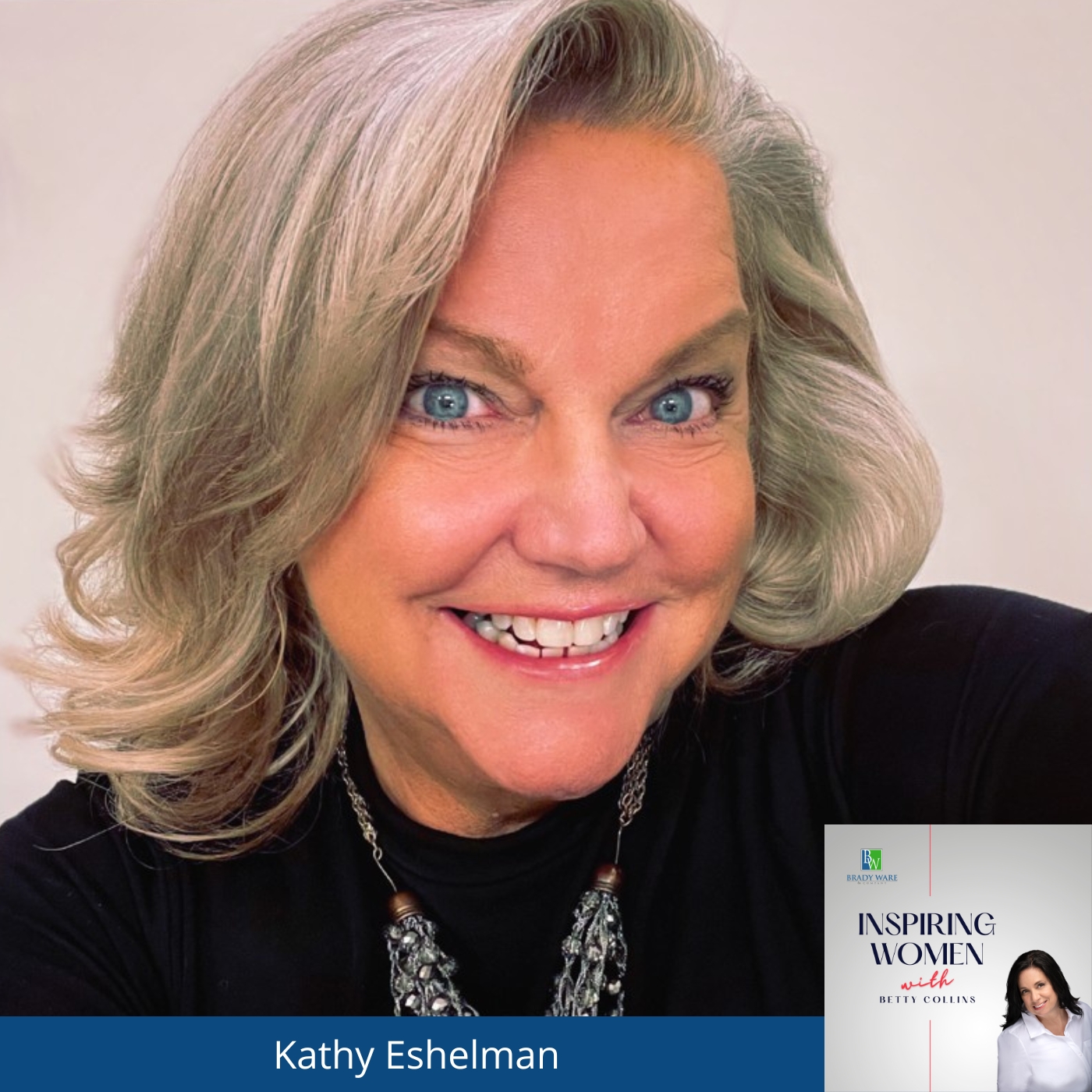
Kathy-Eshelman

Marching Band, Entrepreneurship and Politics: The Inspiring Journey of Kathy Eshelman (Inspiring Women, Episode 59)

From first female elected as President of the Texas Longhorns marching band, to founding Grade A Notes, to advocating for women-owned businesses, to running for political office, Kathy Eshelman has had quite a journey, and there’s more to come. On this edition of Inspiring Women, Kathy discussed her career and what’s ahead for her with PatrioticJewelry.com with host Betty Collins.

The host of Inspiring Women is Betty Collins, and the show is presented by Brady Ware & Company.

Betty’s Show Notes

Kathy Eshelman, a natural problem solver, collaborator, decision maker, enthusiastic team player, and an exceptional communicator with an entrepreneurial spirit, is my guest on this episode. During the podcast, Eshelman shares her experience in founding Grade A Notes, a note-taking service for students, at the age of 25, with $30,000 in investments from friends and family.

The business eventually expanded to six different locations across the country and sold custom course packs to over 100 universities. Eshelman’s entrepreneurial spirit led her to be appointed by the White House to the WSBA’s National Women’s Business Council and to serve as the PTO president of Junior Achievement. She holds a degree in journalism from the University of Texas in Austin and was the president of the Longhorn marching band for two years.

Eshelman represented the Women Presidents organization on the National Women’s Business Council, which aimed to provide information and support to women business owners. She ran for state representative in Ohio, receiving support from her Women Presidents organization and political friends, but ultimately lost by a few votes due to political maneuvering. However, Kathy encourages women to run for office and get involved in politics, as it can have a significant impact locally and nationally.

Kathy reveals her struggles with finding the courage to pursue her business dreams. She plans to relaunch her jewelry business and make it a real ongoing business.

Hosted by Betty Collins, CPA, and Director at Brady Ware and Company. Betty also serves as the Committee Chair for Empowering Women, and Director of the Brady Ware Women Initiative. Each episode is presented by Brady Ware and Company, committed to empowering women to go their distance in the workplace and at home.

For more information, go to the Insights page at Brady Ware and Company.

Remember to follow this podcast on Apple Podcasts and Google Podcasts.  And forward our podcast along to other Inspiring Women in your life.

TRANSCRIPT

[00:00:00] Betty Collins
So today we have a great guest on inspiring women, and her name is Kathy Eshelman and she is a natural problem solver. Aren’t all women right? But she’s very accomplished. I mean, her I can’t even read her whole bio. There’s so much here. It’s just amazing. And I know in her questions we’ll talk about it and get through it. But she’s a collaborator, which we need today, a decision maker, very enthusiastic team player. She’s exceptional with communication skills and her entrepreneurial spirit certainly thrives. You’re going to hear about that today. She’s she served as the PTO president of junior achievement. But also, this is a big deal to me is the White House appointee to the SBA’s National Women’s Business Council. I’ve been to Washington, D.C. once with Nabo, and it was the coolest thing. And we got to see some of this. And that was in 2019. You hold a degree in journalism. You’re from the and you went to the University of Texas or in Austin and you were the president of the Longhorn Marching band for two years. I love that. There we go. You played tenor sax. Do you still play?

[00:01:10] Kathy Eshelman
No, no.

[00:01:12] Betty Collins
No, I don’t. I don’t. The marching band is significant because she she marched in the inaugural parade for President Ronald Reagan and Vice President George Bush. And that was probably a big highlight. That would have been a cool, cool. It was amazing. Part of. Absolutely stayed.

[00:01:28] Kathy Eshelman
Stayed in the barracks in Quantico. Oh, my God. Yes. That’s awesome. It was really an amazing trip. Oh, well.

[00:01:34] Betty Collins
But and what’s great, of course, with inspiring women, we’ve talked we have so many listeners who are all about entrepreneurship. I mean, we have many of you are in business as well. But she owned her own business and you started a business at age 25 and you raised 30 million, $30,000, not 30 million, but 30,000 to start grading notes and then build it into a $1.8 million enterprise. That’s very impressive. You also have something called patriotic jewelry.com. That’s going to be fun to talk about. And you served as the vice president of membership for the Ohio Chamber of Commerce, where her team earned two national sales awards for member retention. So that’s really cool. You have a lot of passion. I think this is brave. You ran for the Senate. Anyone who’s in politics I think is brave, especially today. So we’ll maybe we’ll probably get into that as well. And you were featured. You were a Weld calendar. I was as well in 2020, the year of the pandemic.

[00:02:36] Kathy Eshelman
One was quite a long time ago, but I was still Miss August.

[00:02:39] Betty Collins
There you go, Miss August. I was. I tell my kids I was Miss December. They hate it when I say that, but.

[00:02:44] Kathy Eshelman
My family does too. I still do.
[00:02:46] Betty Collins
It. But you were also in the Columbus CEO magazine as boss woman and other media, including TV, newspaper and magazines. So we’re just going to connect and we’re just going to start right in. We have so much in common and so much synergy. I think today’s podcast will just be energy. You’re going to love it. This is a person who has an amazing resume and a lot of insight for us, but certainly I couldn’t even read. Your whole bio was crazy. So you certainly don’t allow any grass to grow under your feet. When you were 25 years old, you started a business and you founded Grade A Notes, as I said, was a $30 Million $30,000. Can you tell us what possessed you to follow this route at such a young age?

[00:03:29] Kathy Eshelman
Yeah. So it’s kind of like the horse trailer story from Texas, right? So my I went to school at the University of Texas and they had a note taking service. And I just thought it was fantastic. I thought it was ironic a little bit, too, because getting a journalism degree, you know, yeah, I was buying somebody else’s notes, but they were very affordable. And for me, they were just a supplement to you.
Make sure you kind of had every bit of information you could just to succeed in your classes and do well. And so from that, I decided, you know what? I’m going to I’m going to do one similar. So I looked around and the gentleman that owned that one was kind of doing some other universities in Texas and surrounding area. So I thought, Well, I’m going to get out of his hair. I don’t want him to feel any kind of competition. So I did some research. And Ohio State was the largest university in the country that did not have a note taking service. Wow. So that, you know, I don’t know how much deep research that was, but it was enough for me to loan my dad’s horse trailer, you know, come up with my. Yeah. And we, you know, my business partner’s dad drove us up. I mean, we were young, right? So. Yeah, Yeah. And I had got a friend of mine I knew from Longhorn Band to join me. He was fresh out with a advertising marketing degree, I believe, and thought I need a first job. Sure, I’ll go do it. Let’s do it. I don’t think he knew he was going to be getting ink under his fingers and printing a lot of things, but we had a really good time and got it off. Got it off the ground.

[00:04:52] Betty Collins
Well, what’s interesting to me is you knew Ohio State was the only school in the country that didn’t like large universities. You didn’t have. The Internet to Google. So you had to do your homework. Good point for sure. Right. And the other the other thing that’s interesting is back then, I mean, today, 25 year old young women start businesses, right? Absolutely. At that time, did you find that the glass ceiling was a real thing, all that, or was it did people not take you serious? You’re just some young girl. Your dad must have money, all that kind of stuff. You know, I think there.

[00:05:22] Kathy Eshelman
Was a little bit of that, but I didn’t feel like it was any kind of real negative.

[00:05:27] Betty Collins
It wasn’t a barrier for you?

[00:05:28] Kathy Eshelman
No, not at all. I mean, my dad always owned his own business. And so I think growing up and I thought that’s what I’m going to do on my own business. I mean, I just that’s what I saw. Right. He went to work for himself every day. And I just thought, I’m going to do this. My my mom thought I was a little crazy and she probably was a little right. But, you know, my friends and family, we put together a business plan and they invested $30,000 with us. And we were able to just move up here and open a checking account. You know, get an apartment, and you just start finding note takers. I often say people, you know, how do you do the marketing for that? Well, it’s one of the few businesses where, you know, where 100% of your clients or prospects are at any given time. So we we would take like notes the first day, have our note takers take notes. And then we had a little template that just said, get these notes at grade notes.
And it was brand new. So that was the kind of a little bit difficult thing I didn’t expect, is that you had to kind of explain to these students what this was. So it’s kind of like customized Cliff notes. Yeah, but we would literally go over there and stand at the entrance of the doors and people would come in and, hey, you can get lecture notes for this class, you know? So just really. Wow. Yeah. It was a it was a and it started taking off. You know, students didn’t have all the, of course, social media and everything now but they definitely still word of mouth spread pretty big. Sure.

[00:06:48] Betty Collins
Yeah. So you had an idea, you had a passion, you’re using your degree and now it’s reality. But how long did it take? Probably to really like, I can actually pay my rent. You know what I mean? Because a lot of entrepreneurs was young that are listening right now are thinking, Oh, I can just jump and do that. But it does take it does take some time.

[00:07:06] Kathy Eshelman
And it definitely took longer than I thought. Yeah. But again, you know, you’re 25 and you just I’m going to go do this. Right. And I you know, I think really it was probably I started in 87, so probably about three, four years before I could to pay the rent. But one of my business partners, one of my business partner, I had shareholders also, but the business partner, he actually, you know, kind of paid some of those bills. That was kind of his commitment. So I have a place over my head, a roof over my head.

[00:07:33] Betty Collins
No, but sounds like you thought it through. But that’s awesome. At 25 years old.

[00:07:37] Kathy Eshelman
We ended up opening six different locations across the country and physical locations. And what ended up being our best when, I hate to admit, was that at the University of Michigan. Sorry. That’s okay. Maybe they just need more notes up there. I don’t know. Could have to do with it.

[00:07:53] Betty Collins
Yeah, they’re just lazy. They want someone else, right? That’s right. I mean, I don’t know.

[00:07:57] Kathy Eshelman
They were, you know.

[00:07:58] Betty Collins
But you were. But you went to six different states because that’s that’s a task in itself. Not today. Today you can be in six states like it’s nothing, Right? Especially with the pandemic. Everything shuts down. You’re now we’re all on Zoom calls doing our thing. Back then it was you traveled and and or however you had. We did it.

[00:08:15] Kathy Eshelman
We traveled. You know. Absolutely. You know, we actually went we went Athens was our first our second location. And then it’s a longer story. But basically the bookstore at the University of Michigan, I got to know one of the VP’s of that bookstore chain. And they thought and I thought I kind of proposed to him, What if we put our grading notes store like in the in your store? So it’d be like a little satellite. And so I just that ended up being a wonderful idea. I mean, they, you know, they got their percentage and they took care of all the little expenses I had no, you know, the percentage was beautiful. Yeah. It was really a great thing. And that’s probably why the Michigan store ended up being so successful because that was a different model. Yeah, but we ended up with a University of Nebraska, Michigan State, University of Arizona. Anyways, it was it was wonderful. And then beyond that, we started doing custom notes. I mean, like custom course packs people might know them from getting them at a Kinko’s maybe. Yeah. And so we put those together and bind them and sell them to the students in the classes. And that’s how we went to doing over 100 universities. We sold them through bookstores all over the country. So that was that was fantastic.

[00:09:14] Betty Collins
Wonderful. Well, this year’s theme is courageous, being actually courage and being courageous. That’s a lot of courage. At 25, you know, when I was 25, I was already having kids. I wanted someone to be the employer and give me a check. I didn’t want to write the check. I didn’t want to, you know, do all the things. And so to me, when I hear someone that starts something like that, I. You can’t go back, man. If you’re 25 and you’re listening or you’re even 30 and you can go, I got this right. Don’t, don’t wait till you’re 38.

[00:09:47] Kathy Eshelman
Especially till you get more and more bills and house expense and children and. Right. You’re right. I just was.

[00:09:53] Betty Collins
You were courageous. You had a lot of courage back then to do something like that. Thank you. Maybe go. Oh, kind of sound like. To you is just like wearing going to earn my living. But to two people, watch it or hearing your story, it’s different. It was really awesome. Well, you’ve been the PTO president, a junior achievement teacher, but also a White House appointee to the SBA’s National Women’s Business Council. Those are huge things. Junior achievement is a big deal. I love Junior Achievement. It’s such a great thing. I wish there was more of it. I do too, you know? And it’s funny, as I’ve gotten involved with a little bit of university things, I spoke at a group of kids who their major was entrepreneurship. I love that When that went in the 80s, wouldn’t that have been great? We would have had. Right? And now they actually have it. But and then to be on the National Council, I’d love to hear more about that.
But have you always considered yourself a leader?

[00:10:48] Kathy Eshelman
I don’t know that I consider myself one, but I do like to be in charge. Yep, there you go. And I do love working with people and what I hope to think is motivating them and and I know like at great notes, we were, you know, I told everybody to treat it like a Jerome business. And when you empower people like that, they really do a fantastic job, right? I mean, we had a few full time people along the way, but we mostly had students that were either working in our store, you know, just as clerks or the note takers. A lot most of them were all just like seniors or grad students taking the notes in the class, maybe a TA. And then we had a couple of we we called him Father Time. I think they had a father time down, down at Texas. Also just an old guy, gray hair. Just I mean, he and he just wanted to sit in on classes. And we had a woman like that too, had been a retired teacher, so they were awesome because they would take 3 or 4 classes. And of course, their commitment was high. Right. And they really wanted to learn it. So they really took great notes.

[00:11:44] Betty Collins
Well, I mean, I look at leadership is if people follow your leader, I mean, to me that defines leadership. You can have titles, you can be in charge, you can do these things. If you don’t have a following, you’re really you’re not leading. So, you know, as a leader, what did you get to do with this SBA council?

[00:12:02] Kathy Eshelman
Well, it I actually represented the Women Presidents organization. I was a member of that. It was started in it started in New York City. A woman started it there. And then it was like a peer advisory group. So you’d meet like once a month and like a max of 25 women in it. And they were all had to be presidents of businesses that did at least $1 million in sales. If you were service based and 2 million of your a product based. So I barely snuck in at that point where we were. Right, right. But you got in that ended up being just one of the most I mean, some of my very best friends are from the WPA. Yeah. So the WPA held a seat on the National Women’s Business Council. There you go. And so Marcia Firestone, the founder, actually asked me if I would be willing to do it. She knew I was very involved and I loved it. Be anything. Yeah, this wasn’t really political, but it still was in that government public service. Yeah. So the greatest thing I think that happened was we had they had never taken the taken the information out to the people, if you will. So Tami Longaberger was actually the president at the time. Now, that was just coincidental. We were both from Ohio and I had met her a few times. Yeah. But we we had them maybe half a dozen of them around the country. And we ended up with the one in Columbus, Ohio. And it was by far the most successful. I mean, I think between Tami and I having, you know, enough contacts. And of course, Tami is just a great draw. So yeah, and it was we just brought people in and we had, you know, we had some just different speakers for them. And information about matters important to women business owners.

[00:13:33] Betty Collins
You know, I have clients who are in definitely in the WIPO and, and they don’t even see themselves as leaders, you know, but they really are. And they’re still trailblazers today because they’re still because the amount of businesses that are that are women owned that are not over $1 million is just awful, right? I mean, they’re just women were 40% of the women businesses that are starting are women business owners. Right. But they stop. It’s it’s stacked. It gets here. So to be over the million dollar mark, you’re leading the way. Definitely. That was great. Yeah, right. And I mean, you did it a while ago.

[00:14:10] Kathy Eshelman
So and I was surrounded by women who most of them were ahead of me, just, you know, for whatever reason. And it was just just imagine being able to sit around the table with women who’ve been wildly more successful than I had. You know, I’d like to think that I caught up a little bit, but and I’m still really good friends with them today. In fact, I hosted our monthly supper club Thursday night. Oh, nice. And, you know, we have 13 of us that just kind of started as a support one one woman we knew really well and needed some support. And we have a supper club every month doing like eight years, I think. And Thursday was at my house and it’s just amazing to get these women together. We’ve been friends, you know, depending somewhere around 97, but as people joined so it’s my best friends are from WIPO.

[00:14:53] Betty Collins
Well, in your spare time.

[00:14:55] Kathy Eshelman
You.

[00:14:55] Betty Collins
Ran for state representative for Ohio. Give us an idea what. That’s like, because I’ll tell you, women are running for office more and more right now. The Joanne Davidson’s the Betty Montgomerys in Ohio. They were trailblazers for sure. And what we’re even seeing at the national level now and state Senate, I mean, federal Congress. And it’s just off the charts. I would there’s a part of me who would just love to jump into it, but there’s a part of me going absolutely nuts. Do it now. You’ve got to do it. But tell me what it’s like to do it, because I love having women at the table in everywhere. I think it’s good to have a balance. I think it’s good, Absolutely.
Perspectives. But tell us about that whole process and what that was kind of like. You need to encourage women to do this.

[00:15:40] Kathy Eshelman
And that’s why I said you should. Anybody else watching you should do it. So it didn’t end the way I wanted, but it definitely was a pretty amazing experience. So what had happened was what had happened was, yeah, Mike Keenan was a city council member and then became mayor. But in the meantime, he had run for this district and at that time, 2010, it was it leaned a little left, not much. And I was, you know, I was a Republican at the time, so I still am sorry. I don’t know why I said that. Don’t apologize. It’s all good. It’s not to be political, But but, you know, it’s kind of like a everybody kind of understands if he’s going to run again, I’m probably not going to run for, you know, because he’s already in office. So our county chairman for the party called him to ask, hey, what are you thinking? And he’s like, I’m not doing I’m not running, I’m not running. And so he set up a meeting and I went over there and I remember thinking, I can this is when I kind of had that aha moment. I can do this. And he he’s, he reaches into a big cabinet and he opens up the cabinet and he’s got this kind of big banker’s box. He goes, I’m not running. You can have everything I have on it on the district, any of the issues, everything I had when I ran two years ago.

[00:16:50] Kathy Eshelman
And I’ll write you your first campaign check. Let me know when your account’s open. Wow. And that was early on in 2009. So I kind of got out early because, again, I wanted to kind of my idea was to clear the field a little bit. Yeah. And I mostly did. And then at the end, what I learned about politics, it’s very political. Yeah. And that may sound like. Didn’t you know that? Well, I did, but it’s just a long story and a lot of details. But essentially, you know, somebody had been upset because of something they didn’t get, I don’t know, eight, ten, 12, 15 years before that. And I was you know, I was on the team of people who had made that not happen for him. And he decided to just block whatever whatever. And he had a lot of power and just blocked my nomination. And it was I had raised more money than any other non-incumbent, you know, in the state, which I don’t mind asking for things. I mean, that’s just one thing about me. I will say that’s good advice. Don’t ask, don’t get. So and that’s probably the biggest reason why women don’t run, that they don’t want to have to raise money. They feel like they’re burdening people, but people want to help. That’s what I learned.

[00:17:57] Betty Collins
People want good candidates. They do, you know, and they want people that are going to get in there and be advocates for them on behalf of them or today, I think I think there’s still today. I mean, if it was you thought it was political back in zero nine, I can’t even imagine what it’s like behind the scenes. Right. But people want leadership. They want leadership, Right. You know, they want something to follow. They want something that they can believe in and go.

[00:18:22] Kathy Eshelman
And you just have to be able to communicate that to them. And and I did raise a lot of that money from my women presidents organization. Sure. Friends. So, you know, it’s just they were successful business people. And also from my I have another group of political friends that kind of become my our tribe, we call it. Yeah. And so I have two group texts on my phone going and just about any time. And I’m just blessed beyond all measure. I mean, those women supported me before they really even knew me because they knew of me and they met me. And so that’s what became really exciting. And then just, you know, I got out and met people all 2009, which was again, really kind of early. And but I loved meeting constituents. I loved meeting with all the central committee members, you know, that that I needed to get their vote. And the kind of interesting thing happened was we each got my the last minute candidate and I got to give a little speech in front of him. And then we. I don’t know. It’s like my people that were kind of some of the people for me are social like I am.

[00:19:25] Kathy Eshelman
So they cast their vote for me and then they decided to go down to the bar and go enjoy themselves for the evening. And it was a tie vote. It was a tie. I’ve heard Joanne Davidson say that so many times. One more door knock, one more door knock and I’ll be darn. It happened to me. I was like, Ty’s got to be so freaky. Well, freaky on me. I guess so. But yeah. So then, you know, it’s hard to go scramble my people back and then I end up winning. I mean losing by about 2 or 3 votes. But it was just heartening. I had some friends that never were really involved in politics, so were there with my my t shirt. Cathy Schulman for state Rep and a couple of them have just really had their, I don’t know, stomach turned about it. Like just I can’t believe that happened. I mean, I was the shoo in by most people would tell you that. Yeah. You know so anyways well I experience I learned a lot from it.

[00:20:14] Betty Collins
We need women to run. We need people. You need to be involved. If nothing else, you know, you look at the federal situation today and you go, it’s too uphill, it’s too big. But locally there’s a lot of issues. You can have impact locally. Right. And and go so but I just I always love talking about things like politics.

[00:20:33] Kathy Eshelman
One of the things that I met with Joanne Davidson, she was in Washington DC at the time and I was there for something else and we met for a late coffee. I love that woman. She has so much energy. She’s like, Well, I have a meeting tonight. Can you meet then?
Like Absolutely. Thank, thank you so much. And so she came and we talked a lot about me wanting to run for state rep and she said, you know, have you thought about city council? And I was like, Yeah, I thought about it, you know, but I live in a town that I think has run really well. What am I going to offer? You know, I love the town where I live in. Yeah. And then but, you know, it was 2009, ten, right after, you know, we were in a bad economy. So to me, being a small business owner, I thought I had a lot to offer as far as doing offering suggestions and things.

[00:21:16] Betty Collins
Well, people who show up win, Right. And so women need to do that more and more. It doesn’t matter what it is, but it’s a tough it’s tough hill to climb. But a mutual friend of ours described you as one of the most positive and optimistic persons that they’ve ever met. So can you share with us how you always remain so enthusiastic and upbeat?

[00:21:36] Kathy Eshelman
First of all, I am so humbled by her comments. I mean, I. Wow. To think somebody thinks that about you because you don’t know. So if nothing else, I’m just grateful this came up because I was able to feel that, you know, it was a great feeling, you know. So I my dad, both my parents were pretty positive. My mom always told me growing up, you can do or be anything you want in the world. Just use whatever you want. There’s no barriers. Just go do it. So when I was getting my degree in journalism at the University of Texas, I thought, of course I was going to be the next. Jane Pauley. Yeah, yeah. And then I was at Katie Couric that came after that. Katie get out. So I actually never pursued it, unfortunately, because the first jobs out of degree journalism with broadcast emphasis were down like, you know, tiny little towns on the border. And I just I wouldn’t mind, you know, having to work for little money, but I don’t know, It just seemed far away, even in Texas, you know, So and I just didn’t know.

[00:22:36] Betty Collins
You had entrepreneur in your heart.

[00:22:38] Kathy Eshelman
I did have entrepreneur in my heart. And that’s yeah, and that came along not too long after that. So I just I just loved it. So my dad always owned his business. And my dad, you know, he’s, he’s going to be turning 84 in April. My mom passed away with lung cancer, unfortunately, a few years ago. But but my dad always just had this can do spirit to him. Like, you know, for him also being an entrepreneur like he just I could, you know, we can do it. And I recently visited him cause he was having some health challenges and he still lives north of Houston. So I went down there and spent a couple of weeks. I hadn’t spent a couple of weeks with my dad in so many years. It really makes me kind of embarrassed and sad. But we had a wonderful time. But it was just I saw these people coming to see him and like the air conditioner guy put who he had been using for years. My dad had some rental properties and the guy walked in and he goes, Mr. Joe, I’m going to give you a free air conditioner. I’m going to install it. It’s not nothing charge for you. I’m going to do it. And if you need maintenance, let me know. And because my dad had just moved, that was all part of me going down there. And I was like, somebody just gave him a, you know, the guy was in the business and I just was so impressed. And then I talked to so many people along the way. You know, my dad’s very well loved in his community, and I kind of get teary eyed. But just hearing all these stories of people that say, oh, he did this for me and he did that for me, in fact, I’m thinking I’m not living up to that at all. But he’s just that, just that positivity. If he can help somebody, you know, he’s going to do it. And so it’s just pretty.

[00:24:10] Betty Collins
So you grew up around that? I did. So it’s just what you know. But today is a hard it’s hard to be positive today. You’ve got to work at it. So tell. The audience. What do you do today? I mean, you know, you’ve been away from your mom and dad. You’ve done so many things in life. You’ve got a full plate, full resume. But now it’s it’s hard. It’s hard to me, it’s I feel like every day is an uphill climb. Yes. You know, unless I choose to, to not think of it that way, which I.

[00:24:40] Kathy Eshelman
Bet you don’t think of it that way.

[00:24:42] Betty Collins
Well, you know, I have.

[00:24:43] Kathy Eshelman
To acknowledge it.

[00:24:44] Betty Collins
I work with small business owners who are exhausted. So my role as a CPA is not just to do taxation or whatever it is. It’s to keep them going. Like they got to be inspired. They’ve got to keep moving. Yes. You know, So how do you how do you do that today? Tell us how you do that. It’s not it’s not one of the questions, but I know you can answer it. That’s okay.

[00:25:04] Kathy Eshelman
Well, I mean, what’s interesting about that was I would say that I have struggled a little bit lately. I mean, but most people wouldn’t know that because I’m not a person that’s going to go out there and, you know, whine and complain. Yeah. But I just you know, every day I wake up, I journal, and then I, you know, I quiet and talk to God and I just figure out what’s going to be in store for me today. And then it was kind of funny driving over here, I was thinking, you know, I was running a little late. Sorry. Everybody knows that. I’m sorry, but I am sorry. Very sorry. Okay, But. But I was like, what music do I want to listen to? You know? And this is going to sound really crazy. Yeah. And I just looked really quickly through my. And I said, Born to be wild. Here we go. And I mean that, you know that song Get your motor run and and I was just like go just I felt like I was just born to be not necessarily wild, but, you know, optimistic and enthusiastic. I just like to be that way. It just feels good to me. Yeah. So and again, I, you know, I don’t know, just maybe I was born that way a little bit. My parents did that. My brother believes in me more than anybody. I have wonderful family and wonderful friends. It’s just it’d be hard not to be right. You know, You.

[00:26:16] Betty Collins
Have to you have to really be intentional about what you’re putting in. You’re in and out, right? My song is Bachman-turner Overdrive, which is that’s the group is taking care of business. I love that one too. There are days I have that just loud because I’m like, That’s what I got to do today. You got to take care of business. Take care of business today.

[00:26:35] Kathy Eshelman
Yeah. And that. And ain’t no mountain high enough. Ain’t no river low enough. And you know it’s to get to you. But for me it’s like to get to where I’m going. Yeah. So when we started the Michigan store, it was. It was hard work. I mean, we drove up there all the time. Yeah. And I would play that a lot. Just, you know, nothing’s going to stop me from getting up there and being successful.

[00:26:54] Betty Collins
So yesterday I did a podcast. We did recording on just my my approaches to life. It’s going to be really my four new approaches in this season because I’m getting ready to turn 60 this year. And and part of it truly is choosing to how am I going to get through the season? Oh, I bet. You know, it’s just tough. Yeah. But my mom will tell you optimism. I mean, she I mean, she the only war, of course, was World War Two, of course, the big war. And they saw depression. I mean, they did all what they had to do during that time. They saw a president assassinated. They saw the 60s come in after living this nice 50s. The 60s were like, what’s happened to the world? And in the 70s they’re in gas lines just like we are right now. And my brother paid. I remember when he talked about and I don’t know why I remember this because I was a teenager, but when his house interest was like 18% and went to 12, it was like a pay raise, you know? Isn’t that crazy? My mom will still say to this day she’ll go. But then came along Ronald Reagan, who led I mean, he just led with optimism. He did like optimistic people, ended up like liking him, whether they hated him or not. You know, they didn’t really I mean, especially as he won all 49 states out of 50 the second. Exactly. But he came in and he and he just said we’re we’re better than this, you know, And we’re I think we’re kind of waiting for that or we’ve got to be that right. We are one or the other.

[00:28:20] Kathy Eshelman
I agree.

[00:28:21] Betty Collins
I because his optimism in the coming out of with interest rates and all the things he he dealt with at that time. Yes. You just went okay. So it’s all up to us. But I mean, I feel for my kids generation. There’s that part going. You guys got to decide what you want this to look like and it’s on you.

[00:28:38] Kathy Eshelman
That’s true. And that’s that’s a tough, tough course. I will tell you. Might not be surprising to you. I do have a bust of Ronald Reagan on my buffet as you walk in my house.

[00:28:47] Betty Collins
I believe that.

[00:28:48] Kathy Eshelman
I love to. Right. I know some people might not agree with that, but, you know, there’s.

[00:28:52] Betty Collins
People that you aspire to. I mean, I could listen to Michelle Obama just in. She is an inspiring person. I could still listen to Reagan. Sometimes you see little flashes of him come up on social media that are just fun to watch. And you go, yeah, you know, you just, you know, or if I need it, I go to the Dean Martin days, you know, you go to those roasts and just they have fun. They just had fun. Have fun, Have fun. Having fun, making fun. It was just.

[00:29:19] Kathy Eshelman
You know, people kind of sometimes forget to have fun. Yeah. Not that they don’t want to, but they’re just so burdened with everything we all have to do. And I think social media is probably added to that. I’m very guilty, you know. But, you know, sometimes you just got to step out and say, what are we going to do? That’s fun, Right? Right.

[00:29:36] Betty Collins
Let’s get I mean, it’s a good day, right? It is a good day. Well, optimism. I mean, we could talk about that all day, But but our theme this year is courage. I just feel like we need courage in the every day in the big stuff. We need people willing to be courageous, which is willing and ready. Go. What would you say is the most courageous step you’ve ever taken?

[00:29:58] Kathy Eshelman
I appreciate you giving me the, you know, some ideas of questions you might ask ahead of time. And I have to say, this is the other kind of simple for me to fill in about my life. Right? And I really struggle with this a little bit. But I guess the thing that came to mind was when my mom was diagnosed with lung cancer in 2013 and I didn’t feel courageous. You just feel like I got to help my mom. Right? Right. But looking back on it, I mean, I realized that I didn’t know what I was doing. I mean, I needed to be a caretaker. I needed to be there with all the doctor appointments. And I mean, I remember, like, writing notes to myself, like, what can I do to do this better?
Right? And if things didn’t make sense, I always have this little saying. If it doesn’t make sense to me, it don’t make sense. So I love that, you know? Right. Because you hear people telling stories like. Right, right. But so ultimately, I kept looking and looking and I found somebody that could help me find they actually have a concierge at Ohio State. I don’t know if it’s the whole the whole hospital or just for the cancer center, but the concierge was a person who basically helped you maneuver, you know, the system because we didn’t know what the treatment would be. My mom was up for any treatment. And while I will say and I don’t know how this is going to sound, but my mom wasn’t necessarily the she was strong.

[00:31:17] Kathy Eshelman
I don’t know. That’s not right. She was strong. But I’ve never seen her be so strong as she was in that fight. I mean, she would take some treatment sometimes that were just she was just so weak. One time she really couldn’t lay flat on that bed to get the radiation. And she, you know, they finally just kind of gave up and brought her out in a wheelchair and she’s crying. My mother also didn’t cry a lot. Right. And I was like, Mom, she’s like, I’m sorry. I couldn’t do it. Like, she’s apologized to me. I’m like, Mom, it’s okay. We will find a way to get it done. And we did. It took some work, but we did find a way. And it’s just looking back on that, it was very every every new treatment, every new everything was kind of felt. Looking back, it was some courage to always be supportive of her. I always try to be optimistic and then also know my mom’s dying, you know? Exactly. So one thing that did happen to me, which I didn’t know if I was going to bring up or not, but that was in 2013 and blah, blah, blah, blah, ran into a person on on social media, actually, who was like a multi-level marketing company for a protein shake mix. So it was interesting. So I, you know, another diet. Sure. Here we go. Here we go. But take the.

[00:32:27] Betty Collins
Shake. Been there, done that. Right.

[00:32:29] Kathy Eshelman
So I started January. My mom was diagnosed in March and I was definitely falling off the wagon by then. I mean, you know, it probably started about four weeks in. And, you know, instead of taking the shake twice a day. Once a day. Once every other day. Right. And I remember, though, going to different doctor’s appointments with my mom. And I remember, you know, we needed we needed to meet with all of them. That was the plan. And we went to meet with the surgeon and the she’s like, I don’t want to meet with the surgeon. You know, I won’t survive. She’s unhealthy as well. I’m not going to survive a surgery. So we just skip that. I go, Mom, because I’m thinking, Oh my God, we have to go. Yeah. And so I print out a picture of him. He’s kind of a good looking guy. Yeah, I’m not going to lie. She’s like, okay, I guess I’ll go, Yeah. Again, what can I do to be creative to help my mom get through this? And I remember he walked in and he’s like, well, you know, got good news and bad news. And mom said she wanted the good news. And he goes, Well, the good news is you have a very small operable tumor. And I could go in there. It was in the upper left lobe of her lung. I could go in there and remove it. You wouldn’t lose much lung capacity. And I you know, and I think we could get it just like that. I’m like, oh, wow, dream come true.

[00:33:36] Kathy Eshelman
Good. And then, of course, like, what’s the bad news? He says, Well, I’m afraid if I put you on the table, I might not be able to bring you off because the other health issues. Can I just tell you, I did not know it at the time. I did not know it until I said her eulogy two years later at her funeral. I got on those shakes like there’s nobody business. And I didn’t I didn’t make the connection until the eulogy and I lost £100. Wow. I mean, wow, right? Wow. I never meant to lose that much, but it just worked. I started working out. I became an aerobics teacher. I was 53 years old. That’s crazy. I love it. But ultimately, of course, I’ve gained a lot of it back, so I got to get back on the shakes. But at our eulogy then I realized I was writing things down and it hit me. I got serious about losing that weight When I heard that surgeon say he could not brain her because of her health problems. And I think I said up here without even thinking, I’m never going to let that happen to me. If I have cancer, we’re going to go in there and cut it out. So my mom ultimately and her diagnosis ultimately, I think helped me. I’m still lighter than I was, but I still got to get it back off. Yeah, but I mean, that was an amazing time for me, just being all physically fit and, you know, £100, a lot of weight to lose.

[00:34:50] Betty Collins
You know, And the every day, the courage of the every day. That’s right. Drinking the shake every day, that is. We think courage has to be big, right? You know, we think it has to be like we got a cape on. We’re flying around. Yeah. I mean, you’ve done a lot of that. You have an amazing story. You need to tell it. You need to tell it all the time. Thank you. Because it’s just a lot of good in all that. I want to end with a couple of things. So tell me a little bit about the patriotic jewelry store or.com. I think that’s cool. Yes, I’d love to hear it.

[00:35:21] Kathy Eshelman
Well, a some friends and I started actually in 1999, kind of about the time they had all the hanging chads in Florida. And when my idea one of the other gals that I was on the beginning of AOL. Right and yeah yeah. Chat rooms so we one of them had the idea why don’t we, you know, if President Bush gets elected, why don’t we make a big W crystal pen and we’ll just take it to the inauguration and we’ll just sell them? Yeah, and that’ll be fun. And I was like, well, at that WIPO when they when WIPO started in Columbus, they held an info session, Bank one back in the day, sponsored it, and I met a lady there who also owned a business and she owned a jewelry making business, okay? And so she had I remember she had a pen that said Business is great and I had to have it. She actually like, I’m like, how much you want me to come to her shop? I’m like, I don’t do jewelry. Yeah, like, you know, I love it. So I had kept her card all that time and I go, I know somebody that can do this for us. And so I contacted them and sure enough, they absolutely sent me some drawings. And so we ended up getting a crystal one. And they were kind of, you know, they were kind of big. And then we got just a gold tone one and then we got red, white, red, clear and blue crystals. Yeah. So we got them made and we all went to the inauguration and we always laugh and say our best sales room was really on the elevators.

[00:36:43] Kathy Eshelman
We had our coats on. Yeah, like, can I interest you in a Rolex? Or how about some patriotic choice? How about a W? So her company also had patriotic items, so we carried some of those too. We probably sold more of the crystal w pins to the Texan, the Texan men who were there for the inauguration because they all had their black Stetsons on. Not all black, but a lot. Yeah. Boy, that crystal w looked really good on that stuff. So we’d laugh and go, Never thought about the man that’s, you know. So it just it’s just been a great business. I’ve had lots of fun experiences. I’ve gone to some national conventions, sold jewelry, and I just it’s just been a great I love it. And so I’ve kind of it’s kind of been a little bit like haven’t marketed it. I still have customers that still come because they know me. Yeah, but so is that a couple of jobs. So I’ve actually been working on it now and I’m going to relaunch the website and I just have new and expanded product line. You know, mostly I had pins, earrings, bracelets, all flag oriented. Very cool. So it’s just yeah, it’s been it’s been a great thing. And I mean, I love bling. Like, why am I not always get it on marketing? So it’s kind of like I feel like I You talked about turning 60. I turned 60 last year. Okay. And I just think this is my next chapter. I’m going to really dive in and make it a real right.

[00:37:56] Betty Collins
Ongoing business. Well, you’ve had amazing chapters. All the things we’ve talked about today. I mean, my audience, if you’re out there listening of what’s next, this is a person who’s lived what’s next and executed. Right? But I know when I look at 60, I, I go, okay, all I’ve ever known is accounting in business and doing what I’m doing. But there are things now that I want to do is I as I have different this different chapter. It’s not the last chapter. It’s just a different chapter. Right? Right. I look at someone like and I have a podcast on Aretha Franklin. She sang for President Obama and did her a Natural Woman. It’s a great video. It’s awesome. Right? But she’s singing like she’s 20. If you didn’t see her, you know, you would go, Wow, who is that?

[00:38:43] Kathy Eshelman
That’s a great way to.

[00:38:44] Betty Collins
Look at that. Right? And here she is, 70 and the crowds in her hands. She’s got the president, the person who wrote the song in the audience and it’s hers to take.

[00:38:52] Kathy Eshelman
Of that, you know so much.

[00:38:53] Betty Collins
She was at the beginning of the piano. She comes out in the middle stage, throws that fur off. You know, I love that thing. And she inspires me to go, no, whatever season because you’ve had all kinds of great seasons and challenges. I just look at this last, you know, kind of my last season as an employed person maybe, right? Which is a good five years out at least. But I’ll always want to be in the game. We’ll end with, is there anything you want to put out there or dangle a carrot? This is maybe something I would just love to take on as a challenge. I just need some courage to do it. Oh, that’s. Or is that another whole podcast? That’s probably another whole podcast.

[00:39:29] Kathy Eshelman
Well, I mean, you know.

[00:39:31] Betty Collins
I mean, what comes to top of mind like that? And then I’ll share mine if you share yours.

[00:39:35] Kathy Eshelman
Okay. I you know, I just I mean, I think for me, like, the patriotic jewelry business has always been kind of a side hustle. Yeah. I mean, we’ve had some really big events, if you can imagine. We started in December of 99 and then 9/11 came along and nobody carried patriotic items into retail stores. So we our business blew up and then we’re back down, right? But I’ve always had other lives going on, so I just really need the courage and I don’t know why I struggle with it a little bit, but I do. Well, I haven’t already done this like I have that self-talk with me all the time. Why am I why am I just letting that idle there?

[00:40:13] Betty Collins
Part of it is, I think probably patriotism is a hot topic. I mean, it is you know.

[00:40:18] Kathy Eshelman
What we talked about that maybe that is part of it.

[00:40:20] Betty Collins
But, you know, I would say if it’s there, be courageous and go for me. I have a dream, not a dream, though. I think it’s more other people’s dream. But I there’s a part of me that can’t let go of it. That’s to write a book I’d love to call it. I just know I’m 60. I just know. I don’t know if anyone would care about it, you know? But I have that. But. And then that’s the woman in me going, No one’s going to read what you have to say. Oh, my goodness. You know, and. Right. And I think.

[00:40:49] Kathy Eshelman
It is kind.

[00:40:49] Betty Collins
Of but it is it’s a it’s a daunting I look at that as a very daunting task. But I’d also love to take the advantage of the time we’re in with technology and Zoom and people are so much more taking webinars and come up with curriculum about being an entrepreneur. Oh, 101 man. And then there’s 201 and then you’re going to go to 301 and you’re going to want a partner.

[00:41:13] Kathy Eshelman
Or a contributor. Let me know. I would love that.

[00:41:15] Betty Collins
I would just love to have something where that happens. Right. And and you can inspire any age person you can to get. So that’s my maybe I can then my next chapter but you have you have a great story great book. Thank you for coming in. You didn’t write a book, but you’ve given us so much today. Thank you. And how can people find Kathy? So you’re on LinkedIn. I am. And you are? You have patriotic jewelry.com, but we’ll put your information out there too for people.

[00:41:44] Kathy Eshelman
That’s fantastic. Thank you. I guess if there’s one last thing I could do, I’d like to move to California and somehow find my way in a movie with Kathy Bates. So this is going to go worldwide. I’ll just put that on there. Kathy, if you’re listening. Yes, I could be like your and your sister, anything. I just think she’s amazing and I think I could be an actress.

[00:42:03] Betty Collins
There you go.

[00:42:04] Kathy Eshelman
There you go. Maybe that’s my 70 seconds. Hey, you never know. Thanks for having me. Really.

[00:42:07] Betty Collins
Thanks for coming today, giving us your time today.

[00:42:09] Kathy Eshelman
We appreciate it. You are fabulous. All right.

Automated transcription by Sonix www.sonix.ai
Tagged With: Betty Collins, Inspiring Women, Kathy Eshelman

Courage is Not Impossible: Making Fearless Moves

April 11, 2023 by John Ray

Courage-is-Not-Impossible-Making-Fearless-Moves
Inspiring Women PodCast with Betty Collins
Courage is Not Impossible: Making Fearless Moves
Loading
00:00 /
RSS Feed
Share
Link
Embed

Download file

Courage-is-Not-Impossible-Making-Fearless-Moves

Courage is Not Impossible: Making Fearless Moves (Inspiring Women, Episode 55)

In this episode of Inspiring Women, host Betty Collins discusses the importance of courage in unsettling times, with a particular focus on being courageous in everyday life. She provides examples of how courage can be defined and how it differs from confidence. Betty suggests that being courageous involves taking action in the face of fear, and offers tips on how to choose and tackle a courage challenge. Collins also introduces the four types of courage, namely blind courage, crisis courage, role courage, and core courage. She recommends using the “Snap” method to develop courage, which involves stopping, noticing triggers, acting, praising oneself, and processing the outcome.

The host of Inspiring Women is Betty Collins, and the show is presented by Brady Ware & Company.

Betty’s Show Notes

As we continue to face unprecedented challenges in our lives, it’s more important than ever to stand strong and stay courageous. That’s why this year, my podcast is focusing on courage. We’ll be exploring the questions and conversations needed to take positive steps forward for a better life, through my thoughts and my guests.

I will be talking to inspiring guests about how to identify and take on personal courage challenges and develop courage like a muscle. With inspiring quotes from Cindy Solomon’s books, “The Courage Challenge Workbook” and “Courage Goes to Work”, and the Snap Out Of It method from the movie Moonstruck, join me on a mission to help you unleash your courage and be ready and willing to do what needs to be done.

Hosted by Betty Collins, CPA, and Director at Brady Ware and Company. Betty also serves as the Committee Chair for Empowering Women, and Director of the Brady Ware Women Initiative. Each episode is presented by Brady Ware and Company, committed to empowering women to go their distance in the workplace and at home.

For more information, go to the Insights page at Brady Ware and Company.

Remember to follow this podcast on Apple Podcasts and Google Podcasts.  And forward our podcast along to other Inspiring Women in your life.

TRANSCRIPT

[0:00:00] Betty Collins: So I’m betty Collins, and I’m here with you today. And it’s an exciting day because this is year five of our podcast. I can’t believe that we have been doing this this long, but we are. And this year we are going to do something. Really, our theme is going to be centered around courage. And my guests and my interviews and what I’m writing will be about courage and being courageous. Those are two different things. Today’s, a moment. I believe that we need courage as well as we need people, especially women, to be very courageous. We live in times that are a little unsettling. Don’t worry, we’re not going to talk about pandemics and all the things that are terrible. My mom will tell you her generation, she’ll be 86 in March. They showed a lot of courage. They had unsettling times. They were courageous.

[0:00:51] Betty Collins: We could learn from that generation for sure. But what is unsettling to you may not be unsettling to me. It’s different. And courage is not always about the big stuff, right? So today’s podcast, this is about you. And where do you need to find courage and be courageous? This is an area that’s very hard for me. I’ll be very honest with you. Let’s not confuse courage with confidence. But I confuse I confuse courage with confrontation. I see it being hard. I see it as big. And it’s only where you’re climbing up a hill on a very hot day. I see it as something I have to muster up, and I see it as has to be emotional and a little sexy, right? It may be those things, but at in the day, I have to step back and I’ve been able to see it totally different.

[0:01:48] Betty Collins: I need courage and I need to be courageous in the every day. I’m just an ordinary person doing ordinary things, trying to be extraordinary, I guess. And I do have some big things I’m looking at, but I think it through first, and then I’ll execute those things. So courage can be defined as a lot of things in the strength of what it’s strength in the face of what to you, for me, it’s strength in the face as exhaustion. As a business owner, I mean, my clients are exhausted as well as business owners, my team is exhausted. So strength in the face of exhaustion, strength in the face of my health. Because 60s is coming very quickly. It’s daily. It’s never ending. What I did yesterday for my health is only for yesterday. And then transitioning out of my career, which, by the way, is going to be a while, and doing some of those wants, that’s pretty scary stuff. It’s going to take some courage, and it’s going to be taking some being courageous. Courageous can be defined as the ability to do something that you fear. It’s a mental or moral strength to do something. You fill in that blank.

[0:03:01] Betty Collins: It’s about soaring. Okay? It’s acting on one’s belief. Sometimes you just do it and you get it done. You don’t have to think about it. Having courage or being courageous is about being fearless or maybe fearing less. You need to think about that a little bit. And of course, being courageous, it undertakes whatever that is for you, boldly and it’s not lessened by difficulty. So those are some things I think of when I think of having courage. But being courageous is taking that courage, that badge, right, and being ready and willing to do. You fill in the blank. It’s doing something. And I didn’t say not without fear, but in spite of fear. So what holds you back? What holds you back from courage or being courageous?

[0:03:56] Betty Collins: For me, it’s plain and simple. It’s fear, like most of us, and I’m learning to confront it head on or I’m just going to do it afraid. But not having courage or not being courageous is not an option that we should be in today’s unsettling times or in today where you are going along in the path of your journey, whether it’s in your career or in your families. Also, another something that holds me back, quite honestly, is exhaust. It’s that overwhelming lifestyle that I’ve created, by the way, and built. Where have you, though, been complacent and you just played it safe? I did that in all aspects of my life, all my life. And honestly, until I was 38 and kind of had a reset and a meltdown, I was very a safe player. I was very much complacent. And I look back on those times and it seemed like it was easier and that it was okay. But did I really accomplish maybe the things I should have or wanted to? What are the barriers for you in not taking on courage, not taking on a challenge? Maybe it’s other people’s opinions, maybe it’s complacency, right, that I just talked about failure, your past, maybe emotions, they’re just the bad ones that get the best of you. But it’s time to push through those barriers and take on a courage challenge. When you have the will to push through a courage challenge all the way to the end, you did it.

[0:05:29] Betty Collins: You’ll feel fantastic on the other side. So my company, Bradywear, has a women’s conference each June. In fact, this year is year ten. It’s June 16 in Columbus, Ohio. And last year we had an amazing speaker, cindy solomon. She was the keynote for lunch. And wow. In fact, I’ll say that backwards. Wow. She nailed it and had to create a culture of courage. And that’s what she talked about for her. She wrote a very, very simple book. And it looks like this. It has yellow tabs and it’s highlighted. But it is the courage challenge workbook.

[0:06:06] Betty Collins: And it has been so impactful to me personally and professionally that I wanted to share it with you. So when I’m speaking a lot of today from here on out. It’s from the heart and mind of betty Collins but it’s really from a very courageous woman. Her idea is cindy solomon. Check out her book on Amazon. I would tell you you need to read it, you need to download it and you need to figure out how to incorporate a book club or lunch or something and learn with your team. It really is kind of very easy and hard all at the same time. It’s simple but it’s impactful. So think about your team in business, your social circles or your family or maybe your community and find the courage to be part of the everyday. You’ll see amazing changes and it’ll be for the good in today’s world. As I’ve talked about, we need courage and people, certainly women, not just the courage, but you have to be courageous, which is action. So the first step is you got to choose what’s the courage challenge I’m going to take and you need to understand the why behind it. cindy solomon challenges you to think about courage. I’ve kind of talked about definitions and I’ve kind of talked about the things that are out there. But here’s what you need to say.

[0:07:16] Betty Collins: It’s personal, it’s personal. It isn’t what everybody else is doing, it’s what you’re doing. Courage is not what you think. What was interesting at our conference is she had people stand up that thought about something and really she said only 50% of you are standing up that are supposed to be standing up right now. So sometimes courage is not what you think. Courage is not a superpower where we are wearing a big chest with a star and superman. It’s not that we think of courage as that’s the only thing that’s out there. But courage can be learned. So that’s the good news for you today. And here’s some tips when you’re picking out your challenge, because picking out the challenge is the hardest part. What am I going to do with courage and being courageous but tips, you got to be realistic and constructive. It’s got to be energizing but it’s also going to be a little uncomfortable probably and you have to be very clear, very specific. So here’s an example of a challenge. I wish I had the courage to ask for a pay raise. Okay, first you got to also go why do I want the pay raise?

[0:08:24] Betty Collins: Do I need the money or recognition? We all need the money. There is never enough. We’ll all take it, right? But really it could be more about recognition than it is about the money. So why do you want to have that? So when you’re making up your challenges or you’re thinking through that challenge where you need courage, you got to get to the heart of the why with it. That’s part of it. Here’s another example of a challenge that I’m trying to work through and get specific on and doing the things that she says, I wish my team would do what I want and get on board. Is that a very good way to say it? Probably not. I want the courage to inspire my team so that they see my vision. Why do I want that? Because right now, business owners are exhausted. They’re tired.

[0:09:12] Betty Collins: And this is one part of our country that needs to work, and I don’t want to see it slip away. There’s passion behind that. But I need the courage to do some different things. I need to be courageous with those business owners so that they will see to hang in there, they will see that it’s a journey and they’re going to make it. So that’s tough stuff. And so it isn’t the everyday accounting, it isn’t the everyday stuff. I need some courage and I need to be courageous and ready and willing to move it along. There are four types of courage that I think you need to be aware of, and then you know how to use them. Because there’s all kinds of courage. There’s blind that leap of faith. You go for it. If you are saying all the time, hey, that sounds like a lot of fun, it’s probably a blind type of courage. It’s that leap and it’s okay. Leap of faith is not what you do all the time. That’s why you need to know blind courage is just the impulse.

[0:10:12] Betty Collins: Maybe, hey, can’t hurt to do it. The other kind of courage, number two, is crisis. It’s completely instinctible. It’s life and death. It’s a pandemic. It’s PPP funds, it’s idle funds. It’s ERTC funds. We got to get this. And it’s not meant forever, by the way. It’s just for the moment because you’ll be exhausted if you live in crisis. Courage, it’s for what it says. It’s for a crisis. Here’s the one that has stuck with me, that has challenged me the most, and that is role courage. And it reads like this in her book. I love this line.

[0:10:51] Betty Collins: The confidence and fearlessness you experience when you fully understand the part you play in a particular situation. And that implied power and the responsibility that comes with it. And when I think about that, I think about I’m an owner in a company with 150 people counting on me to lead well. I’m a cpa advisor to over 300 people that need me to know that I’m confident and I’m fearless, and I play a role in their success. That’s called role courage. That’s what has spoken to me the most. And then there’s the core. This is good for cpas because it’s a step. You have a very clear vision of where you want to go. You’ve mapped it out, and you are so confident in that vision that you’re open to everyone around you jumping in with you, contributing, criticizing, accepting, praising, so that that vision becomes reality. It’s a core. It’s a long term type of courage. It’s not the blind faith. So that’s why it’s really important to know there’s different types of courage and there’s different types of when you use them and when you utilize them. So it’s time to tackle your courage challenge.

[0:12:10] Betty Collins: It starts and ends with only you. As I said before, it’s personal, right? So step back and take some time to figure out your challenge. That’s the hardest part of the step for me, the blind leap of faith in the crisis right now, that’s not applicable today. I’m not in a crisis. I don’t need to just jump. I don’t need to just get out there and go, I don’t need to go have fun. Right? For me, right now, it’s the role and it’s the core that I’m dealing with. The role is inspiring these exhausted business owners to stay the course with my team and what do I play in that and what’s my responsibility? And the core is about my transition. That will happen over the next five years as I changed a little bit about my life, right? Because I’m 60 or I’m going to be, and I’ve got some new ideas and I’ve got some new passions, and I want them to become reality. So core courage is what I need to invest in. There’s a really, really great method that is in her book that I would challenge you to get a team together and read through.

[0:13:14] Betty Collins: And it’s called Snap. Snap. And it’s inspired by cher in moonstruck. If you remember, the slap of the face where she goes Snap out of it kind of came from that. But Snap is about stopping, stepping back. Notice what triggers the things that you need courage with. Act. Use the right type of courage in the right moment. Praise yourself, which I don’t have problems doing that for me. And then process it, look back and go, wow, we really did it. It’s a really cool method. It’s a cool framework. Again, these aren’t my ideas and I want to claim them, but they’re really impactful. And because this year is about courage for me, I’m going to stick in this book for a while. And the book has really great ways of phrasing things where it works, where it doesn’t.

[0:14:01] Betty Collins: It’s cool stuff, but I’m grateful for getting to know cindy solomon, and I’m grateful that I dived into her workbook and she’s challenged me to take the challenge of being courageous. Having courage, I think it can change you as well. I would highly recommend to her as a keynote speaker, by the way, we’re a facilitator in your organization. Buy the book now. It’s got some great quotes in it. I’m going to read them to you and I hope that they inspire you. I hope that there’s something you go, wow, that helps me today. Courage is like any other muscle. If you’re strengthened by use, in other words, practice by Ruth Gordon, have the courage to write down the dream for yourself. No one else. You. Success doesn’t come to you. You go to success. Life shrinks or expands in the proportion of one’s courage. That’s probably my favorite in the whole book.

[0:14:57] Betty Collins: I’m going to read that one again. Life shrinks and expands whichever you choose in proportion to one’s courage. Nothing in life is to be feared. It is only to be understood. Now is the time to understand more so that we can fear less. And things are only impossible till they’re not. So I challenge you today to take the courage challenge. I challenge you today to dive into courage and become courageous. Have been ready and willing to do what needs to be done in your world, in your business, in your family. I’m betty Collins. Be courageous today. You’ve got it.

Tagged With: Betty Collins, confidence, Courage, Inspiring Women, Inspiring Women with Betty Collins

Courage In Ordinary Moments: Taking Small Steps Towards Big Dreams with Farah Ismail

March 13, 2023 by John Ray

Farah-Ismail-Inspiring-Women
Inspiring Women PodCast with Betty Collins
Courage In Ordinary Moments: Taking Small Steps Towards Big Dreams with Farah Ismail
Loading
00:00 /
RSS Feed
Share
Link
Embed

Download file

Farah-Ismail-Inspiring-Women

Courage In Ordinary Moments: Taking Small Steps Towards Big Dreams with Farah Ismail (Inspiring Women, Episode 54)

On this episode of Inspiring Women, Farah Ismail, founder of Interact Consulting, explains why courage is often most important in small, everyday moments, how she views failure as fuel for self-discovery, the power of learning in community, and much more.

The host of Inspiring Women is Betty Collins, and the show is presented by Brady Ware & Company.

Betty’s Show Notes

Farah Ismail, the founder of Interact Consulting, shares her journey to success and her fearless mindset.

Farah brings her fearless mindset and inspiring journey to the table, sharing her insights and experiences on how to live the life of your dreams. She guides listeners through the process of unlocking their courage and taking action, providing tips on forgiveness, planting new seeds, and finding someone else to enjoy the journey with. Farah encourages us to be brave enough to use our voice, bold enough to listen to our heart, and strong enough to make big changes in our life. Don’t miss this insightful conversation!

Learn how to make big changes in your life and be the master of your own destiny!

The Ultimate Coach

Interact Consulting

Farah’s books

Her coaching website

Facebook, YouTube and LinkedIn

Hosted by Betty Collins, CPA, and Director at Brady Ware and Company. Betty also serves as the Committee Chair for Empowering Women, and Director of the Brady Ware Women Initiative. Each episode is presented by Brady Ware and Company, committed to empowering women to go their distance in the workplace and at home.

For more information, go to the Resources page at Brady Ware and Company.

Remember to follow this podcast on Apple Podcasts and Google Podcasts.  And forward our podcast along to other Inspiring Women in your life.

TRANSCRIPT

[0:00:00] Betty Collins: So today on inspiring women this is a first for my podcast. I’ve been doing this for four years, this is year five and today I have my first international guest. So I am really excited. We’ve already been doing a lot of chatting but we got to get to this interview and you’re going to love, just love the energy that comes from her. Her name is Farah Ishmael and she’s an international ashley recognized facilitator, coach and speaker. She’s the founder of Interacting Consulting and she partners with entrepreneurs and leaders who find themselves frustrated imagine that. And unfulfilled despite outward signs of success. And when they work with her, they imagine their business. They craft a lucrative purpose driven enterprise that delivers more confidence, more connection, more revenue and more meaning. You’re just going to love this list, lady, I know you will. So welcome today and tell us just 2 seconds a little bit about yourself. I know we’re 18 hours difference in time, we talked about some Ohio connection but you can take 30 seconds to tell us a little bit about you.

[0:01:12] Farah Ismail: Thank you, Betty, it’s my pleasure to be here. Well, I’m thinking of what to tell you. Let me share that I used to introduce myself as fearless para and I think I have that fearless gene in me thanks to my parents who brought us up believing that we could have impossible things for breakfast. So there was no limits when I was growing up and of course that’s how I live my life. It’s really that limitless thinking and anything is possible. So I’m pretty fearless. But over this journey of dispute, thank God, life. And we had a series of rollercoasters and I would say that I’ve experienced the highs and the lows and I knew what fear is and I’m not fearless. I just realized that I fearless. I love it and that’s what I want to say. That to me, despite of the fear, it’s about taking inspired action and it comes through courage. So I would say I’m a courage catalyst.

[0:02:16] Betty Collins: There we go. I love it. See what I’m saying? It’s just going to be this way the whole time, I’m telling you. But our overall theme this year for the podcast is courage. And so can you tell us how courage showed up in your life?

[0:02:38] Farah Ismail: I think first, courage is something sometimes we think courage is really these big things but for me it’s ordinary day courage that I notice wherever I want to look. So I think if you start looking, you’ll find it everywhere. And for me, every day is an opportunity to perform a small act of courage. So it’s possible. For me, where it really showed up was at my deepest, lowest point. I think it was a personal story when I was I had a series of life changing incidents in my life that really came in the way of having a really successful marriage and I stayed stuck for a long time. And I kept telling myself that I was trying, but I think I was really not trusting myself that I could really take action to choose how I want to live my life after that. And I think it was that one day, and I think it’s a long time ago, I must tell you it was 2006. I can’t forget that moment. It was a summer, it was a morning when I woke up and I had this feeling that I actually looked at myself and I knew that this is it. And that feeling of choosing, trusting, choosing myself and deciding that I am not powerless, but I can actually choose to create the life I want to create. I think that required an immense deal of courage, that ability to just step out and take that tiny step. And I did that. And for me it might sound like a big thing, but I waited a long time. And that’s when I was able to walk away from an unhealthy relationship with a six year old daughter, a computer and nothing else.

[0:04:47] Farah Ismail: So I started my life from scratch. And I can tell you I was afraid. I was scared I had lost all my confidence, but I had this immense belief that I could make it. And I just told myself I could do it. I had it inside of me very all this while. That’s how I was when I was younger and until I came to that moment in life. And I just find that all of us have this inside of us. Sometimes we lose sight of it. And I think when I gave shone a light to that and decided to do things like even asking for help, even that is an act of courage. And that is where it all started. And I would say that after that, I reframed everything in my mind. Things like when I felt that, oh my God, my marriage is a failure and that I reframed it as it is a metamorphosis. This is what I’m doing to write a new chapter. So I think it was all those little things every time. I kept telling myself I’m alone and trying to stay stuck and trying to do everything like a superwoman.

[0:06:07] Farah Ismail: But when I shifted that, it required a lot of courage to seek support. And I had lots of it. I just was not allowing it inside my life. So I would say that I think courage showed up in many ways, but it can be with small things as well. It could be speaking up. Speaking up from your heart is also a big thing. Being vulnerable is another big thing.

[0:06:34] Betty Collins: Yeah, every day the ordinary. There’s courage all day long. And I like how you say you got to sometimes just start looking for it and you’ll find it. One of my favorite movies is Julia Roberts and it’s eat, love and prayer in some of those orders. But eat, love and pray is what I think it is. One of the moments in the movie, she said, I just want to slip away from the life I created. I had every part of creating every part of this life, but I want to slip away from it. And she finally had the courage to do it, and a lot of women don’t. So it doesn’t mean you’re terrible and you’re not courageous, but man, choose the courage path with it, just like you did. We all have the AHA moments in some areas that are major, right? But good for you. My goodness, courage showed up. I’m so glad. I’m sure you haven’t looked back. I’m sure you just continue to look forward.

[0:07:33] Betty Collins: So that’s awesome.

[0:07:35] Farah Ismail: Let me just add something there. I just want to share this for anyone who’s listening, that I shared that big moment right then. There were other moments as well, so you knew you it’s something. It’s like swimming. You need to swim to learn swimming. It’s by couraging. So it’s like one step at a time. And it’s not like the big thing I spoke. There were smaller things I did to reach there. And I just know that when you actually tap into these reserves that you have, it’s a muscle. We continue building it, but I just think it’s about making that tiny move, like stepping outside and finding something that will help you to try something else. Take a small risk. That’s where it lies. I think it lies in the gap between your thought and your action. You can choose it.

[0:08:33] Betty Collins: There absolutely great insight. Just wonderful. Courage is like a muscle. You got to work out to build it right? You got to practice. And it’s not always easy. And sometimes taking the little steps can be just as hard as the big one. But at least you’re taking it, right? At least you’ve got courage. You’re putting it out there. You’re doing it. So that I mean, great answer to the question, but what would you say is the book that transformed your life and business?

[0:09:12] Farah Ismail: I had a really interesting opportunity to write a book inspired by a book that changed my life. And so I wrote a book. So I have it right here. It’s called The Book I Read. And it is one chapter which is based on a book that changed my life. And I want to share that. I just shared the story of how I came out of these tough moments and then I continued to believe that I am a superwoman, that I needed to be perfect, perfect mom, because I really wanted to not make any mistakes. I wanted to be very courageous in my business. And what I was doing in that is in this quest for being this perfect without making any mistakes, et cetera, I realized that I was really numbing myself with a lot of things. I was really putting on a lot of armors. And while you would see me as really coming out strongly out of a tough experience, rising standing up tall with lots of self respect and living a life that anybody would see, wow, just look at her. I was again going into this paraly of trying to be very like the super, super woman until I had the opportunity to read a book of Dr. Brene Brown. It was dare to lead. And I must say that I had a partner in this journey who I met in Hong Kong.

[0:10:59] Farah Ismail: And we both realized that we had some amazing vision for creating something for women leaders and we took a year to live the work of Brene Brown. So this whole book and the course that we did on there to lead, we actually lived it ourselves. So I can say that the book that transformed me was Brene Brown’s book, which then helped me to become vulnerable, that then helped me to really deal with grief. I mean, I had thought I should hide my grief of losing a child. I lost a child in the beginning and there was all these things that I was hiding. And then I realized that who I am is becoming, is the one who is going to choose to be comfortable with being authentic. And that’s when I started doing all this work. And of course this took off as many armors as I can. So the book really helped me to create the kind of work that I do to show up authentically and to also help others to do that. And I just am very passionate about that. But I do want to add one more thing. This book helps me in living my life. And there’s the book that is changing my life right now. And I love to share the name. It’s called The Ultimate Coach and it’s by Amy Harterson and Alan V. Thompson

[0:12:40] Farah Ismail: It’s a book about who you are being. And it’s such a powerful book because you don’t read it about the number one ultimate coach in the world. Who’s Steve Artisan. You don’t read it about him. You read it about you. So in the book you find yourself, you find your aspirational self. And it’s changing who I am this year because I can choose. It’s not about what I want to do, it’s who I want to be. And the being is everything. So I want to say that that’s the second book that’s changed my life and also changing how I’m going to operate and I’m continuing to get transformed by it.

[0:13:25] Betty Collins: Well, we definitely want to get those books. We’ll get them to our readers, our listeners, excuse me, so that we can make sure that they are tapping into that. I’m a huge reader. Love to read, love other perspectives. Because sometimes you just need to get in someone else’s brain, right? You need to see what they’re thinking to help you be able to do it on your terms, not theirs. The book, though, that you wrote, the chapter, and can you put that up again? Because I want readers to see that as well. The book that transformed me, is that what it’s called?

[0:13:58] Farah Ismail: Yeah. I’d be happy to share that. Of course, you can download this on my website, which is https://www.coachfarah.com/ There are two books that I’ve written, and one of the books that is my favorite is very short read, but it was very powerful. Read it’s. Five Secrets of What You know, really helped me to be daring and being unstoppable in my business and my life. So I share five things that really serve me every day. And I would say that it’s such a beautiful read, and I’ve created some small what can I say? Some creative exercises. So you would actually do that for yourself. And I would say that I’m hoping that it will inspire you for the next step of your journey, wherever you are.

[0:14:48] Betty Collins: Okay. We will make sure we get those things out when we definitely have this podcast loaded, because we all can support each other. And one of those ways is, hey, read this or do this or try this. Right now, you work with entrepreneurs. Entrepreneurs are my favorite, and I just love the marketplace. I love the economy. I love it when people can take an idea and a passion to make it into reality. But it’s a lot of work to be an entrepreneur. It takes a lot to be a leader. So one of the things that in the last, certainly ten to 15 years is everyone’s got coaches, right? Okay. And they needed them. It’s a huge thing, especially when you want to go to new levels. But tell me more about your group coaching program.

[0:15:39] Farah Ismail: So I love coaching because I love to be a catalyst for change, and there are opportunities to do one on one coaching. However, learning in community is very powerful, and it happened during the pandemic when I created a group coaching program called Courage to Sew. Of course, you know now that the theme will be Courage, because I believe that we can’t become what we need to by remaining what we are. And so I created this exclusive. It’s my signature program, which was really helped at that point. It was only for women, women leaders, women entrepreneurs, women changemakers to help them unlock courage and really write a new chapter of their life and be braveful and purposeful. When I started, it was a short six week program, and now I have created it into a three month program and a twelve week program in which I would say that this program is for you if you are here for transformation and not information. You enjoy breaking the status quo and are willing to take action, and you’re willing to really test new things in your life, sometimes creating the impossible. So I find that this program is very powerful and the women who went through this created some quantum leaps in their life and shifted incredibly because they had an opportunity to really have a huge self discovery and a clarity of direction and understanding their personal power. So I would use two things that is really leading from within and then also looking at how you create that impact in the world. So it’s a very structured but very creative program that pushes you. And so if you can’t handle being uncomfortable, this is not for you. If you want to know one, two, three steps to follow, well, you know, this is going to surprise you. And if you’re unwilling to go deep and this is not for you. So I find that I normally have one cohort a year and I do it once because the rest of my time is really doing it’s quite full.

[0:18:07] Farah Ismail: So I’m actually launching the 2023 Cohort in March. Okay? And so, yes, I’ll be happy to share the link if anybody wants to have a conversation with me to get to know more about it. But it’s something that I would say has impacted many women and I love it as well.

[0:18:27] Betty Collins: Anytime we can get resources to help and have great outcomes right, and impact that we want to do it, we want to tap into it. I mean, you could tap into a lot of things, but what’s great about not great about a pandemic, but I will say during the pandemic, I used to do everything with my podcast locally, right? Then people were like, I need to get on the air somewhere. And podcast became this massive thing. It was already a big thing. And so I always like being in person, but I found myself that I can do online things like this and still get a lot out of it. It still comes down to what you want to do and do you want to go dig deep? I like that. If you don’t want to dig deep, don’t do this course, right? But you’re going to launch it tomorrow. Okay.

[0:19:17] Farah Ismail: If you want to create the impossible, this is where you should be because you don’t want to have any limits. So you have a beautiful community to be actually doing it as well. And I love coaching people to get there. Yeah, create that life coaching.

[0:19:32] Betty Collins: And I’ve done it various times in my career and generally it’s because there’s a want, but it always results in something because there’s a want and desire to coach. You have to want to be coached, right? And you have to want to be teachable taught. But it sounds like a really great thing. A lot of good things came out of COVID in one of those, which things like this, right? So let’s move a little bit to something a little more personal property. But what is the failure story that you would be comfortable sharing with us today?

[0:20:11] Farah Ismail: Well, firstly, it’s how I look at failure. I have a lot of stories of where I have failed personally and professionally. I look at failure as an opportunity for me to see it as fuel something that’s used me to take a pause and see what is really happening in my life then. And I think for me this is really personal because I recently discovered that a lot of times I was judging myself and I was judging myself for something like, okay, so I must give you a back story that I truly enjoy having unhurried moments, me time. So creating that space for myself and creating boundaries, I really like that. And sometimes I find that in my family or in my closed circles, others are extending themselves so much that I feel like I judge myself for choosing myself, right? So I was really beating myself up and I didn’t realize that it was a nap. It was playing so deeply in my mind that I was judging myself like someone who is not available for family at times and I was feeling inadequate at times. Like I’m not like the others, they live overseas and they’re more available to my parents on the call. So I would play all these games in my head and it really took me down and in a way that I would probably not choose to create that spaciousness for myself and try to be different from who I am. And I think that the day I realized that I was doing some really deep work with a coach when he asked me to forgive myself for judging myself and to write down all the ways in which I judge myself and to forgive myself for that. And once I drove all that and I realized if I was the truth is. So when I was looking at one statement and I was changing that to what’s the truth there? Because you really have to dig deeper to see what’s happening because otherwise you’ll continue doing the same thing. And that’s when I really figured out that when I dug deeper that the truth is I reimagine renew myself powerfully every day, every week, whenever I need that.

[0:22:59] Farah Ismail: And that’s when I own that I stopped judging myself. So I want to say that my failure is for this long, not realizing that forgiveness is such a big thing. When you learn to forgive yourself, you just leave that old version, all the narratives and you just choose to be the most powerful version of yourself. So today no one is worthy of my judgment, even myself. And all everybody is worthy of is my love and my respect. And when I keep that foremost and that I renew myself every day, I don’t feel that sense of blame, shame, et cetera. So I want to say that that work I did for a long time, I felt like I was failing my family. Of course I found an antidote. So I wanted to say, it’s very personal, it’s very deep work, but it can be done.

[0:23:58] Betty Collins: I love the way you say that. I found the antidote. That’s a great way to say that. I have a really good friend and her two kids are in their 20s in that adult. They’ve launched, they’ve done their thing. And so she was telling me the day she said yeah, she said, yeah, she’s getting her MBA right now. I said, oh, and what? She goes in life, she’s falling down and she’s learning how to get up right now. And I thought, she goes, she’s had a big failure, she had a big fall, but she’s going to learn. And I thought, how a great way to describe it, right? But at least she’s getting up. It sounds up, but the antidote, I like that. Find the antidote. The other thing I think of, as you were talking, you said, you know, the conversations in my head. And I tell women, if you want to get more sleep, then start getting the conversations out of your head, which means you’ve got to confront something or you’ve got to get in there and go, hey, why am I having these conversations in my head?

[0:24:57] Betty Collins: Like, you, I think I’m a failure, I must be a failure. You’re always having that conversation with, you right, if we want to get more sleep, we got to quit having conversations at two in the morning.

[0:25:08] Farah Ismail: I want to add something that’s beautiful, what you said. Yes, we have the power to plant the seed. So if I say I’m inadequate, I’m planting that seed, who am I going to be inadequate if I plant the seed? And I chose who I am going to be, that’s what I’m creating. So I can create myself every day. So who I’m being is really important. So if I tell myself all these things, that’s what I’m going to get, right? That’s the tree which is going to bloom. So I would say that, really think, get rid of all those stories and plant new seeds and that’s what you want to do.

[0:25:50] Betty Collins: That’s a great way to say it. So, audience, are you listening? Women, are you listing? This is good stuff. This is stuff that you couldn’t really apply. So what do you feel like your year and beyond looks like? We’re in 2023. It’s time we keep going. We keep saying, well, we got through this, we got through that. But how do you see your year and how are you going to go forward?

[0:26:21] Farah Ismail: Thank you. I love that question. 2022, I started the year by saying I’m going to fall in love with disruption. And what I did over the year was I disrupted myself many times. I disrupted my thinking, my beliefs, what I was doing. I disrupted and started speaking. I just wanted to disrupt myself and try new things as well. So this year, as I started. Of course, I’m being a loving disruptor in my life, but what I’m choosing this year is a word called which is freedom. Just freedom to create from the space of abundance, freedom to be me, freedom to coach in a way that there’s huge impact. I just choose the word freedom. And this year is very exciting for me because I am, of course, stepping into a space when I am creating new programs of the year, creating who I want to choose to work with, just becoming a lot more clearer and of course, speaking all across the world. So I’m hoping to see you in Ohio sometime. But the year is exciting because I’m stepping into really having intentional creating my legacy. So I turned 58.

[0:27:56] Farah Ismail: I just turned 58 and I always think about what am I going to leave for my beautiful 23 year old and for the people I love. So a lot of the creation this year is to be in that very beautiful space of creating for your legacy and impacting the world in a much, much bigger way. So I want to say that I’m in a very creative space. Thank you for asking, Betty.

[0:28:24] Betty Collins: I’m turning 60 this year. So I’ve been thinking a lot about legacy and how do I want to I’m not saying end a career, but transition into different things, right. That I feel like can be something that people will go, yeah, that’s amazing because I tell my kids all the time, my legacy is not going to be a bank account for you. My legacy is really going to be hopefully you will continue and follow the generations to come of what I have taught you and what my parents taught you. And they’re great because they want to just experience things that’s that generation. Right. We just want the experience. But I love the way, though, you say I’m creating, but I really like I fell in love with disruption that I’m going to think about for why I really like that thing. But I do want to end with this question with you. What are the things that I was so attracted to? Your LinkedIn, I believe it’s on your LinkedIn. I just thought this quote and it’s just played in my mind, but you say, who am I to do this? And I think your coach asked you that, who am I to do this? And I thought, what a great question. Because the first response should be, why not?

[0:29:50] Betty Collins: Why not am I to do this? Right? You have such great answers, though, and such a great insight. But I love the question. I want to end with it because I want women to think about who am I to do this today? So can we kind of end with something about that?

[0:30:08] Farah Ismail: Yeah. First of all, I want to say thank you for looking at my LinkedIn. That’s where I like to spend some time and realize that that’s a space that you can also impact a lot of people by showing up as you are. So that question, and I want to say that when you reflect on something, take action. So when I actually reflected on that question, I wrote it down and then I said, oh, my God, I have to share this. Otherwise if I keep it to myself, I’m not going to be able to touch someone’s life. So today when you share this, it makes me feel like it’s so important to show up. I think I would say that one thing that is like my GPS and my compass is to be brave enough to use your voice, bold enough to listen to your heart and strong enough to live a life of your dreams. So when you hold on to that and you also choose to find someone, don’t do it alone. Do it with someone. Have someone who’s there with you. Enjoy that journey. That’s really where you get your fulfillment. So look where your path is. Are you enjoying it?

[0:31:40] Farah Ismail: What would you really need, what you need to be this year to create a life of courage, a life that you want to lead, which is extraordinary? Just ask yourself that, stay with that, and I think you will find some answers.

[0:31:58] Betty Collins: We need courage right now. We need tons of it. We need people to be courageous, especially women. Well, it has been such a pleasure to talk with you today and have just some discussion. And I would really to the audience, I’m going to spell her name out, but it’s all on the show notes. But it’s F-A-R-A-H. Farah is spelled I-S-M-A-I-L. If you Google that name, you will find amazing things about this woman that you really can learn from, I can tell you. But I appreciate you being I appreciate you taking the time. I appreciate that you’re 18 hours either behind or ahead. I don’t know which one it is and that you’re with us today. So I know that my audience will go away today feeling good and be challenged. So thank you so much.

[0:32:49] Farah Ismail: Betty, it’s been a pleasure talking to you and kudos to you for having your first international.

[0:33:00] Betty Collins: All right, have a great day. Thank you so much.

[0:33:03] Farah Ismail: Thank you.

[0:33:04] Betty Collins: Bye. Okay, so what we will do is we will get with you on when this is going to be, when we’re going to do this and you’ll hit you here. I think I probably will tell the producer.

Tagged With: Betty Collins, Courage, Farah Ismail, Inspiring Women, Interacting Consulting

Your “Nevers” Are Your Opportunities

October 13, 2022 by John Ray

Your-Nevers-Are-Your-OpportunitiesInspiringWomen
Inspiring Women PodCast with Betty Collins
Your “Nevers” Are Your Opportunities
Loading
00:00 /
RSS Feed
Share
Link
Embed

Download file

Your-Nevers-Are-Your-OpportunitiesInspiringWomen

Your “Nevers” Are Your Opportunities (Inspiring Women, Episode 51)

As host Betty Collins explains in this episode of Inspiring Women, what you say “never” to may represent a life-changing opportunity for you.

The host of Inspiring Women is Betty Collins and the show is presented by Brady Ware & Company.

Betty’s Show Notes

The “nevers” became my opportunities once I chose to consider them.

Why do we say “never” first?

  • Youth and inexperience
  • Lack of confidence
  • Easy is easier
  • No guidance
  • Fear is paralyzing

My “nevers” included:

  • Never – going to use my accounting degree
  • Never – going to be a CPA
  • Never – going to be the employer, content with being an employee
  • Never – going to merge

My “never” became “Maybe, OK, Probably” and finally “Yes” due to influencers and facing my challenges.

What are your challenges?

  • Do you value who you are – no one will ever value you as much as YOU
  • Are you leveraging your uniqueness?
  • Are you paralyzed by fear?
  • When and how you do say NO – that is not a never!

“Nevers” just may be your opportunities.  Be more aware of the people in your life. Ask more questions versus acceptance.  No one will value you more than you. Paralyzed by fear, you will miss your moment.  Leverage your uniqueness, it is your journey.

This is THE podcast that advances women toward economic, social, and political achievement. Hosted by Betty Collins, CPA, and Director at Brady Ware and Company. Betty also serves as the Committee Chair for Empowering Women, and Director of the Brady Ware Women’s Initiative. Each episode is presented by Brady Ware and Company, committed to empowering women to go their distance in the workplace and at home.

For more information, go to the Resources page at Brady Ware and Company.

Remember to follow this podcast on Apple Podcasts and Google Podcasts.  And forward our podcast along to other Inspiring Women in your life.

TRANSCRIPT

[00:00:06] Betty Collins
So here I am 30 years later and I’m a shareholder and a director of a CPA firm. We’re regional with about 20 owners. We hover in that area. Probably 150 plus employees. I’ve been elected to the board of directors in my company by my peers. And then a year ago I was appointed to be lead of one of our offices. So we have four of those people in our office. But the fun thing probably the energy that fuels me to do what I do is I get to direct a Women’s Initiative. 60 percent of our employees are women in Brady Ware.

[00:00:56] Betty Collins
And so it’s not about entitlement, it’s about empowerment. So that’s why I get a lot of energy from that. I love what I do every day. Probably what makes the “Why” for me is I’m a business owner advising business owners. I wish I would have had that a long time ago in my own life as a small business owner. So it’s really my passion because I believe that the marketplace is huge and the business community plays a role in making sure that employers have employees who are families and households. And so I get to do that every day. And then I get to give back. I support a really great organization, the WSBA, which is about women in business.
Small, accelerating, moving along. And then I’m the president elect for NAWBO, which is the National Association of Women Business Owners. And the Columbus chapter is the largest in the country. So that’s 30 years later. So I go “Wow, how did I get here? Why am I here?”.

[00:02:04] Betty Collins
And here’s my story. And really it comes down to all the “Nevers.” Everything I said never to really became my opportunity. And if it would have not been open after I said “Never” I would have never been where I am right now. So what I want to do is is kind of go back 30 years ago and talk about the process of those “Nevers.”

[00:02:30] Betty Collins
You know I’m a practical thinker. My world is really small which a lot of us live in. But the greatest thing along the way was others saw in me what I didn’t see. And that’s a good thing. And it’s a bad thing. But I’ll talk about that later. But generally I would start a sentence “I would never do that.” Now any time I say never I go “I shouldn’t be saying never. What am I missing?”

[00:02:56] Betty Collins
My “Nevers” were this. I was never going to be an accountant. Even though I had a college degree to do that. I was never going to get a CPA. It was “Who cares about that? Right?” I don’t want to takea test and go through all that agony. Let alone own a CPA firm or stay in public accounting or now go to a big company merge into a company. Every one of those things I said no to. Never an accountant. Never a CPA. Never an owner. And never going to merge. And those four things were the catalyst to all my opportunities.

[00:03:34] Betty Collins
So “Never” going to use my accounting degree. I chose accounting because I had to choose a major. It was not a passion. It was a good way to get a job, right?! Fortunately, I did find that when I was 50 that accounting can be passionate and I can be passionate about what I’m doing. I definitely see that in my two kids who at 20 chose college majors because it’s what they wanted to do in life. I didn’t do that till 50. So I took the first job, of course, that’s offered to me. Now I have a job and I have that paycheck every two weeks. And it took me to an upstate New York town called Rochester. And I loved it. Except I was a Buckeye at heart and want to be back in Ohio. So I came back. And how I came back was, my neighbor of my parents owned a CPA firm and said I can give you a job tomorrow. But I go I don’t want to be an accountant. But I need a job to get back to Ohio. So my second choice was that I would come and be an accountant. But I said I’m only staying for a while. This is not what I want to do. So no passion, no dream, everything was logical. Those types of things.

[00:04:40] Betty Collins
So I came back, started working there and I actually kind of liked it. But I was “Never” going to be a CPA. He challenged me over and over to do and I didn’t want to do it. And then he moved on and another owner came into play. And he said, “You act like an owner, why wouldn’t you be one?” I said, “Well, I don’t want to be a CPA.” I didn’t really want to be an accountant. I’m “never” going to be a CPA because I “never” want to own the company. And so he made me a great offer and said, “You act like an owner. I’ll make you one immediately if you just get your CPA.” How do you turn that down? Because most people had to have clients and build rapport. I didn’t have to do that. So I said okay fine, I’m going to be an accountant for a little bit longer and I’ll go get my CPA and maybe become an owner. And so in 2009, I became that owner. And for 10 years we built an amazing business. I was content. It was a good thing.

[00:05:38] Betty Collins
Well then people started calling saying “Hey, would you like to merge?” Of course I “never” going to merge. I’ve got a nice little gig. I know my next 10 years. I live in a small world. Remember I’m a logical person. And so I said this is what I’m going to do. I don’t want to merge. So my partner at that time said I think you need to meet Brian Carr of Brady Ware. I said bring him on. I will be glad to meet him. I’ll see what he’s like. And we immediately had this synergy.

[00:06:08] Betty Collins
And so I said I guess I could merge. I mean, if I can be a CPA and I can own a business, I guess I can merge. And so that’s what I did. So it was those “Nevers” that was like “Wow.” But I didn’t want the pressure of making payroll. I just wanted to be paid. I didn’t want to take risks. That isn’t comfortable for me. And I wanted to work for clients not find clients. That’s two very different things. So all of this went against my little small world. All of this went against the things I didn’t think I wanted to do. But yet I started this podcast with “This is what I’m doing today.” So I’m certainly glad that I now can look back and think if I would have said never and stuck with that I would not have this opportunity that I have right now.

[00:06:58]
So you have to go. What are the things I’m saying “Never” to? And I don’t care what age you are. Because the “Maybe,” the “OK,” the “Probably,” and finally the “Yes,” may really just turn into something that’s amazing.

[00:07:14] Betty Collins
So how did that happen for me? Because I look at this as I just evolved into this and now hindsight shows me this along the way. So I want to make sure people know you don’t have to go and evolve and hope it all works out. So influencers are the biggest thing about your “Nevers.” Because there are times you need to say no. There are times it’s just absolutely no.

[00:07:41] Betty Collins
But I have great influencers. So Jane Davis was probably really my first mentor. And she, in the 70s, went through things, like divorce, when it wasn’t popular. And she married a guy named Randy Nipps. He was the first accounting firm that I worked for that merged into Nipps Brown Collins, eventually Brady Ware. But Jane was a big huge influencer. And when you look at the influencers right now in your life. what are they influencing you in?

[00:08:12] Betty Collins
So my first boss was Austin Swallow, who showed me that integrity and faith could be drivers and you could still be a business person and make money. So it’s all OK.

[00:08:24] Betty Collins
The second one was Randy Nipps who showed me the value of your employees. You don’t have that, you can’t continue to grow, you can’t grow at all. They’re your biggest asset.

[00:08:36] Betty Collins
Gary Brown showed me loyalty and focus. Those are the things that drive you to next levels. And he had a passion for his client which are people with disabilities. That was always the underline of everything he did.

[00:08:49] Betty Collins
And then Brian Carr, who is now the CEO I work for. He’s a person of vision. He’s always thinking about something bigger and that there’s always more. And I worked for each one of these men. And I was always the “Never.” And they were going you need to say yes. So I was lucky that I had that. They saw in me what I didn’t see. And while that’s all sounds great, what if I would have seen it? Then I could have had maybe a little more control of my destiny. Not that I needed to but you have to look back and ask that, right? So if I would just say yes on my own instead of yes to maybe what somebody else was saying I should be, I might have gone further and farther. I don’t know. So I look at that and say great, I had these influencers and these were the different things. However, I needed to see in me that I could do this. They saw it. But there were challenges with like anything in any career. And now I want to make sure that people don’t go through the challenges, the things that I went through.

[00:09:55] Betty Collins
You have to value who you are. It can’t be somebody else valuing you. You have to do it. You have to leverage your uniqueness. I’m surrounded by experts. I’m surrounded by technicians. I’m surrounded by people with really big careers. Yet I have things that they don’t. Which is I’m very personable and very passionate. I make sure I find the right technician because they’re everywhere. And I have a relationship with a client because I’m a business owner helping business owners. And I can see that the business marketing community has to have us in order to have those households that form communities. So I have a uniqueness of looking at things differently.

[00:10:44] Betty Collins
Paralyzed by fear will get you nowhere, even if you say yes to your opportunity. When I first came to Brady Ware, the first day I was downtown in my big office I could see The Scioto Mile on one side and the Capitol on the other. And I had the same computer, the same mouse, the same software, the same employees. And I sat there having no idea what to do. I was paralyzed by fear because I’m surrounded by experts and big career and now I’m in a big company. So I said yes but yet I’m paralyzed for the opportunity. So I left that day knowing what to do, which was go to lunch. And I went to lunch and I came back, because I talked to my husband he said, “This is your moment don’t miss it. Are you kidding? This is your moment.” So I didn’t. I did not let fear paralyze me once I said the “Yes.” And so again the opportunity came out. But there are times you have to understand there’s a “Yes” which promotes the opportunity but there’s “No” which means you didn’t go down the wrong path. And sometimes you just need someone to help you understand which ones those are.

[00:11:51] Betty Collins
So hopefully what your takeaway is today from the things of my story to you, because we all have a story, is “Nevers” just may be your opportunity. So take a mental note of when did I say never today. Or just even how many times you’ll say “Never” and “No” in a day. You’ll be surprised.

[00:12:13] Betty Collins
You have to be more aware of the people in your life, the influencers you are with right now. How are they influencing you? Are they the things you really believe? Are they the things that want to drive you? I mean I had great people of integrity and loyalty and vision and big picture. You have to ask more questions before you accept something. And women don’t do that. They just accept the circumstance. Men always ask questions.

[00:12:39] Betty Collins
No one will ever value you more than you. Don’t let somebody dictate your worth. And don’t let somebody take advantage of what you’re worth. Because they will.

[00:12:51] Betty Collins
Don’t be paralyzed by that fear, because you’ll miss your moment. And others saw my value and directed my path. My next 10 years I’m directing my path and I’m never going to say never. Ha. It’s a mindset. I only want opportunity if I choose to take it.

Automated transcription by Sonix www.sonix.ai
Tagged With: Betty Collins, Brady Ware, Inspiring Women, opportunities

Lindsay Karas Stencel, Startup and Venture Capital Attorney

July 11, 2022 by John Ray

Lindsay-Karas-Stencel-Inspiring-Women
Inspiring Women PodCast with Betty Collins
Lindsay Karas Stencel, Startup and Venture Capital Attorney
Loading
00:00 /
RSS Feed
Share
Link
Embed

Download file

Lindsay-Karas-Stencel-Inspiring-Women

Lindsay Karas Stencel, Startup and Venture Capital Attorney (Inspiring Women, Episode 48)

On this edition of Inspiring Women, Lindsay Karas Stencel joined host Betty Collins to discuss her career journey and how she navigates the male dominated world of venture capital.

The host of Inspiring Women is Betty Collins and the show is presented by Brady Ware & Company.

Betty’s Show Notes

My guest, Lindsay Karas Stencel, is a law firm partner, venture capitalist, podcaster, wellness advocate, fitnesser, adjunct law professor, and self-proclaimed dog mom.

One of the reasons that I have such a respect for her is that she thrives in a male-dominated venture capitalist environment. Women represent just 2% of the workforce in venture capitalism. So how does she navigate that world?

You always want to be in a position where you can make the decisions that are best for you and whether that’s for your career, for your family, for your mental health, whatever.

And when men dominate venture capital work, how does she work in that atmosphere?

I never even noticed it because I was just doing my job. Like, shame on me. I should have been better about that. In retrospect, I, I should have. But I was just doing my job. And then I realized like, holy smokes, I have a responsibility. Because if I’m one of the few people who was able to get a role that’s like this and start to pave a pathway for other females and diverse individuals to come, I better like do it right so that their path is a little bit easier. Because mine wasn’t easy.

Lindsey talks about what she would tell women today who are moving up in the corporate ranks.

You can never let that (intimidation) show, that it’s shaking you. If it’s shaking you, don’t let them see it. Because the second that they do, I think a lot of people smell blood in the water and they say like, oh, I can dig in here. The fight isn’t over. We’ve got a long way to go. And so people need to continue to push on.

And how do women do this?

You have to be prepared for that. And you have to be prepared to be better than everybody else that’s around you. And you’ve got to put in the time to do it.

Women can be really tough on women.

I think when people behave in that way, male or female, but females have a tendency to do it to other females for whatever reason. It’s usually a reflection of them. It’s not a reflection of us, right? It’s a reflection because they don’t feel good about themselves. They don’t feel enough. All of those things. Unfortunately, that’s not my problem. Right? That is a them problem and not a me problem.

Find out more about her here.

TRANSCRIPT

[00:00:00] Betty Collins
So today is just a really unique guest. I’ve always just admired her. Seen her a lot in the the events that are around town of Columbus, Ohio. And she’s always a big advocate for women. And she’s she’s just really cool. And I always call it the Marilyn Monroe of my life, because she’s just got the beauty of that, the hair, the whole thing. But but those are just some you know, she’s got a unique side to her. She’s tenacious and she just gets out there and but at the same time, you know, sometimes we tend to be we can be unique, but are we are we intentional and are we effective? Right. And it’s not even about I’m going to be tenacious, so I’ll be effective. No, I’m going to be effective. And I’m just having to be tenacious. I don’t know which one’s better, but but so today I have Lindsey Stencel. She is just a rock star in what she does. And it’s a man’s world, what she does, and she makes it look really easy from a distance. So Lindsey welcome today, and I’m just honored that you would take some time to be with us today. I know you’re a really busy person.

[00:01:05] Lindsay Karas Stencel
Well, that’s great.

[00:01:06] Betty Collins
Okay, great. So the first question I’m going to ask and I always hate reading bios because, you know, I’m reading them, I’d rather the person take two or 3 minutes and just tell us who you are, what you do, and then we’re going to get into your story, which I can’t wait to hear. So.

[00:01:22] Lindsay Karas Stencel
Sure. So Lindsey Stencel and I am born and raised in Buffalo, New York, and I’m a diehard Buffalo Bills fan to this day. Maybe this is our year.

[00:01:35] Betty Collins
Yeah, it might be. It might be.

[00:01:39] Lindsay Karas Stencel
And I went to high school in that area or college and that area where I played Division one lacrosse and was a student body president and then finally spread my wings to go to law school. Did my first year of law school out in New Jersey? Didn’t love that. I’m not sure if I didn’t love New Jersey or I didn’t love the school. And so I said, okay, I’m going to transfer to something more Midwestern. And that brought me to the Ohio State University, where I did another year of schooling. And then I still didn’t really love being a lawyer, which is funny because today I play a lawyer full time, but we’ll get there. Yeah. And I, I, you know, and it’s one of the things I advocate a lot of people do is just saying yes and jumping in if your gut says yes. So I ran into after my second year of law school, after my second year of working and during the summer, had a job lined up like everything was, you know, doing what it’s supposed to do if you’re in law school. Right? Right. And I just wasn’t happy and arena to someone who was talking about the Fisher Business School programs to include the MBA. And I just approached him afterwards and I said, hey, I’d love to get an MBA someday. I just don’t know what I’m going to do it.

[00:02:54] Lindsay Karas Stencel
And I’m old. So at the time the business school was on quarters at OSU and the and the law school was on semesters. So I was six weeks deep in my last fall semester of law school and I jumped ship and took a full time MBA program course load and kept my night classes in the law school. So I graduated with both degrees and that’s what set me on a path into venture capital. My first full time job was in a family of venture funds and ventures in Columbus, Ohio. I worked there for full time for 12 years. I started as a little associate and then fought and scratched and clawed my way up and we can talk all about that to become one of the managing partners and chief legal officer there. In the interim, I’d accidentally started a law firm, as one does, because I saw a need in the marketplace to help startups and venture funds in the area because at the time, venture and startup work was very nascent in Ohio, in the Midwest generally. And so I saw an opportunity to provide legal services the right way and at an affordable cost. And I didn’t intend to do anything but pay off my student loans. And it turned into this megalith of a thing that I needed to manage. And we can talk about that too. Yeah. And while that was happening, I was also running two different CrossFit gyms, one here and one in Buffalo in my hometown, and that was a lot.

[00:04:17] Lindsay Karas Stencel
And I also took on a role as chief investment officer for an organization in Buffalo called Launch New York, where I ran the most active seed fund in the state, one of the top ten most active in the country for four consecutive years before 2019, where we had a little bit of a health scare. And it sort of said to me, like, Hey, what’s the biggest priority in your life? And so I made some decisions to sell my law firm or roll it into Thompson. Hein So I’m a partner in Thompson High now, and I sit within the new ventures practice, which represents startups, and then I also oversee fund formation for the firm. So think venture funds, hedge funds, PE funds, real estate funds, all that kind of stuff. Sits under my purview now, and that’s what I get to do day to day. And there’s some other things I do, too. I teach at the law school and that’s fine, but it’s a lot of work. And I recently launched a nonprofit too, because I’m really big on entrepreneurial wellness, and I think it’s one of the things that hinders founders abilities to be rampantly successful because they just get caught up in mental health issues, physical health issues or financial health issues, right?

[00:05:29] Betty Collins
So if you haven’t heard the energy in her, then you kind of just you might as well end the clock as now because her energy and passion is so there. And one of the reasons that I have such a respect for is, I mean, it’s a tough environment and the VC is tough. I mean, it’s not anything that you just jump in and go do. I mean, it’s, you know, it’s relationship, it’s boldness. It’s going so now that we’ve heard, hey, here’s where I am right now. Today, when you started out in the journey, you know, and and you’re going up the hill and we’re going to talk a little bit, but the hills of 2020 and 21 and where the environment is today, can you take us back to those times where you had some wow, I don’t how am I going to navigate this? And what were your barriers in that whole navigation of? No, but this is what I really want to do. But I’ve got these barriers and the navigating is tough. Can you talk a little bit about that?

[00:06:33] Lindsay Karas Stencel
Yeah, sure. So that’s a really great question. So when I first started out in venture, it was 2008, 2009. And if we finally look back on that time, it was one of the worst economic times in history, really in the US. It was just atrocious and I was lucky enough that I did get a job. I was one of the 13% of people in my graduating law school, so that’s to get a job and not have their job rescinded. So that was great. But it was a really tough time because for a litany of reasons, one law school and taking four years of graduate work, I was lucky enough to not have undergraduate student debt, but good law school and MBA program, very expensive. And when you carry law student loans and things like that, it forces you to make decisions in certain ways, right? So it kind of handcuffs you. So I always joke with people. I’m like, you know, one of the things I learned is to interview and I won’t say the word on the podcast.

[00:07:39] Betty Collins
Right? Yeah, we’ll bleep that out. Yeah.

[00:07:43] Lindsay Karas Stencel
But what I mean by that is that you always want to be in a position where you can make the decisions that are best for you and whether that’s for your career, for your family, for your mental health, whatever. Because what I found is that I had to make certain decisions in my career which ultimately worked out very, very well. But, you know, part of the reason to start a law firm was to pay those student loans down faster. I had a full time job while that was happening. Right. And so you’re layering on an additional full time job to make something go away. And so it was a blessing because it gave me something that I have now and I’m very, very grateful. But I really do encourage people to really think about in any scenario that you’re in, like how can you be in a power position where if something isn’t a good fit for you or something isn’t working for you, you can make decisions accordingly that are best for you and for your health, right? The next layer of that was actually something I didn’t really recognize because when I started at my family of funds, I just put my head down. I loved the work. I thought it was like super interesting, super fun.

[00:08:55] Lindsay Karas Stencel
I was very engrossed in it. I was. And one of the things I also tell people is like, get really good at your craft. I got really good at the craft because I was in the craft 60 hours a week, head down, like didn’t leave my desk, you know, and it wasn’t really until 2013, 2014, where I started to kind of pop my head out more and take more meetings. And basically I had this personal philosophy of take every meeting. So every person who reached out to me to build my network, I made a conscious effort to take all of those. But I also said, Hey, if this person isn’t a great fit for some sort of relationship with with me, they could probably lead me to the next person who is. And so that ultimately led me to be able to be what I would classify as a super connector, because my network now is so big and broad because I was very generous with my time. So I think giving is very important. But the other piece of it is that my head was down, I was working. So her I was trying to be the best that I could be. I started to come up for. And I had lots of people who had come up to me and be like, you know, you’re the only woman in the room always.

[00:10:05] Lindsay Karas Stencel
Right? And I never even noticed it because I was just doing my job. Like, shame on me. I should have been better about that. In retrospect, I, I should have. But I was just doing my job. And then I realized like, holy smokes, I have a responsibility. Because if I’m one of the few people who was able to get a role that’s like this and start to pave a pathway for other females and diverse individuals to come. Right, man, I better like do it right so that their, their path is a little bit easier than maybe mine was because it wasn’t easy. You know, I had tons of people who I would be in the meeting. They wouldn’t even look at me when I would ask them a question, I would you know, I had people who would blatantly ignore me and pretend like I wasn’t in the room. I had people who asked me if my dad was coming to the meeting to supervise me. I had people at countless opportunities tell me to go get them their coffee and I was like, Did you see who the meeting is with? Like, go get me coffee. Like, right.

[00:11:09] Betty Collins
Exactly. Exactly.

[00:11:12] Lindsay Karas Stencel
It was just really it was hard for a long time and it still is hard. Don’t get me wrong. There’s still some of that in everyday life. There’s a lot of it really in my industry. But slowly but surely I like to think that it’s getting slightly better.

[00:11:28] Betty Collins
You know, we were just at an event together with the Columbus Metropolitan Club, and where Mary lives was with Lives was a big name back in the day in Columbus, and she was invited to speak at a lunch. Right. But they had to bring her in the back door because it was a men’s club. Only I’m real and you and I don’t relate to that. Right. So it’s certainly gotten better because we we were the topic at lunch. But, you know, it’s interesting when you talk about, hey, control your decisions, indecision is not good, know your craft and then you were a giver in hey, I’m going to get these relationships and build my network. But the be aware moment of I am the only woman in the room and I’ve had that where I went. I didn’t get that. And that’s one reason why I’m passionate about my women’s initiative internally, because I’m like, I have a responsibility to make sure that women that are coming up beneath me see it, that there’s a 40 year career. You don’t need to do everything in the first ten or whatever, whatever it is. Right? But to me, to hear you say someone was asking you for coffee, that just blows. I mean, I still can’t even comprehend that. But for.

[00:12:40] Lindsay Karas Stencel
You. Yeah. And like to.

[00:12:42] Betty Collins
Oh, oh, my gosh.

[00:12:43] Lindsay Karas Stencel
It was like I like it with too sweet and low and I was like, cool. I look cool and cream.

[00:12:49] Betty Collins
Yeah. My goodness. But what would you say to women today who are in your position? I mean, you’re you’re not because you had to work twice as hard, probably, right? I mean, because just like I had to now prove myself even more. And I have to be this level to do this to be to have some respect maybe, but help women not let that barrier get you. How did you push through that? Besides, yeah, I like cream and sugar too. Good luck, you know. But I mean, what are other things that you can think back? And this is what I did to push through that moment. I’m glad I did it.

[00:13:23] Lindsay Karas Stencel
Yeah. I mean, it’s it’s funny, right? Because some people sometimes say, oh, like, Lindsay, you do these things and you handle them with aplomb and like, it doesn’t even look hard. And I think the thing is, they’re like, people see the 10% on top of the water of the tip of the iceberg and they don’t see the 90% underneath of, you know, the times. Where did a conversation rock me that happened in person. And I would get back to my car where no one could see me and I would sob, right? Like because people were just heinous, you know? And I would still say even to this day, because I look how I look and I dress how I dress and I act how I act. And I say what I say. People still I still have to be 20% better than the best man in the room. People are always looking for me to fail in some way because then they can point and be like, well, like that’s what’s wrong. Because whatever. I mean, I had colleagues at a different firm. They’ve got some moles in their environment that they don’t know about. But, you know, they said I couldn’t possibly be a good attorney because of the way that I dress and the way that I do my nails. And I didn’t realize that my physical appearance was the thing that dictated whether or not my brain worked well.

[00:14:36] Lindsay Karas Stencel
I don’t know why it is what it is, but I would say, you know, you can never let that show that it’s shaking you if if it’s shaking you like high that stuff you need, don’t let them see it. Because the second that they do, I think a lot of people smell blood in the water and they say like, oh, I can dig in here. It’s the fight isn’t over like it’s we’ve got a long way to go. And so people need to continue to push on and they can’t think, Oh, will, I waltzed in the room and everything is going to be wonderful. And sunshine and rainbows. It’s still not in my world. It’s the man’s world. I mean, I can’t make that more clear. It’s 98% male. Right. And so it it is just one of those things where you just people just have to understand that it’s going to continue to be hard. It probably isn’t as hard as it used to be, let’s admit that. But it’s not going to be easy. And you have to be prepared for that. And you have to be prepared to be better than everybody else that’s around you. And you’ve got to put in the time to do it.

[00:15:44] Betty Collins
You’ve got to be prepared to react. Yeah, I mean, I mean because like there is a I’m sure you have a really good support system so that when you do go to your car and you’re like, I got to sob and I got to get this emotion out or I’ve got event vent, you have a support system that you know you can go to, right. Versus let let everyone around that that unfortunately doesn’t don’t they don’t want your success. They don’t think of your success. Right? They don’t want you to succeed in it. So but, you know, one of the things you are passionate about is small business and helping businesses. It’s not just I’m VC and I’m in this big name and I’m you know, you really have a passion about helping that smaller business or that woman owned business. Talk a little bit about the passion behind that. Or, you know, you could just work for five big clients, but, you know, you might have 20 smaller ones. Tell talk a little bit about that.

[00:16:39] Lindsay Karas Stencel
Yeah. I think it’s just sort of been a coming of age where women are in a place now where it’s normal for them to run the business or be the CEO or run the show. And I think a lot of. Women specifically, you know, they second guess themselves. They want everything to be really perfect all the time. And that’s fine, except for we miss a lot of our opportunities and we don’t do that. So when we do that, excuse me. So we need to sometimes just go. And so some of the things I think about is like, how do we push people to go a little bit faster? Why? Because I want to see them be successful. I want the business world, the working world, the legal world, the finance world to look like the rest of the world around us, like all of the businesses shouldn’t be owned and controlled by a middle aged white man. And I have nothing against the middle aged white man. I love my middle aged white man husband.

[00:17:32] Betty Collins
Right.

[00:17:35] Lindsay Karas Stencel
You know, that’s not real. That’s not that’s not how we get the best of the best. And and so for me, it’s, you know, I think my parents made a ton of sacrifices to allow my siblings and I to have really great opportunity. And I would be really mad at myself if I didn’t take that opportunity and turn it into something really great. So I want people to have everything that they could ever dream and desire. It’s people ask me, they’re like, Lindsay, you needs money on the table. Why do you do it the way you do it? And it’s like, well, sometimes it’s not about money, you know? Sometimes I tangibly just want to see people be successful, right? And because that makes the whole world.

[00:18:16] Betty Collins
Better, right? When I always say this, when the US economy and marketplace succeed, the world succeeds. We’re still that. And so how do you help as a CPA or as a venture capitalist or an attorney? How do you make sure that that’s happening? And when 80% of America is small business, then you have to jump in with that small business. Right now. One of the things about, you know, the barriers and and we talk about middle aged white men I’m married to. We’re old. We’re we’re the older white. I’m old the older white guy that’s 58. But but I mean women too, though can be the barrier to and I’m sure you have enough stories. I don’t want to we don’t have time for all of them but you know, speak to the audience about don’t do that, you know, how do you communicate? Because that I’m sure it happened to you. Can you believe that she’s this or can you believe that she’s that or why did she get this privilege or what? You know, women can be really tough on women. So talk a little bit about that.

[00:19:14] Lindsay Karas Stencel
Yeah, I think unfortunately it’s just really sad, right? Because I think when people behave in that way, male or female, but females have a tendency to do it to other females for whatever reason. It’s usually a reflection of them. It’s not a reflection of us, right? It’s a reflection because they don’t feel good about themselves. They don’t feel enough. All of those things. Unfortunately, that’s not my problem. Right? That is a them problem and not a me problem. But gosh, like the amount of energy that I have, I have watched people expend. I’m trying to point out flaws or discredit me or things of that nature. If they would just apply like 20% of that energy into like doing something for themselves, holy hell, could we have a place that would be so much better? And so part of it is just like, look, you can waste your time trying to attack other women because you don’t feel good about yourself. Or you could take yourself to therapy and you can figure out why you’re doing this, and then you can focus on you and knock the cover off the ball. Like for me, I literally don’t care what the people who have done less than scrupulous things to me in my life are doing today, I couldn’t tell you what they’re doing. I literally could care less, and I just wish that they would think about it that way to like, just get in your lane, know what that lane is in it and go.

[00:20:42] Lindsay Karas Stencel
But unfortunately I’ve seen, especially in my industry, it comes back to I think a lot of people because I hide well if something’s upsetting to me or has frustrated me or if I’m anxious about something, I hide it really well. Like I don’t think it’s something that the outside not that I don’t feel it. It’s just like I don’t think it’s relevant to the outside world that they need to see it. And I just don’t think people understand that it didn’t come easy. It came with a lot of scars, like the stress of doing what I, I mean, my life now is, is wonderful, but enough that it hasn’t been the whole time. But the stress of what I was doing when I listed off the approximately five full time jobs that I had at one time almost killed me. So I had this mask that formed in my sinus cavity and my frontal lobe that was literally killing me. It was cutting off like air. It was cutting off. Oh, my goodness. He couldn’t figure out why I was sick for like six consecutive months, but, like, my body just registered, like, we can’t do it all anymore. And so I think people just don’t see that there’s like, we all fight our battles, like, instead of fighting battles with each other, if we fought a common battle and move the ball forward differently, we’d all be in a much. Her place?

[00:21:56] Betty Collins
Absolutely. Absolutely. Well, hopefully the audience really heard that. Absorb that. Think about your behavior. Women with women especially and even women with men. Men are not the enemy that they’re just not. They can be your biggest advocate, you know. So but let’s talk your craft because you are really good at your craft. And you spoke at the Women’s Leadership Conference last year when it was virtual. And on a Friday you were the last one, right? It’s like, oh, my.

[00:22:20] Lindsay Karas Stencel
Well.

[00:22:21] Betty Collins
I know. But I’ll tell you, the women at Brady, where we were all in a room together watching the conference, they were so energized by man. I’m not sure what she does, but man, she knows what she does, right? She’s got energy behind it. So now we’re in this market in 22 going, yikes. You know, it’s feels like it kind of feels like 2008 except on steroids. So talk about, you know, VCs and what’s going on and give some optimism to people right now where we’re going. Are we really good? Yeah, we’re still really good. It’s just not the greatest. Maybe, but I’ll let you I’ll let you answer question first.

[00:22:57] Lindsay Karas Stencel
There’s lots of things that I think are less than ideal inflation, less than ideal interest rates going up, less than ideal. But, you know, the Fed is doing that because they’re trying to slow a train down. Right. So they need to be paying attention to economic theory like that’s why they’re doing it. Hopefully it’s like a short term thing. But, you know, overall, there’s tons of opportunity that remains in business. And so, you know, some of the greatest businesses in time are spawned out of times of recession because people go, I’ve got I see a problem. I can create a solution. I can get people to pay me more for the solution than the problems like let’s rock and roll. And so, first of all, I think there’s an opportunity in that always. Secondly, venture isn’t as economically impacted by massive macro scale economic downturn. You know, people might be a little bit more cautious with a valuation of a business or they might be a little bit more cautious with cash. But the right businesses that should be getting the funding typically don’t have an issue getting the funding right. And if the business is kind of in the right place at the right time, they’re still going to continue to excel despite what the market is doing. So one of the things I tend to encourage people to do is like, look, if you don’t love what the market is doing, you can hedge against that by investing in alternative investments, be adventurous things of that nature. And so now I think is an appropriate time to do that. I don’t think it’s the time to sit on cash and go, Oh, man, I, I’m afraid I’m going to put this under my mattress. I think it’s time to say, like, Hey, what are there some things that I’m really passionate about or have knowledge based in that I can invest in, that might be startup B or small businesses or whatever the case is going to be and see if I can make some money.

[00:24:59] Betty Collins
Yeah. I mean, in 08 i can remember it pretty clear where it was like, oh my goodness. And but it was a good wake up call just like maybe 2020 when we were all in a pandemic. But there was a lot of people who said, okay, now what? And they did. And right now, the people who are going to go, now what and what are we going to do just to climb this hill? It’s a little it’s a little taller. Right. And I was telling a client this morning, we were and he said, I’m sitting on this much cash. And I said, that’s fine if you don’t want to grow, if you don’t want to reinvest, if you want to go earn 2% for a while, if you whatever it is. Right. I said because it’s there’s a paralysis to that. And I’m not saying go out and just be crazy, but there’s a lot of opportunity market right now and you can’t listen to yesterday’s news on target lost whatever you know you’ve got to go och it’s probably a bad day for Target, but it doesn’t mean it’s a bad day for everyone.

[00:25:58] Lindsay Karas Stencel
Well, that in the index, the market usually index is upright over time. So yes, there’s good days and bad days and there you can’t look at it in a one day time frame. Yes. Are there days that have been worse than others in 1929 and 2000? Seven and eight? Sure. Right. But like, look how the market has rebounded since. And overall, the market does continue to index up so.

[00:26:21] Betty Collins
Well in just to give women some encouragement. I mean, the venture capital money’s out there. Access to capital is out there. And we tend to think it’s not there for us. So bankers don’t sit and go, here’s a pile for women. Here’s a pile for men. Right? They don’t do that when they get an application. It really isn’t that way. Some of it is what industries we tend to choose maybe are tougher to finance or you know. But let’s encourage you. How can you encourage women today to keep know, keep asking for that, you know, venture capital, keep pursuing it, you know, don’t give up on it. What do they do?

[00:26:57] Lindsay Karas Stencel
Yeah. So first things first. The answer is always no unless we ask, right? So if we don’t ask, we don’t.

[00:27:03] Betty Collins
Get that.

[00:27:03] Lindsay Karas Stencel
Love that we should be. It’s almost shocking to me when I ask for things, what I get. I mean just by asking. And then I get mad at myself for not asking for more because I’m like, Well, they’re just going to capitulate to this like, Geez, Louise, what would they have done otherwise? But I mean, I always start from a place of extreme fairness, so I feel good about it and hopefully they do too. But alas, that’s not what we’re talking about. So first ask.

[00:27:30] Betty Collins
Yes.

[00:27:31] Lindsay Karas Stencel
Second, there is an interesting thing happening in market where, yes, you might hear some of this on the SEC side, ESG environment, sustainability, governance, where we care about governance in terms of like what does the diversity of a board look like? What does diversity of maybe funding look like or things that get invested and look like? And so companies have been putting out mandates to say, yes, CEI, diversity, equity and inclusion is incredibly important to us. And I’m saying I’m talking here on the corporate side and oftentimes corporate investors are investing into venture funds or they have their own venture funds either way. But they have a lot of times mandates that they are needing to deploy capital into women and diverse led businesses, and a portion of their monies need to go there by their corporate mandates. And so we have never seen it like this before. So the wind, in a lot of ways is like at our back. And when the wind is at your back, you got to say, okay, that’s what you got to do. And it’s scary and it’s crummy. And asking people for money is hard, but like so is sitting where you are right now today.

[00:28:48] Lindsay Karas Stencel
So from my perspective it is get out there, take advantage of the wind at your back. Find allies that are in some of these different organizations and maybe not even just an ally, but an accomplice like someone who really wants to see something be successful for whatever reason. We’re all personally motivated in some way, shape or form. So what’s moving those people and how are you helping them achieve their goals and make the story simple for them? Like a lot of times it is a no brainer when you’re like, Hey, company, insurance company. I am a female and I have an insurance technology that could help you. Here’s how it can help you. It can help you on your initiative. It can help you because we make your stuff more efficient. It can make the story simple so that they. They can go. Oh, yeah, that that does make my life better. Like, look at this easy thing that I could do right now, and it’s never easy. But you get conceptually what I’m.

[00:29:48] Betty Collins
I’m involved with the High Women’s Coalition. And I was just talking with Rachel Weiner, who’s the executive director, you’re familiar with her. And she said some exciting news was that Intel, of course, is coming to the region. And they so, of course, Rachel is strategic. And hey, you know, how do we how do we get a conversation with them? They are so excited. Intel is that they’re going to get to talk to the Ohio Women’s Coalition and hear about it to know what can we do because we’re coming to the region. And you’re right, they want to invest in this, right? They want to give to this and not just give the women’s coalition a check, but it’s like, how can we help women business owners? What businesses are women to own? Who is certified? I mean, it’s exciting time. You’re right. You know, so so what I hear you say is to get up every day and do what you’re supposed to and tell your story. Because if you do and then, of course, ask the question that you want the answer to. So that is why I just love Lindsey Stenzel. I love listening to you even with your high state LinkedIn, things that are out there, it’s just always so very, very cool. But we’ll close today with just an inspiring something from Lindsey Stenzel to the audience of, you know, on whatever comes to your mind. I don’t know if that’s a terrible question.

[00:31:06] Lindsay Karas Stencel
No, it’s good. So that’s actually when I was little, my parents read me a book, say we read lots of books, but one book we also read every single day. And the book was called Duga and the Unusual Duck. And my dad always said it like Doug in the Unusual Suck.

[00:31:26] Betty Collins
I love it, I love it.

[00:31:28] Lindsay Karas Stencel
And some Asian Doogan had some disabilities, we’ll call it, and he was different than the other docs. But those differences made him very unique in a litany of ways which allowed him to be successful in a litany of ways that other people couldn’t be successful. And at the last sentence of the book is, Don’t be afraid to be different. Our differences make us special. And so it’s one of the things that I have lived by my entire life. You know, I have I don’t own a suit. I am a lawyer. I’m a partner in a law firm who does not own a suit. It’s a little challenging going to a meeting with the CEO of Chase yesterday where I was like, what does one wear.

[00:32:07] Betty Collins
This one wears? You always knock it out of the park. So I say Wear what you want.

[00:32:13] Lindsay Karas Stencel
But you know, I sort of embrace that in every aspect of my life. And I encourage other people to do it too, because I think when we are authentically us, the differences that do make us special, we are more comfortable in our own skin and we’re more more comfortable in our own skin. We’re not wasting our energy. Even if it’s a little bit of energy. I’m like, Oh, my suit’s uncomfortable. Or, you know, my my hair is not done the right way or whatever, you know, instead you’re just out there being comfortable you and pushing forward whatever the thing is that’s motivational to you and moves your soul. And so I, I desperately encourage people to not be afraid to be different because those differences make us special. And that is what ultimately can drive us to be. Oftentimes recognized and respected for the things that we do every day.

[00:32:59] Betty Collins
Okay. You had me at the dock, I guess. I mean, what a what a fabulous way to end. And I just appreciate you giving of your time today. I know you’re very busy, but what an inspirational message that my audience gets to hear today. So I so appreciate. And we will get this podcast out and get it to my audience. And again, thank you for joining us, Lindsey Karas Stencel.

Automated transcription by Sonix www.sonix.ai
 Hosted by Betty Collins, CPA, and Director at Brady Ware and Company. Betty also serves as the Committee Chair for Empowering Women, and Director of the Brady Ware Women Initiative. Each episode is presented by Brady Ware and Company, committed to empowering women to go their distance in the workplace and at home.

For more information, go to the Resources page at Brady Ware and Company.

Remember to follow this podcast on Apple Podcasts and Google Podcasts.  And forward our podcast along to other Inspiring Women in your life.

Tagged With: Betty Collins, Inspiring Women, Lindsay Karas Stencel, Startup, venture capital

Aree Bly from Alignment Ally

May 9, 2022 by John Ray

Aree-Bly-with-Alignment-Ally
Inspiring Women PodCast with Betty Collins
Aree Bly from Alignment Ally
Loading
00:00 /
RSS Feed
Share
Link
Embed

Download file

Aree-Bly-with-Alignment-Ally

Aree Bly from Alignment Ally (Inspiring Women, Episode 46)

It could be in a career path, pursuing personal development, or working with a team, says Aree Bly of Alignment Ally. Alignment “allows you to find success, be an effective leader, and show up authentically as you evolve through your career.” Aree joined host Betty Collins to discuss various aspects of alignment on this episode of Inspiring Women.

The host of Inspiring Women is Betty Collins and the show is presented by Brady Ware & Company.

Betty’s Show Notes

My guest, Aree Bly, is all about alignment. What do I mean by “alignment?” As she puts it on her LinkedIn profile, “Alignment is about recognizing where you lead at your best, identifying your next learning and growth opportunities, and exploring how to support those around you. It allows you to find success, be an effective leader, and show up authentically as you evolve through your career.” Here’s what her take is on how the pandemic reawakened our alignment…

Maybe this comes back to like a Leonard Cohen quote of “the cracks are where the light comes in.” The pandemic forcing people to break those routines. Raise the awareness of, “oh my gosh, I did not realize that my 50 hour, 60 hour workweeks were violating my desire to connect with people.” Or “I didn’t realize how much conflict I was feeling until I stepped away and went, OK, this is not working and this is why.” And we can start to see and become more aware of what is and isn’t working.

So how often does she think someone can reinvent themselves?

I think you could do it daily, honestly, depending on how big a change. The reinvention can and should be coming regularly, and it should be something that we’re looking at deliberately as we’re kind of saying, “Okay, where do I want to be going and what steps do I take to move in that direction?” And then it also means looking up occasionally and going, “Okay, I was headed on this path. Is it still right?”

Not only is alignment for you personally, but it can be an alignment change for your team. How does she approach this?

Let’s rearrange things to make sure that we’re setting ourselves up for success by recognizing how people operate. And that helped to clarify some of the decisions because some people were saying, “Well, You just like them better. So you’re moving them to this role” and you’re like, “Well, no, there’s a reason to it.” And once you put it all on paper and let everyone see, you know, and talk about it, it’s like, “Oh, you know, I’m really good at this, but I’m really tired of doing that because I’ve been doing it for years. I’d like to learn something new.”

What is the first step that people can do to make a change?

The first step is awareness, and it’s so hard to see the truth. And then from there it’s activating it.

Here she is from a recent Tedx Talk. Her website to find out more.

This is THE podcast that advances women toward economic, social, and political achievement. Hosted by Betty Collins, CPA, and Director at Brady Ware and Company. Betty also serves as the Committee Chair for Empowering Women, and Director of the Brady Ware Women Initiative. Each episode is presented by Brady Ware and Company, committed to empowering women to go their distance in the workplace and at home.

For more information, go to the Resources page at Brady Ware and Company.

Remember to follow this podcast on Apple Podcasts and Google Podcasts.  And forward our podcast along to other Inspiring Women in your life.

TRANSCRIPT

Betty: Well, welcome to inspiring women today. What a great day that we’re going to have with a really, really guest who is out in Colorado. And she does all kinds of speaking and podcasts and TED talks. And you’re going to really, I think, enjoy her. She has a great company and her name is Ari Bly. And we met because of my women’s conference. And so she and I just connected and I loved her content and I said, Man, would I love to have you on my podcast. And she readily agreed. And she has a company called Alignment Ally and realigning yourself. First of all, I like it just seems positive the whole the whole connotation. But it’s about realigning so you can take your path forward and it’s it’s getting you to be able to navigate challenges and create success. And and on top of that, she gives you so many tools to make sure it happens so that you do it confidently right and to build and conquer and go. So reinvention through alignment is the takeaway for me when I’ve talked with her and gone through some of her TED talks and looked at her information. So, you know, the challenge is for us to be able to evolve with changes while we don’t lose sight of who we are. And I like that because sometimes when we reset or re re change or we realign, we forget maybe who we are in the process or this is really who we want to be. So but she’s going to do all this today. I’m kind of giving you my highlights and my take away. So first, Ari, I would love for you just to talk about you talk a little bit about your passion and what you do and why you do it, all those kinds of things. So let’s just take a couple of minutes to get to know her.

Aree: Absolutely. Thank you, Betty. And it’s a pleasure to be here with you. So my background is very much not as a coach and as a speaker. I went into actuarial work coming out of college. I got my degree in accounting and math and combined the two into the actuarial world. So it was a very. Technical corporate role for 25 years and. It meant leaning on all my skills, right? What do I do? Well, I did well with math. I did well with connecting with people. I did well with strategic thinking. And as I got farther in my career, I started to realize that it wasn’t. Engaging me anymore. It wasn’t as energizing anymore. And when I really started to look at what changed, it was my own evolution of I became someone who was much more focused on the people and the mentoring and the coaching and developing others. And so instead of pushing harder into the skills that I did have, I decided to lean into those values and develop those skills that I wanted to build a little bit more. And what that turned into when I looked back on my own journey was the idea of alignment. It was really about understanding not only what I was good at and what I wanted to be doing, but who I was, what were my natural strengths and what was what were my values today? Because they shift with you over the seasons of your life, and how can I combine all of those to really understand the landscape in front of me and where I could make choices for for how I wanted to move forward?

Betty: Well, certainly for for both people who are accounting degrees and technical skill sets have to be really on there. Yet we both have a lot of soft skills. We both have a lot of things that we are energized by. And it’s probably not technical things, right? I’m sorry. I’m surrounded by people who are so using the right, you know, what am I going to try to say, using the right tools and using the right strengths that you have? Did you struggle with that as an actuary? Because I struggled that as a CPA, because I thought this is who I have to be, because this is my technical skill or this is my industry. Did you struggle with that?

Aree: Absolutely. Because as a CPA, as an actuary, we spend a lot of time building the credibility and going through the exam processes and getting the certification to be the CPA or be the FSA or be what’s attached to our title. And it can feel like. Your failure might be a hard word, but you’re stepping away from all that success that you kind of built. And that’s a hard thing to do because everyone that you work with connects you with that name and with those letters at the end of your your name as well. So yeah, it’s it it takes a little bit of soul searching to say, okay, but we are everybody is so much more than the letters at the end of their name. And the path that you took to get to where you are today has built other skills besides the ones that you deliberately studied for and deliberately went to get a degree in. And those are a lot of the soft skills that when you start looking at it and you realize that, Wow, I really enjoy that.

Betty: Yeah.

Aree: You’ve got to listen to that voice too and say, Okay, so what does that mean? Who am I now? How do I want to show up and how do I want to contribute to other actuaries, to other CPAs in my life? Right. Well.

Betty: And to the audience, we’re not just going to talk to CPAs and actuaries today. This will apply to everybody. But let’s just dig into some some kind of help, the audience kind of get some definition. So what is alignment? You know, when you say that and why is that important?

Aree: Right. The way that I think of alignment is really and again, this because my brain works very much in models, it’s adding another dimension to the skill sets that we have. So we push through and create success with our skills very easily. But when we start looking at our values and our natural strengths and kind of what’s innate to us, that the elements that don’t change very much for us, that creates kind of a two layer of things that we can line up with. So the alignment, if we start thinking about that, I like to think about it as a grid. You could think about it as a Venn diagram, whatever works for you. But where those two overlap, when you’re working within your your values and your natural strengths and with your skills, that’s when you’re really fully aligned to kind of what you’ve got today. But there are other areas that allow you to learn optimally, really effectively. When you’re within your values, you can step out of your skills and you won’t have as much friction. You’ll be able to more efficiently learn what you need to when you’re out of your values.

Aree: You can find yourself working with your skills and kind of pushing through and being a little gritty and getting things done. Supporting your team, maybe. And when you get completely out of both of those elements of alignment, that’s when we really find ourselves in the danger zone, when we don’t have the skill set to do what what the task calls for in front of us. And we’re pushing against all of this friction because we’re violating our current values. That’s when we start seeing a lot more burnout and we feel helpless and we don’t see the the path out. So it’s really understanding how important kind of recognizing your alignment is and being able to intentionally move through the different areas because it’s not about staying aligned at all times. If we were, we would never grow. We would get very complacent in our comfort zone. So it’s about moving through, but doing so deliberately and knowing what’s best for us so that we can kind of choose the path that we want to and find the challenges that we want to along the way.

Betty: So when somebody moves deliberately and they take that where you said stepping out, what do you think the number one challenge for that person is in saying, I’m going to do this?

Aree: Getting comfortable with change. I think that’s what a lot of people struggle with. I know I did because it’s easy, especially when we’re successful in our current role. It’s hard to be a novice again. It’s hard to step in and learn something new, or it’s hard to kind of get outside of where we know we can check the box and we know we can. We can perform. So that change is difficult.

Betty: Yeah, I’m sure there’s it really. When I think of that, I think of fear. I think of what is the fear of of what if I do this and I don’t do it? Well, how am I going to step back?

Aree: Absolutely.

Betty: Absolutely. But, you know, values can change. Right. And what we thought even in this season, we don’t maybe think in this season, but in your mind, what causes your values to change because you’re really trying to align now these values. So what?

Aree: Right, right. And and that’s that part of that is another reason why you can’t just stay in one spot because, you know, your skills change much faster than your values, but your values do shift with you throughout the seasons of your life. For me, connection to people and family and friends has always been a very important value in me. Now, in my early career, when I was living thousands of miles away from my parents and my my family, it looked very different than when I needed to move closer to home to take care of aging parents. And the needs that come with living into those values is very different. So early in my career it was important, but it wasn’t a highlight. It wasn’t demanding as much time, and it could show up differently because I was connecting with other people in my new career right now as I as I got older and my parents got older and I had my own family, that’s kind of shifting some of the needs. And I know women feel this a lot as our ability to play different roles in our careers shifts, our values look different at different points, right? So we need to recognize that maybe learning and ambition is a big value, but it looks different in the first ten years of your career than it does in the Middle Ages of your career. And then it does when you’re stepping back in and pushing harder. Right.

Betty: I know I tell the women of Brady where your twenties are, not your thirties and your fifties don’t look like anything of your forties. And I don’t know what sixties look like. I’m getting close, but it’s what you’re saying. You do your values change. They can even change in your mid-forties. They don’t have to be like, now I’ve hit 50, but seasons are different and all of a sudden what you value or what you what you will put your time into changes. And what did you see with the pandemic? People changed a lot of values during that time. Or not change values. Their values changed. I should say it that way. What did you what did you see when you were, you know, because, like, I really want to be home now or I really don’t need to work this much or, you know, I’m cherishing whatever. They just thought about things through that time.

Aree: Right. I think what happened during the pandemic and you know, maybe this comes back to like a Leonard Cohen quote of the cracks are where the light comes in, like the pandemic and forcing people to break those routines. Raise the awareness of, oh my gosh, I did not realize that my 50 hour, 60 hour workweeks were violating my desire to connect with people. Or I didn’t realize how how much conflict I was feeling until I stepped away and went, Och, this is not working and this is why. And we can start to see and become more aware of what is and isn’t working. Right now I know people that during the pandemic, once they were working at home, some of them just absolutely loved it. They’re like, This is the best thing ever. I can focus. I can eat when I want, what I want. I can go for a walk. And other people were struggling a little bit because they lost the connection. They were more extroverted and they wanted to connect with people. And so it’s not a one size fits all. It’s understanding what is and isn’t working for you and why. So it’s recognizing those those frictions and kind of the inner conflict and what that’s telling you. We can before the pandemic, I think people were much more willing to. Push through those frictions and set them aside and ignore them because I’m using my skills. I can do this. I got it checking the boxes. And I think now they’re starting to see it’s not just one dimensional anymore. It’s understanding and creating the whole life that we want to have.

Betty: Right. And of course, I really did get kind of tired of the word I’m going to have to pivot. I’m going to pivot. I’m going to have to do these things. But but I like where you’re coming from is kind of reinvention, right? Reinvent. And we did a lot of reinventing during that time, but really it should be before that and after that. So how often do you think someone can reinvent themselves?

Aree: I think you could do it daily, honestly, depending on how big a change. Obviously, my I had a huge reinvention when I retired from actuarial work and stepped into consulting or coaching and speaking and shifted away. But throughout my whole career, I could see that I was reinventing myself periodically. I started in a big insurance company and then I went into consulting. That was a reinvention when I shifted from being the individual contributor to managing projects and teams. That was a reinvention. When I started working with our HR team to kind of. Teach actuaries on our teams how to mentor each other a little bit better. That was a reinvention. So. At different levels. The reinvention can and should be coming regularly, and it should be something that we’re looking at deliberately as we’re kind of saying, okay, where do I want to be going and what steps do I take to move in that direction? And then it also means looking up occasionally and going, okay, I was headed on this path. Is it still right?

Betty: Yeah.

Aree: Or should I? What have I learned? What is The View look like now? And who’s with me now? Who’s on my team? Yeah, so all of that can change. I always think about it as when you’re wandering out in the landscape because I’m like, you mentioned, I’m from Colorado, I grew up in Wyoming. I spent a lot of time outside and I love hiking and I love exploring the wilderness and. Your career and your your life is a lot like that. It’s about getting around the next hill or looking over the next bend or crossing the river and seeing what it looks like from that side. So you have your goals, especially your long term goals that are more setting your direction. But at every point you can kind of say, okay, what do I see now? Where do I want to go? Do I want to go left on this path, or do I want to blaze my own trail to the right? What might I find there? Am I equipped to go in that direction or not?

Betty: Well, too, I think we look at reinvent sometimes as a major thing had to happen. So now I’ve got to reinvent versus just know. I’ve got to this top of this hill like you’re talking about. So now, now which way am I going to go? Which way am I going to? Yeah, I think we. I think look at it that way. Sorry.

Aree: No. Yeah, I think reinvention. Sometimes people tie the idea of I’m reinventing because I was wrong in my original direction. You know, it’s a correction where really it’s a realignment or an evolution. You’re not leaving everything that you’ve learned, who you are, your personality, all of that behind, all of that’s coming with you and building from there. You’re changing direction. Yes. But you’re not negating everything that happened before.

Betty: You know, and I think that’s really crucial when you’re looking at reinventing that. You I mean, what you’re saying it it isn’t all or nothing. It isn’t it might just be just enough step around just to get around something that you don’t want to get into. I don’t know. But that’s interesting. I just am this person like when I finished 418 for taxes. Now I think it’s this big life is going to change or January 1st of every year now is, you know. Yeah. And it really isn’t that way. I mean, life just continues to go on and I do do a really big reset and maybe, maybe I’m confusing reset with reinvent. So I need to think that through. But I do really like what you said. Cracks are where the light comes in. That is. I’m going to take that with me for sure. Well, so so, you know, you’ve talked a little bit about you’ve had teams because you’ve led teams and such. And and so what is alignment look like for a team? Like how does a team, whether you manage them, whether you’re the owner, you’ve got this executive team, small teams, whatever teams, how does that work? How does alignment look for a team look like for a team?

Aree: Yeah, it’s I love it because it’s it’s layering on the individuals alignment. You’re going to have teams where you can identify some values that are common through all of you and you can lean into those and you have other ones where you’re like, okay, these people are just very different. Their priorities are different. Ones focused on, you know, personal, professional financial success, which is a great value to have, and someone else is more focused on relationships. So when you’re thinking of teams, it’s about recognizing the similarities and the differences in the values and finding ways to lean into those and help them work together. Right. So and and also when you’re talking about the skills, I think a lot of times I saw this, you know, in my career, there was a lot of, well, you’re at this level, therefore this is the work you do and you’re at this level. So here’s your skills and your your challenge. But when you really step back and take the labels away and the roles away, you kind of say, okay, who’s equipped to do this and who wants to learn to do it? So it’s it’s really looking without the labels and without the the hierarchy of who is on our team and where are we headed and how do we best organize our people, given the skill sets that we have, given their natural strengths, given the time frame that we have in order to make this happen. So alignment when we’re talking about teams is about, first of all, understanding who’s on the team and then working together to say, okay, here’s where we’re going to go and why we’re going to go with that direction and how it’s going to work. Leveraging everybody’s skills and trying to keep people in their values as much as possible so that we can all be comfortable and more effective along the way.

Betty: You know, when you think about teams, I think sometimes we’re more wrapped up in in what is Betty Collins comfort. So I just want this person to do this because I trust them or and really, at the end of the day, you’re going, this is not what they do well or this isn’t something they’re thriving on because maybe they don’t really value it or it’s not in their DNA. It’s not the skill set, but it’s the team leader’s comfort. And that’s what I’ve always done. And so, so really, you know, how do how does Betty College Bridge to go? No, I’ve got to look at my team, which is about ten people and see their strengths and and focus on that. How do how do I start that? It’s a big question and I know it’s not on our list, but it’s. You just made me think about that.

Speaker2: Yeah. And so I actually worked with a team in my old company that wasn’t they were all very, very individually successful people, yet they were struggling to really make the progress that they should be making. And we actually did the exercise we use Strength Finder to really say, okay, let’s take a look. Going back to the facts, let’s take a look at the facts of who each of you are and what your strengths are. Because this is when you’re busy, when it’s April 1st and you’ve got two weeks or you’re in crunch period, we fall back on our natural tendencies, we fall back on our knee jerk reactions because those are innate to us. So we took some time to actually say, let’s take a look at that and put them together and line them up and be like, okay, this person’s very strategic thinking, this person’s relationship oriented, this person should be spending more time planning and this person should be working more closely with the clients. So let’s rearrange things to make sure that we’re setting us up for success by recognizing how people operate. And that helped to clarify some of the decisions because some people were saying, well, you’re just you just like them better. So you’re moving them to this role and you’re like, Well, no, there’s a reason to it. And once you put it all on paper and let everyone see, you know, and talk about it, it’s like, Oh, you know, I’m really good at this, but I’m really tired of doing that because I’ve been doing it for. Five years. I’d like to learn something new. How to get people’s input on. What they want to be building if it’s something new as well. So but yeah, I think a lot of it was just finding the time and I know it’s hard to do that sometimes, finding the time to get all that down and get the facts in front of you so that you can see where the pieces line up the best.

Betty: Because everyone doesn’t see their skill set. Right. I mean, that has been something where all my career someone sees my strength and I call it the five guys I worked for. I’ve worked for five guys, and they all saw something in my strength, right? They saw these things that I didn’t see. And so trying to convince me sometimes that those were my strengths and that’s where I would be valuable to the team was always has always been. It’s just been something I’ve had to work at. And then I’m like, Why didn’t I see it? You know? And so as the leader for them, it was this is a great skill. We’re going to use this in her and she’s going to do these things and boom. But I didn’t see it until about 50. And I’m like, Wait a minute, this is my journey and I should be seeing these things. But I still had to have people around me help, help me see it. Yeah. And so you’re doing your team of favor when you’re going. These are the strengths, these are the skills. And and they’ll be more motivated because when I focus on what I do well, I’m a lot happier. A lot.

Aree: Happier. So. Absolutely. And that that goes to when we focus on what we do well and intentionally kind of building the skills we don’t, but also pushing into and leaning into intentionally activating our values. We find more sustainable success. We’re not pushing as hard to achieve the the goal that we’ve set. But we’re finding more happiness. We’re finding more comfort. We’re finding more natural. Consistency. Ability to show up without draining our energy along the way. So it makes it a much more sustainable path when you can kind of pay attention to that. And a lot of times, like you said, people see it before we do, right?

Betty: Yeah. And they’ve got to be as a leader, you’ve got to be able to go, this is really what you do well. And chances are it’s because it’s a natural skill or they value it. Right, right, right. And I know Betty Clarky with CPMedia, she said, I really think you need to find out your why. And I think that you need to listen to Simon Simek and go through his stuff. I said, Oh, sure, you know, but I really did go from saying I can do your taxes and your QuickBooks, and these are the things that I do. And that’s what I was engrossed in to the marketplace needs to work in our country when it works, the world works because helping business owners be more of a business advisor, it’s what I’m better at. Right.

Aree: Well, in that example that you said, you’re good at QuickBooks, you have the skills, right? But once you start looking at the other elements that’s getting into your values, that’s touching your heart, not just your brain, it’s tying it all together.

Betty: Right. And I just started that was something that changed my whole perception of what I am about. And that’s where I could start seeing these are my skills and these are the things I’m in, and I do value the marketplace in our country. It’s just important. It’s provision for households. You know, when an employer can be your you have an employer who has employees. Those are households that form communities. And so you’re starting to see this bigger picture and then it doesn’t become accounting anymore to me. So. Right. But it’s a hard thing to challenge and to get people to see that side of who they are.

Aree: But yes. Yes.

Betty: So alignment for a team is huge, huge, huge. But what is with with alignment and reinventing ourselves and and just bringing our values, knowing our values, all the things that we’ve just kind of talked about. What is the first step that people can do to make change?

Speaker2: The first step is awareness, and it’s so hard to see the truth. Sometimes there’s if you start paying attention to what people are coming to ask you for, you know, they come to you to I had I had people that would come to me and say, hey, you know what? I know you’re not on this project. That’s kind of a difficult client. Can you just sit in on the call and listen and tell me where the challenge is? Where is the miscommunication? Because my skill was listening. Like I could pay attention and and hear what wasn’t being said. And, you know, not anything that an actuary is ever trained to do. It was something that was natural in me. But when I started paying attention, I’m like, Wait, people are asking me for things that I don’t go seeking. And and then I and then I start paying attention. I’m like, does that actually make sense? Is that something I enjoy doing? Is that something that when I get to do that, do I come away energized and pay attention to that? Pay attention to the negative things to pay attention to? What are you procrastinating on? What’s the friction that’s kind of holding you back? Is it something that’s pointing to a value that’s being violated? It’s like you just hesitate to do something because it doesn’t line up with your values. There’s usually a reason that your body is not jumping right into it and going, Okay, let’s get this project done.

Aree: So start paying attention to those things. So awareness is huge. And then, yeah, and then from there it’s activating it. I think that the, the big step that we miss once we start knowing what our values are is we tend to say, okay, you know, my value, I value curiosity. So I’m going to hope that it shows up. And when it does, I’m going to really enjoy it. But, but when we take that step of how do I create it for others, or how do I bring it alive in myself, adding a verb to what curiosity is for you or what collaboration is for you? Bringing that intentionally, bringing that value to life, whether it’s internal or with others, or just spreading it in the world, that will help you and create the habit of of making it a part of your days, not just waiting for it to show up and go, you know? Yeah. You know, I love authenticity and I’m glad I saw it in three people today and, you know, but intentionally saying, here’s how I’m going to do it. I’m going to start encouraging my team to show up. I’m going to ask them about what they’re doing at home so that they can bring their whole self. I’m going to act into these values, not just wait for them to show up.

Betty: That’s really good. I’m going to say that again, act into the values. And not just waiting for them to show up. That’s really good. So chances are you really have to get people to to define their values, you know, I mean, they really got to tap into what do I value?

Aree: Right.

Betty: Right. And and we think of sometimes that as well. We don’t want to hear about how you want to make money. That’s not a value. But it it is.

Aree: It can’t be.

Betty: Yeah, sure.

Aree: It’s financial security is a big value, especially for people who grew up without it. It’s important to have that because it keeps them safe. It helps them feel comfortable.

Betty: Acting to the values and not waiting for them just to happen. I really I’ll put that in my one of my quotes somewhere. I’m taking I’m stealing your quotes. I shouldn’t be doing this.

Aree: Perfect. Please do.

Betty: What is the one thing that you would want the audience to really take away today about alignment that so they can kind of maybe get started or really do some soul searching and thinking about it. What would that be?

Aree: I think the one thing is that with alignment, when you start seeing the the dimensions open up, it gives you choices. So you get to be the pilot. You get to navigate into what you want your future to be. So it’s it’s about taking those controls back and we all have that opportunity.

Betty: Right. So two more questions that have nothing to do with this. So what’s your favorite place to hike and go out? Where’s where’s the spot? Because you’re in you’re in beautiful country.

Aree: That’s for sure. I yes. And. Well lately around the Denver area. Roxboro is a it’s it’s right in the foothills and it’s got some beautiful, towering red rocks. And it’s just a very unique landscape where you never know what you’ll come across. There’s a lot of birds and wildlife and it’s just gorgeous because it’s got the red rock and the green grass and the blue skies. And yeah.

Betty: I love Sedona. Probably is one of my favorite places to go because of that Red Rock. But you also have a whole, I don’t know, whole series. I shouldn’t. But you have something about navigating and you use a lot of that. So if you’re looking for that, it’s it’s it’s a pretty cool. I’ve watched some of your TED talks and some of that. So but tell us where we can find you because she has been on a TED Talk. I don’t know how many you’ve done, but I saw some of them and and they’re pretty interesting topics. But tell us a little bit about about where they can find your information and maybe some of the other things that you speak about.

Aree: Yeah. So the best place to find me is on LinkedIn. It’s Aree Bly. Aree Bly the only one out there? That’s where I’m most active. And I also you can always go to my website alignmentally.com. I’ve got a blog active there and you can learn more about the speaking and, and how to reach me for coaching too, because I do complementary calls for anyone that might be interested in coaching this to, to get a little bit of traction. But yeah, I think that what I speak about and you’re right it all because of who I am, because I am happiest when there’s no roof above me is all very much navigation and outdoor lingo in it. So, you know, I’ve done quite a few talks on hacking your G.P.S., which is really about a lot of what we’ve been talking about now, how to involve your values, how to get beyond just the flat map of what are my skills and how do I move forward, but how do I activate that so that I can create the path that fits where I want to go like a GPS does? There’s do a bit of talking about the landscape itself and understanding the different areas and how to move through there. And then another talk that that I really enjoy giving is how not to die in the wilderness. It’s recently retitled, but it’s all about, you know, we die, quote unquote, in the wilderness, in our careers, in our in our lives by not living true to who we are, by not by going alone when we shouldn’t be going alone, by holding too tightly to the goal and getting there at all costs. And we lose ourselves along the way. There’s a lot of ways that we can counteract kind of our tendency to to let ourselves die in our careers.

Betty: Yeah, well, I certainly appreciate getting to know you and to getting to have you on the podcast today. I would tell you to check out Ari Bly. That’s cool that you’re the only Ari Bly on LinkedIn, how many people they have, but that’s awesome. But we appreciate you coming on today. We look forward to to getting to know you more and to the audience. Enjoy digging in a little bit and being inspired, that’s for sure. So I’m Betty Collins. This is inspiring women and we are so glad that you were with us today. Thank you.

Aree: Thank you.


Tagged With: Alignment Ally, Aree Bly, Betty Collins, Brady Ware, Brady Ware & Company, Inspiring Women

Mentor and Mentee Pt. 2

April 19, 2022 by John Ray

Inspiring Women PodCast with Betty Collins
Mentor and Mentee Pt. 2
Loading
00:00 /
RSS Feed
Share
Link
Embed

Download file

MentorandMenteePt2

Mentor and Mentee Pt. 2 (Inspiring Women, Episode 45)

In this episode of Inspiring Women, Merry Korn and Sheryl Marrero continue the story of their mentor-mentee relationship, which began through the Women’s Small Business Accelerator.

The host of Inspiring Women is Betty Collins and the show is presented by Brady Ware & Company.

Betty’s Show Notes

In our previous episode, Merry Korn and Sheryl Marrero talked about their journey as a mentor and a mentee.

Merry is the owner of Pearl Interactive Network, Inc., and Sheryl is the President of SavKon Construction.

Sheryl, as the mentee, was in really, really bad shape as a business owner and reached out and said, I need a mentor. And she met Merry Korn, who’s a very successful businesswoman. She has used common sense practices, good advisors, all that kind of stuff. But Merry was not in Sheryl’s industry. Merry was a little intimidated by it, but she became a great mentor because business is business.

The key thing about their relationship that made it successful from the beginning, there was a connection. They had a great connection to the point that Sheryl, who didn’t know Merry, could be transparent, be open, and then she could actually listen and as she says, “be obedient” to and accountable to what Merry was telling her. Those were key elements of a good mentor relationship.

They also didn’t put a timetable on the relationship. They are still going strong. It’s not just about getting together. It’s not just getting coffee together. It’s just not talking. It’s about developing success. And in the case of Sheryl and Merry, Sheryl really became a completely different person as a business owner and a person. And Merry really loved the mentor role and was energized by being there with her. And there will probably be, I would say, business friends and lifetime friends.

This is why Sheryl thinks the mentoring was so impactful.

It was impactful because it actually pushed me to believe in myself. It was like it unleashed my potential that I didn’t even recognize.

We find out what Sheryl was hoping in the beginning that the mentoring would accomplish.

In the beginning, I was just hoping to break even because I was in a different mindset at the time. So initially I was thinking, if I can just break even, I’ll walk away and be done with business. But after being in the program, that changed it. I mean, it just changed everything and it just ended up being so much more.

And what did Merry want the mentoring relationship to accomplish?

One of the things I always said to Sheryl is, Sheryl, whatever happens between us, I know you’re going to be successful. And my big ask is to pay it forward. Her success as a minority woman business owner is she’s literally one in a million. It’s that rare. So my big ask of Sheryl is to pass it forward.

This is THE podcast that advances women toward economic, social, and political achievement. Hosted by Betty Collins, CPA, and Director at Brady Ware and Company. Betty also serves as the Committee Chair for Empowering Women, and Director of the Brady Ware Women Initiative. Each episode is presented by Brady Ware and Company, committed to empowering women to go their distance in the workplace and at home.

For more information, go to the Resources page at Brady Ware and Company.

Remember to follow this podcast on Apple Podcasts and Google Podcasts.  And forward our podcast along to other Inspiring Women in your life.

TRANSCRIPT

[00:00:00] Betty
Has anyone ever inspired you to change your life that made you more fulfilled? Well, as a leader in your business and in your community, what are those questions that you ask yourself on a daily basis? It’s these questions that we explore on inspiring women. I am your host, Betty Collins, and I’m a certified public accountant, a business owner and a community leader who partners with others who want to achieve remarkable results for themselves and their organizations. I am here to help inspire you to a positive step forward for a better life. So today we’re in part two of a podcast on mentoring, whether you’re the mentor or the mentee. And in our previous episode, which you should listen to, by the way, Merry Korn and Sheryl Marrero talked about their journey as mentor and mentee. And Sheryl was the mentee and she was in really, really bad shape as a business owner and reached out and said, I need a mentor. And she met Merry Korn, who’s a very successful businesswoman, who has used common sense practices, good advisors, all that kind of stuff. And she was not in her industry. She was a little intimidated by it, but she became a great mentor because business is business. The key things about their relationship that made it successful was this from the beginning, there was a connection. They had a great connection to the point that Sheryl, who didn’t know Merry, could be transparent, be open, and then she could actually listen and as she says, be obedient in and accountable to what Merry was telling her. Those were key elements of a good mentor relationship. They also didn’t put a timetable on the relationship. They are still going along as this has played out.
Other successful things about mentoring is that you see progress. In some manner.

[00:02:08] Betty
It’s not just getting together. It’s not just coffee. It’s just not talking. You’re seeing success. And in the case of Sheryl and Merry, Sheryl really became a completely different person as a business owner and a person. And Merry really loved and was energized by being there with her. And there will probably be, I would say, business friends and lifetime, lifetime friends the way the way they are. What generally doesn’t work well, though, in mentoring is if there is no connection from the beginning, if there is even a bit of tension or. You just can’t really let your guard down. You know, that’s not the mentor for your life. You know, that’s not going to get you through it if you start off anyways with that relationship and nothing progresses and everything they try to mentor you on is going against the entire grain of what you wanted to get out of this. You’ve got the wrong mentor, so knowing how to be a mentor and identifying things in your mentee are really important from the beginning. The connection is really important. In the case of Merry and Sheryl, there was Sheryl who had a lot of hard work to do, was willing to be the student. That’s the key. And and then in the whole mentoring episode that we have, everyone needs to play the role. Whether you’re the mentee or the mentor throughout your entire business career, people around you need you and you need them. So we’re going to talk a little bit more today about Sheryl, the mentee, and Merry, the mentor. Let’s take a shift and go and talk about the mentoring piece. I’m going to talk to Sheryl a little bit first and then we’ll talk with Merry. But why do you think the mentoring was so impactful, this program?

[00:04:11] Cheryl
I think it was impactful because it actually pushed me to believe in myself. I had different abilities. I didn’t know that I had because I almost gave up. But the mentoring program, it was impactful because. It was like it unleashed. Like. I guess my some of my potential that I didn’t even recognize. And and just seeing small wins at the time, I think that was the the key that I needed to keep going.

[00:04:55] Betty
Those milestones are awesome. When you can and you see it, then you’re like, okay, what’s the next milestone? Instead of I’ve got this big cloud, it’s like, I’m on my next milestone, right? What were you hoping in the beginning that that the mentoring would accomplish?

[00:05:11] Cheryl
In the beginning, I was just hoping to break even because I was in a different mindset at the time. So initially I was thinking, if I can just break even, I’ll walk away and be done with business. But after being in the program, that changed it. I mean, it just changed everything and it just ended up being so much more. I just got more involved with Get Well Planned. I was able to push myself, become more confident, like Merry said, and then it all just came together for me as we continued on the program.

[00:05:55] Betty
Well, how long did it take you to see impact? I mean I mean, how long were you in in the journey? I mean, it’s been a couple of years now, but when was that first impact that you saw?

[00:06:06] Cheryl
I believe the first impact, I would say, was the first six months I recognized that I was headed in the right direction, even though, you know, six months just wasn’t enough to help me get to where I am today. Because at that point, that’s when I went back to the SBA and I had asked them if they would be willing for me to continue like six month program and extend it six months within six month increments. So I recognized a difference within the first six months, but it just ended up being two years.

[00:06:47] Betty
And probably now you just want to be together. That’s all good. But you know, you had results. Obviously a paying down a lot of debt, but what other results did you see that that we haven’t kind of talked about?

[00:06:59] Cheryl
Okay. So some of the other things I think that was very helpful for me, paying down the debt was one of them. That was the biggest issue that I had, but also just starting from scratch. I didn’t have what I would consider a good foundation for my business. I mean, although I had QuickBooks, but we were doing it internally. And I learned, just like you mentioned earlier, Betty, like having the right professionals in your corner. So we had QuickBooks, but we were doing it internally. And so there was no one internally who. Who would be considered an expert. So that’s when I met Kathy, who’s a professional in QuickBooks. So I ended up surrounding myself with professional people who could help me with the foundation of my business. And by doing that, it seemed like it had a ripple effect. So now I have bigger lines with better interest rates. Now my banker, if they ask for anything, I can provide it with a click of a button for certain reports. And now I’m getting notified by my banker saying, Hey, we got this good promotion for business owners. Here you go. So it was just one thing after another. So I’m in a very good place, credit wise, for the business. I’m also what most people say bankable. I’m bankable, but I’m just very careful. Yes. Linda Boyle. So I’m Linda Boyle. And. It’s just been good. I mean, those are some of the things I can think of off the top, you know, having a CPA, you know, as a resource. He works well with Cathy and, you know, just the team together know, they just help me with certain expenses and and a smarter way of spending for the business and things like that. So it’s help all the way around and it’s like it came back full circle, you know, from the financial piece of it.

[00:09:19] Betty
Well, when I hear you talk about being the mentee, I really I really kind of summarize it in this way. It sounds like being in in this I’m going to call it not a program, but a journey of these last couple of years. It’s redefined you as a businesswoman. And I think that’s just key for other people to hear, because now you can be a different business woman going forward as you get to keep seizing the opportunities and the dream of that because you have a lot of passion about it. So I’m going to switch over to the mentor, which of course, is is Merry. And, you know, first of all, how were you guys matched? You did talk a little bit about that and you talk a little bit about I didn’t know anything about construction, but talk a little bit more about so other people who think they can’t be a mentor because they don’t know construction, how can that work? How can you be matched with someone?

[00:10:19] Merry
Sheryl, could you take a stab at that first? Because I don’t know quite how they decided we should be together, but what is your perception?

[00:10:32] Cheryl
I think my perception of it, I know initially it was probably thought I would end up being matched with the other construction person there, but I believe they took the time to review my story, you know, where I was. And I believe and no one said this, but this is just my belief. I believe they knew that I needed support. You know how to start a business from scratch pretty much, and to get on a financially healthy plan. And I believe they probably looked at Merry’s background or what she had done with her business. She I’m pretty confident that she had to grow it to get to where she is today. And so I think she had the proper skills and characteristics to know the basics of a business, just maybe not the specialty. Right. And I think I had the specialty when it came to the construction, but I was missing everything she had, although it wasn’t with construction, but I was missing everything that she had from a business standpoint on how to make it successful. And like she said, I had the number like the revenue coming in the top line, but the bottom line just wasn’t there. And I think she probably has a special skill on how to make it work for your bottom line to be profitable.
Probably more than she knows. And I think that’s probably why they agreed to allow us to. Well.

[00:12:19] Betty
I think when we’re word we’re talking to the audience about becoming a mentor, don’t get wrapped up in. I can only mentor this industry. Right. Because what techniques really did you kind of use, Merry, in helping her? It was just business, common sense. But I mean, what did you you know, what were some of those things that you saw and maybe advised the audience on? Don’t be intimidated by industry. Help help your peer, help your other woman.

[00:12:48] Merry
So I feel like the collaboration we had, I had the success of it. I attribute to Sheryl’s. And I said this at that dinner you were at Betty, she has resilience because there are so many people who dream of having businesses and then they stumble and they fall and they don’t pick themselves up again. So a big part of it was Sheryl’s dream was so visual and so visceral, so it was starting with her passion. And I knew she wanted it so much. So the student was so open. So the first place we started was numbers, numbers, numbers. What are we going to do to pay back your debt? What are we going to do to build this business? And how are we going to more intelligently pick business that has both bottom and top line viable revenues? And by the way, to Sheryl’s credit, she did all this fixing and wellness plan. Well, she was working full time, and I thought that was just remarkable.

[00:14:07] Betty
So really, the technique you saw, the resilience you saw the characteristics and you took your common sense and applied it right. And so the mentor mentee relationship works when those things are there, right? Because if she didn’t have the resilience and it would have been the same conversation over and over then, right? It would have been. I’m kind of done mentoring because you’re but I like your whole thing that the student the teacher will come when the student is ready. Is that how you what do you feel, though, as the mentor that you learned from Sheryl? Because you’re very successful. You’ve been there, you’ve done that, you’ve had your rollercoaster ride. You’re probably still going to have some. What did you learn from her?

[00:14:51] Merry
So Bernie Brown has written all these books on being vulnerable.

[00:14:55] Betty
Yeah.

[00:14:55] Merry
And a lot of people have a very hard time being vulnerable, but it’s actually a gift because if you’re honest with someone else about, I need help, can you support me? And Sheryl was so is that honesty? I don’t know about you. Sure, but I just liked you. And I felt myself caring about you. And that I think that in any relationship, whether it be therapist and patient or doctor and patient, mentor and mentee, you have to have that rapport and you have to have that trust and relationship. And if you have that, anything can happen.

[00:15:34] Betty
Yeah. So as the mentor, I think you’ve gotten out of this just as much in some ways as Sheryl, because you talk about her so passionately. What’s the biggest change you’ve seen in Sheryl since you guys started the journey together?

[00:15:52] Merry
The biggest was, I mean, I wish I could describe for you that luncheon we met at a luncheon some someplace downtown. It was some venue. And I just saw this very frail, scared, timid, very soft spoken, unsure woman. And you can see in front of you, Betty, I mean, I don’t know if you’re podcast, I don’t know if you could send this visual to podcasters, but she’s just like blossoming into this beautiful, confident woman who can’t be broken because she’s grown so much faith and strength.

[00:16:36] Betty
It’s huge. I mean, what I want, what I want women to take from this today is that this relationship can work in your own life. And if you’re at and it doesn’t matter what stage you are, because I mean, I’ve done this since I was since 1988, done this a long time. I’m 58 years old and I still look for the mentor. But I also know that I have a responsibility to be the mentor and not just be the mentee. Right. What I want to end today with Sheryl is tell the audience, be the mentee, you know, but tell them what what you’re. Let me I’m going to start that over. So I want to end today is Sheryl you’re the mentee and and Merry, you’re the mentor. Give that audience that last tidbit on being the mentee and being the mentor, and don’t be afraid of being both. So, Sheryl, that’s a I’ll put you up first. Sorry for the pressure.

[00:17:45] Cheryl
Okay. So I would say as the mentee. The key would be obedience. Just obedience and. There’s a reason you’re learning or there’s a reason you’re going through the journey, and you should apply that to help someone who or another entrepreneur or someone else who has not made it to the point where you are when it’s time for you to be the mentor. So there was a couple of things I would advise people at their mentee just be obedient and also take notes from your mentor. Because I know for me, just from watching Merry and my experience with Merry as my mentor, I cannot wait to be someone else’s mentor. I love that.

[00:18:43] Betty
Nice Merry Corn, the mentor. What would be the thoughts you would want to leave with the audience today?

[00:18:53] Merry
Well, one of the things I always said to Sheryl is, Sheryl, whatever happens between us, I know you’re going to be successful. And my big ask is pay it forward. Because what Sheryl hasn’t shared is that when we had that dinner at the Women’s Small Business, I did research to try to understand how many black women are in construction and the number is so small, I couldn’t find the number anywhere. But the granular statistics I did is even in male owned construction businesses very close to the average male construction company, was it 50% of the top line revenues of Sheryl’s numbers? So her success as a minority woman business owner is she’s literally one in a million. It’s that rare. So my big ask of Sheryl is pass it forward. And then on another SBA project, we hired a group of graduate students to share with us what do women need for success? And they need mentors. They need mentors because it’s lonely. And as far as women have come in business, yeah, they’ve come real far, but oh my God, they have a much further way to go for the listeners. Find a mentor. And if you don’t need a mentor, become a mentor, right? And as a mentor, always start with where your mentee is. Begin with where they are, not where you think they should be.

[00:20:45] Betty
Very, very good. Ladies, I always love to go through this and I improvise, as, you know, with my questions and my where we navigated today. But because you’re both so passionate and you’ve been on this, it was just a great information for the audience and to encourage other women. But I’m going to leave with this because I really think people who who are thinking about mentoring or being a mentee or both or whatever. Women in business. Women who lead. Be kind to yourself regardless. And we need to do that more. And that that’s just so part of this journey and time. I know for me, I have informal mentoring relationships, formal relationships. And we as women need to be giving back and doing. We’ve just experienced a really tough time period that has affected women greatly, whether it’s about day care issues, having to leave workforce, all of it industries you’re in. So get out there and help your peer, help that other woman. And there’s so many ways to do it. I can’t help but plug the SBA Women’s Small Business Accelerator out of Columbus, Ohio. Phenomenal organization to be a part of. And these these ladies have been totally effective by that. So thank you again for your time today. I know you’re very busy and but my audience, I know, appreciates that you were with us today. So thank you. Inspiring Women has been presented by Brady and Company. As your career advancements continue, your financial opportunities will continue to grow. Be prepared. Visit Brady Care.com to find out more about the accounting services that can assist you to that next level. All this, plus more about the podcast can be found in the show notes for this episode. Thank you so much for tuning in. Feel free to share this show or give us a review. Remember, inspiration is powerful. Whose life will you be changing?

Automated transcription by Sonix www.sonix.ai
Tagged With: Betty Collins, Brady Ware & Company, business mentor, Inspiring Women, Mentee, mentor, Merry Korn, Sheryl Marrero

Mentor and Mentee Pt. 1

April 12, 2022 by John Ray

Mentor-Mentee-Inspiring-Women
Inspiring Women PodCast with Betty Collins
Mentor and Mentee Pt. 1
Loading
00:00 /
RSS Feed
Share
Link
Embed

Download file

Mentor-Mentee-Inspiring-Women

Mentor and Mentee Pt. 1 (Inspiring Women, Episode 44)

In this episode of Inspiring Women, Merry Korn and Sheryl Marrero share the story of how they came together in a mentor-mentee relationship through the Women’s Small Business Accelerator. The host of Inspiring Women is Betty Collins and the show is presented by Brady Ware & Company.

Betty’s Show Notes

I have two women who completely inspired me at an event that I attended for the Women’s Small Business Accelerator. The WSBA has a gala every fall, and Brady Ware & Company is a big supporter of that organization.

Merry Korn and Sheryl Marrero told their story of how they came together. They started out together as mentor-mentee through a six-month program with the WSBA. As women business owners, we need to be inspired by other women business owners. So I really want them to tell a little bit about their journey together. And then we’re going to talk about mentoring, being a mentor or a mentee.

Merry is the owner of Pearl Interactive Network, Inc., and Sheryl is the President of SavKon Construction.

We cover a lot of ground in this episode, including how and why Sheryl needed the mentor relationship that Merry had to offer to help her with her business debt.

I was in a large deficit and so I was referred to the Mentor Match program through the WSBA. I ended up at the table with Merry. And although her business was totally different from mine, I instantly felt trust in her. And that was one of the things I had hoped for and prayed for, for a mentor who I could trust.

Find out what made the difference in turning her business around, and more detail about Merry’s Wellness Checkup Plan.

This is THE podcast that advances women toward economic, social, and political achievement. Hosted by Betty Collins, CPA, and Director at Brady Ware and Company. Betty also serves as the Committee Chair for Empowering Women, and Director of the Brady Ware Women Initiative. Each episode is presented by Brady Ware and Company, committed to empowering women to go their distance in the workplace and at home.

For more information, go to the Resources page at Brady Ware and Company.

Remember to follow this podcast on Apple Podcasts and Google Podcasts.  And forward our podcast along to other Inspiring Women in your life.

TRANSCRIPT

[00:00:00] Betty
So today on inspiring women. I have two women who completely inspired me at an event that I attended for the Women’s Small Business Accelerator. They have a gala every fall, and we’re a big supporter of that organization. I’ll refer to it as the SBA, and these two ladies told their story and how they came together. And it’s Merry Korn and Sheryl Marrero. And they just were so awesome that I said, I’ve got to have this out to women, business owners and women so they can, you know, take their journey if they’re in the same path that these two have been on and utilize the experience of it and come together. So, you know, they started out together as mentor mentee, which is like this six month program with the SBA. Well, that’s a couple of years ago, I think. So they’ve really had a great time with it and really have just done some amazing things. And as women business owners, we need to be inspired by other women business owners. And so I really want them to to tell a little bit about their journey together. And then we’re going to talk about mentoring, being a mentor or a mentee. So first, Merry, I’m going to just start with you. Just a real quick introduction of who you are. I look at you as the Merry Corn in Columbus, Ohio, but maybe just tell us two or 3 minutes at the most of who you are and your company. It can be 30 seconds as well, but go ahead.

[00:01:34] Merry
Yeah. So I am a clinical social worker by background and I love business and our company is a women owned federal contracting call center. We’re a social impact firm in that we always give hiring priority to disabled veterans, veterans, military spouses, people with disabilities, and people living in geographically challenged areas at the number of employees. We have changes by the day, but it’s anywhere from 700 to 1200 employees we have in 27 states.

[00:02:15] Betty
Wow. I would just wrap up that with she’s a mover and shaker. She gets it done and she really is just an inspiration to women in the Columbus, Ohio and beyond area. So thank you again for being here, Merry and Sheryl, if you could just give your 32nd to three minute commercial on who you are and what you do.

[00:02:39] Sheryl
Okay. So my name is Sheryl Marrero, and I am a business owner of a company known as Self Construction. The company has been around since 2010. And what we do, we do renovations for residential and commercial real estate, and it’s always been a passion of mine, although my background was in information technology. But real estate is just been a passion of mine. So that’s what we do, definitely.

[00:03:09] Betty
When when Sheryl told her background of growing up and it’s a great story. So if you’re inspired, maybe you should have a conversation with her and coffee over zoom but she she really loved real estate and construction when she was what six or seven years old wanting to fix her house. So it’s a great story, great background. I wish we had all the time for it, but but these two ladies got together and a lot of times we we go to mentors or find mentors. Sometimes we have them. We don’t even realize it. But because Sheryl really needed some help and she sought that out. And so I want Merry and Sheryl to kind of just share quickly that time that day you met and what you had to face, what you were facing. Sheryl, we’ll start with you. Kind of like I went, sought out a mentor, got connected to Merry. Where were you at that moment in time as a business owner and a person?

[00:04:06] Sheryl
So at that moment in time, I was actually at what I would consider one of my lowest points as an entrepreneur. I was actually thinking that I was going to have to close my doors, things. They just weren’t going as planned or as I had hoped for. I was in a large deficit and so I was referred to the Mentor Match program through the SBA. And initially, what was strange, I initially was at a table with another woman entrepreneur who was in construction, but after we traded tables, I ended up at the table with Merry Korn. And although her business was totally different from mine, I instantly felt trust with her. And that was one of the things I had hoped for and prayed for, for a mentor who I could trust. And just to help me turn my business around to a point where I wanted it to just break even and possibly walk away. But it ended up being so much more than that after we connected and she agreed to be my mentor.

[00:05:23] Betty
Merry, do you remember the day when you heard the story of Sheryl and how you just thought, oh, my gosh. Take us back to that start.

[00:05:33] Merry
I thought, I don’t know anything about construction. She’s not she doesn’t want me because I just I know government contracts, which, by the way, Sheryl knows government contracts. But I was intimidated because I felt incompetent. And I am I don’t know government. I don’t know construction. But I know business.

[00:06:00] Betty
Right? Right. And did you ever see you know, when you heard where she was, did you think, could we get through this challenge? Because you’re a business owner, right?

[00:06:12] Merry
Yeah. Business owners need so much support. It is so hard. And it’s lonely. And it is so lonely. But I was sitting with Melissa. Inger. Is it Ingersoll?

[00:06:27] Betty
Yeah.

[00:06:28] Merry
She was the president of KeyBank. And sure, both of us heard your story, and both of us came to the same conclusion of You just need to get well planned. Because, you know, Sheryl, very few people get beyond 90,000 a year in revenue and you were three, almost three quarters of a million. You came too far to turn away.

[00:07:02] Betty
Right. Right. Well, and so the starting point was a lot of debt lay offs. All of I mean, it was just one big bundle of mess, which, you know, every entrepreneur goes through it. I don’t care who you are. It’s not an easy path. But let’s do one thing. That’s that was the starting moment we met each other. Now, where are you right now, Sheryl? Where are you today?

[00:07:27] Sheryl
Today I am profitable. The deficit is very manageable and I’m in business. My doors are open. And, you know, the biggest thing is I’m out of debt and I’m very happy because I’m doing what I love to do as an entrepreneur, you know, just being passionate about real estate. I feel like I’m back at it. I’m taking it slower and it’s it feels really good. So I’m in a very good place today.

[00:08:01] Merry
By the way.

[00:08:02] Betty
Go ahead, Merry.

[00:08:03] Merry
I’ve just seen Cheryl go through this. She’s not the same person today. When I met Sheryl, she was broken and timid and uncertain. And all I knew is that she had this great heart for the work she did. And Sheryl, I look at you and no one would know you were the same person, because there’s this level of strength and confidence and joy as you’re working on screen with her.

[00:08:37] Betty
She’s she is all confident. She’s all smiles.

[00:08:40] Merry
And so different. Right. So different.

[00:08:43] Betty
Well, that was what I loved about the connection at that gala when you guys were talking about this journey. And I wanted to go back to that starting day of despair, overwhelmed. How am I ever going to do this to There is victory, it’s still work, it’s still a journey. You’re always on a journey as an entrepreneur, right till you sell and you have the check in your hand. But that success is due to a lot of hard work in between that starting day to now. Which which. Merry, what was the time frame of that? Is it about two, two and a half years?

[00:09:18] Merry
Yeah. Nobody told me it was only supposed to be six months.

[00:09:23] Betty
Well, in trying to get rid of that kind of debt, you could never have that. What? The debt that you were in, Cheryl, you could have never done that in six months. It was a process in time, right?

[00:09:33] Merry
It still is a process. Sure.

[00:09:35] Speaker1
Sure. So what I want to talk about and I and I loved this and I’ve done this a long time and I read every book. And I you know, I’m out there with hearing speakers and such, but I never heard the wellness checkup or plan. You always hear you need a business plan. Well, she already had a business. She already had a plan that went amuck. It was now we just need to fix, you know, we need to to to get wellness in business. And I thought that was a great I liked the way that flowed for sure when you guys talked about it. And the plan, of course, was attached to accountability and some mentoring, because obviously Mary took the time to go. I’m going to mentor, I’m going to tell you facts, I’m going to give you direction. And I kind of expect you to do it right. So what I’d love to hear from is just some highlight, Sheryl, from you of why why you have this success in the wellness program. What did you do? What were the things that made the difference for the turnaround? Because women need to hear that they’re listening right now that are where you are.
What were some key things that turned it around for you? And then, Mary, I want you to kind of add to what she’s saying.

[00:10:52] Speaker3
Okay. So for me, I’m the type of person I’ve always been like a hard worker and I’ve always held myself accountable and responsible for things maybe too much versus the average person, I would say. So for me, I was very hard on myself because I couldn’t figure out like, how did I get to that point so fast? And so the first thing I think was key for me was just to surrender. Like I surrendered everything and I put my trust into my mentors guidance. I had to trust her 100%. And although some of the advice that was given or even some of the tasks in the beginning, it seemed kind of foreign to me because it wasn’t the way I was used to operating, but I had to have that trust and I trusted her from day one, and that’s why I thought she would be the best mentor for me. I never had any doubt that if I, you know, open up any financial statements or just anything to her, that I could just really trust her. So giving complete trust to your mentor, although you may not understand the task, but you just go and do it and with trust.

[00:12:15] Speaker3
The second thing I would say for me, it was, you know, I learned this from Mary. Like, don’t be so hard on myself. I was really hard on myself. I had beaten myself up in addition to the deficit that I was facing. So she taught me during the journey, like just something personal, like be kind to yourself and I’ll never forget the words when she told me that. And so once I started looking at myself differently, as, you know, there’s no way you could have known. You know, I wasn’t ever exposed to certain types of resources and things like that. I started to just give myself a break because that’s what I would have done for someone else. So you just have to do it for yourself as well. So I would say trust a trusted mentor, you know, just surrender to it and hold yourself accountable to the task that they give you. You know, you may not understand it, but it’ll all work out.

[00:13:19] Speaker1
Well, it sounds like you had to be pretty transparent with Mary, and that’s a hard thing. Everyone’s like, Oh no, I’m smiling today and I have a perfect Facebook life. You had to be really open and say, Here’s where I’m at. How was that for me?

[00:13:38] Speaker3
I thought it was going to be hard because part of my story was part of my deficit had come. You know, it it turned out because I ended up having employees and people who are very close to me who I couldn’t trust. So I didn’t know how I was going to go about trusting a total stranger. But because I felt like Mary was just God sent, I surrendered and I trusted her. So it was very easy from day one.
Like I said, that was the first thing about her, is why I wanted her to be my mentor, because I felt like an instant trust with her. But it was easy. I was very transparent with her. It was easy for me to just open up everything from my business to my personal life, just everything. And so she was able to just give me the proper coaching and advising that was needed to get me in a better place.

[00:14:42] Speaker1
I hope my audience hears that because that’s so key. So key that you could be trusted. You can trust someone, you can be open and then go, okay, I’m going to surrender this and I’m going to listen. I mean, perfect. So, Mary, tell me about the things in the wellness thing. Like you probably challenged her with things that she wasn’t used to doing, but kind of go back to that time where you were helping her through things to get out of the position she was in.

[00:15:11] Speaker2
So there is an old adage when the student is ready, the teacher comes. And so step number one is Cheryl attained heights in business that she has the God given talent for. But there’s a big difference between top line and bottom line revenue. Yes. And so a big first step is we’ve got to get your finances into account. And we introduced her to a financial advisor who was I think the. Is it okay to mention names?

[00:15:50] Speaker3
Oh, absolutely.

[00:15:52] Speaker2
They weren’t like, Yeah, she was perfect because Cathy is very pro women in business. And I remember I saw Cathy and I said, I really think you could help her. And she did. And Cheryl, you could go into detail about what she did. But so many people get so enamored with the business. And they and Betty, you know this, when it comes to finances, it’s like, oh, it’s a deer in headlights. But the other thing that Sheryl and I worked on is a go, no go. So even though contracts sound really good and wonderful, they could put you under if you don’t have a very thoughtful process. And which contracts are you going to take on and which are you not? So step number one is pay down the debt. And Sheryl has the fortitude of having a really good full time job. So plan number one is pay down the debt. Plan number two was go, no go. Plan A, number three, a really good, solid financial advisors who got deep into the weeds but sure went through a whole lot of heartache with her family and health. And I felt like almost 50% of my being there is just the heartache, just being there and saying, this is a horrible thing that’s going on with the health of all these people you love and the losses you’ve had. But you can do this and you can go on. Don’t give up. Sheryl at least that’s my perception is, well, the financials were incredibly important. It was the belief, the support behind you saying this feels insurmountable, but you’re going to get through it. And sometimes in all of our lives, terrible things happen. But to let you know, sometimes you can’t be there for people who are dying and that you love. And sometimes your personal life has to take precedence because you can’t do it all right. All the time.

[00:18:09] Speaker1
Right. Well. And hopefully, you know, women that are listening to this podcast can take away that there’s there’s plans there steps, but there’s emotions. All of it needs to be dealt with. All of it need. It’s a whole package. And I love the fact that you said you can’t do it all. And women don’t get that. I mean, especially women. I always say you can have it all. You just can’t do it. All right. And those are two different things. So I just wanted to kind of get that background before we dive into being mentors and being the mentor and being the mentee so that they kind of would get an idea of the journey that you guys have gone on together. And I can’t emphasize enough, and probably it’s because I am a professional that I always go, You’re as good as your professionals, but it’s true. And there’s many professionals you have to have in your life when you when you run a business. I mean, some of them are different for other things. But the banker and not the bank, the banker, you know, the financial advisor that understands.

[00:19:17] Speaker2
The accounting, the bookkeeping.

[00:19:20] Speaker1
Right. And you have to understand that, you know, earning money like she had to go back to a job for a while because you’ve got to pay bills. And so it was this whole big balance, which I that’s why I just wanted you guys to encourage people today. There’s ways out. It might not be what you think it is at first, but man, where you are today, Cheryl, you have a lot more options because you chose to do those things that you maybe didn’t want to do. So let’s just take this one step further. Can you guys I mean, because. You were in a pretty, pretty bad place. And I’d love for you to give perspective of the debt you had and that that big, big, big cloud over you so people can understand that you can get out of anything if you put together the things we just talked about.

[00:20:06] Speaker3
So for me, I had well over $200,000 in debt. Like, I was upside down with the business and. Initially I didn’t know how I would be able to pay it off because at the time, you know, I was under with my business. I couldn’t see a way out. And I think. One of the most impactful things from having a mentor. I’m not going to say that it diminished my fear, but it when I was open with Mary about it, I was very I mean, she listened. She understood that I didn’t have a clue how to get rid of that amount of debt that was strictly just from the business. But. She always had words of encouragement as if it was nothing. That’s how I interpreted it. So she was like, Oh, that’s nothing. You can do this. And so. I would walk away or, you know, thinking maybe I’m thinking this is bigger than what it actually is. And so I could take a step back and take a breather and go through the world plan. And then I just started to tackle the debt we mean some of the tasks were to get refinanced and, you know, take out loans and different things of that nature, you know, lower interest rates and just start plugging away at paying it down, you know, as efficiently as possible.

[00:21:50] Speaker3
And just to hear someone else say that, you know, it can be done. When I didn’t have a clue how to get it done. It just, I guess more so confirms that you really have to trust them. You have to trust their advice and trust what they tell you. And it also. Boosted my confidence because as I started to pay things down, then it was like, I can do this. She’s right, I can’t do this. And then the tasks just seemed easier and easier. I mean, they were a lot of tasks, but I was able to accomplish them and, and just it was just one step at a time until I was able to pay it down. And just to give you a perspective like today, I think I’m like closer to $41,000 in debt at this point, but it’s very, very manageable.

[00:22:53] Speaker1
Well, I appreciate Mary and Sheryl sharing so beautifully and being very open and honest with the audience. But this is this is a great time to kind of recap, because we’re going to have part two where we really talk about what it is to be a mentor and what it is to be a mentee and what works and what doesn’t. So make sure you tune in for part two of this podcast. Inspiring Women has been presented by Brady and Company. As your career advancements continue, your financial opportunities will continue to grow. Be prepared. Visit Brady where to find out more about the accounting services that can assist you to that next level. All this, plus more about the podcast can be found in the show notes for this episode. Thank you so much for tuning in. Feel free to share this show or give us a review. Remember, inspiration is powerful. Whose life will you be changing?

Automated transcription by Sonix www.sonix.ai
Tagged With: Betty Collins, Brady Ware & Company, Inspiring Women, mentor, Merry Korn, Pearl Interactive Network, SavKon Construction, Sheryl Marrero

Sadaya “Daisy” Lewis and Modern Southern Table

March 16, 2022 by John Ray

Sadaya-Daisy-Lewis
Inspiring Women PodCast with Betty Collins
Sadaya “Daisy” Lewis and Modern Southern Table
Loading
00:00 /
RSS Feed
Share
Link
Embed

Download file

Sadaya-Daisy-Lewis

Sadaya “Daisy” Lewis and Modern Southern Table (Inspiring Women, Episode 43)

On this episode of Inspiring Women, Sadaya “Daisy” Lewis discussed the challenges of managing her restaurant and catering business during the pandemic, developing another product line, dealing with both family and funding challenges, and much more. The host of Inspiring Women is Betty Collins and the show is presented by Brady Ware & Company.

Betty’s Show Notes

Modern Southern Table owner, Sadaya “Daisy” Lewis, started her restaurant and catering business seven years ago, combining her experience cooking southern-style cuisine and an MBA in marketing and finance from Capital University, Lewis has built an incredible southern comfort food concept offering fried chicken, gumbo, macaroni and cheese, and other southern classics. I like to call her the “comeback kid.”

First off, Daisy talks about working with restauranteur Cameron Mitchell…

Cameron has been just like the Big Brother (to me), being there to support. Always there to have advice (on pricing and branding) if needed.

Catering took a bit hit in 2020. And her business was no exception.

So when the governor DeWine said no events and he shut down the city of Columbus, you know, we thought it was going to be two weeks, three weeks. We thought it was going to be a little bit. But when he said no large gatherings, no weddings, my calendar cleared almost instantly. People started immediately calling, asking for refunds, asking to reschedule, asking to cancel.

But all business owners hit a point where they go, what the heck just happened? Daisy talks about the comeback.

I left Corporate America a few years earlier, so I really didn’t want to go back to that. And so I knew like I can’t cater, but there has to be something else you can do that will allow you to bring income in because you have a family to feed. And I started paying attention to what was happening around me on social media. Everybody had fallen into this situational depression. And one thing that was making us feel better was to eat or get some sweets. And I hate to say I took advantage of that horrible stress eating. But I did notice it with my peers and other businesses that the dessert industry had all of a sudden skyrocketed due to people were eating through their depression.​

So she relaunched.

So the hardest part for me with Little Daisy Cakes was starting a business all over again and trying to find new clientele and basically just start all over again. This was a whole new business. People weren’t familiar with my desserts. And so the hardest role was just relaunching and starting an all new venture, starting from zero.

Modern Southern Table

This is THE podcast that advances women toward economic, social, and political achievement. Hosted by Betty Collins, CPA, and Director at Brady Ware and Company. Betty also serves as the Committee Chair for Empowering Women, and Director of the Brady Ware Women Initiative. Each episode is presented by Brady Ware and Company, committed to empowering women to go their distance in the workplace and at home.

For more information, go to the Resources page at Brady Ware and Company.

Remember to follow this podcast on Apple Podcasts and Google Podcasts.  And forward our podcast along to other Inspiring Women in your life.

TRANSCRIPT

[00:00:00] Betty Collins
So today on inspiring women, we have a really, really great guest, and she in my mind is the is the defines coming back in business. She defines how you do it well and keep navigating through things. I kind of call her the comeback kid and Daisy’s with us today, and she just has a great story that I think we could all benefit from, especially during the we’re not going to talk about COVID, but during the COVID year. So there was tremendous amount of coming back and even coming into twenty twenty two. She’s got to regroup and think it’s always about what’s next and how are you going to do things, especially in the industry season, which is restaurant and food? So Daisy, if you want to just kind of, you know, introduce yourself, give your 30 second to three three minute commercial of what you do and and why you do it.

[00:00:57] Sadaya “Daisy” Lewis
Okay, great. Hi, my name is Sadaya “Daisy” Lewis. I’m the owner of Modern Southern Table Restaurant and Catering. I’m located in the Buttery Dairy Food Hall, which is Cameron Mitchell facility ran facility and we’re one of the 10 food vendors there. My food is basically a southern tour of the South. We’ve specialize in food all below the Mason-Dixon line. And so we start from all the way from the east coast of the Gullah Islands or the Sea Islands, as most people know, and we start with Gullah cuisine and then we reach all the way into the deep south, such as Mississippi and Alabama. And we do like fried chickens and fried fish based off of those regional fairs as well.

[00:01:50] Betty Collins
Yeah, if you really want to to to see some good food on your website because I was on there and I’m like, Oh my gosh, this looks amazing. Where can people find your website or you know something about your restaurant?

[00:02:06] Sadaya “Daisy” Lewis
Our website is modern southern table so they can find us there. That would be the best place. We have a Facebook and Instagram modern southern table as well on those two platforms. They can. They can also, you know, just Google US. We have a lot of cool articles and reviews and things there. So find out more about us as well.

[00:02:34] Betty Collins
Yeah, I mean, you will salivate when you see these pictures of the fish and the chicken. It’s all amazing. So I was on there going, Oh my goodness. But you know, in Columbus, Ohio, area in this podcast is is all over the United States, but in the Columbus area.
Cameron Mitchell is is a pretty big deal. He’s he’s a guy who’s known all over the country. He has restaurants everywhere, but he’s a he’s a Columbus, Ohio, guy. I grew up in Upper Arlington and you’ve gotten to work with him. I just like you tell you, just tell the audience a little bit about working with Cameron Mitchell and what that’s been kind of like

[00:03:12] Sadaya “Daisy” Lewis
To work with the Cameron Mitchell organization as a whole. It’s been great. They’ve really helped me develop the brand. Help me get it ready for a reopening. They’ve been really great with just helping us with key with key business issues, with one of the issues we’ve had right now is pricing. And so the CMO team has really came in and helped us with that, especially since there’s so many people having problems with shipping and the pricing is going up and things like that that they really stopped and said, Hey, let’s get your pricing right. Help you with this because this is going to be a huge error. So they’ve been really awesome. And as most people can imagine, Cameron has been just like like the Big Brother, being there support of always there to have advice if needed.

[00:04:06] Betty Collins
Yeah, he’s he’s really been. He’s been very impactful when it came to the in twenty twenty with the state of Ohio, with the governor’s office and making sure that restaurants did this well and stayed alive. And he, you know, he’s been that guy that started out as a startup and became this huge success. And so he’s been at all levels in your industry. So let’s just talk about you’ve got a nice full plate in twenty twenty and take it from there as to the story of everything’s buzzing along and the bottom drops and you came back. So let’s kind of talk through a little bit of that.

[00:04:48] Sadaya “Daisy” Lewis
So, yes, so 2020 started out really great, I was kind of like on a high, I was staying. I had just finished the best catering year that we’ve had with the business. We had a full calendar going into 2020. We had just inked a deal with the Camera Mitchell organization. I actually had just did a ceremony, a speech with Cameron Mitchell and things like that. So things were going really, really well at the beginning of 2020 and then COVID hit. What was that in February? Well, it started to affect, yeah, but say it started to affect my business March nine. That was the day. I remember the day very clearly because I had a big event for a big pharmaceutical company, and they called that day the maybe I think it was a day before their event or two days before their event, and they called and was like, Hey, we’re going to have to cancel this event due to COVID. And so March 9th was the day that COVID immediately started impacting my business. But I didn’t see the major effects until the governor shut down the city when he said no events that just killed my business being that I was a catering business at the time, 100 percent catering. We have to have events to function. So when the governor DeWine said no events and he shut down the city of Columbus, you know, we sat indefinitely, right? Because we thought it was going to be two weeks, three weeks.

[00:06:38] Betty Collins
Yeah, no. You didn’t work out. Didn’t work out.

[00:06:43] Sadaya “Daisy” Lewis
Right. So we thought, you know, it was going to be a little bit. But when he said no offense, no large gatherings, no weddings, my calendar cleared almost instantly. People started immediately calling, asking for refunds, asking to reschedule, asking to cancel. It was. I like to say that it was amazing. How it just like unfolded because it was almost like two days of non-stop calling and people just trying to fix everything. And then it was over. Mm hmm. It was like, OK, everybody asked for their money back or asked for a refund. Everybody canceled the calendar. I went from a full calendar to absolutely nothing for 2020, and it went from, you know, thinking I was going to have my most, my next most profitable year to absolutely, absolutely having no income in two days. It was like, I like to say it was pretty amazing to see how that could happen. But yeah, it was. It was. Wow.

[00:08:00] Betty Collins
So let’s go to that point because all business owners hit a point where they go, what the heck just happened? Go back to your your kind of your mindset because business owners face that at times you’re never going to you’re going to have those moments if you’re a business owner. And and for the audience, can you take us back to that moment to go? What am I going to do?

[00:08:29] Sadaya “Daisy” Lewis
So at that moment was really hard, as you could imagine, because like I said, it was just a two really two full days of where I literally how can I say this took money out of my child’s mouth? Like, you know, like, I don’t like, take food out of my child’s mouth, like I was like literally every day checking off or crossing out someone’s name, that was canceling. So to see the money just slip away, slip away, slip away. It was very disheartening, very overwhelming. And I quickly fell into a depression because you saw your business that you worked so hard for. And I don’t know if you probably heard this, but to me it was like, I worked so hard for this business for so many years and something that is totally out of my control. I have no control whatsoever, just shut me down. And less than two days, like I see if it was the health department came in and I had violated something, or if I didn’t do something, I would be like, Oh, it’s my fault. This was like, Oh, it’s not your fault at all. And to see that happen quickly sent me spiraling to what you know is situational depression. I couldn’t function for about two weeks, right?

[00:10:00] Betty Collins
Right. I get it. You probably ate comfort food. Is that a good statement? That’s what I would have done. Ok, that’s what I would have done.

[00:10:09] Sadaya “Daisy” Lewis
You know, when you know it was comfort food, it was sweets. Yes, you know, yes. Every cookie, every dessert, whatever I could get my hands on, I ate, you know, just fell into that. You know, they even called it with the Kobe 15. I said I gave like the Kovic 40.

[00:10:29] Betty Collins
I think it really should probably be more the cove and 20, 30, 40. You’re probably right because we all did it. But so you know, you said, you know, you faced your reality, you you had your emotional time, so to speak, and you probably still have some of that with the reality. When did you figure out I got to do something to come back? I’m not going to just give this away or give this up. What did you do?

[00:10:58] Sadaya “Daisy” Lewis
I just had to, you know, I look at my daughter a little bit, you know, see her and was like, Well, how am I going to feed her? You know, I don’t want to be on welfare or anything. I’m never been that person. So I was like, Well, it was time to work. You know, it’s time to do something. And I just, you know, I left Corporate America a few years earlier, so I really didn’t want to go back to that. And so I knew like, OK, you know, you can’t cater, but there has to be something else you can do that will allow you to bring income in because you got a toddler to feed, you have a family to feed. So you know, there was something to do. And I started paying attention to what was happening around me on social media and everybody had fell into this situational depression. And I hate to say that I, you know.
Matt, I took this opportunity, but I realized that we all have fell into this slump. And one thing that was making us feel better was to eat or was to, you know, get some sweets or whatever. And I hate to say I took advantage of that horrible, you know, eat stress eating.
But I did notice it with my peers and other businesses that the dessert industry had all of a sudden skyrocketed due to come with it because people were. Um, depression or eating through their depression?

[00:12:45] Betty Collins
Well, that’s a great point in coming back because you obviously faced your reality. It was thrown at you out of your control. You got bills to pay. You’ve got things that have to happen. You worked hard. And now you’re going, Oh, wait, here’s another opportunity I could use my skill sets at because this is now the newest thing out there that people need, which was sweets. I still do that. I don’t. I didn’t need covidiot sweets. But so I mean, you were aware of your surroundings. I mean, coming back make you have to be aware of the surroundings. You have to be engaged in what’s going on so you can not just sit there in and stew in what just happened to you. So you saw the need and said, I’m going to fill it. Is that a good statement?

[00:13:35] Sadaya “Daisy” Lewis
Correct. Yes, I saw that people were buying desserts left and right. And I was like, Oh, I could do dessert. And it was funny because a lot of people don’t know. Even though I have a southern restaurant, my beginning culinary experience was with my little daisy cakes venture. I had started making desserts back in 2005, and I was just making cakes and pies. And that’s where I really, really started getting into the culinary world in 2005 with little daisy cakes. So when I saw this moment again, I knew that, Oh, I have this in my back pocket, I can make cakes, I could decorate cakes, I could do this. Maybe I can start selling dessert. I already had what I consider a little following of customers. So I was like, Well, maybe I could reach out to those customers and start this business to, you know, just help everyone, help myself, help them as they use it to recover, you know? And so I relaunch little daisy cakes.

[00:15:01] Betty Collins
Wow. So how did that go? You relaunched, you re pivoted everyone. You used the word pivoted. I was kind of tired of hearing that word, but that’s really did you know? How was the how, what, what was the uphill climb, if any?

[00:15:17] Sadaya “Daisy” Lewis
So the hardest part for me with Daisy Cakes was trying to find was basically starting a business all over again and trying to find new clientele and, you know, start well, basically just start all over again, like this was a whole new business, even though modern southern table had became a name in itself. Daisy cakes wasn’t and people weren’t familiar with my desserts. And so. The hardest role was just relaunching and starting all new venture, which basically had to start from zero like, Hi, I’m Daisy, I make it.

[00:16:02] Betty Collins
Sounds good, though, but I mean, I mean, but you just did it. So how long did it take to get off the ground? You know, how long did it take for you to get to a point? You’re like, OK, this is going to work?

[00:16:14] Sadaya “Daisy” Lewis
So I knew the first day that I put it on Facebook when I got 20 orders that. I was like, OK, this might be something. Mm hmm. Mm hmm. Yeah, I got 20 orders the very first day that I launched and I was like, Wow, this might be something serious, and we might have a new venture for the Lewis Restaurant Group. We like to call ourselves. And. We immediately it just took off from there. We were doing probably 10 to 12 orders every day and I was restricted to my home because of COVID. I had a toddler that was not in daycare because COVID had shut daycares down. I do have a commercial kitchen that I could cook at that I use regularly. But with a toddler being home at this time, she was three to three and I couldn’t take her to the kitchen because she was too. She was terrible, too. So, you know, that was a nightmare in the kitchen, so I ended up baking at home. And relaunching a baking business out of my home, even though I had commercial kitchens. That I rent and pay for monthly. I couldn’t even get to them because of COVID. So literally, I was just baking 10 or 12 pies a day out of my home. And it was pretty crazy. We were. Busy, pretty much all of 2020 with pies and cheesecakes.

[00:18:07] Betty Collins
Well, you know, the interesting thing that I’m hearing as you’re telling your story is you had you had more than just the challenge of COVID, an uncontrolled thing shut me down to I’ve got a launch from ground zero to I’ve got to get customers to I’ve got a toddler. It was challenges all around you. What really was the thing when you’re coming back and you’re doing it? What kept you persevering?

[00:18:37] Sadaya “Daisy” Lewis
It definitely was my daughter. Yeah.

[00:18:41] Betty Collins
So you had a driver in there that was helping you with the, you know, you always have something that drives you and when you’re coming back, you have to have that or you’re not going to put your. You’re not going to persevere through it.

[00:18:52] Sadaya “Daisy” Lewis
Right? Just knowing that I had to keep her safe. One, because COVID, we just didn’t know. And knowing that I had to do this to, you know, feed us and take care of us was important. And so I just kept pushing, kept grinding every day through it. And you know, we did well. We did pretty well up until August of 2020. And then that’s when COVID really impacted my life.

[00:19:28] Betty Collins
Right, because it became personal to you. Mm hmm. Yeah. So but you and you really couldn’t continue on with this you. I mean, from what you’ve told with your story, but it got you through a time period and you came back and you did the responsible thing by taking care of people that had COVID in your life and that you had to to to take that and prioritize it. But but then again, you had to come back to, Hey, the restaurant is going to get to open again. Right. So now you’re back to I got to start over again. I got to come back again.

[00:20:07] Sadaya “Daisy” Lewis
Right. Because in August, family got impacted by COVID and some other health concerns. And I had to literally shut little daisy cakes down just because there was no way that I could take care of family and do it. So we literally sent out a note to all the customers and said, Hey, we can’t take orders now until we are. Our family is over the culvert. He and it took a long time. My father ended up having a stroke, and so several things ended up just delaying it. And so I ended up going from, you know, a booming business that I just knew was about to were about to flip and turn into a new venture. And then COVID and life hit again, like you said. And so I had to start all over again. It wasn’t until the beginning of 2021 that that Cameron Mitchell Group reached out and said, Hey, we heard the governor is about to lift some of these restraints. Restaurants will be able to reopen, and so we’re ready to go. And at that moment, I had to decide. What to do, because I’ll be honest, I kind of fell out of love with the restaurant business because now I had this new venture, daisy cake, and I was just using my creativity. I was just it was just blowing up and everybody loved it and I was like, Oh, goodness. So I kind of fell out of love with the restaurant also. What was happening with the restaurant industry was terrifying.
Restaurants still to this day are shutting down every day.

[00:22:02] Sadaya “Daisy” Lewis
You know, the price of food is going up astronomically. You know, we can’t find staffing, so when Cameron Mitchell calls, it was kind of like terrifying, do I tell him, No, I don’t want to do this now and or, you know, and just work and work to build daisy cakes up because I knew that was it was nowhere near where modern southern table had been. You know, it was really in its new infancy stages. So it was nowhere near where modern southern table had been for the last seven years. So I knew that little daisy cakes was going to be a long, long road. So I had to decide to put daisy cakes on the hold again and relaunch the restaurant, or just keep going with daisy cake. And I decided to go with the restaurant. And the reason I did that one was because, yes, I had worked so hard for the last seven years to get there. And second is because I had the Cameron Mitchell team behind me. That was like the biggest the drawer like. I wouldn’t want to do this by myself, like re-open a restaurant during COVID. By myself, I know restaurants who have tried and haven’t succeeded, and I know some that who have tried, but I totally knew that I couldn’t have done it without the sea of.
Just having that additional support. And so that was what pushed me to go ahead and work on reopening the restaurant.

[00:23:59] Betty Collins
Well, I want to take a minute to kind of recap when you’re when you are your lowest point and you come back and you have challenges and you come back and you have things that you have to do. I’m hearing you that challenges just doesn’t stop. On March 9th, they continued, and you just kept addressing them, too. You had the right drivers, your family and your daughter was your motivation. So you know, that is what helped you go. I got to keep doing this. So if you don’t have the right driver when you’re trying to come back, you’re not going to succeed, right? And then you had to make decisions quick, because when the governor’s office says we’re reopening in two to three weeks and organization like Cameron Mitchell calls, you don’t say no to that very often. So you had to make some quick decisions and you based it on, Hey, I’ll have a support system. Or do I really start over again, you know, so you had to pick. You had to make quick decisions, but you had to pick. There had to be some common sense in logic.

[00:25:07] Betty Collins
So when people are coming back, you have to do those things right? Right. The other thing I’m hearing you say is fear played a role. And Tara being terrified as you. How did you say that? Terrified. Yeah. Played a role, but you didn’t let it get you. So when you’re, it’s so to the audience. When you are in this position, like Daisy has been in in a time period in an industry that’s just hard. Anyways, challenges don’t stop. Drivers have to be right. Quick decision sometimes had to be made. You have to know why. And I’m sorry, but support and common sense that’s the CPA coming out of me has to be a consideration. And then fear and fear can’t grip you. You know, you’ve got to keep that going. So those were things that in your story, I want to make sure people are hearing besides just the story. So you reopen, you got a couple of weeks and you got to go right. And so how did twenty twenty one go? Talk a little bit about that.

[00:26:15] Sadaya “Daisy” Lewis
Twenty twenty twenty twenty one started out amazing. We we went ahead and launched and at that time I feel like Ohio or Columbus was, you know, sick of it. And so they came out full speed.

[00:26:29] Betty Collins
Yeah, oh yes. We’re all we’re all still sick of it, by the way. But yes,

[00:26:33] Sadaya “Daisy” Lewis
Right? Um, and so we launched with a lot of success. We did really, really well. Like I said, we had the partnership of the camera Mitchell team, and so Dave helped pull us along. We’ve we’ve just been flowing doing really well. We kind of were one of the standouts. And at the boundary we had a lot of publicity, a lot of press and we still are getting publicity and press. So we were doing really good. But again, you know, twenty twenty one. Also was plagued again with COVID, this time to new variants, and as soon as the, you know, the news analysis of variant we can see. Almost in sales, the the drop off. Of customers and the new one, I’m a crime or a minor crime. I never said that one is wow, it’s it’s it’s knocking ourselves out drastically again. So we’re still in this upward hill battle of fighting everything that comes with this covert. We’re called the age of COVID basically is what it is, nothing else, but we’re now in an age of COVID and now it’s just it’s going to be an uphill battle regardless. We can sell, sell, sell. But now we got, you know, hyperinflation coming and all our profits are being eaten up because now you know, the cost of chicken is three times the price it was in April. You know, it was just, you know. 2021 was was great, but we saw a lot of issues just because of the age of COVID and that most restaurants before COVID never really experienced. So like I said, like literally, I give you a price comparison. So if anyone ever wants to know like what restaurants are struggling with, but when I opened in April of 2021, a case of the fish that I was for the catfish I was buying was like 50. It was about $50. Now, a case of the catfish is almost one hundred and twenty five dollars, and that’s not even a full year price difference. So to have such major price swing so quickly was, you know, really detrimental to a lot of businesses.

[00:29:33] Betty Collins
Well, I will tell you, though, there’s no doubt in my mind that you will continue to come back, go three steps forward and take two steps back because based on what you’ve been through in the last year, you continually hit those challenges one after another. And I’m assuming your daughter is still the driver, you know, because provision has to be in that household, you’re going to still keep making quick decisions or sometimes a little bit more methodical. But in today’s environment, you really can’t. And I think you’re going to still know why you know the why you do this is is why you can come back, right? Correct. And having the right support teams around you is huge, not just with the camera Mitchell team, but with advisors and with everyone that keeps you focused on the forward of going. And the fear, the fear and the tariffication are still here for twenty two. And so what would you tell the audience to embrace? You can do this. You just got to keep. You might be doing come back a lot. You know, what would you what would you say to the audience on coming back, staying focused going forward? And by the way, in June, you might have to come back again?

[00:30:50] Sadaya “Daisy” Lewis
Exactly. I would definitely tell them to just kind of focus on not kind of focus on your main drivers, as you mentioned, and, you know, have goals and realize that things change. I can’t even tell people to have plan a Plan B, Plan C because I had those and none of them worked out

[00:31:21] Betty Collins
Your D or E, maybe you might be due by June, right?

[00:31:25] Sadaya “Daisy” Lewis
Right. So yes. So, yeah, so you know, it’s just one of those things is you just have to have a driver, a main focus in life and push towards that and know that things are going to hit every roadblock and every thing is going to get in your way and just know that you just have to keep pushing and that you have to pivot or pivot or or refocus quickly, like you don’t have time to give yourself a full pity party. You know, have that moment cry, do whatever you need to do. But reality is you’ve got to get back to work. So just, you know, pull up your big girl pants or boy pants or whatever and just realize that this is the direction I have to go. I have my main focus, my goal that my my original goal. And just stay focused on that goal and do one thing perfectly every day.

[00:32:37] Betty Collins
There you go. Do one thing perfectly every day. I love that great, great line. But one thing I will tell you with you is your product is above the standard. So you’ve got you’ve got something that that is not just a restaurant, you’ve got something that’s really, really quality, it’s it’s above. You’ve got a product that can come back, you know, you’ve got something that can sell when when the selling can happen or when people can be out and about. So that that’s really a lot of your battle. Even if you came and said, I’m going to do cakes and I’m going to do the restaurant, I mean, you’ve got products that are worth putting time into. It’s worth, you know, it’s it’s worth the investment you’re doing. There are some people whose like, just give it up. It’s not a good product. You can’t get it out the door, you’ve just got high standards with your stock. But, you know, women in business had a really tough time in COVID. Some of it was the type of industry they were in. Some of it was it was the daycare issues. Just like you could have made twice the pies in a commercial restaurant, but you had daycare issues. So the challenges for women during this COVID were a lot more than male owned businesses and even for for women of color, it was even harder. The statistics and the data is staggering when you see it.
What would you tell the audience today for women who are in business, women of color? You know the challenges that they can conquer. What would you say they were in and how did you conquer them?

[00:34:22] Sadaya “Daisy” Lewis
Um, you know. No, I was going to say, no, no, I’m just going to say I didn’t feel like the challenges or necessary of color, but then when you think about it, yeah, they are because one of the major issues that I have always have was getting funding. My peers, there’s 10 other restaurants in but dairy. And when I talked to them, majority of them had no problem getting funding. And I’m the only African-American there. And I was the one that had problems getting funding. So, yeah, you know, things like that definitely were roadblocks to, you know, you know, getting back open and just doing this age of COVID. So there was definitely things that affected us more than probably other people. However, the one thing that I would tell anybody. Female minorities, especially minorities, is create a team, a group support system outside of your family and your friends. As you know, Mary McCarthy is like my biggest support system. She’s like my. She’s my mentor. She’s like my mother.

[00:35:50] Betty Collins
Mary McCarthy does that with many. She’s with the SBA, which Daisy’s very associated with. It’s the women’s small business accelerator. And a lot of your success can be attributed to that organization. But you’re right, having the support systems outside your family. Huge. Huge.

[00:36:06] Sadaya “Daisy” Lewis
Right. Because a lot of us tend to just turn to people who haven’t dreamed our dreams before or haven’t accomplished our goals before. And so when we turn to those people, they can’t tell us yay or nay or which direction to go. So we really should reach out and create a peer system, a support system of people who have done things better than you or greater than you or have their own resources or whatever, because your family and friends will only push you as far as you let them push you. And that’s really nowhere. You know, so you’ve got to have a support system, and I find people of minority minorities. Minority women tend to not do that. We tend to try to do it all ourselves because that’s what we have taught and that’s what we have been through all our lives. But at this point, if you want to be successful, you can’t do it by yourself. That’s the biggest thing that I could tell anyone that not one step of my whole journey has been by myself.

[00:37:19] Betty Collins
There you go. So when you come back, it’s with others helping you. Yes. Got it. That’s that’s fantastic. Well, Daisy, I can tell you this much. I’m part of the Ohio Women’s Coalition and we are working right now with the Legislature in Ohio. We got $10 million in the budget, five million each year starting July of last year, and they’re figuring out how it can help women in business that we’re definitely had to do some comebacks and be the comeback kid, and you’re going to probably be it again. So there how women’s coalitions really working to make sure it’s another support system that’s fairly new that you can have success. So I’m really glad you brought in that component of support systems outside of your family, because if you don’t have people who are that business entrepreneur in your family and friends, they don’t get it. So you have to have the other side. But I just appreciate you coming on today talking about your experiences, your comebacks. I still would love it if you delivered me a chocolate cake with white icing, I would take it and that with no hesitation. I’m sure it’s delicious, but I just appreciate your your I saw you at at a gala where you talked and it was just inspiring hearing you. And I think everybody should make sure they get down to your restaurant and try it. If you want to tell us again where the location is and your website, so people will know what that is.

[00:38:46] Sadaya “Daisy” Lewis
Ok, yes. So we’re the modern southern table and we’re at the Buttery Dairy Food Hall, which is located at 10 86 North 4th Street. So we’re in the Italian village area. All that new development down there, we’re right smack dab in the middle of that. And our website is modern southern table.

[00:39:11] Betty Collins
And I really believe although I shouldn’t put this pressure on you, that you should do something still with the cakes. I just know you’re already stretched thin, but I appreciate you being on today, I. Appreciate you telling your story. Giving the audience some things about, Hey, here’s how you can come back. Challenges aren’t going to stop the right drivers quick decisions. And no, why do not let fear and be terrified? Do not let that get you and make sure you have plenty of support. So thank you for sharing today and you’re making me hungry, but have a great day and we’ll we’ll do this again. Hopefully, we’ll hear. We’ll hear how you came back in. Twenty two, OK?

[00:39:51] Sadaya “Daisy” Lewis
All right. Well, thank you for having me, Betty.

[00:39:53] Betty Collins
You got it. Thanks.

[00:39:54] Sadaya “Daisy” Lewis
All right. Take care. Bye bye.

Automated transcription by Sonix www.sonix.ai
Tagged With: Betty Collins, Catering, Inspiring Women, Modern Southern Table, restaurant, Sadaya “Daisy” Lewis

  • 1
  • 2
  • 3
  • 4
  • Next Page »

Business RadioX ® Network


Our Most Recent Episode

CONNECT WITH US

  • Email
  • Facebook
  • LinkedIn
  • Twitter
  • YouTube

Our Mission

We help local business leaders get the word out about the important work they’re doing to serve their market, their community, and their profession.

We support and celebrate business by sharing positive business stories that traditional media ignores. Some media leans left. Some media leans right. We lean business.

Sponsor a Show

Build Relationships and Grow Your Business. Click here for more details.

Partner With Us

Discover More Here

Terms and Conditions
Privacy Policy

Connect with us

Want to keep up with the latest in pro-business news across the network? Follow us on social media for the latest stories!
  • Email
  • Facebook
  • Google+
  • LinkedIn
  • Twitter
  • YouTube

Business RadioX® Headquarters
1000 Abernathy Rd. NE
Building 400, Suite L-10
Sandy Springs, GA 30328

© 2025 Business RadioX ® · Rainmaker Platform

BRXStudioCoversLA

Wait! Don’t Miss an Episode of LA Business Radio

BRXStudioCoversDENVER

Wait! Don’t Miss an Episode of Denver Business Radio

BRXStudioCoversPENSACOLA

Wait! Don’t Miss an Episode of Pensacola Business Radio

BRXStudioCoversBIRMINGHAM

Wait! Don’t Miss an Episode of Birmingham Business Radio

BRXStudioCoversTALLAHASSEE

Wait! Don’t Miss an Episode of Tallahassee Business Radio

BRXStudioCoversRALEIGH

Wait! Don’t Miss an Episode of Raleigh Business Radio

BRXStudioCoversRICHMONDNoWhite

Wait! Don’t Miss an Episode of Richmond Business Radio

BRXStudioCoversNASHVILLENoWhite

Wait! Don’t Miss an Episode of Nashville Business Radio

BRXStudioCoversDETROIT

Wait! Don’t Miss an Episode of Detroit Business Radio

BRXStudioCoversSTLOUIS

Wait! Don’t Miss an Episode of St. Louis Business Radio

BRXStudioCoversCOLUMBUS-small

Wait! Don’t Miss an Episode of Columbus Business Radio

Coachthecoach-08-08

Wait! Don’t Miss an Episode of Coach the Coach

BRXStudioCoversBAYAREA

Wait! Don’t Miss an Episode of Bay Area Business Radio

BRXStudioCoversCHICAGO

Wait! Don’t Miss an Episode of Chicago Business Radio

Wait! Don’t Miss an Episode of Atlanta Business Radio