
Business RadioX ®

  • Home
  • Business RadioX ® Communities
    • Southeast
      • Alabama
        • Birmingham
      • Florida
        • Orlando
        • Pensacola
        • South Florida
        • Tampa
        • Tallahassee
      • Georgia
        • Atlanta
        • Cherokee
        • Forsyth
        • Greater Perimeter
        • Gwinnett
        • North Fulton
        • North Georgia
        • Northeast Georgia
        • Rome
        • Savannah
      • Louisiana
        • New Orleans
      • North Carolina
        • Charlotte
        • Raleigh
      • Tennessee
        • Chattanooga
        • Nashville
      • Virginia
        • Richmond
    • South Central
      • Arkansas
        • Northwest Arkansas
    • Midwest
      • Illinois
        • Chicago
      • Michigan
        • Detroit
      • Minnesota
        • Minneapolis St. Paul
      • Missouri
        • St. Louis
      • Ohio
        • Cleveland
        • Columbus
        • Dayton
    • Southwest
      • Arizona
        • Phoenix
        • Tucson
        • Valley
      • Texas
        • Austin
        • Dallas
        • Houston
    • West
      • California
        • Bay Area
        • LA
        • Pasadena
      • Colorado
        • Denver
      • Hawaii
        • Oahu
  • FAQs
  • About Us
    • Our Mission
    • Our Audience
    • Why It Works
    • What People Are Saying
    • BRX in the News
  • Resources
    • BRX Pro Tips
    • B2B Marketing: The 4Rs
    • High Velocity Selling Habits
    • Why Most B2B Media Strategies Fail
    • 9 Reasons To Sponsor A Business RadioX ® Show
  • Partner With Us
  • Veteran Business RadioX ®

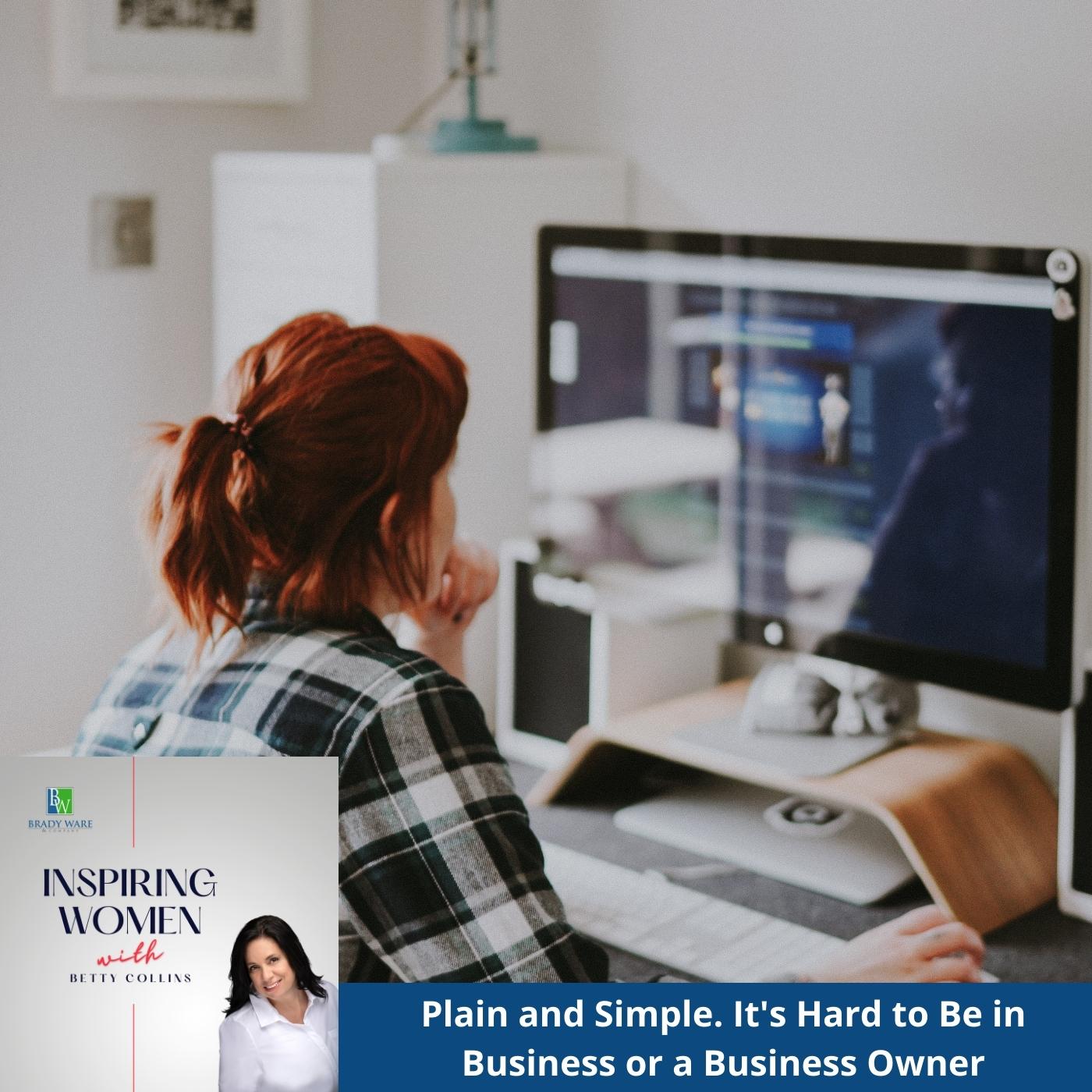
Plain and Simple. It’s Hard to Be in Business or a Business Owner

January 10, 2022 by John Ray

Inspiring Women PodCast with Betty Collins
Plain and Simple. It's Hard to Be in Business or a Business Owner
Loading
00:00 /
RSS Feed
Share
Link
Embed

Download file

Plain and Simple. It’s Hard to Be in Business or a Business Owner (Inspiring Women, Episode 40)

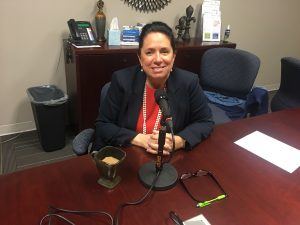
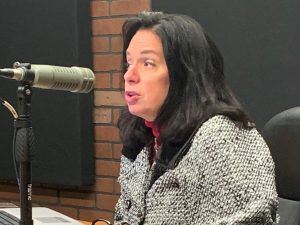
On this episode of Inspiring Women, Betty Collins discusses issues which are making business ownership particularly challenging today, and some of her recommendations for avoiding fear and paralysis. Inspiring Women is presented by Brady Ware & Company.

Betty’s Show Notes

We’re in a new year again, and we just need it to be easier, right?

Many business owners have felt that they can’t move forward because they’re paralyzed. When you’re paralyzed, it means you can’t move. But if you’re a business owner or in business, you aren’t meant to be still, you aren’t meant to be not able to move. So you live in that fear.

But we can’t do that. We have to get to what’s driving the fear.

I’ve put it into a few categories in this episode. I’m sure that there are other things that you could add to it, but you really need to address these things.

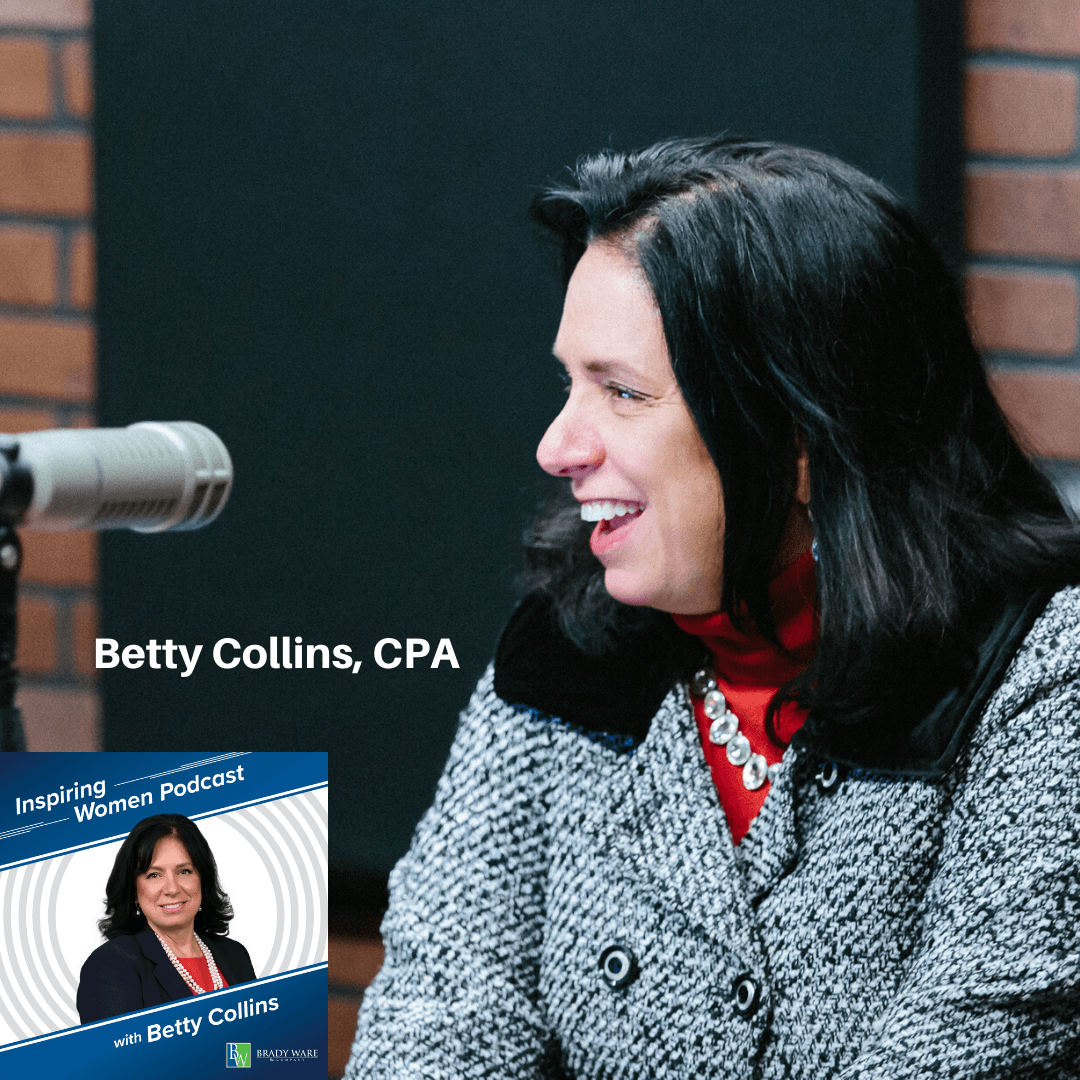
This is THE podcast that advances women toward economic, social and political achievement. Hosted by Betty Collins, CPA, and Director at Brady Ware and Company. Betty also serves as the Committee Chair for Empowering Women, and Director of the Brady Ware Women Initiative. Each episode is presented by Brady Ware and Company, committed to empowering women to go their distance in the workplace and at home.

For more information, go to the Resources page at Brady Ware and Company.

Remember to follow this podcast on Apple Podcasts and Google Podcasts.  And forward our podcast along to other Inspiring Women in your life.

TRANSCRIPT

Betty Collins: [00:00:01] Has anyone ever inspired you to change your life that made you more fulfilled? Well, as a leader in your business and in your community, what are those questions that you ask yourself on a daily basis? It’s these questions that we explore on inspiring women. I am your host, Betty Collins, and I’m a certified public accountant, a business owner and a community leader who partners with others who want to achieve remarkable results for themselves and their organizations. I am here to help inspire you to a positive step forward for a better life. You know, plain and simple, it’s just hard to be in business or be a business owner in today’s environment. I mean, you know, 20, 20, let’s look back. That was a whole new world we had to totally deal with. And then twenty one was all about, we’re going to recover and we’re going to have normal. And now we’re in a new year again, and we just need it to be easier, right? Not easy, easier. And part of the reason I think that people get wrapped up in. How can this be easier, but they can’t move forward because they’re paralyzed? I mean, when you’re paralyzed, it means you can’t move. But if you’re a business owner or in business, you you are meant to be still you aren’t meant to be not able to move. So we live in that fear in general, but certainly has been as business owners in the marketplace.

Betty Collins: [00:01:33] We can’t do that. So we have to get to what’s driving the fear. I mean, what’s driving the fear? And I’ve kind of put it into a few categories, but I’m sure that there’s other things that you could add to it, but you really need to address those things. So as as you’re listening, I would be writing down what is driving the fear that’s paralyzing me. Well, I think overall leadership at our local, state and federal level, you know, in the country, I think in our companies, the politics of it all, there’s a lot of fear with that. The workforce is definitely something that is going to take some time after what we’ve been through to get back to the levels that we would like, so that’s a huge issue for people. And if you don’t have workforce, you can’t have the supply chain back. So that’s another thing that we’re a lot of fear about now. If you’re like me, I’m a professional services person. I don’t have a big problem with the supply chain. It doesn’t affect me much. But for a lot of people, it’s very real. I mean, we haven’t seen inflation like this in a long time. It makes people a little nervous, makes them a little afraid. And then I think, you know, for many people, the effects of that 20 20 year in that year, a lot of money in cash were thrown at business owners.

Betty Collins: [00:02:56] And that’s not the norm. We don’t get cash thrown at us because we had to kind of change our mindset in twenty one and now that we’re we’re heading into new years and a new time period. It’s now about us earning money again. It’s about our bottom lines. And because we don’t have a bunch of cash being thrown at us or that we can apply for or get for free. We’re back to that. Hey, we got to get a fair how to sell services and we got to figure out how to provide products so that we can actually earn money again. And I think one of the fears is people, you know, they’re tired. You hear that a lot. Well, OK, so how do we respond to fear? First, we got to do what I just did. You’ve got to identify them. I’m identifying the things that I see all the time with business owners. They just these are the things they talk about over and over, sometimes with fear that we retreat. We kind of suppress. We ignore it. We live in denial. I’m guilty of all those things. We get very sidetracked. Today is nothing. But all of a sudden you’re sidetracked over here and you’re consumed in this and a tweet came across and another notification and you can’t. And then subject matters at all gets you sidetracked. We focus on the negative when we when we’re in fear and remember again, when I said, we’re in fear, we’re paralyzed, we can’t move.

Betty Collins: [00:04:10] The other thing that we think about when we’re in these frame of minds is, Oh, no one else is experiencing what I’m experiencing, not true. And we’ll talk about that. And then we’re kind of holding our assets close. I mean, you’re holding them to you close. And what do you do when you hold something close? It’s not going to grow, it’s not going to go out there. It’s not going to make into something because you’re hovering, you’re holding it. So those are things that we do when we when we have fear. I always ask this question. So now what? Ok, you’ve talked about the fears you know of. I’ve written down some fears. We’ve talked about how we respond to them. So now what? What do I do? Well, if you’re this is a business session, this is about being a business owner. The marketplace is your answer. The marketplace working is your answer and you have a role to play in that as a business owner and a leader. That’s the key. So go back and start with your why and get it figured out. I mean, for me, I keep that focus. I keep that in my forefront. I had someone help me go through Simon Smith’s University of Why. And it came up with when, when the U.S. works, the world works, and I took it a step further and instead when employers, which means they have employees, are taken care of.

Betty Collins: [00:05:26] Those are people that are getting provisions and those are households that form our communities. So in times where I have to look and go, OK, I got to focus on what’s important. I pull out that why I have it in front of me, I go back to that. The other thing when I say now what? Well, control what you can and influence what you’re not controlling to get it to where you need it to be. And of course, you have to look at, you know what? Change is not an option. We all changed in twenty twenty. I hate the word pivot, but we used it a lot. But we had no choice and we really didn’t have those choices in twenty one. And as we go into new times, we’re still not having that choice. And then you have to deal with what keeps you up at night. That’s the hardest thing. If you want more sleep and not wake up at two o’clock, everyone has that conversation. You already know what it is, right? You wake up and you start thinking about it. I used to wake up and instead of just like being grateful that I’m up and going and had a good night’s sleep, I thought, Well, I’ve got to do this. I got to do that and I got to do this.

Betty Collins: [00:06:24] And what about this and what? What keeps you up at night? And I kind of, you know, the overall. So I’m going to go back to these, the overall leadership and politics, the environment that workforce, the supply chains, financial concerns, people are like, well, the stock market’s rocking, Oh, it went down five hundred. No stop. Stop that. We’re going to talk about what you do with that. And then, you know, we still are kind of talking about twenty twenty and twenty one, right? We’re still. But are we looking back or are we looking forward? What keeps you up at night? And I think exhaustion sometimes can keep you up at night because you just can’t wind down and you’re just beyond. Let’s talk about these things that keep you up at night. Things about business owners that are crazy the workforce. Eighty three percent of businesses are struggling with real workforce access. They just don’t have people coming back to work. They don’t have new, new folks. It’s just that way. Eighty three percent, this is not a problem for just hey, retail or restaurants. It’s bigger than than that. It was really tight prior to COVID. I don’t think most people knew that. So when we went through this time period of tremendous change, I think it’s going to take a time period to have it change. Back when I was coming across information about the workforce, this was one of the statistics I was very, very surprised in.

Betty Collins: [00:07:45] 50 percent of teenagers work today. That’s mind boggling to me. We all worked when I was growing up. My kids all work, so it’s not just my generation and now we’ve taken that workforce out of our system. So I don’t know if it’s parents. Put your kids back to work because we’re all focused on act scores and college prep and et cetera, sports and being in two or three sports. But that has contributed to our workforce. So we’ve got to figure out how to get some of that back. You know, people think the shortages, they come up with these things, it’s like, do you have any research or data on it? And there’s some myths about it. You know, people stay home, they get paid more. That was only for three percent of the country during 2020 and 21. Well, if you pay more, they’ll come to work. No. They’re making outrageous offers right now to folks. In fact, if you ask people who are unemployed or employed, what is the number one thing they really want to they want to have in their job? It’s flexibility because they’ve been used to it over this last couple of years. Another myth is that we just are showing a lack of interest or people, and they just that’s not true. There’s a shortage of people. There was pre COVID.

Betty Collins: [00:08:55] So what are the solutions? You know, what do we do to get that workforce back? Well, part of it is I think you’re going to see it happening. First of all, the state and federal unemployment has ended. And so and that’s probably not going to go back to those those levels again, where they’re giving additional money for people to so that they could make it through this time. Another thing is in this may sound harsh, but you can you can now evict people. There’s not a lot of those things going on where for a while you couldn’t evict people if they weren’t paying rent. Another factor is student loan deferment is now over. So that’s another factor, right? But on the other side of that’s the income side. The other is that households, a family of four, it’s about one hundred and seventy five to two hundred dollars more a month to live in cost between food and gas and basic needs. So at some point, you’re going to start seeing people come back to work. For that reason, though, the incomes are gone and the expenses are higher. So I think you’re going to start seeing that, but I still think it’s going to take some time. So you’re going to be up at night. When it comes to your workforce, you’re going to be thinking about that. It’s just harder to do business. So any option and any idea and anything thing take that you can have with your team is crucial during this moment.

Betty Collins: [00:10:13] So you can hire and get on track solutions, pay more sure increase hours. Make sure certainly that you are competitive giving people more hours, especially if they were a 30 hour week. Can you can you do thirty two to thirty five? That would help anything to make productivity better. So you’ve got to evaluate your products and your services and how you’re delivering them and how you’re doing it. Because when you do that kind of stuff. Bingo, you don’t need as many people. So those are that’s another solution. And then you’ve got to focus on five very basic things when it comes to your workforce training, training, training and training. Now that’s not all my five, but training must exist for your employees. They want that. And when they have that and training isn’t just here’s how you do your job. Here’s why we do this. Here’s why we do our salad this way because we want it to be a certain product for the client. That’s why we do this. It’s why we order this kind of food to make it, et cetera, et cetera. So training is not just about here’s how you do it. Here’s why we do it. The other thing you have to focus on is adaptability. Flexibility is the number one thing people are looking for in their jobs right now.

Betty Collins: [00:11:25] Are you hybrid? Can I be home? Can I come in sometimes? Am I going to be hoteling my office? I mean, what can I do? Can I work any time from Monday through Sunday just so I get my job done, et cetera? When you look at those things, the next thing is then how are you going to recruit if you’re going to give those options? Because that’s what people are looking for and you’re looking for people. So you’ve got to be looking at what they are looking at and partnering with educational facilities around you. You know, it was funny. I have a client who is a cleaning company, and the Baby Boomers, of course, are starting to really, really retire. Kind of they still are working part time, but they’re doing things like, I just want two days a week where I can get out and do something. And so this cleaning company all of a sudden has had some retirees. So I said, Well, great. Go to your local senior center, go to your local community areas where older people hang out because they might see a job posting. They don’t want to go online, they don’t want to try to register that way. Instead, they might see something that looks more personal and just call you. It’s a great way to get that. Workforce, because they’re out there and they’re this is a very driven generation. And then you’ve got to consider.

Betty Collins: [00:12:32] Should I get some contingent workers in place contracts and temporary things which take attorneys and insight? But so those are some of the things you can do when you’re focusing on the five basics to get that workforce back. But eighty three percent of are going through it and focus on not what we used to do, focus on what do we need to do and the five things that I just talked about. What else keeps you up at night? Why is it hard to do business and be a business owner, the supply chain? I will tell you that when we get the people back to work, we will have our stuff right. I have a person who is in promotional products and instead of selling what they normally sell, and if client calls and wants this, they direct them to something that they can get. Ok. She’s had. And she says taking the order now is just not taking the order. It’s really giving them all kinds of different options of what’s available. And so she’s had to really work at that. But the five supply chain drivers are production, inventory, location and transportation and information. So those are the things that you need to have some influence on. Maybe you become the supplier. I have somebody doing that in right now in construction because he can’t get wood to build decks. So he’s like, everyone can’t get wood to build decks.

Betty Collins: [00:13:42] So he started buying wood and building it up and guess who has the wood he does because he’s now the supplier? He fixed his own supply problem by continually ordering bulk and finding it where he could find it. It took some time to build up. It was not instant, but now he is the supplier selling things that are really, really good profit. You know, the thing that needs to happen in our supply chain is that complexity needs to be removed and regulation has to be worked on. Do not ever underestimate that if you are big and need supplies and you can’t get it and you know it’s bogged down in regulation, call your representatives and your senators and people that are influential. These are everyday people. Most of them don’t look at the news, look at who’s in your in your districts and start calling them and say, I really need help. My association, this or my lobbying group that or I’m a business owner and I need this. How can you help me? Do not underestimate the power of that phone call because you have to try to to get that complexity removed. Companies with being intentional will win, and it will have the advantage. So when this guy goes out and buys his own lumber and just keeps stockpiling it, he now has something that somebody needs. It’s the same thing in the services industry as well. So you have to look at the supply chain as what can I control about it or it’s just going to take longer or I’m going to not sell as much.

Betty Collins: [00:15:05] So I’m going to have to sell it for more. You have to look at how can you control it and it will come back, especially as the workforce comes back. People have made a ton of stuff that’s sitting on ships. Believe me, they want to sell it, believe me. The other things that keep people up at night really are financial concerns. And it’s funny. This was a funny one because people are like, I’m holding onto my cash. I’m not going to borrow any money. And oh my goodness, and look at this. And then I have people who are like, Look at the stock market, we are rocking it. I mean, so both people are living in worlds of sort of you’re only focused or your your tunnel vision. You have to look at more than one thing when it comes to the financial concerns because this is what holds businesses back from reinvestment. They’re like, I better not do it now because who knows what’s going to happen to my four one kay or my savings or my line of credit, et cetera. These are the things you pay attention to. The stock market’s the easiest one. First, I have a very good financial planner. Do not try to play that. If you you can really lose very badly in that.

Betty Collins: [00:16:02] But the stock market is is very holding. It is thirty six thousand. It is all those things. It could go to thirty four. It could go up five hundred one day and eight hundred. It’s not the only indicator out there that you should be making financial decisions on interest rates. Right now they’re holding and the feds are doing that intentionally. So you really have to look at that interest rate thing and go, are they going up? Which interest rates going up the kind where I earn money in the bank? No. Or the kind I’m paying on my credit card or my loans. And right now, they’re holding those things. So that’s a strong indicator. How long will they hold it? So that’s why you look at it, what’s going to happen in twenty three and watch those interest rates? So now you’re watching the stock market, you’re watching the interest rates, look at unemployment rates. And yes, we are coming back and people are going to go to work. And we saw that even the numbers continue to get better with people who are not filing unemployment claims across the country. That number is a really important number. We’re very used to that being low, but you need to to continue to watch that, obviously during COVID when it went to 18 and 20 percent. Of course, that’s crazy, but that’s not where we normally live and it came back very quickly.

Betty Collins: [00:17:08] Inflation rate, everyone is not used to this. I remember it in the seventies. I remember my brother buying a house and 15 percent interest was what it was. And the day he got that to be, six percent was like a huge deal. But interest rates play. So not only just interest, I’m sorry in. Violation rates, interest, inflation, unemployment stock market, you need to watch all those, and if it’s something that overwhelms you, then get somebody to help you with that, whether it is your account or your financial planner. Economists are out there. They can be hard to understand sometimes, but those are things to pay attention to when you’re making financial decisions. But living in fear or making quick judgments on one factor is going to paralyze you and we all know what paralyzed does. You can’t move the other two things in financial concern. I’m not going to spend a lot of time on today, but they’re not easy. Is the GDP, which is really just the market value of your final goods and services? Is that growing? If it’s not and it’s stagnant, then you have to look and go, Oh, it’s stagnant. But all the costs to do business is continuing to go up. Those are things you watch the last one, which everyone kind of understands, but you know, maybe you don’t talk about it all the time is the consumer price index.

Betty Collins: [00:18:25] You know, what do you pay for things now? Well, I just said earlier in this podcast, groceries, basic needs and gas on a family of four is up one hundred and seventy five dollars a month. So we are paying more. But our are the goods that we’re selling are there’s something you can sell it for more right? Or is it going to be stagnant? So when you’re talking financial concerns, don’t just look at one thing. So then what other keeps us up at night? Well, the uncertainty, just the uncertainty from day to day in your operations. So what? What does that mean? Well, I’m going to tell you to stay with the basics of business. There are three things you stick with. I don’t care if it’s good times, bad times, I don’t care if it’s 19 and we’re roaring and 20 we stop and twenty one we climb out of a hole and twenty two. We’re optimistic and twenty three, et cetera. It doesn’t really matter. These are basics of business that you must practice if you’re going to have success and life is going to be not as hard. When I when I talk about plain and simple, it’s just hard to be in business. Stay with the basics. Number one, align your leadership. If you do not have aligned leadership, everybody going in the same direction, everybody in agreement. At the after they’ve all disagreed, we’re going to agree to disagree, but I mean, they must be aligned.

Betty Collins: [00:19:37] There must be a an absolute strong unity. Stick to strategy. That’s the second one. You do not want to have shoot from the hip. Let’s pivot. Now, let’s make a rash decision. No stick to strategy. Strategy means you’re thinking about it. You have a plan. It means you have purpose. You’re pulling all together. Your strategy needs to be relevant as well in the market time that you’re in. So don’t look at the what we call Sally in accounting, which is same as last year. But you have to stick to strategy and then you have to strengthen your sales and your operations together. You can have all kinds of sales goals if you don’t have supply chain and supplies and product to sell or you don’t have people to service, it doesn’t matter that you put all your focus and strategy on. We’re going to grow 30 percent or, hey, we’re going to just not hire anybody because we can’t hire anyone. And so we’re just going to be flat. And but the sales department is still going to grow. No, when you’re dealing in bigger contracts are bigger things you have to get with the operations, day to day folks and the people who are selling the product. So before you take a contract or before you decide to sell something or whatever it is, do you have the supplies and do you have the people? So those have to go hand in hand? It doesn’t matter that you want to grow 20 percent if you don’t have the people in the service to do, it doesn’t matter.

Betty Collins: [00:21:02] I mean, we have Bob Evans in our area right now who a lot of times can’t open for dinner because they have a host and a cook so they can talk all they want. That restaurant sales needs to be this today. Well, if you’re only open eight hours and their model and plan is to be open 15, you’re not going to meet those sales goals because you don’t have this. What some restaurants have just done has become very good at carryout because you can do that with a skeleton crew, so you still have to come with those options because everything in that store, strategy wise and and when you’re pulling your sales and operations together are counting on that. So you have to do those basics of business when you feel uncertain, stick to basics, align your leadership, stick to strategy and strengthen sales and operations together. You know, you’re up at night, and I made the comment that you probably have a night because you’re so exhausted. Have you ever had those nights where you can’t sleep because you’re just exhausted? I’ve had that right. So how do we quit being as exhausted as we continue to go forward? Well, here are things that I have personally done, and quite frankly, they work.

Betty Collins: [00:22:02] It’s been great for me. I have very little social media. You know why? Because it just takes from me more than it gives. Shut it down. Shut it down. Stop. I’ve actually gotten into crossword puzzles and reading a lot more. I still, though, must be informed you can’t just hide from the world what you’re living in. So research your outlets and make sure that their outlets that are making decisions on truth or giving you truthful information so you can make the decisions. You will not be as exhausted when you can be very cut and dry. Now, one of the things I like is the Epic Times. It’s a conservative newspaper, but I can go in there and it gives me my headlines of the day. It’s not sexy, it’s not jazzy. Because you know what? It’s just news. It’s not opinions. It’s not. Here’s an editorial. It’s just this happened today, OK? At least I know kind of what happened. If I want to click on it, I can. Part of not being exhausted, part of getting some good sleep at night is you have to plan restoration. I know for myself when I know my week is going to be a certain way, I do this now. I look at Sunday or I look at Saturday or Thursday afternoon. I find a time where since I knew Tuesday and Wednesday, we’re going to be absolutely mind boggling.

Betty Collins: [00:23:15] I’m going to be home at Thursday working or I’m going to come. I’m going to take off a little earlier. I’m going to make sure Thursday night isn’t filled with an activity because I need to have a little bit of quiet, maybe with a nice firepit night. It doesn’t matter that it’s Thursday night. I need that restoration to get through Friday and the weekend or whatever it is. When I know that I’m going to hit some certain deadlines right after that, I always make sure there’s a day spa. Something right doesn’t have to be a whole day. It doesn’t have to be crazy. But I have planned restoration when I know my children are coming and they’re bringing their beautiful babies. I know in 30 hours of that, I’m going to be exhausted so nothing can be planned for the next 24 hours because I’ve got I’m going to need to totally overhaul my house because I wanted a certain way, and I know that I’m going to have to plan to rest so that I can enjoy them. But then I’m OK. Planned restoration elimination of negative people just continued to get those purge those people out of your life. You won’t be nearly as exhausted and then you have to look at that balance of health, their spiritual, physical and emotional. They all work together. This was one who changed a lot for me in 2021, the year of twenty twenty one when I came in after a year pandemic, of course, I said I got to do something different and I found a book about rhythm and balance.

Betty Collins: [00:24:33] And in this book, it talks about, here’s the stuff that takes from you, and here’s the stuff that that gives to you. And here’s how much you need. In each balanced quarter, there were four areas, but one of the things that I really learned from that book was the first, and the last hour of the day is really crucial. How I spend my first hour of the day, I how do I want to spend that? I want to get up a little slower and I want to enjoy my house a little bit more and have coffee. I want to pack a healthy lunch. There’s just this vision I had for that first hour of the day. At the end of the day, I don’t want to wind down with TV because it distracts me. I don’t want to wind down with social media because it would distract me. Instead, I wanted to read something positive. I wanted to have some time of gratitude. I chose how I ended my day, which means when I ended that way, I sleep better. And when I start my day, I have a better day. So control the first and last hour of your day. You’ll be amazed in that. You’ve got to figure out what you want that to be.

Betty Collins: [00:25:34] So that’s that’s just as much, you know, you’re created on purpose for a purpose. I’ve never been a big fan of a of a life statement, but I am a big fan of my why and when I’m talking to you, the business owner and people who are in business, when you get discouraged with it, I make sure I focus on my why and what is that? Well, my why is when the U.S. works, the world works. But I took it a step further and I like the when employers have employees, those folks get their provision from that, from that business owner. Those are those are households, right? And those households form our communities. And what I can focus on that is my purpose. That is why I was created to help in this segment called accounting. I can clear the air a little bit. I can go, OK. You can do this. And what I would tell you is what I continue to do, so I’m not so exhausted is I’m bringing back the things that I miss in my life, especially from pre pre-COVID. Those are important things. You know, socialization is huge for me, things that I just really wanted to get together with more. I just started doing that. I have a friend who said, I just want to go to dinner and not talk about COVID 19 in politics and stuff.

Betty Collins: [00:26:48] I just wonder, know how your kids are. I just want to have some fun. I just want some light enjoyment. That was that’s what she’s missing. So she’s making sure she’s doing that and those things will energize you. They will give back to you, and the exhaustion will continue to to be less. So those are the things I want to talk about in the plain and simple, it’s just hard to be in business. It’s just hard to be a business owner. So get hold of those things that are keeping you up at night. Deal with the things. Call this thing called fear, so you’re not paralyzed. Get some help to get through these things. Maybe if they’re too much for you, economic wise, or you feel like you’ve got to be an economist to understand those things that I talked about. You’ll see a difference. I have seen that difference. So I’m just grateful that you joined me today, and I hope this podcast was inspiring for you. Inspired women has been presented by Brady Ware & Company as your career advancements continue, your financial opportunities will continue to grow. Be prepared. Visit Brady Ware to find out more about the accounting services. They can assist you to that next level. All this, plus more about the podcast, can be found in the show notes for this episode. Thank you so much for tuning in. Feel free to share the show or give us a review. Remember, inspiration is powerful. Whose life will you be changing?


Tagged With: Betty Collins, Brady Ware, business, business owner, fear, Inspiring Women

2021. It’s A Wrap.

December 15, 2021 by John Ray

2021 Its a WrapAlbum 1
Inspiring Women PodCast with Betty Collins
2021. It’s A Wrap.
Loading
00:00 /
RSS Feed
Share
Link
Embed

Download file

2021 Its a WrapAlbum 1

2021. It’s A Wrap. (Inspiring Women, Episode 39)

On this episode of Inspiring Women, host Betty Collins looks back on 2021 and invites us to take time for renewal during the holiday season. Inspiring Women is presented by Brady Ware & Company.

Betty’s Show Notes

This is my last podcast of 2021. It is hard to believe that another year is behind us, 2022 is really upon us.

So today I want to celebrate this last year. How do you celebrate in today’s world?

Today’s world is consuming and overwhelming and really more negative than positive. So, how do you celebrate? First, you make the choice to celebrate and second it take times and daily effort. What you will find in celebrating, you will see that “today’s world” is not all negative. Be consumed in the positive. Take time to think and ponder on it. It takes effort. Be overwhelmed or grateful for the good.

Celebrating this past year, end it with a bang. Enjoy the Christmas season. Don’t fill it up with “stuff” but enjoy, sometimes it is just the simple stuff. Just don’t miss out. Live it up, eat, drink and be merry as well as reflect, renew, and restore your soul. Ring out New Years by being with the people you love, throw a party. Sit back and look over the past year and be grateful for the good, the bad and the ugly.

A recap of 2021. Business was good, relationships are strong, family is going well, health is awesome. We have learned to navigate through the continual pandemic. Covid is not over but we are fighting it and seeing better numbers. Schools are back in session. Businesses continue at home or in the office. Recreation and fun was done at capacity over the summer. Government is still working – LOL. We survived an election and saw people really engaged – my own district had so many people running and town hall meetings were full. Love seeing the debate and passion.

A challenge for you. Celebrate 2021 by choosing to be consumed and overwhelmed in the good and end it with New Year’s on your terms. Bring back what you are missing and make sure it is part of 2022.

Thanks for listening and being part of my podcast and my life.

This is THE podcast that advances women toward economic, social and political achievement. Hosted by Betty Collins, CPA, and Director at Brady Ware and Company. Betty also serves as the Committee Chair for Empowering Women, and Director of the Brady Ware Women Initiative. Each episode is presented by Brady Ware and Company, committed to empowering women to go their distance in the workplace and at home.

For more information, go to the Resources page at Brady Ware and Company.

Remember to follow this podcast on Apple Podcasts and Google Podcasts.  And forward our podcast along to other Inspiring Women in your life.

TRANSCRIPT

[00:00:00] Speaker1
It’s hard to believe that twenty twenty one is coming to an end, and this is my last podcast of the year. It’s really hard to believe, though, that we’re saying twenty twenty two because it’s right here, it’s so close.

[00:00:13] Speaker2
So today I want to celebrate this last year. I mean, how do you celebrate in today’s world?

[00:00:21] Speaker1
I mean, it’s consuming and it’s overwhelming, and it’s really more negative than positive.

[00:00:27] Speaker2
So how do you celebrate? Well, first you have to make a choice to celebrate. And it takes time and it takes daily effort. It might take more than one time in the day, right? What you will find in celebrating, though, you’ll see that today’s world is not all negative.

[00:00:53] Speaker1
I mean, you can choose to be consumed in the positive.

[00:00:57] Speaker2
Take time to think and ponder on it. Look back at this past year, I would even take a blank sheet of paper and have a column that says Pro and a column that says Con and start just writing it. You’ll be surprised at the positive that’s there.

[00:01:15] Speaker1
It takes effort and it takes a little bit of time and it takes maybe a quiet moment and it takes stepping back.

[00:01:20] Speaker2
But but, you know, pretty quickly you’re going to be overwhelmed or grateful for the good. So twenty twenty one, it wasn’t twenty twenty.

[00:01:34] Speaker1
I mean, both years have been challenging,

[00:01:37] Speaker2
But in different ways, but at the end

[00:01:38] Speaker1
Of the day, they were both doable, right?

[00:01:40] Speaker2
And I look back at

[00:01:42] Speaker1
The marketplace in this country, the business community and

[00:01:46] Speaker2
I continue to see such resilience and creativity.

[00:01:50] Speaker1
That determination is still there.

We’re a little more tired, but it’s still there. And it’s it is inspiring to me when I see that it energizes me, when I see that also as all the issues of today’s world, you know, the one thing that’s happened is people have kind of stepped back and they’ve assessed and they revised many

[00:02:13] Speaker1
Aspects in their life, I think for the better. My son has become more of a minimalist. And I don’t know how he becomes more mentally minimal than he is, but he’s chosen really to step back and say, maybe we don’t need to do and be all the things we were. I’m continually, though, inspired by how the everyday person continues to handle things. I love going on LinkedIn and I just do my little skimming to. I find positive

[00:02:41] Speaker2
Stories, things that are impactful, things that are inspiring. If you need to to

[00:02:49] Speaker1
To find something good, you can find it.

[00:02:53] Speaker2
So celebrating this past year, I would tell you to end it with a bang. Enjoy that Christmas

[00:02:59] Speaker1
Season. I didn’t say fill

[00:03:01] Speaker2
It up with stuff,

[00:03:02] Speaker1
But enjoy it. And sometimes it is this simple that makes the difference. I know for Thanksgiving month, the month of November, I decided to give my children journals on Halloween and I gave them fancy pencils and pens and some things to look in this journal.

[00:03:19] Speaker2
And every day of November, I asked

[00:03:22] Speaker1
Them to write something they’re grateful for. It doesn’t need to be a big poem in a book, and it doesn’t need to be fancy. It’s just think about your day or start your day, reflect on your day and write something that was good. And that’s what I want back on December twenty fifth for Christmas.

[00:03:40] Speaker2
It’s simple stuff like that. They can make your holiday season, but make

[00:03:45] Speaker1
Sure you end the year with a bang celebrating.

[00:03:49] Speaker2
Live it up. Drink, eat, drink and be merry as we all sit back, reflect, renew and restore that soul right and ring out

[00:03:58] Speaker1
New Years by being with the people you love. Either throw a big party or sit back with the one you care about the most and talk

[00:04:05] Speaker2
About how great it was celebrated. I don’t think twenty twenty

[00:04:09] Speaker1
Two is is is not going to be twenty twenty one, let alone twenty twenty. Who knows what it will bring? The only thing you can do, though, is control what we can and influence change on what we can’t control. It will be a new day with new challenges, but also new opportunities. So as you’re celebrating and wrapping up the year and reflecting on the good, so you’re not consumed in the bad.
Look at the fact that you’re going to get to have a new year right and look at the new opportunities and challenges it will bring. As I look in the past year, though, I am looking at what I missed pre twenty twenty and I’m going to make sure that I add those things back in over time and more and more

[00:04:52] Speaker2
All the things that stopped or have all these new rules. I mean, what are you missing? How are you going to bring it back at work? We stop breaking bread together, which means eating at my desk and not taking a break for lunch. Not good.

[00:05:05] Speaker1
I really miss being out in the marketplace. I realized this when I attended the SBA gala and I got to see people we all had mask on for a period of time. We ate dinner, we talked, we drink wine and then we got to

Hear really inspirational

[00:05:19] Speaker1
Stories. And even though I got home at nine 30 that night, I was so energized.

[00:05:24] Speaker2
For me, the

[00:05:25] Speaker1
Missing is part of wrapping up the year, so I make it sure that it’s in twenty twenty two. So some recaps of Twenty Twenty One.

[00:05:33] Speaker2
Well, business was good, it was for a lot of people it was it was good.

[00:05:37] Speaker1
My relationships are strong. I mean, I’ve been able to maintain and keep up with people in the Zoom thing and all the different ways you can act. My family’s going, well, you know, that’s a good thing.

[00:05:49] Speaker2
My health is awesome.

[00:05:50] Speaker1
I mean, we’ve learned to navigate through the continual pandemic. Covid is not over, but we’re fighting it and we’re seeing better numbers.

[00:05:57] Speaker2
Schools are back in session. Those are good things. Businesses continue at home or in the office, and they all make it work. The recreation and fun is being done at capacity over this past summer,

[00:06:09] Speaker1
Where I usually go to a place in

[00:06:11] Speaker2
Florida. They had 96 percent

[00:06:13] Speaker1
Occupancy in their rentals throughout

[00:06:16] Speaker2
That little route.

[00:06:17] Speaker1
30 a. that I love to go to. That’s encouraging, you know, even the government is still working. Laugh out loud, even if you don’t like them, they still are and they’re functioning.

[00:06:25] Speaker2
We survived an election year, whether

[00:06:28] Speaker1
We like the outcomes or not.

[00:06:30] Speaker2
And really, people are much more engaged in elections this year because of the last one we had. That’s a good thing. I mean, my own district where I live just for school board and the amount of people that ran for council and the amount of people that volunteered with voting and the turnout was exceptional. So I love the fact that I

[00:06:48] Speaker1
See all that debate and passion and engagement.

[00:06:52] Speaker2
I’m still able to do my podcasts and have this audience which

[00:06:55] Speaker1
Grew, and I was able to have the Brady Wear Women’s Leadership Conference this year. And like twenty twenty one around like twenty twenty, and we actually even had the governor of Ohio, and it was so pretty cool I was able to become a board member of the Ohio Women’s Coalition, which got $10 million in the budget in Ohio for women owned businesses. And I got to be on the weld calendar for December,

[00:07:19] Speaker2
So I just had a great great year and so did my clients.

They were banner in 20 and 21 for the most

[00:07:26] Speaker2
Part, and it has fueled tremendous growth and

[00:07:29] Speaker1
Optimism. But people are still very scared and very cautious, right? But they’re very engaged and they’re focused.

[00:07:36] Speaker2
You can choose the bad

[00:07:38] Speaker1
You can choose to good. But for me personally, this past year, my immediate family, my husband and I call them my adult children with jobs. We had great financial years and we didn’t have to really use any of the economic stimulus and assistance. I mean, how grateful can you be for that? My daughter got engaged and we are planning and doing the big wedding thing, so that’s cool. My business grew, adding new clients great revenue streams. I bet it did for you. We actually have ninety nine percent of our employees

[00:08:07] Speaker2
Filled at birdie.

[00:08:09] Speaker1
And my little grandsons, Jude, my man and Silas, I call my little side my little guy. They can actually say, Mimi, that’s awesome.

[00:08:18] Speaker2
And my health is good. At fifty eight, I

[00:08:19] Speaker1
Just got my my results back. I have no medications. My numbers are built better. The only problem I have is I still think PI is a fruit,

[00:08:27] Speaker2
So that’s a problem. But as you and I wrap up another year, as you’ve heard, I’ve talked

[00:08:32] Speaker1
About the good. I’ve talked about the things that are positive, the things that I choose to consume myself in. You need to do the same. Be challenged and energized on that new day, one one twenty two and consider it a new blank sheet of paper. It is my hope. I honestly mean this, that you’ve been impacted by the podcast and that we will enjoy another year together. My podcast is coming up in January. It’s called plain and simple. It’s just hard to be in business in that podcast. Here’s a few tidbits from it. If you don’t want to be as exhausted in twenty two, here’s some tips do very little social media, except my podcast, of course,

[00:09:16] Speaker2
Still be informed

[00:09:18] Speaker1
On the right places and the right outlets and make sure that you know you’re making some decisions on truths. Plan restoration. I can’t emphasize that enough. Eliminate those negative people. Not so easy to do. Make sure you don’t just think about your health. There’s emotional health, physical health and spiritual health. The one thing that’s helped me tremendously in twenty twenty one as I look back, is I chose how to start my day and end my day because what I found in this book, who knows if it’s true,

[00:09:47] Speaker2
But it worked the first hour and last hour of every

[00:09:50] Speaker1
Day determine how you sleep at night and how your day goes the next.

[00:09:55] Speaker2
So how I spend that first hour of the day kind

[00:09:57] Speaker1
Of dictates how my day goes and when I choose to wind down my day

[00:10:00] Speaker2
Is that that makes. That’s when I get the good sleep.

[00:10:05] Speaker1
Ok, so I learned that one of the great things remember you’re

[00:10:08] Speaker2
Created on purpose for a purpose,

And I love my life focus and statement in my in my why? And what are you missing? Bring it back to your life. So challenge. Celebrate twenty twenty one by choosing to not be consumed and overwhelmed in the in the negative, in the positive, but do it for the good and end it with a great year of Christmas and New Year’s on your terms. And bring back those things you’re missing during this holiday season. And most of all, thanks for listening and being part of my podcast and life.

Automated transcription by Sonix www.sonix.ai

Betty CollinsIW8-2021square is the Office Lead for Brady Ware’s Columbus office and a Shareholder in the firm. Betty joined Brady Ware & Company in 2012 through a merger with Nipps, Brown, Collins & Associates. She started her career in public accounting in 1988.

Betty is co-leader of the Long Term Care service team, which helps providers of services to Individuals with Intellectual and Developmental Disabilities and nursing centers establish effective operational models that also maximize available funding. She consults with other small businesses, helping them prosper with advice on general operations management, cash flow optimization, and tax minimization strategies.

In addition, Betty serves on the Board of Directors for Brady Ware and Company. She leads Brady Ware’s Women’s Initiative, a program designed to empower female employees, allowing them to tap into unique resources and unleash their full potential.  Betty helps her colleagues create a work/life balance while inspiring them to set and reach personal and professional goals.

The Women’s Initiative promotes women-to-women business relationships for clients and holds an annual conference that supports women business owners, women leaders, and other women who want to succeed. Betty actively participates in women-oriented conferences through speaking engagements and board activity.

Betty is a member of the National Association of Women Business Owners (NAWBO) and she is the President-elect for the Columbus Chapter. Brady Ware also partners with the Women’s Small Business Accelerator (WSBA), an organization designed to help female business owners develop and implement a strong business strategy through education and mentorship, and Betty participates in their mentor match program.

She is passionate about WSBA because she believes in their acceleration program and matching women with the right advisors to help them achieve their business ownership goals. Betty supports the WSBA and NAWBO because these organizations deliver resources that help other women-owned and managed businesses thrive.

Betty is a graduate of Mount Vernon Nazarene College, a member of the American Institute of Certified Public Accountants, and a member of the Ohio Society of Certified Public Accountants. Betty is also the Board Chairwoman for the Gahanna Area Chamber of Commerce, and she serves on the Board of the Community Improvement Corporation of Gahanna as Treasurer.

Inspiring Women Podcast Series

This is THE podcast that advances women toward economic, social and political achievement. The show is hosted by Betty Collins, CPA; Betty is a Director at Brady Ware & Company. Betty also serves as the Committee Chair for Empowering Women, and Director of the Brady Ware Women Initiative. Each episode is presented by Brady Ware & Company, committed to empowering women to go their distance in the workplace and at home. For more information, go to the Resources page at Brady Ware & Company.

Remember to follow this podcast on Apple Podcasts and Google Podcasts. And forward our podcast along to other Inspiring Women in your life.

The complete Inspiring Women show archive can be found here.

Tagged With: 2021, Betty Collins, celebrate, Inspiring Women, Inspiring Women with Betty Collins, New Year

Keeping Emotion Out of Difficult Conversations – An Interview with Jen Grant, Appify

October 11, 2021 by John Ray

Jen-Grant-Inspiring-Women-Album
Inspiring Women PodCast with Betty Collins
Keeping Emotion Out of Difficult Conversations - An Interview with Jen Grant, Appify
Loading
00:00 /
RSS Feed
Share
Link
Embed

Download file

Jen-Grant-Inspiring-Women-Album

Keeping Emotion Out of Difficult Conversations – An Interview with Jen Grant, Appify (Inspiring Women, Episode 37)

Some emotions can be positive, Appify CEO Jen Grant observes, such as the passion which drives us in our business or career journey. Other emotions, however, particularly those in highly charged conversations, can cause both short- and long-term damage. In this conversation with host Betty Collins, Jen discusses when emotions need to be harnessed, how to diffuse negative emotions which arise in difficult conversations, and much more. Inspiring Women is presented by Brady Ware & Company.

Betty’s Show Notes

When I think of emotions, I think of passion and drivers. It’s that ‘why’ of something.

So, in this episode, I want to talk about when we keep emotions out of something, especially a difficult conversation.

Why do we want to do that?

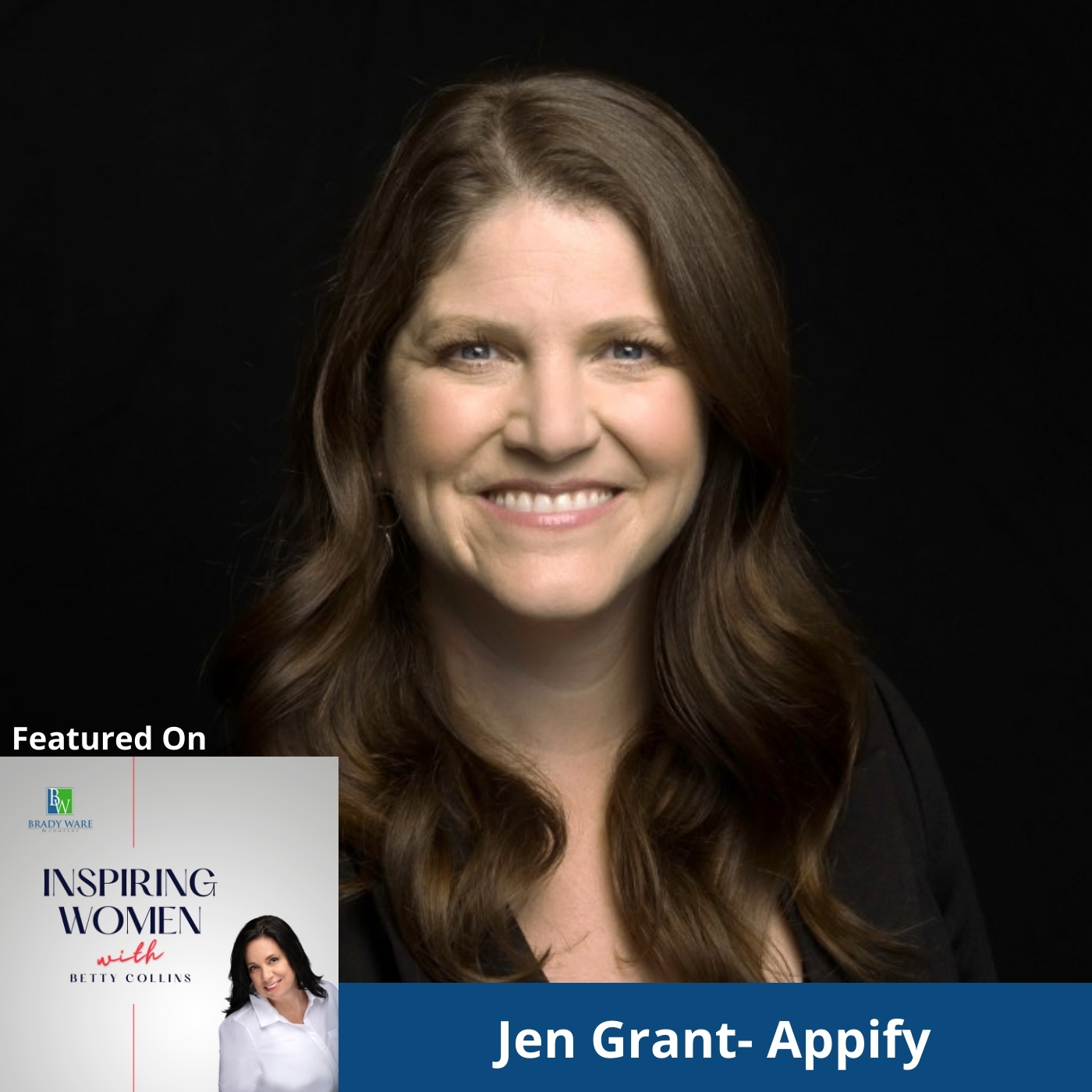
With me is Jen Grant. She is the CEO at Appify.

She has spent the last 15 years building companies from the ground-up and taking multiple companies to over a billion-dollar valuation. Recently, Jen was recognized as one of the Top 100 Princeton Technology leaders in 2021 as well as a Woman of Influence in Silicon Valley from the SVBJ.

When someone says something, you disagree with, ask them to “tell me more” and look for the gold — the thing they say that you CAN agree with. More often than not, you realize that you do actually agree with some of what they are saying and finding that point of connection is all you need to collaborate and move forward together.

Why is this more of a topic for women? Jen goes deep into that.

Bottom line. In a difficult situation, keep asking questions to get to the crux of the matter at hand. Keep being curious, and this will help you stop judging.

Jen highly recommends this for you to read – Leaders Eat Last By Simon Sinek.

This is THE podcast that advances women toward economic, social and political achievement. Hosted by Betty Collins, CPA, and Director at Brady Ware and Company. Betty also serves as the Committee Chair for Empowering Women, and Director of the Brady Ware Women Initiative. Each episode is presented by Brady Ware and Company, committed to empowering women to go their distance in the workplace and at home.

For more information, go to the Resources page at Brady Ware and Company.

Remember to follow this podcast on Apple Podcasts and Google Podcasts.  And forward our podcast along to other Inspiring Women in your life.

TRANSCRIPT

[00:00:00] Betty Collins
So, today, we’re going to talk about keeping emotion out of difficult conversations. Not always something that easy, and I hate that when they say, “Well, women are so emotional,” it’s somewhat irritating. But okay, I like emotion, okay? And I want to feel something or be moved, or I look to sometimes, really, that emotions are obviously positive. When I think of emotions, I think of passion and drivers, and it’s that ‘why’ of something. So, today I want to talk about when we keep emotions out of something, especially a difficult conversation.

[00:00:37] Betty Collins
Why do we want to do that? So, that you’ll have some success as you navigate, and it could be easier for you. So, also, I want to do this, so you don’t spend 10 minutes, or so, you can spend 10 minutes instead of 10 hours or 10 weeks, it just works better when you do that. So, sometimes emotions during difficult conversations, oh, can really hold you back. So, I’m interviewing on a really amazing woman today. Her name is Jen Grant. Her resume is so impressive. Obviously, her success is evident. It’s everywhere, when I read her articles and see her interviews, very inspiring.

[00:01:16] Betty Collins
And when I read her journey about how she spent the last 20 years building companies from the ground up, and taking multiple companies to over a billion-dollar valuation, I get excited about that as a CPA. Who’s a passionate- I’m passionate about the marketplace, and having success in it. And I love being around women in business who love just the game of business. So, when I read and listened, and interviewed women who have success like Jen Grant, I’m pretty sure that they understand the importance of keeping emotions out of those difficult conversations.

[00:01:52] Betty Collins
It really is a crucial skill set. I’m also sure that they have applied it more than one time. So, I want to talk to a very successful woman about this skill set, and get her insight. So, today, again, my guess is Jen Grant, and she is the CEO of Appify; by the way, where convenience is at your fingertips. She’s led three successful billion-dollar IPOs, and she is constantly looking at the bigger picture and has a passion for building brands from the ground up. In her past, she spent time working with Google, where she was part of the Google- I’m sorry, the Google Apps, edu, Gmail and Books search marketing teams.

[00:02:34] Betty Collins
And in 2007, she received the Founder’s Award, which is a pretty big award at Google, it’s the most prestigious award for her marketing leadership. So, I want to welcome Jen Grant to my podcast, and I thank you so much for being here today, and talking with my audience. Which a lot of it’s- I have men that listen to this, but a lot of women in business, or women who are business owners.
Now, Jen, I had made a big assumption that when you are building something from the ground up, that there is, sometimes, not a lot of time for emotion. And I’m confident that you have the skill set of keeping those emotions out of difficult conversations. But first, I want to get to know you a little bit. So, tell me a little bit about you, and being the CEO at Appify.

[00:03:22] Jen Grant
I’m excited to be here, excited to talk about it. This is actually one of my favorite conversations, because I think it’s so critical for for women, and how they show up in business. But yes, first, let me tell you a little bit about myself. So, I actually started as CEO at Appify, February of last year. So, it’s been a wild year. It’s my first CEO position after being CMO at many companies before that. And so, we have ridden through the pandemic ups and downs, and crazy times.

[00:04:00] Betty Collins
Good for you.

Certainly, emotions and difficult conversations are all over the place, and it’s actually been wonderful. At Appify, what we are doing is making it easy for anyone to build business applications or business apps. So, we have no-code technology, so similar to way back when if you wanted a website, you had to get a developer, and then all of a sudden Wix and Squarespace came along, and made it easy. And that’s what we’re doing for business apps, so that anyone and their business can avoid manual tasks, get rid of paper, be more efficient, be more agile, be able to pick up and change their business model at the drop of a hat, if they need to. So, we’re really passionate about helping businesses get the kind of agility they need to deal with what just happened to us this last year. To shift quickly and change. And that’s what we’re all about.

[00:05:03] Betty Collins
Well, I was really good until you said, “We help people get rid of their paper.” I still have a lot of that in my life, that I shouldn’t have. I know that, okay? There’s just comfort, sometimes, when I do that. But I’ve learned a little bit about, this year, that I don’t have to have as much paper in my life.

[00:05:21] Jen Grant
For sure.

[00:05:21] Betty Collins
But I was really- when I was drawn to this topic, because women struggle with it, and then I saw your success. I couldn’t help but think you would have amazing insight and experience with it, especially when you’ve built something from the ground up. So, help women who struggle with this, give us your insight. What have you seen?

[00:05:44] Jen Grant
And I’ll start by telling a story of early in my career. So, I was much younger, and when we’re younger, we’re very passionate about, “This is how it should be,” and, “Why are you saying that dumb thing?” And of course, also, I wasn’t the CEO. I wasn’t even a CMO, I was just a member of the team. And this was when I was at Google, I was a part of the Google Books search team, which was incredibly inspiring because we were making books searchable on Google, and also incredibly crisis-focused.

[00:06:28] Jen Grant
So, there were authors and publishers, there was all sorts of, is this fair use of the Copyright Act, or is this illegal? There was a lot of action, and it came down on the team, and certainly on the marketing side, which is what I led. And so, heightened emotion, in crisis, everyone is very driven, solved the problems, there’s a lot going on. And I remember having conversations where my passion and my feelings got out ahead of me, where, effectively, someone would say something that was just not a good idea. And I would say, “Well, that doesn’t make sense. What we need to do is…”

[00:07:17] Betty Collins
Foot in mouth, but okay.

[00:07:20] Jen Grant
That’s exactly right. And I started to realize that I was, I don’t know, leaning too far forward, if there’s a way to talk about it like that. And I had this wonderful- I was very, very lucky at Google, and in much of my career, that I was reporting to a woman. So, in my early career, I had managers who understood me to some extent. And she ended up joining some of our meetings, seeing what was going on. And I watched her take on calmly this- and by the way, these are all men with very emotional about all this crisis that we were going through.

[00:08:04] Jen Grant
“We need to do this. We need to do that. Why are we doing this?” This whole sea of stress. And I watched her very calmly manage the situation in a way that I hadn’t thought of before. And it was one of those moments where I went, “Okay, wait a minute. This worked out way better.” And they all walked out of the meeting thinking, “Wow, that Michelle, she’s really got a hold of the situation, and driving through.” And what I started to think is, “Okay. So, clearly I am not handling this in the best way possible. What can I learn from this situation?” And so, that was the start of my journey in thinking about emotion in business, step one is the impact of remaining calm cannot be overstated.

[00:09:00] Betty Collins
But you know what was great about that is, you probably, maybe, didn’t see that in yourself till you saw another woman mentor you, and she didn’t know she was doing it. And you saw, that’s how you can be impactful with your emotion, or no emotion, or everyone thinks. And she probably went back to her office screaming, who knows? But in that moment, she kept it there. So, you were fortunate to see that, because a lot of people don’t get to see that side.

[00:09:35] Jen Grant
That’s absolutely right. And it was, certainly- and I think it’s fair to say we all struggle. And I don’t know why, if it’s nature, or nurture, or society, or whatever. I do think it’s a lot easier for a man to get emotional and people not to react negatively.

[00:09:58] Betty Collins
No, that’s absolutely a true statement. And I want to take it one step further with you. And I don’t have that in our questions, so I’m going to improvise here. But my question really is, why is this more of a topic for women, and why do we struggle with the skill set? But really, it’s not even just in that moment she was calm, if a man would have gotten emotional afterwards, everyone wouldn’t have thought anything about it.

That’s right.

[00:10:33] Betty Collins
So, it’s also how we clean up the mess or respond. I don’t know if that makes sense when I say it like that. But why is it more of a topic for women, besides men get away with this? Women just don’t have the skill set at times. I see it over and over again in my own company. And so, I just really wanted to talk about it today.

[00:10:56] Jen Grant
And I’m not entirely sure why, but I do agree with you. I think maybe it’s how we were nurtured, that it’s okay to have feelings. And, of course, I’m of a generation where it was okay for girls to cry, but it was not okay for boys to cry. There were definite gender differences that were somewhat ingrained in our culture. And I do think, now I have young people on my team, I do think there is a shift and a change, and there is more openness to men sharing more emotions. And who knows? Maybe as they come up in business, they will start encountering these same moments, where, like, “Maybe I shouldn’t let it out at this moment.”

[00:11:46] Betty Collins
You just said the key thing, “At this moment.” There’s a time to have emotions, like I talked to at the beginning, I think they’re good. I like passion, they’re drivers. They’re things that navigate and change us. but we just have to know when to use them.

[00:12:04] Jen Grant
Yes, exactly.

[00:12:04] Betty Collins
So, it’s hard not to get worked up emotionally when you’re in that difficult conversation, you can’t help it. And defensive just sets in, you’re feeling threatened, or there’s the four-letter F word called fear. You’ve been there more than once. What is the common response to getting worked up, and what should it be? Can you give us some insight on that?

[00:12:30] Jen Grant
Yeah, absolutely. And I think I had a coach say this to me once, where I was in a situation where I had a difficult boss. He was very forceful and always, “Well, this is how it is.” And my instinct would be to say, “No, you’re wrong.” And then he would say, “Well, you get very defensive, Jen.” And I’d be like, “God.”

[00:12:59] Betty Collins
Okay, so what?

[00:13:02] Jen Grant
So, I was like, “Okay, this is not working. How do I get this to work?” And one of the things this coach, who’s actually also a good friend of mine, said to me was, “You need to ask questions. You need to get them to continue to share their point until you can find something you agree with, and then zero in on that.” And it was really a transformational moment for me to get this very simple piece of advice, that instead of saying, “No, you’re wrong,” to say, “Well, tell me more, because I don’t totally understand your point of view, and I really want to make sure I’ve got it, so that I can understand where you’re coming from.”

[00:13:50] Jen Grant
And just keep saying that until you get to this moment where you go, “Yes. That, I do agree with that. I do think we should do that, and you’re absolutely right.” And that was a big turning point for me in being able to manage more aggressive people around me, or emotional men around me, is, at that point, it sucks the emotion, not just out of yourself in your staying calm, but you use this deep curiosity about, “I really want to understand your point of view,” and it disarms the person that you’re talking to. So, the emotion starts to seek out of them as well.

[00:14:34] Jen Grant
And they start to think, “Oh, she’s interested in what I have to say. Oh, she’s listening to what I have to say.” Because in some cases, I found that even though they were saying all these things, they really just wanted me to acknowledge that I’d hurt them, but there wasn’t necessarily an action item that I needed to take. Other than, “I hear you. I hear what you’re saying, and I deeply understand it, because I asked you lots of questions. And now we agree on this one little point over here.” Which may not be anywhere near where they started, but it gets you back into, “Okay, now, let’s talk about this thing that I agree with and how do we make that better in the business?”

[00:15:15] Betty Collins
I did have a situation where I had to take- someone gave me the advice similar to yours. The end result was, “Take the wind out of the sail, but they’re not going to know that you’re doing that.” And it really was defining, very non-emotional, what my boundaries was. But then he was able to, as I did ask more questions and things, he was able to respond, and then it became a conversation.

[00:15:51] Jen Grant
Yes, exactly.

And I had a lot of success, and I was able to let go of that. And my emotions were saved for when I got home to my husband, instead of right there in that moment where it shouldn’t have been there, because it would have been, instead of a 10-minute conversation, 10 hours or 10 weeks of just playing this game. And I’m reading a book that it talks about, ask the question, and it’s by, he used to be a Congressman, Trey Gowdy. I think he’s from the Carolinas, and if you saw him on TV all the time, he’s just angry, he seems to be angry. So, when they had- for some reason, I was flipping channels, and there he is talking about this book about asking questions, change the conversation when you ask questions.

[00:16:39] Betty Collins
And I don’t really- didn’t care for him when I saw him as a congressman on TV angry, but when I saw him in this interview, he’s selling his book on how he’s been successful in changing the conversation and influencing, it was really, really good. So, I like that insight that you’re giving us, ask the questions. Very, very good. So, from a CEO’s perspective, as you take over in a pandemic and do these things, you’re leading a team, and, obviously, you got to leverage. And that’s the best trait a CEO can have, in my opinion, to succeed. When you see the people that you’re just letting go to that senior team, or even below them, and you see them struggling with emotions in difficult conversations. And you know it’s not going to end well, because you can see it, right? You’ve been there.

[00:17:31] Jen Grant
Right.

[00:17:31] Betty Collins
How do you try to help them? What’s the fix?

[00:17:35] Jen Grant
I think the first thing I usually try to do is diffuse. So, if we are clearly in disagreement about something, and people are starting to get heated, to be able to sometimes, “Okay, let’s take this offline, and we’re going to go to the next agenda,” to, a little bit, just diffuse, give everyone time to calm down a little bit. So, that’s definitely one thing I’ve tried. And I think there have been other times where I have stepped in, I leaned in a little bit. Because sometimes things like that will happen, and you can see that there is, maybe, one person that’s a little bit too strong, and a little bit leaning into someone else unfairly.

[00:18:23] Jen Grant
And so, there are, also, those situations where I’ve very subtly said, “Okay. Well, we can think about that, and you make a good point. But we also need to make sure we understand the such-and-so’s point.” So, there’s the the art of deciding whether this is just a diffuse situation, or if this is a situation to make sure that everyone feels that their voice is equally heard. And so, there is a personality that is more aggressive, to make them understand that, “Yes, they’ve made their point, we’ve heard them, and everyone else’s point also needs equal time.” So, I’ve seen both situations where there’s a little bit of a guess, just what feels right in the moment.

[00:19:16] Betty Collins
But it sounds like, probably, your best skill set as the CEO, is really the example of that person you saw in the meeting.

[00:19:25] Jen Grant
Yes.

[00:19:25] Betty Collins
And knowing that, “I got to portray that in work. Because at the end of the day, I want to influence and impact. If I’m going to do that, I have to have that skill set.” And it’s a hard one for women, it really is.

[00:19:39] Jen Grant
It really is, yeah. And then being able to take whatever is happening into a one-on-one conversation. Because that’s, really, where you can get a little bit- you get a little more emotional when you’re one-on-one, if it’s a more of a coaching-mentoring conversation to say, “Hey, I saw you were very passionate about this, let’s talk it through, and tell me more.” And often, then, I will give the person, or if it’s in particular, a woman, advice around, “Okay, so here’s the way to diffuse the situation that you can do, if I’m not around.” And try to help.

[00:20:18] Betty Collins
I just had someone who got- she’s another woman, and she got very emotional in a meeting, and she just made herself look ridiculous. And I said to her a couple of days later, I waited a few days, I said, “You have to understand how you’re being perceived sometimes.” And everybody wants to be at the table, and there’s three types of people at the table; there are people who come there and they eat, there are people who never pick up the menu, never had an intention of being engaged to order food, and then there’s people who throw the food. And they don’t know if you’re going to eat or throw the food.

[00:21:00] Betty Collins
And that’s why they walk around you on eggshells, it’s not because, necessarily, they’re men, okay? It has everything to do with they don’t know if you’re going to throw the food or eat the food. And you have to know that your perception- you still got to be you, and you still got to communicate, but if you want to be heard. I’ve tried to do with that, and I could be pretty levelheaded, or I know where I need to do… I’ve still had those moments of emotion that made it worse, but we all have, so we all have. We just [CROSSTALK].

[00:21:32] Jen Grant
We all have those days.

So, can you give the audience, just to take away, something that you would apply to them, regarding this topic, as we wind down, and then we’ll talk about something, one other thing I want to ask you.

[00:21:48] Jen Grant
I would roll it all up into curiosity, is really working on your ability to be curious, even when people come at you with emotion, or things that are wrong, or you disagree with, is just keeping that curiosity in your head, so that you’re not judging, or assuming they have a bad intention. Just curious, like, “Tell me more.” To me, that, “Tell me more,” my husband even says, “Oh, when you say that word, I know I’m pissing you off.”

[00:21:48] Betty Collins
That’s right.

[00:22:26] Jen Grant
But he’s my husband.

[00:22:27] Betty Collins
I love it. I love it. Well, I cannot thank you enough for being willing to come today. You’re an extremely busy person running a large company, a very, very, just inspiring woman that we need to see out there. So, I’m truly grateful. But one last thing I would ask, is there another podcast or a book that you would recommend for my audience today? I always love to get resources to people.

[00:22:56] Jen Grant
Totally. I’m a huge fan of Simon Sinek, and Leaders Eat Last, for me, was- I, actually, listened to the audio of it, which was, I believe, Simon reading. So, it is even more inspiring. So, I drive the same drive, and I think, “Oh, this is the moment when he explained this in the book.” But to me, that was a very inspiring book, and I highly recommend it to anyone who is a leader.

[00:23:22] Betty Collins
Yes, he’s wonderful. He changed my world when he- the Start With Why, or Start With Why. That was just- I went from, “I can do your QuickBooks and taxes, and we can do these things,” to, “I care about the marketplace, because when the marketplace works in this country, it works for the world.” And I care about employers paying their employees, because those are households and families that form communities.

[00:23:48] Jen Grant
I love that.

[00:23:49] Betty Collins
That whole mindset just changed. And I still do QuickBooks, I still do taxes, and I still advise people. It’s just, I figured out why I really do it. So, he’s good. He’s good. Thank you for that today. I appreciate it.

[00:24:03] Betty Collins
Well, I’m Betty Collins, and so glad you joined me today. Inspiring women, it’s what I do. I leave you with this being strong speaks of strength, but being courageous speaks to having a will to do more and overcome.

Automated transcription by Sonix 

Betty Collins, CPA, Brady Ware & Company and Host of the Inspiring Women Podcast

Betty CollinsIW8-2021square is the Office Lead for Brady Ware’s Columbus office and a Shareholder in the firm. Betty joined Brady Ware & Company in 2012 through a merger with Nipps, Brown, Collins & Associates. She started her career in public accounting in 1988.

Betty is co-leader of the Long Term Care service team, which helps providers of services to Individuals with Intellectual and Developmental Disabilities and nursing centers establish effective operational models that also maximize available funding. She consults with other small businesses, helping them prosper with advice on general operations management, cash flow optimization, and tax minimization strategies.

In addition, Betty serves on the Board of Directors for Brady Ware and Company. She leads Brady Ware’s Women’s Initiative, a program designed to empower female employees, allowing them to tap into unique resources and unleash their full potential.  Betty helps her colleagues create a work/life balance while inspiring them to set and reach personal and professional goals.

The Women’s Initiative promotes women-to-women business relationships for clients and holds an annual conference that supports women business owners, women leaders, and other women who want to succeed. Betty actively participates in women-oriented conferences through speaking engagements and board activity.

Betty is a member of the National Association of Women Business Owners (NAWBO) and she is the President-elect for the Columbus Chapter. Brady Ware also partners with the Women’s Small Business Accelerator (WSBA), an organization designed to help female business owners develop and implement a strong business strategy through education and mentorship, and Betty participates in their mentor match program.

She is passionate about WSBA because she believes in their acceleration program and matching women with the right advisors to help them achieve their business ownership goals. Betty supports the WSBA and NAWBO because these organizations deliver resources that help other women-owned and managed businesses thrive.

Betty is a graduate of Mount Vernon Nazarene College, a member of the American Institute of Certified Public Accountants, and a member of the Ohio Society of Certified Public Accountants. Betty is also the Board Chairwoman for the Gahanna Area Chamber of Commerce, and she serves on the Board of the Community Improvement Corporation of Gahanna as Treasurer.

Inspiring Women Podcast Series

This is THE podcast that advances women toward economic, social and political achievement. The show is hosted by Betty Collins, CPA; Betty is a Director at Brady Ware & Company. Betty also serves as the Committee Chair for Empowering Women, and Director of the Brady Ware Women Initiative. Each episode is presented by Brady Ware & Company, committed to empowering women to go their distance in the workplace and at home. For more information, go to the Resources page at Brady Ware & Company.

Remember to follow this podcast on Apple Podcasts and Google Podcasts. And forward our podcast along to other Inspiring Women in your life.

The complete Inspiring Women show archive can be found here.

Tagged With: Appify, Betty Collins, Brady Ware, Brady Ware & Company, Difficult Conversations, emotion mastery, emotions, Inspiring Women, Inspiring Women podcast, Jen Grant, Leaders Eat Last By Simon Sinek

Being Authentic in Business – An Interview with Erin Hatzikostas, b Authentic Inc. (Inspiring Women, Episode 30)

March 9, 2021 by John Ray

Erin Hatzikostas
Inspiring Women PodCast with Betty Collins
Being Authentic in Business - An Interview with Erin Hatzikostas, b Authentic Inc. (Inspiring Women, Episode 30)
Loading
00:00 /
RSS Feed
Share
Link
Embed

Download file

Erin Hatzikostas

Being Authentic in Business – An Interview with Erin Hatzikostas, b Authentic Inc. (Inspiring Women, Episode 30)

On this edition of “Inspiring Women with Betty Collins,” Erin Hatzikostas, Founder of b Authentic Inc., speaks with Betty on why being authentic is a great secret weapon in business. “Inspiring Women” is presented by Brady Ware & Company.

Betty’s Show Notes

Being authentic is a great secret weapon. A strategy.

My guest is Erin Hatzikostas, b Authentic Inc. Founder.

She walked away from being a CEO of her own company.  Urged on by a conversation, a comment, made to her by a fellow airplane passenger (you have to listen to the episode to find out what it was!).

But what we can tell you is that it inspired her to continue her professional journey, and discover that authenticity is unique. What can we do to change “the fake”, to move the authentic needle in corporate America?

To keep moving, you need to be 50% uncomfortable.

The good news is that authenticity is contagious.  We must model it when we see it, and continue to pass it along to those that follow. In her new book, You Do You(ish), she expands a very cool acronym, H.U.M.A.N.S.

And a big thanks to her for mentioning one of my past episodes, Defining Success – Does It Have To Be The C-Suite?

Erin Hatzikostas is the friend, mom, coach, guru and boss you always wanted, all rolled into one. Erin became a corporate CEO at the age of 42 — yet she smashes open the executive mold.  She is most regarded for her Midwestern-inspired, unpretentious, witty, and authentic style of leadership. She is a career coach, speaker (TEDx 2020!), podcast co-host, author, MBA, runner, wife, mom of two, and someone who is not afraid to dance in public.  ​

This is THE podcast that advances women toward economic, social and political achievement. Hosted by Betty Collins, CPA, and Director at Brady Ware and Company. Betty also serves as the Committee Chair for Empowering Women, and Director of the Brady Ware Women Initiative. Each episode is presented by Brady Ware and Company, committed to empowering women to go their distance in the workplace and at home.

For more information, go to the Resources page at Brady Ware and Company.

Remember to follow this podcast on Apple Podcasts and Google Podcasts.  And forward our podcast along to other Inspiring Women in your life.

Erin Hatzikostas, b Authentic Inc.

Erin is the living, breathing business case for authentic leadership.

​Erin spent her career “first half” working in the corporate world, where at the age of 42, she became the CEO of a $2bn healthcare financial institution. In just 3 years, she tripled earnings and sent employee engagement skyrocketing.

​And just when things were going great, she decided to walk away so that she could help solve what truly breaks her heart: the immense lack of authenticity and happiness in Corporate America.

Through her company, b Authentic inc, Erin is provoking a movement to eradicate the all-too-fake Corporate environment by inspiring and enabling an army of people to crush their career, without compromising everything else.

TRANSCRIPT

[00:00:00] Betty Collins
Today, we’re going to talk about authenticity. Huge subject, something that people just need to talk about, and they need to see, for sure. This is a first – I have a fan of my podcast being interviewed. Life is good for me with that, for sure. Today’s topic, it needs to be discussed, as we live in a crazy world, where people long for authentic leaders, or people who are authentic. What I found in this guest that I’m working with today is it’s a strategy. I never thought of it in that way, so I’m excited that we’re going to talk about that.

[00:00:41] Betty Collins
My guest today is going to give us a new perspective and hopefully inspire you. Being authentic, it’s a great secret weapon, according to my guest today; she’s going to talk about that. Her personality, and energy are evident on everything I found in my research of her. She just jumps off the page, and she excites you from the beginning. I’m not going to talk about a whole lot of being authentic because I really want you guys to hear from her. We’re just going to have a great conversation. Today, my guest is Erin Hatzikostas of B Authentic Inc. Erin, did I get that right? Because it’s a great name-

[00:01:17] Erin Hatzikostas
You nailed it, Betty. You nailed it!

[00:01:19] Betty Collins
Okay, great. She was a CEO of a nine-figure healthcare company at the age of 42. Very impressive. And after leading a massive company turnaround, she decided to retire from that corporate world and start up her own company, B Authentic Inc. She was fed up with the sticky stuff, the corporate B.S.; wanted to help people have big-ass careers without compromising everything else. She is now an internationally recognized leader on the topic of authenticity in the workplace. She is a career, and a leadership coach TEDx speaker, which, by the way, I would love to do one day, but I probably never will …

[00:01:58] Erin Hatzikostas
Yes, you will.

[00:01:58] Betty Collins
I should try. She’s a podcast co-host and author, coming very soon. We’ll talk about her book, and she is a podcast host “edutainer.” Never heard the word. You ought to put a patent on that. I’m just so appreciative, Erin, today, of your willingness to be on the podcast. I know my audience is going to be glad and thankful that they came on with us today. Welcome to Inspiring Women. First, I just want- tell about you: wife, mother, coach, runner, and Running Man enthusiast. Explain that one. Just talk a little bit about you.

[00:02:36] Erin Hatzikostas
Yeah, let’s start by unpacking the most important thing – the Running Man enthusiast. Running Man is a dance from the ’80s, the one where you sort of put one leg in front of the other … I, ever since college, have been known for my Running Man. Not because it’s good, but because it’s authentic. I’ve been known to break that out anywhere I go.

[00:03:02] Erin Hatzikostas
It’s so great to be on, and I love what you’re doing. You have a very authentic podcast, so you passed the test. Iwalk around with this weird radar, and I can smell inauthenticity a mile away, and didn’t smell it here. As you mentioned, I spent my first half of my career in the corporate world. I’m a small-town girl. Grew up with teachers as parents in northern Michigan. Always had a little bit- a little sass. I did well in school, and I was always driven by proving that I could do things I didn’t think I could do, both for myself, and a little bit for people around me. Found my way out to Connecticut working for Aetna, a very large Fortune 50, now part of a Fortune 5 company.

[00:03:54] Erin Hatzikostas
I listened to your episode on the C-suite. I wasn’t that person that was like, “I want to become a C-suite executive, or I want to attain

this.” I always was driven by that uncomfortable- that challenge … I have this rule – in order to catapult your career, you really always have to be getting 50% uncomfortable with every move you make. That was what I did. I would have a role, I’d do well, and then I would say, “Okay, what can I do next that I know half of what I’m doing, but half it’s like, who the hell knows?”

[00:04:30] Betty Collins
Love it.

[00:04:30] Erin Hatzikostas
With each career move, never like this … I’m not a planner, whatsoever, so never this five-year plan, but always found success in getting uncomfortable. Then, this other thing that I hadn’t quite figured out what it was. As you mentioned, I ended up with a subsidiary company of Aetna, a company that we had acquired. I joined the team and basically, every time a new executive from the acquired company left, they were like, “Oh, let’s give it to Erin.” Ikept getting more work, and more responsibilities. Actually, I talked about it in the TED Talk, and I thought about it when you were talking about your C-suite episode …

[00:05:20] Erin Hatzikostas
This might be annoying to some people. I’m sorry, but here’s the truth. When I was first offered the COO position of this subsidiary company, I actually said no. I remember, it was a Friday. I talked about it in the TED Talk. It was because I ran this career – this compromise calculation, I call it. It was like the quick, “Hmm, I’m makingthis much money, and if I take this job, I’m going to have to sacrifice, or compromise this much more.” It’s like, “Ahh, I’m good where I’m at.” I don’t want to tip that graph.

[00:05:59] Erin Hatzikostas
Then, one of many turning points, but one of my big epiphanies is I thought about it over the weekend, and talked to people, half of which did not push me to go for it, to be honest. I realized that the main reason I said no is I didn’t want to have to fit into this mold, or this club. I don’t want to say it’s just a men’s club – but, largely inhabited by men – but other executives. That club, to me, was this tipping point, where things … I worried about my ego growing, and I talked about in the TED Talk, my calendar overflowing, my home life becoming a shit show, and then, maybe my personality even starting to blow.

[00:06:40] Erin Hatzikostas
The epiphany I had was, wait a minute – and I tell this to your listeners because I keep learning this for every part of my life – you shouldn’t not do something because you hate the way it was done before. You can actually do it your own way. Just to wrap up my backdrop, I ended up saying yes. As I started taking on this higher-level position, at that point, I had realized that this concept of being authentic … I had let myself be authentic, and this was who I was.

[00:07:17] Erin Hatzikostas
I was starting to realize that my authenticity was something that was actually propelling me forward, and, at the time, subconsciously, I turned it up, and I realized, whether it was negotiating a contract, or introductions in meetings, or presenting at a large quarterly business review, that the things that made me authentic – the storytelling, and the humor, and the humility, and the components, actually, as you mentioned at the beginning, they were my secret weapon for success. After I went through that run, I then eventually became the CEO, the next year; turned around the company. That’s when I started to realize maybe I have something unique in the world that I need to do.

[00:08:04] Betty Collins
Yes, you definitely have something unique. In today’s world, authenticity is a whole new meaning right now. When I grew up in the ’80s, back in the day, where you were doing that man dance, that RUnning Man thing, that waskind of a given a lot of the times. Now, it’s the exception, and that’s sad. It’s what attracted- I loved your company, and why you started, all about it. Thank you for introducing- just giving us a great backdrop of a little bit about you. You started out as an actuary. That’s like saying, “Oh, I’m an accountant. Yanalysis.” We’re in the same group along with engineers. How did that translate into becoming a corporate CEO?

[00:08:56] Erin Hatzikostas
Much like most people, we trip, and stumble our way into our careers along the way. Mine was that I am … I love to carve my own path, but I’m also- I call myself a little bit of an instant-gratification whore, and as soon as somebody gives me an idea, I run with it. In college, I started in engineering. Didn’t like that, but I continued to take math classes.

[00:09:24] Erin Hatzikostas
One day, my sophomore year, my roommate, who knew I was still trying to figure out what I wanted to do, she was in the business college already. She came home, and she was so excited. She was like, “Erin, I found it! I foundthe career for you! It’s high pay, it’s low stress, and you just have to be good at math. You’re the only person I know that’s good at math. It’s called an actuary.”

[00:09:48] Erin Hatzikostas
You can probably relate. This is back in the ’90s; there was no click into Google, “What’s an actuary?” I had no freaking clue. It turned into a library run with ugly pamphlets that gave me nothing other than a company name, addresses, and phone numbers that employed these such actuaries that had these high-pay/low-stress jobs. That’s where I started.

[00:10:12] Erin Hatzikostas
The funny story I tell … I failed miserably. For your listeners, if you don’t know, actuaries become actuaries through professional exams. You have to take these very difficult math exams. They’re actually graded on a curve, so all the smart people that come in knock you out. I failed all six, I think, that I took. Well, I know I failed all of them.

[00:10:38] Erin Hatzikostas

The first summer when I was interning – and it really ties into the irony of what I’m doing now – we had a professional development day. Every Friday, we’d hear speakers, etc. One Friday, they gathered us 12 interns into this big hotel ballroom to do a Myers-Briggs assessment. We all finished our exam … I was like, “Oh, finallysomething I won’t fail at.” The actuaries compiled all the results, as actuaries do. We were just in this huge ballroom. There were only like 15 of us, and we were in this oversized ballroom.

[00:11:16] Erin Hatzikostas
They put up on this huge, huge screen the results. They put them in a matrix that was a two-by-two matrix. I remember looking up, and all I could see was that I was all by myself. Wow. I was the only one in my quadrant. That obviously was the signal that it wasn’t quite – even though I was “good at math,” it wasn’t the right path. Now, I look back, and it’s that thing that put me in the quadrant all by myself is actually my uniqueness that I’m now making a life out of.

[00:11:55] Betty Collins
You’re leveraging it.

[00:11:57] Erin Hatzikostas
Yeah.

[00:11:57] Betty Collins
I’ve had to do that in my career as a CPA. I’m not your normal CPA. I chose accounting because it would be a good job. I grew up as a tasker. Everything was about you’ve got to be a tasker. My story is kind of like yours, in a way – my nevers became my opportunities. I didn’t want to be a CPA, but I got it. I didn’t want to be a business owner, but I did it, and I didn’t want to merge into a large company, let alone do podcasts about inspiring women. It was all these things I said I would never do, but then I kept being drawn to that.

[00:12:31] Betty Collins
I leveraged my uniqueness, which is personality, which you don’t find a lot in accounting. Everybody thinks I’m good at math. I never had to take a math course because it’s not what you [inaudible]. Then, you became this corporate CEO of a large company at a very young age. You crushed it at 42. That’s just hugely impressive. What made you decide to walk away from that and start your own company? That’s a big A-ha moment. That just doesn’t happen.

[00:13:00] Erin Hatzikostas
Yeah, it doesn’t. One thing I had learned about myself, though … You talked about it in your podcast about the different seasons, and the different ages. In my 40s, Iat least knew that, in my career, this pattern had emerged. It was almost masochistic. As soon as I was getting really comfortable, I was becoming the go-to person – I could read an email in a hot second and know the answer – I would get stir crazy, and it was always – first, before I realized it; then later, I just succumbed to it – it would be frustrating because I literally could hear these two different voices.

[00:13:39] Erin Hatzikostas
One would be like, “What the frick is your problem? Can’tyou just enjoy it?” Especially when I was having kids. “Just relax; just glide in this job. This is a good time.” Then, the other side of me would be like, “You kinda suck whenyou’re not fired up, when you don’t have a challenge; you’re just average.” You go home feeling like you’re not giving it your all. That pattern had emerged in my career.

[00:14:06] Erin Hatzikostas
It was emerging again, after leading this company for three years, really getting it turned around, both financially, and culturally. I had the itch, as I called it, but I could tell, this time, that … Again, it has to be 50% uncomfortable. They were actually trying to keep me.
They were throwing other executive jobs at me. It was sort of like when you go out for a meal, and you look at the menu, and you’re secretly trying on, like do I feel like a burger, or a taco? But nothing tasted good.

[00:14:38] Erin Hatzikostas
I think it was because, not that I had the biggest job … Definitely, these other jobs would be more challenging; a higher level. I wasn’t the best C-suite executive ever, but I just knew that it would be too much of the same formula, too much of the same leadership things I’d have to do. At the same time, 22 years, not only in corporate, but I was in the same parent company that whole time, it was like, if I don’t do something now, every year, for both internal, and external reasons, it’ll get harder.

[00:15:14] Erin Hatzikostas
I was contemplating it. I wasn’t really telling many people about it. I had an executive coach I was confiding in. I went on a business trip, and I ended up sitting next to this really nice woman. She had been in the corporate world for about 10 years, at the beginning of her career, and then left to start her own company. She had a small HR consulting practice. She just seemed so happy, and I was just asking her question after question.

[00:15:40] Erin Hatzikostas
Then, like we do with strangers on a plane, or we used to, pre-COVID, we sometimes confide the things that we wouldn’t tell anybody else, right? Because I’m never going to see this woman again. So, I said to her, “You know, I’m askingso many questions because I’m starting to think about what’s next for me, and I kind of think it’s out on my own. I don’t know what it is, but I think it’s leaving the company I’ve been at.”

[00:16:06] Erin Hatzikostas
Then, as soon as it came out of my mouth, I heard it, and I was like, “What the hell? That’s stupid!” I said to her, I said, “But that would be really stupid of me, right now, because my reputation is at an all-time high.” Everybody knew that I had led this turnaround.

They were throwing big things at me. She just looked at me, and she was just so matter of fact, so succinct, and she was just like, “Who says this is the top?”

[00:16:36] Betty Collins
Wow. From a stranger. This was a complete stranger?

[00:16:39] Erin Hatzikostas
Complete stranger. Not anymore. I pluck her on LinkedIn all the time now … I immediately could- that metaphor came to life. I immediately could see the mountain range. I immediately was like, “Oh, my God, whatif I never know what it’s like to hike up that mountain, or I don’t know what the view is from the side, or the top of that peak over there?”

[00:17:03] Erin Hatzikostas
Ultimately, my decision … There’s a couple of ways – people either are faced with something major, a health scare, job layoff, or the fear of not doing something becomes so much greater than the fear of leaving, and that’s really what happened for me. It was overwhelmingly more fearful that I didn’t- that I might go through my life and not know what it’s like to try to conquer any mountain.

[00:17:33] Betty Collins
Yeah, and you don’t know how fortunate you are that you had that light go on in your 40s, right? Because so many … Youhit 50, and all of a sudden, you’re thinking things you never thought before. From 40 to 50 is a long season, and it’s a season that really counts at that pivotal moment. You were really fortunate that … I mean, a complete stranger on a plane helped you come to that, that’s phenomenal. I love that.

[00:18:05] Erin Hatzikostas
Yeah.

[00:18:07] Betty Collins
Taking the risk, it’s why I went in accounting because I wasn’t a risk taker til too late in my life, but … We’re talking about being authentic. Why do you think the corporate workplace – let’s just call it the entire world – is so fake, and what can we do to change it? I think that Americans, today, are like, it’s all too much, but how can we change it, you know?

[00:18:32] Erin Hatzikostas
Yeah. People ask me that a lot of why do you think it’s the way it is? It’s very simple – we emulate those people before us, and we’ve gotten into this vortex … At some point, some person, some people, some massive people started to find success by looking more buttoned-up at work … Name any of the things … Havingbig fancy PowerPoints in the modern-day era. They had some level of success.

[00:19:09] Erin Hatzikostas
What we do – and we do this as parents, we do this as friends – whether it’s what we just watched, or … We want the best for people. As mentors, and sponsors, and HR teams, they want to give the formula for success that they’ve seen work. The problem is nobody ever just steps back and goes, “Oh, my God, wait a minute. We’ve been following … We’ve been in this vortex for 20 years …” Nobody’s snapped out and said, “Wait, is there a different way?” or, “Is this working?”

[00:19:43] Erin Hatzikostas
For me, the reason I’m so passionate about it, too … Not only did it work for me … It was so many people fedup, and burnt out in corporate America, I’m sure you, and your listeners, whether it’s them, or their family member, or their friends. There’s so much BS, and there’s so much extra layers. I felt like, when I was in it, I could complain about it, but it was like – it is what it is.

[00:20:11] Betty Collins
Yeah.

[00:20:11] Erin Hatzikostas
Once I cut through all that BS, largely – I’m not perfect, but largely – and didn’t succumb to that and had success, I felt like I had the right to cry my own bullshit. There is a better way. It’s not just me. I have so many people that emulate … One of the most recent, John Fetterman- I don’t know if you caught his interview, but I highly recommend it to you, and your listeners. What a great example. John Fetterman, he is the lieutenant governor in Pennsylvania, and he was just on CBS’s Sunday Morning this last weekend. This guy, he’s 6’8″; he showed up to the interview in a Carhartt jacket, a fluorescent yellow neck thing, and athletic shorts. He has tattoos on both arms, actually, of when he was the mayorof a town, of all the dates of the murders in the town. He just speaks his mind.

[00:21:17] Erin Hatzikostas
I think, when you asked the question – how do we turn it around – one of the things I talk a lot about is the good news with authenticity, unlike maybe some other things you’ll read in leadership books and career books, it’s incredibly contagious, in all directions. I even talk about how I used authenticity, and my first boss was not very authentic at all. It’s not something I got handed on a plate, or inspired by people above me. It actually was something that … A lot of it was inspired by my father, but watching people around me; and then, ultimately, I was even further fueled by the employees that were within my organization.

[00:21:58] Erin Hatzikostas
The way we turn it around – and I talk a lot about this in my book – it’s not just about saying … It’s great to come on your podcast and talk about it, but it’s really about modeling it. It’s really about being that person that we all want to be. When we see, whether it’s John

Fetterman, or quite frankly, Kamala Harris, who’s been very authentic, and Michelle Obama, when we see those people that we’re like, “Ahh, so refreshing …” right? Jacinda Ardern … We see not only they’re refreshing, but we see that they’re having success. They’re not nincompoops. Something’s going right for them.

[00:22:35] Erin Hatzikostas
It unlocks something that’s dormant inside of all of us, even some of the shittier people that have been the stuffier people. I always say my job isn’t to inspire people. It’s really to create an inspirational platform and just plant the seeds and the fires and highlight the people and just keep going out and just lighting these little fires everywhere, so that we can finally get out of that vortex.

[00:23:03] Betty Collins
There’s just a lot there. I could replay that over several times because what can we do to change it? We all need to to engage in that, embrace that, and really, really do some more than just think about it, and just talk about it. This is a great question. I love this. Have you always been authentic, and what made you that way? You kind of talked about that, but when did you really start seeing that the authentic- it’s my strategy. It’s my secret weapon. Have you always been that way?

[00:23:38] Erin Hatzikostas
Back to the why are we not authentic, or why are we … In certain ways, we emulatethe people before us. I was lucky enough to have a father who was not in business, but he was a teacher. He was a really beloved, successful teacher. He would come home almost every night from school; sometimes, I’d be hanging out; sometimes, I wouldn’t. He’d sit at the counter and talk to my mom. Instead of the normal complaining about this, or students, or whatever, he would tell story, after story of just these unique ways that he taught. He was constantly doing metaphors, and analogies, and games. I knew that he had great success in doing that.

[00:24:27] Erin Hatzikostas
I think, for me, the first thing is it’s not just enough probably to see people, like I said, that are being authentic. You also have to draw the line to their success. You have to say, A) they’re being authentic, and B) it’s not just okay. It is they are successful. The formula is complete. I think that’s really where it started for me. In my journey, and my business, and what I talk about a lot, especially in the book, is it’s just about constant experiments.

[00:25:02] Erin Hatzikostas
It’s about going into a meeting, and instead of giving the same stuffy intro about your background, maybe telling a story, and then watching. Do people listen a little bit more? Do they sit up? Do they smile? Once they do that, you just inherently- as I call it, you get addicted to it, and then you’re like, okay, what’s the next experiment?

[00:25:24] Erin Hatzikostas
In my head, I was always thinking what would I want, or what am I sick of? Am I sick of the corporate communications with the head shot of the leader, who we all know what they look like. Instead, I’m taking that off. Everybody knows what I look like, by this point, and I’m going to tell a story, and then I’m going to talk about some changes we’re making. I was just always with the lens of what drives me crazy, and why don’t I just … If it drives me crazy, probably drives everybody else crazy. Why don’t I do it my own way?

[00:25:55] Betty Collins
For me, the corporate picture thing … I’ve had to have this issue about I don’t want to look like … That is not what I look like, so just let me smile, tilt my head, do my little thing with my fingers. That’s who I am, right? I just have had this big battle … Every time I see the accountant picture come out, it irritates me because it’s just not me. This is not me, right here, right? [crosstalk]

[00:26:26] Erin Hatzikostas
I was at an event, and they were like, “We’re doing professional headshots,” and that’s why you’ll see everybody got their headshots, and I have a picture of me doing the Running Man.

[00:26:37] Betty Collins
That’s perfect. I love it. I’ve got to find that because you’ve intrigued me with that. That’s good. Authenticity as a strategy. I loved that when I saw that on- you’re really passionate about that. I haven’t thought about it that way because I just … We all want to think we’re authentic, right? We all want to do it. I’d love to get your perspective. Some people just fear that being too authentic exposes too much. What do you think about that? Tell us about that?

[00:27:07] Erin Hatzikostas
Yeah, for me, I know those fears are out there, but I would think back to my career, and I’m like, well, no, but it worked for me. What I’ve really spent the last two years is exploring what is, actually, authenticity? Because in my head, intuitively, I knew it wasn’t just this freewheeling La-Tee-Da, go into work, and do whatever you’d do at a pool party. I knew …

[00:27:38] Erin Hatzikostas
Actually, as I was writing the TED Talk, and the book, I started to do some research. I started first with what’s the origin of the word? Let’s go to the Greeks. The origin of the word is authentikós. That word actually means to be genuine, but it means also to be original and to be authoritative. Like I talk about, it’s like this beautiful intersection between being yourself, but also being a little badass. I knew that about myself. People have called me authentic, nonstop, so the label had been smacked on me, but I knew I wasn’t also just … I was really approachable, and stuff, but I also could be tough. I knew when to snap things into place.

[00:28:24] Erin Hatzikostas
First of all, I think, for many people, they think authenticity, and transparency are synonyms, and they’re not. Authenticity, especially as we talk about it in the workplace, it’s not … I don’t want to say it’s an oxymoron, and be somebody you’re not because then, we

just go in a whole other direction, but it is a much more nuanced word.

[00:28:45] Erin Hatzikostas
As I was writing my book, it was interesting- when I first started writing my books – it’s called “You Do You(ish)” – and part of the reason for the “(ish),” I’m hoping it’s fun. As people see it, everybody’s kind of placing the (ish) in different … I love it. They’re like, “I think the (ish) is because of this …” For me, I wrote (ish) because it’s not just about “You do you.” What I wanted to do is come up with, okay, then, how do we define it? It’s inherently personal, but there is a thing. We all know it when we see the Michelle Obamas of the world.

[00:29:24] Erin Hatzikostas
Leveraging this authentikós, and knowing it was more nuanced, I came up with what I call the six principles of strategic authenticity. It’s actually an acronym – HUMANS. The components that I believe are really at the heart of what authenticity is are being humble, being unexpected, modeling – I talk a lot about modeling versus managing mindset – adapting, which again, can sound an oxymoron. We could talk about it, if you wanted, but it’s not. Narrating, just storytelling, and sparking, or inspiring others.

[00:30:07] Erin Hatzikostas
As I mentioned, when I realized that authenticity wasn’t just a way of being for me, that it was actually a strategy, not just in my career
… Quite frankly, my life, it’s like this speed path to connecting with people on getting trust. Once I realized that I was actually using it purposely, I used to say that with quotes because itwas like a subconscious “purposely.” Now, it’s not as subconscious.

[00:30:34] Erin Hatzikostas
I wanted to be able to help others, so that’s what I do in my book. I walk through the business case for authenticity. Then, I talk about the sucky songs that are holding us back. Before I help you to to have this new strategy, we have to prime you, and get rid of all the shit. Then, I talk about how you purposely use these six elements of authenticity at work to be able to not just have a big career, but my everything is how do you have a big career and not compromise everything else?

[00:31:09] Betty Collins
Right. That’s the big question of the day for women, for the 40 years that they’re doing whatever they’re doing.

[00:31:17] Erin Hatzikostas
Yep.

[00:31:17] Betty Collins
Yeah. Your book, is it out yet, or whenis it coming out?

[00:31:23] Erin Hatzikostas
It’s officially releasing February 15.

[00:31:27] Betty Collins
Certainly, I definitely want it. With my women’s initiative, I’m always trying to get them to read books. They just think it’s the craziest thing. I do the Betty Collins short version to try to intrigue them, and then sometimes, they’ll read it. I think it’s going to be a fantastic book just based on talking with you today and reading a little bit about it. I liked, also, on your titling, how you have “UnleashedYour Authentic Superpowers to Get the Career You Deserve.” That was a great- that lured me right in, but-

[00:32:02] Erin Hatzikostas
Oh, thank the Gods, Betty, because I got to tell you, it was harder naming this damned book than writing it. So, thank you, because that is actually subtitle number three.

[00:32:15] Betty Collins
Oh, wow.

[00:32:16] Erin Hatzikostas
I’m sure you’ve been in this place before – you can get so wrapped in your head, so thank you for saying-

[00:32:21] Betty Collins
I hate picking the title for the podcast. As simple as it is, I’m … Because it’s got to be, “Why why would I listen to this podcast?” It’s got to grab someone right there. I always have a hard time doing it. Fortunately, my people are very good about it. This has been such a treat. I have one more question.

[00:32:42] Erin Hatzikostas
Yeah.

[00:32:43] Betty Collins
So wonderful. I love the acronym, HUMANS. That’s fantastic. What’s the one takeaway that you just want my audience to hear today? What would you want them- if they’re going to get it, what is the ending that they can easily take with them?

[00:33:01] Erin Hatzikostas
The one thing I’d really love them to think about is to think about this 50% rule, and not just in their career, as I mentioned, using it to get 50% uncomfortable, but also as they learn, and they get advice, whether they’re … Where I’m at now, entrepreneurial world,

where it’s like drinking from a firehose, again. You’re so tempted, rightfully so, and you want to learn from others before you, but then sometimes, you walk away and just go, “Ugh, I don’t want to do that,” or “This just doesn’t feel right.”

[00:33:33] Erin Hatzikostas
Use this 50% rule to help you do it your own way. As people are giving you, whether it’s career advice, or business advice, or parenting advice, or whatever it is, take in 50% of it, but the other 50%, do it your own frickin’ way. Do it your own way. That’s how we progress. That’s how we innovate. That’s how we are able to feel we’re authentic, and that’s how we make the world a better place.

[00:34:00] Betty Collins
Great, great, great thoughts. Great way to end. I am so honored, Erin, that you listen to my podcast, and you love it … I don’t know that you love it. I’m putting those words in your mouth, but I really am honored that you would listen to it, and-

[00:34:12] Erin Hatzikostas
Yeah, keep doing what you’re doing-

[00:34:12] Betty Collins
It’s very encouraging because you are just a step above the crowd. Thank you for your time today, and your willingness to be here. I’m appreciative. I’m sure my audience will be, as well.

[00:34:27] Erin Hatzikostas
You’re welcome. My pleasure.

[00:34:29] Betty Collins
Well, I am Betty Collins, and I’m so glad that you joined me today. Inspiring women, this is what I do. I leave this with you – being strong speaks of strength, but being courageous speaks to having a will to do more and overcome.


Betty Collins, CPA, Brady Ware & Company and Host of the “Inspiring Women” Podcast

Betty Collins is the Office Lead for Brady Ware’s Columbus office and a Shareholder in the firm. Betty joined Brady Ware & Company in 2012 through a merger with Nipps, Brown, Collins & Associates. She started her career in public accounting in 1988. Betty is co-leader of the Long Term Care service team, which helps providers of services to Individuals with Intellectual and Developmental Disabilities and nursing centers establish effective operational models that also maximize available funding. She consults with other small businesses, helping them prosper with advice on general operations management, cash flow optimization, and tax minimization strategies.

In addition, Betty serves on the Board of Directors for Brady Ware and Company. She leads Brady Ware’s Women’s Initiative, a program designed to empower female employees, allowing them to tap into unique resources and unleash their full potential.  Betty helps her colleagues create a work/life balance while inspiring them to set and reach personal and professional goals. The Women’s Initiative promotes women-to-women business relationships for clients and holds an annual conference that supports women business owners, women leaders, and other women who want to succeed. Betty actively participates in women-oriented conferences through speaking engagements and board activity.

Betty is a member of the National Association of Women Business Owners (NAWBO) and she is the President-elect for the Columbus Chapter. Brady Ware also partners with the Women’s Small Business Accelerator (WSBA), an organization designed to help female business owners develop and implement a strong business strategy through education and mentorship, and Betty participates in their mentor match program. She is passionate about WSBA because she believes in their acceleration program and matching women with the right advisors to help them achieve their business ownership goals. Betty supports the WSBA and NAWBO because these organizations deliver resources that help other women-owned and managed businesses thrive.

Betty is a graduate of Mount Vernon Nazarene College, a member of the American Institute of Certified Public Accountants, and a member of the Ohio Society of Certified Public Accountants. Betty is also the Board Chairwoman for the Gahanna Area Chamber of Commerce, and she serves on the Board of the Community Improvement Corporation of Gahanna as Treasurer.

“Inspiring Women” Podcast Series

This is THE podcast that advances women toward economic, social and political achievement. The show is hosted by Betty Collins, CPA; Betty is a Director at Brady Ware & Company. Betty also serves as the Committee Chair for Empowering Women, and Director of the Brady Ware Women Initiative. Each episode is presented by Brady Ware & Company, committed to empowering women to go their distance in the workplace and at home. For more information, go to the Resources page at Brady Ware & Company.

Tagged With: authentic leadership, b Authentic inc, Being Authentic, Betty Collins, Erin Hatzikostas, Inspiring Women

It’s 2021. So What? (Inspiring Women, Episode 29)

February 12, 2021 by John Ray

Inspiring Women
Inspiring Women PodCast with Betty Collins
It's 2021. So What? (Inspiring Women, Episode 29)
Loading
00:00 /
RSS Feed
Share
Link
Embed

Download file

Inspiring Women

It’s 2021. So What? (Inspiring Women, Episode 29)

On this edition of “Inspiring Women with Betty Collins,” Betty discusses her 2021 life statement, the difference between strength and courage, and more. “Inspiring Women” is presented by Brady Ware & Company.

Betty’s Show Notes

It’s a new year and it’s a new day.

But it’s the same stuff right now. It’s just a new year.

In the past, a new year generally meant new beginnings.

You reset.

It was this big sigh of relief.

But I think right now, it’s different.

In my reading over the holidays, I came across something. I decided to have my first life statement.

And I even went so far as to get a customized wall hanging of this statement. It’s in a big frame in my home office, where I spend about half of my time now. It’s a focal point when you walk in.

Being strong speaks of strength, but being courageous speaks to having a will to do more.

Last year was hard and exhausting. It seemed like everything was exhausting. But being strong portrays that you are confident. And you’re resilient. It’s an instinct that just kicks during all of those circumstances.

So I look at being strong. It speaks of strength. But being courageous speaks to having a will to do more and overcome.

The reality of 2021, nothing is different. That’s why this episode is titled as it is.

It’s just a different day.

This episode explores more about my 2021 life statement.

Betty Collins, CPA, Brady Ware & Company and Host of the “Inspiring Women” Podcast

Betty Collins is the Office Lead for Brady Ware’s Columbus office and a Shareholder in the firm. Betty joined Brady Ware & Company in 2012 through a merger with Nipps, Brown, Collins & Associates. She started her career in public accounting in 1988. Betty is co-leader of the Long Term Care service team, which helps providers of services to Individuals with Intellectual and Developmental Disabilities and nursing centers establish effective operational models that also maximize available funding. She consults with other small businesses, helping them prosper with advice on general operations management, cash flow optimization, and tax minimization strategies.

In addition, Betty serves on the Board of Directors for Brady Ware and Company. She leads Brady Ware’s Women’s Initiative, a program designed to empower female employees, allowing them to tap into unique resources and unleash their full potential.  Betty helps her colleagues create a work/life balance while inspiring them to set and reach personal and professional goals. The Women’s Initiative promotes women-to-women business relationships for clients and holds an annual conference that supports women business owners, women leaders, and other women who want to succeed. Betty actively participates in women-oriented conferences through speaking engagements and board activity.

Betty is a member of the National Association of Women Business Owners (NAWBO) and she is the President-elect for the Columbus Chapter. Brady Ware also partners with the Women’s Small Business Accelerator (WSBA), an organization designed to help female business owners develop and implement a strong business strategy through education and mentorship, and Betty participates in their mentor match program. She is passionate about WSBA because she believes in their acceleration program and matching women with the right advisors to help them achieve their business ownership goals. Betty supports the WSBA and NAWBO because these organizations deliver resources that help other women-owned and managed businesses thrive.

Betty is a graduate of Mount Vernon Nazarene College, a member of the American Institute of Certified Public Accountants, and a member of the Ohio Society of Certified Public Accountants. Betty is also the Board Chairwoman for the Gahanna Area Chamber of Commerce, and she serves on the Board of the Community Improvement Corporation of Gahanna as Treasurer.

“Inspiring Women” Podcast Series

This is THE podcast that advances women toward economic, social and political achievement. The show is hosted by Betty Collins, CPA; Betty is a Director at Brady Ware & Company. Betty also serves as the Committee Chair for Empowering Women, and Director of the Brady Ware Women Initiative. Each episode is presented by Brady Ware & Company, committed to empowering women to go their distance in the workplace and at home. For more information, go to the Resources page at Brady Ware & Company.

TRANSCRIPT

[00:00:00] Betty Collins
So, here it is, it’s 2021. So what? It’s a new year, and it’s a new day, sure, but all I see is that we went from ’20 to ’21. It’s the same stuff, right now. It’s just a different time. To me, though, in the past, a new year generally meant new beginnings. You reset. It was this big sigh of relief. I think, right now, it’s a different time.
[00:00:28] Betty Collins
All the circumstances of life are the same, which we’re not going to talk a lot about today, so don’t worry, but COVID-19, and politics … I’m in tax season, and women are still not running the world. I mean, I could go on and on. I’m not a resolution person. They really don’t work, and I think they’re really irrelevant; even more now. Did you take all the time and energy to compile them, and execute a plan, and get excited. You’re all motivated, and it’s January 3rd, and you tell the world you’re doing it on all your social media. Let me ask you, have you already broken them, and given up? Probably so, because it’s February.
[00:01:08] Betty Collins
In my reading, I came across something between the holidays, where I could get away, that just really got hold of me. So, I decided to have my first life statement. I’ve always seen people do that around me. I thought, “Why do they have a life statement? That’s just too much for Betty Collins.” But, I said, “New tactics, results, and maybe some new good things.” I said, “Okay, I’m going to have a life statement.” I even went so far that I got a customized wall hanging, and made it. It’s big, framed, and it’s in my home office, where I spend about half of my time now. It’s the focal point when you walk in.
[00:01:51] Betty Collins
The first half of the statement is really about 2020, and then the second half is 2021. Here is the statement, and it’s not really mine. I stole it from someone else, and I don’t even know who I stole it from; it’s just somebody had it in their stuff … “Being strong speaks of strength, but being courageous speaks to having a will to do more.”
[00:02:14] Betty Collins
Strength, at some point, ends. We all get tired. It’s like the treadmill. We’re strong. We’re going. We’ve got it up on 4 to up a hill, but at some point, your strength runs out. I mean, you tire. But not your will. If you really want to finish the lap, the will’s what gets you through. So, strength was all about 2020, right? You had to have strength to get through that year. You had to be strong, but being courageous is going to go to a new level, and I think that’s what 2021 is all about. Again, your strength ends at some point, but your will does not.
[00:02:50] Betty Collins
As women, moms … We’re wives. Some of us are business owners, or in business; maybe you’re accountants, professionals. We all have to be strong. We all really had to be strong, again, to survive last year. It was hard and exhausting. It seemed like everything was exhausting. Being strong, though, portrays that you have this big competence, and you’re resilient. It’s an instinct that just kicks in under all of those circumstances. It speaks of your strength. Being courageous assumes also that you are strong, and confident, and resilient, and it’s about having the will.
[00:03:26] Betty Collins
So, an example – if you’re a shareholder, and you now became the business owner, you’re actually an owner, but now you’re on a board of directors making key decisions for your company. All that speaks of strength, and confidence, and resilience, and you made it there. But a courageous shareholder will vote no, when necessary. A courageous shareholder will talk about what nobody wants to talk about in the room, possibly.
[00:03:52] Betty Collins
I’m not going to get really political, but I will state this – in the midst of all the turmoil around this election, I’ll give two men credit about being courageous, and one of those was Mike Pence – one of the most loyal supporters of

President Trump – but when it came to certification day, he was courageous. He stood up; he did the certification. He probably didn’t want to do the certification. He probably didn’t want to say that Joe Biden had been certified, but he did it because that was what he was supposed to do as a vice president, and the president of the Senate.
[00:04:27] Betty Collins
On the same token, I look at Ted Cruz, who I don’t listen to a whole lot, and actually, my Bernie Sanders-loving son said, “You need to listen to this Ted Cruz speech,” because he also stood up courageously in the Senate. Somebody from the House, and the Senate said, “No, we need to have a debate.” That’s courageous. That’s courageous.
That’s not just being strong, and we’re here, and we’re in the Senate, and we do our job. So. I look at being strong speaks of strength, but being courageous speaks to having a will to do more and overcome.
[00:05:08] Betty Collins
The reality, nothing is different. That’s why this is called “It’s 2021. So What?” It’s just a different day. We’re going to talk about some of those things, about this life statement, about the things that I could spend my entire podcast on that life statement – and I may do one in the future for it because there’s a lot to that. How am I going to deal with 2021? What do I do with it? Well, it’s my story, and I’m going to control the content, and the narrative. That’s a definite. On 12-30-21, when I am having a really good dinner, probably at the Capital Grille. Somewhere having a really good steak. I’m going to say, “This was 2021. My story.”
[00:05:50] Betty Collins
I categorize my life like all good accountants, and hopefully, you do, too, because it’s a good thing. I usually do at the beginning of the year – I get it in order, but it’s a constant evolving document. It’s not just … These boxes change, and get bigger. Some get smaller – whatever you want to call it – these categories. I do it into four things. First is your spiritual life, your emotional life, your physical life. The fourth box is the routine of life. It just happens because the first three are done and thought through.
[00:06:22] Betty Collins
I choose a theme, and then I drill down because I want to accomplish each category and do it well, because they all balance my life. I keep it simple, believe it or not. It doesn’t have to all be done today, or by the end of tax season, even. It doesn’t have to be all in order and makes sense. It’s always certainly subject to change, especially in the environment we live today. You’re going to constantly pivot.
[00:06:50] Betty Collins
So, I’m looking at 2021 as my story. I control the content, and narrative. I’m going to box my life into these four categories. I’m not going to talk a lot about spiritual life. I think it’s very personal. In my spiritual life, I want- I’m a believer in God Almighty. The sun comes up every day, and it sets, and Betty Collins has nothing to do with that. I just want to turn chaos into order by doing that- let God do the super, and let Betty Collins do the natural. That’s enough. Done. It’s pretty easy, right?
[00:07:21] Betty Collins
Physical, my physical eating pie; eating bagels with cream cheese – all the things I want to do. I’m going to stop talking, and do the work. So, I’ve come up with different things. I did buy one of those [inaudible] for under my feet at work, so I can just keep moving, somehow, because, guess what? I don’t go to the gym. I have a membership, and I don’t go. I’m going to stop talking about it. It’s just time to take care of it. And I’m not going to get into a big plan, and write this, and have apps, and make it crazy. I’m just going to stop talking about it and do what I need to do.
[00:07:53] Betty Collins
Emotionally, and this is probably my biggest challenge, and I think it’s women’s biggest challenge, emotional … This is my theme: “Know the difference between branches, and sticks.” I am going to do a podcast on that. I made that decision because I’ve had more of people resonate to that line. What does that really mean? Well, I’ll give you the scenario small – the branches are connected to a tree, which is rooted. So, there is real life there. You’ve got to know what gives life to you and is something that will energize you. Sticks, they’re on the ground. I have them all over my yard because I love trees, and they’re good for firewood. That’s what they’re good for. They’re dead. They don’t have any more life in them. We have a ton of those twigs in our life. So, emotionally, I don’t need that.
[00:08:44] Betty Collins
Then, the routine of life. If the three things of spiritual, physical, and emotional are in order, it’s just the logistics. That’s all it is. So, when you are looking at your three things and you know that you’re successful, and routine of life is working, go back and look on your calendar for the last week, and it will show what you did. It’ll show how you were. What would a perfect day, or week look like? Write it down, and then work towards achieving it. Then again, look back on your calendar, because that’s going to tell you if you’re successful.
[00:09:21] Betty Collins
So, spiritual, physical, emotional, and then just routine of life – it all comes together. That’s how I’m going to deal with 2021, and that’s how I’m going to write my story. Hopefully, it will be a celebration at the end. What does this

have to do with business? Well, if Betty Collins is not in order, it has a lot to do with business. And I would tell you this – this podcast is to inspire women. It’s to keep learning, growing, and advancing, and it’s about enhancing your communication skills, building leadership, growing your business, and feeling inspired.
[00:09:50] Betty Collins
So, I would encourage you, as this podcast is called, “It’s 2021. So What?” I also have a podcast called “Now What?” It was two series, and it really breaks down your business life of getting that in order, and the things that you have to continue to do. The biggest thing, of course, is ask the question: Now what? It’s a question you’re always going to probably be asking and should be asking. My theory in life now is if you don’t ask questions, you will not have answers. That’s how I’m going to deal with this year.
[00:10:23] Betty Collins
When I go back to two things, just to give you a snippet of the branches, and the sticks, an example of that – in our environment, today, there’s a lot of twigs that you need to identify in your life. I will use this as an example. Again, I don’t mean to be political, but I think it’s good. There are people who truly have an adoration, and there are people who truly do not like, in fact, hate President Donald Trump. Do you understand the obsession either way is a twig? We’re going to talk more about that because if it’s taking from you, it’s dead on the ground, and needs to go in the fire. It’s great firewood. If it’s giving you life, great. Those are things that I think will be key to success in your challenging year that’s coming- that’s here.
[00:11:20] Betty Collins
So, challenges for all of you – two things to help you get through … Stretch goals, get them in your life. I just spent a two-day retreat with Brady Ware, and the guy kept saying, “Stretch goals.” I’m like, “Is he talking about, like, stretching, or is he talking about stretch goals?” It kind of speaks for itself. He made it very clear – only have two, or three, or maybe even just one, but something that is going to stretch you. It simply is a target that’s above what is expected to be accomplished.
[00:11:53] Betty Collins
There’s really a lot about stretch goals on the internet when you Google it, so when you’re trying to get the four components in your life together, and balanced, and defined, and all those things, I would also challenge you to get some stretch goals in your life. And it’s going to be about productive discomfort. It’s going to be about building confidence because you’re achieving things, so your confidence goes up. It’s helping to avoid the catastrophic, that unexpected. Then, it’s that sense of control, bringing that order into chaos, which I talked about.
[00:12:32] Betty Collins
The other thing, when I’m telling- when I’m challenging you to set some things in front of you and keep it simple – two to three stretch goals, maybe – small things can generate into big things. My goal this year is to not lose all my weight by tax season’s over, so I can just go have a fun vacation and eat all summer. That is not my goal. My goal is that if I take 52 weeks, and say 30 pounds – I want to talk about my 30-pound weight loss next December. That’s just small things, all year, that will accomplish a big.
[00:13:04] Betty Collins
Here’s another great example of the small things generate big things. Maybe that’s where you need to be, right now. I think of a really good example of that is Niagara Falls cable cars. There’s a car, if you’ve ever gone up there, that goes across Niagara Falls. Well, back in the 1800s, they decided – we’re going to build a cable. We’ve got to get something from one side of the Falls to the other. This is the late 1800s. They didn’t have the things we have today. So, they started with a very small concept.
[00:13:42] Betty Collins
I think it actually was a young person who said, “Let’s fly a kite across, and the wind will take it over, and let’s see if we can get it somehow across. We’ll be on the other side to catch the kite.” They mastered that – simple as flying a kite. They said, “Well, if we can get the kite to work like that, let’s modify the kite, and let’s add some cable to it; something that’s heavier than string.”
[00:14:08] Betty Collins
They kept modifying it til the right cable was going to be able to get across. Well, now we’ve got to have parts go across. So, then they had to have kites with the right cabling to get the part across. Slowly, over time, these little things all ended up being a cable across Niagara Falls, in the late 1800s. That was just taking some small things that, at the end of the day, generated some big things.
[00:14:35] Betty Collins
So, I would tell you, in doing all of your categorizing, and stretching, think of small things that can do it. Today it’s 2021. So what? It’s your story. Control the content. Control the narrative for the year by using these very simple, simple tactics. It’s one day at a time. I’m Betty Collins, and I’m so glad you joined me today. Inspiring women, it’s what I do. I leave you with this – “Being strong speaks of strength, but being courageous speaks to having a will to do more and overcome.”


Tagged With: Betty Collins, Brady Ware, Brady Ware & Company, Inspiring Women, Inspiring Women with Betty Collins

Now What?, Part 1 (Inspiring Women, Episode 27)

November 11, 2020 by John Ray

Inspiring Women PodCast with Betty Collins
Now What?, Part 1 (Inspiring Women, Episode 27)
Loading
00:00 /
RSS Feed
Share
Link
Embed

Download file

Betty Collins, CPA, Brady Ware & Company, and Host of “Inspiring Women”

Now What?, Part 1 (Inspiring Women, Episode 27)

Now what? It’s a question many business owners are asking after a year like no other in 2020. Betty Collins, host of Inspiring Women, answers this question with a call to tend to business basics. “Inspiring Women” is presented by Brady Ware & Company.

Betty’s Show Notes

We ended this decade on such a high note. I began 2020 with a lot of optimism. I didn’t think anything could get in our way; the marketplace was just roaring, and at this amazing speed. Not only Wall Street, but also Main Street, they were just hitting records.

But by the 1st of March and as March unfolded, I’m attending a board meeting at Brady Ware, where I’m on the board of directors to discuss corona; not the beer, but the coronavirus, and later renamed, of course, COVID-19. Our CEOs were saying, “How is this going to affect our business and should we be making plans?” I thought, “What for? What would we need to possibly do with this?”

But but we were ahead of the game, and on March 16 we were sending our employees home and restructuring how we did business. We were certainly not out of business, but we were certainly doing it differently.

Life absolutely stopped on a dime.

CPAs were considered essential, and so, I was in our office. There was no traffic. There was no one in the parking lot. I was here for mail and phones and different things while our people were home, safe. It was a lot of craziness; new wardrobes of masks and gloves; and “Wine with DeWine” became a big thing in Ohio.

We had endless days of phone calls. I felt like they would never end, especially in that first 30 days. Overwhelming legislation started taking place, and the word unprecedented – which I can hardly take – I have changed it to ‘for such a time as this’. It sounds better than unprecedented times.

I’m asking the question every day, now what?

As a business owner and leader, I was amazed, as usual, at the resilience of the marketplace, not just in Columbus, but in the country.

The resilience of business owners, and our leadership from the federal to the state, to local levels. We go from this roaring speed to an absolute, screeching halt.

And even so, we jump in, as opposed to jump off.

We learn, we read, we apply for dollars, we use the word “pivot” every day. But not just for business, our personal life too.

By mid-year, the roller coaster ride had slowed down for some businesses and owners. We were getting a little more comfortable, till those things called “spikes” came into play. Then June and July brought assessing the damage. It’s like, “The tornado went through. Now, what do I have?”

The impact was both negative and positive. I think many of my clients are amazed at how they’re doing.

I think others are devastated.

But whether you are devastated or the opportunity was just amazing, we’re tired. We’re all tired, I think.

So, now what?

Fortunately, the basics of business have not gone anywhere, it’s just the approach. In our personal lives, I think it’s been a more of an assessment of what is important.

We start by taking a deep breath and focusing, and we put our energy into actions. I’m going to talk about these actions you need take…

  • Know
  • Assess
  • Move
  • Reflect
  • Embrace

These are all actions, and it means you have to do something.

Download these handouts after you listen to this podcast.

I’d love to talk to you about it, because it’s something that I’m passionate about. Because when the marketplace works in this country, the country works. Right now, it needs businesses to work. It needs employers to have success.

Betty Collins, CPA, Brady Ware & Company and Host of the “Inspiring Women” Podcast

Betty Collins is the Office Lead for Brady Ware’s Columbus office and a Shareholder in the firm. Betty joined Brady Ware & Company in 2012 through a merger with Nipps, Brown, Collins & Associates. She started her career in public accounting in 1988. Betty is co-leader of the Long Term Care service team, which helps providers of services to Individuals with Intellectual and Developmental Disabilities and nursing centers establish effective operational models that also maximize available funding. She consults with other small businesses, helping them prosper with advice on general operations management, cash flow optimization, and tax minimization strategies.

In addition, Betty serves on the Board of Directors for Brady Ware and Company. She leads Brady Ware’s Women’s Initiative, a program designed to empower female employees, allowing them to tap into unique resources and unleash their full potential.  Betty helps her colleagues create a work/life balance while inspiring them to set and reach personal and professional goals. The Women’s Initiative promotes women-to-women business relationships for clients and holds an annual conference that supports women business owners, women leaders, and other women who want to succeed. Betty actively participates in women-oriented conferences through speaking engagements and board activity.

Betty is a member of the National Association of Women Business Owners (NAWBO) and she is the President-elect for the Columbus Chapter. Brady Ware also partners with the Women’s Small Business Accelerator (WSBA), an organization designed to help female business owners develop and implement a strong business strategy through education and mentorship, and Betty participates in their mentor match program. She is passionate about WSBA because she believes in their acceleration program and matching women with the right advisors to help them achieve their business ownership goals. Betty supports the WSBA and NAWBO because these organizations deliver resources that help other women-owned and managed businesses thrive.

Betty is a graduate of Mount Vernon Nazarene College, a member of the American Institute of Certified Public Accountants, and a member of the Ohio Society of Certified Public Accountants. Betty is also the Board Chairwoman for the Gahanna Area Chamber of Commerce, and she serves on the Board of the Community Improvement Corporation of Gahanna as Treasurer.

“Inspiring Women” Podcast Series

This is THE podcast that advances women toward economic, social and political achievement. The show is hosted by Betty Collins, CPA; Betty is a Director at Brady Ware & Company. Betty also serves as the Committee Chair for Empowering Women, and Director of the Brady Ware Women Initiative. Each episode is presented by Brady Ware & Company, committed to empowering women to go their distance in the workplace and at home. Other episodes of “Inspiring Women” can be found here.

Show Transcript

Betty Collins: I’m Betty Collins and this is my podcast. Like so many podcasts and now, Zoom in virtual events and all the stuff that keeps taking place, it’s the same stuff. Hopefully, today, I’m going to give you some really, really good information. It’s going to be part one of two and it’s called Now What? Now What? is a question I think we’re going to ask a lot of.

We ended this decade on such a high note. I began 2020 with a lot of optimism. I didn’t think anything could get in our way; the marketplace was just roaring, and at this amazing speed. Not only Wall Street, but also Main Street, they’re just hitting records, people’s confidence. It was just a great, great way to end the year 2020 and come into the next. Yet, across the world, there was this fire is starting to take hold and evolve. But that was across the world, it wasn’t here. Here I am, in 2020, and it’s February 29th, which is a leap year. My husband’s birthday is that day. We were at one of our favorite places, Jeff Ruby’s, and it’s just really good steak, food, great experience, opening gifts.

Betty Collins: I surprised him with his sisters being there and we just had a great time on his birthday. We both even said that weekend, “Life could not be better,” but by the 1st of March and as March unfolded, I’m attending a board meeting at Brady, where I’m on the board of directors to discuss Corona; not the beer, but the Corona virus, and later renamed, of course, COVID-19. Our CEOs were saying, “How is this going to affect our business and should we be making plans?” I thought, “What for? What would we need to possibly do with this?” But but we were ahead of the game, and on March 16, the deadline, by the way, for us, we were sending our employees home and restructuring how we did business. We were certainly not out of business, but we were certainly doing it differently. So much for enjoying steak. I’m trying to just find ground beef for tacos at Kroger’s. Not happening. Life absolutely stopped on a dime.

Betty Collins: It didn’t matter if it was work, church, dining out, everything changed. That buzz of the marketplace became empty parking lots. I did come to work still, every day. CPAs were considered essential, and so, I was here and there was no traffic and there was no one in the parking lot. I was here for mail and phones and different things while our people were home, safe. It was a lot and lot of craziness; new wardrobes of masks and gloves and Wine with DeWine became a big thing in Ohio. We had endless days of phone calls. I felt like they would never end, especially in that first 30 days. Overwhelming legislation started taking place, and the word unprecedented- which I can hardly take- times now, as a part of every statement. I have changed it to ‘for such a time as this’. It sounds better than unprecedented times. I’m asking the question every day, now what? As a business owner and leader, I was amazed, as usual, of the resilience of the marketplace, not just in Columbus, but in the country.

Betty Collins: The resilience of business ownerships and our leadership from the federal to the state, to local levels. We go from this roaring speed to an absolute, screeching halt, and even so, we jump in, as opposed to jump off. We learned, we read, we applied for dollars, we use the word pivot every day, but not even just for business, the personal life too, just to a screeching halt. By mid-year, the roller coaster ride had slowed down for some businesses and the owners and we were getting a little more comfortable, till those things called spikes came into place. Really now, at that point, June, July, we’re assessing the damage. It’s like, “The tornado went through. Now, what do I have?” The impact was both negative and positive. I think many of my clients are amazed at how they’re doing.

Betty Collins: I think others are devastated, but whether you are devastated or the opportunity was just amazing, we’re tired. We’re all tired, I think. So, now what? That’s the question you never need to- never I’ll start, whatever. So, now what? That is the question you need to ask with a year like 2020. We probably need to continue to ask that question for maybe always. I really don’t think we stop asking that question, but on top of the COVID-19, the unrest, all the change, the politics … I won’t go there. Instead, I’ll put my energy and my resources in Now What?, from a business and a personal perspective. Fortunately, the basics of business have not gone anywhere, it’s just the approach. In our personal lives, I think it’s been a more of an assessment of what is important. On vacation, I met this young boy. Yes, I took a vacation, yes, I flied Southwest and yes, they have empty seats, and yes, the middle seat is now not filled. It’s beautiful. When you’re on a plane today, everyone’s in a mask and they don’t serve food and they don’t wake you up and nobody talks. There are some good things with COVID-19.

Betty Collins: I’m on vacation, and I met this young boy, probably eight to nine years old. We’re on the beach walking, and he had this huge smile on his face because he had caught this fish. We were walking along and I approached him and asked what was he going to do with the fish? “Are you going to eat it? You’re going to throw it back in, throw it away?” He looks at me and he says, “First, please, social distance.” I just thought, “Wow,” and then he said, without hesitation, “The fish is going to be bait for a bigger fish.” I was so blown away by this kid’s optimism and the way he looked at the opportunity of that fish, not just eat it today or throw it away, but it’s going to be a bigger fish. I think, “Wow.” That’s all about mindset and that’s all about intentiality, and I think we could learn from him, even in this time of “What’s the opportunity you’re taking with what you have, to have more, have less, maybe just figure out what you want?”

Betty Collins: That little kid got it, for sure. It wasn’t even a matter of two that he was going to take the fish and get a bigger fish, he was really aware of his surroundings. He made sure that I social distance. This is a kid who’ll probably go far in life. I look at it and go, now what? Because it’s not if, but when. Lessons that we learn in 2020, that can be applied for the future, for sure, so, where do we start? We start by taking a deep breath and focusing, and we put our energy into actions. I’m going to talk about actions in know, assess, move, reflect and embrace. Sorry, but it’s all actions. That means you have to do something.

Betty Collins: First, know. What do you got to know? You’ve got to know all, not some, but all of the basics of business, your business. I had people who had worked their lifetime on these businesses, going, “What if this is it?” Know your basics. Basics are revenue in customers. I put those in the same line because they effect each other. Then you have expenses, debt, flowing cash. You have those advisors and partners. You have vendors; they are not partners- I’ll explain that later. You have marketing and technology and then your company structure, the pillars, the thing that makes you strong. Things like your current business model, the leadership and management, your employees, my whole, entire HR policy is completely different today than it was on March 15th. This is the stuff you have to know about; these are the basics of business.

Betty Collins: Let’s start with the first one that’s- the one that everyone likes to talk about, revenue- I put customers. Revenue’s got to turn into cash, so it must be the correct revenue and it’s got to be profitable revenue. Which means your financial data needs to be accurate and in real time, so you know, “Am I making money in what I do?” Revenue growth must be planned and controlled. I will tell you, everybody went to curbside immediately and some restaurants did really well with that. Some restaurants had no idea the demand that would be there and they did not have their systems in place. Jeff Ruby, even as an example, I don’t look at fine dining like I can do a curbside with fine dining.

Betty Collins: I don’t want to buy a really good steak and bring it home and heat it. I don’t even want to get their really good hamburger and fries and come on home and eat it. They did it really poorly and he came out and said that. They had to get, “Okay,” because people were calling them and they just didn’t have that expectation, so they had to plan and control that growth. Then later, they did a really great thing. “Here’s your steaks and here’s how to cook them. Here’s your mac and cheese, put it in the oven. Here’s your salad, it’s tossed. Here’s your bread, heated,” so I still had that Jeff Ruby meal, but it was done differently and they had to [INAUDIBLE] back. Revenue growth must be planned and controlled.

Betty Collins: Then you got to look at your revenue streams today in your business. Good thing for all of us to do, anyways, but now, it was even more glaring and should be what you’re doing in the future. You’ve got to overhaul, you’ve got to change, you’ve got to develop new things or you leave it alone, guess if it works. Out with the old and in with the new, is a continual conversation. I’ve done this anyways. Every September, I do this. I look at my clients and I look at the product, “Am I doing the right product? Have I got the right people?” Don’t fix what isn’t broken. Your think tanks around your customers and your new revenue lines you could have, your most valuable advisor in that, probably, is your employee. They probably know. They probably can help you because they’re in there with you.

Betty Collins: I know for us, during this time where we were doing a lot with PPP and EIDL loans and things like that, our employees stood up, stepped up and jumped in with us. We just didn’t say, “Here’s our new product,” they helped us create it. Every industry has to react in some manner. I don’t care who you are. I’ve been so impressed with the restaurants for sure, with curbside and casual dining. Banks really don’t need, probably, branches and professional services can be done about anywhere if you’ve got Zoom and a computer and a home office. You got to create products or services that might require capital and access to that capital. If you need to add revenue streams or remove them, do you have the money to do that? Maybe if you remove one, it’s going to take some time to build it up because it’s the new thing that you have to do. Or maybe your old one was such a lucrative thing, but it’s not applicable right now or it’s not working.

Betty Collins: In all of the basics of business that I listed before, with revenue and customers, you need to ask questions. What are the questions you need to be asking about revenue? I’m going to start with this question, always, first. What is keeping you up at night when it comes to your revenue? What is it that’s on your mind when it comes to revenue? You know those conversations you have in your head. What is my most profitable sale? Is my financial information accurate and does it tell me anything or help me to know that my revenue is going to turn into cash? Do we have enough capital or access to that capital to create the right revenue and to grow? Did my revenue survive COVID-19 and will it survive in the future? I just recently met with someone who does office design.

Betty Collins: Now, think about that. Commercial buildings look like they’re vacating; people are leaving. We’re all going to work at home forever- I don’t think that’s going to happen. When I had lunch with them, they talked about, “What we’re going to do now, is help you design a room for hoteling; for people just- they come and use it when they need it, and conference rooms that now, can have three and then when they used to have eight.” Now, we got to have different conference rooms around, probably. They just looked at other ways to go in there and say, “We’re still going to design offices and now, we have a whole new market to design because an office is going to be used differently.” Is my revenue created by products and services that are in the past, not the future? The last question I’ll ask in each one of these segments, am I missing out on an opportunity because I did not pivot during COVID-19? By the way, COVID-19 is not over.

Betty Collins: Then customers, knowing your customer and your audience, that probably has changed. Mine hasn’t changed necessarily; the client hasn’t changed because I work with small businesses, but how they’re doing business change, which means how I do business with them changes. You’ve got to determine right now, really, really well, who are your A, B, C and D clients. Again, I’ve already done that, every September. You develop some criteria; you know what isn’t a client. Is large an A client? I wouldn’t say that is an A client, necessarily. When I look at those As, then that also fills my pipeline, “I’m going to go to those clients because that’s my A.” Then I got to look at those Ds and go, “You’re fired.” I put Cs on notice, “You might be fired.” It’s time right now to know your audience, know your customer. Customers and prospects need to know their products and services. I recently had somebody during this COVID time, we’re really, really busy, but not earning any money. I think a lot of people did that.

Betty Collins: One of the really cool things she did was, she put a survey out to clients and connectors and vendors and said, “These are my products, these are my services. Which ones do you not know about?” I thought, “What a great idea,” because I didn’t know probably three or four out of the dozen things. I didn’t know she did that. That opens up the door to the client. Those are things with your revenue and your customers that you should be thinking about and doing. By the way, I have a hand out in this and I also have a hand out that you can get on our website that is the questions you should be asking yourselves and your team, when it comes to these basics of business. What are the questions you need to be asking about your customers?

Betty Collins: I already told you the ones on revenue. Always first, what’s keeping you up at night about your customers? What gets your attention that you can’t let it go? What are your best customers? Is your pipeline full of the best customer look, or is it the, ‘hey, they breathe and I think they might have money’? Is that the one in the customer area in your pipeline? Do you have a good database? What I found was this was a great time to go, “Where is all my contacts?” What a mess that was, but I figured it out and I got that really organized. Am I marketing and networking to my A customer, or am I still going to the B and C customer and then wondering why have B and Cs? Do we have enough capital to access and really serve that A customer? Did my customers survive COVID-19 and will they survive in the future? I’m pleasantly surprised that people are doing very well right now, but I’m still got that ‘is the bottom going to drop out’? Do my customers need the products and services that I’m doing now? Hard questions. Last question always, am I missing an opportunity because I did not pivot during COVID-19? Good revenue will generate from good clients, which then turn in to cash. We could talk about cash later.

Betty Collins: Then we go on to the next basic; expenses, debt and cash flow. Expenses, there’s three types and you need to know your differences. Cost to make the product or provide the service. So many people don’t know that. How do you know what’s profitable if you don’t know what it really costs you to make it? Overhead is just the cost of doing business. Some people get really wrapped up in, “I’m going to cut my cable bill,” that’s just a minor thing. Overhead, just be a good steward with it. That’s different expense than what it costs to make your product. Then there’s those expenses, they’re really not expenses, but it’s cash flow that doesn’t hit your profit and loss. Doesn’t fall in expenses and overhead and it doesn’t fall in cost of goods sold. It’s things like paying down your debt, not the interest. It’s like distributions that get passed through an EZCorp, you, the owner, take out your profits. That’s not on your bottom line.

Betty Collins: Drawers for single memberships or partnerships, not in your bottom line. Dividends for Seed Corps, not in your bottom line. Those are expenses, they’re really cash flow and then when you reinvest in the future. You really have three types of expenses to me; something that’s going to take your cash out of your business, the cost to make it, the overhead and expenses that don’t hit the profit and loss. Cost of goods sold, man, look at that number. “Do I have everything in there really cost me to make it?” In other words, if you pay rent, you’re going to pay rent whether you make something or not, so that’s not a cost of doing good business. If you’re a hairdresser, shampoo’s the cost of doing business and knowing what that is, is really important to your profitability, because you’re either going to charge more or buy better products that maybe aren’t as expensive so that you get as much gross margin out of business you can.

Betty Collins: Cutting expense, that’s not revenue growth. Cutting the cable bill, that’s not revenue growth, that’s just, ‘you’ve got the best cable in town, okay’. It’s probably a really small thing. Revenue growth is getting the right revenue and the right customers I’ve talked about. Partnerships, man, those are not the same as vendors. Partnerships are relationship-based that sell you something, but vendors are just transactional, like the Post-it notes that I buy. That’s transactional, but my legal services or my HR consultant or my podcast company, those are things that have partnerships related to them. When you’re paying out any money, whether it’s overhead, partnerships, it’s just your typical vendor, they’re taking your money. So, make sure they think you as ‘you’re the customer’.

Betty Collins: What are the questions you should be asking about your expenses? Always first, what’s keeping you up at night about your expenses? Is it the cable bill? Then that’s just- you need to just get over it, but if it’s the right employee, different thing. Am I really being a good steward of my overhead? Is my gross profit enough to catch all that cash flow that has to go out the door like debt and reinvestment and paying my taxes and taking draws? Again, do we have enough capital access that gives me better buying power? That’s huge. Are my partnerships, who I buy from and spend money with, are they treating me accordingly? Do they even really know me? Do they know my business? Are they engaged with me? Are they on the cutting edge and relevant?

Betty Collins: If your marketing people are telling you that the Yellow Pages is your best bet, you’re the wrong marketing people. If they tell you radio is ready to go, you’re probably the wrong media. Now, those things still happen, but that’s not the main thing. You got to have relevant, cutting-edge partnerships in your life. Again, about those expenses, what’s the question you should be asking? Lastly, am I missing out on opportunity because I did not pivot during COVID-19? We’ll spend a little time on debt. No one likes to talk about it, but you got to know the difference between good and bad debt when you’re looking at the basics of your business. Good debt generates revenue. If you buy better equipment to do a better podcast, you’re probably going to have more revenue from that. Good debt assists with investment.

Betty Collins: It assists with- that generates revenue and wealth accumulation. I did have a person who, she loves filming people. She does videos and she said, “Yeah, but I’d have to go into debt to get a better studio.” I said, “But that studio is going to generate totally different revenue for you.” That’s good debt. Because then that allows you to pay off the debt and now, you have a different product, you have a better client, you can serve more people, you can charge more. That’s okay debt. If it’s a Jaguar, I’m not going to tell you that’s good, necessarily. But upgrade your studio so you can offer a product that will generate this kind of money for you, beautiful. Debt, good debt is with a banker who understands your limits.

Betty Collins: I really can’t emphasize that enough, a good banker may tell you no because you’re just not ready for it. Then you say to him, “Well, then get me ready.” He’s probably going to tell you what I’m just been telling you about your revenue and your expenses. That’s really- he’s not going to turn you down because he doesn’t like you, it’s probably because those things aren’t in order. What questions do I need to ask about my debt? Always first, what’s keeping you up at debt- what’s keeping you up at night about my debt? What are my real expenses to make the product and service it? Am I spending my money wisely there? Should I be debt free? Some businesses, I would tell you yes, most businesses, I’m going to tell you no.

Betty Collins: What is my debt costing me? So many people have no clue. Who’s my banker? So many people don’t have a clue and they really got cut short when it came to PPP and EIDL money; it was terrible. What will the banking look like after PPP is spent, done, paid back, forgiven, your EIDL loans, kicking in, your SBA loan- now, payments are being put to- you got to make in yourself versus the SBA. What is that? What is your banker saying? After all of this stuff related to COVID-19 and debt, what are they going to be able to do for you? Lastly, of course, am I missing out on opportunity because I did not pivot during COVID-19 when it relates to debt?

Betty Collins: I’m amazed today. I had somebody come in- new client- who did not get the PPP loan because they just didn’t figure they qualified; they more than qualified. They gave up a tremendous opportunity by not applying for that PPP loan that now is going to be forgiven. Wow.

Betty Collins: Cash flow, I’m going to discuss a little bit later, so I’m going to past that one. Now, so we talked about revenue in customers, expenses, debt, cash flow. Advisers and partners are next. You are only as good as your adviser. That could be any type of adviser. A long time ago, and it was in probably the 90s. I wore the big hair of the 80s, so my hairdresser, who knew I was out a lot, doing things, speaking, doing my stuff, said, “Why are you still wearing an 80s haircut? You know there’s a thing called a straightener, and there’s these products that do this and your hair looks like it’s the 80s.” I was really taken back by that; I use that example a lot because she was an adviser that was trying to make me as good as I could be. She wasn’t being crude. She said, “Your hair looks great, but it’s the 80s. This is 1990 something.”

Betty Collins: You are the customer and should be treated like one, and that’s what advisers and partners do. Advisers though, man, they got to be in alignment with you. They must know you and they must know your business. Years ago, I hooked up with a guy. I’m not going to say who it is or the company, but I had not done a whole lot with planning. I was a single mom and and I needed to save for colleges and get myself going. I had about $10,000 in an IRA. That was it. I mean, I was 38 years old, so that’s not good. I sat down- and really, I was thrilled because this guy got me really started in the investment world, but then everything became about his company. Pushed and pushed and pushed his company, and pushed and pushed that I can work for his company. I was like, “Hold it. That’s not what’s good for me. That’s not the purpose why I’m here.” They have to be in alignment with you. Advisers are not vendors; they’re not transactional.

Betty Collins: They have to be honest and upfront, no overpromising, no misleading; I don’t need that. They have to have expertise. If you already know it, you don’t need them. Just like you, your advisers are in business to make a living, so if they want to charge you for something, don’t you want to make money for what you do? Don’t look at that as a bad thing or that it’s- because if they are an expense and you don’t see the value, you probably need to move on.

Betty Collins: Then annual meetings of all the people in the room, the only two people that are in charge of you are your attorney and your accountant. Your banker is not going to charge you, your insurance people aren’t going to charge you. The crucial vendors and partners in your life are not going to charge you, but you can get them all on the same page. Here we go, what are the questions you need to be asking about advisors and partners? The first one always is, what is keeping me up at night about these relationships? Are they valuable or an expense? I had a very big wake-up call this summer from a very- client who valued me a lot. He put it on my engagement letter that says, “You’re worth every dime I paid you.” This year, it was, “You’re just getting expensive and the ROI isn’t there. I’m just letting you know.” I was grateful for that because I don’t want to be an expense to him. I want him to think I’m valuable. So, you got to make sure that those advisers are valuable and not an expense. Do I know I can trust them? At least if you’re going to pay someone and bare your soul, know I can trust them.

Betty Collins: How much do you know about their company? A long time ago, I had a ADP rep and loved him, and he was there four, five years, which is a lifetime in a payroll company. ADP is a great company. When he left, I had no one. I didn’t really know who to call there. I didn’t have any other vendors. I did go to a smaller vendor for smaller clients who I know his company. I know his people. I’ve been doing business now with him for 10 years for a smaller company. I still freefer to other payroll companies, but it’s just a different relationship because I know him, and I know what he does and I know a lot about his people.

Betty Collins: You have to ask, are they truly an expert and know what I don’t already know? I mean, at Weight Watchers- I go to Weight Watchers, I already know how to eat. It doesn’t mean I don’t need to go there. You have to have experts that know something you don’t. Are they going to survive during these times? What if your main vendor or your partner or your advisor is not doing well with the times we’re living in? And that surprises you on January 10th when you go to renew something or you need some help or whatever it is? You need to know that. Are they going to survive the times? Lastly, of course, am I missing out on opportunity because I did not pivot during 2019 when it comes to my advisers and partners?

Betty Collins: Now, marketing technology is our next basic. Wow. What have- this life has really changed in this way. Marketing today, for me, is not what it was six months ago. I’m a networker. I’m an event person. I’m a speaker. I’m a one-on-one lunch dealmaker. That’s gone, so now what? As we keep asking. On part two of this, I’m going to have Betty Clark with CP Media and Marketing, and she’s going to come and talk about the challenges now you have. What is your marketing plan? What should it look like? We’re going to a great discussion with her on it, so I’m not going to spend a whole lot of time on marketing today. But I will tell you this, my story for marketing in 2020, much more intentional systems so I can have connection. I got to try a lot new things and I have to deal with Zoom, is called life. I’m sure there’s going to be something come out that’s going to help us all deal with the Brady-Bunch-look on screen, but because there is a lot more virtual connecting, you’re starting to see some of that in events. Until then, now what?

Betty Collins: Betty Clark’s going to come and talk to us about that. I’m not going to go heavily into company structures and policies; they’re boring, but those are things that you really get with your attorneys on, that am I in the right? Is this the right business model for the times I’m living? Is the leadership and management team I have working? Can they deal with the times we’re living in? So, no, it’s a lot. I did a lot of no. Not all of them are going to be … The second thing, though, is the second action, is assess. You got to assess the damage. You got to- the tornado has come through and do we have a house or not? You got to keep moving forward and you got to plan it and map it out and not hope that it all works out. Hope is not a strategy. Part of knowing the assessment, I hate to tell you, is you’re reading your financial statements in your business. What is that financial position today? It’s really nothing more than your balance sheet, which is, “Here’s what I own. Here’s who I owe, and the difference is what I’m worth.” You got to have a positive income statement because that grows the balance sheet. It grows the assets.

Betty Collins: You should be asking questions like, “Where’s the cash from all my profits?” You should be asking, “What’s the difference of a balance sheet in a profit and loss? Your balance sheet tells your worth. Do you even know what that is? I hate to tell you, but ratios help you make great decisions. You just have to know what they are. They’re not that hard to calculate or get someone that can help you with them. You can’t really do ratios unless though, you have really good quality financials that tell you so. Assessing comes from, when it comes to your business and its financial position, it’s knowing those financial statements. We’ll go with, “Where’s all my cash?” It is true, cash is king. You know why? It’s the most important item on your balance sheet, maybe. Because that’s what allows you to make it all happen. It’s what pays you. It pays your employees. It buys inventory. It pays off debt. It lets you reinvest. It makes sure you can pay your taxes. It helps you expand. I mean, cash has to be there. Again, I went back to my statement.

Betty Collins: Good revenue in customers turns into cash. First and foremost, to accumulate cash, you got to be profitable at what you do. You have to understand, I’ve talked a little bit about what gross profit is, which is, “Hey, I sold this for 500 bucks and it cost me a hundred to make it, so I’ve got 400 bucks, but I haven’t paid overhead, I haven’t paid my taxes, I haven’t paid my debt, I haven’t reinvested anything.” So, you really didn’t make 400 bucks. Net profit is, “I sold this for 500, it cost me a hundred. I’ve got a profit of 400 and I paid some overhead. I paid my rent and I paid the phone bill and some things like that, and here’s my net profit, which then is going to take care of paying all these other bills.”

Betty Collins: The balance sheet will help you get a handle on your cash flow. I mean, just does. A balance sheet is nothing more than a date, in a point in time. On this date, so, on October 31st, I have this many assets, I owe this many people, so I’m worth this much. It’s not just for October 31st, it’s since the beginning of time, when you started your business. I put money in my business to start, and I’ve made money. I’ve lost money, I’ve drawn money, I’ve added money, and now, here’s what I’m worth. That’s all a balance sheet is. It’s as important, and everyone focuses on, “How much cash do I have at the bank and what did I make?” Those two are things are fine, but the balance sheet is really important. It never stops; it’s continual. The thing about a profit and loss is, it ends and you start all over. It goes 12 months, then you start again. Another way to say that is, “If I’m going to really assess the damages, I’ve got to have financial statements.”

Betty Collins: A balance sheet is ‘where I’m at right now’ and a profit and loss is, “Here’s the money I’ve made.” Assets are what your company use to operate; cash, receivables, things like that. Where liabilities and your equity, those support the assets. If you have cars, you’ve got loans that’s supporting it. You got to know what- right assets when you- especially if you want to know some ratios as to your stability. I mean, current assets are cash, receivables, things that you can just turn around and again, money ends up in the bank. Then you got fixed assets and other assets of long-term things. You might have paid a deposit on a rent place and just sits there. Then you got liabilities. Current ones are accounts payable. Your line of credit is a current liability. In other words, in 12 months, I got to have all this paid off.

Betty Collins: Then your equity is, again, the money you put in, draws you take out, taxes you paid with your draws and net income. You got to understand those components to really get to assess, “Where did I land in all this?” A lot of people, you would be amazed, don’t know that. The people who do know that, it’s why they grow. It’s why they have success. So, what really is the difference, again, of the balance sheet and the profit and loss? Your balance sheets continue, your profit and losses, 12 months. Your balance sheet shows your net worth, versus your profit and loss show you what you earn. Your balance sheet actually has the net income on it, in the equity section, where the profit and loss, they don’t have anything to do with the balance sheet. You got to know these things. If you’re making profit on your products, to accumulate the cash, to pay your debt, reinvest and just make sure you’re successful. Assessment of those items needs to happen, as a business owner. Sorry, it doesn’t sound at all exciting. You’d rather be dealing with your passion and your ideas, but this is what fuels those passions and those ideas. A lot of people will say, “Well, my balance sheet says I’m worth this much and so, that’s- must be the money be worth.

Betty Collins: Now, there’s a thing called your selling price, too. In today’s world, you wouldn’t believe how much buying and selling is going on, because there are people who are like, “I’m too tired to do this.” There are people going, “I got opportunity to go to a different direction.” To know your net worth, you first of all, have to have a correct balance sheet. If you had $100,000 worth of cash, but your bank statement says you have 50, that’s not a correct balance sheet. It has to be supported and reconciled. Selling price of things is not just, again, your equity section. It’s, if you were to sell today, what clients am I selling? What key employees do I have? What’s my reputation and name like? Do I have cutting-edge products? Do I have old-school products? Then you got to have a solid thing called EBITDA, which everyone hates. Not really, but it really is taking your income statement, that net income statement, and it’s turning it into your earnings that are from operations.

Betty Collins: EBITDA stands for earnings before interest, taxes, depreciation and amortization. Yay. It focuses on operating decisions of your business. It looks at the really- the business profitability from its core operations. This is just what we do, but we did leverage some capital to start the business, so here’s some interest. We’re going to take that out. Depreciation and amortization are a number, they’re not cash, so it reconciles that so a buyer can know that. What are the important relationships on a balance sheet income statement? There’s ratios. I’m not going to go a lot into that. I’s very hard to do on a podcast. I will be doing a Now What? series for- in a couple of weeks, we’ll get that out to you, and we’re going to talk about that a little. You got to have two ratios that are most important. One is, it tells you, “Can you pay your bills?” Those are liquidity ratios. Solvency is, “Can you pay your debt?” That’s what your bank looks at. They don’t look at you and say, “I don’t like you.” They look at your solvency, they look at your liquidity and they convert your profit and loss into that thing called EBITDA. Those are the things you need to know when you are assessing.

Betty Collins: The income statement- I’ve talked more about the balance sheet. Now, on the income statement, when you’re assessing that, you had to focus on that top line revenue and who your customers are. You have to really assess that besides just, “I want to grow 10%,” or, “It’s a million dollars,” or “It’s not enough.” When I first came to Brady Ware, I had a VP marketing, first time ever in my life in 2012, and he asked me questions that I didn’t even ever think about, and that was, “Who’s your 10 best clients?” Of course, at first, I thought, “Well, my large ones, because there’s a lot of money to it.” He said, “No, I want you to get into, ‘why are they your best client?’ Now, that’s hard for a CPA, but it really came down to relationships and partners. Do they value me as the CPA or am I expense? Ethics, ethics are a big part of who I am in my industry. The industry- you business people are accounting that CPAs have ethics, but our clients have to have the same ethic if we’re really going to … If they’re going to be that good client, that’s meeting that top-line revenue on your profit and loss.

Betty Collins: Do they take more than I can give? Are they the client in service that I make money at? When I came to Brady, where I did a lot of just 10/40, personal 10/40s without the business, and I realized, “I don’t make money on those, and they take a lot of time and it’s volume. But if they own a business and I can do their business return, then I’ll just do their personal return.” Do they pay me? That’s a good customer. That’s in your top line revenue. What opportunity am I missing because I’m servicing the wrong client? Huge, huge question. If they don’t see that my product is relevant or good or it’s not needed, then I’m missing an opportunity.

Betty Collins: In assessment, profitability is huge. There is going to be life beyond 2020. I think there’ll be huge celebrations when we can say 1/1/21. When you assess and move forward, you got to project. Yay. You got to do it, you got to know that you’re earning enough to keep yourself moving. Then when you’re assessing, you do need to look at your debt, is the PPP going to be forgiven? Is it going to be a loan? Is it going to be revenue I’m going to be taxed on? You got to be looking at the restructuring of your debt with your banker when you assess. Do I have enough access to debt? Will I have the ability to have access to debt?

Betty Collins: Then, looking at things like your line of credit, what are they saying now? Because they just put a bunch of money in the marketplace, are they going to let us get more in our line? Are they going to renew our line? Everything’s good right now for so many people because they’re expensive. Their expenses really went down. Everybody pivoted, everyone got PPP money, those things, but you should be asking questions about that future. Again, business beyond. What happens, sometimes, when there’s a slowdown like we’ve gone through- I mean, in Brady, where our meals and travel and entertainment have plunged, obviously, that cost has been just pretty much nothing, but that also means we’re not traveling out in the marketplace. Right now, we might feel the really good side of not eating out and and not traveling and not being out there in networking and speaking and events, but the reason we do those things is because it generates relationships and new contacts and new business. We might be feeling a really good effect right now of that travel and entertainments going down, but it might have a side effect in the future.

Betty Collins: You got to be sure that you can rent back up, because the marketplace is getting busier. The buzz is out there a little bit more. Do I have enough inventory? Because right now, I’ve had really short inventory. When I was at Jeff Ruby’s Steakhouse, they weren’t serving prime rib because it’s too expensive to have, because the product they want is fresh prime rib or they want it aged a certain way. If they don’t sell that every day, they can’t throw it away and make money. So, they’re having to reassess that inventory, but at some point in time, they’re probably going to sell prime rib again. People will be there, do I have that ramp up? Those are things all about your assessment. We’ve talked a lot about the know, the basic of business, and assess and keep moving forward. As much as it’s not the greatest thing to go with, it’s something you have to, if you want to go forward, because now what? Now what? is a question you should be asking. Today, if you go into my website at www.BradyWare and look up Betty Collins, my podcast will be right there. There will be handouts that summarize all this.

Betty Collins: I’d love to talk to you about it, because it’s something that I’m passionate about, because when the marketplace works in this country, the country works. Right now, it needs businesses to work. It needs employers to have success. I appreciate your time today. This is part one of Now What? Remember, this fish you have now can be bigger and used for bait for later. Don’t forget those opportunities and that perspective. I’m Betty Collins, have a great day.

Tagged With: Betty Collins, Inspiring Women, Inspiring Women with Betty Collins

Inspiring Women, Episode 24:  Strategies For Success Using Your Own Leadership Style

August 13, 2020 by John Ray

Betty Collins, Brady Ware
Inspiring Women PodCast with Betty Collins
Inspiring Women, Episode 24:  Strategies For Success Using Your Own Leadership Style
Loading
00:00 /
RSS Feed
Share
Link
Embed

Download file

Betty Collins, Brady Ware
Betty Collins, Brady Ware & Company

Inspiring Women, Episode 24:  Strategies For Success Using Your Own Leadership Style

As host Betty Collins explains, successful leadership requires a mix of knowing your values, understanding your strengths, and defining your uniqueness. This edition of “Inspiring Women” is presented by Brady Ware & Company.

Betty’s Show Notes

What does successful leadership look like? There’s so many definitions out there, but we’re well aware we’re desperate for good leadership.

When you look at successful leadership, you look at people who are pretty open and honest; good communication skills; they connect with that team member; they encourage personal and professional growth; they don’t just think that they are the only ones that should be learning and doing.

They make others better around them for sure, keeping that positive attitude. Nothing worse than working for a downer, right?

They teach employees instead of giving orders. It’s a huge, huge mindset. Some people just don’t have that ability, but that’s a successful leader. That’s what they look like.

But what about your own style in your leadership? Not everyone should be doing it the same. If you’re going to be a good leader, and you’re trying to be somebody else, you’re probably not going to be effective. You’ve got to find your style in the midst of all of it.

You’ve got to know your values. They’re traits upon which your reputation is built. They affect how you will consciously and subconsciously lead.

You’ve got to know what your strengths are. Chances are, you’re a leader because you have those certain strengths. A lot of times those strengths, too, are your weaknesses, so you have to be careful, but leverage them.

You’ve got to define your uniqueness. What sets you apart? Why are you so special?

What are your true-to-the-core motivations? In fact, what would people say you’re motivated by? When you’re figuring out your style, find out your motivation. Then, you’ve got to observe the leaders and peers around you. Who do you admire right now? Who do you look up to? But you’ve got to be you at the same time. It’s not that impossible.

Successful leadership is all about influence. It’s having followers and getting it done. But doing it on your terms, with your style, is even better. It’s the only way to do it.

Betty Collins, CPA, Brady Ware & Company and Host of the “Inspiring Women” Podcast

Betty Collins, Brady Ware & Company

Betty Collins is the Office Lead for Brady Ware’s Columbus office and a Shareholder in the firm. Betty joined Brady Ware & Company in 2012 through a merger with Nipps, Brown, Collins & Associates. She started her career in public accounting in 1988. Betty is co-leader of the Long Term Care service team, which helps providers of services to Individuals with Intellectual and Developmental Disabilities and nursing centers establish effective operational models that also maximize available funding. She consults with other small businesses, helping them prosper with advice on general operations management, cash flow optimization, and tax minimization strategies.

In addition, Betty serves on the Board of Directors for Brady Ware and Company. She leads Brady Ware’s Women’s Initiative, a program designed to empower female employees, allowing them to tap into unique resources and unleash their full potential.  Betty helps her colleagues create a work/life balance while inspiring them to set and reach personal and professional goals. The Women’s Initiative promotes women-to-women business relationships for clients and holds an annual conference that supports women business owners, women leaders, and other women who want to succeed. Betty actively participates in women-oriented conferences through speaking engagements and board activity.

Betty is a member of the National Association of Women Business Owners (NAWBO) and she is the President-elect for the Columbus Chapter. Brady Ware also partners with the Women’s Small Business Accelerator (WSBA), an organization designed to help female business owners develop and implement a strong business strategy through education and mentorship, and Betty participates in their mentor match program. She is passionate about WSBA because she believes in their acceleration program and matching women with the right advisors to help them achieve their business ownership goals. Betty supports the WSBA and NAWBO because these organizations deliver resources that help other women-owned and managed businesses thrive.

Betty is a graduate of Mount Vernon Nazarene College, a member of the American Institute of Certified Public Accountants, and a member of the Ohio Society of Certified Public Accountants. Betty is also the Board Chairwoman for the Gahanna Area Chamber of Commerce, and she serves on the Board of the Community Improvement Corporation of Gahanna as Treasurer.

“Inspiring Women” Podcast Series

“Inspiring Women” is THE podcast that advances women toward economic, social and political achievement. The show is hosted by Betty Collins, CPA, and presented by Brady Ware and Company. Brady Ware is committed to empowering women to go their distance in the workplace and at home. Other episodes of “Inspiring Women” can be found here.

Show Transcript

Betty Collins: Today, we’re going to talk about strategies for success with your own leadership style. What does successful leadership look like? There’s so many definitions out there, but we’re well aware we’re desperate for good leadership. When you look at successful leadership, you look at people who are pretty open and honest; good communication skills; they connect with that team member; they encourage personal and professional growth; they don’t just think that they are the only ones that should be learning and doing. They make others better around them for sure, keeping that positive attitude. Nothing worse than working for a downer, right? They teach employees instead of giving orders. It’s a huge, huge mindset. Some people just don’t have that ability, but that’s a successful leader. That’s what they look like.

Betty Collins: Chances are they’re going to set clear goals with their employees, definitely expectations. People would rather know, “I’ve got to run up the hill today,’ rather than, “Well, let’s just see where we’re going to go.” Running up the hill doesn’t sound fun to me, but at least it’s clear, and I got it, and I know that’s what’s expected. Chances are they’re going to ask for feedback, as they are leader. That’s not always easy to take because you’re always going to have somebody with an opinion. A successful leader definitely looks like they’re open to new ideas. They understand their own motivation. By the way, the others around you know, probably, what you’re motivated by, so you’d better be careful with it. Good, successful leadership, they focus on impact, not just for themselves, but the whole team. They go even further. It’s about the whole organization.

Betty Collins: Those are things that successful leadership looks like, but what about your own style in your leadership? Not everyone should be doing it the same. If you’re going to being a good leader, and you’re trying to be somebody else, you’re probably not going to be effective. You’ve got to find your style in the midst of all of it. You’ve got to know your personality traits, right? I live in a very technical world at Brady Ware. It’s generally not a personable world, where I live. That happens to be something that is my strength. I can relate to people. I can talk with people. I have to be taking that style of leadership and applying it. It sets me apart. You’ve got to know a little bit about your personality. I’m not a technical person. If you had me sit in front of a computer all day, I’d be pretty tired. But, you know what? Accounting needs technicians, and entrepreneurs need advisors. Those are two very different things. So, as I understand who I am and what I’m best at, I really fit in that nice ‘entrepreneurs need advisors’ category. When you’re finding your style, you’ve got to understand those things.

Betty Collins: You’ve got to know your values. They affect how you will consciously and subconsciously lead. In my prior firm, I had a partner for many years who valued work flexibility. Well, his work flexibility … He would come in, 9:00, 9:30-ish, in that timeframe, because he enjoyed breakfast with his kids and driving them to school. Great. For the people who wanted to come in at 7:00 and leave by 4:00, he didn’t have the same respect for them, necessarily. He didn’t really value flex time because he didn’t hesitate to sit, while they were packing up their bags and even walk out to the door with them and to their car. Values are really important. No matter what you say … I love flex time … Not that that’s a value necessarily, but it’s my example. You only really enjoy flex time if you allow the others around you; you really don’t only believe it for yourself. He didn’t believe it for the employees that were there.

Betty Collins: Values, they’re traits upon which your reputation is built. I had another situation, where always talked about church, and faith, and family. That’s great, and his reputation was very, very much like that. But the close circle around him also knew that he was having an affair. So, everything that he was talking about, all those traits his reputation was built on, meant nothing. You’ve got to know your values. You can gauge someone’s personality and understand how that person thinks when you understand what they value. You really do. If my past person would have understood that the people who came in at 7:00, who wanted to leave by 3:00 because they also had families, if he would have understood they also were thinking just like him; his was just morning time, and theirs were evening. You’ve got to know that.

Betty Collins: Core values, the real core stuff – respect, impact, being authentic, courage, and integrity – those are the things that you take and put that into your style. How other ways do you find your style? Well, you’ve got to know what your strengths are. You’ve really got to look back, and go, “These are my strengths.” By the way, I would get a second opinion to make sure that those are really your strengths, because when you’re trying to find your own style, I’m going to lead completely different than my partner since 1995. We just are two very, very different people.

Betty Collins: His strengths are details, and his strengths are making sure, and driving, and all those things. My strengths were totally talking with people. “Where do you think we are? How do you think we can do this?” I just had a different approach. That was my strength. I could listen. He was more of a telling guy. There’s a time for both of those things, but you’ve got to know those strengths, and, again, get a second, maybe third opinion to make sure they really are your strength. There’s nothing worse than seeing a leader think they know how to do something, and they think it’s really good, and it’s not.

Betty Collins: Chances are, you’re a leader because you have those certain strengths. A lot of times those strengths, too, are your weaknesses, so you have to be careful. What I found at Brady Ware, truly, was as I began to really like that, hey, I’m not this technical crazy person. I’m really about entrepreneurship and advising. I’m really a personable person. I realized, too, that I started uptapping different strengths within me that have helped me be a better CPA, and they’ve helped me be a better business advisor. You’re going to have to look in … I really went through the book of, “What’s You’re Why?” by Simon Sinek. That totally changed my entire way I started doing business, how I started treating people, how I started leading. I took the “know your why” thing, which most accountants would not, and I applied that to: hey, these are my these are my characteristics and strengths that I could use and totally set myself apart.

Betty Collins: So, know those strengths, but know your weaknesses and leverage them. What does that mean? Well, when you know your weaknesses, they will affect your leadership style. Don’t be stubborn and prideful and go, “I’ve got this!” Instead, be transparent. It speaks volumes to your team, speaks volumes to your company. By the way, the people already know this about you, that you have these weaknesses … So, overcome them, great, or just realize you’re not going to and make sure you have a team member who can compensate that around you. That’s finding your style. It’s okay that you’re not going to do this part of the leadership because it’s probably not going to go well.

Betty Collins: You’ve got to define your uniqueness. What sets you apart? Why are you so special? There’s three tough questions that I think you have to really answer honestly. First one, what do I really do for the people around me? I’ll say it again. What do I really do for the people around me? I had to really think about that. So, what do I do for my team as I’m leading it? Because I kind of have a team within Brady Ware. What am I genuinely passionate about? For sure, the client experience; for sure, small business. I have to take that and go, “Okay, boom …” How does what I do and what am I passionate about- how do you combine that to make a fantastic difference to another person, or another client, or the peers in your office? How do you do that?

Betty Collins: I came across this formula, which I think is hilarious. What I’m just saying can be wrapped up beautifully like this: My brilliance – what I do – plus my passion is your gain. How does that sound? I read that, and went, “That’s perfect!” Really, when you’re defining your uniqueness, it isn’t just that, “Hey, I’m just loud and I talk too much.” I’m not talking about that uniqueness. I’m talking about what sets you apart to add to your success when you’re trying to be a leader, and you’re trying to do it with your own style. What do you do, and what are you passion about, and how are you going to combine those to really have impact? Again, my brilliance plus my passion is your gain. I love it.

Betty Collins: When you’re talking about your own style, you’ve got to come up with a few things. What are your true-to-the-core motivations? In fact, what would people say you’re motivated by? My children, this Mother’s Day, decided to give me a coffee cup, or actually, it was for was my birthday, that was huge. It’s probably, honestly, a half a gallon. On the outside of it, it says, “More.” So, I would say, easily, that my true-to-the-core motivation, according to my children, is I always want more. They got me this big cup; they think they’re so funny.

Betty Collins: Those around you think they probably know what your motivation is, but I would tell you, motivation is the reason behind all of your actions. It’s behind every desire, thought, needs. Hopefully, you can relate to this example. I’m working with a new training client at the gym, and they tell me they want to burn fat, and they want to lose weight. I ask immediately, why? The first answer is usually something like this: “Oh, because I want to be healthy. I want to look better.” So, I continue on. I want to know, why are they really motivated to be here, and that’s a really generic answer. So, I continue on, and I say, “So, why do you want to be healthy and look better?” At this point, they usually get a little embarrassed because, well, why wouldn’t I want to look better? So, at this point, I sit back in my chair, I take a breath, and I try to make them comfortable, but I’m going to dig deeper. I’m going to get to that. “What motivated you to come all the way to the gym, set an appointment with me, and you want to dedicate all this time to losing weight?” Again, I’m not letting them off the hook.

Betty Collins: After some squirming and a few more attempts to brush me off, the truth usually comes out. They might want to lose some fat, but it could be that they haven’t been asked out in a long time. They haven’t had some intimacy. They want to be more attractive. Their parent recently died of obesity that’s related to disease; or maybe they want to have a baby and they have to be healthier. I know, for me, I went through a weight loss this year, and I did have to dig down. I had to get a better reason than I’ve got to get on a diet; I can’t do this. Part of my reasoning, really, at the end of the day, was twofold. I have a grandson who I want to keep up with, and I have 10 more years to work. I’m very healthy, and I have so many people around me who are not. I have this gift, so, I’m motivated to take care of it.

Betty Collins: What are your true-to-the-core motivations? I mean, not just weight loss – everybody can do that – but in business, as you want to be that successful leader, as you want to do it with your own style, you really have to ask what those motivations are, and you have to keep digging deeper til you get to the real ones. Then, the people around you that you’re leading, probably, will follow differently. So, keep asking why til get to the truth. I’ve got to make money. Okay, why do you have to make money?

Betty Collins: Honestly, probably, one of the biggest time periods of my career in accounting was when I had the motivation to put my children through college. I did not work harder than those years because I wanted them to have that experience, and I didn’t have a lot of time. So, you’ve got to get to that. My core motivation- I rose up, and I became much more of a leader. I needed people to follow me to be successful. It’s just a point I want- when you’re figuring out your style, find out your motivation. Then, you’ve got to observe the leaders and peers around you. I mean, who do you admire right now? Who do you look up to? But you’ve got to be you at the same time. It’s not that impossible.

Betty Collins: Strategies to bring success and style together- we’re talking about leading success, whatever you put your success in. Then, I want to do it on my terms. By the way, if you think, “I’m really not a leader,” you are. We all lead. You’ve got to do continual assessment of where you are. Disengagement and stagnant? Man, game over, if there’s no new players or plays, right? I would tell you, a continual assessment is key to success. Try something different. Don’t do the norm. Is this part of your style now? You should maybe try these things. You’ve got to pay attention to the people around you that you’re trying to lead and not just be talking and telling. You’ve got to provide purpose and sense of belonging.

Betty Collins: One of the things I really emphasize with the team that I work with is not so much: did we get this done? Did we meet the deadline? It’s did the client get served? That’s a different purpose. Strategies to bring that success and style together … Also, you’ve got to try sometimes just some radical transparency. I’m not telling you to tell your story and divulge everything, but secrecy can really create a basis of mistrust. When you just put enough cards on the table just to get by instead of just putting it all out there, it can do a lot of mistrust and confusion.

Betty Collins: Then, another thing we don’t see a lot today – this is not of the norm – is what can I do for you? What can I do for you to make this day easier? What can I do for you to make sure this gets done? I’m not an admin person, but if I need to do admin work to make it easier to get where we need to go, I’m going to do it. Then, you’ve got to create a safe place. Those are different things that you don’t see a lot when you’re talking about your style, and leadership, and success, because those are more things about you giving than, “This is my team, and I’m going to run this, and I’m going to lead.” So, think about those things.

Betty Collins: Another strategy is just honest feedback from you. If you’ve got to have those conversations in your head, it’s okay. Maybe from your team, from your peers, certainly from mentors. Feedback is huge. Another strategy is recognize signs of poor leadership strategy. What does that mean? If nobody on your team has criticized you about one of your ideas in the past month, you probably don’t have any ideas. You really need to think about that. You maybe need to spend more time planning your own career progression than theirs. Their career is theirs; yours is yours. Poor leadership generally is trying to direct somebody so that they are doing what you want them to do. Poor signs of leadership: you haven’t had at least three completely non-work-related conversations with your team members. When’s the last time you heard about the kids and another things?

Betty Collins: I had this client who, part of their leadership strategy – he was the CFO – is how you approach people. I went into his office, and it said, “Before we talk business, I want to do these things. Ask me about my wife and my kids.” That was a top priority for him. That’s a good sign of someone who’s successful. Your team members, if they’re afraid to fail and live in fear, you’ve got some work to do. You’ve got some poor leadership strategy that’s not happening. I would tell you to recognize those signs and look around.

Betty Collins: You know what? You don’t know everything. In fact, you don’t know what you don’t know. When you want to succeed, one of the strategies – you especially want to succeed with your style, right? – ask yourself, how is this working? If you’re drawing a blank, it’s probably not working. I had somebody who was so funny; they kept talking about wanting to be a spiritual person. He’s Muslim, and he was reading the Koran. I said, “So, why aren’t you spiritual? You’re reading the Koran,” and he said, “I don’t know.” I said, “Well, is it working for you?” He goes, “It really isn’t.” I said, “You might want to read something else, you know?” The strategy comes back to how is it working? You really assess that and say, “I’ve got to do something different.” We all know what the definition of insanity is, right? You keep doing the same things over.

Betty Collins: Here’s one of the things that you have to … If you feel like you’re not being taken serious, what’s the strategy? Well, here’s what I would tell you. If you don’t want to end up at the circus, stop acting like a clown. Two great examples of this is Susan Boyle. Love her voice. She was on America’s Got Talent with Simon. I remember watching that, when she came out on stage. She looked completely- she didn’t own the stage. She came out just goofy. She had no presence. She mumbled around. Of course, the judges are all looking … We don’t know what’s reality TV and what isn’t. Then, she sang. Wow. I mean, everyone was mesmerized. For her- there’s a lot of singers. It takes beyond just being talented.

Betty Collins: Now, you see her, it’s nothing like that. She went through a whole thing. It was a big appearance, and her demeanor, and how she talked, and unfortunately … I don’t know why I always remember her coming out like that. Then you look at how far she came because she got the right direction; she got the right guidance. So, if you want to be taken seriously, sometimes you have to do that. Obviously, she did that. She also won a million dollars, and she’s probably beyond. But I will just never forget, how would anyone take her seriously? Now, when she sang, they took her seriously.

Betty Collins: Then I think of another singer, Aretha Franklin, who’s really my favorite. I watched her sing to President Obama, and her stage presence, her talent was like she was 20; yet she’s in her 70s. She had a lifetime of experience and she showed it. It was a completely different thing. I hadn’t really seen any clips of her, or I haven’t been that interested in her. Now, of course, everything’s on YouTube and Facebook. So, my first seeing of her really singing like that, I was like, wow. I don’t have a bad impression or anything, but I took her seriously because she owned the stage from the time she got on there.

Betty Collins: So, if you want to be taken seriously as a leader, even if you have … Susan Boyle’s style was just to kind of be goofy and come out and do her thing and then, she just figured singing would be enough. Now, in her case, it was because she was beyond talented. Successful leadership, at the end of the day, it’s all about influence. It’s having followers and getting it done but doing it on your terms with your style is even better. It’s the only way to do it.

Tagged With: Betty Collins, Brady Ware, Brady Ware & Company, influence, Inspiring Women, Inspiring Women podcast, Inspiring Women with Betty Collins, Leadership, strengths, successful leadership, uniqueness, values

Inspiring Women, Episode 21: Finding and Owning Your Voice

May 12, 2020 by John Ray

finding and owning your voice
Inspiring Women PodCast with Betty Collins
Inspiring Women, Episode 21: Finding and Owning Your Voice
Loading
00:00 /
RSS Feed
Share
Link
Embed

Download file

finding and owning your voice

Inspiring Women, Episode 21: Finding and Owning Your Voice

Finding and owning your voice is a necessary skill for women to learn, so that they can express their unique identity, add value in any situation, and contribute to the greater good. Host Betty Collins explains in this edition of “Inspiring Women,” presented by Brady Ware & Company.

Betty’s Show Notes

Finding and owning your voice.

Strengthening your inner confidence.

It’s your identity expressing itself. It’s your personality, and it’s your individual message to the world.

I believe that there is power in that feminine voice, and it’s missing in too many conversations. From the business environment – your office, the marketplace, the boardroom, to politics, and in our homes. If we are there, it’s so crucial that the voice is heard.

In this episode, I hope to help you to move forward in owning your voice, and claiming that power.

Of course, if it’s only for the greater good.

You first have to recognize you probably have something valuable to say. You have to be strategic, though, about what you say and when you say it. Don’t speak for the sake of speaking. Be sure that you speak thoughtfully, in an engaging manner, when you want to be heard.

Words really matter.

People’s perception and how they’ve heard you is your of choice of words. Speaking isn’t just saying what you want. Speaking isn’t just having your voice. Words matter to make things happen.

You must be willing to speak up when something goes against what has a deep value for you. Silence in those moments really talks about your character. And be prepared for possible backlash when you do. Criticism comes with being a leader, regardless of your gender. The labels, and the name-calling have very little to do with you, personally. It’s really about how uncomfortable you’re making some people. Don’t take it personally, and just move on.

When you’re finding your voice, it’s one step at a time. Slow and steady.

Betty Collins, CPA, Brady Ware & Company and Host of the “Inspiring Women” Podcast

Betty Collins, Brady Ware & Company

Betty Collins is the Office Lead for Brady Ware’s Columbus office and a Shareholder in the firm. Betty joined Brady Ware & Company in 2012 through a merger with Nipps, Brown, Collins & Associates. She started her career in public accounting in 1988. Betty is co-leader of the Long Term Care service team, which helps providers of services to Individuals with Intellectual and Developmental Disabilities and nursing centers establish effective operational models that also maximize available funding. She consults with other small businesses, helping them prosper with advice on general operations management, cash flow optimization, and tax minimization strategies.

In addition, Betty serves on the Board of Directors for Brady Ware and Company. She leads Brady Ware’s Women’s Initiative, a program designed to empower female employees, allowing them to tap into unique resources and unleash their full potential.  Betty helps her colleagues create a work/life balance while inspiring them to set and reach personal and professional goals. The Women’s Initiative promotes women-to-women business relationships for clients and holds an annual conference that supports women business owners, women leaders, and other women who want to succeed. Betty actively participates in women-oriented conferences through speaking engagements and board activity.

Betty is a member of the National Association of Women Business Owners (NAWBO) and she is the President-elect for the Columbus Chapter. Brady Ware also partners with the Women’s Small Business Accelerator (WSBA), an organization designed to help female business owners develop and implement a strong business strategy through education and mentorship, and Betty participates in their mentor match program. She is passionate about WSBA because she believes in their acceleration program and matching women with the right advisors to help them achieve their business ownership goals. Betty supports the WSBA and NAWBO because these organizations deliver resources that help other women-owned and managed businesses thrive.

Betty is a graduate of Mount Vernon Nazarene College, a member of the American Institute of Certified Public Accountants, and a member of the Ohio Society of Certified Public Accountants. Betty is also the Board Chairwoman for the Gahanna Area Chamber of Commerce, and she serves on the Board of the Community Improvement Corporation of Gahanna as Treasurer.

“Inspiring Women” Podcast Series

“Inspiring Women” is THE podcast that advances women toward economic, social and political achievement. The show is hosted by Betty Collins, CPA, and presented by Brady Ware and Company. Brady Ware is committed to empowering women to go their distance in the workplace and at home. Other episodes of “Inspiring Women” can be found here.

Show Transcript

Today, we’re going to talk about finding and owning your voice; strengthening your inner confidence. It’s really not about how your voice sounds, or it’s not really about finding the perfect way to say something. Really, do you have something to say, but you maybe choose to be silent? Maybe you’re at the table. You finally got there, and you want to have some kind of impact, and you want to speak up, but you don’t. Maybe you’re confident, but you’re just not courageous with what you’re wanting to say, when the time comes. Maybe you’re using your voice, and you’re talking, but you’re not being heard. I hate to say it like this, but could it be that you’re not saying anything? That’s kind of an ouch, but …

So, your voice – it’s your authentic self speaking. It’s your identity expressing itself. It’s your personality, and it’s your individual message to the world. That world is what for you, professionally and personally? Your voice is what you have to say, and it takes confidence, and you have to be courageous. It takes really some strategy. It takes you stepping back, looking into the mirror, and being honest; strengthening that inner confidence, and shutting down the voices in your head. Then, it’s just action time.

Your voice is your power. It’s yours. It’s not anyone else’s. You should not give it up for any reason. There are people all around you who have used their voice for good and for bad. Think about it – if they had not used their voice, if they had not stood, if they had not said what needed to be said, what differences would be going on, right now, around you, in your company, in your career, in your family, et cetera? Who are you thinking of right now that spoke up? They spoke up and they communicated a very needed message. You have to think of those who did it negatively, though, and not for the greater good; always speaking, always saying something … Today is a tough environment. We have this P.C. world, and the tones, and the agendas, and all these opinions. At time, it’s shutting down our voices due to differences, and that’s not good either.

As this is a podcast for inspiring women, I believe that there is power in that feminine voice, and it’s missing in too many conversations, from the business environment – your office, the marketplace, maybe the boardroom; in politics; our homes. In a lot of those arenas, we’re not even there, so how could our voice be heard? So, if we are there, it’s so crucial that the voice is heard. Today, I hope to help you to move forward in owning your voice, and claiming that power; of course, if it’s only for the greater good. So, let’s get started.

You first have to recognize you probably have something valuable to say. Do you believe that you have something to say? Is there something on that tip of your tongue or maybe at the very core of who you are, something you have had … There’s a tremendous passion and yet, no one knows it. You have to start first with knowing that you are capable of adding value to a conversation.

I struggle with this, at times, because I think who would really care about this, or I think, even in my podcast, who’s really going to listen to what I have to say? But a lot of times, these are the things that I think matter. So, you matter, and your words matter. You have to avoid measuring the worth of your words against other people at the table, sometimes, or in the room. If you’re playing the comparison game, you’re just devaluing yourself. Don’t let the original of who you are conform to just being another copy. Believe in yourself and what you have to say. That’s your starting point. You’ve got to recognize that you have something valuable to say.

You have to be strategic also, though, about what you say and when you say it. I hate to break it to you … Here’s the bad news – shooting from the hip and spouting off is probably not overly strategic. Sometimes, it’s very effective. Do not get me wrong. Sometimes, you’re just in that moment, and it’s the choice that needs to be made. You certainly found your voice, and you used it, but was it effective, or did it just set you back because shooting from the hip can also do that? Your credibility is gone, and you can’t go back, because that’s what people are going to remember.

Do not speak for the sake of speaking. Be sure that you speak thoughtfully, in an engaging manner, if you want to be heard. Speak as you would like to be spoken to. That’s really huge. Sometimes we tend to be very brash people, or we tend to be very strong personalities, so we think everyone gets that. Sometimes, we want to be spoken to with respect, so if you don’t do that to the other person, how are you going to be heard? Your voice is just noise. Think on that because that can be pretty hard.

Think of it this way – when you have listened to somebody, it’s probably because they spoke; they were prepared; they were … The influence of what they were trying to get across was probably ignited within you. Again, it took strategy, and they thought it through.

We really need to figure out how to be inclusive and not decisive in our message. What does that mean? It means, really, sometimes, words really matter. As much as I don’t like the P.C. world in which we live right now, words matter, and how they are said matters. People’s perception and how they’ve heard you is probably because of choice of words. Speaking isn’t just saying what you want. Speaking isn’t just having your voice. Words matter in the things that have to happen. Then, just getting angry is counterproductive, so try to keep out of that kind of conversation, when it becomes heated, and you disagree.

If we use the right inclusiveness and decisiveness in our message, we can say the tough things; we can say the things that we want to say and, in some environments, it would be heard. The hardest thing in today’s environment is we can’t even have the discussion, no matter how we even choose our words. It’s not the greatest place to be, but that matters.

I think we have to be confident and not defensive. There is a time to be defensive. That is pretty much defending your abilities and your potentials, and sometimes, that happens. It’s more reactive. Then, there’s a time to be offensive. “Hey, these are my abilities, values. I’m going to score. I’m going to show you that potential!” That’s being proactive.

No matter which side you’ve chosen because of the circumstance, you got to do it with confidence. Then, you have nothing to prove. If somebody comes to you, and they’re very defensive, and they’re very timid, or meek, or apologizing, you’re not going to listen. So, when you do that, why would somebody? A defensive posture instinctively says you have something to prove, and maybe you do; but the offensive posture says, “This is my ability.” Either way, when you’re confident when you execute, you will have nothing to prove. You only have to show everyone else what already is known to be true. Being confident, and being on the offense, and not being defensive is usually the better strategy.

Stay in integrity with yourself. You must be willing to speak up, when something goes against something that is a very deep value for you. Silence in those moments really talks about your character. You have to stay in integrity. You have to stay in that mode. Silence or backing down in those moments probably is not an option. It’s far more important for you to look at yourself in the mirror and sleep well at night. Your voice can change that environment, maybe; standing up for what is right, or staying with a value, a core value. But don’t waste your energy where you won’t find yourself doing that. Find another place. You’re too valuable for that.

I think of two men who had two different beliefs. One was a very, very progressive, left side – those are what he valued, and those are what he believed – and he did not compromise those. He did it with … He led with those beliefs and those values. You never saw him compromise. Then, I will speak of a very, very conservative man who, these were his beliefs, and he met with anyone who didn’t believe that, and tried to convince them, and tried to help them understand. Neither gentleman ever compromised, or said, “I’m going to just go ahead and go what’s against everything I believe.” Those two people are President Ronald Reagan, and President Barack Obama. Two very different belief systems, two very different ways, but they both had the same way, in my opinion, of execution. They stayed with what they believed, and their integrity relied upon it. Doesn’t mean you had to believe either side, but they were both very effective in communicating their messages, and their voices were heard to two different audiences, but they were heard.

Speaking of those two individuals, be prepared for possible backlash when you do these things. While I want to believe that things are improving for women, and they are, there are still some environments where women leaders are penalized for speaking up. We’re labeled … When we’re aggressive, there are certain names that are said. I’m not going to say them … Or you’re told, “You’re too much.” Kind of like my kids do. “Mom, you’re great, but you’re a lot.”.

But remember these two things. Criticism comes with being a leader, regardless of your gender, by the way. The words are just nastier, sometimes, when they’re attached to a woman who is leading. So, you have to be prepared for that backlash. When you want your voice heard, and you’re trying to find that in today’s environment, it’s not easy. Two, the labels, and the name-calling have very little to do with you, personally. It’s really about how much you’re probably making some people feel uncomfortable. Don’t take it personally, and just move on. Again, I always go back to – if I want my voice heard, how am I going to use it?

You’ve got to have some safe places. I have my sounding boards, where I just let down. It’s a place. It’s a person. It’s an environment. I have to trust that those people, in those places, at the very core. At times, your voice is going to be criticized beyond, and you’re going to need to do that. It may be harsh, and it may take a toll on you emotionally, but no woman should be an island. We shouldn’t feel like we’re all in this alone because we’ve chosen to maybe take a stand somewhere.

When you’re finding your voice, it’s one step at a time. Slow and steady. It can be scary, and it can be risky, and you’ve got to put yourself out there. You’ve got to allow your voice to be heard and see what happens. You may not be able to do it all at once, or in a really big way, but that’s okay. Find a small way that you can begin today. Maybe start by saying no more, or intentionally apologizing less.

I would challenge you … My son is a minister in a church, and there’s just certain things that he believes in that he’s really into. Then, there are things that he just really isn’t about. He said, “Why are these things happening?” I’m not going to go into all that … I told him very clearly, pretty quickly, and he kind of just … We talked about it for a while, and I said it’s because people have believed what they needed to say, and they kept saying it. And after a while, people either got on board; they believed it. They got engaged, and there was conversation.

At Brady Ware, I’m fortunate enough to be a shareholder, lead a women’s initiative, and be on the board of directors. The greatest thing about that is – in all three of those arenas, as an owner of a business and in the leadership of the business – I get to have a voice, and I get to speak for many around me. So, you got to take your voice, and your message, and finding it very seriously, in no matter what it is you do. So, I hope this was challenging for you today and that you’ll think about it.

Tagged With: Betty Collins, Brady Ware, Brady Ware & Company, Finding your voice, inner confidence, Inspiring Women, Inspiring Women podcast, Inspiring Women with Betty Collins, voice

Inspiring Women, Episode 20: Becoming The Authentic Leader You Envision

April 15, 2020 by John Ray

Inspiring Women with Betty Collins album cover
Inspiring Women PodCast with Betty Collins
Inspiring Women, Episode 20: Becoming The Authentic Leader You Envision
Loading
00:00 /
RSS Feed
Share
Link
Embed

Download file

Inspiring Women with Betty Collins album cover

Inspiring Women, Episode 20: Becoming The Authentic Leader You Envision

There’s almost a crying desire for leadership in our society which is genuine. In this episode of “Inspiring Women,” host Betty Collins discusses the characteristics of authentic leadership. “Inspiring Women” is presented by Brady Ware & Company.

Betty’s Show Notes

It’s everywhere; books, coaches, seminars on the why, the what, the who, and the how.

It’s really, in my mind, almost overkill. But the sad truth is, with all of that help, we are desperately looking for leadership that is authentic.

In our society, in politics, to corporate America, to education systems, within our homes, within professional organizations, authentic leadership is really tough to find.

Authentic leadership works on the principle that leaders can prove their legitimacy, their credibility, by nurturing sincere relationships with whomever they’re leading. Notice I did not say “I am the leader, follow me!” It isn’t about the title. It really is nurturing sincere relationships.

How do you do that?

An authentic leader encourages their followers to be more open. They appreciate their support in the success of the organization. When you want to be an authentic leader, it’s pretty tough. It’s a pretty high standard, and it takes a while to do.

This is something you have to be pretty intentional about. If you are a true authentic leader, you’ll have certain characteristics. You probably can’t have all 10 that I’ve come up with, but you’ve got to have some of these, or you’ve got to be working on them.

  • Self-awareness
  • Integrity
  • Vision
  • Focus On Long-term Results
  • Listening Skills
  • Speaking Carefully
  • Transparency
  • Consistency
  • Drawing On Experience
  • Sharing Success With Your Team

Betty Collins, CPA, Brady Ware & Company and Host of the “Inspiring Women” Podcast

Betty Collins, Brady Ware & Company

Betty Collins is the Office Lead for Brady Ware’s Columbus office and a Shareholder in the firm. Betty joined Brady Ware & Company in 2012 through a merger with Nipps, Brown, Collins & Associates. She started her career in public accounting in 1988. Betty is co-leader of the Long Term Care service team, which helps providers of services to Individuals with Intellectual and Developmental Disabilities and nursing centers establish effective operational models that also maximize available funding. She consults with other small businesses, helping them prosper with advice on general operations management, cash flow optimization, and tax minimization strategies.

In addition, Betty serves on the Board of Directors for Brady Ware and Company. She leads Brady Ware’s Women’s Initiative, a program designed to empower female employees, allowing them to tap into unique resources and unleash their full potential.  Betty helps her colleagues create a work/life balance while inspiring them to set and reach personal and professional goals. The Women’s Initiative promotes women-to-women business relationships for clients and holds an annual conference that supports women business owners, women leaders, and other women who want to succeed. Betty actively participates in women-oriented conferences through speaking engagements and board activity.

Betty is a member of the National Association of Women Business Owners (NAWBO) and she is the President-elect for the Columbus Chapter. Brady Ware also partners with the Women’s Small Business Accelerator (WSBA), an organization designed to help female business owners develop and implement a strong business strategy through education and mentorship, and Betty participates in their mentor match program. She is passionate about WSBA because she believes in their acceleration program and matching women with the right advisors to help them achieve their business ownership goals. Betty supports the WSBA and NAWBO because these organizations deliver resources that help other women-owned and managed businesses thrive.

Betty is a graduate of Mount Vernon Nazarene College, a member of the American Institute of Certified Public Accountants, and a member of the Ohio Society of Certified Public Accountants. Betty is also the Board Chairwoman for the Gahanna Area Chamber of Commerce, and she serves on the Board of the Community Improvement Corporation of Gahanna as Treasurer.

“Inspiring Women” Podcast Series

“Inspiring Women” is THE podcast that advances women toward economic, social and political achievement. The show is hosted by Betty Collins, CPA, and presented by Brady Ware and Company. Brady Ware is committed to empowering women to go their distance in the workplace and at home. Other episodes of “Inspiring Women” can be found here.

Show Transcript

[00:00:00] Becoming the authentic leader that you envision and making sure you can build that team … Authentic leaders, being an authentic leader, the 10 steps of all of it … It’s everywhere; books, coaches, seminars on the why, the what, the who, and the how. It’s really, in my mind, almost overkill, but the sad truth is, with all of that help, and with all of those things, and with all that can be thrown at you, we are desperately looking for leadership that is authentic, in all aspects. From our society, from politics, to corporate America, to education systems, within our homes, within professional organizations, authentic leadership is really tough to find.

[00:00:46]  Part of it is because it’s hard to be an authentic leader. Authentic leadership works on the principle that leaders can prove their legitimacy, their credibility, by nurturing sincere relationships with whoever they’re leading. Notice I did not say I am the leader, follow me! It isn’t about the title you finally got. “Get over it. Do as I say.” It really is nurturing sincere relationships. How do you do that?

[00:01:19]   The word authentic also is way overused everywhere, but an authentic leader encourages their followers to be more open. They appreciate their support in the success of the organization, so they really want to hear from them. It doesn’t just promote them as the leader, or it doesn’t just promote individuals. It’s a team performance.

[00:01:41]   When you want to be an authentic leader, it’s pretty tough. It’s a pretty high standard, and it takes a while to do. You’re not going to do that because you got your MBA, or something, or you’re just getting out of college, or even if you have years of experience. This is something you have to be pretty intentional about. If you are a true authentic leader, you’ll probably have certain characteristics. You probably can’t have all 10 that I’ve come up with, but you’ve got to have some of these, or you’ve got to be working on them.

[00:02:09]   Who is the person in your life, at your company, in your career, in your past, maybe in your local government? In the professional organization, when you’re thinking authentic leader, who comes to your mind immediately? And then, I have to ask this – do you think you are an authentic leader? But, probably, the real question is do others see you as that?

[00:02:34]   I want to talk about how do we get there, and what does it mean to be an authentic leader? These are just some basic ideas that I came across, and read about, and looked … I think I narrowed it down to 10 because I don’t know how you could do all 10 of these but let me go through them.

[00:02:50]   Self-awareness. An authentic leader reflects upon their actions and some of their decisions, and they examine; all along their career, they’re examining how they’re doing those things, so they can try to not be biased, and, again, being open. You lead with your heart. You focus on the long-term results, integrity. That could be an entire podcast. You’ve got to lead with vision. You’ve got to listen, and carefully speak. Of course, transparency and consistency. Those are some things that I think have to be there for you to get the title – authentic leader.

[00:03:30]   Let’s start with the first one – self-awareness. You’re reflecting on your actions, your decisions. You’re examining your own strengths and weaknesses. Then, you put a lot of effort to overcome the fears around … The people who fear maybe those things that are not going well, and you use your strengths to maximize. Self-awareness is not obsession with every aspect of your life so it’s all perfect, and it is not constantly analyzing yourself and then asking everyone’s opinion about it. Again, it’s really reflection; examination. I don’t know that you have to do it every day, but authentic leaders don’t really hide behind their flaws. They talk about them, and they acknowledge them. A lot of times they get people around them that can maybe fill in where they are not that way.

[00:04:24]   Being an authentic leader is hard work and it takes years of experience, and you’re going to fail. But everyone behaves inauthentically – is that a word? – at times, and they say things and do things they regret. So, the key is to have self-awareness; to recognize those times where you listen, and you listen to your colleagues, and wherever you’re leading as this authentic leader, who can point them out to you, and you can go, “Okay, I get that.”

[00:04:54]   If you’re going to be an authentic leader, you’ve got to lead with your heart. Probably not afraid to dig deep. Those people that can go, “Let’s just get to the core of it.” They lead their team with courage. There’s a lot of empathy, because if you’re going to really lead from the heart and listen, it takes empathy. I’m not always an empathetic person. It’s a skill that I really have to work on. Being all heart also doesn’t mean you just lead with your emotions, or you feel good, therefore, that must be coming from the heart; or you feel bad, and that’s really coming from the core.

[00:05:31]   Two situations. One, I had someone … We always had kind of a flex time in one of the companies that I worked with. One of those things was as long as you got your eight-hour day in, you were good. This was well before everybody now has flex time or works out of your house. We had somebody who really loved flex time, because they wanted to eat breakfast with their kids every morning and take them to school. The problem with his authentic leadership, though, was when it came 5:00, and he still had two more hours, he didn’t hesitate to go into someone’s office at 3:00, 4:00, or 5:00, and sit there and talk and even follow them to their car. He really wasn’t authentic. Liked it for himself. Didn’t let others do it.

[00:06:18]   I will say, of course, I’m either very egotistical, or very insecure, but I will say this with as much humbleness as I can … The success of the women’s initiative at Brady Ware, my CEO directly said this to me from the beginning; he said, “You are a leader for this because you wear the emotions on your sleeve. Your passion is there for everybody to see, and it comes out at the very core, and that’s why the Brady Ware women’s initiative is successful.” For me to have a legacy and to pass this on to someone, I’ve got to find someone with that same thing. You lead with the heart. We’ve had some success with that. It was a very nice compliment, for sure, and I’ve tried to use that in other areas, if I have that much passion. When I don’t have that kind of, where I can lead from the heart, I kind of question should I be doing this?

[00:07:14]   You’ve got to focus on long-term results, when you are an authentic leader. You don’t waste a whole lot of time worrying about maybe temporary setbacks or things that just didn’t go well. You cannot always have a stellar month. You cannot always have a stellar year. You’ve got to look long term. You know this is the right thing. It takes patience, and it takes hard work, but you can yield some rich results in the long run. So, looking forward by learning from the past generally results in good. But, again, everything can’t be stellar and huge all the time.

[00:07:50]   I hope you get the correlation; I’m going to try to describe this … I ran in a 5K only one time. It was time to get my health in order, and the book I was reading at the time said, “Find the exercise you like, and you exercise.” I said, okay, I’m going to run. I’m going to be a runner. I prepped for the 5K, somewhat, and I loved more buying the shoes, and the matching gear, and being part of the big day more. It was a community thing. At the end of the day, the race was kind of tough, but I kept my focus because I did know – when I was tired – it’s like everyone else is doing this. We can get there. There is a finish line. I met the goal. I was part of the community. It’s all really good. I finished about mid-pack, which I didn’t think was bad because I was in my 50s. I wasn’t in first place. It wasn’t this big result, but it was all part of my health plan.

[00:08:51]   So, instead of going, “Well, that didn’t work,” I just moved on to something that maybe did work. It led me to the next part of my physical health, which was really just getting a trainer. I lost, over four, or five months’ time, about 19 pounds, 13 inches. Now, those habits are really in place. I wasn’t about what I was going to look like, when I worked out at the gym with her, or whatever it was. So, I took that and learned from my past; didn’t get buried down in that one more thing didn’t work about weight. Instead, I said I’m going to look at this long term.

[00:09:25]   I prep now; I focus; I’m more patient. If I would have just said, “No more 5ks. I’m done,” I wouldn’t have the amazing results I have right now. I didn’t waste time focusing on what I didn’t accomplish in that race. Instead, I found another way to move forward and applied that somewhat to how I lead in business. It’s okay that something didn’t work. If it doesn’t, don’t keep doing it over. I wasn’t going to keep running races that I wasn’t prepared for, but I am going to, day by day, deal with my health. So, focus on the long-term results.

[00:09:58]   Integrity … Just not there today. I had a great book back in the day about President Ronald Reagan, “When Character was King,” and it was all about integrity. I would still vote for him today. That would be who I’d write in on the ballot. He was authentic to me. He wasn’t perfect, but integrity mattered to him. Of course, I’m a pretty conservative person, so, of course, I’m going to be drawn to him, but integrity was key. He just didn’t say things to say them. Generally, hat he said he meant. I kind of look that way with Barack Obama, as well. President Obama was a progressive left; he said that. He also said, “This is what I believe, and this is what I’m going to do.” There wasn’t any- What’s the word I want? There wasn’t any delusion about it. They both had different ways about their character, and integrity, because they were doing what they believed, and what they said, they meant. They were respected, yet two very, very different men.

[00:10:59]   Chances are, two people can say the same thing. The one who’s listened to probably has integrity and probably has some credibility, especially with the world we have today. If you really step back and go, “I want to understand more about integrity. I’ve got to figure that out, and character, that matters in my character …” you will be a leader, far past a lot of people.

[00:11:26]   You have to lead with vision. Authentic leaders lead with purpose and vision. Chances are, they’re going to add value to the people that they interact with, the team, and they’re going to help people also be part of the vision. They are not just the vision. That’s why I say- that’s only five, and I’m exhausted thinking about all the things I have to do to be the leader. We’ve got five more … We’ll finish up.

[00:11:50]   Listening skills and carefully speaking. What a mess we are in today with the ability to not listen and the ability to say whatever we think, and we call that freedom. Well, I look at it as a good leader … As we are making decisions right now about a next president, a good authentic leader is a good listener. Even when they don’t like your views, or you don’t like theirs, there’s listening involved.

[00:12:22]   Authentic leaders also monitor their words. They’re very careful to how they say things to the audience. Not because of political correctness, which has gone beyond, they do it because maybe they’re sensitive to the person who’s going to hear those; the impact, the actions. They’re not just messaging the right talking points. People can read right through that. Too much of today, and not just in politics, but our culture, in general, is we don’t listen, and we speak way too quickly. You want to be a better leader? People will gravitate to you, if you have listening skills and carefully speak. It’s definitely part of being that authentic leader.

[00:13:09]   Transparency … Authentic leaders obviously believe in open communication and combine their directness with empathy. I hope you heard that. They combine their directness with empathy. Transparency doesn’t mean, “Well, I told you, and I spilled my guts, and now everyone knows everything.” That might be transparency. It also might be maybe a little stupidity. “What you see is what you get” – that can be dangerous. “Well, this is just who I am!” Those things are not transparency.

[00:13:37]   We had somebody who, years ago, they were my client and always talked about his faith; always talked about transparency, and open, and honesty. Yet everyone knew he was having an affair with the administrative assistant. Everyone knew it. He didn’t know that everyone knew it … So, his transparency, no matter what, wasn’t there. It just wasn’t there. We really need it today. Transparency is about open communication; being direct with some empathy; and not just saying what you think needs to be said. People see who you are, most of the time, or they at least have some idea.

[00:14:18]   Consistency … Consistent people in your life. I want you to be thinking, who is that, and why do you go to that person on your team? It’s because they’re consistent, and you can count on them. Well, they need the same thing from you as a leader. They’re not probably going to be allured into things and allow things that just don’t … They’re not with the plan. They’re not with the steps. They’re not with what needs to happen. Consistency is a huge important thing. Sometimes, you need to divert; sometimes, you need to take another fork in the road. I get that, but, generally, in business and when you’re leading, and you want a team to follow, you can’t live in too much ‘let’s just shoot from the hip and go over here.’ You’ve got to stay with some things, and consistency is part of that.

[00:14:57]   Probably the hardest things for leaders, especially authentic, but this is one you could really just say, “I’m going to make an effort on this,” is sharing your success with your team. Everybody wants to take the credit for it. Really, when you build the team around you, and give credit, and you do it as a team, you have so much- so much more different results.

[00:15:17]   Drawing on experience … I’m 56, and I have a lot to say, and I probably have a lot of good stories to tell you. It doesn’t mean, because I tell them, and I learned the hard way, it makes me authentic. But stellar leadership will absolutely share their experiences and really have compassion that you don’t experience that. Or they might have compassion for you to experience it because you need to.

[00:15:39]   Rhett Ricart is a common name in Columbus. Of course, they have Ricart Ford, which is a- many years, it’s been number one in the country. It’s a huge, huge organization. He’s a great speaker, and he does a great presentation on his 13 mistakes. He takes that experience, and he throws it out there and says, “This is what I did.”

[00:16:02]   One of the ones I loved, he talked about ‘Don’t teach your employees to steal.’ I’m like, wow … He said, because, you know, if you were a Ricart, you could fill up your gas tank and get your tires changed, and no one ever paid for any of that. You just ate lunch on the … All the different things you do as an owner. Then, when your employees start doing that, you’re kind of mad, because you’re like, “What are you doing?” “Well, you guys do it. You’re employees here. Okay, you’re owners, but …” He just talked very, very openly about, “These are the things I didn’t do well, and I don’t want you to do that.” He’s very authentic about it. He doesn’t talk about he was perfect the whole way and that’s why they’re number one.

[00:16:40]   Authentic leadership – I’ll end with this. Your team deserves it. It’s next to impossible to do all 10 of these, but I would certainly look at the ones where you’re struggling in and make an effort to put some change there; to get your mindset differently and to really get some open, honest communication about it because your team deserves it. They need you to strive towards becoming the authentic leader. Then, one day, you’ll probably create authentic leaders around you. I’m Betty Collins. Thank you for listening today.


Tagged With: authentic leadership, Betty Collins, Brady Ware, Brady Ware & Company, compassion, Inspiring Women, Inspiring Women podcast, Inspiring Women with Betty Collins, integrity, lack of transparency, Leadership, listening, self-awareness, Transparency, vision

  • « Previous Page
  • 1
  • 2
  • 3
  • 4
  • Next Page »

Business RadioX ® Network


Our Most Recent Episode

CONNECT WITH US

  • Email
  • Facebook
  • LinkedIn
  • Twitter
  • YouTube

Our Mission

We help local business leaders get the word out about the important work they’re doing to serve their market, their community, and their profession.

We support and celebrate business by sharing positive business stories that traditional media ignores. Some media leans left. Some media leans right. We lean business.

Sponsor a Show

Build Relationships and Grow Your Business. Click here for more details.

Partner With Us

Discover More Here

Terms and Conditions
Privacy Policy

Connect with us

Want to keep up with the latest in pro-business news across the network? Follow us on social media for the latest stories!
  • Email
  • Facebook
  • Google+
  • LinkedIn
  • Twitter
  • YouTube

Business RadioX® Headquarters
1000 Abernathy Rd. NE
Building 400, Suite L-10
Sandy Springs, GA 30328

© 2025 Business RadioX ® · Rainmaker Platform

BRXStudioCoversLA

Wait! Don’t Miss an Episode of LA Business Radio

BRXStudioCoversDENVER

Wait! Don’t Miss an Episode of Denver Business Radio

BRXStudioCoversPENSACOLA

Wait! Don’t Miss an Episode of Pensacola Business Radio

BRXStudioCoversBIRMINGHAM

Wait! Don’t Miss an Episode of Birmingham Business Radio

BRXStudioCoversTALLAHASSEE

Wait! Don’t Miss an Episode of Tallahassee Business Radio

BRXStudioCoversRALEIGH

Wait! Don’t Miss an Episode of Raleigh Business Radio

BRXStudioCoversRICHMONDNoWhite

Wait! Don’t Miss an Episode of Richmond Business Radio

BRXStudioCoversNASHVILLENoWhite

Wait! Don’t Miss an Episode of Nashville Business Radio

BRXStudioCoversDETROIT

Wait! Don’t Miss an Episode of Detroit Business Radio

BRXStudioCoversSTLOUIS

Wait! Don’t Miss an Episode of St. Louis Business Radio

BRXStudioCoversCOLUMBUS-small

Wait! Don’t Miss an Episode of Columbus Business Radio

Coachthecoach-08-08

Wait! Don’t Miss an Episode of Coach the Coach

BRXStudioCoversBAYAREA

Wait! Don’t Miss an Episode of Bay Area Business Radio

BRXStudioCoversCHICAGO

Wait! Don’t Miss an Episode of Chicago Business Radio

Wait! Don’t Miss an Episode of Atlanta Business Radio