Business RadioX ®

  • Home
  • Business RadioX ® Communities
    • Southeast
      • Alabama
        • Birmingham
      • Florida
        • Orlando
        • Pensacola
        • South Florida
        • Tampa
        • Tallahassee
      • Georgia
        • Atlanta
        • Cherokee
        • Forsyth
        • Greater Perimeter
        • Gwinnett
        • North Fulton
        • North Georgia
        • Northeast Georgia
        • Rome
        • Savannah
      • Louisiana
        • New Orleans
      • North Carolina
        • Charlotte
        • Raleigh
      • Tennessee
        • Chattanooga
        • Nashville
      • Virginia
        • Richmond
    • South Central
      • Arkansas
        • Northwest Arkansas
    • Midwest
      • Illinois
        • Chicago
      • Michigan
        • Detroit
      • Minnesota
        • Minneapolis St. Paul
      • Missouri
        • St. Louis
      • Ohio
        • Cleveland
        • Columbus
        • Dayton
    • Southwest
      • Arizona
        • Phoenix
        • Tucson
        • Valley
      • Texas
        • Austin
        • Dallas
        • Houston
    • West
      • California
        • Bay Area
        • LA
        • Pasadena
      • Colorado
        • Denver
      • Hawaii
        • Oahu
  • FAQs
  • About Us
    • Our Mission
    • Our Audience
    • Why It Works
    • What People Are Saying
    • BRX in the News
  • Resources
    • BRX Pro Tips
    • B2B Marketing: The 4Rs
    • High Velocity Selling Habits
    • Why Most B2B Media Strategies Fail
    • 9 Reasons To Sponsor A Business RadioX ® Show
  • Partner With Us
  • Veteran Business RadioX ®

Inspiring Women, Episode 19: Stop Networking and Start Connecting (An Interview with Frank Agin)

March 10, 2020 by John Ray

Frank Agin
Inspiring Women PodCast with Betty Collins
Inspiring Women, Episode 19: Stop Networking and Start Connecting (An Interview with Frank Agin)
Loading
00:00 /
RSS Feed
Share
Link
Embed

Download file

Frank Agin
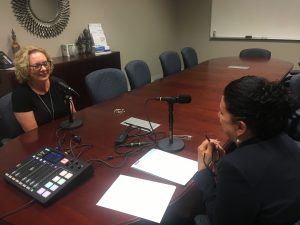
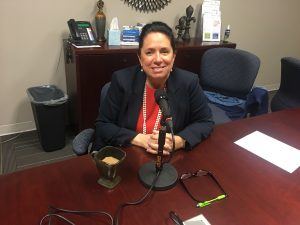
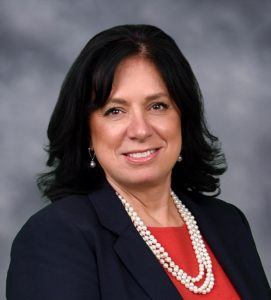
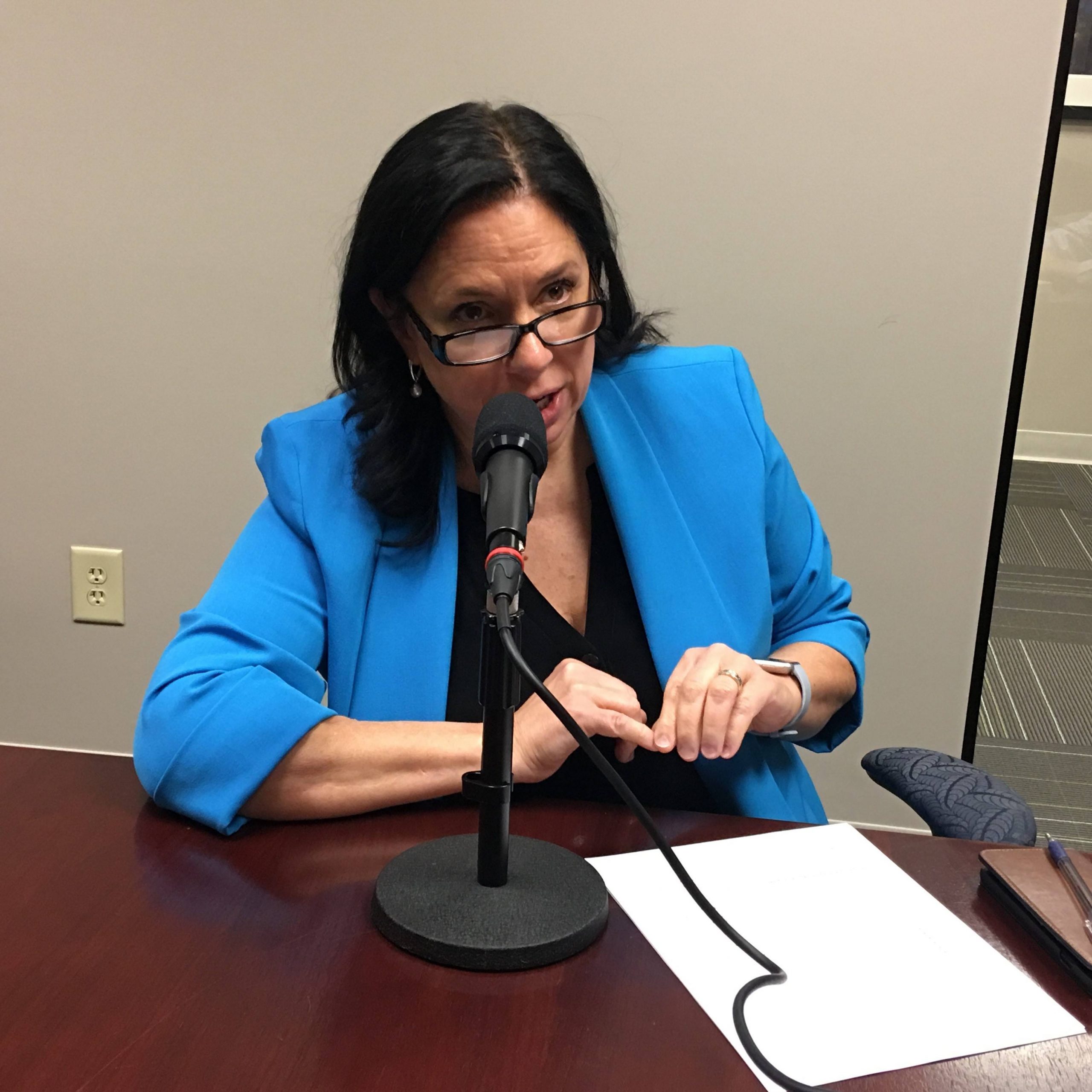
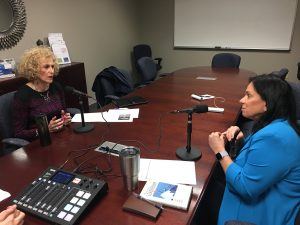
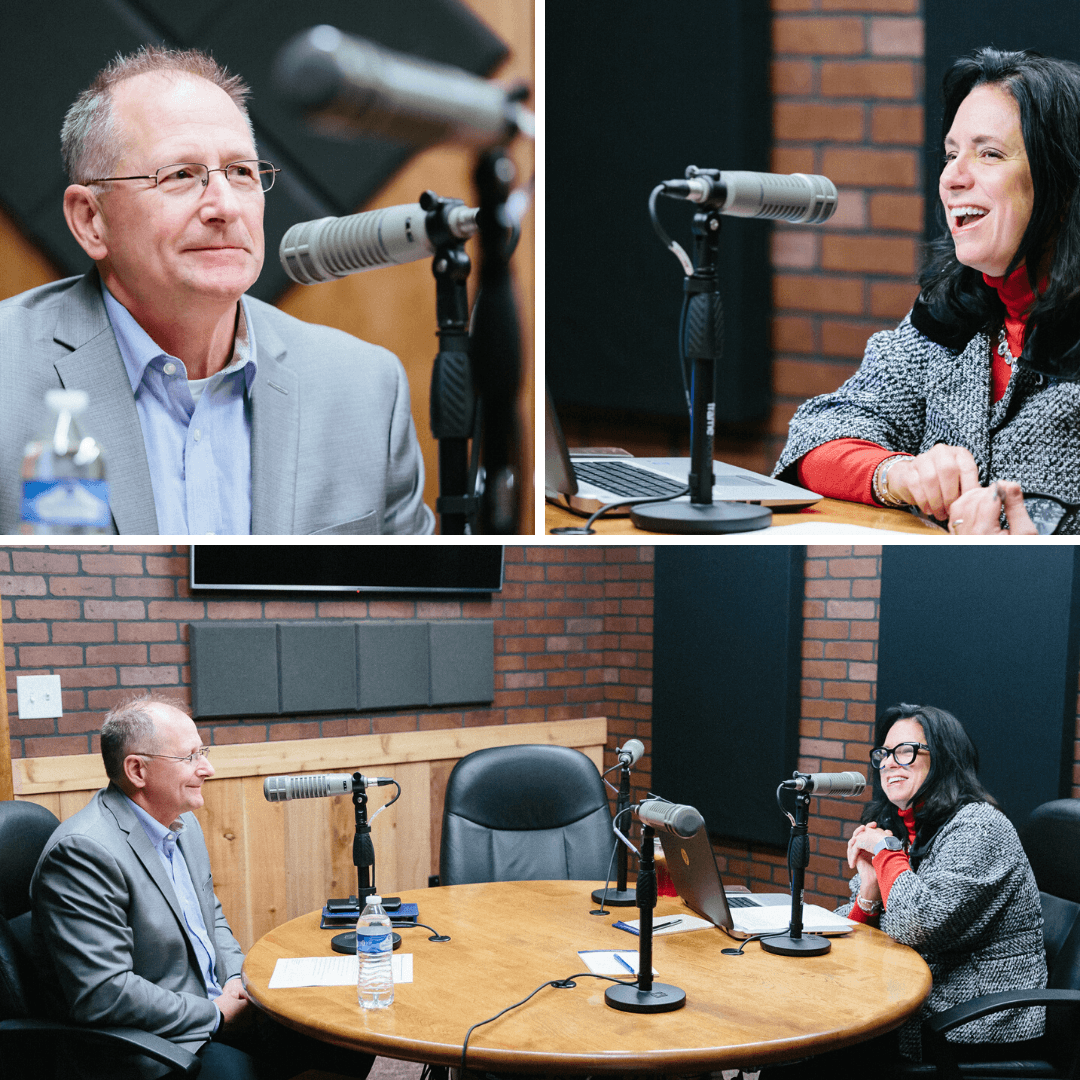
“Inspiring Women” Host Betty Collins, CPA, and Frank Agin

Stop Networking and Start Connecting

In this edition of “Inspiring Women,” host Betty Collins encourages connecting (knowing people more) over networking (knowing more people). The show also includes an interview with master networker Frank Agin.

Betty’s Show Notes

Networking is about knowing more people. Something amazing happens when you network and connection happens. That is the moment of success because . . .connecting is about knowing people more.

What is your goal when you network? When you make connections?

Most connected people are often the most successful. Statistics support that statement. When you invest in your relationships — professional and personal — it can pay you back in dividends throughout the course of your career. The key word was “Investment”. That means you are going to give or put forth effort and resources FIRST, then ROI.

Who is the goal for you in networking and connections?

The what determines the who. Most importantly – figure out who matters. Sometimes you have to network with many to find the few solid connections. Think about the relationships you have right now that started with a person you met one year ago, five years ago, 20 years ago. How you network to make true connections is key.

Frank Agin, the President and Owner of AmSpirit, is just simply the best at networking and connecting. I have learned so much from him over the past 19 plus years. The number one thing I learned? Networking is more about connecting and engagement than to “know” everyone or be known. I am so thankful to have him as a guest on this podcast.

Are you networking, or are you connecting. There is a difference—make sure you know.

Frank Agin, AmSpirit Business Connections

Frank Agin
Frank Agin

Frank Agin is the founder and president of AmSpirit Business Connections, where he works to empower entrepreneurs, sales representatives and professionals around the country to become more successful through networking. In addition, he is a sought after speaker and consultant to companies and organizations on topics related to professional networking and business relationship development.

Frank has written numerous articles on professional networking and is the author of several books, some of which include Foundational Networking: Building Know, Like and Trust to Create a Lifetime of Extraordinary Success, The Champion: Finding the Most Valuable Person In Your Network, and Chase Greatness: Life Lessons Revealed Through Sports. He is also the host of the weekly Networking Rx podcast, which provides insights and advice for becoming more successful through networking as well as the host of the daily micro podcast Networking Rx Minute, which provides short messages of inspiration and recommended action.

Frank has a law degree and MBA from the Ohio State University, a B.A. in Economics and Management from Beloit College, and continues his professional development through a variety of programs and sources.

For further information on Frank or to be in touch, go to his website.

Betty Collins, CPA, Brady Ware & Company and Host of the “Inspiring Women” Podcast

Betty Collins, CPA

Betty Collins is the Office Lead for Brady Ware’s Columbus office and a Shareholder in the firm. Betty joined Brady Ware & Company in 2012 through a merger with Nipps, Brown, Collins & Associates. She started her career in public accounting in 1988. Betty is co-leader of the Long Term Care service team, which helps providers of services to Individuals with Intellectual and Developmental Disabilities and nursing centers establish effective operational models that also maximize available funding. She consults with other small businesses, helping them prosper with advice on general operations management, cash flow optimization, and tax minimization strategies.

In addition, Betty serves on the Board of Directors for Brady Ware and Company. She leads Brady Ware’s Women’s Initiative, a program designed to empower female employees, allowing them to tap into unique resources and unleash their full potential.  Betty helps her colleagues create a work/life balance while inspiring them to set and reach personal and professional goals. The Women’s Initiative promotes women-to-women business relationships for clients and holds an annual conference that supports women business owners, women leaders, and other women who want to succeed. Betty actively participates in women-oriented conferences through speaking engagements and board activity.

Betty is a member of the National Association of Women Business Owners (NAWBO) and she is the President-elect for the Columbus Chapter. Brady Ware also partners with the Women’s Small Business Accelerator (WSBA), an organization designed to help female business owners develop and implement a strong business strategy through education and mentorship, and Betty participates in their mentor match program. She is passionate about WSBA because she believes in their acceleration program and matching women with the right advisors to help them achieve their business ownership goals. Betty supports the WSBA and NAWBO because these organizations deliver resources that help other women-owned and managed businesses thrive.

Betty is a graduate of Mount Vernon Nazarene College, a member of the American Institute of Certified Public Accountants, and a member of the Ohio Society of Certified Public Accountants. Betty is also the Board Chairwoman for the Gahanna Area Chamber of Commerce, and she serves on the Board of the Community Improvement Corporation of Gahanna as Treasurer.

“Inspiring Women” Podcast Series

“Inspiring Women” is THE podcast that advances women toward economic, social and political achievement. The show is hosted by Betty Collins, CPA, and presented by Brady Ware and Company. Brady Ware is committed to empowering women to go their distance in the workplace and at home. Other episodes of “Inspiring Women” can be found here.

Frank Agin

Show Transcript

Betty Collins: [00:00:00] Today, we’re going to talk about a topic called networking, right? Well, I’m going to say stop networking and make connections. What does that mean? Well, networking is really about knowing more people, and connecting is knowing people more. I’m going to just say that again – networking is about knowing more people and connecting is about knowing people more. You need to think about that as we talk today.

Betty Collins: [00:00:29] Networking, some people think bigger is better. How many friends, how many likes, how many business cards, what’s your contacts like? For some businesses, that’s not the worst. You want volume; you want a ton of followers, especially when you’re really transactional. Networking is not always easy for people. It can be pretty awkward and, sometimes, just draining. You’re in entertainment mode way too much. Networking is- it’s often associated with just selling; so, if you don’t think you can sell, you don’t think you can network.

Betty Collins: [00:01:03] There truly is power in having a strong network, especially when you’re in business, and you’re in the marketplace. Something really amazing happens, when you network and connection happens. This is the moment of success because true connections- when you really connect with someone, you’re going to make up a community.

Betty Collins: [00:01:25] When you think of your community that you live in, or maybe the camaraderie of your office place, or maybe the associations we’re in, the ones that are the best are kind of like Mayberry; everybody gets along; everyone is in it together; they want success; there’s relationships; there’s mutual trust; there’s respect, which all has to be earned, but that’s the kind of network, and it becomes an actual connection. When I say stop networking and making connections, that’s kind of what I’m trying to get you to think about.

Betty Collins: [00:02:01] You have to really look at what is the goal for you in networking connections. Is it name recognition? Are you trying to just generate revenue? You get into hanging with the big dogs because you’re a little pup, right? How about you want introductions to certain people, or maybe you want to be at the table? There’s nothing wrong with any of those things, but you have to go, “What is the goal?” Because you could be consumed, out in the marketplace, networking all day long.

Betty Collins: [00:02:32] It’s shown that most people that are connected are generally more successful … Not bigger networks. People who are connected are often more successful. When you invest in your relationships, whether they’re professional or personal, it usually can pay a pretty big dividend back throughout the course of your career, but you have to realize what I just said – investment. That means you have to put the effort; you have to probably give first; and then, you’re going to get some return on that giving.

Betty Collins: [00:03:04] One of the missed goals, when you’re thinking about what is the goal of connecting and networking, is you can develop and improve your skill sets, when you do that, and you’re out in the marketplace, and you’re seeing how other people do things, or challenged by something you just didn’t think about.

Betty Collins: [00:03:23] Another goal, when you’re out networking, and connecting, and making those connections, is you’ve got to probably stay on the top of those latest trends, whether it’s in the market, or in your industry. I was recently at an event where they talked about the different aspects of Columbus and what was going on in the Columbus market. Of course, within probably a couple days, we were announced that we were the number-one place in the country …

Betty Collins: [00:03:48] I was able to just take a few of those tidbits, when I was out talking with people or trying to have conversations with clients. They looked at me like, “How did you know this?” Maybe it was something they didn’t know. Just like when I was at the marketing event, and I didn’t know that.

Betty Collins: [00:04:05] I think another missed goal, when you’re thinking about this whole thing of networking connection, is it keeps a pulse on the job market because you never know when you’re going to need that. I always go back to- I love this one guy who was in … He was a payroll rep for ADP, years, and years ago. He was like a lifer, because he had been there three or four years. I completely relied just on him. One day, he leaves. Now, I had nobody to really … I had no other relationships. I didn’t have any- I was not on the pulse of those connections. So, keeping the pulse on the job market, I look at that as, too, the [contact] market, when you’re trying to connect with people, but most certainly, you meet prospectives, and mentors, and partners.

Betty Collins: [00:04:48] The other thing we miss in goals, sometimes, with networking, and connecting, is your clients can gain access to your network, and then that gives them some necessary resources that will definitely foster a long relationship with them. Again, you have to go, what is the goal? Do you have one? If you don’t, you probably need to really rethink that. What am I doing? As we end the decade, and you go into 2020, what is the goal going to be for me in networking, so that I can make connections?

Betty Collins: [00:05:22] Then, after you determine that – it’s not like it’s a hard exercise, right? – who is the goal for you in networking? Who is the goal that you want to actually have connections with? Of course, the what determines the who, right? So, most importantly, but you have to figure out who matters in your network. I have a fairly large network. It’s always funny when I get happy birthday on LinkedIn. I’m like, “Now, who is this, and why did I accept this relationship? I don’t even know who they are.” You have to figure out, though, who matters in your relationship.

Betty Collins: [00:05:54] I always use this example – if you are servicing small clients, then why are you meeting with bankers who service large clients? Who is important? Who is going to meet your goals with you? Chances are, that probably isn’t, except that you could say, “I met with this big banker,” or “I know this big banker that everyone knows and wants to know.”

Betty Collins: [00:06:16] Now, there are times that you have to network before you find some really solid connections. You might have to meet a lot of people before you do. Think about, now, the relationships you have right now that started with a person, and now you don’t even know that person that connected you. I have plenty of those in my life, where it’s like, man, if I wouldn’t have met so-and-so, I wouldn’t know so-and-so, who introduced me to so-and-so.”

Betty Collins: [00:06:39] So, I don’t want to minimize the fact of liking everybody and connecting with a ton of people because you never know where that’s going to lead you, but it still has to go back … Who is the goal that you are trying to make a real connection with and have community? Also, when you’re thinking about your goal of who that is, it’s not just an external relationship, who your audience should be. I would tell you, very clearly, you need to internally make sure, in your organization …

Betty Collins: [00:07:07] I work for a organization that has 150 people, and I have four offices. I can’t just know the person sitting next to me. I’ve got to know more people in my company, especially as I’m navigating through … Because one day, I just might need people to be helping me with something, or I might want to be growing, and all the sudden, I only know this person.

Betty Collins: [00:07:28] It’s simple things about taking advantage of lunches with those internal people. Welcoming the new people. You might welcome a new person much more than someone else. It’s easier to kind of be with who you know, but you never know who that person is going to be and how they’re going to fit into the mix; into your outside and inside place.

Betty Collins: [00:07:47] I would accept and be part of office invites. It’s interesting when you’re linked to your peers. That’s one way I do with Brady Ware. I’m a link to a lot of the different offices, and then I kind of see what they’re involved with, in Atlanta, or Richmond, Indiana. When you’re thinking about networking and setting connections, you really need to think about the internal ones, not just the external. Maybe you work for five people. It’s a little bit easier. When you work for 150, it’s kind of different.

Betty Collins: [00:08:17] So, how … We talked about what is the goal, and who is the goal, and you’re defining those things. Now, it’s how do you network? How do you make those true connections? I could go to lunch three times a day, year round. Well, I don’t need lunch three times a day … You have to make it well worth your time, because, in my industry, client service is really important in my industry, making sure that the bigger I become with that, I have to really watch how much time I’m out having lunches, versus really making connections. It really comes down to I could eat lunch anywhere, but the connection part is what’s important.

Betty Collins: [00:08:54] I would suggest to you to really look at your calendar. I do it three weeks out, to go, “Why am I meeting with this person? Why is this calendar invite here? Should I even be taking the time to do that? Maybe it’s a better relationship for someone else around me than me,” and you try to do some of that.

Betty Collins: [00:09:12] The other thing is when you’re at an event, you need to look around and determine is this who I want to be around? If you’re at an event where you really don’t fit in; you’re not comfortable; you’re kind of out of the loop; or this isn’t my client; this isn’t my sweet spot; this is not connected to my industry, then you just went to another event that was really cool.

Betty Collins: [00:09:34] So, I just went to an event recently that was very interesting. It was on a Friday, and they made it very clear in the invitation, “Please be casual. This is really going to be just a time of getting to know some people in our network.” What they made sure happened was … First, there was a whole slew of professionals that they use. But the other part they did was the location was awesome. It was at the Italian Club – I think is what it was called – downtown. Cool place. Very cool. The food was easy, but phenomenal. You were carbed out on a Friday afternoon. There was no ‘fold the napkin, use the right fork’ situation. There were no suits on in the room.

Betty Collins: [00:10:14] The greatest thing they did was they brought clients that would really benefit the professionals. Then, they brought professionals that would really benefit the clients. It was really a lunch that was worth going to because there was such connection and there was such synergy. The room was filled with who you wanted to be with. That’s a really important thing, when you’re looking at events, and as you’re signing up to go.

Betty Collins: [00:10:43] I’ve been in public accounting since 1988, so I’ve been in the marketplace a long time, but I didn’t start networking till 2000; 12 years later. I was really good inside. I was really good with running … My firm, at that time, was small. I was good with just being behind my computer, talking with people that I already knew. Then, I became a shareholder. “Oh, you need to go get business.” Oh? I have no clue … Most of you who know me would think, “Oh, well, that would be simple for you. That would be easy for you.” No. There’s very few people, I think, in the marketplace that just love the idea of, “I’m going to go out and get new clients today and make relationships. I’m going to close the deal,” and the art of the deal, and all those things. That’s not usually the comfort level of people.

Betty Collins: [00:11:28] So I did join a group called AmSpirit Business Connections. It was the first time I had to tell people who I was, and what I did, and what I liked, and it was very nerve-wracking. I just was like, “Oh, my goodness!” I had to really think through that, “30-second commercial,” let alone just demonstrate to a group of people that I could take care of their clients. Never had to do that before. Never was out there. Don’t wait 12 years into your career to do that.

Betty Collins: [00:11:56] It took me a few years, too, to be comfortable. It wasn’t all success from day one. I still connect with people from that group. I’m not currently in AmSpirit Business Connections, but Frank Agin, the president and owner of AmSpirit, is just simply the best at networking that I’ve known. I’ve learned a lot from him over the last 19-20 years. The number-one thing I learned is more about connecting engagement than “knowing” everyone or to be known. It was really about be engaging and work on your relationship, not get to know everyone as much as you can.

Betty Collins: [00:12:35] I kind of went to the next level, when I joined a local chamber in Gahanna; became very involved. Then, I also got involved with NAWBO. Those two places were places where it became definitely connections. I was connected to it. This became relationships. Gahanna is my community, where I live, so there was a little bit more ownership there. It just really got me out.

Betty Collins: [00:13:00] In that organization, people started asking me to speak or be on panels, which was something I was just terrified of. But that really helped me become connected, and networking, and connected with people. So, it was really kind of a gift, even though, at the time, it was like, “Oh, my goodness!” The more I networked that led to actual connection, I began having, finally, success in the marketplace; in building my business, and connecting my clients to the right people. And just, then, at the end of the day, having a different kind of impact.

Betty Collins: [00:13:32] What were the lessons I learned over that timeframe? Again, I go back to if you serve small clients, why are you networking with bankers who serve large ones? You follow up. You thank the person you met that you really want to have a connection with. If you don’t have more than one meeting, you’re probably not going to make …  It’s not probably going to be a connection, as much as it’s just going to be, “I networked today.” If you got somebody’s business card, and met him once, would you …?  If you got my business card and met me once, would you say, “I’m going to be … I’m going to do accounting with her”? Probably not.

Betty Collins: [00:14:08] Then, I really learned to quit focusing on the sale aspect. You always know when you’re selling too much because people immediately retreat. If you’re perceptive at all, you kind of see it. Then, some connections, you know what? They’re just not meant to be. It’s okay. I’ve gone to some things, where I’m like, “Oh, my gosh, that was awful.” Even when they emailed me back and said, “Can I have an appointment?” sometimes you ignore them, and you delete them. I just know enough, now, who I am going to spend time with and who I’m going to really make a connection with.

Betty Collins: [00:14:41] Tips, to me, that take networking to connection levels, where you’re really making some connections? You’ve got to be yourself. You’ve got to be fairly open. Let me rephrase that – you’ve got to connect … You’ve got to be yourself, and open, but do not be telling your life story the first time you meet somebody. Be infectious, when you’re personable, which is really spreading your influence in a pretty rapid manner, and people are drawn to you. That kind of takes time to develop. If you’re too infectious- again, if you’re too personal, if you’re too much in selling, all those things backfire on you.

Betty Collins: [00:15:19] Be inquisitive. It’s not all about you. Here’s the typical question – “So, who do you work for?” or, “Hey, what do you do?” You could say, “How do you like working for your company?” and, “Well, tell me a little bit more about your company.” Of course, if they say, “I don’t like working there,” then you probably need to move on. “How did you get in this position? What drew you to this field?” Think about a different way to ask some questions, where it’s a little more inquisitive, and it really reflects on them. You could even take it a step further and ask them some advice in their industry; see what they’re made of on their feet like that.

Betty Collins: [00:15:54] Be generous when you’re out there. When I meet someone that I pretty, pretty connect with really well, and I could see a future in that relationship, I try to be generous, and like give them tickets to events. How many events do you have in your life, where you’re trying to get rid of a ticket? I did this with NAWBO lunch. I mean, guests are $20. When there’s a really good event, I try to take a couple people for 20 bucks, and they get to be in a roomful of 100 women. They may not even know who NAWBO is, let alone think they can afford that, or maybe they can’t afford it. You take them. You be generous in that, and they’ll be grateful. They’ll give something back to you, probably; or it’s just another way to make connection with them.

Betty Collins: [00:16:37] I would tell you that speaking, being on panels, or getting people in speaking gigs, or getting them on panels only when they have something really good to say, and they can say it well. Do not recommend somebody that cannot get out there and do it. Trust me, it’s never, never good because the reflection is on you when they really get on front of the stage, and they’re horrible; or they’re on a panel, and they don’t stick to a two-minute response time. But it is a good way to network. That is a way to make connection, where you’re placing people in the right place.

Betty Collins: [00:17:11] Then, think people. Get over positions. Sometimes, it’s, “I want to know the CEO of that company.” Maybe you need to know the children of the CEO in the company, because if you’re the same age as that person, guess what? They could be retiring a lot sooner than you maybe, or not be there as long. Sometimes, getting some younger people in your network, where you’re helping them, and they love your knowledge, and they love what they’re getting from you. They kind of think you’re a big dog, right? If you help them with certain steps in their career, or in their business that has lasting impact, you’re going to have some different generations behind you, as well. It’s a great way to go, plus, it gives you a little energy; gives you a little step, versus hanging out with the old people like us, right?

Betty Collins: [00:17:59] You help them because you know what to do. They have to want the help, but it could end up being a lifetime relationship for you, for sure. As I get older, my clients are selling, so if I don’t have some younger client behind me, to some degree, or younger people surrounding me, or younger connections who are starting to retire, your network could easily shrink pretty quickly. So, think position, yeah, but, really, I would think the person. Think the people.

Betty Collins: [00:18:26] This is one … You all know somebody like this. Stop treating the schmoozing like your busines-card contest collection. Start over with some new goals and think about quality over quantity. I look at that person and think they really are into, “I’ve got this collection of business cards, and I know everyone in town.” And then, you talk to that person in town, and they’re like, “Who are you talking about?” Name droppers; people who are totally about the collection – those are people you probably don’t want to connect with. If you are that person, you need to probably really go back to the who, the what, and say, “Let’s set some new goals with quality over quantity.”

Betty Collins: [00:19:11] Networking or connecting? Networking that leads to good connection … There is a difference, and you need to make sure you know that. You’re either green and growing, or you are ripe and you’re rotting. There is a difference. When you’re out there in the marketplace trying to make connections, and trying to grow, and trying to be different, you have to think differently. Knowing what to do and doing it are not the same thing. So, I would challenge you, today, to change your mindset on networking or connecting.

Betty Collins: [00:00:00] I hope you enjoyed the podcast today on “Stop Networking, Start Connecting.” I did this podcast because I could network and be out and about all day long but have no fruits from it; no results that I like. When I talk about the connection piece, I’m really talking about it’s got to … Networking is not a bad thing. It’s not like you stop that, obviously, but it’s got to make a connection that goes into a relationship.

Betty Collins: [00:00:30] There’s no one who can talk about this better than Frank Agin, who is the president and founder of AmSpirit Business Connections. Over my career, for sure, and through my business journey, Frank has been very influential in my networking and connection abilities. He’s simply the best at it. His organization and all the connections that have led to relationships have been there. So, I welcome you today, Frank, and thank you for taking the time to spend with me today. First, why don’t you just tell about you, the organization – that 30-second commercial thing that we talk about.

Frank Agin: [00:01:03] Sure.

Betty Collins: [00:01:04] It can go longer. It can go longer.

Frank Agin: [00:01:05] Yeah, I used to be an attorney, and I got into a networking organization … I’ll make the long story really short. I got into a networking organization; liked it so much, I bought it. I haven’t practiced law since 2004; it’s been a long time. What we do at AmSpirit Business Connections is we help entrepreneurs, sales reps, and professionals get more referrals through networking. It’s a for-profit membership-based type organization, where they come together with other like-minded individuals on a consistent basis to go through a consistent meeting program to learn about each other, and establish relationships, and exchange referrals.

Betty Collins: [00:01:47] I know I’ve benefited greatly from it. I can remember my first meeting, going back to those days, and I just thought, “I’ve never had to tell anyone a thing about myself, let alone ask anything.” Most people would think that Betty Collins could do this in her sleep; she’s personable, and on and on. It was a huge challenge for me. But, all the sudden, business development became this top, top thing that I had to do. So, it really, truly helped me through those times. I have some of my younger generation now in AmSpirit from Brady Ware, and they’re really enjoying it, for sure. I talk about stop networking and start connecting, but I want you to tell me what you think all that means. Tell me the difference between networking, connection, and leading to relationships.

Frank Agin: [00:02:34] Networking gets a bad rap. It does. People kind of think of networking as the aluminum-siding sales guy, used-car salesmen, or … We’re picking on men here. Perfect show for it, right? It gets a bad rap because people think of it so much as sales. They really kind of align those two. I look at networking this way – networking is a verb. It’s an action. Networking is really about getting out there and being amongst other people. From that, you make connections. People that you learn their names, they learn you, but really, the end game to it all is establishing relationships.

Frank Agin: [00:03:14] We do business with those that we know, we like, and we trust. All things being equal, we do business with those sorts of people. All things being unequal, and the example I always use is insurance … I pay too much … Well, I could pay less for my car insurance. I know I could. I just know I could, but I really like my auto-insurance guy. He’ll go to bat for me. He will do things. I can speak to lots of professionals in my life that I have this relationship with them. I can get it cheaper, but I wouldn’t have the relationship. There’s something about that relationship that just kind of pulls us together. So, it’s really about the relationships.

Betty Collins: [00:03:55] Sure, sure. I have had this same scenario. From the very first AmSpirit group I was in, my car-insurance guy has been there, and my house … I’ve never had a reason to change, and it was just because there was a relationship that was forged. I don’t have a reason to go look for 10 bucks a month or call an 800 number. Generally, who is the successful networker/connector? Who is that? What do they look like?

Frank Agin: [00:04:27] I don’t know about actual look. It’s more actions, and it’s really people who are focused on trying to help others, providing value to the world, providing value to others. In their mind, they ask … We all ask this question- the question we ask when we meet somebody new is, “What’s in it for me?” That’s very primitive. That’s a very primitive question to ask: “Okay, I’ve met this person. What’s in it for me?” Because we’re in a survival mode.

Frank Agin: [00:04:55] But the person who’s successful in networking is able to push beyond that question and ask the second question. The second question is, “What can I do for this person? What can I do for the person I’m meeting?” If you stop and think about it, everybody I encounter, probably about two percent will benefit me. Two percent can be a member of my organization, or a franchisee, or client, however you want to look at it. But 100 percent, I can help somehow, some way. The successful networkers, they’re kind of driven by that. I can tell, when I talk to somebody, it doesn’t take long to find out, by the questions they ask, where their mind is. If it’s constantly, “Hey, what’s in it for me? What’s in it for me?” I know they’re not a good networker. Doesn’t mean they’re a bad person, just that they’re not operating at that networking level.

Betty Collins: [00:05:42] Right. Well, I know that was probably the thing I learned the most is you … Especially when you’re saying, “What am I going to do for this person?” That’s the mindset you have to be in. It can be simple things, such as inviting them to events, or getting them on a panel, or getting them a speaking gig, or any of those type of things. It’s not necessarily leading to business, but you’re helping them get there. It’s not getting me any business because I got someone on a panel. But you just never know where that will lead to, because it’s truly helping them to connect where they need to be, or a place that they could really help your client, and that’s valuable to the client.

Frank Agin: [00:06:23] Right.

Betty Collins: [00:06:23] I just recently had somebody who … I said, “Who’s your …” They’re frustrated all the time with the bank, and I said, “Well, who’s your banker?” They go, “We love the teller.”.

Frank Agin: [00:06:35] Yeah, that’s the problem.

Betty Collins: [00:06:37] I said, “Who’s your banker? You want loans, and you want lines of credit, and you want these things, and you don’t have a banker.” So, I got them connected to a banker, and they have just been so grateful. I didn’t get anything out of that … You’re right in the terms of ‘but it helped my client.’ It definitely helped them. So, what are those common mistakes in networking …? I have those moments where I dread going to networking things because I know who’s going to be there, and I don’t want to deal with that.

Frank Agin: [00:07:07] Right.

Betty Collins: [00:07:07] Help the audience understand – this is probably what you shouldn’t do when you’re trying to network, and connect, and making that relationship really work.

Frank Agin: [00:07:17] Well, I think some of the common mistakes that people run into and probably the reason that keeps people away from networking events is they go in with the mindset of, “Okay, what am I going to try and get out of this?”  What I always say … I call it my cloak of invincibility; when I walk into a networking event, I am there to help people. I’m a superhero. I’m here to help. If you don’t want my help, that’s okay, but very few people are going to reject somebody who’s trying to help them.

Frank Agin: [00:07:45] People get stuck with small talk; don’t know how to make small talk because they’re always so worried about what they have to say. What I tell people is, “Don’t worry about what you have to say. Get them talking. Allow them to talk; explore where they’re coming from.” Then you can just relax and let it come to you. I think people have, with respect to networking, they just- they think it’s got to work according to some preordained schedule, and you just don’t know. You know, in your life, there are things that have come out of the woodwork that you set in motion years ago. I hear that’s a common theme. “I ran into this person at a wedding 10 years ago. Now, they’re finally a client.” That happens.

Betty Collins: [00:08:30] Well, I know I was appreciative for some of those things that I learned early on, when I realy had to get into the business-development world. Now, I’m kind of in a world where I want to have impact more. I say the word ‘legacy’ probably too much because I’m 56 but having connections and relationships where you can really have some impact is huge. It’s not even just about building my business at this point. That’s why it’s so important to just stop the networking thing. Utilize that as a venue to make real connections that end up in lasting relationships. So, wrap it up for me. What is the takeaway, today, to the audience, that you would love to communicate to them?

Frank Agin: [00:09:13] You need to find ways to help other people. One of my many sayings … My kids will roll their eyes if they hear this. One of my many sayings is that everything you get out of life is tied to what you do in life. You just can’t see the string. It’s so true because things will happen, and you don’t know how they were set in motion.

Frank Agin: [00:09:33] You just need to focus on trying to find ways to help other people. I’m not talking about pulling your wallet out of your pocket and giving to charity. I’m talking about being encouraging to others. Introducing to people that don’t know each other is huge. Me being on this show is huge. There’s lots of ways that we can help one another. Just focus on helping one another, and don’t worry how it all pieces together. You just have to kind of trust the process. It does work.

Betty Collins: [00:09:59] Well, I appreciate you being here today, taking the time to be part of my podcast. I will tell you, if you’re an entrepreneur, or a sales rep, a professional, and you would like to generate a greater percentage of your business from referrals, you should consider AmSpirit Business Connection as an option for doing that. If you’d like to become better at building your network and making those connections that end up building relationships, you need to reach out to Frank, via his LinkedIn, or through his website, FrankAgin.com. Agin is A-G-I-N, And it’s all one word. So, FrankAgin.com. I can’t encourage you enough to stop networking. Make connections that build relationships.
Tagged With: connections, effective networking, Frank Agin, Inspiring Women, Inspiring Women podcast, Inspiring Women with Betty Collins, networking

Inspiring Women, Episode 16: Becoming a Woman of Influence

December 11, 2019 by John Ray

Betty Collins, Brady Ware
Inspiring Women PodCast with Betty Collins
Inspiring Women, Episode 16: Becoming a Woman of Influence
Loading
00:00 /
RSS Feed
Share
Link
Embed

Download file


Betty Collins, Brady Ware
Betty Collins, Brady Ware & Company

Inspiring Women, Episode 16:  Becoming a Woman of Influence

Influence is merely the capability to have an effect on the character, development or behavior of something. Do you want to be that woman of influence? Host Betty Collins discusses what it takes to expand your influence on this edition of “Inspiring Women,” presented by Brady Ware & Company.

Betty Collins, CPA, Brady Ware & Company and Host of the “Inspiring Women” Podcast

Betty Collins, Brady WareBetty Collins is the Office Lead for Brady Ware’s Columbus office and a Shareholder in the firm. Betty joined Brady Ware & Company in 2012 through a merger with Nipps, Brown, Collins & Associates. She started her career in public accounting in 1988. Betty is co-leader of the Long Term Care service team, which helps providers of services to Individuals with Intellectual and Developmental Disabilities and nursing centers establish effective operational models that also maximize available funding. She consults with other small businesses, helping them prosper with advice on general operations management, cash flow optimization, and tax minimization strategies.

In addition, Betty serves on the Board of Directors for Brady Ware and Company. She leads Brady Ware’s Women’s Initiative, a program designed to empower female employees, allowing them to tap into unique resources and unleash their full potential.  Betty helps her colleagues create a work/life balance while inspiring them to set and reach personal and professional goals. The Women’s Initiative promotes women-to-women business relationships for clients and holds an annual conference that supports women business owners, women leaders, and other women who want to succeed. Betty actively participates in women-oriented conferences through speaking engagements and board activity.

Betty is a member of the National Association of Women Business Owners (NAWBO) and she is the President-elect for the Columbus Chapter. Brady Ware also partners with the Women’s Small Business Accelerator (WSBA), an organization designed to help female business owners develop and implement a strong business strategy through education and mentorship, and Betty participates in their mentor match program. She is passionate about WSBA because she believes in their acceleration program and matching women with the right advisors to help them achieve their business ownership goals. Betty supports the WSBA and NAWBO because these organizations deliver resources that help other women-owned and managed businesses thrive.

Betty is a graduate of Mount Vernon Nazarene College, a member of the American Institute of Certified Public Accountants, and a member of the Ohio Society of Certified Public Accountants. Betty is also the Board Chairwoman for the Gahanna Area Chamber of Commerce, and she serves on the Board of the Community Improvement Corporation of Gahanna as Treasurer.

“Inspiring Women” Podcast Series

“Inspiring Women” is THE podcast that advances women toward economic, social and political achievement. The show is hosted by Betty Collins, CPA, and presented by Brady Ware and Company. Brady Ware is committed to empowering women to go their distance in the workplace and at home. Other episodes of “Inspiring Women” can be found here.

Show Transcript

Betty Collins: [00:00:00] Today, becoming a person of influence … In fact, today, because this is Inspired Women, I’m going to say becoming a woman of influence, right? I’m going to start with this. I love a certain movie, and I bet I’ve watched this a hundred times; I’m not kidding. My husband will come home and can’t believe I still have this on, but it’s “Two Week Notice,” with Sandra Bullock, who plays Lucy Kelson, and Hugh Grant, who plays George Wade. Sandra Bullock is an activist and she is a “cause” – I’m putting that in quotes – per Hugh Grant in the movie.

Betty Collins: [00:00:32] He says that, at some point. She is very passionate about architecture and preserving historical buildings that have meaning. They’ve been in the community forever. How dare you take this down? Right? On the other hand, he’s a developer, and he tears down buildings, and he puts up new ones that are nothing like the historical buildings, of course, that she loves. He’s that big corporate America; she works for all these legal aid things and does all the good work. They are night and day. He grew up wealthy. She grew up poor. I mean, they have nothing in common, really.

Betty Collins: [00:01:08] Needless to say, her method is that she would protest, and take her protesters, and they would stand in front of buildings when they were trying to tear them down. For a while, it would work, and all three people that she had protesting with her … Then they would take them, and she would go into jail, and her parents would bail her out. One of those times, the parents were- they were coming, of course, out of the building- or out of jail, actually. The parents had paid her bail, and she looked at her parents and said, “Did they tear the building down?” They didn’t say yes. They didn’t have to. She just looked at her parents and said, “I’m just not getting through.” They said, “Let’s just go to dinner …” She goes, “No. I gotta go home and think about this one.” That line stayed with me – “I’m just not getting through.” In other words, she wasn’t influencing anything.

Betty Collins: [00:02:03] How many times have you had that passion, something in your heart and soul, right? And you have no results? You have that “I’m not getting through.” In reality, no influence. Influence can be applied to many things. Maybe you to influence and have a following. Maybe you want to push an agenda, be impactful. You have a passion. You have a cause, like Lucy Kelson. Today, we’re going to talk about becoming that person of influence.

Betty Collins: [00:02:31] Influence is merely … It’s the capability to have an effect on the character, development, or behavior of something. Do you want to be that woman of influence? I hope so. We’re counting on you, actually. The movie is not real life, of course it’s not. It’s not. It’s fictional. But Sandra Bullock acted out and was determined to have influence about historical buildings. She really wanted the community center where she grew up to stay intact. But she had enough insight in that moment, when she saw her parents look that they had torn down another building, that it was not working, so she changed the way or the approach to influence her agenda of historic preservation.

Betty Collins: [00:03:18] I don’t know what your historic preservation issue is, but I’m sure there’s something out there that you would like to have more influence on. Well, the approach was very uncomfortable, and she had a mindset change to her method to her madness. Instead of having her and three people go protest, she ends up approaching Hugh Grant, as George Wade; the rich kid, the playboy, the guy who’s kind of everything she can’t stand. She ends up working for the guy who’s tearing down the buildings. Now, it’s a movie, and I get that, and I would call … But if that was real life, and you decided, “I’m going to now get in and get with that person,” like I talked in my last podcast – the decision maker, the person who makes things happen – that’s exactly what she did. It was bold. It was tenacious. She wasn’t comfortable. Confidence- she was confident in her passion, but it took a lot of … She’d be courageous now.

Betty Collins: [00:04:18] Okay, it’s a movie, but it could be real if you applied it to your situation. How are you going to change your mindset? How are you going to change your method? Are you going to do something a little more bold and tenacious to make it happen? Of course, Lucy Kelson did that. More on Lucy Kelson later. But before we continue, I want to think about the influence you have now or that you would like to have. Are you just not getting through to some aspect of your life or a situation, maybe in your family, with your kids? You know how that is. Bosses, customers, the career path. Think on it. Don’t just listen to my podcast, but really think on it. Define it, put it on the table, write it down, and then say it out loud. “I want to influence …” and make some change to becoming that influencer, so you get through where you need to.

Betty Collins: [00:05:12] To influence others, in other words, it’s not really optional to do these things, and it’s a lot. So, listen closely and get the transcript on these next few things, because this is not for the weak; it is not for the weary. You must go beyond general expectations, and you must reach for limits above the norm. You must have total confidence in yourself and what you are attempting to achieve, but you also have to be courageous. It’s one thing to be confident, but to stand up in the room and say what you need to say, that takes courage. You’ve got to provide words and wisdom to others who are seeking to obtain it. Then, you have to understand the impact, yourself, of maybe that historical preservation/community center staying. I don’t know. Show others that these things can be realized. Again, this is not for the weak, and it is not for the weary.

Betty Collins: [00:06:07] I’m going to give you some tips on how do I get through? How do I become that woman of influence? Well, first, you’ve got to focus on resonating with the audience. You’ve got to know the person or the group you’re trying to influence. I think, in the movie, that’s what she was doing. “I’ve got to get to know George Wade, and who he is, and get beside him …” Of course she got … It’s a movie, so it’s kind of … Go watch it, and you’ll see what I’m talking about. In her case, she said, That’s what I got to do. It’s no longer enough. I got to get to know this person and figure it out.”

Betty Collins, Brady Ware: [00:06:40] Begin with your audience and create generosity for them. I know that when I speak publicly, if I don’t get to know that audience, I will not connect, I will not resonate, and they will be on their phones. You have to benefit. You have to give them some kind of positive experience. That’s really just called you’ve got to make a resignation. Here’s a great quote, when you’re figuring out that audience or that person of who you’re trying to get to. “If you talk to someone about themselves, they’ll listen for hours.” I’m going to say that again: “If you talk to someone about themselves, they’ll listen for hours.” People will immediately like you, if you show interest in them first. We don’t do that well, often, today.

Betty Collins: [00:07:27] You’ve got to learn about who they are, what they are, what they dislike, what their favorite sports are. Make yourself more likable, and maybe you’ll gain some trust. I have a great example that. I was interviewing a very large client, and I really wanted this client. I went in there not really having any ability to resonate with this person. The more I tried to sell myself, and sell my company, and talk about myself and all those things, the interview was over before it started. Fortunately, I was perceiving that. I had good perception.

Betty Collins: [00:08:12] Then, I realized I just need to wind this down. She’s not interested. I saw two pictures on her desk, and one of them was … It looked like a place I had gone to. So, I said, “Hey, do you travel a lot?” She goes, “We love to travel. We live to travel.” I said, “Oh, is that St. Lucia? She goes, “It is.” Completely different conversation. We talked travel for 10 minutes, and we talked about everywhere we had been. She talked about all over, and it was personal for her, because it was with her husband, and her children, and a lifetime of those things. I was able to now resonate with that audience. I made a connection. Then, at the end, she said, “Get me the contract, and let’s get started.” It was the most bizarre thing I’ve ever …

Betty Collins, Brady Ware: [00:09:01] But I learned from that, that first thing, I went in … I try to do this now. I look around the room. What is the audience? Even if it’s one person, what is in their office? What are they – what resonates with them? If you want to influence, you’ve got to resonate. You got to know your stuff. If you want to be an influential person, you’ve got to know your stuff, and you’ve got to be incredible.

Betty Collins: [00:09:23] Lucy Kelson, played by Sandra Bullock, knew her stuff about historical preservation. She just did. She could go on, and on, and on about it. Now, Hugh Grant didn’t hear her, but she knew her stuff. She gained knowledge. She knew her research. When it really came to the moment where she could actually work for somebody like him and be there, he then began to go, “She knows. She’s credible. She might be a liberal, and I’m a conservative. She might be frugal, and I’m excessive,” but she knew her stuff; she had credibility; that took her a long way, and it kind of- she gained some authority because of that.

Betty Collins: [00:09:58] It’s funny, in the movie, now, he can’t make a decision without her. Everything is what she thinks, right? But knowing and research, you have to do that. You have to know, if you want to be an influencer, and it doesn’t matter what it is. If you want to help someone at your church, and you want them to know the Bible; if you don’t know it, it means nothing that you’re trying to help them. If you are in a situation where you’re trying to help someone sell something, and you’ve never sold anything in your whole life; doesn’t help. You’ve got to know your stuff to be credible.

Betty Collins, Brady Ware: [00:10:27] It’s our nature to listen to those who know more. It also is our nature to not listen to people who know more. Sometimes, the smartest person in the room is “the expert,” and they get attention because you’re stuck with them, because they’re expert. You don’t want to be in that but know your stuff and be credible.

Betty Collins: [00:10:47] Build your strategy and process first. To become influential, you’ve got to be intentional. I’m sure you’ve heard that. But those who plan, influence; those who think first, influence; those who are paralyzed by the plan, don’t influence, by the way, so don’t get too wrapped up in that, because if the plan sits on a shelf and collects dust, it means nothing. In order to have a real plan, you’ve got to think it through, but then you’ve got to go, “Here’s how I’m going to process this,” and then you will influence.

Betty Collins: [00:11:16] I know in Brady Ware, with our women’s initiative, I really did sit back and go, “What is the purpose? What is the mission? How do I want this to go? What is it I really want to achieve at the end of the day?” Then, I began executing things in pieces, and in five years, Brady Ware can’t believe how we’ve grown this to what it is. But it took a lot of that. Now, I’m pretty influential in Brady Ware, when I go in and say, “I think we should do this for women.” A lot of times, it’s just a given, because I’ve done my homework, I know my stuff, and I have a credible reputation. But then, I build a strategy, and I continue to change the strategy.

Betty Collins, Brady Ware: [00:11:53] The other piece is you’ve got to find your unique voice, when you want to influence. You can be the norm. You can be like everybody. You can be a copy, or you can be original. You’ve probably heard that. The key difference between influencers who make it and those who don’t is really not about how hard you work. That’s good stuff. It may not be that you are the big producer … People wear that badge of honor and thump their chest – “I’m the biggest! I’m the best! I’m doing all this!” – but it doesn’t mean that they are always going to be heard. In fact, sometimes people don’t want to hear about how hard you work and how good you are. They will be inspired by you, if you have a unique voice or method in how you communicate or how you do something.

Betty Collins: [00:12:38] There’s a funny part in the movie. It’s the envelope part of the movie. Now, of course, Hugh Grant can’t make one decision without Sandra Bullock. She knows her stuff. She’s credible. She’s on it. She’s gained his trust. On and on … So ,he brings her these two envelopes, and she’s like, “These are the same envelopes. I don’t know what the debate is?” He’s describing it to her, and she’s still going, “I don’t know what the debate is? They’re both not made with recycled paper, so I wouldn’t buy either of them.”

Betty Collins: [00:13:07] Then she goes, and she licks the envelopes, and see how they seal. He goes, “What are you doing?” And she goes, “Well, you’ve got to see if they seal well,” and she’s licking to see how they taste. He was like, “I’ve asked a hundred people this same question, and you’re the only one who came up with this answer.” That stuck with me, because I just think about these things. I don’t know why … She just had a unique way of helping him make decisions or getting him to where he needed to go. Again, it’s a movie, but the principle is there. Never underestimate the uniqueness of how you leverage; your voice will be heard differently, versus just, “I work hard, so I should be heard,” or, “I’m the biggest producer, I should be heard.” Those are things that are out there.

Betty Collins: [00:13:48] You’ve got to be consistent, period. To create trust and connection, you’ve got to be consistent. Deviation is okay, but consistent rules the day. I’m sure you’ve heard this – if you want to be influenced … You want to be the influencer, and not be influenced. Not that that’s bad but being authentic and building trust; you’ve got to be the real deal. People can read through that. It’s critical to stay that way. It’s critical to be transparent. People want to connect with people who are the real deal and are trustworthy. I see that in all levels and positions at Brady Ware. When you have somebody who just- you know that they are going to be authentic, and you can trust them, you’ll deal with them a lot more, you’ll use them a lot more, and you’ll probably support them when they need it a lot more.

Betty Collins, Brady Ware: [00:14:37] Another thing I didn’t … As I was doing my research for this podcast today, focusing on the metrics that matter … It seems like all I hear about right now are metrics and measuring, but influencers having impact need to measure metrics, and they need to measure the right ones. My good friend, Sheri Jones, she has a company, Measurement Resources, that measures outcomes. She has convinced me, over and over, it’s important, and it’s valuable, because I see results with it. But, at times, as an influencer, you think if you are dealing with metrics like ‘I have this many employees, and my company’s bigger, and now I’ve gotten to this revenue; my office is now the corner, and it’s the biggest; or my LinkedIn connections have hit 1,500; or, hey, I make more money …’

Betty Collins: [00:15:27] Those are all good metrics and things to shoot for. But you probably will have better results as an influencer if you focus on two things. Engagement; engagement with employees, engagement with customers, people that totally … You’re engaged and, no matter what, there’s a strength in that. So, engagement is huge. You can do all you want for employees; if they aren’t engaged and own it, and they’re … It’s not nearly as effective. So, measuring engagement is proven to be something that’s huge. It’s not just that I saw five people and have five contacts; It’s did I engage with them? Did I make a connection with them? Going again back to I knew my audience, and I was able to talk about St. Lucia, and it all came to full circle. That’s engagement; not talking about what I do, and how hard I work, and what we can do for you.

Betty Collins: [00:16:20] Then, the return on your investment. There are things that you can do in any organization, where you might put a lot of metrics on volume and sales. If it’s the wrong sale, and you don’t make any money, it doesn’t matter. So, measure what is bringing back to you. I can make this much money on these things, so obviously, it’s adding to my cash, or paying off my debt, or it’s I now have reinvestment money. People who are pretty influential measure those things that matter. The two metrics are engagement, and the other one is return on investment.

Betty Collins: [00:16:59] You’ve got to be vulnerable but smart. Opening up about your struggles and fears; some people do that better than others, but it’s tough. Doing so, though, helps you connect to that audience. It definitely humanizes you, because we all are. I’m not saying that you need to tell your life story every day. Please don’t. The difficulties you share could be really relatable to that person. You never know. It also can be real negative, if you overdo it.

Betty Collins: [00:16:59] In the movie, Hugh Grant, who is more of a playboy, not over-serious, successful, living on his dad’s money, but yet, he’s influential because he’s successful. Of course, the activist of Sandra Bullock’s very harsh about him. Then, in this one moment in the movie, they’re in her favorite place, and they’re talking about expectations, and they’re going on and on. Then Hugh Grant just says, “Or maybe no one having any expectations at all …”

Betty Collins: [00:17:59] She understood, in that moment, because her parents had such high- that his parents probably had such low, so no wonder he didn’t get it. He didn’t get what she was totally driven with, right? I just found that an interesting line, because she heard him, and, at that point in the movie – again, this is not real – but she listened to him differently. She treated him differently, because she saw something in him. For her, for parents, or anyone around you to not have expectations of you was very, very foreign to her, because that was all her parents were about. So, she heard, and it changed her view – again, influence.

Betty Collins: [00:18:42] Don’t take shortcuts when you’re trying to be an influencer. In fact, it might put you three steps forward, two steps back. You can’t do it faster and easier. It has to be at a pace that works. Don’t put your reputation at risk. Definitely don’t do that. To become an influencer, you probably have built a lot of authority and trust that we’ve talked about. Do not lose that investment by going rogue or just dipping into something that you shouldn’t. In this movie, both characters were so opposite, but they really never compromised who they were, at the end; they just didn’t. She loved historical buildings, and he loved new ones, and there was nothing wrong with either side. They didn’t ever put their reputation at risk, because that’s who they are and it’s what they did.

Betty Collins: [00:19:28] Lastly, but not leastly, it’s not about you. When you’re trying to influence, it cannot be about you. It may be about you, in the end; it might be somebody you’re trying to influence to build a bigger company or influence your family to be a better- all those things. But it really is about the person. It’s less about you, and it’s more about cheering on the cause, or cheering on the people that you’re trying to influence. Becoming a woman of influence is not for the weary. It is not just for the strong, either. I’ve seen all kinds of women in all kinds of positions in all stages of life influence.

Betty Collins: [00:20:01] These are just a few quotes that I found. I always love to find quotes, and so I’m out there googling, but I thought some of them were interesting. “If you’re going to influence, associate yourself with people of good quality, for it’s better to be alone than in bad company.” Two, “You can be much more influential if people are not aware of your influence.” Again, I go back to my friend Caroline Worley, who’s such a master at being political savvy and such a master at influence and using it for the good. She was fantastic. “Influence is like a savings account. The less you use, the more you got.” Let that sink in. And, “The ability to influence people without irritating them is probably the best skill that you can ever learn.”.

Betty Collins: [00:20:45] So, today I’ve said a lot. Get the transcript. Get my notes, because there’s a lot there that you need to dig into. Influencing, becoming that person of influence is something that you can do. It takes work, and it takes intentionality, but it would be worth it in the end of whatever that you’re trying to accomplish. I’m Betty Collins. Thank you for listening today.

Tagged With: CPa, CPA firm, Dayton accounting, Dayton business advisory, Dayton CPA, Dayton CPA firm, influence, Influencers, Inspiring Women, Inspiring Women podcast, woman owned business, women entrepreneurs, Women in Business, women of influence, women-owned businesses

Inspiring Women, Episode 15: Being Politically Savvy

November 16, 2019 by John Ray

Inspiring Women with Betty Collins album cover
Inspiring Women PodCast with Betty Collins
Inspiring Women, Episode 15: Being Politically Savvy
Loading
00:00 /
RSS Feed
Share
Link
Embed

Download file

Inspiring Women with Betty Collins album cover

Being Politically Savvy

How do you successfully navigate office politics? On this edition of “Inspiring Women,” host Betty Collins discusses the skills needed to be politically savvy. “Inspiring Women” is presented by Brady Ware & Company.

Betty Collins, CPA, Brady Ware & Company and Host of the “Inspiring Women” Podcast

Betty Collins, Brady Ware & Company

Betty Collins is the Office Lead for Brady Ware’s Columbus office and a Shareholder in the firm. Betty joined Brady Ware & Company in 2012 through a merger with Nipps, Brown, Collins & Associates. She started her career in public accounting in 1988. Betty is co-leader of the Long Term Care service team, which helps providers of services to Individuals with Intellectual and Developmental Disabilities and nursing centers establish effective operational models that also maximize available funding. She consults with other small businesses, helping them prosper with advice on general operations management, cash flow optimization, and tax minimization strategies.

In addition, Betty serves on the Board of Directors for Brady Ware and Company. She leads Brady Ware’s Women’s Initiative, a program designed to empower female employees, allowing them to tap into unique resources and unleash their full potential.  Betty helps her colleagues create a work/life balance while inspiring them to set and reach personal and professional goals. The Women’s Initiative promotes women-to-women business relationships for clients and holds an annual conference that supports women business owners, women leaders, and other women who want to succeed. Betty actively participates in women-oriented conferences through speaking engagements and board activity.

Betty is a member of the National Association of Women Business Owners (NAWBO) and she is the President-elect for the Columbus Chapter. Brady Ware also partners with the Women’s Small Business Accelerator (WSBA), an organization designed to help female business owners develop and implement a strong business strategy through education and mentorship, and Betty participates in their mentor match program. She is passionate about WSBA because she believes in their acceleration program and matching women with the right advisors to help them achieve their business ownership goals. Betty supports the WSBA and NAWBO because these organizations deliver resources that help other women-owned and managed businesses thrive.

Betty is a graduate of Mount Vernon Nazarene College, a member of the American Institute of Certified Public Accountants, and a member of the Ohio Society of Certified Public Accountants. Betty is also the Board Chairwoman for the Gahanna Area Chamber of Commerce, and she serves on the Board of the Community Improvement Corporation of Gahanna as Treasurer.

“Inspiring Women” Podcast Series

“Inspiring Women” is THE podcast that advances women toward economic, social and political achievement. The show is hosted by Betty Collins, CPA, and presented by Brady Ware and Company. Brady Ware is committed to empowering women to go their distance in the workplace and at home. Other episodes of “Inspiring Women” can be found here.

Show Transcript

[00:00:01] So today I’ve chosen kind of an interesting topic. Maybe when you hear the title, you’ll understand politically savvy. Oh, yes. Politics. You know, today it’s always had a negative tone. But in today’s environment. Wow. Just not good, right? But, you know, if you take politics in in politically correct or just say politically savvy, maybe I’ll get you to listen. Politically savvy. The why and the how. I will tell you, is it really necessary? Because some people really don’t like that idea of that. I’m going to say a firm. Yes. If you truly want to get where you want to go, you’ve got a you’ve got to learn the art of being politically savvy. So let me set the stage. The term politics is based on words, Polly, and ticks. Poly meaning many and ticks, meaning blood-sucking parasites, totally fits in today’s environment, right? It’s why we don’t like it maybe I don’t know. But whenever people’s priority, their values and their interests come together, chances are some type of politicking is going to take place. So where are your priorities right now? Can you easily define those values? Hopefully it should be quick, you know. What are your interests? So, yeah, you know, it’s necessary if you’re going to make sure that those priorities, values and interests are really going to become reality. Being politically savvy just might have to be in order.

[00:01:36] But no matter where, you know, your office, family, maybe you maybe you volunteer a nonprofit, you’re involved in your local community, talk about politics or politics, politicking. It’s just inevitable. And they involve intentional acts to you and by you to influence and enhance, you know, protect those priorities and those values and interests. So we’re going to talk about today. So, yeah, it’s necessary to be politically savvy to have as the best desired outcomes that you’re looking for. I think the major intention of office politics is about. It’s about positioning yourself. It’s about vested rights that can be dangerous, maybe resources and careers, influence and power. And when all those things are done the right way, it can be really amai amazing. And when it’s done the wrong way with wrong motives, though, it can be pretty dangerous. So be careful when you’re talking in wanting to position yourself, investing yourself and tapping into resources, advancing your career, which can all lead to some good influence and power. Political savvy is the only way to go and it’s a positive connotation. Necessary, my opinion totally the true secret to being politically savvy is that it’s a secret skill. To be successful if the best it’s the best trader ability you have that’s just kind of natural and and you don’t talk about being politically savvy and nobody talks about it.

[00:03:07] e-justice. It’s who you. It’s it’s who you are. It’s how you can can work the room and work the situation to do what you need to do. Navigating an office or, you know, an organization, even your own household. You know, you got to get comfortable with and then duty, you know, those unknowns. Right? You’ve got to get comfortable with some alliances. Not everyone is easy to align with and be authentic with. That’s why you got to be political savvy. By the way, you know, the thing that we don’t really see a lot in today’s politics is, is those things that people are trying to come together with. But with practice, you know, you can decipher what is often unspeakable and not easy. If you decide the right course of action and just a side note, authenticity is not telling the truth without spilling every single. Your gut every single time. That’s not an authenticity. But truth always wins and it doesn’t have to be dramatic. So as we talk about political competence today and being politically savvy. Really, political competence is the ability to understand what you can and cannot control. You’ve got to know when you take action. And you’ve got to figure out who’s going to resist your agenda.

[00:04:25] I remember it being in a class once for CPE and it was a long, long time ago in my career and she was such a dynamic speaker. If you can imagine, all of us really love talking about managing compilations. OK. Not an exciting subject, but she or I never have forgotten this for her. She said Always figure out who’s going to resist what you want to do when you’re managing. Always figure out and be prepared for it because it will happen. So I’ve always remember that advice from this woman. I couldn’t tell you who it is on compilations of how exciting. You have to know who’s on your side. Absolutely. You know, there is that saying out there, keep your friends close, keep your enemies closer. So there’s some truth in that. But you really do have to know who’s on your side, who’s in that circle that will help you through it. And then you have to know about how to navigate through that, the map, the political terrain where you are to get others on your side. So, you know, I’ve said a lot of things that you probably already knew, but being politically savvy is really, you know, for me, I’ve got to make sure that if I’m going to get what I want or I’m going to get what I think the organization needs or do what’s best and align my values and all those things, I’ve just got to learn this skill set. So how do I do that? I’m going to give you some Howse today. Here’s the number one think before you speak. Let me say that again. Think before you speak. You know, to be truly politically skilled. You’ve got to have some impulse control even over this past weekend. I had a situation where I got a a face book message, p_m_, whatever it’s called.

[00:06:01] And it was a very I could have taken that message a hundred ways, but I stepped back and said, nope, I’m going to think about this and try to not hash it over all weekend. But before I speak, I’m going to take my time. It kind of paid off because when I actually had the conversation and step back and wait for a real conversation, not text, it turned into something different.

[00:06:24] So you need to choose your organizational battles wisely. You know, those conversations that size things up before you decide how you’re going to present to others. You have to consider whether or not to voice a thought or a feeling. And timing is everything. Have you ever seen someone try to get something done because they’re passionate. They want to do it. They’re ready. They’re prepared. It’s just not the right time because the person maybe or the situation they’re trying to change. It’s not time. It’s not a good time. You’ve got to think before you speak and you’ve got to think there’s going to be a time when I can do this.

[00:06:58] You have to consider that your communication of yourself, your ideas, your opinions, sometimes look back and see where you said something. And in that prior time, it worked and learned from that. Probably it was the circumstance and the timing that made it work.

[00:07:17] The result that you can have can be pretty ideal if you wait and think before you speak. And chances are you’re probably not going to go off and be real rogue or this situation goes rogue. And you definitely are politicking at that point, but the results are likely be more positive when you think before you speak. Especially when it’s not something simple, especially when it’s something that could be controversial or it could go either way in. So be careful too. You got to manage up to some point. When you are savvy, you must be able to skillfully communicate with the layers above you.

[00:07:52] What does layers mean then? Sound very fun, does it? But it’s your boss, the supervisor. Sometimes I’m referring to even higher up decision makers. Your boss might not be the decision maker, but then you have to look at that layer and say, boy, if I go to his boss or her boss, is that going to be good? So you’ve got to figure out how to manage up to a point. I was just in a meeting where there were two people with the same position and they both had such different approaches. They both managed up, but two to one really did it to the wrong person and one did it to the right person and that person who knew skillfully enough to go, Hey. Think before you say say it, well, that person was making such more headway than the other person over here thinking, I’ve chosen the right person, I’m going to work the room over here and I’m going to. I’m gonna be savvy on this side on the right person to be savvy with. So you have to think about those things.

[00:08:48] Also, political skill involves maintaining good relationships with people, though, in the entire organization. Nearly as good as that team around you. We always hear that.

[00:08:57] So I’m not saying put all your all your energy and your resource in layers above you, because if you don’t have the layer below you, that makes it all work as well. You may end up neglecting that entire team around you. So, you know, when you’re trying to be politically savvy, trying to work through your family organization, your church, your community office, your careers. Think before you speak and manage up to a point. Make sure everyone around you that’s involved is treated well, because those people may they may one day rise up above you. You never know. You have to practice influence. How do you do that? I mean, what does that really mean? Because my next podcast is on influence and becoming that so effective influencers. They build strong interpersonal communication and relationships and they have good rapport with other people. When you are skilled, politically, politically savvy, people are comfortable with those interpersonal communications and skillsets that can be somebody that’s very intimate setting. It can be something that’s one on one. But you have to practice that influence. There’s a really good saying that sometimes influences like a savings account. The more you don’t draw out, the more you have.

[00:10:13] So sometimes throwing influence around doesn’t help you. I really got to witness somebody who’s very good at influence and being politically savvy and having really good impact. And that would be Caroline Warley. She’s an attorney in Columbus, Ohio. She has helped tremendous amounts of women’s organizations start from scratch, get them going. And what she really does well with those things is she connects people to the right people because she is a very connected person. She practices her influence. But you don’t even know it. You know, she’s bringing those people in and she’s she’s making sure that they are connected to the right thing for the greater good, not for Caroline morally necessarily. It’s okay that sometimes it’s for Caroline Worthy. Right. But she practices that influence in all kinds of situations and areas in her life. People who practice influence, they tend to have some good judgment about when they assert themselves and that results in cooperative relationships around them. So skilled influences are not always overly political. They just know how to play the game. Don’t you hate that? But it’s true. There are people out there who really know how to do that.

[00:11:26] Number four, this could be an entire podcast. Hone your power of perception. Don’t you love the person in the room that has no, I dieser just. They think they do, but they don’t. So I love number four. What a statement. Really, it’s an action or trait that is key to being skillfully politically savvy. You have to understand that.

[00:11:52] That when you can know what’s going on and be perceptive, there is power in that can, that’s an entire podcast. One day I was in a meeting and room full of great people and I walk in and they said, Here’s your meeting. I sat down and. And I’m pretty personable. So I start talking to everyone because, you know, I think I am in the right meeting. I have no idea that I’m completely in the wrong meeting until I realized and I said out loud, I’m in the wrong meeting.

[00:12:23] Everybody laughed because there’s a dozen people, but they were very entertained. But it didn’t dawn on me till probably three to five minutes into this meeting. I had no idea I was in the wrong meeting, too. I really then started seeing these people had no clue. I’m hitting out my cards to everybody. The funny part of that story was two years later, somebody hired me from that meeting because I handled it so well. Wish them all a good day. Walked out of there completely humiliated, but I laughed all the way out the door.

[00:12:51] So having the ability to understand now, that was a funny situation, obviously, but people who can hone in and have that perception have some. There’s power in it. And you understand you’ve got to. It’s a skill. This is really a natural characteristic in somebody. I think it’s a hard skill to learn. If you can’t see it, you just can’t. And so if you really have that problem where you’re not being able to work a room, well, get someone to help you with that. You’ve got to know who is around you and what this what the circumstances is. But it really is part of being really good savvy. That’s for sure. You got to learn to network. There’s networking and then there’s networking. Right. Actually, my friend Betty Clark at CPM Media says all the time there’s networking and then there’s connecting. So I could go to lunch three times a day. Sometimes I feel like I have or there’s really where you’re connecting with somebody. And so when you’re being savvy, if you are a person who helps small business, but you are meeting with big time, the large client, middle market bankers, that’s that’s networking. It’s not connecting. So you have to learn the difference a little bit and get in there. And of course, it’s not who you are. It’s who you know. That’s just a fact in life. Effective networking goes well beyond passing out your business cards and smoothing. You know, people who possess a strong networking ability, they build friendships and they see that going to be beneficial for both of you. It’s not about networking with a big name. So you can say you networking the big name. What can you do for them and what can they do for you? Skilled networkers know when to call on others and they’re willing to reciprocate.

[00:14:41] There has to be benefit between the two. The relationships have to benefit. Otherwise, it truly is just having lunch. It’s not networking connecting. So you have to invest in them and they will invest in you. Those are just various things that you can do to get that good politically savvy people are. They think before they speak. They manage up to they manage up to a point, but then they practice influence, they hone the power of perception and then they learn to network. Those are things that you have to take those five subject matters and dive into where you don’t have strength. But really, those who demonstrate political intelligence, they probably have a basic strategy. Of course, I’m a CPA and I’m a practical person. So strategy is great. I love it. If it sits down, if it’s in a book that sits on a shelf, it doesn’t really mean anything.

[00:15:33] So when I talk about they demonstrate political intelligence, they’re actually doing something with this strategy. But these are the things that they do. They partner with their boss. Unless you have a unique and irreplaceable knowledge or skill, which very few people do, actually your boss has much more power than you do. Probably your manager has much more access to those key decision makers. So it’s better to have a boss as a cheerleader than as an adversary. And again, I go back to managing up and you find those relationships. If you really want to get to the CEO of a company or a vice president level. You’re probably not going to find that by partnering with the accounts payable clerk of the company. You know, you’ve got to understand partnering with whether it’s a customer or a prospect or in your own company, partner with the boss. The person who’s up. The person who is the decision person. But at the same time, you’ve got to be a team, a 360 team player, which, you know, what does that really mean? I think it means it’s full circle. You must have a wide network of relationships with in your organization. Missy Heimer, who is a director at Brady, where when she first came to Brady, where which is probably 13, 14 years ago, she was a staff accountant. She kind of had started her career later in life.

[00:16:46] But she was very adamant of wanting to be a director and own a company one day. And one of the people gave her great advice. Young, you know, when she became a senior, she started seeing things happen. Get to know every director of Brady where and not just in the office you work in, but in other offices, because one day you’re in need, all those relationships around you. And so, you know, when it came time to vote for her to be a director, she knew everybody shouldn’t work for them necessarily. She she didn’t have that much interaction, but she definitely had this full circle. And on top of that, she made sure all the managers around staff, everyone, she was a kind of a hub centralized person. The other reason had to be a 360 team player and know kind of everyone within your organization. I mean, our Columbus office has 30 people in it. The more you know and have relationships in and work those rooms, guess what? You’re going a better understand what’s going on in the Columbus office. You’re going to know the things that are happening. And you won’t be maybe surprised then when you get those circles in those teams all collaborating. You can do anything. And that’s part of being politically savvy for sure. Then you have to understand the power map. Organizations are pop power hierarchies, right. And from time to time, those things shift.

[00:18:08] So you might have had the relationship with this person for ever and ever thinking that would hold you there. Well, what happens when that person goes? I learned this early on in my career as I was, you know, trying to know more and more people. And I loved one of my partners, which was with the payroll company. And this person gave me a lot of business and I gave them a lot of business. It was great until all the sudden three into three years. Guess what? They go on to something else, like selling medical something. Well, I had no other contacts at that point to refer to me or me refer to them. And so you have to kind of understand that at sometimes, no, that’s not a hierarchy person, but everywhere you have to. I if I would have known his boss, the boss would’ve probably brought me out one of his better reps if I wouldn’t. You know, CEOs come and go, accountants come and go. And you’re in. Really, you’re working for the owner of the company, not the CFO. You have to make sure that your understanding that power map of who has the influence, where you are and where you want to be and making sure that you will always leverage that things could change. So I’ve got to be able to change along with it.

[00:19:16] Then you have to practice subtle self-promotion. That would not be Betty Collins. I tell people on my podcast all the time. And really, if I don’t mean why wouldn’t I promote that? I mean, I work hard at it. It takes time to do. I was at a lunch and we were with a table, people we didn’t know. And so we’re going around introducing ourselves.

[00:19:38] And so one of the women said, oh, ah. I asked her, actually, I said, so how do you like being in the Narva organization? And she goes, Oh, I love it. And so the person next to her said, Oh, you’re with norvo. And I said, Yeah, you know, I’m on the board and I’m involved. And everyone started laughing at the table that was with me. They said, she’s the president of norvo. I don’t know why she’s not telling you that. And they all kind of laughed about it, you know. But the person I was across the table from actually was a really great connection. And so now I have kind of something she’s going to remember buying. I gave her my card and we talked. I could have just said, yeah, I’m very involved. I love the organization and so much so that I’m on the board and I’m the president right now, blah, blah, blah. And go on into those things. So sometimes you have to do those things and we don’t always do that well. Of course, there are those people that do it way too often and it’s very annoying.

[00:20:29] So politically savvy people can share their information, but chances are they’re going to self-promote and no-one’s. It’s not going to be obnoxious. People are gonna be good with it. OK. Here’s one. And you’ll go, why did you put this in here? Connect with the power people. Well, the big decisions about your career, you know, your company or even in the community will be made by people who endorse you. It’s just true. I mean, it can actually other day with someone because I was a link. She’s a LinkedIn friend. You know, we run in circles, but I’ve never done a business with her until she. She. Person who was trying to get her business said, well, we have a common person that I know. And can you call her? And she will give me a reference. I’m not going to tell her that I’m calling. And she said, we made this connection. And these were pretty high up. Well, I we consider high a powerful people. I up now having. Thank you for giving me a good reference. And by the way, here’s a client for you, because now I learn more about you and the person who I’d really like to get declined that she knows. Now, we had a great conversation about just business in general vs. other things that that I usually talk with her about. So those decision-maker people who endorse you.

[00:21:49] People who will make you happen. That was just a simple thing. But in the case of your company, maybe it’s your boss, you know, in your business, maybe it’s getting to that bigger client or smaller ones. You know, I’d rather have 10 big clients than 100 smaller ones. It depends on what you do. But in your community, you know, it’s one thing to note city council members. It’s another thing to know the mayor. You’re probably going to get a lot more done when you know the mayor. You may not know the mayor to, you know, council, though. So you have to look at both of those politically savvy people. Enjoy talking to folks who have the power, of course. It’s not like sucking up and using their coattails to drag along, but the people who are endorsed, you know, they’re going to help you be politically savvy. Again, remember memory, I started this podcast. I said you don’t really want to be seen as politically savvy. Just wanted to have it be happening. And then you got to commit to the business of the day that you do the passion that you’re doing, the organization that you’re in. Nobody likes an apathetic attitude. No one has ever press with, well, you know, I like the commercial that’s out right now where they say, yeah, my French is just okay. And of course, they interpret French as completely wrong.

[00:22:56] So if you want decision makers to think well of you, you need to be pretty interested and excited in what you do and false cheer will get you. So it will only get you so far. So you have to have some politically savvy. You really got to have the why and the what so that the what is simple in your life. But you’ve got to be committed to whatever it is you’re trying to politically savvy navigate through. So knowing the rules of this unwritten, invisible world politically savviness that no one wants to talk about because no one wants to say they’re political. It will help you gain recognition. It will help you get promotion in. It will get you where you probably want to go. Here’s some other things where you can think of. I’m going to be politically savvy, not sleazy. Right. You find the geek gatekeepers. Keep your eyes and ears open. Who are the real people of influence? Who do you need to get to? Who’s going to really make the difference? Often it’s just like any game you need to connect with the person who shuffles the cards. You have to be careful in that, too, because you can’t just try to get to the top first. I had a very interesting person in my my district ran for mayor. Anybody can run for mayor, but the person had never been on council.

[00:24:04] They’d never even been in the chamber. They had never been in CVB volunteering throughout the city. It was really kind of strange. So politically savvy, you know, when we’re talking about a find the gatekeeper. Sometimes you got a fine before you get there. You got to listen. Listed the coffeemaker. Gossip is a bad thing, right? It’s hard. It should be anyways. But tidbits of information sometimes can get you right to the right person. So sometimes just again, listening, kind of when I talked in the beginning of think before you speak. Right. Know when to be quiet. Tom Cruise is the perfect example of this in Jerry Maguire. So in the beginning, he has this epiphany, right? He writes this big story. Right. He goes in and gives everybody the story. And the whole place is quiet and within, you know, an hour of entering that office. Guess what? He was walking out of that office, had a really lot of good things to say and passion that he wanted to do and influence and change. But, man, he just didn’t know when to be quiet. Really blew it as far as I was concerned. And then building strategic alliances. You know, it’s not all about numbers. It’s not about how many people like you on Facebook. It really is probably gathering up your own board of directors.

[00:25:17] That is about your agenda. Whatever it is to politically savvy, savvy, navigate through. That’s better than well, I know all these people now and you don’t really know them. And they’re liking something good for you.

[00:25:30] And then trust your instincts. You know, learn what pushes your buttons and do it. Do something about it. Navigating office politics means getting comfortable with that ambiguity, the unknowns, alliances and authenticity, I talked about that at first and with practice you can decipher was often pretty unspeakable and decide the right course of action. So gonna end with this statement to be human is to be political. Inspired people help you build the right required skills to navigate, navigate politically in organization. And so make sure that as you start this venture of I’m going to become politically savvy, take hard. Get the transcript, because I just gave you a ton of information about trying to navigate through through being politically savvy, it’s not easy to do, but it’s necessary in the world you live in, probably. I’m Betty Collins. Thanks for listening today.

Tagged With: CPa, CPA firm, Dayton accounting, Dayton business advisory, Dayton CPA, Dayton CPA firm, Influencers, Inspiring Women, Inspiring Women podcast, organizational culture, perception, politically savvy, politics, power hierarchies, power map, woman owned business, women entrepreneurs, Women in Business, women-owned businesses

Inspiring Women, Episode 14: Lifting Up The Next Generation of Women

October 17, 2019 by John Ray

Inspiring Women PodCast with Betty Collins
Inspiring Women, Episode 14: Lifting Up The Next Generation of Women
Loading
00:00 /
RSS Feed
Share
Link
Embed

Download file

Lifting Up The Next Generation of Women

On this edition of “Inspiring Women,” host Betty Collins discusses lifting up the next generation of women. How do you create environments for women to thrive? What’s the best way to encourage the next generation of women? Betty discusses these questions and more in this edition of “Inspiring Women,” presented by Brady Ware & Company.

Betty Collins, CPA, Brady Ware & Company and Host of the “Inspiring Women” Podcast

Betty Collins, Brady Ware & Company

Betty Collins is the Office Lead for Brady Ware’s Columbus office and a Shareholder in the firm. Betty joined Brady Ware & Company in 2012 through a merger with Nipps, Brown, Collins & Associates. She started her career in public accounting in 1988. Betty is co-leader of the Long Term Care service team, which helps providers of services to Individuals with Intellectual and Developmental Disabilities and nursing centers establish effective operational models that also maximize available funding. She consults with other small businesses, helping them prosper with advice on general operations management, cash flow optimization, and tax minimization strategies.

In addition, Betty serves on the Board of Directors for Brady Ware and Company. She leads Brady Ware’s Women’s Initiative, a program designed to empower female employees, allowing them to tap into unique resources and unleash their full potential.  Betty helps her colleagues create a work/life balance while inspiring them to set and reach personal and professional goals. The Women’s Initiative promotes women-to-women business relationships for clients and holds an annual conference that supports women business owners, women leaders, and other women who want to succeed. Betty actively participates in women-oriented conferences through speaking engagements and board activity.

Betty is a member of the National Association of Women Business Owners (NAWBO) and she is the President-elect for the Columbus Chapter. Brady Ware also partners with the Women’s Small Business Accelerator (WSBA), an organization designed to help female business owners develop and implement a strong business strategy through education and mentorship, and Betty participates in their mentor match program. She is passionate about WSBA because she believes in their acceleration program and matching women with the right advisors to help them achieve their business ownership goals. Betty supports the WSBA and NAWBO because these organizations deliver resources that help other women-owned and managed businesses thrive.

Betty is a graduate of Mount Vernon Nazarene College, a member of the American Institute of Certified Public Accountants, and a member of the Ohio Society of Certified Public Accountants. Betty is also the Board Chairwoman for the Gahanna Area Chamber of Commerce, and she serves on the Board of the Community Improvement Corporation of Gahanna as Treasurer.

“Inspiring Women” Podcast Series

“Inspiring Women” is THE podcast that advances women toward economic, social and political achievement. The show is hosted by Betty Collins, CPA, and presented by Brady Ware and Company. Brady Ware is committed to empowering women to go their distance in the workplace and at home. Past episodes of “Inspiring Women” can be found here.

Show Transcript

Betty Collins: [00:00:00] Lifting the next generation of women … No, this is not a podcast on millennials. This is not a podcast on the 20-somethings. For me, I’m 56 years of age. I’m a young 56, but I am 56. And all the sudden, the word legacy starts being said out loud, because it’s kind of in your thoughts. It’s on your mind a little bit more. I think that 65 is a long way off. However, it’ll be here before I probably want it. Then what? I will tell you, without reservation, my CPA life will be completed. There is no question. The empowerment and the advancement of women is something I’m passionate about for many reasons, and it’s not just about success, or the rights; it’s just about a life well-lived on their terms. That can look different for everybody.

Betty Collins: [00:00:53] Lifting up the next generation of women is what I want for me to give and to be part of. It’s just part of my DNA, and it’s certainly something I want as part of my legacy, both in business and personal. There’s nothing like the energy of youth. I know, in my Columbus office, in Brady Ware, we have a lot of younger people, and we all love that. Watching from a distance, just the success of those 20-, 30-, and 40-somethings, just the energy, and just watching from a distance, that’s really not enough. Lifting them up – more, I’m going to talk more about the women part of it – is really a movement that I want to be a part of, and there’s no retirement to that. How do you just feed off that energy, maybe, and how do you maybe direct it; help them direct that energy? Then, how do you really get involved by not just being on the outskirts?

Betty Collins: [00:01:51] Again, this is not a podcast on millennials, although they are a part of the next generation. This is not even a podcast on my life, and now that it’s coming to a close, and it’s all ending, and my CPA career – I will never have to do accounting again … It’s not that. It’s just a podcast about having a discussion on how to lift up that next generation of women. Really, it goes beyond more than just sharing your experiences, because you’ve learned along the way, or mentoring. All that is important. It goes beyond even making sure that they don’t make your same mistakes, because they probably are going to make a lot of them. It’s important, obviously, to teach that. It goes really beyond, sure, that you’re not in this to change them, so that they do it your way; although you might know the way …

Betty Collins: [00:02:38] If you really want to uplift that next generation, you must determine what is the uplift; what is it that you want to uplift? Uplifting women in leadership? Is it about their careers? Is it about the potential? Maybe it’s about big choices in life – the significant other who you marry, parenting – maybe you are really good at that; faith, or core values. Whatever those things are, you’ve got to go, “This is what I really want to help that next generation be successful in.”

Betty Collins: [00:03:13] When you do that, you can start focusing in on that. Some of it is maybe you really help with what you are great at, or maybe what you’re not so great at, because that’s the one that you’d learn probably the most lesson from. You us those to uplift and get that next generation excited. Look around your life. What women uplifted you in the past, or are doing it right now? By the way, who are you uplifting? You need to think on that. If you got nothing, start making it part of your life, ASAP.

Betty Collins: [00:03:47] By the way, you don’t have to be 56 to be an uplifter of the next generation. I think we think it’s for gray-hairs, right? I read a really great article on what 30-somethings want 20-somethings to know. Chances are, a 30-something will resonate more with that 20-something than I would. Here are some examples. Be picky who you spend your time with. high school, it’s a popular contest; maybe even college, and then you start … You probably have some time where you need to whittle down some friendships. There’s only so much time in the day. That’s a 30-something telling that to 20s.

Betty Collins: [00:04:25] The 30-something is telling the 20-somethings to take more risk. I find that kind of comical, but that’s what they see. Here’s a good one – they say save more money. Your 401k is important. If I say, at 56, my 401k is important, like to my children, their response usually is, “Well, you have money to do that. You don’t have the bills I have,” and all that. Where a 30-, and 20-something, if a 30-something is starting to have success in that, the 20-something’s going to relate more.

Betty Collins: [00:04:58] Don’t dismiss your wild dreams. Slow down and be positive. Get rid of skinny jeans. I found that one to be funny, because I will tell you, when I see 56-year-old women looking like they’re trying to be 30, it really drives me crazy, so I found that one very interesting. They even said this in their article, “Don’t judge older women for spending money on eye cream.” They also agree that Sheryl Sandberg was right, you’ve got to have a lot of support. She was where she was because she acknowledged she had a great partner in life. I thought it was very interesting that I found more articles on 30-somethings wanting to give advice to 20-somethings. I didn’t find a lot about what you what 50-year-olds want 40s to know or even what 40-year-olds want 30s to know? I found that interesting.

Betty Collins: [00:05:51] Be aware, they may not want you lifting them up. Chances are, they’re not going to seek you out. Step up but be respectful. What inspires you may not inspire them. When I started a women’s initiative in Brady Ware, I thought, “Oh, Brady Ware’s so generous, they’re gonna let me buy books for all the women to read a book a month, or a book a quarter …” They didn’t want to read books. That was not them. I like a hard book with a highlighter. I always read about half of it. That didn’t interest them. It didn’t inspire them to help them.

Betty Collins: [00:06:26] You really have to figure out, then, too, what motivates them. My children are not motivated at the things I was motivated. They don’t care if they ever, really, a buy a house. They’re more into condo living in the downtown. When I was their age, that was the thing – you’ve got to get that 20 percent saved, so you could buy a house. You’ve got to get the house. What motivated maybe you or me, back in the time that they were their age is not probably the same.

Betty Collins: [00:07:00] These are things you have to be aware of. To uplift, you’ve got to be uplifting. You can’t be Debbie Downer, and go, “I’m gonna inspire you!” I remember one of my friends, her mom was really not doing very well; she was getting ready to pass away. She had cancer; they were in the hospital, and they were going around … They were sitting in the lobby just to get out of the room. Her mom was just a negative, negative person. She was not fun to be around at all. She saw somebody in the waiting room, and she leaned over to my friend, her daughter, and said, “I’m going to go help them. They shouldn’t be smoking, because this is what the result is.” She said, “Mom, you’re not gonna go do that,” because she knew that her mom was going to go over and just … It was not going to be a good conversation.

Betty Collins: [00:07:54] To be uplifting, man, you’ve got to be uplifting. It’s not about making you feel better. It’s about them. I’ll use this illustration – this may not make sense to you – there are preachers who are very preachy, fire and brimstone, and teach you, and tell you, and go on. Then there’s somebody who’s got a pastor’s heart. They’re that caregiver. They have compassion. Those are two different things. You’ve got to know the difference. Yeah, you can figure out what you want to uplift, because you’ve been good at it or you’ve been bad at it, but you’ve got to be aware of those things.

Betty Collins: [00:08:31] Then, you’ve got to be generous. Your mistakes, your barriers, your regrets – figure out a way to teach your life lessons to the next generation and learn from them. I know, with my kids, I was very determined that they were not going to work as much as I worked. They were not going to have to take care of things financially, like I had to do. That was my own little … I’m going to teach them that, man, life is good, and these are the things you can really aspire for, but I’m going to pay for all that and do that. They really kind of missed out on figuring out finances in life, like they should have. It took them a little time to do that, because I didn’t let them experience that. Instead, I was trying to take my mistakes and my barriers that I thought I had and just remove them from their life. Not a good thing.

Betty Collins: [00:09:20] Then, patience is required. You ever had that person in your life, you’ve got to be really patient with? Then, one day, they turn the corner, right? Being a mentor, and sponsoring someone, all those are important, but the informal, sometimes … Just that informal, day-to-day, shoot from the hip … Figure out what motivates them;  figure out what they need; figure out how to communicate to them – you might be surprised. I will tell you, I wish I would have known these things over the last 30 years. I wish I would have had some people in my life that said, “This next generation, man, Betty Collins probably could use this …” but these are things I really wish I would have known more of.

Betty Collins: [00:09:59] Cultivate the right attitude, no matter what you’re seeking. Sometimes, it was just I have to do this because I have to do this. Really? Or, I want to do this because I want to do this. Having that right attitude; that’s just one example of attitude, that I always did the “right” thing. I just always did what I was supposed to, instead of maybe this is what I really would like to do.

Betty Collins: [00:10:25] When all else fails, a plan is a good thing, but it may not always be reality. I was a big five-year planner in some of my years that I could have been a little more freer. Plans are good, and they probably are needed more in today … I see today’s generation behind me, and they really just go from thing to thing, but … Plans are good.

Betty Collins: [00:10:47] I did not learn this til later in life, and no one ever talked to me about it, or inspired me, but passion and the why are first, and then your how and your what. That’s been a big topic. Simon Sinek is big on it. I wish I would have known more about why I do things, or someone would have asked me those questions a little bit more, but they didn’t.

Betty Collins: [00:11:09] Mistakes are fruitful. If you’re not making mistakes, then you’re not doing anything. Okay, this is not my quote – it’s President Theodore Roosevelt – but it really is true. Sometimes, we’re buried in mistakes and just think, “Oh my goodness, how can I go on?” I was that way, and I didn’t want to go further. I would kind of hibernate a little bit more, instead of moving on, or learning from it. I wish, over the last 30 years, someone said, “If you want something, sometimes you gotta ask.” You’re not asking, so why should you … Other people around you are asking, so guess what they’re getting? Whatever that is. I just didn’t do it. I always thought, if you accept everything, accept your stuff around you, accept the position, accept the money, accept the status quo, then it’s a much more peaceful, good road. That’s not always the case. Questions are good. You know why? Because there’s going to be answers, probably, behind them. I wish I would have known that over the last 30 years.

Betty Collins: [00:12:11] Safety and security is awesome. It’s comfortable. It’s the safety net. I’ve never have to worry. There’s nothing to me like a full refrigerator, okay? But reckless, and that thing I call unruly, in my last … It’s not always a bad thing. Sometimes, hot dogs on fire at the last minute are just awesome. I’ve kind of learned to shake it up a little bit more with various things in my life. When I was 40 and went through things that changed a lot in my life, I ended up doing a tremendous amount of traveling from the age 40 to 50.

Betty Collins: [00:12:46] Man, I’m glad I did that. I’m so glad I said, “We’re gonna do this regardless.” We didn’t put as much money in a 401k. We didn’t do as much debt reduction on the house. But I probably can’t do a lot of the things I did, physically, for sure, on those trips and keep up. I’m just glad I was part of … Someone in my life, my husband, who said, “No, let’s go on an adventure. Let’s do something. We work hard all year. Let’s play hard.” Grateful for that. Most of my life, I didn’t ever hear those things. I’ve been married, and I’ve been divorced. I wish someone really would have emphasized the importance of that significant other, that spouse in your life.

Betty Collins: [00:13:32] Those are things that, over my last 30 years, when I was trying to figure out how would I help the next generation, these were things that matter to me now. These are things I would have never seen along the way. Hindsight’s really easy, but I’ve got to know that maybe someone doesn’t want to be married. So, finding your support to be your biggest fan isn’t going to help them. That’s why I go back to being aware in the different things I’ve talked about.

Betty Collins: [00:13:58] These are some things to think about when you’re wanting to uplift other women. Remember, surely, our seasons are all different. Your 20s are not your 30s, which are … Those are very different from your 40s; not to mention your 50s. Not sure what 60 holds, because I’m not 60. I’ve not been there, but I’m sure it’s different. The other thing about those different seasons are you may need to shift who you are being uplifted by or getting help from, because they are different. The 20-somethings can help the 55-year-old. It doesn’t always need to be, “Well, we’ve already been through this generation; we are helping here.” A lot of times, we can learn tremendously from them. It’s not a one-way thing.

Betty Collins: [00:14:44] Be aware of the women in your life that are around you. Start at home, in your extended family. Just sit and go, “Who is not making it? Who is not maybe living out their potential? Who could really use a friend, which can lead to help?” You can’t just go in with help, not knowing somebody. You have to have the relationship there. Be more intentional of it, and then keep it simple.

Betty Collins: [00:15:11] My previous podcast on building up women around you, I talked about that. Simple gestures; how you conduct yourself. Those familiar little simple random acts of kindness. Now, they have a hundred books on that. We live in a tough world with constant challenge; a lot of negativity; a lot of how are we ever going to do this? You’ve got to seize the opportunity now to uplift others. They really are intentional. They’re insightful about pleasure is a daily thing, because you don’t always have tomorrow. It’s not just for special occasions – fun, and pleasure, and contentment – it’s not just for holidays and weekends. Only two weeks out of the year is your vacation. You’ve got 50 other to do. Uplifting in a tough world right now is something that is so needed, and guiding that next generation, getting them where they need to be, even if they don’t know that they … Even if they don’t know that they need you.

Betty Collins: [00:16:07] I’m going to close this with some great sayings, because when I was out there on uplifting, a lot of times when I do podcasts, I Google certain words just to get ideas. Here are some things that you … I’m going to try to uplift you at the end here. “Do not dim your light for anybody. Darkness is no place to live.” I just  the way that quote sounded. This is a Betty Collins quote, by the way, “Leverage your uniqueness in life, but, remember, if you want to be funny and no one is laughing, you probably need to change what you are leveraging. Be aware.” “Today, you could be drinking the wine. Tomorrow, you could be picking the grapes.” You probably need to expect that to happen, so be ready, and learn, and try to enjoy both seasons. “There is power in purpose. Stuff is just stuff, for the sake of stuff.” We need to accept that we won’t always make right decisions, that we will screw up royally, sometimes; understanding that failure is not the opposite of success, it’s part of it.

Betty Collins: [00:17:11] Today, I hope you sit back and think, “Who can I help in that next generation? Who can I uplift, especially women I’m passionate about, if anyone?” Really sit and go, “How can I help, and be effective, and have that impact?” I’m Betty Collins, and I hope you enjoyed today. Thank you.


Tagged With: CPa, CPA firm, Dayton accounting, Dayton business advisory, Dayton CPA, Dayton CPA firm, Inspiring Women, Inspiring Women podcast, woman owned business, women entrepreneurs, Women in Business, women-owned businesses

Inspiring Women, Episode 13: Building Up the Women Around You

September 9, 2019 by John Ray

Inspiring Women PodCast with Betty Collins
Inspiring Women, Episode 13: Building Up the Women Around You
Loading
00:00 /
RSS Feed
Share
Link
Embed

Download file

Building Up the Women Around You

On this edition of “Inspiring Women,” host Betty Collins addresses the imperative all women should take on to build up, encourage, and mentor other women around them. “Inspiring Women” is presented by Brady Ware & Company.

Betty Collins, CPA, Brady Ware & Company and Host of the “Inspiring Women” Podcast

Betty Collins, Brady Ware & Company

Betty Collins is the Office Lead for Brady Ware’s Columbus office and a Shareholder in the firm. Betty joined Brady Ware & Company in 2012 through a merger with Nipps, Brown, Collins & Associates. She started her career in public accounting in 1988. Betty is co-leader of the Long Term Care service team, which helps providers of services to Individuals with Intellectual and Developmental Disabilities and nursing centers establish effective operational models that also maximize available funding. She consults with other small businesses, helping them prosper with advice on general operations management, cash flow optimization, and tax minimization strategies.

In addition, Betty serves on the Board of Directors for Brady Ware and Company. She leads Brady Ware’s Women’s Initiative, a program designed to empower female employees, allowing them to tap into unique resources and unleash their full potential.  Betty helps her colleagues create a work/life balance while inspiring them to set and reach personal and professional goals. The Women’s Initiative promotes women-to-women business relationships for clients and holds an annual conference that supports women business owners, women leaders, and other women who want to succeed. Betty actively participates in women-oriented conferences through speaking engagements and board activity.

Betty is a member of the National Association of Women Business Owners (NAWBO) and she is the President-elect for the Columbus Chapter. Brady Ware also partners with the Women’s Small Business Accelerator (WSBA), an organization designed to help female business owners develop and implement a strong business strategy through education and mentorship, and Betty participates in their mentor match program. She is passionate about WSBA because she believes in their acceleration program and matching women with the right advisors to help them achieve their business ownership goals. Betty supports the WSBA and NAWBO because these organizations deliver resources that help other women-owned and managed businesses thrive.

Betty is a graduate of Mount Vernon Nazarene College, a member of the American Institute of Certified Public Accountants, and a member of the Ohio Society of Certified Public Accountants. Betty is also the Board Chairwoman for the Gahanna Area Chamber of Commerce, and she serves on the Board of the Community Improvement Corporation of Gahanna as Treasurer.

“Inspiring Women” Podcast Series

“Inspiring Women” is THE podcast that advances women toward economic, social and political achievement. The show is hosted by Betty Collins, CPA, and presented by Brady Ware and Company. Brady Ware is committed to empowering women to go their distance in the workplace and at home. Past episodes of “Inspiring Women” can be found here.

Show Transcript

[00:00:00] Well, this is an inspiring women’s podcast, so I would expect that the title today, building up the women around you would be a given, but it really is not always that case. I want to talk about that today. You know, building up and supporting the women in your life sounds easy. It sounds good. We all think that we do that. I don’t think anyone’s going to go. You know, I really don’t want to support women today. I don’t want to build women up. But unfortunately, it’s not the case when you look at the data that’s out there and the issues that are out there surrounding this topic of just lack of building up, in fact, tearing down can be fairly OK. Right. But it’s a huge barrier to the professional advancement, your professional career, you know, in your personal life when you don’t build up women around you and you don’t you don’t have that camaraderie. So, you know, sometimes we just think, well, women are more catty. Right. Men are not. Men blow it off. Their ego doesn’t allow them to do this. My emotions just get the best to me. And that’s just who I am. It’s probably still not OK. And this is always, you know, have you experienced that exodus of the Mean Girls Club? You know, I can honestly say I’ve never been a victim of I mean, Girls Club, but that’s not fun. And it’s not just in junior high, right? It’s it’s more than that.

[00:01:29] I just think we need to do better at building each other up if we really want to see us advancing, go forward. You know, we focus more on the men. You know, they’re not nice or they’re the with the white, a middle aged male. But in reality, they beat us on this one. And I think sometimes it’s why they rule the world. So I want to talk about that today. There’s a Facebook post. I see it a lot. I always save it. And it shows a woman with a crooked crown and it shows a woman straining the crown. And then it shows one of them ripping off her head. The sad reality, there’s a huge deficit that exists in the number of women who really are intentional or make it a goal to elevate other women. So, you know, it’s a choice and you hear the term we’re stronger together. Sure. Maybe corny, but you know, it really is true. It’s true for any type of community setting. It’s out there. Collectively, we have more impact. So isn’t that the goal anyways in the movement for women or inspiring those women around you? It is to have impact. If you really want to see the advancement and the empowerment of women, build them up. The them could be your family. It could be your girls. Your daughters. It could be your neighbors. You probably work with women that you need to do that.

[00:02:57] It could be your peers. I mean, you’re surrounded by other women, I’m sure. But men do a better job. I’m not going to focus on them today. The question is, why is this true? Why? Let’s start there. We’ve all been taught to be competitive. Competitive, good. You know, competitive is what is why we have a very successful marketplace in the United States. Competition can be good and healthy. It can make you better at what you do. But sometimes you get to look at there’s just as much strength and there’s miss just as much success in collaboration. Competition is fine. You just can’t take it too far. Collaboration is a good thing and you needed to probably shift a little bit your mindset with that. You know, we tend to have a defense mechanism. Women are really good about defense mechanisms and those kick in. And we have you know, it’s kind of a culture that we’ve created a lot of times. You know, we’re responding to something and we respond really negatively. And then we we go into a defense mechanism that that just keeps the the the tearing down and the lack of building. It just keeps it going. So I think the defense the defense mechanism is something you have to really check yourself on beyond defense mechanisms. And we’ve kind of had that competitive edge or attitude. We also have a queen bee mentality.

[00:04:29] The queen bee that’s everywhere. It’s really was was probably more in the back 70s and 80s with women, because that was when people. That was when women were really rising up in companies. And if you know anything about bees, the queen bee in the colony is the one who dominates. She is the one who takes control because that’s I guess what you have to do is bees. I don’t know, but there’s not a lot of room for anyone else but the queen bee. And unfortunately, a lot of times, especially in the years before us and 70s, 80s and 90s, if a woman was able to advance, say, in her career, she she was very protective of that territory because she was lucky to have it. And so that queen bee domination, maybe not taking other women with her, not having the elevator door open so they could come up. It just wasn’t there. I think it’s there a lot more probably today because there’s a lot more women at the top of the elevator. So but that usually the queen bee and undermine her, they push women out of the way. And unfortunately, that still exist. And then just negative thinking, you know, I think this is why we end up, you know, being a little little catty. We had to be the mean girls club. But the negative thinking. I mean, you heard this because it made the news over and over again.

[00:05:51] And Madeleine Albright with Hillary Clinton when she was at a campaign rally. It was. It was funny. I mean, there was no definite. But she gave her speech and she at the end said there’s just a special place in hell for women who do not vote for Hillary Clinton or support women. And it was funny. It made the news over and over again. So but but I don’t think she was wanting anyone in hell. But we don’t always have that positive. There’s a special place for women who support women in heaven, which is completely the opposite. Right. So between negative attitudes in those defense mechanism, the queen bee stuff. I just think we don’t build each other up like we could because of those habits, because of those cultures that get created. So where do you start? Where do you make this change? You have to look at at who you are in those areas. And do you have those characteristics? Are those things that you’re going. Yeah, I can relate to that because I probably am that. So that’s where you have to start. But you really have to take the high road and lead by example. You know, you just have to if you’re going to build up other women, you know, obviously the mentoring being very open and honest and consistent mentoring is not just, oh, it this is all really cool.

[00:07:03] You know, I’m going to mentor you and make you into something. Mentoring is helping you get along through your journey because it’s yours. It’s not someone else’s. And so when you have a good mentor, chances are they’re gonna be pretty open and honest with you about what they see. That’s not being catty. I think that’s helping you. I always feel sorry for the person in the office or maybe that family member, because we all have one. Right, that everyone just knows this is who they are. And so they kind of just let the behavior or let the situation be what it is. Nobody confronts it. Nobody talks to them. Instead, there be literally men and making fun of them. So a good mentor is gonna be that open, honest. They’re going to be constructive, yet have some compassion when they have to have those things. And I will tell you, this is a very simple thing, but it really it really had an impact on me. Oh, probably Billy in the early 2000s, maybe two between, you know, up to 2005, somewhere in that timeframe. I always wore the big 80s hair. I had just always worn the big hair. Not that hair is life and death. Right. But that’s what I did. And I liked it. It was easy. It was simple. My hairdresser was the same person all the time. So I got this new client who owned a salon.

[00:08:22] And I thought, you know, I should go to her salon, see what she has.

[00:08:26] And I think I had a massage and she said, you know, you really do you want us to cut your hair? And I said, Oh, no, I have a great hairdresser. She just said, you know. I must say, this is nice.

[00:08:37] Cambridge, you’re to live it in the 80s with your hair still and this is like the 2000s and there’s a thing called a straightener and you know, all these different things that you could do with your hair. And and I was a little taken back. I just, you know. But I was really kind of glad it stuck with me. She was somebody she said it very nicely. She wasn’t making fun of me. She wasn’t talking about coming back on was she’s not out of the 80s yet. Instead, she just said, hey, I’m a salon.

[00:09:03] I’m a hairdresser. We could do something really cool with your hair. And that’s a simple thing. But that’s what a good mentor does. So how else do you lead by example? You got to be tenacious when you’re tenacious.

[00:09:17] Other women around you, you don’t have to say it. Preach it. Have meetings, journal it. All these things they’re watching you. And by doing that, it’s giving them confidence and you don’t even know it. They’re seen you work through something. They’re seeing you not giving up. You’re busting through that roadblock and you’re showing them it can be done.

[00:09:36] Never underestimate the influence you will have by being tenacious. So that really helps build up the women around you because they they tend to watch it and then they hopefully follow it if it’s done well. You know, I think we can probably more some supportive, especially when someone’s wants to take a risk. So what does that mean? Well, I’m going to quit my really good job in the middle of pay. My kids are in college with tuition and I’m going to start a bracelet business. OK, now, is that a risk that you would just sit and go? Cool. I love your jewelry. Or would you say, Manolis? Let’s really talk about that before you do it. Great idea. But there’s a path probably you need to take. That’s a way you build up women so that a year from now, when they’re now borrowing money to go to school or they can’t keep their kid in school, they’re going, why did I ever do this? And there just might be a different time to make jewelry. So I think being supportive, especially when they won’t take risk, we need to help them navigate through it. And another thing you have to do, and I’m not very good at this because I don’t ever want to see people to see me with any kind of wrong emotion.

[00:10:54] I mean, I should call it wrong emotion. But, you know, I’m not a person who’s going to cry a lot in front of people. I’m not. You know, I don’t really want to go on a rampage and melt down in front of it. But sometimes you need a safe space to go. You need a place to go and just be who you can be, be who you are. Let those things down and then, you know, open the door and smile and walk out. I think women could do that more often instead of you blow up at the wrong time, in the wrong place. And then the tearing down and their ripping of the crown off the off the head comes along. The other thing you really need to do in a great way, but you better be ready to do it. You’ve got to pass on the lessons you’ve learned from bad treatment so that it doesn’t happen to other women and they can maybe be more aware of it. And lastly, be empathetic. You know, chances are other women are going through what you’re going through and come together, learn from it. But most certainly anyone around you that you see needs some advocacy for them.

[00:11:59] Go advocate for them. Stand for them. Be with them. You know, kind of defend them, do those things. Those are ways, certainly that you take the high road and you kind of get away from the wise. It happens that we act this way. These are ways that you can change the course of that circle, whether it’s your family or your community or somewhere you volunteer at your work, all that kind of stuff. When women come together, though, and build each other up and they can get that alliance that’s healthy. That alliance that’s positive. You’re going to experience power. There is power in the pact, right? There’s power in more. There’s power in numbers sometimes. It’s a good kind of power. Don’t abuse it. But that’s a result of leading the way in your circles of influences. You think on experiences you’ve had where other women have built you up? I could go on and on about this, but we have to continue to move on in the podcast. But you know who’s coming to your mind right now and you think that woman was a champion for me? That woman advocated for me. That woman really stepped up when I took a risk and she stayed with me.

[00:13:10] What woman straighten the crown for you versus ripped it off? You know, sometimes we just watched from a distance. The crowds, Kirk, and we don’t do anything about it. Right. But. I think you should look at those folks first and you thank them, you know. Think about that. Thank them. But also say me and I could also be that to other people, to other women, all the opportunities in the world are ours for the taking and ours to be shared in when building women up isn’t so much about your voice.

[00:13:41] It’s how you use your stage, it’s how you use your venue to encourage and support them so that they can find their voice.

[00:13:50] Brady, where’s my venue? And I have a responsibility to use that wisely, I try to do that through our women’s initiative, through supporting organizations like Navajo and the WNBA, using that venue wisely.

[00:14:05] How can you rise to the challenge? You keep it simple, don’t sit and think you had to have this big organizational thing and I’m going to, you know, help everyone and solve the world’s problems. Keep it simple, but take the opportunities and challenges those risk without even questioning your worth or ability or places a woman. And then don’t be afraid to be a little unruly. OK, I read a great article from Glamour magazine by Olivia Perez and she talks about being unruly. It’s OK. But listen. Just picture Thanksgiving dinner with this family. So she said I was genetically bred to be an unruly woman. I was raised in Los Angeles by a Jewish, French, Moroccan father and a Serbian mother, kind of in a Brady Bunch family, strong female figures, four sisters, two stepmothers, three godmothers and a mom, the mom who dedicate her life to bringing us all up as independent daughters. Just picture that things cute tender. These were all women I aspire to become. They they were ones who coexisted despite marriages, divorce, different backgrounds. They supported one another unconditionally. And they taught me that being soft spoken was maybe not always an option. Not at our dinner table anyways, for sure. But unruly can be good. Just say for building up other women, you know, really, that’s a whole nother podcast. But sometimes you need to be a little unruly and shake the pot, and that is a way to support women. I just found that and I just thought that was just a great way to describe her family and the people around her. And she probably uses it in a good way. But being a little unruly is OK. You know, other things you can do, though. You just show up every day for women and envision the change together with them. You know, see it together and work towards it. Certainly creating environments for women to take up space. All right. So what does that mean? Panels and conferences, events, interviews, girls night out. You know, really, it’s about thriving in their environment. What space is that that the women in your life would would really thrive in?

[00:16:20] I will say that my daughter, she gets some, you know, a little tired of hearing about my podcast because I wonder, listen. She gets kind of little tired about hearing about women’s initiative things. I mean, I’m always trying to get her to join in. But she did come to my conference in back in June, the Women’s Leadership Conference, which we had about 350 women. We had panels, we had national speakers, Navajo and WBA. We all just came together, put this conference ago and she came. And she was just it wasn’t even so much that I bribed her with new clothes to be there and said she could have a great time together. Night feeder. Well. Right.

[00:16:57] But she loved that she saw me thriving in an environment that I loved. And she she wrote on Facebook that night. I get it now. I saw it today. And that was just that was the whole. That was the best part of that conference for me. It was because it inspired her in a different way. But she was like, Mom, that’s where you belong.

[00:17:20] And that’s what I’m talking about. We’re creating space. What are environments for the women around you and your lives that would make them thrive or where you see them thrive and you’re like supporting them. And so it was a cool story. You know, other ways besides being alone, really, which I kind of like that whole phrase, be transparent and open. Do you understand that secrecy breeds jealousy? I want you to think about that again. Secrecy breeds jealousy. And that then leads to what I now call head trash. I got that from a conference that I was just. You know, those voices that head trash man being a little more open, being a little more transparent. Women tend to take it and run in secrecy, just turns into jealousy and then those voices in your head. So think about that. When you see when you see a women who are tearing each other down, chances are that could be a real way it all started.

[00:18:16] Here’s one. This is the challenge of the day. You’ll probably go right by this one. But zero gossip policy. Try that one. It’s hard sometimes if you just test right down every time you’re gossiping or take a little, you know, checkmark. There we go. You’d be surprised. I did it once because I was in a class on negativity. And that was one of the things we had to do. Every time you have mental negative thought, you had a checkmark. Every time you gossip or put someone down your check mark. You would be surprised. And it did kind of make me go, oh, it’s kind of like tracking your steps on fit, but you’re like, I’m not walking today. Right. It just just a suggestion. I know it’s not easy. You got to go beyond. You look really pretty, right?

[00:18:54] Women are so much more than their physical attributes. And we have a whole society built on that. But I would tell you to encourage women to to take care of themselves and do self care. The emotional part of your life is huge. And I kind of did that post divorce. I said these are the things I’m going to do for Betty Collins. And I sat down with The New York Times. I only ordered like three months of it because it was I don’t know why I needed to read The New York Times, but I did. I just did that for an hour on Sundays with no interruption. And once I was kind of done, I moved on. But it was something that I I it was my time. It was my place. So I think that’s something you have to look at and do. I know I just spent this last year really involved with physical activity and and weight loss. It was not because I wanted to be a size 2. I just knew that I have pretty good health for a 56 year old. And yet I’m not treating the gift like I need to because it’s a gift. I have a lot of people around me and my age who we’ve had people pass away. We’ve had people with cancer. We’ve had people who, you know, just can’t control certain addictions. I don’t have any of that. I don’t even take any of her blood pressure, heart medicine, nothing.

[00:20:07] Why would I not take care of the gift that I’ve been given into her? What’s been weird is not the size, too. It’s just I’m I’m feeling better. And it’s kind of my time. I’m not rushing out the door every morning because I’m I’m doing some workout stuff that’s not crazy. I’m not putting my toe over my head and, you know, wrapping myself up like a pretzel. I would tell you, self care go beyond that. You look pretty stuff being a vehicle that turns a young woman with big dreams into what she was destined to be. You know, you see people with potential and you don’t do anything about it. But I would tell you, never underestimate tapping into that woman’s potential that she can’t see. But you do even this podcast. I question myself, should I keep doing this podcast? And the people that help me record this always say you have no idea what the potential this has. You need to keep going. You need to keep doing. Again, women building up women. Sounds easy, sounds good. It is my hope that you can step back, observe and dive in by speaking life into a woman around you. Doing life together stronger, together with some fun along the way in my life. I have an amazing mom, a big family, 41 to be exact as my immediate family, lots of women. I have a daughter and a daughter law.

[00:21:23] I work for a company where I direct a women’s initiative where 49 percent of the workforce are women. I’m part of several groups. I mentioned Navajo and the WNBA. So women in teh team building are a pretty daily part of my life. Really, it’s a responsibility and it’s a deep passion. I’ve seen both sides building and tearing. We are better together. Ladies, take to heart this podcast. Do some soul searching on your part of building up other women. Go forth and straighten or pick it off the floor. The ground she is wearing. Don’t stand in the background and watch it. I’m Betty Collins and I’m glad you joined me today.

Tagged With: CPa, CPA firm, Dayton accounting, Dayton business advisory, Dayton CPA, Dayton CPA firm, Inspiring Women, Inspiring Women podcast, mentoring, mentoring women, woman owned business, women entrepreneurs, Women in Business, women-owned businesses

Inspiring Women, Episode 12: Taking Your Business to the Next Level (An Interview with Catherine Lang-Cline)

August 12, 2019 by John Ray

Inspiring Women PodCast with Betty Collins
Inspiring Women, Episode 12: Taking Your Business to the Next Level (An Interview with Catherine Lang-Cline)
Loading
00:00 /
RSS Feed
Share
Link
Embed

Download file

Catherine Lang-Cline and Betty Collins

Taking Your Business to the Next Level

Is your business stuck? What do you need to do to take your business to the next level? Betty Collins, host of the “Inspiring Women” podcast, addresses these issues and more. Betty also interviews Catherine Lang-Cline of Portfolio Creative on the challenges she faced in scaling her business. “Inspiring Women” is presented by Brady Ware & Company.

Catherine Lang-Cline, Portfolio Creative

Catherine Lang-Cline

Catherine Lang-Cline is the President and Co-Creator of Portfolio Creative. Prior to forming Portfolio Creative, Catherine spent more than 20 years in the creative industry as a designer for corporations and ad agencies, both as an employee and as a freelancer. Along with her co-founder Kristen Harris, Catherine felt that there needed to be a place to help artists find work and help clients find talent. They combined their experience and opened Portfolio Creative.

Portfolio Creative connects the best of the best in the creative industry. They connect the best creative clients with the best creative talent. That can come in the form of direct-hire, temp-to-hire, projects with contractors, or other needs. They handle all areas of marketing and advertising. For more information go to the Portfolio Creative website.

Catherine is a Certified Staffing Professional with the American Staffing Association. She serves as a board member for the Greater Columbus Arts Council, the Columbus Chamber of Commerce and is chair of the Chamber’s Small Business Council. She is also an active member of WPO and is currently President of NAWBO Columbus.

Catherine resides in Columbus and enjoys art, traveling, cooking, doing home renovation, and riding motorcycles.

Betty Collins, CPA, Brady Ware & Company and Host of the “Inspiring Women” Podcast

Betty Collins, Brady Ware & Company

Betty Collins is the Office Lead for Brady Ware’s Columbus office and a Shareholder in the firm. Betty joined Brady Ware & Company in 2012 through a merger with Nipps, Brown, Collins & Associates. She started her career in public accounting in 1988. Betty is co-leader of the Long Term Care service team, which helps providers of services to Individuals with Intellectual and Developmental Disabilities and nursing centers establish effective operational models that also maximize available funding. She consults with other small businesses, helping them prosper with advice on general operations management, cash flow optimization, and tax minimization strategies.

In addition, Betty serves on the Board of Directors for Brady Ware and Company. She leads Brady Ware’s Women’s Initiative, a program designed to empower female employees, allowing them to tap into unique resources and unleash their full potential.  Betty helps her colleagues create a work/life balance while inspiring them to set and reach personal and professional goals. The Women’s Initiative promotes women-to-women business relationships for clients and holds an annual conference that supports women business owners, women leaders, and other women who want to succeed. Betty actively participates in women-oriented conferences through speaking engagements and board activity.

Betty is a member of the National Association of Women Business Owners (NAWBO) and she is the President-elect for the Columbus Chapter. Brady Ware also partners with the Women’s Small Business Accelerator (WSBA), an organization designed to help female business owners develop and implement a strong business strategy through education and mentorship, and Betty participates in their mentor match program. She is passionate about WSBA because she believes in their acceleration program and matching women with the right advisors to help them achieve their business ownership goals. Betty supports the WSBA and NAWBO because these organizations deliver resources that help other women-owned and managed businesses thrive.

Betty is a graduate of Mount Vernon Nazarene College, a member of the American Institute of Certified Public Accountants, and a member of the Ohio Society of Certified Public Accountants. Betty is also the Board Chairwoman for the Gahanna Area Chamber of Commerce, and she serves on the Board of the Community Improvement Corporation of Gahanna as Treasurer.

“Inspiring Women” Podcast Series

“Inspiring Women” is THE podcast that advances women toward economic, social and political achievement. The show is hosted by Betty Collins, CPA, and presented by Brady Ware and Company. Brady Ware is committed to empowering women to go their distance in the workplace and at home. Past episodes of “Inspiring Women” can be found here.

Show Transcript

Betty Collins: [00:00:00] Today, this podcast is about going to the next level in your business. We could go on and on about going to the next level in your professional life or in your career, in your company and in your personal life, but today I want to talk really about the business. It’s your business. It’s a woman-owned business, and we’re going to focus on that. For part of the podcast, I’m going to interview Catherine Lang-Cline. She’s with Portfolio Creative, and she has a great story. The reason I chose her is just encouragement.

Betty Collins: [00:00:30] She’s done an amazing job, and it looks easy from the outside, but she’s been through anything probably that you have been through. I have known her through being involved with the National Association of Women Business Owners, the NAWBO Columbus chapter. I had the privilege of serving with her on the board, watching her leadership. It’s no wonder she’s had success. She’s very known in Central Ohio area due to that success, but also just her involvement within the community.

Betty Collins: [00:00:56] I chose the topic today because women are starting businesses at a rapid pace. Here’s some numbers, and this is from the Women’s Business Enterprise National Council, so they’re pretty accurate, and it was done in 2018, so it probably hasn’t changed tremendously. As of 2018, there are 12.3 million owned businesses. When you look back in 1972, when they started tracking this stuff, there was 402,000 businesses, so we go, “Okay, yay! We’ve done some good things.” Here’s a statistic that’s great, women own 4 out of every 10 businesses in the US. That’s pretty significant, considering in 1988 you couldn’t even get your own financing. There was law that finally went into place for that if you were a business owner.

Betty Collins: [00:01:42] Since 2007, the number of women-owned businesses have increased 58 percent, which is better than businesses, overall. Again, we’re going kind of at this rapid pace. Last year, 1,821 businesses started a day, every day, and they were started by women. That’s pretty significant. Sounds really great. Sounds really cool. Women are slightly more likely to start a business than men. Why is that? I don’t know the reasoning behind that, but women have that interest. They have that drive. Women-owned businesses employ 9.2 million people. That is just only, though, eight percent of the private sector, but that’s a lot of people.

Betty Collins: [00:02:29] Women-owned businesses generate $1.8 trillion in revenue, which is about 4.3 percent of the revenue out there. The last one is, that’s really cool, from 2007 up to 2018, total employment by women-owned businesses rose 21 percent so, obviously, we are making some bold moves, some big moves in the marketplace that are changing the marketplace. I always say, when the marketplace works, the country works because households have provision, right? So, it’s just a huge, huge thing, and part of what I like to do in the business world is utilize accounting. Being a CPA is the venue for me to be part of that success. As much as all of these things sound really awesome, women struggle in business, and that’s just a reality.

Betty Collins: [00:03:20] Eighty-eight percent of women-owned businesses generate less than $100,000 in revenue. There could be a lot of things behind that number, so you don’t want to, you know, big doesn’t mean better. It could be what they do. It could be that they’re a sole proprietor, maybe they just got started. You know, when you’re a consultant, you can only consult so many dollars when you’re the actual, like an executive coach, there’s only so much to you get to that. But this group is growing, and it continues. Their revenues are growing. They have a little bit of struggle. And, then, 1.7 percent of women-owned businesses, though, do generate a million dollars in revenue or more.

Betty Collins: [00:03:58] Some people think a million dollars is a lot. Some people think a million dollars is nothing when you have that revenue, and those continue to increase, but women struggle getting to that hundred thousand and then a half a million, then over a million. I don’t know if it’s just all of a sudden you’re over a million, your mindset’s different and everything swoosh, and it just goes happily down the road, but they struggle, and it’s not easy being an entrepreneur whether you are a man or a woman.

Betty Collins: [00:04:25] What are the barriers that most women, you know, feel like are there … I’m going to just say business, in general, I think, but of getting to that next level? A lot of times you are this original, and you have an idea and you’re different and you’re passionate and you might want to do things. I mean, I’m considered a unique CPA because I’m fairly personable. As long as I keep that personal side of Betty Collins, I’m a different CPA. I’m still this original over here, but a lot of times we become copies, and we think we need to transform and be the norm, and a lot of times that takes away from who we are. Capital, less than three percent of venture capital goes to women-owned businesses.

Betty Collins: [00:05:08] I’m trying to ask a different question as to why that is because we know it’s true, but we just don’t really know the why so we can get to the problem of how to solve it. More women use credit cards for capital. Your banker would have a whole conversation about that, where you really should be using a bank and have a relationship with a banker that can give you the right capital, and a lot of times you’d use the wrong start-up money, and then you’re in a credit crisis. Being taking taken serious, that’s a huge thing for women. I do tell women if you want to be not looked at as like a clown, then quit going to the circus.

Betty Collins: [00:05:47] If you want to be taken serious, I mean, I think of Lady Gaga. I will admit this out loud that I went to see A Star is Born and thought, “Man, this singer is amazing,” and I didn’t realize ’til the end when they were doing the credits that it was Lady Gaga, right? She talks about, I wish I was taken more seriously. She’s a talented amazing singer. I mean, she can do all kinds of it, right? You have to sometimes, maybe, be different to be taken serious, but that’s a barrier. Owning your accomplishments, men will own them all day long, but women, they don’t do that as much. “Oh, well, you know, it was a group effort,” and all that kind of stuff. I do the same type of thing but, if you’re going to sell yourself, and you’re going to sell that idea and that stuff to venture capitalists, you own what you have created. We don’t do that well.

Betty Collins: [00:06:40] Building a supportive network. Generally, if you have a bad advisor, you just didn’t know what advisor you probably needed. So, a lot of times, you’ve got to have the right supportive network around you, beyond the banker and even the insurance, you know? It’s why I have a supportive network like NAWBO, or that I give to an organization like the WSBA. Because, when you build those networks, they definitely work for everyone that’s involved. And, then, balancing personal and professional life. That’s a barrier not just for moms. That should be a barrier for parents, that should be a barrier for everybody trying to get that stuff working out. You will never have the perfect balance. It’s a myth. You just won’t, so you have to decide which is more important and how you want it to go.

Betty Collins: [00:07:23] The last barrier that, I think, that’s out there is just fear. Nobody wants to fail, and there’s a lot of risk in being an entrepreneur, and so women really have more of an issue with fear. I think men ignore fear, maybe, I don’t know, or they just don’t let you know it’s there. Let me ask you this question before we kind of talk with Catherine. Where are you in the mix for owning a business? Maybe you have the idea, or maybe there’s a passion, or maybe that idea is now on paper and it could become real, or maybe the start-up has actually started and you’re going, “What was I thinking?” Maybe you’ve made it through two or three years and you’re going, “Wow, is there ever going to be light at the end of the tunnel?” There will be. You might be at the stage where, “I want this to be worth it.”

Betty Collins: [00:08:11] I can tell you right now, one reason I’m a business owner is because I have a piece of stock and one day I will sell that stock. It has to be worth something, right? I’m not going to do all this for nothing. Maybe you think bigger is better. There has to be more. More is always better, and then you’re finding out we grew it too fast, we’re too big, and we’ve lost our identities. Maybe legacy is becoming a familiar word, kind of a scary word but, for me, I really hope legacy is not something I run from, but maybe you’re in that stage of “I want another generation to do this,” or, hopefully, what I did had some impact or, maybe, you’re just ready to sell. It’s time to go to the beach. It’s time to get those premium dollars. You might be anywhere in this mix and you may need to go to different levels, but it all is still, I think, the same principles of getting to that next level.

Betty Collins: [00:09:00] You also have to ask yourself what keeps you up at night? Then you’ll know why you’re not getting to the next level. That’s, as an advisor, I probably try to apply that to my business owners the most. What keeps you up at night? It could be that you don’t have any talent to hire. It could be that your line of credit has to renew again, and you’re going “Will it renew?” And payroll needs to be met again. It’s already Friday and it’s two weeks ago. Maybe your business partner who you thought you could do and be in business with forever, their personal life is completely out of control. Guess what? You’re married when that’s your partner. So, you know, these are things that keep you up, maybe bad advisors and now you realize you have them. You’re not keeping up with competition.

Betty Collins: [00:09:43] I had an interesting conversation with someone the other day who’s just been around forever doing something, and she said to me, “I’m behind. I didn’t do what I needed to, and now I’m trying to catch up,” or maybe there’s just not capital available for what you do, and you’re kind of tied. These are things that where are you in business, and what are the things that keep you up at night? Probably you’re not alone if you start talking to other businesses around you. The business community and the importance of the marketplace is too crucial to let those things get you down. You’re too crucial to, hey, go to that next level, so it plays an important part in our marketplace and for those around you.

Betty Collins: [00:10:24] Someone who has done this with just ease is Catherine Lang-Cline, and she is the owner of Portfolio Creative. She’s really admired in our community and respected because her leadership skills, she does make it look easy, but she hasn’t always been that, so I welcome you to the podcast today. I’m glad that you are with us.

Catherine Lang-Cline: [00:10:44] Thank you. I’m very excited to be here.

Betty Collins: [00:10:44] Yes. You said yes immediately, so I was grateful for that. I’d like to start with talking about your company today, so give my audience an overview of here we are now.

Catherine Lang-Cline: [00:10:58] Okay. Well, Portfolio Creative has been around for about 14 years now. We do staffing and recruiting for anything in the advertising and marketing field. In a good year, we can have as much as $9 million in revenue. On average, were around six. Essentially, we just work in the Columbus region, and we are now starting to push out to Cleveland and Cincinnati. We do have some placements in Pittsburgh, and we have worked in New York because, essentially, if people call us, we’ll try and find them someone. Sometimes, people that we used to work with move to those places and ask if we can still do it in that area, so that kind of has helped us grown as well.

Betty Collins: [00:11:36] Oh, that’s great. How many employees do you have today, just approximately?

Catherine Lang-Cline: [00:11:39] Right now, we have about 10, and that includes myself and my business owner. The people that we place, that ranges by season, so that can be anywhere from like 60 to 100 people.

Betty Collins: [00:11:48] Okay, so back when you were ready to start this, talk about your idea and that glass of wine. Tell us about that moment.

Catherine Lang-Cline: [00:11:58] I don’t remember necessarily wine being involved, but I can tell you how I did start.

Betty Collins: [00:12:03] Okay.

Catherine Lang-Cline: [00:12:04] Essentially, both Kristen Harris, my business partner and I, worked for the The Limited Brands, so we had been in marketing and advertising for years and years. She mostly works with corporate America, and I kind of jumped between corporate and freelance, so I knew exactly what it was like to kind of be on my own and how to bill properly and find work at the same time. At that time, I was freelancing for her. Our paths had crossed again, and this time I was working with her as, you know, kind of her contract employee.

Catherine Lang-Cline: [00:12:36] She came up to me and she said, “I spend half my time looking for great, creative talent, and if there was only a service that I could farm this out to, that would be great.” And then, maybe, like the next day she came back and said, “Now, would you use a company like this if you were looking for freelance work?” I was like, “Absolutely.” When I lived in Chicago, I worked for companies like that all the time. I would let them know when I was available, they would find me work, I’d find work on my own, and it was a really, really great way to kind of back fill your pipeline.

Betty Collins: [00:13:03] Sure.

Catherine Lang-Cline: [00:13:05] She was like, “Great, you know how to do this, so I would love to have a partner to try this.” Essentially, we found this book that was called “Six Weeks ‘Til Startup.” It was really more … and I cannot remember the author, but it’s on Amazon, and it’s essentially a workbook that you fill out. It took us more like six months to start up because we were both working at the same time, and we also had to decide, well, when are we going to pull the trigger on this? We picked January 1st of 2005. As an accountant, you’ll appreciate that our books are always based on a calendar versus fiscal year.

Betty Collins: [00:13:36] Yes.

Catherine Lang-Cline: [00:13:36] That worked out well for us because we’re designers, you know, we had not worked in a business, but the reason I mentioned where we both work from, it was that it was a great place to learn about business. When people talk about starting their own business, I’m like, “Where have you worked before?” Because you can teach yourself on someone else’s dime, for the most part, how to run a business. Anyway, so we went through this workbook, which, essentially, went through the process of setting up a business. I would really recommend it to anybody, especially, if they have a business partner, to kind of make sure that you’re on the same page because we have been incredibly lucky that 14 years later, we still get along fantastic.

Betty Collins: [00:14:15] Sure.

Catherine Lang-Cline: [00:14:15] Some of that formula is, everything that I wanted to do, she did not want to do, and everything that she wanted to do, I did not want to do.

Betty Collins: [00:14:23] Perfect.

Catherine Lang-Cline: [00:14:23] Which worked out really great, so it wasn’t everybody was doing sales, or everybody was trying to place talent. I love the sales, she loved finding the talent, and we both stayed in our lane. Actually, going through the workbook, that really helped, too, because it took you step by step as far as what would your mission be for this company? What do you value? How do you vision the company? And you can run into a partner that, and there’s nothing wrong with either scenario, that one, wants, anytime there’s money being made, they want to reinvest in the business, they want to hire more people, and another one wants to buy a boat. If you are that skewed in where you would like the business to go, then yeah, it’s time to have a conversation, and maybe it’s not a good partnership. People also start their businesses with their very best friend. I always like to joke that Kristen and I are not friends. We are business partners.

Betty Collins: [00:15:09] That’s a different thing. That’s good.

Catherine Lang-Cline: [00:15:10] While we would probably do very fine out socially, but we very rarely socialize, and we really did not know each other beyond our work experience and ethics that we found each other. I said, “You know what? Kristen’s always been a hard worker, and I think she would be a great business partner,” and she thought the same of me, so that’s how we kind of started.

Betty Collins: [00:15:32] Okay.

Catherine Lang-Cline: [00:15:32] And then everything else just came like, “Well, what do you have? Well, I have a computer and you have a printer and a fax machine,” because back then we needed a fax machine.

Betty Collins: [00:15:39] Right. Do we have those now? I don’t know if we have those now.

Catherine Lang-Cline: [00:15:41] We don’t anymore.

Betty Collins: [00:15:44] You don’t need them. Well, I mean, what I do like you hearing it saying is, so when we’re talking about the mix of people that are listening to the audience today, there was some thought before you opened doors.

Catherine Lang-Cline: [00:15:55] A lot of thought.

Betty Collins: [00:15:56] There was a lot of planning, so you knew, you know, I guess you could call it marriage counseling. You still might get a divorce.

Catherine Lang-Cline: [00:16:02] Exactly, or Pre-Cana or whatever (inaudible) good marriage.

Betty Collins: [00:16:02] Right, but you had really thought through some good things.

Catherine Lang-Cline: [00:16:10] Yes.

Betty Collins: [00:16:11] So the idea becoming reality was there was a lot of discussion. It wasn’t just, “Here’s my shingle, let’s go.”

Catherine Lang-Cline: [00:16:17] Right, right.

Betty Collins: [00:16:18] Okay.

Catherine Lang-Cline: [00:16:19] Of course, at that time, because you talked a little bit about, you know, funding and things like that.

Betty Collins: [00:16:23] Yeah.

Catherine Lang-Cline: [00:16:25] A lot of it was all, it was all bootstrapped. I mean, Kristin had some money, some cash to start. I was still working part of the time. You know, you’re finding talent to place and, in some instances, I would say, “Well, if I can’t find you the perfect person, it’ll be me. I will come by and do it.”

Betty Collins: [00:16:40] Right.

Catherine Lang-Cline: [00:16:40] There was at least twice that I had to go and do that where, you know, our database was not that deep, and I wanted everyone to have the perfect person to do it and, in some cases, these were my past clients, so I felt I had to kind of handhold it through until I find someone as good as me or better to take the job on.

Betty Collins: [00:16:57] Well, when did you realize that, “Wow, so we talked it through,” because some people think, “I’ve created my LLC with the State of Ohio, everything’s ready to go,” which is not how it works. At what point did you decide, I mean, “We have the idea. We’ve started up, and this is great. We’re off and going?” But when did you decide let’s make this worth our time? When did you see, maybe, give us a time period, how events fell out? When did it become like, “We’re going to make this worth our time”?

Catherine Lang-Cline: [00:17:32] Well, I don’t know how realistic this is for everyone, but for us, we decided that after six months, if we cannot pay ourselves, we were just gonna get a job.

Betty Collins: [00:17:42] Okay.

Catherine Lang-Cline: [00:17:42] We had a lot of networking experience at that point, so we figure we could get a job anywhere, I suppose, at that point. But that was the first finish line we had to cross before we knew this was a real business, and six months came along and we could, so we’re like, “Okay, I guess we’re doing this.” After that point, that’s when we realized, you know, we’re gonna have to start being a little more brave and getting larger clients and get really connected to the people that we know that we used to work with that were now in those companies and find our champions and just kind of went after it and said, “Based on how you know me and how I work and what I can produce, could you take a chance on this?” And we had a number of people that just, essentially, just walked us right into HR or right to the diversity person and got us signed up.

Betty Collins: [00:18:28] So, your mindset changed pretty quickly into this?

Catherine Lang-Cline: [00:18:32] Yeah. Once we realized … because we thought if we paid ourselves, people were buying it, you know?

Betty Collins: [00:18:37] Right. You got Kool-Aid, and they’re drinking it.

Catherine Lang-Cline: [00:18:39] Yeah, exactly. We felt a lot more confident and (inaudible) said hey, “Let’s just keep this momentum going,” and it was just a while, just the two of us, until we started, you know, having a little more success, a little more work, and then we started, you know, hiring interns and part-time people to kind of help with things.

Betty Collins: [00:18:56] When you started expanding and you started getting to, “Hey, now I’ve got a payroll to meet, or I’ve got some volunteer interns. This is awesome,” but what was the hardest transition about, “Man, it was just Kristen and I, we could do these things, now I’ve got an office full of people.” What were those challenges for you?

Catherine Lang-Cline: [00:19:18] One of the larger challenges was delegation, I will say that, because who else is going to do it better than me?

Betty Collins: [00:19:25] Right, right. Right. I am.

Catherine Lang-Cline: [00:19:28] I loved, for example, this is always one of my favorite stories. I love keeping the books. There’s nothing more fun than, you know, when the checks come in and you get to add them up and run them to the bank and things like that. It got to the point where it’s like, “Well, I could probably delegate that.” You know, someone had said to me early on, “Catherine, you need to focus on the things that only you can do, and then you have to hire people that can do these things better or at least get them off your plate,” so that’s kind of where we started with our hiring of people. People that could do the paperwork, people that could do the books, people that could, you know, handle the paychecks and things like that. I would stick with the selling and the relationships and the client, you know, partnerships and things like that.

Betty Collins: [00:20:08] The things that really generated the checks that were going into the bank, right?

Catherine Lang-Cline: [00:20:11] Absolutely.

Betty Collins: [00:20:11] That’s where the business owner is. But I do want it be known that she liked accounting.

Catherine Lang-Cline: [00:20:17] I did. I really did.

Betty Collins: [00:20:18] We have to say that.

Catherine Lang-Cline: [00:20:20] QuickBooks is an amazing thing still to this day.

Betty Collins: [00:20:21] It is.

Catherine Lang-Cline: [00:20:23] That was definitely one. And, then, as we started growing, too, because it is a business where you have to pay people before you get paid, based on the size of the company. I think it’s the larger the company, it’s the longer you have to wait for the check. We had to figure out how we were going to start financing this, because once we started getting into big companies, corporations, it was, you know, like thousands and thousands of dollars, and we couldn’t … Again, we went to the banks, and I can tell you that, you know, unless you can really prove that you’re credible … and you think about that with anything, if a relative comes to you and asks for money and you’re like, “Oh, I don’t know if I like this idea,” they’re not going to loan you the money.

Catherine Lang-Cline: [00:21:01] So, we found a factoring company that would help us, and that is a great way to kind of help you through some of the more challenging times just because they will buy out your invoice, essentially, and they’ll handle … you get the money right away and, essentially, when they get paid, then you get the rest of the money, and they keep a little smidge of it for their time. That works out for about a year, I want to say, until we started being cash rich enough where we could handle it. At that point, once we got to about a million dollars, we then went back to the bank and then suddenly we were friends.

Betty Collins: [00:21:31] Yeah, you were their best client. Right.

Catherine Lang-Cline: [00:21:33] Then, with the help of the SBA, we were able to get a line of credit, and that’s always been kind of the slush fund, if you will. If we are waiting for some money to come in, we’ll just take out the line of credit and then pay it back once the check comes in.

Betty Collins: [00:21:48] Well, I mean, so you go from the idea to you have a passion, you see a need because you’re living in the need, right, and then you get it started. It sounds like things, really, went off fairly quickly for you.

Catherine Lang-Cline: [00:21:59] Mm-hmm.

Betty Collins: [00:22:01] But then you realized, “I got to have bigger clients.” I mean, you can have, you know, 100 $10-clients, or you can have 10 $100-dollar clients.

Catherine Lang-Cline: [00:22:07] Yes.

Betty Collins: [00:22:07] You know, that’s the better way to go. I’m sure you were seeing this growth, but what probably, at this point, were some game changers that just maybe took you off the charts or went, “Wow!” You can look back and go, “That was a game changer”?

Catherine Lang-Cline: [00:22:24] The game changers come when you have a client that everybody’s heard of. Like, for us, we were from The Limited, and we knew a lot of people there, so we found a champion in there to get us in, and we had them within our first year of business.

Betty Collins: [00:22:37] That’s big.

Catherine Lang-Cline: [00:22:38] I know people, you know, really like, “Oh, if I could only work with The Limited.” The difference that made it work, too, was that not only do we have a champion, but we knew exactly what they wanted. We came from their marketing department. We knew exactly what they needed. We knew the right person to go in there, so it was somewhat of an easy sell. It wasn’t like we were coming in and now trying to sell them, you know, office supplies or something because we would have absolutely no experience with that, and we had to work, you know, a couple partnerships and they let us dip our toe in at first. But, for us, if we had five people placed there, it was like Christmas. It had grown exponentially since then because we were able to prove it and keep delivering and you can’t fail once you’re at that level too. A lot of it, I think, also came from just a belief in what we did too. You had talked about how sometimes women will get scared in business and things like that. I can, honestly, say I never have been. I just figured it was worth a try.

Betty Collins: [00:23:33] Yeah.

Catherine Lang-Cline: [00:23:33] It was also a little bit of almost like a math problem, too, “Okay, that didn’t work this time, so what else can we try to get in there. Now, how can we try…” you know, you’re just poking at all these different angles. “Who do we know? Who can we find? What networking event will they be at? Who’s a friend of a friend that could get me in there?” Because it was never a “No,” it was a “No, not yet,” or, “No, not now,” and I just felt like, well, why wouldn’t they want to work with us, you know? For me, it was just no question, we were just gonna get in there and we were just gonna do it, and I just hoped that Kristen was able to handle everything I threw back at her and she did, so.

Betty Collins: [00:24:10] Yeah, but I like the fact one of the barriers we talked about was owning, kind of owning your success, owning your idea, believing in that, and it sounds like you had no issue with that.

Catherine Lang-Cline: [00:24:18] Right. A lot of people might think, “Oh, I’m not like that,” but everybody kind of is. I think you have to kind of get over your own personal hump with that too. I had that as well. My life could be its own podcast, you know, as far as some of the struggles that I’ve gone through and, you know, a past marriage and, you know, things like that.

Betty Collins: [00:24:37] Sure.

Catherine Lang-Cline: [00:24:37] Some of the things that changed my life, that really kind of helped, is that I had that great support team. It started initially with, at that time, my boyfriend, who then became my husband. I had said, you know, “I have this crazy idea, I’m going to start a business,” and the first words out of his mouth were, “Oh, I think you’d be great at that.”

Betty Collins: [00:24:55] Awesome.

Catherine Lang-Cline: [00:24:56] And people who were surrounding me said, “Yeah, I think you could do that,” and then when I started, I don’t know, kind of getting more and more into it, you do start connecting with, you know, like the people at NAWBO and other people who run a business, and you find out that a lot of your worries are the same worries that they had, especially at start-up or they run into a certain crisis, which, you know, scares you because you’re not sure how you can handle it.

Betty Collins: [00:25:20] Right.

Catherine Lang-Cline: [00:25:20] But, then, you have people beside you that you can talk to and say, “What do you do in this situation?” And they’re like, “You know? Nothing. It’s going to be fine.”

Betty Collins: [00:25:25] Right.

Catherine Lang-Cline: [00:25:26] We lost a client, and I was able reach out to one of my NAWBO sisters, and she’s like, “Oh, yeah, that happened to us too,” and I’m like, “Well, what did you do?” You know, as I’m still sweating, and she said, “You get more clients,” it was just that simple.

Betty Collins: [00:25:43] Oh, okay. Thank you.

Catherine Lang-Cline: [00:25:45] Oh, okay. The fact that it happened to her and she’s super successful, it took all the sting out of it.

Betty Collins: [00:25:50] Yeah.

Catherine Lang-Cline: [00:25:51] So, then I just knew, you know, all right, then I just have to get more clients and it kind of made the ship a little more right at that point.

Betty Collins: [00:25:58] Well, there’s all kinds of people listening today who are, you know, business owners. You’ve been through all kinds of things, but what is the best advice you give to a business owner who is struggling or they’re just stuck? Like, “Man, you know, Kristen and I came together over six months and then we, all of a sudden, we were the bank’s best friend, and then, you know, hey, we got some big names in,” but then you kind of came to this plateau, you get stuck. What would be the advice you would say about that?

Catherine Lang-Cline: [00:26:26] Just start thinking about things differently. You know, you have to change something to get change. If you keep everything status quo, it will stay status quo, and status quo is a very safe place to be because it works. We could stay at a certain level and be perfectly fine with it. You know, you had mentioned that some of the revenue that women have reached and that’s the average. When I have a bad day, sometimes I think, you know, I have a multi-million-dollar business, and that’s kind of unheard of for a woman-owned business. There’s a lot that just don’t reach that and so, at that point, I’m just like, “Well, I’ve just got to figure this out then,” because clearly, it’s working. Something just has gone off track a little bit, and we have to just try different marketing. We have to try different networking events. We have to try different people. We have to try different cities. So, it’s always problem solving and trying to keep ahead of whatever the latest trend is.

Betty Collins: [00:27:22] I was just talking to someone today and we were trying to solve a problem, and I said, “Maybe we’re just asking the wrong question.”

Catherine Lang-Cline: [00:27:27] Right. Right.

Betty Collins: [00:27:28] Let’s think about what other questions are out there that surround this? I know when I merged my business from a small company to Brady, where in 2012, it was very nerve racking, but I was in that plateau. I was in that stock. This was it. I knew what my next 10 years was going to look like, right? Brady, where I’ve never known what my next 10 years was going to look like, but I did have to ask, step back, what am I going to do differently because I don’t want to stay here?

Catherine Lang-Cline: [00:27:57] Mm-hmm. Yes.

Betty Collins: [00:27:58] Because I believe, you know, my coach will tell you you’re either going forward or you’re going backward, you’re not going to stay right there.

Catherine Lang-Cline: [00:28:04] Yeah. Actually, what you did was definitely a viable option. I mean, merging with other companies, or (inaudible) is a different way of rethinking it. You know, if I have this backing me, I know I can take this farther.

Betty Collins: [00:28:16] Yes.

Catherine Lang-Cline: [00:28:16] So, yeah, it could be advisors, it could be partners, it could be anything but, yeah, it’s really just sitting around and kind of figuring out what is (inaudible) because you might be in an area, too, where you are just tapped out of people, which we have thought of too. Have we talked to everybody? Is this as big as we get? Are we going to be happy with this? Are we going to push it further?

Betty Collins: [00:28:33] Right.

Catherine Lang-Cline: [00:28:33] That changes day to day.

Betty Collins: [00:28:35] Sure.

Catherine Lang-Cline: [00:28:35] Because, sometimes, you know, it’s good to stay in the easy part.

Betty Collins: [00:28:37] Yes.

Catherine Lang-Cline: [00:28:38] But, every once in a while, we’re like, “Let’s just see what happens if,” and that’s just how we grow.

Betty Collins: [00:28:45] Well, share with the audience just the memories or events, something that really impacted your success today, you know, something that you can go, you always, when you’re having a bad day or you’re plateauing, you can go back to that moment.

Catherine Lang-Cline: [00:29:01] Probably the first time we were on the Fast 50 list. I never thought of, at all, about having an award-winning company. At that point, it’s like, you know what? It’s not me that thinks it’s great, me and Kristen, other people are thinking we’re doing a great job too. That is reflected in, you know, a few other awards that we have received too, where it’s like, you know what? People are seeing that we’re making a difference, and so that also helps you kind of raise your game, too, because once you get that first award, you’re like, “Okay, well, can we stay on that list for next year? Can we keep the growth going? What else should we be, you know, trying to get or obtain,” or things like that?

Catherine Lang-Cline: [00:29:41] That’s also how we kind of got more into community involvement, too. We started getting super grateful with how the community was welcoming us, and we’re like we have to give back, and with that becomes a lot of reward, too, just by your growth potential. You know, being on boards, I think, you won’t believe how much you grow when you’re on a board. Volunteer work, you know, things like that. Writing blogs, you know, just to show your expertise in a blog or a podcast or things like that. It’s all that little stuff that kind of helps you own your space, and then people think of you first when things come up.

Betty Collins: [00:30:21] They do. Well, I’m sure there’s a next level, and this isn’t a question on the list, but I’ll ask it anyways. Do you see a next level? Something you are like, “Man, if I could just do that”?

Catherine Lang-Cline: [00:30:30] Oh, gosh. There’s so much I want to do, especially because I have been gifted, I will say, access, to a lot of different opportunities. I would still, on a personal level, would like to break through the corporate board ceiling. That’s one thing that’s on my list of to-do’s. As far as the company itself, I think, I would like to just have it to have a continued, steady growth. I’d like to see it, you know, reach $10 million. That’s been a goal of ours for a while.

Betty Collins: [00:30:58] Sure.

Catherine Lang-Cline: [00:30:58] We talked about, you know, topping off again. It’s like I’d like to reach $10 million but, in the long run, that’s just a number. You know, we have a great team. You know, I’m in good health. You know, there’s nothing that I really need, need. My family’s great. So, sometimes, I’m like, you know, “Don’t rock the boat. Be happy with what you got,” but then, every once in a while, like I said, you’re like, “You know, $10 million would be kind of good bragging rights.”

Betty Collins: [00:31:25] Exactly. They’d be awesome. But there are those things that, I mean, we just learned with Elise Mitchell about the destination versus the journey-

Catherine Lang-Cline: [00:31:34] Yeah. Oh, the journey is so great.

Betty Collins: [00:31:35] Right. You have to have that destination thing out there, though.

Catherine Lang-Cline: [00:31:35] That would, probably, be the one thing that I would add, too, to anybody who starts a business is really kind of enjoy the journey, and every part of it, like the pitfalls and the peaks. I mean, all of it is you learn so freaking much in all of that, and then you can go out and you can help others, you can mentor others. You can be that person that just says, “Oh, you just get more clients,” you know?

Betty Collins: [00:31:59] Right. And they go, “Oh, well, if she said that, I’m sure it’s true.”

Catherine Lang-Cline: [00:32:02] “That happened to her, like, really, I can do it too,” which is definitely reassuring.

Betty Collins: [00:32:07] Yeah.

Catherine Lang-Cline: [00:32:07] The one thing, too, that I would also kind of mention about women business owners, too, is I run into a lot, because I have had the opportunity to mentor a couple, where they kind of feel like they’re a little unworthy of, or scared of, kind of getting super successful, and the reasons are really kind of interesting and, in many cases, true. They don’t want to fail. I mean, I think that women do treat failure a little differently than men do and kind of getting over that. But, then, also, I think they’re afraid of losing friends and family.

Betty Collins: [00:32:39] Sure.

Catherine Lang-Cline: [00:32:39] That was one thing that I had heard a couple of times where if I own a million-dollar business, “How’s my family and friends going to treat me? Am I going to always have to pick up the check? Are they going to always come to me for money? Are they going to call me, ‘Well, you know, Miss Moneybags over there,'” you know? And I have experienced some of that. You have to be prepared that some people are not going to like this new version of you, and anybody that’s kinda holding you back, you might have to think about just kind of not seeing so much, and it’s hard when it’s family or you’re your best, best friends, but there’s a lot of women out there that are more than happy to, you know, enjoy a glass of wine with you, too, so you really have to find your cheerleaders and hang around them.

Betty Collins: [00:33:22] One thing my husband and I talk about a lot is just, because I kind of run into it with my family as well, a little bit of, “Well, she owns that company.” You don’t know how much I own. You don’t know anything about me, okay, but it’s important that, as women, we share in your success and be glad for it, you know?

Catherine Lang-Cline: [00:33:40] Yes.

Betty Collins: [00:33:40] And we say, “Yes, this is all good,” or help that person get to have the success that you’ve had. That’s okay to do.

Catherine Lang-Cline: [00:33:48] Absolutely.

Betty Collins: [00:33:48] Well, I so appreciate you coming today.

Catherine Lang-Cline: [00:33:51] Thank you, again, for having me.

Betty Collins: [00:33:52] You’ve been really insightful. I know that, statistically, we have about 90,000 downloads of my podcast.

Catherine Lang-Cline: [00:33:59] Oh, nice!

Betty Collins: [00:33:59] So, this will go out, and we will be out there telling your story. But, you know, going to the next level, whether it’s your professional career, because you’re not maybe a business owner or you’re a parent or, you know, you’re in certain phases of your life, get with people that you see that the level you would like to be with and get there, and so that’s why we had Catherine come today. So, going to that next level, wherever you are in the mix, don’t let those barriers get you. I’m Betty Collins, and I appreciate your time today.

Tagged With: CPa, CPA firm, Dayton accounting, Dayton business advisory, Dayton CPA, Dayton CPA firm, delegating tasks, Delegation, factoring, fear, financing the business, Inspiring Women, Inspiring Women podcast, NAWBO, NAWBO Columbus Chapter, scaling the business, small business financing, The Limited, woman owned business, women entrepreneurs, Women in Business, Women in Leadership, women-owned businesses

Decision Vision Episode 27: Should Our Company Do More to Support Our Women Employees? – An Interview with Betty Collins, Brady Ware & Company

August 8, 2019 by John Ray

Decision Vision
Decision Vision
Decision Vision Episode 27: Should Our Company Do More to Support Our Women Employees? - An Interview with Betty Collins, Brady Ware & Company
Loading
00:00 /
RSS Feed
Share
Link
Embed

Download file

Betty Collins, Brady Ware & Company

Should Our Company Do More to Support Our Women Employees?

What’s the role of the C-suite vs. HR in encouraging women in the workplace? How does the #MeToo Movement change how companies should support their women employees? Betty Collins, a Director with Brady Ware and host of the “Inspiring Women” podcast, answers these questions and more in an interview with Mike Blake, host of “Decision Vision,” presented by Brady Ware & Company.

Betty Collins, CPA, Brady Ware & Company and Host of the “Inspiring Women” Podcast

Betty Collins, Brady Ware & Company and Host of the “Inspiring Women” Podcast Series

Betty Collins is the Office Lead for Brady Ware’s Columbus office and a Shareholder in the firm. Betty joined Brady Ware & Company in 2012 through a merger with Nipps, Brown, Collins & Associates. She started her career in public accounting in 1988. Betty is co-leader of the Long Term Care service team, which helps providers of services to Individuals with Intellectual and Developmental Disabilities and nursing centers establish effective operational models that also maximize available funding. She consults with other small businesses, helping them prosper with advice on general operations management, cash flow optimization, and tax minimization strategies.

In addition, Betty serves on the Board of Directors for Brady Ware and Company. She leads Brady Ware’s Women’s Initiative, a program designed to empower female employees, allowing them to tap into unique resources and unleash their full potential.  Betty helps her colleagues create a work/life balance while inspiring them to set and reach personal and professional goals. The Women’s Initiative promotes women-to-women business relationships for clients and holds an annual conference that supports women business owners, women leaders, and other women who want to succeed. Betty actively participates in women-oriented conferences through speaking engagements and board activity.

Betty is a member of the National Association of Women Business Owners (NAWBO) and she is the President-elect for the Columbus Chapter. Brady Ware also partners with the Women’s Small Business Accelerator (WSBA), an organization designed to help female business owners develop and implement a strong business strategy through education and mentorship, and Betty participates in their mentor match program. She is passionate about WSBA because she believes in their acceleration program and matching women with the right advisors to help them achieve their business ownership goals. Betty supports the WSBA and NAWBO because these organizations deliver resources that help other women-owned and managed businesses thrive.

Betty is a graduate of Mount Vernon Nazarene College, a member of the American Institute of Certified Public Accountants, and a member of the Ohio Society of Certified Public Accountants. Betty is also the Board Chairwoman for the Gahanna Area Chamber of Commerce, and she serves on the Board of the Community Improvement Corporation of Gahanna as Treasurer.

Michael Blake, Brady Ware & Company

Mike Blake, Host of “Decision Vision”

Michael Blake is Host of the “Decision Vision” podcast series and a Director of Brady Ware & Company. Mike specializes in the valuation of intellectual property-driven firms, such as software firms, aerospace firms and professional services firms, most frequently in the capacity as a transaction advisor, helping clients obtain great outcomes from complex transaction opportunities. He is also a specialist in the appraisal of intellectual properties as stand-alone assets, such as software, trade secrets, and patents.

Mike has been a full-time business appraiser for 13 years with public accounting firms, boutique business appraisal firms, and an owner of his own firm. Prior to that, he spent 8 years in venture capital and investment banking, including transactions in the U.S., Israel, Russia, Ukraine, and Belarus.

Brady Ware & Company

Brady Ware & Company is a regional full-service accounting and advisory firm which helps businesses and entrepreneurs make visions a reality. Brady Ware services clients nationally from its offices in Alpharetta, GA; Columbus and Dayton, OH; and Richmond, IN. The firm is growth minded, committed to the regions in which they operate, and most importantly, they make significant investments in their people and service offerings to meet the changing financial needs of those they are privileged to serve. The firm is dedicated to providing results that make a difference for its clients.

Decision Vision Podcast Series

“Decision Vision” is a podcast covering topics and issues facing small business owners and connecting them with solutions from leading experts. This series is presented by Brady Ware & Company. If you are a decision maker for a small business, we’d love to hear from you. Contact us at decisionvision@bradyware.com and make sure to listen to every Thursday to the “Decision Vision” podcast. Past episodes of “Decision Vision” can be found here. “Decision Vision” is produced and broadcast by the North Fulton studio of Business RadioX®.

Visit Brady Ware & Company on social media:

LinkedIn:  https://www.linkedin.com/company/brady-ware/

Facebook: https://www.facebook.com/bradywareCPAs/

Twitter: https://twitter.com/BradyWare

Instagram: https://www.instagram.com/bradywarecompany/

Show Transcript

Intro: [00:00:01] Welcome to Decision Vision, a podcast series focusing on critical business decisions brought to you by Brady Ware & Company. Brady Ware is a regional, full-service, accounting and advisory firm that helps businesses and entrepreneurs make visions a reality.

Michael Blake: [00:00:20] And welcome to Decision Vision, a podcast giving you, the listener, clear vision to make great decisions. In each episode, we discuss the process of decision making on a different topic. Rather than making recommendations because everyone’s circumstances are different, we talk to subject matter experts about how they would recommend thinking about that decision.

Michael Blake: [00:00:37] My name is Mike Blake, and I’m your host for today’s program. I’m a Director at Brady Ware & Company, a full-service accounting firm based in Dayton, Ohio, with offices in Dayton; Columbus, Ohio; Richmond, Indiana; and Alpharetta, Georgia, which is where we are recording today. Brady Ware is sponsoring this podcast. If you like this podcast, please subscribe on your favorite podcast aggregator, and please also consider leaving a review of the podcast as well.

Michael Blake: [00:01:00] So, today’s topic is, should I implement a women’s career support program at my company? And whether or not you sort of follow, engage with, identify with the #MeToo Movement, this is an issue that goes well beyond the increased awareness that that movement has generated over the last couple of years. I’m not going to debate that on this show, but it’s been long known through all kinds of empirical research that companies that embrace diversity of all kinds, but particularly gender diversity, do well. They outperform in terms of retention. They outperform in terms of employee engagement. They outperform in terms of company longevity and sustainability. And at the end of the day, they also seem to to make more money.

Michael Blake: [00:01:57] And so, it makes sense that, at least, at a high level, that companies really have a sense of enlightened self-interest, not just a sense of social obligation, to ensure that women are given the opportunity, the platform, to accomplish whatever potential they have or whatever goals they have for themselves, and they have a platform on which to thrive.

Michael Blake: [00:02:27] And we’re seeing more and more companies that are doing that. We’re seeing more and more organizations that are supporting that. I believe even the US military now has specific programs about how to help women make sure they reach their full potential as members of the armed services. And I’m not sure anybody would argue that that’s not an important thing to do. I’ve worked for many women in my life. I have had many women work for and with me in my teams, but that doesn’t make me an expert by any stretch of the imagination. So, instead, I’ve decided to bring on our in-house expert, and that is Betty Collins, Brady Ware up in our Columbus, Ohio office.

Michael Blake: [00:03:12] Betty is the co-leader of the long-term care service team of Brady Ware, which helps providers of services to individuals with intellectual and developmental disabilities and nursing centers establish effective operational models that also maximize available funding. She consults with other small businesses, helping them prosper with advice and general operations management, cash flow optimization, and tax minimization strategies.

Betty Collins: [00:03:37] In addition, Betty serves on the board of directors for Brady Ware & Company, and she leads Brady Wares Women’s Initiative, a program designed to empower female employees, allowing them to tap into unique resources and unleash their full potential. Betty helps her colleagues create a work/life balance while inspiring them to set and reach personal and professional goals. The Women’s Initiative promotes women-to-women business relationships for clients and holds an annual conference that supports women, business owners, women leaders and other women who want to succeed. She actively participates in women-oriented conferences through speaking engagements and board activities. Betty is also the host of Decision Vision’s sister podcast, Inspiring Women, the podcast that advances women toward economic, social, and political achievement. Betty, thank you so much for being on the program.

Betty Collins: [00:04:27] Great to be here today, Mike. Great introduction. Thank you so much.

Michael Blake: [00:04:31] So, let’s jump into it. There’s so much that we can cover here.

Betty Collins: [00:04:37] Yes.

Michael Blake: [00:04:37] But let’s sort of — let’s level the set. Let’s sort of set some basic vocabulary.

Betty Collins: [00:04:42] Okay.

Michael Blake: [00:04:43] Because not everybody, I think, is really aware of the challenges that women face in the workplace if it doesn’t directly apply to them. So, from your perspective, as a leader and, of course, as a woman in the workforce, what are the most important challenges you see women facing today?

Betty Collins: [00:04:59] Yeah, I think that when I started the Women’s Initiative at Brady Ware in ’14, one of the things I did was we had all the women come to our corporate office, and I, basically, told my story. And what was surprising about that was they actually listened. Five years later, by the way, they’re kind of tired of listening, but they really listen, and you could see a true interest. And I looked at it as this is just how my life evolved, and I was a shareholder, and I was at the table. And they looked at it so differently, and it kind of ignited something in me to say, “I have a responsibility to show them how to get here, even though I think they know.”

Betty Collins: [00:05:39] So, the biggest challenge for women is just navigating the different seasons that they have in life. And it affects, obviously, their career. So, your 20s look nothing like your 30s, your 30s don’t look anything like your 40s. And your 50s are certainly different. I have no idea what 60 looks like because I’m not there. However, women tend to stop at certain seasons because it’s overwhelming, whether it’s younger kids’ years, whether it is financial years that you just have to crank it out, whatever. Those seasons are different, and they tend to give up. They tend to stop, or they go, “This is good enough. I can’t go on.” I had a different way of thinking because I was a single mom, and I wanted to educate my kids. So, I had this drive behind me to keep moving. But most women, they tend to stop, and they’re very, very talented.

Betty Collins: [00:06:32] The second thing is they don’t see a path where they work. So, if you look inside a boardroom, and you see 22 people, and two are women in 20 are men, you think that room is for men. Okay, that room is for shareholders. Shareholders can be either one, but they don’t see that. And then, the other two biggest things I see are confidence. Just the lack of it is phenomenal to me, or it might be confident, but they’re not courageous on top of it to step in. And then, the other challenge — and it doesn’t matter what level you’re at in any of these things, confidence plays a role in it. And then women tend to accept their situation more than ask, and inquire, and challenge the situation. So, I see, though, especially over the last five years, I see those are the things that challenge women, hold them back in their barriers that really, really don’t have them pursue their distance.

Betty Collins: [00:07:36] And so, how do you work with those things? How do you get them to see it? When I came to Brady Ware, there were two shareholders who were women. There are seven now. So, there’s a little more excitement. And there are women, especially younger, those 40s, going, “Maybe I could do this.” There’s a lot more interest in it. And then, we try to work a lot with that confidence factor. So, I see those are the big challenges in the workplace today. It does not have anything to do with talent. It has to do with those things.

Michael Blake: [00:08:04] And seven, if I remember correctly, I mean, that’s about a third, right? We’re somewhere just north of 20 shareholders, right?.

Betty Collins: [00:08:10] We’re 30 — Yes. It’s 30%. And the average for a firm our size is between 21% and 24%. And then, when you have the tier right below directors, we are increasingly — I mean, our executive management team that’s not an owner is probably in the 65% range of women. And so, again, the room for the shareholder. It’s for the risk taker. It’s for the person with a lot of guts, but it’s for both. And whoever can seize it and go should have the opportunity. But those, again, come back to the challenges of women. They’re seeing it now at Brady Ware. They’re seeing it. And that’s a barrier that we’ve kind of eliminated.

Michael Blake: [00:08:56] So, let’s work through that and kind of make a case here. Maybe someone who’s listening to this podcast say, “That’s all great. And, of course, we like women to get as far as they want. But as a shareholder, as a manager, why is it my obligation to reach out and make an extraordinary effort to help women succeed? Why don’t we just sort of keep telling everybody a pull themselves up by their bootstraps?”

Betty Collins: [00:09:23] Right. Well, here’s the reality of the workforce that we now live in, in the business world, okay – and it could be any kind of job – women are outpacing men by sheer, there’s more. And on top of that, they’re outpacing them in education. Like for instance, accountants, well over 50% are women now. It’s not a good old boys’ arena, as everyone says it is, right. But at the leadership, it is. But I mean, overall, over 55% of our workforce are women. So, if you don’t empower them through those seasons, and you don’t get into the challenges that they face as women, you are going to lose the talent. You’re going to lose that 55% because they’re going to stop, or they’re going to go into something else. So, that’s one of the reasons.

Betty Collins: [00:10:18] The other reasons that you should care about it is one in four businesses today are owned by women. And that’s continuing to increase. So, when you are an advisor or a professional in the marketplace — because when the marketplace works, our country works, right? Households are taking care of all those kind of things. Women want to have women help them. So, you want your workforce within to have the skills to navigate women through businesses. It doesn’t mean that men can’t. It doesn’t mean that men are wrong. It’s just there’s different things that we often bring to the table. So, with the fact that over 50% of the workforce, we’re kind of outpacing in education, and businesses are being started more and more by women, the perspective from that woman is a really, really huge deal because men and women just think differently. No one’s wrong. We just think differently, and we execute differently.

Michael Blake: [00:11:17] So-

Betty Collins: [00:11:17] So, those are the things that I — and on top of that, women have just different challenges that men don’t have, and men have challenges that women don’t have. And so, you have to help that workforce along. It empowers them, and it strengthens it.

Michael Blake: [00:11:35] So, now, obviously, you’ve had an interest in this issue for a long time, much longer than two years. But in two years we’ve had something pop up called the Me Too era. And I’m curious now because in my observations that the Me Too era era, I think, has changed, at a minimum, the tone and the tenor of the conversation of women in the workplace.

Betty Collins: [00:11:59] Yes.

Michael Blake: [00:11:59] And it’s led to some strange overreactions. You hear stories about men now that just will not be alone with women in the workplace and will no longer do certain things, but are necessary networking things, which, to me, is kind of curious. But I like to hear your perspective. How is the Me Too conversation kind of flavored this entire thought process, if at all? Or maybe it’s just background noise. I’m curious as to how you see that.

Betty Collins: [00:12:29] I really don’t think it’s background noise. I think, at Brady Ware, the great thing, because we started this initiative in ’14, one thing I hear over and over again is we started a conversation, and it hasn’t stopped. So, so, issues for women, advancement for women, education for women, that has continued since 2014. And so, when the meaty — Excuse me. Listen to me. This movement came, and, now, it’s okay to talk about it. It took some pressure off people, first of all. And so, it has changed in the terms that we were more aware, we watch things, and if we see something that’s bothersome, we don’t just step back and go, “Well, that’s the way it is,” because there’s been some major discovery, and society is on the side of the Me Too Movement. It’s not okay. And now, it can be set a lot harder.

Betty Collins: [00:13:33] But the other side of that is, generally, the guy is the bad guy. So, it can be really detrimental to them when it maybe shouldn’t be. So, I think there’s a lot of — you got to be really careful with it, but I think we need to continue to have the conversation. We will at Brady Ware, and we have had that, because it has to be addressed. It’s not okay. It’s not okay from either side.

Betty Collins: [00:14:02] And so, it’s a touchy one. But I believe it’s background noise. I think that’s not even acceptable now. And people don’t even want — and sometimes, it’s not even okay to joke and laugh about it. It’s not appropriate. So, I think it’s been a good thing in that way. I just don’t want it to go overboard. I don’t want it to dominate everything because women have made a lot of strides and a lot of progress. So, I don’t know if that answers your question, but that’s my take on it.

Michael Blake: [00:14:33] I think it answers the question as well as it could be answered because I would have been surprised if you just said, “Here’s like our hard and fast answer carved in stone, the end.”

Betty Collins: [00:14:43] No. I mean-

Michael Blake: [00:14:43] And the movement is so new that it’s going to take a while for this to play out, right?

Betty Collins: [00:14:49] Right.

Michael Blake: [00:14:49] And you being in Columbus, think of the Ohio State Program, their legendary football coach was involved in some way. I don’t want to characterize him as being collateral because I don’t want to sound like I’m either assigning blame or not assigning blame. But clearly, that’s a position that not long ago would have been considered untouchable, right?

Betty Collins: [00:15:14] Yeah.

Michael Blake: [00:15:14] And then, his career was very quickly brought to an effective end.

Betty Collins: [00:15:20] Yeah. I mean, we have to be careful that like we tend to do this in the United States, I think. Something happens to two people, and we create a law, right. Okay, everyone, step back. So, you don’t want to overdo it because, then, nobody will take it seriously. But you want the issue to be gone. I think there’s just a lot more confidence to address it. And I think that that’s the powerful thing with it.

Betty Collins: [00:15:46] And again, Brady Ware, women will tell you, we started a conversation in ’14. Then, now, we can have them. I think they feel pretty open that they could have them about any kind of thing, including this. And that’s where Women’s Initiative. You get people comfortable, you get people going, “This is a priority,” then, when these type of things come in play, the conversation is easier to have, and it doesn’t get out of hand. You know what I’m saying?

Michael Blake: [00:16:09] Sure.

Betty Collins: [00:16:11] Okay

Michael Blake: [00:16:13] Some people I think, will think of — will look at women’s role in the workplace and providing the right platform for them. And I think, there will be some people who will be tempted to fall back on, “Well, that’s really an HR problem. This is something that the HR managers should be addressing. We don’t need to necessarily be involved with this at the C level. That’s why we have an HR department for.” How would you — I think I know how you’d react to that, but I’d like you to actually do it. How do you react to that?

Betty Collins: [00:16:45] Yeah, I think the HR gets involved at some point if it’s real and if it’s a problem, for sure. But I would challenge women in any company that when you see behavior, it could be that even the woman is not aware of how she’s conducting herself even, right, or putting herself in situations, women should be supporting women saying, “You need to be careful,” okay, or you need to listen to people who have may have been affected by this person.” So, I think that conversation has to be had by women to women. But I also think that women have to — if they want to get rid of a problem, you cannot just sit back and say, “It’s somebody else’s role to take care of this issue.” Women should support women by helping them work through these situations because maybe it won’t escalate into a really bad situation.

Betty Collins: [00:17:41] So, those are my takes on it. I, also, think that men also have to do that for themselves as well, that if they are getting lured into something that they just don’t see it, or maybe they are conducting themselves in a way that’s just inappropriate, and it’s just not okay. So, I think there has to be some of that as well. And I think it’s more acceptable to talk about it now.

Michael Blake: [00:18:08] Yeah, I think so, too. And to that point, I think, the other part, the other ingredient besides conversation, I think is also introspection. And you mentioned that 25% of businesses are women-owned, which means the other 75% are owned by folks with the XY chromosome. So, for somebody then who’s in that position, and maybe we’re starting to kind of make an impact, and thinking, “Well, geez, I really ought to be paying more attention to this,” how would you sort of advise someone to start kind of a self-examination as to whether they or their organization may have a gender bias? Is it as simple as how many women work in the organization, or how many women have been promoted, or pay gap, or is there something deeper that needs to be looked at for it to be effective?

Betty Collins: [00:18:58] Yeah, I think you always have to look at, “We have an organization that is successful, and we’re going to maintain its success. In order to do that, we’re going to have the best talent that we have. We’re going to go get the best talent always.” But women tend to hire women, and men tend to hire men. I mean, you just — and this is an example of I kind of found myself a while ago in a hiring situation. I really like somebody. I wanted to bring them in. And I had almost all women interview the person. And, of course, she was a woman. And it was like, “Why didn’t I include any men in that?” And somebody brought it to my attention, “Why was there no men involved with the hire?”

Betty Collins: [00:19:49] I don’t think I meant to do it that way. I don’t think it was intentional. But I look at that as, really, I was just bias to utilize all women. Why did I think like that? And that’s what you have in these situations to look at. It wasn’t that I was not willing to hire and get a guy. It wasn’t that I didn’t think guys knew enough about this woman. It just that’s how I navigated, okay. So, is that bias or is that not? But all women were involved in the process.

Betty Collins: [00:20:18] So, I think you have to, sometimes, step back also and get an outside perspective versus trying to do it internally. I’m a big fan of that. I don’t go around talking about the dirty laundry of Brady Ware. I don’t go around talking about, “Here’s what our company does.” But I will go to very, very successful people and say, “What do you think of this? Did I do the right thing?” And give them a circumstance or give them a scenario. They don’t know. They’re not biased. They don’t have any — they’ve nothing to lose in the game whether they pick one side or the other. And so, I think that’s a way you kind of identify those things sometimes. And then, when you see that women are only doing things with women or, “Hey, we’re going to hire all women. We don’t want any men here,” or, “We’re always going to pick women to do these things,” I think you kind of call it out and go, “Why isn’t this an all-inclusive group?” or “Did we pick the right talent? Who’s the right talent to do this?” Does that make sense what I’m saying?

Michael Blake: [00:21:21] Well, yeah, it does. And I think it highlights kind of the insidious nature of biases. It’s very hard, I think, in the moment, to detect it, right?

Betty Collins: [00:21:33] Yeah.

Michael Blake: [00:21:33] You almost have to be thinking about it all the time. And I think, frankly, that’s why there’s so much cannily resistance to this awareness. And even the Me Too Movement, I don’t necessarily think it’s because there are all these men out there that want to do evil things. But it is that it’s another mental thing that you have to have on your plate. And frankly, it’s exhausting to have to think about that all the time. Personally, the way I get through that is, well, if it’s exhausting to me, what must it be like to be on the other side of that table where you’re confronted with it all the time?

Betty Collins: [00:22:14] I was really glad that the person who saw me doing all of this person to hire them said something because I really didn’t see myself doing that.

Michael Blake: [00:22:25] Sure.

Betty Collins: [00:22:25] I didn’t. And so, sometimes, when you’re seeing that bias, you got to be careful how you do things. You got to be a professional. You can’t be constantly harping on something, right. When you see it, I think you need to call it out and do it in a way that is respectful. So, this person wasn’t on me. They just asked a simple question.

Michael Blake: [00:22:46] Yeah. Well, I look at it. And look, there are some people who who were listening to that anecdote, and they were jumping for joy, right.

Betty Collins: [00:22:54] Yeah, right.

Michael Blake: [00:22:55] There’s somebody who has sort of maybe a harder line, for lack of a better term, view of the entire question. And they’re thinking, “Yeah, you go. Make sure there’s nothing but women,” right?

Betty Collins: [00:23:07] Right.

Michael Blake: [00:23:07] And there’s even a perverse incentive in that direction that you got to be aware of. And it highlights sort of how multilayered the entire conversation is. It’s just so much more than just hiring women and paying them the same.

Betty Collins: [00:23:24] Right, right, I agree.

Michael Blake: [00:23:26] So, you’ve been involved with the Women’s Initiative for how long?

Betty Collins: [00:23:31] Since 2014. I was really the one who started it.

Michael Blake: [00:23:34] Okay, cool. So, five years. So, all five years.

Betty Collins: [00:23:36] Yes.

Michael Blake: [00:23:38] Is there a story? We’re not going to ask you to hang out dirty laundry, but I am going to ask you to put out some clean laundry.

Betty Collins: [00:23:43] Yeah, okay.

Michael Blake: [00:23:44] Is there a favorite kind of success story that the firm has had with the initiative that you could share with us?

Betty Collins: [00:23:52] Yeah. There’s two. I’ll give you two. One was when we first did this, this is when I knew this was really the right thing to do. And we had an intern who came to work for us. And she was fairly quiet and in a way. And she was definitely CPA type of personality, that kind of thing. But she came to the first Women’s Initiative. When I kind of challenged her and said, “What do you want it to be? Because this is really for you.” And so, I said, “I need someone from each office to kind of represent that office that where to start digging in and figuring out how we want to do this.” And she called me on the way home and said, “Has anybody taken the position to do this in Columbus?” And I said, “No, I’d love for you to do this.” And she was the youngest, which I didn’t think about that happening, right.

Betty Collins: [00:24:43] And she’d just — the Women’s Initiative helped her develop. I mean, she did things that were just unimaginably. She got on a committee yet at NAWBO, a group that we joined, where she was in sales and helping with guests’ retention. And I mean, it was phenomenal to me. And then, she ended up being a great networker, loved going to events. She went to them on her own without even sponsoring them. I just saw her come alive. She passed the test. She kind of stood up to some things in her life. And she isn’t with us any longer, but she was such an example of it really developed her in an early age. I wish I would have had somebody showing me that when I was her age. So, that’s always one of my favorite stories, even though she’s not here. I know she went out of here really confident, amazing young woman.

Betty Collins: [00:25:34] The other one is my tax manager, [Ronnie Orbit]. She grew up in Puerto Rico, and she has been part of the movement with Brady Ware. She, when Puerto Rico had two hurricanes within a week, about seven days, and the second one just — I mean, ruin the island as we all know.

Michael Blake: [00:25:57] It just wiped it out.

Betty Collins: [00:25:58] Wiped it out. And she went to a school in Puerto Rico for girls, and that school got wiped out. And they were able to do a lot of the cleanup, but the problem was nobody could get to their parents. So, we can’t afford it. We can’t work right now because everything’s a mess. And it just really got her. So, she came to me and said, “Can we do a breakfast and raise money?” And she pictured us all. So, I said, “Look, I’ll buy breakfast food, and I’ll pay for the food, and then everybody can pay 10 bucks, and we’ll do it.” We’ve got an office of 26 people.

Betty Collins: [00:26:29] But long story short, all four offices got involved with that. And her daughter got involved with it because she goes to a school for girls in the States, and she got her school to raise money. And so, they went down on Thanksgiving and took $10,500. And it was like raised in a couple weeks. Everyone just jumped in. She felt empowered. She felt like, “I have this Women’s Initiative. I’ve got these school for the girls.” And now, the school is our sister schools, the one in the US and one in Puerto Rico. And it was just a huge encouragement to them. but it was like a really cool thing that we got to do here. So, that’s one of my definite favorite stories.

Betty Collins: [00:27:12] And last one, I know I could give you a ton. We celebrate International Women’s Day. And the first year we did it, I went out to find the theme of the year, and I didn’t know that much about it really. It was all on persistence. And so, I had the women of Brady Ware give a chance to write, who is that persistent woman in their life? And man, did we have just, probably, 20 just beautiful stories of women that were persistent that were effective and impactful to them. So, those were just a couple of the — I’m going to call the rah-rah moments of the women’s initiative, for sure. And probably that we’ve seen two shareholders go to seven. That’s been a pretty big deal.

Michael Blake: [00:27:52] So, in addition then to the women’s initiative, now, Brady Ware, with your leadership, puts on the Women’s Leadership Conference.

Betty Collins: [00:28:01] Yes.

Michael Blake: [00:28:02] What kind of impact have you seen with that?

Betty Collins: [00:28:05] Well, it was really funny because we started that conference in ’15. That year, we had 135 people come. We had Jane Grote Abell, who is the Chairwoman of Donato’s come in to speak. We ate pizza that day. And it was just this two, maybe three-hour thing. And we just thought we were all that. It was really inspirational. And I said we need to do this at a bigger scale. But I’ve got a day job, and I can’t just plan events all year.

Betty Collins: [00:28:31] And so, I got connected with someone in town who has a great women’s organization. They jumped in with us. And then, they’re a non-profit. So, they get to kind of keep the profit from the conference. Then, we had another one join us as well. Some of these great partnerships. Brady Ware, the WNBA and NAWBO. And this year, we sold out at 350 national speakers power breakfast panel of just big women in Columbus, breakout sessions where we had 70 people apply to even be at the breakout. We only needed 8 breakout because we had to choose from 70.

Betty Collins: [00:29:07] And the day is energetic. I mean, it’s not just rah, it’s rah-rah stuff. It’s education. It’s advancement. You’re networking. You have peers. And, really, what it’s done is create kind of this community. It’s a very known conference. And we just built a great brand with it. And the impact of it to me will be, hopefully, that it will just be this major, major thing that happened in a way that people just know it, and they go in, and we will build on it every year. But it’s very, very good for women. And we have men go to that as well. So, it’s a very amazing event. I never pictured it turning into what it has, but I’m grateful that it has.

Michael Blake: [00:29:51] So, we’ll have to convince you to do that in Atlanta one year. We sure could use it.

Betty Collins: [00:29:56] I would love to do it there. And I’ve told them, I said, “You guys have to get some groups in town that can pull all the talent in,” because that’s the key to this because Brady Ware can easily do it, host it, sponsor it, and be the emcee. But getting your women’s groups in town to come together for a day, you’ve made impact and done something pretty phenomenal.

Michael Blake: [00:30:20] So, other people listening to this program maybe thinking about they want to, again, make sure that their companies are good platforms for women to thrive and reach whatever potential they have or feel that they have. Do you think they need to go so far as to have their own women’s initiatives and put on their own conferences, or can they stop short of that and still get a lot of the same impact?

Betty Collins: [00:30:49] Yeah, I think the most effective thing to do is pull the women together in your company and find out, survey them, find out what their challenges are. Find out what their barriers are. Find out what holds them back. Find out what tires them and keeps them up at night. So, you had to kind of start there to kind of go, “What is it that we could do to energize this force?”

Betty Collins: [00:31:18] And once you kind of find out maybe what they would like to be getting out of a women’s initiative, because everybody can do it differently. You don’t need to do a big conference. That was just kind of something I wanted to do for my community. But once you find that out, the top leadership, and I’ve had really, really amazing leadership in Brady Ware who support this, you have to go to them and get buy in. You’ve got to pour the Kool-Aid, and they’ve got to drink it. I’ve never had that issue at Brady Ware. They have always just, “What do you want to do, Betty? How do you want to do it?” So, the top CEOs, to the board of directors, to our shareholders, got behind it and said, “Go for it.” And then, they just let me go. But the women of Brady Ware really have created a lot of why we do what we do.

Betty Collins: [00:32:08] And so, for me, you don’t need a large company. You don’t need a ton of resources. It’s as simple as a book club at lunch. It’s as simple as finding something in town where you can go and hear women speakers, get perspective, and then you build on it. Because we all have day jobs, we all have stuff that we have to do. And by the way, it costs money to do it in terms of people’s time and how much you’re going to be committed to it, but I cannot emphasize enough the energy you will get from the women that will get in there and go with you. And we have that at Brady Ware. We have some phenomenal — you should always, by the way, do this for all of your employees. You always want to motivate them, right. So, I think those are some of the things you do initially. And then, you make sure there’s good role models around those women developing them.

Michael Blake: [00:32:58] As you’ve — actually, I want to ask one more question before I ask them the next one I had on the list-

Betty Collins: [00:33:04] Yes, okay.

Michael Blake: [00:33:04] … which is, I think. that the — some people look at women’s initiatives, they look at women’s groups, and I think, in my view, wrongly, right. But they think that it’s basically sort of an offshoot of Gloria Steinem and-

Betty Collins: [00:33:20] Sure.

Michael Blake: [00:33:20] … wonder if it’s really just sort of a guys for “radical feminism,” whatever it is that means but-

Betty Collins: [00:33:26] True.

Michael Blake: [00:33:26] … my understanding with most groups like this, I mean, not it’s not just a place where women just get together and hate men for a couple hours, is it?

Betty Collins: [00:33:38] Oh, heavens, no. I wouldn’t want to do it. I mean, people will say to me, “Well, you’re a feminist.” I’m like, “I don’t think of myself that way,” because when I think of a feminist, I think of this angry woman, or this angry group, or whatever. And I will tell you that there was a lot of fighting before me that had to be done. I mean, in 1988, until they passed law under Ronald Reagan, you could not get a loan as a businesswoman without your husband’s signature. 1988, okay.

Michael Blake: [00:34:06] Really?

Betty Collins: [00:34:08] Yes.

Michael Blake: [00:34:08] That’s astonishing.

Betty Collins: [00:34:10] It is astonishing. And so, there were things that had to really be pushed and fought for. And so, when I go to NAWBO, and go to lunch, or I go to a conference, or I partner with them, it’s not about, What’s the next fight?” In my mind, it’s about, “Thank you for the history. Thank you for trailblazing. And we’re going to honor you by seizing opportunity that we have today.” And what is that opportunity, right? I mean, I can be a shareholder at any company I want. I can sign a loan if I want. I can lead if I want. So, take the opportunity that we get to now have because there were people who didn’t fight. There was a time for fighting.

Betty Collins: [00:34:54] Now, the other challenge that I find at these groups, and that I think is we want the next generation to look at us and go, “Man, did they do an amazing job. And look what we get to do because they did this for us,” right, which is creating companies, which is starting 25% of the companies that are running today, et cetera. So, the women’s groups are not that. I mean, if they are like that, I don’t want anything to do with it. I don’t need to fight those fights. And I’ve had tremendous men in my life who have been great mentors. We have great men in this company, Brady Ware, that run it. And so, they’re not my enemy. They’re my shareholder. And it’s just, do I want the opportunity? And I have it. And I should be allowed to seize it if I’m good.

Betty Collins: [00:35:43] And so, that’s what those groups need to be about. So, like NAWBO is the National Association of Women Business Owners Columbus, and they’re a national group, and they’re the ones that actually got the bill passed under Reagan that you could sign your own business loan. So, that’s kind of their claim to fame. And so, they’re big in advocacy. But really, that group is just about — I mean, this is a supportive group. I consider them my tribe. They’re my team. They help me with the day-to-day stuff of running business and being in business.

Michael Blake: [00:36:13] So, in your involvement in this, are there things that you’ve learned? And I know you’ve probably start this thing that you — you started this thing with you being in the role of a teacher.

Betty Collins: [00:36:25] Yeah.

Michael Blake: [00:36:25] But what are some things that you’ve learned over the last five years?

Betty Collins: [00:36:29] Yeah. I mean, if I would have to go back and peruse that, I think it’s more that women and men are different, their perspectives are different, and they shouldn’t be favored one or the other. I can change how women in Brady Ware pursue a career, and make a career, and I’m an influencer. And I think that’s the biggest thing I learned that when you don’t think you’re an influencer, it goes away because you just stop trying because you’re not making change. It’s tragic.

Michael Blake: [00:37:08] Yeah.

Betty Collins: [00:37:08] So, that’s one of the things I really have taken from it. The other thing I’ve taken from it is that when you show them the path, and they see growth amongst women, the excitement builds, and you get more of them to go, “Maybe I can do this.” And I think I’ve learned that confidence is great. And there are people who have way too much of it, right. But if I can help get them to be confident, but then be courageous, I’ve done my job, I’ve left my legacy.

Betty Collins: [00:37:41] And that, I don’t see those two combinations happening all the time. You can be really confident, and you’re sitting in a meeting – because we’ve sat in shareholder meetings together, Mike – and you’re confident about something; yet, you’re not courageous enough to say what you need to say, right?

Michael Blake: [00:37:54] Yeah.

Betty Collins: [00:37:55] So, those are some of the things I’ve learned, confidence and courageous don’t generally go together. Sometimes, they do. And then, seeing the path. And then, you can have impact and influence, and you should use that it to the best.

Michael Blake: [00:38:10] So, if I’m listening to this podcast right now, and I’m thinking, “We probably need to do more to make our company a better platform for women’s success,” what are a few things that, today, this weekend, I should start thinking about if I’m a business owner or a business leader to focus in on initially?

Betty Collins: [00:38:37] Yeah. I would focus and just look at my workforce that I have right now and look at, “Am I missing my talent?” And if I am, or I have women coming and going, or even men coming and going, or I’m not seeing that that woman really is more than she is, and she’s not doing it, I think you need to step back and say, “I want to change that. I want to change that.”

Betty Collins: [00:39:08] Gary Brown and I have been business partners since 1995 or 2000, actually. He came to the firm in ’95. I became a partner with him in 2000. And one of the things he said to me was, “You act like an owner. Why aren’t you one?” And I said, “Well, I don’t want to be a CPA, and I don’t want to do these things.” And he said, “But you are already doing them. And how can I challenge you to do this? Because you’re going to regret it if you don’t.”

Betty Collins: [00:39:38] I am so grateful that he did that. So, he just saw it. He just saw it from a distance and went, “That’s somebody that it’s going to — it would be really tragic if we lost her. It would be really tragic if she didn’t seize her moment.” And I think that’s the first thing you really look at your organization and ask that.

Betty Collins: [00:40:00] The second thing I would tell you, if you’re an owner, and you’re a woman, or you’re a man, but if you’re a woman, specifically, and you’re just surrounded by more men than women, and sometimes you just would like to have more of a peer group that is relatable, you need to start checking out what’s in town that you can go find that from. I mean, I would suggest that.

Betty Collins: [00:40:21] And then, the other thing I would tell you is, for instance, I do this with the AICPA, which is our organization for accountants. I go on their website because this is my industry, right. I Google them to find what are they doing about gender? What are they doing about women in the workplace? What are they doing to keep their workforce energized? And they have some great information. And I look at that. And, sometimes, I’m going, “Man, we’re doing this Women’s Initiative right according to the AICPA. Let’s put it that way.”

Betty Collins: [00:40:50] So, those are things I would suggest initially just getting your head around. And then, find someone who’s done it and say, “Help me get something started. I got a day job. I’m really busy, but I’d like to get this started. What are the steps?” Those are things I would tell you.

Michael Blake: [00:41:06] All right, So, we’re coming to the end of our time here, but I want to make sure we get one more thing in because you’ve actually been doing your podcast longer than we’ve been doing Decision Vision. So, could you talk about that podcast for a few minutes? What you’re talking about, why you’re doing it, why you’re so dedicated to it.

Betty Collins: [00:41:28] Well, I get quite a bit of opportunities to speak. And then, I also do things with the Women’s Initiative and Brady Ware. So, if we have, sometimes, quarterly lunches, or we have our internal day, and so I come up with things to talk about. And so, in doing that, and writing PowerPoints, and I always leave energized when I go speak and talk about the subject. So, someone said to me, “You could do a podcast on these things. You’re a good storyteller,” which I just don’t see it, Mike, but you can hold me up on that.

Michael Blake: [00:42:04] You are.

Betty Collins: [00:42:04] But, okay, thank you. So, I try-.

Michael Blake: [00:42:07] I got mansplain to you and say that you’re a good storyteller.

Betty Collins: [00:42:11] Okay, perfect, perfect. So, I thought. And she said, “I really think you could do this. And I think people would really get something out of it.” So, I said, “Well, let me think about it.” So, she and I got back together, and she said, “Here’s how you do this. We’re going write up 12 topics, and you need to think about things that since you’ve been in this Women’s Initiative, you’re in women’s groups, you’re around women a lot, what are their challenges?” And I mean, I wrote down twelve things like immediately. I just know these are the things that women deal with.

Betty Collins: [00:42:43] And then, we came up with a kind of system in order. And then, I said, “Okay.” And then, I went ahead and started doing them. And I just get a lot of good feedback from people. So, it kind of motivates you with it. I’m not a big name in town. I’m not famous. So, it’s not like when Will Ferrell puts out a podcast, everyone listens to, right? And he’s a funny one. So, I didn’t know if it would take off or it would go, but it has impact to the people that listen to it. And so, that’s the motivating factor that I do it.

Betty Collins: [00:43:17] And it’s really on women’s issues that I know in my little world of Brady Ware, and NAWBO, and the WSBA. These are what women go through. And then, when you start Googling these subject matters, oh my goodness, it’s just layers of it. Layers of it everywhere. So, these are topics that apply to the everyday person. But I have a lot of male listeners. So, it’s not like it’s just for women. I have a lot of men that compliment it, so.

Michael Blake: [00:43:44] No, I’m not surprised. I mean, in my career, for whatever reason, many more women have reported to me than men. And I don’t know why, but that’s just sort of the way that has sort of shaken out. And as somebody who wants to get the most out of those people and, hopefully, also be a running platform, listening to podcasts like yours, and just learning how to think from the other side of the table, and look at it through the viewpoint of women, I think, is extremely useful. In fact, to me, I don’t think I can effectively lead or manage women without, at least, making an effort to kind of learn that language and be on that side of the discussion.

Betty Collins: [00:44:32] Right, right. Because they’re just not going to respond. Again, they think differently. And they do things differently. How they execute is different. And I tell women all the time, it’s okay to kind of leverage your uniqueness and your perspective. But if you think you’re funny, and nobody’s laughing in the room, you probably need to step back and say, “Okay, if I’m going to be heard, I have to know my audience. I have to know the people around me, so that I can get engagement.” And that’s what you’re really saying.

Michael Blake: [00:45:05] Yeah.

Betty Collins: [00:45:05] We have to learn how to do that.

Michael Blake: [00:45:07] The only time crickets are good sound is if you’re collecting them to go fly fishing the next day. That’s the only time.

Betty Collins: [00:45:11] There you go. There you go.

Michael Blake: [00:45:14] All right. Well, this is going to wrap it up here. And Betty, I’ll share with you a secret that that nobody, except for the internet, is going to know. But I had a professional crush on you ever since our first board of director meeting together last October. I mean, just the way that you do this, the leadership, the gravitas you have is just infectious. And I’m proud, as a shareholder of the firm, that you’re doing this for us. And thanks so much for coming on the program to talk about this with us and educate me, as well as our listeners, about what you’re doing, why it’s important, and how we can carry the ball forward.

Betty Collins: [00:45:56] Well, I so appreciate your kind words, and I love it. It really does fuel. It’s the fuel to my fire to be a good CPA, an advisor, and to — I mean, I’m energized by the marketplace. And when we’re successful in the marketplace, the country is successful, communities are successful. And so, it keeps me going because it’s something that’s fun because counting can be highly overrated, right.

Michael Blake: [00:46:24] So, I’ve heard.

Betty Collins: [00:46:25] I appreciate your kind word. Yes. Well, thank you for having me.

Michael Blake: [00:46:30] All right. So, that’s going to wrap it up for today’s program. I’d like to, once again, thank Betty Collins so much for joining us and sharing her expertise with us. We’ll be exploring a new topic each week, so please tune in, so that when you’re faced with your next business decision, you have clear vision when making it. If you enjoyed this podcast, please consider leaving a review with your favorite podcast aggregator. It helps people find us, so we can help them. Once again, this is Mike Blake. Our sponsor’s Brady Ware & Company. And this has been the Decision Vision Podcast.

Tagged With: Dayton accounting, Dayton business advisory, Dayton CPA, Dayton CPA firm, Inspiring Women, Inspiring Women with Betty Collins, MeToo, Michael Blake, Mike Blake, NAWBO, NAWBO Columbus Chapter, relationship building, Women in Business

Betty Collins, Brady Ware & Company and the “Inspiring Women” Podcast Series

July 11, 2019 by John Ray

North Fulton Business Radio
Betty Collins, Brady Ware & Company and the "Inspiring Women" Podcast Series
Loading
00:00 /
RSS Feed
Share
Link
Embed

Download file

Betty Collins, CPA, Brady Ware & Company and Host of the “Inspiring Women” Podcast

“North Fulton Business Radio,” Episode 148:  Betty Collins, Brady Ware & Company

Our guest on this edition of “North Fulton Business Radio” is Betty Collins, Brady Ware & Company. Betty is a leader not only within her firm, but in the women’s business community generally. She speaks with host John Ray on reasons why businesses need to have a CPA who can offer advisory services, as well as the unique needs of women business owners. She also talks about her podcast series, “Inspiring Women.”

Betty Collins, CPA, Brady Ware & Company and Host of the “Inspiring Women” Podcast

Betty Collins, Brady Ware & Company and Host of the “Inspiring Women” Podcast Series

Betty Collins is the Office Lead for Brady Ware’s Columbus office and a Shareholder in the firm. Betty joined Brady Ware & Company in 2012 through a merger with Nipps, Brown, Collins & Associates. She started her career in public accounting in 1988. Betty is co-leader of the Long Term Care service team, which helps providers of services to Individuals with Intellectual and Developmental Disabilities and nursing centers establish effective operational models that also maximize available funding. She consults with other small businesses, helping them prosper with advice on general operations management, cash flow optimization, and tax minimization strategies.

In addition, Betty serves on the Board of Directors for Brady Ware and Company. She leads Brady Ware’s Women’s Initiative, a program designed to empower female employees, allowing them to tap into unique resources and unleash their full potential.  Betty helps her colleagues create a work/life balance while inspiring them to set and reach personal and professional goals. The Women’s Initiative promotes women-to-women business relationships for clients and holds an annual conference that supports women business owners, women leaders, and other women who want to succeed. Betty actively participates in women-oriented conferences through speaking engagements and board activity.

Betty is a member of the National Association of Women Business Owners (NAWBO) and she is the President-elect for the Columbus Chapter. Brady Ware also partners with the Women’s Small Business Accelerator (WSBA), an organization designed to help female business owners develop and implement a strong business strategy through education and mentorship, and Betty participates in their mentor match program. She is passionate about WSBA because she believes in their acceleration program and matching women with the right advisors to help them achieve their business ownership goals. Betty supports the WSBA and NAWBO because these organizations deliver resources that help other women-owned and managed businesses thrive.

Betty is a graduate of Mount Vernon Nazarene College, a member of the American Institute of Certified Public Accountants, and a member of the Ohio Society of Certified Public Accountants. Betty is also the Board Chairwoman for the Gahanna Area Chamber of Commerce, and she serves on the Board of the Community Improvement Corporation of Gahanna as Treasurer.

“Inspiring Women” Podcast Series

Betty Collins, CPA, Host of “Inspiring Women”

“Inspiring Women” is THE podcast that advances women toward economic, social and political achievement. The show is hosted by Betty Collins, CPA, and presented by Brady Ware and Company. Brady Ware is committed to empowering women to go their distance in the workplace and at home. Past episodes of “Inspiring Women” can be found here.


“North Fulton Business Radio” is broadcast from the North Fulton studio of Business RadioX®, located inside Renasant Bank in Alpharetta. Renasant Bank has humble roots, starting in 1904 as a $100,000 bank in a Lee County, Mississippi, bakery. Since then, Renasant has grown to become one of the Southeast’s strongest financial institutions with approximately $12.9 billion in assets and more than 190 banking, lending, wealth management and financial services offices in Mississippi, Alabama, Tennessee, Georgia and Florida. All of Renasant’s success stems from each of their banker’s commitment to investing in their communities as a way of better understanding the people they serve. At Renasant Bank, they understand you because they work and live alongside you every day.

Tagged With: Dayton accounting, Dayton business advisory, Dayton CPA, Dayton CPA firm, Inspiring Women, Inspiring Women with Betty Collins, NAWBO, NAWBO Columbus Chapter, relationship building, Women in Business

Inspiring Women, Episode 10: Leadership Without a Title (An Interview with Janet Smith Meeks, Part 2)

June 3, 2019 by John Ray

Inspiring Women PodCast with Betty Collins
Inspiring Women, Episode 10: Leadership Without a Title (An Interview with Janet Smith Meeks, Part 2)
Loading
00:00 /
RSS Feed
Share
Link
Embed

Download file

Janet Smith Meeks with Betty Collins, Host of “Inspiring Women”

Betty’s Show Notes

Leading without a title: it’s tough, it’s risky, it’s not always as efficient as leading with a title. And sometimes you feel like you’re running uphill because you’re often seen as having no authority. But leadership goes beyond the CEO or the shareholder or owner, but they are not the only person in the organization who matters.

And even though I have a title now, I still lead without a title. It takes trust. People want to follow you when they can trust you. Trust is earned and developed over time, it’s not easy, and it requires a focus on helping, serving, consistency, and a genuine concern for the job and the people you are responsible for. It takes a lot of time and effort to build all that and to learn to look for opportunity.

Join me as I talk with Janet Smith Meeks about this other type of leadership in part two of our two-part interview.

Janet Smith Meeks, Healthcare Alignment Advisors

Janet Smith Meeks

Janet Smith Meeks has devoted nearly four decades of her professional life to the healthcare and financial services industries. As a C-suite executive and corporate director, she has vast experience in finance, strategy, operations, marketing, business development and leadership effectiveness.

Janet has served in executive roles for four nationally known healthcare systems, including Trinity Health (the second largest Catholic Healthcare system in the nation) and the prestigious Vanderbilt University Medical Center. Janet spent nine years as president of Mount Carmel St. Ann’s Hospital in Westerville, Ohio where she led the organization to peak performance through applying the key ingredients of Gracious Leadership.

As co-founder and CEO of Healthcare Alignment Advisors, Janet uses her experience to guide C-suite executives across multiple industries in strategies that are designed to optimize corporate performance within a positive work environment.

Janet is the author of Gracious Leadership: Lead Like You’ve Never Led Before.

“Inspiring Women” Podcast Series

Betty Collins, CPA, Host of “Inspiring Women”

“Inspiring Women” is THE podcast that advances women toward economic, social and political achievement. The show is hosted by Betty Collins, CPA, and presented by Brady Ware and Company. Brady Ware is committed to empowering women to go their distance in the workplace and at home. Past episodes of “Inspiring Women” can be found here.

Show Transcript

Betty: [00:00:28] Leading, it doesn’t take a title. Leadership is such a hot topic in today’s world. We have tremendous amounts of leadership areas – between our homes, our businesses, at school, the community, and, dare I say, politics. People are looking for leaders.

Betty: [00:00:47] Leadership, to me, is simple. It’s pure influence. You don’t have to have a title to do that. Sometimes, the title obviously makes it easier. It’s why I’m doing a podcast about this topic. This is part two on leading. Today, we’re going to talk about leading, no title needed.

Betty: [00:01:07] I just want to give you a quick summary of my last podcast, in case you didn’t get to listen to it; I would challenge you to listen to it. Really, we talked about leadership being influence. It starts with you.

Betty: [00:01:18] You have to own when you lead. Your mindset has to be open to many types of different change, and circumstances; you have to be willing to look at things totally different sometimes. The most important thing is you’ve got to show up every day when you lead. Yesterday is over.

Betty: [00:01:36] Be responsible with your time. We also talked a lot about that. When you do finally get to have a title where you can influence, be responsible. Make sure you’re using it for the good. Then we ended with Janet Meeks. She’s the author of “Gracious Leadership.” You will really love her interview today. You’re going to just really get into it.

Betty: [00:01:55] Leading without a title, it can be really tough. It’s risky. It’s not as efficient, sometimes. You feel like you’re running uphill. You are perceived, really, as having no authority. It takes a lot of depth of commitment. Leadership goes beyond the CEO. It goes be beyond the shareholder, or the owner. They are necessary, by all means. We have to have somebody there, but they’re not the only people in the organization that lead.

Betty: [00:02:24] Many years ago, I was not the owner. This was before I was the owner. I was the employee, and I absolutely led without a title. It frustrated some of the owners within that organization, because I was treated like an owner by my peers. I had the respect, and it paid off for me. Even today, as the owner, there are times I still lead from behind, without the title. Then, eventually, I had a lot of reward because of that hard work. I get to lead my office. I serve on the board of directors. I direct a women’s initiative at Brady Ware.

Betty: [00:03:02] I didn’t always have the titles, but I have them now. I guarantee you, I’m still leading without a title. What does it take to do that? Well, it takes trust. If you’re going to lead without a title, it will take trust. It’s the simple truth. People simply want to follow you, when they can trust you. Trust is earned, and it’s developed over time, and it is not easy.

Betty: [00:03:27] To be trusted, there’s just some real minimums. You have things that you have to do to be trusted. First, you have to do what you say you’re going to do. If you say it, then you better do it. You have to focus on helping, and serving. You certainly have to be consistent. Nobody likes a leader who is not consistent, and they never know where they’re coming from. You have to genuinely care about the people, and what it is you’re doing.

Betty: [00:03:56] Who do you trust in life, right now, and why? Is that you? Do you act that way?  Believe me, it takes a lot of time and effort to build that. Never underestimate that. When you’re leading without a title, trust is the core to what you’re doing. It also takes a lot of patience to lead without a title.

Betty: [00:04:15] I came across a really great quote from [00:04:18] Robin S. Sharma. I [00:04:22] like this visual that he kind of gives. “I want you to think about a farmer in a field, totally barren; acres and acres of it. Then I want you to picture it totally, totally full of beautiful high, growing, green corn stalks. Think of those two pictures. All it is is that the farmer has patience, and he trusts the process. He just has the faith, and the deep understanding that through daily efforts, the harvest is going to come. Then, one day, almost out of nowhere, there it is, and you have this field full of good, really good corn to pick.” Let’s take that quote to your world. Patience, trusting your process, and knowing that through daily effort, the harvest is going to come.

Betty: [00:05:15] For the listener today who is the leader with the title, start thinking about those leaders in your company that don’t have a title. You know who they knowledge, and hopefully you’ll do something about it. In order to lead without a title – trust, patience … You have to be the solution, and not the victim. You have to look for the opportunity, if morale is down, culture’s tanked, piles of work are overwhelming, turnovers keep happening … The employee from hell sits next to you. In fact, if you were the title- had the title of HR Director, you would probably ask them to be alumni, the first day you were on. Clients expect way too much. Some of the clients owners think are great, and they’re really not. They should also become alumni. Does this sound familiar to you? By the way, every business, every organization has these issues.

Betty: [00:06:06] The difference is how those who lead handle it, title or not. Be the solution, and not the victim, and look for that opportunity. When people are negative, be positive. When the work piles are high, figure out how to prioritize them. Look for opportunity. You’ve got to observe your surroundings to see that opportunity, so that you – you – can save the day.

Betty: [00:06:31] Here’s a quote I found: “Sometimes, saving the day is pretty uncomfortable.  Sometimes, being the leader without the title, when there’s a titled person right next to you, isn’t real comfortable, but the more you leave your comfort zone, the bigger your comfort zone becomes”

Betty: [00:06:46] In order to lead without a title, you have to have the mindset of a leader. Remember, great leaders talk about vision and ideas, not others. Having that mindset, when you’re leading without a title, of a true leader – it’s a choice every day. You have to choose to be your best. If you really believe what you’re doing matters, and if you really have purpose, and a vision of the future, then that choice is easier.

Betty: [00:07:13] Those are key things that you have to have. [00:07:16] You have to truly … It matters in a vision. [00:07:18] I really have that in my life. I really believe in the marketplace, the business world, the economy, and that accounting has a role to play in that. The success of the marketplace then ensures that the employees that work there have provision for their households; those households, or communities in which we work, and all play, so it matters what I do. It matters what my peers do. That’s a key component, when you want to make the choice to be the best every day. Then I have a vision of what that marketplace can look like, and you’ve got to be able to perceive, or show that, and influence those around you.

Betty: [00:07:56] To be a leader without a title, it takes ability. You’ve got to be able to create value. It’s what leaders do, title or nothing. There’s nothing worse than being busy at something, and working hard for really very little value. Let me put it to you this way, why would you paint a car, overhaul its entire interior, put a new stereo system in, if there wasn’t an engine in the car? The car really has no value, and everything you’re doing around it has no value. Doesn’t matter that it’s got cleaned-up paint look, right? If you can’t create value, you probably should walk away from the organization you work for, or volunteer for.

Betty: [00:08:39] If you aren’t perceived as value, maybe you should consider that, or you create the value, and you seize the opportunity. If you’re so good that they can’t ignore you … If they do, maybe they need to- maybe you need to reconsider things, but if you’re so good that they can’t ignore you, that influence will continue to go on, and you will lead, because you’re not just good; you’re probably really great at what you do. Take time to make sure that your game is not just good, but great, and add that value.

Betty: [00:09:11] Leaving without a title, you’ve got to put people first. My team is led by my tax manager, Loranί, who decided for ’19 that our mission and tagline would be, “People, purpose, and process.” Accounting is not exactly real motivating – spreadsheets, software, the new rules, the new laws – but the people it affects, and the process, how it gets done, can be inspiring, because you can see, again, what we do matters. The people getting it done, and the process, then, to get it done is crucial.

Betty: [00:09:47] You’ve got to give credit where credit is due. There is nothing like a leader who takes all the glory. You know who those are. Most importantly about it, don’t get trapped into the mindset that you give up your influence as that leader without a title, because you just don’t think you have any. Putting people first – huge, huge deal.

Betty: [00:10:12] I searched the internet to find examples of leaders that were behind the scenes. There’s plenty of them, but the one that really caught my eye was a janitor of a school, middle school, at that, with about 900 kids. Imagine the mess every day. The janitor, Mr. Eugene, as the students called him, was given a standing ovation by the kids, and the teachers of the school for his service; service of a thankless job.

Betty: [00:10:38] He did it with such grace. He did it by greeting kids every morning, by high five, by bumping the fist; always smiling, and not complaining. If a mess needed cleaned up, he just did it. He accepted this award so humbly. I cannot imagine those kids, as I watched them stand and cheer him on, and high five with him, I cannot imagine that they will never not stop talking about Mr. Eugene in their middle school. He was the janitor. This is how he conducted his life.

Betty: [00:11:12] I end with this thought: become the leader you want. You may just be surprised at the results, not just on your professional life, but on your personal life, as well. Never get trapped up in thinking you can’t lead without a title, and have influence. Leading with a title – use it responsibly. Leading without a title – it takes courage, and perseverance, which can result in such fulfillment, and reward.

Betty: [00:11:41] The last podcast, I interviewed Janet Meeks, who is the author of “Gracious Leadership.” You want to stay tuned for another interview with her. It’s really going to be good. It’s going to blow you away.

Betty: [00:11:51] Today we’ve been talking about leadership without a title. It’s my privilege today to have someone who truly is an amazing leader. Janet Smith Meeks has devoted nearly four decades of her professional life to healthcare, and financial-services industries. She is an amazing executive, and director, and she wrote a really, really great book, “Gracious Leadership: Lead Like You’ve Never Led Before.” I’ve read this book. and it really is just impactful with such simple things. It’s amazing what the power of those simple things can create in leadership.

Betty: [00:12:26] I’m just so thrilled to have you here today, Janet. We’re going to just talk a little bit about leadership from your perspective. Leaders without a title – the podcast is a tougher one, because leading without a title can be harder. Really, to me, leadership is influence. Janet, I’ve got a couple of questions about leading without a title. Leaders without a title, obviously, must lead through influence. Would you share an example of how you led through influence earlier in your career, when you didn’t have the C-suite title?

Janet Smith Meeks: [00:13:01] Absolutely, Betty. For the overwhelming majority of my career, I was not in a line function with a lot of employees. I was in a staff function, such as leading strategic planning, or marketing, where I definitely had employees, but I didn’t have the 1,900 employees that I was blessed to follow when I was at St. Anne’s.

Janet Smith Meeks: [00:13:23] You take me back to my early days at my first employer, which was Bank of Mississippi, now BancorpSouth. I was a management trainee, and then immediately after that was named the administrative officer, and was an assistant for Mr. Patterson.

Janet Smith Meeks: [00:13:42] Mr. Patterson asked me if I would coordinate the bank’s responsibility associated with a 10k run call the Gumtree Run. It had about 2,000 runners. That may not sound like a big responsibility, but to a 24-year-old kid, it was a big deal.

Janet Smith Meeks: [00:14:03] It was important, because it was my responsibility to make sure that we had every intersection covered with a guard, who was trained to know when to be there, what to do, when they can leave. I was barely known in the bank, but I had to start building relationships with people, getting to know them, being kind in my conversations with them, which, by the way, was the only way I knew how to be, but, then, asking them for their help.

Janet Smith Meeks: [00:14:32] We did that. We were able to successfully staff this race for several years without incident. The main thing, after the event was over, was taking time to celebrate, and to thank them, and to give those volunteers the credit for the great work they had done. Yes, I had organized it – Mr. Patterson knew that – but we wanted to give to the praise to the people who were on the front line, really making it matter.

Betty: [00:14:59] That’s one of the key things is giving the right people the right credit. A bad leader takes all the credit, when they really-

Janet Smith Meeks: [00:15:07] Always.

Betty: [00:15:08] -when you’re only as good as your team.

Janet Smith Meeks: [00:15:09] The bad leader takes the credit when things go well. When they don’t go well, they point the fingers at others.

Betty: [00:15:16] Right. You led a large hospital for almost a decade. Please share some examples of the employees who led without that title.

Janet Smith Meeks: [00:15:26] I think of two or three examples. First of all, let’s talk about environmental-services employees, where they all have exactly the same title; maybe they’re an Environmental Tech I. Even within a group of 10 or 20 housekeepers, leaders will emerge. They can emerge either as naysayers, who are going to want to take the group into a dark place, or they can emerge as positive forces that can help to unify the team, and provide value to the organization.

Janet Smith Meeks: [00:16:03] It happened every time, and thankfully, most of the leaders that we had, the informal leaders, wanted to help. What I see that they do is that if a manager needs some extra work to be done, a good leader without a title would raise his or her hand and say, “I want to do it.” A good leader without a title, if some negative information was being spread, would choose to take a positive stance, and to help his or her colleagues see the reality of what is being discussed; not to immediately go to a place of negativity.

Janet Smith Meeks: [00:16:44] Nurses … We have lots of front-line nurses, but it’s within the ranks of those nurses that the clinical manager, or the charge nurse will emerge. How we identify the next rising leader within nursing would be to see who, from our front-line nurses, has asked to have stretch assignments; has gone above and beyond the call of duty; has been a positive influence in conversations with his or her colleagues.

Janet Smith Meeks: [00:17:17] I think it’s really important for people without a title to really think of it this way: “I don’t have a title yet, but how I show up, and the work that I’m doing every day can actually position me well to have that title that I would want to have one of these days.”

Janet Smith Meeks: [00:17:38] Then, really, there’s a third category that I would like to mention, because I think all too often people miss out on the power of the individuals in these positions. Those are the executive assistants to the C-suite leaders. Although they might not have a title that has the word chief in it, like Chief Executive Officer, the Executive Assistants command a lot of control within organizations. They are the gatekeepers to the executives. They know what’s going on. I would say it’s always a wise thing to befriend the Executive Assistants within any organization. They’re very important people.

Betty: [00:18:21] Good advice. Great advice, in fact. Well, our last podcast, you shared some lessons of leadership that you learned outside of your workplace. Can you talk about any examples where leaders outside of that workplace, they didn’t have that fancy title, but they had a maximum impact?

Janet Smith Meeks: [00:18:38] I think of a couple of examples, Betty. One takes me all the way back to kindergarten, where one of the teachers, Mr. E.O. White, a very precious man, sat with me at the table. I was writing my “N”s backwards. Instead of telling me, “You’re doing that incorrectly,” he sat down with me, and guided my hand, and showed me how to write the “N” the right way.

Janet Smith Meeks: [00:19:09] That really struck me, and I have held on to that moment, that memory, forever, because it helped me to understand that instead of telling our employees what you’re doing wrong, it’s our responsibility to show them what they need to do to get it right.

Betty: [00:19:28] Very good.

Janet Smith Meeks: [00:19:29] That was really impactful at the age of four, or five. Then, probably not surprising to you, the other two individuals who, outside the workplace, have had the most impact on my life are my parents. I shared a bit last week about my father, and the stance that he took, and the courage that he displayed in the midst of the 1960s.

Janet Smith Meeks: [00:19:51] Another comment about my father: he was a very busy attorney, and would be all over the country representing his clients, but I don’t ever remember a single time when he missed one of my basketball games. That meant a lot to me. It showed me he cared, and it showed me how much, frankly, that he loved me. He was also the first person, after the game was over, who wanted to go home, and debrief every play of the game.

Betty: [00:20:18] Sure.

Janet Smith Meeks: [00:20:19] My mother, in a slightly different way. She never graduated college. She did attend college, but she was a bank teller, and she was very much a community volunteer. She was the president of the PTA. It was my mother, who role-modeled kindness, consideration, and thoughtfulness that has really helped to shape and form me into the person that I am today. I really think, at the end of the day, that although they don’t have titles, per se, as we would view them in the workplace, there probably is no more important title than mother, or father.

Betty: [00:20:57] Right. That influence is so needed in your life, as a child; as an adult child, it still is. In corporate America, of course, we always hear it’s better with  more, or with less. What can leaders do without a title to create more value to the organization, and also to grow professionally?

Janet Smith Meeks: [00:21:15] I think there’s a ton of potential for leaders without a title to grow professionally, and to add more value to the organizations. I mentioned earlier that they need to ask for stretch assignments. I don’t know why it is that we are so timid about volunteering to do something that we’ve never done before, other than the fear of failure.

Janet Smith Meeks: [00:21:39] I think in organizations where they view failures as learning opportunities, and I’ve heard it said, “If you’re gonna fail, fail fast, and then get up, and go again,” but to take on stretch assignments, and to do them well; then to make it clear to your supervisor that, “I really enjoyed this. I’m so glad you were pleased with the results. Please keep me in mind if you have other stretch assignments …”  That truly can pave the way for a potential promotion at some point in time.

Janet Smith Meeks: [00:22:10] Then, I think that being a positive force among your co-workers is always going to be extremely valuable, because it helps you to establish your personal brand. You want the leaders of the organization to see you as an optimistic positive can-do person, as opposed to potentially being categorized as a naysayer, or a complainer. Very, very important. I think it’s important that we realize the less time we spend complaining, the more time we have to add value to the organization.

Janet Smith Meeks: [00:22:44] Then, lastly, I think that, as a leader without a title, it’s really important for you to have the courage that if you see a concern, or a problem that, rather than grousing about it with your peers, with your colleagues, have the courage to go forward, and share that legitimate concern with your supervisor. I believe that when leaders are so open, and welcoming to hearing complaints, and viewing them as gifts, or opportunities to serve that we can have more transparency within organizations, and perform at a higher level.

Janet Smith Meeks: [00:23:23] I think it’s important for employees to understand that we, as leaders, can only fix what we know is broken. If we don’t know about a problem, then, to us, it may not exist. I think that having that courage to speak up is really important.

Janet Smith Meeks: [00:23:39] Then, I think that, in summary, you just need to prove your value to your organization by doing what you do in the best manner possible, every day. Then, look for opportunities to become empowered as your leaders trust you. Ask for more opportunity, and then that will give you the potential to be all that you were created to be, and hopefully, to have a promotion down the road.

Betty: [00:24:06] Well, Janet, it has been such a pleasure asking you questions, and just hearing your perspective on leadership, whether there’s a title or not. It’s why I think your book, “Gracious Leadership,” is having success. It’s no doubt that you’ve led like you’ve never led before, and you’ll continue to lead like you’ve never led before. It’s just who you are. We are grateful today for your time, and we would love to direct people to your website. What would that be?

Janet Smith Meeks: [00:24:33] The website is www.GraciousLeadershipbook.com. I do invite you to go to the website, scroll down to the bottom of any page, and sign up for the free Gracious Leader blog. By the way, I just learned that the book is now in 44 states across our nation-

Betty: [00:24:54] Very nice.

Janet Smith Meeks: [00:24:54] -so, it’s continuing to have a big impact, and, for that, I have been extraordinarily humbled.

Betty: [00:25:00] Well, we are glad that you had this passion, and you have lived it out, because we are in a time where we really need leadership; that’s for sure. Thank you, again, and have a great day everyone.

Tagged With: Dayton accounting, Dayton business advisory, Dayton CPA, Dayton CPA firm, gracious leadership, Healthcare Alignment Advisors, healthcare leadership, influence, influencer, Inspiring Women, Leadership, leadership attributes, leadership examples, leadership insights, leadership without a title, patience, trust, trusted leadership, trusting the process

  • « Previous Page
  • 1
  • 2
  • 3
  • 4
  • Next Page »

Business RadioX ® Network


Our Most Recent Episode

CONNECT WITH US

  • Email
  • Facebook
  • LinkedIn
  • Twitter
  • YouTube

Our Mission

We help local business leaders get the word out about the important work they’re doing to serve their market, their community, and their profession.

We support and celebrate business by sharing positive business stories that traditional media ignores. Some media leans left. Some media leans right. We lean business.

Sponsor a Show

Build Relationships and Grow Your Business. Click here for more details.

Partner With Us

Discover More Here

Terms and Conditions
Privacy Policy

Connect with us

Want to keep up with the latest in pro-business news across the network? Follow us on social media for the latest stories!
  • Email
  • Facebook
  • Google+
  • LinkedIn
  • Twitter
  • YouTube

Business RadioX® Headquarters
1000 Abernathy Rd. NE
Building 400, Suite L-10
Sandy Springs, GA 30328

© 2025 Business RadioX ® · Rainmaker Platform

BRXStudioCoversLA

Wait! Don’t Miss an Episode of LA Business Radio

BRXStudioCoversDENVER

Wait! Don’t Miss an Episode of Denver Business Radio

BRXStudioCoversPENSACOLA

Wait! Don’t Miss an Episode of Pensacola Business Radio

BRXStudioCoversBIRMINGHAM

Wait! Don’t Miss an Episode of Birmingham Business Radio

BRXStudioCoversTALLAHASSEE

Wait! Don’t Miss an Episode of Tallahassee Business Radio

BRXStudioCoversRALEIGH

Wait! Don’t Miss an Episode of Raleigh Business Radio

BRXStudioCoversRICHMONDNoWhite

Wait! Don’t Miss an Episode of Richmond Business Radio

BRXStudioCoversNASHVILLENoWhite

Wait! Don’t Miss an Episode of Nashville Business Radio

BRXStudioCoversDETROIT

Wait! Don’t Miss an Episode of Detroit Business Radio

BRXStudioCoversSTLOUIS

Wait! Don’t Miss an Episode of St. Louis Business Radio

BRXStudioCoversCOLUMBUS-small

Wait! Don’t Miss an Episode of Columbus Business Radio

Coachthecoach-08-08

Wait! Don’t Miss an Episode of Coach the Coach

BRXStudioCoversBAYAREA

Wait! Don’t Miss an Episode of Bay Area Business Radio

BRXStudioCoversCHICAGO

Wait! Don’t Miss an Episode of Chicago Business Radio

Wait! Don’t Miss an Episode of Atlanta Business Radio