Business RadioX ®

  • Home
  • Business RadioX ® Communities
    • Southeast
      • Alabama
        • Birmingham
      • Florida
        • Orlando
        • Pensacola
        • South Florida
        • Tampa
        • Tallahassee
      • Georgia
        • Atlanta
        • Cherokee
        • Forsyth
        • Greater Perimeter
        • Gwinnett
        • North Fulton
        • North Georgia
        • Northeast Georgia
        • Rome
        • Savannah
      • Louisiana
        • New Orleans
      • North Carolina
        • Charlotte
        • Raleigh
      • Tennessee
        • Chattanooga
        • Nashville
      • Virginia
        • Richmond
    • South Central
      • Arkansas
        • Northwest Arkansas
    • Midwest
      • Illinois
        • Chicago
      • Michigan
        • Detroit
      • Minnesota
        • Minneapolis St. Paul
      • Missouri
        • St. Louis
      • Ohio
        • Cleveland
        • Columbus
        • Dayton
    • Southwest
      • Arizona
        • Phoenix
        • Tucson
        • Valley
      • Texas
        • Austin
        • Dallas
        • Houston
    • West
      • California
        • Bay Area
        • LA
        • Pasadena
      • Colorado
        • Denver
      • Hawaii
        • Oahu
  • FAQs
  • About Us
    • Our Mission
    • Our Audience
    • Why It Works
    • What People Are Saying
    • BRX in the News
  • Resources
    • BRX Pro Tips
    • B2B Marketing: The 4Rs
    • High Velocity Selling Habits
    • Why Most B2B Media Strategies Fail
    • 9 Reasons To Sponsor A Business RadioX ® Show
  • Partner With Us
  • Veteran Business RadioX ®

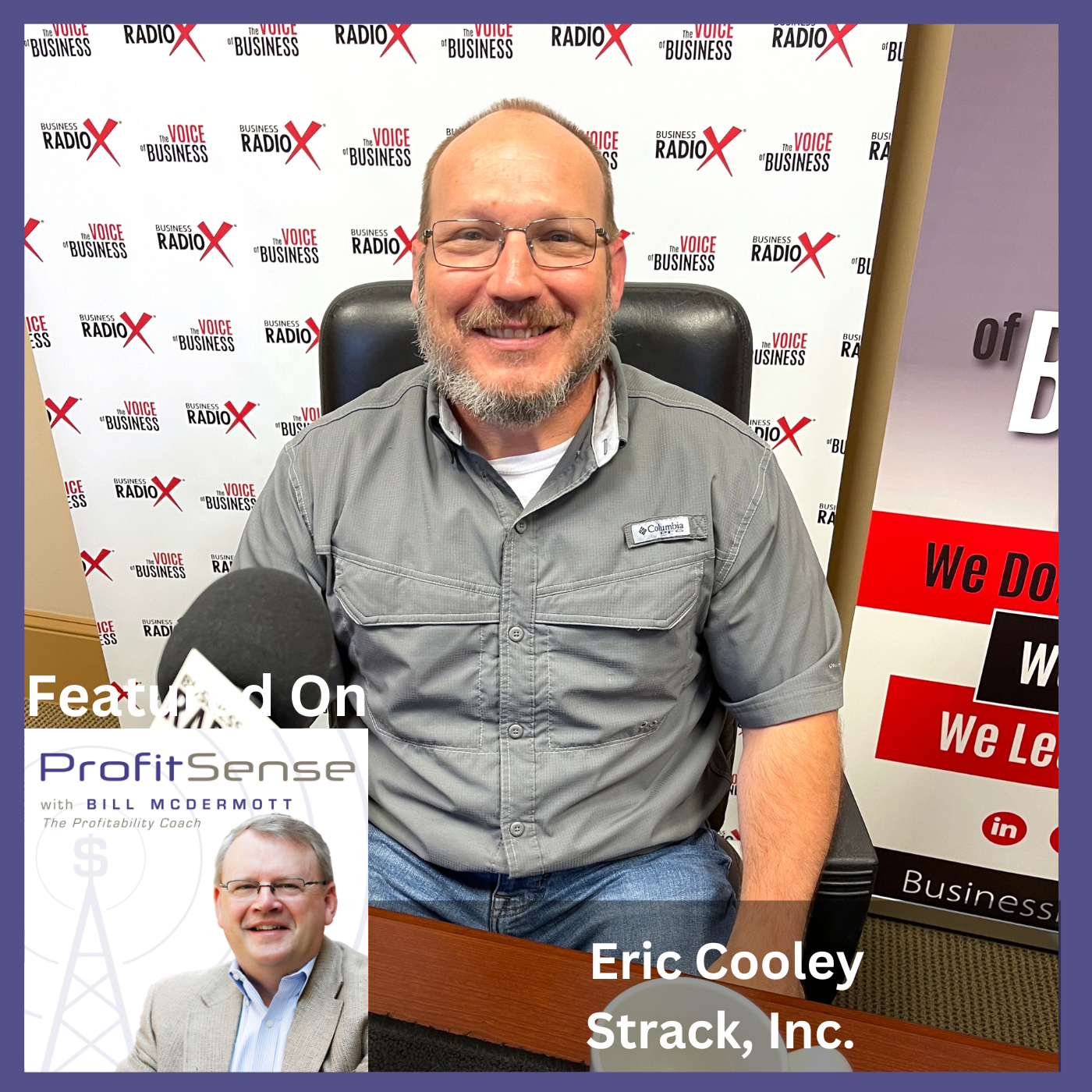
Keys to Retaining Talent, with Eric Cooley, Strack, Inc.

August 4, 2023 by John Ray

Eric Cooley
North Fulton Studio
Keys to Retaining Talent, with Eric Cooley, Strack, Inc.
Loading
00:00 /
RSS Feed
Share
Link
Embed

Download file

Eric Cooley

Keys to Retaining Talent, with Eric Cooley, Strack, Inc.

Eric Cooley: I think a lot of construction has high turnover and we’re not that different as it comes to that and that’s one thing we’re really focused on.

We’ve had to, as we’ve tried to grow, we’ve also had to replace. But I think, the key things we look at is, we start training from day one. So a lot of folks from an orientation perspective, they may come in, have you just sign some papers.  We’re running a four day orientation program right now. Come in, you learn the standard operating procedures for the company, get safety training, you have an opportunity to go through we’ve got equipment simulators to get familiarization with the equipment. And really making that investment starting in day one.

I think living out our core values, that’s something that’s key to trying to retain them. If we’ve sold them on something, it’s important that we live that out. They’re able to see that demonstrated to hold on to them.

I think Jonathan touched a little bit on the training. So we’ve got this frontline leadership training program we built. We’re also building an operator training program where we’ve promoted four guys from inside the business and they’re going to go out and help on the job sites to help train and really bring up the level of experience and understanding to some of the newer employees.

Because part of this, attracting new talent means we might be looking at folks from other industries.


Listen to Eric’s full ProfitSense with Bill McDermott interview here. 


The “One Minute Interview” series is produced by John Ray and the North Fulton studio of Business RadioX® in Alpharetta. You can find the full archive of shows by following this link.

Renasant Bank has humble roots, starting in 1904 as a $100,000 bank in a Lee County, Mississippi, bakery. Since then, Renasant has grown to become one of the Southeast’s strongest financial institutions with over $13 billion in assets and more than 190 banking, lending, wealth management and financial services offices in Mississippi, Alabama, Tennessee, Georgia and Florida. All of Renasant’s success stems from each of their banker’s commitment to investing in their communities as a way of better understanding the people they serve. At Renasant Bank, they understand you because they work and live alongside you every day.

Tagged With: Bill McDermott, Construction, Eric Cooley, hiring, labor shortage, One Minute Interviews, ProfitSense, ProfitSense with Bill McDermott, Retaining talen, retaining talent, skilled labor, Strack Inc.

The R3 Continuum Playbook: Employee Wellbeing in 2021 and What to Expect in 2022

January 6, 2022 by John Ray

Employee wellbeing
Minneapolis St. Paul Studio
The R3 Continuum Playbook: Employee Wellbeing in 2021 and What to Expect in 2022
Loading
00:00 /
RSS Feed
Share
Link
Embed

Download file

Employee wellbeing

The R3 Continuum Playbook: Employee Wellbeing in 2021 and What to Expect in 2022

In this excerpt from a webinar conducted in December 2021, Dr. George Vergolias, Medical Director at R3 Continuum, covered issues and pain points of employee wellbeing in 2021 and looked ahead at workplace trends to expect in 2022. He discussed the disruptive factor of hybrid work and how it will evolve, the challenges of staffing and labor, the growing disconnect between leadership and employees, the toll of virtual work and how it may impact creativity, and much more. The R3 Continuum Playbook is presented by R3 Continuum and is produced by the Minneapolis-St.Paul Studio of Business RadioX®. R3 Continuum is the underwriter of Workplace MVP, the show which celebrates heroes in the workplace.

Other R3 Continuum webinars can be found here.

TRANSCRIPT

Intro: [00:00:00] Broadcasting from the Business RadioX studios, here is your R3 Continuum Playbook. Brought to you by Workplace MVP sponsor, R3 Continuum, a global leader in workplace behavioral health, crisis and security solutions.

Shane McNally: [00:00:14] Hi, there. My name is Shane McNally, Marketing Specialist for R3 Continuum. As 2022 begins, it’s important to look ahead and recognize the trends that may be seen throughout the year regarding employee wellbeing. This information is provided by Dr. George Vergolias, Medical Director at R3 Continuum. Reflecting on 2021, there has been a shift between different priorities, work environments, mental health and overall wellbeing importance and more. Dr. George Vergolias is going to dive in and offer eight things that he foresees will be trending in 2022. This information is gathered from various reports and trends we’ve seen in years past.

Shane McNally: [00:00:50] Dr. George Vergolias oversees and leads R3C’s clinical risk, threat of violence and workplace violence programs. He’s directly assessed or manage over 1000 cases related to threat of violence or self harm, sexual assault, stalking and communicated threats. He brings over 20 years of experience as a forensic psychologist and certified threat manager to bear in an effort to help leaders, organizations, employees and communities heal, optimize and ultimately thrive during and after disruption. Thank you for being with us, Dr. Vergolias. So, let’s start off today’s webinar by asking a question, what drives human thriving?

Dr. George Vergolias: [00:01:29] Okay. Thank you, Shane, for that warm introduction. And what’s interesting is, so you heard a little bit about my bio, forensic psychologist, I’ve done a ton of threat work, a ton of hostility management work and so on. But a big part of that is also understanding resilience and understanding the flip side of wellbeing because wellbeing, when you are functioning well emotionally, intellectually, when you’re living your best life, you’re really functioning in a way and at a level that is diametrically opposed to being violent.

Dr. George Vergolias: [00:02:03] So, I’ve had to be forced to become an expert in understanding resilience and wellbeing, and what is it that allows people to pull through hard times; whereas, other people decide to go on a violent trajectory? So, my larger role is Medical Director for R3. I oversee all of our services. And a big part of that is understanding the wellbeing and resilience aspect.

Dr. George Vergolias: [00:02:25] And so, back to Shane’s question, what drives human thriving? And what I want to do is I want to talk about one of my favorite stories of all time. And it’s a true story about Margaret Mead. Margaret Mead, arguably one of the best most famous anthropologists, at least in the United States. She was giving a lecture in Oxford 70 some years ago, and a student in the lecture hall had raised – I’m assuming it’s a he but these are her hand. I believe it was a young man, and he asked Margaret Mead, when does she think civilization began? What were the first signs of civilization?

Dr. George Vergolias: [00:03:01] And the students and the other faculty that were there, they expected an answer around something like the first time we carbon dated finding pottery, or weapons, or an arrowhead or some kind of structure that was built, or a vase or some kind of structure that carried water, whatever it would be. Cooking tools, eating tools, whatever it may be. And that’s not what she said at all. She said, “We know civilization began around the time that we were able to backdate, carbon back date, a broken femur bone, a human leg bone that had healed.” And a lot of people in the auditorium looked puzzled.

Dr. George Vergolias: [00:03:41] And she went on to explain that in the animal kingdom, when you break your leg, you’re done. It’s game over. There’s no other animal that sits and stays with you. And if you have a broken leg, it doesn’t naturally heal on itself by the time that you either starve or you die of dehydration or some other predator takes you. But once they found that femur bone that had healed, they knew that somebody, some other creature, arguably another human, had stayed there and protected that person, and brought them sustenance, and kind of nursed them through the healing process till they at least can get up and get moving.

Dr. George Vergolias: [00:04:17] So, the point is that we are best, we are most human and we are at our best when we are assisting and helping one another. And that’s what we’re going to talk about in terms of trends through 2021 and into 2022. But I want that story to anchor us.

Dr. George Vergolias: [00:04:33] So, let’s first look backwards. It’s always a good time to kind of take stock and look back at the past year. What impacted employee wellbeing the most in 2021? And what we saw at the end of 2020, going into 2021, is we saw some trends that did indeed pan out. And one of them was from the Fortune Deloitte 2021 CEO Survey. This was done at the back end of 2020, looking forward into 2021. And what they found is 98% of CEOs reported that mental health was a priority for them going into this current year, 2021.

Dr. George Vergolias: [00:05:10] They also find that the pandemic had significantly accelerated various types of digital transformation, most notably what we’re doing now. Quite often, even though we did webinars through telepresence before, that has markedly accelerated through the pandemic and over this past year as well. And then, the pandemic was fostering information around or formation of new partnerships, new alliances and new creative ways of doing business and working together over remote distances.

Dr. George Vergolias: [00:05:43] And what we saw in this past year is many companies, not all, but many companies made good on those promises, and many CEOs made good on those promises, and we saw an acceleration of that going through the year. And that’s been largely a good thing. There have been a few things that have created some pain points, and I’m going to get at that in just a second.

Dr. George Vergolias: [00:06:06] We saw a few other things. One is that COVID 19, COVID, the epidemic or pandemic, rather, it created tensions, and it tested the limits of the worker-employer relationship. And early on, we saw certain pain points around concerns of safety. Later on, we saw pain points around mask mandates. And then, we saw and are still seeing pain points around vaccination requirements, and we’re seeing different businesses handle that differently. But what that is doing is it really is testing those boundaries of where does an employer’s reach and where does their due diligence then begin in terms of creating safe environments for their workforce?

Dr. George Vergolias: [00:06:54] And from a legal perspective – and again, full disclaimer, I’m not a lawyer, I work a lot in conjunction with the legal world as a forensic psychologist – what we’re seeing is there really isn’t still any court or legal precedent around handling COVID risk as an employer, as well as COVID restrictions. So, all of this is still at play, and I think we’re all still trying to figure out what is that balance. And what makes it even more confusing is that balance is going to be different for different industries and different employers. And in some cases, across the same employer, it might be different at different locations. So, that’s one thing.

Dr. George Vergolias: [00:07:34] The second thing we saw is the adoption of what I’m calling telepresence everything. So, another kind of disclaimer here, for 19 years, I’ve had a private practice that is focused on doing telemedicine for emergency departments in North Carolina. Just the practice I’ve had on the side, it keeps me vibrant, keeps me accessible and it keeps me sharp clinically. I’ve spent the last 10 years trying to get hospitals, and clinicians and outpatient clinics to adopt telepresence and telehealth. COVID changed all that almost overnight in terms of the forced and accelerated adoption of going to telehealth, and both providers and recipients – patients – being those on the receiving side, being open to it and being flexible with it, including boards, changing licensure requirements, payers and insurance, changing their payment requirements to allow this.

Dr. George Vergolias: [00:08:30] And we are not going back. I’m not saying we won’t begin to go back to more clinic-based therapy in some ways, but there is a large swath of the population that has found that telepresence or telehealth has been functional, it has been helpful, it has been effective, and useful and has broken down regional barriers to proper care.

Dr. George Vergolias: [00:08:52] So, we’re seeing that, but we’re also seeing, again, what we’re doing right now, and I imagine if we were in a room and I did a show of hands of how many of us have been on a Microsoft Teams or Zoom call this week for business, almost everybody would raise their hand in terms of being involved in that in the last week or two. So, we’ve seen a huge adoption of that. And I’m going to talk about the pros and cons of that as well.

Dr. George Vergolias: [00:09:15] The other thing that we’ve seen is that wellbeing, although, as I said in the last slide, has been a huge initiative, there are some barriers and pain points in terms of the impact of that. What we’re seeing now based on the Harvard Business Review study that was done just a couple of months back, 89, almost 90% percent of employees are saying that their work/life balance is getting worse – I’ll talk a little bit about that in a minute – 85% are reporting well-being has worsened in general; 56% indicated that their job demands have increased since the onset of the pandemic, and particularly over the past year; and 19% of women – so, we’re seeing some specific population issues – are reporting that they felt their job was at risk. And a lot of this was particularly around many of them being in a position where they can’t stop also being kind of a primary caretaker at home. Whether they’re a single mother or even if they’re in a married relationship, some of those older traditional gender roles, none of that has stopped, while they also have an accelerated adoption of being on conference calls and continuing to have increased productivity.

Dr. George Vergolias: [00:10:24] What’s really interesting is another pain point I’m going to get into. I’m just laying out the metrics. 40% – and this is at a global level – of the workforce is considering a change going in to the back end of 2021 and into 2022. A change in jobs, basically. So, talent acquisition is an issue, and I’ll be talking more about that in a second. So, as a segue, so that’s kind of the landscape that we’re now just emerging out of. 2019 or 2020 had its challenges with the onset of the COVID pandemic. 2021 was okay, we’re getting our legs under us, but still trying to figure out a lot of these issues with all their attendant pain points. Now ,the question is, what does 2022 have in store? So, these are predictions, these are speculations, but they’re based on trends and they’re based on what we kind of know in terms of not only our own experience consulting with those in the C-suite and upper management, but looking at the trends across a number of reports and where the workforce is going around issues of wellbeing and thriving.

Dr. George Vergolias: [00:11:32] So, let’s start with what our leaders concerned about, because I think that’s a good barometer, at least, of understanding that at the top. In the beginning of this past year, many CEOs, many leaders, especially in the Deloitte survey, which is a kind of an industry standard, were talking about this as the year of hope. As we started entering into mid-2021 with the Delta variant beginning — well, not beginning but when it was beginning in the mid part of the year to kind of start raging and a few other supply chains still not back online, there were other pain points going on, they moved to have more bold plans about growth, innovation and digital transformation all based out of necessity. All of that was needed.

Dr. George Vergolias: [00:12:16] Another big key component, there was there was a lot of initiatives around, how do we transform our talent networks? How do we recruit, and develop and train people differently? Good news is over 75% of CEOs still remain bullish on 2022. They still are looking at positive growth, they’re looking at innovation, and they’re really thinking the business community is going to continue to thrive and adapt to the changes ahead. That all is good. That’s a positive message. But we also are seeing is what we saw a year ago, mental health and wellbeing remain prominent as focused areas for leaders and CEOs in particular. So, there’s a lot of focus on that, and there’s a lot of resources and initiative being put in that direction. Again, different companies will differ on this dimension, but as a whole, there’s a big momentum in place that continues to ride us into 2022.

Dr. George Vergolias: [00:13:08] Well, we’re also seeing is D&I issues. Diversity, inclusion, these are rapidly accelerating in focus. In January of 2021, so just a little under a year ago, 94% of CEOs said D&I issues and initiatives was a strategic priority. By June, by midyear, 50% were actually making good on those promises. They were prioritizing those initiatives for inclusion and talent adoption strategy or talent attraction; they were setting clear goals to measure the impact of their D&I initiatives and priorities; and they were communicating those metrics back to their employees in a way that there could be a feedback loop about what is working and what isn’t working. So, again, another positive change that we’re starting to see develop through 2021, and we’re expecting that to continue in 2022.

Dr. George Vergolias: [00:14:08] And by the way, these initiatives are not just for marginalized groups. There’s a large — I don’t want to say majority, but there’s a large swath of people that are not in disenfranchised groups but strongly identifying in an ally shift way with those groups who are supporting those initiatives. And in the end, those are tending. The research is showing those are tending to make more cohesive and innovative work groups across a number of different sectors.

Dr. George Vergolias: [00:14:42] So, now, what I want to do is take those high level metrics. Again, we talked about 2021, talked about 2022, and I want to go in just seven specific trends that I think we can expect going into this new year. Again, these are born out of various data points, various reports, we make reference to these in the slide if you want to go do a deeper dive. And they are a little bit — I mean, these are predictive trends. These are things that we’re looking towards based on where we’ve just come out of, but they wouldn’t be in this presentation if I didn’t feel quite confident that we’re going to see some of these or each of these in some capacity as we navigate forward.

Dr. George Vergolias: [00:15:25] So, the first is that the biggest disruption that we can expect this next year is hybrid work and trying to figure out, what does that mean? What does that mean for us? What we’re seeing – now, this is based off the Microsoft Work Trends report from March, and they did a little bit of a follow-up just recently; I believe it was in November. But what they were saying is 66% of leaders of their company, they’re considering redesigning their office space for hybrid work. Almost three-quarters of employees want flexible remote work options, and over over two-thirds of employees want more in-person work or collaboration post-pandemic. So, what’s interesting — I’m sorry, employers. I mean employees want more in-person work.

Dr. George Vergolias: [00:16:14] So, what do we see here? What we’re seeing is kind of a split in both directions, right? Leaders are definitely responding and trying to create workspaces that can adapt to more remote and hybrid work environments; three-quarters of workers want flexibility to work from home and from the office; and yet, two-thirds are also saying we still want that in-person engagement for collaboration post-pandemic. And again, different companies are going to adopt this at different levels based on their financial tolerance, their risk tolerance and other issues, but this is going to be a disruptive factor as we move forward, and companies are going to have to figure out a plan to navigate that in a way that works for their culture, their industry, and at some level, their bottom line as well. That all has to be factored in.

Dr. George Vergolias: [00:17:05] Second big issue is talent acquisition. This is going to rapidly change. We’ve already seen it, but we’re seeing more. Questions of attracting talent, retaining talent and then developing internal talent will continue to be massively disrupted as we go forward. There’s a quote on your screen there, I’m not going to read the whole thing, but I’m going to highlight a few points, and this comes from the Deloitte — I’m sorry, the Deloitte Insights report from July. What we saw in 2020 is 80% of job losses were among the lowest quarter of wage earners, and many of them were working in the service sector. A new study shows that 100 million global low-wage workers will need to find a different occupation by 2030. That is a massive shift in the job market.

Dr. George Vergolias: [00:17:50] In addition to that, we are continuing to see acceleration of robotic impact in the workforce, which disproportionately affects lower wage or labor-based type occupations or jobs. And we’re seeing that the demand for skilled workers at the same time that this is happening, skilled workers is also growing, with 7 in 10 employers globally saying they’re struggling to find workers. For any of us that are interested in selling a home, buying a home, building a home, or even just trying to get some remodeling done, we know the labor shortage in the skilled labor and construction and remodeling world. So, we’re already seeing that. So, there’s going to be massive impact.

Dr. George Vergolias: [00:18:34] What’s also interesting with this is at the same time that all of these data points are happening out of necessity, you might say, and I’m not saying — what I mean by necessity is the job market is moving, so people or the labor force is moving and evolving, we also have a disproportionate number of white-collar workers. So, people with higher degrees working more white collar jobs, who are just fed up with their current arrangement of working in corporate America. They want to live remotely, they want flexible hours, they want to be their own boss. So, we’re seeing a higher proliferation of people leaving traditional jobs where they have good positions. They’ve been at a firm, a law firm or one of the big four accounting firms for a number of years and moved up, and they’ve just decided — to put it in my terms, they’re kind of done with the rat race, and they just want to get out.

Dr. George Vergolias: [00:19:29] We’re also seeing younger workers from Gen Z and millennials who are developing a whole new — well, not new because these have been around for a while, but they’re developing a deeper sense of what they want out of a job. It’s no longer advancement and a good paying salary. I want to feel rewarded, I want to feel supported, I want to feel like I’m making a difference, I want to be part of a company that’s making a difference in the world. All of these are different things that are occurring that’s forcing us as business leaders and talent acquisition leaders to rethink, how do we attract, retain and develop people in our companies and in our organizations? So, it’s going to be a challenge as we navigate forward.

Dr. George Vergolias: [00:20:17] So, sadly, I talked earlier about a lot of the CEOs talking about it’s the year of hope this past year and remaining bullish on 2020, and wellbeing, and D&Y, initiatives all being part of the priority. And that’s all wonderful news. There’s still a disconnect. Leaders are still generally out of touch. This is also coming from the Microsoft Trends report. It, also, is backed up by some of the findings from the Deloitte Insights report as well. But from the Microsoft report, 61% of leaders are reporting themselves as thriving and accelerating their thriving through 2021 versus only 38% of their employees are reporting that. That is a disconnect.

Dr. George Vergolias: [00:21:01] Now, some of the best organizations are kind of evolving and thriving together from top to bottom, but the norm is that leaders increasingly think that they’re doing well, and thriving and growing; employees are not. And so, there is a disconnect. Unfortunately, I don’t know exactly what that disconnect is. There’s a number of factors that I think are related. The next bullet point captures one of them. We’re exhausted. When I say we, I mean the workforce in general. And it’s masked by high productivity.

Dr. George Vergolias: [00:21:33] So, here’s an interesting finding we’re seeing not only at the beginning of 2021, but growing through the year, and we’re actually expecting this to continue to grow into 2022, and there’s a blessing and a curse here. 85% of employees report the same or higher productivity from the prior year. So, 2021 was just as productive or more productive than 2020, except 53% more feel overworked, and 39% more feel exhausted from the prior year. So, yes, we’re doing more, but we’re paying a high, high toll on employees’ wellbeing.

Dr. George Vergolias: [00:22:13] And when you marry that or abridge that into the talent dilemma, that is a real concern. It’s a real recipe for disaster because if we have a core constituency, you might say, of the workforce that either they’re forced to move on because they’re semi-skilled role is being outsourced or not available or higher skilled workers or more educated workers are just deciding, “I’ve had it with the rat race,” and they’re feeling “I’m more productive than eve, and yet I’m more exhausted, and I’m not doing well, and I’m overworked,” that creates an environment that more people want to leave and more people want to start jumping to other opportunities around them. So, it’s going to be a really interesting year to see how we, as a business community and in roles of leadership and management, and HR, navigate that going forward.

Dr. George Vergolias: [00:23:07] Another consideration is that the digital intensity of our engagement and life balance, there’s been a creep. There’s been an increased impact of that over time. So, a few bullet points there. Microsoft Teams, just the occurrence of the number of teams that the average person sits in – meaning conference call teams or meetings – is up two times than it was a year ago. The average meeting is up 10 minutes longer than it was a year ago. The average user is sending 45% more chats through Microsoft Teams.

Dr. George Vergolias: [00:23:41] And the problem that — well, actually, I’m going to jump ahead real quick because there’s one more visual I want to share with you, and then I’ll get to not my final slide, but a conclusion point there. What we’re also seeing – and again, all of this is from the Microsoft Work Trend report, which is really interesting because they could call all of this anonymized data from MS teams, particularly if your organization opts in for that data sharing.

Dr. George Vergolias: [00:24:07] So, meetings, weekly meeting time has more than doubled for team users and is still rising all through 2020, but also continuing to go into 2021. This trend hasn’t gone away. Again, this study was from March of 2021, but this trend continues. There’s been an increase in the number of emails delivered in February of 2021 versus February of 2020, and there’s indications that this has continued to increase. I already mentioned that 45% more chat is occurring. And this is interesting, the number of people working on office documents is up 66% over the same year.

Dr. George Vergolias: [00:24:46] Now, on the one hand, if we’re all going remote, we would expect some of this to increase. And that all makes some sense because we’re not — I’m going to hop back here. Because we’re not together, we don’t have the ability to go have lunch together downstairs at the little café, or talk in the break room, or even just meet at the watercooler. Those opportunities are not there, so we have to chat more, we have to email more. And all of that makes a little bit of sense organically. Here’s the trouble is what we’re finding is we’re getting huge digital fatigue. It is just draining to feel like we are constantly on.

Dr. George Vergolias: [00:25:25] What’s interesting is there was a study done, and I wish I would have added it to the slide, but I’ll just comment on it real quickly. I believe I saw it in Inc Magazine, but prior to that, I believe it was in Forbes. And what they looked at is, what is the kind of the lit reality of being in meetings in lived time, in-face, or in-person, and being on a screen? Well, the oddity is right now, of this multiple hundred, three or four hundred people watching this right now, I don’t know how many are looking at me right now. So, if I want to stop and take a glass drink of water, and I’m going to do that because I’m thirsty, it’s kind of a bit of an awkward moment, right? It’s a pause, it’s silent. Even if I’m not talking – of course, I’m presenting, so I have to be talking now – I’m not sure who’s looking at me.

Dr. George Vergolias: [00:26:17] But when you’re in a room with people, and you can see that 12 other people or 15 other people are looking at the speaker, you could kind of turn off for a second. And I don’t mean you turn your attention away, but you can relax, you can scratch your nose, you can fix your hairline, you can adjust in your seat, you could quickly check a text if you are afraid your kids are texting you that they got off the bus, whatever the issue is. When we have this platform, there is this kind of subtle paranoia that forms of feeling like we always have to be on, and engaged, and focused. And it’s tremendously draining to have that. And we don’t have that in our normal face-to-face meetings because we get numerous micro breaks when we notice everyone else is focusing on the screen, or this talker, or that talker.

Dr. George Vergolias: [00:27:08] So, again, that — and then, you’re in my home. So, I have to constantly worry about, are people judging my background? Is my office clean? The kids are off right now, they’re going to come in, and I’ve had to warn them not to bother me because I’m giving a presentation right now. This has an emotional and psychological drain, and it’s kind of a cognitive load over time. So, it’s something else we’re going to have to be mindful of as we go forward.

Dr. George Vergolias: [00:27:35] What I’ve heard about and what we’ve implemented at R3 to some good effect is leaders, we’ve encouraged leaders to empower and encourage people to fade their background if they want. We literally have some workers that for any number of reasons, take calls from their bedroom. They don’t want you in their bedroom. Even if you went over to their house for a barbecue, they wouldn’t invite you into their bedroom. And yet you’re in their bedroom during an account meeting or a sales meeting or whatever. So, we encourage them, use the muted background, so no one can see where you are in your home or use one of the other template backgrounds.

Dr. George Vergolias: [00:28:11] We also encourage people, if you need to go off camera for a little bit, go off camera. There’s no judgment there. Everyone may need to do that. If you need to mute, go ahead and do that. Because where we are in our lives, our work life and our personal life, are now a little more blended. And we have to be more mindful about where those boundaries land and empowering people to use those boundaries and set those up, so they can still promote a sense of wellbeing, and no one to emotionally and psychologically turn off. So, we want to keep that in mind as we navigate forward.

Dr. George Vergolias: [00:28:49] Okay. You know what, I lied to you guys, and I didn’t mean to. There’s actually eight trends. So, let me get through those. And then, it might be a good time to pause and see if we have a few other additional questions.

Dr. George Vergolias: [00:29:02] So, trend number six, collaboration and productivity, they might be harmed by shrinking social networks. The jury is a little bit out here, and we’re still trying to figure this out. So, on the one hand, we are more — I’ve already made the case, the data doesn’t lie, we are much more interactive than we’ve ever been. And that has been very, very useful in terms of — well, it’s been out of necessity, but we are communicating. We’re communicating more. We’re using more tools, chat, email, again, telepresence or teleconferencing. And in one way, that has kept us connected, which has been useful because if we didn’t have any of that in 2020 and 2021, that would have been big trouble for business productivity and innovation.

Dr. George Vergolias: [00:29:50] Here’s the problem. Because of that, we are continuing to lack the lived social experience of being in presence with somebody. And I call that magic of innovation that happens when you’re interacting with somebody in a room. I had the pleasure of having a very good friend, still do, who was a really good jazz musician. He’s not famous, but he plays with a lot of famous jazz musicians. I mean, he’s just amazing in terms of his talent. And what’s funny is when COVID started, a lot of jazz musicians, among other artists, had to move into the studio, and they were doing studio work remotely. It was all digitized. The problem with jazz, just like the problem with most good music, there’s an innovative back and forth. There’s a dance, there’s a flow that people get into. And what we are finding is even on the business side, the innovative side, sales, marketing, developing new products, bringing them to the market, all of that has been stifled a bit by that lack of innovative magic of being reasonably in the presence of one another.

Dr. George Vergolias: [00:31:02] So, again, don’t know what the answer is to there. Hopefully, the answer is we get a handle on things. Hopefully, Omicron isn’t — we certainly know it’s more contagious than Delta. Hopefully, it’s not as severe in its symptomatology. And hopefully, we can get a handle on it in a way that maybe we can start getting back into face-to-face interactives. Many of us, maybe all of us have been to virtual conferences in the last year, I can’t speak for everybody, but I can tell you I’ve been to some good ones, and I’ve been to many where it’s not even close to the lived experience of being in-person with somebody. So, these are things that we’re going to have to adapt to.

Dr. George Vergolias: [00:31:42] Now, there’s a paradox here. And the paradox is at the same time that that has increased our interaction but decrease that kind of magical innovation that gone on and on for five minutes about that, there is at the same time what we’re seeing an increase in authentic engagement. And the authentic engagement is if we were in a conference call, some people would be asking me turning to the wrong direction about my boxing gloves. Those are my dad’s boxing gloves. He fought Golden Gloves when he was a young man in Chicago. That would never come up if we were in the office. And then, “Oh, you’re from Chicago,” or “Oh, your dad boxed. Did you learn to box?” These are little moments where we kind of — whether we mean to or not, we let people into our lives and we become a little more engaging. It’s a little more of an authentic interaction. And the paradox is we’re not doing this in person.

Dr. George Vergolias: [00:32:32] So, the time we’ll be able to tell or only time can tell, I should say, of how is that going to play out. On the one hand, there’s something kind of artificial about this digital interaction. On the other hand, over time, you’re getting to see my — I mean, again, if these were regular calls, eventually you’d meet my dog. Shane has heard my dog bark so many times, he probably can recognize the bark. Shane has met my kids – he never would have probably met my kids – because they burst in when they get home from school, even though I tell them not to sometimes. That creates an authentic engagement where our humanness is shown and it comes through.

Dr. George Vergolias: [00:33:13] So, it’s going to be really interesting to see how six and seven bounce off each other as we continue to navigate forward in 2022, particularly around issues of humor, and vulnerability and so on.

Dr. George Vergolias: [00:33:27] All right. Number eight, and you might have already suspected this when I was talking quite a bit about the talent dilemma, but in a suddenly remote hybrid world – and when I say sudden, yes, it evolved over a year, 12 months, 18 months, but if you look at the history of any of our organizations, like go back 20, 30, 50, 60 years, some of us maybe are in organizations that go back a hundred years, you go back and look at the history of modern work since the industrial age began, 18 months is a blip. It is a blip on the map. That is a very rapid change. So, in a suddenly remote hybrid world, the talent pool is going to be global. We’re already seeing that. We already were trending that way, but now that so many of us have adapted to remote hybrid work, we’ve now eliminated that barrier.

Dr. George Vergolias: [00:34:24] Now, some employers, some leaders are saying, “I want people back in the office and I want to hire people that live — I’m in Raleigh, North Carolina, so I want people that live around here, so they can come in the office.” That’s a choice. But what most organizations have, at least, been able to say or prove is that some of what we do can be not outsourced, but it can be off-sourced, it can be off the site, it could be at home, or remote or hybrid. And what that means is, now, when I’m looking for that account manager, or sales exec, or that head clinician, or that clinical program manager, I can now look in California, or Arizona, or New England. I don’t only have to look in Raleigh. So, that expands the talent pool.

Dr. George Vergolias: [00:35:07] But what it also does to the talent, it means their options are expanding as well. So, if they join my group and they find after a year, “I don’t like the fit. I don’t like the mission. I don’t like the support I’m getting. I don’t like the level of development and mentoring I’m getting. I don’t like the company’s approach to D&I and inclusion-based issues or wellbeing, I now can look for a job in California, and Arizona and New England.” So, again, this is a dilemma that we all are going to have to navigate as we continue to move forward.

Dr. George Vergolias: [00:35:41] Okay. All right. This might be a good time to take a quick pause. Shane, are there any questions that came through?

Shane McNally: [00:35:50] Yeah. We have one here that I think was pretty relevant. We had it in one of the first slides. So, with the move to more hybrid and work-from-home situations, do you forecast a rise in domestic violence? And what are companies doing to ensure they meet the duty of care obligations to provide a safe work environment in a remote world?

Dr. George Vergolias: [00:36:10] Wow, that is a great question. And it’s a hard one to absolutely answer, but I’m gonna do my best. And it’s one I kind of know the area of. So, we’ve already seen an uptick in domestic violence already in 2021. I would expect that to be the same, maybe a slight uptick into 2022. And some of these issues can get very complex, but just because for sake of time, I won’t go into all the variables from a risk angle, but it really comes down to when you are in an environment of hostility, where there’s an abuser and a victim, leaving for eight hours a day and separating isn’t a bad thing. The first thing most of us will do when we see a fight brewing, whether it’s at the Thanksgiving table or, unfortunately, if it’s at a Little Little League game, or if you’re a police officer responding to a situation, you separate. Leaving the house every day and going into work is, at least, a forced separation. Now, that’s all at home. That separation isn’t occurring. So, it doesn’t have to be a hotbed, but it increases the risk of flashpoints, of volatile flashpoints that can emerge into violence. So, I do think there’s a significant risk there.

Dr. George Vergolias: [00:37:27] In terms of what are people doing, this is varied significantly, greatly. The best companies are really trying to do a job of reaching out, letting their employees know that they have domestic violence support resources, they’ve got mental health support resources, they have counseling, anonymous counseling resources, they have threat of violence services available to help people navigate a potentially violent or hostile situation. The best ones are doing that.

Dr. George Vergolias: [00:37:57] What they’re also doing is trying to create cultures by which employees feel comfortable coming forward and sharing concerns about another employee, even if it’s anonymous, such that at least we can try to get people delivered or connected rather to the help that they may need. In terms of due diligence or duty, that gets tough now. And again, I think an employment lawyer would be better to ask in terms of where does the employer’s reach end. Yes, you’re working from home now, and yes, there is some kind of responsibility, but to what degree, as your employer, am I responsible for keeping your home environment safe? And at what point am I infringing on your personal life and your personal rights if I go too far with that?

Dr. George Vergolias: [00:38:51] I can say because I deal a lot with domestic violence, I deal a lot of threat of violence, and that intersects with legal and law enforcement, the jury is out on where those boundaries are. Again, this is a very new arena for us in terms of trying to figure out due diligence, duty to warn. And then, the question of how do courts, how does litigation in courts view that? So, it’s a really good question. I would say continue just to monitor how HR groups, security groups and certainly legal groups are talking about this issue, and particularly employment lawyers as we evolve through 2022. 2022, I think, is going to be a seminal year to determine how do we figure out or how do we manage these? And then, what are the courts say about it in terms of our responsibilities as leaders, managers and employers? Great question. Shane, do you want me to continue here, or do you want to do another question? What do you think?

Shane McNally: [00:39:48] Yeah, I think let’s keep it rolling because I think one of the questions may actually be answered in the next coming slides. So, I think let’s keep rolling with it. And if we have some more time, we’ll answer some more at the end.

Dr. George Vergolias: [00:39:59] Perfect. And my goal is to get through these next slides in about eight minutes. I’m not going to do a deep dive because again, all of you are probably from different backgrounds, you might be from different industries, you might have different resources available or not available, different size organizations. So, we’re kind of hitting this with a broad brush stroke.

Dr. George Vergolias: [00:40:18] So, we talked about trends, 2021 and 2022. We talked about eight specific trends, both positive things but also some pain points. So, this is where I get into, okay, what do we do about it? What do we do? How do we support mental health and wellbeing in a way that’s effective and with accessible resources. I’m going to say it again, in this next year, it’s all about people. They are our greatest asset. They certainly should be considered your greatest asset. And the CEOs in the Deloitte study, and even the Microsoft study, have both talked about that. It’s talent in every form. That is the goal. For those of us that remember, I think it was the Bill Clinton, Ross Perot, even before Ross Perot and George H. Bush, the old saying, “It’s taxes, stupid” or “It’s about taxes,” well, my mantra this year is, “It’s about the people, stupid.” Not that people are stupid, but it’s all about the people. It’s about your talent – attracting them, hiring them, developing them, retaining them and so on. It’s key.

Dr. George Vergolias: [00:41:24] One thing we’re all going to have to do better is we’re going to have to expand our toolbox in terms of resources, and we’re going to have to get out of siloed thinking in terms of how we handle problems. Historically, a lot of this has been dumped on HR. Maybe some of it’s been dumped on security if it’s a threat or risk issue. And then, in some cases, it might be dumped on legal if you have a legal team internally or maybe you have an ad hoc external legal team. The problem is, is we need to expand the dilemma. Most companies, if you go back pre-COVID, they basically had a hammer in the toolbox. And if you had a nail, great; they had a hammer. And if you had a screw, they had a hammer. And if you had something else, if you needed to glue something, they had a hammer. We need to expand the toolbox in terms of the resources that we have available to us.

Dr. George Vergolias: [00:42:21] Part of that process is — sorry, I missed. I didn’t forward some of the slides. That’s the CEO slide. That’s a toolbox slide. Now, I’m caught up. I’m sorry about that.

Dr. George Vergolias: [00:42:32] We need to also, I believe, strongly have a conceptual shift from looking at dealing with the behaviors of concern from a perspective of adversarial and contentious to collaborative and supportive. Now, that doesn’t mean there are times that we don’t need to exit somebody from our organization. That happens. But we can do it in a way that we still are trying to maximize a supportive engagement with that person. So, we want to engage people from end to end. A lot of times, people – I do a lot of hostile terminations. I don’t personally, but I help navigate them, I should say. People ask me after the termination, when do you start mitigating a hostile termination? When does it begin? When do you really start doing it?

Dr. George Vergolias: [00:43:20] And I always say, managing a hostile termination begins the day you hire that person. I don’t care if it’s 10 years ago. The day you hire them, the way you want to award them, the way you try to be supportive, and fair and equitable, the way you engage them with respect and dignity, and how you’ve done that, whether it’s three months or three years or 30 years, sets the tone for how you’re going to deal with that when things get ugly at the back end. So, it’s an engagement process end to end. We want to educate people on that process, each step, what resources do we have available, how do we help them. We want to have a general message of support to people all through the process. And we want to align what resources we do have beyond the intervention is a singular event. View it as a process of intervening.

Dr. George Vergolias: [00:44:09] Now, none of this means that if somebody does something egregious at your workplace that they don’t need to be exited. Not at all. Sometimes, people need to be exited. But can we do it in a way that maximizes support, in a way that they can look forward in their life and not look backward with a sense of anger and resentment, and in some cases, vengeance? So, that’s one of the keys.

Dr. George Vergolias: [00:44:30] Again, I talked about the singular event. Get away from that and move it into an engaged process. And that process begins with the first time I sit you down and say, “I’m going to give you an informal, non-official verbal coaching session. That’s where it starts. And I’m doing it because I want to help you get better and I want you to develop. But it’s your choice to develop. Are you going to take the help or not? And then, over time, it could escalate to the point that I have to let you go. But that process is going to be a process. It’s not going to be a singular event.”

Dr. George Vergolias: [00:45:03] Another thing to consider, one of the dilemmas is that all the old behaviors of concern haven’t gone away. Many of these have even exacerbated if you look over the past year or two. Various levels of emotional crisis, we know depression is up threefold. Anxiety is up fourfold. And this is across the general population. Suicide threats, anger, hostility, inclusion, diversity and inclusion issues, violence threats, domestic violence, all of these issues are not — some are growing, some are neutral or the same that they were a couple of years ago, but here’s what’s different, the average worker is more aware of these issues, and they’re more aware of when they’re struggling. That doesn’t mean they’re coming forward. They may not feel safe coming forward, but they’re more aware of that, which means, as leaders, we are kind of beholden to try to do something about these. We can’t put our heads in the sand and just play like it’s an ostrich. So, we have to be aware of what these issues are as much, if not more than ever, and still try to navigate them with all the pain points I’ve also talked about.

Dr. George Vergolias: [00:46:12] So, how do we do this? Well, we move towards a continuum of service support. And there’s a number of key offerings. And what we want to do here is we want to do these, not — I’ll say it better. We don’t want to be siloed in how we handle these. By the way, this is not exhaustive. Human resources, management, meaning just management at all levels, evaluation options. Does somebody need fitness for duty? Do we need to employ pre-employment screens on the front end? Do people need substance abuse support, or counseling, or evaluations? Do people need performance coaching or other types of performance coaching or enhancement? Mentoring? EDP support services, engagement and treatment providers for those individuals that need that, whether temporary or long-term. And obviously, we need to engage legal because there’s risk involved from the business perspective. Vocational services in some cases. Benefit and leave options, which is kind of a wing, if you will, of HR. All of these are key offerings, and it’s important because when all of these are working together, and they’re not siloed, that creates an environment in which the person, the employee, feels engaged, they feel supported. And again, supported doesn’t mean I’m going to stay here forever, but it means we’re maximizing the chance that I can get back to thriving and get my life back in a way that it’s a win/win.

Dr. George Vergolias: [00:47:40] I often will say to my personal team at R3, my ultimate goal as a manager, as a leader is to help you thrive, whatever that may be, bring mentoring, bring guidance, bring support. I do not hit that goal every day. I have stressful days. I have busy days given the nature of my role as medical director that I do not live up to that promise. That’s my goal. But here’s the other part of the goal is I want to maximize that I can do all of that while you’re still with R3. If I can’t, and you go on, and you thrive somewhere else, great, I’m going to be happy for you as a colleague, and a friend, and a professional. But my goal is to try to maximize that internally. And that’s part of that engagement process as we navigate through this.

Dr. George Vergolias: [00:48:29] So, I’m going to talk briefly here about leadership strategies. And then, we’re going to wrap up with probably about 10 minutes worth of questions if we have them. So, as leaders — and by the way, when I say leaders, you could be leader of a three-person team or you could be the CEO of a Fortune 500 company. These apply. These apply to your Little League team, frankly, both on the parents and on the kids. First is champion and behavioral health at the top. If we are not modeling – and when I say modeling behavioral health, I don’t mean I am perfect and I’m living my best life every day. I’m not talking about living in an Instagram kind of visual life, which is often fake. I’m talking about champion support for behavioral health. And as leaders, sometimes, that means even admitting our own vulnerabilities or our own need to pursue our own resources. Now, self-disclosure is something that can be tricky. I’m not saying everyone should do that, but however you need to champion it, please do so as a leader.

Dr. George Vergolias: [00:49:26] Foster open and clear communication. I often say this fear and anxiety level a vacuum, it’s important that we fill that vacuum to understand what is our company’s mission, what is our value towards behavioral health, and how are we going to support people? Engage your employees. Get to know them. Reach out to them. Don’t be distant as best you can. Model strength and vulnerability. How do you do that? Well, bottling strength isn’t just about being strong all the time. The problem, if you’re strong all the time as a leader, you give the impression, even if you don’t mean to, that your workers should be strong all the time. There’s something okay about stumbling because every time we stumble, we have to get back up. And to me, that’s the true modeling of the vulnerability from which strength comes from. It’s that “Yes, I had struggles.”

Dr. George Vergolias: [00:50:15] Someone said to me recently, and I love this quote, “You’re having a bad day. You’re not having a bad life.” So, there’s times that I will tell my folks, “I’m in a really crappy place today, but I’m going to get through it, and this is what I’m doing to get through it.” I am modeling the getting back up; I am not modeling being perfect all the time because none of us are.

Dr. George Vergolias: [00:50:36] Know thyself and assess thyself. Again, this goes for organizations, it goes for teams, and it goes for individuals. Constantly looking at ourselves of how do we better ourselves, how do we improve? Know you’re lane. Now, this is organizationally. So, when outside of your lane, consultant an expert. If you don’t have internal legal, and you get up to a point where you need legal consultation, know who to go to. If you’re dealing with a threat mitigation situation, and you don’t deal with that regularly, reach out. I mean, a huge part of what I do as I sit on threat teams as an external ad hoc member and help them navigate hostility issues at their workplace because they’re not big enough or for many reasons, they don’t have an internal expert. That’s fine. Whatever the issue may be, is know your expertise, shine in that, and then know what are the other things you want to pursue.

Dr. George Vergolias: [00:51:29] And be bold. If you look at the pain points that I talked about this this past hour, and if you look at what those are, and the challenges ahead, and in many ways, I’m going to say organizations have never been through this kind of accelerated revolutionary change, probably since early in the industrial revolution. We have to be bold. We have to be, to come up with solutions that are going to push us through into whatever the next normal is going to be on the back end of this, whether it’s a year, or two, or three years from now.

Dr. George Vergolias: [00:52:10] So, in closing, and then we’ll get to some questions, one of my favorites, Brene Brown, I imagine many of you have seen or know of her, there’s a lot of research and thought leadership on vulnerability, and growth, and intimacy and so on, this quote sums it for me – and I’m adding employees to the mix because I think there’s accountability on all sides here – “Leaders and employees must either invest a reasonable amount of time trying to manage fears and feelings now or squander an unreasonable amount of time trying to manage ineffective and unproductive behavior later.” So, we are going to pay now or later in terms of time, and change, and effort. I think it’s better to do that on the front end and help develop people, especially given the trends that I’ve talked about today and then pain points. Doing that now versus doing that later in a crisis mode and a purely reactive mode.

Dr. George Vergolias: [00:53:06] So, with that, I want to thank you for your time and I want to open it up for questions. For the last — I’ve got about six or seven minutes here.

Shane McNally: [00:53:14] Yeah, yeah, perfect. So, we do have a few minutes. We do have a quite a few questions that have come in as well. So, this is great. Before we hop into the questions, I just want to invite everybody to our next webinar, it’ll be our first one of 2022, and it’ll be on January 18th. This webinar will be taking a look at personal stress, and how it can affect our business life, and figuring out ways to mitigate that disruption. So, that webinar is also pending approval for one PDC credit through that SHRM recertification program we mentioned earlier, and more information is to come on that in the future.

Shane McNally: [00:53:48] So, with the few minutes we have remaining, let’s get started with a few questions, Dr. Vergolias. The first one here, there seems to be a lot of people celebrating remote work, but do you think they are underestimating the negative impact being remote has on their mental health and social health?

Dr. George Vergolias: [00:54:07] That’s a great — that’s an astute question, and I do. I do. I think — let me give you a quick example. I’ve been working remote with R3 for 10 years, and I did fine. And when the pandemic hit, everything changed, and it changed because everyone else was working remote. And when everyone else shifted, what I found is that my day didn’t end cleanly anymore. It’s just kind of evolved. There was never an off. And what’s odd is I should have been a master at this. But the environment, the context shifted, and I needed to shift with it.

Dr. George Vergolias: [00:54:43] So, I do think there’s a lot of people that are either not aware or they’re aware and they’re struggling. One of the biggest things I do is that — so, I’m going to wrap this up in a few minutes. I got about another hour and a half or so. And every day, I change what I’m wearing. I get out of whatever — because whatever I’m wearing to during the day is my work clothes, and I change. And I literally consciously make a transition. I also try not to do a lot of non-business work in this room. This is my work office. Don’t always hit that goal. So, those are the kind of things that I think are important. And I think that’s a really, really astute question. Thank you.

Shane McNally: [00:55:24] Perfect. The next one here, you mentioned that leaders were still looking forward to 2022, but a large margin of employees may not feel that way. How can you tell if your employees are feeling unhappy in their position?

Dr. George Vergolias: [00:55:39] So, two things. One, and this is going to sound really like sophomoric, so excuse me, but ask them. Ask them. Do it in an anonymous way, so they don’t feel threatened. And then, listen to the input. And then, reflect it back, whether it’s a town hall, whether it’s a one-on-one discussion, a team discussion. And whatever leadership you are — I mean, a CEO can’t have discussions with everybody in the company, typically, but whatever level of leadership you might be showing, ask them what those concerns are, really convey you’ve heard them, share them back in a way that conveys you’ve heard them, and then try to come up with some solutions that can attest or, I’m sorry, that can attend to what those needs might be. Start with that. And if you start with that alone, you’re going to be ahead, I think, of 75% of the organizations out there.

Shane McNally: [00:56:37] All right, the next one here. How important is it for employers to have a 24-hour employee assistance program?

Dr. George Vergolias: [00:56:49] You know, I think it’s important to have, at least, access to resources. It really depends on your organizational culture, the size, and to what degree you feel your organization needs that level of support. And I know that is a very murky statement, but this is where the type of intervention and the scope really depends on the kind of organization that you have. What I will say is emotional crises do not happen 9:00 to 5:00. And anyone that’s in HR listening today is probably nodding your head. And they tend to happen at 4:30 on a Friday, but they don’t happen 9:00 to 5:00. And so, if we’re going to model and convey a true sense of support and wellbeing, it’s important, at least, to have available resources.

Dr. George Vergolias: [00:57:42] Now, that doesn’t mean you’re spending $3 million a year for a 24/7, 365 EAP response. It might be that you’re simply letting people know in their given work area, what are the local resources for mental health? Can we engage with those resources in other ways. Can we can we ally in some way, make allies or make connections with them? There’s some creative ways to do this, but I do think it’s important to convey that degree of support.

Shane McNally: [00:58:14] All right. And I think we have time for just one more question here, and this one came in right near the beginning. Other than the healthcare industry, what industry do you think has been hit the hardest over the last two years?

Dr. George Vergolias: [00:58:27] That’s a good question. I’d have to say the service sector industry just because of forced closures, reduction in patrons, just general service. It could be restaurants, it could be bars, it could be food, various types of food, hotels, they’ve just been so impacted. But what’s hard is that there’s a ripple effect. The other flip side is all the people that are stocking shelves and the trucker industry, and those that run trains and work at the port authorities on the supply chain, they’ve had the opposite effect of needing to do triple, quadruple time. So, it’s tough, but there’s been a number of those sectors. Those are the two that come to mind, one with no business, and one with an insane amount of over business, if you will. Amazon, those types of roles.

Shane McNally: [00:59:26] Yeah, absolutely. Well, so that will be the top of the hour for this webinar today. So, as a reminder to everyone, you can find more resources under our resource tab. You’ll be able to find our upcoming webinars, our recent webinars that you can watch on demand, which will shortly include today’s webinar as well.

Shane McNally: [00:59:45] As we’ve heard from Dr. Vergolias, 2022 is going to be a year that we’ll see some changes going forward and the importance of employee wellbeing. R3 Continuum can help to ensure your employee wellbeing program is offering the right level of behavioral health support by tailoring solutions to fit the unique challenges of your workplace. Learn more about R3 Continuum services and contact us at www.r3c.com or email us directly at info@r3c.com.


Show Underwriter

R3 Continuum (R3c) is a global leader in workplace behavioral health and security solutions. R3c helps ensure the psychological and physical safety of organizations and their people in today’s ever-changing and often unpredictable world. Through their continuum of tailored solutions, including evaluations, crisis response, executive optimization, protective services, and more, they help organizations maintain and cultivate a workplace of wellbeing so that their people can thrive. Learn more about R3c at www.r3c.com.

R3 Continuum is the underwriter of Workplace MVP, a show which celebrates the everyday heroes–Workplace Most Valuable Professionals–in human resources, risk management, security, business continuity, and the C-suite who resolutely labor for the well-being of employees in their care, readying the workplace for and planning responses to disruption.

Connect with R3 Continuum:  Website | LinkedIn | Facebook | Twitter

Tagged With: Dr. George Vergolias, employee mental health, employee well-being, employee wellness, hybrid work, labor shortage, R3 Continuum, teleHealth, wellness in the workplace, Workplace MVP

Decision Vision Episode 116:  Should I Hire Ex-Offenders? – An Interview with Jeff Korzenik, author of Untapped Talent

May 13, 2021 by John Ray

Untapped Talent
Decision Vision
Decision Vision Episode 116:  Should I Hire Ex-Offenders? - An Interview with Jeff Korzenik, author of Untapped Talent
Loading
00:00 /
RSS Feed
Share
Link
Embed

Download file

Untapped Talent

Decision Vision Episode 116:  Should I Hire Ex-Offenders? – An Interview with Jeff Korzenik, author of Untapped Talent

As an economist examining factors contributing to labor shortages, Jeff Korzenik singled out a particularly large demographic:  the 19 million unemployed people with criminal records. He joined host Mike Blake to discuss how “second chance” hiring among this untapped talent pool can give businesses competitive advantages, factors for business owners to consider with second chance hiring, and much more. Decision Vision is presented by Brady Ware & Company.

Jeff Korzenik, Chief Investment Strategist and author of Untapped Talent

Jeff Korzenik, Author of “Untapped Talent”

Jeff Korzenik is Chief Investment Strategist for one of the nation’s largest banks where he is responsible for the investment strategy and allocation of over $40 billion in assets. A regular guest on CNBC, Fox Business News, and Bloomberg T.V., his insights into the economy, markets, manufacturing, and the workforce are frequently cited in the financial and business press. His writings on economics and public policy have been published in Barron’s, Forbes, CNN, the Chicago Tribune, and other outlets. In recognition of his work on the interaction of the criminal justice system and labor markets, Jeff was elected to membership in the Council of Criminal Justice.Untapped Talent

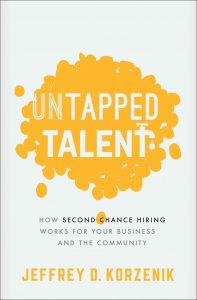
Jeff is the author of Untapped Talent: How Second Chance Hiring Works for Your Business and the Community (HarperCollins Leadership, April 2021), which shares the business case and best practices for hiring people with criminal records.

The book – the first and only work of its kind – shows that such “second chance” hiring, done right, delivers a loyal and engaged workforce.  Korzenik shows why companies will be challenged by multi-decade labor shortages but can gain a significant competitive advantage by developing talent pipelines from marginalized workers. While this is business, not charity, Untapped Talent argues that the path to a safer, more just America must be paved by the business community.

Website | LinkedIn

Mike Blake, Brady Ware & Company

Mike Blake, Host of the “Decision Vision” podcast series

Michael Blake is the host of the Decision Vision podcast series and a Director of Brady Ware & Company. Mike specializes in the valuation of intellectual property-driven firms, such as software firms, aerospace firms, and professional services firms, most frequently in the capacity as a transaction advisor, helping clients obtain great outcomes from complex transaction opportunities. He is also a specialist in the appraisal of intellectual properties as stand-alone assets, such as software, trade secrets, and patents.

Mike has been a full-time business appraiser for 13 years with public accounting firms, boutique business appraisal firms, and an owner of his own firm. Prior to that, he spent 8 years in venture capital and investment banking, including transactions in the U.S., Israel, Russia, Ukraine, and Belarus.

Brady Ware & Company

Brady Ware & Company is a regional full-service accounting and advisory firm which helps businesses and entrepreneurs make visions a reality. Brady Ware services clients nationally from its offices in Alpharetta, GA; Columbus and Dayton, OH; and Richmond, IN. The firm is growth-minded, committed to the regions in which they operate, and most importantly, they make significant investments in their people and service offerings to meet the changing financial needs of those they are privileged to serve. The firm is dedicated to providing results that make a difference for its clients.

Decision Vision Podcast Series

Decision Vision is a podcast covering topics and issues facing small business owners and connecting them with solutions from leading experts. This series is presented by Brady Ware & Company. If you are a decision-maker for a small business, we’d love to hear from you. Contact us at decisionvision@bradyware.com and make sure to listen to every Thursday to the Decision Vision podcast.

Past episodes of Decision Vision can be found at decisionvisionpodcast.com. Decision Vision is produced and broadcast by the North Fulton studio of Business RadioX®.

Connect with Brady Ware & Company:

Website | LinkedIn | Facebook | Twitter | Instagram

TRANSCRIPT

Intro: [00:00:01] Welcome to Decision Vision, a podcast series focusing on critical business decisions. Brought to you by Brady Ware & Company. Brady Ware is a regional full service accounting and advisory firm that helps businesses and entrepreneurs make visions a reality.

Mike Blake: [00:00:20] Welcome to Decision Vision, a podcast giving you, the listener, clear vision to make great decisions. In each episode, we discuss the process of decision making on a different topic from the business owners’ or executives’ perspective. We aren’t necessarily telling you what to do, but we can put you in a position to make an informed decision on your own and understand when you might need help along the way.

Mike Blake: [00:00:39] My name is Mike Blake, and I’m your host for today’s program. I’m a director at Brady Ware & Company, a full service accounting firm based in Dayton, Ohio, with offices in Dayton; Columbus, Ohio; Richmond, Indiana; and Alpharetta, Georgia. Brady Ware is sponsoring this podcast, which is being recorded in Atlanta per social distancing protocols. If you’d like to engage with me on social media with my Chart of the Day and other content, I’m on LinkedIn as myself and @unblakeable on Facebook, Twitter, Clubhouse, and Instagram. If you like this podcast, please subscribe on your favorite podcast aggregator, and please consider leaving a review of the podcast as well.

Mike Blake: [00:01:13] Today’s topic is, Should I hire former convicts? And when this topic was suggested to me, I thought it was a really cool topic. And it’s only dumb luck that I think it happens to be more timely now than it might be at other times that we have seen. I do not proclaim to be an expert in the criminal justice system. I’ve never served time. I’ve never been in a criminal matter or anything. But, you know, I have become familiar with the criminal justice system, I’ve toured the Atlanta City Jail. I’ve done ride-alongs and things of that nature, so I’ve seen some of it in action. I know some people who have worked both as prosecutors and public defenders.

Mike Blake: [00:02:03] And, you know, it’s a massive system and massive apparatus of justice. And, you know, in particular when you tour a jail or you do ride-alongs, you see a side of humanity that most of us don’t see. I think, frankly, we try hard not to see. None of us want to necessarily. Very few of us want to live in an area where crime is simply an everyday ho-hum occurrence. But for good or ill, crime is a fact of life. And the United States per capita, I think, has one of the largest and most extensive prison systems, certainly of any democratic society.

Mike Blake: [00:02:45] And a couple of data points, I think, jumped out. Almost one in three people in the U.S. has a criminal record of some kind, according to USA Today. That number shocked me. And data that I’ve seen shows that roughly 27 percent unemployment rate among former convicts. Actually, I’m kind of surprised it’s that low. I thought it might have been higher.

Mike Blake: [00:03:09] But now, here on May 11, 2021, we’re faced with a scenario that I have not encountered in my lifetime. And I don’t know that we’ve ever encountered really since before the baby boom, maybe World War II, which is, we have a labor shortage. We have widespread complaints in industry and among many industries that they simply cannot hire enough people, that there are mismatches between jobs desired, jobs being offered. People are simply deciding not to return to work because of their fear of exposure to coronavirus, particularly in high consumer touch industries.

Mike Blake: [00:03:52] And I think also based on things that I’ve read and anecdotally, I think some people are re-evaluating the cost of having a second income in the house. I think many families are reevaluating, saying, “You know, it’s really not worth it. Maybe we’ll have a lesser material standard of living in exchange for a life that we just think is better.” And I’m not going to sit and argue which is good and which is bad, but I think it’s undeniable that that’s happening. I don’t think that’s a very easy argument to sustain.

Mike Blake: [00:04:27] And so, this topic becomes timely because the questions really put to us now, can we, as a society, afford to marginalize large groups of labor? Can we afford to simply have millions, potentially, of able bodied men and women sitting this out when our economy desperately needs to get those people in the workforce? And by the way – and I’m sure our guest will talk about this at length on command of the data – there is something to the notion that, you know, idle hands are the devil’s playground. And one of the best ways that I understand you can prevent recidivism is simply to provide gainful employment to people once they exit the criminal justice system.

Mike Blake: [00:05:20] And so, given the fact I just think it’s a neat topic. It’s a neat social topic. And the fact that, now, we have this unusual confluence of factors creating, at least in my lifetime, a unique labor economy, I think it’s a very timely topic. And I hope that you’ll find it interesting. And I think we’re all going to learn something that we didn’t expect to learn.

Mike Blake: [00:05:44] And joining us is Jeff Korzenik, who is Chief Investment Strategist for one of the nation’s largest banks, where he is responsible for the investment strategy and allocation of over $40 billion in assets. A regular guest on CNBC, Fox Business News, and Bloomberg T.V. – I’m amazed they let you on all three of those at once, maybe we’ll get into that – his insights into the economy, markets, manufacturing, and the workforce are frequently cited in the financial and business press. His writings on economics and public policy have been published in Barron’s, Forbes, CNN, the Chicago Tribune, and other outlets.

Mike Blake: [00:06:19] In recognition of his work on the interaction of the criminal justice system and labor markets, Jeff was elected to membership in the Council of Criminal Justice. Jeff is the author of Untapped Talent: How Second Chance Hiring Works for Your Business and the Community, published by Harper Collins Leadership April 2021. So, it’s a brand new book with that brand new book smell. And it shares the business case and best practices for hiring people with criminal records. Jeffrey Korzenik, welcome to the program.

Jeffrey Korzenik: [00:06:47] Thanks so much, Mike. Great to be here.

Mike Blake: [00:06:49] So, I had a bunch of questions prepared, but I’m going to go off the script right away, because as I kind of learn about your bio and learn about you, the question that really jumps out is, why is this subject interesting to you? Why have you made this a big part of your life? Going through your background, there’s not an obvious connection. So, I’m curious, how have you made this your thing?

Jeffrey Korzenik: [00:07:12] You know, there are two answers to that. The straightforward answer is around 2013, 2014 the big topic among economists was the dropping out, the slowing of labor force participation rates, the decline in labor force participation rates. We couldn’t grow our workforce. And that’s one of the real pillars of economic growth. So, that’s one of the reasons we grew so poorly out of ’08, ’09.

Jeffrey Korzenik: [00:07:36] And I took it a step further and not merely observed this decline in labor force participation rate, I asked why. And I quickly came to the conclusion that the numbers the data told you that it was social ills that were hurting us in a way we’d never seen, at least in post-World War II America, long term unemployment, the opioid epidemic, and the incarceration recidivism cycle. So, it became very much part of my job, which is advising businesses and clients on economic trends. And then, I stumbled into some employers that had made it their practice to go into these marginalized groups, figure out how to bring them in, and bring them in successfully. So, that’s the straightforward answer.

Jeffrey Korzenik: [00:08:15] The deeper answer, I think, goes back to my childhood. Every family has someone who does the heavy lifting in their family. For me, it was my dad. Son of immigrants, raised absolutely dirt poor, enlisted in World War II at age 17, used the GI Bill which covered four years. So, he doubled up on classes and ended up, in four years, degrees from Harvard undergrad and Harvard Law, but never forgot his roots. And he would do these errands, which were really just excuses to visit the neighborhood.

Jeffrey Korzenik: [00:08:45] And when I was 10 or 12, something like that, I went with him on one. We stopped. He introduced me to a friend. He talked with him at length. He owned a junk shop or something. And as we walked away, my dad remarked that this gentleman had been in prison. And of course, I asked for what. And the answer, my dad told me, he was there for murder, a crime of passion. And my father said something that has just stuck with me forever. He said, “He’s done his time.” So, I think it’s combined with the economic necessity of looking at this issue, but with this sense that people who have served their sentence do deserve a second chance or at least can earn the right to that second chance.

Mike Blake: [00:09:23] Yeah. It gets into a much larger issue that I think we’re wrestling with now as a broader society. And we talked about things like student debt, for example. And I understand these things are not equivalent, but I do think there’s a parallel. Does one bad decision or even a series of bad decisions, should that be the driver to effectively ruin somebody’s life? And at what point is that justice or at what point is that serving a true social good? And so, that question fascinates me, I think, and that’s probably why I think this conversation fascinates me, because I do think there’s a parallel.

Mike Blake: [00:10:03] So, let me sort of cut to the chase. What’s your argument? Let’s take a real world example. We’ve got restaurants right now that cannot stay open as much as they like to because they simply do not have staff. Talk to me like I’m a restaurant owner or a general manager. Make the case to me that I should consider hiring somebody with a criminal record.

Jeffrey Korzenik: [00:10:27] Sure. The starting point is to recognize that my argument for business owners is purely an economic argument. I do not touch the ethical case. That’s for us as individuals to decide. But the labor shortage that you’re observing today is only going to get worse. We’ve got the baby boomers leaving the labor market on average for the next decade at 10,000 people a day are retiring. Baby boomers are retiring. The millennials are all in. And birth rates peaked in 1990. So, we just don’t have the people.

Jeffrey Korzenik: [00:10:59] So, the answer is to look where you haven’t looked before. And I guess the basic question is, why would you want to exclude the 19 million Americans who have a felony conviction and the millions more who have a misdemeanor? It’s not a case of saying all of them are employable. It’s saying that this is a very big pool that other business leaders have found or business pioneers have found can be tapped very successfully to get not just adequate employees, but actually highly engaged and loyal employees.

Mike Blake: [00:11:32] So, I want to geek out with you a little bit, sort of amateur economist on my end to economist on your end. And that is, can you also kind of make the case that because of the nature of somebody who has a criminal record as being, let’s call it, an apparent asset or stigmatized asset, for lack of a better term. In theory, economics would tell us just by drawing out the supply and demand curves that you ought to be able to get more or less the same quality of work but at a lower price, because you’re just in a different place on the demand curve.

Jeffrey Korzenik: [00:12:12] You know, what you find is, if those employers who have pursued this labor force as the cheapest labor force, it tends not to work that well. That doesn’t maximize it. It’s all about getting the right employee. And I think most business owners would share that sentiment. It’s not about getting the cheapest. It’s about getting the one that’s the best fit for the job.

Jeffrey Korzenik: [00:12:34] But what I would say is that, the model that I talk about that works requires two processes. One, how do you identify who’s ready to work? And two, how do you equip them to thrive? And that model would work anywhere. That model would work for people coming out of Harvard Business School. But the difference is, everyone from Harvard Business School was picked over already. This is truly this untapped talent pool. And so, that’s why it’s so effective. It may not be effective ten years from now, but it’s effective today because you have such a diverse group. Given the numbers, you can find some fabulous, fabulous employees and really good people in there who’ve just made a mistake.

Mike Blake: [00:13:14] So, I want to come back to that, because I think that’s a deep topic that I want to spend some time on. But before we get to that, are there any kind of programs that offer incentives for businesses to hire people out of the prison system?

Jeffrey Korzenik: [00:13:30] There are, and these are administered at the state level. The most commonly known one is the Work Opportunity Tax Credit, which provides some subsidies for employers. Again, I go back to, there are employers out there – I call this in my book, I refer to this as the disposable employee model – who are really just in it for cheap employees and where the wages are subsidized. But the model that really maximizes the economic opportunity is one that does tap those tax credits, but use it to help with training and support features. And that’s where you really maximize it. Generally, payroll companies can help. That’s a good way to access this. Almost any payroll company is familiar with this and can help with the administration.

Mike Blake: [00:14:15] So, I would have to imagine, I haven’t really been in the scenario myself. But I have to imagine that one of the biggest fears, if not the biggest, for a potential employer considering this kind of move is, how do you get comfortable with somebody that you know has a track record of doing one or more bad things and they’ve paid their debt to society, but they could incur another debt, right?

Jeffrey Korzenik: [00:14:42] Absolutely.

Mike Blake: [00:14:45] How do you address that fear or what advice do you give to business owners and hiring managers to address that fear in order to manage that risk, if you will?

Jeffrey Korzenik: [00:14:54] My advice is, don’t go it alone. There are many non-profit and some government partners that you can use that as long as you vet these partners appropriately and set the right expectations, they have time to build relationships sometimes even before release from prison, many times after release from prison, or there are many people with felonies who never served a prison term. But they can help you, as the employer, identify who’s truly ready. So, it’s essentially just another kind of referral network, but one that is largely based on character, where you’re asking them to identify who’s got the character to do this right.

Mike Blake: [00:15:35] And are those organizations easily identifiable? Can you find them through Department of Labor or Google them?

Jeffrey Korzenik: [00:15:41] Yes. So, around the country are these American job centers. There’s a website career, onestop.org, that helps you locate the ones in your area. That would be a starting point. I give many other suggestions in the book. But there’s national organizations, like Goodwill, that have active reentry programs. But very often it might be the local church. So, you have to invest some time in researching who’s the right partner for you and your business.

Mike Blake: [00:16:10] Okay. Now, I’m curious, in that support system, that information network, do prisons or jails themselves, or does the criminal justice system itself, provide any information? For example, if I’m a hiring manager, could I ask information about how well-behaved that prisoner was or how well they engaged in their rehabilitation programs? Did they overcome alcoholism, drug use, things of that nature? Is that information available from the prison system?

Jeffrey Korzenik: [00:16:41] There are absolutely ways to do that. Usually, where I’ve seen that done most commonly is places that have already built a relationship with facilities and have kind of a developmental partnership going on.

Mike Blake: [00:16:55] I’m curious – I have my own view on this, but I’m curious as to your view because you had more conversations like this – you know, are prison managers, I guess, wardens, executives, are they engaged as well? I mean, do they seem like they really want to help the prisoners reenter?

Jeffrey Korzenik: [00:17:14] There is no single answer. It varies very much between states, and even between facilities, and even between professionals and facilities. I would say that there has been a very strong movement towards prison officials recognizing that they’re job is not just to lock people up, but a broader sense of pushing for public safety, which means successful reentry. So, it is getting there. Some states and some facilities are fantastic at it, but it’s not uniform.

Mike Blake: [00:17:47] And have you noticed if there’s any distinction between privately run prisons versus state run prisons in terms of whether they seem to do a better job or worse job with preparing convicts for reentry?

Jeffrey Korzenik: [00:18:02] You know, there’s so few private prisons. It’s roughly seven percent, I think, of the prison population is in private prisons. But I don’t think that there is a particular distinction. Those contracts, you get what you pay for. So, the economists would call this a monopsony, where you have one buyer, the state, and several providers. And so, in those cases, the buyer, the state, really gets to dictate the terms. So, I think some of the folks of these private prison companies have told me, if a state approached them and wanted to do a performance based contract where the performance was based on better outcomes, they’d absolutely do that. So, I don’t think there’s a better or worse in terms of those outcomes.

Mike Blake: [00:18:53] And just as an aside, you get a gold star for using the word monopsony. I love that word. You don’t hear it very often outside of economic circles. So, that’s going to be one of the best of 2021 clips for the podcast.

Mike Blake: [00:19:10] A theory I have is, I wonder if the prison experience can actually lead to someone becoming a better employee than maybe they had been prior to entry. Not many prisoners, many convicts, had jobs. They may very well have committed their crime on the job. In your experience or in what you studied, does being in prison somehow with the regimentation or something, can that make somebody a better employee?

Jeffrey Korzenik: [00:19:44] It can in several odd ways. For one, criminologists have long noted that people age out of crime. And so, as the father of young men who were once teenagers, if I could have locked them up for ten years until their brains matured, it sounds pretty appealing. And there’s a little bit of a sense of a lot of mistakes that get people into trouble with the law are really mistakes made by young men. The prison system is disproportionately young men who have very poor judgment about risk, and delayed gratification, and things like that, that get them into trouble.

Jeffrey Korzenik: [00:20:24] So, there’s a sense that just time can help. But it can be wake up calls for people. I think we’ve all, in our lives, had times where we stumbled – presumably not in a criminal way – and not lived up to who we would like to be ourselves. And people of character, including some people, make criminal mistakes, pick themselves up, and are determined to be better people and live up to their aspirations.

Jeffrey Korzenik: [00:20:56] And then, finally, you realize that so many people who go into prison, particularly, again, young men, just had a very limited view of the world and didn’t know what’s out there and how to think. And some good prison programs really help with some virtue based training. And sometimes prison ministries have turned people’s lives around. And sometimes it stops the cycle of addiction. I’ve had several friends of mine who are formerly incarcerated tell me that prison saved their life because it broke their cycle of addiction.

Mike Blake: [00:21:31] And to that point, I wonder also, you know, years ago, I toured the Atlanta City Jail with a program in Atlanta. And, you know, one of the things that struck me – many things struck me – was how many of the inmates clearly had some sort of mental illness. And it’s almost too tempting to turn the show into on a mental illness show, but we’re not going to do that. But I think we both know that there’s a lot of mental illness that’s in the prison system. And, you know, it seems like there are opportunities for people to get treated for that as well that can help them.

Jeffrey Korzenik: [00:22:14] Yeah. You recognize that a lot of people who have committed crimes were victims of crimes. That doesn’t really change the need to have a criminal justice system. But it’s an important perspective because you realize that a lot of people had childhood trauma, trauma later in life, and that impacts how they think and that can drive criminal behavior. The challenge becomes, this is a group that’s very hard to advocate for in budget circles. Mental health treatment costs money and is a use of resources. And it’s very hard, I think, for our policymakers to say, “Here are people who have messed up, maybe hurt people, damaged property, we’re going to provide them with free resources.” It’s a good investment. But it’s something that is very hard to advocate for politically.

Mike Blake: [00:23:08] Yeah. I mean, it is hard to get people excited about trying to take care of those that have, in some way, been deemed to harm society, especially because it’s not like we have unlimited resources.

Mike Blake: [00:23:28] I’m going to change gears a little bit. To me, in my simple minded way, I think of offenders as being violent versus nonviolent. And I would speculate those have different risk profiles. They may even have different skill profiles. You know, you actually have to be pretty smart to steal millions of dollars of money from a corporation over time. There’s some skills to do that. So, my question is, does the discussion change about hiring somebody with a criminal record if that criminal record is violent versus non-violent?

Jeffrey Korzenik: [00:24:07] You certainly want to hire people who are non-violent, but that doesn’t mean you exclude people who are convicted of a violent crime. And what you recognize is that, very often, people who were convicted of violent crimes – which is actually the plurality of people in the prison system, it’s not quite over half – if you look at property crime, drug crime, and violent crime, more are in for violent crime than those other two categories. But when you dig into it, you realize a lot of that is mistakes of youth, being in the wrong place at the wrong time, sometimes its connection to the drug industry, illicit drug industry.

Jeffrey Korzenik: [00:24:54] You know, a friend of mine who has 500 second chance employees in the Philadelphia area, he said most of these guys are in the drug business. If you’re in the drug business, you’re protecting your inventory. If you’re protecting your inventory, that means having a gun. And young men with tempers and hormones and all that with guns present is a really bad recipe.

Jeffrey Korzenik: [00:25:18] So, people who’ve been convicted of violent crimes, very often, were not innately violent people. Wrong place, wrong time, bar fights, under the influence of drugs or alcohol, immature. And they tend to have served longer sentences, which means when they come out, they tend to have had more time to reflect. They tend to have aged out of crime. So, you know, one of the reasons we’ve had such little success in reentry is because every employer’s first instinct is, “Oh, I just want to talk to people drug crimes”, because that’s not violent. And very often it’s people, they are still young, still sometimes addicted.

Jeffrey Korzenik: [00:25:57] In general – you shouldn’t use generalities in your decision making – the better bet is actually one time violent offenders is usually a much better bet statistically. That being said, it all boils down to an individual assessment. Look at the person as a person. Look at the very specific circumstances of the criminal act.

Mike Blake: [00:26:24] That is really interesting, so I just learned something today. And that makes a lot of sense to me. You know, a violent act could just be a one time outburst. And you do it, you pay for it, you’re done. But, as we know, a lot of people never fully shake addiction. And addiction is just so thoroughly malevolent that the track record of shaking it, even under the best of circumstances, is problematic.

Mike Blake: [00:27:06] So, I’m curious, have you been exposed to or studied any data that measures the performance of ex-convicts as employees? Do they tend to do worse, better, about the same as their cohort with their peers with no criminal record? What does that look like?

Jeffrey Korzenik: [00:27:28] So, it gets down to the model of employment. If you ask someone who’s done a disposable employee model, maybe a fast food restaurant where they’re just after the tax credit. The people stay six months, nine months, and they’re not very selective. They’re just after the cheap labor solution. They’re not great, but they’re cheap. But if you look at the models that really maximize the economic opportunity, where there’s a selection process and the support process, that’s where you see the data really shines.

Jeffrey Korzenik: [00:28:01] And there are two large scale studies, one done by the Johns Hopkins Hospital system, when they released the data at the time they had 500 second chance hires. The other was, interestingly, the U.S. Military. The Military study was actually done outside the military, at UMass Amherst. University of Massachusetts Amherst professor who used Freedom of Information Act to get performance statistics from people who had gotten felony waivers to enlist. Both studies show the same thing. People with records selected right and supported appropriately are not just employees, they’re actually superior employees, and they tend to be more loyal and more engaged. And you can see that along any number of metrics.

Jeffrey Korzenik: [00:28:48] There aren’t a lot of studies out there. There are more coming. I know one done by another company that I spoke to the people who did the study. Again, all the studies affirm this, but it’s a matter of putting the right model in place.

Mike Blake: [00:29:03] So, accepting the fact that the studies so far are limited more in the pipeline, but the ones you’re citing seemed to be pretty positive. Why do you think that is? What is it? Is it simply motivation or is it something else that –

Jeffrey Korzenik: [00:29:18] It’s very much motivation. People who have had criminal justice interaction know that when they’re given an opportunity, it’s a rare thing. So, they tend to be very grateful for it. And, again, we go down back to that analogy in our lives, when you stumble and you pick yourself up, you’re more determined than ever. So, it’s a combination of determination to rebuild a life. And, also, to appreciation, which translates to loyalty and low turnover rates. And it may also be low turnover for the wrong reason. People don’t have the mobility to go to other firms and so they stay in place. But either way, it benefits the employer.

Mike Blake: [00:30:05] And I’m curious about one thing. You know, we hear the stories every once in a while, somebody while in prison obtains a law degree, or a Ph.D., or something like that. You know, I don’t know if those are the exception to the rule, they seem to me like they might be exceptional. But from a broader sense, are there skills that people pick up in prison, maybe either hard or soft skills that make them better employees coming out than they might have been going in?

Jeffrey Korzenik: [00:30:32] I’m a skeptic of that. You know, I hear they’re more entrepreneurial, which may be true. I think it’s not so much hard skills as a matter of character. The term that I constantly hear applied to second chance employees is, they have grit. They can navigate risk. They can bounce back. So, those are the things that – I think from the standpoint of many employers – is even more attractive than a single skill.

Mike Blake: [00:31:03] That’s interesting. And I probably finished the book, Grit by Angela Duckworth, earlier this year. And that’s interesting that I would not have expected that answer necessarily, because my understanding or my impression from what I’ve seen about the prison system is that, in order to maintain kind of basic order that the prison staff needs to establish themselves kind of as the alphas. Because they’re outnumbered hundreds to one in some cases. They’re not allowed to carry firearms inside the facility, et cetera.

Mike Blake: [00:31:41] And from what I’ve seen, in order to establish that, there really is a psychological assault to compel a prisoner basically to understand their place, for lack of a better term. Which, to me, it sounds like that would be something that would be kind of anti-grit. But what you’re describing sounds that, you know, the fact that they’re coming out with more grit, to me, is a little counterintuitive. But I mean, it’s encouraging because that clearly is such a better for life.

Jeffrey Korzenik: [00:32:08] I think some of it has to do with the reentry process. I spend some time in the book educating prospective employers about all the hurdles that someone coming out of prison has to go through, you know, housing, documentation, learning some basic electronic skills. You know, they might have gone in before cell phones were around or smartphones were around. And when you think about all the things you have to overcome just to be ready to apply for a job, and along the way face rejection after rejection, not just for jobs, but often for housing, the people who you get to at the other end, those are the ones with grit. So, perhaps they didn’t develop it in prison, but they sure as heck developed it along on the pathway out, at least the ones who are to the point of being ready to work.

Mike Blake: [00:33:01] So, we touched on the notion of due diligence at the start of the conversation, I’d like to circle back to that. From practical experience, if somebody listening on this podcast is considering – and I like your terms. I’m going to try to remember to adopt it – a second chance hire, what are red flags that someone should be aware of?

Jeffrey Korzenik: [00:33:25] Sure. I mean, repeat offenses and a sense, particularly with regard to addiction, that someone is not ready would be important. You do as an employer have the right to ask questions. And I think you get a sense of who owns this in their life and takes responsibility for this. You get to ask all sorts of questions about what would make this different. And so, I think there’s a process, and particularly if you rely on experienced outside partners, that they can handle a lot of this, getting rid of the red flags for you.

Jeffrey Korzenik: [00:34:01] But there’s a whole host of things you want to check for. Is emotional management an issue? Is work ethic, work experience? Addiction has been dealt with or traumas have been dealt with? How are they thinking? And these are things that good in-prison programming can help with, a tremendous amount of post-prison programs helping this as well. So, that’s why I always think you want a partnership with someone who can really attest to the character of the person.

Mike Blake: [00:34:33] Navigating that sounds very complex and with information coming from a lot of sources, so I can certainly see that in that case. Having a partner, especially if it’s a nonprofit, I presume that means those services are generally free or very inexpensive.

Jeffrey Korzenik: [00:34:48] Yes. And, you know, it is a responsibility of a business owner. If this is your talent pipeline of good people, you should be supporting that nonprofit, too. And a lot of these businesses do that in various ways. But, ultimately, it’s an investment and it’s a worthwhile investment. There are also, I should mention, temp staffing agencies that focus on this. And so, they do (A) a part of the vetting, but (B) as an employer, you can do a temp to hire. And a lot of programs use that.

Jeffrey Korzenik: [00:35:22] Tempt to hire has drawbacks, normally, in a tight labor market. Because the best candidates in temp to hire get snatched up right away or don’t need to go that route. But, again, this is an untapped resource, so the negatives of temp to hire for other populations aren’t negatives here.

Mike Blake: [00:35:43] Is there a particular success story of a second chance employee that you can think of maybe you can tell the audience about that can wet their appetite, at least, for what could be if they go this route?

Jeffrey Korzenik: [00:35:56] You know, there are so many stories, but I always like to share the one that I made the case study chapter of my book. My book is filled with actual business owners that have done this and some of the outcomes they’ve had. But I focus in particular on a company in Lebanon, Ohio, called JBM Packaging. And I chose them because they didn’t come to this for any kind of ethical reason – I mean, very ethical ownership. But they did it for a traditional reason, they couldn’t find talent. And they tried other pools. And that’s how they came to this.

Jeffrey Korzenik: [00:36:33] And it’s a second generation family business. They set up what they call their Fair Chance Hiring Program. And, ultimately, more than 20 percent of their 150 employees/associates are second chance, or fair chance in their terminology. It has solved their labor problem. They’ve expanded the program. They even found one of their former employees had gotten into trouble, was in the Ohio Prison system. They petitioned the prison authorities to have him transferred to another facility where they could install a folding machine. That’s part of what they do. And so, they have an in-prison training program. They pay a training stipend. Any product coming out of there, they recycle. They don’t want any question about whether they’re conducting prison labor or not. And they’ve got a pipeline now, not just of entry level, but of trained talent coming out with a former employee as the trainer.

Mike Blake: [00:37:29] Talk about a vertical integration. That’s a great story. And how long has that program been going on, do you know?

Jeffrey Korzenik: [00:37:38] About three, four years. A breakthrough moment for them was hiring a life coach that’s for their employees. And it’s not just a matter of making sure there are support resources. A lot of people who come out of these situations, life situations in prison, don’t even know how to tap resources. They just don’t know how to navigate these things. So, it’s very helpful. They’ve had a tremendous success with this program. And, ultimately, transformed the whole company. They’re now very involved in other areas of innovation, not just innovation and hiring, but innovation and packaging. Moving from plastics to paper packaging, for instance. So, it’s transformed the company in very, very positive ways.

Mike Blake: [00:38:27] In your experience or based on what you’ve seen, are there certain industries or maybe kinds of companies that lend themselves better to hiring second chance employees than others?

Jeffrey Korzenik: [00:38:38] You know, I think, again, I go back to the size of this talent pool and there could be a fit for just about every industry. That being said, manufacturing has been the easier fit. And it’s the easier fit because manufacturing roles typically aren’t customer facing. So, some of the reputational concerns or fears that employers might have aren’t an issue. People aren’t handling the money. So, you don’t have those issues. And they tend to be middle skill jobs, things you can train for that don’t require a college degree, and pay a pretty good wage. And so, that’s also helps people sustain this. So, the biggest successes I’ve seen have tended to be manufacturing, but it is not because it doesn’t work well in other industries.

Mike Blake: [00:39:24] So, are there best practices that have evolved in terms of onboarding a second chance employee? And I would have to imagine that needs to be treated or ought to be treated a little bit differently than your conventional garden variety employee. And if so, can you share kind of some tips in that regard?

Jeffrey Korzenik: [00:39:44] I think it’s a recognition that you need a little bit more flexibility because you don’t know what you don’t know. I’ll give you an example. CKS Packaging, another big packaging company based in Atlanta, but they’re in maybe a dozen other locations around the country. They started the program and like most goods manufacturing companies, they had a no show, no call, no job rule. And when they started this, they found that, an otherwise very good second chance employee didn’t show up and didn’t call.

Jeffrey Korzenik: [00:40:17] And the initial response, the H.R. person was, “Okay. We’ll terminate them.” And Lloyd Martin, the executive who led this program, said, “You know, I think we need to find out more.” And so, they went to visit him because they had helped the employee, helped him establish some housing, knocked on the door, and he was there. They said, “Why weren’t you in work?” And he said, “Well, I’m sick. You don’t want me to come in when I’m sick, do you? And I can put on a coat and I can come.” They said, “No. No. You did the right thing. Why didn’t you call?” And the gentleman said, “Mr. Lloyd, I don’t have a phone. I don’t have any friends with phones. In fact, I don’t really have any friends.” And that person is still there several years later.

Jeffrey Korzenik: [00:40:56] And that kind of flexibility and need to understand that there’s a lack of mentorship. Other areas of flexibility that can come up are things like policies that allow people to go visit parole officers or, better yet, create a space within the facility, especially if you have multiple employees who are on parole where parole officers can come to the facility and not disrupt the work day. Those are the kind of things that come up.

Mike Blake: [00:41:22] This borders on a legal question, but I’ll ask it anyway. If you want to beg off, you’re welcome to do so. But in your mind, do other employees have a right to know if a new hire, someone who they’ll be working next to and with, has a criminal record?

Jeffrey Korzenik: [00:41:38] No. No more than you have a right to know another employee’s medications or medical history. The reality is, in this day and age, companies that have second chance programs, I think people probably go on Google and see what they can find. But there is no employer/employee right to that kind of information.

Mike Blake: [00:42:00] We are talking to Jeffrey Korzenik, and the topic is, Should I hire former convicts? So, you know, we talked about onboarding, but then you started to touch upon this, and I do want to dig into it because I think this could really be interesting. People that are second chance employees, do they need to be managed, led, trained differently than somebody that does not have that prison experience in their background? And if so, what are some best practices to kind of get the most out of those people?

Jeffrey Korzenik: [00:42:32] You know, I don’t think necessarily. But you do need support networks for other things. If you’ve hired the person ready to turn their life around, you’ve got all sorts of great motivation and character. But it tends to be other things that get in the way. And those tend to be transportation, housing, just not knowing what they don’t know. One company that I’ve worked with, Cascade Engineering, makes available for their supervisors a poverty simulation, which I think is a great way to help sensitize supervisors to the challenges of being deeply poor. And that often characterizes this group.

Jeffrey Korzenik: [00:43:14] But, again, you know, it’s 19 million people, you might have someone who’s ten years out of incarceration, successfully rebuilt their life, who furthered their education. That’s just another employee. And it doesn’t need any special consideration other than the opportunity.

Mike Blake: [00:43:30] Heck, you may hire somebody that stole $10 billion, the feds only found nine. So, you know, they could be loaded and they’re just drawing something out of the Cayman Islands. So, you can’t necessarily make assumptions. But I love that. I’m going to Google that to see if there’s something like that out there. That poverty simulator, I think, is so important because as I studied decision making, one of the things I’ve learned is that being in poverty on average lowers one’s functional IQ by 10 to 15 percent. Simply by virtue of the fact that you’re in constant existential – not existential spiritual, but existential living and your family to live, that you become effectively 10 to 15 percent dumber on average. Which means some people become 40 percent dumber on average.

Jeffrey Korzenik: [00:44:23] And understanding that an environment does cause people to be less than their best selves and may make lousy decisions, I think, creates empathy and helps you understand where the employee is coming from. And, therefore, for example, that employee that didn’t have a phone. You got to take the time to check.

Jeffrey Korzenik: [00:44:49] I managed many people over the years – this was a reach – but I had something like 50 direct reports in this insane set up years ago. And it’s our responsibility as business people/managers to foster the growth of our employees. Give them pathways to being the best employee they can be. And that does require a sensitivity to where they’re starting from and giving them some runway to succeed.

Mike Blake: [00:45:21] A couple more questions before we let you go, we’ve talked a lot about the case for companies to give people that second chance, make that second chance higher. Can you think of a profile of a hiring manager or a company that maybe shouldn’t try to go down that path? Who’s a bad fit on the hiring side for the second chance employee?

Jeffrey Korzenik: [00:45:43] I don’t think there’s any real answer to that other than to note it’s a matter of commitment and recognition that this is an investment and will require a change of processes. So, it doesn’t matter the industry. But if you are just in transient and just not willing to make change and commit to this, it’s not going to work. It is important, though, that many businesses do have regulatory restrictions. I work for a bank, we are restricted in who we can hire. Defense contractors are another great example of that. But I always tell employers, check the specifics. Because, in general, people tend to think all doors are closed when it’s just some doors.

Mike Blake: [00:46:32] Yeah. You know, I’m kind of thinking, unfortunately, even in 2021, there are employers that treat labor in a way that I don’t agree with. They treat them as quasi-disposable. And you’ve kind of hinted upon this, but I’d like to underline it because I think it’s an important point. It sounds like what you’re saying is, if you’re trying to hire second chance employees because you just think you’re getting a great deal – and by a great deal, I’m going to use just an inflammatory term – getting slave or quasi-slave labor, that’s not going to work out well. Do something else.

Jeffrey Korzenik: [00:47:09] And it’s not going to work for the company in the long term because we’re coming into a new environment. We have never seen a labor shortage – and you referred to this earlier, Mike – of the likes that we are entering into and it’s going to persist for years and probably decades. And so, business models that assume there was this unending supply of cheap labor aren’t going to work anymore.

Mike Blake: [00:47:34] And, you know, you pointed something out that I kind of knew in the back of my mind, but I didn’t put together until now or until this discussion. I want to thank you for that. This is not new. This is simply an accelerating trend that we’ve seen since, at least, 2010, if not earlier. And it’s because of simple demographics. You know, we ain’t making people as quickly as we’re losing people in the labor force, basically. And since immigration, no matter what side of the issue you’re on, it’s a hot mess. That’s not going to come to our rescue.

Jeffrey Korzenik: [00:48:12] Well, and this declining birth rates and fertility is a global phenomenon, too. So, among developed countries, there’s only one country that has a fertility rate above even the replacement rate of its population, and that’s Israel. And there aren’t enough Israelis to go around for the world labor needs.

Mike Blake: [00:48:31] No. Their country is seven million, there’s only so much they can do. Jeffrey, this has been a fun conversation and very informative. And you have such great command of the subject matter. If somebody wants to contact you with a follow up question or maybe they want to talk about something that we didn’t get to, how can people contact you for more information?

Jeffrey Korzenik: [00:48:51] Sure. I have a contact form on my website. My website is jeffkorzenik.com. I do my best, I have gotten a lot busier with the book’s launch, but I do try to get back to people. Again, jeffkorzenik.com, which means you have to be able to spell Korzenik, K-O-R-Z-E-N-I-K. I’m the only Jeff Korzenik on the planet, so if you can spell the last name, you can find me.

Mike Blake: [00:49:14] All right. Well, that’s going to wrap it up for today’s program. I’d like to thank Jeff Korzenik so much for joining us and sharing his expertise with us. We’ll be exploring a new topic each week, so please tune in so that when you’re faced with the next business decision, you have clear vision when making it. If you enjoy these podcasts, please consider leaving a review with your favorite podcast aggregator. It helps people find us that we can help them.If you like to engage with me on social media, with my Chart of the Day and other content, I’m on LinkedIn as myself and @unblakeable on Facebook, Twitter, Clubhouse, and Instagram. Once again, this is Mike Blake. Our sponsor is Brady Ware & Company. And this has been the Decision Vision podcast.


Tagged With: Jeff Korzenik, labor shortage, second chance hiring, talent acquisition, Untapped Talent

Business RadioX ® Network


Our Most Recent Episode

CONNECT WITH US

  • Email
  • Facebook
  • LinkedIn
  • Twitter
  • YouTube

Our Mission

We help local business leaders get the word out about the important work they’re doing to serve their market, their community, and their profession.

We support and celebrate business by sharing positive business stories that traditional media ignores. Some media leans left. Some media leans right. We lean business.

Sponsor a Show

Build Relationships and Grow Your Business. Click here for more details.

Partner With Us

Discover More Here

Terms and Conditions
Privacy Policy

Connect with us

Want to keep up with the latest in pro-business news across the network? Follow us on social media for the latest stories!
  • Email
  • Facebook
  • Google+
  • LinkedIn
  • Twitter
  • YouTube

Business RadioX® Headquarters
1000 Abernathy Rd. NE
Building 400, Suite L-10
Sandy Springs, GA 30328

© 2025 Business RadioX ® · Rainmaker Platform

BRXStudioCoversLA

Wait! Don’t Miss an Episode of LA Business Radio

BRXStudioCoversDENVER

Wait! Don’t Miss an Episode of Denver Business Radio

BRXStudioCoversPENSACOLA

Wait! Don’t Miss an Episode of Pensacola Business Radio

BRXStudioCoversBIRMINGHAM

Wait! Don’t Miss an Episode of Birmingham Business Radio

BRXStudioCoversTALLAHASSEE

Wait! Don’t Miss an Episode of Tallahassee Business Radio

BRXStudioCoversRALEIGH

Wait! Don’t Miss an Episode of Raleigh Business Radio

BRXStudioCoversRICHMONDNoWhite

Wait! Don’t Miss an Episode of Richmond Business Radio

BRXStudioCoversNASHVILLENoWhite

Wait! Don’t Miss an Episode of Nashville Business Radio

BRXStudioCoversDETROIT

Wait! Don’t Miss an Episode of Detroit Business Radio

BRXStudioCoversSTLOUIS

Wait! Don’t Miss an Episode of St. Louis Business Radio

BRXStudioCoversCOLUMBUS-small

Wait! Don’t Miss an Episode of Columbus Business Radio

Coachthecoach-08-08

Wait! Don’t Miss an Episode of Coach the Coach

BRXStudioCoversBAYAREA

Wait! Don’t Miss an Episode of Bay Area Business Radio

BRXStudioCoversCHICAGO

Wait! Don’t Miss an Episode of Chicago Business Radio

Wait! Don’t Miss an Episode of Atlanta Business Radio