Business RadioX ®

  • Home
  • Business RadioX ® Communities
    • Southeast
      • Alabama
        • Birmingham
      • Florida
        • Orlando
        • Pensacola
        • South Florida
        • Tampa
        • Tallahassee
      • Georgia
        • Atlanta
        • Cherokee
        • Forsyth
        • Greater Perimeter
        • Gwinnett
        • North Fulton
        • North Georgia
        • Northeast Georgia
        • Rome
        • Savannah
      • Louisiana
        • New Orleans
      • North Carolina
        • Charlotte
        • Raleigh
      • Tennessee
        • Chattanooga
        • Nashville
      • Virginia
        • Richmond
    • South Central
      • Arkansas
        • Northwest Arkansas
    • Midwest
      • Illinois
        • Chicago
      • Michigan
        • Detroit
      • Minnesota
        • Minneapolis St. Paul
      • Missouri
        • St. Louis
      • Ohio
        • Cleveland
        • Columbus
        • Dayton
    • Southwest
      • Arizona
        • Phoenix
        • Tucson
        • Valley
      • Texas
        • Austin
        • Dallas
        • Houston
    • West
      • California
        • Bay Area
        • LA
        • Pasadena
      • Colorado
        • Denver
      • Hawaii
        • Oahu
  • FAQs
  • About Us
    • Our Mission
    • Our Audience
    • Why It Works
    • What People Are Saying
    • BRX in the News
  • Resources
    • BRX Pro Tips
    • B2B Marketing: The 4Rs
    • High Velocity Selling Habits
    • Why Most B2B Media Strategies Fail
    • 9 Reasons To Sponsor A Business RadioX ® Show
  • Partner With Us
  • Veteran Business RadioX ®

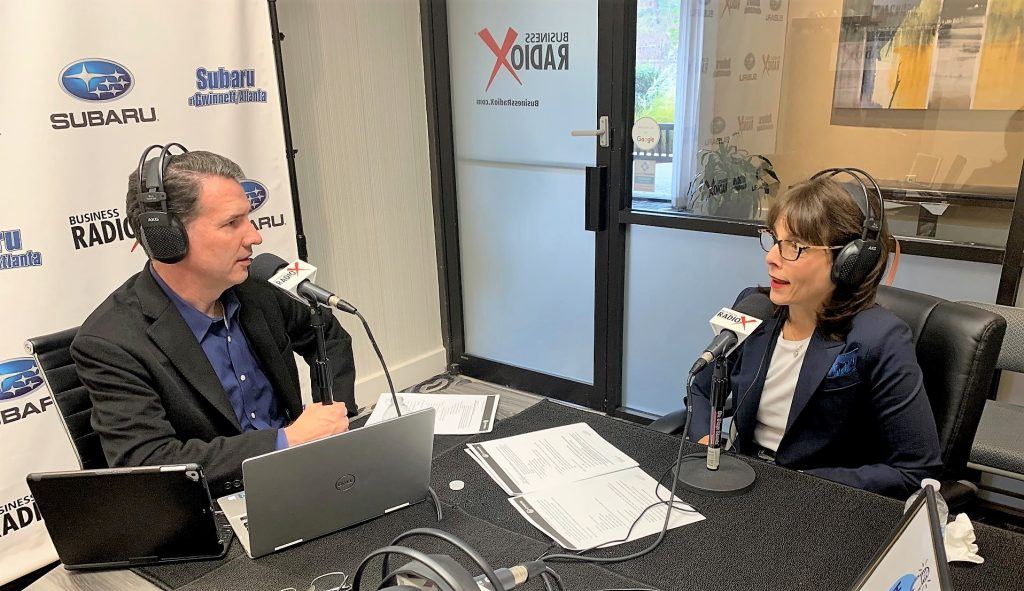
Diana Murphy of Diana Murphy Coaching

November 21, 2019 by Mike

ePresence
ePresence
Diana Murphy of Diana Murphy Coaching
Loading
00:00 /
RSS Feed
Share
Link
Embed

Download file

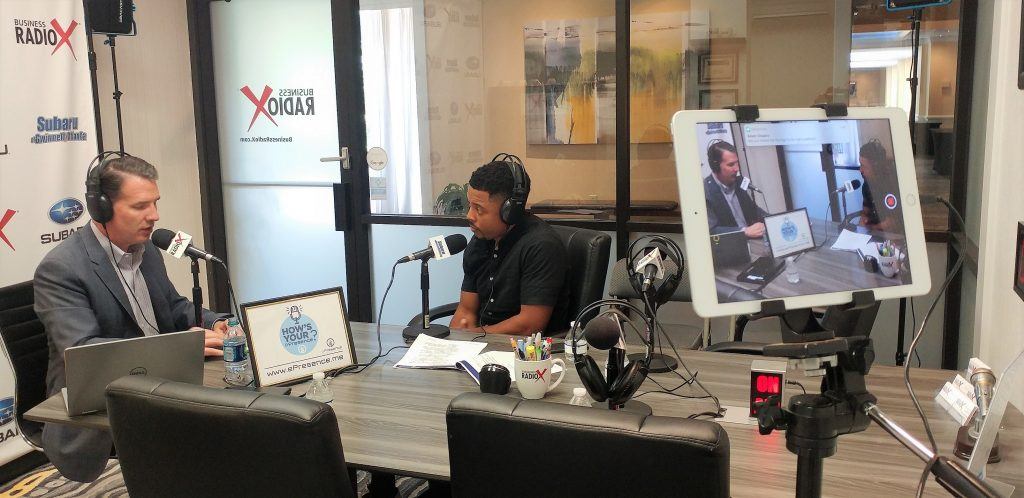
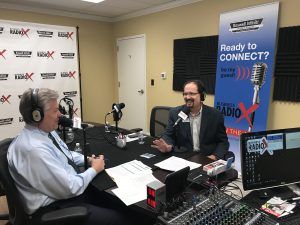
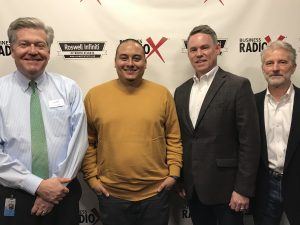
Mark Galvin and Diana Murphy

Diana Murphy/Diana Murphy Coaching

Diana Murphy is a life coach and mindset coach for CEOs. She loves helping overwhelmed CEOS and entrepreneurs grow and reach their business goals while they take great care of their health and life. The goal is to create a sustainable business and amazing life no matter the obstacles that appear during growth and transition

Mark Galvin/ePresence

ePresence provides personal branding services for individuals, executives and entrepreneurs. They leverage social media on an individual level since that is where the audience is most engaged. Mark Galvin, CEO and Founder of ePresence, is a personal social media expert with 29 years of business management and hotel industry experience including stops with Marriott, Hyatt, Omni and IHG.
Tagged With: diana murphy, diana murphy coaching, epresence podcast, epresence radio, How's Your ePresence?, hows your espresence, LinkedIn, linkedin branding, Mark Galvin, online branding, Radiox, Social Media, social media marketing, social media podcast

Steve Galvin with LexisNexis

September 19, 2019 by Mike

ePresence
ePresence
Steve Galvin with LexisNexis
Loading
00:00 /
RSS Feed
Share
Link
Embed

Download file

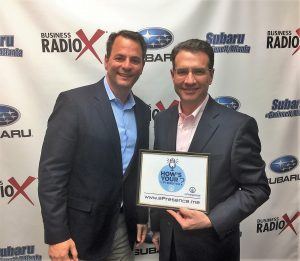
Mark Galvin and Steve Galvin

Steve Galvin/LexisNexis

This month’s guest is Steve Galvin and he joins his older brother, Mark Galvin, to talk about his three-year fight with pancreatic cancer. Steve is a sales executive with LexisNexis, but this episode focuses on his ongoing fight against cancer.

Steve’s story is rather incredible. From losing 115 pounds, to the mental anguish caused by chemotherapy, this is a story that shares how difficult it is to fight cancer and the toll on loved ones.

This is a departure from the social media conversation Mark normally focuses on, but we all need to hear this story since we all deal with cancer, either through a friend, loved ones, or personally.

Mark Galvin/ePresence

ePresence provides personal branding services for individuals, executives and entrepreneurs. They leverage social media on an individual level since that is where the audience is most engaged. Mark Galvin, CEO and Founder of ePresence, is a personal social media expert with 29 years of business management and hotel industry experience including stops with Marriott, Hyatt, Omni and IHG.

Tagged With: diagnosed with cancer, digital media, digital media marketing, ePresence, fighting cancer, How's Your ePresence?, lexis nexis, LexisNexis, LinkedIn, Mark Galvin, oncologist, pancreatic cancer, Social Media, social media marketing, steve galvin, surviving cancer, whipple surgery

Brian Fitch with the Carbon Thread Agency

August 15, 2019 by Mike

ePresence
ePresence
Brian Fitch with the Carbon Thread Agency
Loading
00:00 /
RSS Feed
Share
Link
Embed

Download file

Mark Galvin and Brian Fitch

Brian Fitch/Carbon Thread Agency

Carbon Thread is a boutique digital and creative agency comprised of professionals bringing years of digital strategy experience. They have executed specialized digital marketing campaigns for businesses and personalities that have left their mark on a variety of areas. Each campaign Carbon Thread executes is designed to boost their client’s creative efforts across the digital space.


Mark Galvin/ePresence

ePresence provides personal branding services for individuals, executives and entrepreneurs. They leverage social media on an individual level since that is where the audience is most engaged. Mark Galvin, CEO and Founder of ePresence, is a personal social media expert with 29 years of business management and hotel industry experience including stops with Marriott, Hyatt, Omni and IHG.

 

Tagged With: digital marketing, digital marketing campaigns, ePresence, Facebook, How's Your ePresence?, leveraging social media, LinkedIn, Mark Galvin, Social Media, social media branding, social media marketing, Twitter, twitter campaigns

Gregg Burkhalter, “The LinkedIn Guy” and Personal Branding Coach

June 18, 2019 by John Ray

North Fulton Business Radio
Gregg Burkhalter, "The LinkedIn Guy" and Personal Branding Coach
Loading
00:00 /
RSS Feed
Share
Link
Embed

Download file

John Ray with Gregg Burkhalter, “The LinkedIn Guy” and Personal Branding Coach

“North Fulton Business Radio,” Episode 143:  Gregg Burkhalter, “The LinkedIn Guy” and Personal Branding Coach

Why is building and maintaining a personal brand so important? Why should corporations not just encourage but train their employees on using LinkedIn to build their personal brand? Gregg Burkhalter answers these questions and much more as he speaks with Host John Ray on this edition of “North Fulton Business Radio.”

Gregg Burkhalter, “The LinkedIn Guy” and Personal Branding Coach

Gregg Burkhalter, “The LinkedIn Guy” and Personal Branding Coach

Gregg Burkhalter is a recognized authority on Personal Branding and LinkedIn. He has helped countless professionals in the U.S. and abroad define and grow their Personal Brand using LinkedIn.

Gregg spent the first part of his professional career behind the microphone at radio stations in Savannah, Jacksonville, Charleston, and Atlanta. Following his radio years, Gregg worked in national music marketing and distribution.

Today, Gregg is known by many as “The LinkedIn Guy”. He provides Personal Branding Coaching and LinkedIn Training via one-on-one and group training sessions, corporate presentations and webinars. He is also a frequent speaker at civic and chamber events and area universities.

For more information or to connect with Gregg, you can go to Gregg’s website or connect with him on LinkedIn here.


“North Fulton Business Radio” is broadcast from the North Fulton studio of Business RadioX®, located inside Renasant Bank in Alpharetta. Renasant Bank has humble roots, starting in 1904 as a $100,000 bank in a Lee County, Mississippi, bakery. Since then, Renasant has grown to become one of the Southeast’s strongest financial institutions with approximately $12.9 billion in assets and more than 190 banking, lending, wealth management and financial services offices in Mississippi, Alabama, Tennessee, Georgia and Florida. All of Renasant’s success stems from each of their banker’s commitment to investing in their communities as a way of better understanding the people they serve. At Renasant Bank, they understand you because they work and live alongside you every day.

Show Transcript

Intro: [00:00:06] Live from the Business RadioX Studio inside Renasant Bank, the bank that specializes in understanding you, it’s time for North Fulton Business Radio.

John Ray: [00:00:19] And hello again, everyone. Welcome to another edition of North Fulton Business Radio. I’m John Ray. And we are coming to you from the Business RadioX Studio inside Renasant Bank. Folks, today, you’re connected more than ever, whether it’s your friends, your family, or your life. Renasant understands how you bank, offering the mobile banking services you need. Renasant also knows that, sometimes, you need to speak to real people with real answers. That’s why Renasant has more than 170 convenient locations throughout the South ready to serve you. For more information, go to renasantbank.com Renasant Bank, understanding you. Member of FDIC.

John Ray: [00:01:02] And I want to move to an old friend, a great guy, serves his clients extraordinarily well, Gregg Burkhalter, the LinkedIn guy.

Gregg Burkhalter: [00:01:15] Hello, John Ray.

John Ray: [00:01:17] A personal branding coach.

Gregg Burkhalter: [00:01:17] Great to be here. Thank you. By the way, your studio is amazing.

John Ray: [00:01:21] You like it?

Gregg Burkhalter: [00:01:22] I think you took it up a notch or two, man.

John Ray: [00:01:23] Well, thank you. Well, you were here, I guess, maybe a year or so ago. And you were at our old place, and we’ve moved on up.

Gregg Burkhalter: [00:01:32] I will agree. This is a great facility. Renasant is like a prime location to do this kind of thing. So, congratulations.

John Ray: [00:01:38] Thank you, sir. I appreciate that. So, for those that don’t know you, and those that are increasingly smaller number of people that don’t know Gregg Burkhalter, but for those that don’t know you, tell them a little bit about who you are and what you do.

Gregg Burkhalter: [00:01:51] Well, Gregg Burkhalter is a personal branding coach who happens to be known as the LinkedIn Guy. And what I do is I help professionals define their personal brand and work with them on a strategy to build that brand. There is a couple of ways you do that. You do it in person, and you do it online. And, of course, my tool of choice for doing it online is LinkedIn. And, originally, I started out doing more one-on-one training sessions. That was sort of my business model. I and did very well at it and got to really work with some elite clients. I continue to work with some elite clients on personals consulting, but I recognized early on that if I want to have the biggest impact on the most number of people, I’ve got to do some corporate stuff.

Gregg Burkhalter: [00:02:31] So, I’ve got to expose myself to more group presentations. And that’s sort of my focus change in the last year or so where I’m doing more corporate and group presentations. And I’m enjoying that. And the reception has been very overwhelming because what’s so cool is, is the company marketing landscape has dramatically changed in the last year. Most are aware, some or not. The way that market to your customer and the way you attract new clients has totally changed. And we’ll probably get into that conversation later on, but that fact has allowed me to talk to more companies.

John Ray: [00:03:00] Yeah, I do want to get into that because you really kind of eat your own cooking, shall we say, because your branding has changed over time, and you started out really focused on LinkedIn, the platform, and you are now really talking about how LinkedIn is a tactic in a bigger strategy, which is, how do you brand yourself personally and professionally.

Gregg Burkhalter: [00:03:26] Correct. I believe when you define your personal brand, you don’t define a brand that’s going to be your brand from now until you quit doing what you’re doing. You’ve got to always be constantly making yourself aware, is my brand value the same as it was a year ago? And if it’s not, what components have increased in value? And I recognize that my personal branding skill set was increasingly my value of [indiscernible].

Gregg Burkhalter: [00:03:49] So, recognizing that fact after a couple of friends brought it to my attention, I decided to put a little bit more emphasis on the personal branding. Once I did that, the timing could not have been better. The business environment started to recognize the value of personal branding, I had people ready to hear my message about personal branding, and that exposure continues to grow. So, the timing was good, and I’m on the path now to spread the word about your personal brand is your gateway to career success and building relationships as part of building that personal brand.

John Ray: [00:04:18] There are a lot of perceptions, Gregg, about what a personal brand is. Why don’t you give your definition? What is a personal brand?

Gregg Burkhalter: [00:04:26] My definition is your personal brand is what people think, feel, or say when they hear your name, or they see your face or name. The short version for that real worthy explanation is this – your brand’s not what you say you are, that’s what other people say you are. And believe it or not, whether you know it, you have a personal brand. You may not be aware of what it is, but you really do know. And a good way to start that query into figuring out what is your personal brand, Google your name. That’s what everybody in the world does when they hear of you or meet you,

Gregg Burkhalter: [00:04:58] In fact, when you go on a job interview, or you’re going to have a meeting with somebody, don’t be worried about that first impression when you walk in the room. That’s your second impression. They already have the first impression. They’ve Googled your name, they’ve checked out your LinkedIn profile. They’re looking to see if the person they found online is the same person that walks through that door.

John Ray: [00:05:17] If it all matches up-

Gregg Burkhalter: [00:05:18] That’s right. Hopefully, you’ve got them so jazzed up by your online presence. Then, when you come in, in person, you just nail it.

John Ray: [00:05:25] Got you. So, you’ve got a personal brand whether you know it or not, so you better tend to it. Now, there are a lot of different aspects to this, whether you’re a job seeker, whether you’re an entrepreneur, professional services provider, whether you’re employee in corporate. Maybe talk a little bit about those different aspects of someone carrying a personal brand.

Gregg Burkhalter: [00:05:51] Well, let’s just say you’re a job seeker out there, your personal brand can make the difference between you getting a job and not getting the job. If you’re competing against someone else with similar education, similar skill set, if you have a strong personal brand, you’re going to get that gig. In fact, I don’t know if you’ve recognized this, but the professional toolbox is totally different than it was, say, five years ago. In fact, when I came along, my professional toolbox was a real skinny flat toolbox. It had two things in it – my education and my experience. Now, the toolbox of the professional man and woman is huge. It has two new power tools that will change your life and your career. Those two new power tools are a strong personal brand and an engaged professional network. Those last two will change your life.

Gregg Burkhalter: [00:06:39] Now, when you’re working for a company, we’re talking about personal branding. When you’re working there, you’ve got to build up your credibility in a company. You do that by being more active, being a fixture at a store front for the company to help spread the brand, become a thought leader for your company. Those kind of things build your personal brand inside of the company, which increases your value and also attracts more people to your company. So, personal branding for company exposure is very important.

Gregg Burkhalter: [00:07:04] Let’s talk about career loss. I talk with a lot of C-level executives. They have a challenge with personal branding because as ladder career C-level executives, that term is totally new to them. They’ve been underneath that corporate veil for 20 or 30 years, and they’re about to leave it. That is extremely scary. So, when I talk to a lot of C-level people, I start out as a cheerleader, re-motivator, re-imager, brander. I go through the whole process. I’m pointing them in the right direction. And this past week, I had a situation arise that actually created a brand-new talking point for me I’ve never said before. I’m going to give it to you right now.

John Ray: [00:07:41] Okay, lay it on me.

Gregg Burkhalter: [00:07:42] If you are a C-level executive, and you’re about to retire, you have to make the decision, at least, six months before you retire, is there any possibility you might change your mind and come back in the workforce? Because if you think you might change your mind, you better maintain your digital presence while you’re thinking it out. If you leave the workforce and get sull and dormant for six months or so, and try to come back, it is a tough task. So, again, if you’re C-level level out there, and you’re about to retire, do some soul searching. Do you want to continue to work? Is there a possibility? If there is, continue to be present in the professional world because it’s harder to stay present and energize that presence than to totally go away and try to reintroduce yourself to people who have forgotten about you.

John Ray: [00:08:30] Sure, sure. We’re speaking with Gregg Burkhalter. He’s the LinkedIn Guy, Greggburkhalter.com. Now, Gregg, let’s come back around a dive into LinkedIn for a second because you are the LinkedIn Guy. LinkedIn has changed dramatically over the last couple of years. I mean, we could point to the Microsoft acquisition and all the investments that Microsoft has made in the platform. How has that changed for the better for using LinkedIn as a personal branding tool?

Gregg Burkhalter: [00:09:03] Well, I’ll tell you, Microsoft’s purchase, I was a little concerned when I first heard about it, but here we are three years later roughly, I’m extremely impressed. I can tell that Microsoft has put a lot more resources into LinkedIn. I can tell they’re really focused on making the platform easier to use, making it where people are engaged and want to use the platform, and creating tools and resources not only to build digital relationships but also take digital relationships and maintain those in the real world. It’s going both ways now with certain things that LinkedIn have in their app program. So, I’m really impressed with that.

Gregg Burkhalter: [00:09:37] There’s always new features coming out every single day to help you do things on LinkedIn to grow your brand. One of the latest ones is video. As you well know in anything nowadays, video is a prime component in brand exposure and also getting your message out there. So, LinkedIn now has video. LinkedIn is also rolling out, limited basis so far, LinkedIn Live, which is a streaming service. Most people aren’t even aware that LinkedIn has added a cell phone mobile app. You can do voice messaging and video messaging easily from your device.

Gregg Burkhalter: [00:10:08] Also, talking about building those real-world relationships from digital relationships, when you’re out there in the field, you can take out your LinkedIn mobile app, and you can share locations with somebody you’re going to be meeting with, and also check your calendar from inside of LinkedIn, and make an appointment to meet somebody using the LinkedIn app. Some really cool stuff like that. Also, if you’re at a gathering, like a networking event, you can bring out your LinkedIn mobile app, and push a button, and you can see all the people within like a hundred feet of you in that room. A great way to build connections with people you don’t know. So, LinkedIn is focused on connections, expanding the network. 630 million people on LinkedIn right now, so they are growing rapidly. That $26.2 billion purchase by Microsoft has proven to be a winner for them.

John Ray: [00:10:52] Sure, absolutely. Now, let’s get back to that C-level executive or that corporate employee. So, you’ve listed all these different additional enhancements that LinkedIn has laid out there for us to use. And I can see somebody out there right now saying, “Greg, I don’t have enough time as it is right now. How am I going to distinguish between all these different aspects of LinkedIn I should use, not use? What should I pay attention to? What should my focus be?

Gregg Burkhalter: [00:11:26] Your focus should be on having a strategy because just being on LinkedIn is not the strategy. It’s, what am I going to do? When am I going to do it? How am I going to do it? As a corporation or a company right now, I can tell you, you’re number one focused on trying to grow your brand is building the personal brands of your employees because your employees are the gateway to brand exposure for your company. As I alluded to earlier in our conversation, one of the main changes in the business environment now is your customer and your future employee don’t believe that company message like they used to. They’re a little skeptical about because you’re marketing to them. What do they believe? They believe the personal brand and the messages of your employees.

Gregg Burkhalter: [00:12:06] So, empower your employees to be ambassadors for your company because they are the ones that actually create the relational connection with your customer. People do business with people. They are the person they get attracted to. So, empower your employees. Not only does it help your brand grow for your company, it’s a good professional development item for your employees. It makes them know that you care about them, tends to make them stay around longer, and they also are turning to people who are thought leaders for your company, it can really help generate some real goodwill for your company.

Gregg Burkhalter: [00:12:39] So, you cannot walk away from branding your employees. The old saying is “Why do I want to brand my employees? Somebody might hire them away.” What if you don’t brand them? That is the worst scenario right now. In fact, I brought a quote in with me. I was hoping I’d have opportunity to do this because I read an article yesterday on LinkedIn by Mark Schaefer. In fact, I shared it on my profile. And this quote was just eye opening. And I want to make sure I got it right. He said, “If you’re still on the fence about personal branding and its cumulative impact in the business world, you’re on a probable path of obsolescence.”

John Ray: [00:13:14] Wow.

Gregg Burkhalter: [00:13:16] That pretty well sums it up right there.

John Ray: [00:13:17] It does, it does. But I’ve got to push back here a little bit. So, if I’m at a big company, I’ve got a manic chase for good people because that’s always a problem, keeping and retaining good people for any company, why do I want to highlight them on LinkedIn? You talked a little bit about that but dig into that a little deeper because that scares me if I’m an employer.

Gregg Burkhalter: [00:13:46] All right. Well, let me give you a figure that might make you more charismatic to that idea. On average, the employees of a company have ten times more followers than the company has followers. So, in other words-

John Ray: [00:13:58] Even the biggest corporations?

Gregg Burkhalter: [00:13:59] Correct.

John Ray: [00:14:00] Really?

Gregg Burkhalter: [00:14:01] The biggest corporations have a lot of employees. You take the connections of all your employees and add those up and take how many followers you have on the LinkedIn company page, you probably have ten times more followers of your employee pages than you did a company page. They provide the exposure. And there’s something about a personal message and an emotional message that is more received, better received than a pitch on the company page. If I were you, connect with someone on LinkedIn as a general rule, you’re not inviting me to pitch you on anything.

John Ray: [00:14:29] True.

Gregg Burkhalter: [00:14:29] You’re inviting in to build a relationship, a relationship based on trust and the value you bring to them. Company page, when you follow a company page, you’re saying, “Please sell me something and please pitch me.” So, tell me about the whole deal how business is done nowadays. Relationships are a big part of the business process. As you probably have noticed, especially in the B2B world, the sale does not go very fast. It takes a lot of nurturing along the way. You don’t send somebody an offer, and, automatically, it closes. There’s a lot of relationships, a lot of conversations occur. So, that emotional relationship of the nurturing of the deal is very important on you closing that deal. And chances are great. If you didn’t have a strong personal brand, and you were not able to build a relationship with a future client, you’re not going to get that sell anyway.

John Ray: [00:15:16] It strikes me that — and I’m going to affirm where you’re coming from on this. It strikes me that it’s pretty shortsighted to think that LinkedIn is the only way for good people to be found, that recruiters, that their whole business is finding good people, and they were doing that long before LinkedIn came along, right? So, it’s a little counter-intuitive to think that, “Well, if we can just keep our employees off of LinkedIn, they won’t be found.”

Gregg Burkhalter: [00:15:45] Well, you keep your employees off LinkedIn, and your customers will never see your brand at the level that you see it. In fact, on LinkedIn, during my presentations when I talk, I talk about the fact that most people on LinkedIn are not looking for you, they discover you. Especially your customers, your customers not looking for you. They discover you. And 90% of the time they discover you, it’s not on your company page. It is on the personal page of one of your employees who has created engaging content that they’ve seen and said, “You know what, this person is a thought leader.” That’s how they find. Of course, there are some people hunting for you on LinkedIn. As you said, recruiters might be looking for you. And, also, people don’t want to sell you stuff, but your customers and your future employees, as a general rule, they discover you.

John Ray: [00:16:26] True.

Gregg Burkhalter: [00:16:27] They discover the magic of your brand as conveyed by your employees.

John Ray: [00:16:31] We’re speaking with Gregg Burkhalter, the LinkedIn guy and personal branding coach and expert. Now, Gregg, how do you work with a company that says, “Okay, I bite. I want to work with you. Help me. Help my employees build our brands.” That’s plural, “Build our brands together.”

Gregg Burkhalter: [00:16:54] Got you. Well, there’s not one size fits. The beginning of that process is a conversation at length about what their business is about, who their customers are, the challenges they’re having on LinkedIn. And whenever I know I’m going to talk to somebody about a LinkedIn training session in the future, I never look at their LinkedIn profile before I speak to them, and I never look at their company page. I want to put myself in the position of their customer or future client. When I talk to them for the very first time, they tell me what they’re about. I listen to what they say. And then, when I go to their LinkedIn profile or company page, I know if there’s a disconnect or what’s going on there.

Gregg Burkhalter: [00:17:31] Once I do that assessment, then I know what I can do. As a general rule, most companies now in the corporate world could really benefit greatly from my one hour or what I call the LinkedIn Power Hour. It has taken me several years to be able to get them 60 minutes of time a total overview of LinkedIn – what it’s about, the psychology, what you do, how to build your personal brand, and give you a to-do list of what you do every day on LinkedIn. It’s taken a while to get there, but I’ve got that down. So, every company could benefit from that.

John Ray: [00:18:01] True.

Gregg Burkhalter: [00:18:01] There’s an extended version of that, which includes a one hour of hands-on LinkedIn training, where we build the foundation of LinkedIn, and then we go under the hood of LinkedIn, and show you what everything does, including the buttons you’ve never seen before, and I give you an opportunity to watch me do my daily activity on LinkedIn, to hear my psychology, to see about psychology, to see my technique. So, when you leave there, you’re empowered with confidence to go out there and start using LinkedIn.

Gregg Burkhalter: [00:18:28] Now, here’s the thing that happens a lot of times when I train companies, I have to warn them. I’ll go into a company, we’ll talk about LinkedIn, and they get fired up. And the first thing they want to do is the next day, go out on LinkedIn, and blow it wide open with content. You can’t do that.

John Ray: [00:18:44] Right. You can’t turn the battleship in one day, right?

Gregg Burkhalter: [00:18:48] But you know what, it gets people thinking about me because when that happens, they say they must have heard Gregg Burkhalter speak. I get blamed for that all the time. So, as a general rule, if you’re not active on LinkedIn, you’ve got to ease your way into it because LinkedIn is really not about you, it’s about the value you bring to the community. So, if you get on LinkedIn from 0 to 100, what that feels like is you walking into a networking group, walking in the door, and passing out your cards and flyers to everyone in the room, and leaving the room, and never saying a word. What they say is, “Who was that?” So, you got to have a strategy on LinkedIn. It’s not 100 miles an hour out of the gate.

John Ray: [00:19:24] Now, let’s back up to that point where you’re checking out someone’s profile and that kind of thing, that when you get to that point, is that where the term that I’ve seen on your profile page, brandstorming — I’ll get that right. Brainstorming, is that where that term comes in?

Gregg Burkhalter: [00:19:41] Brandstorming comes shortly after that.

John Ray: [00:19:44] Okay.

Gregg Burkhalter: [00:19:44] I hear them talk about what they think their brand is about, I’ll look at their profile, and then I give them what I feel as a first impression of brand is. So, that is the beginning of the brandstorming session. And we kind of talk back and forth. I want to know, in priority, what are the most important things in what you’re trying to do? Tell me some of the things. What are your branding items that you feel in your mind are the most important things? And I listen to them tell me those items. Well, they may either tell me those items in non-clear terms. I have to clarify in better terms what they’re trying to say, or they don’t have them in the right order based on what I read. So, we try to figure out, what is their personal brand? What is that?

Gregg Burkhalter: [00:20:20] Then, once we do that, we got decide, how do we present that brand in a humble yet confident way to attract people to their brand, so over a period of time, people would come engaged with their brand, see them as a thought authority, and want to do business with them? The true magic of LinkedIn is you know your brand is really growing when the cold calls slow down and the inbound calls increase. It’s a wonderful spot to be to be only receiving inbound calls and responding inbound calls. That’s when you know you have blown it wide open.

John Ray: [00:20:50] Now, I know there are some folks that say, “Well, hey, Gregg, I’ve already got all those real connections. I’ve already got all those calls. I’ve got a large customer base. So, why do I need to do all this work on LinkedIn?”

Gregg Burkhalter: [00:21:04] I hope you keep those people. I hope they live to be 150 to 200 years old because you’re not growing your base. Here’s the reality. In today’s world, I don’t care how many real relationships you have. If you haven’t digitized those relationships and put them on LinkedIn, so people can see your name and their digital workday, you’re not thought of. You’re not top of mind. In fact, you’re going to end up forgotten. So, you’ve got to have your relationships. They’re great to have them in person. Even both places in person. But digitize them, so you can nurture them and watch those relationships grow because a relationship of somebody in the digital realm is a daily relationship. You know what’s going on in their life every single day. There is no catching up to do when you meet that person. There’s only a continuing to grow the relationship. So, digitize them, put them on LinkedIn, help you out.

John Ray: [00:21:52] Yeah, sure. Now, I want to just take a little side. I’ve got a daughter in college. So, I want to take a little sidebar here to talk about college students because I know you’ve been doing some speaking at colleges, even high schools, and talking to them about how undergraduates, MBA students need to improve their personal brand or establish that personal brand even before they get out in the workplace.

Gregg Burkhalter: [00:22:23] Correct. You got to realize, LinkedIn has been around since 2003, but among the current college graduates right now, it’s not the channel of choice they’ve been using. They’ve been using Facebook and Instagram. And I have to make them aware of, first of all, the value of LinkedIn and the value of their personal brand because going forward, your personal brand is going to be your key to success. I mean, if you don’t have a personal brand-building strategy, you’re not going on the right path to start your career.

Gregg Burkhalter: [00:22:49] In fact, if you’re working right now, I’d venture to say in the next 5 years, 10 years, it might even be 20 years down the road, if you’re working right now, at some point in your career, your personal brand is going to be your only chance of making a living. It’s the only tool you got. And it’s also going to allow you to work at the level you’re accustomed to working. If you don’t have that personal brand, you’re going to be hurting in the business world. So, build your brand, protect your brand. And after you built your brand and people believe your brand, one of the great benefits of that is you can share your brand. Help other people build their brand. It’s a giving thing too. Once you get it, you give it. So, personal branding is virtual, yeah. Career-wise personal branding is very important.

Gregg Burkhalter: [00:23:30] Now, the fine line you have to walk is this, you have your personal brand, and you work for a company. Working for a company, you’re going to share their brand with them, you’re going to share your personal brand, you’re going to promote the company, but you cannot sell out your personal brand to your company. If you sell out your personal brand where your brand is based exclusively on where you work, if you ever lose that job, your brand is going to take a hit. Make sure you maintain your own personal brand skills that are not directly tied to your company, that are transferable should the need be down the road. But you do want to have a strong brand because you are valuable to your employee, you are going to be a brand exposure for your employee, but you also are looking out for yourself too. So, maintain your own personal brand.

John Ray: [00:24:14] And, again, back to the whole point about companies and how companies should react to these phenomena, they’ve got a line to walk, right? I mean, they really want to encourage that employee to not only help them build the company brand but understand the benefits of building that personal brand. They are encouraging that employee to build their own brand.

Gregg Burkhalter: [00:24:36] With this company helping people build personal branding scenarios started rolling out, initially, companies tried to be too structured on that. They set forth a social media policy. And all of a sudden, their employees became robots. People can recognize robots. You’ve got to let your employees have their own personality, their personal skill set. You’ve got to make them real people. Let real people that work for your company share content, build relationships, and represent your company. You’ll be successful. But if it feels plastic, and generic, and a unified effort to do something, it’s not real. It’s not going to work. So, that’s why you got to work with the employee to help them.

Gregg Burkhalter: [00:25:15] Now, one thing you do want to do is make sure your employees, even though you give them some freedom to build their brand, there should be some recognition of exactly what is a strong brand and what is the proper way to represent themselves and your company. You’ve got to have some kind of strategy and focus on that. But a day-by-day, “Here’s what the company wants you to do,” it shouldn’t be quite that regimented.

John Ray: [00:25:35] True.

Gregg Burkhalter: [00:25:36] Represent the company, build your brand, help the company.

John Ray: [00:25:39] Now, again, Gregg Burkhalter, gregburkhalter.com, personal branding coach, and expert, and the LinkedIn guy. You’re a great example of this yourself. I mean, you have gone from essentially a Metro Atlanta guy to the point where the other day, I saw you were training on LinkedIn, of course, training a group of college students in Canada. Wow. I mean, you have extended your own brand out there, and you’re obviously eating your own cooking. So, talk about that maybe a little bit about that journey, but also how you handle those kind of clients that are out there remote like that. Do you travel to them? Do you do that remotely? How do you do that?

Gregg Burkhalter: [00:26:31] It’s a great honor to have people from other countries and other states reach out to me because it gives me an opportunity to do what I’m trying to do – have as much impact as possible on the most number of people. So, how do I train people? Well, originally, it was training people in person. But, now, I spend probably more of my time training people via the internet, doing one-on-one coaching via the internet. And in fact, I’ve done, in the last six months, three keynote speaking presentations from my desktop at home to groups. It works flawlessly. And that’s how I talk to a lot of the colleges out of town. I do a speaking presentation. They gather the students in an auditorium, project me on the screen, it works great.

Gregg Burkhalter: [00:27:09] So, technology is wonderful. It allows me the opportunity to get to other people and have a personal branding LinkedIn conversation with them and just expand my network. Because if you’re on LinkedIn, and you’re staying in a small little pond, that’s not growing your brand. You’ve got to get into the LinkedIn ocean.

John Ray: [00:27:24] Sure.

Gregg Burkhalter: [00:27:25] I mean, most people on LinkedIn, what they’re doing is they’re the kind of hunting. They’re hunting for customers, or they’re hunting for somebody that might know one of their customers. All this little hunting is in a small pond or field. You’ve got to get in the ocean. The way you get in the ocean, you’ve got to start fishing. Having a strong bite, which is a LinkedIn profile that’s buttoned up and a fishing pole, which happens to be the LinkedIn ecosystem, which you use with a strategy to expose your brand. If you’re fishing, I don’t care how the hunting is going, at some point, those fishes are going to start jumping in your boat. And what I’ve noticed lately is I’m actually hunting for fish. I hunt for someone I want to put into my ocean, so I can feed them until they bite. So, that’s what I’m doing right now. So, a lot of these out-of-town engagements are people I have never spoken to who have heard of my name through my brand exposure.

John Ray: [00:28:15] Wow. So, again, eating your own cooking, doing it exactly the way you counsel others to do it, which is exciting for folks to see. Now, in terms of some your in-person events, you have a couple of different events that are interesting. I think Connected is one of them. You can talk a little bit about that one. And, also, LinkedIn After Hours. Give us a little lowdown on those events.

Gregg Burkhalter: [00:28:46] Well, the Connected event is something I came up with back in 2015. It was a concept of allowing my LinkedIn connections and my connections’ connections to get together and have some in-person networking. It worked out really good, so I’ve continued to do that a couple of three times a year. I have one of those coming up on July, July 17th. I did one back in January with over a hundred folks there. Hoping this one is going to be another big event to. So, I would love for you to come join us for that.

Gregg Burkhalter: [00:29:11] And following that in a couple of months, I have another one of my signature events. It’s more of a training top event. It is called LinkedIn After Hours. And the tagline I came up with was, “It’s never too late on LinkedIn.” It’s kind of like a play on words.

John Ray: [00:29:25] Yeah, of course, yeah.

Gregg Burkhalter: [00:29:26] But it gives an opportunity for people who are working who want to come learn LinkedIn, work on their personal brand, and their boss not know. It’s a two-hour workshop, very similar to like my two-hour corporate training where you can come in and get the total meat of LinkedIn and leave with a strategy of what you should be doing every day on LinkedIn. Of course, when I do these public training workshops, the two-hour one, the LinkedIn After Hours, where I go into a corporation, of course, I’ll leave you with materials behind that you can reference later on because if anybody’s ever heard of the LinkedIn Guy speak, what’s the term you use? The faucet’s going to be turned on? John, I’ve heard this.

John Ray: [00:30:00] It’s true.

Gregg Burkhalter: [00:30:00] The faucet gets turned on.

John Ray: [00:30:01] True.

Gregg Burkhalter: [00:30:01] So, I’ve never been known for holding back information. So, when you come, we’ll fill you up with some good stuff, and we’ll give you some notes to take home with you.

John Ray: [00:30:10] Yeah. You deliver a lot of value at all your events. But folks, if you’re listening to this show in the podcast form maybe after the dates that Gregg gave, obviously, go and follow Gregg on LinkedIn, and you’ll announce those events in the future-

Gregg Burkhalter: [00:30:31] Correct, correct.

John Ray: [00:30:31] … as they come along. So, Gregg, I guess, to kind of wrap it up here, if I’m either a company or an individual, I’m really interested in maybe a success story or two, folks that you have worked with recently that you’ve made a big impact on.

Gregg Burkhalter: [00:30:55] Well, it’s a pleasure to be able to work with people and have impact on lives.

John Ray: [00:30:59] It’s true.

Gregg Burkhalter: [00:30:59] A lot of times, the people never really reach back out to you and tell you how it went. So, sometimes, you don’t know. But a couple of recent stories, one is about nine months ago, I had a CFO at a major oil company who had lost his job. Unfortunately, he had never really used his LinkedIn account, had no knowledge of LinkedIn. So, I was able to work with him one-on-one to help update his LinkedIn profile, gave him a strategy of job search and daily LinkedIn activity. And four months after I worked with him, he said, “Hey, I’ve got a new gig. I’m working for a private company. I’m a CFO.” So, that’s wonderful.

Gregg Burkhalter: [00:31:32] I have notes from people all the time that I’m humbled when they send it to me. They’re telling me that, “Your presentation that I attended, you don’t know this, but it changed my trajectory.” I get those all the time.

John Ray: [00:31:42] Wow.

Gregg Burkhalter: [00:31:43] Names I can’t quote, but I get them all the time, and I’m so honored that they would take time to let me know that. Because someone took time with me when I was at a career juncture prior to being the LinkedIn Guy. I had an individual sit down with me and go, “Greg, I want to try to help you get your strategy together for growing your brand and what you want to do.” Had someone not done that for me, I would not be talking to you today.

John Ray: [00:32:07] Wow.

Gregg Burkhalter: [00:32:07] So, I enjoy helping others. People enjoy knowing that somebody cares about them, that they are vested and have them succeed, and they have no ulterior motives other than for them succeed. And that’s why I enjoy helping people. I want them to succeed.

John Ray: [00:32:22] That’s fantastic, yeah. And I see that from you on LinkedIn. I know you get on there, and you really promote others in a good way. I mean, in the good work that they are doing. And that resonates with us. That’s what we try to do here at Business RadioX. And it’s exciting to see that in terms of the way you play that out on LinkedIn. So, congratulations on your success. And the information you’re sharing with folks and the lives you’re changing, for those that want more information, would like to be in touch with you and connect with you, how do they do that?

Gregg Burkhalter: [00:32:59] Well, I would love for them to connect with me on LinkedIn.

John Ray: [00:33:00] Of course, a badge to that, right?

Gregg Burkhalter: [00:33:02] Yeah. The direct link on that is linkedin.com/in/gregburkhalter, or you can visit my website. It’s gregburkhalter.com. If you want to kind of check out what I’ve been doing lately, you can Google the LinkedIn guy. I’m so fortunate to show up number one in search in the world as the LinkedIn Guy.

John Ray: [00:33:21] Look at you.

Gregg Burkhalter: [00:33:24] What that is, John, is just talking to a lot of groups. I’ve spoken to hundreds of groups in the last year. That was my secret to getting my SEO where it is right now. So, the way the cards fell, I love the way they fell.

John Ray: [00:33:35] I love it. That’s great, that’s great. Gregg Burkhalter, gregburkhalter.com, personal branding coach, and expert, and the LinkedIn Guy. Thanks for being with us.

Gregg Burkhalter: [00:33:46] Thank you again, John. I really enjoyed it. Hope to see you again soon.

John Ray: [00:33:49] I’ll look forward to it.

John Ray: [00:33:51] Folks if you need help with the headaches of administrative tasks, bookkeeping, marketing, presentations, or workshops, well go engage a smart and reliable office angel. They’re not a temp agency or placement firm, Office Angels matches your business support needs with angels who have the talent and experience necessary to help you maintain and grow your business on an ongoing or as-needed basis. It’s your terms, it’s your timeline. They lend a hand when needed and fly off when the job is finished. Find out more at officeangels.us or call Chief Executive Angel Essie Escobedo at 770-442-9246.

John Ray: [00:34:29] And a reminder, you can listen to this show every Tuesday morning live at 11:30 a.m. And if you missed any of our live shows, we are on all the major podcast platforms – iTunes, Stitcher, TuneIn, Spotify. There’s probably two or three that just got released this morning. But we put this show out on all those major podcast apps. So, search for North Fulton Business Radio on your favorite app, find us there, or you can go online at northfultonbusinessradio.com and listen to us from your computer or from your phone. You can follow us on Twitter or Facebook, North Fulton BRX. You can find us there as well. We’d love to have you connect there. So, for my guest, Gregg Burkhalter, I’m John Ray. Join us next time here on North Fulton Business Radio.

Outro: [00:35:37] Today, you’re connected more than ever- your friends, your family your life – and banking is what you do on your time anywhere you like. Renasant understands how you bank, offering mobile banking services you need. At Renasant, we also understand that, sometimes, you need to speak to real people with real answers. That’s why Renasant has more than 170 convenient locations throughout the South ready to serve you. Renasant Bank, understanding you. Member FDIC.


Tagged With: Connected, gregg burkhalter, LinkedIn, LinkedIn After Hours, Linkedin Consultant, linkedin expert, linkedin guy, linkedin tips, LinkedIn training, Microsoft, personal branding, personal branding authority, Personal Branding Coach, personal branding consultant, Personal Branding for college students, Personal Branding for corporate employees, Personal Branding for job seekers, renasant bank, the linkedin guy

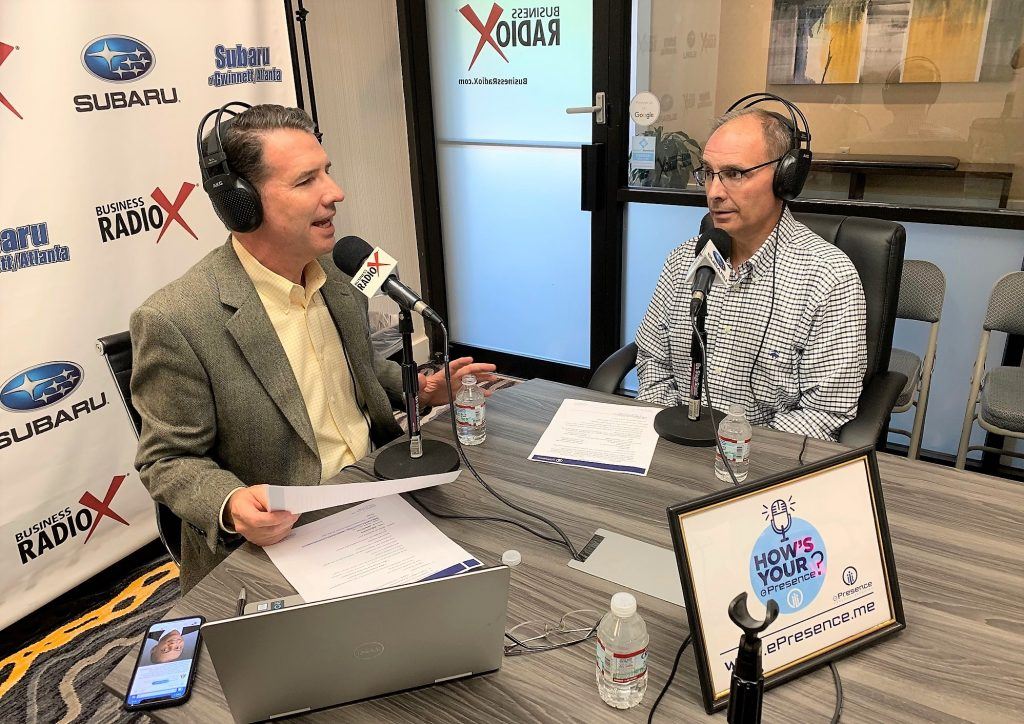
Adam Shapiro with Sales Reform School

May 16, 2019 by Mike

ePresence
ePresence
Adam Shapiro with Sales Reform School
Loading
00:00 /
RSS Feed
Share
Link
Embed

Download file

Adam Shapiro and Mark Galvin

Adam Shapiro/Sales Reform School

SalesReformSchool™ Helps B2B Executives Improve Their Sales Force’s Professionalism. They do this by following a process, by purposefully following a messaging strategy, and setting expected behaviors that map to the company’s values and culture. With the explosion of sales tools, especially those geared to filling the top of the sales funnel, you’re expecting results. If you’re not achieving the ones you need, then it may be time to professionalize your sales force.
Mark Galvin/ePresence

ePresence provides personal branding services for individuals, executives and entrepreneurs. They leverage social media on an individual level since that is where the audience is most engaged. Mark Galvin, CEO and Founder of ePresence, is a personal social media expert with 29 years of business management and hotel industry experience including stops with Marriott, Hyatt, Omni and IHG.
Tagged With: ePresence, Facebook, How's Your ePresence?, LinkedIn, Mark Galvin, Social Media, social media branding, social media management, social media marketing, Twitter

Decision Vision Episode 8: Should I Hire a Recruiter? – An Interview with Joanna Cheng, Creative Financial Staffing (CFS)

March 28, 2019 by John Ray

Decision Vision
Decision Vision
Decision Vision Episode 8: Should I Hire a Recruiter? – An Interview with Joanna Cheng, Creative Financial Staffing (CFS)
Loading
00:00 /
RSS Feed
Share
Link
Embed

Download file

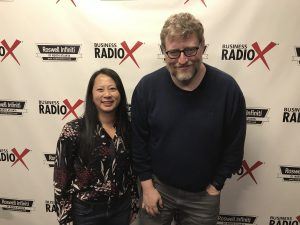
Joanna Cheng, Creative Financial Staffing (CFS), and Mike Blake, Host of “Decision Vision”

Should I Hire a Recruiter?

Should I hire a recruiter? What’s the best way to work with a recruiter? Michael Blake, Director of Brady Ware & Company and Host of the Decision Vision podcast, interviews Joanna Cheng on these questions and much more in this edition of Decision Vision.

Joanna Cheng, Managing Director and Branch Manager, Creative Financial Staffing (CFS)

Joanna Cheng, Creative Financial Staffing (CFS)

Joanna Cheng is a Managing Director and Branch Manager with Creative Financial Staffing (CFS). CFS is a leading, employee-owned accounting and financial staffing firm—the largest one founded by CPA firms. With more than two decades of experience helping companies locate, attract and hire exceptional accounting & finance professionals, CFS has unique resources to better understand hiring needs, attract higher-caliber candidates and assess candidate potential. Established in 1994, CFS today operates 30+ offices across 21 states and the Caribbean. Serving most major U.S. markets and beyond, CFS connects companies with candidates, from entry-level to executive level, temporary to direct hire and project support to interim management.

CFS has twice been named to Forbes’ list of “Best Professional Recruiting Firms” and twice cited by LinkedIn as one of the “Most Socially Engaged Staffing Agencies.”

Michael Blake, Brady Ware & Company

Mike Blake, Host of “Decision Vision”

Michael Blake is Host of the Decision Vision podcast series and a Director of Brady Ware & Company. Mike specializes in the valuation of intellectual property-driven firms, such as software firms, aerospace firms and professional services firms, most frequently in the capacity as a transaction advisor, helping clients obtain great outcomes from complex transaction opportunities. Mike is also a specialist in the appraisal of intellectual properties as stand-alone assets, such as software, trade secrets, and patents.

He has been a full-time business appraiser for 13 years with public accounting firms, boutique business appraisal firms, and an owner of his own firm. Prior to that, he spent 8 years in venture capital and investment banking, including transactions in the U.S., Israel, Russia, Ukraine, and Belarus.

Brady Ware & Company

Brady Ware & Company is a regional full-service accounting and advisory firm which helps businesses and entrepreneurs make visions a reality. Brady Ware services clients nationally from its offices in Alpharetta, GA; Columbus and Dayton, OH; and Richmond, IN. The firm is growth minded, committed to the regions in which they operate, and most importantly, they make significant investments in their people and service offerings to meet the changing financial needs of those they are privileged to serve. The firm is dedicated to providing results that make a difference for its clients.

Decision Vision Podcast Series

Decision Vision is a podcast covering topics and issues facing small business owners and connecting them with solutions from leading experts. This series is presented by Brady Ware & Company. If you are a decision maker for a small business, we’d love to hear from you. Contact us at decisionvision@bradyware.com and make sure to listen to every Thursday to the Decision Vision podcast. Past episodes of Decision Vision can be found here. Decision Vision is produced and broadcast by Business RadioX®.


Visit Brady Ware & Company on social media:

LinkedIn: https://www.linkedin.com/company/brady-ware/

Facebook: https://www.facebook.com/bradywareCPAs/

Twitter: https://twitter.com/BradyWare

Instagram: https://www.instagram.com/bradywarecompany/

Show Transcript:

Intro: [00:00:02] Welcome to Decision Vision, a podcast series focusing on critical business decisions brought to you by Brady Ware & Company. Brady Ware is a regional, full-service accounting and advisory firm that helps businesses and entrepreneurs make vision a reality.

Michael Blake: [00:00:21] And welcome to Decision Vision, a podcast giving you, the listener, clear vision to make great decisions. In each episode, we’ll discuss the process of decision making on a different topic. Rather than making recommendations because everyone’s circumstances are different, we talk to subject matter experts about how they would recommend thinking about that decision.

Michael Blake: [00:00:39] My name is Mike Blake, and I’m your host for today’s program. I’m a Director at Brady Ware & Company, a full-service accounting firm based in Dayton, Ohio, with offices in Dayton; Columbus, Ohio; Richmond, Indiana; and Alpharetta, Georgia, which is where we are recording today. Brady Ware is sponsoring this podcast. If you like this podcast, please subscribe on your favorite podcast aggregator, and please consider leaving a review of the podcast as well.

Michael Blake: [00:01:05] So, today, our discussion is going to be about whether to work with a recruiter when hiring new employees. And talent acquisition is a funny topic because we deal with human beings. And human beings are, for the most part, the most unpredictable things on the planet. And you don’t know necessarily what you’re going to get when you’re hiring. You don’t even know what you’re going to get when you get through the interview process. I mean, you pick a resume, you don’t even know what’s going to show up and walk through that door.

Michael Blake: [00:01:38] And in an environment now, we have some 4% unemployment and talent is not exactly growing on trees. And if you live in the Atlanta area, you can see that just by the traffic that’s in the area. You know that everybody is back to work because it, now, takes about an hour to get from [Chamblee] to Alpharetta. Talent is hard to find. But the question is you can, of course, go to the route where you can try to find talent “for free,” and we’ll find out just how free free actually is, or you can pay for help.

Michael Blake: [00:02:10] And here to help us with that conversation is my good friend, my pal, Joanna Cheng, who is Managing Partner and Branch Manager of Creative Financial Staffing in Atlanta. Prior to joining CFS, she worked for an Atlanta CPA firm in the audit practice for seven years. So, she’s a recovering CPA just like I’m a recovering investment banker and venture capitalist. She holds a bachelor’s degree from Kennesaw State University and is an avid adventure racer. I hope I’m saying that right.

Michael Blake: [00:02:40] CFS is the leading employee-owned accounting and financial staffing firm, the largest one founded by CPA firms. With more than two decades of experience helping companies locate, attract, and hire exceptional accounting and finance professionals, CFS has unique resources to better understand hiring needs, attract higher caliber candidates, and assess candidate potential.

Michael Blake: [00:02:59] Established in 1994, CFS today operates over 30 offices across 21 states and the Caribbean. Serving most major US markets and beyond, CFS connects companies with candidates from entry level to executive level, temporary to direct hire, and project support to intern management. CFS has twice been named to Forbes List of Best Professional Recruiting Firms and twice cited by LinkedIn as one of the most socially-engaged staffing agencies. And with that, my pal, Joanna Cheng. Joanna, thanks for coming in.

Joanna Cheng: [00:03:31] Thanks, Mike, for having me.

Michael Blake: [00:03:35] So, I got to ask this first. You have an office in the Caribbean. I mean, that’s just a front for like resort staff, or does one of your owners live in the Caribbean, and that’s how they sort of minimize their taxes?

Joanna Cheng: [00:03:47] We have an office in Puerto Rico, and it’s actually a pretty robust practice.

Michael Blake: [00:03:51] Okay.

Joanna Cheng: [00:03:51] Even in the light of recent events.

Michael Blake: [00:03:54] In light of the fact that island destroyed a year ago.

Joanna Cheng: [00:03:56] Yeah, there were interests, yeah.

Michael Blake: [00:03:58] So, that is a robust practice. That’s interesting.

Joanna Cheng: [00:04:02] Well, I mean, I think, as of late, they’ve had some struggles. But, again, from a temporary staffing perspective, there certainly continues to be a need for people to kind of fill the gaps.

Michael Blake: [00:04:12] Yeah, okay. That’s interesting. I would not have guessed that. So, I mean, I’ve given out, sort of, your name, rank, and serial number. You’re at CFS. You’ve been there. I think you’ve been there as long as I’ve known you. I’m not sure that I knew you when you’re an accountant, maybe for six months.

Joanna Cheng: [00:04:29] I don’t know. I left public accounting at the end of 2011. Joined CFS beginning of 2013. So-

Michael Blake: [00:04:38] Okay. So, there’s a couple of year overlap actually but-

Joanna Cheng: [00:04:40] Yeah, six years now at CFS officially.

Michael Blake: [00:04:42] But they locked me down the sixth floor of the building, so they didn’t let me out much.

Joanna Cheng: [00:04:46] Exactly. We are probably like ships in the night.

Michael Blake: [00:04:49] Yes. It’s ships in the night that were locked and never allowed to see one another.

Joanna Cheng: [00:04:53] Just like when I was an audit. It’s funny because I was gone for a year from the firm, and when I came back people, I’d run into people, and they’d say, “Oh, I haven’t seen you for a while. Have you been in out in the field?” And I’m like, “Yeah. I’ve actually not worked here for a year, but I’m back.”

Michael Blake: [00:05:07] And thanks for noticing.

Joanna Cheng: [00:05:10] It’s like I just took a hiatus.

Michael Blake: [00:05:11] A walkabout.

Joanna Cheng: [00:05:13] Right. I was just very long on it.

Michael Blake: [00:05:15] A self-audit, maybe you can call it that. So, what do you do at CFS? I mean, it sounds like you’re basically the Grand Poobah, the head honcho, the big cheese. Is that fair, at least, for the Atlanta office?

Joanna Cheng: [00:05:28] Right, queen of middle management here in Atlanta.

Michael Blake: [00:05:30] Queen of middle management.

Joanna Cheng: [00:05:31] Yeah.

Michael Blake: [00:05:31] Okay. Your highness.

Joanna Cheng: [00:05:31] I run the Atlanta office for CFS. We’re a national firm. And so, I manage a team of recruiters. And we are able to help on a temporary or direct hire basis, kind of, at any level, as long as it relates to accounting and finance within the middle market.

Michael Blake: [00:05:49] And how many people do you have on your staff right no?

Joanna Cheng: [00:05:51] We have four. We’re a team of five.

Michael Blake: [00:05:53] Okay, team of five. So, as I said, you’re a recovering CPA as I’m a recovering investment banker, et cetera, et cetera, recovering adult. What made you make that jump? When did you wake up one day and said, “Yeah, I just can’t count stuff anymore. I’ve got to go be me.”

Joanna Cheng: [00:06:11] It was really by happenstance. I think, like many people who come out of public accounting or start to look around, I didn’t really know what I wanted to do. I didn’t know what the next move was. So, I reached out to some recruiters, had some less-than-great experiences. I met one in particular that had a similar background to mine, had gone up the ranks in public accounting, gone into recruiting, was successful, opened up an office, and needed her first-time employee.

Joanna Cheng: [00:06:50] So, it was just something I decided try for a year. I mean, I think, from the things I enjoyed the most about being in professional services was the networking aspect, the relationship aspect, the adding value, and, of course, being a profit center versus a call center. So, I thought-

Michael Blake: [00:07:08] Boy, that’s huge.

Joanna Cheng: [00:07:08] Yeah. I thought recruiting could kind of be a good segue into that. And worst thing that could happen is go back and do accounting. So, some years later-

Michael Blake: [00:07:18] Which isn’t so bad.

Joanna Cheng: [00:07:19] Right. Seven years later, it seems to be working out.

Michael Blake: [00:07:23] I guess, it’s worked. Yeah. I mean, you’re still gainfully employed, productive member of society, and we haven’t had to bust you out of jail.

Joanna Cheng: [00:07:29] Yeah, not yet, yeah.

Michael Blake: [00:07:29] So, not yet. So, so far, so good. So, you mentioned you had some experience with recruiters that weren’t so awesome. I think you mentioned that.

Joanna Cheng: [00:07:40] Yeah.

Michael Blake: [00:07:40] What’s an example of that when you’ve had a bad experience yourself?

Joanna Cheng: [00:07:44] Well, it’s interesting. So, for instance, one of the — part of our process that CFS is we prefer to meet with our candidates in person, just like we like to go on site to our clients, just so we can get a really good 360 feel for the person, and the opportunity, and find that good fit. So, even before I went into recruiting, I mean, I wanted to meet people. I don’t like just virtually knowing people. I feel like I’m best face-to-face. It was just really interesting to me.

Joanna Cheng: [00:08:18] I talked to this recruiter that was referred to me, and it was a great conversation. But, by the end of it, I asked, “Oh, yes. We should meet for coffee. You should probably meet me, make sure I’ve two eyes, and off of my limbs, and yeah.” I mean, he said no, and it was just — I didn’t really know what to think about it because I felt like I couldn’t really adequately work with someone that I had never met in person, especially for such a big decision, which was a possibly career change and change of industry. Experiences like that made me think like, “There’s just got to be a better way.”

Michael Blake: [00:08:56] Yeah. I mean, it’s not like it’s a multi-level marketing scheme. It’s a serious professional position. And in what you do, every time you recommend a hire to a client, I mean, your reputation is big time on the line with that, isn’t it?

Joanna Cheng: [00:09:14] Yeah.

Michael Blake: [00:09:14] So, how you could go into that, how you could get behind somebody, and put that cloud without meeting the candidate, I’m no recruiter, but I don’t see how I could do that either.

Joanna Cheng: [00:09:24] Yeah, exactly. We’ve done hiring together in our past lives. And, yeah, I think it’s just — We don’t sell paper. And I always say that. And I don’t know if that really resonates. I think that’s a common stereotype among recruiters, and we just throw a bunch of things out there, and we just hope and pray that one of them makes us money. But I mean, there are people behind these pieces of paper. And I’ve seen the best of candidates with the worst resumes. I’ve seen pretty terrible people with really outstanding resumes. That’s part of the sniff test. That’s why we charge for our services. That’s why we have value, and yeah.

Joanna Cheng: [00:10:05] So, along with that, I also worked with a number of recruiters that provided jobs that were clearly not a match for my background. And so, again, I just kept thinking like, “This doesn’t even make sense.” This is not a, “Hey, I need a job. Here’s a job. You want this job?” I mean, it just didn’t make any sense to me. I kept thinking, “Are you even listening to me?” And, of course, I never met these people. So, I mean, I’m like, “Well, you honestly don’t know me from the next person.” So, yeah. So, I think, probably naively, going into recruiting, I thought I can make that just a better experience for people.

Michael Blake: [00:10:47] So, in your opinion, why do you think your clients hire you?

Joanna Cheng: [00:10:54] Really, I wish I knew the answer to that. If there was a concrete answer, I would package it and sell it. Prospecting would be so easy.

Michael Blake: [00:11:02] Well, how about this? How about instead of you, because I know you have a humble streak that we will try to break down and destroy over the course of this podcast. But until we get there, why do people hire you as a profession? Why do they hire somebody like you?

Joanna Cheng: [00:11:20] Well, initially, I think it’s typically out of need. But outside of that, I will say that, just like anything else, whether it’s audit, valuation, services, recruiting, people do business with people they like. I mean, that’s something that’s very important to me is to develop sincere relationships with people and to understand people’s businesses.

Joanna Cheng: [00:11:41] Hopefully, I think, my background is helpful in some sense and really understanding accounting and finance, and what that means to your company for specific positions, but yeah. I mean, it’s either that or my sparkling personality. I mean, I think.

Michael Blake: [00:11:58] I’m sure it’s a healthy combination of the two. But a thought occurred. I’m going to go off the script a little bit but not too far. It’s that, in one respect, what you and I do is very much alike is that I put together merger and acquisition transactions, and you put together talent acquisition transactions.

Michael Blake: [00:12:19] And in what I do, the reason my clients hired me, I think, is because they either have never been through a transaction, or they do it very rarely, right. And the chances are good the other person on the side of that table has done many transactions, okay. And so, they’re hiring me to kind of leverage the expertise of, say, the 200 transactions I’ve done into the one that they’ve done, right.

Michael Blake: [00:12:45] In your world, correct me if I’m wrong, but I think that, hopefully, they’re not hiring all that often for the same position. If they are, that’s a different issue if it’s a merry go round, right. But in an ideal world, you’re maybe hiring once a year, once every couple of years, or maybe once every few months if you’re growing like gangbusters, but that’s still different from somebody whose job it is to hire people 24/7 or place people to be hired 24/7, right?

Joanna Cheng: [00:13:16] Yes.

Michael Blake: [00:13:16] There’s a big advantage to having that expertise and experience in that discussion, isn’t there?

Joanna Cheng: [00:13:24] Well, absolutely. I mean, it’s what we do day in and day out. And I think that’s what the advantage is. I mean, we’re talking to people, we’re talking to companies where we have like the pulse on talent. We can see what’s available, what’s not. And, again, I think, CFS, one thing that we really emphasize is being consultative. I mean, this is, hopefully, not just a transaction. I mean, this is so important to your business. I mean, finding the right controller. And when I say right controller, I mean not someone who understands accounting can do the job. It’s someone who can help your business go from A to Z or wherever it is that you want to go that you like and that likes you.

Joanna Cheng: [00:14:02] I mean, that’s the magic, right. That’s what you can’t see from the paper. That’s what you can’t see from an online application. And I think that’s a fallacy that creates the need quite honestly. People have these experiences. We did it ourselves. We found this person. They were perfect on paper. They’re perfect in the interview. They showed up, and they were crazy.

Michael Blake: [00:14:23] Right.

Joanna Cheng: [00:14:24] Yeah? And you go, “Well, we hear that story all the time.”

Michael Blake: [00:14:26] Because they don’t say on the resume interests and crazy.

Joanna Cheng: [00:14:30] Right.

Michael Blake: [00:14:30] Right? It doesn’t show up, right? And-.

Joanna Cheng: [00:14:32] Their representative was like, “Let’s keep that.”

Michael Blake: [00:14:36] It’s on the down low.

Joanna Cheng: [00:14:36] Yeah, yeah.

Michael Blake: [00:14:36] Yeah. And, often, the people who have the most polished resumes have them polished because they’re polishing them frequently.

Joanna Cheng: [00:14:45] Right, or they’re paying for the polish.

Michael Blake: [00:14:46] They’re paying for the polish, one of the two, right? And you probably developed a spider sense. You must developed a sixth sense of some kind.

Joanna Cheng: [00:14:55] There is a little bit of that. I mean, you do get a feel for people, but that feel is — That’s, I think, the fun part. I think the best part of my job is really knowing my client, understanding their business, and then meeting somebody. I think this happened with you. Meeting someone and going, “Hey, I just met this person, and I just think you should really talk to them. I think they may be a good fit for your group.”

Michael Blake: [00:15:20] That’s true. I’d almost forgotten, I was actually a client of yours.

Joanna Cheng: [00:15:23] Yes. And we know when that works, and those types of situations more than often does, I mean, it’s a good feeling because you just feel like all the stars aligned and maybe you’re good at your job.

Michael Blake: [00:15:40] And that hire worked out. I mean, he stayed longer than I did by a lot. So, I really can’t disagree with that. So, can you point to like a favorite success story of yours where you really helped the company or even maybe helped the candidate out?

Joanna Cheng: [00:15:58] I can think of a lot of stories, but I think one thing, in fact, I had lunch today with a candidate that was a relocation candidate. It’s a really tough and usual position. It was like on the request of one of my favorite clients. And the process was painful, and it was hard because I don’t think either — we didn’t really — we didn’t know what we were looking for until we found it. But I’ve been talking to that candidate today, and how happy they are, and what they’ve been able to achieve in the time they’ve been at the company. I don’t know. It just made — that’s what makes me wake up and do what I do. And, in fact, that client is one of my adventure race buddies.

Michael Blake: [00:16:45] Really?

Joanna Cheng: [00:16:47] So, I’ve recruited for them since their inception as a startup to, now, a very successful business. And that’s something I’m very proud of.

Michael Blake: [00:16:56] So, in addition to running away from alligators and copperhead snakes and jumping over quicksand, you’re doing that.

Joanna Cheng: [00:17:02] Yeah. So, now, we throw ourselves in the briar patches and the like, yes. So, that’s real trust.

Michael Blake: [00:17:08] Yeah.

Joanna Cheng: [00:17:09] That’s when you trust, yeah.

Michael Blake: [00:17:09] Yeah, it is.

Joanna Cheng: [00:17:09] Like your service provider.

Michael Blake: [00:17:13] It is. I don’t know if anybody would trust me to lead them through an alligator or copperhead. In fact, it’s-

Joanna Cheng: [00:17:17] Oh, I didn’t say I led. I’m just, you know, but I’m there.

Michael Blake: [00:17:22] You don’t necessarily shove their head into the water-

Joanna Cheng: [00:17:25] Right.

Michael Blake: [00:17:25] … if something bad happens

Joanna Cheng: [00:17:26] Right. I would put a stick between my client and the alligator.

Michael Blake: [00:17:28] Okay.

Joanna Cheng: [00:17:30] Yeah, yeah.

Michael Blake: [00:17:31] Okay. So, let me ask you. I want to ask you this in a very smart aleck kind of way.

Joanna Cheng: [00:17:37] Okay.

Michael Blake: [00:17:37] Why haven’t you been replaced by websites? They’ve been all over. They’ve come and gone, Monster, Hot Jobs, CareerBuilder, Yahoo Jobs.

Joanna Cheng: [00:17:46] And, again, they all have their place, and they certainly have their success. And we leveraged that technology. We partner, in fact, with some of these companies.

Michael Blake: [00:17:56] Is that right?

Joanna Cheng: [00:17:56] And they’re our vendors. But, again, it just goes back to the relationship. I mean, valuation. I mean, can’t we just make a calculator, and plug in some assumptions, and-

Michael Blake: [00:18:09] There are people that are saying that.

Joanna Cheng: [00:18:10] Yeah. Come up with a number or a multiple and go, “This is the-” It’s not the point. I don’t think that’s how the world works. I mean, we’re not — people aren’t widgets. Talent, it can’t be manufactured. It’s so interesting because, I think, especially within accounting and finance, I mean, people just think, “Oh, I just need a CPA,” or “I just need an AP clerk.” And I don’t know. It’s just like anything else.

Joanna Cheng: [00:18:36] Let’s say, think about you in any job that you’ve ever had, okay. And I don’t know. Maybe people have just been very lucky, and loved everywhere that they worked, and loved the people, and those people love them. But I’ve been in several situations where I could do the job, I did it well, I just didn’t like it, or they like me, and that’s what doesn’t work, right.

Joanna Cheng: [00:18:59] I mean, middle market, in particular, is really attractive to me, (1), because that’s all I know professionally; but (2), it’s like these businesses are often someone’s baby. I mean, they’re trying to achieve a very specific goal. They’re not looking for workers. They’re looking for partners. They’re looking for people who want to be part of this team. They want people to help drive their passion to do whatever it is they want to do with this business. And that just can never be measured by a machine. And I may be eating my own words when Skynet takes over the world. But as for now, I think, my job is safe.

Michael Blake: [00:19:40] Well, I think there’s truth to that. It’s interesting you bring up the valuation part because much of my industry is being replaced by websites. And I don’t think my children would have any interest in doing what I do. But if they did, I don’t think there’s a job there necessarily for them. And we have to move towards an advisory position. And I tell people, if you want a valuation, here’s a website that you can just go get a valuation done. If that’s good enough for you, then do that, right.

Joanna Cheng: [00:20:10] I like that, make valuation.

Michael Blake: [00:20:11] If, on the other hand, you want to learn something about the business that you didn’t already know, that technology is not is not out there yet. And I think I sense that’s a very similar kind of conversation, at least, implicit conversation.

Joanna Cheng: [00:20:27] Yeah, advisory, consultative, it’s all the same thing, right. I think people aren’t looking for an answer. I mean, the answer in valuation isn’t the number. It’s, “Can I achieve my goal? What are your thoughts on that? Do you have any advice for me? What do you think?” And those are the types of questions, and that’s the type of insight, I think, I can provide to my clients. What should the salary reasonably be? Is this reasonable? Historically, this is a person’s background. Does this make sense? Is this a fit?

Joanna Cheng: [00:21:09] And we can talk through all of those things. I mean, again, it’s not a perfect science. I mean, I think that’s one thing that’s always really resonated with me just professionally is an accounting in all things. And I think, I remember you saying this many years ago, but, sometimes, we are looking into a crystal ball, and it’s just not a binary world, and there is no right or wrong. I mean, the perfect — everything could go perfect in the hiring process, and it could be the perfect candidate, but something can happen, and you have to — all recruiting is or financial reporting is just trying to control, and assess, and analyze enough of the variables to, hopefully, ensure success or some type of predictable outcome, but there’s no guarantees.

Michael Blake: [00:22:00] So, let’s talk. The large companies that have their own in-house HR departments, do they also use recruiters, or are they typically bring the whole function in-house?

Joanna Cheng: [00:22:13] Oh no, they absolutely use recruiters.

Michael Blake: [00:22:14] They do, okay.

Joanna Cheng: [00:22:14] Yeah. So, we tend to shy away from large HR departments for that reason. It’s just a lot more cooks in the kitchen than needed. We prefer to work directly with hiring manager and get a better sense of what that position is. Not saying that HR isn’t our ally, and we certainly want to work through their process, but something like a Fortune 100 company is just a completely different beast. And I think if, again, create a financial staffing just specifically, we don’t typically serve that large of a company. We probably aren’t the best resource. We’re not as willing to go and work with a VMS system where, again, in many ways, it’s selling paper. You could be drawing-

Michael Blake: [00:23:03] What is a VMS system?

Joanna Cheng: [00:23:04] Vendor management systems-

Michael Blake: [00:23:06] Okay, yeah.

Joanna Cheng: [00:23:08] … where you have to upload resumes and something, probably a robot, is looking for keywords. Again, anyone can do that. I mean, it just makes no sense to me. I could put CPA controller manufacturing expert on a piece of paper and have that picked up, but is that the right candidate for your job? I mean, maybe, maybe not. But I’ll tell you, like the effort and cost to go through all of that doesn’t really make sense for our model.

Michael Blake: [00:23:38] Now, hiring somebody today is a big commitment. And it’s not just a big commitment economically, but, to some extent, it’s a big commitment legally. And you can’t just hire completely whatever your whim takes you, right. There are certain processes, there’s certain standards of fairness that we have to observe both from a moral standpoint, a legal standpoint. Is that something that you also can help a company navigate to make sure it doesn’t accidentally step in something during the hiring process?

Joanna Cheng: [00:24:10] Absolutely.

Michael Blake: [00:24:11] And you save somebody’s bacon doing that?

Joanna Cheng: [00:24:13] Well, I mean, and I won’t use any specific examples here, but I think especially smaller businesses or owner-operated businesses. People just don’t know what they don’t know. I mean, it’s purely out of ignorance, not out of spite, but yes. I mean, there will be certain things discussed that we’re like, “Yeah, we can’t have that. That can’t be a variable.”.

Michael Blake: [00:24:35] Right. You can’t ask that question.

Joanna Cheng: [00:24:37] Right, or don’t ask that question.

Michael Blake: [00:24:39] Right.

Joanna Cheng: [00:24:42] So, yes. And from a hiring liability perspective, I mean, I think, we do our diligence as well as kind of anyone else, right. You got do your reference checks, background checks. And technology has certainly been very helpful in that that it’s more difficult now, I think, to kind of hide some of your educational or criminal skeletons than maybe you could have in the past.

Michael Blake: [00:25:05] Now, 10 years ago, we saw, remember, the job market was – to use a technical term – in the toilet. But I think firms were even using recruiters then, even in times where there’s ostensibly a much more rich labor pool from which to select talent. Why do you think that is?

Joanna Cheng: [00:25:27] Well, again, your needs are your needs. Very often, that looks and smells a certain way. So, the question to yourself is return and your effort. Your company, your people, your internal efforts, that’s going to cost you money to source and go through kind of just all the bodies, or you could outsource that function to someone that does it every day.

Joanna Cheng: [00:25:55] I mean, again, good economy, bad economy, businesses have to operate. Everyone’s always looking for talent in some respect, whether that’s from a project basis or a direct hire. And I think that each economy has different demands, and that’s why recruiting has kind of been able to navigate these different cycles.

Michael Blake: [00:26:20] So, we hear a lot or I hear a lot, and I’m sure others do, about different models where one fee model is contingency-based, the other is retained search basically. Can you explain kind of the difference between the two? And from a customer’s perspective, what do you think the pros and cons are of each?

Joanna Cheng: [00:26:39] CFS is a contingency model. So, I always like to say I work for free. I get paid upon my success, and I really enjoy that aspect of what I do. Retained search is different the sense that you pay a fee regardless of outcome, in some respects. And those are typically very specialized positions, more difficult to find positions. I mean, national and international searches.

Joanna Cheng: [00:27:08] So, pros and cons. Contingency, I mean, the pro is, again, you can get a lot of recruiters working for you for free. They’re out there kind of kicking bushes, and doing all the legwork, and hopefully bringing in the best of the best, and you can make a hire, and best recruiter wins. The con is those recruiters are working on many different other contingent searches, and you may not be their sole focus, or there could be other drivers of why you’re not seeing what you think you should be seeing from the caliber of candidate, or quantity of candidates, or whatever it is.

Joanna Cheng: [00:27:44] From a retained search perspective, I mean, that typically should be a dedicated effort. I mean, they want not only to take you money, but they do want to earn it. I’m a little bias because I’ve never worked in the retained search model. I think that the only thing I can think of is everyone has to make money, and just makes me wonder sometimes the bandwidth of recruiters even within the retained model like how much time are they truly dedicating to your search. I mean, that’s something to think about. But, again, you got to use who you know and use who you trust, right?

Michael Blake: [00:28:23] Yeah. That’s why you got us. What is a stereotype about your industry or people in your industry that we should dispel? What do most people think about what you do that’s just wrong?

Joanna Cheng: [00:28:35] I’m a big advocate of the saying that stereotypes come from somewhere.

Michael Blake: [00:28:39] Okay.

Joanna Cheng: [00:28:40] Okay. And I think one of the reasons I became a recruiter is because I had terrible experience with recruiters. And I continue to kind of hear those stories often. So, recruiting is a sales job. And I think that’s-

Michael Blake: [00:28:59] Twice over.

Joanna Cheng: [00:29:00] … the reality. That’s the reality of this job. And what I’d like to dispel is that we’re like used car salesmen, and we’re just throwing bodies at companies, and just walking away with a check.

Michael Blake: [00:29:15] Wish, it was that easy, right?

Joanna Cheng: [00:29:16] Oh yeah. I mean, that would be great because that’s the issue is that does happen. And there is a reason why recruiters can have a bad reputation. But what I would encourage people to think about is there are good recruiters, just like there are good accountants, like good doctors, good lawyers, good valuation experts. People who, hopefully, kind of care a little bit more, who take pride in what they do, and really stand behind their business.

Joanna Cheng: [00:29:47] And, also, too, I think, have the luxury to say that as a privately-held company, like we certainly are making things a little bit differently than maybe some of our larger publicly-traded competitors, and they’re driven by a different — they need a different outcome.

Michael Blake: [00:30:02] Well, they’re going to be driven — they have to be driven by a quarterly number, right?

Joanna Cheng: [00:30:07] Right.

Michael Blake: [00:30:07] They have to have 90 days of view ahead of them. And then, after that, they’ll worry about the next 90 days.

Joanna Cheng: [00:30:13] There’s just a reality of that.

Michael Blake: [00:30:15] Yeah, that’s right because that’s what shareholders are telling them they wanted them to do.

Joanna Cheng: [00:30:18] Right.

Michael Blake: [00:30:20] How does a company best work with you? Like you, I’m in the service business, but there are certain conditions in my business where the client does certain things, they make my job a lot easier, and the likelihood of a positive outcome that much greater, right?

Joanna Cheng: [00:30:36] Right.

Michael Blake: [00:30:37] For a company to maximize your effectiveness, what should they be prepared to do on your end as part of that partnership to give the best chance of securing that great outcome?

Joanna Cheng: [00:30:48] Just being available. I think that’s number one.

Michael Blake: [00:30:54] What does that mean exactly?

Joanna Cheng: [00:30:56] I think we’re in this hyper-busy world, especially when you’re a man short, or you need an extra pair of hands. You’re busier than ever. And that drives the backbone of my business. That being said, if you were truly looking for the right fit, you’ll spend the upfront time to invest in speaking with me, so I can learn about your business. You’ll make time for me to come visit, and talk to me in person, and show me around. And when we make our recommendations, really take the time to listen, and discuss, and ask questions.

Joanna Cheng: [00:31:33] I think that’s the best way to work with a recruiter. Like we’re, again, not selling paper. I mean, there are people here. There’s a reason why I’m making a recommendation. If you don’t have the time to talk to me about it, it’s very hard for me to help you. So, I’m often thinking like, “Help me help you.” I know you’re busy, but we’ve got to talk about this, and we’ve got to make time because I think this is a choice.

Michael Blake: [00:31:59] Yeah. I think I would imagine in your world, there are clients that look at you and say, “Oh, thank God, I can just hand this entire thing off to Joanna. She’ll go away for whatever period of time, and she’ll just come back with-”

Joanna Cheng: [00:32:13] A magical unicorn.

Michael Blake: [00:32:14] Magical unicorn.

Joanna Cheng: [00:32:15] Yeah.

Michael Blake: [00:32:15] Right?

Joanna Cheng: [00:32:16] Mhmm (affirmative).

Michael Blake: [00:32:18] But maybe you’ll come back with a magical unicorn, but if they don’t just sort of throw the thing over the wall, that’s more likely to happen, right?

Joanna Cheng: [00:32:25] Right. Yeah, exactly. And that’s exactly right. I think what happens a lot in recruiting, especially when you’re working, again, with many firms who will just take a general job description and kind of run with it, is, again, these are people, they’re unique. And I do, actually, use that term in my office is we hunt for unicorns. And so, something that like a purple unicorn with a gold horn is very different than the green speckled one. So, when you show up with the pink one with orange sprinkles, and you go, “That’s not what I wanted at all-”

Michael Blake: [00:33:00] It sounds like a very mythical place to work, by the way.

Joanna Cheng: [00:33:01] It’s a magical land.

Michael Blake: [00:33:03] It sounds like it.

Joanna Cheng: [00:33:05] I mean, again, it just comes down to information. And that’s what I typically advise my clients, especially when I first worked with them. I say, “Hey, we present candidates in very small rounds. We like to discuss their backgrounds with you and discuss why we think they would be a fit, and why you should consider them for hire.” And if we’re completely off target, then someone is missing information, or maybe we don’t know what we’re looking for yet. And I see that a lot as well. Sometimes, people think they need these 10 bullet points, and you go, “Well, yes, but this unicorn has six of those, and you don’t even need the other four.” But until you have that conversation and kind of work through that process, you kind of don’t know what you don’t know.

Michael Blake: [00:33:53] And then, maybe, it turns out you don’t need a unicorn, just a really nice horse will do.

Joanna Cheng: [00:33:57] Exactly, yeah, with a party hat on.

Michael Blake: [00:33:59] With the party hat on.

Joanna Cheng: [00:33:59] Yeah.

Michael Blake: [00:33:59] So, last question, and then then we got to wrap up. But I think a lot of people miss the fact that recruiting is an active job. When we call your recruiter, that’s an action-related. To recruit is as active as opposed to just sort of posting a job and waiting for resumes to fill in. And a question I’ve always had and just been kind of curious about is when you recruit somebody who wasn’t necessarily looking for a job at that time, how do you kind of gauge or kind of verify that that person’s really invested in the process, and that if they do kind of make it through your vetting process, you’re going to present them to the client that they’re going, there’s a fully invested candidate, and not just sort of as a hired gun that might be recruited away from them two years later? You know what I mean?

Joanna Cheng: [00:34:55] Well, yeah. And you see that in like the tightest labor market we’ve seen in many years.

Michael Blake: [00:35:00] Right.

Joanna Cheng: [00:35:00] And I mean, I think that in some respects, it’s the new normal, just poaching or the temptation to jump in for what it is when times are good. I think people are always open to opportunity. Again, we can’t see into the future. I don’t know if someone’s going to leave in two years or 20. All we can assess now is your factors causing them to be open to opportunities, like why are they looking? Why would they want your job? Why would they want work here? Why would they stay? I think into overriding all of that is something that is mentioned, but it’s probably not discussed as much as it should, which is retention. Whose job is it to retain these employees? Is it the recruiters’ job?

Michael Blake: [00:35:52] It doesn’t sound like because your job description is not retainer.

Joanna Cheng: [00:35:57] Right. So, that’s something I always think about. And I will say this, I mean, generally speaking, for instance, there are definitely companies that are known for extremely high turnover. And those are companies we tend to shy away from, or we will provide staffing on a project basis. But it’s hard for us to put — I always say it’s hard for us to put A people in kind of a C Company. It’s hard for us to put C people in an A company. It’s the same thing. It doesn’t work.

Joanna Cheng: [00:36:29] So, yeah. I mean, my advice in terms of choosing a recruiter also says, “Hey, yeah, there’s a cost to that. There is a benefit there. There could be some risk associated with it, but what are we doing as a company to retain that talent?” because you can get in the door, but keeping them, that goes beyond my job.

Michael Blake: [00:36:52] Sure.

Joanna Cheng: [00:36:52] And I think that’s pervasive in recruiting. I mean, people switch firms all the time. One thing that attracted me to CFS and kind of holds true in my experiences, our tenure of employees is unusually long for our industry. I do think that says something in a positive way.

Michael Blake: [00:37:14] Well, this went great. We got a lot of great information, great insights, but we can’t cover everything that we’d like to cover in a half-an-hour podcast. So, if somebody wants to ask you some questions, reach out to you, follow up, can they do that?

Joanna Cheng: [00:37:27] Yeah, absolutely.

Michael Blake: [00:37:28] So, how would they reach you?

Joanna Cheng: [00:37:30] I’m on LinkedIn. So, Joanna Cheng with, apparently, not enough of my background. I’ll let you-

Michael Blake: [00:37:41] Yes. Well, it was background-light. We’ll just say you use social media judiciously.

Joanna Cheng: [00:37:47] Right.

Michael Blake: [00:37:47] And Cheng is spelled C-H-E-N-G.

Joanna Cheng: [00:37:48] Yes.

Michael Blake: [00:37:48] Correct?

Joanna Cheng: [00:37:51] And our website is cfstaffing.com. It will have our company number. You’re welcome to give a shout, shoot us an e-mail. Happy see how we can be a resource for you.

Michael Blake: [00:38:03] Okay, very good. Well, that’s going to wrap it up for today’s program. I’d like to thank Joanna Cheng so much for joining us and sharing her expertise with us. We’ll be exploring a new topic each week, so please tune in, so that when you’re faced with your next business decision, you have clear vision when making it. If you enjoy this podcast, please consider leaving a review with your favorite podcast aggregator. It helps people find us, so that we can help them. Once again, this is Mike Blake. Our sponsor is Brady Ware & Company. And this has been the Decision Vision Podcast.

Tagged With: contingency fee, contingency fees, Dayton accounting, Dayton business advisory, Dayton CPA, Dayton CPA firm, Decision Vision, Decision Vision podcast, Decision Vision podcast series, employee recruiting, employee retention, Employee retention strategies, Executive Recruiter, executive recruiting, executive recruitment, financial staffing, hiring a recruiter, hiring candidates, hiring employees, hiring needs, LinkedIn, Michael Blake, Mike Blake, online hiring sites, polished resume, recruiter, Recruiting, resumes, retained search, retaining talent, staffing, talent acquisition, talent recruitment, talent retention, vendor management system, VMS

David Maradiaga, Maradiaga Media, and John Mitchell and Randy Hasslinger, Slingshot Product Development Group

March 12, 2019 by John Ray

North Fulton Business Radio
David Maradiaga, Maradiaga Media, and John Mitchell and Randy Hasslinger, Slingshot Product Development Group
Loading
00:00 /
RSS Feed
Share
Link
Embed

Download file

John Ray, David Maradiaga, John Mitchell, and Randy Hasslinger

David Maradiaga, Maradiaga Media

David Maradiaga, Maradiaga Media

David Maradiaga is the CEO of Maradiaga Media. Maradiaga Media is a video production and marketing agency that helps business owners express their passion and mission, all while reaching more clients. From wedding videos to television commercials, Maradiaga Media has the experience and expertise to deliver your story to the masses. Visit MaradiagaMedia.com for more information.


John Mitchell and Randy Hasslinger, Slingshot Product Development Group

Randy Hasslinger and John Mitchell, Slingshot Product Development Group

John Mitchell is Chairman of the Board and Randy Hasslinger is Vice President, Business Development with Slingshot Product Development Group. Slingshot Product Development Group, founded in 2001, develops new products for customers in consumer, medical, military/security, and industrial markets. It is driven by the knowledge that new products are the life blood of companies, large or small, and that clients will lead their markets with innovative solutions that meet their customer’s needs. From napkin sketch to manufacturing, Slingshot applies a comprehensive and seasoned set of skills for impactful results through each phase of development. For further information, go to http://www.slingshotpdg.com/.

Tagged With: David Maradiaga, Facebook, facebook marketing, instagram, Instagram marketing, iPhone video, LinkedIn, Maradiaga Media, north fulton business, north fulton business community, North Fulton Business Radio, product design, product development, product engineering, product management, product research, Randy Hasslinger, social media marketing, video, video for small business, video production

Decision Vision Episode 3: Should Our Firm Have an App? – An Interview with Scott Burkett, Incursus

February 21, 2019 by John Ray

Decision Vision
Decision Vision
Decision Vision Episode 3: Should Our Firm Have an App? - An Interview with Scott Burkett, Incursus
Loading
00:00 /
RSS Feed
Share
Link
Embed

Download file

Scott Burkett and Michael Blake

Should Our Firm Have an App?

Michael Blake, Director of Brady Ware & Company and Host of the Decision Vision podcast, interviews Scott Burkett on the decision process for building an app, understanding the business problems an app will solve, working with an app developer, and more.

Scott Burkett, Incursus

Scott Burkett is the Founder & CEO of Incursus.

Demonstrating a passion and commitment to quality and process improvement, Scott holds a certification in Six Sigma, and is a former director on the Board of the Carnegie-Mellon sponsored Software Process Improvement Network (SPIN). He played an instrumental role in a key client (AT&T Universal Card Services) winning the Malcolm Baldrige National Quality Award, as well as a 2,000+ person consulting firm achieving Ford Motor Company’s Q1 Quality Certification. An original contributor to the Linux kernel, Scott co-authored The Linux Programmer’s Guide, The New Linux Book, and Linux Programming Whitepapers. He was also a key contributor to the now legendary comp.lang.c USENET group.

Scott has been featured, quoted, or published in Money Magazine, The Wall Street Journal, Computerworld, TechJournal South, Datamation, WebSmith Magazine, The Linux Journal, and TechLINKS. He has been featured as a lecturer/speaker at events sponsored by such organizations as Georgia Institute of Technology (Georgia Tech), The University of Georgia, ATDC, Draper-Fisher Jurveston, NASAGA, APRA, ACPI, The Kettering Executive Network, ExecuNet, 400 Technology Connection, and i-Compass.

Incursus, Inc. is a boutique creative-design and open-source software solutions studio headquartered in Atlanta, Georgia. In short, “We Create Thingz®,” as they like to say! The Incursus team focuses on four key areas: creative design, custom application development, managed cloud services, and technical due diligence. Additionally, they have a program for startup companies aimed to help them affordably satisfy their technology needs.

They do not aspire to be the biggest provider of these services in the world. They simply aim to be the best. Period.

The Latin word Incursus — which can be translated into “raid”, “attack”, or “invasion” — represents their attitude towards their work — with swift forward movement into projects to get them done efficiently with skill and finesse.

Michael Blake, Brady Ware & Company

Michael Blake is Host of the Decision Vision podcast series and a Director of Brady Ware & Company. Mike specializes in the valuation of intellectual property-driven firms, such as software firms, aerospace firms and professional services firms, most frequently in the capacity as a transaction advisor, helping clients obtain great outcomes from complex transaction opportunities. Mike is also a specialist in the appraisal of intellectual properties as stand-alone assets, such as software, trade secrets, and patents.

He has been a full-time business appraiser for 13 years with public accounting firms, boutique business appraisal firms, and an owner of his own firm. Prior to that, he spent 8 years in venture capital and investment banking, including transactions in the U.S., Israel, Russia, Ukraine, and Belarus.

Brady Ware & Company

Brady Ware & Company is a regional full-service accounting and advisory firm which helps businesses and entrepreneurs make visions a reality. Brady Ware services clients nationally from its offices in Alpharetta, GA; Columbus and Dayton, OH; and Richmond, IN. The firm is growth minded, committed to the regions in which they operate, and most importantly, they make significant investments in their people and service offerings to meet the changing financial needs of those they are privileged to serve. The firm is dedicated to providing results that make a difference for its clients.

Decision Vision Podcast Series

Decision Vision is a podcast covering topics and issues facing small business owners and connecting them with solutions from leading experts. This series is presented by Brady Ware & Company. If you are a decision maker for a small business, we’d love to hear from you. Contact us at decisionvision@bradyware.com and make sure to listen to every Thursday to the Decision Vision podcast. Past episodes of Decision Vision can be found here. Decision Vision is produced and broadcast by Business RadioX®.

Visit Brady Ware & Company on social media:

LinkedIn: https://www.linkedin.com/company/brady-ware/

Facebook: https://www.facebook.com/bradywareCPAs/

Twitter: https://twitter.com/BradyWare

Instagram: https://www.instagram.com/bradywarecompany/

Show Transcript:

Intro: [00:00:02] Welcome to Decision Vision, a podcast series focusing on critical business decisions brought to you by Brady Ware & Company. Brady Ware is a regional full-service accounting and advisory firm that helps businesses and entrepreneurs make visions a reality.

Michael Blake: [00:00:22] And welcome to Decision Vision, a podcast giving you, the listener, clear vision to make great decisions. In each episode, we’re discussing the process of making decisions on a different topic, rather than making recommendations because everyone’s circumstances are different. We will talk it to subject matter experts about how they would recommend thinking about that decision.

Michael Blake: [00:00:40] My name is Mike Blake, and I’m your host for today’s program. I’m a director at Brady Ware & Company, a full-service accounting firm based in Dayton, Ohio, with offices in Dayton; Columbus, Ohio; Richmond, Indiana; and Alpharetta, Georgia, which is where we are recording today. Brady Ware is sponsoring this podcast. If you like this podcast, please subscribe on iTunes, and please consider leaving a review of the podcast as well.

Michael Blake: [00:01:02] So, today we’re going to talk about building an app, and not just the process of building an app. We, probably, won’t talk a lot about the process at all, but rather a decision of getting an app. So, lots of companies, now, are thinking that they’re kind of left out. They’re not in the cool kids club anymore if they don’t have an app. And so, everybody kind of wants one. But is that really the right — Is that the right decision? Is that the right place to put management time? Is that the right place to make investment? And is it really all it’s cracked up to be?

Michael Blake: [00:01:34] So, how do we go about making that decision? And to help us with that decision, I’ve invited my good friend, Scott Burkett. Scott is a 30-year veteran of the technology industry. He’s the Founder and Chief Executive Officer of Incursus Inc., a boutique creative design and open source software solutions studio headquartered in Atlanta. Incursus focuses on four key areas: creative design, custom application development, managed cloud services, and technical due diligence. Team Incursus, also, recently launched ticketburner.com, a web-based platform that focuses on customer service delivery by helping companies automate their business processes.

Michael Blake: [00:02:14] Prior to founding Incursus and TicketBurner, Scott served as a Chief Technology Officer for several companies, including MFG.com and Apto Solutions. Scott was also the founder of wwetcanvas.com, a large online community for visual artists, which is now owned by F+W Publishing, one of the largest privately-owned media groups in the country. Additionally, Scott has been very involved in the Atlanta area startup community for the past 15 years and was a Co-Founder of startuplounge.com, one of the early advocates for fast-growth entrepreneurship in the southeast. So, it’s my great pleasure to welcome to the program and recently released from prison-

Scott Burkett: [00:02:52] That’s right.

Michael Blake: [00:02:52] … Scott Burkett.

Scott Burkett: [00:02:53] Thank you. Thanks for — Thanks for being here, Mike.

Michael Blake: [00:02:56] Well, I’m [crosstalk].

Scott Burkett: [00:02:56] But the StartupLounge is here when we had our podcast.

Michael Blake: [00:02:59] This is sort of a role reversal. We did that podcast, you sort of drove this, and I was the foil. So-

Scott Burkett: [00:03:04] Well, that’s okay.

Michael Blake: [00:03:06] How does it feel to be Dean Martin now?

Scott Burkett: [00:03:08] Weird. I’m like Dean Martin without the drink.

Michael Blake: [00:03:11] Well, if you say so.

Scott Burkett: [00:03:13] Yeah, exactly.

Michael Blake: [00:03:15] So, let’s talk about, even the word “app” is kind of a new term in the English language, right?

Scott Burkett: [00:03:20] Right, yeah.

Michael Blake: [00:03:20] So, let’s make sure we have the right vocabulary when we start. What is an app? And when you think of an app or one of your clients thinks of an app, what are we talking about here?

Scott Burkett: [00:03:28] Well, generally speaking, when you hear someone use the word “app,” they tend to be referring to mobile devices, right. Your smartphone, download this app, download that app, or whatever, or maybe even your tablet or something like that. But I’m a software engineer by trade, so it kind of irks me when I hear app only being used that way. A lot of folks will refer to an app that way, but an app can be anything. It can be a web-based software product. It can be a desktop app, an application for your desktop. So, it’s a pretty broad term, but, yeah, it tends to get more love on the mobile side these days.

Michael Blake: [00:04:03] And so, is that where that’s now headed? Is every app a mobile app, or-

Scott Burkett: [00:04:07] No, not at all.

Michael Blake: [00:04:08] … do you see that there’s not an end for apps on a more conventional sense?

Scott Burkett: [00:04:11] I think, it’s hard to argue that the growth of mobile hasn’t played a role in this, right. I mean, there’s more mobile devices, phones, laptops, whatever, tablets than there are desktops. Just people aren’t buying desktop. They’d rather buy a smartphone and a tablet than buy a desktop. Unlike I’m a hardcore gamer, as you are as well.

Michael Blake: [00:04:31] You’re more of a game historian, I think, at this point. It’s true.

Scott Burkett: [00:04:34] But I still play them.

Michael Blake: [00:04:35] Long live Atari, baby.

Scott Burkett: [00:04:36] Exactly, but I’ll still have a high-end gaming rig at home and use desktop stuff, but most of the work that we do is on laptops or mobile devices these days. So, that’s a big shift.

Michael Blake: [00:04:48] So, when somebody comes to you and says, “We think we want to have an app for our company,” did you kind of walk them through the process? Is that the right path for them to go? Or how do you find the clients who are thinking about that? What does that decision tree look like?

Scott Burkett: [00:05:04] Well, it’s complicated because every situation is different, right. The first thing that we try to do at Incursus is dig into what the business problem is they’re trying to solve with it, right. We were talking at lunch here earlier about the cool factor behind apps. And that’s certainly out there, but the reality is 99.9% of our clients are going to come to us and say, “We need to build something to solve this particular set of problems.” And it could be to extend a web application to the mobile device, or it could be just greenfield app itself on a mobile device.

Scott Burkett: [00:05:37] So, you want to understand those business problems, right. And once those things line up, then you can kind of dive into what’s the next step. How do we prioritize these? How do we dig into them? And to make sure that their understanding of what a return on that investment is going to be is the same as your understanding of it because, at the end of the day, it has to drive some sort of value and trying to put that-

Michael Blake: [00:05:57] You’d like to [crosstalk]-

Scott Burkett: [00:05:58] Yeah, back to the-

Michael Blake: [00:05:59] Although it is cool just to have my logo on my phone.

Scott Burkett: [00:06:02] You have the light saber app, don’t you?

Michael Blake: [00:06:03] I do.

Scott Burkett: [00:06:04] I do, yeah. Hey, it’s at sword fight mode. We could actually-

Michael Blake: [00:06:06] We could, but it doesn’t work as well as audio.

Scott Burkett: [00:06:08] Yeah. I was going to make a bad crossing swords joke, but I’m not-

Michael Blake: [00:06:11] That’s all right.

Scott Burkett: [00:06:11] Did I just make a bad crossing swords joke?

Michael Blake: [00:06:12] It’s not that kind of podcast.

Scott Burkett: [00:06:14] That’s right. Family-friendly.

Michael Blake: [00:06:17] So, every sort of situation is different, which is kind of what we expect. So, is it fair to say that there are kind of two categories of apps? One is kind of outward-facing. You’re trying to have an app that is client-focused, client-facing, maybe let clients interface with your company a different way. And then, kind of, an internal app, something that makes the way your company works or operates more effective and more efficient. Is that a fair distinction?

Scott Burkett: [00:06:44] That is fair. The thing with the App Store is it’s a public utility effectively at this point, right. You go into it, and you find what you want. You pay for it or you get it for free. You download it. Most companies are probably not going to want you to download their internal applications from the app store, but we do see both. We do see both.

Scott Burkett: [00:07:01] I think, the biggest trend over probably the past, I’d say, the best decade, really, as the shift to mobile happened was you had successful web applications like Facebook, for instance, or LinkedIn, those kinds of sites, social media type sites in general that didn’t, initially, have a mobile app. And the mobile adoption is a lot greater now than it was when those companies were founded.

Scott Burkett: [00:07:22] So, the mobile strategy kind of came in later for them, but that became a way to interface with a larger platform on the desktop effectively. It’s the same product, right, but you’re limited to a certain set of features and certain experience on a mobile device that’s a little smaller in footprint than what you’d get on a desktop, for instance, right. But, yeah, that shift is definitely there.

Michael Blake: [00:07:44] Are we at a point now where you can realistically have an app that doesn’t have a mobile companion?

Scott Burkett: [00:07:50] Well, in that context do, we talked about web applications, right. On the B2B side, if you’re successful, you need to have a mobile app. It’s just your users are going to demand it. In fact, if you don’t eventually have a mobile app in your B2B type web application, your customers are going to go find another solution somewhere else because mobile’s that important in the enterprise now, right.

Scott Burkett: [00:08:13] My UPS guy who comes to the house and drops off packages, first thing he does is he pulls out his mobile device, and he’s got access to all this back in functionality at UPS that he’s like flipping around and doing all this stuff. I try to sign my name, it looks like my kindergartener signs it when I do my finger, but all that functionality is all on a mobile device. That’s a great example of an enterprise application on a mobile device right there. Not something you can download from the app store, but they have it. So, yeah.

Michael Blake: [00:08:39] So, apps, I mean, back in the old days, we used to call them software applications or programs. So, the words changed, but what we’re creating is largely the same. Does an app have to be something grandiose, like PowerPoint or Microsoft Word? Is this something that can be fairly slim? Walk us through that. Does an app have to be big, and hairy, and complex to be valuable? Are there ways to do something relatively quick and painless?

Scott Burkett: [00:09:10] I can tell you that 99% of the stuff that’s on my smartphone, my iPhone here, was put there by my kids. And the vast majority of things that are on there are simple silly things that add zero value to my life. So, the short answer is it doesn’t really matter, right. There’s an app for anything these days, you want to track your weight loss or whatever. And you’re still doing all the work, by the way. It’s not like you stand on the iPhone-

Michael Blake: [00:09:34] I don’t need an app for that by the way, but the math there is not that complicated or fast.

Scott Burkett: [00:09:37] You don’t stand on your iPhone. I want to write a trick app that it’s a scale for your iPhone, and you just stand on your iPhone, and I wonder how many people would do that. But there are apps for everything, small, large whatever. I don’t think people have to have a vision of something being grandiose or lightweight. I think they have to have a vision that their app — And I’m speaking more in a business context here — solves some kind of problem or fulfill some sort of need in a marketplace, right.

Scott Burkett: [00:10:06] So, it could be a game. It could be just pure entertainment or just a boredom breaker kind of a thing. And those things tend to be kind of lightweight. But when we start talking about business-to-business enterprise type integration, those things tend to lean towards the hairy side just by their very nature, right.

Michael Blake: [00:10:22] Got it.

Scott Burkett: [00:10:22] So, yeah.

Michael Blake: [00:10:23] All right. So, somebody comes to you and says, “Scott, we think we want an app. We’d like to have you build it.” Open the hood a little bit, what does that process kind of look like?

Scott Burkett: [00:10:33] Well, the first thing I do is I get out my incense burner. No, I’m kidding.

Michael Blake: [00:10:38] No, that’s what we do in valuation.

Scott Burkett: [00:10:39] no. The interesting thing about technology is that while technology has changed a lot over the past 20 years – let’s just say 20 years. It’s really longer than that. About 30 years, I guess, at this point. God, we’re getting old – the process by which you build it has nominally changed, right? Certainly, we have faster tools we have better tools, and libraries, and integrated environments that we can build all these great things in.

Scott Burkett: [00:11:04] And that’s condensed the timeframe for delivery of building something like that, but the process is still largely the same. You got to understand the requirements. Are there requirements? What are you trying to build? If you just have an idea you’ve got a lot more work to do. You could come to me with an idea, that’s great. I’m happy to help you walk through kind of flashing that out.

Scott Burkett: [00:11:21] But, at some point, you’ve got to put pen to paper, or well, we used to do that, but put your fingers on the keyboard, as it were, and type up your requirements. Well, what are the problems it’s going to solve? How is it going to solve? What are the benefits to the user? What are they going to reap by using this particular application? And it doesn’t matter if it’s on the web, or if it’s on a desktop, or if it’s a mobile app, the same principles still apply.

Michael Blake: [00:11:41] Now, having known you as long as I have, I know you’re a very creative guy. You’ve done-

Scott Burkett: [00:11:45] A few things, I guess.

Michael Blake: [00:11:47] You’ve done literally done art websites.

Scott Burkett: [00:11:50] That’s true, that’s true.

Michael Blake: [00:11:51] So, when you have that conversation or when somebody — I want to depersonalized a little bit. Is it reasonable to expect that if I’m looking for someone to help me develop my app, is the app developer going to, then, maybe interact with me and help flesh out what the business case might actually be, suggest additional functionalities, or is it more like an order-taking process where, “I need an app that does A, B, C, and D,” “Here it is, go”?

Scott Burkett: [00:12:17] Well, to the latter, there’s a million people that can do that, right? You can go to upwork.com, find a freelancer offshore somewhere, send them a bulleted list of stuff that you want to build, and they’ll build exactly that.

Michael Blake: [00:12:31] Okay.

Scott Burkett: [00:12:31] Okay. And it will be cheaper. By and large, it will be cheaper to do that. The problem is if your development team isn’t completely aligned with your business drivers, and in those sessions, and on the white board, and trying to understand how your business is evolving, and not just in a bulleted list, these are the things that are important to us, but understanding your customers and what they want. You’re going to paint yourself into a corner as a founder. You’re making an investment. Ostensibly, it’s a chunk of your savings, or you’ve raised some money maybe in a seed round or something like that, and you’re trying to build something. The last thing you want to do is know that you just wasted $100,000, or $50,000, or whatever it is by giving somebody a bulleted list because you think you’ve got all the answers, and you think that’s all they need. There’s always more to it than that.

Scott Burkett: [00:13:18] If I took a pile of building supplies and dropped them off on a lot that you owned, and said, “We’re going to build a house.” And you came to me and you said, “Okay. Here’s what I want. I want three bedrooms, and I want two baths, and I want a sunken den. That’s all it. That’s my main thing. I just got to have these things.” We’ll build it. We’ll build the house. It will have three bedrooms, two baths, and a sunken den. And then, you’re going to realize that you wanted brick, and you wanted one bedroom upstairs, and not all three. You didn’t want a ranch house, right? So, the house is still built. I did my job, right?

Michael Blake: [00:13:46] Yeah, yeah.

Scott Burkett: [00:13:48] And so, you run into situations like that. And more importantly, you run into situations where you realize you can’t add an extra room to your house because of the way the house was initially built, right? It wasn’t built to be extensible. We took up all of the real estate on that lot by building this house, right?

Michael Blake: [00:14:02] If we add here, that’s a support thing.

Scott Burkett: [00:14:04] That’s right, that’s right. That’s a load-bearing wall. We can’t take that down. So, you think about that from a development standpoint, developers, there’s something called technical debt, which may come up later in the show here. But technical debt is one of those things where it’s the — You’re familiar with monetary debt, right?

Michael Blake: [00:14:20] Of course.

Scott Burkett: [00:14:21] So, it’s financial debt, right? It’s very akin to that. When you’re building an application, and a developer takes the easy route, if you give me a bulleted list, I’m taking the easy route and implementing all this because I don’t know what you’re going to want to do a year from now or two years from now because I’m not in line with your business. So, I’m going to build those things, and I’m going to take the easiest fastest way for me to accomplish those tasks, and I’m going to do it. Okay.

Michael Blake: [00:14:43] Just satisfy the statement of work.

Scott Burkett: [00:14:44] That’s right, just satisfy the statement of work. So, fast forward a year from now, your business is pivoting, or you’re changing, you’re getting into a new market, you got a new partner that you want to integrate with or something like that. And all of a sudden, you realize you can’t do that because you have technical debt. You have to now re-factor, and take all the easy stuff out, and do it the right way where you can open those doors into integration with other companies and things like that in your code.

Scott Burkett: [00:15:07] So, when you think about giving someone a bulleted list, if anybody’s listening to this that is in that mode, don’t do that. Don’t give someone a bulleted list and a check and say, “Let me know when you’re done.” That’s absolutely the worst possible thing you could do.

Michael Blake: [00:15:23] So, one of the decision points, then, is do I, as a person who wants the app, do I have enough time myself to engage in this process, so that I get what I want? When you put an addition in your house, a great way to make sure you’re unhappy is just send the contractor off.

Scott Burkett: [00:15:39] That’s right. That’s right.

Michael Blake: [00:15:40] Not oversee the work, not get progress updates.

Scott Burkett: [00:15:41] That’s right.

Michael Blake: [00:15:41] It’s sounds like it’s the same thing there. You can’t just throw it over a wall.

Scott Burkett: [00:15:42] There’s basically there — I guess, three ways of looking at building an app, or three reasons, or drivers behind it. One is you’re writing something for yourself, which happens a lot with techies. Us, geeks, like to write tools that we use, and we think are cool. And that’s fine. You’re the only user of it, and you’re happy. That’s a success, right? Or you’re trying to monetize it, and actually grow business out of it, and turn it into something that’s a little bit more longer lasting than just you using a tool. And then the third one is the hobby market. You’re making something for other developers to use or other tool builders to use as a part of their applications.

Scott Burkett: [00:16:21] When you look at the second one, that example that you just gave about, “Am I going to have time to engage in this?” Well, if you’re writing it for yourself, and you don’t have time to engage in it, then I don’t even know what’s going on there. The third one is a hobby. It kind of falls back to the first one, which if you’re not willing-

Michael Blake: [00:16:35] You either do it or you don’t.

Scott Burkett: [00:16:36] Either do it or you don’t. If you’re trying to monetize it and build a business around it, you either find the time or you don’t. And if you don’t find the time, you’re just wasting your money.

Michael Blake: [00:16:43] Okay.

Scott Burkett: [00:16:44] Right? You have to engage. I think you absolutely have to engage with your developer. IT people and techies are not the same as they were even 20 years ago. They have business degrees now. They understand sales and marketing. They understand how companies work, at least, on the surface, right? They can understand those business drivers and apply them to how are we going to integrate with those partners in our app down the road. Things like that are going to open up for them. So, I think you absolutely have to find the time to engage with your development team no matter what you’re building.

Michael Blake: [00:17:12] Okay. So, I mean, apps sound great. It’s the way of the future. It’s all cool. Why doesn’t everybody have one?

Scott Burkett: [00:17:20] A lot of people don’t have a mobile strategy upfront. And we’re seeing this is a little bit different now because, I think, mobile strategy is one of the first things an investor is going to ask you, especially if you’re in the business-to-business side or building a web application that’s going to have a lot of users. What’s your integration strategy? What’s your mobile strategy? That’s one of the things they’re going to want to know. And if you don’t have one it’s going to be a strike against you. You’re not thinking big enough. You’re not thinking outright.

Michael Blake: [00:17:44] Right, because that’s where most of the devices are.

Scott Burkett: [00:17:47] Exactly. And that’s how we consume content, by and large, these days. I mean, I get my news from my smartphone. I don’t watch the news at night. Who does that anymore?

Michael Blake: [00:17:53] I can’t remember the last time I watched the news.

Scott Burkett: [00:17:55] Exactly.

Michael Blake: [00:17:55] Do you even do that anymore?

Scott Burkett: [00:17:56] Is Walter Cronkite still alive. No. Yeah, right. That’s the last news that I saw, right?

Michael Blake: [00:18:01] Right.

Scott Burkett: [00:18:02] Paul Harvey and Walter Cronkite, right? So, yeah. Someone’s listening to this going, “They’re Googling Walter Cronkite right now.”

Michael Blake: [00:18:08] Exactly.

Scott Burkett: [00:18:09] “Who is Walter Cronkite?”

Michael Blake: [00:18:09] Exactly. Going to the biography channel.

Scott Burkett: [00:18:09] How do you spell his name? Yeah. So, no, and people consume content on their mobile devices. So, mobile strategy is important. I think maybe a decade ago, 15 years ago, mobile was — I don’t want to say it was optional, but it was sort of like gravy. In fact, a lot of investors back then probably we’ll look at you and say you’re thinking too big. What’s this mobile thing? I mean, the world has changed. Obviously, it’s evolved. So, if they don’t have an app, then there’s either one of couple of obvious reasons for it. One is they don’t want to fund it. That can happen, right?

Michael Blake: [00:18:40] Yeah.

Scott Burkett: [00:18:41] They don’t see the value, in which case you want to short their stock, I think, at this point, right?

Michael Blake: [00:18:45] Got it.

Scott Burkett: [00:18:45] Certainly, if it’s an enterprise type company. And on the social side, I think any sort of social media app these days, application on the web is going to have a mobile component. If not designed kind of in counterpart with the web platform, it’s going to be built like shortly thereafter once they get all their integration points and everything is sort of in place where the mobile devic can communicate to the web app.

Scott Burkett: [00:19:06] So, I mean, when LinkedIn and Facebook first launched, they didn’t have mobile apps. This came along later. So, I don’t know how Facebook is now, but it’s probably 15 years old or something like that maybe.

Michael Blake: [00:19:18] It’s something like that, yeah.

Scott Burkett: [00:19:19] Something like that.

Michael Blake: [00:19:20] I mean they went public in — Went public in — Actually fairly recently. It went public in like ’13 or something. So, looking around 2006.

Scott Burkett: [00:19:28] Right. So, yeah. Yeah. So, there you go.

Michael Blake: [00:19:32] So, is there kind of a tale to this? It’s one thing to sort of build an app, but I have a feeling an app is not something you just buy once and put away, right?

Scott Burkett: [00:19:42] That’s right.

Michael Blake: [00:19:43] You put it online, and you’ve got to maintain it. Apps tend to get updated if they’re going to be around for long. So, is that the case that when budgeting and figuring out if an app is right for you? Do you have to think about six months from now, a year from now, kind of, what long-term commitment you’re going to make to it?

Scott Burkett: [00:20:00] Any business has to think about that. It doesn’t matter what your business is, you have to think about, “Okay, I know I’m going to raise this much money, maybe nothing. And I know that whatever I have is going to get me to a certain point at which, hopefully, I’ll have a product.” And there’s a revenue ramp. And at some point, your revenue is going to go up and then you can afford to pay the bills.

Scott Burkett: [00:20:21] What a lot of young entrepreneurs tend to do – and I see this unfortunately more often than I want to admit – they just assumed that once they get that revenue ramp going that it’s just cruise control from there. And they just basically are printing money. And that never works. It never works. When’s the last time-

Michael Blake: [00:20:40] It’s not that easy to become a billionaire?

Scott Burkett: [00:20:42] No, it’s not.

Michael Blake: [00:20:42] Oh, shocks.

Scott Burkett: [00:20:43] It’s absolutely not, but think about your — My iPhone, I turn it on. Every day, there’s updates to my apps, right. The ones that don’t get updated are going to become deprecated over time. Users are going to abandon them, and this could be mobile, but it could also be on the web as well. It could be on the desktop as well. I mean Word Perfect went under. Remember Word Perfect?

Michael Blake: [00:21:02] Sure.

Scott Burkett: [00:21:02] Yeah, it was great. It was great. Well, Microsoft Office came along with its auto updates, and then everybody said, “Hey, this is great. They’re adding new features to this incrementally. It’s getting better. It’s improving.” Word Perfect went the way of the dinosaur and had a horrible interface. They never did anything to fix it. It’s an antiquated analogy, but, still, it’s one of the examples.

Michael Blake: [00:21:20] No, it’s true. Once the old lawyers died out, that-

Scott Burkett: [00:21:21] That’s right.

Michael Blake: [00:21:22] Because the lawyers were the last stronghold-

Scott Burkett: [00:21:24] And they loved it, that’s right.

Michael Blake: [00:21:25] … for Word Perfect. And once they died out and retired, the new generation grew up with Microsoft Office or, now, Google Docs.

Scott Burkett: [00:21:31] That’s right.

Michael Blake: [00:21:32] That’s what they’re using, right?

Scott Burkett: [00:21:32] Users are going to demand a couple of things. They’re going to demand that the bugs get fixed. And there’s always bugs in software. It’s written by humans. Right? So, we’re going to have those problems. Bugs get addressed in a timely fashion. The product evolves. As new opportunities and new technologies arrive in the marketplace, your product, if it’s applicable, has to be in a position to take advantage of those things and incorporate those into your application as well.

Scott Burkett: [00:22:00] I’m just thinking out loud here, but I just bought a device called the AirServer, which is a little embedded device that allows me to stream Chromecast, and AirPlay, and Miracast from a PC, a Mac, a Smartphone. Any sort of device, I can screen cast directly to my TV. Well, before I learned about this product, you had to have the right laptop. You had to have the right TV.

Michael Blake: [00:22:24] Apple with AirPlay.

Scott Burkett: [00:22:25] That’s right, that’s right.

Michael Blake: [00:22:25] Apple TV.

Scott Burkett: [00:22:26] Exactly, right. So, something better came along. And it’s one of those things that something better is always coming along in this day and age. I mean, my Twitter feed is full of it. Every day, it’s just 20 new things that are launching that didn’t exist yesterday. And some of those things are going to fall out by the wayside. It’s just law of averages, right? But the ones that make it, the ones that have long-lasting ability in the marketplace are the ones you have to take advantage of. And how do I integrate with it?

Scott Burkett: [00:22:51] It may not be applicable to everyone, but when certain things come along — Like single sign-on is another great example of that, right. Interfacing with single sign-on, does your app want to take advantage of that? You see apps now that lets you login with Google or Facebook, right? Easy. You just click the button and you’re done, right?

Michael Blake: [00:23:06] Thank God.

Scott Burkett: [00:23:07] It’s great.

Michael Blake: [00:23:07] Just typing all those things with my fingers on the phone, it’s a nightmare.

Scott Burkett: [00:23:11] And it takes you eight times to get your password right. Then, you locked yourself out.

Michael Blake: [00:23:14] Exactly.

Scott Burkett: [00:23:14] But it’s one of those things that — Just think about this, if your product was in the marketplace, and you didn’t have that capability, it’s a seemingly inane feature. Okay. It shouldn’t be a make or break decision, but I can guarantee you, people will say, “Why do I have to keep logging into this when I can just — Why can’t I just click on the Facebook button and authenticate me that way?”

Michael Blake: [00:23:32] Especially if it’s just a subscription to Reuters. I don’t care if somebody pirates that account.

Scott Burkett: [00:23:37] That’s right. That’s right. You don’t really care.

Michael Blake: [00:23:38] I’m not paying anything. I can’t post anything. It’s not a high-leverage discussion.

Scott Burkett: [00:23:43] Absolutely right. So, I think you have to — Getting back to the question, I think, as a founder, you’ve got a budget for the incremental advancement and evolution of your app, okay. Be it on the desktop, the web, mobile device, it doesn’t matter, you have to constantly be thinking, how is this going to get better? Because that’s what makes your business better at the end of the day anyway. How are you going to evolve as a business? Well, that involves dragging your product along, hopefully, right?

Michael Blake: [00:24:05] Yeah.

Scott Burkett: [00:24:06] So, there you go.

Michael Blake: [00:24:07] All right. So now, It’s the time in the program to go negative.

Scott Burkett: [00:24:11] Uh-oh.

Michael Blake: [00:24:11] And what I mean by going negative is I like to talk about times when people and customers or, not even customers, companies have built apps that have just failed.

Scott Burkett: [00:24:21] Okay, sure.

Michael Blake: [00:24:22] Why do apps fail? And what can we learn from that where maybe it’s just not a good decision on the part of that company to commission the app in the first place?

Scott Burkett: [00:24:33] Well, we’re speaking here, obviously, in the business context. If you’re writing it for yourself, and it fails that you don’t even use your own tool, then that’s your problem. That’s not a world problem. But there’s a couple of things that it comes down to. If a company’s generating or building an app, we’ll just use a mobile app in this particular case, and maybe it mirrors their web application, right? They’re not seeing the adoption rate, for instance, going up.

Scott Burkett: [00:24:58] Now, if you’re web app is successful, and your mobile app is not, that’s a different problem, okay. That tells you that the core product that you have is valuable, and people are using it on the web, but they’re not using your mobile app. Maybe the interface stinks, maybe the usability stinks, it’s not worth it, there could be bugs, things like that that need to be addressed.

Scott Burkett: [00:25:18] But it all comes down, at the end of the day, to outreach and marketing, getting your app on the mobile side, the same exposure that your web application is getting in that particular instance. And when we say a business context, that’s generally what we’re talking about. It’s Facebook with a website or a web application, and they’ve got a mobile component to it as well, that type of pattern. So, they’ve got to look hard in the mirror and ask themselves why it’s not working, why it’s not getting the adoption.

Michael Blake: [00:25:44] And that’s true on the internal side too, right?

Scott Burkett: [00:25:46] That’s right.

Michael Blake: [00:25:46] If you want your app for internal use, you got to make sure people know about it.

Scott Burkett: [00:25:49] That’s right.

Michael Blake: [00:25:50] There’s got to be an incentive for them to use it.

Scott Burkett: [00:25:51] A policy. Crate a a policy, right?

Michael Blake: [00:25:53] It could be a policy, It could be you remove whatever process there was before, so they’re forced to use it,

Scott Burkett: [00:25:59] Right.

Michael Blake: [00:25:59] But-

Scott Burkett: [00:26:00] The worst thing you could hear as a developer, as s a software engineer, is that people aren’t using your app. They’d rather use email. That’s like the worst thing.

Michael Blake: [00:26:08] Really?

Scott Burkett: [00:26:09] Yeah. It’s too clunky, it does this, it’s too slow, whatever. It’s just easier to send the guy an email. Okay. So, that’s what they do, right?

Michael Blake: [00:26:16] Right.

Scott Burkett: [00:26:16] And email is like — Everybody wants to kill — Everybody has been trying to kill email for 20 years.

Michael Blake: [00:26:22] They have. It’s died more often than Rasputin.

Scott Burkett: [00:26:24] Exactly. I know, right? He’s on his 12th life at this point, right? But the reality is when that’s your fallback, your fallback is, “It’s just easier to send an email,” yeah, you got some issues with your app that you need to sort out.

Michael Blake: [00:26:37] And that brings up — I’m not going to attribute the name. I don’t necessarily have permission, but I was at a conference-

Scott Burkett: [00:26:41] Oh, come on.

Michael Blake: [00:26:43] I was at a conference a couple months ago, and there’s a venture capitalist there. One thing that he said that I’ll never forget, it was a great advice, is that, “Already good will always beat might be better, or good enough will always beat might be better.”

Scott Burkett: [00:27:02] Is there a question in there, or do you want to-

Michael Blake: [00:27:03] No, I’m asking for a reaction. If it’s something you’ve got, like email is already good enough, something that has, now, a learning curve that has some risk to it, if it’s not clearly better, it’s just going to get dumped off on the side of the road. They’ll go back, like you said, the email.

Scott Burkett: [00:27:20] Well, I think any founder would agree that their business plan paints a perfect picture of how things could be better or should be better. No business owner is going to say, “Well, my business plan does a poor job of telling you how great this product is going to be.” They’d probably go too far in that regard, if anything.

Scott Burkett: [00:27:36] I think that’s applicable sometimes. I mean, if it ain’t broke, don’t fix it Kind of mantra, but there’s certainly been plenty of applications that have come along that have made getting tasks done, or achieving certain goals, accomplishing something, adding value in ways that were it was easier than before. Case in point, look at LinkedIn, right. Before LinkedIn, I either knew you or I didn’t. I either could call you on the phone or send you an e-mail because I had that information. And email contacts were closely guarded, like that was your rolodex, right?

Michael Blake: [00:28:12] Yeah.

Scott Burkett: [00:28:12] Like the little black book that we used to have in the ’80s with all the phone numbers written down on. It was the same thing, you guarded your contacts. The business development people made a killing because they would go from one company to the next, and they bring basically their book of business with them because they had all their contacts, right?

Michael Blake: [00:28:26] Yeah.

Scott Burkett: [00:28:27] Well, that’s gone now. By and large, it’s gone. Still relationship-driven and a lot of industries are, but if you think about LinkedIn, if I wanted to connect with someone to ask them a question, or invite them to come on to a panel, or speak at an event, or whatever my reason is for reaching out, I can probably get to them within a day. I can probably get my message in front of them pretty, pretty quickly, right?

Michael Blake: [00:28:49] Sure.

Scott Burkett: [00:28:50] So, before LinkedIn came along, that didn’t exist. That capability didn’t exist. Now, imagine yourself as an investor, and it’s hard now because LinkedIn is just part of the fabric now. Everyone uses it but think about maybe 15-20 years ago as an investor, and some guy, Reid Hoffman, comes to you in California and says, “I’ve got this great idea. We’re going to connect the world on the internet.” “What? Okay. It’s a big idea. I get it, but-”

Michael Blake: [00:29:16] No, you burn them for witchcraft.

Scott Burkett: [00:29:18] Exactly. It’s heresy. “What do you mean? These are my contacts. I’m not going to share them with other people,” and that kind of thing. Well, the world’s changed. So, I think there’s some applicability to what that investor told you, either way though.

Michael Blake: [00:29:29] Yeah. So, a lot of apps are now made offshore. I don’t know if your company uses offshore.

Scott Burkett: [00:29:35] No.

Michael Blake: [00:29:36] Not so relevant to the discussion. But if I go to a shop, and they say that they tend to use a lot of offshore labor, wherever it is, it could be India, it could be Ukraine, it could be Philippines, should I be concerned? Should that in my mind be a disqualifying feature in terms of selecting who my developer should be?

Scott Burkett: [00:30:00] I think, it’s going to come down to one key factor here and that’s money.

Michael Blake: [00:30:04] Okay.

Scott Burkett: [00:30:05] Okay. You can certainly find a country that will build your app, probably off of a bulleted list, like we cautioned about earlier, and you save some good money if you find the right company in the right country. But I will tell you a story not so awful long ago, there was a Japanese software company that had offshored, outsourced some of its development on its key product to China. Okay. Well, China, hopefully, the Chinese politico is not listening to this right now, and they’re going to hunt me down or something, but China doesn’t really have a great track record in not stealing things. I mean, China has-

Michael Blake: [00:30:42] Always since Marco Paul.

Scott Burkett: [00:30:43] That’s right, yes. China has a wee bit of a reputation for reverse engineering things and just outright lifting things.

Michael Blake: [00:30:51] Adopting them as their own.

Scott Burkett: [00:30:52] Adopting them as their own. Look at our new stealth fighter, right. Yeah, right, whatever. So, this Japanese company was so paranoid about China, these developers in China working on their product, they actually had five different Chinese offshore companies, and they gave each one of them a piece of it. They wouldn’t give the entire thing to one company. So, what does that tell you?

Michael Blake: [00:31:12] I think Apple does that, if I’m not mistaken.

Scott Burkett: [00:31:14] They could, they could.

Michael Blake: [00:31:14] They don’t let everybody have the whole formula.

Scott Burkett: [00:31:15] The keys to the kingdom, right?

Michael Blake: [00:31:17] Yeah.

Michael Blake: [00:31:17] And I’m not here to say that all offshore is bad. It’s not. I’ve had some successes with offshore development in the past, and I’ve had some that were not as successful. Ultimately, it came down to the ones that were successful were the ones that were fully engaged with the team, the larger team, the business team throughout the development process. They took the time to understand the drivers behind it, and where we’re we going, and best practices. And there was a liaison on the business team that ensured that the development team were using best practices and things of that nature, so not to paint you into a corner.

Scott Burkett: [00:31:52] So, I think, it goes without saying that you should probably go into it with eyes wide open, if you do it. But to be fair, I would approach it here in the United States as well the same way. I’d do it the same way. I wouldn’t necessarily give it to five different companies to work on like the Japanese company I mentioned did. But I would certainly — Over here, we’re protected by NDAs and other things, IP agreements, and things like that, and, of course, the US Code of Law, which helps a lot.

Michael Blake: [00:32:19] There is that, yeah.

Scott Burkett: [00:32:20] The minute you put it offshore — And I’m not an attorney by any stretch of the imagination. Though, I have given a free legal advice before.

Michael Blake: [00:32:27] Don’t let that stop you.

Scott Burkett: [00:32:28] That’s right. But I think you should probably consult maybe some fellow entrepreneurs that have had successes building things offshore, and maybe kind of learn from them, specifically, who they’re dealing with, and are they reputable. That referrals always going to go a long way.

Michael Blake: [00:32:44] So, a recurring theme we’re hearing here is that the business side of the business has to be very closely involved with the technology side. This is not just something you hand over a bunch of nerds-

Scott Burkett: [00:32:55] That’s right.

Michael Blake: [00:32:55] … and say, “Have us build something.” I mean, you’ll get something.

Scott Burkett: [00:32:57] You’ll get something.

Michael Blake: [00:32:58] It just won’t be what you want most likely.

Scott Burkett: [00:33:00] Or the technical would be off the chart.

Michael Blake: [00:33:02] All right. Well, we’re running out of time, unfortunately. We could talk about this and other things-

Scott Burkett: [00:33:06] That true.

Michael Blake: [00:33:06] … for a long time. So, any concluding comments, anything that I should have asked but didn’t, or something else that our listeners need to know about the app decision process whether to build that app?

Scott Burkett: [00:33:19] I haven’t even got to my belly dancing bit.

Michael Blake: [00:33:22] Probably for the video version of the podcast.

Scott Burkett: [00:33:24] Okay. I think when you decide you want to build something, I think you have to make a commitment to the project. It doesn’t matter if you’re a solo founder, a single founder, or you’re a small team, or you’re a company that’s looking to build an application. Again, it doesn’t matter if it’s a desktop, web, or mobile.

Scott Burkett: [00:33:41] I think you’ve got to apply those fundamental business practices to it, take those practices, and basically force feed the development team with those business drivers because if you don’t, like you said, you’re going to get something back, but it may or may not — it may do everything on the list functionally, but it may or may not solve the problem at hand. And, I think, aligning those things is a very key factor that people should go into it with knowing that, so.

Michael Blake: [00:34:07] Okay. Well, this has been great. I’m sure somebody listening to this this podcast will want to learn more. How do people find you?

Scott Burkett: [00:34:15] Unfortunately, I’m fairly easy to find on the web. So, you can just Google my name, Scott Burkett, I suppose, or just go to scottburkett.com, and all my links are there somewhere. I think so.

Michael Blake: [00:34:27] Yeah. you are not hard to find.

Scott Burkett: [00:34:28] I’m, unfortunately, not hard to find.

Michael Blake: [00:34:30] All right. Well, that’s going to wrap it up for today’s program. I’d like to thank Scott again so much for coming and sharing his expertise.

Scott Burkett: [00:34:36] Thanks for having me.

Michael Blake: [00:34:36] This has been great. I’ve learned a lot. And we’ll be exploring a new topic each week. So, please tune in so that when you are faced with your next business decision, you have a clear vision when you’re making it. Once again, this is Mike Blake. Our sponsor is Brady Ware & Company. And this has been the Decision Vision Podcast.

Tagged With: custom app, custom app development, custom application development, Dayton accounting, Dayton CPA, Dayton CPA firm, Decision Vision, Decision Vision podcast, Decision Vision podcast series, LinkedIn, Michael Blake, Mike Blake, mobile app, offshore app development, offshore development, open source software, Startup, startup company

Rob Kaercher, Smith & Howard Wealth Management, and Belinda Landers Jackson, Southwestern Consulting

February 12, 2019 by John Ray

North Fulton Business Radio
Rob Kaercher, Smith & Howard Wealth Management, and Belinda Landers Jackson, Southwestern Consulting
Loading
00:00 /
RSS Feed
Share
Link
Embed

Download file

John Ray, Belinda Landers Jackson, and Rob Kaercher

Rob Kaercher, Smith & Howard Wealth Management

Rob Kaercher is a Wealth Manager with Smith & Howard Wealth Management. Smith & Howard Wealth Management (SHWM) is a boutique wealth advisory firm serving affluent families, business owners and professionals. As a registered investment advisor (RIA) with the Securities & Exchange Commission they are a fiduciary.

As your “Family CFO”, SHWM advises on key areas of your financial life bringing an organized, methodical approach to these responsibilities so you are free to pursue your true life interests.

With many clients business owners or professionals, SHWM often advises on implementing or improving retirement plans. They can evaluate your current plan to reaffirm or suggest improvements to better fit your goals.

SHWM is affiliated with a nationally recognized accounting firm providing an advantage in helping you plan and reach your goals. Services are offered on a fee-only basis.

Belinda Landers Jackson, Southwestern Consulting

Belinda Landers Jackson is a certified Top Producer Consultant Sales and Leadership Coach. She specializes in teaching ethical sales techniques and strategies that individuals and teams can use to immediately grow their sales. Belinda is a top sales producer herself, having sold and managed over $1M in marketing budgets per year for multiple small & medium sized businesses. She has extensive experience working with law firms, commercial & industrial products, home and home improvement businesses & medical offices to increase awareness and market their business. Belinda has worked for three start-ups in fast-paced, constantly changing environments with strong cold calling and sales experience, and also co-owned and operated a family business for one year after graduating from college.

Southwestern Consulting elevates the practice and perception of sales. They work to help clients increase their overall revenues and also to enhance and improve the reputation of salespeople and the selling profession. Their goal is to become the most trusted sales performance company worldwide, which is why they specialize in teaching ethical, customer-centric sales practices that they refer to as Servant Selling. Southwestern Consulting’s core offering and specialty is one-on-one sales coaching, leadership, or executive coaching where Certified Coaches engage with clients for a minimum of 12 months in regular phone conversations accompanied by other online learning and resources. The focus of this program is to deliver immediate results to their clients’ personal income. Additionally, they offer sales consulting services where they work with a Senior Executive Team to review and refresh any needed parts of your sales model to drive top-line revenue for your organization or business.


Tagged With: defined benefit plans, defined contribution plans, ethical sales, ethical sales techniques, Family CFO, family wealth management, fiduciary, goals, golden nugget, golden nuggets, Leadership accountability, leadership coach, leadership coaching, LinkedIn, LinkedIn hit list, qualified business income, referral based clientele, retirement contributions, retirement plans, sales coach, sales consulting, sales consulting company, sales training, servant selling, Southwestern Consulting, Southwestern Consulting Group, time management, top producer mindset, wealth management, wealth manager

  • « Previous Page
  • 1
  • 2
  • 3
  • 4
  • 5
  • Next Page »

Business RadioX ® Network


Our Most Recent Episode

CONNECT WITH US

  • Email
  • Facebook
  • LinkedIn
  • Twitter
  • YouTube

Our Mission

We help local business leaders get the word out about the important work they’re doing to serve their market, their community, and their profession.

We support and celebrate business by sharing positive business stories that traditional media ignores. Some media leans left. Some media leans right. We lean business.

Sponsor a Show

Build Relationships and Grow Your Business. Click here for more details.

Partner With Us

Discover More Here

Terms and Conditions
Privacy Policy

Connect with us

Want to keep up with the latest in pro-business news across the network? Follow us on social media for the latest stories!
  • Email
  • Facebook
  • Google+
  • LinkedIn
  • Twitter
  • YouTube

Business RadioX® Headquarters
1000 Abernathy Rd. NE
Building 400, Suite L-10
Sandy Springs, GA 30328

© 2025 Business RadioX ® · Rainmaker Platform

BRXStudioCoversLA

Wait! Don’t Miss an Episode of LA Business Radio

BRXStudioCoversDENVER

Wait! Don’t Miss an Episode of Denver Business Radio

BRXStudioCoversPENSACOLA

Wait! Don’t Miss an Episode of Pensacola Business Radio

BRXStudioCoversBIRMINGHAM

Wait! Don’t Miss an Episode of Birmingham Business Radio

BRXStudioCoversTALLAHASSEE

Wait! Don’t Miss an Episode of Tallahassee Business Radio

BRXStudioCoversRALEIGH

Wait! Don’t Miss an Episode of Raleigh Business Radio

BRXStudioCoversRICHMONDNoWhite

Wait! Don’t Miss an Episode of Richmond Business Radio

BRXStudioCoversNASHVILLENoWhite

Wait! Don’t Miss an Episode of Nashville Business Radio

BRXStudioCoversDETROIT

Wait! Don’t Miss an Episode of Detroit Business Radio

BRXStudioCoversSTLOUIS

Wait! Don’t Miss an Episode of St. Louis Business Radio

BRXStudioCoversCOLUMBUS-small

Wait! Don’t Miss an Episode of Columbus Business Radio

Coachthecoach-08-08

Wait! Don’t Miss an Episode of Coach the Coach

BRXStudioCoversBAYAREA

Wait! Don’t Miss an Episode of Bay Area Business Radio

BRXStudioCoversCHICAGO

Wait! Don’t Miss an Episode of Chicago Business Radio

Wait! Don’t Miss an Episode of Atlanta Business Radio