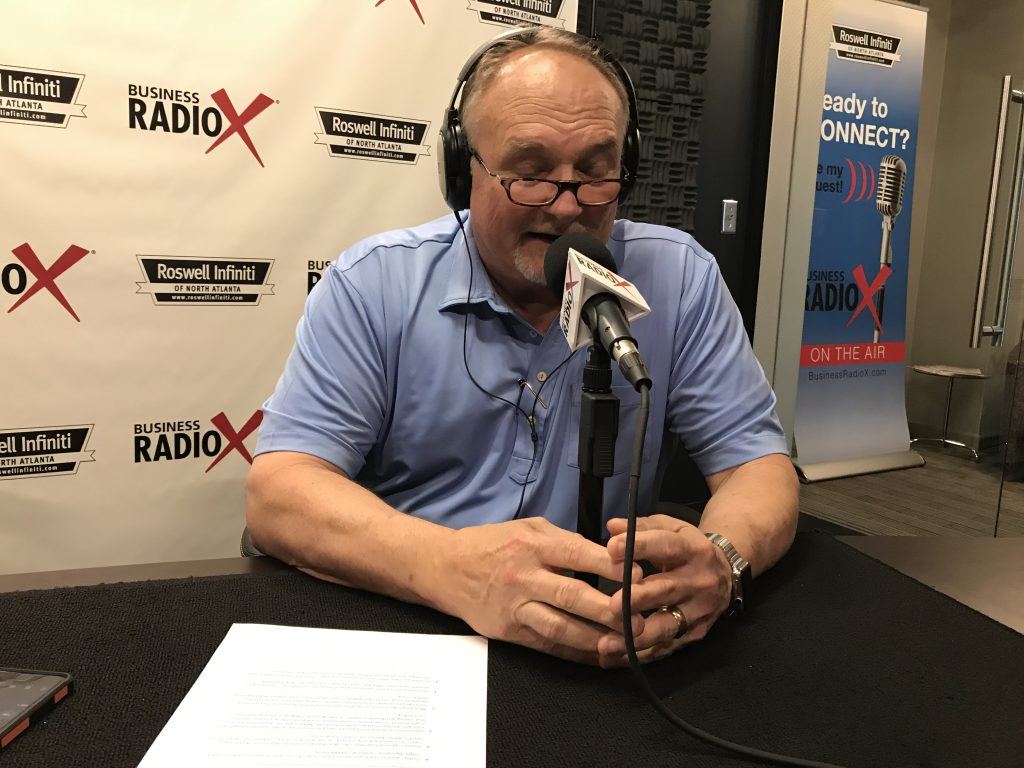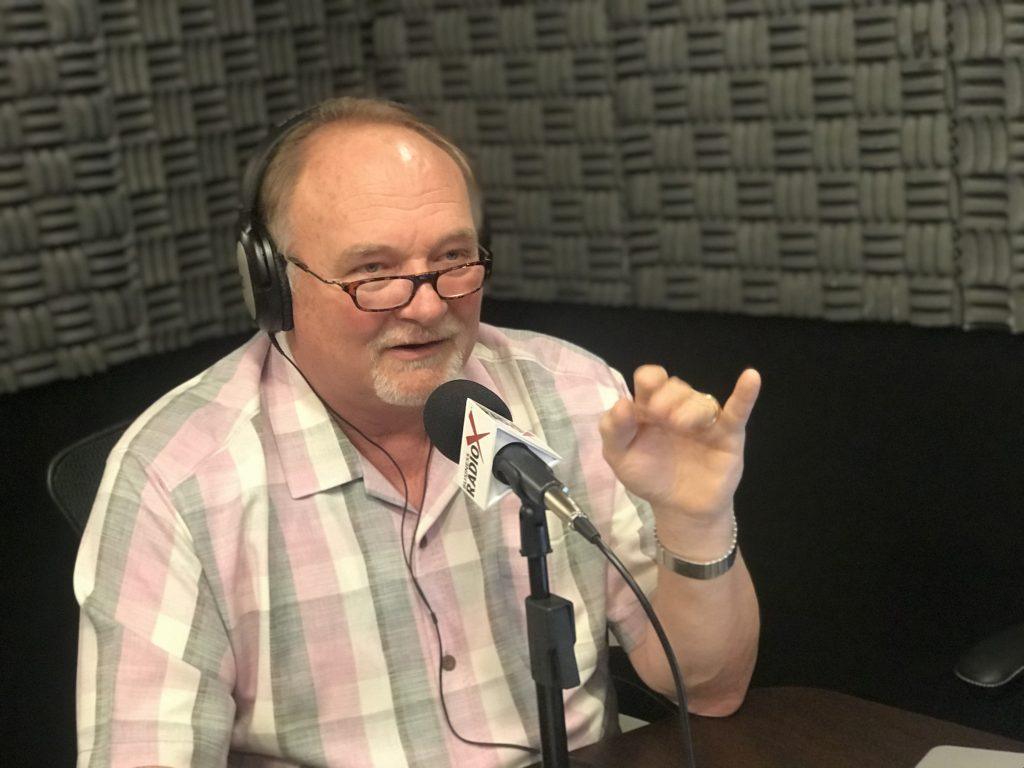

To Your Health With Dr. Jim Morrow: Episode 16, The Complete Physical Exam, What it IS and What it ISN’T
How often should you get a complete physical exam? What are the most important tests in a thorough physical exam, and which are unnecessary or a waste of money? Dr. Jim Morrow answers these questions and more on this edition of “To Your Health.” “To Your Health” is brought to you by Morrow Family Medicine, which brings the CARE back to healthcare.
About Morrow Family Medicine and Dr. Jim Morrow
Morrow Family Medicine is an award-winning, state-of-the-art family practice with offices in Cumming and Milton, Georgia. The practice combines healthcare information technology with old-fashioned care to provide the type of care that many are in search of today. Two physicians, three physician assistants and two nurse practitioners are supported by a knowledgeable and friendly staff to make your visit to Morrow Family Medicine one that will remind you of the way healthcare should be. At Morrow Family Medicine, we like to say we are “bringing the care back to healthcare!” Morrow Family Medicine has been named the “Best of Forsyth” in Family Medicine in all five years of the award, is a three-time consecutive winner of the “Best of North Atlanta” by readers of Appen Media, and the 2019 winner of “Best of Life” in North Fulton County.
Dr. Jim Morrow, Morrow Family Medicine, and Host of “To Your Health With Dr. Jim Morrow”

Dr. Jim Morrow is the founder and CEO of Morrow Family Medicine. He has been a trailblazer and evangelist in the area of healthcare information technology, was named Physician IT Leader of the Year by HIMSS, a HIMSS Davies Award Winner, the Cumming-Forsyth Chamber of Commerce Steve Bloom Award Winner as Entrepreneur of the Year and he received a Phoenix Award as Community Leader of the Year from the Metro Atlanta Chamber of Commerce. He is married to Peggie Morrow and together they founded the Forsyth BYOT Benefit, a charity in Forsyth County to support students in need of technology and devices. They have two Goldendoodles, a gaggle of grandchildren and enjoy life on and around Lake Lanier.
Facebook: https://www.facebook.com/MorrowFamMed/
LinkedIn: https://www.linkedin.com/company/7788088/admin/
Twitter: https://twitter.com/toyourhealthMD
Show Transcript
Intro: [00:00:06] Broadcasting live from the North Fulton Business RadioX Studio, it’s time for To Your Health with Dr. Jim Morrow. To Your Health is brought to you by Morrow Family Medicine, an award-winning primary care practice, which brings the care back to healthcare.
Dr. Jim Morrow: [00:00:23] Hello. Once again, this is Dr. Jim Morrow with Morrow Family Medicine. Morrow Family Medicine has been open since 2011. And we are, as we like to say, bringing care back to healthcare. We’re doing that in Cumming, Georgia and in Milton, Georgia, where we have a walk-in hour five days a week from 7:30 to 8:30 every morning, so that there’s never a day you can’t be seen if you have the need, or a desire, or question, or are concerned, or anything else and think you need to be seen.
Dr. Jim Morrow: [00:00:51] So, we’re here at Renasant Bank in Alpharetta, Georgia in the Business RadioX North Fulton Studios. And my colleague John Ray is behind the board again. Hey, John. How are you doing?
John Ray: [00:01:02] Good morning, Dr. Morrow.
Dr. Jim Morrow: [00:01:03] We do the same thing every time. I got to come up with a better name for you, like Tater Salad.
John Ray: [00:01:09] Well, I’ve got a name for you, Distinguished Humanitarian.
Dr. Jim Morrow: [00:01:16] You can start with that.
John Ray: [00:01:17] I’m starting with that. I’m go in there right off the top. So, you won a really prestigious award from your alma mater.
Dr. Jim Morrow: [00:01:26] I did. I was very, very blessed to be named the Humanitarian of the Year by the University of South Carolina School of Medicine. And I was just really, really honored. It’s an award that I believe and I know for a fact should go to my wife more than myself. But I’m very honored to have that. She and I have been trying to raise money to support children in our county that don’t have the technology that others have, so that they’re not able to do homework, and lessons, and research, and so forth that we would like very much for them to be able to do. And so, we’re raising money to get technology in their hands where there’s internet in their home or a laptop in there in their hand. And they’re doing much better in class when they have those things, as you might imagine. And it’s been probably as rewarding for Peggy and myself than it has for them. So, it’s been a great thing, and they recognized that, and I really appreciate it.
John: [00:02:22] Well, she gets the award for Distinguished Humanitarian Award for living with you, too, right?
Dr. Jim Morrow: [00:02:28] I think that’s a Nobel Peace Prize probably.
John Ray: [00:02:31] Perfect. Absolutely. But that’s a really cool honor. And congratulations on that.
Dr. Jim Morrow: [00:02:38] It is.
John Ray: [00:02:38] I brought it up because I knew you weren’t going to.
Dr. Jim Morrow: [00:02:40] No, I wouldn’t go into it, but I appreciate the award very much and the recognition of what we’re trying to do. So, thank you for mentioning that, and I appreciate it.
John Ray: [00:02:48] Congratulations.
Dr. Jim Morrow: [00:02:50] So, today, we’re going to talk about something that some people would find a little bit mundane, but other people find very, very interesting because it’s a topic that I think everybody is going to come up across. And that’s complete physical. What it is and what it isn’t. And what a complete physical is, is pretty straightforward, but what it isn’t, I don’t think most people really have a handle on.
Dr. Jim Morrow: [00:03:12] So, why should you ever have a complete physical? And people, John’s age and mine, mid-60s or so, he’s a little younger than I am, should get one very regularly, but everybody needs one now. And then, we’ll talk about the kind of schedule in a minute. But the reason to get a physical is very simple. If you don’t look for a problem, you can’t find one. You can’t know what you don’t know. So, having a regular, complete physical exam is paramount to having good health. Just because you don’t have symptoms doesn’t mean you’re healthy. It means you’re not having symptoms yet. Even cancer and diseases like that, you can have of a very advanced form of cancer already and have absolutely no symptoms, and those things don’t cause problems until something gets obstructed, till something gets blocked up, and then it will give you symptoms.
Dr. Jim Morrow: [00:04:04] So, back in the old days – and the old days was about nine years ago, I suppose – a physical could cost a patient a few hundred dollars out of pocket because insurance companies didn’t cover physicals. They didn’t cover preventive health. They didn’t cover almost anything having to do with preventing disease in a doctor’s office. So, not too many people would actually see a family doc to get a physical. I used to beg people to get a physical, and I would probably do three physicals a day.
Dr. Jim Morrow: [00:04:33] And now, with the Affordable Care Act, a physical is a covered service. And because it’s now paid for by the insurance company, I do closer to 12 physicals a day, and we’re booked out long in advance because everybody’s going to get their free physical. Well, part of the reason they’re going to get their free physical is they’re not coming just for a physical. Now, a physical is for looking for things you don’t already know about. A physical is not for treating your tennis elbow, and talking about your back pain, and talking about your IBS, and talking about other swelling in your feet, or whatever it might be.
Dr. Jim Morrow: [00:05:09] A physical is purely a preventive exam. It’s for looking for things you don’t know about. If you know you have high blood pressure, it’s not for talking about your high blood pressure. It’s for figuring out other things. And it’s important that people understand that because they’re going to be a lot happier with the situation if they do understand that. And that’s when the insurance companies get involved. If you go to a physical, and you’ve got a list of 5, or 3, or 20 different problems, then you’re going to get a bill for the period of time that you spend talking about those things because that’s not part of a physical. The insurance company is going to cover what’s done for the physical, but they’re going to cover in a different way, which usually means applying it to your deductible, the things when you go and talk about any illnesses you have, any problems you have, and so forth.
Dr. Jim Morrow: [00:05:58] Now, does that mean that you can’t go to physical and get refills on your usual routine medications? No, it doesn’t mean that, but it does mean that if you go, and you’ve got a long list of problems, don’t be surprised if you get a bill from the insurance company or from the doctor’s office for the work that was done about these new and different things that really didn’t pertain at all to a physical.
Dr. Jim Morrow: [00:06:20] So, when do you get a physical? Well, between the ages of probably 20 and 30, I think every other year is sufficient if you don’t have ongoing medical problems that make you need to be seen more often than that. So, probably every couple of years is fine. After 30 or certainly after 35, you want to get a physical every single year because once you’re 35, at least, things do start to change – everybody has been there, and I remember it clearly – starts to have things happen that weren’t happening before or things quit happening that were happening previously. And it’s important to stay on top of situations and be sure nothing is turning up that’s new and different for you. And without any question, after the age of 40, a physical every year is vital. And that don’t matter if you’re a man or woman. It doesn’t make a bit of difference. You need a physical certainly every year after the age of 40.
Dr. Jim Morrow: [00:07:15] So, what does a physical involved if it doesn’t involve all this other stuff I’ve been talking about? Well, there’s several components to a physical exam, and the least of it really is the physical exam, but a comprehensive physical exam includes a history. It includes talking to the doctor about things like your social history. Do you smoke? Do you drink? Do you do drugs? It’s amazing to me how many people will come in and admit that they smoke marijuana. And I don’t care if they smoke marijuana, but if they want it in their chart, that’s one thing. And I usually try to just tell them, “Well, I’ll just put that in the back of my mind and we’ll take out of here the fact that you smoke marijuana because I’m not sure you want the life insurance company or the health insurance company to want to know that.”
Dr. Jim Morrow: [00:07:55] And then, family history. Do you have a family history of colon cancer? Completely changes when you get colonoscopies. Do you have a family history of breast cancer? It can certainly change when you get mammograms. Family history of other diseases can change when you look for things or whether you look for them at all. Your past surgical history, what operations have you had and so forth. So, this is a big part of the exam. And this is something. This information is usually gathered by the medical assistant or the nurse prior to the doctor coming in the room. So, that’s information that can change year to year, but you just have to add to. You don’t have to re invent the wheel every time you go.
Dr. Jim Morrow: [00:08:34] And they would do an important thing called a review of systems. And that means your health system, your organ systems. So, we do review systems. And the doctor might ask you if you have headaches, visual changes, dizziness, chest pain, shortness of breath, constipation, diarrhea, red hot, swollen, tender joints, lots of things. I’m not about to go through all of them, but something having to do with each organ system, trying to be sure that you’re not having symptoms related to any particular organ system. And that can take a few minutes, but it’s an important thing to do. I usually do mine while I’m doing the physical exam, but it’s still an important thing to do.
Dr. Jim Morrow: [00:09:10] And then, the physical exam itself. The physical exam for a complete physical was pretty much a head to toe exam. And in some cases, it would include a pap smear. And in some cases, it would include what’s called a mini cognitive exam where we might get you, if you’re a certain age, might get you to draw a clock face and draw the hands at a certain time. And some people will come in and won’t know how in the world to draw a clock face, but most of these people are 65 and older, so they grew up with an analog clock, not a digital clock. I have had people come in and on the same sheet of paper, draw a digital clock at the bottom, and write in the time we asked for. But that’s a way to understand if someone has any of the beginnings even of memory loss, dementia, that kind of thing. And that’s a very important part of the exam.
Dr. Jim Morrow: [00:09:59] And then, there’s the question of a prostate exam in men over a certain age, usually over the age of 40. Historically, we’ve done prostate exams on men every year. Well, there’s probably not any more debate about anything than there is prostate exams today. Not too long ago, the American Academy of Family Physicians came out with a recommendation that we not do prostate exams when we’re doing physical exams. That we use the prostate blood test, the PSA, its called, to determine if someone might be heading towards prostate cancer.
Dr. Jim Morrow: [00:10:32] Well, if you ask the urologist out there, the urologists are going to tell you that you should do more prostate exams than you should do PSAs, I think. And they’re very much still doing the prostate exam. But if you’ve ever had a prostate exam by family doctor, and you’ve had a prostate exam by a urologist, you know for a fact that the urologist prostate exam is a completely different exam from the family doctor’s prostate exam. And I don’t doubt for a second they can get more information from that exam. But for family practice purposes, we’re using the prostate blood test.
Dr. Jim Morrow: [00:11:02] Now, interesting is probably not the right word, but it is interesting to me that if you look at what the federal government’s task force – and I’ve mentioned the task force on other podcasts – if you look at what they recommend for prostate cancer, for prostate cancer screening, at least, they recommend against prostate cancer screening. Period. And I have a major problem with that because practicing the day before we had the prostate blood test, and at that point we found prostate cancer at stage 4 about 95% of the time. And now, we found it stage one about 95% of the time. And so, I’m going to continue to do the prostate blood test. But we are not doing prostate exams for men with physical exams.
Dr. Jim Morrow: [00:11:47] Pap smear is, of course, an important part of a routine exam for a woman. And after a certain age, and that age changes it seems like every few years, women should get a pap smear at least every other year, if not every year. And after some period of time, they may actually be able to slide to every third year. But having the pap smear on a regular basis is very, very important.
Dr. Jim Morrow: [00:12:11] And then, after the physical exam, there’s bloodwork. And there’s a fair amount of debate and variation too as far as what bloodwork is done with the physical. Now, for my physical exams, I’ll do a blood count. That’s a CBC. We look at your white blood count, your red blood count or your hemoglobin. We can tell if you’re anemic. Do you have infection? I had one the other day, just a routine physical, and his white blood count came back extremely high, and he had new onset leukemia, and had absolutely no idea that he had leukemia. But we wished him off to the haematology oncology group, and he’ll be getting great care, and hopefully do well. But he had no symptoms at all, but his blood count that we did for the physical revealed a major problem.
Dr. Jim Morrow: [00:12:55] And then, that also shows you platelets. And there’s a lot you can learn from that that aren’t—factors that are not directly related to just blood cells like iron deficiency, B12 deficiency possibly, and that kind of thing.
Dr. Jim Morrow: [00:13:09] Another test that’s important is what’s called a comprehensive metabolic panel. And I’ve seen physical exams where docs did just a basic metabolic panel, but the comprehensive panel is exactly that. And it has a lot more tests in it, in that panel. I think is 18 or 20 different tests. And that’s where you check your sugar, your potassium, your kidney and liver function, calcium, protein level, and that kind of thing. And that’s a very important part of the physical and a part of screening also because that can really turn up a lot of things like diabetes if you’re a diabetic. That’ll tell you, if you have kidney issues or liver issues, it’ll tell you. So, there’s a lot to be learned from that.
Dr. Jim Morrow: [00:13:47] And then, a lipid panel. Everybody that gets a physical in our office gets a lipid panel. But what we don’t do is we don’t do the expanded lipid panel that tells you the particle size of all the different types of cholesterol that you have. And the main reason for that is because insurance companies can’t stand that test. Insurance companies really don’t like paying for the apa protein and all the different particle size tests, and they’re extremely expensive, and patients just really get upset with us anytime we’ve tried to do that.
Dr. Jim Morrow: [00:14:18] So, we’ve gotten away from doing that. And honestly, I don’t think it’s changed our care one bit because the new recommendations for who needs cholesterol medicine and who doesn’t are not even based on that at all. And I’m a believer that a straight lipid panel is plenty of information for someone getting a physical. And I think that’s what we’re going to continue to do is just a plain old lipid panel that I’ve been doing since 1985.
Dr. Jim Morrow: [00:14:44] Oftentimes, during a physical, we’ll be asked to check vitamin D levels. I will tell you that we have created—as physicians, we’ve created an entire population of people who are vitamin D deficient. Now, you get vitamin D primarily from the sun. Sun converts other chemicals in the body to vitamin D. And if you don’t get much sun exposure, you don’t have much vitamin D. So, it’s a good idea for most adults, I’m willing to say, to be taking a vitamin D supplement, but we try not to check vitamin D levels because it’s another thing insurance companies don’t like paying for. It’s really not part of a routine exam. And so, if you go in, and you ask the doc to do a vitamin D level, the odds are if he does it, you’re gonna get a bill from insurance company. And they don’t do tests for $8.99. They do him them for $75. So, it’s probably what the bill is going to be when you get that bill.
Dr. Jim Morrow: [00:15:31] I mentioned B12 and iron earlier. And patients, a lot of times, will tell me that they want all their vitamins checked. Well, it’s just not a routine thing to do. And one of the reasons is that in that blood count, I mentioned, you can tell if someone is B12 deficient, or iron deficient, or leaning that way. At least, you get a good indication. You don’t get a B12 level or an iron level, but you do get an indication because if you are B12 deficient, your red blood cells will be larger, and that will indeed be indicated on the blood count. And if you’re iron deficient, your red blood cells will be smaller than normal, and that’ll be indicated on there. So, you can get a good idea about that. And then, if that’s the case, then you can come back in for a regular office visit, and you can actually check your B12 and iron levels. And everything’s fine with the insurance companies.
Dr. Jim Morrow: [00:16:18] With complete physicals over the age of 40, certainly over 40 and even 35 would be nice, I’d like to do an electrocardiogram. Now, an electrocardiogram or an EKG is a heart tracing. Everybody knows what that looks like. You’ve seen Chicago Med, and seen the beep on the screen. That’s what we’re looking at on paper or on the computer screen looking at your EKG. And this, I think, is very important, especially doing it year after year, because if you do an EKG year after year, and, suddenly, one year, you see one that’s different, then the odds are something is maybe different. And then, it’s a good reason to go see a cardiologist and be evaluated.
Dr. Jim Morrow: [00:16:54] And that kind of thing can either save your life or certainly save you from an awful lot of morbidity, and problems, and medical issues if you catch that kind of thing early. So, I think an EKG is important. Now, some insurance companies don’t consider an EKG part of a routine exam. So, it is possible that if you have that done, you might end up with a bill. But that’s a bill that’s worth paying because that’s the kind of thing that can be very important.
Dr. Jim Morrow: [00:17:19] Now, what an EKG is not going to tell you, just a resting EKG, you’re laying there on the exam table, and they do an EKG, that didn’t tell you anything about your heart from that moment forward. It only tells you about your heart during the time the EKG is being run and previously. So, if you’ve had a heart attack in the past, it will show up. If you’re having a heart attack at that moment, it’ll show up. But if you have a heart attack the next time you run across the parking lot in a rainstorm, it’s not going to show up. It’s not going to show any blockage that hasn’t yet caused a problem. So, that’s important. And I think every doctor that’s practiced for a lot of years will be able to tell you about somebody be did a physical on who very soon after had a heart attack, but their EKG was normal. So, it’s important to understand what you’re getting, but I think it’s an important thing to do.
Dr. Jim Morrow: [00:18:08] I’ve seen a lot of physicians and practices that do a chest x-ray every time they do a physical. And I’ll tell you that I don’t think there’s anything on the planet more unnecessary than a chest x-ray every time you do a physical. It’s a waste of perfectly good radiation. It’s exposing you to radiation you really don’t need. And it’s a waste of money in vast majority of cases.
Dr. Jim Morrow: [00:18:29] Now, sometimes, do people find things on there that turn out to be important? Well, yeah, of course they do. But if you look at the number of x-rays done versus a number of items found, it’s really not a very good test to do. And most people just flat do not need it.
Dr. Jim Morrow: [00:18:44] And then, the other thing is in women, at least, a bone density test, which should be done after the age of probably 50, certainly after menopause, every couple of years, unless you have a major problem that you’re following. And then, it might be done more often. But a bone density test is very important because if you’re past menopause, you need to be careful about your bones because when the hormones go away, your bones can start to get brittle, and people are falling more and more because they’re making it to older and older ages, and falling with brittle bones is just an accident waiting to happen, as you might be able to imagine.
Dr. Jim Morrow: [00:19:18] I do want to remind everybody that this episode of To Your Health is brought to you by Morrow Family Medicine. We do have offices in Cumming and Milton, Georgia. We do try to bring care back to healthcare, as we like to say. And we’re doing that with, hopefully, old-fashioned attitudes. Think Marcus Welby with a computer. We’re trying to use technology in old-fashioned attitudes to bring that care to you. I tell everybody that when you come to our office, you should grab one of my business cards. My email address, the only one I really use is all my business card. And if you’re ever there, and you have an experience that you’re not happy with, if you’ll let me know, I’ll certainly do everything I can to make it right.
Dr. Jim Morrow: [00:19:59] If you’re happy with the podcast, and you’re enjoying this, if you haven’t yet subscribe, I hope you will hit the subscribe button on the app that you’re listening to. I think that’s an important thing to do. We’d also love for you to join in with us. You can do that by e-mail at drjim@toyourhealth.md or you can do it on Twitter. We are @toyourhealthmd. So, that’s two different ways you can send us questions, you can send us topic suggestions, you can communicate with us in any way that you might want to. And we’d appreciate it if you would.
Dr. Jim Morrow: [00:20:33] So, getting back to physical exams, sometimes, you’ll see advertisements, or hear them, or you might talk to somebody that went to one of these centers where all they do is physical exams, and they do them all day long, and physical exams is their thing. Well, is that a good idea? Well, it’s certainly a very thorough exam, but the problem with most of those centers is they end up doing tests that are optional at best, worthless at least, and in many cases, do cost extra money. For example, they might do a carotid ultrasound. That’s an ultrasound that you do on the arteries in the neck, going from the heart to the brain. And if these arteries get clogged up, you can be at risk for stroke and so forth. And they might do an ultrasound on those, but they might do those starting at age 40 when you’re incredibly unlikely to have a problem. And it’s just not a test that really is is worth the money.
Dr. Jim Morrow: [00:21:28] They also might do a test looking for an aneurysm in your abdomen. An aneurysm is an enlargement of a vessel. If you’re old enough to have seen a blister on the tire back in the old days, it’s that kind of thing. And they can rupture if they get big enough. And there’s certainly situations at certain ages and with certain family history that you ought to have on a screen for an abdominal aortic aneurysm, they’re called. But that’s not something that everybody needs every time they get a physical. And a lot of these places will do that just because it adds another ching to the bill.
Dr. Jim Morrow: [00:22:02] Renal scans are done a lot of times looking for cysts, and tumors, and size of the kidneys, and so forth. And this is something that really is not a usual part of a physical exam, but might be included just to make it feel like you got your money’s worth at one of these expensive physical exam mills, if you will.
Dr. Jim Morrow: [00:22:24] So while we’re talking about all these tests, I’d like to talk about heart scans and full body scans because they’re incredibly popular. There are everywhere, it seems like. And certainly, people are doing them all day long anymore. So, the full body scan is basically just a CAT scan of your body. And this is a scan that is done, it doesn’t take long. The initial scan, I believe, is usually fairly inexpensive. But it’s one of those things where they’ll try to get you to agree to do that every year for X number of years for Y number of dollars. And Y is not a small number. And so, I encourage you not to do those things, especially not on an ongoing basis, because it can be a real waste of money.
Dr. Jim Morrow: [00:23:12] But the other thing that can happen is you can find something like a lung nodule, let’s say, when you’re doing one of these scans. And if you find a lung nodule, then that lung nodule has got to be examined every six or 12 months with another CAT scan until you know that it’s not getting bigger. So, that’s probably another couple, at least, CAT scans. Every CAT scan is a lot of radiation compared to a simple X-ray, and it’s expensive. And so, this is something that can really get into a cycle of doing some tests.
Dr. Jim Morrow: [00:23:42] Now, it’s always possible that they’ll do these tests, and they’ll find something very, very important. A lot of people remember the announcer for the Atlanta Braves named Don Sutton, who years ago now, this is probably 25 years ago, had one of these scans, and he had a lesion on his kidney, and he had kidney cancer, and had absolutely no symptoms. But Don Sutton, his life was saved because he went for one of these scans. And there’s no question you do hear about those. But for the majority of people, the full body scan is just not a necessary thing. And I don’t recommend that people get them as a basic rule.
Dr. Jim Morrow: [00:24:18] The heart scan is a little different. When they do a heart scan, they’re looking for calcium in the arteries. And so, I’ve talked to every cardiologist that I know about these scans. And while they do recommend them in certain situations, just doing a heart scan so that you’ll know if you have a heart disease is not a good idea because it does not answer that question. What it tells you is if you have calcium in or around an artery in your heart. So, if you have calcium in the wall of the artery, just surrounding the artery itself, not in the loom, in the opening, where the blood flows, then you’ll come back with a high calcium score. And if you have a high calcium score, I can almost promise you they’re gonna want you to take statins. And I refer you back to previous podcast about statins, if that’s the case. But you can have calcium in that wall and the entire artery can have absolutely zero blockage in it. So, now, you think, “Oh, my gosh, I have heart disease,” and you live your life thinking you have heart disease when, in fact, you have some calcium just in the wall of that artery, just the lining around that artery.
Dr. Jim Morrow: [00:25:23] But then, you can also go for a calcium scan, and you can get a zero calcium score. And you can be thrilled to death that you don’t have any heart disease. You have no heart disease. Zero score equals zero heart disease. But inside that artery to your heart, you can have what’s called soft plaque. And that soft plaque can completely block an artery. And the x-ray beam will go straight through it, and give you a zero score, and you think you have no problem when in fact you have a major problem. So, a false sense of security is a bad thing, in my opinion, because people in that situation might start to have some chest pain, and they’ll think, “Well, this must be indigestion because it certainly can’t be heart disease because I have a zero calcium score,” and they don’t do what they might otherwise do in order to look into what kind of problem they might actually be having because that’s one of the worst kind of problems you can have.
Dr. Jim Morrow: [00:26:19] So, I recommend a physical exam. I recommend a physical exam with great regularity. I recommend, in my case, personally, I recommend you start at age 30, and get one every single year. Men or women makes no difference. I recommend that you have the whole battery of tests that are done in a traditional physical exam. And I recommend that you talk to your doctor if you have thoughts about getting these other things done, because in your individual situation, it might be that, yes, this one’s a good idea, but no, this was not. And I can promise you, everybody’s a little bit different.
Dr. Jim Morrow: [00:26:52] But what you have to do is you have to have a doctor. You have to find yourself a doctor that you can carry on a conversation with, someone that you trust, someone you feel like you can open up to, someone you feel like has time for you. And that’s an important thing because, sometimes, that takes going to a couple of docs. But if it does, do that and find the person that you’re gonna be comfortable with. And I encourage you to find someone about your own age or a little bit younger, so that they don’t retire on you when you’re actually needing them the most. So, see your doctor for a physical. See him regularly. Don’t put it off. And never, ever say those five most dangerous words in the English language – maybe it will go away. John, that’s physical exams.
John Ray: [00:27:40] That’s a complete exam on physical exams, right?
Dr. Jim Morrow: [00:27:44] It is.
John Ray: [00:27:46] So, you’ve mentioned getting a provider that’s near your age or a little younger. So, at Murrow Family Medicine, you’ve got providers of different ages, right?
Dr. Jim Morrow: [00:27:59] We do.
John Ray: [00:28:00] Okay.
Dr. Jim Morrow: [00:28:01] We do. We have men. We have women. We’ve got them of different ages. I’m certainly the old man in the group, but we’ve got them all the way down to right out of school. So, I do believe that Murrow Family Medicine that we can take care of any adult, any age.
John Ray: [00:28:19] So, if I have an issue that comes up, how do you recommend handling that with insurance? Because, obviously, I want my insurance to pay for it. Since I’m paying for my insurance, I want my insurance to pay for it.
Dr. Jim Morrow: [00:28:37] Right.
John Ray: [00:28:38] Right? So, something comes up that you see. So, how do I handle that and get that visit paid for with insurance because you mentioned a lot of things that don’t get covered if you find it?
Dr. Jim Morrow: [00:28:48] Well, they can, but it depends completely on your insurance plan because even as much as they’ve changed insurance, and my way, degraded insurance—and my feeling, degraded insurance, still, if you have chest pain, or abdominal pain, or a rash, or anything else, for the most part, his office visits are covered to a certain degree, and most people understand what it’s going to cost them to go to see a doctor. So, I recommend what I said a minute ago, which is don’t say maybe it will go away. And if you do have a problem, get it checked out. But for most people, if they just—if they’re having any kind of problem, they just need an office visit.
Dr. Jim Morrow: [00:29:31] One of the big things that we battle at the office is patients will call, and then they’ll ask for a physical. Well, if you tell them it’s gonna be six months to see Dr. Morrow for a physical, which, frankly, it is, because everybody’s getting their free exam, then if you ask them a few more questions, you’ll find out that, actually, what they have is back pain. And they feel like they need a physical, but they really don’t. They need to come in for an office visit, which they can do almost same day with almost any of our providers. They can certainly do it through the walk-in hour. And that way, they can get that taken care of right away. And for the most part, insurance is going to help cover that. Now, we do see people that have insurance plans that only allows two office visits a year. And if that’s the insurance plan you own, I can only hope that you’re gonna be able to get on a better one because that’s not a very good.
John Ray: [00:30:19] Yeah, you’re right. That doesn’t sound very good. So, are there any other options that I ought to look at, at a certain age that you haven’t mentioned?
Dr. Jim Morrow: [00:30:35] Well, I didn’t talk about colonoscopies because I already did a podcast on colonoscopies. And they’re certainly not part of a routine every year physical, but people need colonoscopies on a certain schedule, whether that’s 3, 5, or 10 years in most cases. But really, that’s about it. I think this really covers most of the things that are involved in a complete physical.
John Ray: [00:30:57] But you consider a colonoscopy part of a good, complete physical examination, at least, every five years or whatever it is, right?
Dr. Jim Morrow: [00:31:07] It’s part of your wellness.
John Ray: [00:31:10] Your wellness.
Dr. Jim Morrow: [00:31:10] Your wellness check, but it is an infrequent part.
John Ray: [00:31:14] Yes, got it. Thank you.
Dr. Jim Morrow: [00:31:18] So, in two weeks, we’re going to talk about testosterone. I’ve been avoiding the subject because it’s controversial, but it’s probably the better reason to do it.
John Ray: [00:31:31] Why would you avoid that? Your first episode was on erectile dysfunction.
Dr. Jim Morrow: [00:31:36] It was, it was. And if you haven’t heard that one, that was a very good one, and probably one of our most popular ones. So, I encourage you to listen to that one. We’re going to talk about testosterone because it’s not as straightforward a thing as you might think it is, and we’re going to go ahead and tackle that in two weeks.
John Ray: [00:31:52] Sounds like we’re going to get some listeners on that.
Dr. Jim Morrow: [00:31:56] I might lose some patients over it too.
John Ray: [00:31:59] Well, we’ll see. Let it fly and see what happens, right?
Dr. Jim Morrow: [00:32:02] Okay. So, for now, that is To Your Health.