Business RadioX ®

  • Home
  • Business RadioX ® Communities
    • Southeast
      • Alabama
        • Birmingham
      • Florida
        • Orlando
        • Pensacola
        • South Florida
        • Tampa
        • Tallahassee
      • Georgia
        • Atlanta
        • Cherokee
        • Forsyth
        • Greater Perimeter
        • Gwinnett
        • North Fulton
        • North Georgia
        • Northeast Georgia
        • Rome
        • Savannah
      • Louisiana
        • New Orleans
      • North Carolina
        • Charlotte
        • Raleigh
      • Tennessee
        • Chattanooga
        • Nashville
      • Virginia
        • Richmond
    • South Central
      • Arkansas
        • Northwest Arkansas
    • Midwest
      • Illinois
        • Chicago
      • Michigan
        • Detroit
      • Minnesota
        • Minneapolis St. Paul
      • Missouri
        • St. Louis
      • Ohio
        • Cleveland
        • Columbus
        • Dayton
    • Southwest
      • Arizona
        • Phoenix
        • Tucson
        • Valley
      • Texas
        • Austin
        • Dallas
        • Houston
    • West
      • California
        • Bay Area
        • LA
        • Pasadena
      • Colorado
        • Denver
      • Hawaii
        • Oahu
  • FAQs
  • About Us
    • Our Mission
    • Our Audience
    • Why It Works
    • What People Are Saying
    • BRX in the News
  • Resources
    • BRX Pro Tips
    • B2B Marketing: The 4Rs
    • High Velocity Selling Habits
    • Why Most B2B Media Strategies Fail
    • 9 Reasons To Sponsor A Business RadioX ® Show
  • Partner With Us
  • Veteran Business RadioX ®

Mental Health Matters – Kicking My Blue Genes in the Butt

September 23, 2021 by Karen

Mental-Health-Matters-Kicking-My-Blue-Genes-in-the-Butt-feature
Phoenix Business Radio
Mental Health Matters - Kicking My Blue Genes in the Butt
Loading
00:00 /
RSS Feed
Share
Link
Embed

Download file

Mental-Health-Matters-Kicking-My-Blue-Genes-in-the-Butt

Mental Health Matters – Kicking My Blue Genes in the Butt
The Emerson Theater Collaborative (ETC) is a 501(c)(3) non-profit organization whose mission is to serve youth, under-represented communities and artists with an emphasis on diversity, by producing innovative and thought-provoking theater both in southeastern Connecticut and Sedona, Arizona. One such example is a wonderful play called Vivian’s Music 1969 by Monica Bauer that was a featured program at ETC in February 2020.

Camilla-Ross-on-Phoenix-Business-RadioXCamilla Ross is the President and Chairman of Emerson Theater Collaborative, Inc., Producer and Actress (Portray’s Harriet Tubman – Harriet Tubman’s Dream written by Lisa Giordano). She is also the President and Chairman of the Sedona Arts Academy.

“To be a catalyst for social change is really where it’s at for me,” Camilla said. “I believe theater should always be a venue for social change. I love the art of live theater and love what it does to the human soul and spirit. It moves us to look at life differently. To leave off the rose-colored glasses and really see the human condition.”ETC is a shining example. Founded in 2008 to give voice to actors’ innate talent for character development, Camilla has since produced more than 20 inspired, original performances. Emerging and professional cast and crew have blossomed under her guidance. And together they’ve created profound, can’t-ever-forget shows that illuminate social issues, and transform audience curiosity into concern and action.ETC_Logo_CMYK

Camilla has a deep well of experience and mentorship to tap into for her ETC roles—from her days at Emerson College and then in regional theaters and commercials. Among her favorite portrayals? Capturing the heart, spark, and essence of Harriet Tubman in the one-woman show Harriet Tubman’s Dream. Camilla is also deeply involved with youth, their visions for social change, and the desire to see the world as a stage of peace. To that end, she’s a tireless advocate for children and adults with Asperger’s Syndrome. She gives kids and teen real-life theatrical experience through ETC’s Summer Youth Program and enlivens their eagerness to learn about the history and genuine heroes through ETC’s school programs. Camilla is a steadfast suicide prevention advocate too, helping teens and adults avoid this tragedy and move forward to a happier, more positive future.

Camilla has taught business courses part-time at Three Rivers Community College since 2005, Sat on the Emerson College Alumni Board for ten years, and is past president of the Connecticut Alumni Chapter. In May 2014 Camilla was honored by the Writer’s Block of New London, Conn., for her past work as an instructor. In June 2013 she was named Woman of The Year by the Women’s Network of Southeastern Connecticut, and she’s been featured in many periodicals for her community service. In 2019 Emerson Theater Collaborative was nominated as Collaborator of the year in Sedona AZ. A veteran of the U.S. Navy and member of Kappa Beta Delta, Camilla earned her BA in Performing Arts: Acting from Emerson College in 1985 and her MBA in Finance from Baker College in Michigan.

Connect with Camilla on LinkedIn and follow ETC on Facebook, Twitter and Instagram.

Nami

Kathy-BashorKathy Bashor is a staunch advocate of peer and family driven care in the behavioral health system.  Her can-do spirit has resulted in the strengthening of peer/family voice, access to care and choice in services throughout the system. 

Personally, understanding the impact of trauma on health, Kathy lead the Arizona department of Health on a successful statewide campaign to adopt Trauma Informed Care in all aspects of the Behavioral Health system.

Kathy earned a master’s degree from Arizona state University where she served on the faculty for 4 years.

Kathy recently retired from AHCCCS as the Bureau Chief of the Office of Individual and Family Affairs

Recent awards:   ASU Center for Applied Behavioral Health Policy 2017 Award for Leadership            

                              In Advocacy                                         

                             David’s HOPE  2018 Max Dine Award for Advocacy and Leadership

Recent publication:  Recovery: Principles, Research and Practices in Inpatient Psychiatric Hospital, Stigma and Recovery

Kathy is very grateful to have the opportunity to participate in the Read Earth Theater writing class.  She arrived curious and with the hope of making new friends.  Through the process she gained so much more.  She greatly values the opportunity to meet others who have met life challenges with courage and respect.  Most importantly, through the writing process, Kathy has been able to find peace within herself.

Josh-Rivedal-Rose-Boerner-Suicide-The-Silent-KillerJosh Rivedal‘s one man, live Broadway-style play Kicking My Blue Genes in the Butt includes fifteen characters and seven songs and is both comedic and poignant.

Mr. Rivedal discusses the tragic suicides of both his father and grandfather in a primal piece of live storytelling that creates an emotional connection with the audience and conveys the powerful message that suicide is preventable.

Finally, there will be a live Q&A between Mr. Rivedal and the audience on the importance of mental health and suicide prevention. Representatives of NAMI of Phoenix, will moderate the after-show discussion.

Connect with Josh on LinkedIn, Facebook and Twitter.

Who:

Emerson Theater Collaborative in collaboration with NAMI, Verde Valley Mental Health Coalition, I Am Worthy Project, and the i’Mpossible Project

Why:

Because Mental Health Matters

When:

Thursday, Friday & Saturday

September 23th, 24th, 25th @ 7-8:30pm – 2pm -3:30pm on the 25th

Where:

Sedona Arts Academy, The Collective, 7000 SR 179 Ste. C100, Sedona AZ 86351

Tickets:

In-Person theater costs. For the first time ever, pick your seats with our new “seating” map.

– Advance /Reserved Seating – $55 (sit at table with your friends/family, drink tickets available and table service)

– Advance /Reserved Table – $165 (reserve an entire table of three for your friends/family, drink tickets available and table service)

– Advance – $35

– At Door – $45

Stream from Home via On-the-Stage (video on-demand) – $20

– USE THIS LINK to purchase and “stream” on-demand – https://bit.ly/etc-blue-genes-on-demand

– Available for viewing 9/24/2021 to 10/7/2021

Following CDC COVID-19 recommendations on masks and vaccinations.

Tagged With: Emerson Theater Collaborative, Kicking My Blue Genes in the Butt, mental health, NAMI of Phoenix, Suicide prevention

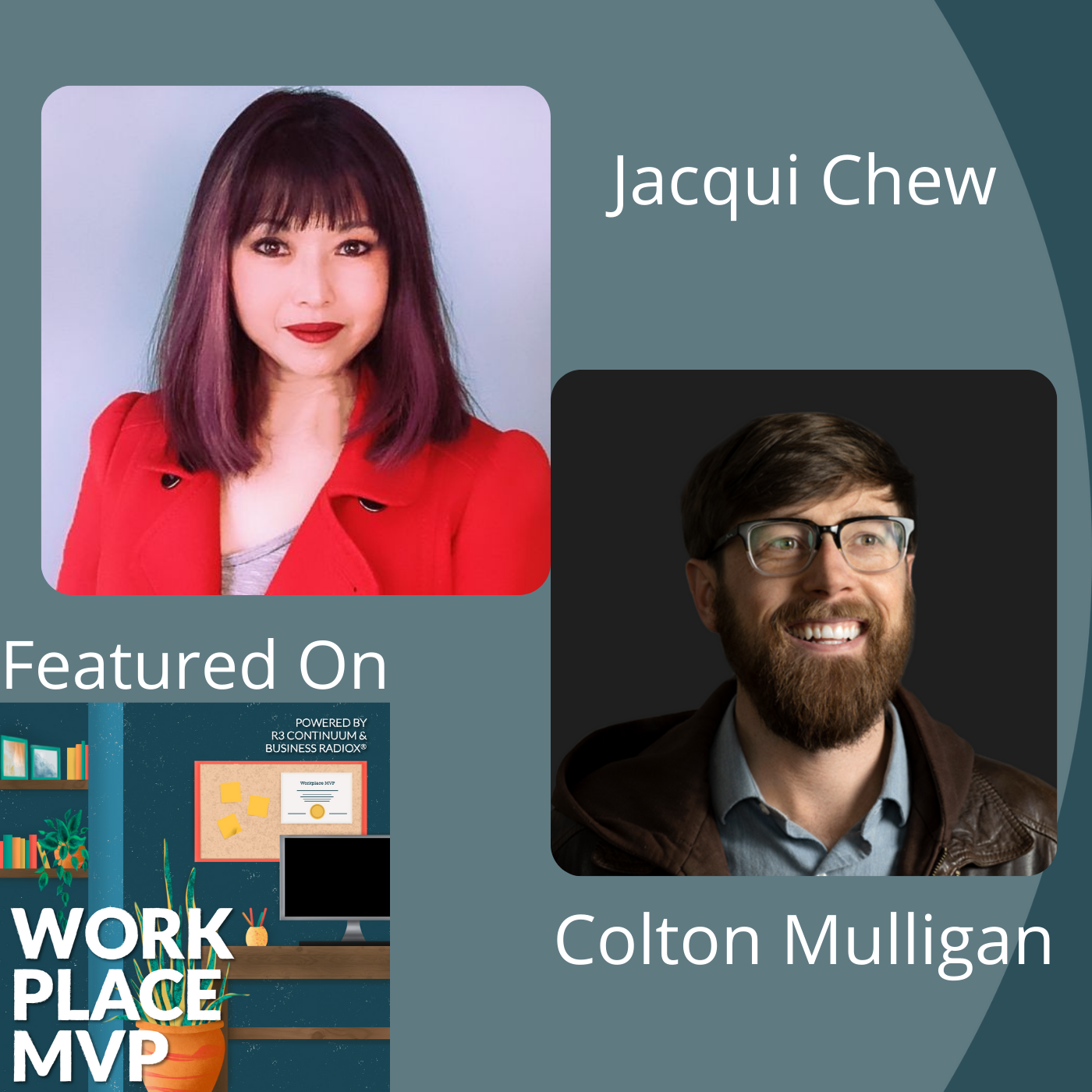
Bipolar Disorder in the Workplace, with Jacqui Chew, iFusion, and Colton Mulligan, FoxFuel Creative

July 15, 2021 by John Ray

Mental Health
Minneapolis St. Paul Studio
Bipolar Disorder in the Workplace, with Jacqui Chew, iFusion, and Colton Mulligan, FoxFuel Creative
Loading
00:00 /
RSS Feed
Share
Link
Embed

Download file

Mental Health

Workplace MVP:  Bipolar Disorder in the Workplace, with Jacqui Chew, iFusion, and Colton Mulligan, FoxFuel Creative

On this edition of Workplace MVP, Jacqui Chew, iFusion, and Colton Mulligan, FoxFuel Creative, each share their stories on working with a bipolar disorder with host Jamie Gassmann. Jacqui and Colton discuss how leaders can foster psychological safety in the workplace so that employees can be open about their mental health. It’s essential listening for HR and other workplace leaders. Workplace MVP is underwritten and presented by R3 Continuum and produced by the Minneapolis-St.Paul Studio of Business RadioX®.

Jacqui Chew, Managing Director, iFusion, and Licensee, Curator at TEDxAtlanta

Mental Health
Jackie Chew, Managing Partner, iFusion, TEDxAtlanta

iFusion is a storytelling consultancy that deploys the power of narrative design to create brand stories for companies and social impact initiatives that resonate and inspire action.

Jacqui works at the intersection of storytelling, innovation and business. She deploys the power of narrative design in reframing an organization’s brand story for resonance and to inspire action.

Described as a “Lara Croft of Problem-solving,” Jacqui is a seasoned business operator with a passion for building inclusive teams, and working cross-functionally to bring disparate groups together toward a common goal.

As the curator and licensee of TEDxAtlanta, Jacqui is always on the lookout for change-makers and innovations that are solving for the challenges of today and those just around the corner. Under her leadership, first of TEDxPeachtree from 2009 to 2018 and presently of TEDxAtlanta, Atlanta has grown in recognition within the global TEDx community as an innovation hub for technology, healthcare and social impact initiatives.

She is resourceful, tenacious and well networked in the Atlanta business, social impact and technology communities.

Website | LinkedIn | Jacqui’s TEDx video | Brain Babel

Colton Mulligan, CEO, FoxFuel Creative

Colton Mulligan, CEO, FoxFuel Creative

FoxFuel Creative produces effective outcomes for brands and people through design, content, and technology. The company helps consumer goods and products, healthcare, music and entertainment, finance, and real estate brands speak genuinely and effectively to their audience.

Their specialties include brand and marketing strategy, consumer insights, content development, creative ideation and execution, advertising concepts, and website development.

At FoxFuel, Colton Mulligan serves as CEO and is responsible for client relationships, guiding the discovery process through brand strategy into early creative concepting.

With 15+ years of branding and marketing experience, Colton has worked to develop brand and marketing strategies for TSA Pre-Check, Hilton Hotels/Home2Suites, Ben Folds, Fiesta Grande, Chip and Joanna Gaines, Pinnacle Bank, HarperCollins, Narus Health, Lifepoint, HCA, and Community Health Systems.

He also speaks at various events on Digital Marketing, Healthcare Marketing, Entrepreneurship, and the relationship between mental health and creativity. He lives in Nashville with his lovely wife Aly, and Goldendoodle JT.

Company website | LinkedIn

R3 Continuum

R3 Continuum is a global leader in workplace behavioral health and security solutions. R3c helps ensure the psychological and physical safety of organizations and their people in today’s ever-changing and often unpredictable world. Through their continuum of tailored solutions, including evaluations, crisis response, executive optimization, protective services, and more, they help organizations maintain and cultivate a workplace of wellbeing so that their people can thrive. Learn more about R3c at www.r3c.com.

Company website | LinkedIn | Facebook | Twitter

About Workplace MVP

Every day, around the world, organizations of all sizes face disruptive events and situations. Within those workplaces are everyday heroes in human resources, risk management, security, business continuity, and the C-suite. They don’t call themselves heroes though. On the contrary, they simply show up every day, laboring for the well-being of employees in their care, readying the workplace for and planning responses to disruption. This show, Workplace MVP, confers on these heroes the designation they deserve, Workplace MVP (Most Valuable Professionals), and gives them the forum to tell their story. As you hear their experiences, you will learn first-hand, real life approaches to readying the workplace, responses to crisis situations, and overcoming challenges of disruption. Visit our show archive here.

Workplace MVP Host Jamie Gassmann

In addition to serving as the host to the Workplace MVP podcast, Jamie Gassmann is the Director of Marketing at R3 Continuum (R3c). Collectively, she has more than fourteen years of marketing experience. Across her tenure, she has experience working in and with various industries including banking, real estate, retail, crisis management, insurance, business continuity, and more. She holds a Bachelor of Science Degree in Mass Communications with special interest in Advertising and Public Relations and a Master of Business Administration from Paseka School of Business, Minnesota State University.

TRANSCRIPT

Intro: [00:00:04] Broadcasting from the Business RadioX Studios, it’s time for Workplace MVP. Workplace MVP is brought to you by R3 Continuum, a global leader in workplace behavioral health and security solutions. Now, here’s your host, Jamie Gassmann.
Jamie Gassmann: [00:00:25] Hi, everyone. Your host, Jamie Gassmann, here. And welcome to this episode of Workplace MVP. According to a recent study performed by Mental Health America, only five percent of employees surveyed indicated that they strongly agree that their employer provides a safe environment for employees who live with mental illness.

Jamie Gassmann: [00:00:44] With the increased availability of workplace resources and tools for ensuring the psychological safety of their employees, along with the increase in conversations globally about reducing the stigma of mental health, particularly in the workplace, this stat seems to indicate that there’s still a level of discomfort with employees being open and honest with their employers about their mental health in a large majority of workplaces.

Jamie Gassmann: [00:01:08] Which leads to the question of how can leaders within organizations help their employees to feel psychologically safe and to create work environments that invite open dialogue about how employees are truly feeling. Are there ways to create an environment that invites vulnerability, creates a feeling of safety for being open and honest with leadership, breaking down those walls of fear that so many employees are likely still having?

Jamie Gassmann: [00:01:33] Well, today, we have two wonderful MVP’s that will share from their perspective, personal experiences and approaches for how organizational leadership can create a psychologically safe work environment. And with that, the benefits it can have on the employee, leader, and organization overall. With us is Colton Mulligan, CEO of FoxFuel Creative, and Jacqui Chew, Entrepreneur and Mental Health Advocate. Welcome to the show, Jacqui and Colton.

Jacqui Chew: [00:02:03] Thanks for having us.

Colton Mulligan: [00:02:04] Glad to be here.

Jamie Gassmann: [00:02:06] So, we’ll start off with our first Workplace MVP, who is Jacqui Chew, Entrepreneur and Mental Health Advocate. Share with us, Jacqui, a bit about your background and how you came to be a mental health advocate.

Jacqui Chew: [00:02:20] Thank you, Jamie, for having me. I have been on this journey since being diagnosed in 2005, it’s been a long time. And so, I was diagnosed at a time where mental health/mental illness was not discussed. There was still a heavy, heavy stigma around it. For the first few years, I’ve lived in silence, and in fear, and in shame with what I had. I was diagnosed with bipolar disorder in 2005.

Jacqui Chew: [00:03:03] And at the time, I owned my own business. I had a marketing consultancy. And my main clientele were and they still are high growth startups that are either angel backed or venture capital backed. And those cultures tend to have a very hard charging, high performance base type culture. And I didn’t realize it at the time, but those are definitely stressors. They are conditions that exacerbate my illness.

Jacqui Chew: [00:03:49] So, today, though, happily after years of psychotherapy and I continue my treatment protocol, I am managing my condition quite a bit better. And here I am.

Jamie Gassmann: [00:04:06] Great. Yeah. Great to hear kind of some personal experience that you’ve worked through. So, from your perspective, taking that personal experience into account, when you look at the stat that only five percent of employees strongly agree that their workplace is a safe environment for those with a mental illness. What are your thoughts on that?

Jacqui Chew: [00:04:27] You know, sadly, the stigma behind mental health and just the dialogue around it, I mean, there’s still such shame. I recently had a conversation, actually, just a-week-and-a-half ago with a young professional who was very concerning. She had an anxiety, she felt anxious, she had already been diagnosed with depression, and she was very, very afraid of losing her job. And there were so many stresses going on with her job that it sort of exacerbated her symptoms and she had no one to talk to.

Jacqui Chew: [00:05:16] And her situation is really very common. It’s still really difficult to talk about, say, your depression, or your bipolar disorder, or your recent manic episode, and how it’s affecting your job to your supervisors, your managers, because there’s this fear that, “Oh, my gosh. I don’t want to tell my manager about it, but yet I know I’m not performing to my usual level. And I know I’m going to be evaluated. My quarterly MBOs are coming up.” And all of this just builds and it’s a cumulative effect that just exacerbates all the symptoms of someone with bipolar disorder or depression.

Jacqui Chew: [00:06:09] And it is very common, unfortunately. And it’s quite unfortunate, with COVID and the isolation that we have all had to go through, of being alone, of being locked down, even for those of us who don’t have a chemical brain imbalance, there are many everyday folks who are being diagnosed with clinical depression. So, this sort of thing is more and more common.

Jacqui Chew: [00:06:46] But, unfortunately, the sense of safety that we can talk about it at work, just as we could talk about our blood pressure or our heart condition, or how we’re doing better now because our blood pressure is better, because we’re taking better care of ourselves, we’re exercising, and so on and so forth. We can talk about that but, yet, we still can’t talk about our mental wellness or the lack thereof. And that’s a real issue.

Jacqui Chew: [00:07:14] And that’s what that five percent statistic is all about, is, there is so much misinformation, disinformation, and misconception around mental illness. And workplaces, I don’t believe are doing enough to bring their managers and their supervisors to detect symptoms or signs of distress in an employee, which is unfortunate.

Jamie Gassmann: [00:07:49] Yeah. And, you know, you bring up a good point about kind of leaders doing enough. And when we connected previously, you mentioned that it was important that leaders educate themselves on mental illness. Can you talk a little bit about how that would be helpful in a work environment? And particularly on some of the things that you brought up, like with rising diagnoses from the COVID, working remote last year, how would that education be able to help these leaders to create more of an open environment for their employees?

Jacqui Chew: [00:08:27] That’s a really good question. I think, you know, this pandemic has really created an interesting dynamic, because depression or diagnosis of depression and anxiety is so widespread now that the managers themselves are being diagnosed. And so, not only are the folks who are individual contributors who may have been diagnosed prior to the pandemic, but the managers who may be fine prior to that, but because of the pandemic – depression being one of the effects or anxiety being one of the after effects of the lockdown – they’re being diagnosed.

Jacqui Chew: [00:09:13] I think that it has increased the sensitivity to want to understand. Because when you are a manager and you are all of a sudden diagnosed with something that you do not have to think about or not have to even be basically be educated on, you, all of a sudden, are faced with a whole range of symptoms yourself and you’re getting the treatment protocols and et cetera, et cetera. And I think that makes you more empathetic to folks at the workplace, to the people that you manage, the people on your team.

Jacqui Chew: [00:09:58] And, I mean, perhaps this is rather Pollyanna-ish of me, but I would hope that this would make leaders, managers, supervisors more empathetic and more sensitive to the signs and the symptoms because they themselves are going through treatment. They themselves are wrestling with the many challenges that come their way as someone who had been diagnosed with depression or bipolar disorder or anxiety disorder.

Jacqui Chew: [00:10:29] So, I truly believe that people in that power dynamic who are themselves going through treatment and are being educated because they have to be are going to be leading the way at work in creating a safer workplace, if you would, for these kinds of issues to be discussed. Just as you would discuss teamwork and team collaboration, you think about your work team is your support team for the project. Well, part of that support system could be key members that are understanding the person who is perhaps not having a good day, not having a good week, and being more empathetic and understanding about that.

Jamie Gassmann: [00:11:27] And I suppose with a leader who has their own diagnosis, they can be a lot more open with their team as well, which can create some of that breakdown, some of that vulnerability, or create that environment to be more vulnerable, and allow people to feel like they can be more open and bring things to their leader that maybe they wouldn’t have before because there’s a level of understanding. Would you agree with that?

Jacqui Chew: [00:11:54] Yes. Absolutely. There’s a heightened awareness, I believe, because more and more people are getting their diagnosis. They’re being diagnosed. And so, that is, certainly, I think, raising the level of conversation around mental illness.

Jamie Gassmann: [00:12:13] So, you also shared in that previous conversation that we had that it was important that a leader not assume that every person with a mood disorder is going to have the same cognitive disability. Can you talk through the impacts that that could have if an employer just assumed that it was like a one size fits all with the diagnosis and why they should be looking at it more kind of on an individual basis?

Jacqui Chew: [00:12:39] Certainly. So, it’s not a project, but we actually know more about space and getting into space or extra space than we know about the way the brain works, unfortunately. Two people could be diagnosed with bipolar disorder – there are two versions, bipolar 1 and bipolar 2. And they could both be diagnosed with bipolar disorder 2, but they could exhibit very, very different symptoms. And the severity could be very, very different as well.

Jacqui Chew: [00:13:29] So, for myself, I am the bipolar 1, that is my diagnosis. But, generally, I’m really high performing. I can perform at a very high level so long as I get my sleep and I am eating well and exercising, I am fine. But then, there are others who have a really tough time managing the symptoms, even with the exercise and the diet and the sleep. And so, it affects people very differently. And, once again, I’m not a doctor, but I do know that this is a chemical imbalance in the brain that causes at least bipolar disorder. And it affects people very differently because everyone’s physiology is just a little different.

Jacqui Chew: [00:14:31] And so, for a manager to assume that, say, if two people on their team have, say, anxiety disorders or depression, that they are going to be the same way, they’re going to have the same symptoms, and such, would just be, really, sort of a bad assumption. And it could lead to very inaccurate type of assessment of a person’s performance, or a person’s behavior, or attitude, or things like that.

Jamie Gassmann: [00:15:07] And we’re talking a lot about, you know, creating that open dialogue and showing that empathy to employees who may have a mental health diagnosis. There’s going to be probably some listeners going, “Yeah. But we can’t ask those questions. We’ve got regulations we have to follow. There’s certain H.R. rules that are applied here. We can’t discuss their medical condition.” So, from your perspective, how can a leader show support for their employee that has been open about their mental illness without violating those H.R. rules and regulations so that they can show that empathy, create that open environment, but do so in a way where they’re not putting that employer at risk?

Jacqui Chew: [00:15:53] Sure. That’s always a tricky scenario. As a manager, what I had done is, when someone is struggling, say, at work, just as a rule of thumb, regardless of their diagnosis, regardless of whether they’ve been diagnosed or they’ve disclosed, I basically say, “Hey, it seems like you’re really having a tough day. How about taking a long weekend?” So, sometimes just being human and being empathetic to someone who’s clearly having a tough day or a tough week, and we all have those regardless of whether we’ve been diagnosed or not. Just letting them know that they’re allowed, that they can take a day off, take a weekend, take a long weekend.

Jacqui Chew: [00:16:59] The other thing is, you know, most companies – the companies that I’ve been a part of – have as part of the healthcare benefits, employees have access to talk therapies as part of the package. And so, for instance, if someone has disclosed that they’ve just lost a close family member, it’s really, really common for someone with a traumatic life experience to experience clinical depression, I mean, that is a trigger or a known trigger. And so, for something like that, I mean, there’s no H.R. rule – you wouldn’t be violating any rule to say, “Hey, we have available this particular benefit. And I just want to make sure that you are aware that it’s available to you should you need it.” And that is a caring and a responsible thing for a leader or a manager to do.

Jamie Gassmann: [00:18:11] And that also is a great way to show that empathy and that support. And through education and understanding, what might be a trigger for that employee helps you to be able to spot that when you need to pull some of those other approaches that could be helpful in that moment without bringing up the actual diagnosis. That’s great feedback and approaches to use.

Jamie Gassmann: [00:18:37] So, looking at your career, what is something that you would say you were just most proud of within your career overall?

Jacqui Chew: [00:18:48] Gosh. Well, apart from the obvious, since I work with startups, it’s always fantastic when the startups that I work with thrive – more than survive but thrive – and they grow and they scale. But, actually, this might sound a little strange, but I am most proud of feeling empowered and strong enough to fire asshole clients. I have no asshole rule – and I’m not sure if I’m supposed to say that on a podcast, but I’m sure y’all can bleep that out.

Jacqui Chew: [00:19:32] But I think drawing boundaries, and having boundaries, and learning to identify as someone with a bipolar disorder diagnosis, working with all kinds of personalities is a trigger. Certain kinds of behaviors are triggers. And certain kinds of situations that these types of personalities tend to create are stressors. And over time, they can bring on some very, very severe episodes for me. And I had that happen. And so, I have essentially a no asshole rule. Whereby, there are certain types of personalities that I will not work with. And if a client exhibits those behaviors and continues to exhibit those behaviors, despite my conversation with them, I just won’t work with them anymore. And I see it as self-preservation.

Jamie Gassmann: [00:20:45] And it probably took you a little bit to get there, but I could see where that could be a really proud moment for yourself to have that empowerment and strength to be able to say what you’re willing to put up with or put yourself through. So, great example. So, if our listeners wanted to connect with you, what is the best way for them to do that?

Jacqui Chew: [00:21:10] So, you can reach me at jacquichew.com, that’s an easy way. And I have started a community driven organization called Brain Babel, B-A-B-E-L. It’s in its infancy. So, I’m on Instagram as Brain Babel, so that is where I’ll be sharing tips and I’ll be sharing the latest research and trends sort of demystified and in layman’s terms for caregivers as well as folks who are dealing with mental illness, and as well as parents who are taking care of children who’ve been diagnosed with a variety of mood disorders.

Jamie Gassmann: [00:22:04] Great. So, we’re now going to move to our next Workplace MVP, so joining us is Colton Mulligan. He’s the CEO of FoxFuel Creative. Colton, can you share a little background with us in how you came to be the CEO of FoxFuel?

Colton Mulligan: [00:22:22] Sure thing. In 2014, I was working at another agency with two people that had basically become my best friends. We looked around and realized there was an opportunity to leave the agency because we were the ones effectively managing half of the agency on the creative services marketing side. So, we went to the owners of the business and we want to buy out our non-compete contracts, start our own agency, and ask some clients to go with us. They said okay, and threw out a number that was way more than the three of us had. So, I took a second mortgage out of my house. I cleaned out my investments. I borrowed money from my grandmother, doctor friend, and dad, and the partners all scraped money together.

Colton Mulligan: [00:23:06] And so, we bought out our contracts, and on January 1st, 2015, we started FoxFuel Creative in my basement. And, yeah, that was the beginning of it. So, I was the CEO and I had two business partners that manage the digital side and then also the creative side of the business. And that same month, I was diagnosed with type 1 bipolar disorder.

Jamie Gassmann: [00:23:27] Was it difficult to get that diagnosis in that first month? Or did it answer questions? Or how did you feel in that moment?

Colton Mulligan: [00:23:41] I mean, it definitely answered a lot of questions. And kind of in my little story there, I skipped past a lot of the events of 2014 that led me to that point. But, yeah, I think it was relieving. Almost exactly one year prior, I’d been diagnosed with generalized anxiety disorder, ADHD, and major depressive disorder. Bipolar is commonly misdiagnosed in the first or second pass. So, it was definitely relieving.

Colton Mulligan: [00:24:06] It was a fun dinner with my two partners when I was like, “Hey, update. I know we just formed an LLC and bought a whole bunch of money and we’re starting this new thing. Update, I’ve got bipolar disorder.” I mean, my two business partners, unbelievably supportive, said, “Hey, you know, understanding the symptoms kind of tracks out with your manic energy and all that stuff.” I was pretty good at hiding the downside. But it’s damn near impossible to hide the upside, the energy, just all the passion that comes with that.

Jamie Gassmann: [00:24:36] And it’s great that they took it very much with open arms and probably helped to answer some questions that they had as well. And just love that support that they provided to you from the story that you’ve told me or that I have seen on some of the documentaries that you’ve done. So, from your perspective, why do so many employees still lack a feeling of psychological safety in their work environment?

Colton Mulligan: [00:25:03] I think it’s probably a couple of factors. Thing one, is probably, like, it’s just awkward for most people. And, you know, we’re not a super corporate environment. But thing two, I would assume that there’s all these gray areas within ADA compliance and H.R. regulations and, “Oh, no. Once they disclosed, is there a whole bunch of new protocols I have to have?” So, I would almost say there’s one, like, the lack of clarity for a lot of professionals in the H.R. space what you’re supposed to do.

Colton Mulligan: [00:25:33] And then, there’s also, like, the personal side of it. It’s just, you know, among just humans in general, it’s a weighty thing a lot of folks just aren’t prepared for. Like, how do I go through that conversation saying something beyond, “Oh, I’m so sorry. Let me know how I can help and I’ll pray for you.” Outside of those two things, most people are just like, “I don’t know what to say.”

Jamie Gassmann: [00:25:55] So, if you were in that situation, like, what would you have them say? From your perspective, like with your two partners, if you could have the ideal response from somebody, what would that sound like?

Colton Mulligan: [00:26:15] I mean, that’s an interesting question and it’s one that I get asked commonly. Like, I wind up doing a lot of coffees and meet ups with folks where they just ask, “Hey, my brother got diagnosed, or I have this employee, or whatever, what should I do?” And there’s an odd way to say it, which is like, if you don’t have a framework or sandbox or an ongoing conversation/relationship with that person where you have regular check ins on headspace or a depth in your relationship, you’re kind of behind the eight ball on that. So, you can start fostering that.

Colton Mulligan: [00:26:49] But like with our employees, I’m in a comfortable space, like, I’ve had employees disclose to me, “Hey, Colton. I want to let you know I’m trying a new antidepressant.” “Hey, I’m going back to my therapist. I haven’t seen him in three years, but I’m going through some stuff personally, et cetera.” Fortunately, we already have a regular cadence and rhythm where as part of our check ins on their career goals and stuff like that. There’s space where they go, “I just want to know, like as you enter this week -” it’s like Monday, Tuesday “- what’s your headspace? Are you a five? Are you an eight? What’s going on?” And that provides the employee the space where like I’m not saying, “Hey, do you have a recent mental health diagnosis? Quick question. Just wanted to throw that out there.”

Colton Mulligan: [00:27:26] But it gives them the opportunity to share what they want, and they don’t have to. I can read between the lines. But I know, hey, there are five this week and that gives me space to I don’t have to ask personal questions, but I can say, “Hey, what do you need from me?” Rather than saying, “Hey, let me know if you need anything.” That’s a really crap answer. A really great answer is, “What do you need from me? Can I be like a support and kind of a listening ear right now? Do you want to talk through some of your brain space? And maybe I can help sort priorities and share from my own experience. Hey, I know when I’m overwhelmed. Or if I feel anxious or if I do whatever, I know and I just speak from personal experience.”

Colton Mulligan: [00:28:04] Sometimes if I just talk through what I got to do the day or this week, I can kind of figure out what’s important and what I should focus on, you know. And, normally, I can try and share in that way. It’s not always perfect. But for me, personally, I love it when somebody gives me the options, “Do you need advice right now? I’m happy to help. But likewise, I can be a sounding board.” Or, “Let’s just sort through what you got going on.” I love that.

Jamie Gassmann: [00:28:26] Yeah. A little bit more, probably, natural feeling and kind of true response in that regard as opposed to just kind of, “Oh, can I help you with something or let me know?” I think it’s probably like a default maybe that they don’t know what to say, so they go to that.

Jamie Gassmann: [00:28:43] So, at FoxFuel – and you were kind of getting to this, too – you have a great approach to ensuring that your employees feel psychologically safe. Can you share how you have created a culture that welcomes vulnerability and openness? And I know you kind of touched on it a little bit, but you have, like, a specific meeting that you’re doing with your team and individuals each week and doing different approaches. So, can you kind of dive into that a little bit and share kind of some of those approaches that you’ve done?

Colton Mulligan: [00:29:13] One hundred percent. I just feel the need to disclose upfront, I am not an H.R. professional. And don’t get me wrong, there are probably past employees or people, like, “Colton was terrible at this. I can’t believe you’re talking about culture.” I like to think that over time we’ve cultivated, it’s by no means perfect.

Colton Mulligan: [00:29:29] But at least I feel better when I explain this by talking about the fact that we’ve been around seven years, and in year four, maybe five, our longest running employee that have been with us from the beginning, like, we were on a road trip and we were talking about something that came up. She was like, “You’re a really crap manager.” And she was great. She was just like, “I’ve been looking for a mentor and I had all the stuff. And you were clear that you don’t like to micromanage or manage. You just want to lead, which was great for a while, but like, we need more.”

Colton Mulligan: [00:29:57] And so, then from that, we went to StrengthsFinder conferences and I read The One Minute Manager and It’s The Manager from StrengthsFinder and Gallup and all them. And we went to emotional intelligence workshops and we had a consultant come through, so all of that. And then, I would find the threads that I noticed a lot of different areas picked up on. And one of those was a very personal check in that went hand in hand with the other times you check in with employees.

Colton Mulligan: [00:30:26] And so, as part of that, a regular cadence we have now that, at least, I think it bears fruit. Every Tuesday with my team, we manage accounts and we would normally say, “Hey, what are you looking at this week? What do you need to prioritize, like professional things?” And then, there’s always a question in there that said, “Hey, you know, how ever much you want to share with your headspace, what’s going on with you now?” And that has created a space that has helped me, I like to think, as a manager because someone can say, “I had a really rough conversation with my mom this weekend and I do not feel real confident just being honest going into this week.”

Colton Mulligan: [00:31:02] And that would let me take pause throughout the week if we left a client meeting, or there was feedback I had to share, or I realized, “Man, this person needs a win.” And I’m not always great about praising folks. And so, that would always give me a prompt, it’s like, “This week I’ve got to look for something to let a Cathy or a Lauren, you know, let them really feel accomplished and celebrated by the team.” I’m making up these names real quick because I want to scrub it. So, we’ve never employed a Cathy, but I’m just throwing these things out there.

Jamie Gassmann: [00:31:32] And I love your share of that, which is why I brought it up, because I think you touched on a little bit of what Jacqui was sharing earlier in the show about the human side of that employee leader relationship. You know, you’re really getting to know those employees at a level that they feel comfortable being able to come to you with what they might be going through and vice versa. You’re able to pick up on maybe some of those cues. I think it was just such a great example of just a tactic that’s clearly worked for you in your leadership style.

Jamie Gassmann: [00:32:06] And so, we talked a little bit about the focus internally on supporting employee wellbeing and trying to, you know, be aware of when they might need that when or when they might need that little bit of extra support. You also shared an example where FoxFuel helped its clients to do the same, I think it was regarding over the last year with COVID. Can you share that example with the audience about what you did and kind of some of the unique approaches that you took that kind of bared fruit for them?

Colton Mulligan: [00:32:43] We have a healthcare client across, basically, 22 counties. They’ve got 10,000 or 11,000 employees. They’ve got ten hospitals. And when COVID hit, you can imagine how slammed all these hospitals were. You’re terrified. You have no idea how deadly this disease is. Yet they’ve got to show up to work. They’ve got to wear all this new equipment. There are pieces of their facility that are locked down and taped over with plaster. It was terrifying. And on top of that, you have a staffing shortage, and those that are showing up are overworked, they’re working a long time. Like, you want to talk about an incredibly negative impact on culture. And then, you know, with the economy tanks and people are then worried about their jobs. And this company did so much to try and help.

Colton Mulligan: [00:33:36] So, during that time, what was great, we’d spun up a video series because a lot of these employees don’t check email, et cetera. But we tried to make a really accessible way where every week we would release one of two kinds of videos. One, a video from leadership. So, from the CEO that was looking and speaking directly to all of his employees, not with, like, platitudes, but just saying, “I appreciate you. I appreciate the effort that you’re putting in.” And we would get him on the video to name specific things, “I know at home, you’re dealing with kids trying to do, you know, virtual learning. And I know that it’s scary.” And I think he was just very honest in just saying, “I appreciate so much what you’re doing in the impact on patients.”

Colton Mulligan: [00:34:27] So, we did that and we would produce these videos, put them out via email, put them on Facebook, all that stuff. And then, likewise, just inspiring stories. So, we would come through and don all the PPE equipment. And I would interview folks off camera and we would try to highlight the inspiring stories of what was going on. So, folks of, like, excellent care that was happening, people that had best friends on their team that they still got to show up to work with. So, I don’t like to think that it was silver lining everything. It was just reminders of what you do matters and hearing from leadership that I appreciate what you’re doing and what you’re going through.

Jamie Gassmann: [00:35:03] Yeah. It’s a great example. And sometimes those little reminders can go such a long way. So, in your opinion, what are some ways that organizations can better connect with their employees? And are there some out of the box or alternative approaches you feel can make a difference in helping to better connect with employees? Because you mentioned email, that is tough, I think, in any organization. If you think of the mass amount of email that most employees get, you know, there’s got to be different approaches that a leader can consider when trying to get important communication. Like, “Here’s where support is accessible to you.” Or, you know, “Here’s a quick update on how this person did this really well.” But just that other ways of being able to connect.

Colton Mulligan: [00:35:49] People connect via story, that’s something true long before companies and technology and all the stuff, right? And that’s what FoxFuel tries to lean into with our clients or whatever. Hey, there’s email, but, now more than ever with our clients, I try to focus on the fact that story is your driver. And whether you are trying to get your employee to feel something or your prospect or client or whatever it is, I now don’t think of email or Facebook or anything as the solution. I think of it is like the medium or the conduit where you can take these stories. So, whether they’re written stories or whatever, and we’re pushing video just because it’s accessible. By and large in any community you’re in now, you got your phone, you’re surrounded by screens.

Colton Mulligan: [00:36:33] So, if you can move to video, you can tell someone a story that will actually move them with everything that you can do there in two to three minutes versus a five page blog. And it’s very accessible. And like what you guys are doing here with podcasts and stuff, making it accessible where it doesn’t interrupt their day. So, that’s thing one that I would say things that folks can do.

Colton Mulligan: [00:36:55] And then, the second thing is a much longer burn, but it’s just investing, I think, in the management styles of your folks. The leaders are the ones that really hold the power at signaling what is psychologically safe. And so, for me, I like to think that our team feels more comfortable when they hear me say, “It’s a five. And I’m not going to go into it, but, you know, I had this fight or this incident.” Or, “I had this thing.” Or, “I’m low energy this week.” And things like that signal that it’s A-OK for you to share the same, thing one, encouraging folks to do that.

Colton Mulligan: [00:37:33] And then, thing two, is just equipping everybody with common language, I think. So, we’ve used all kinds of stuff. But, you know, the common language that we’ve used is things like radical candor or letting people use an Enneagram or StrengthFinder or Myers-Briggs. All of that just gives people common language where they can admit, “Hey, one of my strengths is not presenting. One of my strengths is not working in data.” And then, it gives people some more psychological safety that they can own what they’re bad at and then share that with a manager, so they don’t have to pretend to be a jack of all trades without a weakness. And displaying and naming weakness is like the definition of vulnerability, which creates psychological safety.

Jamie Gassmann: [00:38:20] Great. And so, similar to what I asked Jacqui, what is something that when you look at your career, what are you most proud of?

Colton Mulligan: [00:38:34] I’ll try to rattle off because Jacqui gave a great answer and I loved it. And so, I didn’t want to, like, say, “Yeah. Me too.” But to go through some real quick because I’m trying to think about this, but we just had most recently a recent thing, like, we had an employee that just left because, you know, she’s ready for the next chapter in her career and we’re excited for her. And when she left, she cried in telling clients in meetings about it. She cried in her exit interview and all that stuff. Because what she wants to do professionally is great and managing teams like that. Like, FoxFuel kind of has an intentional angle to stay a small entrepreneurial group of 9, 10, 11 folks.

Colton Mulligan: [00:39:14] But what was great was in the exit interview and some words that we exchanged via email, et cetera, she talked about she went through a rough time in her life and she said, “I came in and I am leaving FoxFuel an entirely different person, how confident I am, my approach to life, my approach to relationships, standing up for myself.” To me, there’s a lot of stuff you can look back.

Colton Mulligan: [00:39:34] But when I think about the kinds of impact that we have on folks, I like the idea that people won’t say, “Oh, yeah. I was an AE at FoxFuel and then I did this.” But on the inside, I love to think that we have folks come through our doors that may be with us for a couple of years or however long – you know, don’t get me wrong, you got your ups and downs. And I’m far from a perfect manager. I’m probably a crap manager on some days – that someone that leaves overall and says, “Man, it was a time where I felt supported and I grew personally in that time,” that means the world to me.

Jamie Gassmann: [00:40:08] That’s a great example. It’s always great that you know that you had that positive mark on somebody’s life and career. So, if our listeners wanted to connect with you, what’s the best way for them to do that?

Colton Mulligan: [00:40:20] You can email me, colton@foxfuelcreative.com, or hit me up on LinkedIn, or whatever. Or if you go to our website, foxfuelcreative.com, there’s a thing that’s going to pop up and say, “Hey, quit snooping. Grab drinks with Colton,” or something like that. So, yeah, any of those.

Jamie Gassmann: [00:40:35] Great. So, now, we’re going to hear a word from our sponsor. Workplace MVP is sponsored by R3 Continuum. R3 Continuum is a global leader in providing expert, reliable, responsive, and tailored behavioral health crisis and security solutions to promote workplace wellbeing and performance in the face of an ever changing and often unpredictable world. Learn more about how R3 Continuum can tailor a solution for your organization’s unique challenges by visiting our r3c.com today.

Jamie Gassmann: [00:41:06] So, now, I’m going to bring both of our MVP’s together and ask some questions to the both of you. So, the first question is, how can leaders create a work environment that is psychologically safe? Now, I know you both have touched on a few different components of that. But if there was one particular way, what would you say? And let’s go ahead and start with you, Colton.

Colton Mulligan: [00:41:31] I’d go back to what I said before, hands down, leaders can find spaces to (A) make it clear that they can share their vulnerabilities and share their headspace. And then, (2) create the regular rhythm of an ongoing conversation. Not like, “Hey, can I check in on your mental health diagnosis.” But instead, “Hey, can you share with me, like, what’s your headspace like this week? How confident do you feel? I’d love to talk about that to see how I can support you.”

Jamie Gassmann: [00:41:58] Perfect. And how about you, Jacqui?

Jacqui Chew: [00:42:00] Sure. There are, believe it or not, H.R. modules now, where – and I’m forgetting the name of it, gosh – basically, it incorporates this sentiment aspect of performance of work, sort of a touch base, if you would. And so, I agree with Colton this idea of a cadence, so that if you’ve established a cadence of meetings where the discussion is around the work as well as sentiment, so, how are you feeling, how are you feeling about work, about your work, it’s more accessible than, to Colton’s point, “how’s your mental health”.

Jacqui Chew: [00:42:56] And so, there are actually sort of like – gosh, I forget. Gosh. I was actually a part of an organization that had this that was quite interesting because it was a weekly check in. And as a manager, we check in with each member of my team every week where, as part, they would complete a module or web module that basically says what their five priorities were or their four priorities were for the week, how they felt about themselves and their priorities. And then, we would talk about it.

Jacqui Chew: [00:43:37] So, there was this confluence of the work as well as the self. And I thought that was really helpful and useful to them because, say, if they had a bad week, they could talk about it from the perspective of these were things that I didn’t think that I felt that I did very well at all. I had a couple of nights where my baby was crying or kept me up all night or whatever. So, it just allowed for more human conversation to happen in a corporate environment.

Jacqui Chew: [00:44:19] Now, Colton, your wonderful because you have a workplace that is accessible, it’s friendly, it’s safe. In a large organization of even 50 or 100 people, when you start having department heads and when there is a talent organization, when there’s an employee handbook – that’s basically my litmus test. When a company has an employee handbook, then, I think, that managing and leading becomes a little less human and a little more robotic. But it doesn’t have to be so. And I think and I hope that we will, as a workplace, as businesses, be more like yours, Colton, than the large sort of thousand person corporations that are out there.

Colton Mulligan: [00:45:22] Thank you very much. That’s very sweet. I don’t know that all my employees would say that, but I like to think so. So, that’s great.

Jamie Gassmann: [00:45:31] So, looking at these employers and kind of to your point, it’s almost like what you’re saying, Jacqui, when the employer gets a little bit bigger, they almost have to be more intentional about making that a cultural priority with their organization. As opposed to, you know, like it has to be kind of embedded in their handbook of how they’re going to approach that.

Jamie Gassmann: [00:45:53] So, if you were looking at employers, what do you want them to know when it comes to mental health with their employees? Like, what would be kind of, you know, the message you would want them to be aware of? If they haven’t educated themselves, if they’re being told by an employee they have this diagnosis, what message would you send to them?

Jacqui Chew: [00:46:15] Gosh. Be less afraid of litigation and more concerned about the person. I didn’t mean to rhyme, that was not intentional. But large companies, they’re about risk mitigation. I mean, I hate to say this, but every H.R. department that I’ve come into contact with has been about risk mitigation, and liability, and managing liability. At the end of the day, we are people, we are humans. And if we led and managed by just being human with compassion and empathy, I truly believe that those activities, those behaviors will naturally fall into place. It’s the humane thing to do.

Jacqui Chew: [00:47:15] If you see someone in distress, what do you do? You want to help. What makes being at the workplace any different? Well, it’s the fear of a lawsuit. So, I truly believe that if corporations can slowly retreat from this fear of litigation mindset and more of a compassion mindset of a positive versus subtractive mindset, I think we we will see more healthy workplaces. We will see healthier employees all around.

Jamie Gassmann: [00:47:55] How about you, Colton?

Colton Mulligan: [00:47:58] I’d lean into one of the things that Jacqui said, I would say a very clear and intentional investment into emotional intelligence, that umbrella. She used the word empathy, which, to me, is the largest thing more than finding just the right curriculum or mental health check in, et cetera. Investing in that at the individual level is the ongoing effort to keep finding the resources and things and spot the small elements.

Colton Mulligan: [00:48:24] To give an example, I spun up a small group that I ran for seven years on mental health where folks would get together. And there were ridiculous things I realized now that H.R. was rolling out all these wellness programs and things. And I realized that for those with eating disorders, all of the wellness campaigns right now that healthcare companies push that do weight loss challenges and stuff, are ridiculously triggering. Where you manage as a team, and you’re losing weight and pounds, and the language, and the things that are celebrated, there’s no real clear curriculum that would do that. That’s a checklist.

Colton Mulligan: [00:48:56] The biggest thing is if you invest in emotional intelligence, your team and your folks, it’s the ability to dynamically look at things in an ongoing way and exercise a greater degree of empathy, which, to me, is the solve more so than a book everybody reads together, whatever. It’s a continual emotional intelligence improvement.

Jamie Gassmann: [00:49:16] Those are both great points. I hadn’t even thought about that with the weight loss challenge, and you see that quite often, especially after The Biggest Loser came out. The biggest loser challenge is everywhere. That’s very interesting.

Jacqui Chew: [00:49:27] Sorry, Jamie. I do want to add – I completely forgot and they’re so important – there’s another whole group of people or population, they would be Founders of Color. So, startup Founders of Color faced a whole new layer of stressors, especially when they are raising funds. There was trauma for Founders of Color when they’re raising funds. This may not be the case this year or the last, maybe, two years, but I can tell you, so we have a startup circle, sort of a wellness circle where founders – primarily Founders of Color – would come together to talk about more of their personal and health issues.

Jacqui Chew: [00:50:26] But what services often is, it’s the microaggressions that happen on a daily basis when they’re raising funds from primarily non-person-of-color venture capitalists. And the questions are different, the tone is different, the assumptions that these venture capitalists make are different.

Jacqui Chew: [00:51:03] I’ll give you an example. There is this now prominent African-American female founder of a startup that also has a social group, social good sort of mission. And one of her investors actually said to her thinking that he was being so nice, he said, “Wow. I’m really glad I listened to my wife who suggested that I invested in your startup to ensure that we were being inclusive. I’m so glad that your startup is doing so well and I just wasn’t expecting the return.” I’m paraphrasing. But that is the microaggression and it caused her to doubt herself. Like, “Did my startup get funded because it was a good idea and we have a strong team and there’s a business here? Or did we get funded because I’m Black?” And so, that’s the good story.

Jacqui Chew: [00:52:19] But the bad story, this happened at TechCrunch. TechCrunch, they used to have twice a year this huge confab where they would have a startup alley of sorts. And the founders, a whole bunch of Black founders that I know of who’s ever been to those wherein the investors were primarily non-African-American, non-persons-of-color would actually physically avoid the booths of this Founders of Color. And there’s no reason for this, except for it is pure discrimination and this is what they have to deal with.

Jacqui Chew: [00:53:08] So, we, in these conversations in the support circles – we call them – I mean, these are the additional stressors that Founders of Color go through that are quite different. And to exacerbate the issue there, the percentage of psychologists/psychiatrists who look like them, a very small percentage, which is difficult as well. So, that is one of those little known challenges and issues that still plague sort of the mental health specter and category.

Jamie Gassmann: [00:53:49] So, it sounds like there could be a lot of different kind of triggering events and different things that might lead to some of those mental health concerns in all varieties of different businesses, whether startup or – it’s a very interesting point.

Jamie Gassmann: [00:54:04] So, if you were going to leave one advice on the table for a leader who’s listened to this podcast that you want them to just take with them – and if they do something with it, fantastic – but if there’s just one thing that you could leave that would help to make a difference in their work environment – and we’ll start with Colton – what would that be? What would that one piece of advice that you want to leave to that leader?

Colton Mulligan: [00:54:30] No pressure, right? What’s the one way to improve mental health in your thousand person organization? I am torn between, like, the one that’s really tactical and easy is, just go create your cost center line item, whatever for emotional intelligence training, is thing one. The other thing that’s harder is, just the idea of encouraging vulnerability between your leaders and those that they’re supporting.

Jamie Gassmann: [00:55:02] Great. And how about you, Jacqui, if there was one piece of advice?

Jacqui Chew: [00:55:06] Sure. It was a thing that I had my husband do. So, I figured if it’s good enough for him, it’s good enough for the rest of us. Pick up Mental Health for Dummies, the book. Get educated.

Jamie Gassmann: [00:55:23] Yeah. Get educated. I love it. So, thank you both for being on the show, for sharing your personal experiences, sharing approaches you’ve used, your expertise around this topic, and for letting us celebrate you by being on the show. And we really appreciate the advice and suggestions you left the listeners. We appreciate you, and I’m sure your organizations, and staff, and co-workers, and friends, and everyone else involved into your lives do, too.

Jamie Gassmann: [00:55:55] We also want to thank our show sponsor, R3 Continuum, for supporting the Workplace MVP podcast. And to our listeners, thank you for tuning in. If you’ve not already done so, make sure to subscribe so you get our most recent episodes and other resources. You can also follow our show on LinkedIn, Facebook, and Twitter at Workplace MVP. If you are a workplace MVP or know someone who is, we want to know, email us at info@workplace-mvp.com. Thank you all for joining us and have a great rest of your day.


Tagged With: Bipolar disorder, Brain Babel, Colton Mulligan, FoxFuel Creative, iFusion, jacqui chew, Jamie Gassmann, mental health, Nashville, R3 Continuum, TEDxAtlanta, workplace mental health, Workplace MVP

Mental and Behavioral Health

June 10, 2021 by Mike

Giving Back To Gwinnett
Mental and Behavioral Health
Loading
00:00 /
RSS Feed
Share
Link
Embed

Download file

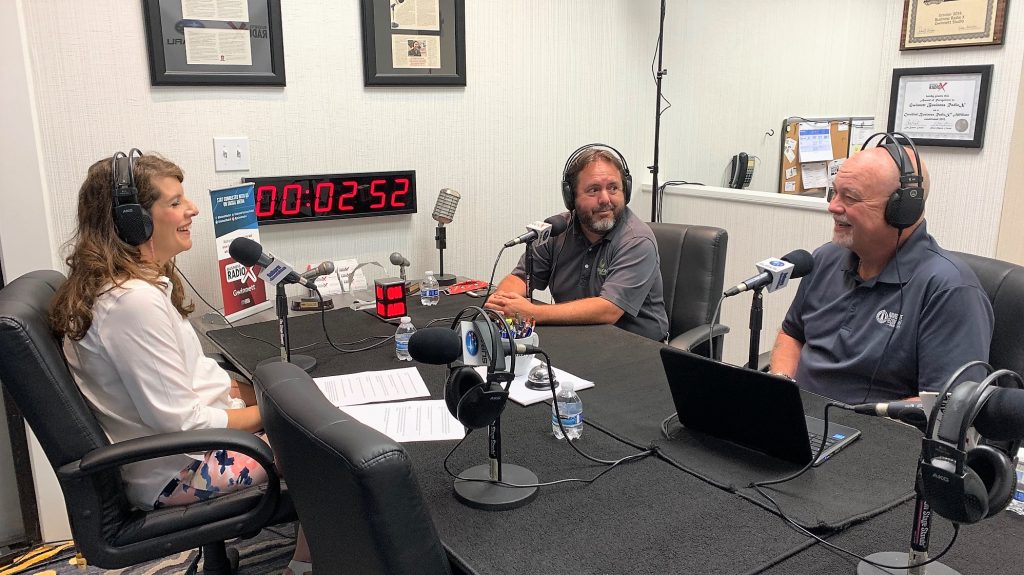
Chad Jones, Heather Loveridge and Farley Barge

Chad Jones/View Point Health

View Point Health is a community behavioral health center utilizing a team of psychiatrists, nurses, licensed counselors and social workers, as well as other professionals, to provide services to individuals who need treatment and support to cope with mental illness, substance abuse, and intellectual and developmental disabilities. View Point Health serves uninsured, underinsured, low-income Medicaid, Medicare, war veterans, and some private insurance across multiple locations with a full continuum of behavioral health services and supports. The services provided by View Point Health contribute to the reduction in homelessness, reduction in crime and subsequent incarcerations, higher graduation rates, lower dropout rates, decreased ER visits, and decreased inpatient admissions.

Farley Barge/Navigate Recovery

Navigate Recovery Gwinnett is a Recovery Community Organization (RCO) committed to supporting individuals and families in recovery from addiction. Safe Harbor is an Addiction Recovery Support Center. Services are provided at no charge. Their mission is to serve individuals and families impacted by addiction, connecting them to the resources they need and removing barriers that prevent them from getting and staying well. Their vision is a community that treats addiction as a chronic condition and those who are affected with dignity and respect.

Host: Heather Loveridge/Magnolia Media Group 

At the heart of marketing is great storytelling – and that’s what they do at Magnolia Media Group. Whether it’s through social media, e-newsletters, websites, brochures or complete marketing services, they help organizations tell their story.

Giving Back to Gwinnett is presented by:

Tagged With: behavioral health, business radio, Business RadioX, chad jones, charities, charity podcast, community foundation for ne georgia, community foundation for northeast Georgia, farley barge, giving back podcast, giving back to gwinnett, gwinnett charities, gwinnett coalition, gwinnett non-profits, heather loveridge, magnolia group, mental health, navigate recovery, non-profits podcast, non-profits radio show, Radiox, view point health

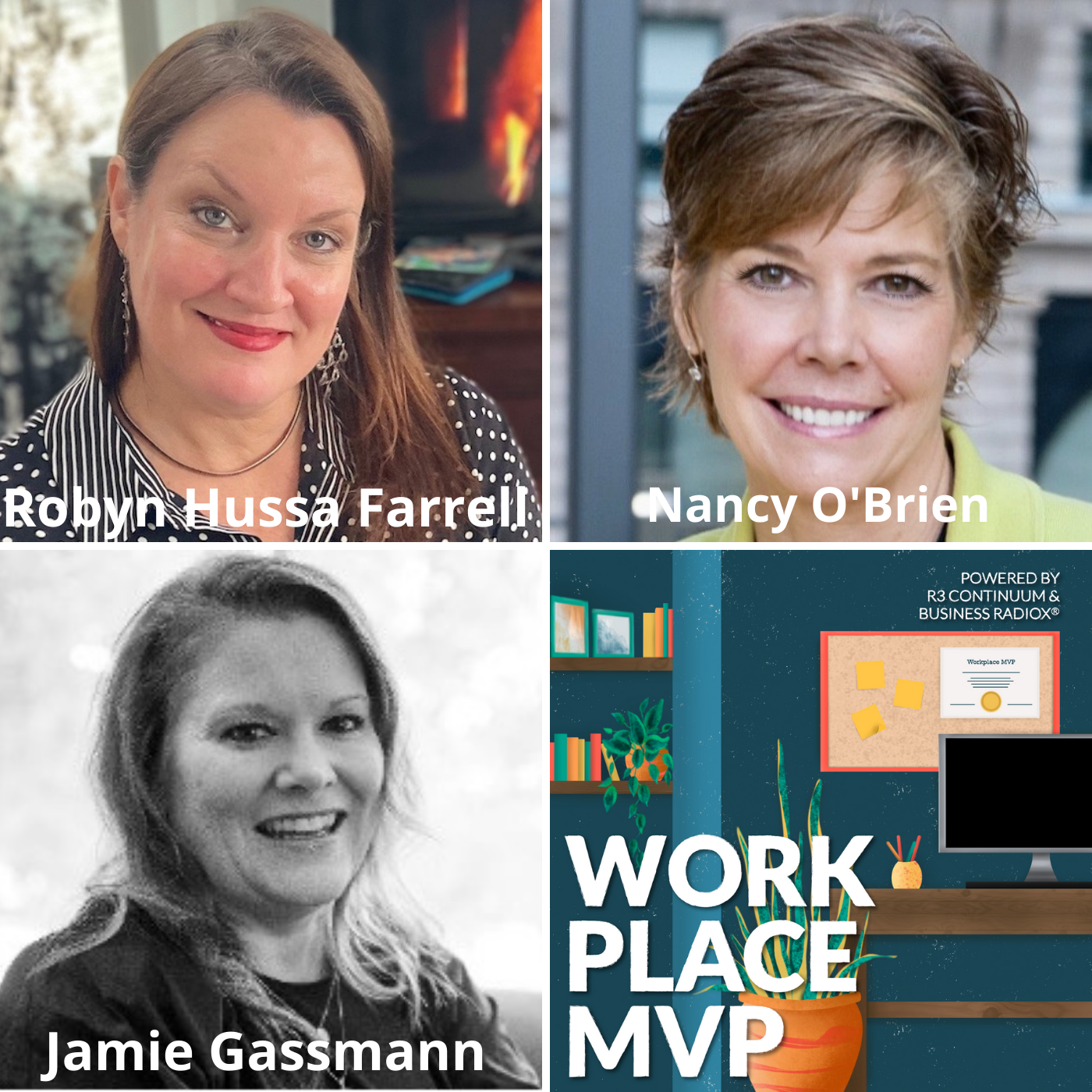
Workplace MVP: Robyn Hussa Farrell, Sharpen, and Nancy O’Brien, Experience Happiness

April 22, 2021 by John Ray

Experience Happiness
Minneapolis St. Paul Studio
Workplace MVP: Robyn Hussa Farrell, Sharpen, and Nancy O'Brien, Experience Happiness
Loading
00:00 /
RSS Feed
Share
Link
Embed

Download file

Experience Happiness

Workplace MVP: Robyn Hussa Farrell, Sharpen and Nancy O’Brien, Experience Happiness

Host Jamie Gassmann welcomes Robyn Hussa Farrell of Sharpen and Nancy O’Brien with Experience Happiness, both of whom lead innovative companies working to improve mental health and wellness in the workplace. “Workplace MVP” is underwritten and presented by R3 Continuum and produced by the Minneapolis-St.Paul Studio of Business RadioX®.

Robyn Hussa Farrell, CEO, Sharpen

Robyn Hussa Farrell, Sharpen

Robyn Hussa Farrell, MFA, E-RYT, Founder and Chief Executive Officer for Sharpen, extends knowledge in building large-scale initiatives to listen closely to the stakeholders, individuals with lived experience and clinicians to ensure all voices have been incorporated into prevention of mental illness and substance use disorders. For nearly two decades, Robyn has been building collaborative relationships between state agencies, educational systems, public health, and researchers across the U.S. to increase connectedness and primary prevention for communities.

Hussa’s tiered model for teaching mental health, population health, and prevention in schools has been published in peer-reviewed medical journals. She has built mindfulness-based stress reduction initiatives that incorporate trauma-informed Resilient Schools frameworks in the state of South Carolina. Robyn served as an advisory committee member for Way to Wellville/Rethink Health Community Engagement and Listening Campaign and served as SC Youth Suicide Prevention Spartanburg County coordinator through the SC Department of Mental Health Office of Suicide Prevention. She founded four companies, first an award-winning NYC theatre company, Transport Group, which earned the prestigious Drama Desk award its first 7 years of operation and celebrates its 20th anniversary.  Robyn and her husband Tim met as award-winning artists in NYC almost 30 years ago and have directed over 3,000 films, live events and educational programs through Sharpen and their production company, White Elephant Enterprises.

Sharpen

Healthy communities are made up of healthy individuals. Sharpen provides a cost-effective and flexible platform that: Provides easy access to research-based, standards-aligned, and award-winning content for mental wellness, enhances, extends, and expands the reach of therapists or counselors. connects and coordinates local and regional community resources, provides data to improve resource utilization, and builds individual, family, and community capacity, competence, and confidence to navigate successfully in these uncertain times and in the future.

IMPACT:
– 15 years research
– Suicide prevention focus
– Trauma-informed
– Self-guided CBT available 24 hours a day
– Evidence-based
– Highly customizable
– 200+ experts in 450 modules

Company website| LinkedIn |Facebook | Twitter

Nancy O’Brien, Experience Happiness

Experience Happiness
Nancy O’Brien, Experience Happiness

Nancy is passionate about researching, developing and sharing innovative tools to enhance and measure well-being. Prior to co-creating The Happiness Practice, Nancy spent years on the leading edge of massive innovation and change, serving on the IBM change team to transition the global business from manufacturing to services. She has also shared her deep experience design and management expertise with many clients by helping them develop and implement bespoke strategies.

LinkedIn

Experience Happiness

Experience Happiness was born out of the recognition that unhealthy stress and burnout—a virtual epidemic in today’s fast-paced global marketplace—is impairing people’s ability to embrace change, cope with challenging situations, feel truly happy or even take on One. More. Thing. We help people and organizations thrive through happiness. They offer The Happiness Practice (THP) to empower leaders to proactively cultivate individual and organizational happiness while measuring Return On Happiness (ROH) at the individual, team, and organizational levels. THP is a transformative life practice proven to simultaneously reduce stress/burnout, increase happiness, and build engaged, high-performance cultures of wellbeing that are strategically empowered to attract, retain, and optimize talent.

Company website | LinkedIn

TRANSCRIPT

Intro: [00:00:04] Broadcasting from the Business RadioX Studios, it’s time for Workplace MVP. Workplace MVP is brought to you by R3 Continuum, a global leader in workplace behavioral health crisis and security solutions. Now, here’s your host, Jamie Gassmann.

Jamie Gassmann: [00:00:27] Hi, everyone. Your host, Jamie Gassmann, here. And welcome to this edition of Workplace MVP. In March of 2020, many workplaces faced a major disruption when they shifted from onsite to remote work. At the time, many likely felt this was going to be a short term change and they would be back to normal in no time. Little did we know, a year later, we would still have remote workers. And, now, looking at what our back to the workplace work environment will look like.

Jamie Gassmann: [00:00:56] Leaders are again faced with making unchartered challenging decisions that will inevitably have an impact on their organization and people. Do they stay remote, come back into office fully, or take a hybrid approach? And then, there is the behavioral impact of changing how we have interacted with coworkers over the last year, from being in isolation to now in-person. This shift that workplaces are facing creates yet another disruption for workplaces as they navigate these changes and the challenges within. In particular, the challenging of supporting employee wellbeing in this new work environment and what the impact will be on the role of the leader.

Jamie Gassmann: [00:01:37] Today, we have two wonderful MVPs to celebrate who are going to help provide some insight on this topic, Robyn Hussa Farrell, CEO and Co-Founder of Sharpened Minds, and Nancy O’Brien, Co-Founder of Experience Happiness. So, our first Workplace MVP is Robyn Hussa Farrell, CEO and Co-Founder of Sharpened Minds. Welcome to the show, Robyn.

Robyn Hussa Farrell: [00:02:01] Thanks so much for having me, Jamie.

Jamie Gassmann: [00:02:02] So, let’s start off with you telling me a little bit about yourself and your company, Sharpened Minds.

Robyn Hussa Farrell: [00:02:11] I am the Founder and CEO of Sharpened, which is an evidence-based platform that improves behavioral health outcomes for communities. We created this after working in the trenches for 15 years in research. And we’re just so excited to be here and grateful to you all.

Jamie Gassmann: [00:02:29] Wonderful. And you have a very interesting career journey. Can you share with us how you’ve moved from entertainment industry into the behavioral health industry?

Robyn Hussa Farrell: [00:02:38] Yeah, it’s quite a segue. My career began in New York City Entertainment in the theater, where I actually produced a rock musical about a family going through a really difficult mental health disorder. And that led into working in K-12 schools with an interest in primary prevention of mental health disorders. And I saw an alarming number of students and families revealing they were struggling with very little resources to manage it.

Robyn Hussa Farrell: [00:03:05] So, I started connecting with researchers in public health and prevention to use the craft of storytelling to connect more evidence-based programs to schools and families. And that ultimately led me to building a platform to connect the content to specific audiences and use data to inform the decisions we use in terms of behavioral for health in communities.

Jamie Gassmann: [00:03:29] Great. And, now, these programs that you built, I know you’ve mentioned K through 12, but there’s some other groups that you build those for, like within businesses and also certain kind of industry specific areas as well. Can you tell me a little bit more about those different programs and how they operate when somebody is utilizing them?

Robyn Hussa Farrell: [00:03:49] Yeah. So, there’s kind of two elements to the programmatic feature within Sharpened, they’re the tech component and then there’s modular content. So, I’ve been working with my husband, who’s also from the media world in New York City, to develop evidence-based modular content. And we do that with robust partnerships. So, it’s all about increasing access to the evidence-based best practices, but also featuring those documentary styles, race of resilience, that we know decrease [inaudible] stigmatization barriers that often prevent an individual from connecting to treatment.

Robyn Hussa Farrell: [00:04:27] So, the Modular Content Library, not only documentary style films, but all 15 different elements that we’ve published in peer reviewed medical journals has shown to increase engagement with appropriate treatment, but also community connection. So important to normalize that conversation and increase connectedness. And so, our system sort of does all of these different components using primary prevention best practices.

Jamie Gassmann: [00:04:58] Great. And in looking at those, you know, when you say the documentary – I know when you and I connected before – you mentioned that they have a very peer focused support. And I know we kind of shared specifically, like, veterans that might be dealing with like a PTSD or other mental health concerns, that they’re built to specifically kind of address that with individuals that have either gone through it or understands the world. So, in your opinion, how does that help to enhance the behavioral health support that they’re receiving? And that engagement part of it that you talked about, how does that make a difference in how people respond to it?

Robyn Hussa Farrell: [00:05:39] Well, Jamie, we’ve seen actually through research that, we have gathered over 80,000 response forms from both parents, from educators, from individuals with lived experience. So, we know through data that by sharing stories of resilience that decreases that shame. It helps an individual know that they’re not alone. It kind of normalizes the conversation around mental health. But it’s also a safe and appropriate way to connect that individual to care.

Robyn Hussa Farrell: [00:06:11] And so, with your example that you gave of the veteran focused content, we worked with a clinical psychologist from the VA who developed over the course of four years peer-to-peer veterans stories of resilience. And what we saw through our research with the veteran population was, not only that the veterans wanted to engage more with treatment after they saw another veteran, but more importantly, the spouses or the care providers. So, when we built out certain content streams that were spouses and veterans sharing in a safe and protected environment their stories, we saw an increase in connectedness. And those are best practices for not only building resilience and mental health, but also for suicide prevention.

Jamie Gassmann: [00:06:56] Yeah. Definitely. And looking at, obviously, over this last year and in any time frame, really, and looking at kind of trends and shifts, is there anything in particular that you’re seeing with your clients or within the industry that you serve that you’ve identified in your research that leaders should be aware of?

Robyn Hussa Farrell: [00:07:19] So, overall, of course, in the last year, we’ve seen an uptick in consuming best practice interventions on mindfulness, mindfulness-based stress reduction, anxiety, understanding the conversation around the neuroscience around anxiety, but also childhood trauma and maltreatment. We’re talking a great deal and seeing a great deal around adverse childhood experiences. So, naturally, those, on a broad brush stroke, have been what we’ve seen in terms of our data.

Robyn Hussa Farrell: [00:07:48] But we also know that individuals are not only interested in accessing care for themselves, but they need support for their family members. So, ensuring we have age appropriate and audience appropriate content for the family member has been something that we’ve seen, especially in the last year.

Robyn Hussa Farrell: [00:08:06] And then, in our medical student vertical, we actually saw really interesting data point where medical students were actually seeking out directed content on a more regular basis. So, we learned through medical students that, for example, you’re in the throes of a mental health disorder or a substance disorder, you may be less likely to be seeking than earlier on. So, the earlier we can screen and intervene, we’re seeing their success.

Jamie Gassmann: [00:08:37] Great. So, in looking at that earlier intervention, what can leaders be looking for? How would they be able to spot, is their proactive measures that they can take to be monitoring for that?

Robyn Hussa Farrell: [00:08:52] Yeah. So, leaders should know first and foremost that you’re not alone and you don’t have to do this alone. Right? The news has been highlighting — in the last year, especially with this mental health pandemic. But just know that there’s been research and best practices over the course of five decades, at least, in the world of neuroscience. And there are systems and frameworks in place that can support you. So, that’s number one, know that there are folks that can support you.

Robyn Hussa Farrell: [00:09:18] And to that end, we have collaborated with R3C and with Nview to offer consultation to leaders of larger corporations, so that they can actually understand the benefits of early identification screening, primary prevention work that can actually support their employees in the long term.

Jamie Gassmann: [00:09:40] And so, looking at that, in that preparation of the leaders, as they’re starting to look at this new work environment, you know, what are some things from your opinion that they should be considering and building into that preparation approach?

Robyn Hussa Farrell: [00:09:53] I think that it’s about increasing community connections as much as it is increasing access to treatment like mental health counseling. So, there are all kinds of ways that you can do that in following best practice. We can also start normalizing the conversation on a daily basis. So, driving content on a more scheduled – again, following best practice guidance, those are ways that increase resiliency, it decreases the stigma, it engages everyone kind of into a normalized conversation that mental health is as important, if not more important, than our physical health.

Jamie Gassmann: [00:10:36] Now, I’m sure there’s a lot with that career journey that you just explained to us and then also looking into the great work that you’re doing at Sharpen that you’re proud of. But what are you most proud of within your career when you look back?

Robyn Hussa Farrell: [00:10:50] When I look back, I think that it’s the partnerships. It’s the people doing the grass work, research and interventions for families. I’ve had the great honor of working greatly in a resilient schools community, working with foster families, working with experts and researchers in childhood maltreatment. And I am so grateful for those community partnerships and for the professional collaborations that we have. So, I mean, there’s so many things I’m grateful for, but those partnerships really mean the world to me.

Jamie Gassmann: [00:11:26] Wonderful. And if somebody wanted to get in contact with you, how could they go about doing that?

Robyn Hussa Farrell: [00:11:32] Sure. I’m on LinkedIn. I’m also sharpenedminds.com. You can access us there and please reach out, we would love to collaborate.

Jamie Gassmann: [00:11:41] Awesome. Thanks, Robyn. Our next Workplace MVP is Nancy O’Brien, Co-Founder of Experience Happiness. Welcome to the show, Nancy.

Nancy O’Brien: [00:11:51] Oh, thank you, Jamie. And thank you, Robyn. It’s a pleasure to be here with you both this morning.

Jamie Gassmann: [00:11:57] Great. And just like with Robyn, why don’t you start off with telling us a little bit about yourself and your company, Experience Happiness.

Nancy O’Brien: [00:12:04] Yeah. Like Robin, I didn’t plan on this to be part of my career. Unlike Robyn and other entrepreneurs, my dear friend and business partner at Experience Happiness literally set out to save our lives. My first job out of college was with IBM, and I was one of the two females that were hired in the Omaha, Nebraska office that were not secretaries. So, you could imagine. And then, I was also part of the change team at IBM when we were moving from manufacturing to services. And that was really interesting, that was an 11 year change plan, we got there at nine. And nobody but Dow Jones and Nasdaq can tell you when you get there.

Nancy O’Brien: [00:13:00] And then, when I was still at IBM, I got introduced to this idea of customer employee experience design and experience management. I’m like, “Oh, finally. That’s me.” And then, through the course of life, I ended up really becoming an expert in experience design and experience management. And what I learned was, you can’t have a really great customer experience unless you have a really great employee experience. So, that kind of shifted some things.

Nancy O’Brien: [00:13:33] And when my dear friend and I sat down for lunch one day, we could check all the boxes on wellbeing. I mean, at the Gallup Well-Being Index Work would have been out, we would have gotten an A-plus. We were doing purpose driven careers. We had flushed 401Ks, if anybody remembers those days. We were so healthy that, for me, my physician actually said, “I don’t want to see you for five years because this is a sick care system, not a well-care system. Like, stay out of here.” I was Volunteer of the Decade at my kid’s school. And I had plenty of friends and family.

Nancy O’Brien: [00:14:16] But the reality is, my friend and I looked across the table from each other and we realized that we were suffering from suicidal ideation. And we were doing everything right. We were going to yoga. We were meditating. We were healthy. We were happy. And what we know now that we didn’t know then is, we were suffering from the 16 signs and symptoms of burnout.

Nancy O’Brien: [00:14:45] And, really, I remember the day I got off the plane one evening, like, at midnight, there’s not that many people that are in the airport at midnight. But I was one of them. And I remember calling my boss at the time and I just said, “I’m done. I can’t do this anymore.” So, really, we needed to heal ourselves. We weren’t getting counseling. We were getting some therapy. And if anybody gave us another gratitude journal, there was going to be a situation.

Nancy O’Brien: [00:15:19] And I want to be clear because Robyn just spoke so eloquently about mental health. So, I just want to be clear, we’re talking about mental wellness. We are not in the mental health. Our solution called the Happiness Practice is an evidence-based behavioral health solution that helps people no matter kind of where they are on the spectrum. And I think we’re all on a spectrum of some sort. I don’t think any of us are exempt, and most of us will go undiagnosed. But we can always improve our behavioral health and our mental wellness. So, really, Jamie, we set out to save ourselves,

Jamie Gassmann: [00:16:00] And it took you on an incredible career journey and took you to creating the Experience Happiness, which is now you have that ability to help other organizations. So, can you tell me a little bit about how those programs work within an organization?

Nancy O’Brien: [00:16:17] Yeah. And I’ll give you just a little bit of context. So, you know, Lyn and I are kind of innovators, researchers, and strategists. So, the first thing we did is, we needed to redefine happiness because we had it out there. I’ll be happy when the kids get the grades, right? We get this next contract. I get this promotion. My husband remembers my birthday. I mean, whatever it is.

Nancy O’Brien: [00:16:43] And so, the first thing we did – and I’m going to invite your listeners to try this on – is we redefined happiness, which is this, happiness is our innate ability to locate and cultivate our serenity and our excitement about our life, regardless of outside forces. And there’s a lot of outside forces. So, we redefined happiness and then we kind of like, “Well, that’s happiness.” And it’s inside of each of us how do we cultivate it. And then, we came up with the five principles of happiness, and blah, blah, blah.

Nancy O’Brien: [00:17:24] And now, what we offer to people of all walks of life in education settings, in corporate settings, in community settings is the Happiness Practice. And it’s essentially called a practice. It’s not a program. It’s a practice. Just like brushing your teeth is a practice or yoga is a practice, what not. And you learn and practice each of the five principles for 30 days because that’s the time it takes to create new neuropathways. And simply put, by practicing this practice, you become more open minded and more open hearted. And you travel the longest journey we all take, the 18 inches from our head to our heart. And in doing so, we are physically, emotionally, mentally, and spiritually more optimized.

Jamie Gassmann: [00:18:19] And I can see in an organization having more of that openness as like a team probably builds collaboration, understanding probably a little bit more grace for each other. Is that typically what you see when you’re working with that?

Nancy O’Brien: [00:18:32] Like, we worked with the fabulous emergency department at Hennepin Health Care on the heels of a gang shooting. So, we not only had burnout, but we had trauma there. And it was really interesting because one of the nurse leaders said, “You know what? We used to be good at teaming, but now we have each other’s back.” Because like Robyn was saying about Sharpened Mind, you learn this life practice at community. Right? And so, you start to see that no one is exempt. Like, stuff has happened to everybody all the time, no one’s exempt.

Nancy O’Brien: [00:19:13] And what you learn in this community is that, we’re all students and teachers of life and you learn to apply the five principles of happiness to Thanksgiving dinner, your sixteen year old, your work colleagues. And having that sense of, “Oh, my God. We are all human beings doing the best we can.” And you start to walk this path of self-love and self-worth together.

Nancy O’Brien: [00:19:46] And as you know, Jamie, it was so great because we’re so thrilled to have R3 Continuum being one of our partners. When your leaders offered the Happiness Practice to all of your employees as a gift – really, it was a gift – 80 percent of you and your colleagues engaged in that. And we have the only evidence-based behavioral health system that has a measurement applied to it. So, we actually measure and track shifts at an individual level. But, two, also department and organizational KPIs. So, your leadership was able to see since the burnout went down and the happiness went up, revenue improved, operational expenses were reduced, and net income was improved. So, this is a business case, right? I mean, all of the businesses really, at the end of the day, are the humans in it.

Jamie Gassmann: [00:20:48] Absolutely. And we’ve connected earlier, so kind of piggybacking off of that point about people and businesses, you know, looking at the last year, some of the things that we talked about previously, you mentioned that within the last two months, you’ve seen a shift that you’ve noticed within organizations. Can you share with me that shift that you and the potential impact that organizations might have from that?

Nancy O’Brien: [00:21:19] Thank you. And, really, Jamie and Robyn, chime in here if you’d like to. But you mentioned something earlier, Jamie, about leaders. So, here’s what I’m feeling and seeing out there, is, there’s three major shifts happening that really are shifting leadership’s role in this new world. Because we have five simultaneous crises happen. So, this is a whole new world order for us.

Nancy O’Brien: [00:21:51] So, leaders have three new responsibilities that they need to really step into. One of that is really making employee wellbeing one of their top priorities, and it’s a shared responsibility. Unlike employee wellness, which is, “We’ll offer weight loss. We’ll offer smoking cessation. We’ll offer EAP.” That’s an individual, like, I have to choose if I want to quit smoking or lose weight or blah, blah, blah. Wellbeing is a shared responsibility. You’ve got to have the environment where people feel safe and belonging. And you also have to offer a variety of programs, if you will, because no two people are the same and no two people are in the same place on the journey.

Nancy O’Brien: [00:22:36] The other thing that leaders really have to do is, help people adjust to the accelerated rate of change. Like, what we were doing Monday is not what we’re doing on Thursday, and that’s the new reality. And, now, the nice thing about people who are authentically happy, they respond to change more quickly and more easily. So, again, we’ve got to optimize the human beings, so that we don’t have a major crash to our human system.

Nancy O’Brien: [00:23:16] And then, the third thing is, there’s going to be a lot of upskilling and reskilling that takes place. I mean, aren’t you ready for your robot? I mean, really, I think we’re all going to have our personal robot in the next year. And AI is going to come on and all these things. And it’s like, “We’re going to have to learn how to program our robots.” You know, that’s just one example of the type of new skills we’re all going to have to develop, no matter where we are in our career.

Nancy O’Brien: [00:23:49] And leaders aren’t used to doing those three things. They’re used to putting the burden on upskilling. “Well, you get the degree then apply for the job.” No. I mean, the degree and the education system, it’s not going to keep up with the new skills that an employee needs now to respond and react to a work situation. And I think the other thing leaders need to make over arching is, leaders don’t have to have the answers anymore. They have to keep leaning into the question, what works now, what’s the problem, but what’s the opportunity.

Nancy O’Brien: [00:24:28] And so, I think it’s a really exciting time. I think if leaders lead into these three shifts, they’re going to feel more fulfilled. Because aren’t leaders all about lifting people up anyway and helping people be their best? And aren’t organizations about creating wonderful opportunities for their employees? Everything else is just kind of like noise.

Jamie Gassmann: [00:24:56] Yeah. Definitely. And you can see that in organizations and some of the other, you know, news articles and media that you’re seeing in that area in terms of helping employees, empowering employees, supporting them. So, definitely you can see that with organizations in that new work environment. So, the same question that I asked Robyn as well, I mean, you’ve had, obviously, an incredible journey. In looking back over your career, what are you most proud of?

Nancy O’Brien: [00:25:30] Oh. That I made the shift from being a human doing to a human being. That has been everything. That has made me a better mother, a better friend, a better colleague. Like, when I ask you how are you, I want to know. And that, I’m most proud of that.

Jamie Gassmann: [00:26:06] Wonderful. And if somebody in our listener pool wants to connect with you, how can they go about doing that?

Nancy O’Brien: [00:26:12] Yes. So, it’s easy, nancy@experiencehappiness.biz. And you can also go to our website, experiencehappiness.biz And we have a free and confidential happiness and burnout assessment you can take. So, check in with you. Take a moment and see how you are.

Jamie Gassmann: [00:26:36] Great. Thanks so much, Nancy. So, we’re going to take a moment and just have a word from our sponsor. Workplace MVP is sponsored by R3 Continuum. R3 Continuum is a global leader in providing expert, reliable, responsive, and tailored behavioral health crisis and security solutions to promote workplace wellbeing and performance in the face of an ever changing and often unpredictable world. Learn more about how R3 Continuum can tailor a solution for your organization’s unique challenges by visiting www.r3c.com today.

Jamie Gassmann: [00:27:13] So, now, what I’d like to do is bring the two of you back together and I have some questions for the both of you. So, starting out with you, Nancy, you shared that employee wellbeing has to or is moving to a new territory of being a shared responsibility. So, from your perspective – and then, Robyn, I would like to get your thoughts on this as well – how might that look within an organization? So, what are some things that might need to change or be incorporated to allow for that to happen?

Nancy O’Brien: [00:27:46] So, I think one of the big shifts we’re experiencing right now is, we’re shifting from paying attention to employee engagement, how do employees feel about the company, to employee wellbeing and having the organization understand, really, how well are their people. And then, needing to sense and respond to that. Like, you can’t just do the one size fits all anymore. You’re going to have to dial-in individually. So many things are becoming personalized, we know this as consumers. Employee wellbeing for organizations is going personal as well. Like, my challenges and my opportunities for growth and expansion are different than the two of yours. And it’s changing, literally, daily.

Nancy O’Brien: [00:28:41] So, employee wellbeing, it’s tempting to put it in the H.R. bucket as an organization. But I really encourage it to be a C-suite driven initiative. Because at the end of the day, the most important asset an organization has is their people. And, now, that we’re in this hybrid, if you will, work environment, you’re going to have to have this be a shared responsibility. Because the organization can make sure that their spaces are physically safe, make sure everybody’s got the technology they have. But the humans have accountability to be able to check in with themselves, to say, “Should I go into the office today or should I stay home?”

Jamie Gassmann: [00:29:36] Yeah. Definitely. Robyn, how about from your perspective?

Robyn Hussa Farrell: [00:29:41] Now, we just did a couple of days ago this week, a focus group with some H.R. executives on global wellbeing and resilience in the workplace. And one piece of data that I think is relevant to this conversation – and to everything, Nancy, that you have said. Yes, I’m a huge fan. I’m so excited about this idea of really giving presence to our employees from the C-level all the way throughout – the challenge in the piece of data from the focus group this week was simply how can [inaudible] our executive, possibly, with 50,000 employees be there and be present and be able to do it on their own? And the answer is, of course, they can’t.

Robyn Hussa Farrell: [00:30:32] So, creating a community, not only from the C-level, but throughout the culture of these enterprise companies where we’re asking each other, how are we doing? Getting the conversation started around mental wellbeing, but just life wellbeing. What are you doing today to do an uptick on your self-care? What are you doing in our world? We measure all of this through a resiliency scale that’s validated against perceived stress outcomes. So, how are you doing with stress? How you do management? It doesn’t mean you need to go talk to a licensed clinician, per se. There are folks in between that can on a daily level, we can just actually have these conversations.

Robyn Hussa Farrell: [00:31:15] And I love Nancy’s point about making sure the leadership are modeling that, right? If we see it, we are going to be more likely to do it, not only at the workplace, but at home with our kids and with our loved ones.

Jamie Gassmann: [00:31:28] Great. And so, from the work that the two of you do, what are some of the changes that you feel employers should be readying themselves for? What that new workplace is going to be like post-COVID? And the employees, really, looking at it from like the employees that are coming back to that work environment, what are some things that they should be doing to ready themselves for that? And maybe we’ll start with you, Robyn.

Robyn Hussa Farrell: [00:31:53] I think, number one, first and foremost, we want to be mindful of risk mitigation and doing it in a way that actually gets this conversation going. So, employers can do the assessment and the screen that Nancy was referencing. Knowing the baseline of how your employees are when they come back to work, whether it’s in office or hybrid, checking in with them. And of course, there are evidence-based ways to do that.

Robyn Hussa Farrell: [00:32:23] We partner with the gold standard screening company Nview Health. They run over 17,000 clinical studies around this. So, there are ways to do it that are appropriate and safe that helps you get a baseline. And then, doing some type of daily or weekly intervention, meaning mindfulness-based stress reduction, all of the literature around improving happiness outcomes. We call it building protective factors. So, we focus on eight primary protective factors. Certainly, mindfulness and resiliency are within that. But there’s all kinds of ways that you can deploy safe and appropriate content as an intervention that supports all of the wellbeing of the employees that you’re working with. So, those are just two ideas right off the top of my head.

Jamie Gassmann: [00:33:12] And how about you, Nancy?

Nancy O’Brien: [00:33:13] Well, I love everything that Robyn is suggesting. And, now, I have to put my experience design hat on for just a moment. Because it’s really interesting for me to see a dozen articles a day on return to the office, return to work. And the thing is, we’re already in the shift. There’s no return happening. We are evolving to the new reality right now. And we are social-emotional creatures, and mental health is an epidemic and loneliness and a sense of belonging are the key symptoms that we’re seeing.

Nancy O’Brien: [00:33:59] And so, from an experience design perspective, I would say, if you’re scheduling an hour Zoom call, schedule 90 minutes. Because what we’re missing is when we see somebody walking to and from the lunchroom or the coffee nook, we’re missing that, “Oh, my God. What happened to you? You’ve got a cast on your arm.” And we’re missing the story of, “I fell down, you know, carrying a bag of groceries,” or whatever because we’re only getting above the heart. So, we’re missing most of the data we count on as human beings for only getting 10 percent of the data we need.

Nancy O’Brien: [00:34:49] So, what we need to do is spend that extra 30 minutes, if you will, 15 minutes before a call and 15 minutes later, “How are you doing? What’s going on?” Because that’s what we’re doing at Experience Happiness – we just had an all team call this morning. We got people in Finland and, you know, people in Oklahoma and California. We’re doing all the time zones – the first thing we do is, “How are you? And how is your practice?”

Nancy O’Brien: [00:35:17] And it really helps each other to say, “You know what? I’m working on principle number three, release control to be empowered.” It helps us understand where you are. And sometimes the agenda that we plan for the meeting changes based on what we’re learning about the humans that have come together in this time. And then, the other thing we’re missing on the back end is, you know, how if you have a meeting, you walk out with a couple of people and say, “Hey, let’s follow up on this. Let’s follow up on that.” We’re not doing that.

Nancy O’Brien: [00:35:48] So, what we need to do is bring back those human needs that we have and create the space for them in this wonderful reality that we actually know now that that myth of work life balance was always a myth. And no matter who we are, we’re bringing all of that to every aspect of our life. We bring our work to the situation with our kids. We bring our kid’s situation to work or community environment. And I think we have to acknowledge our humanness and how humans operate as social-emotional creatures. We’re the only species on the planet that has a conscious.

Jamie Gassmann: [00:36:49] Interesting. So, for the both of you, just one final question, for all the leaders that are listening out there today, if there was one takeaway action item that you wanted to leave them with that they should start doing now, if they haven’t already, for this new work environment or just even in general, what would that take away be? I’ll start with you, Robyn.

Robyn Hussa Farrell: [00:37:18] Okay. So, I’m going to bring this to a level of conversation that speaks very close to home. I direct the Suicide Prevention Task Force for three counties in the state of South Carolina. I’ve been doing that work for four years with researchers. I mentioned a focus group we had with H.R. executives from global companies. The conversation around suicide is a real thing and it’s a scary thing. And, now, executives are faced with, “My goodness. There’s a whole host of mental health and substance use challenges that are staring all of us in the face.”

Robyn Hussa Farrell: [00:37:55] I want to go back to the point I made earlier, which is, there are best practice ways of getting those conversations started. To Nancy’s really great point about encouraging your employees to share their stories, this resonates so much with me as both a storyteller and someone who thrives on helping individuals tell their stories. There is a model that’s evidence-based for suicide prevention and it is called Stories of Strength.

Robyn Hussa Farrell: [00:38:23] And one easy, quick, awesome way that you can actually engage your employees in the conversation is to ask them who are the sources of strength in your life? Let’s talk about them, call on them, perhaps even contribute a video of one way that they overcame adversity during COVID. And what were the sources of strength that pulled them through these crazy times that we’re in. So, leaning into it rather than letting fear be your guide and, again, following the best practices that exist because they’re out there.

Jamie Gassmann: [00:38:59] Beautiful. How about for you, Nancy?

Nancy O’Brien: [00:39:03] So, just like the flight attendants on the airlines would say, “Put your own mask on first so you can help each other,” I would invite you to really understand that as a leader. No matter if you’re an untitled leader, but you’re still a leader in your community or your home or whatnot, you cannot pour from an empty cup. Take care of you so you can take care of others well. There is data out there that says that 90 percent of leaders are suffering from burnout. And burnout unaddressed, unacknowledged, unmedicated can lead to suicidal ideation and suicide.

Nancy O’Brien: [00:39:55] So, I think the most important thing that leaders can do is model the desired behavior that we are all accountable and responsible for cultivating our mental wellness. And, you know, there’s about to be eight billion of us on the planet. Here is a nice thing, if we were supposed to do life alone, there wouldn’t probably be eight billion of us.

Nancy O’Brien: [00:40:23] So, you know, it was really interesting. I really spent the last year in Detroit with my son, who a year ago – and I won’t go into details – everything you read about is what he was experiencing. I thought, “Well, he doesn’t need to be alone. I could get in my car and I could go there.” And thank goodness I had my own practice. Thank goodness I was able to love and support him, but knowing it’s his own journey.

Nancy O’Brien: [00:40:57] And it was interesting because last week, I just happened to reconnect with, like, six people I didn’t talk to you for a while. And they said, “Well, what’s the last year been like?” And I, basically, shared with them what my year has been like in this wonderful journey with my son that I’m so privileged to be part of. And they’re like, “Me, too. Me, too. Me, too.” Every one of the six people I talked to had a 20 year old child who was going through something similar.

Nancy O’Brien: [00:41:29] And so, Robyn, to your point of sharing, an old version of me, the human doing, would probably not have shared that. But the human being, I shared here’s what’s going on in my life. You know, it might look like I’m put together because I happened to shower today, but I got this stuff going on. And it was so interesting to realize that my experience was really no different than these good friends and colleagues of mine.

Jamie Gassmann: [00:42:09] Yeah. Great.

Nancy O’Brien: [00:42:11] So, share your story. And it doesn’t have to be a pretty one.

Jamie Gassmann: [00:42:18] I love that advice. I think that’s a great one, because I think through those stories, we’re able to learn a little bit more about each other, which gives us the ability to have a little bit more understanding and grace for each other as well. So, thank you both for letting us celebrate you, and for sharing your stories, and your great advice, and your insights with our listeners. We appreciate you. And I’m sure your organizations and staff do as well, as well as your clients that you work with.

Jamie Gassmann: [00:42:48] And we also want to thank our show sponsor, R3 Continuum, for supporting the Workplace MVP podcast. And to our listeners, thank you for tuning in. If you’ve not already done so, make sure to subscribe so you get our most recent episodes and other resources. You can also follow our show on LinkedIn, Facebook, and Twitter @Workplace MVP. And if you are a Workplace MVP or know someone who is, we want to know about them. Email us at info@workplace-mvp.com. Thank you all for joining us and have a great rest of your day.


About “Workplace MVP”

Every day, around the world, organizations of all sizes face disruptive events and situations. Within those workplaces are everyday heroes in human resources, risk management, security, business continuity, and the C-suite. They don’t call themselves heroes though. On the contrary, they simply show up every day, laboring for the well-being of employees in their care, readying the workplace for and planning responses to disruption. This show, “Workplace MVP,” confers on these heroes the designation they deserve, Workplace MVP (Most Valuable Professionals), and gives them the forum to tell their story. As you hear their experiences, you will learn first-hand, real life approaches to readying the workplace, responses to crisis situations, and overcoming challenges of disruption. Visit our show archive here.

“Workplace MVP” Host Jamie Gassmann

In addition to serving as the host to the Workplace MVP podcast, Jamie Gassmann is the Director of Marketing at R3 Continuum (R3c). Collectively, she has more than fourteen years of marketing experience. Across her tenure, she has experience working in and with various industries including banking, real estate, retail, crisis management, insurance, business continuity, and more. She holds a Bachelor of Science Degree in Mass Communications with special interest in Advertising and Public Relations and a Master of Business Administration from Paseka School of Business, Minnesota State University.

Tagged With: Experience Happiness, Jamie Gassmann, mental health, mental wellness, Nancy O'Brien, R3 Continuum, Robyn Hussa Farrell, Sharpen

The R3 Continuum Playbook: Workplace Mental Health in a Pandemic

April 15, 2021 by John Ray

workplace mental health
Minneapolis St. Paul Studio
The R3 Continuum Playbook: Workplace Mental Health in a Pandemic
Loading
00:00 /
RSS Feed
Share
Link
Embed

Download file

workplace mental health

The R3 Continuum Playbook: Workplace Mental Health in a Pandemic

Dr. George Vergolias discusses how the pandemic has quite significantly affected workplace mental health, and he shares strategies employers can adopt to mitigate the effect of this pressing problem. The R3 Continuum Playbook is presented by R3 Continuum and is produced by the Minneapolis-St.Paul Studio of Business RadioX®. R3 Continuum is the underwriter of Workplace MVP, the show which celebrates heroes in the workplace.

TRANSCRIPT

Intro: [00:00:00] Broadcasting from the Business RadioX Studios, here is your R3 Continuum Playbook. Brought to you by Workplace MVP sponsor, R3 Continuum – a global leader in workplace behavioral health, crisis, and security solutions.

George Vergolias: [00:00:13] Greetings. I am Dr. George Vergolias, Medical Director at R3 Continuum. And today, I want to discuss the broadly known issue that behavioral health is being identified as the next pandemic. And with this increasing realization comes the challenge of figuring out how the pandemic is impacting the current state of wellbeing in our workplaces. This has had a significant impact on workplaces across the globe.

George Vergolias: [00:00:36] According to a recently published World Health Organization study, the pandemic has disrupted or halted critical mental health services in 93 percent of countries worldwide while the demand for mental health has been increasing. From the National Institute of Health, in the pre-COVID years leading up to 2019, roughly 10 percent of adults reported anxiety or depressive symptoms. However, in 2020, post-COVID, that incidence quadrupled to 40 percent. A survey in June of 2020 showed that 13 percent of adults reported new or increased substance abuse and 11 percent of adults reported onset of suicidal thoughts.

George Vergolias: [00:01:16] Fears of the virus created a significant stressor as well. But the response of governments to minimize spread, while understandable and needed, also created a host of other psychosocial stressors. Which, not only increased overall stress load, but simultaneously strained worker’s coping resources. These have had a profound impact on the workplace. Just some examples, unemployment or risk of such, reduced work productivity, increased absenteeism and presentism, increased irritability and hostility, reduction in team engagement, isolation and loneliness. And work from home with all of its attendant challenges such as home schooling and other issues. All of these have been present.

George Vergolias: [00:01:55] In my opinion, one of the most damaging aspects to business is when people are highly stressed, anxious, and depressed, they greatly struggle to bring innovation and creativity. And without innovation and creativity, businesses suffer. It’s kind of a classic Catch-22.

George Vergolias: [00:02:16] As a business leader, there are things that you can do to mitigate these issues within your organization. Proactively supporting your employees is a primary approach. And I want to highlight five key suggestions towards that aim that we continually find at R3 in the consulting work that we do with large and small organizations.

George Vergolias: [00:02:36] First, remember that even one year into the pandemic, this is still new to all of us. Even with very positive news of vaccines coming online, remember, this is a vaccine produced within a record-breaking timeframe for a disease that has not been known to us before in this particular manner or strain. Certainly, coronaviruses have been part of the human species journey for at least 10,000 years. But this particular version is a new wrinkle and we’re still sorting it out.

George Vergolias: [00:03:04] As leaders, it is critically important to place that in proper context. To explain that while science has made miraculous strides in combating this virus in such a short time, we still have more to learn and we still may have more adjustments. This helps level set expectations and tempers fears across your organization, and it’s an important first step.

George Vergolias: [00:03:26] Second, provide timely and accurate information to your employees. I like to say that fear loves a vacuum. In the absence of good intel, humans will tend to speculate. And when we do that without good information, we tend to do so in a negative direction. And in some cases, that can border on paranoid thinking and paralyzing fear. As leaders, it is important to provide our employees with information that is credible, believable, and based on the best available science at the time.

George Vergolias: [00:03:55] This doesn’t mean that what we share today will be accurate in a few months, as the science is evolving and the medical understanding is evolving over time. That is why the point above is critical to set the proper expectations so people can adjust to changes as we move forward. And then, provide your employees information so they can be informed based on best evidence science at the current time. And thus, make informed decisions pertinent to their safety concerns and in a manner that reduces anxiety and fearful isolation.

George Vergolias: [00:04:27] Third, we need to communicate clearly to our employees. Once you level set expectations and then find clear and credible information to disseminate, you must clearly communicate such to your company, employees, and, if appropriate, other stakeholders. Communication should be clear, concise, and placed into context of it being based on the best available evidence and information currently available.

George Vergolias: [00:04:52] This has several benefits. It allows you as a leader to convey a sense of accountability and competence at the highest level of your organization. And in doing so, you become a trusted voice and one that employees can rely on to find answers and provide needed resources. It also initiates a dialogue with your employees within the context of trust and candor, which can be vitally important at times of increased stress. And lastly, this allows you to later clarify any misunderstandings that might arise. And in the current context, if needed, reframe things later as the medical field learns more about the disease, about vaccinations, and even about new strains and their impact on people.

George Vergolias: [00:05:34] A key component of communication is communicating bidirectionally, in both ways, to your employees, but also listening. In a landscape of potential fear, communication must go in both directions. The best military generals seek input from and listen to their soldiers on the front lines because they have the most relevant up to date information of the battlefield. In many ways, as leaders, we could learn from this. Thus, communication must occur in both directions.

George Vergolias: [00:06:03] When people are fearful, they do want timely and clear information shared with them. But equally important is that they want their concerns to be heard and understood. Additionally, they may have suggestions for coping. They may have suggestions for accessing additional resources that leadership was not aware of. And they can offer support to others in ways that they have been dealing with things that leadership may not be aware, but which can be beneficial to others in your organization. Your employees are a resource for resilience, so do not let that resources go untapped. So, I recommend opening up a dialogue with your employees so that leadership can understand those concerns and then direct interventions and policies accordingly.

George Vergolias: [00:06:47] A fourth point is, set clear policy and act consistent with that policy over time, but make changes when needed. Let me explain that a little further. To be clear, I am not recommending any specific policy here as any policy must be anchored to your company, and culture, and your risk tolerance, as well as your particular organizational needs. Yet whatever policy you have about requiring vaccinations or not, returning to work or not, when to return or not, travel restrictions and so on, all of those should be outlined and explained as clearly as possible and as often as needed.

George Vergolias: [00:07:26] We often say that one has to repeat something up to seven times for a group to understand it and retain it. So, consistency is important here. As frequent shifts in policy can lead to increased confusion and frustration, as well as employees emotionally checking out if they keep hearing different variations of a policy. The only exception to this, of course, and something to be mindful of, is that, if medical experts make changes to best practice recommendations that directly impact your policy, that would require adjustments over time.

George Vergolias: [00:08:01] But, again, if you open up with my first bullet point saying that there clearly is kind of a new direction that we’re figuring out as we go and you set that level of expectation, people will adapt well to that. So, it is not the occasional change that is the problem here. It is rapid, seemingly irrational changes that can be problematic as your employees view leadership and their decisions. So, set a North Star by picking a course of action and follow that as long as it remains consistent with medical guidelines. As I said earlier here, consistency goes a long way. If you build in expectations properly, as noted above, your employees will be able to adjust accordingly and with minimal frustration.

George Vergolias: [00:08:45] Fifth, mobilize resources to build resilience and enhance coping. Employees will show individual responses to uncertainty and fear, and this will vary greatly. Some will seemingly show no noticeable response, and they’ll seem to be managing things very well. Others will evidently be struggling emotionally. And others may still be experiencing a silent struggle where they’re struggling internally, but they’re not showing it on the surface, and it may be much more difficult to detect.

George Vergolias: [00:09:14] And further, all of these different variations will occur on different trajectories as some people will improve in their functioning and coping with this, as others will continue to struggle. And when others are coming out of their struggle, different people that have been coping well might fall into a struggle. So, it is imperative to make available resources to help build resilience, tap into existing coping mechanisms, and in some cases, seek additional, more formal clinical treatments when needed.

George Vergolias: [00:09:45] Since the onset of this pandemic, we at R3 have seen a dramatic increase in request for these support services across the many organizations with whom we consult. These include the following, wellness outreach. Wellness outreach is timely and proactive outreach calls by trained resilience coaches with the goal of checking in on how people are coping, and assisting them to maximize their coping strategies, or tighten up existing strategies that may not be working as well as they’d like.

George Vergolias: [00:10:14] Another thing we’ve been doing is what we call facilitated discussions. These are group format discussions aimed at supporting employees and allowing them to address their fears, navigate cultural differences that might be existing in the organization, and share successful strategies for adapting and thriving to the pandemic and other social stressors that are occurring. In this role, we are really trying to help facilitate this discussion in a way that business leaders may not be comfortable with or may want an outside party as more of an objective support resource.

George Vergolias: [00:10:48] Another thing we’ve been doing quite extensively is what we call disruptive event management. When a negative event impacts a workplace, it could be the onset of a breakout of COVID. It could be an untimely death, in some cases of suicide. Any kind of event that really disrupts the flow and functioning and emotional stability of a workplace, we can respond providing onsite or virtual behavioral health coaching that supports and helps individuals adjust to that emotional impact after that specific disruptive event impacts the workforce. And the goal is maximizing a resilient adjustment. What we know is when these types of disruptive events occur, the sooner that we can get in and help people tap in to organic natural coping resources, the better people tend to do.

George Vergolias: [00:11:40] Then, another thing to consider is referring people to more formal clinical behavioral health options. In some cases, an individual is emotionally struggling at an intensity or for a long duration, such that linkage to a behavioral health provider and into clinical treatment is warranted. So, as you navigate forward as a leader, be aware of resources in your area. Be aware of resources through your employee assistance program, if appropriate, and others that might be covered through your available insurance options. So that if this need arises, you can mobilize those resources quickly and link employees to the proper resources if they need that level of treatment or support.

George Vergolias: [00:12:26] So, in summation here, employee behavioral health is suffering. And I expect and what we’re seeing from all the data is, we expect this to continue well into 2021 and likely into 2022. But here’s the good news, you can help change that and R3 Continuum can help. On our website, which is r3c.com, there are a number of resources that can be found in our Resources tab. Along with that, we have a number of tailored solutions to help support your unique challenges. Contact us today for a free consultation at info@r3c.com.

George Vergolias: [00:13:04] I want to thank you for giving me this time. And, hopefully, these tips and suggestions have been helpful so you can bring leadership to bear in a very proactive and positive manner as we navigate forward through the pandemic. Thank you again.

Show Underwriter

R3 Continuum (R3c) is the underwriter of Workplace MVP, a show which celebrates the everyday heroes–Workplace Most Valuable Professionals–in human resources, risk management, security, business continuity, and the C-suite who resolutely labor for the well-being of employees in their care, readying the workplace for and planning responses to disruption.

R3 Continuum is a global leader in workplace behavioral health and security solutions. R3c helps ensure the psychological and physical safety of organizations and their people in today’s ever-changing and often unpredictable world. Through their continuum of tailored solutions, including evaluations, crisis response, executive optimization, protective services, and more, they help organizations maintain and cultivate a workplace of wellbeing so that their people can thrive. Learn more about R3c at www.r3c.com.

Connect with R3 Continuum:  Website | LinkedIn | Facebook | Twitter

Tagged With: behavioral health, George Vergolias, mental health, pandemic, R3 Continuum, workplace mental health, Workplace MVP

E73 Global PMO Leadership discussion with Fatimah Abbouchi

February 25, 2021 by Karen

E73-Global-PMO-Leadership-discussion-with-Fatimah-Abbouchi-feature
Phoenix Business Radio
E73 Global PMO Leadership discussion with Fatimah Abbouchi
Loading
00:00 / 1:00:07
RSS Feed
Share
Link
Embed

Download fileDuration: 1:00:07

E73-Global-PMO-Leadership-discussion-with-Fatimah-Abbouchi

E73 Global PMO Leadership discussion with Fatimah Abbouchi

What is the Agile Management Office and how do you use the AMO Method? Hear the backstory and concepts from Fatimah Abbouchi as she shares her journey to becoming one of the leading PMO Influencers in the world.

Fatimah chats with PMO Joe about several topics during this fast paced chat between global PMO Influencers and the partnership they have formed with The PMO Leader global community site. Fatimah shared the story of how she founded the Agile Management Office and the success she has had from the AMO Method White Paper.

We also discussed Fatimah’s history with Anxiety and Mental Health Awareness. We discussed the importance of removing the stigma associated with anxiety, depression or other mental health disabilities. The Project Management profession is a high stress profession and we need to do more to understand and support our team members who are living with mental health challenges.

Listen to the full episode to hear more of our discussion about women in project management, global recognition and rewards for project excellence, diversity and global leadership perspective.

Visit Agile Management Office – www.agilemanagementoffie.com
Visit Fatimah Abbouchi – https://www.linkedin.com/in/fatimahabbouchi/

Subscribe to Project Management Office Hours to play all prior episodes and upcoming guests by visiting www.projectmanagementofficehours.com.

​Thanks to our sponsors The PMO Squad and The PMO Leader.

Learn more about The PMO Squad visit www.thepmosquad.com
Learn more about The PMO Leader visit www.thepmoleader.com

Agile Management Office (AMO) specialises in helping organisations to identify and effect change using proven agile initiatives & project/program governance best practices.

They provide high impact delivery execution, education, and coaching to help you uplift your organisations project capability and maturity in an agile way using our proprietary methodology; known as the AMO Method™ which is proven to increase maturity and employee engagement scores. As a result, building expertise within your organisation. AMOLOGOAgileManagementOfficeBlack

The AMO Method was developed to bridge the gap between organisations applying agile techniques, whilst continuing to utilise traditional governance frameworks originally developed in the 1950s. The AMO Method shifts the stance from a ‘one size fits all’ approach to Project Governance to an adaptive approach; enabling customisation that aligns with the nature of the initiative and organisation as a whole.

This is achieved by modularising capabilities to allow for a more tailored approach to servicing organisations’ needs, we develop custom solutions for our clients focusing on the uniqueness of their organisation and its current state.

Their solutions may include a combination of project toolkits (including software tools and templates) and frameworks (such as process maps, guiding principles, roles & responsibilities, and descriptions) to create/uplift the right foundations and support your business in delivering projects.

Their goal is to equip your business with the right structure and framework that will allow your team to plan, build, and implement projects as efficiently as possible – removing all unnecessary roadblocks.

To date, they have serviced clients in 15 countries across Australia, New Zealand, Europe, Asia, and the Pacific. We want to become the partner of choice for organisations aspiring to reach their transformation goals, by applying best practice principles, engaging in a highly collaborative manner, transferring our capabilities to you.

Fatimah-Abbouchi-Project-Management-Office-HoursFatimah Abbouchi is the Founder and CEO of Agile Management Office; a thought-leader providing governance solutions for organisations to manage and govern projects in the agile era. A successful businesswoman, Fatimah has been supporting businesses from start-ups to enterprise internationally for the past 17 years.

Fatimah’s professional passion has seen her successfully transform how businesses govern change across portfolios up to $1B and over 16 industries globally. Utilising this industry experience, Fatimah’s PROVEN AMO method is showing how business can not only align but enhance agile delivery methodologies with robust governance.

A writer, speaker and host of the ‘Agile Ideas’ podcast, Fatimah has appeared in The Age, UK Business Telegraph, PM Review Magazine China, Business Chick’s ‘Latte Magazine’ and featured on CIO.com.au. Fatimah has been invited to speak at dozens of events globally. She is also a guest lecturer at Aarhus University in Denmark in the International Project Management Programs and acts as a Corporate Governance Advisor to them. Fatimah has previously been named as one of the Top 100 LinkedIn Power Profiles in Australia. Fatimah was also nominated as a Top 3 finalist in the World PMO Global Awards, as voted by her peers.

Personally, Fatimah is passionate about supporting those in the community with anxiety and depression through beyondblue; having spoken at 45 events aimed at raising awareness, reducing stigma and encouraging others to similarly get involved.

Connect with Fatimah on LinkedIn, Facebook, Twitter and Instagram.

ABOUT PROJECT MANAGEMENT OFFICE HOURS SERIES

Project Management Office Hours is intended to provide Project Management professionals a place to drop in and discuss Success Stories, Best Practices, and Lessons Learned.  Project Management Consultant Joy Gumz has shared with us, “Operations keep the lights on, strategy provides the light at the end of the tunnel, but project management is the train engine that moves the organization forward.”

Each of us has a unique story to tell, but collectively we share a message that organizations who embrace Project Management Best Practices perform better than those which don’t.  Organizations which align Projects to Strategy perform better.  Organizations with Engage Executive Sponsors deliver better results.  Organizations which measure Project Management performance outperform those which don’t.

During our Project Management Office Hours, we hear directly from Industry leaders how to make an impact in our profession. How we, collectively, will Advance Project Management Best Practices, One Listener at a time! 

ABOUT YOUR HOST

Joe Pusz started THE PMO SQUAD to bring real world PMO Leadership experience to the consulting space and to advocate for Project Management through his blog PMOJOE.com. The old saying is “Do what you love and you’ll never work a day in your life.” Following this mindset Joe left Corporate America in 2013 to start THE PMO SQUAD and work with fellow Natural Born Project Managers to advance Project Management Best Practices.

ABOUT OUR SPONSOR

THE PMO SQUAD focuses exclusively on PMO and Project Management consulting. Corporate America is full of Accidental Project Managers running projects who haven’t been trained to be PMs. To help solve this problem THE PMO SQUAD is on the Leading Edge with PMO As a Service. PMO As a Service allows our clients to focus on their respective core competencies while THE PMO SQUAD delivers Project Management expertise. Contact Joe at 678-591-7868. Follow The PMO Squad on LinkedIn, Twitter and Facebook.

Where do PMO Leaders go for Information, Learning, Networking and Services? The PMO Leader community has “Everything You Need to Become a Great PMO Leader”. One PMO World, One Community! Learn more about The PMO Leader – www.thepmoleader.com

Tagged With: agile management, mental health, PMO, project management, Project Management Office, Transformation

169 Million Dollars Can’t Buy You Happiness E10

October 13, 2020 by Karen

169-Million-Dollars-Cant-Buy-You-Happiness-Feature
Phoenix Business Radio
169 Million Dollars Can’t Buy You Happiness E10
Loading
00:00 /
RSS Feed
Share
Link
Embed

Download file

169-Million-Dollars-Cant-Buy-You-Happiness169-Million-Dollars-Cant-Buy-You-Happiness
169 Million Dollars Can’t Buy You Happiness E10

In this episode, Chris Yap featured the Founder of Founders First, Aaron Houghton. Aaron described what prompted him to establish Founders First despite having a $169 million dollar exit with one of his tech companies back in 2012. Aaron articulated how Founders First Community can help entrepreneurs and business leaders optimize themselves as human beings while optimizing the growth of their companies.

This episode will remind all business leaders and business owners that we can be a successful entrepreneur while being happy by being mindful of our emotions, our energy, and our body.

The Founders First System is a one of a kind framework which optimizes the performance of entrepreneurs, rather than the companies they run. Our exclusive training and peer support program transforms entrepreneurs into happy, healthy and successful founders who are strong enough to face the challenges of building great companies that change the world. Founders-First-Stacked-Logo2

Aaron Houghton believes it is possible for entrepreneurs to be healthy and happy while they build great companies that change the world.

Since starting his first business at age 17, he’s built and launched more than eleven tech startups, scaling one from conception to 350 employees and $50M in annual subscription revenue. Aaron sold two companies to private buyers and one to a publicly traded company for $169M before his 30th birthday.

Aaron was selected as an Ernst and Young Entrepreneur of the Year in 2008 and was listed to Inc Magazine’s 30 Under 30 list in 2010. He’s shared his story and his thoughts on personal growth, digital marketing, and startup leadership with hundreds of audiences, including Harvard University, Entrepreneurs Organization, and StartupNation.

Looking back, Aaron can see his success came with the hidden costs of long term stress; including panic attacks, debilitating anxiety, and a cancer diagnosis in 2009. He had a habit, like many of us, of pushing himself to the absolute limit. He was trading sleep to hit deadlines, trading nutrition to save pennies, and enduring chronic stress year after year so he could chase his dreams.

Aaron knew there must be a better way. He spent five years studying how entrepreneurs manage stress, and personally tested techniques for achieving high performance while maintaining mental and physical health. Aaron then created the Founders First System, manifesting two decades of experience and years of research into a simple set of processes, disciplines, and metrics designed to improve the experience of founders and business leaders around the world.

Follow Founders First on LinkedIn, Facebook, Twitter and Instagram.

About From Zero 2 Revenue

FROM ZERO 2 REVENUE is an avenue for successful entrepreneurs around the world to tell their stories on how they transformed their vision into reality.  We’ll learn about their products and services; and, the passion and character behind the leadership of the organization.  The show is designed to inspire and encourage struggling and future entrepreneurs to pursue their entrepreneurial dreams.

At the end of each episode, our listeners can expect plenty of takeaways! As the late Stephen Covey said, “All things are created twice – first in the mind, then in reality”.

About Our Host

Gabtech-Global-CEO-Chris-YapChris Yap is a seasoned BPO executive with over 17 years experience in the industry. Chris came to the US in 2005 to actively promote the Philippines, a preferred outsourcing destination of the world. In doing so, Chris was able to help generate over 40,000 jobs in the Philippines for companies like Dell, Covergys and West Teleservices, which are now consolidated with other large BPO companies in the world.

Chris has been happily married to Eizel for over 16 years and is blessed with 3 wonderful boys. In addition to his passion for business, Chris is also very passionate about helping to solve the child poverty problem. He is doing this by partnering with Food For The Poor where his company sponsors the feeding of children ages 5 and below on a monthly basis.

Connect with Chris on LinkedIn.

About Our Sponsor

Gabtech Global is a business process outsourcing company based in Glendale, Arizona with a fulfillment center in Bohol, Philippines. gabtech300x300

Gabtech Global specializes in providing affordable outsourced customer support, after hours and overflow call center services, link building and Virtual Assistant Services.

They work with companies making $100,000 a year in revenue to companies making $100,000 a day in revenue.

Tagged With: anxiety, calm, entrepreneur, Entrepreneurs, mental health, self care

Racism Series: Suicide – The Silent Killer E7

September 26, 2020 by Karen

Racism-Series-Suicide-The-Silent-Killer-feature
Phoenix Business Radio
Racism Series: Suicide - The Silent Killer E7
Loading
00:00 /
RSS Feed
Share
Link
Embed

Download file

Racism-Series-Suicide-The-Silent-Killer-E7

Racism Series: Suicide – The Silent Killer E7

In this episode of Racism in Small Business & Arts we explore, yet another uncomfortable conversation, Suicide – The “Silent” Killer, with author/playwright Josh Rivedal, who shares his personal experience and the impact of suicide on subsequent generations. Rose Boerner, NAMI of Sedona, provides additional resources. Host Karen Nowicki emotionally shares her fight to keep the trauma of her husband’s recent suicide attempt from negatively impacting her teen son. Panelist Karen Loomis requested tools to handle those moments when when someone in your life says those words. Camilla Ross, produces Josh’s upcoming one-man show, Kicking my Blue Genes in the Butt, LIVE in-theater or LIVE Stream from Sedona, Arizona. Suicide prevention starts with suicide awareness.

Suicide Prevention starts with awareness. This is a unique opportunity to be a part of this healthy conversation about this uncomfortable subject. Tools and resources for you, or family are provided.

NAMISedonalogo

NAMI, the National Alliance on Mental Illness, is the nation’s largest grassroots mental health organization dedicated to building better lives for the millions of Americans affected by mental illness. Suicide-The-Silent-Killer

The goals of NAMI Sedona are to: (1) educate the public about mental health conditions; (2) work to eliminate the stigma associated with mental illness; (3) support research to determine the causes and improve treatment for mental health conditions; (4) advocate for changes in state and national public policy to ensure that funding for mental health programs and treatment is available for individuals with mental health conditions and their families.

Rose-Boerner-Suicide-The-Silent-KillerRose Boerner retired from a multinational pharmaceutical company in 2004, after 28 years, in International Marketing, QA Labeling, and as Associate Director in Regulatory Affairs.

She served 3 years on Board of Trustees of Sedona Public Library and has been President of NAMI Sedona/Verde Valley (National Alliance on Mental Illness) from 2005 to the present.

Rose facilitates NAMI family support group meetings, educational programs for family members and peers, advocacy, fundraising, and administrative work.

Rose also served on the Board of Directors of Spectrum Healthcare in Cottonwood from 2011 through 2019. She has also been a member of the Board of Directors of the Mental Health Coalition Verde Valley since its inception in 2013 until the present.

IMpossibleLogoYoutube

The i’Mpossible Project is an organization that creates seminars, workshops, curriculum, books, music, and plays designed to entertain, educate, and engage on Suicide Prevention and Mental Health on college campuses, high schools, communities, and in the workplace.

Josh-Rivedal-Rose-Boerner-Suicide-The-Silent-KillerJoshua Rivedal—speaker, actor, playwright, innovator, social entrepreneur—is the creator and founder of Changing Minds: A Mental Health Based Curriculum and The i’Mpossible Project. He has spoken about suicide prevention, mental health and nutrition, and diverse experiences across the U.S., Canada, the U.K., and Australia.

He is trained in human capital management with an emphasis in coaching from New York University, community counseling from the Southern California Counseling, Center, the teacher’s edition of emotional intelligence at Yale University’s Center for Emotional Intelligence, and is trained in suicide prevention modalities QPR and ASIST. His original coursework on suicide prevention is taught in Washington State to various professions such as dentists, pharmacists, and occupational therapists.

As an actor, Joshua’s voice has been heard on U.S. national commercials like Dell, McDonalds, Dunkin Donuts, and Johnnie Walker; as well as on one of the Freckleface Strawberry Books, Cinderella Penguin, and as part of the award winning voiceover cast of The Art of Secrets by James Klise.

In the business world, Joshua has worked on the marketing team of the world’s best-selling author James Patterson. He is the author of six books and a co-author of three scientific peer-reviewed journal papers, one on the trajectory of the survivor of suicide loss, another on the art of living with chronic illness, the third on surviving trauma.

Connect with Josh on LinkedIn, Facebook and Twitter.

Crisis Resources

  • If you or someone you know is in an emergency, call 911 immediately.
  • If you are in crisis or are experiencing difficult or suicidal thoughts, call the National Suicide Hotline at 1-800-273 TALK (8255)
  • The National Suicide Prevention Lifeline (@800273TALK) offers free, confidential crisis counseling 24/7/365 – and you don’t have to be in crisis to call. #SPM20 #NotAlone 
  • If you’re uncomfortable talking on the phone, you can also text NAMI to 741-741 to be connected to a free, trained crisis counselor on the Crisis
  • .@CrisisTextLine is free 24/7 mental health support at your fingertips. Text “NAMI” to 741741 for help. #SPM20 #NotAlone 
  • Suicide Prevention Resources – Maricopa and Yavapai Counties.pdf

Crisis episodes related to mental illness can be incredibly difficult. To help navigate through them, NAMI created this downloadable guide available in English and Spanish: nami.org/crisisguide #SPM20 #NotAlone

The Emerson Theater Collaborative (ETC) is a 501(c)(3) non-profit organization whose mission is to serve youth, under-represented communities and artists with an emphasis on diversity, by producing innovative and thought-provoking theater both in southeastern Connecticut and Sedona, Arizona. One such example is a wonderful play called Vivian’s Music 1969 by Monica Bauer that was a featured program at ETC in February 2020.

Camilla-Ross-on-Phoenix-Business-RadioXCamilla Ross is the President and Chairman of Emerson Theater Collaborative, Inc., Producer and Actress (Portray’s Harriet Tubman – Harriet Tubman’s Dream written by Lisa Giordano). She is also the President and Chairman of the Sedona Arts Academy.

“To be a catalyst for social change is really where it’s at for me,” Camilla said. “I believe theater should always be a venue for social change. I love the art of live theater and love what it does to the human soul and spirit. It moves us to look at life differently. To leave off the rose-colored glasses and really see the human condition.”ETC is a shining example. Founded in 2008 to give voice to actors’ innate talent for character development, Camilla has since produced more than 20 inspired, original performances. Emerging and professional cast and crew have blossomed under her guidance. And together they’ve created profound, can’t-ever-forget shows that illuminate social issues, and transform audience curiosity into concern and action. ETC_Logo_CMYK

Camilla has a deep well of experience and mentorship to tap into for her ETC roles—from her days at Emerson College and then in regional theaters and commercials. Among her favorite portrayals? Capturing the heart, spark, and essence of Harriet Tubman in the one-woman show Harriet Tubman’s Dream. Camilla is also deeply involved with youth, their visions for social change, and the desire to see the world as a stage of peace. To that end, she’s a tireless advocate for children and adults with Asperger’s Syndrome. She gives kids and teen real-life theatrical experience through ETC’s Summer Youth Program and enlivens their eagerness to learn about the history and genuine heroes through ETC’s school programs. Camilla is a steadfast suicide prevention advocate too, helping teens and adults avoid this tragedy and move forward to a happier, more positive future.

Camilla has taught business courses part-time at Three Rivers Community College since 2005, Sat on the Emerson College Alumni Board for ten years, and is past president of the Connecticut Alumni Chapter. In May 2014 Camilla was honored by the Writer’s Block of New London, Conn., for her past work as an instructor. In June 2013 she was named Woman of The Year by the Women’s Network of Southeastern Connecticut, and she’s been featured in many periodicals for her community service. In 2019 Emerson Theater Collaborative was nominated as Collaborator of the year in Sedona AZ. A veteran of the U.S. Navy and member of Kappa Beta Delta, Camilla earned her BA in Performing Arts: Acting from Emerson College in 1985 and her MBA in Finance from Baker College in Michigan.

Connect with Camilla on LinkedIn and follow ETC on Facebook, Twitter and Instagram.

Karen-Loomis-on-Business-RadioXKaren Loomis, Oracle and Founder of No Moss Brands, is no stranger to the impact of racism; not only in her personal life, but professional life as well. In 2000, Karen moved from Spokane, Wa to Phoenix, AZ to find better opportunities as promised by the fifth largest city in the U.S. With only 2% AA, Spokane proved to be a challenging environment, as is Phoenix, with only 6% AA.

Karen has never shied away from the many barriers racism presented. She has always felt her extensive education and professional experiences could overcome these often invisible challenges.

Unfortunately, institutional racism has proven to be too big of a hurdle for one person to take on. Using No Moss Brands as the vehicle, Karen will use her voice to open the eyes of others who are willing to join all People of Color on this journey to change. You in?

Connect with Karen on LinkedIn and follow No Moss Brands on Twitter and Facebook.

Tagged With: men's mental health, mental health, Suicide prevention, suicide prevention month, workplace mental health

Mitzi Krockover with SSB Solutions Jessica Homicki with CVR and Karen Nowicki with Phoenix Business RadioX E12

September 23, 2020 by Karen

Phoenix Business Radio
Mitzi Krockover with SSB Solutions Jessica Homicki with CVR and Karen Nowicki with Phoenix Business RadioX E12
Loading
00:00 /
RSS Feed
Share
Link
Embed

Download file

Mitzi-Krockover-with-SSB-Solutions-Jessica-Homicki-with-CVR-and-Karen-Nowicki-with-Phoenix-Business-RadioX-E12

Mitzi Krockover with SSB Solutions Jessica Homicki with CVR and Karen Nowicki with Phoenix Business RadioX E12

In this episode of Collaborative Connections Radio Show and Podcast, host Kelly Lorenzen had the pleasure of interviewing 3 amazing women in our community about mental health, health care, trauma, self-care, and more.

Dr. Mitzi Krockover from the Institute for Mental Health Research, Jessica Homicki from Center for Vein Restoration, and Karen Nowicki, owner of Phoenix Business RadioX joined Kelly on-air for this authentic, real and important conversation.

This episode is jam-packed full of stories, lessons, tips, and more! It is worth the time to listen for anyone who is curious about mental health research that is being done, effects of COVID-19 on our mental wellness, trauma mentoring, the need for self-care, vein disease amongst other things.

IMHR’s mission is to support innovative, comprehensive, early stage research that addresses the most problematic mental health issues facing society today. We also encourage the translation of research efforts into direct services and educational programs. IMHRLogo300x300

Our primary focus is providing seed funding for local scientists, ultimately motivating them to remain in the state and place Arizona at the forefront of transforming mental health through research.

We are currently focused on the mental health impact(s) of COVID-19.

Mitzi-Krockover-SSB-SolutionsMitzi Krockover, MD is Principal and Senior Consultant of SSB Solutions, a healthcare management consulting, development and investment firm.

She is a Managing Director of Golden Seeds, an angel investment organization dedicated to funding early stage women-led companies; she also serves as co-chair of the Golden Seeds Health Care Sector Group and is a founding member of the Arizona Chapter of Golden Seeds. Most recently she was founding Director, Health Futures Council at Arizona State University (HFC).

Dr. Krockover has been a leader in the area of women’s health and women’s issues. She was the founding Medical Director of the Iris Cantor-UCLA Women’s Health Center, designated a Center of Excellence by DHHS. She then served as Vice President of Women’s Health for Humana Inc. where she served as the company’s chief healthcare strategist and spokesperson for women’s health.

She is also on the Executive Committee of the Women’s Health initiative of Springboard, an organization that provides investment in women-led companies in the life sciences and tech.

Corporate boards served include Paraffin International, Trill Project, Inc, and Ribomed. Non-profit affiliations include the Institute for Mental Health Research, National Women’s History Museum, Take the Lead, the Washington University Phoenix Regional Cabinet, the National Council of the institute for Public Health at Washington University and the Health Futures Council at ASU.

Honors awarded include the International Emerging Leader in Health Care Award, sponsored by Korn Ferry International and the Health Forum and “Woman of the Year” by the Los Angeles County Commission on Women.

A graduate of Washington University in St. Louis with a BA in Arts and Sciences, Dr. Krockover received her medical degree at the University of Texas Health Science Center at San Antonio. She completed her residency in internal medicine at Northwestern University.

Connect with Mitzi on LinkedIn and Twitter.

updated-cvr-logo1

Center for Vein Restoration (CVR) is the largest physician-led practice treating vein disease in the country. Having performed its first procedure in 2007 under President and CEO Dr. Sanjiv Lakhanpal, Center for Vein Restoration has since become nationally recognized as the clinical leader in treating chronic venous insufficiency.

With 90 centers and growing, CVR has over 600 employees and conducts over 200,000 patient interactions annually. To learn more about CVR and its mission, visit http://www.centerforvein.com or by phone at 1-800-FIX-LEGS.

Jessica-HomickiCenter for Vein Restoration’s Physician Liaison Jessica Homicki is a dedicated team member of physician educators.

They are the boots-on-the-ground, connecting with local dermatologists, podiatrists, wound care centers, primary care physicians, and other practices likely to see patients suffering from venous disorders and lymphedema by providing resources on how CVR can help.

She also assist the clinical staff of their centers in networking with local physicians, and setting up accredited continuing medical education events to provide value to the community of physicians in their area.

Follow CVR on LinkedIn, Facebook, Twitter and Instagram.

Karen-Nowicki-Phoenix-Business-RadioXKaren Nowicki is a successful author, speaker and the creator of Deep Impact Leadership™ and SoulMarks Coaching™. She is a two-time recipient of the prestigious national Choice Award® for her book and personal development retreat. Karen was crowned the first-ever “Mompreneur of the Year” Award in 2010 for the southwestern states. She was recognized for her leadership, business acumen and work-life balance.

Karen has been an expert guest on regional TV and radio shows, including Fox Phoenix Morning Show, Sonoran Living, Good Morning Arizona, The Chat Room, and Mid-Day Arizona. She has been a regular contributor to many print and online magazines – publishing articles and blogs for business and education. Karen is an impeccably trained Integrative Coach Professional through The Integrative Coaching Institute at John F Kennedy University (2006) and has mentored more than 200 coaches worldwide. In addition to this intensive 3 year coaching certification program, Karen is also a Tao Healing Guide (2014) through the Sedona Mago Retreat Center; and most recently, has become a certified Trauma Mentor (2020).

In addition to working with private coaching clients, Karen is also the Owner & President of Phoenix Business RadioX. The Business RadioX Network amplifies the voice of business – serving the Fortune 500,000, not just the Fortune 500. Phoenix Business RadioX helps local businesses and professional associations get the word out about the important work they’re doing to serve their market, profession, and community.

Follow Phoenix Business RadioX on LinkedIn, Facebook and Instagram.

About the Show

Kelly Lorenzen started the “Collaborative Connections” show to bring her clients and favorite charities together to meet each other, connect and collaborate in life and business.  She hopes to build a stronger community one show at a time. KLM Consulting

About Our Sponsor

KLM Consulting is a business concierge and project management firm. They help small business owners and non-profits build, brand and brag about their businesses.

About Your Host

Kelly-Lorenzen-on-Phoenix-Business-RadioXKelly Lorenzen, CEO of KLM Consulting, is an award-winning entrepreneur with over 15 years of business-ownership experience. She is also a certified project management professional.

Kelly’s expertise is in business development, customer service, marketing, and sales.

Connect with Kelly on LinkedIn, and follow KLM Consulting on Facebook.

Tagged With: lymphedema, mental health, mental health research, mental health research funding, Nonprofit, restless legs, swollen legs/ankles, varicose veins, vein physician, wellness

  • « Previous Page
  • 1
  • 2
  • 3
  • 4
  • 5
  • 6
  • Next Page »

Business RadioX ® Network


Our Most Recent Episode

CONNECT WITH US

  • Email
  • Facebook
  • LinkedIn
  • Twitter
  • YouTube

Our Mission

We help local business leaders get the word out about the important work they’re doing to serve their market, their community, and their profession.

We support and celebrate business by sharing positive business stories that traditional media ignores. Some media leans left. Some media leans right. We lean business.

Sponsor a Show

Build Relationships and Grow Your Business. Click here for more details.

Partner With Us

Discover More Here

Terms and Conditions
Privacy Policy

Connect with us

Want to keep up with the latest in pro-business news across the network? Follow us on social media for the latest stories!
  • Email
  • Facebook
  • Google+
  • LinkedIn
  • Twitter
  • YouTube

Business RadioX® Headquarters
1000 Abernathy Rd. NE
Building 400, Suite L-10
Sandy Springs, GA 30328

© 2025 Business RadioX ® · Rainmaker Platform

BRXStudioCoversLA

Wait! Don’t Miss an Episode of LA Business Radio

BRXStudioCoversDENVER

Wait! Don’t Miss an Episode of Denver Business Radio

BRXStudioCoversPENSACOLA

Wait! Don’t Miss an Episode of Pensacola Business Radio

BRXStudioCoversBIRMINGHAM

Wait! Don’t Miss an Episode of Birmingham Business Radio

BRXStudioCoversTALLAHASSEE

Wait! Don’t Miss an Episode of Tallahassee Business Radio

BRXStudioCoversRALEIGH

Wait! Don’t Miss an Episode of Raleigh Business Radio

BRXStudioCoversRICHMONDNoWhite

Wait! Don’t Miss an Episode of Richmond Business Radio

BRXStudioCoversNASHVILLENoWhite

Wait! Don’t Miss an Episode of Nashville Business Radio

BRXStudioCoversDETROIT

Wait! Don’t Miss an Episode of Detroit Business Radio

BRXStudioCoversSTLOUIS

Wait! Don’t Miss an Episode of St. Louis Business Radio

BRXStudioCoversCOLUMBUS-small

Wait! Don’t Miss an Episode of Columbus Business Radio

Coachthecoach-08-08

Wait! Don’t Miss an Episode of Coach the Coach

BRXStudioCoversBAYAREA

Wait! Don’t Miss an Episode of Bay Area Business Radio

BRXStudioCoversCHICAGO

Wait! Don’t Miss an Episode of Chicago Business Radio

Wait! Don’t Miss an Episode of Atlanta Business Radio