
Business RadioX ®

  • Home
  • Business RadioX ® Communities
    • Southeast
      • Alabama
        • Birmingham
      • Florida
        • Orlando
        • Pensacola
        • South Florida
        • Tampa
        • Tallahassee
      • Georgia
        • Atlanta
        • Cherokee
        • Forsyth
        • Greater Perimeter
        • Gwinnett
        • North Fulton
        • North Georgia
        • Northeast Georgia
        • Rome
        • Savannah
      • Louisiana
        • New Orleans
      • North Carolina
        • Charlotte
        • Raleigh
      • Tennessee
        • Chattanooga
        • Nashville
      • Virginia
        • Richmond
    • South Central
      • Arkansas
        • Northwest Arkansas
    • Midwest
      • Illinois
        • Chicago
      • Michigan
        • Detroit
      • Minnesota
        • Minneapolis St. Paul
      • Missouri
        • St. Louis
      • Ohio
        • Cleveland
        • Columbus
        • Dayton
    • Southwest
      • Arizona
        • Phoenix
        • Tucson
        • Valley
      • Texas
        • Austin
        • Dallas
        • Houston
    • West
      • California
        • Bay Area
        • LA
        • Pasadena
      • Colorado
        • Denver
      • Hawaii
        • Oahu
  • FAQs
  • About Us
    • Our Mission
    • Our Audience
    • Why It Works
    • What People Are Saying
    • BRX in the News
  • Resources
    • BRX Pro Tips
    • B2B Marketing: The 4Rs
    • High Velocity Selling Habits
    • Why Most B2B Media Strategies Fail
    • 9 Reasons To Sponsor A Business RadioX ® Show
  • Partner With Us
  • Veteran Business RadioX ®

“Pap” Datta – Left Nut Brewing Co. and Dana Chapman – iTN Lanier

February 4, 2020 by Beau Henderson

North Georgia Business Radio
"Pap" Datta - Left Nut Brewing Co. and Dana Chapman - iTN Lanier
Loading
00:00 /
RSS Feed
Share
Link
Embed

Download file

Nilanjan “Pap” Datta – Left Nut Brewing Company

Left Nut Brewing Company produces craft beers and ciders of all types and flavors. Our brewery is located in the historic
Chicopee Mill industrial area in Gainesville, Georgia. “Left Nut Brewing Company” came into being as a Georgia Corporation in 2013. Many have asked, “Why did you go with that name?” Fair question. The name, “Left Nut Brewing Company,” is built on a vernacular which epitomizes the willingness to give up something of extreme value to do something or create something unique; something for which we have endless passion.
The name provides great curiosity, amusement, and immediately fosters conversation. When people drink beer, most often, it is in a social setting where conversation and stories are exchanged. We want to use this aspect of “sharing stories” as a central theme across our products, and product brands.

Each of our products will have a story tied to it. Stories which will connect you, our customers, to us as individuals, to the history of the style of beer you have chosen, or to local and universal myths and folktales which provide a thematic backdrop for our products.


Dana Chapman – iTN Lanier

This is Arm In Arm, Door Through Door Service with no cash, credit cards or tips in the car.

 ITN Lanier uses a combination of volunteer and paid drivers to serve those over 60 who no longer drive, as well as those who do not drive because of visual impairment, of any age over 18.  We serve only residents of Hall County Georgia and travel only to Hall County destinations.

Tagged With: craft beer, craft beers, dana chapman, Dr. bill lampton, drinking, drivers, Gainesville, georgia craft beer, Hall County, itn lanier, jaemor farms, know your non profits, left nut brewery, left nut brewing, local business, nilanjan pap datta, Non Profit, North Georgia, north georgia business radio, seniors, Transportation, visually impaired

Jennifer Hartz with Corporate Hartz and Halley Morochnik with WebStep Design

October 30, 2019 by angishields

Daring-to-Feature
Atlanta Business Radio
Jennifer Hartz with Corporate Hartz and Halley Morochnik with WebStep Design
Loading
00:00 /
RSS Feed
Share
Link
Embed

Download file

Daring-to-Group

Welcome to Daring To, a podcast that finds out how CEOs and entrepreneurs navigate today’s business world – the conventions they’re breaking, the challenges they’ve faced and the decisions that they’ve made, and lastly, just what makes them different.

The power behind Corporate Hartz, LLC is Jennifer Hartz.  Her background includes in-house roles at iXL Enterprises and The Home Depot, and consulting through McKinsey & Company and Cresap (Towers Watson). She has vast non-profit knowledge through engagements with Boys & Girls Clubs of America and Habitat for Humanity International, as well as a long history of volunteer leadership.

Jennifer has an MBA with a concentration in Public Policy from Georgia Tech and a BA in Industrial Psychology from University of Pennsylvania. She is the Advisory Council Chair of Hands On Atlanta, as well as an alumna of Outstanding Atlanta, Leadership Atlanta, and the Marshall Memorial European Fellowship program.

Jennifer and her husband Eric have 4 children, ages 18 – 22, who were raised from diaper-age with articulated and reinforced family values and active volunteerism through “WhyServe?” an interfaith charity Jennifer co-founded.

Connect with Jennifer on LinkedIn.

Halley Morochnik worked full-time in marketing/advertising for TBWA/Chiat Day, helping clients like Nissan, Infiniti, and Sony reach their marketing goals. In 2014, Halley started WebStep Design to deliver web solutions to small businesses and non-profits. Web consulting combines her love of art & design, marketing, and problem-solving.

Connect with Halley on LinkedIn.

Show Transcript

Intro: [00:00:02] Welcome to Daring To, a podcast that finds out how CEOs and entrepreneurs navigate today’s business world, the conventions they’re breaking, the challenges they faced, and the decisions that they’ve made. And lastly, just what makes them different?

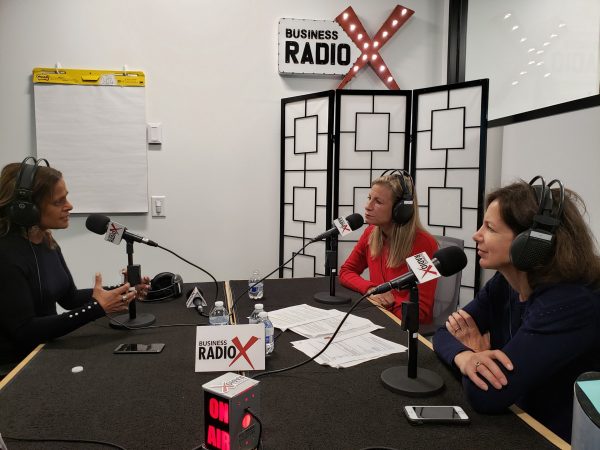
Rita Trehan: [00:00:19] Well, hi and welcome. It may be a rainy day in Atlanta, but it’s shining bright with smiles and excitement here in the studio today. Because believe it or not, I’ve got two fantastic women joining me today, which is always great, because it’s always fabulous to actually highlight women who are doing things and standing up for businesses and helping others to see just what’s possible. But you two have a quite a unique experience. So, I’m welcoming today on my show, Jennifer from Corporate Hartz and Halley-

Halley Morochnik: [00:00:48] Morochnik.

Rita Trehan: [00:00:51] Morochnik. I’m going to—you know, I’ve been trying to say that. It’s really bad because people get my name wrong all the time, and I have to like really practice it. And so, I apologize but-

Halley Morochnik: [00:00:58] Thank you. It’s not an easy name.

Rita Trehan: [00:01:00] Yeah. And yours, obviously, is the name of your company as well.

Jennifer Hartz: [00:01:04] Yes.

Rita Trehan: [00:01:05] Right, Jennifer? So, that’s cool. Now, you have a really—both of you have really interesting backgrounds. So, I want to start. How do the two of you still—actually, not only have done work together, but have known each other for quite a long time? I don’t know that many people that have known each other from the years that you guys have known each other. Tell us a little bit about that.

Jennifer Hartz: [00:01:23] That is correct. So, we knew each other as teenagers. We both grew up here in Atlanta. And, you know, we grew up, we went to college, we got jobs, and we, you know, drifted apart, led our lives, had children. In the sixth grade, our two eldest daughters met. And essentially, it was a BFF love fest from day one, and they are now full-fledged adults. So, we have been friends and co-parents.

Rita Trehan: [00:01:52] So, it continues, right? It’s continued that they are like carrying on the tradition, shall we say?

Halley Morochnik: [00:01:56] It does. They are still best friends, and we love seeing that.

Rita Trehan: [00:02:00] And they must feel really proud of the two of you to be women—owned, like women-run businesses is still a big deal, you know. As much as we’d like to think that the world is changing and that there are more of us out there that are doing things, and daring to, and creating businesses, it’s not an easy thing to do. And both of you had children as well and having to bring up a home. So, tell me a little bit about your businesses, because they are very different, right? They’re very different. But actually, in some ways, they’re very complementary. So, Halley, like you are responsible for a company called WebStep Design-

Halley Morochnik: [00:02:33] Correct.

Rita Trehan: [00:02:33] … which he’s a web designer. So, obviously, I’m really interested in this because there’s lots of acronyms and things that I think, do I know what that means? I should know what that means. But hopefully, you can help educate our listeners as well.

Halley Morochnik: [00:02:45] Sure, sure.

Rita Trehan: [00:02:45] So, how did you get into that?

Halley Morochnik: [00:02:46] Well, actually, I’m self-taught. I originally started years ago in advertising. and I thought that this was a good fit for my background and learning how to target companies with what their needs are. So, now, I’m able to help companies with—build on their needs for their online marketing. So, I’m able to help them with their websites. And usually, I produce them using WordPress, and sometimes, I use Wix, but I’m able to help them in a manner of other ways, including SEO and email marketing to help them be seen on the web.

Rita Trehan: [00:03:36] Okay. So, we’re going to come back to SEO because some people-

Halley Morochnik: [00:03:38] Yes.

Rita Trehan: [00:03:39] … may not know what that means. And then, we’re going to talk about Mailchimp. So, if you think that you’re going to get-

Halley Morochnik: [00:03:42] Sure

Rita Trehan: [00:03:43] … educated today, trust me, guys, you are.

Halley Morochnik: [00:03:45] Right.

Rita Trehan: [00:03:45] But more interestingly is the fact that you actually helped Jen create a website. I don’t know about that.

Halley Morochnik: [00:03:50] Yes.

Rita Trehan: [00:03:50] Like you know, friends can be friends. But then, when you start to work together, that can be a whole different ballgame. So, what was that—I mean, how did you decide to like work together on that?

Jennifer Hartz: [00:03:58] Oh, it was actually because of our daughters. So, our daughters were in late college, and both of them had decided that my website was completely antiquated. Corporatehartz.com had not gotten with the program for SEO, for interactivity, for work search, for blogs. And they bullied me into-.

Rita Trehan: [00:04:21] I love it when they do that.

Jennifer Hartz: [00:04:24] … admitting that they were right. And then, Rachel Morochnik says, the daughter, says, “My mom, Halley, that’s what she does.” And I thought, “Oh, that’s perfect.”

Rita Trehan: [00:04:37] You seen that they like colluded together. So, in fact, to say, we can make some money out of this if we like—I’ll recommend your mom, right? And your mom definitely needs a website. But actually, it turned out to be a really good deal. I mean, I’ve looked at your website. It is absolutely fabulous.

Jennifer Hartz: [00:04:49] Thank you.

Rita Trehan: [00:04:50] So, kudos for the work that you have done. But actually, it’s a really important part of business today, you know. If you think that everything is digital today, that the way we interact and where we do things, we want things right here, right now. And digital is a fantastic way of reaching people. How did you—did you have an idea of what you wanted? Because I guess there’ll be lots of business owners out there that might be saying like, “Might want to look at my website, might want to change that. That sounds interesting.” Like did you have an idea about what you wanted, Jen? Like I mean-

Jennifer Hartz: [00:05:19] Yes, I definitely did have some ideas, mainly because the website is the most important piece of my business development. I live here in Atlanta. My clients are all over the planet. So, there’s no event-based marketing to be had in that situation. What I really wanted from the website was to bring my URL, corporatehartz.com from brochureware to real time. I wanted it to link with my LinkedIn. I wanted it to link with a blog. I wanted it to be able to add clients and add content and make things change.

Jennifer Hartz: [00:05:56] The main strategic thing that we were trying to accomplish with this, with the web, was I have three different lines of business. And in my brochureware, one of them, which is my traditional bread and butter, corporate social responsibility, had much more of the time and space and energy on the website than the family philanthropy LLB or the speakers, speaking engagements. And I wanted them to be more parallel with each other.

Rita Trehan: [00:06:23] We’re going to come on to some of your business, because I think that’s a really interesting field that you’re in and very, very important in today’s world, to actually be doing something that is giving back but in really responsible way. So, I do want to sort of delve into that a little bit as well. But before we get onto that, let’s talk about what was it like having Jen as a client. You know, because I know what I’m like as a client. I can be really demanding and like impossible to work with, I know. I try not to be, but I can’t be. So, was she a good client?

Halley Morochnik: [00:06:52] Well, let me tell you. Jen, because of her skill set, because of what she does, she’s very organized and she was able to push it in the direction where we could proceed and make things go quickly. Jen also, I think—you know, a lot of what I do is based on—I can’t do it by myself. I need to be able to work with the company and have them respond to me in a reasonable time. And Jen, not only was very responsive, but she also maybe pushed it to make sure that we were on target and on task and doing everything that we needed to be doing.

Rita Trehan: [00:07:33] And did you, Jen, have to like research some of that stuff? Because I mean, some of it can be quite technical, I expect. I mean, I confess, I’ve not made my own website or like. And so, you know, I kind of know how it works a little bit on the back end. And I know how to use social media. But did you have to do any research for it or was it just that like you had this vision of like these three businesses that you were really keen and sort of give equal weight to and it was more of the kind of the visual aspect that you were able to sort of convey and tell your story?

Jennifer Hartz: [00:08:00] Halley was able to do all the research, understand the technology, find tools that we could use in the website to address all of the objectives I had. So, no, I did not do any research. I am not the technician. I do research in my content but not technology.

Rita Trehan: [00:08:25] And what do your clients think about it? I mean, what’s been your client’s reaction to it? Because that’s the real proof in the pudding, right?

Jennifer Hartz: [00:08:31] Right.

Rita Trehan: [00:08:31] That you start to see people going like, “Wow”, or “Oh, we see a difference.” There’s a different image, there’s a different brand that you’re trying to convey in some ways. And that’s equally important to business these days. So, what was the reaction?

Jennifer Hartz: [00:08:45] I got a lot of wow. I got a lot of wow. I got a lot of appreciation from past clients. I got increase for current and future clients. I also have passed out Halley’s WebStep Design business card more than a few times because it was a great process and it was an excellent result.

Rita Trehan: [00:09:04] So, one of the things that I’m really interested in, it’s great that you bring it up, that you say, you know, you’ve passed on Halley’s business cards to people because you’ve had a great experience. I’m a big believer in ecosystems. I call like what we need today are more ecosystems, which is where people actually come together, where they may have different businesses or different interests, but they’re coming together to create something that’s more, that’s better, that adds more value and create some momentum.

Rita Trehan: [00:09:27] So, rather than us always seeing each other as competitors in the marketplace, whether you’re a small company or as a big company, how can we create ecosystems that’s sort of like create more purpose around both what we do and what we contribute to the world. Which, you know, it sounds like you’re doing some of that, which is great. And I don’t think that enough companies do. But I am going to bring it a little bit to your business because your business really is about sort of creating momentum around sort of social impact, social change. And it seems to spread right across from companies to families to small businesses. And, you know, that’s a lot, Halley, for you to have to convey in a website but you clearly did it very well, because, you know, I got a real good sense of it. And I was kind of eager-.

Halley Morochnik: [00:10:11] Right.

Rita Trehan: [00:10:12] … to say, “Oh, what can I get involved in? What can I do?” Because there’s almost like a pool. But what got you interested in that in the first place? I’m curious.

Halley Morochnik: [00:10:21] Wow. So, I think it goes back to even my childhood being raised in a certain way. But professionally, I was doing corporate social responsibility before anybody really knew what that was. If you hold-

Rita Trehan: [00:10:36] Some people don’t today, right? So, we need to educate them.

Halley Morochnik: [00:10:38] We’re working on that.

Rita Trehan: [00:10:40] Good.

Halley Morochnik: [00:10:41] If you said you were in CSR at the time, it meant that you were a customer service relationship.

Rita Trehan: [00:10:45] Is that right? Wow.

Halley Morochnik: [00:10:48] Which is a euphemism for sales. So, I spent a lot of time explaining to people what corporate social responsibility is, what it can provide for businesses, what it can provide for human beings, what it can provide for society. One of the best things that happened from the website was the equalizing of the three lines of business. So, the comments that I have gotten specifically have been about breadth and depth. So, I have clients, global clients in every industry. I have local clients. I’ve been in pharmaceuticals. I’ve been in manufacturing. Professional services. Name an industry, pharma. I have been at franchise, done that.

Halley Morochnik: [00:11:32] And so, it really has been able to highlight from the CSR perspective that I do diversity and inclusion, branding and employee development. All these different business needs can be addressed through for-profit, non-profit, government partnerships. The same time, I hadn’t really been public about the fact that I did corporate—excuse me, family philanthropy work as well because my clients are actually all confidential, so I can’t put their logo up on the website. So, I’ve been getting inquiries about that area of business because of the website.

Rita Trehan: [00:12:10] And do you think that you’re seeing differences between the industries, all the different kind of sectors that you work in or at the end of it, are they all really looking for the same kind of things when what—with what they’re trying to do around social responsibility and social impact?

Halley Morochnik: [00:12:25] No. Every client is completely, completely unique. There are similarities within an industry. So, an oil and gas company, they’re generally going to be investing in climate change and outdoors and planting trees-

Rita Trehan: [00:12:40] Recycling.

Halley Morochnik: [00:12:41] And recycling, right. Actually, I also work for a recycling client. So, within an industry, they can be similar, but it’s about your brand. It’s about where you’re located. It’s about what business opportunities you have and what potentially business exposures you have as well.

Rita Trehan: [00:12:58] Okay. Was that—and how did you help Jen to actually sort of like target in on clients? Because that’s often the big thing to small businesses today. You know, to actually find the clients that are interested in their services. You know, I always like think or wonder when my name will come up on Google. And you never know. I might appear like, you know, in-

Halley Morochnik: [00:13:19] Well, you know, Jen has such a great brand and she’s been working and her business has been together for a very long time. And I think really, I need to educate myself about her brand. And once I understood what she does and what she is able to provide for her clients, then I was able to talk to her a little bit better about how to put it together and how to organize her skill set so that it was effectually on her website and communicated. So-

Rita Trehan: [00:13:52] And you’ve obviously seen some, you know, traction around that. So-

Halley Morochnik: [00:13:56] Definitely. She also—WebSet Design also helped with search engine optimization. And that was really the-

Rita Trehan: [00:14:04] I don’t know what that is, that’s the SEO, I think, right?

Halley Morochnik: [00:14:04] Yes.

Rita Trehan: [00:14:08] And it’s really interesting that a lot of people don’t know about that.

Halley Morochnik: [00:14:11] Okay.

Rita Trehan: [00:14:11] And so, like—but you clearly do. And, you know, from a business perspective and obviously, from a website perspective, you do. But, you know, there’s lots of like sort of skepticism around SEO. Some people say, “Oh, I spent all this money and it’s basically like helped me, but it’s not helping me.” So, you know, how do you approach that subject?

Halley Morochnik: [00:14:07] So, really, when you get—when you have a website, people sometimes say, “Well, could you just put up a website and somebody will be able to Google me and I’ll be able to find it.” There is some people who don’t understand that there’s a lot of back information and a lot of back SEO that goes into having a website. So, Jennifer already had a lot of great content that she had with her other website. She had a great blog, a great piece called Hartz & Minds that had a content from years and years and years that we were able to build on and pinpoint and highlight different keywords and make connections with links and make sure that she was found. She already also had a fabulous URL. So, her URL had such good history that Google loved it. And so-

Rita Trehan: [00:15:23] It’s placed at the beginning of the alphabet as well, right? I hear that’s been good as well, isn’t it?

Jennifer Hartz: [00:15:27] Yeah.

Halley Morochnik: [00:15:28] Perhaps, but she already had done some good things with her website before. And so, we were able to build on that and take it to the next level.

Rita Trehan: [00:15:37] Do you think that women business owners are more reticent about what they do with like websites and how they advertise than, say, men are or do you think that there’s no difference? I mean, how would you think about that?

Halley Morochnik: [00:15:49] You know, I was talking to Jen about that the other day. And I think that women actually, I think, were a little bit more willing to listen to my advice and maybe 50 percent of my clients are women. And generally, when I talk to a man and he asks me for a website, you know, I put together whatever I can. But somebody like Jen was able to really dig deep and work with me and think about some of the questions and answers of the questions that I was asking her. And the more she was able to consider some of the things that we were talking about, the better the website became.

Rita Trehan: [00:16:34] And do you think that’s just because women think differently or just that-

Halley Morochnik: [00:16:37] I think so.

Rita Trehan: [00:16:38] You do think it’s because-.

Halley Morochnik: [00:16:38] Absolutely.

Rita Trehan: [00:16:38] So, do you think about that when you think about your clients? Does that come into play when you think about any of your clients or who you’re working with around that they may think differently to how they approach the three lines of businesses that you have? Because they’re all different, right? A family sort of trust, if you like, just trying to get money in good ways to big multinational corporates that are trying to support the local area and do things globally. And then, sort of the local community here that it’s great that you’re giving back to the community that obviously, you’ve—you know, is very much a part of your life?

Jennifer Hartz: [00:16:38] Well, the desired outcomes for corporate clients are completely different than the desired outcomes for family philanthropy clients. On the CSR side, corporate social responsibility, Corporate Hartz is trying to drive profit. Whether that profit is coming from market expansion, new products, employee retention, PR, cost savings, energy savings. The end has to be profit or when I walk out the door-

Rita Trehan: [00:17:39] Yeah.

Jennifer Hartz: [00:17:39] … they will no longer continue to do all this great stuff that we’ve just set up for them to do in the world.

Rita Trehan: [00:17:43] Yeah.

Jennifer Hartz: [00:17:45] Family philanthropy clients are much more interested in relationships, a caring and true impact on the causes that they are passionate about.

Rita Trehan: [00:17:55] Right.

Jennifer Hartz: [00:17:55] There’s no financial bottom line in that work. So, it’s very heady, cerebral work to work with corporate clients. And it’s very emotional. Really emotional at times, but positively emotional for me with family philanthropy clients. When I do speaking engagements, I just feel like it’s my turn to spread the word.

Rita Trehan: [00:18:21] And do you feel like that there are more people spreading the word around social impact, social responsibility? I feel like that maybe there is, but I don’t know. Like sometimes, I get a bit disappointed that no, there’s still not enough conversation about it going on around the world.

Jennifer Hartz: [00:18:35] Well, conversation is not what we need.

Rita Trehan: [00:18:36] Yeah, that’s true.

Jennifer Hartz: [00:18:38] Action is what we need. I find personally, of course, I am in this space all the time-

Rita Trehan: [00:18:42] Yeah.

Jennifer Hartz: [00:18:43] … in the middle of it, but I find too much conversation and too little action.

Rita Trehan: [00:18:49] Yeah.

Jennifer Hartz: [00:18:49] And that’s why I feel like having a consultant like me is a catalyst for getting an action that’s going to bring results.

Rita Trehan: [00:18:56] And if your clients, if they think about what they’ve done over the years, what would they say about some of the things that they feel that had a real impact around that, do you think?

Jennifer Hartz: [00:19:06] Clients really vary. They have, some of them have pretty good experiences with social responsibility. Some of them come out of Europe. Don’t even think of it as corporate social responsibility because it’s much more woven into the fabric there. And sometimes, this usually happens with a leadership change. They realized that what they’ve been doing has been kind of green-washing or window dressing, so that they could have sweet, nice things to say to potential employees and potential clients and government officials.

Rita Trehan: [00:19:40] Right.

Jennifer Hartz: [00:19:42] So, sometimes, when-

Rita Trehan: [00:19:43] And to quantify that, that’s like the sugar coating on the top of their cake that’s not very well made when you kind of cover it up a little bit and make it all pretty, right?

Jennifer Hartz: [00:19:49] That’s a good analogy. That is a terrific analogy. And so, sometimes, leadership change is what allows me to deliver both the profit and the impact.


Rita Trehan: [00:19:57] Well, you are really very, very passionate about this. I mean, I can feel it. I can feel like you were just sitting opposite me, but it’s like you’re like sitting right by this microphone saying like, you better hear what I’m saying, because this is really important and it’s because it’s the topic that I’m very passionate about. I think that it’s really good to hear you talk about it. How can we get more people involved in it? I mean, like clearly, we’ve got this website that’s doing a great job, but there must be other ways. I mean, I have to say, you know, my experience of Atlanta and what people in Atlanta do around sort of social causes and things that have impact is phenomenal.

Rita Trehan: [00:20:28] I mean, I don’t think I see that, you know, in London or in Australia, where I’ve lived. But you really do see this sort of community come together and people that, you know, either, that are dedicating businesses around it and/or sort of supporting. But I’m sure there’s lots more that we could do. So, to your point about action, what can people do?

Jennifer Hartz: [00:20:51] Well, I think—excuse me, when you’re talking about people to me, I think of it on two different levels—three different levels. One is an individual human. There are seven million things that you can do to get up tomorrow and make the world better in a way that you care about. They’re easy to find. Google works, handsonatlanta.org works for Atlanta. But since hopefully, we’re speaking to folks, well-

Rita Trehan: [00:21:18] Yeah. This is a global-

Jennifer Hartz: [00:21:20] … outside of Georgia. Right.

Rita Trehan: [00:21:21] … podcast. So, hopefully, they’re going to pick up some tips that they can apply in their own like towns and countries, everywhere.

Jennifer Hartz: [00:21:27] Right. So, Points of Light Foundation is all around the globe, 170-something cities. That’s a good resource. And in terms of civic groups, so if you have a group of friends, if you have a group of colleagues, there are also a million things that you guys can get together and do once, or every weekend, or every other weekend, or after work. There are a million projects and nonprofits that could use not just your hands and not just your skills, but also your hearts. Because you’ll go and you’ll talk about something that you’ve done using your skills to help a cause that you care about and that sort of has a ripple effect. And then, the third category again we mentioned was these corporations. And I feel very, very, very strongly that everybody, every company needs to make profit.

Rita Trehan: [00:22:24] So, do I. Profit is good. It’s not bad. It’s not one or the other. I don’t believe that there are extremes. You can do good and still make profit. That’s-

Jennifer Hartz: [00:22:31] And I do not believe corporations are people. So they need to make profit at it. And there are a number of levers to pull to help them achieve that goal while achieving a million other goals that they have. Some of which we’ve mentioned before, like new markets or new products or employee retention, development, branding, things like that.

Rita Trehan: [00:22:54] So, I’ve had one that I’ve always tried to solve. Maybe you can solve this conundrum around. Maybe you can do it with the website. I don’t know. But I’ve been trying for a long time to get large companies to think about their social responsibility budgets, their social impact budgets. Since with some companies, that can be millions of pounds, dollars, rands, whatever currency, francs, euros, whatever. But it can be millions of pounds. When I think—you know, I’ve worked in corporations in the past as well.

Rita Trehan: [00:23:21] And, you know, it struck me when I’ve had conversations with the senior execs, with the CEOs and some board members. And I said like, you know, “Why is it that when we’re putting like a big IT system in, like we have this massive capital discipline? Like we count every single dollar and where it’s going and making sure that we’re getting like true value for money, but yet, we’ve got millions of pounds, dollars, whatever that we put into things that we want to have real impact on. How much capital discipline? How much time do we really spend thinking about where that money’s going versus like we did the same thing that we did 20 years ago because that’s what we’ve always done?”.

Rita Trehan: [00:24:00] And that’s always concerned me. And, you know, I’ve often thought like, you know, and then, propose, why not use it as a leadership development opportunity? You know, lots of companies spend millions of pounds or dollars on sending people on training courses. Well, why not put them in charge or help them to get a mentor, coach or be coached by people within nonprofits or those organizations? I haven’t managed to convince anybody yet. Maybe you can help me because I can’t help but thinking that, you know, to your point, that there are ways to do this. And I really, truly wish. I give all CEOs a hard time around their capital discipline and when it comes to their social impact budgets.

Jennifer Hartz: [00:24:35] I’ll tell you two of my tricks. One of my tricks is when I’m working with a public company, I buy a share and I buy it for my mother. And I walk into the first meeting in the C-suite and I said, “I need you to make this worth more or I will be paying for them for the rest of my life. So, I am in this with you.”

Rita Trehan: [00:24:56] That’s great.

Jennifer Hartz: [00:24:56] “This is what I want. I also want all this good stuff that we’re talking about doing in the world.” So, that’s one of my tricks. My second trick is to ask them from the very first meeting. If it’s a manufacturing company, “How do you go about deciding whether to expand a plant or a new plant?” If it’s a retailer, “How do you decide whether you’re going to enter the Canadian market or not?” And of course, they talk all about due diligence and research, and blah, blah, blah. I’m like, “Okay, that’s what we’re going to do here.”

Rita Trehan: [00:25:27] That’s great. I think that’s really great advice for any company, whatever size actually, or small organization or even individuals that are thinking about, you know, how can I really sort of impact the world? So, there must be ways to do it through social media as well. So, you must advise people on—you know, you’ve talked highly about advising people on social media and maybe you can talk a little bit about Mailchimp, because I’m sure people think that-

Halley Morochnik: [00:25:49] Sure

Rita Trehan: [00:25:50] … you know, there’s a chimp that’s going to come deliver the mail.

Halley Morochnik: [00:25:52] Right.

Rita Trehan: [00:25:53] And that’s probably not going to happen.

Halley Morochnik: [00:25:55] Well, you know, as I mentioned before, I was in advertising and I was a broadcast media buyer. And so, the thing—the way that we used to get the word out was so much different than it has—than it is today. Things have evolved so much. And so, now, we definitely have new ways. You know, the social media, Mailchimp, Jen does a great job with her blog. And you should—actually, for people out there, you should look it up and you should read it. It’s called Hartz & Minds. And she, through Mailchimp, has a newsletter that goes out regularly. And it has all kinds of great information about things that you can do and what’s happening in the world. But the fact that we have social media is just—it’s an amazing world that we live in.

Jennifer Hartz: [00:26:51] One thing I think, Halley, maybe you can talk about is the logo, the LinkedIn, the business card that all came about from the website.

Halley Morochnik: [00:27:02] Right. So, yeah, those were three components—or several components that we came together on and they all had to be branded together. And now, I think because of that, we were able to, yeah, put together something that people will recognize and have meaning.

Rita Trehan: [00:27:23] It’s quite hard, right? To think that those things connecting together like LinkedIn, Twitter, your website. You know, like where do people go to find you. But I guess you must find ways to sort of like interweave them together so that like they actually connect behind the scenes, so that people don’t necessarily—like if somebody is a real LinkedIn user, they’re going to go to LinkedIn.

Halley Morochnik: [00:27:42] Right.

Rita Trehan: [00:27:43] But it doesn’t really matter, I guess, for the business owner, because they’re going to get that connection anyway, would they?

Halley Morochnik: [00:27:49] So all of these platforms are—it’s fabulous because they’re, for the most part, free. Mailchimp is free. It’s actually headquartered here in Atlanta. And through Mailchimp, your—Jen and whoever is using Mailchimp, you’re able to provide or to create one of the most valuable resources for your company, which is an email marketing list. And the way we set it up with Jennifer’s website is every time she puts together content, it automatically gets sent out by Mailchimp.


Halley Morochnik: [00:28:28] And the other thing is—at a certain time of the week or the month. The other thing that we put together is we put together a form on her website so that if anybody goes to her website and says that they’re interested in a certain area, that they can receive more information by entering their email address and their contact information. And it gets linked automatically to Mailchimp and their name is—automatically gets added and sent out.

Rita Trehan: [00:28:57] So what would be your advice to, say, a small business owner, who you think—who’s sitting here right now, listening to this going, looking at their website-

Halley Morochnik: [00:29:04] Yeah.

Rita Trehan: [00:29:05] … going, “Yeah. This is really not so great, is it?” But they are a bit hesitant about making that step because they may get asked questions that they really don’t know the answer to. They don’t want to look stupid. They don’t know what their budget is. How would you help them to sort of be able to kind of frame what they might be needing or looking for? How do you help people to think that through?

Halley Morochnik: [00:29:27] Sure. So, looking at a website that somebody might already have, it’s important to know that, you know, things change so quickly. You can look at a website that was constructed five years ago, 10 years ago, and you’ll say, “Oh, yeah, I know exactly when that website was created.” So-

Rita Trehan: [00:29:42] They show their age like us.

Halley Morochnik: [00:29:44] They really do.

Rita Trehan: [00:29:45] So, I hope—I like—you try to go like, “How I did?” So, doesn’t matter what we try to do with the websites.

Halley Morochnik: [00:29:48] It’s kind of like buying a dress, right? You can go back and see what it was, you know, have an idea of it based on the style of it. And also, things improve. The technology is improving constantly. So, there’s always new plugins that we can use and new resources that we can improve website. But right now, if everybody is looking at their own website, if your website is not mobile friendly, then you really need an update. Everybody should be mobile friendly, especially since Google is kind of downgrading sites that aren’t. So, that’s really the most important thing.

Rita Trehan: [00:30:22] I didn’t know that. That’s a piece of news for anyone that’s listening. Yeah.

Halley Morochnik: [00:30:26] Yeah. So, you know, Google is constantly changing their algorithm and they’re constantly deciding who needs to be promoted more. And if your website doesn’t have certain features, as I said, the most important is being mobile friendly, then you really need to make some changes.

Rita Trehan: [00:30:42] So, Jen, I mean, obviously, it’s helped you with your business hugely. It took, you know, your children to say, “You’ve got to do this, you’ve got to get in there.” And like really make the impact that they obviously felt that, you know, your daughter obviously felt that you could kick make. Where do you go from here with this now? I mean, how do you continue to sort of gain the momentum that you’ve got through using digital platforms, if you like? Because digital is the big thing. Everyone is talking about digital and analytics?

Jennifer Hartz: [00:31:11] Right.

Rita Trehan: [00:31:12] How do you envisage using it, you know, to either find your clients, work with your clients, or help your clients to understand what’s on offer and what they can do? What would you say to them?

Jennifer Hartz: [00:31:24] One thing I would say is that the catalyst of creating a new website made me think of Corporate Hartz as a brand. I don’t know if that’s a woman thing or if that’s just a me thing, but I never thought of myself as a brand. This said, yes, you are. Corporate Hartz, C-O-R-P-O-R-A-T-E-H-A-R-T-Z.com. That’s your brand. And so, that was a huge mind shift and that made it much easier for me to feel comfortable being the outreach person in a conversation. “Saw you on LinkedIn. Seems like they’re—these are the three ways I might be able to help you.”.

Jennifer Hartz: [00:32:03] So, because of the website and I redid my LinkedIn to be much more dynamic and much more appealing and easier to navigate. And so, that has been very important for me. So, I have those different avenues. In terms of the Internet in general and there are a zillion million platforms that go out worldwide or United States-wide that talk about sustainability, diversity and inclusion in branding, employer brand, social impact, metrics, tracking. And so, there is not a lack of places to put your information nor glean information back from them.

Rita Trehan: [00:32:54] And that’s a great example. I think like your own story about, you know, you perceiving, not perceiving yourself as a brand and then, sort of stepping back from it and seeing yourself as a brand, I think, is really powerful. Particularly, if you start off as a small business and, you know, you see yourself as an individual that has a passion for something or is trying to do something that has a purpose. But actually, that is a brand and not many people think about that. So, I think that’s a really good story for people to sort of resonate with and to help their businesses come to life. So, let’s talk a little bit about the two of you. So, before we finish, like three words to describe anything, yourselves, your clients, your business. What would you say? You can choose. And then, we got a tough question coming after that. This is the easy one. Go, Halley.

Halley Morochnik: [00:33:42] Okay. Sure. Okay. So, website development, design, SEO, email marketing, WordPress. That was more than three, I’m sorry.

Rita Trehan: [00:33:53] But they were good. Yeah. But they are all like capabilities that you bring.

Halley Morochnik: [00:33:58] Capabilities, right, right.

Rita Trehan: [00:33:58] That’s brilliant, right?

Halley Morochnik: [00:33:59] Right.

Rita Trehan: [00:33:59] Those are the things that like you hold dear that are like they are your brand and work, right?

Halley Morochnik: [00:34:04] Right. That’s right.

Jennifer Hartz: [00:34:05] Yeah. I think my three words for Corporate Hartz would be profit, impact, and meaning.

Rita Trehan: [00:34:13] That’s great. So last question. Because I mean, you’ve been great, I think. Really, I mean, I’ve learned so much, right? I mean, I know now, I’m going to be looking at my website going, “Oh my gosh, I’ve got to do something about this. So I may be coming to you, Halley, so watch out. But you know, a lot of this is about people that dare to. Both of you have dared to do something with your lives by, you know, creating sustainable businesses that are doing things that are helping other businesses to grow and develop and people to grow and develop. So, what would you say has been your biggest daring to moment or life event? I don’t know.

Halley Morochnik: [00:34:46] Right. So, as I said, I am self-taught. And I started my business in 2014 and many—when I started my business, I knew a lot, but there were so many things that I didn’t know. And the business that I’m in, things are just constantly changing. And so, I kind of had to dare myself to say, “I’m going to go out there. And even though I don’t know everything, I’m going to put myself out there.” And on a daily basis, I’m saying that I know a lot. And sometimes, I just have to figure it out.

Rita Trehan: [00:35:22] I love that. I love that. That’s so cool. Because often, people are just too scared to try it. And you’ve got to dip your toe in the water.

Halley Morochnik: [00:35:29] Right.

Rita Trehan: [00:35:30] And learning is quite fun.

Halley Morochnik: [00:35:31] Yeah.

Rita Trehan: [00:35:31] Yeah. So, Jen, what’s yours?

Jennifer Hartz: [00:35:33] I think my daring moment was I was working for a dot.com. I was head of what we called all relations, employee, investor, public, community and government. So, anything that wasn’t actually building our client’s work at our dot.com, that was on me.

Rita Trehan: [00:35:57] Wow.

Jennifer Hartz: [00:35:59] To fast forward the story, we all know how this ends, we get caught in the boom-bust and we get delisted from the Nasdaq and we do layoffs and we vanished into thin air. And at that point, this was 2000, I had a three-year old, a one year old, a newborn, and unbeknownst to me, one on the way.

Rita Trehan: [00:36:25] Wow.

Jennifer Hartz: [00:36:26] So-

Rita Trehan: [00:36:27] Woah.

Jennifer Hartz: [00:36:27] … there I am.

Rita Trehan: [00:36:29] Woah, that’s a daring to, guys.

Jennifer Hartz: [00:36:32] So, I actually became what I called the accidental entrepreneur. My husband is a serial entrepreneur. Ever since we left McKinsey, he’s done different industries, different businesses, loves the startup, loves the change, loves the new industry. And I have been the slow and steady wins the race guy. Well, all of a sudden, not exactly sure how I’m supposed to do that, so I accepted a project engagement with BellSouth when they called. And I accepted a long-term engagement with Deloitte when they called. And I was working with Deloitte, and I said, “So, I’m thinking maybe—should I be a company?” They said, “Yes, you should be a company.” And I really thought I was just making it up, you know, for taxes, because I had two clients and I didn’t really think about the future. I just went into it and did it. And that’s not within my nature to be entrepreneurial. When the unknown is unknown, the future is unknown. So, I think that was really a big thing that I accepted that this was going to be the right next career for me. And I’m in my 20th year now.

Rita Trehan: [00:37:48] Well, that’s fabulous. And, you know, we are actually in the world of uncertainty and uncertainty and unknown and it’s talked about a lot this past like the fourth industrial revolution that we’ve got to get comfortable of like just going out there and doing it. And I think both of you have really shown people, if they are thinking about it and they’re just thinking like, “Do I know enough or not?” And here, you both stand today as shining examples of, you know, give it a go, because you find inner strength and I think just inner belief. And we need more women. So, let’s get some more women there as well. On that note, if people want to find out more about Corporate Hartz, how do they do that, Jen?

Jennifer Hartz: [00:38:25] You can go to the web at www.corporatehartz.com, that’s C-O-R-P-O-R-H-A-R-T-Z.com or you can find me on LinkedIn, Jennifer Levine Hartz.

Rita Trehan: [00:38:42] Halley.

Halley Morochnik: [00:38:42] Yes. Same, WebStep Design. So, it’s www.webstepdesign.com or also, you can go to my LinkedIn profile.

Rita Trehan: [00:38:54] Great. And if you want to find out more about Dare, then you can find us on www.dareworldwide.com. You can find me on Twitter at Rita_Trehan. And my second edition of my book, Unleashing Capacity, is out on Amazon. Don’t miss it. It’s a great book. If you need it just to help you sleep or if you’re really interested in changing the world, it might give you some ideas. Thank you both for being a guest today. I’ve really enjoyed having you. And I’ve learnt millions of things. So, great. Thank you.

Jennifer Hartz: [00:39:20] Thank you.

Halley Morochnik: [00:39:21] Thank you.

Closing: [00:39:22] Thanks for listening. Enjoyed the conversation? Make sure you subscribe, so you don’t miss out in future episodes of Daring To. Also, check out our website, dareworldwide.com, for some great resources around business in general, leadership, and how to bring about change. See you next time.

Tagged With: Construction, Corporate Social Responsibility, design, email marketing, Family Philanthropy, impact, meaning, Non Profit, profit, SEO, small business, Webpress, website dev, Wix

Robert Bexley with The Law Firm of Bexley & DeLoach and Bobbie Menneg with Beyond the Ribbon

September 5, 2019 by Mike

Gwinnett Business Radio
Robert Bexley with The Law Firm of Bexley & DeLoach and Bobbie Menneg with Beyond the Ribbon
Loading
00:00 /
RSS Feed
Share
Link
Embed

Download file

Robert Bexley and Bobbie Menneg

Robert Bexley/The Law Firm of Bexley & DeLoach

The Law Firm of Bexley & DeLoach is a boutique firm that provides affordable legal consultation and representation to individuals and families, small business owners, entrepreneurs, and nonprofit organizations. Bexley & DeLoach specializes in merging the professional and personal needs of small business owners (business formation, contract drafting and review, trademark registration) to family matters (divorces, estate planning, probate). By providing wraparound services for small business owners, Bexley & DeLoach bridges the gap in services that other business law, estate planning, and family law firms traditionally offer.

Bobbie Menneg/Beyond the Ribbon

Beyond the Ribbon‘s mission is to advocate for support and resources beyond the diagnosis of cancer, to educate, inspire hope, cultivate awareness and empower individuals throughout their journey and beyond.


Tagged With: contract drafting, divorce law, eastside medical center, estate planning, Gwinnett Business Radio, Law, law firm, Legal, legal representation, Mike Sammond, Non Profit, probat, Robert Bexley, steven julian, subaru of gwinnett, Tom Voris, trademark registration

Tom Balog with The Lawrenceville Cooperative Ministry

August 28, 2019 by Mike

Case In Point
Case In Point
Tom Balog with The Lawrenceville Cooperative Ministry
Loading
00:00 /
RSS Feed
Share
Link
Embed

Download file

Tom Balog and Rick Strawn

Tom Balog/The Lawrenceville Cooperative Ministry

The Lawrenceville Cooperative Ministry is a Christian organization that has been serving those in need in the Lawrenceville and Dacula communities since 1995. Lawrenceville Cooperative Ministry assists by providing food, limited financial assistance, and connections to other resources with the goal of self-sufficiency.


Tagged With: food assistance, food bank, Lawrenceville Cooperative Ministry, Lawrenceville non-profit, limited financial assistance, Non Profit, Paradigm Security Services, Rick Strawn, security, soesbe's garage, Tom Balog

Amy Bray with the Gwinnett Ballet Theatre

July 24, 2019 by Mike

Case In Point
Case In Point
Amy Bray with the Gwinnett Ballet Theatre
Loading
00:00 /
RSS Feed
Share
Link
Embed

Download file

Amy Bray and Rick Strawn

Amy Bray/Gwinnett Ballet Theatre

Gwinnett Ballet Theatre was founded in 1977 by Lynn Snipes, becoming the first performing non-profit organization in Gwinnett County. The original mission continues: to provide local students with the training and performing experience necessary for a professional dance career while serving the community with entertainment, outreach, and education.

Following Ms. Snipes, Lisa Sheppard Robson took over as Artistic Director and provided 15 years of nurturing leadership. Under Ms. Robson’s tenure, GBT produced many dancers who became notable professional dancers around the world, including Princess Grace Award winner, Alessandra James (Charlotte Ballet), Jessica Collado (Houston Ballet), Robert Dekkers (Post:Ballet in San Fransisco), among many others dancing across the country. In 2011, Wade Walthall joined GBT as Artistic Director, and continued the tradition of excellence. Mr. Walthall presented two regional premieres, Journey and Pictures, which GBT performed in 2014 & 2015.

Tagged With: dance, gwinnett ballet theatre, Non Profit, Paradigm Security Services, performing arts, professional dance career, Rick Strawn, security, soesbe's garage, The Nutcracker

Carla Brown and Kimberly Jones with Canine Pet Rescue

July 10, 2019 by Mike

Case In Point
Case In Point
Carla Brown and Kimberly Jones with Canine Pet Rescue
Loading
00:00 /
RSS Feed
Share
Link
Embed

Download file

Carla Brown, Rick Strawn, Kimberly Jones

Carla Brown and Kimberly Jones/Canine Pet Rescue

Canine Pet Rescue is a non-profit dog rescue organization based out of Gwinnett County. Canine Pet Rescue specializes in the rescue of German Shepherd dogs from high kill shelters as well as owner surrenders. All dogs receive extensive vet care as well as physical and mental rehabilitation before being adopted into permanent homes.

Tagged With: German Shepherd, Gwinnett County pet rescue, kimberly jones, mental rehabilitation, Non Profit, Paradigm Security Services, pet rescue, Physical rehabilitation, Rick Strawn, security

Arizona Technology Council with Steve Zylstra Bob Witwer David Lee and Eric Miller

June 12, 2019 by Karen

Arizona-Technology-Council-with-David-Lee-Eric-Miller-Steve-Zylstra-and-Bob-Witwer2
Phoenix Business Radio
Arizona Technology Council with Steve Zylstra Bob Witwer David Lee and Eric Miller
Loading
00:00 /
RSS Feed
Share
Link
Embed

Download file

Arizona-Technology-Council-with-David-Lee-Eric-Miller-Steve-Zylstra-and-Bob-Witwer

Arizona Technology Council with Steve Zylstra Bob Witwer David Lee and Eric Miller

ATC logo

The Arizona Technology Council is the driving force behind making Arizona the fastest-growing technology hub in the nation by connecting and empowering the state’s technology community.

As Arizona’s premier trade association for science and technology companies, the Council is recognized as representing a diverse and professional business community. That has contributed to its growing into the largest technology council in North America. Its mission is to promote, advocate, educate, inform and connect members and their enterprises.

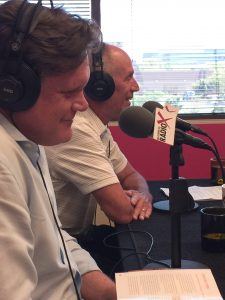
Listen in with Host Karen Nowicki and members of the Arizona Technology Council Steve Zylstra Bob Witwer David Lee and Eric Miller as they discuss the surge in innovation, growth and attraction of technology-based industries to Arizona and what that means for our economy.

Steve-Zylstra-on-Phoenix-Business-RadioXSteven G. Zylstra, age 65, serves as president and CEO of the Arizona Technology Council, a role he assumed in December of 2007. He is responsible for strategy, development, and accomplishment of policy development business goals and objectives and all financial matters related to the Council.

Zylstra is a leading advocate for improving science, technology, engineering and math (STEM) education. As a spokesman for the value technology can provide in raising social and economic standards in Arizona, he was named “Leader of the Year, Technology,” by the Arizona Capitol Times, a “Most Admired Leader” by the Phoenix Business Journal, and “Executive of the Year” by the Arizona Society of Association Executives (AzSAE).

Prior to serving as President of the Arizona Technology Council, Zylstra served as president and CEO of the Pittsburgh Technology Council, Catalyst Connection and the Pittsburgh Biomedical Development Corporation, an affiliated organization of the Pittsburgh Technology Council that invested in start-up biomedical and biotechnology companies.

Connect with Steven on LinkedIn, Facebook and Twitter.

Scitech Institute logo

Bob-Witwer-on-Phoenix-Business-RadioXBob Witwer retired in 2017 after 40 years with Honeywell. He was the Vice President of Advanced Technology for Honeywell Aerospace for the last 8 years of his career, responsible for defining and implementing the technology strategy for Honeywell Aerospace’s entire product portfolio.

Bob has a passion for STEM and has engaged with hundreds of Arizona students over the last two decades to share that passion. He has also taught adult classes on leadership, innovation, human-centered design, and aircraft avionics.

Bob was Chairman of the Board of Directors for the Arizona Technology Council for 3 years, is the current Board Chairman of the Az Tech Council Foundation (aka SciTech Institute), and is on the Advisory Board for the Northern Arizona University School of Informatics, Computing, and Cyber Systems.

MSSBTFullcolorLG

A pillar in the Arizona business community since 1986, MSS Business Transformation has guided organizations through foundational business and digital transformation in a quickly changing technology landscape, while helping them evolve their cultural identity. MSS leverages a holistic approach adapted to each unique organization to meet their strategic goals and objectives as we extend your business knowledge with our depth of expertise.

David-Lee-on-Phoenix-Business-RadioXDavid Lee is a truly global executive who has helped build agile, responsive organizations at Fortune 500 and global enterprises, state & city government, and a Big 10 University among others. He has led transformation, facilitated innovation, and taught change management techniques across five continents and 60 countries.

David speaks and facilitates advanced programs on topics related to transformation and innovation including Responsive Change, Mature Innovation, Customer-Centric Strategy, and High Performance Team Development. He is a founding member of Responsive Org (Phoenix), and on advisory councils at Thunderbird, the School for Global Management at Arizona State University, Grand Canyon University, and Norther Arizona University.

Connect with David on LinkedIn.

PADTLogoColor3000x1500

PADT is an engineering product and services company that helps customers who develop physical products by providing Numerical Simulation, Product Development, and 3D Printing solutions. PADT’s worldwide reputation for technical excellence and experienced staff is based on its proven record of building long-term win-win partnerships.

The company was founded in 1994 in Tempe, Arizona by PADT Co-founders and Principals Eric Miller, Ward Rand and Rey Chu. The group started the company because they saw the promise of driving product development through the proper application of simulation and 3D printing tools early in the design process. Today, PADT is dedicated to providing a full spectrum of simulation services to its customers and is the only ANSYS engineering simulation software Elite Channel Partner covering the entire Southwest. Arizona-Technology-Council-with-David-Lee-Eric-Miller-Steve-Zylstra-and-Bob-Witwer11

PADT inserts innovation into all that it does, whether that is helping NASA get to deep space, introducing the first 3D Printing factory in the Southwest, or helping the local technology community grow. The company was founded on the idea of being the premier provider of “making innovation work,” and it takes a true innovator to hold to that promise for 25 years.

With over 90 employees, 80 of whom are in Tempe, PADT services customers from its headquarters at the Arizona State University Research Park and from offices in California, Colorado, Albuquerque, New Mexico, Texas, and Utah.

Eric-Miller-on-Phoenix-Business-RadioXAs an industry veteran of 33 years, Eric Miller has perfected a diverse set of skills that he implements as co-founder and principal of Tempe-based PADT. His role encompasses oversight of simulation and product development consulting, IT, marketing, operations, human resources and administration.

Miller graduated from the University of California, Berkeley with a B.S. in Mechanical Engineering. He began his career as a summer intern at Lockheed doing design work on satellite subsystems. After college, Miller provided simulation and process improvement services to Garrett Turbine Engines in Phoenix (now Honeywell) for a total of eight years.

Miller is not only a successful businessman and engineer but also a mentor to start-ups and small businesses. He often speaks on the use of simulation to drive product development, as well as the effective application of 3D printing. Eric also serves on the board of directors at the Arizona Technology Council, the BioAccel Advisory Council, the screening committee of Arizona Technology Investors and is a mentor for the Arizona Commerce Authority’s Venture Ready program.

Miller writes a weekly column for the Phoenix Business Journal’s TechFlash section, and recently published his first book, “Better Blogging for your Business.”

Connect with Eric on LinkedIn, Facebook, Twitter and Instagram.


Tagged With: digital transformation, engineering, Manufacturing, Non Profit, Performance Improvement, Public Policy, STEM, Technology

Decision Vision Episode 16: Should I locate my business in an incubator or accelerator? – An Interview with Sanjay Parekh, Prototype Prime

May 23, 2019 by John Ray

Decision Vision
Decision Vision
Decision Vision Episode 16: Should I locate my business in an incubator or accelerator? – An Interview with Sanjay Parekh, Prototype Prime
Loading
00:00 /
RSS Feed
Share
Link
Embed

Download file

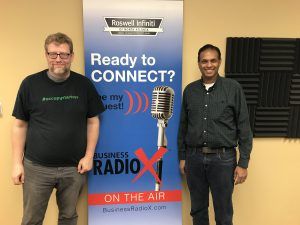
Michael Blake, Host of “Decision Vision,” and Sanjay Parekh, co-founder of Prototype Prime

Should I locate my business in an incubator or accelerator?

What’s the difference between an incubator and an accelerator? Should I locate my business in an incubator? What are the factors I should consider? On this episode of “Decision Vision,” Host Michael Blake speaks with Sanjay Parekh, co-founder of Prototype Prime, on these questions and more.

Sanjay Parekh, Prototype Prime

Sanjay Parekh, Prototype Prime

Sanjay Parekh is a co-founder of Prototype Prime. Prototype Prime is a 501(c)3 non-profit hardware & software startup incubator. Their mission is to provide startup companies with the support they need to launch and scale. Funded by the City of Peachtree Corners. Prototype Prime is a regional affiliate of the Advanced Technology Development Center (ATDC) at Georgia Tech, and is located just 30 minutes north of Atlanta.

Sanjay Sanjay a co-founder of Prototype Prime, a non-profit incubator and a serial technology entrepreneur. In addition to co-founding Prototype Prime, Sanjay is a co-founder of MailMosh, a startup focused on making email a better experience. He is also the co-host of Tech Talk Y’all, a self-proclaimed tech comedy podcast.

Previously Sanjay launched Startup Riot, a conference for startups which pioneered the three minute, four slide presentation format. Prior to founding Startup Riot, Sanjay was the founding CEO of Digital Envoy and the inventor of the company’s patented NetAcuity IP intelligence technology. At Digital Envoy, Sanjay led the company to raise $12 million in angel and venture funding. Digital Envoy was acquired by Landmark Communications in June 2007.

Sanjay holds an electrical engineering degree from the Georgia Institute of Technology and an MBA from Emory University’s Goizueta Business School.

Michael Blake, Brady Ware & Company

Mike Blake, Host of “Decision Vision”

Michael Blake is Host of the “Decision Vision” podcast series and a Director of Brady Ware & Company. Mike specializes in the valuation of intellectual property-driven firms, such as software firms, aerospace firms and professional services firms, most frequently in the capacity as a transaction advisor, helping clients obtain great outcomes from complex transaction opportunities. He is also a specialist in the appraisal of intellectual properties as stand-alone assets, such as software, trade secrets, and patents.

Mike has been a full-time business appraiser for 13 years with public accounting firms, boutique business appraisal firms, and an owner of his own firm. Prior to that, he spent 8 years in venture capital and investment banking, including transactions in the U.S., Israel, Russia, Ukraine, and Belarus.

Brady Ware & Company

Brady Ware & Company is a regional full-service accounting and advisory firm which helps businesses and entrepreneurs make visions a reality. Brady Ware services clients nationally from its offices in Alpharetta, GA; Columbus and Dayton, OH; and Richmond, IN. The firm is growth minded, committed to the regions in which they operate, and most importantly, they make significant investments in their people and service offerings to meet the changing financial needs of those they are privileged to serve. The firm is dedicated to providing results that make a difference for its clients.

Decision Vision Podcast Series

“Decision Vision” is a podcast covering topics and issues facing small business owners and connecting them with solutions from leading experts. This series is presented by Brady Ware & Company. If you are a decision maker for a small business, we’d love to hear from you. Contact us at decisionvision@bradyware.com and make sure to listen to every Thursday to the “Decision Vision” podcast. Past episodes of “Decision Vision” can be found here. “Decision Vision” is produced and broadcast by Business RadioX®.

Visit Brady Ware & Company on social media:

LinkedIn:  https://www.linkedin.com/company/brady-ware/

Facebook: https://www.facebook.com/bradywareCPAs/

Twitter: https://twitter.com/BradyWare

Instagram: https://www.instagram.com/bradywarecompany/

Show Transcript

Intro: [00:00:01] Welcome to Decision Vision, a podcast series focusing on critical business decisions, brought to you by Brady Ware & Company. Brady Ware is a regional, full-service, accounting and advisory firm that helps businesses and entrepreneurs make vision a reality.

Michael Blake: [00:00:20] And welcome back to another episode of Decision Vision, a podcast giving you, the listener, clear vision to make great decisions. In each episode, we discuss the process of decision making on a different topic. Rather than making recommendations because everyone’s circumstances are different, we talk to subject matter experts about how they would recommend thinking about that decision.
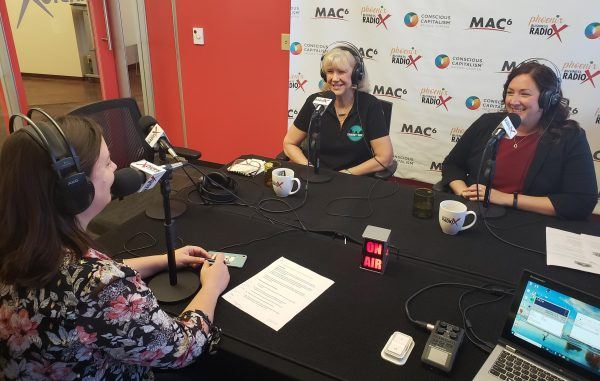
Michael Blake: [00:00:37] My name is Mike Blake, and I am your host for today’s program. I am a Director at Brady Ware & Company, a full-service accounting firm based in Dayton, Ohio, with offices in Dayton; Columbus, Ohio; Richmond, Indiana; and Alpharetta, Georgia, which is where we are recording today. Brady Ware is sponsoring this podcast. If you like this podcast, please subscribe on your favorite podcast aggregator, and please also consider leaving a review of the podcast as well.

Michael Blake: [00:01:03] So, today’s topic is about co-working spaces, accelerators, incubators, and there are probably three or four other names for these kinds of places that I’m not even familiar with yet. I can’t speak for the rest of the country, but they have popped up like dandelions all over Atlanta in the last five years. And even in my hometown of Chamblee that has, I think, a population of about 30,000 people, we have, at least, two co-working spaces, accelerators, of which I’m aware. And I happen to be a member of one of them. It’s a nice place to kind of hang out. It’s at the airport, and a place we’re allowed to have meetings. They do a good job.

Michael Blake: [00:01:42] But for the most, it’s very likely that if you can listen to this podcast, there is a co-working space, an accelerator, an incubator near you. And you might be kind of wondering, does it make sense for me to be in one of these places? What’s it all about? Why are they generating the interest and the buzz they are? Why are some of my competitors there? Why are a lot of startups there? And is it right for me, whether I’m a startup or a more mature company?8

Michael Blake: [00:02:11] And today, we are joined by my pal, Sanjay Parekh, who is one of the true OGs of the startup community here in the Atlanta area. Unlike me, who’s basically been one of the world’s ugliest cheerleaders for about 12 years or so, he has actually started companies, had exits, ran a very important organization called Startup Riot about the same time as we were doing Startup Lounge. And I’m proudly wearing one of the Startup Riot T-shirts here today. And Sanjay has been about as active as anybody for as long as anybody in the startup community.

Michael Blake: [00:02:50] And one of the hats that he is wearing at this point is he is co-founder of Prototype Prime. He is a serial technology entrepreneur. He’s currently founder of MailMosh, a startup focused on making e-mail a better experience. And maybe we’ll get some information about that. As I mentioned before, he’s co-founder of the startup — not really so much a startup anymore, but an accelerator – I guess. Sanjay will probably correct me – called Prototype Prime that is in the northern Atlanta Metro area, about three miles north of where I live.

Michael Blake: [00:03:21] He’s also the co-host of his own podcast called Tech Talk Y’all, a podcast covering technology with a Southern flair. And if you haven’t, I listened to a couple of episodes. If you’re into technology, and you want to understand the local, sort of, southern, the Southeastern startup scene, because it is different from other places in the country, you really ought to give it a listen.

Michael Blake: [00:03:41] Previously, Sanjay launched Startup Riot, a conference for startups, which pioneered the three-minute, four-slide presentation format. And that was an extremely important event. I think they got up to hundreds of attendees and was eventually holding these things downtown. And the thing I loved about it was that Sanjay was not afraid to use the vaudeville hook either. If you went 301, you are done. And think about pitches that if they drag, man, they are tedious. And Sanjay made sure that didn’t happen.

Michael Blake: [00:04:12] Prior to founding Startup Riot, he founded Founder Fables, an off-the-record conference for founders. He was also the founding CEO of a company called Digital Envoy, and the inventor of the company’s patented NetAcuity IP intelligence technology. At Digital Envoy, Sanjay led the company to raise $12 million in angel and venture funding. Digital Envoy was acquired by Landmark Communications in June 2007.

Michael Blake: [00:04:36] He holds an Electrical Engineering degree from Georgia Tech and an MBA from Emory University’s Goizueta Business School. And weren’t you on also one of those special European study grants? Was it called the MacArthur grant? I’m trying to remember.

Sanjay Parekh: [00:04:50] No. It was actually the Marshall Memorial Fellowship.

Michael Blake: [00:04:52] That’s what it is, okay.

Sanjay Parekh: [00:04:53] Yeah, yeah. So, that was in ’04, and it was a month-long trip. It’s a fantastic trip. They take Americans to Europe for a month, and Europeans come to the US for a month. And, really, it’s about building better transatlantic relations between. It’s really, kind of, a gift back to us. It’s from the German Marshall Fund of the United States. It’s a gift back to us from the people and government of Germany for the help that we gave them during the Marshall Plan post-World War 2.

Michael Blake: [00:05:17] I wonder if that program’s still going on today?

Sanjay Parekh: [00:05:20] It is, yeah.

Michael Blake: [00:05:21] Okay.

Sanjay Parekh: [00:05:21] And it’s still a pretty strong program because it’s an important thing. I think between Europeans and Americans, we need to understand each other better.

Michael Blake: [00:05:28] More than ever today, right?

Sanjay Parekh: [00:05:30] Yeah. And you realize as you travel that Europeans are different, right? You’ve got the Eastern European, versus Western, versus Southern. It’s all very different in their mentality. I had a very different experience based on the places I went to.

Michael Blake: [00:05:44] Yeah. As you know, I lived in Eastern Europe for a number of years.

Sanjay Parekh: [00:05:47] Yeah.

Michael Blake: [00:05:47] And that kind of experience does change you, I think.

Sanjay Parekh: [00:05:51] Yeah, absolutely.

Michael Blake: [00:05:52] And for me, that kind of experience led me to look at kind of what is the other person thinking.

Sanjay Parekh: [00:05:59] Right.

Michael Blake: [00:05:59] Not just sort of have my mouth open, which is what I normally would have done before I went over there. But instead, what is the other person’s viewpoint. And the best way to do that is to actually kind of be in that room, right.

Sanjay Parekh: [00:06:10] Right, exactly. And be receptive to the feedback and their perspective of what you’re doing. Like, we got railed on. I mean, if you can imagine 2004, and the things that we were doing, and what was going on in the world, we got kind of blamed for a bunch of stuff that we didn’t necessarily agree with, and because our country and our government was doing those things. And so, it was hard.

Michael Blake: [00:06:30] Yeah.

Sanjay Parekh: [00:06:30] I will say when we went to Poland, that was a nice respite from all of that because those Poles, they love us.

Michael Blake: [00:06:37] They do. They do. I’ve been to Poland a little bit. And you’re absolutely right. They roll out the red carpet.

Sanjay Parekh: [00:06:42] That is a great country for Americans. I really love my time there.
Michael Blake: [00:06:47] So, let’s jump in. So, we were talking, and I was talking in the intro about this advent of co-working, and accelerators, and incubators. And so, Prototype Prime was not the first in by any stretch of the imagination.
Sanjay Parekh: [00:07:05] Absolutely not, yeah.

Michael Blake: [00:07:05] So, you saw all these other co-working spaces, all these other — I’m just going to call them spaces because it just takes too long to go slash, slash, slash.

Sanjay Parekh: [00:07:15] Right.

Michael Blake: [00:07:16] Right. All these spaces, what made you think that we needed frankly another one? What’s the differentiator? What was the market need?

Sanjay Parekh: [00:07:23] Yeah. Well, so, for me, I definitely saw a need on the northern arc of Atlanta. There’s a lot of stuff going on inside the city, inside the perimeter, but not as much around the kind of northern arc. But honestly, I was not really looking to start one of these. I was on a panel that ATDC was doing probably about three years ago now.

Michael Blake: [00:07:43] That’s the Advanced Technology Development Center at Georgia Tech.

Sanjay Parekh: [00:07:46] Right. And our mutual friend, Jen Bennett, was running it then. She was GM. And they’d been asked by the City of Peachtree Corners to come up and do a panel to, kind of, figure out the appetite of doing an incubator there. And Jen was like, “I know you live up that way. Would you mind doing this?” And as most things, when somebody asks me to come and speak, I’m always happy to do it, with the caveat that they should know that, look, I’m going to tell you things that you’re probably not going to agree with or be happy about me saying, but it’s because that’s what I believe. You don’t have to listen to what I say. You don’t have to do what I have to say. It’s just that’s what I believe.

Sanjay Parekh: [00:08:21] And so, I did exactly that on this panel. And then, afterwards — and I laid it out. I told them like, “These are the things that are wrong here, and these are the things that you need to fix to make this all work.” The mayor’s wife, Debbie Mason, came up to me and said, “I love what you had to say. Let me introduce you to the Mayor.” Introduced to Mike Mason, who is still currently the mayor of Peachtree Corners. And we started this series of breakfast, and it was really just me unloading on him all the ideas that I had that he should go do.

Michael Blake: [00:08:48] That sounds like your dream conversation.

Sanjay Parekh: [00:08:50] Absolutely. Like, “Let me tell you everything you should do, and I’m not going to do any of it. You execute it, and I’m going to just cheer from the sidelines.” But by the end of that, he was basically going, he’s like, “Well, obviously, I want you.” And it wasn’t obvious to me. “Obviously, I want you to come in, and help with this thing, and help start it up.” And so, I actually have never told him yes. I told him no a bunch. I even went to his house and told him no because I was busy at Georgia Tech at that point. And somehow, still, I ended up managing to be involved with this thing and helping found it.

Sanjay Parekh: [00:09:21] So, that’s how that whole thing happened. And I’ll tell you, it’s been a great experience. The city — it’s a non-profit. Prototype Prime is a nonprofit, standalone. The city funds it. So, funds the budget every year. And they let me do a lot of crazy things. I believe a few things strongly about Atlanta that we’ve got great art, great music, great film, great startups, great corporates, great non-profits, but these things don’t talk to one another.

Sanjay Parekh: [00:09:44] And I think that’s a challenge in almost every city out there where you have got these great silos of stuff, but they don’t cross-pollinate. And so, if anybody is out there in another city, if you’re thinking about what you can do better for your city, it’s trying to figure out ways for that to happen, that cross-pollination happen.

Sanjay Parekh: [00:10:00] So, one of the things that I did is I engaged with Atlanta artist to come and do artwork on the walls, right. So, when we started, it was a depressing building. It was white walls everywhere, very echoey, nobody was there. And now, there’s a lot of artwork. People walk in and they feel the energy. They feel the vibe of the place. And it’s been great for us. That’s not the right answer for every place, but it was the right answer for us.

Michael Blake: [00:10:23] So, when you were telling the mayor of Prototype Prime and-

Sanjay Parekh: [00:10:28] Peachtree Corners.

Michael Blake: [00:10:30] Sorry, Peachtree Corners, what they needed to fix what, were some of the top three or four things you thought needed to be fixed and done differently?

Sanjay Parekh: [00:10:39] Yeah. One of my top things was, and still is, is transportation. So, we’re in Gwinnett County. We have MARTA. The closest MARTA stop is Doraville, which is maybe a 10 or 12-minute ride.

Michael Blake: [00:10:52] It’s closer to me in Chamblee than it is to you in Peachtree Corners.

Sanjay Parekh: [00:10:55] Right, exactly. Now here’s the thing. So, there is a Gwinnett County bus, that is in Tech Park, that will take you to Marta. So, I said it’s a 10 to 12-minute ride by car. It will take you over an hour on that bus.

Michael Blake: [00:11:07] And you just had a referendum, unfortunately, on joining MARTA. And it was surprisingly strongly defeated actually.

Sanjay Parekh: [00:11:15] Yeah. There’s a lot of discussion about that, and why that happened, and the timing of it, and all these kinds of things but-

Michael Blake: [00:11:20] Read the editorials in ajc.com for that.

Sanjay Parekh: [00:11:23] Right, exactly. But I think that will eventually change down the line because the makeup of Gwinnett County is changing. And it’s the largest county in the Metro area, and there’s so many jobs, there’s so many people commuting in and out of that county that if we’re going to actually fix and address the transportation issues across Metro Atlanta, it’s got to involve Gwinnett County and be a part of that puzzle.

Sanjay Parekh: [00:11:42] So, that was one of the major things that I told them that needs to be it. But the other parts were we’re really kind of being engaged with the startups and really helping out in a lot of stuff. So, one of the things that I asked them to do is something that passed in the City of Atlanta where we did this thing, or the City of Atlanta did this thing where the business licenses for early stage startups are waived for the first couple of years. And so, that’s an ordinance in the City of Atlanta.

Sanjay Parekh: [00:12:11] I think it’s absolutely great. I think all of the cities and municipalities in Metro Atlanta should pass the same exact thing. I asked the Mayor and the City Council of Peachtree Corners to pass that. They basically took the text of the City of Atlanta ordinance and passed it as well.

Sanjay Parekh: [00:12:24] So, that was one of those things like, okay, I understand you’re going to do this, and you’re going to put money behind it, but you’ve got to show more of that support than just, “Hey, we set up this thing, start companies, and have them be here,” right. It’s got to be that whole messaging. And a couple hundred dollars a year is really not going to change the calculus of a startup failing or succeeding, but it sends the message.

Sanjay Parekh: [00:12:46] And so, right along with that, having City Council folks and the Mayor in the space, around the space, just around, even if they’re not meeting with teams, it’s important because it sends that message that this is something that they care about, and this is something that they support.

Michael Blake: [00:13:01] Now, you mentioned the geography. And geography is important everywhere. But Atlanta has a strange geography. There’s this emotional barrier of our Ring Road 285.

Sanjay Parekh: [00:13:11] Right.

Michael Blake: [00:13:11] You feel like you need a passport to kind of cross over. I sold my company and joined a firm that’s up in Alpharetta. So, I live inside the perimeter now. I occasionally commute outside the perimeter. And the thing you don’t realize until you do it, and you probably do know this, I’m sure you know this, is that it’s actually very different communities. Like if I go to startup events in Buckhead, Midtown, the usual suspects, you know most of the people in the room.

Sanjay Parekh: [00:13:39] Yeah.

Michael Blake: [00:13:39] Alpharetta, I know two people in a room full of a hundred. And until you do that, you don’t realize how different those communities are, and how important that geographic segmentation is.

Sanjay Parekh: [00:13:51] Yeah. And that kind of goes back to that same idea of we need these things to cross-pollinate, right. As a metro city, we’re not going to continue to improve our startup community unless those communities are cross-pollinating, right. I mean, we should be able to go into an event in Alpharetta or wherever and know more than two people. That’s not good.

Michael Blake: [00:14:12] Yeah. And yeah, that’s right. So, you’re trying to fix this a little bit now with Prototype Prime. Other than the geographic location and the message you’re trying to send, what are some of the other differentiating features in your mind?

Sanjay Parekh: [00:14:26] Yeah. So, number one, it’s a nonprofit. So, my view on this was this is not something that is associated with me as a name. This is something that I’m building to be a long-term asset in the community. So, I often talk about as of this year, the 81-year plan. How do we get to the year 2100 with what we’re doing right now? I don’t really care about the next couple of years. I really care about Prototype Prime being around at the turn of the next century and still helping people.

Sanjay Parekh: [00:14:57] So, that is my focus. I have a concern about other facilities in and around town, and even across the US that are these for-profit places. I don’t really know that they’re going to be around at the turn of the next century. Is Prototype Prime going to be? I don’t know. I hope so. That’s what we’ve been building for. And that’s the message that I keep sending that we’re focused on the year 2100. So, we’re trying to make decisions that are based on the long-term, not on the short-term with the space.

Michael Blake: [00:15:25] And how do those kinds of decisions differ? How would a decision maybe you’re faced with, if you’re thinking of a five-year horizon versus a 2100 horizon, what’s the difference?

Sanjay Parekh: [00:15:38] Yeah. So, I think part of it is being a nonprofit. That builds in that idea that this is going to pass from hand to hand. It’s not going to start with a founder. And then, when they’re tired of it, it’s going to shut down. This is definitely going to live on.

Sanjay Parekh: [00:15:51] The other part of it is some of the moves that we’ve made. So, recently, we got granted $1.8 million by the Federal Government to buy the building that we’re in. We were leasing it from a landlord, which was not the city. We, now, own that building completely. So, 25,000 square feet owned by the organization. So, it has a home. It’s not going to go away from that home, or maybe down the road, it well when it sells that building and moves into another building.

Sanjay Parekh: [00:16:15] Alongside of that, we’ve been forging these partnerships. So, we’re building this advanced autonomous test track. So, a vehicle test track, 1.4-mile loop inside of Tech Park, where vehicle companies can come and test out their vehicles on this dedicated track that is dedicated, but it still interacts with the public. So, there’s that interaction. Alongside of that, Sprint is coming in and doing a 5G deployment inside of Tech Park, starting from our building. So, it’s called Curiosity Lab. And that’s an opportunity for this next stage of startups to be able to use next-generation communication technologies.

Sanjay Parekh: [00:16:50] So, it’s trying to build in all of these things that really create an excitement. And the fact that we’re in Tech Park, which used to be the hotbed of telecom, kind of, innovation in Atlanta that’s kind of gone away, but we’re trying to bring it all back. So, it’s not just telecom. It’s a bunch of other things. It’s vehicles, it’s software startups, it’s all of these things. And hopefully, they’ll graduate from our place, and then move close by, and so we can still be involved with them.

Michael Blake: [00:17:15] So, a common theme that I can hear from, at least, the Sprint and the car track exercise is that those are prototyping resources.

Sanjay Parekh: [00:17:23] Yeah. Essentially, yeah.

Michael Blake: [00:17:24] What do you know, Prototype Prime, prototyping resource.

Sanjay Parekh: [00:17:27] Right, Prime being the first place that you do your prototype, right. That’s your call.

Michael Blake: [00:17:30] Is that deliberate? Are there other prototyping resources as well, maker spaces, things of that nature?

Sanjay Parekh: [00:17:35] Yeah, exactly. So, we’re one of only two spaces – the other one being a TDC in Atlanta – that has a design and development lab. So, we’ve got a lab. We’ve got a handful of teams that use that lab. One of them has grown tremendously with us. Trellis started with two people. They’re now, I think, 16. And they build all their products in our lab. So, we’ve got 3D printers. We’ve got soldering stations. I mean, you name it, we’ve got it.

Michael Blake: [00:18:01] So, I want to come back to this 2100 description because I think that’s fascinating. So, I’m going off script a little bit. The typical space model is you help a company for some period of time.

Sanjay Parekh: [00:18:19] Yeah.

Michael Blake: [00:18:20] And then they “graduate”, right?

Sanjay Parekh: [00:18:22] Right.

Michael Blake: [00:18:22] You slash encourage them to leave, kick them out, whatever.

Sanjay Parekh: [00:18:25] Yeah, yeah.

Michael Blake: [00:18:27] Is the fact that you’re, kind of, designed for longevity from day one, does that mean that that part of the model changes too, or maybe you’d love it if a company stayed there for 10 years?

Sanjay Parekh: [00:18:37] Yeah. So, no. We don’t want companies to stay there for long term.

Michael Blake: [00:18:41] Okay.

Sanjay Parekh: [00:18:41] Really, the goal is to help them early, early stage when they’re just fledgling companies, get them to the point where they’re starting to scale. So, our three tag lines are dream it, build it, scale it. That’s what we help entrepreneurs do. So, dream it when they’re just starting out, figuring out what to do. Build it when they’re starting to build their company, and then when they’re starting to scale. But as they start to scale, that’s the time for them to get pushed out.

Michael Blake: [00:19:01] Okay.

Sanjay Parekh: [00:19:02] So, we actually had one team, that was our second team in. So, Trellis was our first team in, grew from two people to 16 now. Our second team in site grew from a single founder to, now, I think, it’s about 18 or 20 people. And they were actually getting to the size where I was starting to talk to them about it’s going to be time to leave soon. And the founder said, “Yeah, we’re not going to leave.” And I said, “”No, no. I’m not kidding. I’m serious that you guys are just getting too big.” And this was only when we had the downstairs. And so, they said, “No. We like it here too much. We don’t want to leave.”

Sanjay Parekh: [00:19:35] And so, with the upstairs, City Hall used to upstairs, and they left, that opened up the possibility for us to take over the upstairs. So, we ended up taking a third of the space upstairs dedicating it to them. And so, we have a different relationship with them now. But I think that was a one-off. I don’t think we’re going to do that again. When they leave in a couple of years, that space is probably going to get reclaimed and be just regular startup space that people are coming in, there for a little while.

Sanjay Parekh: [00:20:01] My plan has always been three to four years, at the most, that we would hold onto a team. We want teams to graduate from us, and then move on to the Atlanta Tech Village, Switch Yard, Flat Iron, Strongbox, Atlanta Tech Park — Park Tech — Tech Park Atlanta. Tech Park Atlanta.

Michael Blake: [00:20:20] Yeah.

Sanjay Parekh: [00:20:20] Yeah. I always get that confused, 22TechPark. Like any of those places. The Alpharetta. Any of those places. We really view ourselves as the early, early stage. And we’re going to help the companies get their feet under them and get going, so that they can graduate to these other places. And the other places don’t have to worry about the viability of those teams. They know that they’re going to come in. They know what they’re doing. They’re going to continue to grow. And they’ll probably, at some point, outgrow those spaces as well. But I think that’s good.

Sanjay Parekh: [00:20:49] And the reason why we view ourselves that way is that, again, to that 2100 view, this was an area that I saw was lacking, and all of those places that I mentioned are run by friends of mine. And I didn’t ever want to compete with friends of mine because we have so many challenges and every city has challenges. Like why try to compete over the same things over and over again. Figure out something new and something different. And that’s what we decided to do with Prototype Prime.

Michael Blake: [00:21:16] In that respect, it’s like Startup Riot and Startup Lounge all over again, right?

Sanjay Parekh: [00:21:19] Yeah. No, exactly.

Michael Blake: [00:21:19] We need to be careful that we weren’t marginalizing somebody else inadvertently.

Sanjay Parekh: [00:21:24] Right.

Michael Blake: [00:21:24] Because the goal for both of our organizations was put ourselves out of business-

Sanjay Parekh: [00:21:28] Yeah.

Michael Blake: [00:21:28] … which, thankfully, we did.

Sanjay Parekh: [00:21:29] Yeah. Exactly, yeah.

Michael Blake: [00:21:30] So-

Sanjay Parekh: [00:21:30] Although everybody still keeps telling me that they wish that Startup Riot would come back. And I tell them that that boat has sailed at this point.

Michael Blake: [00:21:37] I have to say the same thing about Startup Lounge.

Sanjay Parekh: [00:21:39] Yeah.

Michael Blake: [00:21:39] But everybody wishes it would come back, but they also wished that I would do it. And that’s not happening.

Sanjay Parekh: [00:21:44] Yeah. I say the same thing. I’m like, “Yeah, if you want to do it, I’m happy to give you all the stuff. I got stickers still. I would cheer you on.”

Michael Blake: [00:21:52] We’ll give you the nuclear launch codes to the website, everything.

Sanjay Parekh: [00:21:55] Exactly.

Michael Blake: [00:21:55] No, man, I got too much stuff going on.

Sanjay Parekh: [00:21:56] No, no, no, I’m too busy. I e-mailed 3000 people saying, “Who wants take it over?”

Michael Blake: [00:22:01] I remember that.

Sanjay Parekh: [00:22:01] Crickets.

Michael Blake: [00:22:03] I remember that. And that’s the evolution of the market.

Sanjay Parekh: [00:22:08] It is. And truth to be told, like you know this as well, events are hard to do. And I don’t blame anybody for not taking it up because it’s a painful exercise, and I don’t wish that on anybody.

Michael Blake: [00:22:19] Yeah. I mean, you got to love it. And neither of us got paid for it either.

Sanjay Parekh: [00:22:24] No, exactly. Yeah. Labor of love for both of them.

Michael Blake: [00:22:26] Definitely. So, where does Prototype Prime fit, in your mind? It doesn’t sound like it’s really co-working space. Is it an accelerator? Is it an incubator? Is it a hybrid? Is it something else? Maybe the distinction is not meaningful. What bucket would you put it into?

Sanjay Parekh: [00:22:45] So, we call ourselves an incubator. So, to me, an incubator is a place that helps companies like this but doesn’t put money in. To me, an accelerator is a place where you have a structured program, as well as money that’s going in as an investment.

Michael Blake: [00:22:59] Okay. So, GT Flashpoint, for example, was an accelerator.

Sanjay Parekh: [00:23:03] That’s an accelerator.

Michael Blake: [00:23:04] Because they had money in the wings kind of for-

Sanjay Parekh: [00:23:05] Absolutely, absolutely.

Michael Blake: [00:23:06] Okay.

Sanjay Parekh: [00:23:06] Yeah. And it might not be money that’s directly from the program, but it might be a side fund, which is what Flashpoint was. And I don’t know if that’s changed now. But Atlanta Tech Village, to me, is more of a co-working space than it is an incubator-

Michael Blake: [00:23:21] I agree.

Sanjay Parekh: [00:23:22] … or an accelerator. So, for us, an incubator is that we’re still pretty heavily involved with teams. So, we’re around, we’re meeting with teams. I was just there yesterday chitchatting with a handful of teams, talking about their problems, giving them ideas, things like that; whereas, in a co-working space you don’t necessarily have that.

Sanjay Parekh: [00:23:39] And all of these though, you do have the serendipity, the casual kind of interaction that ends up happening. You’re running into folks and you might find the aha solution to whatever problem you’ve been struggling with. So, that’s, I think, the benefit of doing any one of these. But as an incubator, I think we’re a little bit different. We don’t have a deadline that says, “You’ve got to get out by then.”

Michael Blake: [00:24:00] Right, okay. So, what kinds of companies do you think incubator — I’ll focus on incubator and accelerators. What kinds of companies you think do best in those kinds of environments?

Sanjay Parekh: [00:24:13] Yeah. So, for an accelerator, they usually have a target kind of market niche that they can help with. So, I would focus on that. Incubators are, often, the same way as well. So, we are a hardware and software incubator. We are not a lifestyle business incubator or anything else like that. So, if you’re starting up dry cleaning stores or barbershop, you should not come to Prototype Prime. We are not going to be able to help you. And it’s not that we don’t love you, it’s just that we don’t have the skills to help in that environment.

Michael Blake: [00:24:38] That’s not your thing.

Sanjay Parekh: [00:24:39] Yeah.

Michael Blake: [00:24:39] You don’t know anything about running a dry cleaning business.

Sanjay Parekh: [00:24:40] No, not at all. I have no idea. I don’t know the issues you’re going to face or anything else like that. Your best to go to a place where you’re served and helped by people that understand your space. So, that’s, I think, number one that you should think about.

Sanjay Parekh: [00:24:55] The other thing is that somebody that’s actually willing to be coachable and listen to feedback. All the feedback is not going to be dead-on accurate. You’ve got to figure out for yourself what’s right and wrong, but you’ve got to be, at least, open and willing to listen to it.

Sanjay Parekh: [00:25:10] And I’ll give you an example. I was interviewing an entrepreneur just not too long ago. So, we screen all the companies coming into Prototype Prime to make sure that, first of all, we’re a good fit for them, that we can help them with the things that they’re working on, but that they are also a good fit for us, that they’re going to be somebody that we want to have in the space, that makes sense, that we’re going to actually be able to help because they’re listening.

Sanjay Parekh: [00:25:31] This particular entrepreneur, I said something, they only had a handful of customers. and I said, “You know what? I think what you need to do is probably go out, and get some more customers first, and drive revenue before you start deciding to build custom products because I don’t know that you necessarily know what your customers want.” Well, this ticked off the entrepreneur, stood up halfway through the meeting. At that point, shook my hand, and said, “Well, thank you very much.” And stormed out of the meeting.

Sanjay Parekh: [00:25:56] That’s not the right personality. Even generally, if you’re gonna be an entrepreneur, you’ve got to have a thick skin. People are going to call your baby ugly. That’s just what it is. And so, you’ve got to have that conviction. You’ve got to have that understanding and that drive to be able to take it, and take that criticism, prove them wrong, but do it in a way that doesn’t burn bridges either. Like that entrepreneur, if he ever asked me for help, I’m going to be like, “Yeah, no.” Because I’m not going to introduce somebody like that to somebody I know and burn the bridge that I might have with them.

Michael Blake: [00:26:26] All right. I got to share this story with you.

Sanjay Parekh: [00:26:30] Yeah.

Michael Blake: [00:26:30] So, as you know, I’ve done office hours for a decade or so.

Sanjay Parekh: [00:26:34] Yeah, absolutely.

Michael Blake: [00:26:34] And years ago, a guy came and wanted my opinion on his business. In fact, I didn’t say it was even a baby, it’s more of like a wombat. I mean, they’re just so far off in left field. And he was upset, got up, left, and didn’t even paid his check. I wanted him to cover his check.

Sanjay Parekh: [00:26:54] Okay.

Michael Blake: [00:26:54] And then, about six months later, I got a handwritten note. And basically, he shut down his business. And he wrote me a note apologizing, had a $20 bill in it, cash, and said, “I’m so sorry. You were the one person who was honest with me. All my friends and family were cheerleading because they thought I was the supportive thing to do. They would have helped me more had they said my baby was really a wombat. And I wouldn’t waste all this time and money.” So, sometimes, you get that sort of delayed gratification, but for people that invest so much, it’s so hard for them to hear that.

Sanjay Parekh: [00:27:33] It is.

Michael Blake: [00:27:35] And maybe the first time somebody has ever said that to them.

Sanjay Parekh: [00:27:37] Right, absolutely. And I always try to be honest with entrepreneurs, and probably just like you, in a nice way.

Michael Blake: [00:27:43] Yeah.

Sanjay Parekh: [00:27:43] Right. We’re not going to do it ruthlessly, but-

Michael Blake: [00:27:46] We don’t go Simon Cowell on them.

Sanjay Parekh: [00:27:47] Exactly. But we try to do it in a way that is helpful to the entrepreneur because I agree with you. And this is why I always ask people when I do presentations or anything else, I want you to tell me what I did wrong. That’s all I care about. I don’t want to know how I did right because, obviously, I tried my best. I wouldn’t have come here and done anything if I wasn’t trying my best. So, I want you to tell me all the wrong things.

Sanjay Parekh: [00:28:10] And I think a lot of times, people need that permission from you to be able to tell you what you did wrong. But that’s generally what I do. That’s did on that panel for Peachtree Corners. I’m going to tell you what I think is wrong, like what you’re going to mess up on, and what you’re messing up on right now because that’s the only way to get better.

Michael Blake: [00:28:28] So, you’ve had a long entrepreneurial journey.

Sanjay Parekh: [00:28:32] I think you just called me old.

Michael Blake: [00:28:34] Nope. You called yourself old. You’ve had a long and storied entrepreneurial journey. And a lot of these places just did not exist back in ’07, ’08, and the ATL

Sanjay Parekh: [00:28:45] Yeah, yeah/

Michael Blake: [00:28:47] How would your journey have been different? Wouldn’t it have been different if there had been things like this available back when you were a pup?

Sanjay Parekh: [00:28:54] Yeah, I think it absolutely would’ve been different. I remember starting my first company. So, I came up with the idea for Digital Envoy in ’99, went full time in 2000. There, basically, was nobody as a mentor for me. There was nobody to learn from. Went to a few events that were technology-oriented around town, but they were basically wall-to-wall service providers just trying to sell me stuff. There was nobody trying to actually help.

Sanjay Parekh: [00:29:19] And so, I think, from kind of the capital of perspective, if there had been places like this, my costs would have been a lot less. I probably could have raised a lot less money, and been a lot more effective. But on the other side of it, I think I could have gotten to a point of solving things and getting the right answers quicker.

Sanjay Parekh: [00:29:39] I’ll give you an example. It’s kind of a minor example, but when we had our first office, me and my two co-founders, we’d never started a company before. This is the first -time starting a company. I was, at this point, 20 — having our first office, 25 years old, 26 years old, something like that. And a guy from the Better Business Bureau came in to sign us to operate. We’re like, “Oh, yeah. We’ll sign.” It was free. So, we’re like, “Yeah, sure. We can do that.” And so, he’s filling out the paperwork right there, and then he asked us – and we’d been in this office for a couple months at this point – “So, yeah. So, where’s your business license?” We’re like, “It must be in the mail. We haven’t got any yet. It’s in the mail. We’ll let you know that once we get it.”

Michael Blake: [00:30:19] Of course, you have business license

Sanjay Parekh: [00:30:21] Yeah. So, that very same day, our CFO ran to the City of Duluth and got our first business license because we didn’t know we needed one. Nobody tells you that. And look, it was a minor issue, even if we’d gotten caught and fined, it probably wouldn’t have been that outrageous. But, still, it’s those little things that just helped you along that process and speed you up in terms of making things happen that had we been in a space like that, we would have just not had to worry about some of those things. We wouldn’t have to worry about which accounting firm are we’re going to go with, or which law firm are we going to go with, or who do we use for X, Y, and Z, or how do we do benefits. Like all of that stuff would’ve been solved, and all that stuff is just the cruft garbage stuff that you have to do in starting a company, but it adds no value. It’s not the thing that you’re around for.

Michael Blake: [00:31:08] It’s like stock options valuations.

Sanjay Parekh: [00:31:09] Yeah. You’ve got to do it, but it doesn’t add any value.

Michael Blake: [00:31:15] No, it does not. I mean, it’s a distraction.

Sanjay Parekh: [00:31:17] It is, absolutely.

Michael Blake: [00:31:19] So, one last question. I know we got to get you out of here. I know you got some other stuff you got to do today, as you always do. But I want to ask you one other question, as a new — I don’t know that it’s a new concept but a new term called a colliding space. Have you heard that term before?

Sanjay Parekh: [00:31:33] I’ve heard that term people talk about. Yeah. Serendipity, collisions, and things like that. I don’t know exactly what a colliding space is and how that’s different from a co-working space, but I think all of us are essentially built for that.

Michael Blake: [00:31:47] Yeah.

Sanjay Parekh: [00:31:47] I was at Prototype Prime yesterday and randomly happened to see – you might know – CBQ, Charles Brian Quinn, with Greenzie, the robotic lawnmowing company.

Michael Blake: [00:31:56] I know of them, but don’t know him.

Sanjay Parekh: [00:31:58] Okay. So, CBQ has been around Atlanta for quite some time, and I was surprised to see him there. He was like, “Oh, yeah, we’re going to be doing some,” because we’ve got the autonomous advanced vehicle stuff. It’s like, “We’re going to be doing some autonomous lawn mowing alongside of all that.” I was like, “That’s kind of cool,” right.

Sanjay Parekh: [00:32:17] And having those random collisions. And then, I saw he was meeting with the Trellis team, which is monitoring water usage for farmers in their crop fields. And so, having those kind of serendipity, kind of collisions happening, I think, that’s a great thing. That’s a great thing for Atlanta. It’s a great thing for any city. And so, if governments are listening to this, anybody that’s in a municipality, if there’s one thing that you want to try to help do is create those collisions between people that are doing innovative stuff because you never know how they might be able to help one another.

Michael Blake: [00:32:49] So, we’re just about out of time, but we, obviously, can have a three-hour conversation on this, and then some. But if somebody wants to ask you a question, maybe follow up, can they reach out to you? And if so, how best can they contact you?

Sanjay Parekh: [00:33:02] Yeah. The best place always, for me, is on Twitter. So, I’m @Sanjay, that’s S-A-N-J-A-Y. I’m pretty responsive on Twitter. You can @ me, and my DMs are open, so you can private message me if it’s something you don’t want to plaster publicly on Twitter.

Michael Blake: [00:33:17] Okay. Well, very good. That’s going to wrap it up for today’s program. I’d like to thank Sanjay so much for joining us and sharing his expertise with us.

Michael Blake: [00:33:25] We’ll be exploring a new topic each week. So, please tune in, so that when you’re faced with your next business decision, you have clear decision when making it. If you enjoyed this podcast, please consider leaving a review through your favorite podcast aggregator. That helps people find us, so that we can help them. Once again, this is Mike Blake. Our sponsor’s Brady Ware & Company. And this has been the Decision Vision podcast.

Tagged With: coworking, Dayton accounting, Dayton business advisory, Dayton CPA, Dayton CPA firm, early stage startups, incubator, Michael Blake, Mike Blake, Non Profit, non-profit incubator, peachtree corners, startup accelerator, startup incubator, startups, Tech Park, Technology, vehicle test track

Palm Valley Church and Community Impact with Tere Tucker and Agua Fria Food and Clothing Bank with Leanne Leonard E17

March 21, 2019 by Karen

Palm Valley Church and Community Impact with Tere Tucker and Agua Fria Food and Clothing Bank with Leanne Leonard E17
Phoenix Business Radio
Palm Valley Church and Community Impact with Tere Tucker and Agua Fria Food and Clothing Bank with Leanne Leonard E17
Loading
00:00 /
RSS Feed
Share
Link
Embed

Download file

Palm Valley Church and Community Impact with Tere Tucker and Agua Fria Food and Clothing Bank with Leanne Leonard E17

Palm Valley Church and Community Impact with Tere Tucker and Agua Fria Food and Clothing Bank with Leanne Leonard E17

Palm Valley Church created a non-profit entity, Community Impact. Community Impact exists to work together with their neighbors, local government, businesses and schools to build relationships by bringing all together for the good of the community. Their goal is to discover the assets, talents, gifts and passions in the community to CommunityImpactmeet the needs for transformation and hope by creating those partnerships. Palm Valley Church is a PEACE Plan Church which means that there are five giants that bring chaos in the world in various degrees locally and globally; they are spiritual emptiness, corrupt leadership, poverty, disease and illiteracy. If the Church can begin to take steps in addressing these giants it will bring peace to the world and will bring about a servants heart, actions and the important of serving others.

Tere-Tucker-on-Phoenix-Business-RadioXTere Tucker has been a member of Palm Valley Church for over 6 years and the Director of Local Missions and Community Impact for 2 years. She comes from a background of owning her own software business where she has semi-retired and is now more available for volunteer work. Her passion is helping to make life a little easier and giving hope to those struggling, by looking at what the specific needs are in the community, and working with the community partners to bring about sustainable change. Since Palm Valley Church is a “PEACE Plan” Church it gives her this chance to be used by God to make these changes.

Follow Palm Valley Church on Facebook and Twitter.

For the past 23 years the Agua Fria Food and Clothing Bank has been faithfully serving the people of the southwest valley. Their mission, as a faith based non-profit organization, is to provide services to families and individuals in the southwest valley who are hungry, in need, or facing crisis. AFFCB has two locations, Avondale and Tonopah, with a variety of programs and services, some shared, some unique. At each location, they offer monthly emergency food boxes and access to their clothing bank. In Avondale, they also provide monthly food boxes for seniors and infants, they have a shower on site for bathing, and they offer hygiene products and daily lunches for
individuals. 2017AFFCBLogo

Each year, AFFCB partners with other local agencies and churches to collect and distribute school supplies (Backpacks & More) in July, Thanksgiving meals in November, and Christmas food and gifts (Toys & More) in December. All their programs and services are only contingent on need and residency. Individuals seeking assistance at the Avondale or Tonopah location must have proof of residence in a neighboring city (Avondale, Goodyear, Buckeye, Tolleson, Cashion, or Litchfield Park – or – Tonopah, Arlington, Palo Verde, or Harquahala, respectively).

The Agua Fria Food & Clothing Bank is a community supported organization. They rely heavily on in-kind and monetary donations, as well as grants. They are also an approved AZ charitable tax credit organization. Their day to day operations are possible only through the thousands of generous hours served by volunteers.

Leanne-Leonard-on-Phoenix-Business-RadioXLeanne Leonard has served as the Executive Director of the Agua Fria Food & Clothing Bank since August of 2015. Prior to coming to AFFCB she worked for Ottawa University’s Arizona campus for eight years. She was serving as the Director of Business Program’s for their four Arizona locations, and was a full time faculty member teaching courses in business, communications, and liberal arts.

Leanne earned her Bachelor of Arts degree in Communications and Psychology from Ottawa University, and a Master of Science in Leadership from Grand Canyon University.

Follow AFFCB on Facebook.

Tagged With: food bank, homeless, low income, Non Profit, Palm Valley Church, PVC Church, PVC Church Missions, PVC Missions, seniors, west valley, west valley resources

  • « Previous Page
  • 1
  • 2
  • 3
  • 4
  • 5
  • 6
  • 7
  • Next Page »

Business RadioX ® Network


Our Most Recent Episode

CONNECT WITH US

  • Email
  • Facebook
  • LinkedIn
  • Twitter
  • YouTube

Our Mission

We help local business leaders get the word out about the important work they’re doing to serve their market, their community, and their profession.

We support and celebrate business by sharing positive business stories that traditional media ignores. Some media leans left. Some media leans right. We lean business.

Sponsor a Show

Build Relationships and Grow Your Business. Click here for more details.

Partner With Us

Discover More Here

Terms and Conditions
Privacy Policy

Connect with us

Want to keep up with the latest in pro-business news across the network? Follow us on social media for the latest stories!
  • Email
  • Facebook
  • Google+
  • LinkedIn
  • Twitter
  • YouTube

Business RadioX® Headquarters
1000 Abernathy Rd. NE
Building 400, Suite L-10
Sandy Springs, GA 30328

© 2025 Business RadioX ® · Rainmaker Platform

BRXStudioCoversLA

Wait! Don’t Miss an Episode of LA Business Radio

BRXStudioCoversDENVER

Wait! Don’t Miss an Episode of Denver Business Radio

BRXStudioCoversPENSACOLA

Wait! Don’t Miss an Episode of Pensacola Business Radio

BRXStudioCoversBIRMINGHAM

Wait! Don’t Miss an Episode of Birmingham Business Radio

BRXStudioCoversTALLAHASSEE

Wait! Don’t Miss an Episode of Tallahassee Business Radio

BRXStudioCoversRALEIGH

Wait! Don’t Miss an Episode of Raleigh Business Radio

BRXStudioCoversRICHMONDNoWhite

Wait! Don’t Miss an Episode of Richmond Business Radio

BRXStudioCoversNASHVILLENoWhite

Wait! Don’t Miss an Episode of Nashville Business Radio

BRXStudioCoversDETROIT

Wait! Don’t Miss an Episode of Detroit Business Radio

BRXStudioCoversSTLOUIS

Wait! Don’t Miss an Episode of St. Louis Business Radio

BRXStudioCoversCOLUMBUS-small

Wait! Don’t Miss an Episode of Columbus Business Radio

Coachthecoach-08-08

Wait! Don’t Miss an Episode of Coach the Coach

BRXStudioCoversBAYAREA

Wait! Don’t Miss an Episode of Bay Area Business Radio

BRXStudioCoversCHICAGO

Wait! Don’t Miss an Episode of Chicago Business Radio

Wait! Don’t Miss an Episode of Atlanta Business Radio