Business RadioX ®

  • Home
  • Business RadioX ® Communities
    • Southeast
      • Alabama
        • Birmingham
      • Florida
        • Orlando
        • Pensacola
        • South Florida
        • Tampa
        • Tallahassee
      • Georgia
        • Atlanta
        • Cherokee
        • Forsyth
        • Greater Perimeter
        • Gwinnett
        • North Fulton
        • North Georgia
        • Northeast Georgia
        • Rome
        • Savannah
      • Louisiana
        • New Orleans
      • North Carolina
        • Charlotte
        • Raleigh
      • Tennessee
        • Chattanooga
        • Nashville
      • Virginia
        • Richmond
    • South Central
      • Arkansas
        • Northwest Arkansas
    • Midwest
      • Illinois
        • Chicago
      • Michigan
        • Detroit
      • Minnesota
        • Minneapolis St. Paul
      • Missouri
        • St. Louis
      • Ohio
        • Cleveland
        • Columbus
        • Dayton
    • Southwest
      • Arizona
        • Phoenix
        • Tucson
        • Valley
      • Texas
        • Austin
        • Dallas
        • Houston
    • West
      • California
        • Bay Area
        • LA
        • Pasadena
      • Colorado
        • Denver
      • Hawaii
        • Oahu
  • FAQs
  • About Us
    • Our Mission
    • Our Audience
    • Why It Works
    • What People Are Saying
    • BRX in the News
  • Resources
    • BRX Pro Tips
    • B2B Marketing: The 4Rs
    • High Velocity Selling Habits
    • Why Most B2B Media Strategies Fail
    • 9 Reasons To Sponsor A Business RadioX ® Show
  • Partner With Us
  • Veteran Business RadioX ®

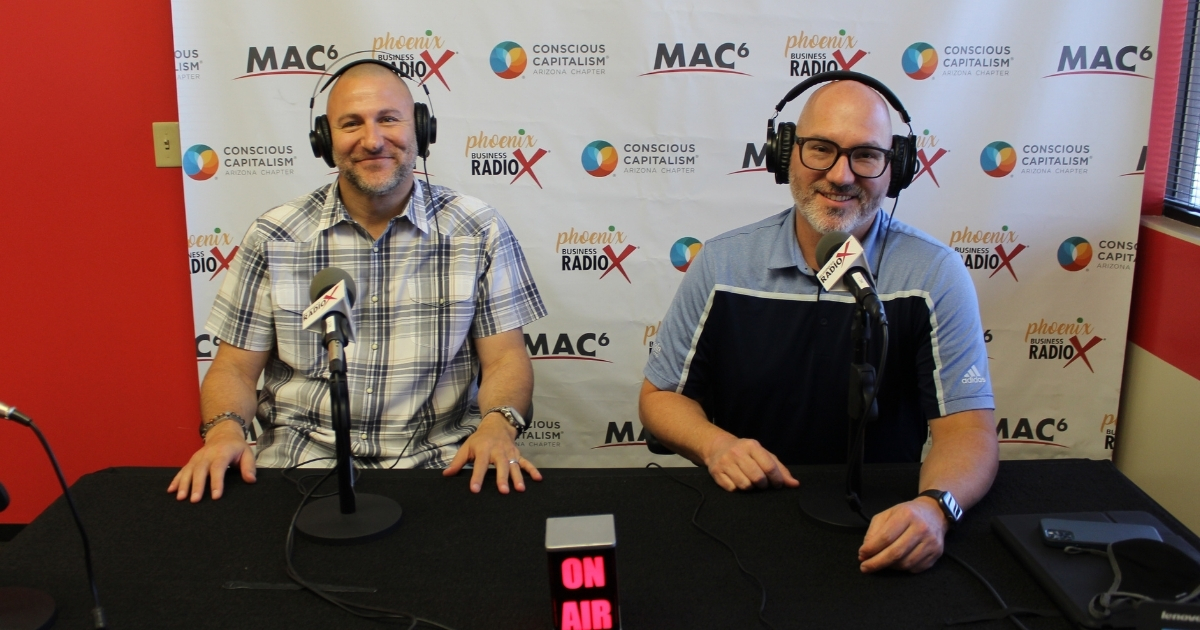
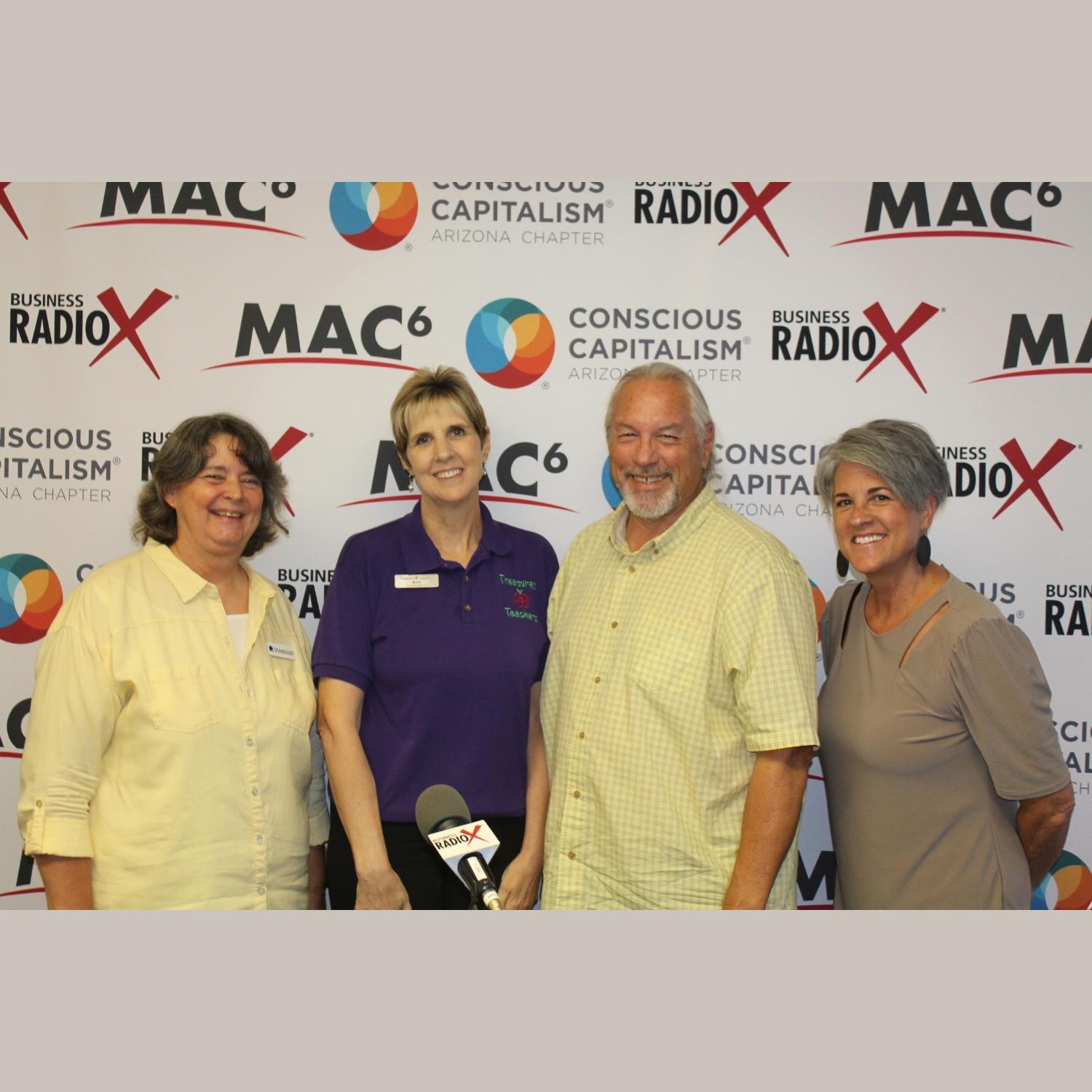
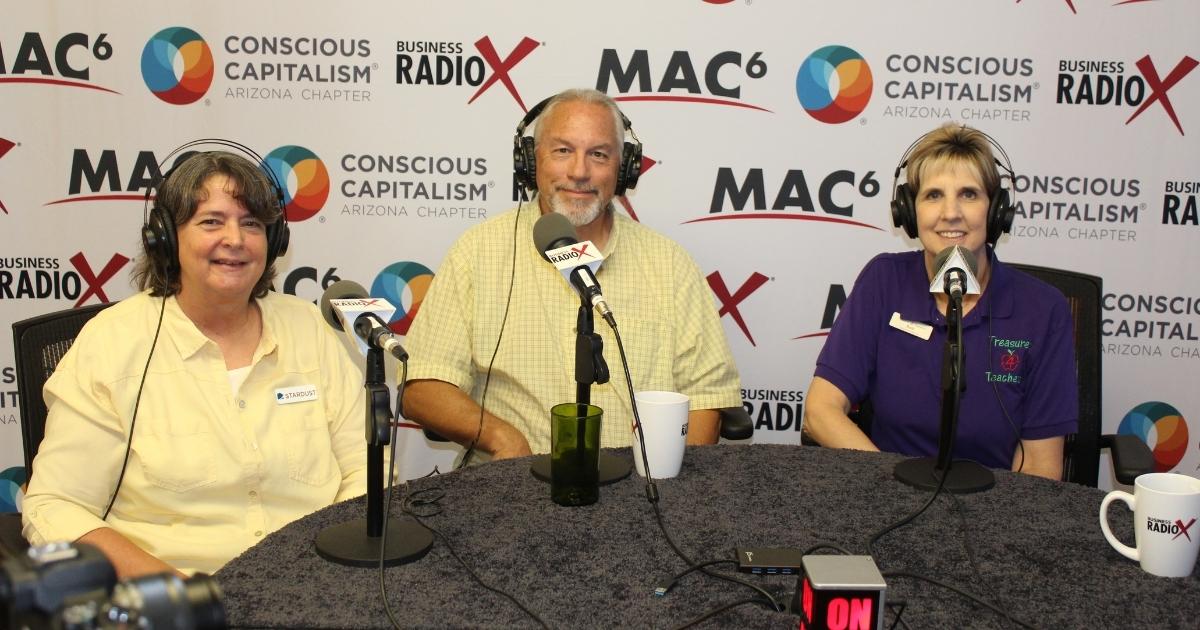
Karen Jayne with Stardust Barbara Blalock with Treasures 4 Teachers and Tom Mehlert with AZ StRUT

August 1, 2022 by Karen

Karen-Jayne-with-Stardust-Barbara-Blalock-with-Treasures-4-Teachers-and-Tom-Mehlert-with-AZ-StRUT-feature
Phoenix Business Radio
Karen Jayne with Stardust Barbara Blalock with Treasures 4 Teachers and Tom Mehlert with AZ StRUT
Loading
00:00 /
RSS Feed
Share
Link
Embed

Download file

Karen-Jayne-with-Stardust-Barbara-Blalock-with-Treasures-4-Teachers-and-Tom-Mehlert-with-AZ-StRUT

Karen Jayne with Stardust Barbara Blalock with Treasures 4 Teachers and Tom Mehlert with AZ StRUT

Stardust-logo

Stardust Non-Profit Building Supplies provides quality reclaimed materials for reuse. Founded in 1997, Stardust was created when a local philanthropist and founding Board member was about to undertake a complete home remodeling project. As with any major remodeling project, the first step is to remove everything from the home, essentially gutting the structure in preparation for rebuilding.

On the weekend before the demolition was to begin, the Founder told several friends to take whatever they wanted out of the house. When the Founder and his wife returned to inspect the property prior to demolition they were surprised to discover every usable material had been removed from the house including cabinets, plumbing fixtures, lighting and electrical supplies and flooring. The Founder’s friends used the materials to remodel their own homes, sold items to those who could not afford the prices of large retail stores or donated items to others in need. It is from this humble beginning that Stardust was born.

Over the past 25 years, Stardust has increased its focus on diverting usable building materials from local landfills while providing a resource for low income homeowners who are interested in remodeling their homes. Stardust operates retail warehouse stores selling building supplies donated by manufacturers, distributors, contractors and individuals. This process diverts over 5.0 million tons of reusable building materials from local landfills every year making new and nearly-new materials available to our community at 50-80% off retail prices.

Proceeds generated by Stardust Reuse Centers are used to support Deconstruction and Gifts In Kind programs. Stardust Deconstruction services offer removal and pick-up of materials to further encourage recycling and environmental stewardship. Stardust Deconstruction crews remove useable building materials from homes and businesses in return for donation of the items removed. Gifts In Kind, operated in partnership with Valley of the Sun United Way, annually distributes over $22 million in usable materials donated by local retailers such as Wal-Mart and Home Depot to nonprofit organizations for use by their clients or to support their operations.

Stardust’s Gifts In Kind program supports over 400 non-profit agencies in Maricopa County and touches the lives of over 200,000 individuals and their families every year. It is through these community service programs and partnerships that Stardust is able to serve a wide range of individuals from young to elderly, all living at or below the poverty level.
Karen-Jayne-Phoenix-Business-RadioChief Executive Officer, Karen Jayne has over 30 years of experience in non-profit and for-profit leadership, management, program design, and fund development.

In 2011, Jayne was appointed to CEO of Stardust and in her tenure she has increased diversion rates of usable building materials and launched the Gifts In Kind program which has distributed more than $75 million worth of reusable household items to fellow nonprofit organizations.

She holds a Master’s degree in Business Administration from Regis University in Denver, Colorado. She has served in leadership capacities on the board of the Organization of Nonprofit Executives as well as the national Building Materials Reuse Association and Social Enterprise Alliance Arizona Chapter.

Currently she serves as a board member for the Arizona Recycling Coalition and a member of USGBC AZ Market Leadership Advisory Board and the Alliance of Arizona Nonprofits Policy Council.

Follow Stardust Nonprofit Building Supplies on LinkedIn, Facebook, Twitter and Instagram.

Treasures-4-Teachers-logo

With an average of more than $700 annually coming from their own pockets, educators are struggling to get their students the essential supplies they need to be successful learners.

Treasures 4 Teachers (T4T) has found a way to support educators with those needs by collaborating with community businesses, other non-profit agencies, and individual donors to collect new and re-usable resources and make them available for low or no cost to educators in our community.
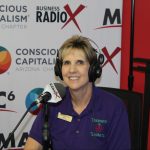
Barbara-Blalock-Phoenix-Business-RadioBarbara Blalock is the Founder and Executive Director or Treasures 4 Teachers.

She has been in education and nonprofit roles throughout her career which led her to start Treasures 4 Teachers.

Barbara has been recognized in the community for awards and grants to support her mission of providing free and low cost supplies to teachers across Arizona.

Connect with Barbara on LinkedIn and follow Treasures 4 Teachers on Facebook, Twitter and Instagram.

AZ StRUT is a 501c3 nonprofit that supports Arizona’s technical education and a community effort towards a more sustainable future.
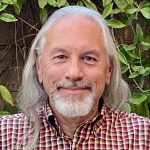
Tom-Mehlert-Exploring-Sustainability-Initiatives-E8Tom Mehlert has over thirty five years in technology and education.

He’s still excited to be with AZ StRUT, an organization that combines computer electronic reuse with technical education.

Follow AZ StRUT on LinkedIn and Facebook.

 

Tagged With: building supplies, deconstruction, Nonprofit, recycle, remodel, Reuse, school supplies, students, teachers

Pallavi Ghanta, Help2Breathe

July 14, 2022 by John Ray

Help2Breathe
North Fulton Studio
Pallavi Ghanta, Help2Breathe
Loading
00:00 /
RSS Feed
Share
Link
Embed

Download file

Help2Breathe

Pallavi Ghanta, Help2Breathe (Episode 77, To Your Health with Dr. Jim Morrow)

On this edition of To Your Health, Dr, Morrow welcomes Pallavi Ghanta, a high school senior at Denmark High School, who founded Help2Breathe. As a nonprofit, Help2Breathe repurposes durable medical equipment and provides it to needy and homeless patients who otherwise might not have access to this needed care. They discussed the shortage of CPAP machines, her blog, how people can support Help2Breathe, and much more.

To Your Health is brought to you by Village Medical (formerly Morrow Family Medicine), which brings the care back to healthcare.

Help2Breathe

Help2Breathe (Help2Breathe.com) is a 501(c)(3) charity with the mission of collecting donations of used and unused medical equipment and with the help of medical volunteers providing them to needy and homeless patients.

The charity was started by Pallavi Ghanta, a rising senior at Denmark High School, Forsyth County. Pallavi, while volunteering at nursing homes noticed that medical equipment belonging to recently deceased residents was often disposed of.

Given her volunteer work at the Good Samaritan Health Center, a free clinic in Atlanta, she was well aware of the severe need for such equipment among the poor and homeless served at the clinic. Connecting the dots, she worked to salvage and ensure such equipment got a second life.

Company website | Instagram

Pallavi Ghanta, Founder, Help2Breathe

Pallavi Ghanta, Founder, Help2Breathe

Pallavi is a rising senior at Denmark High School. She has volunteered at several nursing homes, Northside Hospital Forsyth Case Management, and Good Samaritan. She has founded a 501(c)(3) charity Help2Breathe, which collects used and unused medical equipment and donates them to free clinics. She started a blog called Health Care Anxiety, where she interviews seniors who are still working to afford health care.

She is involved in several clubs at school (Debate, Environmental, Finance, Tedtalk). She has earned a Congressional Service Silver Award.

About Village Medical (formerly Morrow Family Medicine)

Village Medical, formerly Morrow Family Medicine, is an award-winning, state-of-the-art family practice with offices in Cumming and Milton, Georgia. The practice combines healthcare information technology with old-fashioned care to provide the type of care that many are in search of today. Two physicians, three physician assistants and two nurse practitioners are supported by a knowledgeable and friendly staff to make your visit to Village Medical one that will remind you of the way healthcare should be.  At Village Medical, we like to say we are “bringing the care back to healthcare!”  The practice has been named the “Best of Forsyth” in Family Medicine in all five years of the award, is a three-time consecutive winner of the “Best of North Atlanta” by readers of Appen Media, and the 2019 winner of “Best of Life” in North Fulton County.

Village Medical offers a comprehensive suite of primary care services including preventative care, treatment for illness and injury, and management of chronic conditions such as diabetes, congestive heart failure, chronic obstructive pulmonary disease (COPD) and kidney disease. Atlanta-area patients can learn more about the practice here.

Dr. Jim Morrow, Village Medical, and Host of To Your Health with Dr. Jim Morrow

Covid-19 misconceptionsDr. Jim Morrow is the founder of Morrow Family Medicine. He has been a trailblazer and evangelist in healthcare information technology, was named Physician IT Leader of the Year by HIMSS, a HIMSS Davies Award Winner, the Cumming-Forsyth Chamber of Commerce Steve Bloom Award Winner as Entrepreneur of the Year and he received a Phoenix Award as Community Leader of the Year from the Metro Atlanta Chamber of Commerce.  He is married to Peggie Morrow and together they founded the Forsyth BYOT Benefit, a charity in Forsyth County to support students in need of technology and devices. They have two Goldendoodles, a gaggle of grandchildren and enjoy life on and around Lake Lanier.

Facebook | LinkedIn | Twitter

The complete show archive of To Your Health with Dr. Jim Morrow addresses a wide range of health and wellness topics.

Tagged With: Dr. Jim Morrow, Help2Breathe, medical equipment, Nonprofit, Pallavi Ghanta, To Your Health With Dr. Jim Morrow, Village Medical

NextGen Connects 2022 Chairs, Rachel Newcomer and Tukker Penrod

June 2, 2022 by John Ray

Summit Counseling Center
North Fulton Studio
NextGen Connects 2022 Chairs, Rachel Newcomer and Tukker Penrod
Loading
00:00 /
RSS Feed
Share
Link
Embed

Download file

Summit Counseling Center

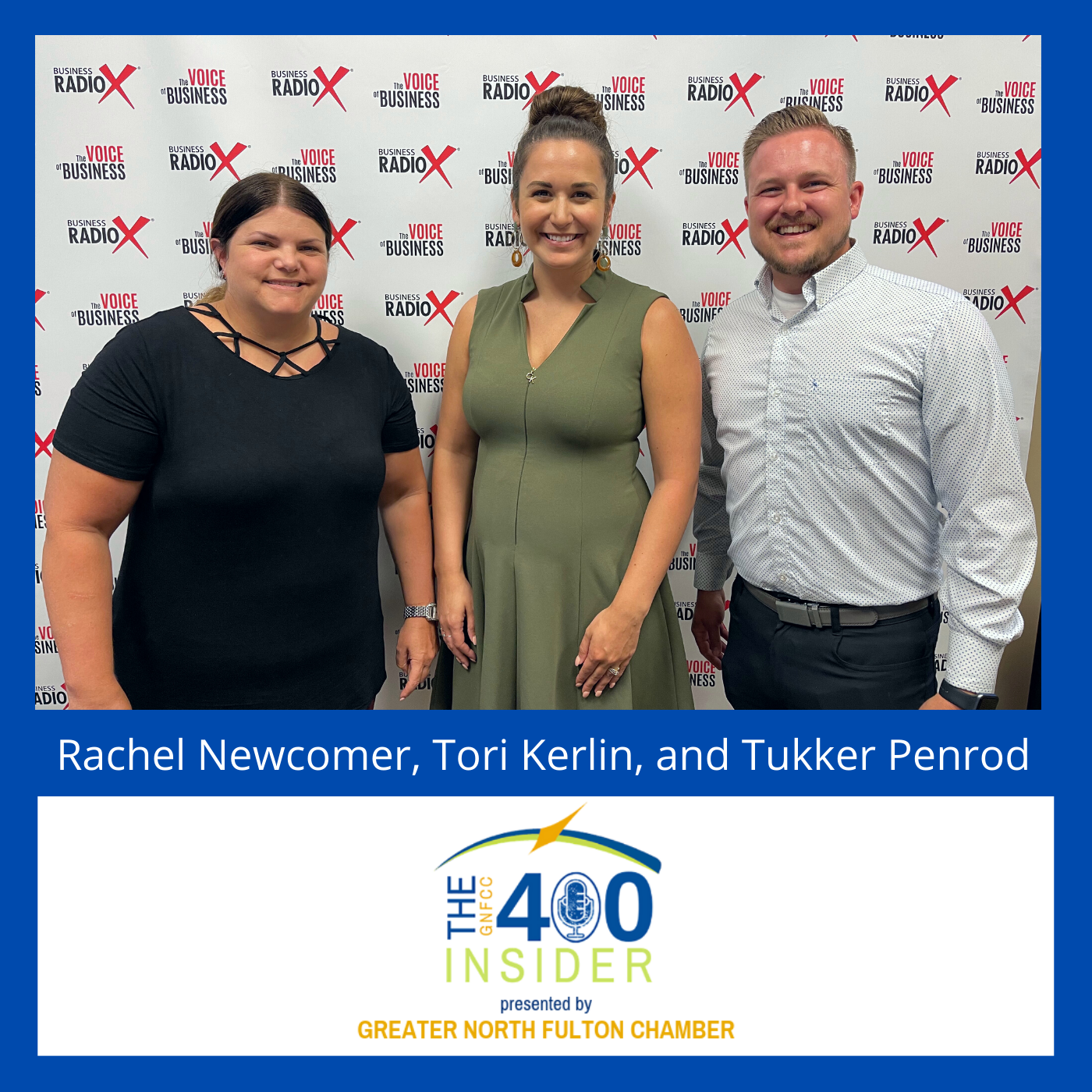
NextGen Connects 2022 Chairs, Rachel Newcomer and Tukker Penrod (GNFCC 400 Insider, Episode 75)

Rachel Newcomer, Director of Development at Summit Counseling Center, and Tukker Penrod, Outreach Coordinator at Saprea, are the 2022 NextGen Connects Chairs. Rachel and Tukker joined host Tori Kerlin to discuss the work of NextGen Connects, why chamber leadership and involvement in the community offers both professional and personal benefits, the desire of young professionals for a better work-life balance, and much more.

The GNFCC 400 Insider is presented by the Greater North Fulton Chamber of Commerce and produced by the North Fulton studio of Business RadioX®.

Rachel Newcomer, Director of Development, Summit Counseling Center

Rachel Newcomer, Director of Development, Summit Counseling Center

Rachel Newcomer is Director of Development for Summit Counseling Center. Rachel is a native Atlantan and recently moved to Alpharetta from Buckhead. She previously spent ten years in community development for cancer organizations.

The Summit Counseling Center provides professional counseling, consultation and education services utilizing an integrated approach to care for the whole person – Body, Mind, Spirit, and Relationships.

Since 1990, Summit Counseling has been a trusted community partner; bringing hope, healing and restoration to children, teens, adults, couples and families.

Company website | Summit LinkedIn | Rachel Newcomer LinkedIn

Tukker Penrod, Outreach Director, Saprea

Tukker Penrod, Outreach Director, Saprea

Tukker Penrod is Outreach Director at Saprea. A longtime friend of and advocate for Saprea, Tukker Penrod joined the staff when Saprea expanded to Georgia for its East Coast presence.

Tukker began his career in construction project management. When he began looking for a place to serve, he connected with Saprea just after the organization was founded.

At Saprea, they aspire for a world that is free of child sexual abuse. In this pursuit, they apply clinically proven, research-based best practices in providing healing and prevention resources.

One in five children in the United States is sexually abused before the age of 18. The impacts of this trauma last long after the abuse has stopped. Saprea is leading the charge against child sexual abuse using proven, practical methods for confronting and overcoming child sexual abuse. All of their services and resources are free thanks to the generosity of their donors.

Company website | Facebook| Tukker Penrod LinkedIn


About GNFCC and The GNFCC 400 Insider

Kali Boatright, President and CEO of GNFCC

The GNFCC 400 Insider is presented by the Greater North Fulton Chamber of Commerce (GNFCC) and is hosted by Kali Boatright, President and CEO of GNFCC. The Greater North Fulton Chamber of Commerce is a private, non-profit, member-driven organization comprised of over 1400 business enterprises, civic organizations, educational institutions, and individuals.  Their service area includes Alpharetta, Johns Creek, Milton, Mountain Park, Roswell and Sandy Springs. GNFCC is the leading voice on economic development, business growth and quality of life issues in North Fulton County.

The GNFCC promotes the interests of our members by assuming a leadership role in making North Fulton an excellent place to work, live, play and stay. They provide one voice for all local businesses to influence decision-makers, recommend legislation, and protect the valuable resources that make North Fulton a popular place to live.

For more information on GNFCC and its North Fulton County service area, follow this link or call (770) 993-8806. For more information on other GNFCC events such as this North Fulton Mayors Appreciation Lunch, follow this link.

For the complete show archive of GNFCC 400 Insider, go to GNFCC400Insider.com. The GNFCC 400 Insider is produced by John Ray and the North Fulton studio of Business RadioX®.

Tagged With: Cancer, GNFCC, GNFCC 400 Insider, NextGen Connects, Nextgen Connects Mentor Match Program, Nonprofit, Rachel Newcomer, Saprea, Summit Counseling Center, Tori Kerlin, Tukker Penrod, young professionals

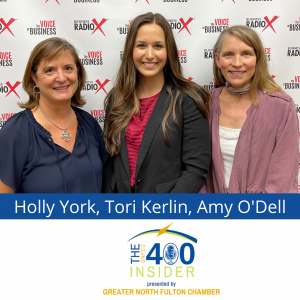
2021 GNFCC Nonprofit Award Winners: Holly York, North Fulton Community Charities and Amy O’Dell, Jacob’s Ladder

August 9, 2021 by John Ray

Jacob's Ladder
North Fulton Studio
2021 GNFCC Nonprofit Award Winners: Holly York, North Fulton Community Charities and Amy O’Dell, Jacob's Ladder
Loading
00:00 /
RSS Feed
Share
Link
Embed

Download file

Jacob's Ladder

2021 GNFCC Nonprofit Award Winners: Holly York, North Fulton Community Charities and Amy O’Dell, Jacob’s Ladder (GNFCC 400 Insider, Episode 65)

The two winners of the 2021 GNFCC Nonprofit of the Year were welcomed to this edition of the GNFCC 400 Insider. Holly York, Executive Director with North Fulton Community Charities, and Amy O’Dell, Founder of Jacob’s Ladder Neurodevelopment School and Therapy Center, joined host Tori Kerlin, Communications Coordinator at GNFCC, to discuss the tremendous work their respective organizations do. The GNFCC 400 Insider is presented by the Greater North Fulton Chamber of Commerce and produced by the North Fulton studio of Business RadioX®.

North Fulton Community Charities, Holly York, Executive Director

Holly York, Executive Director, North Fulton Community Charities

North Fulton Community Charities assists residents living in North Fulton serving the cities of Alpharetta, Johns Creek, Milton, Mountain Park and Roswell with short-term emergency needs. NFCC collaborates with many local providers to provide the resources necessary to help individuals and families remain stable in our community. NFCC provides services in English and Spanish.

Since 1983, North Fulton Community Charities (NFCC) has addressed homelessness and hunger in North Fulton. Each year the agency serves close to 10,000 individuals with emergency need in the cities of Alpharetta, Johns Creek, Milton, Mountain Park and Roswell.

Qualified residents can receive:

  1. Emergency financial assistance for housing, utilities, medical care, transportation and other necessities.
  2. Food and staples
  3. Clothing using vouchers to purchase clothing from the NFCC Thrift Shop.
  4. Education for workforce development and life skills workshops to help move toward financial stability and self-sufficiency.

Website | Holly York Linkedin

Jacob’s Ladder Center, Amy O’Dell, Founder and Executive Director

Jacob's Ladder
Amy O’Dell, Founder and Executive Director, Jacob’s Ladder Center

Jacob’s Ladder is a non-profit SAIS-SACS accredited private school serving pre-k through 12th-grade students, as well as a therapy center serving infant through young adult students.

Our campuses throughout Metro Atlanta offer full-time and part-time enrollment options in a variety of learning environments, with levels of support ranging from a 1:1 to a 6:1 student-teacher ratio.

We also offer various full-time and part-time remote enrollment options, facilitated either in-home or virtually, serving students and their families locally, nationally, and internationally.

In addition to serving students and their families directly, Jacob’s Ladder is committed to encouraging and empowering the global special needs community through research, training, certification, and licensure.

Every day, our students overcome challenges and reach goals once thought impossible:
  • those who have struggled with social cues begin establishing eye contact and engaging with the world around them in a meaningful way,

  • those who have struggled to grasp language begin communicating not only their wants and needs but also their original thoughts and feelings in ways that ensure that they know they are heard and understood by those around them,

  • those who have struggled relationally due to anxiety or frustration begin managing their emotions and thriving in a group setting, 

  • those who have struggled with intrinsic motivation begin to discern their unique passion and purpose, and to embrace that each day is a beautiful opportunity to work towards that which they personally care about, and

  • those who have struggled to learn in previous educational settings take steps towards unprecedented academic achievement.

Our Interpersonal Whole-Brain Model of Care has transformed the lives of thousands of families and counting because it is grounded in science and guided by love.

Ms. Amy O’Dell is the founder of Jacob’s Ladder, designated as a 501(3) in 1999. The model, now trademarked and recognized nationally and internationally, was developed in response to critical developmental challenges faced by her own son, Jacob.

Ms. O’Dell holds a degree in Activity Therapy and a Master’s Degree in Counseling from Clemson University. She is a licensed Professional Counselor with extensive training on the Neurodevelopmental process and is certified as a Neurodevelopmental consultant. She has worked in a wide variety of clinical settings, including Shepherd Spinal Center in Atlanta, and later at Woodridge Psychiatric Hospital in Clayton, Georgia, where she held the positions of Director of Activity Therapy and the Director of Adolescent Psychiatric Services. She is a recognized national leader in the field of autism and neurodevelopmental disorders, and a sought-after speaker at national and international forums.

Governor Nathan Deal appointed Ms. O’Dell to serve on the Board of Directors of Georgia Vocational Rehabilitation Agency as the expert in the field of Autism where she served a 3-year term. Ms. O’Dell currently serves on the Zac Brown Camp Southern Ground Board of Advisors for the Autism focus and the Board of Directors for HINRI.

Website  | Amy O’Dell LinkedIn​

About GNFCC and “The GNFCC 400 Insider”

Kali Boatright
Kali Boatright, President and CEO of GNFCC

“The GNFCC 400 Insider” is presented by the Greater North Fulton Chamber of Commerce (GNFCC) and is hosted by Kali Boatright, President and CEO of GNFCC. The Greater North Fulton Chamber of Commerce is a private, non-profit, member-driven organization comprised of over 1400 business enterprises, civic organizations, educational institutions and individuals.  Their service area includes Alpharetta, Johns Creek, Milton, Mountain Park, Roswell and Sandy Springs. GNFCC is the leading voice on economic development, business growth and quality of life issues in North Fulton County.

The GNFCC promotes the interests of our members by assuming a leadership role in making North Fulton an excellent place to work, live, play and stay. They provide one voice for all local businesses to influence decision makers, recommend legislation, and protect the valuable resources that make North Fulton a popular place to live.

For more information on GNFCC and its North Fulton County service area, follow this link or call (770) 993-8806. For more information on other GNFCC events such as this North Fulton Mayors Appreciation Lunch, follow this link.

For the complete show archive of “The GNFCC 400 Insider,” go to GNFCC400Insider.com. “The GNFCC 400 Insider” is produced by John Ray and the North Fulton studio of Business RadioX®.

Tagged With: Amy O'Dell, GFNCC 2021 Nonprofit Awards, GNFCC, GNFCC 400 Insider, Greater North Fulton Chamber of Commerce, Holly York, Jacob's Ladder, Jacob's Ladder Center, Nonprofit, North Fulton Community Charities

Triumph Over Trauma E53

May 20, 2021 by Karen

Triumph-Over-Trauma-Feature
Phoenix Business Radio
Triumph Over Trauma E53
Loading
00:00 /
RSS Feed
Share
Link
Embed

Download file

Triumph-Over-Trauma-E52

Triumph Over Trauma E53

Anthony “Doc” Ameen shares his powerful story not knowing what path he intended to take as a young man to join the military and being influenced by the tragedies he survived. He now dedicates his time to assisting military members, first responders and their families, fighting for them as they have fought for us. Wings for Warriors non-profit has helped over 5,000 veterans with securing benefits, benefits counseling and travel assistance among other holistic needs.

If you or someone you know is a veteran or a first responder, Wings For Warriors Foundation can support you with a wide array of services and programs with the help of their 4 beneficiaries.

WFWF-10Yea-rLogo-FINAL

Wings For Warriors Foundation is a nationally recognized, 501(c)(3) non-profit organization in support of veterans, first responders, and their families.

Wings For Warriors Foundation supports the holistic needs of veterans, first responders, and their families with transformational growth, well-being, and spiritual fitness.

Taylor & Lawrence is a boutique consulting firm helping healthcare organizations of all sizes achieve their desired goals by building cooperative alliances and strategic partnerships.

Taylor & Lawrence’s mission is to provide loyal and mutually beneficial partnerships for healthcare organizations to thrive together, ensuring sustainability, growth, and increased quality.

Anthony-Doc-Ammen-Tycoons-of-Small-Biz

Anthony Ameen’s life changed in an instant in 2008. And it’s been evolving ever since…

As a Hospital Corpsman, Ameen earned the nickname “Doc” as he embraced a culture of order and duty. His catastrophic battlefield injury changed the course of the life he envisioned, but Anthony eventually chose to view his new path as one that would be watered by the nurtured outflow of the adversity he had faced. His experiences, though challenging at times, allowed him to see potential for change and fueled an entrepreneurial spirit within him, which led to his creation of the non-profit Wings For Warriors.

Under Ameen’s leadership, the non-profit organization matured from an idea to a nationally-recognized foundation that aims to advocate for the holistic and spiritual needs of veterans, first responders, and their families. As Founder & CEO, Anthony personally counseled more than 5,000 veterans and helped launch Wings for Warriors outlets in 30 different cities across the country.

It quickly became clear that the grit, determination, perseverance and leadership capabilities “Doc” channeled in the military served him well in civilian life as an entrepreneur, an advocate, and a nationally-recognized public figure. He is the face and the lifeblood of Wings For Warriors, and with that brings invites from national media outlets, speaking engagements at large-scale events and sponsorships earned from Fortune 500 companies.

Along the way, Doc turned his focus into co-founding and building Taylor & Lawrence, a boutique consulting firm that specializes in serving the Department of Defense (DoD), and Healthcare industries by unearthing strategic business partnerships for increased performance and quality patient care.

Ameen’s past continues to fuel his future. And, his story provokes anyone listening to realize they have not fully tapped every ounce of their potential. Anthony addresses his successes and pitfalls through his emotional and physical recovery in an uncommonly honest way, all while holding his listeners internally responsible for the changes they need to make in order to grow. Ameen’s story incites change, triggers action and spurs productivity. And, perhaps most importantly, it plants a seed of accountability.

When he isn’t traveling for speaking engagements, Anthony spends time with his wife, and their four children, at their home in Phoenix, Arizona.

Connect with Anthony on LinkedIn, Facebook and Twitter.

About the Show

Tycoons of Small Biz spotlights the true backbone of the American economy, the true tycoons of business in America… the owners, founders and CEO’s of small businesses. Join hosts,  Austin L Peterson, Landon Mance and the featured tycoons LIVE every Tuesday at 1 pm, right here on Business RadioX and your favorite podcast platform.

About Your Hosts

Autsin-Peterson-on-Phoenix-Business-RadioX

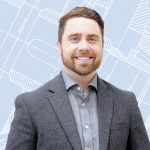
Austin Peterson is a Comprehensive Financial Planner and co-founder of Backbone Planning Partners in Scottsdale, AZ. Austin is a registered rep and investment advisor representative with Lincoln Financial Advisors. Prior to joining Lincoln Financial Advisors, Austin worked in a variety of roles in the financial services industry.

He began his career in financial services in the year 2000 as a personal financial advisor with Independent Capital Management in Santa Ana, CA. Austin then joined Pacific Life Insurance Company as an internal wholesaler for their variable annuity and mutual fund products. After Pacific Life, Austin formed his own financial planning company in Southern California that he built and ran for 6 years and eventually sold when he moved his family to Salt Lake City to pursue his MBA.

After he completed his MBA, Austin joined Crump Life Insurance where he filled a couple of different sales roles and eventually a management role throughout the five years he was with Crump. Most recently before joining Lincoln Financial Advisors in February 2015, Austin spent 2 years as a life insurance field wholesaler with Symetra Life Insurance Company. Austin is a Certified Financial Planner Professional and Chartered Life Underwriter. In 2021, Austin became a Certified Business Exit Consultant® (CBEC®) to help entrepreneurs plan to exit their businesses.

Austin and his wife of 23 years, Robin, have two children, AJ (21) and Ella (18) and they reside in Gilbert, Arizona. He is a graduate of California State University, Fullerton with a Bachelor of Arts in French and of Brigham Young University’s Marriott School of Management with a Master of Business Administration with an emphasis in sales and entrepreneurship.backbone-New-Logo

Connect with Austin on LinkedIn, Facebook, Twitter, and Instagram.

LandonHeadshot01

Landon Mance is a Financial Planner and co-founder of Backbone Planning Partners out of Las Vegas, Nevada. He rebranded his practice in 2020 to focus on serving small business owners after operating as Mance Wealth Management since 2015 when Landon broke off from a major bank and started his own “shop.”

Landon comes from a family of successful entrepreneurs and has a passion and excitement for serving the business community. This passion is what brought about the growth of Backbone Planning Partners to help business owners and their families. At Backbone Planning, we believe small business owners’ personal and business goals are intertwined, so we work with our clients to design a financial plan to support all aspects of their lives.

In 2019, Landon obtained the Certified Exit Planning Advisor (CEPA) designation through the Exit Planning Institute. With this certification, Backbone Planning Partners assists business owners through an ownership transition while focusing on a positive outcome for their employees and meeting the business owner’s goals. Landon is also a member of the Business Intelligence Institute (BII) which is a collaborative group that shares tools, resources and personnel, and offers advanced level training and technical support to specifically serve business owners. In 2021, Landon became a Certified Business Exit Consultant® (CBEC®) to help entrepreneurs plan to exit their businesses by counseling owners about exit options, estimating the value of the business, preparing the business for exit and tax considerations.

Landon enjoys spending time with his beautiful wife, stepson, and new baby twins. He grew up in sunny San Diego and loves visiting his family, playing a round of golf with friends, and many other outdoor activities. Landon tries to make a difference in the lives of children in Las Vegas as a part of the leadership team for a local non-profit. He regularly visits the children that we work with to remind himself of why it’s so important to, “be the change that you wish to see in the world.”

Landon received his B.S. from California State University Long Beach in business marketing and gets the rest of his education through the school of hard knocks via his business owner clients.

Connect with Landon on LinkedIn.

Austin Peterson and Landon Mance are registered representatives of Lincoln Financial Advisors Corp. Securities and investment advisory services offered through Lincoln Financial Advisors Corp., a broker/dealer (member SIPC) and registered investment advisor. Insurance offered through Lincoln affiliates and other fine companies. Backbone Planning Partners is a marketing name for registered representatives of Lincoln Financial Advisors

CRN-3566695-042721

Lincoln Financial Advisors Corp. and its representatives do not provide legal or tax advice. You may want to consult a legal or tax advisor regarding any legal or tax information as it relates to your personal circumstances.

The content presented is for informational and educational purposes. The information covered and posted are views and opinions of the guests and not necessarily those of Lincoln Financial Advisors Corp.

Business RadioX® is a separate entity not affiliated with Lincoln Financial Advisors Corp.

Tagged With: Business Management, Charity, Christianity, consulting, first responders, giving back, Health, Healthcare, inspiration, Leadership, medical equipment, medical supplies, motiviation, Nonprofit, post traumatic growth, PPE, public speaking, spiritual fitness, spirituality, strategic sourcing, Supply Chain, Veterans, wellbeing

Decision Vision Episode 117: Should I Work for a Non-Profit? – An Interview with Elisa Goodwin, Mission: Hope, and Stan Dawson, Retired from Crossroads Community Ministries

May 20, 2021 by John Ray

Crossroads Community Ministries
Decision Vision
Decision Vision Episode 117: Should I Work for a Non-Profit? - An Interview with Elisa Goodwin, Mission: Hope, and Stan Dawson, Retired from Crossroads Community Ministries
Loading
00:00 /
RSS Feed
Share
Link
Embed

Download file

Elisa Goodwin

Decision Vision Episode 117:  Should I Work for a Non-Profit? – An Interview with Elisa Goodwin, Mission: Hope, and Stan Dawson, Retired from Crossroads Community Ministries

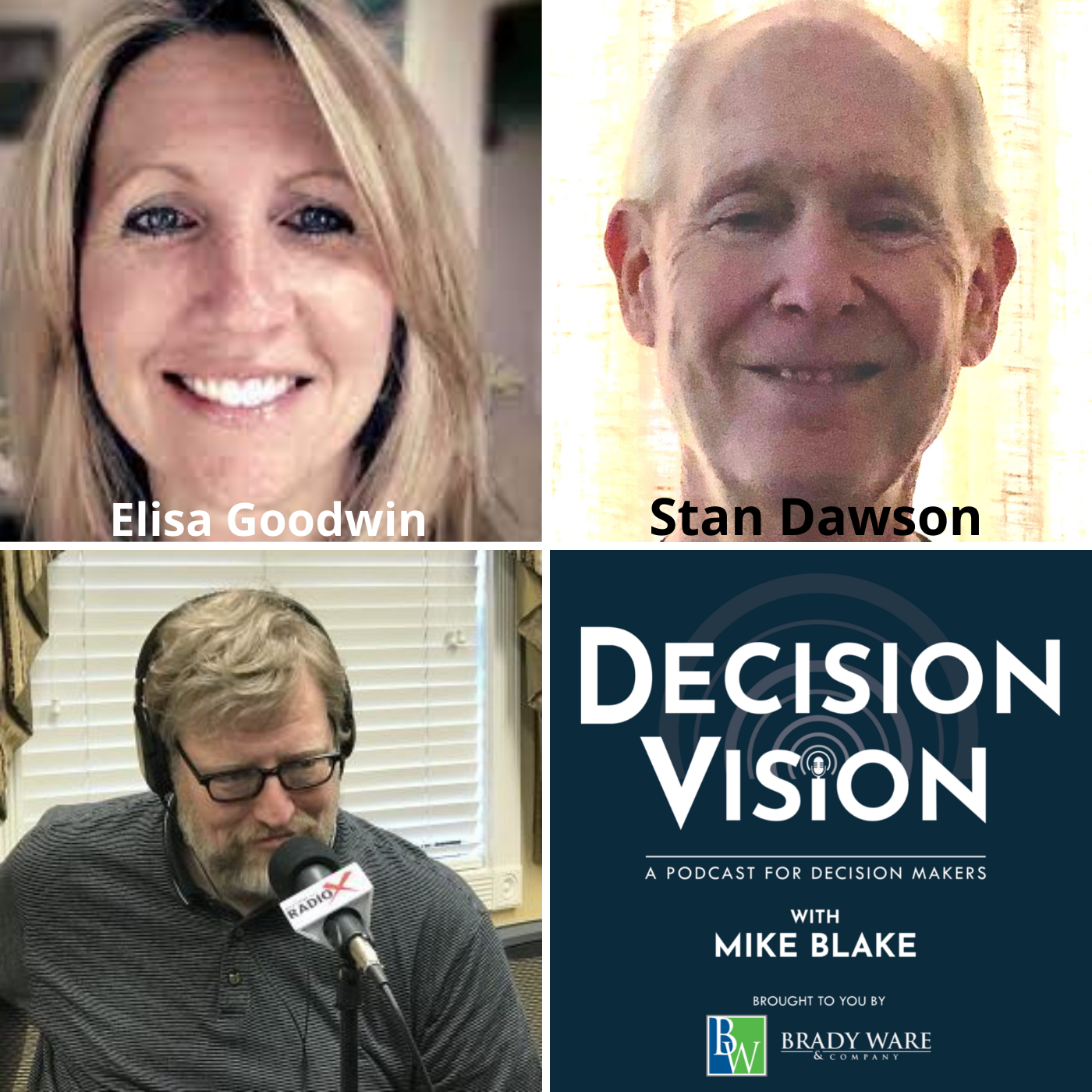
If you’re a corporate executive or business owner thinking about a second stage in your career working at a non-profit, this episode is for you. Elisa Goodwin, current CEO of Mission: Hope, and Stan Dawson, retired Executive Director of Crossroads Community Ministries, discuss their experiences with host Mike Blake, the myths of working for a non-profit, and much more. Decision Vision is presented by Brady Ware & Company.

Elisa Goodwin, President/CEO, Mission: Hope

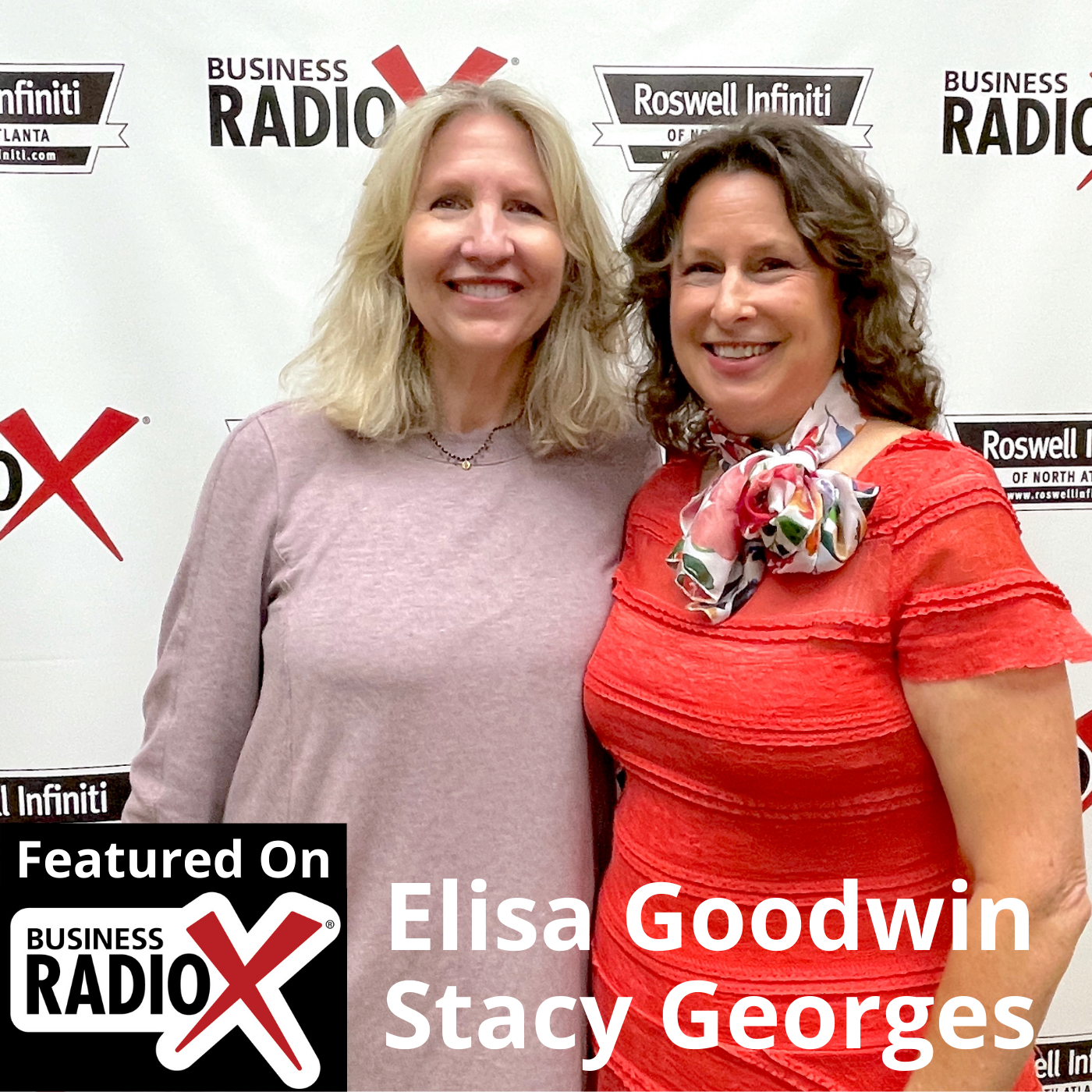
Elisa Goodwin, President & CEO, Mission: Hope

Elisa Goodwin is currently President/CEO of Mission: Hope, an Atlanta-based, international non-profit serving through local leaders in the world’s most remote villages to build sustainable solutions to their most urgent issues. She has spent the last 15 years in nonprofit service. Prior to that, she was a bank executive in small business banking and retail for more than two decades. For those considering for-profit vs. non-profit careers, she can definitely provide perspective. Elisa attended Towson State University and received a B.S. in Mass Communications. She also received an MBA from Clark University. Her office is in Alpharetta, Georgia on the Jackson Healthcare campus

LinkedIn

Mission: Hope

Mission: Hope is a Christ-centered organization committed to equipping churches and leaders to bring about sustainable transformation in isolated villages.

For over 20 years, they have tackled critical needs in some of the most remote areas on the planet. Led by the vision and adventurous spirit of Dr. Ben Mathes, their organization has provided medical care for millions and led thousands of people to experience new life in Jesus.

In 2017, Rivers of the World changed its name to Mission: Hope to reflect its broader reach beyond the river.

Their goal today is to continue building upon our rich history. While their work has expanded beyond the river, our heart and vision remain the same: doing whatever it takes to bring hope to the hopeless.

Their model looks at a village as a whole, working with the local leaders and churches to distinguish their assets as well as their greatest challenges. Their process heavily involves indigenous leadership for assessing the village and providing solutions to needs. Together they transform impoverished villages into sustainable ones.

Company website | Facebook | Instagram

Stan Dawson, Former Executive Director, Crossroads Community Ministries

Stan was the ED of Crossroads Community Ministries, Inc. from 1999 until 2016.

Prior to that, he was partner/co-owner of Northside Material Brokers, Inc. Prior to that he was Executive Director of Creative Interchange, Inc., (a division of FCS Urban Ministries) which focused on job development and business creation for those living in low-income communities. He also served as national Community Services Director for Prison Fellowship, Inc., Washington, DC. This organization’s mission was to assist federal and state prisoners transition back into mainstream society. He also worked with Boys Clubs of American where he designed the self-help youth employment program. He spent almost three years with Campus Life/Youth for Christ International working with low-income high school students.

After graduating from Georgia State University with a BBA degree, he began his professional career with the First National Bank of Atlanta in their Marketing Department.

Stan is married with two adult children and two grandchildren.

LinkedIn

Crossroads Community Ministries

Crossroads Community Ministries seeks to provide access to resources that empower people experiencing homelessness to progress on the road toward economic and personal stability

For over 20 years, Crossroads Community Ministries has been a leading provider of supportive services for those experiencing homelessness in our community. Last year, the staff and dedicated volunteers served over 4,200 men, women and children, primarily through our Renewal Project which consists of stabilization and job readiness training programs.

Company website | Facebook | Twitter | Instagram

Mike Blake, Brady Ware & Company

Mike Blake, Host of the “Decision Vision” podcast series

Michael Blake is the host of the Decision Vision podcast series and a Director of Brady Ware & Company. Mike specializes in the valuation of intellectual property-driven firms, such as software firms, aerospace firms, and professional services firms, most frequently in the capacity as a transaction advisor, helping clients obtain great outcomes from complex transaction opportunities. He is also a specialist in the appraisal of intellectual properties as stand-alone assets, such as software, trade secrets, and patents.

Mike has been a full-time business appraiser for 13 years with public accounting firms, boutique business appraisal firms, and an owner of his own firm. Prior to that, he spent 8 years in venture capital and investment banking, including transactions in the U.S., Israel, Russia, Ukraine, and Belarus.

Brady Ware & Company

Brady Ware & Company is a regional full-service accounting and advisory firm which helps businesses and entrepreneurs make visions a reality. Brady Ware services clients nationally from its offices in Alpharetta, GA; Columbus and Dayton, OH; and Richmond, IN. The firm is growth-minded, committed to the regions in which they operate, and most importantly, they make significant investments in their people and service offerings to meet the changing financial needs of those they are privileged to serve. The firm is dedicated to providing results that make a difference for its clients.

Decision Vision Podcast Series

Decision Vision is a podcast covering topics and issues facing small business owners and connecting them with solutions from leading experts. This series is presented by Brady Ware & Company. If you are a decision-maker for a small business, we’d love to hear from you. Contact us at decisionvision@bradyware.com and make sure to listen to every Thursday to the Decision Vision podcast.

Past episodes of Decision Vision can be found at decisionvisionpodcast.com. Decision Vision is produced and broadcast by the North Fulton studio of Business RadioX®.

Connect with Brady Ware & Company:

Website | LinkedIn | Facebook | Twitter | Instagram</a

TRANSCRIPT

Intro: [00:00:02] Welcome to Decision Vision, a podcast series focusing on critical business decisions. Brought to you by Brady Ware & Company. Brady Ware is a regional full service accounting and advisory firm that helps businesses and entrepreneurs make visions a reality.

Mike Blake: [00:00:21] Welcome to Decision Vision, a podcast giving you, the listener, clear vision to make great decisions. In each episode, we discuss the process of decision making on a different topic from the business owners’ or executives’ perspective. We aren’t necessarily telling you what to do, but we can put you in a position to make an informed decision on your own and understand when you might need help along the way.

Mike Blake: [00:00:41] My name is Mike Blake, and I’m your host for today’s program. I’m a director at Brady Ware & Company, a full service accounting firm based in Dayton, Ohio, with offices in Dayton; Columbus, Ohio; Richmond, Indiana; and Alpharetta, Georgia. Brady Ware is sponsoring this podcast, which is being recorded in Atlanta per social distancing protocols. If you would like to engage with me on social media with my Chart of the Day and other content, I am on LinkedIn as myself and @unblakeable on Facebook, Twitter, Clubhouse, and Instagram. If you like this podcast, please subscribe on your favorite podcast aggregator, and please consider leaving a review of the podcast as well.

Mike Blake: [00:01:16] So, today’s topic is, Should I get a job with a nonprofit? And according to a 2019 report by the Center for Civil Society Studies at Johns Hopkins University, nonprofits account for roughly one in ten jobs in the United States private workforce, with total employees worked numbering 12.3 people in 2016.

Mike Blake: [00:01:40] And I want to cover this topic because I think it’s timely for a number of reasons. Number one, as we record this on May 13, 2021, we are seeing some unprecedented conditions in the job market. For the first time in my lifetime – and I just passed age 51, so that makes me 1970 vintage – this is the first time I can ever remember people talking about a labor shortage. There have been times it’s been difficult to hire people. Of course, in the 1990’s, we have the dotcom boom and we had a very tight labor market. But there’s never really a thought that we just didn’t have enough people to fill jobs.

Mike Blake: [00:02:26] And the conversation this time, I think, is very different. I think it’s also relevant because, you know, the pandemic and other things that have happened, of course, right along with it, we’ve had massive social upheaval. And many of the effects of those two phenomena have been not great. People have been hurt. They’ve died. They’ve had their lives, their careers, perhaps, inexorably altered. But it’s also led, I think, as any crisis and cataclysm, really, creates is something new that’s going to rise from the ashes.

Mike Blake: [00:03:14] And what I’m observing as I read and as I talk to people, as I listen to other podcasts, TED talks, et cetera, one thing that’s rising from the ashes is, I think, many people are re-examining what they want to do with the rest of their lives. They’re re-examining, “Is what I was doing in 2019, is it really all that and a bag of chips, frankly? And do I kind of want to go back to that in 2021? Even if I get two shots, even if I get ten shots, even if everybody I know and their uncle and aunt get shots, you know, am I all fired up to going back to what I was doing then?”

Mike Blake: [00:03:53] And, now, realizing how life short is – I don’t know what the death toll is in the United States. The official death toll is a-half-a-million. I think it’s likely higher than that from the pandemic. And although it’s been concentrated among the elderly, it certainly has not been limited to that. And so, you know, my Generation X and other subsequent generations have been confronted with mortality in, in your face, widespread way, that, again, I don’t think that I can remember. I think it’s prompting a lot of people to do some soul searching and say, “Am I doing what I really want to be doing?”

Mike Blake: [00:03:53] And that leads into that labor force discussions, partially that we don’t have enough people. On our last conversation we had last week with Jeffrey Korzenik, you know, the decline in labor force in the United States has been occurring since 2010. This phenomenon just simply made it more noticeable. But I think a lot of people are reexamining, not only what are they doing, but why are they doing it? And I think people are starting to place a premium on, “If I’m going to work, then I want it to be more meaningful than a paycheck. Frankly, I want it to be more meaningful than paying off my student loans. If that’s all it is, I’m not sure how I’m interested.”

Mike Blake: [00:05:19] And so, I think for many people the thoughts are turning to a nonprofit. I think by definition, when you work for a nonprofit, you’re committing to work for something that’s a purpose greater than yourself. And our guests will talk to us more about that. But one of the attractions, I think, for working for a nonprofit is – I cannot imagine it’s all about the paycheck. You don’t change your career to the nonprofit world to get rich. You change your career because you want your work life to have a greater impact beyond yourself. And from what I’m seeing and how people are reflecting upon their lives, how their spirituality is evolving in this trans-pandemic environment, I think that it’s a timely topic. And I hope that you, the listeners, think that it’s a timely topic, too.

Mike Blake: [00:06:10] And helping us work through this are two guests, Elisa Goodwin and Stan Dawson. Elisa Goodwin is currently President and CEO of Mission: Hope, an Atlanta based international nonprofit serving through local leaders in the world’s most remote villages to build sustainable solutions to their most urgent issues. Last year, Mission: Hope served 45,000 in remote villages where no one else was helping. She spent the last 15 years in nonprofit service. Prior to that, she was a bank executive in small business banking and retail for more than two decades. For those considering profit versus nonprofit careers, she can definitely provide perspective.

Mike Blake: [00:06:47] Also joining us is Stan Dawson, who is the Executive Director of Crossroads Community Ministries from 1999 to 2016 – at which point, I believe he retired. Prior to that, Stan was a partner and co-owner of Northside Material Brokers Incorporated. And before that, was executive director of Creative Interchange Incorporated, which is a division of FCS Urban Ministries that’s focused on job development and business creation for those living in low income communities. He also served as National Community Services Director for Prison Fellowship Incorporated in Washington, D.C. Another connection, because our last topic was about making the decision to hire people with a criminal record.

Mike Blake: [00:07:24] Stan also worked with Boys Clubs of America, where he designed the Self-help Youth Employment Program. He spent almost three years in the Campus Life Youth for Christ International, working with low income high school students. Stan’s first job out of school was with the First National Bank of Atlanta in their marketing department. Currently, he’s married with two adult children and two grandchildren. Elisa and Stan, welcome to the program.

Elisa Goodwin: [00:07:47] Thank you, Mike.

Stan Dawson: [00:07:47] Thank you. Glad to be with you.

Mike Blake: [00:07:49] So, this may sound like an obvious question, but I think it’s actually quite a new one, so I’m going to ask it anyway because I don’t want to assume. What is a nonprofit exactly?

Elisa Goodwin: [00:08:03] Do you want to go first, Mike? Or me?

Mike Blake: [00:08:08] Elisa, why don’t you take it.

Elisa Goodwin: [00:08:09] Sure. So, it’s an organization that qualifies for tax exempt status from the IRS. And its mission or purpose is to further a social cause and provide public benefit. And if you are qualifying for people to write off their donations, then you’re a 501(c)3. That’s the really simple explanation or definition of it, but that’s pretty much what it is.

Mike Blake: [00:08:43] Okay. So, I like you both to talk about your origin stories. Stan, I’ll ask you to lead off first. You spent a good chunk of your career, and it sounds like from a pretty early age, in the nonprofit sector. How did you get there?

Stan Dawson: [00:08:59] That was not my intent. I grew up right near downtown Atlanta. I got a business degree. And my one goal in life at that point was to make as much money as I could coming out of college with a business degree. I got on at that point, as you had mentioned earlier, with one of the largest banks in Atlanta. Then, it was known as the First National Bank of Atlanta, since morphed many times into Wells Fargo today.

Stan Dawson: [00:09:36] And I was really fortunate through a professor friend, landed in their marketing department. And most people starting out in banking, at least back then, you had to start at ground level. So, I was really fortunate, excited, thrilled that I’d be on the path to establishing a solid financial foundation.

Stan Dawson: [00:10:02] Well, 15 months into it, my heart started pounding away and I realized that for me to have a goal of making as much money as I could wasn’t going to bring me joy in life. It might bring me a happy retirement, but I wanted to enjoy what I was doing while I was doing it. So, I got involved with, as you said, Campus Life Youth Organization. Mainly underprivileged teenagers at that point fell so in love with that.

Stan Dawson: [00:10:37] I morphed into the next phase, which was aligning myself with a brand new organization, since become quite well-known, at least in southeast Atlanta, and that’s Family Consultation Services, which in effect worked with the same population. But parents, children, teens, whomever was in that demographic. I fell in love even deeper with what I was doing that led to involvement at one point with federal prisoners. Chuck Colson, who you may remember is President Richard Nixon’s hatchet man, started this organization. Tremendous job. We were helping federal prisoners. I did that for a few years. Moved back to Atlanta, re-engaged with FCS, ran some businesses for them.

Stan Dawson: [00:11:41] And then, after 20 plus years, I decided maybe it was time to step away, take a break from nonprofit work, and get back to pursuing the goal of chasing money. So, I went into partnership with another individual. I was making more money than I ever had. And suddenly, the heart started pounding away. And I said, “This isn’t worth it. I’m making all this money and I’m very miserable.” With that – long story short – a door opened up the Crossroads. They were looking for an executive director. Because of my background and, obviously, my most recent business experience, I jumped into the hopper and was selected to be the next executive director. And then, until I retired, I just spent 16 incredible joyous years doing that program, directing that program.

Mike Blake: [00:12:47] Elisa, how about you? I know you had a little bit of a different path. What’s your origin story? How did you and the nonprofit world meet?

Elisa Goodwin: [00:12:55] Okay. Well, so I was having a really great time in banking for, like you said, over two decades. I moved up the ladder quickly, got my MBA to be more competitive. One trip still why. I just got stock options. It was a blast. And I loved banking, so the only mission that I had was to be the next bank president. I was perfectly satisfied. Well, and I’m being facetious, but the mistake of saying, “God, send me where you want me. And if you ever want me to leave banking, just make it clear and I’ll leave.” Well, there you go.

Elisa Goodwin: [00:13:35] And then, two weeks later, we were getting ready for a recession. And the senior team was getting together and the leader said, “You guys need to decide that you’re in this with me and we’re going to make some changes. It’s going to affect you, but you’ll still get your salary and all your good stuff. But are you in?” And long story short, I felt like I could make a decision right there. So, since I needed to make a decision, I really felt like that was a clear point to terminate a 17 year relationship with one particular leader.

Elisa Goodwin: [00:14:09] It was super difficult to do, and I was sure that my purpose was to go in the financial industry, just a different job. I was a senior VP at that point, like you said, in retail and small business banking, and loving every minute of it and very fulfilled. So, I started looking in the financial industry and applied to one nonprofit that I knew of because of my experience with a board member who gave generously to that organization. And I read their book and loved it.

Elisa Goodwin: [00:14:40] And, actually, the president of that organization was the former prison fellowship president after Chuck Colson – so we have a little connection there – Tom Pratt. So, anyway, they called me and I was sure that they were going to offer me or invite me to give a major gift. I really didn’t think they would want, you know, a jaded banker to take a ministry position. And so, I went in and they didn’t have a role. And the guy liked me and said, “All I have is this assistant position.” And here I have been a senior V.P. and I said, “Well, you know, if this is where I’m supposed to be, God will provide, let’s keep talking.”

Elisa Goodwin: [00:15:18] I ended up going into the senior team meeting. He wanted me to meet everyone. Tom Pratt saw me and said, “I want to see this lady’s resume.” And as a result, my first gig was at an international ministry and I was running, essentially, sales. The equivalent in a nonprofit of sales is philanthropy fundraising. So, I ran the fundraising, the marketing and communications. And that was my background. And that’s how it all started.

Elisa Goodwin: [00:15:48] And I’ve got to tell you, I’ve never felt like I had to be in nonprofit, even though it’s certainly rewarding. But every time I think that God is kind of stirring me up to go somewhere and I say, “Well, if you want me to go back into the for-profit world and, you know, be a light and an encouragement and do my job, I’ll do it.” But he keeps sending me into nonprofit. So, here I am, 15 years later, still in nonprofit, and enjoying it. I’ve had a career that I’ve loved every minute of for-profit and nonprofit.

Mike Blake: [00:16:18] Well, I can see that. For the listeners, you can’t see the video, but I can see she’s got a big smile on her face when she talks about this. So, it certainly looks like you’re enjoying it. So, a question I’d like each of you to take a swing at. It could be just my bias, though I don’t think so. But if it is, I’ll cop to it. But I think there’s a sense that when people leave the corporate sector to join a nonprofit and to join that world, there can be the perception that that’s sort of a transition to retirement or maybe a capstone to a career.

Elisa Goodwin: [00:16:59] It’s viewed – I think in some circles, if you don’t know what you’re talking about to be perfectly candid – as something of a step down from being in the corporate environment. It doesn’t pay as well. Perhaps the intensity is less, but you’ll either confirm or disabuse me of that notion. And I’m curious, is that accurate? Is that a bad bias? Is there some truth to that? How would you kind of react to that observation?

Elisa Goodwin: [00:17:28] I can go first if you want. I would say, first of all, I know that some people consider it like their half-time transition. And some people do consider it kind of in semiretirement mode. But I think it’s just completely situational and can go either way. For me, it was just the next step in my career. Did it actually set me back? Yeah. I took about a 65 percent pay cut and went from six weeks vacation to zero the first year with loads of experience. So, heck yeah, I call it my desert period.

Elisa Goodwin: [00:18:06] Now, you know, I’ve pretty much recovered from that. I mean in terms of that, there are jobs that are sweet that pay a lot in nonprofit, but there’s a lot more probably that don’t, I would say. And I even worked for an organization that didn’t have medical benefits and I had to turn around and find ways to provide that because I could not take care of my people.

Elisa Goodwin: [00:18:30] But in terms of how demanding it is, I would say that I thought I worked like a dog in banking, but now I work like a dog, a cat, and a gorilla. I mean, it’s a lot. It’s demanding and rewarding. So, if you don’t do it for the passion and the mission, then you probably should still be in for-profit because, you know, it is rare that you are compensated fully for all that you sacrifice to be in that role. And I mean that in a positive way. But it is the truth.

Mike Blake: [00:19:04] I mean, there’s a trade off that we’re talking about, at least I perceive it to be that way anyway. Stan, do you want to add anything to that?

Stan Dawson: [00:19:12] Well, just to say that, for me, as I mentioned, I was making more money than I ever had, but my heart was just empty. And when this opportunity presented itself, I couldn’t get to it fast enough. I had to dissolve my side of the partnership. But it was just such a joy to leave. The fact that I was going to take a pay cut never entered my mind. I knew that I was getting older faster and that I wanted the rest of my work life to be involved with helping to make lives better for the organization we’re serving.

Stan Dawson: [00:20:00] I will say that the business opportunity, when you run a business, of course, PNLs, balance sheets are very, very important. Often people think that in the nonprofit sector, it’s not quite as important. But it’s just like running a business. You better have more revenue coming in than going out. Or regardless of how big your heart is, the doors are going to eventually close. So, my business degree and ownership position for those four or five years, I took all that skill with me to the nonprofit. And I think elevated my management standards, if you will, much quicker than it would have had I just started out in the world of nonprofits.

Mike Blake: [00:20:57] You know, you say something that I like to pause on a little bit, because I think that’s important. I’ve served on boards of a couple of nonprofits. I’ve never been employed by one. I’ve never been offered employment by one. But one thing that struck me is that, generating revenue for a nonprofit, I think, may be harder – maybe a lot harder than generating revenue for a for-profit.

Mike Blake: [00:21:24] You know, I’m a partner in a CPA firm and I’m a practice leader, and, frankly, I can sell. And if I don’t, I’m going hungry. But if I had to sell kind of the way that nonprofits generate revenue, that’s just a different animal, man. And I think in a lot of ways it’s harder, isn’t it? I mean, what do you think about that? I am on to something there or am I all wet?

Stan Dawson: [00:21:53] No. Not at all. At Crossroads, who we had the privilege of serving was people who came to us that were homeless. They could have been a bank executive or pro athlete, crack, cocaine, abuser, prostitute, all walks of life came through our doors at Crossroads. And, you know, when you don’t have a hard product to sell, if you will, for $0.97, what you’re selling is trying to make a human’s life a little bit more joyful, more livable, more sustainable, that’s a challenging task. I’m sure Elisa with her mission runs into the same thing.

Stan Dawson: [00:22:56] But to try to raise revenue for that particular population is a real challenge. So, you better come with a briefcase full of business savvy knowledge base about the population you’re serving, and what it is you need and are asking for, so that the folks you’re requesting funds from will buy into your sense of accountability. Because if they don’t, there’s no going back with a less expensive product.

Mike Blake: [00:23:34] Elisa, what do you think?

Elisa Goodwin: [00:23:35] Oh, my word, it’s tremendously different and more difficult. So, in banking, of course, if you can show me how you can save me money and make my business easier to run, and I like and trust you, you’re goals. In the nonprofit sector, you have to still build the relationship and be trustworthy. But then, as Stan said, you’ve got to connect with where their heart is, where they want to have their money make the biggest impact. And there are tons of different ways they look at that, right? So, you’ve got to figure out what triggers them and what’s going to keep them engaged, as opposed to simply save you money on your loan and your deposits, et cetera. I’ve got your business as long as I stay competitive.

Elisa Goodwin: [00:24:24] And just like the for-profit industry, you are competing with tons of other nonprofits who know where the money is and they are pinging on these people as well. And then, you’ve got the people that are so jaded, they talk about how they feel like an ATM machine. That’s kind of a common phrase. And then, they’ll use third parties like National Christian Foundation and other community foundations so that they are a bit separated from the organizations unless they choose to engage. And then, that kind of creates a wider distance for you and that the partner so it’s even harder to keep them engaged.

Elisa Goodwin: [00:25:05] I mean, there are benefits to it. So, not discounting the value, but it is kind of, now, there’s an additional gatekeeper to that person. So, it, honestly, is a lot tougher. You can transition those skills and learn the ways to engage people and be really conscious of what triggers them and their vision trips and things like that. But it’s not as simple. I could do banking, and my team and I would be number one all day long for years. But transitioning to nonprofit, it was just a whole new game.

Mike Blake: [00:25:38] So, I want to come back to that transition, because I think that’s really important for our listeners to understand kind of what they’re getting into. And on that note, you know, when you went from corporate into nonprofit, what was that adjustment like? How long did it take for you to get adjusted? What were the hardest things for you to catch up to in order to, you know, for lack of a better term, find your stride? Elisa, yeah.

Elisa Goodwin: [00:26:11] For me, a couple of things, one – and this one’s really minor, but it’s an adjustment – how you communicate. So, when you’re in ministry, oftentimes you’ll do your closing with blessings or, you know, whatever, depending on what your mission is and what resonates for you. But I was used to sincerely in regards, right? So, suddenly I’m getting all of the kind of Christianize verbiage, you know, both in communications to partners and even in my own emails. So, that was a significant change.

Elisa Goodwin: [00:26:45] It was intimidating to be around people who had led these, at least for all intents and purposes, amazing Christian life, a lot of pastors or this and that so they had dedicated themselves. And I’m coming in, you know, divorced and just, you know, the mess that you bring with normal life and feeling like each one of them came out of the womb with a Bible in hand. So, it was a bit intimidating. And then, the adjustment of realizing that you can’t go in for a sale like you do in for-profit.

Elisa Goodwin: [00:27:19] And even hiring people, there were people that I could see that had great sales skills, but were they willing to soften them? You know, in the case of working in a Christian organization, you want to also make sure you’re praying and allowing the Holy Spirit to lead. So, all of those things to make sure those rough edges didn’t turn people away. So, there were a lot of nuances that had to be done for me and as I looked at other people to bring into the organization. But still, I would say once I got settled in after, say, a quarter, three months, I felt pretty comfortable. And the skills that I had acquired through education and experience actually really made it fairly easy to transition as long as you’re self-aware and make the adjustments.

Mike Blake: [00:28:06] So, Stan and Elisa said something that I’d like to ping you on, because I find that to be true, too. You know, nonprofits in a way can have their own language to them, can’t they? The accounting can be different. The terminology can be different. And that can be difficult to catch up to.

Stan Dawson: [00:28:28] Yes, without question. You know, for me, I think the greatest asset – that I don’t take any credit for this. It was just there in my heart – people would say to me, thinking about the transition you’re describing, “What’s it take, Stan?” The first and foremost thing that enabled me – and by the way, my first day of work, I discovered there was a $60,000 debt hanging over the organization that no one bothered to share with me when we were in the recruitment phase of the process.

Stan Dawson: [00:29:11] But I did know one thing, like Elisa, I knew that God had opened this door for me and that my passion was overwhelming. I didn’t realized it at the time, but that ended up being my greatest tool in my briefcase, because, you know, with some people, you can use the right language. You can come up with the correct bylines. But, really, what closes the deal is if the presenter has an incredible passion for what it is they’re doing. And I had that passion. Again, I don’t give myself any credit. It was just there already.

Stan Dawson: [00:29:57] But as soon as they read my passion, I had instant access to whoever it was I was presenting to. And then, once they realized that we were running Crossroads, just like they were running Chick-fil-A or whatever other organization they were corporately involved with, you know, the door got even wider for us. There’s a tremendous sense out there – and I think it’s true throughout America – of wanting to make life better for those who need a little bit of assistance. But often time, as Elisa alluded to, the puzzle gets real jumbled and you’re not sure where or how to do that. But when you come with passion, one, and, two, business savvy about the organization you’re managing, credibility becomes much easier.

Mike Blake: [00:31:07] So, Stan, I like to follow up on that. You said that when you joined, there is a $50,000 debt that wasn’t overly enthusiastically disclosed to you. Did your business background help you address that debt in a way that, maybe, would not have been as effective had you not had that background?

Stan Dawson: [00:31:36] Without question. And I wish it had been 50, but it was 60.

Mike Blake: [00:31:40] Sixty. Okay. What’s $10,000 among friends?

Stan Dawson: [00:31:45] Yeah. Not only my nonprofit experience, but the business experience running my own business there for a while, taught me how important it was to cross T’s and dot I’s. And, again, because we dealt with so much of the private sector corporate community in metro Atlanta, you know, to demonstrate that this organization was about basic business principles along with our mission, it made the task much easier.

Stan Dawson: [00:32:27] Now, again, when I discovered the $60,000 debt and what I hadn’t said so far, the population we were working with in metro Atlanta is a population that most citizens, just like in Cleveland, Ohio or L.A. or San Francisco, it’s a population that a lot of folks already have preconceived notions about. So, you can imagine – and I never thought of myself as a sales person – the amount of effort going in to having to change minds about that situation we call homelessness in America, to then turn around and ask them to get on this particular train to help make life better.

Stan Dawson: [00:33:25] But, again, to answer your question, Mike, because of my business background, that I could take that and I could marry it up to my incredible passion for what I was being asked to do. It took a while to get rid of that debt, but it turned into a win-win situation. And, thankfully, when I left the organization, its balance sheet was over a million dollars.

Mike Blake: [00:33:55] All right. Well, congratulations. Now, at least let me ask you sort of a similar question, but a little bit differently. As you joined your nonprofit and you’ve got to sell it over those three months, what skill did you learn was the most valuable? What skill did you bring to the table walking in that said maybe people said to you, “Thank goodness you know how to do this because we really need help here”?

Elisa Goodwin: [00:34:21] Gotcha. So, yeah, it’s different from the first world to the world now. So, I would say it was having that sales management experience. That and, honestly, you would think that nonprofits are just, I wouldn’t say well- managed, but they think that they’re happy places. Everyone must be happy. They love Jesus or, hopefully, with a good mission. But it doesn’t mean that’s always the case. So, part of what I brought was my positivity that I didn’t realize people so desperately wanted. And the other part was the experience in sales management that could help with philanthropy and communications.

Elisa Goodwin: [00:35:09] But then, I need to piggyback off of what Stan said, I realized the more I got involved in nonprofit, that there were a number of individuals leading departments and organizations who didn’t have the business background and it did caused issues. And so, there was a real benefit having someone with my banking finance leadership experience. It really did help fill a gap that wasn’t always being filled in a nonprofit. So, definitely that’s critical.

Elisa Goodwin: [00:35:40] And I also agree with Stan that, if you do decide to go into nonprofit, it’s good to ask a lot of really good challenging questions. Because don’t expect there to be more transparency in a nonprofit in terms of their challenges as opposed to a for-profit. Just because, you know, maybe it’s a Christian organization does not mean that they’re going to share everything that you probably should know. And so, you’ve got to ask those tough questions. Don’t make assumptions.

Mike Blake: [00:36:12] So, at least you said something that to I want to capitalize on a little bit. You know, I do think there’s a conception, there’s a bias, or even a stereotype that nonprofits are sort of happy, la vita dolce kind of places because you don’t have the pressure cooker of being on Wall Street. And as if there’s just those two extremes and nothing in between. And, you know, having been involved pretty heavily in one nonprofit in particular that was struggling, I think the morale in a nonprofit can actually be much more challenging than in an organization, especially if things aren’t going well.

Mike Blake: [00:37:02] And I say that because, you know, in a business organization, if things aren’t going well, I think you have a lot more tools available to turn things around. I, as a practice leader can say, “Well, I’m going to work harder. I’m going to sell more projects. I’m going to get more revenue in the door by cutting prices,” whatever. I’m glad John Ray is not here, he would cut me off if I said that. But whatever it takes, I have more tools available to me.

Mike Blake: [00:37:26] But with a nonprofit, when things aren’t going well, I think nonprofits have a little bit of a harder time turning things around because, first of all, the revenue cycle is so different. You know, typically, you have narrow windows of opportunity to bring in new revenue. And, also, I think because people in nonprofits, like you, they typically join nonprofit because they’re so mission driven. If they feel that mission being constrained, I think it can be very demoralizing as well. And so, I love both you and Stan to comment on that. Is it, in fact, more difficult in some cases to maintain morale inside of a nonprofit?

Elisa Goodwin: [00:38:14] Yes. I would say yes. And apologies to any nonprofits I worked for in the past, but, honestly, I would say the morale was better in my for-profit experiences than my nonprofit. And part of that was some of the clunkyness of the experience. Or even, you know, maybe a little bit more focus on the mission and a little bit less on taking care of the people.

Elisa Goodwin: [00:38:41] And, for me, my passion is to see people thrive both globally and my team. And so, we’re very holistic with the international mission. And so, I wanted to be holistic with our U.S. Team as well. So, just to share with folks who might be interested in this, we are going through a dream manager training program.

Elisa Goodwin: [00:39:04] Matthew Kelly wrote this book called Dream Manager, and it’s about really unpacking the dreams of your team, both personal and professional. And if you can help them focus on that and actually even make adjustments to your own organization culturally in policies and things where it makes sense. You know, in one case, there was a large organization that had low skilled people and they were out all the time, but it was because they couldn’t get to work. He ended up having a shuttle where people met at different hubs and then, suddenly, morale and attendance was higher. So, being more sensitive to the needs of your people in a very intentional way.

Elisa Goodwin: [00:39:39] And so, I reached out to Matthew Kelly and we were invited to go through the training. It’s a year process. And we’re going to embed it in our culture. But that’s because I feel like it’s kind of hypocritical to say, “Hey, we’re helping people in these remote, unreached areas to thrive and then not addressing the needs of our own organization.” So, I think that’s part of the rub where we get so wrapped up in the mission that maybe sometimes we forget we have a mission to the people within our U.S. Group as well. I can’t speak for everybody org, but that’s been my perception with some.

Elisa Goodwin: [00:40:11] And, hey, if you’re a nonprofit and you know you had to make these sacrifices, so what if you can’t pay your mortgage or you don’t have medical benefits, right? But then, you don’t have a thriving team and it’s going to end up playing out in production and everything else.

Mike Blake: [00:40:27] Stan, anything you’d like to add to that?

Stan Dawson: [00:40:29] Well, yes. I wouldn’t disagree with anything she said there. But when I got to Crossroads, there were several staff members with college degrees that were not totally in touch with the population we served. So, they had already reached the negative morale point, if you will. One of my first challenges was to remake the staff. There were a couple of folks that were already there that were top notch and fully empathized with the population we were working with.

Stan Dawson: [00:41:12] But I really flipped the switch at Crossroads in that I started to employ people that had come to us to receive our services, meaning formerly folks who were homeless, men and women. That was probably, in all my years, the smartest management decision I made because it made my job so much easier in that, if you’ll excuse the expression, I got rid of a whole lot of BS much sooner than if a bunch of degree people had sat down and tried to figure all that out. So, I was really fortunate.

Stan Dawson: [00:41:58] And it wasn’t that I had some kind of special training to know to do that. It just made common sense to me. And then, long term, the benefit of that is that the people that were financially supporting us really warmed up to the fact that, “Wait a minute. You had former people coming to you for service and now they’re moving into the workforce?” So, it turned into a real bonus. I didn’t anticipate that. I just did it because I thought they’ve been there. They know what it is I’m trying to raise money and resources for. So, let me listen to them about what the geography looks like.

Mike Blake: [00:42:51] So, are there any skills or abilities that you developed in business that maybe you wish you could use more? Stan, anything come to mind? Something that you don’t use as much, maybe as much as you thought of, as much as you would like to?

Stan Dawson: [00:43:14] I don’t want to sound like a broken record here – and I’ll just name it – that be it God or the Holy Spirit placed it in my life, the intangible that I keep referring to is that word passion. And so, I went to school and learned the business school, I ran a business, so I learned those skill sets. So, with that luggage in hand, the passion was already there. But I would never, never in my wildest expectations taken on a job like this without that passion, that commitment to the mission that was there. I know that sounds awfully simplistic but –

Mike Blake: [00:44:08] Well, look, I think to be fair, there’s a lot to it. My favorite business book – period. There’s no tie. There’s no close second – Start with Why by Simon Sinek. And the fundamental thesis of that book – and by the way, I have an uncomfortable man crush on Simon Sinek. My dream is to get him on this podcast. He will never come. But his core thesis, people don’t buy what you do, they buy why you do it. And that’s not just customers, but also the people that you work with.

Mike Blake: [00:44:39] And, you know, you spoke of something about how you hired and that you actually hired from your clientele, if you will. And there was a case study that either in Simon’s book – I call him Simon. He calls me who the heck are you? – or the successor book, Find Your Why, they talked about a study of actually a telemarketing firm that did fundraising for nonprofits – no. It was a hospital that did fundraising. So, they have a benevolent fund for patients, that’s what it was. And they found that simply by bringing in people to meet the telemarketers who had been helped by that program, that their effectiveness went up by something like 30 percent.

Stan Dawson: [00:45:36] Absolutely.

Mike Blake: [00:45:37] Because it just gave people a sense as to why they were doing it. It became real. So, that organization made it a point to bring in somebody who had been helped by the program once a month to talk to everybody. And that was as motivating as anybody. And in fact, an interesting thing is that, it actually turned the lower performers into the highest performers. Because they had a [inaudible] that some people that just like telemarketing. If they hadn’t done it for them, they would have done it in a boiler room someplace. And they were just going to call people to get money because that’s the way they were wired.

Mike Blake: [00:46:10] But for other people that did sort of face that call reluctance, if you will, being enrolled in a higher calling purpose or mission, all of a sudden, made them go from being the bottom performers to the top performers. So, for what it’s worth, I think that completely meshes with the empirical data that’s out there in terms of how that can be very powerful and transformative decision.

Stan Dawson: [00:46:36] It certainly worked for us.

Mike Blake: [00:46:43] We’re talking to Elisa Goodwin and Stan Dawson. And the topic is, Should I get a job with a nonprofit? And I like both your answer this, so each of you should answer it, what in your mind is the most common misconception or misunderstanding about working for a nonprofit? What do most people think working for a nonprofit is like that really isn’t true at all?

Elisa Goodwin: [00:47:13] I just recently heard a perception that, you are not going to get the same quality experience because you’ve got people in nonprofit who maybe couldn’t make the cut in for-profit. And that you’re not going to get paid what you’re worth. And I think both of those are true and not true. It just depends on the organization like anywhere else. And this is at least in a small nonprofit. And I’ve worked in small and large ones.

Elisa Goodwin: [00:47:47] In a relatively small organization, it reminds me of a small bank environment where you got to wear a lot of different hats. So, it really exposed you to a lot of areas that otherwise you may not. In a commercial bank, you’re siloed. And in a really large nonprofit, typically, you have your scope of responsibility and you don’t go beyond that typically. And so, I think it can really challenge you and allow you to see what you enjoy most and then grow on that.

Elisa Goodwin: [00:48:17] I think the disadvantage is that, in most nonprofits – I want to make sure people hear this – you will get a lot of good experience, but you won’t necessarily have a lot of time to continue to grow except in the practical application within the job. You know, one out of the five or six that I worked at really was already so solid in their infrastructure and workings that you have the space to maybe get higher education and different things. But in most of them, they oftentimes refer to it as, we’re building the plane while we’re flying it, which makes it a lot more difficult to get the additional refinement of your skills, but you will get a lot through experience.

Elisa Goodwin: [00:48:59] So, I would say from that perspective, there’s plus and minuses. And from the standpoint of salary, I think it could go either way. I see people who are overpaid in the industry and I see people who are underpaid. So, either way, I mean, it’s just hit or miss depending on where you end up working. And that’s up to you in terms of how well you vet the organizations that you choose to apply to.

Mike Blake: [00:49:27] Stan, how about you? Any misconceptions about working for a nonprofit you’d like to dispel our audience of?

Stan Dawson: [00:49:33] Well, at least in the arena I was in, in metro Atlanta, the nonprofit industry as a whole, the level of water has gone up, not down. Meaning, more and more organizations where they don’t survive are providing a living wage with decent benefits. When I got to Crossroads, there was not anything other than sort of indirectly connected health insurance policy, but that was it. But most nonprofits now that have any kind of a history, at least in the homeless arena, are paying a livable wage, have benefits, and it’s not like it was 25 years ago.

Stan Dawson: [00:50:29] Now, what I discovered at Crossroads, the other emotional side of it, all of us are human beings. We all bleed red blood. But the pressure of the arena I was in can be very intense, almost on a daily basis. So, you don’t have a ton of happy faces running around and smiling and patting each other on the back. But for those that have the passion down deep, they emotionally do just fine.

Mike Blake: [00:51:17] You know, we’re running out of time here and I want to make sure you guys can get back to serving your constituency and fulfilling your missions. But a question I did want to get to is, you know, for somebody who’s out there thinking about joining a nonprofit and moving their career into the nonprofit sector, whether temporarily or permanently, what in your mind is the biggest risk of doing that? Is there a risk to doing that? And if so, what is the biggest one in your minds?

Elisa Goodwin: [00:51:44] Well, first, they need to realize that the grass is not greener on the other side. It really is important for them to examine the whys behind what they’re thinking about doing. If it’s just because they’re not happy with the job and they have, maybe, unrealistic expectations that things are going to be rosier in a nonprofit, that’s not a good reason to do it. If, as Stan said, they’ve got a passion and they really want to invest their talents in a mission that’s going to resonate for them, that’s awesome.

Elisa Goodwin: [00:52:16] But, also, if they think that they’re not doing enough in their current job, I would challenge them to consider how to mobilize the opportunities that they do have. You know, if they’re making a lot of money, we need them. Stan and I in nonprofit, need them to fund the work and to be board members and different things.

Elisa Goodwin: [00:52:36] You know, they can be thought in, like, if you will, in their current situation, there are a lot of business leaders who are Christians who helped to empower and bless and be a light to their own corporations as well as to the business community at large. So, I would just challenge them to make sure that they’re making the decision for the right reason, because they can get that same satisfaction by continuing in a role in for-profit. But if they do decide that they want to be a part of it, I would not let them be deterred by the thought of, “Well, I’m not going to make the same amount of money.”

Elisa Goodwin: [00:53:13] I have yet to meet someone who’s going from for-profit to nonprofit who doesn’t talk about, “Well, I don’t know if I’m ready to take a pay cut.” Don’t walk in anticipating a pay cut. Do your homework, there’s a lot of data – I’d be happy to share some with you – so you can see what the typical salaries are and the ranges. Be aggressive to get what you deserve. There’s a chance not everybody is like, “Man, it’s going to take a big pay cut.” So, don’t let that deter you. But, you know, make the decision for the right reasons.

Mike Blake: [00:53:42] Stan, how about you?

Stan Dawson: [00:53:44] Elisa detailed it very well. Though I will go back, you’re going to stop calling me Stan and start calling me passion. But particularly what I was called to do, on a scale of one to ten, I’d have to measure where that passion was. Now, doing that involves a lot more than a resume. It involves a lot of building relationship with another person before you employ them. But if that passion level, because the work is too hard, is too challenging, you get slapped in the face way too many times against that backdrop. If their passion meter is not 8.5 to 10, they’re not going to last. And you’re doing them a disservice as well as the organization.

Mike Blake: [00:54:51] Stan and Elisa, this has been a great conversation. We’re running out of time and there are a lot more questions that we could have covered, but just enough time to. Would it be okay if somebody wants to contact you maybe to go deeper into a question we covered or cover a question that we didn’t? And if so, what’s the best way for them to contact you?

Elisa Goodwin: [00:55:09] For me, the best way is elisa, E-L-I-S-A, @missionhope.org.

Mike Blake: [00:55:17] Stan?

Stan Dawson: [00:55:17] And for me, it’s lowercase letters, S-A-D-6-6-7@icloud.com.

Mike Blake: [00:55:31] Okay. Well, thank you. And that’s going to wrap it up for today’s program, I’d like to thank Elisa Goodwin and Stan Passion Dawson so much for joining us today and sharing their expertise with us today.

Mike Blake: [00:55:41] We’ll be exploring a new topic each week, so please tune so that when you’re faced with your next business decision, you have clear vision when making it. If you enjoy these podcasts, please consider leaving a review with your favorite podcast aggregator. It helps people find us that we can help them. If you would like to engage with me on social media with my Chart of the Day and other content, I’m on LinkedIn as myself and @unblakeable on Facebook, Twitter, Clubhouse, and Instagram. Once again, this is Mike Blake. Our sponsor is Brady Ware & Company. And this has been the Decision Vision podcast.


Tagged With: Brady Ware & Company, crossroads, Crossroads Community Ministries, Elisa Goodwiin, Michael Blake, Mike Blake, Mission: Hope, Nonprofit, Nonprofit / Faith-based, Stan Dawson

Elisa Goodwin, Mission: Hope, and Stacy Georges, Special Needs Respite

May 18, 2021 by John Ray

Mission: Hope
North Fulton Business Radio
Elisa Goodwin, Mission: Hope, and Stacy Georges, Special Needs Respite
Loading
00:00 /
RSS Feed
Share
Link
Embed

Download file

Mission: Hope

Elisa Goodwin, Mission: Hope, and Stacy Georges, Special Needs Respite (North Fulton Business Radio, Episode 356)

Elisa Goodwin, Mission: Hope, and Stacy Georges, Special Needs Respite, joined host John Ray to share the service work of their respective nonprofits, success stories, how listeners can get involved, and much more.  North Fulton Business Radio is broadcast from the North Fulton studio of Business RadioX® inside Renasant Bank in Alpharetta.

Mission: Hope

Mission: Hope is a Christ-centered organization committed to equipping churches and leaders to bring about sustainable transformation in isolated villages.

For over 20 years, they have tackled critical needs in some of the most remote areas on the planet. Led by the vision and adventurous spirit of Dr. Ben Mathes, their organization has provided medical care for millions and led thousands of people to experience new life in Jesus.

In 2017, Rivers of the World changed its name to Mission: Hope to reflect its broader reach beyond the river.

Their goal today is to continue building upon our rich history. While their work has expanded beyond the river, our heart and vision remain the same: doing whatever it takes to bring hope to the hopeless.

Their model looks at a village as a whole, working with the local leaders and churches to distinguish their assets as well as their greatest challenges. Their process heavily involves indigenous leadership for assessing the village and providing solutions to needs. Together they transform impoverished villages into sustainable ones.

Company website | Facebook | Instagram

Elisa Goodwin, President/CEO, Mission: Hope

Mission: Hope
Elisa Goodwin, President/CEO, Mission: Hope

Elisa Goodwin is currently President/CEO of Mission: Hope, an Atlanta-based, international nonprofit serving through local leaders in the world’s most remote villages to build sustainable solutions to their most urgent issues. She has spent the last 15 years in nonprofit service. Prior to that, she was a bank executive in small business banking and retail for more than two decades. For those considering for-profit vs. nonprofit careers, she can definitely provide perspective. Elisa attended Towson State University and received a B.S. in Mass Communications. She also received an MBA from Clark University. Her office is in Alpharetta, Georgia on the Jackson Healthcare campus

LinkedIn

Special Needs Respite, Inc.

Respite care is a form of short-term substitute care for children with special needs, be it mental, emotional, or physical, and is provided by someone other than parents or the usual 24/7 caretakers of the child. It gives parents a break from their exhausting job.

As a group, parents of special needs children are more stressed, and even more at risk for divorce, or worse. Also, according to ARCH National Respite network, three-fifths of family caregivers age 19-64 surveyed recently by the Commonwealth Fund reported fair or poor health, one or more chronic conditions, or a disability, compared with only one-third of non-caregivers. Respite is something that parents of special needs children desperately need. Although programs in Georgia exist to help these parents, such as the NOW waiver,  there is a very long waiting list and very little money available. Many families, as a result, don’t have funds available for such an essential service, putting a strain on them physically, emotionally, and financially.

Special Needs Respite helps bridge the existing funding gap that many parents have when trying to get childcare for their special needs child.  They can provide funds that will pay qualified caregivers to care for these children when no other way to pay is available to the parents.

Company website | Twitter | Facebook | Instagram

Stacy Georges, Founder and Executive Director, Special Needs Respite

Stacy Georges, Founder/Executive Director, Special Needs Respite

Stacy Georges holds a B. A. in Therapeutic Recreation from Purdue University.  Becoming a parent was her real education with all its challenges, and especially interacting with parents who had even more challenges with children with special needs.

Founder of YourRespite special needs child care, Stacy started Special Needs Respite to help meet the needs of even more parents of children living with special needs. She is available for speaking engagements to churches and civic groups to further the community’s understanding of how to minister to Special Needs families.

Stacy and her husband, Tom, reside in Roswell, GA.

LinkedIn

Questions and Topics in this Interview:

  • Why should people partner with Mission: Hope?
  • What does transformation look like?
  • How are you seeking holistic transformation within your own team?
  • How important is stewardship to you? Share a success story.
  • What is the most immediate need?
  • What are volunteer and mission trip opportunities?
  • How did Special Needs Respite get started?
  • What does Special Needs Respite do?
  • What are needs caregivers runs into?
  • How can people help Special Needs Respite?


North Fulton Business Radio is hosted by John Ray, and broadcast and produced from the North Fulton studio of Business RadioX® inside Renasant Bank in Alpharetta. You can find the full archive of shows by following this link. The show is available on all the major podcast apps, including Apple Podcasts, Spotify, Google, Amazon, iHeart Radio, Stitcher, TuneIn, and others.

Renasant Bank has humble roots, starting in 1904 as a $100,000 bank in a Lee County, Mississippi, bakery. Since then, Renasant has grown to become one of the Southeast’s strongest financial institutions with over $13 billion in assets and more than 190 banking, lending, wealth management and financial services offices in Mississippi, Alabama, Tennessee, Georgia and Florida. All of Renasant’s success stems from each of their banker’s commitment to investing in their communities as a way of better understanding the people they serve. At Renasant Bank, they understand you because they work and live alongside you every day.

Tagged With: Caregivers, Elisa Goodwin, medical care, mission, Mission: Hope, Nonprofit, special needs, special needs individuals, Special Needs Respite, Stacy Georges

Peter Chatel, The Chatel Consulting Group

March 30, 2021 by John Ray

Chatel Consulting Group
North Fulton Business Radio
Peter Chatel, The Chatel Consulting Group
Loading
00:00 /
RSS Feed
Share
Link
Embed

Download file

Chatel Consulting Group

Peter Chatel, The Chatel Consulting Group (North Fulton Business Radio, Episode 344)

Peter Chatel, the founder of The Chatel Consulting Group, talks with host John Ray on why identifying purpose is the bedrock of effective leadership, the value of the 80/20 rule for leaders and their organizations, and much more. “North Fulton Business Radio” is produced virtually from the North Fulton studio of Business RadioX® in Alpharetta.

The Chatel Consulting Group

The Chatel Consulting Group focuses on helping leaders and nonprofit organizations bring about transformational change that results in profoundly positive performance. They work with our clients to align people with purpose through a proprietary process. Their approach targets profoundly positive performance that can only be achieved when people work purposefully.

Their offerings guide clients along a pathway to high performance where leaders and teams experience deeper meaning through their work. The Chatel programs and projects help their clients assess current reality, define a detailed description of the desired future state so that plans are developed and implemented to close the gaps. They help clients establish clarity of purpose with which everyone in the organization can connect. When leaders align people with purpose and use Chatel’s processes that include creating compelling scorecards and candidly communicating results, their clients enter “the magic zone” of high performance.  They help our clients build and leverage mindsets, skillsets, and toolsets to achieve profoundly positive performance.

Using practical experience with the power of purpose, The Chatel Consulting Group helps clients focus on what matters most. Among others, clients have included: CQUEST, Clifton Sanctuary Ministries, Environment Sandy Springs, Grady Health Foundation, First Step Staffing, ASQ – The Global Voice of Quality, and Empowerment Resources Program.

Company Website | LinkedIn | Facebook

Peter Chatel, Founder, The Chatel Consulting Group

Chatel Consulting Group
Peter Card Chatel, The Chatel Consulting Group

In April 2015, after 22 years with The Coca-Cola Company, Peter announced the formation of his consulting, training and coaching practice, The Chatel Consulting Group. Since “re-wiring” from The Coca-Cola Company, Peter joined The John Maxwell Team and was certified as a Speaker, Trainer and Coach. In April 2017, Peter became one of less than 100 people in the world certified to train and coach The ONE Thing. In 2020, he became a Certified Purpose Mentor through JourneyLife.

In 2020, Peter shifted the focus of his consulting practice to support nonprofits. He helps nonprofits lead, plan, and execute with excellence through teamwork that is purpose-led, people-centered, process-driven, and performance-focused — something he calls Petership©.  Over the past 5 years, Peter has worked with hundreds of organizations to establish and nurture Purpose-driven and Resilient Cultures where staff are more engaged, productive, and loyal; as well as healthier and happier. His work with nonprofit leadership teams focuses on their collaboration skills so they can improve and expand their impact. Through 1-on-1 coaching, group coaching, and workshops, Peter gets people inspired and focused on the path to profoundly positive performance.

Peter is married to Sarah and they have a blended family of five children and live with their two dogs.

LinkedIn | Twitter

Questions and Topics in this Interview:

  • What is the work that you do with nonprofits?
  • What do you mean by “Put Petership in Your Leadership”?
  • The Pareto Principle, or the 80/20 Rule.
  • What differentiates you from others who help nonprofit leaders?
  • What nonprofits do you serve?
  • What are the greatest challenges that nonprofits are facing in 2021?

North Fulton Business Radio” is hosted by John Ray and produced virtually from the North Fulton studio of Business RadioX® in Alpharetta. You can find the full archive of shows by following this link. The show is available on all the major podcast apps, including Apple Podcasts, Spotify, Google, Amazon, iHeart Radio, Stitcher, TuneIn, and others.

Renasant Bank has humble roots, starting in 1904 as a $100,000 bank in a Lee County, Mississippi, bakery. Since then, Renasant has grown to become one of the Southeast’s strongest financial institutions with over $13 billion in assets and more than 190 banking, lending, wealth management and financial services offices in Mississippi, Alabama, Tennessee, Georgia and Florida. All of Renasant’s success stems from each of their banker’s commitment to investing in their communities as a way of better understanding the people they serve. At Renasant Bank, they understand you because they work and live alongside you every day.

Tagged With: Certified Purpose Mentor, Chatel Consulting Group, consulting, john maxwell coach, John Maxwell Team, Leadership, Nonprofit, Peter Card Chatel, Peter Chatel, Petership, purpose-driven, The Coca-Cola Company

Shawna Fellenz with AZCEND Kristy Morgan With Candle Wishes Foundation and Jennifer Kiernan with Saving Amy

February 26, 2021 by Karen

Shawna-Fellenz-with-AZCEND-Kristy-Morgan-With-Candle-Wishes-Foundation-and-Jennifer-Kiernan-with-Saving-Amy1
Phoenix Business Radio
Shawna Fellenz with AZCEND Kristy Morgan With Candle Wishes Foundation and Jennifer Kiernan with Saving Amy
Loading
00:00 /
RSS Feed
Share
Link
Embed

Download file

Shawna-Fellenz-with-AZCEND-Kristy-Morgan-With-Candle-Wishes-Foundation-and-Jennifer-Kiernan-with-Saving-Amy

Shawna Fellenz with AZCEND Kristy Morgan With Candle Wishes Foundation and Jennifer Kiernan with Saving Amy

AZCEND-Logo-Gradient-NoTagline-Web

At AZCEND, they know that there are people who are isolated, who are hungry, who are living on the streets. They provide help and hope so people can get back on their feet and they don’t have to face their crisis alone.

AZCEND offers the convenience of a one-stop environment to address a myriad of individual and family basic needs. Their mission is to change lives by nourishing minds and bodies to create a connected, thriving community.

AZCEND has provided basic needs services for over 50 years. As they have grown, they have added wrap around services to not only address the immediate crisis, but also to provide support to reach a higher level of stability and prevent a future crisis. Case management, financial coaching and early literacy equip families and communities and provide long lasting outcomes.

AZCEND strengthens individuals, families and communities through food boxes; parenting, health and literacy classes; rent and utility assistance; senior nutrition; meals on wheels; homeless services; and other comprehensive programs and resources.

They want to do more than simply help people maintain their current situation – they want to provide people with the tools they need to change their lives for the better. Last year, over 17,000 people benefited from their services.

Shawna-Fellenz-headshotShawna Fellenz has over 25 years of experience with social service and community action programming —including grant writing, program design, development and implementation, data collection, compliance and reporting.

She has a BA in Sociology and has continued her education with training in resiliency, trauma informed cared, mental health first aid, nonprofit management, leadership, and communication across barriers.

Follow AZCEND on Facebook and Twitter.

candlewishesfinallogohotpink

Candle Wishes throws birthday parties and gives birthday presents for underprivileged and homeless children in our community.

Kristy-Morgan-headshot1Dr. Kristy Morgan is, first and foremost, a servant leader at heart. As the Arizona Director of The Candle Wishes Foundation, Dr Morgan has dedicated herself to making sure underprivileged and homeless children in her community have the ability to celebrate their birthdays no matter their circumstances.

As a business owner, COO and Vice President of an Integrated Medical Practice, she has spent the last 16 years helping patients live a healthier, pain free life. One of her many other passions has been in the world of Real Estate where she incorporates a strong hearted team approach to building a successful business and channels that into helping families through investing and home ownership.

She is committed to leaving a positive impact on her patients, clients, family and friends and is determined to create a legacy that can be passed on for generations.

Follow Candle Wishes on Facebook.
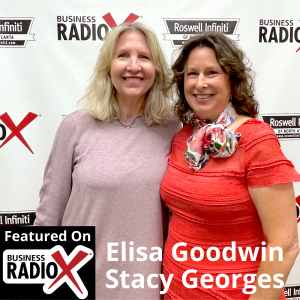
Saving Amy was founded with a mission to empower individuals and families transitioning out of homelessness by transforming lives through mentoring, teaching life skills, educational advancement, and financial stability through employment. SavingAmyLogoFullColor1
Amy’s story represents the impact that community can have on changing lives and ending the cycle of homelessness.

Jennifer-Kiernan-headshotJennifer Kiernan is Saving Amy’s Founder and Executive Director and has been with Saving Amy since the day it was born. She has a heart for helping others. She works closely with our Saving Amy community in every aspect of the day to day operations.

Jennifer sees her role as bringing volunteers and families in need together to coalesce the Saving Amy vision; ‘A world where all people come together as one community; empowering each other to experience life changing ways of living through inner transformation, compassion and love’. She brings people together to work as a team, each individual adding their own unique strengths, to implement strategies and programs to reach the shared goal of breaking the cycle of homelessness.

Jennifer has a practice where she leads groups and meets with people one on one to help guide them into living a life of purpose and joy. Many of the people she works with become volunteers for Saving Amy. Most importantly she is a mom of four amazing children, three young adults, and one teenager, who each know they have a call to change the world in their own unique way.

Jennifer believes we are all called to make a difference in the world. She states, “I have a front-row seat to the generosity and kindness of humankind. The Saving Amy community is an example of what can be accomplished when we come together for the collective good of all people. Love and compassion is the way we change the world.”

Follow Saving Amy on Facebook, Twitter and Instagram.

Tagged With: AZCEND, basic needs services, Birthday Parties, Candle Wishes Arizona, Charity, community, creating community, Empower Families, End homelessness, homeless services, Nonprofit, resolving homelessness, Saving Amy Gives, SavingAmy, transforming lives

  • « Previous Page
  • 1
  • 2
  • 3
  • 4
  • 5
  • Next Page »

Business RadioX ® Network


Our Most Recent Episode

CONNECT WITH US

  • Email
  • Facebook
  • LinkedIn
  • Twitter
  • YouTube

Our Mission

We help local business leaders get the word out about the important work they’re doing to serve their market, their community, and their profession.

We support and celebrate business by sharing positive business stories that traditional media ignores. Some media leans left. Some media leans right. We lean business.

Sponsor a Show

Build Relationships and Grow Your Business. Click here for more details.

Partner With Us

Discover More Here

Terms and Conditions
Privacy Policy

Connect with us

Want to keep up with the latest in pro-business news across the network? Follow us on social media for the latest stories!
  • Email
  • Facebook
  • Google+
  • LinkedIn
  • Twitter
  • YouTube

Business RadioX® Headquarters
1000 Abernathy Rd. NE
Building 400, Suite L-10
Sandy Springs, GA 30328

© 2025 Business RadioX ® · Rainmaker Platform

BRXStudioCoversLA

Wait! Don’t Miss an Episode of LA Business Radio

BRXStudioCoversDENVER

Wait! Don’t Miss an Episode of Denver Business Radio

BRXStudioCoversPENSACOLA

Wait! Don’t Miss an Episode of Pensacola Business Radio

BRXStudioCoversBIRMINGHAM

Wait! Don’t Miss an Episode of Birmingham Business Radio

BRXStudioCoversTALLAHASSEE

Wait! Don’t Miss an Episode of Tallahassee Business Radio

BRXStudioCoversRALEIGH

Wait! Don’t Miss an Episode of Raleigh Business Radio

BRXStudioCoversRICHMONDNoWhite

Wait! Don’t Miss an Episode of Richmond Business Radio

BRXStudioCoversNASHVILLENoWhite

Wait! Don’t Miss an Episode of Nashville Business Radio

BRXStudioCoversDETROIT

Wait! Don’t Miss an Episode of Detroit Business Radio

BRXStudioCoversSTLOUIS

Wait! Don’t Miss an Episode of St. Louis Business Radio

BRXStudioCoversCOLUMBUS-small

Wait! Don’t Miss an Episode of Columbus Business Radio

Coachthecoach-08-08

Wait! Don’t Miss an Episode of Coach the Coach

BRXStudioCoversBAYAREA

Wait! Don’t Miss an Episode of Bay Area Business Radio

BRXStudioCoversCHICAGO

Wait! Don’t Miss an Episode of Chicago Business Radio

Wait! Don’t Miss an Episode of Atlanta Business Radio