Business RadioX ®

  • Home
  • Business RadioX ® Communities
    • Southeast
      • Alabama
        • Birmingham
      • Florida
        • Orlando
        • Pensacola
        • South Florida
        • Tampa
        • Tallahassee
      • Georgia
        • Atlanta
        • Cherokee
        • Forsyth
        • Greater Perimeter
        • Gwinnett
        • North Fulton
        • North Georgia
        • Northeast Georgia
        • Rome
        • Savannah
      • Louisiana
        • New Orleans
      • North Carolina
        • Charlotte
        • Raleigh
      • Tennessee
        • Chattanooga
        • Nashville
      • Virginia
        • Richmond
    • South Central
      • Arkansas
        • Northwest Arkansas
    • Midwest
      • Illinois
        • Chicago
      • Michigan
        • Detroit
      • Minnesota
        • Minneapolis St. Paul
      • Missouri
        • St. Louis
      • Ohio
        • Cleveland
        • Columbus
        • Dayton
    • Southwest
      • Arizona
        • Phoenix
        • Tucson
        • Valley
      • Texas
        • Austin
        • Dallas
        • Houston
    • West
      • California
        • Bay Area
        • LA
        • Pasadena
      • Colorado
        • Denver
      • Hawaii
        • Oahu
  • FAQs
  • About Us
    • Our Mission
    • Our Audience
    • Why It Works
    • What People Are Saying
    • BRX in the News
  • Resources
    • BRX Pro Tips
    • B2B Marketing: The 4Rs
    • High Velocity Selling Habits
    • Why Most B2B Media Strategies Fail
    • 9 Reasons To Sponsor A Business RadioX ® Show
  • Partner With Us
  • Veteran Business RadioX ®

MORE THAN MORTGAGES: Non-Profit Champions in Gwinnett County

September 22, 2025 by Mike

Gwinnett Business Radio
MORE THAN MORTGAGES: Non-Profit Champions in Gwinnett County
Loading
00:00 /
RSS Feed
Share
Link
Embed

Download file

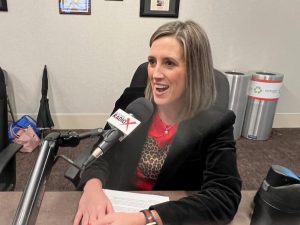
Ginger Powell, Katrina Lucisano, Gracelyn Thrash

Ginger Powell/GHS Foundation & Northside Hospital
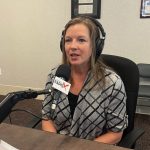
The GHS Foundation is committed to advancing the mission of Northside Hospital, providing high quality, compassionate health care to the community. Through the generosity of donors, they help ensure that Northside remains a center of excellence, offering innovative treatments, state-of-the-art facilities, and comprehensive programs that enhance patient care.

As a 501c(3) not-for-profit, they rely on philanthropic support to make a lasting impact. Since their founding in 1989, the GHS Foundation has played a vital role in shaping health care in Gwinnett. Every gift strengthens their ability to provide the highest-quality of care close to home.

Gracelyn Thrash/American Cancer Society
The American Cancer Society (ACS) is a nationwide community-based voluntary health organization dedicated to ending cancer as we know it, for everyone. For more than 110 years, ACS has led the way in funding and conducting life-saving cancer research, providing free resources and support for patients and caregivers, and advocating for policies that improve access to care and  prevention,. Locally, ACS empowers communities  to join the fight through signature fundraising events such as Relay for Life of Gwinnett – the largest Relay for Life in the Southeast – which brings together survivors, caregivers, businesses, schools, and residents to raise funds and awareness for the mission. Every dollar raised helps fund research, patient programs, and advocacy.

Katrina Lucisano/Silverton Mortgage
Founded in 1998, Silverton Mortgage is an acknowledged industry leader within the mortgage community. They’ve always believed that maintaining the entire loan process in-house keeps everyone involved: borrower, real estate agent, and Silverton Mortgage. One team, one goal. ‍Because of their collaborative culture, they are honored to continually be recognized with the industry’s leading customer satisfaction rankings and stunning growth as they continually expand their lending footprint. Success is always a team effort. At Silverton Mortgage, they credit their years of success to the trust of their clients and the hard work of the talented individuals on their team.
Proudly Presented by

Tagged With: american cancer society, GHS Foundation, Ginger Powell, Gracelyn Thrash, Katrina Lucisano, more than mortgages, Northside Hospital, Silverton Mortgage

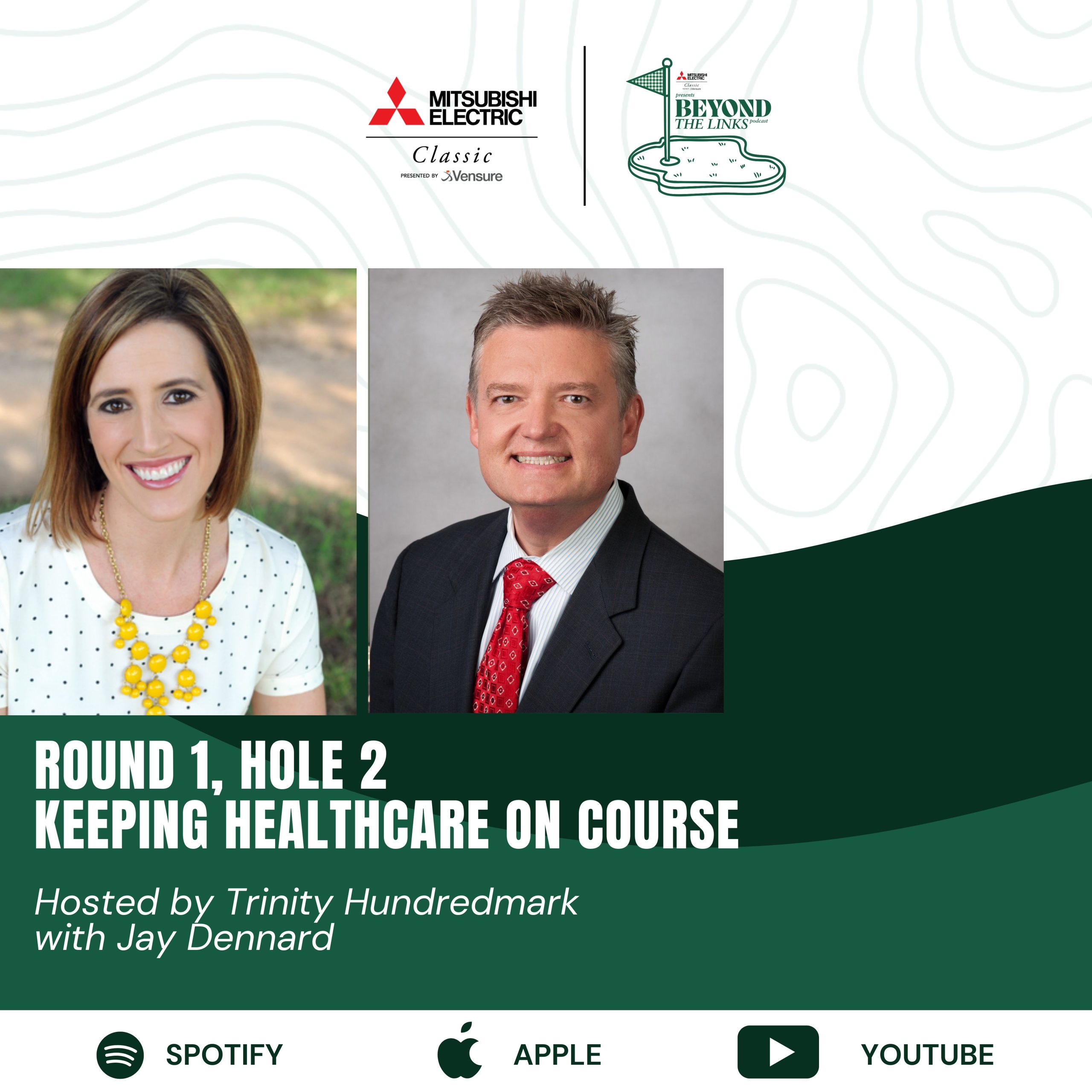
Round 1, Hole 2: Keeping Healthcare on Course

March 17, 2025 by Mike

Beyond the Links
Beyond the Links
Round 1, Hole 2: Keeping Healthcare on Course
Loading
00:00 /
RSS Feed
Share
Link
Embed

Download file

Trinity Hundredmark, Host of Beyond the Links

In this episode of “Beyond the Links”, we sit down with Jay Dennard, Chief Operating Officer of Northside Hospital, to explore the intersection of innovation, leadership, and strategic growth in healthcare. Much like a well-played round of golf, running a hospital requires precision, adaptability, and a long-term vision. Jay shares how Northside is navigating industry challenges, enhancing patient care, and staying ahead in an ever-evolving healthcare landscape. From operational strategy to the future of hospital management, this conversation offers valuable insights for any business leader looking to stay competitive. Tune in for a thoughtful discussion that keeps healthcare on course for success

Jay Dennard/Northside Hospital

Jay Dennard, FACHE, FHFMA, CPXP, a native of Middle Georgia, serves as the Chief Operating Officer for Northside Hospital Duluth’s campus as well as Vice President of Physician Services for Northside Gwinnett & Duluth. A graduate of Georgia State University with a Masters of Health Administration and a Masters of Business Administration, he has served in several health systems holding various senior executive positions of progressing authority and scope of responsibility. Jay earned his BBA in Management from Georgia Southwestern State University in Americus, GA, his MSA in Public Administration from Columbus State University in Columbus, Georgia, and his MHA and his MBA from Georgia State University in Atlanta, Georgia. A Fellow of the American College of Healthcare Executives and a Fellow of the Healthcare Financial Management Association, Jay is also a Certified Patient Experience Professional.

Believing that for much is given, much is expected, Jay serves or has served on various civic, community, and professional organizations such as Georgia Association of Healthcare Executives, Community Foundation of Northeast Georgia, United Way, Rotary Club of Duluth, Georgia Gwinnett College Board of Trustees, Annandale Village (serving as Chair of the Governance Committee) and Leadership Gwinnett. In addition, Jay is past State of Georgia Regent for the American College of Healthcare Executives. He has spoken regionally and nationally on subjects ranging from The Impact of Reform on Medicare/Medicaid to Workforce Retention strategies.

About the Podcast Series

Beyond-the-links-tile“Beyond the Links” is a monthly podcast that spotlights the incredible partners who help bring the Mitsubishi Electric Classic presented by Vensure to life. Each episode, we sit down with a different partner to explore their business, their connection to golf, and how their support enhances the tournament experience. From innovative tech companies to community-driven brands, listeners will get an inside look at the unique partnerships that make this event special, while learning more about the world of golf and the impact of corporate sponsorship on the sport.

Click here for tickets to enjoy the 2025 Mitsubishi Electric Classic presented by Vensure at TPC Sugarloaf!

Tagged With: beyond the links, beyond the links podcast, jay dennard, mec podcast, mitsubishi electric classic, mitsubishi electric hvac, Northside Hospital, pga champions tour, tpc sugarloaf, trinity hundredmark

Lessons from the Frontlines: Medical Leaders Tackle Healthcare Challenges

August 26, 2024 by angishields

Lessons from the Frontlines: Medical Leaders Tackle Healthcare Challenges
High Velocity Careers
Lessons from the Frontlines: Medical Leaders Tackle Healthcare Challenges
Loading
00:00 /
RSS Feed
Share
Link
Embed

Download file

HighVelocityCareers082324banner

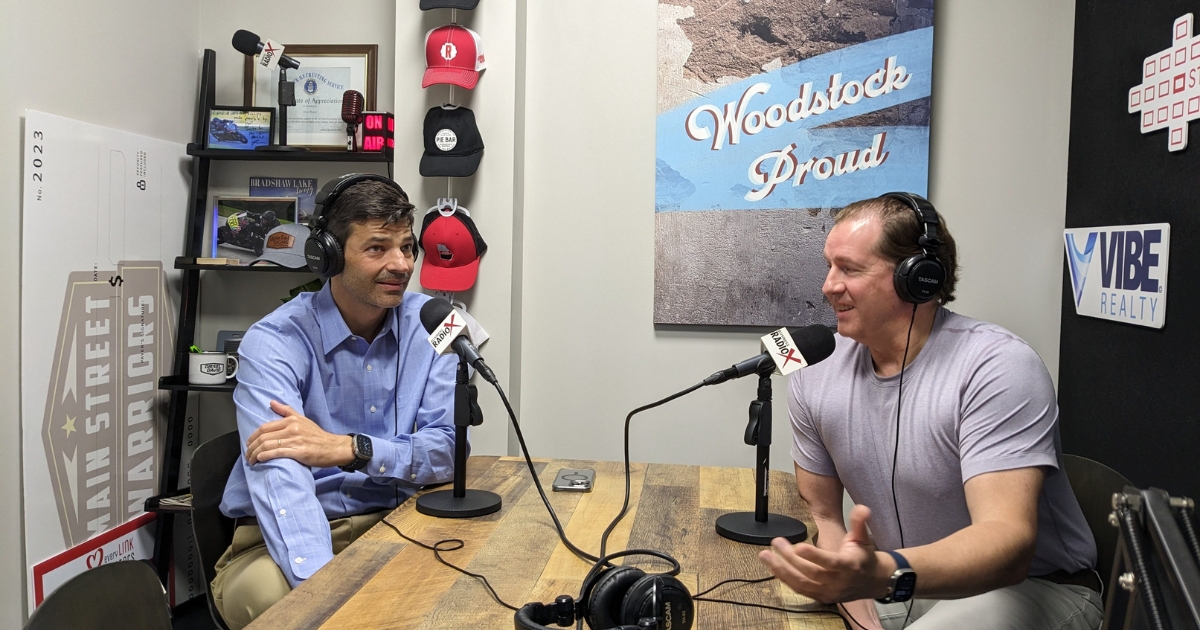
In this episode of High Velocity Careers, Stone Payton speaks with Dr. Daniel Fortes, Division Chief of Thoracic Surgery at Wellstar, and Will Chilvers, the Director of Outpatient Imaging Services at Northside Hospital. They discuss their unique career paths, the challenges they face in healthcare, and the importance of combining clinical expertise with business acumen.

Daniel shares his journey from Brazil to the U.S. and his transition from academia to private practice. Will highlights his background in healthcare administration and process improvement. Both emphasize the need for teamwork, effective communication, and continuous learning to drive improvements in patient care.

Daniel-FortesDr. Daniel L. Fortes currently serves as the Division Chief of Thoracic Surgery at WellStar Health System, headquartered in Marietta, Georgia.

Dr. Fortes was born in Brazil and completed his medical education at the Federal University of Rio de Janeiro School of Medicine, graduating in 1999. He then pursued a General Surgery Residency at the same institution before continuing his training in the United States at the University of Texas Health Science Center in San Antonio with further specialization in Thoracic Surgery at the prestigious Mayo Clinic in Rochester, Minnesota.

Beyond his medical training, Dr. Fortes recently earned an Executive MBA from Kennesaw State University. His professional journey included private practice and academic appointments.

Before moving to Georgia in 2021, Dr. Fortes served as an Assistant Professor of Surgery at the University of Texas at Austin, Dell Medical School and a Clinical Associate Professor of Surgery at Texas A&M Health Science Center.

Dr. Fortes work focuses on minimally invasive and robotic surgery for cancers of the chest, most predominantly Lung Cancer. He is fluent in Portuguese and Spanish, a lifelong drummer, a father of two teenage children and a dedicated husband.

Connect with Dr. Fortes on LinkedIn.

Will-ChilversWill Chilvers is the Director of Outpatient Imaging Services at Northside Hospital in Atlanta, Georgia. With over 15 years of experience in the healthcare industry, his career began in 2008 at Emory Healthcare, where he swiftly advanced from intern to Clinical Operations Manager of The Emory Eye Center within two years.

Seeking new challenges, Will transitioned to Northside Hospital, where he became the Manager of the Pain Treatment and Spine Centers and Outpatient Radiology locations. In 2015, he was promoted to Director of Outpatient Imaging Services.

As a leader, Will is known for his ability to blend a heart-and-soul approach with the strategic use of complex analytics to build and sustain high-performing teams. He is committed to maintaining an extraordinary level of compassion in patient care and believes that caring for one’s team should be at the core of any healthcare leader’s vision and mission.

Will is a two-time graduate of Kennesaw State University, holding both a Bachelor of Business Administration and an Executive MBA from the Michael J. Coles College of Business.

Connect with Will on LinkedIn.

Transcript-iconThis transcript is machine transcribed by Sonix

 

TRANSCRIPT

Intro: Broadcasting live from the Business RadioX Studios in Atlanta, Georgia, it’s time for High Velocity Careers. Brought to you by Kennesaw State University’s Executive MBA Program, the accelerated degree program for working professionals looking to advance their career and enhance their leadership skills. For more information, go to kennesaw.edu/emba. Now, here’s your host.

Stone Payton: Welcome to another exciting and informative edition of High Velocity Careers. Stone Payton here with you this morning. This is going to be a good one. Please join me in welcoming to the broadcast Mr. Will Chilvers. How are you, man?

Will Chilvers: I’m doing great. Thanks for having me.

Stone Payton: Well, it is a delight to have you on the broadcast. We also have Mr. Daniel Fortes with us. How are you, man?

Daniel Fortes: I’m great, thank you very much.

Stone Payton: I got a ton of questions, guys. I know we’re not going to get to them all, but I think a good place to start, I’m going to ask each of you, if you would, and I’m going to start with you, Daniel, if that’s okay, maybe could you give us a little bit of an overview of your career path? And, I don’t know, maybe even a couple of milestones along the way. How did you get here, man?

Daniel Fortes: Absolutely. Yeah. Thanks. So, I think probably starting with where my origins are. I’m originally from Brazil. I grew up in Rio de Janeiro. And I had early ties to the U.S. since my, you know, puberty years, and I lived in the U.S. as a teenager. I went back to Brazil, finished schooling, and then decided to get into medical school.

Daniel Fortes: So, I got to medical school, and then I realized that I wanted to come to the States for training. So, that ended up happening in 2001, where I married my lovely wife, and we moved from Rio to San Antonio, Texas, where I did the first part of my training as a general surgeon. Then, I decided that I wanted to pursue further training, and I went to Minnesota at the Mayo Clinic, where I did my cardiothoracic surgery training. And then, from that point on, I decided that academia wasn’t what I was looking for in medicine. I really wanted to be more patient-centered, so I took a job in private practice in the Washington, D.C. area in Northern Virginia. That was very informative. I learned a bunch from older senior partners.

Daniel Fortes: And then, from there, my entrepreneurial sort of motivations took me to Austin, Texas, where I joined a very large group in the city, and I was the first person that did what I do, which is essentially thoracic oncology, which is lung cancer, robotic surgery. So, it was very exciting as an opportunity early on in my career – I was only four years out of training – to go to Austin to build from scratch a thoracic oncology program. So, that’s kind of how it started my journey.

Daniel Fortes: Hitting some hiccups in the way and some frustrations, and realizing how physicians truly are dependent these days on hospital administration and their support, and with that, you know, things in Austin did not turn out to be what it was expected to be, and I moved to Georgia, to Atlanta three years ago to seek new grounds, with opportunities for leadership here.

Daniel Fortes: And then, soon thereafter, I took over the directorship of our division here at Wellstar, and realized that I needed more business skills, that for me to be able to track what I saw as my next step in my career, to really be able to be a leader in defining healthcare in a different way, and empowering physicians to have more say in how medicine is done and how the business of medicine is conducted led me into joining the KSU EMBA program, which we graduated in May last year, myself and Will.

Stone Payton: Will, this guy can’t hold a job. That’s what I took from all that. No. I’m kidding. All right. So, say again where you are now. What are you doing right now?

Daniel Fortes: So, right now, I’m a thoracic surgeon at Wellstar. I’m the Chief of the Division of Thoracic Surgery.

Stone Payton: So, what are you finding the most rewarding? What’s the most fun about that work for you, man?

Daniel Fortes: So, again, medicine is something that is very demanding. And to me, it’s really the direct patient contact. That’s one thing that really fulfilled me for the longest time. And no matter what happened around, as long as I had good relationships with my patients and I could see them and do how I saw fit, it was good enough. And then, soon thereafter, I realized that there were so many things to be fixed in healthcare, that simply being a practicing physician wasn’t providing as much fulfillment as initially did, that I really wanted to be able to change things for the better for all.

Daniel Fortes: Now, healthcare, I mean, lots of issues with staffing, with patient’s rights, physician rights, and wellbeing and finance, I mean, there’s so many issues going on and so many challenges, and I want to be part of that solution rather than just sitting on the backend, you know, doing my day-to-day job.

Stone Payton: I apologize, Will, that’s going to be a tough act to follow. This guy’s accomplished a lot.

Will Chilvers: Yeah. When you asked him to go first, I had that exact feeling.

Stone Payton: Well, tell us how you got here, man. What’s your backstory?

Will Chilvers: Yeah. Well, interestingly enough, I’m actually not from the U.S. either. I was born in the UK. I moved to Florida when I was ten years old. And I actually moved because my dad, who’s an entrepreneurial spirit at heart, serial entrepreneur really most of his life, he was asked to come and help start a doctor’s office by a friend of ours. And so, that was my first kind of exposure into the life of a healthcare person. And he was the administrator of this practice, and he ended up moving into hospitals.

Will Chilvers: And so, I spent countless hours on the porch with my dad just constantly hearing about a healthcare administrator, the administration side, the hospital administration side, as Daniel mentioned, working with physicians and how those relationships materialize and how critical those links are to any sort of success in healthcare. It really is a partnership between the two sides. So, I kind of come at it from a different side in that perspective.

Will Chilvers: I moved up to Georgia in 2002, and I actually did my undergraduate at Kennesaw State. I did a business degree there. And so, after I was done with that, I was able to get an internship at Emory Healthcare here in Atlanta, Georgia. And, you know, speaking of healthcare needing improving and realizing how much it needed that, I actually started as a process improvement analyst after that internship. I was hired on by them after a two month internship to be a process improvement analyst at the Emory Clinic.

Will Chilvers: And there’s all sorts of evaluating, and sitting around, and observing the physicians in their environments, and coming up with ways that we could operate more efficiently, how their time could be more value add, trying to eliminate the waste because people talk a lot about how much waste there is in healthcare. And so, I spent a lot of time working with the doctors trying to figure out how do we let you focus on the patient care component of your job and less on the administrative side of the fence and kind of the busywork, if you will. So, that’s kind of how I got into healthcare. I ended up getting promoted a few times while I was there. I ended up as a clinical operations manager, but I was still a process improvement analyst. So, by the time I left there, I had three jobs.

Will Chilvers: And I moved to Northside in 2010, Northside Hospital here in Atlanta, Georgia as a manager of their pain treatment, spine centers, and radiology outpatient centers. And I’ve been there now. Since then, we did a lot of different things there. I spent some time in the hospital. I was the manager of their Atlanta Hospital Radiology Department for a year, which exposes you to all the modalities throughout the hospital. You work with cardiology. You work with emergency department. You work with the intensive care units. You work with surgery. And working in a hospital environment really enlightens you to just how many facets there are to healthcare. And that was an amazing experience. I really enjoyed that.

Will Chilvers: And then, we got into a lot of merger and acquisition type things. I don’t know if you know, but a lot of people that are in healthcare certainly do, oftentimes a hospital is putting their sign on something all over town. You see urgent cares with a Piedmont or a Wellstar sign pop up. Northside has signs on buildings all over town that have become sort of medical office buildings for us. And we’ve affiliated with different practices around North Georgia. And I was heavily involved in that on the imaging front when we went out and bought a lot of independent imaging facilities to help support our affiliations and our relationships with physicians in the more rural areas around Georgia. So, that was also a pretty exciting experience. And that’s kind of how I’ve ended up where I am today.

Stone Payton: And where are you today? What’s your role today?

Will Chilvers: So, I’m a Director of Radiology Services at Northside Hospital, specifically focused in outpatient imaging services. And I currently cover a region from Acworth to Warner Robins, which is down south of Macon, so it’s a pretty good spread.

Stone Payton: So, you described having an opportunity to work in and around a lot of different disciplines, that strikes me as a best practice probably for a variety of industries. Would you agree with that?

Will Chilvers: Yeah, absolutely. I mean, not even just the various different sort of modalities within a hospital system, if you will, but also the different business modalities that exist within it. You know, I’ve had a lot of interaction with revenue cycle, with finance, with analysis of capital planning and strategic, heavily involved in the operations, obviously. But just touch points throughout the system really gives you a very broad understanding of, not only the different clinical components, the different departments within a hospital system, but also a business in general, a very large business, you know, you’ve got departments for everything.

Daniel Fortes: And that’s the thing – kind of sort of jumping in – that is a striking contrast to now the medical delivery part of the system, which is physicians really have absolutely no business background or knowledge. There’s nothing that is taught during their entire career, unless they did it on their own. Now, things are changing, finally. This new generation will come with different skills than we had. But all the names that you mentioned, business cycles, et cetera, I mean, this is something that physicians go, “What is that? I have no idea.” So, you know, that dichotomy is huge because then healthcare is being managed by non-physicians and physicians don’t understand the management of healthcare, so it’s crazy.

Stone Payton: Wow. So, what are some of the major leadership challenges that you guys have run into over that path? I wonder if they’re very different than they are in other arenas. I’m curious to know things that maybe really caught you off guard at least the first time you were faced with it. And I’ll start with you, Daniel, but I’d love to hear from both of you on that front.

Daniel Fortes: So, you know, initial challenges as you start practice, you’re like, “Well, I have a great idea how to make things better, but I have no idea how to make it happen.” So, I go into a boardroom with a bunch of administrators and I go, “This is what we have to do. It’s so obvious, right? This is going to improve patient care. It’s got all this stuff.” And they go, “Well, it doesn’t really work that way. How are we going to do? How are we going to budget for that?” And then, you go, “Oh. I have no idea.”

Daniel Fortes: And then, you realize that you might have great ideas, but, again, great ideas are plentiful. What matters is how to implement them. And that lack of knowledge is huge in being able to make true changes in healthcare. So, I think you need both parts. So, I think we need more administrators with more clinical background and, vice versa, more clinical people with more administrative background.

Stone Payton: How about you, Will?

Will Chilvers: Oh, I think that’s a really good kind of tee up, because I think as Daniel was talking about physicians not having that sort of business background in a lot of cases, and how that creates struggles in those areas, and sometimes misunderstandings, miscommunications about what can be done, what is possible and why. Because sometimes the why doesn’t really jive with us, right? It doesn’t give us a good feeling. Like, that’s a silly why. I understand it, but that’s a silly why.

Will Chilvers: But the biggest leadership challenges that I see often stem from leaders who have a clinical background not understanding the whys and the hows of the business. Because most of our leaders are former nurses or former radiologic technologists, or they’ve been in the line, if you will, they might not be physicians, but certainly at the operations level, they’ve worked their way up through the ranks, which makes sense because they have an intimate understanding of how the operation works, how the patient flow occurs.

Will Chilvers: But they don’t have any formal training necessarily on how exactly can we make this better. How exactly does this all play in with all of the other stuff in the background that’s happening, like we talked about. You know, if you’re a clinical person, you might not understand revenue cycle or all the complexities involved in not only how do you get the patient on the schedule, but how do you get paid at the end of the day. And so, there’s a lot of kind of breakdown there that’s not their expertise, and so they’re just kind of trying to figure it out.

Will Chilvers: And then, on the flip side of it, you have people like myself who have no clinical background, other than my own personal experience in healthcare interactions with physicians, and people are like, “Well, what do you know about how to operate this place? You’re not a doctor, you’re not a nurse, you’re not a tech. You just got a bunch of big ideas and you’re standing here spouting at us why we should be doing this differently.”

Will Chilvers: And it really is a great thing to see a team come together and see the light bulbs go off to say, “Oh, from a clinical perspective, you have now enlightened me from a business perspective why this can or can’t be done.” And then, on the business side of the front, someone like myself learning the nuance and the complexities associated with clinical care as to why this great, efficient business idea that’s going to save money and make money all at the same time maybe isn’t in the best interest from a patient care perspective.

Stone Payton: Daniel, everything I know about doctoring, you could stick in your eye and still see out, but it seems like you guys are already so busy. Where in the world did you find the time? How did you find the time to pursue an executive MBA, man?

Daniel Fortes: I’m still asking myself that same question. Because to be honest with you, as exciting as it was, I enjoyed every single weekend that we had classes. And I specifically chose KSU because it was something that I could fit into my schedule because I couldn’t really change my clinical schedule. It’s not like I took a sabbatical to do this, right? I have to do it on the side. So, I enjoyed every single moment, but it just takes a toll on everything else.

Daniel Fortes: So, actually, by the time we were finishing, I was having my own stress test and EKGs and Holter monitors and check because of stress. I mean, it was tough. Of course, many, many long hours on top of regular hours and many weekends on top of the call weekends that already existed. So, yeah, as hard as it was, it wasn’t as hard as training. So, in a way, sort of the history behind on how we get to where we get from a clinical perspective helped me, you know, be able to sort of hunker down and get this done. But it was not easy, I tell you that.

Stone Payton: Well, I certainly applaud you, and I don’t mean to dismiss the time commitment and the energy and the resources you invested as well. Will, if you remember, what initially compelled you to pursue an executive MBA?

Will Chilvers: I think there were a lot of different factors. I found myself in different rooms with different levels of people throughout as I’ve gotten farther on in my career where they just seem so much smarter than I was. And at this point in time, I’d been in healthcare for 15 plus years, and I felt like I had a pretty good handle on things. But when you get in the room with the directors of finance and various different vice-presidents, and you listen to things that they’re talking about, you start to wonder maybe I need more tools in the toolbox, or maybe I need to sharpen the somewhat blunt ones that I have right now. And so, I kind of felt that way for a little while.

Will Chilvers: I also felt like a lot of the opportunities for advancement and growth in the field often require a more advanced degree than just a bachelor’s degree. And so, I was like, well, between seeing these people that have these degrees, and seeing just how incredibly intelligent they are and the tools that they use to help make their decisions, I’m obviously missing out on something. And so, I started exploring the different opportunities to participate in a program.

Will Chilvers: And I actually looked at lots of different programs around the metro Atlanta area. And I ended up coming back to my old alma mater here at Kennesaw State University. And I’m really glad that I did, and part of that was, as Daniel said, the way the program is structured, it really just sort of aligned with my ability to continue working, because aside from our local residency and then our international residency at the end of the program, I didn’t take any time off work to do the program.

Will Chilvers: As well as the components of both the business modalities, which is part of every MBA program, but the personal and professional development growth track that sort of ran parallel with the program was really kind of exciting to me. I’ve asked myself a lot of questions over the years about who am I, what am I doing with my life, where am I supposed to be. And that was really probably one of my favorite parts of the program is just learning a lot more about myself. There was a lot of deep introspective thinking and writing that went in alongside this program while we were learning about finance, and accounting, and economics, and marketing.

Will Chilvers: And that thinking as I thought along the way is like, nobody’s ever made me think like this. Nobody’s ever made me really dig down deep inside my soul and bring that out and say this is who I am, and this is how I got here, and these are the things I want to change.

Daniel Fortes: And to couple that, too, the teaming component of it, I think it’s very unique the fact that from the beginning we’re set up in teams. But you don’t know —

Stone Payton: Say more about that.

Will Chilvers: I think that was the scariest part, if we’re being honest.

Daniel Fortes: Yeah, it was. All of a sudden, it’s like, “Okay. You’re going to sink or swim with your team so you got to make it work.” So, from the beginning, you’re really learning those interpersonal skills, those leadership skills, those working as a team kind of principle from the get-go. And I think that is very unique and great. Because there’s some, Do I want to sit in a class by myself watching a finance lesson and then go home, do the homework, and come back? No. No. I want to discuss it. I put this in real perspective on real projects with my team working together, dividing tasks. It was phenomenal.

Stone Payton: And I suspect that’s a much more accurate reflection of real life, right?

Will Chilvers: Oh, yeah. The philosophical debates that Daniel and I have had about healthcare over the last two years, it’s just endless. I mean, we could have gone on forever trying to solve the problems of the world like we all want to do.

Stone Payton: I’ll give you a little bit of a heads up, Will, those life purpose questions, those will continue even when your hair is as white as mine, so those aren’t going away.

Will Chilvers: Thanks for that. I appreciate it.

Stone Payton: I had a mentor early in my career that told me, he said, “Stone, competency is really a moving target.” And he was trying to impress this life learning mentality on me and trying to help me get my arms around the fact that, man, things are going to change and you’re going to have to learn, not only how to personally adapt to that, but you’re going to have to lead other people through that. I’d love to hear your thoughts on planning and executing change. I got to believe it’s rampant in the healthcare arena like it is in some others.

Daniel Fortes: No, for sure. That’s exactly something I learned. One of my mentors, too, I never really understood what he meant. He came to me, “Dan, one day you have to realize that you have to sort of reinvent yourself every five to seven years.” And I go, “What do you mean? I mean, I don’t know what that means.” And then, through life, now I’m 20 plus years in healthcare, it’s like, “Oh. I get that.” Because your perspective of life, your perspective of the job, of everything that you do changes as you gain more experience, as you age, as you gain life experience, family, and all those things, your prerogatives and your focus has changed. And that’s absolutely right and how to change that.

Daniel Fortes: And so, this is my cycle of renovation for this, I guess, fourth, five-year stint of my innovation. So, yeah, absolutely, that’s key. That’s key. The world continues to evolve. And if you stay behind, you literally stay behind.

Will Chilvers: Yeah. I mean, I think one of the interesting things that Professor Davis shared with us – and I think he stole this from somewhere. But he admitted that, he said he got it from somewhere – is better, better, better better. We all want to wave a magic wand and fix everything, right? We spend so much time, like, how do we fix this in a big way? And the reality is that those sort of mass sweeping, immediate changes are very unrealistic for so many reasons.

Will Chilvers: And they are beyond unrealistic in healthcare in many, many ways. And part of that is because you’ve got to be able to maintain patient care every minute of every hour of every day. There’s no stopping the machine, if you will. So, you can’t say, let’s shut this whole place down, tear all this to pieces, and build it all back up in the 21st century. We’ve got thousands of years, really, of evolution in the industry of people being sick, and people being made a little bit better, and a little bit better, and a little bit better. And hopefully, our ability to provide care to our patients is better today than it was yesterday.

Will Chilvers: And so, in terms of how do we do it, how do we keep it up, how do we make these changes, how do we improve, it really is just the ultimate better, better, better, better. Like every single day we’re having a conversation about how do we make this one little thing a little bit better. And for some of us, that can be really frustrating at times, because you’re like this whole thing stems from this setup, or the way we bill, or the way we collect, or the way we answer the phones, or the way we still use fax machines. You got to love healthcare for that.

Daniel Fortes: That is unbelievable.

Stone Payton: Is that true?

Daniel Fortes: Oh, yeah. So true.

Will Chilvers: Every single day.

Daniel Fortes: So, you want to talk about like evolution, right? We’re still hanging on to some relics, and for different reasons. A lot of that is HIPAA compliance. Funnily enough, that’s just one of the ways that has been deemed that’s a fairly secure way of transmitting information.

Will Chilvers: And nobody can steal a fax, I guess.

Daniel Fortes: Yeah, say that. I’m sure there’s ways that can be done. Somebody will post in the comments if that’s a thing. So, we spend so much time thinking about if we could just get healthcare into the 21st century, things would be so much better. But you can’t stop it. You can’t stop everything, throw it all out, bring it all back together in this new, modern era.

Daniel Fortes: And everybody in every healthcare organization around the country and around the world is in a little bit of a different place. They might be a little bit ahead, they might be a little bit behind, but we’re all trying every single day to make people’s lives just a little bit better and provide a little bit better care than we were able to provide yesterday.

Will Chilvers: Yeah. And it’s quite amazing, right? If you’ve ever been part – and I know you have and so have I – of really major changes in operations or whatever that happens at a hospital level or at a clinic level, the disruption is amazing. I guess it’s not something you shut down a production line for a week and you get it done. I mean, you can’t. So, there are people just pouring in, and then all of a sudden, you’re inability to actually care for the people that need you because you wanted to make this one change, and sometimes it’s like a software update – I mean, not to mention what just happened recently. But because that shut down all the hospitals in Atlanta, by the way. If people don’t know, all hospitals were affected by the CrowdStrike issue.

Stone Payton: Oh, wow.

Will Chilvers: I got a call at 3:00 in the morning, I need everybody in the hospital here because there’s no orders for any of this, 700 patients are in the hospital. The nurses don’t know what to give anybody. So, we had one printer in the pharmacy printing prescriptions for every single patient in the hospital at 3:00 in the morning so the nurses could keep up their work. I mean, it’s to that level. So, anyway, yeah, it’s a pretty tough business.

Stone Payton: Yeah. And when you disrupt that established pattern, you’ve got this human dynamic that you’re dealing with, and it’s not like they’re all in the same place mentally at the same time. You’ve got someone that’s in denial, you’ve got somebody else that’s kind of got past it and said okay. I mean, and you’re managing a lot of people at all these different stages of how they’re going to respond to that disruption, right?

Will Chilvers: Yeah, yeah. And then, when you realize how labor intensive healthcare industry is, we are the biggest employers on any city that you have big healthcares, because the number of people that you actually need people to care for people. So, a disruption here, I mean, Wellstar has as many employees just here in the Atlanta metro area than the big top ten 500 corporations in the U.S. They’re spread all over a few. But here, it’s just so concentrated and so dependent. So, if you change one thing for you to really decimate it through that huge population is ginormous.

Daniel Fortes: Yeah. It’s interesting, during our international residency, we went to Santiago in Chile, and we met with a mining company. And the gentleman that was speaking was talking about how old their systems are and how they’re constantly having people come in and say we can automate this, we can digitize this, we can make this more efficient. And the thing that he said, we cannot stop operations. They cannot go down. The robust nature of this system, this process is critical. And he was talking about it from a revenue perspective. They made so much money that any interruption to their operations, to their ability to continue to produce out of this mine was just considered catastrophic because of the money that they would have lost.

Will Chilvers: And you throw that into the healthcare environment, there’s a huge impact from a revenue perspective when operations don’t work. But you’re talking about people’s lives. You bring in the human element. I mean, really, that’s what it comes down to, is your inability, when anything prevents you from being able to care for that patient, sometimes the seconds matter. I mean, Dan knows this more than anybody in what he does.

Will Chilvers: And so, just the appetite for risking that in the interest of sweeping changes in “fixing healthcare” – big topic. Like, healthcare is broken, it needs fixing – the appetite and the ability to make the kind of changes that we theorized would “fix it” or fix a part of it, even, you’re always considering that against what the risk is there to your ability to see those patients, and care for those patients, and just how delicate that ecosystem can be, as evidenced by the recent CrowdStrike outage.

Stone Payton: Well, the stakes are so high in your world in the price of failure. Oh, wow. Yeah. So, either one of you get involved at all in recruitment, selection, development of folks? The reason I’m asking, I’m interested to know, like, what do you look for in terms of leadership skills and credentials and all that? But I’m also kind of interested, do you and your team, do you look for – I’ll call them -intangibles? Speak to that a little bit.

Will Chilvers: Yeah. I mean, all the time. I often share with my team, I’m like, you got to be a whole package deal. You could be the best tech in the world, the best nurse in the world, quite frankly, the best physician in the world, but if you don’t show up or if you’re not punctual and timely, if you’re not good with people, it’s just not going to work out. You’ve got to have the bedside manner. You’ve got to have the ability to talk, and care, and be compassionate, and be skillful in whatever modality is that you’re in.

Will Chilvers: And so, it’s easier to assess do they have the skills. You know, you can put them in a room, you can put them on a machine, you can give them an IV start kit., whatever it is, whatever the job is, and say, “Go. Here, do it on me.” And you can determine they’re pretty good with this equipment, whatever that might be. But you spend a lot of your time figuring out, does this person really care? Do they love sort of the mission of healthcare, if you will, of helping patients get better? And are they able to work in a team?

Will Chilvers: Because every interaction in healthcare involves some sort of a team, and often the team is very fluid. There’s five people that work together in the beginning, and then half of those people move into the next team, and the next team, and the next team, and so it’s just like this big constant back and forth in waves of these people all having to work together and trust each other.

Will Chilvers: And that was a huge thing that we talked a lot about in the program, in the executive MBA program, is, trust and just how critical that is in the ability to provide. Because if Dan doesn’t trust me as a healthcare administrator to have his best interest and his patient’s best interest at heart, it’s going to be very difficult for us to come up with solutions that help the patients at the end of it all. And the same goes for every single interaction throughout healthcare.

Will Chilvers: So, when you’re recruiting these people, when you’re interviewing people, when you’re developing people from a staff level position into a leadership level position, you’ve got to have a real good kind of finger on the pulse, if you will, about where their head is at and where their heart is at, and can you trust them to do the right thing always.

Will Chilvers: And some of that comes from you as a leader. If you instill an environment where people are afraid of being in trouble because the stakes are so high, and so anytime something goes wrong, which it does, things go wrong, there’s a huge human element in everything that we do and people make mistakes. And so, if people feel like every time they make a mistake, they’re going to get in trouble, it kind of encourages people to try and sweep things under the rug, or I didn’t see it, or let me fix it. I’m going to fix it. I’m gonna fix it. I’m gonna make it right. And sometimes they make it worse. And they need to come to you and ask for help.

Will Chilvers: And so, as a leader in healthcare, you’ve got to instill that it’s okay. I’m here. I’ve got your back. Stuff happens. I need you to tell me what’s going on so I can help you. And that comes with compassion and love for the people that work for you. And if you don’t have that, it’s going to be tough for you to be really successful as a healthcare leader because your people have got to come to you when something’s going wrong. Otherwise, it just goes sideways very quickly.

Daniel Fortes: Yeah. You know, the clinical side is very similar because, at the end, you can probably teach skills to most people. Sure, you’re looking for a microcerebral surgeon, that guy needs to have the skill if you’re going to hire him. But for the most part, in terms of the ancillary team that supports, which is 90 percent of people taking care, physicians is just a minuscule part of the patient care. Focused on physician is wrong, because, really, healthcare is much more that one encounter from the physician is much smaller than the entire team that actually cares for the patient throughout their journey.

Daniel Fortes: So, those folks, as long as they show the skills that they can learn, really what we’re looking for is, first, the interpersonal skill. I mean, can you truly care for people? Are you interested in helping others? And are you reliable when you don’t know something to reach out? You need to. So, that’s kind of what we look, maybe the resume gets you in the door, but at the end of the day, it’s always that one-on-one interaction, personal values, and all that really are crucial for our industry.

Stone Payton: So, Dan, what do you do when you’re not doctoring, man? Most of our listeners know that I like to hunt, fish, and travel. What do you do when you’re not doing this?

Daniel Fortes: Yeah. So, actually I’ve taken quite a bit of hiatus because of this program, but my lifelong passion is music. I’ve been a drummer since age 12. And I’m not going to officially say, but one of the reasons to move to Austin was the music scene as well, so there was another stimulus. I had multiple bands. I used to play out all the time. But since I moved to Atlanta, that has gone into the back door. So, yeah, that’s part of my new program now, it’s go back and find a new band and keep rocking out. Absolutely.

Stone Payton: We got to get you back out there, man. You got to come play Woodstock.

Daniel Fortes: Oh, God.

Stone Payton: How about you, Will, what do you do to kind of get away and recharge?

Will Chilvers: Yeah. I mean, I’ve got a got a lot of hobbies, but I guess my main ones and I didn’t really get into it, but I actually started out my career in residential construction. And so, I still play in that area in my own home, so I do a lot of stuff around the house. I have a shop that I built.

Will Chilvers: But my other passion is cars. I’ve always loved cars. I’ve loved cars since I was a little kid, as long as I can remember. My dad had some stuff that I thought was cool back in the day and it just kind of stuck, and so I’ve got a shop and I weld a little bit. But I fix, rebuild, replace, engine swap, just any kind of thing I can get into in that environment and something that I find a little bit interesting.

Daniel Fortes: We got some funny stories here, come a weekend of the NBA and then, Will, “Oh, yeah. I went that weekend to some warehouse and then I came back with a new Mercedes.” He’s telling this story — “I’ll buy that car.”

Will Chilvers: And old Mercedes. Yeah, I mean, literally that happened, like, at the end of the semester. I went on a guy’s weekend with some buddies, and a friend of mine has a lot up in Knoxville, Tennessee. And he had this really cool Mercedes wagon just sitting in the lot. And I was like, “Where’d you get that from?” He’s like, “Oh. I bought it at the auction.” I was like, “Yeah, okay.” I didn’t think much of it. I went away for the weekend, came back, went back through, I was like, “Do you want to sell it?” And came home with it. I drove it home. My buddy drove my other car and I drove it 200 miles home that day. And I’ve been working on it since then.

Will Chilvers: And, actually, so you asked what do you do, I try to spend time with my kids. They’re still young enough that they think I’m cool sometimes. My 15 year old, you know, dwindles but goes away quickly. But we’ve been working on that car together with the hope that it’s going to become her car, and so that’s been a lot of fun. But those are my sort of main hobbies.

Stone Payton: All right. We got a plan. We’re going to hop in the wagon and we’re going to come to your gig.

Daniel Fortes: And I love the fact that the Englishman bringing wagons back in.

Will Chilvers: Oh, yeah. I love a station wagon. Americans do not appreciate them.

Daniel Fortes: I love them, too. I can’t get one here.

Stone Payton: All right. Before we wrap, I’d love it if we could leave the high potential person that really wants to accelerate their career. They’re thinking through, “Okay. What should I be doing?” And I don’t know if it’s what they should be reading, something they should do or don’t do. But from each of you, gentlemen, if we could have at least, maybe one kind of actionable pro tip, man, if you’re thinking about continuing that career path and you really want to accelerate your career, any insight, perspective, advice, scar tissue? Let’s leave them with a couple of nuggets before we wrap.

Daniel Fortes: Scar tissue, I think that’s probably the most valuable learning from my perspective and my journey. Again, physicians are very self-centered. You know, I know it all. It’s all about me. You know, I know how to do things better. And you realize how small you are in the actual cogwheel of the whole industry, and how important it is to develop personal relationships and networking and get, so that, that one-to-one and knowing your administrators and the people, that is absolutely crucial for you to be successful. Unless you just want to hunker down in your little cubbyhole and keep doing the same thing, but then you’re like a production industry person.

Daniel Fortes: So, interpersonal skills, understanding that you are very small, no matter how high power you think you are or how important you think you are, it’s just you’re still part of a ginormous team and you need to truly be part of it.

Will Chilvers: Yeah. I mean, people say all the time, it’s not what you know, it’s who you know. Healthcare, especially, is a very complicated space. And there are experts in every area, every time you turn around. And if you really think about it, even when you’re an expert in one thing, you know 0.1 percent of what’s going on in healthcare as a whole. So, there are many, many specialists, people that like this is their one focus, and this is what they do, and they’re the best at it. But they need help from a thousand other people to make what they do possible.

Will Chilvers: And I think that understanding that if you’re a specialist, it’s critical. And if you’re not a specialist and you’re a real kind of jack of all trades – like I consider myself to be, or jack of many trades, certainly not all trades – understanding how all those pieces go together is very important. So, it’s really good to get that exposure and see how all the pieces play together. It’s critical in terms of your ability to build a team and make things happen, make those better, better, better a little bit better today than yesterday changes, knowing who to call and when. And then, that goes back to the relationships and just how critical they are.

Will Chilvers: I often share with my leaders when they come to me and they’re like, I just don’t understand why this person won’t do their job. And I tell them all the time, there’s a lot going on in this place. I guarantee you they’re doing their job, but they might not be doing their job for you. And so, the question you need to be asking is not me, why won’t this person do their job? It’s why aren’t they doing their job for you? And so, knowing who to call and when, and making sure that you have that relationship with that person such that when you pick up the phone, or you send them a text, or you send them an email, or you hit them up on Messenger, or whatever media it is that you choose to use, or Skype, there’s so many of them, that they respond and they want to help you.

Will Chilvers: Because a lot of that is they know that you’re just trying to do the right thing. You’re just trying to be a good person. You’re trying to get healthcare. You’re trying to take care of a patient. And having that conversation with them to let them know that you care, and you understand that they’re busy, and they got a million other things going on, but this is what you’re trying to accomplish, can they help you is very critical in being successful, I think, in any environment, really, but certainly in our world, it’s very key.

Daniel Fortes: It’s very human intensive, so you have to be good with humans.

Stone Payton: Well, gentlemen, it has been an absolute delight having you on the broadcast this morning. Thank you for your insight, your perspective, and your generous spirit. You guys have been very generous with your experience. And the work you guys are doing is so important, and we sure appreciate you.

Will Chilvers: Thank you. Pleasure being here.

Daniel Fortes: Appreciate it. Thanks for having us.

Stone Payton: My pleasure. All right. Until next time, this is Stone Payton for our guests today, Will Chilvers and Dan Fortes, and everyone here at the Business RadioX family, saying we’ll see you again on High Velocity Careers.


Tagged With: Northside Hospital, Wellstar Health System

GNFCC 2023 Women of Excellence Award Winners: Toseima Jiles, CAI Business Group, and Freda Hardage, Northside Hospital

May 25, 2023 by John Ray


Toseima Jiles
North Fulton Studio
GNFCC 2023 Women of Excellence Award Winners: Toseima Jiles, CAI Business Group, and Freda Hardage, Northside Hospital
Loading
00:00 /
RSS Feed
Share
Link
Embed

Download file

Toseima Jiles

GNFCC 2023 Women of Excellence Award Winners: Toseima Jiles, CAI Business Group, and Freda Hardage, Northside Hospital (GNFCC 400 Insider, Episode 85)

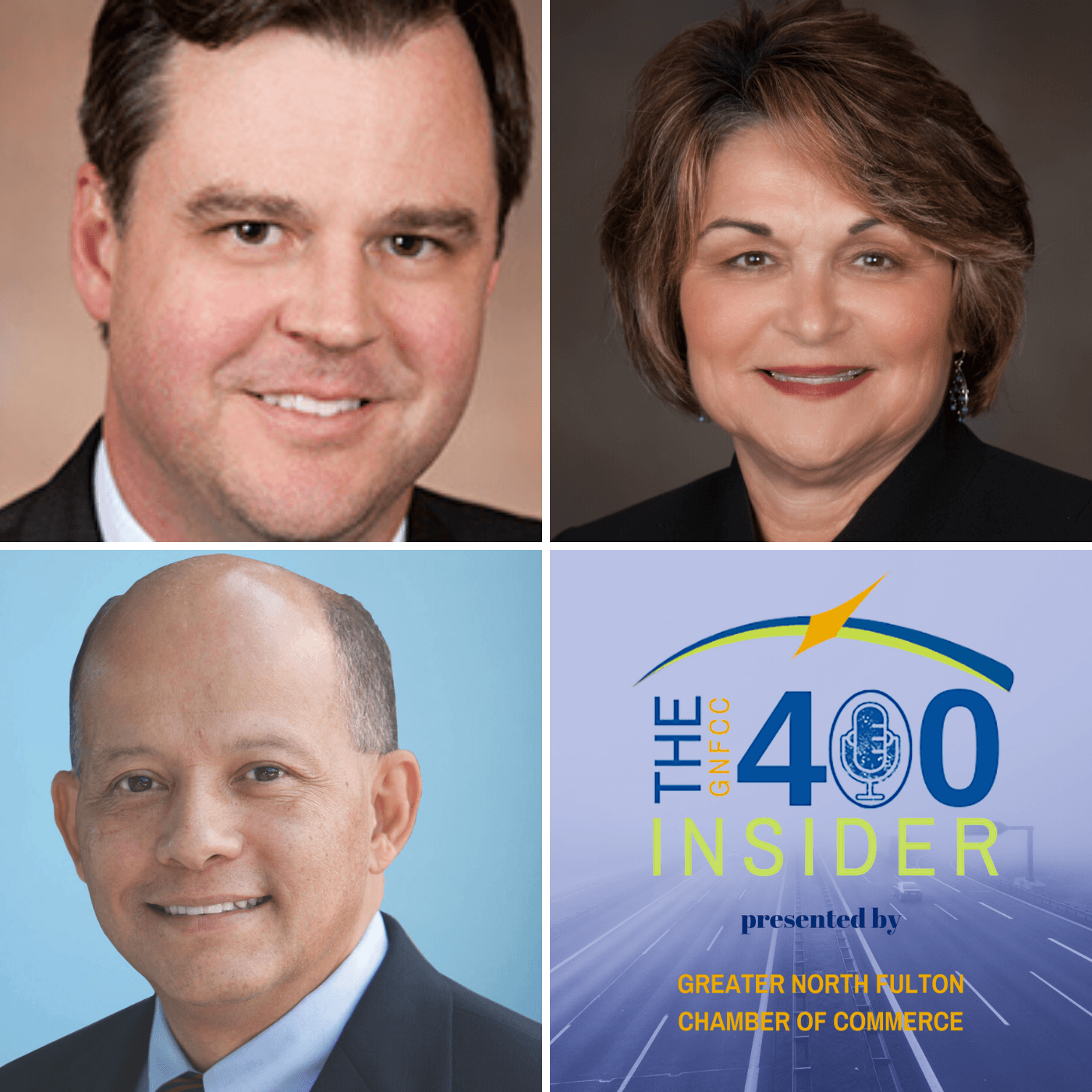
This episode of the GNFCC 400 Insider celebrates two of the Women of Excellence Award winners: Toseima Jiles owner of CAI Business Group and Freda Hardage, Community Liaison for Northside Hospital.

They each talked about their path to their chosen fields, some of the challenges they encountered, the ways they empower and encourage other women, lessons they would pass along, and much more. Congratulations to these Women of Excellence award winners!

The GNFCC 400 Insider is presented by the Greater North Fulton Chamber of Commerce and produced by the North Fulton studio of Business RadioX®.

Woman of Excellence – Rising Star Award

Toseima Jiles, Founder and Owner, CAI Business Group

Toseima Jiles, Founder and Owner, CAI Business Group

Toseima Jiles is a Consultant with CAI Business Group; the parent company of multiple business entities since 1991.  Toseima has dedicated her life to the love of the arts and alongside the pursuit of that passion, business and arts consulting have comfortably landed as her metaphoric equivalent of superstar ‘Beyonce’ and ‘Sasha Fierce’.  In other words, Toseima has accepted the fact that providing the experience of both has afforded a great opportunity to impact the lives of people in an authentic and unique way.

Knitting together the benefit of literary, visual, and performing arts to effectively teach life skills to children and offer creative solutions for business owners and management teams to increase profits is essential.

Hundreds of companies over the years have been helped, consulted, and inspired to produce more tangible results within their goals! We are proud to recognize the unique aspects of CAI Business Group within a diverse path that offers valuable perspective and insight for our clients.  To uplift, edify, and inspire people is a humbling underlying goal.

Choose CAI Business Group because they are passionate about results!

Company website | LinkedIn | Instagram

Woman of Excellence – Living Legacy

Freda Hardage, Community Liaison, Northside Hospital

Freda Hardage, Community Liaison, Northside Hospital

Freda Hardage has been a successful presence in Johns Creek for many years. Her accomplishments through service projects, community leadership, and her 41-year career at Northside Hospital have reached throughout the region.

For the past 21 years, Hardage managed the Alpharetta Campus for Northside Hospital’s outpatient services. As former Director, Foundation Services and Alpharetta Medical Campus, she oversaw the hospital’s philanthropy and community initiatives as well as managed the Alpharetta campus.

She continues to set the tone for giving back with her involvement in the community, serving on the boards of MARTA, The Drake House, and the Greater North Fulton Chamber.

Company website | LinkedIn

About GNFCC and The GNFCC 400 Insider

Kali Boatright, President and CEO of GNFCC

The GNFCC 400 Insider is presented by the Greater North Fulton Chamber of Commerce (GNFCC) and is hosted by Kali Boatright, President and CEO of GNFCC. The Greater North Fulton Chamber of Commerce is a private, non-profit, member-driven organization comprised of over 1400 business enterprises, civic organizations, educational institutions, and individuals.  Their service area includes Alpharetta, Johns Creek, Milton, Mountain Park, Roswell and Sandy Springs. GNFCC is the leading voice on economic development, business growth and quality of life issues in North Fulton County.

The GNFCC promotes the interests of our members by assuming a leadership role in making North Fulton an excellent place to work, live, play and stay. They provide one voice for all local businesses to influence decision-makers, recommend legislation, and protect the valuable resources that make North Fulton a popular place to live.

For more information on GNFCC and its North Fulton County service area, follow this link or call (770) 993-8806. For more information on other GNFCC events such as this North Fulton Mayors Appreciation Lunch, follow this link.

For the complete show archive of GNFCC 400 Insider, go to GNFCC400Insider.com. The GNFCC 400 Insider is produced by John Ray and the North Fulton studio of Business RadioX®.

Tagged With: CAI Business Group, Freda Hardage, GNFCC 400 Insider, Greater North Fulton Chamber of Commerce, Kali Boatright, MARTA, Northside Hospital, Toseima Jiles, women of excellence

Ginger Powell, Director of Development for the GMC Foundation/Northside Hospital

March 3, 2023 by Mike

Celebrating Powerhouse Women
Ginger Powell, Director of Development for the GMC Foundation/Northside Hospital
Loading
00:00 /
RSS Feed
Share
Link
Embed

Download file

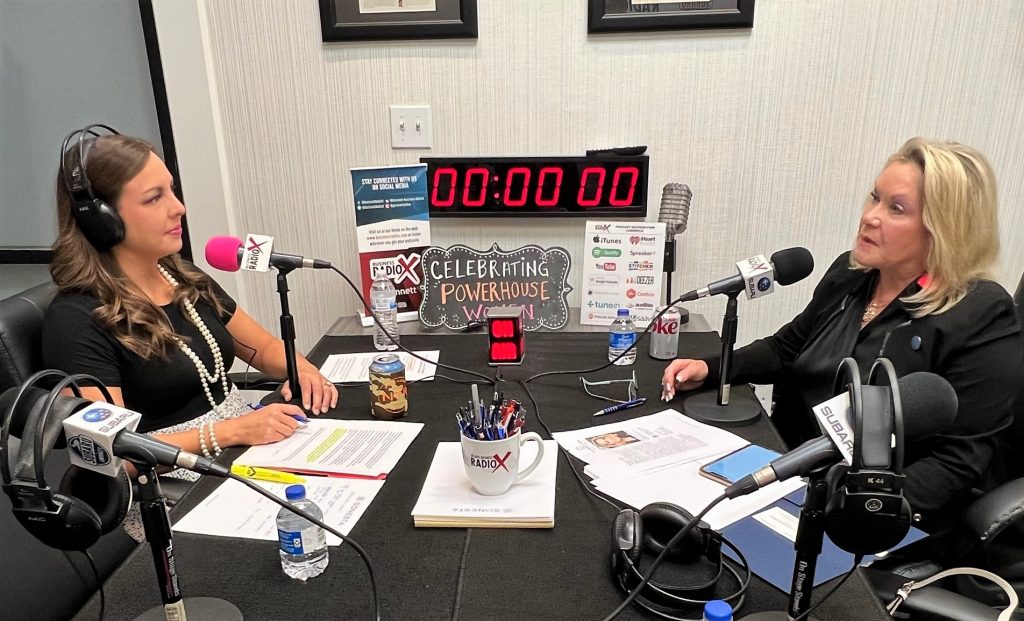
Ginger Powell and Amanda Pearch Marmolejo

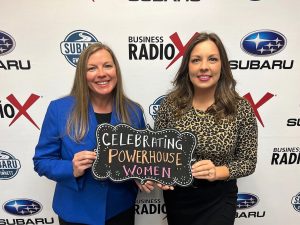
Celebrating Powerhouse Women salutes and recognizes women who are making an impact, whether it’s in business, philanthropy, public service, or elsewhere.

Ginger Powell/GMC Foundation (Northside Hospital)

As a nonprofit professional since 2001, Ginger Powell has had the opportunity to work with some of the most elite and philanthropic leaders in the greater Gwinnett area. In her role as Director of Development for the GMC Foundation (now part of Northside Hospital in Gwinnett), she provides leadership for an 80+ member Board of Directors, manages philanthropic contributions, and oversees the Foundation’s marketing and public relations efforts. During her tenure, several major capital campaigns have been successfully launched and completed, ultimately raising more than $80 million to invest back into Gwinnett’s community hospital system.

Since graduating from Leadership Gwinnett in 2011, she has served this organization in many capacities including chair of Management Team, Steering Committee and Alumni Programs. Currently, she serves on the Leadership Gwinnett Board of Trustees and the Foundation Board of Directors. She is an active member of the Rotary Club of Sugarloaf, where she is immediate past president and public relations chair. In 2019, she was named Rotarian of the Year.

Ginger graduated Magna Cum Laude from Georgia College and State University in 1998 with her Bachelor of Science degree and then earned her Master of Public Administration in the year 2000. She is married to her high school sweetheart, Bob, and they enjoy living on the family farm with their two children, Kiley and Michael and a multitude of animals.

Celebrating Powerhouse Women is presented by

Tagged With: amanda pearch, Amanda Pearch Marmolejo, Celebrating Powerhouse Women, Ginger Powell, GMC Foundation, NEMA, Northside Hospital, powerhouse women, Sourced, successful women, women business leaders, women business podcast, Women Empowerment, women executives

North Fulton Healthcare Leaders Forum:  Managing Pandemic Change and Planning for Recovery

May 7, 2020 by John Ray

North Fulton Healthcare Leaders
North Fulton Business Radio
North Fulton Healthcare Leaders Forum:  Managing Pandemic Change and Planning for Recovery
Loading
00:00 /
RSS Feed
Share
Link
Embed

Download file

GNFCC Healthcare Forum
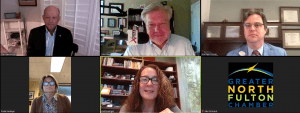
Clockwise from upper left: Jon-Paul Croom, President, Wellstar North Fulton Hospital, Freda Hardage, Director of Northside Alpharetta Medical Campus and Director, Foundation and Community Services, for Northside Hospital System, and Dr. Daniel Salinas, Chief Medical Officer, Children’s Healthcare of Atlanta

North Fulton Healthcare Leaders Forum:  Managing Pandemic Change and Planning for Recovery (“GNFCC 400 Insider,” Episode 36)

Three respected North Fulton healthcare leaders joined a forum organized by GNFCC to discuss the current state of Covid-19 care at their respective institutions. Jon-Paul Croom, Wellstar North Fulton Hospital, Freda Hardage, Northside Hospital System, and Dr. Daniel Salinas, Children’s Healthcare of Atlanta, also offered recommendations to individuals and businesses as Georgia “reopens,” dispelled myths, and much more. The host of “The GNFCC 400 Insider” is GNFCC CEO Kali Boatright, and the show is presented by the Greater North Fulton Chamber of Commerce and produced by the North Fulton studio of Business RadioX®. Business RadioX and John Ray sponsored and moderated this forum.

Children’s Healthcare of Atlanta, Dr. Daniel Salinas

GNFCC Healthcare Forum
Dr. Daniel Salinas

Daniel Salinas, MD, is Chief Medical Officer for Children’s Healthcare of Atlanta. He provides executive oversight for quality and patient safety, medical staff services, and affiliations. In addition, Dr. Salinas has worked closely with community providers to develop The Children’s Care Network, one of the first pediatric, clinically integrated networks in the country, for which he also has executive oversight. He has also worked to advance Children’s Behavioral Health and primary care strategies.  Dr. Salinas provides visionary leadership for the clinical delivery systems and draws on his skills as a relationship-builder and facilitator to forge strong relationships with physicians in Atlanta and across the state.   A native of Houston, Texas, Dr. Salinas currently serves on several boards and lives in Roswell.

Northside Hospital, Freda Hardage

Freda Hardage, Northside Hospital

Freda Hardage is the Director of Northside Alpharetta Medical Campus and Director, Foundation and Community Services for Northside System.  Freda’s responsibilities include all daily operations of Alpharetta Medical Campus which consists of 3 medical office buildings, 100 + physicians from multiple specialties.  Her foundation responsibilities include comprehensive oversight for all fundraising, donor giving, community activities and research grant writing for the hospital system.

Freda has volunteered for many organizations and also serves as the first MARTA Chair from North Fulton, President Emeritus and Board Member of The Drake House and Former Chair and Board Emeritus for GNFCC.  She has served with distinction on the North Fulton Poverty Task Force, Johns Creek Community Association, YMCA High Harbour Board and Windward Rotary.

Wellstar North Fulton Hospital, Jon-Paul Croom

Jon-Paul Croom, Wellstar North Fulton Hospital

Jon-Paul Croom is the President of Wellstar North Fulton Hospital, a 202-bed facility located in Roswell, GA.  Croom joined Wellstar in April of 2017.   Wellstar North Fulton Hospital is one of Georgia’s only Level Il Trauma Centers and delivers services including cardiovascular services, women’s services, Pain & Spine Center, Wound Care & Hyperbarics, and inpatient rehabilitation. North Fulton Hospital is a Primary Stroke Center arid an accredited Chest Pain Center.

Croom previously served as CEO for the 429-bed Central Mississippi Medical Center in Jackson, Miss. and opened the only burn center in Mississippi and increased the availability of inpatient psychiatric services at the facility.  Croom also lives in Roswell where he serves his community.

GNFCC Healthcare Forum

Questions and Topics in this Interview:

  • care for patients diagnosed with Covid-19
  • common myths surrounding Covid-19
  • collaboration between these organizations
  • North Fulton community support and best ways to further support
  • PPE (personal protection equipment) and other safety measures
  • social distancing
  • time sensitive and elective surgeries
  • expected future Covid-19 case loads
  • safety advice for individuals
  • guidance for businesses to safeguard employees and customers

About GNFCC and “The GNFCC 400 Insider”

North Fulton Mayor's Roundtable
Kali Boatright, President and CEO of GNFCC

“The GNFCC 400 Insider” (formerly “North Atlanta’s Bizlink”) is presented by the Greater North Fulton Chamber of Commerce (GNFCC) and is hosted by Kali Boatright, President and CEO of GNFCC. The Greater North Fulton Chamber of Commerce is a private, non-profit, member-driven organization comprised of over 1400 business enterprises, civic organizations, educational institutions and individuals.  Their service area includes Alpharetta, Johns Creek, Milton, Mountain Park, Roswell and Sandy Springs. GNFCC is the leading voice on economic development, business growth and quality of life issues in North Fulton County.

The GNFCC promotes the interests of our members by assuming a leadership role in making North Fulton an excellent place to work, live, play and stay. They provide one voice for all local businesses to influence decision makers, recommend legislation, and protect the valuable resources that make North Fulton a popular place to live.

For more information on GNFCC and its North Fulton County service area, follow this link or call (770) 993-8806.

For the complete show archive of “The GNFCC 400 Insider,” go to GNFCC400Insider.com. “The GNFCC 400 Insider” is produced by the North Fulton studio of Business RadioX®.

Tagged With: Children's Healthcare of Atlanta, COVID-19, Covid-19 case loads, covid-19 recovery, Daniel Salinas, Dr. Daniel Salinas, Freda Hardage, GNFCC 400 Insider, Greater North Fulton Chamber of Commerce, John Ray, Jon-Paul Croom, m&d, North Fulton Business Radio, Northside Alpharetta Medical Campus, Northside Hospital, personal protection equipment, PPE, social distancing, The Greater North Fulton Chamber of Commerce, WellStar, Wellstar North Fulton

Peripheral Arterial Disease – Top Docs Radio

March 6, 2015 by angishields

Top Docs Radio
Top Docs Radio
Peripheral Arterial Disease - Top Docs Radio
Loading
00:00 /
RSS Feed
Share
Link
Embed

Download file

Peripheral Arterial Disease

As many as 12 million Americans are dealing with peripheral arterial disease (PAD), a progressive blockage of the blood vessels that carry blood to the lower extremities.  For many of these patients, amputation is the outcome, leaving them without a foot, or in others, half or more of their leg.  Medical literature has shown that in these patients, their risk of death within 1 to 5 years of their amputation they have a 40% likelihood of amputation of the remaining leg and a significant risk of death.  It’s clearly a serious problem.

But we can reduce the rate of amputation among these patients and we can also reduce the severity of intervention required to address the problem if we catch it early.  Dr. Joseph Ricotta, vascular surgeon and director of the Northside Hearth & Vascular program, stopped by the studio to talk about what can be done to improve patient outcomes for those with PAD.  We talked about the troublesome statistics around peripheral arterial disease, including the fact that among diabetics with PAD who develop a non-healing wound resulting in amputation, as many as 50% of them never receive a non-invasive study that could prevent the loss of their leg.

That means we need our partners in primary care and foot/ankle surgery to take an aggressive stance when presented with patients who are at risk for PAD or who have a poorly-healing wound on their leg or foot.  There are numerous non-invasive studies that take only minutes in the vascular surgeon’s office that can readily identify patients who have blockage affecting blood flow to their feet.  In these cases, if caught early, surgeons like Dr. Ricotta have more options and greater probability they can reestablish adequate blood flow that helps a wound to heal, preventing or mitigating extent of amputation.

We talked about the fact that Northside offers access to 2 of the country’s 10 robotic devices that significantly improves the effectiveness of minimally-invasive procedures by allowing the vascular surgeons to access and treat previously-inaccessible locations.  Additionally, with the assistance of the robot, the surgeons are able to reduce damage that can occur on the inside of the vessel being treated, which reduces the likelihood that scarring after the procedure will block the vessel off again (a leading cause of reocclusion in PAD lesions).

I also spoke with foot and ankle surgeon, Dr. Michael Bednarz of Ankle & Foot Centers of Georgia, whose office is located in Woodstock, just north of Marietta.  He talked about treating PAD patients with wounds from the perspective of the specialist who is tasked with managing the wound and ultimately, treating it surgically as necessary (including amputation when efforts to heal the wound fail and serious infection is a risk).

We talked about the fact that amputation should be viewed as a last-ditch option.  And Mike shared that no patient should face amputation without having had a vascular study to determine if poor flow is contributing to the wound not healing.  He talked about the fact that when he’s presented with a poorly-healing wound, particularly in a patient with PAD risk factors such as diabetes, one of the first things he does is request a vascular study to assess blood flow.  He also utilizes Transcutaneous Oximetry, a non-invasive test that shows how well the tissue at the surface where a wound is located is getting oxygen.

With the results of those studies, he is able to address poor blow flow by referral to a vascular surgeon and/or to hyperbaric medicine (readily available in Atlanta and surrounding suburbs) to address poor oxygen levels in the skin.  He also evaluates other risk factors such as glucose levels and presence of infection, often resulting in consults with infectious disease and/or endocrine specialists to help heal the limb-threatening wound.  We talked about the fact that a multi-specialty approach insures that more patients can avoid amputation and the resultant high mortality rates that come with them.

Early involvement with an experienced wound specialist, vascular diagnostics/intervention, infection control, and endocrinology are all vital in helping patients avoid an amputation that might also cost them their life.

Special Guests:

Joseph Ricotta, MD, Medical Director, Heart & Vascular Institute, Northside Hospital  linkedin_small1  twitter_logo_small  facebook_logo_small3  youtube logo

Northside Vascular

  • Doctor of Medicine, Thomas Jefferson University School of Medicine
  • Surgical Residency, Johns Hopkins University School of Medicine
  • Fellowship, Vascular Surgery, Mayo Clinic
  • Fellowship, Advanced Endovascular Surgery, Cleveland Clinic Foundation
  • Associate Professor of Surgery, Georgia Regents University, University of Georgia School of Medicine

Michael Bednarz, DPM, Ankle & Foot Centers of Georgia  linkedin_small1  facebook_logo_small3  twitter_logo_small  youtube logo

Ankle & Foot Centers of Georgia

  • Doctor of Podiatric Medicine, Kent State University School of Podiatric Medicine
  • Residency, Department of Veteran Affairs Medical Center, Miami
  • Board Certified, American Board of Foot/Ankle Surgery
  • Recognized as a “Top Doc” in the WellStar Health System

Tagged With: Cumming, CW Hall, diabetic ulcer, diabetic wound, DPM, Dr. Joseph Ricotta, Dr. Michael Bednarz, endovascular intervention, Foot and Ankle Surgery, Health Care Radio, health radio, Healthcare, healthcare radio, hyperbaric physicians of georgia, hyperbarxs, Lower Extremity Amputation, Marietta, Michael Bednarz, Northside Hospital, orthopedic surgery, PAD, peripheral arterial disease, Peripheral Vascular Disease, Podiatry, Top Docs Radio, TopDocsRADIO, vascular bypass, Vascular Disease, vascular surgeon, Vascular Surgery, WellStar

Sleep Disorders – Top Docs Radio

January 23, 2015 by angishields

Top Docs Radio
Top Docs Radio
Sleep Disorders - Top Docs Radio
Loading
00:00 /
RSS Feed
Share
Link
Embed

Download file

North Atlanta Pulmonary and Sleep Specialists

Sleep Disorders

It is estimated that as many as 35-40% of Americans experience poor quality of sleep secondary to a variety of sleep disorders.  We continued our series with Northside Hospital this week as I sat down with Sleep Medicine specialist, Dr. Robert Albin.  We talked about the statistics around sleep disorders and Dr. Albin discussed the serious accidents that have occurred that are thought to be related to sleep deprivation.  Some of those include:  Three Mile Island, the Exxon Valdez oil spill, Chernobyl, a recent ferry accident in NYC, and more.

Dr. Albin shared how poor quality and low quantities of sleep can lead to heart disease, high blood pressure, poor mental function, depression, and others.  We talked about the process sleep specialists go through to determine the source of a person’s sleep disorder.  In many cases, the issue is borne out of mental or emotional stress rather than a physical/neurological  issue.  In those cases the sleep specialist will collaborate with a psychology/psychiatry specialist to help work through those causative issues.

For patients who have a sleep disorder related to brain chemistry/function or an obstructive process such as obstructive sleep apnea, the specialists have specialized tests they can conduct to determine the quality of sleep and determine the cause of the problem.  The sleep specialty team at Northside offers a variety of diagnostic studies/treatments and it was the first sleep center of its kind in the city.  For our listeners who are themselves or their loved ones are experiencing difficulty sleeping please take a listen to this week’s show and share it!  You might help someone you care about.

Special Guest:

Dr. Robert Albin, MD, of North Atlanta Pulmonary and Sleep Specialists

North Atlanta Pulmonary and Sleep Specialists

  • Board Certified, Pulmonology, Internal Medicine, and Sleep Medicine
  • Doctorate of Medicine, Cum Laude, Emory School of Medicine
  • Associate Medical Director of NAPS Center for Sleep disorders
  • Medical Director for Peachtree Road Race and Atlanta Marathon
  • Past President and current Board member of the Medical Association of Atlanta

Tagged With: CPAP, CW Hall, Dr. Robert Albin, Health Care Radio, health radio, Healthcare, healthcare radio, insomnia, matress, narcolepsy, Northside Hospital, sleep, sleep apnea, sleep disorders, sleep number, snoring, Top Docs Radio, TopDocsRADIO

Dr. Jon Minter of Northside Total Joint Specialists – Top Docs Radio

November 20, 2014 by angishields

Top Docs Radio
Top Docs Radio
Dr. Jon Minter of Northside Total Joint Specialists - Top Docs Radio
Loading
00:00 /
RSS Feed
Share
Link
Embed

Download file

Northside Total Joint Specialists

Dr. Jon Minter of Northside Total Joint Specialists

This week I sat down with Dr. Jon Minter of Northside Total Joint Specialists.  In our ongoing monthly series with Northside Hospital we learned about the various conditions that could lead to a total joint replacement.  Dr. Minter shared some great information about some of the techniques he uses now to perform the surgery, including using robotic assistance with portions of the procedure.  Having robotic assistance helps the surgeon minimize surgical trauma to the tissue in the surgical field, making the recovery process proceed more quickly and with less pain.

Dr. Minter talked about the fact that he is able to perform joint replacement for a wide variety of joints from knees, to hips, shoulders, wrists, ankles and even digits.  He is able to repair joint damage from disease processes such as arthritis as well as traumatic injuries.  I was surprised to learn that patients undergoing total hip replacement and total knee replacement can often go home to recover the same day as their surgery rather than staying for several days in the hospital.

Dr. Minter discussed how he takes a conservative approach to joint replacement, exploring non-surgical options where feasible to attempt to give the patient relief of pain while avoiding surgery if possible.  If you or a loved one is experiencing a decrease in activity in an effort to avoid pain you should seek a consultation with this specialist.  You will be pleased to experience his pleasant, personable demeanor.  We talked about the fact that when patients begin to avoid activity in an effort to prevent experiencing pain, they can see their heart health decrease over time, potentially shortening their lives.  Dr. Jon Minton of Northside Total Joint Specialists can help you or your loved ones get your life back through his expert, conservative approach to joint replacement.

Special Guest:

Dr. Jon Minter, DO, of Northside Total Joint Specialists  linkedin_small1 

Northside Total Joint Specialists

  • Doctor of Osteopathy, Kirksville Osteopathic Medicine
  • Residency, Orthopedic Surgery, Parkview Hospital
  • Adult Reconstructive and Arthritis Fellowship, Florida Orthopaedic Institute/Tampa General Hospital
  • Published Study Author and Frequent Lecturer on the subject of Joint Replacement

Tagged With: CW Hall, Dr. Jon Minter, Health Care Radio, health radio, Healthcare, healthcare radio, hip replacement, knee replacement, Northside Hospital, Northside Total Joint Specialists, orthopedic surgery, rheumatoid arthritis, robotic joint surgery, Top Docs Radio, TopDocsRADIO, total hip replacement, total joint replacement, total knee replacement

  • 1
  • 2
  • Next Page »

Business RadioX ® Network


Our Most Recent Episode

CONNECT WITH US

  • Email
  • Facebook
  • LinkedIn
  • Twitter
  • YouTube

Our Mission

We help local business leaders get the word out about the important work they’re doing to serve their market, their community, and their profession.

We support and celebrate business by sharing positive business stories that traditional media ignores. Some media leans left. Some media leans right. We lean business.

Sponsor a Show

Build Relationships and Grow Your Business. Click here for more details.

Partner With Us

Discover More Here

Terms and Conditions
Privacy Policy

Connect with us

Want to keep up with the latest in pro-business news across the network? Follow us on social media for the latest stories!
  • Email
  • Facebook
  • Google+
  • LinkedIn
  • Twitter
  • YouTube

Business RadioX® Headquarters
1000 Abernathy Rd. NE
Building 400, Suite L-10
Sandy Springs, GA 30328

© 2025 Business RadioX ® · Rainmaker Platform

BRXStudioCoversLA

Wait! Don’t Miss an Episode of LA Business Radio

BRXStudioCoversDENVER

Wait! Don’t Miss an Episode of Denver Business Radio

BRXStudioCoversPENSACOLA

Wait! Don’t Miss an Episode of Pensacola Business Radio

BRXStudioCoversBIRMINGHAM

Wait! Don’t Miss an Episode of Birmingham Business Radio

BRXStudioCoversTALLAHASSEE

Wait! Don’t Miss an Episode of Tallahassee Business Radio

BRXStudioCoversRALEIGH

Wait! Don’t Miss an Episode of Raleigh Business Radio

BRXStudioCoversRICHMONDNoWhite

Wait! Don’t Miss an Episode of Richmond Business Radio

BRXStudioCoversNASHVILLENoWhite

Wait! Don’t Miss an Episode of Nashville Business Radio

BRXStudioCoversDETROIT

Wait! Don’t Miss an Episode of Detroit Business Radio

BRXStudioCoversSTLOUIS

Wait! Don’t Miss an Episode of St. Louis Business Radio

BRXStudioCoversCOLUMBUS-small

Wait! Don’t Miss an Episode of Columbus Business Radio

Coachthecoach-08-08

Wait! Don’t Miss an Episode of Coach the Coach

BRXStudioCoversBAYAREA

Wait! Don’t Miss an Episode of Bay Area Business Radio

BRXStudioCoversCHICAGO

Wait! Don’t Miss an Episode of Chicago Business Radio

Wait! Don’t Miss an Episode of Atlanta Business Radio