Business RadioX ®

  • Home
  • Business RadioX ® Communities
    • Southeast
      • Alabama
        • Birmingham
      • Florida
        • Orlando
        • Pensacola
        • South Florida
        • Tampa
        • Tallahassee
      • Georgia
        • Atlanta
        • Cherokee
        • Forsyth
        • Greater Perimeter
        • Gwinnett
        • North Fulton
        • North Georgia
        • Northeast Georgia
        • Rome
        • Savannah
      • Louisiana
        • New Orleans
      • North Carolina
        • Charlotte
        • Raleigh
      • Tennessee
        • Chattanooga
        • Nashville
      • Virginia
        • Richmond
    • South Central
      • Arkansas
        • Northwest Arkansas
    • Midwest
      • Illinois
        • Chicago
      • Michigan
        • Detroit
      • Minnesota
        • Minneapolis St. Paul
      • Missouri
        • St. Louis
      • Ohio
        • Cleveland
        • Columbus
        • Dayton
    • Southwest
      • Arizona
        • Phoenix
        • Tucson
        • Valley
      • Texas
        • Austin
        • Dallas
        • Houston
    • West
      • California
        • Bay Area
        • LA
        • Pasadena
      • Colorado
        • Denver
      • Hawaii
        • Oahu
  • FAQs
  • About Us
    • Our Mission
    • Our Audience
    • Why It Works
    • What People Are Saying
    • BRX in the News
  • Resources
    • BRX Pro Tips
    • B2B Marketing: The 4Rs
    • High Velocity Selling Habits
    • Why Most B2B Media Strategies Fail
    • 9 Reasons To Sponsor A Business RadioX ® Show
  • Partner With Us
  • Veteran Business RadioX ®

Sam Perkins, Pūrgenix™ (PHI Technologies, LLC)

March 24, 2020 by John Ray

Pūrgenix™
Alpharetta Tech Talk
Sam Perkins, Pūrgenix™ (PHI Technologies, LLC)
Loading
00:00 /
RSS Feed
Share
Link
Embed

Download file

“Alpharetta Tech Talk,” Episode 14:  Sam Perkins, Pūrgenix™ (PHI Technologies, LLC)

Pūrgenix™ equips hospitals with patented technology which eliminates airborne pathogens in hospitals, preventing root infection sources which cause numerous illnesses and even deaths. Sam Perkins joined this edition of “Alpharetta Tech Talk” to discuss how this technology not only protects patients but hospital employees as well, reducing absenteeism and turnover. The host of “Alpharetta Tech Talk” is John Ray and this series is broadcast from the North Fulton Business RadioX® studio. Special thanks to Renasant Bank for their support of this episode of “Alpharetta Tech Talk.”

Sam Perkins, Pūrgenix™ (PHI Technologies, LLC)

Pūrgenix
Sam Perkins, CEO of Pūrgenix™ (PHI Technologies, LLC)

Sam Perkins is the CEO of Pūrgenix™ (PHI Technologies, LLC).

Parents entrust their child to a children’s hospital, only to have their child infected during their stay. Failure to address the root infection sources in hospitals causes these infections and creates headlines like: “6 deaths, more illnesses blamed on mold at Seattle Children’s hospital, CEO admits.” Hospital-acquired infections (HAIs), known in the healthcare industry as nosocomial infections, are increasingly being recognized as preventable. Infectious pathogens, which may have no adverse effect on a healthy individual, can be life threatening to a patient with a compromised immune system.

Hospitals currently employ multiple technologies, products and procedures for cleaning, disinfecting, and sterilizing different aspects of the hospital environment. The PurgenixMatrix™ augments these best-practice techniques by delivering the first hospital-wide, systemic approach to air disinfection. We reduce the risk of airborne HAIs and provide healthier air for patients, staff, and visitors alike through addressing pure air at the source, the HVAC system.

Pūrgenix® attacks the root of mold and disease pathogens in hospitals creating a pūrHospital®. The first pūrHospital®, Harrison Memorial Hospital, has a three-year record of zero hospital acquired sepsis and pneumonia, combined with 9 of 12 quarters with zero surgical site infections-results not seen until becoming a pūrHospital®. Pūrgenix® creates pūrHospital® pathogen elimination by installing the PurgenixMatrix™, their patented germ eliminating energy field, in every air handling. PurgenixMatrix™ generates an intense UVGI energy field that kills or deactivates infectious pathogens both in the passing air and on air handling unit (AHU) interior surfaces.

For more information, you can connect with Sam on LinkedIn, or email him directly.

Show Transcript

John Ray: [00:00:14] And hello again, everyone. Welcome to yet another edition of Alpharetta Tech Talk. I’m John Ray and we are in Alpharetta. We’re not in the Business RadioX Studio inside Renasant Bank as we usually are. We’re in a new normal, but we’re in Alpharetta, in a nice safe location and excited about being here today. We’ll get to our guest in a moment, but I want to remind you that we love Renasant Bank even though we can’t be there right now. And Renasant Bank has all the mobile applications that you need.

John Ray: [00:00:51] Whether it’s your friends, your family or your life, Renasant understands how you bank and offer those mobile services you need. Renasant also knows that sometimes you need to speak to real people the real answers and they have real offices you can find, 190 convenient locations throughout the south ready to serve you. Call ahead and check in with them. For more information, go to renasantbank.com, Renasant Bank understanding you. Member FDIC. And now, I want to welcome Sam Perkins. Sam is the CEO of Purgenix. And Sam is as timely as anything can be right now. Sam, welcome.

Sam Perkins: [00:01:35] Thank you very much, John. I appreciate the opportunity to speak with you here from a safe zone in Nashville, Tennessee.

John Ray: [00:01:42] Yeah. All right. You’re on the phone from Nashville. And company headquartered here in Alpharetta. But you’re working out of Nashville because that’s really kind of a little bit of ground zero in terms of what you do, right?

Sam Perkins: [00:01:54] It is. It’s really the epicenter of health care in the United States. And this is where we need to be. And our presence here is actually quite timely.

John Ray: [00:02:05] So, let’s get into it, talk a little bit about Purgenix. How are you helping folks?

Sam Perkins: [00:02:13] You know, I think, John, the best way to summarize it is really our mission. And if you believe that they’re catching something in a hospital, getting an infection in a hospital is probably one of the greatest fears, I think especially right now in these times, then what you do is you really understand our mission and that is that we create an air-handling system performance that we are able to remove these germ agents inside the air system, and then block them from being able to be spread around the hospital again. And that is our underlying mission. And that impact when you do it across the entire hospital creates a PurHospital.

John Ray: [00:03:00] So, the way you help hospitals is, I guess, you’re installing really aftermarket technology into the air handling systems, correct?

Sam Perkins: [00:03:15] That’s right. So, what we have, John, is we have a patented platform of an array of ultraviolet lamps. That array with our patent is able to smooth or create a curtain of energy inside the air system. And because where we do it, we placed that at the pivot point of all air and the air-handling unit from what’s called the cooling coil. And we then design the energy field to eliminate. It’s the dog. I’m at home with a dog.

John Ray: [00:03:49] Absolutely. And that’s okay. So-

Sam Perkins: [00:03:52] We eliminate those pathogens in the course of that by being able to remove it. And we can design it at different levels of energy depending upon what’s needed.

John Ray: [00:04:07] So, Purgenix has been around a while. You’ve had this technology for a while. And before the coronavirus came along, we’ll get to that in a second. Of course, that’s extraordinarily timely. But the airborne pathogens are a big problem in hospitals, generally.

Sam Perkins: [00:04:30] Yeah, that’s right. If you were to spend some time, I think the best example of the impact that we can have is at a hospital in Cynthiana, Kentucky, which is really the first PurHospital. And I’d recommend your listeners go and check out their Facebook page, their Instagram feed and other such social media to see the impact of PurHospital. What we did there was three years ago, we installed our system inside of every air-handling unit.

Sam Perkins: [00:05:01] And by doing so, I think the CEO best summarizes it by the reason for what she said, “We’ve had quarters before where we’ve had zero infections”, but they believed that this was the next layer through which they could then take all of the great practices and get a more consistent zero infection ratio. And if you’re interested, I’ll be happy to share with you what happened over the last three years.

John Ray: [00:05:26] You know, that would be great. And folks, we’ll put these links to this in the show notes as well, but yeah, we’d love for you to share that, Sam.

Sam Perkins: [00:05:33] So, what’s curious is that they’re a hospital that has gone in the medical world with zero hospital-acquired pneumonias when I last met with them in April in person. That’s an astounding record, but there’s more. They also had gone a thousand days with zero central-line infections. That is an amazing statistic as well, but they’re not finished. They went seven out of 10 quarters with zero surgical-site infections. So, before this moment in time where we’re confronting the COVID-19, they were already having these outstanding infection rates over the past period of time.

John Ray: [00:06:20] So, several things to pull out of that, but again, before we get to COVID-19, even before we get to that, let’s talk about, there’s a huge branding impact on that for the hospital, but address that if you would. And also, what’s the financial impact because it’s got to be tremendous for them.

Sam Perkins: [00:06:40] Yeah. Oh, it is. So, let’s talk about, first, the emotional part of this. And if you take a look at their social media page particularly the last two weeks and a new story that was done on March 9th, what they’re talking about is that they can now talk about being a safer environment. All of their media is saying that over the last two weeks in particular. They’re safer because they’re a PurHospital. And I think a great way of being able to say it is that after the hands are washed, the surfaces are clean. The CDC protocols are followed.

Sam Perkins: [00:07:17] PurHospital assures that as you go through that hospital, that you’re actually in the safest environment. And that emotional piece of what we talked about with PurHospital, they’re using in Harrison Memorial to reassure the reality that they are safer hospitals. That’s the emotional part of it. The financial piece is pretty significant too. Sheila Currans, The CEO at Harrison Memorial has shared that they’d already seen after a-year-and-a-half a reduction in their infection control costs.

Sam Perkins: [00:07:53] And in the impact on absenteeism, while unmeasured, the employees are very happy working in that environment because they too are safer. Remember, we do have people on the front lines that are taking care of us in the hospital and they’re being exposed to this too. And we’re helping them be safer in that hospital, and that’s an important piece for employees. I mean, the question is where would you rather work? A PurHospital or the other hospital. Another emotional piece.

Sam Perkins: [00:08:21] But the financial aspect of it too is that because of that, the employees are healthier, you have an impact on employee absenteeism. But there’s another hard cost piece that has not as much to do with the infection prevention, but because of where we do it, in the air-handling units, there are actually some very significant energy savings and operating savings from cleaning the systems and replacing filters that go away. And they, in fact, paid for this system alone. And they recognize that there at Harrison Memorial.

John Ray: [00:08:56] And there are plenty of studies out there relatedly that employees that feel good about where they work, that translates into bottom-line performance.

Sam Perkins: [00:09:09] Oh, yeah. There’s no doubt. We did a social media promotion, if you will, a year ago, where there is a restaurant in town, Biancke’s. It’s one of the oldest restaurants in all of Kentucky. Biancke’s is a wonderful old place. I love visiting there when I’m in town, visiting them. And we went and bought two $100 gift cards to Biancke’s. And in that, we had one for the community and one for the employees. And all we ask them to do is take a picture next to one of the banners that proclaims that they’re a PurHospital.

Sam Perkins: [00:09:49] One says, you know, “Shouldn’t your babies air be pure?”, the picture of the baby and the mom. “Take your picture next to that banner, tag Harrison Memorial Hospital. Put the hashtag, PurHospital”, which is P-U-R-H-O-S-P-I-T-A-L, “and put it on social media and you have an entry to win that gift card.” Well, we had somewhere around 156 employees do that with comments on social media such as, “I am so happy that my hospital where I work cares as much about me as we do about our patients.”

Sam Perkins: [00:10:21] That was a powerful message. And that was affirmation of exactly what you’re talking about. That’s awesome. Folks, if you just joined us, we’re speaking with Sam Perkins. And Sam is the Chief Executive Officer of Purgenix. So, Sam, you have installations. It’s amazing, the list of—if I can just read a few, the list of installations that you have beyond Harrison. I mean, that includes Emory, WellStar, UHS Aiken, Baptist Health. That’s a pretty impressive client list.

Sam Perkins: [00:11:00] Yeah. Where we were if we’ve been demonstrating the power of this, you know, until COVID-19, I had a rather difficult challenge explaining to everybody the invisible enemy they were fighting, the germs, right?

John Ray: [00:11:13] Right.

Sam Perkins: [00:11:14] I think COVID-19 has raised awareness around this and before, we’re talking about solving problems of C. diff, which redistributes in a hospital, we solved that for somebody. MRSA, we can go on with the list of nasty germs there in hospitals that cause these problems that we help eliminate from the air system. And we were doing individual installations. It’s really the change that we had three years ago over the PurHospital saying, “Hey, this is not about a single part. You need an entire protective envelope across the entire hospital.” And then, you can talk about it because, you know, the funny thing about air is it doesn’t know how to stay place, stay in one place, it moves around.

John Ray: [00:11:57] Right.

Sam Perkins: [00:11:57] So, covering the whole hospital makes a difference, and that’s sort of what happened. So, Harrison Memorial is our first PurHospital. But if I may, the hospital in Georgia that people may be interested in, our technology is throughout the Paulding Hospital. Now, they did not choose to take the PurHospital branding. And so, they’re not a PurHospital, but they could be. And what I do like is that when that hospital was built and introduced, I love how Mark Haney, who’s now retired from WellStar introduced to all of Georgia, in essence, on WSBT, Channel 2, the hospital from the mechanical room. I mean, when have you ever seen that before, John?

John Ray: [00:12:43] Yeah, really.

Sam Perkins: [00:12:45] You want to go there in the atrium, right? You want to go to the pretty place.

John Ray: [00:12:48] Exactly. With all the potted plants, right?

Sam Perkins: [00:12:51] Exactly. So, instead, he decided that the pretty place was actually down in the mechanical room showing our system on TV. This happened, what, six years ago when they opened that hospital.

John Ray: [00:13:03] Wow.

Sam Perkins: [00:13:05] And I love the statement, he said like, “This hospital is designed as an infection-prevention tool from the outset. We still have to do the basics, but now, we have the building working for us.” That’s a powerful statement.

John Ray: [00:13:19] Yeah, for sure, for sure.

Sam Perkins: [00:13:20] I mean, in most instances, John, what’s happening is not only, you know, you’re washing your hands, cleaning the surfaces, and what’s happening is you’ve got to remember that you’re doing this environment with the rebroadcast of this drug building, and that’s what we’re preventing.

John Ray: [00:13:39] And so, just to clarify, you’ve got all these installations in the various parts of that particular institution or a location. So, you mentioned WellStar Paulding. You know, there’s just certain aspects of that property that you cover. But the Harrison installation was noteworthy because you covered the entire facility.

Sam Perkins: [00:14:10] That’s right.

John Ray: [00:14:10] Yeah. And so, that’s really where you’re going with the company in terms of branding an entire facility a PurHospital.

Sam Perkins: [00:14:18] That’s right. So, a part of what we’re doing quite frankly is that we’re designing and building installing. We’re maintaining the system to make sure—because part of PurHospital’s re-certifying, it’s going to perform to the standards to which we are going that we said that it will perform. And so, PurHospital is about the reassurance that system is operating as designed.

John Ray: [00:14:39] Right. Right. And-

Sam Perkins: [00:14:41] That’s part of it. So, part of it is, you know, WellStar Paulding has a medical office building attached to it. We did not put our systems into the medical office building. So, that’s part of it, too, is they could become a PurHospital pretty quickly by covering that and such. So, that’s an example. You know, over at UHS Aiken, with Universal Health Services, we did all their surgical suite. And while they’re much safer, you know, again, it’s not the whole hospital that’s covered.

John Ray: [00:15:09] So, why don’t we talk about return on investment? Because that’s really what it’s all about for, certainly, the health care industry where they’re squeezed in terms of their returns and profits just like everyone else. They’re looking for the best return they can get. Why don’t you talk a little bit about that because that’s a compelling part of your story, it seems to me.

Sam Perkins: [00:15:34] No, there’s so many multiple paybacks. Let me break them down into three areas. And I think most importantly, let’s start with the leader around PurHospital, the impact on infections. We talked about that and the important thing is that let’s start to look at the infection rate in United States, about 900,000 hospital beds, 1.7 million infections in hospitals a year and a hundred thousand people die from them. So, that’s a one in 17 probability of death if you get an infection in a hospital, right?  So, every hospital bed then, if you average, represents just slightly less than two infections.

Sam Perkins: [00:16:18] So, every 17 infections that we block, there’s a life that’s been saved. The cost of fighting an infection for a hospital is about $16,000 per infection. If we block those infections, that’s an immediate return to them. Certainly, it’s the impact on families too. How about the patients? Let me speak to that person that had a hip replacement three years ago as a result of a mountain bike accident that I had and they found an infection. I asked to see the records and I understood that it came from the environment. And it was not from the infection of a body or a human. Never confirmed that I had it, but guess what I had to do, John?

John Ray: [00:17:00] What’s that?

Sam Perkins: [00:17:00] Well, I had to follow a six-week course of antibiotics three times a day followed by probiotics two hours after, and I had to do that for six weeks. Now, that’s when you get infected. 1.7 million people are having to go through this infection fight, and it’s no fun. I know this. So, this mission became very personal from that moment, let me assure you.

John Ray: [00:17:25] For sure.

Sam Perkins: [00:17:26] Yeah. So, now, we come back. I think the third area is employees. And for employees, it’s an issue of absenteeism. We’ve seen reductions of absenteeism anecdotally from 5% to 30%. That’s pretty dramatic. And the cost of replacing employees is significant in a hospital. And while we can’t frame exactly what that number is because there’s not enough experience with PurHospitals yet, but it’s a clear benefit that comes. Very measurable impacts.

Sam Perkins: [00:17:58] Put it in three sub-parts of the financial area, energy, operating and capital. So, on the energy side, you have all these giant fans and these big chillers that are operating, and they are probably up to 40% of the total energy bill, maybe 50 in many instances in the hospital. And because of what we do, we slow fans down. We make chillers operate more efficiently, and that is a very, very big number.

Sam Perkins: [00:18:31] We can pretty much assure in every instance, you’re going to see about a 3% to 6% reduction in total building energy from what we do. So, that’s the energy side. Operating savings come in the form of these giant cooling coils. Just think about your home air unit where you see these silver coils and things, that’s where the heat exchange happens. And in hospitals, we’ve got to clean them once, twice, sometimes, four times a year. They don’t have to do that anymore after we’ve installed.

Sam Perkins: [00:19:05] So, that’s a significant savings on that. And then, these things called HEPA filters, these filters are after the system to take out all these pathogens. That’s been the standard for years, but they change them out every quarter, maybe twice, four times a year. We have one customer that hasn’t changed their HEPA filters for three years. That’s a significant savings in the cost of those filters and the labor required to go put them and take them out and let’s not forget about waste and disposal, too.

John Ray: [00:19:35] Sure. Sure.

Sam Perkins: [00:19:36] So, all those are savings. And finally, here’s an interesting one. We installed at Washington and Lee University, so this is universal, doesn’t matter what the setting is. But the capital piece of it is interesting. They had 100,000 giant systems called 100,000 CFM is how we tell them, so it would be about, for them, $2.4 million to replace it. Well, if you’re a for-profit system, if I make those two air-handling units operate longer, this is where we get a little bit technical in ROI, but if I take systems $2.4 million worth of systems that you were going to replace and you don’t have to replace them now because what we do, we return them to performance, that $2.4 million, if you have a return on equity in your for-profit company, it’s worth a quarter million dollars a year to you because you redeploy it into areas where you can drive profit rather than a sunk cost like an air system. So, those are three things. Energy, operating cost, a capital cost. Combine that with absenteeism and infections, it’s a powerful ROI, John.

John Ray: [00:20:47] Yeah. It’s kind of mind-boggling. And something tells me that you’ve got a way—I mean, every hospital’s different. Something tells me you’ve got a way to kind of plug in the variables and show what the ROI is or the average internal rate of return for that investment.

Sam Perkins: [00:21:07] Absolutely. In fact, we make it so it’s virtually no out-of-pocket cost, plus it’s beautiful we’re doing this interview, you in Georgia, we had one project with Georgia Power, had granted us a pre-approval for a rebate, an energy rebate. So, we were able to come back and say, “Hey, customer, now, we’re going to make this so that your cost is spread across 60 months. We’re going to align that to all the savings that you have. We’ll guarantee on the energy and operating side that you will not be out of pocket. All these other benefits will be for free. Oh, and by the way, here’s a check from Georgia Power.”

John Ray: [00:21:45] You can’t beat that deal. That’s awesome.

Sam Perkins: [00:21:47] That’s true.

John Ray: [00:21:48] Yeah. Wow. Terrific. Folks, we’re speaking with Sam Perkins. And Sam is the CEO of Purgenix. So, Sam, we’ve walked all around the issue, but we need to dive into COVID-19 because you offer solutions there as well.

Sam Perkins: [00:22:11] Yes. Well, thank you. Yes, John. And because of the way we design our systems, we’re able to eliminate in one single pass 70% of the COVID-19 in a single pass in the air. It’s significant because the Daily Mail published an article, I think, week before last that they’re finding COVID-19 in air-handling ducts that we now saw this week, in fact, that they’re finding it can last in the air for up to three days. That’s the best estimate they have by the way.

John Ray: [00:22:47] Right.

Sam Perkins: [00:22:47] I believe it may be higher. And so, we’re in a place where we are going to be able to address the unknown. Let’s face it, it could last on surfaces. I’ve seen some people say up to eight days. So, think of it as if it goes airborne for three days, there are 96 air changes in a hospital, think about that. Ninety-six air changes for an hour, for three days, you’re approaching 300 opportunities for COVID-19 to be redistributed throughout that hospital.

John Ray: [00:23:26] Wow.

Sam Perkins: [00:23:28] I mean, that’s all theoretical, mind you, but it’s possible. And so, as a result, that’s just what we’re dealing with. And so, in the midst of all this, we are addressing it in that fashion. The more—here’s another important part of it though, and we don’t know what the answer is, yet that’s the challenge, but at least at Harrison Memorial, they’re likely to have a better answer than most, and that’s this, once you have a person with COVID-19, their immune system is obviously compromised, making them more susceptible to guess what, other infections, secondary infections. You’re going to be hard-pressed to find a better environment which to fight COVID-19 than Harrison Memorial Hospital because of their infection rate that they’ve had that’s been so low for three years that the exciting part about it is—and so, it’s something where I can address it directly, frankly.

John Ray: [00:24:33] Right.

Sam Perkins: [00:24:34] And sorry for the dogs barking, but they’re kind of over at the backdoor, and I’m not. We’re going to go live with this. It’s kind of like, you know, you’re used to being in a studio setting and we’re just where we are today.

John Ray: [00:24:49] I just assumed there was some hospital folks knocking at the backdoor and they were barking at that. So, that’s-

Sam Perkins: [00:24:55] You’re breaking the door down to get in here.

John Ray: [00:24:58] Yeah, exactly. They’re looking for you because you’ve got some answers to the problems they’ve got. So-.

Sam Perkins: [00:25:03] That’s great. That’s great.

John Ray: [00:25:05] Yeah.

Sam Perkins: [00:25:05] Yeah.

John Ray: [00:25:05] So, talk about what this involves because when you’re talking about—I mean, you’re not replacing an air handling system, but you are doing an installation. What does that involve? How long does it take? In other words, how quickly can you bring a solution to a hospital’s issues?

Sam Perkins: [00:25:26] Well, it requires design. So, how quickly can you build a building? You first have to make sure that you have the structural engineer on it, right? So, in order to get this airborne, every air-handling system has a very, very different performance metric, different air velocities, speed, different temperatures, all this impacts how you’re going to design it. And so, we do an assessment of the air-handling unit. And then, from there, the implementation can be pretty fast. So, for example, at Harrison Memorial Hospital, once we had the pre-engineering completed and we manufactured the system specifically for each area in the unit and installed them from beginning to end, it was about nine weeks, which is pretty fast for a custom delivery of a solution.

John Ray: [00:26:19] Oh, wow. Absolutely. And then, after the installation, judging by what you’ve done with Harrison, you’re keeping pretty close tabs on the payback of that installation.

Sam Perkins: [00:26:33] Yeah, that’s right. Well, we are. There are smaller hospital, they don’t have specifics, but they’ll tell you, for example, that their air-handling systems had dropped by 20 percent in terms of their energy consumption. And since that comprises about 50%t of their energy consumption at that particular hospital, they’ve seen a 10% reduction in their energy cost. Now, the reality of it is that they don’t see it completely because they put a brand-new section on the building. We installed across that one new area in the unit, but the remaining 13 or so were all old ones, and they have energy recovery and all of those. And we stopped the new one from becoming, shall I say, impaired.

John Ray: [00:27:22] Got you.

Sam Perkins: [00:27:23] Yeah.

John Ray: [00:27:25] Got you. So, just trying to get out with this question, who is a good fit for the technology you bring to bear? I mean, Harrison’s a smaller hospital in the scheme of things. I mean, how big of a hospital plant can you service?

Sam Perkins: [00:27:47] Any hospital, frankly. Now, this is a unique point in time and I look forward to the issue of how to scale, frankly. And I think that COVID-19 has created a background for conversation around the invisible enemy that has never been there before. Certainly, our entire economy has been disrupted by an invisible enemy. It now makes the point that why are we getting all these infections in hospitals and while it may be finally transmitted by touch, questions how to get there.

Sam Perkins: [00:28:20] And my answer has been that don’t think of an air system as something you’re breathing in, but think of it more like a shower of germs coming down on top of you. Stop the shower, stop the infections. If it’s not there, it can’t be transmitted. So, I think that conversation has changed because this COVID-19 and the things that are happening because now, people understand, “Hey, maybe we do have an invisible energy and we want to be more like Mark Haney and have a building working for us, not against us.”

John Ray: [00:28:47] Yes.

Sam Perkins: [00:28:48] So, the answer is any hospital, but, you know, there are other applications. You’re sitting in Georgia, and I’ve always wanted to and have not had the opportunity to get to the Georgia Aquarium. Think about this for a moment, John. I suspect that all the mammals that are inside that aquarium have to be fed probably some anti-fungals and antibiotics. And why would that be? And you think about it, any mammal in the middle of the ocean has been playing around or even penguins, you know, they don’t deal with fungus or human bacteria. And you’re putting them into a building, where there’s a whole bunch of humans, and Charles Schulz by the way almost had it right with his characters, so here you go, I think you’ll like this, is that the best image to have is everybody is a pig pen.

John Ray: [00:29:40] Nobody wants to hear that, but it’s true, right?

Sam Perkins: [00:29:45] It is true.

John Ray: [00:29:45] Right.

Sam Perkins: [00:29:46] So, he always had it right. You know, the cloud that you’re carrying just varies and you just don’t want to be around someone that has a cloud of COVID-19 right now. That’s kind of the way I think of it as a pig pen.

John Ray: [00:29:57] Sure.

Sam Perkins: [00:29:58] So, if you take all this collection of people in the Georgia Aquarium, one, you have the same kind of recirculating system. We did put a system in there a long time ago for one installation, but they need to cover the—for example, covering the entire aquarium would be great. Can you imagine PurAquarium, and it didn’t quite smell like an aquarium because we alter that environment, just like a hospital or how about another one? A corporate headquarters. So, you have people coming internationally, at least you used to, internationally in your headquarters, you don’t know what they’re carrying, what illness there is.

Sam Perkins: [00:30:34] And that corporate headquarters is not designed any differently than a hospital other than they’re not using HEPA filters. And so, these same germs, these pig pens come in and out at the corporate headquarters. There are germs that are going up in the air system, festering, growing and being redistributed. We had one customer a long, long time ago, John, we had an employee that came up and said, “Hey, I got this sickness from being in this building.” And they took that employee upstairs, showed them the installation that we had and said, “You did not get it here because that does not get through this”, right?

John Ray: [00:31:11] Yeah. Wow.

Sam Perkins: [00:31:12] So, I think there’s going to be a potential in the area of corporate headquarters. There’s going to be a potential for aquariums, in particular. And how about the fact that we’re in 37 buildings on the Emory campus. They’re not PurBuildings, they’d be PurBuilding-eligible. And by the way, Emory has the largest collection of PurBuilding-eligible buildings in the United States. Second is Washington and Lee University. But now, imagine you’re a parent and you’re sending your child off to college, well, they shut them down, why? Well, because they’re in buildings where they could share, and what if you could block the sharing through PurBuilding?

John Ray: [00:31:53] Right. Wow.

Sam Perkins: [00:31:53] There are a lot of applications. But right now, I think if I had to choose between, you know, capacity, I’m going to throw it at health care because that’s our most vulnerable population right now. And we would have to figure out how to expand out to those others because I have a sense in about two to three months, we’re going to have a line.

John Ray: [00:32:13] Yeah. Sounds like it. Sam Perkins is with us folks, CEO of Purgenix. Sam, this has been awesome. Maybe we ought to let you go and take calls from hospitals at this point. But for-

Sam Perkins: [00:32:30] Actually, this is kind of funny, John, but investment bankers that wouldn’t take my phone call three weeks ago are now calling me.

John Ray: [00:32:41] Imagine that. Nothing like an opportunistic investment banker, right?

Sam Perkins: [00:32:45] Well, let’s face it, they’re in it to make a profit, right?

John Ray: [00:32:49] Of course. Of course. They’re-

Sam Perkins: [00:32:51] I’m happy to take their calls because I’m having very nice conversations about something I love, which is, we’re protecting patients and people inside of hospitals and when you have that as a mission, that’s a pretty awesome life, let me tell you.

John Ray: [00:33:05] So true. Outstanding. Sam Perkins, folks, CEO of Purgenix. So, Sam, for those that would like more information, would like to be in touch, tell them how they could do that.

Sam Perkins: [00:33:17] Sure. If you have Twitter, I have a funny name, but it’s @three50one, T-H-R-E-E-50-O-N-E. You can certainly connect with me on LinkedIn and just let me know in both instances that you heard me on this program and I’ll connect with you. I get several requests, as you might imagine, but if you heard on the radio show and you want to connect, just let me know and we’ll connect there. You can always DM me on that. Otherwise, if you want more information directly, you can always reach me on my email address which is sam@purgenix, P-U-R-G-E-N-I-X, .net.

John Ray: [00:34:04] Awesome. Sam Perkins, thanks for being with us.

Sam Perkins: [00:34:07] John, it was a pleasure. Thank you for helping us spread that there is good news even in these times.

John Ray: [00:34:14] Absolutely. Thanks again.

Sam Perkins: [00:34:16] Thank you.

John Ray: [00:34:17] Folks, just a reminder that you can listen to this show every Thursday morning live at 11:30. If you miss any of our live shows—and we also have special shows throughout the week, but if you missed any of our shows, we’re Podcast Space. You can find us on all the major podcast platforms, that’s Apple, Google, Stitcher, TuneIn, Spotify, Overcast, happens to be my favorite. We’re even on YouTube. So, just check us out on any of your favorite podcast apps. Also, we’re online at alpharettatechtalk.com. You can find our complete archive of shows there and follow us on social media channels, North Fulton BRX is our handle on Twitter, Facebook and LinkedIn. So, for my guest, Sam Perkins, I’m John Ray. Join us next time here on Alpharetta Tech Talk.


About “Alpharetta Tech Talk”

“Alpharetta Tech Talk” is the radio show/podcast home of the burgeoning technology sector in Alpharetta and the surrounding GA 400 and North Fulton area. We feature key technology players from a dynamic region of over 900 technology companies. “Alpharetta Tech Talk” comes to you from from the North Fulton studio of Business RadioX®, located inside Renasant Bank in Alpharetta.

Past episodes of “Alpharetta Tech Talk” can be found at alpharettatechtalk.com.

Renasant Bank has humble roots, starting in 1904 as a $100,000 bank in a Lee County, Mississippi, bakery. Since then, Renasant has grown to become one of the Southeast’s strongest financial institutions with approximately $12.9 billion in assets and more than 190 banking, lending, wealth management and financial services offices in Mississippi, Alabama, Tennessee, Georgia and Florida. All of Renasant’s success stems from each of their banker’s commitment to investing in their communities as a way of better understanding the people they serve. At Renasant Bank, they understand you.




Tagged With: Alpharetta, Alpharetta Tech Talk, coronavirus, COVID-19, Harrison Memorial Hospital, Novel Coronavirus, PHI Technologies, pneumonia, Purgenix, PurgenixMatrix, Sam Perkins, sepsis

Resources for Business Owners in Uncertain Times – Kali Boatright, CEO of the Greater North Fulton Chamber of Commerce

March 18, 2020 by John Ray

Kali Boatright
North Fulton Business Radio
Resources for Business Owners in Uncertain Times – Kali Boatright, CEO of the Greater North Fulton Chamber of Commerce
Loading
00:00 /
RSS Feed
Share
Link
Embed

Download file

Kali Boatright, President and CEO of GNFCC

Resources for Business Owners in Uncertain Times – Kali Boatright, CEO of the Greater North Fulton Chamber of Commerce

Business owners are hurting due to the challenging environment created by the coronavirus pandemic. Kali Boatright, CEO of the Greater North Fulton Chamber of Commerce, joined the “GNFCC 400 Insider” to discuss what GNFCC has done to distill resources for business owners in uncertain times.

About GNFCC and “The GNFCC 400 Insider”

The “GNFCC 400 Insider” (formerly “North Atlanta’s Bizlink”) is presented by the Greater North Fulton Chamber of Commerce (GNFCC) and is hosted by Kali Boatright, President and CEO of GNFCC. The Greater North Fulton Chamber of Commerce is a private, non-profit, member-driven organization comprised of over 1400 business enterprises, civic organizations, educational institutions and individuals.  Their service area includes Alpharetta, Johns Creek, Milton, Mountain Park, Roswell and Sandy Springs. GNFCC is the leading voice on economic development, business growth and quality of life issues in North Fulton County.

The GNFCC promotes the interests of our members by assuming a leadership role in making North Fulton an excellent place to work, live, play and stay. They provide one voice for all local businesses to influence decision makers, recommend legislation, and protect the valuable resources that make North Fulton a popular place to live.

For more information on GNFCC and its North Fulton County service area, follow this link or call (770) 993-8806.

For the complete show archive of “The GNFCC 400 Insider,” go to GNFCC400Insider.com. “The GNFCC 400 Insider is produced by the North Fulton studio of Business RadioX®.

Tagged With: coronavirus, coronavirus effect on business, GNFCC, GNFCC 400 Insider, Greater North Fulton Chamber of Commerce, Kali Boatright, Novel Coronavirus, resources for business owners, The Greater North Fulton Chamber of Commerce, uncertain times

Charlie Brown, Loyal Trust Bank

March 16, 2020 by John Ray

Loyal Trust Bank
North Fulton Business Radio
Charlie Brown, Loyal Trust Bank
Loading
00:00 /
RSS Feed
Share
Link
Embed

Download file

Loyal Trust Bank
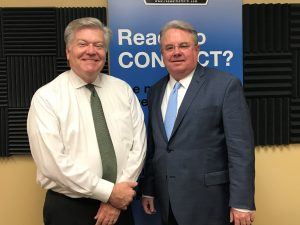
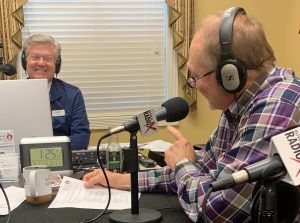
John Ray and Charlie Brown

North Fulton Business Radio, Episode 201:  Charlie Brown, Loyal Trust Bank

Charlie Brown, CEO of the recently opened Loyal Trust Bank, joins this edition of “North Fulton Business Radio.” Charlie discusses his bank’s mission and target customers, how technology helps a newly-formed bank like his serve clients better, and the impact he sees from the coronavirus. “North Fulton Business Radio” is hosted by John Ray and is broadcast from the North Fulton Business RadioX® studio inside Renasant Bank in Alpharetta.

Charlie Brown, Loyal Trust Bank

Loyal Trust Bank
Charlie Brown, Loyal Trust Bank

Charlie Brown is the President and CEO of Loyal Trust Bank. “Comfortable” and “easier” are words some customers are using to describe doing business with the bank due to its multi-cultural approach to banking.

This is also due in large part because the headquarters is local, opening November 15, 2019 after the Founding Directors discovered a need for just such a bank. This location for a headquarters means the policy and decision makers, including the board and executives are close to the customers or know them personally as well as active in the community. This availability and local focus allows leadership in the bank to consider the communities to financial needs and respond accordingly.

Secondly, Loyal Trust Bank is the only bank headquartered in Johns Creek, GA, the organization holds the distinction of being a truly multi-cultural community bank as evidenced by its board of directors and staffing. Again, this allows anyone from multiple cultures to do business with the bank and work with a banking professional that understands their language and culture. Specifically, the bank has a focus as a start on the Asian American community as well as the business community from all cultures.

Location:  11675 Medlock Bridge Rd., Johns Creek, GA 30097. You can learn more by visiting their website or by calling 678-783-8018.

Founding Directors include:

Rose Jarboe, Chairwoman, CEO of WePartner
Charlie Brown, CEO of Loyal Trust Bank
Bill Abernathy, owner of Abernathy Bank Consulting and former regional OCC Bank Examiner
Julin Gu, Founder and President of China US Technology Innovation Center, Johns Creek, Georgia
John Lewis Jr., Partner, Shook, Hardy & Bacon, LLP as well as former Private Bank of Buckhead Board Member
Edward Oh, Founder and CEO of Pac Tell Group dba US Fibers
James Park, CEO and owner of Sun’s Transfer Co., Inc.
Bo Shen, Founder and Managing Partner of Fenbushi Capital
Dr. Dong Wang, CEO/Neurologist, Georgia Neuro-diagnostic & Treatment Center

Loyal Trust BankCharlie Brown, CEO:

Charles Brown is the President & Chief Executive Officer of Loyal Trust Bank and has over 20 years of community bank chief executive officer experience in the position having built, bought and sold multiple banks over his career of 30 plus years in the industry. Mr. Brown most recently started Insignia Bank in 2006 (Sarasota, Florida) and served as its founding Chairman and Chief Executive Officer until its sale in 2017, where Mr. Brown was able to achieve record returns. He was honored to be appointed by Chairman Sheila Bair of the FDIC to be one of only 13 bankers to represent his region on the FDIC Community Bank Advisory Board in Washington, D.C. for a period of over five years while serving as President and Chief Executive Officer of Insignia Bank. Additionally, he served for over six years as one of two bankers to represent his state with the American Bankers Association in D.C. on its Community Bank Advisory Board.

Loyal Trust Bank

North Fulton Business Radio” is broadcast from the North Fulton studio of Business RadioX®, located inside Renasant Bank in Alpharetta. You can find the full archive of shows by following this link.

Renasant Bank has humble roots, starting in 1904 as a $100,000 bank in a Lee County, Mississippi, bakery. Since then, Renasant has grown to become one of the Southeast’s strongest financial institutions with over $13 billion in assets and more than 190 banking, lending, wealth management and financial services offices in Mississippi, Alabama, Tennessee, Georgia and Florida. All of Renasant’s success stems from each of their banker’s commitment to investing in their communities as a way of better understanding the people they serve. At Renasant Bank, they understand you because they work and live alongside you every day.

Tagged With: coronavirus, coronavirus effect, coronavirus effect on business, de novo bank, Loyal Trust Bank, multi-cultural bank, north fulton business, North Fulton Business Radio, Novel Coronavirus, startup bank

To Your Health With Dr. Jim Morrow: Episode 28, Coronavirus Update and Tinnitus

March 12, 2020 by John Ray

tinnitus
North Fulton Studio
To Your Health With Dr. Jim Morrow: Episode 28, Coronavirus Update and Tinnitus
Loading
00:00 /
RSS Feed
Share
Link
Embed

Download file

tinnitus
Dr. Jim Morrow

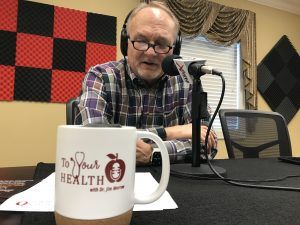
To Your Health With Dr. Jim Morrow: Episode 28:  Coronavirus Update and Tinnitus

On this edition of “To Your Health with Dr. Jim Morrow,” Dr. Morrow updates the current information on the coronavirus and also discusses tinnitus, its causes and symptoms, and treatment options for people living with “ringing in the ears.” “To Your Health” is brought to you by Morrow Family Medicine, which brings the CARE back to healthcare.

About Morrow Family Medicine and Dr. Jim Morrow

Morrow Family Medicine is an award-winning, state-of-the-art family practice with offices in Cumming and Milton, Georgia. The practice combines healthcare information technology with old-fashioned care to provide the type of care that many are in search of today. Two physicians, three physician assistants and two nurse practitioners are supported by a knowledgeable and friendly staff to make your visit to Morrow Family Medicine one that will remind you of the way healthcare should be.  At Morrow Family Medicine, we like to say we are “bringing the care back to healthcare!”  Morrow Family Medicine has been named the “Best of Forsyth” in Family Medicine in all five years of the award, is a three-time consecutive winner of the “Best of North Atlanta” by readers of Appen Media, and the 2019 winner of “Best of Life” in North Fulton County.

Dr. Jim Morrow, Morrow Family Medicine, and Host of “To Your Health With Dr. Jim Morrow”

Dr. Jim Morrow is the founder and CEO of Morrow Family Medicine. He has been a trailblazer and evangelist in the area of healthcare information technology, was named Physician IT Leader of the Year by HIMSS, a HIMSS Davies Award Winner, the Cumming-Forsyth Chamber of Commerce Steve Bloom Award Winner as Entrepreneur of the Year and he received a Phoenix Award as Community Leader of the Year from the Metro Atlanta Chamber of Commerce.  He is married to Peggie Morrow and together they founded the Forsyth BYOT Benefit, a charity in Forsyth County to support students in need of technology and devices. They have two Goldendoodles, a gaggle of grandchildren and enjoy life on and around Lake Lanier.

Facebook: https://www.facebook.com/MorrowFamMed/

LinkedIn: https://www.linkedin.com/company/7788088/admin/

Twitter: https://twitter.com/toyourhealthMD

The complete show archive of “To Your Health with Dr. Jim Morrow” addresses a wide range of health and wellness topics, and can be found at www.toyourhealthradio.com.

Dr. Morrow’s Show Notes

What is tinnitus?

  • Tinnitus is a problem that causes you to hear a noise in one ear or both ears.
    • People commonly think of it as ringing in the ear.
    • It also can be roaring, clicking, buzzing, or other sounds.
    • Some people who have tinnitus hear a more complex noise that changes over time.
    • You may hear the noise constantly, or it may come and go.
  • In most cases, people who have tinnitus hear noise in their head when no outside sound is there.
    • They are the only ones who can hear the sound.
      • This type of tinnitus is called “subjective tinnitus.”
      • It can happen because certain nerves are not functioning normally or because there is a problem with part of your ear.
    • In rare cases, tinnitus is caused by an actual sound that occurs inside or near the ear, such as from nearby blood vessels.
      • The sound can also be heard by the doctor examining you.
      • This type of tinnitus is called “objective tinnitus.”
    • Another type of tinnitus is”pulsatile tinnitus”
      • This is basically when you can hear your heartbeat in your ear.
      • It can be related to vascular disease
        • but more often than not, it is just you hearing your heartbeat in your ear.
      • The word tinnitus is of Latin origin, meaning “to ring or tinkle.”
        • Tinnitus has two different pronunciations, both of which are correct and interchangeable:
          • ti-NIGHT-us: typically used by patients and laypeople
          • TINN-a-tus: typically used by clinicians and researchers


The Journey of Sound to the Brain

  • This is how this magic happens:
    • Sound waves are captured by the out ear
    • They travel through the ear cana to the eardrum
    • The eardrum vibrates and causes three little bones to vibrate
      • The malleus, the incus and the stapes.
    • These cause vibration in the cochlea where the waves are converted into electrical energy and an impulse is sent down the auditory nerve to the brain.
    • The brain interprets the impulse as sound.


  • So… if a tree falls in the forest and no one is there to hear it, does it make a sound?


  • Included in our show notes will be a link to a YouTube video from NIH about this journey.

https://youtu.be/eQEaiZ2j9oc


Symptoms of tinnitus

  • The main symptom of tinnitus is hearing sounds in your ears.
    • The sound could be ringing.
    • It may also sound like blowing, roaring, clicking, buzzing, hissing, or humming.
    • The noises can be soft or loud.
    • They can be high pitched or low pitched.
    • You may hear them in only one ear or in both ears.


What causes tinnitus?

  • Tinnitus is not a disease itself.
    • It is a symptom of an underlying health problem.
    • The following are among the most common causes of tinnitus:
      • Exposure to loud noises,
        • which can lead to noise-induced hearing loss over time.
      • Hearing loss related to aging.
      • Certain medicines that can damage the inner workings of the ear.
        • For example, taking high doses of aspirin every day may lead to tinnitus.
      • Eustachian tube dysfunction.
        • This is the tube that leads from the middle ear to the back of the throat.
      • Infections of the inner ear, such as
        • otitis media or
        • labyrinthitis.
      • Meniere’s disease,
        • an inner-ear condition that involves hearing loss and dizziness.
  • Other causes:
    • Allergies,
    • high blood pressure,
    • low blood pressure,
    • diabetes,
    • tumors, and
    • head injuries can also cause tinnitus.
    • If you have a foreign object in your ear or a build-up of ear wax, you may also experience tinnitus.
  • In most cases, the cause of tinnitus cannot be identified.

How is tinnitus diagnosed?

  • Your doctor will probably take a detailed medical history.
    • He or she will want to know about any medical conditions you may have and any history of infections.
    • Your doctor also needs to know what medicines you are taking,
      • including herbal products or supplements.
    • He or she will check your ears.
    • They may give you a hearing test.
    • They may also order other tests to find out what is causing your tinnitus.
      • These could include
        • a head CT scan,
        • a head MRI scan, or
        • blood vessel studies.
        • Your doctor might refer you to an otolaryngologist.
          • This is a doctor that specializes in the ear, nose, and throat (also called an ENT doctor).


Can tinnitus be prevented or avoided?

  • To prevent tinnitus or keep it from getting worse,
    • avoid long-term exposure to loud noises and activities that put you at risk for hearing loss.
    • If you know you’re going to be around loud noises, take precautions by wearing earplugs or earmuffs.
    • If you listen to music through headphones, keep the volume low.


  • If you have tinnitus, avoid things that seem to make it worse.
    • These may include:
      • nicotine,
      • alcohol, or
      • cafffeine


Treatment

  • Treatment will depend on what is causing your tinnitus.
    • For example, if a medicine you are taking causes your tinnitus, your doctor may recommend you stop taking that medicine.
      • Remember, you should never stop taking a prescription medicine without talking to your doctor first.
    • If an underlying condition, such as high blood pressure, causes your tinnitus,
      • your doctor can create a treatment plan for you to follow.
      • Usually, tinnitus goes away once the condition that is causing it is treated.
    • When no specific cause can be identified,
      • your doctor will probably focus on making your tinnitus easier to tolerate.
      • Some possible methods include:
      • Hearing aids:
        • For people who have tinnitus and hearing loss, using a hearing aid may be helpful.
        • When you wear a hearing aid, things you need to hear will be louder than the ringing, buzzing, or clicking sound.
      • Sound generators (maskers):
        • Wearable sound generators can be placed behind your ear and create white noise (constant background noise) or other sounds.
        • This “masks” the tinnitus and makes it less noticeable.
        • Some people also use bedside sound generators to help them sleep.
      • Counseling:
        • Some people who have tinnitus become anxious or depressed.
        • If you have tinnitus and are struggling, seeking help through a counselor and/or a support group may help you cope.
        • Counseling can also be used to teach you how to take the focus off your tinnitus.
      • Tinnitus retraining therapy:
        • This method uses a mix of counseling with maskers or other approaches.
        • The goal is to teach your brain to ignore the sounds you hear.
        • This isn’t a quick fix, but many people find it useful with time and practice.
      • Relaxing:
        • Stress can make tinnitus worse.
        • Your doctor can suggest relaxation techniques that might help you deal with your stress.
      • Medicines:
        • Currently, there are no medicines specifically designed for treating tinnitus.
        • Some medicines, such as certain ones used to treat anxiety, have been shown to relieve tinnitus for some people.
        • Talk to your doctor about whether medicine might relieve your symptoms.


Living with tinnitus

  • For many people with tinnitus, the condition is just a mild distraction.
    • But for some, tinnitus causes distress and negatively affect their quality of life.
    • It can cause
      • anxiety,
      • depression,
      • sleep disturbances, and
      • poor concentration.
    • To lessen the impact of tinnitus on your life, try the following:
      • Avoid loud noises and sounds.
      • Control your blood pressure.
      • Exercise regularly for good circulation.
      • Get plenty of sleep and avoid fatigue.
      • Take the focus off your tinnitus.
        • Use techniques such as sound generators and counseling to push it to the background.
        • Remember that the more you think about tinnitus, the more bothersome it will become.


Tagged With: coronavirus, Dr. Jim Morrow, hearing loss, Morrow Family Medicine, Novel Coronavirus, ringing in the ears, tinnitus, To Your Health, To Your Health With Dr. Jim Morrow

To Your Health With Dr. Jim Morrow: Episode 26, Novel Coronavirus

February 12, 2020 by John Ray

novel coronavirus
North Fulton Studio
To Your Health With Dr. Jim Morrow: Episode 26, Novel Coronavirus
Loading
00:00 /
RSS Feed
Share
Link
Embed

Download file

novel coronavirus
Dr. Jim Morrow

To Your Health With Dr. Jim Morrow: Episode 26:  Novel Coronavirus

On this edition of “To Your Health with Dr. Jim Morrow,” Dr. Morrow discusses the 2019 Novel Coronavirus (2019-nCoV), a potentially fatal respiratory virus which originated in Wuhan, China. “To Your Health” is brought to you by Morrow Family Medicine, which brings the CARE back to healthcare.

About Morrow Family Medicine and Dr. Jim Morrow

Morrow Family Medicine is an award-winning, state-of-the-art family practice with offices in Cumming and Milton, Georgia. The practice combines healthcare information technology with old-fashioned care to provide the type of care that many are in search of today. Two physicians, three physician assistants and two nurse practitioners are supported by a knowledgeable and friendly staff to make your visit to Morrow Family Medicine one that will remind you of the way healthcare should be.  At Morrow Family Medicine, we like to say we are “bringing the care back to healthcare!”  Morrow Family Medicine has been named the “Best of Forsyth” in Family Medicine in all five years of the award, is a three-time consecutive winner of the “Best of North Atlanta” by readers of Appen Media, and the 2019 winner of “Best of Life” in North Fulton County.

Dr. Jim Morrow, Morrow Family Medicine, and Host of “To Your Health With Dr. Jim Morrow”

novel coronavirus
Dr. Jim Morrow, Morrow Family Medicine and Host of “To Your Health”

Dr. Jim Morrow is the founder and CEO of Morrow Family Medicine. He has been a trailblazer and evangelist in the area of healthcare information technology, was named Physician IT Leader of the Year by HIMSS, a HIMSS Davies Award Winner, the Cumming-Forsyth Chamber of Commerce Steve Bloom Award Winner as Entrepreneur of the Year and he received a Phoenix Award as Community Leader of the Year from the Metro Atlanta Chamber of Commerce.  He is married to Peggie Morrow and together they founded the Forsyth BYOT Benefit, a charity in Forsyth County to support students in need of technology and devices. They have two Goldendoodles, a gaggle of grandchildren and enjoy life on and around Lake Lanier.

Facebook: https://www.facebook.com/MorrowFamMed/

LinkedIn: https://www.linkedin.com/company/7788088/admin/

Twitter: https://twitter.com/toyourhealthMD

The complete show archive of “To Your Health with Dr. Jim Morrow” addresses a wide range of health and wellness topics, and can be found at www.toyourhealthradio.com.

Dr. Morrow’s Show Notes

The 2019 Novel Coronavirus

• 2019 Novel Coronavirus (2019-nCoV) is a virus (more specifically, a coronavirus) identified as the cause of an outbreak of respiratory illness first detected in Wuhan, China.
◦ Early on, many of the patients in the outbreak in Wuhan, China reportedly had some link to a large seafood and animal market, suggesting animal-to-person spread.
◦ However, a growing number of patients reportedly have not had exposure to animal markets, indicating person-to-person spread is occurring.
◦ At this time, it’s unclear how easily or sustainably this virus is spreading between people.

How It Spreads

• Much is unknown about how 2019-nCoV, a new coronavirus, spreads.
◦ Current knowledge is largely based on what is known about similar coronaviruses.
◦ Coronaviruses are a large family of viruses that are common in many different species of animals, including camels, cattle, cats, and bats.
◦ Rarely, animal coronaviruses can infect people and then spread between people such as with MERS, SARS, and now with 2019-nCoV.
• Most often, spread from person-to-person happens among close contacts (about 6 feet).
◦Person-to-person spread is thought to occur mainly via respiratory droplets produced when an infected person coughs or sneezes, similar to how influenza and other respiratory pathogens spread.
◦ These droplets can land in the mouths or noses of people who are nearby or possibly be inhaled into the lungs.
◦ It’s currently unclear if a person can get 2019-nCoV by touching a surface or object that has the virus on it and then touching their own mouth, nose, or possibly their eyes.
• Typically, with most respiratory viruses, people are thought to be most contagious when they are most symptomatic (the sickest).
• It’s important to note that how easily a virus spreads person-to-person can vary.
◦ Some viruses are highly contagious (like measles), while other viruses are less so.
◦ There is much more to learn about the transmissibility, severity, and other features associated with 2019-nCoV and investigations are ongoing.
◦ While research has just begun, scientists have estimated that each person with the new coronavirus could infect somewhere between 1.5 and 3.5 people without effective containment measures.
 That would make the virus roughly as contagious as SARS, another coronavirus that circulated in China in 2003 and was contained after it sickened 8,098 people and killed 774.

◦ Respiratory viruses like these can travel through the air, enveloped in tiny droplets that are produced when a sick person breathes, talks, coughs or sneezes.
 These droplets fall to the ground within a few feet.
 That makes the virus harder to get than pathogens like measles, chickenpox and tuberculosis, which can travel a hundred feet through the air.
 But it is easier to catch than H.I.V. or hepatitis, which spread only through direct contact with the bodily fluids of an infected person.

How far viruses travel 

• Coronaviruses can travel only about six feet from the infected person. Itʼs unknown how long they live on surfaces.
• Some other viruses, like measles, can travel up to 100 feet and stay alive on surfaces for hours.
• If each person infected with the new coronavirus infects two to three others, that may be enough to sustain and accelerate an outbreak, if nothing is done to reduce it.
• Here’s how that works.
◦If 5 people with new coronavirus each infected 2.6 others … there could be 52 people sick after 3 cycles.
 Compare that with a less contagious virus, like the seasonal flu.
 People with the flu tend to infect 1.3 other individuals, on average.
 The difference may seem small, but the result is a striking contrast:
• Only about 45 people might be infected in the same scenario.
• But the transmission numbers of any disease aren’t set in stone.
◦They can be reduced by effective public health measures, such as isolating sick people and tracking individuals they’ve had contact with.
◦ When global health authorities methodically tracked and isolated people infected with SARS in 2003, they were able to bring the average number each sick person infected down to 0.4, enough to stop the outbreak.
• So far, the number of cases outside China has been small.
 But in recent days, cases have turned up in several countries, including the United States, with people who have not visited China.
 And the number of cases within China far surpassed the rate of new SARS cases in 2003

Symptoms and Complications

• For confirmed 2019-nCoV infections, reported illnesses have ranged from people with little to no symptoms to people being severely ill and dying.
◦ Symptoms can include:
 Fever
 Cough
 Shortness of breath
• CDC believes at this time that symptoms of 2019-nCoV may appear in as few as 2 days or as long as 14 after exposure.
◦ This is based on what has been seen previously as the incubation period of MERS viruses.

How deadly is the virus?

• Itʼs hard to know yet. But the fatality rate is probably less than 3 percent, much less than SARS.
◦ This is one of the most important factors in how damaging the outbreak will be, and one of the least understood.
◦It’s tough to assess the lethality of a new virus.
 The worst cases are usually detected first, which can skew our understanding of how likely patients are to die.
 About a third of the first 41 patients reported in Wuhan had to be treated in an I.C.U., many with symptoms of fever, severe cough, shortness of breath and pneumonia.
 But people with mild cases may never visit a doctor.
 So there may be more cases than we know, and the death rate may be lower than we initially thought.
• At the same time, deaths from the virus may be underreported.
◦The Chinese cities at the center of the outbreak face a shortage of testing kits and hospital beds, and many sick people have not been able to see a doctor.
• There’s still a lot of uncertainty about what this virus is like and what it is doing.
• Early indications suggest the fatality rate for this virus is considerably less than another coronavirus, MERS, which kills about 35 percent of people who become infected, and SARS, which kills about 10 percent.
◦ All of the diseases appear to latch on to proteins on the surface of lung cells, but MERS and SARS seem to be more destructive to lung tissue.
• Among 17,000 people who were infected in China,
◦ 82 percent had mild infections,
◦ 15 percent had severe symptoms and
◦ 3 percent were classified as critical,
◦Less than 2 percent of the people with confirmed infections had died.
◦ Many of those who died were older men with underlying health problems

• Pathogens can still be very dangerous even if their fatality rate is low
◦For instance, even though influenza has a case fatality rate below one per 1,000, roughly 200,000 people end up hospitalized with the virus each year in the United States, and about 35,000 people die.

Prevention and Treatment

• There is currently no vaccine to prevent 2019-nCoV infection.
◦The best way to prevent infection is to avoid being exposed to this virus.
 However, as a reminder, CDC always recommends everyday preventive actions to help prevent the spread of respiratory viruses, including:
• Wash your hands often with soap and water for at least 20 seconds, especially after going to the bathroom; before eating; and after blowing your nose, coughing, or sneezing.
◦ If soap and water are not readily available, use an alcohol-based hand sanitizer with at least 60% alcohol.
 Always wash hands with soap and water if hands are visibly dirty.
◦ Avoid touching your eyes, nose, and mouth with unwashed hands.
◦ Avoid close contact with people who are sick.
◦ Stay home when you are sick.
◦ Cover your cough or sneeze with a tissue, then throw the tissue in the trash.
◦ Clean and disinfect frequently touched objects and surfaces using a regular household cleaning spray or wipe.

What Should the Public Do?
• While the immediate risk of this new virus to the American public is believed to be low at this time, everyone can do their part to help us respond to this emerging public health threat:
◦ It’s currently flu and respiratory disease season and CDC recommends getting a flu vaccine, taking everyday preventive actions to help stop the spread of germs, and taking flu antivirals if prescribed.
◦ If you are a healthcare provider, be on the look-out for people who recently traveled from China and have fever and respiratory symptoms.
◦ If you are a healthcare provider caring for a 2019-nCoV patient or a public health responder, please take care of yourself and follow recommended infection control procedures.
◦ For people who have had close contact with someone infected with 2019-nCoV who develop symptoms, contact your healthcare provider, and tell them about your symptoms and your exposure to a 2019-nCoV patient.

Recently Returned Travelers from China

• To slow the spread of 2019 novel coronavirus into the United States, CDC is working with public health partners to implement new travel procedures announced in a Presidential Proclamation on Novel Coronavirus
• In summary:
◦ Foreign nationals who have visited China in the past 14 days may not enter the United States.
◦ American citizens, lawful permanent residents, and their families who have been in China in the past 14 days will be allowed to enter the United States, but will be redirected to one of 11 airports to undergo health screening.
 Depending on their health and travel history, they will have some level of restrictions on their movements for 14 days from the time they left China.
• If you are a US citizen and are traveling to the United States:
◦ Your travel will be redirected to one of 11 U.S. airports where CDC has quarantine stations.
◦ You will be asked about your health and travel.
◦ Your health will be screened for fever, cough, or trouble breathing.
 Depending on your health and travel history:
• You will have some restrictions on your movement for a period of 14 days from the time you left China.
• These actions are being taken to protect your health, the health of other travelers and the health of U.S. communities from the new coronavirus that is spreading from person-to-person in parts of China.

• Travelers who have been in Hubei Province in the past 14 days:
◦ If you have fever, cough, or trouble breathing:
 CDC staff at the airport will evaluate you for illness.
• You will be taken to a medical facility for further evaluation and care.
• You will not be able to complete your travel itinerary.
◦ If you do not have symptoms (fever, cough, trouble breathing):
 You will be placed under a federal, state or local quarantine order for a 14-day period from the time you left China.
 You may not be able to complete your travel itinerary until the 14-day period has elapsed.
• Travelers from other parts of China (outside Hubei Province) in the last 14 days:
◦ If you have fever, cough, or trouble breathing:
 CDC staff at the airport will evaluate you for illness.
 You will be taken to a medical facility for further evaluation and care.
 You may not be able to complete your travel itinerary.
• If you do not have symptoms:
◦ You will be allowed to reach your final destination.
◦ After arrival at your final destination, you will be asked to monitor your health for a period of 14 days from the time you left China.
◦ You will receive a health information card that tells you what symptoms to look for and what to do if you develop symptoms.
◦ During that time, you should stay home and limit interactions with others as much as possible.
◦ Your state or local health department will contact you for further follow up.

How effective will the response be?

• The W.H.O. has praised Chinaʼs efforts, but critics fear lockdown measures may not be enough.
◦ In addition to closing off transportation, officials shut down a market in Wuhan selling live poultry, seafood and wild animals, which was thought to be the origin of the coronavirus, and later suspended the trade of wild animals nationwide.
◦ Schools have been closed, Beijing’s Great Wall is off limits and tourist packages from China have been halted.
◦ World Health Organization officials have praised China’s aggressive response to the virus.
• But the measures have also had unintended effects.
◦ Residents in Wuhan who are unwell must walk or cycle for miles to get to hospitals.
◦ There, many complain that they are being turned away because of shortages of hospital beds, staff and supplies that have been made worse by the lockdown.
• Until recently, researchers abroad were also concerned by the fact that China was not admitting experts who could help track the virus and prevent its spread.
◦ On Thursday, the W.H.O. declared the outbreak a global health emergency, acknowledging that the disease represents a risk beyond China.
◦ The United States and Australia are temporarily denying entry to noncitizens who recently traveled to China, and several major airlines said they expect to halt direct service to mainland China for months.
◦ Other countries — including Kazakhstan, Russia and Vietnam — have temporarily restricted travel and visas. But critics fear that these measures will not be enough.

How long will it take to develop a vaccine?

• A vaccine is still a year away — at minimum.
• A coronavirus vaccine could prevent infections and stop the spread of the disease.
◦ But vaccines take time.
• After the SARS outbreak in 2003, it took researchers about 20 months to get a vaccine ready for human trials.
◦ The vaccine was never needed, because the disease was eventually contained.
◦ By the Zika outbreak in 2015, researchers had brought the vaccine development timeline down to six months.
• Now, they hope that work from past outbreaks will help cut the timeline even further.
◦ Researchers have already studied the genome of the new coronavirus and found the proteins that are crucial for infection.
◦ Scientists from the National Institutes of Health, in Australia and at least three companies are working on vaccine candidates.

Prevention and Protection for Yourself

• CDC does not recommend travelers wear masks to protect themselves from the new coronavirus.
◦ You may choose to wear a mask, but it is more important that you take the following steps.
• We recommend that everyone follow everyday prevention practices:
◦ Avoid close contact with people who are sick.
◦ Avoid touching your eyes, nose, and mouth with unwashed hands.
◦ Wash your hands often with soap and water for at least 20 seconds, especially after going to the bathroom; before eating; and after blowing your nose, coughing, or sneezing.
◦ If soap and water are not readily available, use an alcohol-based hand sanitizer with at least 60% alcohol. Always wash hands with soap and water if hands are visibly dirty.
◦ Stay home when you are sick.
◦ Cover your cough or sneeze with a tissue, then throw the tissue in the trash.
◦ Clean and disinfect frequently touched objects and surfaces using a regular household cleaning

Sources:  World Health Organization (https://www.who.int) and Center for Disease Control (https://www.cdc.gov)

Tagged With: coronavirus, Cumming, Dr. Jim Morrow, Milton, Morrow Family Medicine, Novel Coronavirus, To Your Health

Business RadioX ® Network


Our Most Recent Episode

CONNECT WITH US

  • Email
  • Facebook
  • LinkedIn
  • Twitter
  • YouTube

Our Mission

We help local business leaders get the word out about the important work they’re doing to serve their market, their community, and their profession.

We support and celebrate business by sharing positive business stories that traditional media ignores. Some media leans left. Some media leans right. We lean business.

Sponsor a Show

Build Relationships and Grow Your Business. Click here for more details.

Partner With Us

Discover More Here

Terms and Conditions
Privacy Policy

Connect with us

Want to keep up with the latest in pro-business news across the network? Follow us on social media for the latest stories!
  • Email
  • Facebook
  • Google+
  • LinkedIn
  • Twitter
  • YouTube

Business RadioX® Headquarters
1000 Abernathy Rd. NE
Building 400, Suite L-10
Sandy Springs, GA 30328

© 2025 Business RadioX ® · Rainmaker Platform

BRXStudioCoversLA

Wait! Don’t Miss an Episode of LA Business Radio

BRXStudioCoversDENVER

Wait! Don’t Miss an Episode of Denver Business Radio

BRXStudioCoversPENSACOLA

Wait! Don’t Miss an Episode of Pensacola Business Radio

BRXStudioCoversBIRMINGHAM

Wait! Don’t Miss an Episode of Birmingham Business Radio

BRXStudioCoversTALLAHASSEE

Wait! Don’t Miss an Episode of Tallahassee Business Radio

BRXStudioCoversRALEIGH

Wait! Don’t Miss an Episode of Raleigh Business Radio

BRXStudioCoversRICHMONDNoWhite

Wait! Don’t Miss an Episode of Richmond Business Radio

BRXStudioCoversNASHVILLENoWhite

Wait! Don’t Miss an Episode of Nashville Business Radio

BRXStudioCoversDETROIT

Wait! Don’t Miss an Episode of Detroit Business Radio

BRXStudioCoversSTLOUIS

Wait! Don’t Miss an Episode of St. Louis Business Radio

BRXStudioCoversCOLUMBUS-small

Wait! Don’t Miss an Episode of Columbus Business Radio

Coachthecoach-08-08

Wait! Don’t Miss an Episode of Coach the Coach

BRXStudioCoversBAYAREA

Wait! Don’t Miss an Episode of Bay Area Business Radio

BRXStudioCoversCHICAGO

Wait! Don’t Miss an Episode of Chicago Business Radio

Wait! Don’t Miss an Episode of Atlanta Business Radio