Business RadioX ®

  • Home
  • Business RadioX ® Communities
    • Southeast
      • Alabama
        • Birmingham
      • Florida
        • Orlando
        • Pensacola
        • South Florida
        • Tampa
        • Tallahassee
      • Georgia
        • Atlanta
        • Cherokee
        • Forsyth
        • Greater Perimeter
        • Gwinnett
        • North Fulton
        • North Georgia
        • Northeast Georgia
        • Rome
        • Savannah
      • Louisiana
        • New Orleans
      • North Carolina
        • Charlotte
        • Raleigh
      • Tennessee
        • Chattanooga
        • Nashville
      • Virginia
        • Richmond
    • South Central
      • Arkansas
        • Northwest Arkansas
    • Midwest
      • Illinois
        • Chicago
      • Michigan
        • Detroit
      • Minnesota
        • Minneapolis St. Paul
      • Missouri
        • St. Louis
      • Ohio
        • Cleveland
        • Columbus
        • Dayton
    • Southwest
      • Arizona
        • Phoenix
        • Tucson
        • Valley
      • Texas
        • Austin
        • Dallas
        • Houston
    • West
      • California
        • Bay Area
        • LA
        • Pasadena
      • Colorado
        • Denver
      • Hawaii
        • Oahu
  • FAQs
  • About Us
    • Our Mission
    • Our Audience
    • Why It Works
    • What People Are Saying
    • BRX in the News
  • Resources
    • BRX Pro Tips
    • B2B Marketing: The 4Rs
    • High Velocity Selling Habits
    • Why Most B2B Media Strategies Fail
    • 9 Reasons To Sponsor A Business RadioX ® Show
  • Partner With Us
  • Veteran Business RadioX ®

Your Weight and How to Deal With It- Episode 42, To Your Health With Dr. Jim Morrow

October 14, 2020 by John Ray

weight and how to deal with it
North Fulton Studio
Your Weight and How to Deal With It- Episode 42, To Your Health With Dr. Jim Morrow
Loading
00:00 /
RSS Feed
Share
Link
Embed

Download file

Dr. Jim Morrow, Morrow Family Medicine

Your Weight and How to Deal With It- Episode 42, To Your Health With Dr. Jim Morrow

On this episode of “To Your Health,” Dr. Morrow discusses weight and how to deal with it, including the genetic and lifestyle factors that influence it. He also talks about how our weight has been impacted by the life changes made during the pandemic. “To Your Health” is brought to you by Morrow Family Medicine, which brings the CARE back to healthcare.

About Morrow Family Medicine and Dr. Jim Morrow

Morrow Family Medicine is an award-winning, state-of-the-art family practice with offices in Cumming and Milton, Georgia. The practice combines healthcare information technology with old-fashioned care to provide the type of care that many are in search of today. Two physicians, three physician assistants and two nurse practitioners are supported by a knowledgeable and friendly staff to make your visit to Morrow Family Medicine one that will remind you of the way healthcare should be.  At Morrow Family Medicine, we like to say we are “bringing the care back to healthcare!”  Morrow Family Medicine has been named the “Best of Forsyth” in Family Medicine in all five years of the award, is a three-time consecutive winner of the “Best of North Atlanta” by readers of Appen Media, and the 2019 winner of “Best of Life” in North Fulton County.

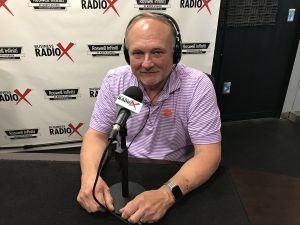
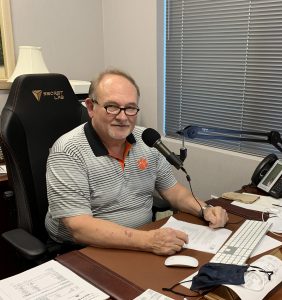
Dr. Jim Morrow, Morrow Family Medicine, and Host of “To Your Health With Dr. Jim Morrow”

Covid-19 misconceptionsDr. Jim Morrow is the founder and CEO of Morrow Family Medicine. He has been a trailblazer and evangelist in the area of healthcare information technology, was named Physician IT Leader of the Year by HIMSS, a HIMSS Davies Award Winner, the Cumming-Forsyth Chamber of Commerce Steve Bloom Award Winner as Entrepreneur of the Year and he received a Phoenix Award as Community Leader of the Year from the Metro Atlanta Chamber of Commerce.  He is married to Peggie Morrow and together they founded the Forsyth BYOT Benefit, a charity in Forsyth County to support students in need of technology and devices. They have two Goldendoodles, a gaggle of grandchildren and enjoy life on and around Lake Lanier.

Facebook: https://www.facebook.com/MorrowFamMed/

LinkedIn: https://www.linkedin.com/company/7788088/admin/

Twitter: https://twitter.com/toyourhealthMD

The complete show archive of “To Your Health with Dr. Jim Morrow” addresses a wide range of health and wellness topics, and can be found at www.toyourhealthradio.com.

Dr. Morrow’s Show Notes

Complications of Covid-19

  • Acute Respiratory Failure
  • Pneumonia
  • Acute Respiratory Distress Syndrome (ARDS)
  • Acute Liver Injury
  • Acute Cardiac Injury
  • Secondary Infection
  • Acute Kidney Injury
  • Septic Shock
  • Disseminated Intravascular Coagulation
  • Blood Clots
  • Multi-system Inflammatory Syndrome in Children
  • Chronic Fatigue
  • Rhabdomyolysis

Your Weight and How to Deal With It 

  • For years, I have explained to patients about their weight using a term called Ideal Body Weight.
    • It’s a terrible number, an almost unreachable number.
    • Especially in the state of Georgia.
      • The obesity rate in Georgia is close to the highest in the country, about 11th highest when last counted.
    • However, I am not one to preach to people that they need to get down to a certain level. Because it is so dog gone hard.
    • These days the usual way to determine if a person is “obese” is using their Body Mass Index, or BMI.
      • BMI, unlike ideal body weight, takes into consideration the person’s height.
      • To determine your BMI, multiply your height by 703. Divide that number by your height in inches. Divide that number again by your height in inches.


·      BMI·      Category·      What it means
·      Below 19·      Underweight·      You might need to gain some weight. Talk to your doctor.
·      19 to 24·      Healthy·      You are at a healthy weight. Try to maintain this weight.
·      25 to 29·      Overweight·      Don’t gain any more weight. You may need to lose weight. Check with your doctor.
·      30 or higher·      Obese·      You probably need to lose weight. Talk to your doctor about the best ways to lose weight.


  • So… according to this, if your BMI is over 25, you are overweight
    • and if it is over 30 you are obese.
    • If it is above 35, you are considered morbidly obese.
    • If that is the case, then the conversation in my exam room will likely be slightly different form if the number is closer to 30-32.
  • I see people every day who are upset about their weight.
    • I mean, I live in Georgia right.
    • When I do see one who is thinner than average,
    • I will tell them that if they plan to stay in Georgia,
    • they’re going to have to lose some weight.
  • The visit where weight comes up might be with a man or a woman.
    • If it is a man, there is usually woman who has forced him to bring it up.
  • Men are very fortunate.
    • When they put their minds to it,
      • they can, at nearly any age, lose weight.
      • Woman have a MUCH harder time losing weight.
      • And here’s the thing that patients really hate to hear me say:

If you are a post-menopausal woman,

you are incredibly unlikely to really lose weight.

  • It’s just so hard. And there are two primary reasons for this:
    • Genetics:
      • When I go to a family reunion, there is a room full of people there who look just like me.
      • I love these people, but we all share the same genes and some of those genes make us bigger than others.
      • It is just the way it is.
      • And you can’t change anything about this.
      • You can work really hard to exercise as much as you can.
      • You can try to be as active as you can.
      • But you are not going to change the impact that genetics has on your weight.
        • Period.
          • You just aren’t.
  • Lifestyle:
    • This is the one that really gets people.
    • Sure, you can change your lifestyle.
    • You can start doing things differently.
    • You can join a gym,
      • you can start running (although another thing that people hate to hear me say is that if you are over 40 you are too old to run).
    • Back in the 80’s I wrote a diet booklet to give to patients.
      • It had a substitution diet in it, like a diabetic diet,
        • with various plans for different calorie intakes each day.
        • It said two things that are still important today:
      • The word diet has two definitions:
        • It is the food you eat on a regular basis
        • It is a plan you begin in an effort to lose weight.
      • The problem is that what people are thinking about is the second definition.
        • They think, and heaven knows I have done this more times than I could ever count,
          • “Man, I can’t wait to get to my goal weight so I can get off this damn diet!”
  • Years ago I did Weight Watchers, for the first time.
    • I went to meetings.
    • I counted points.
    • I was religious about it.
    • It was one of those times when I had just had it with my weight.
      • Finally, after several months, I hit my goal weight and at that meeting they made such a big deal out of me doing that and me receiving my Lifetime Membership Award.
      • It felt so much like “graduation” that I basically graduated from WW that night.
      • And I never looked at points again.
        • Having lost 42 pounds, I gained 50 in less than a year.
      • I have probably lost a thousand pounds in my life.
      • So… what does this mean for you?
      • Here is the way I feel about this.
  • If you are overweight or obese,
    • you should be a lot more concerned about not gaining weight year after year, than trying to lose weight.
    • If you are a youngster, sure go ahead and try to get down to where you feel you should be.
    • But if you are one of those post-menopausal women I see, or a man over 55 – 60, pay more attention to not gaining weight.
  • If you come for a physical every year, like you should,
    • and you gain five pounds, be careful.

      • A month ago, I saw a gentleman for his yearly physical.

      • He asked about this weight and when I said he had gained five pounds, he was so happy.

      • Pumped his fist and said “YES! YES!”.
    • I said, slow your roll there big guy, you have said that 7 years in a row.
      • So, quick math, he had gained 35 pounds since we started seeing him 7 years earlier.
    • I admire anyone who is interested in making themselves healthier.
      • It is what we should all be doing.
      • But when I see people who are devastated by their inability to lose weight, it concerns me.
      • Often these are people who would otherwise be perfectly happy in their lives.
      • But instead they are depressed or at a minimum upset about their weight.
    • Bottom line in this for me is:
      • Be who you are.
      • Try to be happy with who you are, and be the healthiest version of who you are that you can be.

Tagged With: Dr. Jim Morrow, Morrow Family Medicine, obesity, overweight, pandemic, To Your Health With Dr. Jim Morrow, weight

To Your Health With Dr. Jim Morrow: Episode 8, Sleep Apnea, and Two Special Guests from Taylor Road Middle School

May 8, 2019 by John Ray

North Fulton Studio
North Fulton Studio
To Your Health With Dr. Jim Morrow: Episode 8, Sleep Apnea, and Two Special Guests from Taylor Road Middle School
Loading
00:00 /
RSS Feed
Share
Link
Embed

Download file

Dr. Jim Morrow, Morrow Family Medicine, and Host of “To Your Health With Dr. Jim Morrow”

Episode 8, Sleep Apnea, and Two Special Guests from Taylor Road Middle School

Sleep apnea affects not only a partner who can’t sleep for the snoring, but it reduces quality of life for the person affected by this condition. So why does sleep apnea occur, and what are the best treatment options? On this episode of “To Your Heath,” Dr. Jim Morrow addresses these questions and more, and talks about his own experience with sleep apnea.

Also in this episode, Dr. Morrow welcomes two 8th grade students from Taylor Road Middle School in Johns Creek, Cion Kim and Ananya Shaeker. To complete a project assignment for their language arts class, Cion and Ananya used a previous episode of “To Your Health” to explore the dangers of vaping for their peers. Impressed by their work, Dr. Morrow was delighted to welcome Cion and Ananya to the show!

Ananya Shaeker and Cion Kim


Dr. Morrow’s Show Notes on Sleep Apnea

Sleep Apnea

  • There are two kinds of sleep apnea: obstructive apnea and central apnea.
  • Obstructive sleep apnea is the most common type.
    • Nine out of 10 people who have sleep apnea have this type of apnea.
    • something is blocking the airway that brings air into your body (also called the trachea).
    • When you try to breathe, you can’t get enough air because of the blockage. Your airway might be blocked by your tongue, tonsils, or uvula (the little piece of flesh that hangs down in the back of your throat).
    • It might also be blocked by a large amount of fatty tissue in the throat or by relaxed throat muscles.
  • Central sleep apnea is less common. This type of sleep apnea is related to the function of the central nervous system. If you have this type of apnea, the muscles you use to breathe don’t get the “go-ahead” signal from your brain. Either the brain doesn’t send the signal, or the signal gets interrupted.

Obstructive Sleep Apnea

  • Obstructive sleep apnea is a common disorder that causes patients to temporarily stop or decrease their breathing repeatedly during sleep.
  • People who have sleep apnea stop breathing for 10 to 30 seconds at a time while they are sleeping.
    • These short stops in breathing can happen up to 400 times every night.
    • If you have sleep apnea, periods of not breathing can disturb your sleep (even if they don’t fully wake you up).
  • This results in fragmented, non-restful sleep that can lead to symptoms such as morning headache and daytime sleepiness.
  • Obstructive sleep apnea affects persons of all ages, especially:
    • Men,
    • people who are overweight, and
    • people who are older than 40 years of age are more likely to have sleep apnea.
  • However, it can affect anyone at any age.
  • There are many health conditions associated with obstructive sleep apnea, including
    • hypertension,
    • coronary artery disease,
    • cardiac arrhythmias, and
    • depression
  • Predictive clinical features are:
    • Loud snoring,
    • gasping during sleep,
    • obesity, and
    • enlarged neck circumference.
  • Screening questionnaires can be used to assess for sleep apnea, although their accuracy is limited.
  • The diagnostic standard for obstructive sleep apnea is nocturnal polysomnography in a sleep laboratory (a sleep study).
    • Home sleep apnea tests are available and in recent years have become more reliable.
    • Home portable monitoring can be used as a substitute for in-laboratory polysomnography for the diagnosis of OSA in patients with a high likelihood of SA.
    • Most patients prefer home monitoring, and clinical outcomes among patients diagnosed by either method are comparable regarding sleepiness, sleep-related quality of life, and compliance with continuous positive airway pressure (CPAP) therapy

What is the Result of Untreated Obstructive Sleep Apnea?

Relation to Hypertension

  • About one half of patients who have essential hypertension have obstructive sleep apnea, and
  • About one half of patients who have obstructive sleep apnea have essential hypertension.
  • A growing body of evidence suggests that obstructive sleep apnea is a major contributing factor in the development of essential hypertension.

Excessive Daytime Sleepiness

  • Excessive daytime sleepiness is one of the most common sleep-related patient symptoms
    • affects an estimated 20 percent of the population. Persons with excessive daytime sleepiness are at risk of motor vehicle and work-related incidents, and have poorer health than comparable adults.
    • The most common causes of excessive daytime sleepiness are sleep deprivation, obstructive sleep apnea, and sedating medications.
    • Other potential causes of excessive daytime sleepiness include certain medical and psychiatric conditions and sleep disorders, such as narcolepsy.
    • Obstructive sleep apnea is a particularly significant cause of excessive daytime sleepiness.
      • An estimated 26 to 32 percent of adults are at risk of or have obstructive sleep apnea, and the prevalence is expected to increase.
      • The evaluation and management of excessive daytime sleepiness is based on the identification and treatment of underlying conditions (particularly obstructive sleep apnea), and the appropriate use of activating medications.

Connection to Heart Disease

  • The connection between sleep apnea and heart disease is evolving very rapidly.
  • People with cardiovascular problems such as high blood pressure, heart failure, and stroke have a high prevalence of sleep apnea.
  • Whether sleep apnea actually causes heart disease is still unclear, but we do know that if you have sleep apnea today, the chance that you will develop hypertension in the future increases significantly.
  • One of the problems in defining the relationship between sleep apnea and heart disease is that people with sleep apnea often have other co-existing diseases as well.
  • If you treat people with high blood pressure and sleep apnea, or heart failure and sleep apnea, the measures of blood pressure or heart failure are significantly improved. There is good evidence to think there is a cause-and-effect relationship between hypertension and sleep apnea.
  • Why does your blood pressure go up when your sleep is disrupted by sleep apnea?
    • Your blood pressure will go up because when you’re not breathing, the oxygen level in your body falls and excites receptors that alert the brain. In response, the brain sends signals through the nervous system and essentially tells the blood vessels to “tighten up” in order to increase the flow of oxygen to the heart and the brain, because they have priority.
    • The problem is that things that go on at night tend to carry over in the daytime, even when the sleep apnea patient is awake. The low oxygen levels at night seem to trigger multiple mechanisms that persist during the daytime, even when the patient is breathing normally.
  • How can CPAP (continuous positive airway pressure) reduce the cardiovascular consequences of sleep apnea?
    • The available evidence tells us that when you treat people with sleep apnea using CPAP, their blood pressure is not only lower at night—it’s also lower during the day. That’s a very good thing.
    • Moreover, people with atrial fibrillation (a common type of irregular heart beat) with sleep apnea that is appropriately treated have only a 40% chance of coming back for further treatment of their atrial fibrillation.
      • If their sleep apnea is untreated, the chance of a recurrence of atrial fibrillation goes up to 80%. The message to heart patients with sleep apnea is: With treatment of your sleep apnea, your chances of improvement are considerably better.

Can Sleep Apnea Be Prevented or Avoided?

  • There are things you can do to prevent sleep apnea. The following steps help many people:
    • Stop all use of alcohol or sleep medicines. These relax the muscles in the back of your throat, making it harder for you to breathe.
    • If you smoke, quit smoking.
    • If you are overweight, lose weight.
    • Sleep on your side instead of on your back.

About Morrow Family Medicine and Dr. Jim Morrow

Morrow Family Medicine is an award-winning, state-of-the-art family practice with offices in Cumming and Milton, Georgia. The practice combines healthcare information technology with old-fashioned care to provide the type of care that many are in search of today. Two physicians, three physician assistants and two nurse practitioners are supported by a knowledgeable and friendly staff to make your visit to Morrow Family Medicine one that will remind you of the way healthcare should be.  At Morrow Family Medicine, we like to say we are “bringing the care back to healthcare!”  Morrow Family Medicine has been named the “Best of Forsyth” in Family Medicine in all five years of the award, is a three-time consecutive winner of the “Best of North Atlanta” by readers of Appen Media, and the 2019 winner of “Best of Life” in North Fulton County.

Dr. Jim Morrow, Morrow Family Medicine, and Host of “To Your Health With Dr. Jim Morrow”

Dr. Jim Morrow is the founder and CEO of Morrow Family Medicine. He has been a trailblazer and evangelist in the area of healthcare information technology, was named Physician IT Leader of the Year by HIMSS, a HIMSS Davies Award Winner, the Cumming-Forsyth Chamber of Commerce Steve Bloom Award Winner as Entrepreneur of the Year and he received a Phoenix Award as Community Leader of the Year from the Metro Atlanta Chamber of Commerce.  He is married to Peggie Morrow and together they founded the Forsyth BYOT Benefit, a charity in Forsyth County to support students in need of technology and devices. They have two Goldendoodles, a gaggle of grandchildren and enjoy life on and around Lake Lanier.

Facebook: https://www.facebook.com/MorrowFamMed/

LinkedIn: https://www.linkedin.com/company/7788088/admin/

Twitter: https://twitter.com/toyourhealthMD

Tagged With: continuous positive airway pressure, coronary artery disease, CPAP, Cumming doctor, Cumming family doctor, Cumming family practice, Cumming md, Cumming physician, daytime sleepiness, Depression, heart disease, hypertension, Milton doctor, Milton family doctor, Milton family medicine, Milton family practice, Milton md, Milton physician, nocturnal polysomnography, non-restful sleep, obstructive sleep apnea, obstructive sleep disorder, OSA, overweight, sleep apnea, sleep study, sleep technology, snoring, snoring treatment, Taylor Road Middle School

Sharing Spaces Program

December 16, 2015 by angishields

Health Connect South
Sharing Spaces Program
Loading
00:00 /
RSS Feed
Share
Link
Embed

Download file

Cobb2020
Wende Parker talks Sharing Spaces
Cobb2020
Mark Anderson of Cobb County School District

Sharing Spaces Program

On this week’s episode we focused on how the Cobb-Douglas Department of Public Health is working to reduce rates of childhood obesity.  The Sharing Spaces program and Power Up for 30 program both aim to facilitate more physical activity among our student-aged populations.

Childhood obesity is rising among our young people at alarming rates.  The American Heart Association’s website explains: “Today, about one in three American kids and teens is overweight or obese, nearly triple the rate in 1963. Among children  today, obesity is causing a broad range of health problems that previously weren’t seen until adulthood. These include high blood pressure, type 2 diabetes and elevated blood cholesterol levels. There are also psychological effects: Obese children are more prone to low self-esteem, negative body image and depression. And excess weight at young ages has been linked to higher and earlier death rates in adulthood.”

On this week’s episode we focused on two more programs that are part of the Cobb 2020 initiative. Created and implemented by the Cobb Douglas Department of Public Health under the direction of Dr. Jack Kennedy, aims to address a number of public health concerns that erode level of health and quality of life for many of the over 850,000 resident who live there.
One key area of focus is childhood obesity among student aged  residents of Cobb and Douglas Counties.  Among the 29 public health programs that make up the Cobb2020 initiative are the Power Up for 30 and the Sharing Spaces programs.  These are programs focused on getting young students moving more throughout their school day and beyond.
I sat down with District Director for Chronic Disease and Injury, Wende Parker, and Mark Anderson, Supervisor for Health and Phys Ed for the Cobb Co School District to learn more about how these programs work and the resources they’re hoping to identify in the community.
The sharing spaces program seeks to partner with community organizations that have playgrounds, gyms, tracks, and trails, giving area residents access to these resources, particularly young people.
In this way, the community will see declines in rates of obesity, diabetes, heart disease, and others, and students enjoy academic performance upticks to boot.
Special Guests:
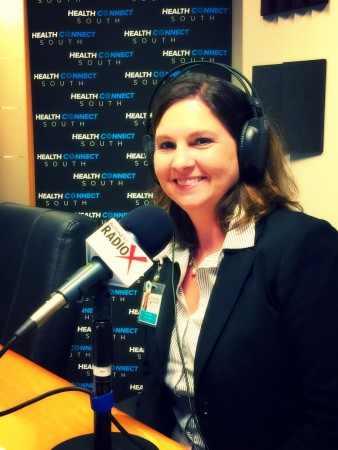
Wende Parker, District Director of Chronic Disease & Injury Prevention, Cobb-Douglas Dept. of Public Health
Cobb2020
  • BS Exercise Science, Community Health, University of Southern Mississippi
  • Previous Program Manager, Child Fatality Review, Eastern GA, State of Georgia Office of the Child Advocate

Mark Anderson, Supervisor, Health & Physical Education, Cobb County School District

Cobb2020


Tagged With: CW Hall, Exercise, Health Connect South, Health Connect South Radio, Healthcare, Mark Anderson, overweight, Population Health Management, Power Up for 30, Sharing Spaces, Wende Parker

Eating Disorders

April 15, 2015 by angishields

Health Connect South
Eating Disorders
Loading
00:00 /
RSS Feed
Share
Link
Embed

Download file

eating disorders information network

Eating Disorders

This week we focused on eating disorders.  I sat down with experts from Eating Disorders Information Network, a non-profit organization aimed at outreach to increase awareness/prevention among students in grade school to high school, and helping people identify resources for treatment.  According to the National Anorexia Nervosa Association, eating disorders are a serious problem, with as many as 24 million Americans suffering with some form of disorder from anorexia, to bulemia, to binge/purge, and more.

The problem affects both men and women, children and adults, across all demographics.  And according to Dr. Dina Zeckhausen, founder of EDIN, eating disorders are more deadly than other mental illness.  When you consider dysfunctional eating habits such as overly-restrictive dieting, comfort eating, and others, as many as 80-90% of us are impacted at some time by potentially-problematic attitudes about food.

EDIN is working to engage young people beginning in grade school through high school to promote self-acceptance and to share information about the dangers of risky behaviors such as “clubs” that foster unhealthy choices such as eating crackers and water only for lunch with a group of peers.  Their website describes their mission in this way, “The Eating Disorders Information Network (EDIN) is a nonprofit organization dedicated to the prevention of eating disorders through education, outreach, and action.  EDIN is committed to addressing the problem of eating disorders on a societal level.  We are devoted to: 

  • Preventing eating disorders
  • Increasing public awareness of the personal, familial, and cultural/media influences which contribute to eating disorders
  • Helping those already suffering to find the therapeutic services they need

The organization strives to serve as a comprehensive resource and educational guide for those wanting to learn more about eating disorders, those seeking help, and those gathering and distributing information about available treatment options both in the Atlanta area and nationwide.”

Special Guests:

Dina Zeckhausen, PhD, Founder of Eating Disorders Information Network  twitter_logo_small  linkedin_small1  youtube-logo1  google-plus-logo-red-265px  Pinterest LOGO

Eating Disorders Information Network

  • PhD, Clinical-Community Psychology, University of South Carolina
  • Active private practice psychologist
  • Well-known public speaker on the topic of eating disorders
  • Published author and playwrite

Hallie Udelson, Eating Disorders Information Network

hallie

  • BA, Psychology, Emory University
  • 2016 Candidate, Master of Public Health, Emory University
  • Developing curriculum for school outreach initiatives for EDIN

Sara Pannell, Incoming Director, Eating Disorders Information Network

Trillium Springs Counseling

  • Licensed Family and Marriage Counselor, Trillium Springs Counseling
  • MS, Family & Marriage Counseling, Fuller Theological Seminary
  • Previous Bi-lingual Clinician I, San Fernando Valley Community Mental Health Center

Tagged With: CW Hall, Depression, Diana Keough, dieting, Dina Zeckhausen, eating disorders, eating disorders information network, Hallie Udelson, Health Care Radio, Health Connect South, Health Connect South Radio, health radio, Healthcare, healthcare radio, national anorexia nervosa association, overweight, peer pressure, russ lipari, Sarah Pannell, ShareWIK Media Group, sharewik.org, Weight Loss

Weight Loss: An Integrated Approach

August 22, 2013 by angishields

The Doctors Roundtable
Weight Loss: An Integrated Approach
Loading
00:00 /
RSS Feed
Share
Link
Embed

Download file

Obesity has gone global. Recent statistics have shown that approximately 1 Billion people are overweight on the planet and the two primary causes are increased consumption of a diet in processed foods with saturated fat and a decrease in exercise. Consider some of these statistics: 3 in 10 Americans are trying to lose weight at any one point in time; 35% of Americans are clinically obese; the top three disease killers in the US are related to obesity (heart disease, stroke and cancer) and American’s spend $40 billion on diet related products annually. Alarming.

Research has shown that diet alone will not keep weight lost off alone. Fitness factors in as well. Actually, 80% of dieters are trying to lose weight alone and studies show that 90-95% of dieters will gain the weight lost back within 1-5 years. Exercise is a key component of permanent weight loss, but not without consideration of diet as well. Exercise is also a key component and success factor for people who are successfully able to keep the weight loss off. The role of counseling has also been of great benefit for customizing a weight loss plan and the accountability factor in sticking to a new regime.

In addition to diet and exercise, new technologies and supplements are being introduced with some success into the weight loss arena such as: spa treatments, infrared saunas and the use of cold lasers to disrupt the fat cells, the products of which can then be excreted. Many are also using mobile technology for an accountability “buddy”, calculation and tracking of weight loss and fitness goals. No matter what individual plan entails, gradual, realistic lifestyle changes over time have been shown to produce long term results.


Ekow Wilmot

  • Owner of BalanceDiet
  • Federal University of Rio de Janeiro
  • Professional Body Builder x20 years
  • Certified professional trainer (AFAA Aerobics and Fitness Assoc of America)
  • Body temple of God, commitment to never using unnatural aids, helps others by providing health, fitness, nutrition guidance to those wanting natural solutions
  • Watch Video


Butch Wesley

  • NSCA certified strength & conditioning coach
  • NSCA certified personal trainer
  • USA Weightlifting certified sports performance coach
  • Former Athletic Coordinator-Clayton County Parks & Recreation
  • NAYS certified Youth Sports Administrator
  • NCAA Football National Championship Jacksonville State University
  • Assistant strength & conditioning coach Jacksonville State University


Lisa burris

  • Graduate of Western Michigan University, BA in Business Administration
  • Worked closely with family for 11 years then moved to Florida
  • Established as Marketing director in a physicians office, introduced and certified as a laser tech and is what brought her to Atlanta
  • 15 years experience in business, equipped with multitude of skills including management, marketing, health and medicine applications, business operations and exemplary customer service
  • Set apart from other candidates by: Penchant for organization, eye for detail, positive and personable nature, ability to multitask and perform in a fast paced environment


wilmot-wesley-burris-header

Tagged With: diet and exercise, fitness goals, Health, heart disease, lifestyle, mobile technology, obesity, overweight, Stroke, The Doctors Roundtable, Weight Loss

Founder of Weigh2Rock Dr Bob Pretlow Helps Overweight Kids

December 14, 2010 by angishields

Dr. Fitness & the Fat Guy
Founder of Weigh2Rock Dr Bob Pretlow Helps Overweight Kids
Loading
00:00 /
RSS Feed
Share
Link
Embed

Download file

On today’s show Dr Fitness and the Fat Guy had on  Dr Bob Pretlow explains why his website Weigh2Rock has been the best resource for overweight kids for over 11 years. Bob discovered that helping an overweight child requires the same approach that helping an addict requires. Kids are suing food as a substitute for stress, depression and boredom. The kids seem to intellectually understand that eating healthy and exercising is the way to go but they are addicted to making poor choices – and that’s why you have to treat them like you would a substance abuser to get them on a healthier path. This guy has seen all the research and has seen firsthand from the thousands of kids who frequent his website why kids are over weight and what can be done to stop this child obesity epidemic. His new book Overweight: What Kids Say is a must read if you have an overweight child in your life. Learn more at www.weigh2rock.com

For more Dr Fitness and the Fat Guy check out our Wellness Minutes blog where we give you in depth information on health, fitness and weight loss topics in 3 minutes or less every single day. iTunes

Follow us on Twitter @FatGuy and @DrFitness6 Be our Friend on Facebook

Also please check out our new book 35 Things to Know to Raise Active Kids

none

Tagged With: dr bob pretlow, Expert Interviews, kids, overweight

How to Raise A Healthy Teen

December 22, 2009 by angishields

Dr. Fitness & the Fat Guy
How to Raise A Healthy Teen
Loading
00:00 /
RSS Feed
Share
Link
Embed

Download file

In today’s Wellness Minute Dr Fitness and the Fat Guy explain how to raise a healthy teen. With the number of overweight and obese teenagers skyrocketing it is critical that parents control what they can control in regards to their teen. While it is becoming increasingly difficult to monitor your teens eating while they are out of your home – you can control what food is inside your house. Get rid of the unhealthy snacks and bring in the fruits and vegetables. Try and make time to eat together as a family and when you do eat together prepare healthy meals. Involve your teen in the meal preparation as well. This way you can show him/her what a portion size looks like and how to make healthful food substitutions. Listen right now to hear Dr Fitness’ tips. Dr Fitness and the Fat Guy’s Wellness Minutes improve your health in 3 minutes a day or less. iTunes Follow me on Twitter @FatGuy

Tags: family, fruit, health, healthy meals, Healthy Snack, overweight, portion size, teen, teenager, unhealthy snacks, Vegetables, wellness minutes

Tagged With: family, fruit, Health, healthy meals, Healthy Snack, overweight, portion size, teen, unhealthy snacks, Vegetables, Wellness Minute, wellness minutes

Lose Weight and Keep It Off with Dr Gerard Musante at The Structure House

December 14, 2009 by angishields

Dr. Fitness & the Fat Guy
Lose Weight and Keep It Off with Dr Gerard Musante at The Structure House
Loading
00:00 /
RSS Feed
Share
Link
Embed

Download file

On today’s show Dr Fitness and the Fat Guy had on our good friend Dr Gerard Musante from The Structure House in Durham NC. Dr Musante is a renowned clinical psychologist who founded Structure House in 1977 and understands firsthand the struggle faced by overweight people. He has devoted his life to developing and teaching the principles of behavior modification. Today his internationally respected weight control program has helped more than 30,000 people change their attitudes, perceptions and lifestyles with diet, exercise and education. He is also the author of The Structure House Weight Loss Plan. He shared some great weight loss tips and explained all that is happening on his new website. You can now go online and create a 28 day action plan so you can develop your own personal plan to lose weight. He also shared his thoughts on the Biggest Loser TV show and programs like that that encourage extreme diet and exercise. He feels on the plus side they inspire people who felt that it was impossible to lose large amounts of weight. But he feels a big negative  about those shows are that they downplay the dangers of extreme dieting and exercise and that they are not a good way to keep weight off for the long run. Please check out Dr Musante’s Structure House at www.structurehouse.com

For more Dr Fitness and the Fat Guy check out our Wellness Minutes blog where we give you in depth information on health, fitness and weight loss topics in 3 minutes or less every single day. iTunes Follow me on Twitter @FatGuy

Tags: Biggest Loser, diet, Exercise, gerard musante, health, lose weight, overweight, Structure House, Weight Loss

Tagged With: diet, Exercise, Expert Interviews, gerard musante, Health, lose weight, overweight, Structure House, Weight Loss

Do You Need To Drop A Few Pounds?

October 30, 2009 by angishields

Dr. Fitness & the Fat Guy
Do You Need To Drop A Few Pounds?
Loading
00:00 /
RSS Feed
Share
Link
Embed

Download file

In today’s Wellness Minute Dr Fitness and the Fat Guy help you answer the question should you lose weight.Losing weight is hard. Losing weight takes time.  You can be somewhat overweight and still be pretty healthy. At what weight do you really have to be in order to prioritize losing weight? Listen right now to hear Dr Fitness’ tips. Dr Fitness and the Fat Guy’s Wellness Minutes improve your health in 3 minutes a day or less. iTunes Follow me on Twitter @FatGuy

Tags: health, lose weight, overweight, Tips, Wellness Minute

Tagged With: Health, lose weight, overweight, Wellness Minute

Business RadioX ® Network


Our Most Recent Episode

CONNECT WITH US

  • Email
  • Facebook
  • LinkedIn
  • Twitter
  • YouTube

Our Mission

We help local business leaders get the word out about the important work they’re doing to serve their market, their community, and their profession.

We support and celebrate business by sharing positive business stories that traditional media ignores. Some media leans left. Some media leans right. We lean business.

Sponsor a Show

Build Relationships and Grow Your Business. Click here for more details.

Partner With Us

Discover More Here

Terms and Conditions
Privacy Policy

Connect with us

Want to keep up with the latest in pro-business news across the network? Follow us on social media for the latest stories!
  • Email
  • Facebook
  • Google+
  • LinkedIn
  • Twitter
  • YouTube

Business RadioX® Headquarters
1000 Abernathy Rd. NE
Building 400, Suite L-10
Sandy Springs, GA 30328

© 2025 Business RadioX ® · Rainmaker Platform

BRXStudioCoversLA

Wait! Don’t Miss an Episode of LA Business Radio

BRXStudioCoversDENVER

Wait! Don’t Miss an Episode of Denver Business Radio

BRXStudioCoversPENSACOLA

Wait! Don’t Miss an Episode of Pensacola Business Radio

BRXStudioCoversBIRMINGHAM

Wait! Don’t Miss an Episode of Birmingham Business Radio

BRXStudioCoversTALLAHASSEE

Wait! Don’t Miss an Episode of Tallahassee Business Radio

BRXStudioCoversRALEIGH

Wait! Don’t Miss an Episode of Raleigh Business Radio

BRXStudioCoversRICHMONDNoWhite

Wait! Don’t Miss an Episode of Richmond Business Radio

BRXStudioCoversNASHVILLENoWhite

Wait! Don’t Miss an Episode of Nashville Business Radio

BRXStudioCoversDETROIT

Wait! Don’t Miss an Episode of Detroit Business Radio

BRXStudioCoversSTLOUIS

Wait! Don’t Miss an Episode of St. Louis Business Radio

BRXStudioCoversCOLUMBUS-small

Wait! Don’t Miss an Episode of Columbus Business Radio

Coachthecoach-08-08

Wait! Don’t Miss an Episode of Coach the Coach

BRXStudioCoversBAYAREA

Wait! Don’t Miss an Episode of Bay Area Business Radio

BRXStudioCoversCHICAGO

Wait! Don’t Miss an Episode of Chicago Business Radio

Wait! Don’t Miss an Episode of Atlanta Business Radio