Business RadioX ®

  • Home
  • Business RadioX ® Communities
    • Southeast
      • Alabama
        • Birmingham
      • Florida
        • Orlando
        • Pensacola
        • South Florida
        • Tampa
        • Tallahassee
      • Georgia
        • Atlanta
        • Cherokee
        • Forsyth
        • Greater Perimeter
        • Gwinnett
        • North Fulton
        • North Georgia
        • Northeast Georgia
        • Rome
        • Savannah
      • Louisiana
        • New Orleans
      • North Carolina
        • Charlotte
        • Raleigh
      • Tennessee
        • Chattanooga
        • Nashville
      • Virginia
        • Richmond
    • South Central
      • Arkansas
        • Northwest Arkansas
    • Midwest
      • Illinois
        • Chicago
      • Michigan
        • Detroit
      • Minnesota
        • Minneapolis St. Paul
      • Missouri
        • St. Louis
      • Ohio
        • Cleveland
        • Columbus
        • Dayton
    • Southwest
      • Arizona
        • Phoenix
        • Tucson
        • Valley
      • Texas
        • Austin
        • Dallas
        • Houston
    • West
      • California
        • Bay Area
        • LA
        • Pasadena
      • Colorado
        • Denver
      • Hawaii
        • Oahu
  • FAQs
  • About Us
    • Our Mission
    • Our Audience
    • Why It Works
    • What People Are Saying
    • BRX in the News
  • Resources
    • BRX Pro Tips
    • B2B Marketing: The 4Rs
    • High Velocity Selling Habits
    • Why Most B2B Media Strategies Fail
    • 9 Reasons To Sponsor A Business RadioX ® Show
  • Partner With Us
  • Veteran Business RadioX ®

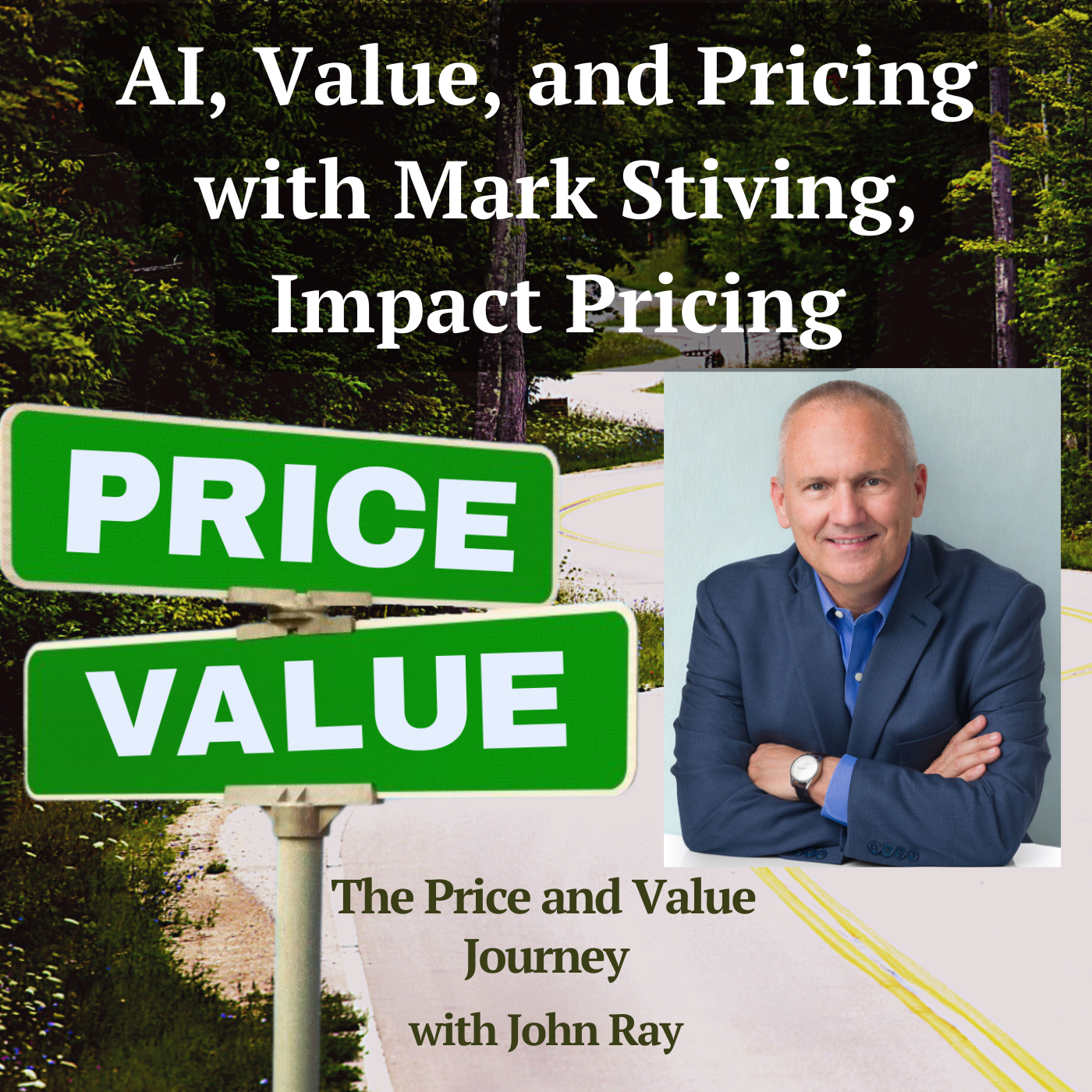
AI, Value, and Pricing with Mark Stiving, Impact Pricing

September 17, 2025 by John Ray

AI, Value, and Pricing with Mark Stiving, Impact Pricing, on The Price and Value Journey podcast with host John Ray
North Fulton Studio
AI, Value, and Pricing with Mark Stiving, Impact Pricing
Loading
00:00 /
RSS Feed
Share
Link
Embed

Download file

AI, Value, and Pricing with Mark Stiving, Impact Pricing, on The Price and Value Journey podcast with host John Ray

AI, Value, and Pricing with Mark Stiving, Impact Pricing (The Price and Value Journey, Episode 147)

There’s a lot of noise on AI, but what are the practical implications it holds for those of us offering expertise? In this episode of The Price and Value Journey, Dr. Mark Stiving, founder of Impact Pricing, joins host John Ray to explore how AI is reshaping the way professional service providers think about value, pricing, and the work we deliver.

Mark brings decades of pricing expertise, authoring books such as Impact Pricing, Win Keep Grow, and Instant Profits: How to Raise Prices Without Losing Customers, and hosting the long-running Impact Pricing Podcast. We dive into the real implications of AI for expert-service pros:

  • Why AI isn’t as threatening—or as magical—as it first appears.
  • How it can streamline workflows and spark faster thinking, but why judgment and frameworks still matter most.
  • The danger of lowering prices just because AI helps you work faster.
  • How to use AI as a tool for diagnosing client problems without abdicating your role in uncovering value.

If you’ve been wrestling with questions about how AI intersects with your practice, pricing, and client conversations, this conversation will give you insight and practical direction.

The Price and Value Journey is presented by John Ray and produced by North Fulton Business Radio, LLC, an affiliate of the Business RadioX® podcast network.

Key Takeaways You Can Use from This Episode

  • Don’t confuse AI’s polished output with true thinking. Use it to brainstorm and speed up ideas, not to make decisions for you.
  • Look for repetitive or “rote” tasks in your workflow that AI can automate so you can focus on client-facing, high-value work.
  • Never lower your prices just because AI makes you more efficient. Faster delivery does not diminish client-perceived value.
  • AI can help you generate lists of client problems or examples, but you must apply your expertise and frameworks to evaluate what matters.
  • Strong frameworks and mental models are what allow professionals to filter AI’s output into usable insights.
  • The core pricing principle remains unchanged: buyers trade money for value, and it’s your job to uncover what “value” means to each client.

Topics Discussed in this Episode

0:00 Introduction and Guest Introduction
01:14 Discussing AI and Its Impact on Professional Services
03:25 AI’s Role in Enhancing Productivity
06:56 The Importance of Frameworks in AI Utilization
13:18 Understanding Value in Business
15:13 Using AI to Diagnose Client-Perceived Value
21:19 Personal and Professional Implications of AI
25:18 The Power of AI Conversations
26:24 Investing Time in AI for Small Firms
27:17 AI’s Impact on Productivity and Ideation
29:04 AI and Pricing Models
32:09 AI’s Role in Professional Services
38:28 Adoption and Learning Curve of AI
47:38 Future of AI in Professional Services
50:08 Final Thoughts and Advice

Mark Stiving, PhD, Impact Pricing

Mark Stiving, PhD, Impact Pricing

Mark Stiving, PhD, is a recognized authority on pricing and buyer behavior. With a rare ability to translate complex concepts into clear, actionable insights, he has become a trusted advisor to companies seeking to capture more of the value they create.

Over the past 25 years, Mark has consulted, trained, and coached hundreds of organizations, from Cisco and Procter & Gamble to Splunk and CrowdStrike. He also works closely with private equity firms and their portfolio companies, helping them price, package, and sell value in ways that increase profits and drive growth.

An award-winning speaker and prolific author, Mark is the host of the Impact Pricing podcast and a frequent guest on industry shows. He has written several influential books, including Impact Pricing, Win Keep Grow, Selling Value, and his latest release, Instant Profits: How to Raise Prices Without Losing Customers.

Website | LinkedIn | YouTube

John Ray, Host of The Price and Value Journey
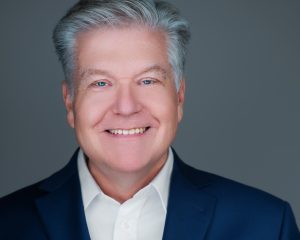
John Ray, Author of The Generosity Mindset and Host of The Price and Value Journey

John Ray is the host of The Price and Value Journey.

John owns Ray Business Advisors, a business advisory practice. John’s services include business coaching and advisory work, as well as advising solopreneurs and small professional services firms on their pricing. John is passionate about the power of pricing for business owners, as changing pricing is the fastest way to change the profitability of a business. His clients are professionals who are selling their expertise, such as attorneys, CPAs, accountants and bookkeepers, consultants, coaches, marketing professionals, and other professional services practitioners.

John is a podcast show host and the owner of North Fulton Business Radio, LLC, an affiliate of Business RadioX®. John and his team work with B2B professionals to create and conduct their podcast using The Generosity Mindset® Method: building and deepening relationships in a non-salesy way that translates into revenue for their business.

John is also the host of North Fulton Business Radio. With over 900 shows and having featured over 1,300 guests, North Fulton Business Radio is the longest-running podcast in the North Fulton area, covering business in its region like no one else.

John’s book, The Generosity Mindset: A Journey to Business Success by Raising Your Confidence, Value, and Prices

John Ray at Barnes & Noble with his book, The Generosity MindsetJohn Ray is the author of the five-star rated book The Generosity Mindset: A Journey to Business Success by Raising Your Confidence, Value, and Prices, praised by readers for its practical insights on raising confidence, value, and prices.

If you are a professional services provider, your goal is to do transformative work for clients you love working with and get paid commensurate with the value you deliver to them. While negative mindsets can inhibit your growth, adopting a different mindset, The Generosity Mindset®, can replace those self-limiting beliefs. The Generosity Mindset enables you to diagnose and communicate the value you deliver to clients and, in turn, more effectively price to receive a portion of that value.

Whether you’re a consultant, coach, marketing or branding professional, business advisor, attorney, CPA, or work in virtually any other professional services discipline, your content and technical expertise are not proprietary. What’s unique, though, is your experience and how you synthesize and deliver your knowledge. What’s special is your demeanor or the way you deal with your best-fit clients. What’s invaluable is how you deliver outstanding value by guiding people through massive changes in their personal lives and in their businesses that bring them to a place they never thought possible.

Your combination of these elements is unique in your industry. There lies your value, but it’s not the value you see. It’s the value your best-fit customers see in you.

If pricing your value feels uncomfortable or unfamiliar to you, this book will teach you why putting a price on the value your clients perceive and identify serves both them and you, and you’ll learn the factors involved in getting your price right.

The book is available at all major physical and online book retailers worldwide. Follow this link for further details.

Connect with John Ray:

Website | LinkedIn | Twitter

Business RadioX®:  LinkedIn | Twitter | Facebook | Instagram

Tagged With: AI, AI and pricing, AI and workflows, AI in professional services, attorneys, client value, coaches, consultants, cpa's, diagnosing value, expert service pros, fractional executives, Impact Pricing, John Ray, Mark Stiving, pricing frameworks, pricing mistakes, pricing models, pricing strategy, productivity, productivity tools, professional service providers, The Generosity Mindset, The Price and Value Journey, value based pricing

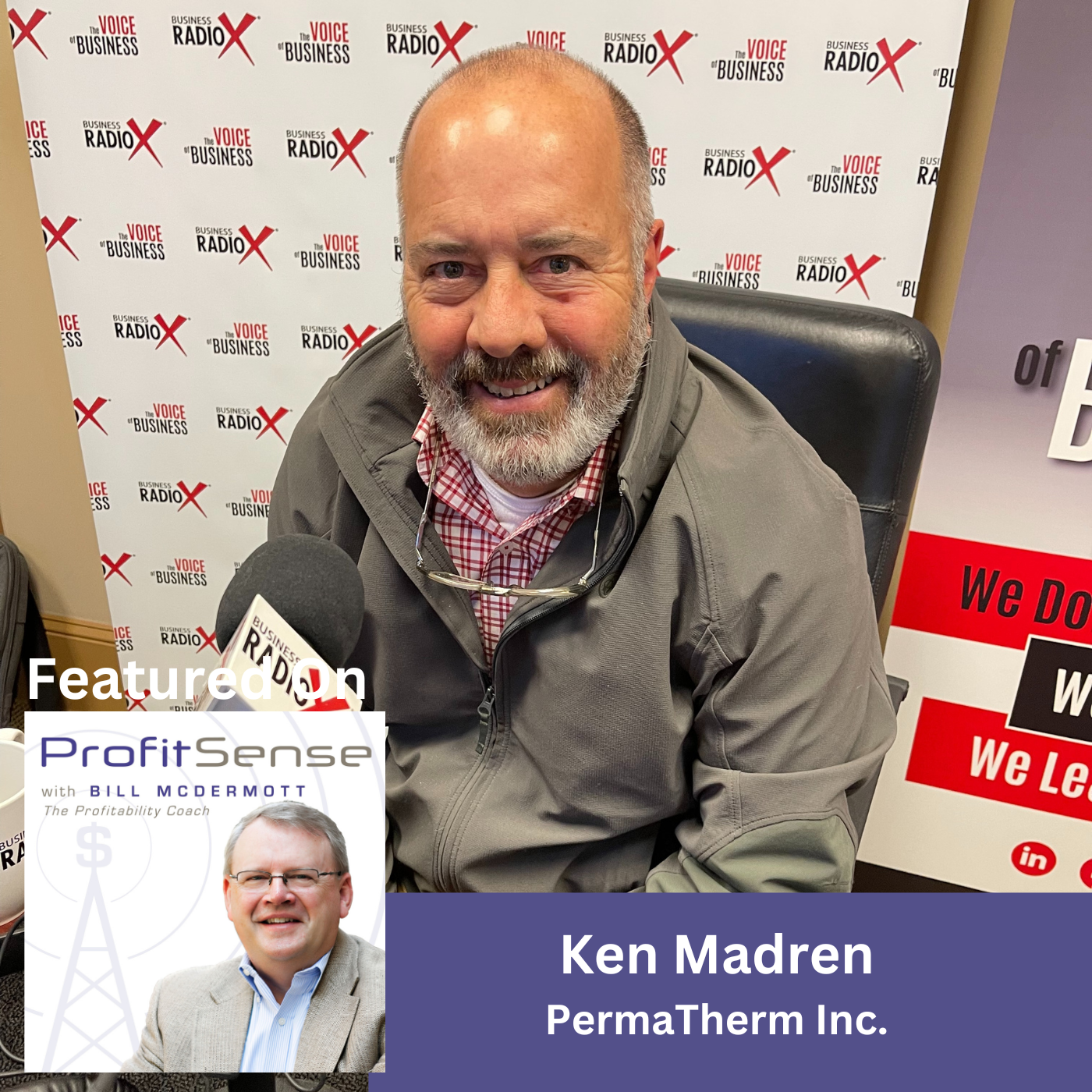
Redefining Workplace Communication, with Ken Madren, PermaTherm, Inc.

January 8, 2024 by John Ray

Redefining Workplace Communication, Ken Madren, PermaTherm
North Fulton Studio
Redefining Workplace Communication, with Ken Madren, PermaTherm, Inc.
Loading
00:00 /
RSS Feed
Share
Link
Embed

Download file

Redefining Workplace Communication, Ken Madren, PermaTherm

Redefining Workplace Communication, with Ken Madren, PermaTherm, Inc.

Ken Madren: One of the things that we’re doing at PermaTherm that is helping mitigate some past misunderstandings and miscommunications on the common words is we delete them. We don’t use the word “work” because work has so many definitions.

Can you believe that? Can you believe that the word “work” has more than one definition? It literally has a very definition from each person who walks in the door, what time does my day start? What time is my day in this is how I would work it. This is how you would work it. I’m working and they are.

So we change the names of things like that, that are critical paths and processes. And we make some pretty silly names out of things like work. For example, that word when we talk shop is now “keyholing.” It’s time to keyhole. What’s that? And we may be talking about progressing projects through our pipeline.

You would typically go work the pipeline. And there’s a lot of different ways to work the pipeline, but there’s one way at PermaTherm. And we’re talking about working the pipeline, but our best practices require that we keyhole The pipeline. When you do that, you destabilize everybody who’s supposed to keyhole the pipeline because no one knows what that is.

But when you build that definition together, everybody knows what that is. And we’ve found that to be an insidious eroder of progress. And we’ve found that simple element of take a word that everybody knows. Throw it in the trash can as it relates to critical process and come up with a new word and everybody define it together.

Now, really only a few people are leading that discussion, but you will find when it’s a word like keyhole, everybody wants to understand it because their job is, and everybody does add a piece or there. And in the end you, when you’re talking, everybody knows what you’re talking about. So in my career, it seemed like the silliest of things to do.

Everybody knows what work is. It’s been one of the most productive things. And there’s other instances like that, but that’s just one example of language and what we all think is good communication and how it can impede progress within your organization.

Listen to Ken’s full ProfitSense with Bill McDermott interview here. 


The “One Minute Interview” series is produced by John Ray and the North Fulton studio of Business RadioX® in Alpharetta. You can find the full archive of shows by following this link.

Renasant Bank has humble roots, starting in 1904 as a $100,000 bank in a Lee County, Mississippi, bakery. Since then, Renasant has grown to become one of the Southeast’s strongest financial institutions, with over $13 billion in assets and more than 190 banking, lending, wealth management, and financial services offices in Mississippi, Alabama, Tennessee, Georgia, and Florida. All of Renasant’s success stems from each of their banker’s commitment to investing in their communities as a way of better understanding the people they serve. At Renasant Bank, they understand you because they work and live alongside you every day.

Tagged With: Ken Madren, One Minute Interview, PermaTherm, productivity, renasant bank, workplace communication

Juli Shulem, Coach Juli

April 18, 2023 by John Ray

Juli Shulem, Coach Juli
Family Business Radio
Juli Shulem, Coach Juli
Loading
00:00 /
RSS Feed
Share
Link
Embed

Download file

Juli Shulem, Coach Juli

Juli Shulem, Coach Juli (Family Business Radio, Episode 43)

On this episode of Family Business Radio, host Anthony Chen welcomed executive coach Juli Shulem. Juli shared how she got started, why she’s so passionate about her work, how she coaches her clients to improve their productivity, success stories, and much more. Anthony ended the show with a commentary and ideas on ways to get out of a rut.

Family Business Radio is underwritten and brought to you by Anthony Chen with Lighthouse Financial Network.

Coach Juli

Coach Juli, LLC is a female-owned company that has been in business for decades. Juli Shulem offers 1:1 Coaching for Entrepreneurs, Solopreneurs, & Executives; Group Coaching; and Presentations both in-person and virtual. Juli also has an on-demand course entitled: “Your Life Productive…Finally!” which can be purchased and accessed directly from her website: www.CoachJuli.com.

Juli Shulem speaks, trains, and writes in all areas around Productivity. Contact her at Balance@CoachJuli.com to find out about having her speak to your group or department about becoming better organized and more productive. Topics and content are created specifically for each group with a wide variety of subjects to choose from.

Website | Facebook | Instagram | Twitter

Juli Shulem, Productivity Coach / Industrial-Organizational Psychologist, Coach Juli

Juli Shulem, Productivity Coach / Industrial-Organizational Psychologist, Coach Juli

Coach Juli Shulem, M.S., PCC, CPC began as an Efficiency Specialist and Professional Organizer decades ago. As a Productivity Coach & Industrial-Organizational Psychologist, she is an expert in dealing with the many challenges of those struggling with more difficult organizing, relationship, professional and personal management issues. With coaching, her clients become more efficient, less stressed, and better able to manage their time so they can enjoy life more fully. She coaches around overwhelm and frustration reduction, productivity, task/time management, organizing, efficiency, prioritizing, decision-making, workflow management, impulse control, as well as the special day-to-day challenges of handling life with ADHD – for those who have it.

Having been an entrepreneur and solopreneur her entire career, most of her clients tend to be Entrepreneurs, Solopreneurs, and Corporate Leaders from around the world. Clients benefit from learning her techniques to help with focusing, organizing, dealing with distraction, plus creating structure, systems, and boundaries. She works 1:1 with clients, in groups, as well as providing seminars and presentations to businesses and corporations.

Her articles are published both on her blog and on multiple social media channels. She has authored several books, has been interviewed on many platforms, and appears on multiple podcasts nationwide.

Coach Juli Shulem, M.S., CPC, PCC is a member of ICF (International Coaching Federation), ICF-GA (Georgia Chapter), Positive Intelligence Coaching, and ACO (ADHD Coaches Organization).

LinkedIn

Anthony Chen, Host of Family Business Radio

Anthony Chen, Lighthouse Financial, and Host of “Family Business Radio”

This show is sponsored and brought to you by Anthony Chen with Lighthouse Financial Network. Securities and advisory services are offered through Royal Alliance Associates, Inc. (RAA), member FINRA/SIPC. RAA is separately owned and other entities and/or marketing names, products, or services referenced here are independent of RAA. The main office address is 575 Broadhollow Rd. Melville, NY 11747. You can reach Anthony at 631-465-9090 ext 5075 or by email at anthonychen@lfnllc.com.

Anthony Chen started his career in financial services with MetLife in Buffalo, NY in 2008. Born and raised in Elmhurst, Queens, he considers himself a full-blooded New Yorker while now enjoying his Atlanta, GA home. Specializing in family businesses and their owners, Anthony works to protect what is most important to them. From preserving to creating wealth, Anthony partners with CPAs and attorneys to help address all the concerns and help clients achieve their goals. By using a combination of financial products ranging from life, disability, and long-term care insurance to many investment options through Royal Alliance. Anthony looks to be the eyes and ears for his client’s financial foundation. In his spare time, Anthony is an avid long-distance runner.

The complete show archive of “Family Business Radio” can be found at familybusinessradioshow.com.

Tagged With: Anthony Chen, Coach Juli, Family Business Radio, financial planner, financial planning, Industrial-Organizational, Industrial-Organizational Psychologist, Juli Shulem, Lighthouse Financial, Lighthouse Financial Network, productivity, Productivity Coach, psychologist

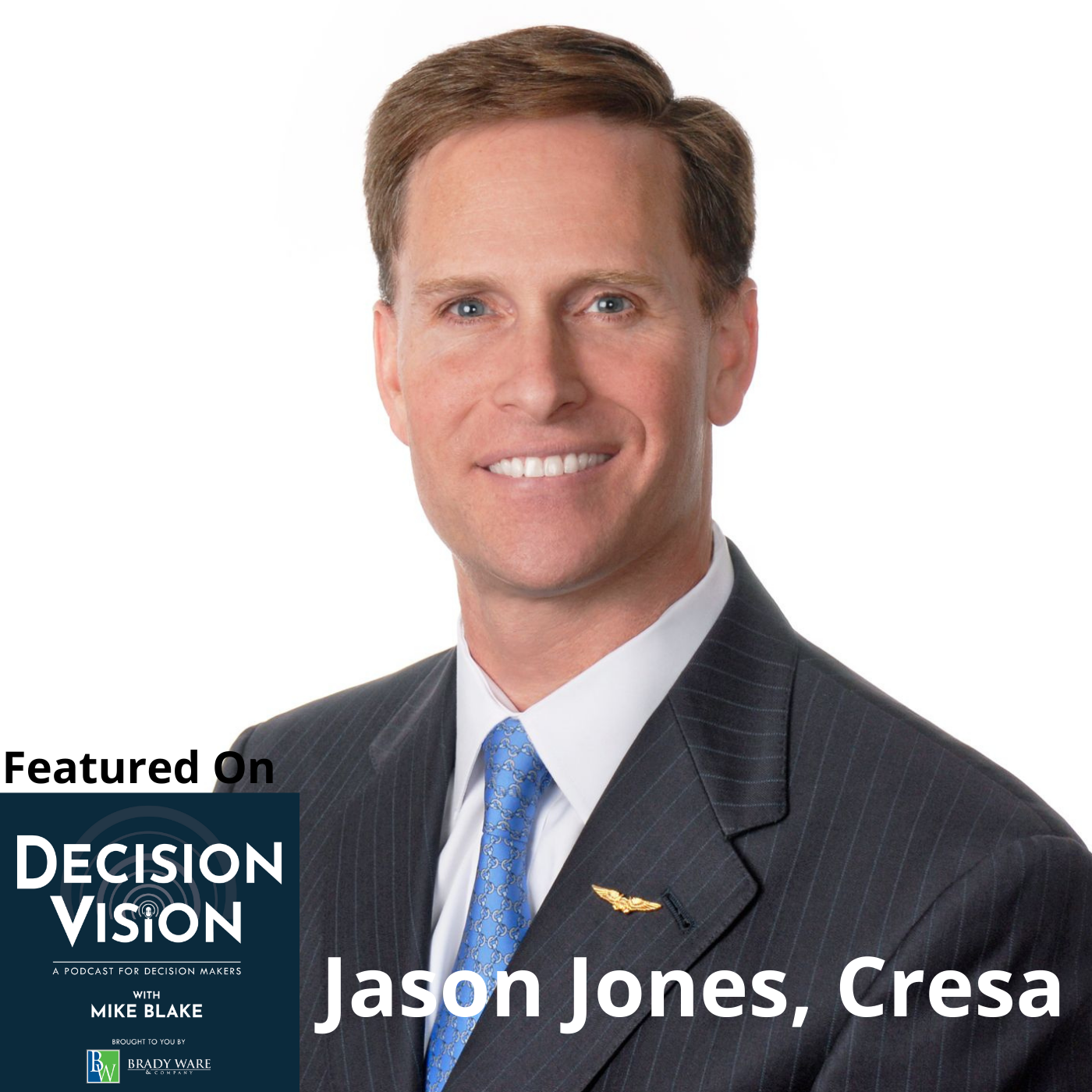
Decision Vision Episode 89: Should I Allow or Require my Employees to Work From Home? – An Interview with Jason Jones, Cresa

October 29, 2020 by John Ray

Jason Jones Cresa
Decision Vision
Decision Vision Episode 89: Should I Allow or Require my Employees to Work From Home? - An Interview with Jason Jones, Cresa
Loading
00:00 /
RSS Feed
Share
Link
Embed

Download file

Decision Vision Episode 89: Should I Allow or Require Employees to Work From Home? – An Interview with Jason Jones, Cresa

Jason Jones, Cresa, joins host Mike Blake to discuss the issues raised by a work from home workforce, including managing people, workforce productivity, talent recruitment, and, of course commercial real estate lease and ownership implications.  “Decision Vision” is presented by Brady Ware & Company.

Jason Jones, Principal, Cresa

Raised in Atlanta, GA, Jason Jones attended Duke University in Durham, NC on a Navy ROTC scholarship. After graduating from Duke in 1991 with a degree in political science, he traveled to Pensacola, FL and enrolled in naval flight school. In 1993 upon moving to Virginia Beach, VA, he learned to fly the A-6E Intruder as a Bombardier/Navigator and was subsequently assigned to a fleet squadron, deploying on the USS Enterprise.

In 1997 Jason left Virginia Beach to begin a tour of duty as a navy medical recruiter in Phoenix, AZ while attending Arizona State University’s Evening M.B.A. program. After leaving the Navy in 1999 he worked for one and a half years as a civilian headhunter recruiting senior executives for health insurance companies.

Upon finishing his M.B.A. in August of 2000 and before entering the business world full-time, Jason departed on a 15-month world trip on September 18th, 2000, returning to the United States on December 18th, 2001. He later documented his travels in the book Nomad:  Letters From a Westward Lap of the World.

After returning from his trip, Jason entered the commercial real estate industry, ultimately landing at Cresa.

Jason Jones leads two service lines at Cresa: Technology Advisory Services and Remote Advisory Services. Technology Advisory Services helps clients select and implement Communications (voice, video), Connectivity (Internet) and Cloud computing strategies – especially during a relocation.  Jason and his team help clients filter the confusion of evolving technologies and ensure coordination between the real estate and IT departments. Cresa Remote Advisory Services helps companies evaluate all the critical requirements of a remote work strategy. This leads to sustainable workforce strategies that balance working remotely with working in the office. Both services leverage human resources, technology, and real estate to maximize operations, improve talent attraction/retention and accelerate financial performance.

To contact Jason, follow this link.

Michael Blake, Brady Ware & Company

Mike Blake, Host of the “Decision Vision” podcast series

Michael Blake is Host of the “Decision Vision” podcast series and a Director of Brady Ware & Company. Mike specializes in the valuation of intellectual property-driven firms, such as software firms, aerospace firms and professional services firms, most frequently in the capacity as a transaction advisor, helping clients obtain great outcomes from complex transaction opportunities. He is also a specialist in the appraisal of intellectual properties as stand-alone assets, such as software, trade secrets, and patents.

Mike has been a full-time business appraiser for 13 years with public accounting firms, boutique business appraisal firms, and an owner of his own firm. Prior to that, he spent 8 years in venture capital and investment banking, including transactions in the U.S., Israel, Russia, Ukraine, and Belarus.

Brady Ware & Company

Brady Ware & Company is a regional full-service accounting and advisory firm which helps businesses and entrepreneurs make visions a reality. Brady Ware services clients nationally from its offices in Alpharetta, GA; Columbus and Dayton, OH; and Richmond, IN. The firm is growth minded, committed to the regions in which they operate, and most importantly, they make significant investments in their people and service offerings to meet the changing financial needs of those they are privileged to serve. The firm is dedicated to providing results that make a difference for its clients.

Decision Vision Podcast Series

“Decision Vision” is a podcast covering topics and issues facing small business owners and connecting them with solutions from leading experts. This series is presented by Brady Ware & Company. If you are a decision maker for a small business, we’d love to hear from you. Contact us at decisionvision@bradyware.com and make sure to listen to every Thursday to the “Decision Vision” podcast.

Past episodes of “Decision Vision” can be found at decisionvisionpodcast.com. “Decision Vision” is produced and broadcast by the North Fulton studio of Business RadioX®.

Visit Brady Ware & Company on social media:

LinkedIn:  https://www.linkedin.com/company/brady-ware/

Facebook: https://www.facebook.com/bradywareCPAs/

Twitter: https://twitter.com/BradyWare

Instagram: https://www.instagram.com/bradywarecompany/

Show Transcript

Intro: [00:00:01] Welcome to Decision Vision, a podcast series focusing on critical business decisions. Brought to you by Brady Ware & Company. Brady Ware is a regional full service accounting and advisory firm that helps businesses and entrepreneurs make visions a reality.

Mike Blake: [00:00:21] Welcome to Decision Vision, a podcast giving you, the listener, clear vision to make great decisions. In each episode, we discuss the process of decision making on a different topic from the business owners’ or executives’ perspective. We aren’t necessarily telling you what to do, but we can put you in a position to make an informed decision on your own and understand when you might need help along the way.

Mike Blake: [00:00:41] My name is Mike Blake and I’m your host for today’s program. I’m a director at Brady Ware & Company, a full service accounting firm based in Dayton, Ohio, with offices in Dayton; Columbus, Ohio; Richmond, Indiana; and Alpharetta, Georgia, which is where we are recording today. Brady Ware is sponsoring this podcast. If you like this podcast, please subscribe on your favorite podcast aggregator, and please consider leaving a review of the podcast as well.

Mike Blake: [00:01:04] So, today, we’re going to talk about, I think, a very timely decision. It’s certainly all over the place. The decision to allow or perhaps even require employees to work from home. So, just as a recap and spoiler alert, we started off 2020 – what sounds like 298 years ago – minding your own business when, all of a sudden, we have been cold clocked by a global pandemic known as the novel coronavirus-19. And as a result, extraordinary things have occurred in the day-to-day lives of most people and have impacted businesses in some fashion. Some businesses have been very positively impacted. If you’re in the mask business, I think you’re probably doing pretty well. And some have been very negatively impacted. You know, examples of that are going to be in hospitality and travel.

Mike Blake: [00:02:16] But for a lot of companies, you know, maybe you haven’t necessarily been all that financially impacted directly. But because of the way that experts have recommended -and I’m trying to keep this as nonpolitical as possible. I don’t understand why a virus has become political, but it has. But experts have recommended that we, basically, keep our distance from one another. The best thing that we can do to prevent ourselves from getting sick and being a carrier to others is to simply keep our distance, and to create barriers, and to limit our contact with strangers. And the more we can do that, the better.

Mike Blake: [00:02:58] And as a response to that, many companies have either created an option for their employees to work from home, where they previously hadn’t done. There are companies, like ours, that have kept the offices open but are not necessarily encouraging employees to come back. I think in our Dayton office, it’s probably a little bit more populated than our Atlanta office. I think, again, the doors are open, but we’re not exactly sending engraved invitations for people to come back in. And then, there are companies that has simply sent all their employees home, lock, stock, and barrel. Whether you want to come in or not, too bad. We don’t feel like we can make it safe. We don’t think it’s a responsible thing for our employees, for our customers, and for our community.

Mike Blake: [00:03:53] And this is created overnight. Massive challenges in terms of leadership, in terms of management, in terms of personnel development, in terms of a lot of the ways that we have been taught to lead and manage have suddenly been rendered inert and moved to the sideline. And we’ve talked a little bit about this in some of the other podcasts. We have talked to people about managing remote teams, and how do you support somebody working from home, and how do you support the work from home person. But those are very early in COVID. Those are very early in this experience in March and April in the heavy days where, I think, a lot of us thought that by now, as we record this in mid-October of 2020, if we hadn’t put this behind us, we would at least have seen a bright light at the end of the tunnel. And to that end, this is proving elusive.

Mike Blake: [00:04:58] And so, you know, we have to think now and companies are thinking in longer term. This isn’t a short term thing. And we’re finding also that some companies are doing very well with work from home. Some companies are contemplating making this permanent. And one of the upshots on this is it creates a cloudy outlook for the commercial real estate space. We don’t know if we’re going to need real estate as much as we did. Or if we did, it may be configured differently. It may be a different kind of real estate altogether. For example, I just read an article yesterday, it was on LinkedIn. I want to say it’s on The Wall Street Journal, but I’m not entirely certain. That skyscrapers are now very much out of vogue because you don’t want to stick people in elevators. And if the elevators are going 100 floors, that’s tough to do two people at a time. You’re going to have a lot of people getting sick in a lobby instead of the elevator. So, it’s opening up all kinds of unanticipated and strange kind of gyrations about decision making in this regard.

Mike Blake: [00:06:06] And so, I think, every business decision maker does have a decision in front of them, whether they’re actively pursuing it or whether they’re deferring it. At some point, you are going to have to decide whether or not you’re going to send your team, your workforce home, whether intentionally or comprehensively or whether by some sort of option. Most employees seem like to work from home, although some do not. And there’s increasing information available that suggests that working from home is, on the whole, a boon to productivity. So, that’s a long preamble, but a long preamble because this is a complicated and a very important topic.

Mike Blake: [00:06:53] And joining us today is our first repeat guest. And he was on earlier this year to talk about hiring veterans. Also, a very important topic. I’m fortunate I have a veteran working on my team now. A Marine who is extremely effective. We’re happy to have him. We’re very lucky to have him. But he came on really not to talk about his professional capacity, but Jason Jones, you know, he’s done something very, very interesting. I think very courageous. I think it’s going to be a case study someday. I really do. And that is, that he is a tenant representative, and he’ll talk about what exactly that means. But, in effect, he helps companies find commercial real estate. And he’s taken a step where he’s decided that he sees the world roughly the way that I’ve described and he’ll speak for himself in a minute. But he’s done something really interesting where, you know, the temptation would be to find all kinds of arguments why you should still come back into the office, because that’s how he makes his living.

Mike Blake: [00:08:09] But, instead, he’s taken the extraordinary step of risking cannibalizing his own business and making himself an expert on working from home, and remote management, and remote work services. And, frankly, I don’t know of anybody who has made themselves the expert on this. There are people who have written about it, but Jason has really made himself a student of it. So, we’re taking the extraordinary step. We normally like to have about a couple of years between appearances by guests. But I decided to break this rule because it’s depriving you, the listener, of the opportunity to benefit from his specialized expertise, where, frankly, there isn’t a lot of it out there.

Mike Blake: [00:08:53] So, I’m going to reintroduce my friend, and now holds the world record for appearances on the Decision Vision podcast, who is Jason Jones, who is now head of technology and remote advisory services at Cresa. And just as a reminder, Cresa is an international commercial real estate firm headquartered in the City of Washington. They represent tenants and provide real estate services, including corporate services, strategic planning, transaction management, project management, facilities management, workforce and location planning, portfolio lease administration, capital markets, supply chain management, sustainability and subleasing distribution. Formed in 1993, Cresta now has more than 60 offices and 90 employees.

Mike Blake: [00:09:39] Jason graduated from Duke University before serving in the United States Navy as an A-6 Intruder aviator. After departing the Navy, Jason got an MBA from Arizona State University and completed a 15 month solo trip around the world about what he wrote and published a book, Nomad: Letters from a Western Lap of the World. In response to the coronavirus pandemic and its impact on how businesses are thinking about real estate, Jason founded the Remote Advisory Service Practice. The Remote Advisory Service Practice helps clients leverage advances in technology in a new culture of acceptance for work from anywhere to attract and retain talent, reduce expenses, and reimagine the workplace. Jason, welcome back to the program.

Jason Jones: [00:10:24] Thank you. It’s great to be here, Mike. And I am thrilled to hold a new world record. That is amazing.

Mike Blake: [00:10:31] Yeah. We’ll send it to Guinness.

Jason Jones: [00:10:34] That’s what I was hoping. Wonderful. It’s great to be here and it’s always good to see you. I just enjoy being with you. And I really have a high regard for what you’ve done with Decision Vision.

Mike Blake: [00:10:45] Well, thank you. I do appreciate that. As I said, it’s nice to hear there’s at least one listener out there. So, we didn’t really get into this in the last program because that wasn’t the topic. So, we’re going to get into it now. And the first question is, describe your day job and, maybe, from a perspective pre-coronavirus in particular, what was your day job then? And kind of what did your service profile typically look like?

Jason Jones: [00:11:12] Sure. And I will tell you that I, personally, I’m a bit of an odd duck in the commercial real estate industry. But what I’ll do, I think, is most relevant is describe the business model of my company and then how I fit in. But the business model of Cresa, as you so well described, is, we are advocates for the occupier of space. Cresa is an acronym, Corporate Real Estate Service Advisors. So, we serve and advise our clients who are the occupiers of corporate real estate. And that’s 99 percent, for us, means office space and warehouse space.

Jason Jones: [00:11:51] And our job is to act as an advisor helping companies and nonprofit organizations develop their strategy for where they should have an office or a warehouse. How much space should they have? How should it be designed? And then, once we figure those things out, we go to the market. We help find the best fit, maybe three to five options, allow them to compete for our client’s business in an ethical manner that drives prices down, that drives concessions up. And then, ultimately, we help them implement moving into that space by managing the relocation project or the construction project. And then, once that’s done, or perhaps even at the very beginning of the process, if they’re already in space, we help them go through that process and renew their office or warehouse at better terms than they would be able to otherwise. So, it’s a real estate strategy and implementation business.

Mike Blake: [00:12:53] So, all the years I’ve known you and as long as I’ve known you’ve been with Cresa – I think I’ve known you since you started – but I don’t think I ever knew what it stood for. And I should have known it was an acronym, but I never asked. That’s a bucket list item that’s been ticked off.

Jason Jones: [00:13:10] Yeah. Perfect.

Mike Blake: [00:13:13] So, we’re going to get sort of a second piece of value out of you here, because this story intersects with something that I think a lot of people are facing in the coronavirus environment, which is, your business has clearly been – or at least it seems to me – has been disrupted. So, March, April rolls around, the world changes rapidly, and it’s unclear where it’s going to change to. People start being sent home en masse. What starts going through your mind as a real estate adviser and as somebody who, frankly, makes a living on helping people find the right space and getting square footage settled?

Jason Jones: [00:13:53] Yeah. Well, immediately, the very first thing that went through my mind was business continuity, which is how are my clients, our firm’s clients, and just other companies and nonprofits going to be able to maintain business continuity? How well set up or how well prepared are they for sending everyone home? And it was, practically, overnight and it was, as you recall, mandates, government mandates, which really kind of mercifully took the decision away from leaders as to whether or not to send people home and they had to. So, that very first thought in my mind was how are companies and nonprofit organizations going to be able to continue to operate with everyone working in a totally different environment than they normally did. Do they have the technology that’s available? Because this is going to now require technology that perhaps they have and perhaps they don’t. So, that was thought number one.

Jason Jones: [00:14:53] But thought number two, very soon thereafter, Mike, just a light bulb went off in my mind right away was, “Wow.” I think that this is going to be long lasting. I certainly didn’t think it was going to be a year or more, but I did think it was going to be several months. And I thought to myself, companies are going to need help understanding how to get this balance right between working from home and then one day returning to the office when that happens. And I thought maybe it would be six months. That was my personal thought at the time. But the idea of companies now experiencing a remote workforce – and by remote, in this case, remote at home. Although, remote can mean also another office location or a coffee shop. It could mean any number of locations. But remote at home, in this case, how are they going to balance that with their central office, which they still have, they’re still paying for, and now has in a large way become a nonperforming asset. So, how can we help them balance those two things and get the right blend when the day comes that they will have no restrictions, no health care restrictions on returning to the office.

Mike Blake: [00:16:22] So, you started thinking in advance about the needs. At one point, did you start to come to a realization that this is not just a service imperative for your clients, but also probably the right business move for you personally and for the firm?

Jason Jones: [00:16:42] And, again, that was very, very early on, because I recognized – and you have to understand, if you go to the landing page for Cresa’s website in big, bold letters, it says, “Think beyond space.” So, that’s our mantra. And the reason that we can do that is because we only represent or advocate for the occupier of space, never landlords. So, we’re not solely focused on how do we fill buildings? Which a landlord, that would be their interest. The owner of property wants to fill that building. That’s their business model. Our business model is advisory services for the occupant, which includes leasing space or owning space, warehouse space, office space. But it also includes helping companies with their bigger picture business strategy that leads downstream to the support infrastructure of corporate real estate.

Jason Jones: [00:17:37] Real estate is simply support for the larger business model. So, we help companies understand how are they going to manage multiple leases? How should that space be designed to maximize the benefits of culture and help to enhance their culture? How can they use space to maximize the retention and recruitment of talent, bringing in the best and the brightest? How can they use technology to enhance the workforce experience so that they can have higher productivity and greater engagement with their employees? So, there’s a bigger picture that our company takes. And it’s not just focused on space, it’s focused on the holistic approach to a company’s business. And then, we solve a lot of these business problems by leveraging real estate and beyond, which gets into how I’m a bit of an odd duck in the corporate real estate industry, which is through technology, where I have a specialization. And, now, through workforce strategy, which includes remote work as one component of a larger workforce strategy.

Mike Blake: [00:18:58] So, if I’m understanding this correctly, I want to make sure this is really clear because it is an instructive piece of the conversation. It sounds like to some extent, you’ve always seen yourself, and it sounds like you believe your firm sees itself, as a consultant on optimizing real estate as an asset – well, as an operating asset and not just trying to put bodies in square footage.

Jason Jones: [00:19:27] Absolutely.

Mike Blake: [00:19:27] And that made this – I don’t want to say transition – maybe this evolution, if I can use that term. It sounds like it made that evolution more natural than it might seem on the outside.

Jason Jones: [00:19:41] Absolutely. Because, Mike, when you think about it, and every company listening, everyone making a decision out there about their workforce, my question that I pose is, how can you possibly design your office space and commit to a certain footprint, a certain amount of office space, if you don’t first know where your employees are going to be working and how they’re going to be communicating, collaborating, and ultimately using that space. You’ve got to do the work upfront on the workforce strategy, which includes remote work and includes a central office. There’s tremendous benefits to both and there are challenges to both. But you’ve got to figure that out before then you go downstream and say, “Okay. Now, that we understand and have confidence in our workforce strategy, where people are going to be working, how they’re going to be communicating, collaborating. We’ve got the right technology in place. We have the right policies. We have compliance in place.” Then, we can design the space to fit that need and commit to a certain expense, a certain amount of space.

Jason Jones: [00:20:54] And, by the way, that commitment in real estate and understanding the nature of real estate is very important. It’s inflexible. You’re going to commit for a minimum of three years, but, typically, five to ten years to a certain amount of space. And while there’s some flexibility with sublease rights and expansion rights and rights of first refusal, it’s cumbersome to make changes. So, you want to get it right upfront and you want to have confidence that your plan for real estate fits the precursor conversation of what is your workforce strategy, where are people going to be working, and what is most advantageous for higher productivity, better recruiting and retention of talent, and better financial returns.

Mike Blake: [00:21:41] So, you’re typically talking to your clients at the sea level, whether it’s the CFO, COO, or CEO. What concerns are they most expressing to you about work from home/work from anywhere?

Jason Jones: [00:21:59] I think one of the biggest things that we hear is, I want to protect the culture of my organization. And there is a concern that extended work from home will have a deleterious effect on their culture. Because culture is best established within personal relationships where you’re face-to-face, you can see each other. And there’s just something that’s intangible about how that relationship is developed in-person versus remotely. But my counsel to them, and I think the real concern is, 100 percent work from home, which is basically what we’re still experiencing right now. I would say on average and this is anecdotal and we see a few statistics here and there that it’s approximately 10 to 20 percent of people are occupying their office space generally across the U.S. and Canada.

Mike Blake: [00:22:57] That’s true for us in Alpharetta.

Jason Jones: [00:23:00] Yeah. So, that’s about right. I think that’s a fair number right now. So, that’s a very large percentage that are not coming into the central shared office. And the concern is that that’s going to have an effect on their culture long term. How can they be creative? You’re missing serendipitous moments. Tim Cook of Apple was just interviewed by The Atlantic a couple of weeks ago. And he said that’s one of his great concerns. And that they have designed their office space at their headquarters to have common areas where people hangout and interact and mingle so that you can have serendipitous moments, you can have creative moments, share creative thoughts. And you can’t schedule those things.

Jason Jones: [00:23:43] But I think what’s going to happen is, as we cross the hurdle, eventually, of a post-COVID environment, now you’re going to have an opportunity for what I call purposeful collaboration. And that is a leader or a manager making a purposeful decision about when and where that person’s team collaborates, either works together or works independently. And that collaboration can occur in person or that collaboration can occur virtually with someone at home and someone at the office, or two people at home, or whatever the case may be. And I think that when you can blend those two things and find the right balance – this is back to culture – you’re going to be able to really make sure you’re getting all the benefits of the central office as well as leveraging this newfound cultural acceptance for working from home.

Mike Blake: [00:24:45] So, I think implicit in that is the glue that holds that culture theses together is communication. Without communication, there’s no community. There’s no culture. What are you seeing emerging in terms of best practices that allow easy communication among workers and across different platforms of the organization or different segments of the organization versus being overly intrusive and, you know, getting into nearly spying on your employees, basically? What are some best practices you’re seeing there?

Jason Jones: [00:25:33] Well, again, this comes back to leadership, leadership and thoughtful planning. There are many tools, software tools, telecommunication tools, to allow for communication between remote employees. We’re using one right now. This is a communication tool. And there are collaboration tools as well, software. But it’s how you choose to use them that’s most important. And I think one of my pieces of advice for organizations out there is to come up with cultural norms for how you, as a team or as an organization, communicate with each other. And examples of this would be, what are our hours when we are expected to respond to either voicemails and email and text messages so that we keep some structure and boundaries on our personal life and our home life? So, it could be, “Hey, from 7:00 a.m. to 7:00 p.m., it’s fair game.” Or 7:00 p.m. to 6:00 p.m., whatever the case may be. But after that, we have no expectation that you will reply to communication.

Jason Jones: [00:26:47] It could mean we, as an organization or as a team, are going to agree that we’re going to have our cameras on when we have a Zoom call or a RingCentral call. But on certain calls, perhaps just phone ones at the end of the week, you don’t have to have your camera on. So, we’re going to side culturally how we’re going to communicate. Visually, where we can see each other. Or where it’s okay to be walking your dog around the neighborhood while you’re on your conference call. You can do that now. Why shouldn’t you? Let’s have a cultural understanding of what’s acceptable and what’s not.

Jason Jones: [00:27:23] So, there’s a number of things that I think people can agree to. But the other key piece for communication is, making sure that you’re giving appropriate and consistent feedback to the remote employee. That’s very important. Because, otherwise, someone who is working remotely can feel they’re on an island. They can feel isolated. And they’re just not sure, “Am I meeting standards? Am I doing my job the way people want? Give me some feedback.” So, consistent, frequent, informal feedback – and everyone has to define what frequent means for them and their team. But I think that’s a key part of communication is making sure – and it goes both ways. The manager needs feedback also on how they’re doing sort of in a 360 view. But that’s what I would advise, is to really focus on good feedback, consistent informal communication, and then planned formal communication that perhaps is a little bit more often business reviews, for instance, than they may have been when everyone was in the office together.

Mike Blake: [00:28:37] You know, your comments here strike me as something that I’ve observed. Personally, I’m curious how you’d react to this. A lot of what you’re talking about, I would argue, are best practices even as of January 1st, 2020. You know, providing consistent feedback, providing protocols for communication, setting realistic boundaries. It’s interesting to me how coronavirus and the pandemic are, in a lot of ways, it’s what’s old is what’s new. It’s forcing us to revisit the fundamentals, I think, of leadership and management and be much more intentional. I guess, because being in person, maybe, sometimes gives us some margin for error that we wouldn’t ordinarily have. I’m not sure what it is, but I hope you get my meaning is that, a lot of these things you’re suggesting – I’m not denigrating them at all – but merely pointing out that these have been best practices before. But I think one of the lessons is that if they’re important before, they’re ten times as important now.

Jason Jones: [00:29:55] Yes. They’re accentuated for sure. Because if you’re in the office together, there’s a feeling you can manage by walking around, just kind of you feel it. Whereas, here, you have to be purposeful about the communication and the feedback. And, frankly, it can sharpen a leader, it can sharpen a manager to be more effective than they may have been otherwise.

Mike Blake: [00:30:22] I think that’s a great point and it gets into my next question beautifully, which is, how managers had to adapt to work from home or work from anywhere? And I think you just nailed it. And I’ll ask you to add to it if you would like to. But that ability to manage by walking around is not there. And, you know what? It reminds me, as you know I’m a big baseball fan. There used to be a player for the Yankees, Bernie Williams. He played centerfield for them. And he was not the greatest center fielder in terms of anticipating where the ball is going to hit. But he’s such a great athlete. He could basically outrun his mistakes. And with work from home/work from anywhere, you can’t sort of outwork your mistakes by managing by walking around, because that tool is not available. You must be more intentional because one of the tools for kind of making up for that just simply has been removed.

Jason Jones: [00:31:25] Yes. It’s interesting. I’ve done a lot of reading – as you mentioned, I really have become a student of this over the past several months. And there was a very interesting article about different qualities are now being rewarded and are more advantageous in a leader than there were when everyone was in the office together. So, previously a charismatic, gregarious leader had a lot of sway, had a lot of pull. But maybe, perhaps, they weren’t the most effective at actually getting things done and staying on course and staying on schedule. Now, getting things done, staying on course, staying on schedule is so important. And those interpersonal, gregarious, charismatic qualities are not as effective virtually as they are in person. So, it’s requiring different aspects of a leader to be successful. And what’s going to be really interesting is, when you get into a place where we can find the right balance between the two locations, remote and in office, and allowing both of those personalities to be successful.

Mike Blake: [00:32:40] That’s a really interesting point. So, I’m going to go off script here because I think that’s such a smart point. At least, I think so. I haven’t thought of it, but I think you’re dead right. And that is, that coronavirus really does play into the hands of the technical manager, not the technician per se, but the technical manager that understands, embraces, likes, is good at the nuts and bolts of managing, which is coordinating resources to produce the desired result within the desired constraints, whether there’s a time budget, whatever they are. And there’s value to that, the charismatic leader for sure. But the charismatic leader – I think I agree with you – because of how communication is, has to work a lot harder for those charismatic qualities to be effective. And even in the short term, they’re not even as valuable. They’ll eventually come back. But there is a point in a crisis where it’s not about charisma, it’s about execution.

Jason Jones: [00:33:49] That is correct. And so, what’s interesting and what can be helpful for organizations who are out there listening is, there are personnel assessments. So, in our consulting, we have partnerships with multiple organizations. And there’s a few that leverage personnel assessments that they’re, basically, psychological tests. Kind of like a Myers-Briggs, I mean, think about that. Although, it’s different because it’s geared towards the remote work environment. And these are important because they help organizations understand. They help people understand themselves. And they also help managers understand those who are reporting to them, those who they are leading, so they can best manage them based on their aptitude for remote work. How well they tend to focus? Are they an introvert? Do they like to work alone? Do they really need or thrive on interpersonal communication? So, you change your management a little bit depending on the employee and their personnel assessment.

Mike Blake: [00:35:03] So, we’ve talked about how managers are having to change. What changes are you seeing in how employees operate, carry themselves, seek to add value to the organizations with which they work?

Jason Jones: [00:35:17] Well, I think that really goes back to just making sure that they are having expectations set. So, asking for feedback from their managers, understanding what the expectations are so that they can meet or exceed them, and making sure that they are getting those things done. I think that’s really important. And, you know, it’s also really important –

Jason Jones: [00:35:47] I want to go back to the manager just for a second. It’s important for leadership at the top of the organization to do a good job of communicating larger mission and larger goals. And this goes back to my time in the military. This is very much of a military concept. So that the remote worker who is operating unsupervised throughout the day can make independent decisions that are congruous with, they’re in alignment with, the larger goals of the organization. So, there’s a leadership challenge here. There’s a leadership requirement to do a good job of communicating big picture goals and mission, so, again, that the unsupervised independent worker can make those decisions real time on their own that supports the larger mission. And that’s the same thing as, you know, you want your fire team out in the field understanding the big picture strategy that the battalion commander has back at headquarters so they can make decisions at the tip of the spear.

Mike Blake: [00:36:53] Right. So, let’s shift gears a little bit. You know, the office is changing, but it’s not going away. We’re still going to need and want, I think, office space. I’m going to ask you to put your futurist hat on a little bit, think a year or two from now, how do we think about office space differently? How do office spaces look and function differently a couple of years from now?

Jason Jones: [00:37:23] Sure. Well, a lot of this will depend on the organization and how they use the space, because a law firm is very different than a software development firm. So, probably, it really needs to be customized to the organization. But I think what you’re going to find is, as work from home or remote work becomes more deeply ingrained in the everyday fabric of the corporate America, nonprofit organizations, et cetera, you’re going to find the design of space to be different than before and the technology to be different than before. And so, specifically, I think you’re going to find a lot more flexibility in the way the work space is designed. You’re going to want to be able to move things around as organizations grow. And they have some people that now, maybe, they need to be in the office more often during a certain project. And then, they want to be remote during another project. So, you’re going to want some flexibility in how the furniture can be arranged.

Jason Jones: [00:38:36] So, actually, I think furniture is going to be a very important part of this. Creating environments not just through hard walls, but through the way furniture is arranged. And creating different environments for more casual, I’m going to say, coffee shop type environments. Because people are working in real coffee shops right now and they want to have that feeling and environment at the office as well. That’s what will woo them to come into the office. So, I think space will need to be designed to woo employees to want to come there, as opposed to preferring to be at home where they have their set up, and they’re very comfortable, and they feel very productive there.

Mike Blake: [00:39:23] So, that is interesting to me, because I did not anticipate you would say that. Only because before this whole thing started, I’ve read so much about how open workspaces have generally been considered to be a management experiment that has failed. They’ve been enormously disruptive. While they’ve perhaps facilitated collaboration on the margin, they’ve completely destroyed the potential for so-called deep work and deep thought.

Mike Blake: [00:39:59] But on the other hand, I mean, you’re right. Even, now, I imagine people are still working at Starbucks and people love to go out. I think people miss being able to go out to a place where they can just hangout for a couple of hours in an open space by themselves with a pair of noise canceling headphones. And that just occurred to me kind of what kind of a paradox that is. And that really sounds like you’re dancing on the head of a pin there of how do you create a space that is both open and welcoming, but also not chaotic.

Jason Jones: [00:40:33] Yes. And this is all about culture and leadership, which I go back to every time, is, it’s kind of like when I go to Starbucks or an independent coffee shop that I particularly like that’s not a Starbucks, people don’t come up and interrupt me and ask me questions. And when I go to the library, there’s a culture that it’s, “Shh. We’re in a library.” It’s quiet. And I think you can create those areas in office space. And then, there’s going to be other areas that the culture is, “Hey, you’re in the Romper Room over here.” You know, you’re going to get interrupted or this is where we’re playing games. And then, there’s going to be other places that are dedicated to heads down work.

Jason Jones: [00:41:16] And I think there’s going to be a lot of – I’ll go ahead and use the corporate name – Zoom room, which could be any type of technology. But, basically, they will be smaller rooms where people can gather together, teams, to have a video conference call and a collaboration working session with another office. And people who were doing that before COVID, it’s just going to become more prevalent now that there’s a greater, broader, cultural acceptance for using this type of technology and working remotely.

Mike Blake: [00:41:56] A management challenge has started to come to light, which is work from home/work from anywhere dress codes, where you see a lot of of jokes. I certainly use the tortured stereotype enough. You know, you see me in a three piece suit above the line. Below the line, you just don’t know what is there. And, frankly, you don’t want to even imagine or go there, right? And as people have slipped into a work from home, their personal morning routines have changed because they don’t feel like there’s a certain level of preparation. I think some companies are worried that’s gone kind of too far. Are you aware of that trend and that concern as well? And what do you see evolving in that regard in terms of work from home/work from anywhere dress codes?

Jason Jones: [00:42:53] Well, I think this goes back to two things. Again, it’s culture and leadership. So, what is the culture of our organization? What do we wear when we go into the office? That’s different for every company. But we have a culture that we all agree this is what we wear. And that same culture should apply or should be set for video conference calls. And that’s just leadership deciding either you can mandate or you can come to a collective consensus. And that’s a leadership decision as to which path you want to take. But that’s what that comes down to.

Jason Jones: [00:43:29] And that’s why I think people need to be thoughtful and purposeful. This is why we guide companies through a road map where there is a step-by-step process through which they cover all of these decisions. Everything that we’re talking about are so important to creating a thoughtful, balanced, and sustainable workforce strategy that includes remote work. So, I think people should go through that roadmap and ask these different questions of themselves and be a leader and take initiative to set those standards.

Mike Blake: [00:44:02] We are speaking with Jason Jones from Cresa on the Decision Vision podcast and talking about work from home/work from anywhere arrangements for a workforce. Jason, we’re running up against our time here. But I do have a couple of questions I want to get in here and one is, you know, as you have self-described or you described yourself as a student of this work from home/work from anywhere phenomenon, is there a company out there you think is really getting it right? Is there somebody that you say, “You know what? As a good kind of role model, this is a company that is kind of setting the standard for best practices.”

Jason Jones: [00:44:43] Well, what’s challenging about that question is it’s hard to know who is getting it right from a balanced perspective. Because most companies aren’t able to have the balance yet because there’s still a health care restriction. And, by the way, that is where the rubber is going to hit the road from a leadership perspective is, once that is removed, leaders are going to be challenged with what’s the right balance. What’s the right decision? How can I be purposeful in my collaboration? And I think that forward thinking organizations are looking at that now. They’re looking over the horizon. And there’s other leaders that are going to get caught flat footed.

Jason Jones: [00:45:29] But one company that I will tell you that is of interest and you can Google them and read, they’ve got a lot of information about work from home. It’s a 100 percent remote company, so that’s a little bit different, a little bit of an outlier. But they’ve got some good information about working remotely and they’ve done it very well, very successfully. It’s a company called Zapier, Z-A-P-I-E-R. They’re 100 percent remote. They’ve been around since 2011. So, they’re successful. They have over 300 employees in 28 countries. Now, they have a business model. It’s software development that lends itself to that. But if you want to read some interesting information about how they do it, I think you could pick some nuggets out of there for your organization that very, very likely will need a balanced strategy to be sustainable.

Mike Blake: [00:46:26] Jason, it’s been a great conversation. We could make this an all day seminar. But, of course, we don’t have the ability to do that. If somebody has questions about this work from home/work from anywhere phenomenon, either as an employer or employee, can they contact you with a question? And if so, how best can they do that?

Jason Jones: [00:46:45] Absolutely. And I want to say two things. You can always Google my name, Jason Jones, Atlanta, and I’ll pop right up. So, that’s probably the easiest to remember. My email address is jjones@cresa.com. And I do a webinar every second and fourth Tuesday of the month at 2:00 p.m., Eastern. We’ve been doing it for three-and-a-half months now, where we talk about the challenges and the benefits of remote work and the road map to navigate your way to a successful strategy. So, if that is of interest, it’s free. There’s no charge. We have people come on all the time. And, again, it’s very easy to schedule, it’s every second and fourth Tuesday of the month.

Mike Blake: [00:47:32] Well, thank you, I have a feeling you’ll get some takers on that. That’s going to wrap it up for today’s program. I’d like to thank Jason Jones so much for joining us and sharing his expertise with us. We’ll be exploring a new topic each week, so please tune in so that when you’re faced with your next executive decision, you have clear vision when making it. If you enjoy these podcasts, please consider leaving a review with your favorite podcast aggregator. It helps people find us that we can help them. Once again, this is Mike Blake. Our sponsor is Brady Ware & Company. And this has been the Decision Vision podcast.

Tagged With: Brady Ware & Company, commercial real estate, corporate office tenant representation, CRESA, Jason Jones, Michael Blake, Mike Blake, Productive Workforce, productivity, tenant representation

Neeti Dewan, Global Platinum AdvantEdge

May 27, 2020 by John Ray

Neeti Dewan
North Fulton Business Radio
Neeti Dewan, Global Platinum AdvantEdge
Loading
00:00 /
RSS Feed
Share
Link
Embed

Download file

Neeti Dewan
Neeti Dewan, Global Platinum AdvantEdge

Neeti Dewan, Global Platinum AdvantEdge (North Fulton Business Radio, Episode 238)

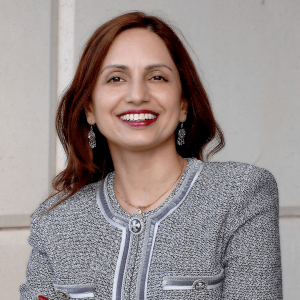
Neeti Dewan joined the show to discuss her work as an outside CFO and business advisor, and also how she helps business owners themselves as an “Executive Yogi.” The host of “North Fulton Business Radio” is John Ray and the show is produced virtually by the North Fulton studio of Business RadioX® in Alpharetta.

Neeti Dewan,  CEO, Global Platinum AdvantEdge

Neeti Dewan
Neeti Dewan

Neeti Dewan, The Executive Yogi, is the author of the innovative and revolutionary business book, From Executive to Yogi in Sixty Seconds. The book has been hailed by one top executive “as the tool Corporate America has been waiting for to help motivate and retain its best employees”, while another has said that her book “teaches executives how to lead with passion and engagement towards profitability. ” Her next book will be out later this year, entitled High Level Leadership, Low Level Stress – How to win in business without losing your mind.

A community leader, Ms. Dewan is the Chair of the Atlanta Women on Boards 2020, serves on the Board at Harvard University, Kennedy School (WLB), and has served on the Board of the National Association of Women Business Owners as CFO. She was recognized by the Los Angeles Business Journal as a “Woman Making A Difference”, and by the National Diversity Council as “Most Influential and Powerful Women” in Pennsylvania and Atlanta.  As the CEO of her own consulting firm, she received the “Small Business Accountant Advocate of the Year Award.”

A world-renowned efficiency, productivity, and work-life balance expert, who has worked for over two decades inside some of the nation’s top corporations like PricewaterhouseCoopers, KPMG, Ryan, and Aramark Corporation, Ms. Dewan is widely regarded as a top performer in a highly demanding profession.

Global Platinum AdvantEdge, LLC

With over 30 years of experience, Global Platinum AdvantEdge offers CFO, Accounting, and Tax Services and Business Transformation.

Visit their website or email Neeti for more information.


North Fulton Business Radio” is produced virtually from the North Fulton studio of Business RadioX® in Alpharetta. You can find the full archive of shows by following this link. The show is available on all the major podcast apps, including Apple Podcasts, Spotify, Google, iHeart Radio, Stitcher, TuneIn, and others.

Renasant Bank has humble roots, starting in 1904 as a $100,000 bank in a Lee County, Mississippi, bakery. Since then, Renasant has grown to become one of the Southeast’s strongest financial institutions with over $13 billion in assets and more than 190 banking, lending, wealth management and financial services offices in Mississippi, Alabama, Tennessee, Georgia and Florida. All of Renasant’s success stems from each of their banker’s commitment to investing in their communities as a way of better understanding the people they serve. At Renasant Bank, they understand you because they work and live alongside you every day.

Tagged With: efficiency, Executive Yogi, Global Platinum AdvantEdge, John Ray, Neeti Dewan, North Fulton Business Radio, productivity, work-life balance

Navigating Our Way Through Uncertainty

April 28, 2020 by Karen

Phoenix Business Radio
Navigating Our Way Through Uncertainty
Loading
00:00 /
RSS Feed
Share
Link
Embed

Download file

Navigating-Our-Way-Through-Uncertainy

Navigating Our Way Through Uncertainty

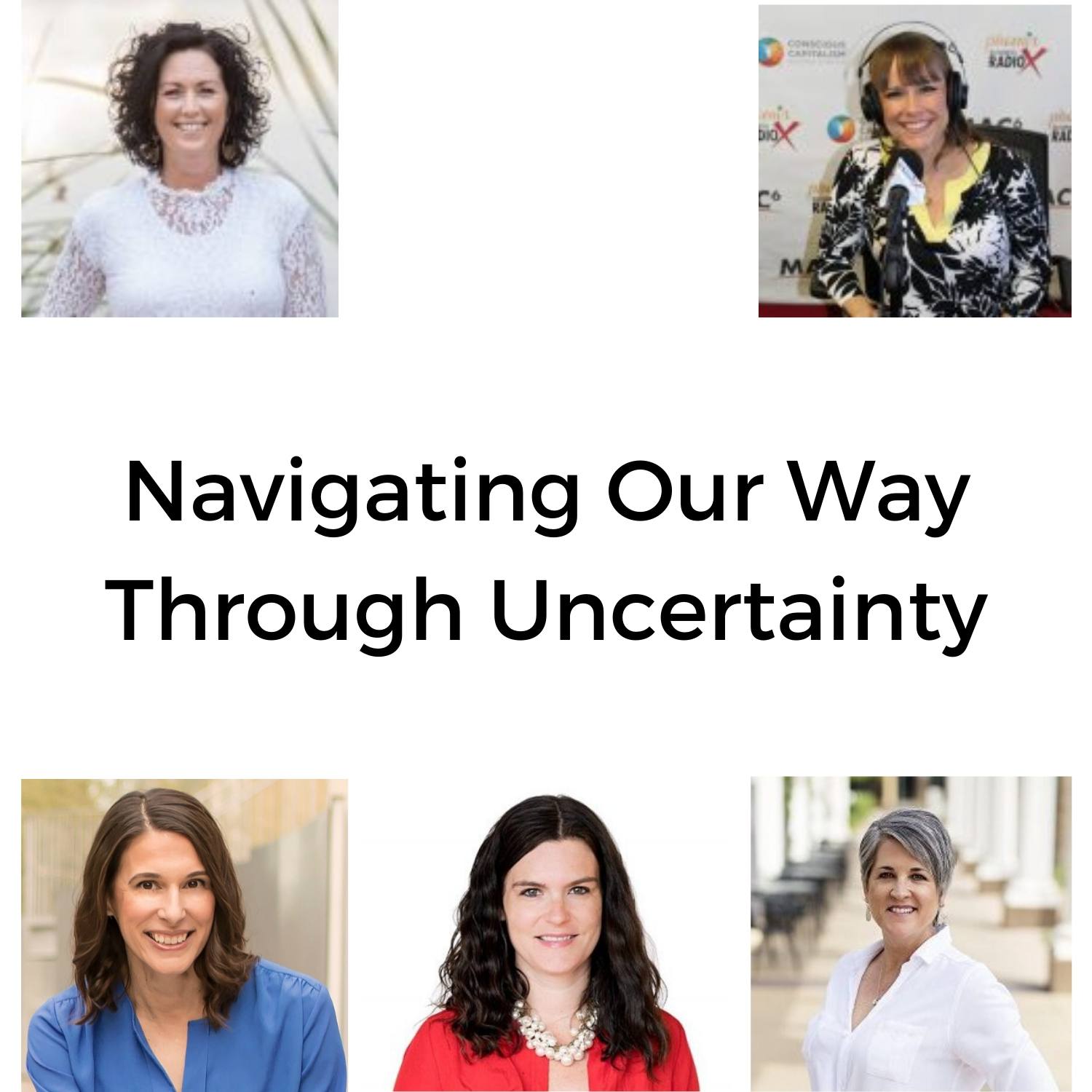
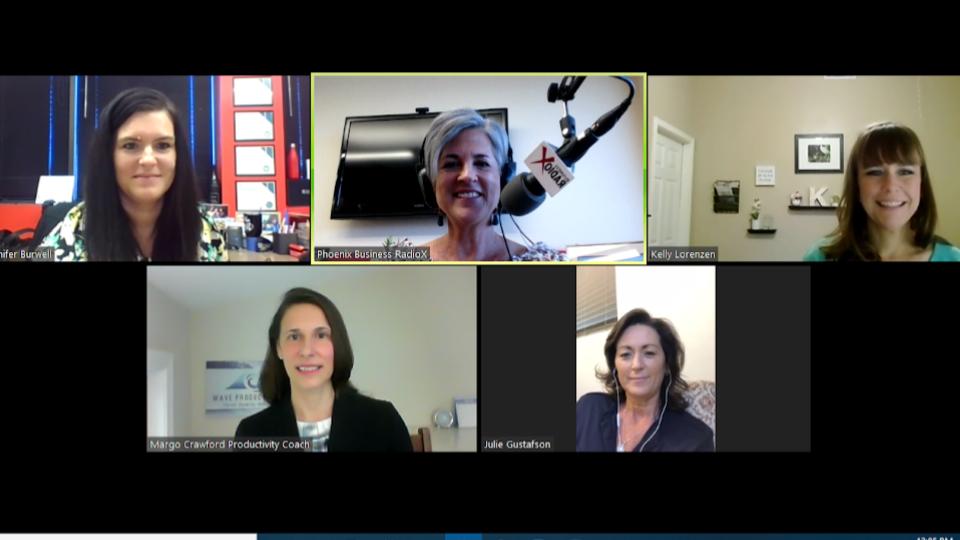
In this time of uncertainty, we are trying to navigate our way through new territory at home, in relationships, and at work. It is important for all of us to remember that we are weathering the same storm, but all in different boats, and that we need to lead with empathy and grace through it all. There will be many emotions that we all experience through this trauma and there are people who can help.

If you need some inspiration and hope through these challenging times, tune in to hear from Julie Gustafson, Jennifer Burwell, Margo Crawford, Karen Nowicki and Kelly Lorenzen. They give great advice and perspective for all of us.

Julie-Gustafson-on-Phoenix-Business-RadioXJulie Gustafson is a trauma mentor with JMG Consulting who guides people through regressive therapy. She had the fortunate opportunity to train with one of the best trauma professionals in Arizona, Wayne Johnson.

Knowing firsthand the staggering toll that anxiety and depression can have in our lives, Julie is passionate about helping others find peace in their lives.

The work Julie does focuses on personal growth by working through past and present traumas. There will be no attempt to physiologically diagnose, treat, fix, heal or change you as a person. Self discovery will act as the guide regarding behavior, thoughts, emotions and spirituality.

Margo-Crawford-on-Phoenix-Business-RadioXMargo Crawford of Wave Productivity has the goal of creating thriving workspaces by increasing focus, productivity and success. She works with clients to create creative, effective solutions for their life and work.

Her business, Wave Productivity has helped many professionals create and sustain a productive work environment. Margo enjoys being a part of creating and sharing in the success of her clients, from paper and email management, to information flow and productivity.

Applying her wisdom and her practical advice she is able create systems to meet the unique needs of her clients. Margo is experienced and trained in many different methodologies enabling her to create tailored solutions for each individual.

Connect with Margo on LinkedIn, Twitter and Facebook.

Jennifer-Burwell-on-Phoenix-Business-RadioXJennifer Burwell seamlessly integrates each of the MAC6 business units assuring that they are all being managed effectively towards the long term company vision. She is also a student of human behavior as a Certified Professional Behavioral Analyst, with other certifications in Emotional Intelligence and Acumen.

She uses this knowledge to work with businesses to facilitate culture focused leadership programs, which integrate the company’s values and create higher performing teams.

Follow MAC6 on Facebook.

Kelly-Lorenzen-on-Phoenix-Business-RadioX

Kelly Lorenzen, Host of Collaborative Connections and CEO of KLM Consulting, is an award-winning entrepreneur with over 15 years of business-ownership experience. She is also a certified project management professional.

Kelly’s expertise is in business development, customer service, marketing, and sales.

Connect with Kelly on LinkedIn, and follow KLM Consulting on Facebook.

KarenNowickiv2Karen Nowicki is a successful author, speaker and the creator of Deep Impact Leadership™ and SoulMarks Coaching™. She is a two-time recipient of the prestigious national Choice Award® for her book and personal development retreat. Karen was crowned the first-ever “Mompreneur of the Year” Award in 2010 for the southwestern states. She was recognized for her leadership, business acumen, and work-life balance.

Karen has been an expert guest on regional TV and radio shows, including Fox Phoenix Morning Show, Sonoran Living, Good Morning Arizona, The Chat Room, and Mid-Day Arizona. She has been a regular contributor to many print and online magazines – publishing articles and blogs for business and education.

In addition to working with private coaching clients, Karen is also the Owner & President of Phoenix Business RadioX. The Business RadioX Network amplifies the voice of business – serving the Fortune 500,000, not just the Fortune 500. Phoenix Business RadioX helps local businesses and professional associations get the word out about the important work they’re doing to serve their market, profession, and community.

Of all the experiences Karen has had the privilege of participating in over her vast career, she shares that Phoenix Business RadioX is a pinnacle adventure!

Connect with Karen on LinkedIn and follow Phoenix Business RadioX on Facebook and Instagram.

Tagged With: inspiration, productivity, Productivity Coach, trauma, Worklife balance

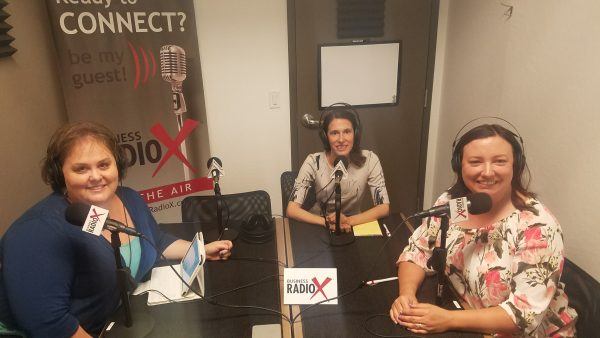
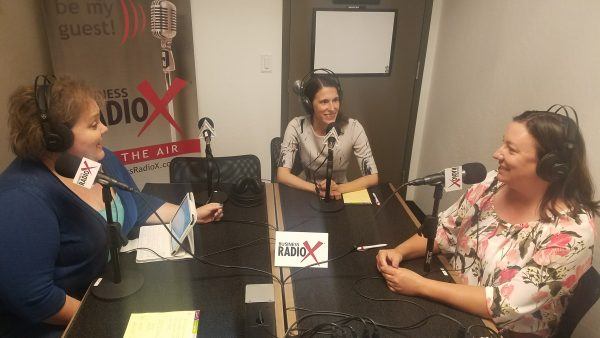
Jacqueline Destremps Another Hand Advantage with Margo Brown Wave Productivity and Coach Erin Garcia

April 11, 2018 by Karen

ErinGarciaMargoBrownandJacquelineDestrempsonBusinessRadioX
Phoenix Business Radio
Jacqueline Destremps Another Hand Advantage with Margo Brown Wave Productivity and Coach Erin Garcia
Loading
00:00 /
RSS Feed
Share
Link
Embed

Download file

ErinGarciaMargoBrownandJacquelineDestrempsonBusinessRadioX2

Jacqueline Destremps Another Hand Advantage with Margo Brown Wave Productivity and Coach Erin Garcia

JacquelineDestrempswithAnotherHandAdvantageonBusinessRadioXJacqueline Destremps is a creative marketing strategist and founded Another Hand Advantage in 2014 to help community minded small business owners and nonprofit professionals move forward more confidently with their marketing strategy.  After graduating from Arizona State University with a degree in Psychology, she has spent her professional career working in both the nonprofit and for-profit sector.

She now enjoys being self-employed and the flexibility it provides to allow more time to volunteer, serve on nonprofit boards, choose pro-bono projects, run 100+ Women Who Care Valley of the Sun (which she cofounded in 2014) and travel the world.  Jacqueline believes in creating connections between businesses and nonprofits in the community to stimulate growth and collaboration.

Connect with Jacqueline on LinkedIn, and follow Another Hand Advantage on Facebook and Instagram.

MargoBrownwithWaveProductivityonBusinessRadioXMargo Brown of Wave Productivity specializes in increasing the focus, organization and productivity of entrepreneurs, small business owners, telecommuters, and those working in home offices. Taking a caring and non-judgmental approach, she creates organized systems that fit the unique needs of her clients.

Margo has worked in productivity and organizing for over 15 years in a variety of situations. In 2006, Margo collaborated with other productivity experts to publish the book “Exploring Productivity”. In 2016, Wave Productivity’s blog was awarded Top 100 Productivity Blogs on the internet.

She received her Specialist Certificate in Workplace Productivity through the National Association of Productivity and Organizing Professionals.
Through the Institute of Applied Coaching, an accredited program through the International Coaching Federation, Margo received her certification as a C.O.C-Certified Organizer Coach.

As a member of the Tempe Chamber of Commerce, she has been nominated for Emerging Entrepreneur in 2015 and a Finalist for Women Business Owner of the Year in 2017. Currently, she chairs the Women In Business Council.

Connect with Margo on LinkedIn, and follow Wave Productivity on Twitter and Facebook.

CoachErinGarciaonPhoenixBusinessRadioXStarting her first business at age 17, Coach Erin has always had the entrepreneurial spirit. So it was no surprise when she opened her own coaching practice to help others succeed in business.

Coach Erin brings clarity to  overwhelm, turns confusion into confidence and transforms chaos into calm. She makes selling more comfortable, business more manageable and marketing more successful.

Join forces with Coach Erin and get your ideas, emotions, services and marketing working together towards the success of your dreams.

Connect with Coach Erin on LinkedIn and Facebook.

ErinGarciaMargoBrownandJacquelineDestrempsonBusinessRadioX1


Tagged With: digital marketing strategy, get focused organized and productive, nonprofit marketing, productivity, productivity consultant in Arizona, professional organizer in tempe, small business marketing, social media marketing, wave productivity, women's business mastermind

NORTH ATLANTA’S BIZLINK: Kevin Bray with Deputy

March 21, 2017 by John Ray

North Fulton Studio
North Fulton Studio
NORTH ATLANTA'S BIZLINK: Kevin Bray with Deputy
Loading
00:00 /
RSS Feed
Share
Link
Embed

Download file

Deborah Lanham and Kevin Bray

This special episode of “North Atlanta’s BizLink” was broadcast live on location from the Greater North Fulton’s 9th Annual Business Expo in Alpharetta, GA.

Kevin Bray/Deputy

Deputy is a social business and productivity platform that enables any organization to get the most out of their most important asset – the people that work for them every day. Their platform is 100% built on the Amazon Web Services cloud stack, and offers a low-cost approach to managing work schedules, employee tasks, communications, and time sheets.

Deputy empowers employees and employers to seamlessly connect, drive productivity and have a better working life. Deputy connects you to your work world. It establishes who you are, where you need to be, what you need to do and what you need to know. Irrespective of whether you are an employee or employer in today’s world you expect the same level of engagement and immediacy that you have experienced in your social world.


Tagged With: Deborah Lanham, Deputy, FarraTech, GNFCC, Greater North Fulton Chamber of Commerce, Kevin Bray, Mike Sammond, north atlanta's bizlink, productivity, productivity platrform, small business, social business platform

THE ART OF COLLABORATION: Alan Schaefer with Banding People Together

June 8, 2016 by Mike

On the Money
On the Money
THE ART OF COLLABORATION: Alan Schaefer with Banding People Together
Loading
00:00 /
RSS Feed
Share
Link
Embed

Download file

Joe Moss and Alan Schaefer

On this episode of “On the Money“, host Joe Moss talks productivity and collaboration in the workplace with guest Alan Schaefer with Banding People Together.

Alan Schaefer/Banding People Together

Banding People Together is a supergroup of collaboration experts who enable organizations to amp up productivity by creating engagement nirvana. They are a rare breed of rockstars (literally), behaviorists, and strategists with business smarts who teach organizations how to get more done and feel great doing it. With their proprietary True Collaboration methodology, you’ll connect heads and hearts, align people and process, and define the operational rhythm that makes your company groove.

—————————————–

To watch the video of this show CLICK HERE.

“On the Money” focuses on topics and issues allowing small businesses to better navigate the financial services minefield, with analysis and opinions from today’s industry experts on banking and loans. “On the Money” also introduces you to some of the top small business leaders in the Atlanta market.

Hosted by Joe Moss, the president of Embassy National Bank, “On the Money” airs live every Wednesday at 3:00 PM EST from the Business RadioX studio in Gwinnett.


Tagged With: Embassy National Bank, On The Money, productivity, Radiox, rockstars, strategists, True Collaboration

  • 1
  • 2
  • Next Page »

Business RadioX ® Network


Our Most Recent Episode

CONNECT WITH US

  • Email
  • Facebook
  • LinkedIn
  • Twitter
  • YouTube

Our Mission

We help local business leaders get the word out about the important work they’re doing to serve their market, their community, and their profession.

We support and celebrate business by sharing positive business stories that traditional media ignores. Some media leans left. Some media leans right. We lean business.

Sponsor a Show

Build Relationships and Grow Your Business. Click here for more details.

Partner With Us

Discover More Here

Terms and Conditions
Privacy Policy

Connect with us

Want to keep up with the latest in pro-business news across the network? Follow us on social media for the latest stories!
  • Email
  • Facebook
  • Google+
  • LinkedIn
  • Twitter
  • YouTube

Business RadioX® Headquarters
1000 Abernathy Rd. NE

Building 400, Suite L-10
Sandy Springs, GA 30328

© 2025 Business RadioX ® · Rainmaker Platform

BRXStudioCoversLA

Wait! Don’t Miss an Episode of LA Business Radio

BRXStudioCoversDENVER

Wait! Don’t Miss an Episode of Denver Business Radio

BRXStudioCoversPENSACOLA

Wait! Don’t Miss an Episode of Pensacola Business Radio

BRXStudioCoversBIRMINGHAM

Wait! Don’t Miss an Episode of Birmingham Business Radio

BRXStudioCoversTALLAHASSEE

Wait! Don’t Miss an Episode of Tallahassee Business Radio

BRXStudioCoversRALEIGH

Wait! Don’t Miss an Episode of Raleigh Business Radio

BRXStudioCoversRICHMONDNoWhite

Wait! Don’t Miss an Episode of Richmond Business Radio

BRXStudioCoversNASHVILLENoWhite

Wait! Don’t Miss an Episode of Nashville Business Radio

BRXStudioCoversDETROIT

Wait! Don’t Miss an Episode of Detroit Business Radio

BRXStudioCoversSTLOUIS

Wait! Don’t Miss an Episode of St. Louis Business Radio

BRXStudioCoversCOLUMBUS-small

Wait! Don’t Miss an Episode of Columbus Business Radio

Coachthecoach-08-08

Wait! Don’t Miss an Episode of Coach the Coach

BRXStudioCoversBAYAREA

Wait! Don’t Miss an Episode of Bay Area Business Radio

BRXStudioCoversCHICAGO

Wait! Don’t Miss an Episode of Chicago Business Radio

Wait! Don’t Miss an Episode of Atlanta Business Radio