
Business RadioX ®

  • Home
  • Business RadioX ® Communities
    • Southeast
      • Alabama
        • Birmingham
      • Florida
        • Orlando
        • Pensacola
        • South Florida
        • Tampa
        • Tallahassee
      • Georgia
        • Atlanta
        • Cherokee
        • Forsyth
        • Greater Perimeter
        • Gwinnett
        • North Fulton
        • North Georgia
        • Northeast Georgia
        • Rome
        • Savannah
      • Louisiana
        • New Orleans
      • North Carolina
        • Charlotte
        • Raleigh
      • Tennessee
        • Chattanooga
        • Nashville
      • Virginia
        • Richmond
    • South Central
      • Arkansas
        • Northwest Arkansas
    • Midwest
      • Illinois
        • Chicago
      • Michigan
        • Detroit
      • Minnesota
        • Minneapolis St. Paul
      • Missouri
        • St. Louis
      • Ohio
        • Cleveland
        • Columbus
        • Dayton
    • Southwest
      • Arizona
        • Phoenix
        • Tucson
        • Valley
      • Texas
        • Austin
        • Dallas
        • Houston
    • West
      • California
        • Bay Area
        • LA
        • Pasadena
      • Colorado
        • Denver
      • Hawaii
        • Oahu
  • FAQs
  • About Us
    • Our Mission
    • Our Audience
    • Why It Works
    • What People Are Saying
    • BRX in the News
  • Resources
    • BRX Pro Tips
    • B2B Marketing: The 4Rs
    • High Velocity Selling Habits
    • Why Most B2B Media Strategies Fail
    • 9 Reasons To Sponsor A Business RadioX ® Show
  • Partner With Us
  • Veteran Business RadioX ®

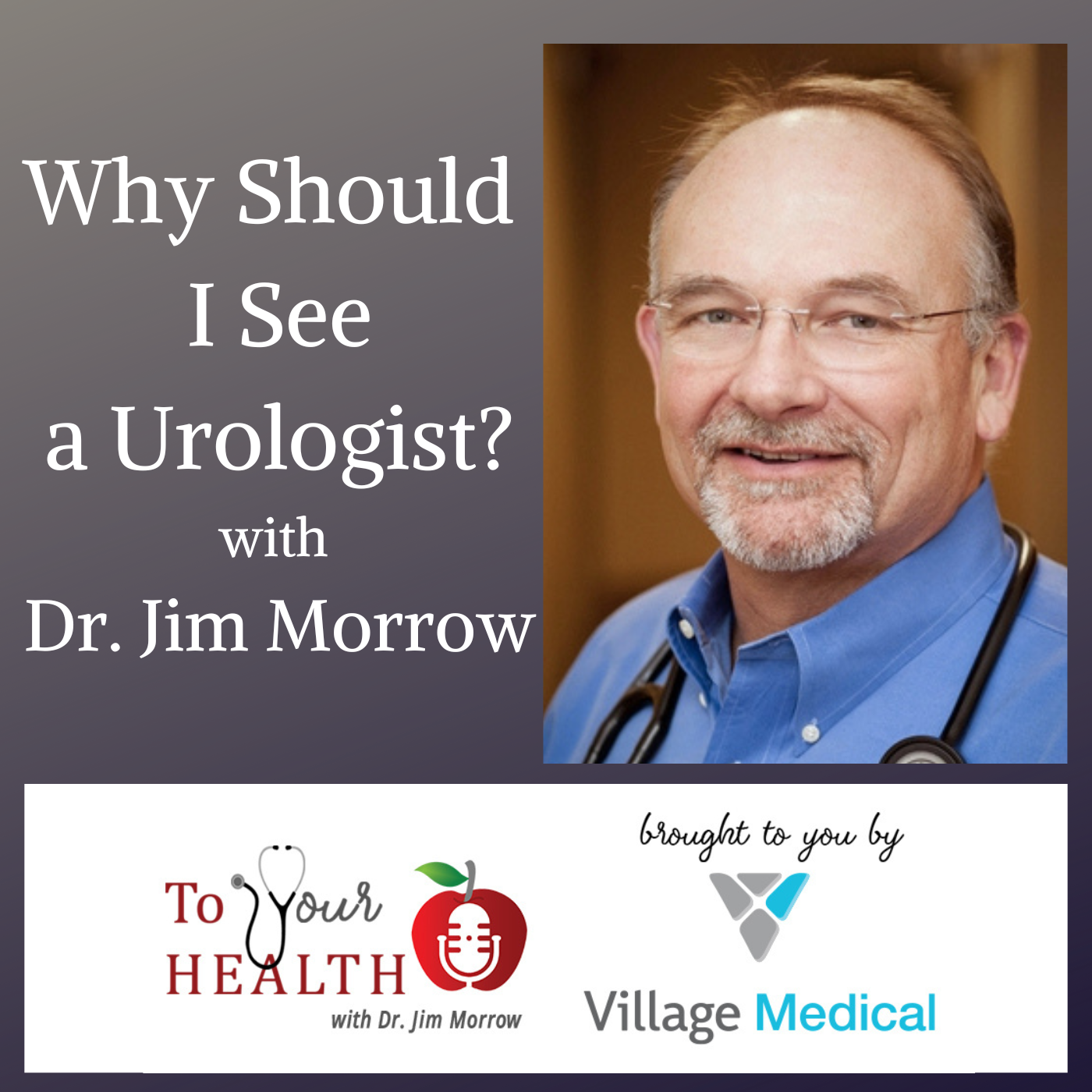
Why Should I See a Urologist?

May 11, 2023 by John Ray

Urologist
North Fulton Studio
Why Should I See a Urologist?
Loading
00:00 /
RSS Feed
Share
Link
Embed

Download file

Urologist

Why Should I See a Urologist? (Episode 87, To Your Health with Dr. Jim Morrow)

On this episode of To Your Health, host Dr. Jim Morrow of Village Medical discussed urologists: what they treat and the reasons you’d see one. He covered conditions such as urinary tract infections, bladder infections, interstitial cystitis, and others, as well as prostate cancer and considerations about getting PSA tests done.

To Your Health is brought to you by Village Medical (formerly Morrow Family Medicine), which brings the care back to healthcare.

About Village Medical (formerly Morrow Family Medicine)

Village Medical, formerly Morrow Family Medicine, is an award-winning, state-of-the-art family practice with offices in Cumming and Milton, Georgia. The practice combines healthcare information technology with old-fashioned care to provide the type of care that many are in search of today. Two physicians, three physician assistants and two nurse practitioners are supported by a knowledgeable and friendly staff to make your visit to Village Medical one that will remind you of the way healthcare should be.  At Village Medical, we like to say we are “bringing the care back to healthcare!”  The practice has been named the “Best of Forsyth” in Family Medicine in all five years of the award, is a three-time consecutive winner of the “Best of North Atlanta” by readers of Appen Media, and the 2019 winner of “Best of Life” in North Fulton County.

Village Medical offers a comprehensive suite of primary care services including preventative care, treatment for illness and injury, and management of chronic conditions such as diabetes, congestive heart failure, chronic obstructive pulmonary disease (COPD) and kidney disease. Atlanta-area patients can learn more about the practice here.

Dr. Jim Morrow, Village Medical, and Host of To Your Health with Dr. Jim Morrow

Covid-19 misconceptionsDr. Jim Morrow is the founder of Morrow Family Medicine. He has been a trailblazer and evangelist in healthcare information technology, was named Physician IT Leader of the Year by HIMSS, a HIMSS Davies Award Winner, the Cumming-Forsyth Chamber of Commerce Steve Bloom Award Winner as Entrepreneur of the Year and he received a Phoenix Award as Community Leader of the Year from the Metro Atlanta Chamber of Commerce.  He is married to Peggie Morrow and together they founded the Forsyth BYOT Benefit, a charity in Forsyth County to support students in need of technology and devices. They have two Goldendoodles, a gaggle of grandchildren and enjoy life on and around Lake Lanier.

Facebook | LinkedIn | Twitter

The complete show archive of To Your Health with Dr. Jim Morrow addresses a wide range of health and wellness topics.

Dr. Morrow’s Show Notes

What is a Urologist?

A urologist is a doctor who specializes in diagnosing and treating diseases of the urinary system. This system keeps the body clean by filtering out wastes and toxins and taking them out of the body. The urinary tract includes:

  • Bladder
  • Kidneys
  • Ureters
  • Urethra

A urologist also treats conditions involving the reproductive organs and the adrenal glands. The adrenal glands are located on top of the kidneys. The reproductive systems of males and females are linked closely to their urinary systems. You might hear someone use the word “genitourinary.” This refers to symptoms, conditions or treatments that affect both systems.

Difference between urology and nephrology

If you want to see a doctor who specializes only in the kidneys, you’d make an appointment with a nephrologist. Nephrology is considered a subspecialty, but it’s a subspecialty of internal medicine rather than urology. This means that nephrologists aren’t surgeons. Nephrologists must also be able to manage conditions that happen elsewhere in the body that cause kidney problems or happen because of kidney problems, like high blood pressure. Urologists, on the other hand, are surgeons.

What conditions do urologists treat?

Urologists treat common conditions and rarer illnesses that affect everyone and some that affect only men or only women. Some of these conditions include:

  • Frequent urinary tract infections.
  • Inability to control urination (urinary incontinence).
  • Blood in the urine (hematuria).
  • Conditions of the male reproductive system, including benign prostatic hyperplasia(BPH, or enlarged prostate).
  • Interstitial cystitis(painful bladder).

Urologists also treat other conditions, such as:

  • Cancers of the bladder, kidneysand prostate.

Prostate Cancer Screening

  • The goal of prostate screenings is to find cancer early.
    • Cancer is easier to treat and more likely to be cured if it is caught early.
  • However, most cases of prostate cancer are not aggressive.
    • More men have a slow-growing form of prostate cancer.
    • This means they may not have symptoms or even require treatment.
    • Nine out of 10 men who have prostate cancer go on to receive treatment.
    • Prostate cancer treatment can have long-term side effects.
      • These include loss of bladder control and erectile dysfunction.
      • There is a rare chance of problems occurring in surgery to get a biopsy.
        • This is the only way to confirm a prostate cancer diagnosis.
      • In addition, PSA test results aren’t always accurate.
        • Studies suggest that up to 80% of PSA test results are false-positives.
        • This means that the PSA test result suggests that you might have cancer when you do not.
          • A false-positive test result can lead to unneeded tests, such as a biopsy, and side effects from testing.
          • It also causes worry for you and your family.
        • For these reasons, the American Academy of Family Physicians and U.S. Preventive Services Task Force have issued clinical recommendations. For men 55 through 69 years of age, they do not recommend routine PSA screening. Instead, they recommend having a conversation with your doctor about the risks and benefits of periodic screening. They do not recommend PSA screening for prostate cancer in men 70 years of age and older.
        • Other organizations have different screening recommendations.
          • These include the American Cancer Society and the American Urological Association. Their guidelines depend on your age and state of health.

Things to consider:

  • Ultimately, the decision to be screened for prostate cancer is between you and your doctor.
    • Talk to them about your specific concerns.
    • They can weigh the pros and cons with your personal health and risk factors.
  • Doctors and scientists perform ongoing and new research.
    • These studies, or clinical trials, help to learn more about the benefits and risks of prostate cancer screening.
    • Ask your doctor about the most recent study results.
    • Try to stay up to date on new progress in prostate cancer screening and treatment.
  • Erectile dysfunction(ED).
  • Kidney stones.
  • Congenital urinary tract issues (problems with the urinary tract that you are born with).

Tagged With: bladder cancer, bladder leakage, Dr. Jim Morrow, family medicine, interstitial cystitis, kidney cancer, prostate cancer, PSA test, urinary system, urologist, Village Medical

Joseph J. Busch, Jr. with The Busch Center

May 16, 2020 by angishields

Busch-Center
Atlanta Business Radio
Joseph J. Busch, Jr. with The Busch Center
Loading
00:00 /
RSS Feed
Share
Link
Embed

Download file

Onpay-blue

Brought to you by OnPay. Built in Atlanta, OnPay is the top-rated payroll and HR software anywhere. Get one month free at OnPay.com.

dr-joseph-buschJoseph J. Busch, Jr. has read more than 15,000 mpMRI scans and performed and more than 1,700 MRI in-bore targeted biopsies over the last 11 years.

Dr. Busch brings a culmination of 40+ years in Diagnostic Radiology and hundreds of international research studies to Busch Center in Alpharetta, Georgia. His approach focuses on preventative screening, accurate diagnosis with personalized care.

Dr. Busch began using mpMRI in 2010. He was trained by the world’s leading experts, including Professors Jelle Barentsz and Jurgen Futterer, on how to perform targeted biopsy of the prostate using mpMRI. Dr. Busch now works alongside Professors Jelle Barentsz and Jurgen Futterer on prostate cancer and treatment.

Dr. Busch also collaborates with Professor Anwar Padhani, the world’s leading authority on Whole Body Imaging, studying and learning Whole Body MRI techniques for diagnosis and response to therapy. Dr. Busch is interpreting PSMA and F18 Axumin PET/CT scans for recurrent prostate cancer in post-treatment men.

Dr. Busch is also part of the European and USA prostate working groups. He has lectured and taught mpMRI at RSNA, Johns Hopkins, and Scottsdale, Arizona, and is a member of the ESUR, International Cancer Imaging Society and RSNA.

Follow Busch Center on LinkedIn.

What You’ll Learn in This Episode

  • How Dr. Busch got started in Radiology
  • What drew him to open his business
  • About the Busch Center

About Our Sponsor

OnPayOnPay-Dots is a fast-growing software company that offers small businesses and accountants the best payroll in the cloud backed up by a team of helpful, friendly experts. And as a payroll service provider with more than 30 years of experience, we know how to get it right.

Whether business owners have three employees or 1,000, OnPay makes payroll fast and easy. We also serve nonprofits, restaurants, religious organizations, and ag businesses without skipping a beat.

Follow OnPay on LinkedIn, Facebook and Twitter.

Tagged With: prostate cancer, prostate cancer treatment Atlanta, prostate treatment

To Your Health With Dr. Jim Morrow: Episode 17, Testosterone

September 25, 2019 by John Ray

North Fulton Studio
North Fulton Studio
To Your Health With Dr. Jim Morrow: Episode 17, Testosterone
Loading
00:00 /
RSS Feed
Share
Link
Embed

Download file

Dr. Jim Morrow, Host, “To Your Health With Dr. Jim Morrow”

To Your Health With Dr. Jim Morrow: Episode 17, Testosterone

How do men and women know if they have low testosterone levels? What are the symptoms of low testosterone levels due to aging, as well as other causes? Dr. Jim Morrow answers these questions and more on this edition of “To Your Health.” “To Your Health” is brought to you by Morrow Family Medicine, which brings the CARE back to healthcare.

About Morrow Family Medicine and Dr. Jim Morrow

Morrow Family Medicine is an award-winning, state-of-the-art family practice with offices in Cumming and Milton, Georgia. The practice combines healthcare information technology with old-fashioned care to provide the type of care that many are in search of today. Two physicians, three physician assistants and two nurse practitioners are supported by a knowledgeable and friendly staff to make your visit to Morrow Family Medicine one that will remind you of the way healthcare should be.  At Morrow Family Medicine, we like to say we are “bringing the care back to healthcare!”  Morrow Family Medicine has been named the “Best of Forsyth” in Family Medicine in all five years of the award, is a three-time consecutive winner of the “Best of North Atlanta” by readers of Appen Media, and the 2019 winner of “Best of Life” in North Fulton County.

Dr. Jim Morrow, Morrow Family Medicine, and Host of “To Your Health With Dr. Jim Morrow”

Dr. Jim Morrow, Morrow Family Medicine, and Host of “To Your Health With Dr. Jim Morrow”

Dr. Jim Morrow is the founder and CEO of Morrow Family Medicine. He has been a trailblazer and evangelist in the area of healthcare information technology, was named Physician IT Leader of the Year by HIMSS, a HIMSS Davies Award Winner, the Cumming-Forsyth Chamber of Commerce Steve Bloom Award Winner as Entrepreneur of the Year and he received a Phoenix Award as Community Leader of the Year from the Metro Atlanta Chamber of Commerce.  He is married to Peggie Morrow and together they founded the Forsyth BYOT Benefit, a charity in Forsyth County to support students in need of technology and devices. They have two Goldendoodles, a gaggle of grandchildren and enjoy life on and around Lake Lanier.

Facebook: https://www.facebook.com/MorrowFamMed/

LinkedIn: https://www.linkedin.com/company/7788088/admin/

Twitter: https://twitter.com/toyourhealthMD

Dr. Morrow’s Show Notes on Testosterone

Physiology of Testosterone and Causes of Hypogonadism in Males

  • Testosterone is produced by the testes.
  • Decreased production of testosterone by testes in men is categorized as hypogonadism.
  • Primary hypogonadism is the failure of the testes to produce sufficient testosterone.

 Testosterone Therapy

  • Testosterone therapy is increasingly common in the United States, and many of these prescriptions are written by primary care physicians.
  • There is conflicting evidence on the benefit of male testosterone therapy for age-related declines in testosterone.
    • Physicians should not measure testosterone levels unless a patient has signs and symptoms of hypogonadism, such as loss of body hair, sexual dysfunction, hot flashes, or gynecomastia.
    • The U.S. Food and Drug Administration clarified in 2015 that prescribing testosterone for low testosterone levels due to aging constitutes off-label use.
    • Depressed mood, fatigue, decreased strength, and a decreased sense of vitality are less specific to male hypogonadism.
    • Testosterone therapy should be initiated only after two morning total serum testosterone measurements show decreased levels, and all patients should be counseled on the potential risks and benefits before starting therapy.
    • Male hypogonadism should be diagnosed only if there are signs or symptoms of hypogonadism and total serum testosterone levels are low on at least two occasions.
    • Potential benefits of therapy include
      • increased libido,
      • improved sexual function,
      • improved mood and well-being, and
      • increased muscle mass and bone density;
      • however, there is little or mixed evidence confirming clinically significant benefits.
    • The U.S. Food and Drug Administration warns that testosterone therapy may increase the risk of cardiovascular complications.
      • Other possible risks include
        • rising prostate-specific antigen levels,
        • worsening lower urinary tract symptoms,
        • polycythemia, and
        • increased risk of venous thromboembolism.
        • Patients receiving testosterone therapy should be monitored to ensure testosterone levels rise appropriately, clinical improvement occurs, and no complications develop.
        • Testosterone therapy may also be used to treat hypoactive sexual desire disorder in postmenopausal women and to produce physical male sex characteristics in female-to-male transgender patients.

Monitoring of Men on Testosterone Therapy

  • Men receiving testosterone therapy should be monitored regularly for adverse effects and to ensure normalization of serum testosterone level.
  • Before initiation of testosterone therapy, testing should include:
    • a complete blood count to measure hematocrit, and
    • a PSA test to detect preexisting prostate cancer.
  • Patients should be reevaluated for therapeutic response and adverse effects three to six months after initiation of treatment, including:
    • a repeat testosterone measurement,
    • complete blood count,
    • and PSA test.
  • Reevaluation needs to be performed regularly.
  • An increase in hematocrit to greater than 54% should lead to
    • cessation of treatment,
    • lowering of the dose, or
    • change to a lower-risk formulation.
  • An increase in PSA of greater than 1.4 ng per mL (1.4 mcg per L) over 12 months or an abnormal digital rectal examination result should prompt referral to a urologist.

Testosterone Therapy in Women

  • In women, testosterone is produced by the ovaries and adrenal glands, and by conversion of proandrogens in peripheral tissues.
  • Levels decrease gradually starting in the 20s or 30s.
  • There is no abrupt decrease during menopause, with the exception of surgical menopause.
  • Testosterone is also converted to estrogen by aromatases in many tissues; therefore, testosterone is an important source of estrogen in postmenopausal women.
  • Testosterone deficiency in women may be associated with problems with sexual function, mood, cognition, and body composition.
  • A comprehensive meta-analysis of post-menopausal women found improvement in sexual function with testosterone therapy.
  • There was no evidence of improvement in
    • anxiety,
    • mood,
    • body weight or mass, or
    • bone density.
    • Subsequently, a consensus statement released by several major organizations, including the Endocrine Society and American College of Obstetricians and Gynecologists, supported the use of testosterone therapy for hypoactive sexual desire disorder in postmenopausal women but not for any other indication.
    • Of note, there are no FDA-approved products for testosterone therapy in women, and no formulations are readily available in the United States that provide the recommended treatment dosage for women (300 mcg per day), necessitating the use of compounding pharmacies.

Tagged With: Cumming doctor, Cumming family care, Cumming family doctor, Cumming family medicine, Cumming family physician, Cumming family practice, Cumming md, Cumming physician, Dr. Jim Morrow, erectile dysfunction, female testosterone, female-to-male transgender, hypoactive sexual desire disorder, hypogonadism, increase in PSA, libido, loss of body hair, male testosterone, male testosterone therapy, menopause, Milton doctor, Milton family care, Milton family doctor, Milton family medicine, Milton family physician, Milton family practice, Milton md, Milton physician, Morrow Family Medicine, normal testosterone levels, postmenopausal women, prostate cancer, PSA test, serum levels, serum testosterone levels, sexual dysfunction, sexual function, Testes, testosterone, testosterone deficiency, To Your Health, urinary tract symptoms

Georgia Prostate Cancer Coalition – Top Docs Radio

February 11, 2015 by angishields

Top Docs Radio
Top Docs Radio
Georgia Prostate Cancer Coalition - Top Docs Radio
Loading
00:00 /
RSS Feed
Share
Link
Embed

Download file


Georgia Prostate Cancer Coalition

Statistics show that 1 in 6 men will develop prostate cancer in their lifetime.  The risk for developing the disease rises with age, being most prevalent among men over the age of 60.  However, the risk begins to rise after 40 and prevailing medical thought is men should get at a minimum a PSA test (a blood test that can detect prostate cancer) or if possible a digital rectal exam as well around the age of 40.  This will provide an early warning if there are worrisome findings on either study that will afford the patient more options for treatment that are much less traumatic and much more likely to be successful than if the cancer is found at a more advanced stage.

Ken shared his own story about how he was found to have a lump on his prostate on an insurance exam but was not actually recommended to have a biopsy until roughly a year later.  At that point it was found he did, in fact, have prostate cancer and that it was a more advanced stage.  He ended up having a radical prostatectomy, followed by a recurrence of the cancer.  To fight the recurrence of the cancer he underwent radiation therapy and more surgeries.  After all of that it was found his PSA levels were rising yet again, prompting his physicians to recommend hormone therapy to slow the progress of the cancer.

After his challenging experiences he began to work to increase awareness of the value of early detection of the disease to help his male counterparts avoid having to undergo similar difficulties.  He interfaced with the American Cancer Society to lobby for increased information for men about the risks of prostate cancer and the benefits of early detection.  He spent some time as a spokesman for the American Cancer Society.  He ultimately co-founded the Georgia Prostate Cancer Coalition, a non-profit organization aimed at creating community awareness as well as raising funds to help provide screening (including some free PSA testing) for men in the community.  The organization also collaborates with community businesses to help them provide prostate cancer screening for their male employees.

In speaking with Ken it’s clear that we men can do ourselves a big favor and go to our primary care physician or one of the screening events held by the Georgia Prostate Cancer Coalition to get a PSA test done and ideally, couple that with a digital rectal exam.  If our lot in life is to be a prostate cancer patient, we can have a large impact on what our journey is like in dealing with it if we endeavor to catch it early.

Special Guest:

Ken Stevens, Co-founder of Georgia Prostate Cancer Coalition  twitter_logo_small  facebook_logo_small3


Tagged With: CW Hall, digital rectal exam, Georgia Prostate Cancer Coalition, Health Care Radio, health radio, Healthcare, healthcare radio, Ken Stevens, prostate cancer, prostate cancer awareness, prostate-specific antigen, PSA test, Top Docs Radio, TopDocsRADIO

Treatment Options for Prostate Cancer – Top Docs Radio

June 5, 2014 by Mike

prostate cancer
Top Docs Radio
Treatment Options for Prostate Cancer - Top Docs Radio
Loading
00:00 /
RSS Feed
Share
Link
Embed

Download file

Top Docs Radio features healthcare providers and professionals sharing their expertise to “Get the Word Out” about a variety of health problems, treatments and community concerns to elevate our community’s well-being.

THIS WEEK’S TOPIC:

Treatment Options for Prostate Cancer

prostate cancer
Dr. James Bennett talks prostate prevention, diagnosis, treatment.

This week, I was joined by two physicians who regularly work with men facing prosate cancer. Dr. Peter Rossi and Dr. James Bennett to discuss the variety of treatment options available for men dealing with this cancer that affects as many as one in six men.

The host of Top Docs Radio is Charles “CW” Hall with Hyperbaric Physicians of Georgia.

SPECIAL GUESTS:

Peter Rossi, MD, Emory St. Joseph’s Hospital Radiation Oncology 

  • Doctorate of Medicine, Wayne State University School of Medicine
  • Internship, Naval Medical Center San Diego
  • Residency, Wake Forest University Medical Center
  • Board Certified, Radiation Oncology
  • Fellowship in low dose rate and high dose rate brachytherapy for prostate cance treatment
  • Contributor on many clinical trials studying treatment of prostate cancer

James Bennett, MD, Midtown Urology

  • Doctorate of Medicine, Duke University
  • Urology Residency, Emory University Medical Center
  • Board Certified in Urology
  • Fellow of American College of Surgery
  • Assistant Medical Director, Emory University Hospital Midtown
  • Recipient, Practitioner of the Year 1999, by National Medical Association
  • Author of over 40 scientific articles on urologic topics
Dr. James Bennett, Charles "CW" Hall, Dr. Peter Rossi
Dr. James Bennett, Charles “CW” Hall, Dr. Peter Rossi

Tagged With: CW Hall, dr. james bennett, dr. peter rossi, emory st. joseph's hospital, Health Care Radio, health radio, healthcare radio, hyperbaric physicians of ga, midtown urology, prostate, prostate cancer, Top Docs Radio, urology

Kevin Reitz of Griswold Special Care and Shelly Glenn of RC Cancer Centers

March 30, 2011 by angishields

Eugeria
Eugeria
Kevin Reitz of Griswold Special Care and Shelly Glenn of RC Cancer Centers
Loading
00:00 /
RSS Feed
Share
Link
Embed

Download file

glenn, Shelly compressedOriginally from New York, Shelly Glenn started her career in home healthcare, infusion therapy and pharmaceuticals.  About seven years ago, Shelly moved to the Atlanta area, changed jobs, and changed industries.  After a few years away from healthcare, Shelly found RC Cancer Centers, and accepted a positions as Vice President of Marketing.  For 25 years, RC Cancer Centers has specialized in dealing with cancer patients where radiation is an appropriate therapy.  They take a wholistic view of the disease, involving specialists from multiple disciplines, including a wellness component.  Shelly tells us that this business is personal for everyone involved, noting that nearly all the staff have had close friends or family members impacted by cancer.  Shelly is particularly excited about the upcoming Prostate Cancer Symposium being held Saturday, April 2 from 10 am to 3 pm at the Morehouse School of Medicine.  The Symposium will feature a panel of physcians providing information to support better prostate cancer treatment decision making and raise general awareness regarding prostate cancer treatment and diagnosis.  Tickets are free, and complimentary breakfast and lunch will be served.  To get more information, or to sign up, visit www.georgiaprostatecancerpledge.com.  For more information about RC Cancer Centers, contact Shelly via email at sglenn@rccancercenters.com, visit them on the web at www.rccancercenters.com or call 1-800-262-7591.

Reitz, Kevin compressedKevin Reitz started his career in Boise, Idaho, working for a small software company selling accident and crime scene software.  Kevin attend Boise State University, earned a Marekting degree, and remains a rabid Broncos fan.  After moving to Dallas, the company Kevin started his career with was acquired, and his division of the company was disbanded.  Looking for another sales and marketing opportunity, Kevin accepted a position with a small assisted living community.  He was quickly promoted to Executive Director of a larger community.  Six months ago, Kevin moved again, accepting a position as Director of Sales and Marketing for Griswold Special Care.  Kevin observed the need for high quality in-home care firsthand when his great grandmother slipped at the bottom of her driveway, breaking a hip.  He acknowledges that most of his clients desparately want to stay in their own homes, surrounded by their memories and maintaining their independence as long as possible.  Kevin tells us that Griswold Special Care is committed to providing exceptional service at affordable rates to facilitate these seniors to realize their desire to stay in their own homes.  To find out more about Griswold Special Care, call Kevin at (972) 554-0700, email him at kevin@gscdallas.com or visit the website at www.gscdallas.com.

Tagged With: custodial care, elder care, griswold special care, home care, Morehouse school of medicine, prostate cancer, radiation treatment, senior care

Business RadioX ® Network


Our Most Recent Episode

CONNECT WITH US

  • Email
  • Facebook
  • LinkedIn
  • Twitter
  • YouTube

Our Mission

We help local business leaders get the word out about the important work they’re doing to serve their market, their community, and their profession.

We support and celebrate business by sharing positive business stories that traditional media ignores. Some media leans left. Some media leans right. We lean business.

Sponsor a Show

Build Relationships and Grow Your Business. Click here for more details.

Partner With Us

Discover More Here

Terms and Conditions
Privacy Policy

Connect with us

Want to keep up with the latest in pro-business news across the network? Follow us on social media for the latest stories!
  • Email
  • Facebook
  • Google+
  • LinkedIn
  • Twitter
  • YouTube

Business RadioX® Headquarters
1000 Abernathy Rd. NE
Building 400, Suite L-10
Sandy Springs, GA 30328

© 2025 Business RadioX ® · Rainmaker Platform

BRXStudioCoversLA

Wait! Don’t Miss an Episode of LA Business Radio

BRXStudioCoversDENVER

Wait! Don’t Miss an Episode of Denver Business Radio

BRXStudioCoversPENSACOLA

Wait! Don’t Miss an Episode of Pensacola Business Radio

BRXStudioCoversBIRMINGHAM

Wait! Don’t Miss an Episode of Birmingham Business Radio

BRXStudioCoversTALLAHASSEE

Wait! Don’t Miss an Episode of Tallahassee Business Radio

BRXStudioCoversRALEIGH

Wait! Don’t Miss an Episode of Raleigh Business Radio

BRXStudioCoversRICHMONDNoWhite

Wait! Don’t Miss an Episode of Richmond Business Radio

BRXStudioCoversNASHVILLENoWhite

Wait! Don’t Miss an Episode of Nashville Business Radio

BRXStudioCoversDETROIT

Wait! Don’t Miss an Episode of Detroit Business Radio

BRXStudioCoversSTLOUIS

Wait! Don’t Miss an Episode of St. Louis Business Radio

BRXStudioCoversCOLUMBUS-small

Wait! Don’t Miss an Episode of Columbus Business Radio

Coachthecoach-08-08

Wait! Don’t Miss an Episode of Coach the Coach

BRXStudioCoversBAYAREA

Wait! Don’t Miss an Episode of Bay Area Business Radio

BRXStudioCoversCHICAGO

Wait! Don’t Miss an Episode of Chicago Business Radio

Wait! Don’t Miss an Episode of Atlanta Business Radio