Business RadioX ®

  • Home
  • Business RadioX ® Communities
    • Southeast
      • Alabama
        • Birmingham
      • Florida
        • Orlando
        • Pensacola
        • South Florida
        • Tampa
        • Tallahassee
      • Georgia
        • Atlanta
        • Cherokee
        • Forsyth
        • Greater Perimeter
        • Gwinnett
        • North Fulton
        • North Georgia
        • Northeast Georgia
        • Rome
        • Savannah
      • Louisiana
        • New Orleans
      • North Carolina
        • Charlotte
        • Raleigh
      • Tennessee
        • Chattanooga
        • Nashville
      • Virginia
        • Richmond
    • South Central
      • Arkansas
        • Northwest Arkansas
    • Midwest
      • Illinois
        • Chicago
      • Michigan
        • Detroit
      • Minnesota
        • Minneapolis St. Paul
      • Missouri
        • St. Louis
      • Ohio
        • Cleveland
        • Columbus
        • Dayton
    • Southwest
      • Arizona
        • Phoenix
        • Tucson
        • Valley
      • Texas
        • Austin
        • Dallas
        • Houston
    • West
      • California
        • Bay Area
        • LA
        • Pasadena
      • Colorado
        • Denver
      • Hawaii
        • Oahu
  • FAQs
  • About Us
    • Our Mission
    • Our Audience
    • Why It Works
    • What People Are Saying
    • BRX in the News
  • Resources
    • BRX Pro Tips
    • B2B Marketing: The 4Rs
    • High Velocity Selling Habits
    • Why Most B2B Media Strategies Fail
    • 9 Reasons To Sponsor A Business RadioX ® Show
  • Partner With Us
  • Veteran Business RadioX ®

LIVE from RISKWORLD 2022: Laura Casey, SafeCon Solutions

June 21, 2022 by John Ray

Laura Casey
Minneapolis St. Paul Studio
LIVE from RISKWORLD 2022: Laura Casey, SafeCon Solutions
Loading
00:00 /
RSS Feed
Share
Link
Embed

Download file

Laura Casey

LIVE from RISKWORLD 2022: Laura Casey, SafeCon Solutions

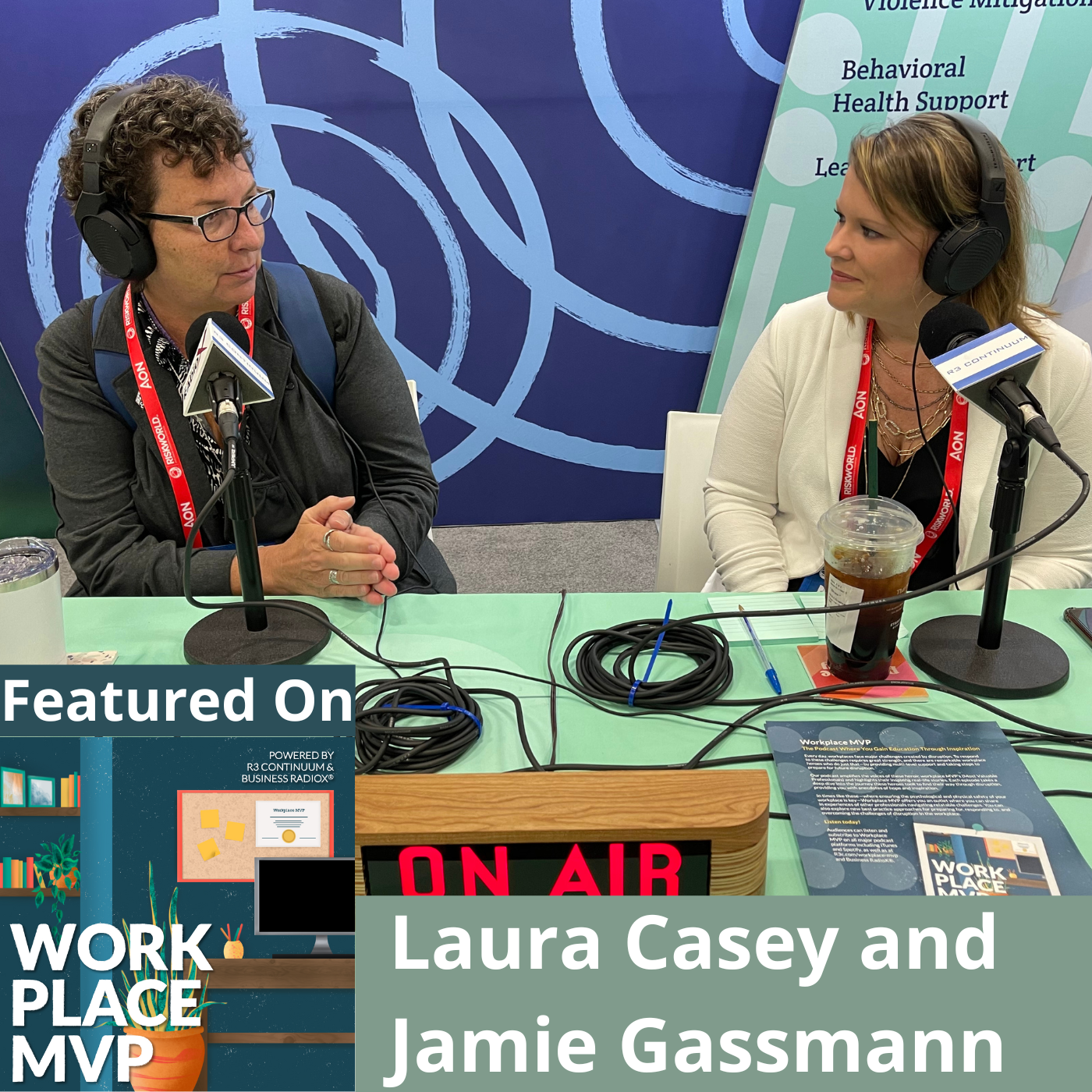
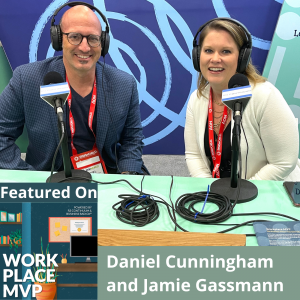
Laura Casey, a safety professional and owner of SafeCon Solutions, identified risk as correlated to safety in this live conversation with host Jamie Gassmann at RISKWORLD 2022. Laura and Jamie discussed the trends Laura sees in safety services, services offered by SafeCon Solutions, her experience at the conference, and more.

Workplace MVP is underwritten and presented by R3 Continuum and produced by the Minneapolis-St.Paul Studio of Business RadioX®.

This show was originally broadcast from the RIMS 2022 RISKWORLD Conference held at the Moscone Center in San Francisco, California.

SafeCon Solutions

SafeCon Solutions is a full-service safety consulting company with a national and international client base. They provide a vast array of occupational safety services for all industries as well as training, presentations, workshops, and expert witness testimony.

Workplace safety goes beyond mere compliance. Workplace safety is about preventing injuries, illnesses, and incidents by developing strong systems to guide and protect your workforce.

Facebook | LinkedIn

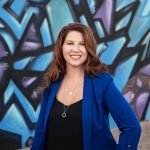
Laura Casey, CSP, CHST, Principal Consultant and Owner, SafeCon Solutions

Laura Casey, CSP, CHST, Principal, SafeCon Solutions

Laura Casey, CSP, CHST, is owner of SafeCon Solutions. She founded the company in 2008 to provide comprehensive safety training, workshops, and presentations.

Laura has a Masters in Occupational Safety, is a Certified Safety Professional, and a Certified Construction Health and Safety Technician. In 2o2o, she also became a Certified Risk Management Professional.

LinkedIn

About Workplace MVP

Every day, around the world, organizations of all sizes face disruptive events and situations. Within those workplaces are everyday heroes in human resources, risk management, security, business continuity, and the C-suite. They don’t call themselves heroes though. On the contrary, they simply show up every day, laboring for the well-being of employees in their care, readying the workplace for and planning responses to disruption. This show, Workplace MVP, confers on these heroes the designation they deserve, Workplace MVP (Most Valuable Professionals), and gives them the forum to tell their story. As you hear their experiences, you will learn first-hand, real-life approaches to readying the workplace, responses to crisis situations, and overcoming challenges of disruption. Visit our show archive here.

Workplace MVP Host Jamie Gassmann
Jamie Gassmann, Host, “Workplace MVP”

In addition to serving as the host to the Workplace MVP podcast, Jamie Gassmann is the Director of Marketing at R3 Continuum (R3c). Collectively, she has more than fourteen years of marketing experience. Across her tenure, she has experience working in and with various industries including banking, real estate, retail, crisis management, insurance, business continuity, and more. She holds a Bachelor of Science Degree in Mass Communications with special interest in Advertising and Public Relations and a Master of Business Administration from Paseka School of Business, Minnesota State University.

R3 Continuum

R3 Continuum is a global leader in workplace behavioral health and security solutions. R3c helps ensure the psychological and physical safety of organizations and their people in today’s ever-changing and often unpredictable world. Through their continuum of tailored solutions, including evaluations, crisis response, executive optimization, protective services, and more, they help organizations maintain and cultivate a workplace of wellbeing so that their people can thrive. Learn more about R3c at www.r3c.com.

Company website | LinkedIn | Facebook | Twitter

TRANSCRIPT

Intro: [00:00:02] Broadcasting live from Riskworld 2022 at the Moscone Center in San Francisco, it’s time for Workplace MVP. Brought to you by R3 Continuum, a global leader in helping workplaces thrive during disruptive times. Now, here’s your host.

Jamie Gassmann: [00:00:20] Hi, everyone. Jamie Gassmann here with Workplace MVP. And with me live at the RIMS Riskworld 2022 is Laura Casey. Welcome to the show, Laura.

Laura Casey: [00:00:31] Good morning. Thank you for having me.

Jamie Gassmann: [00:00:33] Yes. So, Laura, share with us what company you are with and your role there.

Laura Casey: [00:00:38] So, I’m the Principal Consultant and Owner of SafeCon Solutions. It is a consulting firm, firm, there’s one of me, that does both occupational safety and risk matters for a variety of types of businesses within the industry.

Jamie Gassmann: [00:00:55] Wonderful. And so, you’re at the RIMS conference this year. Talk to me about, what are you looking forward to getting out of this show? What’s exciting you about being here in person and at the Moscone Center?

Laura Casey: [00:01:06] So, it’s really kind of interesting that I happen to be your first person, because this is my first RIMS event. So, I’ve been a certified safety professional for a long time, 20-plus years, tenured, and it became really apparent that people in my mind were seeing risk as separate from safety. And other than in the financial world, when we talk about investing and those types of things, I find that risk and safety really are correlated, and should go hand in hand, and risk helps the C-suite members of an organization better understand safety, because safety is not tangible. So, I went ahead, and I sat for and passed the RIMS CRMP exam, Certified Risk Management Professional, and I need continuing ed credits, and so these are my new peeps. So, usually, I go to the safety conference, and now is my first time at the RIMS Riskworld, so just trying to take it all in.

Jamie Gassmann: [00:02:02] Oh, I bet, and it sounds like they have a really good lineup of great sessions. And so, what are some of the things that you’re seeing in the work that you’re doing within the risk and kind of safety environment that as a consultant, you want to make sure that workplaces are aware of, because it’s either trending or just becoming more common?

Laura Casey: [00:02:20] Sure. So, like I said, I unfortunately find that there are a lot of businesses out there that don’t understand safety, because it’s not tangible. You can’t touch it. When someone is seriously injured, or God forbid, there’s a fatality, everyone’s, oh, we need safety, we need safety. So, when I’m doing the background work, trying to be more predictive for my clients, I try to—well, I don’t try to, I do. I take a quantitative risk matrix and I apply it to whatever safety findings I have in an effort to try and get them to understand the risk of ignoring this, so that we never get to the point of a serious injury or a fatality. In addition, I try and help the businesses understand the different lines of insurance, how they can improve their position when it comes time for renewal. How do they save those dollars? How do they change their program to be more effective to, next year, change those background pieces?

Jamie Gassmann: [00:03:16] Sure, that sounds fascinating. And so, here at RIMS, is there one session that you’re most excited to attend when you were looking at the agenda or something that just stood out to you as, I definitely have to make sure that I make it over there?

Laura Casey: [00:03:32] So, maybe not just one. I think there were several. For me, it’s not so much about the enterprise risk. That’s a huge piece of risk management. But for me, I have a tendency to focus a little bit more on specifics about insurance or specifics about claims management, trying to understand the new cannabis landscape when it comes to businesses and their drug policies, and enforcing those. So, trying to pick out the sessions for me that aren’t so much about enterprise risk as much as it is the more specifics that can overlap for me.

Jamie Gassmann: [00:04:14] Got it. Very cool. Well, it was so great having you on our show, and having this opportunity to connect with you, and I hope you really have a great time here in meeting people and also in the learning. So, appreciate you being on.

Laura Casey: [00:04:29] Well, thanks for having me. Thanks for your hospitality. You guys have been great. I appreciate it. Enjoy the show.

Jamie Gassmann: [00:04:33] Yeah, thank you.

Laura Casey: [00:04:34] Thank you.

Outro: [00:04:39] Thank you for joining us on Workplace MVP. R3 Continuum is a proud sponsor of this show and is delighted to celebrate most valuable professionals who work diligently to secure safe workplaces where employees can thrive.
 

Tagged With: Laura Casey, occupational safety, R3 Continuum, RIMS, Risk Management, RISKWORLD 2022, SafeCon Solutions, safety training, Workplace MVP

LIVE from RISKWORLD 2022: Daniel Cunningham, Leonardo247

June 14, 2022 by John Ray

Leonardo 247
Minneapolis St. Paul Studio
LIVE from RISKWORLD 2022: Daniel Cunningham, Leonardo247
Loading
00:00 /
RSS Feed
Share
Link
Embed

Download file

Leonardo 247

LIVE from RISKWORLD 2022: Daniel Cunningham, Leonardo247

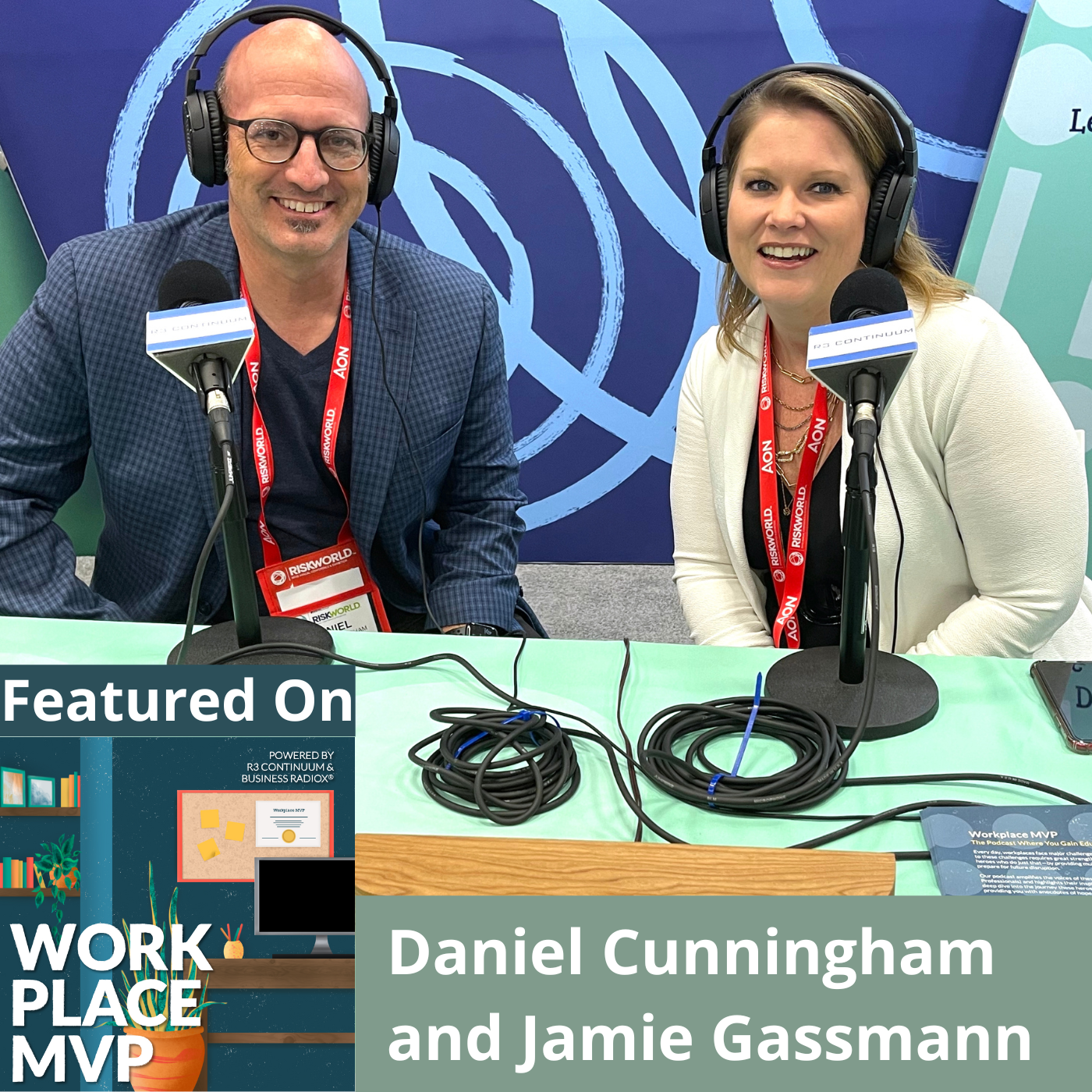
Daniel Cunningham, CEO of Leonard0 247, stopped by the R3 Continuum booth at RISKWORLD 2022. He and Jamie talked about Leonardo 247, which systemizes multi-family property operations. They have developed a new feature of the software that will help property owners track and mitigate property damage and reduce risk. He talked about this new feature, their company’s first experience at RISKWORLD, and more.

Workplace MVP is underwritten and presented by R3 Continuum and produced by the Minneapolis-St.Paul Studio of Business RadioX®.

This show was originally broadcast from the RIMS 2022 RISKWORLD Conference held at the Moscone Center in San Francisco, California.

Leonardo247

Property operations and maintenance is hard work. Leonardo247 helps owners and operators by providing a unified platform that streamlines maintenance and operations workflows, automates time-consuming tasks, and helps people get more done more easily and accurately.

Enabled by a patented machine learning algorithm, Leonardo247 has invented a way to source and catalog federal, state, and city municipal codes that govern real estate operations. The system will identify when action is required and then monitor the codes for changes so your properties stay compliant and avoid costly violations.

Bring your best practices to life through Leonardo247’s task, workflow, and process automation tools.

By delivering daily guidance that is customized to each property’s unique profile (location, equipment, amenities, etc.), your teams will outperform whether they are seasoned pros or brand-new to your organization.

Since launching the first platform in 2014, Leonardo247 has grown to become one of the most innovative tech companies in real estate operations.

Their account management teams have real-world experience in property operations allowing Leonardo247 to build solid relationships with their customers through a true understanding of their pain points. These practical insights allow them to craft solutions that address each customer’s specific needs.

They are a true operating partner first and a technology company second.

Company website | Facebook | Twitter

Daniel Cunningham, Founder & CEO, Leonardo247

Daniel Cunningham, Founder & CEO, Leonardo 247

Daniel Cunningham is a technologist, author, and recognized thought-leader in the commercial real estate management industry. Prior to launching Leonardo247 in 2014, Cunningham co-founded prefabricated homebuilder LivingHomes and also served as Director of Asset Management for AIMCO, one of the largest publicly traded residential REITs in the United States. Cunningham ran his own property management company for 10 years and out of that experience authored the book “365 Days of Property Management.”

A Civil Engineer by education, Cunningham has always been focused on process efficiency through innovation. The founding of Leonardo247 is the result of marrying that desire with his deep expertise in property management and his corresponding understanding of the difficulties in achieving consistent and comprehensive execution in property operations.

LinkedIn

About Workplace MVP

Every day, around the world, organizations of all sizes face disruptive events and situations. Within those workplaces are everyday heroes in human resources, risk management, security, business continuity, and the C-suite. They don’t call themselves heroes though. On the contrary, they simply show up every day, laboring for the well-being of employees in their care, readying the workplace for and planning responses to disruption. This show, Workplace MVP, confers on these heroes the designation they deserve, Workplace MVP (Most Valuable Professionals), and gives them the forum to tell their story. As you hear their experiences, you will learn first-hand, real-life approaches to readying the workplace, responses to crisis situations, and overcoming challenges of disruption. Visit our show archive here.

Workplace MVP Host Jamie Gassmann

Jamie Gassmann, Host, “Workplace MVP”

In addition to serving as the host to the Workplace MVP podcast, Jamie Gassmann is the Director of Marketing at R3 Continuum (R3c). Collectively, she has more than fourteen years of marketing experience. Across her tenure, she has experience working in and with various industries including banking, real estate, retail, crisis management, insurance, business continuity, and more. She holds a Bachelor of Science Degree in Mass Communications with special interest in Advertising and Public Relations and a Master of Business Administration from Paseka School of Business, Minnesota State University.

R3 Continuum

R3 Continuum is a global leader in workplace behavioral health and security solutions. R3c helps ensure the psychological and physical safety of organizations and their people in today’s ever-changing and often unpredictable world. Through their continuum of tailored solutions, including evaluations, crisis response, executive optimization, protective services, and more, they help organizations maintain and cultivate a workplace of wellbeing so that their people can thrive. Learn more about R3c at www.r3c.com.

Company website | LinkedIn | Facebook | Twitter

TRANSCRIPT

Intro: [00:00:03] Broadcasting live from Riskworld 2022 at the Moscone Center in San Francisco, it’s time for Workplace MVP. Brought to you by R3 Continuum, a global leader in helping workplaces thrive during disruptive times. Now, here’s your host.

Jamie Gassmann: [00:00:23] Hi, everyone. Your host, Jamie Gassmann here, and I am broadcasting from the Riskworld 2022 Expo Hall in R3 Continuum’s booth. And with me is Daniel Cunningham from Leonardo247. Welcome to the show.

Daniel Cunningham: [00:00:39] Hi. Thank you. Good to be here.

Jamie Gassmann: [00:00:40] Great. I’m so happy to have you here. And I know you are an exhibitor, but I want to hear a little bit about what does Leonardo247 do.

Daniel Cunningham: [00:00:47] Yeah, this is our first time at the show. We’ve not been a insurance-forward company in the past. That’s changing in some respects. But Leonardo247 is a property and operations software that’s largely focused in the multifamily industry. So, we were founded in 2011 and we now have about 2 million units, multifamily units, apartment units that are on the platform, which represents about 5,000 properties, somewhere around 40,000 buildings across the country. And what people use Leonardo247 for is we automate all of the tasks, and inspections, and workflows, and just the day-to-day responsibilities of operating apartment buildings.

Daniel Cunningham: [00:01:40] And those are typically expressed in these binders or maybe processes that are stored online in SharePoint someplace, and people are expected to to to remember all of these things, they’re expected to know it all, remember it all, execute, and it’s very difficult in the chaos of operating apartment buildings to stay on top of all these things. So, my experience prior to this that I’d been director of asset management for Aimco, which was the largest multifamily REIT in the country at the time. And we were finding that these policies and procedures that we had established were not being followed in the field. People couldn’t remember it all, people couldn’t know it all.

Daniel Cunningham: [00:02:17] And there was so much turnover in that business that even if you had somebody who really like was on board with doing everything they’d been taught could remember, like in 18 months, they were generally gone, and you were on to somebody new. So, we shift the burden of all of those policies and procedures, the execution of that, Leonardo becomes the expert in all of those policies and procedures. We have our own library of risk management best practices, for example, that if the client doesn’t have their own, they can use what we bring to the table or they can combine it, both.

Daniel Cunningham: [00:02:53] And then, Leonardo gives guidance every day to these individual properties based on a property’s unique amenity, equipment, geographic profile. Leonardo says, okay, we know you have a pool, we know you’re in the northeast, therefore since it’s November, we’re going to give you the instructions on how to kind of winterize the pool and that sort of thing. And we deliver whatever form or inspection they need to be successful, or instructions or video they want to watch, whatever it might be. We empower the folks on site to execute, so they don’t have to worry about whether or not they know it all, or understand, or even know what the priorities are. That all comes out of Leo.

Daniel Cunningham: [00:03:33] Now, you just ask them to execute and we give real-time visibility to the owners and the operators—the owners and maybe executives in those operations companies as to what’s actually happening on site. Are they in compliance with your expectations of running that property? So, that’s really been the core business. The question is, what does that have to do with insurance? Why are we here?

Daniel Cunningham: [00:03:58] What we discovered is since we sit in this unique role of being able to observe the actions that our clients are taking on a daily basis, are they doing the preventative maintenance that they claim they were supposed to be doing? Are they performing the inspections that are part of their risk management policies and procedures? We have a chance to see that.

Daniel Cunningham: [00:04:23] We then sit in a unique point of view where we’re able to assess the relative risk of any given operator based on their behavior, which prior to this, insurers were really relying on people to sort of attest, I have these policies and procedures, I have this preventive maintenance program, and I follow it, and yet then you have a loss, and you go on site, and you find out they’ve not been following any of that.

Jamie Gassmann: [00:04:55] Yeah.

Daniel Cunningham: [00:04:55] Yeah. There’s no way to see. The industry had no way to tell the difference between people that were lucky and people that were merely making a concerted effort to mitigate the risk to reduce their exposure to loss. And the bad actors were only exposed after a loss. Well, we are a leading indicator of good behavior and bad actors, so that we can help the carriers understand who’s a better risk than others based on their actual behavior.

Daniel Cunningham: [00:05:26] And so, we’re debuting something called the Leonardo Risk Indicator score, the LRI, which is a score based on that behavior that helps carriers discern good risk from bad risk, but also, for our clients, gives them some suggestions as to what they can do to reduce their risk and to improve their LRI score. Do they have water intrusion devices installed? That would improve their risk score. Are they doing like lighting inspections? Have they missed fire inspections or fire extinguisher inspections? These sorts of things, we can give them that feedback, and say, hey, if you do these things, or you do these things better, or you do these additional things, you will reduce your exposure to loss, and that’s our goal now.

Jamie Gassmann: [00:06:13] Interesting. So, are you using the data from those that are using the platform and managing those day-to-day tasks or monthly tasks to inform those scores?

Daniel Cunningham: [00:06:23] Yeah. I mean, they may not be as diligent in Leo as we would like them to be, so what we’ve done is we’ve looked at all the areas that impact losses, preventable losses generally. There’s not much we can do about hurricanes and flood, right? There’s not much we can do about that. We can impact what you do after an event like that to mitigate loss. We can push out, for example, water remediation processes and workflows if you’ve got a flood, that sort of thing.

Daniel Cunningham: [00:06:56] But when it comes to preventable losses, we looked at those things that are most impacting the claims history for multifamily owners, and we said, okay, what can we do in Leo to help mitigate that risk? What kinds of inspections can we perform? What devices can you install, and this sort of thing? So, since that’s new, we haven’t had that point of view before, like that these were the things that are important, so not everybody has been doing that over time. But now, what we’re introducing is, hey, here’s a new series of things that you should be paying attention to, and if you do these, we will help you understand your positional, like relational risk to the benchmark if you do this all in a systematic way within Leo.

Jamie Gassmann: [00:07:45] Interesting. And so, from like a property management perspective, you’re able to give them some tangible information about how they’re preventing harm to their property, basically.

Daniel Cunningham: [00:07:59] Yeah. And so, for property managers, like the actual people operating the property, like we’re reducing their losses so that there’s a cost to losses that that’s beyond just the cost of the claim. I mean, processing the claims and all that has a cost to it as well. So, while the owners feel the benefit of reduce losses in the form of spending less money on deductibles and maybe their insurance rates not going up, the operators who maybe don’t bear that responsibility still benefit from not having to process as many claims, and there’s reputational risk that happens here, and that sort of thing. So, everyone really benefits from being able to more or less quantify where they stand in terms of their relative risk and what they can do to make it better.

Jamie Gassmann: [00:08:50] Yeah. And so, this is your first time here at RIMS, so talk to me about what you’re hoping connections that you’ll make. Is it with insurance carriers? Is it with brokers? Who are you really looking to have conversations with that you’re excited to meet here at the show?

Daniel Cunningham: [00:09:05] Yeah, it was a bit of a mystery for us. Exactly not who would be there, because we have the list, but who would be intrigued by what it is that we’re doing. What we think will resonate with folks and it seems to be playing out so far is, so for the broker community, we want them to know about what we’re doing, because if they represent habitational like property and casualty clients, we want them to think about Leonardo and recommend Leonardo247 for their clients. We’ve had a number of over the years meetings with brokers, who said, look, we wish every one of our clients were using this, because it would reduce their losses and help them negotiate better rates.

Daniel Cunningham: [00:09:56] So, we’re hoping to increase our exposure with brokers. We want the carriers to know about the LRI, because we want them to—because with any luck, they’re going to start seeing LRI scores come across their desk as brokers go out and remarket our clients for insurance, and we want them to be aware of what that is, where that comes from, who we are, how that’s derived, so we can start at least that conversation at the carrier level with what we hope, someday, results in the LRI being a standard data point for evaluating the relative risk of somebody who’s applying for insurance.

Jamie Gassmann: [00:10:33] Yeah, that’s very cool. Very interesting. And I got to imagine that your platform, if you’re thinking of that turnover perspective, it’s keeping that log of activity. so it should be a good training tool for these property management companies to be able to have somebody come in where somebody left off. Is that kind of part of the design of that, and helping them kind of be aware of where somebody was at or not at?

Daniel Cunningham: [00:10:58] Yeah, we say something similar all the time. We say, look, when you have a change of staff, just one person just hands the baton off to the next person. They don’t have to know. Leonardo knows the last thing that they did, what’s up next? Leonardo can help you understand what the process is so that you can get new staff members up to speed faster than ever, help them become productive faster than you ever have before, because it’s all laid out for them.

Daniel Cunningham: [00:11:30] Hopefully, through Leo, you’re giving them everything they need to be successful, the process, the form, like I said, the video that they might need to watch, and they can just take the ball and run with it. And so, especially right now with the great resignation, has really hit multifamily in a way that I think is probably worse than other industries. Maybe not hospitality and restaurant, but certainly, in a very significant way. It’s very difficult right now to find people who want to be in this business. So, we have to find ways to make people more productive. We have to find ways when you bring people on board that they can get up to speed more quickly, and that’s the role that we fill, for sure.

Jamie Gassmann: [00:12:13] Yeah. Wonderful. Well, I hope that you’re getting the results from conversations. I know it’s been busy throughout the day in the RIMS Expo Hall, so hopefully, your conversations have been going well and you’ll get some great contacts to be able to share your wonderful platform with.

Daniel Cunningham: [00:12:28] There’s been lots of serendipity here for us already, so it’s good.

Jamie Gassmann: [00:12:31] Wonderful. That’s great. So, if somebody wanted to get a hold of you and learn a little bit more from you about Leonardo247 or your new insurance, kind of the measurement tool, how would they be able to do that?

Daniel Cunningham: [00:12:42] So, our website is leonardo247.com. Leonardo247.com. So, there’s plenty of like Contact Us information there if you’re interested. And yeah, the LRI will be sort of publicly debuted I think by the end of June, so there’ll be more information on the website starting then.

Jamie Gassmann: [00:13:06] Wonderful. Well, best of luck in that and thank you again so much for joining us. It’s been a pleasure talking with you.

Daniel Cunningham: [00:13:11] Yeah, nice wandering by, and seeing you here, and having the opportunity to appear. Thank you.

Jamie Gassmann: [00:13:15] Yeah. We always like great conversations to learn a little bit more about what’s out there in the risk field, so great.

Daniel Cunningham: [00:13:20] Thank you.

Jamie Gassmann: [00:13:21] Yeah.

Outro: [00:13:26] Thank you for joining us on Workplace MVP. R3 Continuum is a proud sponsor of this show and is delighted to celebrate most valuable professionals who work diligently to secure safe workplaces where employees can thrive.
 

Tagged With: Daniel Cunningham, Leonardo247, Multi family housing, operational efficiency, property claims, property maintenance, property management, property operations, Risk Management

LIVE from RISKWORLD 2022: Shari Paul, Alliant

June 1, 2022 by John Ray

Alliant
Minneapolis St. Paul Studio
LIVE from RISKWORLD 2022: Shari Paul, Alliant
Loading
00:00 /
RSS Feed
Share
Link
Embed

Download file

LIVE from RISKWORLD 2022: Shari Paul, Alliant

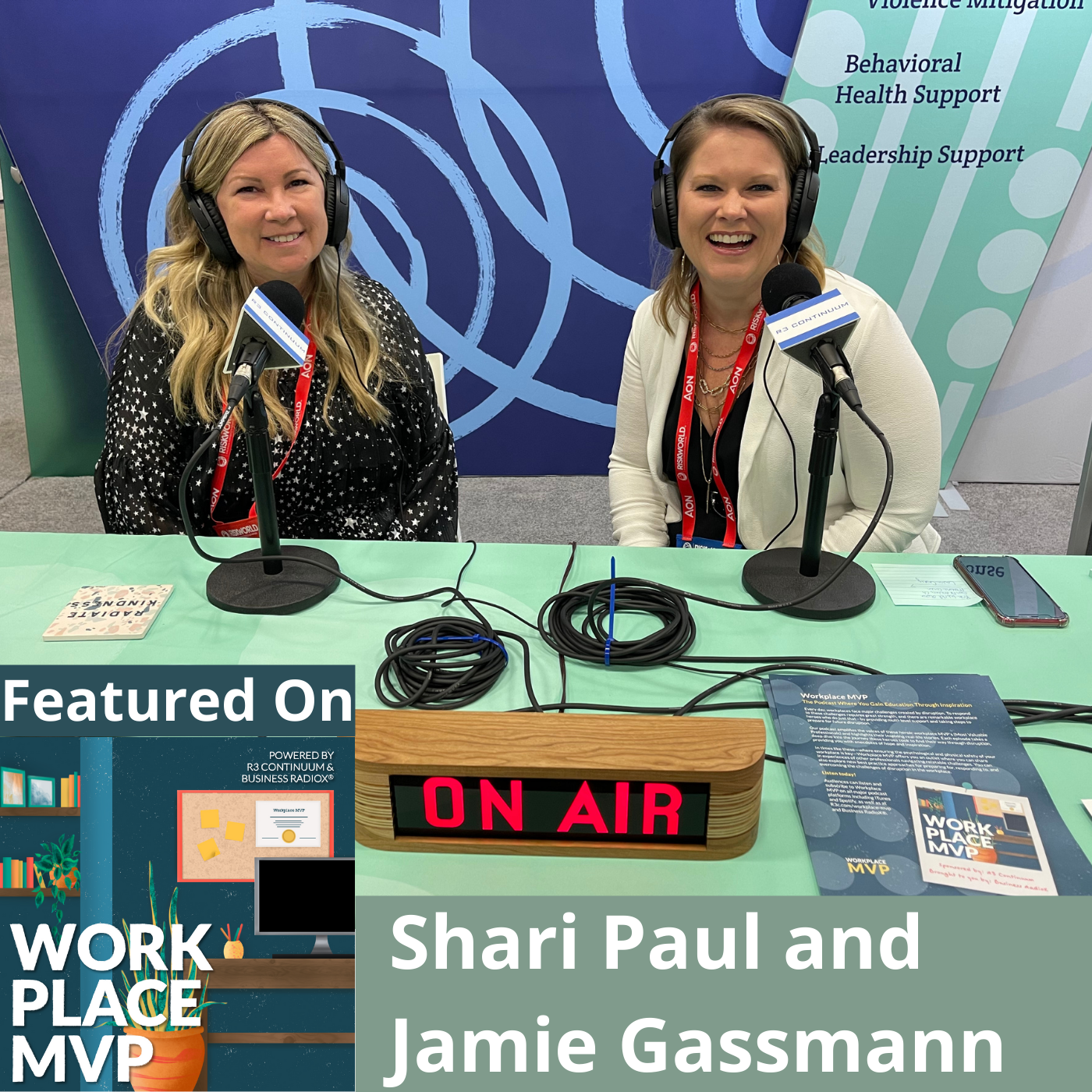
Shari Paul, First Vice President for Alliant, heads all of Alliant’s digital media and sat down with host Jamie Gassmann in the R3 Continuum booth at RISKWORLD 2022. They discussed the value of social media in the insurance industry, the multiple podcasts Alliant has, advice for effectively using social media, podcasting, and more.

Workplace MVP is underwritten and presented by R3 Continuum and produced by the Minneapolis-St.Paul Studio of Business RadioX®.

This show was originally broadcast from the RIMS 2022 RISKWORLD Conference held at the Moscone Center in San Francisco, California.

Shari Paul, First Vice President, Sr. Marketing Manager, Alliant

Shari Paul, First Vice President, Sr. Marketing Manager, Alliant

Shari Paul is First Vice President and Senior Marketing Manager for Alliant Insurance Services. Shari is a data-driven marketing and digital media communications professional with over 20 years of experience within a variety of industries focused on customer acquisition, satisfaction, and retention.

Alliant Insurance Services is among the largest and fastest-growing insurance brokerage and consulting firms in the United States. Fueled by entrepreneurialism and driven by results, Alliant operates on the belief that more is possible and expectations are meant to be exceeded.

Their clients and partners have profound confidence in them to deliver in all market climates through the design and delivery of innovative solutions and services across a broad range of industry verticals.

Alliant’s people stand as the backbone of the organization. They proudly employ a team of diverse, driven, and exceptional people and invest heavily in their success, giving our brokerage and consulting teams the freedom and resources they need to help their clients grow their businesses to remarkable heights. The result is a dynamic team of professionals who consistently perform at the highest level while caring and giving back to causes that impact their communities and the world at large.

Alliant is built on teamwork and collaboration, a philosophy that has guided its growth and evolution for almost 100 years. They rise together to meet challenges, think together to drive innovation, and thrive together in business and in the diverse communities where they operate.

As one of the top 10 largest insurance brokerage firms in the U.S., Alliant combines the power and breadth of big-company resources with a hyper-personalized approach that puts your interests above everything else.

Their culture of entrepreneurialism, collaboration, and innovation gives them the independence and accountability to create solutions that uniquely match your needs. Because when people come first, more is possible.

Company website | Company LinkedIn | Shari Paul LinkedIn

About Workplace MVP

Every day, around the world, organizations of all sizes face disruptive events and situations. Within those workplaces are everyday heroes in human resources, risk management, security, business continuity, and the C-suite. They don’t call themselves heroes though. On the contrary, they simply show up every day, laboring for the well-being of employees in their care, readying the workplace for and planning responses to disruption. This show, Workplace MVP, confers on these heroes the designation they deserve, Workplace MVP (Most Valuable Professionals), and gives them the forum to tell their story. As you hear their experiences, you will learn first-hand, real-life approaches to readying the workplace, responses to crisis situations, and overcoming challenges of disruption. Visit our show archive here.

Workplace MVP Host Jamie Gassmann

Jamie Gassmann, Host, “Workplace MVP”

In addition to serving as the host to the Workplace MVP podcast, Jamie Gassmann is the Director of Marketing at R3 Continuum (R3c). Collectively, she has more than fourteen years of marketing experience. Across her tenure, she has experience working in and with various industries including banking, real estate, retail, crisis management, insurance, business continuity, and more. She holds a Bachelor of Science Degree in Mass Communications with special interest in Advertising and Public Relations and a Master of Business Administration from Paseka School of Business, Minnesota State University.

R3 Continuum

R3 Continuum is a global leader in workplace behavioral health and security solutions. R3c helps ensure the psychological and physical safety of organizations and their people in today’s ever-changing and often unpredictable world. Through their continuum of tailored solutions, including evaluations, crisis response, executive optimization, protective services, and more, they help organizations maintain and cultivate a workplace of wellbeing so that their people can thrive. Learn more about R3c at www.r3c.com.

Company website | LinkedIn | Facebook | Twitter

TRANSCRIPT

Intro: [00:00:02] Broadcasting Live from RISKWORLD 2022 at the Moscone Center in San Francisco, it’s time for Workplace MVP. Brought to you by R3 Continuum, a global leader in helping workplaces thrive during disruptive times. Now, here’s your host.

Jamie Gassmann: [00:00:21] Hi, everyone. Jamie Gassmann here, your host of Workplace MVP, coming to you from RISKWORLD 2022. And with me is Shari Paul. Hi, Shari.

Shari Paul: [00:00:32] Hello.

Jamie Gassmann: [00:00:33] And welcome to the episode. Give me a little background of your role and who you’re with.

Shari Paul: [00:00:38] I am here with Alliant Insurance. We are one of the largest brokers in North America. And I do all of the digital marketing, digital media for the company.

Jamie Gassmann: [00:00:52] Wonderful. And I know you have a very specific topic. I think you guys even have your own podcast. What’s the name of your podcast?

Shari Paul: [00:00:58] We do. We have quite a few podcasts actually, because we have so many different specialties that there is – my gosh – The Financial R&R with Ron and Ryan. That’s one of the most popular ones. We’ve got Digging In with our agribusiness team. And then, just a blanket Alliant specialty podcast.

Jamie Gassmann: [00:01:23] Yeah, kind of covers a whole-.

Shari Paul: [00:01:25] Yes.

Jamie Gassmann: [00:01:25] … kind of-

Shari Paul: [00:01:25] Covers gamut.

Jamie Gassmann: [00:01:26] … gamut of different topics and area of conversations around the industry. And I know one of the things that we were talking about before we jumped on our mics mix was about the power of social media in this industry. So, what are some of your thoughts around that?

Shari Paul: [00:01:42] Absolutely. You know, what’s interesting about the insurance industry is that it’s not very social media — I don’t want to say savvy, but there — it’s hard to get someone on board with doing the social media or seeing the ROI or seeing the value in it. And what we discovered with the pandemic is that there was a lot of opportunities with doing podcasts, with doing the webinars, with doing different type of digital media and digital experiences that worked out phenomenally. So, that’s-

Jamie Gassmann: [00:02:18] Yeah. So, it’s almost like creating an ecosystem from your organization, basically, that extends out of just the in-person opportunities like a conference because, obviously, the last couple of years, it wasn’t as readily available.

Shari Paul: [00:02:31] Right.

Jamie Gassmann: [00:02:31] And you know, virtually, it’s tough to network on a conference virtually.

Shari Paul: [00:02:36] It is.

Jamie Gassmann: [00:02:36] It’s what I’ve found. So, talk to me about, like if somebody was really wanting to put together kind of — from a social media perspective, kind of a program and promoting that internally, how could they build that case internally to kind of get that kind of moving through the ranks?

Shari Paul: [00:02:50] Yeah. What’s great is to find your cheerleaders, right? To find those evangelists of social media. And we have quite a few that have gone out and actually started their own blogs, they post on social media, LinkedIn, Twitter, Instagram almost daily. And from that, what we have found, actually, is we’re getting a lot of press attention. So, we have gotten quite a few journalists reach out to us based on the topics that we’ve been putting out to do interviews. So, it’s actually been phenomenal.

Jamie Gassmann: [00:03:25] Yeah. So, it’s like almost like finding those thought leaders that are willing to present themselves as that in a very public way?

Shari Paul: [00:03:32] Right. I mean, you put a thought leadership piece out or, you know, an article or something like that, or press release, and it’s one dimensional. So, you don’t really get to go into the different thoughts or, you know, it’s just that at that one time. But when you’ve got a lot of people on talking about what’s going on, you get a lot more, I think, bang for the buck there.

Jamie Gassmann: [00:03:56] Yeah, absolutely. And like staying really current with industry trends, and things that you’re seeing and you know, people that might be looking they’re looking for something right now, you know.

Shari Paul: [00:04:05] Absolutely.

Jamie Gassmann: [00:04:05] Not that happened four years ago. They want to know what’s the current world. So, if you’ve got like somebody who maybe is a little hesitant in your organization, but, you know they’re brilliant, you know, what are some of the tactics you’ve used to convince them to get behind your microphone?

Shari Paul: [00:04:20] Constantly asking. Constantly, “Come on, I know you can do it. I know you can do it.” Yes, we’ve had a few that are reluctant, but once you get them going, and they get that first podcast under their belt, then they understand that it’s easy.

Jamie Gassmann: [00:04:35] Yeah. Once they get the taste of that media, right? And the attention.

Shari Paul: [00:04:40] Yeah.

Jamie Gassmann: [00:04:40] Just like all of us, right? We can, like, thrive on that in a way.

Shari Paul: [00:04:45] Absolutely.

Jamie Gassmann: [00:04:45] So, if there was one like leaving, you know, idea or advice or concept you wanted to leave on this episode for anybody that might be listening post-show, what would that be?

Shari Paul: [00:04:57] Just do it. Jump in and do it. You know, you don’t have to worry about equipment. There’s a million different ways to do it. There is lots of, you know, mics and things that you — I mean, we do ours on Zoom, you know. So, we do produce them afterwards. But, you know, just get in there and do it. There are so many topics and so many news items that just, you know, hit the airways, that you’ve got to get something out there quick, and having someone sit down and write something or try to respond to it, it’s not as – it just doesn’t work as well as doing a podcast or or a social media feed.

Jamie Gassmann: [00:05:39] Yeah, wonderful. Well, it’s been great to have you on an episode.

Shari Paul: [00:05:42] Thank you so much.

Jamie Gassmann: [00:05:43] Yes. Thank you so much for joining us. And if somebody wanted to get a hold of you to get more information from you, how can they reach you?

Shari Paul: [00:05:50] www.alliant.com or you can give me an email at shari.paul@alliant.com.

Jamie Gassmann: [00:05:59] Wonderful. Thanks again so much for joining us.

Shari Paul: [00:06:06] Thank you.

Outro: [00:06:06] Thank you for joining us on Workplace MVP. R3 Continuum is a proud sponsor of this show and is delighted to celebrate most valuable professionals who work diligently to secure safe workplaces where employees can thrive.


Tagged With: Alliant Insurance Services, insurance brokerage, Jamie Gassmann, podcasting, R3 Continuum, RIMS, Risk Management, RISKWORLD 2022, Shari Paul, Social Media, Workplace MVP

LIVE from RISKWORLD 2022: Mark Hoffman, ClearRisk

May 24, 2022 by John Ray

Mark Hoffman
Minneapolis St. Paul Studio
LIVE from RISKWORLD 2022: Mark Hoffman, ClearRisk
Loading
00:00 /
RSS Feed
Share
Link
Embed

Download file

Mark Hoffman

LIVE from RISKWORLD 2022: Mark Hoffman, ClearRisk

Mark Hoffman of ClearRisk and The Resilient Journey Podcast was the guest on this episode of Workplace MVP LIVE from RISKWORLD 2022. He is not only a Continuity Consultant for ClearRisk, but the host of the podcast they sponsor, The Resilient Journey Podcast. He and Jamie talked about resiliency, the work ClearRisk does in risk management information, his presentation at RISKWORLD, the amazing stories on The Resilient Journey Podcast, and more.

Workplace MVP is underwritten and presented by R3 Continuum and produced by the Minneapolis-St.Paul Studio of Business RadioX®.

This show was originally broadcast from the RIMS 2022 RISKWORLD Conference held at the Moscone Center in San Francisco, California.

Mark Hoffman, MCBI, CBCP, Continuity Consultant, ClearRisk, and Host of The Resilient Journey Podcast

Mark Hoffman, Business Continuity Consultant, ClearRisk and Host: The Resilient Journey Podcast

ClearRisk works with risk managers and senior management from over 150 organizations across North America in retail, property management, municipalities, technology, and many others. Their team comprises a powerful combination of risk management experts, insurance specialists, and a multidisciplinary squad of tech-savvy individuals, all dedicated to pushing the risk management envelope.

Their focus is on optimizing our customers’ risk to keep people and assets from harm, thereby making our customers more successful. Their solutions have empowered customers to mitigate millions in total cost of risk, achieve higher operational excellence, increase safety, and increase the bottom line.

The Resilient Journey Podcast explores some of the biggest issues facing organizations today and chats with industry leaders about ways we can all be more resilient.

The Resilient Journey Podcast

Mark Hoffman LinkedIn

Company website | Company LinkedIn

About Workplace MVP

Every day, around the world, organizations of all sizes face disruptive events and situations. Within those workplaces are everyday heroes in human resources, risk management, security, business continuity, and the C-suite. They don’t call themselves heroes though. On the contrary, they simply show up every day, laboring for the well-being of employees in their care, readying the workplace for and planning responses to disruption. This show, Workplace MVP, confers on these heroes the designation they deserve, Workplace MVP (Most Valuable Professionals), and gives them the forum to tell their story. As you hear their experiences, you will learn first-hand, real-life approaches to readying the workplace, responses to crisis situations, and overcoming challenges of disruption. Visit our show archive here.

Workplace MVP Host Jamie Gassmann

Jamie Gassmann, Host, “Workplace MVP”

In addition to serving as the host to the Workplace MVP podcast, Jamie Gassmann is the Director of Marketing at R3 Continuum (R3c). Collectively, she has more than fourteen years of marketing experience. Across her tenure, she has experience working in and with various industries including banking, real estate, retail, crisis management, insurance, business continuity, and more. She holds a Bachelor of Science Degree in Mass Communications with special interest in Advertising and Public Relations and a Master of Business Administration from Paseka School of Business, Minnesota State University.

R3 Continuum

R3 Continuum is a global leader in workplace behavioral health and security solutions. R3c helps ensure the psychological and physical safety of organizations and their people in today’s ever-changing and often unpredictable world. Through their continuum of tailored solutions, including evaluations, crisis response, executive optimization, protective services, and more, they help organizations maintain and cultivate a workplace of wellbeing so that their people can thrive. Learn more about R3c at www.r3c.com.

Company website | LinkedIn | Facebook | Twitter

TRANSCRIPT

Intro: [00:00:02] Broadcasting Live from RISKWORLD 2022 at the Moscone Center in San Francisco, it’s time for Workplace MVP. Brought to you by R3 Continuum, a global leader in helping workplaces thrive during disruptive times. Now, here’s your host.

Jamie Gassmann: [00:00:22] Hi, everyone. Your host, Jamie Gassmann here, coming to you from the RISKWORLD 2022 Expo Hall in R3 Continuum’s booth, our show sponsor. And joining me is Mark Hoffman from ClearRisk US Corp.

Mark Hoffman: [00:00:38] Yeah.

Jamie Gassmann: [00:00:38] Welcome to the show, Mark.

Mark Hoffman: [00:00:39] Thanks, Jamie.

Jamie Gassmann: [00:00:40] Yeah.

Mark Hoffman: [00:00:40] This is fun.

Jamie Gassmann: [00:00:41] Yeah, it’s exciting. I’m glad you stopped by. I know we’ve been having fun chatting already before, but tell us a little bit about what ClearRisk does.

Mark Hoffman: [00:00:49] Well, no, before I do that, I have to say why I stopped by. It’s because of your producer, John’s light out front that just drew me in, this beautiful on-air light that said, “Man, I got to learn more about that.”

Jamie Gassmann: [00:01:01] Yeah.

Mark Hoffman: [00:01:02] But no, seriously. So, I’m here with ClearRisk. I was a speaker at the conference. I spoke yesterday, and we can talk about that a little bit. But ClearRisk is a risk management information system. So, RMIS. We do claims, and incident reporting, and tracking and analytics. And I’m also helping them develop a business continuity module to help companies be more resilient. And we’re here at the conference as well, down at Booth 1918. And it’s been a great experience.

Jamie Gassmann: [00:01:33] Yeah. So, I know it’s kind of the first time back in-person after a couple of years.

Mark Hoffman: [00:01:38] Yeah.

Jamie Gassmann: [00:01:39] So, you know, what have you felt the vibe being or the people you’ve been talking to, what are you kind of sensing from the audience?

Mark Hoffman: [00:01:45] Well, the first vibe for me was before I spoke live in front of an audience yesterday, I sort of had those butterflies that you don’t always get when you’re in front of that Zoom screen or whatever. And a lot of the conferences that I spoke at the last couple of years, they have you pre-record it and send it in. And so, it’s very easy for those things to come off really flat because you’re in your office by yourself, and you don’t have that feedback that you get from the audience.

And yesterday, yeah, okay, there were a little — you know, some jitters maybe early on, but I had a full room, standing room only, great eye contact, people taking pictures of the screen, you know, things like that. And you get that interaction with the audience that says, wow, it’s just energetic and it really, you know, charges you up. As far as the conference goes, it’s great to see people. There have been some very clever things to draw people in, the potting contest, some of the walls, the sand sculpture and, you know, the on-air booth over here.

Jamie Gassmann: [00:02:46] Our on-air booth. That’s awesome.

Mark Hoffman: [00:02:48] Yeah. So, well done.

Jamie Gassmann: [00:02:48] Thank you. So, talking about your presentation, tell me, what was the topic of that presentation or kind of dive into the meat of what you were discussing?

Mark Hoffman: [00:02:59] Yeah, I sort of took a different approach, and it’s a risk that everybody’s thinking about, and it’s cybersecurity. And so, I spent 20 minutes yesterday talking about how to effectively communicate if you’ve been the victim of a cyber attack, and really to kind of narrow it down to the main nuggets.

It’s basically three things. If you need to communicate to external stakeholders, or to the public, or even to your employees, it really needs to start with the fact that you have to own it. You have to tell the truth. You have to explain what happened, admit what happened. And this applies really to any type of crisis, not just a cyber attack, but basically just come out and say, “Listen, this is what’s happened,” and tell the truth. Whatever that initial statement is, it has to stand up to fact checking, right?

We live in a world right now where everybody — I was at the ball game last night. I went down to a Giants game and I was sitting next to a woman who said to me, “Oh yeah, I was in Toronto once.” And I said, “Oh, what were you doing?” And she said, “Well, I was filming a movie there.” And so, I said, “Well, that’s kind of cool.” And I asked her what the movie was, and she told me, and she told me what her role was. And then, when we turned away from each other, what did I do? I Googled it, right? Just to make sure that is this woman legit? Like, you know, was she really in that movie? And she was. And it was really kind of cool. So, whatever statement you make has got to stand up to that fact checking, which is, you know, real time.

The next thing is add some context to what you just told me. And then, the example that I used yesterday, company came out, and they admitted that they had executed on an email that they shouldn’t have. But then, they added appropriate context. “Look, our servers were not breached. You know, user data was not compromised in this.” And that’s important context.

And then, the third thing is talk about what you learned from it, and what you’re going to do different going forward. And if you can do those things, and it’s so different than, you know, the average celebrity apology, right? You can do those things. This is what happened; we admit that it happened; if necessary, apologized for it happening; add some good context to it. And then, talk about, “What did I learn? This is what we’re going to do different going forward.” That’s a winning formula for communicating effectively.

Jamie Gassmann: [00:05:18] Yeah, I love it. I feel like those are kind of like, you know, the go-to for when you make a mistake-

Mark Hoffman: [00:05:24] Right.

Jamie Gassmann: [00:05:24] … in a way. Like I mean, that’s what I tell my employees. You know, I live by that. I had a boss very young in my career, mistakes are going to happen, issues are going to happen, cyber risk could happen-

Mark Hoffman: [00:05:33] Right.

Jamie Gassmann: [00:05:34] It’s how you respond to it and, you know, address it, accept ownership or responsibility, and then what are you going to do to make sure it doesn’t happen going forward. So, I love that you brought that up into that presentation because I feel like that those are just standards you should live by, but yeah.

Mark Hoffman: [00:05:49] Right. And it was interesting. Somebody asked a question right at the end and they said, “Yeah, but big corporations lie.” And so, I said, “Yeah, okay, but we need to influence that, right? We need to change that culture. We need to make sure that we come at this from the standpoint that your answers have to stand up to fact checking. Otherwise, you’re just going to make it worse.”

Jamie Gassmann: [00:06:08] Oh, absolutely. When I think of, you know, in addressing a comment like that, it’s like, yeah, but in today’s world, the truth is eventually going to come out.

Mark Hoffman: [00:06:17] Right.

Jamie Gassmann: [00:06:17] And where do you want to — you know, would you want to be like on the positive side of that or the negative?

Mark Hoffman: [00:06:22] That’s right. Lawyers like to use the term the fact pattern.

Jamie Gassmann: [00:06:26] Yeah.

Mark Hoffman: [00:06:26] And the fact pattern is you better be right. You better be on the side of right as you go forward. Yeah.

Jamie Gassmann: [00:06:31] Yeah, interesting. So, I understand in talking to you, you also do a podcast, which is exciting. I love having other fellow podcasters on our podcast with us. Tell me a little bit about what you do there.

Mark Hoffman: [00:06:41] Yeah. So, the podcast is called The Resilient Journey. And it is sponsored by ClearRisk. And you can find us anywhere that you find podcasts – you know, Spotify, Google and Apple Podcasts and all that stuff. And basically what we do is we focus on resilience, whether it’s business resilience, organizational resilience. We talk about cyber risk and things like that.

But we’re also starting to talk a little bit more here about personal resilience. And there’s some very interesting stories. I’ve talked to some folks who — one of my favorites was a guy called Vince Davis. I love him to death. He’s from Chicago and he’s in the emergency management field. And he talked about racial inequity in the emergency management industry. And he said, “Mark, I’ve been doing this for over 20 years.” And he said, “I know and I can list for you all of the other people in our industry who are black.” And do I have time to tell the story I mentioned before?

Jamie Gassmann: [00:07:38] Oh, yeah, keep going. Yeah.

Mark Hoffman: [00:07:40] He said, “Hey, you know, one of the things you have to realize is the privilege that you have that you’re not aware of,” he said, “When you back out of your driveway in the morning to go to work, you’re Mark, or you’re Jimmy, or he’s John.” He said, “I back out of the driveway in the morning and I’m black. And that’s how I’m viewed on the way to work, at work and on the way home from work.” And it’s things we don’t think about. And so, I’ve interviewed him and I love that one.

I interviewed a guy from the UK who lost a family member and talked about the struggles of trying to come to work with that burden. And it really kind of ties in to what you’re doing. And he wrote an article, you know, what do you do when the resilience person or the continuity person can’t continue? How do you deal with that? And he talked about the first step, the hardest step was needing to say, “I need help. I need a break. I need to stop.”

Jamie Gassmann: [00:08:36] Yeah. And, you know, I’ve talked to a lot of people as well. And, you know, even on this podcast, some that have experienced some really traumatic events in US history. I interviewed a gentleman that was in the Pentagon during 911.

Mark Hoffman: [00:08:47] Wow. Yeah.

Jamie Gassmann: [00:08:48] You know, and so hearing those personal stories, I think they’re so helpful in allowing you to be able to connect yourself, so that you’re not just assuming you think you know how somebody feels, but you’re actually learning from somebody what that feels like.

Mark Hoffman: [00:09:02] Right.

Jamie Gassmann: [00:09:02] And that’s so powerful.

Jamie Gassmann: [00:09:03] Right. You know, I interviewed a guy a couple of weeks ago. Sean Vanslyke is his name. He’s the CEO of a company called SEMO Electric Cooperative or something like that. He’s in Missouri. And he does a thing called the Friday Feature. And it’s a one-minute positive little story. And he puts it up on LinkedIn, he puts it on YouTube. And he’s really affected my life. Like, I don’t want to maybe go as far as to say, well, he changed my life, but he certainly influenced me to be more positive.

And that’s what we need right now, right? There’s so much division in our world, and there’s so much hatred, and anger and frustration. And I was in the Frankfurt Airport a couple of weeks ago, and I was on the phone with my wife, and our granddaughter had gone to the hospital. She had a really high fever. And I was trying to talk to her, and I couldn’t hear her. And I just walked off to sort of a corner area. Well, it turned out, it was one of those entrance areas to the lounges, you know, where the elite travelers get to go. And the guy comes up to me, and he goes, “You can’t be here.” And I said, “I’m having an important conversation and I can’t hear out in the main hallway.” “I don’t care. You can’t be here.” And so it turned into a little bit of an argument.

So, I went somewhere else, and I got off the phone with my wife, and I went back up to him and I said, “Look, I understand about the rules. But you could have showed some compassion there.” And that’s just for all of us.

Jamie Gassmann: [00:10:26] Yeah.

Mark Hoffman: [00:10:26] Be better. Let’s be better. Let’s raise the bar, and not look at our neighbor and say, “Jamie, you need to be better.” Look in the mirror and say, “Mark, you need to be better.”

Jamie Gassmann: [00:10:36] Yeah.

Intro: [00:10:36] And that’s where it needs to start.

Jamie Gassmann: [00:10:38] Yeah. It’s like you see a lot of those LinkedIn posts about, you know, understanding that somebody might be going through something that you’re not aware of.

Mark Hoffman: [00:10:45] Right.

Jamie Gassmann: [00:10:45] And how do you show that compassion all the time? Because you might be the difference in somebody’s life that day by just being kind.

Mark Hoffman: [00:10:52] Yeah, you might be.

Jamie Gassmann: [00:10:52] Yeah.

Mark Hoffman: [00:10:53] You might be. I had mentioned to you that one of my interviews, a good friend of mine who went through some childhood trauma. And now, after a long struggle — and then attempted suicide. Now, she helps women who have been through similar things. And she told me during the interview, she said that four people have come up to her and said, “You know, I was suicidal, too. I had a suicide plan, but because of my conversations with you, I don’t feel that way anymore.” And, you know, that’s impact, and that’s leadership, and that’s what we’re about, and that’s what we need to try to do.

Jamie Gassmann: [00:11:28] Yeah, I love that conversation. It’s kind of like we can make that difference in someone’s life-

Mark Hoffman: [00:11:34] Yeah.

Jamie Gassmann: [00:11:34] … just by being human, and compassionate and caring. So, I love that. Great.

Mark Hoffman: [00:11:39] You know, you like to ask questions just like I do, right?

Jamie Gassmann: [00:11:42] I do, yeah.

Mark Hoffman: [00:11:43] And you get a charge out of when you ask a really good question-

Jamie Gassmann: [00:11:46] Yes.

Mark Hoffman: [00:11:46] … when a guest says to you, “Oh, I love that question.”

Jamie Gassmann: [00:11:48] Yes. It’s like, “Oh, I did good.”

Mark Hoffman: [00:11:50] Yeah, that’s right or “I have insight. I think I understand what you’re talking about.” I asked Tracy, who’s the guest I’m talking about, and that’s the episode that’s coming up this week, by the way. I said to her, “Okay. Well, I’ve never been through anything like this. What would you say to me? How can I help? What do I do?” And she says, “Oh, nobody’s ever asked me that before.” And that’s how you know, it’s a good question.

Jamie Gassmann: [00:12:10] Oh, absolutely. You know, I actually had a gentleman on my show one time who had been — he had bipolar. And I asked him, because he talks about when you tell people that you have bipolar, they always go, “I’m sorry.” He says, “That’s not what I want to hear.” My next question was, “Well, what do you want to hear? What can we say because we don’t we don’t know what you feel?”

Mark Hoffman: [00:12:32] Right? Teach us.

Jamie Gassmann: [00:12:33] Teach us.

Mark Hoffman: [00:12:34] Yeah.

Jamie Gassmann: [00:12:34] “What would you like us to say?” So, it’s awesome. So, I’m right there with you. I think this is great. And really appreciate you stopping by and joining us.

Mark Hoffman: [00:12:43] Thanks for having me. And now, you-

Jamie Gassmann: [00:12:45] Yeah.

Mark Hoffman: [00:12:45] Now, you owe me one. Now, you have to be a guest on my podcast.

Jamie Gassmann: [00:12:47] Oh, I’d love to. Thank you for the invite. Absolutely.

Mark Hoffman: [00:12:50] Well, we’ll talk about what you do here-

Jamie Gassmann: [00:12:52] Yeah, fantastic.

Mark Hoffman: [00:12:52] … and what the conference is all about. Yeah. Because it’s all part of being resilient.

Jamie Gassmann: [00:12:55] Absolutely, it is part of being resilient. And I would be honored to be on your show.

Mark Hoffman: [00:13:00] Awesome.

Jamie Gassmann: [00:13:01] Yeah, wonderful. Thanks again for joining us.

Mark Hoffman: [00:13:03] Thanks for having me.

Outro: [00:13:08] Thank you for joining us on Workplace MVP. R3 Continuum is a proud sponsor of this show and is delighted to celebrate most valuable professionals who work diligently to secure safe workplaces where employees can thrive.


Tagged With: ClearRisk, Jamie Gassmann, Mark Hoffman, R3 Continuum, resilience, Risk Management, The Resilient Journey Podcast, Workplace MVP

LIVE from RISKWORLD 2022: Mark Walls, Safety National

May 9, 2022 by John Ray

Mark Walls
Minneapolis St. Paul Studio
LIVE from RISKWORLD 2022: Mark Walls, Safety National
Loading
00:00 /
RSS Feed
Share
Link
Embed

Download file

Mark Walls

LIVE from RISKWORLD 2022: Mark Walls, Safety National

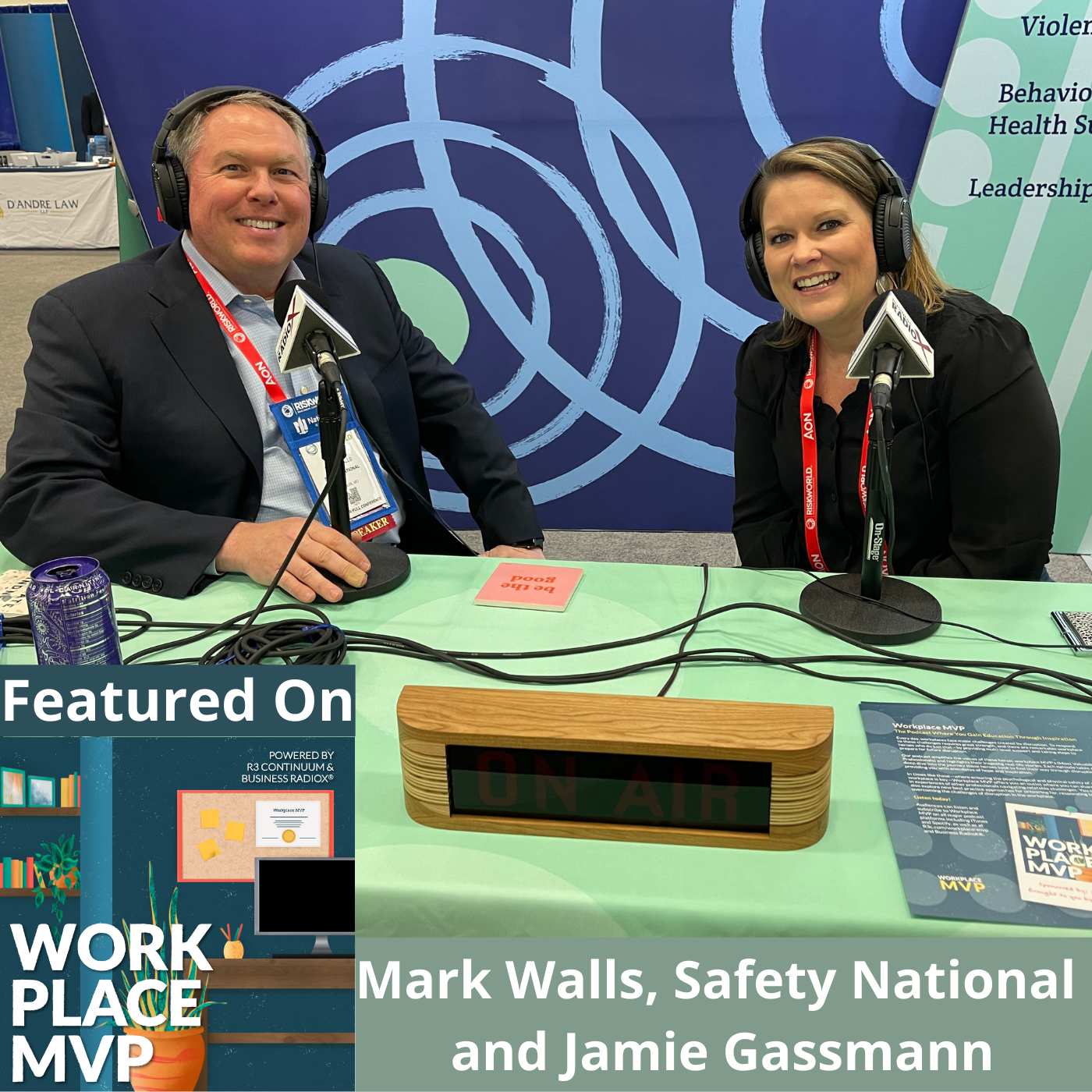
Mark Walls, Vice President at Safety National, joined host Jamie Gassmann live in the R3 Continuum booth at RISKWORLD 2022. Not only was Safety National an exhibitor, but Mark also led a public entity session, the only one of its kind at RISKWORLD. He discussed some of the unique challenges public entities face, what he hoped participants would take away from the session, and more.

Workplace MVP is underwritten and presented by R3 Continuum and produced by the Minneapolis-St.Paul Studio of Business RadioX®.

This show was originally broadcast from the RIMS 2022 RISKWORLD Conference held at the Moscone Center in San Francisco, California.

Mark Walls, VP, Communications and Strategic Analysis, Safety National

Mark Walls, VP, Communications and Strategic Analysis, Safety National

Mark Walls is Vice President, Communications and Strategic Analysis, at Safety National. In his capacity with Safety National, Walls leads all thought-leadership activities by combining industry perspective and market intelligence to develop expert content for materials like whitepapers, print and social media, webinars and speaking engagements.

With over 24 years of industry experience, Walls returned to Safety National after spending the last year with Marsh as Workers’ Compensation Market Research Leader. Walls is also the founder of the Work Comp Analysis Group on LinkedIn that, with over 22,000 members, is the largest online discussion community dedicated exclusively to workers’ compensation issues. In addition, Walls is a frequent speaker at industry conferences and is quoted regularly in multiple media outlets.

Walls is based in Safety National’s corporate office in St. Louis, Missouri.

LinkedIn

Safety National

Safety National is a leading specialty insurance and reinsurance provider. Serving thousands of customers nationwide for over 80 years, the Company offers specialized expertise, flexible program and placement design, and unique claims proficiency. Safety National is a member of the Tokio Marine Group and is rated A++ (Superior), FSC XV by A.M. Best. • Top Workplaces, St. Louis Post-Dispatch, 2018, 2020 • Best Places to Work in Insurance, Business Insurance Magazine, 2009, 2011, 2013, 2015, 2017, 2019, 2021

Benefits of Choosing Safety National:

  • Outstanding Ratings: The company is rated A++ (Superior), FSC XV by A.M. Best, and A+ by Standard & Poor’s.
  • Strong Financial Backing: Safety National is a member of the Tokio Marine Group. With nearly $200 billion in assets, Tokio Marine is among the top ten insurance groups in the world and its companies are among the highest-rated.
  • Longevity: Providing service to thousands of customers nationwide since 1942, Safety National can assure you that we will be there when you need us.
  • Customer Service: Safety National is consistently top-rated by broker partners for flexibility and responsiveness.

Company website | LinkedIn

About Workplace MVP

Every day, around the world, organizations of all sizes face disruptive events and situations. Within those workplaces are everyday heroes in human resources, risk management, security, business continuity, and the C-suite. They don’t call themselves heroes though. On the contrary, they simply show up every day, laboring for the well-being of employees in their care, readying the workplace for and planning responses to disruption. This show, Workplace MVP, confers on these heroes the designation they deserve, Workplace MVP (Most Valuable Professionals), and gives them the forum to tell their story. As you hear their experiences, you will learn first-hand, real-life approaches to readying the workplace, responses to crisis situations, and overcoming challenges of disruption. Visit our show archive here.

Workplace MVP Host Jamie Gassmann

Jamie Gassmann, Host, “Workplace MVP”

In addition to serving as the host to the Workplace MVP podcast, Jamie Gassmann is the Director of Marketing at R3 Continuum (R3c). Collectively, she has more than fourteen years of marketing experience. Across her tenure, she has experience working in and with various industries including banking, real estate, retail, crisis management, insurance, business continuity, and more. She holds a Bachelor of Science Degree in Mass Communications with special interest in Advertising and Public Relations and a Master of Business Administration from Paseka School of Business, Minnesota State University.

R3 Continuum

R3 Continuum is a global leader in workplace behavioral health and security solutions. R3c helps ensure the psychological and physical safety of organizations and their people in today’s ever-changing and often unpredictable world. Through their continuum of tailored solutions, including evaluations, crisis response, executive optimization, protective services, and more, they help organizations maintain and cultivate a workplace of wellbeing so that their people can thrive. Learn more about R3c at www.r3c.com.

Company website | LinkedIn | Facebook | Twitter

TRANSCRIPT

Intro: [00:00:03] Broadcasting Live from Riskworld 2022 at the Moscone Center in San Francisco, it’s time for Workplace MVP. Brought to you by R3 Continuum, a global leader in helping workplaces thrive during disruptive times. Now, here’s your host.

Jamie Gassmann: [00:00:22] Hi, everyone. Your host, Jamie Gassmann here, and I am at our podcast sponsor, R3 Continuum’s, booth at Riskworld 2022. And joining me is Mark Walls from Safety National. Welcome, Mark.

Mark Walls: [00:00:35] Welcome. Hello, Jamie. Thank you for having me.

Jamie Gassmann: [00:00:37] Well, it’s a pleasure to have you on the show. So, tell me a little bit about what Safety National does.

Mark Walls: [00:00:43] Safety National is a commercial carrier reinsurer dealing with employers that retain risk, mostly high-deductible self-insurance workers comp, multi lines. We do cyber, a lot of different things, but focused on the commercial casualty line.

Jamie Gassmann: [00:01:00] Wonderful. And so, I know you’re an exhibitor at the show and your booth is like right in the front of the expo hall, so how has it been going for your team here, and conversations, and what’s the energy feel like?

Mark Walls: [00:01:13] It’s just been nice to get out. After two years of not having these events, it’s just been nice to get back in the game again, be out among people again. I think everybody’s really enjoying that.

Jamie Gassmann: [00:01:24] Yeah, I think so, too. I know I’ve been enjoying all of the conversations we’ve been having and the people we’re meeting. I mean, there’s a lot of positive energy, I’m feeling, in the expo hall.

Mark Walls: [00:01:33] Yeah, I would agree. Just everywhere. I mean, the events that I’ve gone to have all been packed, a lot of energy, a lot of enthusiasm. People are just glad to be back in the game.

Jamie Gassmann: [00:01:42] Yes, it definitely is fun to be able to like kind of be amongst like peers in a way, right?

Mark Walls: [00:01:48] Yes, agree.

Jamie Gassmann: [00:01:49] Yes. See people we’ve been seeing on Zoom calls or LinkedIn and social media, going, oh, look at what’s going on in their life, now, we can actually talk about it.

Mark Walls: [00:01:58] Mm-hmm. Agree.

Jamie Gassmann: [00:01:59] Yeah. So, now, you’re a speaker at this year’s conference. Talk to me about what is the topic you’re presenting on?

Mark Walls: [00:02:04] So, tomorrow, I’m leading the public entity industry session. It’s something that I’ve done here at RIMS, as long as I’ve come to RIMS. So, 10-plus years, I’ve led this session and I’ve got Steve Robles from LA County and Kevin Confetti from the University of Chicago helping to lead the discussions. And it’ll be very much a free-form, interactive discussion with the people that show up, talking about the challenges that public entity risk managers are facing and how they’re working through some of those.

Mark Walls: [00:02:33] So, public entity faces some very unique things. Among the things we’ll be talking about is law enforcement liability insurance, and the types of claims, and the size of the claims you’re seeing in that space. Sexual assault, sexual molestation claims, there’s been a lot of changes in legislation around the country impacting that. Another big challenge for public entities is the cyber marketplace. Quite frankly, they’re a huge target for cyber hackers, and because of that, they have a really hard time getting insurance.

Jamie Gassmann: [00:03:07] Wow. Interesting. So, looking at the topic and the panel members, I know you’re having kind of an interactive dialogue, but what are some of the things that you’re hoping that that audience is going to take with them when they leave that session?

Mark Walls: [00:03:21] The goal is to come up with some ideas, some solutions. I mean, everybody knows what the problems are, and there’s a lot of common problems. So, you hope that what you come out of that is a nugget or two around, how have you been able to work around this? What solutions have you found? How are you approaching this? So, that’s the goal with events like this, is to get people together, share ideas, share solutions. If you come away with a nugget or two that helps you solve a problem, you’ve had a successful trip.

Jamie Gassmann: [00:03:52] Yeah, absolutely. It’s almost kind of like an on-show like brainstorming session in a way.

Mark Walls: [00:04:01] It really is. I mean, to me, the thing I’ve missed the most the last two years is the casual collaboration that you have in these events, the opportunities to just have a discussion with people around what’s happening in their world and how they’re dealing with it. And that’s what I try to make this session when we have it, because it’s the only public entity session at the entire conference, and so we want people to come there and just collaborate.

Jamie Gassmann: [00:04:24] Yeah, absolutely. The best part is that human connection where we can learn from each other. So, that’s fantastic. Well, I hope it goes well for you.

Mark Walls: [00:04:33] Thank you. I’m sure it would be amazing.

Jamie Gassmann: [00:04:34] And I absolutely appreciate you being on the show. I know we’ve connected a few times and I kind of pulled your arm, and like, let’s go. So, thank you so much.

Mark Walls: [00:04:41] Well, thank you for having me. I appreciate it very much.

Jamie Gassmann: [00:04:42] Yeah, absolutely. Thanks, Mark.

Mark Walls: [00:04:44] Alright.

Outro: [00:04:49] Thank you for joining us on Workplace MVP. R3 Continuum is a proud sponsor of this show and is delighted to celebrate most valuable professionals who work diligently to secure safe workplaces where employees can thrive.
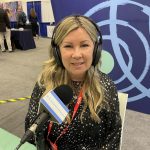


Tagged With: Jamie Gassmann, Mark Walls, public entities, R3 Continuum, RIMS, Risk Management, RISKWORLD 2022, Safety National

LIVE from RISKWORLD 2022: Pamela Bradshaw, Varsity Brands

May 3, 2022 by John Ray

Pamela Bradshaw
Minneapolis St. Paul Studio
LIVE from RISKWORLD 2022: Pamela Bradshaw, Varsity Brands
Loading
00:00 /
RSS Feed
Share
Link
Embed

Download file

Pamela Bradshaw

LIVE from RISKWORLD 2022: Pamela Bradshaw, Varsity Brands

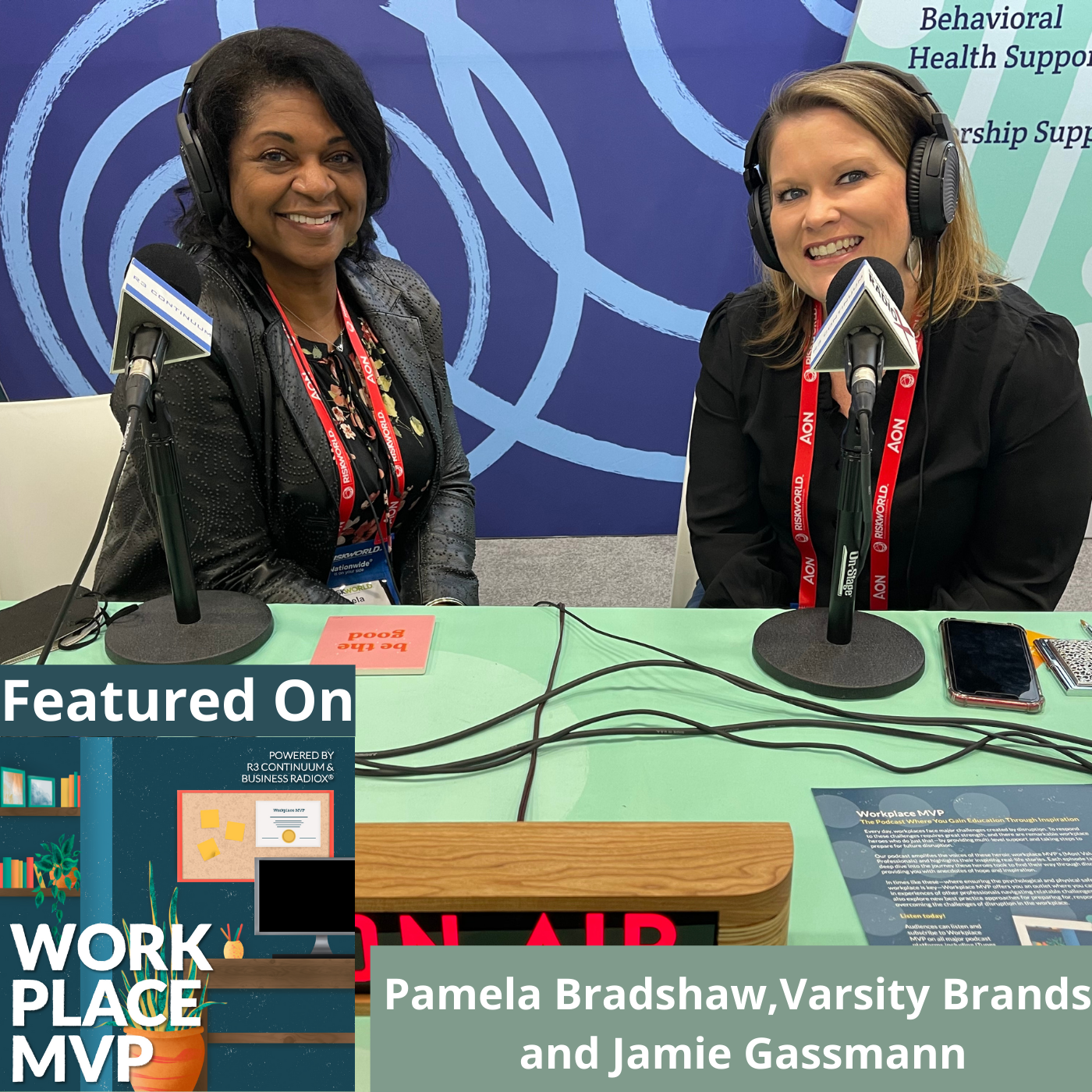
Live from the R3 Continuum booth at RISKWORLD 2022, Pamela Bradshaw, Director of Risk Management at Varsity Brands, stopped by to talk with host Jamie Gassmann. While Pamela has attended numerous RISKWORLD conferences, this was her first with Varsity Brands. She shared the details of her conference presentation, which focused on young risk professionals and bridging knowledge between generations, bringing DEI front and center, encouraging the younger generations to continue creating positive change, and much more.

Workplace MVP is underwritten and presented by R3 Continuum and produced by the Minneapolis-St.Paul Studio of Business RadioX®.

This show was originally broadcast from the RIMS 2022 RISKWORLD Conference held at the Moscone Center in San Francisco, California.

Pamela Bradshaw, Director of Risk Management, Varsity Brands

Pamela Bradshaw, Director of Risk Management, Varsity Brands

Pamela Bradshaw is Director of Risk Management for Varsity Brands and joined the company this year.

She has over 30 years of success and experience in Corporate Claims and Risk Management with public and privately-held organizations in the Retail, Restaurant, Oil/Gas, Manufacturing, Direct Selling, and Insurance industries.

As part of the DFW RIMS Chapter, she had a presentation at RISKWORLD 2022 focused on the next generation and young risk professionals.

LinkedIn


Varsity Brands

Varsity Brands is  BSN Sports, the recognized leader in team athletic gear, Varsity Spirit, the driving force in spirit, and Herff Jones, the most trusted name in celebrating student milestones.

They partner with educators, coaches, and students to build school pride, student engagement, and community spirit.

With a mission to inspire achievement and create memorable experiences for young people, Varsity Brands elevates the student experience, promotes participation and celebrates achievement through three unique but interrelated businesses: BSN SPORTS, a Varsity Sport Brand; Varsity Spirit; and Herff Jones, A Varsity Achievement Brand. Together, these assets promote personal, school, and community pride through their customizable products and programs to elementary and middle schools, high schools, colleges and universities, as well as church organizations, professional and collegiate sports teams, and corporations. Through its dedicated employees and independent representatives, Varsity Brands reaches its individual and institutional customers each year through competitions, camps and sales.

Company website | LinkedIn

About Workplace MVP

Every day, around the world, organizations of all sizes face disruptive events and situations. Within those workplaces are everyday heroes in human resources, risk management, security, business continuity, and the C-suite. They don’t call themselves heroes though. On the contrary, they simply show up every day, laboring for the well-being of employees in their care, readying the workplace for and planning responses to disruption. This show, Workplace MVP, confers on these heroes the designation they deserve, Workplace MVP (Most Valuable Professionals), and gives them the forum to tell their story. As you hear their experiences, you will learn first-hand, real-life approaches to readying the workplace, responses to crisis situations, and overcoming challenges of disruption. Visit our show archive here.

Workplace MVP Host Jamie Gassmann

Jamie Gassmann, Host, “Workplace MVP”

In addition to serving as the host to the Workplace MVP podcast, Jamie Gassmann is the Director of Marketing at R3 Continuum (R3c). Collectively, she has more than fourteen years of marketing experience. Across her tenure, she has experience working in and with various industries including banking, real estate, retail, crisis management, insurance, business continuity, and more. She holds a Bachelor of Science Degree in Mass Communications with special interest in Advertising and Public Relations and a Master of Business Administration from Paseka School of Business, Minnesota State University.

R3 Continuum

R3 Continuum is a global leader in workplace behavioral health and security solutions. R3c helps ensure the psychological and physical safety of organizations and their people in today’s ever-changing and often unpredictable world. Through their continuum of tailored solutions, including evaluations, crisis response, executive optimization, protective services, and more, they help organizations maintain and cultivate a workplace of wellbeing so that their people can thrive. Learn more about R3c at www.r3c.com.

Company website | LinkedIn | Facebook | Twitter

TRANSCRIPT

Intro: [00:00:03] Broadcasting live from Riskworld 2022 at the Moscone Center in San Francisco, it’s time for Workplace MVP. Brought to you by R3 Continuum, a global leader in helping workplaces thrive during disruptive times. Now, here’s your host.

Jamie Gassmann: [00:00:22] Hi, everyone. Your host, Jamie Gassmann here, broadcasting to you from Riskworld 2022 at the R3 Continuum booth. And joining me is Pamela Bradshaw from Varsity Brands. Welcome, Pamela.

Pamela Bradshaw: [00:00:35] Thank you. Thank you for having me.

Jamie Gassmann: [00:00:37] So, tell us a little bit about what Varsity Brands does.

Pamela Bradshaw: [00:00:40] Yes. Varsity Brands is based in Farmers Branch, Texas, which is Dallas, Texas, comprised of three corporations. BSN Sports, which you’ve seen all the high school and collegiate sports, whether it’s football, basketball, tennis uniforms. We do the apparel as well as distribution and sales. Another company is called Varsity Spirit, and you’ve heard of cheerleaders, so you have the cheerleading competition, dance competitions, and all the products related to that for sales. And, also, Herff Jones. Herff Jones is an older company of Varsity Brands. I know you’ve seen all the class rings, and diplomas, and cap and gowns, and so we manufacture those as well.

Jamie Gassmann: [00:01:19] Wonderful. And so, what is your role at Varsity Brands? What do you do for them?

Pamela Bradshaw: [00:01:24] Sure. I am the Director of Risk Management. I oversee all the procurement for all the insurance programs, the insurance renewals, oversee the claims, also oversee anything related to risk control. And I’m new to the company I just joined the company actually a couple of weeks ago.

Jamie Gassmann: [00:01:38] Oh, wonderful. So, is this the first time you’ve been to RIMS or have you come a couple of times?

Pamela Bradshaw: [00:01:42] Actually, gosh, I’ve been in the industry over 35 years, so I’ve been at least 10 or 15 RIMS conferences. And this has been, of course, the first for a lot of us due to the pandemic in the last two years. So, happy to be here.

Jamie Gassmann: [00:01:54] Wonderful. I know we’re in day two of it, but how’s it been going for you so far in terms of sessions and other things that you’ve been sitting through?

Pamela Bradshaw: [00:02:01] So far busy meeting with our broker. I have another meeting after this, as a matter of fact. But highlighting my session today, that’s the main reason why I’m here is for the session that I’m a part of. I’m part of the DFW RIMS Chapter, and I submitted a session regarding our next generation in the upcoming risk professional, the minority perspective. And so, that’s today at 1:30 p.m. in Room 205, so a little plug there.

Jamie Gassmann: [00:02:28] Yeah. Absolutely. And so, tell me a little bit about what are some of the things you’re going to be covering in that presentation and talking about?

Pamela Bradshaw: [00:02:33] Sure. I have a panelist – actually, there’s three panelists of young risk professionals. We really want to focus on how the next generation sort of can bridge the gap. As I mentioned before, a lot of us who have been in the industry for some time, we noticed that there’s a gap over the years in terms of training as far as developing the young professional so that they can take on the jobs and responsibilities that we have in their organizations from a risk perspective.

Pamela Bradshaw: [00:03:02] And specifically for the minority, I do have a panelist as an Asian-American, I have an African American male, I also have a black female, she’s actually South African. And so, we want to make sure that they feel included from a DEI perspective. I think that a lot of companies toot their horn on being inclusive and also being a DEI corporation, but we’re noticing there’s not enough action in making sure that there’s representation of these individuals. And so, that’s the focus.

Jamie Gassmann: [00:03:32] That’s fantastic. So, it’s not just words that are being spoken, but actually putting something into motion that’s going to help to kind of address building that program from an inclusive perspective.

Pamela Bradshaw: [00:03:42] Absolutely.

Jamie Gassmann: [00:03:42] And in a way, the presentation sounds like you’re kind of helping them to establish that legacy of professionals that’ll be coming up the chain of command. That’s incredible.

Pamela Bradshaw: [00:03:52] Absolutely. We see in our industry a lot of retirements. And due to, of course, the migration, if you will, great resignation, if you will, what’s happening post-pandemic, it’s very, very vital that we make sure that our industry survives, not just from the technical piece of it, but just the equality from equal pay, from making sure that we’re in the room, making sure that that glass ceiling is not concrete.

Pamela Bradshaw: [00:04:20] So, we want to make sure they understand that they can and achieve anything they want to achieve in this industry, just as we have. It’s just that we were a little bit shy about it from being a black female. In particular, we were quite a bit shy coming up and fearful that there would be retaliation if we spoke up.

Pamela Bradshaw: [00:04:39] I think this generation, the generations coming up, the millennials and the Gen X, Y and Z, they’re speaking out. And I think it’s fair to say that because of their voices being heard, the companies are now understanding because they are the consumer and the buyer, not just from risk management for all industries, but it’s important that we listen and make sure that we listen to them.

Jamie Gassmann: [00:05:01] Absolutely. And there’s so much value in having a very diverse work environment. I mean, there’s so many perspectives that different individuals can bring to a conversation, even business decisions.

Pamela Bradshaw: [00:05:12] Absolutely.

Jamie Gassmann: [00:05:12] That, you know, if just one mind and one approach, you’re losing an opportunity for some comprehensive, more integrated approaches that can actually strengthen your business’s outcome. So, that’s fantastic.

Pamela Bradshaw: [00:05:25] And ultimately increase sales, because your reach is a lot farther than if you just stay a homogeneous product, your reach is definitely a lot farther. And the ideas that come again from, not just the the younger generation, but from a cultural standpoint you’re reaching is just so much further to the audience and to the ultimate consumer.

Jamie Gassmann: [00:05:44] Yeah. Well, and your employees perform better when they feel like they have inclusive leadership, when they feel like they have a leader that wants to take that time to understand what makes them tick as a human. And tapping into some of those perspectives and strengths that they have.

Jamie Gassmann: [00:06:02] I love that your presentation is creating empowerment is the word that’s coming to my mind as I’m listening to you. Empowering people to let your voice be heard and bring your story to the leaders at your organization. So, that’s fantastic.

Pamela Bradshaw: [00:06:15] Absolutely. And I’m excited. I think that there’s quite a few young professionals here in the risk industry, and so they’re eager. They want to learn. They’re ready to learn. And we have to be responsive to that.

Jamie Gassmann: [00:06:29] Yeah. So, I always ask my guests that are speakers the three takeaways that you want that audience to be left with that when they walk out of that room after hearing that panel, what would they be?

Pamela Bradshaw: [00:06:42] I would say, number one, that we hear you. Number two, that we are learning to understand you. I think as a seasoned professional, we have a tendency to think that we know it all and that we’ve learned so much that we can’t quite see the fact that the younger ones, we can learn just as much from them as we do from each other as seasoned risk professionals. And then, I would say, the speak up, speak out. Continue to do that, because I truly believe the next generation, they are going to change the world and they’re going to change the way that we do business.

Pamela Bradshaw: [00:07:18] Especially post-pandemic, things are not going to be the same. I think we need to get over that. They’re not going to be the same. And so, how do we develop a new normal, a new way of thinking, and the younger generations are definitely showing us and telling us that they’re willing, ready, and able to do that.

Jamie Gassmann: [00:07:37] That sounds like a wonderful presentation. I wish you luck. I hope it goes well. I’m sure it will. Just hearing the topic and how you’re presenting it here on the show, I know you’re going do a fantastic job.

Pamela Bradshaw: [00:07:47] Thank you so much. And I appreciate your time for having me.

Jamie Gassmann: [00:07:51] Absolutely. Thanks for being a guest.

Pamela Bradshaw: [00:07:53] You’re welcome. Thank you.

Outro: [00:07:57] Thank you for joining us on Workplace MVP. R3 Continuum is a proud sponsor of this show, and is delighted to celebrate most valuable professionals who work diligently to secure safe workplaces where employees can thrive.
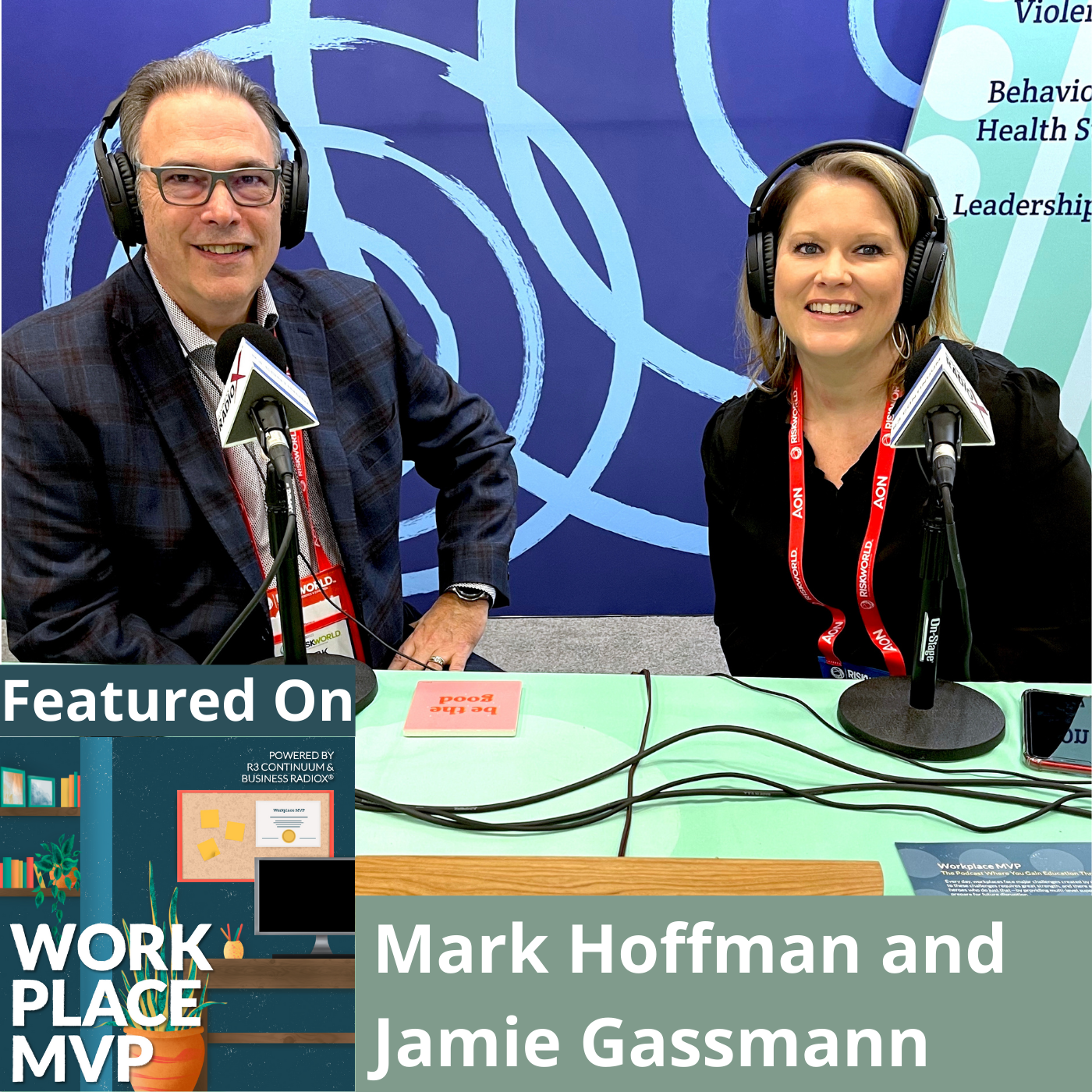
 

Tagged With: DEI, Jamie Gassmann, Pamela Bradshaw, R3 Continuum, Risk Management, RISKWORLD 2022, Varsity Brands

Doing Good in Arizona E22

July 21, 2021 by angishields

Doing-Good-in-Arizona-E22
Phoenix Business Radio
Doing Good in Arizona E22
Loading
00:00 /
RSS Feed
Share
Link
Embed

Download file

Doing-Good-in-Arizona-E22-top

Doing Good in Arizona E22

Culture, business as a force for good, giving back, higher purpose, and small business were all topics of discussion on this episode of Collaborative Connections Radio Show and Podcast.

Host, Kelly Lorenzen, was joined on-air by Arizona business leaders, Bob Blum, founder of Alcyon Consulting, Kindra Maples with Conscious Capitalism Arizona, and Sara Kelley with Bell Insurance.

Are you a business owner or leader in Arizona? Need more resources to grow your business? Want to know more about how to use business as a force for good? Then check out this great conversation between Kelly and her featured guests.

Thank you, KLM Consulting, Marketing and Management for sponsoring this show.

Alcyon Consulting can help you in two ways…Financial & Business Operations Management and Business Consulting & Advisory Services. With Alcyon’s financial and business operations support, you can shift the burden of managing and overseeing those necessary, but non revenue generating activities, to a professional who has the passion, experience, and training to assess, manage and improve your company’s business infrastructure thus freeing you to focus on generating revenue and building the business. alcyonlogofinal002

If you are looking for a fresh set of eyes to review and analyze any or all aspects of your business…from financial statements to fraud prevention, then Alcyon’s Business Consulting & Advisory Services could be the answer.

As an Accredited Small Business Consultant (ASBC), Bob and Alcyon utilize a proprietary approach to review and analyze your business, and along with its broad business partner network, Alcyon will not be able to not only make solid recommendations for improvements, but will be able to identify, vet and implement the right solution.

Bob-BlumBob Blum leverages over 35 years of extensive and varied experience, in both staff and leadership roles, helping companies build and maintain stable business operations by focusing on maximizing both financial and human assets.

These roles include Principal and Chief Financial Officer for Peerless Candy & Tobacco Company, Senior Human Resource Consultant for Peoples Energy Corporation, Controller for Ben Brooks & Associates, Controller for Incentive Logic, and most recently CFO for MAC6.

Bob is a Certified Public Accountant (CPA), an Accredited Small Business Consultant (ASBC), a Lean Six Sigma Green Belt and has a Bachelor’s in Business Administration from Ohio University. In addition, Bob earned a Master’s in Human Resources, with a specialization in Organization Development, from Loyola University in Chicago.

Connect with Bob on LinkedIn.

Free enterprise capitalism has served to lift more people out of poverty than any other socio-economic system ever conceived – empowering social cooperation, human progress, and elevating humanity.

Good business is the answer to many of the global issues that humankind is facing.

For too long, capitalism in the media has been associated with lying, cheating, manipulating, gaming the system, and taking advantage of society.

But for every horror story being told about the selfishness of corporate America and Wall Street, there are thousands of stories of businesses supporting their communities, investing in their employees, and making the world a better place.

We are working to change the capitalism narrative by shining a bright light on good business – telling the stories of conscious Arizona companies (and encouraging others to follow in their footsteps).

Kindra-MaplesThere is a lot in her background that has led Kindra Maples to where she is today.

Her past experiences, interactions, careers, and partnerships have led her to growing the roles she holds in the community; the VP of Volunteers with Conscious Capitalism Arizona, Sales Development with YellowBird, and the host of the Culture Crush Business Podcast.

She is spartan racer, past animal trainer, previous magician’s assistant, and has a weakness for Oreo cookie shakes. Her journey working with people actually started working with animals as a teenager (don’t worry we won’t go that far back for her bio).

She worked for over 15 years in the zoo industry working with animals and the public. Her passion of working with animals shifted into working with people in education, operations and leadership roles. From there her passion of leadership and helping people develop has continued to grow.

Her experience in non-profit operations, communications, and program engagement has brought her to the place she is today. Her experiences have built her passion and her “why” in areas of culture building, engagement, and growing strong teams.

Connect with Kindra on LinkedIn and follow Conscious Capitalism Arizona on Facebook, Twitter and Instagram.

Bell Insurance is one of the largest independently owned, full-service agencies. They’ve worked in insurance for more than 100 years, giving them unparalleled experience and expertise on policies designed to serve you, your family and your business in the best way possible. BellInsuranceLogo

in 1911 as Warner and Company Insurance in Fargo, N.D., they became Bell Insurance in 2019 when they joined forces with Bell Bank, one of the largest independently owned banks in the nation.

Bell is known for exceptional service and high integrity, where people matter, which shows in how their team members treat each other, their customers and those around them.

They understand one of your biggest challenges is managing around the things you can’t control. They can help you by building an insurance plan based on what you need to address the unique risks your operation faces.

By getting to know you and your business and working with you to figure out an insurance policy that gives you the right coverage at the best rate, they’ll help you protect what you’ve worked so hard to build.

Whether you need small business insurance or coverage for a large, niche operation, they’ll help you protect what matters with commercial insurance coverage options in your best interest, competitive pricing, stress-free claims, and the high-quality service you can expect from Bell.

Sara-KelleySara Kelley has over 20 years of experience serving clients in a risk management capacity. She started her insurance career in Chicago, IL with the world’s largest insurance brokerage firm and moved with them to the Phoenix market. Since being in Arizona, Mrs. Kelley has developed her expertise to serve the businesses that thrive in the Valley of the Sun.

Sara specializes in property and casualty insurance and risk management for a variety of industries including Healthcare, Social Services, and Non Profits, as well as Indian Nations, contractors, manufacturers, and many other businesses. Sara provides clients with insurance solutions for various insurable risks.

For Insureds, Sara Kelley delivers risk and policy coverage reviews that focus on your firm’s expense reduction, cash-flow improvement, balance sheet protection, and decision-making insight.

Connect with Sara on LinkedIn.

About Collaborative Connections

Kelly Lorenzen started the “Collaborative Connections” show to bring her clients and favorite charities together to meet each other, connect and collaborate in life and business.  She hopes to build a stronger community one show at a time. KLM Consulting

About Our Sponsor

KLM Consulting is a business concierge and project management firm. They help small business owners and non-profits build, brand and brag about their businesses.

About Your Host

Kelly-Lorenzen-on-Phoenix-Business-RadioXKelly Lorenzen, CEO of KLM Consulting, is an award-winning entrepreneur with over 15 years of business-ownership experience. She is also a certified project management professional.
Kelly’s expertise is in business development, customer service, marketing, and sales.

Connect with Kelly on LinkedIn, and follow KLM Consulting on Facebook.

Tagged With: casualty, commercial insurance, Conscious Capitalism, Leadership, Property, Risk Management

Workplace MVP: Andy Davis, Trident Manor Limited

May 20, 2021 by John Ray

Trident Manor Limited
Minneapolis St. Paul Studio
Workplace MVP: Andy Davis, Trident Manor Limited
Loading
00:00 /
RSS Feed
Share
Link
Embed

Download file

Trident Manor Limited

Workplace MVP: Andy Davis, Trident Manor Limited

Andy Davis, Founder of Trident Manor Limited, brings extensive global experience to his work in risk management and security consulting for organizations.  He joined host Jamie Gassmann to offer perspective on the scope of cyber threats, share tips for mitigating workplace violence, address the particular personal safety concerns for women traveling, and much more. Workplace MVP” is underwritten and presented by R3 Continuum and produced by the Minneapolis-St.Paul Studio of Business RadioX®.

Andy Davis, CEO, Managing Director, Trident Manor Limited

Trident Manor Limited
Andy Davis, CEO, Trident Manor Limited

Andy Davis is an international security, risk, and crisis management expert based in the United Kingdom. Following time spent undertaking investigative and intelligence activities within British security organizations. Andy joined the UK foreign service as a security risk management specialist responsible for the protection of embassies, personnel, families, and information. This took him around the world and in charge of all security activities in countries such as Uganda, Colombia, Saudi Arabia, and Pakistan.

Following a commercial job offer he joined the corporate world as the Head of Security (Safety & Insurance) for a Middle Eastern organization with assets of over $40 billion. This involved strategic oversight of all security and safety activities, designing and implementation of protective policies and the development of collaborative emergency and crisis management plans requiring engagement with emergency services, the intelligence community, and government officials.

In 2013 Andy left the corporate world and established Trident Manor Limited as a specialist security, risk, and crisis management consultancy dedicated to supporting others from individuals through to global organizations in the protection of their assets. He has operated in over 30 countries delivering advice and guidance and has responded to crisis situations where deployments into crisis situations have taken place to protect client’s operations and assets.

In 2020 during the COVID crisis, he devoted time, effort, and energy to create Trident Manor Training Academy which provides specialist training programs that concentrate on the protection of individuals, the protection of staff, and the protection of organizational assets, including their reputation.

He holds a Master of Science degree in security and risk management, is board certified by ASIS International and CPP (Certified Protection Professional), he is a Chartered security professional, a Fellow of the Security institute and chairs a number of professional safety and security organizations.

Andy is passionate about supporting cultural and heritage organizations as well as those humanitarian organizations that operate in difficult or hostile environments. He lectures around the world and has written numerous articles for professional or trade magazines.

LinkedIn

Trident Manor Limited

Trident Manor Limited was established in 2013 to offer clients, irrespective of their size, professional security, risk, and crisis management services anywhere in the world.

As with the trident the company offers three distinctive service strands, the consultancy, the education and training, and protective services.

Consultancy

The consultancy services offered have included undertaking strategic and operational reviews for organizations to assess the threats, risks, and vulnerabilities they may be exposed to. Once identified solutions are provided to manage and mitigate the threats and the risks that exist. Where vulnerabilities are identified ways of mitigating them are introduced. These assessments have involved evaluations from a wide range of threat sources such as terrorism, organized crime, espionage, riots and open conflict, and the often-forgotten threat ‘the insider’.

Once threats have been identified Trident Manor has supported organizations in creating robust and resilient policies, practices and procedures that provide organizational direction, reduce risks and address duty of care responsibilities.
Within the consultancy services is a specialist team responsible for ‘Corporate Research’ activities. This is a term used to describe our business investigative and intelligence services that have been used by global clients to assess threats to staff in Venezuela, operational issues in Mexico, threats from organized crime in Hungary, and in January 2020 the threat from a pandemic that was spreading from Wuhan.
The consultancy services are bespoke for a client’s needs and driven by what is most beneficial for the client, not profit margins. The sensible and pragmatic approach, alongside their discretion is respected by many individuals and organizations alike.

Training

Trident Manor has provided training to organizations around the world. It has been responsible for the creation of many bespoke programs that are sector or organization specific. The primary focus has been on the protection of individuals through the creation of personal safety and security programs, workplace violence, travel risk management, and operating in difficult environment programs.

In addition, the professionalization of individuals engaged in the cultural, hospitality, and retail sectors has been delivered through the implementation of programs such as proactive risk reduction, conflict avoidance, situational awareness and surveillance detection. Specialist driving, first aid, surveillance/counter-surveillance, and intelligence have also been developed to support the individual and the organizations they work for.

Finally, training programs aimed at the senior management and organizational level have been created and include emergency response scenario-based exercise, tabletop crisis management activities, through to full-scale collaborative exercises designed to test integrated response.

Protective Services

The protective services offered by Trident Manor include concierge staff, executive protection officers, security drivers, embedded security managers, and high-value escort services. One of the more recent protective services offered by Trident Manor is the e=protection services. This is where analysts collect and collate data from electronic sources that relate to clients or client activities before it is processed into actionable intelligence that can proactively prevent threats from impacting a client. This service is ideal for C-Suite members, those in sensitive positions, or the organization itself.

Whatever services a client requires Trident Manor has the global resources to help with “Enabling the Protection of Assets” – their motto since 2013.

Company website | Facebook | Instagram

 About “Workplace MVP”

Every day, around the world, organizations of all sizes face disruptive events and situations. Within those workplaces are everyday heroes in human resources, risk management, security, business continuity, and the C-suite. They don’t call themselves heroes though. On the contrary, they simply show up every day, laboring for the well-being of employees in their care, readying the workplace for and planning responses to disruption. This show, “Workplace MVP,” confers on these heroes the designation they deserve, Workplace MVP (Most Valuable Professionals), and gives them the forum to tell their story. As you hear their experiences, you will learn first-hand, real life approaches to readying the workplace, responses to crisis situations, and overcoming challenges of disruption. Visit our show archive here.

“Workplace MVP” Host Jamie Gassmann

In addition to serving as the host to the Workplace MVP podcast, Jamie Gassmann is the Director of Marketing at R3 Continuum (R3c). Collectively, she has more than fourteen years of marketing experience. Across her tenure, she has experience working in and with various industries including banking, real estate, retail, crisis management, insurance, business continuity, and more. She holds a Bachelor of Science Degree in Mass Communications with special interest in Advertising and Public Relations and a Master of Business Administration from Paseka School of Business, Minnesota State University.
 

TRANSCRIPT

Intro: [00:00:04] Broadcasting from the Business RadioX Studios, it’s time for Workplace MVP. Workplace MVP is brought to you by R3 Continuum, a global leader in workplace behavioral health and security solutions. Now, here’s your host, Jamie Gassmann.

Jamie Gassmann: [00:00:26] Hi, everyone. Your host, Jamie Gassmann here. And welcome to this edition of Workplace MVP. The Workplace MVP we will be celebrating today brings expertise in an area that can be helpful, both personally and professionally. With us today to share his wisdom and knowledge regarding safety and security and crisis management is Owner and Managing Director at Trident Manor Limited, Andy Davis. Welcome to the show, Andy. And thank you for joining us today.

Andy Davis: [00:00:54] Thanks very much, Jamie. It’s a great pleasure.

Jamie Gassmann: [00:00:58] So, before we dive into today’s topic, can you tell me a little bit about yourself and your career journey?

Andy Davis: [00:01:05] Well, I suppose, as your listeners will identify, I’m from the UK. And I’ve been involved in security and risk management most of my adult career. That include the time in the British Military, where I was involved in intelligence activities and security management. In the police service in the UK, where I was a detective and led a team of investigators and, finally, undertaken intelligence activities. And then, ultimately, I joined the Foreign Service and I did roles equivalent to your RS or Regional Security officers, and that took me to Uganda, Colombia, working in Venezuela, Guyana, Panama, Saudi Arabia, throughout the Middle East and Pakistan.

Andy Davis: [00:02:01] Eventually, I entered the corporate world in the UAE, the United Arab Emirates, where I took a position as the corporate head of security. And then, in 2013, I established Trident Manor, which is my own security risk management consultancy.

Jamie Gassmann: [00:02:19] Great. Wow, what a journey you’ve had with your career. So, you recently held a free virtual event that was focused on personal safety and security for women. Can you tell us about that event and why it was important to you?

Andy Davis: [00:02:34] Well, throughout my career, personal safety and security has always been important, whether it’s my own personal safety and security or that’s looking after and caring for other third parties, whether it was diplomats, diplomatic wives, et cetera. And sometimes that was in difficult and hostile environments. This event that I held followed the kidnap and murder of a young female in London by a police officer who has been charged. And there was a lot of outcry, a lot of concern on social media, on mainstream media about the safety of women.

Andy Davis: [00:03:17] And so, what I volunteered to do as an individual, as opposed to Trident Manor, was to hold this event where some of the realities could be shared about, certainly in the UK, the levels of crime, but also victimization shown in identifying that lots of attacks on female was carried out by partners or people who they knew. And, actually, percentage wise, there was a small amount that was by strangers. But it’s primarily the strangers that caused the fear because they are the unknown.

Andy Davis: [00:03:54] Then, it went through a whole series of trying to give advice and guidance that would help everybody. And in this case, it was particularly aimed at females going about their daily lives, whether they’d be socializing, in the workplace, or actually travelling overseas. So, we give that presentation. It was well received. There was over 250, I think, on the call from around the world. And we’ve since actually uploaded that again, free of charge, so that anybody can see and share them.

Jamie Gassmann: [00:04:27] Great. That sounds like it was a well-attended event or a well-received event because I’m sure the information you shared was very helpful for that audience.

Andy Davis: [00:04:37] Yeah. I mean, it is important from the sense of the reality versus perception. But, also, the vulnerability of females. And the idea was, hopefully, to give them some confidence in actually ways of avoiding some of the dangers themselves. So, proactive prevention rather than reacting to an incident. Because then, if you can avoid an incident, there’s a great likelihood that you’re not going to be hurt.

Jamie Gassmann: [00:05:07] Right. So, now, looking at organizations, what are you seeing as main concerns for them and their security in this current work environment? You know, what are some of the things that you’re noticing in the work that you do?

Andy Davis: [00:05:24] Well, I think around the world, globally, cyber is the biggest threat. It’s impacting all organizations. I mean, there’s just been the attack on the pipeline that’s happened on the East Coast of the USA. Look at hundreds of millions of dollars worth of impact that must have had. But that happens to individuals. It happens to organizations. And it happens on a daily basis.

Andy Davis: [00:05:58] There were some statistics that came out and actually showed that, on average in the UK, every individual is attacked once every seven minutes. Which if you think about, that’s statistically looking at people. So, cyber is a constant and it’s there because it’s information that the companies need to operate and to function correctly. There are other threats. There has been an increase in protests, the protests of directly impacted retail, hospitality, museums, public services. But the primary threat that I see at the moment globally is from cyber.

Jamie Gassmann: [00:06:49] So, you shared with me in a previous conversation that protection is primarily about common sense. Can you elaborate on this and what that means to a workplace leader?

Andy Davis: [00:07:01] Well, I mean, you said to workplace leader, and really it’s to everybody. And one of the things that we really talk about as being a cornerstone of personal safety is situational awareness. And part of situational awareness is actually engaging with your brain, engaging with your senses. The common sense, when we look at security protection, if people just actually stopped and thought about what they’re doing, stopped and thought about what risks there are, and stopped and thought, “Why am I putting myself in danger? Why don’t I avoid it?”

Andy Davis: [00:07:41] It’s common sense from a security practitioner’s point of view. We look at things exactly the same. We look at things from a common sense approach. Good security, when we talk about good security, it’s not good cheap where you have the most expensive technical systems and the biggest barrier and the concrete walls. It’s where those of us need to continue with our lives, our business need to operate, and it’s adopting a common sense approach. Common sense approach is understand what risks exist for you and your business. And taking proportionate steps to actually manage those risks so you can continue to operate, to function, and create money or to make money. But at the same time, avoid unnecessary risks that exist.

Andy Davis: [00:08:29] Somebody asked me years ago, “Well, okay. What skillsets do you need for security?” And I said, “Ninety to 95 percent of it is common sense. Seven percent, you know, is that special skills.” And then, there’s always that element that’s still needed to avoid security situations. We can’t dictate what happens out there. But when you look at a new introduced security plans and measures, I still think that sounds and remain true to this day.

Jamie Gassmann: [00:09:14] Great. And I know you mentioned cyber attacks as being kind of a main concern right now and brought up some of the protests, which kind of lead a little bit more into this next question that I have for you. When looking at leaders, you know, when they’re asked about workplace violence, they often refer to, like, active shooter scenarios. Which, I know recently here in the States, we’ve had kind of a stream of them that have been occurring. But you indicated that there is a softer side of protection that workplace leaders need to be considering as well. So, in your opinion, what does that look like and why is it so important for business leaders to also stay aware and prepare for that softer side of violence in their organization?

Andy Davis: [00:10:06] Yeah. I mean, obviously, in the United States, the active shooter is a real concern and should always be a part of any active shooter program that the organization implements. But, equally, that’s the same wherever there is a prevalence of firearms or, as I said right at the start or what I said in your previous question, understanding the risks.

Andy Davis: [00:10:29] So, in your workplace, it’s important to understand the risks that exist. And this is part of the softer side. The softer side isn’t, don’t use a sledgehammer to smash a nut when you can have a nice delicate pair of nutcrackers there. Think about the cost as well, the nutcracker is far cheaper than the sledgehammer.

Andy Davis: [00:10:50] But when you look at a workplace, there are so many different parameters and so many different factors that can impact your work colleagues. Lots of violence occurs, violence, intimidation, harassment, whether it be sexual, whether it be through race. There are a lot of violence that many people don’t automatically identify as being workplace violence. But by fact, they are. Because violence is something that causes harm. Harm doesn’t have to be physical harm. It can also be that mental harm that somebody suffers. So, somebody being abusive, the constant name calling, these are softer sides, much softer than somebody pointing a gun.

Andy Davis: [00:11:37] But the impact of them could actually be equal. Because somebody through being bullied, somebody through intimidation, could suffer mental harm and anguish. Which, obviously, from a workplace perspective, could impact their effectiveness, their morale, the whole team’s morale. But, ultimately, it could cause somebody to commit suicide.

Andy Davis: [00:12:01] So, when we talk about softer skills, it’s things like what governors do you have in place to minimize harassment, to minimize bullying? What procedures do you have in place to have everybody take part in security? And by that, I mean, is everybody aware of how to open and close and make sure barriers exist if there’s a public/private interface? Softer sides include making sure that you have the necessary skills, training, and organizational resilience to deal with acts of violence that may come.

Andy Davis: [00:12:46] But we talk about workplace violence, here in the UK, lots of the drive that we do is towards that proactive prevention, that I mentioned earlier. So, it’s understandable situational awareness. Remember, your workplace isn’t necessarily a fixed location. Nowadays, with the smaller corporate world, your workplace could be here one day, in the U.S. one day, in the UK another day, across in Australia the next day. Technically, each of them becomes a workplace.

Andy Davis: [00:13:22] As an organization, what thoughts are being put in place to protect your staff while they’re travelling from location to location? Is the organization aware of what risks exist? Is there a terrorist threat? Is there a threat from protesters? What about environmental threats? Are you going into hurricane season, monsoon season, or is the risk of a tsunami? So, all of these sort of things, the naturally occurring incident threats don’t actually impact workplace violence because violence is arbitrarily enacted.

Andy Davis: [00:13:58] But if you think about it, it all revolves around the organization taking the time to assess and understand the risks. Making sure that they’ve got the good governance in place to manage the risk that they have. Provide training and resources that’s needed wherever their staff are working. I hope that answers.

Jamie Gassmann: [00:14:19] It does. And it kind of leads into my next question. So, in looking at protection, whether it’s for kind of that harder side of violence or softer side of violence, you indicated that one of the best weapons that an organization might have in helping to protect that in their workplace is communication. Can you talk a little bit around how communication can play a huge factor in being a protective agent within a workplace?

Andy Davis: [00:14:48] Yes. So, there’s a number of strands to this. So, if we take organizationally, communication, senior management really need to communicate. They need the organization to understand their approach to protection, to workplace violence, to threat, and risk management. That has to be communicated somehow. If it’s a 50 page document, nobody’s going to read it. If it’s either brief in a team talk in a town hall, that involves communicating. That might involve verbal communication or it might be through audio-visual communication, so creating of presentations. That’s important because it provides the direction and the parameters of acceptable behavior within an organization.

Andy Davis: [00:15:41] When we look at personal safety and security, communication is vital. And communication, again, isn’t just the spoken word, it’s the listening. And this doesn’t necessarily just apply in the workplace. This can apply in the streets, when you’re on holiday, when you’re socializing, or in the cinema. So, when we look at communication skills and the importance of them, our hearing, the vast majority of our communication should be through listening. I think my wife says I never listen – but I do lots of things and say lots of things.

Andy Davis: [00:16:17] But the listening aspect is important because it’s only through listening that you can either hear some complaints, you can hear if any problems occurred. You can hear from a personal point of view if somebody’s voice is increasing. Because if it’s increasing all of a sudden, you realize that isn’t normal. But you can only do that if you listen. And with listening, it’s also paying attention. So, listening is a vital communication skill because it helps you process the situation and it’s directly linked to situational awareness because you’re using your senses to assess and evaluate what the situation is presenting itself. So, the listening skill is important.

Andy Davis: [00:17:05] The verbal communication is important to an organization. You want that free flow of information. You want people to be able to share their concerns either in the direct workplace or if they’re traveling. Because it’s only through sharing that information that you’re going to increase the levels of knowledge and understanding by the organization. When you increase the levels of knowledge and understanding, you’re able to take steps to actually manage and mitigate those risks that exist.

Andy Davis: [00:17:37] But as an individual, verbal communication is really important because it’s a double edged sword. “How I see things” has a totally different meaning to “I’m ever so sorry. I didn’t understand what was being said there.” How you communicate can actually be a violence accelerator or it can be a calming, soothing activity.

Andy Davis: [00:18:09] The only new element of communication that I would like to say is nonverbal communications. They really, really are important because nonverbal communications help you read and interpret. It lets your brain function and identify potential triggers. So, if somebody is angry – and I always show a slide of the amazing Hulk turning green – wouldn’t it be wonderful if we knew somebody was going to be violent they turned green? We really could avoid them.

Andy Davis: [00:18:40] Life isn’t that simple, but there are still certain violence indicators that people can be aware of that they can see. So, the clenching of fists, the pinpointing of pupils, the stare, the heavy breathing, the stance. All of these things, little nonverbal communication skills. But if you can understand them, you can interpret that and say there is potential for harm. If you can identify a potential for harm, you can actually extract yourself and avoid the situation.

Jamie Gassmann: [00:19:12] Great. So, for business leaders and people in general, what are some things that maybe they’re not thinking about that, in your opinion, they should be, and should be thinking about probably even more so now, when it comes to personal security and safety that you would like to share?

Andy Davis: [00:19:34] Yeah. Well, I said it earlier, the cornerstone for me of personal safety and security is situational awareness. You know, if you can read and identify what’s happening around you. Is there an argument taking place? Can I smell burning? If you smell burning, what does that imply? Are you in a forest fire or is it a case of somebody has burned some food? But using your senses and actually being situationally aware is really, really a paramount importance in personal safety and security.

Andy Davis: [00:20:14] I mean, there are many other things where we talk about business leaders. The communication aspect, keeping that flowing and keeping it fluid, understanding, listening, making sure that their policies are such that people can reach out. Because what you want is, you want people to help support the protection of the business. The more they can protect the business, the greater the business is going to be.

Andy Davis: [00:20:39] So, why wouldn’t you go that extra mile to actually give the tools and help support them to help you protect your business? So, making sure that you have policies for – I don’t know what the term is in American – whistleblowing. You know, is there a whistleblowing policy? Is there a health and safety policy? Are there grievance procedures?

Andy Davis: [00:21:04] And these might seem, “Hold on. These are H.R. issues. What do they have to do with security?” Well, security is all about protecting assets. It’s about protecting people from loss, harm, or damage. It’s about protecting assets. And it’s also about protecting reputations. A business needs to protect its people, its assets, and its reputation to flourish. And so, therefore, everybody has a part to play in security. And, really, the organization got a great way to help.

Jamie Gassmann: [00:21:37] And I think your employees will thank you for it, too, in preparing them. Because I’m sure some of what you may teach in a corporate setting for protection of the organization and their employees can be things that are universal in helping them to protect themselves personally when they’re not maybe at work. So, there could be some underlying benefits for both professionally and personally for them.

Andy Davis: [00:22:00] Yeah. So, when it comes to personal safety and security, everything is transferable. All you’re doing is changing the setting that you’re in and the environment that you’re in. If, as an organization, you want to make sure that your staff were traveling to, let’s just say, East Africa, that they have the necessary skills and training. If they’re going to be driving in Saudi Arabia, where road traffic incidents and deaths, mortality rates are sky high, that you provide them with additional skills to drive safely and defensively.

Andy Davis: [00:22:38] So, there’s things that the organization can do that help them. But the transferable benefits pass on to their staff, who in turn pass it on to their children, their families. And I’ve seen it work. And it is a wonderful feeling when a young kid comes up to you and says, “You can’t do that because I’ve seen the little booklet that you wrote for my mommy and she says it’s marvelous.” Because what an organization should try to do is to build a security culture. It can’t be done overnight. It can’t be enforced. But it has to be driven by the actions of the top and the actions of the bottom and meeting together.

Jamie Gassmann: [00:23:25] Great. Great advice. I love that, security culture. So, with that, we’re just going to take a quick break and hear a word from our sponsors. So, Workplace MVP is sponsored by R3 Continuum. Ensuring the psychological and physical safety of your organization and your people is not only normal, but a necessity in today’s ever changing and often unpredictable world. R3 Continuum can help you do that and more with their continuum of behavioral health, crisis, and security solutions that are tailored to meet the unique challenges of your organization. Learn more at www.r3c.com.

Jamie Gassmann: [00:24:06] So, diving into some questions that kind of go in the direction of where you were, you’ve touched on it a little bit, but the domestic versus international security and crisis management. So, is there a difference between what organizations should be doing when looking at their domestic versus international crisis management or security plans?

Andy Davis: [00:24:29] Yes. I’m sure there’s going to be many people from organizations who say, “No. No. They’re all the same.” Unfortunately, they’re not the same. And the reason that they’re not the same, you can actually take it a step further. If you look at it domestically, if you have a single site, then it’s appropriate. Your corporation is based on a single site and you’re operating from there. Brilliant. Your crisis emergency response plans are built around that. And that’s because the scenarios that you can face, the social impacts that can happen, the environmental impacts. Are you in an earthquake zone? Are you in a tornado alley? You know, all of these things can impact your crisis management approach in that location.

Andy Davis: [00:25:17] If you have multiple sites across the USA, then there’s nothing to stop having an overarching corporate that provides the direction and strategy that the organization expects all of its different offices to take. But each office should actually have their own crisis management plan, because they will need to deal with the crisis. Unfortunately, I’ve seen it where people have thought, “Oh, let me telephone the USA and I’ll get advice about this crisis that’s happening.” By the time somebody is woken up because of the time difference, people have managed to break through the walls, have come into the building, they’ve started ransacking. You know, they have to be localized. They have to be specific to what the organization is going to face.

Andy Davis: [00:26:09] I’ve worked with organizations where they might have had ten offices around the world, two or three individual countries. And we then build the crisis management plan specific for that location. There might be an overarching country one. Ultimately, the threats and risks and vulnerabilities that you face, in many cases, it will be the trigger for the crisis.

Andy Davis: [00:26:35] So, one example was, there was a crisis in Armenia a few years ago where the government was overthrown by the people. Clients and American businesses would have operations there and they wanted to make sure that things were safe. Well, what might be okay in the USA isn’t okay in them sort of scenarios, because the social dynamics are different, the violence indicators might be different. So, you’ve got to take it from that particular perspective. So, it’s a lot more work for organizations. But when you get it right, the benefit is financial for the organization.

Andy Davis: [00:27:25] Because, again, I talk about proactive prevention. You’re trying to prevent an incident in the first place, but then you want an effective response and a timely recovery. Planning and having that individual locations is far more easy to achieve than having it from London or New York or wherever, and trying to dictate direct from that location.

Jamie Gassmann: [00:27:56] So, what should be considered when you have employees who are traveling? So, when you have those permanent locations, maybe you’ve got employees that are traveling from the U.S. to maybe another country or maybe even just traveling within the United States as well. But, you know, if they’re traveling internationally or maybe they’re relocating, what are some of the things that often get missed that employers should make themselves aware of when they’re considering those relocation or traveling scenarios?

Andy Davis: [00:28:30] Yeah. Well, one of the first things that I always ask clients or businesses, “Can I have a look at your travel risk management policy?” And, normally, I get a blank face, or a pause, or, “We have this document which has nothing to do with travel risk management,” or it might be a travel authorization that you go through a travel agent and they’ll do things for you. But, really, an organization should have a travel risk management policy.

Andy Davis: [00:29:05] If they have wide and diverse locations around the world, some of which might be in Africa, Central Asia, or wherever, what I always advice is, “Look. It’s quite simple.” The U.S. State Department, British Foreign Office, and many of the governments actually categorize each country. It’s quite simple to have a spreadsheet and you have a country category down the side of each. If it’s green, then that might be Category 1 to 3, then it’s standard procedure. Here’s the procedures. If it’s a difficult environment, then these are the actions. If it’s a dangerous, hostile environment, then these are the actions.

Andy Davis: [00:29:48] So, having that governance, it prevents subjectivity. And what happens is, those who are frequent travelers – and I apologize if any of your listeners fall on this category – who’ve been there, seen it, done it. There are no risks. I know it all. And, unfortunately, they’re the sort of people who me and my team get called in to rescue, recover, or to help identify what’s gone wrong post-incident. If you’ve got that governance, the parameters are clearly defined and the organization has an expectation.

Andy Davis: [00:30:26] The flip side of that is that, the individual understands that the organization is meeting its duty of care. It’s taking care of me. If, for example, you go into an orange country, an amber country, and there are significant road traffic incidents, then you provide training or you provide a trained driver in that country, you’re managing that risk. Which means that you’re minimizing disruption, you’re maximizing operational effectiveness, and you’re keeping your staff safe and secure. And you do that through all aspects of travel and risk. And, actually, it’s very, very beneficial.

Andy Davis: [00:31:07] So, when people are looking overseas, look at the individuals, look at your operations. Individuals have a responsibility as well. You know, it’s no good going to a country where there’s malaria or yellow fever, and say, “It’s not my fault. Nobody injected me.” Well, sorry. There’s the travel advice. And, again, as part of the travel advice, it might be that you give a package. It might be that the risks are so great that you provide them with hostile environment training or difficult environment training so that they know and understand the sort of threats and risk vulnerabilities that happen, carjackings that may occur.

Andy Davis: [00:31:45] But, also, the softer side, which is food poisoning, which are malarial diseases and how they can impact you, which are a lack of medical facilities. And by the way, we’re now going to give you first aid training. So, that sort of thing, it’s really, really beneficial for organizations to consider when they take things forward.

Jamie Gassmann: [00:32:13] Great. So, you shared the comparison of proactively preventing versus reactively responding. Can you elaborate a little bit more on the difference and what our listeners should be considering when they’re looking at that crisis management or business continuity programs and plans? And what should they be keeping in mind, you know, from your perspective so that they’re more on the proactive end of it versus the reactive?

Andy Davis: [00:32:42] Yeah. So, proactive preventing, what you’re trying to do is identify – again, the words that you’re going to hear me continually use are threats, risk, et cetera, because security is there to manage and minimize the impact from the threats, risks, and vulnerabilities that exist. Proactive prevention is either individuals or organizations identifying the potential for harm, or the potential for loss, or potential for any other adverse aspect. If you can proactively identify it, then you can take steps to manage and mitigate it before you have to then deal with it.

Andy Davis: [00:33:32] Reactive response or responding means that the incident has happened. You haven’t seen it. You weren’t aware of it. You didn’t identify it. And, now, you’re having to respond to it. But, actually, your response might be survival. Because you might be in a hospital bed in a third world country, whether poor medical facilities, and you’ve got to wait ten days for an emergency flight to come in and get you because there isn’t another way, there isn’t the transport, for whatever reason.

Andy Davis: [00:34:05] But, actually, from the organizational point of view, if you have to react to an incident, one, there’s massive disruption. Two, its resource intensive. And, three, there is a massive cost implication. So, the more you can prevent to minimize and mitigate the risks before they actually happen, the greater it is for an organization. But, equally, the greater it is for me as an individual, because I can go about my life and I can enjoy the safaris or I can enjoy ancient temples because I’m proactively helping myself and the organization stay safe.

Jamie Gassmann: [00:34:48] And looking at all of the advice you shared over the show so far, does it matter by the size of the organization when they’re considering to implement a crisis management program or plan or how much of it that they implement? I know sometimes I hear – you kind of mentioned it – like, “We have this sheet of paper. This is what we go off of.” Does it matter the size of the organization or should all organizations, if they’ve got employees, be looking at that?

Andy Davis: [00:35:16] It should be risk-based. So, I always say to every organization, the primary documentation you have before you look at crisis management and everything like that, is risk management strategy and your risk assessment. Everything should be risk-based. Because if you, by default, implement and design a certain process, so if it’s an organization, you said, every single sub-office will create an emergency crisis management response plan. Somebody has to write that. Time is money. It impacts operations. And the effectiveness of what’s been written may not be relevant because it could be sheets of paper that gathered dust. And when it happens, nobody knows where them sheets of paper are.

Andy Davis: [00:36:06] So, it has to be pragmatic. It has to be based on the pragmatic risks or looking at the realistic risks that can impact an organization. There’s two aspects, the risk and the size of the organization. Because the size can impact the severity of a crisis and the disruption that it’s caused.

Andy Davis: [00:36:33] For example, in our office at the moment, there’s five people. Is there a need for us to have a crisis management plan or do we go by our risk management strategy? Actually, we got our risk management strategy and we’ve got emergency response plans. But the response plans are if there’s fire, it it’s this or this.

Andy Davis: [00:36:56] However, our staff travel overseas. And when they travel overseas, sometimes it’s in difficult or hostile environments. So, therefore, we almost write a separate plan and strategy for that activity while they’re in that location. When they come back, that’s great. We can forget about that and return back to normal. But what it is, it’s that continued preparedness that’s relevant, proportionate, cost effective. But then, ultimately, if it was needed, it can be implemented.

Jamie Gassmann: [00:37:32] So, one last question for you that’s a little bit personal in terms of your career, but is there something across your career journey that you are most proud of that you want to share with our listeners?

Andy Davis: [00:37:47] There’s actually many things and, obviously, I’ll keep it from the professional side. I think the most rewarding thing that I’ve ever done was during 2010 or 2011, the monsoon floods in Pakistan devastated, I think, at one point over a third of the land was underwater. Some of the regions whole towns have been swept away and were left with rubble. And some of these regions were in the border areas of Pakistan with Afghanistan. So, there was lots of difficulties in getting support and aid to them.

Andy Davis: [00:38:34] And, you know, one of the proudest moments of my career was being able to manage the operations that got the team and got the UK government’s aid into these areas. And we were able to distribute tents, water, people actually had somewhere to sleep. And, actually, a year later, was still living in the same tents. But given something that actually meant something to humanity, that was really important. And I’ve still got photos of little kids just with glee swimming in a puddle because they just received the first drink of fresh water or they just received a sweet candy bar that, “What’s that? I’ve never seen it before.”

Andy Davis: [00:39:27] So, by being able to do that very close to the border where there was the threat from the Taliban, where it was real operational security management, looking at dynamic risk management because it was still raining. We had to divert on some roads, and then getting to a point where we could stop the cars on the motorway. I always remember the head of the mission and I, we pulled over. We would wave goodbye to our police escort. We looked at each other and we just hugged each other. And that was just so rewarding because we knew that at that time we’ve done something that made a difference to hundreds of people.

Jamie Gassmann: [00:40:09] So powerful. I’m sure that’ll be a memory you’ll carry with you forever, just that reward of being able to help those people. Amazing. So, if somebody listening wanted to connect with you, Andy, how would they go about doing that?

Andy Davis: [00:40:22] So, I’ve been told that I’m a social media dinosaur. That’s why the members of my team actually do all my social media. Apart from, apart from, I’m very big on LinkedIn. I think when it first started, I went, “Oh, I love to go on this.” And I’ve stayed with LinkedIn. And I like it because, you know, you can communicate with some great discussions on there. My email address, I think, has been provided, as my work address, and telephone number. If ever anybody has any questions, any concerns, if ever anybody is worried about staff safety, what people around the world have found out, just give me a call.

Jamie Gassmann: [00:41:09] Wonderful. Well, it’s been so great to listen to your advice and your knowledge. And thank you so much for letting us celebrate you and have you on the show to share all that great information with our listeners. We appreciate you. And I’m sure that your organization and your employees do as well.

Andy Davis: [00:41:30] We also want to thank our show sponsor, R3 Continuum, for supporting the Workplace MVP podcast. And to our listeners, thank you for tuning in. If you’ve not already done so, make sure to subscribe so that you get our most recent episodes and other resources. You can also follow our show on LinkedIn, Facebook, and Twitter at Workplace MVP. If you are a Workplace MVP or know someone who is, we want to know. Email us at info@workplace-mvp.com. Thank you all for joining us and have a great rest of your day.


Tagged With: Andy Davis, Crisis Management, Jamie Gassmann, R3 Continuum, Risk Management, security, security consulting, Trident Manor Limited, workplace violence

Introduction to “Workplace MVP,” with Host Jamie Gassmann

April 1, 2021 by John Ray

Workplace MVP
Minneapolis St. Paul Studio
Introduction to "Workplace MVP," with Host Jamie Gassmann
Loading
00:00 /
RSS Feed
Share
Link
Embed

Download file

Workplace MVP

Introduction to “Workplace MVP,” with Host Jamie Gassmann

Every day, around the world, organizations of all sizes face disruptive events and situations. Within those workplaces are everyday heroes in human resources, risk management, security, business continuity, and the C-suite. They don’t call themselves heroes though. On the contrary, they simply show up every day, laboring for the well-being of employees in their care, readying the workplace for and planning responses to disruption. This show, “Workplace MVP,” confers on these heroes the designation they deserve, Workplace MVP (Most Valuable Professionals), and gives them the forum to tell their story. As you hear their experiences, you will learn first-hand, real life approaches to readying the workplace, responses to crisis situations, and overcoming challenges of disruption. Join us as they share their stories of hope, courage, and tenacity:  www.workplace-mvp.com.

“Workplace MVP” is underwritten and presented by R3 Continuum and produced by the Minneapolis-St.Paul Studio of Business RadioX®.

TRANSCRIPT

Intro: [00:00:04] Broadcasting from the Business RadioX studios, it’s time for Workplace MVP. Workplace MVP is brought to you by R3 Continuum, a global leader in workplace behavioral health, crisis, and security solutions. Now, here’s your host, Jamie Gassmann.

Jamie Gassmann: [00:00:28] Hello, everyone. And welcome to episode zero of our new show, Workplace MVP. I am your host, Jamie Gassmann, and I’d like to share a story with you. Picture a large retailer in the midst of the COVID-19 pandemic, while other businesses have shut down, this retailer must remain open as it is considered an essential source of food and other household necessities in communities across the United States. Their employees are called upon to work amid rising COVID cases; thereby, increasing their exposure to and potential for catching the virus. Meanwhile, these same employees are dealing with mounting personal stressors, such as kids at home adjusting to distance learning, fear of losing loved ones to the virus, anxiety about bringing COVID home to family members, anxiety about not being able to care for and/or visit elderly relatives, familial job loss and much more.

Jamie Gassmann: [00:01:25] Now, in this case, the company’s HR leaders responded to the crisis and the many workplace challenges it created by intentionally and proactively putting the psychological and physical safety of their employees first. The result, employees felt heard, cared for, safer and appreciated. And in turn, those employees empowered by this support from their company stood on the front lines and served customers while stores remained open. A pandemic may have created extraordinary conditions, which received much more notice, but it’s work like this, which top HR leaders have always done, often in circumstances which don’t get much attention. These leaders hire, train, encourage, protect, advocate for and help create the conditions necessary for employees to succeed in serving customers, fellow employees and the overall company.

Jamie Gassmann: [00:02:24] Doug Conant, former President and CEO of the Campbell Soup Company, notes that the soft stuff, the essential people-focused work, which HR professionals engage in each day, is indeed the hard stuff. So, when in the marketplace, Conant once said, “You must first win in the workplace.” This podcast showcases the impact of those HR, security, risk, continuity and senior leadership professionals who propel their companies to wins in the workplace, so, in turn, their company can win in the marketplace. We call them workplace MVPs, most valuable professionals. Conscientious leaders, who put people first and work to innovatively support their employees in our complex and challenging world. It’s stories like the one I just told you, which we’ll be featuring on Workplace MVP. And they’ll be shared directly with you by the executives, HR professionals, risk managers, security directors, and other organizational leaders who’ve experienced them and had direct accountability and planning for, responding to and leading recovery efforts in the face of crisis and disruption.

Jamie Gassmann: [00:03:35] The reality is that every day, workplaces face disruption, be it the death of an employee or a leader, natural disasters, workplace violence, workplace accidents, robbery, layoffs, pandemic, civil unrest and more. And every day, there are heroic workplace MVPs who respond to those challenges by providing multilevel support and taking proactive steps to prepare for future disruption. Together, we’ll learn lessons, gain inspiration and hope exploring best practices and new approaches.

Jamie Gassmann: [00:04:09] Welcome to Workplace MVP, the source of inspiring stories and best practice approaches to preparing for, responding to and overcoming the challenges of disruption in the workplace. Thank you for joining us and make sure to subscribe, so you see our most recent episodes and supporting resources. If you’re an MVP with a story to share, please email us at workplacemvp@r3c.com. We would love to connect with you.

“Workplace MVP” Host Jamie Gassmann

In addition to serving as the host to the Workplace MVP podcast, Jamie is currently the Director of Marketing at R3 Continuum (R3c). Collectively, she has more than fourteen years of marketing experience. Across her tenure, she has experience working in and with various industries including banking, real estate, retail, crisis management, insurance, business continuity, and more. She holds a Bachelor of Science Degree in Mass Communications with special interest in Advertising and Public Relations and a Master of Business Administration from Paseka School of Business, Minnesota State University.
Show Underwriter

R3 Continuum (R3c) is a global leader in workplace behavioral health and security solutions. R3c helps ensure the psychological and physical safety of organizations and their people in today’s ever-changing and often unpredictable world. Through their continuum of tailored solutions, including evaluations, crisis response, executive optimization, protective services, and more, they help organizations maintain and cultivate a workplace of wellbeing so that their people can thrive. Learn more about R3c at www.r3c.com.

Connect with R3 Continuum:  Website | LinkedIn | Facebook | Twitter

Tagged With: business continuity, C-Suite, employee well-being, employee wellness, Human Resources, Jamie Gassmann, preventing workplace violence, R3 Continuum, Risk Management, stress in the workplace, workplace, workplace mental health, Workplace MVP

  • « Previous Page
  • 1
  • 2
  • 3
  • 4
  • Next Page »

Business RadioX ® Network


Our Most Recent Episode

CONNECT WITH US

  • Email
  • Facebook
  • LinkedIn
  • Twitter
  • YouTube

Our Mission

We help local business leaders get the word out about the important work they’re doing to serve their market, their community, and their profession.

We support and celebrate business by sharing positive business stories that traditional media ignores. Some media leans left. Some media leans right. We lean business.

Sponsor a Show

Build Relationships and Grow Your Business. Click here for more details.

Partner With Us

Discover More Here

Terms and Conditions
Privacy Policy

Connect with us

Want to keep up with the latest in pro-business news across the network? Follow us on social media for the latest stories!
  • Email
  • Facebook
  • Google+
  • LinkedIn
  • Twitter
  • YouTube

Business RadioX® Headquarters
1000 Abernathy Rd. NE
Building 400, Suite L-10
Sandy Springs, GA 30328

© 2025 Business RadioX ® · Rainmaker Platform

BRXStudioCoversLA

Wait! Don’t Miss an Episode of LA Business Radio

BRXStudioCoversDENVER

Wait! Don’t Miss an Episode of Denver Business Radio

BRXStudioCoversPENSACOLA

Wait! Don’t Miss an Episode of Pensacola Business Radio

BRXStudioCoversBIRMINGHAM

Wait! Don’t Miss an Episode of Birmingham Business Radio

BRXStudioCoversTALLAHASSEE

Wait! Don’t Miss an Episode of Tallahassee Business Radio

BRXStudioCoversRALEIGH

Wait! Don’t Miss an Episode of Raleigh Business Radio

BRXStudioCoversRICHMONDNoWhite

Wait! Don’t Miss an Episode of Richmond Business Radio

BRXStudioCoversNASHVILLENoWhite

Wait! Don’t Miss an Episode of Nashville Business Radio

BRXStudioCoversDETROIT

Wait! Don’t Miss an Episode of Detroit Business Radio

BRXStudioCoversSTLOUIS

Wait! Don’t Miss an Episode of St. Louis Business Radio

BRXStudioCoversCOLUMBUS-small

Wait! Don’t Miss an Episode of Columbus Business Radio

Coachthecoach-08-08

Wait! Don’t Miss an Episode of Coach the Coach

BRXStudioCoversBAYAREA

Wait! Don’t Miss an Episode of Bay Area Business Radio

BRXStudioCoversCHICAGO

Wait! Don’t Miss an Episode of Chicago Business Radio

Wait! Don’t Miss an Episode of Atlanta Business Radio