
Business RadioX ®

  • Home
  • Business RadioX ® Communities
    • Southeast
      • Alabama
        • Birmingham
      • Florida
        • Orlando
        • Pensacola
        • South Florida
        • Tampa
        • Tallahassee
      • Georgia
        • Atlanta
        • Cherokee
        • Forsyth
        • Greater Perimeter
        • Gwinnett
        • North Fulton
        • North Georgia
        • Northeast Georgia
        • Rome
        • Savannah
      • Louisiana
        • New Orleans
      • North Carolina
        • Charlotte
        • Raleigh
      • Tennessee
        • Chattanooga
        • Nashville
      • Virginia
        • Richmond
    • South Central
      • Arkansas
        • Northwest Arkansas
    • Midwest
      • Illinois
        • Chicago
      • Michigan
        • Detroit
      • Minnesota
        • Minneapolis St. Paul
      • Missouri
        • St. Louis
      • Ohio
        • Cleveland
        • Columbus
        • Dayton
    • Southwest
      • Arizona
        • Phoenix
        • Tucson
        • Valley
      • Texas
        • Austin
        • Dallas
        • Houston
    • West
      • California
        • Bay Area
        • LA
        • Pasadena
      • Colorado
        • Denver
      • Hawaii
        • Oahu
  • FAQs
  • About Us
    • Our Mission
    • Our Audience
    • Why It Works
    • What People Are Saying
    • BRX in the News
  • Resources
    • BRX Pro Tips
    • B2B Marketing: The 4Rs
    • High Velocity Selling Habits
    • Why Most B2B Media Strategies Fail
    • 9 Reasons To Sponsor A Business RadioX ® Show
  • Partner With Us
  • Veteran Business RadioX ®

Serial Entrepreneur Betsy Pepine

July 18, 2024 by Jacob Lapera

High Velocity Radio
High Velocity Radio
Serial Entrepreneur Betsy Pepine
Loading
00:00 /
RSS Feed
Share
Link
Embed

Download file

Betsy Pepine is a serial entrepreneur in real estate. Her brokerage, Pepine Realty, has been named as an Inc. 5000 Fasting Growing Private Company in the USA multiple times and has earned spots on the Top 50 Florida Companies to Watch and Florida Trend Best Companies to Work For lists.

Additionally, the Wall Street Journal has consistently recognized Betsy’s real estate team as one of the top-producing real estate companies in the United States. Betsy also owns a title company, real estate school and property management brokerage.

She is endorsed by her mentor, real estate mogul, and Shark Tank shark Barbara Corcoran, as well as leading media personalities Dave Ramsey and Glenn Beck. Passionate about helping at-risk families with children, she founded Pepine Gives, a 501(c)3 non-profit foundation that helps families facing housing insecurity.

She earned an economics degree from Duke University and an MBA from The Wharton School of Business at the University of Pennsylvania. Born in Philadelphia, Betsy now resides in Florida with her family.

Connect with Betsy on Linkedin and follow her on Facebook.

What You’ll Learn In This Episode

  • Her entrepreneurial journey
  • Her upcoming book release – Breaking Boxes: Dismantling the Metaphorical Boxes that Bind Us
  • Her non-profit – Pepine Gives

Transcript-iconThis transcript is machine transcribed by Sonix.


TRANSCRIPT

Intro: Broadcasting live from the Business RadioX studios in Atlanta, Georgia, it’s time for High Velocity Radio.

Lee Kantor: Lee Kantor here. Another episode of High Velocity Radio, and this is going to be a good one. Today on the show we have Betsy Pepine, and she is the author of a new book called Breaking Boxes Dismantling the Metaphorical Boxes that Bind us. Welcome.

Betsy Pepine: Oh, thank you, Lee. So happy to be here.

Lee Kantor: I am so excited to learn about this book. But before we get into it, can you share a little bit about your backstory?

Betsy Pepine: Yes, sure. So I graduated college and went into a career in, well, graduated college, and I got an MBA and went into a career in pharmaceutical marketing. Had a lot of pressure or family pressure to go into the medical field. Everyone in my family is a physician and really did not want to go that route, and so I thought pharmaceutical marketing would be a would appease them and wouldn’t just drain me, but really wasn’t passionate about the work. And after doing that for a decade and going through a divorce, it really I just felt like it was a time where I could reinvent myself. And so decided to venture into the real estate space. I became interested in real estate when I was at my graduate program getting an MBA. One of the classes was to go in. I went to school in Philadelphia and I could go into row homes. We gutted row homes and rebuilt them and then interviewed families at risk and sold those homes to those families at, I mean, almost nothing because everything was donated, labor and supplies were donated. And so it really opened my eyes to what housing could do to the trajectory of a family. And I thought if I could be a part of that every day, how exciting my life would be. And so that was about 18, 19 years ago. I got my real estate license and haven’t looked back since. I’m a serial entrepreneur in all things real estate. I’ve got the brokerage and then has spun off several other companies from the brokerage. When I recognized that those customers are buyers and sellers and our agents needed support. So whether it was through lending, whether it was through tidal, I opened up a title company getting agents licensed. So I opened up a real estate school, just trying to to be one stop shopping for everybody. So we have property management. Now we have Airbnb. I run a short term Airbnb business. So really trying to cover all the bases for our clients.

Lee Kantor: Now, what attracted you about real estate as kind of a place where it seems like you’re putting a lot of your chips into the real estate bucket? What what do you like about real estate as opposed to other, you know, kind of other investment vehicles and other ways to build wealth?

Betsy Pepine: Well, I don’t put all my money there, but I do put a significant chunk of it there, because that is what I know, and that is what feels safe and comfortable for me. I, you know, I’ve lost a lot of money in the stock market and I still have some money in the stock market, but because I feel because I’m in real estate every day, I just feel like it’s I’m I’m risk averse in general. And so I just feel like it’s less risk adverse. I mean, it’s it’s it’s less risky for me. I also love and I really espouse this for my agents and for our customers. I always my my parents instilled this in my sisters and I has had multiple streams of income. And so even when I wasn’t in real estate, I had real estate as a investment, property as a source of income, and then just started building upon that. Um, I love that in now that I have my my day job is in real estate, I have that as my a source of income. I’ve been my investment property is a source of income. I’d like to get into development as another source. So even within real estate you can have multiple streams of income.

Betsy Pepine: Um, and so that that appeals to me. Real estate’s always had a very strong and over the long term predictable growth. Um, so I, I like all facets of that. And I also like that, um, somebody once asked me, you know, why do I do this versus, like, sticking in the stock market? And for me, I want to have fun, uh, with my money and for, for me, real estate is fun. Watching my portfolio grow in a in the stock market is just not very fun for me. But being involved in getting to know people and I get to know the people that are in my rentals, whether they’re commercial rentals or residential rentals. I get to know their businesses. I get to know, you know, their life situation. Um, I like being on the hunt for good deals, flipping things. Um, Airbnb being like, there’s so much diversity in it. So for me, being hands on in my investments is is fun for me. Um, versus some other investment vehicles to me seem like they might be attractive from a growth perspective, but just not very fun for me personally.

Lee Kantor: Now, um, a lot of your work is also around helping other people. Um, and giving back and teaching other people about the real estate. How how did that come about? And and why is that an important component of your overall portfolio?

Betsy Pepine: Um, you know, my, my, my mission in life and my mission in my businesses is to improve and empower the lives of others, whether it’s through real estate or helping those who are less fortunate than me. Um, I was brought up to to believe that while we have mentors that are always a couple of steps ahead of us, that we look to and want to emulate certain practices to become better. We also have an obligation to look back and pull up those people that are a couple of steps behind us in the in the wheel of life, and so I’ve always had that as a passion of mine. I find it so rewarding, um, to help people who who maybe didn’t, who weren’t born into the situation that I was born into. I was very blessed and just, I don’t know, I’ve always felt a need that an obligation really to want to give back. We’re here for such a short period of time. And, um, somebody asked me the other day, what’s your greatest accomplishment? And it’s when I see that I have had an impact on someone’s life. I’ve. I’ve had agents go out on their own and start their own brokerages competing directly with me. But that’s that to me, is a sign of success. I, I, I feel like I’ve helped them launch, um, and what greater gift could we, could we have, uh, here, um, than to do that for somebody else?

Lee Kantor: And then, uh, where did the book come into play?

Betsy Pepine: The book was a result of about 6 or 7 years ago. I was feeling unsettled. I, I felt like on paper my life looked great and it looked like what I thought it should look like should be in quotes. Um, I had I had great businesses, I had great family, I had great rescue pups, I travel, I just, you know, I live debt free and it’s like, what more could you ask for? But I was not happy and I was struggling with why was I not happy. And through a lot of self-reflection, journaling, meditation, yoga therapy, I realized that I had lost my way from when I was a little girl and I had this joy about me and fun and, um, lived differently. You know, I, um, I have a friend who wakes up every day, and her first thought is, how am I going to have fun today? And that wasn’t in my life. You know, joy wasn’t a value that I had a lot of great values in my family growing up that were annihilated for me. But having fun and joy was not one of them, and I really wanted to be able to bring that to my life. And so when I started this journey and looking at the thread of what was inhibiting that from my life, it was, um, a sequence of events and it’s still today.

Betsy Pepine: It’s a journey where I found myself confined by what I call boxes. Boxes that maybe our family of origin put us in. Maybe our industry puts us in. Maybe our gender puts us in these boxes, maybe society, maybe we ourselves put ourselves in these boxes that we’re not. Sometimes we’re aware of them, sometimes we’re not, and sometimes we’re aware of them. But we don’t realize that they might not be helpful for us anymore. Maybe they were good at one point in our lives, but they no longer serve us. And how do we negotiate that and get out of them gracefully? So it’s really a book of stories about when I found myself in a box, and sometimes I was ignorant of that, and sometimes I was in and what I did to get out of it. So and I wrote the book again, because my mission is to improve and empower the lives of others. My hope was that somebody reading the book would identify with one of those stories and and make a change based on what they’ve read.

Lee Kantor: Now, what are some of the clues that maybe you’re in a box?

Betsy Pepine: Oh, goodness. Um, for me, it’s a it’s a feeling. And that that took a long time to recognize because I, um, I wasn’t used to being identified with feelings and how your body feels, um, versus what I think, you know, growing up, it was always, what do you think, Betsy? What are the what do the facts tell you? What does the research tell you? But we were never asked in, in our home. How how do you feel? What is this? How what is your body telling you? What direction do you want to go? And so for me, it’s taking making sure if I’m feeling uncomfortable in any way. And for a while there, it took me a long time just to even recognize feelings. And that’s been a whole process for me. But recognizing and checking in with myself, what is what is my body telling me? How am I feeling? And if I’m feeling uncomfortable, if I’m feeling negative, being able to name that feeling and then moving towards that. It’s so simple. Move towards that which feels good. If this decision yes or no is it? Does it make me feel lighter? Does it make me feel happier, more joyful? Or does it make me feel heavier inside? Dark? Um. Not exciting. So move towards that which makes us feel good. Very simple. Very, very simple and basic, but not something that, um, I had ever done as an adult until my late 40s.

Lee Kantor: Now, do you find that a lot of people. I don’t want to say they’re on autopilot, but maybe they have patterns that, um, they just kind of get into a groove and they just kind of repeat the same behavior in the certain stimulus causes a certain response. And it’s just kind of creates this pattern that just seems like almost inevitable. And it’s hard to, first of all, have the self-awareness that, hey, maybe I this is happening. And number two, what do I do about this when it happens? How can I nip this in the bud before I just do that same stimulus response dance that I’ve done, you know, for the last 50 years? Mhm.

Betsy Pepine: I know, I mean, I, I write in my book about myself feeling like one. I was Bill Murray in Groundhog Day, repeating the same day over and over and over again and not really thinking and questioning what I was doing and going with what society tells you you want. Um, and then the other, the other character I felt very attuned to was Jim Carrey and The Truman Show, living this life, oblivious to the fact that it’s on a set orchestrated by others and that I didn’t choose the set. Um, and taking a step back and really evaluating, do I want this? I was living in a almost a 5000 square foot house. I was so unhappy in that house. But I thought, I’m in real estate. That’s what everybody aspires to, a big house. And the minute I moved in, it didn’t feel like home. Now I live in a 1600 square foot house and and in fact, the week we moved in, my daughters who are now emptying. I’m an empty nester now. But when my daughters came, they said, mom, this feels like home. And it did. You don’t have to text each other to determine if you’re in the house or not, and I, I didn’t get my steps in just doing the laundry, you know, but having the closeness, having eight foot ceilings instead of soaring 20 foot ceilings brings a coziness to my home that the other house that I had lacked. But I but I assumed that’s what I wanted because that’s what I saw and I never questioned. Was that right for me? You know, I remember once where I was, um, I was with a partner who, who who thought I deserved a Rolex.

Betsy Pepine: And so I bought myself a Rolex. I hated that Rolex. I would hide it, I would wear it, and I would push my sleeves down because it was so not me. I was embarrassed by it, but I thought, well, when he was telling me like, well, okay, yeah, everyone aspires for that. Well, no, that wasn’t for me. And I got rid of it. I put that Rolex on Facebook Marketplace and I love getting rid of it. I felt so free. So it’s just being mindful of just even the little things that don’t seem to have maybe, maybe not have as much meaning, but they really do. And just being so much more intentional about what we do. What what input are we putting into our minds through, whether it’s through reading, hearing, listening, um, and making sure that it’s all intentional. And that’s how you really want to be spending your most valuable asset. Your time is is this how you want to be spending it? And is this in the environment in which you want to be spending it in? Um, and then your life becomes a lot more freer. People always ask, well, how do you do so much? You’ve got so much going on? Honestly, I’ve never had more free time in my life because I’m so intentional about how I spend every minute, because I’m so aware of what I’m giving up for that minute. You know, we don’t know how long we’re going to be here. And so if I’m going to give something my time, that’s worth more than anything, it’s gotta I have to consciously say, this is this is worth the exchange that I’m willing to give it, give this up for.

Lee Kantor: Um, can you give some advice for somebody who might be struggling in the same area? Like, it sounds to me what you’ve done is you’ve kind of reprioritized like, for some people, having a Rolex is a priority. That shows that I’ve made it. I’m successful. You can trust me. There’s there’s a Rolex isn’t just a watch. It’s a symbol of of things in some people’s eyes. Um, but you chose to say, you know what? I’m going to be me, and I’m going to just allow my personality and my, you know, my inner ness to shine through. And I don’t need kind of the trappings of some of these things that I thought at one time was symbolic of my success and how smart and and talented I am. A lot of people, I think, lean on that, and because of that, there’s people who aren’t smart and who aren’t successful. That might look the part if you just, you know, drove by them. But in reality, if you had a conversation with them, you’d realize pretty quickly that, you know, those may not be, um, really symbolic of their true talents. They are just things they bought. So you don’t look that closely. Um, can you going through that transition, though, of having that stuff to lean on and then not having it, it requires to me a a belief in yourself and that you you have to have the self-worth in order to pull that off. Because if you don’t, you’re you’re going to feel like an imposter.

Betsy Pepine: Mhm. Mhm. And I it’s funny that you say that because I felt like an imposter wearing the Rolex. It just it didn’t fit me at all. And I’m not saying a Rolex is bad and not everyone that wears a Rolex is wearing it for the right reasons. But for me it just didn’t work for what I was looking for. Um, I think a great exercise that I did, and I tell my agents, this is you never have to ask somebody what their values are. Look at their calendar and look at their checkbook or Venmo nowadays. Look at how they how they spend their time and how they spend their money. And those are their values. And so for somebody who’s interested in perhaps exploring if their values align with the life that they want, do that. First. Do an audit of your calendar. How much time are you spending doing X, Y, and Z? You know, so many people nowadays sadly spend time scrolling on their phones. Is that consistent with the life that they want? If it’s not, let’s make a change. If you look at where you’re spending your money, is that consistent with the values you’d like to have? And figure out what your values are. I mean, we have we spend so much time with companies and entrepreneurs, spend so much time on what their company’s values are, but then they go home and they don’t, you know, what are their family’s values? What are their values as an individual? I think most people don’t spend nearly as much time on that, if at all. It doesn’t does even dawn on them that they should have their own personal set of values. So think about what your values are, what your values want to be, and move towards that.

Betsy Pepine: I think doing that audit is really helpful. And then for me, what was really helpful was asking myself with every decision that I’m making, whether it’s be small or large, and I’m making this decision out of fear or if I’m making this decision out of love? And what I found when I was really honest with myself, most of the decisions I was making was out of fear. Out of fear of loss. Loss of maybe reputation. Loss of credibility. Fear of loss of friendship. Fear of loss of love of a relationship. I wasn’t making decisions based on love, which is what I love of of self, of others, of of life, of this earth. But that’s what I wanted. But I’m making all my decisions based on fear. So there was a there was a conflict there and I had to really shift. And I’m not. This is a journey for me to I’m still on it, but at least now I’m aware and conscious if I’m going to make a decision based on fear, is that really what I want to do? And, um, be okay with that, which I’m not. You know, I’m still working on that, but I don’t like making decisions based on fear. Um, and trying to move towards making more and more decisions. Um, on love. And it’s something that I track. I have a daily tracker and of habits that I want to incorporate into my life. And every month I revisit the habits I’m I’m working on until they’re ingrained in my life. And that’s still on my tracker. Is am I? Am I making decisions, more decisions based out of love than out of fear?

Lee Kantor: Do you mind sharing what that tracker is? I’m sure a lot of the listeners would be interested in a tool that could help them do what you just described.

Betsy Pepine: Very simple. I mean, I print it off. Um, I just googled, um, daily tracker and it’s a, it’s almost it’s like a grid. And on the left are all the daily habits that I want to work on that month. And across the columns are, um, days, every day of the month. So 1 to 30 or 1 to 31. And then I literally put a dot. So it’s you know, I have so I’m about 10 or 15 habits that I work on every month. And so for that one it just says love slash fear. And then I literally just put a dot in. If I felt like during that day, I made more decisions out of love than out of fear. And I get a dot, um, if I’m working on. So something else that I’m working on is I don’t it doesn’t come naturally for me. Um, and I alluded to this earlier, having joy intentionally planning joy in my life every day. That’s not something that I do at all if I’m not intentional about it. And so that’s one of the habits that are on there right now is just the word joy. And then at the end of the day, did I intentionally have something that I plan that was just joy, fun and joy in my life? Something big, something small. And and I love it because it really keeps into focus, the things that I want to work on. And then what you’ll find is that month after month, some some months, you’ll see you’ve kind of nailed it. You’ve gotten that. That habit is now ingrained. And I know they say a habit takes 21 days to incorporate. For me, that’s not true. Some habits for me take a lot longer. Some I I get such an immediate impact. It I get they get ingrained very quickly. But the habit stays on my habit tracker month after month until I really feel like it is now a part of my life and I it’s on. It’s automatically ingrained in me. I don’t have to consciously think about it every day.

Lee Kantor: What was the last thing that brought you joy?

Betsy Pepine: Oh, wow. That’s a great that’s a great question. Um, so I would say, like, I’m thinking about yesterday and I live in Florida and it’s it’s hot in Florida, but I love to be outside. And so yesterday and I in the summer, I just don’t eat outside in the summer. So yesterday I have a beautiful backyard picnic table, a sun umbrella, and I ate dinner outside in my backyard watching. I have a whole bunch of cardinals and a bird feeder and watch them. And it was hot. But just being outside in nature when I’m usually inside an air conditioning brought me joy. And I’ll tell you if I. If I didn’t have that habit tracker, I would have eaten it inside. And so that brought me joy yesterday. And like I said, it could be little things, but it could also be big things. So in two days I’m going with a bunch of girlfriends to Greece to on doing a Greek Isle tour that we started planning six months ago. Um, again, because I wanted more joy in my life so it could be something really small, like dinner outside on my patio. Or it could be something larger, like a vacation.

Lee Kantor: That’s a great lesson for everybody to take the time, not only to build habits that are going to get you in the direction you want to go, but to celebrate those smaller, large moments, because they’re they’re all around us. It’s just do you choose to notice them? A lot of times, yeah. So if somebody wants to get a hold of the book, um, where can they go? Is there a website to connect with you and maybe learn about your, uh, real estate empire?

Betsy Pepine: Sure. Yes. So, um, the book is only available right now for pre-sale on audible, but it will be available September 23rd in soft and hardback and, um, Kindle as well. If you go to my name, Betsy. Com there’s links to my newsletter as well as the link to the Amazon presale. Um, and then ah, I’m also on social media. Betsy Pepin I’m on Facebook, Twitter and oh, excuse me, Facebook, Instagram, TikTok and LinkedIn.

Lee Kantor: And that’s Betsy pepin.com.

Betsy Pepine: Right. And the book is breaking boxes, dismantling the metaphorical boxes that bind us.

Lee Kantor: Well, congratulations on all the success. And it sounds like you’re you’re moving towards happiness. And that’s always a good thing to hear for people that it’s not anything to sneeze at, because a lot of people just kind of sleepwalk through their life and they miss out on a lot of important things that are there if they choose to see them.

Betsy Pepine: Yes, absolutely. Well, thank you so much.

Lee Kantor: Well, thank you for sharing your story today. You’re doing such important work and we appreciate you.

Betsy Pepine: Oh. Thank you.

Lee Kantor: All right. This is Lee Kantor. We’ll see you all next time on High Velocity Radio.

Tagged With: Betsy Pepine, serial entrepreneur

Mallu Huralikoppi with PrintForm and Roger Grabman with GSPE

February 18, 2020 by angishields

PrintForm-ABR-Feature-2-18-20
Atlanta Business Radio
Mallu Huralikoppi with PrintForm and Roger Grabman with GSPE
Loading
00:00 /
RSS Feed
Share
Link
Embed

Download file

PrintForm-ABR-Group-2-18-20

Mallu Huralikoppi serves as the Founder and CEO of PrintForm. Mallu is responsible for balancing growth and stability through acquisitions, partnerships, and strategic alliances.

Mallu focuses on long-term and strategic needs for building PrintForm into an organization that provides efficient global delivery capabilities. He has been a Serial Entrepreneur for the last 20 years and has built successful businesses ranging from Manufacturing to IT Services to a Business School to Venture Capital and now 3D Printing.

Mallu holds a Bachelor’s degree in Mechanical Engineering from SDM College of Engineering, Karnataka, India and has also attended the Professional Education Short Programs – Additive Manufacturing at Massachusetts Institute of Technology (MIT), U.S.A.

How to Connect With Mallu

Website: https://printform.com/

LinkedIn: https://www.linkedin.com/in/mallu-huralikoppi-26517717/

Twitter: https://twitter.com/printformtech

Facebook: https://www.facebook.com/PrintFormMFG/

Roger Grabman, PE was elected to be the 2020 President of the Georgia Society of Professional Engineers. Roger has a BS in mechanical engineering from Grove City College in Pennsylvania and a Masters in Management from Georgia Tech.

A registered professional engineer since 1980, he is registered in three states. He is the principle of Grab Innovations and Services, a Flowery Branch professional engineering firm with expertise in product and production equipment design and related safety issues.

His background includes experience in manufacturing can equipment, plastics, consumer electronic devices, batteries, glass objects, thin wall latex products, and snack food, bakery and poultry equipment. He is also the secretary of The Southeastern Inventors Association and a member of The American Society of Mechanical Engineers (ASME) and The American Society of Safety Professionals (ASSP)

How to Connect With Roger

Website: http://gspe.org/

LinkedIn: https://www.linkedin.com/in/roger-grabman/

What You’ll Learn in This Episode

  • Entrepreneurship
  • Start-Up’s
  • Angel Investment
  • Business Network
  • Professional Engineer licensure and becoming a PE
  • Georgia Board of Professional Engineers and Land Surveyors
  • Georgia Society of Professional Engineers
  • Georgia Engineering Foundation Scholarship money for engineering students
  • E Week: raising awareness of engineers’ contributions to quality of life
  • MATHCOUNTS: middle-school competition based math enrichment program
  • Grab Innovations & Services
  • Industrial safety

Tagged With: Consultant, GSPE, PE, Professional engineers Manufacturers, serial entrepreneur

Sue and Craig Derene, Franchise Connect Pro, and Sherry Heyl, Amplified Concepts

November 12, 2019 by John Ray

North Fulton Business Radio
Sue and Craig Derene, Franchise Connect Pro, and Sherry Heyl, Amplified Concepts
Loading
00:00 /
RSS Feed
Share
Link
Embed

Download file

John Ray, Sherry Heyl, Sue and Craig Derene

North Fulton Business Radio, Episode 176: Sue and Craig Derene, Franchise Connect Pro, and Sherry Heyl, Amplified Concepts

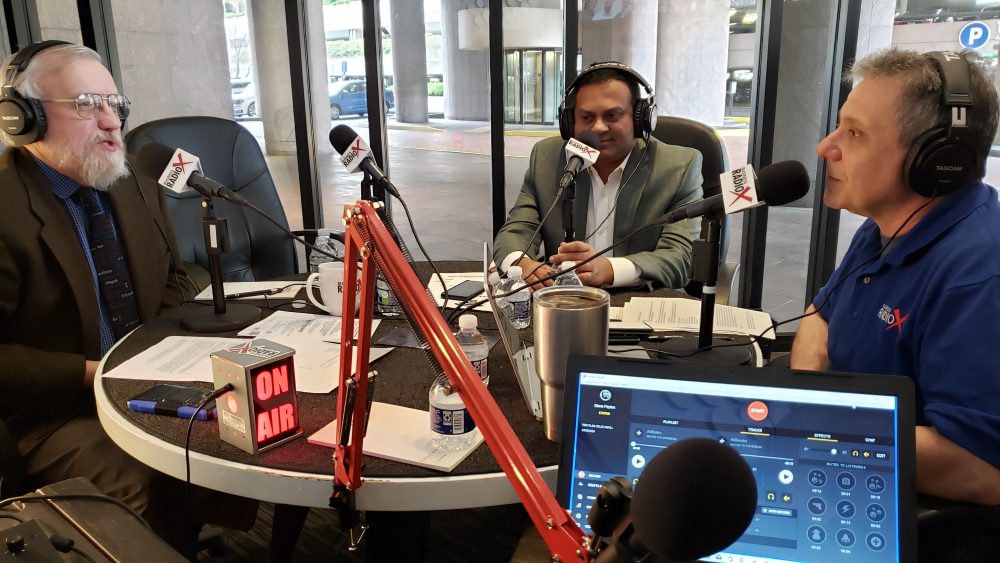
Choosing and buying a franchise and working with marketing freelaancers were just two of the topics discussed on this edition of “North Fulton Business Radio” as Sue and Craig Derene, Franchise Connect Pro, and Sherry Heyl, Amplified Concepts, joined the show. “North Fulton Business Radio” is hosted by John Ray and is broadcast from inside Renasant Bank in Alpharetta.

Sue and Craig Derene, Franchise Connect Pro

Craig and Sue Derene

Sue and Craig Derene are owners of  Franchise Connect Pro, a full service franchise consulting and development firm with extensive experience in the industry. Their consultation process is a proven method of helping others identify and research successful franchise opportunities for clients and their target markets.

With over 4,400 franchise concepts available in the United States alone searching for the right franchise can be a daunting task. In addition, not all franchises are created equally and even the top rated franchises are not always the best fit for all individuals. Franchise Connect Pro takes a close look at client goals, experience, strengths, weaknesses, desired lifestyle and more to help them find the opportunities that present a realistic opportunity for long term success and happiness. The business team of professionals has decades of experience in franchising.

To learn more, go to the Franchise Connect Pro website, email Craig directly, or call 770-366-0715.

Sherry Heyl, Amplified Concepts

Sherry Heyl

Sherry Heyl is a marketing consultant and owner of Amplified Concepts, a freelancer collaborative bringing together talent and resources to meet client needs no matter the size of the project by offering the resources of an agency model.

Sherry started Amplified Concepts in 2016 with the help of a team of freelancers that she had been working with for several years. They worked together to create a model that enables freelancers to scale their business and collaborate. Members are marketing and technology professionals with niche expertise and experience working in a variety of industries.

To learn more, go to the Amplified Concepts website, email Sherry, or call directly, 404-386-9801.

North Fulton Business Radio” is broadcast from the North Fulton studio of Business RadioX®, located inside Renasant Bank in Alpharetta. Renasant Bank has humble roots, starting in 1904 as a $100,000 bank in a Lee County, Mississippi, bakery. Since then, Renasant has grown to become one of the Southeast’s strongest financial institutions with approximately $12.9 billion in assets and more than 190 banking, lending, wealth management and financial services offices in Mississippi, Alabama, Tennessee, Georgia and Florida. All of Renasant’s success stems from each of their banker’s commitment to investing in their communities as a way of better understanding the people they serve. At Renasant Bank, they understand you because they work and live alongside you every day.

Tagged With: corporate refugee, Craig Derene, Encore career, entrepreneur, FDD, Franchise Connect Pro, Franchise consultants, Franchise Disclosure Document, Franchise industry, Franchise periods, Franchise Services, Franchisee, Franchisor, Franserv, Freelance Collaborative, home based franchises, home-based business, marketing consultant, North Fulton Business Radio, North Fulton Studio, serial entrepreneur, Sherry Heyl

Decision Vision Episode 33: Should I Sell My Business? – An Interview with Ed Rieker, Serial Entrepreneur and CEO, Avondale Innovation District

September 26, 2019 by John Ray

Decision Vision
Decision Vision
Decision Vision Episode 33: Should I Sell My Business? – An Interview with Ed Rieker, Serial Entrepreneur and CEO, Avondale Innovation District
Loading
00:00 /
RSS Feed
Share
Link
Embed

Download file

Mike Blake and Ed Rieker

Decision Vision Episode 33:  Should I Sell My Business? – An Interview with Ed Rieker, Serial Entrepreneur and CEO, Avondale Innovation District

What should I be doing to be ready to sell my business when the right time comes? How do I know when that right time is? Find out answers to these questions and more as “Decision Vision” host Mike Blake interviews serial entrepreneur Ed Rieker, a successful seller of multiple businesses he founded. “Decision Vision” is presented by Brady Ware & Company.

Ed Rieker, Serial Entrepreneur and CEO, Avondale Innovation District

Ed Rieker

Ed Rieker is a serial entrepreneur and currently the CEO of the Avondale Innovation District™. Ed was a founder or co-founder of four healthcare software companies. He navigated successful exits for three of these companies, as two were acquired by public companies and another by investors. The fourth is still running.

Two of these software companies were accepted into the Advanced Technology Development Center at Georgia Tech (ATDC), and one is an ATDC graduate.

Ed previously served as an ATDC Entrepreneur in Residence (4x) and an ATDC Executive in Residence (1x). He has served as a Venture Catalyst at ATDC between startups.

In 2004 Ed purchased an online community, built the business up and sold it to a public company in 2011. He has owned and operated a private coworking and technology incubator. Ed is an angel investor in various startups.

Ed was awarded patent #5,832,447 for an Automated System and Method for Providing Real-Time Verification of Health Insurance Eligibility (a co-inventor).

He is the owner and developer of Tudor Square, a community-oriented, quality, dinning, shopping and entertainment venue, supporting small independent business owners in downtown Avondale Estates, GA

Ed is currently the CEO of the Avondale Innovation District™, located in downtown Avondale Estates, a place-based urban development designed specifically to support entrepreneurs and creative professionals, foster open innovation, attract and accelerate new business ventures.

Michael Blake, Brady Ware & Company

Mike Blake, Host of “Decision Vision”

Michael Blake is Host of the “Decision Vision” podcast series and a Director of Brady Ware & Company. Mike specializes in the valuation of intellectual property-driven firms, such as software firms, aerospace firms and professional services firms, most frequently in the capacity as a transaction advisor, helping clients obtain great outcomes from complex transaction opportunities. He is also a specialist in the appraisal of intellectual properties as stand-alone assets, such as software, trade secrets, and patents.

Mike has been a full-time business appraiser for 13 years with public accounting firms, boutique business appraisal firms, and an owner of his own firm. Prior to that, he spent 8 years in venture capital and investment banking, including transactions in the U.S., Israel, Russia, Ukraine, and Belarus.

Brady Ware & Company

Brady Ware & Company is a regional full-service accounting and advisory firm which helps businesses and entrepreneurs make visions a reality. Brady Ware services clients nationally from its offices in Alpharetta, GA; Columbus and Dayton, OH; and Richmond, IN. The firm is growth minded, committed to the regions in which they operate, and most importantly, they make significant investments in their people and service offerings to meet the changing financial needs of those they are privileged to serve. The firm is dedicated to providing results that make a difference for its clients.

Decision Vision Podcast Series

“Decision Vision” is a podcast covering topics and issues facing small business owners and connecting them with solutions from leading experts. This series is presented by Brady Ware & Company. If you are a decision maker for a small business, we’d love to hear from you. Contact us at decisionvision@bradyware.com and make sure to listen to every Thursday to the “Decision Vision” podcast. Past episodes of “Decision Vision” can be found here. “Decision Vision” is produced and broadcast by the North Fulton studio of Business RadioX®.

Visit Brady Ware & Company on social media:

LinkedIn:  https://www.linkedin.com/company/brady-ware/

Facebook: https://www.facebook.com/bradywareCPAs/

Twitter: https://twitter.com/BradyWare

Instagram: https://www.instagram.com/bradywarecompany/

Show Transcript

Intro: [00:00:02] Welcome to Decision Vision, a podcast series focusing on critical business decisions, brought to you by Brady Ware & Company. Brady Ware is a regional, full-service accounting and advisory firm that helps businesses and entrepreneurs make vision a reality.

Michael Blake: [00:00:21] And welcome to Decision Vision, a podcast giving you, the listener, clear vision to make great decisions. In each episode, we discuss the process of decision making on a different topic. Rather than making recommendations because everyone’s circumstances are different, we talk to subject matter experts of how they would recommend thinking about that decision.

Michael Blake: [00:00:39] My name is Mike Blake and I’m your host for today’s program. I’m a Director at Brady Ware & Company, a full-service accounting firm based in Dayton, Ohio, with offices in Dayton; Columbus, Ohio; Richmond, Indiana; and Alpharetta, Georgia, which is where we are recording today. Brady Ware is sponsoring this podcast. If you like this podcast, please subscribe and your favorite podcast aggregator. And please also consider leaving a review of the podcast as well.

Michael Blake: [00:01:03] So, today’s decision that we’re going to discuss is, should I consider selling my business? And for most people in business, there will never be a bigger decision you ever have to make in your life than whether when, how, and on what terms to sell your business. And selling a business is maybe even more challenging because most people only do it once in their life. There are a few people that are serial entrepreneurs, and we’re going to talk to one in a second, but most people, if they’ve had a good run, they sell their business, they get out, and then they go do something else, particularly if they happen to be good at leisure.

Michael Blake: [00:01:52] And the thing about selling a business, and I’ll be the first to admit this, even though I advise people on selling businesses, and I charge exorbitant fees for helping people do so, is that, actually, when you get right down, it’s not rocket science, but a lot of it isn’t necessarily intuitive. And the process of even wrestling with a decision on whether to sell a business is often such an emotionally entwined decision that has far reaching implications, even outside of the business itself that it can be very challenging to have a clear head when you’re approaching that decision.

Michael Blake: [00:02:33] And, generally speaking, in selling a business, there is no do over, right? Once you sort of sign those documents, and money comes out of escrow, and if you have that kind of business, the keys are turned over if it’s a virtual business, then all the the pass codes, passwords are handed over, that’s sort of it. So, if you have sellers or more, your only real recourse is to start new business and do better the next time.

Michael Blake: [00:02:54] So, it’s an important decision to get right. And it’s one that, like I said, you don’t really get a mulligan on this. And in trying to figure who’d be the best person to talk about this, I’m fortunate that a friend of mine actually is one of those few that has actually sold multiple businesses. So, he’s been through a few of these rodeos. And he hasn’t sold them for other people. They’re actually his businesses.

Michael Blake: [00:03:23] And so, without further doing introduce my pal, Ed Rieker, who has come all the way from Avondale Estates, which if you look at a map of Atlanta should be about a 10-minute drive. But the way our highways are set up at, it paces about an hour and a half. So, I really appreciate him coming into the studio today because he’s also got a 90-minute drive back.

Michael Blake: [00:03:47] But Ed has actually started and sold four businesses, at least, four of which I’m aware. He’ll correct me once he comes on. But he’s currently CEO of the Avondale Innovation District, an Avondale Estate Georgia. He is also the owner and principal of Tudor Square, a community-oriented quality dining, shopping, and entertainment venue supporting small independent business owners in downtown Avondale Estate Georgia.

Michael Blake: [00:04:10] He is the General Manager of the 151 Locust Fund One LLC, which is a fund established for the purpose of providing seed funding to Metro Atlanta technology startups. Ed was also the mayor of Avondale Estates for six years and is an adjunct faculty member in the Emory University Business School’s startup launch accelerator program. Ed Rieker, Your Honor, welcome to the program.

Ed Rieker: [00:04:33] Thanks, Mike. It’s a pleasure to be here.

Michael Blake: [00:04:36] So-

Ed Rieker: [00:04:37] By the way, I took a jet pack here, right.

Michael Blake: [00:04:39] Did you take a jet pack?

Ed Rieker: [00:04:40] Yeah.

Michael Blake: [00:04:40] I think that’s the best way to get here.

Ed Rieker: [00:04:42] 10 minutes.

Michael Blake: [00:04:42] Really?

Ed Rieker: [00:04:43] Yeah.

Michael Blake: [00:04:43] Now, thank God for Georgia Tech inventing that stuff, man.

Ed Rieker: [00:04:47] Absolutely.

Michael Blake: [00:04:47] So, let’s dive into it. There’s a lot of ground we can cover and hope we can cover all of it. Can you talk to us a little bit about the businesses that you have actually owned and sold?

Ed Rieker: [00:04:58] Absolutely. I’m mostly a software guy. So, the businesses that I’ve founded or co-founded were really about software, about the creation of value through pushing little buttons to make stuff happen. So, when I’ve had the privilege of being on some really great teams and also being able to cash out a few times. So, I started in 1988 when you weren’t born yet.

Michael Blake: [00:05:30] You silver-tongued devil.

Ed Rieker: [00:05:34] Absolutely. And so, what we did was we built a software system that actually worked with hospital systems and large systems to kind of get people in the hospital as quickly as possible. What it turned out to be really was a marketing thing. And so, we built that up, sold that to a group of investors in 1991. And then, I was a minority shareholder in that. I had an angel investor that had put money into that.

Ed Rieker: [00:06:09] Then, the next one, we also was in healthcare. I think once you get to be in a domain, you get to know people, they get to know you, you start to kind of build a reputation. So, health care’s been very, very good to me. And I’ve done four health care startups and sold three of those or two of those to public companies. And then, in 2004, I actually bought an online community, because I’m very interested in community and built-

Michael Blake: [00:06:37] Yes, you are.

Ed Rieker: [00:06:38] Yes, I am.

Michael Blake: [00:06:38] That’s definitely bring your MO.

Ed Rieker: [00:06:39] And both online and in the real world. And it’s just fascinating to see how people work together, and how they don’t work together, and what they need, and how it might be able to help. But we built that online community up and sold that to a public company in 2011. So, that’s kind of the story is the ability to build a solution, a tool that solves a problem, build a team, build it up.

Ed Rieker: [00:07:10] And then, the first one, I think you mentioned, was really difficult to sell because I was a minority shareholder. It was everything to me at the time. And when it got sold, it—here’s the thing though. When you—you talked about the escrow, the cash coming in, and you think about buying the yacht, but you missed a step. And that’s the part where you have to stick around for a little bit and deal with the new owners. So, that was the first time I had done that.

Ed Rieker: [00:07:46] And what happened was, is they kind of put me in a room and ignored me for a while. And then, I watched them kind of do what they wanted to do. So, you can’t make decisions anymore because you’ve sold it. You’re exactly right. But normally, once you sell it, especially like a software business, any other business, you’re gonna be there for a while to watch that transition. So, that can be a difficult thing. And over the years, I’ve been able to kind of look at the idea of building with the end in mind, which is to sell it, so.

Michael Blake: [00:08:24] Now, what was that transition like? I mean, I know you personally. I don’t see you as a very good employee.

Ed Rieker: [00:08:34] I’m a horrible-

Michael Blake: [00:08:34] And I mean that with all the love I could possibly muster.

Ed Rieker: [00:08:37] Yes, absolutely. I  know.

Michael Blake: [00:08:38] But I consider myself, and my firm will tell you, I’m a terrible employee.

Ed Rieker: [00:08:42] Right, yeah. I’m a terrible employee. I will admit that. And I think the first time I sold, I was also a terrible seller because I was so emotionally involved and so focused on what I thought was right for the business, but I didn’t have any say anymore. I didn’t have any vote anymore. So, it becomes very difficult to hang around and see people do things that you probably don’t agree with.

Ed Rieker: [00:09:13] And, also, remember, the alignment I had with the sellers was they had the money, they had an idea of what they thought they wanted to do, and I really didn’t know on that well. And when you start to kind of see the team change and see kind of what they think is right, it can be very difficult for a seller to kind of be in that world. Most of the time, after you sell something, if you look at the statistics, the CEO goes bye-bye about six months, the old CEO.

Michael Blake: [00:09:48] I was going to ask you about that because most sales I’ve seen if the CEO is asked to remain at all, it’s a two to three-year period.

Ed Rieker: [00:09:57] Right.

Michael Blake: [00:09:57] But I don’t think most CEOs actually wind up serving out that term.

Ed Rieker: [00:10:01] They’re usually gone in six months. And that’s the thing you have to learn about in terms of selling. There’s things like earn-outs. So, when you get to the part where you agree on what the value is and what the terms are, part of that term can be the offer of, “Oh, we’ll double the what we’re buying you for if you’ll stay and hit these metrics.” And normally that’s kind of phantom money. That’s really hard to do because you don’t have control over how to reach those metrics anymore.

Michael Blake: [00:10:33] Right. I mean, the special sauce that you brought is now not being used anymore. It’s just sitting in the refrigerator with the label on it saying, “Add special sauce.”

Ed Rieker: [00:10:41] Right. You’re lucky if it’s in the fridge.

Michael Blake: [00:10:46] Right. I can’t shake this vision. I mean, having sort of been put in a room, you sort of watch everybody do the thing with the business after you’ve sold that, and you just sort of have to be at peace with your powerlessness by doing that.

Ed Rieker: [00:11:00] Yeah, and I wasn’t. I absolutely wasn’t. I mean, I think I was probably a bad seller at that point because I looked around, and it wasn’t going in the direction and as well as I thought it could go. And so, I didn’t really stay for the whole six months. I kind of bugged out of there because I had other things to do.

Michael Blake: [00:11:24] Yeah.

Ed Rieker: [00:11:24] Yeah.

Michael Blake: [00:11:26] Your experience of that sounds like my experience parenting a teenager.

Ed Rieker: [00:11:31] Yeah.

Michael Blake: [00:11:32] You watch it, but there’s only so much impact you can ultimately have. It’s sort of it’s just going to happen. So, how long did you own those businesses before selling them?

Ed Rieker: [00:11:42] So, I’m looking at my notes here, and I think ’88 and ’91. So, what’s the math? That’s three years. So, I probably worked on that a little bit longer than that. So, probably looks like the average is three to four years.

Michael Blake: [00:11:56] Okay.

Ed Rieker: [00:11:57] Yeah.

Michael Blake: [00:11:57] That’s not particularly long. Even in venture capital, that’s a fairly quick turnaround.

Ed Rieker: [00:12:02] Well, I like small teams and early stage stuff. And so, I like building it up to a certain point. And one of the things, I think, that if you’re a business owner of any kind of type, what you want to see is that every six months or so, the phone rings and somebody says, “Hey, I’m thinking about doing business with you or transaction with you.” And it evolves in this sort of, “Hey, we’re thinking about buying you.” If you’re not getting that call every six months or that activity every six months, then I feel like there’s something wrong with your business-

Michael Blake: [00:12:38] Huh!

Ed Rieker: [00:12:40] … because that’s one of the key indicators that you’re on to demand is that you get these situations where maybe you’re serving a large customer. and they say, “Well, maybe we should buy you instead of being a customer.” So, you want to kind of see those things happen every six months. If that’s not happening, then there’s something wrong with the business.

Michael Blake: [00:13:01] I’m gonna go off the script because I think that is insightful point that I want to explore a little bit more because I would not have thought of that in a million years, but I think I got it. So, let me tell what I think I get, and you tell me why I’m wrong. And what I think I get is people want to buy you because they notice you, and they’re making an impact, and you’re so important, they can’t afford to not you being available at some point down the road.

Ed Rieker: [00:13:31] Yeah, absolutely.

Michael Blake: [00:13:32] Right?

Ed Rieker: [00:13:32] And it’s the noticed part and the can’t live without you part that drives the price up. It could be a strategic or a technology acquisition. And most of the stuff that we did was a technology acquisition because we had found a pocket somewhere in health care that we were serving. And it was important enough to a large corporation that instead of building it, they would try to buy it. And that’s exactly kind of what you’re looking at.

Michael Blake: [00:14:01] So, that’s interesting. So, kind of a bullet point is a lot of business owners will tell me that they get annoyed they get offers to potentially buy and sell. They don’t want to do that. But in a way, if you’re getting those calls, even if they’re not particularly serious, the fact that you’re on somebody’s radar screen means you’re doing something right-

Ed Rieker: [00:14:19] Yeah, that’s correct.

Michael Blake: [00:14:19] … in terms of the market.

Ed Rieker: [00:14:20] And every once in a while, you actually want to follow through with those calls because that’s a great way to to create a valuation for yourself, to kind of figure out, you’re in that business, you’d be a great advisor to call. And it [crosstalk]-

Michael Blake: [00:14:32] “Hey, thank you, Ed.”

Ed Rieker: [00:14:34] … product placement. Was that on the script or?

Michael Blake: [00:14:38] It should have been.

Ed Rieker: [00:14:39] It should have been.

Michael Blake: [00:14:39] It should have. My marketing department is, right now, tearing their hair out, saying, “Why do you make everybody say that?” So, you said that you’re a bad seller when you sold that first business.

Ed Rieker: [00:14:50] Absolutely, yeah.

Michael Blake: [00:14:51] And part of that was because you’re a minority shareholder, so you couldn’t really drive the bus. You could almost sort of grab the steering wheel every once in a while. By sale four, in what way were you a better seller? Were you a better seller?

Ed Rieker: [00:15:03] Well, absolutely, yeah. What happened is that I was so emotionally attached to the first one. It’s not the same thing, and it’s probably a really bad analogy, but it’s like selling your baby or selling one of the things that you love, a family member. It just really was—I was that emotionally attached to it. And then, after I went through that, when I realized that perhaps my career, if I could call it a career, would be building and selling companies. I began to think about it in a different way that the actual in-game was to sell it and to sell it successfully. And by successfully, it meant that they were happy, I was happy, there was a good outcome for both of us, and that the transition part was actually part of building the business that I was able to transition out of the business to be able to go do the next thing.

Michael Blake: [00:16:02] So, the transition was organic. And in fact, they should stick somebody else having to stay with the buyers instead of you.

Ed Rieker: [00:16:08] Absolutely.

Michael Blake: [00:16:08] Right?

Ed Rieker: [00:16:09] Absolutely. So, that’s the process, then, is to build a team, so that I was dispensable. And actually they didn’t—why should we keep that guy?

Michael Blake: [00:16:19] Now, I’m curious. And I may be all wet here, but I’m curious if, also, the financial dynamic changes. When you sell your first business, I suspect but do not know that that was a lifestyle changing event for you.

Ed Rieker: [00:16:37] I would say the first one wasn’t.

Michael Blake: [00:16:39] Okay.

Ed Rieker: [00:16:39] When you start getting into the second and third, because the first two, I had to have angel investing to build the business up.

Michael Blake: [00:16:47] Yeah.

Ed Rieker: [00:16:48] Everything else was out of my own pocket, self-funded.

Michael Blake: [00:16:52] Okay.

Ed Rieker: [00:16:52] And the reason for that is that I found out in the way that I work is that I am able to risk my money, but not so much somebody else’s. I’m more careful with other people’s money, so that it hindered the ability for me to actually do the kind of the on-the-edge things that I wanted to do. I can do that with my own money but not necessarily with someone else’s.

Michael Blake: [00:17:18] I can understand that. And I’ve long thought, even though the standard playbook for startup entrepreneurs is hit up friends and family, right? On the other hand, that can lead to some very awkward Thanksgiving dinner conversations if things don’t go great.

Ed Rieker: [00:17:36] Absolutely.

Michael Blake: [00:17:37] Right?

Ed Rieker: [00:17:37] And the first one was what I would consider friend who had resources that actually funded the first one. And, of course, we don’t talk anymore. So-

Michael Blake: [00:17:50] Okay.

Ed Rieker: [00:17:50] Exactly right.

Michael Blake: [00:17:51] Yeah. So, that is a risk.

Ed Rieker: [00:17:52] Yeah, that’s the risk. Yeah.

Michael Blake: [00:17:55] So, it sounds to me like—well, I’m gonna ask the question for this. That’s why I have you here. To what extent were these sales planned versus opportunistic? They sound like a hybrid to me, kind of.

Ed Rieker: [00:18:07] Well, I think the first one was opportunistic because I really didn’t understand. I mean, I was an idiot on the first one. I really was. And I had a deep desire to create something, and a desire to perhaps bring that into the world and make it bigger. And what I didn’t understand was that through my immaturity, I was not a really good boss. Not only not a good employee, but not a good boss. And so, I think that having that sale hit me and all the emotional stuff that went with that, just reconsider a lot of stuff. At least, I did. And then, as I built teams that actually were the core of the success, you can’t be successful without a great team. I’m just really fortunate to have people that were able to help me, and teach me, and gather the things that we needed to be successful that we’re able to build these businesses up and sell them. So, I think I avoided your question. I am not sure I-

Michael Blake: [00:19:20] No, I think you, eventually, got around the answer.

Ed Rieker: [00:19:23] Yes.

Michael Blake: [00:19:23] Yeah. So, a common thread here is that all of your business is sold within two to three years or so. What did those businesses look like? What did they have in common that made them salable at that three-year period? Why do you—I’m sure it wasn’t luck.

Ed Rieker: [00:19:42] Well, yeah, it is luck. I mean, it’s—there’s a thing called the lucky bus that drives around. And if you’re standing out on the street, and the lucky bus stops in, and they say you’re ready to go, you got your bags packed, and you have your bags packed, and you’re ready to go, you can hop on the bus. And the bags packed is actually the work to be done, the job to be done. If the lucky bus stops, and they say you get your bags packed, and you go, “No, no, wait a minute, I’ll go finish packing,” when you come back out, the bus is gonna be gone.

Ed Rieker: [00:20:18] So, the idea I think we had going forward after the first one was to kind of always be in the way of a larger company. How could we—imagine this giant that’s walking or stumbling around. How can we annoy them enough that they’ll look down, and pick us up, and go, “Oh, yeah. This looks tasty. I’ll eat it.” That was the idea. So, what we did was we developed ways to deploy software and ideas in the world, so that we wound up in front of a large corporate entity that we knew eventually would probably want to do what we were doing, but they weren’t fast enough to be able to do it. And so, they would say, “Okay. Well, it’s just cheaper for us to kind of scoop this up and go with it.”

Michael Blake: [00:21:12] So, what that tells me is that your approach has been always be prepared to be opportunistic.

Ed Rieker: [00:21:18] Yes.

Michael Blake: [00:21:18] Right?

Ed Rieker: [00:21:19] So, yeah, to sell. Right. And to sell. And one of the things I would encourage entrepreneurs and CEOs to do is there’s a thing called due diligence, which is very exciting. And it’s even more exciting if it’s a public company because when they want to buy you, they really come and look at everything.

Michael Blake: [00:21:38] It’s basically a product logical exam without the anesthetic or-

Ed Rieker: [00:21:42] Yeah, yeah.

Michael Blake: [00:21:46] Just leave it-

Ed Rieker: [00:21:46] Yeah, yeah. And at last, not seconds, but hours and days. Yeah, absolutely.

Michael Blake: [00:21:51] Just to make it extra fun.

Ed Rieker: [00:21:52] Yeah, extra fun. So, what I learned after the first one was to create. And I’ll make it simple, like these little paper boxes that you put files in. So, when you’re doing things, like you have a contract, you have an employment agreement, or you have anything that’s paper that’s important that they’re going to look at later on, you just make a second copy and throw it in that box. And you know when the due diligence comes around, you can just go point at that box, and go, “All the stuff you want is in that box.” And it makes it a lot easier because when they do come and do due diligence, if you’re not ready, you’ve got to go through all your files and find this stuff. And it’s really time consuming.

Michael Blake: [00:22:34] And distracting.

Ed Rieker: [00:22:35] And distracting.

Michael Blake: [00:22:36] Right?

Ed Rieker: [00:22:36] Yes.

Michael Blake: [00:22:36] And, also, I gotta believe, and I’ve always advised clients about—on this, so I hope I’m right, there’s something to be said for making yourself easy to buy.

Ed Rieker: [00:22:49] Absolutely.

Michael Blake: [00:22:50] It doesn’t necessarily make you more or less valuable-

Ed Rieker: [00:22:52] Right.

Michael Blake: [00:22:52] … but just offering that path of least resistance.

Ed Rieker: [00:22:56] Well, what can happen is that, for instance, when you talked about opportunity, one of the purchases that was made on one of the software companies was that the public company had actually issued some bonds. So, they had gotten some cash, and they had a timeline when they had to spend that cash. So, you know.

Michael Blake: [00:23:17] So, that the government-

Ed Rieker: [00:23:19] Absolutely. We’ve got a budget to buy stuff. Let’s go buy stuff. And that’s somebody’s job to be done is to do an M&A.

Michael Blake: [00:23:26] Yeah.

Ed Rieker: [00:23:26] So, somebody at a corporate office is absolutely getting bonuses and pay on buying companies. So, there’s actually people that do that, and they have goals, and they have responsibilities. So, if they had this money, they had to spend by a certain time. So, it gave us a couple of things. It gave us the upper limit of the purchase. It gave us the timing. And then, we kind of—that gives you a leverage that perhaps they might not know that you know and helps you in the negotiations. So, you got to make sure that when you’re getting bought that you’re paying attention to those kind of things.

Michael Blake: [00:24:10] Boy, that’s interesting. That’s a a blog post I’ve been aching to write. But you’re right, there is sort of this moral hazard on the buy side when companies have a dedicated business development from an acquisition perspective or corporate development function, right?

Ed Rieker: [00:24:27] Right.

Michael Blake: [00:24:28] Those are people who are judged based on how much stuff they buy.

Ed Rieker: [00:24:31] Yeah.

Michael Blake: [00:24:32] And often, whether or not it’s a good acquisition or not, there’s so much turnover. Those people aren’t around-

Ed Rieker: [00:24:36] Yeah.

Michael Blake: [00:24:37] …  whether it’s a good deal or not, right? And although the prudent thing to do, because we have a pro deal bias, the prudent thing to do may be to walk away from a deal. Nobody ever gets interviewed on Bloomberg or on The Wall Street Journal for someone who walked away from a deal.

Ed Rieker: [00:24:54] That’s correct.

Michael Blake: [00:24:55] It’s never happened.

Ed Rieker: [00:24:56] Yeah, yeah.

Michael Blake: [00:24:56] Right?

Ed Rieker: [00:24:58] Yeah.

Michael Blake: [00:24:58] So, if you are being approached by someone that’s got that corporate development function, they need wins.

Ed Rieker: [00:25:04] Yeah. They need wins.

Michael Blake: [00:25:04] They just do.

Ed Rieker: [00:25:04] And they need certain dollar ranges that they’re buying in. There are certain ways that they’re buying in terms of how they model their transactions. So, cash, stock, earnouts, what happens to the founders, what happens to the team. All those things are consideration. A lot of us think about the buyout as being, “Oh, it’s a certain dollar amount,” but there’s a lot of nuance that you can create for yourself and your team that you can do in a deal.

Michael Blake: [00:25:35] And I don’t know if you’ve been in this situation because your model for building and selling a business has been so focused on a venture capital type model, but I am going to throw it out there anyway. And that is, are there signs out there where an owner needs to think about actively selling a business as opposed to being opportunistic that you can think of, or maybe you’ve experienced it where we’re at a point now where it’s really time for this business to sell, or it’s time for me to get out, or some combination? Is that something you can speak to?

Ed Rieker: [00:26:07] Yeah, sure. I think that that’s an interesting thing that happens. There’s cycles that we see. We’re in a happy time right now. It’s not going to continue to be a happy time. And that’s just the way the market works.

Michael Blake: [00:26:21] Yeah.

Ed Rieker: [00:26:22] So, I own some commercial real estate now. Now, I’m thinking about it’s time to sell because I think we’re in a pretty good place in the market. And I think that’s also true of a business. There could be things going on with the team, there could be things that you know about the technology and perhaps where it’s going that you may want to try to cash out. So, absolutely. I think an example for that for me was that 2008 was the precursor to a horrible 2009. And we had the online community, and there was a company that was rolling communities up. And they had approached us about selling the year before, and we said no because we were still—revenues were rising, and we were still building things. And I was of a mindset that, “Oh, this is going to continue and go up next year.” And the guy that was wanting to buy us, we’re on the phone, and he’s literally screaming at me on the phone saying, “Take the cash, take the cash, I’ll pay all cash.” And I’m saying, “No, I think we’ll be worth more next year.” Well, guess what? We weren’t worth more.

Michael Blake: [00:27:44] It didn’t work out.

Ed Rieker: [00:27:45] It didn’t work out. It went down, and it took us a couple more years to sell it.

Michael Blake: [00:27:49] Huh! Okay.

Ed Rieker: [00:27:51] Yeah.

Michael Blake: [00:27:51] So, when you sold your businesses, were these do-it-yourself jobs, or did you kind of put a team around you to help you?

Ed Rieker: [00:27:58] Well, the team part is the CPA and, also, we used the same legal team to do the sell part. The deal structure, the first one, I was a minority shareholder in. And so, I wasn’t as involved in that and progressively got more involved in the other ones and pretty much full on. I think the idea is that you agree on a face to face, usually. You kind of agree with the principles. This is the price, the terms, what happens to the team, what happens to you? Then, you kind of wind up with maybe a one page or a page and a half. And then-

Michael Blake: [00:28:42] It’s called a term sheet-

Ed Rieker: [00:28:43] Yeah, yeah, yes.

Michael Blake: [00:28:43] … for those of us in the audience.

Ed Rieker: [00:28:44] Term sheet.

Michael Blake: [00:28:44] Yeah, term sheet.

Ed Rieker: [00:28:45] Thank you. I knew there was a name for that. And then, what happens is that two pages turns into 30 or 50 pages of mind-numbing legalese fees and schedules.

Michael Blake: [00:28:58] Oh, boy, you’re not kidding.

Ed Rieker: [00:28:59] Yeah. And so, that’s-.

Michael Blake: [00:29:00] Except, it’s only one of the most important decisions in your life, so you have to read it.

Ed Rieker: [00:29:04] You have to read it. And you have to have a team that can interpret it for you. And you have to have, both on the financial side and on the legal side, someone to make sure that what you think is happening in your head is actually what’s in the document. That’s the most important thing. It’s like you can look at the documents, and you can see what the outcome will be if certain things happen. I got tripped up once by one word in a document that was part of an earnout. And, it costs a big bucket of money because we interpreted that word differently than what it actually meant. And that was one word in probably a 40-page document.

Michael Blake: [00:29:53] Whew!

Ed Rieker: [00:29:54] Ouch.

Michael Blake: [00:29:54] Yeah.

Ed Rieker: [00:29:55] And so—yeah, but unless you make those mistakes and see them, you can’t learn from them, so.

Michael Blake: [00:30:01] Well, yeah. And exactly why I think you have such a fascinating and valuable perspective because you’ve had the opportunity to make those mistakes live to fight another day, right? And like you said, most people don’t see four transaction. They don’t see four sales.

Ed Rieker: [00:30:17] Right.

Michael Blake: [00:30:17] We’ll see one.

Ed Rieker: [00:30:18] Yeah. I’ve been lucky. Absolutely.

Michael Blake: [00:30:21] So, at any point, as you were considering a sale, were you concerned over what would happen the day after, what would you happen to you the day after you wake up, all of a sudden, there’s no office you have to be in?

Ed Rieker: [00:30:35] Well, that there was never a no office to be in. There is always a time you have to stay with the business. And after the first one, I was able to say, “All right. I know my job to be done in the world is to start them and to sell them.” So, I know when the new people come in, I want to underpromise and overdeliver. But I also want to have a team in place to where the business really doesn’t need me. My job was to think about the really big things. And so, usually, by the time the deal was done or even before that, I would be envisioning the next thing that I would be building. And that’s always been the case is that, “Okay. I know it’s time to sell because I’m thinking about something else.”

Michael Blake: [00:31:22] Did you ever find that being involved in a sale was kind of an emotional roller coaster?

Ed Rieker: [00:31:28] It’s absolutely an emotional roller coaster all the time. And remember, this idea of kind of looking at every six months, someone calls you, and they say, “Hey, maybe we should do a deal.” Well, I would do those to see kind of what the value is, to see how prepared I was, to see if our story was right, and to see if it was a real deal. And sometimes, there are corporations that want to really go to school on you. So, they’ll say, “Hey, we’re interested in buying you.” And you go, “Oh, that’s exciting. Come on in. I’ll tell you everything.”

Michael Blake: [00:32:01] Right.

Ed Rieker: [00:32:03] And then, they go, “Oh, we’ve decided to build it ourselves. Thanks.”

Michael Blake: [00:32:05] You’re totally catfished.

Ed Rieker: [00:32:07] Yeah-

Michael Blake: [00:32:07] Basically.

Ed Rieker: [00:32:07] Absolutely. So, you have to know at what point when you go, “Oh, these guys are going to school,” and then you just kind of shut it down. So, I’ve had those experiences where I’m like, “Oh, okay. Yeah. No, I’m not going to show you that. Thanks.”

Michael Blake: [00:32:26] And how about within? I mean, in my experiences, most deals are called off, at least, once before they ultimately happen.

Ed Rieker: [00:32:36] Yeah, absolutely.

Michael Blake: [00:32:36] Right?

Ed Rieker: [00:32:37] Yeah.

Michael Blake: [00:32:37] And how do you kind of stick with that and keep a level head as opposed to just setting up a YouTube video of yourself taking a baseball bat to a roomful of computers and file cabinets or maybe you do that, and that’s how you sort of keep your head on straight?

Ed Rieker: [00:32:51] Right. That’s-

Michael Blake: [00:32:52] How do you manage that?

Ed Rieker: [00:32:53] That’s why glassware is always in danger when you’re around me. So, please don’t bring me glassware. I think the idea is to isolate it from the team and compartmentalize it in your brand because what can happen, I’ve seen this with teams, where the CEO gets excited about a sale, and they move off the mark of what they’re trying to do with growing the business. And these things can take six months, a year. It can take that long to find out it’s a folly. So, if you’re get pulled off growing the business, what happens is your business dips. So, your next sell gets delayed because you’ve got to build that back up. So, the idea is isolate it from the team until you actually have a term sheet that looks real, and looks doable, and maybe even the first draft of the purchase agreement. And then, make sure that while you’re doing that, you’re continually serving the business.

Michael Blake: [00:33:54] And that’s another great reason to sort of have your due—basically build your due diligence package as you go along-

Ed Rieker: [00:34:00] Absolutely.

Michael Blake: [00:34:00] … because, then, you don’t have to bring your team in.

Ed Rieker: [00:34:02] Yeah.

Michael Blake: [00:34:04] And there’s no sort of smoking gun.

Ed Rieker: [00:34:05] Right.

Michael Blake: [00:34:06] If you’ve hired people that are smart, you start to ask for documents, all of a sudden, they’ll realize that’s why.

Ed Rieker: [00:34:11] Yeah.

Michael Blake: [00:34:12] Right? But if all of a sudden, you just have this box, you just say, “Here,” then that gives you the option-

Ed Rieker: [00:34:17] Right.

Michael Blake: [00:34:17] … to be able to let more-

Ed Rieker: [00:34:17] If you’re walking around saying, “Can you sign this employment agreement really quickly?” yeah, it’s a little late.

Michael Blake: [00:34:24] Yeah. My lawyer will be back to you with some thoughts on what I’d like in order to sign that agreement.

Ed Rieker: [00:34:32] Yes.

Michael Blake: [00:34:32] And some of the other side to that too is deals die a thousand deaths, but, also, deals are never done until they’re done. And I think I’ve seen, as you’ve probably seen it too, is plenty of businesses die while they’re up for sale-

Ed Rieker: [00:34:52] Yeah.

Michael Blake: [00:34:53] … because the process of selling a business really becomes a full-time job.

Ed Rieker: [00:34:56] Right.

Michael Blake: [00:34:57] And it can very easily distract you from actually running your business to the point where maybe a deal just doesn’t happen because it doesn’t happen, or I’ve seen—I’ve even seen it where the business has deteriorated so much during the due diligence process that it’s just no longer the valuable asset that prompted the initial proposal to buy in the first place.

Ed Rieker: [00:35:17] Yeah, absolutely.

Michael Blake: [00:35:18] Right?

Ed Rieker: [00:35:19] That’s correct, yeah.

Michael Blake: [00:35:20] And that’s why it’s important, I guess, to have those advisors and have that due diligence ready to go because you’ve got to just accept that it’s two full-time jobs.

Ed Rieker: [00:35:29] Yeah. It’s the exact same thing as raising capital, only you’re selling the business. It’s the same kind of process. And so, when you’re raising institutional money, you’re also doing the same kind of things, and it’s the same kind of roller coaster, but it’s the end game.

Michael Blake: [00:35:49] And I’ll share with you a secret that I tell my buy side clients.

Ed Rieker: [00:35:53] Oh, a secret?

Michael Blake: [00:35:53] Yeah, a secret is that many sellers, if they’ve never sold a business before, they start to get what I call Costa Rica syndrome-

Ed Rieker: [00:36:05] Yeah.

Michael Blake: [00:36:06] … which means that mentally, the second they think that those dollars are coming in-

Ed Rieker: [00:36:11] Yeah.

Michael Blake: [00:36:12] … they’re already halfway to their condo in Costa Rica.

Ed Rieker: [00:36:16] Yeah, absolutely.

Michael Blake: [00:36:17] Right?

Ed Rieker: [00:36:17] Yeah.

Michael Blake: [00:36:18] And once they’re there, the buyer acquires extraordinary leverage.

Ed Rieker: [00:36:24] Absolutely.

Michael Blake: [00:36:25] Right?

Ed Rieker: [00:36:25] Yeah.

Michael Blake: [00:36:25] And even for [indiscernible], let’s say that initially talked about a $10 million purchase price, well, in our due diligence, really, I only want to pay seven.

Ed Rieker: [00:36:34] Yeah.

Michael Blake: [00:36:35] Right? And if the seller has exposed themselves where the business is going to be hard to recover but, also, mentally-

Ed Rieker: [00:36:43] Yeah.

Michael Blake: [00:36:43] … they have to now say—they have to get back from their tropical paradise.

Ed Rieker: [00:36:48] Yeah.

Michael Blake: [00:36:49] Right? And cocktail drinks and so forth. They come back. They don’t want to do that. Now, they’re just looking at that $3 million difference as a number. But, well, I still got $7 million left. Just let me do this, so I can go to my Costa Rica.

Ed Rieker: [00:37:04] Right.

Michael Blake: [00:37:04] Right?

Ed Rieker: [00:37:04] Yeah.

Michael Blake: [00:37:04] And I think it confers a tremendous amount of leverage-

Ed Rieker: [00:37:09] Yeah.

Michael Blake: [00:37:09] … for the buyer.

Ed Rieker: [00:37:11] Yeah. I’ve had stuff happen at closing or right before closing where a buyer will come back and say, “Well, maybe we should do this,” and you have to be prepared to say no.

Michael Blake: [00:37:23] Yeah.

Ed Rieker: [00:37:24] You have to be able to say, “You know what? That’s okay. We’ll pass.”

Michael Blake: [00:37:29] Yeah, that’s right.

Ed Rieker: [00:37:30] So-

Michael Blake: [00:37:30] If you can’t walk away from a deal of any kind, you’re not negotiating. You’re just asking.

Ed Rieker: [00:37:36] Yeah. And that’s the part about the business. If your business is solid enough that you can say no, that’s a great business to have because that means there’s gonna be another buyer. And also, you always want to have a horse race, even if it’s a pretend horse. So, that-

Michael Blake: [00:37:55] The stalking horse.

Ed Rieker: [00:37:56] Yes. So, that when you’re winding up with a single buyer, there’s always this other entity that perhaps might pay more, or do quicker, or be kinder to your employees, that sort of thing. So, a one-buyer deal is really no fun.

Michael Blake: [00:38:12] Well, and even by setting yourself up the way that you’ve described, the other horse is you, as yourself, right?

Ed Rieker: [00:38:19] Right, yeah, you can stick around.

Michael Blake: [00:38:19] I can always not sell.

Ed Rieker: [00:38:21] Yeah.

Michael Blake: [00:38:22] And because I’m the idea person and not the operational person, my lifestyle is still okay.

Ed Rieker: [00:38:30] Yeah.

Michael Blake: [00:38:30] Right? And we’ll just sort of reset and wait for the next person. And that makes you pretty much impervious to the Costa Rica syndrome.

Ed Rieker: [00:38:40] Yeah.

Michael Blake: [00:38:40] And nothing against Costa Rica. I could have just as easily said Tahiti, but a friend of mine-

Ed Rieker: [00:38:44] Yeah, or Macon, Georgia.

Michael Blake: [00:38:46] Or Macon, Georgia, yeah.

Ed Rieker: [00:38:46] Absolutely.

Michael Blake: [00:38:46] But a friend—one of my clients sold a business, went down to Costa Rica, and they love it, so.

Ed Rieker: [00:38:51] Yeah.

Michael Blake: [00:38:53] Well, this has been great. We’re sort of running out of time here, but there’s a lot of ground that could be covered. If somebody is kind of thinking about maybe selling their own business, could they contact you for a little bit of advice?

Ed Rieker: [00:39:04] Sure, absolutely. Yeah.

Michael Blake: [00:39:05] How will be the best way for them to do that?

Ed Rieker: [00:39:07] Send me an email, ed@softlinc.com. S-O-F-T-L-I-N-C dot com.

Michael Blake: [00:39:14] Okay.

Ed Rieker: [00:39:15] Or call Mike. Yeah.

Michael Blake: [00:39:17] There you go. But Ed might be free. I know that I’m not.

Ed Rieker: [00:39:21] Yeah.

Michael Blake: [00:39:22] So, that’s gonna wrap it up for today’s program. I’d like to thank Ed Rieker so much for joining us and sharing his expertise with us. We’ll be exploring a new topic each week. So, please tune in, so that when you’re faced with your next business decision, you have clear vision when making it. If you enjoy this podcast, please consider leaving a review with your favorite podcast aggregator. It helps people find us, so that we can help them. Once again, this is Mike Blake. Our sponsor is Brady Ware & Company. And this has been the Decision Vision Podcast.

Tagged With: CPa, CPA firm, Dayton accounting, Dayton business advisory, Dayton CPA, Dayton CPA firm, Decision Vision, due diligence packages, due dilligence, earn-out, Ed Rieker, emotional roller coaster, merging a business, Michael Blake, Mike Blake, selling a business, serial entrepreneur, strategic acquisition, technology acquisition, valuation

Elizabeth Gordon interviews Christopher Flett – Author of What Men Don't Tell Women About Business: Opening Up the Heavily Guarded Alpha Male Playbook

February 17, 2010 by angishields

Chic Perspectives
Chic Perspectives
Elizabeth Gordon interviews Christopher Flett - Author of What Men Don't Tell Women About Business: Opening Up the Heavily Guarded Alpha Male Playbook
Loading
00:00 / 0:00:52
RSS Feed
Share
Link
Embed

Download fileDuration: 0:00:52

In this Chic Perspective Show I talked with Christopher Flett – the author of What Men Don’t Tell Women About Business: Opening Up the Heavily Guarded Alpha Male Playbook

Chris Flett is a serial entrepreneur who has successfully built eleven companies from scratch and sold them to major corporations. He is a popular guest in the media, including: The Today Show, Fox Business Network, and CNBC. His work has been featured in Entrepreneur Magazine, the New York Times, the Washington Post, and USA Today. BusinessWeek called him the “Shock Jock of Business Management.” His company, Ghost CEO, is the world’s leader in development for professional women.

In this Chic Perspective, Chris talks about behaviors that hold women back in the workplace, how men and women approach business differently, and the psychological roots of these behavior patterns. He talks about the unique strengths women bring to the the business world, and how to capitalize on them. Chris genuinely wants to see more women succeed in the workplace, and his advice, while sometimes irreverent, will open your eyes to a new way of looking at things. You’ll enjoy hearing Chris’s advice on how to handle maternity leave, what you should and should not be doing from 9 to 5, and why he won’t be the one buying the group birthday card at the office.

Tagged With: elizabeth gordon, entrepreneur magazine, Fox Business News, Ghost CEO, New York Times, serial entrepreneur, shock jock of business management, the heavily guarded alpha male playbook, Today Show, usa today, what men don't tell women about business

Business RadioX ® Network


Our Most Recent Episode

CONNECT WITH US

  • Email
  • Facebook
  • LinkedIn
  • Twitter
  • YouTube

Our Mission

We help local business leaders get the word out about the important work they’re doing to serve their market, their community, and their profession.

We support and celebrate business by sharing positive business stories that traditional media ignores. Some media leans left. Some media leans right. We lean business.

Sponsor a Show

Build Relationships and Grow Your Business. Click here for more details.

Partner With Us

Discover More Here

Terms and Conditions
Privacy Policy

Connect with us

Want to keep up with the latest in pro-business news across the network? Follow us on social media for the latest stories!
  • Email
  • Facebook
  • Google+
  • LinkedIn
  • Twitter
  • YouTube

Business RadioX® Headquarters
1000 Abernathy Rd. NE
Building 400, Suite L-10
Sandy Springs, GA 30328

© 2025 Business RadioX ® · Rainmaker Platform

BRXStudioCoversLA

Wait! Don’t Miss an Episode of LA Business Radio

BRXStudioCoversDENVER

Wait! Don’t Miss an Episode of Denver Business Radio

BRXStudioCoversPENSACOLA

Wait! Don’t Miss an Episode of Pensacola Business Radio

BRXStudioCoversBIRMINGHAM

Wait! Don’t Miss an Episode of Birmingham Business Radio

BRXStudioCoversTALLAHASSEE

Wait! Don’t Miss an Episode of Tallahassee Business Radio

BRXStudioCoversRALEIGH

Wait! Don’t Miss an Episode of Raleigh Business Radio

BRXStudioCoversRICHMONDNoWhite

Wait! Don’t Miss an Episode of Richmond Business Radio

BRXStudioCoversNASHVILLENoWhite

Wait! Don’t Miss an Episode of Nashville Business Radio

BRXStudioCoversDETROIT

Wait! Don’t Miss an Episode of Detroit Business Radio

BRXStudioCoversSTLOUIS

Wait! Don’t Miss an Episode of St. Louis Business Radio

BRXStudioCoversCOLUMBUS-small

Wait! Don’t Miss an Episode of Columbus Business Radio

Coachthecoach-08-08

Wait! Don’t Miss an Episode of Coach the Coach

BRXStudioCoversBAYAREA

Wait! Don’t Miss an Episode of Bay Area Business Radio

BRXStudioCoversCHICAGO

Wait! Don’t Miss an Episode of Chicago Business Radio

Wait! Don’t Miss an Episode of Atlanta Business Radio