
Business RadioX ®

  • Home
  • Business RadioX ® Communities
    • Southeast
      • Alabama
        • Birmingham
      • Florida
        • Orlando
        • Pensacola
        • South Florida
        • Tampa
        • Tallahassee
      • Georgia
        • Atlanta
        • Cherokee
        • Forsyth
        • Greater Perimeter
        • Gwinnett
        • North Fulton
        • North Georgia
        • Northeast Georgia
        • Rome
        • Savannah
      • Louisiana
        • New Orleans
      • North Carolina
        • Charlotte
        • Raleigh
      • Tennessee
        • Chattanooga
        • Nashville
      • Virginia
        • Richmond
    • South Central
      • Arkansas
        • Northwest Arkansas
    • Midwest
      • Illinois
        • Chicago
      • Michigan
        • Detroit
      • Minnesota
        • Minneapolis St. Paul
      • Missouri
        • St. Louis
      • Ohio
        • Cleveland
        • Columbus
        • Dayton
    • Southwest
      • Arizona
        • Phoenix
        • Tucson
        • Valley
      • Texas
        • Austin
        • Dallas
        • Houston
    • West
      • California
        • Bay Area
        • LA
        • Pasadena
      • Colorado
        • Denver
      • Hawaii
        • Oahu
  • FAQs
  • About Us
    • Our Mission
    • Our Audience
    • Why It Works
    • What People Are Saying
    • BRX in the News
  • Resources
    • BRX Pro Tips
    • B2B Marketing: The 4Rs
    • High Velocity Selling Habits
    • Why Most B2B Media Strategies Fail
    • 9 Reasons To Sponsor A Business RadioX ® Show
  • Partner With Us
  • Veteran Business RadioX ®

Covering Sports Startups and Finance, with Sid Balaga,The 4th Quarter

January 10, 2025 by John Ray

Covering Sports Startups and Finance, with Sid Balaga, The 4th Quarter, with host John Ray, North Fulton Business Radio
North Fulton Business Radio
Covering Sports Startups and Finance, with Sid Balaga,The 4th Quarter
Loading
00:00 /
RSS Feed
Share
Link
Embed

Download file

Covering Sports Startups and Finance, with Sid Balaga, The 4th Quarter, with host John Ray, North Fulton Business Radio

Covering Sports Startups and Finance, with Sid Balaga, The 4th Quarter (North Fulton Business Radio, Episode 835)

In this episode of North Fulton Business Radio, host John Ray chats with Sid Balaga, co-founder of The 4th Quarter, a media company focused on sports technology, startups, finance, and venture capital. Sid shares the story behind the company’s inception with his childhood friend and company co-founder, Suraj Peramanu, and explains their vision to bridge the gap between sports, business, and technology. They delve into the niche of sports tech, covering areas such as AI applications, venture capital in emerging sports markets, and the innovative concept of investing in athletes’ future earnings. Sid also highlights their upcoming deep dive pieces and the expanding role of private equity in sports leagues. The episode is packed with insights for sports fans, business enthusiasts, and those interested in the future of sports technology.

John Ray is the host of North Fulton Business Radio. The show is recorded and produced by the North Fulton affiliate of Business RadioX® inside Renasant Bank in Alpharetta.

Sid Balaga, The 4th Quarter

Sid Balaga, The 4th Quarter, on North Fulton Business Radio with host John Ray
Sid Balaga, The 4th Quarter

The 4th Quarter is a media company focused on sports technology, startups, finance, and venture capital. Its newsletter is the #1 sports business newsletter on Substack, delivering weekly insights on the latest business news, cutting-edge innovation, and trends in the sports technology, startup and venture capital ecosystem. Subscribers gain exclusive updates on emerging unicorn startups, high-profile investments, and a curated job board, making it a go-to resource for staying informed.

Led by Sid Balaga and Suraj Peramanu, The 4th Quarter connects a community of founders, venture capitalists, and professionals passionate about the sports-business world.

LinkedIn | Substack Newsletter | Sid’s LinkedIn | Suraj’s LinkedIn

Topics Discussed in this Episode

00:00 Introduction and Welcome
01:45 Meet Sid Balaga
02:21 Overview of The 4th Quarter
04:47 Why Focus on the Business of Sports?
06:25 Covering the Financial Side of Sports
08:03 Spotlight on Startups and Niche Markets
10:20 Athletes and Venture Capital
15:02 Future Trends and Predictions
26:36 Closing Remarks and Contact Information

Renasant Bank supports North Fulton Business Radio

Renasant BankRenasant Bank has humble roots, starting in 1904 as a $100,000 bank in a Lee County, Mississippi, bakery. Since then, Renasant has become one of the Southeast’s strongest financial institutions, with over $17 billion in assets and more than 180 banking, lending, wealth management, and financial services offices throughout the region. All of Renasant’s success stems from each banker’s commitment to investing in their communities as a way to better understand the people they serve. At Renasant Bank, they understand you because they work and live alongside you every day.

Website | LinkedIn | Facebook | Instagram | X (Twitter) | YouTube

About North Fulton Business Radio and host John Ray

With over 800 shows and having featured over 1,200 guests, North Fulton Business Radio is the longest-running podcast in the North Fulton area, covering business in our community like no one else. We are the undisputed “Voice of Business” in North Fulton!

The show welcomes a wide variety of business, non-profit, and community leaders to get the word out about the important work they’re doing to serve their market, their community, and their profession. There’s no discrimination based on company size, and there’s never any “pay to play.” North Fulton Business Radio supports and celebrates business by sharing positive business stories that traditional media ignore. Some media leans left. Some media leans right. We lean business.

John Ray, Business RadioX - North Fulton, and Owner, Ray Business Advisors
John Ray, Business RadioX – North Fulton, and Owner, Ray Business Advisors

John Ray is the host of North Fulton Business Radio. The show is recorded and produced from the North Fulton studio of Business RadioX® inside Renasant Bank in Alpharetta. You can find the full archive of shows by following this link. The show is available on all the major podcast apps, including Apple Podcasts, Spotify, Google, Amazon, iHeart Radio, and many others.

The studio address is 275 South Main Street, Alpharetta, GA 30009.
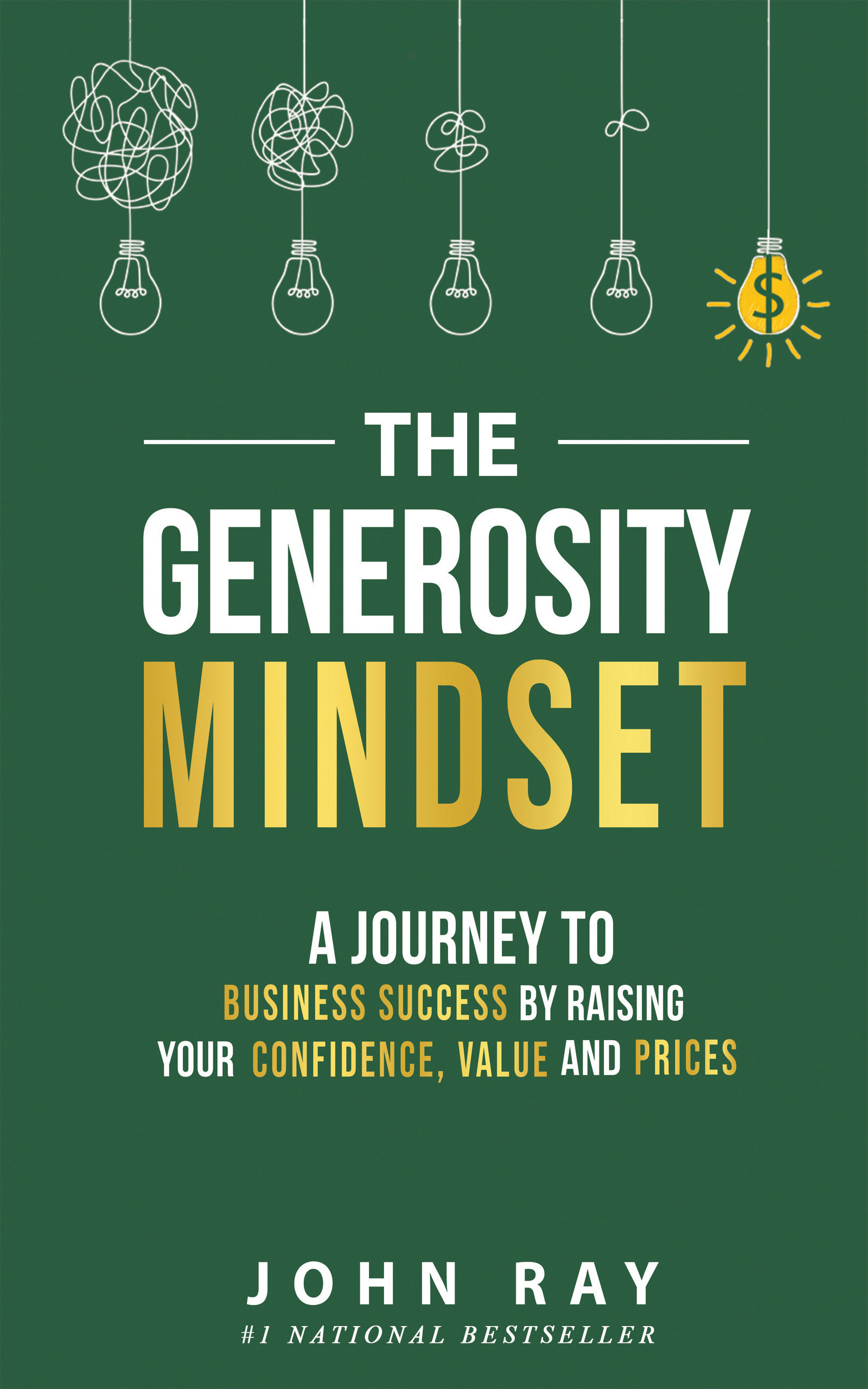
John Ray, The Generosity MindsetJohn Ray also operates his own business advisory practice. John’s services include advising solopreneurs and small professional services firms on their value, their positioning and business development, and their pricing. His clients are professionals who are selling their expertise, such as consultants, coaches, attorneys, CPAs, accountants and bookkeepers, marketing professionals, and other professional services practitioners.

John is the national bestselling author of The Generosity Mindset: A Journey to Business Success by Raising Your Confidence, Value, and Prices.

Tagged With: business of sports, finance, John Ray, North Fulton Business Radio, Sid Balaga, sports, sports technology, startups, Suraj Peramanu, The 4th Quarter, venture capital

Exploring Arizona’s Entrepreneurial Support Hubs E27

June 27, 2022 by Karen

Exploring-Arizonas-Entrepreneurial-Support-Hubs-feature
AZ TechCast
Exploring Arizona's Entrepreneurial Support Hubs E27
Loading
00:00 /
RSS Feed
Share
Link
Embed

Download file

Exploring-Arizonas-Entrepreneurial-Support-Hubs

Exploring Arizona’s Entrepreneurial Support Hubs E27

For years now, Arizona has caught the nation’s attention as the “Silicon Desert”, a major hot spot for technology companies and budding startups. Between the state’s lower business costs, more affordable standard of living and growing talent pool, it’s no surprise that Phoenix and Tucson are rapidly climbing the ranks of emerging international startup ecosystems.

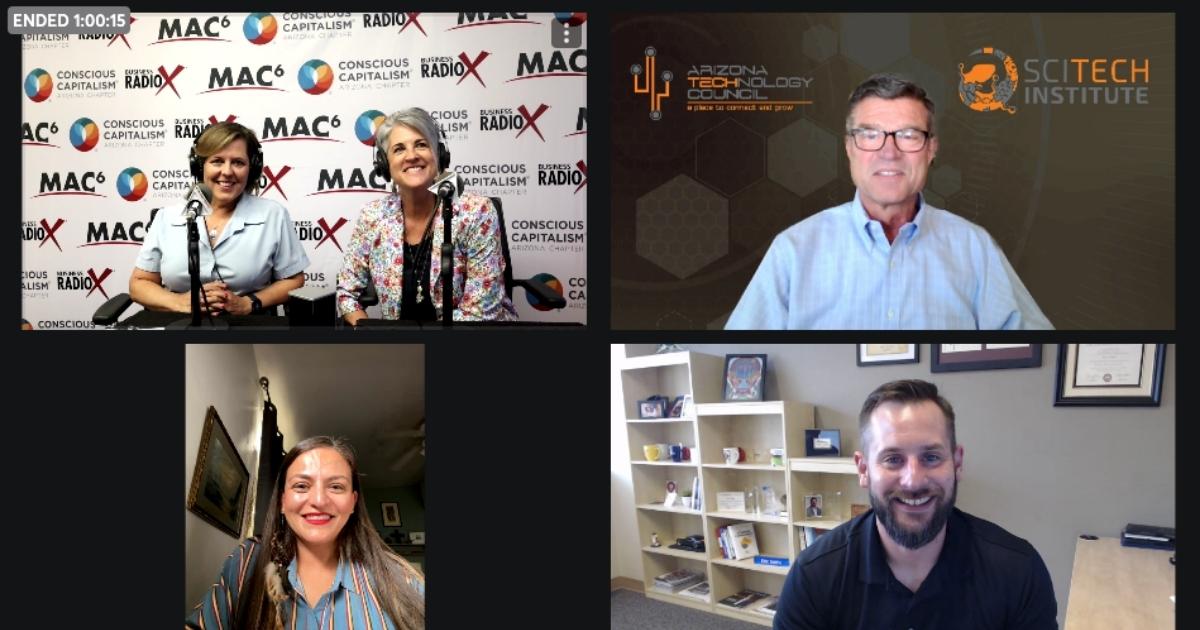
The June 2022 episode of the Arizona Technology Council’s AZTechCast podcast featured startup ecosystem experts including Stephanie Bermudez, founder & CEO of Startup Unidos; Eric Smith, executive director of The University of Arizona Center for Innovation; and Diana Vowels, CEO of StartupAZ. These leaders joined Karen Nowicki, president and owner of Phoenix Business RadioX, and Steve Zylstra, president and CEO of the Arizona Technology Council, in discussing the statewide entrepreneurial support hubs that are helping to elevate technology-minded startup founders.

Throughout this hour-long episode, this panel of startup experts spoke at length about the evolution of Arizona’s regional startup ecosystems over the past five to ten years. Arizona used to be where companies put their back offices or inside sales operations because large technology companies did not realize the full potential of Arizona. At the time, startup ecosystems were also successful independently, but had not yet come together to support companies across the state. Over the past several years, the group of panelists has been very impressed by how the pieces are coming together to collectively support the growth of up-and-coming startup founders and their ventures.

Logo-UACI

The University of Arizona Center for Innovation (UACI) is a startup incubator network with locations across the Southern Arizona region. The UACI offers leaders of science and technology startups the expertise, connections to the University of Arizona, incubation programs and office and lab space needed to turn ideas and inventions into strong, scalable and sustainable businesses that ultimately provide high-paying jobs and fuel Southern Arizona’s economy.

As Arizona’s leading incubation organization with nearly two decades of successful outcomes, UACI is a critical component of Arizona’s innovation ecosystem. This is done through providing access to people, programming and places that help entrepreneurs take their companies from idea to market.

Startups go through a structured program that takes them through a continuum of education provided by mentors, advisors and community collaborators. The University of Arizona Center for Innovation also provides access to service providers, industry cluster groups, interns and connections to potential customers and strategic partners. Entrepreneurs utilize various physical spaces that include offices, wet and dry labs, meeting rooms, a prototyping center, collaboration areas and the infrastructure to support these spaces.

Eric-Smith-AZ-TechCastEric Smith brings with him almost a decade’s worth of technology commercialization experience and a passion for entrepreneurship.

Smith’s current role at the UA Center for Innovation comes after serving as the commercialization network manager for Tech Launch Arizona (TLA), the UA’s office responsible for moving UA research and technological innovation into the marketplace.

While at TLA, he focused on building and leveraging a network of domain experts and business leaders who consult on University technologies to help reveal their commercial relevance as they are prepared for the market.

Smith holds a BSBA in business management and entrepreneurship and an MBA from the University of Arizona.

Follow UACI on LinkedIn, Facebook, Twitter and Instagram.

Logo-Startup-Unidos

Since 2017, Startup Unidos has cultivated collaboration, innovation and entrepreneurship in border communities throughout the Arizona-Sonora region through ground-level programming that nurtures emerging companies, assists growing firms, builds the workforce of the future and supports partner organizations in reaching underserved pockets of the community.

Stephanie-Bermudez-AZ-TechCastStéphanie Bermúdez is an Ambos Nogales native and Latinx innovator, who has invested more than 15 years in understanding the local culture, building relationships, and earning the respect and loyalty of people and organizations at all levels of society.

Her innovative ideas create cross-border communities and environments that expand on binational relationships to encourage collaboration and co-inspiration. She focuses on building up entrepreneurial communities and networks, through events, training, consulting and research that extends beyond Southern Arizona.

Stéphanie displays an unwavering commitment to making an impact and is passionate about taking her experiences and shaping binational business opportunities with Mexico and the United States.

She is actively working with startups and aspiring youth across the Arizona-Sonora by developing and implementing Startup Unidos, entrepreneurial and workforce education, capacity building and youth programs, such as Waste Not: Borderlands Innovations in Food Waste Management, Emprende Amigo, and Borderoots.

Follow Startup Unidos on LinkedIn, Facebook, Twitter and Instagram.

StartupAZ exists to help Arizona’s most innovative startup companies improve their leadership, performance, and connections, while inspiring generosity and philanthropy within their communities. Up-Icon-Flywheel-blue1

The organization was created to catalyze Arizona’s technology and innovation ecosystem by connecting and empowering entrepreneurs.

Diana-Vowels-AZ-TechCastDiana Vowels is a community builder with a passion for driving the tech ecosystem forward in Phoenix.

She is the CEO of StartupAZ, the organization created to catalyze Arizona’s technology and innovation ecosystem by connecting and empowering entrepreneurs.

Diana, who has long been at the forefront of Arizona’s technology and startup community, joined StartupAZ in 2021 to help expand the organization’s talent attraction and development mission.

Prior to joining the team, she served as VP/Community and General Manager of Galvanize, where she led the launch of the software engineering and data science bootcamps and built the co-working space into a vital part of Phoenix’s startup fabric.

She currently serves on the Boys & Girls Clubs of the Valley and Invest Southwest board of directors, and was the 2021 chair for the annual Invest Southwest Venture Madness. Diana is a graduate of University of Missouri and has held executive roles in public and private companies in media, healthcare and technology.

Personal: Spouse, David Vowels, healthcare leader and two daughters.

Connect with Diana on LinkedIn and Twitter.

About AZ TechCastAZTECHCASTLOGOBRX-4-23-2020

AZ TechCast is dedicated to covering innovation and technology in Arizona and beyond.

Through the art of connected conversation, AZ TechCast’s guests will share their expertise, success stories, news and analysis about the region’s leading startups, companies and emerging technologies, as well as the latest industry trends and critical issues propelling the state’s growing technology ecosystem.

About Your Hosts

Steven-ZylstraSteve Zylstra serves as president and CEO of the Arizona Technology Council, a role he assumed in 2007. He is responsible for strategy, operations, finance and policy development. Zylstra is a vocal spokesman for the value technology can provide in raising social and economic standards in Arizona.

Zylstra serves on numerous councils, committees and boards, was named “Leader of the Year, Technology,” by the Arizona Capitol Times, and “Most Admired Leader” by the Phoenix Business Journal. In addition, he was awarded an honorary doctorate of science in technology from the University of Advancing Technology in Tempe, Ariz.

Zylstra earned a bachelor’s degree in automotive engineering technology from Western Michigan University.

KarenNowickiv2Karen Nowicki is a successful author, speaker and the creator of Deep Impact Leadership™ and SoulMarks Coaching™. She is a two-time recipient of the prestigious national Choice Award® for her book and personal development retreat. Karen was crowned the first-ever “Mompreneur of the Year” Award in 2010 for the southwestern states. She was recognized for her leadership, business acumen, and work-life balance.

Karen has been an expert guest on regional TV and radio shows, including Fox Phoenix Morning Show, Sonoran Living, Good Morning Arizona, The Chat Room, and Mid-Day Arizona. She has been a regular contributor to many print and online magazines – publishing articles and blogs for business and education.

In addition to working with private coaching clients, Karen is also the Owner & President of Phoenix Business RadioX. The Business RadioX Network amplifies the voice of business – serving the Fortune 500,000, not just the Fortune 500. Phoenix Business RadioX helps local businesses and professional associations get the word out about the important work they’re doing to serve their market, profession, and community.

Of all the experiences Karen has had the privilege of participating in over her vast career, she shares that Phoenix Business RadioX is a pinnacle adventure!

Connect with Karen on LinkedIn and follow Phoenix Business RadioX on Facebook and Instagram.

bianca-buliga-aztechcastBorn in Phoenix, Arizona, Bianca Buliga is a trilingual first-generation American of Romanian ethnicity. A marketing professional with experience in both the nonprofit and for-profit sectors, Bianca currently works as Director, Marketing & Communications for the Arizona Technology Council.


Previously, Bianca worked as Marketing Communications Lead at Proctorio, a learning integrity platform that offers remote proctoring software ensuring exam integrity for learners around the world.

Bianca also worked as Senior Marketing Manager at SEED SPOT, a social impact incubator that educates, accelerates, and invests in impact-driven entrepreneurs creating market-based solutions to social problems. In January of 2020, Bianca was selected as an awardee of the Mandela Washington Reciprocal Exchange Program and traveled to the African island of Mauritius to run entrepreneurship programming for 15 impact-driven ecopreneurs on behalf of the U.S. State Department’s Bureau of Educational and Cultural Affairs.

Bianca has also completed comprehensive consulting projects for IBM, ESAN Business School, and the Peruvian government, and interned at the Arizona House of Representatives and U.S. Embassy in Bucharest, Romania.

Bianca earned her Bachelor’s degree in International Affairs from Northern Arizona University in 2014 and her Master’s degree in Global Affairs and Management from the Thunderbird School of Global Management in 2017. She is an avid reader, yogi, and world traveler always planning her next trip.

Connect with Bianca on LinkedIn.

About Our Sponsor

The Arizona Technology Council, Arizona’s only statewide organization serving the technology sector, fosters a climate of innovation to enhance technology in Arizona.

A trusted resource in strengthening Arizona’s technology industry, the Council proactively eliminates impediments that companies face, accelerates the entrepreneurial mindset in the state’s expanding innovation ecosystem, and works to create a destination for companies to be, thrive and stay.

Follow Arizona Technology Council on LinkedIn, Facebook, and Instagram.

AZTClogomainRGBPNG300DPI

Tagged With: Entrepreneurship, startups, Tech, yesphx

Jason W. Taylor with CodeLaunch

May 13, 2021 by angishields

CodeLaunch-logo2
Atlanta Business Radio
Jason W. Taylor with CodeLaunch
Loading
00:00 /
RSS Feed
Share
Link
Embed

Download file

OnPay-Banner

CodeLaunch-logo

Jason-Taylor-CodeLaunchJason W. Taylor is the President and Founder of Code Authority. Since 2001 Code Authority has provided custom software solutions for growing businesses of all sizes including start-ups. Since 2014 the College Football Playoff has been a high profile client. The “CFP” uses specialized custom software built and maintained by Code Authority to securely manage and conduct every Playoff Committee Selection meeting. Read more here.

Jason is also the founder of “CodeLaunch” an innovative spin on how a seed accelerator should work. This travelling event showcases and supports seed funding for tech start-ups by pairing pre-MVP stage tech startup founders with professional software developers and investors. CodeLaunch draws inspiration from the model of Conscious Capitalism. In 2016, Jason was recognized by the Frisco, TX Chamber of Commerce as Entrepreneur of the Year due to the success of CodeLaunch and Code Authority. Code Authority was later named Frisco TX Medium Business of the Year in 2020.

In October 2019 Jason realized a lifelong dream when Dallas based Improving acquired Code Authority and CodeLaunch. Together with Improving, Jason is focusing on rolling out a national touring version of CodeLaunch, elevating tech start-ups in every Improving market on a quarterly basis.

Prior to Code Authority, Jason was a talented Microsoft stack developer beginning his career at Cerner Corp in Kansas City, MO in 1996 after graduating from the University of Oklahoma with a BBA in MIS in 1995. Jason is a 9 handicap golfer and pretty good with a shotgun during Texas dove season.

Follow CodeLaunch on LinkedIn, Facebook and Twitter.

What You’ll Learn in This Episode

  • Jason’s entrepreneurial story
  • CodeLaunch ATL – What is it? Who is it for?
  • When do startups apply?
  • What types of startups are eligible for CodeLaunch ATL
  • What do startups get?
  • How much does it cost startups?
  • Startups that have come from CodeLaunch’s 8 year history in North Texas
  • The future of CodeLaunch

About Our Sponsor

OnPay’sOnPay-Dots payroll services and HR software give you more time to focus on what’s most important. Rated “Excellent” by PC Magazine, we make it easy to pay employees fast, we automate all payroll taxes, and we even keep all your HR and benefits organized and compliant.

Our award-winning customer service includes an accuracy guarantee, deep integrations with popular accounting software, and we’ll even enter all your employee information for you — whether you have five employees or 500. Take a closer look to see all the ways we can save you time and money in the back office.

Follow OnPay on LinkedIn, Facebook and Twitter

Tagged With: CodeLaunch, CodeLaunch ATL, startups

How 2020 Changed the World and Optimism for the Future E10

February 4, 2021 by Karen

AZTechCastJAN2021FBIG
AZ TechCast
How 2020 Changed the World and Optimism for the Future E10
Loading
00:00 /
RSS Feed
Share
Link
Embed

Download file

How-2020-Changed-the-World-and-Optimism-for-the-Future-E10
How 2020 Changed the World and Optimism for the Future E10

When the world celebrated the dawn of a new decade with a blaze of fireworks, parties and revelry on January 1, 2020, few could have imagined what the year had in store. It was a year that changed the world like no other for at least a generation, possibly since World War II. Businesses folded. Schools and colleges shut. Live sport was cancelled. Commercial airline travel contracted. Shops, clubs, bars and restaurants closed. Social inequities were exposed. And human interaction went virtual.

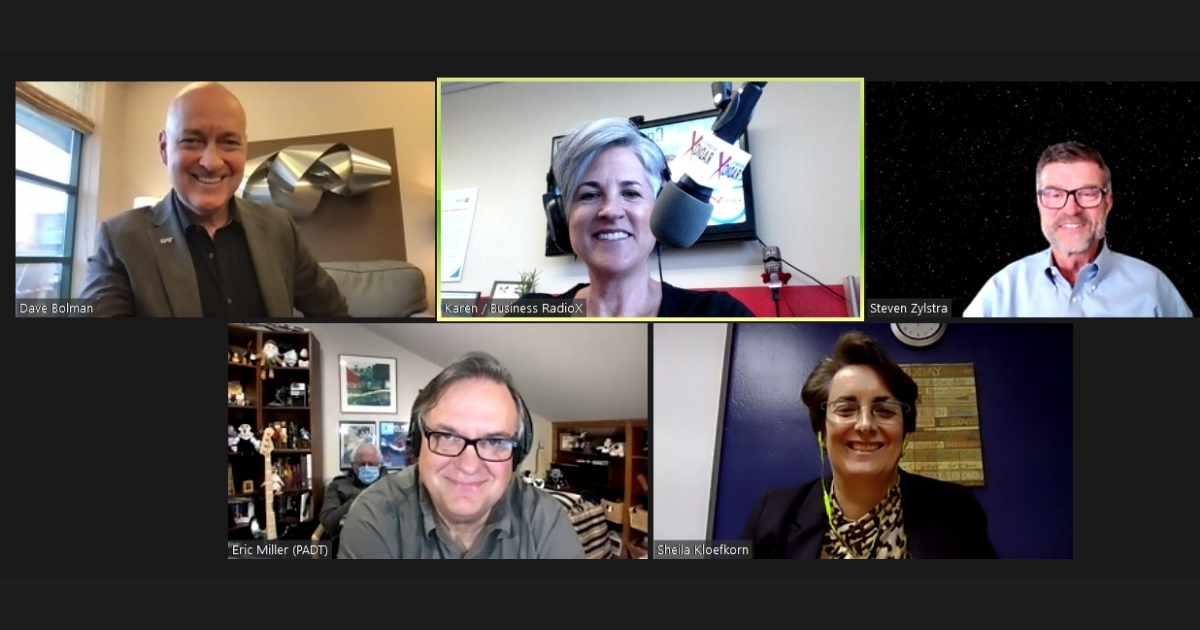
Moderated by Phoenix Business Radio Owner & President Karen Nowicki, a distinguished panel of technology leaders from KEO Marketing, the University of Advancing Technology and PADT, Inc. had an engaging discussion with Arizona Technology Council CEO Steve Zylstra on how the world can rebuild following such a tumultuous year, the new technology to get us there, and the innovative Arizona companies that helped pull us through and gave us optimism for the future.

Visit www.aztechcouncil.org/techcast to view the blog and listen to the replay.

KEO-Marketing-Logo

KEO Marketing, a leading B2B marketing agency in Phoenix, is committed to developing marketing strategies and plans that help clients succeed. Some of the world’s largest brands depend on KEO Marketing for marketing programs that deliver tangible and substantial results.

Led by business growth and B2B marketing expert, Sheila Kloefkorn, KEO Marketing Inc. specializes in innovative marketing strategies that deliver results. Some of these solutions include lead generation and nurturing, integrated marketing, marketing automation, inbound marketing, content marketing, search engine optimization, search marketing, email marketing, creative, video marketing, website design and development, app development, online and traditional advertising, local and mobile marketing and much more.

Visit https://keomarketing.com to elevate your marketing strategies and drive growth for your business.

Sheila-Kloefkorn-headshotSheila Kloefkorn is CEO and President of KEO Marketing, a full service B2B marketing agency. The company specializes in marketing strategy, messaging, digital infrastructure, execution and analytics. KEO Marketing grows Fortune 1000 companies and mid-market businesses.

Kloefkorn was recently named one of the “Top 10 Business Leaders of the Year” and “Top 25 Dynamic Women in Business” by the Phoenix Business Journal and one of 15 Arizonans to Watch by the Arizona Republic.

In addition, she is past President of the Phoenix Chapter of the Business Marketing Association and the American Marketing Association. She is a frequent national and local speaker on a wide range of marketing and business topics.

Follow KEO Marketing on LinkedIn, Facebook, Twitter and Instagram.

University of Advancing Technology (UAT) is a private and family-owned university that merges the values of the traditional academy with the modern technology campus, a fusion that enhances its ability to fulfill the mission of educating students in the fields of advancing technology who innovate for the future. UAT-log300DPI

At the heart of UAT’s curricula is a technology-infused campus in Tempe, Arizona. This fusion of the traditional academy with the technology-focused curricula creates a distinct, non-exclusionary university in which students learn to value their own uniqueness and the power of technology in education.

Visit https://www.uat.edu to learn more.

David-Bolman-headshotcroppedProvost Bolman has focused his career upon the profound need for a substantial and diverse workforce within Arizona and the nation.

As its long-standing provost, Dr. Bolman has built the University of Advancing Technology (UAT) into a unique, all-STEM institution that marries the best of a traditional, small, private college with the genetics of innovation that come with agile technology organizations.

As an educator, he has focused on cultivating a base of technology students and future inventors. As a technologist, he has worked to create a university where the culture of innovation and creation is so regular and celebrated that the goal for each student is to graduate having worked on numerous teams and built complete solutions again and again.

Dr. Bolman has researched, written and spoken on the nature of technology and how to successfully lead innovation. He is an alumni of Valley Leadership and currently serves as its past board chair. He serves on the Board of Directors for the Arizona Technology Council and the AZPBS community board.

Follow UAT on LinkedIn, Facebook, Twitter and Instagram.

PADTLogoColor1500x750

PADT, Inc. is a globally recognized engineering product and services company that focuses on helping customers who develop physical products by providing numerical simulation, product development and 3D printing solutions.

PADT’s worldwide reputation for technical excellence and experienced staff is based on its proven record of building long-term win-win partnerships with vendors and customers. Since its establishment in 1994, companies have relied on PADT because “We Make Innovation Work.”

With over 90 employees, PADT services customers from its headquarters at the Arizona State University Research Park in Tempe, Ariz., and from offices in Torrance, California, Littleton, Colorado, Albuquerque, New Mexico, Austin, Texas, and Murray, Utah, as well as through staff members located around the country.

More information on PADT can be found at www.PADTINC.com.

Eric-Miller-headshotEric Miller is a co-owner of Tempe based PADT, Inc., which provides tools and services to companies who design and manufacture physical products. He holds a B.S. in Mechanical Engineering from the University of California, Berkeley and has lived in Arizona since 1986. He started his career focusing on the application of Finite Element Analysis (FEA) to simulate turbine engine components. Over the years he became recognized as an expert user of the ANSYS software tools, solid modeling, and the development of custom software to automate the product simulation and design process.

As a co-founder of PADT in 1994, Eric was able to also pursue his interests in IT, graphic design, 3D Printing, database programming, and small business management. As both PADT and the use of advanced engineering tools grew, Eric became exposed to dozens of different industries and developed his broad understanding of the application of technology for product development and manufacturing.

After over three decades in the industry, Eric is often called upon to write and speak on simulation, design, and 3D printing as well as on startups and the high-tech sector. His outside commitments include the Chairman of the Arizona Technology Council Board of Directors, the BioAccel Advisory Council and Board of Directors, an Entrepreneur in Residence with the Arizona Commerce Authority, and the screening committee of Arizona Technology Investors. He also contributes regularly to the Phoenix Business Journal blog and hosts the All Things ANSYS podcast.

In his spare time Eric enjoys traveling, writing, history, cooking, and learning about new things.

Connect with Eric on LinkedIn and follow PADT on Facebook and Twitter.

About the ShowAZTECHCASTLOGOBRX-4-23-2020

AZ TechCast is dedicated to covering innovation and technology in Arizona and beyond.

Through the art of connected conversation, AZ TechCast’s guests will share their expertise, success stories, news and analysis about the region’s leading startups, companies and emerging technologies, as well as the latest industry trends and critical issues propelling the state’s growing technology ecosystem.

About Your Hosts

Steven-ZylstraSteve Zylstra serves as president and CEO of the Arizona Technology Council, a role he assumed in 2007. He is responsible for strategy, operations, finance and policy development. Zylstra is a vocal spokesman for the value technology can provide in raising social and economic standards in Arizona.

Zylstra serves on numerous councils, committees and boards, was named “Leader of the Year, Technology,” by the Arizona Capitol Times, and “Most Admired Leader” by the Phoenix Business Journal. In addition, he was awarded an honorary doctorate of science in technology from the University of Advancing Technology in Tempe, Ariz.

Zylstra earned a bachelor’s degree in automotive engineering technology from Western Michigan University.

KarenNowickiv2Karen Nowicki is a successful author, speaker and the creator of Deep Impact Leadership™ and SoulMarks Coaching™. She is a two-time recipient of the prestigious national Choice Award® for her book and personal development retreat. Karen was crowned the first-ever “Mompreneur of the Year” Award in 2010 for the southwestern states. She was recognized for her leadership, business acumen, and work-life balance.

Karen has been an expert guest on regional TV and radio shows, including Fox Phoenix Morning Show, Sonoran Living, Good Morning Arizona, The Chat Room, and Mid-Day Arizona. She has been a regular contributor to many print and online magazines – publishing articles and blogs for business and education.

In addition to working with private coaching clients, Karen is also the Owner & President of Phoenix Business RadioX. The Business RadioX Network amplifies the voice of business – serving the Fortune 500,000, not just the Fortune 500. Phoenix Business RadioX helps local businesses and professional associations get the word out about the important work they’re doing to serve their market, profession, and community.

Of all the experiences Karen has had the privilege of participating in over her vast career, she shares that Phoenix Business RadioX is a pinnacle adventure!

Connect with Karen on LinkedIn and follow Phoenix Business RadioX on Facebook and Instagram.

About Our Sponsor

The Arizona Technology Council, Arizona’s only statewide organization serving the technology sector, fosters a climate of innovation to enhance technology in Arizona.

A trusted resource in strengthening Arizona’s technology industry, the Council proactively eliminates impediments that companies face, accelerates the entrepreneurial mindset in the state’s expanding innovation ecosystem, and works to create a destination for companies to be, thrive and stay.

Follow Arizona Technology Council on LinkedIn, Facebook, and Instagram.

AZTClogomainRGBPNG300DPI

Tagged With: 3D Printing, Additive Manufacturing, Arizona Technology Council, B2B marketing agency, Dr. David Bolman, FEA, higher education, Inc., Innovative marketing strategies, KEO Marketing, marketing analytics, Marketing Automation, PADT, product development, Product Simulation, startups, STEM education, tech education, University of Advancing Technology

Decision Vision Episode 97: Should I Work With Startups? – An Interview with Harlan Jacobs, Genesis Business Centers

December 31, 2020 by John Ray

Genesis Business Centers
Decision Vision
Decision Vision Episode 97: Should I Work With Startups? - An Interview with Harlan Jacobs, Genesis Business Centers
Loading
00:00 /
RSS Feed
Share
Link
Embed

Download file

Decision Vision Episode 97:  Should I Work With Startups? – An Interview with Harlan Jacobs, Genesis Business Centers, Ltd.

Harlan Jacobs of Genesis Business Centers joins host Mike Blake of Brady Ware & Company to discuss the issues involved in doing business with startups, whether as a mentor, services provider or corporation.   “Decision Vision” is presented by Brady Ware & Company.

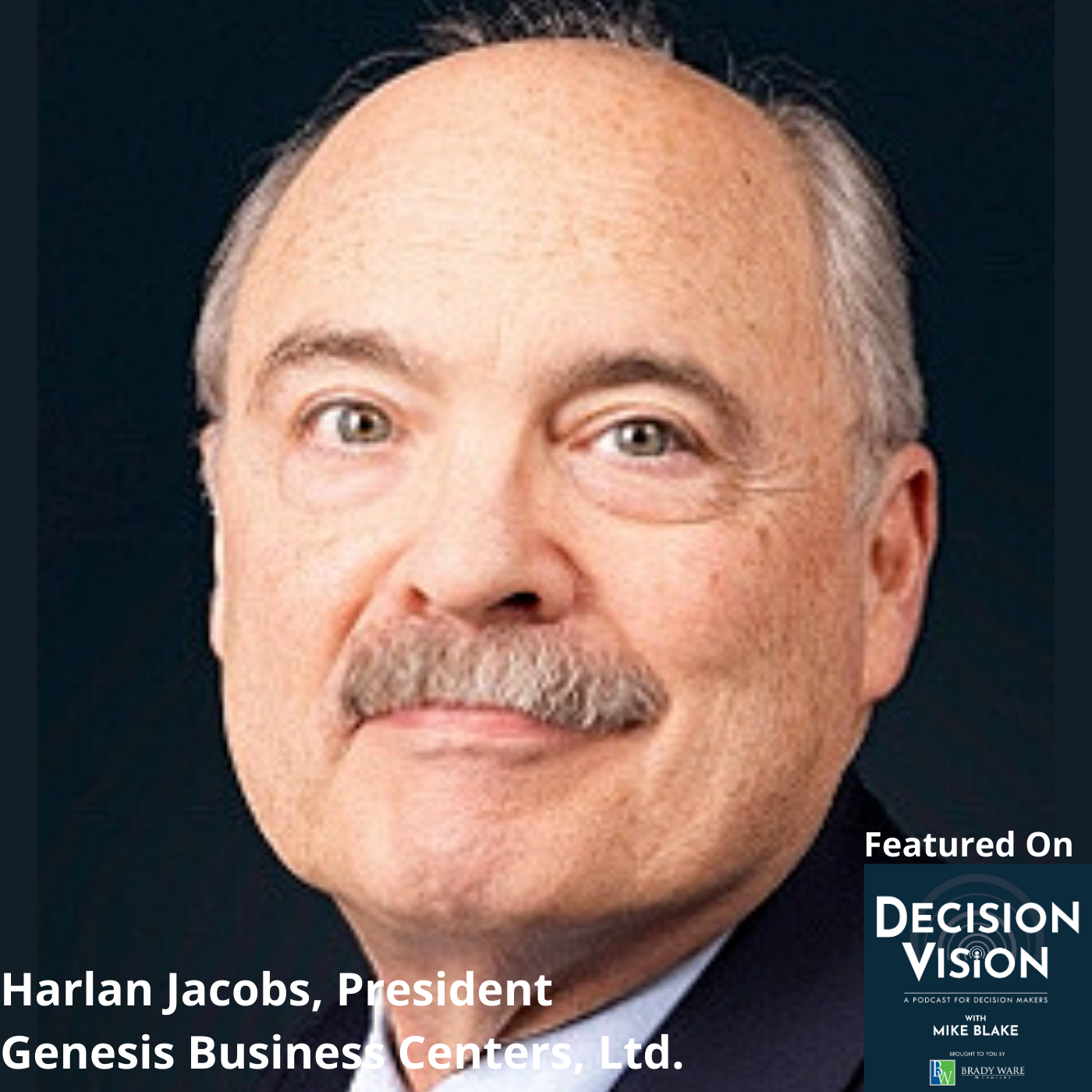
Harlan Jacobs, President, Genesis Business Centers, Ltd.

Genesis Business Centers, Ltd. offers specialized services to high tech inventors and entrepreneurs in respect of assistance with raising initial seed and venture capital, as well as international licensing and/or joint venture agreements. Genesis also provides Acting CFO services.

Harlan Jacobs is the founder and president of Genesis Business Centers, Ltd., a diversified high tech, for-profit incubator program established in 1993. Mr. Jacobs is a seasoned CFO with over 20 years experience as a corporate controller and treasurer prior to becoming involved in the fields of incubation and early-stage venture (seed) capital. He was the CFO for FilmTec Corporation, a successful Minnesota high tech start-up company with a unique reverse osmosis membrane technology. Formed in 1977 with only $100,000 of founders capital, the company went public in 1979.

In 1985, with sales of $10 million and net income of $1.5 million, FilmTec was sold to Dow Chemical for $75 million in cash! Mr. Jacobs was actively involved in the acquisition negotiations.

Over the years he became interested in other early-stage, high tech companies like FilmTec. Most of the companies in which he invested were having great difficulty raising the first $250,000 of capital. Paying the rent and having adequate business advisory services available early-on were common laments among the management teams he interviewed for his prospective investments.

A business opportunity seemed obvious. In 1993 he founded one of the most progressive high-tech business incubator programs in Minnesota, if not in the U.S., by offering to barter rent and “Acting CFO” services for a negotiated equity position in its incubatee companies. This bartering program has become a cornerstone of the Genesis Incubator program.

In recognition of his efforts and success in helping small businesses raise capital and get off the ground, Mr. Jacobs was appointed by Senator Rod Grams to serve as his delegate to the White House Conference on Small Business in 1995, and again as his delegate to the Congressional Small Business Conference, held in Washington, D.C., in June 2000.

Successful graduates of the Genesis Incubator program include SurVivaLink, a manufacturer of portable battery operated defibrillators that was acquired by Cardiac Sciences (stock symbol: DFIB), NT International, a specialty sensor manufacturer that was acquired by Entegris (stock symbol: ENTG), and Excorp Medical, a bioartificial liver company whose system recently received FDA “orphan drug” designation, a significant approval step.

Other promising graduates and client firms of the Genesis program (and their technologies) include CYMBET, (infinitely rechargeable lithium ion polymer battery depositions on silicon substrates), Zivix, a new electronic guitar system for use with iPads™ and the like, GEL-DEL Technologies (tissue engineering), and Electronic Materials, LLC.

Electronic Materials may very well have a “basic patent” and therefore be in a position to engage in significant licensing transactions whenever an electronics company or others utilize a computer controlled ink jet nozzle for the deposition of electronic circuitry on flexible substrates. Genesis is assisting the company to secure licensing agreements on a global basis.

Jacobs’ personal track record of investment in private placement offerings such as in Recovery Engineering, Inc. ($1.00 per share in 1986–acquired by Procter and Gamble in 1999 for $35 per share) has helped to engender the confidence of those third parties who utilize the Genesis Incubator program as a high quality screen for selecting investment candidates.

Genesis works regularly with community development organizations that wish to bring high tech jobs to their communities. Genesis helps to establish business angel networks and community-based seed capital funds that receive funding from utility companies and commercial banks (in fulfillment of the letter and spirit of the law in respect of the Community Reinvestment Act) as well as from high net worth individuals who wish to help their communities to grow and prosper.

Mike Blake, Brady Ware & Company

Mike Blake, Host of the “Decision Vision” podcast series

Michael Blake is the host of the “Decision Vision” podcast series and a Director of Brady Ware & Company. Mike specializes in the valuation of intellectual property-driven firms, such as software firms, aerospace firms, and professional services firms, most frequently in the capacity as a transaction advisor, helping clients obtain great outcomes from complex transaction opportunities. He is also a specialist in the appraisal of intellectual properties as stand-alone assets, such as software, trade secrets, and patents.

Mike has been a full-time business appraiser for 13 years with public accounting firms, boutique business appraisal firms, and an owner of his own firm. Prior to that, he spent 8 years in venture capital and investment banking, including transactions in the U.S., Israel, Russia, Ukraine, and Belarus.

Brady Ware & Company

Brady Ware & Company is a regional full-service accounting and advisory firm which helps businesses and entrepreneurs make visions a reality. Brady Ware services clients nationally from its offices in Alpharetta, GA; Columbus and Dayton, OH; and Richmond, IN. The firm is growth-minded, committed to the regions in which they operate, and most importantly, they make significant investments in their people and service offerings to meet the changing financial needs of those they are privileged to serve. The firm is dedicated to providing results that make a difference for its clients.

Decision Vision Podcast Series

“Decision Vision” is a podcast covering topics and issues facing small business owners and connecting them with solutions from leading experts. This series is presented by Brady Ware & Company. If you are a decision-maker for a small business, we’d love to hear from you. Contact us at decisionvision@bradyware.com and make sure to listen to every Thursday to the “Decision Vision” podcast.

Past episodes of “Decision Vision” can be found at decisionvisionpodcast.com. “Decision Vision” is produced and broadcast by the North Fulton studio of Business RadioX®.

Visit Brady Ware & Company on social media:

LinkedIn:  https://www.linkedin.com/company/brady-ware/

Facebook: https://www.facebook.com/bradywareCPAs/

Twitter: https://twitter.com/BradyWare

Instagram: https://www.instagram.com/bradywarecompany/

Show Transcript

Intro: [00:00:02] Welcome to Decision Vision, a podcast series focusing on critical business decisions. Brought to you by Brady Ware & Company. Brady Ware is a regional, full-service accounting and advisory firm that helps businesses and entrepreneurs make visions a reality

Mike Blake: [00:00:22] Welcome to Decision Vision, the podcast giving you, the listener, clear vision to make great decisions. In each episode, we discuss the process of decision making on a different topic from the business owner’s or executive’s perspective. We aren’t necessarily telling you what to do, but we can put you in a position to make an informed decision on your own and understand when you might need help along the way.

Mike Blake: [00:00:40] My name is Mike Blake, and I’m your host for today’s program. I’m a Director at Brady Ware & Company, a full-service accounting firm based in Dayton, Ohio, with offices in Dayton; Columbus, Ohio; Richmond, Indiana; and Alpharetta, Georgia. Brady Ware is sponsoring this podcast, which is being recorded in Atlanta per social distancing protocols. If you like this podcast, please subscribe on your favorite podcast aggregator, and please consider leaving a review of the podcast as well.

Mike Blake: [00:01:06] So, today’s topic is share work with startups. And I think a lot of people are faced with this choice. And the choice may come in one or two forms. It could be, like myself, in the form of being a trusted adviser and a service provider. And it can also be in the context of being offered employment. Startups, like any other company, they need good talent. I mean, great talent. And I would argue that startups need great talent more than anybody because they don’t have the margin for error that other companies do.

Mike Blake: [00:01:45] But it’s not that easy of a decision. Startups, they’re are different animal. They’re a different animal in terms of the pace of how they do things. By definition, you’re operating in an environment of tremendous uncertainty. How much and whether you get paid can be a significant question. You may be asked to take stock in form of compensation, or warrants, or equity, or something. And there are other complications as well.

Mike Blake: [00:02:19] And so, the thing about startups is that working with startups is pretty sexy. Back when we have cocktail parties again, they’ll make for great cocktail party stories. But what I want to get into today with our guest is, is it more than a cocktail party story? How do you think about it? How do you make the decision whether or not you’re open to working with startups? How do you make that work for you? And how do you get the best benefit from it? And how does the startup benefit from that?

Mike Blake: [00:02:49] So, joining us today is Harlan Jacobs of Genesis Business Centers, Ltd. Genesis Business Centers offer specialized services to high-tech inventors and entrepreneurs in respect to of assistance with raising initial seed and venture capital, as well as international licensing and joint venture agreements. They also provide acting CFO services. Harlan Jacobs is the founder and president of Genesis Business Centers, and they’re established in 1993. That’s 27 years. So, they’re doing something right because if they’re doing it wrong, they’re doing it for an awfully long time.

Mike Blake: [00:03:23] Mr. Jacobs is a seasoned CFO with over 20 years of experience as a corporate comptroller and treasurer prior to becoming involved in the fields of business incubation and early stage venture seed capital. Harlan is also active internationally and is acting executive director of the American Israel Chamber of Commerce of Minnesota and is the vice chairman of the Swedish American Chamber of Commerce of Minnesota. Harlan Jacobs, welcome to the program.

Harlan Jacobs, Genesis Business Centers: [00:03:48] Thank you very much, Mike. It’s great to be here. Thanks for the invitation.

Mike Blake: [00:03:52] So, let’s start off easy here. In your mind, what constitutes a startup? I want to get that out there because I think a startup can mean different things to different people at different times from different perspectives. So, in your mind, if somebody asks you to kind of define a startup, what does that look like to you?

Harlan Jacobs, Genesis Business Centers: [00:04:15] Great question. And I wish the headline writers in the newspapers and magazines would come on a standardized definition what’s a startup. To get to your point, basically, I think that the public would be well served, your viewers and readers, to understand that it’s usually a brand=new company that’s been formed or is about to be formed, and they intend to develop and commercialize a particular product or service, usually high tech, but not necessarily high tech, and there’s a sense that this new idea or invention has great value and unique characteristics that put it in the category of a breakthrough technology that could very well be disruptive; and therefore, generate sales and profits, and ultimately capital gains for the founders and the initial investors. That’s my nutshell version of a startup.

Mike Blake: [00:05:10] So, you have a background, you’ve had some success in large companies, and you’ve had success with with small companies and startups, and you work with startups now on a daily basis. What is s that experience like? How is it working with a startup versus a more established company? And maybe in your answer, you could touch upon what is that transition like? If you’re used to working in that larger environment, what is the culture shock like going from a larger company to a startup?

Harlan Jacobs, Genesis Business Centers: [00:05:41] Again, another great question. When I try to acquaint people who have no experience with startups but are enamored from their various cocktail party conversations that they’ve been a party to, and they say, “Hey, I’d like to learn more about startups,” I start them out with a differentiation as follows. In a startup, to make the payroll, you’ve got to be able to build a product, sell a product, collect the receivable, cover all the expenses, and then have money left to pay the payroll in yourself; whereas, the big company experience that many of these people come from is the idea of making payroll, as you call the payroll department, and they issue the checks.

Harlan Jacobs, Genesis Business Centers: [00:06:21] So, it’s a whole different world and a person has to be capable of doing many things. The person that’s involved in engineering but also has a flair for sales and marketing will be very valuable as opposed to the salesperson who can only sell or the engineer who can only do engineering. And it’s just literally a different world.

Mike Blake: [00:06:44] Yes. So, interesting you mention that. So, in your mind then, somebody who’s a good fit for a startup might be somebody who’s comfortable playing many roles as opposed to being strictly a deep specialist.

Harlan Jacobs, Genesis Business Centers: [00:06:55] Absolutely. The cross disciplinarian, to borrow a term, is a characteristic of many successful tech entrepreneurs. And in the company I was with back in the ’80s, Film Tech Corporation, we had an engineer who was also very good at sales and marketing. And so, he went out around the world and helped sell the reverse osmosis desalination membranes, even though he could have been back in the office helping with the engineering. And there was an example of a good successful cross disciplinarian.

Mike Blake: [00:07:29] So, you said something there initially, and you said something that I think a lot of people, they’re going to pick their ears, which is the difference in startup – and I think this is a really strong definition – a startup versus established company is how you make payroll. One is you’ve got to make sure there’s money in the account. The other is you call the payroll department. That might be enough to kind of scare a lot of people away if you don’t know how payroll is going to be made. In spite of that, why do you and others find it attractive to work with startups in spite of that uncertainty?

Harlan Jacobs, Genesis Business Centers: [00:08:06] It might sound corny to say, but there’s really a lot of excitement and energy involved in being with a startup. Whatever your relationship, whether you’re an employee, a founder, a service provider or an adviser, you’ve got a chance to bring world-class, disruptive technology to the marketplace, and you’re working with people who are extremely skilled in a particular technical discipline. And you might be part of the next Microsoft, you might be part of the next Medtronic, which is a success story here in Minnesota, or you might be part of the next film tech, which was the company I had the privilege of working with.

Harlan Jacobs, Genesis Business Centers: [00:08:48] And it’s very exciting to be part of that, but what a lot of people don’t realize is during the excitement, there’s also a lot of periods that are terrifying, frustrating, and you’re coming close to the edge of the cliff. And it’s easy to be excited and interested in the exciting aspects of it, and very few people have a comprehensive, in-depth understanding of the terror that’s involved in being part of a startup.

Harlan Jacobs, Genesis Business Centers: [00:09:17] I’ll give you an example. About 25 years ago, I was an adviser to a company, and I got a frantic call on a Sunday afternoon about 5:00 p.m. And I could tell that there was distress in the caller’s voice. And he explained to me that he didn’t know how he was going to make payroll. And I said, “Well, didn’t you plan for this?” He said, “Well, I was supposed to get a check on Wednesday from this guy, and then it didn’t come Wednesday. And then, the guy said he’ll put it in the Federal Express, and then it didn’t come on Friday. Then, he assured me it was there, and it didn’t come Saturday. But I released the payroll checks on Friday. What do I do now?” And a friend of mine who coined the phrase “the roommate factor.” What’s it like to be an adviser, or a board member, or an officer of a company that had all the other challenges? And then, all of a sudden, on a Sunday at 5:00 p.m., you hear about a new challenge that you can’t solve, and you just have to help the person through a crisis.

Mike Blake: [00:10:23] And that is sort of one, I think, of the attractions of being an adviser to a startup that there’s a clear path to making a difference, right? If I were an adviser to, say, Coca-Cola – and I’m not, but I’m just going to pick that because they’re down the street from me – I give them a piece of advice. If they take it, yay! If they don’t take it, life is going to go on, right? Coca-Cola has been around for 120 years. They will be around long after I’m anywhere near this place. With a startup though, the advice that you give them, the help that they give you through a crisis can often make the difference as to whether or not that company’s around or not.

Harlan Jacobs, Genesis Business Centers: [00:11:03] Absolutely.

Mike Blake: [00:11:04] So, do you have an ending to that story? How did they work their way through that crisis? Did they make payroll? They bounced paychecks, and the workers showed up with torches and pitchforks? What happened?

Harlan Jacobs, Genesis Business Centers: [00:11:17] Well, we we spoke to the banker and arranged for an immediate small short-term loan that required the founder to make a personal guarantee, which he promised his wife he would never do, but he had to. So, it wasn’t easy to talk him into it, but he had no choice. And it was his problem, he had to solve it.

Mike Blake: [00:11:41] Well. But the good news, and this is a topic for a different podcast, but he may not have thought of even that option if you haven’t been around him, a sort of an adviser to help him think of that. You’re in crisis. You’re hyperventilating because you think your company is about to collapse. And you might think the last thing that you’re going to be able to do is call a bank, the most risk averse of financing sources, and that’s going to be the source of your funding literally overnight, so that those checks clear.

Harlan Jacobs, Genesis Business Centers: [00:12:17] He was lucky, and it turned out well, and he learned a lesson, and eventually went on to great success. But it’s those kinds of experiences that when you sign on to be an adviser or a member of the team, whatever your status, it’s so hard to anticipate every possible thing that could go wrong. And at the end of the day, you’re dealing with people, not machines and not algorithms. And people can do odd things. They can be creative, and they can be destructive.

Mike Blake: [00:12:50] So, other than … and kind of on the payment side, and that is a risk too is that startups can’t service probably can’t pay you your full rate, and you may be in deferred … some people offer deferred payment programs. And I was, in fact, on the phone today with a law firm that has deferred payment programs for startups, and that payment may or may not materialize. But in addition to that, are there other risks of working with startups that somebody listening to this podcast should be aware of, whether they’re thinking about taking one on as a client or actually joining one as an employee or an officer?

Harlan Jacobs, Genesis Business Centers: [00:13:31] Beyond the obvious compensation issues, whether you get a paycheck, and it never happens, or whether you don’t get as much you’re supposed to get, or whether your fees are ever paid, or you get Chinese paper, and you put it on your wall 10 years later, there are other issues that anyone who’s going to join, whether as an employee, an officer, or a director, has to be mindful of. And I’m not giving legal advice but I can tell you my opinion that it’s very important for anyone who is in a role to be a helper in those capacities to be mindful of the fact that if you have check signing authority, whether you’re an employee or an officer, and if you’re a director, and the payroll withholdings aren’t remitted to the state and federal authorities in full on time, or whether the worker’s compensation insurance premiums haven’t been paid and/or if there’s back salaries and wages that haven’t been paid, you may be personally responsible and liable for that. I think the term is joint and several liability.

Harlan Jacobs, Genesis Business Centers: [00:14:39] Again, I’m not an attorney. I’m not giving legal advice, but as a person who is going to be in the trenches, one still needs to have a basic understanding of the law as it pertains to his or her personal liability. So, that’s a factor. And I’ve seen this before where, for example, in my field, someone says, “Oh, would you be our treasurer? We need someone to be the treasurer.” And I have to explain to them, “I will provide you the functions and benefits of the comptroller, or treasurer, or CFO, but I can’t accept check-signing authority because of the personal liability that’s associated with it.” And sometimes, they just don’t want to put the energy into understanding the nuance of what I’ve explained to them, but I have no choice. I can’t wake up some morning, and open my mail, and find out that the IRS wants me to pay $25,000 because I’m the only person they can find who was somehow associated in that check-signing capacity. So, that’s one of the issues.

Harlan Jacobs, Genesis Business Centers: [00:15:37] The other issue, if you’re a director, you may be liable for other damages, and the cost of defending yourself, whether the lawsuit is successful or unsuccessful. So, compensation is a whole different animal, but the downside of helping in a certain capacity is something that I think is not as well understood as it should be by someone who’s knowingly wanting to get involved. You can be an adviser or an ordinary employee and not have those perils, but if you’re a nice guy or gal, and you decide to accept the appointment as the acting CFO, and they want you to sign on the check form at the bank, beware.

Mike Blake: [00:16:22] And I think that’s really important that I want to kind of highlight this a little bit because one of the potential attractions of working for a startup is you may get a title that you might not have had the opportunity to get otherwise. You may just not have the seniority, haven’t put in your dues, or whatever it is. And all of a sudden, you become a chief something officer. And that sounds great, but being an officer of a company means something. And if you’ve got that O part at the end of your title, that does mean that, most likely … I’m not giving legal advice for sure, but there is a substantial risk that you’re being put effectively in a fiduciary position to shareholders and/or employees.

Mike Blake: [00:17:17] And this is under appreciated, as much as anything, that’s why people have that title to get paid as much as they do. It’s not just because of their skill set, and their seniority, and whatever education they have but, also, simply, the willingness to take on that responsibility because you can’t just walk away from it. And  that’s meaningful. And I can’t agree with you more that once you light the stars out of your eyes, sit down with your own legal counsel and work through what being an officer really means and put you on the hook for. And that will likely also differ state to state. So, that’s one of those things, I think, is going to be more local in terms of how the law works than is national in scope.

Harlan Jacobs, Genesis Business Centers: [00:18:07] I would add that there’s, also, the potential damage to one’s reputation and standing in the community. One might be enamored of a new pump or a new contrivance of device and not have a good grounding in the laws of thermodynamics and inertia, and doesn’t know how to perform, and wouldn’t know what the results were from a test that did a mass energy balance. But at the end of the day, if that company raised money, and it took two and a half years to find out that the basic principles of physics or the operation of it wasn’t either possible or cost effective, then everybody turns to anybody who can be pointed at and blames them for failure to provide proper oversight.

Harlan Jacobs, Genesis Business Centers: [00:18:56] And it’s a classic unknown unknowns, and it’s a danger to one’s reputation. And look at the people – and I won’t cite the exact name of the company that starts with the letter T, but there was a company in California that raised a lot of money and had some cabinet members on its board of directors, and it ended up being a well publicized failure. And I have to watch my words judiciously here, but think of all the people who get invited to a board, and they’re enamored like a moth to the flame, and then two years later, they find out it was either a hoax or it should have been understood that it could never possibly work, the thermodynamics weren’t there, the chemistry wasn’t there, the cost effectiveness wasn’t there. So, another point of risk.

Mike Blake: [00:19:49] Yeah. That actually gives me a … I’m going to write down a note here. We really should have a podcast, should I serve on a board, because that enters into that discussion, right? And there’s a lot of attractiveness to serving on a board. It’s prestigious. It can be very well compensated. It can be a very rewarding work. But there is a downside that if things don’t work out, you can very easily be left holding the bag.

Mike Blake: [00:20:15] So, Harlan, you’ve been working with startups a good chunk of your career. And I’m curious, in your in your experience, what are the most frequent needs? What does startups most frequently need help with?

Harlan Jacobs, Genesis Business Centers: [00:20:33] Well, another friend of mine coached the phrase, came up with a phrase, coaching and cash, capital and coaching. They clearly need capital, but they also need to understand how to start a business, how to grow a business, how to utilize the capital, so that they can go back for another round of capital when they’re, in all likelihood, going to need several rounds of capital. So, they have to be educable. They have to be able to process advice.

Harlan Jacobs, Genesis Business Centers: [00:21:06] Not every piece of advice that I or anybody is going to give to a client is going to be the absolute best advice to take, but they have to be able to listen to advice, and to know how to separate the wheat from the chaff, and follow the good advice more often than not. And if they listen to experienced people, they’re going to be better off, they’ll have higher prospects for success in growing their business and raising capital, utilizing the capital successfully, and going back, and getting another round at a valuation that doesn’t result in what we sometimes call a down round or a cramdown.

Mike Blake: [00:21:47] So, the capital on the coaching side, what do you find yourself coaching people most frequently about?

Harlan Jacobs, Genesis Business Centers: [00:21:56] I’m so glad you asked that question. If there’s one thing that I’d really like to do with the entrepreneurial world to help them would be to help them get away from percentages. I wish I had a $20 bill, a crisp $20 for every time an entrepreneur has come to me, and it must be in the DNA, they start telling me about how they want to do this percentage to this person, that percentage, that percentage. Stop. Again, I’m not giving legal advice, but I say the person is going to remember five years from now that they had 2% of the company. Now, what you should have said at that was at that point in time, you’ll have 2% of the company, and we’re going to have successive rounds of capital, and eventually, you’re going to have a much smaller slice of the pie, but the pie is going to be much larger.

Harlan Jacobs, Genesis Business Centers: [00:22:50] I wish I could get most entrepreneurs, especially the people who come from a scientific technical domain, to understand that shares are issued in exchange for services and capital. And at some point in time, those shares have a percentage relationship to the total number of shares issued in outstanding. But get away from the concept of an absolute percentages. You don’t take percentages out of the corporate treasury and bestow them at sword point on someone’s shoulder. You issue shares of stock, and then you can calculate the percentages of ownership in a table.

Harlan Jacobs, Genesis Business Centers: [00:23:27] And that can get them in so much trouble because they didn’t intend to mislead anybody, but five years from now, when somebody has a big success, their attorney calls him up and says, “Well, John Jones or Susan Smith said, you promised them 2%,” and you have to make a settlement to make the problem go away.

Mike Blake: [00:23:48] That’s interesting. So, I imagine a lot of those cases is there’s that promise. That’s not even a written promise, is it?

Harlan Jacobs, Genesis Business Centers: [00:23:56] Right.

Mike Blake: [00:23:56] It’s just a verbal promise. And I think a lot of people don’t understand this. And again, I’m not an attorney either but I have seen it where that implied promise is, at least, enough to get you to court. You may not win, but winning a court case is distracting and expensive, right? And there’s just enough leverage. As long as you get a judge to take the case, then that person that claims that have received the promise, they all of a sudden have a lot of leverage.

Harlan Jacobs, Genesis Business Centers: [00:24:30] I think there was a movie made about a famous case in the last 10 years, but I’ll leave that to your listeners’ imagination to figure out which one I’m talking about.

Mike Blake: [00:24:40] So. I think a common misperception or just a common perception of startups is, I mean, they just can’t pay. And you’ve been working with startups for 27 years. I can’t imagine that they’ve done that all for free. So, I’m just going to put the question to you. Can startups pay?

Harlan Jacobs, Genesis Business Centers: [00:25:02] Some can pay a small amount initially, and some can offer you a generous amount of founder’s stock, and some can offer a generous stock option or warrant depending on whether you’re an employee or whether you’re an independent contractor. I caution everybody who’s inclined to take less than market rate compensation in cash that they should be mindful that the percentages are very low. The percentage of companies that have a liquidity event of meaningful return on capital could be as little as one out of a hundred.

Harlan Jacobs, Genesis Business Centers: [00:25:37] And so, I try to put it in perspective, I explain to them, you might have to work with a hundred startups over the next 20 years for which you take warrants, or founder stock, or options. And maybe one out of a hundred, maybe two or three out of a hundred will give you a return on investment. So, it’s not for the fainthearted, and it’s not for people who have to put braces on the kids’ teeth, and send high school students on to college, unless they’re independently wealthy to begin with.

Mike Blake: [00:26:07] So, you mentioned something I want to touch upon, and I hope we’ll spend some time here because I do think it’s important and it’s complicated. And that is you may very well be offered stock, or warrants, or options in lieu of cash payment. And in your mind, how do you think through that, whether or not you’re willing to accept them at all, whether you’re being offered enough, or if there are terms that are being sufficiently flexible that you can actually do something with them? Can you walk through how you think about that in terms of being offered equity, or what you think best practices would look like?

Harlan Jacobs, Genesis Business Centers: [00:26:47] Sure. Well, for acting CFO services and for helping a scruffy little startup to raise its first quarter million to a million dollars’ worth of capital, in the past, sometimes I’ve accepted 10 percent of the founders stock. I’ll give you a case in point, without embarrassing the company. I had a company that I once owned 5% of the company for a remittance of $50, and I now own 0.0005% of the company. The company had eight venture capital rounds, preference rounds, where the B investors had their way with the A investors all the way up to the only guys that had a decent percentage of the company with a final in the eighth round. Sad story.

Harlan Jacobs, Genesis Business Centers: [00:27:40] So, having said that, it didn’t turn out well, but I made the calculus up front that if I own 5% of the company, maybe by the time there was a liquidity event, I might have 0.5% of a very large pie. And if they sell the company for a couple hundred million dollars, you take 0.05% of that proceeds of the liquidity event, that might be a meaningful amount of return on investment and capital gains rates versus maybe the $25,000 that you could have received if they would have had cash and paid you at market rates at that point in time.

Harlan Jacobs, Genesis Business Centers: [00:28:22] So, it’s your classic trade-off. You can’t do it every day. And sometimes, what you have to do is a combined cash and warrants approach. And sometimes, you just have to insist on cash. And I’ve had cases where people have come back to me, literally, this year from 2012. They weren’t quite ready in 2012. And this year, they were finally ready. And I was grateful that they kept me in line and got back to me.

Mike Blake: [00:28:53] I think that’s important is just because you no to stock now, that doesn’t mean that that opportunity will come back around later, right? So, I think what’s also kind of interesting about the dynamic of that equation is you are giving sort of a signaling effect. If somebody comes to me for advice, or they want me to provide a service, they offer stock, and I say yes versus no. I’m, in effect, blessing that stock or not blessing that stock by being willing to exchange my time for it. And that can sort of lead to its own challenges in that conversation.

Mike Blake: [00:29:41] And maybe someone’s listening to this, and they’re offered stock, they really just don’t want stock, but they like to work with the company, can you offer some advice and kind of what you say or how you handle that conversation? They say, “Look, just because I’m not taking stock doesn’t mean I hate your company. It just means I’m not taking stock right now.” How do you handle that conversation?

Harlan Jacobs, Genesis Business Centers: [00:30:06] Well, in terms of the interpersonal dynamics, the diplomacy, the desire to maintain goodwill and cordial relations with the person, obviously, one has to be tactful. Sometimes, it’s just a matter of explaining the truth. My spouse won’t let me work for stock anymore. We’ve had a couple of wallpaper items we put on the wall, they’re decorative, and the stock wasn’t worth anything. And again, as you point out, you never know when the people might come back after they do have some funding. I’m not sure if that responds to your question. Would you mind going over it again?

Mike Blake: [00:30:48] Yeah. Well, I think we’re headed in the right direction. So, that the question simply is or the question is, there’s a risk of offending somebody to some extent when you decline to take stock in their company, right? I mean, they think their company is great. And of course, even if you’re going to work for the company, if you’re going to be an adviser, they have an idea in their mind, they would like you to believe in the company as much as they do, right? But I think that that’s not appropriate. I mean, it’s great if you do happen to share the founder’s zeal, and that’s great. But it’s not appropriate that an adviser or an employee necessarily have the same fervor and devotion to the company and to the idea of the company as the founder because nobody can act like a founder unless they’re a founder, right?

Harlan Jacobs, Genesis Business Centers: [00:31:41] Well, your points are well taken. Here’s one of the ways I helped put it in a framework that depersonalizes it and helps to make sure that the person’s feelings aren’t hurt or their self-image crushed. I explain to them, this is a rank startup. I said, “You’re going to need $250,000.” A person sometimes says to me, especially a scientific technical person, “What do you mean $250,000? I’ll work for free for a couple of months.”

Harlan Jacobs, Genesis Business Centers: [00:32:07] I said, “You’re going to need $50,000 of cash for the retainer with the patent attorney. You’re going to need $50,000 retainer with the securities counsel and general counsel who are not going to work for you until you pay them a cash retainer. You’re going to need to go to some trade shows and do some travel. And that’s going to be $50,000. And you’re going to need some walking around money, and money for deposits, and a few other things. These people are not going to take stock from you. You have to have cash.” And then, that puts it in a framework where I can become part of that professional or third-party milieu where we have to be paid.

Mike Blake: [00:32:45] Now, I’m fortunate. I have built it out because I’m a business appraiser, I cannot. I’m ethically prohibited from taking stock in a company because they create a conflict of interest. So, I’m fortunate. I have an automatic jail free card. So, there’s a school of thought that suggests that it may be worthwhile going to work for a startup just because of the experience that it will give you. Do you think there’s something to that? Is there something that putting some time in with a startup, even if the pay isn’t there, just because it would give you a chance to learn new skills that you wouldn’t ordinarily have the the opportunity to do?

Harlan Jacobs, Genesis Business Centers: [00:33:27] In an absolute sense, if a person can afford the risk or can literally afford not to have any meaningful compensation for a period of time, and they have a well-defined need to learn certain skill sets, and to firsthand experience the problem, stresses and frustrations of a startup company, then by all means, they should do that. I haven’t met too many people who wanted it as a merit badge or something to add to the resume that they’ve had firsthand experience of the frustrations and problems associated with the startup. They, more likely, are inclined to get involved because they’re excited about the project.

Harlan Jacobs, Genesis Business Centers: [00:34:10] That might be a golfer and it’s a new golf club. It might be a heart surgeon and a new heart valve. It might be a person who has an airplane and a guy or gal who’s taken an iPad and substituting that for the $50,000 instrument control panel that they’d otherwise have to buy. In those kinds of situations, it makes sense for them to maybe jump in and join. But just to add to your resume, I guess I would have trouble selling that to anybody.

Mike Blake: [00:34:41] What about using work with a startup in order to help build a network and a personal brand? And I can see two scenarios in which this might be plausible. One is you’re out of school, you’re just starting out, and you’ve got sort of a blank slate professionally. Or second, you’re sort of transitioning out of a more conventional role, and you want an opportunity just to start to meet the people in the startup realm, wherever you are. And that could be a local geography. It could be national. Is there something to a thesis of saying, “This is a way to jump start building a network in the space where I would kind of like to be in”?

Harlan Jacobs, Genesis Business Centers: [00:35:24] Well, it’s a great question. If someone were coming right out of college, and the employment market wasn’t very good, and he or she wasn’t burdened by immediate payback of a substantial amount of student loans, then they could very well say to themselves in good conscience, “Hey, why don’t I go to work for this local startup? Maybe they’ll pay me. Maybe they won’t. Maybe they’ll pay me minimum wage. And maybe I’ll get some stock. It’d be great experience. And a lot of people my age, people I have common interest in are there, and who knows where it could lead.” So, that might make sense.

Harlan Jacobs, Genesis Business Centers: [00:35:59] For the person who’s 45 to 55 years old, and has family obligations, and probably hasn’t fully set aside resources for retirement, I don’t think that would be well advised. So, it’s clearly tailored to a person’s personal resources, and risk level, and ability to handle frustration. It’s. tough.

Mike Blake: [00:36:25] Yeah. And when I hear people that do that, to me, it just says it’s a dressed up way of saying, “I’m doing an internship.” And if you can do an internship, that’s fine. There’s nothing wrong with it. But like you said, I think a lot of this, just like we talked about in our podcast, not about whether or not you should do it, but part of that thought process is, can you afford to do it, right? What is the opportunity cost of taking on that kind of responsibility versus pursuing something else?

Harlan Jacobs, Genesis Business Centers: [00:36:59] Sure. Can I go back?

Mike Blake: [00:37:01] Please.

Harlan Jacobs, Genesis Business Centers: [00:37:01] Could I go back to one of your other questions? I just wanted to add something to cases where I’m looking at an opportunity. Is it timely? May I do that?

Mike Blake: [00:37:10] Yeah, go right ahead.

Harlan Jacobs, Genesis Business Centers: [00:37:11] Okay. So, I have a rule of fives as to how I size up opportunities, especially as it relates to taking all the compensation as founder stock. And in a nutshell, it’s, does the company have world-class disruptive technology that has robust intellectual property, can be protected by a combination of patents and trade secrets? That’s one. Two, does the company have market prospects for being able to achieve a hundred million dollars of revenue at 60% or higher gross margin within five years of funding? It’s the second one.

Harlan Jacobs, Genesis Business Centers: [00:37:45] Does the company’s management team have a demonstrated track record of achievement in its scientific or technical realm? That’s the third. Does the founder’s team enjoy a good reputation and for integrity and the ability to listen and process advice? That’s the fourth. And the fifth one is, does the founder’s team have a commitment to a liquidity event in a reasonable time event horizon. Those are the five things that I apply when I’m doing my mental version of the Black-Scholes formula.

Mike Blake: [00:38:15] Okay. That’s a pretty good checklist. So, let me switch gears here. If you get involved in a startup, we talked about this a little bit, and I want to expand upon that, as we talked about, there are some risks. There’s a financial risk to some extent. There may be other risks. When you work with startups, how do you protect yourself to make sure that your risk is managed appropriately?

Harlan Jacobs, Genesis Business Centers: [00:38:53] Beside the earlier point about not taking check-signing authority and to protect my reputation, I try to do as much due diligence as I can on the science and technology, not as an expert, but I will go to people who know something about metallurgy, or somebody who knows something about biochemistry, or somebody that knows something about a particular global marketing opportunity. I may not always get sufficient information but, at least, I’ve avoided the possibility of overlooking something that, somewhere down the road, people will point to and say, “Why didn’t you know? Why didn’t you find out this or that kind of a thing?”

Harlan Jacobs, Genesis Business Centers: [00:39:36] One of the real tough things with entrepreneurs is you never know. You’ve just met somebody, and start doing a criminal history on them, and a bankruptcy search, and a few other things that are sometimes difficult or less unpleasant to do, you just never know what the person’s really like or really capable of. One of the risks to the entrepreneurial team is that, oftentimes, there’s a high incidence of family stress that can lead to divorce. I’ve met a number of entrepreneurs who are ultimately very successful. They’ve been through several marriages, and they’ve had problems with some of their children. And it’s that old saw, if they can mistreat their spouse this way or that way, maybe they’re going to eventually mistreat you as a professional. And when people are cornered, and they have real serious problems, you just never know what’s going to develop.

Harlan Jacobs, Genesis Business Centers: [00:40:45] Nothing’s perfect. You can never be fully protected. You just try to do your best with reference checking and checking on the technology. And I guess the bottom line, it makes it easier for me to accept a client after I’ve introduced him to three attorneys, and three CPAs, and three patent attorneys, and three bankers, and three insurance agents, and three of this, that, and the other, and I see that they’ve taken on a prominent attorney whom I respect and a prominent CPA whom I’ve respected, et cetera, et cetera, and they are they’re associated now with good professional people to give them good, strong professional advice. That helps me to get a better comfort level, and it also increases the chances that there will be guardrails that will keep these people from going over the cliff.

Mike Blake: [00:41:37] And what about documentation and contracts? Do you think that’s a big part of that too to make sure that your scope is limited and there’s some sort of indemnification where possible?

Harlan Jacobs, Genesis Business Centers: [00:41:47] Absolutely. I find good fences, make good neighbors, and I explain to them, “Here’s what I’m going to put down on a piece of paper. Here’s what I’m prepared to do. And this is the compensation I’ll accept. And these are the contingencies, and the terms and conditions under which we’re going to operate.” And in my case, I have to explain to them that I may have two, three, four, five, or six parties for whom I’m providing similar services at the same time, but they’re not directly competitive, and there’s no conflict of interest. And on any given time, you might call me with an immediate problem, and I might be unable to give you immediate attention, and you just have to understand that it’s kind of like being a cardiologist in a small town, not everybody’s going to have a heart attack at the same time, but if they do, how do you spread yourself around?

Harlan Jacobs, Genesis Business Centers: [00:42:39] So, you do your best, you have a written agreement. And to extricate yourself from what could be a difficult situation, I always try to make an initial term that has limited duration, so that if I can see things aren’t working out very well, then we just don’t renew because a renewal requires bilateral mutual agreement to renew. And if I declined to renew, then it’s easier that way than just to pick up the phone all of a sudden say, “Hey, I’m just not comfortable. I don’t want to keep working with you. Goodbye.”

Mike Blake: [00:43:14] Yeah. And the contract part, I want to to pause on that for just a second because I think one can be lured into not having documentation when you really should. One, because the startups don’t want to deal with it, right? The startups sort of take as a badge of honor this, “We operate loosey-goosey. We operate out of the lines of of of normalcy. And we don’t care about rules and everything else.” They may also be run by 24-year-olds that don’t know anything, and haven’t had the bruises, and broken bones, and scars that come from not signing agreements.

Mike Blake: [00:43:50] And I think if you don’t come from that world, you can be lulled, you can be seduced, really, into thinking, “Well, that’s just the way startups are. We’re not going to sign agreements. And we’re all just going to do handshakes, and exchange Twitter accounts, and everything’s going to be great.” But for most people, some sort of documentation of the nature of your relationship, and where your liability and responsibility begins and ends. Don’t give in to the temptation to sort of throw that out the window. That’s worth keeping.

Harlan Jacobs, Genesis Business Centers: [00:44:24] That’s good advice. One of the other things I do oftentimes before I’ve accepted a consulting assignment is I will meet with people for coffee and give them some advice over the phone. And I’m always careful to explain to them, “I’m going to help you at this point in time up to a certain point. And for these services that are gratis, I’m happy to help you. At some point in the future, I’m going to come back to you and say, ‘Okay, the introductory period is over. If you’d like to have ongoing services, then, now, we need to have an agreement for services.'” And by telling them that in advance, and then by actually doing some things that are hopefully useful for them, and they appreciate it, it’s more likely that they’re going to take me up on the consulting assignment at the future point.

Harlan Jacobs, Genesis Business Centers: [00:45:15] So many of them are afraid that they signed a contract with you, and you take the retainer, and you do nothing. And I can understand that anxiety on their part. So, I always like to help people with a little bit. And then, if I’ve actually done something pretty good for them, and I say to them, “Okay, now it’s time for the contract,” and they say, “No, thanks,” then, I look up and I go, “Thank you,” because I’ve just found out that this is one of those persons who’s a taker and believes in a sense of entitlement, and I’d rather know that now than a year and a half from now. So, “Thank you. Good luck to you,” and that’s fine.

Mike Blake: [00:45:53] So, that touches on another point. We’re talking with Harlan Jacobs, and we’re talking about working with startups. And I can’t speak for the Minnesota environment but down here in Atlanta, we do have, I think, a very strong pay-it-forward environment here. Many of us who have experience will make ourselves available to give advice and support to startups. I’ve had monthly office hours for a long time. And I’m curious what you think about that model. Is that something you’ve ever done yourself? Have you seen others do it? Do you think it makes sense? Do you think it’s crazy? What does that sort of thing kind of sound like to you?

Harlan Jacobs, Genesis Business Centers: [00:46:37] Well, first off, I compliment you for being part of a community here that does that and for you yourself doing it. That’s a common ethos here in Minnesota. In fact, we’re the home of what’s called The 5% Club, where major corporations, starting with Pillsbury and General Mills, gave 5% of their pre-tax profits to charity.

Harlan Jacobs, Genesis Business Centers: [00:46:58] Now, as to in-person service, paying it forward, paying it back, yeah, that’s part of our ethic, our social ethic here in Minnesota. And I think it’s great. And it helps us to make up for the fact that we’re not a bastion of venture capital. I’ve seen great ideas here fail to get local funding, and these things would have got funding in Silicon Valley; and therefore, they need a lot of extra coaching and talent.

Harlan Jacobs, Genesis Business Centers: [00:47:26] Another problem that we have, which we try to overcome in the mentorship thing, is in Silicon Valley, you fail, and that entitles you to a hearing with the venture capitalists to do another deal. In Minnesota – I don’t know what it’s like in your community – you still get this … remember the book, The Scarlet Letter? Here, you get a scarlet F on your jersey for failure, and you hardly ever get a second round of capital from anybody for your next company if you’ve had a failure in your first company. And that’s a problem that we have here, and it requires extra care and attention on the part of those of us who can help these people.

Harlan Jacobs, Genesis Business Centers: [00:48:05] I was going to be an actuary, and in college we had to study statistics. And I remember a type two error is the rejection of a valid hypothesis. And I’ve seen so many valid hypotheses go unfunded here. In fact, I have companies in the medical device realm, helped them get started in 1996, and they’re still looking for more funding, and the technology is still viable. There’s been no shelf life for it. So, you just have to keep helping these people, whether it’s their first time or whether they’ve been at it for a period of time. It might sound arrogant to say, but it’s sort of a modern-day version of noblesse oblige. If you’ve benefited from other people’s help, it’s time for you to help other people.

Mike Blake: [00:48:51] Yeah, we have a similar concept. We try to push the buttons of the elevator that goes down to pick the next guy up. But we do have that scarlet F here as well, which is unfortunate because I don’t know if there’s any better education than a business failure. And in fact, one of our early podcasts, Miles King came on, I want to say it’s podcast number 12, or 13, or 14, something like that. And he was on a program whose title was “Should I Close My Business?” And he’s had to close a couple of businesses, and he was a courageous guy to come on, and was willing to sort of lay it out there and talk about the failures.

Mike Blake: [00:49:32] And one thing he made very clear, and I’ve learned about him as I’ve gotten to know him, is that the success that he enjoys now is a direct result of what he learned from the previous failures. He didn’t raise external capital. He just simply worked his ass off and bootstrapped it. But I remember when I asked, his first venture was a pizza restaurant and it failed. And I said, “What was your thought process about starting another?” He said, “I had to start another one. Otherwise, everything I invest in the education in the first one would have gone to waste.” And, unfortunately, that’s something only time is going to figure out. There are very few places, unfortunately, that celebrate failure, that see that as the education that it is. And unfortunately, this got to sort of take time.

Mike Blake: [00:50:26] Harlan, we’re running out of time here, and I want to be respectful of your time and, of course, that of the audience. This has been a neat conversation with a lot of good nuggets in it. If people like to contact you for more information to carry on this discussion, can they do so? And if so, what’s the best way to do that?

Harlan Jacobs, Genesis Business Centers: [00:50:45] Sure, I’d be very pleased to hear from any of your colleagues and viewers. Telephone number is 612-701-8153. And the email address is harlangenesis@mac.com. And I’m on LinkedIn. And I guess that’s probably the best way to try.

Mike Blake: [00:51:11] Well, thank you. That’s going to wrap it up for today’s program. I’d like to thank Harlan Jacobs so much for joining us and sharing his expertise with us. We’ll be exploring a new topic each week. So, please tune in, so that when you’re faced with your next business decision, you have clear vision when making it. If you enjoy this podcast, please consider leaving a review with your favorite podcast aggregator. It helps people find us, so that we can help them. Once again, this is Mike Blake. Our sponsor is Brady Ware & Company. And this has been the Decision Vision Podcast.

Tagged With: Brady Ware, Brady Ware & Company, Genesis Business Centers, Harlan Jacobs, Michael Blake, Mike Blake, Minnesota, startups, working with startups

Tisha Pelletier with Tisha Marie Enterprises and Joseph Rosales with The Performance Group of Arizona

November 21, 2020 by Karen

Tisha-Pelletier-with-Tisha-Marie-Enterprises-and-Joseph-Rosales-with-The-Performance-Group-of-Arizona-feature
Phoenix Business Radio
Tisha Pelletier with Tisha Marie Enterprises and Joseph Rosales with The Performance Group of Arizona
Loading
00:00 /
RSS Feed
Share
Link
Embed

Download file

Tisha-Pelletier-with-Tisha-Marie-Enterprises-and-Joseph-Rosales-with-The-Performance-Group-of-Arizona

Tisha Pelletier with Tisha Marie Enterprises and Joseph Rosales with The Performance Group of Arizona

Tisha-Marie-Pelletier-LOGOFINAL-Speaker

Tisha Marie Enterprises, LLC empowers entrepreneurs to make their vision happen through business mentoring, startup business grants, personal brand building, live events, live streams, podcasts and professional speaking engagements.

Tisha-Pelletier-Tisha-Marie-EnterprisesDubbed the “authentic girl with a touch of badass,” Tisha Marie Pelletier brings her infectious energy every time through her storytelling and powerful tips on and offline.

She has served as an emcee and speaker on numerous stages as well as on her platform hosting the Success over Struggle™ live panel and podcast.

In addition to professional speaking, Tisha is the Chief Experience Officer of Tisha Marie Enterprises, a personal brand builder, founder of Social Connect PHX, business mentor, author and mama of two. Nothing gives her more satisfaction than helping and seeing individuals launch their brilliant ideas and go for it!

Connect with Marie on LinkedIn, Facebook, Twitter and Instagram.

The-Performance-Group-Arizona

The Performance Group of Arizona is a business consulting and coaching firm specializing in the development of high performance leaders, managers and teams.

Joseph-Rosales-The-Performance-Group-of-ArizonaJoseph Rosales is the Founder and CEO and has provided services in over 26 countries and is a highly sought after consultant, coach and mentor.

He is published author and recently released his 4th book and digital course titled: The Leader of YOU.

Connect with Joseph on LinkedIn and Facebook.

Tagged With: Author, business, business mentoring, Entrepreneurs, personal branding, speaker, startups

GWBC Radio: Emma Moore with Fundamental

May 5, 2020 by angishields

Fundamental
GWBC Radio
GWBC Radio: Emma Moore with Fundamental
Loading
00:00 /
RSS Feed
Share
Link
Embed

Download file

Logo-fundamental

EmmaMooreEmma Moore is President of Fundamental, an agency that has helped startups as well as large corporations with innovating and quickly iterating on their ideas to produce quantifiable results.

We utilize research and data to produce creative solutions for website, software, and creative ventures.

Connect with Emma on LinkedIn and follow Fundamental on Facebook and Twitter.

Show Transcript

Intro: [00:00:04] Broadcasting live from the Business RadioX studios in Atlanta, Georgia, it’s time for GWBC Radio’s Open for Business. Now, here’s your host,

Lee Kantor: [00:00:18] Lee Kantor here. Proud to be sharing the stories of women business owners that are making things happen. This is, again, Lee Kantor. And I’m proud to have with me today Emma Moore. And she’s with an organization called Fundamental. Welcome, Emma.

Emma Moore: [00:00:34] Thank you. Thank you for having me.

Lee Kantor: [00:00:37] Now, Emma, before we get too far into things, tell us about Fundamental. How do you serve your clients?

Emma Moore: [00:00:44] Well, Fundamental is a full-service agency. So, we have worked on marketing campaigns, as well as startups ranging from Disney to FinTech. So, we’ve been able to kind of become the incubator to test products before they really launch into the full scale of, let’s say, a Costco product.

Lee Kantor: [00:01:05] So, now how’d you get into that line of work?

Emma Moore: [00:01:09] That’s a good question. I just fell in love with computers. I just literally fell in love with it, and I started reading books, and that’s how it worked. I would just practice, and practice, and practice all night long and didn’t sleep for about 10 years. And then, I started hiring other people who had similar passion but better than me. And then, we all kind of fed each other. And it’s been quite a journey.

Lee Kantor: [00:01:37] So, now, when you were going at the beginning, when you were starting out, how did you just kind of battle through the grind of the learning curve?

Emma Moore: [00:01:48] Well, I think there will always be a learning curve. And that battle will continue every day. And that’s one thing. That’s the beauty, as well as the shadow of tech, which is I don’t know anything. I don’t know a thing. And tomorrow, I won’t know anything. But how can I problem solve today to create a result in an ethical way that will serve my clients? And it’s a mindset of making sure that I ask the right questions and I surround myself with people that also ask really good questions and challenging questions. And then, we have that curiosity to make sure it happens.

Lee Kantor: [00:02:26] Now, when you’re working with a client, like what pain are they having where they’re like, “You know what, we’ve got to call em in her team to help us on this”?

Emma Moore: [00:02:38] Well, when we were an agency in Los Angeles, it was mostly just reputation. And it works quite well. So, I hadn’t ever truly advertised Fundamental. I’ve always kind of relied on people just knowing that we could do a really good job, and I felt that that was the best type of advertising.

Lee Kantor: [00:03:02] Now-

Emma Moore: [00:03:02] When it comes to … I think your question was, how do we … please repeat your question for me?

Lee Kantor: [00:03:07] How do you get clients for Fundamental? Like, what’s the challenge that that potential client has where they’re like, “I have to call the Fundamental folks. They’ll be able to help us”?

Emma Moore: [00:03:20] Thank you. Well, I mean, if it’s a large corporation, it’s usually an innovative product that they want to test. If it’s a small company, they have a great idea, and they’re just not sure if they want to invest a large amount of money to truly create the product at another agency. So, I’ve been able to scale the pricing model according to the business that’s coming to me, and in an ethical way, though. So, let’s say you have Joe down the street that says, “You know what? I have this great idea about X,” learn stitching, or syntax, some type of idea, we will price and create solutions that he or she can afford and truly create a profitable result for him and a scalable model that’s data driven. So, that’s what’s helped us.

Lee Kantor: [00:04:17] So, you kind of-.

Emma Moore: [00:04:18] They know.

Lee Kantor: [00:04:18] You’re kind of partnering with the firm in order to create something that your fees might grow as they grow?

Emma Moore: [00:04:29] Well, yes and no. Well, no. Actually, no. We’ve never done that. We’ve always kind of kept the same price. That’s a good idea. Thank you. We’ve [indiscernible].

Lee Kantor: [00:04:47] You never know where innovation is going to come from, Emma, so.

Emma Moore: [00:04:50] Thank you. We are seriously suffering from that. You’re doing well. I’m like, “We really should have priced better.” Thank you.

Lee Kantor: [00:05:02] So, the way that it works, Emma, is you make it work at the beginning stages. And then, if it becomes a huge success, then your fees stay the same, but it’s a minimal risk for the firm that’s testing out this idea?

Emma Moore: [00:05:17] It is a minimal risk. And usually, what happens is they just need more work. It’s just they just need more work. It may not be as profitable for us, but then they expand into marketing campaigns. They need more iterative testing. They need a different kind of database. So, it doesn’t ever become anything too hairy in that people suffer too much. But your previous idea is probably best.

Lee Kantor: [00:05:46] Now, in kind of in our current situation with the pandemic, has that impacted the business at all?

Emma Moore: [00:05:54] My heart goes out to everyone who is suffering. I think that it has affected almost every industry but tech. And even though there’s a lot of people that are getting laid off in tech, people are spending more time on their computers and more time watching anything that’s a product-based, tech-based. So, this is probably the first time that I have not immensely suffered. And I do mean that. The tech crash was awful, but what it did teach me was severe and utter compassion of what it takes to keep going every single day because, I mean, I’ve been hungry, I’ve lost everything, I know what that’s like.

Emma Moore: [00:06:39] And then, to come back every day despite that is where true champions are made. And I’m very hopeful for society and the people involved, especially the entrepreneurs and idea makers, we’re going to create a new world. I mean, not that we’d need to, but you see what I mean? There’s going to be so many people out of just dire consequences that they’re going to think of amazing things. And so, because I understand where that is, I think we can meet.

Lee Kantor: [00:07:12] And then, for you, and your career, and most people who have been in technology, there’s higher highs may be in lower lows. It’s very kind of change is real and it happens quickly. What do they say? It happens gradually, then suddenly. So, someone who’s gone through that maybe has a higher level of compassion or empathy for the people who have gone or this is the first time seeing something this dramatic occur.

Emma Moore: [00:07:43] Yes, I think so. I think tech, through the ways of tech, I’ve learned a lot of tips and tricks as to how to prepare for the next wave or the little ideas. How do you create an idea from nothing? How do you scale even though you have nothing? There’s just so many little things that happen to dire consequences. And humans are geniuses of what they come up with. So, we all kind of stand together, and we think of things because we all need to. I think beautiful ideas and innovations will happen.

Lee Kantor: [00:08:20] Now, have you had to diversify maybe some of your offerings in order to adapt to this kind of changing landscape?

Emma Moore: [00:08:28] Absolutely, absolutely. I will personally do consulting work. I considered, if the new business didn’t come in, no problem, get a full-time job if someone’s willing to hire me. I’m also a Coursera teacher, where I took on teaching about a certain trade that I know, which is UI/UX design with data science. And I’m willing to just turn up every day. What can I do? How can I serve? Just asking this question. What can I learn? Who can I connect to? How can I help?

Lee Kantor: [00:09:06] And that’s the kind of attitude that … that’s what makes, I think, us, as a country, special. We’re problem solvers, and we’re resilient, and we just find a way. And that’s a good lesson for the young people out there to not kind of wallow in misery and woe is me but to just figure out, “I got to make a work. I got to figure out a way.”

Emma Moore: [00:09:30] You have to figure out a way. I know it sounds very cheesy. I do believe Diana Nyad, there is always a way, and it’s not always easy. It isn’t many times, but it usually is simple. And that’s why I called the company Fundamental many years ago because things are not always easy. In fact, most the time, they aren’t. But they, usually, can be boiled down to a simple solution, or you can move from there. And principle, living by principle, and practicing those principles, not being overly confident that you can actually live them every day, but actually per episode. So, I think that is a stepping stone to this new  way.

Lee Kantor: [00:10:15] Now, how about some advice for the people out there regarding one of your superpowers around kind of user experience? What are some things that a person on their own could do, maybe through their website or their media presence in order to make it as user-friendly as possible?

Emma Moore: [00:10:39] Okay. Well, many times, if they do not have the ability to scale themselves, depending on their product or service, you can use template sites. You can use Wix, you can use Shopify. There’s there’s even templates and WordPress that you can use a pre-formulated WordPress whether you want to market your services or whether it’s writing or copywriting, you want to take a hand at funny T-shirts, or you have some kind of technological innovation, there are plenty of templated ways to get started that already have that UI/UX kind of feel to it. And they have analytics, so that you can kind of see if there’s any traction. So, you may not need anyone in the beginning if you just have a few, I would say, a focus on understanding what you’re putting out there.

Lee Kantor: [00:11:40] Now-

Emma Moore: [00:11:40] Understanding your market, but you may not understand your market. Sometimes, you have to kind of throw the pain out and see where it lands. So, it really depends on what you’re trying to sell.

Lee Kantor: [00:11:49] And that’s probably an important thing for people to understand that you can kind of whiteboard something to depth in your office and within your own kind of circle, but until you put it out there into the world, you’re not going to know if it resonates or not, right? Like you’ve got to take action and and really kind of publish your work in order to know if it’s working or not.

Emma Moore: [00:12:16] And you, also, sometimes, can get on the ground. Like my friend had an idea about, “Hey, let’s create an application where you can shop from farmer’s market produce and have a pickup.” Even though that’s a really good idea where you can consolidate farmers in the area, and get the kind of things that you want, and you don’t have to deal with people in the sense of picking up any kind of illness, a lot of people, when you think about it, we could create an entire app on that. Technically, that’s a good idea as well. But when you think about when people go to a farmer’s market, they actually want to see the produce. They want to touch it. They want to smell it. That is the purpose of a farmer’s market. So, even though it seems like a fun idea for 24 hours, when you get on the floor and start asking people who cook a lot, they’re like, “No, no, no. I want to know what I’m buying. I want to walk around and check.”

Emma Moore: [00:13:12] So, even just asking if you have an idea, start asking strangers, what do you think? Or go online, and create a YouTube video and say, “This is …” Even though it’s risky, someone might take your idea. But it’s better they take your idea, and you create a better version than you doing something that is unapplicable for that particular market.

Lee Kantor: [00:13:36] Right, because a lot of times, I think, people imagine it so. And then, they miss a lot of money in building something that the market isn’t either ready for or wants.

Emma Moore: [00:13:46] Yes, yes. And I’ve told people that, and Fundamental has done the research for people. There’s been times where we give them research, and we want to make sure they know we want you to succeed. And by you succeeding, you need to think of another idea. We’ll do what you want, but I’m just giving you the data. And so, we don’t play to them. We give them facts. We’re data-driven. And if we’re wrong, we will pay the piper. We’re sorry. We haven’t been wrong yet because we’re data-driven. But I just said it, so it’s probably going to happen.

Lee Kantor: [00:14:27] Now, tell me about your relationship with GWBC. Why was it important for you to get involved with that group?

Emma Moore: [00:14:34] Well, we’ve been a vendor to Disney for many years. And I didn’t know that GWBC was part of Disney. And I had not ever participated in many women’s groups. I wasn’t aware of it. I had always just hit my head against concrete and just somehow just worked myself to death, essentially. And it was really a nice thing to see such an amazing group of women that are so successful and so collaborative. And for lack of loving that they’re going to create a group where we can cater to a certain sector, whether it’s contracts that only cater to X or Y, whatever variable that is. I wasn’t aware of it untul WBENC. So, there was a lady at Disney that said, “You need to do this. This is a good thing.” And so, you know it’s good when someone from Disney says it.

Lee Kantor: [00:15:31] Yeah. That’s a good sign because I know you like data. So, that’s good data point, right? When Disney is saying you should do this, that’s probably something you should probably consider.

Emma Moore: [00:15:40] Yes, yes.

Lee Kantor: [00:15:43] So, you enjoyed the support of the group, as well as the opportunities that kind of bubbled up or maybe in the future will bubble up for you?

Emma Moore: [00:15:53] Yes, very much so. I hope to make it to the convention next year, given the situation this year. But next year, I’d like to go.

Lee Kantor: [00:16:03] And then, for Fundamental, what do you need more of and how can we help?

Emma Moore: [00:16:10] You’re doing it right now by just letting me talk about it and opening up new avenues of business. And Fundamental basically helps not every person but we try to help through data, we try to help her research and scalable solutions, so that you can start where you are to go where you need to go. And you do define those values. We can give our experience, but we don’t always work with large companies. And so, we’ve actually found a lot of joy in working with startups because there’s so much passion and happiness in their idea that we love to see that.

Lee Kantor: [00:16:55] So, if somebody wanted to learn more and have a more substantive conversation with you about Fundamental, what’s the website?

Emma Moore: [00:17:01] It’s fundamental.is. So, fundamental.is.

Lee Kantor: [00:17:08] All right. Well, Emma, thank you so much for sharing your story and Fundamental today.

Emma Moore: [00:17:12] Thank you. Thank you for having me.

Lee Kantor: [00:17:15] All right. This is Lee Kantor. We will see you all next time on GWBC Radio.

About Your Host

Roz-Lewis-GWBCRoz Lewis is President & CEO – Greater Women’s Business Council (GWBC®), a regional partner organization of the Women’s Business Enterprise National Council (WBENC) and a member of the WBENC Board of Directors.

Previous career roles at Delta Air Lines included Flight Attendant, In-Flight Supervisor and Program Manager, Corporate Supplier Diversity.

During her career she has received numerous awards and accolades. Most notable: Atlanta Business Chronicle’s 2018 Diversity & Inclusion award; 2017 inducted into the WBE Hall of Fame by the American Institute of Diversity and Commerce and 2010 – Women Out Front Award from Georgia Tech University.

She has written and been featured in articles on GWBC® and supplier diversity for Forbes Magazine SE, Minority Business Enterprise, The Atlanta Tribune, WE- USA, Minorities and Women in Business magazines. Her quotes are published in The Girls Guide to Building a Million Dollar Business book by Susan Wilson Solovic and Guide Coaching by Ellen M. Dotts, Monique A. Honaman and Stacy L. Sollenberger. Recently, she appeared on Atlanta Business Chronicle’s BIZ on 11Alive, WXIA to talk about the importance of mentoring for women.

In 2010, Lewis was invited to the White House for Council on Women and Girls Entrepreneur Conference for the announcement of the Small Business Administration (SBA) new Women Owned Small Business Rule approved by Congress. In 2014, she was invited to the White House to participate in sessions on small business priorities and the Affordable Care Act.

Roz Lewis received her BS degree from Florida International University, Miami, FL and has the following training/certifications: Certified Purchasing Managers (CPM); Certified Professional in Supplier Diversity (CPSD), Institute for Supply Management (ISM)of Supplier Diversity and Procurement: Diversity Leadership Academy of Atlanta (DLAA), Negotiations, Supply Management Strategies and Analytical Purchasing.

Connect with Roz on LinkedIn.

About GWBC

The Greater Women’s Business Council (GWBC®) is at the forefront of redefining women business enterprises (WBEs). An increasing focus on supplier diversity means major corporations are viewing our WBEs as innovative, flexible and competitive solutions. The number of women-owned businesses is rising to reflect an increasingly diverse consumer base of women making a majority of buying decision for herself, her family and her business. GWBC-Logo

GWBC® has partnered with dozens of major companies who are committed to providing a sustainable foundation through our guiding principles to bring education, training and the standardization of national certification to women businesses in Georgia, North Carolina and South Carolina.

Tagged With: Entertainment, SaaS, startups

Alpharetta Tech Talk: Tom Berger, RDK Consulting, Inc.

March 6, 2020 by John Ray

Tom Berger, RDK Consulting
Alpharetta Tech Talk
Alpharetta Tech Talk: Tom Berger, RDK Consulting, Inc.
Loading
00:00 /
RSS Feed
Share
Link
Embed

Download file

Tom Berger, RDK Consulting
John Ray and Tom Berger

“Alpharetta Tech Talk,” Episode 12: Tom Berger

Tom Berger, RDK Consulting, joins “Alpharetta Tech Talk” to discuss his mentorship of entrepreneurs and startups, his comprehensive web resource, CxO Atlas, lessons learned along the way, and much more. The host of “Alpharetta Tech Talk” is John Ray and this series is broadcast from the North Fulton Business RadioX® studio inside Renasant Bank in Alpharetta.

Tom Berger, RDK Consulting, Inc.

Tom Berger, RDK Consulting
Tom Berger

After over four decades of corporate and venture-backed small company experience, Tom Berger gives back by mentoring entrepreneurs and CxOs of startups and private companies. Although his direct experience has been in technology, Tom has found that his “lessons learned” and work experience is equally applicable to all business sectors. All of the variables in the “Business Success Equation” are the same. Different variables need special attention at different times.

Tom formed his business consulting firm, RDK Consulting, Inc., in 1999. For the past several years, Tom has operated on a pro bono basis, helping entrepreneurs and startup companies by providing guidance on a wide variety of business issues.

In addition to provide in-person mentoring in and around North Georgia, Tom has authored a website, CxO Atlas, which includes over 620 short, single subject articles on a wide variety of business-related subjects. The articles are divided into Volumes, Chapters, and Sections. Articles are about 800 characters long and occupy two pages. Each can be read in any order and take about three minutes to read. There is absolutely no charge for accessing or download any of the website content.

To learn more, go to the CxO Atlas website, or email Tom directly.

Tom Berger, RDK Consulting


About “Alpharetta Tech Talk”

“Alpharetta Tech Talk” is the radio show/podcast home of the burgeoning technology sector in Alpharetta and the surrounding GA 400 and North Fulton area. We feature key technology players from a dynamic region of over 900 technology companies. “Alpharetta Tech Talk” comes to you from from the North Fulton studio of Business RadioX®, located inside Renasant Bank in Alpharetta.

Past episodes of “Alpharetta Tech Talk” can be found at alpharettatechtalk.com.

Renasant Bank has humble roots, starting in 1904 as a $100,000 bank in a Lee County, Mississippi, bakery. Since then, Renasant has grown to become one of the Southeast’s strongest financial institutions with approximately $12.9 billion in assets and more than 190 banking, lending, wealth management and financial services offices in Mississippi, Alabama, Tennessee, Georgia and Florida. All of Renasant’s success stems from each of their banker’s commitment to investing in their communities as a way of better understanding the people they serve. At Renasant Bank, they understand you.


Tagged With: Entrepreneurs, mentoring entrepreneurs, mentoring startups, RDK Consulting, startups, Tech Alpharetta, tech startups, Tom Berger

Alpharetta Tech Talk: Brock Kolls, Gr8BigIdeas

January 31, 2020 by John Ray

Brock Kolls, Gr8BigIdeas
Alpharetta Tech Talk
Alpharetta Tech Talk: Brock Kolls, Gr8BigIdeas
Loading
00:00 /
RSS Feed
Share
Link
Embed

Download file

Brock Kolls, Gr8BigIdeas

“Alpharetta Tech Talk,” Episode 8: Brock Kolls, Gr8BigIdeas

Large corporations often struggle to develop and monetize the innovation which comes from technology breakthroughs. That’s where tech innovator Brock Kolls, comes in, connecting corporations with tech startups. Brock joined “Alpharetta Tech Talk” to discuss his work in closing the gap that lies between corporations and startups. “Alpharetta Tech Talk” is hosted by John Ray and broadcast from the North Fulton Business RadioX® studio inside Renasant Bank in Alpharetta.

Brock Kolls, Gr8BigIdeas

Brock Kolls, Gr8BigIdeas
Brock Kolls

Brock Kolls is founder and Chief Innovation Officer of Gr8BigIdeas®, located in Peachtree Corners, GA. As a serial entrepreneur and innovator, Brock helps companies develop market-changing technology by identifying and capturing intellectual property around breakthrough innovation. In addition, he has developed innovative tools and methods to bridge the gap between corporations and startups.

His startup experience includes raising more than $120 million in funding and a successful exit on NASDAQ. Brock invented a wireless cashless payment technology that is widely used today.

As a former Coca-Cola executive in Research and Development, Bock led a team of innovators in the design of cold drink equipment. One such innovation was the Coca-Cola Freestyle dispenser. Following Freestyle, Brock successfully grew Coca-Cola’s open innovation program. The program scouted for technologies to meet Coke’s business needs worldwide.

Having experience from both the startup and corporate perspective, Brock knows firsthand how challenging it is to get breakthrough innovations out of the lab and into the marketplace at a meaningful big company. He also understands the challenges and need to scale, and scale quickly. To address this challenge, he founded Gr8BigIdeas to partner with companies seeking to innovate in the technical community and created  TechConnectHub.com, an open innovation community. A focus has been growing the open innovation community and engaging with corporate partners to connect innovation needs with technical community solutions. In these endeavors, Brock has developed innovative tools and methods to bridge the gap between corporates and startups in completely new ways.

For more information, you can contact Brock through LinkedIn or email him directly. To learn more on Gr8BigIdeas, you can find their website here.

Gr8BigIdeas

“Alpharetta Tech Talk” is broadcast from the North Fulton studio of Business RadioX®, located inside Renasant Bank in Alpharetta. Renasant Bank has humble roots, starting in 1904 as a $100,000 bank in a Lee County, Mississippi, bakery. Since then, Renasant has grown to become one of the Southeast’s strongest financial institutions with approximately $12.9 billion in assets and more than 190 banking, lending, wealth management and financial services offices in Mississippi, Alabama, Tennessee, Georgia and Florida. All of Renasant’s success stems from each of their banker’s commitment to investing in their communities as a way of better understanding the people they serve. At Renasant Bank, they understand you.

Tagged With: corporate innovation, entrepreneur, Gr8BigIdeas, innovation labs, North Fulton Business Radio, North Fulton Studio, open innovation, startups, tech community

  • 1
  • 2
  • 3
  • Next Page »

Business RadioX ® Network


Our Most Recent Episode

CONNECT WITH US

  • Email
  • Facebook
  • LinkedIn
  • Twitter
  • YouTube

Our Mission

We help local business leaders get the word out about the important work they’re doing to serve their market, their community, and their profession.

We support and celebrate business by sharing positive business stories that traditional media ignores. Some media leans left. Some media leans right. We lean business.

Sponsor a Show

Build Relationships and Grow Your Business. Click here for more details.

Partner With Us

Discover More Here

Terms and Conditions
Privacy Policy

Connect with us

Want to keep up with the latest in pro-business news across the network? Follow us on social media for the latest stories!
  • Email
  • Facebook
  • Google+
  • LinkedIn
  • Twitter
  • YouTube

Business RadioX® Headquarters
1000 Abernathy Rd. NE
Building 400, Suite L-10
Sandy Springs, GA 30328

© 2025 Business RadioX ® · Rainmaker Platform

BRXStudioCoversLA

Wait! Don’t Miss an Episode of LA Business Radio

BRXStudioCoversDENVER

Wait! Don’t Miss an Episode of Denver Business Radio

BRXStudioCoversPENSACOLA

Wait! Don’t Miss an Episode of Pensacola Business Radio

BRXStudioCoversBIRMINGHAM

Wait! Don’t Miss an Episode of Birmingham Business Radio

BRXStudioCoversTALLAHASSEE

Wait! Don’t Miss an Episode of Tallahassee Business Radio

BRXStudioCoversRALEIGH

Wait! Don’t Miss an Episode of Raleigh Business Radio

BRXStudioCoversRICHMONDNoWhite

Wait! Don’t Miss an Episode of Richmond Business Radio

BRXStudioCoversNASHVILLENoWhite

Wait! Don’t Miss an Episode of Nashville Business Radio

BRXStudioCoversDETROIT

Wait! Don’t Miss an Episode of Detroit Business Radio

BRXStudioCoversSTLOUIS

Wait! Don’t Miss an Episode of St. Louis Business Radio

BRXStudioCoversCOLUMBUS-small

Wait! Don’t Miss an Episode of Columbus Business Radio

Coachthecoach-08-08

Wait! Don’t Miss an Episode of Coach the Coach

BRXStudioCoversBAYAREA

Wait! Don’t Miss an Episode of Bay Area Business Radio

BRXStudioCoversCHICAGO

Wait! Don’t Miss an Episode of Chicago Business Radio

Wait! Don’t Miss an Episode of Atlanta Business Radio