Business RadioX ®

  • Home
  • Business RadioX ® Communities
    • Southeast
      • Alabama
        • Birmingham
      • Florida
        • Orlando
        • Pensacola
        • South Florida
        • Tampa
        • Tallahassee
      • Georgia
        • Atlanta
        • Cherokee
        • Forsyth
        • Greater Perimeter
        • Gwinnett
        • North Fulton
        • North Georgia
        • Northeast Georgia
        • Rome
        • Savannah
      • Louisiana
        • New Orleans
      • North Carolina
        • Charlotte
        • Raleigh
      • Tennessee
        • Chattanooga
        • Nashville
      • Virginia
        • Richmond
    • South Central
      • Arkansas
        • Northwest Arkansas
    • Midwest
      • Illinois
        • Chicago
      • Michigan
        • Detroit
      • Minnesota
        • Minneapolis St. Paul
      • Missouri
        • St. Louis
      • Ohio
        • Cleveland
        • Columbus
        • Dayton
    • Southwest
      • Arizona
        • Phoenix
        • Tucson
        • Valley
      • Texas
        • Austin
        • Dallas
        • Houston
    • West
      • California
        • Bay Area
        • LA
        • Pasadena
      • Colorado
        • Denver
      • Hawaii
        • Oahu
  • FAQs
  • About Us
    • Our Mission
    • Our Audience
    • Why It Works
    • What People Are Saying
    • BRX in the News
  • Resources
    • BRX Pro Tips
    • B2B Marketing: The 4Rs
    • High Velocity Selling Habits
    • Why Most B2B Media Strategies Fail
    • 9 Reasons To Sponsor A Business RadioX ® Show
  • Partner With Us
  • Veteran Business RadioX ®

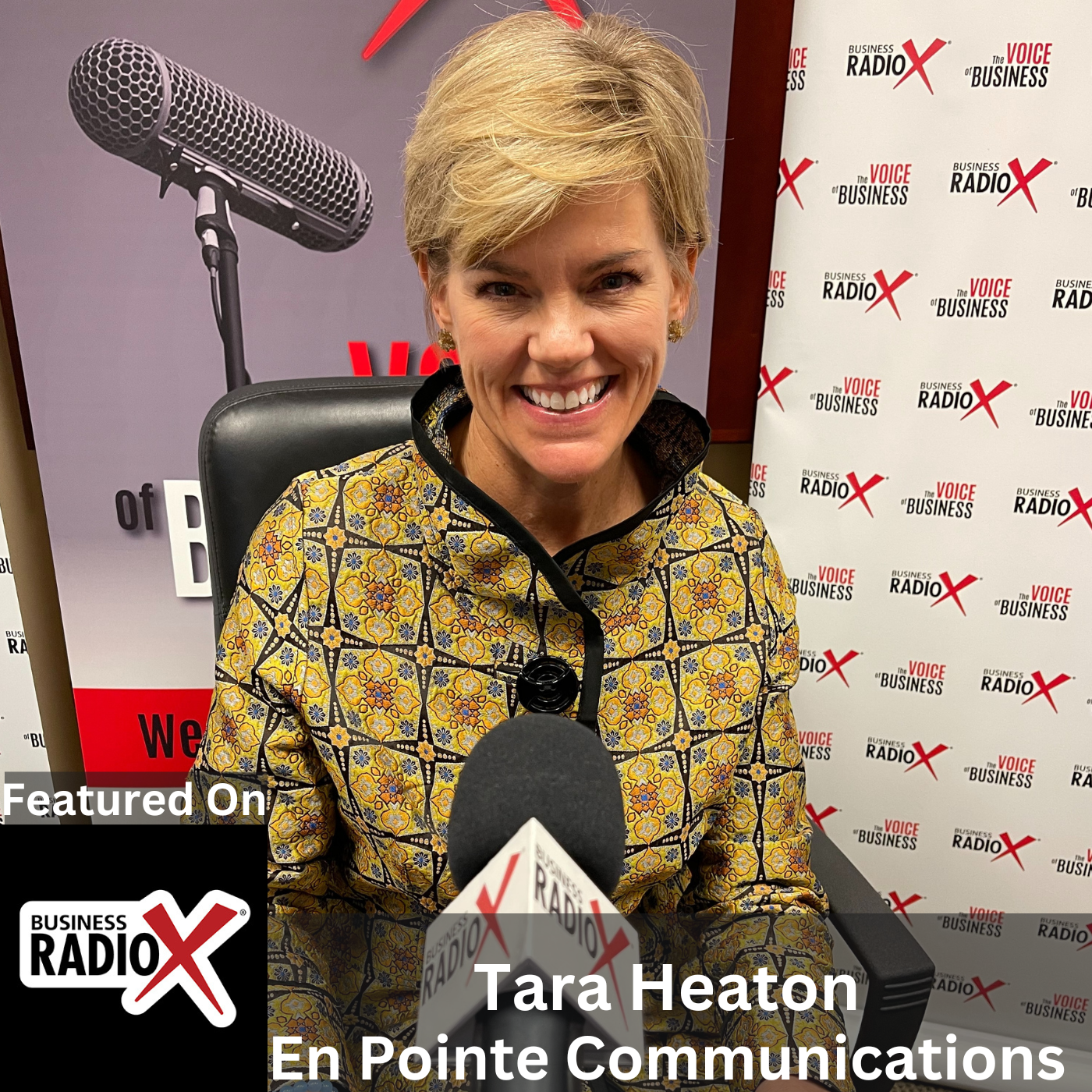
Tara Heaton, En Pointe Communications

February 21, 2023 by John Ray

Tara Heaton, En Pointe Communications
North Fulton Business Radio
Tara Heaton, En Pointe Communications
Loading
00:00 /
RSS Feed
Share
Link
Embed

Download file

Tara Heaton, En Pointe Communications

Tara Heaton, En Pointe Communications (North Fulton Business Radio, Episode 610)

On this edition of North Fulton Business Radio, Tara Heaton, Founder of En Pointe Communications, joined host John Ray to discuss how her daughter’s traumatic brain injury led to her current work. Tara discussed how neuroscience can guide us in more effective communication, the power of stories and telling better stories, how to engage listeners in the stories we tell, success stories from her work, and much more.

North Fulton Business Radio is broadcast from the North Fulton studio of Business RadioX® inside Renasant Bank in Alpharetta.

TRANSCRIPT

Intro: [00:00:04] Live from the Business RadioX Studio inside Renasant Bank, the bank that specializes in understanding you, it’s time for North Fulton Business Radio.

John Ray: [00:00:19] And hello again, everyone. Welcome to another edition of North Fulton Business Radio. I’m John Ray. And we are broadcasting from inside Renasant Bank in beautiful Alpharetta.

John Ray: [00:00:30] And if you are looking for a bank that is so highly rated by their customers that they have won multiple awards from national organizations, like Time Magazine’s money.com and Forbes, well, I’m sitting in that bank, Renasant Bank. They’ve won Best Bank in Georgia, Best Bank in the Southeast, Best Bank in the United States, actually even, in the surveys. And so, if you want to know why they’ve made such a difference in the lives of their customers – I’ve certainly found it out myself – go to renasantbank.com and find one of their local offices and give them a call. And I think you’ll be glad you did. Renasant Bank. Understanding you. Member FDIC.

John Ray: [00:01:17] And now, I want to welcome Tara Heaton. Tara is with En Pointe Communication. Tara, welcome.

Tara Heaton: [00:01:22] Thanks so much for having me, John.

John Ray: [00:01:23] It’s great to have you. So, let’s talk about you and how you’re serving folks out there. How are you serving folks at En Pointe Communication?

Tara Heaton: [00:01:31] Well, it’s just exactly as it sounds, En Pointe Communication helps people to communicate more effectively. And I have a platform called Talk to the Brain, and everything that I teach and coach is founded in neuroscience, which I’ve been studying now for over 18 years. So, I share a little bit of the science and then we go deep into story. So, I’m helping speakers, leaders, sales people, teens to communicate more authentically and to understand how to communicate so that their message lands more compelling, more memorable, and helps them to get the results they desire.

John Ray: [00:02:08] Wow. So, what is it that we’re missing in? I know this is a big question and we could go on a long time on your answer. But what are we missing with communication that neuroscience helps us solve, that knowledge of neuroscience helps us solve?

Tara Heaton: [00:02:29] Oh, wow. That’s a great question. And there’s, I think, several components to that. But I think I will switch it around and think how I’m helping people and why the science proves that. And I’ll start with stories. Because everybody knows that there’s so much power, and most people know, that stories, there’s scientific proof about why they help us to remember and how they touch us.

Tara Heaton: [00:02:53] People don’t see that a story is a moment in time. It’s a transformational moment in time. It is different than a journey. So, you and I, John, our life is decorated with hundreds of stories. And when we learn to tell those in a compelling way, it shoots up dopamine in the minds of the listeners. And, today, we are more addicted to dopamine than ever before. When we learn to tell a compelling story, it shoots up that dopamine which pleasures the brain.

Tara Heaton: [00:03:23] Also, when we use a vulnerable story that shares a relatable emotion, it fires up our serotonin and oxytocin in the mind of the listener that builds trust, that builds connection. And when people learn this and they experience examples of it, it automatically improves their confidence and their ability to communicate more effectively.

John Ray: [00:03:46] Oh, wow. There’s a lot to that I want to get to. But before we dive deeper there, let’s talk about your journey. Because you’ve got some specific aspects to your journey that led you into this interest in neuroscience and how it affects communications.

Tara Heaton: [00:04:05] Absolutely. And I would be remiss if I didn’t share this part of my story because I forever will. I’ve always been an analytical minded person. I’ll sit out, I will analyze our conversation – I can assure you – and ask myself how I could have done better, what went right, what could have been improved. And I’ve always been that way.

Tara Heaton: [00:04:26] I was a sales leader. I was running a sales team. I had a very successful business. I’d had built success really from pretty much nothing, and, so to speak, three healthy children, a beautiful marriage. As they say, living the dream.

Tara Heaton: [00:04:40] And my middle daughter was 12 at the time that everything changed for us. She contracted a virus that is still documented, interestingly, as a virus of unknown etiology. The virus traveled to her brain, caused her to have something called encephalitis, which is simply inflammation of the brain. She went into a coma. And when she came out of the coma, she couldn’t hold a hairbrush, she didn’t know who we were, she couldn’t walk. But interesting, I mean, it was considered a traumatic brain injury, she could talk.

Tara Heaton: [00:05:13] So, through much, much, much therapy, she’d relearn to do pretty much everything and most of her memory came back. And we thought the worst is behind us. You know, our prayers have been answered and Caroline’s going to be okay.

Tara Heaton: [00:05:27] But the encephalitis left her with epilepsy. And so, I became, as you might imagine, as any mother would, her warrior. And I started searching for ways to stop these seizures. Most people with epilepsy, their seizures are controlled with medication. But the medication has terrible side effects.

Tara Heaton: [00:05:45] So, about a year into this journey, I sat with her neurologist and I was at Emory Clinic – I’ll never forget this – and I said, “Dr. Weissman, look at my little girl.” And she looked over at Caroline and she was looking down, shoulders slumped, looking down at her untied little converse tennis shoe. And I said, “She was energetic, she was social, she was athletic. This is our Caroline today. Can we please just take her off these drugs and try to manage the seizures?” And Dr. Weissman said, “No. Because Caroline’s seizures travel right through her hippocampus, and with every seizure, her brain is being damaged.”

Tara Heaton: [00:06:22] And that day, John, sent me on a journey of just being obsessed with understanding the brain, what was going on with her mind, how I could help her. And I continued to, literally, travel the country over looking for answers. And I’m sorry to say that the seizures have never, ever stopped. And today, Caroline is very, very cognitively challenged due to just years and years of seizures.

Tara Heaton: [00:06:48] But the study just started to inform my work. And as I was running across the country, learning, investigating, trying any type of therapy, natural or not, I continued to learn about specifically neurotransmitters, how we remember, what sparks our attention, our imagination. And it started to inform my work as a sales leader and as a speaker and as someone who provided a lot of workshops.

John Ray: [00:07:15] Yeah. Wow. So, you really took what you learned there and applied it in a sales context because that was your legacy, business, right?

Tara Heaton: [00:07:29] That’s right. That’s right.

John Ray: [00:07:29] But you’ve really expanded it beyond just its application to sales teams.

Tara Heaton: [00:07:36] Oh, yes. Absolutely. As a matter of fact, I do help and coach sales people, but the work is so very much focused on building an authentic voice. And what that means is I help people to make better connections, and that might be from a stage as a speaker. But it really helps teams to better connect and better tell stories that relate to their specific business. They get to experience the thrill of sharing vulnerable stories, how to do that, and how it builds trust and connection, which helps teams.

John Ray: [00:08:12] Yeah, for sure. Tara Heaton is with us, folks. She is with En Pointe Communication, her own firm. Tara, you mentioned storytelling. You mentioned that that’s pretty well-known, the power of stories, and I couldn’t agree more. So, maybe we can walk past that to some of the other principles that really became solid beliefs for you in terms of what you take to your clients today out of all this study that you did.

Tara Heaton: [00:08:49] Well, I will say, the reason I continue to focus on stories is because that seems to be the most popular of the workshops. People continue to come to me and say, “You know, I want to teach my team to tell better stories.” And these aren’t sales teams. These are folks who are in negotiations. These are folks who just simply are communicating with customers, customer service, on the phone. We overthink story. And so, that’s why it’s become such, I think, a really popular workshop. But I also help speakers —

John Ray: [00:09:20] Well, let’s stop there just a second, if you don’t mind, because that’s very interesting what you just said, we overthink story. Say more on that.

Tara Heaton: [00:09:27] Oh, yes.

John Ray: [00:09:27] Okay.

Tara Heaton: [00:09:28] Yes. Thank you.

John Ray: [00:09:31] Okay. See, I was going to walk right past storytelling, but now you’ve made me want to dig into it, so let’s do that.

Tara Heaton: [00:09:36] Absolutely. So, I’ll tell you a story to explain it.

John Ray: [00:09:39] Okay. Appropriately enough.

Tara Heaton: [00:09:41] Absolutely. I had a client who came to me and she was looking for a new job. And she’s quite successful and really, really strong in her field. But she said, “I hear you’re a great storyteller, and I understand that telling powerful stories in an interview could really help me.” And here’s what so many people say to me, she said, “I don’t think I really have any stories.”

Tara Heaton: [00:10:10] And after about an hour long – what I’ll call – a discovery session with her, we uncovered unbelievable beauty that decorated her life, some challenges, some trials, some successes, some wins. And each one of those are little, small individual stories that make a point that cause people to remember the point that we’re trying to make.

Tara Heaton: [00:10:34] So, people tend to think my personal story, what I’ve been through with my children and my family is quite tragic. And when people hear it, they think, “Wow. I don’t have a story.” We all have stories. And as natural storytellers, we start to become very sensitive to the fact that we are creating new stories everyday through every experience. And so, when we can share our experiences, things that we’ve been through or things that we’ve witnessed, so that it matters to the listener, so that it makes the listener the hero of that story and not ourselves, it helps us to get better results.

John Ray: [00:11:11] Yeah. I’m glad you mentioned that right there at the end, because sometimes we hear stories that seem like they’re more about – I’ll call them – therapy in public, where people are really kind of working out their own issue as opposed to telling a story for the purpose of reaching other people. Does that make sense?

Tara Heaton: [00:11:34] Oh, yes. So much. As a matter of fact, somebody asked me recently when I was referencing, I said, “Who is the hero of your story?” And she said, “Well, I am.” And I said, “If you’re telling it to anyone, they are the hero. They relate to what you’re sharing. You share relatable emotions that people can relate to that inspires them through your vulnerable story.” So, if we just share a winning moment in our lives without sharing the strife and the struggle and the insecurity that we faced, it will not be nearly as memorable as if we share the vulnerable side of it, because that’s where people relate and they think, “Wow. If he or she could overcome that, I too can do the same.”

John Ray: [00:12:18] Wow. So, how do we tell stories and get out of our own way, I guess this might be the way to put it. How do we know that we’re really putting the listener in the middle? Because this is a human thing, right? We’re all self-absorbed. We all operate from our own perspectives. And so, how do we communicate in such a way that brings the listener into the story we tell?

Tara Heaton: [00:12:52] Well, a lot of the answer to that is timing. So, when is it appropriate to tell a story? And what exactly defines a story? So, I have a framework for stories that I share with my clients we go through. And a lot of times that’s better applied when you’re really preparing for a speech or a very important sales presentation. But to become a natural storyteller, I’ll give you a recent example of just sharing stories when the timing is right, and that’s when the last thing I would want people to do is to have practiced and scripted a story.

Tara Heaton: [00:13:28] I had a gentleman that works closely with me. He came to me recently and he said, “I’m supposed to be at this conference on Monday. I think I need to go to leadership and tell them I can’t go.” And I said, “Why is that?” And he said, “I’ve been gone all week. You know, we have three children. My wife’s pulling her hair out. I mean, dad hadn’t been here. And I want to go to them and just say can you send somebody else to this conference, but I’m really stressed about it. What do you think? What do you think I ought to do?”

Tara Heaton: [00:13:59] And I said, “Mark, may I share something with you?” And he said, “Absolutely.” And I said, “Years ago, I remember coming home late one evening and going upstairs to kiss my daughter, Caroline, goodnight.” She was about seven years old. I walked up the stairs, kissed her goodnight, and she sat up in her bed. She was a dainty little girl and sat up in her little pink pajamas, and she said, “Oh, mom, tomorrow night I want you to help me fix my hair and I want you to help me with my costume because Friday’s the play.”

Tara Heaton: [00:14:31] And I said, “Oh, Caroline, I’m not going to be here tomorrow night. I have to work again.” And I was working for a company at the time called Herff Jones. And she sat up and she pulled her little tiny fist back and she punched her pillow. And she said, “I hate Herff Jones. I hate it.” And she punched her pillow again. And every time I think about that story, I feel a punch in my gut.

Tara Heaton: [00:14:56] I didn’t give Mark any advice. I didn’t tell him what I thought he ought to do. I just shared something painful from my past, something that I regret. And he had his answer. That’s the power of story. We also built some trust that day, as you might imagine.

John Ray: [00:15:11] Oh, yeah. Yeah. Wow. So, you teach in your workshops. You mentioned the kind of story you tell. But when you tell a story, talk about the timing angle there.

Tara Heaton: [00:15:33] Well, one of my favorite examples of when to share a story is when someone asks you for advice. It’s so easy to say, “Here’s what I think you should do.” But if you share with them a time when you faced a similar struggle, it’s unforgettable. The power of that is so, so, so very different.

Tara Heaton: [00:15:52] Also, many times I’m helping people with stories when they’re in negotiations or small presentations within a company, like our team has to share their idea. And it’s so easy to get bogged down in the data. And we need data. We need statistics. But we need a story that brings that to life. So, that’s helping people to imagine not a journey, not a long this happened and then this happened, not that. There was a transformational moment in time, kind of that tipping point that helps to bring our data to life. I call it story with stats. So, there’s a way to gain the results that you’re after by using data and bringing it to life with story.

John Ray: [00:16:36] Wow. Great words from Tara Heaton, folks, with En Pointe Communication. So, Tara, you mentioned storytelling, we’ve talked about that. What are some of the other aspects of communication that this journey through neuroscience has led you to?

Tara Heaton: [00:16:56] Well, wow, I don’t even know where to begin. But, you know, I mentioned dopamine. And our society today is more addicted to dopamine than ever before. So, I’ll give a quick tip on dopamine. Because we know that our listeners are addicted to dopamine, what that means is people are going to become more distracted than they used to be. People can’t follow us. So, we’ve got to lead our conversations, our speeches with something that’s highly unpredictable and unusual because that grabs people.

Tara Heaton: [00:17:29] The other thing a lot of people don’t really know about dopamine is it’s not pure just pleasure. Dopamine is that feeling of anticipation. It’s like it’s why we’re addicted to video games and social media and things that make us want more and more. So, if we know that our listeners are searching for something, they’re in anticipation at the beginning of a speech, what we need to do is kind of dangle a carrot. Tell folks, “At the end I’m going to share –” boom, this big gold nugget that keeps people attentive.

Tara Heaton: [00:18:00] I’ll give one other neuroscience tip, and then I won’t continue on with all of them. But I’ll give another fun one that it really helps people in their communication, and it is the understanding of serotonin. And serotonin is the feeling we get when we feel confident and proud, and we feel seen, and we feel validated. So, this especially applies in speaking to audiences and in sales presentations. We need to make sure that our audience feels understood and seen.

Tara Heaton: [00:18:29] Well, how do we do that? In a conversation, we can certainly ask those questions. But there are also always assumed objections. And people tend to hide from assumed objections. Whereas, I say, we need to uncover them and say to people, “I know how you might feel.” You must be thinking that and then fill in the blank. And that always, always helps me. I can visually see an audience lean in when I tell them I find a way to say to them I understand.

Tara Heaton: [00:19:00] And someone asked me once, they said, “Well, if we’re in a sales setting, why would I want to agree with what someone is thinking if I’m trying to sell them something?” And I believe, John, in being always honest and authentic. And the answer to that is this, we may not agree. Agreeing and validating someone’s perspective are two completely different things. We need to seek to understand people with a curious mind, look for wonder, understand why they think the way that they do.

Tara Heaton: [00:19:33] If we could take this into our political conversations in this country, can you imagine how much softer and safer and what might come out of those if we weren’t looking to be right. We were looking to understand the other person. That builds serotonin, which builds connection and makes people want more of us.

John Ray: [00:19:50] Yeah. Absolutely. Because we tend to flatten people out and take that three or four dimensional person, I’ll say that, and turn them into one dimension. They’re a cartoon character.

Tara Heaton: [00:20:09] So true.

John Ray: [00:20:09] Yeah. That then, therefore, we can project our own feelings onto that caricature we’ve drawn.

Tara Heaton: [00:20:19] Absolutely.

John Ray: [00:20:20] So, Tara, I love that point. It makes a lot of sense. But, you know, when you bring in the political, I’m thinking everybody gets that. But we tend to do that to people that are close to us, I mean, in our lives, and in the business world, in our families, that kind of thing. And that may be the unrecognized part of what we often do, right?

Tara Heaton: [00:20:50] Yes, very much so. And I talk about this a lot on the Daily Huddle where I’m a Wednesday host. We talk a lot about relationships and how much we want to strive to be right, and to be heard, and to get our way. And for me, when I find myself communicating in that manner, I know what’s driving it. It’s ego, which causes us to lead with – no. It’s insecurity which causes us to lead with ego.

Tara Heaton: [00:21:18] When someone touches a nerve, we find ourselves in a space where we might feel insecure about any number of topics. We all have insecurities. And when we allow ourselves to lean into those and go into that imposter syndrome state, that’s when we forget to listen, to remain in a sense of wonder, and all, and curiosity. And we want people to hear us.

John Ray: [00:21:41] Yeah. For sure. So, I want to switch gears and talk about how you work with people now. So, you talked about your previous work with sales teams, you still do some of that work. But you just mentioned relationships, that’s an entirely different matter. So, talk about some of the types of clients that you work with. Do you work with groups, one-on-one?

Tara Heaton: [00:22:12] So, I provide workshops where I have people from different industries to come. But, really, probably my sweet spot right now is working with small to medium-sized businesses who are growing fast and they want to nurture their team. They want to help them to grow their confidence and their ability to find their voice, tell their own stories, and really build on an authentic voice that makes them feel empowered and comfortable. So, that helps culture, which is relationships, right? What defines culture in any company? It’s the relationships. It is the environment. So, I work with small teams to elevate that.

Tara Heaton: [00:22:49] And then, I love still working with speakers. Most recently, I helped a pretty well-known speaker with a talk she was giving. And we worked so hard on her stories. We crafted every word. She rehearsed it and rehearsed it. And as a matter of fact, she said, “You know what? I think I might read this. I just don’t want to miss a word.” And she she knew it quite well, so she wasn’t staring down, but she chose to read the speech. And she called me and she said, “First standing ovation of my life.” So, that’s great joy for me to help speakers.

John Ray: [00:23:27] Oh, wow. Yeah.

Tara Heaton: [00:23:27] So, I do speakers and sales people, small teams, the woman I just mentioned, anyone who’s trying to communicate more effectively. But teamwork, building relationships, helping folks to tell better stories, and find a confident voice, that’s the sweet spot right now.

John Ray: [00:23:46] I’m just curious about the bottom line of all this. Let’s talk about the value that comes out of doing the work that you lead people through and what they get out of that, that maybe they don’t recognize when they hear you talk about what you’re able to do.

Tara Heaton: [00:24:09] Thank you for asking that. It actually makes me light up. Because you could take neuroscience, John, and all that I’ve learned about the brain, and you could use it to manipulate in a sales setting. And the purpose of my work is the opposite of that. The purpose of my work is so that if I understand your mind, that gives me the ability to honor you, to get to know you, to connect with you. And when we make deeper connections with people, for me, I think that’s the greatest gift that we have at our disposal.

Tara Heaton: [00:24:44] So, the bottom line, the truest value of my work is that it helps people to grow their confidence in building relationships. Absolutely, that applies to business. But it goes home, it goes into friendships, it goes into family. So, when we feel more confident in being able to articulate our heart and our experiences, that’s the bottom line value of my work.

John Ray: [00:25:08] Yeah. That’s terrific. So, Tara, you’ve talked about how this journey that you’ve been on with your daughter, all the research you’ve done, all the reading and insights that you’ve had over time, the clients you’ve worked with has really saved your spirit.

Tara Heaton: [00:25:34] Yes. And I didn’t realize it probably until maybe just several years into the work. It was always focused on communication. But, you know, my family went through a lot of trauma. It started with Caroline’s illness, but it absolutely did not stop there. I have three children who have all suffered as a result of a family just living in what felt like constant trauma, watching someone’s brain deteriorate, watching her be bullied, watch her to continue to crash down, her mom falling apart in tears. It was not a safe space, our home, for a long, long time.

Tara Heaton: [00:26:14] And I look back and I’ve learned more than just using what I’ve studied to apply to communication. It applies to our habits and our self-talk. And when I understand why my body might be low on serotonin or dopamine or need oxytocin, I know what to do about it. I know that I don’t have to go to find some sort of addictive habit that’s not healthy to help me. And so, I’ve really taken the science and I’ve applied it to life habits, and to how I spend my time, how I communicate with people, which truly, truly has saved my soul.

Tara Heaton: [00:26:54] Because here’s what I know, the way our brain functions and all of the things that it is able to synthesize, a lot of it’s starting, interestingly, from our gut, all of that is energy. And that energy, we have the ability to repurpose and take it out into the world in any way that we want to.

Tara Heaton: [00:27:16] The last two days before I came here with you today, I’ve been sitting in the hospital with two people in my family who are ill. And maybe without my study, I would have called you and said, “I don’t have it in me today.” But I tell you what I know, that I could take all of that struggle, all the pain that I’ve faced over the past two days, and I can repurpose that into love and I can share it out in such a way that touches other people. And I’ve continued to do that over and over again throughout my life. And that’s because of my study and my sweet Caroline.

John Ray: [00:27:53] Wow. What a beautiful story. Thank you for all that. Thank you for sharing that. What great work. Tara Heaton with En Pointe Communication.

John Ray: [00:28:05] Tara, I’d be remiss, I think, at this point if I didn’t ask, you’ve talked about your own story, your own journey, but maybe you could share a success story of someone you’ve worked with. You mentioned a couple around storytelling, but maybe share one more. Someone who’s had real transformation in their lives, in their work because of your intervention.

Tara Heaton: [00:28:29] Well, let’s see. One comes to mind. A very simple one is that I helped someone to craft a TED Talk proposal, and it was accepted. So, that was very exciting.

John Ray: [00:28:39] That’s a good one.

Tara Heaton: [00:28:39] Several speaker stories, I mean, that’s beautiful work. I also write for people. I write for some artists and help people to tell their story on their About page. And that is just so rewarding that people realize that we all have beautiful stories to tell.

Tara Heaton: [00:28:58] And then, I worked with a small business recently. And as a matter of fact, I just heard from their manager recently and she’s like, “You cannot believe how my team is transformed.” And that’s so touching. She said, “I knew that we needed to build trust and connection and I was trying to force it. Now, they’re going after it and I just sit back and I’m a part of it.” And you know what that says to me, John? That people are enjoying their work more because of my work and nothing can make me more happy.

John Ray: [00:29:29] That’s wonderful. So, Tara, I know you also do – I want to get this in – some public speaking keynotes. Talk about the kind of groups that would benefit from having you in to speak.

Tara Heaton: [00:29:43] Oh, thank you. Yes. As a matter of fact, I’m really trying to elevate this aspect of my work because each time I provide a keynote, I’ll have people to call me weeks and months later and tell me that they’re still referencing the talk. So, I just have finally said to myself, “You know what, Tara, you better get out there and do more of this.”

Tara Heaton: [00:30:03] So, I really have two tracks when it comes to speaking. And one is very inspirational. One is, I go a lot deeper into the story of our family, which does not stop with just Caroline. It also goes into my son who was highly addicted to dopamine and adrenaline, and what that has caused in his life, and how he’s come out of it. So, there’s certainly an inspirational talk that I give. And that is to any team or any organization that says we want to hear a story about suffering and triumph. And I’m pretty raw and open about it.

Tara Heaton: [00:30:36] And then, also, I give mini-talk to the brain talks. And those are to help people to communicate more clearly with better strategy and absolutely more authentically helping them to get better results within relationships, within sales, and within speaking.

John Ray: [00:30:52] Wow. Terrific work. Tara Heaton, folks, with En Pointe Communication. This has been terrific, Tara. I wish we could keep going, but we got to let you get back to your work and what you do for others. But before we let you go, let’s give directions on how folks can find you.

Tara Heaton: [00:31:12] Oh, thank you very much. I’m kind of weak on social media, I will say. But the best place to find me is just to go to my website. And the easiest way to do that is to go to talktothebrain.net, and that will roll over into En Pointe Global. So, again, I’m on Facebook, Tara Caldwell Heaton. I’m certainly on LinkedIn, Tara Heaton. But easiest way talktothebrain.net, and a little pop up box will come and we can be in touch.

John Ray: [00:31:39] That’s terrific. Tara Heaton, folks, with En Pointe Communication. Tara, thank you so much for coming in.

Tara Heaton: [00:31:45] It’s been a joy, John. Thank you.

John Ray: [00:31:46] Thank you so much.

John Ray: [00:31:49] Hey, folks, just a quick thought for you. If you’ve got an administrative task or bookkeeping or other marketing issues, maybe presentations that need to be done that are weighing you down and you’re not able to spend time with your clients and with your prospective clients, I’ve got a suggestion for you. Office Angels. Essie Escobedo has a whole team of angels that do fantastic work. I know this myself because I use their services. They fly in, get the job done, and then they fly out. And they do it on an ongoing or as needed basis, depending on your project and your need.

John Ray: [00:32:30] So, give Essie a call, 770-442-9246. Tell her I sent you. Or go to officeangels.us to learn more. But I think you’ll be glad you did. And Essie has been around since 2000 with this business, so she’s well-established and does great work. And, again, I use her services. So, you’ll be glad that you entrusted your business to her.

John Ray: [00:32:59] And, folks, just a quick reminder, North Fulton Business Radio, we’re coming up on our seventh year anniversary. We’ve been around for seven years and we’re excited about that. And we’ve gotten over 600 shows. And the reason we’ve been around this long is because of your support. We are grateful for you because what you have done is continue to share the show with others that you think might be interested in particular guests. I can’t imagine you haven’t heard some reason to share this show with someone else who needs to hear the message that Tara has given. But you’ve done that on all our shows and we’re excited about that. And we are excited about your support and you make us keep going as the voice of business in North Fulton. So, thank you. Thank you, thank you for that support. We are grateful.

John Ray: [00:33:53] So, for my guest, Tara Heaton, I’m John Ray. Join us next time here on North Fulton Business Radio.

En Pointe Communications

En Pointe Communications collaborates with you to build custom strategies, employing unique assets and abilities. Whether your audience is a single prospect or a thousand fans, we focus on your core purpose to ignite momentum, empowering you to grow your business and impact lives.
Website | Facebook

Tara Heaton, Founder, En Pointe Communications

Tara Heaton, Founder, En Pointe Communications

Tara helps leaders, speakers, and salespeople craft and deliver messages that move people. She empowers businesses to define their distinction and turn networking and prospecting into revenue.

With years of neuroscience research and success in competitive sales as a foundation, En Pointe Communications has discovered how to employ science, art and sport to close sales, open minds and generate action.

They work with individuals in a remote coaching setting that delivers results!

LinkedIn


North Fulton Business Radio is hosted by John Ray and broadcast and produced from the North Fulton studio of Business RadioX® inside Renasant Bank in Alpharetta. You can find the full archive of shows by following this link. The show is available on all the major podcast apps, including Apple Podcasts, Spotify, Google, Amazon, iHeart Radio, Stitcher, TuneIn, and others.

RenasantBank


Renasant Bank has humble roots, starting in 1904 as a $100,000 bank in a Lee County, Mississippi, bakery. Since then, Renasant has grown to become one of the Southeast’s strongest financial institutions with over $13 billion in assets and more than 190 banking, lending, wealth management and financial services offices in Mississippi, Alabama, Tennessee, Georgia and Florida. All of Renasant’s success stems from each of their banker’s commitment to investing in their communities as a way of better understanding the people they serve. At Renasant Bank, they understand you because they work and live alongside you every day.

Since 2000, Office Angels® has been restoring joy to the life of small business owners, enabling them to focus on what they do best. At the same time, we honor and support at-home experts who wish to continue working on an as-needed basis. Not a temp firm or a placement service, Office Angels matches a business owner’s support needs with Angels who have the talent and experience necessary to handle work that is essential to creating and maintaining a successful small business. Need help with administrative tasks, bookkeeping, marketing, presentations, workshops, speaking engagements, and more? Visit us at https://officeangels.us/.
 

Tagged With: communications, En Point Communications, John Ray, neuroscience, North Fulton Business Radio X, Office Angels, renasant bank, stories, story, story-telling, Tara Heaton, trauma

Inspiring Women, Episode 23: An Interview with Haley Boehning, Storyforge

July 14, 2020 by John Ray

Haley Boehning Storyforge
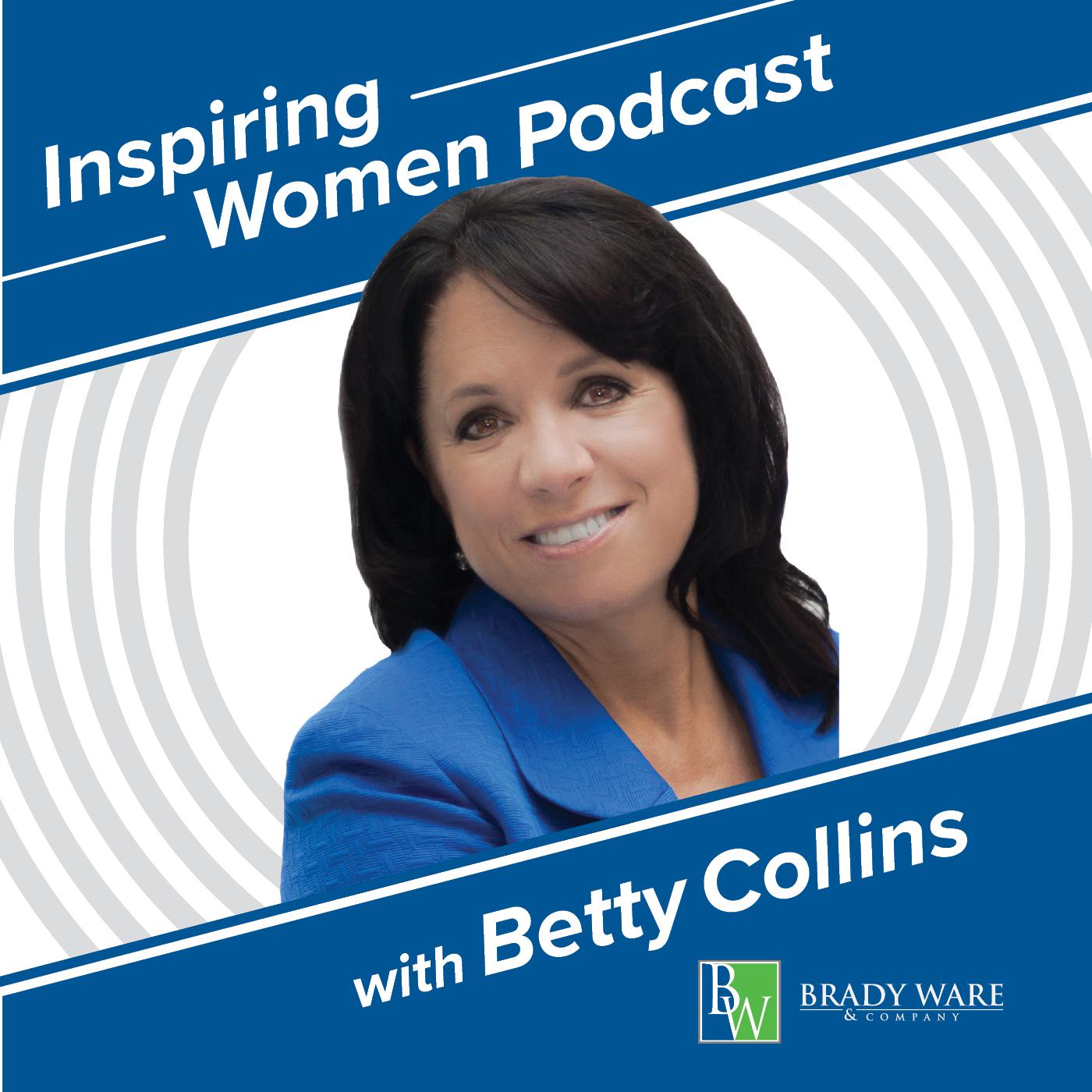
Inspiring Women PodCast with Betty Collins
Inspiring Women, Episode 23: An Interview with Haley Boehning, Storyforge
Loading
00:00 /
RSS Feed
Share
Link
Embed

Download file

Haley Boehning Storyforge
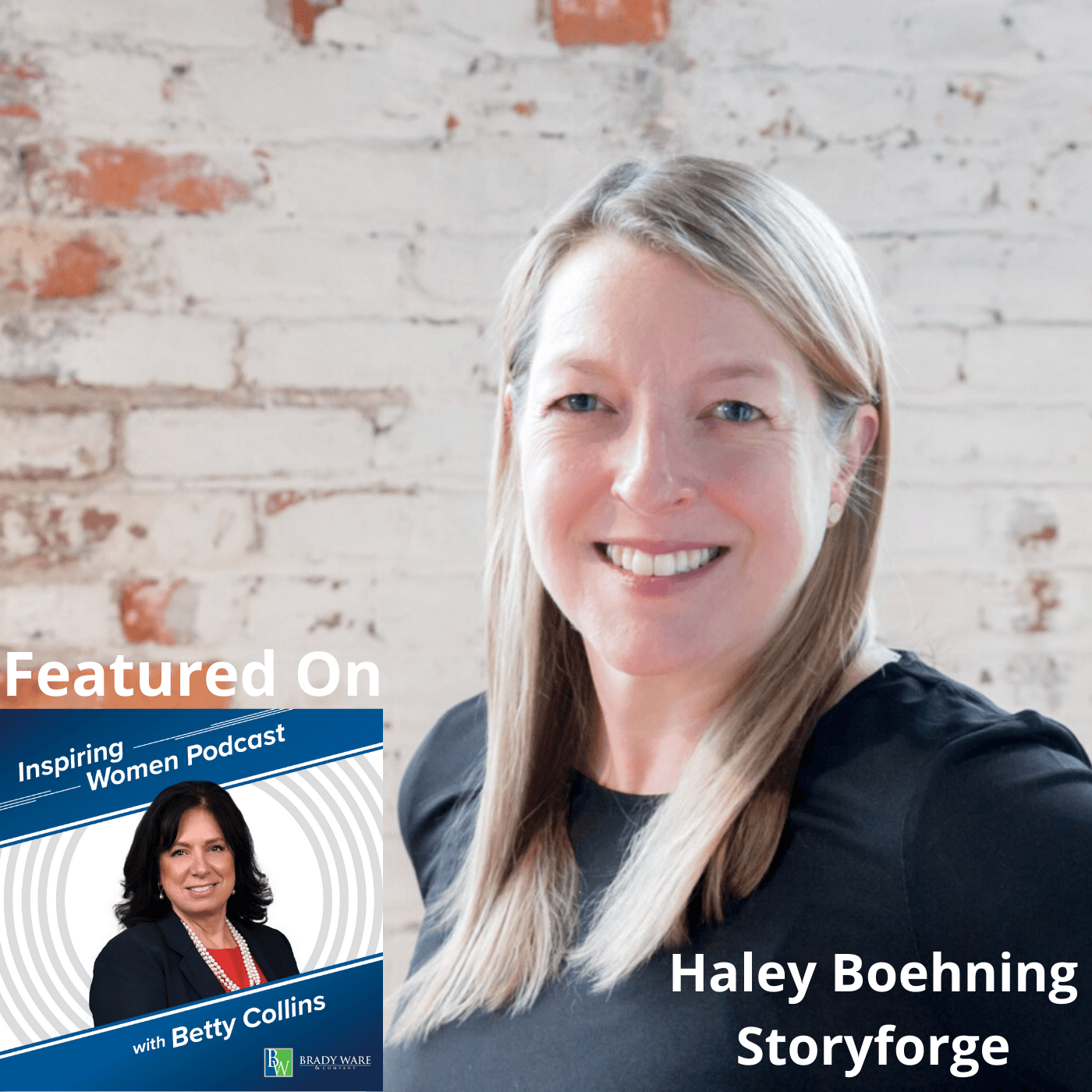
Host Betty Collins, Brady Ware, and Haley Boehning, Storyforge

Inspiring Women, Episode 23: An Interview with Haley Boehning, Storyforge

On this edition of “Inspiring Women,” host Betty Collins speaks with Haley Boehning, Storyforge, on why stories are so important in client marketing, employee engagement, and other essential company functions. The “Inspiring Women” series is underwritten by Brady Ware & Company.

Betty’s Show Notes

“When you have a story — the right story — everything changes. Customers become evangelists. Employees fully engage. Decision-making simplifies. Innovation accelerates. And marketing costs go down.” That’s what you find when you go to Storyforge’s website. I had the honor of interviewing Haley Boehning, Co-Founder and Principal of Storyforge.

“We call it a meaningful story.” And that’s what she does best.  Help businesses find their story, their higher purpose.  And when their clients discover it, it’s, as she puts it, “knock over the table” time and run out to tell the world.

I talk to Haley about:

  • The Storyforge story
  • Her story
  • The Storyforge concept and what their clients do with their story to make a difference
  • Why women can’t wait around
  • What she has learned from being a business owner
  • What would today’s Haley tell a younger Haley if she had the chance
  • Conscious Capitalism and its four tenets

Haley has decades of experience working with Fortune-500 companies, non-profits and start-ups to create alignment, elevate storytelling and build differentiated brand positions. She is a regular speaker, lecturer and author on the subject of leadership, communication and conscious capitalism.

Prior to Storyforge, Haley spent 16 years with L Brands (NYSE: LB), most recently as vice president of internal communications, directly supporting the company’s founder/CEO in strategic, leadership and internal communications to connect with 100,000 employees around the globe. As internal communications function head for the enterprise, she and her team were also responsible for all change communications including mergers, acquisitions, reorganizations and reductions in force.

Haley is chair of Conscious Capitalism Columbus, a member of the international Conscious Capitalism Inc. Community Advisory Council and a founding member of The Matriots, Ohio’s first multi-partisan PAC dedicated to electing more women to public office. She is a member and chapter sponsor of The National Association of Women Business Owners and was named to Columbus CEO’s 2020 Future 50 list, recognizing her as a leader with the ideas, energy and heart to move the region forward in the critical decade ahead.

Betty Collins, CPA, Brady Ware & Company and Host of the “Inspiring Women” Podcast

Betty Collins, Brady Ware & Company

Betty Collins is the Office Lead for Brady Ware’s Columbus office and a Shareholder in the firm. Betty joined Brady Ware & Company in 2012 through a merger with Nipps, Brown, Collins & Associates. She started her career in public accounting in 1988. Betty is co-leader of the Long Term Care service team, which helps providers of services to Individuals with Intellectual and Developmental Disabilities and nursing centers establish effective operational models that also maximize available funding. She consults with other small businesses, helping them prosper with advice on general operations management, cash flow optimization, and tax minimization strategies.

In addition, Betty serves on the Board of Directors for Brady Ware and Company. She leads Brady Ware’s Women’s Initiative, a program designed to empower female employees, allowing them to tap into unique resources and unleash their full potential.  Betty helps her colleagues create a work/life balance while inspiring them to set and reach personal and professional goals. The Women’s Initiative promotes women-to-women business relationships for clients and holds an annual conference that supports women business owners, women leaders, and other women who want to succeed. Betty actively participates in women-oriented conferences through speaking engagements and board activity.

Betty is a member of the National Association of Women Business Owners (NAWBO) and she is the President-elect for the Columbus Chapter. Brady Ware also partners with the Women’s Small Business Accelerator (WSBA), an organization designed to help female business owners develop and implement a strong business strategy through education and mentorship, and Betty participates in their mentor match program. She is passionate about WSBA because she believes in their acceleration program and matching women with the right advisors to help them achieve their business ownership goals. Betty supports the WSBA and NAWBO because these organizations deliver resources that help other women-owned and managed businesses thrive.

Betty is a graduate of Mount Vernon Nazarene College, a member of the American Institute of Certified Public Accountants, and a member of the Ohio Society of Certified Public Accountants. Betty is also the Board Chairwoman for the Gahanna Area Chamber of Commerce, and she serves on the Board of the Community Improvement Corporation of Gahanna as Treasurer.

“Inspiring Women” Podcast Series

“Inspiring Women” is THE podcast that advances women toward economic, social and political achievement. The show is hosted by Betty Collins, CPA, and presented by Brady Ware and Company. Brady Ware is committed to empowering women to go their distance in the workplace and at home. Other episodes of “Inspiring Women” can be found here.

Show Transcript

Today, I get to do an interview for my podcast. I like to do that at times. I’m fortunate enough to live in Columbus, Ohio, and there’s just a lot of women in business, or women business owners that either have a great story; they’ve had success. I could do podcasts weekly just on that. Columbus is a thriving town.

Today, I really wanted to interview Haley Boehning. She’s the co-founder of Storyforge. I’ve gotten to experience Storyforge – just go through that – through an organization I’m involved with, which is NAWBO, which is the Columbus Charter. NAWBO is the National Association of Women Business Owners. We’re the Columbus chapter, and we’re the largest chapter … Like any organization, you go through crossroads in time, where you’re like, “Which way do we go? We can do 100 things, or maybe we should do two things really well.” She came in, her, and her firm, to help us get on the same page, so that’s been my experience.

Welcome today, Haley. We’re glad that you’re with us. We’re going to talk about several things, but I tell you, I love your website. I had looked at it probably a year ago, when we started this whole thing, or probably six months ago, whatever it was, with helping NAWBO get on the same page and tell our story. I love your line … As soon as you click on it, it says, “When you have a story, the right story, everything changes.” The other thing that caught my attention, I loved: “Customers become evangelists.” That’s just … First of all, you don’t hear that word a lot – evangelists. “Employees get fully engaged.” That’s become a very hot topic, if you can achieve that; and, “Decision-making gets simplified,” which, we’re on 24/7. So, man, that could be awesome. “Innovation accelerates,” and, at the end of the day, “Your marketing costs go down.” That’s awesome. Haley, I want you to first tell us a little about Storyforge, and then, I want to talk a little bit about your story, so go ahead.

Well, thank you for having me. It’s always a delight to talk with you, and we could probably talk for four hour, so getting this into a couple of minutes will be challenging for us. Storyforge was founded by my business partner, and I about six years ago. It came out of some insights that both of us had had separately throughout our careers about what made businesses successful. Because I had worked in a large corporate environment for 17 years doing a lot of mergers and acquisitions; I had seen hundreds of businesses and noticed differences between them. Those that were successful; those that were able to really succeed and come out the other end of a crisis stronger; and those for whom a crisis, or a challenge, or growth, even some of those positive things would see these businesses crumble and fall.

My business partner had been on the marketing side. I had seen it from an internal side, and he from an external side. As we began talking about our observations, and our beliefs in business, this idea about what story can do for you, as an organization, began to form, and the clarity that we got, through studying hundreds of businesses, has proven itself to be true over the last six years. We’ve worked with hundreds of companies, and we found that there are a few pieces of a company’s story that, when they have these pieces in place, when they’re clear about them, and they’ve had the insights necessary to articulate them, it makes all the difference.

Sure. I get that because it really did with NAWBO, when we … All the sudden, I could go talk differently. Are we doing anything different? I don’t think it’s how we say it, it’s how we talk about ourselves. It’s how we get that.

Well, you said it earlier. It’s also that decision-making. Every business, every organization has a story. The question is whether they’ve been intentional about forming that story, and if they’ve let the world create the story for them, because your story, your brand, is really a collection of all the stories – the stories you tell about yourself and the stories that other people tell about you. You can let that happen in the universe, or you can try to influence it by being very clear, yourself, about who you are, what you’re trying to achieve, what you believe, what you stand for, and what it is that you, as a business, do that’s unique; what differentiates you from all of your competitors in the marketplace.

Tell us about your story of entrepreneurship.” I took this 17-year, maybe safe deal, and said, ‘I’m doing this …'” Tell your story with that.

Yeah, I often call myself an accidental entrepreneur.

That would be 50 percent of them.

50 percent, yeah. I don’t come from a family of entrepreneurs. It always seemed like a crazy idea that risk-takers – which, I don’t consider myself a risk-taker – would endeavor to try to become … It was a strange animal. I had the opportunity, after this 17-year career in the corporate world, to rethink what I wanted to do with my life, which is a wonderful gift. Being able to consider what unique skills I had … What are my superpowers that I can bring to the world, and how do I want to apply those superpowers to help others. Storyforge- the idea of creating a business like Storyforge came from that; this desire to do meaningful work – meaningful for me, meaningful for my clients, but also meaningful for the world around us – was really born from that.

Something that has intrigued me is, because I’m an accountant, I don’t even think I have a story, but I do. I know I do … But the name Storyforge being one … I always like to know where that came from. How did that come together?

Well, it’s interesting. In our process, as we work through our process with businesses, there are a lot of amazing raw materials. So that’s part of our discovery, and you’ll remember this, as we worked together, was digging in and understanding the objective realities of business, and learning about our stakeholders, and mapping them, and understanding the beliefs and the vision that was there at the founding of whatever our business was. All of these great raw materials are just raw materials. They’re inert. When you forge them together, they become an even stronger material than they were in their incomplete parts.

Yeah.

For me, as I think about Storyforge, that’s what it is. Often people forge their stories from the outside in. I have people call me regularly and say, “Do I need an Instagram account?” “How can I better improve my digital marketing?” All questions that I cannot answer, not because I’m not qualified to, but because I don’t understand what their businesses is intending to do. Without having those fundamental answers, without understanding the DNA of your business and what you’re really trying to achieve, all of those tactical questions are meaningless.

When I think of forging, there- my husband likes that show Fire Forge, where they’re making the knives. I hate the show, but I watch it … The one thing I always look at is when they they’re working hard … Of course, it’s reality TV, so none of it’s reality, right? But when they dip it in the fire, and it comes out, the piece is solid now. There’s something about that. When I think of your forge, I think of the same thing – that the story has come together, and now … Wow.

Yeah. We call it, and you’ll remember this because you were there for that moment with our NAWBO work, we call it the kicking over the tables moment. It’s the moment where the discovery has been completed, and we’ve done the hard work as a leadership team to debate and have really intensive dialogues about do we want A, or B, C, or D? Are we going this way or that way? We codify our thinking about those essential questions of the business. When it all comes together, when it’s all forged, it is like going in that water and coming out a stronger metal – a forged story. We often have to hold leaders back because they want to kick the tables out, run out the door, and start screaming it from the mountaintops.

But there is a second important phase to this work, and that’s where many businesses actually fail in this work. It’s not necessarily not forging the correct story, but figuring out what to do with the story, after you have it. Because a really, truly meaningful story is not just a story that’s told, but it’s a story that’s lived. That’s the work that I know the board of NAWBO is doing right now is thinking about all the different aspects of the organization – from people, to process, to place, to positioning, to philanthropy – and making sure that what we do is in alignment with what we say.

Well, one of the thing … You have a definite passion for women. We experienced that from the beginning of time, when you were interviewing the board, and we were going through it. One of the things that I loved that you said to us – because we were talking about the different … Why we’re on the board? We’re women in business. Why are we business owners? All those things. One of the things you said to me that I never stopped thinking about was, “Let’s not wait another decade to accomplish something as women.” I’ve thought about that ever since we talked about that.

So, your passion for women and your passion for the time is now is so there. Tell me what … Because I’m looking at, we just started a new decade, so everyone’s saying that; it’s kind of the buzzword. It’s my last decade to work. Sometimes, I say that out loud, and I go, “Oh … Yay!” Then, I go, “Oh … Did I do enough? Did I get what I needed? Did I …?” All those things come to play, where you’re thinking about legacy and stuff. But, for you, what would you love- as a woman business owner, and someone who doesn’t want us to wait 10 years or a hundred, what’s on your mind when you think about those things that you don’t want to see us wait, and let’s execute? It’s a tough question, but …

Yeah, something I think I see a lot – but especially with women business owners, with many entrepreneurs, but especially women – is we keep our nose to the grindstone. We’re in the day-to-day operations of the business and trying to make things incrementally better every day. We don’t often give ourselves the luxury of stepping back, pulling up our head, looking out at the horizon, and saying, not, “Where do I want to be this week, next week, this quarter, next quarter?” but what does 10 years from now look like? What do I want my legacy to be? What do I want to have accomplished? There is something to that truism that we underestimate what we can do in 10 years, and overestimate what we can do in one.

Yes, that’s a great saying!

I try to keep that in mind, especially when I’m working with our clients, because we … People think too small, sometimes. To be able to swing for the fences, we have to look out in the distance to be able to get there. We can’t just look at the day-to-day operations. So, I think, for me, for women business owners, I would love to see more of us give ourselves that opportunity to reflect, to think long term, to think big, sustainable growth for our business and sustainable impact for our stakeholders, for our customers, our clients, our families, ourselves. What are we really working toward? What’s all this about?

Say that one more time – not the whole thing … Say it one more time. So, we overthink- we do too much in a year, but not enough in … Say that again? I love the way you say that-

Yeah, we often … I know I do this. Every day, I overestimate what I think I can get done in a day. I leave every day with things on my to-do list. It’s just typical. So, we overestimate what we can do in a year, but we underestimate what we can do in 10.

Right, I love that [crosstalk]

-that often keeps us thinking in short-term-ism, rather than really thinking long term.

Everybody goes to their own school. Haley went to the Hard Knocks of Haley, or you got your MBA, and something that, “Oh, I wasn’t expecting to learn this, but I did …” In these last six years, especially from going from corporate America to you’re now a business owner … For me, it was a huge change when I just wanted to be an employee. I wanted somebody signing my check. I didn’t want to be the signer, right? Tell us maybe a thing or two of what you learned, getting that MBA in the last six years of business, that you would want a woman-owned business owner to know.

It’s interesting. There was a moment, for me, when I left the corporate world. I was with a group of other executives, V.P.s and above, from businesses that were transitioning out of their prior careers and into their new one. We were sitting around a table doing introductions, and everyone introduced themself the same way. They said, “Hello, my name is Haley Boehning, and I used to be the Vice President of Internal Communications at [crosstalk].” “Hi, my name is Ted Smith, and I was the Chief Financial Officer of Blank Company.”

This went around about 12 people. Then, it came to me, and I said, “We’ve got to stop doing this. We have to stop defining ourselves by the title that we have – CEO, entrepreneur, vice president. We have to rethink how we define ourselves and our identity. Wouldn’t it be wonderful if we could think about what our unique skill set is – the thing that we do better than anyone else – that exists at an intersection of a need in the world that we now can uniquely fill. If we could talk about ourselves that way, wouldn’t that be more meaningful, and wouldn’t that help us frame our identity around something bigger than a paycheck?”

What did the 12 people around the table do? They go, “Uhh …”

There was a lot of that [crosstalk] but it did change. If you ask people the right questions, they will give you far more meaningful answers.

What’s something you really feel like, in the last- in your career, in general- I know, for me, I look back and say I wish I would have been an owner sooner. I wish I would have jumped into entrepreneur sooner. When you look back over your career, over this stuff that you’ve accomplished, what do you look back and go, “If I had to do it again, what would I say to Haley, who was 30, and 40?” What would you … Is there anything that comes your mind when you think about …?

I think maybe two different Haleys. If I could go back to the Haley in her 20s, starting out in the corporate world and looking at all of these people with these very big titles, with these very big offices, at the time, I thought that being a leader meant having all the answers and that, somehow, if I worked hard enough, and if I learned everything I could learn, and I had the right mentors, that someday, I, too, could be a leader and have all the answers. Now, I realize that being a leader doesn’t mean having the answers. It means having the  questions.

Yes.

I think that-

Very good.

That insight could have served me well in my 20s. When I started the business, if I think about those early days of Storyforge, there were two lessons that I learned that now we apply, and it’s made all the difference. One is to be very, very clear about who you are, what you stand for, who you serve, and how you serve them and be willing to say no to clients. Because I’m a people pleaser. I like people to be happy. But that’s not the best approach, when you’re a business owner, or when you’re in sales, or doing business development. It’s really making sure that you’re the right fit for that client and that the client’s the right fit for you.

Very good. Great insight. Now, I’ve known you for a little while and I’ve heard you talk about an organization that you’re very involved with. I know enough about it to be dangerous, but I love the title – Conscious Capitalism.

Yes.

I would love for you to talk about that because I’m a big fan of the marketplace. The marketplace in our country is crucial. It’s not about how much money can we make, or greed, any of those things. To me, it is if you have an idea and a passion, you have the ability to do it, and you have of an environment that allows you to do it. If you’re fortunate enough, you, one day, have employees because you’re an employer. Those employees have families, which are households that form communities. It all works together. When the U.S. is successful, the country is successful, the world is because we have the abilities here to do things. When it’s mixed with really bad things, it doesn’t do well; but when it’s really good, it’s really good. I’m a huge fan of I get to be a CPA in this environment, in this country, and do things. I’m very intrigued by what is this organization, so I’d like for you to talk about that.

Well, thank you for asking about that, because I am very passionate about Conscious Capitalism, and I love the combination of the two words.

Mm-hmm. Yes.

When I go out, and I speak with audiences, generally, each audience has some concern with one of those two words. Either I’m in an audience of people that say, “Oh, capitalism … Of course. Fantastic. Best thing since sliced bread. What’s this consciousness word you keep throwing in there? What’s this woo-woo you’re trying to add to my capitalism?”

What’s that guilt thing [crosstalk]

-but when I talk with younger people … I was recently out at Denison University talking with some of their Commerce Department, and there were a lot of students who said, “Consciousness, absolutely. Capitalism? I’m not so sure about that word.” But when you ask them what they want to do when they grow up, they all want to be business people. They all want to be entrepreneurs. But capitalism, itself, has a big PR problem right now.

It does.

Conscious Capitalism was born from a book that was written by two gentlemen who you probably have heard of: John Mackey, the founder of Whole Foods, and Raj Sisodia, who is a Professor of Business at Babson College. It was codifying a way of thinking about business that wasn’t just John’s idea. It was a number of different business leaders had been practicing business this way, recognizing that business both can and should be a force for good in the world; that capitalism, itself, is one of the greatest inventions that we’ve had and has done more to lift people out of poverty than many things in the last couple hundred years, but that people have misused capitalism.

Yeah.

Because of that, we have a crisis on our hands. We need to reinvent capitalism. There’s been a lot of talk recently. Just as recently, I think, as this week, Jamie Dimon was talking about reinventing capitalism in Time Magazine. We know that the Business Roundtable has come out and redefined the purpose of business to include a purpose bigger than profitability because they see the cracks in this system. We believe that business is good because it creates value; at its most essential, it creates value. It’s ethical because it’s based on voluntary exchange.

Sure.

It’s noble because we know that when done more consciously, business can actually elevate our existence, and that’s the world that we want to create. Conscious Capitalism is an international movement. There are hundreds of thousands of people all around the globe, from Sydney to Columbus, Ohio- Sydney, Australia to Columbus, Ohio, all working to advance this idea of business as a force for good.

We think about business in terms of four principles. The first, which I’ve already mentioned, is that business should have a purpose bigger than profitability. Profitability is necessary; without margin, there’s no mission. But the purpose of the business should be to solve some need in the world and that profitability helps to drive that. Just like I need red blood cells every day to live, it’s not my reason for existence. I don’t get up every day and think, “Thank God, another day I can create red blood cells!” That idea of purpose, a purpose bigger than profitability, is the first tenet.

The second is stakeholder orientation – understanding that a business doesn’t just have one stakeholder, the shareholder; it has multiple stakeholders – employees, community, shareholders, investors, partners, vendors. All of these stakeholders need to be considered, and when we have an orientation to them, when we understand and are thoughtful about the impact and the value that we create for each of them, we’re more conscious. Then, understanding that both leadership and culture have an important role to play in the success of business.

I have two kids who said, “I will never be in business. I would never be a CPA,” and they made sure of that. I have a daughter who’s a teacher because it’s what she loves, and I have a son who is a minister because that’s what he loves. My daughter is more like me – she’s a spender. She’s one of those consumers, right? But my son and I have had long debates on capitalism, and I always remind him that, “Capitalism put you through college. Please remember that …” because it did. He will tell me, “I just need provision from somebody so I can do what I do in life.” We both see it, and we talk more about- we’re coming together more with it because there is good capitalism out there. The marketplace is so very, very necessary.

When NAWBO met with- a roundtable with Governor DeWine, I just said the marketplace has to really be held high so that the taxation can do more than just run our government. There’s tremendous need out there. There are people who can’t do and have what I have. It’s a system that has to work really well, and when it’s not run well, it’s a bad deal. I really learned about … When I came to Brady Ware in 2012, one of the things I did was read Simon Sinek’s book and did the Why University, and I had somebody help me come together. I came up with my whole why being – because I have 150 employees who are families who need health insurance, who need to live in- to have provision that forms those communities and households. It just became a whole new way to think about it.

So, then it wasn’t just accounting. Accounting is just a part of it. It’s a necessary evil that business has to have that. I’ve always loved that you’ve talked about that, and I would love to know more about it, so I wanted my audience to hear about it, as well. Because my son’s generation, the denizens that you’re talking about – he’s 28 years old – will eat chicken at Joe DeLoss’s place because he understands Joe DeLoss and what their whole social enterprise is. That’s huge for him-

Yeah. Joe DeLoss, and Hot Chicken Takeover being a local company that makes some damned fine Nashville hot chicken-

It’s awesome.

-but more importantly than that, they’re a business that was created to employ people who are difficult to employ – people who’ve been in the- who’ve been incarcerated, who are coming back into the workforce – that many other companies would overlook. I think we’re beginning to- we’re beginning to have a realization and insight as a country about the power of business, when business thinks more consciously about who does it employ, why does it employ, how does it employ? We can make a difference where we have more in common than not. We really do. There’s so much more that binds us together. Unfortunately, there’s a lack of civility, I think, in conversation, today, which often polarizes us.

Right.

But when we get down to the brass tacks of it, we all want the same things. We want communities that are thriving. We want families that are thriving. We want to leave the world a better place when we go. We want it to be better than it was when we found it, and-

It’s why I love working for Brady Ware, getting to be … Getting to even have a women’s initiative that we can … They put a lot of resource and time in. This podcast is one of those resources. It goes just beyond that, and it goes so beyond accounting. I think that’s where you see things going. There is still reality of paying the lease, and the electric; and people want to be paid well because they did spend a lot on an education, or they want to be valued, or they have goals, as well. It all wraps together, but-

Well, I’m sure you see it with your clients because you do work with so many small businesses. There’s good that business does just by being in business-

Yeah, absolutely.

Employing people by enabling people to send kids to school, enabling people to care for their elderly parents – all of the things that having a job and doing that job well enable you to do. A lot of businesses have trouble seeing a purpose bigger than just that. But we have worked with hundreds of businesses over the last six years at Storyforge. There has not been one single business that we have worked with that has not been able to articulate a purpose higher than profitability. We have worked with toilet manufacturers.

There you go.

We have worked with distilleries, and we’ve worked with accounting firms. All of them were able to find this more emotional, meaningful story about what they did that helped unite their teams and helped them think differently about how they serve their customers.

Well, this podcast is Inspiring Women, and I think we had a very inspiring woman today. I appreciate your passion, certainly, for women, for what you’ve done with NAWBO, just telling our story. Forging – I love the force of just that word. I can picture the knife going down in the- whatever they’re putting it in, I’m assuming. Then, just putting business owners, women in business, men in business, doesn’t matter … It’s this two words of conscience and capitalism together. Thank you for spending time with us today. We appreciate your efforts in coming and making time because you’re busy and you do what you do well. I’m Betty Collins, and I appreciate the opportunity that I get to do a podcast; that you get to listen to us today and check us out on our website. Thanks.

Tagged With: Betty Collins, Brady Ware, Brady Ware & Company, Employee Engagement, Haley Boehning, Inspiring Women with Betty Collins, marketing, story, Storyforge

LEADERSHIP LOWDOWN Rick Dircks with Dircks Moving and Logistics and Mike Jones with Resound Creative

December 18, 2019 by Karen

LEADERSHIP-LOWDOWN-Rick-Dircks-with-Dircks-Moving-and-Logistics-and-Mike-Jones-with-Resound-Creative1
Phoenix Business Radio
LEADERSHIP LOWDOWN Rick Dircks with Dircks Moving and Logistics and Mike Jones with Resound Creative
Loading
00:00 /
RSS Feed
Share
Link
Embed

Download file

LEADERSHIP-LOWDOWN-Rick-Dircks-with-Dircks-Moving-and-Logistics-and-Mike-Jones-with-Resound-Creative

LEADERSHIP LOWDOWN Rick Dircks with Dircks Moving and Logistics and Mike Jones with Resound Creative

Brothers Chip and Rick Dircks started Dircks Moving & Logistics nearly 30 years ago, building it into what is now Arizona’s largest and most diversified moving company and the 4th largest agent in the U.S. for Mayflower Van Lines.

Dircks performs household goods moving services including local, national, and international moves, commercial moves including local and national office and industrial moves, and logistics services. They’re also proud to be the Official Mover of the Arizona Cardinals, the ASU Alumni Association, ASU Athletics, and the Better Business Bureau, and the title sponsor for community events such as the Big Haul for St. Vincent de Paul and Operation Toy Box. DircksLogocopy

Dircks is considered a national leader in the Moving & Storage Industry, with Chip being on the Boards of the major industry organizations, as well as UniGroup (the parent company of Mayflower).

Dircks is also a leading community-based organization in Phoenix, with Rick being on 9 local Boards. Dircks’ passion and differentiation is all-around quality and doing the right thing. Dircks is among the national quality leaders in the industry and have won numerous local awards.

Rick-Dircks-on-Phoenix-Business-RadioXRick Dircks, Executive Vice President of Dircks Moving and Logistics, has been in the moving industry for nearly 30 years. In that time, Rick has worked in various sales and management positions throughout the western United States. Rick is responsible for all Sales and Marketing activities for Dircks and personally manages certain accounts.

Rick is very involved in industry and community entities. He is currently the Board Chair, for a second consecutive term, for the Better Business Bureau (BBB) in Central, Northern and Western Arizona, a member of the Executive Committee of the Board of Directors for WESTMARC, the Arizona State University President’s Club and the Fiesta Bowl.

Rick lives in Chandler with his wife Robin and children, Madison and Morgan.

Connect with Rick on LinkedIn and follow Dircks Moving and Logistics on LinkedIn, Facebook, Twitter and Instagram.

Resound believes that because people are intrinsically remarkable, —and organizations are created by human beings—every organization is remarkable too. Unfortunately, most organizations don’t act like it.

Over the past 11 years, the Resound team has helped a variety of B2B organizations find their authentic identities in order to resonate with their audiences and build lasting customer relationships through brand development activities: brand strategy, website design, content marketing, and media production. Resound-logo-red

Some of the organizations they’ve helped include Shamrock Foods, Infusionsoft, Dignity Health, and PrePass Safety Alliance.

Based in Arizona, the Resound team spans the globe, utilizing creatives, strategists, and technologists who best fit the culture of Resound and the needs of each individual client.

Mike-Jones-on-Phoenix-Business-RadioXRemarkable brands require authenticity and a die-hard commitment to values & purpose. Mike Jones passionately preaches these beliefs as Co-host of AZ Brandcast and pursues them with clients as CEO of Resound – a brand consultancy for B2B service-based firms. (He also founded an apparel brand devoted to American history lovers, called Taftly. But that’s neither here nor there.)

He’s helped grow brands both large and small including Infusionsoft, AppointmentPlus, Henry+Horne, and Shamrock Foods. He’s a member of the Legal Marketing Association, Association of Accounting Marketing, the Arizona Technology Council, Conscious Capitalism, and AIGA. He co-leads Arizona’s largest entrepreneurial event: PHX Startup Week – a 6-day conference hosted in 3 Arizona cities with over 1600 attendees.

In recognition of the work he’s done, this AZ native has been named one of the state’s top entrepreneurs under the age of 35. Mike lives in the very, VERY sunny vale of Mesa with his wife and three kids. If you want to connect, Twitter’s usually where you’ll find him – @remarkamike.

You can also connect with Mike on LinkedIn and follow Resound on Facebook and Instagram.

ABOUT YOUR HOST

Jodi Low is an accomplished corporate trainer, inspirational speaker, and the Founder and CEO of U & Improved. Jodi has trained thousands of entrepreneurs and executives on how to build a booming business, master a mindset for success, and achieve the lifestyle they desire through heart-fueled leadership.

Through U & Improved—an award-winning personal and professional leadership development company based in Scottsdale—Jodi has redefined traditional leadership training by creating a sustainable and actionable model that is personal, challenging and meaningful to each and every individual who enrolls in any of the two-and-a-half-day experiential training classes. She and her elite training team have advanced the charge in heart-based leadership
development and empower U & Improved graduates with knowledge, tools and awareness to immediately be more effective and responsive leaders at work, home and within their communities. U & Improved

Among her many accomplishments as a Valley leader, Jodi launched a teen leadership program in 2014 to empower young adults to become more confident, motivated and focused stewards of our future. In 2016, she founded a non-profit arm of the company—the U & Improved Leadership Foundation—that makes the program more accessible to deserving teens.

Jodi has been recognized by industry publications and organizations for her work in leadership development and serves as a source of inspiration within the community. In 2015, she was honored as an “Outstanding Women in Business” by the Phoenix Business Journal and by the Phoenix Suns and National Bank of Arizona with the “Amazing Women” award. She has received both the prestigious “Diversity Leader of the Year” and the Scottsdale Chamber of Commerce’s “Sterling Award.” She was also awarded a Silver Stevie Award for Female Entrepreneur of the Year 2015 and was a finalist for the Junior League of Phoenix’s Valley Impact Award. Jodi is a devoted single parent who volunteers her time at her daughters’ school programs and with organizations such as Angel Mamas, where she’s served on the board for three years.

Tagged With: Household moving companies phoenix, marketing, Phoenix moving companies, Residential moving companies phoenix, story, strategy

COACH the COACH: Author and Speaker Paul Smith

September 25, 2019 by angishields

Paul-Smith
Coach The Coach
COACH the COACH: Author and Speaker Paul Smith
Loading
00:00 /
RSS Feed
Share
Link
Embed

Download file

Paul-SmithPaul Smith is one of the world’s leading experts in business storytelling.

He’s one of Inc. Magazine’s Top 100 Leadership Speakers of 2018, a storytelling coach, and bestselling author of the books The 10 Stories Great Leaders Tell, Sell with a Story, Lead with a Story, and Parenting with a Story.

He holds an MBA from the Wharton School, is a former consultant at Accenture, and former executive and 20-year veteran of The Procter & Gamble Company.

Connect with Paul on LinkedIn, Twitter and Facebook.

Tagged With: Leadership, marketing, Paul Smith, Sales, story, Story Makers, storytelling

Inspiring Women, Episode 3: What’s Your Story?

June 2, 2019 by John Ray

Inspiring Women PodCast with Betty Collins
Inspiring Women, Episode 3: What's Your Story?
Loading
00:00 /
RSS Feed
Share
Link
Embed

Download file

Betty’s Show Notes

I am a big believer in reading. It’s enjoyable, but it’s also about gaining a different perspective. And reading a story is totally different from telling a story.

What’s your story and have you told it to anyone? Your story is everything you have experienced: the bad, the good, the ugly, all of it. It has the ability to change the world in which you live, to have an impact on those around you, to be inspirational, and to help you reflect on yourself.

Here’s my challenge to you. Write your story, get with someone and tell it, and then figure out how to use it to impact the world around you.

“Inspiring Women” Podcast Series

“Inspiring Women” is THE podcast that advances women toward economic, social and political achievement. The show is hosted by Betty Collins, CPA, and presented by Brady Ware and Company. Brady Ware is committed to empowering women to go their distance in the workplace and at home. Past episodes of “Inspiring Women” can be found here.

Show Transcript

Betty: [00:00:00] So today I want to talk to you about your story. What is your story? We all have one. We all have some kind of life experience. And sometimes I think it just needs to be told. It’s one thing to read someone else’s story but it’s completely different for you to write yours and talk about what has happened to you and show your perspective. I guess the question I would ask is have you ever really thought about your story?

Betty: [00:00:30] I really didn’t until I was about 50 years old. Why would someone want to hear what I have to say? My life is pretty routine. It’s pretty normal, it’s pretty ordinary. However, there have been so many people over the years that have impacted me because of their story. Most of them realistically have never written it down. But they have been very impactful to me.

Betty: [00:00:54] The first time I ever had to formally write my story was in August of 2014. This part of the story was really about my career and where I had come from in accounting. And I was doing this for Brady Ware’s Women’s Initiative Internal Day that we have. All the women of our four offices come together. And we come from Georgia, Indiana, Dayton, Ohio and Oklahoma.

Betty: [00:01:17] We get together and we talk about how things are going. And this was the first Brady Ware’s Women’s Day that we had together. So I had to get to know some of these people. So I kind of told it and here’s my story here’s my path. Here’s what I went through. I merged into the company in 2012. I had about 45 women at that time at this meeting. And so I was really nervous. I thought how am I going to introduce myself? You know, what am I going to say? Why would they want to hear this? They don’t know me. So I’ve got to talk about it. It took some time for me to write down that path because that path started in 1984.

Betty: [00:02:02] But the more I wrote the more I remembered and the more I got into it. It was really energizing. I mean I was like, wow, how fortunate I had been over my career. The right people that were in my path. So in some ways it was really good therapy for me to write my story and talk about this part of my life. It helped me to see that really I had a great life and I had a great experience in this area. And that even though there was what I called “The Good, The Bad and The Ugly,” I remembered it and I put it down.

Betty: [00:02:36] And I thought OK I’m going to tell this. And I was very nervous when I had to tell my story and talk about why and how I had done things. Because you know I wasn’t in the national news. I wasn’t a big deal. I didn’t work in a large company. I wasn’t with the Big 4. In fact women in this room had bigger careers than I did.

Betty: [00:02:56] Yet I was the shareholder at the table. So my big thing that day wasn’t just to talk about Betty Collins’ life, it was to talk about how I had gone from being a staff accountant. And now I’m a shareholder. It was that part of the story. It was just one of the chapters in my book.

Betty: [00:03:18] The biggest takeaway from that day was that these women listened. I mean, they weren’t on the edge of their seat and they were like “Tell me more,” but they listened. They seemed very genuinely interested. And in over those next several weeks after that I realized that with some it was very impactful. And with some help challenged them. So I thought Wow. Now that of course they know me. They’re kind of probably tired of hearing my story because I’ve told it too many times.

Betty: [00:03:49] But take a moment to think of people in your life that have impacted you. Just by how they live, what they say. They probably never wrote anything formally for you or went around talking about themselves. They just they lived life and you witnessed it. You probably are sitting from afar witnessing the success or you’re in the audience and they’re speaking and you’re hearing about the outcome. But really probably would impact you more is the success of the journey and the whole story, not just the positive good ending that they had.

Betty: [00:04:25] For me, I know that day in talking to the women, I’m the shareholder at the table, that really wasn’t the story. It was “I became the shareholder.” And how did that happen. You know what are all those details of getting from that staff accountant to the shareholder.

Betty: [00:04:42] In your life, it might be something completely different that you do. Sometimes there’s just those lines in a play that stick out to you. You know it’s not the whole thing it’s just there was a take away and you’ll be surprised that your take away that impacts people. And sometimes just knowing the tragedy becoming in. You now have to triumph, that’s the other good thing.

Betty: [00:05:06] So I would like to challenge you today by considering the impact your story can have on others. Your story. All it is simply put is an experience. Life that you have experienced the good the bad the ugly, it can’t just be about the good. About your decisions and circumstances, things you didn’t foresee and now you wish you would have. And now you have the advantage of hindsight.

Betty: [00:05:31] And sometimes the best story is the tragedy or the failure and all the learning you had to do to take place. Your story is personable and relatable and it’s yours. It’s probably not a big thick novel. It is probably also not just about you.

Betty: [00:05:47] Why this topic? I think it’s because your story has the ability to change the world in which you live. You can be impactful to those around, you can be inspirational. And it will help you to reflect on you when you’re thinking and having to write, and having to put things together or tell your stuff. Don’t ever underestimate your experiences

Betty: [00:06:08] All around you people are experiencing the same thing as you do. Maybe they just need help. Maybe they just need guidance.

Betty: [00:06:14] The real truth is 90 percent of us live ordinary lives. Very few of us lived this crazy big, national figure, live in the castle, you’re a household name. That just doesn’t happen. Ordinary people telling ordinary stories.

Betty: [00:06:33] Why do you tell it? Because other need other people need to hear. Plain and simple. You have something to say.

Betty: [00:06:40] So how do you tell it? Well I tell my story or bits and pieces or wherever I’m speaking or wherever I’m having conversation or where ever I’m engaged. I tell it my own way. And it’s personal. It doesn’t have to be in a format. It doesn’t have to be like you know these organizations that try to help you do a speech. It’s not that.

Betty: [00:06:59] And who you tell it to? If you think you have something to say and you have that much confidence, you figure out your audience. For me it’s the women of Brady Ware. For me it’s small business owners. For me it’s my children.

Betty: [00:07:12] You got to figure that out and you have to figure out who you’re driven to impact. Hopefully you have somebody that you’re driven to impact. Maybe it’s people within your own industry. For me again women in business, business owners, my kids, and certainly the generation behind me.

Betty: [00:07:27] Whose stories had my impact on me? The Grote family story. The Donato’s story. There is a great book called The Missing Piece. What I got from Jane Grote Able is that pizza was just the venue. That stuck with me. That was the takeaway that day. Accounting is just the venue. And in the Grote family, it was all about “that’s how we can serve people.” Also from her she talks about the sole purpose of business is spelled S O U L. I take that with me now. everywhere I go. We’re not all Jane, we’re not all the Donato’s name, but there are other people.

Betty: [00:08:07] I have a client, RDP. They’re just passionate about the grandfather that started the business. And they’re passionate about selling food. They’re passionate about tomato products and they love talking about their grandfather and what it means to work.

Betty: [00:08:24] I’m sure most of you know the name Ricart. Rhett Ricart has a great great story not on he built a ton of business with car sales. His stories about his 13 biggest mistakes. He tells that everywhere.

Betty: [00:08:37] The shareholders in Brady Ware, they have stories from years of experience in Big 4. They have little things of how they landed the client. Stuff makes a difference.

Betty: [00:08:47] I have a client Essence Marsh. She has a daycare, just to heart for kids. She’s guided by her faith she listens to everything I tell her as a business owner. And so she inspires me, if I tell her to do something she just does it. And her story continues to evolve.

Betty: [00:09:07] People like my daughter Erica. She comes and tell these stories about these kids. They’re just hilarious. She’s energized by that advanced class and how can she get them on the right path to think of college and AP courses. I hear the story when she tells it.

Betty: [00:09:23] Certainly the women of Brady Ware. we had a Women’s Day last year when it was National Women’s Month in March. And it was a day of persistence. so I asked the women of Brady Ware to write who did they know who was persistent. And we had about probably 20 that opened up about the persistent women and men in their life. It was energizing. And we had just a great day celebrating over chocolate and stories. It was engaging and it was it was impactful. Again, the ordinary things by ordinary people.

Betty: [00:10:01] So whose story do you need to tell? Because maybe you’ll never get someone to tell their story or your own. Who is in your family, in your life, your professional, all of those things, who’s impacted you?

Betty: [00:10:12] Recently my dad passed away and the night he died I couldn’t sleep so I started writing about him and was just amazed who he was. And as I wrote about those things I realized who he really was in my life. And my son, not knowing that I wrote this, spoke at his funeral and he said “My Grandpa was a storyteller.” That’s just how he communicated life. I’ll remember those things more than I will his lectures or his lists. It’s the story.

Betty: [00:10:40] Challenge. Write your story. Get with someone and tell it and figure out how you can use it to impact the world around you. If you know someone who has a great story and they will never write it, write for them. Write a piece about it. It’s easy to be on the outside looking in, right? It’s easy to go “I see this. I see your story.” Chances are they’re not going to write it. So tell it.

Betty: [00:11:04] We all have people we all have circumstances. Life experiences that can create this amazing story, with characters and plots and themes, dreams and as well as reality. And it needs to be written because I assure you there’s someone who needs to hear it.

Tagged With: Dayton accounting, Dayton business advisory, Dayton CPA, Dayton CPA firm, Inspiring Women, share your story, story, tell your story

Business RadioX ® Network


Our Most Recent Episode

CONNECT WITH US

  • Email
  • Facebook
  • LinkedIn
  • Twitter
  • YouTube

Our Mission

We help local business leaders get the word out about the important work they’re doing to serve their market, their community, and their profession.

We support and celebrate business by sharing positive business stories that traditional media ignores. Some media leans left. Some media leans right. We lean business.

Sponsor a Show

Build Relationships and Grow Your Business. Click here for more details.

Partner With Us

Discover More Here

Terms and Conditions
Privacy Policy

Connect with us

Want to keep up with the latest in pro-business news across the network? Follow us on social media for the latest stories!
  • Email
  • Facebook
  • Google+
  • LinkedIn
  • Twitter
  • YouTube

Business RadioX® Headquarters
1000 Abernathy Rd. NE
Building 400, Suite L-10
Sandy Springs, GA 30328

© 2025 Business RadioX ® · Rainmaker Platform

BRXStudioCoversLA

Wait! Don’t Miss an Episode of LA Business Radio

BRXStudioCoversDENVER

Wait! Don’t Miss an Episode of Denver Business Radio

BRXStudioCoversPENSACOLA

Wait! Don’t Miss an Episode of Pensacola Business Radio

BRXStudioCoversBIRMINGHAM

Wait! Don’t Miss an Episode of Birmingham Business Radio

BRXStudioCoversTALLAHASSEE

Wait! Don’t Miss an Episode of Tallahassee Business Radio

BRXStudioCoversRALEIGH

Wait! Don’t Miss an Episode of Raleigh Business Radio

BRXStudioCoversRICHMONDNoWhite

Wait! Don’t Miss an Episode of Richmond Business Radio

BRXStudioCoversNASHVILLENoWhite

Wait! Don’t Miss an Episode of Nashville Business Radio

BRXStudioCoversDETROIT

Wait! Don’t Miss an Episode of Detroit Business Radio

BRXStudioCoversSTLOUIS

Wait! Don’t Miss an Episode of St. Louis Business Radio

BRXStudioCoversCOLUMBUS-small

Wait! Don’t Miss an Episode of Columbus Business Radio

Coachthecoach-08-08

Wait! Don’t Miss an Episode of Coach the Coach

BRXStudioCoversBAYAREA

Wait! Don’t Miss an Episode of Bay Area Business Radio

BRXStudioCoversCHICAGO

Wait! Don’t Miss an Episode of Chicago Business Radio

Wait! Don’t Miss an Episode of Atlanta Business Radio