Business RadioX ®

  • Home
  • Business RadioX ® Communities
    • Southeast
      • Alabama
        • Birmingham
      • Florida
        • Orlando
        • Pensacola
        • South Florida
        • Tampa
        • Tallahassee
      • Georgia
        • Atlanta
        • Cherokee
        • Forsyth
        • Greater Perimeter
        • Gwinnett
        • North Fulton
        • North Georgia
        • Northeast Georgia
        • Rome
        • Savannah
      • Louisiana
        • New Orleans
      • North Carolina
        • Charlotte
        • Raleigh
      • Tennessee
        • Chattanooga
        • Nashville
      • Virginia
        • Richmond
    • South Central
      • Arkansas
        • Northwest Arkansas
    • Midwest
      • Illinois
        • Chicago
      • Michigan
        • Detroit
      • Minnesota
        • Minneapolis St. Paul
      • Missouri
        • St. Louis
      • Ohio
        • Cleveland
        • Columbus
        • Dayton
    • Southwest
      • Arizona
        • Phoenix
        • Tucson
        • Valley
      • Texas
        • Austin
        • Dallas
        • Houston
    • West
      • California
        • Bay Area
        • LA
        • Pasadena
      • Colorado
        • Denver
      • Hawaii
        • Oahu
  • FAQs
  • About Us
    • Our Mission
    • Our Audience
    • Why It Works
    • What People Are Saying
    • BRX in the News
  • Resources
    • BRX Pro Tips
    • B2B Marketing: The 4Rs
    • High Velocity Selling Habits
    • Why Most B2B Media Strategies Fail
    • 9 Reasons To Sponsor A Business RadioX ® Show
  • Partner With Us
  • Veteran Business RadioX ®

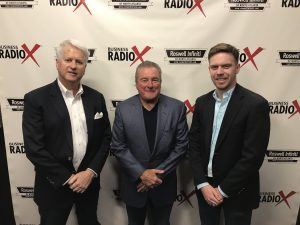
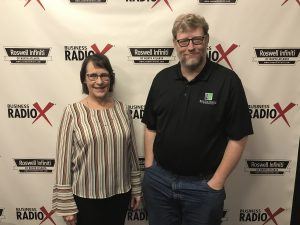
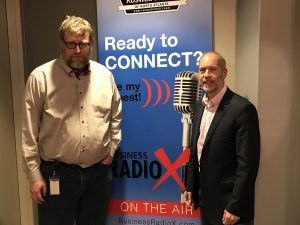
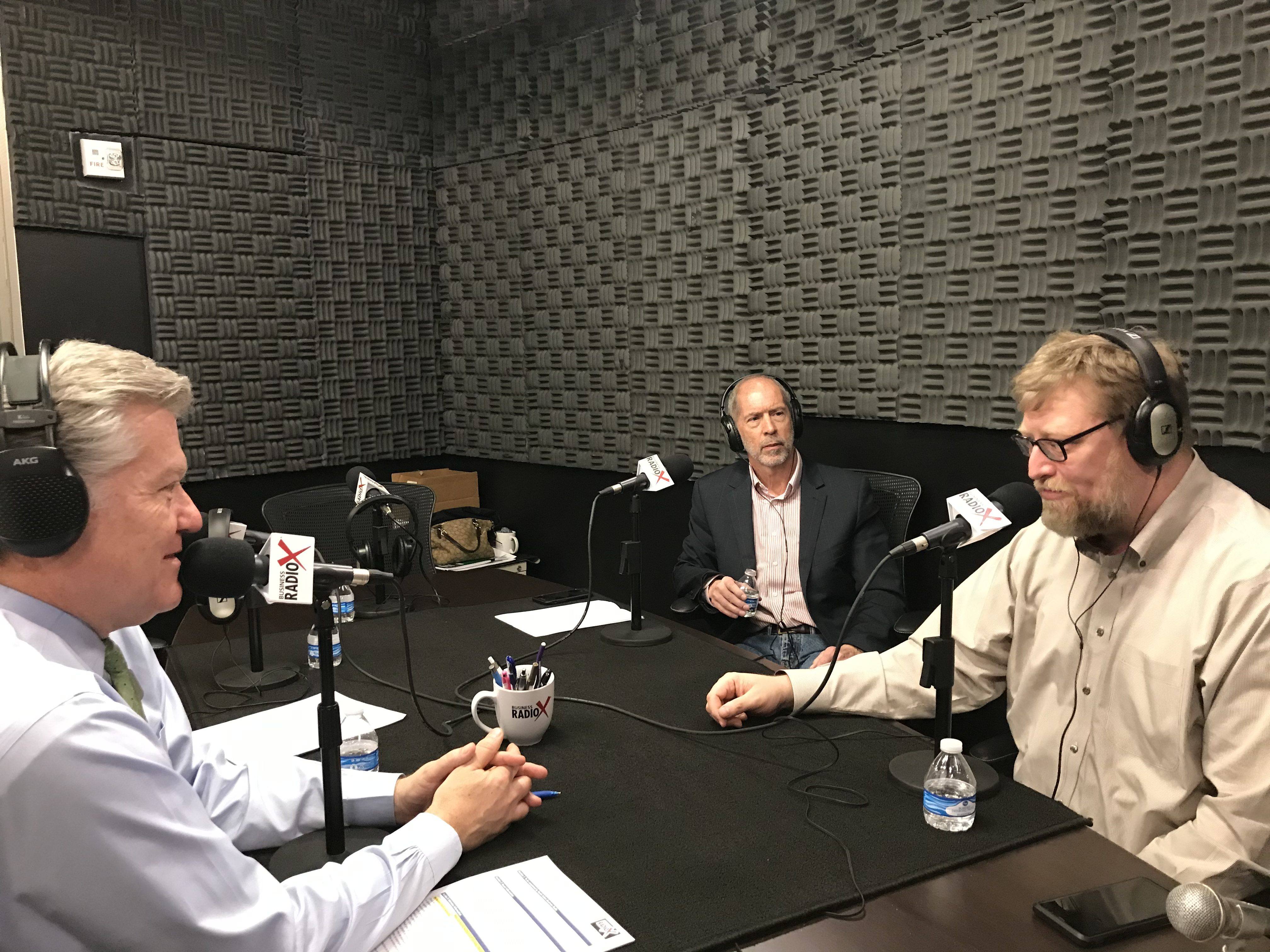
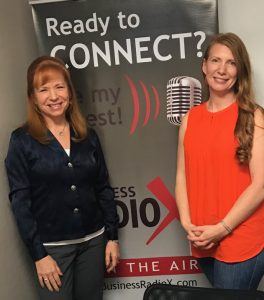
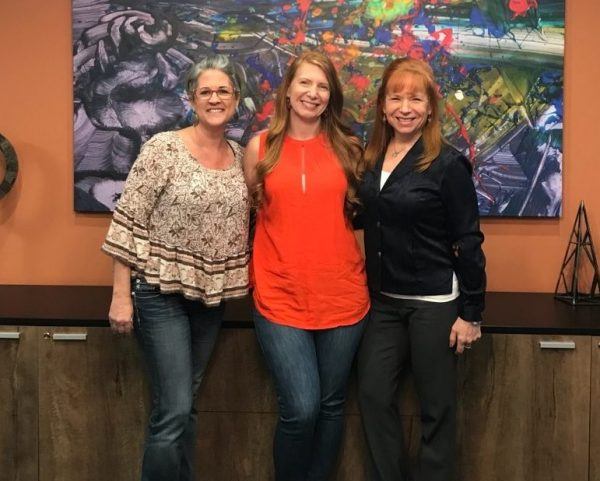
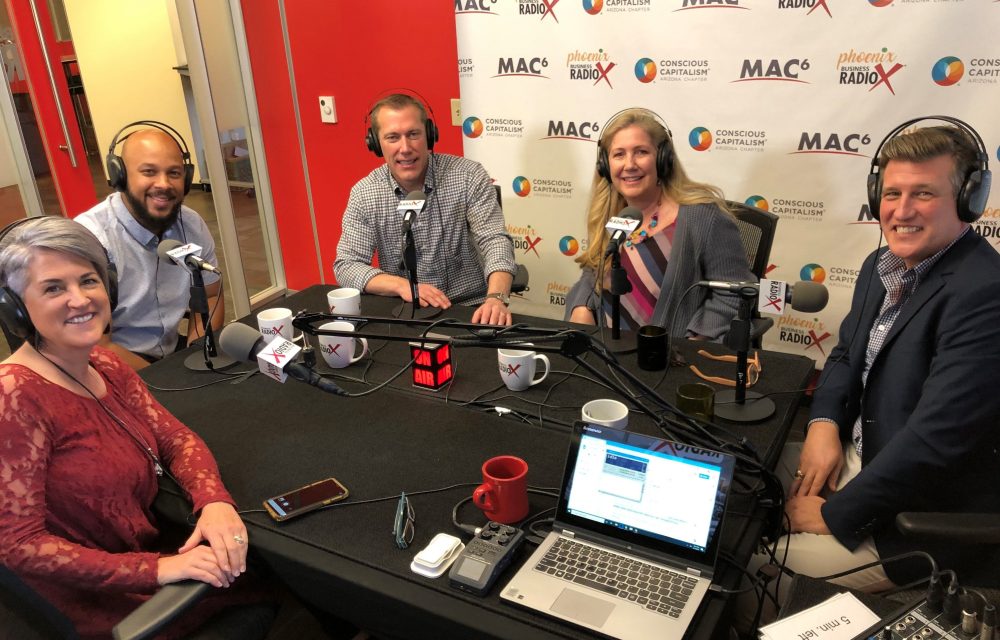
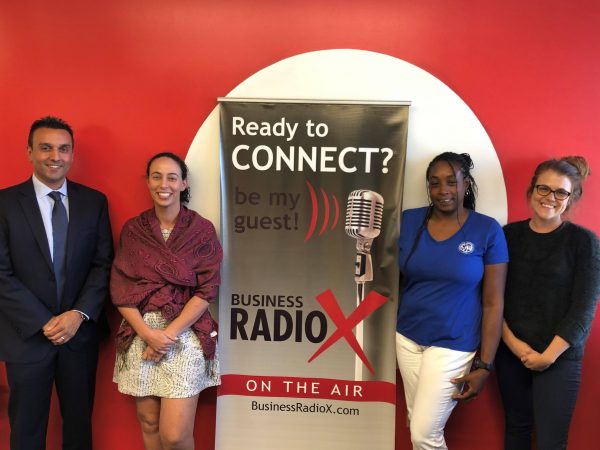
Eric Strafel and Judson Garrett with SUMMi7 Robin Bramman with CO+HOOTS and David Byrd with Original Crew Co

February 18, 2020 by Karen

Eric-Strafel-and-Judson-Garrett-with-SUMMi7-Robin-Bramman-with-COHOOTS-and-David-Byrd-with-Original-Crew-Co-1
Phoenix Business Radio
Eric Strafel and Judson Garrett with SUMMi7 Robin Bramman with CO+HOOTS and David Byrd with Original Crew Co
Loading
00:00 /
RSS Feed
Share
Link
Embed

Download file

Eric-Strafel-and-Judson-Garrett-with-SUMMi7-Robin-Bramman-with-COHOOTS-and-David-Byrd-with-Original-Crew-Co

Eric Strafel and Judson Garrett with SUMMi7 Robin Bramman with CO+HOOTS and David Byrd with Original Crew Co

SUMMi7 is dedicated to building an inclusive ecosystem that improves lives by promoting authentic leadership, mindfulness, and sustainable business practices.
Eric-Strafel-on-Phoenix-Business-RadioXEric Strafel is Vice President of Supplier Management at Boeing as well as President & CEO at Aviall, A Boeing Company.

Eric holds an MBA from Carnegie Mellon University and a Bachelor of Science in Mechanical Engineering from Binghamton University.

He sits on the Board of Directors of the Texas Diversity Council and the Irving Chamber of Commerce. He is an active and engaged father and husband living in Texas with his wife and three children. Eric enjoys the outdoors, staying fit, and maintaining a wellness mindset.

Eric is a global leader with a proven international track record including leadership and project management experience in North America, Europe, the Middle East, Africa, and Asia Pacific. S7circlecolor4x-1001
As a purpose-driven leader and innovator, Eric is collaborative and adaptable with a wealth of experience building and scaling inclusive teams that can grow to meet increasing demands while working effectively across borders.

In addition to his leadership positions at Boeing, Eric is the founder of SUMMi7, a leadership development group dedicated to building a more inclusive business environment that allows entrepreneurs, startups, and Fortune 500 companies to lead, innovate, and scale with purpose.

Learn more about Eric here.
Judson-Garrett-on-Phoenix-Business-RadioXJudson Garrett is a passionate educator and executive with 15+ years’ experience dedicated to leadership development, entrepreneurial innovation, and collaborative learning. Born in Baltimore and raised in Annapolis, Maryland, Judson first came to Arizona in 1991 as a student-athlete at the University of Arizona.

With a master’s degree in classical liberal arts from St. John’s College, he has gone on to teach at ASU, GCU, the Great Hearts Academies and Phoenix Country Day School. Judson has a demonstrated history of working collaboratively with a wide range of engaged learners, cutting-edge technologists, and socially aware business leaders to reimagine the relationship between individuals, organizations, and thriving societies.

Throughout his career, Judson has developed innovative approaches to enhancing student success, facilitating discourse, and expanding collaboration through public-private partnerships and community engagement. As the Chief Learning Officer at SUMMi7, Judson possesses a broad vision for the future of leadership, education, and innovation in an increasingly interdependent and entrepreneurial world.

Follow SUMMi7 on LinkedIn, Facebook, Twitter and Instagram.

CO+HOOTS is the largest coworking community in Arizona. It helps entrepreneurs scale by providing collaborative workspace, event space and community. CO+HOOTS is a safe space for all to grow through knowledge-sharing and risk alleviation.
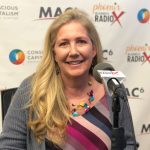
Robin-Bramman-on-Phoenix-Business-RadioXRobin Bramman is the Chief Operating Officer at CO+HOOTS focused on national expansion, partnerships and programming.

Robin supports the Arizona startup ecosystem by seeking collaboration over competition with a focus on incubating opportunities for untapped and underrepresented communities.

Robin has been embedded in the startup community since CO+HOOTS opened working to support branding, communications and digital services as CEO of Brandtini (formerly Chic Branding) for startups to Fortune 100 organizations. CO+HOOTS

Robin works collaboratively with many teams to design, develop and communicate brands for business impact. Also known as The Brand Detective, Robin has a wealth of knowledge on customer insights and user experience that guides a brand to engage with their ideal client.

Robin has been fortunate to work on global rebrands, national and local startups from the World Trade Centers Association, to Parchment.com, to VitalyzeInc.com, and many local businesses like Local First Arizona and Parasilk.com.

Follow CO+HOOTS on LinkedIn, Facebook, Twitter and Instagram.

Original Crew Co. provides creative design, direction & management solutions to clients while collaborating with department directors to deliver final products on time and budget. davidbyrdlogo

David-Byrd-on-Phoenix-Business-RadioXDavid Byrd is a cutting-edge Graphic Designer and Creative Director specializing in concept creation and brand development for business services and products.

Experienced in the development, management and execution of purpose driven design solutions that influence engagement and emotion across digital and traditional spaces, David excels at building online communities that inspire individuals from all walks of life to come together for a better world.

As a former Project Manager and Senior Graphic Designer for The RichDad Company, David is experienced at building inclusive learning ecosystems to empower learners and support the sharing of knowledge through virtual and in-person coursework.

Connect with David on LinkedIn.
Tagged With: ecosystem, entrepreneur, incubator, leadership development, mindfulness, Startup, sustainability, team building

Mahes Prasad with Juncture Wealth Strategies Tearsa Saffell and Ashley Camhi with AZSA and Nika Forte with St Vincent de Paul

November 15, 2019 by Karen

Mahes-Prasad-with-Juncture-Wealth-Strategies-Tearsa-Saffell-and-Ashley-Camhi-with-AZSA-and-Nika-Forte-with-St-Vincent-de-Paul
Phoenix Business Radio
Mahes Prasad with Juncture Wealth Strategies Tearsa Saffell and Ashley Camhi with AZSA and Nika Forte with St Vincent de Paul
Loading
00:00 /
RSS Feed
Share
Link
Embed

Download file

Mahes-Prasad-with-Juncture-Wealth-Strategies-Tearsa-Saffell-and-Ashley-Camhi-with-AZSA-and-Nika-Forte-with-St-Vincent-de-Paul

Mahes Prasad with Juncture Wealth Strategies Tearsa Saffell and Ashley Camhi with AZSA and Nika Forte with St Vincent de Paul

Juncture Wealth Strategies is an Independent Registered Investment Advisory firm focused on planning and investment management. They are a multi-disciplinary team that leverages its collective experience, and intellectual capital, to offer integrated advice with a deep perspective.

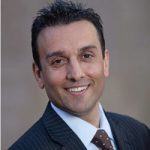
Mahes-Prasad-on-Phoenix-Business-RadioXMahes Prasad helps clients plan for their financial future and he supports advisors, professionals and business owners grow their business.

He joined Juncture Wealth Strategies in 2019 with over 20 years of broad Financial Services experience at Wells Fargo and Charles Schwab. At Wells Fargo, he held a variety of leadership positions and lead multiple teams of Financial Advisors throughout Arizona. He helped increase revenue from $25 million to over $65 million in the Metro Phoenix Region during his time leading Brokerage. He dedicated time as a Financial Advisor Practice Management Consultant helping over 100+ advisors manage multiple aspects of their practice in order to grow both AUM and Revenue while continuously improving the Client Experience. He has been recognized by On Wall Street Magazine as a Top 100 Branch Manager Honoree in 2011 and 2012.

He is an advocate for Sustainability efforts in Arizona and currently serves as Board President for Arizona Sustainability Alliance. In his role, he supports the organizations goal and mission of ensuring Arizona continues to protect it’s natural resources and maintain strong livability for all citizens.

Mahes received his bachelor’s degree in finance from The University of Arizona in Tucson, Az and currently lives in Phoenix, Az. with his wife Shelly and 2 daughters.

Connect with Mahes on LinkedIn, Facebook, Twitter and Instagram.

AZSA_LOGO_Final@2x.png

The Arizona Sustainability Alliance is a 501(c)(3) non-profit whose mission is to create and support cutting-edge, project-based sustainability solutions throughout Arizona. The Food Systems priority of the organization is focused on improving food security for vulnerable populations, enhancing the local food economy, and supporting education around how to grow, eat, and recycle healthy food.

Tearsa-Saffell-on-Phoenix-Business-RadioXTearsa Saffell is an Arizona native and a recent graduate from Arizona State University. She received a Bachelor of Science in Sustainability and a certificate in Sustainable Food Systems.

Over the past two years she has dedicated her time to developing the Sustainable Food Systems priority for The Arizona Sustainability Alliance (AZSA). Her work has included creating an indoor gardening program for K-12 schools, piloting Arizona’s first high school food computer program, and connecting community to local agriculture through the AZSA Help-A-Farm project.

Connect with Tearsa on LinkedIn, Facebook, Twitter and Instagram.

Ashley-Camhi-on-Phoenix-Business-RadioXDr. Ashley Camhi has her Ph.D. in Biology and Society. Her expertise and research are in environmental and agricultural economics. She is the Founder and Executive Director of the Arizona Sustainability Alliance. She has worked internationally for over 15 years and brings her knowledge and experience in sustainability projects to Arizona.

Follow AZSA on LinkedIn, Facebook, Twitter and Instagram.

The Society of St. Vincent de Paul is dedicated to feeding, clothing, housing and healing individuals and families in our community who have no where else to turn for help. society-of-st-vincent-de-paul-logo-png-transparent

As important, SVdP also provides meaningful opportunities for volunteers to serve their neighbors in need with love and compassion.

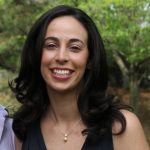
Nika-Forte-on-Phoenix-Business-RadioXNika Forte’ was born and raised in Detroit, Mi. but has made Arizona her home for over 25 years now. She is a wife and mother of 4 beautiful children and loves spending time with family, serving others and working in her garden.

She’s served two years in the AmeriCorp program under Public Allies and is currently the Urban Farm Manager at St. Vincent de Pauls Urban Farm on the Human Services Campus in downtown Phoenix as well as the Community Involvement Coordinator for St. Vincent de Paul’s three Urban Farms as a whole.

Her mission in life is to advocate for communities that are experiencing food insecurity and to work everyday to educate others on how to grow food and give back to the environment in a sustainable and compassionate way.

Connect with Nika on Facebook and Instagram.

Tagged With: environmental awareness, Financial Advisor Scottsdale, Financial Planning Scottsdale, food justice, Food Tech for the Future, Innovation, Leadership, Local Arizona agriculture, premaculture, Recruiting, sustainability, Sustainable food, sustainable growing, urban farming, Volunteer, Wealth Advisor Scottsdale

Jennifer Levine Hartz with Corporate Hartz, Halley Morochnik with WebStep Design and An Tran and Nhan Dinh with Sylvan Learning Center

November 12, 2019 by angishields

ABR-Feature-11-11-19
Atlanta Business Radio
Jennifer Levine Hartz with Corporate Hartz, Halley Morochnik with WebStep Design and An Tran and Nhan Dinh with Sylvan Learning Center
Loading
00:00 /
RSS Feed
Share
Link
Embed

Download file

ABR-Group-11-11-19

The power behind Corporate Hartz, LLC is Jennifer Hartz. Her background includes in-house roles at iXL Enterprises and The Home Depot, and consulting through McKinsey & Company and Cresap (Towers Watson). She has vast non-profit knowledge through engagements with Boys & Girls Clubs of America and Habitat for Humanity International, as well as a long history of volunteer leadership.

Jennifer has an MBA with a concentration in Public Policy from Georgia Tech and a BA in Industrial Psychology from University of Pennsylvania. She is the Advisory Council Chair of Hands On Atlanta, as well as an alumna of Outstanding Atlanta, Leadership Atlanta, and the Marshall Memorial European Fellowship program.

Jennifer and her husband Eric have 4 children, ages 18 – 22, who were raised from diaper-age with articulated and reinforced family values and active volunteerism through “WhyServe?” an interfaith charity Jennifer co-founded.

Connect with Jennifer on LinkedIn.
Halley Morochnik worked full-time in marketing/advertising for TBWA/Chiat Day, helping clients like Nissan, Infiniti, and Sony reach their marketing goals. In 2014, Halley started WebStep Design to deliver web solutions to small businesses and non-profits.

Web consulting combines her love of art & design, marketing, and problem-solving.

Connect with Halley on LinkedIn.
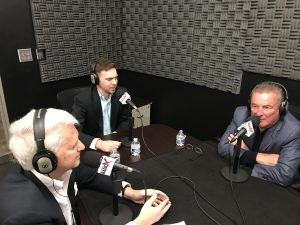
An Tran moved from Vietnam to the United States when she was 9 and grew up in Tucker, Georgia. An graduated from Georgia State with a Psychology Degree. She is a stay at home mom with 6 kids under the age of 10 that serves as her full time job. To feed all those kids, An has two businesses. In 2018 she bought into Rhea Lana, a Children’s Consignment Franchise that has two events a year. This year An started Sylvan of Alpharetta, a Sylvan Learning Franchise.

An’s husband, Nhan Dinh, moved from Vietnam to the US when he was 10. He grew up in Roswell, Georgia and graduated from Georgia Tech with a Computer Engineering Degree. In 2005, he opened his own lawn repair shop AA Power Equipment in Roswell, Georgia. In 2012, that business expanded to selling on Amazon and now it’s one of the top 1000 sellers on Amazon in the United States.

An and Nhan have a love for children and a love for teaching them. They have been youth leaders at their church for over 15 years and believe that with the right guidance, learning can make a lifetime of difference. We see Sylvan as an opportunity to make a difference in the lives of our future leaders by helping them embrace a love of learning.

Follow Sylvan on Facebook and Twitter.

Questions and Topics In This Interview

  • Women Owned Businesses
  • How Jennifer and Halley met
  • The process of designing Jennifer’s website
  • Why An chose to become a Sylvan franchisee
  • Sylvan of Alpharetta’s grand opening in September
  • What impact do you want Sylvan Learning to have on the community and children you will be helping?
  • How Sylvan personalizes learing
  • What type of classes does Sylvan offer?
  • What makes Sylvan Learning Center different?

Tagged With: Corporate Hartz, Corporate Social Responsibility, Education Franchise, Family Philanthropy, impact, meaning, Online biz solutions, online marketing, Passionate, Personalized Learning, profit, Resourceful, SEO, sustainability, Sylvan Learning Center, tutoring, WebStep Design, Wix

Decision Vision Episode 30: Should I Implement a Sustainability Program in My Business? – An Interview with Troy von Otnott, Massive Technologies

September 5, 2019 by John Ray

Decision Vision
Decision Vision
Decision Vision Episode 30: Should I Implement a Sustainability Program in My Business? – An Interview with Troy von Otnott, Massive Technologies
Loading
00:00 /
RSS Feed
Share
Link
Embed

Download file

Mike Blake and Troy von Otnott

Decision Vision Episode 30:  Should I Implement a Sustainability Program in My Business? – An Interview with Troy von Otnott, Massive Technologies

How do I start a corporate sustainability program at my company? What do the insurance markets reveal about the necessity of a sustainability program for my business? The answers to these questions and more are covered by Troy von Otnott, Massive Technologies, in this important discussion with host Mike Blake. “Decision Vision” is presented by Brady Ware & Company.

Troy von Otnott, Massive Technologies

Troy von Otnott

Troy von Otnott is the CEO of Massive Technologies, a clean technology and sustainability consulting company in Atlanta, Georgia. Massive is currently pursuing business opportunities in commercial/industrial solar asset financing and deployment in Puerto Rico, development of graphene-enhanced ballistic products for the U.S. and Canadian militaries, and is currently consulting with a major Chinese investment bank on a strategic plan to significantly reduce China’s carbon emissions and pollution by helping to transition some of  their electric generation assets from coal to cleaner burning natural gas.

For more information, you can email Troy directly.

Michael Blake, Brady Ware & Company

Mike Blake, Host of “Decision Vision”

Michael Blake is Host of the “Decision Vision” podcast series and a Director of Brady Ware & Company. Mike specializes in the valuation of intellectual property-driven firms, such as software firms, aerospace firms and professional services firms, most frequently in the capacity as a transaction advisor, helping clients obtain great outcomes from complex transaction opportunities. He is also a specialist in the appraisal of intellectual properties as stand-alone assets, such as software, trade secrets, and patents.

Mike has been a full-time business appraiser for 13 years with public accounting firms, boutique business appraisal firms, and an owner of his own firm. Prior to that, he spent 8 years in venture capital and investment banking, including transactions in the U.S., Israel, Russia, Ukraine, and Belarus.

Brady Ware & Company

Brady Ware & Company is a regional full-service accounting and advisory firm which helps businesses and entrepreneurs make visions a reality. Brady Ware services clients nationally from its offices in Alpharetta, GA; Columbus and Dayton, OH; and Richmond, IN. The firm is growth minded, committed to the regions in which they operate, and most importantly, they make significant investments in their people and service offerings to meet the changing financial needs of those they are privileged to serve. The firm is dedicated to providing results that make a difference for its clients.

Decision Vision Podcast Series

“Decision Vision” is a podcast covering topics and issues facing small business owners and connecting them with solutions from leading experts. This series is presented by Brady Ware & Company. If you are a decision maker for a small business, we’d love to hear from you. Contact us at decisionvision@bradyware.com and make sure to listen to every Thursday to the “Decision Vision” podcast. Past episodes of “Decision Vision” can be found here. “Decision Vision” is produced and broadcast by the North Fulton studio of Business RadioX®.

Visit Brady Ware & Company on social media:

LinkedIn:  https://www.linkedin.com/company/brady-ware/

Facebook: https://www.facebook.com/bradywareCPAs/

Twitter: https://twitter.com/BradyWare

Instagram: https://www.instagram.com/bradywarecompany/

Show Transcript

Intro: [00:00:01] Welcome to Decision Vision, a podcast series focusing on critical business decisions, brought to you by Brady Ware & Company. Brady Ware is a regional full-service accounting advisory board that helps businesses and entrepreneurs make vision a reality.

Mike Blake: [00:00:20] And welcome to Decision Vision, a podcast giving you, the listener, clear vision to make great decisions. In each episode, we discuss the process of decision making on a different topic. Rather than making recommendations because everyone’s circumstances are different, we talk to subject matter experts about how they would recommend thinking about that decision.
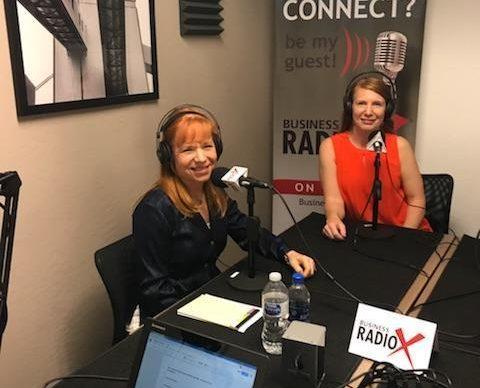
Mike Blake: [00:00:37] My name is Mike Blake, and I’m your host for today’s program. I’m a Director at Brady Ware & Company, a full-service accounting firm based in Dayton, Ohio, with offices in Dayton; Columbus, Ohio; Richmond, Indiana; and Alpharetta, Georgia, which is where we are recording today. Brady Ware is sponsoring this podcast? If you like this podcast, please subscribe on your favorite podcast aggregator. And please also consider leaving a review of the podcast as well.

Mike Blake: [00:01:01] So, our topic today is sustainability programs. And whether the issue or the conversation has revolved specifically around global climate change, whether it has been around local pollution, whether it’s been about economic sustainability and recycling materials, whether it’s been about land conservation, some elements of the environmental movement and, by extension, sustainability, I think, is in everybody’s corporat⁠e⁠—everybody’s consciousness.

Mike Blake: [00:01:35] And maybe it’s considered polarizing, maybe it’s not, but it’s not something that nobody has an opinion on. And there’s a sense that companies have⁠⁠—at a minimum, all companies have an opportunity to be constructive in terms of environmental sustainability, and how they impact the environment, and what their footprint looks like, and are they reinvesting back what they’re taking out of the environment to conduct their commerce?

Mike Blake: [00:02:03] And then, I think where there’s a disconnect is, what is the obligation of the corporation to, somehow, either ameliorate the impact that they themselves have on the environment, or even to be a net positive contributor to the environment, even beyond whatever impact that they have? And I don’t think it’s fair to say there’s a right or wrong answer to the question. But if you’re a business leader, you’re faced with the question of, should we be doing something to be promoting the environmental, ecological sustainability of our business? Should we be doing more than we’re already doing? Or in some cases, are we doing too much? Should we be scaling it back? Because there can be a cost to this, at least, in the short term.

Mike Blake: [00:02:50] And that’s particularly noteworthy in the public markets where the public markets reward investors. Frankly, they reward managers based on short-term metrics and short-term gains much more than they do long-term metrics and long-term gains. And so, to some extent, there actually can be a fundamental financial and economic disconnect that maybe, otherwise, prevents some behavior that managers, in fact, would like to do but, somehow, feel constrained.

Mike Blake: [00:03:23] And so, the decision really that’s, then, put before us as business leaders is, should we be thinking about the environment more? Should we be thinking about the environment around us, not just as a publicity exercise, but is this something that we can and should be building into our business plan? And most importantly, we’re often told that there’s a palpable cost, there’s a tradeoff that, well, you can plant some trees, you can save a polar bear, you can help rising sea levels, but this is going to cost you something to do that. And maybe we’re going to challenge a little bit of that perception today or maybe we’re going to confirm it. And that’s about as much as I know. So, I’m going to stop talking about that myself and bring on our guest.

Mike Blake: [00:04:12] I’m very pleased to introduce Troy von Otnott. Troy is the CEO of Massive Technologies, a clean technology and sustainability consulting company here in Atlanta, Georgia. Massive Technologies serves as a consultant to renewable energy and sustainability-focused companies. The company also facilitates sustainable mineral and fuel commodity transactions on behalf of a large Chinese investment bank, helping to mitigate their pollution and climate change challenges, which we know are myriad. And we probably don’t know the full story because they’re not exactly the most transparent country in the world when it comes to their own issues. Troy is also the ambassador for Cleantech Open, a national nonprofit program that encourages entrepreneurs to develop technologies to address environmental sustainability challenges. Troy, welcome to the program. Thanks so much for coming on.

Troy von Otnott: [00:05:02] It’s great to see you, Mike.

Mike Blake: [00:05:04] So, we almost missed the podcast because we are talking so much before the podcast. You got so many interesting things to talk about. And I’m going to dive right into what was a fascinating backstory that I did not know. How did you become engaged as you have been with the sustainability? This is not something you necessarily grew up from as a kid thing thinking, “I’ve got a—this is my thing,” right?

Troy von Otnott: [00:05:27] No, not at all. In fact, I’m from New Orleans. And as you know, Louisiana is one of the largest oil and gas production states in America and a petrochemical production center as well. And so, being an environmentalist in Louisiana is kind of weird, and you’re thought of as a bit of an outlier.

Mike Blake: [00:05:50] Small club, right?

Troy von Otnott: [00:05:51] Yeah. And so, it’s not something that I ever thought about being involved in. In most of my adult life, as I was mentioning before the podcast began, I spent most my life doing event production. New Orleans produces a lot of events, and I was enjoying that career. But in 2005, my world and all my fellow citizens in New Orleans worlds changed due to the impacts of Hurricane Katrina. And we lost a lot. We lost over 2000 lives, billions of dollars of property value. And I, personally, lost an entire career.

Troy von Otnott: [00:06:34] And so, it was at that moment that it made me start to reflect and think about why was this particular storm more damaging, more impactful than others. And after doing a substantial amount of research, I started to understand a little bit more about global climate change and felt like I needed to direct my talents and my skills to try to play a small role and do something to have an impact and try to rebuild the city in a more sustainable way.

Mike Blake: [00:07:09] And I mean, it really was a much more impactful storm because let’s face it, New Orleans gets hurricanes, right? I imagine—I don’t know, I grew up in Boston, we got one hurricane every 20 years, and it’s a category one. I imagine, New Orleans, wake me when it’s a Category IV, and then I’ll start to get excited.

Troy von Otnott: [00:07:26] Absolutely. The complacency for Hurricane Katrina was staggering. In fact, on a personal basis, my sister, and my niece, and nephew were very complacent. And as much as I had a bad feeling about this one and begged them to leave with me, they decided to stay. And for about two weeks after the storm landed, they were lost, lost in the system. And I thought they were dead because the ranch home that they were living in, in a suburb of New Orleans, had about three feet of water over its roofline. And fortunately, they were able to swim to the only two story home on their street and were rescued by helicopters. You probably remember those images from television.

Troy von Otnott: [00:08:08] So, it was, personally, a devastating experience and literally made me just want to completely change gears, switched direction, and try to see if I can add value to figuring out solutions, and become a part of the solution, instead a part of the problem.

Mike Blake: [00:08:26] So, I’ll interject. They said that humor is tragedy plus timing. We’re talking about this before. And I thought I was in Connecticut when this happened. I was not. We, actually, just moved to Atlanta. And when Katrina happened, it occurred at the same time as Dragon Con happened. And I remember being at Dragon Con. For those of you not in Atlanta, that’s basically our Comic Con. So, if you’re into dressing up as a Wookie, Dragon Con is for you, right, Labor Day weekend. And I was actually in a bar. I was not in costume. I don’t do that. But there are actually a couple of folks that had fled the city. And I was sitting next to this guy and he was—we’re watching on TV as they’re doing—just as you said, they’re pulling people out.

Mike Blake: [00:09:10] And here’s a guy whose life is completely uprooted. He’s watching it being uprooted in real time. And in the background behind him, there are storm troopers. There are people in Star Trek uniforms, Battlestar Galactica, Japanese Anime, everything you can possibly imagine. I’m thinking, “Boy, this poor guy next to me must think he cannot catch a break in any—” Either that or he thinks he actually fell asleep somewhere on the road, and he’s still dreaming. It’s a very odd juxtaposition. So, you-

Troy von Otnott: [00:09:44] By the way, not quite as odd as you being an esteemed accountant by day, father of dragons by night, so.

Mike Blake: [00:09:48] There you go, there you go. So, you had the shift, It made a huge impact on you. And was your family okay by the way? I didn’t ask you about that.

Troy von Otnott: [00:10:01] Yeah. Everyone survived. And lost property, but property can be replaced. In fact, that’s exactly what the first thing I did is I started working with the local city planning commission to work on building code improvements because we needed to build structures that we’re going to be able to sustain a Category IV or Category V storm. We don’t have a lot of those structures in New Orleans. We’ve got 150-year-old structures that, actually, did survive the wind loads from the storm but didn’t survive being submerged in 12 feet of water for two to three weeks.

Troy von Otnott: [00:10:34] So, I started building sustainable housing. We created a modular home company and was very successful. And ironically, I wanted to try to build a highly efficient and energy-efficient home. And we accomplished that after a couple of iterations working with our manufacturer. But I got to a point where I couldn’t make the home any more energy-efficient without adding some form of renewable energy. And so, I started doing some research and looking for a solar energy company. And lo and behold, there was not one in the entire state.

Troy von Otnott: [00:11:12] So, I started researching why that was the case. Why is California, why is New York and Northeast leading in the early stages of solar energy development, but we weren’t? I mean, we’re an energy production state, but we’re producing fossil fuels, not clean energy, and that didn’t make any sense to me. So, I worked with a group of of caring and passionate environmentalists, and we actually drafted a bill, which was a Louisiana renewable energy tax credit bill. And when I say we had no idea what we were doing, we really didn’t know what we were doing. But we were bull in China cabinets, and we were just committed to getting it done. And at the end of the day, at the next legislative session, we wound up passing a clean energy bill that in recent memory, none of the politicians could remember when a bill actually passed unanimously in the state legislature. They thought it was like a unicorn, it didn’t exist.

Troy von Otnott: [00:12:10] And so, I remember getting a call from the governor’s office after the bill passed, and they said, “Well, look, you’re the lead guy working on this bill. You need to come to the State Treasurer and meet with him.” And I said, “What did I do?” And he’s like, “Well, you need to tell the government how much money this tax bill is going to cost our state treasury.” And I literally said, “I have no idea.” And they’re like, “Well, you better figure it out because you did this bill.”

Troy von Otnott: [00:12:34] So, I go to the State Treasurer’s office two days later and they said, “Okay, how many individuals, or homeowners are likely to put solar panels on their house?” And I just kind of came up with a number and literally out of the air. And the guy was writing on a notepad, and he’s like, “Okay, so, that is equivalent to about $500,000. Does that sound right?” I said, “It sounds great to me.” And so, he’s like boom, stamp, “It’s good. Governor will sign it tomorrow.” I’m like, “Does this really happen?” And he’s like, “Yeah, it’s happening.”

Troy von Otnott: [00:13:06] And so, two days later, after the governor signed it, I get a phone call. It was from a 303 area code, and it was a guy named Shane. And he’s like, “Hey, are you the guy that did the renewable energy tax credit bill?” And I was like, “Yeah.” And I was like, “Did I do something wrong?” He’s like, “No, you did something extraordinary.” I was like, “What do you mean?” He goes, “Do you know you passed the most aggressive state tax credit in the United States for renewable energy?” I said, “I did?” He’s like, “Yeah. California has about a 10% tax credit. You have a 50% tax credit. How did you do that?” I was like, “I don’t know.” He said, “What business are you in?” I’m like, “I build energy-efficient houses.” He’s like, “You’re not in that business anymore.” I said, “I’m not?” He said, “No.” I’m like, “What business am I in.” He says, “You’re in the solar business now. I’m coming to see you tomorrow.” And I was like, “Okay.”

Troy von Otnott: [00:14:00] Guy gets on a plane, comes and meet me at the local hotel on Canal Street. And after about six hours, he said, “Hey, I’m with a company called SunPower. We’re one of the biggest brands of solar panels in the world. And you’re now our partner in Louisiana.” And literally, within a week, we formed a company called South Coast Solar. And within about six months, it went from me, my old friend, Tucker Crawford, and a solar expert named Scott Oman, and a part time accountant operating in my friend’s second bedroom to a downtown office with about 10 employees and about $3 to $4 million in sales.

Troy von Otnott: [00:14:36] And within two years, we became the largest clean energy company in the southeast. And it was a really interesting and wild ride. And we got indoctrinated into the national scene because people were just so excited to see someone outside of California or the Northeast actually develop a sustainable clean energy business industry. And so, we’re really proud of what we did with South Coast Solar.

Mike Blake: [00:15:00] So, that segues perfectly to the next question, and that is that especially here in the southeast, red state haven, there’s a perception and, really, I think, kind of a knee jerk reaction about when you say sustainability, you’re kind of bracing yourself for pushback, argument, lots of questions. I mean, as it turns out, I drive electric. And I still I remember one of the first times I drove outside of Atlanta, I went to a hotel. That’s where there’s a place to to plug in my car. They said no, but they said no in a way that their eyes said comrade at the end, right. Go back to Russia basically.

Troy von Otnott: [00:15:45] Right.

Mike Blake: [00:15:45] And I think we still—I still think we face a lot of that in certain sectors. And I got to imagine you face some of that in Louisiana, right? Especially a fossil fuel state. Talk about entrenched interests.

Troy von Otnott: [00:15:56] You know, it’s funny. I had a very close friend who was actually the CEO of of Entergy, which is the dominant energy company in New Orleans. And this is a friend that used to sit on my sofa and play Madden football with me. And so, now he’s running the biggest utility company in the south at that time. And he said, “Hey, I’m supportive of what you’re doing. I want you to know that.” He goes, “But you guys have got to get your cost in line because solar is way too expensive, and we can’t buy any of it.”

Troy von Otnott: [00:16:27] Well, flash forward 13 years later, and they’re still singing that same tune, right? So, it’s—and ironically, what’s happened in Georgia, regarding Georgia Power and Southern Company, is when I first moved here in 2010, they were not very supportive of the solar energy industry. In fact, it almost felt like they were running disinformation campaigns to suggest that clean energy doesn’t even work in Georgia. But at the end of the day, what all these utilities come to the realization is they have an obligation to their ratepayers to buy the cheapest form of energy that offers the most stability and that their ratepayers desire, right? Those are the three things. But number one is cost, right?

Troy von Otnott: [00:17:16] So, in 2018, solar is, by far, the cheapest energy outside of coal, natural gas, nuclear. It blows them all away. The only thing that’s cheaper than that is wind, but we don’t have a lot of onshore wind in this part of the country. So, now, even though Georgia is not a renewable portfolio state, there’s no mandate by the government to do this, Georgia Power, with the help of the Public Utility Commission, winds up buying a substantial amount of solar. We have a problem, it’s a problem, but it’s also a blessing that Atlanta is called a city in the forest because there’s so much tree cover that it’s almost impossible to find a home that’s not surrounded by 40 or 50-foot pine trees, right?

Mike Blake: [00:17:59] Right.

Troy von Otnott: [00:18:00] And so, you can’t get a direct line to the sun. So, you have massive shading issues everywhere. So, while there is very little residential solar in the market, in fact, I think in the entire state, only 40 homes last year put solar on their houses-

Mike Blake: [00:18:14] Okay.

Troy von Otnott: [00:18:14] … but utility scale solar has taken off. In fact, I helped Georgia Power put together a construction team to build 17 solar farms just last year. So, the fact is that they are now moving towards greening their own grid. And they’re doing it, not because it’s green, not because it’s sustainable, because it’s the lowest form of stable energy that they can offer the ratepayers.

Mike Blake: [00:18:43] And I’m curious, have they crossed the 1 gigawatt of capacity yet, solar?

Troy von Otnott: [00:18:48] They have.

Mike Blake: [00:18:48] Okay.

Troy von Otnott: [00:18:49] Yeah. In fact, the PUC just put out a new directive for them to buy, I think, another 1.6 gigawatts-

Mike Blake: [00:18:56] Okay.

Troy von Otnott: [00:18:56] … over the next few years. So, while that’s a decent amount of clean energy, I mean, it pales in comparison to what’s happening in California, pales what’s happening up in the Northeast. But it’s so much better than what it was five, six, seven years ago, right? So, at the end of the day, if you pull the ratepayers and ask them, “What form of energy do you want coming into your home or your business?” 80% of them will say, “Give me the clean stuff, right. I don’t want the coal because I don’t want my kid suffering from asthma.”.

Mike Blake: [00:19:31] Right.

Troy von Otnott: [00:19:32] Natural gas, that’s better. It’s a transition. It’s a bridge fuel. Let’s do that because we don’t want to have coal. The nuclear is just so expensive. It’s almost impossible to get a plant up and operating. And then, talk about annual maintenance and then decommissioning, which never gets into the economic model, which is kind of crazy to me.

Troy von Otnott: [00:19:50] But at the end of the day, cities and states are taking lead in the clean energy transformation. And there’s over 125 cities in the United States now that have mandated 100% clean energy sometime between 2035 and 2050. So, it’s coming, and it’s coming a lot faster than most people ever thought it would. ***

Mike Blake: [00:20:12] So, you bring up an interesting point. And I think, if I had asked this question five years ago, the answer would have been very different. What percentage of the sustainability program question now is being driven purely by economics, where it’s a more manifestly positive business case as opposed to, for whatever reason, we feel it’s the right thing to do case?

Troy von Otnott: [00:20:37] I would say 100% of it is, because at the end of the day, the definition of sustainability is having a business that will be around, right?

Mike Blake: [00:20:47] Yeah.

Troy von Otnott: [00:20:47] And so, what sustainability, ultimately, means is driving down cost of your operation, right? And so, when you talk about greening your supply chain, or you’re talking about more efficient lighting, or you’re talking about clean energy, all of those things have a return on investment, right?

Troy von Otnott: [00:21:05] So, at the end of the day, in order to be sustainable it means, you have to be able to turn a profit. And the only way you can turn a profit is to manage your operational cost. And everything that happens, whether you’re recycling, reusing, using smarter forms of energy, more efficient forms of energy, dealing with your waste issues in a more sustainable way, it’s all about saving money. And almost every single sustainability officer at any smaller, or midsize, or even large corporations here in Atlanta will tell you, this is not about politics. This is not about green versus red. This is about being green to make green. And so, if you think about it from that standpoint, everyone should be doing it because if you don’t manage to be profitable, you’re not going to be around to even have this discussion later on down the road.

Mike Blake: [00:22:01] So, I want to go to the flip side now. As I mentioned, we’re in a red state, there are a lot of red states around us. And you and I are roughly the same age. I was not a voting age when Jimmy Carter was president, but I do remember the whole sweater thing, turn the thermostat down, the 55-mile-an-hour speed limits and so forth. But that is because we just couldn’t buy the oil we wanted, right?

Troy von Otnott: [00:22:26] Sure.

Mike Blake: [00:22:26] It was scarcely there. And everybody mocked the solar panels on top of the White House. The first thing Ronald Reagan did was take it down-

Troy von Otnott: [00:22:32] Take it down.

Mike Blake: [00:22:33] … supposedly.

Troy von Otnott: [00:22:36] Yeah.

Mike Blake: [00:22:36] In a conservative environment, has the risk of stigmatizing yourself by being seen as too green, and hippie, and whatnot, is that no longer a concern? Is that sort of an old stereotype that’s gone by the wayside, or is that something that somebody needs to really kind of think about depending on what business they’re in and where they do it?

Troy von Otnott: [00:22:55] So, that question is interesting. And I think you get different answers from different people, right. If you talk to people in our age range, they probably are not as educated about these issues. But if you think in terms of the current generation of workers coming into the workforce, the millennials, the millennials care about this more than anything. They care about the environment more than anything because they are the ones that are going to be living in a completely different environment as they age, right.

Troy von Otnott: [00:23:29] I mean, you can have a political discussion, I guess, to some extent, about whether climate changes are anthropogenic or manmade, right? You can have that conversation if you want to. But at the end of the day, you cannot refute that the climate is changing and that it’s affecting agriculture, it’s affecting refugees, right. It’s affecting access to clean water. It’s affecting transportation systems. It’s affecting our entire global ecosystem, right. So-

Mike Blake: [00:24:01] And public health.

Troy von Otnott: [00:24:01] And public health. Public health is a really big issue that really people should be focusing on, but they don’t. I was just reading an article yesterday that I don’t know how many people died in Japan last week because of the heat wave, but it’s almost unsustainable. And so, if you think about—if you’re developing a workforce, and let’s just say you’re Coca-Cola, and you’re hiring millennials, they care about your environmental and social governance more than any other generation because they’re the ones that are going to have to deal with the ramifications of a changing climate.

Troy von Otnott: [00:24:38] So, if you don’t speak that language, and you don’t address their issues, the next company will. And so, it’s a recruiting issue more than anything. You’re not going to get the best of the best unless you are being environmentally and socially responsible, not just from a greenwashing standpoint, but this is a core tenet of who we are and what we are as a company.

Mike Blake: [00:24:59] And greenwashing is what?

Troy von Otnott: [00:25:00] I mean, greenwashing is a company saying that we’re doing all these amazing, wonderful, green things. But at the end of the day, it’s more of a PR campaign than it is an actual programmatic impact that the corporation is having to the bottom line, right. So, you can—Coca-Cola, actually, got pinged on this in the last few years, where they were making assertions in the global media that they were addressing water shortage issues or water quality issues all over the world. And when it came down to a lot of third-party independent organizations that are charged with understanding water scarcity issues, they realized that those issues haven’t been affected at all, and they haven’t changed their policies and their procedures to really ensure that there’s not an overuse of water in their respective markets where they’re operating their bottling facility.

Troy von Otnott: [00:26:00] So, they took that very seriously and said, “We cannot be looked upon in the world as a company that says what they’re doing and not do what they’re doing,” right? So, that’s what really greenwashing is. It’s just sort of a PR campaign to say we’re green just because it makes everybody feel good, but you can’t sit down and put your your corporate sustainability report out and have confirmed metrics by a reputable third-party organization.

Mike Blake: [00:26:28] Now, you touched on something that harkens back to a conversation we had before we hit the record button that I want to come back to, which is it’s not just about millennials anymore either. The capital markets are now paying a lot of attention to this. I read an article recently where I think something like 78% of Wall Street analysts now are factoring in the impact of climate change-

Troy von Otnott: [00:26:49] Absolutely.

Mike Blake: [00:26:51] … in their valuation models.

Troy von Otnott: [00:26:52] But you know why?

Mike Blake: [00:26:55] I may or may not. Tell me.

Troy von Otnott: [00:26:56] Because of the global insurance market, right? I mean, insurance drives everything, right? And if you can’t insure a business, there is no business. And so, the insurance markets are basically saying, “Hey, this climate change thing is real. It’s now. It’s not something that’s coming 10, 20, 30 years from now. We’re experiencing impacts of it right now. And if we don’t start addressing this issue, we’re not going to be able to insure businesses. And if we can’t insure a business, they cannot operate.”

Troy von Otnott: [00:27:26] But you mentioned financial aspects of this whole industry. And we talked briefly about this part of this—part at the start of the podcast. But, you take an organization like BlackRock, right? I think they’re the largest financial management company in the world. They have several trillion dollars under management. Their CEO last year, Larry Fink, put out a directive to all of their associates globally and said, “You guys better start taking environmental social governance seriously. And if you don’t, and you don’t have verifiable third-party validation of what you’re doing regarding ESG, you’re highly likely not going to get capital from us again.”

Troy von Otnott: [00:28:05] And it’s weird because BlackRock still funds coal plants, and they still fund natural gas, and they still fund oil and gas. And so, you can’t just turn on a dime, right? This is a battleship. It takes a very slow curve to change direction. But when it comes top down from the CEO saying, “You guys better take this seriously, or you’re not going to get capital,” I don’t care how big of a company you are. Apple has probably more cash than anybody in the world and are constantly borrowing money because debt is cheap. They don’t want to use their own capital when they can get 2% money from the bond market.

Mike Blake: [00:28:38] Sure.

Troy von Otnott: [00:28:38] Well, you’re not going to get that bond market money if you don’t have a serious commitment, a verifiable commitment to environmental and social governance all throughout your organization.

Mike Blake: [00:28:49] And part of that goes back to the insurability. You’re not going to get 2% money-

Troy von Otnott: [00:28:55] No way.

Mike Blake: [00:28:55] … if you’re not insured.

Troy von Otnott: [00:28:56] No way.

Mike Blake: [00:28:56] Right? You suddenly go from a-

Troy von Otnott: [00:28:59] Well, you can’t even operate.

Mike Blake: [00:28:59] Right.

Troy von Otnott: [00:28:59] You cannot operate. I mean, I was working on a new business model just last year trying to help Native American tribes do some interesting things that their laws, their sovereignty allows them to do. And unfortunately, we could not get the tribe insured. And we dealt with the top 17 global insurance. I mean, all the big names in the world. And every single one of them, over the course of a year, said, “No, we cannot give you a policy.” And therefore, there was no business. So, I have firsthand experience knowing that if you cannot get insurance, you cannot operate a business.

Mike Blake: [00:29:39] So, let’s say we want to think about setting up a sustainability program for our company for the first time. We often hear that some companies—that companies have a chief sustainability officer or one individual that, at least, ostensibly answers for all these sustainability initiatives. Is that a requisite? Is it such a distinct skill set that even if I’m a small company I, kind of, just going to bite the bullet and hire that? Or are there companies that have successfully rolled that portfolio into other responsibilities that already exist?

Troy von Otnott: [00:30:08] I mean, I think it depends on the size of the company, right. So, if you’re planning on putting out a corporate sustainability report, you’re going to need a CSO. But if you’re just a small to mid-sized business, there are really simple things that every business can do. I mean, really simple things like, reduce your energy load, right. I mean, the cheapest and easiest thing to do is to address your lighting in your building, right. And the technologies are so far advanced now and the short payback period is ridiculously low. I mean, any kind of a major LED lighting conversion in a small office like this or a manufacturing facility, two-year ROI max. A lot of them are coming in at one year. And so, if you can’t fund something on a one-year ROI basis, you’re in the wrong business.

Mike Blake: [00:30:56] Right, right.

Troy von Otnott: [00:30:57] So, there are things you can do to address your supply chain. There’s things you can do to address your waste material resources. There are things you can do to to address more sustainable transportation. I mean, there are many simple things that can be done. You don’t have to have a very complex program. But what I’ve learned in talking to companies and students all over the south over the last couple of years about this issue is, they want to be involved, and they want to be engaged, right.

Troy von Otnott: [00:31:26] So, it’s kind of a—I relate this, not on a really appropriate couple basis, but if you think about XPRIZE, right. XPRIZE does these really interesting challenges, whether they’re medical, whether they’re lunar landings, whether they’re clean energy or clean water, but they create competitions, right? And people like to compete. It’s the very nature of who we are. We always compete with each other.

Troy von Otnott: [00:31:52] And so, smart companies create these little, sort of, sustainability competitions, and they create real incentives and real rewards. So, whoever wins, I’m the most sustainable employee in my group for the first quarter, guess what? I get a trip, and I get to go to Cancun, and lay on the beach for three days with pay time off. So, I mean, I think the more you can engage a, sort of, employee plan that allows them to feel like they’re taking some responsibility and doing something that has impact, and it’s not just truly a top-down directive, it’s literally a bottom up, it becomes fun. You can even gamify it and really create teams. And people care about the stuff, and they want to feel like they’re having impact. That’s the biggest struggle.

Troy von Otnott: [00:32:39] Climate change, the biggest problem with climate change is the enormity of the scope. Every time I talk to someone who’s ill-informed about climate change, I might as well be watching a slow motion train wreck, right, because at the end of the day, their brain just melts down. They just like, “What can I do about carbon emissions in the atmosphere? I can’t go up there and grab those molecules.” And it’s just like if the problem’s too big, people don’t know how to deal with it.

Mike Blake: [00:33:08] Right. So, The good news, I think, is that sustainability is a trend that is accelerating now for various reasons, and some of it we’ve spoken about today. Is there a company or organization out there you think is in a particularly good job that has some lessons to teach other companies to follow?

Troy von Otnott: [00:33:26] Yeah. So, I didn’t even know about this until a few years ago when I heard a chief sustainability officer for Cox Enterprises give a presentation at Georgia Tech. I was speaking on clean energy, and they came in and talked about corporate sustainability. And I was literally blown away at how much impact one of Cox Communications divisions has on sustainability. So, they’ve got a good internal group called Cox Conserves. And this is a really dynamic division of that communications company. Well, they’re more than a communications company now. They’re pretty diversified.

Troy von Otnott: [00:34:03] But this organization does some extraordinary things, not the least of which they actually have their own budgets. So, they’ve created their own entrepreneurial co-working ecosystem within that organization. And they, basically, instead of just saying, “Hey, guys, we’re going to have a competition to see who drives the fewest amount of miles or who recycles the most cans,” I mean, they literally say, “Hey, Bob, do you have a really cool idea about how to save the planet? If so, why don’t you write a little executive summary and submit it to us? And if we like it, we will fund you. We will use our own internal capital resources to turn our employee into a sustainability entrepreneur.”

Troy von Otnott: [00:34:49] Like, that kind of forward thinking is really what’s going to be needed in order to make this transition. Because this problem is so big, it needs a lot of people working on it. And people don’t understand that little things actually add up to big things, right. I mean, to change one bulb, recycle one can, drive one mile less than you did yesterday. I mean, a lot of little things can add up to a big thing. And so, when people say, “I can’t do anything, this problem is too big,” that’s not accurate.

Mike Blake: [00:35:20] You mentioned about gamification, and I think you’re really onto something. So, I drive a Volt, and which is a serial hybrid. First, it’s rated for the first 38 miles on electric. After that, it’a nine gallon gas tank. And there’s a very active Volt community on Facebook, Volt owners basically. And there’s a competition to see how much mileage you actually can get out of that car on battery, right. And so, people are doing all kinds of things. Probably, it may or may not be the safest things in the world, but they’re over inflating their tires, right, like, 48 PSIs. So, you go over a bean bag, and you are jolted, right?

Mike Blake: [00:36:04] Right, right, right.

Troy von Otnott: [00:36:04] Or, how much can you coast, and maybe you don’t turn the air conditioner on. And the most I’ve ever gotten out of was 46 miles an hour, and I was miserable. I’ll never try that again. But it does work, right?

Troy von Otnott: [00:36:17] Absolutely.

Mike Blake: [00:36:18] And I think the Volt’s dashboard is set up for that feedback because it shows in real time how much distance you have left, right? And I’ll tell from my own perspective, because I grew up in a fossil fuel internal combustion engine world-

Troy von Otnott: [00:36:33] Sure, we all do.

Mike Blake: [00:36:33] … because I could put gas into my car but don’t really want to, every day that I—especially, every day that was, sort of, at the outside of my range, I don’t put gas on my car. I don’t feel like I’ve saved a polar bear. I just feel like I stole something for free.

Troy von Otnott: [00:36:49] Sure.

Mike Blake: [00:36:49] Right. And the gamification really works.

Troy von Otnott: [00:36:52] It really does. In fact, the old adage, everything old is new again. You’re probably old enough to have driven the original Model T, right?

Mike Blake: [00:37:01] Almost.

Troy von Otnott: [00:37:01] Exactly. So, the original Model T was electric.

Mike Blake: [00:37:05] I did not know that.

Troy von Otnott: [00:37:06] There you go, boom. Dropping knowledge, baby.

Mike Blake: [00:37:08] No, I did know that. I mean, there-

Troy von Otnott: [00:37:09] There were two versions of the Model T, by the way. One was electric. One was-

Mike Blake: [00:37:13] I do know that, at the time, that internal combustion started to catch on. There was a competing industry than battery. And we know the history—the rest of the history.

Troy von Otnott: [00:37:24] Right.

Mike Blake: [00:37:26] And we flirted for battery for such a long time. Now, it looks like we’re rapidly approaching battery ICE parody.

Troy von Otnott: [00:37:33] We are. I mean, two or three years ago, I think people were saying that internal combustion engine parody level was going to be sometime around 2030.

Mike Blake: [00:37:46] Right.

Troy von Otnott: [00:37:48] Now, it’s 2025. And then, I read a report the other day where it’s like 2023. Like it keeps getting shorter. And it’s because R&D in battery technology is one of the bright shining spots of clean tech. A lot of money is flowing into battery storage. And the amazing work that Tesla is doing, and Panasonic is doing, and others is really the north star. It’s where all the major successes are going to happen.

Troy von Otnott: [00:38:17] And so, the utility companies actually didn’t see this coming, right. And so, now, they’ve got to kind of change their whole mindset and say, “Hey, you know how we were going to build this natural gas combustion system, and we’re going to generate 500 megawatts power?” well, they’re not really economical now that we’ve got battery storage. So, instead of building picker plants, these coal firing plants are now in demand, right? And so, at the end of the day, battery storage gets dramatically cheaper every year. And in a couple of years, none of these plants outside of solar, wind, and storage are going to be able to compete.

Mike Blake: [00:39:00] And oddly enough, I think the⁠—this is off topic, but I’ll throw it out there anyway. The VW diesel scandal, I think actually moved that.

Troy von Otnott: [00:39:10] Dieselgate.

Mike Blake: [00:39:11] Yeah, exactly. I think that moved the needle significantly.

Troy von Otnott: [00:39:16] Absolutely.

Mike Blake: [00:39:17] They went from ICE to electric, really, in a period of two and a half years.

Troy von Otnott: [00:39:23] And by 2025, every model that they make will have an electric version.

Mike Blake: [00:39:27] Yeah, right. And Volvo is following through.

Troy von Otnott: [00:39:29] But that fine they got was painful. It wasn’t a light fine. I mean, they got punched in the mouth.

Mike Blake: [00:39:37] And I think⁠—I mean, I don’t think it hurt him as much in America, but I think in terms of-

Troy von Otnott: [00:39:40] Publishing.

Mike Blake: [00:39:41] … public relation and branding-

Troy von Otnott: [00:39:42] Yeah.

Mike Blake: [00:39:42] … killed them in Europe, right?

Troy von Otnott: [00:39:42] Right. It hurt them bad in Europe.

Mike Blake: [00:39:45] I think they thought⁠—and it costs the CEO’s job.

Troy von Otnott: [00:39:47] People⁠—but not only that, but people felt betrayed.

Mike Blake: [00:39:50] Right.

Troy von Otnott: [00:39:50] I mean, I’ve got a good friend of mine who lives here in Atlanta who is a lifelong Volvo and VW enthusiast. And he literally felt btrayed. He felt like he was completely lied to. And he, not only sold his car, he never bought another car.

Mike Blake: [00:40:08] Wow!

Troy von Otnott: [00:40:09] Like he literally got an electric bike, and does public transportation, he does Uber, and was just so incensed by being lied to by that corporation that it changed his whole relationship with the brand. It ended it.

Mike Blake: [00:40:22] That’s basically breaking up with your boyfriend and keying his car on the way out.

Troy von Otnott: [00:40:24] Absolutely, absolutely. See you.

Mike Blake: [00:40:31] So, I’ve read a literature. You probably have too. There are studies now coming out that companies that have a strong sustainability posture tend to outperform others, kind of, in areas that aren’t directly involved with sustainability also. Have you seen that? Is there credibility or are we getting ahead of ourselves?

Troy von Otnott: [00:40:50] No. So, there’s a study done last year, well, in 2018 that said companies that have embedded ESG programs have a valuation basis somewhere between 175 and 250 basis points better than those that don’t. And I mean, I know that’s financial speak.

Mike Blake: [00:41:11] Right.

Troy von Otnott: [00:41:11] But that’s real money when you talk about-

Mike Blake: [00:41:13] Loss 2% profit margin,.

Troy von Otnott: [00:41:14] … 2% profit margin. It’s really⁠—it’s a big number when you talk about a lot of companies are in single digit profit margin.

Mike Blake: [00:41:23] Yeah. If you improve Coca-Cola’s profit margin by-

Troy von Otnott: [00:41:25] 1%.

Mike Blake: [00:41:25] … 2.5%.

Troy von Otnott: [00:41:26] It’s a Big deal.

Mike Blake: [00:41:27] That’s a lot more electric-powered private jets are getting.

Troy von Otnott: [00:41:31] When I first came to Atlanta in 2010, Coca-Cola was the first company that I met with. And we were working with them on some different recycling technology. And they literally said, “If you move our profit margin by 0.5%, we will do it. That’s all you had to do.” I mean, that’s how big of a scale global operation they had that that’s a tremendous amount of revenue to their bottom line. And so, now, Coca-Cola is, obviously, one of the global leaders in sustainability. I mean, they are almost single-handedly focused on water efficiency because, look, we’ve got problems with the changing climate. It’s not just that it’s getting hotter, it’s not just that seas are rising, but it’s affecting global agriculture. It’s affecting our ability to get potable water. It’s affecting health services. It’s affecting disease. We’re destroying species at a rate that’s never happened in the history of mankind.

Troy von Otnott: [00:42:35] And so, you got to kind of steer the conversation away. “Oh, well, I could just turn my air conditioner up a little bit more. Who cares if it gets a little warmer?” Look, we’ve got a problem with our oceans, right? We’ve got a major problem with plastic in our oceans. But if you think about the biggest global carbon sink that we have is our oceans. And the more acidified those oceans become, the more it destroys aquatic ecosystems. And I promise you, if you haven’t thought about this, a dead ocean equals a dead planet.

Mike Blake: [00:43:05] Yeah.

Troy von Otnott: [00:43:06] Right? And so, at the end of the day, it doesn’t matter how much money you think you’re going to make, or how much money you need to make, you will make no money on a dead planet. And so, we’re all not going to Mars. I mean, God bless Elon, but that atmosphere is not very inviting. I’m not going to Mars.

Mike Blake: [00:43:21] No.

Troy von Otnott: [00:43:21] So, we’ve got to fix this planet. And we owe it to the future generations. I mean, look, at the end of the day, we’re all going to be here. God bless if we were healthy call it 80 to 100 years, right? But that’s just a⁠—it’s a blink of an eye on a geologic timescale scale, right? And it means nothing, but we’ve done more damage in the last hundred years to our global ecosystem that’s ever been done in the history of the world. And so, there’s this old Indian proverb. It’s like, “We don’t inherit the earth from our ancestors. We borrow it from our children.” That’s the⁠—like people, like the minds of men altogether.

Mike Blake: [00:43:58] Yeah, right.

Troy von Otnott: [00:43:58] Think about that for a second. So, even though I don’t have children – you do – I care about your children just as much as I care about a child in Ethiopia, or a child in India, or a child in Europe. It’s like we owe it to them to leave this planet better off than when we found it, or if not, just the same as, not worse. We have a responsibility for people that come after us. If we don’t, when it’s our time to leave this planet, we’re not going to do it in great graces. I promise you that.

Mike Blake: [00:44:31] So, a couple more questions before we wrap up here. Let’s say that I’m a listener, and, now, I’m convinced, we really got to put in some kind of sustainability program. What are the first steps to think about?

Troy von Otnott: [00:44:44] Well, there’s this amazing new invention called the interwebs, and you can-

Mike Blake: [00:44:49] I’ve heard of it.

Troy von Otnott: [00:44:49] Yeah. You can get on the internet. I mean, there’s so much public available information. The good news is that if you Google or search corporate sustainability reports, a lot of the reports are in the public domain. And so, you can get a report from Apple, which has a phenomenal program. You can get a report from Cox. You can get a report from Coca-Cola, from Alliance, from, major insurance companies, anyone. I mean, there’s tons of public available data out there. You don’t have to reinvent the wheel. There’s a lot of great case studies about things that work, being proven, easy to verify, not hard to implement.

Troy von Otnott: [00:45:30] And, the one thing at the end of the day, beyond, sort of, “trying to save the planet” is the the morale impact that you will have on your employees is palpable. I mean, when they feel like they are actually contributing to something good, and social impact is really kind of a broad umbrella, but when they feel like they’re actually adding value, and they can go back and look at their parents, and go back and look at their kids and say, “I did something. Even though it’s small, I did something,” right.

Mike Blake: [00:46:03] Everybody, especially millennials, we  Gen-Xers are okay with slogging for the paycheck, millennials aren’t quite so much into that, right?

Troy von Otnott: [00:46:12] Not at all.

Mike Blake: [00:46:14] And maybe they’re smarter than are we, but-

Troy von Otnott: [00:46:16] They’re not smarter, they’re just more woke, right? I mean, at the end of the day, they know they’re going to be the ones living in a different environment. It’s not us. I mean, yeah, to an extent, if you’re 50 years old, in the next 30 years, by 2050, you’re going to see some pretty bad stuff. But 2060, 2070, 2080, I mean, you’re going to see a real huge problem.

Troy von Otnott: [00:46:41] And, to your point earlier, when we’re talking, it doesn’t matter how many solar panels, or how many wind turbines we put up, or how many efficient lights, we put it on, or how many electric cars we drive, there’s so much legacy carbon in our atmosphere that, a few years ago, geoengineering was a hot topic in the scientific community about should we? It’s no longer about should we? It’s we’re going to have to. We have to remove legacy CO2, or else. And so, when you’re given an “or else,” you better do something because it’s not going anywhere. I mean, like you said, it’s in the atmosphere for a hundred years.

Mike Blake: [00:47:20] Whenever⁠—even as a kid, whenever my parents said, “or else,” I never thought, “You know what, or else is probably the way I want to go.”

Troy von Otnott: [00:47:27] Exactly.

Mike Blake: [00:47:27] Never works out that way.

Troy von Otnott: [00:47:29] Give us some of that or else.

Mike Blake: [00:47:30] Give me a thing. I’ll have a second helping with the or else.

Troy von Otnott: [00:47:33] Exactly.

Mike Blake: [00:47:34] Troy, this has been great. Thank you so much for doing this. If somebody wants to contact you to learn more about this, maybe get some advice about maybe launching a program or tweaking the one they already have, can they do that?

Troy von Otnott: [00:47:44] Sure, yeah. You can contact me in my email. It’s troy@massive-tech.com.

Mike Blake: [00:47:51] All right. Well, that’s going to wrap it up for today’s program. And I would like to thank Troy von Otnott so much for joining us and sharing his expertise with us today. We explore a new topic each week. So, please turn in, so that when you are faced with your next business decision, you have clear vision when making it. If you enjoy this podcast, please consider leaving a review with your favorite podcast aggregator. It helps people find us, so that we can help them. Once again, this is Mike Blake. Our sponsor is Brady Ware & Company. And this has been the Decision Vision Podcast.

Tagged With: Cox Conserves, Cox Enterprises, CPa, CPA firm, Dayton accounting, Dayton business advisory, Dayton CPA, Dayton CPA firm, Decision Vision, Entergy, fossil fuels, Georgia Power, going green, green energy, greenwashing, insurability, Massive Technologies, Michael Blake, Mike Blake, millennials, public health, recruiting millennials, solar energy, solar power, sustainability, sustainability program, transportation systems, Troy von Otnott

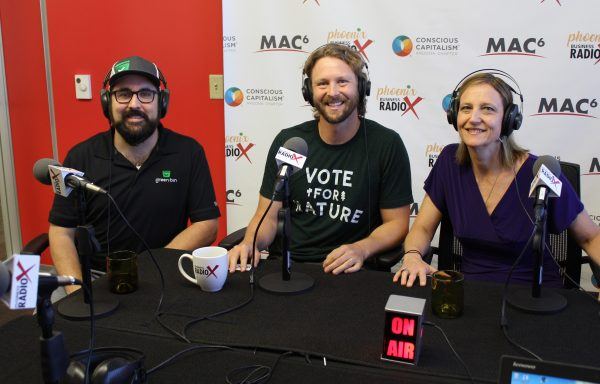
Jeremiah Rosenthal with Green Bin Dorie Morales with Green Living Magazine and Cameron Jarman with Keep Nature Wild E5

June 4, 2019 by Karen

AZ-GOOD-BUSINESS-Jeremiah-Rosenthal-with-Green-Bin-Dorie-Morales-with-Green-Living-Magazine-and-Cameron-Jarman-with-Keep-Nature-Wild
Phoenix Business Radio
Jeremiah Rosenthal with Green Bin Dorie Morales with Green Living Magazine and Cameron Jarman with Keep Nature Wild E5
Loading
00:00 /
RSS Feed
Share
Link
Embed

Download file

AZ-GOOD-BUSINESS-Jeremiah-Rosenthal-with-Green-Bin-Dorie-Morales-with-Green-Living-Magazine-and-Cameron-Jarman-with-Keep-Nature-Wild1

Jeremiah Rosenthal with Green Bin Dorie Morales with Green Living Magazine and Cameron Jarman with Keep Nature Wild E5

Green-Bin-Logo-01

Green Bin rents eco-friendly moving boxes for local home and office moves. Renting bins costs less than buying cardboard boxes and delivery and pick-up is included Valleywide. No assembly or tape is required. Green bins are reused 400+ times before being recycled, reducing the environmental impact of local moves.

Every moving box rental package includes 100% recycled packing paper, four-wheel dolly and labels. And a portion of every sale is donated to the Arizona Sustainability Alliance who uses the funds to plant trees in low-income communities within the Valley.

Jeremiah-Rosenthal-with-Green-Bin-on-Phoenix-Business-RadioXPassion for solving problems is Jeremiah Rosenthal’s driving force. This drive is what prompted him to start Green Bin. Prior to launching Green Bin in January Jeremiah was working in start-ups and in customer success roles in Arizona and California.

Follow Green Bin on LinkedIn, Facebook and Instagram.

Green Living magazine is the premier Arizona eco-conscious lifestyle magazine centered on your daily life and the way you express yourself as you live, work, and play green. We offer the latest in products, fashion, wellness, and home while enlivening you to make a difference in our environment. Green-Living-Magazine

Our content is modern and has a wide-spread reach. Green Living magazine is designed to empower you with new ideas and inspirations using nature’s resources to lead you to a more sustainable you.

Dorie-Morales-with-Green-Living-Magazine-on-Phoenix-Business-RadioxDorie Morales is an experienced Principal with a demonstrated history of working in the publishing industry.

She is a strong education professional skilled in negotiation, sales, sustainable business, and team building with a passion for the environment.

Follow Green Living magazine on Facebook, Twitter and Instagram.

At Keep Nature Wild, we physically pick up one pound of trash for every product sold. Since 2016, we’ve enlisted tens of thousands of volunteers to help keep this promise and our collective goal is to remove 1,000,000 lbs. of trash by 2023.

Cameron-Jarman-Keep-Nature-Wild-on-Phoenix-Business-RadioxCameron Jarman is a fourth-generation Arizonan, a true desert/forest hybrid from both Tempe and Pinetop. He graduated from Brigham Young University-Idaho, with a major in Business and Finance.

Cameron hikes, he kayaks, he fishes, he hunts birds, and he plays ping pong. A bucket list item of his soon to be crossed off is to participate in a multiple-day, guided rafting trip down the Grand Canyon. Keep Nature Wild

He has two dogs, Ruby and Rosie, and if he could do one thing other than Keep Nature Wild, it would be to adopt puppies, train them, and give them to good families.

Follow Keep Nature Wild on Facebook and Instagram.

About Arizona Good Business Radio

What is good business? What are local businesses doing to build a better Arizona?

Join Arizona Good Business Radio to hear from local companies who are:

  • Centering purpose at the forefront of business
  • Creating social well-being for the community
  • Prioritizing sustainability and positive environmental practices
  • Growing strong company cultures through building authentic teams
  • Ensuring diversity, equity, and inclusion are involved in all business decisions

Arizona Good Business Radio features local business leaders that are redefining what it means to do good business.

About Your Host

Thomas-Barr-on-Phoenix-Business-RadioXThomas Barr is the Executive Director for Local First Arizona, the largest coalition of local businesses in North America. He advocates for a strong local business community that contributes to building vibrancy, equity, and prosperity across the state. A proud Arizona native and graduate of Arizona State University,Thomas leads the business coalition of Local First Arizona by advocating for the economic and cultural benefits provided by building strong local economies.

Thomas steers the strategic direction of LFA’s major programs and initiatives as well as the engagement of over 3000 businesses across Arizona. As Executive Director, Thomas guides a team of statewide senior directors overseeing the execution of LFA’s communication strategy, major initiatives and key partnerships, as well as the collaboration of over 30 staff implementing work in entrepreneurship programs, small business advocacy, local food initiatives, sustainability, urban development and community building. He frequently speaks to groups locally and nationally, presenting the impact of Local First Arizona and the importance of local economy work in building prosperity.

Outside of Local First Arizona, Thomas has participated in volunteering his time to many causes and organizations throughout the Valley including Young Nonprofit Professionals – Phoenix, Equality Arizona, Alliance of Arizona Nonprofits, Arizona Commission on the Arts, Heritage Square Foundation and Phoenix Legal Action Network. Additionally, Thomas is a 2018 Phoenix Magazine 40 Under 40 honoree, alumni of Arizona Leading for Change, and current participant in Valley Leadership Institute’s 40th cohort.

Connect with Thomas on LinkedIn and Twitter.

LocalFirstArizonaLogo

Local First AZ

Local First Arizona is a nonprofit organization that celebrates independent, locally owned businesses. We support, promote and advocate for a strong local business community and raise public awareness of the economic and cultural benefits provided by strong local economies. Local businesses contribute to a sustainable economy for Arizona and build vibrant communities we’re all proud to call home.

Tagged With: eco-friendly merch, green, green living, green moving, moving boxes, sustainability, sustainable moving

Frazier & Deeter’s Business Beat: Chuck Walker, Chemlink Laboratories

April 16, 2019 by John Ray

Business Beat
Business Beat
Frazier & Deeter's Business Beat: Chuck Walker, Chemlink Laboratories
Loading
00:00 /
RSS Feed
Share
Link
Embed

Download file

Roger Lusby, Chuck Walker, and Matt Williams on “Business Beat” presented by Alpharetta CPA firm Frazier & Deeter

Show Summary

This edition of Frazier & Deeter’s “Business Beat” features Chuck Walker, Founder and Chairman of Chemlink Laboratories. The Chemlink story is fascinating, from their serendipitous beginnings in tablet technology to a successful enterprise which three decades later is recognized for their leadership in innovation and environmental sustainability.  Alpharetta CPA firm Frazier & Deeter is pleased to bring you success stories like Chemlink in the “Business Beat” podcast series.

Chuck Walker, Chemlink Laboratories

Chuck Walker, Chemlink Labs

Chuck Walker is the Founder and Chairman of Chemlink Laboratories. For over 25 years, Chemlink has been a leader and innovator in tablet technology. Founded in 1989 as a research and development company specializing in formulating effervescent powders and tablets used as cleaners and disinfectants. ChemLink’s patented technologies encompass a variety of markets including household, industrial, beauty supplies and medical/dental.

Since its inception, this Kennesaw, GA-based company has worked to reduce the environmental impact of its products, an effort which includes identifying renewable and less-toxic chemicals for its formulas. ChemLink also has become a strong advocate for sustainability among its customers and is recognized as an authority on cost-effective approaches to producing more earth-friendly products. In 2015, the company participates in the United States Environmental Protection Agency (EPA) Safer Choice program, an initiative that helps consumers, businesses and institutional buyers identify products which perform well, are safer to use and are cost-effective. In 2015, the company was recognized by the EPA as a Safer Choice Partner of the Year in the “Innovators” category.

Chemlink works with companies of all sizes, from independent entrepreneurial companies to Fortune 500 companies. Chemlink creates custom solutions to the challenges their clients face, whether that’s a need for a new delivery system for an existing product, or a problem that can’t be, or hasn’t yet been, solved by liquid formulations.

Frazier & Deeter

The Alpharetta office of Frazier & Deeter is home to a thriving CPA tax practice and Employee Benefit Plan Services group. CPAs and advisors in the Frazier & Deeter Alpharetta office serve clients across North Georgia and around the country with services such as personal tax planning, estate planning, business tax planning, business tax compliance, state and local tax planning, financial statement reviews, financial statement audits, employee benefit plan audits, internal audit outsourcing, cyber security, data privacy, Sarbanes-Oxley (SOX) and other regulatory compliance, mergers and acquisitions, and more. Alpharetta CPA professionals serve clients ranging from business owners and executives to large corporations.

Roger Lusby, Managing Partner of Alpharetta CPA firm Frazier & Deeter

Roger Lusby, host of Frazier & Deeter’s “Business Beat,” is the Alpharetta Office Managing Partner for Frazier & Deeter. He is also a member of the Tax Department in charge of coordinating tax and accounting services for our clientele. His responsibilities include a review of a variety of tax returns with an emphasis in the individual, estate, and corporate areas. Client assistance is also provided in the areas of financial planning, executive compensation and stock option planning, estate and succession planning, international planning (FBAR, SFOP), health care, real estate, manufacturing, technology and service companies.


LinkedIn: https://www.linkedin.com/company/frazier-&-deeter-llc/
Facebook: https://www.facebook.com/FrazierDeeter
Twitter: https://twitter.com/frazierdeeter

Past episodes of Frazier & Deeter’s “Business Beat” can be found here.

Tagged With: dental cleansers, dental supplies, disinfectants, effervescent powders, Environmental Protection Agency, EPA, Frazier & Deeter's Business Beat, Frazier and Deeter, Frazier Deeter, household cleaners, intellectual property, kennesaw, Kennesaw GA, less-toxic chemicals, liquid formulations, Matt Williams, Partner at Frazier & Deeter, patent protection, Patents, renewable chemicals, Roger Lusby, Safer Choice Partner of the Year, Safer Choice Program, sustainability, tablet technology, tablets

Decision Vision Episode 10: Should I Have a Quality of Earnings Report Done? – An Interview with Teresa Snyder, Brady Ware & Company

April 11, 2019 by John Ray

Decision Vision
Decision Vision
Decision Vision Episode 10: Should I Have a Quality of Earnings Report Done? – An Interview with Teresa Snyder, Brady Ware & Company
Loading
00:00 /
RSS Feed
Share
Link
Embed

Download file

Teresa Snyder, Brady Ware & Co., and Mike Blake, Host of “Decision Vision”

Should I Have a Quality of Earnings Report Done?

What is a quality of earnings report? Why would I want one done for my business? How does a quality of earnings report help as I’m getting ready to make an acquisition or sell my company? These questions and more are answered in this episode of “Decision Vision,” as host Michael Blake, Director of Brady Ware & Company, interviews Teresa Snyder, Director of Brady Ware & Company.

Teresa Snyder, Brady Ware & Company

Teresa Snyder, Brady Ware & Company

Teresa Snyder is a Director of Brady Ware & Company. Teresa has over twenty-five years of experience in public accounting and private industry. Her experience includes not-for-profit organizations, professional service firms, wholesalers, manufacturing and importers/exporters of various industries. Teresa has assisted her clients in a broad range of general management and financial consulting services, accounting systems design, and accounting and financial reporting issues.

In addition to providing client service, Teresa serves as the Atlanta Audit Leader for the firm. She has earned the AICPA IFRS Certificate. Prior to joining the firm, Teresa specialized in software consulting and implementation of fully integrated accounting software for various types of organizations including wholesalers and manufacturers, and importers/exporters.

Teresa is a CPA in Georgia and a member of the American Institute of Certified Public Accountants and the Georgia Society of Certified Public Accountants. Teresa has served as a coach for youth sports and is involved in a variety of not-for-profit organizations where she holds leadership positions.

Michael Blake, Brady Ware & Company

Mike Blake, Host of “Decision Vision”

Michael Blake is Host of the Decision Vision podcast series and a Director of Brady Ware & Company. Mike specializes in the valuation of intellectual property-driven firms, such as software firms, aerospace firms and professional services firms, most frequently in the capacity as a transaction advisor, helping clients obtain great outcomes from complex transaction opportunities. Mike is also a specialist in the appraisal of intellectual properties as stand-alone assets, such as software, trade secrets, and patents.


He has been a full-time business appraiser for 13 years with public accounting firms, boutique business appraisal firms, and an owner of his own firm. Prior to that, he spent 8 years in venture capital and investment banking, including transactions in the U.S., Israel, Russia, Ukraine, and Belarus.

Brady Ware & Company

Brady Ware & Company is a regional full-service accounting and advisory firm which helps businesses and entrepreneurs make visions a reality. Brady Ware services clients nationally from its offices in Alpharetta, GA; Columbus and Dayton, OH; and Richmond, IN. The firm is growth minded, committed to the regions in which they operate, and most importantly, they make significant investments in their people and service offerings to meet the changing financial needs of those they are privileged to serve. The firm is dedicated to providing results that make a difference for its clients.

Decision Vision Podcast Series

Decision Vision is a podcast covering topics and issues facing small business owners and connecting them with solutions from leading experts. This series is presented by Brady Ware & Company. If you are a decision maker for a small business, we’d love to hear from you. Contact us at decisionvision@bradyware.com and make sure to listen to every Thursday to the Decision Vision podcast. Past episodes of Decision Vision can be found here. Decision Vision is produced and broadcast by Business RadioX®.


Visit Brady Ware & Company on social media:

LinkedIn: https://www.linkedin.com/company/brady-ware/

Facebook: https://www.facebook.com/bradywareCPAs/

Twitter: https://twitter.com/BradyWare

Instagram: https://www.instagram.com/bradywarecompany/

Show Transcript:

Intro: [00:00:01] Welcome to Decision Vision, a podcast series focusing on critical business decisions, brought to you by Brady Ware & Company. Brady Ware is a regional, full-service, accounting and advisory firm that helps businesses and entrepreneurs make vision a reality.

Michael Blake: [00:00:20] And welcome back to Decision Vision, a podcast giving you, the listener, clear vision to make great decisions. In each episode, we’ll discuss the process of decision making on a different topic. Rather than making recommendations because everyone’s circumstances are different, we’ll talk to subject matter experts about how they would recommend thinking about that decision.

Michael Blake: [00:00:40] Hi. This is Mike Blake. And I’m your host for today’s program. I’m a Director at Brady Ware & Company, a full-service accounting firm based in Dayton, Ohio with offices in Dayton; Columbus, Ohio; Richmond, Indiana; and in Alpharetta, Georgia, which is where we are recording today. Brady Ware is sponsoring this podcast. If you like this podcast, please subscribe on your favorite podcast aggregator, and please also consider leaving a review of the podcast as well.

Michael Blake: [00:01:04] So, today, we’re going to talk about something called quality of earnings reports. And this an important topic. We’re, right now, at a high point over the last 10 years of merger and acquisition activity, which in English means that businesses are being bought and sold all over the place, and valuations are very attractive, financing is out there. Whether you think it’s back to the good slash battle days of 2006 -2007, I’ll leave it to you to make that determination. But the fact of the matter is that buying businesses is definitely back, and it’s back in style.

Michael Blake: [00:01:42] And as it turns out, a lot of that or a lot of my practice in the business appraisal happens to be in the M&A world. And my job is to help a client figure out the appropriate price and, to a certain extent, the terms associated with the transaction. But within that process of examining a transaction, there’s this thing that we call due diligence. And due diligence, when we really get down to it, is really just trying to answer the question, is this business what the seller says the business is? It’s really all that and a bag of chips basically.

Michael Blake: [00:02:22] That due diligence process, if it’s done well, is typically very involved and a very engaged process. It sometimes takes 30 days. Usually, it takes 60 to 90 days. And I’ve seen it go as far or as long as 180 days if it’s a particularly complicated transaction. And the due diligence process will involve everything from legal due diligence, intellectual property, customer due diligence, and so forth. And to be perfectly candid, from the seller’s perspective, it’s about as comfortable as your garden variety colonoscopy. But if you want to sell your business, you want to get the right price for it, that’s what you got to do. There’s just no alternative to it.

Michael Blake: [00:03:07] Now, financial due diligence, of course, is an important part of this entire kind of investigation and, sort of, crunching the numbers. And what we’re going to learn about today is, kind of, a specialized portion of that financial due diligence that’s called quality of earnings. And what quality of earnings means at the end of the day is that not all earnings are alike. Accounting is a funny thing. Accounting is a language. And like any language, a word or a term can mean different things depending on the context, depending on the syntax of that conversation.

Michael Blake: [00:03:47] And so, quality of earnings can mean different things to different people, to different buyers. And looking at quality of earnings has become much more in vogue. I’ve seen it come much more in vogue in, say, the last 10 years where a specific exercise is done, not just to, kind of, validate the numbers that are presented, but really dig into what do those numbers mean, is the financial performance of the company sustainable, is it telling us the story of what we would like to do.

Michael Blake: [00:04:19] But, of course, with performing additional due diligence, that means extra expense, extra time, extra fees. So, the question comes up, does it make sense to perform or have a quality of earnings report done on this particular transaction?

Michael Blake: [00:04:35] And for those of you who have listened before, I am not qualified to tell you that. I’m not an accountant. I’m not a CPA. I don’t even do my own taxes. But I have somebody here today who is qualified to help us answer that question. And she is my friend and business partner, Teresa Snyder.

Michael Blake: [00:04:50] Teresa is an audit partner with with Brady Ware. She has over 25 years of experience in public accounting and private industry. Her experience includes not-for-profit organizations, professional services firms, wholesalers, manufacturing, and importers/exporters of various industries. Teresa has assisted her clients in a broad range of general management and financial consulting services, accounting systems design, and accounting and financial reporting issues.

Michael Blake: [00:05:17] In addition to providing clients service, Teresa serves as the Atlanta Audit Leader for the firm. She has earned the AICPA IFRS, which means international gap certificate. Prior to joining the firm, Teresa specialized in software consulting and implementation of fully-integrated accounting software for various types of organizations, including wholesalers, and manufacturers, and importers/exporters. Now, until I looked this up, I did not know you are that much of a tech head. You’ve been holding out on me.

Michael Blake: [00:05:44] Teresa is a CPA in Georgia and a member of the American Institute of Certified Public Accountants and the Georgia Society of Certified Public Accountants. Teresa has served as a coach for youth sports and is involved in a variety of not-for-profit organizations in which she holds leadership positions. Teresa, thank you so much for coming on the program today.

Teresa Snyder: [00:06:05] Thank you, Mike. Happy to be here.

Michael Blake: [00:06:07] So, let’s, sort of, before we get into it, I’d like to learn a little bit more and let our listeners learn a little bit more about your role at Brady Ware. When we say that you’re the Director of the Audit Leader of the Atlanta office of Brady Ware, what does that mean? What does somebody who hears that take away from it?

Teresa Snyder: [00:06:28] Well, our team provides audit and review services that help our clients in meeting their financial reporting obligations to investors and bankers. We also serve as advisors to our clients in a variety of business transactions, which include M&A transactions.

Michael Blake: [00:06:47] Okay. And one of the services that you provide out of this office is a quality of earnings analysis.

Teresa Snyder: [00:06:54] Yes, that’s correct.

Michael Blake: [00:06:55] So, somebody is buying a company, and they’re really interested, but they think that they would like to kind of do that deep dive into the financials. That’s something that you do through your practice, correct?

Teresa Snyder: [00:07:11] Yes, that’s right.

Michael Blake: [00:07:12] So, what is a quality of earnings analysis exactly? What is a client buying?

Teresa Snyder: [00:07:18] Well, it’s a detailed analysis of all the components of the company’s revenue and expenses, their operating cash flows, and their assets and liabilities. Typically, we’re going to look at a period of about 24 to 36 months of financial data, so that we can assess the accuracy of the historical data and consider the sustainability of future operations.

Michael Blake: [00:07:42] So, I’d like to hone in a little bit on the sustainability. What are the kinds of things that make operations or make earnings sustainable versus not sustainable?

Teresa Snyder: [00:07:52] Well, we’re looking for transactions such as non-recurring items. They might be non-recurring revenue. It might be a one-time revenue opportunity that a company had and is not present in the future on an ongoing basis.

Michael Blake: [00:08:09] Now, one thing, actually, I’m engaged, and I’m working on right now, I’ve got client who’s thinking about buying a company. And then, all of a sudden, their expenses went down conveniently right before the transaction is supposed to take place. And we’re kind of suspecting, but we don’t know that what’s happened is they’ve delayed their expenses to make that look good. And then, those expenses will wind up popping up after the transaction. Is that something that a quality of earnings analysis can bring to light for a client?

Teresa Snyder: [00:08:39] Yes, it should. It should be part of that analysis. So, you’re going to be looking at expenses as well and trying to determine, are there understated expenses for a variety of reasons? It could be someone postponing. It could be an unfilled position. For instance, an executive position that’s not filled for a time period, and so your expenses come in understated

Michael Blake: [00:09:01] Okay. So, if I’m a — we both know that doing a transaction is not cheap-

Teresa Snyder: [00:09:10] Right.

Michael Blake: [00:09:10] … if you want it done well, right. If you want to go into it blindly, it’s very cheap. It’s not cheap to do it well. On top of all the other fees we got going on, paying somebody like me for appraisals, tax advice, investment bankers, lawyers, everything else, when does it make sense to think about adding a quality of earnings study onto that to-do list or onto that venue?

Teresa Snyder: [00:09:36] Well, I think, the quality of earnings study, going through that process, part of it is to normalize your EBITDA. That’s your earnings before interest, taxes, depreciation, and amortization.

Michael Blake: [00:09:51] And that’s often a proxy for cash flow, right?

Teresa Snyder: [00:09:54] Correct. And so, then, once you normalize your EBITDA for the time period that you’re looking at, then you’re also going to start looking for those one-time transactions. And, generally, they’re going to be add-backs. They might involve owner transactions that wouldn’t be present in the future operation. There could be a variety of of add-backs to that number. And you’re trying to — once you normalize the EBITDA, that becomes your basis for establishing the multiple, which is your selling price. So, it’s very important. That number is critical in the sales transaction.

Michael Blake: [00:10:32] So, I want to touch upon — so, it’s not uncommon, it sounds like, that for even a seller to have a quality of earnings done on their own company, right? Almost like having a private investigator investigate yourself.

Teresa Snyder: [00:10:46] Correct. So, there can be two different approaches. Typically, the buyer is the one that’s going to commission the quality of earnings study. They’re going to use it for their own purposes to decide if what they’re looking at buying has a sustainability that they’re looking for. But a seller could also — and I have seen that, a seller might commission a quality of earnings study in preparation for going to market, or a buyer has come to them, and they want to see what it looks like, and are they being offered a fair price.

Michael Blake: [00:11:19] And I think that’s a smart thing to do because selling a business, in addition to being expensive, is hard. It’s complex. You and I both know the business owners, and they’re selling a business. It’s both an exciting and stressful time.

Teresa Snyder: [00:11:38] Yeah, exactly.

Michael Blake: [00:11:39] And the stress often comes from when a buyer starts pointing out, “Face of the baby is not as pretty as you think it is.”

Teresa Snyder: [00:11:47] Right.

Michael Blake: [00:11:48] Right? So, you’re getting very constructive, very practical criticism about the business. And that’s a lot easier to react to in a constructive way if you already know that criticism is coming, right. And maybe even, you’re in a scenario where you know that criticism is coming, but because you had that study done before the seller even finds out about it, maybe it discloses them proactively. And that can create a positive impression, create trust in the conversation. But the minute, at least, then, you’re prepared for it, right?

Teresa Snyder: [00:12:21] Yes.

Michael Blake: [00:12:21] So, you don’t you don’t react to it in a panic, right. Is that a fair way to think about it?

Teresa Snyder: [00:12:25] Yeah, I think so. And even if you back up and take even a longer-term view, and you go through this process or some version of this process, then you can react to it and act on opportunities that you might be missing or make corrections in areas that need to be corrected before you ever go into the marketplace.

Michael Blake: [00:12:46] Interesting. So, can you think of examples of those, kind of, opportunities that might surface if you do this preemptive, proactive QoE or quality of earnings? And if I understand you correctly, it sounds like you don’t necessarily have to wait until there’s a pending transaction. You may just do it as a matter of good management. Is that fair to say?

Teresa Snyder: [00:13:05] Correct.

Michael Blake: [00:13:06] Okay.

Teresa Snyder: [00:13:06] If you’re anticipating that you want to sell at some point in the future, and again you may not go through the full level of the quality of earnings analysis, you might do — there are some other engagements and agreed-upon procedures. And a lot of business owners know if they have a problem area. And so, that could be something that a business owner might enter into to help construct what are our challenges here, and perhaps what are some things that we can do to correct that.

Michael Blake: [00:13:38] Okay. So, a question I hear a lot is, what if the firm’s financial statements are already audited, right? There’s a perception, which I’m not sure is entirely right, but there’s a perception that because an audit has been done, automatically, they’re going to catch these things. And we had one of our colleagues, Randy Domigan on a few weeks ago and talked about forensic accounting. And audits don’t necessarily catch fraud, for example. Is it reasonable to assume that because there’s a gap compliance audit with a clean opinion or an unqualified opinion, is it reasonable to assume that there’s a quality of earnings report kind of baked in, or do you really need to kind of parse that out and separate that out because that’s a more separate detailed exercise?

Teresa Snyder: [00:14:32] That’s a great question. And there is absolutely added value to a quality of earnings study on top of an audit. So, an audit or even a review, which is a lower level of service, either one of those are a great tool to enter into a transaction or enter into discussions. Adding the quality of earnings study, it has a lot more key details of what’s occurring in the business. Those details are not going to be contained in the audit, and you won’t go through that process of normalizing the EBITDA and looking through what those add-back items might be that might be unique to your business but not necessarily to the industry.

Michael Blake: [00:15:20] Now, as a buyer, I might be thinking to myself, “I’m retaining attorneys, and I’m paying the 400-500 bucks an hour or more. I’m working with investment bankers, and they’re doing their thing. They’re getting their fees, and all kinds of advisors.” Aren’t they already doing this? Isn’t this already part of their normal scope?

Teresa Snyder: [00:15:45] No, they’re not. Everyone works in their specialized areas. And so, the attorneys are focused on the legal due diligence issues. The investment bankers are looking at how to market your company, and how to negotiate your selling price, and how to represent you in that particular transaction. So, the CPA is the accounting advisor as a part of that team. And putting that team together can help you successfully navigate a transaction and, hopefully, navigate — or excuse me, but, hopefully, to achieve your maximum selling price.

Teresa Snyder: [00:16:23] So, it does cost a lot of money for all of these professional services. But, again, going back to the CPA, the other part of the team is looking to them for their expertise and applying gap, which is generally accepted accounting principles. That’s what’s used in the audits and the reviews. And once you start applying gap, you’re taking that company, and you are measuring the transactions of applying consistency, and comparability, and reliability to the numbers in their financial statements.

Michael Blake: [00:16:58] Okay. Now, as we know, not every business acquisition is a financially-driven transaction. We can see this in some of the price multiples that are paid. Maybe there’s a strategic customer, or maybe there’s a piece of technology, maybe they just want to hire some of the talent. The only way they can do that is through an acquisition. In that case, does a quality of earnings report still make sense?

Teresa Snyder: [00:17:23] It possibly could from a buyer perspective. It really depends. They may want to look at the historical transactions and use that as a measure of not only the sustainability but the future predictions of what they anticipate doing with that business.

Michael Blake: [00:17:43] Okay. So, what are the most common issues you see that come up in a quality of earnings report? What is, sort of, on your checklist?

Teresa Snyder: [00:17:53] Well, the top one is inconsistency in financial reporting. And this goes back to the gap financial statements. Not all companies are preparing GAP financial statements. They don’t necessarily have to in terms of their tax compliance. So, even though their work might be going through a CPA for tax preparation, it doesn’t necessarily mean their financial statements are in accordance with gap. And so, inconsistency is a big thing. The gap part of that process is comparability and consistency of the financial statements and the reporting.

Teresa Snyder: [00:18:31] You also have, again, the non-recurring items or the understated expenses. If you’re trying to defer expenses in accordance with gap, you’re going to accrue that. The businesses is incurring those expenses. They just haven’t paid for them yet. So, again, you also identify related party relationships, and transactions, and owner items. That’s all a part of that process.

Michael Blake: [00:18:57] So, when you say inconsistencies, what’s an example of something that you might find an inconsistency and that winds up being material potentially to the transaction?

Teresa Snyder: [00:19:07] There, generally, are — cutoff is a big issue for a lot of companies, especially smaller businesses. So, the proper timing and recording of sales transactions, and the allocation of expenses, or the matching of expenses to those revenues generated, those are generally your two top areas where you’ve got cutoff and maybe not consistency and reporting.

Michael Blake: [00:19:33] Now, have about revenue? How about the way in which revenue is recognized? I see that in an area that’s near and dear to my heart, which is technology. And what about revenue recognition? Can you, sometimes, see inconsistencies there and how revenue recognition is applied?

Teresa Snyder: [00:19:50] Absolutely. Revenue recognition is different among different industries. And technology is unique to some other industries or other businesses. So, yes, you can see differences in revenue recognition. And, of course, the standards are changing for that as we speak. They’re going into effect this year for private companies. And so, that may present a challenge to some private companies for transactions over the next two years is working through the revenue recognition issues.

Michael Blake: [00:20:25] So, on, sort of, the other side of this process, you go through a quality of earnings process. Have you seen it? Have you seen instances where it’s actually kind of changed the price in terms of a deal? The deal typically starts with the letter of intent, which we both know is varying degrees of not that binding. It’s really just a place holder. Have you seen it since where the QoE basically changed the parameters of the deal?

Teresa Snyder: [00:20:56] Yes, it can. It can start reducing that multiple of the EBITDA. So, a seller who enters into a transaction, and they have their financial reporting house in order, so to speak, and they are able to substantiate all of the information that they’ve reported, they’re generally able to hold on to that initial selling price and not face the adjustments.

Michael Blake: [00:21:25] Now, another concern that I wonder if clients have, particular if a transaction is ongoing, we all know good transactions take a long time to unfold. When there are millions of dollars involved, grownups are careful making decisions around millions of dollars. And so, a concern might be, “Oh boy, we’re already doing X, Y, and Z. We’re negotiating. We’re doing the due diligence. If we inject a quality of earnings report into this discussion, am I going to drag this thing out yet more months and might just never going to sell this business?” I mean, how do you frame that conversation, or is that even a legitimate concern?

Teresa Snyder: [00:22:08] The due diligence process is lengthy. And I think you described it accurately. And it can be a painful exercise for you’re still trying to run the business, but at the same time, you’ve got to address all of the due diligence items in this transaction. And they do take a lot of time. And you’re addressing, again, your legal diligence, your tax diligence. There’s so many issues. Your customers, your HR, the culture. There are many, many aspects of it.

Teresa Snyder: [00:22:39] So, it’s all running concurrently, and you’re hitting all of these fronts at the same time as you’re going through this process. The quality of earnings study could potentially add time to it. It may depend on the complexity of your revenue and expense streams. Again, if the house, if your financial reporting is in order, if your books are current, and they’re accurate, and you’re able to quickly respond to questions, then it’s going to speed up that process. But if you’re asked a question, for instance, to produce an accounts receivable report, and, now, you’ve got to take some time to put one together because you haven’t been maintaining it, those things just keep adding time from the seller’s perspective.

Michael Blake: [00:23:32] Okay. So, one of the things I think, also, a client has to think about, and certainly in the appraisal world, it’s t’s very important because gathering data is the lifeblood of what we do. And, sometimes, I wonder if the client wonders who’s working for whom sometimes.

Teresa Snyder: [00:23:52] That is true.

Michael Blake: [00:23:54] I’ll get 50 questions from me. And, all of a sudden, they find out they have to blow a whole morning, or an afternoon, or sometimes more getting us the data. Does a quality of earnings look like that? And if I’m a client, I’m signing up for this, I’m not just signing up for the money but also the time I got to invest, how much of the client’s time or typically at what level of the organization does that time need to be spent?

Teresa Snyder: [00:24:18] I guess, the answer to that depends on the kind of team that you have in place. So, if you have an accounting and a finance team in your organization, obviously, they’re going to be able to field most of the questions when it comes to quality of earnings study. The owner potentially may need to get involved in terms of explaining some things, but it depends on the quality, and the training, and the experience of the accounting team that that you have.

Michael Blake: [00:24:46] Okay. Now, do you find that the quality of earnings makes a difference in terms of the impression on the parties in the transaction, the advisors in the transaction? Maybe you’re a seller, and you’ve already got a QoE, you’re ready to go, or maybe your buyer, and you want to buy the business, but you still have to get the thing financed. Do other parties appreciate kind of having the quality of earnings report ready to go, done, kind of part of the package, or are they a little maybe a little bit more blasé about that, and they kind of think, “Well, we’ll get to it when we get to it”?

Teresa Snyder: [00:25:21] Like many answers in our business, I think, that depends. Some buyers may not rely on a quality of earnings report that you provide to them. They may want to have their own report commissioned. Sometimes, depending on the complexity and, obviously, the dollar value of the transaction, sometimes, they will want to see national firms conduct the quality of earnings study.

Teresa Snyder: [00:25:48] So, again, it depends. They might read it and decide if they question that report or the credibility of that report. And they may decide to accept it if they’re satisfied with what they see, and it’s consistent with the information that you’re providing. So, that’s hard to say. If you’ve gone through it on your own and in advance of entering into a sales transaction, and you have to go through it a second time, it’s certainly not going to be as painful because you have the information. You know what it is and what they’re looking for.

Michael Blake: [00:26:24] So, another question that kind of comes up, and I see this in my world, sometimes, a client is reluctant to have their business appraised because, then, it can be asked for in the due diligence of the locker to say, “Well, I’m not going to provide that to you.” But on the other hand, it feels like you’re in a poker game, but you have to show the other person your cards-

Teresa Snyder: [00:26:45] Right.

Michael Blake: [00:26:45] … before the bets are in, right. So, that’s a delicate thing that I have to work around on my practice. I’m curious, does that come up on your end to where maybe somebody doesn’t want to do the buyer’s work for them and at their expense and kind of risk exposing anything in advance? Again, is that a reasonable concern to have?

Teresa Snyder: [00:27:09] I guess it could be. I think it depends on how much they know and understand their business, I guess, and, perhaps, what they think the buyer is looking for or might find. Generally, if they’re trying to hide something somewhere it’s going to come out at some level. So, that’s generally not advisable. The buyer, if a buyer commissions a report, which is what we’ve seen historically, they don’t necessarily have to share that information. Now, they may choose to, but they don’t have to share that information with the seller.

Teresa Snyder: [00:27:48] And, again, I think from the seller’s perspective, it’s their option if they want to share that with the buyer. They may want to share it in the hopes that they don’t have to go through the process again or, you know what I mean, it can be very positive information that comes out of that quality of earnings report. And so, it could be to their advantage to share it.

Michael Blake: [00:28:08] There’s certainly something to be said for getting out in front of the entire discussion.

Teresa Snyder: [00:28:14] I think so on many levels. And I think the seller, if they commissioned a quality of earnings study, no matter at what point they are in the process that they would want to share that with their investment bankers because their investment bankers are the ones that are cued up and ready to represent them and help them present their business in its best light and, also, provide advice to them throughout the process.

Michael Blake: [00:28:39] So, running out of time. We got one last question. and I’ll have to wrap it up. And I know, for you, it’s also busy season, so we do want to keep you away from it too long. The deliverable of the quality of earnings report, how is that typically used? Does it kind of automatically get sent out as part of the sales package, as a part of maybe the offering memorandum, or is it kept in the data room for part for the due diligence exercise? How have you most typically seen that used?

Teresa Snyder: [00:29:10] I think that would depend on the investment banker and probably the results of that quality of earnings study and how they might present that. They may decide to take the time, and make some corrections, make some improvements in the business operations, and then update a quality of earnings. I haven’t personally participated in that, but I could conceive of that happening.

Michael Blake: [00:29:37] Okay. So, if someone wants to contact you because we’re running out of time, but somebody who may have other questions, if somebody would like to contact you and learn more about this quality of earnings process whether the buy side or the sell side, how can they reach you?

Teresa Snyder: [00:29:51] Sure. You can find me on our website. That’s bradyware.com. My email is tsnyder@bradyware.com. And, also, my direct line is 678-350-9510.

Michael Blake: [00:30:11] All right. Well, thank you so much. That’s going to wrap it up for today’s program. I’d like to thank Teresa Snyder so much for joining us and sharing her expertise with us. We’ll be exploring a new topic each week. So, please tune is that when you’re faced with your next business decision, you have clear vision when making it. If you enjoy this podcast, please consider leaving a review with your favorite podcast aggregator. It helps people find us that we can help them. Once again, this is Mike Blake. Our sponsor’s Brady Ware & Company. And this has been the Decision Vision Podcast.

Tagged With: Dayton accounting, Dayton business advisory, Dayton CPA, Dayton CPA firm, due diligence, earnings sustainability, ebitda, financial statement review, financial statements, legal due diligence, M&A, M&A transaction, merger, Michael Blake, Mike Blake, normalized cash flow, normalized EBITDA, one-time revenue, operations sustainability, quality of earnings, quality of earnings analysis, quality of earnings study, revenue recognition, sustainability, Teresa Snyder, understated expenses

Chuck Teliin with Valpak and Michael Blake with Brady Ware & Company

February 1, 2019 by John Ray

North Fulton Business Radio
Chuck Teliin with Valpak and Michael Blake with Brady Ware & Company
Loading
00:00 /
RSS Feed
Share
Link
Embed

Download file

Michael Blake and Chuck Teliin

Chuck Teliin with Valpak

Chuck Teliin is a Regional General Manager of Valpak managing 10 markets in six states. Prior to Valpak, Chuck was with AT&T Yellow Pages for over 26 years, first as a sales rep, then sales manager, and General Manager before rising to Regional Vice President. Chuck retired from AT&T in 2017.

You may have come to know Valpak as the “coupon mailer people” and you wouldn’t be wrong. Since 1968, Valpak has been mailing coupons to consumers to save them money and support small, local businesses in communities throughout North America. That’s what they were. Valpak has grown up, just as a teenager develops into a confident adult. Today, Valpak is a full-service marketing agency. We provide industry leading, traditional and digital marketing solutions to local and national businesses. With Valpak, you’ll still find the coupons that they’re known for, only now you’ll find them online and in digital apps as well as in our iconic Blue Envelope®. We mail to 38 million homes and drive over 11 million in daily online traffic. From The Blue Envelope to website design, development and everything in between, Valpak supports small businesses with a full suite of innovative marketing services.

Call Valpak at 1-866-235-0870 or visit them at www.valpak.com/advertise.

Michael Blake with Brady Ware & Company

Michael Blake is a Director of Brady Ware & Company. Mike specializes in the valuation of intellectual property-driven firms, such as software firms, aerospace firms and professional services firms, most frequently in the capacity as a transaction advisor, helping clients obtain great outcomes from complex transaction opportunities. Mike is also a specialist in the appraisal of intellectual properties as stand-alone assets, such as software, trade secrets, and patents.

He has been a full-time business appraiser for 13 years with public accounting firms, boutique business appraisal firms, and an owner of his own firm. Prior to that, he spent 8 years in venture capital and investment banking, including transactions in the U.S., Israel, Russia, Ukraine, and Belarus.

Brady Ware & Company is a regional full-service accounting and advisory firm which helps businesses and entrepreneurs make visions a reality. Brady Ware services clients nationally from its offices in Alpharetta, GA; Columbus and Dayton, OH; and Richmond, IN. The firm is growth minded, committed to the regions in which they operate, and most importantly, they make significant investments in their people and service offerings to meet the changing financial needs of those they are privileged to serve. The firm is dedicated to providing results that make a difference for its clients.

Mike is the Host of Decision Vision, a podcast series focusing on critical business decisions and brought to you by Brady Ware & Company. Decision Vision is produced and broadcast by Business RadioX®.

Tagged With: consumer intelligence, coupons, database marketing, Dayton accounting, Dayton CPA, Decision Vision, digital coupons, digital marketing, digital marketing solutions, digital marketing strategy, direct mail, direct mail marketing, direct marketing, email marketing, Franchising, intangible assets, leads tracking, mailers, Michael Blake, mobile app, online marketing, print coupons, problem solving, sales tracking, SEM, SEO, SMS, Social Media, Startup Lounge, sustainability, targeted mail, targeted marketing, uncomfortable business topics, Valpak, Valpak mobile app, valuations, variable data printing, website design

Shannon Teixeira with Waste Management and Kathleen Gramzay with Kinessage

April 3, 2018 by Karen

ShannonTeixeirawithWasteManagementandKathleenGramzaywithKinessageonBusinessRadioXwithKarenNowicki
Phoenix Business Radio
Shannon Teixeira with Waste Management and Kathleen Gramzay with Kinessage
Loading
00:00 /
RSS Feed
Share
Link
Embed

Download file

ShannonTeixeiraandKathleenGramzayonBusinessRadioX

Shannon Teixeira with Waste Management and Kathleen Gramzay with Kinessage

Waste Management is the largest environmental solutions provider in North America, serving more than 21 million customers throughout the U.S. and Canada. They have invested in developing waste solutions for a changing world. Today, this includes not just disposal and recycling, but personal counseling to help customers achieve their green goals, including zero waste.

As North America’s leading provider of comprehensive waste management services, their mission is to maximize resource value while minimizing impact in order to further both economic and environmental sustainability for all their stakeholders.

ShannonTeixeirawithWasteManagementonBusinessRadioXShannon Teixeira is a designer, architect and builder of Modern HR. Working inside startups and large enterprises has taught her that her breath is Progression, her heartbeat is People and her sight is connecting the space between ideas and reality. Fusing together her background in Interior Design, Operations, Marketing and HR has given her a creative lens and ability to use Employee Experience and Brand Culture to create Organizational Competitiveness.  

Today she leads the People strategy for one of Waste Management’s leading market areas, she is SHRM of Greater Phoenix’s Immediate Past President and is Co-Founder of AZ Talent Cooperative.  

Connect with Shannon on LinkedIn and Twitter. Follow Waste Management on LinkedIn, Twitter and Facebook.


CopyofShannonTeixeiraandKathleenGramzayonBusinessRadioX-CopyKathleen Gramzay, BCTMB, is a 17-year Board Certified Massage Therapist, Author, Speaker, Wellness Educator, Developer and Continuing Education Provider of Kinessage® Self-Care.  Her life-long passion for movement, understanding the human body, and personal challenges created the conditions that brought Kinessage® into being.

Kathleen has an engaging knack for simplifying and sharing how the body/mind works and how you can partner with it, not just for greater physical health but to a live a more joyful life.  Her interactive “Lessons from the Body/Mind” speaking presentations serve as a unique platform for stress relief and experiential team building across the spectrum of industries from architectural and financial services to healthcare, sales,  and manufacturing.

Not surprisingly, for fun, she loves to move whether that is dancing or out in nature hiking, biking, or rollerblading.  She also enjoys travel, nature photography, and meditation.

Kinessage LLC serves wellness-conscious companies and individuals who understand that people cannot be productive or present with clients, colleagues or loved ones if they are in pain or can’t move comfortably in their bodies.  Kinessage® Self-Care is a do-it-yourself solution to relieve the stress, muscular pain, and chronic tension underlying musculoskeletal conditions without drugs or need of a practitioner.

Connect with Kathleen on LinkedIn and Facebook.

ShannonTeixeirawithWasteManagementandKathleenGramzaywithKinessageonBusinessRadioXwithKarenNowicki

Tagged With: GPEC, ICF Arizona Chapter, James C Fish, Phoenix Economic Development, Phoenix StartUp Community, recycle, Reuse, SHRM Arizona, SHRM Valley of the Sun, sustainability, Waste Management

  • « Previous Page
  • 1
  • 2
  • 3
  • Next Page »

Business RadioX ® Network


Our Most Recent Episode

CONNECT WITH US

  • Email
  • Facebook
  • LinkedIn
  • Twitter
  • YouTube

Our Mission

We help local business leaders get the word out about the important work they’re doing to serve their market, their community, and their profession.

We support and celebrate business by sharing positive business stories that traditional media ignores. Some media leans left. Some media leans right. We lean business.

Sponsor a Show

Build Relationships and Grow Your Business. Click here for more details.

Partner With Us

Discover More Here

Terms and Conditions
Privacy Policy

Connect with us

Want to keep up with the latest in pro-business news across the network? Follow us on social media for the latest stories!
  • Email
  • Facebook
  • Google+
  • LinkedIn
  • Twitter
  • YouTube

Business RadioX® Headquarters
1000 Abernathy Rd. NE
Building 400, Suite L-10
Sandy Springs, GA 30328

© 2025 Business RadioX ® · Rainmaker Platform

BRXStudioCoversLA

Wait! Don’t Miss an Episode of LA Business Radio

BRXStudioCoversDENVER

Wait! Don’t Miss an Episode of Denver Business Radio

BRXStudioCoversPENSACOLA

Wait! Don’t Miss an Episode of Pensacola Business Radio

BRXStudioCoversBIRMINGHAM

Wait! Don’t Miss an Episode of Birmingham Business Radio

BRXStudioCoversTALLAHASSEE

Wait! Don’t Miss an Episode of Tallahassee Business Radio

BRXStudioCoversRALEIGH

Wait! Don’t Miss an Episode of Raleigh Business Radio

BRXStudioCoversRICHMONDNoWhite

Wait! Don’t Miss an Episode of Richmond Business Radio

BRXStudioCoversNASHVILLENoWhite

Wait! Don’t Miss an Episode of Nashville Business Radio

BRXStudioCoversDETROIT

Wait! Don’t Miss an Episode of Detroit Business Radio

BRXStudioCoversSTLOUIS

Wait! Don’t Miss an Episode of St. Louis Business Radio

BRXStudioCoversCOLUMBUS-small

Wait! Don’t Miss an Episode of Columbus Business Radio

Coachthecoach-08-08

Wait! Don’t Miss an Episode of Coach the Coach

BRXStudioCoversBAYAREA

Wait! Don’t Miss an Episode of Bay Area Business Radio

BRXStudioCoversCHICAGO

Wait! Don’t Miss an Episode of Chicago Business Radio

Wait! Don’t Miss an Episode of Atlanta Business Radio