Business RadioX ®

  • Home
  • Business RadioX ® Communities
    • Southeast
      • Alabama
        • Birmingham
      • Florida
        • Orlando
        • Pensacola
        • South Florida
        • Tampa
        • Tallahassee
      • Georgia
        • Atlanta
        • Cherokee
        • Forsyth
        • Greater Perimeter
        • Gwinnett
        • North Fulton
        • North Georgia
        • Northeast Georgia
        • Rome
        • Savannah
      • Louisiana
        • New Orleans
      • North Carolina
        • Charlotte
        • Raleigh
      • Tennessee
        • Chattanooga
        • Nashville
      • Virginia
        • Richmond
    • South Central
      • Arkansas
        • Northwest Arkansas
    • Midwest
      • Illinois
        • Chicago
      • Michigan
        • Detroit
      • Minnesota
        • Minneapolis St. Paul
      • Missouri
        • St. Louis
      • Ohio
        • Cleveland
        • Columbus
        • Dayton
    • Southwest
      • Arizona
        • Phoenix
        • Tucson
        • Valley
      • Texas
        • Austin
        • Dallas
        • Houston
    • West
      • California
        • Bay Area
        • LA
        • Pasadena
      • Colorado
        • Denver
      • Hawaii
        • Oahu
  • FAQs
  • About Us
    • Our Mission
    • Our Audience
    • Why It Works
    • What People Are Saying
    • BRX in the News
  • Resources
    • BRX Pro Tips
    • B2B Marketing: The 4Rs
    • High Velocity Selling Habits
    • Why Most B2B Media Strategies Fail
    • 9 Reasons To Sponsor A Business RadioX ® Show
  • Partner With Us
  • Veteran Business RadioX ®

Recruiting a Diverse Workforce, with Allison O’Kelly, Corps Team

October 27, 2020 by John Ray

NFBR-Allison-O'Kelly
North Fulton Business Radio
Recruiting a Diverse Workforce, with Allison O'Kelly, Corps Team
Loading
00:00 /
RSS Feed
Share
Link
Embed

Download file

Recruiting a Diverse Workforce, with Allison O’Kelly, Corps Team (North Fulton Business Radio, Episode 299)

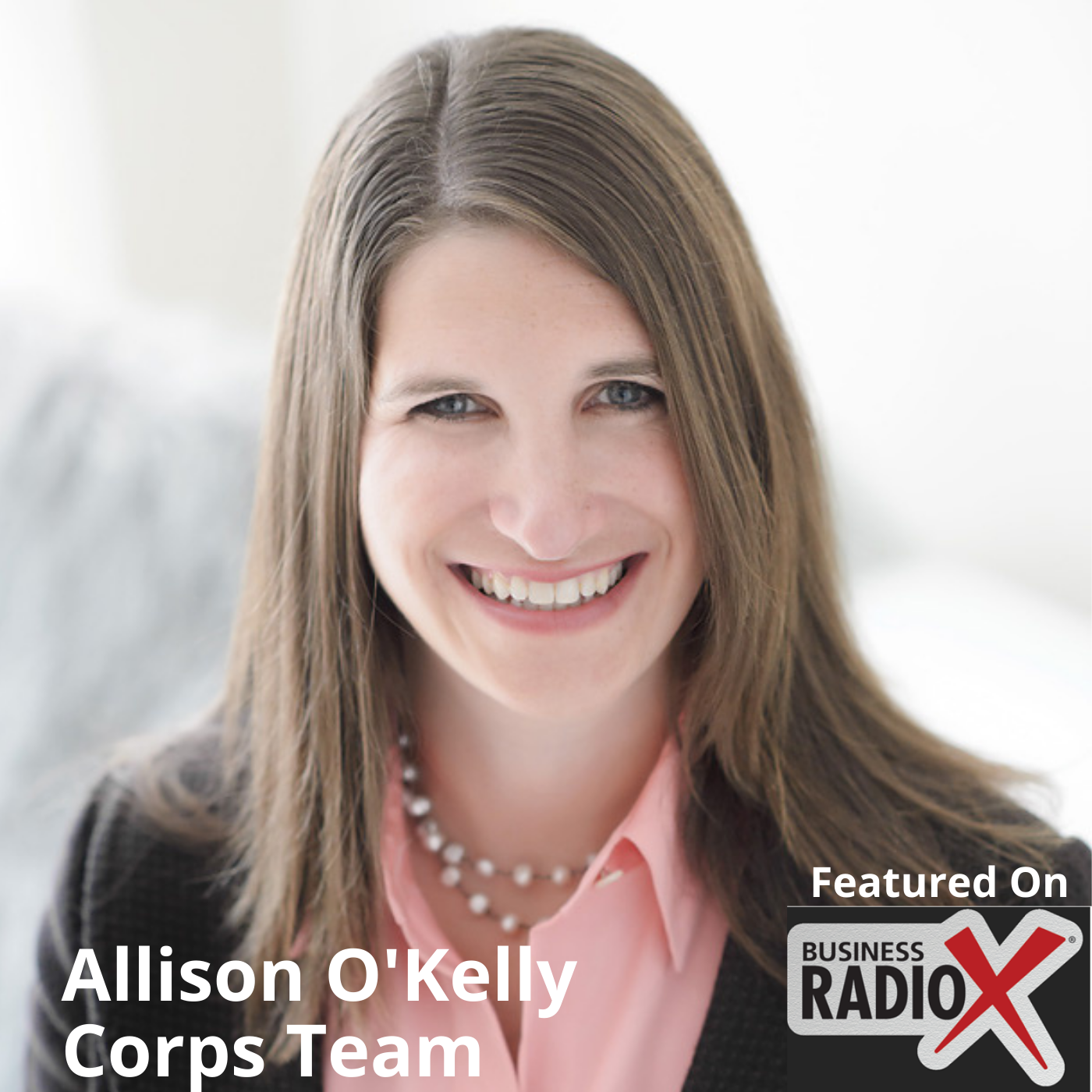
Corps Team Founder and CEO Allison O’Kelly joins host John Ray to discuss the increased efforts companies are making to employ a diverse workforce, tips for companies seeking to widen diversity in their ranks, and much more. Allison also addresses job seekers who are candidates for diversity hiring. “North Fulton Business Radio” is produced virtually from the North Fulton studio of Business RadioX® in Alpharetta.

Allison O’Kelly, Founder and CEO, Corps Team

Allison O’Kelly is the Founder and CEO of Corps Team and a talent acquisition expert who partners with CEOs, executives and hiring managers to recruit exceptional talent into their organizations.  Allison has grown her business from an idea to a search and staffing firm that has placed thousands of professionals in companies nationwide.

Prior to Corps Team / Mom Corps, Allison was a CPA with KPMG in Atlanta, and was in a Leadership development program with Toys R Us where she served in various roles including launching the original Babiesrus.com site, Store Director of an $11 million Toys “R” Us Store, and multi-unit store management.

Allison has been recognized in the news media (TODAY Show, Wall Street Journal, CNN, Forbes) and awarded on a national level (EY Winning Women, Working Mother, Inc. 500, Conference Board). Corps Team was named a Top 20 Woman-Owned Business in the Atlanta Business Chronicle in 2019.

Allison’s current nonprofit boards include the Alliance Theater, Harvard Business School Club of Atlanta, Galloway School Annual Fund, and UGA Terry College Emeritus Alumni Board. Allison received her MBA from Harvard Business School and her BBA in Accounting from the University of Georgia. Allison is a CPA, licensed in Georgia

Company website

LinkedIn

Facebook

Twitter

Questions/Topics Discussed in this Show

  • Tell us about what you are seeing here in Atlanta regarding diversity hiring?
  • Is it increasing significantly?
  • What are some of the businesses where you are seeing more diversity hiring? Can you cite an example?
  • What positions are you seeing an uptick in diversity hiring?
  • Do you have any tips for those who will be applying for these jobs?
  • Tips for your clients who are trying to include more diversity among their ranks?
  • What are some goals for companies to keep in mind before they begin this process? What should they think about?
  • How does diversity hiring change the way you conduct advertising?
  • How if at all has the pandemic affected hiring in general, but in regards to diversity hiring?
  • How should diverse candidates approach this new hiring process?

North Fulton Business Radio” is hosted by John Ray and produced virtually from the North Fulton studio of Business RadioX® in Alpharetta. You can find the full archive of shows by following this link. The show can be found on all the major podcast apps by searching “North Fulton Business Radio.”

Renasant Bank has humble roots, starting in 1904 as a $100,000 bank in a Lee County, Mississippi, bakery. Since then, Renasant has grown to become one of the Southeast’s strongest financial institutions with over $13 billion in assets and more than 190 banking, lending, wealth management and financial services offices in Mississippi, Alabama, Tennessee, Georgia and Florida. All of Renasant’s success stems from each of their banker’s commitment to investing in their communities as a way of better understanding the people they serve. At Renasant Bank, they understand you because they work and live alongside you every day.

Tagged With: Allison O'Kelly, Corps Team, diversity, diversity hiring, Mom Corps, Recruiting, recruiting agency, search firm, staffing, staffing firm, talent acquisition

Simer Mayo with Valor Global and Roy Palomo with HotFoot Recruiters E1

May 2, 2020 by Karen

Simer Mayo with Valor Global and Roy Palomo with HotFoot Recruiters E1
Phoenix Business Radio
Simer Mayo with Valor Global and Roy Palomo with HotFoot Recruiters E1
Loading
00:00 /
RSS Feed
Share
Link
Embed

Download file

Simer Mayo with Valor Global and Roy Palomo with HotFoot Recruiters E1

Simer Mayo with Valor Global and Roy Palomo with HotFoot Recruiters E1

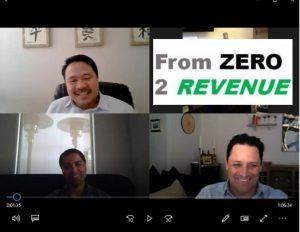
The key to transforming ideas into a reality is by persevering, surrounding yourself with the right people, and developing the right culture within the organization. In our first episode of From Zero 2 Revenue, we discuss company culture, hiring the right people and the importance of key performance metrics with Simer Mayo with Valor Global and Roy Palomo with HotFoot Recruiters.

Valor-Global

Valor Global is a leader in providing Call Center solutions to customers around the world. Valor is the industry leaders in Net Promoter Score (NPS), Customer Satisfaction (CSAT) and employee retention in Customer Care, Account Management, First party collections, and technical support for its customers.

TouchPoints use neuroscience and technology to directly affect the body’s biological mechanism by altering body’s natural stress response and keeping you in a calm state of mind in as few as 30 seconds.

Simer-Mayo-on-Phoenix-Business-RadioXSimer S. Mayo is a serial entrepreneur owning and operating several companies including Valor Global, nVision and The TouchPoint Solution. Simer has been recognized as a successful entrepreneur leading multiple organizations with extensive growth focused on Culture, Values, Servant Leadership and Conscious Capitalism.

Simer is very passionate about giving back and is engaged with youth initiatives, mentoring other entrepreneurs, providing leadership to several non-profit organizations and charities. Simer is an avid sports fan, enjoys traveling and loves outdoors.

Connect with Simer on LinkedIn and Facebook.

HotFoot-Logo-red

HotFoot Recruiters is a staffing firm that has been operating in the valley now for 10 years. While dabbling in most industries at one time or another, HotFoot’s verticals that they excel and concentrate on are Engineering, Manufacturing Production and Contact Center staffing.

The HotFoot team is equally skilled in Executive Search placements as well as production high-volume wave hiring.

Roy-Palomo-on-Phoenix-Business-RadioXRoy Palomo is a native of Arizona. He grew up in the Sunnyslope area where he then went on to college and received a degree from Northern Arizona University. His degree was in Exercise Science which he quickly put into action by developing a fitness program that was being implemented into grade schools in conjunction with their PE programs.

He was quickly recognized by the AZ Governors Council on Exercise and Physical Fitness on 2 separate occasions for his work within physical education. After a brief career in hospitality, Roy was introduced to the recruiting industry. Once he made the transition to talent discovery, Roy quickly established himself as one of the top recruiters in his market with particular expertise in engineering, manufacturing/production and call center placements.

His success ultimately led him to found HotFoot Recruiters alongside fellow co-founder Matt White just four years into his new line of work. Looking forward, Roy envisions a bright future ahead for HotFoot Recruiters. He would like to get HotFoot to 3 times the size of where it is currently, and believes that would be achievable in the next five years.

Keeping in line with his company’s #1 core value, People Fires, he wants it to be one of the best places to work in Arizona. He dreams of creating an environment where his employees love the brand, love the company, and look forward to coming to work every day.

In addition to running HotFoot Recruiters, Roy Palomo is also a member of the non-profit organization the Scottsdale Charros. The Scottsdale Charros raise money for the Scottsdale School District and over 30 other charities for the Scottsdale community.

Follow HotFoot on LinkedIn and Facebook.

About From Zero 2 Revenue

FROM ZERO 2 REVENUE is an avenue for successful entrepreneurs around the world to tell their stories on how they transformed their vision into reality.  We’ll learn about their products and services; and, the passion and character behind the leadership of the organization.  The show is designed to inspire and encourage struggling and future entrepreneurs to pursue their entrepreneurial dreams.

At the end of each episode, our listeners can expect plenty of takeaways! As the late Stephen Covey said, “All things are created twice – first in the mind, then in reality”.

About Our Host

Gabtech-Global-CEO-Chris-YapChris Yap is a seasoned BPO executive with over 17 years experience in the industry. Chris came to the US in 2005 to actively promote the Philippines, a preferred outsourcing destination of the world. In doing so, Chris was able to help generate over 40,000 jobs in the Philippines for companies like Dell, Covergys and West Teleservices, which are now consolidated with other large BPO companies in the world.

Chris has been happily married to Eizel for over 16 years and is blessed with 3 wonderful boys. In addition to his passion for business, Chris is also very passionate about helping to solve the child poverty problem. He is doing this by partnering with Food For The Poor where his company sponsors the feeding of children ages 5 and below on a monthly basis.

Connect with Chris on LinkedIn.

About Our Sponsor

Gabtech Global is a business process outsourcing company based in Glendale, Arizona with a fulfillment center in Bohol, Philippines. Gabtech Global specializes in providing affordable outsourced customer support, after hours and overflow call center services, link building and Virtual Assistant Services. They work with companies making $100,000 a year in revenue to companies making $100,000 a day in revenue.

Tagged With: contingent staffing, executive search, phoenix staffing, Recruiting, recruitment process outsourcing, staffing firm, talent acquisition

Patrick Lynch, CMP

January 21, 2020 by John Ray

Patrick Lynch
North Fulton Business Radio
Patrick Lynch, CMP
Loading
00:00 /
RSS Feed
Share
Link
Embed

Download file

Patrick Lynch
John Ray and Patrick Lynch

North Fulton Business Radio, Episode 191:  Patrick Lynch, CMP

Patrick Lynch talks about how he and his firm, CMP, help companies with talent acquisition, executive search, leadership development, & career transition. Pat is also President-Elect of the Society for Human Resource Management’s Atlanta (SHRM-Atlanta) chapter. “North Fulton Business Radio” is hosted by John Ray and is broadcast from inside Renasant Bank in Alpharetta.

Patrick Lynch, CMP

Patrick Lynch
Patrick Lynch, CMP

Patrick Lynch is President of the CMP Southeast region. CMP is a talent and transition firm in the business of developing people and organizations across the full talent lifecycle. In doing so, the firm combines decades of experience with a contemporary approach to building people and teams.

Patrick is responsible for strategy, marketing, and leadership at CMP. He also provides executive coaching to a wide range of senior leaders, helping them develop their strategic leadership skills, servant leadership, organizational engagement, emotional intelligence, and their ability to change themselves and others. Patrick is President-Elect for the Atlanta chapter of  Society for Human Resource Management. Known as SHRM-Atlanta, it’s one of the largest SHRM chapters in the U.S.

Prior to CMP, Patrick held senior leadership roles in marketing and sales with leading consumer product companies, such as Georgia Pacific, Kao Brands, Kraft/General Foods, and The HON Company. His certifications and training include The Birkman Method, MBTI, and the Adele Lynn EQ Leadership Institute. Patrick is also a basketball coach for the Special Olympics, a mentor for Year Up, and a board member of Special Pops Tennis: a non-profit that offers an adaptive tennis program specifically designed to share the sport with children and adults with intellectual disabilities.

To get in touch with Patrick, you can email him or call directly at 770-906-4113.  To learn more about CMP, visit their website. You can find out more about SHRM-Atlanta here.

North Fulton Business Radio” is broadcast from the North Fulton studio of Business RadioX®, located inside Renasant Bank in Alpharetta. Renasant Bank has humble roots, starting in 1904 as a $100,000 bank in a Lee County, Mississippi, bakery. Since then, Renasant has grown to become one of the Southeast’s strongest financial institutions with approximately $12.9 billion in assets and more than 190 banking, lending, wealth management and financial services offices in Mississippi, Alabama, Tennessee, Georgia and Florida. All of Renasant’s success stems from each of their banker’s commitment to investing in their communities as a way of better understanding the people they serve. At Renasant Bank, they understand you because they work and live alongside you every day.

Tagged With: Executive search firms, Human Resource, human resources support, leadership development, North Fulton Business Radio, North Fulton Studio, outsourcing Human Resources, Patrick Lynch, shrm, SHRM Atlanta, Society for Human Resource Management, special pops tennis, talent acquisition

Decision Vision Episode 26: Should Our Company Get Help with Leadership? – An Interview with Bob Turknett, Lyn Turknett, and Tino Mantella, Turknett Leadership Group

August 1, 2019 by John Ray

Decision Vision
Decision Vision
Decision Vision Episode 26: Should Our Company Get Help with Leadership? - An Interview with Bob Turknett, Lyn Turknett, and Tino Mantella, Turknett Leadership Group
Loading
00:00 /
RSS Feed
Share
Link
Embed

Download file

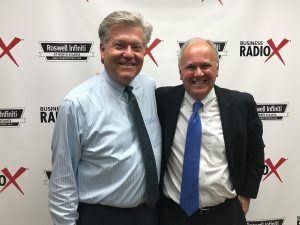
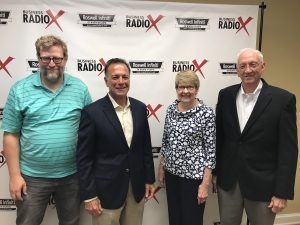
Mike Blake, Tino Mantella, Lyn Turknett, and Bob Turknett

Should Our Company Get Help with Leadership?

What are the qualities of a great leader? How do you recognize deficient leadership? How do you fix it? Bob Turknett, Lyn Turknett, and Tino Mantella of Turknett Leadership Group answer these questions and much more in an insightful and wide-ranging interview with “Decision Vision” host Michael Blake.

Overview of Turknett Leadership Group

With over 30 years’ experience, Turknett Leadership Group (TLG) is a nationally recognized leader in providing character-based leadership and organization development. TLG specializes in executive coaching and development at the individual and team level. Using the Leadership Character Model™, TLG has helped thousands of individuals become highly functioning, thriving leaders and has helped build teams that balance respect and responsibility with a foundation built upon integrity. Our goal always: organizations operating with complete integrity, optimized processes, and maximum financial success.

The firm has specialized in executive coaching since 1987, before the word coaching was common parlance. They combine scientific rigor with an unmatched ability to partner with our clients for deep sustainable growth and change. The founders at the firm are thought leaders and have lifted up character-based leadership through the Georgia Leadership Character Awards since 2003. These awards are now presented in partnership with the Greenleaf Center for Servant Leadership.

Turknett Leadership Group is committed to collaborating with the Gwinnett County Board of Commissioners to create a customized leadership development program that meets or exceeds any county specific needs. They are also confident in their ability to do so, as this is what we have done successfully with thousands of organizations, agencies, individuals, and teams for the last 30 years.

Leadership is their expertise. Turknett Leadership Group is the premiere resource for executive coaching, leadership and team development, talent assessment, culture change, succession management, and business focused engagement surveys. TLG has built a reputation for results and exceeding client expectations by creating high-performing teams for long term business success.

Details of our programs and client testimonials can be found at www.turknett.com.

Dr. Robert (Bob) Turknett, Co-Founder and Co-Chair

Bob Turknett

Bob Turknett served as CEO of Turknett Leadership Group for twenty four years, and now serves as co-chairman and senior consultant. Bob is a licensed psychologist, a trusted advisor to CEOs and boards, and a pioneer in CEO Coaching. He is often heard saying that he really loves coaching the top person because “it enables him to get his arms around the entire organization,” creating a high probability for real change. Bob has served as an executive coach to more than 1,000 executives in more than 100 companies.


Carolyn N. (Lyn) Turknett, Co-Founder and Co-Chair

Lyn Turknett

Lyn Turknett as President of Turknett Leadership Group for twenty four years, and now serves as co-chairman and senior consultant. The focus of her work is character in leadership, cultural assessment and change, and executive team development. Ms. Turknett’s consulting engagements have included leadership and executive team development, organization assessment and change, and individual feedback and coaching. She is particularly interested in helping teams at all levels improve effectiveness and working relationships, and in helping organizations maximize intellectual capital and create cultures that support innovation and initiative.

Tino Mantella, President and CEO

Tino Mantella

Tino Mantella became President and CEO of Turknett Leadership Group on October 29th, 2018. TLG is one of the nation’s top leadership development companies, driven by its proprietary Leadership Character model and grounded in science. TLG has supported hundreds of CEOs and their teams over the last 32 years Founders; Dr. Robert (Bob) Turknett and Carolyn Turknett will remain engaged and committed to the company’s mission..

Mantella brings over 30 years of experience leading some of the nation’s largest and most distinguished not-for-profit organizations including the YMCA of Metropolitan Chicago, the National Arthritis Foundation, and the Technology Association of Georgia.

Michael Blake, Brady Ware & Company

Mike Blake, Host of “Decision Vision”

Michael Blake is Host of the “Decision Vision” podcast series and a Director of Brady Ware & Company. Mike specializes in the valuation of intellectual property-driven firms, such as software firms, aerospace firms and professional services firms, most frequently in the capacity as a transaction advisor, helping clients obtain great outcomes from complex transaction opportunities. He is also a specialist in the appraisal of intellectual properties as stand-alone assets, such as software, trade secrets, and patents.

Mike has been a full-time business appraiser for 13 years with public accounting firms, boutique business appraisal firms, and an owner of his own firm. Prior to that, he spent 8 years in venture capital and investment banking, including transactions in the U.S., Israel, Russia, Ukraine, and Belarus.

Brady Ware & Company

Brady Ware & Company is a regional full-service accounting and advisory firm which helps businesses and entrepreneurs make visions a reality. Brady Ware services clients nationally from its offices in Alpharetta, GA; Columbus and Dayton, OH; and Richmond, IN. The firm is growth minded, committed to the regions in which they operate, and most importantly, they make significant investments in their people and service offerings to meet the changing financial needs of those they are privileged to serve. The firm is dedicated to providing results that make a difference for its clients.

Decision Vision Podcast Series

“Decision Vision” is a podcast covering topics and issues facing small business owners and connecting them with solutions from leading experts. This series is presented by Brady Ware & Company. If you are a decision maker for a small business, we’d love to hear from you. Contact us at decisionvision@bradyware.com and make sure to listen to every Thursday to the “Decision Vision” podcast. Past episodes of “Decision Vision” can be found here. “Decision Vision” is produced and broadcast by the North Fulton studio of Business RadioX®.

Visit Brady Ware & Company on social media:

LinkedIn:  https://www.linkedin.com/company/brady-ware/

Facebook: https://www.facebook.com/bradywareCPAs/

Twitter: https://twitter.com/BradyWare

Instagram: https://www.instagram.com/bradywarecompany/

Show Transcript

Intro: [00:00:01] Welcome to Decision Vision, a podcast series focusing on critical business decisions, brought to you by Brady Ware & Company. Brady Ware is a regional, full-service, accounting and advisory firm that helps businesses and entrepreneurs make visions a reality.

Michael Blake: [00:00:20] And welcome back to another episode of Decision Vision, a podcast giving you, the listener, clear vision to make great decisions. In each episode, we discuss the process of decision making on a different topic. But rather than making recommendations because everyone’s circumstances are different, we talk to subject matter experts about how they would recommend thinking about that decision.

Michael Blake: [00:00:39] My name is Mike Blake, and I’m your host for today’s program. I’m a Director at Brady Ware & Company, a full-service accounting firm based in Dayton, Ohio, with offices in Dayton; Columbus, Ohio; Richmond, Indiana; and Alpharetta, Georgia, which is where we’re recording today. Brady Ware is sponsoring this podcast. If you like this podcast, please subscribe and your favorite podcast aggregator. And please also consider leaving a review of the podcast as well.

Michael Blake: [00:01:03] And today, we’re going to talk about leadership. And not just leadership, but how do you recognize if you have the kind of leadership you need in your organization? How do you recognize if it’s deficient? And how drastic steps do you need to take and can you take in order to to fix it? And I’ve worked with organizations ranging from startups to larger organizations. And probably. the only organization that does not need leadership is a startup with one person in it. And even then, you can make an argument that there are opportunities for leadership even outside of the sole practitionership.

Michael Blake: [00:01:44] Now, those of you who’ve been with the podcast for a while or maybe know me personally know that I play in a rock band, which is basically a relatively safe midlife crisis outlet. Certainly, safer than a motorcycle and cheaper than a Ferrari, which I can’t afford anyway. But one of the things you notice in the band is that you have lead instruments that are up front all the time, right. If you’re Elton John, there’s a lead piano all the time. If you’re Van Halen, there’s a lead guitar pretty much all the time. And then, there are instruments that you don’t necessarily recognize unless they’re exceptional, right. Very few people really notice the drummer of the band unless it’s Rush on Neil Peart going on, right. They don’t necessarily notice the bass player unless the bass player happens to be a front man. Again, Rush with Geddy Lee. But that kind of shows you the nature of the band they have.

Michael Blake: [00:02:37] And over the years, I’ve come to think of leadership kind of being as one of those things that at one end of the spectrum, I think we recognize great leaders and great leadership readily. And then, there’s another end of the spectrum, like sometimes instruments in a band, where, sometimes, the best thing you can do is you know you’re doing a good job, and nobody knows that you’re there, right. You don’t remember, “Boy, that drummer kept a great beat the entire time.” But if they go off beat, everything can come to a crash very quickly.

Michael Blake: [00:03:11] And leadership can sometimes be like that. We kind of take it for granted almost that we assume that it’s going to be there, and we often don’t think about it until it sort of pops its head up and say, “Boy, that’s just outstanding leadership, sort of a Mozart one in ten million kind of thing,” or it’s “Boy, we lack leadership here. We don’t have emotional intelligence.” And when you’re in a badly-led organization, if you can just watch about that organization, it’s uncomfortable. It’s bad to be in, it’s not comfortable to to even watch.

Michael Blake: [00:03:47] And today, joining us, because I don’t know anything about leadership other than what I try to do in my my day-to-day activities, but fortunately, we are joined by three people who know an awful lot about it. And we’re going to try to squeeze as much knowledge out of them as we can over the next 35 minutes or so. So, we’re talking to Lyn Turknett, Bob Turknett, and new kid on the block, Tino Mantella of the Turknett Leadership Group.

Michael Blake: [00:04:12] With over 30 years pof experience, Turknett Leadership Group is a nationally recognized leader in providing character-based leadership and organization development. They specialize in executive coaching and development, the individual and team level, using the leadership character models and capitalization trademarks, and nobody else can steal that. They have helped thousands of individuals become highly functioning, thriving leaders, and to help build teams with balanced respect and responsibility with a foundation built upon integrity. Their goal is always organizations operating with complete integrity, optimized processes, and maximum financial success.

Michael Blake: [00:04:48] The firm has specialized in executive coaching since 1987, before the word coaching was common parlance. I agree with that. They combine scientific rigor with an unmatched ability to partner with their clients for deep, sustainable growth and change. The founders are thought leaders and have lifted up character-based leadership through the Georgia Leadership Character Awards since 2003, which, by the way, I am a proud three-time nominee. I still have the plaques hung up my office. It’s the only thing that I, actually, bothered to hang up. These awards are now presented in partnership with the Greenleaf Center for Servant Leadership.

Michael Blake: [00:05:23] It goes on, and on, and on. I could tell a lot more things about the organization, but that means I’m not asking questions, and they’re not answering them. So, I’m going to cut to the chase and I’m going to welcome Lyn, Bob, and Tino to the program. Thanks so much for coming on today.

Lyn Turnkett: [00:05:36] Great to be here.

Bob Turnkett: [00:05:36] Thanks for having us.

Tino Mantella: [00:05:36] Thank you.

Michael Blake: [00:05:38] So, let me lead off. Leading off with this. I mean, is leadership important? Do you agree to some extent that it can sometimes be taken for granted, but, boy, when it’s not there, you sure do miss it?

Bob Turnkett: [00:05:52] I’d like to address that just in a general way first. And then, they may have some comments. But, for me, a driving force in terms of leadership is how important it is for bringing out the best in others. With every client I see, I try to always plant the seed and get them to think about viewing themselves as trying to bring out the best in every person and help every person become the best leader and the best person they can be. And if you think about it, and if we’ve all had that as an underlying philosophy in all of our interactions, what a great organization it would be and what a great world we have.

Lyn Turnkett: [00:06:29] Yeah, it’s interesting. I was just reading a piece from Extreme Leadership yesterday. And it’s about the SEALs, the Navy SEALs. And one of the first stories is about boat race that’s a part of their last training. And one boat keeps coming in ahead in the race every time. And there is one guy who’s the leader on a boat that keeps coming in last. So, the guy who wrote the book and who’s the guy, whatever his title is, says, “Let’s just switch. We’ll switch the leaders.”

Lyn Turnkett: [00:07:05] Interestingly, the boat that was coming in last came in first in the next race. It was all about the inspiration, the way that person helped align the team, helped them feel good about the goal, helped them take small steps together. But that guy who was in the boat who was losing had no thought that it was his leadership causing that. It was, as you said, an unrecognized factor. I love the idea of the drummer in the band keeping the pace and being in the background, but helping align the band.

Tino Mantella: [00:07:44] So, I’ll just add a couple of comments because I think when your listeners are thinking about leadership, they probably are thinking about the CEO or the C suite. And the interesting phenomenon now that’s always been there, but it’s been magnified in the last decade, is that leaders could be at any level of the organization. And going back to your first point, Michael, it could be that one person because they have to lead in a lot of different ways. I mean, they have to lead in respect to convincing people that their product or service is viable, for example.

Tino Mantella: [00:08:19] But we like to — I think that companies today are saying every low level — in fact, we get a lot of calls now around the director level. A few clicks down saying, “We want all those people to be leaders.” So, every person or organization, if you’re being fully functional and optimizing your results, you’re going to want to make sure that every person sees themselves as a leader. And that’s really different in some ways between a manager, and somebody that’s taking ownership, and feels like they’re really part of the company, and helping to drive it forward.

Michael Blake: [00:08:52] So, let’s go to that. Tino, you and I have a long history collaborating in the startup world. And you know this as much about as I do, if not more.

Tino Mantella: [00:09:01] I’m not sure about that part.

Michael Blake: [00:09:01] I think it can be tempting to think, “Wow! I don’t run a thousand-person organization. I run a team of four,” right. How much room is there leadership there? But you sort of touched upon it. Even in a group that’s small, does leadership become important? Maybe it’s even more important because you’re more exposed. What do you think about that?

Tino Mantella: [00:09:23] Well, I’ll start with that one because we – Lyn, and I, and a couple other people at Turknett – worked with a group of 15 women entrepreneurs as part of a city program. And the focus of Lyn’s program was on leadership. And what we found is in a lot of these entrepreneurial companies, they’re thinking about – you know this, Michael –  first, the market, product, finance. And one thing that gets put on the sideline is, “How am I going to work with people? And how am I going to bring them all together? And how is everyone in this small group going to be willing to take on more than one set of job skills? Because, frankly, if there’s three people, you don’t have a lot of specificity here. You’re going to be doing it all.

Tino Mantella: [00:10:08] And so I don’t know if it’s more or less important. The founders, who have a lot more experience on this and seeing it from that side, might have a judgment on that, but it’s certainly as important in a four-person company as it is in a thousand-person company, I would say.

Bob Turnkett: [00:10:23] And in terms of the women, we do have Women in Leadership Program every month, and we have about 50 or 60 attendees and a speaker every month. And the women and, sometimes, men, who are the speakers tell their story of leadership, and  you can just see from the reaction of the audience there that those stories are very inspiring, and very powerful, and how important leadership really is in terms of-

Bob Turnkett: [00:10:49] I mean, when I go away from that, I feel like this is the best thing I’ve ever experienced. I go away from it every month feeling like, “This is the best one yet.” So, there is something really special and unique about leadership when it’s working well and when people can tell stories about the leadership, where it’s done in the right ways and the best ways.

Michael Blake: [00:11:05] Now, I’m curious, do those individuals, do you think they feel that great because they suddenly recognize they’re in a leadership vacuum, and, now, they have tools to fix it? Or do they sense that in themselves, all of a sudden, they realize they have the skills and the tool set to create that leadership influence themselves, or some mix of the two?

Bob Turnkett: [00:11:28] I think both, but Lyn may have an idea.

Lyn Turnkett: [00:11:30] I’d say the latter. I think they recognize — I think what Tino said about leadership being broader now, I think it’s always been very broad, but I think, particularly, in companies now, it’s broad. One of the things we say is leadership is a choice, not a position. And there are always opportunities for choosing to lead.

Lyn Turnkett: [00:11:55] There’s a definition I like too that says, “Leadership is about going first in a new direction and being followed.” So, anytime you see something that needs to be done, a problem that needs to be solved, and you figure out how to move forward and how to get other people to move along with you, you’re exercising leadership. You are leading.

Lyn Turnkett: [00:12:17] And I think to Bob’s point about why hearing other people talk about it is so inspiring is that it does, to your point, make you feel, “Oh, my goodness. I could do that. I do that every day. I did that in high school. That could be me. I could do more. I could take more ownership. I can lead.”

Michael Blake: [00:12:38] So, I’m going to skip ahead to a question because it segues better here then. Is it your view that everybody can be a leader? It’s not just something that you’re born with and that’s it, but it’s a set of skills that you can develop, or, clearly, I know it’s it’s a mindset based on your character model, but you expand upon that.

Bob Turnkett: [00:12:55] And everybody is a leader, whether they really accept the idea or think about it that way or not because you’re a leader as a parent, you’re a leader yourself. I mean, if you think about our leadership character model, which we can discuss in a minute, to be able to — if you think about that in terms of all the qualities are involved in the leadership character model, you’ve got to lead yourself first. And no matter whether you’re on your own by yourself or with the group of people, all those qualities are critical and important in terms of who you are, and how you present yourself, and how to be.

Lyn Turnkett: [00:13:31] I think also once people reach adulthood, there are probably some qualities of personality that may help some people move more strongly. Certainly, we know they affect whether people are chosen for leadership roles. But I think to Bob’s point, everybody leads. Everybody usually don’t think about those times that you do, but everybody leads. And certainly, we believe that leadership isn’t simply a gift that a few people have. It’s something that everybody exercises and that everybody can get better at with effort, self-awareness, and work.

Michael Blake: [00:14:11] Okay. So, what are some symptoms of deficient leadership? If I’m in an organization, right, and like you said, with the two boats, right, sometimes you don’t know it’s deficient until you realize you came in last, and the only thing that changed was the leader, right. What are some symptoms of deficient leadership? What, as a leader, should I be looking for?

Bob Turnkett: [00:14:33] I started writing that down. And after I got to a hundred, I stopped.

Michael Blake: [00:14:37] Okay. Let’s take the top few.

Bob Turnkett: [00:14:40] Some of them are infighting, political behavior, chaos, silos, constant drama, low productivity, poor results, always reactive, low morale your best people leave, high absenteeism, and it goes on, and on, and on from there.

Tino Mantella: [00:15:01] I think Bob covered a lot in those statements. I, probably, am more of the practitioner in a group just given my background. The YMCA had 4500 employees. And it was interesting because our work was full of such passion of wanting to help people and make a difference. And some people rose to the occasion and some different. I don’t think it was because they had these innate skills where one would stand apart from the others, but it’s more the things that Turknett Group works with people on and groups on, and that is taking accountability, taking ownership, being able to work with people, good communication skills, the kinds of things that are required to get people excited.

Tino Mantella: [00:15:48] And from my own experience, I mean, I’ve had great experiences, I feel like, of bringing people through the ranks and others where it’s like, “Oh man, maybe I should have done this a different way,” because it’s always about, are you getting them motivated? Do they understand what the vision is, what the mission is, what the direction is? Are you leading and are they following or are they leaving? As Bob said, there’s a lot of different reasons. If you lose your best people for whatever reason that is, you’re going to have to take a hit. And we hear all the time, like a company recently contacted us and said, “Look, we’ve gone through four CEOs in the last two years. What does that mean?”

Michael Blake: [00:16:24] Yikes.

Tino Mantella: [00:16:24] Yeah, yikes. So, that means that they’re looking at turnover at all parts of the rank because nobody knows if their job’s secure, et cetera, et, cetera. So. it’s having confidence in leadership, but it’s not just the CEO again.

Michael Blake: [00:16:41] So, there are a lot of symptoms out there. So, let’s go to some of the causes. What do you see in all the work that you’ve done? And also Tino, your view as a practitioner, I think, is very important here. What do you see as the most common or obvious causes of deficient leadership that maybe a listener can, if they have the wherewithal to be self-aware and self-examining, maybe they’ll press pause for a second after your answer and take an inventory of those qualities are in themselves or others with whom they work.

Tino Mantella: [00:17:14] Well, I start with that one just because I think that the Turknetts talk a lot and people that work with us on the coaching side talk about blind spots. And to me, it’s like you know what you know, and you don’t know a lot, and you don’t see that you’re missing the boat. And also, there’s an ego piece to this I see. I think I’m a better performer when I leave my ego at the doorstep, then I’m open to people giving me comments. And that’s really hard for some people, and it’s been hard for me over certain times of my career to be able to embrace that.

Tino Mantella: [00:17:49] So, I feel like if you have a mentor, if you have someone, your spouse, as Bob’s often said and Lyn have said, someone that can give you real — my spouse doesn’t have make trouble giving me feedback. But anyways, real feedback where you have that sort of place where people can say, “You know what, you’re missing that,” they don’t feel like their heads are going to get chopped off for something they’re going to say. So, that’s a real practitioner answer, but I’ll leave it to the experts.

Bob Turnkett: [00:18:17] I would like to just frame it, and then Lyn can comment, but I’d like to just frame in terms of if you think about leaders who are too passive or leaders who are too aggressive, and you’ve got problems in both areas. Leaders who are too passive abdicate. They are too nice. They don’t want to do certain things because they don’t want to impose. So, they hang back, and they don’t communicate, they don’t get feedback, they don’t do setting goals with people. They don’t do all the things they need to be doing.

Bob Turnkett: [00:18:39] And then, a leader who’s too aggressive tends — and then, what happens, at first, when a great tension gets created, interestingly, it bubbles up. And then, there’s explosions in the organization and all kinds of chaos. And that leader who’s too aggressive also creates tension, but in a different kind of way. It’s i because of fear. People are afraid. So, if people shut down, you don’t get the best from them and all the side effects could go home. Hundreds more side effects there in terms of that as well. So, those are two kind of categories I see.

Bob Turnkett: [00:19:07] And then on the aggressive side, that’s probably been the — when we first started doing this 30 years ago, many of the CEOs that I worked with were in that highly aggressive side, and very command and control, very top down, and thought that was the best way. And so, it was a real convincing job for me and worked for me to help get them to see that they get more of their goals met and more of what they wanted if they could balance that with the both respect and responsibility that they needed to do.

Lyn Turnkett: [00:19:35] Yeah, absolutely.

Michael Blake: [00:19:37] There’s two tips. I’ll let you finish, but I want to interject something because it’s interesting you sort of time date that, right. And I wonder if kind of the movies of the time kind of you reflect that or somehow influence that, right. Greed is good. Wall Street, Gordon Gekko and the leader of the night. And we’ll get into this. We’ll get into this. But what we idolize is leadership in the 1980s being a really take charge, super testosterone kind of deal where baby boomers were leading people like me, Gen-Xers, right. That doesn’t play well anymore, does it?

Bob Turnkett: [00:20:12] No. And so, I see the way — you’re going back to the autocratic, and that’s very top down, and almost a bully kind of leader to the — I call it parental, but it’s really benevolent autocrat, but parental, kind of still the parents. I slap your wrist. I spank you when you misbehave, but I don’t do it often, but I do it periodically. So, it keeps you in line. So, it’s still a fear way of doing it, so you get the same side effects, or very similar side effects, or to a partnership model, which is what it’s moving toward. And there are many leaders that we can point to today who really work hard in that part partnership model and do a good job of it.

Bob Turnkett: [00:20:48] But it’s easy still for the person who’s doing the partnership, when the stress happens or there’s crisis or conflict, they tend to revert to the parental style thinking that they have to do that when they don’t recognize that’s the worst thing they can do because they’ve got did what they got to do, is work even harder and develop more flexibility, agility, and adaptability to be able to solve the problems that are in front of them. And that’s not easy.

Michael Blake: [00:21:09] So, Lyn, coming back to you, what about causes you see as being your most frequent causes of deficient leadership?

Lyn Turnkett: [00:21:17] I’d say a lot of that is the opposite of what people need. I was just thinking, Tino was talking about self-awareness, getting feedback, and I was thinking. Center for Creative Leadership a while back. They had 67 competencies. They found four. And I think these are not just were important then. They may be even more important now. And those were self-awareness. And so, a lack of self-awareness and a lack of understanding, that’s EQ, that’s emotional intelligence, not understanding how you’re coming across to other people, not getting feedback, and not being able to adapt. That’s huge.

Lyn Turnkett: [00:21:56] Learning agility was another one. To Bob’s point then, if you can’t figure out what’s wrong, if you can’t in a complex organization, which many people are working in right now, if you can’t figure out how to be partnering later, work across organizations, work with people outside the organization, learn quickly, you can’t lead. There’s also typical things like arrogance, which is a big derailer.

Michael Blake: [00:22:28] It used to be number one.

Lyn Turnkett: [00:22:29] Yeah, perfectionism, that’s a big derailer. People who are overly perfectionist with themselves and with other people are not inspiring. And they, also, obviously, move very, very slowly. We could go on and on on this too.

Michael Blake: [00:22:44] Well, the thing that strikes me, though, is I think all of those things have a common thread. I think a lot of it to me, I’m going to put my Dr. Phil hat here, but it does, I think, boil that down to a fundamental insecurity, right. And to me, it sounds like what that creates is a feedback loop because if you lead an organization that is in fear, right?

Lyn Turnkett: [00:23:03] Yes.

Michael Blake: [00:23:03] And where dissent, where if not self-awareness, then making somebody also where is punished, then you’ve got no shot. You’re going to have to have an outside intervention, I think, which gets to the next question then that I wanted to ask, which is, is deficiency in leadership something that can be self-fixing, self-healing, or more often than not, does it get to a point where there’s got to be kind of a grownup that comes in or an advisor that comes in, and helps ride the ship and hits the reset button?

Bob Turnkett: [00:23:38] I’ll make one comment. If they could fix it, they probably would have already. It wouldn’t be happening if they really knew how to fix it. And if there was a textbook or something that they could just read that would fix it, that would help, but there’s usually not something there because it’s got to change something that’s a part of them, who they are, and what they’re about. And that’s what leadership — that’s the most important part of leadership is you can teach skills, and all kinds of different things, and tactics it can do. But it’s who they are and what they’re about. So, their attitudes, and beliefs, their assumptions, all that’s really critical, and that has to be gotten at by somebody helping that person get at it, or they could possibly get it by reading, but it would take some in-depth kind of personal work on their part to do that.

Tino Mantella: [00:24:24] Michael, when I took over TAG, it was right after the tech bust. You remember that. It was 2004. And the interesting thing, and people have talked about this for ages, but the best time to take over organization is when it’s in crisis because, then, they actually listen, and they’re open to ideas more. So, to the point, I think Bob was spot on. But what I would add from my experience and from seeing others is the best time to — there is a great opportunity to have someone be most aware after they’ve failed at something. And they’re going to be open because it’s like, “I lost my job. We lost money, whatever it is, it didn’t work. Somebody has got to help me.”

Tino Mantella: [00:25:08] If you go along, and you’re in a pretty good place, and to use the TAG, if I came in to TAG, and everything was robust, everybody was getting investments in your area, then there wouldn’t have been that sort of opportunity for me to come in and say, “Here’s what I think we need to do,” because at that time, people were pretty arm weary in terms of what they were trying to do. So, they were very open. So, from my experience, people sometimes need to have that not-so-great experience to be open. And I don’t know what Bob and Lyn would say, but there’s probably not too many people that haven’t, somewhere in their career, had something that didn’t go the way they wanted to make it go.

Bob Turnkett: [00:25:48] Whatever they can, whatever happens to make us more vulnerable makes us more open. And certainly crisis, and hardships, and things that really are adverse, certainly, will help us become more vulnerable. And that’s one of the things that many leaders struggle with, and they need to be more vulnerable and more open. But it’s very, very hard for leaders to do that.

Michael Blake: [00:26:08] It almost sounds like going through the five stages of grief, right? You have a failing organization. You go through the denial, the bargaining. I forgot the other states, but at the end of the day, there’s acceptance. And at some point you’re sort of out of options, and you’ve got to be willing to change. And with leadership, it’s just a deeply personal exercise, too. It’s really hard to blame lack of leadership on somebody else. It really is.

Bob Turnkett: [00:26:35] Right, absolutely.

Michael Blake: [00:26:37] So, there’s a question I want to make sure that I get in because I think it’s very timely. For a long time, and still today, companies address the customer experience. But now, we’re hearing more of a term called the employee experience. I mean, is that a real thing or is it just sort of a buzzword that we had on Bloomberg Radio for a couple of weeks and it’s going to go away?

Bob Turnkett: [00:27:01] Lyn, you did the right work on that.

Lyn Turnkett: [00:27:01] Yeah.  I think it’s a real thing. Some of it, I will tell you, will go away. Any of us who’ve worked in this arena for decades now that the business cycle influences things like that. We’re in a time right now where getting talent is really tough. People are paying a lot attention to their culture. They’re paying a lot of attention to employ experience at every level when they first come to the website, and think they might apply for a job, to the time that they exit the organization.

Lyn Turnkett: [00:27:34] But I do think that one of the things I believe is that as technology increases, as organizations become more AI-infused, people become more important. People coming to the table, knowing that they are valued in the organization, using their brains in the organization, feeling excited to be there is even more important than it is in a factory where you put in the same widget every day.

Lyn Turnkett: [00:28:08] Now, people have to pay attention to that. I think in order for the performance of the organization to be great. So, I think, from that standpoint, even though it will diminish when the business cycle is down a little bit, I think it’s going to stay important.

Tino Mantella: [00:28:23] Michael, when I was — in all the organizations I really run, say, five years or later, we always talk, and I was trained, and I was passionate about the customer being the center of the circle, the customer, the customer. We will do anything, including sometimes ask staff to do something beyond what they want to do because it was the customer-centered circle.

Tino Mantella: [00:28:52] That just doesn’t work anymore because of what Lyn said. And I would add to that, and you already mentioned it, Michael, the generations coming up, they’ll just say, “Yeah, I’m not going to do that.” They’re not going to focus on it. And let’s not take it. Millennials have been probably much maligned over the last many years. But part of it is they really want work/life balance, and they have other opportunities now because the retention rates are so low, and they’re like, “Yeah, I need to go work with my charity tonight,” or whatever.

Tino Mantella: [00:29:23] So, trying to run with command and control or trying to run with customer being the center of the circle and putting employees at a different level below that, you can try as hard as you want, but it’s going to be very difficult because people are going to push back now more than I might say that 10 years ago, whatever job I had, it’s like, “Yes, you’re right. We will do that. We will follow those. We will march to the sound of the guns,” or whatever, but it doesn’t happen now.

Bob Turnkett: [00:29:51] And decades ago, there were some people who stood out in the employee experience area. They weren’t calling it that, but like Horst Schulze, the Ritz Carlton. I remember him giving many presentations, and the employees were really empowered to do things that even today, most employees still aren’t empowered to do. So, he was so much of a forerunner of the employee experience. But I do think, as Lyn said, it will probably fade to some degree, and then reappear in some other form, but certainly without the employee feeling highly valued and doing everything you can to create that.

Bob Turnkett: [00:30:29] I just had a CEO that I was working with yesterday who just lost three people. She’s trying to hire another top level person. And she said that the competition for talent is so strong. She said, “And the way we do things, we go through this interview process that takes a couple of months or more, sometimes three months.” And she said, “I’m just losing people. The best ones there are, they say, ‘I just can’t wait. I got these offers. After one month, I got these two offers. I got to take one of them.'” So, we are in a time when the talent shortage is really making a big difference in our culture.

Michael Blake: [00:31:06] It’s definitely time where labor has a bit more power than we saw 10 years ago.

Bob Turnkett: [00:31:11] Absolutely.

Michael Blake: [00:31:12] So, here’s another question I want to make sure that we cover, and that is, can introverts be leaders? I think many people look at, or if they consider themselves an introvert, they feel like, at a minimum, they’re starting 30 meters behind in a 100-meter dash.

Bob Turnkett: [00:31:29] I have a quick story I just tell and other things, but I had a person I was working with who was the CEO of a large architectural engineering firm. And he scored on the Myers-Briggs type indicator — most people are familiar with this business kind of a profile. And he scored high on introversion, about as far as you can go. And then, when he did a 360 where he’s evaluated by all the people around him, he came out with almost all fives, almost all top scorers from like 40 different people on presentation, formal presentation, all kinds of presentation.

Bob Turnkett: [00:32:04] And I said, “Wow, look at this!” And their comments, there were like 20 or 30 comments. They were all just outstanding kind of comments. I said, “How do you explain this being — you talk about yourself as being an introvert?” He said, “Well, when I was 14 or 15, I decided I want to be a CEO.” So, he said, “I just started paying attention to what CEOs did, how they carried themselves, how they went about things.” And he said, “I’m the kind of person that would like to, if you go to a party or a gathering, get one person, and go off in a corner, and just talk to that person.” He said, “But you won’t see me doing that.” He said, “You’ll see me going into a room with 300 people.” And before that night, he was probably touching in some way or talking with everyone of the 300 people. He said, “Because that’s how important that goal was to me.”

Bob Turnkett: [00:32:46] So, it proved to me that if the goal is very important, we can learn anything. We can change and learn pretty much whatever we want to learn if that goal is that if we had that kind of passion.

Lyn Turnkett: [00:32:57] Also, data from the Myers Briggs shows that introverts are as represented based on how many there are in upper management as extroverts.

Bob Turnkett: [00:33:08] Yeah.

Tino Mantella: [00:33:08] I would just add that part of it is when we talked about awareness  that if you’re a great offensive coach, using a football analogy, then you have to find a good defensive coach to take care of the other side. And I think if you’re really aware and you say, “Okay, here’s my skill sets,” then the great CEOs will look for those balance to make sure. Maybe they don’t like to be out every night at meetings, but they want to have somebody that’s representing them, it doesn’t have to be the CEO. But I think awareness does a lot because it’s, again, not ego, but it’s like, “I’m not that good at that. I need to find somebody really strong at that.” So, it provides that balance.

Michael Blake: [00:33:52] Well, good. I’m glad I’m not hopeless. So, I’ll share a personal story. My wife has one great fear with me, and that is that she fears I’m going to be picked for a Mars mission because I’m such an introvert. She feels that my dream job would be stuck in a tin can one hundred million miles away from humanity for six months where I can’t even have a live phone conversation. Now, I’m too fat near-sighted to do that, but that’s her greatest fear. But I’m glad for somebody like me, there’s even hope.

Bob Turnkett: [00:34:20] That reminds me of the woman I was working with, and she was talking about her husband. She said, “I just wish…” He was highly introverted, and he didn’t talk much with her, and she really wanted to communication. She said, “I just really wish I could get inside his brain, and just walk around in there to see what is going on, because I just can’t quite figure out what’s going on with him.”

Michael Blake: [00:34:37] That’s right. That’s right. Sometimes, it’s a boardwalk. Sometimes, it’s a house of horrors. So, Tino, I’m going to direct this question at you first, and then let’s you guys jump in, but I did have this question with you in mind. Because you have led so many different types of organizations – for-profit, not-for-profit, large organizations, smaller organizations with different missions – does your leadership style have to change based on the kind of organization you have or are there leadership principles that are timeless and ought to work everywhere?

Tino Mantella: [00:35:09] So, I’d say your leadership knowledge and skill sets don’t have to change, but what you have to understand that isn’t always easy is what culture you’re inheriting. And as, I think, Peter Drucker said, “Culture eats strategy for breakfast.” And I’ve seen that many times in organizations that I’ve been involved with and organizations that we’ve worked with.

Tino Mantella: [00:35:35] And so, when you go into an organization, something that worked phenomenally at one will not work at all in another because the culture is different, and they’re not going to embrace it. So, I can give lots of stories about what I’ve seen where it’s just you go in with the same roadmap, or Gantt chart, or operating plan.

Tino Mantella: [00:35:58] I’ll give you one example. Young company I’ve worked with, and I came in full of fire and brimstone saying, “Okay, we’re gonna do operating plan, performance standards, NPR scores.” And they looked at me like I had three heads because they’re a bunch of entrepreneurs that just want to do what they’re doing. So, you have to take your time, pace it, make sure you have the right people, and not do it your way, as Bob and Lyn said. Sometimes you have to be flexible enough to say, “Let me stop, and listen, and see what you need.”

Tino Mantella: [00:36:34] So, I think the core skill for me has been you can use some of the principles that you’ve always used to build organizations, but you can’t always use the same techniques because the cultures are different. Lyn is an expert in culture and Bob as well.

Lyn Turnkett: [00:36:55] Well, that just reminds me, we talked to earlier about what derails people. And I think, sometimes, success could derail people, too much success. And to your point about not being adaptive, I was thinking, I was listening to your podcast that reminded me of the story of Ron Johnson at JC Penney. He had been dramatically successful at Target. Then, went to Apple and was dramatically successful in building their stores. And then, went to JC Penney.

Lyn Turnkett: [00:37:25] And this was a podcast about decision making, but it talked about the fact that he thought he knew all the answers there. He came up immediately with a strategic plan. And there was a lot written at the time about he cutting all of their brands. He didn’t ask people who are there what they thought. He stopped all the sales. He thought what he did at Apple was going to fly here, and he was the guy who could do it. So, to that point, you’ve got know what you’re moving into. And in my opinion, also, you’ve got to know that no matter who you are, you can’t be the only brain in the room.

Michael Blake: [00:38:03] I’ve stolen a technique or question from a guy named Tom Keene. He does the morning show for Bloomberg Radio. And when he interviews people, he’ll take a position. He’s a very smart guy. He’s a CFA charter holder and an economist in his own right. But he’ll often ask, “What have I got wrong?” He doesn’t end the question for validation. He ends the question asking for what are the holes. So, he’s inviting people to criticize.

Michael Blake: [00:38:31] And I think that is so smart. I’ve stolen it because I don’t need people to tell me why my idea is great. I already think it’s great. I wouldn’t have suggested it. But that question as a journalist is, “What have I got wrong?” It creates such a constructive conversation. Just that opening can make the hugest difference and being willing to be wrong. And as Bill Gates is famous for saying, “Success as a lousy teacher.” Exactly to your point, because it may reinforce maybe something that you don’t need to have reinforced necessarily.

Lyn Turnkett: [00:39:04] Right.

Bob Turnkett: [00:39:05] And that success is a lousy teacher is kind of another problem in terms of the way — we talk about in our company the levels of leadership or the stages of growth. Robert Keegan at Harvard did the same on stages of growth. And so, most people in organizations, they’re in the stage 3 to 4. But when you get to stage 4, you’re really doing pretty well in most aspects of leadership, most aspects of leading a team, et cetera, et cetera.

Bob Turnkett: [00:39:31] So, you’re really pretty. You’re really very good, but what happens is that you get a little cocky. And I don’t mean in a real negative way, but you’ve self-assured to the point where you don’t think you need to learn anymore, or you need to grow anymore. And then, that’s where the success tends to then delude you into thinking you’re really that good. And then, to be able to move to a level five, you’ve got to be able to then kind of put yourself back in the position of learning from everybody around you and really being able to do that.

Michael Blake: [00:39:58] Is there more vulnerable a point in life than when you think you have it all figured out? I’m not sure that there is, right?

Bob Turnkett: [00:40:06] That’s right.

Lyn Turnkett: [00:40:06] Yeah.

Michael Blake: [00:40:06] That’s when you’re whistling. You’re looking for the clouds. And that’s where the manhole is right under your right foot, right?

Bob Turnkett: [00:40:13] Yeah.

Michael Blake: [00:40:13] So-

Tino Mantella: [00:40:13] We’re all a work in process, all of us.

Michael Blake: [00:40:15] We sure are. My goal is that my last assignment I ever do in my life is my best one. Just a little bit  than the one before that. So, I’m going to ask you for some free consulting here while I have you captive on the microphone here. And that is that I have this notion — As you know, I work for an accounting firm. And accounting firms have a reputation of being a certain way. And I don’t think I have to explain what that certain way is. But one thing that accounting firms have is we have this notion of busy season where we got to get stuff out by April 15th, and September 15th, October 15th, or the world simply ends, vanishes.

Michael Blake: [00:40:53] And that’s a very tough time for everybody. Morale can really drag during that time. It’s working 60 hours a week filling out people’s tax returns. I get it. I thank God I don’t have to do it. But I look at Silicon Valley, and there are people there that are technical, and they’re working, by all accounts, 90 hours a week or more to the point that they offer free food and dry cleaning. Literally, you can’t drag these people out of their offices.

Michael Blake: [00:41:25] Is it just something that’s native to technology, or is it fair to ask the question that I’ve been asking, and people are looking going, “He’s a witch”? Is there something we could learn from Silicon Valley that instead of making people like they’re on this forced march, but they just love doing what they do and have a sense of purpose that big problem is dragging them out of the office, or is that just a dumb idea? What have I got wrong?

Lyn Turnkett: [00:41:53] I think most of the time when people are working like that because they want to, and I don’t really have a great answer here, but I think, often, it’s because, to your point, they are so excited about what they are doing. They love what they’re doing. Often, if it’s a startup, they’ve got some piece of the action, they expect it to — they have a sense of ownership, and there is purpose and drive in that.

Lyn Turnkett: [00:42:20] I don’t know if you can have an accounting firm where people are that excited about — maybe you could. And that’d be an interesting thing is to look at the places where people don’t talk like that, and the places where they do-

Tino Mantella: [00:42:34] That might be our next research project.

Lyn Turnkett: [00:42:35] Yeah.

Michael Blake: [00:42:35] Would that be cool?

Lyn Turnkett: [00:42:36] Yeah. Yeah.

Tino Mantella: [00:42:37] I do think, though, you’re on to something with technologists researchers, people that can work more independently. Although, if technologists are listening in this, they’d say that they can’t do that anymore. The days of shoving a pizza under the door and seeing what happens in that room that nobody knows what’s going on are gone.

Tino Mantella: [00:42:58] CIOS that I know and I know many are talking about the importance of communication, and teaming, and being involved, but I do think that when I ran the Arthritis Foundation, you see the researchers, and you see that that the technologists that are really involved with a project that they’re working on science, that most people have no idea what it is. And they’re not solving — they’re not curing cancer. They’re just moving like an inch, but they’ll work 90 hours a week because it’s their personal passion to make that happen.

Tino Mantella: [00:43:29] So, I think leaders, they are trying to figure out, with every person, what is that thing? Although, we also want to respect that most people aren’t going to want to work 40 hours, 50 hours a week, I’d say. So, it’s kind of that balance. But I do think there’s certain positions that probably lend themselves more to that.

Bob Turnkett: [00:43:48] I think a good book to read would be American Icon. And it’s about Alan Mulally, who was CEO of Ford, brought in to Ford to be the CEO. And this is many years ago. But the book chronicles what he did and helped create in Ford transformation of a culture that was in real trouble to one that probably was one of the best in the world and did it through really empowering people, through creating teams in people.

Bob Turnkett: [00:44:18] If you read — Lyn and I got to hear him speak. He was given an award in New York from the Chief Executive Magazine. And you can just tell the combination of humility and also toughness, those two. It was really, really powerful with him. And he helped get the whole culture motivated in a way that very, very few companies have ever done. So, it’s very possible to do it. It’s just harder with certain areas than others, but definitely a lot of the same tenets apply.

Michael Blake: [00:44:51] So, you’ve given us a lot of time already, and I want to be be respectful of that. So, I just got a couple more questions. And one of those last two shots that I’ve got is, what advice can you give the company, somebody that’s listening right now, and they’re sensing a leadership deficiency, either with themselves or the organization? What’s a piece of advice you could give them in terms of what they should be thinking about in terms of addressing a leadership deficiency of some kind?

Bob Turnkett: [00:45:19] We can send them our leadership character model. Just kidding.

Lyn Turnkett: [00:45:21] Sure, read a book. Read our book.

Michael Blake: [00:45:24] Yeah, read their book. Go to their website, and your new podcast, which you just started as well.

Bob Turnkett: [00:45:28] Right. That’s right. Yeah

Lyn Turnkett: [00:45:30] Yeah, I would say this is a bit self-serving, but any way you can get feedback is really helpful. Have somebody assess things, come in with an outside perspective can often be very, very helpful. Your your question, “What have I got wrong?” is great. If you’re a leader, ask people that. We have a forum we’d be happy to share with people. That, just, is something you could give people are working with you. And one of the questions is, how can I support you better? And often, that question sparks a good conversation. But if things are really not going well, it is probably going to pay to get some outside help.

Bob Turnkett: [00:46:15] And in the days in today, while we do work with situations where nobody wants us to come in to help them because of a deficiency, much  of our work and most of our work is probably with companies that are doing well that want to get even better. And, also, they’re facing so much more complexity that everything is changing and so dynamic, it’s just difficult to keep up. So, they’re doing their — well, as Robert Kagan said in his book, In Over Our Heads, we’re all in over our heads. With with the mental and moral complexities of our culture and our businesses, we’re all in our heads. So, everybody needs outside help. Probably every individual, but also, for sure, every company, every organization.

Tino Mantella: [00:46:58] This individual does not, for sure. I know I told the thing. I was talking to Bob one day, and I was writing like a little blog, and I said, “I’ve never had a coach.” And Bob came over and said, “Didn’t you play all kinds of sports and do all these other things?” And I’m like, “Oh, yeah, I’ve had a lot of coaches.” And then, you start to be aware of it.

Tino Mantella: [00:47:19] A couple of points here. The best tennis players we, now, are watching on Wimbledon, Nadal, and all, and Serena Williams, they all have coaches. Every good leader has a coach, whether it’s in sports. And so, I think, now — and I had breakfast with the gentleman a couple of days ago, he said, “I think this next generation coming up is actually going to be even more open to having coaches because,” he said, “my kids play baseball.” He goes, “They have a pitching coach. They have a batting coach. They have an outfielder coach, whatever it is. So, they’re really used to having people that can bring them along.” And I think that’s a good thing.

Lyn Turnkett: [00:47:59] Right, great.

Bob Turnkett: [00:48:01] And I’m a real advocate of women in leadership. And there is two women, both have the first name, Frances. One is Frances Hesselbein, who is probably one of the best leaders. And she transformed the Girl Scouts. And then, Drucker, Peter Drucker had her come and run the Drucker Foundation. And the other is Frances Kinne, who is in Jacksonville, Florida, and kind of there. And she’s 102, and she’s still going strong. Just went to a board meeting just a few few days ago. And so, again, she’s — Everybody wants her. She was on 40 something boards at one time. Everybody wanted her as part of their business because she is just so inspiring. So, when you have that kind of inspiration, that kind of a feeling within an organization, it makes a huge difference.

Michael Blake: [00:48:46] There’s a lot more we could cover. And it’s tempting to try to make this a two-parter, but I’m going to resist the temptation. But there’s a lot more that people can talk about. I am sure there’s a lot of leadership — I know there are a lot of leadership topics that we have not been able to touch upon today that a listener is interested in having addressed. Can they contact you for more information, get some advice, or maybe it makes sense to bring in somebody like you guys? And if so, what’s the best way to contact you?

Tino Mantella: [00:49:13] I think you can just go to our website, turknett.com, or contact us. I’ll give my cell phone, 678-984-8528. You can call any of us. We’re really responsive, and we’re happy to help. And even if it’s just to spend some time talking about what the issue is, I think, we can be helpful in that regard.

Bob Turnkett: [00:49:35] Even to direct somebody to somebody else who might help them when they’re intervening. So, yeah, we’d be glad to.

Michael Blake: [00:49:41] Very good. So, that’s going to wrap it up for today’s program. I’d like to thank Lyn Turknett, Bob Turknett, and Tino Mantella so much for joining us today and sharing their expertise with us.

Michael Blake: [00:49:53] We’ll be exploring a new topic each week, so please tune in, so that when you’re faced with your next business decision, you have clear vision when making it. If you enjoyed this podcast, please consider leaving a review with your favorite podcast aggregator. It helps people find us, so that we can help them. Once again, this is Mike Blake. Our sponsor is Brady Ware & Company. And this has been the Decision Vision Podcast.

Tagged With: Dayton accounting, Dayton business advisory, Dayton CPA, Dayton CPA firm, deficient leadership, deficit leadership, Dr. Robert Turknett, Drucker Foundation, emotional intelligence, Employee Engagement, employee experience, executive coaching, Frances Hesselbein, Frances Kinne, Georgia Leadership Character Awards, Horst Schulze, Leadership, Leadership Character model, leadership development, leadership for startups, learning agility, Lyn Turknett, Michael Blake, Mike Blake, Navy SEALs, passive leadership, perfectionism, Peter Drucker, President of Turknett Leadership Group, Ritz-Carlton, self-awareness, talent acquisition, Tino Mantella, turknett leadership, Turknett Leadership Character Award, Turknett Leadership Group

Decision Vision Episode 8: Should I Hire a Recruiter? – An Interview with Joanna Cheng, Creative Financial Staffing (CFS)

March 28, 2019 by John Ray

Decision Vision
Decision Vision
Decision Vision Episode 8: Should I Hire a Recruiter? – An Interview with Joanna Cheng, Creative Financial Staffing (CFS)
Loading
00:00 /
RSS Feed
Share
Link
Embed

Download file

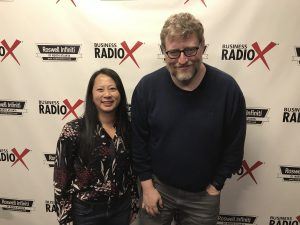
Joanna Cheng, Creative Financial Staffing (CFS), and Mike Blake, Host of “Decision Vision”

Should I Hire a Recruiter?

Should I hire a recruiter? What’s the best way to work with a recruiter? Michael Blake, Director of Brady Ware & Company and Host of the Decision Vision podcast, interviews Joanna Cheng on these questions and much more in this edition of Decision Vision.

Joanna Cheng, Managing Director and Branch Manager, Creative Financial Staffing (CFS)

Joanna Cheng, Creative Financial Staffing (CFS)

Joanna Cheng is a Managing Director and Branch Manager with Creative Financial Staffing (CFS). CFS is a leading, employee-owned accounting and financial staffing firm—the largest one founded by CPA firms. With more than two decades of experience helping companies locate, attract and hire exceptional accounting & finance professionals, CFS has unique resources to better understand hiring needs, attract higher-caliber candidates and assess candidate potential. Established in 1994, CFS today operates 30+ offices across 21 states and the Caribbean. Serving most major U.S. markets and beyond, CFS connects companies with candidates, from entry-level to executive level, temporary to direct hire and project support to interim management.

CFS has twice been named to Forbes’ list of “Best Professional Recruiting Firms” and twice cited by LinkedIn as one of the “Most Socially Engaged Staffing Agencies.”

Michael Blake, Brady Ware & Company

Mike Blake, Host of “Decision Vision”

Michael Blake is Host of the Decision Vision podcast series and a Director of Brady Ware & Company. Mike specializes in the valuation of intellectual property-driven firms, such as software firms, aerospace firms and professional services firms, most frequently in the capacity as a transaction advisor, helping clients obtain great outcomes from complex transaction opportunities. Mike is also a specialist in the appraisal of intellectual properties as stand-alone assets, such as software, trade secrets, and patents.

He has been a full-time business appraiser for 13 years with public accounting firms, boutique business appraisal firms, and an owner of his own firm. Prior to that, he spent 8 years in venture capital and investment banking, including transactions in the U.S., Israel, Russia, Ukraine, and Belarus.

Brady Ware & Company

Brady Ware & Company is a regional full-service accounting and advisory firm which helps businesses and entrepreneurs make visions a reality. Brady Ware services clients nationally from its offices in Alpharetta, GA; Columbus and Dayton, OH; and Richmond, IN. The firm is growth minded, committed to the regions in which they operate, and most importantly, they make significant investments in their people and service offerings to meet the changing financial needs of those they are privileged to serve. The firm is dedicated to providing results that make a difference for its clients.

Decision Vision Podcast Series

Decision Vision is a podcast covering topics and issues facing small business owners and connecting them with solutions from leading experts. This series is presented by Brady Ware & Company. If you are a decision maker for a small business, we’d love to hear from you. Contact us at decisionvision@bradyware.com and make sure to listen to every Thursday to the Decision Vision podcast. Past episodes of Decision Vision can be found here. Decision Vision is produced and broadcast by Business RadioX®.


Visit Brady Ware & Company on social media:

LinkedIn: https://www.linkedin.com/company/brady-ware/

Facebook: https://www.facebook.com/bradywareCPAs/

Twitter: https://twitter.com/BradyWare

Instagram: https://www.instagram.com/bradywarecompany/

Show Transcript:

Intro: [00:00:02] Welcome to Decision Vision, a podcast series focusing on critical business decisions brought to you by Brady Ware & Company. Brady Ware is a regional, full-service accounting and advisory firm that helps businesses and entrepreneurs make vision a reality.

Michael Blake: [00:00:21] And welcome to Decision Vision, a podcast giving you, the listener, clear vision to make great decisions. In each episode, we’ll discuss the process of decision making on a different topic. Rather than making recommendations because everyone’s circumstances are different, we talk to subject matter experts about how they would recommend thinking about that decision.

Michael Blake: [00:00:39] My name is Mike Blake, and I’m your host for today’s program. I’m a Director at Brady Ware & Company, a full-service accounting firm based in Dayton, Ohio, with offices in Dayton; Columbus, Ohio; Richmond, Indiana; and Alpharetta, Georgia, which is where we are recording today. Brady Ware is sponsoring this podcast. If you like this podcast, please subscribe on your favorite podcast aggregator, and please consider leaving a review of the podcast as well.

Michael Blake: [00:01:05] So, today, our discussion is going to be about whether to work with a recruiter when hiring new employees. And talent acquisition is a funny topic because we deal with human beings. And human beings are, for the most part, the most unpredictable things on the planet. And you don’t know necessarily what you’re going to get when you’re hiring. You don’t even know what you’re going to get when you get through the interview process. I mean, you pick a resume, you don’t even know what’s going to show up and walk through that door.

Michael Blake: [00:01:38] And in an environment now, we have some 4% unemployment and talent is not exactly growing on trees. And if you live in the Atlanta area, you can see that just by the traffic that’s in the area. You know that everybody is back to work because it, now, takes about an hour to get from [Chamblee] to Alpharetta. Talent is hard to find. But the question is you can, of course, go to the route where you can try to find talent “for free,” and we’ll find out just how free free actually is, or you can pay for help.

Michael Blake: [00:02:10] And here to help us with that conversation is my good friend, my pal, Joanna Cheng, who is Managing Partner and Branch Manager of Creative Financial Staffing in Atlanta. Prior to joining CFS, she worked for an Atlanta CPA firm in the audit practice for seven years. So, she’s a recovering CPA just like I’m a recovering investment banker and venture capitalist. She holds a bachelor’s degree from Kennesaw State University and is an avid adventure racer. I hope I’m saying that right.

Michael Blake: [00:02:40] CFS is the leading employee-owned accounting and financial staffing firm, the largest one founded by CPA firms. With more than two decades of experience helping companies locate, attract, and hire exceptional accounting and finance professionals, CFS has unique resources to better understand hiring needs, attract higher caliber candidates, and assess candidate potential.

Michael Blake: [00:02:59] Established in 1994, CFS today operates over 30 offices across 21 states and the Caribbean. Serving most major US markets and beyond, CFS connects companies with candidates from entry level to executive level, temporary to direct hire, and project support to intern management. CFS has twice been named to Forbes List of Best Professional Recruiting Firms and twice cited by LinkedIn as one of the most socially-engaged staffing agencies. And with that, my pal, Joanna Cheng. Joanna, thanks for coming in.

Joanna Cheng: [00:03:31] Thanks, Mike, for having me.

Michael Blake: [00:03:35] So, I got to ask this first. You have an office in the Caribbean. I mean, that’s just a front for like resort staff, or does one of your owners live in the Caribbean, and that’s how they sort of minimize their taxes?

Joanna Cheng: [00:03:47] We have an office in Puerto Rico, and it’s actually a pretty robust practice.

Michael Blake: [00:03:51] Okay.

Joanna Cheng: [00:03:51] Even in the light of recent events.

Michael Blake: [00:03:54] In light of the fact that island destroyed a year ago.

Joanna Cheng: [00:03:56] Yeah, there were interests, yeah.

Michael Blake: [00:03:58] So, that is a robust practice. That’s interesting.

Joanna Cheng: [00:04:02] Well, I mean, I think, as of late, they’ve had some struggles. But, again, from a temporary staffing perspective, there certainly continues to be a need for people to kind of fill the gaps.

Michael Blake: [00:04:12] Yeah, okay. That’s interesting. I would not have guessed that. So, I mean, I’ve given out, sort of, your name, rank, and serial number. You’re at CFS. You’ve been there. I think you’ve been there as long as I’ve known you. I’m not sure that I knew you when you’re an accountant, maybe for six months.

Joanna Cheng: [00:04:29] I don’t know. I left public accounting at the end of 2011. Joined CFS beginning of 2013. So-

Michael Blake: [00:04:38] Okay. So, there’s a couple of year overlap actually but-

Joanna Cheng: [00:04:40] Yeah, six years now at CFS officially.

Michael Blake: [00:04:42] But they locked me down the sixth floor of the building, so they didn’t let me out much.

Joanna Cheng: [00:04:46] Exactly. We are probably like ships in the night.

Michael Blake: [00:04:49] Yes. It’s ships in the night that were locked and never allowed to see one another.

Joanna Cheng: [00:04:53] Just like when I was an audit. It’s funny because I was gone for a year from the firm, and when I came back people, I’d run into people, and they’d say, “Oh, I haven’t seen you for a while. Have you been in out in the field?” And I’m like, “Yeah. I’ve actually not worked here for a year, but I’m back.”

Michael Blake: [00:05:07] And thanks for noticing.

Joanna Cheng: [00:05:10] It’s like I just took a hiatus.

Michael Blake: [00:05:11] A walkabout.

Joanna Cheng: [00:05:13] Right. I was just very long on it.

Michael Blake: [00:05:15] A self-audit, maybe you can call it that. So, what do you do at CFS? I mean, it sounds like you’re basically the Grand Poobah, the head honcho, the big cheese. Is that fair, at least, for the Atlanta office?

Joanna Cheng: [00:05:28] Right, queen of middle management here in Atlanta.

Michael Blake: [00:05:30] Queen of middle management.

Joanna Cheng: [00:05:31] Yeah.

Michael Blake: [00:05:31] Okay. Your highness.

Joanna Cheng: [00:05:31] I run the Atlanta office for CFS. We’re a national firm. And so, I manage a team of recruiters. And we are able to help on a temporary or direct hire basis, kind of, at any level, as long as it relates to accounting and finance within the middle market.

Michael Blake: [00:05:49] And how many people do you have on your staff right no?

Joanna Cheng: [00:05:51] We have four. We’re a team of five.

Michael Blake: [00:05:53] Okay, team of five. So, as I said, you’re a recovering CPA as I’m a recovering investment banker, et cetera, et cetera, recovering adult. What made you make that jump? When did you wake up one day and said, “Yeah, I just can’t count stuff anymore. I’ve got to go be me.”

Joanna Cheng: [00:06:11] It was really by happenstance. I think, like many people who come out of public accounting or start to look around, I didn’t really know what I wanted to do. I didn’t know what the next move was. So, I reached out to some recruiters, had some less-than-great experiences. I met one in particular that had a similar background to mine, had gone up the ranks in public accounting, gone into recruiting, was successful, opened up an office, and needed her first-time employee.

Joanna Cheng: [00:06:50] So, it was just something I decided try for a year. I mean, I think, from the things I enjoyed the most about being in professional services was the networking aspect, the relationship aspect, the adding value, and, of course, being a profit center versus a call center. So, I thought-

Michael Blake: [00:07:08] Boy, that’s huge.

Joanna Cheng: [00:07:08] Yeah. I thought recruiting could kind of be a good segue into that. And worst thing that could happen is go back and do accounting. So, some years later-

Michael Blake: [00:07:18] Which isn’t so bad.

Joanna Cheng: [00:07:19] Right. Seven years later, it seems to be working out.

Michael Blake: [00:07:23] I guess, it’s worked. Yeah. I mean, you’re still gainfully employed, productive member of society, and we haven’t had to bust you out of jail.

Joanna Cheng: [00:07:29] Yeah, not yet, yeah.

Michael Blake: [00:07:29] So, not yet. So, so far, so good. So, you mentioned you had some experience with recruiters that weren’t so awesome. I think you mentioned that.

Joanna Cheng: [00:07:40] Yeah.

Michael Blake: [00:07:40] What’s an example of that when you’ve had a bad experience yourself?

Joanna Cheng: [00:07:44] Well, it’s interesting. So, for instance, one of the — part of our process that CFS is we prefer to meet with our candidates in person, just like we like to go on site to our clients, just so we can get a really good 360 feel for the person, and the opportunity, and find that good fit. So, even before I went into recruiting, I mean, I wanted to meet people. I don’t like just virtually knowing people. I feel like I’m best face-to-face. It was just really interesting to me.

Joanna Cheng: [00:08:18] I talked to this recruiter that was referred to me, and it was a great conversation. But, by the end of it, I asked, “Oh, yes. We should meet for coffee. You should probably meet me, make sure I’ve two eyes, and off of my limbs, and yeah.” I mean, he said no, and it was just — I didn’t really know what to think about it because I felt like I couldn’t really adequately work with someone that I had never met in person, especially for such a big decision, which was a possibly career change and change of industry. Experiences like that made me think like, “There’s just got to be a better way.”

Michael Blake: [00:08:56] Yeah. I mean, it’s not like it’s a multi-level marketing scheme. It’s a serious professional position. And in what you do, every time you recommend a hire to a client, I mean, your reputation is big time on the line with that, isn’t it?

Joanna Cheng: [00:09:14] Yeah.

Michael Blake: [00:09:14] So, how you could go into that, how you could get behind somebody, and put that cloud without meeting the candidate, I’m no recruiter, but I don’t see how I could do that either.

Joanna Cheng: [00:09:24] Yeah, exactly. We’ve done hiring together in our past lives. And, yeah, I think it’s just — We don’t sell paper. And I always say that. And I don’t know if that really resonates. I think that’s a common stereotype among recruiters, and we just throw a bunch of things out there, and we just hope and pray that one of them makes us money. But I mean, there are people behind these pieces of paper. And I’ve seen the best of candidates with the worst resumes. I’ve seen pretty terrible people with really outstanding resumes. That’s part of the sniff test. That’s why we charge for our services. That’s why we have value, and yeah.

Joanna Cheng: [00:10:05] So, along with that, I also worked with a number of recruiters that provided jobs that were clearly not a match for my background. And so, again, I just kept thinking like, “This doesn’t even make sense.” This is not a, “Hey, I need a job. Here’s a job. You want this job?” I mean, it just didn’t make any sense to me. I kept thinking, “Are you even listening to me?” And, of course, I never met these people. So, I mean, I’m like, “Well, you honestly don’t know me from the next person.” So, yeah. So, I think, probably naively, going into recruiting, I thought I can make that just a better experience for people.

Michael Blake: [00:10:47] So, in your opinion, why do you think your clients hire you?

Joanna Cheng: [00:10:54] Really, I wish I knew the answer to that. If there was a concrete answer, I would package it and sell it. Prospecting would be so easy.

Michael Blake: [00:11:02] Well, how about this? How about instead of you, because I know you have a humble streak that we will try to break down and destroy over the course of this podcast. But until we get there, why do people hire you as a profession? Why do they hire somebody like you?

Joanna Cheng: [00:11:20] Well, initially, I think it’s typically out of need. But outside of that, I will say that, just like anything else, whether it’s audit, valuation, services, recruiting, people do business with people they like. I mean, that’s something that’s very important to me is to develop sincere relationships with people and to understand people’s businesses.

Joanna Cheng: [00:11:41] Hopefully, I think, my background is helpful in some sense and really understanding accounting and finance, and what that means to your company for specific positions, but yeah. I mean, it’s either that or my sparkling personality. I mean, I think.

Michael Blake: [00:11:58] I’m sure it’s a healthy combination of the two. But a thought occurred. I’m going to go off the script a little bit but not too far. It’s that, in one respect, what you and I do is very much alike is that I put together merger and acquisition transactions, and you put together talent acquisition transactions.

Michael Blake: [00:12:19] And in what I do, the reason my clients hired me, I think, is because they either have never been through a transaction, or they do it very rarely, right. And the chances are good the other person on the side of that table has done many transactions, okay. And so, they’re hiring me to kind of leverage the expertise of, say, the 200 transactions I’ve done into the one that they’ve done, right.

Michael Blake: [00:12:45] In your world, correct me if I’m wrong, but I think that, hopefully, they’re not hiring all that often for the same position. If they are, that’s a different issue if it’s a merry go round, right. But in an ideal world, you’re maybe hiring once a year, once every couple of years, or maybe once every few months if you’re growing like gangbusters, but that’s still different from somebody whose job it is to hire people 24/7 or place people to be hired 24/7, right?

Joanna Cheng: [00:13:16] Yes.

Michael Blake: [00:13:16] There’s a big advantage to having that expertise and experience in that discussion, isn’t there?

Joanna Cheng: [00:13:24] Well, absolutely. I mean, it’s what we do day in and day out. And I think that’s what the advantage is. I mean, we’re talking to people, we’re talking to companies where we have like the pulse on talent. We can see what’s available, what’s not. And, again, I think, CFS, one thing that we really emphasize is being consultative. I mean, this is, hopefully, not just a transaction. I mean, this is so important to your business. I mean, finding the right controller. And when I say right controller, I mean not someone who understands accounting can do the job. It’s someone who can help your business go from A to Z or wherever it is that you want to go that you like and that likes you.

Joanna Cheng: [00:14:02] I mean, that’s the magic, right. That’s what you can’t see from the paper. That’s what you can’t see from an online application. And I think that’s a fallacy that creates the need quite honestly. People have these experiences. We did it ourselves. We found this person. They were perfect on paper. They’re perfect in the interview. They showed up, and they were crazy.

Michael Blake: [00:14:23] Right.

Joanna Cheng: [00:14:24] Yeah? And you go, “Well, we hear that story all the time.”

Michael Blake: [00:14:26] Because they don’t say on the resume interests and crazy.

Joanna Cheng: [00:14:30] Right.

Michael Blake: [00:14:30] Right? It doesn’t show up, right? And-.

Joanna Cheng: [00:14:32] Their representative was like, “Let’s keep that.”

Michael Blake: [00:14:36] It’s on the down low.

Joanna Cheng: [00:14:36] Yeah, yeah.

Michael Blake: [00:14:36] Yeah. And, often, the people who have the most polished resumes have them polished because they’re polishing them frequently.

Joanna Cheng: [00:14:45] Right, or they’re paying for the polish.

Michael Blake: [00:14:46] They’re paying for the polish, one of the two, right? And you probably developed a spider sense. You must developed a sixth sense of some kind.

Joanna Cheng: [00:14:55] There is a little bit of that. I mean, you do get a feel for people, but that feel is — That’s, I think, the fun part. I think the best part of my job is really knowing my client, understanding their business, and then meeting somebody. I think this happened with you. Meeting someone and going, “Hey, I just met this person, and I just think you should really talk to them. I think they may be a good fit for your group.”

Michael Blake: [00:15:20] That’s true. I’d almost forgotten, I was actually a client of yours.

Joanna Cheng: [00:15:23] Yes. And we know when that works, and those types of situations more than often does, I mean, it’s a good feeling because you just feel like all the stars aligned and maybe you’re good at your job.

Michael Blake: [00:15:40] And that hire worked out. I mean, he stayed longer than I did by a lot. So, I really can’t disagree with that. So, can you point to like a favorite success story of yours where you really helped the company or even maybe helped the candidate out?

Joanna Cheng: [00:15:58] I can think of a lot of stories, but I think one thing, in fact, I had lunch today with a candidate that was a relocation candidate. It’s a really tough and usual position. It was like on the request of one of my favorite clients. And the process was painful, and it was hard because I don’t think either — we didn’t really — we didn’t know what we were looking for until we found it. But I’ve been talking to that candidate today, and how happy they are, and what they’ve been able to achieve in the time they’ve been at the company. I don’t know. It just made — that’s what makes me wake up and do what I do. And, in fact, that client is one of my adventure race buddies.

Michael Blake: [00:16:45] Really?

Joanna Cheng: [00:16:47] So, I’ve recruited for them since their inception as a startup to, now, a very successful business. And that’s something I’m very proud of.

Michael Blake: [00:16:56] So, in addition to running away from alligators and copperhead snakes and jumping over quicksand, you’re doing that.

Joanna Cheng: [00:17:02] Yeah. So, now, we throw ourselves in the briar patches and the like, yes. So, that’s real trust.

Michael Blake: [00:17:08] Yeah.

Joanna Cheng: [00:17:09] That’s when you trust, yeah.

Michael Blake: [00:17:09] Yeah, it is.

Joanna Cheng: [00:17:09] Like your service provider.

Michael Blake: [00:17:13] It is. I don’t know if anybody would trust me to lead them through an alligator or copperhead. In fact, it’s-

Joanna Cheng: [00:17:17] Oh, I didn’t say I led. I’m just, you know, but I’m there.

Michael Blake: [00:17:22] You don’t necessarily shove their head into the water-

Joanna Cheng: [00:17:25] Right.

Michael Blake: [00:17:25] … if something bad happens

Joanna Cheng: [00:17:26] Right. I would put a stick between my client and the alligator.

Michael Blake: [00:17:28] Okay.

Joanna Cheng: [00:17:30] Yeah, yeah.

Michael Blake: [00:17:31] Okay. So, let me ask you. I want to ask you this in a very smart aleck kind of way.

Joanna Cheng: [00:17:37] Okay.

Michael Blake: [00:17:37] Why haven’t you been replaced by websites? They’ve been all over. They’ve come and gone, Monster, Hot Jobs, CareerBuilder, Yahoo Jobs.

Joanna Cheng: [00:17:46] And, again, they all have their place, and they certainly have their success. And we leveraged that technology. We partner, in fact, with some of these companies.

Michael Blake: [00:17:56] Is that right?

Joanna Cheng: [00:17:56] And they’re our vendors. But, again, it just goes back to the relationship. I mean, valuation. I mean, can’t we just make a calculator, and plug in some assumptions, and-

Michael Blake: [00:18:09] There are people that are saying that.

Joanna Cheng: [00:18:10] Yeah. Come up with a number or a multiple and go, “This is the-” It’s not the point. I don’t think that’s how the world works. I mean, we’re not — people aren’t widgets. Talent, it can’t be manufactured. It’s so interesting because, I think, especially within accounting and finance, I mean, people just think, “Oh, I just need a CPA,” or “I just need an AP clerk.” And I don’t know. It’s just like anything else.

Joanna Cheng: [00:18:36] Let’s say, think about you in any job that you’ve ever had, okay. And I don’t know. Maybe people have just been very lucky, and loved everywhere that they worked, and loved the people, and those people love them. But I’ve been in several situations where I could do the job, I did it well, I just didn’t like it, or they like me, and that’s what doesn’t work, right.

Joanna Cheng: [00:18:59] I mean, middle market, in particular, is really attractive to me, (1), because that’s all I know professionally; but (2), it’s like these businesses are often someone’s baby. I mean, they’re trying to achieve a very specific goal. They’re not looking for workers. They’re looking for partners. They’re looking for people who want to be part of this team. They want people to help drive their passion to do whatever it is they want to do with this business. And that just can never be measured by a machine. And I may be eating my own words when Skynet takes over the world. But as for now, I think, my job is safe.

Michael Blake: [00:19:40] Well, I think there’s truth to that. It’s interesting you bring up the valuation part because much of my industry is being replaced by websites. And I don’t think my children would have any interest in doing what I do. But if they did, I don’t think there’s a job there necessarily for them. And we have to move towards an advisory position. And I tell people, if you want a valuation, here’s a website that you can just go get a valuation done. If that’s good enough for you, then do that, right.

Joanna Cheng: [00:20:10] I like that, make valuation.

Michael Blake: [00:20:11] If, on the other hand, you want to learn something about the business that you didn’t already know, that technology is not is not out there yet. And I think I sense that’s a very similar kind of conversation, at least, implicit conversation.

Joanna Cheng: [00:20:27] Yeah, advisory, consultative, it’s all the same thing, right. I think people aren’t looking for an answer. I mean, the answer in valuation isn’t the number. It’s, “Can I achieve my goal? What are your thoughts on that? Do you have any advice for me? What do you think?” And those are the types of questions, and that’s the type of insight, I think, I can provide to my clients. What should the salary reasonably be? Is this reasonable? Historically, this is a person’s background. Does this make sense? Is this a fit?

Joanna Cheng: [00:21:09] And we can talk through all of those things. I mean, again, it’s not a perfect science. I mean, I think that’s one thing that’s always really resonated with me just professionally is an accounting in all things. And I think, I remember you saying this many years ago, but, sometimes, we are looking into a crystal ball, and it’s just not a binary world, and there is no right or wrong. I mean, the perfect — everything could go perfect in the hiring process, and it could be the perfect candidate, but something can happen, and you have to — all recruiting is or financial reporting is just trying to control, and assess, and analyze enough of the variables to, hopefully, ensure success or some type of predictable outcome, but there’s no guarantees.

Michael Blake: [00:22:00] So, let’s talk. The large companies that have their own in-house HR departments, do they also use recruiters, or are they typically bring the whole function in-house?

Joanna Cheng: [00:22:13] Oh no, they absolutely use recruiters.

Michael Blake: [00:22:14] They do, okay.

Joanna Cheng: [00:22:14] Yeah. So, we tend to shy away from large HR departments for that reason. It’s just a lot more cooks in the kitchen than needed. We prefer to work directly with hiring manager and get a better sense of what that position is. Not saying that HR isn’t our ally, and we certainly want to work through their process, but something like a Fortune 100 company is just a completely different beast. And I think if, again, create a financial staffing just specifically, we don’t typically serve that large of a company. We probably aren’t the best resource. We’re not as willing to go and work with a VMS system where, again, in many ways, it’s selling paper. You could be drawing-

Michael Blake: [00:23:03] What is a VMS system?

Joanna Cheng: [00:23:04] Vendor management systems-

Michael Blake: [00:23:06] Okay, yeah.

Joanna Cheng: [00:23:08] … where you have to upload resumes and something, probably a robot, is looking for keywords. Again, anyone can do that. I mean, it just makes no sense to me. I could put CPA controller manufacturing expert on a piece of paper and have that picked up, but is that the right candidate for your job? I mean, maybe, maybe not. But I’ll tell you, like the effort and cost to go through all of that doesn’t really make sense for our model.

Michael Blake: [00:23:38] Now, hiring somebody today is a big commitment. And it’s not just a big commitment economically, but, to some extent, it’s a big commitment legally. And you can’t just hire completely whatever your whim takes you, right. There are certain processes, there’s certain standards of fairness that we have to observe both from a moral standpoint, a legal standpoint. Is that something that you also can help a company navigate to make sure it doesn’t accidentally step in something during the hiring process?

Joanna Cheng: [00:24:10] Absolutely.

Michael Blake: [00:24:11] And you save somebody’s bacon doing that?

Joanna Cheng: [00:24:13] Well, I mean, and I won’t use any specific examples here, but I think especially smaller businesses or owner-operated businesses. People just don’t know what they don’t know. I mean, it’s purely out of ignorance, not out of spite, but yes. I mean, there will be certain things discussed that we’re like, “Yeah, we can’t have that. That can’t be a variable.”.

Michael Blake: [00:24:35] Right. You can’t ask that question.

Joanna Cheng: [00:24:37] Right, or don’t ask that question.

Michael Blake: [00:24:39] Right.

Joanna Cheng: [00:24:42] So, yes. And from a hiring liability perspective, I mean, I think, we do our diligence as well as kind of anyone else, right. You got do your reference checks, background checks. And technology has certainly been very helpful in that that it’s more difficult now, I think, to kind of hide some of your educational or criminal skeletons than maybe you could have in the past.

Michael Blake: [00:25:05] Now, 10 years ago, we saw, remember, the job market was – to use a technical term – in the toilet. But I think firms were even using recruiters then, even in times where there’s ostensibly a much more rich labor pool from which to select talent. Why do you think that is?

Joanna Cheng: [00:25:27] Well, again, your needs are your needs. Very often, that looks and smells a certain way. So, the question to yourself is return and your effort. Your company, your people, your internal efforts, that’s going to cost you money to source and go through kind of just all the bodies, or you could outsource that function to someone that does it every day.

Joanna Cheng: [00:25:55] I mean, again, good economy, bad economy, businesses have to operate. Everyone’s always looking for talent in some respect, whether that’s from a project basis or a direct hire. And I think that each economy has different demands, and that’s why recruiting has kind of been able to navigate these different cycles.

Michael Blake: [00:26:20] So, we hear a lot or I hear a lot, and I’m sure others do, about different models where one fee model is contingency-based, the other is retained search basically. Can you explain kind of the difference between the two? And from a customer’s perspective, what do you think the pros and cons are of each?

Joanna Cheng: [00:26:39] CFS is a contingency model. So, I always like to say I work for free. I get paid upon my success, and I really enjoy that aspect of what I do. Retained search is different the sense that you pay a fee regardless of outcome, in some respects. And those are typically very specialized positions, more difficult to find positions. I mean, national and international searches.

Joanna Cheng: [00:27:08] So, pros and cons. Contingency, I mean, the pro is, again, you can get a lot of recruiters working for you for free. They’re out there kind of kicking bushes, and doing all the legwork, and hopefully bringing in the best of the best, and you can make a hire, and best recruiter wins. The con is those recruiters are working on many different other contingent searches, and you may not be their sole focus, or there could be other drivers of why you’re not seeing what you think you should be seeing from the caliber of candidate, or quantity of candidates, or whatever it is.

Joanna Cheng: [00:27:44] From a retained search perspective, I mean, that typically should be a dedicated effort. I mean, they want not only to take you money, but they do want to earn it. I’m a little bias because I’ve never worked in the retained search model. I think that the only thing I can think of is everyone has to make money, and just makes me wonder sometimes the bandwidth of recruiters even within the retained model like how much time are they truly dedicating to your search. I mean, that’s something to think about. But, again, you got to use who you know and use who you trust, right?

Michael Blake: [00:28:23] Yeah. That’s why you got us. What is a stereotype about your industry or people in your industry that we should dispel? What do most people think about what you do that’s just wrong?

Joanna Cheng: [00:28:35] I’m a big advocate of the saying that stereotypes come from somewhere.

Michael Blake: [00:28:39] Okay.

Joanna Cheng: [00:28:40] Okay. And I think one of the reasons I became a recruiter is because I had terrible experience with recruiters. And I continue to kind of hear those stories often. So, recruiting is a sales job. And I think that’s-


Michael Blake: [00:28:59] Twice over.

Joanna Cheng: [00:29:00] … the reality. That’s the reality of this job. And what I’d like to dispel is that we’re like used car salesmen, and we’re just throwing bodies at companies, and just walking away with a check.

Michael Blake: [00:29:15] Wish, it was that easy, right?

Joanna Cheng: [00:29:16] Oh yeah. I mean, that would be great because that’s the issue is that does happen. And there is a reason why recruiters can have a bad reputation. But what I would encourage people to think about is there are good recruiters, just like there are good accountants, like good doctors, good lawyers, good valuation experts. People who, hopefully, kind of care a little bit more, who take pride in what they do, and really stand behind their business.

Joanna Cheng: [00:29:47] And, also, too, I think, have the luxury to say that as a privately-held company, like we certainly are making things a little bit differently than maybe some of our larger publicly-traded competitors, and they’re driven by a different — they need a different outcome.

Michael Blake: [00:30:02] Well, they’re going to be driven — they have to be driven by a quarterly number, right?

Joanna Cheng: [00:30:07] Right.

Michael Blake: [00:30:07] They have to have 90 days of view ahead of them. And then, after that, they’ll worry about the next 90 days.

Joanna Cheng: [00:30:13] There’s just a reality of that.

Michael Blake: [00:30:15] Yeah, that’s right because that’s what shareholders are telling them they wanted them to do.

Joanna Cheng: [00:30:18] Right.

Michael Blake: [00:30:20] How does a company best work with you? Like you, I’m in the service business, but there are certain conditions in my business where the client does certain things, they make my job a lot easier, and the likelihood of a positive outcome that much greater, right?

Joanna Cheng: [00:30:36] Right.

Michael Blake: [00:30:37] For a company to maximize your effectiveness, what should they be prepared to do on your end as part of that partnership to give the best chance of securing that great outcome?

Joanna Cheng: [00:30:48] Just being available. I think that’s number one.

Michael Blake: [00:30:54] What does that mean exactly?

Joanna Cheng: [00:30:56] I think we’re in this hyper-busy world, especially when you’re a man short, or you need an extra pair of hands. You’re busier than ever. And that drives the backbone of my business. That being said, if you were truly looking for the right fit, you’ll spend the upfront time to invest in speaking with me, so I can learn about your business. You’ll make time for me to come visit, and talk to me in person, and show me around. And when we make our recommendations, really take the time to listen, and discuss, and ask questions.

Joanna Cheng: [00:31:33] I think that’s the best way to work with a recruiter. Like we’re, again, not selling paper. I mean, there are people here. There’s a reason why I’m making a recommendation. If you don’t have the time to talk to me about it, it’s very hard for me to help you. So, I’m often thinking like, “Help me help you.” I know you’re busy, but we’ve got to talk about this, and we’ve got to make time because I think this is a choice.

Michael Blake: [00:31:59] Yeah. I think I would imagine in your world, there are clients that look at you and say, “Oh, thank God, I can just hand this entire thing off to Joanna. She’ll go away for whatever period of time, and she’ll just come back with-”

Joanna Cheng: [00:32:13] A magical unicorn.

Michael Blake: [00:32:14] Magical unicorn.

Joanna Cheng: [00:32:15] Yeah.

Michael Blake: [00:32:15] Right?

Joanna Cheng: [00:32:16] Mhmm (affirmative).

Michael Blake: [00:32:18] But maybe you’ll come back with a magical unicorn, but if they don’t just sort of throw the thing over the wall, that’s more likely to happen, right?

Joanna Cheng: [00:32:25] Right. Yeah, exactly. And that’s exactly right. I think what happens a lot in recruiting, especially when you’re working, again, with many firms who will just take a general job description and kind of run with it, is, again, these are people, they’re unique. And I do, actually, use that term in my office is we hunt for unicorns. And so, something that like a purple unicorn with a gold horn is very different than the green speckled one. So, when you show up with the pink one with orange sprinkles, and you go, “That’s not what I wanted at all-”

Michael Blake: [00:33:00] It sounds like a very mythical place to work, by the way.

Joanna Cheng: [00:33:01] It’s a magical land.

Michael Blake: [00:33:03] It sounds like it.

Joanna Cheng: [00:33:05] I mean, again, it just comes down to information. And that’s what I typically advise my clients, especially when I first worked with them. I say, “Hey, we present candidates in very small rounds. We like to discuss their backgrounds with you and discuss why we think they would be a fit, and why you should consider them for hire.” And if we’re completely off target, then someone is missing information, or maybe we don’t know what we’re looking for yet. And I see that a lot as well. Sometimes, people think they need these 10 bullet points, and you go, “Well, yes, but this unicorn has six of those, and you don’t even need the other four.” But until you have that conversation and kind of work through that process, you kind of don’t know what you don’t know.

Michael Blake: [00:33:53] And then, maybe, it turns out you don’t need a unicorn, just a really nice horse will do.

Joanna Cheng: [00:33:57] Exactly, yeah, with a party hat on.

Michael Blake: [00:33:59] With the party hat on.

Joanna Cheng: [00:33:59] Yeah.

Michael Blake: [00:33:59] So, last question, and then then we got to wrap up. But I think a lot of people miss the fact that recruiting is an active job. When we call your recruiter, that’s an action-related. To recruit is as active as opposed to just sort of posting a job and waiting for resumes to fill in. And a question I’ve always had and just been kind of curious about is when you recruit somebody who wasn’t necessarily looking for a job at that time, how do you kind of gauge or kind of verify that that person’s really invested in the process, and that if they do kind of make it through your vetting process, you’re going to present them to the client that they’re going, there’s a fully invested candidate, and not just sort of as a hired gun that might be recruited away from them two years later? You know what I mean?

Joanna Cheng: [00:34:55] Well, yeah. And you see that in like the tightest labor market we’ve seen in many years.

Michael Blake: [00:35:00] Right.

Joanna Cheng: [00:35:00] And I mean, I think that in some respects, it’s the new normal, just poaching or the temptation to jump in for what it is when times are good. I think people are always open to opportunity. Again, we can’t see into the future. I don’t know if someone’s going to leave in two years or 20. All we can assess now is your factors causing them to be open to opportunities, like why are they looking? Why would they want your job? Why would they want work here? Why would they stay? I think into overriding all of that is something that is mentioned, but it’s probably not discussed as much as it should, which is retention. Whose job is it to retain these employees? Is it the recruiters’ job?

Michael Blake: [00:35:52] It doesn’t sound like because your job description is not retainer.

Joanna Cheng: [00:35:57] Right. So, that’s something I always think about. And I will say this, I mean, generally speaking, for instance, there are definitely companies that are known for extremely high turnover. And those are companies we tend to shy away from, or we will provide staffing on a project basis. But it’s hard for us to put — I always say it’s hard for us to put A people in kind of a C Company. It’s hard for us to put C people in an A company. It’s the same thing. It doesn’t work.

Joanna Cheng: [00:36:29] So, yeah. I mean, my advice in terms of choosing a recruiter also says, “Hey, yeah, there’s a cost to that. There is a benefit there. There could be some risk associated with it, but what are we doing as a company to retain that talent?” because you can get in the door, but keeping them, that goes beyond my job.

Michael Blake: [00:36:52] Sure.

Joanna Cheng: [00:36:52] And I think that’s pervasive in recruiting. I mean, people switch firms all the time. One thing that attracted me to CFS and kind of holds true in my experiences, our tenure of employees is unusually long for our industry. I do think that says something in a positive way.

Michael Blake: [00:37:14] Well, this went great. We got a lot of great information, great insights, but we can’t cover everything that we’d like to cover in a half-an-hour podcast. So, if somebody wants to ask you some questions, reach out to you, follow up, can they do that?

Joanna Cheng: [00:37:27] Yeah, absolutely.

Michael Blake: [00:37:28] So, how would they reach you?

Joanna Cheng: [00:37:30] I’m on LinkedIn. So, Joanna Cheng with, apparently, not enough of my background. I’ll let you-

Michael Blake: [00:37:41] Yes. Well, it was background-light. We’ll just say you use social media judiciously.

Joanna Cheng: [00:37:47] Right.

Michael Blake: [00:37:47] And Cheng is spelled C-H-E-N-G.

Joanna Cheng: [00:37:48] Yes.

Michael Blake: [00:37:48] Correct?

Joanna Cheng: [00:37:51] And our website is cfstaffing.com. It will have our company number. You’re welcome to give a shout, shoot us an e-mail. Happy see how we can be a resource for you.

Michael Blake: [00:38:03] Okay, very good. Well, that’s going to wrap it up for today’s program. I’d like to thank Joanna Cheng so much for joining us and sharing her expertise with us. We’ll be exploring a new topic each week, so please tune in, so that when you’re faced with your next business decision, you have clear vision when making it. If you enjoy this podcast, please consider leaving a review with your favorite podcast aggregator. It helps people find us, so that we can help them. Once again, this is Mike Blake. Our sponsor is Brady Ware & Company. And this has been the Decision Vision Podcast.

Tagged With: contingency fee, contingency fees, Dayton accounting, Dayton business advisory, Dayton CPA, Dayton CPA firm, Decision Vision, Decision Vision podcast, Decision Vision podcast series, employee recruiting, employee retention, Employee retention strategies, Executive Recruiter, executive recruiting, executive recruitment, financial staffing, hiring a recruiter, hiring candidates, hiring employees, hiring needs, LinkedIn, Michael Blake, Mike Blake, online hiring sites, polished resume, recruiter, Recruiting, resumes, retained search, retaining talent, staffing, talent acquisition, talent recruitment, talent retention, vendor management system, VMS

  • « Previous Page
  • 1
  • 2

Business RadioX ® Network


Our Most Recent Episode

CONNECT WITH US

  • Email
  • Facebook
  • LinkedIn
  • Twitter
  • YouTube

Our Mission

We help local business leaders get the word out about the important work they’re doing to serve their market, their community, and their profession.

We support and celebrate business by sharing positive business stories that traditional media ignores. Some media leans left. Some media leans right. We lean business.

Sponsor a Show

Build Relationships and Grow Your Business. Click here for more details.

Partner With Us

Discover More Here

Terms and Conditions
Privacy Policy

Connect with us

Want to keep up with the latest in pro-business news across the network? Follow us on social media for the latest stories!
  • Email
  • Facebook
  • Google+
  • LinkedIn
  • Twitter
  • YouTube

Business RadioX® Headquarters
1000 Abernathy Rd. NE
Building 400, Suite L-10
Sandy Springs, GA 30328

© 2025 Business RadioX ® · Rainmaker Platform

BRXStudioCoversLA

Wait! Don’t Miss an Episode of LA Business Radio

BRXStudioCoversDENVER

Wait! Don’t Miss an Episode of Denver Business Radio

BRXStudioCoversPENSACOLA

Wait! Don’t Miss an Episode of Pensacola Business Radio

BRXStudioCoversBIRMINGHAM

Wait! Don’t Miss an Episode of Birmingham Business Radio

BRXStudioCoversTALLAHASSEE

Wait! Don’t Miss an Episode of Tallahassee Business Radio

BRXStudioCoversRALEIGH

Wait! Don’t Miss an Episode of Raleigh Business Radio

BRXStudioCoversRICHMONDNoWhite

Wait! Don’t Miss an Episode of Richmond Business Radio

BRXStudioCoversNASHVILLENoWhite

Wait! Don’t Miss an Episode of Nashville Business Radio

BRXStudioCoversDETROIT

Wait! Don’t Miss an Episode of Detroit Business Radio

BRXStudioCoversSTLOUIS

Wait! Don’t Miss an Episode of St. Louis Business Radio

BRXStudioCoversCOLUMBUS-small

Wait! Don’t Miss an Episode of Columbus Business Radio

Coachthecoach-08-08

Wait! Don’t Miss an Episode of Coach the Coach

BRXStudioCoversBAYAREA

Wait! Don’t Miss an Episode of Bay Area Business Radio

BRXStudioCoversCHICAGO

Wait! Don’t Miss an Episode of Chicago Business Radio

Wait! Don’t Miss an Episode of Atlanta Business Radio