Decision Vision Episode 120: Should I Change Careers? – An Interview with Lauren Fernandez, The Fernandez Company
Lauren Fernandez tells her story of “taking the law degree down off the wall in an executive office, putting it away in a closet, and putting on a hairnet and clogs.” Lauren joined host Mike Blake to discuss both the successes and difficulties of her career journey moving from corporate counsel to restaurant owner/operator. Decision Vision is presented by Brady Ware & Company.
The Fernandez Company
The Fernandez Company specializes in helping restaurant brands grow from 2 units to 20 and beyond. Lauren Fernandez is fully immersed in the restaurant industry as an operator, developer and executive with deep business and industry understanding. The Fernandez Company generates new revenue streams for companies, particularly in the food & hospitality industries. They diversify revenue streams outside the four walls of a restaurant by creating new channels of revenue in the areas of organic expansion, franchising, product development and licensing. They create this growth for their clients through their process of strategic consulting, management support and investment.
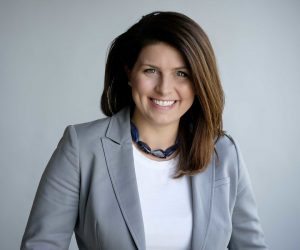
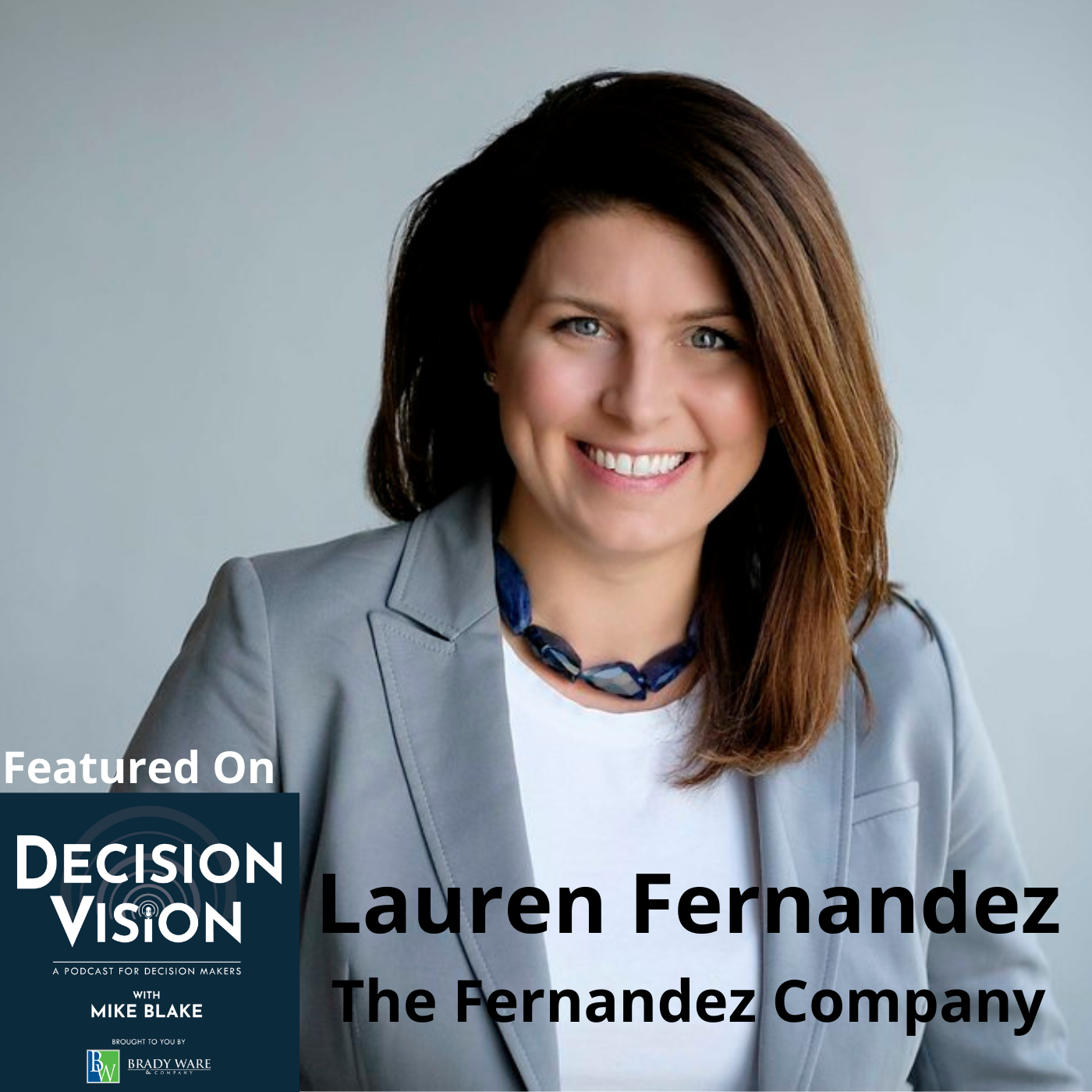
Lauren Fernandez, Principal and Founder, The Fernandez Company

Lauren is the founder of The Fernandez Company, the culmination of nearly two decades as a trusted brand consultant and legal advisor with all kinds of clients, from start-ups to multinational companies, to private equity and investment firms.
She consults with companies in all aspects of restaurant and franchise development, brand licensing, product development, and market implementation. Lauren is an expert in multi-national product development and commercialization in the heavily regulated food, alcohol, pharmaceutical, and medical industries.
As a co-founder and investor in Origin Development Group, Ms. Fernandez has been both a multi-unit franchisee and brand developer, serving as a strategic growth partner for companies such as Chicken Salad Chick®. Lauren also served as the General Counsel for FOCUS Brands where she led both the legal team and franchise administration and was instrumental in the rapid growth of the licensing program.
Prior to joining FOCUS Brands, Lauren was part of an elite team at Novartis/CIBA VISION that successfully launched the company’s first new product in over a decade. She started her career in one of Atlanta’s most respected Intellectual Property Boutiques, Gardner Groff.
Lauren holds an undergraduate degree from Stetson University, as well as a Juris Doctorate and MBA from Emory University. She serves on the Advisory Board for the Atlanta Community Food Bank. She also is a dedicated fundraiser for The Leukemia & Lymphoma Society and was named the 2015 Woman of the Year by the Atlanta Chapter. She is a native of the Tampa Bay area but has lived in the Atlanta area for nearly two decades.
Mike Blake, Brady Ware & Company

Michael Blake is the host of the Decision Vision podcast series and a Director of Brady Ware & Company. Mike specializes in the valuation of intellectual property-driven firms, such as software firms, aerospace firms, and professional services firms, most frequently in the capacity as a transaction advisor, helping clients obtain great outcomes from complex transaction opportunities. He is also a specialist in the appraisal of intellectual properties as stand-alone assets, such as software, trade secrets, and patents.
Mike has been a full-time business appraiser for 13 years with public accounting firms, boutique business appraisal firms, and an owner of his own firm. Prior to that, he spent 8 years in venture capital and investment banking, including transactions in the U.S., Israel, Russia, Ukraine, and Belarus.
Brady Ware & Company
Brady Ware & Company is a regional full-service accounting and advisory firm which helps businesses and entrepreneurs make visions a reality. Brady Ware services clients nationally from its offices in Alpharetta, GA; Columbus and Dayton, OH; and Richmond, IN. The firm is growth-minded, committed to the regions in which they operate, and most importantly, they make significant investments in their people and service offerings to meet the changing financial needs of those they are privileged to serve. The firm is dedicated to providing results that make a difference for its clients.
Decision Vision Podcast Series
Decision Vision is a podcast covering topics and issues facing small business owners and connecting them with solutions from leading experts. This series is presented by Brady Ware & Company. If you are a decision-maker for a small business, we’d love to hear from you. Contact us at decisionvision@bradyware.com and make sure to listen to every Thursday to the Decision Vision podcast.
Past episodes of Decision Vision can be found at decisionvisionpodcast.com. Decision Vision is produced and broadcast by the North Fulton studio of Business RadioX®.
Connect with Brady Ware & Company:
Website | LinkedIn | Facebook | Twitter | Instagram
TRANSCRIPT
Intro: [00:00:01] Welcome to Decision Vision, a podcast series focusing on critical business decisions. Brought to you by Brady Ware & Company. Brady Ware is a regional full-service accounting and advisory firm that helps businesses and entrepreneurs make visions a reality.
Mike Blake: [00:00:20] Welcome to Decision Vision, a podcast giving you, the listener, clear vision to make great decisions. In each episode, we discuss the process of decision making on a different topic from the business owners’ or executives’ perspective. We aren’t necessarily telling you what to do, but we can put you in a position to make an informed decision on your own and understand when you might need help along the way.
Mike Blake: [00:00:39] My name is Mike Blake, and I’m your host for today’s program. I’m a director at Brady Ware & Company, a full-service accounting firm based in Dayton, Ohio, with offices in Dayton; Columbus, Ohio; Richmond, Indiana; and Alpharetta, Georgia. Brady Ware is sponsoring this podcast, which is being recorded in Atlanta per social distancing protocols. If you’d like to engage with me on social media with my Chart of the Day and other content, I’m on LinkedIn as myself and @unblakeable on Facebook, Twitter, Clubhouse, and Instagram. If you like this podcast, please subscribe on your favorite podcast aggregator, and please consider leaving a review of the podcast as well.
Mike Blake: [00:01:13] So, we’re sort of continuing an impromptu mini-series here about how the workplace has changed and is changing as a result of the pandemic, and what we’re seeing in this trans-pandemic period as more people become vaccinated and the economy continues to reopen and resume, or achieve some semblance of normalcy. In the last few weeks, we’ve covered talking about hiring people with criminal records, we’ve talked about hiring people with disabilities. Last week, we published a conversation on attending and sponsoring live events.
Mike Blake: [00:02:01] And today, we’re going to talk about the labor force a little bit from a different angle, and that is changing careers. Should I change careers? And the labor market is behaving in a way that most of us have not seen in our lifetimes. I can’t remember anything even approaching this since maybe the dotcom bubble of the late ’90s. But even this, I think, frankly, is a different animal because it’s much more economy-wide as opposed to technology-specific. And what we’re seeing – at least what I’m seeing – is that our society’s relationship with work has changed. And I don’t think any of us really saw this coming to this extent.
Mike Blake: [00:02:49] Now, there’s a notion that there were some canaries in the coal mine. Labor force participation has been on the decline for the last decade or so. But really not to this extent. I think most of us, myself included – I’m certainly no great theoretical mind here – thought that once we all had the opportunity to return to work that we would do just that. You know, we’ve heard about everything from Zoom fatigue, to isolation depression, to everything in between. And now, instead, we’re finding ourselves with labor shortages. We’re finding that people are demanding more to be enticed to go back into the workforce.
Mike Blake: [00:03:40] And I think a lot of people, frankly, have simply rearranged their priorities. They’ve said, “Look, life is too short and I’m willing to make a little bit less, maybe even a lot less. I’m willing to adjust my lifestyle or our lifestyle of two income family going to one in order for us to build the lives that we want.” And that’s putting employers and business owners in a little bit of a bind. So, like, you can put a gun to people’s head and force them to go back to work.
Mike Blake: [00:04:09] And one of the other dynamics that I think is changing or is occurring – and I think it is a good thing economy-wide even though I think that there are clearly some industries that are a bit victimizes and a little bit flatfooted, I think, for fair – is, I think, people are also changing careers. They’ve taken the time that they had in the last year, whether they were laid off, they were furloughed, forced to get out of the workforce because they had family care obligations or health concerns or whatnot, and happily, instead of just sort of sitting around and watching Jeopardy reruns or whatever they do on daytime TV – do they do soap operas anymore? I have no idea. I don’t miss them.
Mike Blake: [00:04:51] But, anyway, you know, people are now retooling to assume a different career or maybe the first career they’ve had in their lives. And so, I think the topic of changing careers in this environment is particularly timely because, you know, my life experience tells me that for every one person that’s changed or is changing their career, there are another five or six out there that are actively thinking about it.
Mike Blake: [00:05:21] And I’ll leave with this before I introduce our guest. I saw quote actually this morning by Adam Grant, who is the author of a fantastic book that I read earlier this year called Atomic Habits, and many other important business books. And he’s a professor and a researcher of organizational theory at Wharton. But he wrote that, “It’s better to lose the past two years of progress than to waste the next 20.” I thought that was kind of profound. And if you look at the data, the average U.S. worker may expect to have something like 11 jobs in their lifetimes. But how many people actually change careers? That data is pretty sketchy and all. I saw numbers out there, there’s nothing I thought was sufficiently robust that I want to quote it. But I’m sure people don’t change careers 11 times in their lifetimes. But we are very fluid work sources is the point.
Mike Blake: [00:06:11] So, joining us to talk about this – she’s a recidivist. This is her second time on the program – is Lauren Fernandez of the Fernandez Company. At the Fernandez Company, they generate new revenue streams for companies, particularly in the food and hospitality industries. They diversify revenue streams outside the four walls of a restaurant by creating new channels of revenue in the areas of organic expansion, franchising, product development, and licensing. They create this growth for their clients through their process of strategic consulting, management support, and investment.
Mike Blake: [00:06:45] Lauren is the founder of the Fernandez Company. The culmination of over a decade of practice as a trusted brand consultant and legal adviser with all kinds of clients, from startups to multinational companies. Before forming the Fernandez Company, Lauren served as the general counsel for Focus Brands, where she was instrumental in the rapid growth of licensing program. She holds an undergraduate degree from Stetson University and a JD and an MBA from Emory University. She serves on the advisory board for the Atlanta Community Food Bank, and is a dedicated fundraiser for the Leukemia and Lymphoma Society, and was named 2015 Woman of the Year by them for raising nearly $95,000 in less than three months for cancer research. She’s a native of the Tampa Bay area but has lived in the Atlanta area for over 15 years. Lauren Fernandez, welcome back to the program.
Lauren Fernandez: [00:07:29] Hey, Mike. Thanks for having me back.
Mike Blake: [00:07:31] So, I’d love you just to start and tell us kind of in your own words, what is the background for your own career change? You know, I only learned recently – and, again, one of the fun parts about this program is I learn things about people, sometimes people I’ve known for a lot of years and things just never came up. But I learned that you, in fact, started out as an attorney before you became the restaurant maven that you are. Tell us about that origin story. How did that all come to be?
Lauren Fernandez: [00:08:05] So, I knew I wanted to be a JD/MBA. I knew I wanted to go to law school, but was pretty adamant on going to a school that had a top 20 MBA and law program. And entering several of them chose oddly enough, it was like birds singing, tulips everywhere. It was just a beautiful April spring day when I visited here and it made the Northeastern schools I was looking at pale by comparison.
Mike Blake: [00:08:34] Clearly, you don’t have allergies, but go ahead.
Lauren Fernandez: [00:08:36] I’m constantly on Claritin, actually point of fact. But I really enjoyed my visit to Atlanta. It was relatively close to my home base in Florida. And here I ended up, and I’ve been here for over 19 years. And so, my journey is a little bit about the balance between my law degree and my MBA. And in fact, when I finished the program at Emory in 2006, it was a tough time. The economy was already starting to tank a little bit.
Lauren Fernandez: [00:09:05] And I got some really good advice from another in-house counsel who was also a JD/MBA and she said, “Listen. When you leave, if you decide to go practice marketing, you’re going to miss an opportunity to be apprenticed at a law firm and really learn what it is to practice law. And it’s very hard to go back and do that later if you choose a law career later.” And that couldn’t have been more right.
Lauren Fernandez: [00:09:29] I was extremely fortunate to land at Gardner Groff, a very storied and long tenured boutique intellectual property firm here in Atlanta. And they brought me on and taught me the basics of intellectual property, and litigation, and licensing, and product development. And for that, I am eternally grateful because that’s a huge investment in young lawyers to have to train them up. And I was there for a little over three or four years before I moved in-house.
Lauren Fernandez: [00:09:55] And that was the first of many steps I took in my career to move closer and closer to the business of my clients. Because as an attorney, I always viewed my role as really understanding the business so I could put the proper context around the problem and help them navigate into white space, not necessarily to make decisions for my clients, even with respect to the legal risk, but more or less risk management and kind of moving into white space.
Lauren Fernandez: [00:10:24] And so, I landed at a division of Novartis here in Atlanta, which at the time was called CIBA Vision, and is now Alcon post-merger. And I became their associate general counsel and global head of trademarks and domain names. So, they took two roles and smooshed them together for me. I was just really so fortunate to land right at the exact time they were doing a major product dev. It was the first time they had pulled a product dev of R&D in ten years. So, I got to be part of a billion dollar product launch in over 148 countries, which is right in my wheelhouse. And that experience was phenomenal.
Lauren Fernandez: [00:11:02] But as things happen, you know, the company changed. We went through a merger. And I was working through kind of what my next step would be within Novartis and kind of talking to them about that when I got a phone call one day from an MBA friend of mine who, you know, we have a good working relationship. We were also good friends outside of work. And she would call me from time to time just to ask a trademark question, a licensing question, what have you. And she said, “Would you come and meet with our CEO?” And I said, “Yeah. Sure. What’s going on?” And she said, “Well, I sort of printed out your LinkedIn profile and he wants to talk to you.” And I was like, “Oh, okay.” So, that was the origin story of how I ended up at Focus Brands.
Lauren Fernandez: [00:11:40] Focus, at the time, was looking for, not only in-house legal counsel, but also someone who had specific expertise in product development and licensing to help grow their program. And so, when I went to Focus and made that decision, I was leaving a former career behind. Which, for most lawyers, that’s a very lucrative golden handcuffs all the way in-house job and working for a phenomenal company. I loved working there.
Lauren Fernandez: [00:12:03] But when I made the leap, I made it specifically for one reason. I met with the CEO at the time, Russ Umphenour. I was very compelled that he saw me as a business person. And that he wanted to invest in me and teach me the ropes of restaurants and franchising. And really felt like it was important for me to get training. And so, I went over. I met the executive team, the rest of the brand presidents, the rest of the C Suite. And I thought, “If I’m going to make this jump, I’m going to make it to here because this is where I’m going to get the training that I need to really be in an industry that’s more aligned with who I am personally and professionally.”
Lauren Fernandez: [00:12:40] And so, it wasn’t too much of a leap as an attorney because most intellectual property matters is fully translatable. And to the extent that you do product dev and it’s in regulated markets, that’s Food and Drug Administration. So, drugs being obviously a little harder in some cases to get through for approval. So, moving over to food was a pretty easy leap in that respect. So, off I went to Focus and that was yet another kind of step in my career. And I think I got a lot of flack from that from people who were in my peer group were like, “What are you doing leaving pharma? That’s ridiculous.” And I said, “No. I like the runway I have with this company. It makes sense.”
Lauren Fernandez: [00:13:19] So, I went over to Focus. I headed up their legal department for over three years. Grew it from me and a part-time paralegal to a team of over 24 people. Ran the legal department and the franchise administration, at the same time that was helping grow the licensing program and a lot of their international deals. So, it was a wonderful place to learn from other executives. I just really had a phenomenal talent group around me and the peers there. And I can’t speak highly enough about that leadership.
Lauren Fernandez: [00:13:50] And, you know, again, things just change. So, about three years in, we had a leadership change and things just got shuffled. And it was just starting to feel like that time. I was getting calls, recruiters were calling. And it was just an interesting moment. It was a pivot point in my career. And I had been a general counsel at that point for three years. And I was in my mid-30s and I thought, “I have really checked the box on my legal career. I feel, really, like I’ve done it all. I really want to move more into the business side.”
Lauren Fernandez: [00:14:21] And one of the things that kept happening, Mike, was I was going on these interviews for, you know, publicly traded food companies, restaurant companies. I was meeting with CEOs, meeting with boards. And their vision of what a general counsel would look like and talk like was very different than how I was used to operating – more involved in the business, engaged in finding white space, brainstorming, really charting a path for the company. And it was just making me feel really sick to my stomach. I just had this like really bad pit about it. Even though the jobs are all super lucrative and really interesting, it didn’t really feel aligned with my compass at that point.
Lauren Fernandez: [00:15:01] And I’ll never forget this. I went out and had lunch one day with my former CEO-mentor and I told him, “This isn’t lining up. I’m having trouble finding another CEO who looked at me the way that you did and treated me like a business partner.” And he said, “Yeah. Kind of like good luck with that.” And he said, “Why don’t you own a restaurant? Like, why don’t you actually operate a restaurant? That’s something you haven’t done.”
Lauren Fernandez: [00:15:27] And, Mike, in the industry, a lot of restaurant executives come up in the industry. And I had a very different background. I have a college degree and two postgraduate degrees. And, yeah, I’d worked in hospitality and restaurants. But, you know, summer jobs and never, like, actually really gotten handed to me in a restaurant, so to speak. And, you know, I took that advice and it stuck with me and I couldn’t shake it. So, I started, literally, shopping for franchises. I had some money to invest and I thought, “Okay. Let me find one that maybe I can buy by myself and I’ll operate it as a business. And then, I can hire someone to help me run it.”
Lauren Fernandez: [00:16:08] And so, around that time, I had started the Fernandez Company as our consulting firm, which still exists. We do a lot of consulting work around product development, lines of revenue around licensing, and product dev especially for restaurant companies. And I had a decent client base and things were going, but I still wanted to kind of invest in a restaurant. So, I’d been looking for about a month. And I bumped into – through a mutual friend – an investor who actually ended up becoming a business partner of mine. And we formed Origin Development Group for the sole purpose of going out to find restaurants to invest in, and to grow, and operate, and, hopefully, realize some benefits out of that.
Lauren Fernandez: [00:16:52] So, we started Origin, and I became a restaurant operator within, maybe, six months. We ended up closing a deal to purchase three Chicken Salad Chick restaurants and the entire territory for Atlanta, Augustine, and Athens for the brand. And three years later, we had 11. We had three nontraditional locations and we had three more locations under development when we ended up selling the entire company’s assets, in fact, all the Chicken Salad assets, over back to Chicken Salad Chicks parent company. So, it was very much like a slow progression and then a sudden progression into restaurant operations.
Lauren Fernandez: [00:17:35] But what I will say from that was, every step that I took in my career was towards the goal of getting more and more and more onto the business side. And I think, for me, one of the important risks that was certainly worth it with Origin was, I had ownership in the company. So, I wanted to be able to help steer the boat. I had an assumption of the development obligations, like actually opening restaurants, but also the daily operations of the restaurants themselves.
Lauren Fernandez: [00:18:02] So, that was certainly an education by experience. And I learned more in that three year period than I think I did in my entire four years at Emory. And that is saying a lot, because they’ve packed a lot into that for years at Emory. Because I think there’s nothing that can really substitute when you are losing money in a restaurant and you’re trying to figure out where you can cut and make sacrifices and drive profit margin is the most real world education of a profit and loss statement. And, suddenly, all of these things that I had learned in grad school were coming so alive for me and so real. And so, they were tools in my belt that I hadn’t really used and really those muscles I hadn’t flexed before. And really being able to put them into good use in our restaurants was extraordinary.
Lauren Fernandez: [00:18:51] And then, just continuing to learn. Like, we had great support in the field from the brand. We had a wonderful franchise business consultant. The ops team was fantastic. So, I was just like a sponge. I constantly was asking every manager, “Why do you do that that way? Who taught you that? Like, tell me more.” And I just became almost annoying in how much I was asking why questions to get them to teach me. And I think that that just takes a little bit of humility. But I really was hungry to learn a little bit more about restaurant operations and to be a really good operator.
Lauren Fernandez: [00:19:28] And where that part of the story ended, and that brings us to where I took a sabbatical to help figure out what I wanted to do next. But that was the progression, really, from intellectual property attorney to restaurant owner. You know, of course, until we get to the place where we’re operating Full Course today, my restaurant development and investment firm.
Mike Blake: [00:19:53] So, you know, so many interesting things to kind of go back and pick on, and we will. The first question I have is, what made you want to get into law in the first place? And the reason I ask that question is because the follow up question is going to be, I seem to know a lot of people that trained to be lawyers and then didn’t last very long in the industry. One of my closest friends, he was my RA in college just moved to New Zealand, but he lived here in Atlanta for a long time. And after getting his law degree, it took him about a year before he went into technology, basically. So, the first part of the question is, why did you want to get into law? And then, we’ll come back to the second part in a second.
Lauren Fernandez: [00:20:38] Yeah. Great question. Wow. So, throughout high school, my parents were very much like, “Hey, look. You’re good at a lot of stuff, but let’s try some different things so that you can narrow it down.” I think if you ask them, they were probably super concerned that I would go and try and do too much at college, which happened anyway. But, you know, I did a whole summer with marine biology, like rescuing turtles and dolphins and doing necropsies. It was an experience. And then, I really loved architecture and construction. I did a whole summer with Habitat for Humanity.
Lauren Fernandez: [00:21:17] So, my parents very much encouraged me to have practical experience. And one of those experiences was specifically working or summer interning in high school with a law firm. And I think it was actually my dad who suggested = he’s a physician. And my mom, at the time, was an R.N. and working on her PhD in mental health and counseling. We have all this medicine in the family. And I was kind of like, “I don’t know what to do, but I don’t think I want to do that.” And my dad said, “You know, you’re in moot court. You do all this public speaking stuff. You’ve done all these competitions at science fair where, arguably, the science is great but what you’re really good at is pitching what you’ve done. Why don’t you go intern with one of our lawyer friends?” And that was really where it started.
Lauren Fernandez: [00:22:06] And I just fell in love with it. I mean, I loved the bates numbering, like this numbering on. I’m so organized and really kind of compulsively so. So, they had this big litigation going on. I got to, like, Xerox stuff and collate things. And I was just asking questions about the case the whole time. And it kind of sucked me in. At the time, I was an unabashed, like, completely obsessed with Law and Order, which is criminal law. But it seemed to be a good fit. And everyone who knew me was like, “Oh, yeah. Obviously, she’s going to be a lawyer.”
Lauren Fernandez: [00:22:36] So, what was really funny was, I did get a scholarship as part of my undergrad to go prelaw. But when it came down to it and I took the LSAT and everything was groovy, my mom became pretty critically ill and had lymphoma. And so, I took a year between college and grad school and kind of just put everything on pause. And in that time, 9/11 happened. So, we really had to do as a family, I mean, with my mom being sick, and with 9/11, and the economy suffering as a result, there was a lot going on.
Lauren Fernandez: [00:23:13] And so, I had a chance to reevaluate what I wanted to do. And, really, when it came down to it, I had already taken the LSAT. It was fairly easy for me to take the GMAT. I think that’s what it was, the GMAT. And start applying to JD/MBA programs because I had a very narrow window of time. We had come back from cancer treatment with my mom. They had just allowed air travel again. It was just a very crazy time.
Lauren Fernandez: [00:23:36] And I remember sitting there with her typewriter – people, a typewriter because this is back in, like, 2001 or 2002. We’re sitting there like banging out the applications on the typewriter. And I remember her saying to me, “You have to apply to a JD/MBA program. You just have to.” She’s like, “You’re going to be behind a desk running a company someday. You’re going to want that MBA. Don’t just pick schools that have both really good programs.” And I was like, “Okay.” And so, we narrowed it down and applied to, like, five or six schools. And that was just really what got it going.
Lauren Fernandez: [00:24:14] And I’m going to be honest, Mike, I got to law school. In about three months in, my mom got sick again. And I was away from my family and I had a complete meltdown. I mean, something had happened at school, you know, one of those classic stories of someone hiding a book in the library actually happened. I was like, “This is ridiculous. Like, these people are crazy.” And I called my lawyer-mentor friend back at home, and I said, “Should I leave? Like, I don’t know that this is really for me.” And he said, “No. You should stay. You should see this through. The first year is always the hardest. Just see it through. Next year, you can start your MBA program. It’s going to be okay.”
Lauren Fernandez: [00:24:56] And so, I really struggled. My biggest problem was I loved my MBA program so much. And this is after I had already enjoyed my law training. And there’s a special product commercialization and development track at Emory called the Tiger Program, which I think I might have been the first or the second graduating class.
Mike Blake: [00:25:16] I’ve been a teacher for them.
Lauren Fernandez: [00:25:17] Yeah. Okay. Great. Full circle here. I love the program. At the time, it was run by Margo Bagley, who’s phenomenal. And I really loved my law experience there. And then, I love the business school even more. So, for me, it was just like popping out of that program, I was like, “Which path do I take?” And as I mentioned earlier, I ultimately made the decision to become an apprentice, effectively, lawyer as a junior lawyer and associate at a law firm. So, hat’s how I ended up in law to start with.
Mike Blake: [00:25:52] So, I’m curious – this is only relevant to a segment of the audience, but it’s my show, so I got to ask the questions. And that question is, I seem to see a lot more people change careers from law than from any other professional field that I can think of. I’m curious if your experience is like that, too. And if so, why do you think that is?
Lauren Fernandez: [00:26:17] So many thoughts here, but I’ll try and keep it short. So, first and foremost, the United States pumps out, like, four times as many lawyers every year as any other country in the world. So, it’s my personal opinion that we pump out a lot of lawyers. There’s a lot of adults who go to law school. And it, you know, seems like a professional career that can be translated into multiple different things. And for reasons that you just mentioned, like, I know multiple attorneys who never sat for the bar, or sat for the bar and practiced for a year and then transitioned to something else.
Lauren Fernandez: [00:26:55] And so, I think there’s a bit of a mythology out there that you can use a law degree for whatever you want. Well, true. But the law degree also costs three years of your life and you’re roughly $200,000, probably even more now.
Mike Blake: [00:27:09] Probably more now, yeah.
Lauren Fernandez: [00:27:09] I’m just throwing that out there. I mean, of course, there’s state schools and everything. And I had scholarship money. So, it is what it is. But I think there’s a cost benefit analysis that needs to happen there. I remember my dad, I was 21, 22, sitting down with me and forced me to make an Excel spreadsheet on the ROI of me going to Emory over another school that was literally going to pay me in addition to paying everything else, is going to pay me $11,000 a year to go to school there. And he was like, “Prove to me why you need to do this.” And I did the math for him and I showed him my payoff timeline and all this kind of stuff, which, of course in the economy that ensued was not really what happened. But that’s a story for another day.
Mike Blake: [00:27:53] No way you could’ve know that.
Lauren Fernandez: [00:27:54] I don’t regret it at all. I love my Emory experience. I’m a huge proponent of the school. Just to say that. I do think that that’s number one, is, there is a lot of lawyers that are kind of getting pumped out into the market. So, that’s kind of number one. Number two is, in the United States – and I’m going to just compare this to Spain, where I have a little bit more, like, firsthand knowledge – the process of going to law school doesn’t necessarily teach you practical skills as an attorney. That is shifting a little bit more as we get a little more progressive. But it’s still very Socratic method, the same first year for everyone.
Lauren Fernandez: [00:28:34] And so, it is considered unusual to have a very heavy practicum load where it’s practical application of law and teaching you actual legal skills. So, when you come out of law school, you don’t even know what you don’t know. I mean, you basically know how to take the bar. And that’s about it. So, true to my form, when I was in high school and in college, I took every internship opportunity that was offered to me at Emory. I think I had a total of four, maybe even five, that I got credit for and was able to actually get my foot in the door at a couple of companies. I worked at Cingular Wireless, which then became AT&T. I worked at Coke twice on the legal side and on the marketing side, and various other places.
Lauren Fernandez: [00:29:19] But, you know, I don’t think that we really invest time in training lawyers how to be lawyers. You pop out and then you basically have another two to three years of learning how to be a lawyer. And that means a firm usually has to invest in you to really give you that level of training and expertise. So, imagine coming out of grad school. You’ve got all this debt. You know, you are sitting in a chair in a firm, probably not making the cushy salary that you thought. And your life is, literally, you draft a document and it’s blood red with red lines because that’s the accepted method of teaching young lawyers how to be a lawyer. You red line the heck out of their work and you go over it with them. If you’re lucky, you have a partner who will, like, review it with you and coach you and mentor you.
Lauren Fernandez: [00:30:08] And, you know, every single minute of your day is accounted for. You have a billable rate. You have to bill a certain number of hours a day, and that has to be collected dollars that they’re not writing off as a firm. So, that’s your efficiency ratio. So, you’ve just effectively come out of a three year program. You have a graduate degree. You’ve got a square after — for being those ratios. And it’s just facts. I mean, it’s just how law firms make money. It’s how the system works. And, now, there are a variety of different models that are different these days. But that can be a very soul crushing experience.
Lauren Fernandez: [00:30:55] I just will speak for myself. I had a great firm. I had wonderful mentors. But, literally, two years in, I was sick to my stomach with the stress, literally. And it wasn’t until I went in-house that that went away. And the only other time in my life I’ve ever had that feeling of, like, extreme exhaustion and anxiety was when I was operating 11 restaurants and trying to juggle too much. And I kind of burned myself out. This is, you know, 15 years later. But that is a very stressful environment. And you’re being paid to put your opinion out. And it’s always a judgment call, right?
Lauren Fernandez: [00:31:38] It’s never black and white. That’s why lawyers have a job. They’re shades of gray all in the middle. And that’s why lawyers are important in what they do in assessing and managing risk for clients. And especially in intellectual property, where there’s very clear deadlines on patents and trademark filings for copyright matters, there’s always the looming monster of malpractice. So, I think that this has sort of created this blender, maybe, or it just chews people up. And some people thrive in those environments. You know, my brother and my sister-in-law are still attorneys and practice. And I have plenty of friends and peers who still work and practice in the industry.
Lauren Fernandez: [00:32:28] But I think there is a side to it where it’s not necessarily aligned with what a lot of people think it’s going to be. And there’s also that perpetuation of like, “Oh, I just finished college.” I have heard this said, law schools are very accepting and embracing of applicants. You don’t have to have any experience. Meanwhile, over in my business program at Emory, I was probably the least experienced business person that got into our program. And I already had a full two pager business resume that had nothing to do with law. And so, it’s just a jump from college to law school. And so, I think that’s part of it, too. I’m sure I missed some things in there.
Lauren Fernandez: [00:33:14] It’s sad to me because I think the reality is, there’s a high rate of depression amongst lawyers, alcoholism, substance abuse, and a lot of other mental health issues that, as an industry, we don’t really talk about very well. And I think that’s really sad because, I think, fundamentally, it’s a byproduct of what the kind of institutional structures of whether it’s a firm or in-house – I don’t know that it makes the difference – it’s just kind of part of how the profession works, if you know what I mean. And especially in the United States. I don’t think that it’s universally true. I’m speaking about the United States here.
Mike Blake: [00:33:53] I wonder how many people, too, go to law school because they were good students, but they don’t know what to do next.
Lauren Fernandez: [00:34:01] I mean, if I had to guess, I think it was roughly a fourth of my law school class. No joke. And I think it would be really interesting to go back now and kind of look at where they all are. And I do follow, like, a number of them on Facebook or LinkedIn. But I have noticed that it’s my JD/MBA colleagues who are the first to jump, you know, who either never practiced law or practiced to a point and then made a successful leap over into other business ventures. Oh, for sure. For sure.
Mike Blake: [00:34:33] So, let’s talk about that transition, and your story is interesting. And correct me if I’m wrong – but, one, it sounds fairly gradual. And the second, it sounds fairly organic. It didn’t sound like you had this many epiphany moments where you said, “I got to get out of A and then move into B.” Or it may have been parse to the case, I suppose, moving from billable to in-house counsel. But the rest of it sort of sounded like people were pursuing you for your skills and then kind of moving you away from practicing law directly into doing other things. Is that a fair way to characterize it?
Lauren Fernandez: [00:35:12] I think I was always looking for those opportunities. And so, one of the key things I want to say here for anyone who’s thinking of making a big leap, a big leap is really a big leap because you’re going drastically from point A to point D. And so, I knew that I wanted to get out of the law eventually and into the more business side. You know, when I was at Novartis, that could have been product moving over to product dev, that could have been moving over into the marketing department. I’m sort of was always analyzing other opportunities to kind of make that lateral move over. Because in my mind, you want to take all the aggregate skills that you’ve developed and just sort of make a lateral step over or up to help get you to the end goal.
Lauren Fernandez: [00:36:00] So, you’re right, I didn’t, like, leave Novartis and go, “Oh, I’m going to go over into Focus. And then, someday I’m going to own a restaurant.” No. I mean, I learned a lot when I was at Focus. And I saw all these franchisees, like, buying restaurants and just absolutely crushing it and just doing great as business people. And I thought, “Well, there’s something to this,” which was just sort of in the back of my mind.
Lauren Fernandez: [00:36:21] And then, when opportunities presented themselves for me to be able to do that and be more entrepreneurial, it made sense to kind of take that kind of risk. Because, to me, it was a step over as opposed to being a giant jump from A to Z. It was just so much more. It does seem more organic in that respect. But I think it was sort of always the plan. And I think the key to that, Mike, is, I’m very clear on what I’m good at, but I’m also really clear on what I’m not good at.
Lauren Fernandez: [00:36:51] And it’s something that, I think, when people are very confident and put together and poised and you look at this impressive resume, whether you see it on LinkedIn or wherever, you go, “Oh, she must have really had a plan for that.” No. But I knew myself. And, humbly, I also know what I’m not capable of and what I’m not good at. And that’s something that I used to build really great teams around me because I play to my weaknesses and their strengths, and I know how to hire for that and really how to energize and motivate people. And that’s been something that’s helped me kind of make those big junctures feel more like a sidestep.
Mike Blake: [00:37:30] You know, so that’s really interesting, the way that you characterized that. So, an overarching thread that strikes me that I think is potentially very instructive is, when you are making these career changes – I think they sound plural to me. You may disagree, but this is semantic — you are not necessarily running away from something as you are running towards something else.
Lauren Fernandez: [00:38:00] Yeah. But I just hate to characterize negatively. I’m pragmatic, but I’m very optimistic. So, I’m never going to cast the law or the practice of law in a negative light. Let’s talk about that. So, you know, there was a moment when I was sitting at my desk in Focus, we had had a change in upper leadership, and it was really late at night. And I was one of two people left in the building. And I thought to myself, “What am I doing? Is this really what I want with my life?” Really, like just had that moment, which we may call an epiphany that I was like, “You know, maybe this isn’t worth it anymore. Why am I working this hard? What am I trying to prove?”
Lauren Fernandez: [00:38:44] And, I think, if I had to really, really identify, there have been two major jumps for me. One was leaving the law and kind of starting a consulting firm and opening restaurants. And this next one, where I started my own restaurant development and investment firm. And in both of those moments, I had to let go of what everyone else thought of me. I had to let go of what everyone else thought my next career step should be. I had to not give a You-Know-What about what the next thing on my LinkedIn profile was going to be. And have the confidence that whatever I chose next was going to be, not only a learning experience, but a great experience and adventure for me.
Lauren Fernandez: [00:39:23] And that seemed more exciting to me than sitting at a desk. And I’m not going to lie, in that moment, I did some math. And I thought, you know, you think the salary is great and you think the title is great, and then you realize how hard your working is essentially less money than I was making in college, which is crazy to think about. And it wasn’t about that, though. It was just sort of having a validation moment that, “Yeah. Maybe I need to start thinking of other things.”
Lauren Fernandez: [00:39:53] And then, I have my lifeboat. They’re like my informal board of directors for Lauren. And I started putting calls into people and saying, “Hey, listen. What would you think if I told you I was going to start a consulting firm and sort of just slowly not practice law anymore?” And they were like, “Yes. You should do that. You’re good. You’ve checked the box. Your career is great. Like, no one would ever say that you left the law too early. I think you’d be great at it. You should do that.” And I started getting a lot of thumbs ups and like, “Yeah. Do it.”
Lauren Fernandez: [00:40:26] And then, you know, I did it, and it was scary. And then, I invested in some restaurants with a partner, and that was scary, too. Because I think you have to have the courage to accept that you’re kind of boldly going where you haven’t gone before. And so, you leave the comfort of being an expert and at the top of your game to not really knowing how to fix a walk-in cooler in a restaurant. It’s this big. That’s big. Like, there’s something very humbling about taking the law degree down off the wall in an executive office, putting it away in a closet, and putting on a hairnet and clogs. And that’s literally what my life became. And I did it.
Lauren Fernandez: [00:41:03] I did it on purpose because I wanted that experience and I wanted to really be able to say, as we do all the time now with Full Course, like, we’ve walked the walk. We understand it. We speak operator. We’ve been there. We’ll be there with you. So, we’re not just investing in your restaurant, we’ve actually run them ourselves. So, all of those things just to say, Mike, like, yeah, maybe we are kind of running from some things, but I think I’d rather think of it as running towards the runway. Sometimes you just hit a wall and you’re like, “I’ve done all I can do here.” And things change in companies, too. And I wouldn’t consider that necessarily as much running away as just sort of – let’s just use the phrase – finding white space or runway.
Mike Blake: [00:41:49] Good. Well, I mean, that’s exactly how your story comes across. And, you know, to me, I think that’s an important mentality. Because when you are running to something, frankly, I think that’s a mindset that puts you in a position to make a better decision. If you’re running away from something, you’re in crisis, you have emotional baggage that, I think, is associated with running away that interferes with a good intellectual decision process, and it can lead to mistakes. It doesn’t mean there weren’t negative things that were kind of nudging you towards something. It doesn’t mean that you are leaving one plane and having to move to another plane, so to speak.
Mike Blake: [00:42:34] But I do think that you’re mentality that, again, it wasn’t about running away from something. But here’s another opportunity, I’m going to grab it. I think that’s an underrated and underappreciated driver behind a successful versus a less than successful career change.
Lauren Fernandez: [00:42:54] I couldn’t have said it better. And I think the scariest moment for me was, when I literally had to create my own runway. So, I mentioned earlier I took a sabbatical. Which, anyone who knows me, I’ve been working nonstop since I was probably, about, 14. And when we sold the company, I was pretty late and 39. It was the end of December ’18, I was still 39. I was about to turn 40. And I told everyone publicly I was going to take three months off. But my husband and I knew that I was actually taking off six months to a year. And I took the full year. And I’m actually so enormously proud of that. Like, it actually gives me a little bit of a teary eyed moment.
Lauren Fernandez: [00:43:40] Because I think when you take a minute to really think about what you’ve been through, and to put some parentheses on it, and to really think hard about what you’ve learned and what you still need to learn, and what was humbling about it, where can you still grow. And having that moment, which was a year, which I’m so blessed I had that opportunity. But I think sometimes just taking that moment.
Lauren Fernandez: [00:44:08] I’m a huge fan of Ina Garten, the Barefoot Contessa. And she just reminds me of, my mom, just everything about her spirit and her personality. Plus, I love the way she cooks. And so, I went to one of her book signings and she said something to me. Literally, I was still a restaurant operator at the time that I saw the horizon because she said something so profound. It just smacked me upside the head. And I took out my phone and I started taking notes.
Lauren Fernandez: [00:44:32] And what she described was the process of selling the shop and the restaurant, Barefoot Contessa. And selling it to new owners and not knowing what to do with herself. And so, she rented this office space upstairs because she had to consult with them still. And she would just go in there and sit there and do the New York Times crossword puzzle, and read old cookbooks. And, you know, she was just basically sitting there at their beck and call. But she made a routine for herself to go in and just kind of sit there so that she could let inspiration come to her.
Lauren Fernandez: [00:45:06] And in that moment, she looked over at a coffee table and four of her favorite cookbooks were on the coffee table. And they were all published by the same publisher. And she thought, “Well, I own all the recipes. I’ve just documented them for them downstairs. Let me just fire off an email and see what happens.” She fires off an email. And the next day, they’re like, “When can you start? And here’s your advance.” And that’s how she started her first cookbook, which then led to a television show. Which, by the way, she said no to, like, four times. And then, her story of how they got her in front of a camera is hilarious, but I’ll save that for another day.
Lauren Fernandez: [00:45:45] But the moral of her story was, sometimes you just have to take time and make the time to let the next step come to you. And that year, I was probably about six months in when I really started seeing the problems that I was having as an operator, and a restaurant developer, and understanding the financing in the middle, and kind of how all of those things work together was an endemic problem with restaurant growth in our industry. And that’s why a lot of one and two unit restaurants don’t ever make it to ten, and don’t make it from 10 to 20. And by the way, that’s where the exponential ROI is for restaurant owners. It’s not in a one-and-a-half multiple times profit margin when you sell one restaurant. It’s at 11X when you sell 10.
Lauren Fernandez: [00:46:36] So, really thinking through that problem and how I could help bring up other minorities and women in ownership in the industry. And I started brainstorming with my lifeboat, with my informal board of directors. Like, “Hey, if I started a company and its stated agenda was to fix X, Y, and Z problems, what would it look like and how would we start it?” And I had the luxury of six months to plan out what it was going to look like. And then, the pandemic happened. So, I had even more time to really think about what it was going to look like, what its mission and purpose was going to be. And to create that runway for, not just me, but for our team.
Lauren Fernandez: [00:47:22] And that is hands down the most exciting but terrifying thing that I’ve ever done in my career. Because, truthfully, it’s the first time I’ve made that side step into something that I fully created. Even when I was a consultant with Fernandez Company and we started that, like, I was doing what I was doing for Focus for, you know, other companies. Like, just basically helping them on their legal issues, helping them brainstorm about how to add more revenue to their business. It was consulting work. Yes, it wasn’t legal work. But it was not as big a step as this one over to Full Course. You know what I mean?
Lauren Fernandez: [00:48:03] So, I think that there’s some magic in kind of taking that pause and really reflecting on where you’ve come from, and where you want to go next. And really building out that runway, not just for you, but for the team that you want to bring with you.
Mike Blake: [00:48:20] So, let me pause a little bit and ask you a question about Full Course. Because what I’m hearing from you is that was the first transition that you made where you really were starting and embarking on something totally new or pretty much totally new. Some might call it starting at the bottom, I don’t like that term. But maybe a flat footed start is the best way to put it.
Lauren Fernandez: [00:48:45] So, you’ve been doing that for a while now and you have an interesting knack for timing, right? You became a lawyer in the worst job market for lawyers ever. It was the Hiroshima of the job market for lawyers. But, now, you’re doing that in the restaurant industry, too, right? I mean, they’re going through charitably a seismic shift. Are you yet comfortable in that role? Or if you are comfortable, how long did it sort of take you before you felt like, “I’ve transitioned into this role and this is now me.”
Lauren Fernandez: [00:49:18] Great question. So, we signed our first clients January 1st, and that was the day I took the law degree down off the wall.
Mike Blake: [00:49:29] No kidding.
Lauren Fernandez: [00:49:30] Yeah. It’s actually rolled up in my closet. And I had a personal thing with myself and I said this to anyone who kind of gave me crap for having my degrees up on the wall, because I have gotten crap for it over my career, believe it or not. It is, but not really. If you think about the industries I’ve worked in, not really. I mean, in Novartis, it was kind of a joke because there would be patent attorneys that we worked with who had, like, three PhDs. It’s just, like, crazy smart people in the company. But I would always tell people, “I’m taking them down when they’re paid for. So, if you want to write me a check, I’ll take them down for you right now.” And I’ve been saying that for 20 years – you know, 15, 20 years. So, they are, in fact, paid for and I’m very proud of that.
Lauren Fernandez: [00:50:16] But I took them down and I put them away. I took them out of their frames and I rolled them up. And I did that because I felt like I didn’t need anyone else’s approval of what I was doing. And for the first time in my career, I think I finally shed the last layer of needing anyone else’s permission or okay or blessing to do this. And that’s a really pivotal moment. I think a lot of us get stuck in worrying about what our parents think, what our spouses are going to think, what people are going to think if they look at a gap on their resume.
Lauren Fernandez: [00:50:47] I just spoke last week to an attorney who was concerned that jumping from job A to B in less than three years was going to be problematic. And I’m like, “Are you kidding me? Not in this environment. Certainly, not at your level of expertise. Like, that’s the kind of stuff we’re worried about when we were, like, baby lawyers. Like, come on now. Like, no.” So, I think that we carry those around and it’s so heavy. And you don’t take a pause to really think about you and what you’ve learned and give yourself credit for that. And where you want to go to really challenge yourself and maximize your talents and skills. You’re going to keep listening to all of that noise. And I think that that pause is so important. It really is.
Lauren Fernandez: [00:51:37] You know, my parents have said to me my entire life, “You have an extraordinary amount of talent and skill. But what we expect of you is that you use it in service to others. You use it to the best of your ability and in service to others.” And even for me, for years, I’m not going to lie, that was a lot of pressure. That was a lot of noise. And I had to let go of that, too. Because even though that was a really huge guiding principle for me my entire career, at the end of the day, it’s not what got me to where I am in this last jump. I think that really having that pause and thinking long and hard about where I felt led to take the next step was very important.
Mike Blake: [00:52:18] We’re talking to Lauren Fernandez. And the topic is, Should I change careers? We’ll have time for a couple more questions. But there’s so many that we could ask. But one I want to make sure to get out there is, is there anything that you might do differently in terms of how you made your decisions to change or evolve your career over time? Anything you might do differently?
Lauren Fernandez: [00:52:40] Wow. Yeah. I think there’s one thing that I realize now. I was very sheepish about self-promotion, about advocating for me within the company, advocating for me professionally within my peer group. I had no issue doing presentations if I was asked or going out and helping give information out and being a part of academia, if you will. Like, sort of the academic or intellectual pursuit of what I was doing as an attorney. And indeed recognized as an expert in both licensing, branding, co-branding, and in product development as an attorney in the space. And I’m very proud of that.
Lauren Fernandez: [00:53:26] But I think what I missed as an executive, especially comparing to where my peers are at, was, the attorneys are sometimes given the shaft even inside of a company where they’re a cost center. They don’t generate revenue for the company. You know, they want to be seen but not heard. You know, it’s kind of like the Imperial Death March when I walk in a room like, da, da, da. So, I think you kind of shrink a little bit. And I think that that’s unfortunate. Because, now, I realize that I missed so many opportunities to be of value to my MBA peers, to other minorities, other women in the industry, just by being present whether that’s in LinkedIn or in the industry events. You know, I did plenty of networking, but I don’t feel like I probably was as much of an advocate for myself as I should have been.
Lauren Fernandez: [00:54:30] So, if there’s one thing that I would do differently, I think I would have taken more opportunities to stick up for myself and probably, also, to advocate and to promote myself professionally, Because your reputation is important and it’s a lot of what you do on a regular basis and showing up and having integrity. But I think, obviously, there’s a part to this that you get lost in the noise unless you have something to say and you’re not afraid to say it. And I think that that fear sometimes, probably to be fair, got in the way of me really being out there.
Mike Blake: [00:55:07] Laura, this has been a great conversation. Again, I’ve learned so many neat things about you personally. I’m just going to be very selfish of the podcast, almost beside the point. But there’s a lot here that we could have covered, and didn’t. And I know you’ve got a business to run and a weekend to get to. But, you know, if any of our listeners have a question we didn’t cover that want to go deeper into something that we did, can they contact you? And if so, what’s the best way to do that?
Lauren Fernandez: [00:55:36] Yeah. Absolutely. I absolutely love taking calls to help anybody. I love to pay it forward and have on many occasions mentored young women, minorities, everybody. So, I’m happy to talk to anyone who’s interested in shifting careers into the restaurant industry, which I cannot advocate more, especially at this time, or leaving the law, whatever the topic may be. And you can reach me at fullcourse.com. You can actually book a meeting with me directly on our website. Or you can just email me directly at lauren@fullcourse.com.
Mike Blake: [00:56:12] That’s going to wrap it up for today’s program. I’d like to thank Lauren Fernandez so much for joining us and sharing her expertise with us.
Mike Blake: [00:56:19] We’ll be exploring a new topic each week, so please tune in so that when you’re faced with your next business decision, you have clear vision when making it. If you enjoy these podcasts, please consider leaving a review with your favorite podcast aggregator. It helps people find us that we can help them. If you like to engage with me on social media with my Chart of the Day and other content, I’m on LinkedIn as myself and @unblakeable on Facebook, Twitter, Clubhouse, and Instagram. Once again, this is Mike Blake. Our sponsor is Brady Ware & Company. And this has been the Decision Vision podcast.