Business RadioX ®

  • Home
  • Business RadioX ® Communities
    • Southeast
      • Alabama
        • Birmingham
      • Florida
        • Orlando
        • Pensacola
        • South Florida
        • Tampa
        • Tallahassee
      • Georgia
        • Atlanta
        • Cherokee
        • Forsyth
        • Greater Perimeter
        • Gwinnett
        • North Fulton
        • North Georgia
        • Northeast Georgia
        • Rome
        • Savannah
      • Louisiana
        • New Orleans
      • North Carolina
        • Charlotte
        • Raleigh
      • Tennessee
        • Chattanooga
        • Nashville
      • Virginia
        • Richmond
    • South Central
      • Arkansas
        • Northwest Arkansas
    • Midwest
      • Illinois
        • Chicago
      • Michigan
        • Detroit
      • Minnesota
        • Minneapolis St. Paul
      • Missouri
        • St. Louis
      • Ohio
        • Cleveland
        • Columbus
        • Dayton
    • Southwest
      • Arizona
        • Phoenix
        • Tucson
        • Valley
      • Texas
        • Austin
        • Dallas
        • Houston
    • West
      • California
        • Bay Area
        • LA
        • Pasadena
      • Colorado
        • Denver
      • Hawaii
        • Oahu
  • FAQs
  • About Us
    • Our Mission
    • Our Audience
    • Why It Works
    • What People Are Saying
    • BRX in the News
  • Resources
    • BRX Pro Tips
    • B2B Marketing: The 4Rs
    • High Velocity Selling Habits
    • Why Most B2B Media Strategies Fail
    • 9 Reasons To Sponsor A Business RadioX ® Show
  • Partner With Us
  • Veteran Business RadioX ®

Seth Peabody, iTxRe

February 21, 2024 by John Ray

Seth Peabody, iTxRe
North Fulton Studio
Seth Peabody, iTxRe
Loading
00:00 /
RSS Feed
Share
Link
Embed

Download file

Seth Peabody, iTxRe

Seth Peabody, iTxRe (ProfitSense with Bill McDermott, Episode 55)

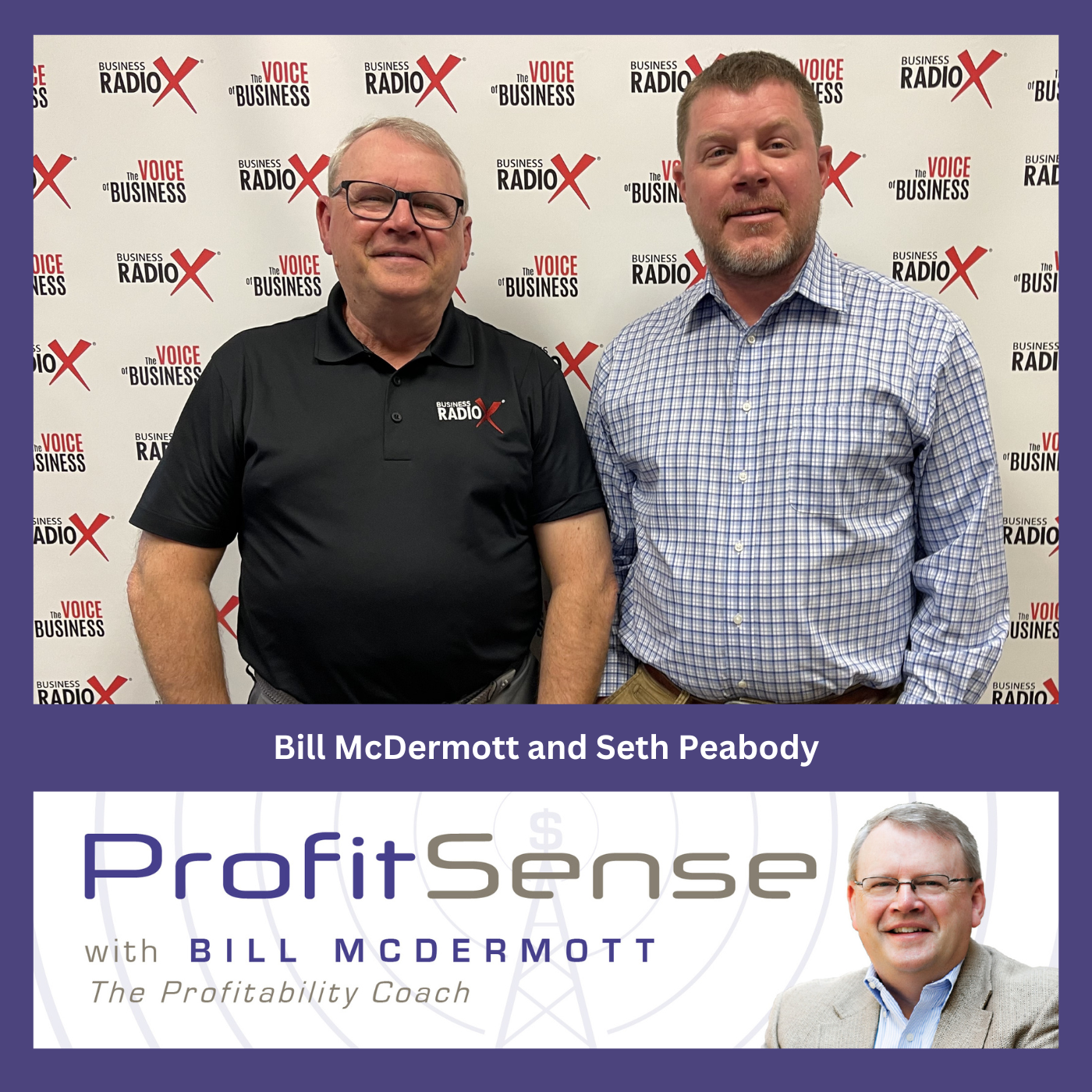
CPA Seth Peabody joined host Bill McDermott on this episode of ProfitSense. Seth’s firm, iTxRe, emphasizes the importance of proactive tax planning for businesses, and he explained how their approach can significantly impact profitability by strategically reducing tax liabilities. Seth provided insights into tax planning vs. what he calls “tax telling,” highlighted the advantages of having an early and consistent tax plan, and discussed the major issues faced by the CPA industry. Seth also delved into the potential role of AI in aiding the CPA industry, and he underscored the necessity for a pragmatic understanding of accounting for better business outcomes.

Bill concluded the show with thoughts on how to manage the buyer-seller dance.

ProfitSense with Bill McDermott is produced and broadcast by the North Fulton Studio of Business RadioX® in Alpharetta.

Seth Peabody, iTxRe
Seth Peabody, iTxRe
Seth Peabody, iTxRe

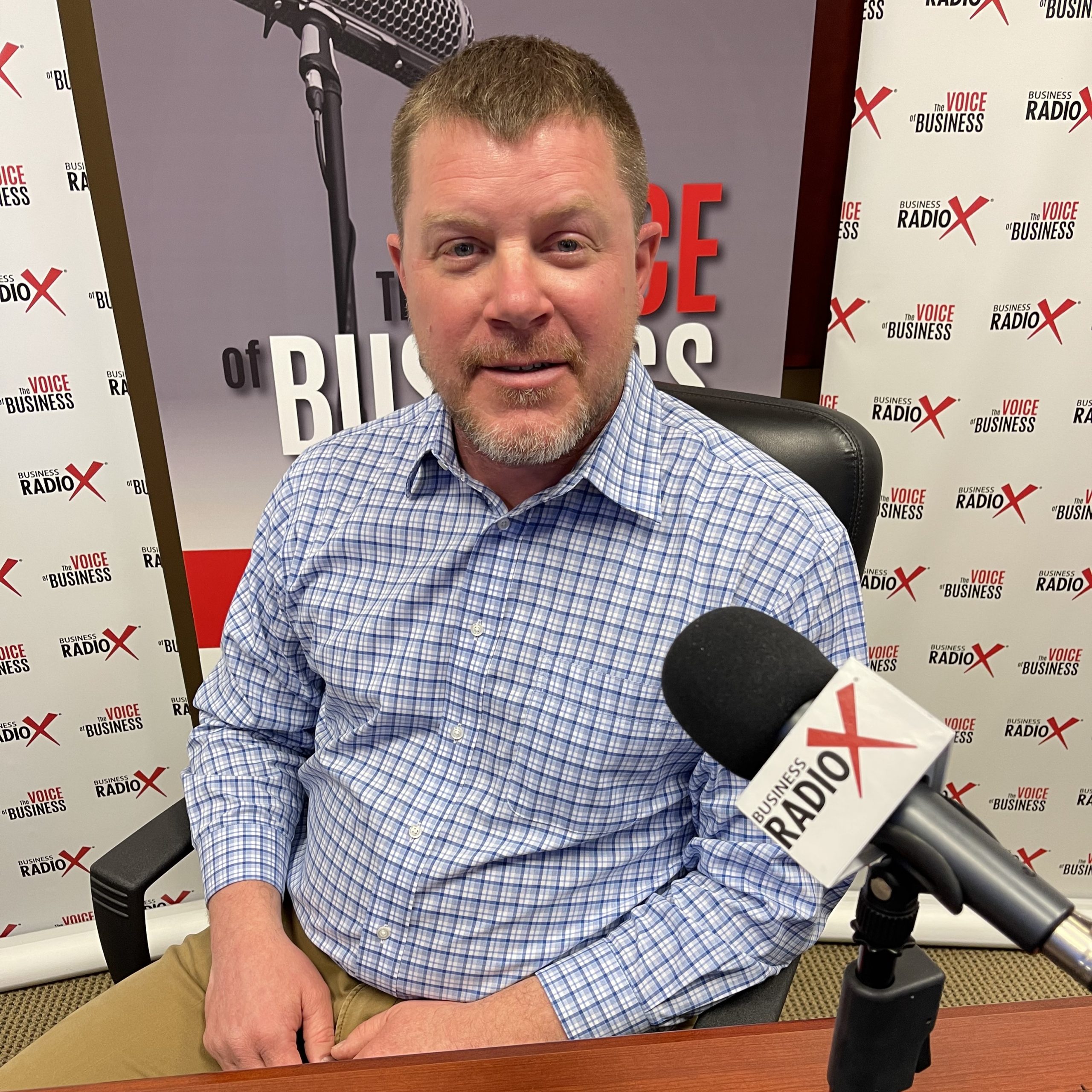
Seth Peabody has been a CPA for over two decades, working in small, medium, and large firms. In pursuit of growing a niche CPA practice, he learned business owners and high-net-worth individuals didn’t have true annual income tax planning. He created a program and process for clients to reduce taxes annually.

iTxRe creates a proactive environment to assist businesses and individuals across the country with annual income tax planning. They regularly meet with their clients to customize a plan for them. Then they work to control and minimize the impact of income tax on both the business and the individual. Finally, they complete the last step of the plan, filing the tax returns.

Quite simply, iTxRe engages in tax planning, not “tax telling.”

Website | LinkedIn | Instagram | Facebook | Seth LinkedIn

Topics Discussed in this Interview

00:00 Introduction
01:07 Guest Introduction: Seth Peabody, CPA
01:29 Understanding Tax Planning
03:13 Proactive Tax Strategies
04:08 Understanding Tax Credits and Deductions
05:28 The Importance of Quarterly Estimates
07:27 The Role of Tax Planning in Business
09:11 Differentiating in the CPA Industry
15:29 The Impact of AI in the CPA Industry
17:56 The Importance of Understanding Accounting for Business Owners
24:22 The Buyer-Seller Dance in Sales
26:01 Closing Remarks and Contact Information
 

About ProfitSense and Your Host, Bill McDermott

Bill McDermott
Bill McDermott

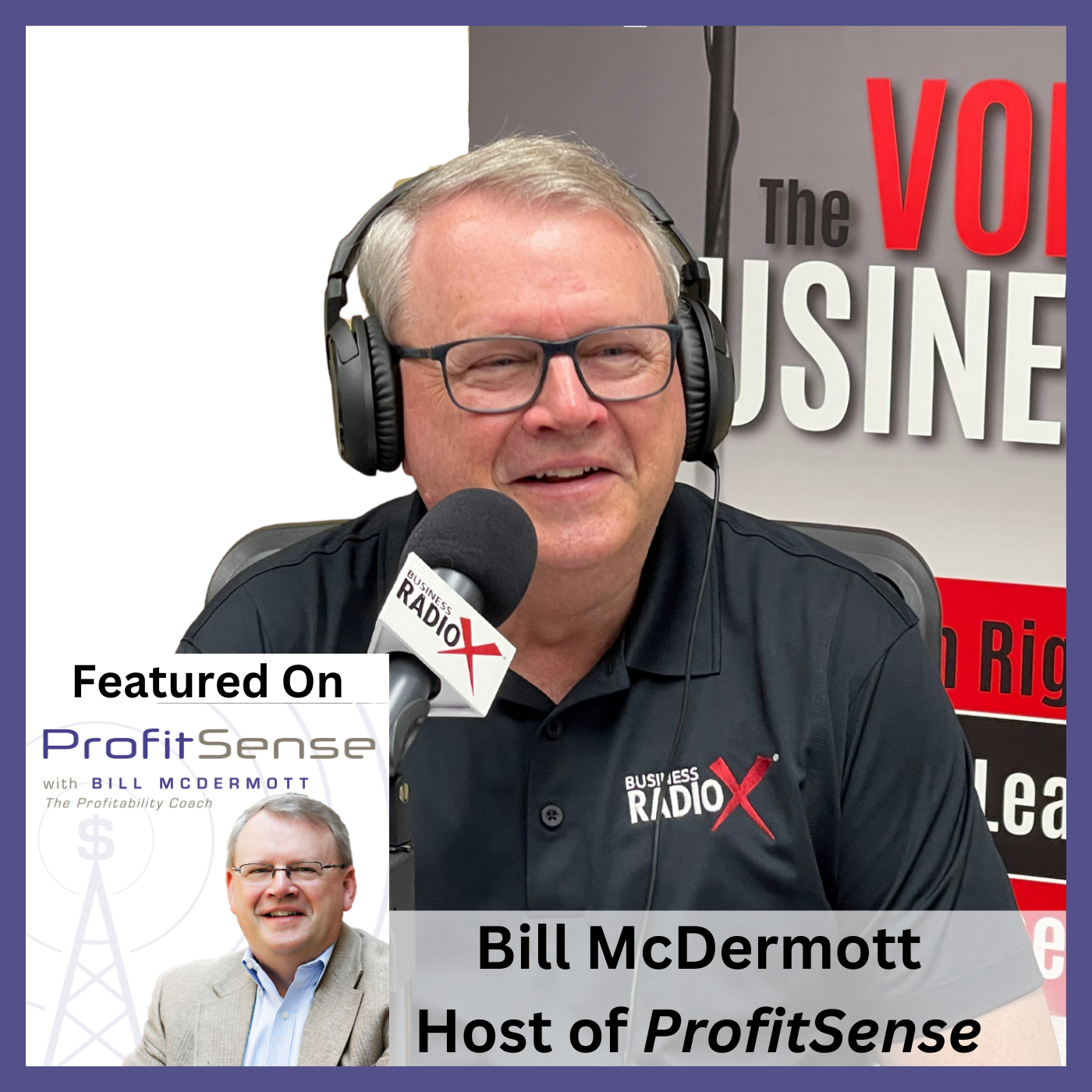
ProfitSense with Bill McDermott dives into the stories behind some of Atlanta’s successful businesses and business owners and the professionals that advise them. This show helps local business leaders get the word out about the important work they’re doing to serve their market, their community, and their profession. The show is presented by McDermott Financial Solutions. McDermott Financial helps business owners improve cash flow and profitability, find financing, break through barriers to expansion, and financially prepare to exit their business. The show archive can be found at profitsenseradio.com.

Bill McDermott, “The Profitability Coach,” is the Founder and CEO of McDermott Financial Solutions. When business owners want to increase their profitability, they don’t have the expertise to know where to start or what to do. Bill leverages his knowledge and relationships from 32 years as a banker to identify the hurdles getting in the way and create a plan to deliver profitability they never thought possible.

Bill currently serves as Treasurer for the Atlanta Executive Forum and has held previous positions as a board member for the Kennesaw State University Entrepreneurship Center, Gwinnett Habitat for Humanity, and Treasurer for CEO NetWeavers. Bill is a graduate of Wake Forest University, and he and his wife, Martha, have called Atlanta home for over 40 years. Outside of work, Bill enjoys golf, traveling, and gardening.

Connect with Bill on LinkedIn and Instagram, and follow McDermott Financial Solutions on LinkedIn.

Tagged With: Accounting, Bill McDermott, CPa, income taxes, iTxRe, Profitability Coach Bill McDermott, ProfitSense, ProfitSense with Bill McDermott, Seth Peabody, tax credits, tax planning, The Profitability Coach

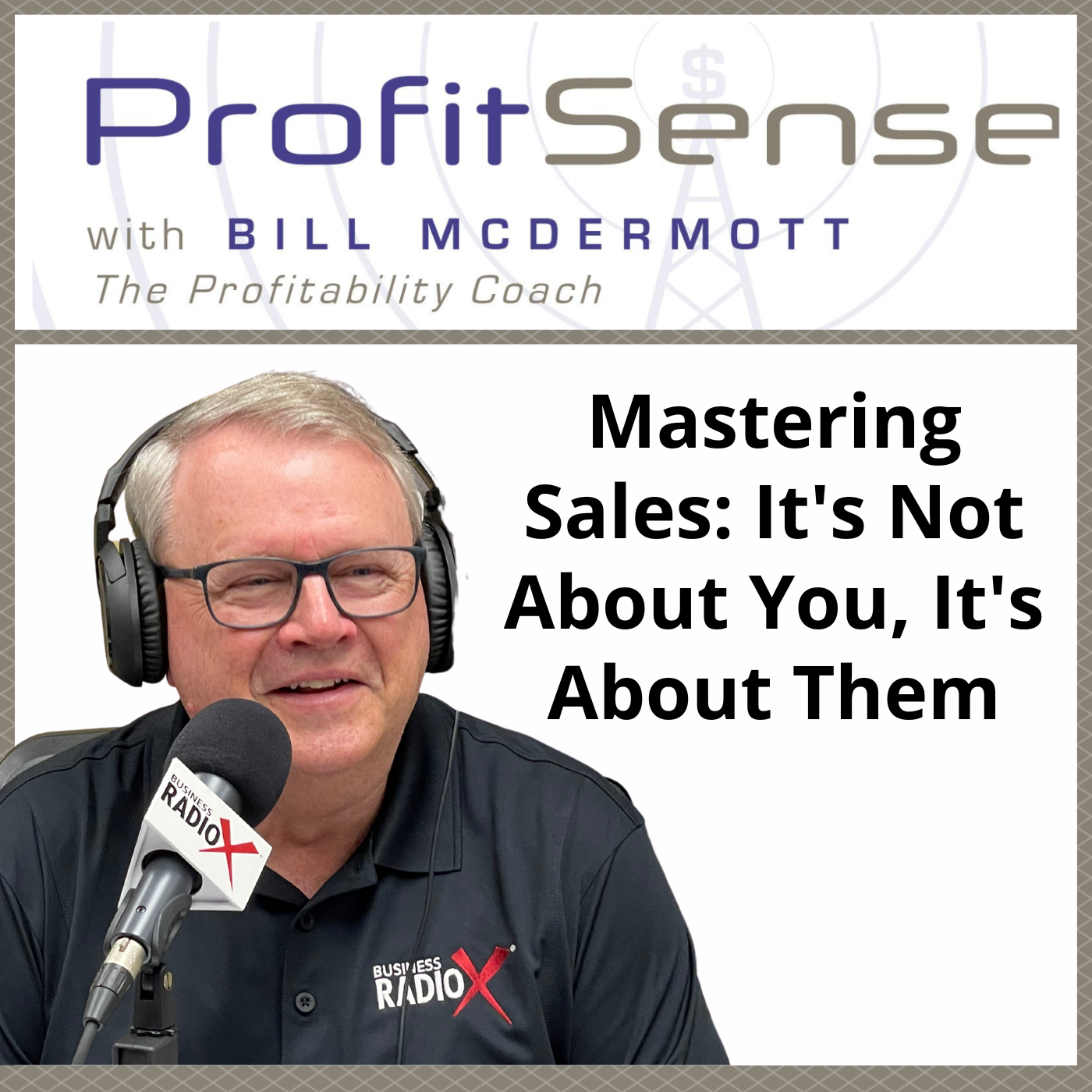
Mastering Sales: It’s Not About You, It’s About Them, with Bill McDermott, Host of ProfitSense

January 23, 2024 by John Ray

North Fulton Studio
North Fulton Studio
Mastering Sales: It's Not About You, It's About Them, with Bill McDermott, Host of ProfitSense
Loading
00:00 /
RSS Feed
Share
Link
Embed

Download file

Mastering Sales: It’s Not About You, It’s About Them, with Bill McDermott, Host of ProfitSense

In this commentary from a recent episode of ProfitSense, Bill McDermott discusses the essential mindsets and skills necessary for mastering sales.

Bill’s commentary was taken from this episode of ProfitSense.

ProfitSense with Bill McDermott is produced and broadcast by the North Fulton Studio of Business RadioX® in Alpharetta.

Transcript

We’re kicking off a new year. It’s 2024. Every business owner I’m talking to recently has been trying to think about “what do I need to do to sell more? Do I raise prices? Do I increase volume?” And so I wanted to talk briefly about how to become the salesperson people want to buy from. Having success in sales can sometimes feel easier said than done.

It takes hard work, dedication, and a willingness to learn and grow. It also takes the ability to overcome objections and setbacks. I recently led a sales training to a group of commercial bankers that we discussed the importance of dealing with mindset first and then adding the right skill set. Two crucial mindsets to have are an abundance mindset and a success mindset.

The best way to have an abundance mindset is to have an abundance of opportunities. A success mindset includes the 80/20 rule. In a sales call, do 20 percent of the talking and 80 percent of the listening. Ask questions based on curiosity and listen to the answers. For skill set, it’s important to engage your client or prospect in as much right brain thinking as you can.

The right side of the brain is where imagination and feelings live. If you can engage those through the art of storytelling, you’ll soon find the client sees themselves in your story. This triggers a desire to do business with you because they see you as someone that can solve their problem. So our formula for success is simple.

Find the level of activity you’re willing to adopt, own your sales process, and ask good questions and solve problems. Don’t sell products.

About ProfitSense and Your Host, Bill McDermott

Bill McDermott
Bill McDermott

ProfitSense with Bill McDermott dives into the stories behind some of Atlanta’s successful businesses and business owners and the professionals that advise them. This show helps local business leaders get the word out about the important work they’re doing to serve their market, their community, and their profession. The show is presented by McDermott Financial Solutions. McDermott Financial helps business owners improve cash flow and profitability, find financing, break through barriers to expansion, and financially prepare to exit their business. The show archive can be found at profitsenseradio.com.

Bill McDermott, “The Profitability Coach,” is the Founder and CEO of McDermott Financial Solutions. When business owners want to increase their profitability, they don’t have the expertise to know where to start or what to do. Bill leverages his knowledge and relationships from 32 years as a banker to identify the hurdles getting in the way and create a plan to deliver profitability they never thought possible.

Bill currently serves as Treasurer for the Atlanta Executive Forum and has held previous positions as a board member for the Kennesaw State University Entrepreneurship Center, Gwinnett Habitat for Humanity, and Treasurer for CEO NetWeavers. Bill is a graduate of Wake Forest University, and he and his wife, Martha, have called Atlanta home for over 40 years. Outside of work, Bill enjoys golf, traveling, and gardening.

Connect with Bill on LinkedIn and Instagram, and follow McDermott Financial Solutions on LinkedIn.

Tagged With: abundance mindset, Bill McDermott, mastering sales, mindsets, Profitability Coach Bill McDermott, ProfitSense, ProfitSense with Bill McDermott, Sales, The Profitability Coach

Three Tips for Perfecting Your 2024 Projections, with Bill McDermott, Host of ProfitSense

January 7, 2024 by John Ray

three tips for your 2024 projections
North Fulton Studio
Three Tips for Perfecting Your 2024 Projections, with Bill McDermott, Host of ProfitSense
Loading
00:00 /
RSS Feed
Share
Link
Embed

Download file

three tips for your 2024 projections

Three Tips for Perfecting Your 2024 Projections, with Bill McDermott, Host of ProfitSense

In this commentary from a recent episode of ProfitSense, Bill McDermott offers three quick tips on perfecting your 2024 projections for your business.

Bill’s commentary was taken from this episode of ProfitSense.

ProfitSense with Bill McDermott is produced and broadcast by the North Fulton Studio of Business RadioX® in Alpharetta.

Transcript

Bill McDermott: Whether you’ve finished your 2024 projections or not, I’d like to share three tips you need to know to put the finishing touches on your forecast.

Projections are critical to knowing whether your financial forecasts are realistic, especially if you will use these to obtain financing or attract investors.

First, look for tendencies in your forecasting to gain insights on things you can do to improve next year. This could be things like: did you overestimate revenue and profits? Did you accurately forecast the timing of collections from clients and payments to vendors?, etc.

Second, compare your assumptions on revenue and expense growth compared to your historical performance and industry norms/standards. It’s possible you’re outperforming your peers in some areas but underperforming in others. Know your tendencies.

Third, forecast from the bottom up, not the top down. It’s not how much you bill, but how much you keep. Plan profit first, then expenses, then revenue. Compare your forecasted revenue number based on what you discovered in your historical performance. If your revenue number is too high, then consider either adjusting your profit number or cutting expenses.

Many business owners will have several rounds of assumptions before they end up with a forecast they’re comfortable with. Remember, it’s important to forecast not only your income statement but also your balance sheet and cash flow statement to get a complete picture of your business.

Here’s to a great 2024 for all of us!

About ProfitSense and Your Host, Bill McDermott

Bill McDermott
Bill McDermott

ProfitSense with Bill McDermott dives into the stories behind some of Atlanta’s successful businesses and business owners and the professionals that advise them. This show helps local business leaders get the word out about the important work they’re doing to serve their market, their community, and their profession. The show is presented by McDermott Financial Solutions. McDermott Financial helps business owners improve cash flow and profitability, find financing, break through barriers to expansion, and financially prepare to exit their business. The show archive can be found at profitsenseradio.com.

Bill McDermott is the Founder and CEO of McDermott Financial Solutions. When business owners want to increase their profitability, they don’t have the expertise to know where to start or what to do. Bill leverages his knowledge and relationships from 32 years as a banker to identify the hurdles getting in the way and create a plan to deliver profitability they never thought possible.

Bill currently serves as Treasurer for the Atlanta Executive Forum and has held previous positions as a board member for the Kennesaw State University Entrepreneurship Center, Gwinnett Habitat for Humanity, and Treasurer for CEO NetWeavers. Bill is a graduate of Wake Forest University, and he and his wife, Martha, have called Atlanta home for over 40 years. Outside of work, Bill enjoys golf, traveling, and gardening.

Connect with Bill on LinkedIn and Instagram, and follow McDermott Financial Solutions on LinkedIn.

Tagged With: 2024 projections, Bill McDermott, profitability, Profitability Coach Bill McDermott, ProfitSense, ProfitSense with Bill McDermott, Projections, The Profitability Coach

Dee Barnes, Evans Tool & Die and Evans Metal Stamping & Laser Cutting

November 13, 2023 by John Ray

Dee Barnes
North Fulton Studio
Dee Barnes, Evans Tool & Die and Evans Metal Stamping & Laser Cutting
Loading
00:00 /
RSS Feed
Share
Link
Embed

Download file

Dee Barnes

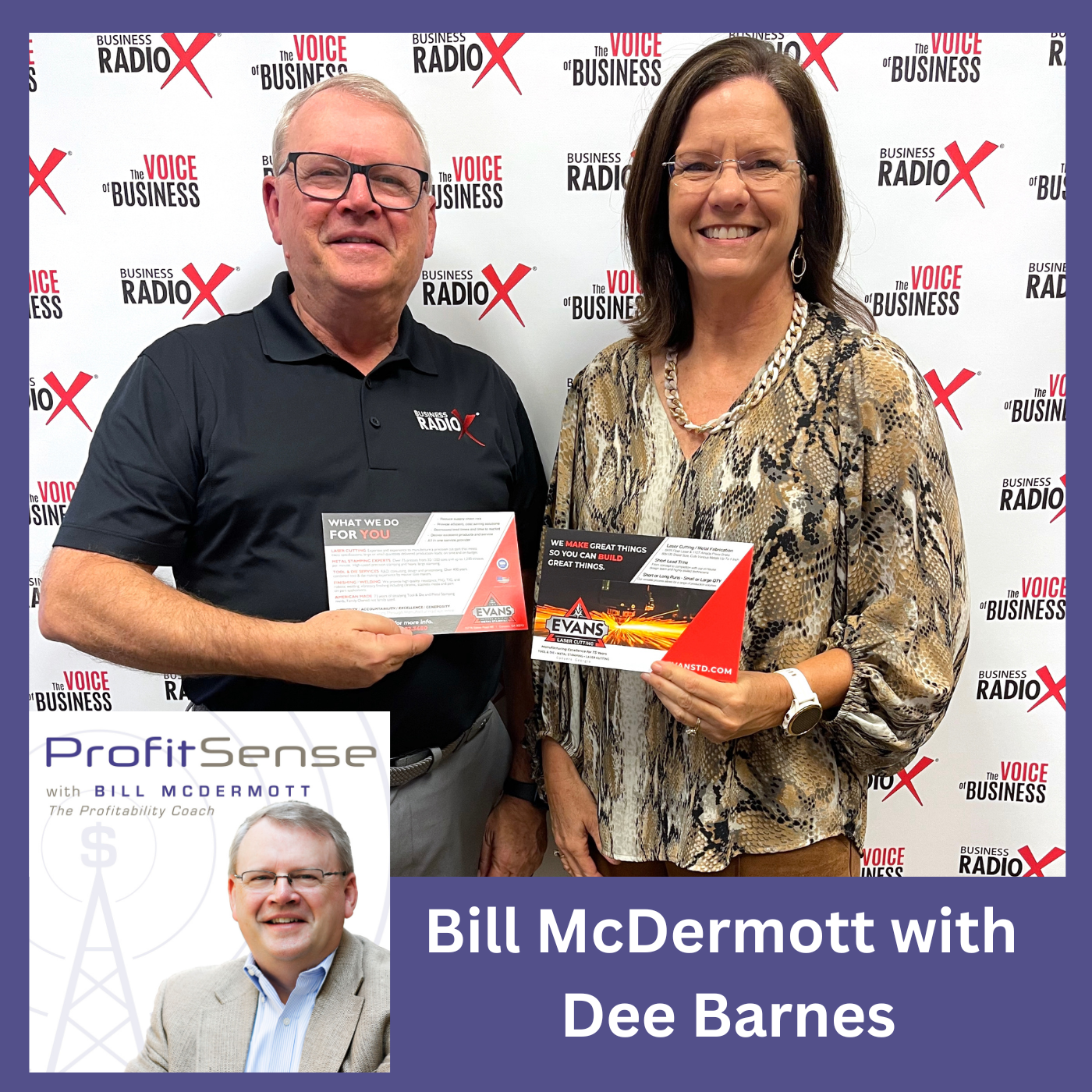
Dee Barnes, Evans Tool & Die and Evans Metal Stamping & Laser Cutting (ProfitSense with Bill McDermott, Episode 52)

Dee Barnes, CEO of Evans Tool and Die, joined host Bill McDermott to discuss how her 75-year-old family-owned business has successfully navigated the manufacturing industry’s challenges and embraced its opportunities. Dee focused on the importance of trade skills within the sector and the resurgence of manufacturing in the United States. They also delved into how technology is transforming the industry, the addition of a laser metal fabrication division at Evans, the struggle against overseas competition due to inflation, and much more.

Bill wrapped up the show with his thoughts on the one question every business owner should be able to answer.

ProfitSense with Bill McDermott is produced and broadcast by the North Fulton Studio of Business RadioX® in Alpharetta.

Evans Tool & Die and Evans Metal Stamping & Laser Cutting

Improving Our Community Through Manufacturing Excellence Since 1948 – Celebrating 75 years… Evans is a one stop, Made in the USA, Preferred Provider of precision Tool & Die builds, progressive and hand transfer metal stamping products as well as laser cutting metal fabrication.

They provide complete design and engineering processes, assembly, and packaging. They provide risk management solutions to the overseas supply chain breakdowns for OEMs by localizing supply chains with high quality, seamless logistics and hands on supply chain control.

Website | LinkedIn | Facebook | Instagram

Deanne “Dee” Barnes, President & CEO

Deanne “Dee” Barnes, President & CEO, Evans Tool & Die/Evans Metal Stamping, Inc.

Deanne “Dee” Barnes has served as Chief Executive Officer and President of Evans Tool & Die/Evans Metal Stamping, Inc. since 2011. Dee is the granddaughter of company founder, Leonard Evans, Jr., and represents the company’s third generation of family leadership. A seasoned industry leader, she is the driving force behind Evan’s ongoing commitment to “Made in the USA” manufacturing and delivering the highest caliber of customer service. After attending Georgia College and State University, Dee has contributed to every aspect of the company for more than 35 years. Now as CEO, she continues the family legacy as an example of prosperous domestic manufacturing since 1948. Evans Company exists not only to make a profit for its stakeholders, but to make a positive impact that will support and encourage customers, employees and their families, and our community.

LinkedIn

About ProfitSense and Your Host, Bill McDermott

Bill McDermott
Bill McDermott

ProfitSense with Bill McDermott dives into the stories behind some of Atlanta’s successful businesses and business owners and the professionals that advise them. This show helps local business leaders get the word out about the important work they’re doing to serve their market, their community, and their profession. The show is presented by McDermott Financial Solutions. McDermott Financial helps business owners improve cash flow and profitability, find financing, break through barriers to expansion, and financially prepare to exit their business. The show archive can be found at profitsenseradio.com.

Bill McDermott is the Founder and CEO of McDermott Financial Solutions. When business owners want to increase their profitability, they don’t have the expertise to know where to start or what to do. Bill leverages his knowledge and relationships from 32 years as a banker to identify the hurdles getting in the way and create a plan to deliver profitability they never thought possible.

Bill currently serves as Treasurer for the Atlanta Executive Forum and has held previous positions as a board member for the Kennesaw State University Entrepreneurship Center and Gwinnett Habitat for Humanity and Treasurer for CEO NetWeavers. Bill is a graduate of Wake Forest University and he and his wife, Martha have called Atlanta home for over 40 years. Outside of work, Bill enjoys golf, traveling, and gardening.

Connect with Bill on LinkedIn and Twitter and follow McDermott Financial Solutions on LinkedIn.

Tagged With: Dee Barnes, Evans Metal Stamping, Evans Tool & Die, laser cutting, laser metal fabrication, Manufacturing, ProfitSense, ProfitSense with Bill McDermott, The Profitability Coach

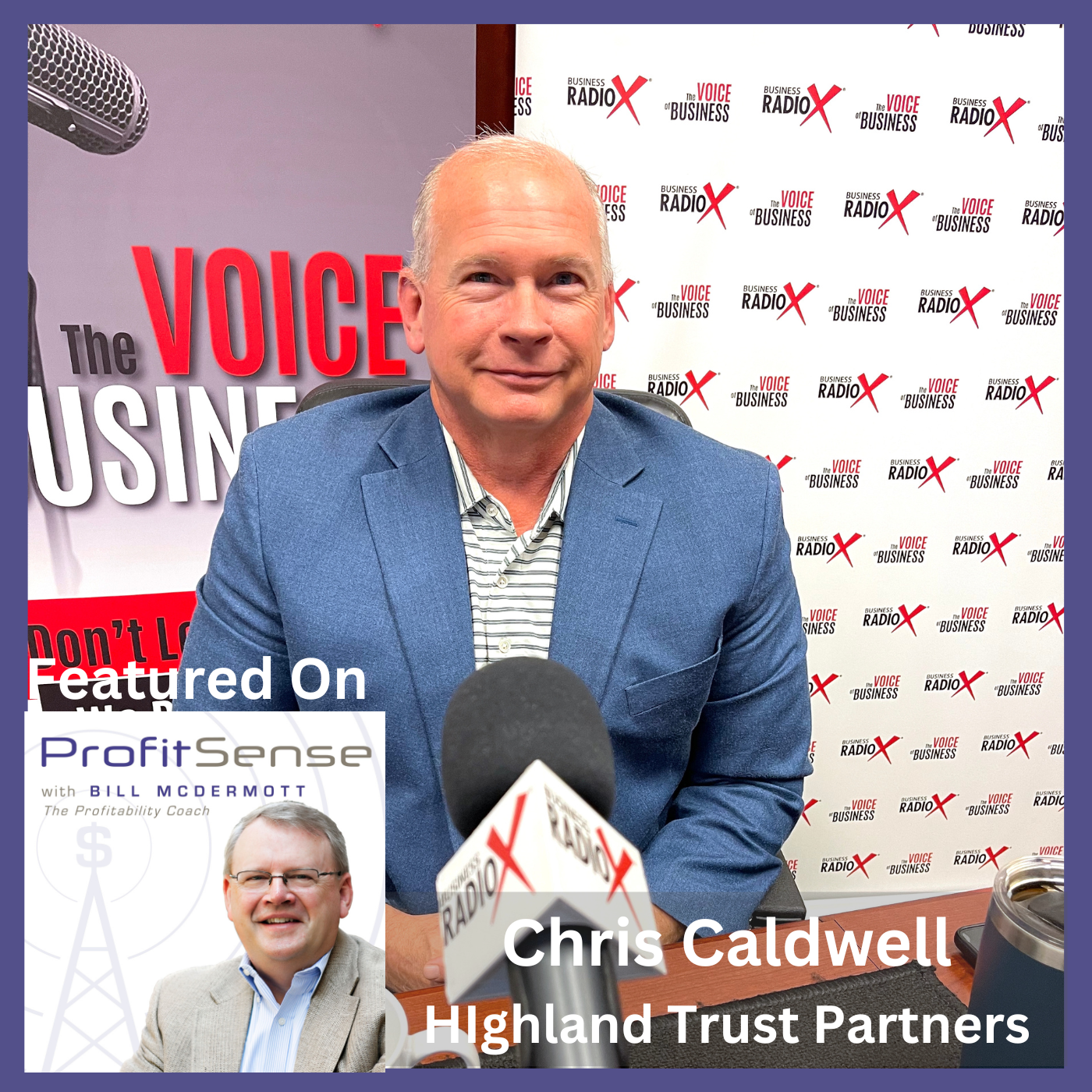
What a Financial Planner Can Do For You, with Chris Caldwell, Highland Trust Partners

November 8, 2023 by John Ray

Financial Planner
North Fulton Studio
What a Financial Planner Can Do For You, with Chris Caldwell, Highland Trust Partners
Loading
00:00 /
RSS Feed
Share
Link
Embed

Download file

What Can a Financial Planner Do For Me?

What a Financial Planner Can Do For You, with Chris Caldwell, Highland Trust Partners

[00:00:00] Chris Caldwell: To build a team for a client to make sure that if they have a CPA and a corporate attorney and a state attorney and insurance agent, maybe an investment advisor somewhere else, but the, all the bankers, but these people, they may have them, but they’re not talking to each other.

[00:00:13]  My role as a planner is to basically bring this team to the table. To talk to each other about the different circumstances our client is going through and how can we pull resources together to make this stuff happen for them to fix what’s broken or what’s not being done.

[00:00:28]  We come up with the strategy solutions, basically get it ready to sign almost in some cases, and they’re not pulling a lot of time away from work to do that. Once they see where you don’t take their time, they’re energized. They’re excited to know they don’t have to do a lot, but we’re going to get to know them personally and ask them personal questions.

[00:00:45]  We’re also going to get to know their families well. As I think importantly for planning for business owners, also knowing. What they need in their family. Their spouse, knowing what they have to bring home one day. Okay, so that energizes them knowing we involve the family with that.

[00:00:59]  Once they know the time we save them. They know we’re putting the resources together. Make sure we reduce the risk in their lives. They know that we’re probably adding, we’re definitely adding more valuation to the business by doing this, maybe saving on other things, tax strategy, return on investments and others.

Listen to Chris’s full ProfitSense with Bill McDermott interview here. 


The “One Minute Interview” series is produced by John Ray and the North Fulton studio of Business RadioX® in Alpharetta. You can find the full archive of shows by following this link.

Renasant Bank has humble roots, starting in 1904 as a $100,000 bank in a Lee County, Mississippi, bakery. Since then, Renasant has grown to become one of the Southeast’s strongest financial institutions with over $13 billion in assets and more than 190 banking, lending, wealth management and financial services offices in Mississippi, Alabama, Tennessee, Georgia and Florida. All of Renasant’s success stems from each of their banker’s commitment to investing in their communities as a way of better understanding the people they serve. At Renasant Bank, they understand you because they work and live alongside you every day.

Tagged With: business owner, business planning, Chris Caldwell, financial planner, Highland Trust Partners, One Minute Interview, ProfitSense with Bill McDermott, small business planning, The Profitability Coach

“Ask The Profitability Coach,” Celebrating 50 Episodes of ProfitSense, with Host Bill McDermott

November 7, 2023 by John Ray

Ask the Profitability Coach
North Fulton Studio
"Ask The Profitability Coach," Celebrating 50 Episodes of ProfitSense, with Host Bill McDermott
Loading
00:00 /
RSS Feed
Share
Link
Embed

Download file

Ask The Profitability Coach

“Ask The Profitability Coach,” Celebrating 50 Episodes of ProfitSense, with Host Bill McDermott

The tables were turned on host Bill McDermott, as he was joined by guest host John Ray to celebrate 50 episodes of ProfitSense. Bill answered a variety of questions and topics submitted by ProfitSense listeners, including starting a business the right way, cash flow and profitability-related questions, selling a business, and the emotional aspects of letting go of a business. If you want to hear the Profitability Coach in action, check out this episode! Bill offered numerous insights for business owners and covered a range of financial and emotional considerations.

ProfitSense with Bill McDermott is produced and broadcast by the North Fulton Studio of Business RadioX® in Alpharetta.

About ProfitSense and Your Host, Bill McDermott

Bill McDermott
Bill McDermott

ProfitSense with Bill McDermott dives into the stories behind some of Atlanta’s successful businesses and business owners and the professionals that advise them. This show helps local business leaders get the word out about the important work they’re doing to serve their market, their community, and their profession. The show is presented by McDermott Financial Solutions. McDermott Financial helps business owners improve cash flow and profitability, find financing, break through barriers to expansion, and financially prepare to exit their business. The show archive can be found at profitsenseradio.com.

Bill McDermott is the Founder and CEO of McDermott Financial Solutions. When business owners want to increase their profitability, they don’t have the expertise to know where to start or what to do. Bill leverages his knowledge and relationships from 32 years as a banker to identify the hurdles getting in the way and create a plan to deliver profitability they never thought possible.

Bill currently serves as Treasurer for the Atlanta Executive Forum and has held previous positions as a board member for the Kennesaw State University Entrepreneurship Center and Gwinnett Habitat for Humanity and Treasurer for CEO NetWeavers. Bill is a graduate of Wake Forest University and he and his wife, Martha have called Atlanta home for over 40 years. Outside of work, Bill enjoys golf, traveling, and gardening.

Connect with Bill on LinkedIn and Twitter and follow McDermott Financial Solutions on LinkedIn.

TRANSCRIPT

Intro: [00:00:03] Broadcasting from the Business RadioX studio in Alpharetta, it’s time for Profit Sense with Bill McDermott.

John Ray: [00:00:18] And hello, everyone. This is not Bill McDermott. This is host John Ray with Business RadioX and I am here with Profit Sense host Bill McDermott. And we’re here to celebrate 50 episodes of Profit Sense. Bill, congratulations on this.

Bill McDermott: [00:00:36] Yeah. Thank you. And it’s good to be on this side of the mic, answering the questions rather than trying to figure out how to come up with them. So thank you for that.

John Ray: [00:00:44] Absolutely, absolutely. We were chit-chatting about how we could celebrate 50 episodes, which is quite a feat so congratulations on that work and all the businesses that you celebrated during that time. And what we decided was that Bill was so busy celebrating other businesses that Bill didn’t really talk a lot about his own perspectives and whatnot during his own show. So we decided that might be a good idea to answer some questions that he’s received over time and from – and we put out the word and asked folks to submit questions and we’ve got a few.

Bill McDermott: [00:01:23] Yeah, they certainly responded. I am grateful for that. And further, I just want to say, gosh, what a great ride 50 episodes have been, John, looking forward to the next 50. I had a dream of having a podcast where we can share stories of business owners and the professionals that advise them as a source of inspiration and encouragement to those who are thinking about becoming a business owner as well as those business owners that are out there in the trenches every day. So I’m grateful to you and North Fulton Business RadioX for giving me the voice to be able to do that.

John Ray: [00:02:01] We’re excited to be part of that for sure, and to certainly celebrate the work you do and celebrate all these great guests you’ve had over the years. So you’ve had some tremendous guests. And that was one of the things, too. We decided we couldn’t single out 1 or 2 of the best because we’d be excluding a whole lot of good ones, right?

Bill McDermott: [00:02:20] Yeah, that’s for sure. I think back to some of the very first interviews and certainly, the issues even three years ago, let alone outside the podcast, going back even further, it’ll actually be 15 years that The Profitability Coach exists this coming April. But the issues are the same regardless of time and whether it’s issues of growth, issues of talent, issues of finding financing for a business owner or even right now, the baby boomers are exiting their businesses and the issues are the same, even though times change.

John Ray: [00:03:01] There may be some folks that this is the first Profit Sense episode they’ve heard, so, and they may not know you like all your fans – you’ve got a lot of fans out there by the way – all your fans do. So for those that are new to Profit Sense and Bill McDermott, The Profitability Coach, why don’t you just give a brief introduction to your work?

Bill McDermott: [00:03:23] Yeah, sure. Business owners have a big dream for their company and they want to make it happen. Also, business owners want to improve cash flow and profitability, but they don’t know how. So we identify the hurdles that are getting in the way and deliver them profitability in their business that they never thought was possible. Further, every business owner has a dream of selling their business, achieving financial freedom, and riding off into the sunset that they’ve exited their business in their time and on their terms. And so we identify a plan to do that.

Bill McDermott: [00:04:00] Interesting statistic, only about 80%, or excuse me, only about 20% of business owners have a plan in writing for their exit. The other 80% don’t. And we can certainly talk more about that. But we also help business owners understand the transferable value in their business, come up with a business growth plan, how to be sure they have reliable financial statements, and then understand the tax implications, the timing and the terms of any transaction that they contemplate. So that’s me in a nutshell.

John Ray: [00:04:30] Yeah, that’s great work. Again, we’ve had, we put the word out, got a number of questions back. You also gave us some questions that are FAQs, right, frequently asked questions, that you get from clients and folks that are considering working with you. So let’s just dive in.

Bill McDermott: [00:04:47] Sounds good.

John Ray: [00:04:48] Okay. Here’s a basic one, very basic one. And I think there’s plenty of these folks out there. I’m tired of corporate America. What does it take to start a business? And I think where this is coming from is how do I do it right, right? I mean, yeah, how do I get off to a good start?

Bill McDermott: [00:05:07] Yeah, I would say the first thing, I was there 15 years ago. I was in corporate America. Now my dive into starting a business was by necessity. I was laid off and had to figure out a way to earn an income. But I think the first thing we have to start with before anything else is, does that person or do I have an entrepreneurial mindset? Am I growth-oriented? Meaning, not only growing my business but am I willing to embrace continually educating myself on how to be better? I think also the ability to overcome challenges as a business owner. You get down – you get knocked down a lot. And so how do you get up and dust yourself off and get back in the game?

Bill McDermott: [00:05:53] I think there needs to be a willingness to think outside the box. A lot of times there wasn’t really a profitability coach when I started 15 years ago. There are a lot of part-time CFOs out there, but I think I had several clients when I started telling me I had a little bit of a Blue Ocean Strategy, which is a book that talks about how you might play in your business that is unchartered waters but also very ripe with opportunities.

Bill McDermott: [00:06:24] And then I think, a willingness to experiment. I experimented first with helping business owners find financing when I came out of banking. That then turned into an experiment of actually doing the profitability coaching that I do to this day, and then my clients were asking me to help them exit their business since I had coached them. And so, I was willing to experiment with business exit planning. And that’s now become about half my business. So willingness to experiment.

Bill McDermott: [00:06:56] And then I would say the last thing as far as mindsets are being goal-oriented. I had a goal of replacing my income within a certain period of time and was successful at doing that and so those things, growth-oriented, open-minded, ability to overcome challenges, willingness to think outside the box, willingness to experiment, and then being goal-oriented. So that’s the mindset.

Bill McDermott: [00:07:20] The skill set, I’m going to take a page out of Jim Collins’ book, Good to Great. And I do this often with people that are thinking about going out on their own. Jim Collins said, “Greatness is where three circles intersect.” And the first inner – first circle is, what is it that I’m passionate about? I saw in my banking career that business owners really struggled with being financial managers. I saw that as a weakness. They didn’t take accounting in school. There’s no on-the-job training when you own the business. And I was passionate about, and still am, helping business owners become better.

Bill McDermott: [00:07:58] What are my best in the world at is his and my clients tell me I listen well. I have the ability to take concepts – complex concepts and put them in fairly simple language. They tell me I can connect the dots between their circumstances and their ideas, and I think they tell me I listen well. Now, my wife might disagree with them on that, but no, they do tell me I listen well. What am I best in the world at is the second one.

Bill McDermott: [00:08:27] And then the third is, can I take what I’m passionate about and what I’m best in the world at, and can I create an economic engine out of that and help business owners become better financial managers? I’m pretty good at listening, which means I can also provide coaching assistance. And can I coach business owners on how to become better financial managers and get paid to do that? And 15 years later, the answer is yes.

Bill McDermott: [00:08:54] So mindsets first, and then thinking about skill sets and answering those three questions and seeing where they intersect.

John Ray: [00:09:03] Yeah, that’s a good advice there. So you talked about coming out and you didn’t have the benefit of having a coach, but you were your own coach because you had that experience and that experience to understand what was important just because of the work you had done before. Right? And a lot of people don’t have that. They’ve got a passion for a business, but they don’t have that background in financials and understanding how to get started in that way. What – should someone hire someone to coach them right out of the box, or how should they make that decision? Let’s put it like that.

Bill McDermott: [00:09:47] Yeah. And I think first, there are a lot of DIY people out there. I’m just going to do it myself and I’m going to learn, and possibly starting out, being able to read some books, watch some videos might be helpful. But yeah, so I love to play golf. I have been a self-taught golfer for years, but I can – I hit a ceiling and so I decided, hey, I need to go to a golf coach and have him look at my swing and make recommendations. And so that coach takes me further than I can get myself because that coach has the experience and the expertise to spot things in my golf swing that I’m not doing that I should be doing and also identifies things that I am doing that I shouldn’t be doing.

Bill McDermott: [00:10:41] And profitability coaching is no different. You can probably get to a certain level of proficiency just on your own if you’re willing to put in the time and and make the effort. But there comes a point, I think, when in order to get to the next level, you do have to hire, you know, a coach. There are weight loss coaches, there are fitness coaches, there are golf coaches, and now there’s a profitability coach.

John Ray: [00:11:06] Yeah, there you go. So the next question has, I guess this is one that someone’s been in business for a while and what they say here is, “I’m having cash flow and profitability issues that are keeping me up at night. What should I do?”

Bill McDermott: [00:11:24] Yeah, that’s a great question and that’s a tough one. Studies show right now that about 85% of business owners stay awake at night over cash flow issues, not having a good level of finance and accounting experience and expertise maybe exacerbates that a little bit.

Bill McDermott: [00:11:43] I think the first place that you really have to look is your people. Generally, business owners will hire on skills but fire on behavior. And so, someone can be really skilled at a particular function but if their behavior is they’re very me-focused or they don’t play well with a team, they can have behavior that really is counterproductive to what the owner is trying to find. Probably the best place to start is, look at your people.

Bill McDermott: [00:12:22] Most organizations have a mission statement or have core values that they put out there. What’s been interesting, I’ve found that many business owners don’t really hire based on their core values, which are really behavior. And so people who don’t share your core values, frankly, are the wrong people for your organization and may diminish the productivity just by virtue of those behaviors. So wrong people.

Bill McDermott: [00:12:52] The other thing is, a lot of people are put in seats in an organization that don’t play to their strengths. If you put me in very detailed, repetitive functions over and over again, you’re going to – you’re going to kill me. I’m more of a big-picture guy. I kind of get – I get energies sapped from me doing that and identifying who are your wrong people, also identifying if people are in the wrong seats.

Bill McDermott: [00:13:24] And then the third thing I think that challenges cash flow is, do you have some empty seats? What I have found is business owners are very willing to hire for salespeople or for operations or production people but typically the accounting function in an organization is underappreciated and underfunded. And if you don’t have good financial information, you don’t know where your business is and you’re flying blind.

Bill McDermott: [00:13:54] I have a situation that I’m working on right now where there’s been a capital change, a significant capital change in the balance sheet of the business. And that capital change goes directly to the cash account that is unreconciled. We’re talking a six-figure amount here. And in this situation having poor accounting support is giving you misinformation or giving you information that isn’t conclusive in and of itself.


John Ray: [00:14:29] So let me jump in here and ask a quick question about this because I imagine there may be some folks wondering exactly what you meant by this. When you say the accounting function is underfunded, you mean that folks aren’t hiring professionals that have the quality they need for the size of business they have. Is that what you mean?

Bill McDermott: [00:14:50] That’s exactly what I mean.

John Ray: [00:14:51] Okay. Got it. Okay. So they may have a bookkeeper. Nothing against the bookkeeper, but they may have a bookkeeper when what they really need is, more of a controller or CFO type.

Bill McDermott: [00:15:02] Yeah.

John Ray: [00:15:02] Okay. Got it.

Bill McDermott: [00:15:03] So there’s a triangle that exists. And at the very base of the triangle, of course, is the accounting function. Some call it bookkeeping. The next level is if you need bookkeeping and accounting but you also need a certain amount of financial analysis, the ability to produce reports that are timely and accurate. That’s really a controller function.

John Ray: [00:15:22] Got it.

Bill McDermott: [00:15:22] If you’re looking for someone who is very strategic, most accounting is backward. You’re always looking back, not looking forward. A CFO-type person is going to be a little more forward-thinking, will do projections, will provide strategic advice on the benefits of pursuing a certain strategy. And the need is great at the bottom of the triangle, which is why accounting is so important. But if you need reports, as well as some ratio analysis or the ability to have someone full-time thinking strategically and thinking forward about your business, that’s when you bring in a full-time or part-time CFO.

John Ray: [00:15:59] Got it, got it. Anything more you wanted to add about cash flow profitability issues that are causing insomnia?

Bill McDermott: [00:16:09] Yeah, I think so. I’m talking with a client right now that has just recently hired a marketing firm. They don’t feel like they have a good strategy that is differentiating them in the marketplace. So if you’re having profitability issues, the number one weakness in growing firms is marketing.

Bill McDermott: [00:16:29] The other thing I’d say is documented processes are critical. If there are four people doing a sales function in an organization and there are four different processes, that’s highly inefficient, especially if all four of them aren’t the way the company wants it done. Having processes is one thing, but having them documented and followed by everybody is another.

Bill McDermott: [00:16:54] And I’d say the last thing probably is pure and simple. Sometimes cash flow and profitability issues come up because you don’t have enough money. And so, a line of credit is a great idea for the business owner that has ebbs and flows in cash flow and can borrow against that line and even that bumpiness out. And, you know, you need to have a certain level of prudence about using it. But I think it is important to have it when you need it.

John Ray: [00:17:27] Now, here’s one question that I think is a similar tack, but I think it may be aimed a little differently. And the question is, “I’ve hit the ceiling in my business and I feel like I’m stuck and I can’t get out. What do I do?” Now, this is not – I don’t think this is meant to get out of the business like an exit, right? This is more like get out of the rut. How do I get out of the rut? Right?

Bill McDermott: [00:17:54] Exactly.

John Ray: [00:17:54] Okay. Want to clarify that.

Bill McDermott: [00:17:57] Yeah. When the ox gets in the ditch –

John Ray: [00:17:59] Right.

Bill McDermott: [00:18:00] Who pulls the ox out?

John Ray: [00:18:01] Okay. And how – yeah. How do you get that ox out?

Bill McDermott: [00:18:03] Yeah. And so there – I think there are five M’s here that when businesses get stuck, the ways to get them out. The first one maybe you’ve lost momentum. So momentum would be the first M. If you’ve had a sales decline, if you’ve had a drop in productivity, if you’re a solopreneur and you’re out there and you’re making two calls every day, ten calls a week, these are face to face calls, 40 a month, you’ve generated a certain amount of momentum and the business is going to come because of that. And so all of a sudden if you decide, “Oh, I’m just a little tired. I’m not going to make 40 calls. I’m going to make 20.” Guess what? The input has been cut in half, so very likely sales could get cut in half unless you’re a really good closer. And if you’ve lost momentum, that would be one thing to look at. Look at whatever your key indicators are that might indicate. It could be a revenue decline, could be something else in the business.

Bill McDermott: [00:19:08] We just talked about it a second ago, but do I have enough money? If my business is stuck, maybe it’s a cash flow problem. Maybe I need to increase my line of credit. If I’d pay cash for a big piece of equipment and I needed that money for payroll, maybe I should have got a term loan for that piece of equipment and paid it off over three or five years, rather than taking that cash out that I need for payroll.

Bill McDermott: [00:19:32] Management is another thing. Sometimes business complexity outgrows its management team. So I have a client that has had 30% year-over-year growth for quite a few years. It used to be the owner and then a chief operating officer type. They have brought in a sales, operations, and marketing VP. So three managers in those key areas of sales, operations, and accounting. And the organization is better because of it because the complexity is higher.

Bill McDermott: [00:20:08] Do I have the right operating model? I’ll use my business as an example. I started out as an independent banker helping business owners find financing, and that was a great model for me. But all of a sudden my model expanded into those financing clients wanted coaching. And then my model changed again. Those that I had done financing and coaching for wanted to have exit planning. And so, a lot of times one of the M’s is your model. You don’t have the right model for your business.

Bill McDermott: [00:20:42] Talked a little bit about marketing. Again, maybe you’re not marketing the firm the right way. So if you’re stuck, I would look at momentum, money management, your model, operating model, and then marketing. And hopefully one of those things is the culprit and you can fix it.

John Ray: [00:20:59] Got it, got it. As you mentioned earlier, you do a lot of exit planning work for clients, and we’ve got several of those kind of questions as well. And one of them, I think there are two that are related. And one of them just relates to where we are having made it through COVID and the Great Recession. I want to sell my business. I’m tired. That’s a really good reason I think for a lot of people. What should I do?

Bill McDermott: [00:21:33] Yeah. There are a lot of business owners that have been through a lot over the past ten, 15 years.

John Ray: [00:21:39] Sure.

Bill McDermott: [00:21:39] Probably the first thing is, put your team together. It does take a village to sell a business. You do need a business broker to handle the transaction. Don’t try to sell your business yourself. Your business is your baby. The seller or excuse me the buyer might call your baby ugly unintentionally. And so there’s a lot of emotion wrapped up in that.

Bill McDermott: [00:21:59] Generally, this is the largest asset that a business owner has on their personal financial statement. Because it’s a big asset, it’s also going to potentially carry a pretty high tax bite when you sell it because you’re selling it for a gain. And that gain can be taxable either as a capital gain or ordinary income. The importance of having a CPA on your team can really help you figure out the best tax plan for that sale.

Bill McDermott: [00:22:27] Selling a business is just like selling a house. There’s a lot of legal documents. It’s a bigger transaction than a house in many cases. And so having the attorney that’s got expertise in business, sales, mergers and acquisitions is really critical.

Bill McDermott: [00:22:42] Sometimes bank financing is involved. So you want to get your buyer’s banker engaged, which means probably the seller is going to need to provide some financial information that buyer can use to obtain financing.

Bill McDermott: [00:22:56] And then finally, a business sale ends up in a liquidity event for the seller; it’s usually a large sum. And after taxes and after transaction fees and legal costs, there’s a wealth advisor that’s needed to manage that money for that seller in their retirement. And so, the ability to have that team is just absolutely critical.

John Ray: [00:23:21] Talk about timing here in terms of just the advance planning that needs to be done, because it’s selling a business is even more complicated than selling a house, right?

Bill McDermott: [00:23:39] Yeah, yeah.

John Ray: [00:23:39] It takes time. And certainly for you to continue the house analogy, to get the house ready for sale, right, to get the shrubs planted and all the – everything painted and all the things that you do for a house, you do similar things for a business, right?

Bill McDermott: [00:23:53] No question.

John Ray: [00:23:54] So what kind of time frame?

Bill McDermott: [00:23:56] In a perfect world, I think a lot of buyers will want to see reliable financial information that usually spans at least a three-year period. So that would be first. Having reliable financial statements really helps give integrity to the transaction. I also think in addition to that, you have to identify the value of the business that is actually being transferred. A solopreneur might be faced with the situation that the value of their business is the value minus themselves, and if the business is in one person and only in that person’s head, it’s very difficult to transfer that value. And transferable value is really about having a go-forward management team that can give the buyer some comfort, that it will be business as usual, and he has the ability to transition management if that’s his choice or her choice and then, you know, move on from there.

Bill McDermott: [00:25:00] I also think it’s important to create a business growth plan. I’m working with one client right now who’s in the e-commerce space, and they have done some marketing that has really given them a really increased gross margin in their business. And so showing how you can increase profitability is really key. And then you also basically have to be able to tell the buyer how you manage the business, how do you grow the business and give them the best you can, a playbook of how you do what you do.

Bill McDermott: [00:25:42] I would also say that you had mentioned taxes before; understanding the taxes. The sales price is one thing, just to use your house analogy, but by the time you subtract the mortgage origination fee, the title insurance, the attorney’s fees, the intangibles taxes, all those other closing and recording costs, it’s not the gross, it’s the net.

John Ray: [00:26:05] Yeah. Right? Yeah.

Bill McDermott: [00:26:07] And so for business owners, they need to understand what’s the tax bite going to be. If it is an asset sale, they’re responsible for the liabilities. So if if there’s a line of credit in the business and the line of credit has to be paid off, the business broker will have a fee. And that village that I just mentioned needs to be prepared to walk the business owner through with what’s his walkaway number, not the sales price of the business.

John Ray: [00:26:32] Got it. So a question in a similar vein, this is not a business owner that’s necessarily tired, although they may be, but their – the thrust of their question is around this economy that we find ourselves in. So what – should I sell my business in this economy? Or I think maybe what they mean is because of this economy, what they’re saying is interest rates with interest rates up fairly significantly relative to what we enjoyed for several years, and just the uncertainty that exists, even though the economy’s been pretty decent overall, the uncertainty that exists in the economy and in the world in general.

Bill McDermott: [00:27:19] Yeah, I think all those factors certainly play into it. I’m going to use my analogy. So I’m a lousy investor. I would love to be able to time the market where I’m buying low and selling high. But I think what I’ve learned is, trying to time the market is hard, but figuring out a long time to stay in the market is what’s important. So understanding whether it’s the right time to sell, if certainly if economic conditions are in the industry.

Bill McDermott: [00:27:53] Let’s take the steel industry. Construction, especially in Atlanta, is certainly on the rise. I’m not sure it’s really been affected, at least locally, by some of the economic uncertainty. I still see a lot of cranes in downtown Atlanta and other cities. And if you’re in the steel business, would it be the right time to sell because steel is at a high price? Yeah, maybe.

Bill McDermott: [00:28:19] I think maybe, more importantly, we really never know what the circumstances exist for the buyer. And so I’m going to go back to that business owner that’s asking themselves, is this the right time to sell maybe the better question is if I were a buyer who would I buy and why? And in a case where I have several professional services firms that I’m working with both play in very distinct niches which are on the rise. But the reality is both of the owners are in their either late 60s or mid-70s. They are tired. Is it the right time to sell for them? The answer to that, I think, is yes. And is it the right time to buy? Because you have baby boomer business owners that are motivated to sell. That means yes. Now might be the right time to buy. But again, I think in this case, beauty is in the eye of the beholder, which is the buyer in this case. So I think figuring out whether it’s the right time to sell or not certainly are the business owners’ circumstances that selling but also understanding what the buyer’s motivation might be for buying.

John Ray: [00:29:46] Here’s another question. This gets back, Bill, to the issue about planning ahead for a sale. So this individual says, “I understand that I need time to properly plan for an exit. But the problem is I’ve just had a catastrophic health diagnosis and I fear I don’t have that time. What should I do?”

Bill McDermott: [00:30:15] Yeah, obviously an incredibly difficult situation that’s probably packed with emotion. I think what’s your – I’ll go back to the three T’s. Timing in that case is critical. And so whatever is going to be done is going to be done in a compressed time window. And so, generally, I think if you’re going fast, you may need to be a little more flexible in your price, and you may need to be a little bit more flexible in your terms.

Bill McDermott: [00:30:54] And so understanding that of those three, if the timing is compressed, then possibly you won’t have had the time to go through a process of maximizing the value, similar to, “Hey, I need to sell my house because I’ve been relocated. And by the way, I got to relocate in 60 or 90 days.” And so, I think because you need that equity for the house where you’re going, you might need to be a little bit more flexible on your price.

John Ray: [00:31:26] Yeah. Well, Godspeed to that person for sure.

Bill McDermott: [00:31:32] Yeah, absolutely.

John Ray: [00:31:34] Again, a similar question about selling. So this relates to who you’re selling to, who you’re selling that business to. So this individual asks, “My children are not interested in being a part of my business, so they don’t – they’re not a succession – a part of my succession plan for the business. I’m thinking about selling to my key employees. Should I do that? What are the – what do I need to think about as I consider that?” Those are the questions here that this individual has.

Bill McDermott: [00:32:12] Yeah. And I’ve got two specific clients that I’m working with right now and one that I completed. And let’s talk about that. The one that I completed was a scenario where the buyers bought it from the owners of the company. They did have a certain amount of equity. They were able to get about 50% of the purchase price in a bank loan so it was paid over ten years, but there was about 40% left that they didn’t have the cash for and couldn’t borrow. And so, in this case, the seller, in order to sell it to the employees, took a seller note. That seller note was subordinated to the bank. And so, the buyers got the business. They’re running it. The seller took half cash, half note, and basically got half of the money upfront, but also took a note that mirrors the banknote. And what happens there is a lot of execution risk on behalf of the buyers because the seller is really tied to that transaction until his or her note gets paid, and the sale did occur.

Bill McDermott: [00:33:32] And so, the question is, if I sell my business to key employees, first the key employees may not have the cash that either a private equity firm or a strategic buyer may have, so there’s generally more transaction risk. The other thing is sometimes a seller is willing to be accommodating to those key employees because those employees have helped the owner build the value of the business. So in some of those instances, they’re willing to offer a discount off of what the market value would be just to see it succeed with the employees.

Bill McDermott: [00:34:09] But generally, if you’re selling it to key employees, the cash piece is always going to be difficult because they don’t have that much money. And then secondly, sometimes to make the deal work, the seller has to drop the price in order to make that work.

John Ray: [00:34:24] Right. You’ve got to evaluate the fitness of those key employees too, right? Just because they were successful key employees, obviously they’re successful if their key, doesn’t make them automatically great business owners. Right? So I think that may be part of the question too, right?

Bill McDermott: [00:34:42] Yeah. And to that point, I’ve had situations where there were buy-sell agreements in place, but those buy-sell agreements weren’t funded by insurance. And so, we had a situation where a business unfortunately got sold because one of the owners was killed in a car accident and there was no life insurance. And so all of a sudden the estate of the deceased person just became a co-owner with the remaining survivor. And the estate doesn’t want the stock, the estate wants the cash.

Bill McDermott: [00:35:18] Another situation that I can think of that comes up is, gosh, what if one of the management team all of a sudden comes down with cancer or some kind of life-threatening condition or disease that somehow impacts that healthy owner in a material way? Unfortunately, life in businesses can get messy from time to time, making sure that you have adequate plans and safety nets in place in order to make those things work.

John Ray: [00:35:51] Another related – again related question. You referenced seller notes earlier. This question relates exactly, precisely to that. How do I know that when – how do I know when taking a seller note is okay? And how do I evaluate whether that’s a good idea or not?

Bill McDermott: [00:36:14] Yeah. So there’s certainly a financial component of that. So let’s say I sold my business. I took back a seller note for ten years in 3% inflation rate. Since I’m getting paid back over ten years, the present value of that ten-year payment stream is much less than if I got the cash today and could invest it. So certainly, you have payment risk over that ten years if the note isn’t paid. So that would be number one.

Bill McDermott: [00:36:49] Number two would be, sometimes it may not be right financially but you really want to sell the company. And a seller note is a means to an end. And in that situation, I think you have to figure – if I don’t take the seller note, what are the possibilities of me selling it to my employees? And generally, they’re not going to have access to access to money to cover the difference. And the owner accommodates and does the transaction just to make the deal work.

John Ray: [00:37:28] Right, right. Here’s one final one. And I think this is a nonfinancial question, actually. I think it’s – what this business owner is getting at is just the mentality of selling. Right? And I think what it gets down to for them if they’ve – I’m going to summarize what I have here. How do I know that I’m emotionally ready to sell, that I’m ready to let go of my baby, as you call it, as you called it earlier, right? How do I know that I’m doing the right thing from an emotional point of view? Because my identity has been tied up in this business for a long time.

Bill McDermott: [00:38:14] Yeah.

John Ray: [00:38:16] That’s a pretty prescient question, isn’t it?

Bill McDermott: [00:38:17] That’s very much so. Let me contemplate on that for a moment. I think, first, probably my closest experience to selling a business is – so I have two daughters. I’ve walked both daughters down the aisle and given them away in marriage. And so metaphorically, I think selling a business which might be your baby, selling it to someone else is, in essence, walking down the aisle and giving that business to another person.

Bill McDermott: [00:38:52] And, John, that’s really hard. I wasn’t prepared the first time. I wasn’t prepared the second time. But I think you know that you’re ready possibly when you’ve done everything that you can do to get your business ready. And then, so, metaphorically walking down the aisle and selling your business is the person that you’re selling it to has the ability to take it to the next level so your baby lives on. It’s just in the care of someone else.

Bill McDermott: [00:39:33] So, maybe the answer is to a really good question, if you feel like you’ve taken it as far as you can, knowing that there’s someone else who can take it on and make it better, then feel content that you’ve done the very best that you could, but someone else is going to pick up where you left off and carry it and make it even better.

John Ray: [00:39:57] We don’t know the circumstances of this individual, but I would imagine part of what’s on their mind is exactly what you just touched on, which is like, how do I be content with someone else making those day-to-day decisions about the direction the business is going to go that I’m so used to doing, and how do I be at peace with that.

Bill McDermott: [00:40:23] Yeah. And I think the other thing is, as we have all built businesses, we have surrounded ourselves with groups of people, whether they’re professional advisors or coworkers that we’ve all gained from. And so, somehow the idea of that business continuing on and someone maybe seeing it through a different lens than what you’re seeing it and expanding its possibilities, you know, I think, and you and I’ve talked about this, having a generosity mindset, having a mindset where I can’t be all things to all people but I’ve done the very best I can, but there is someone out there who can take it and make it bigger and better and provide more jobs and have more benefit to the community. So by passing it on in a generosity mindset, we know that there’s someone out there who can make it bigger and better than even we could imagine it to be. And if it happens, that’s a beautiful thing.

Bill McDermott: [00:41:29] Yeah, it is a beautiful thing. And kudos to this business owner, right? Because a lot of business owners don’t think about that piece of the transaction. And that is a really important part of it. They get all the financial advice and the tax advice and the whatnot, the legal advice, but they don’t prepare for the emotional changes that they’re going to have to navigate.

Bill McDermott: [00:41:52] Yeah. And I think what’s interesting here and you’re touching on something that I’ve read recently, CEOs that are selling businesses need to treat the soft stuff, the emotion, and everything that is tied to the transaction as hard stuff. And so, treating the soft stuff as hard stuff really helps prepare us emotionally for the sale. And that’s equally necessary to prepare for the actual sale itself, the legal and the money aspects.

John Ray: [00:42:27] So, just one final question. I’m just curious. This is a question from me as we wrap this up. And this has been fantastic, Bill. So thank you for taking the time to do this. So in your work as a profitability coach, how much of your work gets into the emotions that maybe the business owner didn’t intend? But all that comes out and maybe you end up being an armchair therapist sometimes when it comes to some of these issues, right?

Bill McDermott: [00:42:55] Yeah. So I have one client whom we tease each other all the time, saying, “Okay, Mr. Client, I’m putting on my white collar and we’re going into confessional.” So, yeah, we’re emotional beings. We were wired that way. I was talking to a business owner this morning and just talked about the interpersonal dynamics of he and his management team and there are emotionally charged meetings that are going on all the time.

Bill McDermott: [00:43:28] And so, all of us have this fight or flight mentality that’s going on in our mind all the time. And at times we’re bouncing back and forth between those two things, but somehow meeting in the middle and creating good resonance and figuring out ways to work together and get along and help each other are really critical to a CEO’s success. You can have a great vision and a great strategy, but if you have a management team that just doesn’t know how to work together, that vision can turn into a nightmare. So, I get involved in the emotion all the time, 75, 80% easy.

John Ray: [00:44:13] So if you need a business therapist, Bill McDermott is available. Bill, this has been great. I can’t imagine that there aren’t some folks that if they don’t already know how to get in touch with you, that they need to know right now. So let’s tell them how they can find out more about you and your work.

Bill McDermott: [00:44:32] Sure. They can go to theprofitabilitycoach.net, is our website. My phone number is (770) 597-3136. And email address is bill@theprofitabilitycoach.net.

Bill McDermott: [00:44:49] And, John, I just want to say thank you for inspiring me to start a podcast. I think it’s been a little over three years now. The podcast for me has been a great experience. It’s been more than I ever thought it could be, and I’ve also found it just delightful to hear stories from other businesses and business owners. And I will share a lot of those interviewees have actually gone on to become clients as well. So I’m just really grateful to you and North Fulton Business RadioX for the opportunity to be one of your show hosts.

John Ray: [00:45:32] Yeah, congratulations on your success. You deserve every bit of it. And congratulations on that great work and attracting people to you and the way you have. That’s fantastic.

Bill McDermott: [00:45:43] And happy 50th. Let’s make 50 more. What do you say?

John Ray: [00:45:45] Happy 50th. Let’s make 50 more.

John Ray: [00:45:48] And here’s the good news for all your listeners. They’re going to get a lot better host on the next show. They’ll get Bill McDermott back. So, Bill, congratulations again on 50 shows.

John Ray: [00:45:59] And, folks, let’s again – please do come back and check out, if you haven’t checked out Bill’s episodes previously, go check those out. There’s some great shows there, great business leaders, but more to come.

Bill McDermott: [00:46:14] John, thank you so much.

John Ray: [00:46:15] Yeah. Thanks again, Bill, and congratulations. For Bill McDermott, I’m John Ray. Join Bill again for his next episode of Profit Sense.


Tagged With: Ask the Profitability Coach, Bill McDermott, business exit, Business RadioX, Cash Flow, John Ray, profitability, ProfitSense with Bill McDermott, The Profitability Coach

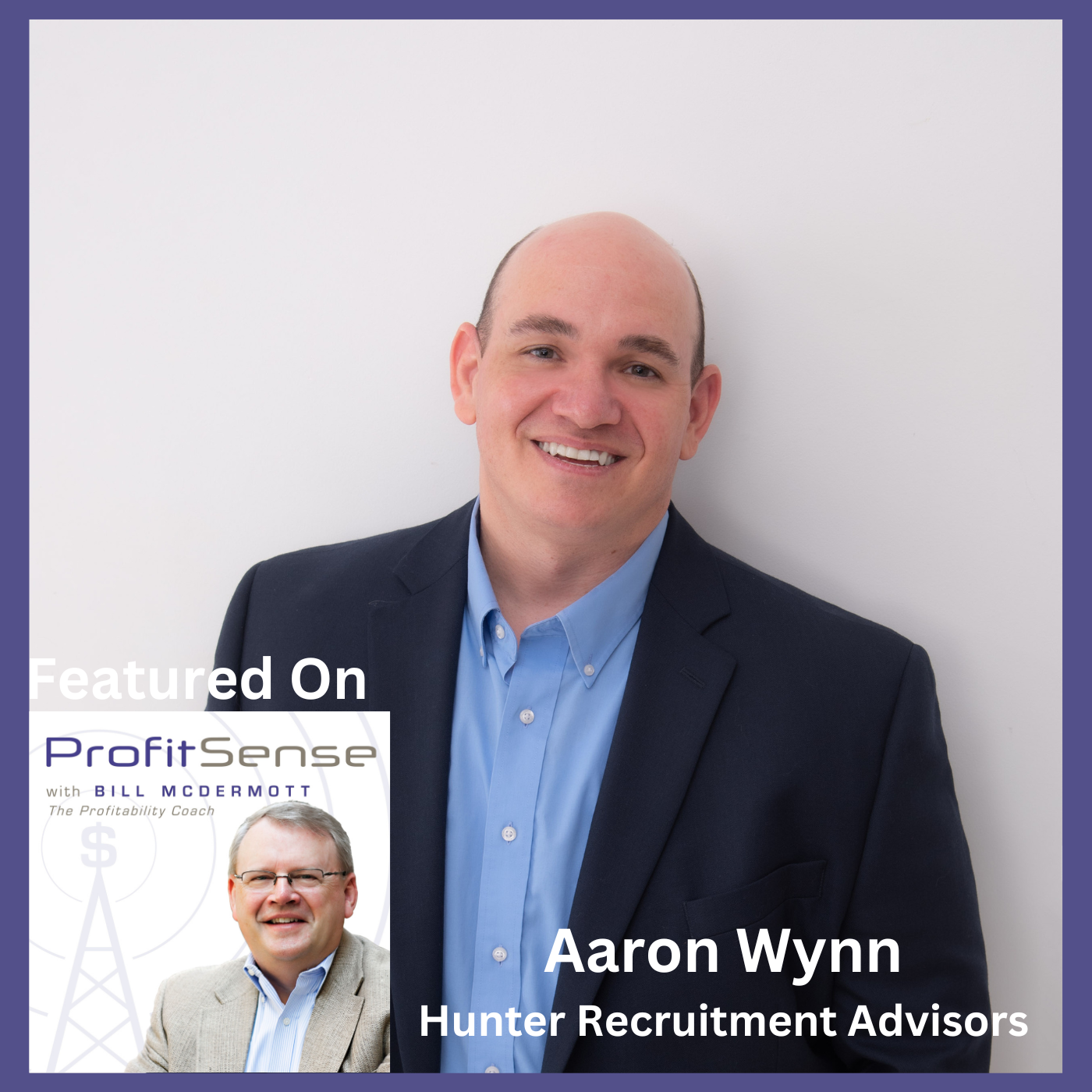
Top Three Reasons People Leave Their Job, with Aaron Wynn, Hunter Recruitment Advisors

November 6, 2023 by John Ray

Hunter Recruitment Advisors
North Fulton Studio
Top Three Reasons People Leave Their Job, with Aaron Wynn, Hunter Recruitment Advisors
Loading
00:00 /
RSS Feed
Share
Link
Embed

Download file

Hunter Recruitment Advisors

Top Three Reasons People Leave Their Job, with Aaron Wynn, Hunter Recruitment Advisors

[00:00:00] Aaron Wynn: In the top three, people often think the number one reason is gotta be pay.

[00:00:04] Pay is in the top three, but it’s not number one. But it’s one that, should always be considered. And what I try to tell business owners all the time is that you have to constantly make sure that your position and how it’s being paid is up to market. We usually get settled into a.

[00:00:21] Hey, this is what it got paid, so that’s what it’s going to stay. And the problem is they’ll get wooed by somebody else who’s more current. The second reason why people, in fact, going from three to two, the second reason why people leave their positions is the quality of life.

[00:00:37] Can’t get to Susie’s recital, can’t get to Timmy’s ballgame or they just they’re working hours nonstop and they really just want to be able to take a break, have some balance that becomes more and more important with every generation.

[00:00:50] It doesn’t mean we don’t want people to work hard. But it means that you have to respect that they have a life outside of this business. But the number one reason why people leave their jobs is the managers they work for over and over again. Can they respect them?

[00:01:07] Can they be somebody who listens to them and respects what they have to say? Will they actually, contribute to their development as an individual?

Listen to Aaron’s full ProfitSense with Bill McDermott interview here. 


The “One Minute Interview” series is produced by John Ray and the North Fulton studio of Business RadioX® in Alpharetta. You can find the full archive of shows by following this link.

Renasant Bank has humble roots, starting in 1904 as a $100,000 bank in a Lee County, Mississippi, bakery. Since then, Renasant has grown to become one of the Southeast’s strongest financial institutions with over $13 billion in assets and more than 190 banking, lending, wealth management and financial services offices in Mississippi, Alabama, Tennessee, Georgia and Florida. All of Renasant’s success stems from each of their banker’s commitment to investing in their communities as a way of better understanding the people they serve. At Renasant Bank, they understand you because they work and live alongside you every day.

Tagged With: Aaron Wynn, employee retention, Hunter Recruitment Advisors, One Minute Interviews, ProfitSense with Bill McDermott, recruiter, The Profitability Coach

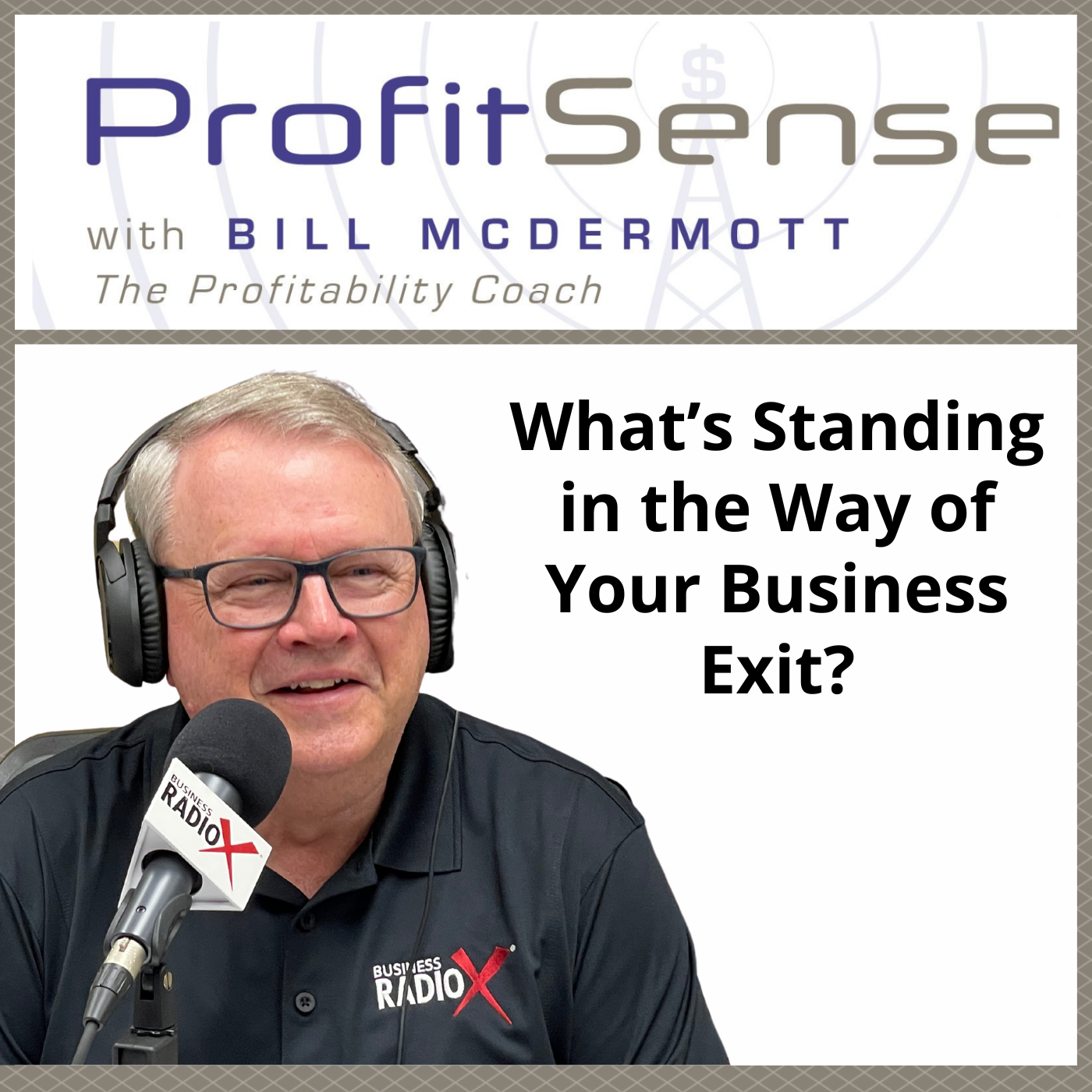
What’s Standing in the Way of Your Business Exit?, with Bill McDermott, Host of ProfitSense

October 31, 2023 by John Ray

Business Exit
North Fulton Studio
What’s Standing in the Way of Your Business Exit?, with Bill McDermott, Host of ProfitSense
Loading
00:00 /
RSS Feed
Share
Link
Embed

Download file

Business Exit

What’s Standing in the Way of Your Business Exit?, with Bill McDermott, Host of ProfitSense

In this commentary from a recent episode of ProfitSense, Bill McDermott laid out several factors that can influence how and when a business owner exits.

Bill’s commentary was taken from this episode of ProfitSense.

ProfitSense with Bill McDermott is produced and broadcast by the North Fulton Studio of Business RadioX® in Alpharetta.

Bill McDermott: I want to take a moment right now and ask my business owner audience the question, What’s standing in the way of your business exit? Recent surveys show that 80 percent of business owners will exit their business in the next ten years, yet only 25 percent have created any sort of plans in writing for a successful outcome.

I’m working with quite a few firms that are considering an exit. One situation includes a majority owner who has several partners and maybe discovering those partners don’t think like business owners and may just prefer to remain employees. Another owner is a very successful business. He’s a baby boomer and is ready to retire, but is having a hard time removing himself from day-to-day operations.

So, what are some things that could be standing in the way of our exit? First, the economy. In a recession, the value of a business may decline making it more difficult to sell. Also, if the economy is weak, it may be more difficult to find a buyer. Industry trends. If the industry is declining, the value of a business in that industry may decline. If the industry is changing, it may be difficult to find a buyer who is willing to take on the challenges of a changing industry. Third thing is taxes. This is one component that’s very complex. In almost every case, selling a business for a gain will trigger either capital gains or ordinary income tax.

So, what can we do as owners? Time the sale of our business carefully, plan carefully, and seek advice from your professional advisors, and know that alternatives such as merging with another company also exists. With careful planning and execution, it is possible to sell a business at a fair price, even in challenging economic or industry conditions.

About ProfitSense and Your Host, Bill McDermott

Bill McDermott
Bill McDermott

ProfitSense with Bill McDermott dives into the stories behind some of Atlanta’s successful businesses and owners and the professionals that advise them. This show helps local business leaders get the word out about the important work they’re doing to serve their market, their community, and their profession. The show is presented by McDermott Financial Solutions. McDermott Financial helps business owners improve cash flow and profitability, find financing, break through barriers to expansion, and financially prepare to exit their business. The show archive can be found at profitsenseradio.com.

Bill McDermott is the Founder and CEO of McDermott Financial Solutions. When business owners want to increase their profitability, they don’t have the expertise to know where to start or what to do. Bill leverages his knowledge and relationships from 32 years as a banker to identify the hurdles getting in the way and create a plan to deliver profitability they never thought possible.

Bill currently serves as Treasurer for the Atlanta Executive Forum and has held previous positions as a board member for the Kennesaw State University Entrepreneurship Center and Gwinnett Habitat for Humanity and Treasurer for CEO NetWeavers. Bill is a graduate of Wake Forest University and he and his wife, Martha have called Atlanta home for over 40 years. Outside of work, Bill enjoys golf, traveling, and gardening.

Connect with Bill on LinkedIn and Twitter and follow McDermott Financial Solutions on LinkedIn.

Tagged With: Bill McDermott, business exit, business succession planning, economy, exit planning, ProfitSense with Bill McDermott, recession, The Profitability Coach

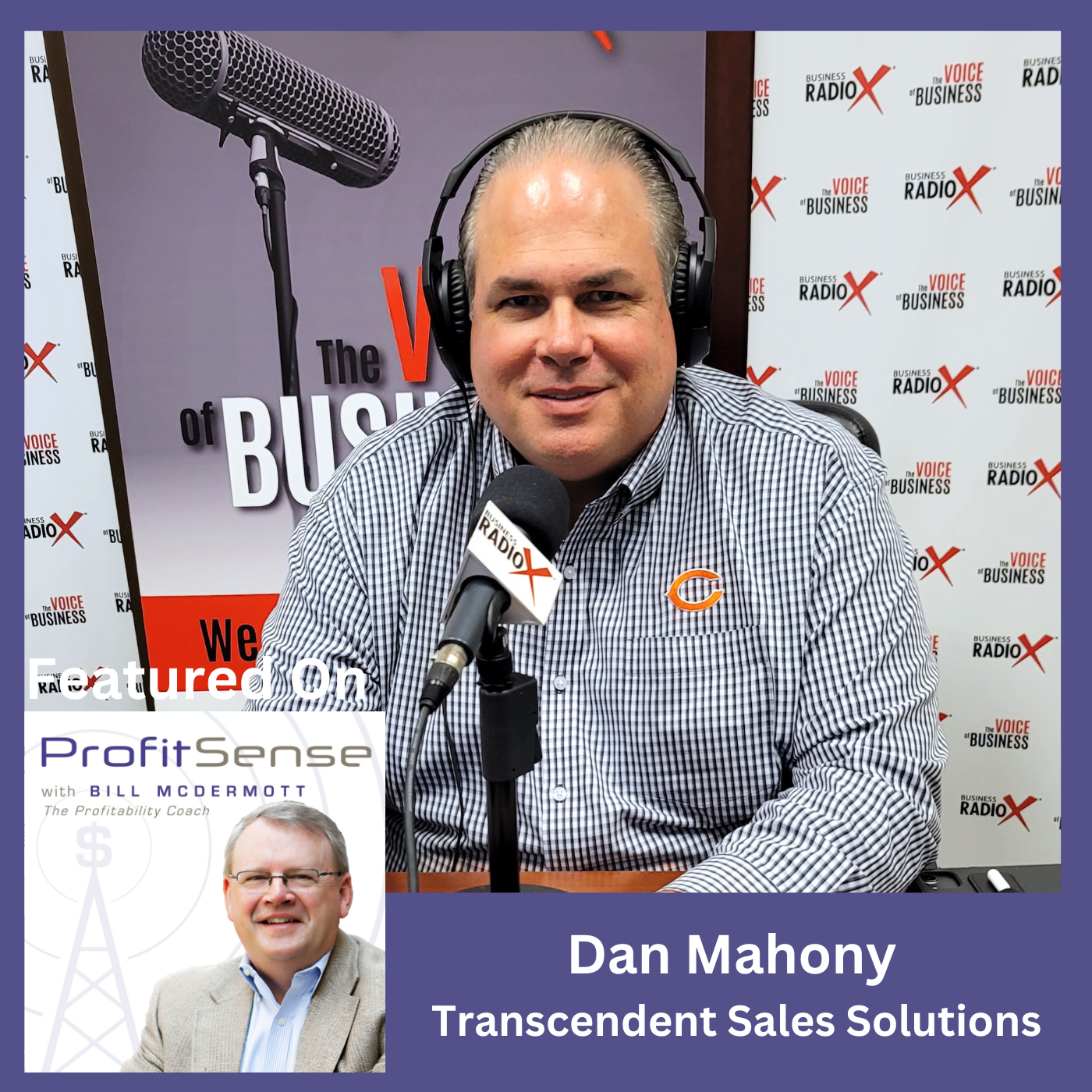
Being Prepared for a Sales Conversation, with Dan Mahony, Transcendent Sales Solutions

October 16, 2023 by John Ray

Transcendent Sales Solutions
North Fulton Studio
Being Prepared for a Sales Conversation, with Dan Mahony, Transcendent Sales Solutions
Loading
00:00 /
RSS Feed
Share
Link
Embed

Download file

Transcendent Sales Solutions

Being Prepared for a Sales Conversation, with Dan Mahony, Transcendent Sales Solutions

[00:00:00] Dan Mahoney: I think when we’re having a discussion with somebody, I, as I mentioned before, many times we’re trying to think about what we’re going to say next versus actually listening to them.

[00:00:09] I think it’s real important, from a skill set perspective is going back to being curious. I mean, realizing that you have a lot of research that you can do before you go and meet somebody. I mean, think about when we used to go to try to meet somebody 30 years ago. We didn’t know anything right now we have so much information and I think it gives us the ability, as we’re communicating and we’re listening to them, we should know more when we’re going in, which we ever did before.

[00:00:37] And if that’s the case our conversation should be much more specific than just in a general sense. Like I, I always say in sales, like the first question, in this, especially in this day and age, when somebody walks in and says, Hey, Bill, it’s nice to meet you. So tell me a little bit about your company.

[00:00:54] That’s usually the, are you kidding me? I mean, after you’re asking me about the company, you should know all these things already. Yeah. So yeah, it’s those are some things that are just real important as being prepared and, it’s just those good listening skills and, going in with a plan too.

Listen to Dan’s full ProfitSense with Bill McDermott interview here. 


The “One Minute Interview” series is produced by John Ray and the North Fulton studio of Business RadioX® in Alpharetta. You can find the full archive of shows by following this link.

Renasant Bank has humble roots, starting in 1904 as a $100,000 bank in a Lee County, Mississippi, bakery. Since then, Renasant has grown to become one of the Southeast’s strongest financial institutions with over $13 billion in assets and more than 190 banking, lending, wealth management and financial services offices in Mississippi, Alabama, Tennessee, Georgia and Florida. All of Renasant’s success stems from each of their banker’s commitment to investing in their communities as a way of better understanding the people they serve. At Renasant Bank, they understand you because they work and live alongside you every day.

Tagged With: be prepared, Bill McDermott, Dan Mahony, have a plan, ProfitSense with Bill McDermott, research, Sales, The Profitability Coach, Transcendent Sales Solutions

  • « Previous Page
  • 1
  • 2
  • 3
  • 4
  • 5
  • …
  • 9
  • Next Page »

Business RadioX ® Network


Our Most Recent Episode

CONNECT WITH US

  • Email
  • Facebook
  • LinkedIn
  • Twitter
  • YouTube

Our Mission

We help local business leaders get the word out about the important work they’re doing to serve their market, their community, and their profession.

We support and celebrate business by sharing positive business stories that traditional media ignores. Some media leans left. Some media leans right. We lean business.

Sponsor a Show

Build Relationships and Grow Your Business. Click here for more details.

Partner With Us

Discover More Here

Terms and Conditions
Privacy Policy

Connect with us

Want to keep up with the latest in pro-business news across the network? Follow us on social media for the latest stories!
  • Email
  • Facebook
  • Google+
  • LinkedIn
  • Twitter
  • YouTube

Business RadioX® Headquarters
1000 Abernathy Rd. NE
Building 400, Suite L-10
Sandy Springs, GA 30328

© 2025 Business RadioX ® · Rainmaker Platform

BRXStudioCoversLA

Wait! Don’t Miss an Episode of LA Business Radio

BRXStudioCoversDENVER

Wait! Don’t Miss an Episode of Denver Business Radio

BRXStudioCoversPENSACOLA

Wait! Don’t Miss an Episode of Pensacola Business Radio

BRXStudioCoversBIRMINGHAM

Wait! Don’t Miss an Episode of Birmingham Business Radio

BRXStudioCoversTALLAHASSEE

Wait! Don’t Miss an Episode of Tallahassee Business Radio

BRXStudioCoversRALEIGH

Wait! Don’t Miss an Episode of Raleigh Business Radio

BRXStudioCoversRICHMONDNoWhite

Wait! Don’t Miss an Episode of Richmond Business Radio

BRXStudioCoversNASHVILLENoWhite

Wait! Don’t Miss an Episode of Nashville Business Radio

BRXStudioCoversDETROIT

Wait! Don’t Miss an Episode of Detroit Business Radio

BRXStudioCoversSTLOUIS

Wait! Don’t Miss an Episode of St. Louis Business Radio

BRXStudioCoversCOLUMBUS-small

Wait! Don’t Miss an Episode of Columbus Business Radio

Coachthecoach-08-08

Wait! Don’t Miss an Episode of Coach the Coach

BRXStudioCoversBAYAREA

Wait! Don’t Miss an Episode of Bay Area Business Radio

BRXStudioCoversCHICAGO

Wait! Don’t Miss an Episode of Chicago Business Radio

Wait! Don’t Miss an Episode of Atlanta Business Radio