
Business RadioX ®

  • Home
  • Business RadioX ® Communities
    • Southeast
      • Alabama
        • Birmingham
      • Florida
        • Orlando
        • Pensacola
        • South Florida
        • Tampa
        • Tallahassee
      • Georgia
        • Atlanta
        • Cherokee
        • Forsyth
        • Greater Perimeter
        • Gwinnett
        • North Fulton
        • North Georgia
        • Northeast Georgia
        • Rome
        • Savannah
      • Louisiana
        • New Orleans
      • North Carolina
        • Charlotte
        • Raleigh
      • Tennessee
        • Chattanooga
        • Nashville
      • Virginia
        • Richmond
    • South Central
      • Arkansas
        • Northwest Arkansas
    • Midwest
      • Illinois
        • Chicago
      • Michigan
        • Detroit
      • Minnesota
        • Minneapolis St. Paul
      • Missouri
        • St. Louis
      • Ohio
        • Cleveland
        • Columbus
        • Dayton
    • Southwest
      • Arizona
        • Phoenix
        • Tucson
        • Valley
      • Texas
        • Austin
        • Dallas
        • Houston
    • West
      • California
        • Bay Area
        • LA
        • Pasadena
      • Colorado
        • Denver
      • Hawaii
        • Oahu
  • FAQs
  • About Us
    • Our Mission
    • Our Audience
    • Why It Works
    • What People Are Saying
    • BRX in the News
  • Resources
    • BRX Pro Tips
    • B2B Marketing: The 4Rs
    • High Velocity Selling Habits
    • Why Most B2B Media Strategies Fail
    • 9 Reasons To Sponsor A Business RadioX ® Show
  • Partner With Us
  • Veteran Business RadioX ®

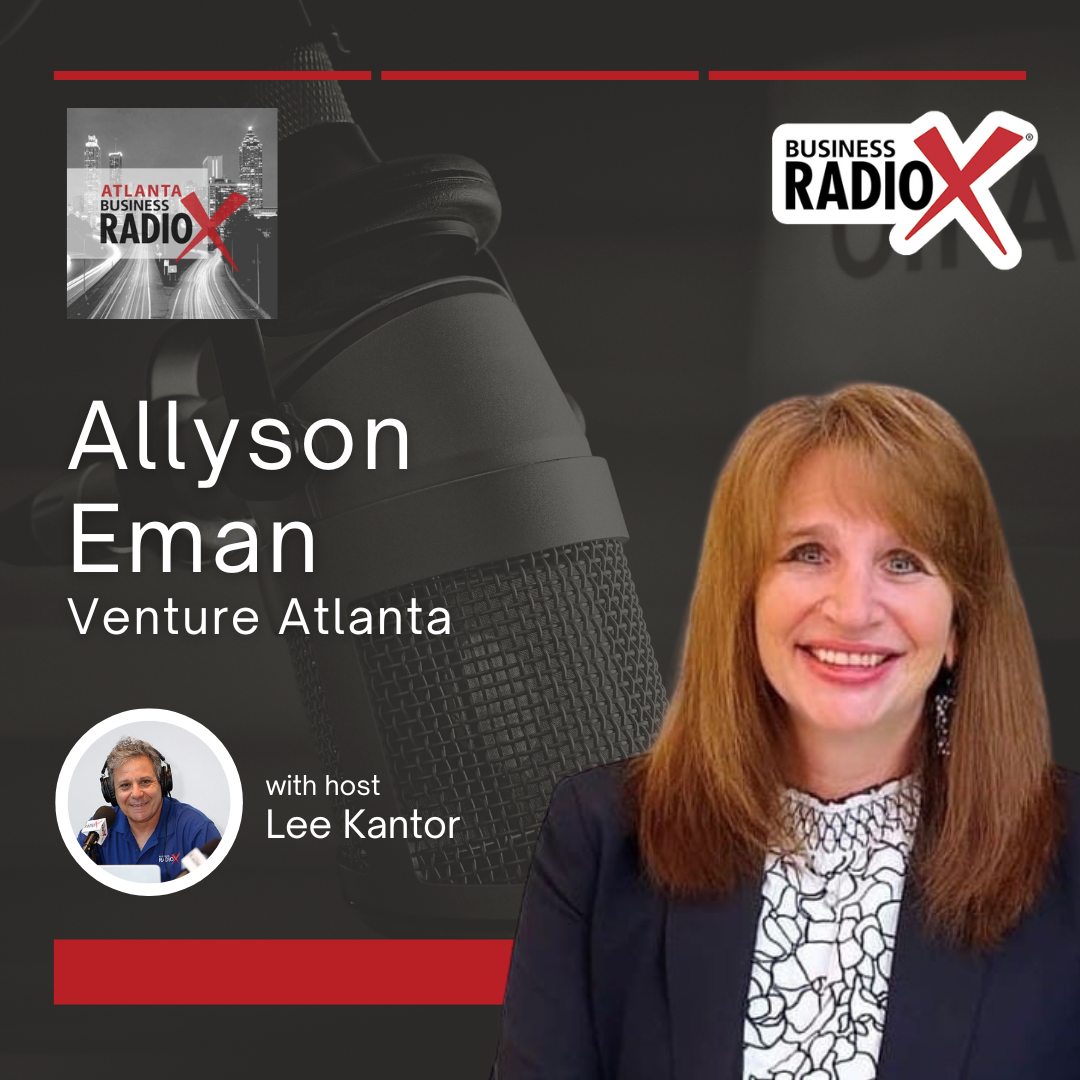
The Power of Connection: How Venture Atlanta Bridges Entrepreneurs and Capital

October 17, 2025 by Jacob Lapera

Atlanta Business Radio
The Power of Connection: How Venture Atlanta Bridges Entrepreneurs and Capital
Loading
00:00 /
RSS Feed
Share
Link
Embed

Download file

In this episode of Atlanta Business Radio, Lee Kantor interviews Allyson Eman, CEO of Venture Atlanta. They discuss the evolution of Venture Atlanta into one of the nation’s largest venture capital conferences, new event formats, and efforts to support diverse founders. Allison highlights the Southeast’s growing startup ecosystem, challenges in attracting venture funding, and the importance of community reinvestment. She also shares advice for aspiring entrepreneurs and details about this year’s pitch competition and networking events. The episode is sponsored by Kennesaw State University’s Executive MBA program.


Allyson Eman serves as the CEO of Venture Atlanta, one of the nation’s largest and most prestigious venture capital conferences. Venture Atlanta will hold its 17th annual event on October 8-9, 2024 at The Woodruff Arts Center and Atlanta Symphony Hall. She has more than 30 years of marketing, communications, sales leadership, and business development experience.

In 2007, she took on the role of Executive Director for the newly created Venture Atlanta annual conference. She has worked with key business leaders across the country and founding organizations Metro Atlanta Chamber, Atlanta CEO Council, and Technology Association of Georgia to build Venture Atlanta into the premier event it is today.

In 2020, she was promoted to its CEO. Now in its 17th year, the conference is the Southeast’s largest investor showcase with over 1,500 attendees including venture capitalists, entrepreneurs, and senior business executives. With a primary mission to connect companies with capital, Venture Atlanta has helped launch 843 companies and raise $7.7 billion in funding, also spinning out $17 billion in successful exits.

Prior to joining Venture Atlanta, she was Senior Vice President of Marketing and Communications for SouthStar Funding, a wholesale mortgage lender headquartered in Atlanta. During her nine-year tenure with the firm, she helped it grow from eight to 800 employees with 30 offices nationwide.

SouthStar Funding grew to be one of the most reputable and respected wholesale mortgage lenders in the country under her leadership. Prior to SouthStar, she worked for SouthTrust Bank as a Branch Marketing Manager overseeing the marketing platform for 100 branches across Georgia.

She received a bachelor’s degree from the University of Florida. She resides in Marietta with her husband and two children.

Connect with Allyson on LinkedIn.

What You’ll Learn In This Episode

  • Evolution and growth of Venture Atlanta over 18 years.
  • Highlights of the current year’s event, including new session formats and topics.
  • Challenges and opportunities for founders in Atlanta and the Southeast region.
  • Diversity and inclusion efforts in funding, particularly for women and underrepresented groups.
  • The regional startup ecosystem and the importance of collaboration and co-working spaces.
  • Discussion on the funding landscape in the Southeast compared to other major markets.
  • The significance of community reinvestment by successful founders.
  • The introduction of a major prize for seed-stage companies at the event.
  • Advice for aspiring entrepreneurs on how to participate in future Venture Atlanta events.

Transcript-iconThis transcript is machine transcribed by Sonix.


TRANSCRIPT

Intro: Broadcasting live from the Business RadioX studio in Atlanta, Georgia. It’s time for Atlanta Business Radio, brought to you by Kennesaw State University’s Executive MBA program. The accelerated degree program for working professionals looking to advance their career and enhance their leadership skills. And now, here’s your host.

Lee Kantor: Lee Kantor here, another episode of Atlanta Business Radio. And this is going to be a good one. But before we get started, it’s important to recognize our sponsor, CSU’s executive MBA program. Without them, we wouldn’t be sharing these important stories. Today on the show, we have the CEO of Venture Atlanta, Allyson Eman. Welcome.

Allyson Eman: Thanks, Lee. Thanks for having me.

Lee Kantor: Well, I’m excited to get caught up for folks who aren’t familiar. Can you share a little bit about Venture Atlanta mission purpose? How you serving folks?

Allyson Eman: Absolutely. So this is year 18. Lee. So I have had the pleasure of running this organization for 18 years, and hopefully it just keeps getting bigger and better. So it’s one of the largest venture capital conferences in the country that connects tech entrepreneurs to venture capitalists and sources of capital, and gathers together everyone who really supports entrepreneurs and helps them thrive and grow.

Lee Kantor: So, like you said, you’ve been doing it for 18 years now. What has got you excited about this year’s venture? Atlanta.

Allyson Eman: You know, what I love is that we change it up every single year. So we always try to do something a little bit different, a little bit better. So for a long time, all of our content was all kind of main stage content in the big room threw up, you know, some threw out some keynotes and panels and that kind of stuff. And this year we’re we’re a lot more focused on on bringing, bringing founder, content, investor content, content that might mean a smaller audience. So we actually have eight executives who are sharing stories with like, you know, small groups of 50 instead of 500, um, in topics like, you know, how to stretch a marketing budget and, you know, having those tough conversations with people as you grow and go to market strategies and sales strategies and things like that. And then we actually are adding a whole procurement session to our conference. And that might seem like a strange thing that we’ve never done, but we also want to make sure we’re targeting founders as they grow in their journey. So we want to help founders sell into corporates. So we’ve got a panel with Fiserv, Southern Company, The Home Depot and Inspire Brands, and then we’ve got a breakout session that has those leaders and a bunch more FIS global Georgia Department of Health, you know, several more. And of course, my mind’s blanking right now and there’s ten people, but, uh, all sorts of, uh, you know, great corporates that will that will help everyone really demystify the sales process and help people understand when is the right time to sell into those companies.

Lee Kantor: So for having done this for almost 20 years now, are you seeing anything different about a founder or the founder, a founder, a founder, or is the personality or qualities or traits of a founder different today than they were when you started?

Allyson Eman: You know what? I think founders always have to be scrappy. They always have to have grit. And I think it’s true now more than ever. You know, there’s there was years, uh, that maybe funding was, was just flying out. Everyone, you know, you look back to 2020 and 2021, there seemed to be capital everywhere. And it wasn’t hard for people. Now they’re having to be a little scrappier. They’re having to stretch their dollars a little bit more. Investors are telling them it’s going to take a little longer in between, in between rounds. So I think there’s always going to be a an evolution for founders. But what I think is great for founders, especially here in Atlanta, the evolution that I’ve seen as wow, what’s happened in Atlanta and the collaboration and the co-working spaces like Atdc, seen Atlanta Tech Village and the Russell Center and Tech Alpharetta. And you know, there are so many great resources available for entrepreneurs. And I think those those weren’t around 18 years ago, you know, Atdc was here. And obviously they’ve been been around for a long time and and an incredible organization. But now there’s so much more now.

Lee Kantor: Are you seeing kind of, um, community form around maybe underserved entrepreneurs to give, uh, folks with all different types of backgrounds the opportunity to tap into some of this startup ecosystem?

Allyson Eman: Yeah, absolutely. I mean, I know there’s a there’s an event going on tonight, uh, with, with Morehouse Spelman that that’s, you know, to help, um, to help founders. We actually have an initiative that we do a dinner, uh, the last night of Atlanta. And it’s just a support female founders to to to put female founders in the room with, um, other investors and, you know, the venture capital money. Still, still. You know, it doesn’t go to women. I mean, under 2% goes to women and under 2% go to black founders. And it’s just it’s hard. And, you know, we want to do whatever we can to support those groups.

Lee Kantor: Now, when it comes to, um, creating this ecosystem that we’ve been talking about for 18 years now and, and it’s, uh, it’s grown dramatically. Are you seeing it being kind of self-sustaining where the folks that 18 years ago got funding, you know, created those kind of, uh, super large enterprise unicorn companies, are they kind of reinvesting back into the community, or is it something that they, you know, get the money and then they’re like, you know, on a beach somewhere?

Allyson Eman: Um, some definitely are. I think what what we could use is a lot more of that. I mean, obviously, David Cummings is probably the the quintessential, uh, founder who, you know, sold Pardot and opened Atlanta Tech Village and is now transforming south downtown. So, you know, he has given back so much and I think there’s definitely others. I mean, you look at tech operators. I mean, that fund was started by Tom Noonan. And you know, all the gentlemen that and people that are involved in that fund have all been true operators, which is, you know, where the name came from and they’ve all put money back in. You know, we we have a decent angel network here. I think, uh, Tie Angels has done a really good job being a great resource. Obviously you’ve got the Atlanta Tech Angels, but if we had a little more vibrant, um, angel ecosystem, I think it would help as well.

Lee Kantor: So now, um, as part of this year’s event, there’s a big prize. Can you talk a little bit about that?

Allyson Eman: Yeah. So, uh, ten seed stage companies. So these are early. These are early, folks. Pre-seed seed companies that are, uh, going to pitch on stage for a chance at a $375,000 investment. And that is an investment with four incredible funds co-founders Capital, Tye, angels, Knoll Ventures, and Front Porch Venture Partners. And actually, what’s great is one of the funds is out of North Carolina, one’s out of Tennessee, and two are local here in Atlanta. So great to see four groups coming together that, you know, generally wouldn’t work together. But we know we’re going to have another great winner, um, announced on Thursday.

Lee Kantor: And what about the region as a whole? I mean, you know, we’re biased towards Atlanta as kind of the center of the universe, but are you seeing the region as a whole kind of grow and, and be this kind of now regional ecosystem when it comes to startups and venture funding?

Allyson Eman: I’m sorry, can you repeat that? I spaced out for one second.

Lee Kantor: Um, like we talk a lot about Atlanta, obviously, but how is the region doing? How is the southeast doing when it comes to startups and, um, and venture funding?

Allyson Eman: I mean, the southeast is still getting a fraction of, of funding. I mean, there’s still no comparison to Boston to to Silicon Valley, into New York. We’re still getting a fraction. And I you know, the interesting thing is we’ve got 400, almost 450 investors coming to Atlanta, coming to invest in companies from across the southeast. Our companies are seeing great success. I mean, we’ve had three huge announcements just in the last few weeks. Price pix was one of our companies that just announced a huge acquisition. Um, uh, ad pipe just announced a huge raise. Rainforest just announced a huge a huge raise. So there are companies getting, you know, funding, but not enough. I mean, not not not compared to what you see in other other markets. We’re still not getting our piece of the pie.

Lee Kantor: So why is that?

Allyson Eman: I don’t know I don’t know I wish I wish I could, uh, could have the magic answer and wave a magic wand and everyone would, would get what they needed. But there there continues to be be a problem. And everyone always says it’s a funding problem. But you look at, you know, there’s a lot of funds here and there’s a lot of money that that comes into Atlanta, but I don’t know why are our our startups aren’t getting the money that that they should.

Lee Kantor: Is it just.

Allyson Eman: I can’t answer I can’t answer why why a VC doesn’t write a check?

Lee Kantor: Well, I mean, it’s one thing of not writing a check, but it’s another thing of writing a check somewhere else for maybe a lesser company.

Allyson Eman: Right, right. Yeah.

Lee Kantor: Um, so we don’t have an answer to that. There’s no, um, no magic wand in the 18 years of you doing this that, uh, you can, uh, kind of point to and say, hey, you know, take a look at us or like, is there anything we could be doing or is there any activity you’d like to see, maybe public private activity that would attract more funding or funders?

Allyson Eman: I don’t know, I think I think Atlanta has always had a little bit of a marketing problem that people don’t know. Everything’s here. I mean, if you look at it where the payments capital, capital really of the country, I mean, we have incredible, you know, cybersecurity companies here in Markham. I mean, we’re building in a great climate tech group here with what you know, Cox is doing and generator. So there’s so much here and and honestly Lee, maybe we’re just not telling the story. Maybe people don’t know know things. And what happens when people come to venture Atlanta is like I always hear funds from all over the country going, man, like there’s a lot of good stuff here. And it’s like, why did you not know that? You know? So I kind of always continue to think we have a little bit of a, of a marketing problem that, that we need to do a little better job shouting it from the rooftops. And, you know, I think you go out to Silicon Valley and there’s, there’s a fund after fund after fund after fund, and maybe it’s just a little bit easier to connect with them. But, you know, you look at what’s going on here. I mean, there’s events happening all the time. There’s collaborations happening all the time. So I, you know, maybe we’re just on the cusp of things, but there’s definitely more happening here, certainly, than there was ten years ago, no doubt.

Lee Kantor: And it’s one of those things, I think, that one of that helps Georgia as a whole is the diversity of our economy. And maybe that in some ways is holding us back because our economy is so diverse. There aren’t like kind of the density of standouts in one particular industry. There’s a splattering amongst lots of industries and that, you know, if there was 10 in 1, maybe that would get more attention as opposed to 1 in 10.

Allyson Eman: Right, right. Yeah.

Lee Kantor: So, um, what do you need more of? How can we help you? I’m sure the event is sold out. I’m sure that you don’t need sponsors. What do you need more of? And how can we help you?

Allyson Eman: Yeah, you know what? At this point, we don’t really need more of anything. Um, you know what? I think it’s never too early to for people to think about next year. Obviously. You know, as of next Monday, I’ll be working on 2026. So if you miss this year, get in touch with us about next year. This event happens annually. And you know what’s amazing is how many people have reached out to me in the last two days. Hey, just found out about this. Can I have a ticket? Well, no. You know, unfortunately you can’t. But, I mean, we’re we’re we’re basically on the brink of of of sellout. I mean, we’ll probably take a few people at the door, but, um, you know, we’ve got well over 1500 approaching 1600 people. So it’s definitely a pretty, pretty significant crowd. But, you know, and I asked would always be for, for investors to put money in southeast companies to look at the companies that we have selected this year. There’s a company lineup on our website. And, you know, we we did a lot of due diligence on these companies. They’re great companies like let’s help them get funded.

Lee Kantor: Now. What’s advice for next year’s aspiring entrepreneur that wants to get into Venture Atlanta next year? What is the thing that they have to do in order to stand out at Venture Atlanta?

Allyson Eman: Well, they actually have to apply. So that’s the funny thing is that we’ve got this open application process that, by the way, is completely free. It’s open all of May, all of June, all of July and half of August. And people will be like, oh, oops, didn’t see it. Well, make sure you’re following us on social media. We’re on every single channel LinkedIn, Instagram, threads X, Facebook. I mean, our team does a great job with social media. Uh, you know, make sure you are subscribed to our newsletter so that, you know, when applications open and get your applications in before the last day. You know, we get 600 plus applications. And what’s crazy is we get 400 in the last three days.

Lee Kantor: And then how many do you typically pick?

Allyson Eman: Uh, we pick about 85.

Lee Kantor: All right. So you can’t win if you don’t play right. You got to get you gotta apply.

Allyson Eman: Exactly. You gotta you gotta apply. But, you know, it’s it’s just the amount of people that have reached out. And, you know, what’s funny is, like, everyone seems to, you know, come out of the woodworks. Hey, I’m ready to volunteer. Hey, do you have discounts for this? I mean, you know, we we we’re pretty predictable. We open registration in April, we open company applications in May. Things, you know, our events going to probably be the exact same time next year. So people can pretty much plan it on their calendar.

Lee Kantor: Yeah. Subscribe to the newsletter. So you just kind of can you don’t have to think that much. It’ll remind you there’s no shortage of reminders.

Allyson Eman: And trust me, we do. Trust me, we do. But I mean, you know, for everyone that’s coming this year, we hope everyone has an incredible time. We work really hard. You know, we’ve got a great cocktail party and different lunches and different fun. There’s tons of fun events happening around the conference. I know, you know, Wednesday morning there’s there’s a founder and founder, jog. And that started, I think five years ago with like, you know, 2 or 3 people. And now there’s like 150 people that run through run through Midtown. And tomorrow one of our sponsors, Reed Smith, is hosting a pickleball tournament down in West Midtown. And we’ve got 100 investors coming to play pickleball. So there’s lots of fun stuff going on.

Lee Kantor: And if people want to connect the website.

Allyson Eman: Uh, venture.org.

Lee Kantor: Well, Allison, thank you so much for sharing your story, doing such important work. And we appreciate you.

Allyson Eman: Thank you so much, Lee.

Lee Kantor: All right. This is Lee Kantor. We’ll see you all next time on Atlanta Business Radio.


Tagged With: Allyson Eman, Venture Atlanta

Allyson Eman With Venture Atlanta

September 23, 2024 by Jacob Lapera

Atlanta Business Radio
Allyson Eman With Venture Atlanta
Loading
00:00 /
RSS Feed
Share
Link
Embed

Download file

Allyson Eman has more than 30 years of marketing, communications, sales leadership and business development experience. In 2007,Allyson took on the role of Executive Director for the newly created Venture Atlanta annual conference. She has worked with key business leaders across the country and founding organizations Metro Atlanta Chamber, Atlanta CEO Council and Technology Association of Georgia to build Venture Atlanta.

In 2020, she was promoted to CEO. The conference is now in its seventeenth year and has become the largest venture capital conference on the east coast with over 1,500 attendees including venture capitalists, entrepreneurs, and senior business executives. Venture Atlanta’s primary mission is to connect companies with capital and it has helped emerging technology company’s raise over $7.8B to facilitate growth. Venture Atlanta has over 850 alumni in its network and many have seen exits totaling over $18B.

Prior to joining Venture Atlanta, she was the Senior Vice President of Marketing and Communications for South Star Funding, a wholesale mortgage lender head quartered in Atlanta. During her 9- year tenure with the firm, she helped the company grow from 8 employees to 800 with 30 nationwide offices.

South Star Funding grew to be one of the most reputable, respected and trusted wholesale mortgage lenders in the country under her leadership. Prior to joining South Star, she worked for SouthTrust Bank as a branch marketing manager overseeing the marketing platform for 100 branches across Georgia.

Allyson received a BS from the University of Florida and resides in Marietta with her husband and two children.

About Venture Atlanta

Venture Atlanta, the Southeast’s technology innovation event, is where the region’s most promising tech companies meet the country’s top-tier investors. As the Southeast’s largest investor showcase helping launch843 companies and raise $7.7 billion in funding to date, the event connects the region’s top entrepreneurs with local and national investors and others in the technology ecosystem who can help them raise the capital they need to grow their businesses. The annual nonprofit event is a collaboration of the Atlanta CEO Council, Metro Atlanta Chamber, and the Technology Association of Georgia(TAG).

Connect with Allyson on LinkedIn and follow Venture Atlanta on Twitter.

What You’ll Learn In This Episode

  • Her journey and how she came to lead the Venture Atlanta Conference
  • Why is Venture Atlanta a hot networking opportunity for the broader business community
  • How can ecosystem builders around the Southeast partner with Venture Atlanta

Transcript-iconThis transcript is machine transcribed by Sonix.


TRANSCRIPT

Intro: Broadcasting live from the Business RadioX studio in Atlanta, Georgia. It’s time for Atlanta Business Radio, brought to you by Kennesaw State University’s Executive MBA program, the accelerated degree program for working professionals looking to advance their career and enhance their leadership skills. And now, here’s your host.

Lee Kantor: Lee Kantor here, another episode of Atlanta Business Radio. And this is going to be a good one. But before we get started, it’s important to recognize our sponsor, CSU’s executive MBA program. Without them, we couldn’t be sharing these important stories. Today on Atlanta Business Radio, we have Alison Eman with Venture Atlanta. Welcome.

Speaker3: Thanks, Lee.

Lee Kantor: I am so excited to get caught up for the two people out there who aren’t familiar with Venture Atlanta. Can you talk a little bit about mission purpose and how you’re serving folks?

Speaker3: Absolutely. So we are the largest venture capital conference, really, on the East Coast that connects tech companies to capital. So we’re here to help companies grow and help them get funding.

Lee Kantor: And how long has Venture Land been around?

Speaker3: 17 years. And I’ve been running it the whole time.

Lee Kantor: The whole time. So what’s your backstory? How’d you get involved with this initiative?

Speaker3: Yeah. You know, the funny thing is, I never had any thought that I would run a venture capital conference for for a living, so I was actually in banking, again, not what I was looking to do in college. Thought I was going to go into journalism or television production and ended up in banking, then ended up running a the marketing for a mortgage company. Took that company from eight employees to 800 employees, 30 offices nationwide. And then during the lovely mortgage and banking crisis. Lost my job there and, you know, really wasn’t sure what I wanted to do, but knew I wanted to do something totally different. And you know, when they say sometimes things fall in your lap. Well, this kind of fell in my lap. I had a friend who worked at Normalcy Partners, and she kind of did the phone call one day of, hey was standing at the water cooler, and they’re looking for an executive director at the time. I’m now the CEO, but an executive director to run this new venture capital conference that they want to bring to town. And and, you know, my initial reaction was, I have no experience in tech, no experience in venture capital. And I’m not really sure I’m the right person for this, but I put my name in the hat. And, you know, the interesting thing was, is I kind of kind of got some backstory that that most of the people that, that they interviewed did have that experience, had worked for nonprofits, had, you know, some background in venture capital and tech, but it was the marketing expertise and the passion that I had and the energy that they felt like I brought to the interview that that helped me land the job. So obviously, you know, when they interviewed me, they showed me a logo and said, this is what we want you to build, and that’s what I have. So it’s something I’m super proud of. And, you know, I know it’s been instrumental in helping, you know, companies raise almost $8 billion and see almost $18 billion in exits. So really, really proud of of what has been accomplished.

Lee Kantor: Now, any advice for anyone else in the association world that may be is hiring a new executive? What can you glean from, you know, coming from a not a traditional kind of background when it comes to association management and things like that, but still able to achieve a great deal in that space. Any advice or do’s and don’ts when it comes to launching or rebooting an association.

Speaker3: Yeah. You know, I would say just because the person you’re interviewing doesn’t check all the boxes doesn’t mean they’re not the right person. I mean, I didn’t remotely check all the boxes, but, you know, they dug deep and learned more about me. And, you know, I remember Alan Mosley saying, I don’t care that you don’t know a lot about venture capital. You can learn that. We can teach you. So, you know, is the person that you’re talking to or how can the association grow? Or how can this person bring expertise, you know, through other through their other skill sets that could help, you know? So again, I don’t think it has to be, you know, a person who has the exact skill set to to mean that they’ll be successful.

Lee Kantor: And is there anything like tactically you did to help kind of give venture into the escape velocity? It needed to, you know, last 17 years and make the impact that it has.

Speaker3: Uh, I, you know, I definitely pride myself on execution and, you know, really putting myself in the, in the role of if I was an attendee, which I’m always saying, what? What is the experience that I want? So every single decision that I do, I’m always putting that hat on, you know, what would the attendee want to be? How can I how can I ensure that I execute this in the best way possible? So, I mean, I, I kind of go all in every single year. And, you know, the funny thing is, is that, you know, my, my friends and my family are all like, oh, it’s like an old hat for you. Now it’s not, you know, it’s not all that. It’s a new event every single year with different things, with different people, with different problems, with different challenges. And you’ve got to, you know, adapt every year. But, you know, I my biggest thing is that I is I don’t go, uh, you know, same same old, same old, like not at all. Venture is never same old, same old.

Lee Kantor: Well, speaking of which, what, uh, can you share a little bit about this year’s event? What? For anybody who hasn’t attended or for people who have attended many times, what is going to happen at Venture Atlanta this year. Maybe that’s different or special.

Speaker3: Yeah. So you know what’s so exciting is Venture Atlanta when it started was was really a day and a half. It was a day and a half. There was maybe a dinner that kicked off things the night before the conference and, um, maybe another, you know, dinner that happened. Well, oh my goodness. Like, if you look on our website, we’ve got things happening on Sunday this year, two days before the conference, you know, partnering with Avon South and partnering partnering with Dell for startups on a pitch competition that they’re doing. And on Monday, there’s a slew of activities for founders, for investors, for people that are coming into town to build connections. And then the conference first kicks off on Tuesday. And we’ve got, you know, as always, new and exciting additional programing. You know, we always look at at, you know, how can we serve our our community in the best way. And one of the things we’re doing this year is actually bringing some executive sessions to the conference where we’re actually going to put, you know, 25 or so founders in a in a small setting, in a small room with executives that are teaching them, you know, things about about, um, top ten things to look at, you know, um, what I wish I had the names of the, of the sessions in front of me, but basically all learnings from their experiences in, in growing companies in what they saw and how to execute and really tactical hands on things that will help these founders grow and build their companies. And also, you know, again, we just continue to to bring great to bring great keynote speakers. Our keynote speaker this year is Dawn Staley, who is the USC, uh, women’s basketball national championship head coach. So really looking at leadership, looking at performance, looking at, you know, challenges. And you know, we always want people to walk away with Venture Atlanta not only making great connections but learning.

Lee Kantor: Now, you mentioned when you’re kind of curating the event, you’re trying to look and empathetically as the attendee. So if you were giving advice to an attendee, how would you recommend they attack this multi-day event with so many different things to take part in? How would you kind of go about kind of wringing out the most value from it if you were an attendee?

Speaker3: Yeah, absolutely. So we actually send out an email in advance of, you know, kind of like a know before you go type thing. So we send out a link to the whole attendee list, you know, obviously not with contact information, but name company title. So, you know, participant type. So you could know if it’s an entrepreneur and investor or whomever. And we also send out a link to our digital conference book. So you can really look at what companies are going to be there, what sponsors are going to be there, what speakers are going to be there. You know, we’ve had the schedule published for months. So I tell people, do your homework. You know, if there are certain people that you want to meet, we’re handing everything over to you. Um, we’ve got a mobile app that’s opening next week so people can set up meetings. We’ve got we’ve got over 100 meeting tables that will be at the conference for people to connect with each other and, you know, additional opening, open meeting, um, areas. So, you know, everything is not going to come to you, you know, yes, you’re going to run into people sitting at lunch or in the hallway or, I mean, it could be in line at the bathroom or whatever the case may be. But, you know, if you’re a founder, know what? Know what activities are available to you as a founder? We sent out an email yesterday just highlighting, you know, just a little highlight of the schedule to the founders. I mean, that email got, I think, a 75% open rate and everyone’s signing up for events like crazy. So, you know, we’re we’re handing everything to you. You just gotta you gotta do a little homework too. You gotta actually look at the schedule. You gotta maybe open the mobile app and download it. And I think people that that truly have a deep understanding for who’s there and what’s happening have a great experience.

Lee Kantor: Now. Is there any stories you can share over the 17 years of maybe the most, um, rewarding or inspirational kind of connections that were made or, or deals that were done or people or relationships that were created through the event.

Speaker3: Yeah, there’s, you know, there’s so many there’s so many fun ones. Um, there’s a there’s a couple good ones that I really like. One is, um, there’s a company called, uh, that was called car 360. Uh, Bruno Francois was the, uh, CEO, and he pitched at our event one year, and the next year I think they were looking for, you know, someone to come in as their CEO and they, you know, found John Hanger in as an attendee and he ended up, you know, taking over car 360. Well, then another year we had Ernie Garcia, who’s the CEO of Carvana. He was one of our keynotes. And I remember Bruno texting me saying, you know, can we please, you know, come to the conference. And I was like, oh, we’re sold out. You know, Mark Cuban’s the keynote. It’s packed standing room only. And he was like, we just really want to see Ernie Garcia. We want to talk to him. And I was like, you know, I don’t I can’t have you, you know, like, guarantee you could talk to him. Well, he and his wife kind of kind of stalked him at the bathroom, like stood outside the bathroom and waited for him to come out. And they kind of grabbed him and were like, hey, let us show you our technology, and Ernie Garcia ended up buying the company. So that little that little move. Um, and I remember one day they called me and they were like, hey, we want to take you to lunch. We want to thank you. Like, you know, look what you did for us.

Speaker3: And it was just so cool, like, such a such a fun story. And, you know, another one of our companies, um, same thing. It was, you know, entrepreneurs tend to wait till the last minute. Another one where it’s like, please, can I have a ticket? You know, and I was like, you know, again, oh, we’re sold out. We’re really full. And please, please, Allison, you know, so so, you know, somehow I always end up bending. And he came to the conference and he ended up sitting at a lunch or something next to a fund that ultimately gave them $25 million that he was raising. So he was like, oh my God, thank you, and sent me a gift. And again, my, my, my premise here is not about people thanking me, but it’s just about, you know, it just was was some great stories we have. You know, I went to an event in North Carolina in December. I felt like everywhere I turned, someone was like, I met this fund at Venture Atlanta who’s now on my cap table, who’s now one of my investors or, you know, the CEO roundtable sessions. Someone told me that after sitting through those, they ended up, um, the guy that they that was leading the session ended up becoming one of his investors and sits on his board now. So, you know, there’s just been some incredible, um, stories over the years. And, you know, I know there’s hundreds and hundreds of them, but but those are just a few.

Lee Kantor: Now, how have you seen the ecosystem evolve in these 17 years? You know, at one point, I’m sure when it started, this was like a hey, this is a crazy idea. Let’s see what happens. And now, 17 years later, it seems like the whole region is embracing this. And there’s a lot more collaboration. So is are you seeing that as well as the southeast kind of now the hub and it’s evolved well beyond Atlanta.

Speaker3: Oh yeah. For sure. So you know, when it started, we were we were a 3 or 400 person conference just focused on Georgia, you know, and our our goal that first year was really to bring capital outside capital to Georgia. We only had a handful of funds here. And we didn’t have things like Atlanta Tech Village and the Russell Center and Tech Alpharetta and you know, all of those type of things. We had Atdc, you know, incredible organization, but we didn’t have all the others that were in the sprawling markets across the city, you know, even things in Augusta and Columbus and, um, other markets. So, you know, not only has the ecosystem in Atlanta evolved incredibly, so has, you know, there have been incredible growth in the Carolinas, in Tennessee, in Florida, in in Austin. And so, you know, we sat and looked at, you know, what made sense and what made sense was for us to kind of we’ve said before that we’re kind of the Super Bowl where, you know, it’s there’s there’s regional events all over the place and certainly some massive conferences around the country. But, you know, Venture Atlanta really is the largest. And, um, you know, we’ve looked at these other organizations like in Tampa Bay, in, uh, New Orleans, in Austin with Capital Factory in, you know, the National Entrepreneurship Center, the, you know, Innovate Charlotte up in Charlotte and really talk to other groups about partnering with them.

Speaker3: And, you know, this year we really saw some incredible partnerships where these organizations were reaching out to me saying, you know, how do we get involved? How can we get our companies front and center or a group out of Birmingham that we’re working with this year? And they’re actually coming to Atlanta and, you know, building a clean tech accelerator with Cox Enterprises. So, you know, there’s there’s so much exciting stuff going on. Also for us, you know, we’ve also seen some great partnerships with corporates. So you know this year I think we have the most corporates we’ve had in a long time. But you know Georgia Pacific and Southern Company and Home Depot, chick fil A Cox um, you know Goldman Sachs, Invesco, um I’m sure I’m missing I’m missing Wellstar Dell. Uh, you know, so, uh, Wells Fargo, you know, a lot of those are new, uh, you know, new partnerships for us. So we’re excited. You know, we’re thrilled to have Dell this year and Wells Fargo and Chick fil A like, those are, you know, three big new sponsors for us.

Lee Kantor: And so it seems like it’s very it’s getting to the point where it’s very collaborative and everybody is kind of trying to work together and, you know, kind of be complementary in terms of helping each other grow each other’s kind of market, but using the best practices of what each of you are learning.

Speaker3: Yeah, absolutely. I you know, I kind of always say we play nice in the sandbox, like, I mean, I will we promote other people’s events all the time. We work. We have a wonderful relationship with the Florida Venture Conference, you know, and the Florida Venture Forum and with, you know, seed up in North Carolina and with the Nashville Entrepreneur Center up in Nashville. Um, and that’s super important to us and super important to me. And, you know, we help each other out with tickets and we help each other out with with marketing. And, you know, we’ve sat on panels for each other and done different things. And it only it only helps us and helps our companies if we work together.

Lee Kantor: So what do you need more of? How can we help you?

Speaker3: So, you know, at this point, uh, you know, the last several weeks, several years we’ve sold out of, you know, about ten days before the conference. So there’s still time, but we do still have tickets left at this point, and tickets are still at their lowest price. So, you know, founders can still get a ticket for $350 and, uh, investors and service providers for 850. But all those prices. Pricing goes up on Monday and, you know, everyone starts scrambling and oh my God, I didn’t know. And you know, obviously we’ve had this pricing set for months. So uh, everything’s on our website, full schedules on our website. Uh, you know, at this point we’re not looking for sponsors, we’re not looking for companies to present. But, um, you know, we selected 87 companies that will be front and center at Venture Atlanta this year. There’s hundreds more entrepreneurs that will be in attendance. So should be a lot of fun.

Lee Kantor: And if they want to learn more, they can go to Venture Atlanta.

Speaker3: Org yes.org.com.

Lee Kantor: All right. Well Allison thank you so much for sharing your story today. You’re doing such important work and we appreciate you.

Speaker3: Thank you Lee. Thanks for having me.

Lee Kantor: All right. This is Lee Kantor. We’ll see you all next time on Atlanta Business Radio.

Tagged With: Kathy Berardi, Venture Atlanta

Allyson Eman with Venture Atlanta Coalition

October 24, 2023 by angishields

Venture-Atlanta-logo
Atlanta Business Radio
Allyson Eman with Venture Atlanta Coalition
Loading
00:00 /
RSS Feed
Share
Link
Embed

Download file

Allyson-EmanAllyson Eman has more than 30 years of marketing, communications, sales leadership, and business development experience. In 2007, Allyson took on the role of Executive Director for the newly created Venture Atlanta annual conference.

Allyson has worked with key business leaders across the country and founding organizations Metro Atlanta Chamber, Atlanta CEO Council, and Technology Association of Georgia to build Venture Atlanta. In 2020, Eman was promoted to CEO. The conference is now in its seventeenth year and has become the largest venture capital conference on the East Coast with over 1,500 attendees including venture capitalists, entrepreneurs, and senior business executives.

Venture Atlanta’s primary mission is to connect companies with capital and it has helped emerging technology companies raise over $7.5B to facilitate growth. Prior to joining Venture Atlanta, Allyson was the Senior Vice President of Marketing and Communications for SouthStar Funding, a wholesale mortgage lender headquartered in Atlanta.

During her nine-year tenure with the firm, she helped the company grow from eight employees to 800 with 30 nationwide offices. SouthStar Funding grew to be one of the most reputable, respected, and trusted wholesale mortgage lenders in the country under Allyson’s leadership.

Prior to joining SouthStar, Allyson worked for SouthTrust Bank as a branch marketing manager overseeing the marketing platform for 100 branches across Georgia. Allyson received a BS from the University of Florida and resides in Marietta with her husband and two children.

Follow Venture Atlanta on LinkedIn, Facebook and Instagram.

What You’ll Learn in This Episode

  • Venture Atlanta’s role in the Atlanta tech ecosystem
  • How it supports founders and funders
  • What the 2023 conference was like and the plans for 2024
  • How Venture Atlanta keeps changing and growing each year

This transcript is machine transcribed by Sonix

TRANSCRIPT

Intro: [00:00:04] Broadcasting live from the Business RadioX studios in Atlanta, Georgia. It’s time for Atlanta Business Radio. Brought to you by OnPay. Atlanta’s new standard in payroll. Now, here’s your host.

Lee Kantor: [00:00:25] Lee Kantor here, another episode of Atlanta Business Radio, and this is going to be a good one. But before we get started, it’s important to recognize our sponsor, OnPay. Without them, we couldn’t be sharing these important stories. Today on Atlanta Business Radio, we have Allyson Eamon with Venture Atlanta Coalition. Welcome, Allyson.

Allyson Eamon: [00:00:43] Thanks, Lee. Thanks for having me.

Lee Kantor: [00:00:45] I’m so excited to get caught up with you. For the folks who don’t know, can you tell us a little bit about Venture Atlanta?

Allyson Eamon: [00:00:52] Sure. Venture Atlanta is now one of the largest tech conferences on the East Coast, becoming one of the biggest in the country and just had our 16th conference a few weeks ago.

Lee Kantor: [00:01:04] So over the years, how have you seen the event change?

Allyson Eamon: [00:01:08] So it really started 16 years ago as a very local Georgia conference. And I probably should have said this, that the goal of the conference is to connect tech companies to capital. So the goal was to bring in outside capital because we really didn’t have a lot here. And over the years, obviously there’s been a lot of co-working spaces and incubators and exits, you know, people like David Cummings and things like that with the Tech Village. So more and more has been happening in in Atlanta and more, more local funding is here. But in that time we also have expanded across the southeast. So we’re really supporting companies as far west as Texas, north as Maryland, D.C., and south down to Miami. So we’re really covering the entire southeast and supporting those companies.

Lee Kantor: [00:01:56] Now, you’ve been involved in this for a while now. How have you seen the kind of investor mentality change? I know your background is in real estate. And at one point Atlanta was very kind of developer, real estate focused. And that’s where a lot of the investors invested. Are you seeing a change in making Atlanta and the southeast more kind of open to investing as angel investors or even VCs or private equity in technology? Is that has the investing? Yeah.

Allyson Eamon: [00:02:26] For sure. And just to be clear, I’m my background was not in real estate. I was I was I worked in marketing for a mortgage company. So but you know definitely did work in the mortgage and, and real estate and financial services industry. But yeah, I totally agree with you that it definitely used to be all about real estate. I think, unfortunately, that there’s still a lot of hesitancy in angel investors, you know, putting money into tech. They are doing it. But, you know, on the VC side, you know, there’s there’s been a ton I mean, our companies have raised close to $8 billion over the 16 years that I’ve run Venture Atlanta. And I was actually hired to start it 16 years ago. So I’ve been with the organization the entire time.

Lee Kantor: [00:03:09] So are you seeing the people that are kind of dipping their toe in investing in startups and in technology? Are they just folks who have kind of graduated and had an exit and they’re just staying here and they want to, you know, kind of pay it forward or just kind of invest in that. They’re more comfortable investing in that as opposed to maybe the previous type of investor that, you know, they liked land and they liked to see this thing with their eyes and watch it be built.

Allyson Eamon: [00:03:35] Know that that that’s exactly you’re exactly right what you said. So you look at folks like, you know, Tom Noonan, who and Chris Clauss, who sold, you know, es to IBM. And you know, Tom Tom Noonan has put money into multiple companies and started the Tech Operators Fund, along with several of his colleagues, Saeed Mohammadian and Glenn McGonigal and Dave Gould. So those were all entrepreneurs that had a big exit and immediately were paying it forward. David Cummings, same thing. I mean, he right away, you know, wanted to start the tech village. And he’s done incredible things with Tech Village and Atlanta Ventures. And then, you know, now you’ve got your newer entrepreneurs like Kyle Porter who had his exit, and Mark Gorlin with Rody and Cabbage, you know, Catherine Petrella and Rob Frauen. So there’s been some great exits, and those companies are absolutely putting their money back into tech. And that’s really what we’ve needed the whole time. You know, in Silicon Valley it was always, oh, here’s a big exit in that company, you know, spins out. A new venture fund, and we really didn’t have that. And we’re still a little know, obviously far behind where Silicon Valley is. But we do have a lot more serial entrepreneurs that are having, you know, having some nice exits and putting their money back into Atlanta or the southeast.

Lee Kantor: [00:04:55] Now, as Venture Atlanta has expanded, like you mentioned, from Texas to Miami, are you seeing Atlanta kind of still as the hub of this, or were just another player amongst many players just spread out throughout the South?

Allyson Eamon: [00:05:12] No, we’re definitely still the hub. You know, just we have no intention of changing the name of the conference or making it venture southeast or anything like that. You know, all eyes will continue to be on bringing everyone to Atlanta, hopefully seeing growth in Atlanta, more economic development in Atlanta. You know, looking at these companies, perhaps opening second offices or seeing how how we can support. But, you know, it’s worked really well having the conference focus on companies across the southeast, because it really makes the investors very likely to want to come to the conference. I mean, last two weeks ago, we had over 450 investors here, and you just don’t see any other event on the East Coast that has that many investors there. And, you know, which made it very fruitful for the entrepreneurs to to meet with them.

Lee Kantor: [00:06:00] Now what do you see? Since you are now kind of spreading around the region, what makes Atlanta different and special compared to the other markets?

Allyson Eamon: [00:06:11] So my biggest thing I will continue to say about Atlanta is the collaboration, the market, our community is fantastic. So I helped lead this innovate movement or. But, you know, issues that we had this year. So it was basically three weeks of incredible events and happenings and community gatherings kind of creating our own South by Southwest here in Atlanta and the community. I mean, you know, a few of us call Jennifer Sang and the Metro Atlanta Chamber. We called a meeting of community partners in February, and 70 people showed up and were like, okay, raising their hand of how can I help? And, you know, this group created something incredible over the last couple of weeks, and there’s been so many people coming to town and so many eyes on Atlanta. And I just think that a lot of other markets couldn’t pull that off. You know, you think about Texas and Florida and they’re so spread out like, you know, that we even though Atlanta is, you know, in the center, we could still pull in someone from Macon or Augusta or Columbia, Columbus or, you know, places like that. And everyone could still work together. I mean, we had all the universities, we had UGA and Georgia State and kind of saw and Georgia Tech, you know, on this initiative as well. So I just think collaboration and community is our secret sauce.

Lee Kantor: [00:07:37] So talk a little more about, you know, is it innovate and innovative. Innovate in a battle. That event is the vision to be kind of like a South by Southwest, because we are kind of blessed with having music and film as well as technology here in this market.

Allyson Eamon: [00:07:57] Yeah. So you know what happened over the last couple of years as Venture Atlanta kind of served as the hub of or the center of what we were calling Atlanta Innovation Week. And ironically, if you look around the country, New York, San Francisco, Charlotte, Denver, I mean, all, you know, everyone’s kind of it’s kind of the new thing. Everyone has their innovation week. And we wanted to we wanted to do something a little bit differently. And we did want to think about what could we do to showcase what we have great in the, in art, in music, in, in our universities, in technology, like so the three C hip hop hip hop festival was going on. We had the Atlanta Startup Awards, Georgia Tech did a conference. You know, for the first time there was the Atlanta Design Festival. There was, you know, all sorts of things going on. And, you know, really, we wanted people we want this to be a time on the calendar and it’s, you know, probably always going to be around Venture Atlanta in October. And that’s that that’s kind of the goal that people will continue to, you know, think about being in Atlanta in the fall.

Lee Kantor: [00:09:03] And then just kind of piggyback on each other’s momentum and just have a lot of different things happening simultaneously.

Allyson Eamon: [00:09:10] Yeah, yeah. There was I mean, you know, around just around Venture Atlanta, I mean, the Tuesday that we kicked off, it was insane. I mean, there was probably 20, 30, you know, happy hours going on all over the place and after parties and people were like, oh my God, I’ve gotten invites to so many different things. And, you know, people were also piggybacking off of us. I mean, there was there was groups from different parts of the country. Allison. I was like, wow, what’s that group? And, you know, they were doing different events really to to pull on, you know, the people that we had brought into town. So, you know, we want to create something exciting. And again, I think we’ll learn from the things that we did well this year and things that we didn’t. I mean, we also worked with the city of Atlanta. You know, obviously, Mayor Dinkins is incredibly supportive. The metro Atlanta Chamber and, you know, tag the Technology Association of Georgia. We worked with Atdc. We worked with Tech Village, you know, so all these different groups, you know, work together to to drive this forward.

Lee Kantor: [00:10:12] Now, speaking specifically about Venture Atlanta, can you kind of recap the conference some of the highs?

Allyson Eamon: [00:10:19] Sure. Yeah. Well we had 1500 over 1500 people there, which was the largest audience we’ve ever had at the Woodruff Arts Center. The demand was so high that we had a 200 plus person waiting list of people that we could not let in, so that was a little bit crazy. We had over 450 investors from funds across the country. We had 83 companies that were participating in the conference that had applied to pitch. We had close to 600 companies that applied to pitch, and this year we did things a little bit differently. We actually had a group of funds that came together VIP ventures, Florida funders, Noel Ventures and Catalyst by Wellstar that came together and put together a syndicate investment for one true seed stage company. So, you know, a super early company and it was a $500,000 investment. And I’m so excited to see Margo Jordan with enriched Lee won that investment. And then we also had. Companies. That kind of became best of our early stage category or best of our growth stage category. And our growth stage was cloud range out of Nashville. And our early stage was rainforest, you know, here in Atlanta. And those companies actually got on stage on they were voted by the audience and, you know, taken into consideration by by investors and judges.

Allyson Eamon: [00:11:49] And they were actually kind of grilled on by some of the top funds in the country on, you know, from NEA and Excel and Insight Partners and Open Opportunity Fund and Invesco and Cox Enterprises and things like that. So they were able to get in front of, you know, partner level funds and get questions, questions asked to them. And the judges ultimately picked the winner. Now, these winners didn’t get cash prizes, but they just get bragging rights. And they also got an incredible opportunity to be in front of those funds. You know, we also sprinkle in there. Robert Jurkovic from Shark Tank was one of our keynote speakers and he was fantastic. And we do a great cocktail party and great investor dinners and happy hours and things like that. So it’s truly become a pretty substantial event that that is now three full days. We actually closed it this year with Invesco, who’s our title sponsor, hosting a female founders dinner, and we had 180 women RSVP for for a female Founders dinner. And it was just a great opportunity for women to get together and network and support each other and help each other. And that’s something we’ve been doing a couple times a year now, too. So there’s just so much great stuff going on now.

Lee Kantor: [00:13:11] What are some of the things that somebody who’d like to maybe get to pitch in 2024? What should they be doing right now?

Allyson Eamon: [00:13:18] They should be really thinking about how to how to package themselves up, you know, how to really talk about why their technology is different, why is it needed, what you know, what’s the competition looking like out there? Why is their team the right team to to build it? You know Lee, unfortunately sometimes people just don’t present themselves. You know great that you know, we’ll have to like dig into their, their their application. And you know, luckily our committee has is very significant and very large. And a lot of times the companies are actually recruited by the committee. So someone will be able to step up and say, hey, I know this committee, this company, they actually do this or, you know, they should have really put this. So, you know, you’ve got to put your best foot forward and, and make sure that we’re going to look at your application and go, that is a company we have to have. It has become extremely difficult obviously, to get on, you know, on our stage where, you know, where we’re accepting, you know, 15% of the companies that apply. So it’s kind of like getting into, you know, Harvard or college or whatever. So, okay, maybe not Harvard. That might be stretching it a little bit too much. But anyway, you know, it’s definitely getting harder and harder to get in. And we want the cream of the crop. I mean, and I will tell you that investors this year, they were very impressed with the companies that we had on stage. I mean, our companies are legit, you know, growing companies that I mean, some of our growth stage companies were raising 25 or $50 million, you know, so those those funds that used to come to Venture Atlanta aching to be able to write a 5 or $10 million check, you know, now we have 20 or 30 of those companies. But, you know, we’ve we’ve grown over the years, you know, like our companies have.

Lee Kantor: [00:15:05] Now, you mentioned a little bit ago about the the women founders dinner. Can you talk a little bit about how Atlanta is doing when it comes to women and minority founders? Are we are you seeing an improvement in that space?

Allyson Eamon: [00:15:20] You know, we’re making improvements. We got a long way to go, though. So Goodie Nation, run by Joey Womack, who’s an amazing leader in town, who’s actually going to be our chairman for Venture Atlanta next year. He served on our board for the last three years. And you know, Joey has just he’s such a trailblazer in in supporting, you know, minority founders and you know, has we actually started a couple of years ago a movement called Creating Momentum within Venture Atlanta to truly support, you know, minority founders and female founders we actually work with. Christy Brown has been, you know, integral leading, something that we’ve call our female first pitch Friday, where basically we’re giving women an opportunity to to get in front of a small group. I mean, you know, to to feel comfortable. I mean, it’s probably 20 people and do their pitch. And we selected actually, we did this for five months starting in, I think it started in April. And then we picked three of those companies, actually got an automatic slot to be on our showcase at venture. Atlanta. So it was kind of an automatic step in for, you know, some women, you know, we we definitely set high goals to, you know, to ensure that our stage is diverse. We look at our speakers, we look at our board, we look at everything to make sure that that we’re reflecting things in the proper way. You know, and we realized years ago that we weren’t, you know, there was a time where, you know, our speakers were too many white men in our board was too many white men.

Allyson Eamon: [00:16:54] And, you know, we had to do we had to be better. We had to do a better job. I mean, you know, women and minorities are still getting less than 2% of venture capital money. And it’s not it’s not good and it’s not enough. And, you know, we all need to do more to help that. So I mean I’m super passionate about that. And again, I’ve I’ve worked I’m on the board of Startup Atlanta. And you know I know Joey will will really give us some interesting things. So this year we actually held the intentionally good summit that Goodie Nation ran within Venture Atlanta. So it was actually at a at a different room within the Woodruff Arts Center. But all the attendees for the Intentionally good summit, and there was 200 people invited to that. They all got full access to Venture Atlanta as well. And it really gave a lot of people an opportunity to be at Venture Atlanta that maybe wouldn’t normally be there, or they may not think it was for them. And that’s what I loved is that people were like, God, you know, this is great. Like, you know, there are people of all shapes and colors and sizes and, you know, everything at this conference. And people felt comfortable.

Lee Kantor: [00:18:02] Yeah, it still boggles the mind that today that people are kind of tone deaf in that when you go to some of these folks websites and you look at their board of directors and everybody looks the same, and and nobody there, you know, has the self-awareness to say, hey, maybe this isn’t a good thing.

Allyson Eamon: [00:18:21] Right. Exactly. I mean, it’s just it’s crazy, but and like I said, I mean, I would love to know that. I mean, Venture Atlanta made a difference. I mean, again, you know, the winner of the investment was, you know, an African American woman. And she rocked the stage and she earned it. I mean, she was fantastic. And you know, of everything that, you know, again, like the audience was, was looking at these companies. I mean, we did a top 4 in 3 of the four that that pitched in the final. The finalists were women and they were incredible, you know, and and, you know, again, of our three winners and our three categories, two of the three were women. And, you know, obviously I loved that being, you know, being a female CEO. So but you know, it’s still tough. There’s there’s also not still not a lot of women in VC. You know. So I think this year we actually had a Women in Capital breakfast. You know, just something I mean we’ve we’ve actually had an event and had a, had a breakfast for for several years that several women led. But this year we had, we had like 100 women at that breakfast. So we’re trying to show that there’s different, you know, opportunities for women to to be at Venture Atlanta, to be engaged to, to see things, you know, for them. I mean, again, this this female founders dinner, I mean, we didn’t even openly market it. I mean, we kind of had a had a select list of of people that we were looking at because we knew we only had 135 slots that we could fill. But, I mean, we probably could have had 300 women there. So, you know, I think we just need to continue to, to, to do better.

Lee Kantor: [00:20:01] Well, if somebody wants to learn more about Startup Atlanta, Venture Atlanta or any of the other places that you’re involved, where should they go? Is there a central place or is it they got to go to each one of those places individually.

Allyson Eamon: [00:20:14] They got to go to each one. So venture atlanta.org and you know Startup Atlanta I don’t know if it’s dot org or.com. Um.

Speaker4: [00:20:24] It’s, uh.

Allyson Eamon: [00:20:27] But you can find sort of Atlanta easily, easily online. There’s actually some great resources. We do an ecosystem guide that that as someone new to Atlanta, can really give you a great landscape of everything going on. You know, what funds are around, what incubators, what you know, co-working spaces, you know, anything like that. So there’s there’s definitely some some incredible resources there as well. But Venture Atlanta, you know, we’re kind of in our quiet time. But big thing to note is that we do have our date for 2024, which we usually don’t have this far in advance, but it’s October 8th and ninth back at the Woodruff Arts Center. And I mean, we’re we’re going to take sponsors in November and we’ll open our applications in April. So good.

Lee Kantor: [00:21:12] Stuff. Well, Allison, thank you so much for sharing your story today. You’re doing important work and we appreciate you.

Allyson Eamon: [00:21:17] Thank you. Lee, thanks for having me.

Speaker4: [00:21:18] All right.

Lee Kantor: [00:21:19] This Lee Kantor we’ll see you all next time on Atlanta Business Radio.

 

Tagged With: Venture Atlanta

Decision Vision Episode 25: Should I Enter a Business Plan Competition? – An Interview with Cory Hewett and Evan Jarecki, Gimme

July 25, 2019 by John Ray

Decision Vision
Decision Vision
Decision Vision Episode 25: Should I Enter a Business Plan Competition? - An Interview with Cory Hewett and Evan Jarecki, Gimme
Loading
00:00 /
RSS Feed
Share
Link
Embed

Download file

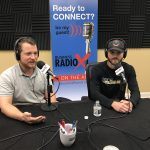
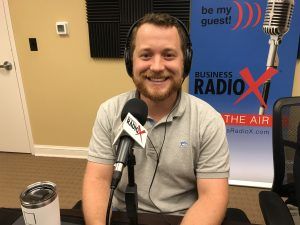
“Decision Vision” Host Mike Blake, and Evan Jarecki, and Cory Hewett with Gimme

Should I Enter a Business Plan Competition?

What’s the value of entering a business plan competition? Should I spend the time and effort necessary to win such a contest? What are the benefits to participating even if I don’t win? Cory Hewett and Evan Jarecki, co-founders of Gimme, answer these questions and more as they are interviewed by “Decision Vision” host Michael Blake.

Cory Hewett and Evan Jarecki, Co-Founders of Gimme

Cory Hewett and Evan Jarecki, Gimme

Cory Hewett and Evan Jarecki are the Co-Founders of Gimme. Gimme won the 2015 TAG Business Launch Competition conducted by the Technology Association of Georgia, Venture Atlanta, and the Metro Atlanta Chamber of Commerce.

Gimme transforms the way companies service micro markets, vending, and grocery by automatically identifying products, their placement, and inventory levels using computer vision verified by humans. Gimme’s software and wireless hardware eliminates errors and manual effort from warehouse staff and route drivers. Gimme empowers Route drivers to focus on delivering amazing customer experiences, and operators to focus on cash accountability, inventory tracking, and machine status data. Gimme’s solutions prevent stockouts, accelerate warehousing and restocking, and streamline product planning. For more information, visit http://www.vending.ai or connect with Gimme on Twitter.

Cory Hewett
Evan Jarecki

Michael Blake, Brady Ware & Company

Mike Blake, Host of “Decision Vision”

Michael Blake is Host of the “Decision Vision” podcast series and a Director of Brady Ware & Company. Mike specializes in the valuation of intellectual property-driven firms, such as software firms, aerospace firms and professional services firms, most frequently in the capacity as a transaction advisor, helping clients obtain great outcomes from complex transaction opportunities. He is also a specialist in the appraisal of intellectual properties as stand-alone assets, such as software, trade secrets, and patents.

Mike has been a full-time business appraiser for 13 years with public accounting firms, boutique business appraisal firms, and an owner of his own firm. Prior to that, he spent 8 years in venture capital and investment banking, including transactions in the U.S., Israel, Russia, Ukraine, and Belarus.

Brady Ware & Company

Brady Ware & Company is a regional full-service accounting and advisory firm which helps businesses and entrepreneurs make visions a reality. Brady Ware services clients nationally from its offices in Alpharetta, GA; Columbus and Dayton, OH; and Richmond, IN. The firm is growth minded, committed to the regions in which they operate, and most importantly, they make significant investments in their people and service offerings to meet the changing financial needs of those they are privileged to serve. The firm is dedicated to providing results that make a difference for its clients.

Decision Vision Podcast Series

“Decision Vision” is a podcast covering topics and issues facing small business owners and connecting them with solutions from leading experts. This series is presented by Brady Ware & Company. If you are a decision maker for a small business, we’d love to hear from you. Contact us at decisionvision@bradyware.com and make sure to listen to every Thursday to the “Decision Vision” podcast. Past episodes of “Decision Vision” can be found here. “Decision Vision” is produced and broadcast by the North Fulton studio of Business RadioX®.

Visit Brady Ware & Company on social media:

LinkedIn:  https://www.linkedin.com/company/brady-ware/

Facebook: https://www.facebook.com/bradywareCPAs/

Twitter: https://twitter.com/BradyWare

Instagram: https://www.instagram.com/bradywarecompany/

Show Transcript

Intro: [00:00:02] Welcome to Decision Vision, a podcast series focusing on critical business decision, brought to you by Brady Ware & Company. Brady Ware a regional, full-service, accounting advisory firm that helps businesses and entrepreneurs make vision a reality.

Michael Blake: [00:00:21] And welcome to Decision Vision, a podcast giving you, the listener, clear vision to make great decisions. In each episode, we discuss the process of decision making on a different topic. Rather than making recommendations because everyone’s circumstances are different, we talk to subject matter experts about how they would recommend thinking about that decision.

Michael Blake: [00:00:39] My name is Mike Blake, and I’m your host for today’s program. I’m a Director at Brady Ware & Company, a full-service accounting firm based in Dayton, Ohio, with offices in Dayton;  Columbus, Ohio; Richmond, Indiana; and Alpharetta, Georgia, which is where we are recording today. Brady Ware is sponsoring this podcast. If you like this podcast, please subscribe on your favorite podcast aggregator and please also consider leaving a review of the podcast as well.

Michael Blake: [00:01:03] Our topic today is Should I Enter a Business Plan Contest? And this topic is is interesting, I think, really on the forefront of the minds of many people who are listening to this program because, if nothing else, the business plan pitch contest, if you will, has been made famous by ABC’s Shark Tank, a show which I still have not seen to this day, by the way. But I’m familiar with what it does.

Michael Blake: [00:01:31] And pretty much, every city with a venture community of any size has some kind of business plan competition in it. And in Georgia, we’ve had a number of them. Some have come and gone. Some have stayed for the long term. And there are national business plan contest as well. Sometimes, alumni groups of universities hold them. I know Georgetown University, my graduate alma mater, has them. Venture firms, sometimes, hold them as a way of generating deal flow. Business incubators often have them.

Michael Blake: [00:02:10] And to do one right, to be a participant, it is a time-consuming exercise. In fact, I’ve been assigned teams when I’ve coached and mentored them through the programs, and we’ll get one or two weeks into the process, and say, “You know what? I don’t have the time to do this. I’m out,” which is perfectly fine. Rather, you do that on week two than a week before you’re supposed to kind of finish the thing.

Michael Blake: [00:02:36] And so, I think it’s a fair question to say, why do you put yourself through that? Because the business plan contest has a fair amount of of time that you have to invest. Typically, a business plan contest sponsor will have a mentoring – excuse me – or training program that leads up to the podcast — I’m sorry, that leads up to the competition itself, where they want to make sure the teams are all prepared. And that requires some time.

Michael Blake: [00:03:04] And then, somewhere along the way, you have a bunch of people that have never met you, that you don’t know who they are. And the public forum, they’re going to ask you tough, invasive questions about your business, right? And it’s fair to say, who needs that? Well, why would I put myself through that? I might as well go on Shark Tank and are willing to do that in front of an audience, television audience of 30 million people, even though we know a lot of that stage is basically WWE for business, but anyway.

Michael Blake: [00:03:34] But I have a couple of people here who have not been through the WWE version. They have been through, at least, one business plan contest. And I had the privilege of being there, of being their coach, and they were successful enough to overcome my coaching and winning that contest, which was the TAG Business Launch Contest back in 2016 or 2017. I’m trying the year. I think it’s 2016 now.

Michael Blake: [00:04:01] And so, joining us are Cory Hewett and Evan Jarecki, who are co-founders of Gimme Vending. Gimme transforms the way companies service micro markets, vending, and grocery by automatically identifying products, their placement and inventory levels using computer vision verified by humans.  software and wireless hardware eliminate errors and manual effort from warehouse staff and root drivers. Gimme empowers route drivers to focus on delivering amazing customer experiences, and operators to focus on cash accountability, inventory tracking, and machine status data. Gimme solutions prevent stock outs, accelerate warehousing and restocking, and streamline product planning. For more information, visit www.vending.ai or connect with Gimme on Twitter, @gimmevend.

Michael Blake: [00:04:52] Cory and Evan both are graduates of Georgia Tech, and both worked at Gulfstream Aerospace before creating Gimme Vending. And maybe we’ll get some of that background in the interview today. But we have some work to do in terms of covering this topic. So, Cory and Evan, thanks for coming on the program.

Cory Hewett: [00:05:08] Hey, thank you, Mike. And good to see you again.

Evan Jarecki: [00:05:10] Thanks, Mike.

Michael Blake: [00:05:10] So you are looking well, and you’ve had some pretty good success since we last worked together closely. And I’m very happy for you. So, let’s go back to sort of what I think was was something of a turning point for you guys, but I don’t want to put words in your mouth. Talk about the business planning contest you won, sort of a high level. What was it? And why did you decide that you wanted to take part in it?

Evan Jarecki: [00:05:36] So, back when we were getting involved with just starting the business, we were trying to get more involved with the Atlantic community and learn what were ways that Gimme could continue to get exposure and who can we meet through that process. And the Technology Association of Georgia was one of those places that seemed like they were everywhere. The BusinessX — the business lunch competition.

Michael Blake: [00:06:06] That’s a good idea. BusinessX is going to do a lot of contests.

Evan Jarecki: [00:06:08] BusinessX contest, there you go.

Cory Hewett: [00:06:09] Business RadioX Launch Competition.

Evan Jarecki: [00:06:11] There we go.

Michael Blake: [00:06:11] So, if you want to have a business lunch competition through Business RadioX, just an email to info@businessradiox.com We’ll get right on that.

Evan Jarecki: [00:06:19] That’s right. No. It was when we decided to go for this competition, the business launch, we made it our total team effort. This was everything for us when we first got involved with the opportunity.

Cory Hewett: [00:06:36] Well, it’s certainly attractive to consider working on the business competition because it came with a quarter million dollars worth of prize money and services. $50,000 and nondilutive cash, that’s important to a startup that’s just getting off the ground. And then, another $200,000 in products and services that we’d be able to use to benefit the business as well.

Cory Hewett: [00:06:55] And like you mentioned before, we had to balance that against this idea that if we want to have a real business, at the end of the day, these types of things won’t give you a business. Great products, great customers, focusing on those two things is what build a business. The business competition, though, maybe gives you the fuel in the car to take you to where you need to go or, at least, maybe get you there a little quicker. So, the idea of cash, the idea of services, and the idea of credibility and some exposure within the Atlantic community, that could be very, very valuable.

Cory Hewett: [00:07:25] So, like Evan said, once we decided that we’re going to do it, we went all in that we were going to focus and put everything into it to maximize our probability of success to winning the competition.

Michael Blake: [00:07:37] So, get in, I forget how many companies. I think, at the outset, there are something like 30 companies. At what point did you start to think you might win? Or did you think you would win day one?

Cory Hewett: [00:07:52] I don’t think we thought we were going to win day one.

Evan Jarecki: [00:07:54] Right.

Cory Hewett: [00:07:54] We knew that we’re going to try really hard to become a winner in the program, but there were a lot of rounds. So, I remember the first round, Evan and I hadn’t really done an elevator pitch before or had to go on stage to pitch our business, but the one time when we were leaving Georgia Tech, and we pitched it to the community there. So, we hadn’t done it in a televised, or WWE setting, or even in front of just an audience of people that didn’t include, at least, a couple of friendlies.

Cory Hewett: [00:08:18] And so, the first round was a couple hundred businesses. And it was more of an informal dinner meet and greet where we had to talk to different investors and judges who were there. You had to go find them. They would write down how you were doing. And if you made an impression, they wrote your name down after you just gave them the cocktail hour elevator pitch of the business. Then, you got to make it past that 300-round to maybe the top 30 round.

Michael Blake: [00:08:42] I didn’t know that. That is wild.

Evan Jarecki: [00:08:43] Yes, it was a speed-dating around. Yeah.

Michael Blake: [00:08:45] That is wild.

Evan Jarecki: [00:08:46] A couple hundred.

Cory Hewett: [00:08:46] So, the couple of days leading up to it, and even in the car driving over there, I remember in the car driving over there, we took what we had written. We’re like, “It’s all wrong. We have to redo it. Let’s redo our elevator pitch.” And getting there and talking to judges. And you asked, did we know that we’re going to win? Our answer to that is no, but we tried hard.

Cory Hewett: [00:09:06] And it wasn’t until that very last night, that very final round, we still had no idea. It was all this effort for not or is it going to turn into something? And I remember the moment where we had made it to the top two, and it was me and Stanley Vergilis of another great company called Hux, and we came out there with a lot of theatrics. We had worked with the art department at the SCAD studio where we were presenting. We had sound. We had rented this very expensive high motion camera to capture our competitor’s product exploding. So, that happened on stage. We showed that big screen video of the product exploding. We came out high energy, high theater, and did the best possible pitch that we could while we were there. And Stanley came out with a very different approach.

Evan Jarecki: [00:09:55] Complete opposite.

Cory Hewett: [00:09:56] Complete opposite. And his performance was so strong that as soon as I left the stage and saw his, I felt good about what we had done. It was the best job we could do. But then, when I saw his and the radically different approach, up until the moment that they unveiled the check to say who won, it was not clear.

Evan Jarecki: [00:10:13] Right.

Michael Blake: [00:10:14] So, let let me follow up on that experience, even though it’s not in our script. But in the final four, you may remember, another company had gone on, and they had banked on video, and it failed.

Cory Hewett: [00:10:27] It failed.

Michael Blake: [00:10:27] Do remember that?

Cory Hewett: [00:10:28] The live.

Michael Blake: [00:10:28] Did that make you at all nervous about what was going to happen with you guys, or were you so tight, you didn’t even think of it. You just knew it’s going to work?

Cory Hewett: [00:10:36] No, we knew it was a risk. Another mentor of ours warned us, you never do live demos.

Evan Jarecki: [00:10:42] Yeah, I think it was through the coaching and the practice that had us try to maximize for a more guaranteed success with the presentation style. And so, that was one of those pieces, avoiding it.

Michael Blake: [00:10:54] And I think that’s a good lesson, though, is that mentors and coaches are just that, right. They’re not your boss. They’re not your mom. They’re not your board of directors. At the end of the day, it’s your company, right. And if you’re going to take a risk, you’re going to take a risk. And look, especially at that time, you’re in a risky business as a startup, right. So, I can see from a certain perspective, look, we’re already here, man. We’re already here. We’re already living with risk on a day-to-day basis. Why are we going to stop now, right?

Cory Hewett: [00:11:27] Right.

Evan Jarecki: [00:11:27] Yeah.

Michael Blake: [00:11:27] Is that as a fair way to kind of characterize it?

Evan Jarecki: [00:11:29] Oh, yeah.

Cory Hewett: [00:11:29] I think it’s a risk/reward thing. We knew that there was going to be risk. The more things that we introduce that we didn’t have total control over, like we avoided a live demo that relied on cellular connection because those can go down, and since we violated that rule, and it’s burned us. So, it’s a rule for a reason. If you rely on cellular and you do live demo, it could go poorly. So, we had made sure that everything that we were showing was, at least, local.

Cory Hewett: [00:11:52] And the reward for us is if it played correctly, and we tested it before in the theater to make sure that it would, but we knew that if we got it to play correctly, that the value that it would generate for the audience would hopefully help them get that emotional feeling of what we are trying to do in our space. And maybe it’s helpful for the audience.

Cory Hewett: [00:12:09] Before we got involved, the technology in our space was really, really old. And the people who were forced to use it had so much pent-up frustration that when they got to watch the competitor’s product explode, you could see them light up. And maybe, if we were back in the horse and buggy days, and you hated your buggy after a while, you got to watch it just get set on fire and replace with the car. You’d be like, “This is great.” And we knew that if we could create that emotional response for our audience, our customers, and if that appealed to the judges as well, then we thought it would be worth the risk of maybe the chance of a tech error.

Cory Hewett: [00:12:43] And I feel terrible for the guy that that tried to do the live demo, and it didn’t work for him, because, you know, they’re kind of like us. They’re working hard to make it work, and nobody wants their demo not to work.

Michael Blake: [00:12:56] And they were doing well up until that absolute up until that.

Evan Jarecki: [00:12:59] Absolutely.

Michael Blake: [00:12:59] Up until that point, right. They’re a very strong competitor.

Cory Hewett: [00:13:01] Yes.

Michael Blake: [00:13:03] Yeah. And that emotional component, I think, is really important on two levels. It is tried and true. It reminds me of the Macintosh commercial from years, and years, and years ago where they smashed a PC in the middle of a commercial, right. And the whole Macintosh value proposition was the PC is just designed to frustrate you, right, and the Macintosh is not right. But everybody wanted to take a sledgehammer to their PC. Every single person, except for maybe somebody working at Microsoft wanted to do that. And I think you sort of captured on that.

Michael Blake: [00:13:40] And then second, it seems to me, and tell me if you think I’m wrong, you can only educate an audience so much about your business, right. And preventing stock-outs and vending machines and, now, at the retail level, it’s a great business, right. But it’s not the kind of thing that you go to the Thanksgiving table and everybody gets all fired up. That’s not like you’ve paid the college-

Evan Jarecki: [00:14:00] Hey, Cory, how’s that inventory on the [crosstalk] going?

Michael Blake: [00:14:02] That’s right. You’re not making call of duty, right?

Cory Hewett: [00:14:04] Right, right.

Michael Blake: [00:14:06] But if you can connect on that emotional level, everybody gets it. And you don’t even have to be in the business. If you’ve just ever been frustrated by technology, or laser printing in work, your Wi-Fi crapped out, you get it, right. I think that’s what really helped.

Cory Hewett: [00:14:21] I think that one other special component that was — I think our secret sauce to the presentation was probably bringing a customer onstage. This was something a little bit later in the practicing and the presentation style where we actually were able to include our first customer as a part of the presentation midway through the numerous stages. But along the way, that set us apart and, we think, had led to some of the success and the understanding from the audience that this is a real opportunity. And this customer has helped us understand exactly what Gimme does.

Michael Blake: [00:15:01] I think that was very dramatic. I don’t think I’ve ever seen that done in a pitch before. And in the minds of those judges, whenever they’re looking at those companies, “Okay, it’s great what technology they have, Is there actually a market for it?” And the fact that you brought the market with you on the stage, I think, that won it for you frankly. I mean, the video was great, and I think that got you to the top two, But the customer, they’re saying, “Yeah, I’m buying this. It’s going to save my business,” how do you sort of say no to that? And I’m sure the other competitors are like, “We should have done that.” They look at their coaches like, “Why didn’t you tell us to do that?” So, other than that kind of the speed dating part, what part surprised you about the process, if anything?

Evan Jarecki: [00:15:54] I think the biggest surprise were the different changes that needed to be made throughout each round. Round one was speed dating with 300 companies. Very quick pitches. No presentation. Just you verbalizing it. Round two was a an eight-minute pitch. I think, it was.

Cory Hewett: [00:16:16] Eight minutes right before St. Patrick’s Day.

Evan Jarecki: [00:16:18] Right before — on St. Patrick’s Day, I think it was.

Cory Hewett: [00:16:20] On St. Patrick, that’s right. We were working that.

Evan Jarecki: [00:16:22] Yeah, exactly. That was an eight-minute pitch. And there was an audience involvement in that one. And then, it moved to a 20-minute pitch. And that was where we brought in the customer. And that was in front of the theater in the auditorium. And then, from there was the final four, which was a three-minute solo CEO/Founder pitch. It was changing and preparing for each of those, that was a big surprise for us, not just one.

Cory Hewett: [00:16:50] Each one was different.

Evan Jarecki: [00:16:51] Each was different.

Cory Hewett: [00:16:52] You had to make it through the screening round of each one. So, it required so much creativity.

Evan Jarecki: [00:16:56] Right.

Cory Hewett: [00:16:56] You couldn’t just use the same presentation. “Oh, we’ll just dress it up or make some tweaks.” It was brand new every single time to appeal to a different — within a different environment, different audience, different levels of theater and energy. At least, in our case, bring the customer on stage.

Evan Jarecki: [00:17:12] Right.

Cory Hewett: [00:17:12] So, each one required its own set of problem solving. The other thing that surprised me, not just the rounds, was, if you will, a little bit of the stress and the time consumption. So, we knew, with your help, you’re like, “Hey, I’d rather you quit right away than at the end,” I think we got the same advice back then too, “because this is going to be really tough.” So, we knew it’s going to be tough and time consuming. And when we got into it, it was tough and time consuming, and it still is a surprise how much we are spending in time.

Cory Hewett: [00:17:40] And then the stress, I remember the eight-minute on the St. Patrick’s Day. It stuck out to me because I got up there to start speaking, and young in your career with public speaking, I made it up to the stage. My tongue got so dry. I couldn’t form words. I’m just trying to make noises with this stick of sandpaper in my mouth, and I’m watching the timer go down. Just physically, I lacked the ability to speak properly and just trying to force my way through it.

Cory Hewett: [00:18:06] So, the stress was just a little bit surprising. And I think that you’ll get that on your entrepreneurship journey. No matter who you are or what the circumstances, you’ll go through that too. But that was a bit of a surprise.

Michael Blake: [00:18:19] Okay. And is there a part that you thought was the hardest to address? Was it the stress? Was that the hardest part, or the time you had to put in, or was there something else that stood out as a challenge of being a participant in something like this?

Evan Jarecki: [00:18:33] Well, I think Cory had mentioned this in the beginning was the focus of, as a business owner, putting everything into your customers and your product. And because of the time consumption, it was highly distracting towards being able to focus on product and on customers because there were days that would go by where the entire day was spent preparing for the next presentation, or just creating the slide deck, or whatever it might have been, and that can distract from the main goal. And sometimes, it would just be challenging to say that the purpose, why we’re in this competition is for customers, is for the business, and just kind of reassuring that. Even though you may not be developing or making that very next feature in the moment, that serves a very important purpose. So, just making sure that balance was maintained between both throughout the time.

Michael Blake: [00:19:28] I want to stop and highlight that because I think that’s very important and very instructive that if you walk into this process thinking that’s going to, kind of, be the side gig that you spend a couple hours a week, you’re not going to be very successful. You’ll probably be eliminated in the first round, certainly, and are unlikely to win.

Michael Blake: [00:19:47] And I didn’t realize, as you really took the perspective, this was not a side gig. This is part of executing your business, right. And the fact that you are willing to hold days off from the “core operations” of your business to pursue that exercise, I did not know that. And I think that if you’re listening to this, and you’re thinking about being in this kind of program, and you have designs of being successful, are you in a position to make that kind of commitment? Because if you aren’t, maybe this isn’t the right time to do it. So I think that’s a very important bullet.

Cory Hewett: [00:20:26] And that’s okay to do too.

Evan Jarecki: [00:20:28] Right.

Cory Hewett: [00:20:28] Through that exercise, we’ve become pretty selective-

Evan Jarecki: [00:20:31] Yes.

Cory Hewett: [00:20:31] … in what we choose to do because we can lose the competition and win at the business. But winning at the competition does not necessarily guarantee, in any way, that you’re going to win a business.

Evan Jarecki: [00:20:44] Right.

Cory Hewett: [00:20:44] So, you have to focus on the business first. And if you do take a day, or two days, or three days off for the competition, you have to keep in mind it’s, in many ways, a vanity. It doesn’t change your core business, it won’t make your customers happier necessarily, and your product won’t be any more mature, or better tested, or better evolved at the end of the process.

Michael Blake: [00:21:02] But you had a goal of starting to build a network and starting to get your name out there, right.

Evan Jarecki: [00:21:08] Exactly.

Michael Blake: [00:21:08] I think that was part of the justification that — I mean, yeah, you also want the money and the prize. We’ll get to that in a second, but you’re students at Georgia Tech at the time or recently graduated?

Evan Jarecki: [00:21:19] Myself, recently graduated.

Michael Blake: [00:21:24] Okay.

Cory Hewett: [00:21:24] Yeah, I appreciate the intro at the beginning, but I actually left with a couple of classes left my senior year to found this company.

Michael Blake: [00:21:30] I didn’t know that.

Cory Hewett: [00:21:31] So, I’m not a graduate of Georgia Tech.

Michael Blake: [00:21:32] The secret is out.

Cory Hewett: [00:21:33] I’m a, yeah, senior year drop out of Georgia Tech that left to pursue this. I went full time.

Michael Blake: [00:21:39] Well, you’re like a bunch of other loser dropouts like Mark Zuckerberg and Bill Gates. So, what did they ever do, right? Yeah, I’m sure they’ll be happy to have you back at your leisure. So, talk-

Cory Hewett: [00:21:54] You’re bringing up what — we had just left Georgia Tech, and with the value going to be that we could get more credibility in addition to the cash and services. And the answer was we had to be somewhat calculative. And we knew that as very junior members of the entrepreneurship community in Atlanta, we’d have to be willing to spend a little bit more time to get that exposure.

Cory Hewett: [00:22:15] And we knew that we were going to have to raise. We’re a company that has smart software, as well as hardware. So, we knew that raising money, fundraising would be on the horizon. And actually, the investment and the time within the pitch could be recycled just in benefiting the education to young entrepreneurs, and all the materials and presentations we’re preparing for these pitches could be recycled in the future outside of the competition as well. And actually, consolidating it, getting the mentor help, for instance, from you.

Cory Hewett: [00:22:44] And one of the things that you did that really helped us out was when you brought together that Shark Tank style, other community people-

Michael Blake: [00:22:50] Oh, yeah. I forgot about that

Evan Jarecki: [00:22:52] Right.

Cory Hewett: [00:22:52] I remember that so well because it gave us that raw, critical feedback that mom, and dad, and friends, and even people that you know in the community may not be willing to tell you, “That’s a terrible side. Oh, no, that I didn’t understand you at all. I would never invest in you.” I mean, you need that feedback. And you helped give it to us. So we were able to make the decision, not just hopefully we win some money, but even — we set out to do our best to win, but we knew even if we didn’t, we could recycle that effort and turn it into something positive for the business down the road.

Michael Blake: [00:23:25] I forgot about that. Even at that point, we’ve been working together for, I don’t know, about 10 weeks or so.

Cory Hewett: [00:23:30] Right.

Evan Jarecki: [00:23:31] Right.

Michael Blake: [00:23:31] And by that time, as a mentor, I’m starting to drink the Kool-Aid, which means that my ability to be that effective sounding board on myself was starting to become impaired, frankly. So, that probably is a good lesson that if you’re in a program and your, and your mentor isn’t setting that up, set that up for yourself, right, because.

Cory Hewett: [00:23:52] If your mentor is too nice, that’s a problem.

Michael Blake: [00:23:54] It can be, it can be. So, you received cash, and services, and prizes. I’ve heard people sort of kind of thumb their nose at $50,000 in cash, but 50 grand for a startup, actually, you can get a lot done with that.

Evan Jarecki: [00:24:10] Right.

Cory Hewett: [00:24:11] That actually really helped to one of our first full-time employee hires.

Michael Blake: [00:24:15] Really?

Cory Hewett: [00:24:15] We talked with contractors and part time. But you bring on that first FTE, you want to make sure that you don’t have a couple of weeks of salary in the bank. You want a couple months that you can play this.

Michael Blake: [00:24:24] You’re not laying off in three weeks.

Cory Hewett: [00:24:26] Right. “You’re hired. Oh, just kidding.” This is-

Michael Blake: [00:24:29] Thanks for everything. There’ll be no severance.

Cory Hewett: [00:24:30] So, the $50,000 cash made a difference to us because we are bootstrapping as hard as we could. As young entrepreneurs at the very beginning of their journey, you’re hustling, and you’re putting everything together that you can. And to bring that first person on board full time, that’s the difference it made for us, along with a couple other things.

Cory Hewett: [00:24:51] So, that’s what we saw in our mind. If we win this, we can earmark the funds to grow the team. And I don’t know if I’m skipping ahead on how you wanted us to talk about it.

Michael Blake: [00:25:02] Go ahead. Keep going.

Cory Hewett: [00:25:02] I’m speaking on chronologically, but that was a big moment for us. We did win the competition. That was a proud moment. And then, we immediately put up our first job ad for a full-time employee and and brought them on. And that was another huge victory. And that really helped the product and the customers. And so, it turned into something really positive for us.

Michael Blake: [00:25:26] And on the other side, you also won some services. I’ve always kind of wondered how much do the winners actually take advantage of the services? I think my firm offered business valuation, and somebody is offering legal services, accounting services, I don’t know, manicures, mani and ped. I have no idea. Did you find yourself taking advantage of those?

Cory Hewett: [00:25:48] We printed out that Excel spreadsheet, and we went down the list, and we contacted every single one, and we are going to extract 100% of the value that we could out of it.

Evan Jarecki: [00:25:57] Right.

Cory Hewett: [00:25:57] And it actually turned into some pretty neat relationships that we still have today. At the time, you were working for HA&W.

Michael Blake: [00:26:04] Yeah, Arpio now. Yeah.

Cory Hewett: [00:26:04] Right. We now continue to work with Aprio.

Michael Blake: [00:26:08] Good.

Cory Hewett: [00:26:08] We were able to work with a PR team called the Carabiner.

Evan Jarecki: [00:26:13] Yeah, we worked with Carabiner still to this day. And that was where we had been introduced to them was from the business launch competition.

Michael Blake: [00:26:20] So, you’re working with them. I’ll go ahead and give them some free ads. I’m a big fan of Peter Baron’s and Carabiner, so.

Cory Hewett: [00:26:25] So, we love working with them. And we wouldn’t have had that relationship without them participating and giving their services. And we were able to spread out the dollar amount, so it lasted us about a year of being able to work with Peter and his team to benefit the company. I mean, Evan, you’re still working with our account rep there pretty much daily, right?

Evan Jarecki: [00:26:45] Yeah. In a week-to-week basis, but participating in some of the things that we plan for on the day to day. Like most recently, one of the biggest events that we’ve done was a livestream product launch. This is something that Carabiner was heavily involved in and actually participated in person for some of the event planning. So, the introduction has been extremely valuable to the growth of our team and of our product.

Cory Hewett: [00:27:16] One of the services that really stood out was with the management psychology group and-

Michael Blake: [00:27:20] No kidding.

Cory Hewett: [00:27:21] Yeah. And it’s exactly what it sounds like. Evan and I probably wouldn’t have chosen to do this if we had to pay cash out of pocket to do this, but having gone through the experience, now, I see that there’s a lot of value in this, especially if you’re head hunting for a founder level role or an executive level role.

Cory Hewett: [00:27:37] But it was a two-day process, two half days where Evan and I went in, and they tested all parts of our psychology. They had quizzes for intelligence, et cetera, et cetera, to try to see how people would work together. And I don’t think we would have done it because we already knew — Evan and I already knew we worked well together because we were great together.

Cory Hewett: [00:27:55] But we went through the process, and it was so fascinating to have a broken down for why that was. And when we got the results back of this management psychology test, Evan and I at the core groups, the big categories, were highly, highly similar. But when they broke it down to the subgroups, the reason why and the little things that make people unique, he and I were extremely dissimilar.

Cory Hewett: [00:28:19] So, it was like we shared common big goals, but we had lots of compliments where I was weak, he was strong; where he was strong, I was weak. And it played really nicely to to see how that worked out. And we wouldn’t have got that either without the services. And that’s just an example to me that stands out. I still remember it today, like, “How do you work so well with Evan?” Like, ” Actually, it’s fascinating. I have a diagram that shows that.”

Evan Jarecki: [00:28:42] We kept it [crosstalk].

Michael Blake: [00:28:43] Those are my strengths.

Evan Jarecki: [00:28:43] And they’re really neat. I mean, yeah, it was very in-depth and something we’ve kept, and I think it hold — I mean the exact same thing holds true to this day. It’s very interesting. And, yeah, it was fun experience.

Michael Blake: [00:28:59] It’s weird how sometimes topics come together. Right after this one, we’re going to be recording a podcast about executive leadership basically from another kind of industrial psychology company. I may kind of bring that up with them and see kind of what their view is on those kinds of approaches. One thing that also struck me about when you guys won, you both have family there to think, right?

Evan Jarecki: [00:29:24] Yeah.

Cory Hewett: [00:29:25] Yes, yes.

Evan Jarecki: [00:29:25] And both the public pitches we had family.

Michael Blake: [00:29:28] You did, okay. And I’ve never asked you this question. It’s a little off topic. So, if you don’t want to answer, we’ll edit it out. But was there a sense of kind of validation? I don’t know if you have entrepreneurial families or not. If you don’t, sometimes, they’re kind of looking weary. You’ve got this great education. Why aren’t you going and getting a job? You’re Gulfstream. You could have had a great career there, six figures, right?  Was there any kind of validation, maybe, to family members that were worried about the risk you took that this is sort of an external validation that you guys are going to be okay and really onto something? Or am I playing Dr. Phil, and I should knock in the psychology business?

Cory Hewett: [00:30:15] I don’t know if Evan would share this necessarily.

Evan Jarecki: [00:30:19] Yeah.

Cory Hewett: [00:30:19] So, I hope you don’t mind if I do.

Evan Jarecki: [00:30:21] Yeah, yeah, go for it.

Cory Hewett: [00:30:21] But Evan did have the job lined up when he was graduating. So, he’d already accepted the job offer from Gulfstream. He had already selected his apartment. He was ready to go make that transition in his life when we started talking about Gimme. And my pitch to him is, “Hey. we should work a hundred a week. And we can’t pay each other any number of dollars probably the first year or so. And it would involve you not going down to Savannah, and you’d have to quit your job that you haven’t started yet. And maybe make sure that your parents are comfortable leaving you on health insurance and stuff a little longer. How does that sound?” And-

Michael Blake: [00:30:56] I guess it sounded all right.

Evan Jarecki: [00:30:58] Well, I think the way I describe it is that it unlocked a — I had some sort of limiter on where I thought a career — what I thought a career meant. And I don’t think I had ever considered entrepreneurship as a career path until there was an opportunity presented to me and, actually, think about what that could mean. And so, it just totally removed the limiter and said, “There is no reason not to take this opportunity,” is what it became. So, I just had to put the pieces together to make it work.

Cory Hewett: [00:31:31] So, I remember when Evan told me, “Yeah, I talked to my parents about it. They’re a little concerned, but they’re supportive. And they’re really good people. So, they were supportive, but I could tell that mom’s eyes got real big when she’s like, ‘Oh, he’s he’s quitting the Gulfstream job that he hasn’t started yet.'”

Michael Blake: [00:31:46] That’s nice.

Cory Hewett: [00:31:47] “What’s the new salary?”

Evan Jarecki: [00:31:48] “What’s the plan here?”

Cory Hewett: [00:31:48] “Oh, it’s nothing.” “Oh, good luck.” And she’s

Evan Jarecki: [00:31:53] Right, not another job that pays you. No, it was totally different.

Cory Hewett: [00:31:57] So, I remember for them, they were in the audience when we made it through that first round. And I don’t know, the look on their face. And my parents were there too, and I think they were proud. But I know for your parents, that was a first entrepreneurship, big endeavor that you’ve done, the big first external validation.

Evan Jarecki: [00:32:14] Yes, yes.

Cory Hewett: [00:32:15] You could just see the pride, and you could see a lot more confidence. Like, “Wow! Our son is not just ‘trying to be an entrepreneur’ but people believe in him too.” And the next thing happened on that final round, we didn’t just invite mom and dad. We invited grandma, grandpa. And then, we also invited a couple of our customers and a couple of the other people that have been rooting us along along the way. Evan, I know you took a valet job at the very beginning of Gimme-

Evan Jarecki: [00:32:41] Yes.

Cory Hewett: [00:32:41] … to pay the bills while we’re making the company work. Did you invite one of your top valet customers there, too?

Evan Jarecki: [00:32:47] Yeah, yeah. That may have been my first — actually, that experience is a big failure that turned into a really happy valet customer, if you will. I didn’t own. I just worked for the valet company, but there was an experience we had with just a car parking situation where I was able to diffuse the whole situation. I caused it, and I diffused it, and it became a really happy repeat customer. And they actually got involved with what we were working on at Gimme, and they participated in the TAG, the business lunch competition as well. So, we brought in, yeah, people from kind of everywhere during the first year’s journey.

Michael Blake: [00:33:30] I remember that. You had a lot of fans in that room. And when you won, it looked like kind of the end credits of, sort of, Family Feud. I mean, they swarmed the stage. And I thought they put you up on their shoulders. But it was great to see. Have you done anything like that since? Have you been in any other contests, or did you just retire after one championship?

Cory Hewett: [00:33:53] Quite like that. No, we haven’t been in any multi-round pitch kind of situations quite like that.

Evan Jarecki: [00:34:00] That’s true. That’s true.

Cory Hewett: [00:34:00] And most of it had to do with we extracted a lot of the value that we could. And like we mentioned, a lot of it was getting in front of the right people, in addition to cash and services, getting a name for ourselves in the Atlanta community. And thankfully, it helped us do that. So, now, I don’t know if the reward for doing that again would be as profound or pronounced for us. But we have competed in a couple other competitions since like-

Evan Jarecki: [00:34:22] Actually, the TAG Business Launch unlocked many opportunities in the area. We were invited to Venture Atlanta, one of the largest now that we’ve seen and participated in. And actually, it speaks to — this kicked off and falls in right in line with us as one of our core values. The number one is fiercely driven to win.

Cory Hewett: [00:34:49] That’s our top core value in the team.

Evan Jarecki: [00:34:51] That’s our top core value. And it’s related to customers, and it’s related to making sure that we are working for them. But it also does speak to the competitive nature of applying ourselves in these areas. So, we do participate in other contests and competitions. Recently, we won Best B2B Startup in Atlanta. There would be-

Cory Hewett: [00:35:14] We had a number of good competitors in that category.

Evan Jarecki: [00:35:15] [Crosstalk] is in that one. So. we’ve won, and we’ve lost, but we do participate. And when we do, we like to do a good job.

Cory Hewett: [00:35:25] I remember one of the ones that we lost actually right after the TAG Business Launch competition, we were kind of on a high feeling of, “Wow! If we set our minds to it-”

Evan Jarecki: [00:35:35] Like, how big can we take this thing? Where can we go with it?

Cory Hewett: [00:35:37] And our very next big thing that we applied for was actually the first season of Apples TV show called Planet of the Apps-

Evan Jarecki: [00:35:43] Right.

Cory Hewett: [00:35:44] … where they were going to look at software startup founders and how their journey is going. And we made it past the first round. And then, they unceremoniously dropped us and let us know that we didn’t make it past the second round. And so, yeah, we’re trying and failing. But we try to be selective, so that we continue to keep our top focus on products and customers. But like Evan said, we’ve just recently been named Atlanta’s Best B2B Startup. We were named recently as well to Atlanta’s 50 on Fire. We’re proud of that accomplishment. That was just a couple of weeks ago.

Cory Hewett: [00:36:15] Within the industry, our team as a whole has been named Pros to Know. And some of the individuals have been named, individually, the Pro to Know on separate years as well. Each one of our products, and we have three now, each one of our products has been named the number one product in vending the years that it has been released. So, we’re super proud of that as well. So, yeah, we’re trying, sometimes failing, but we’re continuing to try and apply that fiercely driven to win mentality.

Michael Blake: [00:36:43] Well, these are harder to win. It’s not like a basketball game. It’s more like a golf tournament, right. Basketball game, you have one opponent. That’s it, right. But you have to be in the field, right.

Evan Jarecki: [00:36:54] Right.

Michael Blake: [00:36:55] Even Tiger was in his heyday, right, only one 20% of his tournaments, right. And arguably the best that ever played. So, I think you’re doing all right.

Evan Jarecki: [00:37:07] Thank you.

Michael Blake: [00:37:07] I think you’re doing just fine. So, since the competition, tell us the story now. How are you guys doing? You, obviously, want a lot of awards award. You’re expanding. You guys able to pay yourselves now? You’re not [crosstalk]-

Cory Hewett: [00:37:23] I’m not at all free anymore.

Evan Jarecki: [00:37:25] Right.

Michael Blake: [00:37:25] You’re not working for free anymore. Good, good. You have the most up to date max, I assume.

Cory Hewett: [00:37:29] Yeah, we do. The tool kit we actually advertise as part of our recruiting tool, everyone gets a brand new Apple products to be able to get their job done well. So, yeah, we’re expanding. We have about 20 people on the team now. We’ve got great offices. This year, we’ve just added 401(k) to our suite of benefits.

Michael Blake: [00:37:50] Wow. Yeah, you’re really growing up.

Cory Hewett: [00:37:52] And I think that we have a team culture that has attracted serious top players. So, we’re really proud of that accomplishment. I know that maybe people don’t speak to those metrics first, but a team of people that we have to work with now is just incredible. When you work at, if you will, alone, and then you hire that first one, if you can surround yourself with other people who are willing to match that and just put in so much effort to help the business succeed, it’s something special. It’s a different feeling than when you first started the company. So, that would be my top metric of success is the team right now is just crushing it. And we’re so proud of them.

Cory Hewett: [00:38:27] Outside of the team as well, we’ve seen our products and services grow. We started with the one. We talked about, we exploded our competitors product. That’s how we started. That was one product. But now, we’ve seen it expand from just a field service tool to — you mentioned it at the very beginning. Now, we’re managing the products and their inventories for the entire warehouse, the schedules of the people that service. Our software has expanded.

Cory Hewett: [00:38:53] And then, earlier this year, we announced that we could handle not only an entire warehouse of inventory and field services, but we could do that through computer vision and a neural network training. And to see that start to take off has opened up our customer base from just vending operators to, now, vending operators, micro market operators, and people who deliver to grocery stores. And for the first time, that means that, now, some of our customers are publicly traded, and we’re just thrilled at the growth that we’ve seen even as recently as this year that’s taken us to a new level.

Michael Blake: [00:39:31] So, I’m curious, to get to that point, have you raised any outside money? Are you still just self-funded?

Cory Hewett: [00:39:37] We did raise money. After the TAG Business Launch competition, we raised an angel round. We’re able to include David Cummings and John Lally, which were introductions that were either directly or indirectly helped, actually, from the competition. That’s where we raised our first half million. And since then, we’ve added a couple other institutional and larger people on our cap table as well. So, today, we’ve raised just over $2 million. And then, we have our sightline to a couple more exciting things in the near future.

Michael Blake: [00:40:08] Very good. So, I promise I won’t keep you here too long. So I’m going to wrap it up. But if people are kind of thinking about getting into a competition of their own, they want to know if they should do it, or get some advice, can they contact you guys?

Evan Jarecki: [00:40:23] Yeah, absolutely. Best way to reach out to us is, first, through our website, www.vending.ai, and go to our team page there. You’ll see Cory and my own, our bios and profiles. And you can get connected with us there. We’ve actually love participating in the Atlantic community, especially as mentors, and volunteers, and programs we’ve been a part of in the past. And then, look, of course, for any individuals, one on one. Cory will give anyone’s slide presentation good judging, that’s for sure. And it’s worth it. Trust him with that one. He’s got a knack for it, so.

Michael Blake: [00:41:02] All right. Well, that’s going to wrap it up for today’s program. I’d like to thank Evan Jarecki and Cory Hewett of Gimme Vending so much for joining us and sharing their expertise with us.

Cory Hewett: [00:41:12] Thank you, Mike.

Evan Jarecki: [00:41:12] Thank you.

Michael Blake: [00:41:12] We’ll be exploring a new topic each week. So, please tune in so that when you’re faced with your next business decision, you have clear vision when making it. If you enjoy this podcast, please consider leaving a review through your favorite podcast aggregator. It helps people find us so that we can help them. Once again, this is Mike Blake. Our sponsor’s Brady Ware & Company. And this has been the Decision Vision Podcast.

Tagged With: Cory Hewett, Dayton accounting, Dayton business advisory, Dayton CPA, Dayton CPA firm, early stage startups, Evan Jarecki, Georgia Tech, Gimme, Gimme Vending, in-kind services, Metro Atlanta Chamber of Commerce, Michael Blake, Mike Blake, pitch competition, pitch contest, startup company, startup competition, startups, Technology Association of Georgia, Venture Atlanta

Five Inspiring Women Working In Technology – Business RadioX

October 21, 2014 by angishields

We’ve had the amazing opportunity to interview a lot of women working in technology about technology in Atlanta, and about being women in a male-dominated field. Here’s a list of a few of you should give a listen to.

1. Erica Stanley  with Women Who Code, (@WWCAtl)

Erica Stanley (@ericastanley) has is a software architect and consultant, and has worked for with big name industry leaders such as Turner Broadcasting, Myspace, Facebook, Oracle and Boeing. She’s been a leader at four startup companies, two of which were acquired by Fortune 100 companies. Stanley cofounded the Atlanta network of Women Who Code, where she uses her 15 years of experience to help other women in technology with their careers.

Listen to the interview here.

2. Sarah Lodato with The Iron Yard ,(@TheIronYard)

Sarah Lodato (@sarahbethlodato) is the Campus Director for The Iron Yard  in Atlanta. She has years of business management experience, having founded two businesses prior to coming to The Iron Yard, and, though her tasks lean more towards management, she also has skills in WordPress, HTML, CSS, graphic design, and copywriting.

Listen to the interview here.

3. Erica Baity of TechieChic

Erica Baity, a former software engineer and data architect , used her 13 years of technology experience to found TechieChic. TechieChic’s mission is to even out the gender disparities in the tech field by education and staffing women in technology companies.

Listen to the interview here.

4. Allyson Eman of Venture Atlanta

Allyson Eman  is the Executive Director for Venture Atlanta. She has a broad and expansive background in marketing, with over 20 years of experience in marketing, sales, and communications.

Listen to the interview here.

5. Vicky Sleight with GSMA

Vicky Sleight has been the Senior Director of Member Services at the GSMA  since 2008, and is responsible for growing membership within the mobile ecosystem and leading membership communications and operations for a community of 20,500 industry executives. She is also the driving force behind the GSMA Connected Women program: an initiative which aims to highlight the opportunities available to women in the mobile industry at all levels, as well as increase the number of women in senior management positions.

Listen to the interview here.

Filed Under: Newsroom Tagged With: Allyson Eman, Erica Baity, Erica Stanley, GSMA, Sarah Lodato, TechieChic, The Iron Yard, Venture Atlanta, Vicky Sleight, Women Who Code

Allyson Eman with Venture Atlanta

April 15, 2014 by angishields

Start-Opia
Start-Opia
Allyson Eman with Venture Atlanta
Loading
00:00 /
RSS Feed
Share
Link
Embed

Download file

Allyson Eman / Venture Atlanta Linkedin Twitter 


Tagged With: Venture Atlanta

Preeti Das with Birlasoft, Ernie Riddle with EnablePath and Allyson Eman with Venture Atlanta

January 23, 2014 by angishields

Atlanta Tech Leaders
Preeti Das with Birlasoft, Ernie Riddle with EnablePath and Allyson Eman with Venture Atlanta
Loading
00:00 /
RSS Feed
Share
Link
Embed

Download file

ATL

Preeti Das/Birlasoft LinkedinTwitter

Preeti Das serves as the Chief Executive Officer at Birlasoft (India) Ltd and had served as its Chief Operating Officer. Das served as an Executive Vice President and Head of Europe Operations at Infrasoft Technologies Limited, as well as Vice President of Oracle Financial Services Software Limited.

She has 25 years of experience with multiple large organizations in the Technology and Insurance industries, which includes key positions of responsibility held with Oracle Financial Services Software, i-flex, Microsoft, ICICI Lombard. She has expertise in mergers & acquisition, strategic planning & consulting and tech start-ups.

Prior to InfrasoftTech, she served in leadership positions with Microsoft and ICICI. She also has experience in creating, marketing and growing Software Products and Consulting Services businesses in various parts of the globe – North Americas, Asia Pacific, South Africa and UK. She has participated in many panel discussions, seminars and webinar on Business and technology challenges.

Ernie Riddle/EnablePath LinkedinTwitterFacebook

Ernie Riddle serves as the President of EnablePath with overall responsibility for the company’s growth and success. He has had extensive experience leading the growth of both public and private companies and has twelve years of consulting experience helping companies through major growth, technology and transformational initiatives. His experience includes leadership positions, board positions and consulting assignments in both domestic and global companies.

Riddle previously held key leadership positions with several firms: serving as Co-Founder/President/CEO of Astadia, Inc., a cloud computing/SaaS consulting and systems integration company; President and COO of Norrell Services, Inc., a $1.6B outsourcing, information technology services, call center operations and staffing services company; President of Ryder International, a $5.2B international provider of logistics and transportation services with operations in Mexico, South America and Europe; and, earlier in his career, as Vice President Sales and Marketing for Xerox Corporation in the U.S. and EMEA.

Riddle has served on public company Boards as a Director for AirNet Systems, Inc., Enterasys Inc., Danka Business Systems, PLC, Norrell Services, Inc. and numerous private boards.

He holds a BS degree in Marketing from the University of North Carolina-Chapel Hill and an MBA in Finance from Emory University. He lives in Atlanta, GA.

Allyson Eman/Venture Atlanta LinkedinTwitter


Today’s show is brought to you by Band of Coders.

Tagged With: EnablePath, Ernie Riddle, Preet Das, Venture Atlanta

November 2012 Newsletter Article

October 17, 2012 by angishields

Trade Show Radio Broadcasts Live at Venture Atlanta 2012

On October 17-18, 2012, co-hosts Lee Kantor and Stone Payton broadcast live for the two-day event known as Venture Atlanta, held at the Georgia Aquarium. The conference was attended by Investors from across the country, Georgia Entrepreneurs, Senior Technology Executives and others interested in emerging companies.

Venture Atlanta was created to help Georgia companies obtain capital. In 2007, the Atlanta CEO Council, Metro Atlanta Chamber and the Technology Association of Georgia formed the Venture Atlanta Coalition with a mission to connect companies with sources of capital. In the last ten years, Venture Atlanta has become the must-attend event for investors. Members from leading firms including Canaan Partners, Matrix Partners, Highland Capital, Grotech Ventures, Draper Fisher Jurvetson, Trident Capital, Battery Ventures, Intersouth Partners and Edison Venture Fund have attended this event.

Kantor and Payton interviewed over 35 attendees during the conference. Two distinguished guests who appeared on the air were Sam Williams and David Hartnett with the Metro Atlanta Chamber of Commerce. Williams is the current President of the Metro Chamber and says that Venture Atlanta is getting more and more successful each year, proving that Atlanta is indeed a good place to do business.

Venture Atlanta surpassed the $1 Billion mark in capital investments for funding Atlanta companies. Williams explained that there are so many great ideas in cutting-edge techonology in Atlanta. “We have more health information technology firms here in Atlanta than any place else on Earth.”

Hartnett, a Vice President with the Metro Chamber and Co-Founder of Venture Atlanta, agreed. As he explained Venture Atlanta’s original mission to bring more venture capital to Atlanta, Hartnett also commented, “Atlanta is not short on technology by any means, what it needs is more exposure.” Venture Atlanta seeks to raise Atlanta’s exposure by reaching out to other cities and letting them know all the great opportunities in the metro area.

To listen to many other insightful interviews from the Venture Atlanta 2012 Conference, please tune in to Trade Show Radio.

Tagged With: Metro Atlanta Chamber of Commerce, Trade Show Radio, Venture Atlanta

Allyson Eman Talks About Venture Atlanta: Coming October 17-18, 2012

August 21, 2012 by Stone Payton

Emerging Enterprise
Emerging Enterprise
Allyson Eman Talks About Venture Atlanta: Coming October 17-18, 2012
Loading
00:00 /
RSS Feed
Share
Link
Embed

Download file

Allyson Eman / Venture Atlanta

* Original Air Date: 8/2/12, On Atlanta Business Radio

Venture Atlanta is the premier investor conference in Georgia — attended by investors from across the country, and Georgia entrepreneurs, senior technology executives and others who are interested in emerging companies.

Allyson Eman has 20 years of marketing, sales and communications experience. In 2007, Allyson took on the role of Executive Director for the newly created Venture Atlanta annual conference.

Allyson has worked with key business leaders from Metro Atlanta Chamber, Atlanta CEO Council and Technology Association of Georgia to build the premier venture capital conference in Georgia. The conference is now in its fifth year.

Prior to joining Venture Atlanta, Allyson was the Senior Vice President of Marketing and Communications for SouthStar Funding, a wholesale mortgage lender headquartered in Atlanta. During her 9 year tenure with the firm, she helped the company grow from 8 employees to 800 with 30 nationwide offices. SouthStar Funding grew to be one of the most reputable, respected and trusted wholesale mortgage lenders in the country under Allyson’s leadership. SouthStar received many accolades including A+ Employer, Fastest Growing Privately Held Company in Georgia and was included on Inc. 500′s list of fastest growing privately held companies.

Prior to joining SouthStar, Allyson worked for SouthTrust Bank as a branch marketing manager overseeing the marketing platform for 100 branches across Georgia. Allyson received a BS from the University of Florida and resides in Marietta with her husband and two children.


Tagged With: Venture Atlanta

  • 1
  • 2
  • Next Page »

Business RadioX ® Network


Our Most Recent Episode

CONNECT WITH US

  • Email
  • Facebook
  • LinkedIn
  • Twitter
  • YouTube

Our Mission

We help local business leaders get the word out about the important work they’re doing to serve their market, their community, and their profession.

We support and celebrate business by sharing positive business stories that traditional media ignores. Some media leans left. Some media leans right. We lean business.

Sponsor a Show

Build Relationships and Grow Your Business. Click here for more details.

Partner With Us

Discover More Here

Terms and Conditions
Privacy Policy

Connect with us

Want to keep up with the latest in pro-business news across the network? Follow us on social media for the latest stories!
  • Email
  • Facebook
  • Google+
  • LinkedIn
  • Twitter
  • YouTube

Business RadioX® Headquarters
1000 Abernathy Rd. NE
Building 400, Suite L-10
Sandy Springs, GA 30328

© 2025 Business RadioX ® · Rainmaker Platform

BRXStudioCoversLA

Wait! Don’t Miss an Episode of LA Business Radio

BRXStudioCoversDENVER

Wait! Don’t Miss an Episode of Denver Business Radio

BRXStudioCoversPENSACOLA

Wait! Don’t Miss an Episode of Pensacola Business Radio

BRXStudioCoversBIRMINGHAM

Wait! Don’t Miss an Episode of Birmingham Business Radio

BRXStudioCoversTALLAHASSEE

Wait! Don’t Miss an Episode of Tallahassee Business Radio

BRXStudioCoversRALEIGH

Wait! Don’t Miss an Episode of Raleigh Business Radio

BRXStudioCoversRICHMONDNoWhite

Wait! Don’t Miss an Episode of Richmond Business Radio

BRXStudioCoversNASHVILLENoWhite

Wait! Don’t Miss an Episode of Nashville Business Radio

BRXStudioCoversDETROIT

Wait! Don’t Miss an Episode of Detroit Business Radio

BRXStudioCoversSTLOUIS

Wait! Don’t Miss an Episode of St. Louis Business Radio

BRXStudioCoversCOLUMBUS-small

Wait! Don’t Miss an Episode of Columbus Business Radio

Coachthecoach-08-08

Wait! Don’t Miss an Episode of Coach the Coach

BRXStudioCoversBAYAREA

Wait! Don’t Miss an Episode of Bay Area Business Radio

BRXStudioCoversCHICAGO

Wait! Don’t Miss an Episode of Chicago Business Radio

Wait! Don’t Miss an Episode of Atlanta Business Radio