Business RadioX ®

  • Home
  • Business RadioX ® Communities
    • Southeast
      • Alabama
        • Birmingham
      • Florida
        • Orlando
        • Pensacola
        • South Florida
        • Tampa
        • Tallahassee
      • Georgia
        • Atlanta
        • Cherokee
        • Forsyth
        • Greater Perimeter
        • Gwinnett
        • North Fulton
        • North Georgia
        • Northeast Georgia
        • Rome
        • Savannah
      • Louisiana
        • New Orleans
      • North Carolina
        • Charlotte
        • Raleigh
      • Tennessee
        • Chattanooga
        • Nashville
      • Virginia
        • Richmond
    • South Central
      • Arkansas
        • Northwest Arkansas
    • Midwest
      • Illinois
        • Chicago
      • Michigan
        • Detroit
      • Minnesota
        • Minneapolis St. Paul
      • Missouri
        • St. Louis
      • Ohio
        • Cleveland
        • Columbus
        • Dayton
    • Southwest
      • Arizona
        • Phoenix
        • Tucson
        • Valley
      • Texas
        • Austin
        • Dallas
        • Houston
    • West
      • California
        • Bay Area
        • LA
        • Pasadena
      • Colorado
        • Denver
      • Hawaii
        • Oahu
  • FAQs
  • About Us
    • Our Mission
    • Our Audience
    • Why It Works
    • What People Are Saying
    • BRX in the News
  • Resources
    • BRX Pro Tips
    • B2B Marketing: The 4Rs
    • High Velocity Selling Habits
    • Why Most B2B Media Strategies Fail
    • 9 Reasons To Sponsor A Business RadioX ® Show
  • Partner With Us
  • Veteran Business RadioX ®

Jennifer Hibbard, CEO for View Point Health

June 9, 2023 by Mike

Celebrating Powerhouse Women
Jennifer Hibbard, CEO for View Point Health
Loading
00:00 /
RSS Feed
Share
Link
Embed

Download file

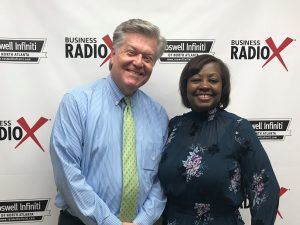
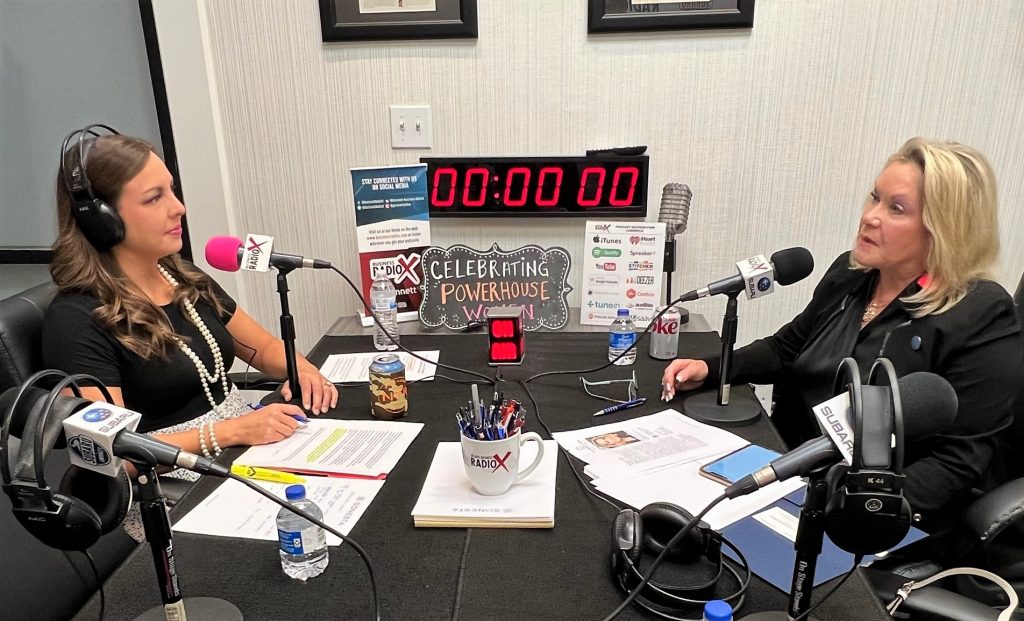
Amanda Pearch Marmolejo and Jennifer Hibbard

Celebrating Powerhouse Women salutes and recognizes women who are making an impact, whether it’s in business, philanthropy, public service, or elsewhere.

Jennifer Hibbard/View Point Health

Jennifer Hibbard lives and works in Gwinnett County as a Licensed Professional Counselor and the Chief Executive Officer at View Point Health where she has worked for more than 19 years. During her time at View Point Health, she has served in a variety of positions beginning as an intake clinician at one of the mental health outpatient centers. She has been the Chief Operating Officer, Vice President of Programs, Director of Quality Assurance, and Center Director. As the CEO for View Point Health, Jennifer also serves on the Board of Directors for the Gwinnett Coalition. She is also a member and serves on the board of the Rotary Club of Gwinnett County as a Past President in order to further serve the community and advocate for individuals with behavioral health needs and developmental disabilities. She is a graduate of Leadership Gwinnett and the National Council for Behavioral Health Executive Leadership program. In 2022, View Point Health was recognized as the Behavioral Health Provider of the Year for the State of Georgia and Jennifer was the recipient of the “Pay it Forward” Moxie Award. Additionally, she was recently recognized as one of the Gwinnett Chamber’s Public Service Awardees for 2023. Jennifer believes we are stronger as a community if we all work alongside one another and support each other’s mission.

She has experience working with adults, children and adolescents with mental health and substance abuse issues. Prior to moving to Georgia, she lived in Texas where she earned her Master’s Degree in Professional Counseling from Southwest Texas State University and Bachelor’s Degree in Psychology from the University of Texas in Austin. Jennifer’s career began while volunteering as a counselor for the Williamson County Juvenile Academy in Georgetown, Texas, a residential alternative facility associated with the Texas Youth Correctional system while she graduated from the University of Texas at Austin with a Bachelor of Arts in Psychology. She is also a National Certified Counselor of the NBCC, and a member of the American Counselors Association. Jennifer lives in Snellville with her husband of 20 years, son age 15, daughter age 12, as well as 3 cats and 2 dogs.
Celebrating Powerhouse Women is presented by

Tagged With: amanda pearch, Amanda Pearch Marmolejo, Celebrating Powerhouse Women, Jennifer Hibbard, NEMA, powerhouse women, Sourced, view point health, women business leaders, women business podcast, women executives, Women in Business

Secret Holland, VP of Human Resources and Community Affairs for Gas South

June 2, 2023 by Mike

Celebrating Powerhouse Women
Secret Holland, VP of Human Resources and Community Affairs for Gas South
Loading
00:00 /
RSS Feed
Share
Link
Embed

Download file

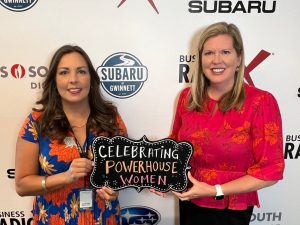
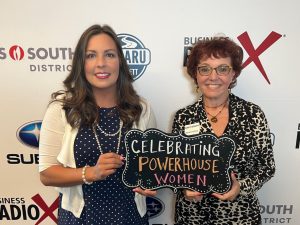
Amanda Pearch Marmolejo and Secret Holland

Celebrating Powerhouse Women salutes and recognizes women who are making an impact, whether it’s in business, philanthropy, public service, or elsewhere.

Secret Holland/Gas South

Secret Holland serves as the Vice President of Human Resources and Community Affairs at Gas South in Atlanta – the southeast’s leading gas marketer. Secret joined the company in November 2013 after a 31-year career at Georgia Power and various Southern Company subsidiaries. In her capacity she is responsible for all human resource functions including recruiting and staffing, compensation and benefits, training and development, performance management, succession planning and workforce planning, as well as employee relations. In addition, she has responsibility for all community affairs, philanthropic initiatives and employee volunteerism for the company and leads the diversity, equity, and inclusion efforts.

Secret holds a Bachelor of Business Administration in Accounting and a Master of Science Degree in Management – both from Georgia State University. She is active in the Cobb Chamber of Commerce and Cobb Executive Women and is on the boards of One Cumberland, a 501C3 non-profit in the Cumberland Improvement District, the Kennesaw State University (KSU) EMBA program and the Boy Scouts of America. She has been honored with The Eagle Award for outstanding leadership at Georgia Power, the Len Gilbert Award for her work with the Cobb Chamber culture team, the Silver Beaver Award from the Boy Scouts of America for her volunteer work and a Woman of Distinction Award by LiveSafe Resources. Secret is a native of Atlanta and has two children – Anna and Adam. She enjoys golf, dancing, college football, time with family and friends, and travel to warm places.

Celebrating Powerhouse Women is presented by
Tagged With: amanda pearch, Amanda Pearch Marmolejo, Celebrating Powerhouse Women, Gas South, Human Resources, NEMA, powerhouse women, Secret Holland, Sourced, successful women, women business leaders, women business podcast, Women Empowerment, women executives, Women in Business

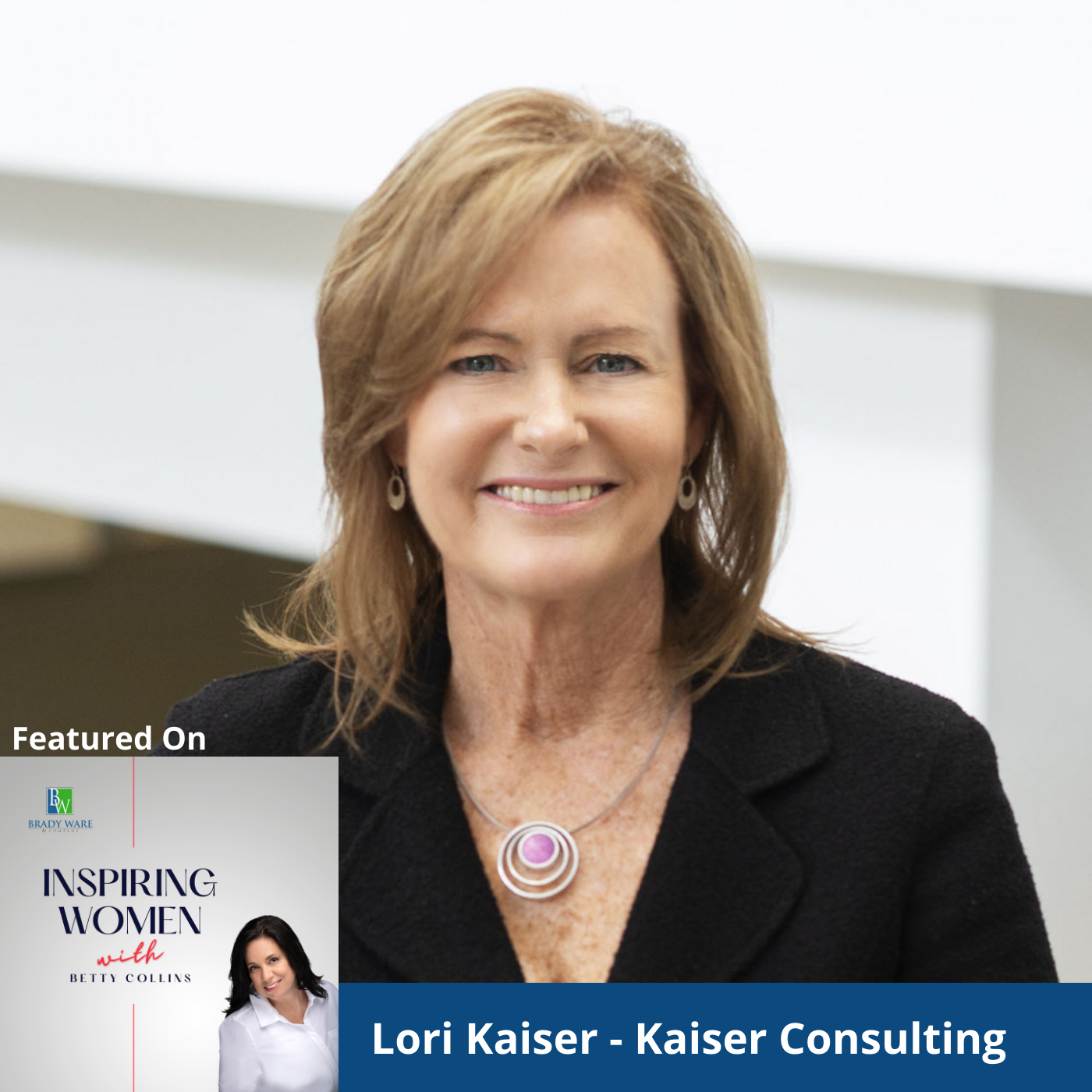
What Does It Take to Be an Inspiring Woman Leader? – An Interview with Lori Kaiser, Kaiser Consulting

September 15, 2021 by John Ray

Kaiser Consulting
Inspiring Women PodCast with Betty Collins
What Does It Take to Be an Inspiring Woman Leader? - An Interview with Lori Kaiser, Kaiser Consulting
Loading
00:00 /
RSS Feed
Share
Link
Embed

Download file

Kaiser ConsultingWhat Does It Take to Be an Inspiring Woman Leader? – An Interview with Lori Kaiser, Kaiser Consulting (Inspiring Women, Episode 36)

To get to where you want to go, says Lori Kaiser of Kaiser Consulting, you must push out of your comfort zone and into the roles you know you need to fill to reach your goals. Lori joined host Betty Collins on this edition of Inspiring Women to discuss what it takes not just to lead and succeed but inspire others while doing so. Inspiring Women is presented by Brady Ware & Company.
Betty’s Show Notes

For me, an inspiring woman is simply a woman who can fill somebody with the desire or urge to do something worthwhile.

It’s someone who lives their life every day, based on the core of what she believes. And it influences me to be open, and maybe even change.

So, it’s someone who creates a better world. They have to live their lives on their terms. There’s something very motivating about that.

We’re all inspired differently, so take some time to think about it. How can you inspire?

I need to have others around me, who are better, and have different insights, so I can be better. I challenge you to dig deep and realize that you have a role to play in that.

You need to figure it out, and then do it.

Become that inspiring woman leader.  I assure you that someone needs to see it and be influenced by you. And by the way, you might already be influencing other women and you don’t even know it.

With me on this episode is Lori Kaiser. She is a chief executive, corporate leader, visionary, and business strategist with a proven track record in assessing risk and creating solutions for Fortune 500 Company C-Level Executives and Boards.

As CEO of Kaiser Consulting, Lori provides clients’ value-based services that allow organizations to navigate transitions and successfully execute critical projects.

Women need to take more risk and be braver in career decisions. Lori gives us insight on that. Her passion about this subject shines throughout the episode.

Her advice to women on how to become an inspired leader. Ask yourself what is YOUR version of success.  Be bold, take risks.  Be a lifelong learner.  And last, but not least, connect with interesting people.

Mentioned in the podcast was Shonda Rhymes and her book Year of Yes.

How Women Rise by Sally Helgesen and Marshall Goldsmith.

And the podcast How I Built This.

This is THE podcast that advances women toward economic, social and political achievement. Hosted by Betty Collins, CPA, and Director at Brady Ware and Company. Betty also serves as the Committee Chair for Empowering Women, and Director of the Brady Ware Women Initiative. Each episode is presented by Brady Ware and Company, committed to empowering women to go their distance in the workplace and at home.

For more information, go to the Resources page at Brady Ware and Company.

TRANSCRIPT

So, today, what does it take to be an inspiring women leader? How we need that, how women are looking for that every day, we’re looking out there to see, who can be that person? And I’ve been really fortunate, I’m in the Columbus, Ohio area, and we have so many really good women’s groups. We’re going to have a podcast on three of them tomorrow. And I’m just fortunate that I’ve seen quite a bit of women around me.

[00:00:30] Betty Collins
And who is that inspiring woman in your life? Thank them. Think on why they inspire you. Who do you inspire then? Because you have a role to play in this as well. So, women are not all the same, and what inspires you may not inspire me, but nevertheless, we all need someone who inspires us. And as a woman business owner, a leader, and and someone whose passionate; I’m passionate about the marketplace; I’m very purposeful about empowering women, and supporting the organizations that do that.

[00:01:11] Betty Collins
For me, an inspiring woman is simply a woman who can fill somebody with the desire or urge to do something worthwhile. It’s someone who lives their life every day, based on the core of what she believes. And it influences me to be open, and maybe even change. So, it is someone who creates a better world, and you just, you watch them do it. Inspiring women for me, they have to live their lives on their terms. That’s something that motivates me.

[00:01:42] Betty Collins
Again, we’re all inspired differently, so take some time to think about it. How can you inspire? And get on it and go, and who’s inspired you? And thank them. For me, I need to see other women who have been there and done that, it’s important. I need to be inspired on days when I just feel like giving up. Maybe just a little bit of affirmation. Okay, probably Betty Collins needs way too much affirmation, but sometimes just that simple nudge.

[00:02:12] Betty Collins
And I need to have others around me, who are better, and have have different insights, so I can be better. I challenge you to dig deep and realize that you have a role to play in that. You need to figure it out, and then do it. Become that inspiring woman leader. And yes, you, because I assure you that someone needs to see it and be influenced by you. And by the way, you might already be influencing and you don’t even know it. So, make it a stretch goal, that goal that stretches you.

[00:02:42] Betty Collins
It’s a pretty simple concept. So, today I have a woman who inspires anyone and everyone she knows. She certainly has done that with me. She’s extremely respected and admired, especially in Columbus, Ohio, I can tell you, and outside of that, she knows what it takes to live, and be a professional. She’s a CEO, but a wife and a mother. She’s an expert, she’s successful. She’s even a trendsetter, which we’re going to talk about, just the way she does her business plan.

[00:03:12] Betty Collins
And she’s a pilot and a speaker. That’s a pretty amazing woman in itself. You are inspiring, Lori, and you live it through starting this business, that lets people, mostly women, lead great lives, and allocate more time to get to do the things that are important to them outside of their careers. And of course, I love it, because when you tell your story about it, you talk about, “When many people told me it wouldn’t work, I was going to make sure it did.”

You’ve had things that win in the best place to work for five years award, with employee engagement, over 95 percent. That’s just huge. You have many large clients, and yet a lot of small ones. But you have Honda nationwide, Ohio State, Cardinal. These are big places, L brands, Huntington, and going on 30 years with nonprofits, donating $300,000 of services each year. And I know a lot of those are geared to women. I think this is a really big thing, you gave the commencement address at Miami’s University’s Farmer School of Business.

[00:04:22] Betty Collins
Seven thousand people were there, and I think you even thought maybe you were a little intimidated, right? Teaching at the Ohio State University in their MBA program. You’ve done things, always taking the time to meet and call a woman who reaches out to you, just like when I had this request for you to come and be on my podcast, you were right on it. And you’ve done a lot of hard work and slow work of advocating for social change for women and minorities. And you’ll talk a little bit about some of those groups that you’ve been on.

[00:04:53] Betty Collins
So, Lori Kaiser, welcome to my podcast. I am so glad that you’re here to share with my audience. We would love to get more insight from you as an inspiring woman, so I’m going to start with some questions. And the first one is, I have talked a little bit about you, but just tell me a little bit about you, your husband, those things. If you can just do that first, and then we’ll get into questions.

[00:05:18] Lori Kaiser
Well, first of all, Betty, thank you for inviting me on your podcast.

[00:05:21] Betty Collins
Sure.

[00:05:21] Lori Kaiser
That was quite an introduction, so I hope I can meet expectations. Let’s see. So, I went to Miami University for my undergrad, and then I started my career at KPMG. And I loved being an auditor. I loved, oh, going to different clients, and working on different teams, and having different bosses. And it was a great job until it wasn’t a great job, when I decided to start my family. I didn’t really want to travel more than 50 percent of the time. So, I quit my job without a plan, and I’m not sure I’d recommend that.

[00:06:01] Lori Kaiser
Freaked my husband out a little bit. But my plan was that I was going to get a plan. And while I was figuring it out, I had some former clients call and say, “Hey, will you come out and do project work for us? You can work whatever days and hours that you’ll schedule, but you know us, and we know you, and we think it’d be great.” And so, that’s really how I started my business. Shortly, thereafter, within a year, I had way more work than I could do myself.

[00:06:30] Lori Kaiser
And so, I started hiring other people that looked just like me; had had a great career, didn’t really want the high number of hours and the travel, and public accounting. And this is early ’90s. So, they pretty much quit, because back then there was full-time work, and stay at home, and really not much in between. So, that’s how I started my business. And now, we have a company of about 80 people, and everybody at our company gets to pick the days and hours they want to work, so that they can have great lives and great careers.

[00:07:09] Betty Collins
I always love hearing it when you’ve told that at NAWBO events, or the Women’s Funds, things like that. Because in the ’90s, you’re right, it was one or the other, and there wasn’t balance. 2020, it’s like, “Oh, we have balance now. We’re at home, we’re at work.” It’s like that’s not what you were talking about, but you really gave women an opportunity to have some flexibility, yet contribute, and by the way, have a great career.

[00:07:37] Betty Collins
So, it’s why when I thought about inspiring women, you were definitely on that, because I know people who work for you and love it. So, talk a little bit about, though, you said, “My husband had a little heartburn,” maybe those are my words, but because you quit your job, and the plan was to get a plan. I’d like you to talk about women and risk-taking, because that was a lot of risk. Women need to take more risk and be braver in those career decisions. Can you just give us insight on that? Because I know you’re passionate about this.

[00:08:11] Lori Kaiser
Yeah, I am passionate about it. I think one of the reasons that there’s a wage gap between men and women, is that men feel more confident raising their hands and taking on a new role, that maybe they don’t tick the box and have every skill, but they’re willing to take that risk to get ahead. And women, generally, want to be more qualified, be able to tick every box, and be 100 percent sure they’re going to be successful. And so, therefore, men are constantly stretching and reaching for higher goals, and getting there.

[00:08:47] Lori Kaiser
And so, I think women need to have more of that risk-taking, because it’s holding us back from getting the next raise or promotion. I think I always tell women that I mentor, who would you rather take a risk on? You’d rather take a risk on yourself. So, take jobs outside your comfort zone, and say yes to things you’re not 100 percent sure that you can do, but you’ll work really hard to make sure you get there.

And when you see yourself get somewhere that you never thought you would get, your confidence builds. And then you’re like, “Well, man, I can really do this.” Betty Collins is that story, when I came to Brady Ware as a CPA, an accountant, and then all of a sudden, I’m in women’s groups, I’m doing podcasts, I’m growing my business right and left, and I’m doing it in my terms, and on my way. And it was a big risk, going to a big firm, when you’re a generalist, and you’re not an expert, per se. You loved auditing, right?

[00:09:54] Lori Kaiser
I did like auditing.

[00:09:55] Betty Collins
That’s okay. I know about auditing, I know about- but it might- you just build confidence, the more risk you take, because you can see you do it.

[00:10:06] Lori Kaiser
Yeah, and I think you can start out small. I like to tell the story, when people first started asking me to speak in public, I would say, “Oh, that sounds really interesting, send me an email with all the specifics.” And then an email would come and I’d see the date, and I’d set up an internal meeting, so that I was busy, and I would email back, “Oh, my calendar is busy. I can’t make that.” Because the whole idea of speaking in public was really intimidating to me.

[00:10:36] Lori Kaiser
And so, I decided that I needed to get over that, if I wanted to grow my firm, and be a subject matter expert. So, I really started out very small. I called up my son’s high school, and I said to the accounting teacher, “Hey, do you want somebody to come and talk about careers in accounting?” And, of course, they said yes. And I thought, “Okay, first of all, it’s a high school, so they’re not going to be listening, probably. And if they are, they won’t know if what I say is right or wrong. So, that’s a very low-risk place to start.”

[00:11:10] Betty Collins
Great strategy.

[00:11:11] Lori Kaiser
And so, yeah, I built up from there, to small groups, to 100, 200. And like you said, I did 7000 people last year.

[00:11:20] Betty Collins
That’s awesome. Caroline Worley, who you know, she got me to public speak, and I was petrified, just petrified. I thought, “What would I possibly have to say?” And there was an energy to it when I started it then. I’m still nervous to this day when I public speak, but it’s something- it’s a risk every time you get out there to do it. But there’s an energy to it, and a reward.

[00:11:45] Lori Kaiser
And the more you do it, the better you get.

[00:11:48] Betty Collins
It becomes a natural thing, maybe, or it becomes something that you could do it. And I’ll go to this next question, because when you start being able to be out there, and you could be on stage, you can be those things, you can have impact in a different way in your community, besides your work, besides your profession. It definitely has a big- it’s a big deal in community, and serving in organizations. So, your community involvement with organizations has been inspiring.

[00:12:17] Betty Collins
You’ve given your time, talent and treasure, as we always talk about. And part of that’s why people do, really, inspire and look up to you, and see you as that person. So, share the ‘why’ of NAWBO and the Women’s Fund. Tell us about these two organizations, and the importance of giving. Because it’s a role of an inspiring woman, is, we want more women to do these things.

[00:12:43] Lori Kaiser
So, I first got involved in NAWBO when I knew that I needed to build more of a network and grow my firm. I was a little nervous. I didn’t really want to take on that role, I really liked just doing client work. But again, you have to push yourself out of the role you feel comfortable with, and lean toward the role that you need to grow into. So, I chose NAWBO, and I started attending meetings, and NAWBO was super welcoming to me.

[00:13:18] Lori Kaiser
From the very first meeting that I walked into, it was a group of people that were supportive, who wanted to see you succeed, who were willing to share, not only the things that had helped them be successful, but also share mistakes. And I found that that was a great way for me to start what I considered my stage of working on my business, and not in my business. And then, so, I actually joined NAWBO, pretty quickly, I went on the board there and became the treasurer, and was involved on the board for several years. And that was great.

[00:13:56] Lori Kaiser
When my board term was up, I moved on to the Women’s Fund of Central Ohio. I’m very passionate about women and girls’ leadership, making sure that they’re as economically stable. There’s a lot of families in central Ohio, where they don’t know where their next meal is coming from, and there are- women who head up those families need help. And I’m still very upset about the fact that women still only make 78 cents for every dollar a man makes. So, I wanted to be able to work on social change, and really move some of those barriers.

And it’s so important for women to understand that you just don’t go to NAWBO and become the president. You go to NAWBO, and organizations like it, or you join the Women’s Fund, and organizations like that, partially, yes, for self-development and business development. But you really do go there because we need to inspire women. And so, it’s just part of being that inspiring leader that you are and others could be. It’s a huge, important role that you played in both of those organizations, and that other women can do it, and they need you. So, who, Lori Kaiser, inspired you? Who influenced you? I’m sure there’s more than one person, but who would come to your mind?

[00:15:33] Lori Kaiser
Yeah, many people, for sure. So, my dad was an entrepreneur. He started many businesses when we were growing up. So, he’s always somebody that I saw as willing to do something that other people weren’t willing to do. And that definitely helped me when I decided to turn my consulting into a real business, and even after people told me that it wouldn’t work. And then, also, my mom; my mom was a lifelong learner. She went back and got her undergraduate degree when I was in elementary, and her Master’s when I was in high school, and she was getting her PhD when I was in college.

[00:16:10] Betty Collins
I felt like I was really the King of the Hill when I got my four-year degree and my CPA license. Never going beyond that.

[00:16:19] Lori Kaiser
But you know what? You continue to keep your CPEs up, learning new skills. I think it doesn’t matter if you’re earning a degree. There’s so many ways now that you can grow your skill set, with LinkedIn learning and all sorts of webinars. And learning and growing has never been easier with all the things that are available on the Internet.

[00:16:43] Betty Collins
And also, the whole learning aspect, and I’m sure that you find this as well. As you go to prepare a speech, or you are on a podcast, or you, Betty Collins, start a podcast, what I have learned over three years of doing this podcast, is just, all this perspective from other women that I’ve interviewed. And that in itself is, again, you’re putting yourself out there, but it’s a way you learn without getting a degree, and then you, again, just go, “I could be more. I can do more. I can have more impact.”

[00:17:17] Betty Collins
But I like, always, hearing that, when people can talk about their mom and dad, that those were definitely people that inspired you. With all the challenges of today’s world, no, we’re not going to talk about COVID, and we’re not going to talk about politics and all the things that are going on. What advice do you have to women on becoming that inspired leader?

[00:17:39] Lori Kaiser
I would just share what has worked for me, and some of my core values. But I think that each woman has to decide what her version of success is. So, that you know what you’re aiming for. Some women, it might be, “I want to make more per hour, so I can work part- time and be home with my family.” Some people, it might be, “I want to switch careers or industries,” or it might be just to get that next promotion. So, you’ve got to decide what it is that you want out of your career. And then I also think you need to be bold and take some of those risks we talked about earlier.

[00:18:17] Lori Kaiser
I think that it’s helped me to be a lifelong learner, and be curious. And also, I’m really interested in people; I always want to hear somebody’s story, how they got where they are today, where they want to go. And I would say, be open to the things that you’re most interested in, and let them guide your choices. And I always like to say that I’m super persistent. If you don’t like where you are, then you’re really not done, just keep at it. And be grateful for all the things that your life has brought you.

[00:18:55] Betty Collins
Very nice. Very good. That’s for anybody, what you just said. Whether you want to lead or not, but we all lead in a different way. So, I cannot thank you, sure, for being here today, taking time to do this, and sharing your perspective. I’m truly, truly grateful. I have two questions, one is, where can we find you on social media? Where’s the best place? We are going to have things attached to this podcast about you, but is there anywhere you would want to direct the audience in regards to your business?

[00:19:28] Lori Kaiser
So, you can find my business at kaiserconsulting.com. And we’re always looking for more talented people that like our model, the part-time flexible work model. And then I’m mostly on LinkedIn. I don’t do a whole lot of other social media, other than that. But I’m pretty active there.

[00:19:47] Betty Collins
And then what podcast or book would you recommend to my audience today?

[00:19:53] Lori Kaiser
One that’s really impacted me recently was Shonda Rhimes book; Year of Yes. It’s a very interesting book where Shonda Rhimes goes and spends Thanksgiving with her sisters, and she’s in the kitchen, and they’re all making the food, and she’s bragging about all the things that she’s been invited to do, and parties that she’s been invited to. And one of her sisters says, “Well, you need to stop bragging, because you’re never going to do any of that.” And she went home and she thought about it, and she realized that they were right, that she was letting her fear control the things that she did in her life. And so, she had a whole year where she said yes to everything. And I read that book, and I was really inspired, and I decided that I was going to have a year of yes.

I have not heard of that, I will have to definitely research that. Thank you, definitely, for sharing that. That’s the one I haven’t heard of. So, very good.

[00:20:51] Lori Kaiser
And then there’s a book that I like right now, that I’ve been talking a lot about, called, How Women Rise. And it’s basically about habits that women have that might have been helpful for getting men to where they are in their career, but might be holding them back from getting to the next level. I also like a lot of entrepreneurial podcasts, like How I Built This, and Masters of Scale.

[00:21:17] Betty Collins
I’ve heard, How I Built This. I have not used it though, or I have not listened to it. But you’ve inspired me to do that. So, great, great choices. Thank you so much.

[00:21:28] Betty Collins
Well, I am Betty Collins, and I’m so glad that you have joined me today. Inspiring women, it’s what I do and I leave this with you; being strong speaks of strength, but being courageous speaks to having a will to do more and overcome.

Automated transcription by Sonix www.sonix.ai

Betty Collins, CPA, Brady Ware & Company and Host of the “Inspiring Women” Podcast

Betty CollinsIW8-2021square is the Office Lead for Brady Ware’s Columbus office and a Shareholder in the firm. Betty joined Brady Ware & Company in 2012 through a merger with Nipps, Brown, Collins & Associates. She started her career in public accounting in 1988.

Betty is co-leader of the Long Term Care service team, which helps providers of services to Individuals with Intellectual and Developmental Disabilities and nursing centers establish effective operational models that also maximize available funding. She consults with other small businesses, helping them prosper with advice on general operations management, cash flow optimization, and tax minimization strategies.

In addition, Betty serves on the Board of Directors for Brady Ware and Company. She leads Brady Ware’s Women’s Initiative, a program designed to empower female employees, allowing them to tap into unique resources and unleash their full potential.  Betty helps her colleagues create a work/life balance while inspiring them to set and reach personal and professional goals.

The Women’s Initiative promotes women-to-women business relationships for clients and holds an annual conference that supports women business owners, women leaders, and other women who want to succeed. Betty actively participates in women-oriented conferences through speaking engagements and board activity.

Betty is a member of the National Association of Women Business Owners (NAWBO) and she is the President-elect for the Columbus Chapter. Brady Ware also partners with the Women’s Small Business Accelerator (WSBA), an organization designed to help female business owners develop and implement a strong business strategy through education and mentorship, and Betty participates in their mentor match program.

She is passionate about WSBA because she believes in their acceleration program and matching women with the right advisors to help them achieve their business ownership goals. Betty supports the WSBA and NAWBO because these organizations deliver resources that help other women-owned and managed businesses thrive.

Betty is a graduate of Mount Vernon Nazarene College, a member of the American Institute of Certified Public Accountants, and a member of the Ohio Society of Certified Public Accountants. Betty is also the Board Chairwoman for the Gahanna Area Chamber of Commerce, and she serves on the Board of the Community Improvement Corporation of Gahanna as Treasurer.

“Inspiring Women” Podcast Series

This is THE podcast that advances women toward economic, social and political achievement. The show is hosted by Betty Collins, CPA; Betty is a Director at Brady Ware & Company. Betty also serves as the Committee Chair for Empowering Women, and Director of the Brady Ware Women Initiative. Each episode is presented by Brady Ware & Company, committed to empowering women to go their distance in the workplace and at home. For more information, go to the Resources page at Brady Ware & Company.

Remember to follow this podcast on Apple Podcasts and Google Podcasts. And forward our podcast along to other Inspiring Women in your life.

The complete “Inspiring Women” show archive can be found here.

Tagged With: Betty Collins, Inspiring Woman Leader, Inspiring Women with Betty Collins, Kaiser Consulting, Lori Kaiser, Women in Business, women leaders

Powerful Partnerships and Networks for Women Leaders

August 13, 2021 by John Ray

Powerful-Partnerships-Inspiring-Women
Inspiring Women PodCast with Betty Collins
Powerful Partnerships and Networks for Women Leaders
Loading
00:00 /
RSS Feed
Share
Link
Embed

Download file

Powerful-Partnerships-Inspiring-Women

Powerful Partnerships And Networks For Women Leaders (Inspiring Women, Episode 35)

The relationships which spring from powerful partnerships and networks are vital for both professional success and personal growth. On this edition of Inspiring Women, host Betty Collins assembled a mastermind group of dynamic leaders to discuss the power of partnerships:  Mary McCarthy, Women’s Small Business Accelerator, Michelle Casper, NAWBO Columbus, and Rachel Winder, Benesch Law. Inspiring Women is presented by Brady Ware & Company.
Betty’s Show Notes

The underlying issue of this topic is that partnering means that you are not alone while trying to build your career, your business.

My greatest times, professionally and personally, have been when I started these powerful partnerships and networks for women. It continues to play a major role in my life as a leader.

I wish I knew this when I was 20 something, even in my 30s. But I didn’t really get it until I was in my late 40s.

No matter what age you are, or at any point you are in your professional career, it’s really key to have powerful partnerships and networks.

And by the way, it’s not just a professional thing. This continues to be so huge for me personally.  Be open to making sure you’re establishing these types of relationships.

Less is better with relationships, because they’ve got to be correct for you. They need to be strategic, lining up with your why.

I’m not talking about connecting with big names people. I’m talking about people who have similar goals and ethics as you. And they get out there, and they influence.

Never underestimate the power of those partnerships. It takes work and commitment. You’ll need to be consistent and persistent to build these relationships. But the dividends are huge in your personal and professional development and impact.

With me on the episode is Mary McCarthy, Co-founder and President of the Women’s Small Business Accelerator.

The Women’s Small Business Accelerator (WSBA) is a non-profit accelerator founded by successful women business owners for women business owners. They provide education, peer support, mentoring, and accountability to help women on their entrepreneurial journey – to start and grow their own businesses.

I am also joined by Michelle Casper, past President and board member of NAWBO Columbus.

Established in 1996, NAWBO Columbus has a longstanding history in the greater Columbus area. They are currently the largest chapter in the nation and pride ourselves in elevating women business owners through connections, advocacy, and mentorship.

And last, but not least, I am honored to have Rachel Winder, Government Relations Manager with Benesch Law, on this episode. She is the advisor for the Columbus chapter of NAWBO.

Benesch is an AmLaw 200 business law firm and limited liability partnership with offices in Chicago, Cleveland, Columbus, Hackensack, San Francisco, Shanghai and Wilmington.

The firm is known for providing highly sophisticated legal services to national and international clients that include public and private, middle market and emerging companies, as well as private equity funds, entrepreneurs, and not-for-profit organizations.

These three women are willing to give, with a blind eye to how it helps them.

This is THE podcast that advances women toward economic, social and political achievement. Hosted by Betty Collins, CPA, and Director at Brady Ware and Company. Betty also serves as the Committee Chair for Empowering Women, and Director of the Brady Ware Women Initiative. Each episode is presented by Brady Ware and Company, committed to empowering women to go their distance in the workplace and at home.
TRANSCRIPT

[00:00:00] Betty Collins
So, today, we’re going to talk about powerful partnerships and networks for women in business, women leaders, women who own businesses, women in general. And I’ve got just a really, really cool guest, I think you’re going to like them. But I want to talk about powerful partnerships and networks. When I say that, it sounds so mighty, like you could conquer whatever is brought your way. Then this mightiness, on top of that, is just really for women.

[00:00:31] Betty Collins
Even better, right? So, I want to have this podcast today for all of you, because this has been so impactful in my professional and personal life. The underlying issue of this topic is that, partnering implies not being solo or by yourself. My greatest times, professionally and personally, have been when I started these powerful partnerships and networks for women. It has played, and continues to play this major role in my life as a leader. So, I wish I knew this when I was 20 something, hey, even in my 30s.

[00:01:07] Betty Collins
But I did not really get this, and be part of it till my late 40s. So, I really want to communicate to my audience today, to the women in the audience, no matter what age you are, or at the point you are in your professional career, it’s really key to have powerful partnerships and networks. And by the way, it’s not just a professional thing. It has been so huge for me personally. So, really, be open to making sure you’re establishing these types of relationships.

[00:01:41] Betty Collins
And I’ve been in all types of networking groups, we’re not talking about networking today, throughout my career, but it was more like the right thing to do, which is part of my job. It really wasn’t that impactful, but powerful partnering is not having 1200 Facebook friends. It’s not name-dropping. That’s just called connecting or fantasizing that you know all these people. Less is better with relationships, because they got to be correct, and they got to be strategic, and they’ve got to line up with your why.

[00:02:12] Betty Collins
Betty Collins’ why is, when the marketplace works in this country, the world works. And when I know that employers can pay those employees, those are households and families that make up communities. So, my partners have to line up with that. And because women are so, right now, the ones starting businesses, and such a dominant presence in the marketplace, it all comes together. So, today I want to talk to you, first, why powerful. Powerful means to me, it’s not having this great power or prestige, but its influence.

[00:02:50] Betty Collins
I’m not talking about big names, I’m talking about people, the ones who have my similar goals and ethics, and they get out there, and they influence. Powerful, meaning to me, that they don’t know just- that they support my why and my purpose. So, today, I want to talk to you about three organizations that have had powerful partnerships in my life. And the impact has been overwhelming, I am extremely grateful. Partnering with these organizations is, really, partnering with its members. It’s developing relationships within the organization, one relationship leads to another, and that’s why I can add the word powerful to it.

[00:03:30] Betty Collins
My company in 2012 merged into Brady Ware, and I met these two women, Caroline Worley and Mary McCarthy. These women have been powerful partnerships, and introduced me to an entire network of women. I’m very grateful for them. And they also founded the Women’s Small Business Accelerator, which is an organization that is pretty easy to understand. It’s women in small business accelerating. And so, today, Mary McCarthy is going to join us.

[00:03:57] Betty Collins
Then they introduced me to the Columbus chapter of the National Association of Women Business Owners in 2014. And I will tell you that my world changed, not because I was a member of this organization, but because of the members, and what the organization stood for. And so today, Michelle Casper, who is the current president of our chapter, will join us. And then lastly, I met Rachel Winder of Benesch who advocates for women. She is the advisor for the Columbus chapter of NAWBO.

[00:04:31] Betty Collins
I was so awed by her connection and networking, got really hooked when I went to Advocacy Day in Washington, DC, when I was the president of NAWBO in June of ’19; when Washington, DC was a fun place to go do so. But during COVID-19, she just started this Friday call. And I will let her talk about that, and in that Friday call, became this organization, the Ohio Women’s Coalition. I’m going to call it, I have a powerful panel today that represent these three wonderful partnerships and networks for women leaders in Columbus, Ohio, and really outside; all of the state of Ohio, for some of them. We give our time, and our treasure, and our talent to them, and it’s all good, but I really am Betty Collins today because of them.

[00:05:19] Betty Collins
And never underestimate the power of those partnerships. It takes work and commitment, you got to be consistent to have these relationships, but the dividends are huge in development and impact. And by the way, my business also just happened to triple as I started being in these groups. But that is a byproduct. So, I’m not talking about powerful partnerships that you can network and grow business.

[00:05:43] Betty Collins
Oh, by the way, that happens. I’m talking about powerful partnerships that really get to your core, they help you with that why, they have impact, and you get some clients along the way, and have some fun. So, we’re going to just talk about these organizations, and we’re going to start with Mary. Mary, just give me your 30 seconds, if you can, it probably is going to go longer, on the WSBA, and then expand on the impact it’s had on you as a leader. So, welcome, Mary.

[00:06:15] Mary McCarthy
Hey, Betty. Thanks for having me on the podcast. So, the Women’s Small Business Accelerator. What we do is we empower women to dream, and to dream big. And then we help them achieve that dream. So, that’s a really important statement, it goes beyond just wanting to be a business owner, but being successful at it. So, we accomplish this by providing tools. And the tools include our education, our training or mentoring, and even the most important, our ongoing support, so that they can be very successful. Our end goal is to monetize our business culture, so that it meets every woman’s big-picture dream of caring for themselves, their families, and their communities.

[00:07:00] Mary McCarthy
So, when you’re talking partnership on this podcast, that’s a very important part of what we do, because we do not believe you should struggle alone. So, we encourage all women, regardless of income, or education level, to include us as a partner in their business ownership success. So, how does this impact me as a leader? It’s very interesting when you think about what leadership means. It means looking at the big picture, surrounding yourself with like-minded people that can help you accomplish your goals, and most importantly, asking for help. So, you believe in that as well, Betty, right?

[00:07:43] Betty Collins
I do, I do.

[00:07:43] Mary McCarthy
We like to think that we can do it all ourselves as women, but the more we ask for help, the more we accomplish.

[00:07:51] Betty Collins
And I know that I have actually utilized the services of the WSBA, because I was a mentee and I needed a mentor. Betty Collins just doesn’t know everything, I know that’s hard to believe, but it’s true. And I really- it was impactful to have this woman who could see my world differently, and then help me understand it. It was really good. So, explain a little bit more, how has this organization impacted you, Mary, as a woman leader?

[00:08:21] Mary McCarthy
There are a number of things that, throughout my career, have impacted me as a leader. And I think that’s an important point we always have to remember. But how did it really help me? When I first realized the desire to create this organization. I took my own advice, and I reached out into the community, and asked people what they thought, what were the needs, what could they use if an organization was created. And by listening, it was amazing to me, all of the incredible ideas that were brought forth, all of the needs that were uncovered. And I have to say, we’ve been around for eight years now, and the incredible women that have supported us, and shared that what we’re doing has really helped so much. It’s amazing to me, but I’m leading by listening.

[00:09:16] Betty Collins
Well, I appreciate your thoughts. We’re going to move on to Michelle Casper, who is the NAWBO president, and she is an attorney. So, Michelle, give us your 30 seconds, if that’s possible, it might take longer, on NAWBO Columbus. And tell us about that first day you walked into that lunch, I always love to hear you talk about that, and then the impact that it’s had on you as a leader.

[00:09:39] Michelle Casper
Thanks, Betty. And thank you for having me on this podcast. I’m really excited to be here, and I’m excited to be in the company of other great women. And I love this question about the first day you walked into a NAWBO lunch, so let me set the stage. This was about five or six years ago. I had moved from Chicago, where I was, at the time, an associate in a Midwest law firm. Moved to Columbus, Ohio. It was an out-of-the-blue move that came with a job opportunity for my husband.

[00:10:09] Michelle Casper
We packed up our young family, we moved to Columbus, Ohio. I knew not a single person. There was nobody in the city that I knew, other than my husband. And a colleague in my Indianapolis office said to me, “Hey, there’s this organization called NAWBO. I think you should go and check it out.” And I said, “Okay, great. I don’t know anybody. I’ve got to start to get to know some people.”

[00:10:33] Michelle Casper
And I was a little nervous, because I didn’t know anyone, and I was going to go to this event. So, I called up a friend of mine and I said, “Hey, let’s go to this NAWBO event.” It was a good-to-great event. So, our good-to-great is when we bring together inspiring, influential women in the community, and we give other business owners, and women in business an opportunity to roundtable with them. So, I remember that day so distinctly, and I walked into the room knowing nobody, with my friend by my side, and people just started coming up to me, people that I didn’t know.

[00:11:11] Michelle Casper
And they’d say, “Hi, my name’s Sue. What’s your name? What’s your business? Tell me about your life. How can we help you?” And this happened over and over at this meeting. And I left there, and I was just so blown away, and so inspired. And when I look back at that meeting, I realize that it taught me why it’s so important to give as a leader. And I think when we’re in a leadership position, and we have built up those connections and partnerships, we gain more by sharing them.

[00:11:45] Michelle Casper
We gain more by connecting people through introductions, strategic alliances. And I think when you get to that point as a leader, it’s really important to listen to what people need, and Mary touched on that a little bit. And it’s important to provide a path for them, that perhaps, they didn’t know existed. And that was really what was done for me when I walked into that first NAWBO meeting. And quite honestly, it solidified my belief and my passion in the organization.

[00:12:14] Michelle Casper
And it’s why I’m sitting where I am now as the president, trying to get back. It’s because somebody gave to me in the first place. And when we look back, we really have no idea, the power of our kindness, and our time, and our resources until we start to give them away. And that was really the foundation of building powerful partnerships in my life here in Columbus, where I knew no one. And now fast forward five, six years later, we just opened up our very first office here in Columbus, Ohio, for my firm, Smith Ahmanson. And these things would not be possible had I not walked into that NAWBO meeting, and started to meet the women that would really change the path for me.

[00:12:57] Betty Collins
And you know what I love with the first two of you? First of all, by the way, Michelle is the president of NAWBO during a pandemic. She has just really been this amazing leader through this time, but anyway. But what you’re hearing from the first two guests, and you’ll hear from the third is, when they’re talking about powerful partnerships, they didn’t bring up that, “My book of business grew.” They didn’t bring up that, “Hey, look what I got.” They’re talking about the giving factor, which is awesome.

[00:13:28] Betty Collins
So then we go to Rachel Winder. And Rachel is, I don’t know anyone who doesn’t know Rachel in Columbus, Ohio, or in the state, because she is such an advocate for women and what we could-. We have a long way to go, and she’s just really in the fight with that. And I met her through NAWBO as well, and then we attended the advocacy day together. So, Rachel, give the audience a feel on how this Friday’s at noon, during a pandemic, we formed this amazing organization.

[00:14:00] Rachel Winder
Absolutely, yeah. Thank you, Betty. Thanks so much for having me. So, this all happened organically in the middle of a pandemic. It was March of 2020, and the Ohio governor, Governor DeWine, had, basically, shut down the economy here in Ohio to help keep us healthy. But he put together a commission coalition of individuals that were called the Economic Recovery Committee, or Economic Recovery Commission. It’s a group of businesses that were going to help open up the economy back up.

[00:14:41] Rachel Winder
A number of organizations were concerned that the individuals that were serving on this economic recovery committee weren’t necessarily representative of the businesses in Ohio. There were zero micro businesses, or businesses that had less than twenty employees. There were limited women that served on this recovery committee, and there were limited minorities that served on this recovery committee, and that wasn’t right. And there were a number of organizations that were concerned and wanted to, for lack of a better word, put out a scathing letter condemning the acts of the governor.

[00:15:21] Rachel Winder
And they came to NAWBO Colombus, and I’m so fortunate I’m the public policy adviser for NAWBO Columbus. And they asked our opinion, do we want to join this letter? Do we want to sign on? And it was of my opinion and many others that, “Hey, why don’t we pull back? Why don’t we see if we can find a seat at the table? Why don’t we find a way if our voices can be heard? Instead of just complaining or being upset that they’re not, let’s just make sure that they are.”

[00:15:51] Rachel Winder
And so, I called the governor’s office, and I managed to get somebody who was willing to talk with us, who was an adviser to the governor that was putting together this economic recovery. And all of these organizations came together on a Zoom call. This was when Zoom- this, maybe, was my second Zoom call ever. But all of these organizations came together, and we had this individual from the governor’s office. And all of a sudden, the light bulb went off that, “Holy moly, look how energized we are. Look how powerful we are. Look at all of us together here in this room making our voices heard, in this virtual room.”

[00:16:36] Rachel Winder
But anyways, it was so inspiring, and so successful that- it happened to be Friday at 11 o’clock that week. And we immediately were like, “Well, who else could we get to join this call? Who else needs to hear our voice?” And lo and behold, every Friday at 11 o’clock, we started inviting people to the room, and what was so, and almost surprising to me, was that they came. And another light bulb moment was when, I hate to be surprised that they came, but I was surprised that they came. I’m no longer surprised, now I expect them to be there.

[00:17:15] Rachel Winder
But we asked a division of the Development Services Agency, which is a cabinet in the governor’s office. And there’s a small division inside of it. And we asked that director to join us, and they instead, bumped us up to the governor’s cabinet member, Director Lydia Mihalik, and said, “She should be on this call, not me.” And that, again, was a light bulb moment, like, “Holy moly, I cannot believe we’ve been bumped up to the director.” Normally, I’m bumped down to the assistant, to the assistant.

[00:17:46] Rachel Winder
So, here we are getting bumped up, and we realize the power of this collective voice. And so, long story short, we incorporated, and we became the Ohio Women’s Coalition, and we’re the first statewide organization fighting for women’s economic growth and women’s businesses on a statewide level. And I’m so proud of Betty and Mary on this call, both who have joined the board, and who are there with me fighting all the way.

[00:18:22] Betty Collins
So, those are three of my favorite organizations, the WSBA, NAWBO Columbus, and the Ohio Women’s Coalition. These are organizations and partnerships. This is not networking. These are partnerships, powerful ones that you get to have impact, supports your why, and you do get to meet more people and network with the right people. So, I have some questions for each one of them.

[00:18:51] Betty Collins
So, thank you, first of all, for describing your organizations. I wanted people to get a feel for that. So, I’ll go to Michelle. Michelle, and probably, if I ask all three of you this question, you answer it fairly same. So, give me your definition of a powerful partnership and network. Outside of NAWBO, you’ve described that, but give me that definition.

[00:19:12] Michelle Casper
So, I really think this goes back to people who are willing to give, particularly when they don’t see what they may gain in return. And when I think about a powerful partnership and network, that’s something that takes time to grow and cultivate, it doesn’t happen overnight. And it’s really much like a deep friendship; you have to grow it over time through trust, devotion and care, and it can’t be one-sided.

[00:19:41] Michelle Casper
When I think about the partnerships and networks that I’ve developed over the years, I see the growth over time, and how I grew that mutual respect. And I really had to take the time to do more listening in the beginning. And to a large extent, that still rings true today; we have to listen to learn. So, when I think about a powerful partnership, I think that that is a group of individuals who have your back, but who also challenge you to be better than who you were the day before.

[00:20:12] Michelle Casper
The people that have been really instrumental in my life have pushed me out of my comfort zone, and they’ve pushed me to places that, maybe, I didn’t even think was possible in my own head. And I think if you ask really successful people what their secret is, that’s a common topic among top executives and top women in their field. “What’s your secret? How did you get there?” They almost always tell you a story about someone else great who believed in them, and who helped them build a powerful network. And I think that’s especially true for women. The mentors that we can develop through these partnerships and networks can really change our path.

[00:20:53] Betty Collins
That’s really good. Great points in there for sure. Rachel, when you’re looking for that partner or, “Hey, let’s go build a coalition.” What characteristics must be there in the people that you’re bringing together?

[00:21:10] Rachel Winder
So, I thought about this. Three came to mind, but there’s lots. But the top three that I thought about right away were, passion. Just listening to the three of you, you all have such passion for what you do, it’s so obvious. I have to have that in my network, so I have to know that they’re passionate. I need to know that there’s authenticity, that it’s an authentic belief in what you’re doing, for the right reasons

[00:21:44] Rachel Winder
Like Michelle was talking about, just giving back. How Betty is so generous with her time, Mary creates organizations to help people. You have to be authentic about what you’re doing, and why. And then, also, I need to be inspired. So, I need to- I think I’m, just by nature, a little bit lazy. So, I really need to be inspired to action.

[00:22:11] Rachel Winder
I need to just- you need to- so, I guess that’s part of the passion and part of the authenticity, but I just need to be inspired by what the organization is doing. I need to just believe that they are doing it for the right reasons, and it’s the right fit for me.

[00:22:28] Betty Collins
Well, Michelle and Mary, do you see Rachael as being lazy?

[00:22:35] Mary McCarthy
Did you hear me chuckle in the background?

[00:22:37] Betty Collins
I did. I did.

[00:22:40] Mary McCarthy
No, Rachel. I think you’re the only one that sees that in you.

[00:22:44] Betty Collins
Yeah. Yeah.

[00:22:45] Rachel Winder
Wow, that’s nice. Well, thank you.

[00:22:48] Betty Collins
Well, knowing Mary in the partnership of the three of us, or the four of us on the phone today, I gave this question to her because she can do things so well. And so, you’ll like the question; when do you not partner and network, and how do you politely divorce yourself? I think only Mary can do that well. So, what would you say? Because there’s times you don’t want to partner and network, right?

[00:23:10] Mary McCarthy
So, Betty, first of all, I cracket up because that’s the question that you gave me of the three, right? So, I’m going to say, I love what I was hearing from everybody, such great advice so far. And you’re right, there are times that we need to either not partner or we need to, maybe, decide that we need to move on. And like everybody else on this call, I’m a very strong believer in partnerships; together we can be unstoppable.

[00:23:41] Mary McCarthy
But if we find that a partnership is not working or that, maybe, we’re not going in the same direction, then the best advice that I can give, truly, is just to be honest. So, start with communicating, and see if you can work out the differences. Because oftentimes, we think we’re communicating, when we’re not really saying the same things to each other. So, we have to listen to what the other person is saying, to make sure we’re on the same page.

[00:24:12] Mary McCarthy
And if we can resolve that first, then great. But if we can’t resolve it, then we do need to look at, potentially, moving on. There’s a really great book that I read, it’s my all time favorite, and I recommend it to everyone. It’s called Essentialism, The Disciplined Pursuit of Less, by Greg McKeown.

[00:24:33] Betty Collins
Great book. Love that one.

[00:24:34] Mary McCarthy
Isn’t it? A fabulous book. He talks about being realistic with your time. Because sometimes partnerships don’t work just because you’ve overcommitted, and you’ve added one more thing to your to-do list, that you really just don’t have the time to do. So, if it doesn’t fit- so, his concept is not less, but more, it’s less, but better. What can we be/do that we can be the best at? So, if we’re going to partner, we want a partner well.

[00:25:03] Mary McCarthy
We want to communicate clearly, and we want to really make sure that we work together to the hit end goals. And if it’s not working, and the communication doesn’t work, then we just have to, again, honestly communicate and say, it just doesn’t work. And you need to move on. So, you don’t want to be passive aggressive, you don’t want to just disappear and not communicate, because then they don’t understand. So, as long as you communicate honestly, they may still be mad at you, but that’s okay, because at least you communicated, and with a positive intent.

[00:25:36] Betty Collins
This year, one of my themes in my life is, for my mental state, is you’ve got to know the difference between branches and twigs. Branches give life, and twigs are good for firewood, and they burn and they’re done. And I think it even speaks for itself, but you do have to make those decisions sometimes, of this is just not- this isn’t lining up for me.

[00:25:57] Betty Collins
And then you waste a lot of time in a partnership or in a network that’s not alignment, and time is too precious. So, Rachel, can you give us an example of your best powerful partner? And you don’t have to say NAWBO, and you don’t have to say- but it could be a person, it could be whatever. But who is that best that you’ve had, and why?

[00:26:19] Rachel Winder
Wow. So, I hope this isn’t cheating, but it is NAWBO.

[00:26:24] Betty Collins
Okay, good. Michelle we like that, right?

[00:26:27] Rachel Winder
Absolutely.

[00:26:29] Michelle Casper
Yes, we do.

[00:26:30] Rachel Winder
It’s absolutely NAWBO Colombus. They introduced me to just finding that passion. Before I was introduced to NAWBO, I’ve done lobbying my entire career, and most of my career was lobbying for the large Fortune 50 telecommunications companies. And they were great jobs, don’t get me wrong, great opportunities, telecommunications are really important, but I don’t think I ever realized I was missing something from that opportunity.

[00:27:05] Rachel Winder
And in 2014, I had the opportunity to work with NAWBO Columbus, and it was from you all that I just learned about how inspiring, and exciting, and fun it is to accomplish something, and be passionate about it. And the Organization of Women, I have a similar story to you, Michelle. My first time walking into a NAWBO meeting, it blew me away. Mine was a big visionary award event, it was unbelievable, I’ll never forget it. But it’s absolutely NAWBO Columbus.

[00:27:36] Betty Collins
Thank you so much. It’s been extremely impactful for all of us on this call, for sure. But that’s a good example. Michelle, we’re in 2021. What powerful partnerships and network is going to help women in leadership today, outside of the three that we’ve talked about? Maybe something else that you’re familiar with.

[00:27:59] Michelle Casper
So, I’m going to pivot this one a little bit, and answer it with almost a question, but I’m going to tell you why. So, I think this is a great question. And I really sat with it for a long time, as I prepared for today. And the three organizations that we’ve highlighted on this call are just influential, wonderful organizations, and places where women who are developing leadership, growing their businesses can absolutely look to, and get involved in, to really further what they’re trying to do in their lives.

[00:28:31] Michelle Casper
And I think women, in particular, and I think that this is highlighted since the pandemic hit, are facing an incredible shift in the demands placed upon us. And it’s absolutely affecting us disproportionately to men. I saw a statistic that in December of just this past year, we lost 140,000 jobs. And all of those were jobs that women lost. And even more alarming is that the job losses disproportionately affected black and Latino women, far more than they did white women. But the job losses didn’t affect men. They actually gained in jobs.

[00:29:09] Michelle Casper
And when we think about what we need for women in 2021, I think we need to start talking more about how we provide resources to women to help them grow, both successful careers and successful families. Back in the 1960s, when the women’s lib movement was really taking root, and we saw these women slip on their heels, and go out to work, and become professionals, what we didn’t see was society and government provide the support that they needed; things like family leave, help with childcare, flexible work hours.

[00:29:44] Michelle Casper
These are all things that we continue to struggle for, and they’re the reasons that we see a lot of women, especially since this pandemic hit, leaving their current jobs. Because we’re really having to juggle a lot with our careers and with our families. And I say that from the perspective of a woman in her early 40s, who has young children at home, with virtual school going on, and really trying to balance a lot, being a partner in my law firm, the managing partner of our Columbus office.

[00:30:14] Michelle Casper
So, when I think about what leadership women need in 2021 and moving forward, I believe, very strongly, that we need flexible options, and we need to start having some conversations about what employers and government support can give to that flexibility, to give us a real shot at not having to choose between family and career. And that’s the question that I leave for the group; what organization is best poised to have those tough conversations, to make sure that the gains that we’ve made as women in business are not something that we lose with all that we’re juggling, especially now during this time, and in our history?

[00:30:55] Betty Collins
Really awesome pivot. Really, really good. I’m going to let Mary and Rachel, do you want to add to that, or respond to that? Because that’s just perfect.

[00:31:06] Rachel Winder
I’m still sad about the statistic, and that we just keep, continuously, being hit, and we’re not getting the support that we need. I tell this story, but if you look at the state budget, which is a two-year 41-billion-dollar budget, two years ago, women were only mentioned in relation to rape crisis centers, and domestic violence, and infant mortality. And so, the support we’re getting from the state is, all these social issues where we’re victims.

[00:31:43] Rachel Winder
And maybe if they invested a little bit up front to help women in businesses and to help this network of organizations that support these, provide direct support services for women’s economic growth, if they just, maybe, looked at the front-end a little bit, it could make a big difference.

[00:32:01] Betty Collins
Any insight, Mary?

[00:32:03] Mary McCarthy
I’m going to join in on that one as well. I think, Michelle, you just said it so beautifully, and Rachel brought up a really good point. And I hear [INAUDIBLE] a statistic that I haven’t run across. And the statistics stated that one percent growth in entrepreneurship can decrease poverty by two percent.

[00:32:25] Betty Collins
Wow.

[00:32:26] Mary McCarthy
Right? So, when we think about what Michelle was saying, the greatest challenge for women is trying to balance all of these different things. And well, my children are growing, because I can work from home, I’m now babysitting. So, along with Michelle, I’m trying to work, and take care of kids, and help with the school work.

[00:32:48] Mary McCarthy
And I’m lucky that I can help, but what do you do if you don’t have that support system, so the majority of things still fall on us, and women have been disproportionately impacted by the current situation, and the businesses that are closing the most are women’s businesses. And when you think about the term lifestyle, they say that most women create lifestyle businesses, as if that’s a negative thing.

[00:33:20] Mary McCarthy
Well, the definition of lifestyle is a business that cares for the business owner, their family and their community. I think that’s a great thing to create a lifestyle business, if you can accomplish those three things. But there are the stylists, the massage therapists, the caterers, and they have been really harmed in this situation. And we have to look at what we can do to support them, because it supports their families, which supports our communities.

[00:33:49] Betty Collins
Well, I could stay on with you ladies all day, but we do have to go. And I cannot thank you enough; the WSBA, NAWBO Columbus, as well as NAWBO National, and the Ohio Women’s Coalition for being here today, first of all, for sharing your perspective, and sharing that impact that it had on you as well as our communities. I’m truly grateful. You all are part of my powerful partners and network, and certainly made me better, professionally and personally.

[00:34:25] Betty Collins
And my leadership skills and influence have, hopefully, had some impact, and I can’t thank you guys enough. And I want to end on one thing that was so positive, that I would challenge anyone who’s listening today. Amanda Gorman, who spoke at Joe Biden’s inaugural, I have read her poem over and over. And I look at that 22-year-old and say, the powerful connection and partnerships that she probably developed that day, but in her life, there’s just impact that will happen.

[00:35:02] Betty Collins
That’s what it is all about. And by the way, you get to know people, you get to have lifetime friendships, you get to have a business that grows. And then you, really, can look back and go, “Yeah, this was really a cool ride.” So, I really appreciate all you guys coming on today.
[00:35:19] Betty Collins
I am Betty Collins, and I’m glad that you joined me. Inspiring women is just what I do, and I leave you with this; being strong speaks of strength, but being courageous speaks to have a will to do more and overcome.

Betty Collins, CPA, Brady Ware & Company and Host of the “Inspiring Women” Podcast

Betty Collins is the Office Lead for Brady Ware’s Columbus office and a Shareholder in the firm. Betty joined Brady Ware & Company in 2012 through a merger with Nipps, Brown, Collins & Associates. She started her career in public accounting in 1988.

Betty is co-leader of the Long Term Care service team, which helps providers of services to Individuals with Intellectual and Developmental Disabilities and nursing centers establish effective operational models that also maximize available funding. She consults with other small businesses, helping them prosper with advice on general operations management, cash flow optimization, and tax minimization strategies.

In addition, Betty serves on the Board of Directors for Brady Ware and Company. She leads Brady Ware’s Women’s Initiative, a program designed to empower female employees, allowing them to tap into unique resources and unleash their full potential.  Betty helps her colleagues create a work/life balance while inspiring them to set and reach personal and professional goals.

The Women’s Initiative promotes women-to-women business relationships for clients and holds an annual conference that supports women business owners, women leaders, and other women who want to succeed. Betty actively participates in women-oriented conferences through speaking engagements and board activity.

Betty is a member of the National Association of Women Business Owners (NAWBO) and she is the President-elect for the Columbus Chapter. Brady Ware also partners with the Women’s Small Business Accelerator (WSBA), an organization designed to help female business owners develop and implement a strong business strategy through education and mentorship, and Betty participates in their mentor match program.

She is passionate about WSBA because she believes in their acceleration program and matching women with the right advisors to help them achieve their business ownership goals. Betty supports the WSBA and NAWBO because these organizations deliver resources that help other women-owned and managed businesses thrive.

Betty is a graduate of Mount Vernon Nazarene College, a member of the American Institute of Certified Public Accountants, and a member of the Ohio Society of Certified Public Accountants. Betty is also the Board Chairwoman for the Gahanna Area Chamber of Commerce, and she serves on the Board of the Community Improvement Corporation of Gahanna as Treasurer.

“Inspiring Women” Podcast Series

This is THE podcast that advances women toward economic, social and political achievement. The show is hosted by Betty Collins, CPA; Betty is a Director at Brady Ware & Company. Betty also serves as the Committee Chair for Empowering Women, and Director of the Brady Ware Women Initiative. Each episode is presented by Brady Ware & Company, committed to empowering women to go their distance in the workplace and at home. For more information, go to the Resources page at Brady Ware & Company.

Remember to follow this podcast on Apple Podcasts and Google Podcasts. And forward our podcast along to other Inspiring Women in your life.

The complete “Inspiring Women” show archive can be found here.

Tagged With: Betty Collins, Inspiring Women with Betty Collins, networking, networks, partnerships, Powerful Partnerships And Networks For Women Leaders, Women in Business, women leaders

White Fragility and Its Impact | E3

July 29, 2020 by Karen

Phoenix Business Radio
White Fragility and Its Impact | E3
Loading
00:00 /
RSS Feed
Share
Link
Embed

Download file

Racism-in-small-business-andarts

White Fragility and Its Impact | E3

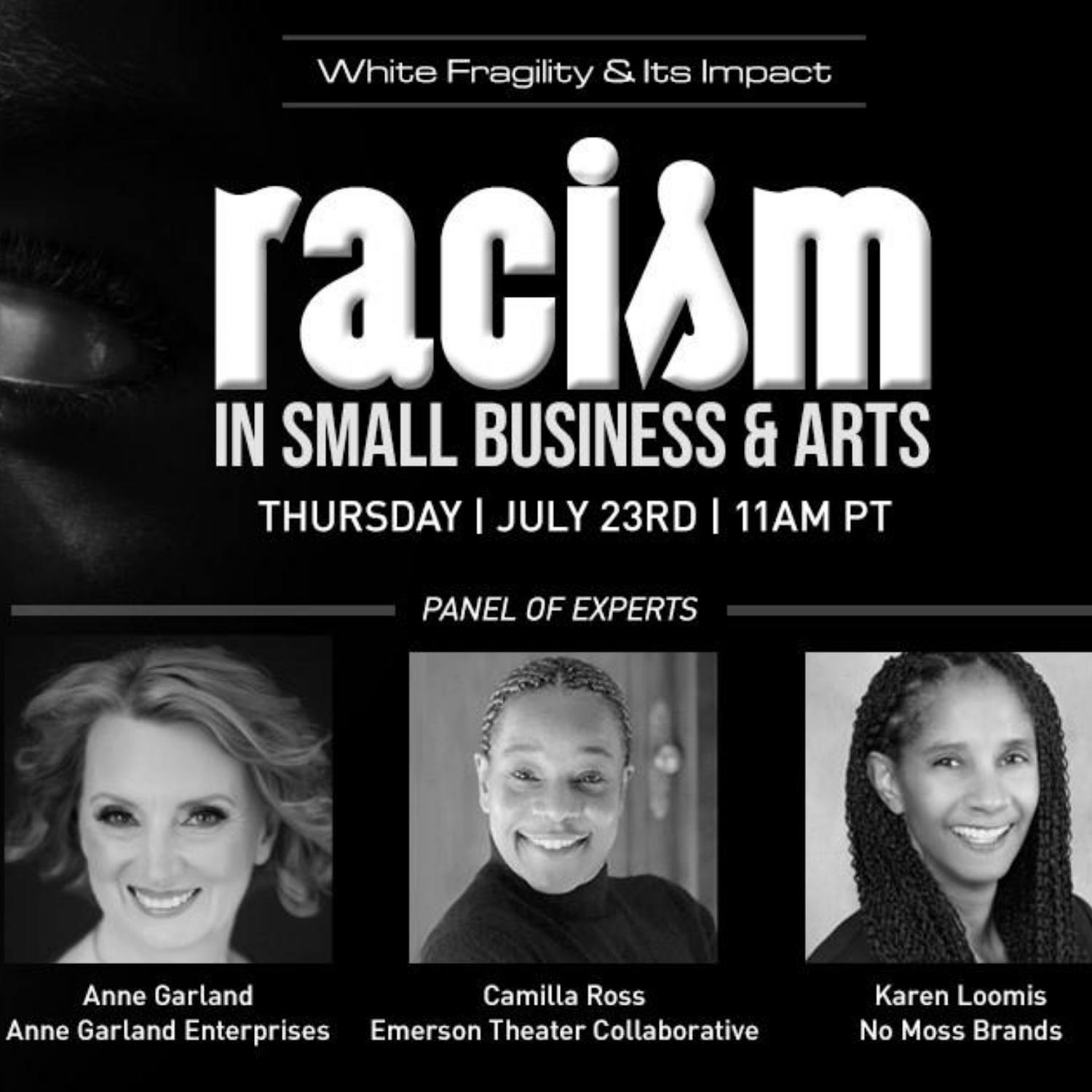
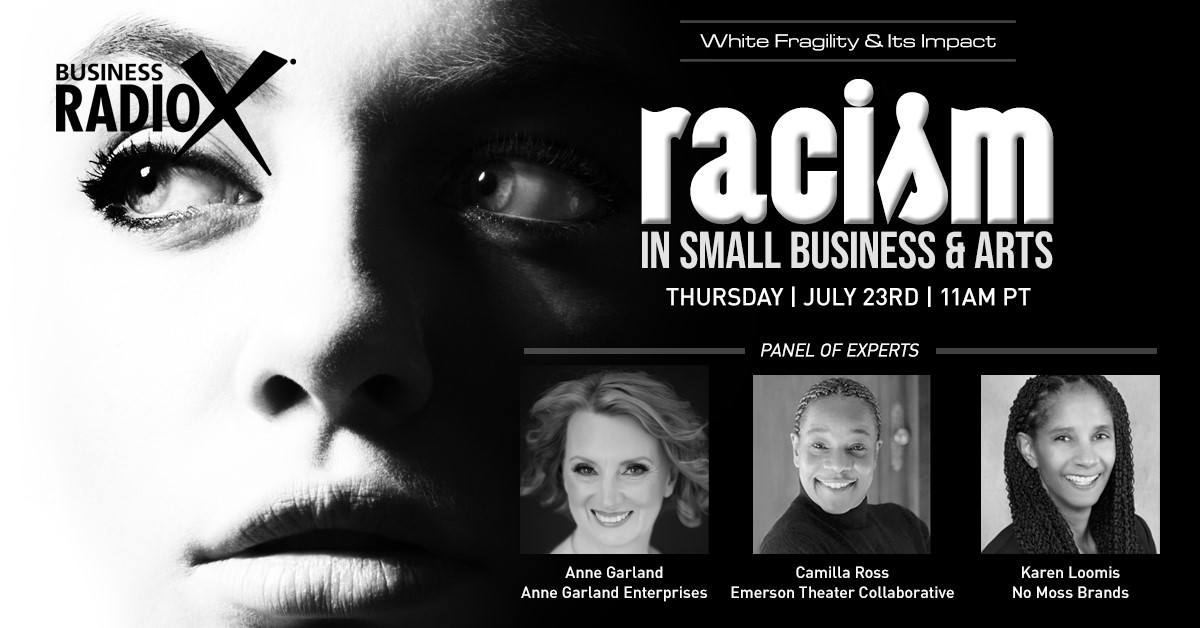
“Always Expect the Unexpected.” That is the motto of Anne Garland Enterprises, LLC. For over 20 years they have taken great pride in creating innovative experiential events for women. Career, body/health, and spirit is the focus as women network with other like-minded women while being inspired to discover and grow through their interactive lifestyle experiences. AGLogoGrayHiRes

Watch for her Virtual Mastery Speaker Series launching in September 2020.

Anne-GarlandAnne Garland (pronounced Annie), a leader for individuals and businesses adapting to change in today’s fast-paced world. Combining decades of sales and marketing experience with her creative expertise in interior design, Fortune 100 know-how infused with sensitivity of heart. With this rare combination she produces and creates extraordinary experiences for women.

Anne joined 19 other women to author Make Your Connections Count. Her soon to be released new book, “Secrets of a Serial Networker”. Launching summer of 2020 is a must for women who want to step out of the shadows and move toward center stage with more confidence and stronger networking skills.

Recently Anne stepped into the role as NSA-CT’s, President of the National Speakers Association, Connecticut Chapter 2020-2021.

Connect with Anne on LinkedIn and follow AG Enterprises on Facebook, Twitter and Instagram.

The Emerson Theater Collaborative (ETC) is a 501(c)(3) non-profit organization whose mission is to serve youth, under-represented communities and artists with an emphasis on diversity, by producing innovative and thought-provoking theater both in southeastern Connecticut and Sedona, Arizona. One such example is a wonderful play called Vivian’s Music 1969 by Monica Bauer that was a featured program at ETC in February 2020.

Camilla-Ross-on-Phoenix-Business-RadioXCamilla Ross is the President and Chairman of Emerson Theater Collaborative, Inc., Producer and Actress (Portray’s Harriet Tubman – Harriet Tubman’s Dream written by Lisa Giordano). She is also the President and Chairman of the Sedona Arts Academy.

“To be a catalyst for social change is really where it’s at for me,” Camilla said. “I believe theater should always be a venue for social change. I love the art of live theater and love what it does to the human soul and spirit. It moves us to look at life differently. To leave off the rose-colored glasses and really see the human condition.”ETC is a shining example.

Founded in 2008 to give voice to actors’ innate talent for character development, Camilla has since produced more than 20 inspired, original performances. Emerging and professional cast and crew have blossomed under her guidance. And together they’ve created profound, can’t-ever-forget shows that illuminate social issues, and transform audience curiosity into concern and action. ETC_Logo_CMYK

Camilla has a deep well of experience and mentorship to tap into for her ETC roles—from her days at Emerson College and then in regional theaters and commercials. Among her favorite portrayals? Capturing the heart, spark, and essence of Harriet Tubman in the one-woman show Harriet Tubman’s Dream. Camilla is also deeply involved with youth, their visions for social change, and the desire to see the world as a stage of peace. To that end, she’s a tireless advocate for children and adults with Asperger’s Syndrome. She gives kids and teen real-life theatrical experience through ETC’s Summer Youth Program and enlivens their eagerness to learn about the history and genuine heroes through ETC’s school programs. Camilla is a steadfast suicide prevention advocate too, helping teens and adults avoid this tragedy and move forward to a happier, more positive future.

Camilla has taught business courses part-time at Three Rivers Community College since 2005, Sat on the Emerson College Alumni Board for ten years, and is past president of the Connecticut Alumni Chapter. In May 2014 Camilla was honored by the Writer’s Block of New London, Conn., for her past work as an instructor. In June 2013 she was named Woman of The Year by the Women’s Network of Southeastern Connecticut, and she’s been featured in many periodicals for her community service. In 2019 Emerson Theater Collaborative was nominated as Collaborator of the year in Sedona AZ. A veteran of the U.S. Navy and member of Kappa Beta Delta, Camilla earned her BA in Performing Arts: Acting from Emerson College in 1985 and her MBA in Finance from Baker College in Michigan.

Connect with Camilla on LinkedIn and follow ETC on Facebook, Twitter and Instagram.

Karen-Loomis-on-Business-RadioXKaren Loomis, Oracle and Founder of No Moss Brands, is no stranger to the impact of racism; not only in her personal life, but professional life as well. In 2000, Karen moved from Spokane, Wa to Phoenix, AZ to find better opportunities as promised by the fifth largest city in the U.S. With only 2% AA, Spokane proved to be a challenging environment, as is Phoenix, with only 6% AA.

Karen has never shied away from the many barriers racism presented. She has always felt her extensive education and professional experiences could overcome these often invisible challenges.Unfortunately, institutional racism has proven to be too big of a hurdle for one person to take on. Using No Moss Brands as the vehicle, Karen will use her voice to open the eyes of others who are willing to join all People of Color on this journey to change. You in?

Connect with Karen on LinkedIn and follow No Moss Brands on Twitter and Facebook.


Tagged With: networking, networking events, Virtual Mastery Events, Women in Business, Women's Events

Tonia Morris, Transition Enterprises

February 5, 2020 by John Ray

Tonia Morris, Transition Enterprises
North Fulton Business Radio
Tonia Morris, Transition Enterprises
Loading
00:00 /
RSS Feed
Share
Link
Embed

Download file

Tonia Morris, Transition Enterprises

North Fulton Business Radio, Episode 195: Tonia Morris, Transition Enterprises

A transition from the corporate world to entrepreneurship can be difficult and yet rewarding, as Tonia Morris, author of Before You Say “I Do” to Entrepreneurship, discussed on this edition of “North Fulton Business Radio.” Tonia works with clients in transition through her coaching firm, Transition Enterprises. “North Fulton Business Radio” is hosted by John Ray and is broadcast from the North Fulton Business RadioX® studio inside Renasant Bank in Alpharetta.

Tonia Morris, Transition Enterprises

Tonia Morris, Transition Enterprises
Tonia Morris

Tonia Morris is founder of coaching firm Transition Enterprises. Based in Grayson, GA, Tonia guides professionals from the corporate world through specific stages of entrepreneurship. She is a Registered Corporate Coach, a contributing writer with the Forbes Council, a professional speaker with the National Association of Speakers, and author. Her new book, Before You Say “I Do” to Entrepreneurship, is a must-have for understanding what it takes to enter into entrepreneurship.

As the founder of Simply HR, a training and consultant firm, Tonia has served hundreds of organizations on how to build a generational inclusive workplace.

For more information, visit Tonia’s website, or you can email Tonia directly. To order a copy of Before You Say “I Do” to Entrepreneurship, follow this link.

Tonia Morris, Transition Enterprises
John Ray and Tonia Morris

North Fulton Business Radio” is broadcast from the North Fulton studio of Business RadioX®, located inside Renasant Bank in Alpharetta. Renasant Bank has humble roots, starting in 1904 as a $100,000 bank in a Lee County, Mississippi, bakery. Since then, Renasant has grown to become one of the Southeast’s strongest financial institutions with over $13 billion in assets and more than 190 banking, lending, wealth management and financial services offices in Mississippi, Alabama, Tennessee, Georgia and Florida. All of Renasant’s success stems from each of their banker’s commitment to investing in their communities as a way of better understanding the people they serve. At Renasant Bank, they understand you because they work and live alongside you every day.

Tagged With: from corporate to owning your own business, generational coach, help in transition from corporate to business owner, North Fulton Business Radio, North Fulton Studio, Simply HR, Steps to leaving your corporate job, Tonia Morris, transition enterprises, transitioning from corporate to small business, Women in Business

Inspiring Women, Episode 16: Becoming a Woman of Influence

December 11, 2019 by John Ray

Betty Collins, Brady Ware
Inspiring Women PodCast with Betty Collins
Inspiring Women, Episode 16: Becoming a Woman of Influence
Loading
00:00 /
RSS Feed
Share
Link
Embed

Download file


Betty Collins, Brady Ware
Betty Collins, Brady Ware & Company

Inspiring Women, Episode 16:  Becoming a Woman of Influence

Influence is merely the capability to have an effect on the character, development or behavior of something. Do you want to be that woman of influence? Host Betty Collins discusses what it takes to expand your influence on this edition of “Inspiring Women,” presented by Brady Ware & Company.

Betty Collins, CPA, Brady Ware & Company and Host of the “Inspiring Women” Podcast

Betty Collins, Brady WareBetty Collins is the Office Lead for Brady Ware’s Columbus office and a Shareholder in the firm. Betty joined Brady Ware & Company in 2012 through a merger with Nipps, Brown, Collins & Associates. She started her career in public accounting in 1988. Betty is co-leader of the Long Term Care service team, which helps providers of services to Individuals with Intellectual and Developmental Disabilities and nursing centers establish effective operational models that also maximize available funding. She consults with other small businesses, helping them prosper with advice on general operations management, cash flow optimization, and tax minimization strategies.

In addition, Betty serves on the Board of Directors for Brady Ware and Company. She leads Brady Ware’s Women’s Initiative, a program designed to empower female employees, allowing them to tap into unique resources and unleash their full potential.  Betty helps her colleagues create a work/life balance while inspiring them to set and reach personal and professional goals. The Women’s Initiative promotes women-to-women business relationships for clients and holds an annual conference that supports women business owners, women leaders, and other women who want to succeed. Betty actively participates in women-oriented conferences through speaking engagements and board activity.

Betty is a member of the National Association of Women Business Owners (NAWBO) and she is the President-elect for the Columbus Chapter. Brady Ware also partners with the Women’s Small Business Accelerator (WSBA), an organization designed to help female business owners develop and implement a strong business strategy through education and mentorship, and Betty participates in their mentor match program. She is passionate about WSBA because she believes in their acceleration program and matching women with the right advisors to help them achieve their business ownership goals. Betty supports the WSBA and NAWBO because these organizations deliver resources that help other women-owned and managed businesses thrive.

Betty is a graduate of Mount Vernon Nazarene College, a member of the American Institute of Certified Public Accountants, and a member of the Ohio Society of Certified Public Accountants. Betty is also the Board Chairwoman for the Gahanna Area Chamber of Commerce, and she serves on the Board of the Community Improvement Corporation of Gahanna as Treasurer.

“Inspiring Women” Podcast Series

“Inspiring Women” is THE podcast that advances women toward economic, social and political achievement. The show is hosted by Betty Collins, CPA, and presented by Brady Ware and Company. Brady Ware is committed to empowering women to go their distance in the workplace and at home. Other episodes of “Inspiring Women” can be found here.

Show Transcript

Betty Collins: [00:00:00] Today, becoming a person of influence … In fact, today, because this is Inspired Women, I’m going to say becoming a woman of influence, right? I’m going to start with this. I love a certain movie, and I bet I’ve watched this a hundred times; I’m not kidding. My husband will come home and can’t believe I still have this on, but it’s “Two Week Notice,” with Sandra Bullock, who plays Lucy Kelson, and Hugh Grant, who plays George Wade. Sandra Bullock is an activist and she is a “cause” – I’m putting that in quotes – per Hugh Grant in the movie.

Betty Collins: [00:00:32] He says that, at some point. She is very passionate about architecture and preserving historical buildings that have meaning. They’ve been in the community forever. How dare you take this down? Right? On the other hand, he’s a developer, and he tears down buildings, and he puts up new ones that are nothing like the historical buildings, of course, that she loves. He’s that big corporate America; she works for all these legal aid things and does all the good work. They are night and day. He grew up wealthy. She grew up poor. I mean, they have nothing in common, really.

Betty Collins: [00:01:08] Needless to say, her method is that she would protest, and take her protesters, and they would stand in front of buildings when they were trying to tear them down. For a while, it would work, and all three people that she had protesting with her … Then they would take them, and she would go into jail, and her parents would bail her out. One of those times, the parents were- they were coming, of course, out of the building- or out of jail, actually. The parents had paid her bail, and she looked at her parents and said, “Did they tear the building down?” They didn’t say yes. They didn’t have to. She just looked at her parents and said, “I’m just not getting through.” They said, “Let’s just go to dinner …” She goes, “No. I gotta go home and think about this one.” That line stayed with me – “I’m just not getting through.” In other words, she wasn’t influencing anything.

Betty Collins: [00:02:03] How many times have you had that passion, something in your heart and soul, right? And you have no results? You have that “I’m not getting through.” In reality, no influence. Influence can be applied to many things. Maybe you to influence and have a following. Maybe you want to push an agenda, be impactful. You have a passion. You have a cause, like Lucy Kelson. Today, we’re going to talk about becoming that person of influence.

Betty Collins: [00:02:31] Influence is merely … It’s the capability to have an effect on the character, development, or behavior of something. Do you want to be that woman of influence? I hope so. We’re counting on you, actually. The movie is not real life, of course it’s not. It’s not. It’s fictional. But Sandra Bullock acted out and was determined to have influence about historical buildings. She really wanted the community center where she grew up to stay intact. But she had enough insight in that moment, when she saw her parents look that they had torn down another building, that it was not working, so she changed the way or the approach to influence her agenda of historic preservation.

Betty Collins: [00:03:18] I don’t know what your historic preservation issue is, but I’m sure there’s something out there that you would like to have more influence on. Well, the approach was very uncomfortable, and she had a mindset change to her method to her madness. Instead of having her and three people go protest, she ends up approaching Hugh Grant, as George Wade; the rich kid, the playboy, the guy who’s kind of everything she can’t stand. She ends up working for the guy who’s tearing down the buildings. Now, it’s a movie, and I get that, and I would call … But if that was real life, and you decided, “I’m going to now get in and get with that person,” like I talked in my last podcast – the decision maker, the person who makes things happen – that’s exactly what she did. It was bold. It was tenacious. She wasn’t comfortable. Confidence- she was confident in her passion, but it took a lot of … She’d be courageous now.

Betty Collins: [00:04:18] Okay, it’s a movie, but it could be real if you applied it to your situation. How are you going to change your mindset? How are you going to change your method? Are you going to do something a little more bold and tenacious to make it happen? Of course, Lucy Kelson did that. More on Lucy Kelson later. But before we continue, I want to think about the influence you have now or that you would like to have. Are you just not getting through to some aspect of your life or a situation, maybe in your family, with your kids? You know how that is. Bosses, customers, the career path. Think on it. Don’t just listen to my podcast, but really think on it. Define it, put it on the table, write it down, and then say it out loud. “I want to influence …” and make some change to becoming that influencer, so you get through where you need to.

Betty Collins: [00:05:12] To influence others, in other words, it’s not really optional to do these things, and it’s a lot. So, listen closely and get the transcript on these next few things, because this is not for the weak; it is not for the weary. You must go beyond general expectations, and you must reach for limits above the norm. You must have total confidence in yourself and what you are attempting to achieve, but you also have to be courageous. It’s one thing to be confident, but to stand up in the room and say what you need to say, that takes courage. You’ve got to provide words and wisdom to others who are seeking to obtain it. Then, you have to understand the impact, yourself, of maybe that historical preservation/community center staying. I don’t know. Show others that these things can be realized. Again, this is not for the weak, and it is not for the weary.

Betty Collins: [00:06:07] I’m going to give you some tips on how do I get through? How do I become that woman of influence? Well, first, you’ve got to focus on resonating with the audience. You’ve got to know the person or the group you’re trying to influence. I think, in the movie, that’s what she was doing. “I’ve got to get to know George Wade, and who he is, and get beside him …” Of course she got … It’s a movie, so it’s kind of … Go watch it, and you’ll see what I’m talking about. In her case, she said, That’s what I got to do. It’s no longer enough. I got to get to know this person and figure it out.”

Betty Collins, Brady Ware: [00:06:40] Begin with your audience and create generosity for them. I know that when I speak publicly, if I don’t get to know that audience, I will not connect, I will not resonate, and they will be on their phones. You have to benefit. You have to give them some kind of positive experience. That’s really just called you’ve got to make a resignation. Here’s a great quote, when you’re figuring out that audience or that person of who you’re trying to get to. “If you talk to someone about themselves, they’ll listen for hours.” I’m going to say that again: “If you talk to someone about themselves, they’ll listen for hours.” People will immediately like you, if you show interest in them first. We don’t do that well, often, today.

Betty Collins: [00:07:27] You’ve got to learn about who they are, what they are, what they dislike, what their favorite sports are. Make yourself more likable, and maybe you’ll gain some trust. I have a great example that. I was interviewing a very large client, and I really wanted this client. I went in there not really having any ability to resonate with this person. The more I tried to sell myself, and sell my company, and talk about myself and all those things, the interview was over before it started. Fortunately, I was perceiving that. I had good perception.

Betty Collins: [00:08:12] Then, I realized I just need to wind this down. She’s not interested. I saw two pictures on her desk, and one of them was … It looked like a place I had gone to. So, I said, “Hey, do you travel a lot?” She goes, “We love to travel. We live to travel.” I said, “Oh, is that St. Lucia? She goes, “It is.” Completely different conversation. We talked travel for 10 minutes, and we talked about everywhere we had been. She talked about all over, and it was personal for her, because it was with her husband, and her children, and a lifetime of those things. I was able to now resonate with that audience. I made a connection. Then, at the end, she said, “Get me the contract, and let’s get started.” It was the most bizarre thing I’ve ever …

Betty Collins, Brady Ware: [00:09:01] But I learned from that, that first thing, I went in … I try to do this now. I look around the room. What is the audience? Even if it’s one person, what is in their office? What are they – what resonates with them? If you want to influence, you’ve got to resonate. You got to know your stuff. If you want to be an influential person, you’ve got to know your stuff, and you’ve got to be incredible.

Betty Collins: [00:09:23] Lucy Kelson, played by Sandra Bullock, knew her stuff about historical preservation. She just did. She could go on, and on, and on about it. Now, Hugh Grant didn’t hear her, but she knew her stuff. She gained knowledge. She knew her research. When it really came to the moment where she could actually work for somebody like him and be there, he then began to go, “She knows. She’s credible. She might be a liberal, and I’m a conservative. She might be frugal, and I’m excessive,” but she knew her stuff; she had credibility; that took her a long way, and it kind of- she gained some authority because of that.

Betty Collins: [00:09:58] It’s funny, in the movie, now, he can’t make a decision without her. Everything is what she thinks, right? But knowing and research, you have to do that. You have to know, if you want to be an influencer, and it doesn’t matter what it is. If you want to help someone at your church, and you want them to know the Bible; if you don’t know it, it means nothing that you’re trying to help them. If you are in a situation where you’re trying to help someone sell something, and you’ve never sold anything in your whole life; doesn’t help. You’ve got to know your stuff to be credible.

Betty Collins, Brady Ware: [00:10:27] It’s our nature to listen to those who know more. It also is our nature to not listen to people who know more. Sometimes, the smartest person in the room is “the expert,” and they get attention because you’re stuck with them, because they’re expert. You don’t want to be in that but know your stuff and be credible.

Betty Collins: [00:10:47] Build your strategy and process first. To become influential, you’ve got to be intentional. I’m sure you’ve heard that. But those who plan, influence; those who think first, influence; those who are paralyzed by the plan, don’t influence, by the way, so don’t get too wrapped up in that, because if the plan sits on a shelf and collects dust, it means nothing. In order to have a real plan, you’ve got to think it through, but then you’ve got to go, “Here’s how I’m going to process this,” and then you will influence.

Betty Collins: [00:11:16] I know in Brady Ware, with our women’s initiative, I really did sit back and go, “What is the purpose? What is the mission? How do I want this to go? What is it I really want to achieve at the end of the day?” Then, I began executing things in pieces, and in five years, Brady Ware can’t believe how we’ve grown this to what it is. But it took a lot of that. Now, I’m pretty influential in Brady Ware, when I go in and say, “I think we should do this for women.” A lot of times, it’s just a given, because I’ve done my homework, I know my stuff, and I have a credible reputation. But then, I build a strategy, and I continue to change the strategy.

Betty Collins, Brady Ware: [00:11:53] The other piece is you’ve got to find your unique voice, when you want to influence. You can be the norm. You can be like everybody. You can be a copy, or you can be original. You’ve probably heard that. The key difference between influencers who make it and those who don’t is really not about how hard you work. That’s good stuff. It may not be that you are the big producer … People wear that badge of honor and thump their chest – “I’m the biggest! I’m the best! I’m doing all this!” – but it doesn’t mean that they are always going to be heard. In fact, sometimes people don’t want to hear about how hard you work and how good you are. They will be inspired by you, if you have a unique voice or method in how you communicate or how you do something.

Betty Collins: [00:12:38] There’s a funny part in the movie. It’s the envelope part of the movie. Now, of course, Hugh Grant can’t make one decision without Sandra Bullock. She knows her stuff. She’s credible. She’s on it. She’s gained his trust. On and on … So ,he brings her these two envelopes, and she’s like, “These are the same envelopes. I don’t know what the debate is?” He’s describing it to her, and she’s still going, “I don’t know what the debate is? They’re both not made with recycled paper, so I wouldn’t buy either of them.”

Betty Collins: [00:13:07] Then she goes, and she licks the envelopes, and see how they seal. He goes, “What are you doing?” And she goes, “Well, you’ve got to see if they seal well,” and she’s licking to see how they taste. He was like, “I’ve asked a hundred people this same question, and you’re the only one who came up with this answer.” That stuck with me, because I just think about these things. I don’t know why … She just had a unique way of helping him make decisions or getting him to where he needed to go. Again, it’s a movie, but the principle is there. Never underestimate the uniqueness of how you leverage; your voice will be heard differently, versus just, “I work hard, so I should be heard,” or, “I’m the biggest producer, I should be heard.” Those are things that are out there.

Betty Collins: [00:13:48] You’ve got to be consistent, period. To create trust and connection, you’ve got to be consistent. Deviation is okay, but consistent rules the day. I’m sure you’ve heard this – if you want to be influenced … You want to be the influencer, and not be influenced. Not that that’s bad but being authentic and building trust; you’ve got to be the real deal. People can read through that. It’s critical to stay that way. It’s critical to be transparent. People want to connect with people who are the real deal and are trustworthy. I see that in all levels and positions at Brady Ware. When you have somebody who just- you know that they are going to be authentic, and you can trust them, you’ll deal with them a lot more, you’ll use them a lot more, and you’ll probably support them when they need it a lot more.

Betty Collins, Brady Ware: [00:14:37] Another thing I didn’t … As I was doing my research for this podcast today, focusing on the metrics that matter … It seems like all I hear about right now are metrics and measuring, but influencers having impact need to measure metrics, and they need to measure the right ones. My good friend, Sheri Jones, she has a company, Measurement Resources, that measures outcomes. She has convinced me, over and over, it’s important, and it’s valuable, because I see results with it. But, at times, as an influencer, you think if you are dealing with metrics like ‘I have this many employees, and my company’s bigger, and now I’ve gotten to this revenue; my office is now the corner, and it’s the biggest; or my LinkedIn connections have hit 1,500; or, hey, I make more money …’

Betty Collins: [00:15:27] Those are all good metrics and things to shoot for. But you probably will have better results as an influencer if you focus on two things. Engagement; engagement with employees, engagement with customers, people that totally … You’re engaged and, no matter what, there’s a strength in that. So, engagement is huge. You can do all you want for employees; if they aren’t engaged and own it, and they’re … It’s not nearly as effective. So, measuring engagement is proven to be something that’s huge. It’s not just that I saw five people and have five contacts; It’s did I engage with them? Did I make a connection with them? Going again back to I knew my audience, and I was able to talk about St. Lucia, and it all came to full circle. That’s engagement; not talking about what I do, and how hard I work, and what we can do for you.

Betty Collins: [00:16:20] Then, the return on your investment. There are things that you can do in any organization, where you might put a lot of metrics on volume and sales. If it’s the wrong sale, and you don’t make any money, it doesn’t matter. So, measure what is bringing back to you. I can make this much money on these things, so obviously, it’s adding to my cash, or paying off my debt, or it’s I now have reinvestment money. People who are pretty influential measure those things that matter. The two metrics are engagement, and the other one is return on investment.

Betty Collins: [00:16:59] You’ve got to be vulnerable but smart. Opening up about your struggles and fears; some people do that better than others, but it’s tough. Doing so, though, helps you connect to that audience. It definitely humanizes you, because we all are. I’m not saying that you need to tell your life story every day. Please don’t. The difficulties you share could be really relatable to that person. You never know. It also can be real negative, if you overdo it.

Betty Collins: [00:16:59] In the movie, Hugh Grant, who is more of a playboy, not over-serious, successful, living on his dad’s money, but yet, he’s influential because he’s successful. Of course, the activist of Sandra Bullock’s very harsh about him. Then, in this one moment in the movie, they’re in her favorite place, and they’re talking about expectations, and they’re going on and on. Then Hugh Grant just says, “Or maybe no one having any expectations at all …”

Betty Collins: [00:17:59] She understood, in that moment, because her parents had such high- that his parents probably had such low, so no wonder he didn’t get it. He didn’t get what she was totally driven with, right? I just found that an interesting line, because she heard him, and, at that point in the movie – again, this is not real – but she listened to him differently. She treated him differently, because she saw something in him. For her, for parents, or anyone around you to not have expectations of you was very, very foreign to her, because that was all her parents were about. So, she heard, and it changed her view – again, influence.

Betty Collins: [00:18:42] Don’t take shortcuts when you’re trying to be an influencer. In fact, it might put you three steps forward, two steps back. You can’t do it faster and easier. It has to be at a pace that works. Don’t put your reputation at risk. Definitely don’t do that. To become an influencer, you probably have built a lot of authority and trust that we’ve talked about. Do not lose that investment by going rogue or just dipping into something that you shouldn’t. In this movie, both characters were so opposite, but they really never compromised who they were, at the end; they just didn’t. She loved historical buildings, and he loved new ones, and there was nothing wrong with either side. They didn’t ever put their reputation at risk, because that’s who they are and it’s what they did.

Betty Collins: [00:19:28] Lastly, but not leastly, it’s not about you. When you’re trying to influence, it cannot be about you. It may be about you, in the end; it might be somebody you’re trying to influence to build a bigger company or influence your family to be a better- all those things. But it really is about the person. It’s less about you, and it’s more about cheering on the cause, or cheering on the people that you’re trying to influence. Becoming a woman of influence is not for the weary. It is not just for the strong, either. I’ve seen all kinds of women in all kinds of positions in all stages of life influence.

Betty Collins: [00:20:01] These are just a few quotes that I found. I always love to find quotes, and so I’m out there googling, but I thought some of them were interesting. “If you’re going to influence, associate yourself with people of good quality, for it’s better to be alone than in bad company.” Two, “You can be much more influential if people are not aware of your influence.” Again, I go back to my friend Caroline Worley, who’s such a master at being political savvy and such a master at influence and using it for the good. She was fantastic. “Influence is like a savings account. The less you use, the more you got.” Let that sink in. And, “The ability to influence people without irritating them is probably the best skill that you can ever learn.”.

Betty Collins: [00:20:45] So, today I’ve said a lot. Get the transcript. Get my notes, because there’s a lot there that you need to dig into. Influencing, becoming that person of influence is something that you can do. It takes work, and it takes intentionality, but it would be worth it in the end of whatever that you’re trying to accomplish. I’m Betty Collins. Thank you for listening today.

Tagged With: CPa, CPA firm, Dayton accounting, Dayton business advisory, Dayton CPA, Dayton CPA firm, influence, Influencers, Inspiring Women, Inspiring Women podcast, woman owned business, women entrepreneurs, Women in Business, women of influence, women-owned businesses

Inspiring Women, Episode 15: Being Politically Savvy

November 16, 2019 by John Ray

Inspiring Women with Betty Collins album cover
Inspiring Women PodCast with Betty Collins
Inspiring Women, Episode 15: Being Politically Savvy
Loading
00:00 /
RSS Feed
Share
Link
Embed

Download file

Inspiring Women with Betty Collins album cover

Being Politically Savvy

How do you successfully navigate office politics? On this edition of “Inspiring Women,” host Betty Collins discusses the skills needed to be politically savvy. “Inspiring Women” is presented by Brady Ware & Company.
Betty Collins, CPA, Brady Ware & Company and Host of the “Inspiring Women” Podcast

Betty Collins, Brady Ware & Company

Betty Collins is the Office Lead for Brady Ware’s Columbus office and a Shareholder in the firm. Betty joined Brady Ware & Company in 2012 through a merger with Nipps, Brown, Collins & Associates. She started her career in public accounting in 1988. Betty is co-leader of the Long Term Care service team, which helps providers of services to Individuals with Intellectual and Developmental Disabilities and nursing centers establish effective operational models that also maximize available funding. She consults with other small businesses, helping them prosper with advice on general operations management, cash flow optimization, and tax minimization strategies.

In addition, Betty serves on the Board of Directors for Brady Ware and Company. She leads Brady Ware’s Women’s Initiative, a program designed to empower female employees, allowing them to tap into unique resources and unleash their full potential.  Betty helps her colleagues create a work/life balance while inspiring them to set and reach personal and professional goals. The Women’s Initiative promotes women-to-women business relationships for clients and holds an annual conference that supports women business owners, women leaders, and other women who want to succeed. Betty actively participates in women-oriented conferences through speaking engagements and board activity.

Betty is a member of the National Association of Women Business Owners (NAWBO) and she is the President-elect for the Columbus Chapter. Brady Ware also partners with the Women’s Small Business Accelerator (WSBA), an organization designed to help female business owners develop and implement a strong business strategy through education and mentorship, and Betty participates in their mentor match program. She is passionate about WSBA because she believes in their acceleration program and matching women with the right advisors to help them achieve their business ownership goals. Betty supports the WSBA and NAWBO because these organizations deliver resources that help other women-owned and managed businesses thrive.

Betty is a graduate of Mount Vernon Nazarene College, a member of the American Institute of Certified Public Accountants, and a member of the Ohio Society of Certified Public Accountants. Betty is also the Board Chairwoman for the Gahanna Area Chamber of Commerce, and she serves on the Board of the Community Improvement Corporation of Gahanna as Treasurer.

“Inspiring Women” Podcast Series

“Inspiring Women” is THE podcast that advances women toward economic, social and political achievement. The show is hosted by Betty Collins, CPA, and presented by Brady Ware and Company. Brady Ware is committed to empowering women to go their distance in the workplace and at home. Other episodes of “Inspiring Women” can be found here.
Show Transcript

[00:00:01] So today I’ve chosen kind of an interesting topic. Maybe when you hear the title, you’ll understand politically savvy. Oh, yes. Politics. You know, today it’s always had a negative tone. But in today’s environment. Wow. Just not good, right? But, you know, if you take politics in in politically correct or just say politically savvy, maybe I’ll get you to listen. Politically savvy. The why and the how. I will tell you, is it really necessary? Because some people really don’t like that idea of that. I’m going to say a firm. Yes. If you truly want to get where you want to go, you’ve got a you’ve got to learn the art of being politically savvy. So let me set the stage. The term politics is based on words, Polly, and ticks. Poly meaning many and ticks, meaning blood-sucking parasites, totally fits in today’s environment, right? It’s why we don’t like it maybe I don’t know. But whenever people’s priority, their values and their interests come together, chances are some type of politicking is going to take place. So where are your priorities right now? Can you easily define those values? Hopefully it should be quick, you know. What are your interests? So, yeah, you know, it’s necessary if you’re going to make sure that those priorities, values and interests are really going to become reality. Being politically savvy just might have to be in order.

[00:01:36] But no matter where, you know, your office, family, maybe you maybe you volunteer a nonprofit, you’re involved in your local community, talk about politics or politics, politicking. It’s just inevitable. And they involve intentional acts to you and by you to influence and enhance, you know, protect those priorities and those values and interests. So we’re going to talk about today. So, yeah, it’s necessary to be politically savvy to have as the best desired outcomes that you’re looking for. I think the major intention of office politics is about. It’s about positioning yourself. It’s about vested rights that can be dangerous, maybe resources and careers, influence and power. And when all those things are done the right way, it can be really amai amazing. And when it’s done the wrong way with wrong motives, though, it can be pretty dangerous. So be careful when you’re talking in wanting to position yourself, investing yourself and tapping into resources, advancing your career, which can all lead to some good influence and power. Political savvy is the only way to go and it’s a positive connotation. Necessary, my opinion totally the true secret to being politically savvy is that it’s a secret skill. To be successful if the best it’s the best trader ability you have that’s just kind of natural and and you don’t talk about being politically savvy and nobody talks about it.

[00:03:07] e-justice. It’s who you. It’s it’s who you are. It’s how you can can work the room and work the situation to do what you need to do. Navigating an office or, you know, an organization, even your own household. You know, you got to get comfortable with and then duty, you know, those unknowns. Right? You’ve got to get comfortable with some alliances. Not everyone is easy to align with and be authentic with. That’s why you got to be political savvy. By the way, you know, the thing that we don’t really see a lot in today’s politics is, is those things that people are trying to come together with. But with practice, you know, you can decipher what is often unspeakable and not easy. If you decide the right course of action and just a side note, authenticity is not telling the truth without spilling every single. Your gut every single time. That’s not an authenticity. But truth always wins and it doesn’t have to be dramatic. So as we talk about political competence today and being politically savvy. Really, political competence is the ability to understand what you can and cannot control. You’ve got to know when you take action. And you’ve got to figure out who’s going to resist your agenda.

[00:04:25] I remember it being in a class once for CPE and it was a long, long time ago in my career and she was such a dynamic speaker. If you can imagine, all of us really love talking about managing compilations. OK. Not an exciting subject, but she or I never have forgotten this for her. She said Always figure out who’s going to resist what you want to do when you’re managing. Always figure out and be prepared for it because it will happen. So I’ve always remember that advice from this woman. I couldn’t tell you who it is on compilations of how exciting. You have to know who’s on your side. Absolutely. You know, there is that saying out there, keep your friends close, keep your enemies closer. So there’s some truth in that. But you really do have to know who’s on your side, who’s in that circle that will help you through it. And then you have to know about how to navigate through that, the map, the political terrain where you are to get others on your side. So, you know, I’ve said a lot of things that you probably already knew, but being politically savvy is really, you know, for me, I’ve got to make sure that if I’m going to get what I want or I’m going to get what I think the organization needs or do what’s best and align my values and all those things, I’ve just got to learn this skill set. So how do I do that? I’m going to give you some Howse today. Here’s the number one think before you speak. Let me say that again. Think before you speak. You know, to be truly politically skilled. You’ve got to have some impulse control even over this past weekend. I had a situation where I got a a face book message, p_m_, whatever it’s called.

[00:06:01] And it was a very I could have taken that message a hundred ways, but I stepped back and said, nope, I’m going to think about this and try to not hash it over all weekend. But before I speak, I’m going to take my time. It kind of paid off because when I actually had the conversation and step back and wait for a real conversation, not text, it turned into something different.

[00:06:24] So you need to choose your organizational battles wisely. You know, those conversations that size things up before you decide how you’re going to present to others. You have to consider whether or not to voice a thought or a feeling. And timing is everything. Have you ever seen someone try to get something done because they’re passionate. They want to do it. They’re ready. They’re prepared. It’s just not the right time because the person maybe or the situation they’re trying to change. It’s not time. It’s not a good time. You’ve got to think before you speak and you’ve got to think there’s going to be a time when I can do this.

[00:06:58] You have to consider that your communication of yourself, your ideas, your opinions, sometimes look back and see where you said something. And in that prior time, it worked and learned from that. Probably it was the circumstance and the timing that made it work.

[00:07:17] The result that you can have can be pretty ideal if you wait and think before you speak. And chances are you’re probably not going to go off and be real rogue or this situation goes rogue. And you definitely are politicking at that point, but the results are likely be more positive when you think before you speak. Especially when it’s not something simple, especially when it’s something that could be controversial or it could go either way in. So be careful too. You got to manage up to some point. When you are savvy, you must be able to skillfully communicate with the layers above you.

[00:07:52] What does layers mean then? Sound very fun, does it? But it’s your boss, the supervisor. Sometimes I’m referring to even higher up decision makers. Your boss might not be the decision maker, but then you have to look at that layer and say, boy, if I go to his boss or her boss, is that going to be good? So you’ve got to figure out how to manage up to a point. I was just in a meeting where there were two people with the same position and they both had such different approaches. They both managed up, but two to one really did it to the wrong person and one did it to the right person and that person who knew skillfully enough to go, Hey. Think before you say say it, well, that person was making such more headway than the other person over here thinking, I’ve chosen the right person, I’m going to work the room over here and I’m going to. I’m gonna be savvy on this side on the right person to be savvy with. So you have to think about those things.

[00:08:48] Also, political skill involves maintaining good relationships with people, though, in the entire organization. Nearly as good as that team around you. We always hear that.

[00:08:57] So I’m not saying put all your all your energy and your resource in layers above you, because if you don’t have the layer below you, that makes it all work as well. You may end up neglecting that entire team around you. So, you know, when you’re trying to be politically savvy, trying to work through your family organization, your church, your community office, your careers. Think before you speak and manage up to a point. Make sure everyone around you that’s involved is treated well, because those people may they may one day rise up above you. You never know. You have to practice influence. How do you do that? I mean, what does that really mean? Because my next podcast is on influence and becoming that so effective influencers. They build strong interpersonal communication and relationships and they have good rapport with other people. When you are skilled, politically, politically savvy, people are comfortable with those interpersonal communications and skillsets that can be somebody that’s very intimate setting. It can be something that’s one on one. But you have to practice that influence. There’s a really good saying that sometimes influences like a savings account. The more you don’t draw out, the more you have.

[00:10:13] So sometimes throwing influence around doesn’t help you. I really got to witness somebody who’s very good at influence and being politically savvy and having really good impact. And that would be Caroline Warley. She’s an attorney in Columbus, Ohio. She has helped tremendous amounts of women’s organizations start from scratch, get them going. And what she really does well with those things is she connects people to the right people because she is a very connected person. She practices her influence. But you don’t even know it. You know, she’s bringing those people in and she’s she’s making sure that they are connected to the right thing for the greater good, not for Caroline morally necessarily. It’s okay that sometimes it’s for Caroline Worthy. Right. But she practices that influence in all kinds of situations and areas in her life. People who practice influence, they tend to have some good judgment about when they assert themselves and that results in cooperative relationships around them. So skilled influences are not always overly political. They just know how to play the game. Don’t you hate that? But it’s true. There are people out there who really know how to do that.

[00:11:26] Number four, this could be an entire podcast. Hone your power of perception. Don’t you love the person in the room that has no, I dieser just. They think they do, but they don’t. So I love number four. What a statement. Really, it’s an action or trait that is key to being skillfully politically savvy. You have to understand that.

[00:11:52] That when you can know what’s going on and be perceptive, there is power in that can, that’s an entire podcast. One day I was in a meeting and room full of great people and I walk in and they said, Here’s your meeting. I sat down and. And I’m pretty personable. So I start talking to everyone because, you know, I think I am in the right meeting. I have no idea that I’m completely in the wrong meeting until I realized and I said out loud, I’m in the wrong meeting.

[00:12:23] Everybody laughed because there’s a dozen people, but they were very entertained. But it didn’t dawn on me till probably three to five minutes into this meeting. I had no idea I was in the wrong meeting, too. I really then started seeing these people had no clue. I’m hitting out my cards to everybody. The funny part of that story was two years later, somebody hired me from that meeting because I handled it so well. Wish them all a good day. Walked out of there completely humiliated, but I laughed all the way out the door.

[00:12:51] So having the ability to understand now, that was a funny situation, obviously, but people who can hone in and have that perception have some. There’s power in it. And you understand you’ve got to. It’s a skill. This is really a natural characteristic in somebody. I think it’s a hard skill to learn. If you can’t see it, you just can’t. And so if you really have that problem where you’re not being able to work a room, well, get someone to help you with that. You’ve got to know who is around you and what this what the circumstances is. But it really is part of being really good savvy. That’s for sure. You got to learn to network. There’s networking and then there’s networking. Right. Actually, my friend Betty Clark at CPM Media says all the time there’s networking and then there’s connecting. So I could go to lunch three times a day. Sometimes I feel like I have or there’s really where you’re connecting with somebody. And so when you’re being savvy, if you are a person who helps small business, but you are meeting with big time, the large client, middle market bankers, that’s that’s networking. It’s not connecting. So you have to learn the difference a little bit and get in there. And of course, it’s not who you are. It’s who you know. That’s just a fact in life. Effective networking goes well beyond passing out your business cards and smoothing. You know, people who possess a strong networking ability, they build friendships and they see that going to be beneficial for both of you. It’s not about networking with a big name. So you can say you networking the big name. What can you do for them and what can they do for you? Skilled networkers know when to call on others and they’re willing to reciprocate.

[00:14:41] There has to be benefit between the two. The relationships have to benefit. Otherwise, it truly is just having lunch. It’s not networking connecting. So you have to invest in them and they will invest in you. Those are just various things that you can do to get that good politically savvy people are. They think before they speak. They manage up to they manage up to a point, but then they practice influence, they hone the power of perception and then they learn to network. Those are things that you have to take those five subject matters and dive into where you don’t have strength. But really, those who demonstrate political intelligence, they probably have a basic strategy. Of course, I’m a CPA and I’m a practical person. So strategy is great. I love it. If it sits down, if it’s in a book that sits on a shelf, it doesn’t really mean anything.

[00:15:33] So when I talk about they demonstrate political intelligence, they’re actually doing something with this strategy. But these are the things that they do. They partner with their boss. Unless you have a unique and irreplaceable knowledge or skill, which very few people do, actually your boss has much more power than you do. Probably your manager has much more access to those key decision makers. So it’s better to have a boss as a cheerleader than as an adversary. And again, I go back to managing up and you find those relationships. If you really want to get to the CEO of a company or a vice president level. You’re probably not going to find that by partnering with the accounts payable clerk of the company. You know, you’ve got to understand partnering with whether it’s a customer or a prospect or in your own company, partner with the boss. The person who’s up. The person who is the decision person. But at the same time, you’ve got to be a team, a 360 team player, which, you know, what does that really mean? I think it means it’s full circle. You must have a wide network of relationships with in your organization. Missy Heimer, who is a director at Brady, where when she first came to Brady, where which is probably 13, 14 years ago, she was a staff accountant. She kind of had started her career later in life.

[00:16:46] But she was very adamant of wanting to be a director and own a company one day. And one of the people gave her great advice. Young, you know, when she became a senior, she started seeing things happen. Get to know every director of Brady where and not just in the office you work in, but in other offices, because one day you’re in need, all those relationships around you. And so, you know, when it came time to vote for her to be a director, she knew everybody shouldn’t work for them necessarily. She she didn’t have that much interaction, but she definitely had this full circle. And on top of that, she made sure all the managers around staff, everyone, she was a kind of a hub centralized person. The other reason had to be a 360 team player and know kind of everyone within your organization. I mean, our Columbus office has 30 people in it. The more you know and have relationships in and work those rooms, guess what? You’re going a better understand what’s going on in the Columbus office. You’re going to know the things that are happening. And you won’t be maybe surprised then when you get those circles in those teams all collaborating. You can do anything. And that’s part of being politically savvy for sure. Then you have to understand the power map. Organizations are pop power hierarchies, right. And from time to time, those things shift.

[00:18:08] So you might have had the relationship with this person for ever and ever thinking that would hold you there. Well, what happens when that person goes? I learned this early on in my career as I was, you know, trying to know more and more people. And I loved one of my partners, which was with the payroll company. And this person gave me a lot of business and I gave them a lot of business. It was great until all the sudden three into three years. Guess what? They go on to something else, like selling medical something. Well, I had no other contacts at that point to refer to me or me refer to them. And so you have to kind of understand that at sometimes, no, that’s not a hierarchy person, but everywhere you have to. I if I would have known his boss, the boss would’ve probably brought me out one of his better reps if I wouldn’t. You know, CEOs come and go, accountants come and go. And you’re in. Really, you’re working for the owner of the company, not the CFO. You have to make sure that your understanding that power map of who has the influence, where you are and where you want to be and making sure that you will always leverage that things could change. So I’ve got to be able to change along with it.

[00:19:16] Then you have to practice subtle self-promotion. That would not be Betty Collins. I tell people on my podcast all the time. And really, if I don’t mean why wouldn’t I promote that? I mean, I work hard at it. It takes time to do. I was at a lunch and we were with a table, people we didn’t know. And so we’re going around introducing ourselves.

[00:19:38] And so one of the women said, oh, ah. I asked her, actually, I said, so how do you like being in the Narva organization? And she goes, Oh, I love it. And so the person next to her said, Oh, you’re with norvo. And I said, Yeah, you know, I’m on the board and I’m involved. And everyone started laughing at the table that was with me. They said, she’s the president of norvo. I don’t know why she’s not telling you that. And they all kind of laughed about it, you know. But the person I was across the table from actually was a really great connection. And so now I have kind of something she’s going to remember buying. I gave her my card and we talked. I could have just said, yeah, I’m very involved. I love the organization and so much so that I’m on the board and I’m the president right now, blah, blah, blah. And go on into those things. So sometimes you have to do those things and we don’t always do that well. Of course, there are those people that do it way too often and it’s very annoying.

[00:20:29] So politically savvy people can share their information, but chances are they’re going to self-promote and no-one’s. It’s not going to be obnoxious. People are gonna be good with it. OK. Here’s one. And you’ll go, why did you put this in here? Connect with the power people. Well, the big decisions about your career, you know, your company or even in the community will be made by people who endorse you. It’s just true. I mean, it can actually other day with someone because I was a link. She’s a LinkedIn friend. You know, we run in circles, but I’ve never done a business with her until she. She. Person who was trying to get her business said, well, we have a common person that I know. And can you call her? And she will give me a reference. I’m not going to tell her that I’m calling. And she said, we made this connection. And these were pretty high up. Well, I we consider high a powerful people. I up now having. Thank you for giving me a good reference. And by the way, here’s a client for you, because now I learn more about you and the person who I’d really like to get declined that she knows. Now, we had a great conversation about just business in general vs. other things that that I usually talk with her about. So those decision-maker people who endorse you.

[00:21:49] People who will make you happen. That was just a simple thing. But in the case of your company, maybe it’s your boss, you know, in your business, maybe it’s getting to that bigger client or smaller ones. You know, I’d rather have 10 big clients than 100 smaller ones. It depends on what you do. But in your community, you know, it’s one thing to note city council members. It’s another thing to know the mayor. You’re probably going to get a lot more done when you know the mayor. You may not know the mayor to, you know, council, though. So you have to look at both of those politically savvy people. Enjoy talking to folks who have the power, of course. It’s not like sucking up and using their coattails to drag along, but the people who are endorsed, you know, they’re going to help you be politically savvy. Again, remember memory, I started this podcast. I said you don’t really want to be seen as politically savvy. Just wanted to have it be happening. And then you got to commit to the business of the day that you do the passion that you’re doing, the organization that you’re in. Nobody likes an apathetic attitude. No one has ever press with, well, you know, I like the commercial that’s out right now where they say, yeah, my French is just okay. And of course, they interpret French as completely wrong.

[00:22:56] So if you want decision makers to think well of you, you need to be pretty interested and excited in what you do and false cheer will get you. So it will only get you so far. So you have to have some politically savvy. You really got to have the why and the what so that the what is simple in your life. But you’ve got to be committed to whatever it is you’re trying to politically savvy navigate through. So knowing the rules of this unwritten, invisible world politically savviness that no one wants to talk about because no one wants to say they’re political. It will help you gain recognition. It will help you get promotion in. It will get you where you probably want to go. Here’s some other things where you can think of. I’m going to be politically savvy, not sleazy. Right. You find the geek gatekeepers. Keep your eyes and ears open. Who are the real people of influence? Who do you need to get to? Who’s going to really make the difference? Often it’s just like any game you need to connect with the person who shuffles the cards. You have to be careful in that, too, because you can’t just try to get to the top first. I had a very interesting person in my my district ran for mayor. Anybody can run for mayor, but the person had never been on council.

[00:24:04] They’d never even been in the chamber. They had never been in CVB volunteering throughout the city. It was really kind of strange. So politically savvy, you know, when we’re talking about a find the gatekeeper. Sometimes you got a fine before you get there. You got to listen. Listed the coffeemaker. Gossip is a bad thing, right? It’s hard. It should be anyways. But tidbits of information sometimes can get you right to the right person. So sometimes just again, listening, kind of when I talked in the beginning of think before you speak. Right. Know when to be quiet. Tom Cruise is the perfect example of this in Jerry Maguire. So in the beginning, he has this epiphany, right? He writes this big story. Right. He goes in and gives everybody the story. And the whole place is quiet and within, you know, an hour of entering that office. Guess what? He was walking out of that office, had a really lot of good things to say and passion that he wanted to do and influence and change. But, man, he just didn’t know when to be quiet. Really blew it as far as I was concerned. And then building strategic alliances. You know, it’s not all about numbers. It’s not about how many people like you on Facebook. It really is probably gathering up your own board of directors.

[00:25:17] That is about your agenda. Whatever it is to politically savvy, savvy, navigate through. That’s better than well, I know all these people now and you don’t really know them. And they’re liking something good for you.

[00:25:30] And then trust your instincts. You know, learn what pushes your buttons and do it. Do something about it. Navigating office politics means getting comfortable with that ambiguity, the unknowns, alliances and authenticity, I talked about that at first and with practice you can decipher was often pretty unspeakable and decide the right course of action. So gonna end with this statement to be human is to be political. Inspired people help you build the right required skills to navigate, navigate politically in organization. And so make sure that as you start this venture of I’m going to become politically savvy, take hard. Get the transcript, because I just gave you a ton of information about trying to navigate through through being politically savvy, it’s not easy to do, but it’s necessary in the world you live in, probably. I’m Betty Collins. Thanks for listening today.

Tagged With: CPa, CPA firm, Dayton accounting, Dayton business advisory, Dayton CPA, Dayton CPA firm, Influencers, Inspiring Women, Inspiring Women podcast, organizational culture, perception, politically savvy, politics, power hierarchies, power map, woman owned business, women entrepreneurs, Women in Business, women-owned businesses

Inspiring Women, Episode 14: Lifting Up The Next Generation of Women

October 17, 2019 by John Ray

Inspiring Women PodCast with Betty Collins
Inspiring Women, Episode 14: Lifting Up The Next Generation of Women
Loading
00:00 /
RSS Feed
Share
Link
Embed

Download file

Lifting Up The Next Generation of Women

On this edition of “Inspiring Women,” host Betty Collins discusses lifting up the next generation of women. How do you create environments for women to thrive? What’s the best way to encourage the next generation of women? Betty discusses these questions and more in this edition of “Inspiring Women,” presented by Brady Ware & Company.
Betty Collins, CPA, Brady Ware & Company and Host of the “Inspiring Women” Podcast

Betty Collins, Brady Ware & Company

Betty Collins is the Office Lead for Brady Ware’s Columbus office and a Shareholder in the firm. Betty joined Brady Ware & Company in 2012 through a merger with Nipps, Brown, Collins & Associates. She started her career in public accounting in 1988. Betty is co-leader of the Long Term Care service team, which helps providers of services to Individuals with Intellectual and Developmental Disabilities and nursing centers establish effective operational models that also maximize available funding. She consults with other small businesses, helping them prosper with advice on general operations management, cash flow optimization, and tax minimization strategies.

In addition, Betty serves on the Board of Directors for Brady Ware and Company. She leads Brady Ware’s Women’s Initiative, a program designed to empower female employees, allowing them to tap into unique resources and unleash their full potential.  Betty helps her colleagues create a work/life balance while inspiring them to set and reach personal and professional goals. The Women’s Initiative promotes women-to-women business relationships for clients and holds an annual conference that supports women business owners, women leaders, and other women who want to succeed. Betty actively participates in women-oriented conferences through speaking engagements and board activity.

Betty is a member of the National Association of Women Business Owners (NAWBO) and she is the President-elect for the Columbus Chapter. Brady Ware also partners with the Women’s Small Business Accelerator (WSBA), an organization designed to help female business owners develop and implement a strong business strategy through education and mentorship, and Betty participates in their mentor match program. She is passionate about WSBA because she believes in their acceleration program and matching women with the right advisors to help them achieve their business ownership goals. Betty supports the WSBA and NAWBO because these organizations deliver resources that help other women-owned and managed businesses thrive.

Betty is a graduate of Mount Vernon Nazarene College, a member of the American Institute of Certified Public Accountants, and a member of the Ohio Society of Certified Public Accountants. Betty is also the Board Chairwoman for the Gahanna Area Chamber of Commerce, and she serves on the Board of the Community Improvement Corporation of Gahanna as Treasurer.

“Inspiring Women” Podcast Series

“Inspiring Women” is THE podcast that advances women toward economic, social and political achievement. The show is hosted by Betty Collins, CPA, and presented by Brady Ware and Company. Brady Ware is committed to empowering women to go their distance in the workplace and at home. Past episodes of “Inspiring Women” can be found here.
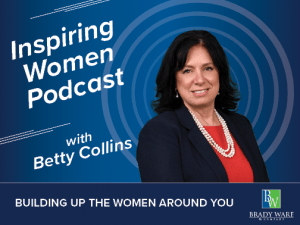
Show Transcript

Betty Collins: [00:00:00] Lifting the next generation of women … No, this is not a podcast on millennials. This is not a podcast on the 20-somethings. For me, I’m 56 years of age. I’m a young 56, but I am 56. And all the sudden, the word legacy starts being said out loud, because it’s kind of in your thoughts. It’s on your mind a little bit more. I think that 65 is a long way off. However, it’ll be here before I probably want it. Then what? I will tell you, without reservation, my CPA life will be completed. There is no question. The empowerment and the advancement of women is something I’m passionate about for many reasons, and it’s not just about success, or the rights; it’s just about a life well-lived on their terms. That can look different for everybody.

Betty Collins: [00:00:53] Lifting up the next generation of women is what I want for me to give and to be part of. It’s just part of my DNA, and it’s certainly something I want as part of my legacy, both in business and personal. There’s nothing like the energy of youth. I know, in my Columbus office, in Brady Ware, we have a lot of younger people, and we all love that. Watching from a distance, just the success of those 20-, 30-, and 40-somethings, just the energy, and just watching from a distance, that’s really not enough. Lifting them up – more, I’m going to talk more about the women part of it – is really a movement that I want to be a part of, and there’s no retirement to that. How do you just feed off that energy, maybe, and how do you maybe direct it; help them direct that energy? Then, how do you really get involved by not just being on the outskirts?

Betty Collins: [00:01:51] Again, this is not a podcast on millennials, although they are a part of the next generation. This is not even a podcast on my life, and now that it’s coming to a close, and it’s all ending, and my CPA career – I will never have to do accounting again … It’s not that. It’s just a podcast about having a discussion on how to lift up that next generation of women. Really, it goes beyond more than just sharing your experiences, because you’ve learned along the way, or mentoring. All that is important. It goes beyond even making sure that they don’t make your same mistakes, because they probably are going to make a lot of them. It’s important, obviously, to teach that. It goes really beyond, sure, that you’re not in this to change them, so that they do it your way; although you might know the way …

Betty Collins: [00:02:38] If you really want to uplift that next generation, you must determine what is the uplift; what is it that you want to uplift? Uplifting women in leadership? Is it about their careers? Is it about the potential? Maybe it’s about big choices in life – the significant other who you marry, parenting – maybe you are really good at that; faith, or core values. Whatever those things are, you’ve got to go, “This is what I really want to help that next generation be successful in.”

Betty Collins: [00:03:13] When you do that, you can start focusing in on that. Some of it is maybe you really help with what you are great at, or maybe what you’re not so great at, because that’s the one that you’d learn probably the most lesson from. You us those to uplift and get that next generation excited. Look around your life. What women uplifted you in the past, or are doing it right now? By the way, who are you uplifting? You need to think on that. If you got nothing, start making it part of your life, ASAP.

Betty Collins: [00:03:47] By the way, you don’t have to be 56 to be an uplifter of the next generation. I think we think it’s for gray-hairs, right? I read a really great article on what 30-somethings want 20-somethings to know. Chances are, a 30-something will resonate more with that 20-something than I would. Here are some examples. Be picky who you spend your time with. high school, it’s a popular contest; maybe even college, and then you start … You probably have some time where you need to whittle down some friendships. There’s only so much time in the day. That’s a 30-something telling that to 20s.

Betty Collins: [00:04:25] The 30-something is telling the 20-somethings to take more risk. I find that kind of comical, but that’s what they see. Here’s a good one – they say save more money. Your 401k is important. If I say, at 56, my 401k is important, like to my children, their response usually is, “Well, you have money to do that. You don’t have the bills I have,” and all that. Where a 30-, and 20-something, if a 30-something is starting to have success in that, the 20-something’s going to relate more.

Betty Collins: [00:04:58] Don’t dismiss your wild dreams. Slow down and be positive. Get rid of skinny jeans. I found that one to be funny, because I will tell you, when I see 56-year-old women looking like they’re trying to be 30, it really drives me crazy, so I found that one very interesting. They even said this in their article, “Don’t judge older women for spending money on eye cream.” They also agree that Sheryl Sandberg was right, you’ve got to have a lot of support. She was where she was because she acknowledged she had a great partner in life. I thought it was very interesting that I found more articles on 30-somethings wanting to give advice to 20-somethings. I didn’t find a lot about what you what 50-year-olds want 40s to know or even what 40-year-olds want 30s to know? I found that interesting.

Betty Collins: [00:05:51] Be aware, they may not want you lifting them up. Chances are, they’re not going to seek you out. Step up but be respectful. What inspires you may not inspire them. When I started a women’s initiative in Brady Ware, I thought, “Oh, Brady Ware’s so generous, they’re gonna let me buy books for all the women to read a book a month, or a book a quarter …” They didn’t want to read books. That was not them. I like a hard book with a highlighter. I always read about half of it. That didn’t interest them. It didn’t inspire them to help them.

Betty Collins: [00:06:26] You really have to figure out, then, too, what motivates them. My children are not motivated at the things I was motivated. They don’t care if they ever, really, a buy a house. They’re more into condo living in the downtown. When I was their age, that was the thing – you’ve got to get that 20 percent saved, so you could buy a house. You’ve got to get the house. What motivated maybe you or me, back in the time that they were their age is not probably the same.

Betty Collins: [00:07:00] These are things you have to be aware of. To uplift, you’ve got to be uplifting. You can’t be Debbie Downer, and go, “I’m gonna inspire you!” I remember one of my friends, her mom was really not doing very well; she was getting ready to pass away. She had cancer; they were in the hospital, and they were going around … They were sitting in the lobby just to get out of the room. Her mom was just a negative, negative person. She was not fun to be around at all. She saw somebody in the waiting room, and she leaned over to my friend, her daughter, and said, “I’m going to go help them. They shouldn’t be smoking, because this is what the result is.” She said, “Mom, you’re not gonna go do that,” because she knew that her mom was going to go over and just … It was not going to be a good conversation.

Betty Collins: [00:07:54] To be uplifting, man, you’ve got to be uplifting. It’s not about making you feel better. It’s about them. I’ll use this illustration – this may not make sense to you – there are preachers who are very preachy, fire and brimstone, and teach you, and tell you, and go on. Then there’s somebody who’s got a pastor’s heart. They’re that caregiver. They have compassion. Those are two different things. You’ve got to know the difference. Yeah, you can figure out what you want to uplift, because you’ve been good at it or you’ve been bad at it, but you’ve got to be aware of those things.

Betty Collins: [00:08:31] Then, you’ve got to be generous. Your mistakes, your barriers, your regrets – figure out a way to teach your life lessons to the next generation and learn from them. I know, with my kids, I was very determined that they were not going to work as much as I worked. They were not going to have to take care of things financially, like I had to do. That was my own little … I’m going to teach them that, man, life is good, and these are the things you can really aspire for, but I’m going to pay for all that and do that. They really kind of missed out on figuring out finances in life, like they should have. It took them a little time to do that, because I didn’t let them experience that. Instead, I was trying to take my mistakes and my barriers that I thought I had and just remove them from their life. Not a good thing.

Betty Collins: [00:09:20] Then, patience is required. You ever had that person in your life, you’ve got to be really patient with? Then, one day, they turn the corner, right? Being a mentor, and sponsoring someone, all those are important, but the informal, sometimes … Just that informal, day-to-day, shoot from the hip … Figure out what motivates them;  figure out what they need; figure out how to communicate to them – you might be surprised. I will tell you, I wish I would have known these things over the last 30 years. I wish I would have had some people in my life that said, “This next generation, man, Betty Collins probably could use this …” but these are things I really wish I would have known more of.

Betty Collins: [00:09:59] Cultivate the right attitude, no matter what you’re seeking. Sometimes, it was just I have to do this because I have to do this. Really? Or, I want to do this because I want to do this. Having that right attitude; that’s just one example of attitude, that I always did the “right” thing. I just always did what I was supposed to, instead of maybe this is what I really would like to do.

Betty Collins: [00:10:25] When all else fails, a plan is a good thing, but it may not always be reality. I was a big five-year planner in some of my years that I could have been a little more freer. Plans are good, and they probably are needed more in today … I see today’s generation behind me, and they really just go from thing to thing, but … Plans are good.

Betty Collins: [00:10:47] I did not learn this til later in life, and no one ever talked to me about it, or inspired me, but passion and the why are first, and then your how and your what. That’s been a big topic. Simon Sinek is big on it. I wish I would have known more about why I do things, or someone would have asked me those questions a little bit more, but they didn’t.

Betty Collins: [00:11:09] Mistakes are fruitful. If you’re not making mistakes, then you’re not doing anything. Okay, this is not my quote – it’s President Theodore Roosevelt – but it really is true. Sometimes, we’re buried in mistakes and just think, “Oh my goodness, how can I go on?” I was that way, and I didn’t want to go further. I would kind of hibernate a little bit more, instead of moving on, or learning from it. I wish, over the last 30 years, someone said, “If you want something, sometimes you gotta ask.” You’re not asking, so why should you … Other people around you are asking, so guess what they’re getting? Whatever that is. I just didn’t do it. I always thought, if you accept everything, accept your stuff around you, accept the position, accept the money, accept the status quo, then it’s a much more peaceful, good road. That’s not always the case. Questions are good. You know why? Because there’s going to be answers, probably, behind them. I wish I would have known that over the last 30 years.

Betty Collins: [00:12:11] Safety and security is awesome. It’s comfortable. It’s the safety net. I’ve never have to worry. There’s nothing to me like a full refrigerator, okay? But reckless, and that thing I call unruly, in my last … It’s not always a bad thing. Sometimes, hot dogs on fire at the last minute are just awesome. I’ve kind of learned to shake it up a little bit more with various things in my life. When I was 40 and went through things that changed a lot in my life, I ended up doing a tremendous amount of traveling from the age 40 to 50.

Betty Collins: [00:12:46] Man, I’m glad I did that. I’m so glad I said, “We’re gonna do this regardless.” We didn’t put as much money in a 401k. We didn’t do as much debt reduction on the house. But I probably can’t do a lot of the things I did, physically, for sure, on those trips and keep up. I’m just glad I was part of … Someone in my life, my husband, who said, “No, let’s go on an adventure. Let’s do something. We work hard all year. Let’s play hard.” Grateful for that. Most of my life, I didn’t ever hear those things. I’ve been married, and I’ve been divorced. I wish someone really would have emphasized the importance of that significant other, that spouse in your life.

Betty Collins: [00:13:32] Those are things that, over my last 30 years, when I was trying to figure out how would I help the next generation, these were things that matter to me now. These are things I would have never seen along the way. Hindsight’s really easy, but I’ve got to know that maybe someone doesn’t want to be married. So, finding your support to be your biggest fan isn’t going to help them. That’s why I go back to being aware in the different things I’ve talked about.

Betty Collins: [00:13:58] These are some things to think about when you’re wanting to uplift other women. Remember, surely, our seasons are all different. Your 20s are not your 30s, which are … Those are very different from your 40s; not to mention your 50s. Not sure what 60 holds, because I’m not 60. I’ve not been there, but I’m sure it’s different. The other thing about those different seasons are you may need to shift who you are being uplifted by or getting help from, because they are different. The 20-somethings can help the 55-year-old. It doesn’t always need to be, “Well, we’ve already been through this generation; we are helping here.” A lot of times, we can learn tremendously from them. It’s not a one-way thing.

Betty Collins: [00:14:44] Be aware of the women in your life that are around you. Start at home, in your extended family. Just sit and go, “Who is not making it? Who is not maybe living out their potential? Who could really use a friend, which can lead to help?” You can’t just go in with help, not knowing somebody. You have to have the relationship there. Be more intentional of it, and then keep it simple.

Betty Collins: [00:15:11] My previous podcast on building up women around you, I talked about that. Simple gestures; how you conduct yourself. Those familiar little simple random acts of kindness. Now, they have a hundred books on that. We live in a tough world with constant challenge; a lot of negativity; a lot of how are we ever going to do this? You’ve got to seize the opportunity now to uplift others. They really are intentional. They’re insightful about pleasure is a daily thing, because you don’t always have tomorrow. It’s not just for special occasions – fun, and pleasure, and contentment – it’s not just for holidays and weekends. Only two weeks out of the year is your vacation. You’ve got 50 other to do. Uplifting in a tough world right now is something that is so needed, and guiding that next generation, getting them where they need to be, even if they don’t know that they … Even if they don’t know that they need you.

Betty Collins: [00:16:07] I’m going to close this with some great sayings, because when I was out there on uplifting, a lot of times when I do podcasts, I Google certain words just to get ideas. Here are some things that you … I’m going to try to uplift you at the end here. “Do not dim your light for anybody. Darkness is no place to live.” I just  the way that quote sounded. This is a Betty Collins quote, by the way, “Leverage your uniqueness in life, but, remember, if you want to be funny and no one is laughing, you probably need to change what you are leveraging. Be aware.” “Today, you could be drinking the wine. Tomorrow, you could be picking the grapes.” You probably need to expect that to happen, so be ready, and learn, and try to enjoy both seasons. “There is power in purpose. Stuff is just stuff, for the sake of stuff.” We need to accept that we won’t always make right decisions, that we will screw up royally, sometimes; understanding that failure is not the opposite of success, it’s part of it.

Betty Collins: [00:17:11] Today, I hope you sit back and think, “Who can I help in that next generation? Who can I uplift, especially women I’m passionate about, if anyone?” Really sit and go, “How can I help, and be effective, and have that impact?” I’m Betty Collins, and I hope you enjoyed today. Thank you.


Tagged With: CPa, CPA firm, Dayton accounting, Dayton business advisory, Dayton CPA, Dayton CPA firm, Inspiring Women, Inspiring Women podcast, woman owned business, women entrepreneurs, Women in Business, women-owned businesses

  • « Previous Page
  • 1
  • …
  • 5
  • 6
  • 7
  • 8
  • 9
  • …
  • 12
  • Next Page »

Business RadioX ® Network


Our Most Recent Episode

CONNECT WITH US

  • Email
  • Facebook
  • LinkedIn
  • Twitter
  • YouTube

Our Mission

We help local business leaders get the word out about the important work they’re doing to serve their market, their community, and their profession.

We support and celebrate business by sharing positive business stories that traditional media ignores. Some media leans left. Some media leans right. We lean business.

Sponsor a Show

Build Relationships and Grow Your Business. Click here for more details.

Partner With Us

Discover More Here

Terms and Conditions
Privacy Policy

Connect with us

Want to keep up with the latest in pro-business news across the network? Follow us on social media for the latest stories!
  • Email
  • Facebook
  • Google+
  • LinkedIn
  • Twitter
  • YouTube

Business RadioX® Headquarters
1000 Abernathy Rd. NE
Building 400, Suite L-10
Sandy Springs, GA 30328

© 2025 Business RadioX ® · Rainmaker Platform

BRXStudioCoversLA

Wait! Don’t Miss an Episode of LA Business Radio

BRXStudioCoversDENVER

Wait! Don’t Miss an Episode of Denver Business Radio

BRXStudioCoversPENSACOLA

Wait! Don’t Miss an Episode of Pensacola Business Radio

BRXStudioCoversBIRMINGHAM

Wait! Don’t Miss an Episode of Birmingham Business Radio

BRXStudioCoversTALLAHASSEE

Wait! Don’t Miss an Episode of Tallahassee Business Radio

BRXStudioCoversRALEIGH

Wait! Don’t Miss an Episode of Raleigh Business Radio

BRXStudioCoversRICHMONDNoWhite

Wait! Don’t Miss an Episode of Richmond Business Radio

BRXStudioCoversNASHVILLENoWhite

Wait! Don’t Miss an Episode of Nashville Business Radio

BRXStudioCoversDETROIT

Wait! Don’t Miss an Episode of Detroit Business Radio

BRXStudioCoversSTLOUIS

Wait! Don’t Miss an Episode of St. Louis Business Radio

BRXStudioCoversCOLUMBUS-small

Wait! Don’t Miss an Episode of Columbus Business Radio

Coachthecoach-08-08

Wait! Don’t Miss an Episode of Coach the Coach

BRXStudioCoversBAYAREA

Wait! Don’t Miss an Episode of Bay Area Business Radio

BRXStudioCoversCHICAGO

Wait! Don’t Miss an Episode of Chicago Business Radio

Wait! Don’t Miss an Episode of Atlanta Business Radio