Business RadioX ®

  • Home
  • Business RadioX ® Communities
    • Southeast
      • Alabama
        • Birmingham
      • Florida
        • Orlando
        • Pensacola
        • South Florida
        • Tampa
        • Tallahassee
      • Georgia
        • Atlanta
        • Cherokee
        • Forsyth
        • Greater Perimeter
        • Gwinnett
        • North Fulton
        • North Georgia
        • Northeast Georgia
        • Rome
        • Savannah
      • Louisiana
        • New Orleans
      • North Carolina
        • Charlotte
        • Raleigh
      • Tennessee
        • Chattanooga
        • Nashville
      • Virginia
        • Richmond
    • South Central
      • Arkansas
        • Northwest Arkansas
    • Midwest
      • Illinois
        • Chicago
      • Michigan
        • Detroit
      • Minnesota
        • Minneapolis St. Paul
      • Missouri
        • St. Louis
      • Ohio
        • Cleveland
        • Columbus
        • Dayton
    • Southwest
      • Arizona
        • Phoenix
        • Tucson
        • Valley
      • Texas
        • Austin
        • Dallas
        • Houston
    • West
      • California
        • Bay Area
        • LA
        • Pasadena
      • Colorado
        • Denver
      • Hawaii
        • Oahu
  • FAQs
  • About Us
    • Our Mission
    • Our Audience
    • Why It Works
    • What People Are Saying
    • BRX in the News
  • Resources
    • BRX Pro Tips
    • B2B Marketing: The 4Rs
    • High Velocity Selling Habits
    • Why Most B2B Media Strategies Fail
    • 9 Reasons To Sponsor A Business RadioX ® Show
  • Partner With Us
  • Veteran Business RadioX ®

Becoming a More Thoughtful Leader, with Randy Hain, Author and Executive Coach

October 30, 2024 by John Ray

Becoming a More Thoughtful Leader, with Randy Hain, Author and Executive Coach, with North Fulton Business Radio host John Ray
North Fulton Business Radio
Becoming a More Thoughtful Leader, with Randy Hain, Author and Executive Coach
Loading
00:00 /
RSS Feed
Share
Link
Embed

Download file

Becoming a More Thoughtful Leader, with Randy Hain, Author and Executive Coach, with North Fulton Business Radio host John Ray

Becoming a More Thoughtful Leader, with Randy Hain, Author and Executive Coach (North Fulton Business Radio, Episode 812)

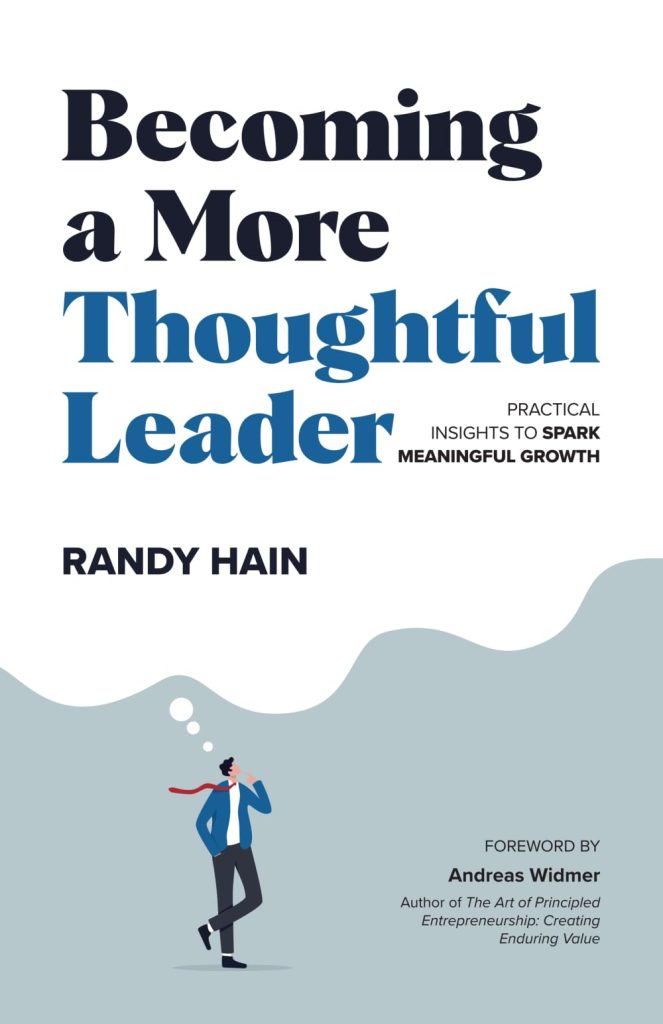
In this episode of North Fulton Business Radio, host John Ray welcomes Randy Hain to discuss his latest book, Becoming a More Thoughtful Leader. The conversation covers several key themes of the book, including being a considerate and attentive leader. Randy shares practical insights on improving leadership skills, such as the importance of workspace environment, maintaining connections, and the art of walking for reflection. They also discuss Randy’s philosophy of leading with generosity and actionable advice for busy professionals. This episode is packed with strategies for meaningful personal and professional growth.

John Ray is the host of North Fulton Business Radio. The show is recorded and produced by the North Fulton affiliate of Business RadioX® inside Renasant Bank in Alpharetta.

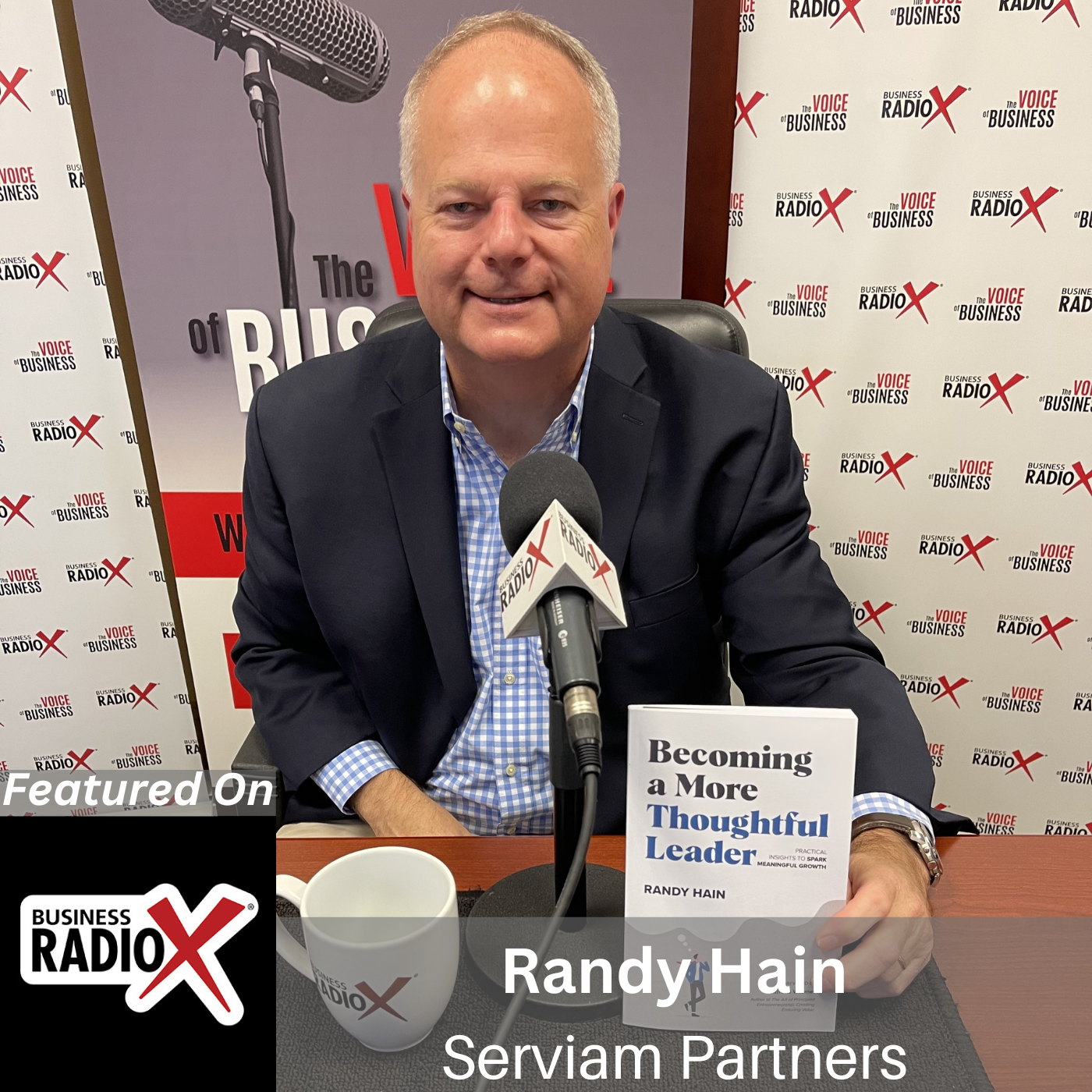
Randy Hain, Author of Becoming a More Thoughtful Leader
Randy Hain is the founder and president of Serviam Partners (ServiamPartners.com) and the co-founder of the Leadership Foundry (MyLeadershipFoundry.com).

With a successful 30+ year career in senior leadership roles, corporate talent and executive search, Randy is a sought-after executive coach for senior leaders at some of the best-known companies in the U.S. and globally who are seeking candid and expert guidance on how to overcome obstacles to their success or develop new leadership skills.

Randy is a husband, father, and active community leader and serves on the boards of the causes he cares about most. Randy has earned a reputation as a creative business partner and generous thought leader through his books, articles and speaking engagements.

Randy is the award-winning author of 11 books, including the newly released Becoming a More Thoughtful Leader, and a past guest of our show.

Topics Discussed in this Episode

00:00 Introduction and Welcome
01:34 Meet Randy Hain: Author and Executive Coach
02:38 Exploring the Concept of Thoughtfulness
03:52 Practical Tips for Thoughtful Leadership
07:55 The Importance of Workspace
11:33 Addressing Workplace Disconnectedness
13:40 The Power of Simple Gestures
16:20 The Art of Walking and Reflection
20:58 Generosity in Leadership
26:50 Conclusion and Contact Information

Renasant Bank supports North Fulton Business Radio

Renasant BankRenasant Bank has humble roots, starting in 1904 as a $100,000 bank in a Lee County, Mississippi, bakery. Since then, Renasant has become one of the Southeast’s strongest financial institutions, with over $17 billion in assets and more than 180 banking, lending, wealth management, and financial services offices throughout the region. All of Renasant’s success stems from each of their banker’s commitment to investing in their communities as a way of better understanding the people they serve. At Renasant Bank, they understand you because they work and live alongside you every day.

Website | LinkedIn | Facebook | Instagram | X (Twitter) | YouTube

About North Fulton Business Radio and host John Ray

With over 800 shows and having featured over 1,200 guests, North Fulton Business Radio is the longest-running podcast in the North Fulton area, covering business in our community like no one else. We are the undisputed “Voice of Business” in North Fulton!

The show welcomes a wide variety of business, non-profit, and community leaders to get the word out about the important work they’re doing to serve their market, their community, and their profession. There’s no discrimination based on company size, and there’s never any “pay to play.” North Fulton Business Radio supports and celebrates business by sharing positive business stories that traditional media ignore. Some media leans left. Some media leans right. We lean business.

John Ray, Business RadioX - North Fulton, and Owner, Ray Business Advisors
John Ray, Business RadioX – North Fulton, and Owner, Ray Business Advisors

John Ray is the host of North Fulton Business Radio. The show is recorded and produced from the North Fulton studio of Business RadioX® inside Renasant Bank in Alpharetta. You can find the full archive of shows by following this link. The show is available on all the major podcast apps, including Apple Podcasts, Spotify, Google, Amazon, iHeart Radio, and many others.

The studio address is 275 South Main Street, Alpharetta, GA 30009.
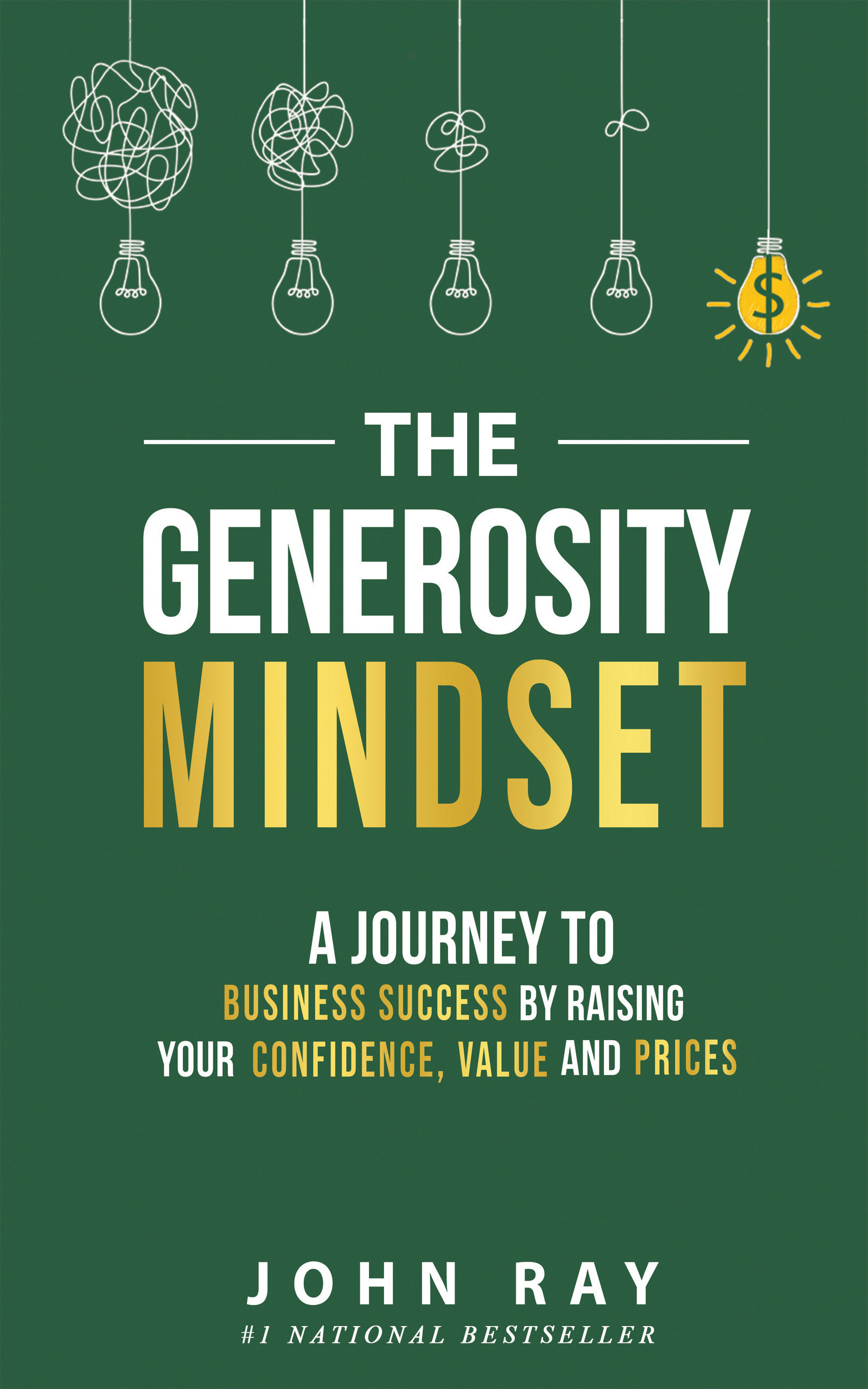
John Ray, The Generosity MindsetJohn Ray also operates his own business advisory practice. John’s services include advising solopreneurs and small professional services firms on their value, their positioning and business development, and their pricing. His clients are professionals who are selling their expertise, such as consultants, coaches, attorneys, CPAs, accountants and bookkeepers, marketing professionals, and other professional services practitioners.

John is the national bestselling author of The Generosity Mindset: A Journey to Business Success by Raising Your Confidence, Value, and Prices.

Tagged With: executive coach, generosity, John Ray, Leaders, Leadership, North Fulton Business Radio, Randy Hain, Serviam Partners, workplace

“I Want Sundays Off!”: Religious Accommodations in the Workplace

January 16, 2024 by John Ray

religious accommodations in the workplace, Hall Booth Smith, Jackie Voronov and Shylie Bannon
Hall Booth Smith Podcast Network
"I Want Sundays Off!": Religious Accommodations in the Workplace
Loading
00:00 /
RSS Feed
Share
Link
Embed

Download file

religious accommodations in the workplace, Hall Booth Smith, Jackie Voronov and Shylie Bannon

“I Want Sundays Off!”: Religious Accommodations in the Workplace (Litigators Lounge, Episode 4)

With the release of this episode of Litigators Lounge on National Religious Freedom Day, hosts Jackie Voronov and Shylie Bannon discuss the implications of the Supreme Court ruling, Groff v. DeJoy, on employer handling of religious accommodations in the workplace. Discussing key concepts like undue hardships and substantial increased costs, Jackie and Shylie underscore the importance of engaging in reasonable religious accommodations. They caution employers against debating the validity of religious beliefs with employees and point to key cases that tested the boundaries of religious accommodations, such as an EEOC finding against Consolidated Coal Company. They also highlight the impact of collective bargaining agreements on religious accommodations.

You can find the Groff v. DeJoy Supreme Court ruling referenced in this episode by following this link.

Litigators Lounge is underwritten and presented by Hall Booth Smith. The show is produced by John Ray and the North Fulton studio of Business RadioX®.

Topics in this Episode

00:01 Introduction to Litigators Lounge
01:37 National Religious Freedom Day Discussion
02:02 Understanding Religious Freedom in the Workplace
05:57 Supreme Court Case Analysis: Groff vs. DeJoy
12:06 Implications of Groff vs. DeJoy for Employers
18:40 Addressing Employees’ Sincerely Held Beliefs
27:38 Impact of Collective Bargaining Agreements on Religious Accommodations
32:39 Post-Groff Case Analysis and Final Thoughts
37:51 Closing Remarks

About Litigators Lounge

Jackie Voronov and Shylie Bannon, attorneys at Hall Booth Smith who specialize in labor and employment law, are the hosts of the engaging podcast Litigators Lounge. Listen as they delve into the intricate world of workplace legal issues as they explore real-life examples, unpack legal scenarios, and offer expert insights to help organizations and employees navigate the ever-changing legal landscape. With engaging discussions, diverse viewpoints from expert guests, and an ample touch of humor, Litigators Lounge is the go-to source for in-depth analysis and expert advice on law and the workplace.

Litigators Lounge is underwritten and presented by Hall Booth Smith. The show is produced by John Ray and the North Fulton studio of Business RadioX®.

Jackie Voronov, Partner, Hall Booth Smith

Jackie Voronov, Partner, Hall Booth Smith

Jackie Voronov is a Partner in Hall Booth Smith’s office in Paramus, New Jersey, and she represents management in a wide variety of employment matters and litigates employment claims before administrative agencies and state and federal courts. Her clients include major hotels, retailers, shipping companies, assisted living facilities and nursing homes, manufacturers, and national fast-food franchisees.

Jackie’s litigation experience includes the defense of employers in single and multi-plaintiff actions on claims of wrongful discharge, sexual harassment, race, national origin, gender, disability and age discrimination, breach of contract, family medical leave, failure to accommodate, retaliation, wage/hour laws, and related tort claims.  Jackie also works with her clients to prepare various employment agreements (including non-compete, confidentiality, independent contractor, and separation agreements). She has extensive experience before various administrative tribunals, including the Equal Employment Opportunity Commission (EEOC), the State Division of Human Rights (SDHR), the Division of Civil Rights (DCR), and other state, federal, and local agencies.

In addition, Jackie frequently conducts management training for employers on a wide variety of employment law topics, such as:

  • EEO/anti-harassment
  • employee recruiting and hiring practices
  • family and medical leave
  • reasonable accommodations for disabilities and religion
  • preventing and investigating harassment, discrimination, and whistleblower claims
  • wage and hour compliance
  • discipline and termination of employees
  • privacy in the workplace

Jackie is regularly invited to speak nationally on best practices and other employment-related issues. Before joining Hall Booth Smith, she worked for one of the country’s largest law firms, where she defended employers in a wide range of labor and employment matters, including wage and hour class actions under the Fair Labor Standards Act (FLSA), claims related to the New York State Human Rights Law (NSHRL), the New Jersey Law Against Discrimination (LAD), the Americans With Disabilities Act (ADA), the New Jersey Conscientious Employee Protection Act (CEPA), and Title VII.

Jackie was selected for inclusion as a New Jersey Rising Star by Super Lawyers® for six consecutive years (2010-2016), which honors the top 2.5% of young lawyers in New Jersey.

LinkedIn

Shylie Bannon, Partner, Hall Booth Smith

Shylie Bannon, Partner, Hall Booth Smith

Shylie Bannon is a Partner in Hall Booth Smith’s Jacksonville, Florida, office. She also serves as Hiring Partner for the region of Florida, where she oversees associate attorney hiring endeavors. Prior to joining Hall Booth Smith, Shylie was a partner in both a multi-state, multi-specialty firm and a boutique practice.

At Hall Booth Smith, Shylie continues to represent physicians, mid-level providers, and health care providers in high-exposure medical negligence claims and in administrative proceedings before the Florida Department of Health. She also represents national retailers in high-exposure premises liability, negligent security, and transportation litigation with our National Trial Counsel team.

In addition to litigating matters involving personal injury and negligence, Shylie also represents management in all aspects of employment-related litigation arising from allegations of sex, disability, race, and pregnancy discrimination; whistleblower actions; and alleged violations of the National Labor Relations Act and Fair Labor Standards. She does so in administrative proceedings before both the Florida Commission on Human Relations and the US Equal Employment Opportunity Commission, as well as in all of the state and federal courts in Florida. She also provides employment-related counsel to clients, helping them avoid employment-related litigation through the implementation of best employment, investigation, and risk management practices.

Shylie earned a Juris Doctor from the University of Florida Levin College of Law, cum laude, and graduated magna cum laude from Tulane University with a Bachelor of Arts in Political Science and History.

Shylie volunteers with the Guardian Ad Litem program and supports child welfare advocacy efforts in Northeast Florida. She is also a Member of the Board for the Jewish Federation & Foundation of Northeast Florida.

LinkedIn

About Hall Booth Smith, P.C.

Established in 1989, Hall Booth Smith, P.C. (HBS) is a full-service law firm headquartered in Atlanta, Georgia, with regional offices strategically located throughout Georgia and the United States. Experienced across a wide range of legal disciplines, HBS prides itself on providing knowledgeable, proactive, client-specific counsel to individuals, domestic and international corporations, state and federal agencies, and nonprofit organizations.

HBS possesses the legal knowledge, skill, and experience to meet their clients’ needs wherever they do business. HBS maintains the highest commitment to ethically and professionally serve their clients by providing the highest quality legal representation.

They deliver quality legal services in a variety of service areas. Experience across legal disciplines combined with a focus on the unique business or personal requirements of the client is the hallmark of the firm. Their clients receive the attention, expertise, and cost-effectiveness of a smaller law firm with the full-service and strong regional presence typical of a larger one.

Company website | LinkedIn | Facebook | Instagram

Disclaimer

Litigators Lounge is a production brought to you by Hall Booth Smith, PC. This podcast is published for the purposes of providing general information and education on topics which include those related to the law and legal issues, but the contents of the podcast do not constitute legal advice. Listening to this podcast or utilizing the information contained in it in any way does not constitute nor does it create an attorney-client relationship between you and Hall Booth Smith or its lawyers. The contents of this podcast should not be used as a substitute for competent legal advice from a professional attorney licensed in your jurisdiction.

Tagged With: employees, Hall Booth Smith, Hall Booth Smith P.C., Jackie Voronov, National Religious Freedom Day, religion in the workplace, religious accommodation in the workplace, religious accommodations, Shylie Bannon, Supreme Court, workplace, workplace discrimination

Growing Culture and Consciousness Has No Finishline E24

July 13, 2022 by Karen

Growing-Culture-and-Consciousness-Has-No-Finishline-feature
Phoenix Business Radio
Growing Culture and Consciousness Has No Finishline E24
Loading
00:00 /
RSS Feed
Share
Link
Embed

Download file

Growing-Culture-and-Consciousness-Has-No-Finishline

Growing Culture and Consciousness Has No Finishline E24

This conversion of culture and conscious business was so fluid that you would have thought that Kindra and her two guests, Adam and Thomas, had known each other and talked for years.

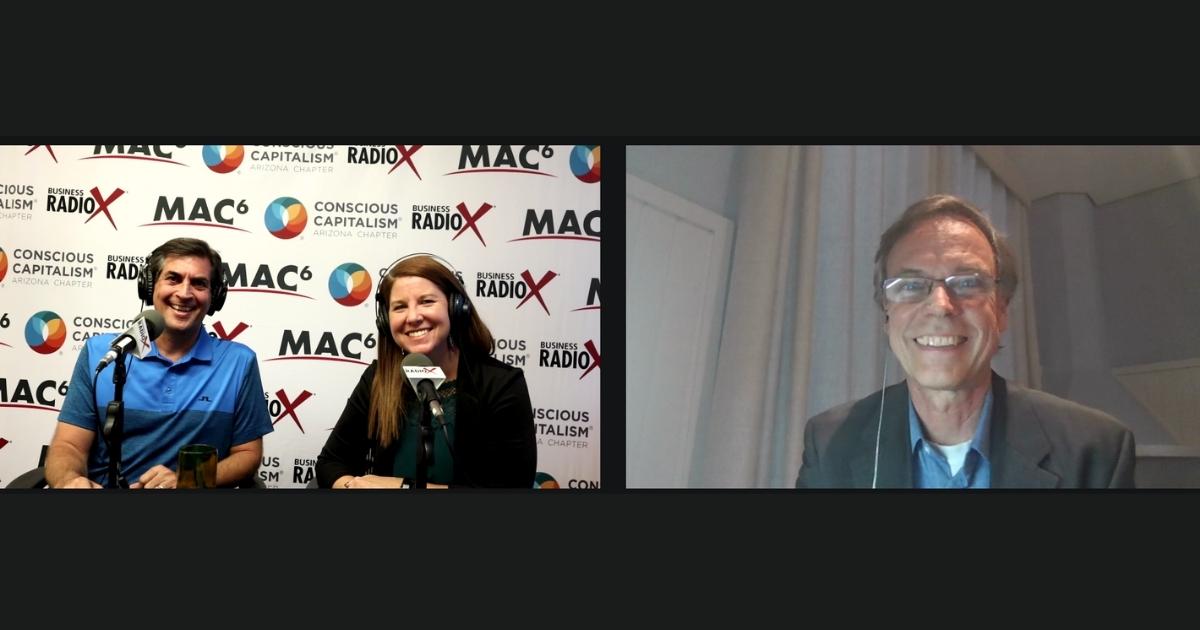
This was the first time we have done a live stream where the guests could listen and post questions on the Culture Crush Business Podcast- and it was awesome! Thank you to all of the listeners that chimed in and posted questions in the chat. Thank you to Phoenix Business RadioX and Conscious Capitalism Arizona Chapter for sharing it out. They were great questions that we went over toward the end of the show.

This conversation dove into many stories and examples of the actions and importance for growing a conscious business- even if it seems a little backwards sometimes. For example, Adam discussed how Goodmans Interior Structures no longer requires their office staff to come into the office to work. This might seem a little backwards for a company that builds and sells office furniture. Instead, they are assessing and redesigning the office into a place where employees want to come into the office. They took into consideration what the employees said and wanted and are putting it into action. This conscious business move will help grow and support the needs of the employees, and therefore the overall culture of the company.

This conversation is a great one to listen to if you are a leader trying to improve your company culture and wanting to learn more about conscious capitalism and how it can help influence and support the change you are trying to make in your company. According to Thomas, “Consciousness has no finish line” which means we can always learn and add to our growth and our tool box.

When it comes to helping companies grow in conscious ways, Thomas is the man for the job. He has supported the growth of various Conscious Capitalism chapters as well as helped over 800 leaders in his program on developing their conscious journey. He gives away a few of these tips in the podcast conversation with Adam as well.

Thank you to our sponsor, the Conscious Capitalism Arizona Chapter, for seeing the value in this conversation of conscious capitalism, culture, and these two amazing gentlemen.

Conscious Capitalism Arizona Chapter (CCAZ) is a nonprofit organization whose purpose, in partnership with Conscious Capitalism Inc (CCI), is to build a movement of business leaders improving the practice and perception of capitalism to elevate humanity so that billions of people flourish, leading lives infused with passion, purpose, love and creativity; a world of freedom, harmony, prosperity, and compassion.

All in all that means CCAZ is elevating humanity through business. CB-Journey-logo

CBJourney is a movement with the purpose to accelerate the upgrade or ofganizations towards a more conscious business ecosystem.

We have over 800 certified Conscious Capitalist Consultants in 21 countries, we celebrate our accomplishements though the podcast Capitalista Consciente and the books published, and we grouw our community with our programs for Consultants, leaders and Board of Directors.

Thomas-Eckschmid-Culture-CrushThomas Eckschmidt is the father of Gabriela, husband of Ana Maria and an enthusiast of conscious capitalism. This is the journey forward, but we can share from the “obituary” too:

Thomas is former farmer, engineer University of Sao Paulo who holds an Executive MBA in finance from Business School São Paulo / University of Toronto, Brazil. His corporate journey included work in twenty different countries before he launched a successful entrepreneurial career that includes 12 business awards, 4 patents filed, and 21 books published, Amazon best Seller and also one published by Harvard: Conscious Capitalism Field Guide – coauthored with Raj Sisodia.

A strong believer that business leaders and organizations can do well by doing good, Thomas has been promoting Conscious Capitalism since 2010. He launched a Conscious Capitalism chapter in Brazil and Peru and supported the launch of chapters in other countries.

Thomas teaches Conscious Capitalism classes in major business schools and in Corporate Governance programs. He also runs workshops that teaches the fundamentals of Conscious Capitalism and certifies consultants and Bard of Directors. TEDx Speaker with 400k views.

Thomas is the cofounder and CEO of CBJ Conscious Business Journey a global network with the purpose to accelerate the upgrade of organizations towards a more conscious business ecosystem. CBJ has certified 800+ Conscious Capitalist Consultants in 21 countries and is an international program based on the Conscious Capitalism Field Guide and Fundamentals of Conscious Capitalism. He also cofounded the first conscious capitalism consultant network (Conscious Business Network) to support organizations interested in upgrading themselves.

Thomas also works as a trusted adviser to help organizations implement conscious practices. He cofounded a few conscious businesses along the way, was a B-Corp certified entrepreneur and he also serves on the boards of several different companies.

Connect with Thomas on LinkedIn, Facebook and Instagram.

Goodmans-Logo-Tangerine

Goodmans is a 68-year-old, third-generation office furniture distributor in Arizona and New Mexico. Goodmans was the first benefit corporation in Arizona.

Adam-Goodman-Culture-CrushAdam Goodman, president and CEO of Goodmans Interior Structures, is the third generation to lead the family business.

Under Adam’s leadership, Goodmans has developed many innovative programs to give back to the community. These programs include Office Chair Hockey, Goodmans Eye for the Good Guy, AIM to Make a Difference, Rooted in Good, GoodInc, GoodART, GoodTHREADS and more. In 2009, Goodmans won the first-ever ACE Award for Community Impact and in 2011 Goodmans became the third certified B Corp in Arizona.

In 2012, Goodmans won the overall Impact Company of the Year Award from the Phoenix Chamber of Commerce. In 2013, Goodmans was the Better Business Bureau’s Ethics Award winner for Arizona and then Goodmans was honored with the BBB’s International Torch Award for Ethics. In 2014 Goodmans was named to the Game Changers 500 list as one of the top 500 companies in the world using business as a force for social change.

In 2015 Goodmans became the first Benefit Corporation (B Corp) registered in the State of Arizona and in 2018 Goodmans was recognized as the Top Social Responsibility Company among the Arizona Republic’s Top Companies awardees. That same year, Adam was honored with the Greater Phoenix Economic Council’s Community Impact Award.

Adam has held leadership positions with the Jewish Community Center of Greater Phoenix, Phoenix Country Day School, Young Presidents Organization, Conscious Capitalism, Independent Newsmedia, Arizona Center for Investigative Reporting, the Jewish Federation, the Jewish Community Relations Council, Greater Phoenix Leadership, the Phoenix Symphony, CEO’s Against Cancer, Banner Health Foundation, University of Arizona Cancer Center, the State of Arizona Secretary of State’s Commerce Council, First Place AZ, Greater Phoenix Economic Council, ASU Herberger Institute Dean’s Creativity Council, WP Carey School of Business Economic Club of Phoenix, the National Dealer Alliance and the Herman Miller Certified Dealer Network.

Adam has a bachelor’s degree in business administration from University of Texas at Austin. He resides in Paradise Valley with his wife Stephanie and their three children.

Follow Goodmans on LinkedIn, Facebook, Twitter and Instagram.

About Culture Crush

Culture is not just a tag word to be thrown around. It is not something you throw in job descriptions to draw people to applying for jobs within a company.

According to Marcus Buckingham and Ashely Goodall in their book Nine Lies About Work, “Culture is the tenants of how we behave. It’s like a family creed. This is how we operate and treat each other in the family.”CultaureCrushKindraBanner2

As a growing company- Culture Crush Business Podcast is THE culture improvement resource that supports companies and leaders.  Our Mission is to improve company cultures so people WANT to go to work. Employees and leaders should like where they work and we think this is possible.

Within the company: Culture Crush has Vetted Resources and Partnerships with the right people and resources that can help improve your company culture.

On this podcast:  We focus on everything surrounding businesses with good company culture. We will talk with company leaders to learn about real-life experiences, tips, and best practices for creating a healthy work environment where employees are finding joy and satisfaction in their work while also striving and growing within the company.  We also find the companies that offer resources to help improve company culture and showcase them on the show to share their tips and tricks for growing culture.

About the Host

ABHOUTHOSTHEADSHOT

Kindra Maples  is spartan racer, past animal trainer, previous magician’s assistant, and has a weakness for Oreo cookie shakes. Her journey working with people actually started working with animals as a teenager (don’t worry we won’t go that far back for her bio).

She worked for over 15 years in the zoo industry working with animals and the public. Her passion of working with animals shifted into working with people in education, operations and leadership roles. From there her passion of leadership and helping people develop has continued to grow.

Then came the opportunity for leading  the Culture Crush Business Podcast and she jumped on it. Leadership, growth, and strong company cultures are all areas that Kindra is interested in diving into further.

Shout Outs

We want to thank a few people for their behind the scenes effort in helping this relaunch to come to life. James Johnson with Tailored Penguin Media Company LLC.– It is a small, but powerful video production company with a goal to deliver the very best by articulating the vision of your brand in a visually creative way. Gordon Murray with Flash PhotoVideo, LLC. -Flash Gordon has been photographing since high school and evolving since then with new products that will equip, encourage, engage, and enable. Renee Blundon with Renee Blundon Design – She is not only one of the best free divers (that’s not how she helped with the podcast) but she is great with graphics design and taking the direction for the vision that you have while also adding creative ideas to bring to your vision to life.

These are just a few of the folks that supported the relaunch of the podcast. If you would like to be part of the Culture Crush team or would like to support underwriting the show- please reach out: info@culturecrushbusiness.com

Tagged With: Capitalismo Consciente, Capitalista Consciente, CBActivator, CBJourney, Certification, Conscious Business, Conscious Capitalism, Consious Capitalist, DIRTT, Field Guide, Herman Miller, Knoll, Leadership, Office Furniture, workplace

Kayla Curry, Organization Impact

September 28, 2021 by John Ray

Organization Impact
Nashville Business Radio
Kayla Curry, Organization Impact
Loading
00:00 /
RSS Feed
Share
Link
Embed

Download file

Organization Impact

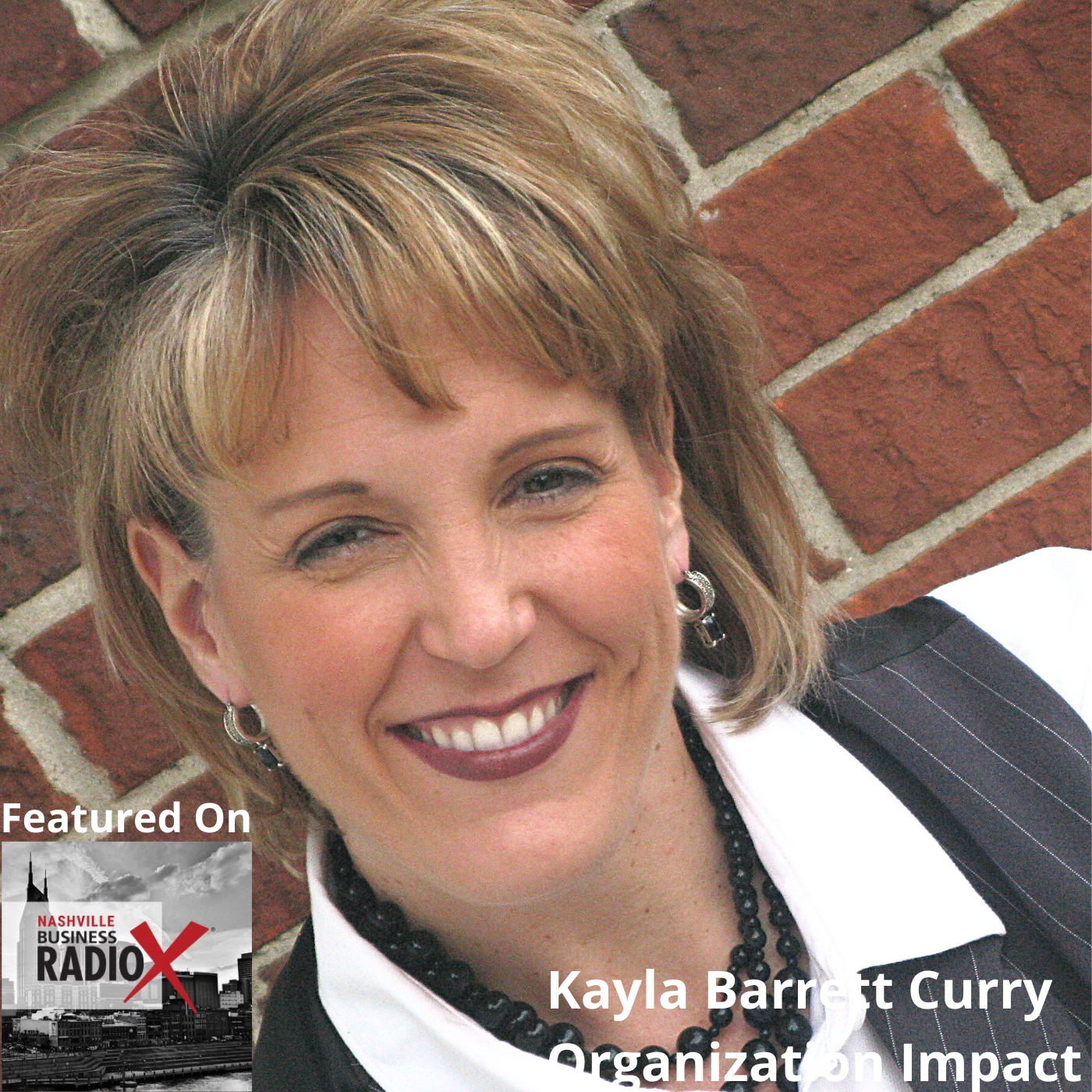
Kayla Curry, Organization Impact (Nashville Business Radio, Episode 32)

Organization Impact CEO Kayla Curry joined host John Ray to discuss some of the challenges small and midsize businesses are facing now with turnover, hybrid work, and onboarding new employees. Kayla also discussed ways Organization Impact addresses these issues for clients, success stories, and much more. Nashville Business Radio is produced virtually from the Nashville studio of Business RadioX®.

Organization Impact

Regardless of your product or service, your employees are the deciding factor in whether customers choose you or your competitor. At Organization Impact, they help you identify the talent, skills and strategies that define your competitive advantage and drive success.

Their learning experiences use an interactive teaching model that engages participants in a way that is fun and energetic yet also enables real learning and application to the workplace.

Workplace life can be hard. Regardless of your role, their team is the sounding board & guide to help you move forward in your goals. They provide coaching services to professionals in a variety of roles.

Their consulting services offer solutions when you need the benefit of best practices and expert insight into your business strategy.

Company website | LinkedIn

Kayla Curry, President/CEO, Organization Impact

Organization Impact
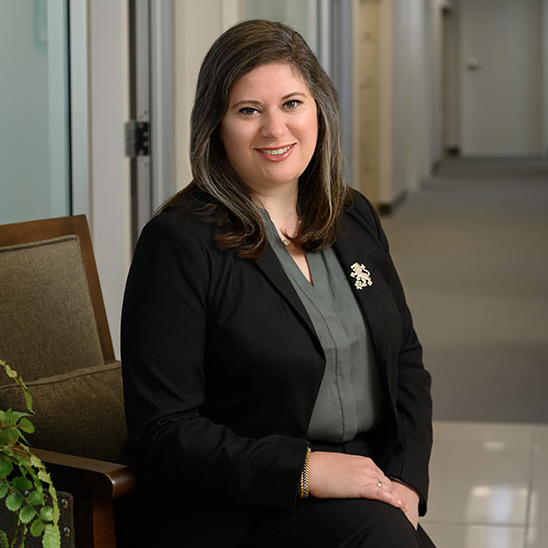
Kayla Curry. President and CEO, Organization Impact

Light bulbs are one of Kayla’s favorite things. More specifically, light bulbs coming on in people’s heads. Kayla is a thinker and practitioner in today’s marketplace. She helps organizations drive growth by creating and sustaining their competitive advantage. Through strategies that develop the critical talent, skills and capabilities, employee and customer engagement grow resulting in bottom-line results. Her industry experience spans 20+ years in both the corporate sector and non-profit world where she has worn hats such as Director of Organizational Strategy, Director of Human Resources and Director of Staff Development.

Kayla’s experience allows her to walk alongside your team to identify your people development needs then helps you discover a hands-on approach that advances your organization’s vision and profitability. She is president of Organization Impact, LLC and a member of the Society of Human Resources Management, Association of Talent Development, Phi Kappa Phi Honor Society, Donelson/Hermitage Chamber of Commerce, L’Evate – a leadership community, and the Workforce Magazine Business Intelligence Board. Kayla holds a BS and MS in Organizational Communication from Murray State University. She is a DiSC Trainer, a certified StrengthsGenius facilitator, Registered Corporate CoachTM, and a certified John Maxwell Trainer and Coach.

She is the author of three books: “Leadership Shorts: Practical Tips When You Are at Wit’s End”; and the #1 Amazon bestsellers “The Complete Experience: Unlocking the secrets of online reviews that drive customer loyalty”; and “Unstuck: 10 Proven Strategies for Breaking Through the Barriers to Small Business Growth.” Organization Impact is a member of the Better Business Bureau.

LinkedIn

Questions and Topics

  • What are some of the biggest challenges facing employers right now?
  • What skills are critical for leaders in today’s marketplace?
  • What are some best practices companies are utilizing to retain staff?
  • What are some of the biggest issues facing teams today?
  • How is the nature of the workplace shifting?

Nashville Business Radio is hosted by John Ray and produced virtually from the Nashville studio of Business RadioX®.  You can find the full archive of shows by following this link. The show is available on all the major podcast apps, including Apple Podcasts, Spotify, Google, Amazon, iHeart Radio, Stitcher, TuneIn, and others.

Tagged With: Human Resources, John Ray, Kayla Barrett, Kayla Curry, Nashville Business Radio, Organization Impact, people development, workplace

Workplace MVP: Jeff Gorter, R3 Continuum

September 9, 2021 by John Ray

Jeff Gorter
Minneapolis St. Paul Studio
Workplace MVP: Jeff Gorter, R3 Continuum
Loading
00:00 /
RSS Feed
Share
Link
Embed

Download file

Jeff Gorter

Workplace MVP:  Jeff Gorter, R3 Continuum

Critical incident response veteran Jeff Gorter contends that business and human responses to crisis events are not separate but interwoven. On the twentieth anniversary of the September 11th terrorist attacks, Jeff and host Jamie Gassman discussed the parallels of that event and the COVID-19 pandemic, and the importance of acknowledging 9/11 for your employees.  Workplace MVP is underwritten and presented by R3 Continuum and produced by the Minneapolis-St.Paul Studio of Business RadioX®.

Jeff Gorter, Vice President of Crisis Response Services, R3 Continuum

Jeff Gorter, Vice President of Crisis Response Services, R3 Continuum

Jeff Gorter, MSW, LCSW, is VP of Clinical Crisis Response at R3 Continuum. Mr. Gorter brings over 30 years of clinical experience including consultation and extensive on-site critical incident response to businesses and communities. He has responded directly to the Sept. 11 terrorist attacks, Hurricane Katrina, the Virginia Tech shootings, the Deepwater Horizon Oil spill, the 2011 earthquake/tsunami in Japan, the Newtown Tragedy, the Orlando Pulse Nightclub Shooting, the Las Vegas Shooting, and the breaching of the US Capitol on 1/6/21. He has conducted trainings and presented at the Employee Assistance Professionals Association Annual Conference, the American Psychological Association Annual Conference, the World Conference on Disaster Management, the International Society for Traumatic Stress Studies Annual Meeting, and at other state, national and international venues on a variety of topics.

LinkedIn

R3 Continuum

R3 Continuum is a global leader in workplace behavioral health and security solutions. R3c helps ensure the psychological and physical safety of organizations and their people in today’s ever-changing and often unpredictable world. Through their continuum of tailored solutions, including evaluations, crisis response, executive optimization, protective services, and more, they help organizations maintain and cultivate a workplace of wellbeing so that their people can thrive. Learn more about R3c at www.r3c.com.

Company website | LinkedIn | Facebook | Twitter

About Workplace MVP

Every day, around the world, organizations of all sizes face disruptive events and situations. Within those workplaces are everyday heroes in human resources, risk management, security, business continuity, and the C-suite. They don’t call themselves heroes though. On the contrary, they simply show up every day, laboring for the well-being of employees in their care, readying the workplace for and planning responses to disruption. This show, Workplace MVP, confers on these heroes the designation they deserve, Workplace MVP (Most Valuable Professionals), and gives them the forum to tell their story. As you hear their experiences, you will learn first-hand, real life approaches to readying the workplace, responses to crisis situations, and overcoming challenges of disruption. Visit our show archive here.

Workplace MVP Host Jamie Gassmann

In addition to serving as the host to the Workplace MVP podcast, Jamie Gassmann is the Director of Marketing at R3 Continuum (R3c). Collectively, she has more than fourteen years of marketing experience. Across her tenure, she has experience working in and with various industries including banking, real estate, retail, crisis management, insurance, business continuity, and more. She holds a Bachelor of Science Degree in Mass Communications with special interest in Advertising and Public Relations and a Master of Business Administration from Paseka School of Business, Minnesota State University.
TRANSCRIPT

Intro: [00:00:03] Broadcasting from the Business RadioX Studios, it’s time for Workplace MVP. Workplace MVP is brought to you by R3 Continuum, a global leader in workplace behavioral health and security solutions. Now, here’s your host, Jamie Gassmann.

Jamie Gassmann: [00:00:24] Hi, everyone. Your host, Jamie Gassmann, here. And welcome to this episode of Workplace MVP. This year marks the 20th anniversary for the 9/11 terrorist attacks. We are also halfway through the second year of the COVID-19 pandemic. Some are calling these two tragic bookends to the last two decades. Interestingly, though, while these two events are different in nature, the impact they made on businesses and employees are very similar.

Jamie Gassmann: [00:00:53] Is this a coincidence? Or is there something to be learned about the impact disruption can have on an organization and its people? What should an employer be focused on when an event like 9/11 or COVID-19 happens? Are there solutions or support options that can be leveraged to help them successfully navigate the troubled aftermath of the events?

Jamie Gassmann: [00:01:15] With us today to share his expertise and firsthand knowledge from responding to the psychological first aid needs of employers for both 9/11 and COVID-19, among other major events across our history, is Workplace MVP Jeff Gorter, Vice President of Crisis Response Services for our show sponsor, R3 Continuum. Welcome to the show, Jeff.

Jeff Gorter: [00:01:37] Thank you, Jamie. I appreciate the opportunity.

Jamie Gassmann: [00:01:40] So, we’re glad to have you here and really interested in hearing a little bit about yourself and your career journey that’s led you to R3 Continuum and to where you’re at today.

Jeff Gorter: [00:01:53] No. Thanks. And just by way of background, I am a clinical social worker, master’s level social worker. And so, I come from a clinical background and have been in the field providing services either in private practice or in a public setting for 35 years. But the last 20 years of that have been specifically focused on providing disaster response.

Jamie Gassmann: [00:02:20] And so, can you share with our audience the disaster response work that you did post-9/11? And how does that compare to the work that you’re doing today in response to the COVID-19 pandemic?

Jeff Gorter: [00:02:33] And if you caught the 20 year reference, I really look at 9/11 as sort of that was certainly my first experience in responding to a large scale event. Part of the backstory of that is that the former president of Crisis Care Network, which is now known as R3 Continuum, Bob VandePol and I were in private practice together. And he had left the practice I’d say six months before 9/11.

Jeff Gorter: [00:03:03] And when the attacks occurred on that day, I called Bob and I said, “Bob, from what I understand, based on the new position that you’re in, I guess your company is going to be involved in this. I just want to let you know I am trained in this, if there’s anything I can do to help.” To which he said, “Can you be on a plane in four hours?” And I was in New York City that evening able to provide and to begin providing response.

Jamie Gassmann: [00:03:34] And how does that compare to some of the response works? I know you’ve done some response work with the COVID-19 pandemic, a lot of that’s been done virtually. But are some of the sessions or some of the work that you’re doing with that, can you tell us a little bit about, you know, how they work and kind of what your role is that you play within that?

Jeff Gorter: [00:03:56] It’s an excellent question. Because I’ve really been wrestling with the fact that, you know, this being the 20th anniversary of 9/11, that was very much in the forefront of my mind, and yet COVID has such a dominating factor. And, as you said in your intro, it’s kind of no surprise that these two things are, you know, juxtaposed here at this moment.

Jeff Gorter: [00:04:19] So, specifically, when I went to New York City, I was deployed to assist businesses as employees were returning to work for the first time following the attacks. And that’s a key element in that, you know, businesses played a major role in helping employees feel like they were getting back to some sense of normalcy or something that they could control. And so, many of the things that they talked about were more tangible, if you will, in the sense that they talked about things like the smells, things like the grittiness of the dust that was everywhere, how a siren going off for a police or fire would create a startle response the first time. And many of us can remember that the first time we saw a plane flying again after all flights had been grounded.

Jeff Gorter: [00:05:19] And so, for many of them these were much more visceral kind of descriptions of what they were going through. And, yet, for many of them, their stories were also about how resilience, how going back to work was not just getting back to work, but was in for many of them, a patriotic act. A small but very tangible stand against the darkness, if you will. And their getting back to work meant this is something I can do in this national crisis.

Jeff Gorter: [00:05:52] Now, in juxtaposing it to COVID-19 that the swift recovery of business operations is and has been continues to be a central component to our nation’s recovery. But it’s different because 9/11 was confined to a day and we didn’t know that at the time. But it’s confined to 9/11. It was a specific point in our calendar that we can look back. And it was a moment of sharp human initiated attack.

Jeff Gorter: [00:06:24] Now, COVID has a different perspective in that it is a prolonged, ongoing, unfolding, still not done crisis, driven primarily by biology. And so, in that sense, you know, the fear and the emotions elicited are, in many ways, just as powerful. Whereas, you could point to it, you could feel it between your fingers in New York City what the attack was like. Here, it’s kind of a vague, shadowy fear creeping outside your door. It’s everywhere, and yet I can’t point to it. And so, the fear is the common factor, but it’s also different kind of fear. And so, I think that’s important to recognize.

Jamie Gassmann: [00:07:16] Absolutely. And, obviously, from a business perspective, there’s some similarities in some of the thinking. And so, looking at your perspective of business leaders – and I know we’ve talked about this and I know you’ve got an opinion and kind of some thoughts – around that balancing act between human and business and how employers need to be looking at that following a disruption in the workplace, can you share your perspective on that with us?

Jeff Gorter: [00:07:42] Yeah. Well, I begin with the assumption that many business makers or business leaders have that the human response and the business aspects are two different things. And I contend that they are not. That they are, in fact, inextricably woven. And that, typically, when a large scale disaster hits, business leaders will go to their business continuity plan. They’ll pull that three ring binder off the shelf or they’ll go to their files and they’ll look at that plan, as they should. And they’ll review that crisis plan, the policies, procedures, what the strategies were to contain the crisis and mitigate the impact. That’s a sound thinking.

Jeff Gorter: [00:08:25] The trouble is, most of those plans focused on issues like I.T. security, facilities management, supply chain integrity, things that undoubtedly are important elements in a business recovery. But these plans often forget the most essential aspect, the human element. It doesn’t matter how secure your firewalls are or how quickly you get the power restored and the computers working again, if the people aren’t reassured and ready to go back to work. So, taking care of your people is taking care of your business. And I know I think it’s a mistake when a business owner says, “Well, I’m going to do one over the other.” They have to be done simultaneously.

Jamie Gassmann: [00:09:10] And, you know, so focusing on that people side of it, when a major incident occurs such as 9/11, or when you’ve got a pandemic like COVID-19, or other types of disruptions that impact a workplace, typically, if you were going to provide recommendation, what’s that first thing that an employer should be focusing on when it comes to their people?

Jeff Gorter: [00:09:33] So, I look at it as two parts. The first part, first and foremost always is safety. I need to ensure the safety of the employees. And that means physical safety and emotional safety. I have to prepare or provide for both aspects of that. So, I need to make sure when a large-scale event happens, have all the appropriate authorities been called? Have the right people been notified? Is the site secure? Are all the employees accounted for? Have immediate steps been taken, even simple steps like providing food, water, or blankets? Have immediate steps been taken for the care and comfort of my team? And has leadership physically directly checked on the team? Have they been visible? Have they gone around? Have they checked on and ensured the safety of everybody, both physically and emotionally? So, safety is first, job one.

Jeff Gorter: [00:10:32] But then, followed up by that, there are three simple things that I would say that the leader needs to do, and that is communicate, communicate, communicate. That one safety is restored, it’s imperative that leadership starts communicating early and often. This establishes them as a credible source of verifiable information, and that is in short supply following a crisis.

Jeff Gorter: [00:11:01] And it’s a common mistake among leaders to say, “Well, you know what? I’ll send a message out.” Or, “I’ll do some communication once I know all the facts. Once I have a complete idea of what’s going on, once I know the whole ball of wax, then I’ll be able to send out a message that encompasses everything.” And then, as one hour goes by and two hours go by and four hours go by, employees in that absence are going to become increasingly anxious. And it’s human nature in the absence of real information to plug in our worst possible fears.

Jeff Gorter: [00:11:40] And so, you know, maybe they’re going to ask themselves, “Maybe leadership was hurt. I thought we would have heard by now. Maybe they’re part of the injured. Maybe they don’t know that this is going on. Maybe they’re unaware of this. Maybe they don’t care.” And you can see that in the absence of real information. By that point, a negative narrative has already begun to take root.

Jeff Gorter: [00:12:04] And it is so hard to play catch up after that and try and establish. Especially in the age of instantaneous communication through social media and other sources like that, it is absolutely essential that a leader is out there early with frequent brief updates sharing what you know, what is verifiable, and share what you don’t know, but promising to confirm it as soon as you can. Which is to say, “I’m going to be open about I don’t know. I don’t, as a leader, have to have all the answers right now.”

Jeff Gorter: [00:12:42] And doing that, sharing what you know, admitting what you don’t but saying I’ll get it as soon as I can, has an incredibly calming and reassuring effect. It will enhance a leader’s standing with their employees and lets them know, “Okay. The leaders have a plan. They know what they’re doing. They are on top of this. I can take a deep breath at this moment.”

Jeff Gorter: [00:13:08] So, again, as an example, saying something like, “Following this event, we can confirm that three employees were injured and have been transported to the hospital,” that’s verifiable. “We don’t know their status at this point, but we will share that info as soon as we get it.” That’s all you need, something as brief as that. So often, again, leaders will, “Well, until we know more, I’m not going to say anything.” Or they’ll make, “I’m sure everybody’s going to be okay.” Are you sure? Can you guarantee that? No? Don’t say it if you can’t.

Jeff Gorter: [00:13:45] Just simply say what you know, admit what you don’t know. But assure them that as soon as we can have verifiable information, we’ll get back to you. It’s amazing how comforting and calming that is for an employee group that is looking to you for leadership in the midst of this.

Jamie Gassmann: [00:14:06] Great. And, you know, as you continue to go through kind of that recovery process after these types of events, when an organization is starting to regain a sense of new normalcy, how, at that point, can business leaders help to support employees and, really, the organization as a whole in that recovery effort?

Jeff Gorter: [00:14:27] Yeah. Kind of building on what I was saying before, that the employee and organizational interplay is inextricably interwoven. The employee recovery depends on organizational recovery and vice versa. Employees are going to look to the workplace for stability, financial stability, as well as just something that I know is there, predictability, structure. They crave a return to something that feels normal, and where they feel in control, and where they know what they’re supposed to do.

Jeff Gorter: [00:15:03] When the crisis happened, I had no idea what I was supposed to do. I’d like to get back to something where I feel I am trained and where I have a sense of influence and agency. Likewise, organizations are only as strong as their employees. And they need engaged, motivated, healthy workers to weather the storm. There’s an old quote from Kipling in which he said, “The strength of the pack is the wolf. And the strength of the wolf is the pack.” Meaning, the interplay between the organization and the individual they support each other.

Jeff Gorter: [00:15:41] And so, business leaders set the tone of positive resilience and an expectation of recovery for everybody. And part of that is ensuring access to the resources that are supportive to their employees, like onsite or virtual behavioral health specialists who are able to provide immediate support, psychological first aid, and encouragement. Being able to offer 24-7 phone or text access, perhaps via their employee assistance program or through other strategic vendors who can provide that. Offering and making sure there is access to print or electronic resources for education, coping, guidance. Things like that are immediate steps that the employer can do to support the employee. And as the employees come back, they support the organization and it is a common effort.

Jamie Gassmann: [00:16:48] And so, for disruptions like with the COVID-19 pandemic where we’re kind of on this ever changing kind of evolution, if you will, for the last year-and-a-half, do some of those same initiatives apply in the context of a disruption that maybe continues to evolve as opposed to a one day event?

Jeff Gorter: [00:17:11] I think you’re absolutely right. And even more so, I think that because what we have come to realize, even though we’re 18 months into this – the words almost stick in my throat in saying that, but that’s where we are right now at this taping – almost every day, it is a changing, fluid, dynamic circumstance. Where we are now and where we were back in February 2020 are vastly different places. And we know so much more and yet we are incredibly aware of how much we don’t know.

Jeff Gorter: [00:17:48] And so, that same central concept that in the absence of real information – I’m going to plug in my fears – just highlights the need for leadership to have a constant, steady, reliable drumbeat of information, even if it’s little bits. Even if my update today is to say no new changes today, that’s worth doing. That is something that reassures them that leadership is on top of it.

Jeff Gorter: [00:18:20] Because, again, that’s one of the things that clearly has typified this prolonged, slow moving disaster is that, you know, almost no two days are the same. And yet there’s still this emotional sense of Groundhog Day of, “What? It’s still here? We’re still talking about this.” And so, yeah, for leadership to not fall into the trap of thinking, “Oh. They don’t want to hear any more updates.” No, keep doing it. It’s essential.

Jamie Gassmann: [00:18:52] Great. And, obviously, for 9/11 this is a milestone anniversary, so looking at milestone anniversaries, you know, some employees may have or may experience kind of a reaction or, like, a triggering effect to that. And just how an employee handles the disruption when it’s happening, it’s all different in terms of the different levels of resilience and how people kind of process trauma. From your experience, you know, what should an employer be looking at so that they can show support and care knowing that with an anniversary like the 20 year anniversary everyone’s going to kind of approach it differently?

Jeff Gorter: [00:19:37] Yeah. No, that’s a great question. I mean, there were some organizations, obviously those in the New York area or Pennsylvania or in D.C. that were directly impacted. But I think it would be a mistake for a business leader to assume that, “Well, I don’t think any of my people were involved. I don’t need to pay attention to that. I don’t need to mention that.” In the 20 years people have moved, people have relocated, people have taken different jobs. People who were children at that point, who may have lost a loved one at that time, have grown up, moved, taken on new jobs. Again, it would be a mistake to think, “Oh, it’s so far back, we don’t really need to worry about it.” This is a significant day.

Jeff Gorter: [00:20:21] And so, for an employer, I think it’s important for them to acknowledge the solemnity of this day, the power of this day itself, and to recognize that employees may have some challenges with it. Not everybody. Not that they have to. But some may. And so, as a leader, getting out ahead of that and simply recognizing and acknowledging that lets them know that you get it, that you understand that this day is different from other days. It has significance, which helps those employees to feel understood and validated, not isolated and alone as if something is broken or wrong with them.

Jeff Gorter: [00:21:02] And so, it’s important, too, one of the ways that an employer can do that is to remind their employee of the wide range of resources that they have. Again, the behavioral health support, either onsite or virtually, as we’ve talked about before, should they choose to use it. So, for them, again, highlighting what their EAP can do or other groups. In most cases, people just want to be able to share their experiences. And anniversaries are times where we talk about it, because that helps us when we talk about it. It helps us feel less alone. It feels connected. We feel like we’re part of something. They may or may not want to talk about it, but it’s important for a leader to create this safe space for people to do that, to be able to talk about it.

Jeff Gorter: [00:21:54] Because I think one of the things that I am sure once we get past COVID, we’re going to do this. But one of the things that happened during 9/11, if we look back on it, all of us constructed a narrative. A story of where we were when it happened. What happened next? How did it impact us? Where are we now? We developed a story. That’s human nature. It’s how we make peace with it. It’s how we wrap our minds around it. This narrative is where we begin to constrain it as a chapter in our lives. An important chapter, a significant chapter, but not the only chapter in our lives. Things happen to be for that. Things have happened since that.

Jeff Gorter: [00:22:39] And so, being able to talk about it in that narrative sense, as if it’s a chapter helps to, again, feel a sense of control. And I begin to view myself, not as a victim, as if it’s still going on today, but more as a survivor or perhaps even a thriver. Here’s how I grew from this. Here’s how I’m different because of that. Here’s where I learned some things that are important.

Jeff Gorter: [00:23:07] So, being at work on the day of an anniversary, I think is beneficial to employees impacted by any major disruptive event because, again, there’s surprising power in the mundane, comfort in the normal. I want to be around something that feels supportive and and constrained. And going about their everyday lives helps a sense of control, helps them get through that day, and it helps them to have a balanced perspective on the significance of the past. The reality of this present. And the hope for the future. We will move to the next chapter as it were.

Jamie Gassmann: [00:23:49] Great. So, if a leader were starting a conversation like that with their employees – you know, because I love that concept of creating kind of this, like, open area. This comforting, you know, feeling that it’s okay to be transparent in how you feel about that – if you were going to provide a conversation starter for how a leader could set that tone and set that stage for that conversation, how would you advise them to speak to kind of get that conversation moving?

Jeff Gorter: [00:24:25] So, I think, you know, a generalized statement to begin with saying, “As we approach this anniversary, we recognize the power it has for us as a nation, for many of us as individuals. We want to acknowledge that and here’s the things we’re going to do.” And maybe that, again, if they are aware of folks who were survivors or who had a closer context, or it is part of our organizational history that our company was impacted by that day, then I think it would be a very wise idea to have onsite or virtual counselors available to be able to provide immediate, tangible, I could point down the hall and I can see that person if I want to go talk to them, I know they’re there. That’s an immediate thing that they can do.

Jeff Gorter: [00:25:14] The other is to remind them of other resources that they may have. Their employee assistance program, 24-7 hotline that is offered. To simply say at the point of the towers collapsing, many organizations I’m aware of will have a moment of silence at the moment, perhaps, when the first plane struck the building. They will do that, and that is, again, a way of honoring the solemnity of it, a way of acknowledging the reality of it, and just simply let your employees know, “Okay. We get this. We’re taking it seriously. This means something to us. And we’re doing some things to acknowledge that.”

Jeff Gorter: [00:26:01] Other organizations may say, “You know what? Given this day -” maybe even something simple like saying “- we’re having lunch brought in as just a way to acknowledge and provide a communal opportunity for us to get together and share that experience.” You know, depending on the the structure of your work site, that is a pretty low cost way to affirm to your employee group because they will talk about that afterwards. “Wow. Our company got it and they did something substantial to help us.”

Jamie Gassmann: [00:26:44] Great advice. So, we’re going to take a quick break and hear a word from our sponsor. Workplace MVP is sponsored by R3 Continuum. R3 Continuum is a global leader in providing expert, reliable, responsive, and tailored behavioral health, crisis, and security solutions to promote workplace wellbeing and performance in the face of an ever changing and often unpredictable world. Learn more about how R3 Continuum can tailor a solution for your organization’s unique challenges by visiting r3c.com today.

Jamie Gassmann: [00:27:19] So, some feel, Jeff – and we kind of mentioned it in the introduction too – that 9/11 and COVID-19 pandemic are tragic bookend events and have various similarities in their impact on employees, you know, with mental health concerns, substance abuse, sleeping concerns. Can you share your perspective on this? You know, are there similarities? And if so, what would you say are the similarities? And do you have any context to why that might be the case?

Jeff Gorter: [00:27:56] I think that’s a great observation, because I think on the surface, it would be easy to say, “Well, my goodness. I can hardly think of two completely disparate type of events.” I mean, they are radically different and they’re separated by 20 years. But if we did that, we lose tapping into the accumulated wisdom and knowledge that we gained from how we adapted to 9/11, and how that has sustained us through so many other crises that have happened in between, and how that can inform and shape what we’re doing now in response to the current crisis.

Jeff Gorter: [00:28:35] So, some areas of similarities that occurred to me is that, you know, both 9/11 and COVID changed everything about how business is conducted. I mean, if we think back on it, I think one when cheap and easy example is – for those of us of a certain age – can you remember when you didn’t have to take your shoes off at the airport to get on a plane? You know, it changed how we travel. It changed what we define as safety. It changed what security protocols with baggage. It changed even the work environment itself, where we work, who we work with, how we work has been changed.

Jeff Gorter: [00:29:18] There was radical change after 9/11 and the same thing has been happening after COVID, that it’s created changes that are going to be likely permanent as a way of adaptations to that. And so, that’s one area of similarity in that everything’s changed.

Jeff Gorter: [00:29:38] Another is that both 9/11 and COVID-19 have required a massive expenditure of time, money, resources by companies to respond to it, to adapt to it, to restore some sense of functional operations and confidence. That happened after 9/11. The same thing happened after COVID-19. I defy you to find a company that says, “You know what? We are pretty much operating exactly the same way with exactly the same plans, policies, and procedures as we did before those events. You know, it really didn’t touch us. It didn’t change us.”

Jeff Gorter: [00:30:19] I mean, to the contrary and particularly in the midst of the pandemic, we had to initiate almost immediate changes. As I said earlier, things like we’re operating from home now where many of us who never envisioned ourselves as remote workers now find themselves with their library kingdom. And other things in which we’ve changed. We’ve made so many initiatives in response to this to try to enhance the safety while returning to operations. And we don’t know the effectiveness of many of these until later. You know, we have to make the change. We’re going to do it.

Jeff Gorter: [00:31:07] But many leaders and workers alike are saying, “Well, did we do the right thing? Did we make the right decision? Are we doing enough? Or did we do too much?” So, I mean, these questions were the same that’s an echo of 9/11. We said the same kinds of things. We wrestled with the same sort of initiatives then as we do now in determining what was the right calibration. It’s only in hindsight that we’ll know. But it did require massive amounts of time and energy.

Jeff Gorter: [00:31:41] And then, the third thing, and I think this is probably the one that is most pertinent to me as a behavioral health professional, is that, both of these events had a global emotional impact unlike any other event. And if we think back over the last 20 years, there have been many major events. We are only a few days away from the 16th anniversary of Hurricane Katrina. There have been multiple large scale mass shootings at schools or in other public locations. There has been a breach of the U.S. Capitol.

Jeff Gorter: [00:32:21] All of these things are major defining events, yet none of them had the emotional charge on a global scale. There’s almost no person on the planet that has not been aware of those events that was not emotionally moved by those events. There was a universal sense of shock, vulnerability, fear that defined 9/11 and was very similar to the pandemic. And I think, you know, those other tragedies that I said were huge and highly visible, but they were constrained to areas, regions, cities, location. Whereas, 9/11 led the whole world to know things are different and the same has happened with COVID-19.

Jamie Gassmann: [00:33:18] Interesting. And you you mentioned in a previous conversation with us and you may have have kind of touched on it a little bit here that events like 9/11 and COVID-19 pandemic are described as seminal moments that impact an individual’s view on life, which can lead to them re-evaluating what’s important. So, can you elaborate a little bit more on that?

Jeff Gorter: [00:33:45] Yeah. I think, the easiest way to understand, seminal moments are those milestones, those tragic milestones in the story of your life. As I talked about, they are unavoidable reference points in the story of our lives. You know, we will say, “Was that pre-COVID or post-COVID?” It’s the kind of thing that you immediately will recognize and you reference events as almost, you know, magnetically rotating around that.

Jeff Gorter: [00:34:19] But what I think is so important about that is that the events are the events. The events themselves are only the beginning. I think the way we responded to them is much more compelling and is much more reflective of that personal agency, that personal story that we construct, that narrative that we build following these events. So, the event happened, but the story of how we endured, what we had to let go of, where we grew, how we changed, how we adapted, how we found moments of happiness or lightness even in the midst, those kinds of things are lived experiences that I think hold tremendous value.

Jeff Gorter: [00:35:09] You know, I think that in older days that might have been called wisdom. That’s the kind of thing that you look back on and you say, “You know, I would never want to go through that again. But I learned some things about myself, about my company, about my community, or about my country.” And that is important knowledge to be able to have and to incorporate. I know that we all want to hurry by. We all want to get to the happy ending. Can I just flip through the book? Can I fast forward to the end of the show here and see the happy ending?

Jeff Gorter: [00:35:44] But the reality is, if we let this moment pass by without intentionally purposely reflecting on what this means to me as a person, what this means to me as a leader, what this means to my company, what it means to my team, I think we lose something of incredible value.

Jeff Gorter: [00:36:05] And so, again, especially with something that has been as prolonged as the pandemic, we’re just like, “Well, I just need to get through it. I just need to get through another day. I just need to keep rolling.” But I think savvy leaders have found that stepping back, intentionally reflecting on this, and what lessons I learned from it, it positions them for better success in the future when they get past this.

Jamie Gassmann: [00:36:38] Right. So, almost like attributing meaning to the event and how that is having an impact on your life, because it could be both in positive ways and negative ways. So, there could be a couple of different things that are learned from that, both professionally and personally when you’re looking at it, would you agree?

Jeff Gorter: [00:36:57] Exactly. I think, again, attributing meaning to it as part of that narrative making. It’s human nature that when we go through an event that has that kind of power that impacts us like a physical blow, we try and make sense of it. We try and reassert a sense of control. And we typically go – sorry. I’m going to go a little Psych 101 here for a moment – in one of two directions. Meaning, attribution means we either determine internal disposition, what does this say about me? About how I handle it? What does this reveal about me? Or external situation, what does this say about my context, my company, my community, my country? So, we’re going to assign a meaning to this.

Jeff Gorter: [00:37:51] And, again, the event is the event. So, the pain has occurred, the trauma has occurred, the tragedy has occurred. That doesn’t change. But my meaning will greatly influence my trajectory afterwards. And so, by that, there is a critical inflection point. There is a moment. A moment where almost all of us, whether we’re conscious of it or not, where we look at this and we say, “Wow. What I just went through, what does this say about me?”

Jeff Gorter: [00:38:24] Do I look at this and do I say, “You know what? I was in the wrong place at the wrong time. But, man, I’m just glad I got through that.” Or do I say, “You know what? This just proves once again that I am the unluckiest guy on the face of the Earth. You know, I am a soccer ball on the field of life. I just get kicked around all the time.” Do I view this as, “Wow. I am so happy to be alive following this. I am going to go home and kiss my partner and hug the kids. And I’m going to enjoy life in a different way. I’m going to value life.” Do I say that? Or do I say, “What’s the point? Why even try? Stuff like this happens. I told you it’s just one bad thing after another.”

Jeff Gorter: [00:39:13] And you know why? The event is the event. My interpretation is going to determine whether I move ahead with resilience and in a positive way. Or that I add on to the sense of negativity, the sense of pathology, something must be broken. And, you know, do I view this as, “Okay. These powerful emotions I’m experiencing are normal, understandable reactions to this really powerful event.” That makes sense. Or do I say, “I’m not handling it right. I must be doing it poorly. I think I’m not smart enough or strong enough. Maybe I’m broken. Maybe I’m losing it.” You know, the event is the event, but my interpretation is going to determine where I go from. And so, I think that how we attribute meaning is going to help us move forward.

Jamie Gassmann: [00:40:09] Interesting. And so, you know, looking at kind of moving forward and looking at leaders that might be listening in on this conversation, if you are going to give them a take away from this show, something that you wanted to leave them with that can help them to effectively support their employees when disruption occurs, what would you share with them? What would you want them to take with them?

Jeff Gorter: [00:40:35] So, I’m going to share not something that originates from me, but I want to share a quote from one of my favorite poets, Maya Angelou. She had a quote that I think I have reflected on and it has helped me in so many situations when responding to a large scale event. And the quote is, “They will never remember what you said. They will never remember what you did. But they will always remember how you made them feel.” And I find that so incredible.

Jeff Gorter: [00:41:09] Because as a leader, I urge you, I encourage you to help your team feel cared for, help them feel supported, help them feel valued. And when you do that, they will surprise you. They will inspire you. They will lift up your company in ways you can’t do alone. So, it’s not about having the magic words. It’s not about following exactly the ten point plan. It’s about keeping in mind that my goal is they will remember how I made them feel. Make them feel cared for and valued, and they will take care of the rest.

Jamie Gassmann: [00:41:49] Fantastic. So, looking out over your career, I’m always curious to ask my guests, what are you most proud of when you look out over your career?

Jeff Gorter: [00:42:01] Well, that is a challenging question. The things that are obvious particularly in the context of our conversation, being able to have responded directly to 9/11, having had an influence here during COVID, or responding to the Vegas shootings, or going to D.C., all of those events that I have done. But I don’t want to be distracted by, let’s say, the bright, shiny, big is the only thing that matters.

Jeff Gorter: [00:42:40] I think probably what I’m most proud of is that I consider it a humbling honor to be able to walk alongside somebody in what might have been one of the worst days of their lives. And it doesn’t matter whether it was a mass event that rocks the globe or whether it was the loss of a friend and co-worker who they had really come to depend on. Being able to be there and help take a little bit off their shoulders, it’s a day well spent. And so, it’s each one of those times that I’ve had an opportunity to speak into somebody’s life.

Jamie Gassmann: [00:43:20] Wonderful. So, with our listeners, if they wanted to get a hold of you, Jeff, how would they be able to do that?

Jeff Gorter: [00:43:28] Well, as I mentioned, I am with R3 Continuum, and so, certainly, being able to access that through our website. But also being able to respond to me directly, if you’d like to send an email to jeff.gorter@r3c.com, jeff.gorter@r3c.com. And I’d certainly be willing to respond to any questions.

Jamie Gassmann: [00:44:00] Fantastic. Well, thank you so much, Jeff. It was very moving, great information shared, very powerful stories, and advice. And we really do appreciate you. And thank you for letting us celebrate you on the show today. And hearing the experiences you had, the work you did in supporting workplaces at 9/11, and even with COVID, and other events within our history. So, thank you so much for being a part of our show.

Jeff Gorter: [00:44:31] Thank you so much, Jamie. And I urge all your listeners, be well, be safe.

Jamie Gassmann: [00:44:38] Great. And we also want to thank our show sponsor, R3 Continuum, for supporting the Workplace MVP podcast. And to our listeners, thank you for tuning in. If you’ve not already done so, make sure to subscribe so you get our most recent episodes and other resources. You can also follow our show on LinkedIn, Facebook, and Twitter at Workplace MVP. If you are a workplace MVP or know someone who is, we want to know. Email us at info@workplace-mvp.com. Thank you all for joining us. And have a great rest of your day.


Tagged With: COVID-19, covid-19 crisis management, Crisis Response, critical incident, Jamie Gassmann, Jeff Gorter, R3 Continuum, September 11th, workplace, Workplace MVP

The R3 Continuum Playbook: Considerations for Returning to the Office After Remote Work

April 29, 2021 by John Ray

returning to the office
Minneapolis St. Paul Studio
The R3 Continuum Playbook: Considerations for Returning to the Office After Remote Work
Loading
00:00 /
RSS Feed
Share
Link
Embed

Download file

Return to Workplace

The R3 Continuum Playbook:  Considerations for Returning to the Office After Remote Work

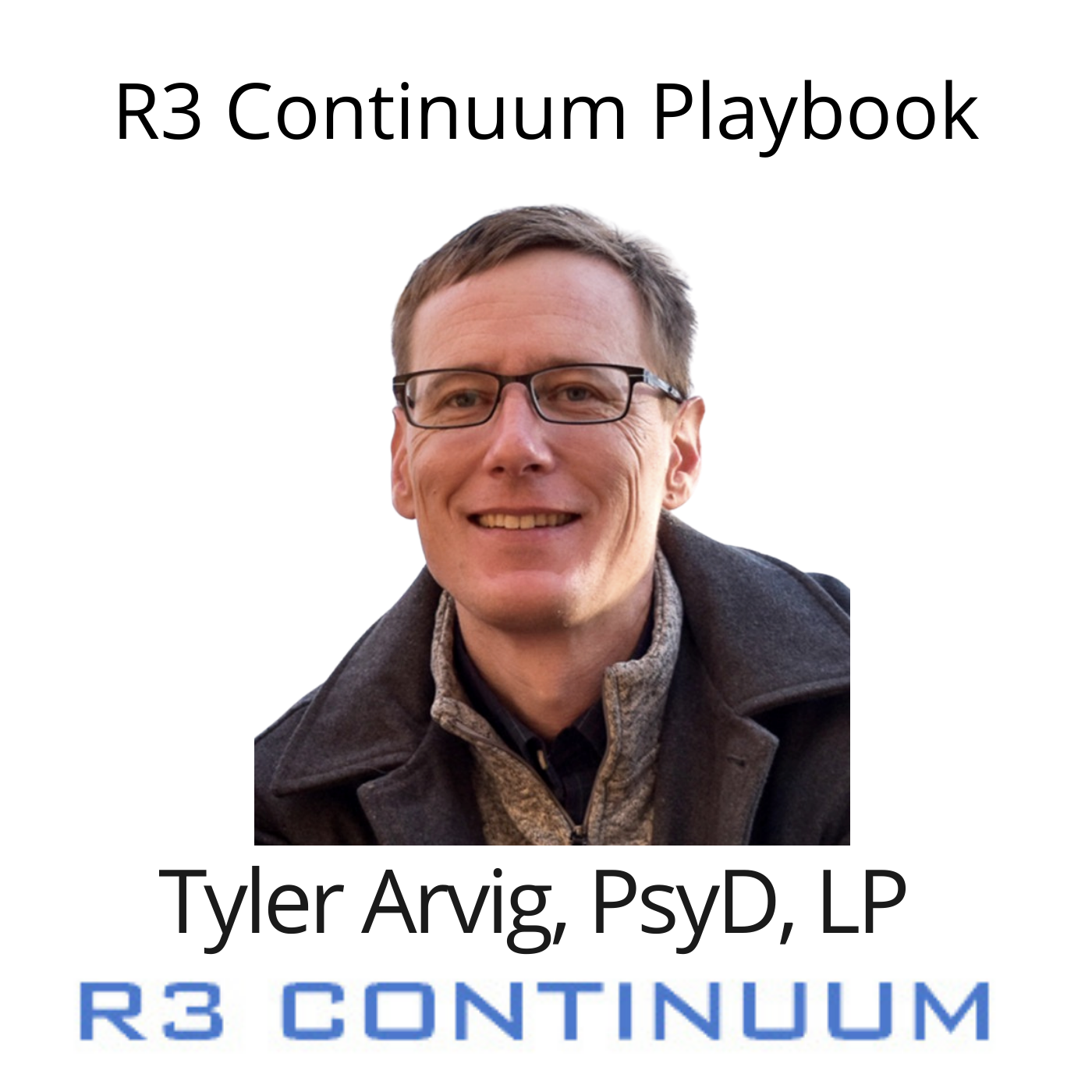
Dr. Tyler Arvig of R3 Continuum detailed considerations involved in returning to the office after a long season of remote work, including adjusting to a commute again. He also addressed issues of physical safety, productivity, and how business leaders can support their employees. The R3 Continuum Playbook is presented by R3 Continuum and is produced by the Minneapolis-St.Paul Studio of Business RadioX®. R3 Continuum is the underwriter of Workplace MVP, the show which celebrates heroes in the workplace.

TRANSCRIPT

Intro: [00:00:00] Broadcasting from the Business RadioX Studios, here is your R3 Continuum Playbook. Brought to you by Workplace MVP sponsor, R3 Continuum, a global leader in workplace behavioral health crisis and security solutions.

Tyler Arvig: [00:00:13] Hello. I’m Dr. Tyler Arvig, the Associate Medical Director for R3 Continuum. And today, I’m going to discuss an issue we’re all thinking about, which is, bringing workers back to the office after an extended period of time working from home.

Tyler Arvig: [00:00:31] As the world has now normalized work-from-home, returning to the office actually might seem quite far and involves more challenges than we might have anticipated. As with near everything over the past several months, the simplest things can be the hardest to manage. This includes the seemingly uncomplex task of going back to the office. People have become accustomed to working from home with everything that that entails, including spending more time with family, not having to commute, having more flexible work hours, and being in a more casual environment. The routine act of going to the office now takes more time and mental energy.

Tyler Arvig: [00:01:19] As we see some employers opting to allow continued and potentially indefinite remote work for some or all of their workforce, other employers are making the decision to bring everyone back in-house while they’re related to financial considerations, concerns about productivity, outward appearances, or belief that team work is best done on an individual and in-person basis.

Tyler Arvig: [00:01:47] The decision to bring people back to the office was likely not an easy one and required much planning, both from human resources and executive leadership. The decision to bring people back into the office will cut both ways. It will be unpopular for employees who had thrived in a work-from-home environment. For others, however, they may relish the opportunity for human interaction, personal collaboration, and a return to routine.

Tyler Arvig: [00:02:20] There are some things you can expect in bringing people back to the office and advance knowledge of these things will help to make the transition more successful. Business leaders who take a more proactive approach to supporting their employees are going to be the most successful in the return to the office process. Let’s dive into some key areas that we need to be proactively addressed with your employees.

Tyler Arvig: [00:02:51] Perhaps the most obvious issue to be addressed is one of physical safety. We bring people back to the office at this point because the prevalence of COVID-19 has decreased in the population and vaccines are more widely available. With that said, COVID-19 is still present in relatively high numbers, and vaccine access, particularly for younger adults, continues to be a bit of a challenge. Furthermore, fears over variants of COVID-19 still exist. For these reasons, returning to the office will feel differently than it has in the past. The use of personal protective equipment, distancing measures, and other things are likely to be required, at least in the near term.

Tyler Arvig: [00:03:39] As a leader, part of this is going to mean providing extra measures of support as people navigate anxiety. Welcoming people back in a unique way is one way to make the transition a bit easier. It is not just another day at the office, acknowledge that. And provide something enjoyable or meaningful as people return. Frequent communication is another way to ease the transition. Communication is key in this process, so communicate often and in personal ways to help employees feel valued and safe as this process unfolds.

Tyler Arvig: [00:04:20] It is reasonable to anticipate some decreased productivity, at least at first. The same way you might have seen this when folks started working from home, you’re also likely to see this as they return to the office. Anxiety, as we just discussed, may contribute to that decrease in productivity. Working with the use of personal protective equipment and with physical distancing also might decrease productivity, at least temporarily. And personal relationships and conversations, which may have been limited over the past year, may also contribute to that decrease in productivity.

Tyler Arvig: [00:05:02] While it might seem counterintuitive to communicate to folks about the likely blip in their productivity, it also shows understanding of the unique circumstance they’re in. Being supportive in helping people to re-find their rhythm of productivity should be done as well. People will find their way back to their previous level of productivity in short order if we do the right things.

Tyler Arvig: [00:05:30] We also cannot discount further complicating factors for office work that have been silent over the past year, such as reintroduction of the commute, re-establishing child care, and re-establishing other routines that, frankly, we haven’t had to do over the past year. Adjusting to this will take some time. And to the extent that minor flexibilities are available to employees who are returning to the worksite, this could be incredibly helpful, both personally and from a work productivity standpoint. Returning to the office in a less rigid manner is likely to make the experience more successful.

Tyler Arvig: [00:06:12] Lastly, it is important to have resources available to employees who need additional support. One solution R3 Continuum offers is wellness outreach, which reaches out to employees proactively to provide support in the return to work transition process. It may also mean leaning on your EAP for additional support. Or implementing other programs that help your employees adapt to the changes in their work life.

Tyler Arvig: [00:06:41] As always, R3 Continuum is here to help you navigate the challenges of bringing people back into the office, whether consulting with your management team, providing direct employee support, or providing customized trainings. We have the tools and resources you need to be successful. You can find more information on our website, www.r3c.com. Or you can email us at info@r3c.com. My colleagues and I are always available to consult on this or a variety of other employee and organizational wellbeing initiatives. Thank you.


Show Underwriter

R3 Continuum (R3c) is the underwriter of Workplace MVP, a show which celebrates the everyday heroes–Workplace Most Valuable Professionals–in human resources, risk management, security, business continuity, and the C-suite who resolutely labor for the well-being of employees in their care, readying the workplace for and planning responses to disruption.

R3 Continuum is a global leader in workplace behavioral health and security solutions. R3c helps ensure the psychological and physical safety of organizations and their people in today’s ever-changing and often unpredictable world. Through their continuum of tailored solutions, including evaluations, crisis response, executive optimization, protective services, and more, they help organizations maintain and cultivate a workplace of wellbeing so that their people can thrive. Learn more about R3c at www.r3c.com.

Connect with R3 Continuum:  Website | LinkedIn | Facebook | Twitter

Tagged With: COVID-19, R3 Continuum, remote work, return to office, Return to Work, returning to the office, Tyler Arvig, workplace

Introduction to “Workplace MVP,” with Host Jamie Gassmann

April 1, 2021 by John Ray

Workplace MVP
Minneapolis St. Paul Studio
Introduction to "Workplace MVP," with Host Jamie Gassmann
Loading
00:00 /
RSS Feed
Share
Link
Embed

Download file

Workplace MVP

Introduction to “Workplace MVP,” with Host Jamie Gassmann

Every day, around the world, organizations of all sizes face disruptive events and situations. Within those workplaces are everyday heroes in human resources, risk management, security, business continuity, and the C-suite. They don’t call themselves heroes though. On the contrary, they simply show up every day, laboring for the well-being of employees in their care, readying the workplace for and planning responses to disruption. This show, “Workplace MVP,” confers on these heroes the designation they deserve, Workplace MVP (Most Valuable Professionals), and gives them the forum to tell their story. As you hear their experiences, you will learn first-hand, real life approaches to readying the workplace, responses to crisis situations, and overcoming challenges of disruption. Join us as they share their stories of hope, courage, and tenacity:  www.workplace-mvp.com.

“Workplace MVP” is underwritten and presented by R3 Continuum and produced by the Minneapolis-St.Paul Studio of Business RadioX®.

TRANSCRIPT

Intro: [00:00:04] Broadcasting from the Business RadioX studios, it’s time for Workplace MVP. Workplace MVP is brought to you by R3 Continuum, a global leader in workplace behavioral health, crisis, and security solutions. Now, here’s your host, Jamie Gassmann.

Jamie Gassmann: [00:00:28] Hello, everyone. And welcome to episode zero of our new show, Workplace MVP. I am your host, Jamie Gassmann, and I’d like to share a story with you. Picture a large retailer in the midst of the COVID-19 pandemic, while other businesses have shut down, this retailer must remain open as it is considered an essential source of food and other household necessities in communities across the United States. Their employees are called upon to work amid rising COVID cases; thereby, increasing their exposure to and potential for catching the virus. Meanwhile, these same employees are dealing with mounting personal stressors, such as kids at home adjusting to distance learning, fear of losing loved ones to the virus, anxiety about bringing COVID home to family members, anxiety about not being able to care for and/or visit elderly relatives, familial job loss and much more.

Jamie Gassmann: [00:01:25] Now, in this case, the company’s HR leaders responded to the crisis and the many workplace challenges it created by intentionally and proactively putting the psychological and physical safety of their employees first. The result, employees felt heard, cared for, safer and appreciated. And in turn, those employees empowered by this support from their company stood on the front lines and served customers while stores remained open. A pandemic may have created extraordinary conditions, which received much more notice, but it’s work like this, which top HR leaders have always done, often in circumstances which don’t get much attention. These leaders hire, train, encourage, protect, advocate for and help create the conditions necessary for employees to succeed in serving customers, fellow employees and the overall company.

Jamie Gassmann: [00:02:24] Doug Conant, former President and CEO of the Campbell Soup Company, notes that the soft stuff, the essential people-focused work, which HR professionals engage in each day, is indeed the hard stuff. So, when in the marketplace, Conant once said, “You must first win in the workplace.” This podcast showcases the impact of those HR, security, risk, continuity and senior leadership professionals who propel their companies to wins in the workplace, so, in turn, their company can win in the marketplace. We call them workplace MVPs, most valuable professionals. Conscientious leaders, who put people first and work to innovatively support their employees in our complex and challenging world. It’s stories like the one I just told you, which we’ll be featuring on Workplace MVP. And they’ll be shared directly with you by the executives, HR professionals, risk managers, security directors, and other organizational leaders who’ve experienced them and had direct accountability and planning for, responding to and leading recovery efforts in the face of crisis and disruption.

Jamie Gassmann: [00:03:35] The reality is that every day, workplaces face disruption, be it the death of an employee or a leader, natural disasters, workplace violence, workplace accidents, robbery, layoffs, pandemic, civil unrest and more. And every day, there are heroic workplace MVPs who respond to those challenges by providing multilevel support and taking proactive steps to prepare for future disruption. Together, we’ll learn lessons, gain inspiration and hope exploring best practices and new approaches.

Jamie Gassmann: [00:04:09] Welcome to Workplace MVP, the source of inspiring stories and best practice approaches to preparing for, responding to and overcoming the challenges of disruption in the workplace. Thank you for joining us and make sure to subscribe, so you see our most recent episodes and supporting resources. If you’re an MVP with a story to share, please email us at workplacemvp@r3c.com. We would love to connect with you.

“Workplace MVP” Host Jamie Gassmann

In addition to serving as the host to the Workplace MVP podcast, Jamie is currently the Director of Marketing at R3 Continuum (R3c). Collectively, she has more than fourteen years of marketing experience. Across her tenure, she has experience working in and with various industries including banking, real estate, retail, crisis management, insurance, business continuity, and more. She holds a Bachelor of Science Degree in Mass Communications with special interest in Advertising and Public Relations and a Master of Business Administration from Paseka School of Business, Minnesota State University.
Show Underwriter

R3 Continuum (R3c) is a global leader in workplace behavioral health and security solutions. R3c helps ensure the psychological and physical safety of organizations and their people in today’s ever-changing and often unpredictable world. Through their continuum of tailored solutions, including evaluations, crisis response, executive optimization, protective services, and more, they help organizations maintain and cultivate a workplace of wellbeing so that their people can thrive. Learn more about R3c at www.r3c.com.

Connect with R3 Continuum:  Website | LinkedIn | Facebook | Twitter

Tagged With: business continuity, C-Suite, employee well-being, employee wellness, Human Resources, Jamie Gassmann, preventing workplace violence, R3 Continuum, Risk Management, stress in the workplace, workplace, workplace mental health, Workplace MVP

Business RadioX ® Network


Our Most Recent Episode

CONNECT WITH US

  • Email
  • Facebook
  • LinkedIn
  • Twitter
  • YouTube

Our Mission

We help local business leaders get the word out about the important work they’re doing to serve their market, their community, and their profession.

We support and celebrate business by sharing positive business stories that traditional media ignores. Some media leans left. Some media leans right. We lean business.

Sponsor a Show

Build Relationships and Grow Your Business. Click here for more details.

Partner With Us

Discover More Here

Terms and Conditions
Privacy Policy

Connect with us

Want to keep up with the latest in pro-business news across the network? Follow us on social media for the latest stories!
  • Email
  • Facebook
  • Google+
  • LinkedIn
  • Twitter
  • YouTube

Business RadioX® Headquarters
1000 Abernathy Rd. NE
Building 400, Suite L-10
Sandy Springs, GA 30328

© 2025 Business RadioX ® · Rainmaker Platform

BRXStudioCoversLA

Wait! Don’t Miss an Episode of LA Business Radio

BRXStudioCoversDENVER

Wait! Don’t Miss an Episode of Denver Business Radio

BRXStudioCoversPENSACOLA

Wait! Don’t Miss an Episode of Pensacola Business Radio

BRXStudioCoversBIRMINGHAM

Wait! Don’t Miss an Episode of Birmingham Business Radio

BRXStudioCoversTALLAHASSEE

Wait! Don’t Miss an Episode of Tallahassee Business Radio

BRXStudioCoversRALEIGH

Wait! Don’t Miss an Episode of Raleigh Business Radio

BRXStudioCoversRICHMONDNoWhite

Wait! Don’t Miss an Episode of Richmond Business Radio

BRXStudioCoversNASHVILLENoWhite

Wait! Don’t Miss an Episode of Nashville Business Radio

BRXStudioCoversDETROIT

Wait! Don’t Miss an Episode of Detroit Business Radio

BRXStudioCoversSTLOUIS

Wait! Don’t Miss an Episode of St. Louis Business Radio

BRXStudioCoversCOLUMBUS-small

Wait! Don’t Miss an Episode of Columbus Business Radio

Coachthecoach-08-08

Wait! Don’t Miss an Episode of Coach the Coach

BRXStudioCoversBAYAREA

Wait! Don’t Miss an Episode of Bay Area Business Radio

BRXStudioCoversCHICAGO

Wait! Don’t Miss an Episode of Chicago Business Radio

Wait! Don’t Miss an Episode of Atlanta Business Radio