Business RadioX ®

  • Home
  • Business RadioX ® Communities
    • Southeast
      • Alabama
        • Birmingham
      • Florida
        • Orlando
        • Pensacola
        • South Florida
        • Tampa
        • Tallahassee
      • Georgia
        • Atlanta
        • Cherokee
        • Forsyth
        • Greater Perimeter
        • Gwinnett
        • North Fulton
        • North Georgia
        • Northeast Georgia
        • Rome
        • Savannah
      • Louisiana
        • New Orleans
      • North Carolina
        • Charlotte
        • Raleigh
      • Tennessee
        • Chattanooga
        • Nashville
      • Virginia
        • Richmond
    • South Central
      • Arkansas
        • Northwest Arkansas
    • Midwest
      • Illinois
        • Chicago
      • Michigan
        • Detroit
      • Minnesota
        • Minneapolis St. Paul
      • Missouri
        • St. Louis
      • Ohio
        • Cleveland
        • Columbus
        • Dayton
    • Southwest
      • Arizona
        • Phoenix
        • Tucson
        • Valley
      • Texas
        • Austin
        • Dallas
        • Houston
    • West
      • California
        • Bay Area
        • LA
        • Pasadena
      • Colorado
        • Denver
      • Hawaii
        • Oahu
  • FAQs
  • About Us
    • Our Mission
    • Our Audience
    • Why It Works
    • What People Are Saying
    • BRX in the News
  • Resources
    • BRX Pro Tips
    • B2B Marketing: The 4Rs
    • High Velocity Selling Habits
    • Why Most B2B Media Strategies Fail
    • 9 Reasons To Sponsor A Business RadioX ® Show
  • Partner With Us
  • Veteran Business RadioX ®

Clay Hammons – Performance Solutions and Rehabilitation

October 21, 2024 by Rose

North Georgia Business Radio
Clay Hammons – Performance Solutions and Rehabilitation
Loading
00:00 /
RSS Feed
Share
Link
Embed

Download file

Clay Hammons – Performance Solutions and Rehabilitation


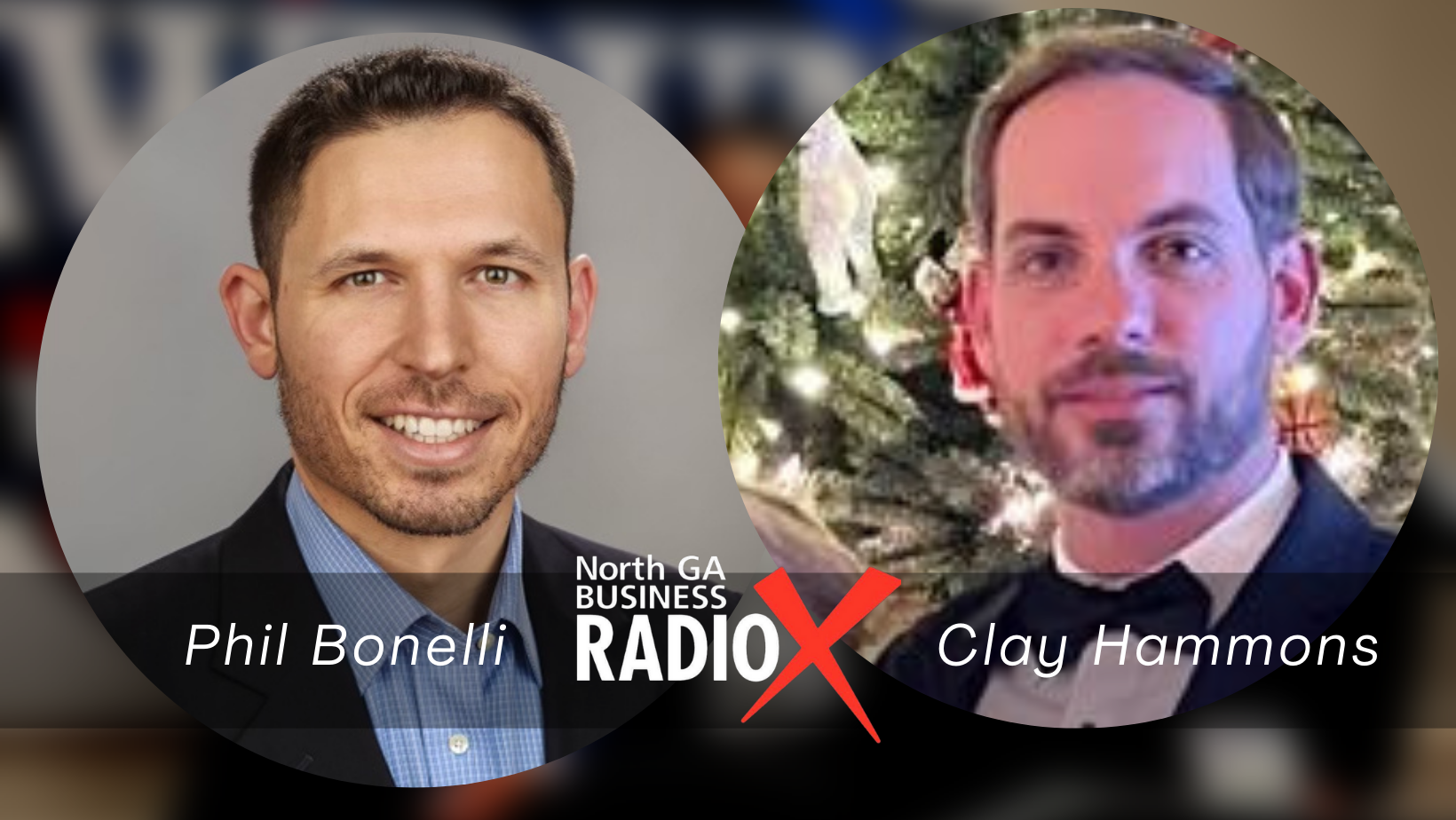
𝗜𝗻 𝘁𝗵𝗲 𝗳𝗮𝘀𝘁-𝗽𝗮𝗰𝗲𝗱 𝘄𝗼𝗿𝗹𝗱 𝗼𝗳 𝗯𝘂𝘀𝗶𝗻𝗲𝘀𝘀, 𝗽𝗵𝘆𝘀𝗶𝗰𝗮𝗹 𝘄𝗲𝗹𝗹-𝗯𝗲𝗶𝗻𝗴 𝗼𝗳𝘁𝗲𝗻 𝘁𝗮𝗸𝗲𝘀 𝗮 𝗯𝗮𝗰𝗸𝘀𝗲𝗮𝘁. Clay Hammons, owner and founder of Performance Solutions and Rehabilitation talks with host Phil Bonelli about why your physical health is the foundation for success in every aspect of life.

Clay also talks about his transition from corporate physical therapy to starting his own innovative practice, offering a fresh approach to healthcare that prioritizes patient goals over insurance mandates — providing customized, results-oriented healthcare solutions, rather than just fitting patients into a standardized, insurance-driven model.

Clay’s cash-based model allows him to provide personalized, one-on-one care that truly addresses clients’ needs.

The conversation also explores how businesses can benefit from prioritizing employee health.

Whether you’re an athlete looking to enhance performance, an office worker battling chronic pain, or a business owner seeking to boost team productivity, this episode offers valuable insights into achieving optimal physical health.


Connect with Clay and the Performance Solutions and Rehabilitation Team:

https://www.instagram.com/clayhamm/


Connect with Phil Bonelli:

https://www.facebook.com/Hopewell-Farms-GA-105614501707618/

https://www.instagram.com/hopewellfarmsga/

https://www.hopewellfarmsga.com/

Connect with Beau Henderson:

https://RichLifeAdvisors.com

https://www.facebook.com/RichLifeAdvisors

https://www.facebook.com/NorthGARadioX

This Segment Is Brought To You By Our Amazing Sponsors

Hopewell Farms GA
Roundtable Advisors

RichLife Advisors

Regions Bank

Highlights Of The Show

00:04:10 – Insurance-based vs. Cash-based Physical Therapy
Clay explains the difference between insurance-based and cash-based physical therapy, highlighting the limitations of insurance-driven care and the benefits of a personalized, solutions-based approach for clients.

00:08:42 – Performance Solutions Guarantee
Clay discusses the unique guarantee offered by Performance Solutions, where clients receive a solution-focused approach with a guarantee to achieve their performance goals within a specific timeframe, emphasizing the commitment to delivering results.

00:11:52 – Biomechanics and Baseball Pitching
Clay shares his passion for working with baseball pitchers and addressing biomechanical issues to prevent arm injuries, highlighting the importance of technique and personalized care in optimizing athletic performance and preventing injuries.

00:14:26 – Entrepreneurial Journey and Courage to Pursue Dreams
The conversation shifts to Clay’s entrepreneurial journey, as he reflects on the genesis and evolution of his business, providing insights for listeners who may have dreams of pursuing their own ventures.

00:15:24 – Recognizing the Need for Change
Clay discusses the challenges of working in a low-profit, high-volume model and the impact it had on his personal life. He realized the need for a change in his career and sought out a coach for guidance.

00:16:43 – Transformation through Coaching
Clay shares how working with his coach, Greg Todd, has been transformational for him. He emphasizes the importance of leveraging knowledge, taking risks, and finding a better way of doing things. Coaching has played a crucial role in his growth process.

00:17:40 – Overcoming Physical Struggles
Clay opens up about experiencing a serious neck problem due to overuse injury, which led him to have a disc replacement surgery. This experience served as a wake-up call for him to seek a better way and prioritize his well-being.

00:21:22 – Importance of Movement and Physical Health
Clay discusses the significance of movement and how sitting for prolonged periods can negatively impact the body. He emphasizes the concept of “motion is lotion” and highlights the importance of full range of motion in preventing physical issues.

00:25:39 – Addressing Physical Issues Proactively
Clay emphasizes the importance of addressing physical issues proactively to prevent them from escalating into major problems. He also stresses the value of seeking professional assistance within a system that allows for thorough diagnosis and care.

00:30:42 – Biomechanics and Running Issues
Clay and Phil discuss how running issues are often related to biomechanics and overuse. Proper posture and movement can prevent injuries and improve productivity.

00:31:55 – Corporate Wellness Programs
Clay and Phil explore the idea of Clay offering seminars on proper posture and movement for employees in a corporate setting. They emphasize the importance of prevention for overall health and productivity.

00:32:30 – Employee Health and Productivity
The conversation focuses on the impact of employee health on productivity and the benefits of investing in wellness programs. They discuss the holistic connection between physical well-being, energy, and focus at work.

00:33:30 – Contacting Clay for Wellness Programs
Clay shares his contact information for businesses interested in his wellness programs, emphasizing the importance of keeping employees healthy and productive. The idea of boosting workplace morale through wellness initiatives is highlighted.

00:35:14 – Entrepreneurial Journey and Lessons Learned
Clay reflects on his entrepreneurial journey, emphasizing the need to bet on oneself and take imperfect action. He shares the importance of continuous learning and growth in the business world.

Tagged With: Clay Hammons, healthy business, Performance Optimization, Performance Solutions and Rehabilitation, Physical Therapy Innovation, workplace wellness

Humanity and Mental Health in the Workplace E26

August 25, 2022 by Karen

E26-Humanity-and-Mental-Health-in-the-Workplace-feature
Phoenix Business Radio
Humanity and Mental Health in the Workplace E26
Loading
00:00 /
RSS Feed
Share
Link
Embed

Download file

E26-Humanity-and-Mental-Health-in-the-Workplace

Humanity and Mental Health in the Workplace E26

Authenticity, humanity, and integrity are just a few of the words to describe the two gentlemen on this show and the direction that the conversation went in.

When it comes to pairing guests for the Culture Crush Business Podcast, we pair strategically. We tend to pair a company that has a great culture with a company that offers resources to improve culture. For this show, each of the two companies that were on the show fit into both of these categories. BOTH companies are growing a great culture while ALSO supporting companies with improving their company culture.

This conversation started strongly in the direction and importance of DEI in the workplace and supporting individuals in being their authentic selves in a psychologically safe work environment. Psychological safety is a shared belief held by members of a team that the team is safe for interpersonal risk taking. It gives the employees the opportunity to disagree and still be supported in the workplace.

This was part of the bigger conversation of things that leaders and companies can do to support the mental health of their employees. Companies can’t just talk about supporting mental health- they actually need to take action on it.

We walked away with tons of examples on how to do this!!

  • Ask the right questions
  • What am I doing and what is the company doing that can be improved on?
  • How are you doing professionally?
  • How are you doing personally?
  • Have open visibility to what goes on the calendar
  • Therapy sessions
  • Dentist Appointments
  • Doctor appointments
  • A block on the calendar for self care
  • Support from leadership to the staff in being their own authentic self
  • Provide a stipend that allows them additional mental health support
  • Allowing them the time for self care during the work day
  • Letter from the CEO articulating the importance of mental health
  • Putting in boundaries for when emails can be sent to the staff

When trying to find out more info about Hummingbird Humany, head to their website www.hummingbirdhumanity.com and go to the resources tab where they offer free resources to the Hummingbird community. From the website, visitors can also sign-up for their weekly newsletter or follow their social media accounts.

evolvedMD has a variety of resources listed at their website as well. Head to their main page, https://www.evolvedmd.com/ and then head over to their resources and news tab.

Both Sentari and Brian are on podcasts out there as well! Make sure to find them and follow them!

Let’s just say this conversation will definitely have to have a Part B to it!

HHM-KLogo-TextOnlyv1

Hummingbird Humanity is committed to amplifying the voices of the unheard.

Hummingbird’s offerings include a consulting practice which partners with companies to build human-centered workplace cultures through assessment, strategy, and implementation; a speakers bureau featuring diverse voices who share about their lived experiences and offer suggestions for tangible action in their message; a growing collection of children’s books and resources for grown-ups to have age-appropriate diversity conversations with kids; and a soon to be launched practice for coaching and facilitation helping leaders develop their skills to be inclusive and people-centered.

Brian-McComak-HeadshotBrian McComak is a consultant, speaker, author, and facilitator with over 20 years of experience in Diversity, Equity, & Inclusion, HR, company culture, change management, internal communications, and employee experience.

He is the founder and CEO of Hummingbird Humanity, a consulting firm that cultivates and champions inclusive workplace cultures and human-centered leadership.

Connect with Brian on LinkedIn and Instagram.

evolvedMD-logo

evolvedMD is leading the integration of behavioral health services in modern primary care. Uniquely upfront and ongoing, our distinctive model not only places but embeds behavioral health specialists onsite at your practice. We offer an economically viable and better way to integrate behavioral health that ultimately drives improved patient outcomes.

Sentari-Minor-Headshot-CroppedSentari Minor is most passionate about bringing the best out of individuals and entities.

His love languages are strategy, storytelling, and social impact. As Head of Strategy for evolvedMD, Mr. Minor is at the forefront of healthcare innovation with a scope of work that includes strategy, corporate development, growth, branding, culture, and coaching.

Prior to evolvedMD, he worked with some of the Nation’s most prominent and curious CEOs and entrepreneurs advising on philanthropy, policy, and everything social good as Regional Director of Alder (formerly Gen Next) [PHX + DAL + SFO] and strengthened social enterprises as Director at venture philanthropy firm, Social Venture Partners.

A Phoenix native, Mr. Minor continued his education in the Midwest and is an alumnus of DePauw University in Greencastle, Indiana where he studied English with an emphasis in Creative Writing. He is also a member of Class IV of the American Express Leadership Academy through the Arizona State University Lodestar Center. If you want to profile him: he’s an ENTJ (Myers Briggs), a Maverick (Predictive Index), and trimodal Blue/Green/Red (Emergenetics).

Where does he shine? In high-touch stakeholder engagement, capital raising, public relations, and strategic planning. With his background, Mr. Minor serves on the board of directors for a diverse set of social impact organizations, as a venture mentor for socially conscious companies nationwide, and as a facilitator for businesses who want organizational clarity.

Committed to strengthening brands doing good in the world, Mr. Minor speaks nationally and publishes often on strategy, marketing, leadership, capacity building, social entrepreneurship, and engaging high-profile leaders in the dialogue of today. For his impact on business and community, he was honored among the Phoenix Business Journal’s “40 Under 40” class of 2022.

When he’s not busy changing the world, self-care to him looks like working out, stirring the pot on social media, being an amateur author, and spending time with the people who make him smile.

Connect with Sentari on LinkedIn and Instagram.

About Culture Crush

Culture is not just a tag word to be thrown around. It is not something you throw in job descriptions to draw people to applying for jobs within a company.

According to Marcus Buckingham and Ashely Goodall in their book Nine Lies About Work, “Culture is the tenants of how we behave. It’s like a family creed. This is how we operate and treat each other in the family.”CultaureCrushKindraBanner2

As a growing company- Culture Crush Business Podcast is THE culture improvement resource that supports companies and leaders.  Our Mission is to improve company cultures so people WANT to go to work. Employees and leaders should like where they work and we think this is possible.

Within the company: Culture Crush has Vetted Resources and Partnerships with the right people and resources that can help improve your company culture.

On this podcast:  We focus on everything surrounding businesses with good company culture. We will talk with company leaders to learn about real-life experiences, tips, and best practices for creating a healthy work environment where employees are finding joy and satisfaction in their work while also striving and growing within the company.  We also find the companies that offer resources to help improve company culture and showcase them on the show to share their tips and tricks for growing culture.

About the Host

ABHOUTHOSTHEADSHOT

Kindra Maples  is spartan racer, past animal trainer, previous magician’s assistant, and has a weakness for Oreo cookie shakes. Her journey working with people actually started working with animals as a teenager (don’t worry we won’t go that far back for her bio).

She worked for over 15 years in the zoo industry working with animals and the public. Her passion of working with animals shifted into working with people in education, operations and leadership roles. From there her passion of leadership and helping people develop has continued to grow.

Then came the opportunity for leading  the Culture Crush Business Podcast and she jumped on it. Leadership, growth, and strong company cultures are all areas that Kindra is interested in diving into further.

Shout Outs

We want to thank a few people for their behind the scenes effort in helping this relaunch to come to life. James Johnson with Tailored Penguin Media Company LLC.– It is a small, but powerful video production company with a goal to deliver the very best by articulating the vision of your brand in a visually creative way. Gordon Murray with Flash PhotoVideo, LLC. -Flash Gordon has been photographing since high school and evolving since then with new products that will equip, encourage, engage, and enable. Renee Blundon with Renee Blundon Design – She is not only one of the best free divers (that’s not how she helped with the podcast) but she is great with graphics design and taking the direction for the vision that you have while also adding creative ideas to bring to your vision to life.

These are just a few of the folks that supported the relaunch of the podcast. If you would like to be part of the Culture Crush team or would like to support underwriting the show- please reach out: info@culturecrushbusiness.com

Tagged With: Behavioral Health Integration, Branding, Culture, diversity, employee experience, Human-Centered, inclusion, mental health, workplace wellness

The R3 Continuum Playbook: Reducing the Stigma: Ways Leaders Can Support Employee Mental Health

March 3, 2022 by John Ray

employee mental health
Minneapolis St. Paul Studio
The R3 Continuum Playbook: Reducing the Stigma: Ways Leaders Can Support Employee Mental Health
Loading
00:00 /
RSS Feed
Share
Link
Embed

Download file

employee mental health

The R3 Continuum Playbook: Reducing the Stigma: Ways Leaders Can Support Employee Mental Health

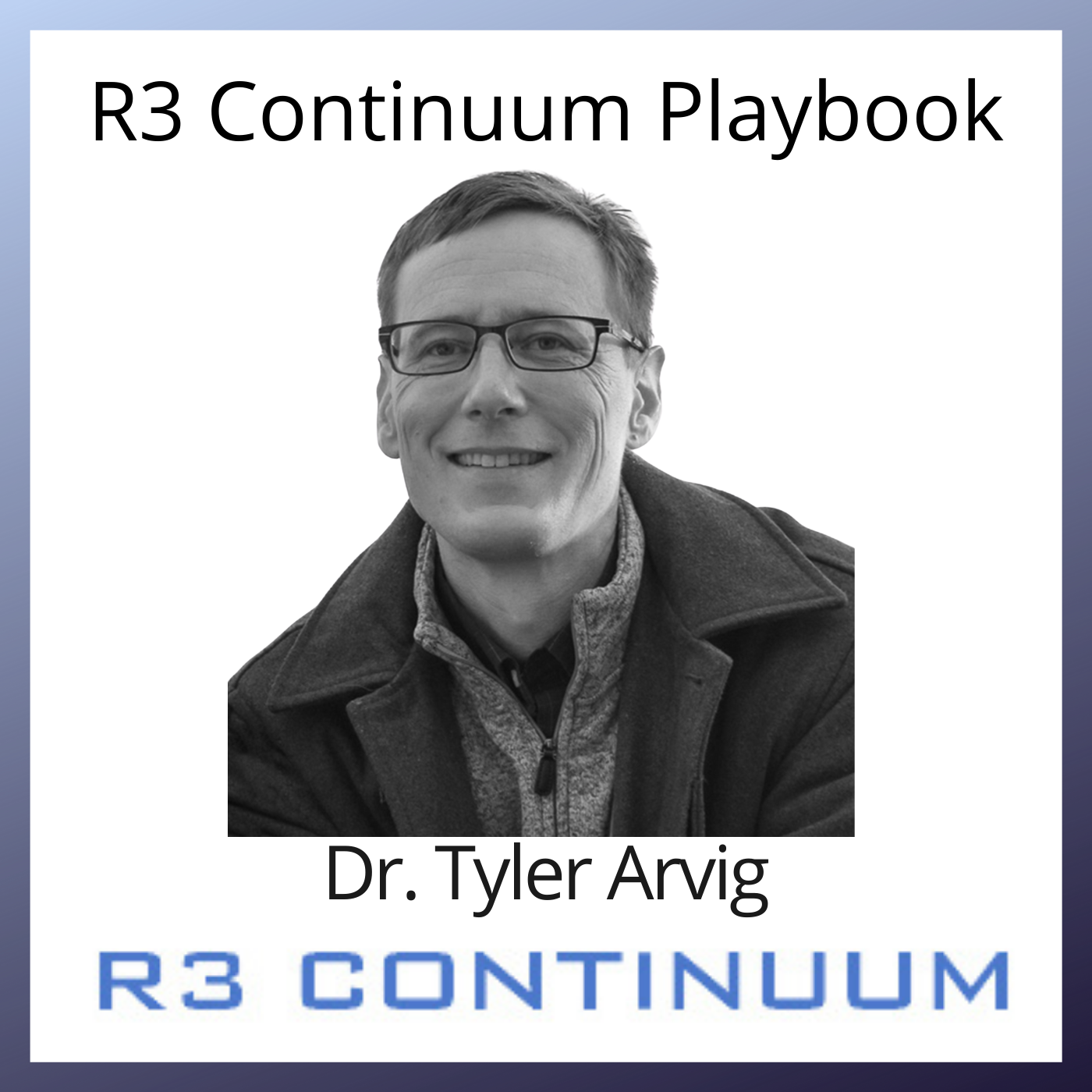
In a recent webinar featuring Dr. Tyler Arvig, Associate Medical Director at R3 Continuum, Dr. Arvig addressed a variety of questions on employee mental health, and how leaders can make it easier for employees to request and receive behavioral health support. Dr. Arvig mentioned not only better communication, but more personal and honest conversation with employees, making modeling self-awareness and vulnerability a priority, being creative in balancing the needs of the organization with the needs of the employees, knowing when to pull in experts, and much more.

The full webinar can be found here. The R3 Continuum Playbook is presented by R3 Continuum and is produced by the Minneapolis-St.Paul Studio of Business RadioX®. R3 Continuum is the underwriter of Workplace MVP, the show which celebrates heroes in the workplace.

TRANSCRIPT

Intro: [00:00:00] Broadcasting from the Business RadioX Studios, here is your R3 Continuum Playbook. Brought to you by Workplace MVP sponsor, R3 Continuum, a global leader in workplace behavioral health, crisis, and security solutions.

Shane McNally: [00:00:14] Hi, there. My name is Shane McNally, marketing specialist for R3 Continuum. On this episode of the R3 Continuum Playbook, we are featuring a segment from a recent webinar that was done with R3 Continuum’s Associate Medical Director, Dr. Tyler Arvig.

Shane McNally: [00:00:28] The webinar was titled Reducing Stigma, Ways Leaders Can Support Employee Mental Health. And it looked into the current workplace climate, what and what employees are currently feeling, ways that leaders can start to notice if their employees may be struggling, what leaders can do to help reduce the stigma of mental health in their organization and resources available to them.

Shane McNally: [00:00:48] During the webinar, we asked our audience the question of what issues are you seeing in those around you right now. And the top three responses were anxiety, work-life imbalance, and changes in productivity. What we can gather from this is that many folks are noticing their employees or colleagues struggling, but may not know how to handle it. In this excerpt from the webinar, Dr. Tyler Arvid gives advice to leaders on what they can do to support their employees and what they should be doing to help their employees that are struggling.

Tyler Arvig: [00:01:17] So, here’s, again, these aren’t in any particular order. The first thing you can do in your organization is, make behavioral health a priority and employee health a priority not just at the H.R. level or at the wellness committee level, but at the very top, you know, your C-suite folks, your president. You know, them indicating, you know, we have a business to run and we have things to do but we care about you too. And, you know, checking me in and showing that it’s something that’s not just on paper. Like the previous slide, 96% of the companies [inaudible] H.R. policy. Most still don’t feel supported. And, we often look for H.R. to be that support and that they should be and that’s wonderful and we want them to do that. But we also want our leaders, people that hired us, that support us, that run our businesses to say, “Hey, this is a priority for us, too.”

Tyler Arvig: [00:02:23] The second point, engaging your employees, we already talked about. But, really, you know, how do you communicate with them? Don’t just do it in emails. You call them. You call them for no reason. You check in with them. Are you – are you keeping them in the fold, or are they just off on an island doing their own thing?

Tyler Arvig: [00:02:42] Modeling strength and vulnerability is a bit of what I talked about before, which is – there is no – saying the great thing about this is a bad choice of words. But, you know, with COVID-19 being what it is, there’s no us in them here. Right? We’re all experiencing these things, whether we’re at a management level or the entry-level or somewhere in the middle. We’re all experiencing those stressors and those challenges, and those things. So being able to be a little bit transparent with your folks not overly so and not over disclosing or, you know, laying out your every personal problem you ever had at their doorstep.

Tyler Arvig: [00:03:31] But, again, I’m struggling with my kid. Like, you know, last year when there was distance learning for a lot of us and a lot of our kids were struggling. Yeah. And you get parents that maybe they’re not as productive because they’re trying to help their kids in school, like, not fail. And it’s a problem, and chances are you felt that too. Share it. So, really, you know, kind of joining with your folks. And also, showing some strength in terms of, you know, effective ways to manage things. You know, they might be looking to you for some level of leadership and modeling in trying to do that.

Tyler Arvig: [00:04:11] The communication I think we’ve already addressed. But, really, it’s – the important part here is your communication is two-way. It’s not just I’m dictating to you what is. It should be a dialogue. “Hey, what do you guys think would be helpful for this problem?” And then, sharing back and forth, having an open conversation. Most really good ideas and organizations don’t come from someone at the very top that dictates something and then commands people to do it. It usually starts organically at the lower level and then gets adopted at the higher levels.

Tyler Arvig: [00:04:50] Same thing when it comes to employee health and organizational health. Make sure there’s an open dialogue there. Show some creativity when it comes to things you can alter. There are things that we can’t alter [inaudible] workday or work environment or work tasks. But there are things that we can. “I got to go pick my kid up for half an hour. You know, I can adjust my schedule or, you know, tweak.” Those kinds of things. Do it. Thinking through not, you know, did you serve your nine to five and punch in and punch out for your lunch break, but did you meet the needs of the organization?

Tyler Arvig: [00:04:50] You know, Jane mentioned earlier everyone is always fearful at the beginning that, well, what if we send everyone home, they work from home and no one is productive? And, really, that fear in our organization, at least in most organizations, didn’t come true. It turns out giving people flexibility and some creativity and changing some things actually made things more likely to get done more effectively.

Tyler Arvig: [00:05:53] You know, know your lane. And, by this, I mean, you know, we can all be better supporting our people. But you’re going to get to a point where you’re like, “This is above my pay grade. This is outside of my wheelhouse. I don’t know.” And, that’s when you want to consult with an expert. I mean, our company does this for a living. It’s what we do, right? It’s our thing. And, it’s because we realize that some of these challenges, there are a lot of them you can do on your own and you can manage on your own. But if it gets to be a bigger challenge, you’re better off trying to pull in an expert who can really give you the guidance of what you need and when you need it.

Tyler Arvig: [00:06:42] The last piece I’m going to mention here is it’s really more of a self-reflective piece. If I’m going to be a leader and I’m going to lead my folks, I need to have a good understanding of myself and what my own vulnerabilities are. Right? So, I think we’ve all found, over the course of the past couple of years and most of our lives if we’ve been leaders for long enough, there’s stuff we’re not very good at. And there are things we’re good at and there are things that we really struggle with. If I don’t have a good sense of this isn’t a strength of mine and I can’t adjust for that, I’m going to struggle to really effectively lead other people. If I don’t have a sense of, you know, what my own pain points are in my personal life, I’m not going to recognize it when I see it in my people.

Tyler Arvig: [00:07:33] So, part of, you know, being a coach or a mentor or a leader or a manager to other people is being able to look internally and go, “How am I doing? What are my strengths and weaknesses? What do I need to work on?” There’s a lot of rich material there that a lot of us haven’t had to sit and think about or deal with. But when do we do, when we try and figure some of that stuff out, we actually get much more effective in what we’re doing for our organization. So, yeah.

Shane McNally: [00:08:12] I loved your point about with be creative. You know, that’s one thing from working from home is. So, you know, for me, it’s like if I’m stumped on creating something, you know I’m having just a tough time, and I can just get up and go out to the living room and go play with my cat for like five minutes and all of a sudden I come back and it’s like, “Oh, I got up. I moved.” You know, it’s a little just different than having to take a walk down the hall or go grab a cup of coffee. It’s a little bit – you know, gives me a little bit more, I don’t know, I don’t know the word, happiness, I guess if that makes sense. So, I thought that was a good point there.

Tyler Arvig: [00:08:48] All right. So, if you have an employee who is struggling, again we’ve already talked about this, ask. You know, be inquisitive in an appropriate way. You know, if you have a good relationship, they’re going to be open. And if you have someone you consider [inaudible], try and connect them with some help. I would say start with your human resources department, know what resources your company has for folks. Maybe you have different programs, different opportunities, maybe even having an understanding of what the different benefits are that people might have, be [inaudible], be that health insurance or employee assistance or whatever it is.

Tyler Arvig: [00:09:35] One of the things people that often need help, often struggle with, is they don’t know where to go or what to do, and so they just don’t do it. So, it’s our responsibility but also kind of our honor to be able to say, “Hey, you’re struggling and here, here are some things I think can help.” And help them. Don’t just say, “Oh, go talk to H.R.” You know, maybe have a conversation and maybe, you know, facilitate it. Do something a little bit more active to get them help.

Tyler Arvig: [00:10:06] And then, you know, directing resources kind of falls within that as well. But, you know, there are a lot of resources out there right now, a lot of the resources, even in private mental health treatment. You know, now telemedicine is not only a thing. It’s been a thing for a long time. It’s becoming the norm. I can see a psychiatrist or a therapist or whoever without leaving my desk. It’s much easier to get access to some of those things than it used to be. So, you know, you have apps on your smartphone, that kind of thing.

Tyler Arvig: [00:10:43] So, there are lots of resources out there. It’s not your job to know what all those are, but do know what’s available to your people and be able to talk to those a little bit. Because, again, a lot of our people are struggling. And if we can do anything we can do to help get them the help they need at that moment, it’s going to help them.

Tyler Arvig: [00:11:07] And by the way, there’s a real business element to this that I think it’s missed, and that is all these things like asking how you’re doing and directing the resources and doing a warm handoff on some of these things. These are things that will ingratiate your employees to your organization in a way that other organizations that don’t do that kind of stuff. Don’t – you know, to them, you’re just – you know, those organizations might be just a paycheck if you can take those extra steps in these cases. You know, even if you don’t pay the highest or even if you make them work a few extra hours, they’re going to do that because you care about them as people. And one of the things with, you know, people talk about the great resignation, it’s not just about pay. I mean, you might leave for a bigger paycheck. You might leave for, you know, personal reasons. A lot of it is, my employer doesn’t care about me. My manager doesn’t care about me. I was struggling and they said they didn’t care. If I’m struggling, [inaudible], it doesn’t mean I won’t leave, but the odds of me leaving are much lower if I feel like I’m in a place where I should be and you value me as a person. So, just things to be aware of.

Shane McNally: [00:12:31] This information is extremely important for leaders, but it’s also good for people at any level in a company. While the best support for an organization starts at the top, it’s important to know how to assist someone that may be struggling.

Shane McNally: [00:12:43] Looking for more information on how you can begin implementing a more supportive behavioral health program for your employees? R3 Continuum can help. Learn more about R3 Continuum services and contact us at www.r3c.com or email us directly at info@r3c.com.


Show Underwriter

R3 Continuum (R3c) is a global leader in workplace behavioral health and security solutions. R3c helps ensure the psychological and physical safety of organizations and their people in today’s ever-changing and often unpredictable world. Through their continuum of tailored solutions, including evaluations, crisis response, executive optimization, protective services, and more, they help organizations maintain and cultivate a workplace of wellbeing so that their people can thrive. Learn more about R3c at www.r3c.com.

R3 Continuum is the underwriter of Workplace MVP, a show which celebrates the everyday heroes–Workplace Most Valuable Professionals–in human resources, risk management, security, business continuity, and the C-suite who resolutely labor for the well-being of employees in their care, readying the workplace for and planning responses to disruption.

Connect with R3 Continuum:  Website | LinkedIn | Facebook | Twitter

Tagged With: anxiety, behavioral health, Dr. Tyler Arvig, employee mental health, employees, HR, R3 Continuum, R3 Continuum Playbook, Workplace MVP, workplace wellness

The R3 Continuum Playbook: How to Talk to Your Employer About Personal Disruption

January 27, 2022 by John Ray

talk to your employer
Minneapolis St. Paul Studio
The R3 Continuum Playbook: How to Talk to Your Employer About Personal Disruption
Loading
00:00 /
RSS Feed
Share
Link
Embed

Download file

talk to your employer

The R3 Continuum Playbook:  How to Talk to Your Employer About Personal Disruption

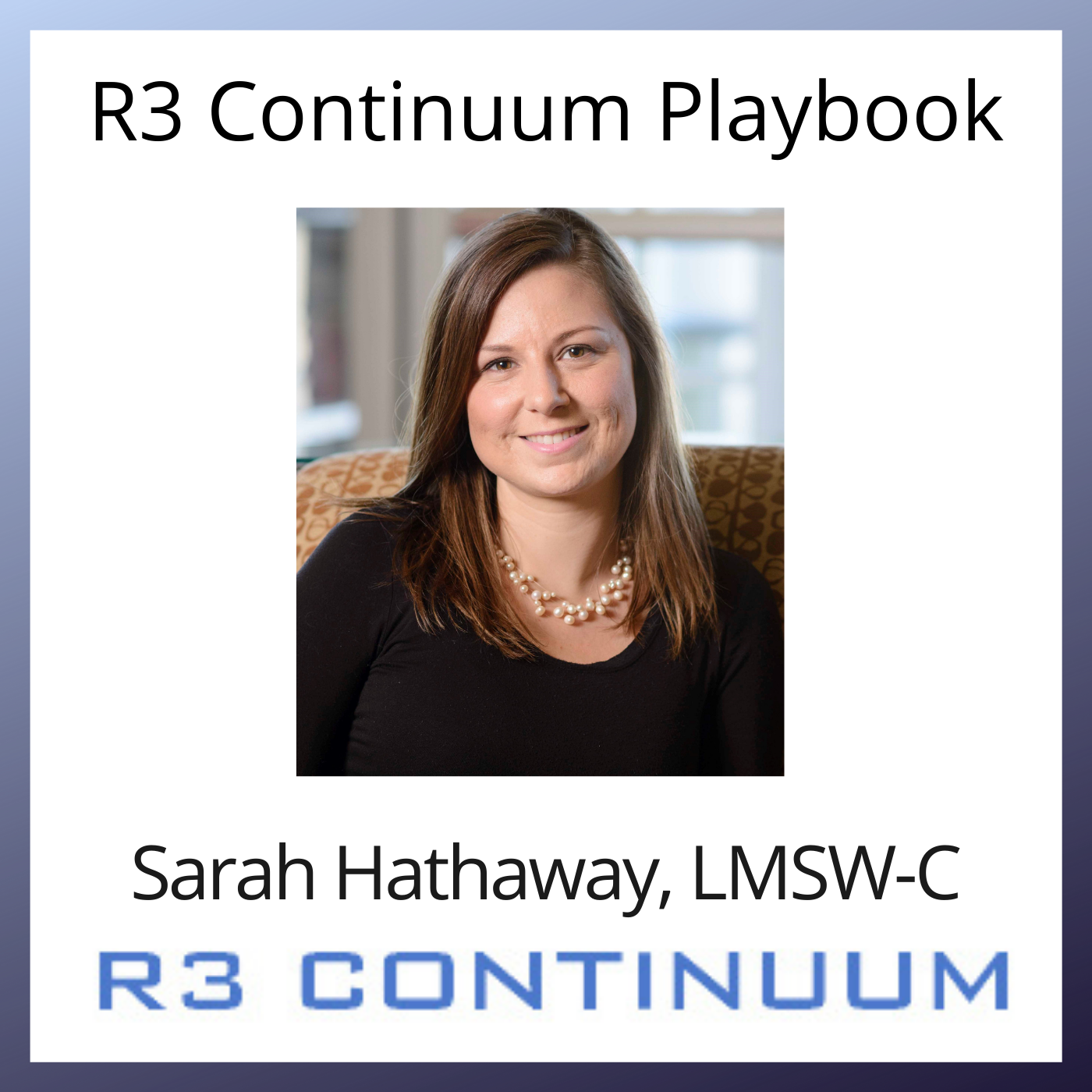
When confronted with some disruptive circumstance, whether it’s simply being late to work or a more serious situation involving their mental health, employees must answer a few critical questions, including what to tell an employer. In this excerpt from a R3 Continuum webinar, Sarah Hathaway offers some advice on how to talk to your employer about personal disruption.   The R3 Continuum Playbook is presented by R3 Continuum and is produced by the Minneapolis-St.Paul Studio of Business RadioX®. R3 Continuum is the underwriter of Workplace MVP, the show which celebrates heroes in the workplace.

Other R3 Continuum webinars can be found here.

TRANSCRIPT

Intro: [00:00:00] Broadcasting from the Business RadioX Studios, here is your R3 Continuum Playbook. Brought to you by Workplace MVP sponsor, R3 Continuum, a global leader in workplace behavioral health, crisis, and security solutions.

Shane McNally: [00:00:14] Hi, there. My name is Shane McNally, Marketing Specialist for R3 Continuum. We’ve all experienced daily struggles in the workplace. Maybe the printer is jammed, WiFi issues, maybe someone just finished off the last of the coffee, the little things. But what about the greater disruptions that happen outside of the workplace in your personal life? It can be tough to open up to your employer to discuss issues that are happening in your personal life, but it’s something that should not be left unaddressed.

Shane McNally: [00:00:38] Sarah Hathaway, Associate Director of Strategic Solutions at R3 Continuum, offers expert insight into different strategies to approach your employer for support when faced with personal disruption.

Sarah Hathaway: [00:00:49] There are a few things to really think about when you are seeking support from your employer. The first one is, “What do I share? What do I tell my employer?” And depending on your circumstances, the answer to that question may vary. If it’s, “You know what? I got a flat tire and my car is going to be in the shop. And I’m going to need some flexibility today and I’m going to miss a meeting,” or something of that nature, that might be a little bit easier to have that conversation of here’s what’s going on.

Sarah Hathaway: [00:01:24] But if it’s a mental health condition or it’s a compounding of stressors, those are sometimes a little bit more difficult to articulate and they might be harder to figure out, “Where’s the line? What do I tell my employer?”

Sarah Hathaway: [00:01:39] Some factors that you can consider here are, first of all, what do they need to know? What information is necessary for them to understand the gravity of the situation? If I just say, “I have a personal concern and I’m going to need to be out of work for the next two weeks,” that might be a little bit hard for your supervisor to understand. So, it might be necessary to give a little bit more context to what’s going on. Or if it’s, “I’m going to be needing just some understanding. I might be late on a project,” that might be a little bit easier to understand.

Sarah Hathaway: [00:02:19] One of the other things that you’ll want to consider here is what are the potential ramifications of what I may share? It’s not necessary for you to share any medical and mental health diagnoses. And, oftentimes, employees are concerned about potential discrimination or what other ways that can have negative consequences.

Sarah Hathaway: [00:02:39] So, think about that here in what you’re going to share, and we can talk some more when we get to the question and answer about specific ways to manage that. But think about what is necessary for them to understand. Again, that gravity of the situation, and then what are you comfortable sharing, and what are the potential consequences of sharing.

Sarah Hathaway: [00:03:04] The next one is, who do you tell? And, oftentimes, the simplest answer is your direct supervisor. If there’s an impact to your work, let your supervisor know what that will be and what adjustments may need to be made. You may also want to notify human resources if you have any concerns about how this information may be perceived. Or if you’re in need of particular resources or accommodations, human resources may be necessary to notify as well.

Sarah Hathaway: [00:03:37] And then, the third option is your colleagues. Is this something that you want your colleagues to know about? Is there a reason that they should know? Keep those things in mind when planning to have those conversations.

Sarah Hathaway: [00:03:51] And then, third thing is to define what you need. And you’ll look at that in four areas. The first is, do I need problem solving? Do I need to talk with my manager about what are my next steps? What can I do here? Do we need to work together and collaborate to figure out a reasonable solution?

Sarah Hathaway: [00:04:14] Or maybe you don’t need any solution at all. Maybe you’re just looking for understanding of I might be a little bit late here, or I might show up midway through this meeting, or I might need a little bit of adjustment on deadlines. “I just need some understanding here of this is what I’m going through, and I want you to know so that you’re not wondering why I seem a little bit less reliable than usual.”

Sarah Hathaway: [00:04:41] The third is resources. Do you need any resources that your employer offers? That may be an employee assistance program. It could be your health insurance information. It could be other options that your employer offers. So, think about what resources your employer may offer or do you just not know and your manager or HR can help you figure that out.

Sarah Hathaway: [00:05:07] And then, the fourth piece is flexibility. Do you need time off? Do you need adjusted responsibilities at work for a period of time? If you’re requiring some level of flexibility, it’s important to communicate that to your manager.

Sarah Hathaway: [00:05:20] So, think about these four areas when you’re planning on talking with your manager or HR, and what exactly are you looking for from them. Because, oftentimes, when your manager doesn’t necessarily know what you’re looking for and you’re just bringing here what’s going on, they may jump to problem solving when that’s not what you need. And all you need is some understanding of the situation. And so, if you can come with the ask up front, it can be really helpful in determining how to move forward.

Shane McNally: [00:05:48] All right. Hey, I have a question to kind of jump in, in here as well. And it actually came up from that very first slide of what is a sign that somebody might need to reach out for support? Like, when is kind of enough is enough type of thing? Is there something where I should look inside and be like, “You know what? I do need to reach out?” Do you kind of have any thoughts on that?

Sarah Hathaway: [00:06:13] You know, that’s a really great question. I think there are a couple of signals that you might need to reach out. And the first is, if you’re coping with something where you need help, you need support, or maybe you just need a listening ear, somebody to understand what you’re going through. If you’re feeling like you need help, oftentimes, your employer has some type of a resource for that. Again, it may be your manager, maybe HR, or maybe something like that employee assistance program.

Sarah Hathaway: [00:06:42] The other indicators that you may need help is if there’s an impact to your work, if there’s an impact to your performance, or impact to availability or your reliability. Those are indicators that your manager probably needs to know what’s going on so that it isn’t viewed as just strictly a performance issue. If you can communicate at least semi-openly, again, there may be some things that you keep personal, keep to yourself. But if you can communicate at least on some level of what’s going on, that can help them to identify that there’s something else other than just a performance concern.

Sarah Hathaway: [00:07:18] And then, the third thing is, if you’re noticing any specific changes in your emotions, your behaviors, if you think that there may be some potential impact to your mental health, again, this is another opportunity to communicate with your employer about how to get support and resources.

Shane McNally: [00:07:41] It’s extremely important to know how and when to approach an employer about a personal disruption. Well, it can be difficult to do. It’s not impossible. R3 Continuum can help organizations ensure they’re offering the best support and resources available for their employees through our Workplace Behavioral Health Support Services. R3 Continuum offers a proactive support approach and tailors the services to fit the unique challenges of each workplace. Learn more about R3 Continuum services and contact us at www.r3c.com or email us directly at info@r3c.com.


Show Underwriter

R3 Continuum (R3c) is a global leader in workplace behavioral health and security solutions. R3c helps ensure the psychological and physical safety of organizations and their people in today’s ever-changing and often unpredictable world. Through their continuum of tailored solutions, including evaluations, crisis response, executive optimization, protective services, and more, they help organizations maintain and cultivate a workplace of wellbeing so that their people can thrive. Learn more about R3c at www.r3c.com.

R3 Continuum is the underwriter of Workplace MVP, a show which celebrates the everyday heroes–Workplace Most Valuable Professionals–in human resources, risk management, security, business continuity, and the C-suite who resolutely labor for the well-being of employees in their care, readying the workplace for and planning responses to disruption.

Connect with R3 Continuum:  Website | LinkedIn | Facebook | Twitter

Tagged With: employee well-being, employee wellness, employers, mental health, Mental Health Support, personal disruption, R3 Continuum, Sarah Hathaway, Workplace MVP, workplace wellness

The R3 Continuum Playbook: Workplace Stress and Burnout

November 4, 2021 by John Ray

Burnout
Minneapolis St. Paul Studio
The R3 Continuum Playbook: Workplace Stress and Burnout
Loading
00:00 /
RSS Feed
Share
Link
Embed

Download file

Burnout

The R3 Continuum Playbook: Workplace Stress and Burnout

Stress and burnout, says Dr. Tyler Arvig, Associate Medical Director at R3 Continuum, affects not just the health of employees but that of the overall organization. With numerous surveys and studies revealing that employee stress and burnout have risen dramatically over the past year, Dr. Arvig discusses signs to watch for and resources that can be employed to address these conditions. The R3 Continuum Playbook is presented by R3 Continuum and is produced by the Minneapolis-St.Paul Studio of Business RadioX®. R3 Continuum is the underwriter of Workplace MVP, the show which celebrates heroes in the workplace.


TRANSCRIPT

Intro: [00:00:00] Broadcasting from the Business RadioX Studios, here is your R3 Continuum Playbook. Brought to you by Workplace MVP sponsor, R3 Continuum, a global leader in workplace behavioral health, crisis, and security solutions.

Tyler Arvig : [00:00:15] Hi. My name is Dr. Tyler Arvig, Associate Medical Director at R3 Continuum. Over the past two years, we’ve seen a dramatic increase in stress and burnout in employees. Stress and burnout, if left unaddressed, can have a significant impact on the mental health and overall wellbeing of our employees and our organization. There are a handful of challenges that surround stress and burnout in the workplace. Stress and burnout affect every level of an organization, from the executive level on down.

Tyler Arvig : [00:00:51] Stress and burnout affect people really on three different levels, personal, professional, and organizational. They are also often multifactorial, which can make finding the root cause a challenge. Employees have been through a lot over the past two years. While it may seem like working from home, practicing social distancing, masking, temperature checks, and the like, are just second nature these days. Many impacts on employees have yet to be fully realized.

Tyler Arvig : [00:01:26] Over time, stress and burnout can slowly erode employees until that level of stress that they’re feeling just becomes normal to them. And, often, when that happens, it’s simply quite unhealthy. In a recent webinar by R3 Continuum, we asked our audience if they felt an increase in stress due to work over the last year. We’ve received over 800 responses, 94 percent of which indicated they felt an increase in stress over the last year due to work. In that same webinar, we asked our audience if they’ve experienced any form of burnout over the last year. Again, those same 800 respondents, 84 percent said they have.

Tyler Arvig : [00:02:19] We can see just based on these numbers – and by the way, there are several other studies out there that show essentially similar findings – the stress and burnout are real and they’re having significant impact on employees in all industries. Having a better understanding of stress and burnout and knowing different ways to address these are critical to maintain the mental health and wellbeing of our employees and also, parenthetically, ourselves.

Tyler Arvig : [00:02:54] There are many different signs or key indicators of stress or burnout. If you noticed early these individuals, what they’re experiencing can be drastically reduced. Having keen observation skills can help identify some of the signs in employees, such as unusual changes in mood, difficulty getting stuff done, increased cynicism, having constant negative thoughts, or a negative attitude, having difficulty concentrating, sleeping too much or not getting enough sleep, concerns about substance use or abuse, and feelings of hopelessness. If you see these things, that may indicate an employee who is struggling with some level of stress or burnout.

Tyler Arvig : [00:03:50] If you do observe the above in your colleagues or you notice them in yourself, it’s important to recognize and to try and address these things. When it comes to supporting coworkers, there are numerous approaches we can take. But one of the most important and also easiest to do is simply to stay in touch. Communication and having a positive attitude is really important. And positive attitude, in particular, can be infectious and help rub off on others.

Tyler Arvig : [00:04:29] Help a coworker take a break from a project, because that’s also going to help them to have a little bit of a break from the stress they might be experiencing. When connecting, it’s important to not ask invasive questions. But if the coworker is beginning to open up or share, share your own experiences with them if you’ve had a similar situation. This will help them to validate the feelings they might be experiencing and to feel less alone or isolated in what they’re experiencing.

Tyler Arvig : [00:05:02] Make time to connect with others also outside of work. Letting that coworker take a break from work interactions and unwind is also a good way to help support them. But be mindful in any of these things to maintain professional boundaries and, certainly, to keep any information that’s shared privately, private.

Tyler Arvig : [00:05:27] As mentioned earlier, stress and burnout can affect anyone in the organization. Whether you’re at an executive level or you’re an intern, self-care needs to be a priority. Take some time to step back from your work and recognize when you’re feeling stressed or when you’re feeling burned out. This is key to being able to be effective at work and also help those around you.

Tyler Arvig : [00:05:54] Leaders often feel stress and burnout and never address it because they’re too busy supporting others. However, if an executive is no longer feeling motivated or a passion for the organization, that will trickle down through the workplace and through the workforce. Ensuring executives know the importance of addressing mental health for themselves and their employees is a really good way to make sure that your organization is supported from the top down.

Tyler Arvig : [00:06:26] There are many resources available, some through your organization and others that are more open sourced. Your workplace will probably have an employee assistance program or EAP. Most EAPs offers several no cost counseling sessions available for situations just like we’re discussing. Your H.R. department may also have resources available. I would recommend that people consider also engage in psychotherapy if they are struggling.

Tyler Arvig : [00:07:03] It is easier than ever to utilize psychotherapy as telehealth has made it possible to engage in therapy with your computer or even your smartphone. You don’t even need to leave your home or your desk. There are also other options such as free apps you can get on your phone or your computer that might help provide some basic skills or tips for managing stress, anxiety, or depression. You could also consider mutual support groups. An example of this that everyone might be aware of are Alcoholics Anonymous or Narcotics Anonymous. But these are groups were, essentially, people that are going through similar situations can help support each other. There’s lots of them out there, so utilize that. They don’t cost anything.

Tyler Arvig : [00:07:51] The point here is, you have many different options and nobody should hesitate to use anything and everything that’s available to them. Understanding the impact that stress and burnout can have on employees and knowing how to address these things properly can and does make a quantifiable difference on the health of your people and your organization.

Tyler Arvig : [00:08:17] R3 Continuum can help your organization support the wellbeing of your employees in many ways, including a service we call Proactive Wellness Outreach. To consult with an expert regarding your unique situation or to learn more about our custom solutions, you can contact us at www.r3c.com or reach out by email at info@r3c.com. Thank you very much.


Show Underwriter

R3 Continuum (R3c) is a global leader in workplace behavioral health and security solutions. R3c helps ensure the psychological and physical safety of organizations and their people in today’s ever-changing and often unpredictable world. Through their continuum of tailored solutions, including evaluations, crisis response, executive optimization, protective services, and more, they help organizations maintain and cultivate a workplace of wellbeing so that their people can thrive. Learn more about R3c at www.r3c.com.

R3 Continuum is the underwriter of Workplace MVP, a show which celebrates the everyday heroes–Workplace Most Valuable Professionals–in human resources, risk management, security, business continuity, and the C-suite who resolutely labor for the well-being of employees in their care, readying the workplace for and planning responses to disruption.

Connect with R3 Continuum:  Website | LinkedIn | Facebook | Twitter

Tagged With: burnout, Dr. Tyler Arvig, employee mental health, R3 Continuum, stress, Workplace MVP, workplace wellness

Workplace MVP: Wendi Safstrom, SHRM Foundation

October 28, 2021 by John Ray

Wendi Safstrom, SHRM Foundation
Minneapolis St. Paul Studio
Workplace MVP: Wendi Safstrom, SHRM Foundation
Loading
00:00 /
RSS Feed
Share
Link
Embed

Download file

Wendi Safstrom, SHRM Foundation

Workplace MVP:  Wendi Safstrom, SHRM Foundation

In this conversation with host Jamie Gassmann, SHRM Foundation Executive Director Wendi Safstrom observed that a failure to support employees’ mental health not only weighs on the employees themselves but also weighs heavily on an organization’s bottom line. With that factor in mind, Wendi outlined several new initiatives of the SHRM Foundation, including an in-person summit which included participants across the organizational structure, including CEOs. She discussed issues which have made mental health and wellness a top priority for the foundation, the research they are drawing on, the costs of an organization doing nothing, and much more. Workplace MVP is underwritten and presented by R3 Continuum and produced by the Minneapolis-St.Paul Studio of Business RadioX®.

SHRM Foundation

The SHRM Foundation’s mission is to mobilize the power of HR and activate the generosity of donors to lead positive social change impacting all things work. The Foundation is committed to elevating and empowering HR as a social force through its innovative solutions to workplace inclusion challenges, programming designed to inspire and empower the next generation of HR leaders, and awarding scholarships and professional development grants to educate and develop students and HR professionals.  The SHRM Foundation is a 501(c)(3) philanthropic arm of the Society for Human Resource Management.

Company website | LinkedIn

Wendi Safstrom, Executive Director, SHRM Foundation

Wendi Safstrom, Executive Director, SHRM Foundation

Wendi Safstrom is a senior non-profit leader committed to serving the public through philanthropic program management, cultivating strategic partnerships and managing and developing high-performing teams. She has both association and nonprofit management experience including; national program development and administration, membership strategy, marketing and product development, grant management, development and donor stewardship, and leading cross-functional teams. Safstrom currently serves as Executive Director for the Society for Human Resource Management Foundation (SHRM Foundation), where she leads the development and implementation of SHRM Foundation’s programmatic, development, and marketing and communication strategies in support of SHRM Foundation’s new mission and vision, creating growth plans and ensuring alignment with SHRM goals.

Prior to assuming the role at SHRM Foundation, Safstrom served as Vice President at the National Restaurant Association and National Restaurant Association Educational Foundation, where she led the development and implementation of their Foundation’s most recent five-year strategic plan, and was responsible for all Foundation programming, including workforce development initiatives, scholarship and event management, community relations and engagement initiatives. The NRAEF’s philanthropic programming supported a number of audiences including high school youth, veterans transitioning from service to civilian work and life, opportunity youth and incumbent workers. Of particular note, she led the implementation of the restaurant industry’s premier high school career and technical education program, growing the program to over 2,000 public high schools, engaging over 150,000 students annually, nationwide. In 2016, she served as lead project director for the development of a $10 million contract awarded by the U.S. Department of Labor to develop the hospitality industry’s first apprenticeship program, and was instrumental in the Foundation’s reorganization and relocation of operations from Chicago, Illinois to Washington, D.C., transforming the staff and culture.

Safstrom has also held human resource management roles with the Leo Burnett Company and Hyatt Hotels Corporation in Chicago, Illinois. She has a BS in Business Administration from the Eli Broad School of Business at Michigan State University and was recognized as a member of the 2014 “Power 20” by Restaurant Business Magazine as a leader in philanthropy within the restaurant industry.

LinkedIn

R3 Continuum

R3 Continuum is a global leader in workplace behavioral health and security solutions. R3c helps ensure the psychological and physical safety of organizations and their people in today’s ever-changing and often unpredictable world. Through their continuum of tailored solutions, including evaluations, crisis response, executive optimization, protective services, and more, they help organizations maintain and cultivate a workplace of wellbeing so that their people can thrive. Learn more about R3c at www.r3c.com.

Company website | LinkedIn | Facebook | Twitter

About Workplace MVP

Every day, around the world, organizations of all sizes face disruptive events and situations. Within those workplaces are everyday heroes in human resources, risk management, security, business continuity, and the C-suite. They don’t call themselves heroes though. On the contrary, they simply show up every day, laboring for the well-being of employees in their care, readying the workplace for and planning responses to disruption. This show, Workplace MVP, confers on these heroes the designation they deserve, Workplace MVP (Most Valuable Professionals), and gives them the forum to tell their story. As you hear their experiences, you will learn first-hand, real life approaches to readying the workplace, responses to crisis situations, and overcoming challenges of disruption. Visit our show archive here.

Workplace MVP Host Jamie Gassmann

Jamie Gassmann, Host, “Workplace MVP”

In addition to serving as the host to the Workplace MVP podcast, Jamie Gassmann is the Director of Marketing at R3 Continuum (R3c). Collectively, she has more than fourteen years of marketing experience. Across her tenure, she has experience working in and with various industries including banking, real estate, retail, crisis management, insurance, business continuity, and more. She holds a Bachelor of Science Degree in Mass Communications with special interest in Advertising and Public Relations and a Master of Business Administration from Paseka School of Business, Minnesota State University.

TRANSCRIPT

Intro: [00:00:04] Broadcasting from the Business RadioX Studios, it’s time for Workplace MVP. Workplace MVP is brought to you by R3 Continuum, a global leader in workplace behavioral health and security solutions. Now, here’s your host, Jamie Gassmann.

Jamie Gassmann: [00:00:25] Hi, everyone. Your host, Jamie Gassman here, and welcome to this episode of Workplace MVP. So, I just saw a statistic the other day that indicated that $23 billion dollars is spent annually in the United States from the loss of work productivity as a result of depression alone. Depression also contributes to 200 million lost workdays annually around the world. Now, imagine the other common mental health diagnoses that employees may be dealing with, like anxiety or bipolar disorder, and what the loss of productivity and workdays might look like with all of them combined.

Jamie Gassmann: [00:01:02] A focus on mental health in the workplace has become more of a priority to employers and employees over the last year. But there’s still a stigma that workplaces are facing when it comes to talking about or offering mental health support in the workplace. How can employers ensure they’re offering the right level of mental health and wellness support? And, how can they ensure they are reducing, if not eliminating, the lingering presence of stigma?

Jamie Gassmann: [00:01:27] The Society of Human Resource Professionals, also known as SHRM, is on a mission to help employers create better workplace wellness through their SHRM Foundation. And, with us today to share the great work SHRM Foundation is doing to better workplace mental health and to offer best practice advice for our employers and listeners of Workplace MVP is SHRM Foundation President, Wendi Safstrom. Welcome to the show, Wendi.

Wendi Safstrom: [00:01:53] Thank you. Thanks so much for having us today.

Jamie Gassmann: [00:01:56] So, let’s start off. Can you walk us through your career journey and how you kind of – the path you took to getting to the position you’re in today?

Wendi Safstrom: [00:02:06] Sure, absolutely. And, thanks for asking. So, I have been with SHRM Foundation for just over four and a half years, and I have the great pleasure of working with the CEO and President of SHRM, Johnny C. Taylor, Jr.

Wendi Safstrom: [00:02:18] And, over the last couple of years, we’ve really morphed the work we do, our purpose, vision, and mission. And, again, I’m just really honored and proud to be representing the foundation today, and I’m really excited to be in this particular role when you talk about my professional journey because I was an H.R. professional way back. Back in the day, right after I graduated from school, from college, I had different recruiting and H.R. roles with the Leo Burnett Company, a large advertising agency in Chicago, and with Hyatt Hotels, their corporate offices in Chicago as well.

Wendi Safstrom: [00:02:51] Fast forward, about 20 years later, now, really, what I would consider an association and nonprofit lead, right? So, I’ve got experience in National Program Development Administration, membership strategy, marketing and product development, grant management, all the kinds of things you have to do to fundraise, to actually feel your work, and really focusing on leading cross-functional teams. And, this position is really the perfect blend of supporting an industry for which I have, or profession I should say, a deep respect and affinity for in a nonprofit role, so we can really help H.R. professionals lead positive social change in the workplace. And, really excited to be talking with you about workplace mental health and wellness today.

Jamie Gassmann: [00:03:37] Absolutely. It’s such an important topic right now, especially after the last year and a half that we’ve been navigating, especially for workplaces and leaders themselves trying to figure out how to help support those employees. So, with that in mind, you know, talk me, tell me a little bit about the SHRM Foundation, you know, some of the different types of work that you do and then particularly some of the work that you’re focused around with mental health and wellbeing.

Wendi Safstrom: [00:04:03] Sure. Just really quickly, sure. We’re the SHRM Foundation. We’re the 501(c)(3) philanthropic affiliate of the Society for Human Resource Management, SHRM. And, SHRM is the world’s largest professional society for H.R. We engage about 300,000 members and by extension over 115 million employees in countries around the world every single day.

Wendi Safstrom: [00:04:24] So, our platform to affect change is tremendous and we’re here to leverage that opportunity. Our mission at the foundation is, as I mentioned, to mobilize the power that H.R. professionals have and really help them activate positive social change and help them lead positive social change, impacting all things work. And, we think that, perhaps more so now than ever before, it’s so important to realize or help realize our shared vision, which we share with SHRM of that being a world of work that works for all. And, when we talk about the foundation at a very high level, we often refer to our work and kind of four pillars of work and we have programming tools and resources to support each of those pillars of work, and all of this information is available on our SHRM Foundation website, which I’m sure will show some of the resources at the end of the podcast.

Wendi Safstrom: [00:05:14] So, I think one of the most effective but least utilized solutions to addressing gaps in diversity, equity and inclusion strategies is hiring and retaining workers who may not be the standard that businesses consider when they’re seeking talent due to biases or uninformed misconceptions or perceptions. So, through our Building an Inclusive Workplace Initiative or our untapped pools of talent programming, we help H.R. professionals develop and provide equitable opportunities for employment and provide them a pathway by which they can create inclusive cultures and workplaces for those valuable members of untapped pools of talent, veterans, individuals with criminal records, individuals with disabilities, older workers, opportunity youth, who bring tremendous potential to workplaces but are often overlooked.

Wendi Safstrom: [00:06:05] And, a newer initiative for the foundation in partnership with our SHRM membership team is a targeted focus on supporting emerging professionals, so the H.R. professionals of the future. And, in our role as a professional society, we care and should care about the development of that next gen of H.R. professionals. So, we help activate student professional networks. We provide scholarships and opportunities for students who are considering and are pursuing H.R. to connect with working H.R. professionals in the event, or they hope that they continue their journey, their professional journey with SHRM.

Wendi Safstrom: [00:06:41] And then, really, the two areas of focus that have emerged over the last year are linked to upskilling and reskilling that helps prepare people not only for the future of work but helps prepare people who have been displaced to get them back into the workforce, and that all lends itself truly to the primary focus why we’re here today, which is workplace mental health and wellness.

Wendi Safstrom: [00:07:03] And, the statistics that you mentioned are staggering in terms of the impact that workplace mental health and/or lack of support and the stigma – with stigma comes silence – the impact that it has on businesses and their bottom lines. There is a tremendous need, if now, so if not now, probably moreso ever than before for these strategies, evidence-based tools, resources, especially in the wake of the pandemic, times of social unrest, and really economic instability. So, in a nutshell, that’s what the foundation does, and workplace mental health and wellness is at the top of our priority list.

Jamie Gassmann: [00:07:44] Yeah. A lot of amazing work. Some areas, obviously, that you kind of drawing out concepts and thinking that maybe, you know, H.R. leaders or business leaders haven’t thought of before or maybe haven’t, you know, maybe bold enough or brave enough or even considered going into looking into those areas for workers and helping workers. So, that’s great. So, you know, with talking about this, this mental health, I mean, there’s a core focus and a purpose for the foundation around that. Can you talk a little bit about what that looks like and what you’re working towards with that enhanced focus?

Wendi Safstrom: [00:08:22] Sure. Our shared purpose again in alignment with SHRM is really to elevate H.R., and we talk about elevating H.R., we’re talking about elevating the professional knowledge and skills that H.R. professionals have and practice every single day. We’re talking about elevating the profession of H.R. and the thoughts and attitudes and stereotypes people may have of what it means to work in H.R. or what it means to have H.R. serve as a business leader in which they are. They’re in positions to really affect change in the workplace. And, you know, we’re long past the day where H.R. was thought of as the payroll and paper processing, you know, we’re going to hire and fire people. Those are long gone.

Wendi Safstrom: [00:09:05] And, if there were ever a time for excellence when it comes to H.R., it’s now. And, in fact, the need for H.R. professionals has continued to grow nearly twice the average growth rate for all other occupations so there’s a need. And, this workplace mental health and wellness, this was an issue even prior to COVID and everything that’s happened over the last year, year-and-a-half.

Wendi Safstrom: [00:09:27] Mental illness and mental wellness continue to be an issue that H.R. professionals, together with other members of the C-suite or their CEO and leadership need to come together and make a commitment to affect cultural change within their organizations. So, really, we’re elevating H.R. and their knowledge skills, competencies related to workplace mental health wellness, and we’re elevating those kinds of positions so that they are viewed in the same lens that other members of the C-suite are if they’re not there already.

Jamie Gassmann: [00:09:57] Yeah. Now, fantastic, because they really are kind of the eyes and ears to culturally how people are feeling. I mean, sometimes I, you know, as a leader myself, find that my employees might be and not at a fault of my own or in a fault of another leader is just H.R. is kind of like that person they can go to for that, you know, different level of support than what they might be able to obtain from their actual leaders. So, they really do have eyes and ears into people’s wellbeing at a different level than other organizational leaders might.

Wendi Safstrom: [00:10:30] Yes.

Jamie Gassmann: [00:10:31] And so, to help kind of further expand your foundation’s focus on workplace mental health, you recently held a workplace mental health summit in New York. And, I believe if I’ve got my information correct, it was like the first of its kind that you had created just specifically this year. Can you share with us what were some of the main topics that you covered, you know, based on what you were seeing within the workplace that’s become more common?

Wendi Safstrom: [00:10:55] Yeah. Actually, it was the first, not only the first summit of this kind for organization addressing workplace mental health and wellness, but it was in-person and we had every COVID protocol you can imagine in place. I think it was a tremendous opportunity for subject matter experts, scientists, psychologists, CEOs, CHROs, philanthropists, policymakers, other business leaders, because it’s going to take all of us, truly, to affect change in work as it relates to workplace mental health and wellness. It can be implemented and impacted by H.R. professionals, but it’s going to take a village, so to speak, and all those kinds of people working together to make things happen.

Wendi Safstrom: [00:11:36] And, you know, we held this meeting despite the odds because we recognized the status quo would not do. We had speakers. We had, I think, 33 panelists in different speaking roles and covering different topics that were very passionate and knowledgeable about the topics that they brought to the table as it relates to workplace mental health and wellness.

Wendi Safstrom: [00:11:57] There’s a phrase that I’ve picked up somewhere, so now I’ve continued to use it, which is we’ve admired the problem, right? We understand that there is an issue. The statistics are staggering in terms of impact on people and business and communities. And so, rather than focus on talking to one another and telling one another what an issue and a challenge we have, we framed the topic of workplace mental health and wellness and then we started to move into that deep and what can be often crowded or complicated space of mental health and mental illness right out of the gate, right? So, we were really focused on discussions around what’s working ideas in terms of strategies and tactics in terms of attitudes, thoughts, perceptions, and tools that H.R. professionals could be using or should be using to affect change within their organizations.

Wendi Safstrom: [00:12:47] Some of the speakers we had, Dr. Arthur Evans was the CEO of the American Psychological Association. His topic was really focusing on that, a psychologically healthy workplace. Amazing, amazing dialogue. With other psychologists who brought that kind of scientific and clinical perspective to the table, but made it real and relevant to the working professionals who are in the audience.

Wendi Safstrom: [00:13:11] We had the Honorable Patrick J. Kennedy. He’s a former congressman from Rhode Island, and his whole focus was talking about there is no health without mental health and different kinds of strategies that we can, as that village, really help advance this national priority of mental health.

Wendi Safstrom: [00:13:29] And, we had an amazing speaker, Dr. Nadine Burke Harris, and she’s the California surgeon general. She brought some insights to the table with regard to adverse childhood experiences and its impact on the workplace, not only today but in the future, and the impact of trauma that is compounded certainly by what’s been going on over the last year and a half.

Wendi Safstrom: [00:13:51] So, lots of different perspectives, lots of topics. We landed on kind of a six-point plan or outcomes that were going to be activating and putting into motion here in the next couple of weeks.

Jamie Gassmann: [00:14:02] Wow. Sounds like a great event. Lots of great information and takeaways.

Wendi Safstrom: [00:14:06] Lots of good energy. And, I’ve, you know, rarely been to a summit where people stay the whole time and they’re taking notes the whole time and that was really neat to see, people at all levels and all different kinds of, representing different kinds of organizations.

Jamie Gassmann: [00:14:21] Oh, fantastic. So, you know, you kind of mentioned status quo. So, you know, some experts also say that employers can no longer afford the status quo of mental health support. So, share with me a little bit about your thoughts on this.

Wendi Safstrom: [00:14:36] Sure. So, we often say that the cost of doing nothing about or continuing to do what we’re doing, which is likely most often nothing, right, about workplace mental health and wellness is significantly higher than investing in evidence-based prevention and treatment. And, we know that failure to support employees’ mental health not only weighs on the employees themselves but it also weighs heavily on an organization’s bottom line. And, some of the statistics that you mentioned are truly staggering, the loss of productivity. The fact that depression alone costs people workdays. So, not only are the individual workers at risk, you’re putting the business at risk. The businesses go out of business that impacts the individual workers themselves and their communities.

Wendi Safstrom: [00:15:24] We do know in terms of why you can’t afford to do this. By investing in workplace mental health and wellness, you’re increasing retention and recruitment. You’re adding to your recruitment strategies or your talent management strategies. You’re increasing productivity. You’re helping lower absenteeism. You’re lowering the costs related to disability and medical-related costs for your medical plans, and you’re also reducing employee-related risks and other types of liabilities.

Wendi Safstrom: [00:15:56] And so, for every dollar invested in good mental health, promoting good mental health, providing the tools and resources, every dollar invested has a $3 to $5 return. So, in terms of no longer afford, I think we can help businesses become not only more successful perhaps by really making investments in these critical solutions as opposed to continuing with that status quo and continuing to pretend that it’s not an issue or a problem.

Jamie Gassmann: [00:16:25] Yeah. They need to look at it as more of an investment into their organization as opposed to a cost.

Wendi Safstrom: [00:16:32] Exactly.

Jamie Gassmann: [00:16:32] Which is probably what they maybe still kind of so changing that thinking around that might help them. So, if an H.R. leader was going to put that into context, do you have recommendations for how they might, you know, proactively go to leadership and change some of that thinking from it as a cost to and it’s an investment into the organization?

Wendi Safstrom: [00:16:58] Yeah. I think that there are – we were just on another call with folks talking about more tactical solutions for like EAPs and having addressing stigma and having a communication, making it okay to talk about workplace mental health and wellness and organizations if employers are struggling. We talked about the importance of investing in training managers. So, managers, I think more so than H.R. professionals, are the folks that see folks every day. And so, training managers not to be psychologists or psychiatrists or social workers but to train managers to understand the signs when employees are struggling so that they can head off issues at the earliest stage possible.

Wendi Safstrom: [00:17:38] But I think that leaders and managers should embrace, really, four qualities, I think. They include awareness. We talked a little bit about this at the summit. They include awareness, vulnerability, empathy. We talk a lot about empathy and humility here at SHRM, and compassion. I think that those are really critical qualities for business leaders in order to care for people who are in crisis and to really set the stage for business recovery as we’re headed in that direction.

Wendi Safstrom: [00:18:07] And, I think managers can start that by creating a space to get a better awareness of what’s going on in and around them. I think managers can be, should be bold in exhibiting vulnerability and lowering their own guard, and confront what’s unfolding, and understanding and acknowledging that employees are indeed struggling. And, they should be demonstrating empathy to really better tap into the emotions that others are feeling.

Wendi Safstrom: [00:18:37] So, it’s tools and resources and training, but it’s also affecting change within your culture, making it okay and having leaders and managers really practice what they’ve been preaching, if you will.

Jamie Gassmann: [00:18:49] Yeah, absolutely. And, looking at employees and, you know, this kind of thinking around the next generation of employees and their expectations of employers, you know, we see a lot in just different areas that employees are expecting more from their employer in the types of support and mental health options that they have and kind of having that mixture of multichannel approaches. What are some of your thoughts around the changes that you’re seeing with generations coming into the workforce versus previous generations?

Wendi Safstrom: [00:19:25] One of the advantages that we have at the foundation in working with SHRM as the broader enterprise is tapping into this tremendous expertise we have in our very own research division within SHRM, and they have uncovered some really interesting data that kind of goes along the lines that you would anticipate. But it really does provide that qualitative, excuse me, quantitative evidence so that we can plan more effectively. So, that research does find, right, the younger generations or younger workers, I should say, do expect more out of their employers and that includes that in the area of workplace mental health and wellness. It’s one thing to have health benefits that relate to physical health, but mental health is incredibly important as well.

Wendi Safstrom: [00:20:09] And, the research that we’ve gotten from SHRM shows that Americans who are older millennials, perhaps 35% of them, are more likely to indicate that they feel comfortable discussing their mental health at work as compared to baby boomers or traditionalists at 21% percent. Working Americans who are Gen Z or younger millennials or 30% are more likely to indicate that since the start of COVID, they feel more comfortable talking about their mental health at work than before the pandemic. But you compare that to Gen X, myself, or even baby boomers and traditionalists that hovers around 15% to 8%. So, that’s a big gap in terms of wanting to access expecting benefits when it comes to choosing an employer because employees are in a position now to choose their employer as much as employers are in a position to opt to hire employees. And, that is just another layer of why it’s so important that you can manage a multigenerational workforce because of the attitudes and the perceptions in their approaches, even amongst the different generations that exist in the workforce.

Jamie Gassmann: [00:21:23] Yeah. So interesting, you know. And, speaking of research, so, you know, also from your research, the work the foundation has done, you’ve identified benefits to employers when they’re investing in workplace mental health and wellness. Can you talk to some of those benefits that, you know, trickle down from putting focus on this?

Wendi Safstrom: [00:21:42] Yeah, and I touched on some of that, but it’s kind of lends itself to that business case again, right? The cost of doing nothing as opposed to making the investments in mental health strategies in affecting and changing our culture are much higher if you’re doing nothing. So, some of the benefits employers can expect by investing in those strategies are really, like I said, in lockstep with the business case and it helps increase retention, helps improve recruitment, which all comes at a cost to the organization. And, as I mentioned, it lowers absenteeism and medical costs and reduces employer-related risks and other potential liabilities. Those all factor into the cost of doing business when it comes to employees or labor.

Wendi Safstrom: [00:22:28] It’s great news for businesses, but I think that focusing on the business benefits. Yes, there is a business case for investments in these strategies and paying attention to the issues at hand, but the point is that it’s also the right thing to do. Your employees, they’re struggling. They said that they’re struggling, they’re suffering. And, the events of the past two years have left a lot of people traumatized, fearful, angry. Some of them are grieving.

Wendi Safstrom: [00:22:59] And, SHRM’s research says that a recent study of American workers shows 76% of those people think companies should do more to support the mental health of their workforce. So, all of those points to cost savings, yes, from a business case perspective, but also lend themselves to taking good care of an organization’s most valuable resource, which are its employees.

Jamie Gassmann: [00:23:25] Absolutely. Wow, staggering. The 76% are looking for them to do more.

Wendi Safstrom: [00:23:29] Exactly.

Jamie Gassmann: [00:23:30] Yeah. So, you know, and obviously like on the flip side of that, in terms of the impact to the organization when they aren’t doing more, we can say, you know, there’s more turnover, but there’s other impact and factors that come into play when they’re not doing more. Can you speak a little bit to that in terms of the impact to the organization when they are like status quo, everything’s fine here. What –

Wendi Safstrom: [00:23:57] Nothing to see. Moving right along…

Jamie Gassmann: [00:23:59] Nothing to see. Let’s just keep going. What are some of the impacts from a negative perspective that they could be experiencing?

Wendi Safstrom: [00:24:05] As you say, it’s the exact opposite, increased productivity versus the loss in productivity. An increase in medical costs, an increase in retention rates. If they’re not investing, those are the things that they will see. And, I do think because of the shift in mindset on the next generation of folks who are entering the workforce, as baby boomers begin to retire and Gen X and millennials kind of move along their professional careers, people are expecting and anticipating to receive that kind of support. They’re wanting to work in cultures that prioritize workplace mental health and wellness. And, I think employers will have an increasingly difficult time, not only retaining employees but recruiting them, because employees are considering not only their salary, right, but it’s a total comp package and that includes benefits, and they’re looking for benefits linked to good physical health and increasingly important, as all the data shows, benefits linked to supporting good mental health. So, if we don’t do anything, I think it’s going to be more difficult to both hire and retain top talent.

Jamie Gassmann: [00:25:13] Yeah. And, I think too that trickles down to hiring or not hiring but obtaining, you know, implementing new clients and retaining clients because that customer experience starts to be degraded when you’ve got employees who are not happy and satisfied as well.

Wendi Safstrom: [00:25:28] Or leaving or getting sick. It gets to the point where they can’t cope and that’s when the lost productivity to your point comes into play. That’s when lost days in terms of work comes into play. So, absolutely.

Jamie Gassmann: [00:25:41] Yeah, interesting. And, obviously looking at turnover this last year, we’ve been experiencing what they’re calling the great resignation where employees are voluntarily leaving jobs. And, I’ve even seen in some stats where they’re leaving and not having another job lined up. They’re just deciding I’m done. You think there’s a correlation between the great resignation and mental health within employees.

Wendi Safstrom: [00:26:07] Yeah. And, I think a lot of factors are contributing to that great resignation. I think to your point, people are leaving jobs without plans for another because they feel that this is a moment for them to make a personal professional change, right? And, there’s not necessarily anything we can do directly about that. But that is just a factor, including, as you mentioned, better compensation.

Wendi Safstrom: [00:26:31] We’re seeing astronomical salaries in some instances for people to leave an organization and go work for another organization doing similar and often even dissimilar but related work. People are leaving in anticipation of better work-life balance, maybe better benefits, perhaps people see opportunities for career advancement in different organization. And, I think that the remote work, there are pluses and minuses, right, to remote work versus in an office. And, I think organizations have to decide what kind of culture they want to be. I think people are making assumptions that remote work is better than in-office culture, or in-office companies require folks to work in office, and so they may be looking for organizations specifically to go work for that offer those kinds of opportunities.

Wendi Safstrom: [00:27:20] And, the research again shows that workers will opt to look for another job if they don’t feel they have that mental health support in addition to the physical health in the workplace and, 53%, excuse me, my researchers would correct me. Fifty-three percent of working Americans have said they’re likely or very likely to leave their current job to resign if they were offered a new job with significantly better mental health benefits and 47% of converse are unlikely or very unlikely to leave for better mental health benefits, but that’s going to be on the rise and, again, gives organizations a competitive edge when it comes to talent if they’re investing in these types of solutions.

Jamie Gassmann: [00:28:05] Interesting. So definitely something that needs to be not just status quos sweep under the rug but focused on as an organization because the impact, if you’re not feeling it right now, it’s eventually going to come.

Wendi Safstrom: [00:28:16] It’ll catch up. Yeah, absolutely.

Jamie Gassmann: [00:28:18] Interesting. We’re going to take a moment to hear from our show sponsor. Workplace MVP is sponsored by R3 Continuum. R3 Continuum is a global leader in providing expert, reliable, responsive, and tailored behavioral health disruption and violent solutions to promote workplace wellbeing and performance in the face of an ever-changing and often unpredictable world. Learn more about how R3 Continuum can tailor a solution for your organization’s unique challenges by visiting r3c.com today.

Jamie Gassmann: [00:28:52] Now, diving in a little bit into the foundation itself, so SHRM Foundation is offering a new Workplace Mental Health Ally Certificate. Can you tell us more about that certificate and what, you know, individuals need to do in order to achieve that?

Wendi Safstrom: [00:29:07] Sure. We actually launched – our President and CEO, John C. Taylor, Jr., announced the launch of our new Workplace Mental Health Certificate at our annual conference that I mentioned that took place in August to September. We kind of moved it from June to later in the year. And, when he announced the fact that we had a solution on-hand at SHRM Foundation, you could hear an audible gasp from the audience, which really surprised me, but gave me reason for hope, because people, that’s just an indicator, anecdotal indicator of how important this kind of training and access to this kind of training is to those H.R. folks.

Wendi Safstrom: [00:29:47] The certificate itself was developed in partnership with an organization called Psych Hub, which is, really, as they define themselves, and I would tend to agree, the world’s most comprehensive multimedia platform for mental health education. And, again, we worked with SHRM, some of the instructional designers at Psych Hub, and the foundation to really create and craft this training specifically for H.R. professionals and people managers.

Wendi Safstrom: [00:30:15] It’s an online learning program that is comprised of a series of eight multimedia courses. They cover things like mental health, common mental health conditions, issues linked to substance abuse and suicide, safety planning, diversity bias and equity and its links to mental health and the impact on one’s mental health, and, I think, most importantly, communication skills. And, after the H.R. folks complete all eight hours, the intent is that they have more knowledge and skills to really develop that empathy and support for the mental health and wellness of employees and their colleagues and themselves really in the workplace.

Wendi Safstrom: [00:30:59] And, they get a certificate at the end, another addition to your professional portfolio. The cost is $99 per user and actually a portion of that cost is donated back to the foundation, which allows us to continue doing the work we do. And, again, all of this is on our website or www workplacementalheath@shrm.org and I encourage you to check it out.

Jamie Gassmann: [00:31:25] Awesome. And, you also are offering awards to workplaces.

Wendi Safstrom: [00:31:29] Yes.

Jamie Gassmann: [00:31:29] And, I’m going to – hopefully I say this word name correctly. It’s the Tharseo award there.

Wendi Safstrom: [00:31:35] Tharseo. Trust me [inaudible]

Jamie Gassmann: [00:31:36] Tharseo. Okay. Close. And, I should have asked you beforehand how to pronounce that.

Wendi Safstrom: [00:31:42] No, no, that’s okay. Trust me.

Jamie Gassmann: [00:31:43] And, you’re recognizing leaders who are boldly changing their workplace. So, some of the things we’ve talked about already on the show today about, you know, it really does take change management. You know, now you offer this award for those workplaces who, you know, are doing that. And so, talk to me a little bit about some of the recipients you’ve had, some of the work, and maybe some of the case examples of how they achieved that award.

Wendi Safstrom: [00:32:08] Sure. We were busy last Monday. We had this. We had our workplace mental health and wellness summit from 7:00 in the morning until about 3:30. And then, we continued into our Tharseo Awards and that’s what you just described here. We recognize a CEO, a CHRO, and an individual who is involved in policy related to all things work.

Wendi Safstrom: [00:32:32] At this awards program we had, Arianna Huffington had a sit-on-down dialogue with Johnny C. Taylor Jr. I’m talking about the importance of wellness. So, we continued the thread of the discussion that we had at the summit into the actual awards program itself. And, I think you’ll find this interesting. Tharseo is really derived from the Greek word, meaning courageous, confident, and bold. And, the awards themselves were inspired by and made possible by contribution from Ram Charan, who in the H.R. space he is certainly a legendary businessman. He’s an author and speaker.

Wendi Safstrom: [00:33:09] And, we identified the recipients through the awards through quite an extensive process. You cannot nominate yourself. We had an independent group of jurors who really evaluated each of the candidates, and they were evaluated on qualitative and quantitative measures. And, the criteria we were looking for was looking for actions and attitudes, and implementation linked to innovation and overall impact on the company and the global workforce and how the two really need to work together. So, the Policy Transformer of the Year was Bobby Scott from Virginia, US congressman from Virginia. And, our Ram Charam Human Resource Innovation Award was Gloria Chen. She is the Chief People Officer and Executive Vice President and Employee Experience at Adobe. She has a really interesting background. Prior to becoming and assuming the CHRO, for lack of a better word kind of catch-all phrase, in Adobe, she spent 20 years in leading strategy at Adobe. So, she was part of crafting that culture as she was in charge of strategy and she’s made that transition to H.R. and she’s seeing where all of those pieces fit together. So, neat background. I encourage you to check out our website and see her bio.

Wendi Safstrom: [00:34:24] And then, our CEO of the Year was Ajay Banga, excuse me. He’s the Executive Chairman and immediate former CEO of MasterCard, and he’s an amazing, amazing man. He does work all over the world. He truly puts H.R. and the function, the profession, right up there with that of the CFO, the CMO, and the C-suite, understanding the connectivity between working with people and doing good business as it relates to people and employees equates to successful businesses and to businesses being successful in terms of a financial return.

Wendi Safstrom: [00:35:02] So, all three of them were recognized. Congressman Scott was called away to Washington, but we had a great opportunity to engage with Ajay and Gloria at the Awards themselves.

Jamie Gassmann: [00:35:13] Wonderful. And, what a great honor to be recognized for making that change within your work, your organization, but also being able to speak to the benefits that they’ve seen from that change. That’s amazing.

Wendi Safstrom: [00:35:26] Yeah.

Jamie Gassmann: [00:35:26] So, looking at leaders and those H.R. leaders or C-suite leaders or other business leaders that might be listening to this episode, what advice would you give to them for what they should be focused on when it comes to mental health in the workplace?

Wendi Safstrom: [00:35:42] Just underpinning of that, it can no longer be ignored. That’s admiring the problem. We know it’s an issue and it lends itself to a financial success, continued financial success, and that it really starts from the top. It’s got to be a commitment from the CEO. I hate the phrase trickle down, but truly it’s got to permeate throughout the organization.

Wendi Safstrom: [00:36:01] We know that mental health issues in the workplace, it’s not a new thing. I mean, we were dealing with and managing through mental health and mental illness prior to COVID, the pandemic, and the issues linked to social justice and other kinds of unrest. But it’s really magnified the challenges that employers are facing. And, now so more than perhaps ever before, mental ill, not necessarily mental illness, which is diagnosed and treated like things like schizophrenia or being bipolar, but things like suicide, depression are really, if not, being experienced by the employees by themselves, but people within their sphere of care.

Wendi Safstrom: [00:36:44] So, I just would suggest they create a supportive culture that includes empathy, as I mentioned before, and really arming not only your H.R. professionals but those first-line supervisors and managers first with the tools and the tools to recognize and communicate when they see issues and provide support to their employees. That’s going to be vital to really building these better workplaces, and we’re going to continue to build on our partnerships. The 33 speakers we had at our summit, we access them all through partnerships and talking to people smarter than us. In this particular space, we bring the voice of the employer together, but we’re going to continue to build on those partnerships to shape further opportunities so that leaders and employers will be ready hopefully and able to provide this culture of support.

Jamie Gassmann: [00:37:35] Wonderful. And, looking at the foundation itself, you know, what are some of the accomplishments that the foundation has received with focusing on mental health and wellness in the workplace?

Wendi Safstrom: [00:37:46] Yeah. So, we really launched an initiative. We realized that workplace mental health and wellness was going to become, would be exacerbated in 2020. And, yes, there’s return-to-work conversation and there are H.R. folks dealing with furloughs and layoffs. But we really felt strongly, back in April really of last year, that workplace mental health and wellness was going to be a challenge.

Wendi Safstrom: [00:38:10] And so, what we launched was this initiative and that’s been really carefully designed to accelerate the movement, not only to provide training and create cultures that are conducive to good mental health and workplaces but to really eliminate the stigma, right, of mental health in the workplace and what it means and to help individuals foster that culture where mental health can be discussed openly and organizations can build a more complete approach to employee wellness. So, we’re doing three things and we’re working. These are continued things in motion if you will. One of them certainly being the summit that we just had last Monday. We’ll be acting on the outcomes from that summit and continuing the conversation with another follow-up summit into 2022.

Wendi Safstrom: [00:38:58] We’ve developed a platform for thought leadership or research that really supports mental health and wellness in the workplace so that we can create that portfolio of resources that are things like the Mental Health Ally Certificate and other evidence-based programming, including additional training modules and educational resources, so we can continue to curate and build on the resources that we’ve already established in our mental health and wellness hub.

Wendi Safstrom: [00:39:24] So, the summit was a great moment for us to really convene subject matter experts. The worst thing I think you can do is attend a great meeting where there’s phenomenal dialogue. Leave the meeting, everybody goes back to their places of work and nothing gets done. And so, I think what I’m most proud of at the foundation to date with regard to this topic is the execution of that summit and our commitment to making things happen after the summit itself.

Jamie Gassmann: [00:39:50] Wonderful, and it sounds like a lot of great resources, great information, and great work that you’re doing overall. And, looking at that, you know, with our listeners, if they wanted to get more information on how they can take advantage of the information and tools and resources from the foundation or from SHRM overall, or if they just want to get a hold of you to get, you know, to get insights or information from you, how would they be able to do that?

Wendi Safstrom: [00:40:19] A couple of different ways. You can go to the shrmfoundation.org website and that you’ll find information about each of those pillars of work that I described at the very beginning of our conversation. If you’re interested in most specifically about our workplace mental health and wellness, you can go to workplacementalhealth, all kind of one word, .shrm.org, and certainly staff. We’ve got a team on the foundation, I think seven of us including me, and feel free to reach out to any of the team that’s listed on our website. If they’re not managing workplace mental health and wellness, the individual you reach out to, perhaps directly we’ll find the people to help you get to where it is you need to go. And, again, really appreciate the opportunity to be here with you today.

Jamie Gassmann: [00:41:04] Well, thank you. It’s was a privilege to be able to have the opportunity to connect with you, Wendi, and to celebrate you and the great work that you’re doing with the foundation, but also to celebrate the great work the foundation is doing as well. So, really appreciate you being a part of our show.

Wendi Safstrom: [00:41:21] Thank you.

Jamie Gassmann: [00:41:22] Yeah. And, we also want to thank our show sponsor, R3 Continuum, for supporting the Workplace MVP podcast and, to our listeners, thank you for tuning in. If you’ve not already done so, make sure to subscribe so you get our most recent episodes and other resources. You can also follow our show on LinkedIn, Facebook, and Twitter at Workplace MVP. If you are a Workplace MVP or know someone who is, share with us. We’d like to have them on the show. Email us at info@workplace-mvp.com. Thank you all for joining us and have a great rest of your day.


Tagged With: employee mental health, Jamie Gassmann, mental health, Mental Health Support, R3 Continuum, SHRM Foundation, Wendi Safstrom, workplace mental health, Workplace MVP, workplace wellness

Workplace MVP: Jim Mortensen, R3 Continuum

September 30, 2021 by John Ray

Jim Mortensen
Minneapolis St. Paul Studio
Workplace MVP: Jim Mortensen, R3 Continuum
Loading
00:00 /
RSS Feed
Share
Link
Embed

Download file

Jim Mortensen

Workplace MVP:  Jim Mortensen, R3 Continuum

Noting not only parallels but lessons to be learned, Jim Mortensen, President of R3 Continuum, reflected on his experience of the September 11th terrorist attacks and the current pandemic. He and host Jamie Gassmann discussed how business culture was impacted by 9/11, the actions leaders can take during traumatic events, how what was learned after 9/11 helped him better address the leadership challenges of the pandemic, and much more. Workplace MVP is underwritten and presented by R3 Continuum and produced by the Minneapolis-St.Paul Studio of Business RadioX®.

Jim Mortensen, President, R3 Continuum

Jim Mortensen, President, R3 Continuum

Jim Mortensen is President of R3 Continuum (R3c), a global leader in behavioral health and security solutions to cultivate and protect workplace wellbeing in a complex and often dangerous world. R3c’s continuum of tailored support services includes crisis prevention, preparedness & response, specialized consulting, evaluations, employee outreach, training, protective services, and more.

Jim is responsible for all facets of the business, including Sales, Marketing, Quality, Clinical Behavioral and Medical Services, Business Development, HR, and Client Services.

Prior to joining R3c in 2013, Jim was a vice president at Benesyst where he was responsible for Client Relationships, Product Development and Operations. Jim has an extensive background in the Health Care and Financial Services industries, including time spent at Ameriprise and UnitedHealth Group. He has a passion for leading growing organizations to provide outstanding service.

In addition to his experience in product development and operations, Jim has an MBA in Finance and is both a Certified Public Accountant (inactive) and a Certified Internal Auditor.

LinkedIn

R3 Continuum

R3 Continuum is a global leader in workplace behavioral health and security solutions. R3c helps ensure the psychological and physical safety of organizations and their people in today’s ever-changing and often unpredictable world. Through their continuum of tailored solutions, including evaluations, crisis response, executive optimization, protective services, and more, they help organizations maintain and cultivate a workplace of wellbeing so that their people can thrive. Learn more about R3c at www.r3c.com.

Company website | LinkedIn | Facebook | Twitter

About Workplace MVP

Every day, around the world, organizations of all sizes face disruptive events and situations. Within those workplaces are everyday heroes in human resources, risk management, security, business continuity, and the C-suite. They don’t call themselves heroes though. On the contrary, they simply show up every day, laboring for the well-being of employees in their care, readying the workplace for and planning responses to disruption. This show, Workplace MVP, confers on these heroes the designation they deserve, Workplace MVP (Most Valuable Professionals), and gives them the forum to tell their story. As you hear their experiences, you will learn first-hand, real life approaches to readying the workplace, responses to crisis situations, and overcoming challenges of disruption. Visit our show archive here.

Workplace MVP Host Jamie Gassmann

In addition to serving as the host to the Workplace MVP podcast, Jamie Gassmann is the Director of Marketing at R3 Continuum (R3c). Collectively, she has more than fourteen years of marketing experience. Across her tenure, she has experience working in and with various industries including banking, real estate, retail, crisis management, insurance, business continuity, and more. She holds a Bachelor of Science Degree in Mass Communications with special interest in Advertising and Public Relations and a Master of Business Administration from Paseka School of Business, Minnesota State University.
TRANSCRIPT

Intro: [00:00:04] Broadcasting from the Business RadioX Studios, it’s time for Workplace MVP. Workplace MVP is brought to you by R3 Continuum, a global leader in workplace behavioral health and security solutions. Now, here’s your host, Jamie Gassmann.

Jamie Gassmann: [00:00:25] Hi, everyone. Your host, Jamie Gassmann, here and welcome to this special edition of Workplace MVP. Over this last month, as we have all, at some point, reflected as a nation on the events of 9/11, it is common for most of us to recall where we were and what we were doing when we first heard the news of the attacks. I know I vividly remember where I was. And I have had conversations with many others over the last 20 years that have had the same types of recollection.

Jamie Gassmann: [00:00:53] Looking back on September 11th, 2001 and jumping forward to now, 2021, and the world we live in today with the COVID-19 pandemic, and hearing how employers are increasing and focusing efforts on providing mental health support for their employees, it leaves me wondering, how did employers respond and support employees in the immediate moments, days, weeks, and now years following the events of 9/11? How did the attacks change how business leaders react and respond to disruption in their workplace, particularly as it relates to supporting the well-being of their employees?

Jamie Gassmann: [00:01:30] Well, with us today to share his experience and key learnings as a business leader during 9/11 is Workplace MVP Jim Mortensen, who is the President for our show sponsor, R3 Continuum. Welcome to the show, Jim.

Jim Mortensen: [00:01:44] Thanks, Jamie. Glad to be here.

Jamie Gassmann: [00:01:47] So, let’s start out with you walking our listeners through your career journey and how you came to be the president at R3 Continuum.

Jim Mortensen: [00:01:55] Okay. Well, sometimes I talk about my career as kind of a testament to transferable skills. So, my educational background is in accounting and finance. And that’s usually where I would start in a company because it’s the most obvious kind of skill that people can grab onto. But what I would do was, I was in finance and then I went into project management, product development, client service.

Jim Mortensen: [00:02:30] And what I found was the reality is, is that, product development, client service, and finance have to work together all the time. But they really don’t know what the other one is talking about. And since I had been in all three, I kind of coalesce and get people unified in the goals that they were going for.

Jim Mortensen: [00:02:54] So, frequently, product development, people go to client service and say, “Here’s what we want to do.” And client service rolls their eyes and says, “You have no idea what you’re asking.” I’d throw some client service in ops terms out there just to say, “Yeah. I know exactly what I’m doing to you. So, let’s figure out how to to make this work.” And with that, I worked in various large companies like American Express and UnitedHealth Group.

Jim Mortensen: [00:03:24] But I, also, through all of that, would look for kind of the small entrepreneurial groups within those large companies, because what I really love to do is go into an area that is either really falling down and/or is experiencing explosive growth. And what I would consistently see happen is, when you’re going from that kind of small boutique into a mainline business, the volumes are crushing you. And they have largely succeeded and thrived almost through a lack of process. They’re very hands-on. They adjust to everything that’s going. And the challenge is, when the volumes get that high, if you don’t change how you’re doing it, you won’t continue.

Jim Mortensen: [00:04:15] So, I really love going in there and talking about we’re going to preserve the core, but to preserve that core and remain client focused and nimble, we have to change how we do that. And that’s incredible both from a tactical standpoint and from a culture standpoint. It’s a very challenging time, and I found that I just really love that kind of approach.

Jim Mortensen: [00:04:44] Well, after being in big companies, I then moved into small to midsized companies. And really, when you’re leading in that kind of an organization, the whole company is kind of a boutique entrepreneurial group and they need people who can move across processes. So, it really was a good fit for me, and that’s how I transitioned into smaller companies.

Jim Mortensen: [00:05:09] And then, when I heard about R3 and what they did, it was just such a core, in Simon Sinek’s “why”, it just really fit for me. So, I just have a passion for what R3 does.

Jamie Gassmann: [00:05:24] Great. And it fits well within our description of our show today in talking about 9/11 and where you were at, you know, career-wise during that timeframe, because R3 was a big responder to 9/11 in terms of the psychological first aid for employees and other victims.

Jim Mortensen: [00:05:42] Sure.

Jamie Gassmann: [00:05:42] So, let’s kind of dive into that a little bit and talk about, you know, on the day of 9/11 – and I know you’ve mentioned American Express – you’re working at American Express Financial Advisors. Can you share with us what was your role at that time? Where were you officed? How many employees did you have? You know, where were they located? And kind of just share a background on that.

Jim Mortensen: [00:06:03] Sure. Sure. As you said, I was at American Express Financial Advisors, and I was, at that time, leveraging my finance background. I was in charge of forecasting and budgeting for that company, which I think at that time was about 700 million a year in revenue. And I had just recently taken over that job. I had just recently gotten a new boss, who, ironically, was commuting from Toronto at the time. And I had about five employees. We were all based in the IDS Center in Downtown Minneapolis.

Jim Mortensen: [00:06:40] I was driving to work when I heard on the radio that the plane had crashed into the World Trade Center. And I think, like a lot of us, I was kind of in shock. And I remember on the drive, they were reporting about the first one hitting and I thought, “What a horrible accident.” And then, the second one hit, and we kind of all realized this isn’t just a random accident. So, I think I spent most of that day kind of in shock.

Jamie Gassmann: [00:07:11] And you heard about it driving to work and knowing the towers were the largest towers, I believe, in the country. The IDS is one of the largest towers in Minneapolis, so were there any feelings that you were feeling as you continue to your commute in? Or any thoughts that ran through your mind?

Jim Mortensen: [00:07:32] Yeah. And, in fact, we sent everybody home by about noon, in part because, to your point, the IDS Tower was one of the tallest towers in the Midwest, so we felt like we could be a target. I mean, it’s kind of like the early days of COVID, nobody really knew what was going on. And I think, also, a lot of us – I had two elementary school aged kids and my wife was at work in the schools – I think we all just wanted to be home and close to our families at that time. So, it’s a combination of that and a real concern about the security that our whole company just shut down and sent people home.

Jamie Gassmann: [00:08:23] Interesting. So, you know, with the employees – I know you mentioned that you shut it down and everybody went home to be with their families – what were some of the communications that were going out to your employees at the time? As a leader, what were some of the things that you were asked to do from the organization?

Jim Mortensen: [00:08:45] Sure. Well, at least in the early days, I think, we made a call that’s probably not correct, but was fairly common then, is that, there was one response for the people in New York, where our headquarters were, and a very different response for the rest of the country. So, the CEO of American Express, I think, got really good press for how he handled 9/11, because he was out there and talking and communicating with employees and creating new spots for people to work. Because the American Express Tower actually was connected via tunnels to the World Trade Center, and they used the same heating and HVAC systems.

Jim Mortensen: [00:09:42] So, actually, for a while there, we assumed everything in the American Express Tower may have been incinerated by the heat coming through. But, actually, when the towers came down, it tore off the external skin of the American Express Tower. That’s how close they were to the World Trade Center. So, there was a lot of focus on trying to find all our employees.

Jim Mortensen: [00:10:06] I remember being in conference calls in the days after that. And you’d just be waiting for everybody to check in and wondering are they all still alive. And it was really kind of a weird scenario. You know, it’s not, “Gee. Is this person late to the meeting?” It’s “Is this person still alive?” We were quite fortunate, I think the only American Express employees who were killed that day was a group of five to seven people in our travel company who actually worked onsite for one of the companies in the tower.

Jamie Gassmann: [00:10:47] Interesting. So, with your employees here in the Minneapolis area, you know, what was the feeling like when you returned to the office and knowing that there were employees that were in the tower and that there were employees that were close to the vicinity of the towers? You know, what were some of the feelings that were going through that work environment? And how did you show support to them and how did you navigate that?

Jim Mortensen: [00:11:16] Yeah. There was a lot of confusion. And, again, where I think we fell down as there wasn’t a lot of communication to the non-headquarters people, so we found out about it in drips and drabs. And, again, while I think the company did an amazing job of working with the people directly impacted, I think back at that time, it took a long time before people realized this really impacted employees across the country. And even if they did realize it, I think back in that time, there wasn’t a lot of understanding of how you help and support employees during that time.

Jim Mortensen: [00:12:03] I mean, I remember for weeks, my boss, whose family was still in Toronto – if you remember, you couldn’t fly – he’s stuck in the U.S. And I started to think, from his family’s standpoint, their dad is working in a foreign country that’s been attacked. And, finally, after a few weeks, he rented a car and drove home just to go see his family. And I just think we all just really didn’t understand completely how to deal with that. So, again, we did a great job with the people we knew were directly impacted and a lesser job, frankly, for the people who were indirectly impacted.

Jamie Gassmann: [00:12:48] Yeah. Did the organization, let’s say, like fast forward to some of the anniversaries passed in the first year or even maybe in the immediate? I know you kind of mentioned that there’s a lot of support that was provided kind of in that New York area and that concentration of employees that were more directly impacted. Did they eventually kind of catch on to some of the support that might have been needed? And if they did, how did that look and feel as they kind of progressed in their learning of everything?

Jim Mortensen: [00:13:21] Yeah. I think what they did a lot of is, as they started to recover the tower – and the tower for months afterwards was actually used as a staging area for the fire and police, et cetera – American Express had abandoned the tower and put people out to remote offices and such. So, as they started to regain the tower, they did a lot of work with people around, “Will you feel comfortable coming back to work in Downtown New York and within sight of where the World Trade Center was?” And I think they had a real understanding of that’s going to be traumatic for people. And some people desperately want that in order to recover their normal. And some people don’t want that reminder.

Jim Mortensen: [00:14:17] And, again, I see a lot of parallels to today. If you think about it, I mean, we’re having the same dialogues today, do people feel safe coming back to the office. And people love working from home, but they miss their coworkers. And I think that’s some of the same impacts we’re seeing today. I just think we’re a lot more aware of mental health issues and aware of why the employer should care and be engaged in that. As opposed to, “Well, that’s really a personal issue. We shouldn’t be involved.” Does that make sense?

Jamie Gassmann: [00:14:55] It does. Yeah. And it’s interesting, I’ve heard in some of the other interviews and kind of stories I’ve heard from the 9/11 during this anniversary timeframe where they’ve mentioned that that was really kind of the turning point for the mental health focus in workplaces. That that really was kind of where employers realized there was another part to business continuity that wasn’t just systems and operations. That it was really, you know, your people. And it sounds like you saw very much something similar within the Ameriprise that they did have to make that shift over to looking at their people.

Jim Mortensen: [00:15:31] Well, some of my experience was impacted by the fact that I was in finance and in charge of budgeting and forecasting. And what happened on 9/11 had some pretty severe impacts on Ameriprise from a financial standpoint. As I recall, every one percent movement in the market impacted our bottom line by a million dollars a year. So, I spent a horrendous amount of time post-9/11 focused on reforecasting the company over and over and over again.

Jim Mortensen: [00:16:10] And at that time, particularly in that area, it wasn’t, “How are you dealing with what just happened?” It’s, “Work lots of hours and figure out how we keep the company going.” And that’s not bad people. That’s just the way things were back then. It’s like, “Okay. Well, that happened. Now, what’s our revenue going to be next month?” That’s kind of the approach.

Jamie Gassmann: [00:16:42] Yeah. It sounds similar to our interview with Col. Williams talking about his experience in the Pentagon during 9/11 and having to go back on a plane that following Monday back at it to work. So, very much during that timeframe, it sounds like it was very similar amongst other industries as well.

Jim Mortensen: [00:17:01] Yeah. And there was nothing intentional or negative about it. It’s just kind of the culture back then and the lack of understanding of how it’s impacting. And I guess in some ways, it’s also a way some people do recover well. I think it helped me to not focus on that and instead focus on work. That’s a certain approach of maintaining my normal. It was to bury back into work again.

Jamie Gassmann: [00:17:30] Yeah. Absolutely. So, we’re going to take a moment and hear from our sponsor. So, Workplace MVP is sponsored by R3 Continuum. R3 Continuum is a global leader in providing expert, reliable, responsive, and tailored behavioral health, crisis, and violent solutions to promote workplace wellbeing and performance in the face of an ever changing and often unpredictable world. Learn more about how R3 Continuum can tailor a solution for your organization’s unique challenges by visiting r3c.com today.

Jamie Gassmann: [00:18:02] So, now, looking at you as a leader during 9/11, in your perspective looking back on that, what would be some of the changes or impacts that you had in your leadership style or how you lead or view leadership today?

Jim Mortensen: [00:18:18] It’s a great question. I think one of the things I’ve really learned, both from 9/11 and also, frankly, from working where I work now is, in periods of stress, whether it be work stress or, certainly, even more so non-work trauma, it’s really important for leaders to be visible. I think like all of us, there are times during events like that, or even death of a coworker, or something we’ve had that happen here, all of us, as individuals, get struck with the, “I don’t know what to say. What’s the right thing to say right now?” And a fairly natural reaction to not knowing what to say is to say nothing.

Jim Mortensen: [00:19:13] And leaders, in particular, to go hide in your office and say nothing is the worst thing you can do. You’ve got to be out. You’ve got to be visible. And in certain events like 9/11, like the death of a coworker, leaders have to understand that that’s a time not to put your leader face on. It’s a time people want to see you as a human being. So, it’s okay to cry, or to show emotion, or to link with people that way. That’s what people are looking to their leaders for how to handle this situation, and they want to know that their leader cares.

Jim Mortensen: [00:19:57] And I think that’s part of what I really learned from 9/11, is, those kind of events require leaders to step out, step into it, and just be visible, and be human, and deal with you have to help people understand, meet, and, frankly, accept that this is a highly emotional time. It’s a very disruptive time. And we have to work through that before we can be productive again.

Jim Mortensen: [00:20:36] And then, the other thing that I’ve really learned through it all is, people have different ways of dealing with it. So, a question I’ve gotten from employees as well, how do we help someone so during this? And the answer is, “Well, you ask them what they’re needing. And then, you believe what they tell you.” So, the idea that you’ve got to go through grief a certain way is really kind of old school. Most people are not in denial. They’re just working through it in their own way. So, you ask them what they need and you believe them when they tell you what they’re needing. Did that kind of get out what you’re wanting to know?

Jamie Gassmann: [00:21:20] Yes. Absolutely. And I think what’s interesting about that is, really, what you’re sharing is, is that a leader has to demonstrate, just similar to any other cultural type nuance within an organization, whether it be “I really want a positive atmosphere”, well, the leader has to demonstrate that. And when you’re going through crisis or a traumatic event, like 9/11, it’s really no different. You showing them it’s okay to have that emotion, it’s okay to feel that way, I think probably provides just a sense of comfort in itself to those employees in knowing they can handle it and kind of work through it the way that is best for them.

Jim Mortensen: [00:21:59] Yeah. Before people can be productive, they have to feel both physically and psychologically safe. So, in R3, during the pandemic, the commitment has been, as long as there are not performance issues, we will not require you to be on work at the office unless and until you feel physically and psychologically safe being here.

Jim Mortensen: [00:22:26] Now, we’re in a unique position where we can do that. Not every company can. But the point is, ignoring the physical and psychological safety will not get people productive faster. It will slow it down. So, you got to start there before you can get the business going again.

Jamie Gassmann: [00:22:47] Yeah. It’s kind of like when you think of the great resignation that a lot of organizations are facing. Some of that is a reflection of that employee looking at their work life and going, “Yeah. It doesn’t really fit me anymore.” But you make a valid point that by being able to meet that employee where it’s comfortable for them and it feels safe for them, both physically and psychologically, you’re able to create that atmosphere that helps them to know this is a good place for you. You know, it probably helps with that movement.

Jamie Gassmann: [00:23:18] So, from your perspective – you know, you talked a lot about kind of culturally and just how work was back during the 9/11 timeframe – thinking about it now – obviously, it’s been 20 years we’ve got, I believe, two new generations to the workforce in that timeframe – what do you think has changed in terms of an employee’s expectation of leadership when events of this magnitude and that level of disruption happen in a workplace?

Jim Mortensen: [00:23:52] Another great question. I think even beyond big events, the whole view of what companies should deal with and what’s appropriate to deal with at work has shifted dramatically, both through the generations and through time. So, kind of I’m a late boomer and lots of things that are discussed every day in the workplace, it’s not that those aren’t topics that are important to general society. It’s that those topics have nothing to do with the business so they’re not issues for the business to take on. Well, I even realized how out of date that sounds when I say it. I mean, it’s kind of the same as the ledger paper I used to foot and cross foot because we didn’t have Excel at that time.

Jim Mortensen: [00:25:00] So, there’s been quite an evolution about what topics companies can and should be addressing. And employees expect their employers to address these issues. And some of that is, you know, “What are my behavioral health needs? I’m feeling burned out. I’m stressed out.” And they expect their employer to help with that.

Jim Mortensen: [00:25:26] And I think the flip side, if you want to be a pure what’s the return on investment of doing this? I think that has shown to be a false idea that ignoring that is because it has no impact on the business. It has a huge impact on the business, both in terms of short term productivity and, frankly, in terms of retention of employees. Employees want to know they’re cared about. Employees want to know that their company is doing things that are helpful and productive in society.

Jim Mortensen: [00:26:07] And to the extent employers do that, they garner more than just somebody working for a paycheck. And they get their passion and their commitment and their retention. And so, I think the whole shift, certainly, 9/11 started some of that. But there’s a lot of things going on that have made a dramatic shift during my career of what is expected of companies.

Jamie Gassmann: [00:26:38] Yeah. And so, with that, kind of keeping on to some of that same vein, if you were to provide some type of piece of guidance to our listeners for how they could effectively lead when an incident occurs, whether it’s a massive event like 9/11 or even smaller scale incidents can have a similar impact on a workplace when there’s, maybe, a death of an employee or coworker that was well-liked or loved – even sometimes customers, I’ve heard, can have a big impact on those work environments – if you were going to give guidance to a leader that’s listening right now on what they can do to have that impact on an employee, what would you leave them with?

Jim Mortensen: [00:27:25] Well, obviously, the business we’re in is helping employers and leaders with that. So, getting a counselor to come onsite and help employees with that, I think, is incredibly helpful. We went through it at one point where one of our employees was killed in a car accident on the weekend. I’m fortunate enough that I could pick up the phone and call one of our employees who’s probably the global expert in these kinds of things and have him guide me through it. And we brought a counselor onsite, and a lot of what it is, is just gathering people up and meeting them where they’re at.

Jim Mortensen: [00:28:10] And I remember the meetings we had, and some of it was really sad, and some of it was really funny as we would recall fun stories about the person, and a lot of it is – they call it – normalizing your reaction, just kind of meeting people where they are and letting them process.

Jim Mortensen: [00:28:27] So, I think what you don’t want to do is force people to pretend things are normal before they’re ready to. So, again, I think it’s being very in place, be out there, talk to your people. It’s a lot tougher right now with people working remote. And we see a lot of articles about how do you find out how people are doing when they’re all remote. It’s toughed right now. But just because it’s tougher doesn’t mean it’s not needed.

Jamie Gassmann: [00:29:01] Yeah. So, how have some of the employers that R3 has worked with, you know, handled this mass shift to remote and still being able to provide that support? What are some of the approaches that maybe R3 has built into their programming or their service delivery that has helped to make sure that employers can still reach them where they’re at?

Jim Mortensen: [00:29:25] Well, one of the things we’ve developed is an ability to do – we call it – onsite response. Typically, when something happens in the workplace, we will send a counselor onsite to talk with the employees. That’s not so effective if the people aren’t onsite. So, in hospitals, we’re still going in and working with the people in the emergency departments, in the ICU.

Jim Mortensen: [00:29:50] But if it’s an office where everybody’s remote, what we’ve developed then is an ability to do that through Zoom calls and things like that, so that we can still help the people process and help them process with their coworkers through the same vehicles that they use for other meetings. And, in that way, the fact that they’re not all in one spot doesn’t prevent the ability to reach out.

Jim Mortensen: [00:30:18] We’ve also, for a long time, for companies that have very few people onsite, so retailers who only have a couple of people onsite during a robbery, going onsite isn’t viable for them. We have an ability to to do that telephonically. So, we just use the technology tools we have in order to continue to provide the service. We believe onsite and in person is always the best response, but it isn’t the only response. And while the other responses may not be as effective, it’s better than not doing it. So, you try to reach people in the best way that you can.

Jamie Gassmann: [00:31:04] Fantastic. So, in looking at your career and you look at kind of over your career journey, if you had to choose one thing or accomplishment that you’re most proud of, what would you choose?

Jim Mortensen: [00:31:21] I think the thing I’m most proud of is the way we dealt with last year. Last year was, by far, the most challenging time for any company and any set of leaders. And if you think back to the start of COVID how rapidly things were changing. I remember mid-one week, people raising, “Are we going to send people home and work remote?” And I wondered why people were overreacting so much. And by Monday of the next week, we had 100 percent of our people at home. And I felt like we were too slow to react. And it was just things were changing that rapidly.

Jim Mortensen: [00:32:13] And the thing I’m proud of is that the company was able to react and respond that quickly. And through the weeks and months following, we went through a period that was the busiest we’ve ever had. And then, probably six months of the business being very, very slow. And we didn’t do layoffs. We managed to just tough it out and get through that. And we kept finding out what do people need and getting support to them.

Jim Mortensen: [00:32:48] We reached out to families and asked what their kids needed. And we had days where one person would just take over and do Zoom calls with a bunch of kids and do crafts to take some of the pressure off of working parents. We had food delivered. We had counselors available. Just all the different things the company was able to bring to the table to help our employees while our employees were providing critical support to the infrastructure of our country. So, that’s what I’m proudest of is what we were able to do during that time.

Jamie Gassmann: [00:33:31] Yeah. Fabulous. Like, you were delivering on what you promised to your customers, to your employees, which is very honorable in terms of a lot of companies offer a lot of services, but sometimes don’t always return it back to those employees delivering it. So, that’s fantastic. So, if our listeners wanted to get a hold of you, how can they do that?

Jim Mortensen: [00:33:54] Well, I’m on LinkedIn. My email address is jim.mortensen@r3c.com. And you can look at our website. I’m happy to talk to anybody about what they’re facing and what their needs are.

Jamie Gassmann: [00:34:13] Well, thank you so much for being on the show with us today, Jim, and letting us celebrate you, and for sharing your stories and great advice with our listeners. We appreciate you and I know for sure that the organization does as well and as does your staff. So, thank you so much for being a part of our show.

Jamie Gassmann: [00:34:31] And we also want to thank our show sponsor, R3 Continuum, for supporting the Workplace MVP podcast. And to our listeners, thank you for tuning in. If you’ve not already done so, make sure to subscribe so you get our most recent episodes and other resources. You can also follow our show on LinkedIn, Facebook, and Twitter at Workplace MVP. And if you are a workplace MVP or know someone who is, we want to know. Email us at info@workplace-mvp.com. Thank you all for joining us and have a great rest of your day.


Tagged With: 9/11, crisis communications, crisis leadership, employee behavioral health, Jamie Gassmann, Jim Mortensen, Leadership, leading business during pandemic, pandemic, R3 Continuum, stress in a pandemic, Workplace MVP, workplace wellness

R3 Continuum Playbook: Proactively Preparing the Workplace for the Next Normal

July 29, 2021 by John Ray

Next Normal
Minneapolis St. Paul Studio
R3 Continuum Playbook: Proactively Preparing the Workplace for the Next Normal
Loading
00:00 /
RSS Feed
Share
Link
Embed

Download file

Next Normal

R3 Continuum Playbook: Proactively Preparing the Workplace for the Next Normal

Shane McNally of R3 Continuum addresses the “next normal,” noting that while it might be different for everyone, normal is never static. Shane outlines key steps employers can take in preparing the workplace for employees to return to the physical workspace. The R3 Continuum Playbook is presented by R3 Continuum and is produced by the Minneapolis-St.Paul Studio of Business RadioX®. R3 Continuum is the underwriter of Workplace MVP, the show which celebrates heroes in the workplace.


TRANSCRIPT

Shane McNally: [00:00:00] Broadcasting from the Business RadioX Studios, here is your R3 Continuum Playbook. Brought to you by Workplace MVP sponsor R3 Continuum, a global leader in workplace behavioral health, crisis and security solutions.

Shane McNally: [00:00:13] Hi there. My name is Shane McNally, Marketing Specialist at R3 Continuum. Today, I wanted to share some information on proactively preparing your workplace for the next normal. This information is provided by R3 Continuum’s Vice President of Crisis Response Clinical Services Jeff Gorter, as well as R3 Continuum’s Medical Director, Dr. George Vergolias, and Senior Vice President Hart Brown.

Shane McNally: [00:00:37] I remember when I was told that I’d be working from home for two weeks at the beginning of 2020. I never would have expected any of what we’ve all gone through over the course of the last year and a half. While nobody can tell the future, many organizations ran into the challenge of being unprepared for handling a crisis situation. With the vaccines being largely distributed throughout the United States, many employers are just excited to go back to some sense of normal in the coming months.

Shane McNally: [00:01:04] But what if there’s more to it than that? What if instead of having something return back to normal, organizations instead proactively prepared for the next normal? There’s a distinct difference between the terms new normal and next normal. The phrase ‘new normal’ is used often but has a very passive or reactive connotation. It’s taking a wait-and-see approach, waiting to see how everything settles, and then adjusting to it; while the phrase “next normal” is more proactive and recognizes that normal, whatever your definition for that is, is never a static or fixed point, meaning there’s always room for change and what was once considered normal will likely not be considered that in the future.

Shane McNally: [00:01:53] Wise leaders try to anticipate and shape the next change, looking for opportunities or market advantages. To put it bluntly, it’s the difference between riding the wave or getting caught in the tide. Here are some tips that can help leaders shape the next normal for their organizations. First, celebrate the victories, if your company is still standing after the pandemic, it means that you and your team have done thousands of things right to get to this point. Celebrate that. So many of us have been living one day at a time that we’ve forgotten what we had to do to survive and even thrive throughout the pandemic. Remember your first Zoom meeting with your newly remote team? Remember the production and operational experiments that you tried before landing on a workable adaptation? Remember how you got through the great toilet paper shortage of 2020? Take a second to honor those efforts and be generous in recognizing the efforts of others.

Shane McNally: [00:02:52] Next, resist complacency. While all of us are hoping for a moment to catch our breath and just enjoy whatever post-COVID stability emerges, the reality is that life probably won’t respect that desire. Leaders have to be thinking about the future and encouraging that same approach with their teams. Which leads to the third point, embrace your weakness. By embrace, I don’t mean accept or approve of it, I mean openly acknowledge and avoid avoiding it. This sounds simple, but many leaders, particularly after just coming off the crisis for the last 18 months, may have a natural tendency to want to steer clear of this kind of vulnerable exploration, at least for a little while. A thorough and clear eyed risk assessment is crucial at this stage.

Shane McNally: [00:03:42] Finally, adopt an all-hazards approach for your organization, if you haven’t already. For many of us, we’ve gotten pretty good at adapting and managing the demands of COVID on our business. Maybe, we even have a little justifiable swagger, if you will. The trouble is, everyone is an expert at the last crisis. But what about the next totally unexpected and utterly unique crisis? No one can anticipate every possible threat, but having an all-hazards approach leads an organization to invest in plans, policies and procedures that get them about 80 percent ready for anything, with the understanding that the other 20 percent has to be devised once the crisis is known.

Shane McNally: [00:04:26] One way of adopting an all-hazards approach is through your organization security and safety program. Security programs have been around for a while, and they’re often thought of as a means of protecting company assets. However, security programs are constantly evolving. They no longer only cover company assets, but they also help make employees safe, secure and comfortable. Through improving the overall well-being of employees, security programs help to boost productivity, and in turn, benefit both the employees and the organization.

Shane McNally: [00:05:02] Just like I mentioned with the all-hazards approach, the key to a good security program involves having proper procedures and policies in place, as well as the knowledge to recognize how the program is implemented throughout the company. The training, the company culture, the employees and how potential risks are conveyed all play a role in the success of a company’s security program. Security programs are also a good way to improve the relationship with other services that your organization may utilize, such as employee assistance programs, otherwise known as EAWs, risk management and insurance services to help protect your organization through any disruptions that occur, your company HR program, which can help in providing training, evaluations and policies for the organization, as well as the company’s security team.

Shane McNally: [00:05:53] Well, the stress and struggle over the last 18 months has been undeniably painful and gut wrenching for so many of us. There is a window of opportunity right now to begin to recognize and celebrate all that we collectively have done to survive and even thrive in the face of COVID-19. In no way is this dismissing or minimizing the grief caused by the pandemic. It’s more to reiterate the power of the human spirit to rise to the challenge of this moment and even rise above. Post-traumatic growth is a very real. And perhaps now, as we see signs of hope on the horizon, it’s a good time to take stock and reflect on those thousands of things we did, big and small, to exercise our resilience and cope through the chaos.

Shane McNally: [00:06:39] It’s no longer a question of if we can get through this. We are getting through this and we’ll continue to reclaim more of our lives as we move ahead together. And that is worth celebrating. As organizations begin to look to the future. Remember not to settle into the new normal, but rather prepare and plan for the next normal. Ensure you’re taking that proactive approach to maintaining the psychological and physical safety of your employees. R3 Continuum can help. Our tailored services can assist organizations with crisis prevention and preparedness, crisis response and recovery and more. You can learn more about our custom services and contact us at www.r3c.com or email us directly by emailing info@r3c.com.


Show Underwriter

R3 Continuum (R3c) is a global leader in workplace behavioral health and security solutions. R3c helps ensure the psychological and physical safety of organizations and their people in today’s ever-changing and often unpredictable world. Through their continuum of tailored solutions, including evaluations, crisis response, executive optimization, protective services, and more, they help organizations maintain and cultivate a workplace of wellbeing so that their people can thrive. Learn more about R3c at www.r3c.com.

R3 Continuum is the underwriter of Workplace MVP, a show which celebrates the everyday heroes–Workplace Most Valuable Professionals–in human resources, risk management, security, business continuity, and the C-suite who resolutely labor for the well-being of employees in their care, readying the workplace for and planning responses to disruption.

Connect with R3 Continuum:  Website | LinkedIn | Facebook | Twitter

Tagged With: all-hazards approach, Next Normal, R3 Continuum, Shane McNally, workplace mental health, Workplace MVP, workplace wellness

Business RadioX ® Network


Our Most Recent Episode

CONNECT WITH US

  • Email
  • Facebook
  • LinkedIn
  • Twitter
  • YouTube

Our Mission

We help local business leaders get the word out about the important work they’re doing to serve their market, their community, and their profession.

We support and celebrate business by sharing positive business stories that traditional media ignores. Some media leans left. Some media leans right. We lean business.

Sponsor a Show

Build Relationships and Grow Your Business. Click here for more details.

Partner With Us

Discover More Here

Terms and Conditions
Privacy Policy

Connect with us

Want to keep up with the latest in pro-business news across the network? Follow us on social media for the latest stories!
  • Email
  • Facebook
  • Google+
  • LinkedIn
  • Twitter
  • YouTube

Business RadioX® Headquarters
1000 Abernathy Rd. NE
Building 400, Suite L-10
Sandy Springs, GA 30328

© 2025 Business RadioX ® · Rainmaker Platform

BRXStudioCoversLA

Wait! Don’t Miss an Episode of LA Business Radio

BRXStudioCoversDENVER

Wait! Don’t Miss an Episode of Denver Business Radio

BRXStudioCoversPENSACOLA

Wait! Don’t Miss an Episode of Pensacola Business Radio

BRXStudioCoversBIRMINGHAM

Wait! Don’t Miss an Episode of Birmingham Business Radio

BRXStudioCoversTALLAHASSEE

Wait! Don’t Miss an Episode of Tallahassee Business Radio

BRXStudioCoversRALEIGH

Wait! Don’t Miss an Episode of Raleigh Business Radio

BRXStudioCoversRICHMONDNoWhite

Wait! Don’t Miss an Episode of Richmond Business Radio

BRXStudioCoversNASHVILLENoWhite

Wait! Don’t Miss an Episode of Nashville Business Radio

BRXStudioCoversDETROIT

Wait! Don’t Miss an Episode of Detroit Business Radio

BRXStudioCoversSTLOUIS

Wait! Don’t Miss an Episode of St. Louis Business Radio

BRXStudioCoversCOLUMBUS-small

Wait! Don’t Miss an Episode of Columbus Business Radio

Coachthecoach-08-08

Wait! Don’t Miss an Episode of Coach the Coach

BRXStudioCoversBAYAREA

Wait! Don’t Miss an Episode of Bay Area Business Radio

BRXStudioCoversCHICAGO

Wait! Don’t Miss an Episode of Chicago Business Radio

Wait! Don’t Miss an Episode of Atlanta Business Radio