Exploring the History and Significance of the Tour Championship in Atlanta

/
RSS Feed
In this episode of Association Leadership Radio, Lee Kantor interviews Alex Urban, the Executive Director of the TOUR Championship in Atlanta. They discuss the prestigious PGA Tour event, Alex’s career journey, and his role in managing the tournament.
Alex talks about the importance of serving various stakeholders and enhancing the event experience. They explore how businesses can leverage the tournament for growth and the availability of customizable sponsorship packages. Alex also highlights the significance of communication and trust in stakeholder management.

 Alex Urban joined the PGA TOUR organization in 2013 and now serves as the Executive Director of the TOUR Championship in Atlanta, Ga. He received a Bachelor of Arts from Clemson University in Political Science, and a Master of Arts from the University of Georgia in Public Relations.
Equipped with a background in communications and marketing, Alex utilizes his passion for storytelling to manage relationships with the tournament’s sponsors, generate charitable donations for local nonprofits and grow the tournament in all areas. In addition to his work with the tournament, Alex serves as a board member of First Tee.
Alex, his wife Jamie and daughter Lillian are happy to call Atlanta home and are eager to grow the Playoff finale’s future.
Connect with Alex on LinkedIn and follow TOUR Championship on Facebook and Twitter.
 This transcript is machine transcribed by Sonix
TRANSCRIPT
Intro: [00:00:02] Broadcasting live from the Business RadioX studios in Atlanta, Georgia, it’s time for Association Leadership Radio. Now, here’s your host.
Lee Kantor: [00:00:19] Lee Kantor. Here, another episode of Association Leadership Radio. And this is going to be a good one. Today on the show we have Alex Urban. He is the Executive Director of TOUR Championship in Atlanta. Welcome.
Alex Urban: [00:00:32] Hey, thanks for having me, Lee.
Lee Kantor: [00:00:34] I am so excited to be chatting with you. For the folks who aren’t familiar, can you talk about the TOUR Championship?
Alex Urban: [00:00:40] Yeah, absolutely. Uh, the TOUR Championship is a PGA tour event, so professional golf, the best players in the world, and it is a yearly event contested at East Lake Golf Club here in Atlanta. It’s been here for more than 20 years, and it’s an extra special PGA tour event. And that it is the culmination of our yearly Fedex Cup playoffs. So every year, players play all season to try to make it to the playoffs. And then there are three playoff events. The amount of players it gets called down each week until you have the best 30 players from the season who contest against each other here at East Lake Golf Club for the chance to win that Fedex Cup every, uh, every August. And the paycheck that comes with it, which for first place is $18 million. So it’s a heck of a payout. It’s a very difficult trophy to win, and it’s contested at an unbelievably wonderful golf course in East Lake. And we’re very lucky to be here. And yeah, that’s overall that I would say that would be the description of the Tour Championship.
Lee Kantor: [00:01:40] Now, can you talk a little bit about your backstory? Um, how did you get involved with the PGA and how did you get, you know, work your way to this position of executive director?
Alex Urban: [00:01:48] Yeah, it’s funny, I, I grew up playing golf, played my my high school team and my, my background when I went to college was in journalism and I wrote for the school paper. I went to Clemson, wrote for the school paper, covered sports, covered the golf team, among other things. And when I was graduating, I ended up going to grad school at the University of Georgia, worked some internships in the industry. So I worked, uh, internship in the communications world for the United States Golf Association. They run the US open and the US Women’s Open and the Senior Open, among some other golf tournaments. And that was a really nice kind of introduction to the industry. Golf’s not a huge industry. And so once you can find your way in as an intern, it’s you kind of start to meet the right people and, you know, do hopefully do a good job and then get asked to do more stuff. And so I, uh, I did that and then did another internship. And, uh, when I was graduating from the University of Georgia with my master’s degree in public relations, just happened to make the right connection at the right time and got introduced to Jay Monahan, who is our now commissioner. At the time, he was the CMO at the tour and had a conversation with him and a job opened up in our corporate partnerships group. So I was my first job at the tour. This was 2013. So 11 plus years ago now was managing some of our larger corporate partners. So the main one on my team being Fedex, which is a huge one, obviously important to my job now, which is kind of a fun, full circle moment for me. But my background was in communications, so I was really hoping to move to that side of the business and was able to do that in 2014.
Alex Urban: [00:03:22] And so for the next four years, um, was a public relations, um, basically a communications manager for PGA tour, key PGA tour events like the Players Championship and the century event in Maui and, um, the Tour Championship and, uh, some of our events all over the place, Los Angeles, New York. I did the Presidents Cup in Korea and some of the other events on our, uh, our Asian swing. So it was really, really cool. It was a fun time of my life to go travel around and see a whole bunch of. I probably went to 50 tour events in four years, so I was on the road a lot, which was super cool. But I was in my 20s and I, I really enjoyed it. And, uh, it was after those four years that a job opened up to, uh, get into the tournament operations management business, uh, with the century event in Maui. Uh, and I accepted the role to move out there full time and, and run that event. So it was, uh, you know, I never expected I’d live in Hawaii, but it was a really interesting and great way to learn the business of managing tournaments out there in Hawaii. So, um, spent four years out there. We went through Covid out there and, and everything that that entailed. And, um, then had the opportunity to come here to Atlanta back in 2022, about two years ago this exact time. And, um, it’s such a great event and I’m lucky to be here. So that’s kind of the that’s kind of the progression of how I made my way and found myself in this role here, uh, here in Atlanta.
Lee Kantor: [00:04:42] Now, um, as executive director. What, like which constituents do you serve or do you serve all of them? Are you kind of overseeing to make sure that the guest is having a great experience there, that the players are having a great experience, that the sponsors are having a great experience like? Is that what your job encompasses is the totality of the event.
Alex Urban: [00:05:04] You’re you’ve pretty much hit the nail on the head, more or less. Um, it’s it’s taking key, um, stakeholders. And you’ve just named three of them. So I would say the player experience is paramount. You want the players to show up and have an absolutely wonderful time. You want their families to have a great time. Um, sponsors, obviously very important. The events wouldn’t happen without our sponsors. So in our case, we have three proud partners in Coca Cola, Southern Company and Accenture. Um, so making sure that they have what they need and they can activate the sponsorship the way that they want to, um, make an impact, the way that they want to make an impact. Our fans are obviously a key stakeholder. We need to make sure that they’re enjoying the tournament and they have a great time on site. Um, that’s extremely important. And then there’s a whole bunch of other, you know, groups as well. You think about the community stakeholders and, you know, we’re in a neighborhood here. So making sure the neighborhood is happy. And we do. We’re very lucky to give a lot of money to, um, you know, worthy organizations. Um, you know, as part of what we generate for the tournament every year. And we gave, um, almost $7 million to local nonprofits, um, this last tournament. And so that’s a whole nother piece of what we do, that community engagement piece and working with the community, um, on that. So it’s. Yeah, it’s working. And then, of course, all of our vendors and, uh, other tour constituents, the list goes on and on. But it’s our purview here in this office that’s here full time. There’s nine of us that oversee that entire, um, that entire thing. So it’s just making sure that all of those things happen every year. And and we continue to grow and, you know, all hospitality sales, everything rolls up to us, all the build, all of the everything.
Lee Kantor: [00:06:46] And then for folks who aren’t aware like this is this requires it’s a year long effort. The tournament might be a week or so, but it’s this is a full time job, right?
Alex Urban: [00:06:57] Yeah, absolutely. It’s, uh, you’d be amazed how much there is to do on a year round basis, especially, um, you know, the sales cycle certainly lasts a full year, but as you’re figuring out what to sell, it’s all the operational needs and requirements of how do we build it, what do we build, what kind of hospitality experiences are we looking for? And, um, how do we improve what we have? How what’s working and what’s not working? What’s working? What can work better? What are the new things that are out there in the industry that we can try all of those things. And it’s really unique because, you know, if I, if we were working, um, for a team sport, if we were, you know, the Atlanta Braves or the Falcons, the Braves, as the example I typically use, you know, they they might try something one week and be able to try something else the next week and try something else the next week. And we don’t really have that luxury. We have that. We’re open to the public Wednesday through Sunday once a year. And so that’s a big week for us, obviously, to test things, see what works, uh, so that we can make the right changes for the following year. But yes, it is. It is a full, full time position. I promise you, we are plenty busy now.
Lee Kantor: [00:08:03] How did you reimagine the hospitality program for this year?
Alex Urban: [00:08:07] Yeah, so this year is a really interesting year. I would say, um, much more interesting than it. A typical year might be in that the course is undergoing a renovation. And so what that means is they’re the they being Eastlake is looking at the the layout of the holes and bunkers and green and retooling some of that, um, for various reasons and to the goal of ultimately making it a better place to contest the tournament, a better course for their members, um, as well. And so that gives us the opportunity to what we tried to do over the last 18 months or so since since we started seeing plans for this renovation is, um, really looking through at. Zeroing things out and. Okay, we’ve been here for 20 plus years. What if we had just shown up yesterday? Where would we put things? What locations? Uh, could be new locations for hospitality that we’ve never done it, or new locations for fan area or a new fan area or a new, you know, you name it, new place to bring fans in to certain areas or different flow, um, between holes because the holes might be changing. And maybe we had a choke point where it was tough for fans to walk through. So we have tried to reimagine as much of that as possible from the ground up. Um, so the hope is that this year when fans come on site, they’ll say, oh, wow, the, you know, the course is renovated and new and exciting and oh, wow, the tournament has really has really brought their A-game as well and done the same thing.
Lee Kantor: [00:09:37] Now, if you were, um, a business person here in town, independent business person, how would you kind of leverage an event like this in your business to kind of wring out the most value? If you were to invest in a sponsorship or even just invest in tickets to bring, uh, you know, clients or prospective clients.
Alex Urban: [00:09:56] Yeah. The that’s a great question. And we’re, we’re in a really, um, we’re really lucky to be in a market like Atlanta that has a ton of corporate activity. Obviously, it’s a hub of business in the entire country and the entire world. So, um, the beauty of golf as a, as a vehicle for, um, growing a business is that there are several different ways you can do it. And, um, in my opinion, it is from a hospitality standpoint, if you have, whether it’s customers or internal folks that you need to entertain or incentive trip kind of kind of thing for a company or, um, it’s certainly great for prospective clients. In almost any business that requires relationships. The golf platform is a is a tried and true platform to grow business, in that a golf tournament is not a game that lasts 90 minutes or 2 hours or three hours. It is a longer day that has a cadence where golfers come through, you know, every five, ten minutes. Um, it builds in the ability to, um, interact and discuss, um, business, uh, with, with those clients, with those key stakeholders.
Alex Urban: [00:11:07] And that cadence is really makes golf, um, a wonderful platform for hospitality entertaining. And similarly, it’s not only are you is it just a really nice setup from a day cadence, you also reaching people at a passion point? Um, you know, golf is a sport that is very popular with key business decision makers. And so, um, you reach people at a sport that they care deeply about and it makes it, um, you know, a, a fertile place to do business. I would characterize it. We have partners that have, um, had really great success out here entertaining and growing their businesses. But on top of that, we also have sponsorship opportunities. So, you know, it’s a lot of people that come out to the tournament, um, and, and interact with the tournament here in Atlanta. So we have a number of things that you can do from that perspective to get in front of people. So there’s that version, the brand kind of marketing version of growing the business as well. So you get the hospitality and you have the sponsorship piece.
Lee Kantor: [00:12:06] Now, is there a way to leverage the tournament? Um, kind of throughout the years, it’s something that I am going to get obviously the most value the week of the event, but is it something that I can benefit from an affiliation, you know, year round?
Alex Urban: [00:12:22] Yeah, we have we have sponsorship levels that include rights to market alongside the tournament and to utilize, um, you know, our marks in the name of the tournament, um, to create, you know, official X category of the tournament. And so it just depends on what, what your business is and what you’re looking to do, but that that opportunity does exist.
Lee Kantor: [00:12:46] Now, how how does it work from uh, is everything bespoke like are you customizing packages for pretty much anybody or are there kind of set? Okay, these are the ten kind of things that are the base packages that regarding sponsorship. And then you just find one that works for you and then just, you know, you pick a, B, C, d.
Alex Urban: [00:13:08] We have a mixture of both. I would say we have some things that are very turnkey which certain, you know, groups really like, like, hey, I don’t want to over I don’t want to have to think too much. And we’ve got things like certain ticket packages, like for example, our youth ticket sponsorship is pretty turnkey and you just get your name attached to that. And it’s something that we promote all over the place. So that’s an easy if you want to sponsor something without a heavy lift, you can do that. Um, but there are other opportunities that exist that are more custom and we work with you. I mean, that’s the beauty of a golf tournament. And building it from scratch is that we can be more creative because we don’t have a defined, you know, arena or stadium like you would with another professional sports. So, um, yeah, I’ll say I’ll say both. Both. Exist just depends on what you want to do. And, um, you know, there are limitations, of course. You know, with the model we have for our sponsorship with, um, Coca-Cola, Southern Company and Accenture. Uh, a lot of the very overt branding is is reserved for them. That’s what they’re that’s what they’re sponsoring and getting those rights on site. But that’s not to say that we can’t develop things that that fit within the parameters. We have a number of partners that we do that with.
Lee Kantor: [00:14:16] Now, do you have any advice for other people that are leading organizations like yours in terms of kind of making sure all the stakeholders are happy? And, um, you know, from a leadership standpoint, how do you kind of make sure and ensure that each of your stakeholders is, you know, you’re over delivering in terms of value? And how do you kind of ensure that your team is is kind of you’re all on the same page when it comes to this?
Alex Urban: [00:14:45] Yeah. This a great question. I mean, I we have a, a small and, and um, you know, nimble team here on the tournament. And I think that’s one thing you have to do is make sure your team is all on the same page. So we spend a lot of time communicating internally to make sure that, hey, whatever we’re working with on the sales side is something that we can execute. You know, the last thing you want to do is sell something that you actually can’t build or it’s in the wrong spot or, um, you’ve promised something on the sponsor side that you actually can’t pull off. Like, so we try really hard to avoid that. Um, but also foster creativity. I think that’s key as well. Uh, especially because our we work in a, in a business that allows for that creativity. You want to make sure people are keeping their minds open to new things and change and all that, all that fun stuff. Um, in terms of keeping stakeholders and over delivering, I think the key to all of that is communication. Um, it’s key to a lot of things. And it’s just you have to create meaningful relationships that, um, are the foundation of that is trust. So that if you have a difficult conversation, you have to have whomever it is that you’re talking to. Whatever stakeholder understands that you’re coming to it from a place of. Like from a, from a from a place of respect and understanding and that you’re not just trying to bust their chops on something or, or do something just to do it. That if you’ve built the right relationship, the the difficult conversations become not, not quite as difficult. And then the, the easy conversations or the fun conversations become even better. I would say communication is key.
Lee Kantor: [00:16:22] Now, um, if somebody wants to learn more about sponsorship or tickets, what is the best way to do that?
Alex Urban: [00:16:30] Yeah, I would say tour championship.com for us is the is the kind of one stop shop where you can buy tickets. You can see all of our brand new hospitality. We have all kinds of new offerings this year. When I talked about us zeroing out the the tournament and starting from scratch, we have new things that have never been available. We have some things that have been have existed but haven’t had any inventory, and we’ve been able to expand them a little bit. We have a VIP product called our 1904 club. We we have some memberships to that available for the first time in years. Um, so I think you go you go to tour championship.com and you’ll, you’ll get where you need to go.
Lee Kantor: [00:17:08] Well Alex, thank you so much for sharing your story today. You’re doing such important work and we appreciate you.
Alex Urban: [00:17:13] Thank you very much for having me.
Lee Kantor: [00:17:14] All right. This is Lee Kantor. We’ll see you all next time on the Association Leadership Radio.
BRX Pro Tip: We Fix Broken B2B Podcasts
/
RSS Feed

BRX Pro Tip: We Fix Broken B2B Podcasts
Stone Payton : [00:00:00] And we are back with Business RadioX Pro Tips. Lee Kantor and Stone Payton here with you. Lee, I’ve been watching the numbers and it seems like our fastest-growing revenue stream at the Business RadioX network is fixing broken B2B podcasts.
Lee Kantor: [00:00:17] Yeah. I think a lot of people have gotten into this podcasting craze and thought it was simple to start a podcast, and they were seeing other people be very successful, so they thought it was, hey, I can do this too, so they start a podcast. And we’ve seen the numbers, we’ve spoken at conferences, we’ve been involved in this industry for a long time, and we know for a fact that most people do less than four episodes and then quit. The vast majority of podcasters cannot sustain a podcast, especially the ones in business they are. They think this is some magic instant success tool and it just doesn’t work this way.
Lee Kantor: [00:00:55] So we have spent a lot of time in this space, and the way we do it is definitely not how most podcasters attempt to do podcasting. And, you know, we’ve told people straight up that if your podcast is not generating enough sales and is taking up too much of your time, we can help you. What we specialize in is helping our clients use a business podcast to position themselves as leaders in their industry, differentiate themselves from their competition, build more relationships with the people that matter most to them, and ultimately sell more to help them grow their business.
Lee Kantor: [00:01:33] And this though – but this strategy is not for everybody. Some people want to be the smartest person in the room, and they want to do it to show how smart they are and they want to be, we call them, guru shows where, hey, look how smart I am. And everything they’re doing on their show is to make them appear smart. And they hope that by doing this over time, they’ll create enough content out there that people will go to them as an expert. That just doesn’t work for most people, and that is definitely not the strategy we usually deploy for our clients.
Lee Kantor: [00:02:04] We are not for everybody. We work best with business leaders who care about their industry and truly want to serve the people who serve them. We’re not willing to say anything to create outrage or controversy just to generate clicks. That’s not how we do it. You know, generating large numbers of impressions or listeners or clicks is not our goal. That is not the metric that matters.
Lee Kantor: [00:02:29] We will not manipulate the technology to inflate numbers in any area. That is just not how we do things, but we are great. If you want to support and celebrate the work of the people important to you, we can help you do that. We can help you improve your positioning. We can help you improve your pricing. We can help you improve your business if you’re willing to open up your mind and do podcasting differently and kind of buy into the Business RadioX way of doing B2B podcasts.
Realtor Olivia Price
/
RSS Feed
Brought to you by Diesel David and Main Street Warriors

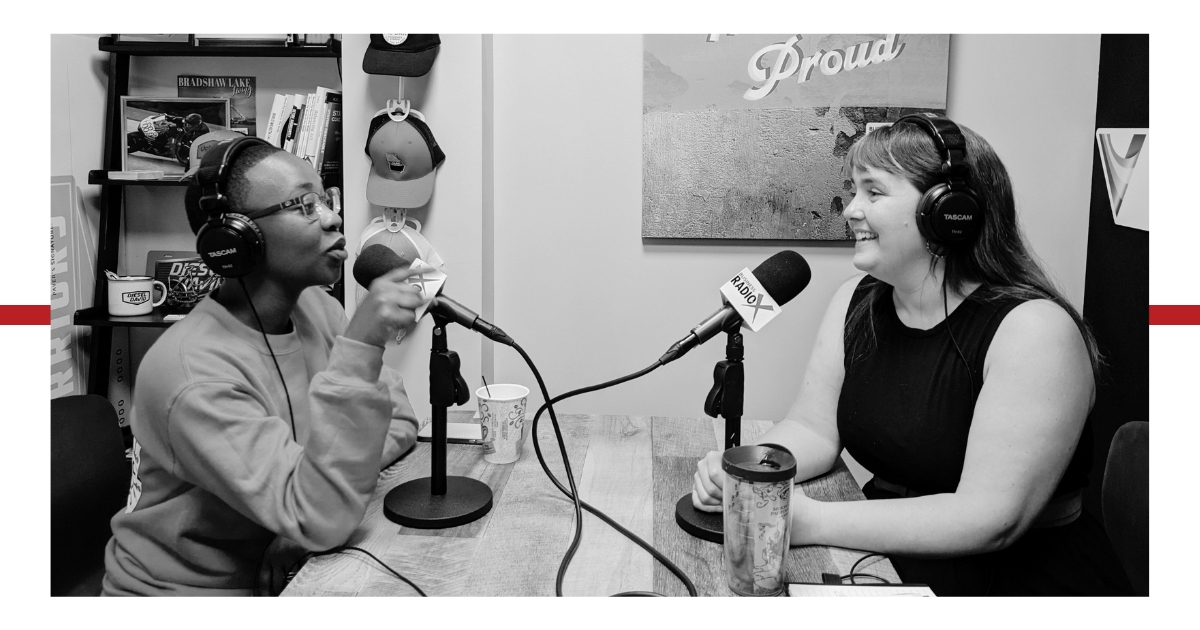
Olivia Price of Olivia Price Realty Group joins Stone Payton and guest co-host Madeline King. The discussion emphasized the importance of community involvement, with Olivia and Madeline recounting their participation and contributions to local events, like Woodstock Arts fundraisers.
Olivia shared her journey from working in car sales and insurance to thriving in real estate, underscoring the value of building relationships within the community and industry. For first-time homebuyers, Olivia advised not to focus solely on location but consider long-term financial impacts, while homeowners were encouraged to explore investment opportunities, leveraging their home equity in an “equity-rich era.”
 Olivia Price is a dynamic and accomplished young professional making waves in both the real estate industry and community leadership.
A native of Florida, Olivia has an extensive background in sales, customer service and business management.
Connect with Olivia on LinkedIn and Instagram.
About Our Guest Co-Host
 Madeline King, Owner Closing with Madeline, is a Woodstock native – enjoying life with her husband, Chase, two girls – Lucy (2.5 years) & Della (1 year) – and 2 fur babies, Lando & Yoda (4). When she’s not with her family, she is helping Real Estate Agents leverage their time and grow their businesses.
As an Independent Transaction Coordinator, Madeline brings calm to the chaos of a Real Estate transaction. She communicates with all parties, making sure deadlines are met, the contract is legally compliant, and generally, helps get you to the closing table.
While Madeline takes care of all the details, Agents are free to focus on what scales their business – nurturing relationships and selling houses!
Follow Closing with Madeline on Facebook.
This transcript is machine transcribed by Sonix
TRANSCRIPT
Intro: [00:00:07] Broadcasting live from the Business RadioX studios in Woodstock, Georgia. It’s time for Cherokee Business Radio. Now, here’s your host.
Stone Payton: [00:00:24] Welcome to this very special edition of Cherokee Business Radio. Stone Payton and Madeline King here with you this morning. And today’s episode is brought to you in part by our community partner program, the Business RadioX Main Street Warriors. Defending capitalism, promoting small business, and supporting our local community. For more information, go to Main Street warriors.org and a special note of thanks to our title sponsor for the Cherokee chapter of Main Street Warriors Diesel David Inc. Please go check them out at diesel.david.com. Madeline, it is so good to be back in the studio. What’s going on in your world?
Madeline King: [00:01:07] Uh, I mean, I have two small kids, so a lot, all the time, but um, most recently I’m super. This is the first time I’ve really. This is like a wide audience. I’m about to say this, too. It’s a big deal. I just got my real estate license. What Olivia doesn’t know is I’m a transaction coordinator, so I am. So I’m a transaction coordinator, and I decided I started this back in November. Oh, it’s been a month, but I finally did it. I’m super excited. Opens up a lot for me. I can do more for my clients, etc. very exciting.
Stone Payton: [00:01:38] Well, it’s an exciting time for you, and a large part of today’s conversation, I think is probably going to be geared toward serving community. You and I were just at a community event for the fundraiser for Woodstock Arts, and, uh, your husband did more than eat the buffet dinner, and he was there. Or did he even get a chance to eat?
Madeline King: [00:01:57] He almost didn’t. Because I’m the wife that forgot to get him a plate, I did. I’m not kidding. He was like, hey, did you get my food? I was like, I ran up. Luckily there was still food there. He ate. He also did a live painting on stage. It was super cool. Um, that Woodstock Arts is really great. They they started doing this with him in, I think, 2019, which is his first ever live painting. It’s like in front of 400 people. It was like, oh, you don’t know if you want to do it. Let’s see. And good. He loved it, actually, and he had a great time. The painting sold in the silent auction after which is sweet, so exciting. So all donated to the Woodstock arts.
Stone Payton: [00:02:32] So so Holly, my wife was with me and, uh, air quote, she air quote, won this plate that she was bidding on. Oh, she did. Yeah. So she got we need to get in the buggy and ride down there and get it later this afternoon. That’s my life now. I walked to the studio, I do a show, then I go home, get a late breakfast, and then we hop in the golf cart and tool around town. And so that’s it’s a nice. Oh, you know. And did I mention I’m going to Paris next week?
Madeline King: [00:03:01] Oh my goodness, I want to live your life.
Stone Payton: [00:03:02] Yes you will, but not for the next. You don’t. You have no hobbies or anything for like years.
Madeline King: [00:03:06] You know what I don’t know? I have a friend that has a three year old similar to one of my daughters. They have been to Japan, Singapore, uh, Paris for sure. Like they’ve done all the things because they said I am. My life is not stopping. So, like, we haven’t quite done that. We haven’t even quite gotten to go camping in North Georgia. So that probably needs to be the first thing we do.
Stone Payton: [00:03:28] Kudos to them.
Madeline King: [00:03:28] You know, so.
Stone Payton: [00:03:29] So we’ll get a lot of that under your belt before soccer, gymnastics training and all that.
Madeline King: [00:03:35] I know I want to hear about your kids. Yeah.
Stone Payton: [00:03:36] Oh you are in for such a real treat as are our listeners. Please join me in welcoming to the broadcast with Olivia Price Realty Group. The lady herself, Olivia Price. How are you?
Olivia Price: [00:03:49] I’m ecstatic. Listen, I am loving the energy, okay? Because I am also a mother of two. I have a three year old and also a seven year old. So yeah, so with balancing that work and then motherhood and being a wife mom, I give you the MVP for the year. It’s a lot. It is a lot. And um, congratulations.
Madeline King: [00:04:12] Thank you.
Olivia Price: [00:04:13] That’s exciting. Um, and, um, so you were already in transaction coordination before getting your license?
Madeline King: [00:04:19] Yes.
Olivia Price: [00:04:19] Well, that’s awesome.
Madeline King: [00:04:20] I did it the other way, right?
Olivia Price: [00:04:21] No, that’s okay though. That’s okay. That’s awesome. Um, so that’s that’s exciting. Thank you. But I’m excited. I’m excited to be here. Um, in Woodstock. I know the traffic was crazy, but I am here. I’m glad.
Stone Payton: [00:04:35] You. For what it’s worth, even when you’re here, traffic is crazy. Unless you can walk there or buggy there. Look, we.
Olivia Price: [00:04:41] Don’t have the the, um, the luxury of of buggying here, especially on 285 to 85. Right. All the routes that we had to take to get here once you.
Madeline King: [00:04:50] If you come to downtown Woodstock for like a date, family night, just let me know and I’ll tell you where to park that that I can help you with.
Olivia Price: [00:04:57] Is it pretty? Um. It’s packed. Oh, yeah. But if you know.
Madeline King: [00:05:01] Where to park, you’ll be good.
Olivia Price: [00:05:02] Um, see, it’s all about the tricks.
Stone Payton: [00:05:05] Madeline is in the know. Uh, so I got to know backstory. What has held you to get into this arena? To get in the real estate arena?
Olivia Price: [00:05:14] So initially, um, I’ve been in sales for years, since my early teens. And, um, I started off with car sales. I was working for Ford. I was a Ford for several years. Um, then I got into, um, insurance with State Farm. Um, so after I left Ford, literally, it was after I had my first daughter, and, um, I was spending so many hours and my husband was like, yeah, I think you need to find another career. So that’s why I ended up getting my insurance license and started working for State Farm. And literally I was there for a few years, and I just thought I could just do a little bit more. Right? I was my daughter was a couple of years old at that time. I was like, okay, I think I need to get back to me, right? I like the, um, aggression of car sales. I like the fact that I do, I do, I love the fact that we’re able. Um, I do, I do, um, and now I’m able to use those same skill sets into real estate. Right. Um, and it’s just a little bit more impactful. And that’s what I like about it. Um, car sales is pretty straightforward. You come in, you do your thing, but real estate is more relationship based. So I do like that. I like building relationships and seeing my product form. Right. It’s a different product that we’re selling than cars, right? It’s more of you and the idea of being in home ownership or, you know, your secondary home, whatever the case may be. So I just like that. So I’ve been in real estate now going on five years and I love it. So you are in you’re in a great, great profession. So I wish you all the luck.
Stone Payton: [00:06:45] So what was it like the first Tuesday after you got your license, which is what was it had to be an exciting time, but maybe a little scary too.
Olivia Price: [00:06:54] It was just because that test. Right. The test I think is pretty extreme. And I think it’s you’re still in shock. You’re like, oh my God. Okay, so, um, I got I got the piece of paper. All right. Now you’re, you’re a business owner and now you’re like, okay, so what do I do to get business? Where do I start? And I think it’s just so broad that I think I was just kind of still in shock. I was like, okay, so I’m here now. Now what?
Madeline King: [00:07:21] So when when you got your license, you were you you weren’t in real estate yet and you were like, I want to be let me get my license. Jump in. Good for you.
Olivia Price: [00:07:30] Fresh in, fresh in. So I didn’t you’re.
Madeline King: [00:07:31] Like, what.
Olivia Price: [00:07:32] Lesson? Besides the previous, besides the previous sales experience that I’ve had is nothing compared to real estate, though it’s still new.
Madeline King: [00:07:41] By the way, I am really impressed that she was in car sales, because that scares me. Like the fact that you did that makes you. I know you’re a good real estate agent, because you probably advocate for your clients and know how to negotiate and also know how to be a nice person, but be just aggressive enough, yes, to get it done right.
Olivia Price: [00:08:01] And that’s one thing too, because it’s male dominated. Right. Um, and I just learned a lot from my fellow counterparts. I did, and I loved it. Um, they loved me. I was in Buford. Um, Buford, um, shout out to Marla Georgia Ford, by the way, because now I can.
Stone Payton: [00:08:17] Send them an invoice. This is great.
Olivia Price: [00:08:19] Now, um, because they were great. It was. It was real family. So really good experience. That really helped me get into the field that I’m in now. So real. Really. Um, from real estate for me, um, since I’ve been in, it has been a whirlwind of learning experiences. Right? And seeing what works for you and what doesn’t work for you and your business. But ultimately, I’m just happy to be here. I am and happy to still be in business, so I’m just happy.
Stone Payton: [00:08:45] So have you found yourself gravitating to a certain type of client, a new home buyer? The investor, the luxury? The.
Olivia Price: [00:08:53] So in terms of. Which route I take for business. I tend to find a lot of first time home buyers for me and resell on this. On the listing side. Um, I love my first time home buyers just because it’s like. How can I put it? Your aversion. You don’t know. It’s like you’re new to everything. So the first impression that they get from me is is is lifelong. So I like that. I like being that. Hey, your first experience was a good experience. And I like to build those because that’s where my business comes from now is referrals for people that have done business with and also people that haven’t done business with me but have heard about me, and they send people business. I mean, they send me business. So within the released, um, the resale and then the first time home buyers, that’s really my lane. Um, so.
Stone Payton: [00:09:50] So now that you’re five years in, what’s the what do you think is the most rewarding? What’s the what’s the most fun about it for you?
Olivia Price: [00:09:58] Fun. Hmm. Can you put fun in real estate in the same sentence? Yeah, I don’t know, but, um.
Madeline King: [00:10:06] What’s happening?
Olivia Price: [00:10:07] It depends on what’s happening. But I can say that, um, at year five, we’re building our team, and I think that is the. That’s the fun part. I will say that’s the fun part. Or the, um, the liberating part about it, that you can do that. I started from ground zero. I, I’m originally from Florida, born and raised right. I’ve been in Georgia going on 12 years now. I didn’t know anyone, didn’t have a dime when I started, and to start at Ground Zero to build it up now, to come into the position to build a team. I mean, right there, that speaks volumes. So I’m just to a point where I’m like, okay, you know what I’m at, where I’m at, and I’m just looking to continue to grow. That’s where I’m at with it. Just continue to grow.
Madeline King: [00:10:59] I’m really impressed. And yeah, you’re not kidding when you first start and you get your license, the fees and the what? It’s like $120 just to take the test. You don’t want to fail it.
Olivia Price: [00:11:11] I was just going to say hopefully you listen. Listen, I’ve had so many stories of people trying to get in and you got in, so I just want to say congratulations on that. Thank you. That’s an accomplishment by itself. I’m sitting here.
Madeline King: [00:11:23] Impressed by you because now you’re okay. You’re five years in and you’re building a team. What does that look like? You’ve got agents, you’ve got transaction coordinators. You got all of it. That’s really exciting. Next level.
Olivia Price: [00:11:33] Yes. Um, so like I said, I just started with me. So I’m my marketer. I’m a cold caller. I’m my, uh, back office team, my transaction coordinator. I’m my showing agent. I’m everything right? Yeah. Come on. As a first time business owner like myself, I came into an industry at the age of 24.
Madeline King: [00:11:51] Okay, okay. Thank you. Because I have no idea how old anyone is. I’m like, I like you. Could. You could be 20. I don’t.
Olivia Price: [00:11:58] Know, um, that’s.
Madeline King: [00:11:59] That’s. No, you couldn’t actually technically.
Olivia Price: [00:12:01] Okay, listen, listen. So I’m the same way I usually not. And that’s you to listen. Because when I first met him, he was like, well, look, that’s an old picture. I’m like, look, I didn’t know. Okay, listen, it looked good, okay? But honestly, I can say that from the beginning of having to do everything myself now I’m like, okay, I have people in position now. I have my back office team, which is my outsourcing team, which is like my cold callers. Then also I have, uh, my transaction coordinator and then she has her own team as well. And then I have my preferred vendors. Right. That goes hand in hand because I think that without having two vendors, I think it’s hard to navigate through real estate, especially with professionals that you trust. Um, and then on the front line, which is me. And then I have my several agents. So front line agents, back line back office team, which handles all my contracts and communications with my clients. So, um, I mean, right now I can say that especially with being a new agent and coming in and just getting licensed, I think the biggest thing for me, especially with coming into the industry, was just getting more involved with events and seeing who’s who in the industry. I think that was a big thing for me coming in. I think that helped me build my team. That’s because I started to see other agents and they started opening up to me and we started networking, and that’s a good thing about our field too. People want a network. Mhm. People want to help you. People want to see you grow. So I think with that, along with my five years in, I just think everything is collective. It’s a collective thing.
Stone Payton: [00:13:36] Was the turn that you just used. Was it preferred vendors. Mhm. Say more about that because it sounds like that’s an integral part of a successful practice. Yeah. Mhm.
Olivia Price: [00:13:45] It is, it is, is this.
Stone Payton: [00:13:46] Home services type people.
Olivia Price: [00:13:48] Yes. Yes. Home services I.
Madeline King: [00:13:50] Mean even lender. Can we talk about that.
Olivia Price: [00:13:52] For a second. We’ll talk about the money because.
Madeline King: [00:13:54] I well the lender uh it’s so important to have a good lender. And when I was a first time home buyer I was not in real estate yet. And our agent was like, here you go, call him. And I was like, huh? Who is that? Why? What are you getting out of it? Mhm. Nothing. And that’s it took me a while to realize that. And I think it’s important to teach people that. So yeah having the vendor list but especially a good lender, we just wanted to go through. Right.
Olivia Price: [00:14:20] I think that is huge when it comes to the money. Right. And that’s one thing too. When we first bought our house we weren’t in real estate, so we were just two pigeons in the road. We were like, well, shoot, okay, she’s great. She knows what she’s talking about. Let’s just take, you know, let’s just follow her lead. And I think with having those. Trusted partners with you is everything. Because, like you said, you, um. When you’re new. And you don’t know, and you’re trusting your agent to know and to refer you good business. Right? Either. And and how it works is that we don’t get anything from this. Right. But just knowing that they took care of my client, that means everything to me. Yeah. So I was able to build different relationships and one of it too. So when I came into the industry, uh, maybe two years deep into it, I really got involved within the Georgia Association of Realtors, um, my local board and also my local development authority because I’m in Loganville. So I served on, um, all of my boards as board directors. Um, I.
Madeline King: [00:15:31] How so you got kids? Jason.
Olivia Price: [00:15:34] It was a lot. I’m impressed. It was a lot. It was a lot. And, um, honestly, that’s my husband. My husband is the real MVP, honey, because, listen, I it was times where I’m like, oh, my God, I know he cannot deal with me because it was a lot. That’s the first thing that we spoke about too. I said, look, motherhood, being a wife and being a business woman, it’s a lot. But, um, with serving on those boards and seeing how people do business and seeing how relationships are really cultivated and, um, held to a high degree, I just learned from the best, I learned from the best and built some really solid relationships. And that’s how I was able to find my vendors through networking within our real estate boards. Um, so.
Stone Payton: [00:16:17] In our pre show forum that we have all our guests complete, they send it in. Sometimes they’ll have I’ll suggest that they, uh, give me a couple of topics and maybe 3 to 5 topics to tee up and fold in the conversation. I got one topic for from Olivia, but it’s the one thing that made me say, I cannot wait to do this interview under Topics and Questions. Empowering our community through Real estate. So so obviously though this is this is very important to you community and empowering the community. So yeah, speak to that a little bit.
Olivia Price: [00:16:50] So we do a lot of things for our community. And one of the things I think you asked was, okay, who is your I won’t say target audience, but who do you predominantly work with? I said first time home buyers and resell. So one of the things that we focus on is helping our people invest. Either it’s in your first property, or it could be from when you’re already a homeowner and getting into Airbnbs, duplexes, vacation rentals, um, fix and flips, X, Y, and Z. So one of the things that we do is free investment property seminars for our community. And it’s free. Oh yes. Oh yes. Very big. Um, just because right now in Georgia, our market is already owned by 45% investors, which blew me. Well, it doesn’t really blow me because to be honest with you, our population between the years of 2022 to 2023, we grew like 60 plus thousand. So I think a lot of that is is bringing our investor friendly people here. So I’m encouraging people who live here who already bought their properties here or just currently work here in Georgia. We need to invest here. That’s I’m pushing that agenda that. Hey everyone. Young, old, new, whatever you need to invest. No.
Madeline King: [00:18:01] You’re right. And I actually work with an agent in another state, and he’s bringing buyers from that other state investing in South Georgia. So I see it.
Olivia Price: [00:18:11] I hear you, they’re not here. Right. So I’m encouraging people who are here. Right. Especially for my people who’s been here for years. I’m talking about 20 plus years, 30 plus years. And I’m like, listen, we really need to get you to own a lot of where you already built your home and your farm. And when I say farm, I mean your friends, your family, your job, whatever you have going on, that’s your farm, right? My farm is in Loganville. That’s where I am. That’s where I built my family. That’s where I do a lot of my networking. I’m involved within my city council and community, so I’m big on that. I served on the City of Louisville’s development authority. Yeah. That’s. Yeah. So I care about what’s going on around me. So I want everyone else to care about what’s going on around them. Right? When it comes to investments, super big.
Stone Payton: [00:18:57] So as a layperson, I have a couple of observations that may be assumptions or conclusions that are in error. So I want to get them validated and checked out here. One is your arena and I’m talking to both of you. It looks from the outside looking in very crowded like there’s a lot of players. And so yes. Is that is that.
Olivia Price: [00:19:17] No. That’s a great.
Madeline King: [00:19:18] Thing to bring up.
Stone Payton: [00:19:19] That’s true. But there’s a lot of folks in the arena. So to me, I got a whole set of sales and marketing questions that I’d like to dive into if we if we find time. But also it’s a dichotomy because there’s that. And you guys, you seem to be such a collaborative group of people. Madeline and I, Madeline and I go to a mastermind group and it’s held inside a realty place, Vibe Realty, there on the wall there a community partner is and there must be. There’s people from 3 or 4 agencies. There’s there there’s.
Madeline King: [00:19:52] A Keller Williams person there the last time.
Stone Payton: [00:19:54] Right, right. So anyway, I’m just throwing that out there. It just seems, you know, like it’s crowded and you’re very collaborative. Can either or both of you talk to that a little bit.
Olivia Price: [00:20:06] So honestly I can say from experience and I said that before too, I mentioned when I first came in, I networked and I was able to meet some really great agents who took me underneath their wings who were like, hey, Olivia, these are some pointers on what you can do within your business and how to navigate this industry. Now, when it comes to population, we’re out here, agents, we are getting our license by the bundle. We are. That’s a fact. But I agree with it too. I think everyone should have their real estate license. Why not? Right. And one way or the other, you’re going to come across someone who needs to service, right? But at the end of the day, I can see I can say that. I’m trying to find a good terme. We’re together, but we’re separate, if that makes sense. Right? Because everyone offers something different. And that’s what I think the collaborative ness. If that’s a word, it’s going to be a word. It is now. It’s going to be a word today. I think that, um, how we come together is the fact that first off, at least right now, at least in our economy. I represent the buyer. You represent the seller, right? So it’s always going to be a situation where we have to.
Stone Payton: [00:21:22] Well that makes sense okay.
Olivia Price: [00:21:23] We have to learn how to get along with each other. Right. Because I don’t know, you might be listening to home. Let’s just say I made you upset, right? I pissed you off. So let’s just say you’re listening. A beautiful home up here in Woodstock. And I have a client that’s looking at that particular home in Woodstock. At that particular time, it was me versus several other, you know, um, buyers. Who would you go with? I don’t know, probably don’t answer that.
Speaker5: [00:21:49] I’m like, I would, I would try I would.
Madeline King: [00:21:51] Hope most people would not base it off emotions. But we know that people are people. Yeah. Yes.
Speaker5: [00:21:55] But it’s like I.
Madeline King: [00:21:58] The networking networking within your community and networking within your community of agents to um, I’m, I see a lot of collaboration versus competition. To your point and to your point, we kind of have to. Right. Especially because at the end of the day, you want the deal to go through, you both do. So even if you like, don’t vibe with each other like your personality also too.
Olivia Price: [00:22:20] And that goes back to business practice, right? And not saying that you’re going to be in a predicament where it’s like, okay, that agent isn’t going to use me because they feel some type of way about me, but it’s more so business, right? And I think a lot of it boils down to that. Like, okay, it’s like, okay, this person, the deal didn’t go through or something happened or you were just really hard to work with. I think that that can be a little difficult navigating in this industry with professionals who think like that. Right. Not saying that’s the sole basis of it. No it’s not, but you want to just make sure you’re doing clean business, that’s all. Make sure that you’re building relationships with people fairly. And I believe in that. Um, especially when it comes to situations, like I said, if there’s me versus especially with me, right, it’s still competition, right? At the end of the day is competition in terms of bidding wars and things like that. So but the way that I structured my business, the way that I represent my buyers, relationships matter when it comes to agents. If I know the agent not saying that the agent is going to pick me because they know me, but if they know my track record, they know I sell. They know how I represent my buyers properly. Then by all means, I think that that stands to a certain degree, a high level of degree when it comes to choosing who’s the best fit for that particular client that you’re representing on the seller side? No, I think it has.
Madeline King: [00:23:38] I heard that from other agents. Like just like when you get offers like, oh, well, I know Olivia. Okay, cool like that in the back of your mind you’re like, well, I know that this is going to be a and the.
Olivia Price: [00:23:48] Offer to now the offer has to make sense. Right? That too. At the end of the day, the offer looks great. The lender.
Madeline King: [00:23:56] Yeah the lender. All of it. So but to Stone’s point like there’s a like in your point there are a lot of agents out there. And as a new agent that can be scary right. Uh oh. Well what who’s how am I going to get business? There’s it’s a mindset thing, right? Because I network with, you know, okay, there’s a group that meets Monday mornings and we network and there are several realtors there, but none of them have an issue with the other agents being there. The people who have an issue aren’t there. Right? They’re going, well, I’m not going to go. There’s a bunch of agents there. Why would I do that? Those agents are going, I’m going to go because I’m networking with my community, and I know I’m not everybody’s cup of tea and they’re not everybody’s cup of tea. It’s going to be different strokes for different folks. Right. And I think.
Olivia Price: [00:24:39] All of it comes together. What makes you different in a field of a lot of realtors? I think at that point, um, and I guess we can really touch bases on to piggyback on what you said. There’s a lot of us here. We collaborate with each other, but also what are some things that can make you stand apart? And I think with having the full circle, which is your community, your sales volume, of course. Right. Because we’re it’s a sales game. Everyone looks at everyone’s numbers, right. Everyone wants to see what are you doing in your business. And it’s accessible. That’s a beautiful thing. You can is it really. It is. Oh, wow. Yeah. You can see who’s selling what in what area, you know, and things of that nature. So community, um, your production and then also your relationships within your industry. I think those three building factors, I feel as though that can make you a very strong agent and a field where there’s so many agents in here. Right. You want to be cool with your counterparts, but at the same time, you want to set yourself apart when it comes to business practice, right? So that’s how I see it. If you have if you’re mastering those three levels, I feel as though you can really stand out in this industry, especially in Atlanta, because I think, what do you think.
Madeline King: [00:25:53] Makes you stand.
Speaker5: [00:25:54] Out?
Olivia Price: [00:25:54] Oh, that’s a good question. I don’t know, question. That’s a good question.
Stone Payton: [00:25:57] I thought you said you were a first time co-host. I’m not saying jumping in.
Olivia Price: [00:26:01] Huh? I love.
Stone Payton: [00:26:02] It. I want to go get some coffee.
Speaker5: [00:26:04] Oh.
Olivia Price: [00:26:05] I love it, I love it. Um, I love the energy. Um, so some of the things that makes me different is back to what I said. I’m one of the youngest African American board directors to sit on the Georgia Association of Realtors, um, the Northeast Atlanta metro Association of Realtors, the Woman’s Council, Realtors of Gwinnett. I served as their first vice president and membership director. And then I also once again served on the City of Loganville Development Authority. So I think with that, on top of my sales production, I’m a top 5% team with Keller Williams Realty, Atlanta Partners. And then also, um, in terms of community. That’s one of the reasons why I do my free investment seminar is for the community. Love it. Um, and also I speak at high schools to speak to you.
Speaker5: [00:26:55] Is there anything.
Madeline King: [00:26:56] You don’t do?
Speaker5: [00:26:57] Well, yes. So I’m sold a lot.
Olivia Price: [00:27:00] No, but, um, honestly, I can say that, um. Uh, but, yeah, I speak at different high schools, too, about financial literacy, because I feel as though that’s a big thing. I feel as though as children, if we I wouldn’t say as children, but as teenagers, because we predominantly, um, speak to high schools, if we had a basis of helping them understand credit, understand homeownership, understand different trade positions, right, because everyone isn’t built for college.
Speaker5: [00:27:29] That’s I love you.
Olivia Price: [00:27:31] Address the elephant in the room, right. Everyone’s not meant for college. So what are some trade positions. Because real estate is a trade. Mhm. You don’t have to go to college for it. You don’t have to be the brightest cookie in the jar. You don’t have to do any of that in order to come in here and make a decent living for you and your family, or just you and yourself. So, um, like I said, biggest thing here that made me different, my community involvement, I do, I do charity events, my, um, seminars and um, then I have my production and then also I’m pretty popular with them, my community, well, real estate industry.
Madeline King: [00:28:08] I am really impressed that she speaks to high schoolers. Like we don’t learn that in high school. There is no let me talk to you about finances and I wish I had that so.
Speaker5: [00:28:18] Me too. That’s awesome.
Olivia Price: [00:28:19] Me too. That’s great. But hey. Oh.
Speaker5: [00:28:22] No. Go ahead.
Olivia Price: [00:28:23] No, I was just going to say. But, um. And I think that’s the biggest thing in real estate. Be cool with everyone. Be great with everyone. Know your counterparts. Know who’s selling. Know who’s not selling. Right? Because those are people who are going to sell eventually. Um, and just build those meaningful relationships with people like what you’re doing with networking with other realtors or whatever, um, groups that you’re affiliated with that has other realtors there. I’ll get to know them too, because you never know when you need someone help. Like, for instance, I had someone looking for a house down in Douglasville. I’m like, girl, I can’t make it out there. Can you go show my person for me real quick and help me out? Honestly, that’s that collaborative, um, relationship that comes into play. So. Or I give it away, I’m like, hey, look, they’re looking and making I can’t I’m not driving to making referral.
Madeline King: [00:29:12] Sure.
Olivia Price: [00:29:12] And that’s big. I’ve gotten so many referrals from social media okay.
Madeline King: [00:29:16] So that’s going into the sales and marketing and I because I’m going, okay, how do you well you have a team now. So you have someone doing that for you in social media. You’re doing oh that’s nice. How is.
Speaker5: [00:29:28] That?
Olivia Price: [00:29:29] Um, it was hard because for me I was so tight on everything. I’m like, oh, wait, I don’t know. I don’t know if you might not do it right. Oh yeah. I’m that type of person. I feel like I could do everything by myself.
Speaker5: [00:29:39] I have like, business.
Madeline King: [00:29:40] Owners are like.
Speaker5: [00:29:40] That, right?
Olivia Price: [00:29:41] And also I think with being a mom, oh, help my kids way too much. They. I probably disabled them just a little bit. Um, but if they’re not doing something right, I’m like, look, baby, let me help you. You know, um, so I had to learn to let other people do the things that are necessary to my business and giving that to someone, right? So, hey, here’s my baby, because your business is like your baby. At least mine is. Because I’ve seen it. I’ve. It was at my baby had no legs, no anything. Right?
Speaker5: [00:30:09] Honestly, I helped it grow legs.
Olivia Price: [00:30:11] It was just an idea. Yeah, just. I don’t know about what made you get into real estate, but mine was like, okay, well, shoot, I’m not really feeling my career right now. I think I need a change. Yep. So it was just an idea?
Speaker5: [00:30:21] Yep.
Olivia Price: [00:30:21] And growing it and forming it and putting some legs on it, pinning some eyebrows.
Speaker5: [00:30:25] It’s your baby person molding it.
Olivia Price: [00:30:28] And now I’m like, okay, you can walk. You can go to someone else now and they can build you up to whatever is going to be.
Speaker5: [00:30:34] Mhm.
Madeline King: [00:30:35] I love the way she put that.
Olivia Price: [00:30:37] It is a baby. It is like can your stomach come on. We had two. You know how it was. That baby was just a.
Speaker5: [00:30:43] I do it’s.
Olivia Price: [00:30:43] Like a little some.
Speaker5: [00:30:44] Hard work. Hard work.
Stone Payton: [00:30:46] But it occurs to me you have so many um and rightly so. I think a lot of lines in the water. You got all this stuff going on in the background. You have this activity, you’re serving the community, you’re building these relationships with everything from people in other aspects, the other services that homeowners and potential homeowners are going to need. And I think you said early in the conversation, you’ve got people in the office cold calling. Mhm. Yeah. So you still got to get out there and shake the trees. Yeah. Mhm. And then so they’re uh they’re cold calling like how do you, how do you even know who to call. Or do you just call them all.
Olivia Price: [00:31:20] No. That’s a good question. So and that goes into where are you trying to get your business. I had a conversation, one of my colleagues in my office. And that’s one thing too, why I love my brokerage. They’re so they they’re like, Olivia, what do you need? What do you have going on? What do you need help with? I like that, right, because you need that, right? Besides your family being your foundation, you need your counterparts to help you sometimes hold you. Accountable or different things of that nature. So he was like, hey, so what are you? Because he asked the same question, like, who are they cold calling? So my biggest thing in terms of where I’m getting my business from or where I’m wanting to get more business from, is businesses promoting our service to them. Right? When it comes to that investment, not only are we helping our, um. How can I put it? Not only are we helping our clients like our resellers and our first time home buyers to invest, but also we’re teaching business owners to invest too. Like, for instance, it might be a small dentist office. They’re like, hey, you know what? Um, I was thinking about wanting to open up a second location, but, you know, I’m not too sure on how that process will look. So that’s who we’re targeting and different things like that. So smart. So they’re literally just dialing out.
Madeline King: [00:32:35] Yeah, that’s really smart.
Stone Payton: [00:32:37] So I don’t know when you would find the time, but I’m going to ask anyway. Passions, interests, hobbies outside the the scope of of your real estate work?
Olivia Price: [00:32:47] I think we talked about that too before we aired. You were like, oh, I don’t I think he was saying that what you do, you don’t have.
Speaker5: [00:32:54] Yeah.
Olivia Price: [00:32:54] Listen, I, I think it’s almost $1 million question. And for hobbies of mine. To be honest with you, I don’t really do much. I don’t have many hobbies.
Speaker5: [00:33:05] Like I said, I.
Stone Payton: [00:33:06] Don’t know when you do it.
Speaker5: [00:33:07] I don’t have anything. Okay?
Madeline King: [00:33:09] I’m gonna make you feel better, okay? Because I understand what you mean. Because your mom, your business owner, is like, how do I even have time for that? Versus, you know, like, I don’t know, riding horses. I’m just, I don’t know, throwing that out there. But real estate is such a large thing and there’s so many facets to it. So like, I hear a lot of people who are good at being agents say, but this is my passion. So there’s nothing wrong with saying that real estate is your passion, because within that you’re helping people. You’re serving your community. Yes, there’s all of those things and it’s enriching you too. So there’s no shame in that at all.
Speaker5: [00:33:44] Well, I.
Olivia Price: [00:33:45] Can say that in the real estate thing, I was going to say that I think within the real estate field, I think there’s a lot of different perks that you get to do with being in our field. Right? Like for instance, um, I use like Dalakhani, Hunter and Tucker. I use their office for a majority of my closings. Um, so they do a lot of events. So I’m able to go out to different events through them. Right. Um, because they do a lot of things for real. That’s the beautiful thing, right? Realtors, we get special privilege. I think they want to invite us out to different things, right? For us to talk about it, for us to promote it to our clients. So I think there’s just a. It’s a win win, right? Because I don’t do much outside of what I do in real estate. But within being a real estate, a lot of things come with it. So I go to a lot. I go to the Hawks game, I go to concerts. So okay, I think we get a lot of that. But then just being in a job. So I guess I really don’t have any hobbies, but just real estate.
Speaker5: [00:34:43] That’s. Yeah, nothing wrong with that.
Olivia Price: [00:34:44] It’s time consuming.
Stone Payton: [00:34:46] Well, no, what I think I’m realizing I like to hunt, fish and travel and I enjoy bourbon, but I, I imagine if I were in the real estate arena, I would get my, I’d get to have plenty of access to bourbon, probably. And maybe all the, maybe the, you know, the lenders would want to go fishing or hunting or whatever. So yeah, it’s all kind of interwoven. It’s a very symbiotic, uh, environment.
Olivia Price: [00:35:06] Those relationships. Right. Yeah. Those relationships once again, um, they’re so important. And I think with the way I formed them. So, like, Olivia come out, my wife and I are going out, and me and my husband will go out with them and hang out. That’s one thing to my husband is amazing because he really, really holds holds the fort down. And he he’s with me everywhere. And a lot of times my family too. That’s a beautiful thing to real estate. The whole family can be involved.
Speaker5: [00:35:33] Yeah. All right.
Madeline King: [00:35:33] We’re gonna have to talk about that after this. Like, how does that. Does your husband have a job? Does he a full time job?
Speaker5: [00:35:38] Yes, he is.
Olivia Price: [00:35:40] But he’s an entrepreneur, too. He owns two barber shops.
Speaker5: [00:35:43] Oh, my.
Olivia Price: [00:35:44] So he’s not hands on, hands on as much, but he still works.
Speaker5: [00:35:48] Yeah, that’s. Wow.
Stone Payton: [00:35:49] He’s a superhero. Oh.
Olivia Price: [00:35:52] You call him what you call it, I don’t know.
Stone Payton: [00:35:55] Well, shout out to him. That is fantastic. All right, before we wrap, I wonder if we could leave our listeners with a with a few pro tips and pick an area. You know, maybe it’s the first time home buyer, maybe it’s the investor, maybe a little bit of both, but or maybe just some things to look for if you’re entertaining listing, um, a home or like, I don’t even know if I know what questions to ask a realtor. Anyway, let’s leave them with a couple of pro tips if we could.
Olivia Price: [00:36:20] Okay, so, um, I’ll start off with first time home buyers because I experienced them all the time. Um, my tips would be for them is. Do not get caught up on location. I think a lot of times people are paying to be within a certain location. That they may need to be open to trying different areas. Like for instance, um, I know right now a lot of people are wanting to be certain parts of Atlanta, certain parts of Cobb County, certain parts of Gwinnett County, and I’m encouraging them that, okay. Yes. In this apartment, you’re getting all these amenities and you’re super close to certain, um, certain, um, activities, restaurants, whatnot. But at the end of the day, we have to think longevity, right? In the next however many years. How much did you pay in rent for that certain location? Um, I think when it boils down to the numbers, I think if we focus more on the numbers, I think that we can make better decisions in terms of is that location even worth it? At the end of the day because I’m telling people, we’re actually starting a buyer di campaign that we just launched. Yes.
Stone Payton: [00:37:32] She’s so creative.
Speaker5: [00:37:33] And I’m like, no.
Olivia Price: [00:37:35] It’s extreme. And I and I wanted to be buyer Di because with the way that we’re going for our rental rate in Georgia, because we don’t have a rental cap here. And that’s one of the reasons why so many people are coming to Georgia first and foremost, especially on the investment tip. But I’m just encouraging people look at the numbers. Let’s be real. Do you feel as though where you are right now, and how much money you’re making and where you’re trying to go, longevity wise? Does it add up to your long terme goal? Honestly, because I’ve had so many people, the amount of money they’re paying in rent is astronomical. I’m like, oh my God, you could have paid off like three houses.
Madeline King: [00:38:10] That’s painful.
Olivia Price: [00:38:11] Honestly, I’m telling you, I’ve dealt with people who’ve been renting for 20, 20 plus years. Wow, do the math.
Madeline King: [00:38:16] Maybe some of them don’t even know they can buy.
Olivia Price: [00:38:18] They don’t. And that comes to advertising to our advertising is very detailed and we get a lot of calls from that advertising. So I just tell people, look at the numbers and let’s focus on where are you trying to go longevity wise. So that would be my tip for first time home buyers. Uh, my tip for, uh, my resale people, my people who already own homes or whatnot. Let’s talk about investments. Let’s go ahead and see, for instance, um, for my people who like to travel to Florida or whatnot, South Carolina, Nashville, Tennessee, whatever the case may be, let’s see about getting a vacation rental out there if you’d like to visit there a lot, let’s see how we can get you another property out there. And in the meantime, let’s see how we can Airbnb it out or whatnot. So, um, that would be my tip if you’re if you own, let’s see how we can go ahead and reinvest into something that you’re interested in and what can give you some cash flow and build your exit plan. That’s the biggest thing too, especially for my late people. Building that exit plan is real right now. And if you can still build it and and gain some residual income from that built, it’s worth it right now because George’s field effect filled with equity.
Speaker5: [00:39:22] Um, yeah.
Olivia Price: [00:39:23] This is the equity rich era they’re calling it. That’s what they call it equity rich era. Um, I’m living proof too. Honestly, my house has a lot of equity, and I’m like, I don’t know what to do with it. Well, I can tell you, I reinvested it. I bought two Airbnbs in Florida, so. Good.
Speaker5: [00:39:41] Oh, good for you.
Stone Payton: [00:39:42] She is building that empire.
Speaker5: [00:39:44] This is what all.
Madeline King: [00:39:45] Of what you said. I and people I know need to talk to you.
Speaker5: [00:39:50] Yeah.
Madeline King: [00:39:50] I think things people need to know for sure.
Stone Payton: [00:39:52] I am so glad I asked. All right. What’s the best way for our listeners to connect with you? Have a more substantive conversation with you or somebody on your.
Olivia Price: [00:40:00] Team, for sure. So, um, we are all social media platforms. Um, first we’ll start with Google. You can Google Olivia J price rules to group and everything will pop up from our social media or websites. Um, then you can find us on Instagram at Agent Olivia J. Price and then Facebook at Olivia J. Price, and then TikTok at Olivia J. Price. Um, everything is going to be Olivia J. Price, um, across the border on all platforms, LinkedIn as well. And, um, you can always reach me directly through DM, or you can call me at (407) 601-9025.
Stone Payton: [00:40:34] Fantastic. It has been such a delight having you in the studio. Thank you for making the time, making the drive.
Olivia Price: [00:40:41] It was all worth it.
Speaker5: [00:40:43] It was a.
Olivia Price: [00:40:43] Pleasure meeting.
Speaker5: [00:40:44] You. You as well.
Stone Payton: [00:40:46] All right, until next time. This is Stone Payton for my co-host, Madeleine King and our guest today, Olivia Price, with Olivia Price Realty Group and everyone here at the Business RadioX family saying, we’ll see you again on Cherokee Business Radio.
Raj Choudhury with Alloy and Brooke MacLean with Marketwake

/
RSS Feed
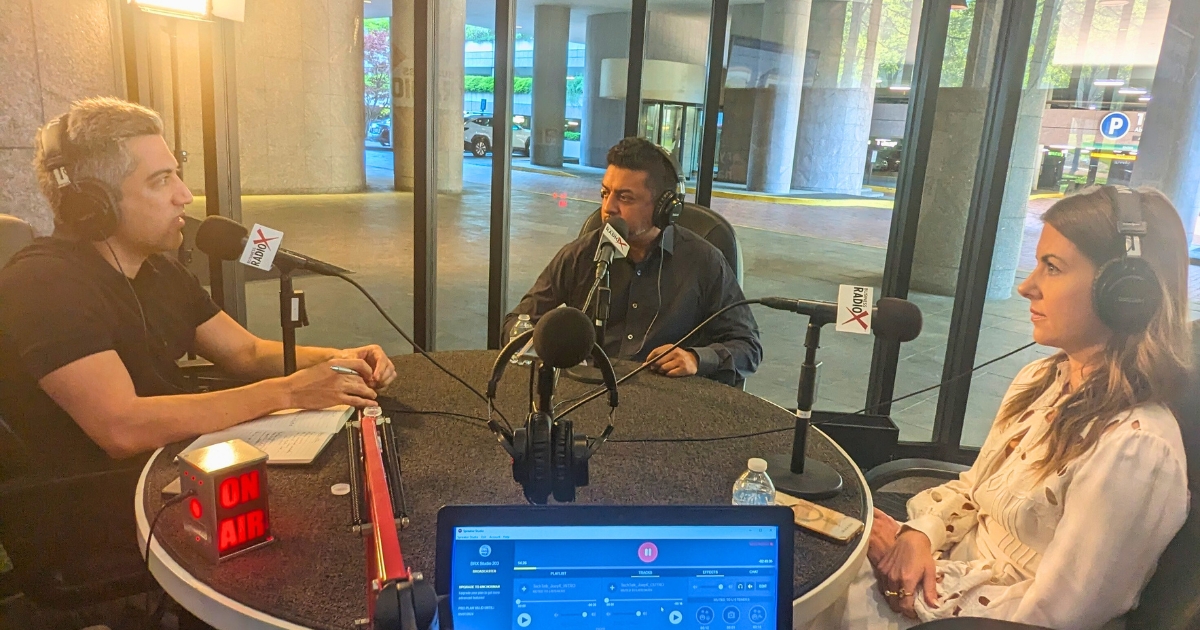
In this episode of Tech Talk, host Joey Kline talks with Raj Choudhury of Alloy and Brooke MacLean of Marketwake, both leaders of Atlanta-based companies. Raj discusses his journey from starting as a creative to operating units and emphasizes the importance of building teams, culture, and tackling underserved markets in agency services. Alloy, under Choudhury’s leadership, focuses on bridging gaps in transactional and creative marketing for technology firms and large-scale nonprofits, leveraging acquisitions to enhance their service offerings.
Brooke MacLean shares insights into Marketwake’s approach to campaign strategy and performance marketing, valuing specialist talents and fostering a collaborative, fun work environment. The acquisition of software company Punch List by Marketwake exemplifies their growth and adaptability, reinforcing the significance of internal culture and client relationships. Both guests underline the critical role of Atlanta’s dynamic environment in fostering entrepreneurial success and technological innovation.
 Raj Choudhury is CEO of Alloy. His leadership style focuses on building strong cultures and teams that drive to tackle complex problems with innovative solutions for some of the best brands in the world.
In his earlier career, Raj co-founded Spunlogic in 1998, leading it to become one of the largest privately-held digital agencies in Atlanta. Spunlogic was acquired in 2008 by Halyard Capital to form Engauge, which was then acquired by Publicis Groupe and merged with Moxie to create the largest digital agency in the Southeast.
More recently, Raj served as chief delivery and innovation officer for Ansira, one of the largest global independent technology and marketing agencies with over 1,700 employees. Raj came to Ansira through the 2019 acquisition of BrightWave, a leading eCRM and cross-channel agency, where he was president.
During his tenure there, he helped build an incredible high-performance team and culture that was sought after by leading brands. He also previously served as CEO for the social advertising tech company BLiNQ Media to provide new vision and rebuild its technology teams before merging the business unit within Tegna.
Raj is an investor in a number of technology startups, as well as a mentor to fellow entrepreneurs. Through his unique agency endeavors, he has become known for his hands-on approach, calm manner and work-hard, play-hard mentality.
Additionally, Raj participates as a board member and advisor for a number of non-profit groups, including 48in48 and the Atlanta BeltLine Partnership (ABLP).
Born in Uganda, Raj moved to London at age nine. He earned dual Bachelor of Science degrees in Economics and Geography from Kingston University (London) and an Executive MBA at Georgia State University.
He has traveled extensively throughout the world and is always looking to explore new places, or at least blow off some steam snowboarding. Raj has three young children and a dog and has called Atlanta home for over 24 years.
Connect with Raj on LinkedIn.
 Brooke MacLean currently serves as the CEO of Marketwake, an award-winning Growth Marketing agency offering two key areas of mastery: Campaign Strategy and Performance Marketing.
By fusing our award-winning creative campaign expertise with our advanced performance marketing strategies, Marketwake empowers your brand to reach new levels of success and growth. With an ever-growing pool of clients across the globe, Marketwake has been on the Inc. 5000 Fastest-Growing Businesses list four years in a row. Under Brooke’s leadership, Marketwake was also named one of Inc.’s Best Places to Work three years running.
In 2023 Marketwake announced their first acquisition of a software company, Punchlist. Punchlist is a feedback management tool that centralizes comments and streamlines QA. This strategic move is aligned with Marketwake’s vision to strive for excellence by enhancing the way they serve clients, which includes innovating beyond the creative domain.
Brooke acts as chairman and founder of Marketwake Ventures, an investment firm backed by Marketwake which invests in early-stage companies. In addition, Brooke is a sought-after speaker and host.
She has given a TEDTalk and acted as the premier host for Venture Atlanta, the Southeast’s leading venture conference. She has spoken in front of audiences across the nation on key topics including digital marketing as well as topics around leadership, culture, and growing a successful organization.
Before founding Marketwake, Brooke served as the CEO of Kevy, an email marketing automation company. She is a proud graduate of The University of Georgia and was later nominated for UGA’s 40 Under 40 Class of 2019 list. She also won the John E. Drewry Award in 2017 for her noteworthy career developments in the years closely following her graduation.
Keep up with Brooke on LinkedIn for marketing insights, leadership thoughts, and so much more.
This transcript is machine transcribed by Sonix
TRANSCRIPT
Intro: [00:00:11] Coming to you live from Atlanta, Georgia. It’s time for another episode of Tech Talk with your host, Joey Kline.
Joey Kline: [00:00:22] Welcome to the latest episode of Tech Talk, and we have two fantastic executives for you to talk to today of Atlanta based companies. First, we’re going to talk to Raj Choudhury of Alloy.
Raj Choudhury: [00:00:37] Hello. How’s things?
Joey Kline: [00:00:38] Doing well. Looking forward to chatting. And then we’re going to chat with Brooke MacLean of Marketwake, CEO and founder. How are you, Brooke?
Brooke MacLean: [00:00:45] Doing great. Thrilled to be here okay.
Joey Kline: [00:00:48] All right. We’re going to go alphabetical as normal. So we are going to start with Raj. Raj, how are you doing today? Oh, not too bad.
Raj Choudhury: [00:00:53] You know, getting through the lovely weather of the weekend. It’s great.
Joey Kline: [00:00:56] Was it was it lovely or do you have allergies?
Raj Choudhury: [00:00:59] I have allergies, but I found the secret ingredient of the right kind of, uh, allergy meds. So I’m good.
Joey Kline: [00:01:06] Just like a whole thing of Claritin crushed up into anything.
Raj Choudhury: [00:01:10] That works, right?
Joey Kline: [00:01:10] Yeah. That’s right. Yeah, I hear you. It’s about survival. So. So let’s talk alloy. So we want to get into obviously what alloy does. And you know how it’s growing here in Atlanta. But a little background on yourself and how you got to alloy.
Raj Choudhury: [00:01:28] Sure sure. So um I accidentally started an agency I’ll say that, um, I was, uh, you know, as, as most folks sometimes do after after school, I ended up traveling around the world and, uh, kind of fell into web design and ended up starting my first agency with my old college roommate, a guy called Jeff Hillmyer, um, out of Toronto, Canada, and he was actually still in his dorm room in Charlotte, North Carolina. And we started, uh, spun, uh, spun logic and, uh, kind of winged it, if you will, uh, grew the agency pretty well. We were based out of Atlanta. That’s how I ended up here in Atlanta. Um, and then just, you know, did did great work, did just had a fantastic team. Uh, we exited that business and then, uh, went into another venture that pushed into it, which was called engage. Um, and then from there sold into Publicis. So I kind of started getting a history of, um, you know, a lot of kind of M&A building up units and selling the units and so forth. So my background is actually creative, which is kind of odd. So I moved from creative to really operating units and moved much more into the finance side of things. So, uh, you know, fast forward, um, you know, built up and sold four units. Um, I really enjoy building up teams. Um, love the work still. Um, and just love, uh, the people aspect of, of, uh, agencies and the culture that comes with it.
Joey Kline: [00:03:00] So. So why do it again? What’s the or is it, uh, you don’t have hobbies at this point. Addicted. What’s what’s the what’s the drive? Um, for doing this with alloy. And why do you think alloy kind of fills a niche that your other ventures did not.
Raj Choudhury: [00:03:16] Yeah. So every time I’ve gone into a venture, it’s trying to create, um, an agency unit that’s, uh, that perhaps, you know, the market’s underserving or that there’s an area that, um, that can, um, you can, can really take advantage of. So, uh, as I was thinking through my, you know, my next adventure, if you will. Um, and between everything I do, sabbaticals, by the way, which is also a great kind of break point between them, but, um, I started thinking about, um, the type of marketing that goes on with technology firms and really more so the, the nature of transactional marketing versus large brand creative marketing that is lacking with a lot of kind of B2B marketing. And so we seek out to basically create a unit to tackle larger concept ideas as opposed to just transactional marketing, which is very, very typical, especially in the in the tech sector. So alloy is built around, um, really bringing together best in class agencies. So we acquire, uh, units, uh, we put them together into the alloy brand. Um, and then we stitch up the capabilities to basically push into technology sector primarily, but also large scale nonprofits, um, and really through ideation. So we can bring storytelling, uh, to precision execution throughout. So kind of parts, if you will.
Joey Kline: [00:04:38] Why, on the surface, one might look at this focus on technology companies and nonprofits and think that there’s not much overlap there. Why the what what is the relationship, if any, between those two industries, or at least in terms of serving that clientele?
Raj Choudhury: [00:04:55] Yeah. So the technology sector moves extremely fast. So that’s why we love it. Right? It’s it’s not stagnant. It’s it’s constantly being challenged. So you know, as a brand architect within the alloy side of things, we’re out to disrupt the agency industry itself. Uh, both the com side of things as well as the digital side, which typically don’t marry up often very well. Um, so from a disruption standpoint, we’re trying to also disrupt how agencies operate. And technology brands tend to allow you to experiment a lot more fluidly than say, you know, say retail or, um, tourism or, you know, manufacturing as an example. Right? Those will be kind of tried and true, hard to kind of really push new concepts and ideas. So that allows us to basically really reinvent how we work and how we, uh, work with those clients. And then similarly on the, on the large scale, uh, nonprofits, that’s that’s to be honest, we can take a lot of those kind of principles and drive it into the nonprofits, which tend not to innovate that often, but they their dollars have to go extremely far, you know. Um, and so from that perspective, there’s a tie in from how we enable experiences and technology and PR uh, but also from a purpose standpoint, it’s also great for our employees. So, you know, culture is a huge component of any agency unit. So, uh, for us, those are purpose driven, uh, elements. And that the work that’s, that’s meaningful, all work is meaningful. But sometimes when you’re doing some of the nonprofit work, it’s very meaningful for, uh, employees. And they enjoy that side of things. Oh, look.
Joey Kline: [00:06:37] I can understand that, right? You know, we we we do our best to, uh, give 110% to all of our clients. But not all projects are created equal in terms of just the internal passion that you might bring to the particular cause.
Raj Choudhury: [00:06:51] Yeah, absolutely. Yeah. And especially in local markets where we operate, whether it’s New Orleans or Atlanta, uh, there are certain things that, you know, matter much more to to folks locally.
Joey Kline: [00:07:01] Sure. You want to do good work. You also want to be a good corporate citizen. Absolutely. Um, your personal background is actually of particular interest to me just because I feel. Well, look, uh, it’s a, you know, somewhat of a, um, uh, you know, trite statement that our background, of course, influences how we act in the world. But you have a particularly interesting one that I’d be curious if you’ve, I don’t know, subconsciously or consciously kind of drawn any parallels or lessons that have helped you in your professional life.
Raj Choudhury: [00:07:30] Yeah. I mean, you know, so first off, I’m a, you know, a bit of a model of the world, right? As you know, uh, you know, so born in East Africa, grew up in London, then traveled everywhere. Right. And so, um, I’ve also, um, you know, got to realize that, um, you know, the people side of the business matters way more than the money side of the business. Um, that’s, you know, you build a team that fights together, um, that, um, a culturally bound together. You can do some great work. And ultimately, if you do great work, you can build a successful business if you just focus on the numbers on its own. Um, it’s really not enough to move the needle. Um, so a lot of my parallels around, um, the communities I’ve lived in, um, and Atlanta has become home to that, but it’s also the teams that we pull together and how we kind of interact socially. Uh, so, uh, I kind of work in the mantra of kind of work hard, you know, play hard side of things and, and very, very in tune to that. Within kind of the service industry, you work hard for your clients, you make them shine, you do great work, and you’ll get rewarded as a result. And so that kind of prevails in every unit that we, we work with. Um, and the types of units that we try and pull into, into the alloy platform.
Joey Kline: [00:08:51] You talked about people and hopefully it’s not it’s not necessarily a groundbreaking statement, right. That the people are the what matter most in business. You would you would hope that any good leader after a, you know, a certain period of time generally recognizes that because the people are what make the money and what make the organization actually go, um, you have, of course, at this point recruited for many, many different jobs across a number of different agencies. And I’m curious if you have any, um, best practices just seems to corporate of a firm. But any particular mantra or guiding principles that you go by when you’re looking at candidates?
Raj Choudhury: [00:09:33] Yeah. I mean, there’s a few. Right. Um, and they’re very based on roles, obviously, but in. In general, I’d say that, you know. Especially in our industry. You know, if you don’t have a natural ability to, um, want to learn or aren’t afraid to run into the fire, you know, it’s hard for you to survive in the agency world. You’ve got to be able to do things other people haven’t done before. And so that kind of natural learning ability and curiosity and ability to not be afraid of the unknown. So that’s one aspect. The second, you know, I think I may have mentioned this to you, but I always ask a question in all the interviews, which is, you know, what is on your bucket list, right? And that’s always an indication of the person’s true passions and character. Right? If it’s something to do with, um, you know, something coal based or perhaps travel or a hobby or something like that, you know, that’s truly a passion. If it’s around, I want to buy a sports car or I want to buy a yacht, that typically not going to work well within alloy because they’re money driven and their mindset as opposed to purpose driven.
Joey Kline: [00:10:41] I think that that is. In a in a universe now in which I feel like we have somewhat of a split workforce, we have a workforce that I think some of whom want to be around people and grow, and some of whom want to sit behind a computer and find the easy way out. And when you choose the latter path, all you’re really getting out of your employer is money. And when all you’re getting out of your employer is money, it makes it much easier to jump to something else. And so it I think that you just you eventually see the difference. Because if all you’re getting is money, that is not going to fulfill you long terme. Exactly. That’s not to say that you shouldn’t be compensated fairly, but if that’s literally all it is, there’s just not going to be anything keeping you being that much loyal to that organization.
Raj Choudhury: [00:11:33] No, I agree, I mean, I think ultimately, you know, you do the best work when you’re around the best people and, um, you know, the best people get the best work out of you. Uh, and it’s, it’s, I think people who want to do great work, um, there’s a difference between doing great work and just getting a paycheck.
Joey Kline: [00:11:51] That is that is correct. And and yes, I think that your point about just being around the right people, I mean, that’s life, really. You are a you are a sum of the people with whom you spend the most time. And I forget who said this or if it was even someone notable, but said, I never want to be the the most attractive or wealthiest person in the room. I was like, I like that because, you know, you should have people around you that are challenging you in some way, shape or form.
Raj Choudhury: [00:12:17] Yeah, and even even my own role. Right. I don’t want to be the only person thinking about things. I want to be challenged, and I want to have incredible leaders around me who are pushing me as well.
Joey Kline: [00:12:29] So. So let’s talk about alloy a bit more. Granularly you guys had some big news in the last couple of weeks.
Raj Choudhury: [00:12:34] Yeah. So, um, you know, we’ve, uh, we’ve had actually a number of just different kind of, uh, announcements. But the biggest one is that we moved, we got a great investment from the purpose Group, which is an investment firm, actually, actually, ironically, uh, started by, um, Jeff Helmer and David Cummings. Uh, Jeff was my old roommate, as I said. And, David, um, we’ve all known each other for a while, and I’m sure a lot of the listeners probably know David Cummings. Uh, so it’s a great infusion of capital into alloy. It allows us to, uh, kind of continue, um, kind of our aggressive M&A strategy, uh, that we’ve been using, obviously, we’re quite a unit in 2022, which was alpl, which is kind of best in class tech tech PR firm. And then last year we acquired um, uh, Narwhal Digital, um, which is just a fantastic kind of brand creative shop. Um, so we’ll be looking to continue that kind of path, um, over the years. So we’ll be using, um, you know, capital from the purpose group to kind of fuel alloy’s, uh, M&A growth strategy around it. So it’s also the other side of things is it’s great to be back in business with, uh, with Jeff and and David. Um, I have a ton of respect for those guys. Um, you know, they’re extremely influential in, uh, in our industry as well, both on the tech side of things as well as on the on the marketing side of things. So on a personal level, that’s that’s fantastic. And, um, I know my leadership team is, is kind of like, uh, pumped around that as well. Yeah.
Joey Kline: [00:14:04] That’s that’s big. Um, you know, I find it interesting when I talk to organizations who are a big part of their growth is, um, you know, M&A strategy because, you know, yes, there’s a technological fit. But at the end of the day, as we’ve been talking about, I think as big or a bigger piece in that is a cultural fit as well. And I am curious kind of how you go about sourcing opportunities and sussing out does it fit both of those buckets?
Raj Choudhury: [00:14:32] Yeah. I mean, to be honest, the the most important site is the cultural fit, right? Um, and unfortunately, I think in a lot of M&A, uh, a lot of people focus on the financials, right, and try and show that there’s a cross-sell element and the economics are going to make sense. Yes, the economics have to make sense. But if you don’t nail the people side of things, then you really don’t have an asset, uh, that you can kind of grow out out through. So, um, yeah, we, we look at, uh, we look at shoring up capabilities, but really through talent. Um, so when we’re looking at units, we’re looking at from a capability standpoint where we need to basically own the end to end side of things. So we already own, um, I’d say the PL com side of things to the brand and KCS side of things. So, uh, we’ll be looking to kind of shore up other elements, whether it’s on the data side of things or the martech side of things. So those are the next targets or even just amplifying existing capabilities. But first and foremost, we’re looking at, um, you know, great founders, um, great teams, um, and great work, um, that that matters most. The numbers themselves matter less to us, uh, in honesty, because we bring units in. To our platform and we already have the infrastructure in place, both on the financial side, the HR side, um, you know, the sales and marketing side and the workflow infrastructure side of things. So that’s less of a concern. So we’re not necessarily looking at units to bring those capabilities. We’re just really looking at fantastic talent and folks who want to take it to the next level within our platform.
Joey Kline: [00:16:04] So I know AR, PR is a local Atlanta firm. Was I forget his Narwal local or. Yeah. Yes. Yeah.
Raj Choudhury: [00:16:10] So actually LPL was out of both Atlanta and New Orleans. That’s kind of how we have our footing in New Orleans. And um, Norwell was actually here in Atlanta. Um, you know, it just happened that both were in Atlanta. We weren’t necessarily sourcing in Atlanta. Uh, but it works out sometimes, you know, you know, the entrepreneurs. Uh, so that brings a level of trust. Uh, and then sometimes doing acquisitions, you you don’t know what you’re getting until you close. Um, but you know, when, when we, we bring a unit in, we’re, we’re sourcing anywhere from 60 to 75 companies. Um, you know, initially just to bring it down to the right fit and make sure that the people side of things. And then when we integrate, we’re focusing right off the bat on cultural integration. That’s that’s the primary focus. And then we move into the the financials. Okay.
Joey Kline: [00:16:59] So I think you probably answered my question. Is this a national or regional strategy. It sounds like this is national. If it if it’s in my own backyard, so be it. But it doesn’t have to be.
Raj Choudhury: [00:17:08] That’s right. Yeah. I mean our workforce has changed changed quite a bit. That’s right from the pandemic side of things. So the centralized office strategy isn’t isn’t the strategy anymore. Um, it’s really finding the best talent and the best work, um, regardless of location, you know, so we’re we’re open to all locations.
Joey Kline: [00:17:24] Is there a certain target that you have in terms of acquisitions per year or. It’s. Yeah.
Raj Choudhury: [00:17:30] Yeah. So, you know, the hardest thing in acquisition is there’s there’s teams that can get acquired and then there’s teams that know how to acquire. And so we’re targeting one a year right now for the next couple of years. And then um, as the team is used to that pattern of acquiring we’re moving to two a year. Um, so that’s, that’s the general plan. So we’ll stay fairly aggressive in the marketplace within that. But um, the harder challenge obviously is, is bringing in a unit, making sure that, you know, our management team is set up for it. Our systems are set up for it. We can we can, you know, culturally integrate quickly. We can culturally, um, you know, move through and grow the, you know, this hub because every single unit has a different, you know, DNA and different culture. So you don’t want to you’re buying something that’s special. And so you don’t want to ruin that. So you want to add to it.
Joey Kline: [00:18:24] That’s right. Um, you know, you’ve done this a couple of times now. And so I’m curious, as you have really integrated your experience into alloy, what what have you found? What would you I guess it’s sort of two sides of the same coin. It’s have you learned something that you would go back and tell your younger self, or have you taken experiences that were maybe fumbles in the past that you have corrected this time around?
Raj Choudhury: [00:18:51] Well, I think the biggest aspect is, um, you know, a lot of deals are done based on numbers, right? And, um, you know, what I found is and especially on the private because I came from the private equity side of things. Right. And so that’s the basis of, of a lot of deals. Um, so the numbers matter. It’s not that they don’t matter. Um, but I truly believe that there’s an element of understanding the capabilities. You’re, you’re adding to the team and understanding the threats to both teams and openly talking about it. And so we prescribe to a very kind of open management, um, system. So when we’re going through that side of things, even through, um, kind of the honeymoon phase, if you will, the pre diligence side of things, we’re very open to what’s going to happen. So, uh, folks understand their roles, you know, what’s going to happen, which teams are getting integrated, which ones are standalone and so forth. So even through the pre diligence period, I found in the past where we’ve moved fast through the financials and then created an integration plan after the fact. Um, and that’s not always the best thing. Sometimes you have to start the integration plans actually in pre diligence. So that’s one one big aspect. The other is not to overthink a deal. Right. Um you can over try and correct to mitigate risk. Um and just kind of cycle through way too much time and effort on something that probably isn’t going to be a big deal. Um, and so I’ve learned over the years that, you know, yes, you’re trying to mitigate risk, but you’re never going to be able to mitigate all risk.
Joey Kline: [00:20:32] Don’t let the perfect be the enemy of the good. That’s right. Yeah. Okay. Well, that that is all super exciting. Raj, if someone wants to learn a little bit more about alloy, where would they go? How do they get in touch with you? Yeah, absolutely.
Raj Choudhury: [00:20:43] So alloycrew.com is our website. You can certainly go there. Check out our work. Check out our people. Um, you know, the different types of experiences and certainly find us on LinkedIn again, Alloy Crew or Instagram or anything like that. For me personally, you can find me on LinkedIn. That’s probably the easiest place, just Raj Chowdhury, uh, there’s I think two of us out there, but, uh, one’s a Harvard professor. He’s doing fantastic. Um, and then, uh, there’s me.
Joey Kline: [00:21:12] Do you guys do you guys ever get each other’s emails?
Raj Choudhury: [00:21:14] You know, I don’t, but people mistake me for him because he talks a lot about his, uh, interesting professor who talks about work culture and, uh, uh, you know, the changes in and work behavior that’s happened, you know, since the pandemic, certainly. But office culture to work at home. So people think sometimes that I’ve written those papers and I’m like, no, no, no, this guy is way smarter than me. So yeah, but I share similar philosophies so that people mistake.
Joey Kline: [00:21:42] It sounds like there are worse people to be mistaken for.
Raj Choudhury: [00:21:44] Exactly.
Joey Kline: [00:21:45] Yeah. Great. All right. Well, Raj, thanks a lot for sharing the experience, I appreciate it. Yeah. Brooke, how are we doing?
Brooke MacLean: [00:21:50] Doing great.
Joey Kline: [00:21:51] Yeah.
Brooke MacLean: [00:21:52] Loved listening. Fantastic story.
Joey Kline: [00:21:56] Well, I think I mean, you know, look, the reason we don’t have anyone on here who’s, who’s a dud in terms of storytelling. So it’s true. The goal is.
Brooke MacLean: [00:22:04] You filter well.
Joey Kline: [00:22:05] Well, you know, we want to make this interesting. So speaking of stories, you are the founder and CEO of Marketwake.
Brooke MacLean: [00:22:14] Yes, that is correct.
Joey Kline: [00:22:16] And you had you have had entrepreneurial experience in the past. Right. But I believe this is kind of your first. First venture of your own in terms of like, full founder.
Brooke MacLean: [00:22:28] That’s true. It’s true. Well, it’s funny listening to your story because we’ve crossed over. My original entry into the startup world was actually with David Cummings also. So fantastic. Congratulations. There I was working for with him on one of his companies for a while, ended up becoming the CEO for a time and learned so much. It was it was one of those phases I had started. Marketwake came back to be the CEO of the company while it was undergoing a pivot. I say all the time I would never do both again at the same time, but I would never change the fact that I did because of how much I learned and what I can now apply to Market Week.
Joey Kline: [00:23:08] That’s right. I think that, you know, when people ask you like, do you have regrets? Would you change anything? It’s like, well, if you’re generally happy with where you are, you can’t change a thing because that one flap of the butterfly then changes your present as well.
Brooke MacLean: [00:23:21] Absolutely. And it was interesting doing software and services at the same time. Right. So it was they’re very different ways that you run both companies. And the crash course in software was extensive working with investors, building a product, having CTO, doing sales, transferring everything from a previous version into what it became while trying to build behind the scenes the soft, the services side. Because I knew at the end of the day, that’s where I would go back to once we got it to a stable place. And now fast forward six, seven years later, we just acquired a software company Punch List. And so now I’m back and managing software and services at the same time. So it is funny how that happens. You think, wow, that was really, really hard. And all it is, is just preparing you for a later date.
Joey Kline: [00:24:14] David Cummings does seem to touch all things Atlanta. He does companies for you too. And of course, I was touring his new real estate acquisition the other day. And um, we I think Atlanta has always had good boosters, but I think that it certainly in the past decade, decade and a half, we have a group of kind of new executives that have experienced success that are really giving back in a really amazing way. I agree. Um, so so let’s talk about why you went back to the services side of things. What was it that drew you to that part of the industry?
Brooke MacLean: [00:24:53] I love the energy of the services. I think that in order and Raj alluded to this a little bit, you have to have the ability to work with a lot of different people, a lot of different industries and retain. A great deal of information simultaneously. So for those of us who are fast paced, we like learning a lot. And even outside of work, those of us who are excited and not overwhelmed by the rush of tight deadlines, I think services is an unbelievably powerful outlet for this type of person, and it is not for everyone. There are a lot of people who prefer the brand side, where there’s a singular focus and singular product and singular aspect to their role. We’re on the services side, the agency side, you where a lot of different hats. You’re working with, a lot of different team members, lots of different personalities. And I think that for those of us who are energized by that and not overwhelmed by that, it’s just a beautiful industry to work within.
Joey Kline: [00:25:55] Okay, for the uninitiated out there, talk about the very basic differences between the services side and the brand side of things and what you have chosen to specialize in at Market Week?
Brooke MacLean: [00:26:08] Absolutely. Market week. We specialize in two distinct areas. One is campaign strategy and the other is performance marketing. The campaign strategy comes in and figuring out what does a client have to say, what is important about it, and how are we going to roll that out into the masses. The performance side of what we do is really the channel execution. And a lot of a lot of companies come to us and they’re very interested in a specific channel, let’s say it’s paid media or SEO or content creation. And that’s amazing. Absolutely. We can step in and support them in a singular channel. Oftentimes, though, we have to back up and say, what are we saying to the world through that channel? That’s just a means to the end. If we were to back up a little bit and say, what is your story and is it resonating with your audience, that’s where the campaign strategy comes into play. And sometimes campaign strategy takes the entire brand into consideration, and sometimes it is more of, in which case an evergreen campaign. Sure. Other times it comes in form of hey, what’s going to be entertaining? We live in a very high demand, high frequency world right now. There’s a lot of news and content and videos and what is going to be entertaining and really cut through, whether that is a B2B client or a B2C client. It really comes down to the same thing. What are we saying? And then where are we going to say it? The brand side. When I’m referring to the brand side that is a client, uh, those are any company that we work with. Typically they have a singular product, um, sometimes singular service. But oftentimes those brands are very large, sweeping known companies, household names.
Joey Kline: [00:27:49] Sure. Okay. All right. That, that I think that helps delineate. So do you I think we talk a lot about people on this podcast. Okay. For for good reason. Um, I’m trying to think of another industry in which the talent has to be so up to date and ever learning on different forms of technology, communication and strategy. Uh, I’m having a hard time even thinking of one that surpasses.
Brooke MacLean: [00:28:19] If you find one, let me know. Yeah, because that’ll be our new hiring pool. Right?
Joey Kline: [00:28:23] Right. Um. It is. Look, you need to be on your toes in every industry, I think, to be the best professional that you can be. But in your world, it is so ever changing. So where I’m getting to is, do you have do you hire for specific capabilities like you mentioned, campaign versus performance strategy. Right. Do you hire people that are better at some type of services work than the other, or are you are you saying, look, we are a nimble, small, growing organization. You’ve got to be able to do all of this if you want to rise up and be on this team.
Brooke MacLean: [00:28:58] We very much lean into. We’re a little over 60 full time people now, so we’ve very much lean into specialty. We used to be the jack of all trades, where you have to know a little bit about it all, and you do still have to have a working knowledge of all of it. But there is no way that someone who is excellent at paid media can also be excellent at creative. Those are very different skill sets, so we really look for people who want to be a craftsman, honestly, in the skill that they bring to the table. Now, does that mean if we find incredible talent that we’re going to pass them by? No. I think that there’s an ability to train people and really find what they’re best at. But we are at the point of looking at specialists over generalists. Okay.
Joey Kline: [00:29:42] Do you think that that sets you apart from maybe your competitors, or is that a strategy that most executives have kind of narrowed in on?
Brooke MacLean: [00:29:52] Um, both. And yeah, it does. It depends on the size, the scale and then really what the expertise is. For instance, our account manager is a lot of times, uh, agencies use account managers is really the, the front lines and means of communication. Our account managers, their strategists, they’re the ones who have experience ideally in-house, somewhere on brand side, who know what it’s like to answer to investors, to answer to board members, to answer to an executive team, to have to work with sales and customer success. They have that working knowledge. And so when they come to be an account manager on our side, it’s not just agency experience that they’re bringing to the table, it’s empathy to our own clients. And that has been astronomical in our growth.
Joey Kline: [00:30:38] Sure. I mean, people want to work with people that they like. They do. You know, it’s look, obviously you the the price of entry as you have to be incredible at what you do. But beyond that, it’s um, it’s actually somewhat freeing, assuming that you’re a nice, interesting person that likes other people. How much? Just you and your own personality, um, can really drive success and retention of clientele.
Brooke MacLean: [00:31:04] Amen there. And also, there’s so much of just business professionalism that we hide behind of. We’re supposed to present something a certain way. And here are the numbers. And here’s how we’re going to tell that story. And and you lose so much by I call it the theatrics of the presentation, because there is a level of dissociation that occurs when you are trying to be the most professional version of yourself versus sitting on the same side of the table with your clients to say, all right, here’s where we’re at. Here’s what we think is going to work. Here’s why we think that. Here’s the data to support it. Are you on board with this and that collaboration of of lowering your own guard, not taking yourself too seriously, but being on the same side of the table to get the job done together? It goes a really long way. And I think, I think clients, they’re used to working with, uh, agencies who have a little bit of a, an arm’s length approach to things. And we I mean, we’ve been to baby showers and weddings and trips with our clients, and that’s the way we like it.
Joey Kline: [00:32:07] I think that’s right. And it’s so it’s almost shocking. Like what such a little difference like that can make or. No, it’s not shocking that that makes a difference. It’s understandable. What is shocking is that most people still hide behind that veneer of, um, formality, maybe a little bit too much. Um, I was I was talking with someone recently who started a new construction company, and they said what they thought was somewhat of a novel statement, like, we just like to be fun, we want to be fun to work with. And I was like, I can’t tell you, like, how often I’ve actually used that word because, like, yes, you need to be really good at what you do, but let’s enjoy each other’s time, right? There are going to be moments in any client, um, service relationship that are stressful. And the more that we can at least have some levity and fun with each other, it just makes for a nicer experience in the day.
Brooke MacLean: [00:33:07] It does, it does. And I think it also directly impacts and lowers the degree of miscommunications, because if you trust the person that you’re working with on a daily basis, you give them the benefit of the doubt. Maybe their email, their slack came off a little harsh, but you know them because you’ve had good conversations with them outside of the workspace workforce. And in that all of these slights and miscommunications and defense mechanisms, they start to just disseminate. And that is really why, um, we put a lot of emphasis in our culture of connecting with people first.
Joey Kline: [00:33:45] Um, what do you think is the most surprising thing that you wouldn’t have expected to be a reality of your day to day since you kind of, you know, full time kind of got back into market wake.
Brooke MacLean: [00:33:58] Uh, reality of my day to day, uh, the amount of meetings. So we are very much of an in person culture. I think it I mean, even back in 2020, we were still very much an in person culture. And I think it has given us an edge to this point of being able to work quickly and efficiently and connect with each other. Our onboarding is weeks instead of months, which is very nice. I think I spent a lot of my day doing gut checks, making sure that I can be a sounding board for people. Uh, and then in this most recent acquisition, it’s now building up a new team to run software in the middle of our our normal day to day role of serving clients.
Joey Kline: [00:34:40] You know you would. I don’t think you will be shocked at how in my line of business, how many executives get who ask me, it’s like I can’t get I can’t get people to come in like, what do I do? What’s the silver bullet? I’m like it. It’s like I’m not trying to be reductive, but as long as you’re modeling that behavior and you’re making this like a good, enjoyable place to be and you have interesting people to be around, it shouldn’t be that hard. There is not some magic formula here. This is like, do I have a mission that people believe in? Do I have other people that people want to be around? And it’s you know, I imagine it sounds like this is just something that you’ve been doing. It’s not like there’s this big magic formula of how I, you know, x plus y plus z equals people want to be around each other.
Brooke MacLean: [00:35:31] That that is it. That is it. One. Absolutely. To the modeling, the behavior, the number of people that there. How do you do this? I say, well, I’m in the office every single day. Oh well I can’t do that. Well then how do you expect your team to do that? You have to do it first. So I am in the office, but and then also from a culture perspective, we like each other. We have fun. It is a dog friendly office, which is helpful because I do think that that that matters. I can.
Joey Kline: [00:35:56] Attest that is a very enjoyable part of being.
Brooke MacLean: [00:35:58] In your office. Very enjoyable. But across the board we enjoy spending time together and it’s fun. Our employees, they do trips together, they go to the beach together, they go skiing together. So they’re friends in and outside of work, which again helps us just move so quickly because we start sharing brains, which sounds crazy, but we do. We start storing information in each other’s minds. We know what someone else is going to say. We spend a lot of time together, and it just helps us all be in sync. So our clients have a very similar experience, whether they’re working with someone on the paid media side or on the creative side, or in social media, because we are all really in sync and speaking the same language. But yes, you have to be able to model it. If you’re not willing to do it, they probably won’t either.
Joey Kline: [00:36:42] That’s right. I mean, the, the, the, the work friendship, both personally and professionally is so valuable and special. I just don’t I feel very bad for people that are totally missing out on that. I don’t think I don’t think they’re going to realize until later in their career like what they actually missed out on.
Brooke MacLean: [00:37:00] That’s exactly because we spend so much time at work, so much time in our jobs and in our careers and pursuing growth. And why not have a little fun along the way and do it with people that you actually care about personally, not just professionally? Totally.
Joey Kline: [00:37:15] I met my wife at work. It’s you know if, you know?
Brooke MacLean: [00:37:18] Well, there you go.
Joey Kline: [00:37:19] There you go.
Brooke MacLean: [00:37:19] I love that.
Joey Kline: [00:37:21] Right? Um, okay, let’s let’s talk about this recent acquisition, because I think that’s very interesting. My guess. And you will confirm this or deny this, that this wasn’t necessarily something that was planned. It just kind of happened.
Brooke MacLean: [00:37:34] Yes, absolutely. We’ve we have had a goal of some sort of acquisition for the past two years. We have been down the road pretty far with a few different companies. And then at the last minute, and Raj, you’ve mentioned this too, but it falls apart for whatever reason. And there are sometimes necessary reasons where that happens. This one, it came in our radar and a couple months later it kind of came back into our radar. And then a couple months later it came back. And so it was one of those that I couldn’t shake, but I wasn’t sure if it was the right direction to go. Software again. Now, this is a tool that we use all the time. So we already had the benefit of having integrated into our work streams. Our clients were familiar with it, our team was familiar with it. So really it came down to, okay, do we have it in us to integrate a software into our processes seamlessly? How separate are these teams going to be? Because we have an amazing culture, and what we don’t want to do is feel like we have two totally different teams working within the same umbrella. So what does that look like? And then do we have the appetite to scale? And when all of those came back, yes, we have the appetite to scale. No, we do not need to keep these very separate teams. Our our team already has a lot of information on how to scale a tech company, because the majority of our clients are B2B. Uh, we can do this. And it was really it was very interesting to see the excitement that our management team and our leadership team had around this idea. When I brought it to them, they were all in, and I was expecting and anticipating a little bit of pushback, and we received none. So when we went down that path, um, it’s been amazing to see the adoption, the integration, the excitement and the growth that our our team treats it, the software and that team as if they’ve always been here. That’s great.
Joey Kline: [00:39:27] That’s wonderful. It’s. And it sounds like that was. I’m sure you didn’t expect maybe negativity, but it sounds like the seamlessness and the positivity was maybe somewhat surprising to you.
Brooke MacLean: [00:39:40] Yes, absolutely. Well, yes it was. The product is fantastic. It works well. So I think that that made it a whole lot easier to when they knew what a solid platform this was, especially uh, it’s a company called Punch List. And the the purpose of it is to collect aggregate feedback, especially for creative teams of which we are. So it’s amazing. It integrates with asana. It integrates with Monday, it integrates with teamwork, all of these other web applications to manage projects and do project management. It already integrates with those. So for us to be able to collect feedback in one mechanism for whether it’s a website or a PDF or, um, any kind of creative material, and then sync it into our project management system and create those tasks, it eliminated 15 steps from our day. So for our team, it was a no brainer because it’s already making our daily lives easier. Why not own it and grow it for sure?
Joey Kline: [00:40:38] Um, final topic here. You know, Atlanta is kind of the, uh, excuse the, uh, potentially, uh, you know, obscure reference, but it’s it’s kind of the Greek chorus in the background. I feel like, of this, this show. Right. There’s typically an Atlanta story, whether we’re talking about organizations that are homegrown here in Atlanta or some sort of a business unit that moves here. Right? It’s always kind of shifting in the background, speaking to us in a different way. And I’m curious what how you feel Atlanta has affected your success in your company.
Brooke MacLean: [00:41:13] I love it. I really do. I grew up here and promised myself I would never live here. So right after college.
Brooke MacLean: [00:41:21] So I never, ever, ever really live here. I traveled about 32 weeks a year. I was working for a company out in California for thought that was going to be my new home, and after traveling that much for so many years, I realized there’s nowhere like Atlanta. The opportunities, the people, the culture, the the intersection of all different types. I mean, we have amazing to see here. Direct to consumer. We have amazing B2B in tech. We have amazing fintech, we have incredible investors and opportunities. It really is a playground for being an entrepreneur. And so I love it. And I think that the talent that we find here is pretty amazing. So as we’re looking to grow and expand, it’s another reason why we’ve continued to source talent here. And not to say that we don’t have talent in other places, but we’ve just found over and over people are more willing to move here than even wanting to stay where they are and work remote.
Joey Kline: [00:42:13] Sure. Yeah. Well, especially if you’re going to look if if you’re going to join a company like yours, I think that that person that you have vetted, right, if they’ve come out the other end, they they want to be part of the mission at this stage in the company. Yes. And of course, it helps that we happen to be located in a pretty cool city.
Brooke MacLean: [00:42:32] It sure does. Yeah, it really does.
Joey Kline: [00:42:34] Yeah. Look, I felt the exact same way. And in I think I’ve learned but also Atlanta has, I think, become a much more interesting, fun place to live in the past 15 to 20 years or so.
Brooke MacLean: [00:42:46] I think so too. It is. It has changed quickly. It is not going to slow down by any means. I mean, even looking at I can’t remember, but I think it’s between 6 and 10 million more people were anticipating over the next ten plus years. That’s a lot of people. Um, so I think that we’re just getting started, to be honest with you.
Joey Kline: [00:43:05] I would agree the I think the the most the most recent jump is we have gone from the ninth largest metro about five years ago to the sixth largest metro, uh, leapfrogging Miami, Philly and DC. Um, which is pretty impressive feat. No small feat. Yes. Um, Brooke, if someone listening to this wants to learn more about Marketwake, learn more about you. Where do they go? How do they do that?
Brooke MacLean: [00:43:29] Marketwake.com that is Marketwake. We get it all the time. Is it week? Is it? It’s Marketwake.
Joey Kline: [00:43:36] Wake? Yes.
Brooke MacLean: [00:43:38] Marketwake.com. And then feel free to connect with me on LinkedIn. Brooke B McLean.
Joey Kline: [00:43:42] Okay.
Joey Kline: [00:43:43] Brooke Raj, thank you so much for sharing your stories.
Brooke MacLean: [00:43:46] Absolutely thrilled to be here. Thank you.
Joey Kline: [00:43:48] Okay, have a good day everyone. Thanks for listening to Tech Talk.
BRX Pro Tip: 3 Copywriting Tips
/
RSS Feed
BRX Pro Tip: 3 Copywriting Tips
Stone Payton: [00:00:00] And we are back with Business RadioX Pro Tips. Lee Kantor and Stone Payton here with you. Lee, you know this. I’ll share it with the world. Anytime I want any direction on writing good copy, my first stop is Lee Kantor. So I am very interested in your perspective on writing good copy.
Lee Kantor: [00:00:20] Yeah, as you know, I have a degree in advertising from the University of Florida. I went to school to be an advertising copywriter, and I have written copy in a variety of mediums since I was a teenager. So I studied this, I study this now. Currently, these things are what I believe to be true when it comes to writing effective persuasive copy for any media.
Lee Kantor: [00:00:44] Number one, write like you talk. I look at copywriting as a conversation between me and my prospect. I try and write like I would be talking to this person in person.
Lee Kantor: [00:00:55] Number two, kind of forget about good grammar. I’m not advocating for terribly wrong grammar, but I am advocating for grammar that sounds like you talk. So that means one-word sentences. Don’t be afraid of one-word paragraphs. Care more about the flow than perfect grammar.
Lee Kantor: [00:01:14] And number three, and I think this is the most important thing, is the philosophy of links on a chain. Your headline is the most important sentence, and its job is to get the reader to read the next sentence. And the job of the next sentence is to get the reader to read the next sentence, and so on and so on, until they’ve read the call to action. So everything is a link on the chain. Everything organically leads seamlessly and without friction to the next thing. So think about that when you’re writing. Every step has to lead elegantly to the next step.
Lee Kantor: [00:01:48] So those are my three tips about copywriting.
WBE Feature – Women’s Month & Stress Awareness: Mental Fitness
/
RSS Feed
On today’s episode of Women in Motion, Lee Kantor talks with Amy Yip, a mental fitness coach and founder of Somatic Life Transformation. Amy discusses her transition from a corporate career to coaching, focusing on helping women overcome societal pressures and intergenerational issues to author their own life stories. She emphasizes the difference between coaching and therapy, with coaching being future-oriented and goal-driven. Amy also explains the role of somatics in her practice, teaching clients to understand and respond to their body’s wisdom to effect change.

 Amy Yip is a Somatic Life Transformation and Mental Fitness coach, keynote speaker, self-confidence trainer, and the author of Unfinished Business: Breaking Down the Great Wall Between Adult Child and Immigrant Parents.
She works with women of color to strengthen their mental fitness, heal their intergenerational wounds, and have agency to let go of all the ‘shoulds’ so that they can be the authors of their own life stories. Her mission is to empower AAPI women to be seen, to be heard, and to f-ing rock the boat.
In January 2020, after 16+ years of building and leading global teams in organizations including Google, Clorox, and Booz Allen, Amy left the corporate world, sold everything, and took a one-way flight to Ghana with her husband to volunteer at a breast cancer nonprofit and travel the world. COVID-19 shifted their plans; they got stuck in Ghana for seven months.
One of Amy’s greatest learnings is this:
Your mindset, not your circumstances, makes all the difference in your happiness and success.
Through this lens, she works with organizational leaders, including corporate executives, nonprofits, and social entrepreneurs, to find their voice and the courage to speak up, build self-confidence, navigate change, and discover what they really want next in their lives and careers.
Amy is an International Coach Federation Professional Certified Coach, a Certified Hudson Institute Coach, a Certified Strozzi Institute Somatic Coach, and a pioneer Mental Fitness Coach certified through Positive Intelligence.
Amy received her MBA from the UCLA Anderson School of Management, and her BS in computer science and BA in communications from the University of Maryland.
Connect with Amy on LinkedIn and Facebook.
Music Provided by M PATH MUSIC
This transcript is machine transcribed by Sonix
TRANSCRIPT
Intro: [00:00:07] Broadcasting live from the Business RadioX Studios, it’s time for Women In Motion. Brought to you by WBEC-West. Join forces. Succeed together. Now, here’s your host.
Lee Kantor: [00:00:27] Lee Kantor here. Another episode of Women In Motion, and this is going to be a good one. But before we get started, it’s important to recognize our sponsor, WBEC-West. Without them, we couldn’t be sharing these important stories. Today on the show we have Amy Yip. She is a Somatic Life Transformation Founder and a Mental Fitness Coach with Amy Yip Coaching. Welcome, Amy.
Amy Yip: [00:00:52] Thank you. Thank you for having me.
Lee Kantor: [00:00:53] I am so excited to learn what you’re up to. Tell us about your practice. How are you serving folks?
Amy Yip: [00:00:58] Yeah. So, I work with women to strengthen their mental fitness, heal intergenerational wounds, and have agency to let go of all the shoulds so they can be the authors of their own life story. And I work with organizations to accelerate the upward movement under represented groups, so women, people of color, really, helping them to learn things like how do you say no, how do you set boundaries, how do you ask for what you want, how do you take space at the table.
Lee Kantor: [00:01:30] So, what’s your back story? How did you get into this line of work?
Amy Yip: [00:01:34] So, how much time do we have? So, it all started, I spent 16 years in corporate America, so I was leading global teams and organizations like Google, Clorox, Booz Allen. And when I started at Google, I had always said I have this dream. I want to go travel. I want to go explore the world and figure out what I want to do for the rest of my life. Because the thing that I was doing, as much as I loved it, it wasn’t it. I wanted to serve people. I just didn’t know what exactly that was.
Amy Yip: [00:02:07] The thing is, during my time at Google, I hit my mid-30s. And in your mid-30s as a woman, a lot of people have opinions about what you should do next. So, for one, my career at Google was going really well. Everyone said “You should just stay. Why would you leave? What are you thinking?” I got a husband during that time. And when you have a partner, things change also. And the biggest shit of all was that everybody was telling me, “You are hitting that age and you need to settle down and have babies. What are you thinking about going off traveling the world? You really need to settle down.”
Amy Yip: [00:02:46] And so, my husband and I, we really wanted to go explore the world and do this thing before settling and starting a family. So, we had our embryos frozen. A year later, we found out the facility where our embryos were stored lost power. And the tank that our embryos were in lost temperature control and they didn’t know the viability anymore. So, basically, they were like, “Unless you plan on using it, we can’t tell you if your embryos are good anymore.”
Amy Yip: [00:03:18] And that was my rock bottom point because we tried again, you know, it just didn’t work out. And I felt like I was stuck and I had to make these decisions. You know, What do I do next in my life? Do I go off and pursue my dreams? Do I stay here, listen to what everyone’s telling me I should be doing? And that was the start of my self-help journey.
Amy Yip: [00:03:40] And I first started with reading books because, honestly, there was a bit of shame attached to it. Because on the outside everything looked great. I’m working at this wonderful company. I’ve got this great husband, supportive friends and family. But on the inside, things didn’t feel great. So, I figured, you know what? I’m smart enough. I’ll just figure this out on my own and nobody has to know. Reading books, eight months still didn’t get the answer I wanted of, you know, Do I have babies or do I go pursue my dreams?
Amy Yip: [00:04:08] I then went to Peru. A friend told me about ayahuasca. It’s supposed to give you clarity on life. I was like, “That’s what I need, clarity.” I went to Peru, five day ayahuasca ceremony to try to gain that clarity. And I gained a lot of clarity about life, like the power of vulnerability and asking for help. But I didn’t get the answer. Do I settle down, have babies, or do I pursue my dream?
Amy Yip: [00:04:33] And it wasn’t until I returned back to the U.S., a coworker told me about coaching. I had no idea what coaching was at the time. And I was honestly skeptical, like how could somebody who doesn’t know me help me figure out the answers to my life? But I was very desperate, so I hired a coach. And it was the most amazing thing because she helped me to peel back the layers of my onion. I call those the shoulds, all the shoulds of what the world is telling you who you should or shouldn’t be, what you should or shouldn’t do, what should or shouldn’t matter in your life. And she helped me peel all of that back so that I could get to the core of what really mattered to Amy.
Amy Yip: [00:05:11] And I realized two big things. One is I will regret it if I don’t pursue my dreams. I’ll always regret it. And honestly, you know, there’s nothing that I’m really in control of. Even if I stay, I’m not in control of whether or not I can have kids. It’s just not something that I control. But I can control if I pursue my dreams, so I decided I’m going to leave my job and I’m going to go travel.
Amy Yip: [00:05:36] And the second thing that I made the decision of was it sucked to be stuck and I want to help other people. I want to help people to have that self-confidence, to have the courage, and to live life aligned to what truly matters to them and not what the world is telling them.
Amy Yip: [00:05:53] So, I went back, got my coaching certification. And then, in January of 2020, my husband and I sold everything. I left my job at Google. And we took off to Ghana to volunteer at a breast cancer nonprofit. And the plan was to travel after. As you probably remember, the little thing called COVID came along in 2020, we ended up stuck in Ghana for seven months. But it was the best thing that could have happened for me because it gave me the time to focus on building my practice and my business. I started coaching more people, doing group programs, and things just kind of blossomed from there. But that was really how my business started growing.
Amy Yip: [00:06:35] And then, when the borders opened in Ghana, we started living, working nomadically. So, I was continuing my coaching practice. We were doing a little bit of traveling. And the beautiful thing is I ended up getting pregnant at age 40 overseas, naturally, and that’s what brought me back. And so, there’s this kind of interesting thing of the fear of not being able to have a child was what held me back. And what brought me back was my little kiddo. And he’s just over two years old now. So, that’s why I do what I do and how I got into it.
Lee Kantor: [00:07:13] Now, can you talk about that point of inflection? You were struggling and then you were trying to solve it on your own through reading. And then, you kind of, I guess, accidentally stumbled upon or the universe made appear a coach that you resonated with. Can you talk about during that point of inflection, was therapy ever in the mix there? And then, kind of in a macro level, how does a person decide if coaching is a better fit for where I’m at versus therapy?
Amy Yip: [00:07:48] That’s a great question because I get that all the time. And I considered therapy and I talked to therapists and coaches. And what I learned was the difference between therapy and coaching is, therapy helps you move through past pains and things of the past, whereas coaching is very forward looking and goal oriented.
Amy Yip: [00:08:13] So, the analogy that I often use is riding a bike. If you’re in therapy, a therapist will talk to you about a bike until you’re comfortable talking about it, maybe showing you a photo until you’re comfortable looking at it, and maybe eventually bringing a bike into the room until you’re comfortable with it in the room, touching it, and eventually sitting on it.
Amy Yip: [00:08:31] Whereas, a coach talks to you about what are your goals with the bike, where are you trying to head, and maybe you’re not totally clear. They put you on a bike, you head off in a direction maybe you think you’re going. The coach will take photos and videos and watch how you’re biking, and you come back and they’ll show you. So, it’s almost like mirroring and reflecting back and showing you what they notice. Maybe they’ll see that you’re carrying a backpack that’s holding you back. And we might dig into the backpack and pull some of the things out that you don’t need anymore that’s holding you back from going there. We’ll share your learnings, put you back on the bike and go off again. But it’s very much goal oriented.
Amy Yip: [00:09:07] You can also think about a coach almost like a sports coach, right? They see your strengths, your opportunities, and they can mirror that back and tell you about it and help you work on that to get to a goal or an objective.
Lee Kantor: [00:09:21] Now, in your corporate world, did you ever have a coach there? I’m sure you had mentors and there was people that were trying to help you be a better you in the corporate sense? Was the coaching part of that experience?
Amy Yip: [00:09:33] I never had a coach. So, when my coworker told me about coaching, it was the first time I’d ever heard of coaching. No idea what it was. And I do a lot of research on, well, what exactly is this coaching thing? Because I’ve had sponsors, I’ve had mentors, but I’ve never had a coach. And so, that was my first experience with coaching.
Lee Kantor: [00:09:55] And then, when you went through it, you just kind of got lucky that it was a right fit, that first coach worked out?
Amy Yip: [00:10:02] So, this is what I always tell people, all coaches has an initial, every coach calls it something different, but it’s a chemistry call or a discovery call. And it really is like a matchmaking session. You meet with them 30 minutes, 45 minutes, an hour, and you see if you’re a good fit. And I tell people all the time, don’t just meet with me, meet with multiple coaches. It’s almost like when you’re going speed dating, figure out if you’re a good fit.
Amy Yip: [00:10:33] Because coaching sessions that really help you get somewhere, you need to be willing to be vulnerable, to be open, to share, which means you need to feel safe with the coach. And if you don’t feel that connection with the coach, that’s not the right coach for you. And you also have to ask, make sure that the coach is willing to tell you the same thing of, “Hey, I don’t think we’re a good fit, but here are these other coaches that I could recommend to you.”
Lee Kantor: [00:10:56] So, is it something that if you were to give advice to a person who’s never done coaching before, like you were in that same boat there, you can tell in a short period of time should you just trust your gut when it comes to this? Or is there certain things that would have been red flags for you, or certain things that were green flags like, “Okay. This has a chance of working”?
Amy Yip: [00:11:19] I think, one is definitely listening to your intuition. And the second is there are certain things you want to look for in a coach. So, one, are they certified? Have they done the training? Because unfortunately with coaching, anybody could put up a sign and say I’m a coach and they’ve never actually done the formal training. There are certain schools that are fabulous out there. Have they done the training? Are they ICF certified? The other thing is asking the coach why they became a coach is a good question to know. And the third is asking the coach whether or not they are working with a coach and their history of working with a coach, and also what self-work they’re doing themselves because the work continues.
Amy Yip: [00:12:05] And as a coach, I continue to do my own work. I continue to work with coaches myself. And I have seen therapists, like when I needed a therapist, I saw a therapist. When I needed a coach, I saw a coach. But it’s are they continuing to grow and develop themselves?
Lee Kantor: [00:12:22] Now, have you developed a sweet spot for you in terms of, okay, I’ve identified my superpower and my ideal fit client that I can make the most difference in their lives?
Amy Yip: [00:12:32] Yeah. I work a lot with ambitious women who have been living life according to the shoulds of the world, carry a lot of guilt, and aren’t pursuing the thing that they want to pursue. They might not even be clear what that is, but they know that something is off, and that’s been my real sweet spot in really helping them to build the self-confidence to pursue that thing.
Lee Kantor: [00:12:58] So, what does an early call with you look like? How do you kind of dig in there? And, again, I’m trying to paint a picture for the person who’s on the fence about this. It sounds like you, early on there was a an itch you were trying to scratch, you weren’t sure, and you were kind of feeling around. And then, you had somebody that was the right Sherpa to help you kind of connect some dots and then really transformed your life. And I want the listener to really see some symptoms that maybe they’re having that a coach is the right move for them to make to kind of create that escape velocity into a new path.
Amy Yip: [00:13:38] Yeah. So, the initial call with me, the chemistry call, we talk through what coaching is and isn’t, just because there are people that come with like, “I’m not sure exactly what coaching is,” so I talk through what is coaching, what is it not. For example, coaching is not therapy. It is not advice giving. People come and think that I’m just going to give them advice. And it’s not that.
Amy Yip: [00:14:03] Because, for example, a lot of people say they want to get healthy. And if I were to ask you, Do you know what it takes to get healthy? Everybody knows. You sleep eight hours, drink water, eat healthy, get movement. And so, what gets in people’s way? It’s not lack of advice or knowledge. It is figuring out what are the specific obstacles that are in your way that hold you back from where you’re trying to go. And so, coaching is very much around that, what are your specific obstacles and how do I partner with you to navigate that versus me just telling you what to do.
Amy Yip: [00:14:34] So, in the initial chemistry call, we talked through what coaching is and isn’t. And a lot of that session is really understanding where are you today, where do you think you’re trying to go, what are you hoping for out of coaching, and understanding the barriers to get there. And then, I share what it’s like to work with me and we decide are we a good fit.
Lee Kantor: [00:14:56] So, there’s a lot more questions than answers, right? you’re trying to help them uncover the path.
Amy Yip: [00:15:04] Yeah. And with all of coaching, it’s all about questions. It really is. Because all of us have the answers within us. And the coach is more like a mirror. I hold up the mirror and you get to see things that you might not have seen or maybe things you don’t want to look at or you haven’t noticed. And I don’t give you the answer. I ask questions that dig really deep to help you get those answers.
Amy Yip: [00:15:31] The other piece that’s a little different is I’m trained in Somatics, which is part of my work. And Somatics is really around using the body and the wisdom of the body to help drive change. For example, one of my clients really wants to say no. And if you think about it, if you already know you want to say no, all of us know how to say this two letter word, why is it so hard? And it is because change and transformation happens in the body.
Amy Yip: [00:15:59] And so, with Somatics, the idea is the tissue has a lot of knowledge, muscles have a lot of memory. They remember things. It’s like riding a bike, driving a car. The first time you did it, you might have fumbled. By the tenth, hundredth, thousandth time, what happens? Your body remembers how to do it. You don’t even have to think about it.
Amy Yip: [00:16:18] So, for example, the client who wants to say no, she’s been practicing saying yes her whole life. So, her body just remembers how to do that. And when she even thinks about saying no, it’s like that first time riding on a bike, she’s uncomfortable, she fumbles. And oftentimes we even go into this fight, flight, freeze, where your heart tightens, your throat tightens, you get sweaty, it gets uncomfortable. And to get out of that discomfort, what do we do? We say yes, because that is the automatic thing to ease that fight, flight, freeze.
Amy Yip: [00:16:51] And so, with Somatics, instead of just telling her go say no, it’s helping her body to practice saying no, getting her accustomed to that discomfort of saying no, and teaching the body something different. It’s like teaching the body to ride a different bicycle.
Lee Kantor: [00:17:10] So, can you share some techniques when it comes to using their body? Is it breathing? Are you physically moving around? How does it kind of work in real life?
Amy Yip: [00:17:22] It depends on what you’re working on. So, for example, with the no, the first step is just awareness. What is my body doing when I’m even thinking about saying no? Most people don’t even notice that right when they’re even thinking about saying no, their body goes huh and their heart starts beating and their throat starts choking up. So, the first step is always awareness. What is my physical body doing in response to this thing?
Amy Yip: [00:17:47] Some people, that happens with when they want to ask for what they want. And this happens with a lot of women in particular, because many women struggle with saying no and asking for what they want. And if they just pause to take notice of what’s my body doing when I’m even thinking about doing that, they’ll start feeling those sensations. And so, the first step for anything is just awareness of how do I do that. It’s like if you were playing a sport and you had a bad technique, your coach will help you point it out. And so, the first step is becoming aware that, “Oh. I’ve got this technique that isn’t working.”
Lee Kantor: [00:18:23] And then, the thing is that you’ve been doing it on autopilot for so long, you’re not even noticing kind of the nuance to what you are doing.
Amy Yip: [00:18:32] Exactly. And so, the first step with the coaching is let’s become aware of what we’re doing. And then, the second step after that is can I sit with the discomfort. Because my automatic response right now is to get out of that discomfort, so can I learn to sit with it?
Lee Kantor: [00:18:48] And then, they’re sitting with it, is that kind of a breathing technique or is that just becoming aware that, “Okay. I’m feeling discomfort now”?
Amy Yip: [00:18:57] It is just the noticing of the sensations without putting meaning to it. Have you heard about how a lot of people are doing cold plunges?
Lee Kantor: [00:19:07] Yeah.
Amy Yip: [00:19:08] So, it’s the same thing. Like the first time you do it, it’s very uncomfortable. But the more you do it, you get accustomed to it. But it’s can you sit with that discomfort of that cold water or the ice? So, it’s the same thing with this. It’s, “Oh. My heart is racing. Oh. My throat’s choking,” and just paying attention to that without saying that’s bad.
Lee Kantor: [00:19:28] But there’s also the discomfort of the moment before you do it of how do I really want to do this? Oh, this is going to be freezing cold. And like all of those kind of imaginations of what it’s like prior to it actually occurring.
Amy Yip: [00:19:42] Yes. And so, the whole idea is to get out of your head, which is why I’m a mental fitness coach. It’s your head will always create stories. Emotions, sensations in the body are very informative, and then the head will create stories. It’s like if I’m about to go on a stage to speak in front of a hundred people, my heart rate might start going, I might start sweating. And those are sensations, and that’s an emotion. And then, my head will create a story about it, “Oh, my gosh. I’m going to go on stage and people are going to laugh and I’m going to fall on my face and I’m going to forget things.” And then, you start spiraling in that headspace. So, the whole idea is, how do I get out of the head space into just feeling those sensations without creating the stories?
Lee Kantor: [00:20:25] And so, you’re just supposed to be kind of neutral and just experience them and be aware of them without kind of making, like you said, a story or a judgment about them.
Amy Yip: [00:20:37] Yes. Exactly that.
Lee Kantor: [00:20:39] And then, once you’ve done that, then you’re just executing that whatever it is you were trying to do, whether it’s saying no or it’s getting on the stage.
Amy Yip: [00:20:49] So, once you start doing that, so that takes time. After time —
Lee Kantor: [00:20:55] Well, it sounds very easy. We just said it in, like, a few seconds.
[00:21:01] I know. Over time, eventually, you have higher tolerance for it. You don’t notice it anymore. It’s just a backdrop. And as we’re doing that, we’re also practicing something. So, for example, saying no. Some of my clients, I put them on a no diet. And what that is, is you decide how long, so it might be two weeks, for the next two weeks your job is to say no to every request. And you’re going to tell your closest friends, family, coworkers, “Hey, when you ask me for something, my automatic response is going to be saying no, because I’m trying to practice this new skill. And if you catch me saying yes, call me out on it.” And friends, family, coworkers, people just love calling you out on things so they’ll call you out on it. And it is about that practice. So, you’re building a practice in a safe way, while also building the awareness and the tolerance of the discomfort.
Lee Kantor: [00:22:02] Now, you mentioned earlier that when you got into coaching, a certification was important for you. And for somebody thinking about hiring a coach to make sure that they’ve done the work, why was it important for you to join WBEC-West and to become part of that community?
Amy Yip: [00:22:20] A couple of reasons. One is just the learning. There’s so many opportunities to learn from others around their work and what they’re doing. There’s just so many fascinating people out. And that goes to my second, which is the network and the connections. I’ve met so many amazing women doing amazing things. And it’s very inspiring to be connected to that. I attended the WBENC Conference recently and there’s this energy to be around with these amazing women. So, the network, the community, the connections and the learning.
Lee Kantor: [00:23:03] Now, what do you need more of in your business? How can we help you?
Amy Yip: [00:23:07] What do I need more of? I think it’s just any referrals or things. I’m expanding my work. I’ve started doing a lot of work with organizations because I want to reach more people. So, I’ve been bringing workshops and year long training programs to organizations to help them accelerate their underrepresented groups into leadership. And so, that’s my passion. I really want to share this work with more people, and that’s the way that I’m heading into doing it.
Lee Kantor: [00:23:42] So, if somebody wants to connect with you and learn more, what is the website?
Amy Yip: [00:23:46] It is amyyipcoaching.com, so it’s A-M-Y-Y-I-P-coaching-.com.
Lee Kantor: [00:23:53] Well, Amy, thank you so much for sharing your story today. You’re doing such important work and we appreciate you.
Amy Yip: [00:23:58] Thank you.
Lee Kantor: [00:23:59] All right. This is Lee Kantor. We’ll see you all next time on Women In Motion.
Matt Thomas and Lee Meyer with The Highlight Reel
/
RSS Feed
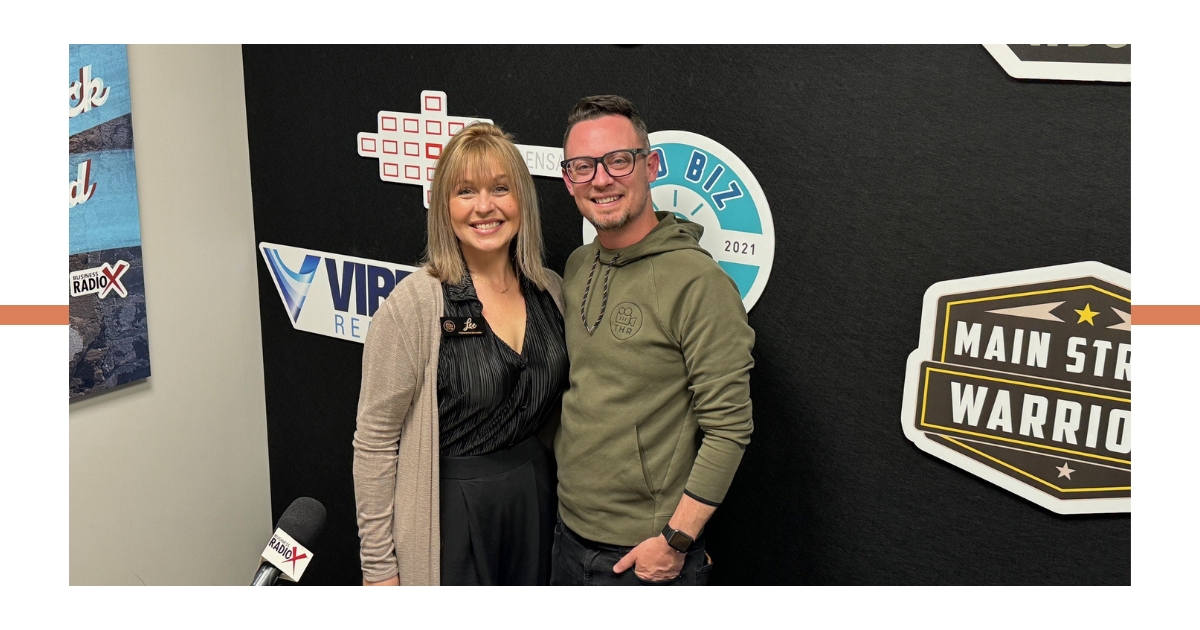
Matt Thomas and Lee Meyer of The Highlight Reel are not just any video production company. They are a group of creative and passionate video producers who are dedicated to bringing your unique story to life through video.
 Matt, the Creative Director and co-owner of The Highlight Reel, combined his passions for music, technology, and visual arts into a dynamic career.
With a background as diverse as his interests, Matt’s journey is a testament to his creative spirit and entrepreneurial heart.
 Lee, the Creative Strategist and co-owner of The Highlight Reel, brings a unique blend of creativity, business savvy, and a passion for people to her work.
Born and raised in the Midwest, Lee’s love for storytelling and design has been with her since childhood.
Follow The Highlight Reel on Facebook and Instagram.
This transcript is machine transcribed by Sonix
TRANSCRIPT
Intro: [00:00:07] Coming to you live from the Business RadioX Studio in Woodstock, Georgia. This is fearless formula with Sharon Cline.
Sharon Cline: [00:00:17] Welcome to Fearless Formula on Business RadioX, where we talk about the ups and downs of the business world and offer words of wisdom for business success. I am your host, Sharon Cline. And today in the studio I’ve got the Creative Director and the Creative Strategist, which I love these names, of The Highlight Reel and I’m so excited to talk to both of you. We’ve got Matt Thomas and Lee Meyer. Thank you for coming in.
Matt Thomas: [00:00:41] Thank you for having us.
Sharon Cline: [00:00:42] Sure.
Lee Meyer: [00:00:43] I’m so excited.
Sharon Cline: [00:00:44] I know. And you know what? I’ve seen so many good things that you’ve been doing in the community with the highlight reel, and it’s not even been in business that long. So I see such huge growth. Matt, why don’t you tell me a little bit about the history of getting started?
Matt Thomas: [00:00:57] Yeah. So that’s actually kind of funny. Um, excuse me, I was still working my full time IT job early 2022, and I can’t remember where I was, but I got a random call from Lee re, came out of a meeting and had this inspiration and she’s like, I’m not telling me or I’m not telling you that you have to start a business with me, but you got to start a business with me. We got to make some videos.
Sharon Cline: [00:01:22] Well, you had done a little bit of work with her previously, correct? Yes. I remember seeing you at one of the social events with a camera. So. Yeah, I.
Matt Thomas: [00:01:31] Was just I was just out just capturing photos and, you know, that was kind of like my go to disconnect.
Sharon Cline: [00:01:38] Yeah. Like, it’s like creative fun things like no.
Matt Thomas: [00:01:41] Stress all day working it. And it’s like I’m going to get out and take some photos and just have fun with it.
Sharon Cline: [00:01:46] So and so you all work together a little bit already.
Matt Thomas: [00:01:49] Yeah. Yeah.
Sharon Cline: [00:01:50] So I love that you, you had had your it’s sort of like your side project, your thing that you really enjoyed. You had your one thing that you were making, you know, your basic. Right. And then now look how it’s kind of grown and become something that you can do all the time.
Matt Thomas: [00:02:04] It’s pretty amazing to be able to take a passion and make it your full time gig.
Sharon Cline: [00:02:10] Leave. What was it that you saw in Matt that sort of made you have that moment of calling him?
Speaker4: [00:02:14] Well, Matt and I had we had developed a really good friendship first and foremost. Um, for people that don’t know us really well, we’re also in a relationship, a dating relationship now. But it really started purely as a friendship, and it was because I was around him for other business matters. Um, and when we were developing that friendship, he would talk about his passions and the things that he loved to do. And, um, that mainly revolved around photography and videography. And he would be so excited, you know, for the year before we started our business, he would show me things that he had been working on, and I was just blown away by it, especially because he wasn’t a quote unquote, you know, professional. He wasn’t selling it. He wasn’t trying. He didn’t even want to monetize it. Which was the funny thing. I thought that, yeah, you fought.
Sharon Cline: [00:03:07] You fought the monetizing.
Matt Thomas: [00:03:09] Yeah, I fought it really hard.
Sharon Cline: [00:03:10] Why did you fight it, do you think?
Matt Thomas: [00:03:11] Well, um, so I have a past with audio engineering as well. Um, and. In the process of building up a recording studio and bringing in clients and working with music all day long. For some reason, it just it ruined it for me. Like I couldn’t listen to music the same. I didn’t see music the same anymore, and I was just afraid that that was going to happen to something else. So photography and videography for me, I was just holding on to so tightly like, no, you’re not going to, we’re not going to take this away from me.
Sharon Cline: [00:03:44] I’ve heard people say that if they have something as their hobby, you know, when they make it their full time thing, it’s not as enjoyable somehow or the pressure of it, it just feels different. So I can get I get why if you really loved it, you wouldn’t want to surrender that feeling for money, you know? Yeah, and.
Matt Thomas: [00:04:02] The process has not ruined video for me at all. I love it even more. It’s just something you just continue to grow at and, you know, learn from. And it’s just been amazing.
Speaker4: [00:04:12] That was my hope. And I didn’t want to ever push him or or push a boundary, because I don’t believe in pushing people to to do things that they really don’t want to do. But for me, knowing him so deeply and having such a deep relationship, I felt like that was based out of fear from what had happened previously. And I really wanted him to try to be open minded and and think just because this happened before doesn’t mean it has to happen again. I think as creatives, it’s really, really important to let yourself stay in that space. Um, yes, we run a business and our clients have needs and that is a huge priority. But there’s I believe there’s always a way to find some sort of balance, um, to where you can really have both and you can enjoy it and have it as a business as well.
Sharon Cline: [00:05:04] What were you doing, Lee, previous to this as well?
Speaker4: [00:05:07] So I was running. I have another small business myself as well. It’s called go getter personal assistant services and um, it has obviously majorly taken a back seat. I do still run it on a very low level when I have some downtime with the highlight reel, because I just personally love helping people. Um, so I had been hired, um, to come into an office and do a design project, and that happens to be the office that Matt was working at. So before that, I did not know him, I did not know who he was, and I had to spend a few months in this office because we were doing, you know, painting and furniture and all of the things that go along with design. And Matt got stuck with me, and we always tell this story. It’s funny, when he met me, he didn’t actually even like me.
Lee Meyer: [00:05:58] What?
Sharon Cline: [00:05:59] How is that possible?
Matt Thomas: [00:06:00] I don’t know, I was yeah, I was just stuck in a computer screen and, you know, working all day.
Sharon Cline: [00:06:06] That’s a different energy.
Matt Thomas: [00:06:07] She comes in all bubbly and happy and I’m just like, loud, get out of my office.
Speaker4: [00:06:12] And now he’s stuck with me forever.
Matt Thomas: [00:06:16] I love it.
Sharon Cline: [00:06:18] So when you approached him about starting this company, did you have a vision of how you thought it would be Lee.
Speaker4: [00:06:23] I did, um, very loosely in the beginning. Um, very, very loosely. In fact, I didn’t even really know how I would be able to truly contribute, because everybody knows that Matt is the talent that you see on the screen, and I’m the business side of that. Um, but when I just didn’t know what that was going to look like or how I could really be valuable in a way to match his value. So that was a really big concern when we started. And luckily it’s just blossomed. And we we both know our roles now and we do have equal contributions. And it’s it’s been it’s been an amazing journey.
Sharon Cline: [00:07:05] What a leap of faith. Yeah. When you think about it, so many people talk about their dreams and you know, someday all this or that, but you actually did it, you know, you really did.
Speaker4: [00:07:16] It’s one of those things you look at and it’s honestly doesn’t feel real sometimes because you I think anybody that starts an entrepreneurial journey or any journey of growth or, or things where you want to develop your skill set, even if you’re in a corporate job or whatever it is, it it does feel terrifying. And you hear those stories of people that took the jump and they made it. And and you think to yourself, well, how do people actually do that? And going through that ourselves, to be honest, we look back and and we can tell the story and we we know truly we’ve made it because we’ve had a lot of support from our community and and people backing us up and all of these things. We wouldn’t be here without those folks. Well, you know, 100%. It’s just we look back and we’re like, how did we even go through this journey? How did we get here? It feels like a huge blessing.
Sharon Cline: [00:08:08] Well, a lot of people, the financial part of it so scary, right. And that stops so many people. Right. It’s the bottom line of everything. What was it about sort of that exact perfect alchemy of moments that made you not afraid? Like, what was it?
Lee Meyer: [00:08:24] We weren’t. Not afraid. You were afraid. You were.
Speaker4: [00:08:27] Terrified. Um. Terrifying. Terrifying. And to be honest, I feel like this isn’t something that’s talked about publicly and widely enough. You hear? Well, you got to take a risk and you got to give it your all. But you don’t necessarily know what that looks like in your life. And for me, I’ve decided that I want to be really vulnerable and authentic with this journey because I think it’s really important we can sit here all day and be like, business is great, community is great, like and it is. But there’s obviously a lot that goes into that. And um, prior to starting my second business with Matt, the highlight reel, you know, I was in a good financial spot and I did have savings and I did have all of those things going. But when you have to take time away to build up, you know, sales or build up your branding and all of those things, it doesn’t just happen instantaneously. And so we have taken financial hits, both of us, and we are in debt. And that’s because we have had to keep the faith and say, you know what? Right now we we are in this place, but it doesn’t feel like a bad place. It feels hopeful because we know that we are putting our all in and we are giving it our all. We’ve drained everything that we have to invest, everything that we have to create what it’s become, and we feel really hopeful where it’s at.
Sharon Cline: [00:09:58] So, Matt, it’s not about being afraid as much as it is about being afraid, but still moving forward because you trust in the product. You trust in what you’re doing.
Matt Thomas: [00:10:07] Right? Right. Um.
Speaker5: [00:10:11] Sorry. Blank.
Sharon Cline: [00:10:12] No that’s okay. It’s the. But that’s part of it is to me. I let fear make a lot of decisions for me. Like all day long. Yeah. And so but the moments that I decide to do something that I’m, you know, a trepidatious, trepidatious about where I will actually throw caution to the wind and say, well, I’m just going to go and we’ll see what happens. You know, there’s there’s always been a bit of a pride at the end of it. Like, look, I did something I was afraid of, but I’ve never had like a positive feeling when I’ve ever let fear make a decision for me. I’ve always just been like, yeah, that was yeah, well, maybe another opportunity will come. You know, like, I just try to tell myself it’ll be okay. But that’s different than what you all did 100%.
Speaker4: [00:10:50] Yeah. That fear, um, I, I guess, have let fear control a lot of my life. And I think that before starting my business, I spent years getting inspired by people, um, you know, their stories and following their companies. And just because I wanted to be that person that could make a jump and that could be brave and all of these things that I saw all these people doing and I just, I, I guess just submersing yourself in people that are doing that constantly and also not being irrational about it either. I think that there’s a difference. You mentioned feeling secure in the product, and it’s not just about the product necessarily. Obviously, I think that we do deliver a good product because that is really important. People don’t want a video that makes them look in a bad light or their company or their product quality, and that’s all so, so important. Um. And I just had a blank.
Lee Meyer: [00:11:58] But it’s not.
Sharon Cline: [00:11:59] Just so much about the product. There’s other sides to it too.
Lee Meyer: [00:12:02] Right.
Speaker4: [00:12:03] And the passion and we know kind of our hearts and we know the connection. It’s deeper than a video. We know the connections we have with the people when we’re working with them. And we’ve seen the impact that the video does for people. And we kind of have a motto that’s a core value in our company and that’s use video for good. And we really believe that video has a strong purpose in helping people. And that’s kind of where our heart is. It’s not about the money, it’s not about the product. It’s about what it’s doing for people, for their lives, for their business, whatever, for their mission.
Sharon Cline: [00:12:40] I love that it’s similar to the way I look at voiceover, because it’s not just me saying here by this solo cup, it’s what will this solo cup do for your life? You would posted something on Facebook because I did a little cyberstalking you. You posted something on Facebook about how important it is to highlight what your videos make people feel. And I love that because that’s ultimately what we’re talking about is the emotion behind the product, which is, you know, when I’m trying to sell something, I want someone to feel like, oh my gosh, this is going to really help me. I’m going to have peace because of this, where I imagine you all think, look at what somebody is doing and how they’re helping the community or look at look at this company. Um, it’s not just what they’re doing, but it’s why they’re doing what they’re doing. So you get to do similar things that I do. You’re using communication just a little different medium to get people to see the truth about who people are 100%. But I also think that when you’re in that vein, when you know that you are doing something like with that energy behind it, it’s got integrity, you believe it 100%. It lands where it’s supposed to land. Things work out the way they’re supposed to because you know, you’re doing your true north, I guess.
Lee Meyer: [00:13:50] Absolutely.
Speaker4: [00:13:51] And, um, I also am a very big, faith based person, and I don’t believe that Jesus is going to make my business successful or give me all of these things. But I do have faith, and that carries you a long way. Faith goes a long way. And and feedback from people that we we’ve gotten enough of the vibes to know that we need to stay committed and keep going. And if there’s problems along the way, we’re learning, you know, as this goes on to, to be better and to communicate better as partners and to be able to support each other. You know, maybe we both have different fears about different things. So it’s just really important to have people in your corner. And it’s not just Matt. We have a whole community and friends in our corner as well. You got to keep that present and if you’re doing the right thing and you’re not being negligent, keep pushing past the fear.
Sharon Cline: [00:14:49] A lot of companies that I’ve had in here have talked about how important it is to surround you with yourself, with the right people, and also how important it is to work on your strengths. So, Matt, what would you say your strengths are? And then, Lee, what would you say yours are? Because the both of you makes kind of the perfect team, right? The dream team strengths wise?
Matt Thomas: [00:15:10] Um, I would say. Man, it’s really hard to talk about myself.
Lee Meyer: [00:15:17] He does not like.
Matt Thomas: [00:15:19] We’re.
Lee Meyer: [00:15:19] Working on that.
Matt Thomas: [00:15:20] So working on that one. Um, strength wise, I don’t really know. I mean, I know that.
Speaker4: [00:15:26] Maybe I could tell your strengths.
Lee Meyer: [00:15:28] Oh, that’s.
Speaker4: [00:15:28] You could tell mine.
Matt Thomas: [00:15:29] There we go. We’ll do.
Lee Meyer: [00:15:30] That. Okay. So Matt’s.
Speaker4: [00:15:33] You know, he’s just, um, like, our powerhouse and our backbone. Um, obviously anything creatively that gets done, he’s just got a really good eye. And when we started this, I didn’t just want anybody that had a camera. I wanted somebody that would deliver people things that were very beautiful and very meaningful and really evoke emotion. I think that’s really important. He just has that natural eye and he’s just a really honest, solid person. You know, people don’t realize that when you’re doing work with video, we’re in the weeds with a lot of of delicate information. And when you’re hiring somebody and you’re partnering with somebody, it’s really important to have somebody that you can trust and that has a lot of integrity and not, you know, just is that through and through? Um, not to mention his extremely strong, you know, 15 year background in it. He is our guru for, you know, our back end, all of our setup, all of the technology. Um, you know, he has led a very diverse life. So it it leads to him having a lot of talents. Um, he mentioned that he opened a recording studio many years ago. So he’s got a lot of audio engineering capabilities that really go a long way for our clients and help be able to deliver them extra value, because we don’t have to hire an extra audio person. Matt honestly gives away a lot of those talents for free because we do love being able to add extra. Um, I could honestly go on and on, but he’s our tech. He’s our our strong one. He’s I tell him this like he’s the calm. I’m the I feel like every partnership kind of usually has a crazy one and the voice of reason. And he’s our voice of reason.
Lee Meyer: [00:17:25] Ah.
Sharon Cline: [00:17:26] What do you think about Lee?
Matt Thomas: [00:17:27] So Lee is our crazy one. Yeah. She’s the the perfect complement in business that I could ever ask for. Like. Everything that I can’t do like that well, or I’m not confident in. She has that confidence. You know, when it comes to business sense. Like, you know, I came from the perspective of, you know, working for people. Now, I did open a studio and I had no idea what I was doing when it came to business. Um, so on the business side, she definitely comes in, you know, with that knowledge. Um, the, um, just she’s very, very detail oriented, um, helps keep me in line a lot. Uh, not in a bad way, but, you know, you know, very, you know, processes and procedures and things like that, that just keep things running as smooth as possible. She can literally talk to anybody. And I think that’s amazing because I struggle with that so much. Um. She’s just has such a big heart for everything that we do. And like, you know, again, going back to the emotion part of it, like the emotion comes from both of us. Like, yes, I’ll be working on the video, but the final result is both of us putting our hearts and souls into whatever project we’re working on to get that message across.
Sharon Cline: [00:18:50] This is so sweet. Just stay.
Lee Meyer: [00:18:53] Stay in here. Got me a little misty.
Matt Thomas: [00:18:55] So, did you get a little misty eyed?
Sharon Cline: [00:18:56] I got a little misty eyed, too.
Lee Meyer: [00:18:58] It’s so sweet.
Speaker4: [00:18:58] We’re not making you throw up.
Lee Meyer: [00:18:59] That’s fine. Quite the opposite.
Sharon Cline: [00:19:02] I actually think that it’s. What you’re talking about is ultimately at the end is storytelling, and that you each bring a strength to storytelling. And I think that it does seem so important to be able to have someone who’s really great at the communication side with the outside world, and then someone who can kind of shut everything down and really focus on what needs to be done. So it seems like that’s the perfect little setup for what it really is.
Matt Thomas: [00:19:29] It’s worked really, really well.
Sharon Cline: [00:19:30] You know, are there things that you now that you’ve gotten further into the company, things that you wish you had known before you got started? Are there sort of like hard lessons that you learned?
Speaker4: [00:19:42] Oh, yeah. I mean.
Lee Meyer: [00:19:43] How much time.
Speaker4: [00:19:44] Do we have?
Lee Meyer: [00:19:46] Hard lesson. I mean.
Sharon Cline: [00:19:48] What would you wish you had known beforehand? I mean, one of the things that I do talk about to just to give you an example of what I’m asking about, is just the struggle of of being business owners, but then putting limits about how much you put into the business with your time.
Lee Meyer: [00:20:03] Oh, yeah.
Speaker4: [00:20:04] I think anybody that you talk to, anybody that’s ever been in this realm at all, they know that being in business super difficult just in that on its own. Then you add a partner. We knew what we were. We didn’t know what we were getting into, but we knew that we were going to be embarking on a really difficult journey. Um, just because it is, you know, when you have a, yeah, you have another person that you’re you’re doing so much big stuff with. There’s a lot to communicate about. And I think that’s probably one of the biggest lessons we’ve learned. Everybody anybody you talk to will say communication is king. Um, but you don’t really know what that means until you learn how to effectively do it. So I would say for us, the biggest lesson we’ve learned is even when you think you’re communicating well, you’re not. Yeah.
Lee Meyer: [00:20:59] No way. You’re not. Um.
Speaker4: [00:21:01] And we’ve we’ve grown and we’ve gotten a lot better. I will say, um, this is another thing I firmly believe in. Matt and I both really prioritize self care, and we are both in therapy separately so that we continue to work on our best selves and learn how to work on communication. There’s nothing wrong. It’s just constantly putting in that effort because we don’t want, you know, when we’re off and we’ve been off. You know, anybody that’s in a relationship or in business has those moments. Um, we come out stronger because we look for the problems to create opportunities to grow from.
Sharon Cline: [00:21:42] So you have a proper perspective on what the problems are. It’s not like you did this or you did this, but you’re actually looking at the problem to solve together.
Speaker4: [00:21:50] Sometimes when the.
Lee Meyer: [00:21:51] Argument first starts, you know, the day one, it might be a little bit like that, but.
Speaker4: [00:21:57] We do. That’s one thing I, you know, I love about my partner is that we have that respect and we can come there. And that’s really important for anybody, um, to, to try to just really see that other person and communicate well solves a lot of problems.
Sharon Cline: [00:22:11] So that’s huge communication. And that’s in you’re in that industry, right. But you also have a relationship on top of that. So I can see how it can get kind of I don’t know complicated.
Lee Meyer: [00:22:22] Yeah. It can get hairy.
Matt Thomas: [00:22:23] Yeah. Just assuming that somebody knows this or that, you know, I have a bad habit of talking in my head a lot. And so I’ve already had the conversation in my head. I’m thinking, oh, everything’s good. No, I haven’t actually said it yet.
Lee Meyer: [00:22:35] You didn’t tell me that.
Matt Thomas: [00:22:37] So just trying to remember to just communicate. Communicate and then communicate again.
Sharon Cline: [00:22:42] Gotcha.
Matt Thomas: [00:22:43] That just helps.
Sharon Cline: [00:22:45] Do you have to put limits on the amount of time that you invest in, in the company? Like, you know, it’s 5:00 on a Friday. Do you kind of shut things down, or do you always feel like you have to be putting effort into growing the business?
Matt Thomas: [00:22:57] I think there’s the the that constant drive of, you know, we have to keep going. We have to, you know, a lot of work to do. So we could just keep going all the time. But we do regularly communicate. Hey. You want to, like, take some time for us this afternoon and then maybe pick back up a little bit tonight or, you know, we’ll change the schedule around to make it work for us.
Sharon Cline: [00:23:20] That’s wonderful that you can.
Speaker4: [00:23:21] And it’s still a balance. You know, we’re doing these things, but we’re constantly not constantly, consistently. We have to keep ourselves in check. And um, when I talked about that years of research of just trying to be inspired by people, that was another thing I saw was I noticed that there’s this huge problem with burnout and just severe stress and anxiety and, um, not managing your life to, to where you just don’t have a life anymore. Your life is your business. Your identity is your business. Your kids have grown up and all they saw was you running your business. And I very strongly I started my business so that I could have a life that I wanted for my children. So keeping that in the forefront of our minds, it’s important and we try to do that again. It’s not perfect. You’re always going to have to keep yourself in check, and it’s just that constant check in. What am I doing? How have I structured my day, my week, my time? It’s very tempting to work all the time, but you can’t.
Sharon Cline: [00:24:28] How do you advertise? Do you advertise?
Lee Meyer: [00:24:32] No, we don’t advertise.
Speaker4: [00:24:34] We are making a commitment this year. Our third year in business, to finally pull. Our problem is, since we’ve started, we’ve just been okay, let’s work, work, work. And we just we work a lot and we don’t prioritize that back end enough. And I think we’re finally catching our breath this year. And we’re telling ourselves, hey, let’s get serious. We have social media and we have a website, and you have.
Sharon Cline: [00:25:04] Products that you can refer to, like people can see what you’ve.
Lee Meyer: [00:25:07] Done.
Speaker4: [00:25:07] Yeah, absolutely. It’s it’s all out there. But a, a true a true strategic marketing advertising. We have not yet and we’re, it’s on the list.
Sharon Cline: [00:25:17] But what I love is that so far you really haven’t had to because word of mouth is, is sometimes more powerful than anything.
Speaker4: [00:25:23] It is. And we feel really blessed. I mean, we talk about our community all the time. We literally love our community, and we try to be as supportive and involved as we can because we know that we were given that, and we have had so many people from the community and businesses and just I’ve never seen anything like where we live.
Sharon Cline: [00:25:46] I haven’t special, it is special. A lot of people say that that, you know, you go a little bit farther south, Marietta or whatever, and there’s just a totally different feel to what this community is, is like. And it’s um, it’s something that like, makes you want to protect it a little bit.
Speaker4: [00:26:01] It’s a little piece.
Lee Meyer: [00:26:02] Of.
Speaker4: [00:26:03] A little.
Lee Meyer: [00:26:03] Bubble, a little bubble, a little.
Speaker4: [00:26:05] Special bubble.
Sharon Cline: [00:26:06] So I saw that you also on your website, you have different markets that you work with. It’s not just Atlanta, but they’re like different cities all over. So how did you get involved with different cities really?
Speaker4: [00:26:19] That’s just from people finding our products online. Or honestly, you talk about word of mouth that even goes across the US. We’ve just been really fortunate enough to have some really solid relationships with people that have referred us, and we love traveling.
Lee Meyer: [00:26:37] I was going to say.
Sharon Cline: [00:26:38] How does that feel? Like Miami? Let’s go. Yeah, I don’t know.
Lee Meyer: [00:26:41] No, we love it, love it.
Matt Thomas: [00:26:42] It’s exciting is what we want to do.
Lee Meyer: [00:26:45] Yes.
Speaker4: [00:26:46] Our plan, you know, now that we’re entering our third year because we want everything, we love our community and we want to travel. So strategically, we’re trying to base our time so that we’re about 50% in our, you know, here local and then 50% travel. And that works well because, you know, my kids will be with their dad. And it just gives us a lot of freedom to get to do all these wonderful things.
Sharon Cline: [00:27:11] You get paid to travel, right? Yes. That’s the best.
Lee Meyer: [00:27:14] It’s kind of the best of the dream. Yeah. For sure.
Sharon Cline: [00:27:17] Who is your ideal client?
Lee Meyer: [00:27:20] So you take that one, okay.
Speaker4: [00:27:23] So honestly, that is really tough to answer. But in a basic sense, it’s anybody who has something that they want to share with people and they want it to to be done in a way that makes them feel true and authentic to who they are and their mission and their product. Um, authenticity, I feel like is a buzzword for this year, and everybody is saying that, and I know that’s a thing, but that’s because it’s true. And people are really tired of the fake advertising and the commercials and the sales, and people are really invested in who businesses are and what they stand for and what their heart is. And for us, anybody that wants to show anything with authenticity, with with true heart, that really wants to be reflected in a great way. I mean, we work with small business owners a lot. We work with cities, we work with local governments, we work with corporations, we work with non-profits. That’s a huge part of our company. And our heart is again, that use video for good. Do you have, um, an event this year that you’re trying to raise a lot of money? Because maybe it’s cancer research, maybe it’s organ transplantation, maybe it, you know, it’s it’s big things. It’s saving people’s lives. Sometimes it’s a product that’s going to make your life easier. It’s in any facet, even personal. We work with a lot of folks that just want to tell personal stories, because maybe they want their family legacy captured, and they want their great grandchildren and their great great grandchildren to know who they are. There’s so many ways.
Sharon Cline: [00:29:04] My goodness, I never thought about that boy. I’d be so emotional in those, you know, because it does feel like what you’re doing is leaving a legacy, but not just for that family, but for the different companies that you’re representing or the different non-profits. You are making a piece of media that will live eternally.
Lee Meyer: [00:29:22] Absolutely.
Sharon Cline: [00:29:23] The internet’s forever.
Speaker4: [00:29:24] And a lot of times what we have found is that we have a big heart for small business owners. And we we know ourselves, too. You don’t always see yourself the way that other people see you, and for us, it’s a huge gift to get to deliver a video to somebody and just make them feel really good about all the heart and soul and passion and financial, you know, all of these things that they’ve poured in. I had a I’ll make this really quick. I had a business owner in the community that I had been trying to work with for months, and I was stopping by her office and visiting her, which I normally I don’t do that, but I thought her story was so cool. And I told her, I said, I’m not here to try to sell you. Obviously I would be selling you a video.
Lee Meyer: [00:30:13] But but I really.
Speaker4: [00:30:16] Want to work with you because I love your story. And I don’t know if it was a question of like, why? It was, why do you love my story? Like, what is it about my story that makes you want to work with me? And I went off on a tangent for like 20 minutes, telling her all the things that I see in her and all the things that she’s done and all the the roadblocks she’s overcome and just the legacy that she really has truly created. And after I got done with my story, she just kind of looked at me wide eyed and she was like, I’ve never thought about myself like that. I, I’ve never seen myself like that. And I’m like, well, it’s very obvious to me and I just think it’s so beautiful. So it’s, you just really want to help people see themselves the way that you see them, too.
Sharon Cline: [00:31:05] That’s a gift. And, you know, to give someone that validation and to highlight things that when you’re in the weeds of everything, your every day routine, those moments or whatever it is that you see, they’re just part of your story. But it’s not that important. I got to do this. I got to do that all day long. But for someone to take a step back and see it from such a beautiful point of view of growth and positivity, that must have been like an emotional moment, too.
Speaker4: [00:31:33] It was. And that’s the moments we live for. We. We strive for true connectedness with our clients. Um, we we want to empower them. We want to help them feel just ready to represent themselves in the world digitally in the best way. And we are truly not happy if our clients aren’t happy and we stand by that.
Sharon Cline: [00:31:58] Are what good energy in the world you know, there’s a lot of negative there. There just is. And so it’s wonderful to see. Can I ask you briefly before we finish, what was the 2024 Cherokee Film Summit that you were associated with?
Matt Thomas: [00:32:14] Is it? That’s a just a giant group of area creatives coming together. They had panelists and different classes that were being taught on various different subjects. It’s just a really amazing gathering of all of these professionals in the movie industry and other, you know, videography companies, you know, production companies, things like that. Um, the one of the coolest parts about it for me was in the morning, they have a students section, like this whole session of, you know, a bunch of different schools coming together, and you just get to see these kids just absorbing this information like, oh my gosh, like, I want to do this and they get to play with the props or, you know, get to ask questions, play with, you know, equipment. Um, so yeah, that was, that was probably. It’s one of the coolest things to be involved in, for sure.
Sharon Cline: [00:33:09] It’s like you’re helping the future, you know, to do similar things to you. Like, wouldn’t it have been nice if someone had kind of come to you and said, here’s a way that you can get involved? A lot of times we’re just figuring it out ourselves, you know?
Speaker4: [00:33:21] Absolutely. And I know I had those moments as a kid. I have had adults pour into me, and I think it’s that full circle moment that also makes our business so special, is finding any ways that we can to get to be involved, you know, and in that experience. And the Film Summit is actually put on and run by the Cherokee County Office of Economic Development. And Molly Mercer and her team run that, and they just do a phenomenal job. Um, I don’t think a lot of people know about that organization in our community and all of the wonderful things they do for us and for small business owners. But, um, they bring a lot of revenue into our community, which is really good for everybody. Um, you know, you wouldn’t think that we would have major motion.
Lee Meyer: [00:34:10] Films right here, right here in Cherokee County.
Sharon Cline: [00:34:13] Yeah, yeah, I definitely don’t think that that’s highlighted so much. Many people think just Atlanta, but we’ve got, um, a talent agencies here. I was thinking about how the fact that you are on this panel, like you’ve only been in business a couple of years, look at how much you’ve been able to affect not just our community proper, but like the next generation of people that will come up.
Speaker4: [00:34:35] Just to clarify, we’re not on the panel.
Lee Meyer: [00:34:37] Giving expert advice.
Speaker4: [00:34:38] We’re filming it. We sponsor with with The Office because they’ve poured into us and we love what they do and we want to give back as well. And they’re just phenomenal. But we are there to create a story of what’s happened for the day. We do enjoy the panelists, though, and what they have to offer, and it’s it’s just really cool. Even though we’re not making movies. Um, it’s just really neat to connect with people in that area. And it’s just another way that Cherokee County stands out, um, just as an amazing place. And if anybody is listening to this and is intrigued by that, I highly encourage them to reach out to the coed office. That’s their acronym. Um, they help with even film scouting and just jobs for local. I mean, there’s just so many wonderful things they do.
Sharon Cline: [00:35:25] But how neat is it to see young students to or young people be so excited about something that you know so much about, you know, and that they genuinely have. And it’s not because of money, but it’s genuinely what they want to be involved in. You know, it’s like, um, I meet a lot of people who want to get involved in voiceovers all the time. I kind of sit down and explain kind of the basics of what I’ve done in the industry. It’s a very small amount, but you know, when you don’t know anything, it’s great to just have someone explain. So when you are talking to someone who really just wants to be like, loves the idea of voiceover and you’re just like, oh, I feed off that energy too. You know, it makes me excited for what I do. And then it’s almost like I get in my own weeds of, oh, I’ve got to do this. I got to edit that. Oh, you know, I sound horrible because of the allergies lately. Like, I just plain, you know. But the truth is it is a it is a change, a reframing of appreciation, you know? So and I love the idea of the fact that you are not just making you’re not just part of it in that you’re filming, but you’re giving students real time opportunity, real in that moment, to see what it’s like to actually use the equipment. It’s not just theory.
Lee Meyer: [00:36:34] Yeah.
Speaker4: [00:36:34] And we got to interview some of the students and that was that was probably some of my favorite parts of the day. Because you see the passion in their eyes and you see how excited they are. And just to have those opportunities, it’s really meaningful. And Matt and I talked about it after, uh, our day was done filming that day and I said, you know, we should really look into finding a way that we could help mentor some of these younger kids and possibly even pay them to intern. And so smart, you know, really be able to help them develop their skills and feel happy and excited about getting any way that we can help. We’re just now that we’ve got a little bit of feet under us. You know, we’re thinking about how can we do that and how can we expand that, because it is so cool. You want to help these kids? Yeah.
Sharon Cline: [00:37:23] It’s giving back to directly to the community, which is wonderful. Yeah. Where do you see yourself in five years?
Matt Thomas: [00:37:30] Oh, man.
Lee Meyer: [00:37:31] We we ten years.
Sharon Cline: [00:37:34] Whatever. Whatever timeline you’d like. Where do you.
Lee Meyer: [00:37:36] See?
Speaker4: [00:37:36] What’s funny about us is we just. We are in a little bit of a transition right now. We thought we had an idea for what we wanted to do. And it it’s still very much, you know, our core values of creating video for people, you know, doing good work, creating great relationships, all of that basis. But we had thought that we were going to open a physical studio and as a five year plan, and we’re actually kind of thinking that we may not do that now. So that’s going to be a TBD. And normally I can answer this, but you literally caught us in the middle of a, a transitionary.
Lee Meyer: [00:38:15] Period.
Sharon Cline: [00:38:16] It’s what that’s it’s kind of unfolding the way it’s supposed to then, because you don’t need a physical brick and mortar store technically or studio, because so much can be done at home these days too, right? Yeah.
Speaker4: [00:38:29] And we love going to people, and we love seeing their space and traveling and and getting to connect with people all over. So it’s.
Sharon Cline: [00:38:38] It’s all unfolding. It’s like the journey.
Lee Meyer: [00:38:40] It’s still the.
Speaker4: [00:38:41] Journey we’re on. The journey.
Lee Meyer: [00:38:43] Continues.
Matt Thomas: [00:38:44] Yes.
Sharon Cline: [00:38:44] Well, how can people get in touch with you if they would like to hear more about you or or use your services so.
Speaker4: [00:38:50] They can find us on Facebook, Instagram, LinkedIn, we are the highlight reel ATL. You can also go to the Highlight Reel ATL comm. We always offer anybody that’s interested, even in chatting. Um, maybe you’re not ready to make the jump, but you just want to see, hey, what would this look like? And what do you think about my business or my product or my event? And what could you creatively, you know, spitball with me? I love spit balling. So give us a call like we’re happy to just chat. And we are bad business people because we will always find a way.
Lee Meyer: [00:39:23] To tell people.
Speaker4: [00:39:24] How they can do things themselves as much as possible as well. So we’re here to help.
Sharon Cline: [00:39:30] Sorry we’re bad business people. We are not. That’s not the tagline we want to leave you with.
Speaker4: [00:39:37] But I’m like, hey, you may not. Sometimes people don’t always need a super high end professional video. It’s not necessary and that’s a waste of their resources. So I’m never going to convince somebody to do video. You know, on this scale if it doesn’t make sense. So that’s why I joke and I’m like, we’re bad.
Lee Meyer: [00:39:56] But.
Speaker4: [00:39:57] It’s what’s best.
Sharon Cline: [00:39:58] So no, it’s honest and it’s and it’s looking out for what ultimately the, you know, is best for what the client needs. It’s not about what you need, but it’s about what the client needs. And that’s like having that reframe of what’s most important is making the client happy. Ultimately, you know, releases all of that kind of negative karma that comes when people are just like money driven all the time. I don’t know, I seem to find that a lot of people that have that energy of being truly in an almost an altruistic mindset, things just work out. Things are that that’s a beautiful energy to be in. Yeah. You know, and you can feel it. You can feel it too. So I feel it in here. Yay!
Lee Meyer: [00:40:37] She tells you people, it’s real, it’s real real.
Sharon Cline: [00:40:41] It’s real for the highlight reel. Um, well, I can’t thank you enough, Lee and Matt, for coming into the studio today and sharing your story. Um, and please come back again, because it’s just so fun to see how your journey is evolving. And it’s it’s inspiring for me to know that even if there are obviously fears, you still you manage them. And that’s the biggest thing to me is as a business owner, I mean, even you guys are talking about sort of at the end of the pandemic, starting this, you know, or sort of in the middle of the pandemic, you still did it. You know, so many businesses didn’t survive. And yours, you know, got started and is thriving. So yay.
Lee Meyer: [00:41:18] Well, I appreciate it.
Sharon Cline: [00:41:19] I do a golf clap for you, some golf clapping for you here in the studio. So exciting.
Lee Meyer: [00:41:23] Thank you so much.
Sharon Cline: [00:41:24] You’re welcome. And thank you all for listening to Fearless Formula on Business RadioX. And again, this is Sharon Cline reminding you that with knowledge and understanding, we can all have our own fearless formula. Have a great day!
BRX Pro Tip: Differentiation: Not What, But How
/
RSS Feed
BRX Pro Tip: Differentiation: Not What, But How
Stone Payton: [00:00:00] And we are back with BRX Pro Tips. Lee Kantor and Stone Payton here with you. Lee, when it comes to this business of trying to differentiate ourselves, the key is not so much what. It’s really more about the how, isn’t it?
Lee Kantor: [00:00:13] Right. And that’s an important distinction. A lot of people get so caught up with what they do, and they love to explain the minutia of what they do and what, you know, kind of the benefits, and all the features, and all that stuff. And the buyer doesn’t really care because, usually, the buyer is committed to buying something. So, now, what they’re going to really vet you on is how you do what you do. How are you going to deliver that service? How is that unique to you? And how is it different than everybody else?
Lee Kantor: [00:00:47] And that’s where I would recommend, especially solopreneurs or folks that have small firms, you have to lean into the how you do what you do and you have to keep making it better and better. And by doing that and by putting your own personality and special sauce on it, it’s going to be different than everybody else’s. And then, therefore, you’re going to stand down.
Lee Kantor: [00:01:06] And don’t be afraid to kind of be yourself, because there’s only one of you. And when you’re yourself, then you’re not competing with anybody else because there’s only one of you. So, the more you can kind of make it about how you do what you do and the special way that you’ve kind of combined all your talents and all your services and all your skills, then you become indispensable and you’ve eliminated your competition.














