
 Supply Chain Now Radio brought to you by APICS Atlanta and TalentStream.
supplychainnow_sandysprings_5.25.2018.mp3
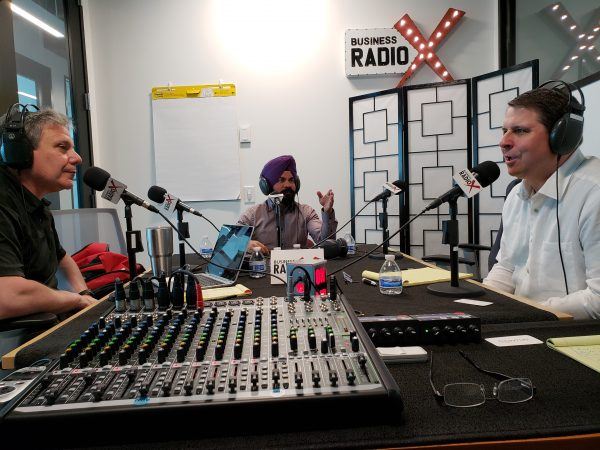
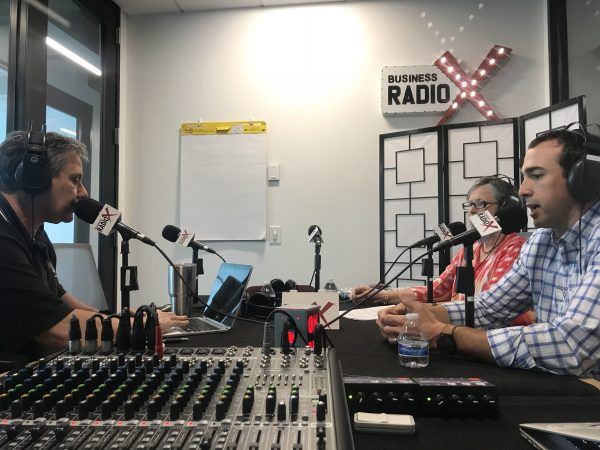
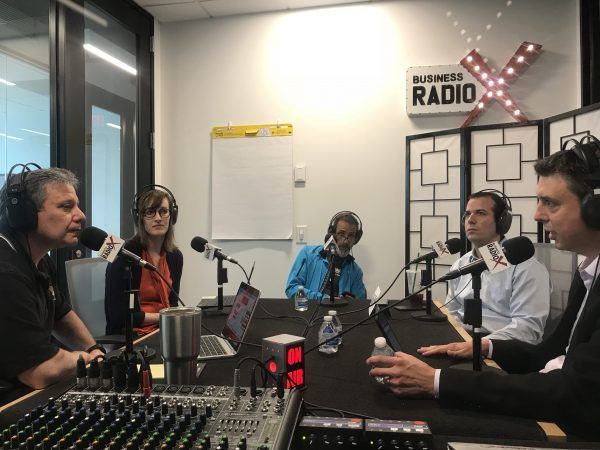
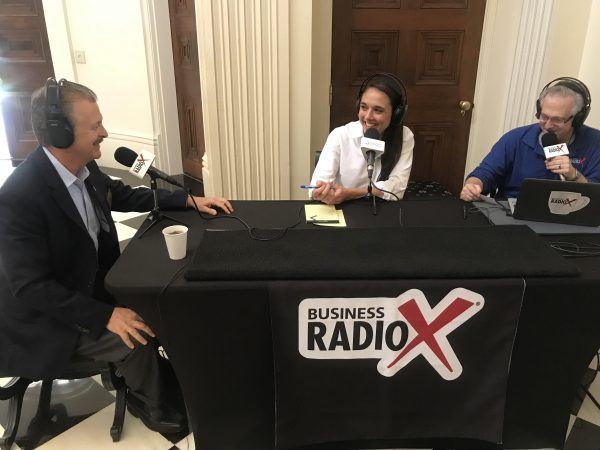
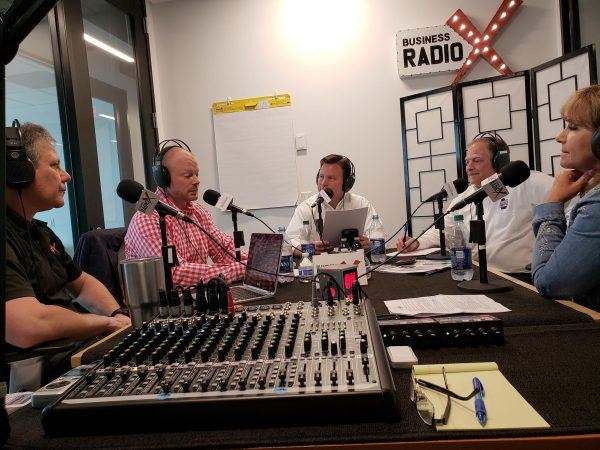
: Broadcasting live from the Business RadioX Studios in Atlanta, Georgia, it’s time for Atlanta Business Radio, spotlighting the city’s best businesses and the people who lead them.
: Lee Kantor here with Stone Payton, another episode of Atlanta Business Radio. But Stone, this is my very favorite one that we do every month. It is the Supply Chain Now Radio Show. And it’s brought to us by our good friends at APICS Atlanta and TalentStream. What do you have to say about that, Stone?
: I have to say that we are, in fact, broadcasting live from the supply chain capital of the East Coast, Atlanta, Georgia. Supply Chain Now Radio spotlights the best in all things supply chain: the people, the companies, the technologies, the best practices, and, of course, the critical issues of the day.
: Well, the subject matter is super important, but it couldn’t be done without our fearless leader, Scott Luton. He’s the Executive Vice President with APICS Atlanta. And as everyone knows, APICS is the leading industry association dedicated to end-to-end supply chain management. Welcome, Scott.
: Well, good morning, Lee.
: How was that?
: That’s perfect. It’s perfect.
: Do you play that for your wife when you go home, that little intro?
: He made me record that as his entrance.
: Oh, well, I’d say it’s great to be here again. This is-
: The special Friday edition.
: Special Friday. And this is our 12th month. We’ve been partnering with the Business RadioX team for a year now. And we’re all the better for work. So, thanks for all the training-
: It just takes a year.
: That’s right. 400 steps in a year. More importantly, we’ve got a great guest lineup today, as always. I’m going to read off, and kinda go around the room, and say good morning. Tammy Gracek, Chief Operating Officer with Lund International. Good morning, Tammy.
: Good morning, Scott.
: Thanks for being here. Beau Groover, President of the Effective Syndicate. Good morning.
: Good morning, Scott.
: Glad you’re here as well. And Jason Moss, CEO of the Georgia Manufacturing Alliance. Good morning.
: Good morning, Scott.
: You’ve been a regular frequent flyer here this week.
: I have. We got lots to talk about.
: Yeah, one more punch, and he gets a prize.
: Business RadioX coffee cup, right?
: Yeah.
: And the sandwich, right?
: That’s right.
: Well, glad to have Tammy, Beau, and Jason here. We’ve got a great conversation teed up. We have some great interesting discussion pre-show. But, of course, Lee, where do we want to start this morning? The top-
: The top things.
: That’s right.
: And what is that magic number there? How many top things you got?
: Well, we had three until this morning. And we have-
: Now, it’s four or two?
: We have four now. A late break in drone delivery brought our fourth one to us. So, four things of the top things to know in supply chain now. So, the first one, according to a recent Wall Street Journal article, the average salary for a supply chain professional, do you all think that’s going up or going down? Any guesses?
: I’m saying-
: Up.
: I’m going up. I’m going up.
: That’s right. So, the average salary for supply chain professionals in 2017 rose 4.1% according to the Institute for Supply Management, I assume. Factors included a stronger emphasis on buyers to better negotiate contracts, and find cost savings, especially, of course, increasing freight and raw material costs, right. Planners are in demand as a greater priority on forecasting, which Beau was talking about pre-show. Streamlining production process is a big part on that. Premium is being paid for true transportation SMEs, you know, given all the challenges ranging from the capacity crunch, to talent management, to costs.
: Supply chain organizations are also fighting for top technology talent as business intelligence, advanced analytics, and all of the things I don’t know about, and many other technologies continue to change the space. So, the supply chain 2018 is not like 1988. This year, we’re going peak on today, Lee.
: And then, list, I would imagine that that’s kind of a gender-neutral list.
: It’s going to be a gender-neutral list.
: Right?
: Absolutely.
: These aren’t skills that require brute strength or certain attributes. Anybody can take these roles, right?
: Absolutely. And then, you know, as we always like to say, we can’t attack the skills gap without attacking the gender gap. So, opportunity for all in supply chain.
: So, on a side note, companies are also willing to pay more for professionals with supply chain certification. So, of course, APICS, our CSCP, our CLTD, and our CPIM are widely recognized. In fact, studies have shown that companies pay 20% or more in additional comp for professionals with these certifications, right.
: And for our audience, of course, we got to give a quick shout out to our new and upcoming boot camps on both the CSCP and the CLTD, which are going to kick off at Georgia Tech Supply Chain Logistics Institute in July of 2018. For more information on that, shoot us a note to EVP@APICSAtlanta.org. But, you know, bottom line, you want to invest in your career, your professional development, take home a bigger check, but more importantly, secure and advance your career path.
: Okay. So, that was a big one to lead off with, right, Lee?
: It was fantastic, Scott.
: Oh, man, you’re full of compliments this morning. Whatever it is-
: You’re killing it. You’re just not knocking it out of the park.
: All right. So, Number two top things to know in supply chain now. So, speaking of trends shaping the talent market, the continued rise of analytics in supply chain is not going to stop. Resistance is futile, Star Trek reference number one. We featured Richard Sharpe, CEO of Competitive Insights, on our SCNR webinar earlier this week. Competitive Insights is a leading supply chain technology firm based right here in Atlanta. They were named a Gartner Cool Vendor a couple of years ago, which also comes with a free drawer prize.
: According to their research last month, Amazon was advertising 5429 jobs. Can anyone tell me or take a guess how many of those were in the field of software development and analytics?
: I’m going to guess 50%.
: You’ve been reading my notes. You’re absolutely right.
: It was not a guess.
: Beau was reading ahead.
: That’s right, he’s reading ahead. Almost 50% were in the fields of software development analytics. So, amazing. Good old Jeff B and the team continue to double down on big data, and also speaks volumes about where we’re headed. This is not a flavor of the month, for sure.
: Okay. So number three, the Gartner ratings. And everybody is on the edge of their chair waiting for the Gartner rankings to come out for supply chain performance, right. Right, Beau?
: Absolutely.
: That or the college football preseason rankings. For the 14th year in a row that Gartner has released these supply chain rankings, Unilever retained number one. So, defended its trophy largely based on a perfect score in corporate social responsibility. And they’re doing some really neat things in the digitization of supply chain, especially in robotics.
: But on the top 25 list, we have the Coca-Cola company. Obviously, the Atlanta heavyweight coming in at 22. And the Home Depot rejoined the top 25 rankings after a three year hiatus. So, kudos to both the Coca-Cola Company and the Home Depot for that recognition.
: So, innovation. Of course, innovation is alive and well. Change is not stopping. It’s only increasing. And a big part of the Gartner rankings is centered on innovation and what the supply chain teams are doing.
: So, on that note, we arrive at our fourth top thing to know in supply chain now. So, the hashtag #SupplyChainCity of Atlanta, Georgia adds another powerful card to the engine that has helped make Georgia the number one state to do business in for how many years in a row, Jason?
: Five years.
: Five years in a row. Five years running. So, Georgia-Pacific recently announced that they will be investing $5 million to $7 million to set up a new supply chain innovation center, Point A, right here in Atlanta.
: Have they been invited on the show?
: You know, you’re reading ahead as well. They have been invited. And you know what-
: What?
: We’ve got some big news here about-
: Big news?
: Big news and about three bullet points.
: I can’t wait. That’s what happens when you don’t read ahead.
: That’s right. But for those of you all that … I was telling a buddy of mine about Georgia-Pacific, and he asked me how their trains were running. And let’s fix that real quick. Georgia-Pacific is one of the world’s leading manufacturers of tissue, pulp, paper, packaging, building products, and a number different things. Brawny Dixie Cups, the whole Dixie brand, those are Georgia-Pacific products. So, really large successful company.
: And it’s great to see these types of companies really investing in supply chain to continue to drive innovation. So, this collaborative center, point A, will feature a diverse group of organizations and individuals to tackle some of supply chain’s most challenging issues. There’s no shortage there, right. Some of the early committed participants have been named: Chick-fil-A, Delta Airlines, Genuine Parts Company, Grainger, Siemens, and others.
: But, I think, the neat thing about Point A, about these types of corporate initiatives, is they’re going to be striking a balance, a very diverse group of folks that are going to participate in the Point A innovation centers. They’re going to bring on startups, members of academia, and other folks from different walks of life that’s going to help give a wide view a perspective on how we can tackle some of these challenges. That’s neat to see. And, of course, looking forward to some of the developments that Point A is going to be driving for the supply chain space. So, neat to have that in Atlanta. Just one more big win. And Lee, you’re asking a question earlier.
: Yes.
: So, we did get some good news this week. So, we’re excited to share today that Kevin Heath, Chief Procurement Officer for Georgia-Pacific, and Ben Harris with the Metro Atlanta Chamber is going to be joining us for a special Supply Chain Now Radio episode next month where we’re going to be learning a lot more about Point A.
: Good stuff. And why is it important to have that hashtag, #SupplyChainCity?
: That’s a great question as well. So, the chamber, but not just the Metro Atlanta Chamber, but a wide group of supporters, we’re all looking up to really tout all the things that make Atlanta such a special supply chain capital. You know, we’ve joked here around how it’s supply chain capital of the East Coast, and sometimes it’s supply chain capital the US, and maybe the universe. But, really, in so many different ways from a technology standpoint, an infrastructure standpoint, a talent standpoint, everything that makes Atlanta what it is, it is a supply chain super competitor.
: So, it’s really important to use that hashtag, so that we can … As business people and professionals that are in this space, we can tout it, and make sure we’re projecting it in our image.
: That’s right.
: I voted for Galaxy but …
: Well, Jason, you got your own hashtag going on that we’ll talk about and we’ll learn about later, right?
: Right, right, right.
: Enough for hashtags.
: We were just …. As you know, Scott, Stone and I were just at the FinTech South Event at Mercedes-Benz Stadium last week, I think. And they have a hashtag also, FinTech. They’re trying to do Atlanta as the FinTech capital.
: Okay.
: Because as people may or may not know, 70% of all financial transactions in the United States touch a Georgia firm.
: So, hashtag #FinTech, F-I-N-T-E-C-K?
: FinTech South or FinTech Atlanta. What was it? Do you remember, Stone? It was FinTech something.
: I think, it’s just FinTech in general.
: Yeah, yeah. Nice. So, we get 70% of the transactions. It can be thin if we need to, right?
: That’s right.
: Well, that concludes our top things to know in supply chain now. Of course, that’s never an exhaustive list. Those four things are what were on the front pages of many supply chain publications and between the ears of many supply chain professionals in the last few weeks.
: But it’s an ever-changing space, and we’ve got three great guests today that’s going to speak from different perspectives of the end-to-end supply chain. So, wonderful lineup of supply chain and manufacturing rock stars. Lee, did you bring your autograph book?
: Yes, I did. I expect some pictures at the end with all the social media proof because, otherwise, it didn’t happen.
: That’s right, it didn’t happen. So, our first guest today on Supply Chain Now Radio, we welcome Tammy Gracek, the Chief Operations Officer and GM of OE with Lund International. Good morning.
: Good morning.
: Glad to have you here today, Tammy, especially as busy as you all have been. For those of you that may not know, all three of you in all of the US, Lund International is a leading designer, manufacturer, and marketer of branded automotive accessories. In fact, as we were saying pre-show, I bet many of the folks in this room here have Lund products, vent visor, fender flares, hood protectors, right. Any hands in the room go up? Beau, I think you’ve got all that one of your 4x4s, right?
: Absolutely.
: Large majority of the Lund products are made right here in the US, right, Tammy?
: They are.
: Which is really neat to see. In fact, speaking of that same thing, about 500 of the 1200 total Lund team members are our neighbors here in Georgia.
: Correct, between our manufacturing facility and our corporate office, yes.
: Wow. And why is that important from a leadership team standpoint?
: Because we truly believe one of our models for a company is people, products, and brands. If you ask anybody that works in the organization, they will tout that people, products, and brands exactly in that order. One of the things that our CEO is very proud of is the fact that we value the people, we empower the people to do their jobs, and contribute that to the overall success of the business.
: Clearly, the formula is working. In big news that was announced just a few weeks ago, Lund was recently recognized as Gwinnett County’s Large Manufacturer of the Year for 2018, but that’s really just one of a string of successes. We’re talking pre-show about how Lund was also named, for the whole state of Georgia, the Automotive Company of the Year in 2017. And, of course, there’s a whole string of acquisitions and accolades. What is that people, product, brands? That’s clearly DNA, right, for the company?
: It is.
: What else is driving all of that growth we’re seeing at Lund International?
: A lot of it is the new products that we’ve developed. Over the course of the last four years, we’ve acquired four businesses. Through those businesses acquisitions, we’ve specifically focused on innovation and new products. And when I say new products, you mentioned some of our product lines at the beginning, but we have a variety of products.
: One of the things that we don’t talk a lot about because it’s not manufactured here in Georgia is the AMP research, which is an articulating running board. So, when I think about the products that we’ve created and the revenue that the new product innovation has driven for the organization, it’s meaningful. It’s very, very meaningful to the company.
: And the rate of which Lund has been launching new products, you mentioned 85 new products since 2016, right?
: Since 2016, yes.
: Wow. What does it take for a company to do that, that level of innovation? And innovation is such a buzz word, right. To a lot of folks, when they hear that, they think about it as the brainstorming and the white-boarding, but it’s to actually launch products, and do it, and skid on it, that’s a whole different ballgame. So, how does a company that has all these parts to make, in a sense of current customers, how do you all make that happen?
: With focus. I can tell you that we tried a variety of methods of product development. Some of them were not as successful as current results. And it took a team to actually take a group of people and focus them on product development, product innovation.
: We have an engineering team that works together in a blue sky environment. They get to come out of the day-to-day, “I developed this piece this way,” et cetera. They’ve had the opportunity to actually get creative. We’ve got a gentleman that does an enormous amount of just sketching and drawing, and has allowed to get us out-of-the-box thoughts as possible. And many of the employees throughout the organization are encouraged to submit their ideas to this team as well.
: Now, can you talk about the culture of where that’s acceptable, and that level of, kind of, you know, blue sky thinking is accepted and encouraged where a lot of companies are afraid to take that kind of risk and put resources to things that don’t exist, that may never exist, but you’re doing it and the effort to really push the envelope of what could be rather than what is currently.
: Correct. I think it’s not only for the benefit of product development. It really allows a group of people to think outside the box. When you talk to our engineering staff, if you’re an engineer for automotive accessories, and you work for a specific brand, you’re focused-
: Right.
: … primarily 98% of your time on that place.
: Your head is down.
: Right.
: Right.
: And you discourage people when you don’t let them be creative. And we encourage not only from an engineering standpoint, but throughout the organization, we encourage creativity. And you have to have enough confidence in your staff to allow them to be creative, come back to you with ideas.
: You’re giving them that space, that mental space. And that probably helps you in recruiting. That helps you grow the company as a whole because they know that this a place that allows that to occur.
: Yes.
: Now, does any of that inform like maybe acquisition targets where you’re like, “You know what, this would be cool here. We can’t do this here, but there’s this cool company over here. Maybe we should look at acquiring them”?
: We do. When we have the acquisition strategy that we looked at is complementary products because we are everything outside of a vehicle. We offer some internal, but we’re primarily on the external part of a vehicle. We will look for complementary to what we already do. And some of it does come from blue sky thoughts.
: And then, when you’re looking at the target, how do you kind of make that contact, and then see if they’re culture-fit? You know, they might be great at making their product, but if their culture fit isn’t there, is that something that, you know, takes them off the board? Like how do you work your way through that?
: Well, I don’t personally do that. I will be pulled into that if it makes it through the first round.
: Right.
: The CEO of our organization works with our private equity company on the acquisition strategy and so forth. And if it’s something that is of interest to us from either competitive, complementary, or a skill set that we may not have, it will move to the next step.
: So, speaking … So, the aggressive acquisitions that we’ve seen over the last few years, what does it take to to see that through? Because a lot of companies we read about, a lot of companies we’ll probably talk about, they acquire a company, everything goes crazy, right. Especially in automotive space, how do you all keep that that focus that you mentioned earlier as you’re bringing on more volume, more skews, more team members? How do you all continue driving forward? No pun intended.
: There is a very talented group of people that help with the acquisition. We’ve added recently … Because of the acquisitions, we’ve added some very strategic positions within the company. We’ve been very fortunate to maintain a very strong workforce that’s worked for us for a number of years. I mean, our average tenure in our manufacturing side of our plant in Georgia is right around 18 years.
: Wow. So, in in the pre-show conversation as we sat down, we were talking about some of what we were going to discuss today. You talked about how supply chain and people, right?
: Mm-hmm (affirmative).
: Really were big fuel, both big ingredients in part of Lund’s success. So, to have your average tenure be 18 year, folks know the business. They know the culture. They’re encouraged to be creative when it comes to problem solving, especially when it comes to new product development. So, it seems like you’ve got a really unique company, an organization.
: Well, thank you.
: Yeah.
: I think it really starts from the leader of the organization. There’s a lot of passion in our organization about the products that we produce, and the products that we sell, and the people that work there. The other thing that’s really key is the people that work in the organization, whether it’d be I’m the person that’s recycling or I’m the person that is the CEO, everybody understands their purpose.
: Now, what has your experience been at being located in Georgia? Can you talk about that? Like, how has that benefited the growth of the company?
: It’s a great distribution hub. One of the main reasons that we put our largest distribution center in Georgia was because of that. As far as the manufacturing side of the organization, auto ventshade was our leading brand of Lund International that resided in Georgia. And it’s our longest standing facility from a manufacturing standpoint with the amount of employees that we have. The culture here and the availability of workforce is one of the main reasons that we’ve resided where we do.
: What can we do better? What do you wish you had more of?
: Time.
: We’re going to work on that.
: Got you the last time.
: Get more time.
: So, let’s continue this theme because, you know, kind of circling back to where we started, clearly, US manufacturing having operations here, putting US team members to work, that’s really important to Lund International.
: Very.
: So, earlier, you’re talking about some of the operations that you’ve brought in to the States, some of the onshore. Can you tell us a recent story related to either an acquisition or maybe an earlier stage in the company?
: Certainly. One of the first acquisitions we did was we wanted to get into a particular product line. And that product line was manufactured in Taiwan. We on-shored that business in about six months into our facility in Georgia. And when I say on-shored, we created tooling, created product lines, released that product line from a marketing standpoint and a sales standpoint into the aftermarket.
: Because of that, opportunities came our way to actually acquire the leading brand of that particular type of product. We moved that facility into Georgia as well. The workforce availability here and the capabilities that we have from a distribution standpoint to combine multiple brands and multiple products and ship from one location was key for us as well in those decisions.
: Well, you mentioned brands. So, Lund, 11 brands.
: Yes.
: Five of them are industry leading.
: Yes.
: 55,000 skews.
: Yes.
: And you’ve been based right here in Buford, Georgia since 2002, I believe. Is that right?
: We have in Buford, yes.
: Yeah, incredible story. No wonder the recent accolade. So, if you can, and, of course, we’ll ask any of our guests to share anything they want to ask, moving ahead and looking at the remainder of this year and next couple of years from an acquisition standpoint, continuing that aggressive strategy?
: We are. There are few acquisitions being evaluated currently as we speak. Lund will continue to grow. We are one of the top three leaders in the automotive accessory industry. And I don’t anticipate anything different than.
: No slippage. In fact, watch out number one and number two. We’re coming for you. So, before we switch gears over the Beau Groover, one last question for you, Tammy. So, working in the automotive space-
: Yes.
: … that can be forward to a lot of folks. So, can you speak to any unique dynamics that can be found in the automotive industry with pressures, the production environment? What’s unique to automotive that you may not can find in some of the other industries and sectors?
: I don’t know that there’s anything unique specifically to automotive. I’m sure that depending upon what type of products you’re manufacturing and selling, we’re all experiencing the same types of pressures. One of the things that is a little unique for Lund is that we go across so many channels of distribution. And when I say that, 30% of the product that we make is actually distributed through the OE channel, which most of the end consumers would never know that that product is made where an aftermarket product is made.
: Probably the pressures are the blending of those channels of distribution. There’s a lot less opportunity for two-step distribution. There’s a lot more opportunities in direct to consumer and e-comm, and that is changing business as it once resided, especially … Again, I can’t speak to other industries, but from an automotive standpoint, there are not as many steps in the distribution chain. And therefore, our business has changed considerably, and will continue to, and it will evolve more and more in the direction of less steps in the distribution channel.
: Are you seeing any ramifications of like the younger generation not having the emotional connection to automobiles as maybe the people in these rooms. Growing up, a car was, you know, a symbol of independence, and a lot of people couldn’t wait to get in their car, and then, they fix up their car; whereas, the younger generation are more likely to use as service. They don’t even care if they own a car. A lot of them, they don’t want to drive it the first second they turned 16. Has that had any impact?
: It may eventually. But it’s interesting you asked me that. We had a group talking about racing, and some of the particular types of racing that exist, and the popularity of some of that may be becoming less. But yet, some of the more smaller, more interactive with consumers are gaining popularity. And I think it’s about how you engage.
: And one of the things that we’ve recently done from a manufacturing standpoint is started to work with some of the tech groups and some of the colleges that lean more towards individuals that find manufacturing and engineering cool. And we’ve done some videos about our products and the company. And you can see the lights go on in some of that particular group that you’re referring to. If you can get them to understand the cool factor of what they’re actually making, and where it’s going, and what’s happening to it, there seems to be some excitement around that.
: As well as I think there’s a balance there. It’s not just automotive accessories that make the vehicle look special or cool. A lot of the stuff that we do is something that the end consumer would never know was manufactured in our facilities. It’s just a standard part of a vehicle.
: Well, clearly, I appreciate you sharing some of what you shared today, but what a great and very capable leadership team that Lund has. As well, Tammy is very gracious. But Mitch, and Tammy, and Christy, Amin, and Anna, and all the leaders they’ve got at Lund are creating the right environment to grow in a tough space. You know, a space that’s continually changing. So, appreciate you taking time out. Congratulations on all of your-
: Thank you.
: … your recent success. And we’re going to be looking forward to you moving right up the rankings in tech tackling number one and number two in the years to come. So, thanks. Thank you, Tammy Gracek, COO with Lund International for being here on Supply Chain Now Radio.
: Thank you very much.
: OK. Up next on Supply Chain Now Radio, we have Mr. Acuña … Beau Groover. Sorry, I’m still thinking Brave’s still at number one, so I’m thinking Brave’s lineup. But you are Founder and President of the Effective Syndicate. You can play left field for the Braves. You’re in good shape.
: I don’t have the same wheels I just did. No pun intended.
: No pun intended, that’s right. Well, good morning, Beau. Thanks for joining us as always. Let’s better understand first what you do, right. The Effective Syndicate has been around for several years. I know that you’ve been around for more than several years. You’re bringing 20 years of manufacturing, and operations, and distribution experience to the table. But tell us about the Effective Syndicate, and how you help companies. Really, how do you help companies become more successful and tackle growth like Lund has?
: Yeah, thank you. Thanks for having me. Unfortunately, I haven’t had a chance to work with Lund yet, but it’s a compelling story. And we approach business in a holistic way. So, our principle is if you take great people and put them in amazing processes, the only results you should expect are amazing results or great results. And so, we focus on the people side, which is the leadership development, building trust, communication, teamwork. And then, the continuous improvement side is, obviously, the Lean Six Sigma focus.
: And I’m also very blessed. I’ve got a partner who is well versed in lean and IT. So, one of the gaps that I continue to see is companies working around their IT system rather than building their IT system to match their processes.
: So, thank you for correcting me too. What I meant to say there is companies are looking at Lund, and they say, “I want to be like Lund when we grow, you know, get older, and get bigger.” So, clearly, your work on people and process can help make that happen for them. So, you’ve got no shortage. You fly the highways and byways. You’re in Chicago last week eating New York pizza, right?
: We did not have any New York pizza in Chicago.
: Just kidding our audience.
: Chicago hotdogs.
: That’s right, Chicago hotdogs. And you’re in the offices. You’re on the floor. You’re on the production floor of a wide variety of manufacturing, and really a wide variety of operations. What are some of your key observations that you’re seeing, whether it’s on the positive side that’s fueling growth, or, unfortunately, you know, some of the dynamics that are holding companies back?
: Sure. So, on the positive side, I think, one of the things that I’m pleased to see is there’s a large conversation going on around culture. If you look at LinkedIn, and Facebook, and YouTube, there’s a movement to recognize that humans need more than a paycheck from their job. So, I think, that there is a movement that’s happening in front of us.
: I think, the downside of that is there are still too many companies that allow their culture just to evolve or devolve to the point where it’s unhealthy, measured by employee surveys, and high turnover margins, and just all of these indicators. And, usually, what that ends up with is a company that is good but is going to be always good unless and until somebody says, “Look, we need to work on our culture,” which requires focus and intention.
: So, even if you’re not working on your culture, your company still has the culture, right, whether you’re working on it or not, right?
: Whether it’s a good one or a bad one, there is one.
: Right?
: Absolutely.
: So, you can take some steps to be proactive, and then kind of shape the culture if you’re so inclined?
: Absolutely. And I think that’s the miss is companies see culture as this squishy thing that it’s hard to get their hands around. And it is hard to articulate what is a culture, but it’s not hard to articulate the behaviors. And the behaviors lead to the results that you’re seeing. So, a lot of companies say, “You know, we’re just not getting the results that we want,” but they’re not working on the inputs to that is, “Let’s talk about our performance.” Well, there are things that lead to your performance, good and bad.
: And then, what are some low hanging fruit for our listeners that can help them kind of create a healthier culture in their organization?
: Communication and trust. And so, earlier, when we were talking about Lund, one of the things that came up was culture. And through the acquisition, my guess, is Lund recognizes that you have a strong culture. And when you acquire someone, your culture will bring them in appropriately.
: Very true.
: Yeah.
: Very true.
: So, for me, culture comes before process. If you get the people side of your business right, and turn them loose, and engage in them, and empower them, they will figure out how to do anything that you can put in front of them.
: But there is a balance between the autonomy to do what you need to do, and then also the strategic strategic focus to do it, you know, in the direction that the company would like to grow.
: Absolutely. I think leader’s responsibility is to articulate what needs to be done and why it’s important. And then, engage and empower the people who are doing the work to go get it done.
: We could dedicate a week’s worth of shows to culture itself. I think, it’s something we all are passionate about. I want to switch gears a minute. And, again, no pun intended. Lots of automotive puns today.
: It’s everywhere.
: It is everywhere. So, you know, I used to tell this to folks whenever I introduce Beau to them because we’ve been friends and colleagues for a long time. But Beau did my first lean workshop in 2006 at the Dave & Buster’s training room in Norcross, Georgia, and really introduced a lot of new thoughts to me, and did so in the Beau Groover manner, which, you know, really, has always struck a note with me.
: So, talking about lean, or maybe in a broader sense talking about continuous improvement, we’re talking pre-show about companies that get it right, and companies that don’t, companies that use it in a tactical manner versus those that use it more strategically. What have you been seeing?
: Yes. So, unfortunately, lean has a lot of definitions out there. A lot of companies use lean as just a tactical weapon. So, they go to the shop floor, they go to the operation, they go to the warehouse, and say, “We need to take cost out,” and that’s where it stops. The sad part of that is, I believe, lean should be part of the strategy.
: So, in business, you’re either growing or you’re dying. There’s no holding steady. You’re either growing or dying. So, it’s binary. And the companies that get it right, they say, “We want to grow,” which becomes the goal, which then leads to the question of how, which becomes the strategy.
: And lean, by its very definition, is about removing waste. So, when you remove waste, you free up money, you free up resources, you free up people. And that allows you to go focus on growth, whether that’s through an acquisition, or through expanding product lines, or new markets, or whatever those things are. And so, when you stop on the shop floor, you will definitely get some gains and some improvements, but you miss all of the time wasted in the office and in the front end.
: And most of the time, those people are paid more. They’re skilled. They’re probably educated in a lot of cases. So, you’ve got this giant talent pool of people in your office that are underutilized or working in terrible processes, doing wasteful things, when it’s just there for the taking if you just apply the principles.
: So, how important is it? You’re talking on the shop floor, you know, going through it again, but how important is it for leaders to get out there and know what’s going on? Let’s talk. You know where I’m going with this, right?
: Yeah, I do. One of my favorite quotes is, “Your open door policy is lame.” So, if you’re a leader in the organization, and you’re waiting for your people to come talk to you about a problem they’ve got, that is a poor example of leadership. Go out there and look. Go out there and talk to them. Go out there and see what’s happening, and lead them from the front. Don’t wait. Don’t make them come to you.
: Actually, I think the Beau Groover t-shirt I saw was “Open door leadership is for weenies,” if I’m not mistaken. So, get out there and-
: I don’t have that shirt.
: Yeah. All right. So, shifting gears over to inventory,certainly in this age of e-commerce and, I mean, managing inventory, if it ever could get more important, it’s really important these days. So what are you seeing, from an inventory perspective, on some of the companies that you’re on the floor with, and in their warehouses, and in their operations?
: Yes. So, it’s still the buy or make-and-hope strategy. So, I’m going to look at a forecast that says, “I’m going to sell a thousand widgets. I’m going to buy a thousand widgets and hope that I can sell them.” And you look at every other corner on the street, and you see a dollar general, right. And a lot of that material is just overstock where we purchase it poorly, or we manufacture it poorly, or both. And the organizations have warehouses full of this stuff.
: Well, it looks pretty harmless when you look at it, but you’ve got the space. You’re heating it and cooling it. You’re paying taxes on it. You’re moving it. You’re cycle counting it. You’re getting it lost. You’re getting it damaged. And it is still very burdensome for those organizations who have that make-and-hope strategy for their supply chain, instead of building closer to a true demand.
: And you’ve got the formula, the secret formula for 100% accurate forecasting, right?
: I do not. We call forecasting the F word.
: There you go. Yeah, I’ve heard that once or twice.
: Now, is that because they’re not leveraging all the data and the information that the data is telling them?
: In a lot of cases. And I think there’s some new product development gaps that I see pretty frequently. And you’ve got sales guys and marketing guys who get really excited about a product. Guys and gals, I didn’t mean that as exclusionary. But, “You know, hey, this widget is amazing. We’re going to sell 14 billion of them.” Well, let’s get some traction. Let’s get some real data before we start putting a purchase order for 14 billion of something, right. Let’s let’s see what’s happening.
: But the disconnect, again, there’s a poor process there that says, “The marketing and sales guys think they’re going to sell a ton of it.” It gets over to purchasing. Well, purchasing starts negotiating with a supplier, and saying, “Well, if I buy a hundred, they’re a dollar each. But if I buy 10,000, I can get them for a quarter each.” So, it sounds like a better deal, but you’re left with inventories stacked to the ceiling in a lot of places that’s just collecting dust and costing money.
: I want to get to this this workshop you’ve got coming up. Before I do that for the audience, you know, there’s no shortage of consultants in Atlanta, much less in the manufacturing space. But, you know, Beau’s really been there and done that. So, you’ve spent time at Nordson, West Rock, Serta Simmons, The Coca-Cola Company, and probably a few others. So, a wide variety of operations that you draw your experience from, right?
: Yeah.
: So, June 15th, you are hosting a world heavyweight wrestling championship here. And I’m kidding, of course. Lead the People, Managed the Process, 9:00 a.m. to 2:00 p.m., real practical hands-on. We’re going to be talking leadership. We’re going to be talking process improvement. Tell us, what are some of things that when the folks show up and they experience the Beau Groover effect, what are they taking home?
: Well, I’m not sure what the effect will be. Hopefully, positive. But, yeah, it is the same as the principle of why we form the company. So, there’s a lot of lean consulting firms out there that focus on lean and/or Six Sigma. And then, there’s other firms that focus on leadership, and culture, and coaching, and that sort of thing.
: So, our approach, I believe, is different in that we look at both of those items with the almost the same amount of weight. We do believe that there’s a sequence you need to get your leadership team correct and effective. And then, that allows and enables the leadership team to effectively lead the people. When you don’t have engaged people, and you have poor processes, what you’re left with is trying to manage a human being. And it’s just like herding cats, which we’ve always said you can’t manage another human being, at least, not very well.
: So, the workshop is designed to talk about the leadership principles. And we spend some time talking about what is a healthy culture, what does trust look like, how do you build it, and how do you enhance it.
: And then, on the process side, how do you develop and define if you have a good process? How do you audit the process? How do you know if you have a process, and is it working, ,right beyond the metric? Again, if you look too much at the outputs and you ignore the inputs, then you’re going to frustrate yourself and the organization because you’ll keep talking about improving performance without helping people know how to do it.
: Who should attend this workshop?
: It’s pretty universal. Obviously, it is geared more towards manufacturing and operations. So, if it’s a supply chain, it’s part of the supply chain. It’s effective but if … I think, it’s also very effective for new supervisors who may not be sure of how much leeway they have, how comfortable and confident they are in doing what they’re doing as that new role. But manufacturing and operations would be the primary target market.
: So, I’ll throw you a curved ball because we just recently finalized. I wish I had the date. We’re going to do a joint webinar on Don’t be a Lip Service Leader. I’ll put you on the spot with something. If you had one thing that comes screaming between your ears about what makes someone a lip service leader and what not to do, what would that be?
: I think, it’s that the folks who read a book, and they start parroting that book for a few weeks. And they read another book, and they start parroting that book for a few weeks. And then, they watch a YouTube video, and they start parroting that YouTube video for a few weeks.
: That’s called the Jason Moss start thing, I think. Isn’t that right, Jason?
: Squirrel, squirrel, squirrel, squirrel, squirrel, squirrel.
: So, for me, I think, it’s important for a leader to recognize, number one, that it starts in the mirror that if you want to be a leader, then you’ve got to look over yourself in the eyeball and say, “All right. This is what I want to do.”
: And the second one, which is, I think, harder for a lot of people is recognizing leadership is not about you, it’s about the team that you’re leading. So, if you want to effectively lead a group of people, you have to make sure, and check your ego, and do all of the things that say, “I’m here to serve this team that I’m effectively leading.”
: And so, the lip service guys or gals, sometimes, they say the right things, but they don’t walk the walk. They don’t do what they say they mean. Their actions don’t match their words, and it just becomes … Actually, it hurts the trust of the organization when good leadership should inspire and encourage trust in the organization.
: Now, how often do you see that kind of incongruity where the firm-
: That’s a big word, Lee, incongruity. I don’t know if I can say it a few times.
: I know you went to Clemson. I’m going to put on that Clemson big boy pants there, Scott.
: I don’t know. You’ll catch up in a minute, you know.
: So, how do you kind of help them kind of manage that gap of the company is saying one thing and they’re behaving in another way? Are you seeing that a lot? Is that something they don’t notice they’re doing? Because I’m sure the employees notice that kind of incongruity.
: Yeah, great question. And I’ve got to-
: You hear that, Scott, great question.
: It was a great question.
: Sometimes, words lead to great questions.
: That’s right. It was a big word and a great question all wrapped up in one. So, I was working with an organization, and the leader of the organization had a team meeting scheduled. And at the kickoff of the meeting, he was talking about how great things were, and how people are the most valuable asset. And he talked for a few more minutes. And then, he announced that they were going to be downsizing.
: And I was part of that organization. I was kind of dumbfounded because I was in between him and a group of people that were being impacted, and I’m going, “Wow, people are the most valuable asset, and some of you aren’t going to be here tomorrow.” And so, the lip service leader or the incongruity of if people are our most valuable asset, but we’re going to get rid of some of you, what does that say about our clarity, our focus? It was just a horrible, horrible situation. It took months to try to recover any healthy culture of that.
: Well, looking forward to hearing that story, more on that story and these experiences more on June 15th. And the website to, not just find out more information about the workshop, but about the Effect Syndicate is?
: www.TheEffectiveSyndicate.com, and you can find me on LinkedIn, Beau Groover.
: Awesome. And one last thing there before we move on, veterans, we are offering free seats for veterans based on capacity, right? We’ve already had a couple register. It’s big part of helping veterans establish a professional network on the private sector side, as well as give them some tools for finding that next role here in the private sector, right?
: Absolutely.
: Okay. Appreciate what you do there, Beau. Okay. Thank you, Beau Groover, President and Founder of the Effective Syndicate for being with us here today on Supply Chain Now Radio. And we’re moving to, continuing our Braves analogies here.
: Cleanup here today.
: At least, for our purposes. On Supply Chain Now Radio is our friend and network colleague, Jason Moss, Founder and CEO of the Georgia Manufacturing Alliance. Good morning, Jason.
: Good morning, Scott. Glad to be here.
: Glad to have you here today. We had to rip you away from from a plant probably or several plants from Albany, to Augusta, to Savannah.
: Oh, yeah. Yeah.
: The plant tour is an important part of your operation, right?
: That is a critical component of what we do, yeah.
: So, first off, I want to think Jason and the GMA, biggest supporters of a lot of things that APICS Atlanta drives and TalentStream drives, veteran projects. GMA hosted an event at the Veteran Empowerment Organization in Atlanta about two weeks ago. You’ve also named VEO as your charity sponsor of the year-
: Yes.
: … where you’re contributing a certain portion of your revenue. Supply Chain 101 with Jason Moss and Gail Moore around a gaggle of school kids talking supply chain.
: Oh, man, that was an amazing event. If you ever have the opportunity to do that, I would encourage you to jump on that.
: And Jason and Gail hit it out of the park, and really spent, I think, a full day out of their time, both of them. Gail was down in Douglas County. And Jason, where we at that day? We were at Marriott.
: Yeah, over at Marriott, treating lunch.
: And then, of course, the Joint Industry Association of Georgia, which Jason has been spearheading. He was a big proponent, big supporter that helped make the Joint Industry Association initiative at the Georgia Logistics Summit. And we brought seven industry associations together to exhibit, and partner, and promote the logistics community as well.
: All right. So, with all of that said, we’ve gone through your portion of your background. Let’s talk about what we’ve got coming up on October 10th, the Georgia Manufacturing Summit.
: Yeah. You know, the Georgia Manufacturing Summit is it really lines up with the things that we do for GMA year round. I mean, the focus of the Georgia Manufacturing Alliance is to help support manufacturers across the state. And the way that we do that is we provide plant tours, networking events, and educational sessions. In 2017, we had a little over 3000 people attend to this that we hosted. And we did 115 events statewide. We had opt in. There were some pretty amazing-
: How many events?
: 115.
: Wow.
: Believe it or not, we’ve already done 55 events in 2018, and had about 1400 people attend some of those events. And we’ve had the opportunity to tour some … You know, the reason that we do that is we allow industry professionals to be able to see world class manufacturing live and in action, and so that they’re able to see. Again, see that world class manufacturing, see ideas and concepts, best practices, see those in action, and implement some of those in their own facilities, and allow industry professionals to be able to build that peer group of other companies and other leaders, so that they’ve got a sounding board where they can talk to each other, and kind of build that community of manufacturers. So-
: We’ve got some big news to talk about today.
: Yeah. Yeah, we’ve got some really-
: Right here on Supply Chain Now Radio.
: Really cool stuff lining up as far as the summit. So, the summit, this is the fifth year that we’ve hosted the Georgia Manufacturing Summit. The first year we had it, it was based … The summit supports all manufacturers, regardless of the size, regardless of the industry, but we line our keynotes based on a specific industry or sector in manufacturing.
: The first year was transportations. Our kickoff year, we had the CEO Bluebird Bus, Phil Horlock, and Randy Jackson from Kia were our keynotes. And they just knocked it out of the park. First year event, we had a little over 300 people within that. It was a huge success. We’ve been able to grow it since then.
: The second year, we were based around companies that manufacture products in the construction industry. So, we had Brumlow Carpet and Southwire were our keynotes notes. Last year, it was around the food and beverage industry. We had top executives from both Coca-Cola and Chick-Fil-A, and supply chain leaders in both of those organizations. This year, we’re going to base our keynotes around the aerospace industry. And the breaking news, breaking news with sound effects, that’s pretty good.
: That’s what Jason’s job is.
: Bingo. The breaking news, we just confirmed yesterday, Eric over at Thrush Aircraft is going to be joining us as one of our keynotes. We’re still finalizing the second keynote, but Thrush, they manufacture crop dusters. Oh, excuse me. They’ve corrected me a few times on that. They don’t like crop dusters. They make agricultural aviation products.
: That’s right.
: And they push out about 50 planes a year. They push out a plane a week. And about 40 … Excuse me, about 70% of all the planes that they manufacture, they roll in steel, and roll out planes.
: Wow.
: It is fascinating.
: Did you do a tour there?
: I have personally taken the pre-tour. It’s funny. I called Eric about this, and he’s the Director of Marketing, Executive VP over there. And I called him, and I said, “Man, we’re really interested.” Little backstory, my cousin, Ben Gleaton, is a pilot for the Georgia Forestry. And they’ve made three planes that they’re building a set for, and they’re using them for firefighting. And so, my cousin, Ben, gets to drive like the Ferrari, Formula One bay. And he’s loving it.
: Of agricultural aviation.
: Yeah, of agriculture. Well, this is forestry aviation. So, he’s doing that. So, he’s dropping water on fires all around the state. And these guys are building these planes. And I didn’t know too much about Thrush, but when Ben told me this story, it’s like, “I got to go see this guy. I got to talk to him.” I called Eric. We talked to him a little bit about it, and I said, “We’d love to do a tour.” And he’s like, he said, “Well, I’m not real sure if our place is really tour-worthy.” I’m like, “Dude, you-“
: Can it be?
: “… make airplanes out of just tube steel” So, he’s like, “Seriously, I want you to come down and make sure that this is going to be, you know, worthy of a tour.” I’m like, “I’ll be down.” So, I had the opportunity to go there. So, we put them on the schedule. We’ll be touring them soon.
: How often does that happen where the manufacturer just thinks it’s not a big deal, right?
: Almost every time.
: It is always a big deal, isn’t it?
: Yeah, it blows me away because they see it every day. They’re in the shop. They’re doing things.
: It’s boring to them.
: It is the same old thing that they’ve done for, you know, 20, or 30, or 50 years. But when we get to go in-
: It’s the first time.
: Yeah, and you get a fresh set of eyes.
: It’s like magic.
: Right.
: Yeah, kid in candy store. One of the most fascinating tours, and this takes us way off. I’m chasing the little squirrel here, but one of the most fascinating tours I’ve ever done was Toto Toilets. You might not think that-
: Marietta, Georgia.
: Marietta, Georgia, they bring in like dirt and roll out shiny toys. And it might not sound fascinating, but it’s about 95% automated. We just confirmed and we’ll be doing a tour of them very soon in July.
: And we’ve just confirmed that need is not going away anytime soon.
: Right. No no no.
: Right.
: Yeah. And if you want to know what a Toto Toilet is, any time you go to Atlanta Airport, just look down, and you’ll be able to see them.
: T-O-T-O. It’s Toto, not tutu, so.
: I cleared up on that.
: Then, you’re doing tours every week, every couple of times?
: Yes. So, we do. We’ve got seven chapters around the state. Our goal to try to do a plant tour in each of the chapters each month. We don’t always do that, but we do. I mean, our schedule is rich with this.
: What’s the personal best number of tours in a month?
: I did four in one day. Well, actually the best one that we did-
: Win a clone.
: Yeah, yeah. Mike McGraw, and a photographer, a buddy of mine, Brad Shumake and I did, with the Georgia Manufacturing fly and two years ago, we did 13 plant doors in three days. Dude, it was awesome. We had the most fun. We got to see some amazing manufacturers. And it was just us. We won’t bring a crowd with us.
: And when I talk about that, people are like, “Man, I hate to miss that. I would have loved to plug in.” We have the opportunity now with some of the stuff that we’re doing in the month of July for anybody in the State of Georgia, if you like watching the show, How It’s Made, for consumers to go and see how manufacturing is really done because, I believe, we’ve talked about workforce just a little bit, but manufacturers have issues with workforce, finding good people to be here and come to work. I believe, we need to make manufacturing sexy again. And the only way that we’re going to be able to do that is to change that perspective.
: Some awareness.
: And then, if people think about manufacturing as that dirty, dangerous, dead-end job that you do when you can’t do something else. But when somebody goes and walks through a manufacturing facility, it changes their perspective forever, and gives them the opportunity to get excited, and think about manufacturing as a potential career path.
: So, that’s one of the reasons that we’re doing this stuff in July as we are. And we’re opening those tours up to the general public. Most of the tours that we host really are focused around helping the manufacturing professional take the tour, but, now, we’re going to opening it up to the general public, which is going to be fun.
: Now, remind our listeners how many manufacturers there are in Georgia.
: Yeah, it’s great. You know, a lot of people ask me, “Do we still make things in Georgia?”
: Right.
: But that’s really cool when I … I had the opportunity to speak at Kennesaw State the other day, and asked a group of graduate students about how many they thought that were made … You know, how many manufacturers we had. One guy stood up and said, “I think we have 50 years.” And there’s another guy over the corner who said, “Man, no, no. We’ve got to have, at least, a hundred manufacturers in Georgia.” And the most anybody in the room could conceive that we had manufacturers in the State of Georgia were 300. This is a group of kids that are about to go in the workforce. And the reality is we have over 10,000 manufacturing facilities that employ over 440,000 people every day in manufacturing.
: So, this is … What you’re illustrating there, part of that is a huge awareness gap, which is one of the reasons why we’re taking teams of volunteers like Jason, and Gale, and all these folks that really want to move the needle, and plant seeds of awareness with third, and fourth, and fifth graders, so we can correct, at least, some of these misconceptions early on, rather than waiting into collegiate level or first couple years out of college. So, appreciate your support there.
: So, I don’t want to leave. We’ve got a couple things going on, just a few things going on at GMA. We talked about the Georgia Plant Tour Series in July, 18 plant tours.
: Yeah, 18 plant tours in 18 days.
: And then, what’s happening on June 20th?
: June 20th. We found that we need to help bring awareness to the products that are made in Georgia. You know, I just said we have over 10,000 manufacturers. We make tons of things. The average consumer can’t name three products that are made in Georgia. Think about that. How many products can you name by brand name that you know are manufactured right here in the State of Georgia? Average consumer, I mean, all the surveys that I’ve done, I’ll offer $100 bill usually when I ask that question.
: I’ve won $700 dollars from Jason.
: I learned to quit asking that in front of Scott because he knows a few.
: That’s his second job. He’s following you around answering that question.
: Right, he’s doing pretty good. But when you brought that $100 bill and you ask the question, “How many products can you name? I’ll give $100 to the first person that can name 10 products,” the rooms go silent. You do a room full of Chamber of Commerce or business-
: Chamber of commerce, really?
: Room full of-
: Shocking.
: You know, I mean, we love the Chambers. We encourage people to join their local chamber.
: One could knock out 10 just-
: Right, right.
: We got that right now.
: So, again, to bring more awareness of that, what we did was five years ago, we went to Governor Deal, and asked him to help us bring more awareness of the products that are made here in Georgia. And the proclamation, is a proclamation declaring July Buy from Georgia Month. You know, it’s a whole month of celebration, celebrating products that are made right here in our backyard. We’ve got a few things over the years trying to bring the promotion. We did a video promotion one time, and we did some Facebook stuff ads and events.
: But this year, really, we finally got the traction, and we’ve got all the pieces put together. And this year, we’re going to be doing those 18 plant tours in 18 days. So, the general consumer can come plug into that. But on June the 20th, Governor Deal, for the fifth year, will be presenting to us and the leadership team the proclamation declaring July Buy from Georgia Month.
: So, if anybody in the manufacturing space wants to join us on the steps of the Capitol, it’s really cool just to be there at the Capitol and get a photo with the governor. GMA is not political in any way. We don’t do any lobbying. We’re not into that space. Thank goodness. Once a year, we go to the Capitol. And we’ve got a great group that does lobbying for manufacturers. That’s just not us.
: The Georgia Manufacturing Alliance is focused on helping support manufacturers through building the community. And if you’re interested and want to be part of that day, and the photo that we’ll take that day will be on the cover of the Georgia Manufacturing Directory. It’s been a bestseller on Amazon. So, you know, what are the odds you’d be able to get on the cover of a bestseller. We’ll help you do that. If you want to come hang out with us, June the 20th.
: Yeah, it’s free to attend, but you do have to register online at GeorgiaManufacturingAlliance.com. And there’s some information of, not only that event, but a variety of the other events that we host around the state.
: GeorgiaManufacturingAlliance.com.
: Lots of letters.
: Lots letters but a great partner, great collaborator, huge advocate for the manufacturing industry across the State of Georgia, and really for that matter, across the country. You invest in industry in Georgia. You have a ripple effect that goes throughout the region and throughout the country. So, Jason, appreciate what you and GMA is doing for our industry and, of course, from APICS Atlanta and TalentStream perspective.
: Okay. So, we’re going to close on a couple of other opportunities for our audience members. The Joint Industry Association of Georgia Networking Hour on May 31st, we talked about that effort pulled together at MODEX, and the Georgia Logistics Summit. A bunch of us are getting together after the workday at Keegan’s in Smyrna. For more information, hit us up at EVP@APICSAtlanta.org.
: Next month on Supply Chain Now Radio, we already let the cat out of the bag with Kevin Heath, the Chief Procurement Officer with Georgia-Pacific set to join us, along with Ben Harris with the Metro Atlanta Chamber talking about Point A. That’s going to be in June.
: Also, in June, Mayor Ronnie Johnson of Covington and Chairman Marcello Banes of Newton County is set to join us to talk about the Georgia Tech LEAP Program. This is all about addressing the supply chain talent pipeline. Jason mentioned and we’ve all mentioned workforce here today, how critical a component that is.
: And then, finally, in June. June is a big month, Team One Logistics CEO, Page Siplon, and Sunny Delight Vice President Kevin Singletary are joining us for our traditional podcast episode towards the end of June. So, Lee and Stone, big, big shows to come. Webinars on tap, we talked about lip service leadership. We’re going to be talking about omnichannel fulfillment, business metrics, reverse logistics, and much, much more.
: Big thanks to our sponsors, APICS Atlanta and TalentStream. If you want more information on anything we’ve chatted about today, check us out AVP@APICSAtlanta.org or APICSAtlanta.org. And I think we’ve hit every single website and e-mail address known to man on today’s hour, but what a great show. Thank you, Tammy, and Jason, and Beau Groover. Big thanks to Stone, and Lee, and Business RadioX.
: And before we wrap, I want to make note of a really important thing, and thanks Scott for his leadership. When it comes to all of the veteran initiatives that are popping up around this, Scott does a great job of being mindful of that and making sure veterans are involved, and veterans are given the opportunity to attend a lot of these events for no charge based on sponsorship. So, thank you, Scott, for not just being a lip service leader but actually walking the walk, and really putting your priorities and the things that are important to you in play and not just talking about it.
: Thank you. I appreciate that.
: This is Lee Kanton for Stone Payton. This is another episode of Supply Chain Now Radio. We will see you all next time.
Scott Luton serves as Managing Partner for TalentStream and is a member of the ownership group. He brings more than 15 years of general management and business development experience to TalentStream. After graduating from the University of South Carolina in 2000, he began his career as a database analyst in the United States Air Force. Luton later joined EmployBridge, where he was named to the President’s Club in 2007 and 2008. He has held leadership roles including Vice President of Business Development for Definity Partners and Director of Sales for Clairon Metals Corporation. Scott currently serves as Executive Vice President of APICS Atlanta, is a member of APICS Southeast District Staff and currently serves on the 2018 Georgia Logistics Summit Executive Committee. A certified Lean Six Sigma Green Belt and an APICS Certified Supply Chain Professional, Luton also maintains active membership in the Association for Manufacturing Excellence, the Georgia Manufacturing Alliance, and the Transportation Club of Atlanta. Follow TalentStream on LinkedIn, Twitter and Facebook.
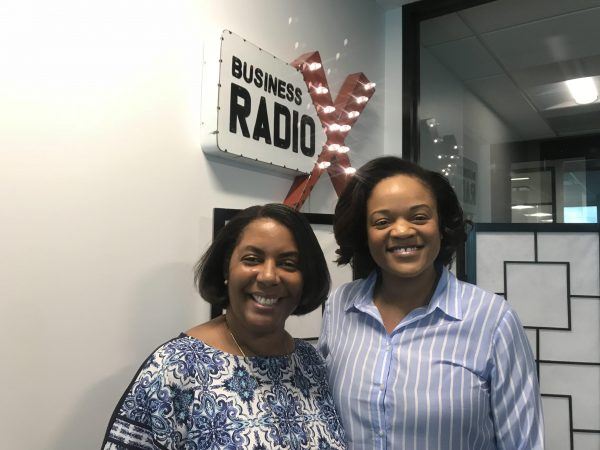
Tammy Gracek with Lund International.
Beau Groover with The Effective Syndicate.
Jason Moss with the Georgia Manufacturing Alliance.