Business RadioX ®

  • Home
  • Business RadioX ® Communities
    • Southeast
      • Alabama
        • Birmingham
      • Florida
        • Orlando
        • Pensacola
        • South Florida
        • Tampa
        • Tallahassee
      • Georgia
        • Atlanta
        • Cherokee
        • Forsyth
        • Greater Perimeter
        • Gwinnett
        • North Fulton
        • North Georgia
        • Northeast Georgia
        • Rome
        • Savannah
      • Louisiana
        • New Orleans
      • North Carolina
        • Charlotte
        • Raleigh
      • Tennessee
        • Chattanooga
        • Nashville
      • Virginia
        • Richmond
    • South Central
      • Arkansas
        • Northwest Arkansas
    • Midwest
      • Illinois
        • Chicago
      • Michigan
        • Detroit
      • Minnesota
        • Minneapolis St. Paul
      • Missouri
        • St. Louis
      • Ohio
        • Cleveland
        • Columbus
        • Dayton
    • Southwest
      • Arizona
        • Phoenix
        • Tucson
        • Valley
      • Texas
        • Austin
        • Dallas
        • Houston
    • West
      • California
        • Bay Area
        • LA
        • Pasadena
      • Colorado
        • Denver
      • Hawaii
        • Oahu
  • FAQs
  • About Us
    • Our Mission
    • Our Audience
    • Why It Works
    • What People Are Saying
    • BRX in the News
  • Resources
    • BRX Pro Tips
    • B2B Marketing: The 4Rs
    • High Velocity Selling Habits
    • Why Most B2B Media Strategies Fail
    • 9 Reasons To Sponsor A Business RadioX ® Show
  • Partner With Us
  • Veteran Business RadioX ®

LIVE from the 2022 Roswell Rotary Golf and Tennis Tournament: Robert Fezza, Odyssey Personal Financial Advisors

October 4, 2022 by John Ray

Odyssey
North Fulton Business Radio
LIVE from the 2022 Roswell Rotary Golf and Tennis Tournament: Robert Fezza, Odyssey Personal Financial Advisors
Loading
00:00 /
RSS Feed
Share
Link
Embed

Download file

Odyssey

LIVE from the 2022 Roswell Rotary Golf and Tennis Tournament: Robert Fezza, Odyssey Personal Financial Advisors (North Fulton Business Radio, Episode 533)

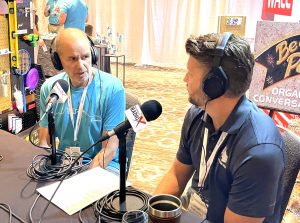
Robert Fezza, CFP, Owner of Odyssey Personal Financial Advisors, sat down with host John Ray to talk about the tremendous charitable work that Roswell Rotary is able to do because of the proceeds from the Golf and Tennis Tournament. Robert discussed his work on Rotary’s charity committee, Odyssey’s sponsorship, the community organizations that Roswell Rotary gives time and money to, the advantages to joining Rotary, and more.

This show was originally broadcast live from the 2022 Roswell Rotary Golf and Tennis Tournament at Brookfield Country Club in Roswell, Georgia, on September 12th, 2022.

North Fulton Business Radio is produced and broadcast by the North Fulton studio of Business RadioX® inside Renasant Bank in Alpharetta.

Odyssey Personal Financial Advisors

Odyssey Personal Financial Advisors works with individuals and families who are seeking customized advice to help them reach their financial goals. An “odyssey” is a long series of wanderings or adventures that includes both challenges and triumphs – they want to be with you through all of them.

Odyssey was founded on the principle of “doing things differently” than what you’ve heard about or experienced with other financial advisors. They are committed to providing personalized, unbiased, ethically-based, and well-researched advice, bringing simplicity to complex financial situations and serenity to our clients.

Their team loves working with people who are serious about their financial futures. If you’re ready to create a personal plan tailored to your long-term goals, they’d love to meet you.

Company website | LinkedIn | Facebook

Robert Fezza, CFP, Owner and Partner, Odyssey Personal Financial Advisors

Robert Fezza, CFP, Owner and Partner, Odyssey Personal Financial Advisors

Robert has been with the firm since 1999. A native New Yorker, Robert and his wife Teri live in Roswell with their two teenage children, Matthew and Megan. Robert is a member of the Financial Planning Association, St. Peter Chanel Knights of Columbus, and the Rotary Club of Roswell. Although he has lived in the Atlanta area for over 20 years, following the New York Jets and Mets is still a favorite pastime.

When not in the office, Robert enjoys golf, working out at Crossfit North Fulton, and watching his kids play sports and dance. He also serves a mentor with Stand Up for Kids Atlanta. He considers it a blessing to have close family members living nearby with his parents having chosen Roswell as their retirement home.

Robert believes one of the best parts of his chosen profession is the trusting personal relationships he develops with his clients by working with them for many years. Robert graduated from Hofstra University in 1992, completed the Oglethorpe University Financial Planning program in 1999 and has served his clients as a CERTIFIED FINANCIAL PLANNER™ professional since 2002. He is a Registered Representative with Cetera Financial Specialists LLC and an Investment Adviser Representative with Cetera Investment Advisers LLC.

LinkedIn

Questions and Topics in the Interview:

  • About Odyssey
  • His membership and sponsorship of the Golf and Tennis Tournament
  • Organizations that benefit from the proceeds
  • Reasons to join Roswell Rotary

North Fulton Business Radio is hosted by John Ray and broadcast and produced from the North Fulton studio of Business RadioX® inside Renasant Bank in Alpharetta. You can find the full archive of shows by following this link. The show is available on all the major podcast apps, including Apple Podcasts, Spotify, Google, Amazon, iHeart Radio, Stitcher, TuneIn, and others.

RenasantBank


Renasant Bank has humble roots, starting in 1904 as a $100,000 bank in a Lee County, Mississippi, bakery. Since then, Renasant has grown to become one of the Southeast’s strongest financial institutions with over $13 billion in assets and more than 190 banking, lending, wealth management and financial services offices in Mississippi, Alabama, Tennessee, Georgia and Florida. All of Renasant’s success stems from each of their banker’s commitment to investing in their communities as a way of better understanding the people they serve. At Renasant Bank, they understand you because they work and live alongside you every day.


Special thanks to A&S Culinary Concepts for their support of this edition of North Fulton Business Radio. A&S Culinary Concepts, based in Johns Creek, is an award-winning culinary studio, celebrated for corporate catering, corporate team building, Big Green Egg Boot Camps, and private group events. They also provide oven-ready, cooked-from-scratch meals to go they call “Let Us Cook for You.” To see their menus and events, go to their website or call 678-336-9196.

Tagged With: Brookfield Country Club, North Fulton Business Radio, Odyssey Personal Financial Advisors, renasant bank, Robert Fezza, Roswell Rotary

Sean Taylor, Smith + Howard

October 4, 2022 by John Ray

North Fulton Business Radio
Sean Taylor, Smith + Howard
Loading
00:00 /
RSS Feed
Share
Link
Embed

Download file

Sean Taylor

Sean Taylor, Smith + Howard (North Fulton Business Radio, Episode 532)

On this episode of North Fulton Business Radio, Sean Taylor, Managing Partner of Smith + Howard, joined host John Ray to discuss his award-winning firm’s growth and culture. Sean discussed the firm’s recognition as “Best of the Best” by Inside Public Accounting, how the firm’s culture contributes to employee retention and talent acquisition, expansion beyond traditional accounting services, and much more.

North Fulton Business Radio is broadcast from the North Fulton studio of Business RadioX® inside Renasant Bank in Alpharetta.

Smith + Howard

While many advisors say clients are their priority, Smith and Howard lives and breathes a promise of personal, responsive client service.

They hire smart, engaging professionals who find motivation and satisfaction in learning about their clients’ businesses, challenges, and goals. From that vantage point, they are positioned to provide key strategic advice and national-firm services that enable our clients to move their mission forward.

Service is such an important part of the Smith and Howard culture that if they are not serving clients, they’ll often be found serving in other ways. Many of them plant roots deep in their communities and find value and satisfaction in serving others where they live. When the needs expand beyond their neighborhoods, they can also be found on nonprofit boards or joining service projects that broaden their reach and impact.

Company website | LinkedIn | Facebook | Twitter

Sean Taylor, Managing Partner, Smith + Howard

Sean Taylor, Managing Partner, Smith + Howard

Sean drives the vision, innovation, and growth of the firm, and was named a Most Admired CEO by the Atlanta Business Chronicle in 2020 in recognition of his leadership.

Sean Taylor became managing partner of Smith and Howard in January 2019 after 25 years of leadership progression in the Assurance practice. He joined the firm as an intern and was ultimately named partner in charge of the Assurance practice in 2010, a role he held for nearly a decade.

A recognized and respected leader, Sean presents to many for-profit and nonprofit businesses, lenders, and other professional service providers. He has both served on and moderated numerous workshop and conference panels, as well as presented to local and national audiences on various topics.

Sean is an active participant and advocate at Smith and Howard for our mentoring program, personally mentoring many of our professional and administrative staff through career progression and advancement.

Sean is actively involved as a multi-year member of various committees at Dunwoody United Methodist Church (DUMC), including finance, staff parish relations, leadership roundtable, missions and evangelism. He also had led strategic planning initiatives as well as capital campaigns for the church. Additionally, Sean served seven years on the Council on Finance and Administration at the North Georgia Conference of the United Methodist Church, including time as the vice chair and chair.

Sean is currently a member of the Board of Trustees for Wesleyan School, serving actively on the finance and investment committees, and is also a member of the finance committee for the Community Foundation for Greater Atlanta.

In 2012, Sean co-founded FoodStock, an annual food packaging event in Dunwoody, Georgia, where over 1,000 community members pack 300,000 meals in one day for children in school feeding programs around the globe. This is the largest single-day food packaging event of its kind in Georgia and, to date, this event and other food packaging events in the Dunwoody community associated with FoodStock have packaged over 3.6 million meals.

Additionally, Sean serves as a mentor to 13 young men through a group he founded called Fit 4 Life, discussing various aspects of faith and life for these 13 young men.

Sean graduated from the University of Georgia with a Bachelor of Business Administration in Accounting.

Affiliations: American Institute of Certified Public Accountants Georgia Society of Certified Public Accountants (Leadership Academy Inaugural Member) Wesleyan School (Board of Trustees) Dunwoody United Methodist Church Awards Georgia Society of Certified Public Accountants’ Public Service Award (2020) Atlanta Business Chronicle Most Admired CEOs (2020).

LinkedIn

Questions and Topics in this Interview:

  • Inside Public Accounting “Best of the Best”
  • New Areas in which the firm is growing
  • #1 issue CPA profession is facing
  • Let’s talk about where you are innovating
  • What are you most excited about at Smith + Howard
  • How do you live your values
  • What is the culture like at Smith + Howard
  • Where do you see the firm 5 years from now

North Fulton Business Radio is hosted by John Ray and broadcast and produced from the North Fulton studio of Business RadioX® inside Renasant Bank in Alpharetta. You can find the full archive of shows by following this link. The show is available on all the major podcast apps, including Apple Podcasts, Spotify, Google, Amazon, iHeart Radio, Stitcher, TuneIn, and others.

RenasantBank


Renasant Bank has humble roots, starting in 1904 as a $100,000 bank in a Lee County, Mississippi, bakery. Since then, Renasant has grown to become one of the Southeast’s strongest financial institutions with over $13 billion in assets and more than 190 banking, lending, wealth management and financial services offices in Mississippi, Alabama, Tennessee, Georgia and Florida. All of Renasant’s success stems from each of their banker’s commitment to investing in their communities as a way of better understanding the people they serve. At Renasant Bank, they understand you because they work and live alongside you every day.


Special thanks to A&S Culinary Concepts for their support of this edition of North Fulton Business Radio. A&S Culinary Concepts, based in Johns Creek, is an award-winning culinary studio, celebrated for corporate catering, corporate team building, Big Green Egg Boot Camps, and private group events. They also provide oven-ready, cooked-from-scratch meals to go they call “Let Us Cook for You.” To see their menus and events, go to their website or call 678-336-9196.

Tagged With: A&S Culinary Concepts, Accounting, CPa, Culture, employee retention, Inside Public Accounting Best of the Best, North Fulton Business Radio, renasant bank, Sean Taylor, Smith & Howard, talent acquisition

Richard Grove, COO, Wall Control, and Small Business Consultant

October 3, 2022 by John Ray

Richard Grove
North Fulton Studio
Richard Grove, COO, Wall Control, and Small Business Consultant
Loading
00:00 /
RSS Feed
Share
Link
Embed

Download file

Richard Grove

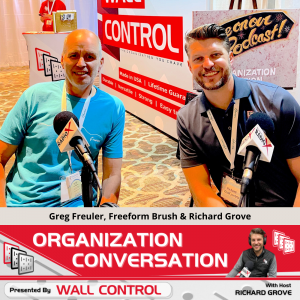
Richard Grove, COO, Wall Control, and Small Business Consultant (Time Well Spent with Julie Hullett, Episode 9)

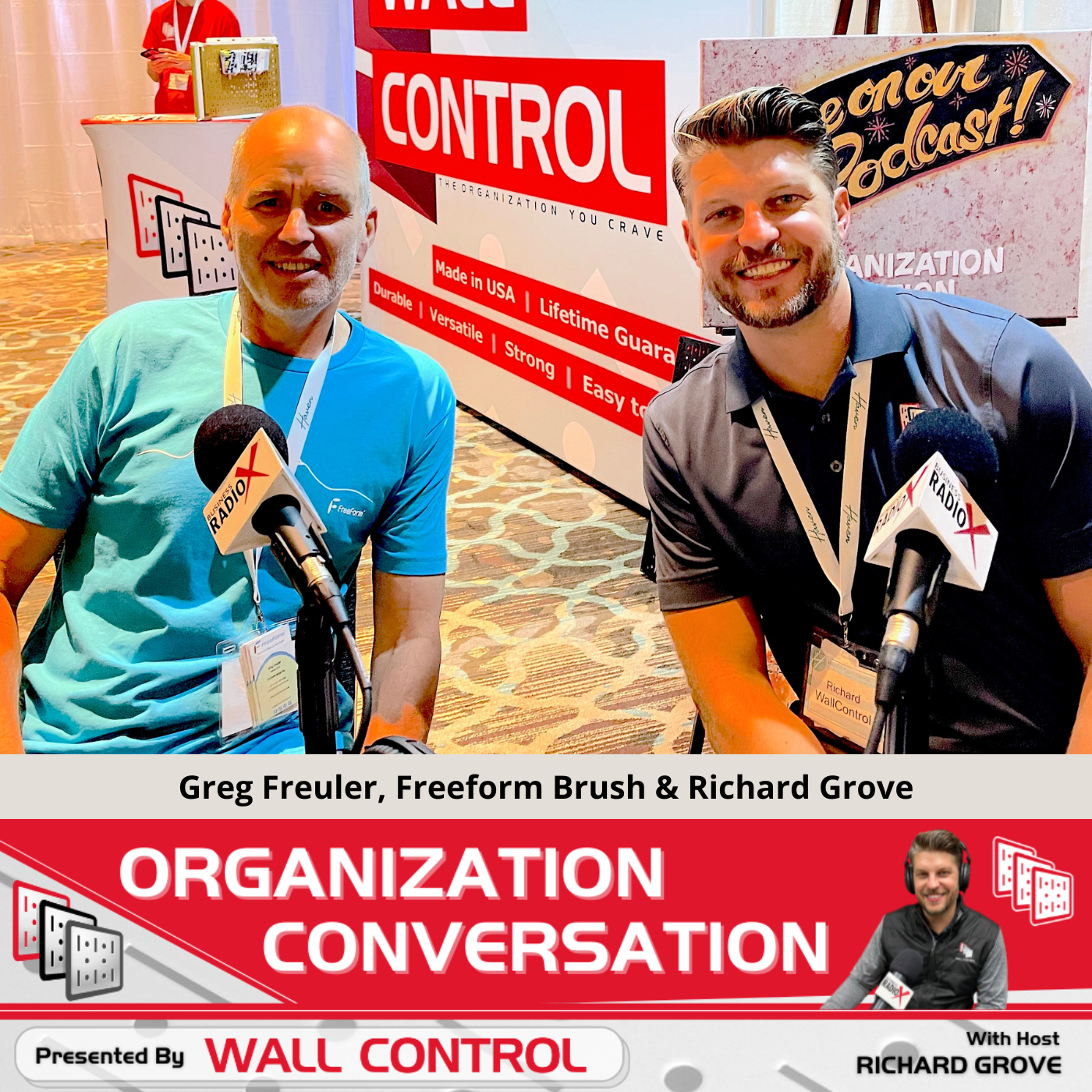
Richard Grove, COO at Wall Control and a Small Business Consultant, joined Julie to talk about the history of Wall Control, what a metal pegboard system is and how it helps to organize, his other projects, and more.

After the interview, Julie shared a Quick Tip to remind you that asking for help is one way to avoid hustling all the time.

Time Well Spent with Julie Hullett is presented by Julie Hullett Concierge, LLC and produced by the North Fulton studio of Business RadioX®.

Wall Control

The Wall Control story began in 1968 in a small tool & die shop just outside Atlanta, Georgia. The first of three generations began their work in building a family-based US manufacturer with little more than hard work and the American Dream.

Over the past 50+ years, this family business has continued to grow and expand from what was once a small tool & die shop into an award-winning US manufacturer of products ranging from automobile components to satellite panels and now, the best wall-mounted tool storage system available today, Wall Control.

The Wall Control brand launched in 2003 and is a family-owned and operated business that not only produces a high-quality American Made product but sees the entire design, production, and distribution process happen under their own roof in Tucker, Georgia. Under that same roof, three generations of American Manufacturing are still hard at work creating the best tool storage products available today.

Company website | Facebook | Instagram

Richard Grove, COO, Wall Control and Small Business Consultant

Richard Grove, COO, Wall Control and Small Business Consultant

Richard Grove’s background is in engineering but what he enjoys most is brand building through relationships and creative marketing. Richard began his career with the Department of Defense as an engineer on the C-5 Galaxy Engineering Team based out of Warner Robins. While Richard found this experience both rewarding and fulfilling, he always knew deep down that he wanted to return to the small family business that originally triggered his interest in engineering.

Richard came to work for the family business, Dekalb Tool & Die, in 2008 as a Mechanical Engineer. At the time Wall Control was little more than a small ‘side hustle’ for Dekalb Tool & Die to try to produce some incremental income. There were no “Wall Control” employees, just a small warehouse with a single tool and die maker that would double as an “order fulfillment associate” on the occasion that the original WallControl.com website, which Richard’s grandmother built, pulled in an order.

In 2008, it became apparent that for the family business to survive they were going to have to produce their own branded product at scale to ensure jobs remained in-house and for the business to continue to move forward. Richard then turned his attention from tool and die to Wall Control to attempt this necessary pivot and his story with Wall Control began. Since that time, Richard has led Wall Control to significant growth while navigating two recessions.

Outside of Richard’s work at Wall Control he enjoys helping other business owners, operators, and entrepreneurs along their own paths to success by offering personal business coaching and advising through his website ConsultantSmallBusiness.com. Richard has developed an expansive and unique skillset growing and scaling Wall Control through a multitude of challenges to the successful brand and company it is today. Richard is happy to share his knowledge and experience with others who are looking to do the same within their own businesses.

Instagram | Twitter | LinkedIn | Richard’s Website

About Time Well Spent

Time Well Spent with Julie Hullett features stories from busy professionals who have created more time to do what they love. Every other week, your host and personal concierge Julie Hullett speaks with entrepreneurs, community leaders, and influencers to answer the question: What would you do if you had more time?

The show is produced by the North Fulton studio of Business RadioX® and can be found on all the major podcast apps. The complete show archive is here.

Julie Hullett, Host of Time Well Spent with Julie Hullett

Julie Hullet, Host of Time Well Spent with Julie Hullett

Julie Hullett is the host of Time Well Spent with Julie Hullett.

Julie Hullett is a personal concierge and entrepreneur in Nashville, TN. She founded Julie Hullett Concierge, LLC in 2011 to give people their time back so they can do more of what they love. No stranger to big ideas and pursuing passions, Julie left corporate America to create her business. She capitalized on her skills—multi-tasking, attention to detail, and time management, to name a few—to build a successful business that gives back. Her clients enjoy ample free time. They’ve traveled more, spent more time with those they love, and have even created their own businesses.

Connect with Julie:

Website| LinkedIn | Instagram. Sign up to receive her newsletter.

Tagged With: Julie Hullett Concierge LLC, organization, pegboard system, personal concierge, Richard Grove, small business, Time Well Spent with Julie Hullett, Wall Control

Have an Exit Plan, with Anthony Chen, Host of Family Business Radio

October 3, 2022 by John Ray

exit plan
Family Business Radio
Have an Exit Plan, with Anthony Chen, Host of Family Business Radio
Loading
00:00 /
RSS Feed
Share
Link
Embed

Download file

exit plan

Have an Exit Plan, with Anthony Chen, Host of Family Business Radio

In a commentary from a recent Family Business Radio episode, host Anthony Chen discussed the value of having an exit plan and being aware of what your true goals are.

Anthony’s commentary was taken from this episode of Family Business Radio. Family Business Radio is underwritten by Anthony Chen with Lighthouse Financial Network.

Anthony Chen, Host of Family Business Radio

family owned craft breweries
Anthony Chen

This show is sponsored and brought to you by Anthony Chen with Lighthouse Financial Network. Securities and advisory services offered through Royal Alliance Associates, Inc. (RAA), member FINRA/SIPC. RAA is separately owned and other entities and/or marketing names, products or services referenced here are independent of RAA. The main office address is 575 Broadhollow Rd. Melville, NY 11747. You can reach Anthony at 631-465-9090 ext. 5075 or by email at anthonychen@lfnllc.com.

Anthony Chen started his career in financial services with MetLife in Buffalo, NY in 2008. Born and raised in Elmhurst, Queens, he considers himself a full-blooded New Yorker while now enjoying his Atlanta, GA home. Specializing in family businesses and their owners, Anthony works to protect what is most important to them. From preserving to creating wealth, Anthony partners with CPAs and attorneys to help address all of the concerns and help clients achieve their goals. By using a combination of financial products ranging from life, disability, and long-term care insurance to many investment options through Royal Alliance. Anthony looks to be the eyes and ears for his client’s financial foundation. In his spare time, Anthony is an avid long-distance runner.

The complete show archive of Family Business Radio can be found at familybusinessradioshow.com.

Tagged With: Anthony Chen, assets, career, exit plan, exit planning, Family Business Radio, financial planner, goals, Lighthouse Financial Network, retirement

Jeff Fischer, Houck’s Grille and Independent Business Consultant

September 30, 2022 by John Ray

Houck's Grille
North Fulton Business Radio
Jeff Fischer, Houck's Grille and Independent Business Consultant
Loading
00:00 /
RSS Feed
Share
Link
Embed

Download file

Houck's Grille

Jeff Fischer, Houck’s Grille and Independent Business Consultant (North Fulton Business Radio, Episode 531)

After a successful career at UPS, Jeff Fischer settled into full-time business ownership and consulting with small businesses and non-profits. Jeff joined host John Ray on this edition of North Fulton Business Radio to discuss his career path and what he learned from his time at UPS, how he helps the organizations he consults with, the great food and drink at Houck’s Grille, their private dining and event space, and much more.

North Fulton Business Radio is broadcast from the North Fulton studio of Business RadioX® inside Renasant Bank in Alpharetta.

Houck’s Grille

Located in the heart of Roswell, Houck’s offers classic American dining, a large event facility & weekly live entertainment.

This favorite American restaurant was open back in the day, and its owners decided to re-imagine the menu and space and bring it back to Atlanta. Whether you are looking to stop by for brunch, dinner, or lunch, their menu has a wide array of delicious choices to fulfill your appetite.

Houck’s is also a bar and grill, and they serve a number of local tap beers! They pride themselves on the huge event space attached to the facility.

Live music and entertainment is always in abundance on the weekends, and private events can be booked for birthday parties, wedding rehearsals, and more!  Just give them a call today at (770) 993-8000 to ask about any of these options!

They also have a private dining space, inclusive of: – A private entrance for you and your guests – Private Men’s/ Women’s Restrooms – Per-person pricing – Personal event coordination services – A dedicated bartender for your very own bar – Drink packages for every budget – Customized menus

Contact the Events Director, Shelby Walsh for more information by email at shelby.walsh@houcksgrille.com or by phone at 404.368.0223

Company website | Facebook | Instagram | Pinterest
Jeff Fischer, Owner, Houck’s Grille and Independent Business Consultant

Jeff Fischer, Owner, Houck’s Grille and Independent Business Consultant

Jeff Fischer has over 35 years of experience within the global supply chain industry; of which the final 25 were with UPS. During his UPS career, Jeff worked on developing integrated logistics solutions for the world’s largest Fortune 100 companies. He was a key member of a UPS team that won a $1 Billion service parts logistics contract with IBM followed by a $750 Million similar logistics deal with Compaq; the 2 largest revenue opportunities for UPS at the time. This was followed by converting 4,000+ Mail Boxes Etc. (MBE) to The UPS Store retail network, and later in his career directing the operations of a customer contact center in Richmond, VA.

Prior to joining UPS, Jeff worked for Fuji Photo Film USA and Lever Brothers in New York. Jeff has written and published over 100 articles for a variety of logistics and business magazines. He was an adjunct professor in New York and Georgia colleges teaching logistics, international management, thesis research and writing, and organizational management.

He holds both a Bachelor of Science in Transportation and Distribution Management and a Bachelor of Science in Marketing from Syracuse University; and earned a Master of Business Administration in Management from Long Island University. Jeff is a native of the New York City area and moved to Atlanta with UPS in 1994.

He has been married to his wife Nancy 37 years with 2 adult children Matthew and Christine. Jeff has been the co-owner of Roswell’s Houck’s Grille since opening in 2015 and the primary face and voice of Houck’s since the pandemic in the spring of 2020. Since retiring from UPS, in April 2018, Jeff has also been supporting many local non-profits by leveraging his acquired business acumen and corporate experience through Houck’s Grille as well as his consulting practice, The Whole Business LLC.

Whether sponsoring a cause, hanging a poster, having a community giveback day, etc., leveraging the space and Houck’s brand is an opportunity, even during the pandemic, to give back to the community. In some cases, the combination of being a former executive of three Fortune 100 companies and owner of a small family restaurant has afforded Jeff the opportunity to serve as an advisory board, board, or executive board member.

As an independent consultant, in addition to non-profits, Jeff helps small and medium sizes companies increase revenue, improve profitability, improve customer experience, and/or reduce operational expense by taking a holistic 360-degree of all processes within the order-to-cash cycle or simply put, within the four walls of a business, to see what’s working and what’s not.

LinkedIn

Questions and Topics in this Interview:

  • Briefly discuss your global supply chain/logistics career pre-UPS and UPS, and the transition to owning a small business
  • Why start a restaurant?
  • How have your past corporate background and present restaurant ownership redefined you or help you now in this part of your life?
  • What are some of the business skills or experiences you’ve had helped specifically with non-profits?
  • How do you typically engage with a non-profit? What are they typically asking of you or Houck’s?
  • How have your family and friends, whether growing up or now, influenced and guided you?
  • So, what’s next for you?

North Fulton Business Radio is hosted by John Ray and broadcast and produced from the North Fulton studio of Business RadioX® inside Renasant Bank in Alpharetta. You can find the full archive of shows by following this link. The show is available on all the major podcast apps, including Apple Podcasts, Spotify, Google, Amazon, iHeart Radio, Stitcher, TuneIn, and others.

RenasantBank


Renasant Bank has humble roots, starting in 1904 as a $100,000 bank in a Lee County, Mississippi, bakery. Since then, Renasant has grown to become one of the Southeast’s strongest financial institutions with over $13 billion in assets and more than 190 banking, lending, wealth management and financial services offices in Mississippi, Alabama, Tennessee, Georgia and Florida. All of Renasant’s success stems from each of their banker’s commitment to investing in their communities as a way of better understanding the people they serve. At Renasant Bank, they understand you because they work and live alongside you every day.


Special thanks to A&S Culinary Concepts for their support of this edition of North Fulton Business Radio. A&S Culinary Concepts, based in Johns Creek, is an award-winning culinary studio, celebrated for corporate catering, corporate team building, Big Green Egg Boot Camps, and private group events. They also provide oven-ready, cooked-from-scratch meals to go they call “Let Us Cook for You.” To see their menus and events, go to their website or call 678-336-9196.

Tagged With: A&S Culinary Concepts, business consultant, GNFCC, Houck's Grille, Jeff Fischer, Nonprofit, North Fulton Business Radio, renasant bank, UPS

John Webster, DC, Roswell Health and Injury Center

September 30, 2022 by John Ray

Roswell Health and Injury Clinic
North Fulton Business Radio
John Webster, DC, Roswell Health and Injury Center
Loading
00:00 /
RSS Feed
Share
Link
Embed

Download file

Roswell Health and Injury Clinic

John Webster, DC, Roswell Health and Injury Center (North Fulton Business Radio, Episode 530)

Dr. John Webster, Owner of Roswell Health and Injury Center, shared with host John Ray the fascinating story of how he came to be a chiropractor, which has been his profession for thirty-eight years. Dr. Webster discussed the causes of problems in the spine besides injury, the history of chiropractic, the conditions he treats, the importance of drinking water, and more.

North Fulton Business Radio is broadcast from the North Fulton studio of Business RadioX® inside Renasant Bank in Alpharetta.

Roswell Health and Injury Center

Roswell Health and Injury Center is a healing center for both the injured and those who simply want to be healthy. They have the latest technology to properly diagnose and treat your condition. The doctor and staff are especially caring and pay close attention to detail. Care plans are individually designed to get the best results as quickly as possible. Any case that is beyond our expertise is referred to the appropriate medical specialist.

Company website | LinkedIn | Facebook

John Webster, DC, Owner, Roswell Health and Injury Center

John Webster, DC, Owner, Roswell Health and Injury Center

Dr. John Webster discovered the benefits of chiropractic care as a young man. He was struck with a life-changing health condition for which traditional medicine had no answer. As a last resort, he tried chiropractic and was very surprised and pleased at the amazing results. This led him to become a chiropractor himself.

He has helped thousands over the last 38 years and still enjoys helping people every day.

LinkedIn

Questions and Topics in this Interview:

  • History of chiropractic. How it started and how it has evolved over the years
  • Is chiropractic accepted as mainstream? Does the medical profession “approve” of the chiropractic profession?
  • Dr. Webster’s path to chiropractic
  • Is it safe for children and how so?
  • Discuss the most common conditions and solutions that you see in your practice
  • Discuss Personal Injury and why a person should be examined by a chiropractor even if they don’t feel that they are hurt.

North Fulton Business Radio is hosted by John Ray and broadcast and produced from the North Fulton studio of Business RadioX® inside Renasant Bank in Alpharetta. You can find the full archive of shows by following this link. The show is available on all the major podcast apps, including Apple Podcasts, Spotify, Google, Amazon, iHeart Radio, Stitcher, TuneIn, and others.

RenasantBank


Renasant Bank has humble roots, starting in 1904 as a $100,000 bank in a Lee County, Mississippi, bakery. Since then, Renasant has grown to become one of the Southeast’s strongest financial institutions with over $13 billion in assets and more than 190 banking, lending, wealth management and financial services offices in Mississippi, Alabama, Tennessee, Georgia and Florida. All of Renasant’s success stems from each of their banker’s commitment to investing in their communities as a way of better understanding the people they serve. At Renasant Bank, they understand you because they work and live alongside you every day.


Special thanks to A&S Culinary Concepts for their support of this edition of North Fulton Business Radio. A&S Culinary Concepts, based in Johns Creek, is an award-winning culinary studio, celebrated for corporate catering, corporate team building, Big Green Egg Boot Camps, and private group events. They also provide oven-ready, cooked-from-scratch meals to go they call “Let Us Cook for You.” To see their menus and events, go to their website or call 678-336-9196.

Tagged With: A&S Culinary Concepts, chiropractic, Dr John Webster, North Fulton Business Radio, renasant bank, Roswell Health and Injury Center

Tax Consequences of a Practice Sale

September 30, 2022 by John Ray

Advisory Insights Podcast
Tax Consequences of a Practice Sale
Loading
00:00 /
RSS Feed
Share
Link
Embed

Download file

Tax Consequences of a Practice Sale

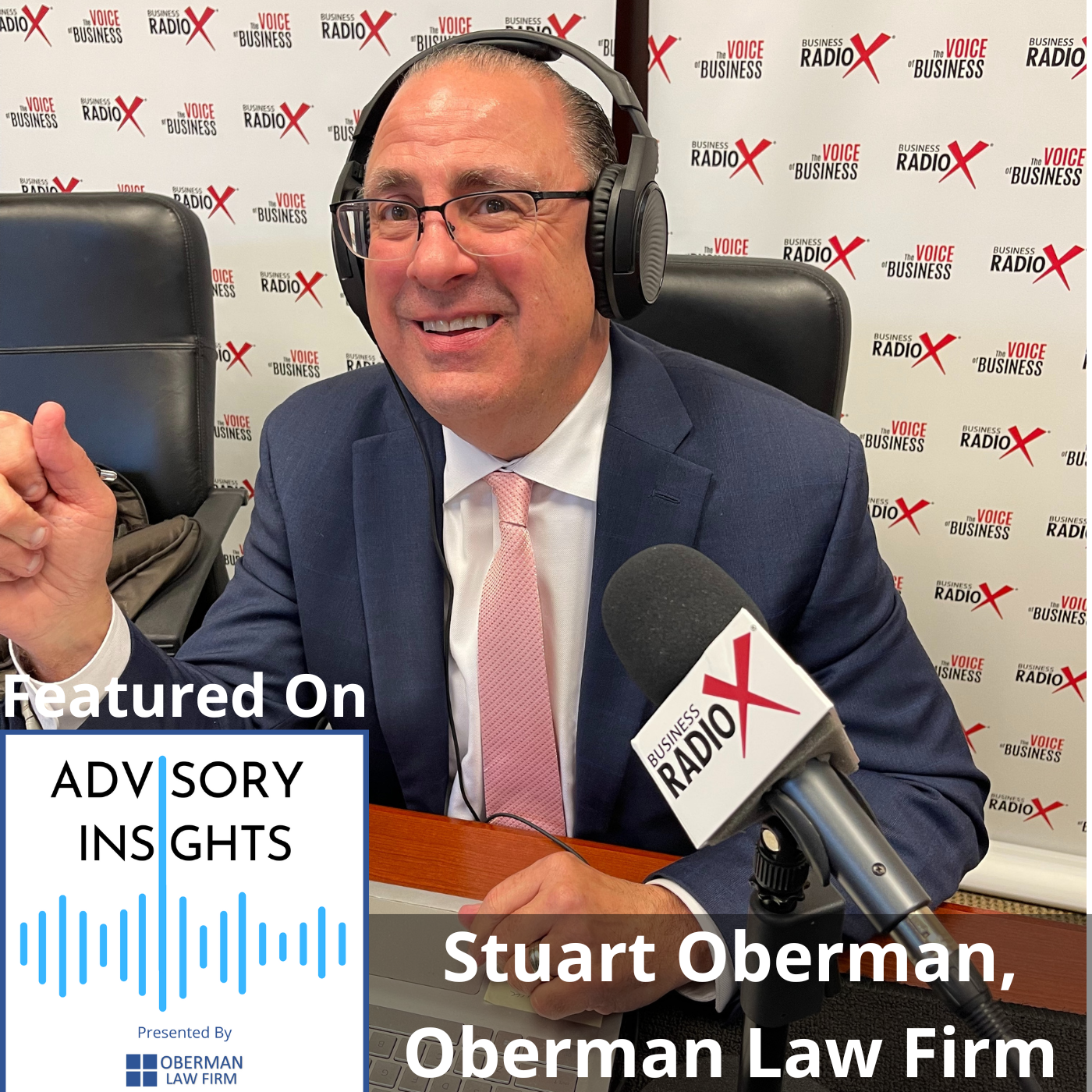
Tax Consequences of a Practice Sale (Advisory Insights Podcast, Episode 11)

On this episode of Advisory Insights, Stuart Oberman talked with Danielle McBride, Partner at Oberman Law Firm, on corporate sales transactions. She emphasized the importance of involving a CPA early in the transaction to ensure that the proper documentation is in place to avoid double taxation.

Advisory Insights is presented by Oberman Law Firm and produced by the North Fulton studio of Business RadioX®. The series can be found on all the major podcast apps. You can find the complete show archive here.

Danielle McBride, Partner, Oberman Law Firm

Danielle McBride
Danielle McBride, Partner, Oberman Law Firm

Danielle McBride has been practicing law for over 21 years, and her primary focus is representing healthcare clients on a local, regional, and national basis. Ms. McBride regularly consults with clients regarding simple to complex healthcare transitions, including mergers and acquisitions, employment law, governmental compliance, tax strategies, practice valuations, DSO formation and structures, employee compensation, associate and partnership contracts, joint ventures, and partnership buy-in/buy-outs.

In addition, Ms. McBride brings a wealth of knowledge and experience preparing practice valuations for clients, as well as formulating simple to complex tax strategies, and entity formations.

Ms. McBride holds a Bachelor of Arts in Sociology/Criminology from The Ohio State University, a Juris Doctor (J.D.) from Ohio Northern University Pettit College of Law, and a Master of Laws (LL.M.) in Taxation from Case Western Reserve University.

LinkedIn

TRANSCRIPT

Intro: [00:00:01] Broadcasting from the studios of Business RadioX, it’s time for Advisory Insights. Brought to you by Oberman Law Firm, serving clients nationwide with tailored service and exceptional results. Now, here’s your host.

Stuart Oberman: [00:00:19] Welcome everyone to Advisory Insights. This is Stuart Oberman, Oberman Law Firm. Well, we have a fantastic guest with us today on our podcast, Danielle McBride, who is a partner in Oberman Law Firm, and who does an enormous amount of health care transactions on a national basis.

Stuart Oberman: [00:00:40] For those who are not familiar with our firm, we are very, very health care centered. Last year, we did 135 transactions, and I believe the number was, maybe, about 350 million was total of the transactions. So, through this craze that we’re in, mergers and acquisitions, the tax consequences are so under viewed that they got to get out in the forefront of these issues.

Stuart Oberman: [00:01:14] And Danielle McBride, who does a fabulous job with the firm, and who is our resident tax guru, if you will, and has a master’s in tax is really going to walk us through some things. And I got some questions along the way that she’ll answer, hopefully. And this is such an ongoing topic. We can talk about tax consequences for a day and not even cover everything on a merger and acquisition. So, Danielle, welcome to the show again.

Danielle McBride: [00:01:44] Thanks, Stuart. Good to be here and happy to put some information out there so our buyers and sellers can be a little more educated on these topics.

Stuart Oberman: [00:01:51] Yeah, it’s amazing. It is amazing how many questions you receive and we all receive on these deals and how uninformed some advisors are. And I want you to touch on that later on during the podcast. But, you know, I want to talk about some of the things you run into on the sales tax side, you’ve got goodwill, you’ve got personal versus corporate, you’ve got C versus S corporations, you’ve got reporting issues. I know, again, it’s a long, long, long conversation we can have on this. And I know you’ll drill it down to the basics, which will not cover all the details. So, tell us, I want to know what you’re running into on some of these sales.

Danielle McBride: [00:02:39] Sure. So, you know, basic tax consequences, I think a lot of that information is out there. You’ve got a sale of tangible assets, a sale of goodwill, capital gain on goodwill, tax treatment is ordinary income on the sale of tangible assets. But it gets much more complicated and there can be a lot more detail involved depending on the type of entity that someone has.

Danielle McBride: [00:03:03] So, if your seller is, say, a C Corporation versus an S Corporation or an LLC, a C Corporation has an entity level tax. It’s not a pass through entity, which means that there is a tax on the sale of any assets from the corporation first. And then, you’ve got your shareholders receiving distributions of the balance of that. And so, there could be a goodwill double taxation issue if your corporation owns the goodwill and sells it. So, that’s where personal goodwill is kind of a key component.

Danielle McBride: [00:03:42] And most important in these C Corporation sales, and we still have a lot of older C Corporations that are out there in the health care world, so you want to make sure that you’re looking at that. Not only C Corporations but S Corporations. If a C Corporation elected S Corporation status, they have a five year window during which they still get treated if they sell assets like they’re a C Corporation. They call it a built-in gains tax.

Danielle McBride: [00:04:14] So, you’ve got to be aware if you’re a C Corporation or a C that elected S status and you haven’t met your five year built-in gains tax window, personal goodwill in those cases is just key because you’re going to avoid a double taxation issue if you set up the transaction properly using personal goodwill instead of having the corporation own and sell all of the assets.

Stuart Oberman: [00:04:39] That’s a good point.

Danielle McBride: [00:04:39] So, it could be a huge tax difference here. And so, that’s something you got to talk to your advisors about, make sure that it’s being structured properly, make sure your contracts have those things specifically listed in it, and the sellers are listed as both personal seller selling personal goodwill and corporations selling the assets.

Danielle McBride: [00:05:03] And then, that even goes down to payments as well. Make sure if you’re getting personal goodwill and it’s a key component in this C Corporation or what we call sort of a non-ripe S Corporation. You know, the payment and all of the documentation needs to track in order to protect that personal goodwill concept and keep you from paying twice on the goodwill.

Stuart Oberman: [00:05:28] A non-write election corporation?

Danielle McBride: [00:05:32] Non-ripe.

Stuart Oberman: [00:05:33] Ripe. Okay.

Danielle McBride: [00:05:34] We call it a non-ripe S election when you’ve elected S Corporation status and you have that five year building gains tax window that you have to meet.

Stuart Oberman: [00:05:44] You just mentioned a couple of things. Do you write in cases where the CPAs, one, don’t understand transactions, or, two, they don’t get involved early enough?

Danielle McBride: [00:05:57] Yeah, absolutely. And the latter is what I see most often. The clients are hesitant to get their accountants involved early in the transaction, and I think that’s one of the biggest mistakes that I see made is not involving that CPA. And there are lots of good CPAs out there that understand and work in these dental transactions. And they just need to be looped in and they need to help talk about personal versus corporate goodwill. If there are tax attributes that the corporation could use some things allocated to corporate goodwill versus personal goodwill, because they’ve got corporate tax attributes to use up.

Danielle McBride: [00:06:44] I mean, the CPA is in a position to know these things, and they’re also the first line of defense if a transaction gets audited. So, they need to be involved from the beginning. And everybody needs to be on the same page. So, I always say, practice transitions, practice sales, business sales, they’re a team sport. And you need to have all your team players on the field when you’re trying to work through these things.

Stuart Oberman: [00:07:12] I don’t know, some transactions are a blood sport. I don’t know about a team sport.

Danielle McBride: [00:07:18] That’s when we get the corporate transactions involved and it gets more complicated because –

Stuart Oberman: [00:07:22] And I know you run into this, when everyone is ready to quit the deal, I mean, everyone’s like, “I’m done with this. I can’t do this anymore. I’m sick of this. I’m done. We’re about one day away from finalizing the deal, aren’t we?” It’s just gets to that stage.

Stuart Oberman: [00:07:37] Now, you also mentioned a couple of things. You mentioned, you know, at the end of the transaction, there’s got to be a true up of allocations that have to be reported to the IRS. How important is that and what form is that?

Danielle McBride: [00:07:51] That is very important, and it’s often overlooked, and most clients don’t understand this, and don’t know anything about it as well. It’s a Form 8594. So, in a sale transaction, you have to report the transaction to the IRS. That gets done on a Form 8594. That should be prepared by the accountants. Another reason accountants need looped into this, because they’re the ones that ultimately prepare that Form 8594 to submit to the IRS.

Danielle McBride: [00:08:21] So, in the documents, it’s important to have the price allocation spelled out so that the accountants can properly report this, because it’s the same as if you accidentally forget to report that you got a 1099 or a W-2 from an employer, you’re going to wind up audited because the IRS gets reporting from both sides of a transaction. So, if you don’t submit an 8594 or you submit one that’s different than the other party, it’s going to flag you for an audit.

Stuart Oberman: [00:08:54] Now, I got one question that we’ve run into on occasion. What happens if the buyer wants to set a floating sales price that is spread out through the years where, let’s say, they say if you hit this target, this is a sale price. And that may go on for two or three years. How complex is that and how problematic is that for the seller who doesn’t know what in the world to do with this taxes?

Danielle McBride: [00:09:21] Yeah. So, that is also a reason to have your accountant involved because there are certain ways that you can report that. And that may get reported as an installment sale. And those numbers, you don’t want to report it on that initial tax form that goes in because you may or may not receive those amounts. Those amounts could be treated as an installment sale, and you don’t get taxed until you actually receive the funds.

Stuart Oberman: [00:09:45] Oh, wow. Okay. So, that sounds like another podcast. I mean, it truly is amazing. You know, in this brief, brief segment that you’ve touched on, you’ve touched on corporate goodwill, personal versus corporate, C versus S Corporation, reporting 8594, and you’ve touched on installment sales. I mean, it is truly amazing what has to be done on a tax side from a sale, whether it is a small sale or $44 million sale, which we’ve handled on a transaction.

Stuart Oberman: [00:10:27] I say we could talk seven days on topics. But in closing, is there anything you’d want to add advice that we can give our listeners on what they want to do before they start getting into the meat of this transaction or a transaction?

Danielle McBride: [00:10:49] Well, make sure you reach out to your advisors. If you’ve got letters of intent, make sure you show those to your advisors and go through those. Make sure you’re thinking about the structure and the tax allocations. And make sure you understand the terms of the deal, you know, things like personal versus corporate goodwill. Another thing we didn’t even touch on that I see as a big issue is accounts receivable and how that’s going to be handled.

Stuart Oberman: [00:11:17] There’s another podcast. You’re making a career out of this.

Danielle McBride: [00:11:20] Yeah. You’re going to keep me on this.

Stuart Oberman: [00:11:24] We’re going to have the Danielle McBride show here in a minute. They’re going to give me the hook. You’ve already teed up seven episodes here. It’s like a version of a Game of Thrones, geez. Well, again, it is amazing and you’ve done an amazing job since joining the firm. We’re so happy to have you. You bring so much gravitas to the table. Again, we’re definitely going to have you back on this show.

Stuart Oberman: [00:11:53] So, in parting, if you need to reach Danielle, please feel free to email her at danielle, D-A-N-I-E-L-L-E, @obermannlaw.com. The phone number 770-886-2400. Folks, it’s been an absolute pleasure and we hope that you’ve at least taken away one golden nugget of this. And if so, we’ll consider this podcast an absolute success. Danielle, thank you again. I know you’ve got a convention to go to. And we appreciate your time. Thanks a lot. Ladies and gentlemen, thanks and have a fantastic day.

Outro: [00:12:30] Thank you for joining us on Advisory Insights. This show is brought to you by Oberman Law Firm, a business-centric law firm representing local, regional, and national clients in a wide range of practice areas, including health care, mergers and acquisitions, corporate transactions, and regulatory compliance.

About Advisory Insights Podcast

Presented by Oberman Law Firm, Advisory Insights Podcast covers legal, business, HR, and other topics of vital concern to healthcare practices and other business owners. This show series can be found here as well as on all the major podcast apps.

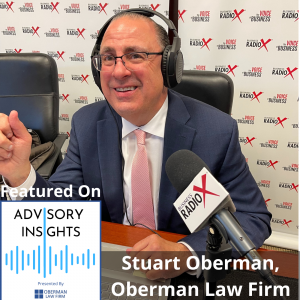
Stuart Oberman, Oberman Law Firm

Oberman Law Firm

Stuart Oberman, Founder, Oberman Law Firm

Stuart Oberman is the founder and President of Oberman Law Firm. Mr. Oberman graduated from Urbana University and received his law degree from John Marshall Law School. Mr. Oberman has been practicing law for over 25 years, and before going into private practice, Mr. Oberman was in-house counsel for a Fortune 500 Company. Mr. Oberman is widely regarded as the go-to attorney in the area of Dental Law, which includes DSO formation, corporate business structures, mergers and acquisitions, regulatory compliance, advertising regulations, HIPAA, Compliance, and employment law regulations that affect dental practices.

In addition, Mr. Oberman’s expertise in the healthcare industry includes advising clients in the complex regulatory landscape as it relates to telehealth and telemedicine, including compliance of corporate structures, third-party reimbursement, contract negotiations, technology, health care fraud, and abuse law (Anti-Kickback Statute and the State Law), professional liability risk management, federal and state regulations.

As the long-term care industry evolves, Mr. Oberman has the knowledge and experience to guide clients in the long-term care sector with respect to corporate and regulatory matters, assisted living facilities, continuing care retirement communities (CCRCs). In addition, Mr. Oberman’s practice also focuses on health care facility acquisitions and other changes of ownership, as well as related licensure and Medicare/Medicaid certification matters, CCRC registrations, long-term care/skilled nursing facility management, operating agreements, assisted living licensure matters, and health care joint ventures.

In addition to his expertise in the health care industry, Mr. Oberman has a nationwide practice that focuses on all facets of contractual disputes, including corporate governance, fiduciary duty, trade secrets, unfair competition, covenants not to compete, trademark and copyright infringement, fraud, and deceptive trade practices, and other business-related matters. Mr. Oberman also represents clients throughout the United States in a wide range of practice areas, including mergers & acquisitions, partnership agreements, commercial real estate, entity formation, employment law, commercial leasing, intellectual property, and HIPAA/OSHA compliance.

Mr. Oberman is a national lecturer and has published articles in the U.S. and Canada.

LinkedIn

Oberman Law Firm

Oberman Law Firm has a long history of civic service, noted national, regional, and local clients, and stands among the Southeast’s eminent and fast-growing full-service law firms. Oberman Law Firm’s areas of practice include Business Planning, Commercial & Technology Transactions, Corporate, Employment & Labor, Estate Planning, Health Care, Intellectual Property, Litigation, Privacy & Data Security, and Real Estate.

By meeting their client’s goals and becoming a trusted partner and advocate for our clients, their attorneys are recognized as legal go-getters who provide value-added service. Their attorneys understand that in a rapidly changing legal market, clients have new expectations, constantly evolving choices, and operate in an environment of heightened reputational and commercial risk.

Oberman Law Firm’s strength is its ability to solve complex legal problems by collaborating across borders and practice areas.

Connect with Oberman Law Firm:

Company website | LinkedIn | Twitter

Tagged With: Advisory Insights, Advisory Insights Podcast, dental practices, employees, Oberman Law, Oberman Law Firm, Practice Sale, Stuart Oberman, Tax Consequences, Taxes

Workplace MVP: Nicole Roberts, Forta

September 29, 2022 by John Ray

Forta
Minneapolis St. Paul Studio
Workplace MVP: Nicole Roberts, Forta
Loading
00:00 /
RSS Feed
Share
Link
Embed

Download file

Forta

Workplace MVP: Nicole Roberts, Forta

Nicole Roberts, Senior Vice President of People at Forta, joined Jamie Gassmann in an insightful conversation about the current work culture, including the phenomenon known as “quiet quitting,” the impact of remote work on workplace culture, indications of employee disengagement, how to handle exits with empathy, and much more.

Workplace MVP is underwritten and presented by R3 Continuum and produced by the Minneapolis-St.Paul Studio of Business RadioX®.

Forta

Forta is clearing the path to quality healthcare. Forta continuously improves the patient journey and delivers personalized care by applying AI and machine learning. The first care vertical Forta is improving is Autism ABA therapy. Care is difficult to access, and the delivery model must be reinvented to provide early access to families. 1 in 44 children [CDC, 2021] is diagnosed to be on the autism spectrum.

Forta has a team of driven, innovative, patient-focused individuals working together to reinvent the care and tools available to neurodiverse families.

Company website | LinkedIn | Twitter

Nicole Roberts, Senior Vice President of People, Forta

Nicole Roberts, Senior Vice President of People, Forta

Nicole is the Senior Vice President of People at Forta and is responsible for the overall people and culture strategy, fostering and strengthening a culture of collaboration, recognition, empowerment, and initiative. Nicole has a passion for service-first and people-first leadership – inspiring others to bring their best, most authentic selves to work each day.

She has extensive proven experience throughout Human Resources, specifically in the manufacturing, energy, telecommunications, and veterinary and behavioral health industries. Nicole’s expertise includes HR consulting, leadership, strategic workforce planning, building and developing high-performing teams, change management, recruitment and retention, and coaching.

Nicole is a proud member of the SHRM A-Team, and she is the former Social Media Director for the Ohio SHRM State Council and her local SHRM Chapter, GCHRA. She is a member of the SHRM Annual Conference and Exposition Influencer team. She is a contributing member of the Forbes HR Council, the 3Sixty Insights Global Executive Advisory Council, the Select Software Reviews Expert Council, and Moguls in HR.

HR Without Ego Website | LinkedIn | Twitter

About Workplace MVP

Every day, around the world, organizations of all sizes face disruptive events and situations. Within those workplaces are everyday heroes in human resources, risk management, security, business continuity, and the C-suite. They don’t call themselves heroes though. On the contrary, they simply show up every day, laboring for the well-being of employees in their care, readying the workplace for and planning responses to disruption. This show, Workplace MVP, confers on these heroes the designation they deserve, Workplace MVP (Most Valuable Professionals), and gives them the forum to tell their story. As you hear their experiences, you will learn first-hand, real-life approaches to readying the workplace, responses to crisis situations, and overcoming challenges of disruption. Visit our show archive here.

Workplace MVP Host Jamie Gassmann

Jamie Gassmann, Host, “Workplace MVP”

In addition to serving as the host to the Workplace MVP podcast, Jamie Gassmann is the Director of Marketing at R3 Continuum (R3c). Collectively, she has more than fourteen years of marketing experience. Across her tenure, she has experience working in and with various industries including banking, real estate, retail, crisis management, insurance, business continuity, and more. She holds a Bachelor of Science Degree in Mass Communications with special interest in Advertising and Public Relations and a Master of Business Administration from Paseka School of Business, Minnesota State University.

R3 Continuum

R3 Continuum is a global leader in workplace behavioral health and security solutions. R3c helps ensure the psychological and physical safety of organizations and their people in today’s ever-changing and often unpredictable world. Through their continuum of tailored solutions, including evaluations, crisis response, executive optimization, protective services, and more, they help organizations maintain and cultivate a workplace of wellbeing so that their people can thrive. Learn more about R3c at www.r3c.com.

Company website | LinkedIn | Facebook | Twitter

TRANSCRIPT

Female: [00:00:03] Broadcasting from the studios of Business RadioX, it’s time for Workplace MVP, brought to you by R3 Continuum, a global leader in helping workplaces thrive during disruptive times. Now, here’s your host, Jamie Gassmann.

Jamie Gassmann: [00:00:20] Hi, everyone. You’re host Jamie Gassmann here and welcome to this episode of Workplace MVP. As we look at the current workforce of today, a common theme I am hearing from business leaders is that they are not the same as the workforce of yesterday. And realistically, that would be likely true of any timeframe.

But what makes now so different is the surge of change following the pandemic. Employees are looking for something more, particularly in how workplaces look at work-life balance, flexibility and schedules, the ability to work from anywhere, and the benefits offered for mental health, physical health and creative out-of-the-box benefits.

This shift is one that, for leaders caught flat footed, can lead to employees jumping ship to work for organizations that can offer the benefits they are looking for or the work lifestyle they want to have. Gone are the days of status quo and the classic this is how we have always done it. That approach impacts a lot of areas within your organization, your culture, employee happiness and satisfaction, and ultimately the success of your business.

Well, joining us today, we have a special guest, SHRM influencer and senior vice president of People — Senior Vice President of People for Florida, Nicole Roberts, who’s going to share her perspective on how employers can navigate the changes in today’s workforce, keeping them satisfied while driving needed business results and what are some of the watch outs you should consider? So, let’s get this conversation going. Welcome to the show, Nicole.

Nicole Roberts: [00:01:55] Good morning.

Jamie Gassmann: [00:01:56] I’m so excited to have you joining us. I know we’ve talked a couple of times at SHRM National. So, this is really exciting to have you on your own episode here at the show. So what —

Nicole Roberts: [00:02:06] [Inaudible]

Jamie Gassmann: [00:02:07] Yeah, absolutely. So, let’s just start out. Talk to us about your career journey. I know you just came on board with Forta. So, why don’t you share with our audience your career journey that you’ve taken from the beginning to where you’re at now?

Nicole Roberts: [00:02:21] Sure. So, I started my career in HR over 18 years ago. I was actually a dual major in finance and accounting and switched to HR. I started in benefits and then moved into roles that would further expand my skillset and challenge me, earning my PHR and my SHRM-CP along the way. I didn’t actually complete my bachelor’s degree until 2018. And I’m currently earning my Master’s in Management and Leadership, so I certainly don’t have a conventional path.

Leadership and culture is my passion. And I’ve been in a cycle of continuous improvement on how I show up as a leader and sharing that with others for about ten years now. Recently, I joined Forta, as you mentioned, as the Senior Vice President of People supporting a fully remote distributed workforce.

Jamie Gassmann: [00:03:15] Wow. Wow. And so, tell us a little bit about what Forta does and what they what they provide to their clients.

Nicole Roberts: [00:03:23] Sure. So, at Forta, we are reinventing how we deliver ABBA support so that families impacted by autism can get the care that they need without these months, year-long waitlists. One in forty-four children has been identified with autism spectrum disorder, according to the CDC.

And so, they are facing these — one, they get this diagnosis and there’s so much uncertainty. But then even in addition to that, they’re scrambling to find care and to find help and to find resources and to find support. And the waitlists are just insurmountable.

So, our ABA Parent Training course empowers families to work directly with BCDAs to deliver quality certified care. And we’re also improving the future of ABA experience for families by creating software and predictive algorithms that help clinicians work smarter with the latest and most effective care knowledge.

Our tech empowered care personalizes the child’s ABA therapy plan so that they can thrive. And it’s just really fascinating and exciting to be part of it.

Jamie Gassmann: [00:04:35] Yeah, I bet. That’s such a great opportunity to help families. And as a parent, I mean, my kids don’t have autism, but I just know when you need support for something, having a resource that you can lean on in a timely way is so important. That’s awesome. Great work.

Nicole Roberts: [00:04:51] Absolutely.

Jamie Gassmann: [00:04:52] So, let’s dive in. I wanted to start today’s conversation today talking about the shift in employee expectations and what you as an HR leader, what is your perspective and what have you been seeing from employers?

Nicole Roberts: [00:05:08] So, one thing that I love is seeing the partnership that people are seeking. You know, they’re not just, you know, oh, it’s a job and it is what it is. You know, that’s not what I’m seeing anymore.

Work isn’t just something that people do. They want to know that the companies that they join are investing in their growth and their development. They’re wanting to see career plans and be supported in furthering their skills and knowledge. At the same time, people do want that flexibility to have balance and be present with their friends and loved ones as well.

And from a leadership perspective, people want to know that they have support with clear direction, but also autonomy. They want to be trusted to do their best work and have clear expectations and deliverables that are realistic and that matter. And also, corporate social responsibility is huge. People want to know more about the company and where they stand on a myriad of issues. And with the technology and the access that we have today, they have the ability to get that information.

Jamie Gassmann: [00:06:17] Absolutely. I’ve seen it even in our own work environment, but that classic term you hear a lot of work is just work is not, you know, if you’re passionate about what you do, work is not just work. Work is a part of you. And so, it’s finding — I love that, finding that balance between your life and work, because if you’re passionate about it, consumes it too, and trying to drive your career success.

So yeah, definitely seeing some of that from what I’ve been hearing so that’s interesting. So following 2020, we started to experience what some are referring to as the great resignation. I’ve also — John Baldino called it the great re-shift. There’s a term for it that he was using that was like it’s like the shuffle, the great reshuffle.

And now in 2022, we’re starting to see what they’re calling the quiet quitting. And I kind of think that quiet quitting has probably been going on for a while now. They’ve just created a term for it. I don’t know that’s any different than an employee looking for something elsewhere. But what’s your perspective and your thoughts of what might be driving some of the shift in people really looking at work in a different lens?

Nicole Roberts: [00:07:33] So, you know, the great resignation was that bottled up mobility. And people who had already planned to leave their organization were already thinking of making a change, looking for a different job. They had a lot of uncertainty with everything, work, personal, their families, you name it. And also, companies held off on hiring because they have so much uncertainty or they were cutting back or just kind of holding still.

And so, when things opened up, you know, as John mentioned, people made moves. There was a reshuffle. And so, now that there’s this quiet quitting, I see this from a couple of perspectives. So, one, people are navigating a whole new world of work that includes an integration into their personal lives as well as their professional lives. And they may have been perpetuating that culture of exhaustion for so long that they just can’t sustain that any longer.

And now, it finally feels safe to breathe. So, the past two years have changed all of us in such a way that I don’t think we even fully realize yet. And people are trying to rebuild. They’re trying to nurture their mental health and really just survive in a lot of ways.

And so, we have a mental health crisis in this country and throughout the world. And many people just don’t have the energy to give 200 percent at work anymore. And we need to make it safe for them to feel that way and for them to not feel pressured in that way.

Then there’s also the aspect of people meeting expectations, which is honestly what we ask of people. I mean, we say, hey, don’t be upset if you didn’t meet expectations on your performance review. That’s what we’re asking of you because we’ve got this bell curve that we’re trying to make. And so, some people are going to get to meet expectations. but then we shame them if they’re just meeting expectations.

So, you know, we don’t need all of our teams to be full of people who are fighting like The Hunger Games for that next promotion. It’s okay to have people that are just rock steady. They get stuff done, they’re reliable, they do their job, and they don’t live to work. And that’s okay because there’s plenty of people that are like next in line for The Hunger Games that are going to make up for them.

And then we also have people who are fully remote. And they never see their manager. They never see their teams. And maybe those managers are not leading them well. They don’t communicate with them. They don’t set expectations and hold their teams accountable, and they don’t keep them engaged and dialed in to the culture and why they should care and why it matters and why their contributions are so important to the organization.

So for those people, they’re going to be more tempted to see if the grass is greener elsewhere. There’s plenty of companies lining up to compete for that talent and take those people off their hands. And the technology makes it so much easier to do it.

Jamie Gassmann: [00:10:47] You know, and you hit on something that’s really interesting where managers that might have been used to managing and being able to observe productivity and, you know, end results, you know, right inside the workplace. And then shifting over to being a manager that’s remote where you don’t have visibility. I mean, they could be out walking their dog all day long and you have no idea.

So, what are some of — what some suggestions that you have when somebody does have this remote work environment and they feel like they might be struggling to manage them effectively and they want to or even gauging, you know, are these people enjoying their job? What are some of the things they can watch for to kind of help be that leader that they want to show up as?

Nicole Roberts: [00:11:35] I mean, the number one thing is having a strong relationship with the people that report to you. I mean, I cannot emphasize strongly enough the importance of having weekly, regularly scheduled kept one-on-one meetings where, you know, your direct report goes first. They tell you about what’s going on and it’s safe to talk about work and life and kids and pets and, you know, aging parents and just, you know, whatever they want to talk about. And also, to ask for help on projects or to give a status update on something.

But that meeting should not ever be where we are on this. Where are we at on this? Where are we at on this? That’s a relationship focused meeting. If you don’t ever talk about work in that meeting, that’s even still a successful meeting. And when you can start to identify changes in people, if you’ve done the work ahead of time, you’ve built that strong relationship, you’ve built that trust, that’s when you can say, hey, you know what kind of noticed that you’re not participating as much in our teams chat or you used to be somebody who would be first to volunteer to champion a project or even co-sponsor it. And I’m not seeing that anymore.

Like, do you first of all, see that in yourself? And is there anything that’s driving that I can help you with? Because it may be, hey, I need to shift and focus on something in my personal life right now and I’ll get right back to that. Or there may be something else that’s going on that has nothing to do with you as the manager, with the team, with the organization, with how they feel about the company. Maybe they just need to rotate that priority list for a second and they need to know that they’re supported by their manager to be able to do that.

Jamie Gassmann: [00:13:30] Yeah, absolutely. Because there’s still a lot of personal stuff that people are navigating. So, with quiet quitting, what I’m hearing is that they’re still meeting expectations of their job and but while they’re searching for something new. And so, if you’ve got that employee who’s been going like 200 percent and now, they’ve scaled it back to like 100 percent, well, how is this really any different than before the pandemic and people doing that, then, you know, why is it getting a new term now? And what do you think is driving some of that?

Nicole Roberts: [00:14:04] So, I don’t think it’s new. I think it’s just different and I think it’s way more accessible. And I think that maybe people are paying attention more to it now just because it’s impacting their businesses more. So, it’s more visible. It’s more accessible for sure. I mean, whether you’re in an office or not, most interviewing is being done virtually.

And so, the time to go through a process is dramatically reduced. And you don’t have to take time off for an interview. You’re not driving anywhere. You’re not, you know, I mean, people can integrate this so much easier and so much more efficiently into their day. And it’s not a matter of, oh, I need to take a sick day and spend all this time half day interviewing with people. Like that’s just not the state of recruitment and interviewing and with this super high, competitive nature of talent right now.

And so, you know, if you aren’t keeping your teams engaged and we’re all competing for talent, I think that you’re going to see a lot more of this.

Jamie Gassmann: [00:15:13] Yeah, it’s just showing up a little bit different, just in the fact that it’s a lot more accessible to be able to. What I think too like with LinkedIn, you have more access to jobs across the country than ever before. And for some, that could mean a significant pay increase compared to what they’re getting in their current marketplace. So, it definitely is creating a lot more opportunity for people.

Nicole Roberts: [00:15:39] Well, and you know, to your point about improving your income potential and all that, I mean, with inflation, what it is, if your company didn’t do everything in their power to try to help offset that and some of them couldn’t. I mean, you know, I’m certainly not shaming businesses in their budgets. But there are companies out there that have certainly built that into their budget, and they are happy to attract your people away. And they’re maybe offering a full remote culture like we are. We have our pick of anywhere in the country, even international, that we can find talent. And I mean, that’s just — it is the state of what we’re dealing with. And companies need to be aware of that.

Jamie Gassmann: [00:16:26] And employees are demanding it in some cases. So, I know culture is a passion area for you as well. So, talk to me about how the great resignation or the quiet quitting can impact the culture of the workplace. Or is culture what is driving the employee to make that decision to quit?

Nicole Roberts: [00:16:45] So, all factors aside, such as, you know, I have some circumstance in my life where now I need to dramatically change my circumstances. People don’t leave cultures where they feel seen, supported, and appreciated. When someone says that they’re leaving for more money, better benefits, better opportunity, unless they were cold called and offered a job, that curiosity to look elsewhere did not happen overnight.

I can recall times in my own career and actually in speaking to other people and preparing for this when if you’re perfectly content and a recruiter contacts you, you say, “Hey, you know what? Thanks so much for thinking of me. I’m actually going to refer you to somebody else. But I’m not interested in making any moves right now. But, you know, feel free to keep me in mind in the future.”

People that see the impact that they’re making in the organization, that know that they are impacting the future, that they’re part of plans, that they have a plan, and they know what next steps are for them in their career, they’re not quiet quitting.

Jamie Gassmann: [00:16:45] Yeah. They’re content and happy with everything that they’re getting and don’t need to make that move. Yeah, absolutely. That’s great. Great, great points to call out for any leaders that might be listening in. So, what can leadership do to lessen the likelihood of quiet quitting, great resignation, of that happening within their actual own workplace?

Nicole Roberts: [00:18:18] So, this is kind of a passion project of mine right now, which is understanding that you need to put as much focus, if not more, into onboarding and acclimating somebody as you did in getting the person in the door and on the team. You need to get them from the beginning interwoven into your culture, dial into what they’re doing, understanding how important their role is.

Your work is not done when the person enters orientation. The organization has put trust in you to take care of this person and to help them do their best work. And it’s your responsibility to ensure that they acclimate in the organization, that they’re introduced to people that they’re going to be doing business with.

And for those people that may push back and say, I don’t really have time to meet your new hire, you don’t not have time to teach somebody new how to best do business with you. You’re teaching them right away, hey, this is how we do things in this area of the business, and this is how you can be most successful when it comes time for us to interact, and when I might need something from you or when you might need something from me. Like you don’t not have time for that.

Share company specific systems, processes. There are only gains to be made with getting someone dialed in, promoting your brand, and feeling like part of the team sooner, and then focus on communication, building the relationship, building trust, learning about their specific needs to do their best work.

You know, people need to be seen, supported, and appreciated. And it’s simple, but it’s not easy and it takes work. And you need to prioritize that. And then have other people cross-functionally check in with them and see how they can best help them succeed.

I mean, if you have a situation in the organization where maybe the manager changes, you don’t want to feel like you’re going to lose that entire team because all of their relationship and all of their connection to the organization is that manager. And if they leave, they’re either going to take their entire team with them or you’re going to start to see people resigning left and right.

So, get other people in the organization involved in them and make sure that they know who are additional people that they can reach out to for support and then get feedback and data from people.

How was your experience with us so far? Did the expectation match the reality? If not, why? What can we do better? Do you have the tools you need to be successful? Do you have the appropriate resources and training? What suggestions do you have for us?

You know, be curious and follow up on any action plan so that people know that you’re truly listening to them and you’re not just hearing them. If you send out a survey and you don’t do anything with it, it’ll be the last survey somebody takes.

And then if they do leave because they are not sworn to life to your organization, thank them for their contribution to the mission thus far. Wish them well. Ask them what’s exciting them about this new role or this new opportunity. What are they getting there that they couldn’t get here? Did they not even realize that they could have gotten that in your organization and you either didn’t communicate it well or they didn’t feel comfortable asking?

And then treat them with as much respect, care, compassion, and grace as possible in their exit. You know, it’s not only the right thing to do as a human and as a leader, but all those remaining team members are going to pay attention to how you treat people that give notice.

So, if you shame them, if you treat them like they’re not loyal to the organization and take it personally, you want people on your teams that are proud to be on the team based on how we treat people that are going to be moving on to another organization and proud of how we treat people at every stage in their journey.

We’re seeing a lot of boomerang employees. And how wonderful would it be to have that really amazing person want to come back because they have such a positive, lasting impression of your team and how you treated them.

Jamie Gassmann: [00:22:39] Absolutely. I mean, there’s always — you got to keep that bridge unburned because they might know somebody who say okay, I saw you worked there, what was your experience like? So, you never know who they might be connecting with in terms of future employees to or connections they might have.

So, we’re going to take a quick commercial break so, to hear from our sponsors. So, Workplace MVP is sponsored by R3 Continuum. R3 Continuum is a leading expert in providing behavioral health support to people and organizations facing disruption, violence, and critical incidents. Through their evidence-based interventions, specialized evaluations and tailored behavioral health programs, they promote individual and collective psychological safety and thriving. To learn how they can help your workplace make tomorrow better than today by helping your people thrive, visit R3C.com today.

So, now going into some additional questions, we’re continuing on with that culture and employee expectations. What, in your opinion, would be some common red flags that leaders should be watching out for that might signal an employee is quietly quitting?

Nicole Roberts: [00:23:52] So, one thing for sure is a lack of engagement, a declined interest in wanting to be part of projects. I mean, if you’re setting quarterly goals and let’s say you have three or four people on your team and you’re divvying up goals among the team. And you’ve got somebody who is not volunteering, who normally would who doesn’t seem to be interested in it, I mean, if you’re them and they’re thinking, well, I’m not going to be here for that, so I don’t want one, the team to be counting on me to take that through and to push that initiative forward. Those are some of those indicators.

And again, if you’ve built that trust, then in your one-on-one, you can be like, hey, you know something going on? Because I kind of noticed that normally you’re all about championing these projects and I just, you know, is there something else going on? Is somebody else asking you for something that you feel like you don’t have the time for? Or I really would love to see you be the person that drives this project. Like, what is there that’s going on either personally or professionally that’s interfering with that and how can I help?

Another thing for sure is people who were more engaged before, and you start to see that change, people who were maybe really, really quick to respond before and you’re starting to see a decline. I mean, it’s not just people that are in remote environments that can get distracted or that can feel like they’re not really, you know, kind of motivated and dialed in. I mean, that can happen when somebody is sitting in their office as well. And you have to notice those subtle nuances with people when that behavior starts to change.

Jamie Gassmann: [00:25:47] And I would imagine a manager who’s very involved in multiple place — I’m hearing a little bit of an echo. Hopefully it’s not coming through. But you know, who has created that safe environment where employees can feel, you know, safe to talk about their personal lives and, you know, create kind of almost that opportunity where they can be vulnerable and it’s okay. They would start to pick up on some of the cues that somebody might be — so, you know, going back to a point you made earlier. You know, having that manager that’s really engaged with both that kind of that some of the personal for what they want to share and then also that person’s professional growth, you know, really can play well into being able to pick up on some of those concern areas. Would you agree?

Nicole Roberts: [00:26:34] Yeah, for sure. I mean if someone starts to really see that kind of lack of engagement or lack of engagement and they are wanting to try to either reinvigorate the engagement or get that person kind of back on the team, I mean, you know, you’ve got to let people know that you’re paying attention, right?

If somebody is like, oh, man, my manager really noticed that I maybe not participating as much as I did before or maybe it doesn’t feel like my heart’s in it as much as it was before. I mean, that really says a lot to somebody like, hey, you are not just my manager, but you really care about me and you’re noticing differences with me. And you not only notice it, but you’re taking action too. And we have that trust built, right?

So, it doesn’t feel unsafe. If you’re asking me, I don’t feel like my job is on the line because you’re having a conversation with me about my performance, right? Because I mean, we see it all the time on social media and whatever where people are like, oh my gosh, this pit in my stomach. When my manager says they want to talk to me. Like that’s the same as like being the principal’s office, right? Like that’s that perspective and that’s that lack of trust.

And that I mean, you got work to do if you’re giving people that pit of despair when they want to talk to you. And if you’re doing regular one on ones, you don’t have to say like, hey, do you have a second? Can we talk? Because, you know, you’ve got scheduled time coming up, at least in the next set of days to have a conversation with somebody.

Jamie Gassmann: [00:28:12] Yeah, and that’s scheduled time is so important. You know, I travel occasionally, and I try to if you need me to reschedule it later in the week or if you need to get a hold of me for whatever reason while I’m on the road, I’m at your disposal, just let me know.

So, you kind of hit on this a little bit with my next question around how a leader can help to reengage the employee. And you touched on some ways that they can do that. But if you’ve got somebody who’s really checking out, is it worth it? I mean is it worth trying to bring them back in? I suppose it really would depend on the situation. But what are some of your thoughts around that that a leader should consider?

Nicole Roberts: [00:28:50] I think that it depends for sure. And of course, that’s like HR’s favorite answer, right? It depends. But it really does depend. I mean, you can tell when you’re having a conversation with somebody, if this is going to be somebody that you’re going to be able to reengage. Or I mean, if they’re already super excited about the next chapter, there’s nothing that you can say.

And we have to make sure that from a workforce planning perspective, all of those different aspects that have we cross-trained our teams, are we making sure that we’re not holding on to people simply because there’s nobody else to do the work? We want people who want to be there and don’t feel obligated to be there. And we want to have teams that are not going to be just overburdened if somebody leaves unexpectedly or planned, right.

And so, we need to make sure our recruiting processes are strong and that we have a really strong employer brand, so people want to come and join us and that it’s not going to take six months to fill that job because it’s really unfair to the rest of the people on the team. They’re trying to do their best work to be doing this, this job of this other person simply because we fail to plan.

Jamie Gassmann: [00:30:13] Yeah. And I mean, looking at kind of some then you talk a little bit about some of the common mistakes, but, you know, there might be reasons that an employee is trying to leave that an employer cannot feel. You know, there might be some things that they’re just really want for themselves.

And so when you’re looking at an employer who’s identifying that there might be somebody who’s on the verge of quitting or looking to make a move, what are some of the mistakes that they make when an employee is in that role that could be detrimental to maybe their reputation, of the organization, or cause the employee just to be like, well, I’m just going to resign without having anything in place because I’m done. What are some of the mistakes that that you’ve heard of?

Nicole Roberts: [00:30:54] So, the number one thing and I kind of touched on it a little bit earlier with my soapbox on treating people with respect and compassion is, you know, if somebody has made the decision that they are going to move on from your organization, don’t treat them like a pariah, like they are not personally out to sabotage your organization. And if they are, like you have way bigger problems to worry about than that, you know,

But if somebody gives notice, I mean, congratulate them, thank them for everything that they’ve done, ask them if they know anybody that would be a great fit for that role or hopefully you’ve worked some kind of informal or formal succession plan. There’s cross-training that’s going on. I mean, I always tell people that you should always know 50 percent of the job above you because you should always be prepared for that next promotional opportunity.

But if somebody gives notice, let them plan their transition. Let them tell the organization. The worst thing that I can see is when a company does not let somebody handle their own exit. And all of a sudden there’s this message that goes out says, so-and-so is no longer with the company. You have just triggered so much anxiety and fear and just unnecessary upheaval in your organization from either a personal perspective or it’s just a lack of EQ, right.

And now, you’ve got people in the organization that are like, oh my gosh, well, I thought that person was awesome and doing a great job. Like, are we going to have layoffs? And, you know, is this like the beginning of something? Or, oh my gosh, did something really crazy happen?

Like, was there — I mean, now all of these people that received this message, they’re not focused on your customers. They’re not focused on your services. They’re not focused on doing their best work. They are either panicked. They’re now going to answer those calls from the recruiters because they don’t know what the future holds for them.

Like if somebody is leaving because they have found another opportunity, let them share like, “Hey, company. I wanted to let you know I’m leaving in the next few weeks. It has been my privilege to support you during this time that I’ve been here. Thank you so much.” You know, I mean, just treat people with grace and dignity. I mean, it’s really not that hard. And that’s why I always say that like the strength of an organization and the success of an organization is going to rise and fall with the strength of their leadership. If you have people in positions that don’t understand the impact of their actions to the culture, I mean, you’re going to struggle.

Jamie Gassmann: [00:33:54] Yeah, that’s such great advice. And giving them that opportunity to kind of tell why they left, where they’re headed, you know, the opportunity that they’re seeking and give some reasoning behind it. Because I know those empty, they no longer work here, you’re going to fill with lack of information answers for yourself.

So, looking to the future, is it expected that the workforce was going to continue to stay consistent with what we’re seeing today? Or do you think that we’re going to go through even more changes of evolution in terms of how employees want to show up or the benefits they want from an employer?

Nicole Roberts: [00:34:35] I mean, I think that it’s always going to change and that’s what’s so exciting and wonderful about HR, right. I mean, if you look at even how it’s changed over — I mean, it was personnel, and then HR, and now people operations because we’re shifting from being this administrative support to being the people who are putting out fires and are solving problems to being the people who are partnering at the business level and looking at, hey, what’s the business trying to do? Okay, this is how people operations can help support that, right?

So, we have seen work change and really for the better. I mean, obviously, if you ask me. And I think it’s going to continue to change, and I’m really excited to see how that is. But what I love the most is that CEOs are embracing it. And there are world-class organizations that are out there helping businesses to relate better to your people and to get people dialed into your culture and to communicate and to engage.

And all of those things that used to be like the nice to haves. Like, oh, we’re going to try to put it in our budget this year to have a party or we’re going to try to, I mean like the fact that it’s not a one-time event anymore to get people together and to engage them is I’m so proud of us that we’ve gotten this far.

Jamie Gassmann: [00:36:06] Yeah. It’s actually a core focus of pretty much every workplace I’ve been at is how do we get people to know the rest of the organization, be involved, be a part of a team, you know, because really, I like to think of work as like the home away from home. Even though now, you know, in this remote work environment still, yeah, in my home. But we’re still interacting with them all day, our families, you know.

So, it’s just — and now it’s even more of an integration because, you know, I know my daughter is at school right now, but she’s notorious for being in the background of any call that I’m usually on. So, it’s kind of fun to see how some of those integrations and the kind of the acceptance of different things than what before the pandemic would have been like oh, no, no, no, that’s not okay. If a dog barked on a webinar, it was like, whoa, I’m so sorry. Now, it’s like, there’s my dog.

Nicole Roberts: [00:37:04] Your animal that has no regard for the fact that you’re on a call to stop doing what animals do. Oh, yeah, I’ll get right on that.

Jamie Gassmann: [00:37:17] Yeah.

Nicole Roberts: [00:37:17] Yeah. My all-time favorite makes my day is if I’m on a video call with somebody and a child interrupts, a spouse that has no idea they’re on a call interrupts, or a pet like makes my whole day, right? Because we get to, for just a second, relax. Remember that we’re human. I want to know. I want to meet the pet. I want to meet the child.

I want, you know, I know the names of all the people on my team. I know the names of their kids and their spouses and their pets. And we share — we have a Teams channel that is called fur to fur babies and we share pet pictures all the time. I mean –.

Jamie Gassmann: [00:37:57] Love it.

Nicole Roberts: [00:37:58] I mean people want to share to the extent that they’re comfortable with that they do have a life and they do have passions. I mean, if you look at TikTok and Instagram and the Reels and whatever, I guarantee you the number one thing people are looking at is kitties and puppies and some kind of furry thing and because it’s that welcoming rush, right. People love that and they want to connect on that too. And there’s absolutely nothing unprofessional about taking a minute to share in that humanity.

Jamie Gassmann: [00:38:29] Yeah. And you hit it when you said humanity. It makes us humans, not just workers. Like it gives us that connection into who they are as a person fully. And I think as a leader, it allows you to be a better leader because you can have more empathy, compassion. You understand their world a little bit more.

And you know, because the person you know, as a whole person, you’re then — you can see how they work. You start to kind of understand like how you can even better lead them and coach them because you can see their vulnerabilities. You can see where their confidence might be weakening and you can go, hey, no, you, I got you, you got this, you know.

So, I think there’s just so much that leaders have access to today that the leaders of before maybe didn’t. And, you know, but it’s okay now where before it might have been like, no, don’t ask them about their home life. Like just it’s all about work, you know. And I think that that shift is just such a great change that just helps us be better humans, but also better leaders.

So talking about our listeners and the leaders that might be kind of chiming in on this episode, you know, what piece of advice would you want to leave them with as it relates to ensuring that they’re creating that culture of employees who want to stay in the now and into the future?

Nicole Roberts: [00:39:54] So, the number one thing that I can say is invest time and resources into your people, find out what they’re interested in and what would help them do their best work. Ask people what they want to be involved with at work. I mean a lot of the times we can get siloed in our communication and even in our projects and have no idea that there’s something going on over here with this team that you can really add a lot of value to.

So, ask people what they want to be involved with at work. Ask people what they want to do more of or who they would want to learn from. One of the really amazing things about virtual environments and about the technology that we have is you can have a conversation with somebody who is not down the hall from you or is not directly part of your immediate team or even in a cross-functional team. And you can learn so much more from them and maybe get somebody a coach, if that’s possible. I’m seeing a huge surge in people wanting coaches to further their development.

You cannot ever overinvest in your people, that there’s never a downside to investing in your people. And I cannot think of any leader or manager that I’ve ever had that I was like, man, he just cared too much about me, you know? I mean, it’s like I have a thing on my phone that says you’ll never look back and think you spent too much time with your kids. You’ll never look back and think that you invested too much in your people either.

Jamie Gassmann: [00:41:24] Yeah, I love that. That’s a great, great advice to end the interview on. It’s wonderful. So, this obviously, great conversation. I’m sure our listeners are going to be taking away some great tips and information from you. So, if they wanted to get a hold of you, learn a little bit more, maybe ask a question about something you shared, how could they do that?

Nicole Roberts: [00:41:46] So, I am active on LinkedIn and Twitter professionally. I kind of saved Facebook and Instagram for my personal life. And so, @NRobertsHR, can’t get easier than that. And if you send me a note on LinkedIn, please, if you send me a connection, please send me a note with why you’re wanting to connect so that I have some source of context of where it’s coming from.
I am always happy to help. I am never too busy. I’m very busy, but I’m never too busy. But I need to be able to prioritize that time and also prioritize connections because we do get a lot of cold call, you know, people trying to sell us stuff. And I would love to listen to all of them. I just simply don’t have time.

Also, I have a blog that I’m not as active as I used to be, especially since working on my Masters, and that is HRwithoutego.com. But I was super engaged with it and writing all the time for a period of time. So, if you ever want some insight into my point of view, that’s a great place to go.

Jamie Gassmann: [00:42:54] Wonderful. Well, thank you again so much, Nicole, for being on our show. It’s been such a pleasure to have an opportunity to celebrate all the great work that you do and your expertise. And thank you so much for sharing all of your great advice with our listeners.

Nicole Roberts: [00:43:09] Thank you so much.

Jamie Gassmann: [00:43:10] So, we also want to thank our show’s sponsor R3 Continuum for supporting the Workplace MVP podcast. And to our listeners, thank you for tuning in. If you’ve not already done so, make sure to subscribe to subscribe so you get our most recent episodes and other great resources that we share on those feeds.

You can also follow our show on LinkedIn, Facebook and Twitter, @WorkplaceMVP. And if you are a Workplace MVP or you know someone who is, we want to hear from you. Email us at info@WorkplaceMVP.com. Thank you all for joining us and have a great rest of your day.

Female: [00:43:50] Thank you for joining us on Workplace MVP. R3 Continuum is a proud sponsor of this show and is delighted to celebrate most valuable professionals who work diligently to secure safe workplaces where employees can thrive.


Tagged With: Forta, HR, HR Without Ego, Human Resources, Jamie Gassmann, Nicole Roberts, quiet quitting, R3 Continuum, Workplace MVP

285-400 Interchange Update: Kyle Collins, Georgia Department of Transportation, and Ann Hanlon, Perimeter Community Improvement District

September 28, 2022 by John Ray

285-400 Interchange
North Fulton Studio
285-400 Interchange Update: Kyle Collins, Georgia Department of Transportation, and Ann Hanlon, Perimeter Community Improvement District
Loading
00:00 /
RSS Feed
Share
Link
Embed

Download file

GDOT

285-400 Interchange Update: Kyle Collins, Georgia Department of Transportation, and Ann Hanlon, Perimeter Community Improvement Districts (GNFCC 400 Insider, Episode 79)

Kyle Collins, Georgia DOT, and Ann Hanlon, Perimeter CID, joined host Kali Boatright on Georgia 400 Insider to share updates on the 285-400 interchange construction project. Kyle and Ann discussed the history of this multi-year project, completed exits and on-ramps which have eliminated dangerous merging of traffic around the interchange, coming lane reductions on 285 which will cause significant traffic delays, and much more.

The GNFCC 400 Insider is presented by the Greater North Fulton Chamber of Commerce and produced by the North Fulton studio of Business RadioX®.

Georgia Department of Transportation (GDOT)

The Georgia Department of Transportation plans, designs, constructs, maintains, and improves the state’s roads and bridges, and interstate highways; and provides planning and financial support for other modes of transportation including rail, transit, general aviation, and bicycle and pedestrian programs.

The department is also involved in waterways, including the Savannah and Brunswick ports and Intracoastal Waterway.

Website | Twitter | Facebook

Kyle Collins, Communications Program Manager, Georgia DOT

Kyle Collins, Communications Program Manager, Georgia DOT

Kyle is in his eighth year of state transportation agency communications work with a new dynamic role as Communications Program Manager.

His position manages and assists in directing the Department’s communications initiatives focused on public outreach/education around the $11 billion Major Mobility Investment Program, Georgia Express Lanes and other high-profile design-build projects, which are transforming Georgia’s transportation network – the nation’s tenth largest.

LinkedIn

Perimeter CIDs

The Perimeter Community Improvement Districts (PCIDs) are self-taxing districts that use additional property taxes to help accelerate needed transportation and infrastructure improvement projects.

The PCID is home to the largest retail mall in the state, dozens of dining locations, premier retailers, and multi- and single-family housing options, the Center is one of the Southeast’s leading live, work, and play communities.

Website | Facebook

Ann Hanlon, Executive Director, Perimeter Community Improvement Districts (PCIDs)

Ann Hanlon, Executive Director, Perimeter Community Improvement Districts (PCIDs)

As Executive Director for the Perimeter Community Improvement Districts (PCIDs), Ann Hanlon is in charge of the organization’s daily operations, as well as its investments in transportation infrastructure. The CIDs have an annual operating budget of over $8 million.

Previously, Ann was the Executive Director of the North Fulton CID for 13 years, beginning when it was a start-up. Prior to entering the CID space, Ann served as a Senior Program Specialist at the Atlanta Regional Commission. She began her career in the private sector, as a Research and Development Analyst with Press Ganey & Associates, a healthcare consulting firm in South Bend, Indiana.

A native of South Georgia, Ann received a Bachelor of Arts degree with a double major in Government and Computer Science from the University of Notre Dame and a Masters of Public Administration degree in Management and Finance from Georgia State University.

Ann was honored as the “Woman of the Year” by the Women’s Transportation Seminar Atlanta Chapter in November 2016. In April 2015 and again in 2017, Governor Nathan Deal appointed Ann to the Board of Directors for the Georgia Regional Transportation Authority where she serves on the Projects and Planning committees. Ann was named a “Notable Georgian” by Georgia Trend Magazine in 2017, one of the Atlanta Business Chronicle’s “Women Who Mean Business” in 2015 and as one of Georgia Trend Magazine’s “40 under 40” in 2012 and 2018.

In 2019, she served as Chairman of the Board of Directors for the Council for Quality Growth as the Council’s first female Chairman. Additionally, Ann serves on the Board of Directors for the Women’s Transportation Seminar, Atlanta Chapter, the Greater North Fulton Chamber of Commerce, the Sandy Springs and Dunwoody Perimeter Chambers of Commerce, and the DeKalb Chamber of Commerce.

In 2020, Ann was appointed by CEO Michael Thurmond to the DeKalb County COVID19 task force, and continues to serve in that capacity as a representative of large business interests in Perimeter during the pandemic. Ann is a graduate of the Regional Leadership Institute of the Atlanta Regional Commission (2010) and Leadership North Fulton (2006).

Personally, Ann is a volunteer with the Girl Scouts of Metro Atlanta, a member of All Saints Catholic Church, and a sustainer with the Junior League of Atlanta.

She lives in Dunwoody with her husband, Michael, and their two daughters.

LinkedIn

About GNFCC and The GNFCC 400 Insider

Kali Boatright, President and CEO of GNFCC

The GNFCC 400 Insider is presented by the Greater North Fulton Chamber of Commerce (GNFCC) and is hosted by Kali Boatright, President and CEO of GNFCC. The Greater North Fulton Chamber of Commerce is a private, non-profit, member-driven organization comprised of over 1400 business enterprises, civic organizations, educational institutions, and individuals.  Their service area includes Alpharetta, Johns Creek, Milton, Mountain Park, Roswell and Sandy Springs. GNFCC is the leading voice on economic development, business growth and quality of life issues in North Fulton County.

The GNFCC promotes the interests of our members by assuming a leadership role in making North Fulton an excellent place to work, live, play and stay. They provide one voice for all local businesses to influence decision-makers, recommend legislation, and protect the valuable resources that make North Fulton a popular place to live.

For more information on GNFCC and its North Fulton County service area, follow this link or call (770) 993-8806. For more information on other GNFCC events such as this North Fulton Mayors Appreciation Lunch, follow this link.

For the complete show archive of GNFCC 400 Insider, go to GNFCC400Insider.com. The GNFCC 400 Insider is produced by John Ray and the North Fulton studio of Business RadioX®.


Tagged With: 285, fulton county, GA 400, Georgia DOT, GNFCC, GNFCC 400 Insider, Kali Boatright, North Fulton, Perimeter CID, traffic, Transportation

  • « Previous Page
  • 1
  • …
  • 114
  • 115
  • 116
  • 117
  • 118
  • …
  • 282
  • Next Page »

Business RadioX ® Network


Our Most Recent Episode

CONNECT WITH US

  • Email
  • Facebook
  • LinkedIn
  • Twitter
  • YouTube

Our Mission

We help local business leaders get the word out about the important work they’re doing to serve their market, their community, and their profession.

We support and celebrate business by sharing positive business stories that traditional media ignores. Some media leans left. Some media leans right. We lean business.

Sponsor a Show

Build Relationships and Grow Your Business. Click here for more details.

Partner With Us

Discover More Here

Terms and Conditions
Privacy Policy

Connect with us

Want to keep up with the latest in pro-business news across the network? Follow us on social media for the latest stories!
  • Email
  • Facebook
  • Google+
  • LinkedIn
  • Twitter
  • YouTube

Business RadioX® Headquarters
1000 Abernathy Rd. NE
Building 400, Suite L-10
Sandy Springs, GA 30328

© 2026 Business RadioX ® · Rainmaker Platform

BRXStudioCoversLA

Wait! Don’t Miss an Episode of LA Business Radio

BRXStudioCoversDENVER

Wait! Don’t Miss an Episode of Denver Business Radio

BRXStudioCoversPENSACOLA

Wait! Don’t Miss an Episode of Pensacola Business Radio

BRXStudioCoversBIRMINGHAM

Wait! Don’t Miss an Episode of Birmingham Business Radio

BRXStudioCoversTALLAHASSEE

Wait! Don’t Miss an Episode of Tallahassee Business Radio

BRXStudioCoversRALEIGH

Wait! Don’t Miss an Episode of Raleigh Business Radio

BRXStudioCoversRICHMONDNoWhite

Wait! Don’t Miss an Episode of Richmond Business Radio

BRXStudioCoversNASHVILLENoWhite

Wait! Don’t Miss an Episode of Nashville Business Radio

BRXStudioCoversDETROIT

Wait! Don’t Miss an Episode of Detroit Business Radio

BRXStudioCoversSTLOUIS

Wait! Don’t Miss an Episode of St. Louis Business Radio

BRXStudioCoversCOLUMBUS-small

Wait! Don’t Miss an Episode of Columbus Business Radio

Coachthecoach-08-08

Wait! Don’t Miss an Episode of Coach the Coach

BRXStudioCoversBAYAREA

Wait! Don’t Miss an Episode of Bay Area Business Radio

BRXStudioCoversCHICAGO

Wait! Don’t Miss an Episode of Chicago Business Radio

Wait! Don’t Miss an Episode of Atlanta Business Radio