
Business RadioX ®

  • Home
  • Business RadioX ® Communities
    • Southeast
      • Alabama
        • Birmingham
      • Florida
        • Orlando
        • Pensacola
        • South Florida
        • Tampa
        • Tallahassee
      • Georgia
        • Atlanta
        • Cherokee
        • Forsyth
        • Greater Perimeter
        • Gwinnett
        • North Fulton
        • North Georgia
        • Northeast Georgia
        • Rome
        • Savannah
      • Louisiana
        • New Orleans
      • North Carolina
        • Charlotte
        • Raleigh
      • Tennessee
        • Chattanooga
        • Nashville
      • Virginia
        • Richmond
    • South Central
      • Arkansas
        • Northwest Arkansas
    • Midwest
      • Illinois
        • Chicago
      • Michigan
        • Detroit
      • Minnesota
        • Minneapolis St. Paul
      • Missouri
        • St. Louis
      • Ohio
        • Cleveland
        • Columbus
        • Dayton
    • Southwest
      • Arizona
        • Phoenix
        • Tucson
        • Valley
      • Texas
        • Austin
        • Dallas
        • Houston
    • West
      • California
        • Bay Area
        • LA
        • Pasadena
      • Colorado
        • Denver
      • Hawaii
        • Oahu
  • FAQs
  • About Us
    • Our Mission
    • Our Audience
    • Why It Works
    • What People Are Saying
    • BRX in the News
  • Resources
    • BRX Pro Tips
    • B2B Marketing: The 4Rs
    • High Velocity Selling Habits
    • Why Most B2B Media Strategies Fail
    • 9 Reasons To Sponsor A Business RadioX ® Show
  • Partner With Us
  • Veteran Business RadioX ®

Jessie Laney, Laundry Basket

May 31, 2022 by John Ray

Laundry Basket
North Fulton Business Radio
Jessie Laney, Laundry Basket
Loading
00:00 /
RSS Feed
Share
Link
Embed

Download file

Laundry Basket

Jessie Laney, Laundry Basket (North Fulton Business Radio, Episode 462)

Jessie Laney, Marketing Director and Store Manager at Laundry Basket, was the guest on this episode of North Fulton Business Radio. Jessie is a mom of five and has started and run multiple businesses over the years geared toward the needs of moms. She visited Laundry Basket last year and joined the company because she was so impressed by their business.  Jessie and host John Ray talked about how she found them, her entrepreneurial journey over the years, why she joined Laundry Basket, the services they offer, how they make it convenient for individuals and businesses, and much more.

North Fulton Business Radio is broadcast from the North Fulton studio of Business RadioX® inside Renasant Bank in Alpharetta.

Jessie Laney, Marketing Director & Store Manager, Laundry Basket

Jessie Laney, Marketing Director & Store Manager, Laundry Basket

Laundry Basket is a state-of-the-art laundry center located in Roswell, Georgia.

Their facility offers a spotlessly clean and innovative laundry experience unlike any other laundry in Georgia!

Laundry Basket customers enjoy fully automated and highly eco-friendly Wascomat industrial style machines in a brand-new, sparkling clean store with a comfortable lounge area with USB, electrical outlets, and ultra-high-speed WiFi.

Where Luxury and Laundry come together!

  • Looking to check Laundry off your never-ending to-do list? Look no further as their full-service Wash & Fold is here! They will clean your clothes to perfection from start to finish! Simply drop off your clothes and they will handle the rest.

     Laundry Basket offers premium soaps such as:

  • Tide, 7th Generation Free & Clear plant-based detergent, All Free & Clear, & other hypoallergenic choices

Jessie Laney is the marketing director and store manager of the Roswell Location. She has started multiple small businesses over the years based on serving the needs of busy moms.

Company Website | Facebook | Instagram

Questions and Topics in this Interview:

  • What is Laundry Basket?
  • What is your personal story?
  • What makes it unique?
  • What services do you offer?
  • How do you serve business clients?

North Fulton Business Radio is hosted by John Ray and broadcast and produced from the North Fulton studio of Business RadioX® inside Renasant Bank in Alpharetta. You can find the full archive of shows by following this link. The show is available on all the major podcast apps, including Apple Podcasts, Spotify, Google, Amazon, iHeart Radio, Stitcher, TuneIn, and others.

RenasantBank


Renasant Bank has humble roots, starting in 1904 as a $100,000 bank in a Lee County, Mississippi, bakery. Since then, Renasant has grown to become one of the Southeast’s strongest financial institutions with over $13 billion in assets and more than 190 banking, lending, wealth management and financial services offices in Mississippi, Alabama, Tennessee, Georgia and Florida. All of Renasant’s success stems from each of their banker’s commitment to investing in their communities as a way of better understanding the people they serve. At Renasant Bank, they understand you because they work and live alongside you every day.


Special thanks to A&S Culinary Concepts for their support of this edition of North Fulton Business Radio. A&S Culinary Concepts, based in Johns Creek, is an award-winning culinary studio, celebrated for corporate catering, corporate team building, Big Green Egg Boot Camps, and private group events. They also provide oven-ready, cooked from scratch meals to go they call “Let Us Cook for You.” To see their menus and events, go to their website or call 678-336-9196.

Tagged With: A&S Culinary Concepts, laundromat, Laundry Basket, laundry business, North Fulton Business Radio, renasant bank, small business, stay at home moms

“Know, Like, Trust” Starts with Service

May 27, 2022 by John Ray

Know Like Trust Starts with Service
North Fulton Studio
"Know, Like, Trust" Starts with Service
Loading
00:00 /
RSS Feed
Share
Link
Embed

Download file

Know Like Trust Starts with Service

“Know, Like, Trust” Starts with Service

“People do business with people they know, like, and trust.” It’s a cliche for a reason, because it’s true. “Know, like, trust,” though, has a preamble: service. Serving with no agenda or precondition is fertilizer for trust to grow.

The Price and Value Journey is presented by John Ray and produced by the North Fulton studio of Business RadioX®.

TRANSCRIPT

John Ray: [00:00:00] Hello. I’m John Ray on The Price and Value Journey. Some clichés become platitudes when they’re repeated constantly because they are, in fact, true and time tested. And one of those clichés is that people do business with those that they know, like, and trust. Well, like many clichés, this one is repeated so often that the underlying truth of it gets blurred or even lost.

John Ray: [00:00:31] A few months ago, I received a LinkedIn connection request from someone who seemed like a good connection for me. Their profile was solid, so I accepted the invite. This person responded with a note about how he just loves connecting with other professionals in my state and how he is amazed by the relationships he’s cultivated from LinkedIn. Okay. So far so good. I agree with that. And I’m also struck by how you can develop relationships using LinkedIn.

John Ray: [00:01:06] But that was the high watermark of the encounter of our so-called relationship. His message quickly veered to his tax strategy service and how he was certain he could save me money. He didn’t ask one question about myself or my business. Not just a question which might reveal whether I needed his help, which I don’t, but even just an inquiry which might reveal a genuine interest in me and my work.

John Ray: [00:01:37] Finally, his sixth message in four days, literally, began with, “Hate to be that pest but wanted to follow up with you one last time.” “I can only hope so,” I thought. This gentleman’s professional brand is now pest. Yes, I know him now, but not in the way that involves likability and trust.

John Ray: [00:02:04] But it’s worse than that. He destroyed any sense in my mind that he might be an expert in his field. If I need some tax strategy help in the future, do you think I’m going to think of this guy as my go-to source? Hardly. As he’s branded himself more as a hawker of a service than an expert in his field.

John Ray: [00:02:28] Now, in contrast, here’s what serving looks like. I recently got a call from a lady who I do business with and she had a suggestion for a new client opportunity for me. Now, this was the entire reason for the call. She had no other agenda. She wasn’t trying to sell her service in any way or use the call as a pretext for something else, or a pivot to some other subject that benefited her. It was obvious from the nature of her call that she had been thinking about my business in a strategic, not a superficial way, one which revealed that her default operating system was rooted in serving.

John Ray: [00:03:18] Now, this behavior is typical with her, which is why her business has grown and prospered over the years. Now, yes, she’s known, liked, and trusted. But all of that is triggered by her practice of putting service first without an agenda. Yes, it’s counterintuitive and it’s hard to stay in a service first frame of mind, particularly if you are new in your practice or you’re struggling to make it go.

John Ray: [00:03:49] It’s easy to dismiss it and say that it works for this person, or some other person, but it won’t work for you because your circumstances are different. Yet, if you truly make it a practice to serve first in your business, you’ll not only stand out, but your business will blossom over time. Know I can trust starts with service.

John Ray: [00:04:18] I’m John Ray on The Price and Value Journey. Past episodes of this series can be found at pricevaluejourney.com. Or if you would like to subscribe on your favorite podcast app, you can do so, and we would be honored if you would do that. If you would like to connect with me or send me a question, my email is john@johnray.co. Thank you for joining me.


About The Price and Value Journey

The title of this show describes the journey all professional services providers are on:  building a services practice by seeking to convince the world of the value we offer, helping clients achieve the outcomes they desire and trying to do all that at pricing which reflects the value we deliver.

If you feel like you’re working too hard for too little money in your solo or small firm practice, this show is for you. Even if you’re reasonably happy with your practice, you’ll hear ways to improve both your bottom line as well as the mindset you bring to your business.

The show is produced by the North Fulton studio of Business RadioX® and can be found on all the major podcast apps. The complete show archive is here.

John Ray, Host of The Price and Value Journey

John Ray The Price and Value Journey
John Ray, Host of “The Price and Value Journey”

John Ray is the host of The Price and Value Journey.

John owns Ray Business Advisors, a business advisory practice. John’s services include advising solopreneur and small professional services firms on their pricing. John is passionate about the power of pricing for business owners, as changing pricing is the fastest way to change the profitability of a business. His clients are professionals who are selling their “grey matter,” such as attorneys, CPAs, accountants and bookkeepers, consultants, marketing professionals, and other professional services practitioners.

In his other business, John is a Studio Owner, Producer, and Show Host with Business RadioX®, and works with business owners who want to do their own podcast. As a veteran B2B services provider, John’s special sauce is coaching B2B professionals to use a podcast to build relationships in a non-salesy way which translate into revenue.

John is the host of North Fulton Business Radio, Minneapolis-St. Paul Business Radio, Alpharetta Tech Talk, and Business Leaders Radio. house shows which feature a wide range of business leaders and companies. John has hosted and/or produced over 1,300 podcast episodes.

Connect with John Ray:

Website | LinkedIn | Twitter

Business RadioX®:  LinkedIn | Twitter | Facebook | Instagram

Tagged With: John Ray, know like trust, Price and Value Journey, pricing, professional services, professional services providers, solopreneurs, trust, value, value pricing

Cordelia Blake, CEO Netweavers

May 26, 2022 by John Ray

CEO Netweavers
North Fulton Business Radio
Cordelia Blake, CEO Netweavers
Loading
00:00 /
RSS Feed
Share
Link
Embed

Download file

CEO Netweavers

Cordelia Blake, CEO Netweavers (North Fulton Business Radio, Episode 461)

CEO Netweavers is a unique organization for current and former CEOs where they can develop a network with their peers and act on their commitment to paying it forward. Their executive director, Cordelia Blake, shared with host John Ray how the organization was founded on the notion of “netweaving,” the types of CEOs who are members, the benefits of membership, such as the Inflection Point program and mentoring, the ways members pay it forward, and much more.

North Fulton Business Radio is broadcast from the North Fulton studio of Business RadioX® inside Renasant Bank in Alpharetta.

CEO Netweavers

CEO Netweavers is a community of CEOs who NETWEAVE. They share their relationships, knowledge, and skills and are committed to actively Paying It Forward.

In today’s business world, it’s more important than ever to create and maintain and develop a strong network of trusted, professional contacts.
​
Networking is all about exchanging business cards and building connections that may or may not be beneficial in the future. Netweaving is about creating relationships with people based on helping them first to achieve their goals. It’s about building a network of people who can offer you advice, support, and opportunities and who you can do the same for.
They offer opportunities for companies and MBA & college students to grow through the INFLECTION POINT and MENTORSHIP programs, and they fundraise for their sister organization, the CEON Foundation, which offers scholarships to deserving college students.

Company Website |LinkedIn | Facebook | Instagram

Cordelia Blake, Executive Director, CEO Netweavers

Cordelia Blake, Executive Director, CEO Netweavers

Cordelia Blake has had a diverse, entrepreneurial career. She has worked as a consultant, a community manager, an educator, and in e-commerce. In 2021, she joined the nonprofit, CEO Netweavers, as Executive Director. In this role, she helps executives connect, mentor, and raise money for scholarships.

She has spoken at multiple conferences and online including The Harvard Business Club of Atlanta, The Edge Connection of GA, and on the Decision Vision podcast.

A Philadelphia native who happily transplanted with her family to Atlanta, Cordelia is a graduate of Franklin and Marshall College. She resides with her husband, 2 sons, dog, and cat in Chamblee, GA.

LinkedIn

Questions and Topics in this Interview:

  • What is CEO Netweavers?
  • Who does this group help?
  • What is Netweaving?
  • Who would enjoy membership?
  • How is this organization different from others?

North Fulton Business Radio is hosted by John Ray and broadcast and produced from the North Fulton studio of Business RadioX® inside Renasant Bank in Alpharetta. You can find the full archive of shows by following this link. The show is available on all the major podcast apps, including Apple Podcasts, Spotify, Google, Amazon, iHeart Radio, Stitcher, TuneIn, and others.

RenasantBank


Renasant Bank has humble roots, starting in 1904 as a $100,000 bank in a Lee County, Mississippi, bakery. Since then, Renasant has grown to become one of the Southeast’s strongest financial institutions with over $13 billion in assets and more than 190 banking, lending, wealth management and financial services offices in Mississippi, Alabama, Tennessee, Georgia and Florida. All of Renasant’s success stems from each of their banker’s commitment to investing in their communities as a way of better understanding the people they serve. At Renasant Bank, they understand you because they work and live alongside you every day.


Special thanks to A&S Culinary Concepts for their support of this edition of North Fulton Business Radio. A&S Culinary Concepts, based in Johns Creek, is an award-winning culinary studio, celebrated for corporate catering, corporate team building, Big Green Egg Boot Camps, and private group events. They also provide oven-ready, cooked from scratch meals to go they call “Let Us Cook for You.” To see their menus and events, go to their website or call 678-336-9196.

Tagged With: A&S Culinary Concepts, business mentoring, C-Suite, CEO Netweavers, Cordelia Blake, Inflection Point, mentorship, networking, North Fulton Business Radio, renasant bank

How to Talk to Your Kids About Gun Violence

May 26, 2022 by John Ray

How To Talk to Your Kids About Gun Violence
Minneapolis St. Paul Studio
How to Talk to Your Kids About Gun Violence
Loading
00:00 /
RSS Feed
Share
Link
Embed

Download file

How To Talk to Your Kids About Gun Violence

How to Talk to Your Kids About Gun Violence

In this public service announcement, Dr. George Vergolias, Chief Medical Director of R3 Continuum, offers guidance on how to talk about gun violence with your kids.

TRANSCRIPT

George Vergolias: [00:00:00] Hello. My name is George Vergolias. I’m the Medical Director for R3 Continuum. I am a forensic psychologist and a certified threat manager with 20 years of experience, specializing in workplace violence and school violence. Most importantly, I’m also a father of a 14-year-old daughter and a 12-year-old son.

At R3 Continuum, our primary and passionate mission is to help organizations adjust to, manage and navigate through difficult disruptive events, including violent incidents. Last week, we collectively witnessed the heinous hate crime in Buffalo, New York, with the killing of 10 black community members at the Tops grocery store, most of them elderly. And we barely absorbed that event, until yesterday, once again, we woke up and bore witness to the attack at an elementary school in Texas, resulting in the deaths of two adult teachers and 19 children – second, third and fourth graders.

There are few words that can capture the outrage, the emotional reaction, the despair that comes with these events. Although we, at R3, can’t change these events having occurred, we can offer tools to make a positive impact. And towards that goal, I want to offer five tips for speaking with children about gun-related violence.

The first tip is that you should talk to them about their worries and concerns openly. Ask open-ended questions to understand what do they know, what are some misconceptions they have, what do they understand about the event. Express feelings about the event. Get them to open up about that, and express their feelings and thoughts. And then, you should also share your feelings as well. And you want to adjust that to their developmental age.

Secondly, adjust your dialogue to what you think they can handle emotionally. Kids at different age ranges and even kids at the same age range with different maturity levels will react differently to these events. Kids that have been previously traumatized may have a more difficult reaction, and you need to adjust that dialogue and that discussion accordingly.

Number three, reassure them about safety. These attacks are high impact, but they are low probability events. They’re unlikely to occur in any given school or any given school district. It’s also important to remind children about all the wonderful and exceptional measures that schools have taken to develop threat management teams, threat assessment, and reaction protocols and security protocols. In total, schools are a pretty safe place to be for kids and one of the most safe environments for them to be in the aggregate. And it’s important to remind them of that.

Four, reduced exposure to media and social media. This is not the time for information overload, particularly information that may not be accurate or may have been created simply for sensationalistic purposes in order to get clicks or additional views. We want to be cautious of exposing them too much to that. Ideally, you would want to titrate their exposure to those situations and that media over time, so they’re not overwhelmed.

Many of our kids, including my 14-year-old and 12-year-old, have their phones. It may be very difficult to get their phones back from them at this age with how much they’re involved in activity and social media. So, rather than trying to completely take the phone away, what you may want to do is some of the older teens where that might be more difficult, you want to at least check in with them periodically – once a day, twice a day – about what they’re hearing about these events, what they’re seeing online, what they’re being exposed to. And the goal there is to be able to correct any misinformation and give them an avenue to digest the information and talk it through. It’s really important to give them that opportunity.

Five, maintain regular routines and model healthy behavior. This is really important. Our kids will look to us for normalcy, as well as when something is not normal or off. And by maintaining regular habits, that becomes critical because these habits are are behavioral anchors to what is normal, and routine and comfortable in our life. And we want to model that and continue to show that in our daily interactions with them. To the extent possible, we want to continue those as much as we can. We can be sad, we can express outrage, we can express anger. Those are human emotions and they’re very normal in response to these events, but we also want to model a proper and productive way of managing those emotions and coping well through those events. And we want to be able to show our kids how to do that effectively.

This list is not exhaustive, but these are very easy take-and-used tips that you can utilize talking with children, and preteens and teenagers about gun violence, about the recent events in the last few weeks that hopefully can get them to express and open up a dialogue and be productive. Thank you for listening. Take care of yourself and take care of those you love.


About R3 Continuum

R3 Continuum (R3c) is a global leader in workplace behavioral health and security solutions. R3c helps ensure the psychological and physical safety of organizations and their people in today’s ever-changing and often unpredictable world. Through their continuum of tailored solutions, including evaluations, crisis response, executive optimization, protective services, and more, they help organizations maintain and cultivate a workplace of wellbeing so that their people can thrive. Learn more about R3c at www.r3c.com.

R3 Continuum is the underwriter of Workplace MVP, a show which celebrates the everyday heroes–Workplace Most Valuable Professionals–in human resources, risk management, security, business continuity, and the C-suite who resolutely labor for the well-being of employees in their care, readying the workplace for and planning responses to disruption.

Connect with R3 Continuum:  Website | LinkedIn | Facebook | Twitter

Tagged With: children, Dr. George Vergolias, George Vergolias, gun violence, kids, preventing workplace violence, public service announcement, R3 Continuum, school violence, teens, workplace violence

LIVE from RISKWORLD 2022: Oscar Villanueva, Managing Director of Security Services, R3 Continuum

May 26, 2022 by John Ray

Security Services
Minneapolis St. Paul Studio
LIVE from RISKWORLD 2022: Oscar Villanueva, Managing Director of Security Services, R3 Continuum
Loading
00:00 /
RSS Feed
Share
Link
Embed

Download file

Security Services

LIVE from RISKWORLD 2022: Oscar Villanueva, Managing Director of Security Services, R3 Continuum

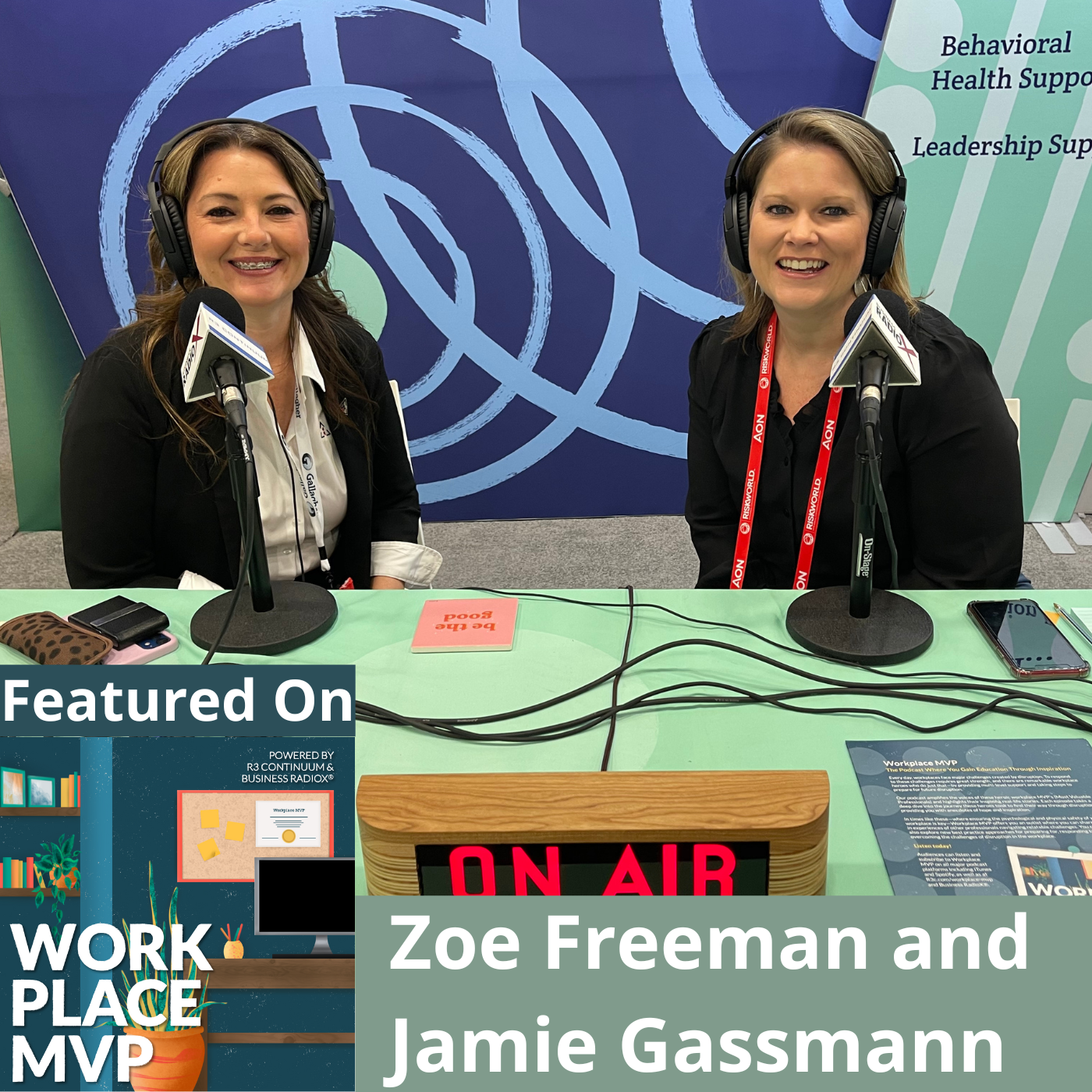
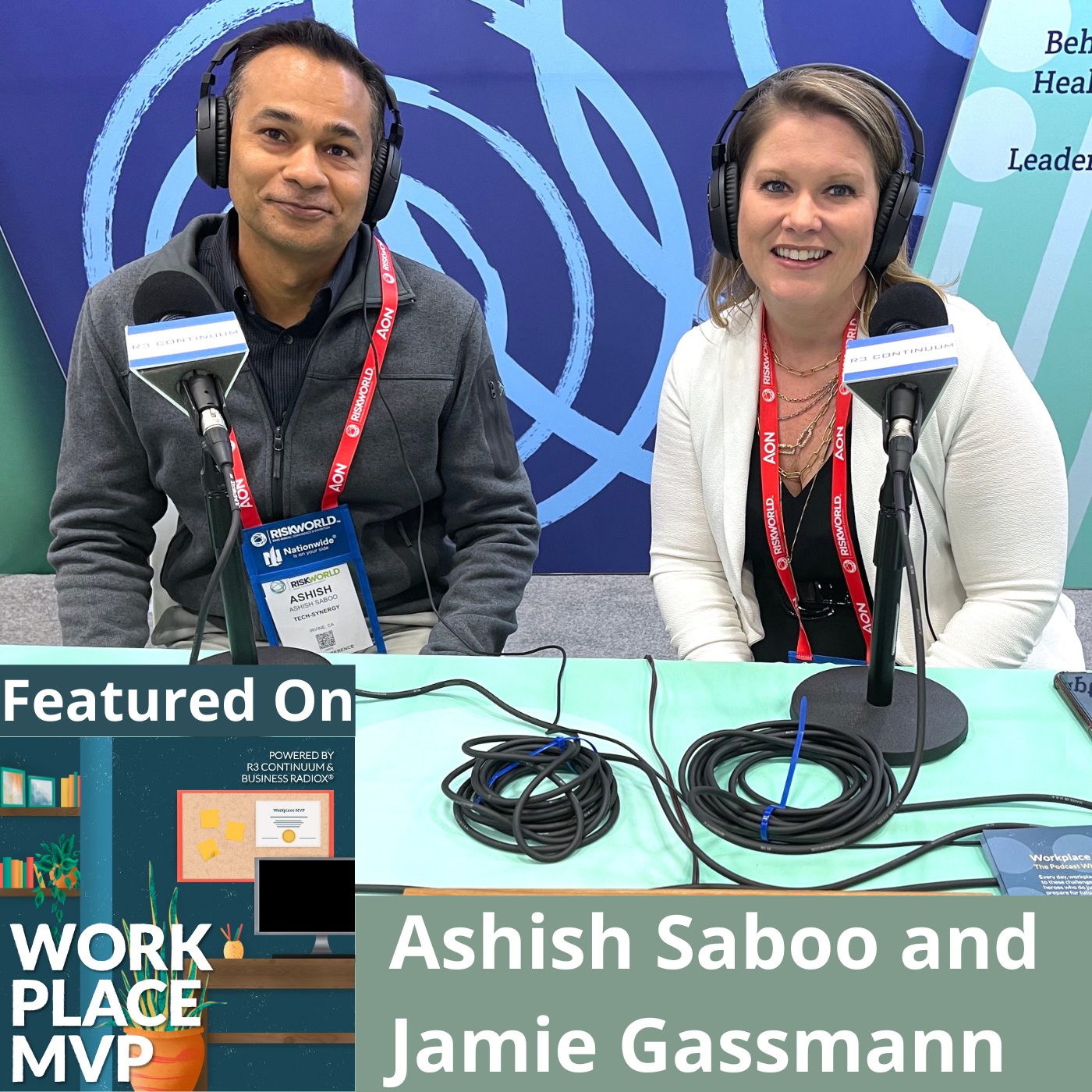
Oscar Villanueva, Managing Director of Security Services for R3 Continuum, joined host Jamie Gassmann at the R3 Continuum booth. Oscar explained the role of security services when clients reach out to R3 Continuum for help, the impact of an event that goes beyond the victim, the ultimate cost of not being prepared, and much more.

Workplace MVP is underwritten and presented by R3 Continuum and produced by the Minneapolis-St.Paul Studio of Business RadioX®.

This show was originally broadcast from the RIMS 2022 RISKWORLD Conference held at the Moscone Center in San Francisco, California.

Oscar Villanueva, Managing Director of Security Services, R3 Continuum

Oscar Villanueva, Managing Director of Security Services, R3 Continuum

Oscar Villanueva, a well-known international security expert, and former federal law enforcement senior executive brings many years of risk assessment and management, investigative, emergency preparedness, training, and critical infrastructure security experience, worldwide. He oversaw the security-based initiatives in over 180 locations throughout the world and has worked directly with the United Nations, Interpol, Europol, and during multiple Olympic Games.

He has over 30 years in federal law enforcement and corporate security consulting domestically and internationally. One of his areas of focus was workplace violence during his time with federal law enforcement and for the last decade in corporate security venues.

He now helps individuals and organizations navigate the difficulties of overall security and risk issues.

Mr. Villanueva lives in San Francisco.

LinkedIn

About Workplace MVP

Every day, around the world, organizations of all sizes face disruptive events and situations. Within those workplaces are everyday heroes in human resources, risk management, security, business continuity, and the C-suite. They don’t call themselves heroes though. On the contrary, they simply show up every day, laboring for the well-being of employees in their care, readying the workplace for and planning responses to disruption. This show, Workplace MVP, confers on these heroes the designation they deserve, Workplace MVP (Most Valuable Professionals), and gives them the forum to tell their story. As you hear their experiences, you will learn first-hand, real-life approaches to readying the workplace, responses to crisis situations, and overcoming challenges of disruption. Visit our show archive here.


Workplace MVP Host Jamie Gassmann

Jamie Gassmann, Host, “Workplace MVP”

In addition to serving as the host to the Workplace MVP podcast, Jamie Gassmann is the Director of Marketing at R3 Continuum (R3c). Collectively, she has more than fourteen years of marketing experience. Across her tenure, she has experience working in and with various industries including banking, real estate, retail, crisis management, insurance, business continuity, and more. She holds a Bachelor of Science Degree in Mass Communications with special interest in Advertising and Public Relations and a Master of Business Administration from Paseka School of Business, Minnesota State University.

R3 Continuum

R3 Continuum is a global leader in workplace behavioral health and security solutions. R3c helps ensure the psychological and physical safety of organizations and their people in today’s ever-changing and often unpredictable world. Through their continuum of tailored solutions, including evaluations, crisis response, executive optimization, protective services, and more, they help organizations maintain and cultivate a workplace of wellbeing so that their people can thrive. Learn more about R3c at www.r3c.com.

Company website | LinkedIn | Facebook | Twitter


TRANSCRIPT

Intro: [00:00:03] Broadcasting Live from RISKWORLD 2022 at the Moscone Center in San Francisco, it’s time for Workplace MVP. Brought to you by R3 Continuum, a global leader in helping workplaces thrive during disruptive times. Now, here’s your host.

Jamie Gassmann: [00:00:23] Hi, everyone. Your host, Jamie Gassmann here at the RISKWORLD 2022 Expo Hall in R3 Continuum Booth. And joining me is Oscar Villanueva, who is with R3 Continuum. Welcome to the show.

Oscar Villanueva: [00:00:38] Hello, Jamie. Good talking with you today.

Jamie Gassmann: [00:00:40] So, talk to me a little bit about the role you play at R3 Continuum.

Oscar Villanueva: [00:00:44] Well, my role is as Managing Director of Security Services for R3 Continuum. And, basically, what I do is I support the organization and clients when it comes to security services. And that could be anything from investigations, protective services, threat assessments, facility security assessments. Anything that has to do with physical security, I am available for clients to to use and to take advantage of our services.

Jamie Gassmann: [00:01:13] Yeah. You know, and from conversations I’ve had with you, you know, the uniqueness of the services that R3 provides is that behavioral health component to the solution. So, talk to me a little bit about that and how that’s a differentiator or unique in the marketplace.

Oscar Villanueva: [00:01:28] Well, you know, R3 continuum is a leader in behavioral health support and solutions with disruptive event management and crisis response, all of those kinds of services. And R3 has been doing it for many, many years and doing it very, very well as a leader in the industry. What makes my contribution to R3 significant is that every time you have a crisis situation, every time you have a workplace violence issue, every time you have a call that you’re making to R3 Continuum for services, there’s usually a security component that comes along with that. And, you know, having those two services – security and crisis response – along with behavioral health really does a unique and best-in-class response service from R3 Continuum for our clients. So, I think it’s an important component.

Jamie Gassmann: [00:02:26] Yes, it’s almost like they have the holistic response basically. It’s like you can look at it from a physical, you know, what caused the particular, you know, situation or incident, but then also from the behavioral side of it as well. They’re kind of almost getting a comprehensive kind of support from the company, correct?

Oscar Villanueva: [00:02:44] Yes. And I think part of what that type of service means is that R3 Continuum uses a team of experts approach. So, if you come to R3 Continuum, and you’re getting behavioral health, and there’s some security question that comes up, I’m brought into the case, the situation, and I provide an assessment from a security perspective. And if I’m working a security issue, you know, the same thing occurs because, you know, R3 Continuum has experts in behavioral health. So, the combination of the two and a team-of-experts approach is really what makes it a powerful service for our clients.

Jamie Gassmann: [00:03:26] And from a risk insurance perspective, you know, taking and looking at it through that lens, you know, how does that help them from like a litigation perspective or kind of a risk mitigation perspective?

Oscar Villanueva: [00:03:40] Well, for insurance providers, I think the most important thing is to mitigate crisis and even to prevent it, if you can. And contacting R3 Continuum, for example, I can think of a number of cases where, perhaps, you had a workplace violence issue that started as a threat, and then, through our services and doing a threat assessment, we are able to discover what the cause of the threat is, what’s behind the the potential violence, and we can provide an assessment as to what the best way is to move forward. And when you do this, you’re really either preventing or mitigating risk, which in the insurance world, I’m fairly certain that it’s extremely important. The less claims you have, the better off you are, or if you can minimize the claim to the lowest possible level, so that the loss is contained, then it becomes very desirable for an insurance company to use those services.

Jamie Gassmann: [00:04:44] Absolutely. And it also helps holistically for that organization to recover, you know, financially and not only that, but with their people as well.

Oscar Villanueva: [00:04:53] Right. Yeah. So, clients that — excuse me. Clients that use us, generally, are able to get the situations resolved quicker and people back to work sooner. And in the long run, that results in some, you know, significant results that really can save not only financial resources but also minimizes the human effects of this type of crisis when it happens to someone at work.

Jamie Gassmann: [00:05:25] Absolutely. And so, you are presenting on Wednesday on the human impact or the human cost, the true cost to human impact of workplace violence. Can you talk a little bit about that presentation that you’re giving here at RIMS?

Oscar Villanueva: [00:05:41] Yes, it’s on Wednesday at noon at the Thought Leader Theater on the exhibit hall. And what I want to talk about is the true impact of workplace violence on individuals at the workplace, and how it’s not just the individuals that are affected at the workplace but their families, coworkers that maybe were not there at the time. There’s a range of individuals, a number of people that get affected beyond the victim.

And when you hear about this workplace violence issues on the news or in the media, typically you think about the victim, right? The victim was, you know, threatened, assaulted or even killed, unfortunately. But there’s a range of other — there’s other victims that go along with that particular one that are almost unnoticed or unmentioned that also suffer. So, I think there’s a bit of a discussion to be had there, along with also talking about how to mitigate it, how to plan for it and how to prepare for it because the better an organization prepares for it, obviously, the less likely it is that it will happen. And if it does happen, then the impact can be minimized significantly.

Jamie Gassmann: [00:07:04] Yeah, it’s almost like a ripple effect, right?

Oscar Villanueva: [00:07:06] Correct.

Jamie Gassmann: [00:07:06] You got your kind of point of impact where you have your most concentrated, impacted employees. But there’s always more people that are involved that have to be taken into consideration. And then, not only that, how do you support them to make sure that they get the help that they need, you know, being that they might be in more of like a tertiary kind of layer of of impact and could get forgotten.

Oscar Villanueva: [00:07:28] That’s very true. Very true.

Jamie Gassmann: [00:07:29] Yeah.

Oscar Villanueva: [00:07:30] And, you know, it all starts with behavioral health, because when somebody goes to trauma and crisis, it’s really important to get them back to some level of normalcy. You never-

Jamie Gassmann: [00:07:39] Yeah.

Oscar Villanueva: [00:07:39] You know, it never goes away. You know, the thoughts of being in a workplace violence issue or witnessing a workplace violence homicide or something like that, it really never leaves you. But with behavioral health and psychological support, you can really have people come back to some level of normal and continue their daily lives without it affecting them to a large extent.

Jamie Gassmann: [00:08:01] Yeah. And what I’ve heard, and I don’t know if you can kind of comment on that, I know that there might be others within R3 that can as well, that there’s a different type of — you need somebody specialized in these types of incidents that it’s a different type of coaching or consulting that they’re giving to individuals impacted as opposed to someone that maybe just has like a depression or anxiety. It’s a different type of support, correct?

Oscar Villanueva: [00:08:29] Well, yes, that has been my experience. And I think R3 Continuum does it very, very well with the staff of counselors that are available and how quickly you can get there to provide the services. Because after you have a crisis, it’s really critical to have someone get to those individuals as quickly as possible. The sooner they can talk about how they feel and what happened, the faster they can recover. And so, it’s really critical that that happens. Yes.

Jamie Gassmann: [00:08:56] Yeah, absolutely. So, if there are three takeaways or takeaways that you want your audience to be left with after attending your session, what would those be?

Oscar Villanueva: [00:09:06] Well, one is that it’s important to prepare. And in order to prepare, you really need to do a few things, mainly to put together a workplace violence program with threat assessment teams, and just be ready for anything that comes because through that process, you can prevent or you can mitigate workplace violence going forward. So, that would be number one.

The second is that the impact of workplace violence on individuals goes far beyond that initial victim, and it really affects their families, or communities or workers. So, that would be the second takeaway. So, when you’re thinking about a workplace violence issue, it’s really important to consider who else is being affected by this. So, that would be the second takeaway.

And the third takeaway that I would like to share is that oftentimes, you know, there’s a saying that when you’re a hammer, everything looks like a nail. And so, many of our clients tend to think about their world on the basis of what they do for a living. For example, they could be in manufacturing, they could be in services, they could be a medical office. And so, their worldview always focuses on that type of service or that type of product that they’re manufacturing. But in reality, when it comes to workplace violence, it kind of goes outside of that. So, you have to shift your paradigm, your thinking to consider, “Okay, I am a manufacturing company primarily, but if I have a workplace violence issue, that could be a problem. So, I’m going to think about that. I’m going to prepare for that. And I’m just going to go back and do my business because now I’m prepared,” right?

And the result of that is that, oftentimes, companies, organizations that have workplace violence issues fail to prepare for it. But when something happens, there’s no end to how much money they have to spend on it and they’re gladly spending it. So, in the long run, it’s easier, cheaper and better to prepare ahead of time than to have an issue later and make it very costly in terms of human capital and also financial capital.

So, prepare early and often, have a plan, and be ready because there’s only really two kinds of companies in this world, one that has had a workplace violence issue and that one that will have a workplace violence issue because as long as you employ people, as long as you have employees, you’re going to have those kinds of concerns. So, those would be my three recommendations.

Jamie Gassmann: [00:11:42] Wonderful. And that sounds like a great presentation. I hope the audience picks up on all those great takeaways that you’re providing to them. If somebody wanted to get a hold of you to learn a little bit more about what R3 Continuum does or a little bit more about what your role is there and the services that we provide, how can they do that?

Oscar Villanueva: [00:12:02] Well, they can get a hold of me through R3 Continuum by going to the website, and there’s a contact information in there. The other way is to just email me the Oscar,Villanueva@r3c.com.

Jamie Gassmann: [00:12:19] Wonderful. And that website’s r3c.com, correct?

Oscar Villanueva: [00:12:22] That’s correct.

Jamie Gassmann: [00:12:23] Awesome. Well, thank you so much for joining us, Oscar. It’s been great to have you on the show.

Oscar Villanueva: [00:12:26] Thank you, Jamie.

Outro: [00:12:32] Thank you for joining us on Workplace MVP. R3 Continuum is a proud sponsor of this show and is delighted to celebrate most valuable professionals who work diligently to secure safe workplaces where employees can thrive.


Tagged With: behavioral health, Crisis Response, Jamie Gassmann, Oscar Villanueva, preventing workplace violence, R3 Continuum, RISKWORLD 2022, Security Services, Workplace MVP, workplace violence

LIVE from WORKBENCHcon 2022: Donovan, Once Upon a Workbench, and Wes, Geeksmithing

May 26, 2022 by John Ray

Geeksmithing
North Fulton Studio
LIVE from WORKBENCHcon 2022: Donovan, Once Upon a Workbench, and Wes, Geeksmithing
Loading
00:00 /
RSS Feed
Share
Link
Embed

Download file

Geeksmithing

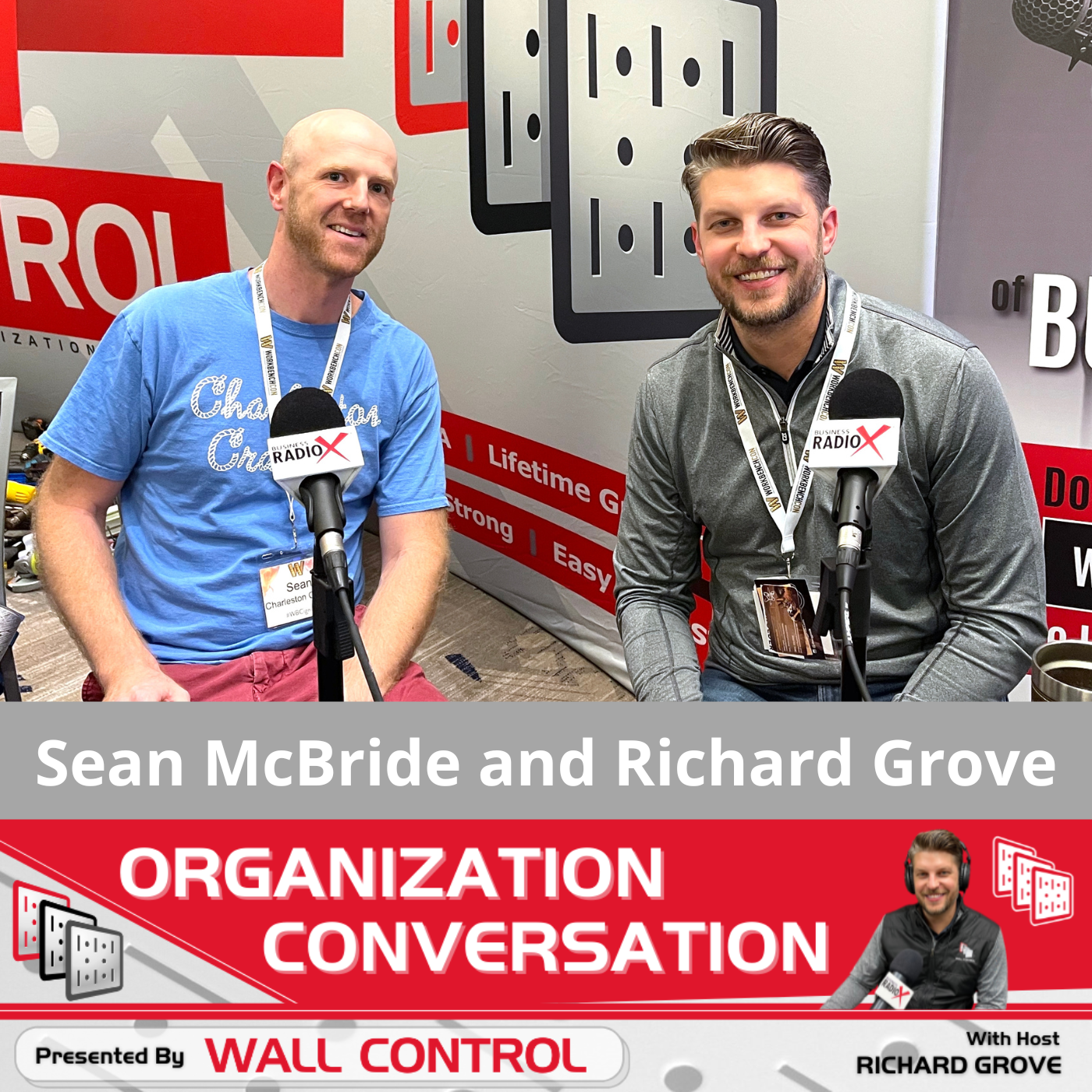
LIVE from WORKBENCHcon 2022: Donovan, Once Upon a Workbench, and Wes, Geeksmithing (Organization Conversation, Episode 22)

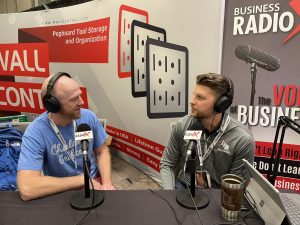
Donovan of Once Upon a Workbench and Wes from Geeksmithing talked with host Richard Grove about the ARG scavenger hunt game they developed for WORKBENCHcon, their respective maker businesses, being geeks, and more. Donovan and Wes also co-host a podcast, Making Geeks Podcast, which can be found here and wherever you get your podcasts.

Organization Conversation is produced by the North Fulton studio of Business RadioX® inside Renasant Bank in Alpharetta.

Donovan, Once Upon a Workbench

Donovan, Once Upon a Workbench

Donovan is a self-described geek, dad, and maker. He created and developed the scavenger hunt for WORKBENCHcon in 2019 and again in 2022.

Connect with Donovan:  Website |Instagram | YouTube


Wes, Geeksmithing

Wes, Geeksmithing

At Geeksmithing, you can find a wide range of geek/gaming-inspired project videos and even a few adventures visiting other makers from around the world! Any excuse to make something out of a new process or material is exciting to me and Wes and he brings you along on the journey.

Wes’s goal for Geeksmithing is that you become motivated and inspired to create things and begin a journey of your own!

Wes helped develop the ARC scavenger hunt along with Donovan.

Connect with Wes:  Website |Instagram | Youtube

About Organization Conversation

Organization Conversation features interviews with movers and shakers in storage and organization, from professional organizers to the creative and talented Brand Ambassadors who use Wall Control products every day. You’ll hear tips, tricks, and how-tos for storage and organization, as well as receive first access to Wall Control promotions. We talk with our suppliers and partners to give you a look behind the scenes at how we operate, what makes our family-owned and operated brand tick, and some of the fun and interesting insights that go into making our business run. We love our guests, as they are engaging and entertaining with interesting experiences to share. By focusing on those guests and the amazing stories they tell, we hope you will be enriched and find your time listening to the Organization Conversation podcast as time well spent.

Organization Conversation is hosted by Richard Grove, and broadcast and produced from the North Fulton studio of Business RadioX® inside Renasant Bank in Alpharetta. You can find the full archive of shows by following this link. The show is available on all the major podcast apps, including Apple Podcasts, Spotify, Google, Amazon, iHeart Radio, and others.

About Richard Grove

Richard Grove, Host, Organization Conversation

Richard Grove‘s background is in engineering but what he enjoys most is brand building through relationships and creative marketing. Richard began his career with the Department of Defense as an engineer on the C-5 Galaxy Engineering Team based out of Warner Robins. While Richard found this experience both rewarding and fulfilling, he always knew deep down that he wanted to return to the small family business that originally triggered his interest in engineering.

Richard came to work for the family business, Dekalb Tool & Die, in 2008 as a Mechanical Engineer. At the time Wall Control was little more than a small ‘side hustle’ for Dekalb Tool & Die to try to produce some incremental income. There were no “Wall Control” employees, just a small warehouse with a single tool and die maker that would double as an “order fulfillment associate” on the occasion that the original WallControl.com website, which Richard’s grandmother built, pulled in an order.

In 2008, it became apparent that for the family business to survive they were going to have to produce their own branded product at scale to ensure jobs remained in-house and for the business to continue to move forward. Richard then turned his attention from tool and die to Wall Control to attempt this necessary pivot and his story with Wall Control began. Since that time, Richard has led Wall Control to significant growth while navigating two recessions.

Connect with Richard:

Instagram | Twitter | LinkedIn

About Wall Control

The Wall Control story began in 1968 in a small tool & die shop just outside Atlanta, Georgia. The first of three generations began their work in building a family-based US manufacturer with little more than hard work and the American Dream.

Over the past 50+ years, this family business has continued to grow and expand from what was once a small tool & die shop into an award-winning US manufacturer of products ranging from automobile components to satellite panels and now, the best wall-mounted tool storage system available today, Wall Control.

The Wall Control brand launched in 2003 and is a family-owned and operated business that not only produces a high-quality American Made product but sees the entire design, production, and distribution process happen under their own roof in Tucker, Georgia. Under that same roof, three generations of American Manufacturing are still hard at work creating the best tool storage products available today.

Connect with Wall Control:

Company website | Facebook | Instagram

Tagged With: ARG, gaming, geeks, Geeksmithing, makers, Making Geeks Podcast, Once Upon a Workbench, Organization Conversation, Richard Grove, Wall Control, WORKBENCHcon 2022

Katie Rocco, Keller Williams North Fulton

May 26, 2022 by John Ray

Katie Rocco
North Fulton Business Radio
Katie Rocco, Keller Williams North Fulton
Loading
00:00 /
RSS Feed
Share
Link
Embed

Download file

Katie Rocco

Katie Rocco, Keller Williams North Fulton (North Fulton Business Radio, Episode 460)

Katie Rocco, Realtor and Team Lead of The Rocco Team at Keller Williams, was host John Ray’s guest to talk about the current real estate market. Katie discussed the shortage of housing, the movement of buyers into the Atlanta market, what to look for in a realtor, the best questions to ask when you’re looking for an agent, giving back to her community, and much more.

North Fulton Business Radio is broadcast from the North Fulton studio of Business RadioX® inside Renasant Bank in Alpharetta.

The Rocco Team, Keller Williams North Fulton

Katie Rocco and The Rocco Team are a group of highly-skilled, compassionate advisors, committed to excellence in all they do.

They specialize in helping Homebuyers, Home Sellers & Investors build wealth through a customized real estate experience, from start to finish. Their business is built on our treasured relationships & because of their trustworthiness & integrity, clients & their referrals utilize The Rocco Team’s proficiency for the industry time & time again.

Their legacy is making home dreams come true & they strive to exceed expectations in all they do. They would LOVE to walk your home journey with you!

Company Website |LinkedIn | Facebook | Instagram

Katie Rocco, Realtor/ Team Lead at The Rocco Team, Keller Williams North Fulton

Katie Rocco, Realtor/ Team Lead at The Rocco Team, Keller Williams North Fulton

Katie has been a resident of Alpharetta Georgia for over 8 years. She has been married to her loving husband Andrew for over 22 years. They love to travel the world together experiencing great food and different cultures. Katie works in Real Estate where she leads a small team serving the Metro & North Atlanta communities.

She has been an active member in the Rotary Club of Alpharetta where she currently serves as the incoming president for the 2022-2023 year. Katie is an active member in her community where she also serves on the design and review board for the city of Alpharetta as well as on the Women’s advisory board for Wellstar Hospital of North Fulton.

She also volunteers with Frontline defense in the fight against human trafficking. They are on the front lines of rescuing women from trafficking. Katie has a passion for serving those in need, both in her local community and abroad.

LinkedIn

Questions and Topics in this Interview:

  • What is happening in the local real estate market?
  • Why should someone work with a Realtor right now?
  • Why work with a team versus an individual Realtor?
  • What is your favorite part of this business?
  • Is now a good time to invest in Real Estate?

North Fulton Business Radio is hosted by John Ray and broadcast and produced from the North Fulton studio of Business RadioX® inside Renasant Bank in Alpharetta. You can find the full archive of shows by following this link. The show is available on all the major podcast apps, including Apple Podcasts, Spotify, Google, Amazon, iHeart Radio, Stitcher, TuneIn, and others.

RenasantBank


Renasant Bank has humble roots, starting in 1904 as a $100,000 bank in a Lee County, Mississippi, bakery. Since then, Renasant has grown to become one of the Southeast’s strongest financial institutions with over $13 billion in assets and more than 190 banking, lending, wealth management and financial services offices in Mississippi, Alabama, Tennessee, Georgia and Florida. All of Renasant’s success stems from each of their banker’s commitment to investing in their communities as a way of better understanding the people they serve. At Renasant Bank, they understand you because they work and live alongside you every day.


Special thanks to A&S Culinary Concepts for their support of this edition of North Fulton Business Radio. A&S Culinary Concepts, based in Johns Creek, is an award-winning culinary studio, celebrated for corporate catering, corporate team building, Big Green Egg Boot Camps, and private group events. They also provide oven-ready, cooked from scratch meals to go they call “Let Us Cook for You.” To see their menus and events, go to their website or call 678-336-9196.

Tagged With: A&S Culinary Concepts, buying a home, Katie Rocco, Keller Williams, North Fulton Business Radio, realtor, renasant bank, residential real estate, The Rocco Team

Decision Vision Episode 170: Should I Integrate Cryptocurrency into My Business? – An Interview with Daren Hebold, LUX Companies

May 26, 2022 by John Ray

cryptocurrency
Decision Vision
Decision Vision Episode 170: Should I Integrate Cryptocurrency into My Business? - An Interview with Daren Hebold, LUX Companies
Loading
00:00 /
RSS Feed
Share
Link
Embed

Download file

cryptocurrency

Decision Vision Episode 170: Should I Integrate Cryptocurrency into My Business? – An Interview with Daren Hebold, LUX Companies

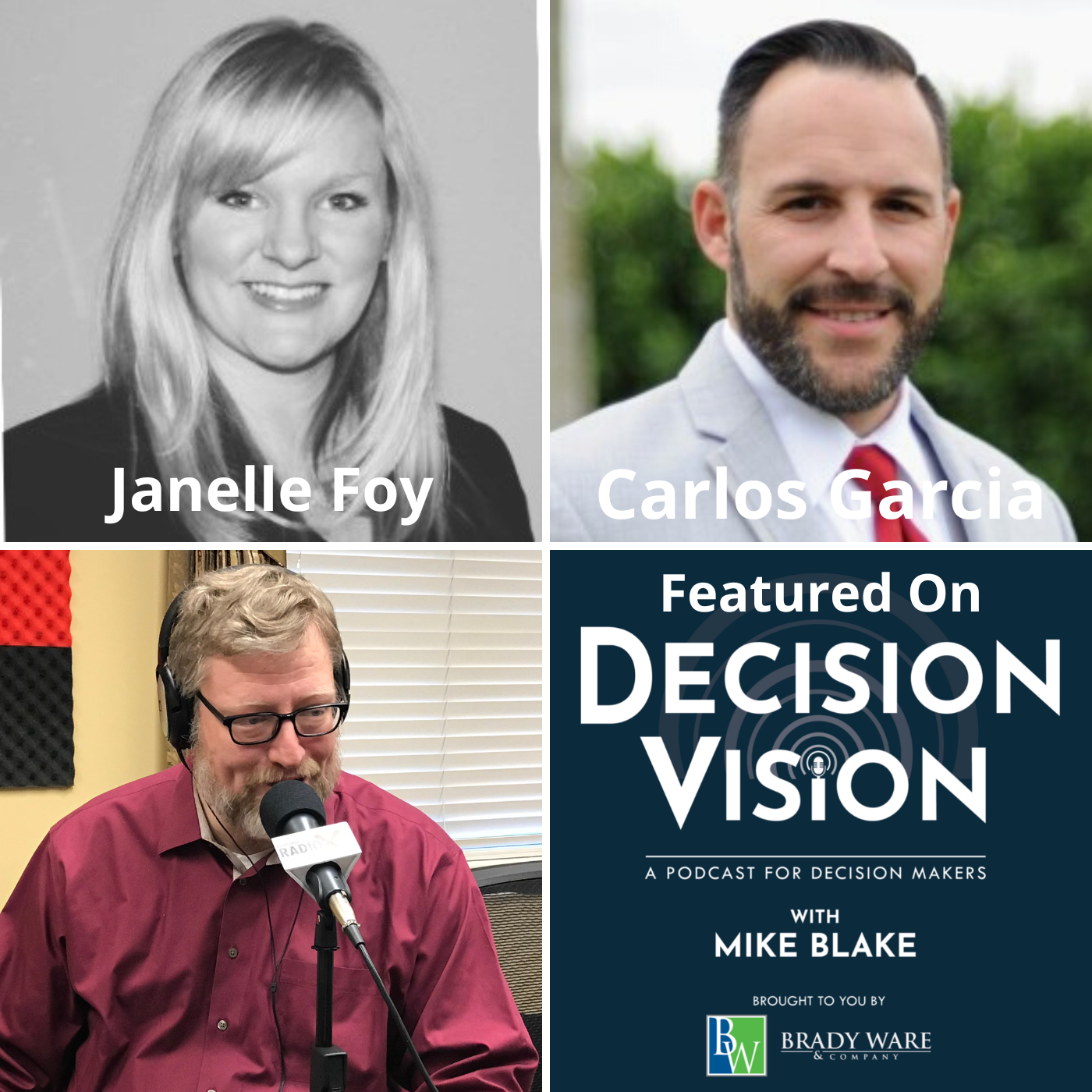
Daren Hebold, CEO of LUX Companies, was Mike Blake’s guest on this episode of Decision Vision. He explained the basics of cryptocurrency and how it works, its history, apps for businesses to use cryptocurrency, use cases for crypto, the risks, and much more.

Decision Vision is presented by Brady Ware & Company and produced by the North Fulton studio of Business RadioX®.

LUXOLO Financial, a division of LUX Companies

LUXOLO is your best-in-class concierge cryptocurrency service, located on the beautiful coastline of Portland, Maine. Their team believes in “own your keys, own your coins”. At LUXOLO they advocate self-custody of your digital assets. They will guide you through the process of securely storing your private keys, granting you direct and sovereign control over your wealth.

Company website | LinkedIn

Daren Hebold, Founder and CEO, LUX Companies

Daren Hebold, Founder and CEO, LUX Companies

Mr. Hebold is the Founder and CEO of the LUX Companies, a regional commercial real estate asset management company as well as LUXOLO Financial, the innovative in-person cryptocurrency exchange and digital asset wealth management firm.

He has cultivated a broad reputation of trust within the industry and community given his command of confidentiality, fiduciary duty and financial skills in the handling of high value commercial real estate and digital assets. After getting financially thrashed by the Great Recession in 2008-09 and closely studying the US central bank and government responses, he began seriously questioning the composition, integrity and sustainability of our financial system which at its core includes a central bank that is privately owned, centralized and granted the outrageous right to unlimited emission of new currency at their sole discretion.

Needless to say, after critical analysis, research and discussions with friends, he stumbled upon bitcoin, blockchain and cryptocurrency. Seeing and participating in the extraordinary, freedom enabling benefits of this new parallel financial system together with its technological superiority, he founded LUXOLO Financial to broadly deliver cryptocurrencies and blockchain technology benefits to individuals and small businesses alike for everyday use in commerce.

LinkedIn

Mike Blake, Brady Ware & Company

Mike Blake, Host of the “Decision Vision” podcast series

Michael Blake is the host of the Decision Vision podcast series and a Director of Brady Ware & Company. Mike specializes in the valuation of intellectual property-driven firms, such as software firms, aerospace firms, and professional services firms, most frequently in the capacity as a transaction advisor, helping clients obtain great outcomes from complex transaction opportunities. He is also a specialist in the appraisal of intellectual properties as stand-alone assets, such as software, trade secrets, and patents.

Mike has been a full-time business appraiser for 13 years with public accounting firms, boutique business appraisal firms, and an owner of his own firm. Prior to that, he spent 8 years in venture capital and investment banking, including transactions in the U.S., Israel, Russia, Ukraine, and Belarus.

LinkedIn | Facebook | Twitter | Instagram

Brady Ware & Company

Brady Ware & Company is a regional full-service accounting and advisory firm which helps businesses and entrepreneurs make visions a reality. Brady Ware services clients nationally from its offices in Alpharetta, GA; Columbus and Dayton, OH; and Richmond, IN. The firm is growth-minded, committed to the regions in which they operate, and most importantly, they make significant investments in their people and service offerings to meet the changing financial needs of those they are privileged to serve. The firm is dedicated to providing results that make a difference for its clients.

Decision Vision Podcast Series

Decision Vision is a podcast covering topics and issues facing small business owners and connecting them with solutions from leading experts. This series is presented by Brady Ware & Company. If you are a decision-maker for a small business, we’d love to hear from you. Contact us at decisionvision@bradyware.com and make sure to listen to every Thursday to the Decision Vision podcast.

Past episodes of Decision Vision can be found at decisionvisionpodcast.com. Decision Vision is produced by John Ray and the North Fulton studio of Business RadioX®.

Connect with Brady Ware & Company:

Website | LinkedIn | Facebook | Twitter | Instagram


TRANSCRIPT

Intro: [00:00:02] Welcome to Decision Vision, a podcast series focusing on critical business decisions. Brought to you by Brady Ware & Company. Brady Ware is a regional, full-service accounting and advisory firm that helps businesses and entrepreneurs make visions a reality.

Mike Blake: [00:00:21] Welcome to Decision Vision, a podcast giving you, the listener, a clear vision to make great decisions. In each episode, we discuss the process of decision making on a different topic from the business owners or executives perspective. We aren’t necessarily telling you what to do, but we can put you in a position to make an informed decision on your own and understand when you might need help along the way.

Mike Blake: [00:00:43] My name is Mike Blake, and I’m your host for today’s program. I’m the Managing Partner of Brady Ware Arpeggio, a data-driven management consultancy which brings clarity to owners and managers of unique businesses facing unique strategic decisions. Our parent, Brady Ware & Company, is sponsoring this podcast. Brady Ware is a public accounting firm with offices in Dayton, Ohio; Alpharetta, Georgia; Columbus, Ohio; and Richmond, Indiana.

Mike Blake: [00:01:07] If you would like to engage with me on my social media with my Chart of the Day and other content, I’m on LinkedIn as myself and @unblakeable on Facebook, Twitter, Clubhouse, and Instagram. I also host a LinkedIn group called Unblakeable’s Group That Doesn’t Suck, so please join that as well if you would like to engage. Today’s topic is, should I integrate cryptocurrency into my business? And this is a topic I’ve wanted to do for a while.

Mike Blake: [00:01:35] Haven’t really been able to sync up with the right guest who, I just thought, would give us a great and in-depth perspective on it, and we can sort of make schedules sync up. And I feel almost apologetic about that, because this is a topic that’s long overdue, but that having been said, I think the timing is actually propitious. Cryptocurrency has always, of course, been a little bit of a roller coaster ride, and right now, as of late, cryptocurrencies, I think in a way that’s surprising to me anyway, have been retrenching quite a bit over the last several weeks, which frankly I find surprising, which probably reflects my own ignorance of the dynamics of cryptocurrency.

Mike Blake: [00:02:24] I would have bet a couple of months’ mortgage that cryptocurrencies would have become stronger after the Russian attack on Ukraine and suing financial sanctions that I think would have motivated a lot more activity to circumvent conventional and national banking systems. And maybe that is happening, but not enough to overcome other forces that are at play here. So, because of what’s going on in the crypto markets, I think this really, really as well timed a topic as any to talk about this, and I hope that you’ll agree.

Mike Blake: [00:03:00] I think it’s also important because I think everybody by now has heard the word or term, cryptocurrency, they have heard of Bitcoin, but it really is remarkable how few people actually know what it is. As it happens, I happen to do a lot of work in the cryptocurrency e-wallet exchange space, some work with crypto miners and valuing or appraising their businesses.

Mike Blake: [00:03:27] But many of my peers really still don’t have any idea how cryptocurrency works, what the value proposition is, et cetera. And I think that—I don’t think they’re an outlier. I think there are a lot of people that still need to be educated. And if you’re one of those people, I think you’re going to find this a very good use of your next 45 minutes or so.

Mike Blake: [00:03:49] And so, joining us today to help us out with this topic, who is an expert, because I’m not, is Daren Hebold, who is Founder and CEO of the LUX companies, which offer specialized asset management services for commercial real estate, together with financial asset management of cryptocurrency. He has cultivated a broad reputation of trust within the industry and community given his command of confidentiality, fiduciary duty and financial skills, and the handling of high value commercial real estate and digital assets.

Mike Blake: [00:04:20] After getting financially thrashed, his words, by the Great Recession of 2008 and ’09, and closely studying the US Central Bank and government responses, he began seriously questioning the composition, integrity, and sustainability of our financial system, which, at its core, includes a Central Bank that is privately owned, centralized and granted the right to unlimited admission of new currency at their sole discretion.

Mike Blake: [00:04:43] After critical analysis, research, and discussions with friends, he stumbled upon Bitcoin, blockchain, and cryptocurrency, seeing and participating in the extraordinary freedom-enabling benefits of this new parallel financial system together with its technological superiority. He founded LUXOLO Financial to broadly deliver cryptocurrencies and blockchain technology benefits to individuals and small businesses alike for everyday use in commerce. Daren, welcome to the Decision Vision podcast.

Daren Hebold: [00:05:12] Thank you, Mike, and great intro. I appreciate that.

Mike Blake: [00:05:16] So, as I said in my opening, a lot of people listening to this, I think, at this point ,don’t want to admit it, so what we’re going to do is we’re not going to crypto shame people and we’re going to let people address their lack of knowledge in a safe space, the privacy of their own headphones, their own car, whatever it is they’re listening to. What is cryptocurrency, and how does cryptocurrency come about?

Daren Hebold: [00:05:45] Great. Yeah, and we’ll keep it real simple to begin with, and then we’ll branch out. So, a Bitcoin, what is a Bitcoin? It’s electronic money. It is a peer-to-peer payment system. It’s a store of value. It’s a new financial system. It’s many things and it ticks many boxes. And this is something that we saw come out of the ashes of the last financial collapse after ’08. I think it was January 2009, the group, Satoshi Nakamoto, officially released Bitcoin and it’s just been branching out since then. I just wonder where we start, maybe, Mike, to keep it simple. I think-

Mike Blake: [00:06:45] Well, I think what people—I mean, the question I’m asked a lot, and I probably give a barely adequate answer, is how is cryptocurrency created? Right? We know about crypto miners. Most people have never seen a crypto mining rig. They don’t understand why people are buying PC gamer hardware to create this virtual or cyber currency. So, maybe talk a little about that. How does cryptocurrency get created, and why does that translate into a fungible value?

Daren Hebold: [00:07:15] Yes. Yeah. And yes, how is that valuable, and why do people recognize that great place? Okay. So, not all cryptocurrencies are created equal. So, Bitcoin was the very first one. And since then, I think, literally, there are over 17,000 cryptos out there.

Mike Blake: [00:07:34] Wow. I didn’t know that.

Daren Hebold: [00:07:34] Yeah, it’s just insane. And frankly, it’s a little bit of a junkyard out there. And I think we, in the industry, would probably agree that you could probably count literally on maybe one hand how many of those 17,000 cryptos could be reasonably considered money. The balance of them have other uses and utilities for smart contracts, and for programming, and for other functions, but probably aren’t considered money.

Daren Hebold: [00:08:06] Bitcoin is clearly the winner as far as recognition and global adoption, where people say, Yeah, that’s money and I’m going to use it as such and treat it as such. So, it’s unique because it requires a great expenditure of electricity to print or mint or mine, I guess we would call it, a Bitcoin. So, if you or I wanted to do it, we could do it tomorrow. You pop online, and for several thousand dollars, there’s an entry-level mining machine, and you don’t need any real skills, it’s a plug-and-play device.

Daren Hebold: [00:08:45] You plug it into your electricity and it juices it. Your bill goes through the roof and you start printing or mining Bitcoin rewards right away. So, anybody can do it. It just costs a lot of money. And we can talk about it later. We’ll unpack it. But the cost to mine one Bitcoin sort of sets the floor for the price, because it’s many thousands of dollars to mine one Bitcoin. Whereas, some of these other cryptocurrencies involve what’s called pre-mining or really just pressing a button and 10 billion units of some certain token appear.

Daren Hebold: [00:09:30] And so, there’s not a lot of intrinsic value in those projects, and the market determines that. No one person points and decrees which cryptos have value. The market decides, which I love. I love Mr. Market. And the market says [making sounds] that coin was pre-mined and it’s proof of stake, and I could create another one of those tomorrow morning, and that doesn’t have much value to me. That’s why that’s trading for a penny. Whereas, a Bitcoin is trading for $30,000 these days.

Mike Blake: [00:10:05] And what is the guts of how mining happens? Is it solving equations? Is it random number generator? Is it something else? I mean, how does that—and I understand we’re limited to Bitcoin, but I think Ethereum kind of works the same way. You can still mine Ethereum, and maybe Dogecoin, and others. How does that work that it proves that there’s an algorithm that effectively proves that you have produced somehow a piece of cryptocurrency?

Daren Hebold: [00:10:39] Sure, sure. I’ll keep it simple. So, Bitcoin was the first birth of a blockchain. And a blockchain simply means that there is a public ledger that everybody can pop online and view, and it just shows that I gave today here on May 18th, I gave Mike one Bitcoin from this wallet to that wallet, and that gets codified into a ledger. And what the mining does is it proves that. The mining network of all the global miners performs calculations and proves cryptographically that, yeah, Daren’s wallet gave Mike’s wallet one bitcoin on said date and time. It’s indisputable, it’s immutable, meaning nobody can go back in time and change it. It’s auditable. And everybody agrees that it happened.

Daren Hebold: [00:11:38] So, it’s a very crucial—it sounds trivial just to prove that I gave you money, but how else does a financial system work without a ledger that everybody can agree on? And mining is the way to secure that. And so, the people that have these rigs and spend not just thousands, but I mean, there are industrial scale mining facilities where people have invested $300 million, as you probably know, and they get paid to run those machines in the form of Bitcoin rewards. So, they run these machines. And then periodically over time, every 10 minutes, actually, the Bitcoin network kicks out some Bitcoin rewards to the miner who successfully hashed that particular transaction. And there’s an even distribution. So everybody gets their fair share of the Bitcoin rewards, everybody who is mining.

Mike Blake: [00:12:34] Okay. Now, I have to admit, and I’m supposed to know this, but I didn’t. 17,000 different cryptocurrencies, right? And most people do well if they can name one or more than one. How do they differ? We think of currencies, of course, national currency, the euro, the dollar, the yen, et cetera, but how do 17,000 different cryptocurrencies differentiate and how do you decide which one or ones is a business you want to trade in or deal in?

Daren Hebold: [00:13:05] Yeah, it’s a great question. Okay. I would say just broadly, I would call them coins and tokens, is kind of what the industry has settled upon. Coins generally refer to if something can be identified as money. And again, I think there’s probably five, maybe 10 tops that people would agree are coins/money. All the other ones are considered tokens and they each have their own separate blockchain.

Daren Hebold: [00:13:36] Again, they’re usually all free to use. Nobody owns them. Anybody can use them for the most part, and they just have different utilities, Mike. So, for example, Ethereum is a smart contract platform. It kind of straddles the fence. It’s the one unique one where Ethereum is kind of considered money right now and it’s trading for $2,000 per coin. But then, simultaneously, it’s a smart contract platform where you can program your Ethereum or your other tokens to do things that you want them to do.

Daren Hebold: [00:14:11] So, you can mirror legal contracts with a smart contract on a blockchain. So, that’s a huge, huge use case out there for crypto, is programmable money. And so, imagine every legal contract where a tenant has to pay a landlord, a supplier gets paid by a corporation, an employee gets paid by an employer, all these can get codified into a smart contract, and really, greatly simplify accounting, bookkeeping, auditing, payroll. Any number of industries are going to be certainly disintermediated by this.

Mike Blake: [00:14:57] So. We talked a little bit about this in your intro, but I’d really like to get your in-depth take on this, because I think it’s really important. And that is, why has cryptocurrency a currency that was invented, now, less than 15 years ago? Why has cryptocurrency found the market and the traction that it has? We’ve never seen anything like this in our lifetimes, have we?

Daren Hebold: [00:15:22] It’s a great point. Yeah. We have not seen new money, God, in centuries, right? I mean, way back there were several forms of money, coffee beans, large stones, wampum, parcels of real estate. You could probably name more. But no, we have not seen new money in a while. We’ve just been kind of going along with gold and silver up until it was made illegal by governments of the world, who, that did not fit their narrative, and they wanted to introduce central bank fiat debt currencies, and they have successfully run with that for quite some time now.

Daren Hebold: [00:16:09] But look what’s happening. Maybe they didn’t do such a great job. We had a great run with fiat currencies, but if you pop on the imf.org right now, it’s nothing short of a death procession of every single fiat currency out there that are experiencing hyperinflation as we speak. So, Central Banks invented these currencies, and then they got themselves into a pickle when they started printing more, and more, and more, almost without discretion. And in the last two years alone, the US dollar has printed—40% of the dollars in circulation were printed, meaning the Central Bank in the US pressed the button, and dollars, electronic dollars came out, and that comes with consequences.

Daren Hebold: [00:17:00] So, even our beloved dollar is now eight-and-a-half-plus percent inflation. And so, circling back to your question, the reason that we need to consider new forms of money is people are getting eaten alive with the fiat currencies that are tanking in value. Turkey, 54% inflation. If you have $1,000 in your bank account, by Christmas, it’ll be half of that. I mean, that’s catastrophic. I mean, can you imagine that? So, we, citizens in different countries in the world, that have been forced to use fiat currencies are being forced to come up with alternatives, and I think Bitcoin ticks a lot of boxes there.

Mike Blake: [00:17:47] Earlier in my life, I actually did live in a hyperinflationary environment. I lived in Belarus and Ukraine shortly after the fall of the Berlin Wall, and they were struggling to launch their own currencies as their currency just died, right? The Soviet ruble was just gone overnight. And the last time that I was over there for any length of time, the exchange rate was 200,000 Belarusian rubles to the dollar. And about 80,000—the currency that was existing, where it’s used to be called the karbovanets, 80,000 of them to the dollar.

Mike Blake: [00:18:21] And I remember paying for lunch with bags of money and the server would have to come over with one of those banknote counters to make sure that I paid the correct amount. And it was just so chaotic, because the prices couldn’t even keep up. You see a Snickers bar that would be for sale in the morning for 3,000 rubles, you come down at the end of the day, be 7,000. It was crazy, and I wonder if cryptocurrency could have helped those economies achieve some stability back then.

Daren Hebold: [00:18:56] Interesting. Well, I’ll tell you, another thing that’s important is just governance. So, I think part of the reason Bitcoin has floated to the top is just that. There’s only ever going to be 21 million Bitcoins. That is huge. So, we’re controlling. We, collectively, all the miners, have signaled that we want a cap on Bitcoin, and that tends to preserve its value, whereas governments have unlimited emission. So, we’ve got to have governance in place to govern emission, use, just kind of equity and the fact that it cannot be censored, or revised, or reversed.

Daren Hebold: [00:19:42] All these are important things. And and if we can keep those favorable attributes in place, which they are, for Bitcoin specifically, then absolutely. It’s a great use case. You touched on Belarus and Russia. Let me just read you something here. Granted, this statement’s a couple of weeks old, but with the advent of Russia being internationally sanctioned, where people cannot bank with any Russian. Not just the prime minister of Russia or the 2,000 oligarchs who have been tagged as being criminals, but everybody in Russia is being equally penalized. Here’s a statement here from CryptoSlate magazine.

Daren Hebold: [00:20:25] “Russian citizens are justifiably fearing the seizure of their retail deposits and naturally want to protect their capital. Purchasing digital assets is an effective means by which ordinary citizens can move savings out of the financial system in order to preserve capital.” What a powerful statement. I mean, that is quite a use case if I’ve ever heard one. Another one was the Canadian truckers who did not break any law, were never convicted of a crime, but their banks froze their accounts, just politically. They just didn’t appreciate truckers driving around talking about freedom. That’s a threat.

Daren Hebold: [00:21:09] So, they froze bank accounts left and right, and citizens were left without legal recourse other than accepting donations via cryptocurrency, so another use case. I guess more and more, we’re seeing that it’s become cool for governments to become tyrannical and sort of take matters into their own hands, including their Central Bank money policies. And it’s really not funny to the average person who has worked their whole life to establish some savings and is starting to see it just melt away via inflation and such.

Mike Blake: [00:21:47] So, a key feature of cryptocurrency, I think, and correct me if I’m wrong, please, is that there is no king or queen of Bitcoin. There is no Bitcoin chairperson, There is no czar. It’s just out there, right? And it’s self-regulating, self-trading, and that’s it.

Daren Hebold: [00:22:08] That’s it. No one owns it. Everyone can use it. Exactly. And it is literally free. You can be a dirt farmer in a foreign country, and you can download a wallet, and begin using it immediately. And no one can stop you, or ask you what you’re doing or why, and that’s just fantastic. There’s no intermediaries, too, or it’s direct peer-to-peer payments.

Mike Blake: [00:22:37] Are you familiar with FATCA, the relatively new regulation about disclosing international payments? It’s an acronym for something. I forget what it’s called, but you probably would know it.

Daren Hebold: [00:22:48] Yeah.

Mike Blake: [00:22:50] Is that driving cryptocurrency, too? Because, man, what a pain. What a pain that regulation is not. Not that it costs that much, but the burden of complying with that paperwork, I’ve ridden shotgun with people that are doing it when they’re buying or selling businesses, transferring assets. It is a monster.

Daren Hebold: [00:23:10] The notion of borders literally becomes foolish when you start working in cryptocurrency. You say, why? Why do I have to stop, get frisked, hassled, taxed, chipped, and tracked, just because I want to give Mike some money, because he’s over that border over there, be it a federal state or international border? It’s silly. And there are very few instances when I think it’s a legitimate hassle, to be honest with you. So, there are people that are going to violate laws, and no matter what type of money is in use at the contemporary time, yeah, certain number of people are going to violate laws. But just the fact that I’m sending money over a border, I’m not sure how that entitles all manner of authorities to hassle me, and possibly censor and resist my transaction.

Mike Blake: [00:24:12] Yeah. And for those of you scoring at home, FATCA, F-A-T-C-A, stands for Foreign Account Tax Compliance Act. Sorry, I didn’t have that prepared. That was an off-the-cuff question I thought of. But take a look at it. It is burdensome. Whether you agree with it or not, I don’t think anybody disagrees that it’s burdensome. So, Daren, this is a business podcast, what is the killer app for a business person to start using or expand the use of cryptocurrency in their business?

Daren Hebold: [00:24:49] Great. Awesome question. Let’s get right to it. So, okay, so here we are, we’re 12 years into Bitcoin. There are two killer apps right now for business, and I’m using them both. First one is hold bitcoin specifically on your balance sheet of your business. Okay. That serves several purposes. First of all, it’s balanced on your balance sheet. It’s owner’s equity that you can carry short, medium, or long term as just additional equity within your company that tends to grow over time.

Daren Hebold: [00:25:30] I mean, if you look at the long haul, it generally is going to appreciate over time passively, without doing anything. The second thing you can do with that Bitcoin on your balance sheet is it’s lending collateral. So, we and your listeners out there can become your own bank. So, you can post—for every bitcoin you post—well, let me back up. Okay. So, you’re holding a tranche of Bitcoins on your corporate balance sheet.

Daren Hebold: [00:26:03] Those are Bitcoins. You say, okay, great, but I need USD to operate my business, I need some working capital, I need a revolving line of credit. You usually go to the bank to get that. Now, crypto banks have emerged, where they say, Hey, Mike, post your bitcoins with us as collateral and we’ll give you up to a 50% loan in US dollars that you can use for whatever purpose you want, you don’t need underwriting, it’s just simply a balance sheet loan, and we can offer you a very competitive interest rate of about 4.95%.

Daren Hebold: [00:26:41] How’s that sound to you? Well, it sounds fantastic to me, and I use it all the time. So, we’ve taken a portion of our corporate treasury and post it as collateral in some of these trusted crypto banks who have lent us US dollars that we can use for working capital. It’s a fantastic instrument. And what happens is as time goes on, the value of my collateral goes up, and we say to ourselves, I look at my partner, and we say, alright, you know what, let’s retire that loan and go get a new 50% loan based on an increased value of our Bitcoins that we own.

Daren Hebold: [00:27:19] So, that’s the first killer use for businesses, Mike. The second one, we haven’t mentioned this phrase yet, but one cryptocurrency that we believe in is USDC. USDC is issued by Circle Financial in Boston. It is a digital version of a dollar. It’s pegged 1 to 1 with the dollar with audited reserves. And what you can do with that digital dollar is go to the same crypto banks that I was describing and earn a meaningful interest rate. So, the savings account is back. I mean, when’s the last time we were getting 4, 5, 6, 7% interest rate in a bank account, perhaps the early ’90s.

Mike Blake: [00:28:09] Ages ago.

Daren Hebold: [00:28:10] Ages ago. And now, it’s gone. Now, it’s a fraction of 1%, and with inflation, you lose. So, now, you can take your US dollars, convert them to USDC which we believe is the forerunner of stable coins, and post them on deposit with these crypto banks, and earn something in that range that I just said, 4 to 7% is kind of the prevailing rate, and you say, wow, how can they afford to pay depositors that much? That’s fantastic.

Daren Hebold: [00:28:46] I mean, how can they do that? They’re a lender. So, they turn around and lend that money out with about a 2% spread. And then, you say, well, how does that interest rate compute? Because a minute ago, you said you’re a borrower at about 5%, and then on the other hand, you’re a lender at about 6 or 7%. Well, the way they work it is small LTVs, so internal to their banks.

Daren Hebold: [00:29:15] They’re only lending out a very small percentage of their assets that they’re holding as collateral. And additionally, when you post collateral, you’re no longer earning interest. So, they’re only paying interest on a very small percentage of the assets they’re holding in custody. That’s how the math works out for them. But those are the two killer apps that I can bring to you guys today. There are going to be many more, and we can unpack those if you’d like.

Mike Blake: [00:29:49] One I’ve thought about, you tell me if I’m wrong, but I wonder if international payment settlement would also be a killer app, because moving money in between countries is still, amazingly enough, a 7 to 10-day exercise, and that’s just too long.

Daren Hebold: [00:30:08] Agreed. And I’m almost out of school in saying this, but I think this probably addresses your question. I believe BRICS, the BRICS consortium of Brazil, Russia, India, China, I believe when they conduct their international trade, they’re settling in gold, I believe, right? I don’t know if it’s physical or if it’s promissory notes of gold, but yeah, think about that. If they could settle in Bitcoin, you can send $20 billion and it cost you a mining fee of just over a dollar right now. So, it’s just a fantastic medium of exchange in that regard. And again, yes, borderless, to your point, and you don’t have to gain permission.

Daren Hebold: [00:31:02] It’s entirely up to the sender and the recipient to conduct their business as they will. So, I think that’s a great use case. You’re also going to see Bitcoin—perhaps, before you see it as an international settlement device, you’re going to see it—right now, it’s an individual settlement. You gave me a car, I gave you a Bitcoin. Then, you’re going to see it as an intercorporate settlement. I owe you $5 million, I’m going to settle in Bitcoin. Then, you’re going to see it governmental, and then international. So, it’s scaling up. It’s no longer a tool for geeks to trade on the web with and nobody else cares about it.

Mike Blake: [00:31:49] Now, I know you have a background in real estate as well, so I’m curious about your view on this question, is that, I wonder if cryptocurrency, in general, and Bitcoin, in particular, has a role to play for real estate, especially given the velocity of transactions, right? And my own personal story, we’re considering property in Portugal for retirement, but properties are going as fast, they’re just as fast as they are here, right? Telling somebody, hey, I want to buy the house, but you’ve got to wait 7 to 10 days before the money shows up, you’re going to lose real estate opportunities if you have to wait that long for the money to show up.

Daren Hebold: [00:32:27] Yeah, you got it. So, boy, there’s a lot of boxes that crypto ticks as far as real estate transactions. So, where do we start? Let’s see. I guess I would start by saying, yeah, it’s very fluid and liquid. If you find a property you like, you can escrow your deposit with a title company in 30 seconds. It’s done. Boom. And in the future I think you’re going to see, associated with that deposit, Mike, you’re going to see a smart contract replace title agencies.

Daren Hebold: [00:33:08] Like here’s a transaction, you log into a web-based console, and there are 14 steps required. And step one is sign a purchase agreement. Step two is here’s the Bitcoin address for your deposit. Step three is attorneys conduct title work and upload their results, et cetera, et cetera. So, there will be essentially an algorithmic title closing agency of the future. I’d love to do it. It’s another startup I don’t have time for right now. Maybe somebody else can do that.

Mike Blake: [00:33:40] Yeah, that’s plenty of room. So, we’ve talked about all the positives about cryptocurrency. What are the pitfalls or the risks? What is somebody somebody thinking about deepening their relationship with crypto in their business? What do they need to be aware of? What are the potential gotchas if you’re not careful?

Daren Hebold: [00:34:00] Sure, sure. Yeah. Okay. First of all, I would start with just like selection of coin. There’s just all too few cryptocurrencies that will be around five or 10 years from now. So, at our exchange, when we’re advising desk clients, we say, listen, just stick with this short list of five potential coins to put into your portfolio. So, number 1 would be selection and longevity. Number 2, everybody’s very focused on the price, and right now, it’s kind of a buzz saw.

Daren Hebold: [00:34:42] The prices of all cryptos, and frankly, even Wall Street and commodity assets are just all over the map, and there’s been a big drawdown in the last six months. It’s like a 35% drawdown across like all commodities, and securities, and cryptos in the last six months. And there’s a lot of forces at play and not everybody wants to see Bitcoin succeed. There’s just a lot of vested interests who would much rather that it be uninvented and go back where it came from, because they like earning 3% transaction fees.

Daren Hebold: [00:35:15] They like having unlimited Central Bank fiat emissions. They like having total control over everybody’s movements. And there are instruments to bring cryptos down, like derivatives and shorting. And so, there’s that. And then, thirdly, I would say storage. So, the beauty of cryptocurrency, one piece we haven’t touched on, is just custody. You no longer have to place your money in custody with someone else. You can engage in 100% self-custody, meaning you hold your wallet, or you can do what we have chosen after four years of careful planning, which is collaborative custody, which is Mike holds a key, and our firm, LUXOLO Financial holds the other key, and then we send you home with a backup key.

Daren Hebold: [00:36:07] So, you hold two of three keys to your crypto wallet and we hold one. And unless there’s unanimous consent across the key holders, no money can leave the wallet. So, it’s a fantastic method of enjoying the beauty of self-custody, but also having someone holding your hand, so you don’t lose your shirt when you forget your passcode or your private key. So, not having a custodian is a very, very large advantage, particularly, today, when we’re seeing banks and governments, again, go tyrannical and just decide that we’re going to seize your assets.

Daren Hebold: [00:36:47] If I’ve got time, I’ll read you one other thing. There’s a very large online exchange that I’m sure we’ve all heard of, and they just released in their latest 10-Q SEC filing the following statement. “Because custodially held crypto assets may be considered to be the property of a bankruptcy estate, in the event of bankruptcy, the crypto assets we hold in custody on behalf of you, our customer, could be subject to bankruptcy proceedings, and such customers could be treated as general unsecured creditors.” Wow. Think about that.

Daren Hebold: [00:37:26] That is called a bail-in, if you guys aren’t familiar with it. That’s when a bank or company becomes insolvent due to a run on withdrawals, and they say, well, we got to take 40% of your Bitcoins and you can probably have the rest. So, unbelievable, that that’s a statement made by a publicly traded cryptocurrency exchange. We might take your Bitcoins if we run into trouble. So, that’s why you don’t want custody. That is exactly why. So, consider holding your crypto in your own wallets or in a collaborative custody environment. You can set up your attorney, or your accountant, or your trustee with a key. There are many ways to mirror legal frameworks with the signatories on a wallet.

Mike Blake: [00:38:15] That custody question brings an idea that’s half-baked and maybe it’s totally stupid, so you can feel free to tell me that, it’s just the internet, and that is this, that for good or ill, I do a lot of work with partnerships that are not working out, and one partner’s going to buy the other out, and they just couldn’t agree on stuff. And one of the issues that comes up often is simple governance, right? Who has the right to sign that check? Who has the right to make a distribution? Who has the right to take out that loan or repay a loan? That sort of thing.

Mike Blake: [00:38:57] And historically, companies, just for expediency, have had to give one shareholder kind of the keys to the kingdom, and hope that obey the rules and do the right thing, because trying to put two or three signatures in the same check, and get everybody in the same room, and the technology is not there to do that in a very real way. But it occurs to me, of cryptocurrency, where, literally, all you have to do is everybody just kind of put their thumbprints on the phone to authorize a transaction or not authorize a transaction, could actually be a fantastic governance tool.

Daren Hebold: [00:39:34] Absolutely. You nailed it. So, you’re able to take what was an informal governance plan, like the two dudes have to both sign all checks over five grand, well, that’s not enforceable and it’s impossible to-

Mike Blake: [00:39:49] Hard to implement in practice, for sure.

Daren Hebold: [00:39:50] Yeah. Whereas, with cryptocurrency, you can strictly enforce all this with software. And that’s how I run my company. My partner and I require unanimous consent for all withdrawals, both fiat and crypto, and it’s just a fantastic advent. And yeah, and it applies not just to businesses, Mike, but I mean, I’m just thinking of, yeah, real estate transactions, with these lawyers, title agents, trustees, various adverse parties, just things where you need an absolutely objective and bulletproof governance, you can implement that without trouble. It’s built right in to the Bitcoin blockchain functionality. You don’t need to be a software programmer. That functionality is built in.

Mike Blake: [00:40:40] Can you think of a kind of business that shouldn’t be fooling with cryptocurrency? Is there somebody that, yeah, this isn’t for you?

Daren Hebold: [00:40:48] Yeah, it’s interesting. I mean, both individually and corporately, you probably have to have some risk tolerance. You probably have to have a longer view on your treasury assets. And you probably—yeah, I’d say those are the two major factors. And so, for a very, very conservative person or company, it might not tick the boxes. It might not work. I’d say that, and as I’m saying that, though, like mass mutual insurance, one of the most conservative companies I can think of, bought $100 million of Bitcoin to put on their balance sheet.

Daren Hebold: [00:41:31] And that news came out maybe a year-and-a-half ago, and you can see the transaction on bitcointreasuries.org. And so, I said, why would a hyper conservative insurance company do something like that? And it turns out they did it to buttress some of their negative yielding bonds, actually, so they saw it as a partial solution to bolster their profitability over time.

Mike Blake: [00:41:59] So, I’m going to ask you to put on your fortune teller costume for a minute, because I think the future of cryptocurrency is really interesting, and I would argue it’s sort of an inflection point. And one of the things I’d like you to opine on is, do you see cryptocurrency ultimately replacing conventional national currencies, or do they find a way to co-exist?

Daren Hebold: [00:42:26] Wow. That’s a fantastic question. Look no further than Central America, which is becoming the cradle of governments adopting Bitcoin as national legal tender, and look at the reasons for that. They are forced to either use the dollar, which is experiencing significant inflation, but they’re not experiencing any of the benefits of like the Joe Biden airdrop monies, the cheap debt, the COVID rent relief checks, the PPP, they don’t get any of those benefits, but they have to suffer the indignity of the high inflation of the dollar, and they say, no more.

Daren Hebold: [00:43:12] We’re adopting Bitcoin in El Salvador, and Panama, in Mexico. This is the roster of countries moving forward for that reason, and that train didn’t stop at any time soon. And I think absolutely, you’re going to see them coexist, much to the chagrin of the IMF, who comes out with heavy-handed penalizing statements each time a country decides to do this. And so, that tells you it’s good. It tells you that the country did the right thing by increasing their options for their citizens, which, that makes the IMF mad when citizens have options.

Mike Blake: [00:43:52] Well, Reggie Jackson is famous for saying, they don’t boo nobodies.

Daren Hebold: [00:43:57] Yeah, you got it. Yeah. So, crystal ball, yeah, you’re going to see it being a permissible legal tender in increasingly more countries. In so doing that, it’s no longer subject to capital gains tax in whatever country does that. You’re going to see retailers accepting cryptos. You’re going to see hybrid neobanks and financial service firms, such as mine, appearing. Legacy banks are just, in no way, going to adapt and build infrastructure for this.

Daren Hebold: [00:44:37] It’s just not happening and I don’t think it is going to happen. They will make desperate attempts to pay consultants to bolt things on, but I think you’re going to see a whole new industry of neobanks, cryptobanks, and crypto financial service providers, such as us, providing all financial services in the future, including allowing you to become your own bank, your own lender. You’ll be able to deposit your paycheck, invest in cryptos, take out a loan against those cryptos, convert back, all seamlessly within one app.

Mike Blake: [00:45:15] Some countries have said that they’re exploring launching digital currencies. The US has talked about it. I think Sweden, to my recollection, is probably the most advanced in their thinking on this. I think they’re beta-testing an e-krona at this point. I don’t know if you’re familiar with them, but if you are, are those in the cryptocurrency family, or are they kind of something different?

Daren Hebold: [00:45:44] Stay away from Central Bank digital currencies, yeah. They’re a tool of control and manipulation. They’re most popular among communist governments, namely People’s Republic of China has started the digital one program. And I can get into all of the very unfortunate attributes that the users of that currency suffer, but I will say this, it’s not a cryptocurrency. It’s a centralized database, and it is not a public ledger. It is not a consensus-based protocol, where people can democratically vote and get involved. Absolutely not. It’s an enhanced layer of control for central banks to administer their debt-based fiat currencies. So, that’s my stern warning against these, yeah.

Mike Blake: [00:46:47] Okay. I’m talking with Daren Hebold, and the topic is, should I integrate cryptocurrency into my business? Keeping you in your fortuneteller’s costume, what is it—and you may or may not agree with the premise, I don’t think cryptocurrency is quite mainstream yet. I think it’s close, but I’m not sure I would characterize it as mainstream yet, simply because I can’t go to Kroger yet and pay for groceries with cryptocurrency. So, that would be kind of cool. So, what do you think it’s going to take? Is it just gradual adoption? Is there a day of reckoning or an inflection point? What is it going to take when we’re going to recognize cryptocurrency as a mainstream medium of exchange and storage of wealth?

Daren Hebold: [00:47:34] Yeah, you got it. We’re not far. Money requires adoption, use, portability over time and space, durability, yeah, store of value, medium of exchange. And we are moving up that adoption curve rapidly as almost a one—I think it’s just over a $1 trillion market cap of all cryptos, the vast majority of that value being Bitcoin, specifically. More to the heart of your question, we, in the industry, believe that there could be a seminal moment coming, where as traditional assets classes continue to burn down in value, we strongly believe there’s a likelihood Bitcoin can serve as an ultimate hedge.

Daren Hebold: [00:48:30] Now, that’s yet to be proven, because everybody’s saying that’s correlated with the stock market, et cetera, but we see a seminal moment when there is the next Lehman Brothers moment of this era. We think Bitcoin is going to play a crucial role in preserving, enhancing value during said crisis, and that might not be that far away. We’ve got a lot of people out there talking about Lehman Brother-type analogies with modern day companies these days.

Mike Blake: [00:49:02] So, if someone listening to this podcast is on board, they believe the thesis that like, yeah, cryptocurrency got to start doing it, how does someone get started? How do you dip your toe? How do you open the door?

Daren Hebold: [00:49:16] You got it. Alright. Good question. So, we recommend starting small. So, anybody considering investing in Bitcoin, I would start with that coin. It’s probably the most reliable over time. Buy small amounts weekly, monthly, over time, recurring basis, you’ll be able to dollar cost average in that way. You can come to an exchange either online, but you’ll have to help yourself and figure it all out yourself in that regard, or you can come to an in-person, over-the-counter concierge exchange like my firm, for example.

Daren Hebold: [00:49:50] I’m one of just a handful in the country that does this, where you can walk or phone in LUXOLO Financial here in Portland, Maine, right on Marginal Way, or phone in, and we will walk you through the process of setting up a wallet, and funding your exchange transaction, either on a one-time or a recurring basis. And one of the wealthiest persons I know, you’re going to like this, in 2016, he started buying $21 a day of Bitcoin, and he hasn’t let up, and he’s a millionaire right now.

Daren Hebold: [00:50:28] So, I think that’s a pretty reasonable investment, and there are people who can afford to sink a lot more than that into it. So, give it a try. I think you’ll be thrilled with how it functions and how it can be used as collateral for lending, and money, for purchases. And there’s quite a lot of good people working in the industry. It’s a lot of fun.

Mike Blake: [00:50:54] Daren, it’s been a great conversation, but unfortunately, we’re running out of time. There are probably topics that our listeners would have wanted me to cover, but we didn’t or wish we would have spent more time on. If somebody wants to contact you for more information about how to integrate cryptocurrency into their business, can they contact you to follow up with questions, and if so, what’s the best way to do that?

Daren Hebold: [00:51:15] Thank you. Yes. Whether it’s me or one of my skillful team members, yeah, please do reach out to us with no obligation here at LUXOLO Financial. The website’s luxolo, L-U-X-O-L-O, .io, and you can either telephone us, email us, or chat with us on a little chat on our screen website there, and we’ll be happy to lay out some options, and see if it’s a match for you.

Mike Blake: [00:51:47] And that’s going to wrap it up for today’s program. I’d like to thank Daren Hebold so much for sharing his expertise with us. We’ll be exploring a new topic each week, so please tune in, so that when you’re faced with your next business decision, you have clear vision when making it.

Mike Blake: [00:52:00] If you enjoy these podcasts, please consider leaving a review with your favorite podcast aggregator. It helps people find us so that we can help them. If you would like to engage with me on social media with my Chart of the Day and other content, I’m on LinkedIn as myself and @unblakeable on Facebook, Twitter, Clubhouse, and Instagram. Also, check out my LinkedIn group called Unblakeable’s Group That Doesn’t Suck. Once again, this is Mike Blake, our sponsor is Brady Ware & Company, and this has been the Decision Vision podcast.


Tagged With: Bitcoin, Brady Ware & Company, Crypto, cryptocurrency, Daren Hebold, Decision Vision, Lux Companies, LUXOLO Financial, Mike Blake, mining bitcoin

Monique Mills, TPM Focus

May 25, 2022 by John Ray

TPM Focus
North Fulton Business Radio
Monique Mills, TPM Focus
Loading
00:00 /
RSS Feed
Share
Link
Embed

Download file

TPM Focus

Monique Mills, TPM Focus (North Fulton Business Radio, Episode 459)

With deep curiosity and a breadth of experience, Monique Mills, CEO of TPM Focus, is uniquely qualified as a tech startup consultant. She and host John Ray talked about the knowledge and wisdom she offers, and how her firm helps companies with revenue-focused strategies and honest, transparent business advice. Monique also shared how she got into consulting, the pitfalls she sees entrepreneurs get into, those who go back to corporate, dealing with investors, how to work with software developers, and much more.

Monique’s podcast is Unpolished MBA and can be found here.

North Fulton Business Radio is broadcast from the North Fulton studio of Business RadioX® inside Renasant Bank in Alpharetta.

TPM Focus

TPM Focus is an innovation strategy consulting firm providing revenue-focused strategies and tactics that align sales, marketing, technology, and customer success with financial goals for startups and SMBs launching new, innovative products.

Focused Innovation Group, is a family-owned company created to acquire small businesses that are ripe for innovation and digital transformation to increase their efficiencies and profitability.

Company Website |LinkedIn | Facebook

Monique Mills, MBA, PMP®, CEO, Chief Innovation Strategist, TPM Focus

Monique Mills, MBA, PMP®, CEO, Chief Innovation Strategist, TPM Focus

Monique Mills is a degreed electrical engineer turned serial entrepreneur. Having experience in everything from building software companies to building power plants, she’s worked in multiple industries including water, semiconductor, aviation, construction, and real estate.

She’s founded 5 companies and focuses on business innovation through her consulting and acquisition companies.

Monique currently serves as the CEO of TPM Focus, an innovation strategy consulting firm, and as President of Focused Innovation Group (FIG), a family-owned acquisition company. Monique serves as a Mentor, Advisor, Consultant, and Strategic Partner to several entrepreneurial and innovation organizations such as Advanced Technology Development Center at Georgia Tech (ATDC), STEM to Market, Founder Institute, Minority Business Development Agency (MBDA), National Minority Diversity Supplier Development Council (NMSDC), Winston Starts, and Operation Hope.

She is also an Adjunct Professor of Entrepreneurship at Georgia State University. With an electrical engineering degree from Rochester Institute of Technology and an MBA from Georgia Institute of Technology, she is an advocate for the diversification of STEM careers, expanded leadership, and equitable entrepreneurial opportunities for women and underrepresented minorities.

LinkedIn

Questions and Topics in this Interview:

  • How starting a company is not necessarily the same as founding a startup.
  • What advice would you give to someone with a tech startup idea who does not have a tech background?
  • What advice would you give to those who are trying to create an entrepreneurial environment to drive innovation and growth in their city?
  • Why did you start Focused Innovation Group this year?
  • With all this talk about certifications over degrees, especially with the rising costs of tuition, were the degrees necessary for achieving success in my career?

North Fulton Business Radio is hosted by John Ray and broadcast and produced from the North Fulton studio of Business RadioX® inside Renasant Bank in Alpharetta. You can find the full archive of shows by following this link. The show is available on all the major podcast apps, including Apple Podcasts, Spotify, Google, Amazon, iHeart Radio, Stitcher, TuneIn, and others.

RenasantBank


Renasant Bank has humble roots, starting in 1904 as a $100,000 bank in a Lee County, Mississippi, bakery. Since then, Renasant has grown to become one of the Southeast’s strongest financial institutions with over $13 billion in assets and more than 190 banking, lending, wealth management and financial services offices in Mississippi, Alabama, Tennessee, Georgia and Florida. All of Renasant’s success stems from each of their banker’s commitment to investing in their communities as a way of better understanding the people they serve. At Renasant Bank, they understand you because they work and live alongside you every day.


Special thanks to A&S Culinary Concepts for their support of this edition of North Fulton Business Radio. A&S Culinary Concepts, based in Johns Creek, is an award-winning culinary studio, celebrated for corporate catering, corporate team building, Big Green Egg Boot Camps, and private group events. They also provide oven-ready, cooked from scratch meals to go they call “Let Us Cook for You.” To see their menus and events, go to their website or call 678-336-9196.

Tagged With: A&S Culinary Concepts, entrepreneur, Focused Innovation Group, Monique Mills, North Fulton Business Radio, renasant bank, start-ups, tech start-up, TPM Focus, Unpolished MBA

  • « Previous Page
  • 1
  • …
  • 133
  • 134
  • 135
  • 136
  • 137
  • …
  • 276
  • Next Page »

Business RadioX ® Network


Our Most Recent Episode

CONNECT WITH US

  • Email
  • Facebook
  • LinkedIn
  • Twitter
  • YouTube

Our Mission

We help local business leaders get the word out about the important work they’re doing to serve their market, their community, and their profession.

We support and celebrate business by sharing positive business stories that traditional media ignores. Some media leans left. Some media leans right. We lean business.

Sponsor a Show

Build Relationships and Grow Your Business. Click here for more details.

Partner With Us

Discover More Here

Terms and Conditions
Privacy Policy

Connect with us

Want to keep up with the latest in pro-business news across the network? Follow us on social media for the latest stories!
  • Email
  • Facebook
  • Google+
  • LinkedIn
  • Twitter
  • YouTube

Business RadioX® Headquarters
1000 Abernathy Rd. NE
Building 400, Suite L-10
Sandy Springs, GA 30328

© 2025 Business RadioX ® · Rainmaker Platform

BRXStudioCoversLA

Wait! Don’t Miss an Episode of LA Business Radio

BRXStudioCoversDENVER

Wait! Don’t Miss an Episode of Denver Business Radio

BRXStudioCoversPENSACOLA

Wait! Don’t Miss an Episode of Pensacola Business Radio

BRXStudioCoversBIRMINGHAM

Wait! Don’t Miss an Episode of Birmingham Business Radio

BRXStudioCoversTALLAHASSEE

Wait! Don’t Miss an Episode of Tallahassee Business Radio

BRXStudioCoversRALEIGH

Wait! Don’t Miss an Episode of Raleigh Business Radio

BRXStudioCoversRICHMONDNoWhite

Wait! Don’t Miss an Episode of Richmond Business Radio

BRXStudioCoversNASHVILLENoWhite

Wait! Don’t Miss an Episode of Nashville Business Radio

BRXStudioCoversDETROIT

Wait! Don’t Miss an Episode of Detroit Business Radio

BRXStudioCoversSTLOUIS

Wait! Don’t Miss an Episode of St. Louis Business Radio

BRXStudioCoversCOLUMBUS-small

Wait! Don’t Miss an Episode of Columbus Business Radio

Coachthecoach-08-08

Wait! Don’t Miss an Episode of Coach the Coach

BRXStudioCoversBAYAREA

Wait! Don’t Miss an Episode of Bay Area Business Radio

BRXStudioCoversCHICAGO

Wait! Don’t Miss an Episode of Chicago Business Radio

Wait! Don’t Miss an Episode of Atlanta Business Radio