
Business RadioX ®

  • Home
  • Business RadioX ® Communities
    • Southeast
      • Alabama
        • Birmingham
      • Florida
        • Orlando
        • Pensacola
        • South Florida
        • Tampa
        • Tallahassee
      • Georgia
        • Atlanta
        • Cherokee
        • Forsyth
        • Greater Perimeter
        • Gwinnett
        • North Fulton
        • North Georgia
        • Northeast Georgia
        • Rome
        • Savannah
      • Louisiana
        • New Orleans
      • North Carolina
        • Charlotte
        • Raleigh
      • Tennessee
        • Chattanooga
        • Nashville
      • Virginia
        • Richmond
    • South Central
      • Arkansas
        • Northwest Arkansas
    • Midwest
      • Illinois
        • Chicago
      • Michigan
        • Detroit
      • Minnesota
        • Minneapolis St. Paul
      • Missouri
        • St. Louis
      • Ohio
        • Cleveland
        • Columbus
        • Dayton
    • Southwest
      • Arizona
        • Phoenix
        • Tucson
        • Valley
      • Texas
        • Austin
        • Dallas
        • Houston
    • West
      • California
        • Bay Area
        • LA
        • Pasadena
      • Colorado
        • Denver
      • Hawaii
        • Oahu
  • FAQs
  • About Us
    • Our Mission
    • Our Audience
    • Why It Works
    • What People Are Saying
    • BRX in the News
  • Resources
    • BRX Pro Tips
    • B2B Marketing: The 4Rs
    • High Velocity Selling Habits
    • Why Most B2B Media Strategies Fail
    • 9 Reasons To Sponsor A Business RadioX ® Show
  • Partner With Us
  • Veteran Business RadioX ®

Andrew Arbogast, Arbo’s Cheese Dip

February 1, 2022 by John Ray

Arbo's Cheese Dip
Nashville Business Radio
Andrew Arbogast, Arbo's Cheese Dip
Loading
00:00 /
RSS Feed
Share
Link
Embed

Download file

Arbo's Cheese Dip

Andrew Arbogast, Arbo’s Cheese Dip (Nashville Business Radio, Episode 39)

Andrew Arbogast, the founder of Arbo’s Cheese Dip, shared his story of founding the company, his military service and how that has served his entrepreneurial journey, where you can find Arbo’s, and much more. Nashville Business Radio is produced virtually from the Nashville studio of Business RadioX®.

Arbo’s Cheese Dip

Arbo’s Cheese Dip was started in 2021 by Andrew Arbogast using his father’s decades-old recipe.Arbo's Cheese Dip

The recipe was perfected over the course of many years until just the right ingredients and balance of flavor were discovered resulting in a masterpiece of truly homegrown cheesy delight.

Their family recipe cheese dip is the new kid on the block. With mouthwatering spices and a flavor that bites back, you’ll forget all about other brands!

Company Website | LinkedIn | Facebook | Twitter

Andrew Arbogast, Founder, Arbo’s Cheese Dip

Arbo's
Andrew Arbogast, Founder, Arbo’s Cheese Dip

Andrew Arbogast is a Memphis, Tennessee-based veteran and food entrepreneur. As Founder of Arbogast Foods LLC, he manages the production, distribution and sales of Arbo’s Cheese Dip throughout the Southeast United States and has an aggressive growth plan for his company moving forward.

Growing up in the South with a big family, Andrew developed a passion for food early on. He was known for cooking elaborate meals for his boarding school friends and fraternity brothers, to include full Thanksgiving meals and unique seafood dishes. Although he originally planned to major in Food Science, Andrew also felt called to serve his country following the events of 9/11. He joined the ROTC program at his college, which led to a ten-year Army career.

As an Army officer and Apache helicopter pilot, Andrew moved around the country and served in two, high-tempo deployments- one in Iraq and the other in Afghanistan. He and his family lived in some amazing cities as he cross-trained in various roles and leadership positions. As he transitioned out of the Army in 2017, Andrew was determined to be successful. He linked up with a fantastic mentor via American Corporate Partners and landed a promising job at a Fortune 500 company.

With a job relocation back to his hometown and two promotions in less than three years, Andrew was on a path of growth and stability. On the surface, his professional life seemed ideal. In reality, he was stressed and unfulfilled. He started looking at other companies and opportunities with little enthusiasm until the COVID-19 pandemic hit. While working from home amid all the COVID uncertainties, Andrew was finally able to reflect and realize that he wanted a career that he alone dictated. His passion for food resurfaced, leading to his big idea – to mass produce a delicious, family recipe cheese dip. Arbo’s Cheese Dip launched in early 2021, and Andrew left his steady corporate job to pursue this dream full-time just a few months later.

Andrew loves being able to pursue his passion full time – making money from it is icing on the cake. This entrepreneurial path has also given him a platform to inspire others to take risks and follow their passions. He has made some incredible connections already, including his acceptance into Bunker Labs Veteran’s in Residence accelerator program, Nashville Chapter. The sky is the limit for the #cheesefather and his #cheesefixmafia, and also determined to help others achieve their goals.

LinkedIn

Questions and Topics Discussed in this Episode

  • Scaling a New Business Idea
  • Pursuing a Non-Traditional Career Path
  • Using Veteran Status, Community and Connections to Help Propel a New Business
  • Being told “no”
  • Cheese Dip? Really? How did you convince others that this idea was worth the risks (and the investment)?
  • Do you ever get scared that this won’t work out? What are your long-term plans if it does work out?
  • What are the biggest challenges or frustrations you have experienced launching your own business?
  • Where is Arbo’s sold in the Nashville area?

Nashville Business Radio is hosted by John Ray and produced virtually from the Nashville studio of Business RadioX®.  You can find the full archive of shows by following this link. The show is available on all the major podcast apps, including Apple Podcasts, Spotify, Google, Amazon, iHeart Radio, Stitcher, TuneIn, and others.
Tagged With: Andrew Arbogast, Arbo's Cheese Dip, John Ray, Memphis, Nashville Business Radio, Veteran Owned Business

Debra Axness, Webs By Deb, LLC

February 1, 2022 by John Ray

Webs By Deb
Minneapolis St. Paul Business Radio
Debra Axness, Webs By Deb, LLC
Loading
00:00 /
RSS Feed
Share
Link
Embed

Download file

Webs By Deb

Debra Axness, Webs By Deb, LLC (Minneapolis-St. Paul Business Radio, Episode 30)

Debra Axness, owner of Webs By Deb, shared her work in website design and social media marketing for small and micro-businesses. After a successful corporate career and time on a sailboat in the Caribbean, Deb chose to serve small businesses through building and consulting on their websites. She and host John Ray discussed her work and success stories, why website security is so vital, and much more. Minneapolis-St. Paul Business Radio is produced virtually by the Minneapolis St. Paul studio of Business RadioX®.

Webs By Deb, LLC

Webs by Deb offer the following services to businesses and organizations:

  • WordPress Web Design – need a perk-up for your website or a new site built just for you from scratch? They specialize in small businesses, especially the trades.
  • Search Engine Optimization – need a boost in your Google search ranking?
  • Consulting – need an expert eye and honest appraisal of your website?
  • Social Media Digital Marketing – need a business page for Facebook, Instagram, Twitter, LinkedIn, Nextdoor, Yelp, Pinterest?

Company website | LinkedIn

Debra Axness, Owner, Webs by Deb, LLC

Debra Axness, Owner, Webs by Deb, LLC

Debra Axness spent her career in technology, with 25 years of experience. Her experience includes years in the computer/software industry with companies such as Sperry Univac, Cray Research supercomputers, DeLuxe Corporation, and the Medical University of South Carolina (managing a brain imaging computer lab), working in programming, software architecture, and project management.
Debra is an active community member of Women Entrepreneurs of Minnesota (recently featured in the Monthly Member Spotlight), Women Venture’s Peer Circle for graduates, Joule Microbusiness Alliance, and the Minneapolis/St. Paul WordPress User Group.

LinkedIn

Questions and Topics Discussed in this Episode

  • How were you affected by the pandemic?
  • What services does Webs By Deb offer?
  • Adventure on a sailboat in the Caribbean
  • Importance of businesses and organizations to have a website for online impact
  • Importance of website security with a firewall

Minneapolis-St. Paul Business Radio is hosted by John Ray and produced virtually from the Minneapolis St. Paul studio of Business RadioX® .  You can find the full archive of shows by following this link. The show is available on all the major podcast apps, including Apple Podcasts, Spotify, Google, Amazon, iHeart Radio, Stitcher, TuneIn, and others.

Tagged With: custom websites, Debra Axness, firewall, LLC, Minneapolis St Paul Business Radio, SSL, Webs by Deb, website design, website developer

Michelle Wilson, Wilson Legal

February 1, 2022 by John Ray

Wilson Legal
North Fulton Business Radio
Michelle Wilson, Wilson Legal
Loading
00:00 /
RSS Feed
Share
Link
Embed

Download file

Wilson Legal

Michelle Wilson, Wilson Legal (North Fulton Business Radio, Episode 429)

Michelle Wilson, attorney and founder of Wilson Legal, joined host John Ray to discuss estate planning, real-life solutions for client needs, the pre-planning parents can do to make estate settlement easier for their children, why estate planning documents need maintenance and updating, and much more. North Fulton Business Radio is broadcast from the North Fulton studio of Business RadioX® inside Renasant Bank in Alpharetta.

Wilson Legal

Wilson Legal was founded by Michelle Wilson to serve the needs of individuals and families for estate planning, wills, probate and trust administration, and special needs planning for minors and adults.

In addition to a clear, streamlined process for her clients, Michelle also offers office hours to her clients to make sure they have their questions answered.

Michelle recommends the poem Reincarnation by Wallace McCrae

Company Website | LinkedIn

Michelle Wilson, Attorney, Wilson Legal

Wilson Legal
Michelle Wilson, Attorney, Wilson Legal

Michelle Wilson is an attorney and single mom in Cumming, Georgia.

Michelle has specialized in estate planning, elder care, probate, and special needs since 2008. She has been making wishes come true and helping people live their best lives since 2008. At Wilson Legal, the firm seeks to improve the life of each person who crosses their threshold whether they become a client or not – to add the twinkle of joy back into their eye. This commitment to service above all else is felt by those who call and ask for help.

Michelle is a trusted advisor who takes the time to craft a solution for each individual and family that actually works. At Wilson Legal, they believe the best life is lived intentionally and by design.

LinkedIn

Questions and Topics Discussed in this Episode

  • How are your services different?
  • Why do people need estate planning?
  • What are some of the issues involved that call for an estate plan?
  • What are some red flags in estate planning?


North Fulton Business Radio is hosted by John Ray, and broadcast and produced from the North Fulton studio of Business RadioX® inside Renasant Bank in Alpharetta. You can find the full archive of shows by following this link. The show is available on all the major podcast apps, including Apple Podcasts, Spotify, Google, Amazon, iHeart Radio, Stitcher, TuneIn, and others.
RenasantBank


Renasant Bank has humble roots, starting in 1904 as a $100,000 bank in a Lee County, Mississippi, bakery. Since then, Renasant has grown to become one of the Southeast’s strongest financial institutions with over $13 billion in assets and more than 190 banking, lending, wealth management and financial services offices in Mississippi, Alabama, Tennessee, Georgia and Florida. All of Renasant’s success stems from each of their banker’s commitment to investing in their communities as a way of better understanding the people they serve. At Renasant Bank, they understand you because they work and live alongside you every day.


Special thanks to A&S Culinary Concepts for their support of this edition of North Fulton Business Radio. A&S Culinary Concepts, based in Johns Creek, is an award-winning culinary studio, celebrated for corporate catering, corporate team building, Big Green Egg Boot Camps, and private group events. They also provide oven-ready, cooked from scratch meals to go they call “Let Us Cook for You.” To see their menus and events, go to their website or call 678-336-9196.


Tagged With: elder care attorney, Elder Care Law, estate planning, Estate Planning for Families with a Special Needs Child, Michelle Wilson, Wills Trust and Estates, Wilson Legal

Elaine Moorhead, Zilis Ultra

January 31, 2022 by John Ray

Zilis Ultra
North Fulton Business Radio
Elaine Moorhead, Zilis Ultra
Loading
00:00 /
RSS Feed
Share
Link
Embed

Download file

Zilis Ultra

Elaine Moorhead, Zilis Ultra (North Fulton Business Radio, Episode 428)

Elaine Moorhead, an Ambassador with Zilis Ultra, joined the show to share the products of Zilis Ultra and the health benefits of their CBD products including Glow, their new powder sticks that featured enhanced bioavailability, and much more. North Fulton Business Radio is broadcast from the North Fulton studio of Business RadioX® inside Renasant Bank in Alpharetta.

Zilis Ultra

Founded in 2015 by renowned entrepreneurs Steven and Angie Thompson, Zilis™ has changed lives across the nation and around the world. With over 20 years of business experience, our Founders have created a movement. Their mission is to provide an unlimited opportunity for their Ambassadors, while their unique Pay It Forward program impacts those in need at home and abroad.

The Zilis brand provides complete endocannabinoid system support† driving Zilis™ to become the fastest-growing hemp-derived CBD company in the United States. This success comes directly from the positive exchanges that their Ambassadors have with everyday people. Zilis™ is a unique hybrid social marketing company whose only advertising comes through word-of-mouth sharing of our ULTRA COMPANY™ products — UltraCell™ full-spectrum CBD oil,  UltraCBG™, UltraR&R™, UltraBliss™, UltraReVV™, UltraGlow, UltraCell™ Topical Gel, and Lishé Skincare — by our nationally distributed workforce of Independent Brand Ambassadors and satisfied customers. Unlike others, Zilis™ is not influenced by “big pharma” or Wall Street.

Company Website | LinkedIn | Facebook | Instagram

Elaine Moorhead, Ambassador, Zilis Ultra

Elaine Moorhead, Ambassador, Zilis Ultra

Elaine Moorhead is an educator and ambassador for Zilis Ultra. She went on a mission to find natural solutions to the challenges her son faced and chose to not only use Zilis for him but also to become an ambassador.

Elaine’s goal is for women who choose to work with her to feel that their decision is one of the best decisions as an investment in themselves for their future. Also, to be able to articulate their thoughts into words that resonate with them and the reason they chose to work with her. She would like to empower women to speak with confidence, trust their instincts and truly own their personal power!

LinkedIn

Questions and Topics Discussed in this Episode

  • Can you give a little history about hemp?
  • Why are your CBD products better than some others?
  • How is Zilis different?
  • Why did you decide to become an educator in the hemp industry with Zilis?


North Fulton Business Radio is hosted by John Ray, and broadcast and produced from the North Fulton studio of Business RadioX® inside Renasant Bank in Alpharetta. You can find the full archive of shows by following this link. The show is available on all the major podcast apps, including Apple Podcasts, Spotify, Google, Amazon, iHeart Radio, Stitcher, TuneIn, and others.
RenasantBank


Renasant Bank has humble roots, starting in 1904 as a $100,000 bank in a Lee County, Mississippi, bakery. Since then, Renasant has grown to become one of the Southeast’s strongest financial institutions with over $13 billion in assets and more than 190 banking, lending, wealth management and financial services offices in Mississippi, Alabama, Tennessee, Georgia and Florida. All of Renasant’s success stems from each of their banker’s commitment to investing in their communities as a way of better understanding the people they serve. At Renasant Bank, they understand you because they work and live alongside you every day.


Special thanks to A&S Culinary Concepts for their support of this edition of North Fulton Business Radio. A&S Culinary Concepts, based in Johns Creek, is an award-winning culinary studio, celebrated for corporate catering, corporate team building, Big Green Egg Boot Camps, and private group events. They also provide oven-ready, cooked from scratch meals to go they call “Let Us Cook for You.” To see their menus and events, go to their website or call 678-336-9196.


Tagged With: CBD, Elaine Moorhead, GLOW, Hemp industry, Hemp products, North Fulton Business Radio, Zilis Ultra

Should I Price My Services Lower When I’m First Starting Out?

January 31, 2022 by John Ray

When Starting Out
North Fulton Studio
Should I Price My Services Lower When I'm First Starting Out?
Loading
00:00 /
RSS Feed
Share
Link
Embed

Download file

When Starting Out

Should I Price My Services Lower When I’m First Starting Out?

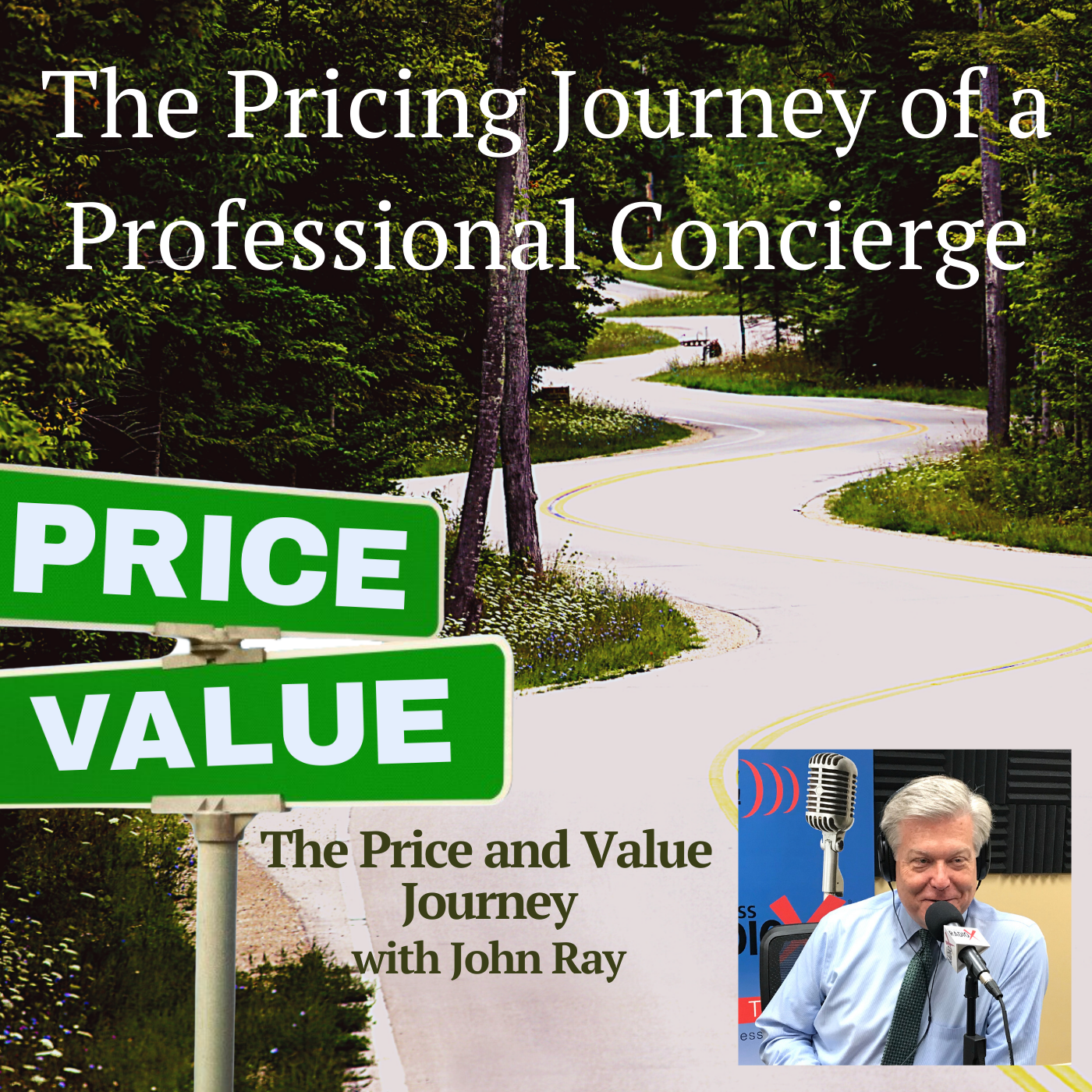
I recently received this question from a professional services provider who was just starting out in their practice, and barely had dry ink on their business cards. The premise behind their question was that they are new in business and want to attract clients to “get going.” Here’s a high-level version of a more specific answer I gave them. (In a word, the answer is no.) The Price and Value Journey is presented by John Ray and produced by the North Fulton studio of Business RadioX®.


TRANSCRIPT

John Ray: [00:00:00] And hello, I’m John Ray on The Price and Value Journey. I recently received a question that was along the lines of, Should I price my services lower when I’m starting out? I get this question a lot from new professional services providers, ones that have just started their practice.

John Ray: [00:00:18] It’s an understandable question, but it comes from a faulty assumption. The premise is that lower prices attract customers, and that’s an understandable misconception. It’s one I labored with when I started out. That conception, that idea is wrong.

John Ray: [00:00:38] A couple things here. One is that prices are marketing signals. In the absence of any other indicator, a price is a marketing signal. For example, if I were to offer you a Lexus for $2,000, what would you think? It’s too good to be true, right? That’s part of the problem with pricing in a way that is supposed to be promotional, sometimes it actually drives clients away.

John Ray: [00:01:04] Now, let’s call something else out though. Part of the problem with professional services providers starting out is both fear and confidence. We are afraid and insecure in thinking a buyer will look at us and question our inexperience in the business. The answer to the problem is focusing on the client, discussing and understanding their problems in depth. What is the scope of the issues that their problems are causing? What will the client be able to do, whether it’s greater sales, lower expenses, less aggravation, a better vacation because the problem gets solved? What’s the cost of doing nothing?

John Ray: [00:01:48] You see, questions like this are a value conversation. And a value conversation is a dialogue with a customer which helps ferret out what the solution to their problem is worth to them. When you have value conversations with clients, you’re shifting everything. The comparison is less about price relative to, well, in this case, you’re supposed lack of experience or your newness in business.

John Ray: [00:02:17] Instead, the comparison becomes more in the minds of that client about price relative to the value of the solution. Once you’ve had a thorough value conversation, you may find that you’re not a great fit for this client. That what they really need is something you can’t provide. If so, you’ve done both them and you a favor.

John Ray: [00:02:42] But if you think you can solve the client’s problems, craft options for working together. Offer a good, better, best set of options. The good option should be your very basic – we’ll call it – compact car offering priced at more than what your gut tells you it should be. The best option should be your luxury solution to the problem when you know you can deliver with a price you think is crazy high.

John Ray: [00:03:12] Now, if you offer options after having a deep dive value conversation, the discussion with that client becomes more about the ways and terms to work with you as opposed to your time in business, your experience, what have you. Now, there’s a lot of detail underneath this answer, but that’s the way I answered this particular question on how should I price when I first start out. Have a value conversation, offer options.

John Ray: [00:03:46] I’m John Ray on The Price and Value Journey. If you’d like to give me a question that I can answer here on this podcast, I’m happy to receive it. Just email me, john@johnray.co. Thank you for joining me.


About The Price and Value Journey

The title of this show describes the journey all professional services providers are on:  building a services practice by seeking to convince the world of the value we offer, helping clients achieve the outcomes they desire, and trying to do all that at pricing which reflects the value we deliver.

If you feel like you’re working too hard for too little money in your solo or small firm practice, this show is for you. Even if you’re reasonably happy with your practice, you’ll hear ways to improve both your bottom line as well as the mindset you bring to your business.

The show is produced by the North Fulton studio of Business RadioX® and can be found on all the major podcast apps. The complete show archive is here.

John Ray, Host of The Price and Value Journey

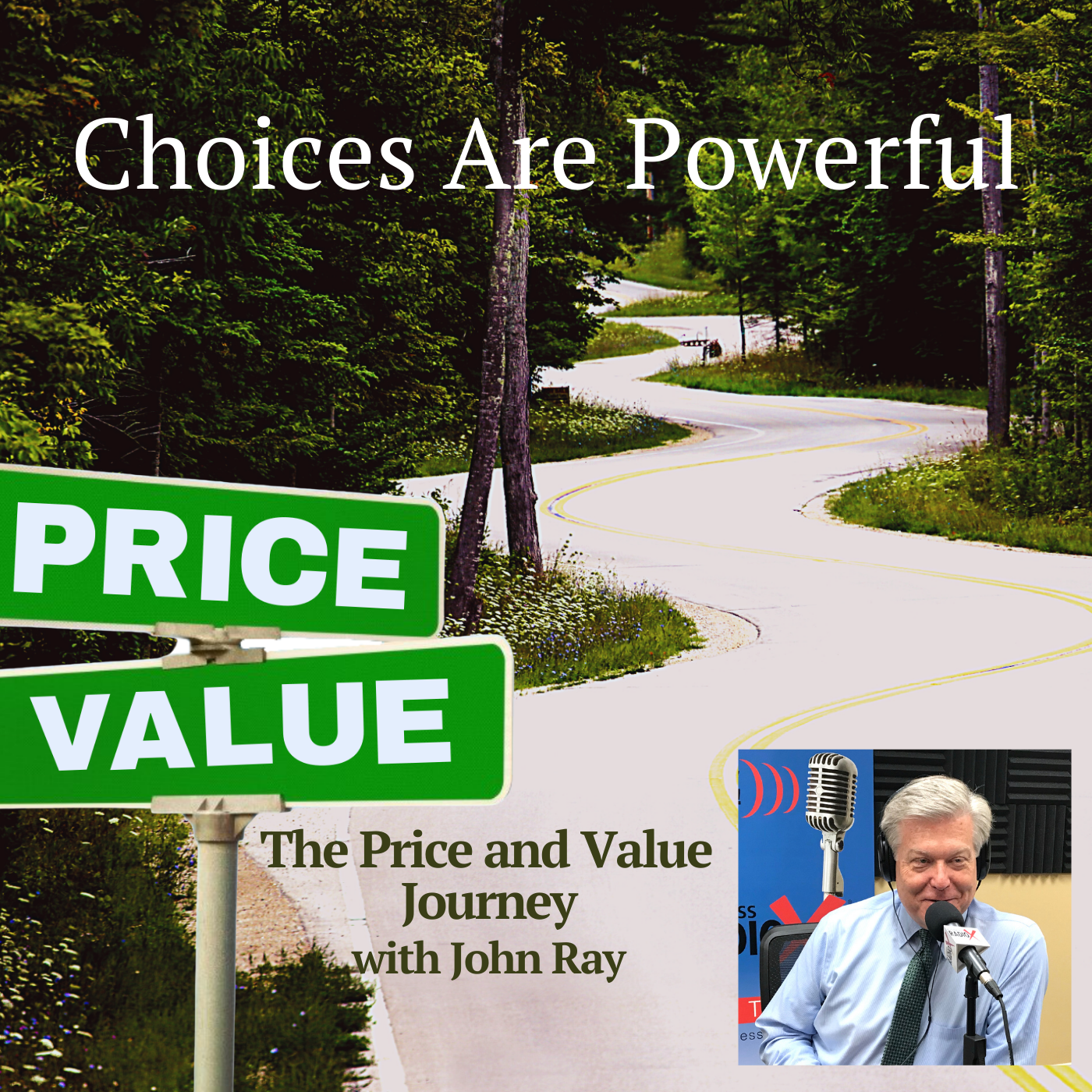
John Ray The Price and Value Journey
John Ray, Host of “The Price and Value Journey”

John Ray is the host of The Price and Value Journey.

John owns Ray Business Advisors, a business advisory practice. John’s services include advising solopreneur and small professional services firms on their pricing. John is passionate about the power of pricing for business owners, as changing pricing is the fastest way to change the profitability of a business. His clients are professionals who are selling their “grey matter,” such as attorneys, CPAs, accountants and bookkeepers, consultants, marketing professionals, and other professional services practitioners.

In his other business, John a Studio Owner, Producer, and Show Host with Business RadioX®, and works with business owners who want to do their own podcast. As a veteran B2B services provider, John’s special sauce is coaching B2B professionals to use a podcast to build relationships in a non-salesy way which translate into revenue.

John is the host of North Fulton Business Radio, Minneapolis-St. Paul Business Radio, Nashville Business Radio, Alpharetta Tech Talk, and Business Leaders Radio. house shows which feature a wide range of business leaders and companies. John has hosted and/or produced over 1,100 podcast episodes.

Connect with John Ray:

Website | LinkedIn | Twitter

Business RadioX®:  LinkedIn | Twitter | Facebook | Instagram

Tagged With: confidence, fear, John Ray, Price and Value Journey, pricing, professional services, starting a business, starting out, value, value conversation

2022 North Fulton Economic Outlook with Ian Wyatt, Principal Economist, Metro Atlanta Chamber of Commerce

January 28, 2022 by John Ray

2022 Economic Outlook
North Fulton Studio
2022 North Fulton Economic Outlook with Ian Wyatt, Principal Economist, Metro Atlanta Chamber of Commerce
Loading
00:00 /
RSS Feed
Share
Link
Embed

Download file

2022 Economic Outlook

2022 North Fulton Economic Outlook with Ian Wyatt, Principal Economist, Metro Atlanta Chamber of Commerce (GNFCC 400 Insider, Episode 71)

Ian Wyatt, Principal Economist with the Metro Atlanta Chamber, joined host Kali Boatright to cover the North Fulton economic outlook for 2022. Ian discussed the strength of North Fulton schools, inflation, housing affordability, how childcare costs affect the labor market, job growth and unemployment and much more. The GNFCC 400 Insider is presented by the Greater North Fulton Chamber of Commerce and produced by the North Fulton studio of Business RadioX®

The Metro Atlanta Chamber

The Metro Atlanta Chamber (MAC) is a 160-year-old organization that today represents businesses, colleges and universities, and nonprofits across the 29-county region that makes up the nation’s ninth-largest market.

MAC works to position metro Atlanta as a top-tier global region by focusing on three key areas: economic development, public policy and promotion. Its efforts build on the qualities that make Atlanta one of the nation’s most unique metros — its neighborhoods, culture, quality of life, welcoming business community and more. MAC’s economic development efforts focus on recruiting new companies to the region and retaining and growing the innovative businesses that already call the area home. In addition, MAC convenes thought leaders in supply chain, IoT, bioscience, global commerce, technology, innovation and entrepreneurship — the region’s key ecosystems.

Company website

Ian Wyatt, Vice President, Principal Economist, Metro Atlanta Chamber

Ian Wyatt, Vice President, Principal Economist, Metro Atlanta Chamber

Ian Wyatt is a Senior Economist with extensive experience and expertise in commercial portfolio strategy, industry analytics, macroeconomic forecasting, competitive intelligence, and risk management.

Ian currently serves as the Vice President, Principal Economist at the Metro Atlanta Chamber. In his previous role, Ian served as the Vice President/Economist, Analytics and Information Strategy, Wholesale Credit for the Bank of America.

Ian also served as Vice President/Economist, Pricing Strategy and Business Analytics, Wholesale Credit with Bank of America where he led a team that produced detailed analysis of loan yields at competitors to improve margins on $400B commercial loan portfolio. He also held the positions of Vice President/Economist, Industry Risk Group and Vice President/Economist, Industry and Country Risk Group.

Prior to joining the Bank of America, Ian served as a Senior Economist with the Bureau of Labor Statistics, where he was responsible for developing and evaluating forecasts of major macroeconomic variables, including GDP, inflation, employment, balance of trade, and monetary policy. These forecasts formed the basis of official U.S. government economic forecasts.

Ian began his career as an Economist, Occupational Outlook and Occupational Employment Statistics Division with the Bureau of Labor Statistics, where he co-developed new statistical metrics and methods in response to customer requests for information on the employment outlook for college graduates.

LinkedIn | Twitter

About GNFCC and The GNFCC 400 Insider

Kali Boatright
Kali Boatright, President and CEO of GNFCC

The GNFCC 400 Insider is presented by the Greater North Fulton Chamber of Commerce (GNFCC) and is hosted by Kali Boatright, President and CEO of GNFCC. The Greater North Fulton Chamber of Commerce is a private, non-profit, member-driven organization comprised of over 1400 business enterprises, civic organizations, educational institutions, and individuals.  Their service area includes Alpharetta, Johns Creek, Milton, Mountain Park, Roswell and Sandy Springs. GNFCC is the leading voice on economic development, business growth and quality of life issues in North Fulton County.

The GNFCC promotes the interests of our members by assuming a leadership role in making North Fulton an excellent place to work, live, play and stay. They provide one voice for all local businesses to influence decision-makers, recommend legislation, and protect the valuable resources that make North Fulton a popular place to live.

For more information on GNFCC and its North Fulton County service area, follow this link or call (770) 993-8806. For more information on GNFCC events, follow this link.

For the complete show archive of GNFCC 400 Insider, go to GNFCC400Insider.com. The GNFCC 400 Insider is produced by John Ray and the North Fulton studio of Business RadioX®.

Tagged With: 2022 Economic Outlook, economy, GNFCC, GNFCC 400 Insider, Greater North Fulton Chamber of Commerce, Ian Wyatt, Kali Boatright, MAC, Metro Atlanta Chamber, North Fujlton economic outlook, North Fulton, North Fulton economy

Just Be Helpful

January 28, 2022 by John Ray

Just Be Helpful
North Fulton Studio
Just Be Helpful
Loading
00:00 /
RSS Feed
Share
Link
Embed

Download file

Just Be Helpful

Just Be Helpful

When you come out of corporate to start your own professional services practice, you think you’ll be chosen or referred because of your experience and your qualifications. If that’s your mindset, though, it doesn’t distinguish you or make you memorable. What does? Just be helpful, genuinely and authentically. The Price and Value Journey is presented by John Ray and produced by the North Fulton studio of Business RadioX®.

TRANSCRIPT

John Ray: [00:00:00] And hello, I’m John Ray on The Price and Value Journey. When you come out of corporate to start your own professional services practice – well, if you’re like me anyway – you drop in and you think, “What do I need to talk about that matters? Well, it’s the service I offer, right?” Well, that’s not really true. At least that’s what I found.

John Ray: [00:00:23] Nobody is waiting for you to show up to provide business advisory services, or legal services, or marketing services, or accounting and bookkeeping, whatever other business that you might be starting. There’s already plenty of folks out there doing that work. They’ve got their established referral partners and practices. So, how do you make a difference? How do you stand out? How do you make a name for yourself? How do you distinguish yourself in a crowded field?

John Ray: [00:00:56] Now, I think part of the answer, a big part of the answer, is just be helpful. Now, I don’t mean the kind of helpful where you’re offering what amounts to a lead page for some course or service that you offer. That’s not being helpful. That’s marketing a service. What I mean is being helpful without any intent to see something immediate from it, if at all.

John Ray: [00:01:26] When you go out and visit with people, just attempt to learn, to understand, to know about them. When you do a coffee or one-on-one, make it about them and learn what they do. You will distinguish yourself right off the bat. I promise you that this is true because I know.

John Ray: [00:01:46] Quite a few years ago when I came out of corporate to start my own practice, I had a pretty big network. But it wasn’t the kind of network that was oriented toward my local market that I needed to have to be able to support my business. So, I had to go build a different kind of network. And the way I did that was by learning about other people and helping them get to where they needed to be, connecting them with helpful strategic referral partners and, of course, a potential client.

John Ray: [00:02:20] When you do that, you’re showing a real concern for them and their welfare. And over the long term, if you do that and do that consistently, it will pay you back. You won’t know where those reciprocations or those vibrations from the universe – if I can say it that way – where they’re going to come from. But that’s part of the fun of it to me.

John Ray: [00:02:44] Recently, I had a lady who called me who I’ve known for many years, and she called to ask me about a family law attorney for her daughter, who unfortunately was probably headed to divorce court. “Now, John -” she said “- because you know everyone around here, you’re going to know the best fit for my daughter.” Now, we talked a little bit at a high level about her daughter and what this worried mom thinks that she needs. I steered her away, frankly, from a few attorneys I know who would be, probably, I’ll just say not good fits. But then, I gave her a couple of recommendations of others that I thought would work out well for her based on what she told me.

John Ray: [00:03:26] The point of it is that this lady views me as a trusted adviser to her. It has nothing to do with the service I offer. I mean, she obviously wasn’t calling up to ask me about my service and what I sell. But she needed help in a very sensitive situation, and she called me. Now, that’s just one illustration of how you get to be a trusted adviser. She knew that if she called me, I was going to be looking out for her best interest because that’s the experience that she had with me.

John Ray: [00:03:59] Now, in the future, she and her business, well, she may not need my service. But one thing that I can count on from her is that if she hears of anyone that even remotely might need what I offer, she would send them my way with a glowing review.

John Ray: [00:04:15] That’s the reputation you want to develop. That’s the brand you want to have as a professional services provider, whatever service you provide. I’m not saying it’s the quickest way to get there, but what I am saying is it’s the most sure and reliable way to reach the goals that you want to reach in your professional services practice. And I think it’s the most rewarding. Just be helpful.

John Ray: [00:04:41] I’m John Ray on The Price and Value Journey. If you’d like to connect with me, go to johnray.co. You can email me at john@johnray.co. And for past episodes of this podcast, go to pricevaluejourney.com or your favorite podcast app.


About The Price and Value Journey

The title of this show describes the journey all professional services providers are on:  building a services practice by seeking to convince the world of the value we offer, helping clients achieve the outcomes they desire, and trying to do all that at pricing which reflects the value we deliver.

If you feel like you’re working too hard for too little money in your solo or small firm practice, this show is for you. Even if you’re reasonably happy with your practice, you’ll hear ways to improve both your bottom line as well as the mindset you bring to your business.

The show is produced by the North Fulton studio of Business RadioX® and can be found on all the major podcast apps. The complete show archive is here.

John Ray, Host of The Price and Value Journey

John Ray The Price and Value Journey
John Ray, Host of “The Price and Value Journey”

John Ray is the host of The Price and Value Journey.

John owns Ray Business Advisors, a business advisory practice. John’s services include advising solopreneur and small professional services firms on their pricing. John is passionate about the power of pricing for business owners, as changing pricing is the fastest way to change the profitability of a business. His clients are professionals who are selling their “grey matter,” such as attorneys, CPAs, accountants and bookkeepers, consultants, marketing professionals, and other professional services practitioners.

In his other business, John a Studio Owner, Producer, and Show Host with Business RadioX®, and works with business owners who want to do their own podcast. As a veteran B2B services provider, John’s special sauce is coaching B2B professionals to use a podcast to build relationships in a non-salesy way which translate into revenue.

John is the host of North Fulton Business Radio, Minneapolis-St. Paul Business Radio, Nashville Business Radio, Alpharetta Tech Talk, and Business Leaders Radio. house shows which feature a wide range of business leaders and companies. John has hosted and/or produced over 1,100 podcast episodes.

Connect with John Ray:

Website | LinkedIn | Twitter

Business RadioX®:  LinkedIn | Twitter | Facebook | Instagram

Tagged With: be helpful, John Ray, Price and Value Journey, professional services, professional services marketing, value

Cancers of the Head and Neck

January 28, 2022 by John Ray

Cancer of Head and Neck
North Fulton Studio
Cancers of the Head and Neck
Loading
00:00 /
RSS Feed
Share
Link
Embed

Download file

Cancer of Head and Neck

Cancers of the Head and Neck (Episode 68, To Your Health with Dr. Jim Morrow)

Head and neck cancers refer to cancers that start in the mouth, throat, voice box, sinuses, and salivary glands. On this edition of To Your Health, Dr. Morrow describes their causes, symptoms, causes, treatments, as well as the side effects of those treatments. To Your Health is brought to you by Morrow Family Medicine, a Member of Village Medical, which brings the care back to healthcare.

About Morrow Family Medicine, A Member of Village Medical

Morrow Family Medicine, a Member of Village Medical, is an award-winning, state-of-the-art family practice with offices in Cumming and Milton, Georgia. The practice combines healthcare information technology with old-fashioned care to provide the type of care that many are in search of today. Two physicians, three physician assistants and two nurse practitioners are supported by a knowledgeable and friendly staff to make your visit to Morrow Family Medicine, A Member of Village Medical one that will remind you of the way healthcare should be.  At Morrow Family Medicine, a Member of Village Medical, we like to say we are “bringing the care back to healthcare!”  The practice has been named the “Best of Forsyth” in Family Medicine in all five years of the award, is a three-time consecutive winner of the “Best of North Atlanta” by readers of Appen Media, and the 2019 winner of “Best of Life” in North Fulton County.

Village Medical offers a comprehensive suite of primary care services including preventative care, treatment for illness and injury, and management of chronic conditions such as diabetes, congestive heart failure, chronic obstructive pulmonary disease (COPD) and kidney disease. Atlanta-area patients can learn more about the practice here.

Dr. Jim Morrow, Morrow Family Medicine, and Host of To Your Health with Dr. Jim Morrow

Covid-19 misconceptionsDr. Jim Morrow is the founder and CEO of Morrow Family Medicine. He has been a trailblazer and evangelist in healthcare information technology, was named Physician IT Leader of the Year by HIMSS, a HIMSS Davies Award Winner, the Cumming-Forsyth Chamber of Commerce Steve Bloom Award Winner as Entrepreneur of the Year and he received a Phoenix Award as Community Leader of the Year from the Metro Atlanta Chamber of Commerce.  He is married to Peggie Morrow and together they founded the Forsyth BYOT Benefit, a charity in Forsyth County to support students in need of technology and devices. They have two Goldendoodles, a gaggle of grandchildren and enjoy life on and around Lake Lanier.

Facebook: https://www.facebook.com/MorrowFamMed/

LinkedIn: https://www.linkedin.com/company/7788088/admin/

Twitter: https://twitter.com/toyourhealthMD

The complete show archive of To Your Health with Dr. Jim Morrow addresses a wide range of health and wellness topics and can be found at www.toyourhealthradio.com.

Dr. Morrow’s Show Notes

What are cancers of the head and neck?

    • o Cancers that are known collectively as head and neck cancers 
      •  usually begin in the squamous cells that line the mucosal surfaces of the head and neck 
        • • (for example, those inside the mouth, throat, and voice box). 
      •  These cancers are referred to as squamous cell carcinomas of the head and neck. 
        • • Head and neck cancers can also begin in the salivary glands, sinuses, or muscles or nerves in the head and neck, 
          • o but these types of cancer are much less common than squamous cell carcinomas (1, 2).
    • o Cancers of the head and neck can form in the:
      •  Oral cavity: Includes the lips, the front two-thirds of the tongue, the gums, the lining inside the cheeks and lips, the floor (bottom) of the mouth under the tongue, the hard palate (bony top of the mouth), and the small area of the gum behind the wisdom teeth.
      •  Throat (pharynx): The pharynx is a hollow tube about 5 inches long that starts behind the nose and leads to the esophagus. It has three parts: the nasopharynx (the upper part of the pharynx, behind the nose); the oropharynx (the middle part of the pharynx, including the soft palate [the back of the mouth], the base of the tongue, and the tonsils); the hypopharynx (the lower part of the pharynx).
      •  Voice box (larynx): The voice box is a short passageway formed by cartilage just below the pharynx in the neck. The voice box contains the vocal cords. It also has a small piece of tissue, called the epiglottis, which moves to cover the voice box to prevent food from entering the air passages.
      •  Paranasal sinuses and nasal cavity: The paranasal sinuses are small hollow spaces in the bones of the head surrounding the nose. The nasal cavity is the hollow space inside the nose.
      •  Salivary glands: The major salivary glands are in the floor of the mouth and near the jawbone. The salivary glands produce saliva. Minor salivary glands are located throughout the mucous membranes of the mouth and throat.
      • • If a squamous cell carcinoma of the head and neck is going to spread, 
    • o it almost always does so locally and/or to the lymph nodes in the neck. 
      •  Sometimes, cancerous squamous cells can be found in the lymph nodes of the upper neck when there is no evidence of cancer in other parts of the head and neck, possibly because the original primary tumor is too small. When this happens, the cancer is called metastatic squamous cell carcinoma with unknown (occult) primary. 

What causes cancers of the head and neck?

      •  Alcohol and tobacco use
    • o (including secondhand smoke and smokeless tobacco, sometimes called “chewing tobacco” or “snuff”) are the two most important risk factors for head and neck cancers, especially cancers of the oral cavity, hypopharynx, and voice box (3–7). 
      •  People who use both tobacco and alcohol are at greater risk of developing these cancers than people who use either tobacco or alcohol alone (8, 9). 
      •  Most head and neck squamous cell carcinomas of the mouth and voice box are caused by tobacco and alcohol use (8).
      •  Infection with cancer-causing types of human papillomavirus (HPV), especially HPV type 16, 
    • o is a risk factor for oropharyngeal cancers that involve the tonsils or the base of the tongue. 
      •  In the United States, the incidence of oropharyngeal cancers caused by HPV infection is increasing, while the incidence of oropharyngeal cancers related to other causes is falling. 
        • • About three-quarters of all oropharyngeal cancers are caused by chronic HPV infection. 
        • • Although HPV can be detected in other head and neck cancers, it appears to be the cause of cancer formation only in the oropharynx. The reasons for this are poorly understood.
        •  Other known risk factors for specific cancers of the head and neck include the following:
    • o Paan (betel quid). The use of paan (betel quid) in the mouth, a common custom in Southeast Asia, is strongly associated with an increased risk of mouth cancers  
    • o Occupational exposure. Occupational exposure to wood dust is a risk factor for nasopharyngeal cancer (17, 18). Certain industrial exposures, including exposures to asbestos and synthetic fibers, have been associated with cancer of the voice box, but the increase in risk remains controversial (19). People working in certain jobs in the construction, metal, textile, ceramic, logging, and food industries may have an increased risk of cancer of the voice box (20). Industrial exposure to wood dust, nickel dust, or formaldehyde is a risk factor for cancers of the paranasal sinuses and nasal cavity 
    • o Radiation exposure. Radiation to the head and neck, for noncancerous conditions or cancer, is a risk factor for cancer of the salivary glands (24–26).
    • o Epstein-Barr virus infection. Infection with the Epstein-Barr virus is a risk factor for nasopharyngeal cancer (27) and cancer of the salivary glands (28, 29).
    • o Ancestry. Asian ancestry, particularly Chinese ancestry, is a risk factor for nasopharyngeal cancer (17, 18).
    • o Underlying genetic disorders. Some genetic disorders, such as Fanconi anemia, can increase the risk of developing precancerous lesions and cancers early in life (30).

What are head and neck cancer symptoms?

    •  Head and neck cancer symptoms may include a lump in the neck or a sore in the mouth
    • o or the throat that does not heal and may be painful, a sore throat that does not go away, difficulty in swallowing, and a change or hoarseness in the voice. These symptoms may also be caused by other, less serious conditions. It is important to check with a doctor or dentist about any of these symptoms.
    •  Symptoms of cancers in specific areas of the head and neck include:
    • o Oral cavity. A white or red patch on the gums, the tongue, or the lining of the mouth; a growth or swelling of the jaw that causes dentures to fit poorly or become uncomfortable; and unusual bleeding or pain in the mouth.
    • o Throat (pharynx). Pain when swallowing; pain in the neck or the throat that does not go away; pain or ringing in the ears; or trouble hearing.
    • o Voice box (larynx). Trouble breathing or speaking, pain when swallowing or ear pain.
    • o Paranasal sinuses and nasal cavity. Sinuses that are blocked and do not clear; chronic sinus infections that do not respond to treatment with antibiotics; bleeding through the nose; frequent headaches, swelling or other trouble with the eyes; pain in the upper teeth; or problems with dentures.
    • o Salivary glands. Swelling under the chin or around the jawbone, numbness or paralysis of the muscles in the face, or pain in the face, the chin, or the neck that does not go away.

How common are head and neck cancers?

    •  Head and neck cancers account for nearly 4% of all cancers in the United States (31).
    • o These cancers are more than twice as common among men as they are among women (31). 
      •  Head and neck cancers are also diagnosed more often among people over age 50 than they are among younger people.
      •  Researchers estimated that more than 68,000 men and women in the United States would be diagnosed with head and neck cancers in 2021. 
    • o Most will be diagnosed with mouth, throat, or voice box cancer. 
    • o Paranasal sinus and nasal cavity cancer and salivary gland cancer are much less common.

How can I reduce my risk of developing head and neck cancers?

    •  People who are at risk of head and neck cancers―particularly those who use tobacco―should talk with their doctor about ways to stop using tobacco to reduce their risk.
    •  Avoiding oral HPV infection can reduce the risk of HPV-associated head and neck cancers. In June 2020, the Food and Drug Administration granted accelerated approval of the HPV vaccine Gardasil 9 for the prevention of oropharyngeal and other head and neck cancers caused by HPV types 16, 18, 31, 33, 45, 52, and 58 in persons aged 9 through 45 years. 
    •  Although there is no standard or routine screening test for head and neck cancers, dentists may check the oral cavity for signs of cancer during a routine checkup.

How are head and neck cancers treated?

    •  Head and neck cancer treatment can include 
    • o surgery,
    • o radiation therapy, chemotherapy, 
    • o targeted therapy, 
    • o immunotherapy, 
    • o or a combination of treatments. 
    • o The treatment plan for an individual patient depends on a number of factors, including the location of the tumor, the stage of the cancer, and the person’s age and general health.
    •  Research has shown that patients with HPV-positive oropharyngeal tumors have a much better prognosis and higher chance of complete cure than those with HPV-negative tumors following the same treatment (32). 
    • o Because of this, ongoing clinical trials are investigating whether patients with HPV-positive cancers can be treated with less intensive regimens, such as less intensive radiation or immunotherapy.

What are the side effects of head and neck cancer treatment?

    •  Surgery for head and neck cancers may affect the patient’s ability to chew, swallow, or talk. 
    • o The patient may look different after surgery, and the face and neck may be swollen. 
    • o The swelling usually improves with time. However, if lymph nodes are removed, the flow of lymph in the area where they were removed may be slower and lymph could collect in the tissues (a condition called lymphedema), causing additional swelling that may last for a long time.
    •  Head and neck lymphedema may be visible or internal. 
    • o In most cases, it can be reversed, improved, or reduced if treated promptly. 
    • o Patients with untreated lymphedema may be more at risk of complications such as cellulitis, or an infection of the tissues. Untreated cellulitis, if severe, can be dangerous and could lead to further swallowing or breathing difficulties.
    •  After a laryngectomy (surgery to remove the voice box) or other surgery in the neck, 
    • o parts of the neck and throat may feel numb because nerves have been cut. If lymph nodes in the neck were removed, the shoulder and neck may become weak and stiff.
    •  Patients who receive radiation to the head and neck may experience side effects during and for a short while after treatment, including redness, irritation, and sores in the mouth; 
    • o a dry mouth or thickened saliva; 
    • o difficulty in swallowing; 
    • o changes in taste; 
    • o or nausea. 
    • o Radiation may also cause loss of taste, which may decrease appetite and affect nutrition, and earaches (caused by the hardening of ear wax). Patients may also notice some swelling or drooping of the skin under the chin and changes in the texture of the skin. The jaw may feel stiff, and patients may not be able to open their mouth as wide as before treatment.
    •  Although side effects will improve slowly over time in many patients, others will experience long-term side effects of surgery or radiation therapy, including difficulty swallowing, speech impairment, and skin changes (33).
    •  Patients should report any side effects to their doctor or nurse and discuss how to deal with them.

Tagged With: Cancer, Cancer of the Head, Dr. Jim Morrow, Jim Morrow, Morrow Family Medicine, Neck Cancer, To Your Health With Dr. Jim Morrow, Village Medical

Decision Vision Episode 153: Should I Provide My Services Pro Bono? – An Interview with Roy Hadley, Adams and Reese LLP

January 27, 2022 by John Ray

Roy Hadley
Decision Vision
Decision Vision Episode 153: Should I Provide My Services Pro Bono? - An Interview with Roy Hadley, Adams and Reese LLP
Loading
00:00 /
RSS Feed
Share
Link
Embed

Download file

Roy Hadley

Decision Vision Episode 153:  Should I Provide My Services Pro Bono? – An Interview with Roy Hadley, Adams and Reese LLP

Arguably no other industry institutionalizes pro bono work like the legal profession does. With that in mind, host Mike Blake welcomed Roy Hadley with Adams and Reese, LLP, winner of the firm’s Pro Bono Lawyer of the Year for 2021, for an in-depth conversation on pro bono work. Roy explained why pro bono work is so important in the legal profession and to him personally, how such work presents an opportunity to grow, the risks of pro bono work, and much more. Decision Vision is presented by Brady Ware & Company.

Adams and Reese LLP

Study their experience and credentials to understand why they belong on your shortlist. Get to know them as people, and you’ll recognize their dedication to client service. At Adams and Reese, they take things personally. Their people are connected – to each other, to clients, their families, and their communities.

The firm’s industry-focused practice groups of attorneys and advisors are strategically organized throughout the southern U.S. and Washington, DC. Adams and Reese professionals are known as practical and personal advisors and advocates who tailor their approach and counsel to the specific needs of each situation and client. Many on their team have years of on-the-job experience within the industries that they serve as executives, professionals, and in-house counsel.

Taking a hands-on, personal approach to every issue, challenge, and opportunity our clients face, Adams and Reese lawyers and advisors are skilled and ready to help clients achieve their goals and make their lives easier.

Company website | LinkedIn

Roy Hadley, Attorney, Adams and Reese LLP

Roy Hadley, Attorney, Adams and Reese LLP

For more than 30 years, Roy has been a trusted advisor to high-growth businesses, governments, and family/closely held businesses. Roy’s practice, which is international in scope, includes advising clients worldwide on complex corporate transactions, particularly those involving technology, cybersecurity, life sciences, economic development, telecommunications, outsourcing, and intellectual property.

With a nod to our increasingly digital world, Roy provides guidance to a wide array of governments, governmental entities, and companies (and their boards) on issues related to data security and privacy.

Roy’s work as independent counsel on cybersecurity matters helps governmental officials and corporate boards understand and mitigate legal and operational risks and exposures to protect themselves and the companies/governments they serve. He also helps clients to respond to and recover from attacks should an event happen.

Roy’s business experience includes serving as vice president, general counsel, and corporate secretary of a wireless communications company, as vice president, general counsel and chief privacy officer for an international travel services and technology company and as in-house counsel for a pair of telecommunications corporations. Roy also served as special counsel to the president of the American Bar Association and as special assistant attorney general for the State of Georgia.

Roy also counsels clients on business matters affected by personal and family dynamics, including business succession planning, legacy planning, family governance and intergenerational issues. He focuses on helping closely held businesses and families protect their interests and achieve their goals in times of transition or crisis.

A frequent speaker, lecturer and author, Roy has writings that have appeared on USAToday.com, FOXNews.com, Compliance Week, Healthcare Risk Management, Inside Counsel, Homeland Security Today, National Law Review, Sports Page Weekly, Law 360 and many other publications. He has also appeared on Georgia Public Broadcasting, TAG Radio, WXIA-TV (Tech Edge) and WUPA-TV (Focus Atlanta).

Roy was the 2021 recipient of the Pro Bono Lawyer of the Year for Adams and Reese, LLP.

LinkedIn

Mike Blake, Brady Ware & Company

Mike Blake, Host of the “Decision Vision” podcast series

Michael Blake is the host of the Decision Vision podcast series and a Director of Brady Ware & Company. Mike specializes in the valuation of intellectual property-driven firms, such as software firms, aerospace firms, and professional services firms, most frequently in the capacity as a transaction advisor, helping clients obtain great outcomes from complex transaction opportunities. He is also a specialist in the appraisal of intellectual properties as stand-alone assets, such as software, trade secrets, and patents.

Mike has been a full-time business appraiser for 13 years with public accounting firms, boutique business appraisal firms, and an owner of his own firm. Prior to that, he spent 8 years in venture capital and investment banking, including transactions in the U.S., Israel, Russia, Ukraine, and Belarus.

LinkedIn | Facebook | Twitter | Instagram

Brady Ware & Company

Brady Ware & Company is a regional full-service accounting and advisory firm which helps businesses and entrepreneurs make visions a reality. Brady Ware services clients nationally from its offices in Alpharetta, GA; Columbus and Dayton, OH; and Richmond, IN. The firm is growth-minded, committed to the regions in which they operate, and most importantly, they make significant investments in their people and service offerings to meet the changing financial needs of those they are privileged to serve. The firm is dedicated to providing results that make a difference for its clients.

Decision Vision Podcast Series

Decision Vision is a podcast covering topics and issues facing small business owners and connecting them with solutions from leading experts. This series is presented by Brady Ware & Company. If you are a decision-maker for a small business, we’d love to hear from you. Contact us at decisionvision@bradyware.com and make sure to listen to every Thursday to the Decision Vision podcast.

Past episodes of Decision Vision can be found at decisionvisionpodcast.com. Decision Vision is produced and broadcast by the North Fulton studio of Business RadioX®.

Connect with Brady Ware & Company:

Website | LinkedIn | Facebook | Twitter | Instagram

TRANSCRIPT

Intro: [00:00:02] Welcome to Decision Vision, a podcast series focusing on critical business decisions. Brought to you by Brady Ware & Company. Brady Ware is a regional, full-service, accounting and advisory firm that helps businesses and entrepreneurs make visions a reality.

Mike Blake: [00:00:22] Welcome to Decision Vision, a podcast giving you, the listener, clear vision to make great decisions. In each episode, we discuss the process of decision-making on a different topic from the business owners’ or executives’ perspective. We aren’t necessarily telling you what to do, but we can put you in a position to make an informed decision on your own and understand when you might need help along the way.

Mike Blake: [00:00:43] My name is Mike Blake, and I’m your host for today’s program. I’m a director at Brady Ware & Company, a full-service accounting firm based in Dayton, Ohio, with offices in Dayton; Columbus, Ohio; Richmond, Indiana; and Alpharetta, Georgia. My practice specializes in providing fact-based strategic and risk management advice to clients that are buying, selling, or growing the value of companies and their intellectual property. Brady Ware is sponsoring this podcast, which is being recorded in Atlanta for social distancing protocols.

Mike Blake: [00:01:14] If you would like to engage with me on social media with my Chart of the Day and other content, I’m on LinkedIn as myself and @unblakeable on Facebook, Twitter, Clubhouse, and Instagram. I also recently launched a new LinkedIn group called Unblakeable’s Group That Doesn’t Suck. We just topped 100 members, by the way, so people are getting into this thing. So, please join in with that as well if you would like to engage. If you like this podcast, please subscribe on your favorite podcast aggregator, and please consider leaving a review of the podcast as well.

Mike Blake: [00:01:45] So, today’s topic is Should I Provide My Services Pro Bono? And, according to Esquire Deposition Solutions, and I don’t think it has anything to do with the magazine, nine out of 10 lawyers provide some sort of pro bono service every year. And, according to data on Statista, many firms’ attorneys average over 100 hours per year, which when you consider that the hourly billing rates might be easily $500 at the partner level and for the bulge bracket firms can be over a thousand, that’s a significant investment that firms are making in pro bono work.

Mike Blake: [00:02:26] And I want to talk about this topic because, you know, as we move through this, again I keep calling it the trans-pandemic period, I don’t know when we’re going to get to the post-pandemic period, but we’re certainly trans, and we have this great realignment and great resignation, great this and great that. You know, one of the things that we’re seeing in our society, of course, is the fact that people’s priorities are simply changing. And I’ll share with you sort of a little anecdote from this morning.

Mike Blake: [00:02:57] A guy that I used to work for many years ago texted me because he saw on my Facebook page that I posted something about the Celtics taking the Sacramento Kings behind the woodshed and beating him by 56 yesterday. And if you don’t follow basketball, that’s a big number. And, I posted something on the website and said – and it actually turned out they won by 52, and my friend was giving me the business said, “Hey, you’re a valuation guy. You’re not allowed to get math wrong.” I said, “Dude, if I’m off duty, I’m not responsible for your math, my math, or anybody else’s.” So, you know, I just can’t be on all the time. You know, I just can’t do that. So, he kindly corrected me and gave me the business by text today.

Mike Blake: [00:03:43] But it’s sort of emblematic of the fact that everybody, I think, is searching for something different in what they’re doing. And, one of the things they search for is, we all search for, I think, or most of us search for, is some kind of meaning in what we do. And, the thing that’s fascinating and why I have this particular guest and one of the reasons I have this particular guest on, is, first of all, he’s great. We could talk about anything for an hour and you would enjoy it. But this is a business podcast, so we’ll try to stick to business as much as we can.

Mike Blake: [00:04:15] But what makes this interesting is that the legal profession, despite having, you know, sort of the meme style reputation of being greedy and self-serving and running the meter on the billable hour, when you really sort of take a step back and take a deep breath and look at it in the cold, hard light of day, I don’t know that there’s another profession out there that institutionalizes volunteer work and giving away their expertise and services like the legal profession does. I know the accounting profession doesn’t do that. The business appraisal profession, sure as hell, doesn’t do that. You know, we have to sort of make that up on our own.

Mike Blake: [00:04:55] So, you know, I think it’s important to recognize the contribution of the legal profession makes to this, and I think provides an example for, you know, I think what many other companies and industries can and should consider following, again, as we as re-evaluate the intersection of commerce and society.

Mike Blake: [00:05:21] And, joining us today is a long-time friend of mine, Roy Hadley. We’re just talking before the program – oops. Sorry, my watch wasn’t turned off. I thought I had the device turned on.

Roy Hadley: [00:05:35] Technology, technology.

Mike Blake: [00:05:35] Yeah. Exactly. I’m sure Apple is not listening. So, anyway, joining us today is not Siri, but indeed it’s Roy Hadley, who is a business lawyer and technology cybersecurity and privacy evangelist with Adams and Reese, which is headquartered in New Orleans but has a fairly substantial office here in Atlanta.

Mike Blake: [00:05:58] Roy is a lawyer and trusted adviser to businesses, governments, and families worldwide. He’s an attorney out of the Atlanta office and is a member of the corporate and security team with a nod to the interconnected world where he consults clients globally on complex business issues, particularly those involving technology, communications, cybersecurity, life sciences, economic development, and trade, and he regularly assists with matters involving data security and risk mitigation. He was named a cybersecurity visionary by USBE Magazine, was named one of Georgia’s most powerful and influential lawyers, and recognized by The Legal 500 for his work in middle markets M&A. He represented the City of Atlanta as it confronted a massive ransomware attack in 2018. I couldn’t believe it’s only been four years ago since that happened. It seems like it was 10 years ago, but, boy, time flies.

Mike Blake: [00:06:54] Roy was named a Georgia trailblazer by the Daily Report and a game-changer by Information Security by Hub Magazine. He recently received Adams and Reese’s Pro Bono Lawyer of the Year Award for 2021, which is what prompted my inviting Roy to this conversation. But I think, perhaps most importantly, as we record this podcast here on January 26, 2022, Roy holds both his bachelor’s degrees and law degree from the National College Football Champion, University of Georgia. Boy, you guys [inaudible]

Roy Hadley: [00:07:29] Bulldogs. Bulldogs.

Mike Blake: [00:07:31] I’m just going to let you have – I’m going let you have it. If you want to start –

Roy Hadley: [00:07:35] Let me have that moment. Yeah. You do have to let me have that moment. You know, it’s been, what, 41 years coming? I deserve that moment.

Mike Blake: [00:07:43] You know, 41 years and I’m not – look, I’m not a college football fan. I’ve said, look, we already have pro football up in the North. We just paid our players over the table. That’s [inaudible]. But, you know, having moved down here almost 20 years ago, about 19 years ago, you know, I don’t have, no pun intended, I have a dog in the fight. But it was remarkable just how many years Georgia would come within a game of winning that national championship and just something – it would, you know, in the 20 – in the early 2000s, it would be a bonehead loss to a bad team six games in, right, that would derail their season. Right?

Roy Hadley: [00:08:25] Right.

Mike Blake: [00:08:26] And then, they keep running into the buzz saw known as Nick Saban, obviously, and the University of Alabama Juggernaut.

Roy Hadley: [00:08:33] Right.

Mike Blake: [00:08:34] And, I didn’t think there was a chance in hell Georgia was going to win that game after the way they lost to Alabama. So, don’t take my betting advice, but –

Roy Hadley: [00:08:42] Right.

Mike Blake: [00:08:42] But I’m just so happy for University of Georgia fans who have just been suffering and have just been tortured for so long –

Roy Hadley: [00:08:53] It’s our moment. Right?

Mike Blake: [00:08:53] And they haven’t come up on top. It’s just brought this really nice vibe, really, to the entire state. Even Georgia Tech fans, I think, are giving you the nod, which is a real sign of social unity, I think.

Roy Hadley: [00:09:05] It’s out of 41 years in the making.

Mike Blake: [00:09:10] Yes. So, Roy, thanks for coming onto the program. It’s awesome to see you again, and congratulations on your Pro Bono Lawyer of the Year Award, among the other things. And, you know, by the way, in full disclosure, I could have read off all of Roy’s accomplishments and achievements and expertise, but we’d use the entire hour doing that. So, I would just invite you to look at his LinkedIn page and look at the other credentials.

Mike Blake: [00:09:36] But let’s dig in, let’s dig in here. As I said in the introduction, the legal my impression is, and correct me if I’m wrong, please. But my impression is the legal profession, interestingly, has a special relationship with pro bono work, right? And so, I want to talk about that in a minute. But before we do that, since pro bono is a Latin term and not all of us have watched The Exorcist. What does pro bono work mean? And is there a distinction between that and a more genericized term of, say, volunteering?

Roy Hadley: [00:10:13] Right. So, you know, great questions, and I’ll start it off by saying, you know, pro bono has been kind of, you know, whether you call it pro bono or you call it something else, it has always been kind of ingrained in the legal profession. You know, the lawyers have always said it is a profession despite what a lot of people think. Lawyers think of the legal profession as a profession. And, as such, you know, part of that profession is giving back to society. And, for us, what that means a lot of times is doing what we call pro bono work, and that work is really doing it for free, pro bono. And, that’s really what, you know, kind of underpins it.

Roy Hadley: [00:11:02] You know, you see it all the time. Firms have pro bono requirements. We’ll get into that a little bit later. But, also, you know, courts. A lot of times when defendants don’t have, you know, money to pay for their defense, courts will appoint lawyers, and sometimes they’re paid, sometimes they’re not. A lot of times you will see lawyers that will take up the case of indigent defendants, lawyers that will take up death penalty cases.

Roy Hadley: [00:11:30] You see the Innocence Projects that go on throughout the country. A lot of times those lawyers aren’t paid, you know, and that even goes back to when kids are in law school, because a lot of the projects they are doing pro bono, they’re doing it for free, with the thought that that same mentality kind of permeates throughout their careers.

Roy Hadley: [00:11:54] And so, it’s almost ingrained in us that part of the profession is giving back. And in some bar, state bar associations, actually require pro bono work. So, you know, it’s just one of those things that I hold near and dear to my heart because, at the end of the day, people always ask me, “Well, what do you do?” You know, you read my resume and I do a lot of technology-focused stuff. But what I tell people at my core is I help people solve problems. And, you know, you can help clients solve problems and you get paid for it and you’re happy. They’re happy. Good stuff comes out of that. But a lot of times when you do pro bono work, you’re helping people that can’t afford your services.

Roy Hadley: [00:12:40] And so, you know, it’s things that are near and dear to them that really make a difference at the end of the day. Things like keeping them from getting evicted. Things like helping them pay hospital bills. Things like, you know, custody matters. Things like – you know, in my case, what I did a lot this year was helping with COVID relief and things like that. And so, things that really impact the daily lives of people is really what a lot of the pro bono work that lawyers do accomplishes. And so, it really does make a difference, and you can see that difference at the end of the day and impacting people’s lives directly.

Mike Blake: [00:13:25] And, you know, it’s so important because at least, you know, I think so. I’m not a lawyer but I’m a citizen, and I take, I think, my civic duty, you know, very seriously. And as a citizen, you know, we’re very proud of a system that is designed to be transparent and it’s designed to give you some kind of equal representation in front of the law, right? And, look, the law is complex and it’s not – although you’re allowed to represent yourself, it’s certainly not designed to encourage that, right?

Mike Blake: [00:14:01] But, you know, the legal system is not perfect and you’re talking about whether the legal system is just or not as a separate podcast altogether and really something philosophers really need to tackle and other jurists that I’m just not qualified to. But I can say this, without the opportunity for representation, the legal system simply has no chance of being successful.

Roy Hadley: [00:14:32] Right.

Mike Blake: [00:14:33] And, you know, the people that often need representation most are the ones that can least afford to pay for it.

Roy Hadley: [00:14:41] Right. And, not getting – and that’s a great point, but not getting too philosophical here because you say it will leave some of these questions for the philosophers. But our whole system, the American system, you know the Constitution, the Bill of Rights, and all of that we all hold dearly whether you’re a Republican, Democrat, Libertarian, it really doesn’t matter. These ideals that we have, you said, hold dearly, and those ideals are predicated really on the Rule of Law.

Roy Hadley: [00:15:11] And so, it’s that Rule of Law that underpins really everything that we do in this country. You know, it’s one of those foundational elements that we have to really nurture and protect. And as lawyers, we feel a special sense of duty and a special sense of obligation because we are lawyers to help nurture and protect and uphold that Rule of Law. But, kind of inherent in all of that is, like you said, making sure that it is just that it is fair that everyone has access to proper representation whether they can afford, you know, a lawyer, you know charges, I don’t – but, you know, charges a thousand dollars an hour, or they can only afford one that costs $10 an hour, or in some cases, afford one that costs zero dollars an hour.

Roy Hadley: [00:16:08] And so, I think that’s why you see lawyers really, you know, kind of embrace this whole thing about service and pro bono and giving back legal services to the community and those most in need of them for free because it is a foundational element of our whole system, of our republic, of our, you know, democratic ideals, that Rule of Law. And so, you know, I hold it dear and we all hold it dear. And, I think it’s it’s one of those things that, regardless of profession, we all love to hold dear.

Mike Blake: [00:16:46] Yeah. And I think, you know, the best example of that was, you know, very early on in our history, John Adams was famous for representing the soldiers in the Boston Massacre, right? Not necessarily because he believed in their case, but because he believed that everybody, even if you think they’re dead, guilty bad guys, the legal system to have credibility. Everybody is entitled to representation and they’re entitled to, as I think as you guys like to say, vigorous advocacy in front of the court, right?

Mike Blake: [00:17:15] So. I’m curious about something in the mechanics. You know, you mentioned about a court appointing a lawyer. And I have this in my head and this may be totally wrong. Does the court have the power to, in effect, draft an attorney to work on a case?

Roy Hadley: [00:17:35] Yeah. In some cases, in some matters, I would say yes, they do. And so, you know, a court can appoint an attorney, whether that attorney wants to or not, in some matters, to actually represent somebody in that case. And you’ll see it a lot of times, especially in smaller communities where, you know, as part of being a member of the bar, you have to sign up and register, and the court will rotate it and appoint different members of the bar to represent certain, you know, clients, whether they’re indigent or just need special assistance.

Roy Hadley: [00:18:13] Now the thing I’ll tell you, though, is that, you know, we have 50 states and each state has its own rules regarding lawyers. Each state has its own rules regarding pro bono, regarding the ability to assign cases. And within those states, you have different bar, circuit and bars and jurisdictions, and so each one will have something totally kind of different. That said, though, again, kind of going back to one of those foundational elements of the bar being that you will give back.

Roy Hadley: [00:18:46] And so, you know, you see firms. I mean, my firm, Adams and Reese, we have a pro bono requirement for lawyers. You know, you have to work a certain number of hours a year. I think it’s 50 per lawyer that you have to work in pro bono service. And there are lots of different ways you can do it, you know. And when you look at it a lot of times early in my career, I know I did some work where people were having trouble getting their wages paid or, you know, improper withholdings from employers, and, you know, a lot of times we’ll sit back in what I call our ivory towers, our gilded towers, and say it really doesn’t make a big difference.

Roy Hadley: [00:19:30] But, you know, if you’re making the minimum wage or you’re making $8 an hour and somebody is erroneously withholding a dollar from you, or if somebody is not paying you for your 40 hours for you, they’re not paying you overtime, that has a tremendous impact on your daily life. It may be the difference, and I’m not overstating this. It may be the difference between you being evicted because you couldn’t pay your rent. It may be the difference between you not having transportation because you couldn’t pay your insurance. Or, it may be the difference between you not being able to eat or feed your child that day.


Roy Hadley: [00:20:12] You know, these sorts of things that we sometimes take can literally be that impactful in people’s lives, and I think that’s really what drives at home for me the importance of it, because when you see somebody that you have helped in a very, you know, impactful way, then, and that person is genuinely appreciative, that gets to you. You know, if you don’t feel some sense of humbleness around the ability to help and the opportunity to help, then you know, I’m not quite sure about you, because it is impactful in ways that, you know, you just don’t see every day in what we do working with clients.

Mike Blake: [00:21:00] Yeah. And, you know, in a lot of cases, you are somebody in your stead is what’s standing in the way of an injustice, right? It’s one thing. You know, if you’re going to be evicted because you’re unable to pay your rent, that’s one scenario, again, I don’t want to go deep into that, that’s philosophical, right? But it’s another if a landlord just decides to kick you out because they got an offer to buy the building, for example. They’re going to make some good money on that sale and they’re banking on the fact that you cannot defend yourself legally, right?

Mike Blake: [00:21:38] To me, that’s the thing that’s got to be that must be impeded, that, you know, I don’t think any of us want to live in a society or very few of us want to live in a society where that is simply allowed, right. And it’s people doing that pro bono work that makes sure that at least if something bad is going to befall somebody, it’s going to befall somebody within the concept of what we, as a society, have decided as a just outcome as opposed to simple, frankly, just outright bullying. I don’t like bullies.

Roy Hadley: [00:22:18] You’re right. I don’t think any of us do, you know. And, it’s interesting because a lot of times, you know, most times people aren’t asking for anything special. You know, they’re just asking to be treated within the rules that are there, the laws that are there.

Mike Blake: [00:22:36] Right.

Roy Hadley: [00:22:36] And so, a lot of times, what you’ll find is people either don’t know how to navigate the system, don’t know what the rules are, don’t know what the opportunities are. And so, a lot of times it’s not that, like you said, somebody can’t pay their rent or doesn’t want to pay their rent, it’s that the landlord is doing something. Or, it said, you know, somebody is trying to get Social Security benefits for a kid because the mother or the father passed but the parents weren’t married, and they don’t know how to navigate that Social Security System to help get those benefits for the child. And, it’s not that the child is trying to get something they’re not entitled to. It said they just don’t know how to navigate the system to get something that they are entitled to.

Roy Hadley: [00:23:24] And so, that’s where, you know, we help. That’s where lawyers can help. And quite honestly, you know, that’s where a lot of other professions can help, you know. Because you start talking. I’m going to pick on you, you and your accounting friends there might – you know, accountants aren’t dumb. And so, accountants can navigate.

Mike Blake: [00:23:48] We like to think so. But, yeah.

Roy Hadley: [00:23:50] Right. You know.

Mike Blake: [00:23:52] That’s what the website says.

Roy Hadley: [00:23:54] Right. And so, you know, there are a lot of things that accountants could do to help this, you know, help people on a pro bono basis. And, you know, I think it’s just not institutionalized again in the way that historically it has been for lawyers. And, in some ways, us lawyers think that we are the guardians of the republic, the guardians of democracy, the guardians of the Rule of Law. You know, we like to think that and in a lot of ways we are because, again, kind of going back to what we first said, our country is built upon the Rule of Law. And so, we have to respect that, nurture it, protect it, and make sure that it’s fairly applied to everybody.

Mike Blake: [00:24:41] So, you bring up a great point. And I’ll say the following, it’s going to sound defensive, but it’s really not intended to be and I’ll prove with what I’ll say next.

Roy Hadley: [00:24:52] There you go.

Mike Blake: [00:24:52] I’ve offered a number of times to attorneys that, look, if you need somebody to ride shotgun with you on a pro bono matter, there’s a valuation issue, or it could be eminent domain. But, you know, it’s a tiny business. It could be a convenience store. It could be a pop-up store, whatever. They’re not going to pay somebody like me 10 or 12 grand to appraise the business. Right? But there are damages involved, right? I’ll be happy to ride shotgun with you, or I’ll have somebody on my staff ride shotgun and help you work through the numbers that matter. And in 18 years of doing this, I’ve never been taken up on it.

Roy Hadley: [00:25:26] Really?

Mike Blake: [00:25:27] Yeah. So, as I say this, and I’m going to put you on the spot a little bit, but I think you’re going to appreciate it. Let’s you and I have an offline conversation, figure out how we can partner our two firms to help you, if there are financial issues that are involved in any of the matters that you guys are working on, if you need a partner to ride shotgun, let’s do that.

Roy Hadley: [00:25:51] Okay. Absolutely. Take done. Done. We will absolutely have that.

Mike Blake: [00:25:55] We would like to do that because you did mention it. You know, you guys have the institutionalized knowledge, right? And the reality is that these matters come to lawyers first. It’s why guys like me suck up to guys like you because guys like you have the – really are the gateway to the engagements because lawyers are the planners and accountants are the historians, which means we can base it, “Oh, man. Well, you should have done this.”

Roy Hadley: [00:26:27] Right.

Mike Blake: [00:26:27] You know, that doesn’t – great. Right? So. you know, nobody comes to us sort of initially with the legal matter, but many of these legal – you know, many of these legal matters involve, you know, finances and that’s something that we can do. And there are opportunities for partnerships where we can kind of piggyback on what you guys are seeing. And I think other firms and other practitioners would love to lend a helping hand. We really would.

Roy Hadley: [00:26:56] Absolutely. And, a lot of times they’re not complex issues. You know, they’re not complex valuation issues. They may be calculating wage an hour, you know, issues. There may be calculating rent and back rent, you know penalties, or with back taxes, trying to help calculate and negotiate with the IRS, you know. There are lots of things. And so, people always say, “Oh, I don’t have time,” because people envision this really complex thing. And sometimes they are complex. But most times they go to the other end of the spectrum and are simple matters, especially simple to somebody who does numbers, you know works with numbers all day long. So, I will absolutely take you up on it.

Roy Hadley: [00:27:44] And, it kind of pivots me to one of the things that, you know, when we talk about pro bono with lawyers is people also tend to think if you’re a lawyer, you can do anything regarding the law. And, you know, kind of like in our normal practice, you kind of stay in your lane and you have to stay in your lane. And so, even with pro bono, we kind of stay in our lane, and part of staying in our lane means that a lot of times we’ll need help from somebody like you on those little things, those number-crunching things that are outside of our lane. And so, it’s – you know, I take that offer very seriously and I will absolutely take it up, take you up on it.

Mike Blake: [00:28:26] At a minimum, take it up with me. Like I said, 18 years, nobody’s ever pulled the trigger.

Roy Hadley: [00:28:30] All right.

Mike Blake: [00:28:31] I can’t commit my entire firm, but I can commit my practice for sure, and I think I can convince my firm to do something with it. So –

Roy Hadley: [00:28:39] Wait. I heard you earlier say the firm, you know, as lawyers hear these things.

Mike Blake: [00:28:45] Well, yeah. Well, that’s why I need to walk that back. So, I don’t have the authority. As far as to go, they’re not the managing partner of the firm.

Roy Hadley: [00:28:54] Right, right, right.

Roy Hadley: [00:28:55] [Inaudible] within my group that we can do it. And I think that I can get people in my firm to do it, whether formally or informally, but –

Roy Hadley: [00:29:01] I’m messing with you.

Mike Blake: [00:29:03] But I do want to have that conversation sort of institution to institution.

Roy Hadley: [00:29:08] Absolutely.

Roy Hadley: [00:29:09] And I think we’ll be receptive to it, just knowing the people involved. So –

Roy Hadley: [00:29:12] Right.

Mike Blake: [00:29:16] Now, you have a 50-hour minimum. I don’t think they gave you the award for doing 50 hours.

Roy Hadley: [00:29:22] [Inaudible] No.

Mike Blake: [00:29:24] That would be, that would be awkward.

Roy Hadley: [00:29:26] Right.

Mike Blake: [00:29:26] So, obviously, this is something you’re doing more and more of because you truly believe in it.

Roy Hadley: [00:29:32] Right.

Mike Blake: [00:29:32] Why? What is it that drives you maybe, you know, more on sort of the edge of the bell curve to do a lot of this?

Roy Hadley: [00:29:39] Right. So, this year, you know, I was well over 200 hours in terms of pro bono work. And a lot and what – and I’ll describe a little bit of what I did. You know, we had a client that was giving out pandemic relief funds, loans, grants [inaudible]. And so, part of that was it took legal work to effectuate the loans and things like that. And so, let’s just say, for example, it’s a $10,000 loan, takes two or three hours of legal work to do. Then, you know, at my standard rate of $50 an hour, just kidding, but at most, you know, it could be a thousand to $1500 in legal fees. So, all of a sudden that $10,000 loan is 8000 or 8500, you know. But if you could get that whole 10,000 to them, then now that business can pay rent, now that business can pay employees, now that business can buy PPE, supplies, and things like that. Now, they can pay the light bill. Now, they can stay open and keep functioning, which is the whole purpose.

Roy Hadley: [00:30:52] And so, you know, I’m a business lawyer. I’m a corporate lawyer, you know, close loans, do deals all day, every day. And so, the ability to do that for these companies, and, again, these are small companies. These are a lot of times sole proprietorships. These are companies that maybe have two or three or four employees that really aren’t the big companies that have the ability to kind of withstand business dropping 50 or 70% because of COVID. These are small operators. And so, the ability to help them by getting all of the monies that we’re trying to get to them can be very impactful.

Roy Hadley: [00:31:35] I mean, you know, when you close some of these loans and you talk to the people, they are genuinely appreciative of those funds. And so, you know, and they will make a difference, and they did make a difference. They kept a lot of these businesses afloat. Again, it was the difference between their doors being open and their doors being closed. And so, you know, if you can, as a lawyer, help effectuate that, I mean, it really warms your heart.

Mike Blake: [00:32:04] And, you know, again, my firm has a minimum requirement, but they are very supportive and I was genuinely appreciative of that support that said, “Hey, go do this. This is a good thing. This is a great thing. Go do this.” Because despite the fact that we too were impacted by COVID and those sorts of things, we still will support these types of endeavors by our lawyers to make a difference in the communities we serve. And I’ve put some emphasis on that word because we really do look at communities where we are as not as the communities that we operate in but as the communities we serve.

Roy Hadley: [00:32:51] And so, you know, here in Atlanta, as you mentioned, the mothership, as I call it, is in New Orleans, but we’re all across the south in terms of our footprint. But in each of those communities, we really do make a special effort to serve the community. And, you know, when people think about, and I know I’m going on on a tangent here, but when people think about pro bono, you know, we tend to think of the legal work that we’re doing. But also inherent in our commitment to the community, legal profession’s commitment, is that you see service to the community in other ways. You see lawyers on the United Way board. You see lawyers on the Red Cross board. You see lawyers on the Community Thief board. You see lawyers, you know, on the food kitchen board, you know.

Roy Hadley: [00:33:46] And so, you see lawyers that not only are doing pro bono work in the truest sense, but you also see lawyers that are out in the community serving on these boards, bringing expertise to these boards of these organizations that also serve the community. And so, you know, all of those nonprofit boards are going to be unpaid, but that’s okay because, again, that’s giving back to the community.

Roy Hadley: [00:34:16] And so, I would challenge all businesses, all business leaders to make a special effort to, you know, push your people because these are going to be people that have special expertise. These are going to be young people. Sometimes they have a lot of time, more time, you know, that can really get in there and serve the community, not necessarily in pro bono like, you know, we have originally defined it, but in terms of giving back to the community, by giving back to other organizations that serve the community. And I think that’s something that also we should really highlight and talk about for the listeners to make sure they understand there are many, many ways that even if you’re not a lawyer, you can serve in the spirit of pro bono service.

Mike Blake: [00:35:08] So, I want to posit something to you, and I’d appreciate your reaction to it. Can’t you also make the case that there is in your profession, and I think I think mine, and as I sort of think through this conversation, I want to interject because I need to be fair. For all I know, there’s a ton of pro bono work that’s going on in my profession, in my company, I just don’t know about it, right? But I do know it’s not institutionalized. We don’t have an award for pro bono, right?

Roy Hadley: [00:35:41] Right.

Mike Blake: [00:35:42] And there are probably opportunities to make it more efficient by aggregating it. So, I do want to get that out there. But that having been said, can you also make a case that the pro bono work could be a great opportunity for somebody that doesn’t have a lot of experience yet to kind of cut their teeth on certain kinds of matters? You know, it could be a first chance to cut your teeth in litigation or, in my world, serving as a consulting or even potentially a testifying expert. Or, you know, in some cases, just sort of getting out of the office and rolling up your sleeves and getting into real world, real life, real business issues where you have to provide, you have to get into really, the very real scenario of providing a client with advice under extreme duress. And, you know, there’s no – I don’t think there’s any class in the world you can take that, would ever prepare you for that. You just have to get in. You just have to get in there, right? So, can we argue that there is a professional development aspect to pro bono work in the way that we’re describing that is also very helpful?

Roy Hadley: [00:36:58] Absolutely. You know, again, you know, the requirement here at this firm and most firms is not, you know, no requirement for young lawyers, 50 hours for senior lawyers. It’s for every lawyer, which means that young lawyers have to get out and do something. Now, what we do here in the legal profession is, again, we try to kind of stay in your lane. But if you are volunteering, say you’re a young lawyer and you are going into something you don’t have the expertise on, you know, you get a senior lawyer that does will help you navigate whatever that is. But it is an excellent opportunity, as you said, to learn new areas.

Roy Hadley: [00:37:42] You know, back – I’ve always been a corporate lawyer, but a lot of my pro bono cases when I was very young dealt with wage and hour issues, dealt with Social Security issues, dealt with evictions, you know, nothing within the lane that I was in. But because I did those things, I did learn about those types of areas of the law. But more importantly, and I think this is one of the things that is kind of underpinning your statement, is I learn how to work with clients. I learn how to interact with people. I learn how to listen and understand the issues and the problems, and then come up with real-world solutions and not just theoretical kind of book solutions.

Roy Hadley: [00:38:30] You know, it’s one thing kind of to do a law exam and come up with a solution to a question, but it’s a whole another thing when you’re out in the real world. And, like most issues, things aren’t cut and dry. They’re not black. They’re not white. They’re shades of gray and those shades of gray shift, you know, depending upon who you’re talking to and what they’re saying. And so, in any profession, you’re going to be a better fill-in-the-blank if you have experience, you know, working with those nuances and those shades of gray that are constantly shifting on you.

Roy Hadley: [00:39:08] And so, pro bono work is a fantastic opportunity to get out there and learn a new area of the law, you know, to roll your sleeves up, to get some, as you said, that real-world experience, and quite frankly, for the legal profession, we encourage that. We encourage you to say, “Okay. I’m going to go volunteer for the Atlanta Volunteer Lawyers for the Arts and learn about contracts and that sort of thing.” Or, “I’m going to volunteer for Legal Aid and learn about helping to defend somebody in, you know, or help them navigate through certain parts of the system, whether it’s child support or those sorts of things.” You know, it may be a corporate lawyer going to Legal Aid. We don’t have those kinds of prohibitions.

Roy Hadley: [00:39:58] So, it’s a great, great opportunity and it’s a great opportunity for old lawyers, you know, like myself that have been practicing for a long time to get out there and do something different, learn a new area of the law, and quite honestly, like you said, get out of the office and, you know, actually look somebody in the eye, sit across the table from them, sometimes go and take them to lunch and break bread with them, and really understand the issues. Because most times kind of like any corporate matter, again it’s not just black and white. You’re going to need to be able to navigate those nuances and nothing like real-world experience to help you navigate those nuances.

Mike Blake: [00:40:45] And, another word that comes to mind that I think is so important, and I almost hate to bring it up because one of my fears, I’m afraid this word is going to become viewed as a buzzword and it really shouldn’t, it really needs to stick, and that is that I think the pro bono work you’re describing helps you develop and strengthen your empathy muscle.

Roy Hadley: [00:41:06] Absolutely.

Mike Blake: [00:41:09] The kinds of cases you’re in, and I’ve only done a fraction of what you’ve done mainly through my old office hours, people sort of wander in, right. But, you know, they come in and the circumstances that sort of that got them there, right, in a paid scenario. You guys are in – I forget if you’re in Class A or Class B office space, but the fact of the matter is, I don’t want to get into – there’s a segue here. People are not wandering into your office most likely who are minimum wage people about to be evicted coming into the marble office, right, and reception room, saying, I need a lawyer. Right?

Roy Hadley: [00:41:46] Right.

Mike Blake: [00:41:47] And it sort of goes the reverse, right? So, unless you really make a concerted effort, you never encounter that. It’s very easy for people in our position that in fact we want to really isolate ourselves and never connect with that.

Mike Blake: [00:42:02] So, that’s a long preamble to the segue, which is if somebody – how do you – how do those opportunities to serve come your way? Right? Because they’re not calling. I don’t think – they’re not coming into your office. How do they find Adams and Reese? How do they find Roy Hadley to get the help they need?

Roy Hadley: [00:42:22] Right. So, you know, I’ll preface my whole statement here in response by your original premise of the empathy. And I think that’s important to kind of underscore here because one of my favorite sayings is, I complained that I had no shoes until I saw the man with no feet. Right? And so, you really have to always put things in perspective. And, you know, before you got on this kind of video here we’re talking and, you know, I’m always happy because I always try to keep things in perspective. And that perspective is that I’m fortunate. I’m blessed. You know, I am in a good place. Not everybody is as fortunate, right?

Roy Hadley: [00:43:13] And so, you have to remember that that a lot of times people’s circumstance is not of their choosing, you know, kind of dictates where they’re going in life and how they’re getting there. And you always have to be cognizant of that, that not everybody graduated from high school. Not everybody had the opportunity to go to college. Not everybody had the opportunity to go to grad school or to law school. And those are opportunities that are generally afforded to you, not by your own choosing, but by your circumstance. And so, I keep that filter in mind when trying to talk to people and help people. Everybody is not as blessed or as fortunate as we are, and so we just have to be cognizant, cognizant of that.

Roy Hadley: [00:44:06] Now, to get it back to the second part of your question, most times, yes, you’re right. To be quite honest, most people couldn’t get past security to come up to our office, right?

Mike Blake: [00:44:17] There. Fair.

Roy Hadley: [00:44:19] Speaking plainly. Right? What we do is we partner with, you know, institutions that are on the ground out in the community. So, you know, you’re talking about institutions like the United Way. You’re talking about institutions like, you know, Homeless Task Forces. You’re talking about the food banks. You’re talking about shelters. You’re talking about, you know, places like that, the Volunteer Lawyers for the Arts, you know, and those types of institutions that have their feet out and hands out in the community are going to be the frontline and then we partner with them. Legal Aid is another great example of an organization that has offices and people that are out in the community, you know talking to people that are accessible to people. They come in, they identify the need, and then we partner with them to address those needs.

Roy Hadley: [00:45:19] I was talking to – I had a good friend who was in the legal business, but he also had gotten into the restaurant business, and he and some other restaurant owners found it kind of a fund for their employees that, you know, if – the restaurant owner has put into the fund every month and employees could contribute whatever they want it too [inaudible]. And then, let’s say you then have rent money for a month or you were short on your rent or you’re short on your insurance payment, the fund would loan you the money or give you the money. But, you know, that fund also would help people who needed legal assistance.

Roy Hadley: [00:45:59] And so, you partner with those types of organizations, and that’s really how we do it. And that’s going to be the most efficient way because a lot of times, you know, issues can be resolved without even involving a lawyer, you know by somebody that has much more specialized practical expertise on it to say, “Hey, you need to take this form, fill it out and take it to this office there, you know, at this address, or we can take it for you.”

Roy Hadley: [00:46:27] And so, you know, those types of organizations will filter out, address a lot of things, you know, quickly and more practically, and then give the others to us, funnel them to us, and then we handle those through those organizations. And, we found that’s the most efficient and practical way to do it. And so, you know, if somebody needs help, go to those frontline organizations. And then, if they need more specific help, those organizations can get them to us to address the needs.

Mike Blake: [00:47:02] I’m talking with Roy Hadley and the topic is, Should I Provide My Services Pro Bono? So, I want to address a question that I think is important any time – because any time we talk professional services, the elephant in the room is always, what’s the liability? And, it’s unfortunate, but that’s just a fact of professional life. We have to protect ourselves or we can’t be in business very long.

Roy Hadley: [00:47:27] Right.

Mike Blake: [00:47:29] How, if at all, are there any kind of protections in place to ensure that you’re not taking disproportionate risk by taking on a pro bono case? Do you effectively have – and for example, you said, you know, pro bono is a great way to learn about a part of the law where you don’t have necessarily that much exposure, which to me means that – that means it’s going to be higher risk that something could go sideways. Are there structures in place to kind of help you manage the risk to make sure that when you’re trying to do a good thing, you’re not the good Samaritan that gets sued because you didn’t change the guy’s tire right on the side of the road? You know what I’m trying to get to?

Roy Hadley: [00:48:17] Right. Right. Absolutely. So, that’s a great question, and I can only address it from the legal standpoint, the legal law firm, you know, lawyer standpoint. I can’t really speak to other professions that might do volunteer work of this ilk. In the legal sense, you know, I talked about staying in your lane earlier, and what that means is that even if you are taking on a matter that you may not have expertise in, you get somebody at your firm who can help guide you, you know, just like they would in any other matter. You know, you use that matter as a teaching opportunity, as an opportunity to grow. So, from a staffing standpoint, we’ll always make sure that there is somebody on that matter that can provide general overall guidance.

Roy Hadley: [00:49:10] So, you may be a young corporate lawyer, you know, cutting your teeth in a pro bono litigation matter, but we’ll make sure we have a litigation senior lawyer, partner or senior associate that knows that area that can help guide you so that you don’t make those missteps. Because, you know, not only is it a legal exposure, but, again, you have to remember there’s a live person on the other end of the matter that it really impacts their lives. And so, you know, we will staff it the same way we staff a paid matter in terms of, you know, we may have a young lawyer working on it, but there’s going to be a more senior lawyer that actually knows how to do it and knows, you know, what needs to be done to oversee that young lawyer. So, we’ll always staff pro bono matters that way.

Roy Hadley: [00:50:01] We actually have a pro bono partner. And so, all pro bono matters at the firm have to be approved by this part. Part of that process is making sure that we’re putting the right staffing on the matter so that we have the right expertise on the matter.

Roy Hadley: [00:50:19] Now, the second part of it is pro bono is so ingrained in the legal culture of law firms that our professional liability insurance also covers pro bono matters. So, if a firm just happens to screw up something, you know, inadvertently, their professional liability coverage, generally speaking, will cover those types of matters also. But again, that’s just because pro bono is so ingrained in what we do as a profession that it is generally speaking covered under most firms’ and lawyers’ liability policies. But again, you go back to that first part of it and that is, you staff it no differently than you would staff a regular paid matter. You know, if a regular paid matter came in and that young – you wanted to put a young lawyer on it or that young lawyer wanted to be on it, you would have a senior lawyer supervising them, be no different than that for a pro bono matter.

Roy Hadley: [00:51:24] So, you know, again, it’s just one of those things that it’s just inherent in us. But pro bono doesn’t mean no expertise. You know, pro bono doesn’t mean shoddy work. You know, we’re going to perform the work at the same level and the same standard that we would paid work. We’re just not getting paid for it.

Mike Blake: [00:51:48] Yeah. And do you have a couple more minutes or do you have a hard stop?

Roy Hadley: [00:51:52] Absolutely. Absolutely.

Mike Blake: [00:51:52] Okay.

Mike Blake: [00:51:53] There’s one –

Roy Hadley: [00:51:54] I’m billing you for this, by the way, but –

Mike Blake: [00:51:59] Okay. That rolling sound you heard, that’s the meter, right?

Roy Hadley: [00:52:03] That’s right. That’s right.

Mike Blake: [00:52:06] Yeah. But the two questions I want to make sure that we got through, and then I’ll let you go. But one, you segued so nicely and I have to ask you, which is, how do you gear yourself up to give a pro bono client the same level of care and attention that are paying client is giving you? Because, you know – and we’ve both done pro bono work. You’ve done more than I have. But one of the things you learn pretty quickly in professional services is that a, quote-unquote, free or very low fee case can easily become as complicated and as frustrating and as emotionally challenging as the big bulge bracket case. In fact, in many ways, those are going to be hard cases for a lot of reasons we are not going to go into it but we both know.

Mike Blake: [00:52:59] When you recognize that, you know, there’s never going to be a billable moment at the end of this thing or in the middle of this thing, how do you stay focused and make sure that you don’t fall into the mental trap? “Ah, well, you know, they’re not paying anything so they can always take a back seat.” Or, you know, “I don’t have to treat this as the same due care.” How do you maintain that mindset, that professional mindset that no matter who you are, how much you’re paying me, you’re getting the same, the very best fastball the Roy Hadley has to throw?

Roy Hadley: [00:53:32] Right. So, you know, and that’s a great question because human nature would probably be “You know, okay, I’ve got to do this or do that.” And what you do is, you know, it all comes down to prioritizing and time management. And I’ll start with the time management in the sense, as a – you know, it’s easier for me because I’m a senior lawyer, and when I look at something, I can pretty much tell what it’s going to be, right? I can say, “Ooh, this is going to be complex.” “So this is going to be a simple thing.” You know, they always shift on. You know, we’re talking about those shades of gray shifting on you earlier. They always shift on you.

Roy Hadley: [00:54:11] But you know, just like a regular matter, you look at it, you assess it, you figure out on the front end what it’s going to be. And then, you know, just like a regular matter, you try to avoid that thing kind of going down the yellow brick road on you. You try to avoid scope creep, you know.

Roy Hadley: [00:54:31] And so, if you are, let’s just say, working on a rent issue, right, and you’ve been tasked with working on a rent issue, then, you know, you don’t want to go down to the scope creep. “Yeah. But, you know, my child’s father hasn’t been paying his child support. You know, can you help me on that?” Well, I can steer you to somewhere that can, you know, and it may come back around to me, but that’s not within the scope of what we’re trying to do.

Roy Hadley: [00:55:05] And so, you know, the empathy part of you wants to help. But just like a regular matter, you have to kind of set those guardrails to make sure you don’t get that scope creep, you know. And then, you just set that into your daily schedule and you just say, “Okay. On Wednesday, I have to do X and I’m going to allot two hours for that.” And you get X done and that X may be a paying client. That X may be a pro bono matter.

Roy Hadley: [00:55:36] But then, you know, just like anything else, an emergency may come up and you may have to push things down on the priority scale. And so, that’s when the professionalism that you kind of mentioned comes into play of knowing how much something is going to take, how much time it’s going to take, where it’s going to fall in the priority scale for that day. If they’re about to be evicted tomorrow, you know, then that’s going to be a priority one. If they just got the eviction notice and the eviction hearing is in a month, okay, that may not be priority one for today. You know, that may be priority three or four.

Roy Hadley: [00:56:18] And so, you just kind of mold it into your daily schedule and what you have to do and what you’re doing to make sure [inaudible] that client proper representation within the realm of everything that you’re doing.

Mike Blake: [00:56:35] Roy, this has been a great conversation. I’ve only gone through, I think, about half the questions I prepared. But I need to let other people benefit from your expertise and your empathy, so we’ll leave it at this. There are probably questions that our listeners would have liked us to cover either at all or in greater depth. If somebody wants to follow up on this and ask about pro bono work and how to get involved in that and how to do it right, can they contact you, and if so, what’s the best way for them to do that?

Roy Hadley: [00:57:06] So, the easiest way to do it would just be absolutely you can contact me. Absolutely. The easiest way is just shoot me an email and that’s going to be roy, R-O-Y, dot hadley, H-A-D as in David, L-E-Y, @arlaw, A as in Robert – A is an apple, R as in Robert, law.com. So, it’s roy.hadley@arlaw.com.

Roy Hadley: [00:57:31] And, you know, always happy to help. Love talking about this thing and the original question, you know, should you be doing pro bono? Regardless of what field you’re in, the answer is absolutely yes, you know, in terms of whatever kind of that pro bono looks like, whether it is doing legal work, doing accounting work, or whether – you know, it doesn’t have to be that complicated. It can be going down and serving at the soup kitchen. It can be going down to the food bank and helping get food in and segregating it and passing it out.

Roy Hadley: [00:58:11] It can be, you know – I took my daughters down over Christmas. We went down to an organization down in downtown Atlanta, had kind of a thing for homeless people, so we served meals to them. We had care packages for them. We gave haircuts to people. We gave manicures. We had medical facilities. We had shower facilities. And so, we just served. And, you know, my daughters and my wife and I passed out food for five or six hours that day. And, you know, it’s that spirit of giving that whether you define it as pro bono or volunteering or just a day of service, whatever that spirit of giving is and how it manifests in you, it should be done in my opinion. Again, whether you call it pro bono or whether you call it something else.

Mike Blake: [00:59:08] Well, thank you for all that you and your family do and service to our community, and I think I’d be remiss – I’d love to give you an opportunity to share with your Twitter handle because I know you’re pretty active on the platform. So, if you’d like to give out your Twitter handle on the podcast, here’s your opportunity to do that as well.

Roy Hadley: [00:59:24] Okay. Yeah. You’re putting me on the spot because, you know, it’s kind of like your home, you know your phone numbers. You don’t say them that often. But it’s GovCyberPrep. So, G-O-V, cyber, C-Y-B-E-R, prep, dot – what is the end of Twitter? Dot? I think –

Mike Blake: [00:59:42] There’s nothing. It’s nothing. That’s just it.

Roy Hadley: [00:59:44] Right. It’s just @GovCyberPrep.

Mike Blake: [00:59:48] Yup.

Roy Hadley: [00:59:48] And also, I do a lot of LinkedIn. And so, you know, you just search for me, Roy Hadley, on LinkedIn. And a lot of times it’s related to cybersecurity, but a lot of times it’s just related to life and what we’re doing in life and how we should be approaching it. So, you know, I welcome you to follow me and what I do there also.

Mike Blake: [01:00:10] That’s going to wrap it up for today’s program. I’d like to thank Roy Hadley so much for sharing his expertise with us.

Roy Hadley: [01:00:17] Pleasure is mine.

Mike Blake: [01:00:17] We’ll be exploring a new topic each week, so please tune in so that when you’re faced with your next business decision, you have clear vision when making it. If you enjoy these podcasts, please consider leaving a review with your favorite podcast aggregator. It helps people find us that we can help them.

Mike Blake: [01:00:33] If you would like to engage with me on social media with my Chart of the Day and other content, I’m on LinkedIn as myself and @unblakeable on Facebook, Twitter, Clubhouse, and Instagram. Also, check out my new LinkedIn group called Unblakeable’s Group That Doesn’t Suck. Once again, this is Mike Blake. Our sponsor is Brady Ware & Company. And this has been the Decision Vision podcast.


Tagged With: Adams and Reese LLP, Brady Ware & Company, community service, Decision Vision, Decision Vision podcast, Mike Blake, Pro Bono Legal, pro bono work, Roy Hadley

  • « Previous Page
  • 1
  • …
  • 156
  • 157
  • 158
  • 159
  • 160
  • …
  • 277
  • Next Page »

Business RadioX ® Network


Our Most Recent Episode

CONNECT WITH US

  • Email
  • Facebook
  • LinkedIn
  • Twitter
  • YouTube

Our Mission

We help local business leaders get the word out about the important work they’re doing to serve their market, their community, and their profession.

We support and celebrate business by sharing positive business stories that traditional media ignores. Some media leans left. Some media leans right. We lean business.

Sponsor a Show

Build Relationships and Grow Your Business. Click here for more details.

Partner With Us

Discover More Here

Terms and Conditions
Privacy Policy

Connect with us

Want to keep up with the latest in pro-business news across the network? Follow us on social media for the latest stories!
  • Email
  • Facebook
  • Google+
  • LinkedIn
  • Twitter
  • YouTube

Business RadioX® Headquarters
1000 Abernathy Rd. NE
Building 400, Suite L-10
Sandy Springs, GA 30328

© 2026 Business RadioX ® · Rainmaker Platform

BRXStudioCoversLA

Wait! Don’t Miss an Episode of LA Business Radio

BRXStudioCoversDENVER

Wait! Don’t Miss an Episode of Denver Business Radio

BRXStudioCoversPENSACOLA

Wait! Don’t Miss an Episode of Pensacola Business Radio

BRXStudioCoversBIRMINGHAM

Wait! Don’t Miss an Episode of Birmingham Business Radio

BRXStudioCoversTALLAHASSEE

Wait! Don’t Miss an Episode of Tallahassee Business Radio

BRXStudioCoversRALEIGH

Wait! Don’t Miss an Episode of Raleigh Business Radio

BRXStudioCoversRICHMONDNoWhite

Wait! Don’t Miss an Episode of Richmond Business Radio

BRXStudioCoversNASHVILLENoWhite

Wait! Don’t Miss an Episode of Nashville Business Radio

BRXStudioCoversDETROIT

Wait! Don’t Miss an Episode of Detroit Business Radio

BRXStudioCoversSTLOUIS

Wait! Don’t Miss an Episode of St. Louis Business Radio

BRXStudioCoversCOLUMBUS-small

Wait! Don’t Miss an Episode of Columbus Business Radio

Coachthecoach-08-08

Wait! Don’t Miss an Episode of Coach the Coach

BRXStudioCoversBAYAREA

Wait! Don’t Miss an Episode of Bay Area Business Radio

BRXStudioCoversCHICAGO

Wait! Don’t Miss an Episode of Chicago Business Radio

Wait! Don’t Miss an Episode of Atlanta Business Radio