Business RadioX ®

  • Home
  • Business RadioX ® Communities
    • Southeast
      • Alabama
        • Birmingham
      • Florida
        • Orlando
        • Pensacola
        • South Florida
        • Tampa
        • Tallahassee
      • Georgia
        • Atlanta
        • Cherokee
        • Forsyth
        • Greater Perimeter
        • Gwinnett
        • North Fulton
        • North Georgia
        • Northeast Georgia
        • Rome
        • Savannah
      • Louisiana
        • New Orleans
      • North Carolina
        • Charlotte
        • Raleigh
      • Tennessee
        • Chattanooga
        • Nashville
      • Virginia
        • Richmond
    • South Central
      • Arkansas
        • Northwest Arkansas
    • Midwest
      • Illinois
        • Chicago
      • Michigan
        • Detroit
      • Minnesota
        • Minneapolis St. Paul
      • Missouri
        • St. Louis
      • Ohio
        • Cleveland
        • Columbus
        • Dayton
    • Southwest
      • Arizona
        • Phoenix
        • Tucson
        • Valley
      • Texas
        • Austin
        • Dallas
        • Houston
    • West
      • California
        • Bay Area
        • LA
        • Pasadena
      • Colorado
        • Denver
      • Hawaii
        • Oahu
  • FAQs
  • About Us
    • Our Mission
    • Our Audience
    • Why It Works
    • What People Are Saying
    • BRX in the News
  • Resources
    • BRX Pro Tips
    • B2B Marketing: The 4Rs
    • High Velocity Selling Habits
    • Why Most B2B Media Strategies Fail
    • 9 Reasons To Sponsor A Business RadioX ® Show
  • Partner With Us
  • Veteran Business RadioX ®

Family Business Radio, Episode 7: Cappi Arneson, Foster & Witmer Insurance Agency; Jim Kubicek, PhoneOne; Kris Seguin and Bill Parent, Alpharetta Property Inspections

February 12, 2020 by John Ray

Alpharetta Property Inspections
Family Business Radio
Family Business Radio, Episode 7: Cappi Arneson, Foster & Witmer Insurance Agency; Jim Kubicek, PhoneOne; Kris Seguin and Bill Parent, Alpharetta Property Inspections
Loading
00:00 /
RSS Feed
Share
Link
Embed

Download file

Alpharetta Proerty Inspections
Kris Seguin, Bill Parent, Jim Kubicek, Cappi Arneson, and Anthony Chen

Family Business Radio, Episode 7:  Cappi Arneson, Foster & Witmer Insurance Agency; Jim Kubicek, PhoneOne; Kris Seguin and Bill Parent, Alpharetta Property Inspections

Insurance, modern voice communications, and property inspections were covered in this edition of “Family Business Radio” as Cappi Arneson, Foster & Witmer Insurance Agency; Jim Kubicek, PhoneOne; Kris Seguin and Bill Parent, Alpharetta Property Inspections, joined the show. “Family Business Radio” is presented and hosted by Anthony Chen and broadcast from the North Fulton Studio of Business RadioX®.

Cappi Arneson, Foster & Witmer Insurance Agency

Cappi Arneson

Cappi Arneson is the Owner of Foster & Witmer Insurance Agency. Foster & Witmer is an independent insurance agency representing many different companies for your insurance needs. We carefully selected our carriers in order to provide you with the best level of service, price and coverage without being restricted to the rules and rates of just one company. Serving the Atlanta area since 1976 means we have developed the relationships with companies and underwriters that make it possible to get things done.

Foster & Witmer Insurance Agency strives to educate the community on the best options for their insurance needs. We can provide an assessment of your insurance needs with a choice of which package fits you best. If you have been cancelled, non-renewed or simply looking for best choice for your insurance needs, we are here to help.

We are dedicated to providing our customers in Georgia with the best coverage at competitive rates. Just make one call to our agency, and we can shop your coverage through many top rated companies. Our professional staff can be your liaison with the insurance carrier in the event of a claim or an issue.. We work for you, not the insurance company.

For more information, visit the Foster & Witmer website.

Jim Kubicek, PhoneOne

Jim Kubicek

Jim Kubicek is the President of PhoneOne, LLC. PhoneOne provides clean and clear voice communications, and makes unifed commications easy. Presence, fax and voice mail to email, web conferencing and instant messaging are child’s play for PhoneOne.

With the integrated softphone and smartphone clients, users automatically get access to advanced unified communications features, without needing to learn separate software.

PhoneOne’s business voice plans offer the quality, leading-edge features, and cost savings your business needs to succeed. All backed by a 30-day money back guarantee!

To learn more, follow this link to the PhoneOne website.

Kris Seguin and Bill Parent, Alpharetta Property Inspections

Alpharetta Property Inspections
Kris Seguin and Bill Parent

Kris Seguin and Bill Parent are the owners of Alpharetta Property Inspections.

Alpharetta Property Inspections is a local, family owned residential home inspection company. They offer a full service of inspection products and technology that help us provide their clients with the best information so they can make a smart and sound home buying decision. They are certified by the International Association of Certified Home Inspectors (InterNACHI), and are fully insured. They provide unique services such as arial drone photography, and thermal imaging on all of our inspections. They also guarantee our inspection reports within 24 hours or less. Our main focus is on educating our clients about the systems and components of their home, as well as how to maintain them so their home investment is a lasting one.

For more information, go to their website or call 770-913-6214.

Anthony Chen, Host of “Family Business Radio”

Anthony Chen

This show is sponsored and brought to you by Anthony Chen with Lighthouse Financial Network. Securities and advisory services offered through Royal Alliance Associates, Inc. (RAA), member FINRA/SIPC. RAA is separately owned and other entities and/or marketing names, products or services referenced here are independent of RAA. The main office address is 575 Broadhollow Rd. Melville, NY 11747. You can reach Anthony at 631-465-9090 ext 5075 or by email at anthonychen@lfnllc.com.

Anthony Chen started his career in financial services with MetLife in Buffalo, NY in 2008. Born and raised in Elmhurst, Queens, he considers himself a full-blooded New Yorker while now enjoying his Atlanta, GA home. Specializing in family businesses and their owners, Anthony works to protect what is most important to them. From preserving to creating wealth, Anthony partners with CPAs and attorneys to help address all of the concerns and help clients achieve their goals. By using a combination of financial products ranging from life, disability, and long term care insurance to many investment options through Royal Alliance. Anthony looks to be the eyes and ears for his client’s financial foundation. In his spare time, Anthony is an avid long-distance runner.

The complete show archive of “Family Business Radio” can be found at familybusinessradioshow.com.

Alpharetta Property Inspections


Tagged With: Family Business Radio, foster & witmer insurance, Kris Seguin, PhoneOne, property inspections, real estate inspections

Judy Cook, Skyline Properties Group, and Janet Ponichtera, Family Life Publications

February 12, 2020 by John Ray

Skyline Properties Group
North Fulton Business Radio
Judy Cook, Skyline Properties Group, and Janet Ponichtera, Family Life Publications
Loading
00:00 /
RSS Feed
Share
Link
Embed

Download file

Skyline Properties Group
Janet Ponichtera and Judy Cook

North Fulton Business Radio, Episode 197: Judy Cook, Skyline Properties Group and Janet Ponichtera, Family Life Publications

On this edition of “North Fulton Business Radio,” Judy Cook discusses the pitfalls of do-it-yourself property management, and Janet Ponichtera talks about the benefits of hyper-local publications. “North Fulton Business Radio” is hosted by John Ray and is broadcast from the North Fulton Business RadioX® studio inside Renasant Bank in Alpharetta.

Judy Cook, Skyline Properties Group

Judy Cook, Skyline Properties Group
Judy Cook

Judy Cook is Director of Marketing for Skyline Properties Group.

Founded in 2004, Skyline has been managing residential and commercial properties throughout the Metro Atlanta area. They strive for excellence in this industry by always using cutting-edge technology and consistently improving the way they do things with one goal in mind — to make our rental owners and tenants happy that they chose to do work with Skyline.

For more information, visit the Skylines Property Group website. You can also email Judy directly, or call 678-978-1858 Ext. 208.

Janet Ponichtera


Janet Ponichtera

Janet Ponichtera is the Sales and Marketing Director for Family Life Publications. Every month, each of Family Life Publications’ three titles reaches 30,000 homes and businesses, with over 28,000 direct-mailed copies. The remaining copies are placed in strategic rack locations to engage the community and grow businesses.

Family Life Publications has the largest monthly circulation of direct-mailed community magazines. Woodstock Family Life is the only community magazine that reaches the highest demographic homes and businesses in downtown Woodstock and Towne Lake.

Canton Family Life the highest demographic homes and businesses in Canton — including downtown Canton, the Sixes/BridgeMill area, Holly Springs, Hickory Flat, and Waleska.

North Fulton Family Life is the only direct-mailed monthly community magazine in the north Fulton area, reaching the highest demographics in Roswell, Alpharetta, and Milton centering on the Rucker Road/Crabapple area.

Family Life Publications also offers complimentary social media presence to advertisers. We have over 4,800 digital subscribers each month, give our half- and full-page advertisers a complimentary digital ad on our website, share our advertisers’ Facebook posts, and spotlight one advertiser each week on our Facebook page.

For more information, visit the Family Life Publications website. You can also email Janet directly, or call 770-213-7095.

North Fulton Business Radio” is broadcast from the North Fulton studio of Business RadioX®, located inside Renasant Bank in Alpharetta. Renasant Bank has humble roots, starting in 1904 as a $100,000 bank in a Lee County, Mississippi, bakery. Since then, Renasant has grown to become one of the Southeast’s strongest financial institutions with over $13 billion in assets and more than 190 banking, lending, wealth management and financial services offices in Mississippi, Alabama, Tennessee, Georgia and Florida. All of Renasant’s success stems from each of their banker’s commitment to investing in their communities as a way of better understanding the people they serve. At Renasant Bank, they understand you because they work and live alongside you every day.

Inspiring Women, Episode 18: Darla King, King Business Interiors

February 12, 2020 by John Ray

Darla King, King Business Interiors
Inspiring Women PodCast with Betty Collins
Inspiring Women, Episode 18: Darla King, King Business Interiors
Loading
00:00 /
RSS Feed
Share
Link
Embed

Download file

Darla King, King Business Interiors
Betty Collins, Brady Ware & Company, and Darla King, King Business Interiors

Inspiring Women, Episode 18:  Darla King, King Business Interiors

Darla King joins “Inspiring Women” to talk about the journey of building her thriving office furniture business, lessons learned along the way, encouraging other women business owners, and giving back. The host of “Inspiring Women” is Betty Collins and this series is presented by Brady Ware & Company.

Darla King, King Business Interiors

Darla King, King Business Interiors

Darla King is the President and Owner of King Business Interiors. After more than a decade in the furniture business, Darla started the company in 1998 and serves as the company’s Owner and President. Early on, the vision was clear: King Business Interiors will always be more than a furniture vendor.

Today, King serves hundreds of clients in numerous markets and industries. Along with being a Haworth furniture preferred dealer, King represents 300 product lines, operates a full service commercial flooring division, offers inventory and warehousing and provides total move management services. In all that King does, King is dedicated to a single goal: providing customer’s with a “Zero Punch List.”

A commitment to going the extra mile for clients has enabled King to grow from a small five person start up into an established multi-million dollar business with 50+ employees. According to Columbus Business First, King ranks second among area office furniture and supply companies, and ranks ninth in the top 50 women-owned businesses.

King is a proud, family-owned business with a strong focus on their employee’s family lives. Two of the passions at King are “kids come first” and “never miss a ball game.”

King is also a certified woman-owned business, and Darla is active with the National Association of Women Business Owners (NAWBO), Columbus Chapter. Darla takes pride in mentoring fellow women leaders throughout the Ohio community.

Through Darla’s leadership, King is very active in giving back to the community, particularly through an innovative recycling program, Connecting the Dots. This initiative takes reusable furniture and connects the items with nonprofits, startups and charitable organizations throughout Central Ohio.

For more information on King Business Interiors, follow this link.

Betty Collins, CPA, Brady Ware & Company and Host of the “Inspiring Women” Podcast

Betty Collins, CPA

Betty Collins is the Office Lead for Brady Ware’s Columbus office and a Shareholder in the firm. Betty joined Brady Ware & Company in 2012 through a merger with Nipps, Brown, Collins & Associates. She started her career in public accounting in 1988. Betty is co-leader of the Long Term Care service team, which helps providers of services to Individuals with Intellectual and Developmental Disabilities and nursing centers establish effective operational models that also maximize available funding. She consults with other small businesses, helping them prosper with advice on general operations management, cash flow optimization, and tax minimization strategies.

In addition, Betty serves on the Board of Directors for Brady Ware and Company. She leads Brady Ware’s Women’s Initiative, a program designed to empower female employees, allowing them to tap into unique resources and unleash their full potential.  Betty helps her colleagues create a work/life balance while inspiring them to set and reach personal and professional goals. The Women’s Initiative promotes women-to-women business relationships for clients and holds an annual conference that supports women business owners, women leaders, and other women who want to succeed. Betty actively participates in women-oriented conferences through speaking engagements and board activity.

Betty is a member of the National Association of Women Business Owners (NAWBO) and she is the President-elect for the Columbus Chapter. Brady Ware also partners with the Women’s Small Business Accelerator (WSBA), an organization designed to help female business owners develop and implement a strong business strategy through education and mentorship, and Betty participates in their mentor match program. She is passionate about WSBA because she believes in their acceleration program and matching women with the right advisors to help them achieve their business ownership goals. Betty supports the WSBA and NAWBO because these organizations deliver resources that help other women-owned and managed businesses thrive.

Betty is a graduate of Mount Vernon Nazarene College, a member of the American Institute of Certified Public Accountants, and a member of the Ohio Society of Certified Public Accountants. Betty is also the Board Chairwoman for the Gahanna Area Chamber of Commerce, and she serves on the Board of the Community Improvement Corporation of Gahanna as Treasurer.

“Inspiring Women” Podcast Series

“Inspiring Women” is THE podcast that advances women toward economic, social and political achievement. The show is hosted by Betty Collins, CPA, and presented by Brady Ware and Company. Brady Ware is committed to empowering women to go their distance in the workplace and at home. Other episodes of “Inspiring Women” can be found here.

Show Transcript

Betty Collins: [00:00:00] Well, today, I am really fortunate to have a guest with me, Darla King, with King Interiors. Guests are always phenomenal. People love the story. They love to hear how they did things, how they didn’t do things, and some insight from them. Darla King, and King Interiors is kind of a big deal in Columbus, Ohio. She probably … She’s laughing already, but it’s true. Everyone knows them, and Darla is just- they founded this with her and her husband in 1988. The philosophy was, “We will be more than furniture.” So, we’re going to talk a little bit about that today.

Betty Collins: [00:00:39] I know Darla because of NAWBO Columbus. I joined that in 2014 and, of course, the board and the players in Columbus that are part of NAWBO, which is the National Association of Women Business Owners, we’re just a fun group. I liked it from the beginning. She was on the board and became president. Then, I got on the board because, you know, we always need a treasurer, and that’s what CPAs do. So, I got there, and one day, we were all trying to figure out who should be the next role, the next leaderships. She’s looking at me, saying, “You should be president!” I’m shaking my head, “No, I am not doing that ever!” But what it did was it planted a seed in my head that maybe I could do this because NAWBO Columbus is a pretty big honor to be on that board and to be on that track. It’s also about what NAWBO does, and I’m passionate about it.

Betty Collins: [00:01:33] That’s how we kind of got to know each other, and we’re both involved with women’s things all over Columbus. A lot of times, either we’re writing the checks, or we’re sponsoring, or we’re opening up our office, and trying to make this because we believe in all of this. We have that common vote. But we also believe in the business and the marketplace. I know her through NAWBO. She’s a member and she has, of course, been in leadership. She’s also in the Women’s Business Enterprise National Council, and WPO, which is Women’s President Organization.

Betty Collins: [00:02:05] She’s really done some amazing things for women, as well as run a business. Without the marketplace, our country doesn’t do well. So, the marketplace has to have success in it, and we have to give those people that have an idea, a passion, and then, all the sudden, they’re an employer, which means you’ve got households that form communities … The marketplaces, the success, we get to experience every day in our country. I love it, and I love that I get to be a CPA and be part of that venue. Even though it’s depreciation, and GAAP things, and all that, it’s important. We’re going to go on a journey. So, first of all, Darla, can you just kind of tell us a little bit about King Interiors; what you guys do? You are family business.

Darla King: [00:02:50] Yeah.

Betty Collins: [00:02:51] That’s a whole ‘nother dynamic we’ll talk about a little bit today but tell us a little bit about King Interiors. It goes back to 1988.

Darla King: [00:02:57] Actually ’98, but [crosstalk] We’ve been in business 22 years. It’s King Business Interiors, under King Business Centers. Believe me, we struggled with the name, in the beginning, saying, “What should it be?” I worked out of my dining room for the first three months trying to get things rolling. But, I look at … We had a pretty good start, as far as I was already in the industry. I was getting things going for just two or three customers, and I let them tell me how to set it up, like, “What do you need? What do you need?” They really guided me to say, “Nothing’s going to change.” They’re going to have the same national account agreement with the furniture line that we represented.

Darla King: [00:03:43] At that time, we were the third Haworth dealer in Columbus. That happens in places like New York City and maybe San Francisco, but not Columbus, Ohio, because we’re like a secondary market. But slowly, that eliminated … One bought the other and ended up filing bankruptcy. Then, we were the only- King was the only Haworth dealer, which is a major brand; like number two in our industry.

Betty Collins: [00:04:08] Sure. Okay.

Darla King: [00:04:09] Anyways, when we started, we had four partners because I really felt like I needed a whole crowd of people to help me. I look at that today, and I think that’s one of my biggest mistakes was just not believing in myself, but also not understanding what four partners- and even number … Relying on everybody to do what I thought we could do. Slowly, I had to eliminate one partner, and I had to eliminate a second partner. My husband was not one either one of them, so-

Betty Collins: [00:04:38] That was good.

Darla King: [00:04:40] Dave and I- yeah, that’s good. Dave and I’ve been married now 40 years-

Betty Collins: [00:04:43] Very nice.

Darla King: [00:04:44] -but in business 22 years. I think it’s a classic. We’re opposites. He’s very much on the numbers. He’s very black and white. He takes all the details in. That’s not me at all.

Betty Collins: [00:04:56] Yeah. It’s necessary. You gotta do it [crosstalk] right?

Darla King: [00:05:00] Yeah, so I look at that, and I think that was one thing that – back in the early days – was I needed the expertise around me; someone that knows how to start a business. I needed somebody that knew how to build a culture. Those were the two partners early. After a year, year and a half, we made those changes. Then, slowly, it grew. Our kids, at that time, were very young.

Betty Collins: [00:05:22] Sure.

Darla King: [00:05:24] So, there was no intention of them having to get into the business or forced to get in the business. But my daughter did go through O.U., and interior design. Then Chris, our son, he’s 37, and he went to Ohio State for American history, and so-

Betty Collins: [00:05:39] So, he started selling furniture.

Darla King: [00:05:43] Yeah. Actually, he … The best thing is both of them have worked in the business, somewhere along the line. Chris did a lot on weekends, and summers at the warehouse, and with the installers, when he was in school and in college. Then he first came on and was in the accounting department and was in accounts receivable. A couple of years went by, and he said, “Mom, people … I don’t like this job. People lie!” [crosstalk]

Betty Collins: [00:06:05] Really? They don’t want to pay us? Okay.

Darla King: [00:06:05] They got excuses. He’d go, “I got notes here. They were gonna pay; the check was in the mail.” It’s like, “Okay …” He goes, “Can I do something else?” He ended up showing some interest in sales, and he has been in sales since.

Betty Collins: [00:06:17] Good, good.

Darla King: [00:06:17] He’s been with us a quite a while. Chelsea’s been with us seven years, and with her design background, she brought a new look to it. Even when we interviewed at O.U., the counselor asked me to step out of the room, and he asked Chelsea, specifically, “Is your mom forcing you to get in this business because she’s in it?” Chel said, “No, I kinda like it. I wanna do this.” So, everybody’s watching out for is it going to be a family business? Is it a forced issue? Is it [crosstalk] It wasn’t for either one of them. They have worked hard. They’re there every day, and they have great interest in how we’re going to find the next customer, and where we’re spending our advertising money, and all the things that a business owner needs to think about.

Betty Collins: [00:07:02] Right.

Darla King: [00:07:03] So, yeah, now we’re up to 81 employees.

Betty Collins: [00:07:06] Very good. Very good. That’s a lot.

Darla King: [00:07:09] Yeah, and a lot of families, and a lot of kids, and now, a lot of grandkids.

Betty Collins: [00:07:12] Wow. Right.

Darla King: [00:07:13] There’s not a day goes by that I don’t think about the day four people walk walked in; and now we’ve got 81. Everybody’s busy. The Columbus market right now is fantastic.

Betty Collins: [00:07:25] It’s hot.

Darla King: [00:07:26] It is.

Betty Collins: [00:07:27] It’s hot.

Darla King: [00:07:28] Everybody’s got their job to do. They work as a great team; in small teams, too. We’re very fortunate to have some customers that have been with the whole 22 years.

Betty Collins: [00:07:38] Wow. Very nice.

Darla King: [00:07:39] They’re very dedicated to helping us understand better how to get better. Some, I’ve been with for 30 years, but they’ve changed personnel in their businesses, and we’ve kind of been their steady; their facilities partner. Not just selling the next chair, but really understanding their buildings. As we grew, the one thing customers kept saying to us is, “I need warehouse. Can you get a little warehouse?” Well, now we’re at 150,000 square foot of warehouse-

Betty Collins: [00:08:08] That’s a lot.

Darla King: [00:08:08] -because customers don’t build their buildings to have a big basement in the bottom or some storage space. The larger customers, the more product they need, the more churn they have, there are more needs for having inventory readily available. That’s kind of how we’ve grown is through [crosstalk]

Betty Collins: [00:08:26] -it’s a great story. Great path. Not an easy path, for sure. As a CPA, I’ve seen the generations. You have that original generation … I had a grandmother who started a nursing home at the age of 63.

Darla King: [00:08:45] Wow!

Betty Collins: [00:08:46] In her home, which, at that time, you could do that. It was- 12 people could fit- could stay in her home. Today, the third generation is running that. Her secret to success, and I want you to talk about this, was if you want to work at this nursing home, you’re going to do dishes, you’re going to cook food, you’re going to learn to do personal hygiene for people; you’re going to learn how to meet with a family.

Darla King: [00:09:11] Right.

Betty Collins: [00:09:12] I’m sure- and that was what they had to do first.

Darla King: [00:09:15] That’s amazing.

Betty Collins: [00:09:15] It wasn’t because they were, “a King,” they got to be there, right?

Darla King: [00:09:19] Right.

Betty Collins: [00:09:19] Talk a little bit about the dynamics that you’ve experienced with that; because they’ve got to really have an entrepreneurship heart. They’ve got to have a passion for the business. Do you feel like you guys have done that well as a family?

Darla King: [00:09:36] You know, I have learned a lot from them. They’re both millennials. They both have a different perspective on it. For me, being in the business 30 years, I’ve had a lot of my customers retire, and the new face shows up that’s a person that’s going to be running and controlling that company’s facilities, and they needed to talk to somebody at their age.

Betty Collins: [00:09:59] Right. That’s perfect.

Darla King: [00:09:59] They needed to be able to relate to them. It’s like I needed- there were obvious spots where I needed to get out of the way and let them start their conversation. Not that they knew it all by then, but the new person at the facility didn’t either, and it was like, they just want to be heard. They just want to know how to find the solutions. Come back, and let’s talk about it, and let’s pull the team together. We really have four generations in our group, right now.

Betty Collins: [00:10:29] That’s awesome.

Darla King: [00:10:30] So, there’s a lot of people that can help them.

Betty Collins: [00:10:32] What do you feel like the biggest challenges a family-owned business – then we’ll move on to other things – but, for you, because our audience is going to have a lot of family-owned people, and they’re sometimes trying to get through those dynamics. What’s really the biggest challenge that probably will never go away – maybe it has gone away – that you deal with?

Darla King: [00:10:51] Just to avoid competition. We all stay in our own lanes.

Betty Collins: [00:10:56] Yeah. Good.

Darla King: [00:10:56] Dave’s in finance. I’m in sales and marketing. Chelsea is in design and works with architects and designers and goes out after folks that are specifying our products. Chris stays on national accounts and handling the sales side of it. So, we all see different parts of the business, but we all realize we’re in the right seats.

Betty Collins: [00:11:18] Right. Good.

Darla King: [00:11:19] When it starts to compete, like overlap, that’s where you feel the frustration and stress.

Betty Collins: [00:11:26] You’ve done this a long time. I know, for myself, my kids never wanted to be CPAs or in business, and neither of them are. One’s a minister, and one’s a teacher. They’re like, “Nope. No, we’re not … We’d never do that.” My husband and I, I just know how we do loading and unloading the dishwasher. I can’t imagine us being in business all day together. But, you know, talk to us a little bit about being a woman in your industry – is that an issue? Is it not?  – and did you have challenges that you worked through as a woman business owner, just back in 22 years ago?

Darla King: [00:11:59] I think I was insulated by having my brother-in-law, and my husband, and another partner there; that I just went ahead and did what I did, which was [crosstalk] sales and [inaudible] focused on finding business. Their job was the insurance, the banking- all the other things that just were not my expertise-

Betty Collins: [00:12:20] Right, and very male. Those are male-dominated things.

Darla King: [00:12:23] They already had people they knew in those places and areas. Since then, growing into it and realizing the struggles of people with NAWBO; women in NAWBO, and them getting the national certification for being a woman-owned business. It elevates a company – if you’re in the right- in certain categories – to be seen by large corporations that would have never noticed you.

Betty Collins: [00:12:47] Right.

Darla King: [00:12:48] Quite frankly, they’re looking to do business; like the automotive industry. They want to do business with women because women buy cars. So, they’ve made this huge initiative to really look out and find suppliers that are that way. So, right away, we started being noticed and seen and then understanding what they needed. In fact, one day I had a call from a company, Japanese automaker. They said, “Any chance that you own the company?” And I said, “Well, yeah. I do.” They go, “Good, I don’t have to change vendors.”

Betty Collins: [00:13:22] Wow.

Darla King: [00:13:22] Because they were searching to find where they could bring as much as 10 to 15 percent of their vendor suppliers into woman-owned or minority. That’s been an initiative for 20 years, but now, it’s even more today and very focused on it. I’m not sure if I answered your question [crosstalk]

Betty Collins: [00:13:41] No, you did, because it really kind of leads into, you know, you’ve really … You did play a really great role in NAWBO.

Darla King: [00:13:47] Oh, thanks.

Betty Collins: [00:13:47] What was the passion behind that? You kind of already answered that – the passion of being involved in NAWBO and helping women in business today; because you do that a lot.

Darla King: [00:13:58] Well, you know, women need to help women. It’s silly. You see so many times where a woman gets to the top of the company, and she doesn’t help anybody up. “I got here by myself. I’m not gonna …”

Betty Collins: [00:14:09] That’s common.

Darla King: [00:14:09] Wow! How selfish!

Betty Collins: [00:14:13] Right.

Darla King: [00:14:14] You look at the people in NAWBO, and the NAWBO roundtables, and even the WPO roundtables. Sitting with a group of eight women that are all business owners that are different size, different scale, but all the same problems; whether you’re selling $40 million or whether you’re selling $3 million, and you’ve got employees, and you’ve got leases, and you’ve got bank loans, and you’ve got lines of credit-

Betty Collins: [00:14:36] Right.

Darla King: [00:14:36] -you’re trying to figure out when you hire your second employee. They’re all issues that some of us with longer time in the business have experienced. I like to relive it, especially with some of the younger women [crosstalk] It’s a whole different start for them than it was for me. I often am so gratified that I had a team that I could rely on back then that did the kinds of things that I think all of them, individually, are trying to do. All hands on deck; do everything.

Betty Collins: [00:15:06] I had that same … I’m in a very male-dominated business-

Darla King: [00:15:09] You are.

Betty Collins: [00:15:09] -especially in 1988. Well, in this- right now, over 50 percent of women are accountants, but we’re still having some of those same struggles of … The perspective around that roundtable, the perspective of that support, whether it’s WPO, or the WSBA, or the different groups in town … You’ve been a big supporter of so much of that, and it’s very appreciated. I know that Darla King has made mistakes in her journey … Not very many, so we won’t spend long on this, but this is where you get your MBA, your own personal MBA … Could you just talk with the audience about these are challenges that I went through, and this is why they probably were a really good learning experience that I had to probably go through to get to some next levels or even just I made a mistake and I had to rebound, or whatever. So, what do you think of when you think of- just off the top of your head, what comes to your mind?

Darla King: [00:16:07] I made a lot of mistakes. I’ve got to say, I mean, the best thing about being a small business and being able to make decisions fast and to be agile is reverse. Yeah, we tried it. You know, give it three months; give it six months. The biggest mistake was a five-year lease, and I mentioned that earlier. I thought we needed a downtown presence, and I also had a line of furniture that was extremely expensive, but it was one of our brands that we were expected to represent and show, and it was very difficult to separate it, or put it in the same showroom. We needed to separate it and make it look more like a art studio and a feeling like that.

Darla King: [00:16:43] At the same time, there was a big presence of being downtown, potentially, and having- a lot of customers of ours are really close to downtown, so it made sense. We stood on the eighth floor of that building and looked around and said, “There’s a customer, there’s a customer, there’s a customer,” and we were clear up north off 161. Every time we had to leave to go to a customer, we’d leave a half hour early because you don’t know about traffic and parking the whole nine yards.

Darla King: [00:17:09] After about a year and a half, two years into that, we realized nobody really wanted to work isolated downtown at the studio. It wasn’t our culture, and we tried two or three different groups. So, after the time, I said, “Look, we’re just going to turn this into an incubator.” It was fully furnished. I had talked to several- in fact, six of my friends from NAWBO had been working in their dining rooms, or in their living rooms, or in some other kind of space. They took that on. It literally was a win-win, and we turned it into- lemons into lemonade.

Betty Collins: [00:17:39] Right. You helped them; they helped you. We all learned a big lesson. But, you know, you really, probably, at the time just thought, “We’ve got to be downtown,” you know?

Darla King: [00:17:49] Yeah. It was early. It was early on that. Then, our lease was up, up north. We were only two years into it when we realized we found a better space, which is in Grandview. Again [crosstalk]

Betty Collins: [00:17:58] -I’ve been to that show.

Darla King: [00:17:58] Close to downtown; minutes for getting to our customers, but completely different than being clear up north. So, location, location, location is key.

Betty Collins: [00:18:10] Fortunately, you do have- I mean, your husband, I mean, probably dynamically going, “The numbers do not work, but we’re gonna do this because we got a line. It just makes sense.” I bet numbers weren’t showing that, but then you did it anyways. Well, we all have challenges. We all have stuff that happens. That’s just called business.

Darla King: [00:18:28] You live and learn, and you make the best of it or you fix it.

Betty Collins: [00:18:30] Yep. Anything else that comes to your mind that you’d love to share with the audience: “Learn from this. I went to the Darla MBA, got my MBA School,” whatever it is?

Darla King: [00:18:39] Trust your peers and be a good listener because they’ll teach you a lot.

Betty Collins: [00:18:46] Right.

Darla King: [00:18:46] You’ll learn just from the experiences or the way they put things in their company, and their words out there. I learned a lot from that. Whether it was Vistage, or [crosstalk]

Betty Collins: [00:18:55] Women, generally, and the statistics are there. I’m a data person, unless I have to go research and find it, I’m a data when you give me numbers. “Oh, good. Let’s play with this.” The data’s out there that women don’t ask. They think they have to do this, and they carry it. That’s just not … It’s a big challenge that I see in business owners all the time.

Darla King: [00:19:19] Yeah.

Betty Collins: [00:19:20] One of the coolest things about your Grandview space, and you said to me, “Yeah, you can use the space,” because you wanted people … It’s your give back.

Darla King: [00:19:29] Yeah.

Betty Collins: [00:19:29] You have very cool coffee there [crosstalk] but it’s your give back is the mentality. Talk a little bit about that.

Darla King: [00:19:36] Yeah. Give them the space. I had some really good bosses, prior to getting my business started. One of them always gave the space. Rodney Wasserstrom always said, “We’re not here after 5:00. Let them come in and have an art show. Let them do this …” It’s like good parking. No one was in that space, so they could get in there. They could have events. I thought, that is amazing. The people that walk through the doors in that community would have never come in there, if they hadn’t been invited through that group.

Betty Collins: [00:20:04] Right.

Darla King: [00:20:04] So, it was obvious, when we moved down here, that we were going to be doing that more, and more, and more. Even in Worthington, we got involved in the Worthington Chamber, but also the libraries called and said, “Is there any chance we could put you on as an option room?” Our space.

Betty Collins: [00:20:18] Oh, wow.

Darla King: [00:20:18] I said, “Absolutely.” When someone would come in and they just wanted an alternative to where they had been meeting or they want to spend a half a day, we had the space; training rooms, or a conference room, or places in the space that you only use 10 percent of the time. What I love about our new space is, at the end of the day, there’s 250 parking spots. If a larger event or a nonprofit wants to come in there, we do not charge. There’s public restrooms … Just all the things are right there ready for it.

Betty Collins: [00:20:48] Right.

Darla King: [00:20:49] But giving back and letting people know that you’re there for it, it just, you know, it feels good [crosstalk]

Betty Collins: [00:20:58] Yeah, because you just had a big fundraiser for Bridgeview.

Darla King: [00:21:00] We did.

Betty Collins: [00:21:01] So, tell us a little bit about- that’s the part of giving back, you know? You’re not selling them furniture, you’re just … You probably will sell some furniture over it, but I mean …

Darla King: [00:21:08] This is our 16th year to have Create for Cause. It’s an event where we give back to the community. We get our vendors involved, and we invite everybody we know. Again, this was a learning curve for me. We started it in our fifth year in business [crosstalk] The reason we started it was every year we were giving a customer a small clock; a Howard Miller small clock. After the fifth year, the salespeople said, “How many more clocks … [crosstalk]?”

Betty Collins: [00:21:35] -don’t want any more clocks, yeah.

Darla King: [00:21:38] We were realizing we had such a repeat business that, yeah, we needed to do something different. So, we kicked it into gear with, hey, let’s have a party. Let’s invite everybody there. Let’s do something about it. Let’s have some fun. So, we created this, which we paint 100 ceramic plates is how it started. Now, we’ve been doing platters; this last year was a tray. We put them in as a silent auction. We invite artists, architects, designers in town to paint the ceramics. If you ever painted ceramics, they come out very chalky when you’re painting them. Then, when they get fired, they’re glazed, and glossy, and pretty, and just glow. So, they can see their finished painting, their finished piece of art, when they come to the party.

Betty Collins: [00:22:24] Very cool.

Darla King: [00:22:25] So, it creates a nice crowd. This year, I think we had over 750 people. Everybody in our company knows that they invite their circle of friends, relatives, neighbors, because it’s not just … It’s you don’t know who knows who. I know you’re a CPA. You know I’m in office furniture. You know somebody that’s in a certain industry, it just connects. So, you never know who knows who knows who that could influence and/or say, “If you’re going to get some new chairs, call King.”

Betty Collins: [00:22:54] Well, you know, that’s really the cool part of giving back. You end up creating something that turns into not what you really thought. Let’s give a clock because, hey, we need to give something to our people. Now we have a party that’s owned, and connection, and you get to do some fun, and you raise money all at the same time. 750 people, that’s awesome.

Darla King: [00:23:13] Well, the exposure for Bridgeway was nice [crosstalk]

Betty Collins: [00:23:15] Sure, sure. Great organization.

Darla King: [00:23:18] -they had the opportunity to explain how they take care of kids with autism [crosstalk] It’s amazing.

Betty Collins: [00:23:22] I’ve been down to their school several times, and it’s just … They’re so passionate. They’re really good. Well, you know, Darla, you’ve not always been a big deal, right? You just haven’t. You started out like every business owner. There’s that commercial out right now; I always love it. “We’ve seen a few things,” No, “We know a few things because we’ve seen a few things …” [crosstalk] According to Darla – we’re going to wrap up a little bit – what would you advise women who are, or want to be in business? Maybe they have the idea; they’ve launched already; they realize, “I’m in this because I got a bunch of liability and I got …” or “I’m going to make this- I want to go full circle. I don’t want- I want this to be more.” What would you say to them?

Darla King: [00:24:05] What [crosstalk].

Betty Collins: [00:24:05] What’s something that you would go, “Do this, or don’t do this, or persevere,” whatever?

Darla King: [00:24:10] I’d say reach out and call folks like yourself; call me; call people that have been through it, because we’ll take the time to go have coffee and brainstorm it and then find the next right spot to be, whether it’s a NAWBO roundtable, or it’s WBENC convention or something. It just depends upon what industry they’re in and how it might help their business. Networking is key, and just picking up the phone and calling somebody, and hope they call back, and hope they can connect with you. That’s big. I think you can’t pass that up. That’s just one big part of it. I know there’s a lot of young gals that get discouraged. They want to start a business. They want to get into it. You don’t have a business unless you have a customer.

Betty Collins: [00:24:58] Right. Very good.

Darla King: [00:24:59] It’s great to dream of something, but you got to think it all the way through, and you’ve got to walk it/talk it with somebody. I think that was the one thing I learned about peer-to-peer learning or understanding was just that really sitting down and sorting it out and thinking through how did that happen to me, and how does it happen to her? How can she get connected to somebody else I know? Because helping them is … It should just be natural.

Betty Collins: [00:25:30] Yeah. Well, no, I’ve called on you several times with … We have a mutual friend, right now, who she just- I loved her from the minute because she was just tenacious. She made sure she got to Betty Collins. She did it through several people because she wanted to meet with me. I thought, you know, I need to meet with her because she’s brave, and she’s bold. Then I said I need to connected as somebody who knows a bunch of big businesses that need commercial real estate … It was just cool to do. It took, what, a half hour my time to think it through and talk with her.

Darla King: [00:26:00] Right.

Betty Collins: [00:26:00] Then, you were like immediate. So … When you’re launching, and your starting, you’re getting out there, and you’re going through those rough times, it’s a constant. You’ve got to be asking for help. I think that’s what you’re really saying.

Darla King: [00:26:12] That’s right.

Betty Collins: [00:26:12] Don’t hesitate to do it because your success … Then, sometimes, someone’s going to ask you, and you’re going to be able to help, and do. Darla, I appreciate you meeting with us today. I love meeting with women business owners.

Darla King: [00:26:23] Thank you.

Betty Collins: [00:26:23] Someone who’s had success. They’ve gone through times. Respected in the community. I appreciate all you do with giving back. Of course, you have something called Connecting the Dots, as well. Tell us about that, and then we’ll close.

Darla King: [00:26:34] Real quick. Gosh, in 2004, we had an outlet store, which is the obvious thing for office furniture dealers. Put your old stuff, or the things you made a mistake on [crosstalk]

Betty Collins: [00:26:45] It’s on sale again, yeah.

Darla King: [00:26:45] That business was like 5:00 to 8:00 at night, and on weekends – Saturday and Sunday. It was like, okay, I’m going to work 8:00 to 8:00, and then 8:00 … So, spreading that out and getting other people involved in it and then, also being located clear up on 161 Huntley Road, it just was not right. I got onto a board of directors through a customer of mine and it was the New Direction Career Center for Women. I noticed they didn’t have two chairs that matched, and I thought, here I sit with this abundance of furniture, and it’s sad; they don’t have the money to spend, and I really don’t want to keep on going with the expense of a warehouse and overhead. So, let me just see if I can’t- if they’ll accept me giving it to them.

Darla King: [00:27:27] Some things we owned, so we could take some kind of write off on it. Other things we were- customers would say, “I don’t want this anymore,” but it still had some life to it. So, we created a program where we are not the nonprofit, but we connect the dots for the used furniture – lightly used and/or brand new – to the nonprofits and charities that need it. Interesting enough, we never advertised.

Darla King: [00:27:51] I probably get five, six phone calls a week, or on our web site, people that are requesting things. No one ever needs the same thing. One time I had a guy call for TVs, and I said, “Boy, we’ve never taken in TVs or appliances, except one-offs because I just don’t know how to maintain them [crosstalk] be good. She said, “Well, I have five men’s group homes, and I have no way to get them to gather in the living room. If I could just get some TVs … ”

Darla King: [00:28:17] Two weeks later, company calls and says, “We just got all new flat screens. We have TVs, if you’d be interested.” I said, “You know what? Send me a picture, if you will.” I called her, and I got the addresses, and we delivered five TVs. I said, “The only bad thing is they’re kind of strapped on to one of these mobile carts,” and she goes, “Good, because I don’t have any furniture to put it on!”

Betty Collins: [00:28:39] So, it all worked out.

Darla King: [00:28:42] It did. It did. So, it’s that kind of thing. I think it’s just that putting it out there in the universe; see how it comes back to us. The groups are really good because they don’t need- nobody needs everything, but they’re looking for something that could make their life easier and better. The last thing they need to spend money on is furniture. They need [inaudible] programs, and people, and computers, and all that, so, yeah …

Betty Collins: [00:29:05] Well, it was a good pleasure talking with you today, just getting to know you a little bit more.

Darla King: [00:29:08] Thanks.

Betty Collins: [00:29:08] A lot of good content for women in business, women business owners to talk about and think about, and I just appreciate your time.

Darla King: [00:29:15] Thank you. I appreciate you-

Betty Collins: [00:29:16] Betty Collins. I appreciate everyone who listens. I am passionate and really fortunate to be a woman business owner and to get to have a podcast, a company that believes in empowering women. Have a great day.

Tagged With: Darla King, King Business Interiors, NAWBO, NAWBO Columbus Chapter, Office Furniture, woman owned business

Steve Kullback, The Nebo Company

February 10, 2020 by John Ray

Steve Kullback, The Nebo Company
North Fulton Business Radio
Steve Kullback, The Nebo Company
Loading
00:00 /
RSS Feed
Share
Link
Embed

Download file

Steve Kullback, The Nebo Company

North Fulton Business Radio, Episode 196: Steve Kullback, The Nebo Company

How does a leader find the inner balance necessary to lead a team successfully in a chaotic, rapidly changing world? On this edition of “North Fulton Business Radio,” Steve Kullback, The Nebo Company, joins the show to address this question and much more. “North Fulton Business Radio” is hosted by John Ray and is broadcast from the North Fulton Business RadioX® studio inside Renasant Bank in Alpharetta.

Steve Kullback, The Nebo Company

Steve Kullback, The Nebo Company

Steve Kullback is a Vice President in The Nebo Company, and heads the Atlanta office and Southeast region. The Nebo Company provides leadership development services to Fortune 500, mid-size companies, non-profits and social entrepreneurs. The firm is based in based in Washington, D.C. with a network of top leadership coaches and facilitators across the country. Nebo develops resilient leaders and organizations through strategy visioning and planning, leadership coaching and integrated leadership development programs, and organizational and talent development facilitation and consulting.

Steve is a seasoned leadership coach and facilitator with over 20 years experience supporting leaders in meeting their most important priorities and challenges. He works with organizations, executive teams, and individual leaders to help them build the leadership capacity to thrive in complex environments.

Steve previously spent several years at PricewaterhouseCoopers in Global Leadership Development, and as a Director and Principal Consultant focused on strategy development.

For more information, visit The Nebo Company website. Email Steve directly, or call 678-921-3305.

Steve Kullback, The Nebo Company

North Fulton Business Radio” is broadcast from the North Fulton studio of Business RadioX®, located inside Renasant Bank in Alpharetta. Renasant Bank has humble roots, starting in 1904 as a $100,000 bank in a Lee County, Mississippi, bakery. Since then, Renasant has grown to become one of the Southeast’s strongest financial institutions with over $13 billion in assets and more than 190 banking, lending, wealth management and financial services offices in Mississippi, Alabama, Tennessee, Georgia and Florida. All of Renasant’s success stems from each of their banker’s commitment to investing in their communities as a way of better understanding the people they serve. At Renasant Bank, they understand you because they work and live alongside you every day.

Tagged With: global leadership, global leadership development, Kate Ebner, leadership coach, North Fulton Business Radio, North Fulton Studio, project leadership in VUCA, Steve Kullback, The Nebo Company

Alpharetta Tech Talk: Dave Bernard, ConCap Global

February 7, 2020 by John Ray

Dave Bernard, ConCap Global
Alpharetta Tech Talk
Alpharetta Tech Talk: Dave Bernard, ConCap Global
Loading
00:00 /
RSS Feed
Share
Link
Embed

Download file

Dave Bernard, ConCap Global

“Alpharetta Tech Talk,” Episode 9: Dave Bernard, ConCap Global

Dave Bernard, CEO and Managing Partner of ConCap Global, discussed his work in matching the world’s wealthiest investors with private companies in agtech, technology, cybersecurity, and other areas.  Many of his observations, such as “equity is deathbed capital,” run counter to what is commonly assumed. This must-listen episode of “Alpharetta Tech Talk” is hosted by John Ray and broadcast from the North Fulton Business RadioX® studio inside Renasant Bank in Alpharetta.

Dave Bernard, ConCap Global

Dave Bernard, ConCap Global

Dave Bernard is CEO and Managing Partner with ConCap Global, which brings together international investors and entrepreneurs. Dave is a serial entrepreneur, technologist, inventor, and investor living in Atlanta, GA. An expert in new and emerging technologies, Dave has co-founded several companies, including The Intellection Group (TIG), an innovative technology consulting group that was recognized as one of Georgia’s top 40 most innovative companies in 2007.

For over 30 years, Dave has held developer, managerial and executive positions in a variety of industries, including supply chain logistics, healthcare, real estate, financial services, government and academia. He also led TIG’s development of a patented technology architecture that unifies web development capabilities with voice recognition, text-to-speech, natural language, Radio-frequency identification, and GPS technologies, deliverable to wireless handheld and desktop devices.

For more information, you can contact Dave through LinkedIn or email him directly. To learn more on ConCap Global, you can find their website here.

Dave Bernard, ConCap Global

“Alpharetta Tech Talk” is broadcast from the North Fulton studio of Business RadioX®, located inside Renasant Bank in Alpharetta. Renasant Bank has humble roots, starting in 1904 as a $100,000 bank in a Lee County, Mississippi, bakery. Since then, Renasant has grown to become one of the Southeast’s strongest financial institutions with approximately $12.9 billion in assets and more than 190 banking, lending, wealth management and financial services offices in Mississippi, Alabama, Tennessee, Georgia and Florida. All of Renasant’s success stems from each of their banker’s commitment to investing in their communities as a way of better understanding the people they serve. At Renasant Bank, they understand you.


Tagged With: Dave Bernard, deals, Entrepreneurs, financial services, Funding, innovative technology, North Fulton Business Radio, North Fulton Studio, private investors, software development, Technology, technology companies, vertical markets

Decision Vision Episode 50: Should I Sell on Amazon? – An Interview with Cordelia Blake

February 6, 2020 by John Ray

should i sell on Amazon
Decision Vision
Decision Vision Episode 50: Should I Sell on Amazon? - An Interview with Cordelia Blake
Loading
00:00 /
RSS Feed
Share
Link
Embed

Download file

should i sell on amazon
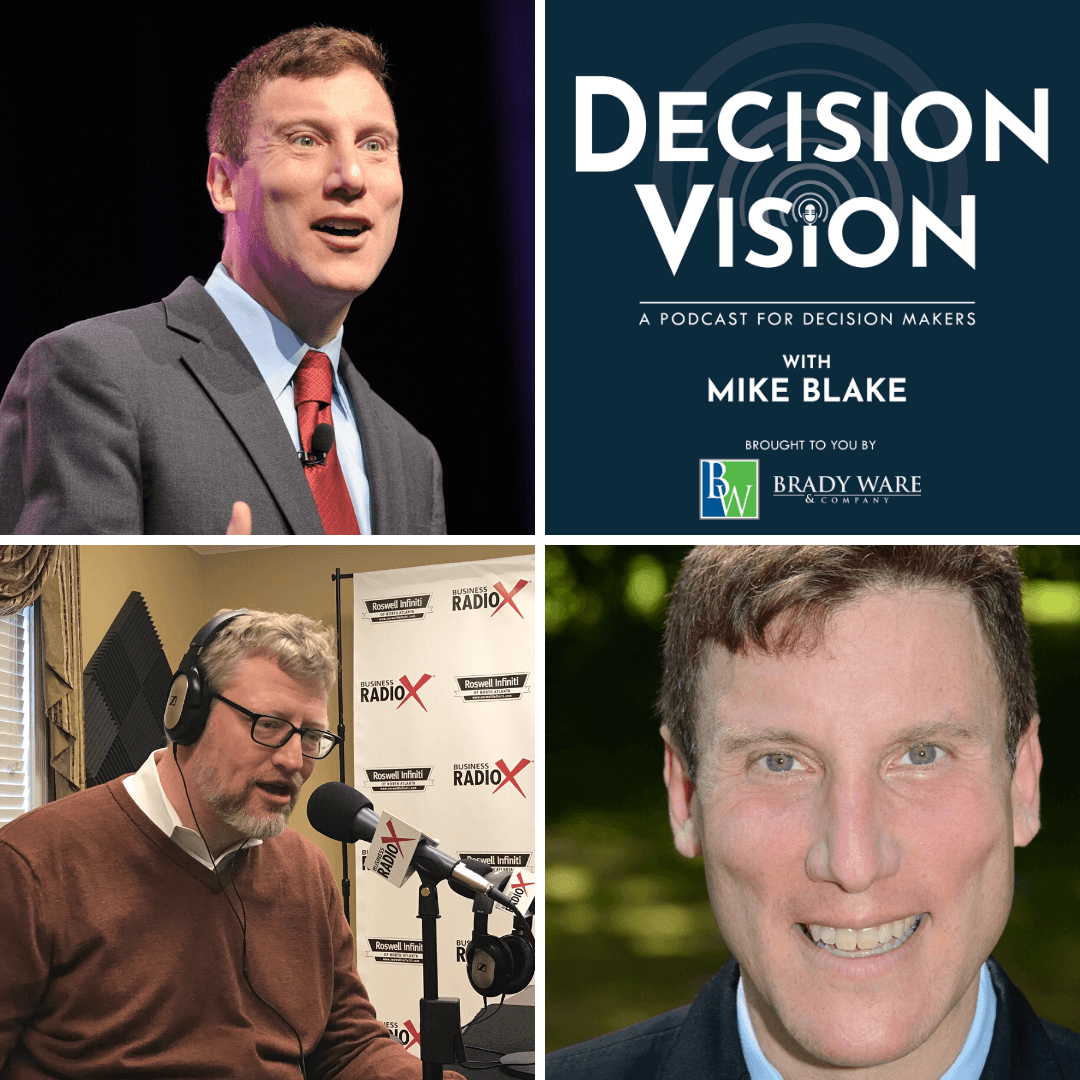
Cordelia Blake and Mike Blake

Decision Vision Episode 49:  Should I Sell on Amazon? – An Interview with Cordelia Blake

What are the pros and cons of selling your products on Amazon? How do you get started? What are the skills you need to succeed as an Amazon seller? Veteran e-commerce professional Cordelia Blake answers these questions and much more in this edition of “Decision Vision,” hosted by Mike Blake and presented by Brady Ware & Company.

Cordelia Blake, CordeliaBlake.com

should i sell on Amazon
Cordelia Blake

Cordelia Blake has been a successful business owner in the fields of technology and e-commerce for over 20 years. Her diverse skill set spans systems administration, web development, training, training development, customer service, and e-commerce.

After running her own e-commerce company for 5 years which included launching a clothing line, gourmet gift baskets and branded merchandise, she joined the HuntGirl team in 2018. She is also a public speaker, consultant and trainer in the field of e-commerce and runs an organization of Amazon sellers, Scanner Society.

A Philadelphia native who happily transplanted with her family to Atlanta, Cordelia is a graduate of Franklin and Marshall College. She resides with her husband, 2 sons, black lab, and 2 cats in Chamblee, GA.

To learn more, go to Cordelia’s website or her YouTube channel. You can also connect with her on LinkedIn.

Michael Blake, Brady Ware & Company

Mike Blake, Host of “Decision Vision”

Michael Blake is Host of the “Decision Vision” podcast series and a Director of Brady Ware & Company. Mike specializes in the valuation of intellectual property-driven firms, such as software firms, aerospace firms and professional services firms, most frequently in the capacity as a transaction advisor, helping clients obtain great outcomes from complex transaction opportunities. He is also a specialist in the appraisal of intellectual properties as stand-alone assets, such as software, trade secrets, and patents.

Mike has been a full-time business appraiser for 13 years with public accounting firms, boutique business appraisal firms, and an owner of his own firm. Prior to that, he spent 8 years in venture capital and investment banking, including transactions in the U.S., Israel, Russia, Ukraine, and Belarus.

Brady Ware & Company

Brady Ware & Company is a regional full-service accounting and advisory firm which helps businesses and entrepreneurs make visions a reality. Brady Ware services clients nationally from its offices in Alpharetta, GA; Columbus and Dayton, OH; and Richmond, IN. The firm is growth minded, committed to the regions in which they operate, and most importantly, they make significant investments in their people and service offerings to meet the changing financial needs of those they are privileged to serve. The firm is dedicated to providing results that make a difference for its clients.

Decision Vision Podcast Series

should I sell on Amazon“Decision Vision” is a podcast covering topics and issues facing small business owners and connecting them with solutions from leading experts. This series is presented by Brady Ware & Company. If you are a decision maker for a small business, we’d love to hear from you. Contact us at decisionvision@bradyware.com and make sure to listen to every Thursday to the “Decision Vision” podcast. Past episodes of “Decision Vision” can be found here. “Decision Vision” is produced and broadcast by the North Fulton studio of Business RadioX®.

Visit Brady Ware & Company on social media:

LinkedIn:  https://www.linkedin.com/company/brady-ware/

Facebook: https://www.facebook.com/bradywareCPAs/

Twitter: https://twitter.com/BradyWare

Instagram: https://www.instagram.com/bradywarecompany/

Show Transcript

Intro: [00:00:02] Welcome to Decision Vision, a podcast series focusing on critical business decisions brought to you by Brady Ware & Company. Brady Ware is a regional full-service accounting and advisory firm that helps businesses and entrepreneurs make visions a reality.

Mike Blake: [00:00:20] And welcome to Decision Vision, a podcast giving you, the listener, a clear vision to make great decisions. In each episode, we discuss the process of decision making on a different topic from a business owners or executives’ perspective. We aren’t necessarily telling you what to do, but we can put you in a position to make an informed decision on your own and understand when you might need help along the way.

Mike Blake: [00:00:39] My name is Mike Blake and I’m your host for today’s program. I’m a director at Brady Ware & Company, a full-service accounting firm based in Dayton, Ohio, with offices in Dayton, Columbus, Ohio, Richmond, Indiana, and Alpharetta, Georgia, which is where we are recording today. Brady Ware is sponsoring this podcast. If you like this podcast, please subscribe on your favorite podcast aggregator and please consider leaving a review of the podcast, as well.

Mike Blake: [00:01:01] So, today’s topic is about using Amazon as a sales channel and, should you adopt Amazon or expand the use of Amazon as a sales channel? And anybody who’s listening to this is obviously familiar with the internet. And you’ve heard of this little company called Amazon that started out about 25 years ago selling books online and now, have come to dominate almost anything that we can think of, whether it’s television media or selling laptops and TVs and music and now, smart devices in our home, but, you know, what you may not realize is that Amazon’s selling its own stuff on its own account is actually less than 50% of the business.

Mike Blake: [00:01:52] What are called third-party sellers account for over 50% of Amazon’s annual revenue. It has been that way for some period of time now. So, what that’s done is that that has, to a large extent, democratized the retail sector. You know, you see, back in the old days, if you want to sell stuff online, you did on eBay or you had to put up your own website and build your entire unique e-commerce platform. And that’s no longer the case.

Mike Blake: [00:02:22] You know, there are very few places in the world, certainly, no place in United States you cannot reach by Amazon at this point. Now, is it necessarily for everybody? No. We’re going to learn more about that. But, you know, if you’re thinking about, you know, how do you get Amazon to pick your stuff up, it’s not necessarily that hard to get Amazon to pick your product up, but it’s hard to kind of keep it there because they do have a fairly tightly regulated ship.

Mike Blake: [00:02:49] And there are some pros and cons. If you are going to put products on Amazon, you are going to give some things up in order to do it. And so, I am not qualified, as is the case for most of our topics. I’m not qualified to talk about that topic other than what I just said. And so, I have brought in a very special guest expert for our show today. And her name is Cordelia Blake. And yes, that Cordelia Blake, the fabulous and marvelous Cordelia Blake.

Mike Blake: [00:03:21] And in spite of the fact that she is indeed my wife, she is very successful and has been a successful business owner in the fields of technology and e-commerce for over 20 years. Her diverse skill set spans systems administration, web development, training development, customer service, and e-commerce. After running her own e-commerce company for five years, which included launching her clothing line, gourmet gift baskets, and branded merchandise, she joined HuntGirl in 2018, where she is a partner.

Mike Blake: [00:03:50] She is also a public speaker, consultant, and trainer in the field of e-commerce and also runs an organization of Amazon sellers called Scanner Society. You can also see at least some of her Amazon training and informational videos on YouTube. A Philadelphia native who happily transplanted with her family to Atlanta, Cordelia is a graduate of Franklin & Marshall College. We actually met in the registration line in freshman year. She resides with her husband, me. I think that’s me anyway, two sons, a black lab, and we want a dog, by the way, anyway, and two cats in Chamblee, Georgia. Cordelia, dear, welcome to the program.

Cordelia Blake: [00:04:27] Thank you so much for having me on, honey.

Mike Blake: [00:04:30] So, this Amazon thing, it’s so big, it’s kind of hard to get your arms around, isn’t it?

Cordelia Blake: [00:04:39] It is, and frequently the last people you should ask about it are anybody that works at Amazon. So, that makes it like doubly difficult to find out what to do.

Mike Blake: [00:04:49] So, I was right in not finding somebody who’s an Amazon driver or a warehouse worker to come on and do the podcast, they’re not going to know the knots and bolts.

Cordelia Blake: [00:04:56] Or even an executive.

Mike Blake: [00:04:57] Yeah.

Cordelia Blake: [00:04:57] Even an Amazon executive. I’ve spoken with Amazon executives there. The way they run their ship is very vertical. So, if you’re in one division of Amazon, you know that division and nothing else. I’ve met executives who have literally not heard of other things Amazon’s doing. They just don’t stay up to date. So, they’re not really your business partner. They’re just a service provider that you need to manage.

Mike Blake: [00:05:23] So, maybe this is obvious, but I don’t want to assume, if a company is not already selling their products on Amazon, why should they consider doing that?

Cordelia Blake: [00:05:34] So, a company, I kind of want to unpack that a little bit. So, companies who sell products is a little bit vague. So, you have companies that produce their own products. Maybe it’s, you know, their patented product or their dream product or their passion product. Commonly, you’ll have a company that is a distributor for other companies. That’s a model that’s been around for hundreds of years and still very much in play. So, they sell, you know, like a Foot Locker doesn’t really sell Foot Locker shoes, they sell Nike, they sell Adidas. They’re essentially a re-seller for other brands, but they have products to sell. So, there’s different kinds of product companies and different solutions that work for the size of the company and what kind of products they sell.

Mike Blake: [00:06:25] And so, you talked about something I think is a very important distinction, and in particular, I think your comment’s going to be interesting, because you’ve drifted back and forth between those worlds. There are companies that indeed sell their own products on Amazon as a garden variety retail channel.

Cordelia Blake: [00:06:43] Correct.

Mike Blake: [00:06:43] Right? And then, there are the re-sellers, right? The third-party sellers-

Cordelia Blake: [00:06:47] Right.

Mike Blake: [00:06:47] … and something called retail arbitrage we’d maybe get into later in the show.

Cordelia Blake: [00:06:52] Well-

Mike Blake: [00:06:52] But what is the difference between those two?

Cordelia Blake: [00:06:54] So, there’s also a scale difference. So, Foot Locker, which is the example I gave, they’re essentially a re-seller, right? I mean, you go to Foot Locker, you’re not buying Foot Locker sneakers, but they’re a massive company with lots of revenue. Then, you also have people who are essentially hustling out of their garage or they have smaller businesses where they’re reselling products, whether they acquire them wholesale like Foot Locker does or they acquire them arbitrage, which is a term used to describe really buying stuff retail, whether you buy it at Walmart or you buy it at Walgreens or you buy it on walgreens.com and then, you just sell it on Amazon.

Cordelia Blake: [00:07:33] Now, that business model is a lot dicier than it was five years ago. But there are many, what I would call, more legitimate like bigger established brands and companies that are essentially re-sellers that are distributors. And so, for them, you know, their business model is valid. They just have to understand how e-commerce can now integrate within it.

Mike Blake: [00:08:00] Now, a fun example of the retail arbitrage or RA, as it’s called in your community, is, I remember when you used to sell Trader Joe’s peppermint tea.

Cordelia Blake: [00:08:11] I do.

Mike Blake: [00:08:12] Right?

Cordelia Blake: [00:08:13] Yes.

Mike Blake: [00:08:13] And that used to be a big moneymaker, because it was a seasonal item and Trader Joe’s still has only select locations, they’re not ubiquitous like a Kroger is, right? And they haven’t caught on or if you can even still do this anymore. Well, you have to tell me why you stopped.

Cordelia Blake: [00:08:28] It’s still on Amazon.

Mike Blake: [00:08:28] But I remember there was a time that we went into, I think, the Buckhead Trader Joe’s, right? And I’m the idiot. I’m starting to like put the stuff in the shopping cart. You’re like, “No, no, no. Wait here”, right? You went back to the manager, you basically said, you know, “How much can I just buy all of your inventory?” Right? And we lucked with that inventory, filled up our old broken down CRV with peppermint tea and the truck smelled great and that stuff sold very well and made a pretty tidy profit with that.

Cordelia Blake: [00:08:58] I did. I think I tripled my money on that. So-

Mike Blake: [00:09:00] But those are getting harder to come by as, I guess, people are catching on and-

Cordelia Blake: [00:09:04] And also, brands are a lot more savvy now than they were even a few years ago. So, now, Trader Joe’s, you can actually still find that tea on Amazon. Trader Joe’s does not sell on Amazon. So, what Amazon does is they essentially take advantage of the third-party smaller sellers to fill the gaps in inventory for companies that won’t sell to them. So, if they go to Nike or Trader Joe’s, they’re like, “Hey, we want to sell your products”, and they’re like, “F you, we don’t want to sell on Amazon. You’re going to kill our product.” They’re like, “Fine, Cordelia will sell it”, you know. So, I don’t do arbitrage anymore.

Cordelia Blake: [00:09:39] Right.

Cordelia Blake: [00:09:39] I don’t do that business model anymore for a lot of reasons. But yeah, you could go and so, those tea boxes were about $2.50 each and a four-pack, so that costs $10, four boxes selling for $25 to $30 on Amazon. Now, that’s not all profit because Amazon, you know, they’re like the dealer in Vegas, right? The dealer always gets paid. So, that would be about, you know, a $7 profit per unit.

Mike Blake: [00:10:07] But you sell enough of them and it becomes worthwhile, right?

Cordelia Blake: [00:10:10] It’s nice.

Mike Blake: [00:10:10] So-

Cordelia Blake: [00:10:10] Yeah. And Trader Joe’s runs out. It’s a seasonal product. And people love that tea, they buy it as long as it’s available.

Mike Blake: [00:10:17] So, lots of companies aren’t already selling on Amazon. I think to me, you would think that Amazon being so ever present, right? You can’t get away from Amazon anymore. I don’t think there’s a place in country you could hide out from Amazon conceivably. But there are companies that are not yet selling on Amazon. You know, in your mind, why do you think that is? And you said that there’s some companies that do not want to sell on Amazon. Why do they make that choice?

Cordelia Blake: [00:10:46] So, Amazon is its own ecosystem. They have their own rules. They’re irrational. They don’t do what they say they do. It’s crazy. And so, you really need to know that ecosystem well. And there’s not that many people that actually know it well. So, if you treat selling on Amazon like, say, any other channel that you might sell on, then you’re probably going to have a bad experience because you don’t understand the rules of Amazon. And Amazon, they don’t always tell you the rules, you kind of have to figure them out, which is why bringing in a consultant or somebody else who can help you on your team is a really important part of that decision, in my opinion.

Mike Blake: [00:11:25] So, what’s an example? In fact, you and I are having lunch, I think, you gave a good example of this. What’s an example of somebody accidentally stepping on a landmine? Because I didn’t understand how Amazon works, that you’re telling me a story about there’s this individual inside a company thought they’re doing everything right, right? That was their intent.

Cordelia Blake: [00:11:43] Yeah.

Mike Blake: [00:11:43] Right. And then, bad things happen. So, why don’t you take us through that story, because I think it’s very illustrative.

Cordelia Blake: [00:11:47] So, this was a business, a completely legitimate business. They were selling wholesale and private label products on Amazon, had an employee who, you know, did all the things that he was supposed to do. This employee decided to open their own Amazon account and do their own selling.

Mike Blake: [00:12:05] Now, with competing products, it turned entirely different.

Cordelia Blake: [00:12:07] They weren’t, in any way, competing, they weren’t trying to be devious or difficult, they were just doing their own thing on the side. But they used the same cell phone number on that account as they had listed on their user account on this business account. And that business account got shut down for months. They finally had to go through legal to get unsuspended. And she had to fire the employee. It was a disaster. Months of revenue just gone.

Cordelia Blake: [00:12:38] So, I mean, this is kind of a bigger picture thing. I actually think Amazon really needs to be regulated in the US, but there’s very little recourse like she should have been able to just say, “Hey, this guy did his own thing. We don’t sell the same accounts.” And he shut down his account. As soon as it happened, he felt terrible. It was not intentionally done. And she said, “The account shut down, the cell phone is disconnected. It was-“, blah, blah, blah. All you get is like a bot. You’re not getting a human being who’s actually taking your case.

Mike Blake: [00:13:15] Right.

Cordelia Blake: [00:13:15] And so, for her, you know, this was her business, tens of thousands of dollars of revenue a month, and for Amazon, it just wasn’t even on their radar. And so, a lot of what we do in the consulting world is work to prevent suspension. We tell our clients, “Don’t do this because you might get in trouble”, not because it’s rational or makes sense, but just because I’ve known people who it’s happened to.

Mike Blake: [00:13:41] So, you know, if you’re in a sell on Amazon, then you need to make a commitment to understanding that ecosystem. Is it fair to say there’s kind of a language to Amazon as well?

Cordelia Blake: [00:13:50] There is. And if you’re a larger company, which I know that’s what your audience is, it’s more larger companies, I’m still surprised at how many large companies treat the decision to sell on Amazon as if it’s like a side hustle. So, you could have $500 million in revenue and you’re still really essentially treating it like a side hustle. And I just feel like you need to treat it, if you were opening like a new amazing facility in midtown Manhattan, right?

Cordelia Blake: [00:14:19] And you were investing in the pretty storefront and you had a grand opening with models and movie stars. You wouldn’t get your junior intern who was still in college to manage that, but that is what big companies do with Amazon all the time. They don’t treat it like that midtown Manhattan opening. They treat it like the side hustle. And then, the top-level executives in the companies don’t understand. They don’t know what’s happening. They don’t know how to make these decisions.

Cordelia Blake: [00:14:48] And so, things go wrong. And so, some companies, rather than dealing with any of that, they just opt out. So, that kind of goes back to your original question, why would a company not sell, because they’re just not ready for that commitment or they don’t even know where to get the information, because there’s no certification for Amazon consultant. So, everybody says they’re the best and that they know what they’re doing.

Mike Blake: [00:15:10] Right.

Cordelia Blake: [00:15:10] So, you have to kind of suss that out.

Mike Blake: [00:15:13] But what makes them more confounding is it sounds like it’s a lot like Google, that Google has algorithms that they maintain or change or whatever, and they don’t tell anybody, right? In fact, their model is to keep people guessing, I guess. And I don’t fully understand why that is, but their model is to keep people guessing. And I guess Amazon kind of works the same way, too. So, even if you think you’ve got Amazon nailed right today, January 10th, the day we’re recording this podcast, you know, by July 1st, it could be completely undone.

Cordelia Blake: [00:15:54] It could be and, you know, their trade secrets, the way they do the AI, there’s actually some legislation in Europe to regulate this in terms of informing sellers how search works. But here, we don’t have anything about that. And so, we’re all basically trial and erroring what works and what doesn’t, because what they tell us is basically wrong.

Mike Blake: [00:16:21] So, there are smaller sellers and larger sellers on Amazon. I’m curious, I can be of two minds, do you think larger companies have an easier time on Amazon or do you think smaller companies may have an easier time because they’re more willing to learn, they’re more nimble?

Cordelia Blake: [00:16:38] Well, I think like any business, it really depends what your goal is. So, if your goal is to have like a small income, then as a small salary, you definitely have an advantage. But if your goal is to use Amazon as a tool to both increase your sales by millions and also increase your marketing reach, because, you know, people see your product there, then a bigger company has an advantage because really, any business that can like lose money longer has an advantage. A smaller business, they have to be profitable to eat. But a larger company can pour tens of thousands of dollars into something and say, “Okay, well, we know in five years, this is going to be profitable to this point, so we’re going invest this much.” And it is very hard for a smaller seller to be able to have those resources to do that.

Mike Blake: [00:17:31] So, you know, let’s say that somebody comes to you and they want to know about Amazon, they say, you know, “I know all about online selling, I’m on a website. I’ve sold on eBay. I’ve sold on jet.com”, are they pretty much all the same? How much does that experience with other channels translate into an Amazon exercise?

Cordelia Blake: [00:17:54] I mean, every channel has its own rules, its own ecosystem, its own platform. And so, just as I know people who are Amazon sellers who fail utterly at eBay, because they don’t take the time to learn how eBay is different. If you are really good at your own e-commerce site or your own brick and mortar location or whatever your current business model is, any time you venture into a whole new area, which is what Amazon is, it’s a whole new area, and people, again, they don’t really treat it like that, then, you know, you have to learn the way that works.

Cordelia Blake: [00:18:26] I see all the time, like even catalog listings, you can tell by looking at a listing once you kind of know what to look for, that they just took their listing off their website and upload it to Amazon. They didn’t actually take the time to learn how an Amazon listing is its own separate thing. And you can tell. So, absolutely, any kind of knowledge you have in another area, it doesn’t necessarily apply to Amazon.

Mike Blake: [00:18:51] So, I’m going to change gears a little bit, but one thing that strikes me about the Amazon platform that I’ve learned observing you and observing how you advise your clients is Amazon has one big drawback that would concern me and that as the seller, you’re never going to own that retail channel, right? At the end of the day, you are completely at the whim and the mercy of what Amazon decides to do with you, unless you have an exceptionally large legal budget, basically, right? And including if you have an Amazon account and identity, it’s hard to even transfer that. If I’m a business and I’m selling a lot through Amazon, it’s actually hard to transfer that to a buying party, isn’t it?

Cordelia Blake: [00:19:45] Technically, you’re really not supposed to even do that.

Mike Blake: [00:19:47] Right. Okay. Yeah.

Cordelia Blake: [00:19:48] Yeah.

Mike Blake: [00:19:48] Technically, you’re not even supposed to do it, right? So, now, if I’m selling my stuff on Amazon, technically, my business is not saleable, because I’d had to shut it down.

Cordelia Blake: [00:19:57] So, the nuance of that is, the way that you handle that is if you’re setting up an account correctly, what a lot of people do is they set it up in their name and their personal email or their personal business email. So, I would do, you know, my accounts in are Cordelia Blake, cordelia@whatever, whatever, right? But what they should do is to the extent keep—their possible is have all the emails be generic.

Cordelia Blake: [00:20:19] So, have your, you know, amazon@mycompany.com. And so, then you’re not really selling your Amazon account, you’re actually selling your business entity and your bank account. So, if you came in, acquired my business, and you have the bank account and the email and all of the inventory and the log in, you can essentially take over the operation of that account, because it’s not in my personal name.

Mike Blake: [00:20:46] Right. So then, that becomes transparent.

Cordelia Blake: [00:20:49] It’s like an asset of your business. But if you read Amazon’s policies, they say that you’re not allowed to sell an account to somebody else.

Mike Blake: [00:20:57] Right. Right. You know, it’s a little bit minutia, but it’s important if you sell the company that owns the account, right? Then, if you set it up correctly, then as far as Amazon is concerned, that’s entirely a transparent process.

Cordelia Blake: [00:21:15] I mean, honestly, they won’t even know about it.

Mike Blake: [00:21:16] They won’t even know, right?

Cordelia Blake: [00:21:17] Right.

Mike Blake: [00:21:18] And I would imagine on some level really don’t care, what they need to make sure is that there’s some sort of chain of accountability, right? That’s what Amazon’s got to be looking for.

Cordelia Blake: [00:21:28] Today, maybe yeah.

Mike Blake: [00:21:30] Today, maybe yeah. Again, check back with us in six months, right?

Cordelia Blake: [00:21:34] Yeah.

Mike Blake: [00:21:34] You ought to do an Amazon podcast. You never thought of that before, right? All right. So, we’ve gone through this, we’ve set up some of the risks. What does it cost to sell on Amazon?

Cordelia Blake: [00:21:47] It actually costs very little in terms of actual, like you just write a check. A professional seller’s account, and this is the same account every seller has, whether you’re, you know, me, little in my garage or you have a multi-million-dollar account or whatever, it’s $39.99 a month for your sellers account.

Mike Blake: [00:22:05] Okay.

Cordelia Blake: [00:22:05] That’s it. That’s really the only fee. Now, of course, there’s like business costs, like pay per click and inventory and all that kind of stuff, but the actual costs, whereas if you started your own e-commerce site, you know, you’re going to have to invest in the infrastructure of your site, warehousing. I mean, Amazon even will let you use their warehouse. And you’re fulfilled by Amazon and you just pay us a fee based on the number of units that you have in the warehouse. So, it’s not like you have to pay a flat monthly rent. Like if you rented a warehouse, you have to pay rent whether you have stuff or not.

Mike Blake: [00:22:38] Yeah.

Cordelia Blake: [00:22:39] Whereas at Amazon, you only pay on the stuff you actually have in the warehouse at the moment. And so, there are a lot of advantages they give to smaller businesses that would be very hard to leverage on your own.

Mike Blake: [00:22:52] And do they take a percentage of the sales price as well?

Cordelia Blake: [00:22:55] Yeah, they take a percentage of the sales price. They take a fee for fulfillment. They take some other fees and some more fees.

Mike Blake: [00:23:03] That sounds great. We need to build Amazon. Screw this podcast.

Cordelia Blake: [00:23:07] Yeah.

Mike Blake: [00:23:07] We’re going to build an Amazon competitor right now. Forget it.

Cordelia Blake: [00:23:10] I actually know an entrepreneur who built a marketplace. It wasn’t Amazon, but he did turn his business into a marketplace so that he could sell other people’s products as well as his own.

Mike Blake: [00:23:19] Okay.

Cordelia Blake: [00:23:19] So, that is a viable business option if you’re in a niche market.

Mike Blake: [00:23:24] Okay. Now, you said something that might surprise a listener and that is pay per click. When most of us think about pay per click, we think that that’s basically Google, right?

Cordelia Blake: [00:23:35] Right.

Mike Blake: [00:23:35] But Amazon has its own pay per click, its own search algorithm, its own search ecosystem, correct?

Cordelia Blake: [00:23:42] It does. And it’s kind of funny, because now, you read all these articles about how Amazon’s growing their advertising revenue. And I’m like, “That means they’re making me pay more money for my ads.”

Mike Blake: [00:23:53] Okay.

Cordelia Blake: [00:23:53] That’s what that translates as, in case you’re wondering.

Mike Blake: [00:23:56] So, maybe the short answer is if you’re an Amazon re-seller, at least have Amazon stock so that you get some of that back.

Cordelia Blake: [00:24:02] It used to be-

Mike Blake: [00:24:02] Not an investment recommendation.

Cordelia Blake: [00:24:04] It used to be that if you had a product that was relevant to the customer, that wasn’t saturated, that was niche-specific, and was a good fit for what the customer wanted, you really didn’t need pay per click. You could just launch, you could write a solid listing and the customer would find your product. And if it was what they wanted, you know, I’m not talking about selling people’s stuff they don’t want, but like, if you’re really into grass-fed cattle jerky and you sell grass-fed cattle jerky, then you could sell them on Amazon.

Cordelia Blake: [00:24:33] I still want stuff all the time, no ads. But in the last year, that has really changed. It’s almost impossible to do a product launch at any level now without pay per click on Amazon. And then, there’s a lot of Amazon sellers, especially larger companies who, you know, they have off-Amazon marketing as well. And so, that helps their Amazon sells, too.

Mike Blake: [00:24:55] Yeah, I know one of my clients, you know, opened their own Amazon channel about two years ago and they combined that with influencer campaigns, because they do consumer products, right? And basically, there’s an element of affiliate marketing with it. And then, you know, press the Amazon link and then buy through Amazon, right? So, what I’ve learned, it sounds like you’re saying is correct, is that you could make your distribution effort and marketing effort entirely self-contained within the Amazon ecosystem or the Amazon ecosystem and retail channel could be supported by other by other marketing channels as well.

Cordelia Blake: [00:25:35] It could be. And, you know, a lot of times, and I’ve done this, you know, you’ll get a Facebook ad for something that you’re interested in. And instead of clicking through the ad, I switch over to Amazon and look for that product, because I’m like, is that legit or are they going to take me to somewhere, website or whatever? I don’t know, it’s suspicious, whereas there is this trust of Amazon.

Cordelia Blake: [00:25:53] And so, there’s a lot of companies who it’s not always a direct click, where, you know, you click from the Facebook ad to the Amazon product, but that marketing results in increase in your Amazon sales, because people then start searching for your product. And I think if you have a product that you produce or represent that, at the very least, you should have enough of an Amazon presence so that if people are already searching for it on Amazon, you’re not losing those sales, because you’re not there. So, that’s kind of a minimal level of Amazon participation, I think, a lot of companies should have that they don’t necessarily have.

Mike Blake: [00:26:31] And I have to imagine that’s even made all the more complex, because Amazon, itself, is now offering an increasing array of its own products.

Cordelia Blake: [00:26:39] They are. And they will steal your customers like without even thinking about it.

Mike Blake: [00:26:44] Right. They lose less than zero sleep over that.

Cordelia Blake: [00:26:49] They do.

Mike Blake: [00:26:49] Right.

Cordelia Blake: [00:26:49] And in fact, one real issue that a lot of larger companies are having that used to sort of master their whole, you know, like say a paper towel company or a diaper company, you know, they don’t really have a patentable product, it’s just paper towels.

Mike Blake: [00:27:03] Right.

Cordelia Blake: [00:27:03] But they’ve built their reputation over the last 100 years and their supply chain and they know how to make paper towels really well. Well, Amazon’s like, “I can make paper towels, no problem.” And so, they will actually advertise in, you know, let’s say your bounty listing on Amazon for Amazon Essentials paper towels for $3 less than the bounty one and literally just steal that sale.

Mike Blake: [00:27:30] That’s cold blooded, man.

Cordelia Blake: [00:27:32] And that’s where you have, Europe is starting to look at regulating that, because they’re saying, “There’s no way that you can.” I think in the next five years, we’re going to start to see regulations around marketplaces selling their own products and competing against their third-party sellers because it’s a real data gray area.

Mike Blake: [00:27:53] All right. So, let’s switch gears a little bit. You know, our listener, we’ve walked the listener through the pros and a lot of the cons and the cautions about selling for Amazon, but the listener says, “You know what, I get it. I think I’m going to give this thing a shot.” What are the first couple of steps you undertake to now start an Amazon selling channel?

Cordelia Blake: [00:28:15] Well, there’s a lot of learning. So, it really depends. If you’re talking like, you know, somebody who has a small business and they just want to sell on Amazon versus a larger company. So, we’ll simplify it again.

Mike Blake: [00:28:26] Well, I’d be very surprised if Nike executives are listening to this.

Cordelia Blake: [00:28:32] They are, they’re totally.

Mike Blake: [00:28:33] Yeah. Well, hi. Love your shoes. Wearing Air Monarchs, by the way, which my son actually says they’re cool. He’s so delighted I’m not wearing Skechers anymore. No, I think our audience is going to be a small and mid-sized business and they’ve got their own products they’re selling. But, you know, they have probably heard some of the horror stories or have not gotten around to selling on Amazon. And now, we’ve convinced them that that’s something they may want to consider doing. So, I’m in that $20, $30 million a year company, I want to start selling on Amazon. What’s sort of the initial checklist to get started?

Cordelia Blake: [00:29:08] Well, I would honestly reach out to somebody like me. There’s a lot of great consultants out there who really know what they’re talking about. And one of the things that surprises me, I’ve had several companies reach out to me and the first thing I usually do, especially if they’re kind of new to Amazon, is we offer to do a report for them, where we say, “Okay, we’re going to look at your costs. We’re going to look at, you know, the dimensions of your product, the weight, the competitive marketplace. We’re going to see who else is selling what you’re selling and we’re going to deliver you report and basically tell you how this might work for you.” Good, bad, you know, all of it. And they come already having made a decision based on very little data.

Mike Blake: [00:29:50] Right.

Cordelia Blake: [00:29:50] And they don’t want that report.

Mike Blake: [00:29:52] Right.

Cordelia Blake: [00:29:52] And I’m like, “Why would you not want that report?”

Mike Blake: [00:29:53] “Shut up and take my money.”.

Cordelia Blake: [00:29:55] So, I mean, I had a client not hire me, because we really felt like they were making a bad strategic decision.

Mike Blake: [00:30:02] I remember that.

Cordelia Blake: [00:30:02] And they didn’t want to hear it. And I didn’t really want to help them make this bad strategic decision, because I felt like we were just going to end up in an unhappy situation.

Mike Blake: [00:30:10] And you don’t want your name on that.

Cordelia Blake: [00:30:11] So, I would say, if you’re starting out, get that damn report. Get somebody to write you a report. It doesn’t necessarily cost that much in terms of your—and explain the fees for your product, explain the market for your product, the number of searches for not just your product itself, but the category, what the competition looks like, what their costs are, and really start to understand, because the Amazon ecosystem, it’s different. Like I have one client, you know, they sell products in one industry.

Cordelia Blake: [00:30:44] And so, they’ll give me a list of their top competitors. They’re like, “Well, this is our thing and this is what all our competitors are selling it for.” None of those competitors are on Amazon. Those are their brick and mortar competitors. They’re some Chinese company that you never heard of that’s stealing 90% of this business, because they know how to do Amazon. So, the Amazon competitive marketplace may look completely different than the real world’s competitive marketplace. And somebody can do a report for you on that.

Mike Blake: [00:31:14] So, I guess, are there some products that sell better than others or worse than others? And how do you decide what you’re going to sell on Amazon?

Cordelia Blake: [00:31:24] Well, I mean, shipping, right? You can’t live without it.

Mike Blake: [00:31:29] Yeah.

Cordelia Blake: [00:31:29] Shipping is expensive. And so, one big factor is how much does your product weigh? How big is it? How much is it going to cost to ship it?

Mike Blake: [00:31:37] Like FedEx and I think all the other shipping services followed suit, they lowered the bonus threshold to 50 pounds as opposed to 70 pounds, right?

Cordelia Blake: [00:31:46] It’s really getting to the point. I mean, look, shipping costs money and at some point, somebody is going to pay for it.

Mike Blake: [00:31:52] Yeah.

Cordelia Blake: [00:31:52] And so, the big thing is if you sell anvils versus if you sell toothpicks, it’s going to be a different analysis. But the other thing a lot of companies don’t do is they really don’t work the shipping costs into their profitability, so they’ll come and be like, “Our costs are $5 and these are selling for $50, so it’s a win.” And I’m like, “Yeah, but it costs you 40 bucks to ship it.” So, that is one thing I would look at. And then, the other thing is, how can you strategically increase the price of your product?

Cordelia Blake: [00:32:20] You know, if your product is cheap, let’s say you sell a toothpick box, which is $2. There’s like no way that’s worth selling online. But if you sold 20 of those toothpick boxes, it might be. And that’s another thing that surprised me. A lot of companies don’t think about how they can bundle or combine their products to make a higher value product to solve their customer problems and, you know, sell 10 products with the same number of profits as if he sold 100. It’s a lot less work, a lot less labor, all that stuff. So, that’s another way you can be strategic.

Mike Blake: [00:32:51] Now, if I understand correctly, there are certain products Amazon will not allow you to sell.

Cordelia Blake: [00:32:57] Like CBD.

Mike Blake: [00:32:58] CBD. And-

Cordelia Blake: [00:32:59] You may wonder how I know that.

Mike Blake: [00:33:03] Yeah.

Cordelia Blake: [00:33:03] Somebody asked me, “Hey, I’ve got a great source for CBD products.” I’m like, “Yes. So, does everybody and their brother.”

Mike Blake: [00:33:09] Right.

Cordelia Blake: [00:33:09] You cannot sell. And people will say, “But it’s on Amazon.” Because you can buy CBD on Amazon or hemp oil, whatever you want to call it.

Mike Blake: [00:33:18] Right.

Cordelia Blake: [00:33:18] But it’s like, “Yeah, but they’re violating terms, so I’m not going to do that.”

Mike Blake: [00:33:22] Right. Just because they haven’t got caught yet doesn’t mean-

Cordelia Blake: [00:33:24] Right.

Mike Blake: [00:33:24] … they’re not breaking the rules.

Cordelia Blake: [00:33:25] Right.

Mike Blake: [00:33:27] Now, from my understanding, also from going back to kind of the retail arbitrage perspective, there are certain products you can’t sell as well, correct? Because companies have some sort of unique channel relationship arrangement to make sure that third-party sellers can’t compete with the primary supplier, correct?

Cordelia Blake: [00:33:46] Yeah. So, you know, you can brand-register your brand and then, just like, you know, anything else. Larger companies, they have bigger lawyers, bigger law firms that represent them, they’re willing to pursue IP infringement and things like that. And the smaller business can’t necessarily fight that. So, it used to be that you could sell Barbie and you could sell Lego and you could sell all these brands that you just bought, you know, at Toys R Us. Haha. Back in the olden days.

Mike Blake: [00:34:10] They’re coming back.

Cordelia Blake: [00:34:12] But now, you know, those brands are regulated. Some of them are restricted. And there are things that like if you meet somebody who say, “I sold an Amazon for 10 years”, they’re going to just be allowed to sell stuff that you’ll never be allowed to sell if you just start out today. So, it is different. It’s more restricted now.

Mike Blake: [00:34:31] So, as you have been an Amazon seller of some kind for a number of years now, what skills have you found that you have needed to develop in order to be more successful as well as to evolve with how that marketplace works?

Cordelia Blake: [00:34:47] I mean, I’ve just had to become a stronger business person, in general. You know, when I first started selling on Amazon, you could basically sneeze and make money. I didn’t really know that at the time. I just thought it was easy money and it was great.

Mike Blake: [00:34:59] You thought you’re brilliant.

Cordelia Blake: [00:35:01] Because I’m brilliant, you know. But I’ve had to really evolve as a business person and understand things like long-term profits and investing in infrastructure and things that I really didn’t grasp when I first started doing this as a side hustle six years ago, seven years ago. So, Amazon now, it’s a real business. So, just like you wouldn’t go into any other business and assume that you could invest very little money and make a ton of money in the first week, Amazon is the same way. But one of the bad things about YouTube is people will search up videos and videos from five years ago, come up and they’re like, “Oh, this is so easy”, right? And then, they go do this stuff that people were teaching five years ago. And there are teachers out there that are still teaching that. And it’s very bad. So-

Mike Blake: [00:35:55] But even if they’re not teaching it, it’s just some legacy archive video. You look at the timestamp, you realize that it’s basically like being in a time machine.

Cordelia Blake: [00:36:04] Yeah. And people get mad. They’re like, you know, “Why are people taking the price?” And I’m like, “Well, you just did that, because you want that sale.” Like, they just want to have this bubble and it doesn’t exist anymore. So, if you’re going to sell on Amazon, you need to treat it like a real business, whether you’re a re-seller or sourcing your own products. However you do it, it’s a true channel for your business and you really need to understand it and treat it accordingly.

Mike Blake: [00:36:29] And I would also observe that you’ve had to become a much better data analyst than you have been.

Cordelia Blake: [00:36:37] Yes.

Mike Blake: [00:36:37] And had to embrace that.

Cordelia Blake: [00:36:38] I’ve had to embrace data, bookkeeping, I hate bookkeeping. No. But yeah.

Mike Blake: [00:36:45] Thank you for saying that on an accounting podcast, we do appreciate that.

Cordelia Blake: [00:36:48] That’s why you hire people to do that for you.

Mike Blake: [00:36:49] Yes, it is.

Cordelia Blake: [00:36:50] Like Brady Ware.

Mike Blake: [00:36:50] If you hate bookkeeping, call Brady Ware.

Cordelia Blake: [00:36:52] Call Brady Ware. But seriously, yeah, data analytics are important and creative data analytics, which is what I like. So, some people will, you know, their software you pay and I pay for the software and there’s software you get through Amazon if you’re brand-registered, which I love, called Brand Analytics and I could geek out on data all day long. But yeah, there’s data available and you definitely need to learn how to leverage data. And the Amazon data is different from marketplace data.

Mike Blake: [00:37:25] So, how do you use Amazon’s data to figure out which products to sell? I know in your business, you’re selling products and you don’t just sort of say, “Hey, this looks cool. Let’s start selling some.” You’ve done that in the past, you’re no longer doing it.

Cordelia Blake: [00:37:43] It used to work.

Mike Blake: [00:37:43] You could get away with it before, right? But now, you have to be a little bit more thoughtful. So, walk us through a little bit about your process. How does a product make the cut-

Cordelia Blake: [00:37:52] Okay.

Mike Blake: [00:37:52] … to become a product that HuntGirl is going to carry?

Cordelia Blake: [00:37:56] So, I will give you an actual example of a product that I wanted to sell, because I really liked it. And as usual, I teach people stuff from the mistakes I made, because that’s how you learn and I hope to prevent you from making the same mistake. But it’s a leather bracelet. It’s a beautiful leather bracelet, has inspirational sayings on it. It’s just the kind of thing that makes you feel good to wear. It’s attractive, it’s gorgeous, it’s ethically sourced, blah, blah, blah, blah. It’s wonderful, right? So, I’ve seen it off trade shows.

Mike Blake: [00:38:23] The cows voluntarily gave up the leather.

Cordelia Blake: [00:38:24] They did. So, the first thing you do is you look up to see if it’s on Amazon. So, when you do a search on the Amazon, it’ll tell you how many search results there are. So, if you put in coffee mug, for example, into an Amazon search window right now, you will see like 50,000 results. So, that might indicate to you that that’s a little bit saturated.

Mike Blake: [00:38:47] A little bit, of course.

Cordelia Blake: [00:38:49] Right. And maybe you don’t want to sell coffee mugs, but like let’s just say you were trying to do insulated coffee mugs that are made from ethically sourced stainless steel, if there is such a thing, I don’t even know if that exists. Well, then that’s going to be less result. So, the first thing you want to do is do some searching to see how saturated on Amazon your product is. In general, I try to find stuff that has less than 4,000 search results.

Cordelia Blake: [00:39:15] And really, under 2 is ideal. So then, the next thing is, so everything on Amazon is ranked. So, everything has what’s called a BSR or best seller rank. So, just like on a New York Times book list, you want to be the number one best seller, while you want to be the number one best seller on Amazon, too. But there’s a lot of things on Amazon. So, kind of anything under, this is super rough, under 100,000 is usually a decent rank. That’s a very broad generalization and-

Mike Blake: [00:39:43] That shows you how big Amazon is.

Cordelia Blake: [00:39:47] Yes. But certainly, under 50,000 is good. That’s a good rank.

Mike Blake: [00:39:53] Okay.

Cordelia Blake: [00:39:53] So, you want to see if in your search results, there’s stuff that has—because sometimes, you’ll look something up and you’ll be like, “Oh, there’s only 30 results.” And then, everything is like 10 million BSR. You don’t want to sell that. That means nobody’s looking for it. Nobody’s buying it. So, if you have on a search result page, let’s say half your results are, you know, under 50,000, then that’s good. Not only are people searching for that, it’s not saturated, but it’s selling. And then, this is the thing that I made the mistake with the leather bracelets. You want to see the prices stuff is selling for.

Mike Blake: [00:40:28] Okay.

Cordelia Blake: [00:40:28] And if you want to compete on that. So, sometimes, you’ll look and like everything selling for like $20 each and your thing is going to cost $20. And so, you’re like, “All right, I can write a good listing. I can throw some pay per click. I can compete.” But maybe everything is selling for like $8, which is what happened with the leather bracelet. So, I got this beautiful leather bracelet that sells for $40 and every leather bracelet on Amazon was selling for like $6.

Cordelia Blake: [00:40:57] So, I ended up having to donate all those leather bracelets. So, you want to look at the price point. Are you competitive on price and can you realistically compete? Because, you know, there’s some battles that are worth fighting and some battles that are better to walk away from. So, if everything is selling for $6 and there is like 50,00 things that are selling for $6, most likely, it’s just better to walk away. So, those are my three. So, you see how many search results, the ranks of the search results and then, the price point.

Mike Blake: [00:41:32] What’s the most common mistake you see made by people ore companies selling on Amazon.

Cordelia Blake: [00:41:37] They really do not take the time to learn how to sell on Amazon. They want their first thing to be a hit. And they’re like, “I sold one thing. Why didn’t it work well”, instead of really thinking like, “All right. I’m going to sell 100 things and then, I’ll learn.” So, the biggest thing is really to give yourself time for that learning curve and money for the learning curve. Whatever your budget is, divide it by 10 things or a hundred things and just know that you’re going to screw stuff up, you’re going to learn, and just that’s part of it. You can hire a consultant, you can take a high-priced class, you are still going to have a learning curve. It just is part of the process.

Mike Blake: [00:42:16] There’s going to be some trial and error.

Cordelia Blake: [00:42:18] Yeah.

Mike Blake: [00:42:18] As is often the case in e-commerce.

Cordelia Blake: [00:42:20] Or any business, really.

Mike Blake: [00:42:23] Well, we’re running out of time here. There’s a lot more questions we could ask, but I know we got to get you moving along. If people want to learn more about the Amazon Channel, how to take advantage of it, how can they contact you?

Cordelia Blake: [00:42:34] So, they can go to my website, which is cordeliablake.com. I have a couple different companies, so I just unified it all into one website. And then, I’m on YouTube, Cordelia Blake TV on YouTube. I’m on Facebook, I’m kind of on Instagram. So, I do educational videos. You can reach me on LinkedIn. I’m pretty easy to find.

Mike Blake: [00:42:58] Well, that’s going to wrap it up for today’s program. I’d like to thank Cordelia Blake so much for joining us and sharing her expertise with us. We’ll be exploring a new topic each week. So, please tune in so that when you’re faced with your next executive decision, you have clear vision when making it. If you enjoy these podcasts, please consider leaving a review with your favorite podcast aggregator. It helps people find us so that we can help them. Once again, this is Mike Blake. Our sponsor is Brady Ware & Company. And this has been the Decision Vision podcast.

Tagged With: Cordelia Blake, eCommerce, Mike Blake, selling on Amazon

Tonia Morris, Transition Enterprises

February 5, 2020 by John Ray

Tonia Morris, Transition Enterprises
North Fulton Business Radio
Tonia Morris, Transition Enterprises
Loading
00:00 /
RSS Feed
Share
Link
Embed

Download file

Tonia Morris, Transition Enterprises

North Fulton Business Radio, Episode 195: Tonia Morris, Transition Enterprises

A transition from the corporate world to entrepreneurship can be difficult and yet rewarding, as Tonia Morris, author of Before You Say “I Do” to Entrepreneurship, discussed on this edition of “North Fulton Business Radio.” Tonia works with clients in transition through her coaching firm, Transition Enterprises. “North Fulton Business Radio” is hosted by John Ray and is broadcast from the North Fulton Business RadioX® studio inside Renasant Bank in Alpharetta.

Tonia Morris, Transition Enterprises

Tonia Morris, Transition Enterprises
Tonia Morris

Tonia Morris is founder of coaching firm Transition Enterprises. Based in Grayson, GA, Tonia guides professionals from the corporate world through specific stages of entrepreneurship. She is a Registered Corporate Coach, a contributing writer with the Forbes Council, a professional speaker with the National Association of Speakers, and author. Her new book, Before You Say “I Do” to Entrepreneurship, is a must-have for understanding what it takes to enter into entrepreneurship.

As the founder of Simply HR, a training and consultant firm, Tonia has served hundreds of organizations on how to build a generational inclusive workplace.

For more information, visit Tonia’s website, or you can email Tonia directly. To order a copy of Before You Say “I Do” to Entrepreneurship, follow this link.

Tonia Morris, Transition Enterprises
John Ray and Tonia Morris

North Fulton Business Radio” is broadcast from the North Fulton studio of Business RadioX®, located inside Renasant Bank in Alpharetta. Renasant Bank has humble roots, starting in 1904 as a $100,000 bank in a Lee County, Mississippi, bakery. Since then, Renasant has grown to become one of the Southeast’s strongest financial institutions with over $13 billion in assets and more than 190 banking, lending, wealth management and financial services offices in Mississippi, Alabama, Tennessee, Georgia and Florida. All of Renasant’s success stems from each of their banker’s commitment to investing in their communities as a way of better understanding the people they serve. At Renasant Bank, they understand you because they work and live alongside you every day.

Tagged With: from corporate to owning your own business, generational coach, help in transition from corporate to business owner, North Fulton Business Radio, North Fulton Studio, Simply HR, Steps to leaving your corporate job, Tonia Morris, transition enterprises, transitioning from corporate to small business, Women in Business

Iris Grimm, Master Performance Inc.

February 4, 2020 by John Ray

North Fulton Business Radio
Iris Grimm, Master Performance Inc.
Loading
00:00 /
RSS Feed
Share
Link
Embed

Download file

Iris Grimm
Iris Grimm

North Fulton Business Radio, Episode 194: Iris Grimm, Master Performance Inc.

Leadership development and coaching was discussed on this edition of “North Fulton Business Radio” as Iris Grimm, Master Performance Inc. joined the show. A particularly fascinating part of this interview is how Iris sometimes uses her clients’ dogs as coaching partners. “North Fulton Business Radio” is hosted by John Ray and is broadcast from the North Fulton Business RadioX® studio inside Renasant Bank in Alpharetta.

Iris Grimm, Master Performance Inc.

Iris Grimm
Iris Grimm

Iris Grimm is founder of Master Performance Inc., and an internationally known coach, trainer, and facilitator. For the last 19 years, Iris has supported business leaders from various industries in the growth of their companies, and the successful integration of work and life. Her extensive knowledge, experience, and passion for self-mastery, optimal performance and leadership, allow her to work with leaders and their teams of various styles.

Iris’ love for dogs and her intensive experience of dog training sometimes gives her room to use clients’ pets as coaching partners. The results of her programs prove people who devote time and energy to their personal and leadership development are more focused, productive and satisfied – a positive enhancement to both personal happiness and professional success.

For more information visit Iris’ website. To get in touch directly, you can email Iris, or call directly at 770-428-2334.

Iris Grimm

North Fulton Business Radio” is broadcast from the North Fulton studio of Business RadioX®, located inside Renasant Bank in Alpharetta. Renasant Bank has humble roots, starting in 1904 as a $100,000 bank in a Lee County, Mississippi, bakery. Since then, Renasant has grown to become one of the Southeast’s strongest financial institutions with over $13 billion in assets and more than 190 banking, lending, wealth management and financial services offices in Mississippi, Alabama, Tennessee, Georgia and Florida. All of Renasant’s success stems from each of their banker’s commitment to investing in their communities as a way of better understanding the people they serve. At Renasant Bank, they understand you because they work and live alongside you every day.

Tagged With: corporate facilitator, dog training, Iris Grimm, Leadership, leadership coach, leadership coaching, Master Performance Inc., North Fulton Business Radio, North Fulton Studio, optimal results

Alpharetta Tech Talk: Brock Kolls, Gr8BigIdeas

January 31, 2020 by John Ray

Brock Kolls, Gr8BigIdeas
Alpharetta Tech Talk
Alpharetta Tech Talk: Brock Kolls, Gr8BigIdeas
Loading
00:00 /
RSS Feed
Share
Link
Embed

Download file

Brock Kolls, Gr8BigIdeas

“Alpharetta Tech Talk,” Episode 8: Brock Kolls, Gr8BigIdeas

Large corporations often struggle to develop and monetize the innovation which comes from technology breakthroughs. That’s where tech innovator Brock Kolls, comes in, connecting corporations with tech startups. Brock joined “Alpharetta Tech Talk” to discuss his work in closing the gap that lies between corporations and startups. “Alpharetta Tech Talk” is hosted by John Ray and broadcast from the North Fulton Business RadioX® studio inside Renasant Bank in Alpharetta.

Brock Kolls, Gr8BigIdeas

Brock Kolls, Gr8BigIdeas
Brock Kolls

Brock Kolls is founder and Chief Innovation Officer of Gr8BigIdeas®, located in Peachtree Corners, GA. As a serial entrepreneur and innovator, Brock helps companies develop market-changing technology by identifying and capturing intellectual property around breakthrough innovation. In addition, he has developed innovative tools and methods to bridge the gap between corporations and startups.

His startup experience includes raising more than $120 million in funding and a successful exit on NASDAQ. Brock invented a wireless cashless payment technology that is widely used today.

As a former Coca-Cola executive in Research and Development, Bock led a team of innovators in the design of cold drink equipment. One such innovation was the Coca-Cola Freestyle dispenser. Following Freestyle, Brock successfully grew Coca-Cola’s open innovation program. The program scouted for technologies to meet Coke’s business needs worldwide.

Having experience from both the startup and corporate perspective, Brock knows firsthand how challenging it is to get breakthrough innovations out of the lab and into the marketplace at a meaningful big company. He also understands the challenges and need to scale, and scale quickly. To address this challenge, he founded Gr8BigIdeas to partner with companies seeking to innovate in the technical community and created  TechConnectHub.com, an open innovation community. A focus has been growing the open innovation community and engaging with corporate partners to connect innovation needs with technical community solutions. In these endeavors, Brock has developed innovative tools and methods to bridge the gap between corporates and startups in completely new ways.


For more information, you can contact Brock through LinkedIn or email him directly. To learn more on Gr8BigIdeas, you can find their website here.

Gr8BigIdeas

“Alpharetta Tech Talk” is broadcast from the North Fulton studio of Business RadioX®, located inside Renasant Bank in Alpharetta. Renasant Bank has humble roots, starting in 1904 as a $100,000 bank in a Lee County, Mississippi, bakery. Since then, Renasant has grown to become one of the Southeast’s strongest financial institutions with approximately $12.9 billion in assets and more than 190 banking, lending, wealth management and financial services offices in Mississippi, Alabama, Tennessee, Georgia and Florida. All of Renasant’s success stems from each of their banker’s commitment to investing in their communities as a way of better understanding the people they serve. At Renasant Bank, they understand you.

Tagged With: corporate innovation, entrepreneur, Gr8BigIdeas, innovation labs, North Fulton Business Radio, North Fulton Studio, open innovation, startups, tech community

  • « Previous Page
  • 1
  • …
  • 246
  • 247
  • 248
  • 249
  • 250
  • …
  • 276
  • Next Page »

Business RadioX ® Network


Our Most Recent Episode

CONNECT WITH US

  • Email
  • Facebook
  • LinkedIn
  • Twitter
  • YouTube

Our Mission

We help local business leaders get the word out about the important work they’re doing to serve their market, their community, and their profession.

We support and celebrate business by sharing positive business stories that traditional media ignores. Some media leans left. Some media leans right. We lean business.

Sponsor a Show

Build Relationships and Grow Your Business. Click here for more details.

Partner With Us

Discover More Here

Terms and Conditions
Privacy Policy

Connect with us

Want to keep up with the latest in pro-business news across the network? Follow us on social media for the latest stories!
  • Email
  • Facebook
  • Google+
  • LinkedIn
  • Twitter
  • YouTube

Business RadioX® Headquarters
1000 Abernathy Rd. NE
Building 400, Suite L-10
Sandy Springs, GA 30328

© 2025 Business RadioX ® · Rainmaker Platform

BRXStudioCoversLA

Wait! Don’t Miss an Episode of LA Business Radio

BRXStudioCoversDENVER

Wait! Don’t Miss an Episode of Denver Business Radio

BRXStudioCoversPENSACOLA

Wait! Don’t Miss an Episode of Pensacola Business Radio

BRXStudioCoversBIRMINGHAM

Wait! Don’t Miss an Episode of Birmingham Business Radio

BRXStudioCoversTALLAHASSEE

Wait! Don’t Miss an Episode of Tallahassee Business Radio

BRXStudioCoversRALEIGH

Wait! Don’t Miss an Episode of Raleigh Business Radio

BRXStudioCoversRICHMONDNoWhite

Wait! Don’t Miss an Episode of Richmond Business Radio

BRXStudioCoversNASHVILLENoWhite

Wait! Don’t Miss an Episode of Nashville Business Radio

BRXStudioCoversDETROIT

Wait! Don’t Miss an Episode of Detroit Business Radio

BRXStudioCoversSTLOUIS

Wait! Don’t Miss an Episode of St. Louis Business Radio

BRXStudioCoversCOLUMBUS-small

Wait! Don’t Miss an Episode of Columbus Business Radio

Coachthecoach-08-08

Wait! Don’t Miss an Episode of Coach the Coach

BRXStudioCoversBAYAREA

Wait! Don’t Miss an Episode of Bay Area Business Radio

BRXStudioCoversCHICAGO

Wait! Don’t Miss an Episode of Chicago Business Radio

Wait! Don’t Miss an Episode of Atlanta Business Radio