
Business RadioX ®

  • Home
  • Business RadioX ® Communities
    • Southeast
      • Alabama
        • Birmingham
      • Florida
        • Orlando
        • Pensacola
        • South Florida
        • Tampa
        • Tallahassee
      • Georgia
        • Atlanta
        • Cherokee
        • Forsyth
        • Greater Perimeter
        • Gwinnett
        • North Fulton
        • North Georgia
        • Northeast Georgia
        • Rome
        • Savannah
      • Louisiana
        • New Orleans
      • North Carolina
        • Charlotte
        • Raleigh
      • Tennessee
        • Chattanooga
        • Nashville
      • Virginia
        • Richmond
    • South Central
      • Arkansas
        • Northwest Arkansas
    • Midwest
      • Illinois
        • Chicago
      • Michigan
        • Detroit
      • Minnesota
        • Minneapolis St. Paul
      • Missouri
        • St. Louis
      • Ohio
        • Cleveland
        • Columbus
        • Dayton
    • Southwest
      • Arizona
        • Phoenix
        • Tucson
        • Valley
      • Texas
        • Austin
        • Dallas
        • Houston
    • West
      • California
        • Bay Area
        • LA
        • Pasadena
      • Colorado
        • Denver
      • Hawaii
        • Oahu
  • FAQs
  • About Us
    • Our Mission
    • Our Audience
    • Why It Works
    • What People Are Saying
    • BRX in the News
  • Resources
    • BRX Pro Tips
    • B2B Marketing: The 4Rs
    • High Velocity Selling Habits
    • Why Most B2B Media Strategies Fail
    • 9 Reasons To Sponsor A Business RadioX ® Show
  • Partner With Us
  • Veteran Business RadioX ®

Search Results for: kids care

Building Community Through Business: A Conversation with Stone Payton

January 29, 2025 by angishields

FF-Stone-Feature
Cherokee Business Radio
Building Community Through Business: A Conversation with Stone Payton
Loading
00:00 /
RSS Feed
Share
Link
Embed

Download file

FF-Building-Community-Banner

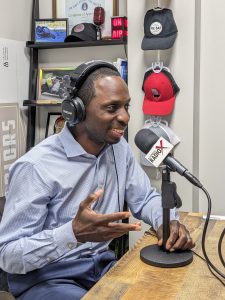
FF-Stone-PaytonFor over 30 years, Stone Payton has been helping organizations and the people who lead them drive their business strategies more effectively.

Mr. Payton literally wrote the book on SPEED ® : Never Fry Bacon In The Nude: And Other Lessons From The Quick & The Dead, and has dedicated his career to helping others Produce Better Results In Less Time.

Connect with Stone on LinkedIn, Facebook and Instagram.

Websites:

  • BusinessRadioX.com
  • CherokeeBusinessRadio.com
  • MainStreetWarriors.org
  • ssfreedom.org

Transcript-iconThis transcript is machine transcribed by Sonix


TRANSCRIPT

Intro: Broadcasting live from the Business RadioX studios in Woodstock, Georgia. This is fearless formula with Sharon Cline.

Sharon Cline: Welcome to Fearless Formula on Business RadioX, where we talk about the ups and downs of the business world and offer words of wisdom for business success. On a normal day, that’s what we do. But today is not a normal day. Today is a Tuesday where I get to talk about, well, the founder of everything regarding Business RadioX, one of the founders here in Atlanta, but specifically Stone’s studio here in Woodstock, Georgia. This is Stone Payton. Welcome to the show.

Stone Payton: Well thank you. Maybe we should rename it and call it Stone studio instead of Cherokee Business RadioX Stone studio. A little ring to it, doesn’t it? It does.

Sharon Cline: Look at me. I won’t charge you much for that. I’m so glad to talk to you to you today because we haven’t really sat down and discussed, you know, the the progress of Business RadioX and all of the different initiatives that you have right now, as well as the fact that, like, I don’t even get any personal chit chatty time with you like I used to because we’re both so busy.

Stone Payton: Well, especially you, right? It’s hunting season for me. So that’s part of why I’m busy. But you, you’re all over the place, you’re doing voiceover work, you’re doing radio work, you’re doing TV work. Yeah, commercials, all that stuff. You got a lot going on, lady.

Sharon Cline: Yeah, it all kind of happened at once, really quickly. Like doing this Fatal Attraction show. I’m so excited to do that on Thursday and Friday. And then I’ve got a couple different TV shows that are coming out from things that I filmed last year. They come out in February, so it’ll it’ll seem like a lot at once, but it’s all been in the making over time, except for Fatal Attraction. That was a big surprise. I get to be a detective. I’m so excited. I have lines, it’s the most amazing ever. So I’m so glad to share that with you too, because I always think of you as the person that was so supportive of me getting into radio with you, like almost three almost three years ago.

Stone Payton: So remember that when you start getting the royalty checks. Okay.

Sharon Cline: Oh, is that right? I don’t know if I’m.

Sharon Cline: The little people. I don’t know if I’ll remember that. You know what? No. I will never forget how kind you were to me when I was just like. Do you need someone to say a voiceover for you? Please. Anything.

Sharon Cline: You were so sweet to me. No.

Stone Payton: It’s been a great ride. We’d have a lot of fun together and, uh. And back at you, because a lot of the cool things we have going on here right now were born out of your creativity, your initiative, and your willingness to help me try to get some things off the ground. So it’s been a very, uh, at least fair energy exchange. And I have a feeling that the, the balance of the scales is much more in your.

Sharon Cline: Favor than mine. No.

Sharon Cline: Well, it’s been my pleasure. And everything that you’re doing is to not just help the community, but you really do take some personal one on one, um, interest in people and helping them to grow as well. Which is what’s so great about Business RadioX, because it does help to give people opportunities to, Uh, navigate different industries and and network and everybody wins in that, in that environment. Not only do you get to know new people, but you could also help to grow your own business. And it just grows and grows and grows. So not only do you do things for the community, but you do things individually. And I appreciate that about you.

Stone Payton: Well, thank you. And what you’re describing, that’s certainly consistent with my experience, both for me and the people that we bring into the Business RadioX family. One of the things that I thoroughly enjoy about being part of this thing of ours at this point in my career is it’s real easy to be the nice guy, the guy that knows the guy, and it’s real easy to to serve someone who is never going to write you a check. But with all of that in place, it makes perfect sense for very specific types of people in certain situations that meet, uh, some, some very distinct criteria. It makes all the sense in the world for them to at least have a conversation with us about writing us a check, because we Because we can provide a nice return on that check. But but I can also help a lot of people nonprofits, very small businesses, startups. So it’s it’s a neat place to be in terms of timing in the career and to have this, uh, this platform, this, this thing at my disposal.

Sharon Cline: Right.

Sharon Cline: Exactly. People are always impressed when they come in to see this little studio here. It’s like such a surprise. But it has always provided such a nice, intimate setting to get to know someone’s story in a way that I don’t get to have outside of this room. So I consider it an honor to be part of it.

Stone Payton: So thank you. Well that’s nice. Thank you for saying that.

Sharon Cline: Sure.

Sharon Cline: No problem. Well, let’s talk a little bit about some of the things that Business RadioX is doing right now. We’re actually we’ve talked about Main Street Warriors a couple times in the past, you and I on on air. But what is new with Main Street Warriors that we’ve been working on together?

Sharon Cline: Well, I.

Stone Payton: Think it’s a perfect example of a tenant that I’ve tried to live by, a mentor shared with me years and years Go. If you’re kind of getting mired down and you’re stuck in what you’re doing and you’ve got a problem or a set of problems and you’re just really struggling with it, take a day, take a couple of days, go work on somebody else’s problem, right. And so I was getting mired down in one challenge in that when I opened this studio, we’ve got a very well kind of, uh, baked, uh, well baked strategy methodology process for helping professional services clients who are kind of high end, uh, solve their prospecting problem. You know, a lot of people CPAs, lawyers, coaches, consultants, they may be exceedingly gifted at their craft, but a lot of them have a challenge in prospecting. So at the risk of sounding a little bit immodest, this thing of ours, we can fix that problem and we can really help them grow their business. And the fee structure is, uh, commensurate with that, right? So and you can make a very lucrative living running a Business RadioX studio. So there’s this whole tier of people that we serve, and that’s the way it ought to be. But lo and behold, I moved to Woodstock, Georgia, and very quickly I get to know a lot of people around town. I know every bartender in town, of course, but I know a lot of small business people that, you know, they’re not trying to take over the world or anything.

Stone Payton: They just have a neat little lifestyle business. I don’t care how good my thing works. My fee structure is out of reach, right? And so I’m scratching my head. What’s been almost three years now? Two years plus? I guess I’m scratching my head. How do I help these people? Right. Um, what I do at the at that fee structure makes no sense to them, but I really do want to help them. And so, uh, what what I did with a great deal of help from you to bring it into reality and just help from everybody around the community. Uh, you know, Lee Meyer with the highlight reel, just a whole bunch of people came together to support this. But we created this community partner program, uh, with your help, we called it Main Street Warriors. The very first time I tried to even articulate what we were doing and why. Diesel. David, David, Samuel, he says, well, what would it cost for me? I want to be the title sponsor. And I’m like, uh, I don’t know. And he goes, well, how about this number through his credit card? I’m like, okay. So like like without diesel, David, it never would have happened without you. It never would have had this. All these people came together. But what we created was a way for those all the smaller businesses, all these friends of mine that I see every week at, um, at young professionals of Woodstock.

Sharon Cline: Or Woodstock business meetings.

Stone Payton: There’s a way for them to play, a way for them to engage and do a couple of things. One, they can tap into some of the benefits of being a part of this, this thing where we amplify the voice of business and we give everybody an opportunity to share their story and promote their work. But another challenge that businesses at that level have at that revenue level, uh, they don’t have the resources to contribute to local causes the way they would like to. You know, they can write the $10 check. They can go to the $25 dinner, but they can’t be writing 1000 $5,000 checks to this association and this nonprofit. But as part of the Main Street Warriors program, the whole idea behind that is we’ll take that membership revenue, which is, I mean, very modest, right? I mean, it’s like a 10th of what it would cost if you were like a traditional client. Uh, and, uh, my initial, uh, commitment was we’d take 20% of that money, uh, just between me and you and a house cat and now your millions of listeners, I’m sure millions.

Sharon Cline: We’re actually.

Stone Payton: We’re actually, uh, giving about 120% at.

Sharon Cline: The moment.

Stone Payton: But we’re taking that money and we’re turning around and reinvesting it in the local nonprofits that causes, you know, all of them that, that, that we all support around here. You’ve heard of.

Sharon Cline: All of them, of.

Stone Payton: Course. And, um, and so but now that small business person gets an gets an opportunity to kind of come along for the ride on the traditional promotional marketing aspect of things. You know, maybe they’re a sponsor of a specific episode. Maybe we do a live read for them. Maybe we make it very clear that they are the the sponsor of this series. Stuff that doesn’t cost me a lot of money, right? Gives them some exposure. Uh, gives because they are a sponsor. They have kind of the inside track and inviting other people on Cherokee Business Radio, and they get to be a part of what we do for Wildlife Action Kids Expo, Limitless Disabilities Food Pantry, Next Step Ministries, Circle of Friends, all of these you know, they it’s not stone, it’s the main street.

Sharon Cline: Warriors that get to contribute.

Stone Payton: That got me started on Main Street Warriors. I just I love it.

Sharon Cline: I love that you have a golf cart that you ride around in.

Sharon Cline: Downtown Woodstock, and.

Sharon Cline: You can put, you know, the logos and, and the names of the businesses that are part of the Main Street Warrior program. So they get free advertising kind of.

Sharon Cline: In that way.

Stone Payton: Well, so like Renee Deardorff, she runs up level design studio. She made these magnetic signs. I need to put in another order with her. And she made these foam course signs that you see here in the studio. And I thought it was a really a marvelous idea. And she helped me think that through is we’ve got the steel, you know, that’s magnetic. And so you can just interchange the signs. Right. We’re going to do the same thing on the SS freedom, another project I’ll tell you about where we can do some interchangeable, uh, interchangeable signs. But, uh, yeah, the golf cart is fun.

Sharon Cline: I do have.

Sharon Cline: To say, when you consider the the level of income and the ability to financially contribute in a significant way to any kind of nonprofit, it does feel like, well, I need to be a millionaire or, you know, a six figure income kind of company. And it’s nice to know that you don’t have to have that high level in order to be able to make an impact on causes that you believe in.

Stone Payton: Absolutely. And this is just one vehicle for that. What I have come to to believe sincerely, though, what these different constituencies need and want. They don’t need the grand gesture. If you’ve got 100 grand, write a check for 100 grand, but you know, show up and help them paint the side of the building. Bring some lunch by. Go pat somebody on the back. It’s the it doesn’t have to be a grand gesture, but this particular program does help us kind of aggregate resources and have a big impact on any on any one thing can I talk about. So can I talk about the boat project?

Sharon Cline: Let’s talk about the boat. So I saw.

Sharon Cline: You posted about it.

Sharon Cline: On Facebook.

Stone Payton: I did today. And I’m not a big Facebook poster, but I mean, you must have been 30 people, you know, so like, you know, liked it and commented and all that stuff, which 30 in my world, guys is a big deal. I’m not a social media guy. Really. Uh, so yeah. So what we did, we, uh, we went out and bought the most stripped down pontoon boat we could find. It’s actually a Triton has three of those little thingies under it with the idea that we were we were going to we’re going to build out this boat so that we can get wheelchairs on, on and off easily. And that’s not the only constituency that we plan to serve is not just people in a wheelchair, but I learned through my work with Wildlife Action and doing the disabled hunts, um, and the youth hunts, man, you know, some of these folks, it’s really difficult for them to get out and enjoy the outdoors. I take it for granted, right? Like, if, um, you know, like, tomorrow morning, I’m going to I’m going to it’s the last few days of deer hunting season. I’m going to go hunt in the morning, and I just take that for granted. But, you know, people who are confined to a wheelchair or just even maybe less mobile like, but particularly disabled vets, it’s just it’s tough for them to get out.

Stone Payton: So in conjunction with Wildlife Action and Main Street and Main Street Warriors and design and remodel brothers LG, I mean, there’s a lot of people that have rallied around this are what we’re doing is building out a boat that is not just accessible to so that people can get on the thing, but it’s it’s, um, it’s wheelchair friendly and friendly to folks who are who are less mobile. I can’t tell you how rewarding it is that, you know, I just I, we just sort of had the very beginnings of the idea, you know, I mentioned it to you. I mentioned it to Jim and John, the designer and model brothers. I mentioned it to aunt Sandy, who we all at Young Professionals at Woodstock know who that is, but she’s my sister in law. But I call her aunt Sandy. Aunt Sandy was the first one to stroke a check. Boom! The minute I told her about it and. And the minute I told Jim about it, he said darn well wired everybody. People write checks on behalf of causes for Jim just because he’s Jim. You know, I mean, and, you know, he talked to Wesley, and now, you know, he wrote a check and we got.

Stone Payton: And so now it’s this big deal. Uh, we have a website out by the time this is published is probably going to be some kind of website, but I am so looking forward to just getting people out and think about. Think about the folks like Nick Carberry out there with Nick Step Ministries. You know, some of those folks, you know, are are like not mobile at all unless someone’s pushing them in a wheelchair and they, they really need and want stuff to go out and do. So it’s not just there’s the boat and there’s that project and that accessibility, but there’s also because our mission at Wildlife Action is to provide those experiences is there’s also 27 acres. So just imagine, you know, Nick’s crowd or page read over at Limitless Disability or Veterans, a disabled veterans group or any group coming out. And it’s like a whole experience. You’re cooking the s’mores and the hot dogs at the campsite. Maybe you stayed over last night, and then you’re hopping on the boat and going for a cruise. Or maybe if you were going for a fishing trip. I am so excited about this, I can’t see straight.

Sharon Cline: I wish people really knew more how satisfying and rewarding and and touching it is to see someone experience. Um, I don’t know, have have access to an experience they never had before. And to know that you had a small part in making someone feel that kind of joy. Oh, my. There’s nothing like it. You can’t. You can’t pay to have that feeling.

Sharon Cline: You have to do it.

Stone Payton: And I’m so blessed that I’ve experienced it at like three different levels. I’ve experienced at the level of just at the idea stage, people just, just just corralling around me to get it off the ground. And then I’ve and I’ve experienced at the where everybody just is. I mean, I’m getting calls and emails. What can I do to help? I’m a fabricator. I’m a welder, you know. Do you do you need some help getting the motor running? You know, all these people are coming. So it’s incredibly rewarding to see people around you helping. And then to your point, as we’re talking to people, well, I got to tell you, the initial inspiration for all of this was partially my experience with the disabled hunt, right? I mean, you talk, you take a guy double amputee in a wheelchair, and then you look at that guy with grinning ear to ear when he’s holding the eight point deer that he’s harvested, right. So as partially inspired by that experience doing the disabled hunt for the last couple of years and then but also my buddy Kyle Snowpack over at Young Professionals at Woods. Right. He wanted to go fishing. And candidly, it’s been difficult to work out the logistics and access. And so but that’s just it’s incredibly rewarding even at this stage where they just know it’s coming. But can you imagine how it’s going to feel in like in April, May? You know, we get into the warmer weather and we’re actually out doing it. Oh my.

Sharon Cline: God.

Sharon Cline: There’s so many dark things that happen in this world. I just any opportunity to show that there are people that really do think beyond themselves, that really do give selflessly, that that really do want to see other people genuinely happy with nothing back to themselves just to experience that moment. There aren’t enough opportunities for that in my book. Honestly, I really believe that.

Sharon Cline: Well, we.

Stone Payton: Got to keep creating them, but I’ll share something else that’s come of my experience from this. You talk about like like expecting nothing back. You can’t help it. It does come back. I can’t I’ve written quite a bit of business in the last six weeks that you could kind of tie it back to some of the early serve. First serve often. Methodology, ethos, value, system of Business RadioX. In general, people really appreciate that you’re out there helping other people. So I mean, you’ve heard me say this before, but I you know, I find the more people you help, the more money you make and the more money you make, the more people you help. And then once you get that flywheel going, you can’t you couldn’t stop it.

Sharon Cline: If you if you wanted to.

Stone Payton: So yeah, you can go into it like that. No, no expectation of immediate recompense. And you’re going to get, It, uh, emotional compensation, you know, just.

Sharon Cline: Off the chart.

Stone Payton: But it’s probably going to help your business.

Sharon Cline: Well, it looks like what you’re really doing is is encouraging people to think like you do. It’s not. It is the serving aspect of it. It’s it is not just let me grow my business and let me financially, you know, benefit. It’s more about it’s all of it. Everyone wins in that scenario. And that to me is the best. It’s the win win, the win win.

Stone Payton: The only win that I haven’t achieved yet. And it’s not going to happen because he’s on a whole nother trajectory. As I really wanted Sharon to take over this studio. I just wanted access to it. But she’s like, you know, on a whole nother trajectory.

Sharon Cline: Let’s talk about.

Sharon Cline: Taking over the studio at the.

Sharon Cline: End of this, because I am looking.

Stone Payton: I’m looking for a co-host slash studio person to handle the day to day because we’re busy expanding the network. We’re getting I’m getting more and more involved in the nonprofit cause side of life. Um, and so that really, you know, I know you didn’t mean this to be a recruiting ad, but I am kind of looking for a co-host of Cherokee Business Radio and and someone to run kind of the day to day of this studio.

Sharon Cline: So when you talk about expanding the network, what do you mean what’s going on?

Stone Payton: So right now we, uh, we are in maybe 61, 62 markets in some way. We have 19 of these rooms like this.

Sharon Cline: Around the country.

Stone Payton: Right. And I’m one of the 19. Right. So me and my business partner, Lee Kantor, uh, we own the business radio X network, and, uh, so that’s my day job, right? And then I also run Cherokee Business Radio. Uh, but on the expansion, we want to go from 19 to 1000. We feel like what’s happening here in Woodstock with John Ray is doing such a fabulous job with in North Fulton. Mike Salmon up in Gwinnett, Tom Sheldon out in northeast, bejesus, Georgia. Bowe up in Gainesville, Trisha out in Houston, Karen out in Phoenix. What these people are doing, those in those communities. Uh, well, we more than believe it now. We know it. It’s replicable. This could be happening in so many communities with all everything we’re describing. And so we are actively seeking people in other markets. And I’ll tell you what was it, John? Somebody gave me the word. I think it might have been John Cloonan, like the marketing lingo for the avatar. Oh, right. So I’ll give you the avatar and hope I don’t, uh, the ideal avatar and hope I don’t run into any legal trouble because it’s not a knockout factor if you’re a guy, but established female business coach if and so that’s like the established female business coach. Some additional pluses on the on in uh for that are, uh, credentialed like ICF certified veteran.

Stone Payton: There’s a lot of reasons for that. But it’s a that makes it a good fit for us. Now what makes it a good fit for them and at least them worth having a conversation with us is if they if they have a good established business. But the greatest opportunity for improvement in their practice is the Is the prospecting, right? Like that’s the hardest part. And that’s true for a lot of professional services folks CPAs, lawyers, consultants, coaches. But but it is a lot for for coaches because that’s a gap we know we can fill. We have very, uh, well established proven. It always works. I mean, uh, methodology for filling that gap. So if there’s a female business coach, veteran ICF, uh, credentialed in, you know, San Jose or Pittsburgh or, you know, or Tampa, and it would and she’s, uh, she I want to say she and she really believes me. If I could just get more initial beginning conversations, those initial relationships going. I mean, we probably should team up or we ought to at least have a or at least have a conversation. So my day job and one of the things I’m working on very diligently right now is just having those conversations. Um, now I use some of our own toys and methodology to do that.

Stone Payton: We started I just have have launched a new coaching series under the High Velocity Media Property High Velocity Radio Media property, because that helps me serve first serve early serve often give female business coaches and in some males, but give them an opportunity to share their story, promote their work. But, um, you know, by the time I invite them on the show, have a conversation with them about to get ready for the show, and then have them on the show. I have a great relationship with them. And, you know, it’s, you know, still, eight out of ten of them may not make any sense for us to team up directly, but how many of those people know people we ought to talk to? And then when people are looking at what we’re doing, they’re able to see, okay, these guys are real. They’re just good folks trying to do good work. I don’t, you know, I’m very transparent about what we’re doing. Like, it’s important to me that everybody does win in the equation. So I’m spending a lot of time doing virtual interviews instead of instead of the in-studio interviews, just to have conversations with people. Maybe we should, uh, we should team up with.

Sharon Cline: Well, I mean, it’s so exciting because it really feels like you’ve got momentum going, especially if you said in the last six weeks or whatever, you’ve just like, had more and more people get to know even what radio Business RadioX is about. Yeah. And and just knowing that what the goal is, the win win.

Sharon Cline: It really is. Right.

Sharon Cline: Every everyone does have a moment to where they can feel like they’ve been heard, seen and understood and no one is unhappy to have that kind of.

Sharon Cline: Shine on them.

Sharon Cline: But also they get to have a relationship that starts in that space, and then it grows and grows and grows and their network grows. But it all starts from such good energy and good intentions behind it.

Stone Payton: See why I want her to run the studio?

Sharon Cline: Oh.

Sharon Cline: Um, let’s let’s talk stone.

Stone Payton: We’ll table that. But when you’re ready.

Sharon Cline: Yeah. All right, all right, we’ll talk.

Sharon Cline: You’re hilarious. We’ll see why it’s so fun to work with Stone though, because you are very inspiring and your brain thinks so differently from mine. And I love that it does because I just have me. And sometimes that’s not the best place to be. But like listening to how you consider the different ways all across the country that people can be affected positively. I think here in Woodstock, this is our town and you’re like the world.

Sharon Cline: I’m like, wait.

Stone Payton: Well, and I mean, candidly, if if I would just focus on running this studio and particularly if I had a coaching practice, right, like if I was a sales and marketing coach for training and development people, because I know a few things about how to do that. And if I primarily use this studio just to grow that business and then maybe do a little bit of Business RadioX, I’m sure I’d make a ton more money. But, you know, it’s.

Sharon Cline: Not about it’s it’s interesting too.

Sharon Cline: Because it.

Sharon Cline: Isn’t. Oh, do you really?

Sharon Cline: That’s nice to know. I married up.

Stone Payton: My wife, had a real job. Now, now.

Sharon Cline: Now she’s all retired. Yeah.

Stone Payton: She’s retired. So maybe.

Sharon Cline: Maybe you do need to.

Stone Payton: Be coming to you for a job. Uh, but but no, I mean, and if that’s where a person is in that stage of their life, that’s what they ought to do. And that’s what we coach these, um, coaches to do that we team up with is look, first and foremost, we’re going to share everything we think we know about this. And the first thing we want to do is use it just like you will with your clients. If you really get in the Business RadioX business, let’s just use it to grow your own business. Let’s see, like coaches, uh, what we’re learning about that ecosystem, the, uh, the heartbeat of that is the the discovery calls just having genuine, open, um, authentic conversations with prospective clients because think about how just think about the level of trust one has to endure just to have an initial, you know, it’s not hey, you know, let’s have a cup of coffee. Hey, ho, what do you do? What do I do? A good referral for me? Yeah. No, you’re like a real conversation.

Sharon Cline: Well, it always feels like. What do you do you want from me?

Sharon Cline: You know.

Sharon Cline: What do you need from me? And how can I write you a check of some kind? Like, that’s what it always feels like when you’re in those moments.

Stone Payton: And in our thing that. No, we’re using this to serve. And it’s not like, you know, our methodology is the antithesis of this. So it’s not this. It’s not, hey, come on, my show. And okay, you’ve been on my show and I buy my thing. It’s not that with me talking to somebody in another town that might. And it’s not that at a studio. It’s not that. But it is a great way we have all these relationship building moments in our in our process. You know, just when you’ve experienced this, just reaching out and inviting someone to come in the studio and look in the studio is way beyond doing virtual. But there’s value in both just reaching out and inviting someone to come in the studio and share their story, promote their work, how many genuine relationships and new friends, many of whom will be lifelong friends, have you made just by having the Fearless Formula show right out of here?

Sharon Cline: So true. I was just talking to Doctor Trudy Simmons, who was on the show last week about how she was a stranger when she walked in. Nice to meet you. Shake your hand. We come to the studio. By the time an hour has passed, I. I feel like we’re we’ve I don’t know, we’re like it just quickly moves our friendship forward very quickly to where I feel like I could call her if I needed something, and I really believe she would be be there for me. It’s it’s exponentially quickly. I can’t explain it’s like magical. And I know that sounds I don’t know, I don’t want to talk esoterically.

Sharon Cline: And it’s.

Stone Payton: Not and I want to be clear about this because there are people who market it this way, and I guess they’re making it. It’s not a parlor trick to get a sale. It’s you got to get above all that crap and just go out there and just try to help people.

Sharon Cline: Yeah, because it’s not about it’s not about what you can get from them. It’s really just about sharing their story and and what it’s like to be them for a little while. And, and from a, from a place of genuine curiosity. Not what you can do for me.

Sharon Cline: It’s really.

Stone Payton: Not. And in the same breath, just think if let’s let’s say you did have something to sell for some reason, if you sold office furniture and, and, you know, and she met the criteria for if you called her six weeks from now, six days from now, I’ll bet you she’d take your call.

Sharon Cline: Yes. Right. Yes. She would.

Stone Payton: If you shared with her what you’re up to, I bet you would listen to you about your products and services with an open mind. And if her husband’s brother sold off his furniture, and there’s just no way it’s going to. She could get divorced if she buys office furniture from you. That ain’t going to happen, right?

Sharon Cline: Right.

Stone Payton: She’s still going to try to help you any way she can.

Sharon Cline: She’d find someone or something.

Stone Payton: And, I mean, I got 21 years of that 100,000. Not me personally, but there’s I, I just have that relationship with people and, you know, and I, I utilize it and capitalize on it judiciously. And again, in a, in a serve first manner. But there’s absolutely nothing wrong, at least in my view, to build a relationship with someone. And if you have something that you, um, that you do or that you sell that might serve them, you don’t have to be cagey about it because you’ve got a real relationship with them. Just like I have a real relationship with you. I can I can call you and say, hey, Sharon, I’m selling these new radios that just go great on motorcycles. And you were. I thought of you first. Okay. You’re going to listen to me about, you know.

Sharon Cline: Yes, I because we’ve got all this history. That’s right.

Stone Payton: Does that make sense?

Sharon Cline: It does.

Stone Payton: But I know some people might think, or maybe this is the way they do, that. It’s like a parlor trick to just, you know, to get the lead or whatever, that we’re so far above all that fray with the way we do it.

Sharon Cline: Well, there’s no way to. Okay. How do I want to say this? I would not want someone in the studio and interview them with the with the energy of, now you’re going to hire me to do a do a voiceover, or now you’re going to hire me to do whatever underneath it, because I don’t know. I feel like I could feel that kind of disingenuousness.

Stone Payton: And you can’t be, but and at the same time, how appropriate, organic, authentic, and all of that is if through the process of you being part of the Business RadioX family, providing this opportunity, building the relationship with the inviting, and maybe even having a conversation to help them get ready doing the show. If if either you intentionally and or just sort of comes out that you do voiceover work and they’re getting ready to to do an audio book or whatever, I mean, there’s nothing wrong with it. Like if there’s a it’s it’s perfectly appropriate and organic. And again, a the equation is a win win if you put yourself kind of at that next tier.

Sharon Cline: Right, right. If I were.

Sharon Cline: To say, listen, if you ever hear I’ve had many authors, many voiceover over artists, many actors on the show, which has been really fun because I get to kind of see what their world is like, but it is not with the idea of of please hire me. It’s more of, here’s my side of what it is that you’re doing. What is it like to be you for a while? And we get to talk about very similar things, themes that I don’t get to talk about with a plumber or someone that is in a different kind of industry. But I absolutely if it’s supposed to work out, it will work out. And that is just the way I look at it. I never expect anything from anyone. It’s just here’s what I do. If you like how I sound, great, but if you don’t, I might know someone in the voiceover world who could work for you better. And it just is a there’s room for everyone. There’s success for everyone out there. It does not have to be me controlling the whole world. I feel like things land the way they’re supposed to, and they and they work out the way they’re supposed to.

Sharon Cline: Well, two.

Stone Payton: Observations on that. It wouldn’t surprise me one bit to learn that some of those folks have you top of mind. They’re out there doing their thing and somebody needs or wants or they hear it and they believe, oh, you know, oh, you need someone who can do a British accent and sounds really cool. And I tell you who you ought to talk to is Sharon. I bet that happens. Wouldn’t surprise me at all. Um, if that happens. But it also reminds me of another thing that a mentor of mine shared with me years and years ago. And one of the things that this firm did so well, they were so far above in their positioning, everybody else in the space. And it just you didn’t have to sell it. You just had to do the work and be gracious and generous and providing the the counsel and the thought leadership. But what he told me, he said, Stone, serve your competition and you won’t have any. Oh, and that has proven itself over and over and over and over again. So like, for example, anyone who is out there trying to use like toys like these that we’re surrounded with right now in this.

Sharon Cline: Platform, the RODECaster and the.

Stone Payton: Computer and the microphone and the, uh, and the, uh, the, the distribution pipeline of all these third party podcasting platforms. There’s a ton of people doing that kind of stuff, and they’re all out there trying to to help folks. These people are not threatening my lifestyle or what I’m trying to do at all. And, um, in a lot of cases, someone will come to me and I’ve kind of, you know, determined a niche in doing these kinds of things at that high tier and these kinds of things over here with the Community Partner program. And there’s this big swath in the middle of like, more production services and marketing services associated with producing a podcast, distributing a podcast, leveraging all that stuff. And I mean, I’m on the phone. Hey, Sharon, do you want to take a look at this? Hey, you know, Tim, do you want to take a look at this? Logan? Um, anyway, for whatever that’s worth, it might be worth what you paid for it, but I will repeat it. Serve your competition, and you won’t have any.

Sharon Cline: I love it because that is such a theme of mine. Is that, like I was saying, there’s room for everyone in the voiceover world. There’s room for everyone in whatever their dream is. It’s not. I can’t own anything anyway. I can’t control anything anymore.

Sharon Cline: And a bad one’s.

Stone Payton: A wash out. The bad the market will the market will take care of the ones that are that are charlatans or don’t deliver good work or whatever.

Sharon Cline: But I would agree with that. I didn’t think about that.

Stone Payton: Anyone of substance, there’s there’s room for all of those folks. Well, we’ll never run out of people who need the help. And then it’s up to us to be creative. Okay. You know, maybe not everybody can write a $30,000 check every year to help them grow their business, but anybody can write a $2,500 check a year, if you know what I mean.

Sharon Cline: Like, you can help them all.

Stone Payton: And somewhere in between all that. Okay, then let me find somebody that can.

Sharon Cline: What would you what who would be sort of. How can you explain Main Street Warriors for a local business right now? Like what would what would be the different tiers that they could be involved in.

Stone Payton: So and I’m going to simplify it down to just one plain tier for the Main Street warriors. And right now there’s there’s a couple of different tiers. But if you’re that, you know, person with an idea on a cocktail napkin and you’re out there networking, you’re getting your thing off the ground, um, then then there’s something there for you. Or, you know, if you got a business that’s doing 150 grand a year or 50 grand a year, but you a little bit of promotion and you want to be associated with, uh, giving to the community, and you want to be you want to tap into some of that. If you’re a main Street warrior, there’s some things that that we can do that we’re going to be doing anyway. And it’s just you don’t want to pretend like I’m this great hero philanthropist, but, you know, like, right now, we could have opened the show. You know, today’s episode is brought to you in part by Marietta marine or, you know, or up level design studio. Please go check them out at bumpity. Bump.com. We could have made, uh, the we could have put, like a logo there. So when people go listen to it, they hear that and they see the line. And then and then Renee over at over at uplevel could send out a thing.

Stone Payton: Hey, you know, we just sponsored this latest episode, but as a main Street warrior, to me, the greatest benefit is you. You get, you get to do some of the stuff that are that are high end, premium fee clients get to do. If you’re a main Street warrior, you’re and we have several chapters now because we’ve kind of replicated. But if you’re a Cherokee chapter of Main Street Warriors, if you’re a main Street warrior, you can legitimately, legitimately and as truthful, you can go out into the marketplace and you’re talking to somebody instead of doing that, hey, ho, let’s get a cup of coffee. You know, here’s my business card. You can have a genuine conversation with them for a moment that don’t talk about you at all. It talks about them. Hey. Sounds interesting. I don’t know if you knew this or not, but I’m a sponsor of Cherokee Business Radio, and I think you’d be a good guest on the show. If you’d like to. Come on, I’ll send you a booking link. And, and and when they send the booking link. They are the ambassador, right? They are the. So now I know that it’s Renee or David or, you know, Andrew or whoever has sent them over here.

Stone Payton: So I know depending on what else is going on that day, I can I can give them all that, all that love. But forget about all that digital promotional stuff. Just the fact that now you’re out there in the community and you’re we’re giving you a vehicle, we’re giving you a method to express what you want to express you. Now, you’ve put that we’ve put that Main Street warrior in a position to serve first, serve early, serve often. And they get a lot of the benefits of the it’s it’s just a marvelous relationship building moment. And you know, they can follow they can listen to it either live or on demand. They can follow back up with that person. It’s just, again, it’s all built on on real relationship, you know, and you’re talking you know, actually I think right now it’s 1250 a year. We’re going to change. It may be a little bit more than that when this gets published, but it’s not going to be more than $2,500 a year, so I don’t even know what that is. There’s just, you know, it’s it’s if you don’t do it, it’ll be because you don’t. You’re not buying into what we’re doing because of the money.

Sharon Cline: You know what I mean?

Stone Payton: You’re spending that on something stupid already.

Sharon Cline: Lip gloss is what I say. My favorite thing, what I like, too, is Business RadioX has got this just this established, legitimate name that really does add a little bit more credibility to what you’re doing if you’re just on your own.

Stone Payton: Yeah. Well, part of I mean, we’re a 21 year overnight success story.

Sharon Cline: Right? Overnight?

Stone Payton: No, it’s taken a long time to get it where it is. And it’s not Lena. It’s the we’re doing this on the back of this. Our studio partners are marvelous. Our guests, you know, because of this is what it is. When you get a guest in here that has a compelling story to share and they have substance and, you know, 99.9% of them do they share it with their extended network. And so, yeah, over the 21 years, we have remarkable, You know, all the jazz, the domain authority, the brand equity, all that marketing stuff. And so it passes this like if you if you are a guest on the Business RadioX network and part of your marketing strategy this year is to go get on other shows. At the risk of sounding a little bit immodest, if you send them a link and they may not even go to it, but if you send them a link to your Business RadioX interview, it ain’t going to hurt you.

Sharon Cline: You know what I mean? It’s so true.

Stone Payton: It will help you.

Sharon Cline: Well, I love it because it really feels like, um, the things are growing. I mean, it’s 2025 and it’s January, and already there’s, like, such momentum.

Sharon Cline: It’s exciting.

Stone Payton: It is exciting. It’s a lot of fun. I still right now, the thing that’s the biggest twinkle in my eye right now.

Sharon Cline: Is the.

Stone Payton: Boat is the boat.

Sharon Cline: Thing is the boat. It really.

Stone Payton: Is. So it’ll be something else six weeks from now. But it is right now.

Sharon Cline: Will you talk a little bit about wildlife action?

Sharon Cline: Yeah.

Stone Payton: So this is the most marvelous organization. I’m on the board, and the mission is preservation and conservancy conservancy. So the people we interact with a great deal are often people that don’t have that opportunity to do the hiking, the canoeing, the fishing, the camping, the hunting, the fishing, all that stuff. And so we’re able to provide those opportunities for them. And I mean, like for 60 bucks a year, you could your whole family can be a member.

Sharon Cline: Where is it located?

Stone Payton: It’s located on Kellogg Creek.

Sharon Cline: Okay. And Woodstock.

Stone Payton: And so it’s actually technically Acworth, but. Yeah, but if you go to Bells Ferry and hang a left on Kellogg or coming from here, hang a left on Kellogg. It’s there’s Kellogg day use area. And right before you get there, it’s a wildlife action. And since.

Sharon Cline: We’re mentioning it.

Stone Payton: We’ll put the address 27 acres facing Kellogg Creek.

Sharon Cline: Wow.

Stone Payton: And so right there on the lake. And it’s just it is beautiful. We have Pioneer Village, which Boy Scout troops? Some group not even when it’s warm, but always when it’s warm. But I mean, last weekend. In this coming weekend, a group will rent Pioneer Village and. And we have these Adirondack huts that they can stay in. But I mean, we also I mean, there’ll be 30 tents there and we do all kinds of activities like, uh, the week before Halloween, we had instead of calling it Pioneer Village, we called it Haunted Village. And so families each took one of these, uh, like, huts and it was a trick or treat station. Earlier that day, we had pumpkin carving. All right. And then a couple weeks later, we had a youth and disabled turkey hunt. And so they’re not shooting turkeys, but they’re, uh, like a turkey target. Right?

Sharon Cline: Gotcha.

Stone Payton: Everybody goes home with a turkey.

Sharon Cline: Every kid.

Stone Payton: So again, envision you got an eight year old girl sitting on her granddaddy’s lap. She’s been shooting a BB gun or a crossbow or a bow. And I mean, again, grinning ear to ear with granddaddy. And she’s holding. She can barely hold it. She’s holding up the turkey. But just think of that experience. And so and then you got all the people surrounding you out there cooking their hamburgers. Uh, and then, uh, you know, you got the folks who are going to do the disabled hunt out there proving to the RV ranger that they won’t shoot themselves in the foot, you know. So it’s like this kind of safety orientation thing, but again, incredibly rewarding. And so so we have Pioneer Village and then we have this lodge. Oh my God, it’s gorgeous. You got to come out and see the property. And it faces Kellogg Creek and the lake. We have weddings, funerals, memorial services. Uh, there’s a there’s a church called Rolling Thunder that comes out. We have a chaplain outside chapel, and sometimes they rent the lodge and they’ll come out there several Sundays over the. But it’s.

Sharon Cline: Beautiful.

Stone Payton: It’s absolutely gorgeous. Great fishing. We have a whole area where you clean the deer and all, but you also clean fish. We have a whole nother education building at the top. We have a nature trail that goes through the. On the other side of the gravel road is 3 or 400 acres of acres of Army Corps land that you can get a permit to archery hunt, which I do in several of my buddies do. But there’s a nature trail that you can walk that when it’s not hunting season. There’s so much to do out there.

Sharon Cline: What do you think? If you can compare and contrast what it’s like to be in that environment and be kind of connected to nature and, and your community in that way. And then what most people and specifically children do these days, which is very much indoors and very much online and with their phones. There has to be some kind of disconnect that they’re not experiencing. You know, they don’t have that experience of being so present and grounded in the world.

Stone Payton: Well, in so many, I didn’t realize it because I grew up kind of in the country, you know, and all that. And then, uh, and I’ve always liked to hunt and fish, but there’s a whole group of people, a whole population that just haven’t been. Once they’re exposed, they come back. That’s the neat thing about it. Once, once the kids come, they they want to want to come back and play in the creek. They want to go fishing. They want to go swimming, you know, all that kind of stuff. I can tell you it is incredibly rewarding to, to to help all kids enjoy it and families enjoy it, but it is particularly rewarding. Like during our summer adventure camp, we have a day camp, uh, to watch kids that just don’t get out much. You know, they’re used to being on the video games and the phone and all that. And, you know, they get out there and fish for an hour. I mean, that’s all they want to do, you know, or swim and that kind of thing. And so that’s a great deal of fun for me personally. And it wasn’t all a product of being part of wildlife action, but it is all a product of being outdoors. I find a that I just thoroughly enjoy the experience itself while I’m having the experience, but I swear to you, I’m a better husband, father, radio host, business partner. I’m you’re balanced aspect of my life is better because in my case, I case, I went and sat in a tree for a couple of hours last Friday or this Friday is the last day of hunting season. I guarantee you I am a better person in all of those roles, because that is a part of my of my life.

Sharon Cline: So I metal detect as you know, this my.

Sharon Cline: Like, oh, wow.

Sharon Cline: My nerdy hobby. So yeah. Um, so anyway, I love being outside for that reason. It’s there is a balance that happens to me when I get to experience just something physical like that out in nature and breathe, you know, clean air and dig in the dirt a little bit. And it’s hours that I can do it because it’s like such focused energy and I love it. But I am different when I come back inside and have to go onto my computer. My brain doesn’t. It just functions differently. It balances me out. And I think that’s what you were talking about, being kind of more of a balanced person. And I think that there must be something, um, that they can even, um, detect through, uh, brain scans what, a child who doesn’t really get outdoor activity and what it would be like for a child that does. There’s got to because you can feel a change in yourself. So I think even now when I think about kids going out and playing like, you know, like we used to do, it seems less safe for some reason to just like go out and play in a yard and.

Sharon Cline: Like, come back in for dinner. Maybe it.

Stone Payton: Is in a lot of environments and that’s nice that you can come to a safe.

Sharon Cline: Place. Exactly.

Sharon Cline: That’s what I’m thinking is you’ve got a very controlled environment, but you also get that same freedom.

Sharon Cline: Yeah, freedom. Feel freedom.

Stone Payton: And it’s yet another outlet for me. There’s something going on every week. We’re serving like, you know, we got the polar plunge, we got the poker run, we got the disabled hunt. We got the adventure camp. We got the camping, the all of that, uh, stuff going. So for me personally, it is. And I think this too is good for the brain chemistry and all that is to always have that thing I was telling you about earlier, something where it’s not even working on somebody else’s problem, but just go help somebody else and just get off of your thing for a little bit.

Sharon Cline: So I had like kind of a tough holiday season, but one of the things that’s helped me so much is actually that very notion is to get out of my own head and to think about other things, someone else that needs attention. It it shifts something in myself. Helping someone else does help me too. But it’s that’s not why I’m doing it. It’s just kind of to cope. But knowing that I’m helping someone else does give me a sense of self esteem, which actually helps me in my ability to deal with something difficult.

Stone Payton: If that makes all the sense in the world. And how much fun is it when you do that? And you and you swim at that end of the pool, you not only bump into, but you become great friends with and build terrific relationships with the likes of, you know, Dan Thrailkill and Joe.

Sharon Cline: Since I can’t see Dan and Joe, a.

Sharon Cline: Front porch advisors.

Sharon Cline: Right?

Stone Payton: And Jim and John at Design Remodel Brothers, and Nick Carberry and Paige Reid and you just all these, you know, and Ashley over at LG Credit Union in Wesley. I mean, just just look at the Jacob Schluter The people you’re hanging out with are just good. Mo just hanging out with people like that. It makes your life better.

Sharon Cline: It does. And recently I had a tree fall in my backyard. I posted it on Facebook. It was so upsetting because the only thing I have in that backyard is, I mean, there’s like a little field that has nothing.

Sharon Cline: Right, right.

Sharon Cline: And then there’s like this little fire pit area, and this tree was so long and ginormous, and it just landed right in the one spot I didn’t want it to, which was where everything was. It broke everything, which it’s fine. But I did post about it on Facebook, like, okay, and I cried. I was so touched at how many people offered to help fix this for me, and it was some of the people that you were just mentioning, you.

Sharon Cline: Know, and I.

Sharon Cline: Don’t like being on the receiving end of help because I like to help.

Sharon Cline: I do just to just to.

Stone Payton: Set the record.

Sharon Cline: Straight. I love.

Stone Payton: Being on the receiving.

Sharon Cline: End. Well, then you’ve got a.

Sharon Cline: Good friend in me because I’ll help.

Sharon Cline: You all.

Sharon Cline: Day. But I never want to be the person that needs help. I’d much rather help, but oh my goodness, I was touched. I can’t even tell you. And it happened right around like the holidays where I was kind of struggling with some things. But anyway, that helped me to realize how many good people are out there in the world, and that not only do I get to help people in that opportunity, you know, have opportunities for that, and I get to help someone feel the way I got to feel when when they help me. Oh my goodness. I just loved it. And I think the same for you is like, if most people were out in the world experiencing what that genuine intention is for, they would do it more often because it really is something that is is on a special level.

Stone Payton: Yeah. And in their defense, I, you know, I’m at a I’m at a point in my life where a lot of things are comfortable, maybe too comfortable. And I understand you kind of, you know, you got to make the mortgage and you got to get the kids to soccer practice. I, I realize, you know, it’s maybe comes a little easier for me right now, but man, to whatever degree you can make that an important aspect of your being, I think. I think it’ll come. I think you’ll find it very rewarding.

Sharon Cline: Well, if someone wanted to find out more about wildlife action, how could they do that?

Stone Payton: So I should know better about how to contact Wildlife Action. I was I will study up on that man if you’ll reach out to me. I’m not great about answering the phone. I work mostly on scheduled calls, but I’m good about seeing text and get back to you. So my direct line and my text is (770) 335-2050 and my email is stone s t o n e at Business RadioX dot com. And it’s it’ll be up before too long because Jim and John are helping us in ash Davenport over to ash is setting up a SS freedom org if you want to hear about that.

Sharon Cline: Oh my gosh, so exciting.

Sharon Cline: Yeah. Also, and anyone who’s interested in Main Street Warrior program, they can contact you for that as well.

Sharon Cline: Right. And you can.

Stone Payton: Go to Main Street Warriors. Org I need to update that. You I told you earlier, I can take all the help I can get.

Sharon Cline: I got so.

Stone Payton: Many irons in the fire. You know, just. I’ll just tell Sharon and she’ll get it figured out. But Main Street warriors.org ss freedom org Business RadioX dot com or you know shoot me an email at stone at Business RadioX dot com or text me (770) 335-2050. Uh, you know, I’ll interview you if that’ll serve you. We’ll have a beer under the elm tree.

Sharon Cline: Uh, Reformation across the street.

Stone Payton: And all the above.

Sharon Cline: Well, it’s so exciting to see what’s happening, and I’m.

Sharon Cline: I’m proud to be part of it.

Sharon Cline: Of course. Is there anything else you’d like to say before we kind of close out everything?

Sharon Cline: You know what?

Stone Payton: I’ve talked more than enough. But I promise you, if we do have a beer, we will talk more about you than me. It’s just. Sharon set this up so that I did a lot of talking, because she’s really good at that. But I really am interested in you and what I can do to help you.

Sharon Cline: That sounds perfect.

Sharon Cline: That’s kind of how I feel with business. I mean, with Fearless Formula two. How can I serve you? So, yeah, if anyone who would like to get in touch with any of us, there are lots of methods out there. Sharon Cline on Facebook.

Sharon Cline: And yeah.

Stone Payton: Tell them how to get.

Sharon Cline: To you. Oh, yeah.

Sharon Cline: Well, yeah. I mean, okay. On Facebook, Instagram I Sharon Cline dot com my website. Um, but Stone, it has been a pleasure to chit chat with you. This has been sorely needed.

Sharon Cline: It has. Yeah. I’ve really missed you.

Stone Payton: We should have like the Stone. No, you should get top billing. The Sharon.

Sharon Cline: Stone chat.

Sharon Cline: The Sharon and Stone chat. Oh, how cute is that? Well, who knows what’ll come in the future. Maybe I’ll be owning the studio.

Sharon Cline: I hope so.

Stone Payton: I’ll sell it to you.

Sharon Cline: For a dollar.

Sharon Cline: Oh, nice. Okay. You heard it here first. That’s legal, I’m sure. All right, everyone, thanks for listening again to Fearless Formula on Business RadioX. And again, this is Sharon Cline and Stone Payton, reminding you that with knowledge and understanding, we can have our own fearless formula. Have a great day.


Tagged With: Building Community, Business RadioX, Main Street Warriors

Steve Eppinger with Connector and Steve Rozeboom with No Longer Bound

January 28, 2025 by angishields

HVR-Connector-NLB-Feature
High Velocity Radio
Steve Eppinger with Connector and Steve Rozeboom with No Longer Bound
Loading
00:00 /
RSS Feed
Share
Link
Embed

Download file

HVR-Connector-NLB-Banner

Atlanta startup Connector Technologies, an AI-enabled, location-based business networking company, today announced a partnership with Atlanta-based No Longer Bound, one of the nation’s leading treatment centers for men battling drug and alcohol addiction. Through this partnership, current residents at the facility and graduates of the program will use Connector to discreetly stay in touch with their peers in recovery, alleviating feelings of isolation and providing emotional support for those struggling with substance use disorders to achieve long-term sobriety.

Connector-logo

steve-eppingerSteve Eppinger is Founder & CEO of Connector.

Connector is a location-based, AI-driven professional business networking platform. The app makes proactive relationship recommendations based on user locations, personal profiles and networking interests.

In short, it supercharges everyone’s ability to make genuine connections that drive meaningful relationships. Connector’s proprietary Value Score, which is applied to both inbound and outbound connection suggestions, is based on a patent-pending algorithm powered by AI.

Connector complements the value that other business networking platforms provide, introduces a new way to find real, high-value connections, and provides a wide range of options to connect, including through chat apps, face-to-face meet-ups, or simply through the exchange of contact information.

Connect with Steve on LinkedIn.

No-Longer-Bound-logo

Steve-RozeboomSteve Rozeboom is representing No Longer Bound.

No Longer Bound is a long-term, residential, faith-based program for men in addiction.

We have a full staff of clinical therapists, recovery specialists, and medical professionals. We work with families to aid their recovery process and provide vocational training with 100% job placement after program completion.

Our vision is to transform lives beyond sobriety through lasting intimacy with God, self, and others.

Connect with Steve on LinkedIn

Transcript-iconThis transcript is machine transcribed by Sonix.


TRANSCRIPT

Intro: Broadcasting live from the Business RadioX studios in Atlanta, Georgia. It’s time for High Velocity Radio.

Stone Payton: Welcome to the High Velocity Radio show, where we celebrate top performers producing better results in less time. Stone Payton here with you this afternoon. You guys are in for a real treat. Please join me in welcoming to the broadcast first up on the High Velocity Radio show today with Connector Technologies. Mr. Steve Eppinger. How are you, man?

Steve Eppinger: I’m doing great. Stone, how are you?

Stone Payton: I am doing well. I should have said welcome back to the Business RadioX microphone. It’s been a minute. I think we decided maybe close to 20 years. But this is not your first rodeo, is it?

Steve Eppinger: It is not. Two decades since I’ve been in this studio or new studio, I guess. But, yeah, it’s it’s good to be back.

Stone Payton: So what are you up to these days? How are you trying to help folks? And folks. And who exactly are you trying to to serve?

Steve Eppinger: It’s called Connector. And, uh, the genesis of it, believe it or not, is jury duty. Um. Oh, my.

Stone Payton: I gotta hear this story.

Steve Eppinger: Sitting in jury duty a couple of years ago, and I’m kind of a an extrovert, in case you can’t tell. And looking for a way to find people that I could connect with. Uh, you know, people that were went to the same school, fraternity, whatever. And I figured I’ll fire up the networking app that we all know. Don’t think I want to say it here. Um, did not have that ability. I said, oh, well, there must be an app out there that can find people I know that are around me didn’t exist. So being an entrepreneur, I decided to build it.

Stone Payton: So what are you finding? How long? How long have you had this thing out?

Steve Eppinger: Uh, it’s been available for about four months now, but we’ve been working on it a little over a year.

Stone Payton: So what are you finding the most rewarding about that work? What’s what’s the most fun about it for you at this stage?

Steve Eppinger: Disruption. Uh, current state of networking. A lot of spam, a lot of just unvaluable connection opportunities. And with the connector app, we are looking to connect people on common interests. So say, for instance, there’s someone that grew up in your hometown that’s nearby. You, uh, say you find someone you know that’s in your fraternity. Um, these commonalities that create genuine opportunities to connect with people. That’s what the connector app looks to uncover.

Stone Payton: So it sounds marvelous to me on a cocktail napkin as we’re having a beer. Sounds like a fun project, but I gotta believe there’s a pretty huge gap between the cocktail napkin and getting this thing up and out. Tell us a little bit about that, uh, that journey, how you got it funded, how you got enough people to embrace it and really give you the steam you needed?

Steve Eppinger: Yeah, it’s a good story. I’m actually, uh, one of my good friends, Steve Rozeboom, is with us here, and, uh, you know, I’ve known him for nearly 20 years. Our kids grew up together, and, you know, he’s been generous enough to be one of my advisors and investors. Oh, my. And with that, he actually brought an absolutely amazing opportunity that we’ll talk about a little bit more today with a group called No Longer Bound.

Stone Payton: Oh, fun. Okay, Steve, I got to know what compelled you to pull the trigger on this thing and actually invest money in it.

Steve Rozeboom: Well, thank you for having me today, Stone. Um. Steve twisted my arm really hard.

Stone Payton: No, he played the friend card, didn’t he?

Steve Rozeboom: Yeah, a little bit. No.

Stone Payton: Your kids spent the night at my house.

Steve Rozeboom: Exactly. Would you like to invest in my. Absolutely.

Steve Eppinger: I’m not going to put the Viking games on.

Steve Rozeboom: Yeah, we didn’t do any of that. Um, you know, we it was interesting when I started talking to Steve about it, you know, he explained the business side of it. You know, like he just did. You know, it’s certain other apps out there just don’t provide the filtering and they don’t provide the provide the connection that we need. We were coming, you know, a couple of years, few years post Covid, and it was such a great, um, disrupter in the connections that we had, right? I mean, during Covid, it was all about disconnection. And so when he came out with this app a few years later, I thought, man, this is a perfect way for people to kind of come back together again without having to be really be in person in mass. Right. And so I thought to myself, wouldn’t it be cool to know, like I spent a lot of time in airports? You know, if my friend was two gates over or if a friend of mine was, you know, somewhere else in the airport, we can say, hey, let’s meet up and have some to eat.

Steve Rozeboom: And so that in itself, I thought, wow, that’s a great networking opportunity. But then I went to right to the, the AA and the recovery side of things. And I looked at, you know, I have 20 years of sobriety. And so the app to me said, why can’t we use this to keep in touch with our brothers in recovery. And and so, you know, Steve was like, it’s mostly a business app, but yeah, why couldn’t we, you know, and so we actually set up a separate group in connector. And we have all the guys from No Longer Bound. And you know, we kind of keep up with each other. And you know, when we see somebody nearby we say, hey, I’m just down the street, let’s have a cup of coffee. Um, if any of the guys feel squirrely, you know, they can get on the app and see who’s close. Close by. Um, we don’t do this yet, but if somebody ends up in the bluffs or they used to buy all their drugs, then it needs to be. No, no, no warning. Warning. But.

Stone Payton: So let’s get before we I am fascinated with this. I want to learn all about how it works, where it works best way to leverage it. But let’s get the backstory on on you. How did you land in this role of doing what you do for the folks? You do it.

Steve Rozeboom: Sure, sure. Um, you know, when when, um, when you get sober in AA, there’s AA meetings everywhere. I mean, you can find someone anywhere, anytime, any time of day. And the difference between that and some of the parachurch ministries and some of the, you know, recovery programs in town is that they’re small. I mean, they they turn out 30, 40, 50 people a year. And for those guys to stay connected, it’s really tough because you got to be at the no longer around. You got to go back up there to see the guys. There’s only one place, one meeting, one way to connect. And with this, they were very excited about the idea to maintain there’s a part in the program when the guys get their phones back and they’re actually just putting connector on their phones when they get their phones back, so that we can all stay in touch.

Stone Payton: Wow.

Steve Rozeboom: But I started using no longer Bound and working with them and employing their people. And 60, 70% of the people at specialty, the office furniture company that I own, are in one form or another of long term recovery. And so we get a lot of guys from no Longer bound there. And that was my connection to No Longer Bound.

Stone Payton: So you own an enterprise and you are clearly neck deep in No Longer Bound.

Steve Rozeboom: Yeah. That’s my that’s a ministry opportunity that I’m involved in. And you know, in AA you want to stay sober. You got to give it away. And there’s a lot of great people up there. And I subscribed to their way of doing it. They’re supported by Northpoint. And it’s a great ministry a great group of people. And so, you know, I’m grateful to Steve for letting us do it, you know, pro bono, basically, we’ve been able to test a thing and get a lot of people in it, and it’s worked out really well.

Stone Payton: Well, I’ve got to believe having you test it with a real group like that probably helped you refine the product, the approach, the sales and the marketing, the whole bit.

Steve Eppinger: Right, Steve? Yeah, it absolutely has. Um, you know, I think I mentioned it before, but connector conceived as a commercial product and it still is a commercial product. You know, we, uh, Steve mentioned airports. Uh, we think about airports, convention centers, uh, university campuses, any area where trade shows, where large groups of people gather and there’s networking opportunities. And as we talk to no longer bound about that and other organizations, it was quite interesting. They used the term alumni and fraternity for people that have graduated from their program and like, wow, that’s a very eerie parallel to connector, where one of our markets is fraternities and university alumni. So the idea of turning the app into something for the greater good was really a no brainer. I’m certainly hoping that No Longer Bound isn’t our last. I could see that as the, you know, the the ministry angle for the connector product. I mean, yeah, obviously for the greater good.

Stone Payton: Mhm. So does no longer bound kind of have their own sandbox in your world. For example, if we had uh, this thing set up for everybody who’s been a Business RadioX guest. Right. Because they kind of join the family, then they refer other guests and, you know, they come back on and sometimes they’re clients, that kind of kind of thing. So it’s no longer bound kind of have their sandbox and Business RadioX has their sandbox or how’s it structured?

Steve Eppinger: It can be structured that way. We we have two versions of the app. One is an open network, one is a closed network. So let’s say a closed network. You are the Coca-Cola company. To take an example of a large corporation in the Atlanta area. Good solid, solid product. Um, if they wanted to create an a, a school, a school, a company, alumni network and only show people that are current employees or former employees of Coca-Cola. Very easy for us to do. No longer bound. Actually wanted their people on an open network so they can they can foster networking opportunities outside of just members of No Longer Bound. But with that said, the app is branded for No Longer Bound, and there’s a visual indicator and you can filter for just people that happen to be nearby me that are from no longer bound.

Stone Payton: So the revenue model, if you don’t mind, should share. Like how do you make money with this thing? It is.

Steve Eppinger: Ad based. So the more eyeballs, the more users we have. That’s how we make money. Uh, that’s currently, I think longer term there’s licensing opportunities. And yeah.

Stone Payton: So getting it off the ground, getting a critical mass of people using it sounds like Steve helped, right? He did. Is that one of the biggest challenges in getting technology to be commercially viable?

Steve Eppinger: Yeah, absolutely. The biggest challenge, uh, with any product trying to go after one person at a time to use your your product is difficult. So you have to look at where are the the larger audiences, where are the groups of people? Um, no Longer Bound has added a number of people to the network. My fraternity, Sigma Phi Epsilon, um, because I’m a member, my son is a member and a recent graduate of South Carolina Gamecocks. Um, he’s been instrumental in getting his brothers to test the app. So we have several hundred sig apps out there that are using it. Um, we did our first trade show event back in August in Las Vegas, an event called the Mopar Vendor Expo that added a few hundred people to the network. So that’s kind of the phase we’re in right now, is let’s get some trade shows using it. Let’s get some fraternities using it. Let’s get some university alumni groups using it. And that’s ultimately how we’re going to build the network.

Stone Payton: Both of you are obviously successful entrepreneurs, successful, established business people that have been out there helping people, doing a lot of good for a long time. So I’m going to ask this question of both of you. I’m going to start with you, Eppinger. Um, have you had the benefit of one or more mentors in this space or a similar space that kind of helped you navigate the terrain along the way when you jumped into this arena?

Steve Eppinger: Yeah, there’s a number of people, um, I’ve always subscribed to the philosophy of surround yourself with smart people that will prevent you from getting arrested. So having been an entrepreneur for most of my life, and I actually had a 12 x exit back in 2008 when the economy was just horrible. You come to the realization that things like human resources and legal and accounting find good people to help you with that, find mentors to to guide you down that path. But also, you know, finding the opportunities out there. You always have to surround yourself with good people.

Stone Payton: And now you find yourself mentoring others, I’m sure, on a variety of topics and issues.

Steve Eppinger: Yeah. And that’s a if I fast forward my life ten, 15 years from now, I might be dead ten, 15 years, you know, give you insight into how old I am. Um, you know, that’s what I would love to do full time. I would love to maybe be on an advisory board for 20 different startups around the world and just lend my knowledge that that, to me, is the dream job.

Speaker5: All right.

Stone Payton: Rozeboom. So the organization that you head up is specialty. Am I remembering that right? That’s correct. Tell us a little bit more about that organization, how you got it off the ground. And then I’m going to swing back around to you on this mentor question too.

Steve Rozeboom: Yeah, sure. I you know, I started working there in, uh, about, uh, 17 years ago. 18 years ago. And came to work here with my dad, worked for him for a few years, and then ended up buying the company from him and sending him off to retirement. And since then, we’ve experienced tremendous growth. Um, but when I came back to work with my dad, he said, uh, I guess when I came back to work with him, I had two years of sobriety. And he said to me, um, don’t steal my stuff. Don’t lie to me and don’t use. And if you do, come resign because I don’t have the heart to let you go. And so I’ve been telling guys that ever since that day. And, like, 70% of our workforce is people in long term recovery.

Stone Payton: Really? Oh, man.

Steve Rozeboom: It’s been. Yeah, it’s a great business. We make office furniture, we make tables. I have a factory in Bulgaria, um, just outside of Sofia. And even over there. We’re very mission focused there as well. The gypsy gypsies over there, the underprivileged class. And so we hire from the gypsy community, and we bring them in and train them and give them a job where most people would not do that. Um, so we try and try and stay focused on the real mission. You know, I always say tables fund the mission. And so we make office furniture. It feels.

Steve Eppinger: So bad being the greedy capitalist here at the table.

Stone Payton: Yeah, really?

Steve Rozeboom: Not to say we don’t have good margins. I mean.

Stone Payton: Well, my instincts are that a lot of listeners would feel the same way because initially that feels to me like you’re taking quite a risk to put the future of your business in the hands of folks that have met with some challenges and don’t have, at least in their immediate past, you know, a great track record of doing all the things you want a good, strong team to do. But I get the very distinct sense that it hasn’t come back to bite you, if nothing else. On the contrary, on the other side of that, I wonder if you just don’t have even more loyal employees, more dedicated to you, more dedicated to the mission than the traditional. Yes.

Steve Rozeboom: Yeah, 100%. Percent. Hundred percent. Those guys would run through a wall for the company. And, you know, they have to have close to a year of sobriety to come in there. But our focus is really on restoring dignity, you know? And I remember the time when my wife’s looking at me changed when I had been working for a period of time and I had been saving some money. And I was, you know, being the man that I should have been. And that’s been our focus at specialty all along, is helping these young guys, you know, get their life started again and gain some respect in the community. So we’re not about getting them sober. They’re we’re about keeping them sober and teaching them how to live sober.

Stone Payton: So I mean, mentoring has to be so heavily interlaced in your everyday life, but, um, speak to mentoring, being a mentee, being a mentor a little bit from, from your experience on both sides of the table.

Steve Rozeboom: Yeah, I spend a lot. I do spend a lot of time doing that, but it’s, um, it’s through a group. So I’m in a roundtable CEO group, and it’s all it’s like minded CEOs, um, spiritually based program. And so we do a lot of work with each other in there. A lot of that mentoring happens in there. Um, as far as other business guys, but at the, you know, in the office, of course, we’re working with those those young guys all day. And it’s, you know, I just I had a meeting, we had an AA style meeting at our office at noon. So 12 to 1 every Thursday, and it’s open for anybody. But yeah, mostly for the people who work there. So yeah, we we do what we what we can.

Stone Payton: Well, you’ve got so much going for you, but I’m going to ask anyway, what do you need next. What do you need more of? Less of. How can we help?

Steve Rozeboom: Man, I you can buy more office furniture. Specialty net that always funds the it funds the mission. Yeah. Um. You know, but other than that, when when, you know, we always ask people when you know somebody who is in recovery, who needs a job, you know, give us a call. Um, we’re always hiring. We’re always sending people back into their original careers. You know, business school would tell you that turnover is the death of any company. But for us, we’re proud of turnover. Those guys mean that they’ve got back to where they are. They put their life back together and they go back to construction, estimating or whatever they used to do before. And so when they leave, we celebrate it. The guys in the back already have 3 or 4 guys lined up to come in without me even having to go recruit. And so they bring in the next guy, they train them up. And I don’t have to worry about a lot of training. They want to see him succeed. And it’s just it’s a self perpetuating program.

Stone Payton: So talk about a day in the life of Steve Rozeboom. It’s got to be a lot of variety. But what’s on your calendar week in and week out usually.

Steve Rozeboom: Oh man. Where do I begin? Um, it’s the last. The last few years have been really hard in the office furniture business. It was let’s take restaurants during Covid.

Stone Payton: So Covid really did have a negative impact.

Steve Rozeboom: Sure. 30% of the workforce went home. Wow. Which you know that another reason for connector. You know, it’s we’re at home. We’re running around. Some people work at home. I home. I mean, you just don’t see them. And so being able to get everybody together, you know, on that is great. But a day in the life, man. Just sell and sell and sell. And that’s what we do.

Stone Payton: On every front though. Yeah. You’re selling the furniture but you’re also selling the program. You’re the whole bit.

Steve Rozeboom: Yeah. That’s just I don’t know how you put that. That’s just, um, a lifestyle for me.

Steve Rozeboom: Right, right. That’s that’s my lifestyle. So it’s not really a chore. It’s not really work. It’s just that’s how we live. We surround ourselves with each other and we’re with each other all day.

Stone Payton: So let’s dive into the nuts and bolts of this. Is app the right word?

Steve Eppinger: We’ll call it an app.

Stone Payton: I don’t want to I don’t want to diminish what it is. I just I’m a techno idiot, but I’m not.

Steve Eppinger: I’m not the least bit offended. I refer to it as the connector app.

Stone Payton: The connector app. Let’s dive into the nuts and bolts and we can walk through an existing use case. Or if you want to walk through, you know, Stone getting on the app and utilizing it. But I really want to kind of paint the picture for folks.

Steve Eppinger: Paint the picture. There Are 500 million users of LinkedIn. There I used I used the actual app name.

Stone Payton: That’s right. I can fix it in post.

Steve Eppinger: No, no, I want that in there. Oh, okay. And, uh, the growing dissatisfaction with the use of that app is just off the charts right now. Uh, it was conceived as a way for people to network, but it has grown into social media and gaming and just things that are have they’ve they’ve drifted away from their primary purpose. Uh, connector provides a better way for people to not just find new connections, but stay connected with existing connections. Um, you know, if you talk to an 18 year old, 19 year old, they’ll use Snapchat. And there’s a feature in there called the Snap Map, which will tell them, hey, my friends are nearby. So that doesn’t exist in the business world. Well, it does now because it’s built into connector. Uh, connector will tell you if, let’s say you’re at a trade show and you connect with someone. Six months ago at the Sky club when you were traveling. And why did I did I connect with this person? Oh, I connected with them at the Sema show. And then six months later, I’m at another show. Hey, stones, at this show, I should send him a chat and maybe we can connect. It’s creating those genuine kind of meet up connection opportunities. That’s the underlying purpose for connector.

Stone Payton: All kinds of use cases are flying around in my mind, and I’m being a little bit selfish at the moment. But you know, I mentioned earlier like when guests come on Business RadioX, but I could I could also see having that for a guest of one of 257 media properties that we have. High Velocity Radio.

Steve Eppinger: Yeah, absolutely.

Stone Payton: Or people in the Cherokee Business RadioX family or the Business RadioX studio partners who run these studios.

Steve Eppinger: Exactly right. I mean, you think about the primary goal, if you think about it, for fraternities, sororities, trade associations, university alumni groups is to provide networking opportunities. That’s they’re a number one purpose. And then probably to fund raise number two. Uh, but there is no good way on LinkedIn to do it right now. The groups they’ve set up 15, 20 years ago are just they’re stale. They’re not really providing a lot of benefit. So again, we go back to disruption. We want to revolutionize how people network.

Stone Payton: So what do you need? What are you taking on? More investors. You just want more people on there that are genuinely you know, that where there is a practical use case for them. What would you if you could just wave the magic wand?

Steve Eppinger: Yes.

Stone Payton: Yes and yes and yes, yes, yes.

Steve Eppinger: Um, we are really at a point right now where that we’ve proven the product works. We’ve we’ve proven there’s a market for it. Uh, we are starting to do a lot of, uh, outbound business development work in all those segments that I mentioned earlier. Um, we are as well, looking for funding, and we are building the network kind of, you know, like I said, one person at a time is a bit of a challenge, but one show at a time, one fraternity at a time, one alumni Association. Eastern time, one trade group at a time. Yeah, that’s where we are. I would love to come back here in a year and say we have Alcoholics Anonymous using the app. We have no longer bound still using the app. We have you know, there’s Steve has brought to you. You hear Steve’s passion for the the non-corporate side of what he does.

Stone Payton: Oh, yeah. Loud and clear.

Steve Eppinger: He’s very much a mentor for me in that. That part of the world, if you will. So when I conceived of connector, I thought of it 100% as this is a commercial app, and I didn’t think we were going to take over the world to take over the world. I’d love to have an office in Italy. That’d be pretty cool. Yeah, we have a.

Steve Rozeboom: Prospect over there, don’t we? Yeah we do.

Steve Eppinger: Let’s go to Barcelona. Um, I my my way of thinking has changed over the last few months as we’ve started to work with no longer bound is. Hey, there needs to be a segment of this company and this product dedicated to the greater good. And whether that is addiction counseling or, you know, any segment that would need the product. I’m we’re all in on that.

Stone Payton: Well, I look forward to diving more into that a year from now or earlier at the on site broadcast in Barcelona, in Barcelona. So I’m looking forward to putting that whole thing together.

Steve Eppinger: Yeah, absolutely.

Steve Eppinger: Well, we’ll have a studio for you there.

Stone Payton: Great.

Stone Payton: So how are you? And I’m sure the answer is that it’s evolving. But I’m going to ask anyway how what is the whole sales and marketing thing like for a company like you’re like, is there the structured discipline thing or are you just out there shaking the tree? How do you get the new signups?

Steve Eppinger: It’s it’s guerrilla marketing right now, to be honest with you. Yeah, yeah, yeah. You know, right now, connector isn’t a 100% full time gig for me right now. Oh, really? Yeah, yeah. So it’s it’s a startup mode. Um, you know this. We’re just coming out of stealth, I guess, with the announcement, right? With no longer bound. Um, so a lot of phone calls, a lot of emails, a lot of posts on message boards and just trying to connect with as many people as I can to get the story out there.

Stone Payton: Yeah, just doing the work.

Steve Eppinger: So if you have any connections in the fraternity space, alumni associations, trade groups, be happy to hear about them.

Stone Payton: Well, and I will try and partially because I’m a good guy that wants to see you do well. But I got to tell you, one of the things I love about doing this kind of work is at least here locally, but on the national scale to some degree, because I’m part of the larger network. I’m the guy that knows the guy. And I just and I think a lot of us are this way. I take great pride in getting some form of non-monetary compensation, I guess, from being the guy that hooked you up and found, you know, and found, you know, Steve over here, Rozeboom what he needed. You know, like, I like being so.

Steve Eppinger: I talk about the big groups with hundreds of thousands of people that belong to them. But I think you touched on it. Chambers of commerce. You’ve got 10,000 businesses in north Fulton County. We’re based in Roswell, 10,000 businesses for the North Fulton Chamber of Commerce. Their primary purpose is purpose is networking as well. So why not a dedicated version of the app for them?

Stone Payton: Oh, I love it. Absolutely. Yeah. We gotta we gotta make that happen.

Steve Eppinger: Yeah. Another one of my advisors, um, he’s a he’s a national organ donor, and he said there’s a whole network of organ donors out here. And one of the cool things about connector is we help connect you on a number of different factors. It could be the industry you work in. It could be where you grew up, where you went to school, but also on interests and affiliations. So if we all went to the same church, wouldn’t it be really cool if you were on a business trip to Las Vegas and you were like, oh, there’s someone from Woodstock Baptist Church in the Sky club with me, I’m going to send him a chat.

Stone Payton: Or I’m going to make sure they don’t see me.

Steve Eppinger: Well, exactly.

Stone Payton: Whatever’s going to benefit you, right? It could go either way.

Steve Eppinger: Now, the beauty of connector is we have a lot of privacy tools built into that for for just that use case, if you do want to hide where you are, Las Vegas being a good example of where you might want to hide.

Stone Payton: Uh, you wouldn’t have known this, but you struck a very real and emotional chord for me with the organ donor thing. My wife, Holly, uh, about 18 months ago, donated a kidney. Her best friend growing up needed a kidney. They weren’t a match, but in the system, if she would give a kidney, it brought her friend Mary up the chain enough to where she got got hers. But we’ve had a handful of people through whatever organization helped make all that happen. Uh, one. I just have a conversation with Holly, and I can remember before Holly donated the kidney, her having conversations with other donors, you know, to help her prepare and, uh, and that kind of thing. That was invaluable.

Steve Eppinger: Absolutely.

Steve Eppinger: And that speaks to connector and making genuine connections with people. But what I say is that, you know, you’re not every person you connect with isn’t going to be that home run, multi-million dollar business opportunity, right? But it’s someone that you have something in common with and someone you’ll probably continue to speak with. And if your goal is 100% business networking, you will find an opportunity from that connection that you made. And it might be three connections down the road. But hey, I remember talking to Holly. I remember talking to Stone. Oh, you should talk to this person. But that initial conversation may have never taken place. If you didn’t know they were nearby, or that they went to the same school, or grew up in the same town, or both loved Italian wine.

Stone Payton: You struck another chord. He hit Italian wine.

Stone Payton: So I don’t I’m calling one Eppinger and one Rozeboom because they’re both names. Uh, and I’m going to ask you this, too. Uh, Steve. Number two. But I don’t know when or how you’d find the time, but, uh, passions outside the scope of the work that we’re talking about. My listeners know that I like to hunt, fish and travel. And I was sharing with you some of our community partner work and work, and how I’ve conveniently found a way to fold it in to hunt, fish, and travel. Uh, anything you have a tendency to nerd out about outside the scope of this kind of work right now? Or are you just neck deep?

Steve Eppinger: You know, honestly, uh, when I go into full entrepreneur mode, uh, I put 110% of my heart, soul and attention into that. Uh, yeah, I would say six months ago, I wanted connector to be successful. Um, when we announced the no longer bound partnership, I wanted this thing to rule the world. And I don’t mean financially. I mean, I want connector to have an impact on how people connect and network and stay connected. And that doesn’t necessarily mean being $1 billion company, but having a positive impact.

Stone Payton: Fantastic. And the answer may be similar to you. You got so much going on. You have this whole passion with no longer bound. But but I’ll ask.

Steve Rozeboom: Like, what do you mean? Like, how much time do I have to pursue my passions? Is that what you’re saying?

Stone Payton: Well, it’s interesting. Sometimes when you ask that question, somebody, You know, they you know, they their square dance instructor or something. You just don’t ever know. It’s always it’s often an interesting question.

Steve Eppinger: I turned Steve into a car enthusiast.

Steve Rozeboom: Yes he did.

Steve Rozeboom: He taught me how to bike like, you know, high end cars at good prices.

Steve Eppinger: Yeah, used cars.

Steve Rozeboom: We’re ready now.

Stone Payton: All right, so you guys do have that?

Steve Rozeboom: We do that.

Stone Payton: I knew if we kept digging, we’d find something.

Steve Rozeboom: Um, but, you know, when you say, um, how much free time do you have? Or how do you work your passion? My passion is interwoven into my business.

Stone Payton: Yeah, I can tell.

Steve Rozeboom: And so, you know, going to work for me is just. It’s great. You know, I get to hang out with all the guys and we have a good time, and we cut up and, you know, it’s just it’s it’s great. You know, I don’t have a big affinity for office furniture or tables. You know, it’s been paying the bills for my entire life, but. Right, right. At the end of the day, like I say, it funds the mission. You know, we get to hang out together and stay sober together. It’s great.

Steve Eppinger: I think we both have an affinity for family as well. Yeah. Um, you know, like, my son just got his first job. He works from home. My wife works from home. I work from home. And I feel so blessed to be able to spend so much time with them. So even when I’m working on connector, right, I’m still with my family. And so that that that helps drive me as well. That’s cool.

Stone Payton: So I’d love to before we wrap, if we could leave our listeners with a little something to chew on, nibble on. I call it kind of a walk away thought, and if I’d have been on top of my game before we went on the air, I would have shared with you guys, hey, I’m going to ask you for a walkaway thought. And then you’d have like, this well crafted 300 word essay. Uh, but but, uh, and I’ll start with you first. But if there was just a little something that if someone heard this, saw something about no longer bound, walked into a thrift shop struggling with addiction, whatever it was, um, if you could just, like, leave something that you felt like might stick with them a little bit, what might a thought or an idea might be? You’d leave them with?

Steve Rozeboom: Go get help now, I mean, if people are thinking about that, life isn’t, uh, life isn’t as boring on the other side of things as they think it is. You know, we have a heck of a lot of fun. You know, we have the relationships I’ve never had before, brothers I’ve never had before. I just say, don’t be afraid. Just go. You know, just go do it. Get sober, you know, and come work with us.

Steve Rozeboom: Yeah. I mean we’re a great group of guys. We have a good time staying sober together and figuring out how to do life together.

Stone Payton: Oh, fantastic.

Steve Rozeboom: Yep.

Steve Eppinger: See that? Now? Stone turns to Steve Eppinger for the commercial pitch.

Steve Rozeboom: That’s right. Give me the business.

Stone Payton: There you go.

Steve Eppinger: Stark contrast to that. I would say, if you’re one of the 500 million LinkedIn users out there and you’re dissatisfied with all the spam that you’re getting and irrelevant connection requests, go to the App Store or Google Play, search for the connector app, or go to connector app, not.com.co or download the app and try it out. And that obviously helps build our network to ultimately fund the mission of helping people like Steve and No Longer bound and, you know, kind of helping the greater good.

Stone Payton: Great. And color me there. I am definitely going to do that.

Steve Rozeboom: Let me go ahead and give the, um, close the deal part here.

Stone Payton: Please.

Steve Rozeboom: So if you are a trade show manager, an event manager responsible for huge groups of people that need to stay in touch. Call Steve.

Steve Eppinger: Leadership in a fraternity or sorority. Huge groups on a chamber of commerce. Anywhere that you think there’s better ways for your group to absolutely reach out.

Steve Rozeboom: Please. There’s nothing like it.

Stone Payton: I love the chamber idea. You know, one of our studios is in a chamber. Most of our studios have some kind of strategic alliance with their local community chamber. I love that idea, but they all sound. Sound.

Stone Payton: I interrupted you go ahead.

Steve Eppinger: You know what? I forgot that for some, because I’m not in this world, but Kiwanis, Lions, Rotary service, rotary service organizations. Another. They exist to network. They exist to help each other. So yeah.

Steve Rozeboom: So people don’t seem to think of it. But I’d get on the connector app and say, hey, do you guys know anybody who does office furniture? We’re moving.

Steve Rozeboom: That’s simple.

Stone Payton: That’s an interesting idea. My late father in law was grand Poobah of some region of the rotary, and I can imagine. So you go to rotary lunch every week here in Woodstock, and you find yourself in Dallas, and you start looking up the, you know, and see if anybody in the rotary is here.

Steve Eppinger: You don’t you probably don’t know everybody in your chapter. So what if you were to tell the connector app, hey, let me know when someone from rotary in the automotive industry is nearby me.

Stone Payton: There you go. Why not? Yeah. Perfect.

Stone Payton: Uh, coordinates for, uh, no longer bound. Coordinates for the, uh, for the company. Let’s make sure that we have that information. I’ll swing back around you one more time, too.

Steve Rozeboom: So how do you find no longer bound? Yes, sir. I would go to no longer bound com. Okay. And check out the program. Quick call up there. They’ll tell you how many beds they got left and you can get in.

Steve Eppinger: Dot com.org.

Steve Rozeboom: Org. Sorry. I think it might be dot dot org. No longer bound.org.

Stone Payton: It’s important that you travel together.

Stone Payton: You gotta watch each other.

Steve Rozeboom: And well after raising these kids, you know, it’s like she’s got about three quarters of her brain left. I got about three quarters between the two of us.

Stone Payton: And then for for those of us that may not need those services, there are these thrift stores that are that help support that as well.

Steve Rozeboom: Yeah, it’s great. Yeah, a lot of good stuff in there. And every everything, every bit of profit from those thrift stores goes right back into no longer bound to support the scholarship programs for guys who can’t afford to be there.

Stone Payton: Oh very nice.

Steve Eppinger: It is.com.

Steve Rozeboom: Yeah. Oh is it. It’s thanks they.

Stone Payton: How much post-show editing am I going to have to do here. Let me see. You know what. I’m not going to do any I’m going to let it roll.

Steve Rozeboom: And if you need office furniture, it’s specialty.net.

Stone Payton: Okay, Good stuff. All right. Eppinger, one more time. Coordinates for you and your work.

Steve Eppinger: Uh, Google Play or the App Store? Search for the connector app. Um, or go to connector app.co not.com.co.

Stone Payton: Well, gentlemen, it has been an absolute delight having you in the studio this afternoon. I’m quite sincere. And you know this Steve saying that I’d love to have you back. Keep us updated on your work, both of you. The work you’re doing is having such a tremendous impact on so many. And we sure appreciate you.

Steve Rozeboom: Yeah, thanks a lot. Thanks for having us.

Stone Payton: My pleasure. All right, until next time. This is Stone Payton for our guest today. And everyone here at the Business RadioX family saying we’ll see you in the fast lane.

 

Tagged With: connector, No Longer Bound

Kimberly Schultz with Revolution Financial Management

January 28, 2025 by angishields

HBR-Kimberly-Shultz-Feature
Houston Business Radio
Kimberly Schultz with Revolution Financial Management
Loading
00:00 /
RSS Feed
Share
Link
Embed

Download file

Kimberly-Schultz-hsKimberly Schultz is a financial literacy expert specializing in budgeting, savings, debt management, life insurance, retirement planning, and building generational wealth.

With experience serving families nationwide, she empowers individuals to achieve financial freedom. Before entering the financial services industry, she spent over three years in hospitality, excelling in sales and event planning.

Passionate about mentorship and giving back, Kimberly volunteers with American Corporate Partners and Vets2Industry, supporting military members and veterans. Revolution-Financial-Management

In her discussion with Trisha, Kimberly emphasized the importance of financial literacy for personal and professional success. They explored strategies to boost financial confidence and discussed her dedication to volunteering, networking, and connecting communities with valuable resources.

Connect with Kimberly on LinkedIn.

Transcript-iconThis transcript is machine transcribed by Sonix.


TRANSCRIPT

Intro: Broadcasting live from the Business RadioX studios in Houston, Texas. It’s time for Houston Business Radio. Now, here’s your host.

Trisha Stetzel: Hello, Houston. Trisha Stetzel here bringing you another episode of Houston Business Radio. It is my pleasure to bring Kimberly Schultz on the call with me today. She and I met a few months ago and automatically connected. She’s with Revolution Financial Management and so happy to have her. Kimberly, welcome to the show.

Kimberly Schultz : Thank you so much for having me. I’m really, really excited to be here.

Trisha Stetzel: Yeah. Me too. And, you know, we had such an exciting conversation before we even started recording. We should have been doing that already. So glad to have you on the show. Would you please just give the listeners a little bit of your background, kind of how you got here? And you know what doing this type of work of work really means to you.

Kimberly Schultz : So great question. Obviously no one is booking and planning events during that time period. So that is how I got started in the company. I actually started as a client because I wanted to hear the education, but what really resonated with me is what they were doing for families, how they were giving back to other communities. And I knew for me I was like, okay, I can do that. I had a purpose of giving back to other people. So that’s what really got me interested in the business and the company. I also have a passion for helping veterans and the community. So I do volunteer quite a bit with different organizations transitioning out of. They’re already a veteran, but outside of that, you know, I’m really passionate about giving back and making a difference for sure.

Trisha Stetzel: Yeah. Well, and I think honestly, that’s really how we connected, right. It’s all about the giving back. And we may have some connections in the veterans space too. But we’ll talk about that in a few minutes. I know one of the things, and particularly this term that you use a lot. I’d like to dive into the need for financial literacy. So when we say that, Kimberly, what does financial literacy mean?

Kimberly Schultz : So financial literacy can mean a different a lot of different things. It depends on the family, but it’s really having that competence and confidence in terms of, you know, if it’s saving money or if it’s getting out of debt. If it’s preparing for retirement. It’s having all the tools and the information. So that way you, the family can make better decisions and get to the place that they want to be in life. And if they’re not there, then they at least know the tools and the steps on really how to optimize and make better choices. So in the future, they’re hitting their goals long term. But it can be different for every family. You know, every family is going to be at a different spot. But it’s the things that constantly learning and the things we’re not being taught where people can get that information so that they can be successful in the future.

Trisha Stetzel: Yeah, absolutely. I mean, there’s such a need for it. I grew up in a generation where, uh, you know, we didn’t we didn’t even talk about money. And maybe it wasn’t the generation. Maybe it was just my family. Right. Uh, so that’s can be a scary topic or subject for a lot of people. So from a financial literacy or education perspective, Kimberly, what are the what what are the resources or the kinds of things that people can use or utilize in order to become more financially, financially literate?

Kimberly Schultz : Well, the first thing is definitely if you have access to the resources, find a professional that’s going to help you. Right. You can. There’s a lot of tips online for budgeting or getting out of debt or, you know, retirement or insurance, whatever that may be. But if you find someone that’s a professional, you know they’re really going to give you an outside perspective of it. You know, there’s lots of resources online that you can use. There’s a lot of programs out there, but I would say the big thing would be find a professional, because a lot of times people are they think they’re doing great and maybe they are, but because if you don’t have someone really that’s licensed to look at it, you might be missing out on something. So that’s a big one. Um, there’s a lot of books out there with different topics. You know, there’s tax free retirement. You know, there’s the financial pocket knife. There’s a lot of great books that are money, wealth and life insurance would be another one. A lot of them are really resourceful, especially in terms of concepts and things that people can implement. But you’re going to get the most out of it by actually talking to a professional in the industry.

Trisha Stetzel: So what Kimberly, what advice would you give to someone who’s looking for a professional? Is there? Is there a way to go about kind of selecting that person that you want to work with?

Kimberly Schultz : Absolutely. Everyone wants to work with somebody that they trust. So it’s got to be do your research. Right. I always tell people, make sure it’s a good fit. You know, when you’re when you’re reaching out to people, develop that relationship. Right. Because money is a taboo subject. A lot of people, like you said, don’t want to talk about it. So if you have to be able to have that trust with the person that you’re working with and, you know, you look at, you can look at the firm all day or the company all day. But at the end of the day, if you don’t, if you don’t jive really well with the professional themselves, it can really make or break the whole experience. So I would say do your research. Um, you know, a lot of times, like our industry, we operate on referrals. So we have a warm introduction. All of the people coming in to speak with us, they’ve either had another person that had that had a great experience or they’ve heard about us through somebody else. So referrals are key. You know, we always ask people, okay, you want to get your hair done, you need to get your car fixed. Where do we go to? Right. That’s going to be the the I guess the easiest way to do it. But if you are just looking and you’re figuring out resources of where to go, then I would say, you know, you can Google. I know that’s a loose term. You can Google and look at some things, but do your research and make sure you find someone that you feel comfortable with. And that’s going to really help build you because it’s not a one time thing, right? When people are learning the ins and outs of finance and really how to get to their goals, it’s an ongoing thing. So you want to be able to build that relationship with the person that you are getting the help from, for sure.

Trisha Stetzel: Yeah, it’s kind of like my clients, right? From a coaching perspective, I don’t want to engage in a relationship with a client for the next 12 to 18 months if we don’t trust each other, right? Uh. That’s huge. So, Kimberly, I want to take a little side road here because you talked about networking, and I know that you are like the connector queen. Uh, so if folks want to connect with you, they’re interested in, uh, connecting with you just to have another conversation. How will they find you?

Kimberly Schultz : They’ll be able to find me on LinkedIn. I’m very active there. Uh, my email address, too. I’m sure you have it. I don’t know if it’ll be posted, but my email address is really good to connect with me or even my cell phone. To be honest, most of my clients or families coming in, they either are introduced to me through my my phone number. So and I have a website as well. So any of those options I would say the phone call or my, my actual contact information is the quickest way to get to me. But I am very active on LinkedIn and I also am checking emails all the time. Email might be a little slower, but the phone and the uh, LinkedIn is is pretty, pretty pretty standard, I would say.

Trisha Stetzel: Yeah, absolutely. And it’s Kimberly Schultz s c h u l t z. You can find her on LinkedIn. So, Kimberly, uh, if it’s okay with you, I’d like to dive into all of the volunteer work that you do. Listen, you, uh, I don’t know when you sleep because you’re doing so much getting out into the community and working with, uh, American Corporate Partners program, and that’s the industry. Let’s talk about that. First, I want to start with, why do you volunteer in the first place?

Kimberly Schultz : For me, it’s all about the purpose. Uh, what can I do to be moving the needle to give back to the community? So it all started. You know, I’ve always. I have military family, so I have World War two vet grandparents, a Vietnam vet for my uncle. So even as a kid, we were always looking to really give back and make a difference in the military and veteran community. Um, then taking it a step further, I came across, ironically through LinkedIn, the company vets to Industry, and I was able to see what they were doing for families and really providing free resources for the community. And that’s something I definitely wanted to get on board with. I knew that, you know, whether it’s education or if it’s disability claim help or if it’s resources for education or even on the opportunity side, if they’re looking for, you know, a career. That’s what really got me intrigued into it. Um, what networking in general. You know, it takes work. It’s not an overnight thing. So it’s so important to really connect. And when you find things that you’re passionate about, it’s very easy.

Kimberly Schultz : You want you continuously want to do it. Now as far as American corporate partners, you know, I’ve been a mentor for that, for that program for over two years now. I’m going on my third year. That is very rewarding in itself because you are working with one person for a year and you get to see from start to finish the growth, and it could really be anything. So that’s why it’s so important to me why I’m so passionate about it. I mean, I could go on and on about networking for a long time, but for me, the key thing is having that sense of purpose where it’s bigger than yourself. It’s more for the community. It’s very, you know, everyone would agree it’s probably more fulfilling, right. In terms of doing that. So that’s why I do it. And, you know, I’m always looking for opportunities to really bridge the community, even if it’s not in my business or if it is, you know, relative to volunteering, anything I can do to help is really what I’m looking for.

Trisha Stetzel: I think that’s fantastic. So can we give just a little plug to vets, to industry and tell the listeners what that organization’s purpose is?

Kimberly Schultz : Yep. So vets to industry. It’s a nonprofit. They focus on providing free resources for military. You can be active duty and also a veteran. So they provide a ton of networking events. It’s usually monthly. They offer networking events where people can jump on whether they’re they’re a company and they are looking for good people or if they’re looking to connect. Or maybe they’re a school that offers scholarship opportunities they can jump on. If they’re a veteran business owner, they can also go spotlight their business, which is huge. And then the people who are looking for resources, they it it really connects them with a recruiters in general because you will go in smaller breakouts, but it also connects them with education resources. And if they need help with disability claims you know you can they there’s people to connect there. It just overall brings a sense of community. So they feel like they’re not alone. They have you know, if they need help, they are not afraid to ask. So that’s a big thing of what they do. They also recently I was I helped plan the first cruise. Last year they did a networking cruise, which was a lot of fun and they are doing that again this year. So for anybody that is interested in that, definitely reach out to me because I do have the details for that. But it’s a really great organization overall, and I’m very familiar with a lot of other organizations, but those ones speak to my heart for sure.

Trisha Stetzel: Yeah. That’s fantastic. And so if anyone listening would like to learn more about Vesta Industry, connect with Kimberly. She is like the connection queen and knows so many people. And I know you have a heart for making sure people are connected with the right people. And I very much appreciate that. I like to say my superpower is connecting as well, which is probably how we ended up here together.

Kimberly Schultz : Absolutely.

Trisha Stetzel: Yeah. Uh, tell me a little bit more about American Corporate Partners program. I know you’re doing some mentoring there. Uh, assuming that it’s in your industry and that type of mentoring is that am I on the right track?

Kimberly Schultz : Yes. So how it works with that program is if you are already out. So it’s really good for people that have an idea of what they want to do and what direction they want to go. It’s okay if you don’t, but the point of the program is to match you with a mentor that is either already doing what you want to do or is in the right industry. So they want to be able to connect you and really be efficient. So if you know the area you want to be in, you can do it’s free for them. It doesn’t cost them anything. They can apply for a mentor. What the company does is they’ll match you to a person who’s qualified to help in that area. And it’s a year long program. So it’s a year long program where you meet with your mentor at least once a month, for it could be 30 minutes an hour. I mean, for my guys, it’s usually more than once a month. But, you know, it just depends on the person’s schedule and they will match you to a to a great mentor. I can tell you from the program, you know, I have the entrepreneur background, so I usually get paired with the people that want to build businesses. So I’ve had some really great experiences with helping them get the ball rolling for different business opportunities and going over business plans and so on. So it’s been a great experience. I really, really love it. I’m looking forward to my third year, but yeah, I can highly recommend them. If anybody is looking for a mentor program, it’s a great program.

Trisha Stetzel: That’s fantastic. American Corporate Partners program. Kimberly, you’re I again, I don’t know when you sleep. You have so many things that you’re doing and giving back to the community, and I appreciate that so much. Let’s circle back to I’m just going to say money. And I mentioned earlier and I think that you, um, mentioned it back to me that a lot of people are afraid of the numbers. Right. Uh, I find in business and even in, in personal that sometimes we just bury our head in the sand because we don’t want to know what. What would you say would? How would I take the first step in getting better or more comfortable at looking at those things, either personal or business?

Kimberly Schultz : I would say the hardest part is ripping the Band-Aid off is what we call it. So the the first thing would be looking at a budget, right? Whether you sit with a professional or not, that’s something people can implement right away if they’re not following a budget. Because the reality is, is if you don’t know where your money is going, how can you really allocate and and really figure out where you need to be for your goals? I can honestly tell you that 60% of Americans are living paycheck to paycheck right now, which is a huge problem. So when you’re looking through and you’re going through budgets with people, what we find is that, you know, most people don’t have a spending problem. A lot of times it’s an income problem because we have inflation at an all time high right now. So with people getting started, the budget is the hardest part. That is something they can look at because even now it’s very there are tips where you can be mindful of what you’re spending. I always tell people, if you’re not sure where your money’s going, go look at your credit card statement or your account.

Kimberly Schultz : You can see that’ll tell you where your money’s going. If you can’t figure it out. So that’s a good initial step. And books are always great. You know, different concepts, different. You know people hear it all the time. You know there’s different things that they can really read and look into. Obviously, not every every scenario is going to be a fit for each family. And some things may work for a family and some may not. But knowing that, you know, even a third of Americans right now, they have more credit card debt than they do money saved for an emergency fund, which is alarming. So they need I want people to feel like they have a resource. They and that’s the scariest part for them is they is they think it costs too much money, or they don’t know where to turn, or they don’t know who to trust. So that’s why we take pride in what we’re doing, because we’re actually leading with the education and and really showing people the ins and outs of how money works.

Trisha Stetzel: That’s fantastic. So, um, any resources? I know you talked about a couple of books earlier and, you know, finding a budget worksheet to start with, but what other resources are out there that listeners can go and grab just to get started?

Kimberly Schultz : It depends on where they’re going to start going to look for it. But as far as there’s a lot of money saving hacks. You know, there’s the envelope method that people refer to if they’re not sure what that is. You know, now it’s become such a trend that they have little kits that they you can get the envelopes where they can save money every month. And that’s one way of doing it. Budget sheets. You know, people use Excel spreadsheets, but then there’s also a lot of free ones online that they can use and really start organizing that way if they need help, you know, on insurance, that’s another area of what we help families with. You always want to. It’s very it can get very complicated searching by yourself and figuring out the ins and outs and what you need and how much everything is and the different types out there. So you definitely want a professional for that. Yeah. Because here’s the thing. It can if you’re trying to do it on your yourself or by yourself, it can be challenging and that you may miss something because you’re not used to the terminology. And you know what your family might need as far as retirement goes.

Kimberly Schultz : You know, retirement, there’s a lot of resources. If people are into investing, then there’s a lot of great resources. You can start. There’s tons online and I can give you I could sit here all day talking about it, but there’s a lot of books and different companies out there that do that as well. But the biggest thing is knowing what they they if they don’t know something, it’s where to get the resources. But it all starts with finding someone you trust because remember, they have an outside view. They are trained and licensed to do it. So when you have the people that know what they’re looking for and really how to optimize it, that’s the biggest thing. And you can do it on your own. There’s a lot of different debt, you know, management methods out there. And you know there’s different credit opportunities how to boost your credit. But the biggest thing is finding someone you trust. And then you can start, you know, there’s different videos out there. There’s different websites. Um, but more importantly it’s finding a good person.

Trisha Stetzel: Yeah. Fantastic. Kimberly, thanks for sharing all of that information. And by the way, if you’re listening and you happen to be listening on one of our social channels, you can just tag Kimberly in the comments below, uh, to grab her attention and have a conversation with her. So, Kimberly, as we move to the back end of our conversation today, could you share, uh, maybe a story with us of something that’s happened over or, you know, either with, by or around you, uh, with someone that you would like to share.

Kimberly Schultz : Absolutely. I mean, there is a lot of stories I could share, but I will tell you this. You know, I with working with the military community, I do work a lot with them on the education and the client side as well, outside of the volunteering. So I have one client that I have worked with for not even a year now, and he needed help on the budgeting side. So we were able to help him with budgeting starting to save. He didn’t have an emergency fund at the time and he was a homeowner, which was great. Um, but more importantly, we were able to help him on the insurance side. We didn’t know if he would get approved because of the medical background. We were able to get him approved, but even his credit score, with just a few really a few months of working and showing him the tools of what we needed to do, he was able to boost his credit significantly. I it over 50 points, I will tell you that. So I can’t give too many specifics, but I will say he had we were able to set him up with also retirement, which is great.

Kimberly Schultz : He didn’t have that. And even in the military he didn’t have that. So for him it was really looking at multiple avenues, but really finding a method and a plan that would work for him. So he’s very excited. You know, a lot of my families will come back and they’re they’re happy to tell me, hey, you know, I bought a house. You know, we just had a baby. Thank you so much. You know, you’ve done so much for my family. They’ll even tell you. Hey, you’re like a part of our family now. So it’s very rewarding. Uh, there’s a lot of client stories out there, but the ones where they’re so appreciative of it and they’re so proud of themselves, that is the biggest thing, is seeing that. That you can see when you first start out with them, they’re not sure. And they’re trying to figure out the ins and outs. And by the end of it now, they’re really proud of what they’ve done. And just just from what you’ve shown them. So really, really inspiring for sure.

Trisha Stetzel: Yeah, absolutely. And you’re inspiring. You’ve helped so many people through your volunteer work and even the education that you’re providing out there to the general population. Right. And of course, alongside of your, your clients. So anybody who’s interested in having a conversation with Kimberly, please connect with her. You can catch her in the comments below, or even reach out and connect with her on LinkedIn. Uh, the website and her email are also in the show notes, so you guys can grab that as well. Kimberly, is there anything that you any parting words you’d like to leave for the listeners today?

Kimberly Schultz : That’s a good one. I would say for anybody that is just starting out, or even if maybe they’re halfway through their career, Don’t be afraid to take the step. You know, the sooner you do it, the better. It’s the hardest part is taking that initial step to really learn and get the education you need. But I promise you that when you know the tools and you learn the ins and outs, your family will thank you. Future generations will thank you. It is a hard step to take, but it’s just know that if you’re going through a season, it’s it’s temporary. It’s not forever. So once you get through that season, you know you’re going to come out on top regardless as long as you’re getting the tools that you need. So I would tell people, don’t be afraid to get started. But the other thing is too, is everyone keep dreaming. There are so many opportunities out there that don’t be afraid to go chasing your dreams. You know, as kids, we’re told, you know, you you’re you can be anything you want. You can do anything you want. But as adults, we get so caught up in the rat race of the day to day that we forget how to dream. So there’s nothing stopping you, even if you’re halfway through or even towards the end of your career, to be working towards something that’s important to you. So I will leave it at that. But hopefully everyone got something out of it. Anything that we talked about today?

Trisha Stetzel: Yeah, I love that. Be a dreamer, right. Bring back the astronaut and the veterinarian and the, uh, the dog walker. Right. All of those dreams that we had as little kids. I love it. Kimberly, thank you so much for being on the show today. It’s been my pleasure.

Kimberly Schultz : Thank you so much for having me. I really, really appreciate it. And I look forward to seeing what we can do in the future and collaborating.

Trisha Stetzel: Yeah. Me too. And that’s all the time we have for today’s show. Join us next time for another exciting episode of Houston Business Radio. Until then, stay tuned, stay inspired, and keep thriving in the Houston business community.


Trudy Simmons with The Christian View Media

January 27, 2025 by angishields

FF-Trudy-Simmons-Feature
Cherokee Business Radio
Trudy Simmons with The Christian View Media
Loading
00:00 /
RSS Feed
Share
Link
Embed

Download file

FF-TrudySimmons-bannerv2

Trudy-Simmons-Fearless-FormulaTrudy Simmons is CEO and Executive Producer for The Christian View Media, Inc., a non-profit organization that produces The Christian View television talk show and The Christian View online magazine with a mission of bringing the inspiration and hope of Jesus Christ to the world.

She has a PhD in Clinical Christian Psychology and is a licensed Christian Counselor and Therapist. Trudy is an avid athlete and recently finished in the Ironman World Championship in Kona, Hawaii.

Dr. Trudy is a national speaker at women’s conferences, marriage conferences, and other Christian events. As an ordained minister, licensed pastoral counselor, Ironman triathlete, mom, wife, and award-winning media personality, her life experiences contribute towards an ability to reach diverse audiences and allows her to walk in her kingdom purpose, inspiring others to be Fit for Purpose and live a victorious life.

Connect with Trudy on Facebook and Instagram.

Transcript-iconThis transcript is machine transcribed by Sonix


TRANSCRIPT

Intro: Broadcasting live from the Business RadioX studios in Woodstock, Georgia. This is fearless formula with Sharon Cline.

Sharon Cline: Welcome to Fearless Formula on Business RadioX, where we talk about the ups and downs of the business world and offer words of wisdom for business success. I’m your host, Sharon Cline. And today in the studio we have a CEO and executive producer for the Christian View Media, which is also a nonprofit organization that produces the Christian View television talk show. She wears more hats than I can even imagine and looks amazing while she’s doing it. I’m so excited to speak to Trudy Simmons. Welcome to the show.

Trudy Simmons: Hey. Thanks so much for having me. It’s an honor to be here.

Sharon Cline: Well thank you. Funny enough, we were talking about how nice it is to just have radio rather than TV happening at the moment. So it’s like I get to kind of get into your voice. You get You get into mine. I feel like it’s a totally different kind of medium altogether, so it’s much more intimate.

Trudy Simmons: It is intimate, laid back. Right? We don’t have to worry about what our hair looks like. So yeah. Yeah, it’s good about.

Sharon Cline: All that just voice today. Amen. Amen. You’re actually doctor Trudy Simmons. I am. So what is your doctorate in?

Trudy Simmons: Um. I have a doctorate in family marriage counseling. Wow.

Sharon Cline: Yes. Okay, so you also family marriage counseling, but you also have your TV side, and then you also are associated with a, like, a counseling office, right?

Trudy Simmons: I do, so I, I founded the Milton Counseling and Coaching Office or uh, practice a couple of years ago. And we have like a brick and mortar.

Sharon Cline: A real a.

Trudy Simmons: Real place, a real place over in Milton. And I also do that, you know, online as well. But yes. So counseling coaching is part of my, my package. Yes.

Sharon Cline: You have a lot of different ways that you get to impact a lot of different people, which is really exciting.

Trudy Simmons: Absolutely. I tell people a lot of times, like, what’s the difference between counseling and coaching? Well, counseling kind of has to go backwards and kind of go work through the trauma or the abuse. And then when you kind of work through all that, then you go into coaching, which propels you forward. So first you have to go back and then you can move forward.

Sharon Cline: Got you. Actually I’ve been to counseling for many, many years. I never really put that together in my head about how important it is to unpack what’s in your past, and then the coaching to move forward to work around it or get tools to work with it. That’s very interesting.

Trudy Simmons: We tend to stuff things down, kind of like a suitcase or a backpack. We keep pushing and pushing and pushing and then one day you can’t put anything else in and then it just kind of explodes. So when you dive deep and dig in, then you can actually have room to move forward and put new, new things in your backpack.

Sharon Cline: Wow. Well, let’s go back a little bit to to the fact that you are a Georgia native. Which or really Atlanta native. Kind of. Right? Absolutely.

Trudy Simmons: Born and raised in East Cobb. Wow. Yeah. Yeah.

Sharon Cline: Like I was saying, few and far between.

Trudy Simmons: I went to Lassiter High School. I’ve lived in Georgia pretty much my whole life. I went to. I got married at 27, moved to London for two years. Oh, wow. And we lived there. And then we moved back to Atlanta.

Sharon Cline: So how did you get into all of the different things that you’ve that you actually are involved in? First? Counseling. That must have been a passion of yours.

Trudy Simmons: You know, it was because as you I was in counseling a lot of my life, you know, coming from a just a, you know, a dysfunctional background, dysfunctional home, you know, I really was like, oh, Lord, what’s wrong with me? And so I had to dive in deep for me. And I was like, okay, the Lord can take my past and make the mess a masterpiece. I want to go back in and help other people get set free. And so that was that had been my passion for a long time. But before I did that, I owned a women’s fitness center. And the interesting thing was people came in to work out and get fit, but then they would share all the things that were going on in their life. And I was like, okay, Lord, I know how to train their bodies. I need to really figure out how to help them mentally and spiritually, not just physically. And so that’s when the I’m going to go and get my counseling degree came into fruition. You know.

Sharon Cline: It’s funny because there’s something about working your body out. You know, where you’ve got that physical going on that like your body is occupied that way, but your mind and spirit get activated, too? Absolutely. Yeah. So it’s interesting that you kind of provided a safe space for them to be able to share who they were, what they wanted to work out.

Trudy Simmons: Mhm. Yeah. And they’re like, I can’t believe I’m telling you all this. You know like I can, you know, it’s because like you said, when you’re in a safe place and when you’re doing something that you enjoy, then your mind just starts to work and then conversation just starts to flow and it becomes easy and it becomes as long as the place is safe. Yes.

Sharon Cline: So once you decided that you wanted to go into counseling, what was your next step?

Trudy Simmons: So my next step was getting my degree. You had.

Sharon Cline: To sign up for.

Trudy Simmons: Like a schooling. I had to, I had to because I had gone to college and then dropped out of college, gone to college, dropped out of college. And then I had my my, my little boy. And I’m like, okay, I’ve got some more downtime while he’s sleeping. Who has downtime when your child’s sleeping. But you know. So I went back to college full time. When? When he was a year old. Wow.

Sharon Cline: Yeah, that’s a big undertaking. It was. What did you love about it?

Trudy Simmons: I loved the challenge. I do love a good challenge. And so just the challenge of learning and growing. And my husband and I at the time were leading the young marrieds ministry at our church. And I was like, the more I learn, the more I can help. And so it was just just a challenge that I had given myself.

Sharon Cline: I went back to school as an adult, nontraditional student, and I loved it. I loved school. Um, surprisingly, I would have stayed longer, you know, because I really enjoyed it in a lot of ways, um, and appreciated the effort that the professors were providing. Um, but I think about what it must have been like to be in a space of helping people at a church, but also knowing that obviously you have your marriage you can draw from, but also knowing that this is going to be what you what your ministry will be.

Trudy Simmons: Right, right. I mean, it was it was, you know, the Lord has a way of just kind of kind of orchestrating our steps if we listen. And, you know, when he put us into the young married ministry, I was like, oh, this is this is great. Because marriages struggle whether people want to admit it or not. And so when you can get educated on ways to help people, it does, you know, if we can get outside of ourselves and help others, then that actually helps us as well.

Sharon Cline: Is there anything that was really surprising to you, as you were actually in this practice and interacting with married couples? Were there any things that you sort of could see a pattern of that you were surprised about?

Trudy Simmons: You know, I don’t know if I was surprised.

Sharon Cline: But what’s notable, I know.

Trudy Simmons: You know, I think everybody’s hurting. Everybody’s struggling with something. I mean, statistically, they say 95% of the people walk around wearing a mask because they don’t want people to see their true hurt and the things that they’re struggling with, mainly because if you see that I’m hurting, if you see that I’m struggling, then you’re going to reject me. And people don’t want to be rejected. They want to they want people to see the nice little package that they want to, you know, people to perceive, but they but they don’t want to be real out of fear of rejection.

Sharon Cline: And I get that. I’m imagining it’s like a vulnerability. You just don’t want to show people because you could be hurt pretty badly by it.

Trudy Simmons: And the truth is, you know, Sharon, we are not meant to do this journey alone. And if we could find a few trusted people, whether it’s a counselor, a pastor or a friend, just to be honest and open with, that’s when healing really starts, right? If we continue, like I said, stuffing things down, then healing will never take place. Whether it’s in a marriage or a friendship or just in your day to day life, you have have to have those people that you can really feel safe with, feel safe with.

Sharon Cline: Yeah. Do you find that it’s a challenge to get them to open up, or what is it like when you’re meeting a new couple?

Trudy Simmons: You know, at first it’s just like a deer in the headlights. Why am I here? What am I doing? What am I supposed to say? What am I not supposed to say? And is this person sitting across the couch? Is she really real? You know, is she going to be able to help us? So, you know, the first couple of sessions, whether it’s a husband and wife or just, you know, a female or male, you know, it’s just let’s try to get to know each other and make sure that this is a working relationship.

Sharon Cline: What was it like during the pandemic with your practice?

Trudy Simmons: It was, you know, that’s when zoom became so popular and people loved zoom. Um, I think it’s great for the most part. I think sometimes it’s easy to hide behind a screen versus in person. Um, but during the pandemic, people really did get real. And that was that was good to see.

Sharon Cline: This is your full time job. Is that what you do mostly, or is it part time? I’m trying to imagine, like a day what your day would be like.

Trudy Simmons: So it’s part time for me. You know, I’m, I’m I’m a full time mom. I have a 19 year old son who’s very handsome and home from college. Um, and I have a beautiful nine year old little girl. Um, and so. And I have a husband of 27 years. And so that’s my full time job. And so I so I counseling part time. I travel and speak. But, you know, um, my day is full and it’s, it’s it’s fun and it’s exciting and it’s and it’s an adventure. And so one I don’t think any day is, is the same.

Sharon Cline: Will you talk to me a little bit about your speaking and that you are a certified public speaker? What does that mean?

Trudy Simmons: You know, certified. It means I went through the John Maxwell, you know, coaching and speaking certification. So you go to his you go to his, um, what’s it called? His conference. And you learn to speak kind of the John Maxwell way to get certified. I was speaking before I got certified with John Maxwell. Um, but I thought, wow, I’m doing this coaching. I might as well do his speaking, but I’ve traveled all over and just spoke to women’s events. Um, a couple years ago, I went to, um, speak just at a whole a men’s event, which was really cool, you know? So the Lord opens doors wherever he wants, you know, just for me to go and speak. And the topics vary from marriage to healing to deliverance to, um, to vision boards to, you know, whatever, whatever the Lord is leading me to, you know?

Sharon Cline: Was it intimidating being, you know, this woman in front of all of these men?

Trudy Simmons: You know, it was so fun. I was wondering.

Sharon Cline: If it even is a factor to think about. Do you know what I mean? I don’t know.

Trudy Simmons: I mean, you think about it. I’m the only woman. And actually, it was for the police department, um, chaplains for the police department. And, um, and at first I was like, wow, I’m the only woman in the room. But then I was like, men are so different than women, you know? And they’re they’re they’re can I say this? They’re they’re non-drama. And so it was really it was really fun. And they were really engaging and encouraging. And it was fun. It was fun. It was different, but fun.

Sharon Cline: How did you become a speaker?

Trudy Simmons: So this is a funny story because I’m a very much an introvert by nature. And I started teaching aerobics, um, years and years ago. And someone asked me like, why? Why don’t you start being a speaker? You have a lot to share. And I was like, no, I can’t be in front of people. And they’re like, you’re in front of people every day teaching aerobics. So it started slowly, um, through church, church events and things like that. But yeah.

Sharon Cline: So do you remember your very first speaking event?

Trudy Simmons: I do, so, um, well, my very first speaking event was when I was in sixth grade, and I spoke about potatoes.

Sharon Cline: All the way back.

Trudy Simmons: Then. Do you remember when you had to get up in middle school and give a presentation? Yeah, that was my very first one. I was like, I was so not good at that. But then years later, I was 23. My very first professional speaking was, um, I was speaking at a wellness retreat and all about health, wellness, mental, you know, physical, spiritual. And that was beautiful.

Sharon Cline: Did it unlock something in you that you thought, this is this is how I know I can help people this way?

Trudy Simmons: It did, it did. I left the stage thinking, Lord, I know I can help more than one person at a time by speaking, you know, counseling. You help one on one, maybe one on two speaking. You can help, you know, up to hundreds. How many are in the, you know, the room. So yeah.

Sharon Cline: Do you travel around and do speaking events or are you local?

Trudy Simmons: I do travel, I’m local as much as I can, but next month I’m going to, um, I’m going to Jamaica. I know I’m excited going to Jamaica to speak for two days, and then I’m. I’ll be going to Myrtle Beach to speak for two days.

Sharon Cline: Wow. That’s amazing. Yeah. And then so you also have the whole television side of you. So how did that come about?

Trudy Simmons: So years ago, I had a show called Everyday Living with Doctor Trudy. And I loved it, loved it, loved it. Um, but I needed to put it down because there were things in my life that I needed to focus on more. So I put it down, and then I get a phone call about a year later and asking if I would come back and be part of this show called The Christian View. And I was like, oh, that sounds really good. So eight years ago I started on the Christian view, and then a year later I took over and became the the producer and the host of The Christian View.

Sharon Cline: What is it like to be in that space, like the impact that you’re having, obviously, to whoever can watch, but also being able to help so many people in a different medium.

Trudy Simmons: It’s, you know, it’s it’s again, it’s an interesting feeling. You know, I never thought that I would be on TV. That’s just, you know, coming, you know, being an introvert and all that. It was like, you’re going to do what you’re going to be. Do what? Um, but it was just taping day was just amazing. I mean, we we studied the topic and then we presented it to, you know, whoever was listening and watching it and getting the feedback of, wow, that episode really changed my life. Or that episode really challenged me to think differently. It’s just a it’s just an amazing feeling of, wow, Lord, I can’t believe you’re entrusting me with this type of platform. So it was just a feeling of, wow, I’m humbled. I’m grateful, and I’m thankful.

Sharon Cline: I love that you kind of embrace these opportunities. They just come to you and you were like, okay, There are a lot of people that don’t do that. You know, there’s there’s an intimidation factor. There’s fear, you know. Well, I don’t really know that I have anything to offer. I can only imagine what people think. But what do you think it is that’s about you? That you are not letting fear make decisions for you?

Trudy Simmons: Um, you know, I think for me, for years, Sharon, I let fear run my life. I mean, for years. And then one day, I think I just had a come to Jesus meeting. I was like, I’m not getting any younger. And if God wants to use me and open these doors, then who am I to say no? And you know, Joyce Meyer always used to say, just do it. Afraid. Do it afraid. So I just started doing things. Afraid. Some of it turned out really ugly and bad. And then some of it turned out really good. And I was like, wow, Lord, if you can do that, then continue doing it. And for the doors that you open, I’m going to say yes and walk in. And if you walk in with me, it’s going to be beautiful no matter how bad I mess up. Because it’s not about me. It’s it’s about him and about what he wants and how he wants to use each and every one of us. You know, it’s easy to get complacent and stay stuck. But we’re not supposed to. God didn’t create us to stay stuck. He created us to fly.

Sharon Cline: But, you know, so many people have this. I don’t know exactly what I’m doing. I don’t like the controlling of the outcome is what drives them right, you know? And if they can’t, they won’t do it. Like, what you’re talking about is just like a faith of knowing that if if your intention is for good and you know you’re doing what you think you should, then the outcome will be whatever it’s supposed to be.

Trudy Simmons: That’s right. I mean, we’re not responsible honestly for the outcome. We’re responsible to be obedient and to take the next step that he’s given us. And the outcome truly is up to the Lord how he wants the outcome to be, you know, have have all my outcomes been great? No. Have I left the stage feeling, wow, I hope no one sees that. Yes, but but those times encourage us to to just do better and to look inside of ourselves and say, okay, I might have messed up there. How can I how can I move forward?

Sharon Cline: It’s true. Because like the notion of fear does really make you make you feel like it is a bit of a of a bondage. But if you if you are talking about breaking free from some of the patterns that you’ve had, you’re being an example of that is so inspiring. I mean, you must hear how you impact people.

Trudy Simmons: You know, I do hear a lot, but sometimes I don’t like sometimes I don’t hear anything. I’m like, okay, Lord, am I making a difference? But here’s the funny story. So I’m a really I’m afraid of heights. Like I heights are just not my thing. And so my son is an adventurous. And so he wanted to go and on the longest, highest, fastest zip line in North America. So we go for his spring break. We go to Canada, to Whistler, to the Sasquatch. It’s it’s 800ft high, a mile across, and you go like 90 miles an hour. So I’m driving up on this, the bus with him, and I’m so scared. And I’m like, Lord, I really don’t want to do this. And so we get to the top and I’m shaking, and this lady comes over to me. She goes, the Lord told me I me I need to pray for you because you’re you’re scared. And I looked at her. I was like, absolutely. I need all the prayer I can get. So she prays for me and she goes, we’re going to do this together. So there’s two platforms. So we both go up and she goes on the count of three.

Trudy Simmons: On the count of two, Sharon. She goes and she leaves me. And I’m like, Lord, what do I do? What do I do? So I shimmy myself off this platform and I jump off afraid. And I’m screaming so loud. And I get halfway across. And I really felt like the Lord say, open your eyes. So I opened my eyes. I mean, I am 800 to 900ft above these two, these two mountain tops, and I am flying. And the Lord said, if you kept your eyes closed, you would have missed all this. And it was so beautiful. When I got to the other side, they were cheering and clapping for me because they knew how afraid I was. But the point of the story is, if we do it afraid and we trust God, it’s going to be beautiful no matter what. Like, because he’s just that good. And so opening your eyes and doing it. Afraid and seeing what he wants us to see is is so important because so often we do miss it. We do miss it out of fear. And he doesn’t want that for us.

Sharon Cline: When you’re speaking to your married couples who are in counseling, do you find that fear is actually what drives them as well?

Trudy Simmons: A lot? Yes. I mean, they’re fearful of failure. They’re, you know, people are fearful of I’m not going to be loved. I’m not going to be enough. I’m not going to be what they expected me to be. Um, but a lot of times, too, there’s a lot of selfishness in there. Really. You know, I’m. I want what I want, and if you can’t, you know, meet my needs, then, you know. So that’s another that’s another issue. But marriage isn’t to make us. Marriage is to make us holy. Right. Not happy. And so we’ve got to get past the the, um, self. What’s the word?

Sharon Cline: Interest. Maybe self.

Trudy Simmons: Interest. Self interest. Self focus. And really look into the heart of the other person.

Sharon Cline: In. Do you think that that notion that marriage is not meant to make us happy? Do you think that that’s like the main theme of why marriages are not working or seemingly not working well?

Trudy Simmons: I think it has a lot to do with it because we want our needs met. And if you’re not going to meet it, I’ll find someone who will. Right. And so that’s that’s a huge thing. I mean, 85% of marriages end in divorce, and the.

Sharon Cline: 85.

Trudy Simmons: 85% of marriages end in divorce for the first. And I think it’s 90% of marriages who marry again end in divorce. And so it’s you’re looking for someone to meet your needs when not anybody. They can’t meet your needs. Only Christ can meet your need. And so if you’re looking for an outside source, I mean, it’s great to have that spouse. I mean, I’ve been married 27 years and we have a great marriage, but it hasn’t always been that way. You know, a marriage takes work, marriage takes dying to self. And, you know, being willing to humble yourself to help the other person.

Sharon Cline: Oh, when I got married all those all those years ago, I was married for 20 years. I don’t even believe that I understood the concept of what love really is, or the point of marriage really is at all. I felt like I was just so young, and I don’t know that I would have understood what you were talking about then. And I kind of, I don’t know, I’m imagining I still would have gotten married if someone was telling me, oh, it’s to make you holy. I’d be like, got it? Sure, we’ll do that and still get married. But now I can see it as, you know, a more mature person, I would hope. But gosh, how do you get someone who’s young to really even understand what that means?

Trudy Simmons: I think that’s really hard. I mean, people say, you know, marriage is 5050 and I always go back and say, no, marriage is 101 hundred. You give your 100% best, they’ll give their 100% best, and then you give the rest to God. So I’m working with a young couple right now who very much are both into themselves, very much selfish. And they have a young a young child in there. And I’m like, you’ve got to for the child. You’ve got to be the best version of you that you can be. And that means dying to your own needs because you have a child now. And so looking inside yourself, you know, what about what’s that movie? Um, Jerry Maguire, when she looks at him and says, you complete me? And I’m like, no, no, no, we have it wrong because no other person can complete you. You have to be complete in yourself and who you are in Christ, because if you’re not, you go into a marriage again trying to get something that the other person truly can’t give you. And that is your self-worth, your self-love, your self acceptance. And you can’t get that from somebody else. You have to get it from your relationship with God and who he says he is. You are in him.

Sharon Cline: I always think about the fact that we’re all evolving all the time, and who I was 20 years ago is not who I am right now. Absolutely. So there’s this question about someone like, imagine myself being married and the person I’m married to is evolving as well, but doesn’t evolve with me, you know? What do you do?

Trudy Simmons: Well, I tell people, so there was another movie out, another movie called, um, Fireproof. Have you seen that I have not. Okay, well, it’s really good, but one of the things that he says in that movie, which I think is so true. When you’re married, you should always be getting a PhD in your spouse, which means you should always be studying your spouse. Because we are evolving. And what I liked when I was 27, I don’t like anymore. And so same with my husband. And so we’ve got to be studying each other and engaging with each other and learning about each other as we grow older together. Because yes, we you have kids or you get you get so busy working and then you lose focus of the love that brought you to that person. So you’ve got to I think date nights are so important. Again, studying your spouse. Okay. So you don’t like strawberry ice cream anymore. Well, what kind of ice cream do you like? You know what I mean. You don’t like meatloaf anymore. Well, what? You know, what do you like now? Because again, like you said, we are always. We’re changing as we grow. And so we’re what we liked when we were 30. We don’t like anymore.

Sharon Cline: Do you find that social media and just the instant gratification that way is a huge factor as well.

Trudy Simmons: Oh yes. I mean, the first thing most people do in the morning is pick up their phone, and it’s the last thing they look at when they go to bed. I mean, we’ve lost communication because we’re so busy scrolling, you know? One person said, okay, when you’re face to face with someone, put your phone down, turn it upside down. Are you that important that you need to be looking at your phone 24 over seven, when you should be looking at the person sitting from you? And we’ve lost that. We’ve lost. We don’t know how to communicate anymore. You know, we’re looking. The grass isn’t greener on the other side. I mean, it just it’s just painted different, you know? And that’s what we’ve got to remember. Is that what we have is good, you know. And, you know, there’s that saying someone else is going to want what you have. So you need to cherish what you have, whether it’s that husband, that wife, the job, whatever someone else is, is wanting that. And you just need to embrace.

Sharon Cline: Have a gratitude.

Trudy Simmons: It’s so important.

Sharon Cline: Is there a particular couple that you felt like you could kind of high five yourself about because like, did you find there’s one couple where you’re just like, oof, that was a good one. I feel like I did a good job here.

Trudy Simmons: You know, years ago, yes. There was this one couple that we they were friends of ours and we loved them, but they were going and we did not counsel them just because they were our friends. But we met with them, you know, just as friends and and the church was saying, you need to divorce. You should have never gotten married. You know, the church was saying that to them. Yes, you should divorce. You should have never gotten married. This is never going to work. And so we had dinner with them one night. We’re like, could you give us six months? Just give us six months and let’s see where we are. And they’re still married today and it’s been 20 something years. They have three kids. And she told me recently, she goes, I’m so glad I listened to you. And if you ever need a reference, let me know. Because because of you, our marriage is still together and so probably them.

Sharon Cline: Yeah, well. How satisfying.

Trudy Simmons: Yeah. It’s nice, it’s nice, it’s nice. Yeah. You know, you want to know that you’re making a difference. Even if it’s just one person’s life.

Sharon Cline: Do you feel like there are other things, other aspects of life that you would like to engage with? Even though I know that you’ve got a lot going on in different ways, but is there something that you sort of feel pulled to do now?

Trudy Simmons: So you’re going to laugh at me, but I. So my dad died of cancer. Um.

Sharon Cline: So sorry.

Trudy Simmons: Me too. Um, when he was one of my very best friends and my biggest cheerleader. Um. June 14th, um, he died, and it was sudden. I was his caregiver. I became his caregiver, um, right away and spent hours with him. Um, anyway, his biggest, um, not his biggest, but one of his heartbeats were the children who had cancer. And he’s like, as soon as I get well, I want to go and minister to these families whose kids have cancer. Um, but he passed away. And so I have decided that I’m going to run 100 miles. I’m going to raise $100,000 for a ministry called Lighthouse Ministry. And they work with families who have either lost children to cancer or who are going through cancer right now. So I’m going to break through. You know I do, Iron Man. I’ve done many Iron Man, um, 16 of them.

Sharon Cline: Wow. Congratulations. Thanks.

Trudy Simmons: Um, but I’ve never run 100 miles, so I want to get out of my comfort zone. I want to do something that I’ve never done. So on June 14th, I’m going to go and run 100 miles on behalf of my dad for this ministry. So that’s that’s my next big out of my comfort zone goal.

Sharon Cline: Oh my goodness. It’s so spiritual.

Trudy Simmons: It’ll be fun. So have you heard of David Goggins? I have, okay. So he was my inspiration. I was out running one day listening to one of his podcasts, and he’s like, you got to get out. You know, whoever, whoever’s listening to this, get out of your comfort zone, do something that you’ve never done. And, um, and, you know, it’s it’s it’s going to be fun because it’s going to get me out of my comfort zone. So.

Sharon Cline: Yeah. How do you train for that?

Trudy Simmons: I don’t know.

Sharon Cline: I love how honest you.

Trudy Simmons: No, no. You know, I, um. Running was my strength in the Iron Man races, and so I am just. I have a plan. I’m just going to, you know, build up my mileage so that I’m at 50 miles a week and then at 70 miles a week, and then, um, just, you know, I really believe, Sharon, that it’s more mental than it is physical. And I already can see myself finishing the 100 miles. And so it’s just like, I would go do it tomorrow, but I know physically my body couldn’t handle it yet. So it’s just a day by day training for me, making sure I’m eating properly, getting enough sleep, making sure I’m stretching like I should be, and getting the, the, um, weight training that I need as well.

Sharon Cline: Are you planning on having, um, the TV aspect of it involved in what you’re doing?

Trudy Simmons: I don’t think so. Really? I don’t think so. Some people have said you need to document it.

Sharon Cline: I was thinking the same.

Trudy Simmons: Do all that and I just, I just don’t, I don’t know. At first I was like, this is just between me and the Lord, and whoever wants to help me raise the money, you know, I’m just going to I’m just going to go out and and do it. And then I started having people well, let me come run. Let me come run with you. I can run five miles with you. I’ll run a mile with you. I’ll do this. I’ll do that. And you should start videoing it. And so I haven’t gotten that far yet. Um, but it has. You know, it may turn into that. I’m just not sure yet.

Sharon Cline: It’s crazy to think that it’s like six months, five, five months away. It is. I’m still in December. I think in my mind I’m like, oh, it’s next year. It’s not almost in February.

Trudy Simmons: I think a lot of people I was telling people the other day, I feel like January is December, because things in things that should happen in January haven’t happened yet. You know what I mean? I feel like we’re still in the end of December, and February will be our new January. Yeah, that’s what I’m believing for right now.

Sharon Cline: So how are you promoting the fundraising aspect of it, or do you have to promote that?

Trudy Simmons: Um, I don’t have to, but if I want to raise the money, I do.

Sharon Cline: Right. What do you have to do?

Trudy Simmons: Well, I have a website that Lighthouse Ministries created for me. So I’ve just been posting it on social media right now. You know, just for, you know, friends to see, you know, I haven’t, you know, hit it hard yet. I’m never good at asking for things like that. So I’m like, okay, Lord, you gave me this vision. Bring in the. Bring in the funds. You know, cause 100% of it goes to this, this ministry. None of it. None of it comes to me. It goes to them. It’s called Miles for Marty because my dad’s name is Marty. And so totally in honor of him for this beautiful organization. I like that.

Sharon Cline: You’re talking about mindset, too, because there’s a lot of manifestation out there right now talking about, like, if you envision yourself completing something or having something. And I think they talk about it like vibrating on the right frequency or something like that, like you actually are matching the goal of what you want. You feel like feel like it’s already yours. Is that the same kind of feeling that you have?

Trudy Simmons: I believe so. I mean, I mean, they I don’t believe in like, name it, claim it kind of things. But I do believe that if your body, if your mind can conceive it, your body can achieve it. You know, it’s it’s speaking things into existence. Kind of like, you know, if we speak negative, then we’re going to get negative results. But if we speak positive, we’re going to get those positive results. And so, you know, I do I do think, you know, if I’m sitting here saying I’m never going to make it across the finish line, I’m never, you know, then I’m not going to make it across my finish line, you know? And I know enough about the mindset. You know, even with racing Ironman, you know, if you get in your head negativity then that’s all you’re going to produce, you know? And most of the time if it’s a quitting mentality, you’re not going to finish. And so it truly is, you know, a warrior’s mindset, a mindset of I can do all things through Christ who strengthens me and renewing your mind on the positives versus the negative, because we have so much negative coming at us, so much. And it’s easy just to just to say, okay, that’s that’s just the way it is. I’m gonna go sit on the couch. But you never get anywhere sitting on the couch.

Sharon Cline: Do you think that there are different aspects, that different people that you can affect in the different ways that you are actually ministering to people all the time with what you’re doing, not only counseling, but like through television and through your speaking, you basically are giving good energy out there to the world. Which which medium is your favorite?

Trudy Simmons: Oh, gosh. Um, that’s a tough question. I do love, um, I do love TV. I do.

Sharon Cline: What do you love about it? Um.

Trudy Simmons: I just love the reach. The reach that you can get. Now, we were talking earlier about being in a podcast room where there’s no cameras, which to me, that’s great, too, because you don’t have to. You can wear your. You can wear your sweats and and all that, but just the reach I love, you know, you can reach so many people through through media, you know, and and that’s that’s my heartbeat. You know, Christ’s desire was that no one should perish, but everyone should have eternal life. And so my desire is that, you know, if people can get set free through something that I say, then I want them set free, you know, because if they’re set free, then they’re going to set someone else free. And then it’s just a ripple effect, a domino effect. You know, I have the ability or the privilege of leaving, leading my dad to Christ, which was one of the greatest honors. And so, um, being able to help get people free is just the most beautiful thing.

Sharon Cline: What is your reach like?

Trudy Simmons: You know, the interesting thing about Christian TV is that we don’t have numbers. They don’t. They don’t give us. They don’t give. There is something called the Nielsen Report where you can go and find the numbers. But, um, but we don’t get numbers. And so I can tell you that the Christian view was on 47 different networks around the world, including Pakistan. Um, we were in London. Where else were we? Um, all over the world. All over the world. We were. Yes.

Sharon Cline: Congratulations. That’s amazing.

Trudy Simmons: It was, it was. It was pretty cool. Yes. And then, you know, with podcasting, you can be you can go into every home if you know people just like your podcast. Right?

Sharon Cline: Right. I think that’s what I like about podcasts in general, is that notion that you can be I can be cleaning my house and listening to something or driving or running or whatever it is. Um, so it does have a different, totally different reach. So what’s next for you? I know you’ve got your running coming up, so what else are you working on? Is there anything else on kind of on the horizon for you?

Trudy Simmons: It’s a great question. So I’m just I’m trying to decide. Yeah. I’m thinking about going back to the doctor Trudy show everyday living with Doctor Trudy. Um, keeping in addition to keeping the Christian view. And I’m just. I think I’m going to do more podcast style, like we were talking about earlier. Um, which I’m excited about. You know, I’m excited about being able to to try something different and see what the Lord does with that.

Sharon Cline: Is there anything that you know now that you wish you knew before you got started with this whole side of your life?

Trudy Simmons: There’s so much, you know, so much. But the one thing that I wish I would have known or done differently was, and this is going to sound so funny, but we to keep an audience of one, we tend to be people pleasers. We tend to we tend to not be our authentic self out of fear of rejection because we want to be liked. And at my age, I’m 55. I’m like, you know, I just want to run with it, you know? I just want to be the best I can and not worry if you’re going to like me or not, because in the end, that doesn’t matter. I mean, I want you to like me, but you know what? You know what I mean? I do. We tend to we tend to not be our true selves because we’re afraid of that rejection and people aren’t going to like us.

Sharon Cline: So if you’re imagining yourself just speaking to one person, then that’s all that you’re trying to kind of interact with in your mind. And it’s not as not as overwhelming the fear of being rejected. Right.

Trudy Simmons: I mean, even the fear of being rejected. Like, it doesn’t it doesn’t have a hold on me anymore, if that makes sense. You know, because I’m going to like you no matter what. And I’m going to honor you no matter what. But I think that what held me back for so long was that fear of rejection. Was that fear of their not going to like me. And now it’s like I’m going to run anyway. I’m going to run my race, you know, regardless, I’m going to love you. Even if you don’t love me back, even if you reject me, I’m still going to accept you. But I am free from the fear of rejection.

Sharon Cline: So, so much of that drives everything. I think even just the notion of social media and manipulating, manipulating yourself into being what you think people want to consume in a certain way.

Trudy Simmons: And here’s the thing if you live by people’s approval, you’re going to die by their criticism because one day they like you and the next day next day they don’t. And so you can’t you can’t live by what other people think of you. You’ve got to be authentic to who God created you to be. And that’s where you keep your audience of one, because he’s not going to leave us nor forsake us, and he’s not going to condemn us nor shame us. You know, but the world, if we’re not fitting into a mold, you know, they don’t know what to do with us. And so they’re either going to criticize us, condemn us, or reject us, and then we live by fear, and then we can’t be all that God created us to be.

Sharon Cline: Who is your ideal sort of audience in terms of counseling, but also in terms of your ministry?

Trudy Simmons: You know, my, I, I was thinking about this the other day because my husband asked me a question and I was like, it’s not. So here’s a funny story to get to that point, but I, um, after my dad died, I was like, I need to go back and serve in the church somehow. So I called the church. I was like, where do you need? I was like, please don’t say the babies. Please don’t say the say the babies.

Sharon Cline: He just didn’t want it. Didn’t want the baby.

Trudy Simmons: I can’t do the babies.

Speaker3: And so I was thinking.

Trudy Simmons: Is it just the babies or what? So my ideal is probably upper high, upper high school to about 55, 60 years old.

Sharon Cline: That’s your sort of sweet spot?

Trudy Simmons: It is.

Sharon Cline: I’m not a babies person either.

Trudy Simmons: I mean, I loved them when they were mine, don’t get me wrong. But, you know, not someone else. I mean, they’re beautiful. They’re cute, but. No.

Sharon Cline: No, I know, and it’s funny, because I was volunteering with, um, hospice at one point, and, um, was this elderly woman not not too far from here that I got to know. I was kind of like her granddaughter. She was my grandmother kind of thing. My brother was like, I can’t work with the elderly. I can do kids all day. And I was like, I can’t do kids all day. I could work with the elderly. So it’s very interesting to me how there are just certain aspects of our personalities that just kind of blend well like that. And I love people who can take care of children because it’s necessary in life. I just don’t have that bend.

Trudy Simmons: But, you know, the elderly, they’re a lost population. Like my heart goes out to them because they not maybe forgotten. They’re a forgotten population that need, you know, love and people to pour into them on a, on a regular basis. So I think that’s beautiful that you are able to do that. Yeah.

Sharon Cline: Well, I was feeling kind of lost at the time. And this is about 4 or 5 years ago, and I missed my grandparents when they passed away. There was just like, I don’t know, something about that unconditional love of a grandparents different from a parent kind of thing. And I thought, well, I wonder if there’s a woman out there who wishes she had someone to love on as a granddaughter. So I had to go through like kind of training and certification, and I did enjoy it, but it was different than what I thought it was going to be. And when she passed away, it was very hard for me, I bet.

Trudy Simmons: I mean, it was because you were selfless and you gave of your time and emotions and energy to someone who needed it.

Sharon Cline: I was grateful for the for the experience, but also got what I needed out of it to kind of ground myself into who I believed I was at the time. I just felt pretty lost. And so it was mutual win win, I think.

Trudy Simmons: Absolutely. And that goes back to, you know, being selfless. And when you’re being selfless, you do get your needs met because it’s not about you. It’s about the other person. And that person can actually pour into you without you even knowing it.

Sharon Cline: Because the motivation isn’t to just get something. Correct. Interesting. I think that notion is missed a lot. It is that people are not that, like you were saying, more more self-centered as opposed to giving is actually an element of receiving.

Trudy Simmons: Absolutely. And the world’s not taught that. It’s taught different. It’s taught to take versus to give. There’s a lot of consumers out there, but there’s not a lot of givers.

Sharon Cline: I wonder which one I am. I’m both.

Trudy Simmons: I mean, I think we can both be both, but I think in your experience you got to experience giving. And as you gave, it was given back to you, which is a beautiful, you know, analogy.

Sharon Cline: Well, I brought my grandparents spirit with me when I would go meet them. This this woman in particular, I would just be like, come on, you know, you’re going to be with me and be my buddies. I still talk to them like they’re around all the time.

Trudy Simmons: I talk to my dad all the time like he’s around. I’m like, okay, dad, here we go. What are we doing today?

Trudy Simmons: I mean, yeah, they’re always going to be with us, I mean, always they’re not. They’re not going anywhere.

Sharon Cline: What do you think that someone is who’s listening now needs to hear in order to kind of embrace life in the same way that you do. I know we touched on having faith. Is there anything else you think?

Trudy Simmons: I mean, I think having faith is huge, but also having faith in yourself and not being afraid just to take the next step, I mean, you, we make goals all day long, and then our goals seem so big that we don’t ever do anything with them. So just taking that one next step, whatever it is and again doing it afraid don’t worry. If you’re going to look stupid, learn to laugh at yourself. You know? You know, because we’re all going to we’re all going to mess up.

Trudy Simmons: Right? So it’s okay to laugh at ourselves. It’s okay to see the big picture, but take one step at a time. I mean, you can’t. I mean, I guess you could eat a cake at, you know, all at once, but it’s going to give you an upset stomach. But one step at a time and just do it afraid because the world’s not going to wait and stop for you. You know, and as I said earlier, you’re not going to get anywhere sitting on the couch. So it’s let’s just take one step at a time and enjoy the ride.

Sharon Cline: I had a guest here on the show who’s a voiceover artist as well, and he said that he has, um, no, zero total days, I think is what the way he says it like no, zero some days where he moves forward just a little bit, even if it’s just rearranging his computer equipment and there still is movement and energy toward the goal.

Trudy Simmons: Absolutely.

Sharon Cline: And I love that because it seems like even something small, even if I research something about voiceovers or whatever I’m interested in, it still is moving energy, right?

Trudy Simmons: And one small step like you think about it. Lace up your shoes, go for, you know, a ten minute walk the next day, go for a 15 minute walk or read a chapter of a book, or just start doing something now. Because I think about me. I mean, again, I’m 55 and I’m like, oh, I could have done so much more if I would have changed my mentality, you know, 20 years ago. But now I’m like, oh, I got to catch up for lost time.

Sharon Cline: So I feel like you’re doing a lot,you know?

Sharon Cline: You have no regrets here.

Trudy Simmons: I’d like to live a life of no regrets, you know, making sure that I’ve. I’ve fulfilled everything that I’ve been asked to fulfill.

Sharon Cline: Well, that’s, like, such a wonderful way to end this conversation is knowing that you don’t have to beat yourself up for really not embracing what you feel like life was presenting to you, right?

Trudy Simmons: Absolutely. Because we can become our own worst enemies. Oh yeah. And we need to be our best cheerleaders.

Sharon Cline: Well, if anyone wanted to get in touch with you, how could they do that?

Trudy Simmons: They can write me at Doctor Simmons at gmail.com.

Sharon Cline: Nice.

Trudy Simmons: Or they can follow me on social media. Facebook? Instagram. Sometimes. Twitter. Not much though.

Sharon Cline: Well, social media is a whole other side of of marketing yourself, so I don’t know if there’s a way to get away from it, but, um, yeah, I think it’s a necessary evil, I suppose. I don’t know if evil is the right word.

Speaker3: Necessary medium, right?

Trudy Simmons: It’s necessary, you know it is necessary. But it can be oh so overwhelming for sure.

Sharon Cline: Yeah, well, I’m so grateful that you were able to come by today. And thank you so much for working with my schedule a little bit and just being so flexible and being so like such a light to the world. It’s a gift. And I hope, um, I hope more, even more people can appreciate that from from this show.

Trudy Simmons: Thanks so much for having me. It was so much fun.

Sharon Cline: All right. Well, thank you also for listening to Fearless Formula on Business RadioX. And again, this is Sharon Cline reminding you that with knowledge and understanding we can all have our own fearless formula. Have a great day.


Zachary Larson With IntentGen Financial Partners

January 27, 2025 by Jacob Lapera

High Velocity Radio
High Velocity Radio
Zachary Larson With IntentGen Financial Partners
Loading
00:00 /
RSS Feed
Share
Link
Embed

Download file

When Zachary Larson launched his career in the financial services industry nearly two decades ago, he wanted to take a different route than most. One that was purpose-driven rather than fear-driven. One that focused on the joy of living generously and serving others, not just selling products. The opportunity to do just that presented itself to him in 2001 when he joined Thrivent.

And today, as a founding partner of IntentGen Financial Partners, he is able to live out these values – empowering people to make intentional financial decisions so they can live with greater purpose.

Zac and his wife, Kristin, have been married since 2003 and have four boys. In his free time, he likes to coach his sons’ basketball teams and enjoys golf, scuba diving, skiing, and bike riding.

Connect with Zac on LinkedIn.

What You’ll Learn In This Episode

  • About IntentGen Financial Partners
  • His book “Retire Intentionally” and the target audience

Transcript-iconThis transcript is machine transcribed by Sonix.


TRANSCRIPT

Intro: Broadcasting live from the Business RadioX studios in Atlanta, Georgia. It’s time for High Velocity Radio.

Lee Kantor: Lee Kantor here. Another episode of High Velocity Radio, and this is going to be a good one. Today on the show, we have Zachary Larson, and he is the wealth advisor and founding partner of IntentGen Financial Partners. Welcome, Zach.

Zachary Larson: Thank you. I’m excited to be here.

Lee Kantor: Well, I’m excited to learn what you’re up to. Tell us about your firm. How you serving folks?

Zachary Larson: Our firm is in some ways very similar to other financial organizations. And yet we think it’s it’s very unique in a way as well, because we’re focused on helping people use their money intentionally. And what we find is a lot of people approach their finances a little bit accidentally. They just kind of deal with stuff as it comes up and then try to figure things out. We try to flip that order and empower people to live intentionally.

Lee Kantor: So what’s your backstory? Have you always been involved in this line of work?

Zachary Larson: I have since coming out of college. I felt really a calling towards this work. We we approach it as a ministry in a lot of ways to to just give people confidence to spend and give and live the life they want rather than being paralyzed by by money, which can happen to all of us. And it has happened to me as well.

Lee Kantor: Now, you’ve recently written a book, retire intentionally with it’s with a question mark. Is that is that are you asking the question or are you making a statement that people don’t usually do that?

Zachary Larson: Well, I, I would prefer it with an exclamation point. Honestly, I think that that’s the goal is to equip people to be able to have confidence that they know they can spend money, that they can give money the way that they want, and to encourage people to retire to something. So it’s my experience that I’ve learned from others and lived and journey with them is that when people are just trying to get rid of something in their work life, retirement doesn’t always crack up to be what they want when they’re retiring to something, whether it’s hobbies, volunteering, family things, and new career and new business and they have confidence around money, then it can be an amazing new chapter. That’s what retirement intentionally means to us.

Lee Kantor: Now let’s talk about kind of the process of retiring. How do you what stage do you typically get your clients? Are they beginning to have conversations with you at the at the beginning of their career, or are they towards the end and they are nearing retirement. So then they are kind of curious about that, but it might be too late. Like if they would start it earlier, they’d have a better outcome. Like when did when do you begin relationships typically with your clients?

Zachary Larson: That’s a very interesting question. I think our firm is equipped and we have advisors that can help people across the spectrum from the beginning of their careers and journey towards savings for the future, all the way post retirement, as people are thinking about leaving their legacy and passing money on. But really, our niche is helping people that are plus or minus five years of that retirement transition time. So if you want to put an age around that, maybe it’s someone in their mid to late 50s through their mid to late 60s who are saying, I’m in that red zone. If you want to use a football analogy, we’re trying to to push this across the, the end zone.

Lee Kantor: So but are they have they been just managing their finances themselves or they have maybe they work in a corporation where they have, you know, their 401 K, where it’s just getting kind of every every paycheck. Money’s just getting kind of siphoned into that and they’re not really thinking about it. And then they know that the end is near. So I better, you know, hire a professional to help me.

Zachary Larson: Yeah.

Zachary Larson: Some people are are truly do it yourselfers and they’ve done it. Actually. We meet a lot who’ve done an excellent job doing it on their own. Uh, others have worked with advisors, but most of them have been in the mindset of accumulators. And if you’re an accumulator, you’re focused on what you’re focused on. A number like I need to hit X so I can retire. And there were commercials in, in years past where, uh, people walked around with these little bubbles on their head. And their numbers, of course, were all different, but maybe it was a million bucks or 3 million bucks, or they had to work towards this number as a target. We want to break that mentality and say your value as a person, your retirement that you want is less about a net worth number, and it’s more about the income that you can create, which will free you up to think about your impact, which is essentially what do you want that money to do? What do you want your life to be about now?

Lee Kantor: Do you find that people’s mindset have shifted over the years that maybe, um, years ago people were like, well, I’m going to retire, and then I’m going to, you know, live at the lake and fish all day and play golf. And it’s kind of a life of leisure and that nowadays people like maybe it’s because they’re living longer in this stage that they do want more of a legacy. They do want more of an impact. They do want things that have more meaning than just leisure.

Zachary Larson: I not only think that, but I see it. I feel it from clients. And it’s not always about having a a specific role or a title in this new phase of retirement, but it is about having purpose, and I would encourage anyone to really give that a lot of thought as they’re preparing for a transition towards retirement, to say, what will my purpose be? How be? How do I want to spend my time? Why do I get up? Why do I save money? Why do I spend money? Because lake time, fishing, golf, skiing, cycling those are all things I love. Those are probably what your your listeners love to do. But whatever the hobbies are, um, a life of of leisure doesn’t usually fulfill people the way that they think it might.

Lee Kantor: And when I talk to people at that age, it’s like every day you have to do something like the hours have to be filled. And it’s like, you know, if you like, uh, cake. You can’t eat cake for every meal. It’s you’re gonna get tired of cake no matter how much you like cake.

Zachary Larson: You’re totally right. It reminds me of a story, and this is something I shared in the book. But when my wife and I were younger, we. We have four teenage boys right now. But when we had four younger boys, we said, let’s take them to Disney World. And that was just kind of like people said, you should go to Disney. And we took them and it was filled with candy and fun and all the magic that Disney is and and we loved it, but it was filled with chaos. It was filled with illness. It was filled with unexpected things. It was filled with no routines. And and all of a sudden we’re looking at ourselves on like day five and saying, what did we get ourselves into? And then you compound that with the fact that money was literally like flying out the door. And in some small way, I think that’s what retirement becomes like for some people, is they think of it as this magical, fun time, and then life starts to happen. And if there’s no routine, if there’s no purpose, then you get these days of chaos in a lot of ways, and you just can feel like money is flying out the door. And and so purpose is a big part of part of that, and then having a paycheck continuing to come in is a big part of that. So you have confidence to keep doing the stuff that you want to do.

Lee Kantor: Now, how do you help people with the transition? You mentioned it like they spent their whole careers and lives accumulating. So everything was about save, save, save or invest, invest, invest. And I’m putting it away and putting it away. And at some point you have to kind of flip the switch here and say, okay, do I have a machine now that with this nest egg that I can get that paycheck, can I feel like, oh, money’s coming in in a predictable, reliable way that I will be able to sustain me and my family, you know, for the foreseeable future without me necessarily adding to it with new funds, but just kind of, um, maximizing the funds we have and hoping they’re compounding and they’re still growing.

Zachary Larson: Yeah, you’re you’re totally right. So the first thing that we try to break is this mentality of a net worth. And obviously we obviously we help our clients track it. And I think we all like to see our net worth numbers growing. But then the tendency is to say, well, if it hit a new high and it goes lower, then I’m immediately anxious. I’m immediately reserved about using more of it. So we break that mentality by setting up income. And when we look at income, we talk a lot about net income, which just simply means your income. What you can spend and use after taxes are considered. And the biggest source of that for most people is Social Security. And so deciding when to take a social social security payment is a key point. There’s lots of reasons to extend it as long as possible. There’s lots of reasons to start sooner. I’m not going to even try to go into that right now. Um, people can check out the book, they can read things online or talk to their advisor about what’s ideal for them.

Zachary Larson: But the point would be you get that cash flow going and then there’s other layers to put on top of. There could be dividends from investments, could be interest from conservative things. Uh, could be uh, annuity payments coming out. It could be business income, rental real estate, a lot of different ways to do it. Uh, not really right or wrong. It’s just finding pieces of it. And what we try to come up with is a, a paycheck number that says every month I’m used to X coming in so I can pay all my regular expenses, my routine expenses. And the best way to estimate if you’re on track for that is for a person to just look at what their net paycheck is while they’re working. So don’t worry about your total income. Don’t worry about what you save or where you spend it. But if you have $5,000 a month coming in every month, then you better figure out a way to have 5000 a month coming in in retirement, because that’s what you’re used to living on.

Lee Kantor: Now, can we get in the weeds a little bit about, um, some of the things like you mentioned, net worth, and I think sometimes people get confused like, okay, well, my house is worth, you know, $1 million. And, um, you know, should I consider that as part of my net worth? Because if I do, that means I have, you know, more money available to me. But in actuality, I have to live somewhere, and that’s going to cost me money. Like, how do you even go about calculating your net worth? I know you say it’s not a number to aim at, but it is. You know, you are accumulating assets and that is one of your assets.

Zachary Larson: Yeah, it’s.

Zachary Larson: Absolutely an asset and it’s a big part of most people’s net worth. But it’s not a spendable asset. It’s not an investable part of your net worth. And so unless people have big plans to move and downsizing is this concept I hear all the time from people. But, um, there are very few people who I have seen downsize their physical space without upgrading their living conditions. So think about what’s happened in the housing market around the country. Your home value is probably worth more, but you got to live somewhere. And even though you may drop from a four bedroom home to a two bedroom, you may be at a point in your life where you say, I want something nicer. So there’s kind of this fallacy of like, yeah, I’ll downsize my house, I’ll save a bunch of money. We just don’t see it play out for that many people. And so for that reason, we would not even include the net worth of your home in your investable net worth number when we calculate it. What we look at is a tool we use. We call it the tax efficiency checklist. And people can find that on our website at dot com. But it helps people look at their money the way the IRS does which is when does it get taxed. So your money gets taxed as it grows. We call that tax now. It gets taxed later in vehicles like IRAs and 401 plans or annuities, and if used properly, it can never be taxed if it’s in things like Roth IRAs or life insurance. So there’s a lot of different tools, but based on your purpose, if it’s college savings, you can use a 529 plan. If it’s retirement savings, you can use a Roth IRA. We’re going to lay things out across those three columns and help people say, how can they use that money on a regular basis?

Lee Kantor: Now, how do you help people kind of manage, um, the changes that are happening in life, like, you know, you retire and you feel good and everything’s great, but, you know, five years in and all of a sudden some health situation might occur. Um, or the markets could drop dramatically. Um, you know, like things. I think that’s what makes it so hard for people in retirement especially, is there’s so many unknowns that you have to plan for, and it’s hard to plan for things that you can’t even imagine happening, um, today, but might happen regularly, you know, in ten years.

Zachary Larson: Yeah. Very insightful. There was a famous philosopher named Mike Tyson. Okay, not not really a philosopher, right? Right.

Lee Kantor: But no, he has a great saying that everybody has a plan until you get punched in the face. And I think that that’s a good in a lot of that. That philosophy is a pretty on the nose in a lot of different areas and retirement being one of them.

Zachary Larson: You nailed it. And so we talk about that with people. Um, there is a lot that’s unknown about the future and we can model it. There are tools that are called Monte Carlo simulations. It comes out of the physics and mathematicians, uh, sphere, and it looks at probability. So it doesn’t assume you’re going to earn X amount per year and inflation goes up by Y. It randomizes all that. So we can use good statistical tools. But then there’s just things that are out of our control when when we pass away. If there’s health care things, if our kids or grandkids need help and we label that something, we we refer to that as a what if kind of retirement planning. And when people live their life in what if, then there’s really never enough money to prepare. And those who get stuck on that end up leaving a bunch of money behind. So what we want to do is, is plan for the best. Let’s say we use this probability tool and we give you confidence to go spend it, use it, give it, have experiences with the people you care about and then have contingencies in case things happen. This is how I will restructure my life. This is how I will reprioritize things. Otherwise, we can spend our whole life worrying about what if and not do the things that we could have along the way if that remote thing doesn’t happen.

Lee Kantor: Now, how often are you kind of working with your clients to have these conversations? Because, you know, things can change pretty rapidly. All it takes is one doctor’s visit. It could your your lifespan might be adjusted, you know, from living till 80 to living till 65. I mean everyone is that vulnerable.

Zachary Larson: So we look at proactive planning with people and our firm reaches out on a regular basis. Usually we’re meeting with clients a couple times a year, at least proactively, to say these are things that we see on your horizon that we want to keep talking about. And then there’s a lot of reactive things when life changes for them, when their priorities shift, when an opportunity comes up, we meet and go through that. But the biggest thing I would say to that is for people who are doing this on their own, it’s not so much about you having to entrust your assets to somebody else to manage. It’s about having a partner to walk on that path with you and give you confidence to say, you can do these things. I’m going to use a weird, strange word to think about Lee, but if I gave you permission to use your money, your initial thought might be, well, who’s this guy to say that I have permission? So it’s never about me giving you permission, but it’s about empowering you to give yourself permission to use your money. And I think that’s what a good partnership can do for people is to say, yeah, I can do this. I have the confidence to do it because I’ve dealt with the contingencies. I’ve I’ve thought about things that could happen, and now I have a plan to deal with them.

Lee Kantor: So now if I am, say, five, ten years out from retirement and I get this book, are there kind of is it is it kind of a workbook where there’s things for me to be doing and I can be plugging in my own numbers and getting kind of my own sense of, of a plan at the end of the day by going through this book.

Zachary Larson: There absolutely are. There are exercises at the end of each chapter to help people walk through a progression of looking at net worth and then shifting towards a net income mindset of cash flow and tax efficiency. And then a net impact, uh, which ultimately is to say, what do you want that money to do? Who are the experience or who are the people you want to have experiences with? How can you give it away to people in places you care about along the way? And make sure that at the end of your life, it gets to the people and places you care about. And step by step, there’s a progression for people to walk through that if they want to do that on their own. And if they say, I’d love a partner along that journey, then there’s information they can find out how to work with our firm.

Lee Kantor: Now, when you’re building a team of people like yourself, like who should be part of this team, um, when you’re nearing retirement, obviously kind of a wealth manager, which is somebody like you, but who else should be on the team?

Zachary Larson: Ideally there’s a a family member or a close friend that is a sounding board for you. So one of the things that we’ve walked with with our clients is how hard it is to make a decision when you’ve spent a lifetime as a couple, and then one of the people from that couple is gone. So whether it’s a divorce late in life, whether there’s an early death. Decisions are hard. So you need you need trusted contacts in your corner to help you with that. Might be a kid, might be a relative, a close friend. Um, the other things or other people involved. A proactive accountant. So anybody can do taxes pretty easily. Now on TurboTax. That’s what we call reactive accounting. Um, a proactive accountant says, let’s plan ahead and look at a lifetime of taxes rather than just year by year. That’s another valuable piece. And then someone to help with the legal structure as well, to make sure that the things that you want for your healthcare, for your property, uh, are able to be executed if you’re not able to make those choices.

Lee Kantor: So now if somebody wants to learn more about your firm in the book, what is the website? What is the best way to connect?

Zachary Larson: It’s w-w-w.

Zachary Larson: Dot com. And that’s the two words that come up when we pulled our clients and pulled people about our company. Intentional and generous. That’s how we try to live. That’s how we try to operate as a company and empower others to do that. So intent gen.com. And you can find the book on on Amazon. Retire intentionally.

Lee Kantor: Good stuff. Well Zach, thank you so much for sharing your story today, doing such important work. And we appreciate you.

Zachary Larson: Thank you Lee.

Lee Kantor: All right. This is Lee Kantor. We’ll see you all next time on High Velocity Radio.

Tagged With: IntentGen Financial Partners, Zachary Larson

Executive Coach and Author Andree Aiken

January 23, 2025 by angishields

HVR-Andree-Aiken-Feature
High Velocity Radio
Executive Coach and Author Andree Aiken
Loading
00:00 /
RSS Feed
Share
Link
Embed

Download file

HVR-Andree-Aiken-banner

In this episode of High Velocity Radio, Stone Payton talks with Andree Aiken, a transitional coach specializing in leadership coaching for middle managers and C-suite executives. Andree shares her journey from leading a youth group in Jamaica to working with Teen Challenge, and eventually starting her own coaching business. The discussion covers the importance of work-life balance, self-care for leaders, and the evolving challenges faced by leaders, especially post-COVID-19. Andree also introduces her upcoming digital course, “Zero Distraction Leadership,” aimed at helping leaders manage their time effectively.

Andree-AikenAndree Aiken is a passionate coach, author, and advocate for personal growth and well-being. Originally from Jamaica, she now resides in the beautiful state of Georgia. Andree holds a Master’s degree in Organizational Leadership with a concentration in Coaching and Mentoring from Regent University. She is a certified coach with the International Coaching Federation (ICF) and a National Board Certified Health and Wellness Coach (NBC-HWC).

As the author of Help! I’m in Transition: From Long-term Treatment to Lifelong Recovery, Andree brings a wealth of experience to her coaching practice. With over a decade of coaching people both nationally and internationally, she has worked with a diverse range of clients, providing thoughtful, compassionate support. Her background includes roles as Executive Assistant and Regional Director at Teen Challenge Southeast and Global Teen Challenge, where she developed leadership programs and mentored individuals in recovery.

Andree’s coaching approach is holistic, blending her deep understanding of organizational leadership with a focus on individual well-being. She inspires leaders to refine their craft and achieve work-life balance while emphasizing the importance of personal growth. Her top five strengths (according to Gallup StrengthsFinder) are Input, Strategic, Learner, Responsibility, and Futuristic, which help guide her client-centered coaching methodology.

In her free time, Andree enjoys outdoor activities like whitewater rafting, swimming, and hiking, as well as reading to continue her personal and professional growth.

Connect with Andree on LinkedIn, Facebook and Instagram.

Transcript-iconThis transcript is machine transcribed by Sonix.


TRANSCRIPT

Intro: Broadcasting live from the Business RadioX studios in Atlanta, Georgia. It’s time for High Velocity Radio.

Stone Payton: Welcome to the High Velocity Radio show, where we celebrate top performers producing better results in less time. Stone Payton here with you this morning. You guys are in for a real treat. Please join me in welcoming to the broadcast with Transitional Coaching Andree Aiken. How are you?

Andree Aiken: I am doing well today, so thank you for having me. I am excited about our time together and just looking forward to talking about coaching and leadership.

Stone Payton: Well, it’s an absolute delight to have you in the studio. And, Andree, if you want to, a little bit of insight to her work ethic, her energy, her enthusiasm. She drove up here this morning to little old Woodstock, Georgia, here in my studio from Columbus, Georgia. We are so glad to have you. I got a thousand questions, Andree. I know we won’t get to them all, but maybe a great place to start would be if you could paint a bit of a picture. Share with me and our listening audience. Mission. Purpose. What are you really out there trying to do for folks?

Andree Aiken: Um, well, I’m mostly focused on leaders because I feel like that is my heart. Um, uh, specifically middle managers or C-suite leaders and just helping them to hone their craft and find work life balance. And, um, I actually I’ve actually been a leader since I was 17 years old. Um, it was a funny story. My, um, my youth pastor at the time left, uh, Jamaica to go for, uh, go to the Cayman Islands on an opportunity that was available for him there. And then I was sort of Sort of like, you know, chucked into the, the road. And, uh, it was fun for me, though. I had so much fun leading or or youth group. Um, so much talent, so much potential. So much purpose. Uh, it was in an inner city community, and I can tell you about, uh, just hundreds of kids who came out of those times with us as leaders who poured into them. And they’re now teachers, doctors. I mean, it’s it’s tremendous. They have their own families. They’re doing very, very, very well. And so leadership has always been my heart. It’s it’s my heartbeat. I, I want to see to to to see leaders serve, serve their communities, serve the people that are around them. Um, for for some, yes, it’s a business and you have to make, um, money. But the most important thing is to care about people, to love people, to care about them. And when you care about people, they will do will do anything for you.

Stone Payton: Amen. All right. Let’s fill in the rest of the backstory. So you’ve got this environment, you’re getting this experience. You’re probably having that behavior modeled for you. You’re emulating that. You’re thoroughly enjoying it. So fill us in between, uh, there. And how in the world you landed here doing this kind of work?

Andree Aiken: So, um, from from, uh, my experience at 17 years old, um, I started working at an airline, um, in leadership there as well. Um, and then I moved here from, uh, Jamaica. You probably heard an accent stone. Uh, yes. I moved there from from Jamaica. It was a transfer with a company that I worked for. A residential company. Um. Teen challenge. Um, and so I moved here in 2008, in the middle of the recession, uh, to to actually work with our training department, raising up emerging leaders. There’s um. Because in Teen Challenge, uh, at least 50% of our graduates from our residential program and, uh, they actually come in, we, we train them to become leaders. So they’re now executive directors and other leaders, uh, in the, in our programs. And we have about 24, um, 24 centers around in six states in the southeast United States. So that’s how I got to, to, um, this area to Georgia, uh, October 1st, 2008, 16 years ago. Um, from from my experience in the training department, I also helped to, uh, or executive, um, um, chairman of the board. We, I also worked with our CEO or president and CEO of both Global Teen Challenge and Teen Challenge Southeast. Um, I was director of a regional office, um, in Columbus, Georgia. And so I’ve had that so many opportunities to work with different leaders, um, to actually, uh, coach other leaders in, in, in the nonprofit industry. And from there, in 2013, I did my, my, um, degree with Regent University. I did a master’s degree in organizational leadership and, uh, focus on coaching and mentoring. And so it was my, my I call her my mentor. Uh, she actually did such a fantastic job training us to to become coaches that, uh, she recommended that I join the International Coaching Federation and start my own business. So I started my business in 2013. I’ve been doing it for for part time for about 11 years. And then, uh, last year, I started to do it full time for the very first time. And it has been an amazing, amazing experience.

Stone Payton: Was that a little bit scary though, jumping off.

Andree Aiken: Full Or even part time. It was a little bit scary jumping off, um, of, you know, you’re leaving. Uh, I had a very good salary. Very good income. You know, um, medical, medical benefits, um, just all of the benefits that come at that level of leadership. Um, but I knew it was time to to actually start doing my business full time. And so I took the leap, and it’s been amazing. It’s a faith walk.

Stone Payton: Yeah. I’ll bet. So what, 11, 12 years in at this point? What are what are you finding the most rewarding? What are you enjoying the most about the work these days?

Andree Aiken: I think what I’m enjoying the most and I’ve always enjoyed this, is just to see people, um, they have a dream, they have a passion. They have maybe an aspiration. It’s just in their head. But when they connect with a coach, We are helping them to bring that to life. We’re helping them to see that what they’re they just have as a thought or a dream can actually be a reality. And so as a coach, I love helping people, just starting with just a business idea and walking them through the process of actually starting the business and seeing them thrive in their businesses. I enjoy seeing C-suite leaders I’m working with. I was working with a company last year. They were going through a bit of a transition. Lots going on. They had been going through the transition for three years. Lots going on. Um, but we we got together. Um, I was consulting with them. We got together, uh, we did a strategic plan. And now to see they have a clear vision, a clear direction of where they want to go. They have a clear Um, outline a template of how they’re going to do their hiring because there was a lot of turnover with the transition. Um, how to do their hiring? Just helping helping leaders succeed. I love to help people to succeed and thrive. That’s what I enjoy most about my my, my, my business. And that’s what I enjoyed most about the nonprofit that I worked for as well.

Stone Payton: So you’re also tied to a nonprofit.

Andree Aiken: Uh, teen challenge was the nonprofit that I worked for? Yes. Oh, neat. Yes. Yes.

Stone Payton: So have you found that over the years, the challenges that leaders face have changed or evolved? Or is it pretty much the same challenges across the board, even from way back then? Or a little bit of both?

Andree Aiken: I think, uh, obviously it has escalated a little bit with Covid, but I think leaders face a lot of change. Uh, in, in, in, in, in the, the, the, um, the era that we’re living in. Change is a must. It’s. It’s automatic. It’s every second that something changes. And so having to to to pivot, having to, um, balance all of the changes, the things that are coming at them on a day to day, but also maintaining, um, what’s working, maintaining the operations and, and being able to maintain the operations, but also to pivot to, to be creative, to do it better, to do it more efficient, um, to do it smarter, to work to work smarter, not harder. Um, they are faced with some of that and all, you know, coming out of Covid as well. Um, you probably know this stone. A lot of leaders resigned their positions, whether it’s for profit or nonprofit leaders. They resigned their positions because it was just too much. Um, leaders face, uh, boundaries. You know, having that boundary between work life balance. Amen. That’s burnout. Yes yes yes. Yeah. That’s that’s I mean, the burnout rate is is is increasing. Um, and that’s because, you know, you, you can’t pour out into an organization or into people what you don’t have inside of you. Yeah. You have to take time and spend time for your own self-care, for your own health, for your own, um, mental health, uh, physical. Physical. Just your wellbeing. Um, there should be a focus on that for you to actually lead. Well.

Stone Payton: Okay, let’s talk about the work a little bit. What is the mechanism or what are the mechanisms for executing the work. Is it one on one interaction. Is it group work. Is it how do you get the work done?

Andree Aiken: Um, so for me as a coach, I do several things. I do individual coaching. So I do have some individual clients as well. Um, I also have group A group coaching. There’s a health and wellness company that I work for. I do some group coaching with them as well. Um, and also consulting training, speaking. I have had training in all of those areas, and usually as a coach will will stick to their passion and the, the, the giftings that they have, their strengths. If you’re thinking of becoming a coach, uh, think about all of your strengths, all of your giftings, the areas that you’ve worked in. And when you think about those areas, you will find that those are the things that you’re passionate about that makes you come alive, that makes you wake up and get out of bed and go do it. Even though it’s it’s six degrees outside and and snowing. Those are the things that that, that pushes you to actually, um, get up and go. And so for me, it’s all the things that I, I, the giftings, my strengths and everything that everything that I. Every area that I worked in for the last 52 years of my life or less.

Stone Payton: So tell me a little bit about your market, your tribe. Have you found that you’ve gravitated to certain types of businesses or certain types of leaders or industry or anything like that?

Andree Aiken: Yes. Um, I’ve gravitated more towards, um, obviously persons who are in the recovery field. Um, and by recovery, I mean, um, mental wellness kind of field. And also I’ve gravitated towards, uh, persons who are business owners. Um, so I’ve helped quite a few business owners, uh, start their businesses, small businesses, obviously, they’re just starting out, uh, small businesses. Um, I can’t say to you it’s It’s female or it’s both genders, male or female. Uh, that’s my niche. I’m a life coach, so I help people with their life. I help people with their leadership. I help people to balance their life and leadership together, because that’s a huge part of a lot of the breakdown in our society today. Taking care of work, yes, but also taking care of your wellness and your wellbeing.

Stone Payton: So I’m from the professional services world currently, and I even grew up kind of in another career. So I resonate with that whole idea. But is that a hard thing to sell? Like, how do you get the new client, the new business?

Andree Aiken: How do I get the new business? Well, you’re going to help me do that, right? Sure. Stone on this program. But I also, um, you know, two of my mentors from a distance are Susan Moore and Amy Porterfield. And what they’ve said, um, through training and one on one coaching is you grow your business through your warm market with coaching. Grow your email list, your email list, and you grow your business through people who you know. It’s people who you know, who know people who you know, referrals. Um, that’s the main way over the last 11, 12 years that I’ve grown my business. And also, um, you know, there is an emphasis on media, um, earned media or paid media. Get your face out there. No, I’m not the kind of girl who likes to be in the the forefront of things, but, um, I know that media helps because if, if, if, if you get your face out there and people see you, I have something to offer that’s of value to someone’s life. You know, years ago I went to a conference in Jamaica, 2000, 2001, and the speaker talked about the graveyard being the richest place on earth, and I wondered about.

Andree Aiken: I was like, why would he say that? And, uh, what he was basically saying is so many people have passed away with their dreams. They had they businesses, bakeries that they wanted to open. They passed away with just ideas that they had for themselves, their, their, their, their goals that they never got a chance to even start. And so I said to myself, then, I would never want to be that kind of a person. And so when I started my business, the same zeal and energy that I do my business, uh, with and the same zeal and energy that I had when I was working for, uh, 40, 49, 50 years, it’s the same energy and zeal I’m going to have Working my own business and earning. And so I haven’t changed anything. I’ve just switched over to doing business full time. Work, work. I work hard for what I want. I don’t expect anyone to give me anything. I work smart and I invest in myself. And I invest in my business.

Stone Payton: Well, say more about that because you touched on that earlier in the conversation. Kind of establishing boundaries, having that work life balance or integration or equilibrium, whatever the right word. Yes. Yeah. What have you learned about that for yourself and what are you bringing to your clients on on that front?

Andree Aiken: For myself it’s it’s know when to stop, know when to as as as you’re doing your business. And I tell my clients this, um, the, the thing that matters most at the end of the day, when all of this is said and done, is your family.

Stone Payton: Yes.

Andree Aiken: What will they say about you at when it’s all said and done? Were you a good dad? Were you a good husband? Were you a good grandpa? It’s your family, right? And so as you. As you’re working and as you’re leading, don’t neglect family. Yeah, I’m big on that.

Speaker4: I can tell.

Andree Aiken: I didn’t grow up with my dad. My my my dad wasn’t there with me when I was growing up. We have a beautiful relationship now. But don’t neglect your family at the expense of your dreams of. Of money that you want to make. Um, the most important seat that you would ever come back to is the chair around the dining table with your family. So know when to stop. Know when? For me, it was knowing that I was reaching to a place of burnout. And I was.

Stone Payton: Oh, you were.

Speaker4: Personally okay?

Andree Aiken: Yes. I was reaching to that place. I wasn’t burnt out, but I was. I knew it was coming because at 17 years old, I was put on stress tablets. 17 years old and working with the airline industry. I was put on stress tablets because of that same reason. So I knew. I knew the pressure points, I knew what what to look out for. And so I knew it was time to slow the pace down a little bit, to spend some time to work at a different pace. The United States is a wonderful, wonderful environment to thrive in. Columbus, Georgia, wonderful environment to thrive in Atlanta, Woodstock, surrounding areas, wonderful environment to thrive in. But you have to know your body. Your body tells you stuff. You have to know yourself. You have to do self-care. So eating properly, exercising, going to the gym, um, making sure that I’m spending time with my family, getting and making sure I’m involved in my community as well because community is a is very big for me to anything that I do is it’s going to involve the community and helping the community while I’m doing it, and also working smarter, not harder. Working smart, not harder. Making it easy, making life easy. We have I, we have so much around us that can help us to make life easy for everybody. And so tapping into those things, um, time management is one of those things that, that, that we have to really, um, focus on. I had to focus on, okay. If I wake up. If I do 14 hours per day and I’m an early riser, you can tell.

Speaker4: Oh, yeah. She is that that much? I can vouch for gang.

Andree Aiken: I’m an early riser. So if I were 14, 14 hours or 12 hours per day, I know I have to cut it off at at at at least 12. I can work ten, 12, but I have to cut it off. And weekends. Uh, my Sunday is my rest day. Um, connect with my faith. Connect with my family. Connect with friends. That’s my rest day. But the weekends. Spend time with your families. Yeah. If you. If you haven’t heard anything else that I’ve said this morning, there has to be balance as a leader. That’s just one aspect of your role. It’s not all of your role.

Speaker4: Yeah.

Stone Payton: So you mentioned, um, ICF you made a conscious choice to To become formally credentialed as a coach. As you look back, was that the right decision?

Speaker4: Absolutely. Absolutely.

Andree Aiken: That was the right decision. And I have to thank Doctor Dann Weiter at um, Regent University for encouraging me to move forward and to step forward in doing that. Absolutely. The International Coaching Federation is an excellent organization to be credentialed. Um, the process there is a process like everything else. But once you are credentialed, you have credibility. Um, people, it’s a global organization. So you not only have credibility in the United States and there is a IKF chapter in Georgia as well, but you have credibility all over the world. Um, right now, one of my clients is from Israel.

Speaker4: Wow.

Andree Aiken: It’s it’s so it’s all over, and I got connected through them. Um, I believe it was through, uh, Upwork that I got connected with them. Mhm. Uh, but they’re, they are a credible organization. The process there’s a, there’s a process that you have to go through to be credentialed with them. But I’ve gotten clients through the International Coaching Federation because I’m one of their mentor coaches. And so I’ve had income coming in from the ICF because people go on, uh, their directory and they find my name. Obviously, my name is probably top of the list because it’s AA.

Speaker4: There you go. I like the old yellow Pages.

Speaker5: It’s it’s AA.

Andree Aiken: But I’ve had income coming through the International Coaching Federation through their mentor coaching, being just being a mentor coach on their platform. And so it’s it’s been I would say yes yes yes yes yes. Get get credentialed uh your credentials through the International Coaching Federation.

Stone Payton: So what’s next for you? What are we going to have? The the Andrey method? Are we coming out with, uh, continuing to work on thought leadership?

Speaker4: And, uh, I do.

Andree Aiken: A bit of, um, uh, training. And so right now I’m working on a digital course and, uh, it’s. Yes, I it’s, it’s, it’s coming for the I’m hoping to launch it in March and it’s, it’s, it’s a course that helps executive leaders think about protecting their time and how their priorities and what’s most important. And the reason why I came up with this course is because in talking to the C-suite leaders that have been, um, uh, coaching, uh, this past year, I’ve realized that, uh, the one thing that both their executive assistants and the they themselves say that they need is, um, how to guard my time from the noise, from everything else that’s happening around me. People that are pulling on me. How do I how do I protect my time? And so, uh, I’ll be doing that digital course. It is called Zero Distraction Leadership How to protect your Time and Prioritize impact. And so I’m working that on that course, that digital course that’s coming. I’m hoping to launch in March. And so I am definitely excited about that. I’m excited about helping more people through our membership platform, uh, through taking this course and just connecting with me one on one for coaching.

Stone Payton: So you clearly will have a thorough answer for this, I suspect, because you’ve touched on it. It’s it’s like been, uh, woven throughout the whole conversation. But I like to ask people, uh, about their passions outside the scope of their work. For example, my listeners know almost all of them know I like to hunt, fish and travel. Right. So when you do take that time for yourself and your family, is there something that you like to nerd out about and particularly enjoy doing?

Speaker5: Yes, I.

Andree Aiken: Am an islander, right? I grew up around the ocean and so I love swimming. I, I will swim for hours. I would be at the beach for, for for a full day in the sun. Um, I love anything that says water, waterfalls, rivers. Um, anything that says water. I’ll be there. Um, I also enjoy reading. And obviously, yeah, I nerd out about reading. I read a lot of leadership books. I also read a lot of self-help books as well. Mhm. Um, and, um, I also enjoy hiking. I like to be in the outdoors. Yeah. Um, I love the outdoors. I love trees. I was when I was driving up this morning, I was looking at the beautiful trees coming into, um, coming out of, uh, Columbus, into Atlanta. Just that it was just so beautiful. The sun was just rising and just coming up through the trees. So I love hiking. Um, that’s those are a few of my passions. And then, uh, if I, if I don’t want to get outside, it’s probably just staying home watching a movie, a nice movie or something like that.

Speaker4: Yeah.

Stone Payton: I’m so glad I asked. So before we wrap, I would love to leave our listeners, if we could, with a couple of of pro tips. Just, uh, something to be chewing on. Maybe it’s a to do a not to do. Maybe it’s something that maybe they should be reading or some insight on how coaching might work for them. Um, whatever you think would be most valuable for them. And look, gang, the number one pro tip is reach out and have a conversation with Andrew, and we’ll make sure that that you have her contact information here in a little bit. But let’s let’s leave them with a little something to noodle on.

Andree Aiken: Yeah. Um, I think I’m going to hit on, you know, the coaching aspects of things. Um, I was talking to Stone earlier on. And coaching is becoming, you know, more, uh, more well known uh, in, in our society today. And, uh, you may be thinking, well, you know, do I really need a coach? I can do this on my own. It’s like we make new New Year’s resolution every year. And by they say, actually, statistics say by the second, the second week in January, these resolutions are out the door, out of sight.

Speaker4: Out of mind. Yeah.

Andree Aiken: That’s why you need a coach. That’s why you need a coach. Because a coach helps you to be accountable, to set those goals, to work on your action steps. They’re there to to help you to think through. Uh, ICF says it’s a thought provoking conversation that brings the awareness so that you can grow in your professional and personal lives. And so a coach will help you to stay on track to accomplish your goals. I can say, um, without a shadow of a doubt that I would not be where I am today if I didn’t have people cheering me on. A coach is your cheerleader. They’re cheering you on. They’re they’re there to to to to celebrate your wins, to encourage you when you’re probably a little bit off track. They’re there to celebrate you. They believe in you. They tell you they’re proud of you. They tell you that you’re going to succeed and you feel like you’re going to succeed. It’s like I was watching the the football game last night. Um, bills and the Buffalo Bills and the Ravens. Right. Watching the game. And I’m seeing everything unfolding, and I’m seeing how the coaches are praising. They they’re like, so excited for, for for when a touchdown is made or or ah or when some, some someone actually, you know, gets, gets the ball back. That’s what a coach does. They celebrate the people on their team. And I would love to partner with you and celebrate you as you pursue your dreams and your goals. Uh, for 2025 and beyond.

Stone Payton: All right. What’s the best way for people to to reach out? Tap into your work. Have a more substantive conversation with you. Website, email, LinkedIn, whatever is appropriate.

Andree Aiken: Uh, website is Andree king.org. So that’s a n d e r e a I k e n dot o r g. And, uh, my email is just my first name before that e n d e r e at Andree dot o r g. And, um, my Instagram is at Andree Akin, very simply at Andree Akin. And I’m looking forward to just hearing more from you guys and seeing how I can best serve you.

Stone Payton: Well, Andrey, it has been an absolute delight having you in the studio this morning. Thank you for your insight, your perspective, your enthusiasm. It’s it’s contagious. And the work you’re doing for people really is having tremendous impact. We sure appreciate you.

Andree Aiken: Thank you for having me. I appreciate you, and I’m looking forward to just working with you more. Thank you.

Stone Payton: My pleasure. All right. Until next time. This is Stone Payton for our guest today, Andrey Aytekin with transitional coaching and everyone here at the Business RadioX family saying we’ll see you in the fast lane.

 

Empowering Veterans: Overcoming Employment Challenges with Work for Warriors Georgia

January 16, 2025 by angishields

SSBRX-Work-for-Warriors-GA-feature
Sandy Springs Business Radio
Empowering Veterans: Overcoming Employment Challenges with Work for Warriors Georgia
Loading
00:00 /
RSS Feed
Share
Link
Embed

Download file

SSBRX-Work-for-Warriors-bannerv2

In this episode of Sandy Springs Business Radio, Lee Kantor and Rachel Simon talk with Patrick Rivers and Lacy Turner from Work for Warriors Georgia. The discussion highlights the organization’s mission to provide free employment assistance to veterans, service members, and their families. Lacy and Patrick discuss the challenges veterans face when transitioning to civilian life, such as translating military skills into civilian job qualifications. They emphasize the importance of personalized support, proactive outreach, and employer collaboration to help veterans secure meaningful employment.

Patrick-RiversCSM (Ret) Patrick Rivers enlisted on active duty in 1997 and began his Infantry Basic Training on Station Unit Training (OSUT) that summer with 2-58 Infantry Training Battalion at Ft Benning, Ga., graduating (11B Infantry) in October 1997.

After attending Basic Combat Training CSM (Ret) Rivers was assigned to Ft. Lewis, WA, where he served as a Riflemen, Grenadier and Team Leader. His other assignments include B co 1-22 IN (Regulars by God), Ft. Hood, TX, where he served as a Team Leader deployed in support of OIF I; A co and D co 1-187 IN (Rakkasans), Ft. Campbell, KY, where he deployed as a Squad Leader for both companies in support of OIF I and IV; B co and E co 2-60th IN (Scouts Out) where he served as a Drill Sergeant at Ft. Jackson, SC; D co 1-327 IN (Bulldogs), Ft. Campbell, KY, where he served as an Anti- Armor Platoon Sergeant, deployed in support of OEF X-XI; A co 1-327 IN, Ft. Campbell, KY, where he served as a Company First Sergeant; Military Science Instructor (MS II and III’s) with The Georgia Institute of Technology and Kennesaw State University; C co 3-13 IN (40 Rounds), Ft. Jackson, SC, where he served as a Basic Combat Training Company First Sergeant; 101st NCOA (Train to Lead) where he served as a Deputy Commandant, Ft. Campbell, Ky. and the Operations Sergeant Major for the 5-7 Cavalry Regiment (Garryowen), 1ABCT, 3ID, Ft. Stewart, Ga. CSM (Ret) Rivers then assumed responsibility as the Battalion Command Sergeant Major for 2-58 Inf Regt (Patriots) on Sandhill, Fort Moore, Georgia, the only gender integrated Infantry Training Battalion in the United States Army. CSM (Ret) then retired in October 2022 and is now a Regional Employment Coordinator in the Atlanta area for the Work for Warriors-Ga program.

CSM (Ret) Rivers’ military education includes Basic Leader Course, Advanced Leader Course, Senior Leader Course, SMC Class 68 (Ultima; By Example), Drill Sergeant School, Air Assault and Pathfinder School. CSM (Ret) Rivers’ awards and decorations include the Legion of Merit, Bronze Star (1 OLC), Meritorious Service Medal (4 OLC), the Army Commendation Medal (4 OLC), the Army Achievement Medal (6 OLC), the Expert Infantry Badge, the Combat Infantry Badge, Air Assault Badge, and the Pathfinder’s Badge. CSM Rivers has a Bachelor’s of Science in Liberal Arts with Excelsior College.

Lacy-Turner

Lacy Turner is the Director of Work For Warriors Georgia (W4WGA), the Georgia National Guard’s free employment assistance program.

Since 2012, Lacy has been a part of the program and was instrumental in expanding the program from a two to ten person team with an annual operating budget of $1M. Under her leadership, the WFWGA program has participated in multiple state and national workforce initiatives.

WFWGA Candidates report that the program has improved their financial situation by 79% and decreased their stress level by 90%. For more information about the program, visit www.workforwarriorsga.org.

Lacy is a graduate of The University of Tennessee as well as Leadership Georgia (Class of 2023) and White County Chamber of Commerce’s Leadership (Class of 2022). Prior to WFWGA, she has worked for various nonprofits and in the financial industry.

Follow Work for Warriors Georgia on Facebook.

Transcript-iconThis transcript is machine transcribed by Sonix.


TRANSCRIPT

Intro: Broadcasting live from the Business RadioX studios in Sandy Springs, Georgia. It’s time for Sandy Springs Business Radio. Now, here’s your host.

Lee Kantor: Lee Kantor here with Rachel Simon, another episode of Sandy Springs Business Radio, and this is going to be a good one. Today’s episode is brought to you by Connect the Dots Digital. When you’re ready to leverage LinkedIn to meet your business goals, go to Connect the Dots Dot digital. Rachel welcome back.

Rachel Simon: Hi, Lee. Happy new year. Are we allowed to say that still or people are like.


Lee Kantor: What’s the the window? What’s the date.

Rachel Simon: That you’re not allowed to say it anymore? But anyway, it’s the first time I’m seeing you in 2020.

Lee Kantor: Happy New Year to you.

Rachel Simon: Um, I’m super excited about our show today, and I think it’s a great show to kick off 2025. 25. So we have two guests joining us from work for Warriors Georgia. So I’m happy to welcome Lacy Turner, who is the director, and Patrick Rivers, who serves as regional employment coordinator. Welcome.

Hi, Rachel.

Lacy Turner: Thank you.

Rachel Simon: So let’s kick off with tell us about your organization. Who do you serve? What’s your mission?

Lacy Turner: So I work for Warriors. Georgia is a free employment assistance program actually housed in the Georgia Guard. But we help veterans, family members, and service members on educating them and assisting them and connecting them with meaningful employment opportunities. So we want to really empower individuals and provide them with the tools and resources and support they need to really get a job that they are looking for that will work with them and provide growth opportunities with them so they can really find meaningful employment.

Rachel Simon: And is it are there specific challenges that veterans are facing when they’re moving from the military into the workforce.

Patrick Rivers: Rachel, there’s a lot of obstacles.

Rachel Simon: I’m sure that’s a big question.

Patrick Rivers: Yes, ma’am. From the transitioning. You know, you have soldiers that, you know, wore the uniform for ten, 20 years and, you know, not abreast of the, you know, the resources that we have, you know, in a civilian world, like work for warriors like me, when I was, I did 25 years in the army, and I had no clue that I worked for warriors. Georgia even existed until, you know, I connected with one of the coordinators for a veteran initiative that I was trying to establish, and I was like, man, I work for Warriors from Georgia. Actually. It’s a great program, and here I am now, you know, as an employment coordinator.

Rachel Simon: So if I could ask, when you were transitioning out of the military, what was some of the challenges that you were facing, kind of looking to find employment?

Patrick Rivers: I would say the big one is just trying to, you know, translate that resume from military terms to civilian. I think the second one is to is also not knowing the, you know, the jobs that are out there for, you know, military veterans.

Rachel Simon: Yeah, I think that transferable skills is a really important topic to talk about. So, you know, how can people who are leaving military service kind of think about transferring their skills into, you know, more of a civilian role?

Lacy Turner: Yeah. So I think one of the things that our program has really identified is really a gap from the information and the military to the civilians. So we really work hard with our service members to really figure out one, what are they looking for? What is their experience and what are they looking to do long term? So for instance, they’ve done logistics in the military for 20 years. Are they lean Six Sigma certified? You know, do they have the civilian qualifications. And we really work with them to provide them with a lot of free training opportunities to really make sure that they have their skills, and then they can apply for jobs for which they’re qualified.

Patrick Rivers: And Lacy brought up a good point. Rachel, you know, we’re we have a lot of certifications in the military, you know, Air Assault School, Pathfinder, sniper and all those, you know, courses that you need to be that that soldier in the Army. Um, but you literally find out later on as you’re transitioning or afterwards that there’s certain civilian certifications that you need, like your PMP or your Sherm, you know, but, uh, sadly, we find out too late.

Rachel Simon: Are those things that if you had known when you were still in service that you could have gotten then or not necessarily. Yes, ma’am. Okay. So it’s also educating current service members on as you’re thinking about leaving the military. Here are some things that may help you in that transition.

Lacy Turner: Right. Like for instance, a lot of human resources, um, service members want to go and find air jobs, and when they go apply for them, they don’t necessarily have the civilian certification. So we have worked with society for Human Resource Management here in Georgia to help bridge that gap and get them their certifications that they need, usually using credentialing assistance. So then they can get their SHRM certification and then apply for jobs and become employable in the civilian workforce.

Rachel Simon: Oh that’s great. That’s great. It seems like there’s real opportunity for again, people from sort of depending on even if they’re thinking about leaving military service within the next 3 to 5 years being how do they prepare for that transition right now?

Lee Kantor: Um, can you educate the listener who didn’t go through the military, like, what’s it like when that day happens where you’re like, okay, now I’m a civilian because I don’t think the civilian side understands that. That transition is pretty abrupt, right? There isn’t a oh, here. Now we’re going to offboard you and onboard you into the civilian world. It’s kind of like, see you later. Bye. Right. Like that. You’re now on your own. And and these kind of services aren’t, like, obvious to you unless you start seeking them out.

Patrick Rivers: I think the military does a good job with, you know, preparing, helping you prepare for the civilian life, as far as you know, attempting to, you know, go to job fairs and do the homework to try to try to get those, you know, uh, knowledge from when you get out, you know, to obtain employment. I think it’s really up to the individual, you know, to put in the legwork, you know, to use the, you know, the resources that the military gives. Like, uh, I retired from Fort Moore and Fort Moore, Georgia. Uh, every Army, um, unit has or installation has SFL tap. It’s a transitioning program, right. And you’re actually allowed to start, you know, um, going to those job fairs for SFL type probably a year out. There’s also a program called the CSP that you can do internships and what have you. So that will prepare you to get out. So like I said earlier, I think it’s based off of that that individuals, you know, legwork whether or not they’re, you know, right afterwards.

Lee Kantor: And that aligns with the mindset of somebody in the military, right? They are proactive. They’re um, take personal accountability and things like that. There’s but like this program, you weren’t aware of this program until you found it on your own, right? It wasn’t obvious, right? And that’s kind of the challenge, right? You want to give the military veteran that bridge to an easier path without having to, you know, do some of that legwork.

Lacy Turner: Well, and we work to with the transition assistance programs and a lot of veteran service organizations throughout the state to really educate our population in Georgia of the opportunities that we have. So a service member, for instance, is looking to retire from active duty or complete their guard service six months out. So we try to really be proactive, get in front of them, attend a lot of different briefings, then say, hey, John Smith, you’re looking for a position. You know, let’s go ahead and start the the intake process. Let’s review your resume. Let’s see what you’re interested in. For instance, you might have been managing somebody for 20 years. Or do you still want to manage somebody or do you want a position where you clock in and clock out? So we really look at the service member, figure out what they’re looking for long term, their qualifications all in an intake process. Then we begin. Like Patrick mentioned, the resume review process. And we say, okay, do you still if you’re living in Savannah, do you want to stay in Savannah? Do you want to relocate to North Georgia? Really? What are you looking for? Your salary. You know, we do a variety of different intake questions to really get a pulse on exactly what the service member wants. So when that day comes and they’re separated from the military, then we can go in and say, hey, let’s complete the resume, get you your interview training, see if there are any Skillbridge program you can go into, and really set them up for success.

Lee Kantor: Now, are they taking advantage of it? Like what percent of the people are kind of leaning into all of these programs that are available, and what percent are just like, well, that was my last day, so now I got to figure this out.

Lacy Turner: So I think it varies on the person. I don’t have an exact percent, but I would say we have an active caseload, a very robust active caseload of service members and family members and veterans throughout the state who are constantly looking for employment. And that could be looking for employment, as employment is and they got laid off yesterday, or they’re coming up on retirement in the next three months. And they want to go ahead and start the conversation right now. So it really just depends.

Patrick Rivers: And I think what makes our program so good, Rachel, is that, you know, we have seven coordinators across the state of Georgia. So as opposed to a program that’s a national program, right. That you’re not very personable with that that candidate, we have that advantage. Like right now I have 46 active candidates that I communicate with, you know, on a daily basis, you know, to make sure the resume is good, to coach them in interviews and what have you. So we have coordinators in Augusta. We have coordinators in Savannah, uh, northwest, northeast, Atlanta, southwest, and uh, you know, so we’re able to get in there in the trenches and actually help these candidates personally.

Lacy Turner: Yeah, I like that you brought that up, Patrick, because I think it’s crucial to know that if a service member is looking for a position in Savannah, we’re going to connect them with the Savannah employment coordinator versus Atlanta, because that Savannah employment coordinator knows what’s going on within their map of within their. Districts of Georgia, and they have the pulse on the technical colleges, the training programs, the employers, the different economic climate of that area and really can understand what is a good path to walk down. And really one that’s kind of like a tried and true, you know, we’ve tried this hasn’t really worked. So let’s hang out down this one.

Rachel Simon: Yeah. That’s. Oh go ahead.

Lee Kantor: Do you work with the employer to help educate them on how to best leverage this opportunity with this potentially great employee? Because I think it has to work from both sides.

Lacy Turner: Absolutely right. It does. Do you want to talk about that, Patrick.

Patrick Rivers: Oh, yes. Lacy. So like with me right now I have I want to say 60 active, you know, employer partners and a preliminary thing is to, you know, go and, you know, do a face to face. Just last week I visited an employer partner, just we met on LinkedIn and he invited me for a tour. I think it was cross link. And, you know, we talk about our program. We talk about, you know, how we can best serve that candidate, you know, from work for Warriors Georgia with the employer your partner and we pretty much, you know, try to get to know what are their requisites for us, you know, to try to get that candidate in front of them.

Lee Kantor: Right? Because you want to do a good match so that it’s a win win for both sides where the the veteran has a place that’s going to embrace them and kind of help them speak the language that they need to speak. And the employer gets a motivated person that kind of has the right mindset to help them.

Lacy Turner: Right. I’m really glad you touched on that, because there are a lot of times I think with my team, I joke with them because they get so much into the weeds of businesses, so they go, they like to do site visits and really learn what the employer is looking at. For instance, if you if your shift or your time to report is 8 a.m. and you have kids that you have to get off the bus or put on the bus or whatever the case is, drop them off at school, then you know the clock starts backwards. So to be able to make sure you’re being a good employee, you know, we need to learn what are do you have a three kind of items, you know, that are non-negotiables within 90 days or, you know, is the parking garage a very far distance from the location that you report to? What is what are the benefits? What is the progression of moving on up and maybe obtaining another position with the employer? So really we do work with the employer. We learn exactly what they’re looking for.

Lacy Turner: The candidates are looking for the non-negotiables. For instance like if they have three strikes and 90 days, you know, so we can best equip our candidates and say, hey, you know, if this company really practices starting right on time because it’s a shift at 7 a.m. to 7 p.m.. So you need to make sure you know your life is squared away from 7 a.m. to 7 p.m., so you can really be the best employee there, too. And we really do educate. We have a lot of different opportunities where we bring employers in to our units and actually can talk to our service members one on one. Or for instance, we’ve even taken a couple different employers out to the southwest border with us and talked with them and showed them done resume classes and employer briefings with some of our service members so they can get a head start and really kind of learn what it’s like to one be a soldier and then two, how the soldier can then learn about the company so they can apply for positions there as well. Yeah.

Rachel Simon: I mean, it sounds like such a truly comprehensive, uh, group of programs, both on, on both sides of, of that relationship. Right. So a question I had, you know, you had mentioned HR and like sort of transitioning from HR services in the military into the civilian world. Are there any other industries that are pretty like hot in your area where a lot of people are moving from their military service?

Lacy Turner: Yeah, I would say it. How about you?

Patrick Rivers: It for me in metro Atlanta, cyber security. And I would say also logistics.

Lacy Turner: Yeah I would say I would agree with that too, as well as general manufacturing different things like that as well.

Rachel Simon: Is there any industries that are a little bit of a surprise that could be a, you know, good fits?

Patrick Rivers: I had a candidate a couple months ago that threw me off. He was a UGA graduate and he had a biological engineering degree, and for me, I was new to the work for Warriors Georgia. And I was like, man, how do I get this guy hired? I looked into it, sent his resume to Emory, and he got hired a month later, and they saw his resume and they were like, whoa, we’ve never seen anything like this before. It was just, you know, and he was hired within two weeks.

Lacy Turner: And I think that’s really a good point, too, because Cho, for instance, people would be like, oh, it’s just healthcare, it’s just nurses or it’s just medical staff, but really, like they need security or, you know, um, marketing personnel. So really, when we’re educating our service members on different opportunities, we really have to look at the position that you’re looking for and then look at the company for what you’re interested in, because, I mean, you think of I think sometimes the mind defaults to, oh, it’s just healthcare. But healthcare can be so vast and the variety of different Um, positions that they offer. So really, we have to make sure our candidates are taking a good 360 perspective.

Rachel Simon: Well, right. And today, every company is a tech company, right? Right. Every company has a financial services department. Security services, security marketing. I mean, so there is just because it serves this group doesn’t mean there aren’t all these other opportunities internally.

Patrick Rivers: And since we’re talking to, you know, transitioning members and, you know, National Guard, you know, soldiers, I usually break it down to them in a military way, like you said, Rachel and Lacy, you know, like the Army, they have their functions, you have your HR, you have your, you know, your S2 security, you have your S3 operations, S4 logistics. So I put it in that language. It’s like, oh, okay. Well I’ll submit this application for this, this, this this company. They get it afterwards.

Rachel Simon: Do you have any of your candidates that are looking to start their own businesses?

Patrick Rivers: Yes, we do have candidates that are looking to be entrepreneurs.

Lacy Turner: And we refer them to like the SBDC, Small Business Development Center, um, small Business Administration, different groups like that to best assist them. Yeah. So.

Rachel Simon: Um, right. I mean, and we were talking prior to the show, there’s so many veteran organizations to collaborate with in Atlanta. I think that we’re pretty lucky here, and I don’t know if it’s like that. I mean, obviously you’re serving the whole state of Georgia, but specifically here in Atlanta, there’s a lot of different groups to kind of partner and take advantage of.

Lacy Turner: Right. And I think that’s one of the best things is that we’re all here to help the service member. At the end of the day, while we all have our own priorities. The end game is to help our service members find meaningful employment and a purpose that is outside the military.

Patrick Rivers: And I think, Rachel, you know, with my job, I think I like it so much because of I didn’t have that advantage of having to communicate with employers or, you know, having someone to mediate for me when I was applying for jobs. Um, with me, I have that I can talk to my employer or partners and say, hey, you know, this application was submitted two weeks ago. What’s the status? Um, I may have some employers that may take 2 or 3 weeks to answer. I may have some that may answer in two hours, but I will have an answer for that candidate to see. That way, they know where they’re at as far as employment. Hey, you didn’t make the cut, man or two. Hey, you’re currently your application or resume is in front of a hiring manager. You should get a call back today. Um, so that’s usually how it works with me, I love that.

Rachel Simon: So you shared your success story about your one candidate who was hired at Koa. Do you have any other stories that you are really proud of?

Lacy Turner: Yeah, I think we have a great story of the service member who’s in the Army Reserves, because, remember, we help. Even though we’re in the guard, we help all branches, all services and family members. So he was here, and then he moved out to the West Coast and then he relocated back during Covid. Was looking for positions applied. I’m not even kidding. You like probably 400 positions. We were working with them. We were working on interview skills. We were referring him being like, we we just kept hitting walls every time we would refer him to somebody or he would interview, and it’s like he kind of made the cut, but not specifically. And then one day we referred him for another position. I think he had like 4 or 5 interviews, and then it ended up getting like an $80,000 position with this great company that we work closely with. And it was just it was so successful and so exciting because we could hear the excitement in his voice, not just, of course, getting an $80,000 a year job, but just the sheer fact of I’ve tried. I’ve applied online, I’ve interviewed, I haven’t been successful. And now finally, I got the break and I got a great break that I’ve been looking for. So just things like that. And then the fact that they want to go in and they’re just so excited that they can now support their family and they can contribute to society and just really utilize their skills. It’s those moments like that where, in my opinion, Patrick, you might say something else, but when a service member is just like, thank you so much for helping me get a position that I enjoy. I like the company. You know, it checks all the boxes. It really brings satisfaction to our.

Rachel Simon: Our jobs. I mean, I can’t imagine why any employer wouldn’t want to be hiring veterans. Out of the military, based on just all of the traits that somebody has when they have dedicated. You know, many years to to service. So it’s one thing that I always suggest to anybody. Anyone that I’m working with on LinkedIn, if you if they served in the military, that needs to be front and center in their LinkedIn profile. Because I think it’s instant credibility.

Patrick Rivers: And, Rachel, you know, a part of my job as well. You know, I’m a big believer I was a former senior leader in Army. And, uh, my thing is, just because you wore the uniform doesn’t make you qualified. That’s just me as a former senior leader. So my job also is to vet those candidates. So I’m not sending someone unqualified in front of that employer partner, you know, because we’re talking about the company’s image and our image as well.

Rachel Simon: Yeah. Well, obviously. Yes. You want to have the right the right person and the right right in the right role. Um, you know, tell us a little bit more about like, advice you would give to employers as far as you know, why they should be looking to hire veterans, how they can and then how you can potentially help them to connect them with the right people.

Patrick Rivers: Well, Rachel, you know, again, coming from the Army, you know, I don’t know if you’ve heard the saying that we do more than anybody else by 8:00 in the morning. Right. We get up at 430 to get ready to go to physical training. You have to go to accountability formation before the formation to get accounted for. And then you have physical training. Then you go into the workday. I would say to any employer that wants to partner with work for Warriors Georgia, it’s like, you know, to hire a veteran or a Guardsman, anyone in the military, it’s a it’s a win win. You know, you’re going to get someone that’s going to give you 100%. You’re going to give someone that’s motivated, passionate, you’re going to have someone that’s really, you know, certified, you know, maybe not on paper, but just as a, you know, former soldier or Soldier or veteran that can do a lot more than the normal civilian or person.

Rachel Simon: So tell us a little bit from both sides, from both the, you know, the the individual who is looking for employment, but also for the employer, like what’s the best way to get started with your organization?

Lacy Turner: So I think the best way for a job seeker and employer, but a job seeker will start out with that is to go on our website at Workforce Warriors. Org backslash register, click the register button and then upload some information like Lacy Turner where they live in the state, and a variety like a resume, different things like that. And then once they hit submit, then it’ll be sent automatically routed to the employment coordinator that services their county, and then the service member should reach out to them within 48 hours and connect with them and start the intake process and really start the job search process. And then for employers, the same thing, they can go to our website at work for Warriors GAA and click the employer link and then register. And again their information will go straight to the Employment coordinator of where they are located. If they have a variety of different positions throughout the state. A couple of my employment coordinators will be reaching out to best serve them and go from there.

Rachel Simon: And it’s any size employer.

Lacy Turner: Yeah, any size employer, small or large. And we help all branches, all services, any rank as well as well as spouses.

Lee Kantor: Now you mentioned work for Warriors Georgia. Is there work for warriors around the country or is this just a Georgia centric organization?

Patrick Rivers: There are 16 work for warriors. And that’s why, like you said, you know, we’re respective to Georgia. We’re for warriors. Georgia. So there’s 15 others across the United States, I want to say as far north as Ohio and as far west as California.

Lacy Turner: So actually a comprehensive list is Arizona, California, Florida, Georgia, Hawaii, Indiana, Louisiana, Mississippi, Nevada, North Carolina, South Carolina, Ohio, Oregon, Tennessee, Texas, and Washington. They Washington. They might not all necessarily name their program as work for warriors, but they all work with us and all part of the same idea and coalition as us. So and you can actually go on our website and see the variety of different states.

Rachel Simon: And is that from like under a national umbrella or are there.

Lacy Turner: All we all receive funding from the office of Secretary of Defense.

Lee Kantor: Now, what do you need more of? How can we help you?

Lacy Turner: I think we want to make sure that our, your viewers actually are aware of our program and how to register on there. And if any employers are looking to fill some vacancies, reach out to us as well. Patrick, do you have any other suggestions other than that?

Patrick Rivers: Lacy, you cover that? Also, I think LinkedIn is a great tool, you know, for, you know, trying to, of course, networking. Um, you know, I’ve reposted jobs on LinkedIn from, you know, Non-employer partners. And then about probably a day later, hey, what is this program about? And we’ll talk about it then to become an actual, you know, employer partner. So partners. They become very interested in the program because I’ve actually had two candidates that were hired by someone that was not an employer partner based off of me reposting that for their job needs.

Lacy Turner: Yeah. And another thing too is we always like to work with our employers. For instance, bring them to yellow ribbon events when our soldiers are either coming back from deployment or going to deployment so they can kind of it’s like a mini job fair. Also, we, um, Patrick has done and a couple of my other employment coordinators have done some really great one on one, um, events with employers, for instance, where they might have like a mini job fair, for instance, we did it with Kia where they told us about some open positions. We sourced our candidates and helped them, helped our candidates tailor their resumes, and really did a lot of interview prep. We they brought Kia, brought the service members in for interviews and really got to know them and had a tour of the facility and then ended up actually hiring some candidates off of that job fair. So really like there’s a variety of different ways that we could work with our employers.

Patrick Rivers: We also had a phenomenal event that we did. I want to say it was last year in May at the Porsche Experience Center. Uh, we brought in like 5 or 6, uh, employer partners, and we had a couple candidates that were actually hired, uh, from that event.

Rachel Simon: Well, what about anything coming up this year? Is that wise.

Patrick Rivers: Respective to me? I have one next month, uh, with, uh, Napa. Uh, we’re doing an open house at their facility. Uh, you know, same thing that Lacy said we’re going to vet, you know, source our candidates, we’re going to vet, you know, resumes. And then that resume vetting is going to be the their ticket into that, uh, into that event. We also have the, uh, the civic leader flight in April, which, if you’re not familiar with that, Rachel Lee, uh, we’re going to invite, you know, uh, elected officials, our leaders across the metro Atlanta area or Georgia. Uh, we’re going to meet at, uh, Dobbins Air Reserve Base, uh, hangar five, uh, Clay National Guard Center. So we’re potentially going to have a, uh, employer panel. We’re going to have, uh, two big companies, you know, have that panel. We’re going to feed you, and then we’re going to give you a little safety training on how to board a Army military Blackhawk. Then we’ll throw you in that Blackhawk, and you’re going to tour around the metro Atlanta area. We did one in April. We had over 100 attendees, and we flew over Mercedes-Benz Stadium, Truist Park. We we saw the Atlanta skyline flew over Buckhead and then Marietta. So it’s a pretty cool event.

Rachel Simon: That is awesome. It is a really cool event.

Lacy Turner: And I think the best thing is we get to bring employers that might not necessarily have military experience in and show them what it’s like to a life in the day of a military service member, and then show them exactly how we’ve worked with different employers to really help our service members and our veteran population obtain employment.

Rachel Simon: That sounds like such a fun event.

Lacy Turner: Yeah.

Patrick Rivers: It is. And then we have another one that’s not really respective to us, but we’re actually helping with the initiative. So this past September, it was the military influencer conference that was held here in metro Atlanta. It was actually the first time they did it here in Atlanta. And now they’re going to come back in September again to do another one. So we were chosen or we were just, you know, to help spearhead the the job fair portion of that military infrastructure conference you’re going to have. I think Jon Stewart was the actual keynote speaker at this last one. So we’re going to have probably 40 to 40 to 50 employers come through. And, you know, job fair style. Uh, I think it’s 3 to 4 days at that event. We’re going to have a keynote speakers, a comedy night, and also a gala, you know, with awards for that event. And you have a lot of big name folks from the military and the civilian sector that actually, you know, participate.

Rachel Simon: Sounds like an exciting year ahead for for everybody.

Lee Kantor: Now, uh, Rachel, we always do a LinkedIn tip. You mentioned a little bit, if you were a veteran, to kind of the best way to leverage that, those kind of skills and maybe translate some of the leadership that you were doing as a veteran to the civilian. Uh.

Rachel Simon: Yeah, definitely. So I would definitely recommend to include military service in your experience section. Um, and particularly because I because I have had clients who have gone up the ranks when they were serving, making sure to include all of those different roles. Right. If you were continuously being promoted, um, thinking about the skills that you utilized and again, putting those in your skills section, and I really encourage in your headline listing that you were a veteran because, again, you can put your, uh, you know, where you served. If it was Army, Navy, Marines, whatever the case may be, or just say proud veteran or however you want to put it, but putting it in your headline, I think because when you go to connect with other people who served in the military, as soon as they see that, you’re instantly vetted, right?

Patrick Rivers: Yes, ma’am.

Patrick Rivers: Um, to add to Rachel’s point to is like, you know, uh, with with the resume, a lot of these resumes are being looked at by, let’s be real, you know, I. Right, right. And again, the benefit that we have here for Warriors Georgia is I’m able to actually send that resume to a actual hiring manager. Recruiter. I had a, uh, an issue one time with a candidate that, you know, she was told to apply for this job based off of that that company. Right. What they needed, she applied for it and within five minutes received a rejection letter. So I intervened. I got Ahold of that point of contact and she was like, wait, hold on. So I sent her the resume and then she was she got an interview.

Lee Kantor: Right. Because if you don’t know the keywords or the magic words that the algorithm is going to look for, then you can be put in the wrong pile. But if you know a human being, that’s an edge.

Lacy Turner: And I think that so many, um, you know, there are so many tools out there that help you with your resume. And every employer seems to want something a smidge different, whether it’s the layout or the skill section up top or the education up top, whatever it is. So really, by learning exactly what the employers are looking at and really getting kind of an advantage, I think has really helped our team be the best version of themselves.

Rachel Simon: Well, there is. You shared, you know, sort of the more the kind of phrase that more things get done before 8 a.m., you know, in the military. I think the other thing related to what you’re doing is that it isn’t always what you know. It’s who you know, right? When you’re looking for a job. And so you’re really serving such an important role as being that who you know, so that your candidates are not being rejected from a by eye scanners because their resume doesn’t match. Exactly. Like by being able to say, whoa, whoa, whoa, check this person out.

Lee Kantor: Because relationships are important and the impact you’re making is real. I mean, you’re affecting people’s lives every day, right?.

Lacy Turner: Yeah. I mean, our program, actually, on the guard side really is more of a holistic because we can help a service member get a job, but. And they can show up at 8 a.m., but if they have financial issues or transportation issues or need VA benefits, then it’s getting them. The job isn’t really going to help their overall picture. So really we focus in on our guard soldiers because we have a touch point with them and actually focusing on their well-being. So we can actually drill in and see, for instance, who needs VA benefits or education benefits, or maybe some other types of counseling that we can help. And then by utilizing that approach on the holistic side of things, we can really go in and help the service member be the best version of themselves and really get a job where they’re successful at. And the employer says, oh my gosh, thank you so much. Like, you’ve helped reduce my turnover, my, my cost to hire a new trainee and keep them on board. This service member is really working out for us. I really thank you and appreciate that.

Lee Kantor: And the website one more time for people who want to connect work for warriors.

Lacy Turner: Georg.

Lee Kantor: Good stuff. Well, thank you both for sharing your story today. You’re doing such important work and we appreciate you.

Lacy Turner: Thank you.

Patrick Rivers: Thank you, Rachel.

Lee Kantor: All right. This is Lee Kantor for Rachel Simon. We’ll see you all next time on Sandy Springs Business Radio.


About Your Host

Rachel-SimonRachel Simon is the CEO & Founder of Connect the Dots Digital. She helps B2B companies close more business by leveraging the power of LinkedIn.

Rachel works with professionals, both individuals and teams, to position their authentic brand on LinkedIn so they can connect organically with ideal clients, attract the best talent, and stand out as a leader in their industry.

Connect-the-Dots-Digital-logov2

Connect with Rachel on LinkedIn.

The National Black Business Pitch: How Support Networks Fuel the Success of Women-Led Startups

January 14, 2025 by angishields

WIM-April-Kelly-Feature
Women in Motion
The National Black Business Pitch: How Support Networks Fuel the Success of Women-Led Startups
Loading
00:00 /
RSS Feed
Share
Link
Embed

Download file

In this episode of Women in Motion, April Kelly, CEO of the plant-based infant formula startup Sure! and her mentor Deborah Mackins, Senior Manager of Vendor Diversity at Arrow Electronics, join Lee Kantor to discuss April’s journey as a Black female entrepreneur, her second-place win in the National Black Business Pitch competition, and the challenges of securing funding. April shares how her personal experiences as a mother inspired her product, while Deborah emphasizes the importance of mentorship and authentic storytelling in successful pitching. The episode highlights resilience, community support, and the power of personal narratives in entrepreneurship.

April-KellyApril Kelly, the CEO and self-proclaimed startup supermom is the founder of Sure! a groundbreaking plant-based infant formula startup company trailblazing with their allergen-centric approach. Over the past few years, April has assembled a remarkable team of healthcare professionals, regulatory experts, and food scientists, setting new standards in the industry.

Her impressive achievements, including the NC Idea $10K Micro grant and National Black Business Pitch 2nd Place Winner, two-time participation in ECU’s I-Corp Program, and recognition in the Women’s Business Enterprise National Council pitch competition, highlight her potential to revolutionize infant formula and create lasting impact.

As the first black female-owned infant formula startup in the country, her mission focuses on fostering innovation powered by inclusion to create a healthier, more equitable world—a “sure” world.

Connect with April on Instagram.

Deborah-MackinsDeborah Mackins, Senior Manager of Vendor Diversity, joined Arrow Electronics in May of 2023 to launch and lead Arrow’s Vendor Diversity program. She has robust Supplier Diversity, Strategic Sourcing and Procurement experience in several industries including retail, financial services, electrical utilities, aerospace, and automotive.

Deborah is passionate about supplier diversity and has helped companies increase their spending and access to diverse suppliers, manage risk in the supply chain, and provide suppliers with opportunities for growth, mentoring and development.

Deborah currently serves on WBEC-West’s Board of Directors and is a recipient of DiversityPlus Magazine’s 2023 “Top 25 Women in Power Impacting Diversity”.

Follow Arrow on LinkedIn, Facebook and Instagram.

Music Provided by M PATH MUSIC

Transcript-iconThis transcript is machine transcribed by Sonix


TRANSCRIPT

Intro: broadcasting live from the Business RadioX studios, it’s time for Women in Motion. Brought to you by WBEC-West. Join forces. Succeed together. Now, here’s your host.

Lee Kantor: Lee Kantor here. Another episode of Women in Motion, and this is going to be a good one. But before we get started, it’s important to recognize our sponsor, WBEC-West. Without them, we couldn’t be sharing these important stories. Today on Women in Motion, we’re focusing in on the National Black Business Pitch. We have some of the people who participated, along with their mentors. And on today’s episode, we have April Kelly and her mentor, Deborah Mackins. Welcome.

Deborah Mackins: Thank you.

April Kelly: Thank you. Glad to be here.

Lee Kantor: Well, I am so excited to learn about each of you. And we’ll kick it off with April. April, please tell us a little bit about your company.

April Kelly: Absolutely. So, I am the CEO and Startup Supermom of Sure. We are a plant-based infant formula startup company trailblazing with our allergen-centric approach. So, we’ve been on this journey for about five and a half years now, and we are gearing up to launch our very first product out into the market. And so, the funding that we receive from the Pitch competition is actually helping us to do that. And so, it was a great opportunity working with Deborah, and I’ll pass it off to her to introduce herself as well.

Lee Kantor: All right. Deborah, do you want to tell us a little bit about yourself and how you got involved in the NBBP?

Deborah Mackins: Sure. And I’d just like to say thank you for the opportunity, Lee. My name is Deborah Mackins. I’m Senior Manager of Vendor Diversity with Arrow Electronics. I have been in this role for about a year and a half now to stand up our program. And I had the pleasure of meeting April Kelly and being her mentor for the National Black Business Pitch. This is my second year being involved with this. And for me personally, it was just a great experience, not only working with April, but just being involved with the National Black Business Pitch overall.

Lee Kantor: Now, April, can you tell us a little bit about this Pitch contest? Why was it important for you to get involved? And what did you kind of get out of going through it, obviously, other than the seed money and the victory or the second-place victory?

April Kelly: Yeah, absolutely. Well, when I first learned about the National Black Business Pitch, I definitely felt a need to participate and at the very least, shoot my shot because as a black female founder, that is one of our biggest pain points and obstacles is the funding piece. And so, that was the first reason. But after learning more about who they are as an organization and what they do and just some of the previous winners, it just seemed like a no brainer. And then, so after winning, coming in place, second place, just shy of about a full point. So, we did a great job, Deborah, working together to get me geared up for that. But the mentorship was really what made the difference for me because not only was it… did it help me to really refine my pitch, but it also boosted my confidence. Just having that additional layer of support, the expertise that Deborah was able to bring about, it really helped me to do things and see things from a different perspective than I had before.

And so even the pitch that we… our winning pitch, we continue to use that same pitch. So, it’s definitely a great wealth of relationship that I feel like I’ve been able to accomplish with Deborah. And then, also just getting better… well, more well versed on how to articulate, you know, our value proposition and what makes us different, what makes us stand out. And, you know, at the very end of the day, why should people support what we have going on with their time, with their connections and with their funding?

Lee Kantor: So, I’m going to ask you each this, and I’d like kind of your angle on it, but what are some of the key factors that make a successful pitch? Let’s start with you, April. Like what do you think was the thing that helped you get the victory that you got or the second-place victory that you got?

April Kelly: It’s definitely the authentic storytelling. That’s what always stands out. It doesn’t matter how well my deck is put together or the different visuals or even the stats, the numbers, it’s all about how it ties back into my own personal story as a founder and the why behind what it is that I’m doing. And that’s always been my secret sauce. And I think if I could speak for most entrepreneurs, it’s everyone’s secret sauce because no one can tell your story like you can. And all of our stories are a little different. And so, that’s what makes it interesting and makes you competitive in the market.

Lee Kantor: And, Deborah, when you’re mentoring folks, how do you help them kind of build this successful pitch? And what are the kind of key elements that you’re looking for when you’re helping them?

Deborah Mackins: Well, for me, it’s very important for me to do the research to understand what the products or services are that the business owner has developed, just to understand that and it’s really very close to having a very powerful elevator pitch. You know, I go to a lot of conferences and meet many business owners, and typically you have about 30 to 45 seconds to capture someone’s attention that they’re going to want to know more about your products or services. So, you know, just discussing that with April to ensure that she had that elevator pitch that was crisp, sharing her personal story. You know, April has a lot of passion on the product that she has developed. It is her own personal story, and it’s very impactful to large communities. So, I think when you tie that elevator pitch, as well as personal stories, passion, I think that can be very impactful. And also, the visuals. I think April mentioned having visuals, so that people can see your logo, see… you know, possibly see your product, something to capture someone’s attention and keep it. And April, she did a fantastic job doing that.

Lee Kantor: Well, April, let’s get kind of into the weeds about your product. Can you share us a little bit about your backstory and maybe a little bit about how this came to be?

April Kelly: I’d be happy to. So, as I mentioned, when I introduced myself, I refer to me as a startup supermom. And so, that would have to mean that I’m a mom and I am of four. And so, with my youngest daughter, when I brought her home from the hospital, I planned to nurse her, and I did for a very short period of time. Unfortunately, I started to struggle with postpartum depression and prematurely had to switch over from nursing full time to completely supplementing with the formula, a very well-known formula on the market. And so, about maybe 24 to 48 hours, somewhere in between that, into us transitioning over into the formula, my daughter ended up having a severe allergic reaction.

And so, at this point, I was really frustrated and holding on to what little sanity I had left. Because we were a vegan family at the time, it was very difficult to find a formula that was plant-based and that had, you know, more natural, recognizable ingredients than the preservatives and the fillers. And so, my husband and I really were kind of at a lost initially and didn’t know, you know, what the next best option would look like. And so, we kind of pulled our family together and we were, you know, just saying, “Hey, just be on the lookout for different formulas or if you come across a safe, healthy recipe that’s been published, please do share it with us.” We, then, begin to just research and spend hours honestly in the grocery stores looking for formula, but not only looking for formula, also educating ourselves on what’s actually in formula, which is a question that I had never asked myself prior to this experience. I kind of just took, you know, what worked for other moms or what the doctor recommended, but I never turned the container to the back to really look at the ingredients that are in formula.

And one thing that I found that was kind of mind blowing was that the number one ingredient in most formulas is corn syrup. And so, we think about, you know, some of the issues that we see our kids having or our infants having when we’re feeding them formula, and one of those is constipation. And corn syrup, actually, causes or attributes to that. And so, we were able to thankfully come across a recipe that had been published and that partnered with the research that we had already been doing gave us enough confidence to go into our own kitchens, and really start to dig into ingredients, and think about, you know, what do we want our baby to eat? Like, how do we want to make sure she’s gotten that complete nutrition?

And so, we started to look at, you know, what… which of these ingredients can be substituted for plant-based, natural, recognizable, store-bought ingredients? And so, once we came up with a recipe that we felt was pretty satisfactory, we went to our pediatrician and kind of told them what our plan was and what we had been doing, and we actually let them screen our recipe, and he ended up giving us the go ahead to feed it to our daughter for the first year of her life. And so, once we made that switch to our recipe, the symptoms that she had started to have as far as the allergic reaction, they started to subside within that first 24 hours. Within 72 hours, she was completely free from all of the symptoms. They had all gone away.

And so, we would continue to monitor her for the first couple of weeks to the next few months, and she started to gain weight. She started to become regular with her bowels and everything was great. And so, I had planned to go back to work. I was actually working in corporate America at the time. And so, I was on my way back in to work. But shortly before that, I decided to hop on to Facebook, and I was going on a mom community at the time, and I started to just… that mom group was really just for moms to come together in a safe space to share some of the more taboo things that we don’t always get the opportunity to discuss in open forum. And so, I talked about my postpartum. I talked about how we came up with this, you know, new recipe for milk for our baby and how she was doing. And while I was doing that, I was making the actual recipe on the live, and I had my daughter wrapped, how they do the baby wearing. I had her wrapped around me and she was asleep.

And so, once I got off that live, I started to get pinged left and right from other viewers that had watched it or that were on during the time that I was or during the live, and they were saying things like, “Hey, I wish I had something like this around when my kids were babies,” or “I could use it now. Is it safe for me to follow your recipe?” and “Thank you so much for sharing your story.” And that, Lee, was my aha moment that led me to believe that “Okay, I thought this was a personal problem, but it sounds like it might be much more of a bigger problem.” And so, from there, we started walking in the dark and trying to put steps in place to figure out if our solution could be commercialized.

Lee Kantor: Now, were you or anybody on your early team food scientists? Like, how did you even like… Or you were just kind of fooling around in the kitchen, just mixing stuff up, and hoping that it tastes good, and it works?

April Kelly: We were literally just parents trying to find a solution for our child. And one thing I like to say is that I truly believe that moms are the world’s best problem solvers, because on a day-in and day-out basis, there’s so many issues that we come about with our little ones, and we have to just throw on the hat and figure it out as we go. However, I will say, after having that success with our pediatrician and being given the green light and then deciding that “Okay, we’re now wanting to see how we can commercialize that,” we very quickly got in contact with the experts because we wanted to make sure that safety was our first and main priority. So, we then partnered with universities like NC State and UNC Chapel Hill and graduate students from their marketing or that were studying marketing and things of that nature, market research, and food scientists, manufacturers and they were able to help us to tweak it just a bit. But I’m proud to say that our recipe is still about 98% the same as it was when we first started. So, we got it almost close to being exactly right.

Lee Kantor: So, at what stage are you at now? Do you have it out in the marketplace?

April Kelly: So, no, we don’t have it out in the marketplace. What we’re doing, we have to do somewhat of a pivot. And because the infant formula industry has such high barriers to entry, and we truly are a startup company building it from the ground up, we noticed that it was going to take a little bit longer to get the infant formula out into the market and to be able to market it as that, as an infant formula. So, we have to continue to do some additional animal studies, human studies and other research before we can get the FDA approval to do that. And so, we pivoted into a toddler beverage, a complete nutrition toddler beverage, very similar to our infant formula recipe that allows parents to safely introduce allergens early and often to de-risk the chances of their child developing allergies later in life. And so, that product is complete and will be on the shelves in the first quarter of next year.

Lee Kantor: Deborah, you must be so proud of April and the progress she’s made.

Deborah Mackins: I am. I mean, it was a total pleasure working with April. Actually, I think I learned a lot just from the experience. I would say yes, I was the mentor but, in some ways, she was the mentor. So that in itself is just remarkable. I’ve never worked with anyone that was a startup owner or business for any type of food or beverage products. So, just learning about that, learning about the product. April also has a marketing background. So, she… and this is very natural for her to, you know, do her due diligence, you know, on the product and, you know, just understanding what customers are looking for, so on and so forth. So, I mean, it was just very, very easy to do. Just a total pleasure.

Lee Kantor: Now, Deborah, do you have any advice for other corporates out there that haven’t gotten involved with the National Black Business Pitch Contest or just any of these other kind of opportunities to mentor? I think that a lot of corporates like yourself, you mentioned you can benefit by learning about these startups and businesses of a smaller size, and that could bring insight to you and your work every day.

Deborah Mackins: Yeah, absolutely. And I think that some corporate members may feel that they don’t have anything to offer to these types of pitches and events, but you do. You know, you work with businesses, whether it’s small or large business every day, you hear some of the things that are going on within your company and others. And so, you have a wealth of knowledge to be able to bring to these entrepreneurs. So why not share it? You’re in these positions, you know, not only to be a benefit to your company, but I think also to entrepreneurs and small businesses. So, I just say just give it a try. And who knows, you may participate year after year, which is something that I’ve been doing for not only with the National Black Business Pitch but with other pitches for some years now. Just give it a try.

Lee Kantor: And would the same thing go towards kind of becoming part of the WBEC-West community? That’d be… I would think that if you’re a woman business owner, that’s kind of a no brainer.

Deborah Mackins: It is. WBEC-West. And actually, I’m on the board of directors for WBEC-West. It has been an absolute pleasure to work with this RPO. Some of the things that WBEC-West does, they certify women business owners. So, basically, if you say that you’re a woman-owned business, they validate that. They also provide opportunities for these businesses to connect with other women businesses to share best practices. WBEC-West also provides opportunities to build relationships with the women business owners and representatives from corporations such as Arrow Electronics, which is the company that I work for. And it’s a great opportunity to build relationships because why people do business with people they know, like and trust. And also, I’d say if you get involved with WBEC-West, get certified, really do get involved. So, that means participating in events, taking advantage of the webinars, perhaps even attending the regional conference. And I should say Dr. Pamela Williamson, who’s the president and CEO of WBEC-West, her and her staff are phenomenal and that’s a bonus as well.

Lee Kantor: So, April, what do you need more of? How can we help you?

April Kelly: Absolutely. As we are gearing up for first quarter and our product debut, we invite anyone who’s listening to check out our website. We are going through a rebrand, so we will no longer be known as The Sure Company. We will be changing our name now to Hello Tavi. And that’s T as in Tom, A, V as in Victor, I. hellotavi.com. Tavi is actually my daughter’s name. And so, just as a nod to her for being our first Sure baby, we are rebranding to fall under her name, and there will be several different micro brands that fall under that. For example, Tavi Babes will be the infant formula. Tavi Tops will be the toddler beverages. And then, as our product portfolio grows, you’ll see the names and the new brand names come out as well.

So, definitely check us out, hellotavi.om. And then, on Instagram follow us at @thetaviway. And we are looking for investors right now. We’re gearing up for our biggest trial run at the end of 2025. And so, every little contribution counts. So, no matter how big or small, we are actually entertaining serious conversations about or with angel investors as well. And so, we would love to have some introductions to investors that may be listening or that you may know of in your network. And then, lastly, introductions to different pediatric or different healthcare professionals in the pediatric and immunology space. We are looking for someone to come on board with us and lead the research project or partner with me in doing so for the human-centered studies that will be happening later on next year.

Lee Kantor: Well, April, congratulations again on being the second-place winner of the $10,000 microgrant from the National Black Business Pitch. And Deborah, thank you so much for your mentoring and all the service you do for WBEC-West and the community. And thank you both for doing the important work that you do. We appreciate both of you.

April Kelly: Thank you. Lee. Thank you for having me.

Deborah Mackins: Great.

Lee Kantor: All right. This is Lee Kantor. We will see you all next time on Women in Motion.


Tagged With: Arrow Electronics, Sure!, The National Black Business Pitch

Danielle Hendon with 4 Corners CFO

January 14, 2025 by angishields

HBR-4-Corners-CFO-Feature
Houston Business Radio
Danielle Hendon with 4 Corners CFO
Loading
00:00 /
RSS Feed
Share
Link
Embed

Download file

Danielle-HendonDanielle Hendon is a dedicated wife, mom, and the founder of 4 Corners CFO. With over a decade of corporate finance and accounting experience and CPA certification, Danielle specializes in helping small business owners understand their numbers, grow their profits, and pay themselves what they’re worth.

Her mission is to empower business owners to make confident, intentional financial decisions by breaking down complex financial concepts into actionable strategies. Danielle combines her love for numbers with a genuine passion for people, making a meaningful impact on livelihoods and legacies.

Inspired by her experience navigating corporate closures, Danielle now focuses on transforming businesses from burnout to balance, helping entrepreneurs focus on their joy and purpose while building sustainable profitability. 4 corners cfo logo

Connect with Danielle on Instagram and follow 4 Corners CFO on Facebook.

Transcript-iconThis transcript is machine transcribed by Sonix.


TRANSCRIPT

Intro: Broadcasting live from the Business RadioX studios in Houston, Texas. It’s time for Houston Business Radio. Now, here’s your host.

Trisha Stetzel: Hello, Houston. Trisha Stetzel here bringing you another episode of Houston Business Radio. I am stoked about my guest today, Danielle Hendon, who has been a friend, a client, a partner, a collaborator for several years now. And as a matter of fact, we spent a whole lot of time talking before we even hit the record button. I’m stoked to have her here from 4 Corners CFO, Danielle Hendon. Welcome to the show.

Danielle Hendon: Thank you so much for having me, Trisha. I love any chance I can at least get somebody to think about numbers, because they’re not as bad as we all think they could be. Right.

Trisha Stetzel: And one of the reasons why you and I engage so many years ago is because I have so many clients that just bury their head in the sand. They’re so afraid of the numbers, they don’t even want to look at them, which is what gets us in trouble. And on the back end. Right. Or even on the front end for that matter. So it’s something that we have to do. And what I love about what you bring to the table, Danielle, is just the simplicity behind how you teach your clients, or even help your clients do what they do around their numbers. So before we dive into all of that fun stuff, the numbers, would you just do a quick intro? Where you been, what you’re doing, what your business looks like, and who you’re looking to meet?

Danielle Hendon: Absolutely. I actually I love to start off by telling people I went to college to be a music major. I thought I was going to make a living as an opera singer and, um, no. I learned very quickly that I don’t have friends in high places, and I was going to be broke and needed to figure out a out a better way to actually foot the bill for living life. Um. I did, however, have friends in the accounting school at the University of Houston, and I tried it. Loved it. Stuck with it. Got my degree in accounting, and did like all of us do, and went into public public accounting on the other side of it. But like most people, when you work 60 hour work weeks and you have a baby at home, it tends to create a little bit of conflict. And I didn’t want to maintain that pace with a newborn. So after having kids, I decided to leave public and go into industry, which being in the Houston area meant I landed in oil and gas. That’s where all my experience was. It’s what I loved doing. It’s the people I loved working with. That being said, I was there for over a decade when oil prices tanked. And we’ve all, we all, anybody who’s in or around the Houston area knows the price of oil dictates everything. Um, and when they did tank, they ended up going through bankruptcy, which was a unique experience and not something I ever would have wished for.

Danielle Hendon: But hindsight being 2020, it gave me a lot of tools and a lot of flexibility and adaptability that has actually allowed me to create the business that I have today. So as they were downsizing from this billion dollar business to, I’m going to be honest, closing their doors, I was running the audit department, getting the phone call saying, look, I’ve got two people left. How do you want me to do this? Because I can’t do it the way we were. And we were constantly changing processes and procedures on the accounting and finance side of things, so that we could keep meeting our standards and our covering our risks, which was my job as the audit supervisor to make sure that we were doing. So all of that being said, they did finally close closed their doors, um, right in the middle of the pandemic. So I had what I will say is a unique opportunity. Oil and gas takes care of its people. And I was not left high and dry, but I was left unsure of what the future could hold while also having this eye opening experience. And I don’t want to take away from anything that people have struggled with because of the pandemic or the pain that people went through and the suffering that happened. But I think all of us experienced a silver lining in the sense that life slowed down. It had to. It was so much slower than the pace of normal American business, and for me, that meant getting a completely different perspective of parenting.

Danielle Hendon: I had two kids home at the time, and I became make sure they’re on their calls for school, and I know what they’re doing and how can I help them do it. And figuring out swim when or when it was or wasn’t still happening, and getting to know the parents and the friends and the coaches and the teachers in a way that I had not done before. We were honestly looking for a nanny before all of this happened, because I was like, throw somebody else at it. But I realized I didn’t want to throw somebody else at it. I wanted to get to do it. So taking a big step back in life, I was like, what? What can I do that allows me to do what I love and be there for the people that I love? And I love numbers. I know that sounds totally cheesy, but like, I can geek out over some spreadsheets and some numbers and strategy and it just makes my day. I also love being with my family, and I don’t want to be working ridiculous hours or driving two hours back and forth downtown. So I started Four Corners CFO to help other small business owners take control of their numbers and really understand the story that the that the numbers are telling. Because when you realize your numbers are just like any other language and they tell a story, you get to help write that story going forward.

Trisha Stetzel: Oh my gosh, I love that so much. And you know, opera singer accountant I don’t know. I don’t know. I’m just I’m not sure about that one. I thank you for telling the backstory. You’re so much fun to be around because you have such a diverse background and you do love numbers, unlike many of us, right? And the simplicity that you bring to the table. So I’m thinking about pulling out the one word because a lot of people are talking about their one word this year, and you happen to share yours with me, which I think is very interesting. So would you share your one word and what that really means to you and your business, and how you might share that with others?

Danielle Hendon: Yeah, so I know, thinking back through the four years now that I’ve been in In business, we’ve gone through slowdowns with Covid to burnout. On the other side, when life got back to normal, too. I don’t think life’s ever going to get back to normal, and we all just sort of feel in this overwhelmed state. And I say all because so many of my clients are going through something similar. And it brought me to the word homeostasis because balance doesn’t cover it. And sometimes there isn’t balance. A lot of times we have no control over what’s going to happen in the future, but we can set up systems, whether that’s people or technology or coaches or whatever it is, that help bring us homeostasis between the business and our personal life.

Trisha Stetzel: I love that. So where as as I’m thinking about I don’t like numbers or I know people who don’t like numbers. Well, really, I don’t like numbers. Uh, where do we start? Where? How do we start to build this homeostasis in our lives. Because you’re right. I mean, honestly. So. Yes. Oh my gosh. It’s slowed down in 2020. And it was amazing. And now we’re going ten times faster than we were before we even went into the shutdown in 2020. So people are running themselves ragged ragged. How do you see homeostasis happening? Where do we start as business owners?

Danielle Hendon: This is going to sound totally cheesy, but you’ll get it. As a coach, it really starts with understanding why you are in business. I have had and I’m almost positive you’ve said this to me at some point, but I’ve had multiple, multiple people say this to me in the sense that I very quickly went from working my butt off in a corporate environment to working my butt off for myself, and that makes no sense. Like why I built this to not work my butt off. So asking yourself why you’re doing this. And a good friend of mine was actually like, if you’re just going to keep working your butt off, take away the anxiety of running a business and go do it in corporate. Like, if you’re not building a business that’s working for you because you’re working for it, what are you in this for?

Speaker4: Mhm.

Trisha Stetzel: Yeah, absolutely. So ask yourself why. Why am I in this business. What was the passion that I had before I started. Before I named the baby right. I had this passion for this business. So now I found that passion again. And I really want to make 2025 the best year yet. What do I do now?

Danielle Hendon: You define that. What is the best year yet? Means so many different things to people. I will tell you for me, because I know that I’ve been working my butt off homeostasis. The best year yet means my team doesn’t need me this year. And I’ve actually told them I could care less if we add any additional clients or revenue this year. I want everybody functioning fully efficient, doing what they need to do, and they don’t need me. That would be my best year yet. But for some people and some very good friends of mine, that best year yet means we ten-x revenue or the best year yet might be doubling revenue. You need to know what you need from your business and what the best year yet means to you personally, and translate that to what the business needs to do to serve it.

Trisha Stetzel: Yeah, I love that. Okay, so let’s talk numbers. I know everyone’s favorite subject. No, wait. It’s Danielle’s favorite subject.

Danielle Hendon: It is, I love it.

Trisha Stetzel: So, uh, a lot many business owners get into business. They don’t know the numbers. They don’t understand them. They’re afraid of them. They don’t look at them. The only time that we’re looking at numbers is when we send our books, which may or may not be done right over to our CPA, uh, April 14th, hoping that they that they might actually, you know, file on time or just file an extension and then do them in October. Right. So, hey, give me an extension. I’ll just get it done in October. Well, by the time we get to October, we’ve already lost a whole nother nine months worth of data moving into the next year. So we’re so far behind because we’re not even looking at the numbers. So for those that are just completely terrified of looking at the numbers, besides that terrible number that they see in the bank account every time they go and look at it, right, to see if they can write the next check. Where do we start?

Danielle Hendon: Now is the perfect time, because while you do have until April to file, your bookkeeping should be wrapping up right now for multiple reasons. First of all, you need to make sure everything’s booked and you know who you’ve paid and who paid you because 1090 nines are due in January. That doesn’t wait until April. So if for no other reason than to make sure you’ve got everything booked and you send off all the 1099, you need to be looking at your books this month. But also because I want you to look at last year and see how you did without judging yourself for it. No preconceived expectations. No. I wish we had this. You probably went into last year with a goal, but if you’ve never really looked at your numbers, that goal came from where? So take all that away and go look at last year’s. I want you to look at three things. I want you to look at your revenue. I want you to look at what is called your gross profit. So revenue minus cost of goods sold. When you look at a PNL, a profit and loss and income statement, whichever word meshes better with you, when you go look at that statement. You’re going to see revenue. You’re going to see a section for cost of goods sold. And then you’re going to see they’ll either call it net revenue gross profit. Something along those lines. I want you to know the overall revenue number for the year. I want you to know that gross profit number for the year. And then I want you to go all the way down, and you’re going to see a number that should likely say net income. And I want you to look at that number. The reason these three numbers matter revenue is what you sold.

Danielle Hendon: And I bet most of you have a pretty good handle on what that number probably looks like. A lot of people know their sales cost of goods sold, which then factors into your gross profit is all of those revenue generating costs. And if you are a service based business owner listening to this and you have zero there, I want you to go back and talk to your bookkeeper, because you and the people serving your clients in your business are a cost of goods sold. You need to know your profit margin. And then at the end of the day, what’s actually going to get left in your bank account is down on that net income line at the very bottom. I want you to know what those three numbers are. And then I want you to think, how did you feel about the year? Did 2024 feel like a gangbuster year for you? Did it feel weird? And I’m going to be honest, for a lot of my clients, 2024 felt weird. Election years are weird, and people have concerns that may have absolutely nothing to do with your business or what you do in business, but it will still keep them from spending money with your business. So think about what kind of year 2024 was for you, and what kind of year you want 2025 to be back to that, like where we were in the beginning. What do you want out of 2025? And reflecting on those numbers that you had for had for 2024. We’re not going to get super technical. We’re not going to even go look at monthlies or talk about budgets or all the other things we could do. I want you to have a goal for your revenue, your profit and your net income for 2025.

Speaker4: That’s so simple.

Trisha Stetzel: That’s why I love you. I’m so glad you’re here. Um, so I’m I’m. I’m thinking about how simple this is, and I’m thinking that there are still people out there like, oh, my gosh, way too technical. I’m not sure. I don’t know where to. I’m not I don’t even know what an income statement is. And what did she say? A p and a what? Uh, you know, so can you just real quick, wait before we go there, Danielle, if people are already interested and they want to find you, how do they find you right now?

Danielle Hendon: Best way to find me is going to be my website, which is the number four, not the word the number four corners cfo.com. And we will have a separate landing page just for you guys. And it’ll be Houston Biz Radio.

Trisha Stetzel: Freaking cool. Thank you so much I appreciate that. All right. So, um, back to my question. I think there are a lot of people who maybe confuse Danielle between the bookkeeper. And the CPA and what Danielle does. So can you explain at a high level, really, the difference between what you’re doing for business owners and what their CPA is doing for them already?

Danielle Hendon: I’m going to give a traditional accounting answer which says it depends because everyone’s a little different. But I will give you sort of the buckets that things sit in your bookkeeper normally, if all they’re doing is bookkeeping, is categorizing the activity that happens in your bank statement and on your credit cards. They’re categorizing the past of what you have already done in your business so that it can be reported on in those financial statements we talked about. Generally, a CPA, if they are tax focused, is helping you file your tax returns. Making sure you make any estimated payments throughout the year. And I hope if you’ve got a good one, they’re helping you strategize every quarter to spend as little money as possible in taxes. Occasionally you will see some mesh between bookkeepers and CPAs, just like you will see some crossover between bookkeepers, CPAs, and CFOs. There are three different types of CFOs you might experience. One is the let me go get funding CFO. You just got started. You’re looking for venture capital, equity loans. You’re looking for funding to get going. That is a very specific type of person that knows how to work that banking environment to help you get funding. There are also going to be what I would call project based CFOs as a company gets larger and they might need to go through an IPO. So they they want to go public or they need to go through different audit mechanisms for whatever their nonprofit requires.

Danielle Hendon: They might hire a CFO for a very project oriented process, or even implementing a new CRM or a new accounting system might take somebody to come in and do that accounting piece with you. Then you have CFOs that work very similar to how we do it for corners, and that is your operational CFO. They’re like your day to day accounting best friend. That’s going to be like, hey, what are we doing now? Oh yeah. This is this is what the numbers say. I think this will work. One of my favorite things to do with clients, from an operational CFO perspective is when they get the bright idea, because our entrepreneurs are often visionaries, when they have a bright idea and they’re like, oh my gosh, I’m going to go spend $4,000 on this thing because it’s going to be amazing and we’re going to do X, Y, and Z and wait, but how do I do that? And a lot of times people will reach out to a bookkeeper, accountant, CFO and say, can I, can I go do this thing? Can we afford to? And my response is always going to be, you can afford to do what you need to do in your business. You can always afford to. But what are we willing to sacrifice to get there? And how do we make sure you get an ROI, a return on investment on the other side of it?

Trisha Stetzel: Again, so simple. Right? Um, so let’s circle back to homeostasis. You know what you want in your business. You have a lot of I’ll call them products and services in your business that you can offer to other business owners. So if they too want to embrace the word homeostasis. What tools do you have to help them get started in that direction?

Danielle Hendon: In order to achieve homeostasis, you have to have systems, processes and people. And we embrace that by offering clients a variety of ways to learn your numbers. We know that not everybody can afford somebody else to do it for them. I’m going to be entirely honest when I tell you this. You are not going to want to be in your numbers. And I very rarely tell people we have a course because you’re not going to want to do it. But if you are really wanting to understand how to tell the story in your numbers, we do have a DIY course where it will walk you through all of our six part framework, as if you were doing it with us in a course format so that you know how to be your own CFO. By the time you finish it, you’re going to want to hire somebody. I’m just going to tell you that right now. But it’s a it’s a balance between time or money. And depending where you are in the business right now, it may not be the best move for you. If you are just getting started and just starting to look at your numbers. The first thing you want to do is make sure you’ve got a good bookkeeper. You’ve probably already made sure somebody’s filing your taxes, whether they’re strategic or not. That’s happening.

Danielle Hendon: I hope you’ve got you need to make sure you’ve got a good bookkeeper, because they’re just saying and I’m sure it applies in other industries, but especially in accounting, we always say garbage in and is garbage out. If you’ve got bad numbers going into that, you’re going to have bad numbers coming out in the reports and you’re going to make bad decisions. So a good bookkeeper is absolutely necessary. And our course is not meant to teach bookkeeping or how to use QuickBooks or any of that. We’re assuming that you’ve got someone on your team, but if you want to know how to tell the story that your numbers are, understand the Understand the story your numbers are telling. This course will walk you through how to dig in and build a budget and analyze your revenue. And what are your profit margins, and how can I cut my expenses and all of those things that help get you to that goal that we talked about. Now, if you’re listening to this and you’re like, there’s no way, no way I am going to do this for myself. Then we offered two other options. One is a VIP day where we will do it with you, and a very long six hours of finances. A lot to go through, but we will record it. We’ll do it with you.

Danielle Hendon: We will sit down and get through it together. And then we will follow up with you to make sure that you’re maintaining it. And we’ll do some quarterly strategy calls. Last but not least, if you’re like, I don’t want to touch it and I can afford not to touch it, and I’ve built a business so that I don’t have to touch it. You’re probably also thinking, what do I need this for? Because I’ve built a business without ever looking at it. I promise you, you need to look before you need to look because it’s really painful if you wait until you need it. That being said, getting someone on board to help you look, we do a done with you in the sense that we do all the numbers, but you make all the decisions, you have all the know, you have all the information to make that next best decision. And we do that in a done for you, done with you format along with the people, which is the next thing I’m going to mention. And this is a an offering. We are actually not yet launched but is in the works. So I’m going to tell you guys about it. We are working on our clockwork certification, which will help us help you work yourself out of the business and run a business like clockwork.

Trisha Stetzel: I love that. Oh my gosh, such a wealth of knowledge you guys! Danielle brings big corporate knowledge and all of the things that she’s done over the past decade or so to small businesses. What a special treat. I’m so excited to have you on today. All right, before we leave, we’ve been reflecting on the past. We’re moving into 2025. Do you have a favorite client story from last year? Something that you can tell us about?

Danielle Hendon: Oh my gosh, I just got an email that lit me up actually just this week. We have a client and this is to show you guys you don’t have to have somebody else do it. You really can if you’re committed to it. Do this yourself and the course and the VIP day and all of those things work if you work them. So I met with this client for the very first time for a VIP day three years ago, and she had just broke into the six figures, wanted to get more into her numbers. We meet on a quarterly cadence just to see how things are going, and when we met in Q4, she was a little bummed. Like a lot of our clients have been, 2024 was not the easiest year for a lot of people. And she just felt like, why? Why are we doing this? Why? Why are we working so hard? I’m not paying myself enough. You know all the things. She sent me an email and said, thank you for making me look at my numbers. I just compared the last four years and guys, she grew by 50% from the first time I met her to her 2023 number. And that 2024 number that she was so afraid to look at was just as good as 2023. It’s not as bad as you think it’s going to be in your head, and what your bank account shows you is not always true.

Trisha Stetzel: That does not tell the story. It does not by far. Thank you for sharing that. I’m so glad you came on with me today. Uh, would love to have you back after tax season so we can talk maybe in the middle of the year and talk more about strategy for the back half of 2025. I think that would be a ton of fun. Uh, anything that you’d like to leave our listeners with today?

Danielle Hendon: I’m going to make you laugh, Trisha, because, you know, I can’t go on one of these and not talk about how important it is to pay yourself. So when it comes to homeostasis, when it comes to burnout, one of the biggest reasons business owners quit is because we quit because we’re burnt out. And if you are not paying yourself, I don’t care how well the business is doing, you’re going to go out of business. And I get it. I serve from a heart centered passion place, and you want to help all the people you can. But if you can’t stay in business, if you can’t pay your personal bills, you can’t help anybody. So make sure that you are putting your profit first. And I’m going to tag that one. Who? Mike Michalowicz is a huge, huge book author that I love. Um, he’s also the author of clockwork. But if you have not read profit first. If you are not putting your profit first, practice putting aside just 1% of your revenue and paying yourself first. It will make a world of difference in your business.

Speaker4: I love that.

Trisha Stetzel: All right. Tell folks how they can find you one more time.

Danielle Hendon: The number four corners cfo.com/houston biz radio.

Trisha Stetzel: Awesome. Thanks so much Danielle for being on with me today. This is amazing. What a great way to kick off 2025. Thanks again for being with me.

Danielle Hendon: Thanks, Trisha.

Trisha Stetzel: That’s all the time we have for today’s show. Join us next time for another exciting episode of Houston Business Radio. Until then, stay tuned, stay inspired, and keep thriving in the Houston business community.


Tagged With: 4 Corners CFO

  • « Previous Page
  • 1
  • …
  • 34
  • 35
  • 36
  • 37
  • 38
  • …
  • 162
  • Next Page »

Business RadioX ® Network


Our Most Recent Episode

CONNECT WITH US

  • Email
  • Facebook
  • LinkedIn
  • Twitter
  • YouTube

Our Mission

We help local business leaders get the word out about the important work they’re doing to serve their market, their community, and their profession.

We support and celebrate business by sharing positive business stories that traditional media ignores. Some media leans left. Some media leans right. We lean business.

Sponsor a Show

Build Relationships and Grow Your Business. Click here for more details.

Partner With Us

Discover More Here

Terms and Conditions
Privacy Policy

Connect with us

Want to keep up with the latest in pro-business news across the network? Follow us on social media for the latest stories!
  • Email
  • Facebook
  • Google+
  • LinkedIn
  • Twitter
  • YouTube

Business RadioX® Headquarters
1000 Abernathy Rd. NE
Building 400, Suite L-10
Sandy Springs, GA 30328

© 2026 Business RadioX ® · Rainmaker Platform

BRXStudioCoversLA

Wait! Don’t Miss an Episode of LA Business Radio

BRXStudioCoversDENVER

Wait! Don’t Miss an Episode of Denver Business Radio

BRXStudioCoversPENSACOLA

Wait! Don’t Miss an Episode of Pensacola Business Radio

BRXStudioCoversBIRMINGHAM

Wait! Don’t Miss an Episode of Birmingham Business Radio

BRXStudioCoversTALLAHASSEE

Wait! Don’t Miss an Episode of Tallahassee Business Radio

BRXStudioCoversRALEIGH

Wait! Don’t Miss an Episode of Raleigh Business Radio

BRXStudioCoversRICHMONDNoWhite

Wait! Don’t Miss an Episode of Richmond Business Radio

BRXStudioCoversNASHVILLENoWhite

Wait! Don’t Miss an Episode of Nashville Business Radio

BRXStudioCoversDETROIT

Wait! Don’t Miss an Episode of Detroit Business Radio

BRXStudioCoversSTLOUIS

Wait! Don’t Miss an Episode of St. Louis Business Radio

BRXStudioCoversCOLUMBUS-small

Wait! Don’t Miss an Episode of Columbus Business Radio

Coachthecoach-08-08

Wait! Don’t Miss an Episode of Coach the Coach

BRXStudioCoversBAYAREA

Wait! Don’t Miss an Episode of Bay Area Business Radio

BRXStudioCoversCHICAGO

Wait! Don’t Miss an Episode of Chicago Business Radio

Wait! Don’t Miss an Episode of Atlanta Business Radio