Business RadioX ®

  • Home
  • Business RadioX ® Communities
    • Southeast
      • Alabama
        • Birmingham
      • Florida
        • Orlando
        • Pensacola
        • South Florida
        • Tampa
        • Tallahassee
      • Georgia
        • Atlanta
        • Cherokee
        • Forsyth
        • Greater Perimeter
        • Gwinnett
        • North Fulton
        • North Georgia
        • Northeast Georgia
        • Rome
        • Savannah
      • Louisiana
        • New Orleans
      • North Carolina
        • Charlotte
        • Raleigh
      • Tennessee
        • Chattanooga
        • Nashville
      • Virginia
        • Richmond
    • South Central
      • Arkansas
        • Northwest Arkansas
    • Midwest
      • Illinois
        • Chicago
      • Michigan
        • Detroit
      • Minnesota
        • Minneapolis St. Paul
      • Missouri
        • St. Louis
      • Ohio
        • Cleveland
        • Columbus
        • Dayton
    • Southwest
      • Arizona
        • Phoenix
        • Tucson
        • Valley
      • Texas
        • Austin
        • Dallas
        • Houston
    • West
      • California
        • Bay Area
        • LA
        • Pasadena
      • Colorado
        • Denver
      • Hawaii
        • Oahu
  • FAQs
  • About Us
    • Our Mission
    • Our Audience
    • Why It Works
    • What People Are Saying
    • BRX in the News
  • Resources
    • BRX Pro Tips
    • B2B Marketing: The 4Rs
    • High Velocity Selling Habits
    • Why Most B2B Media Strategies Fail
    • 9 Reasons To Sponsor A Business RadioX ® Show
  • Partner With Us
  • Veteran Business RadioX ®

Search Results for: kids care

Decision Vision Episode 115:  Should I Become a Caregiver? – An Interview with Rayna Neises, A Season of Caring

May 6, 2021 by John Ray

A Season of Caring
Decision Vision
Decision Vision Episode 115:  Should I Become a Caregiver? - An Interview with Rayna Neises, A Season of Caring
Loading
00:00 /
RSS Feed
Share
Link
Embed

Download file

A Season of Caring

Decision Vision Episode 115:  Should I Become a Caregiver? – An Interview with Rayna Neises, A Season of Caring

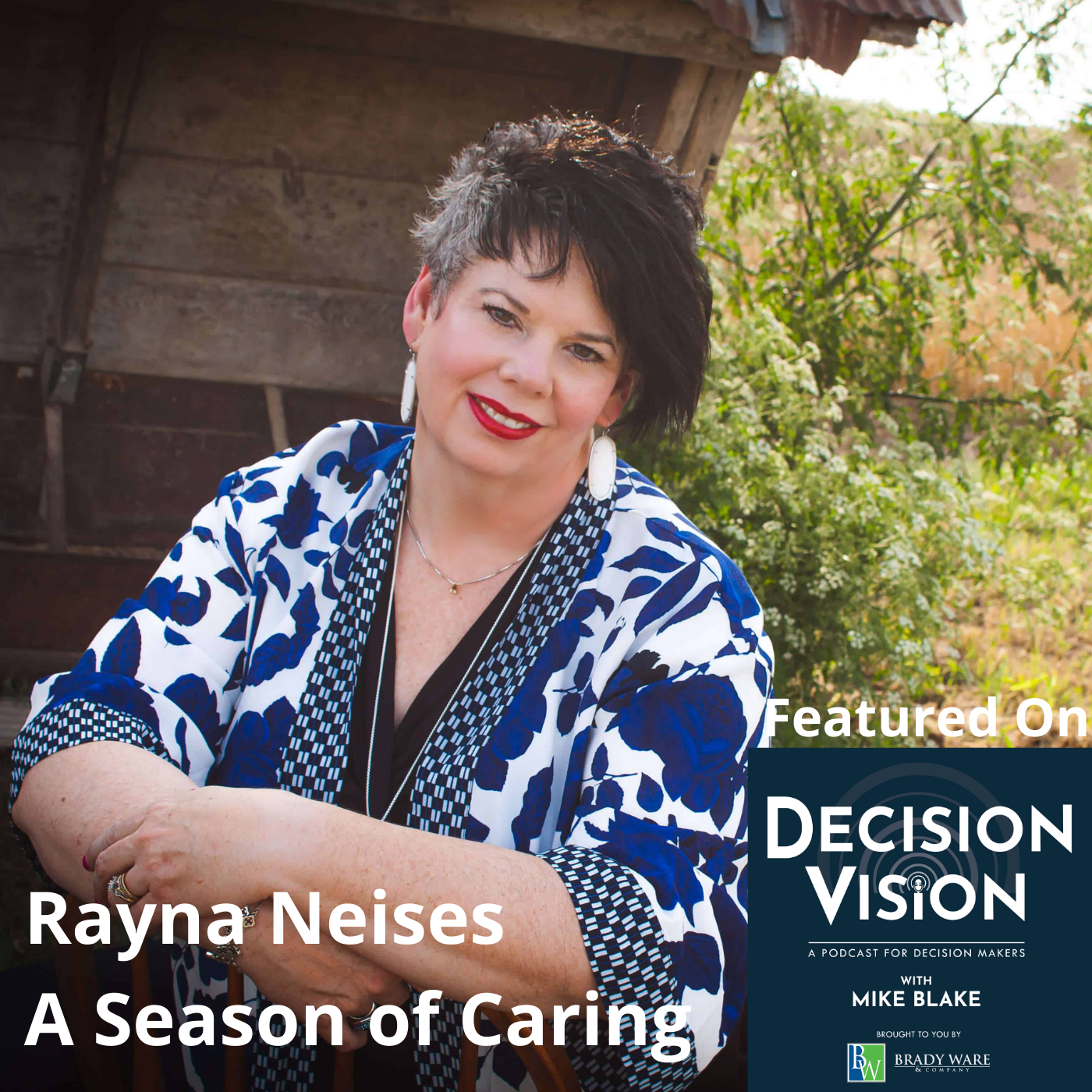
Caregiving might seem like a topic which doesn’t fit a business podcast, yet when the need to act as a caregiver to a parent or other family member arises, a career or business is affected. Rayna Neises, who journeyed through her own seasons of caring with parents affected by Alzheimer’s, joined host Mike Blake to address issues and questions which arise for caregivers in these circumstances. Decision Vision is presented by Brady Ware & Company.

Rayna Neises, Certified Coach/ Author, A Season of Caring

A Season of Caring
Rayna Neises, Coach/Author, A Season of Caring

A Season of Caring is owned and operated by Rayna Neises an ICF Associate Certified Coach with certifications in both Life and Leadership Coaching from the Professional Christian Coaching Institute. She specializes in supporting those who are in a season of caring for an aging parent.  A Season of Caring offers private coaching, monthly online support groups, a variety of workshops with a membership option coming soon.
Caregivers don’t need to aimlessly wander through this season, they can have the guidance and support they need in order to be able to look back with no regrets once they have walked their parent all the way home.

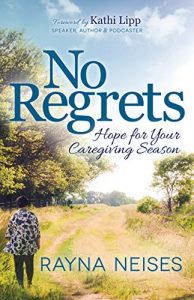
Rayna has also published a book with Morgan James Publishing sharing heartwarming stories and practical takeaways from her experience of caring for her father in the last years of his journey with Alzheimer’s.  No Regrets: Hope for Your Caregiving Season is a must-read.

Rayna is the host of “A Season of Caring”, a weekly podcast where she interviews family caregivers and caring professionals to offer Hope for Living, Loving and Caring with No Regrets to her listeners.

Rayna lost both of her parents to Alzheimer’s disease twenty years apart. After her season of caring for her dad through his journey, she founded A Season of Caring Coaching where she offers encouragement, support, and resources aimed at preventing family caregivers from aimlessly wandering through this important season of life.

Rayna lives on a farm in southeast Kansas with her husband, Ron, and a small pack of dogs. She is the baby of her family, but most would never guess that. She is a former teacher and enjoys crafts of all kinds and spending time with her grandkids most of all.

Mike Blake, Brady Ware & Company

Mike Blake, Host of the “Decision Vision” podcast series

Michael Blake is the host of the Decision Vision podcast series and a Director of Brady Ware & Company. Mike specializes in the valuation of intellectual property-driven firms, such as software firms, aerospace firms, and professional services firms, most frequently in the capacity as a transaction advisor, helping clients obtain great outcomes from complex transaction opportunities. He is also a specialist in the appraisal of intellectual properties as stand-alone assets, such as software, trade secrets, and patents.

Mike has been a full-time business appraiser for 13 years with public accounting firms, boutique business appraisal firms, and an owner of his own firm. Prior to that, he spent 8 years in venture capital and investment banking, including transactions in the U.S., Israel, Russia, Ukraine, and Belarus.

Brady Ware & Company

Brady Ware & Company is a regional full-service accounting and advisory firm which helps businesses and entrepreneurs make visions a reality. Brady Ware services clients nationally from its offices in Alpharetta, GA; Columbus and Dayton, OH; and Richmond, IN. The firm is growth-minded, committed to the regions in which they operate, and most importantly, they make significant investments in their people and service offerings to meet the changing financial needs of those they are privileged to serve. The firm is dedicated to providing results that make a difference for its clients.

Decision Vision Podcast Series

Decision Vision is a podcast covering topics and issues facing small business owners and connecting them with solutions from leading experts. This series is presented by Brady Ware & Company. If you are a decision-maker for a small business, we’d love to hear from you. Contact us at decisionvision@bradyware.com and make sure to listen to every Thursday to the Decision Vision podcast.

Past episodes of Decision Vision can be found at decisionvisionpodcast.com. Decision Vision is produced and broadcast by the North Fulton studio of Business RadioX®.

Connect with Brady Ware & Company:

Website | LinkedIn | Facebook | Twitter | Instagram

TRANSCRIPT

Intro: [00:00:01] Welcome to Decision Vision, a podcast series focusing on critical business decisions. Brought to you by Brady Ware & Company. Brady Ware is a regional full-service accounting and advisory firm that helps businesses and entrepreneurs make visions a reality.

Mike Blake: [00:00:21] Welcome to Decision Vision, a podcast giving you, the listener, clear vision to make great decisions. In each episode, we discuss the process of decision making on a different topic from the business owners’ or executives’ perspective. We aren’t necessarily telling you what to do, but we can put you in a position to make an informed decision on your own and understand when you might need help along the way.

Mike Blake: [00:00:40] My name is Mike Blake, and I’m your host for today’s program. I’m a director at Brady Ware & Company, a full-service accounting firm based in Dayton, Ohio, with offices in Dayton; Columbus, Ohio; Richmond, Indiana; and Alpharetta, Georgia. Brady Ware is sponsoring this podcast, which is being recorded in Atlanta per social distancing protocols. If you like to engage with me on social media, with my Chart of the Day and other content, I’m on LinkedIn as myself and @unblakeable on Facebook, Twitter, Clubhouse, and Instagram. If you like this podcast, please subscribe on your favorite podcast aggregator, and please consider leaving a review of the podcast as well.

Mike Blake: [00:01:14] Today’s topic is, should I become a caregiver? And this may seem like a strange topic for a business podcast, but, you know, I think this is one of these topics where personal life and corporate life necessarily merge into one another, or maybe collide – might be the better term – into one another. According to estimates from the National Alliance for Caregiving, during the past year, 65.7 million Americans or 29 percent of the U.S. adult population served as family caregivers for an ill or disabled relative. So, that means that there’s a three out of ten chance in a given year that we are going to find ourselves, at a minimum, a caregiving opportunity, if not ultimately a caregiving position.

Mike Blake: [00:02:13] And while some of us may be in a position to simply retire or leave the workforce, not all of us will be. And even if you are in that position, you are going to be forced to make a difficult decision. But the fact of the matter is, I think for most people – I don’t know if it’s a fact. But I certainly think it’s hard to argue – the sudden responsibility that you assume to become a caregiver for another human being is potentially all consuming, all absorbing. And by necessity, just as we do when we are parents, we are going to have to balance the priorities of caring for, if you’re a parent, your children, or as a caregiver for the people under your charge, and your professional responsibilities. And the reality is that on some occasions somebody’s going to lose. Somebody is just not going to get your best because you’re choosing to give your best elsewhere based on whatever your priorities are at that particular time. So, for many of us, this is going to become a real thing.

Mike Blake: [00:03:26] And I have a personal story to share, not nearly on the on the level of that of our guest. But about four years ago, I was visiting my parents in Boston. And the day before I was going to leave, I thought I was going to go take on a Red Sox game. At the very last second, I said, “You know what? It’s just the Tampa Bay Rays anyway, I’m not going to bother. I’ll watch the game at home.” And so, I sat down to watch the game at home. My dad was going to join me. Long story short, he basically had a stroke right in front of me. And, I’ve never seen somebody – frankly, I didn’t know he had a stroke. I just knew something was not right.

Mike Blake: [00:04:09] And my parents live in a fairly large house. My mother was on an entirely different floor. And, you know, long story short, because I was there, an ambulance was at our house within ten minutes. And that, at a minimum, saved his life and also probably saved him from massive brain damage as well. And I believe I’m not the hero of the story. I just happened to be in the right place at the right time and I hit the panic button. That’s all I did.

Mike Blake: [00:04:34] But it did sort of drawn a very sharp focus that, had things gone differently, that I could have been put in a position of being a caregiver. My mother, she’s still independent, but I don’t know that she’d be in a position to do that entirely on her own. But the point is, there before the grace of God, I still have my father, thankfully. And there before the grace of God, I may have been in a caregiver position for a long time. And I live in Atlanta doing that from Boston and it could have been a lot of upheaval.

Mike Blake: [00:05:04] So, it did sort of ram home that that day may be coming for me. At some point, it may be coming for all of us. And as I said, there are business implications to that. So, that’s why I’m doing this topic on a business program, because the decision to care for a family member or not is, perhaps, one of the most consequential decisions you may ever make in your professional life because it will have such far ranging impacts.

Mike Blake: [00:05:33] So, joining us today is Rayna Neises, who is literally one of the nicest people I’ve ever met. And that’s how I remember how to pronounce the name. But she’s founder of a coaching company called A Season of Caring. And she is an ICF, International Coaching Federation, Associate Certified Coach with certifications in both life and leadership coaching from the Professional Christian Coaching Institute. She specializes in supporting those who are in a season of caring for an aging parent. A Season of Caring offers private coaching, monthly online support groups, and a variety of workshops to the membership option coming soon.

Mike Blake: [00:06:09] Rayna has also published a book with Morgan James Publishing, sharing heartwarming stories and practical takeaways from her experience of caring for her father in the last years of his journey with Alzheimer’s Disease. No Regrets: Hope for Your Caregiving Season is a must read, especially if you find yourself as a potential or actual Alzheimer’s caregiver. Rayna is the host of A Season of Caring, a weekly podcast where she interviews family caregivers and caring professionals to offer hope for living, loving, and caring with no regrets to her listeners.

Mike Blake: [00:06:40] Rayna lives on a farm in southeast Kansas with her husband Ron and a small pack of dogs. She is the baby of her family, but most would never guess that. She is a former teacher and enjoys crafts of all kinds and spending time with her grandkids, most of all. I think you’re our first guest from Kansas, so thank you for representing the great State of Kansas. Rayna. welcome to the program.

Rayna Neises: [00:06:59] Thank you. It’s great to be here.

Mike Blake: [00:07:01] So, Rayna, I’ve not had a chance to read your book, and I don’t want you to give us spoilers necessary. But I’d like to invite you to share with our listeners your caregiving journey and how that prompted you then to be an advocate for caregivers and someone who teaches other caregivers how to be the best caregivers they can be.

Rayna Neises: [00:07:27] Well, I have the story actually nobody wants to have. I’ve actually lost both of my parents to Alzheimer’s Disease. I was 16 years old when my mom was diagnosed, she was just 53. And she was able to live at home for the 12 year journey through the disease with my dad, who took the option of early retirement to take care of her in the home. And so, just seven years after her passing, my dad was diagnosed with Alzheimer’s. He lived 14 years with the disease and passed away in his home just in June of ’18.

Rayna Neises: [00:08:04] So, we’ve had caregiving a part of our lives. My sister and I, most of our lives. But definitely for me, when dad was diagnosed, we sat down and had a conversation where he asked to stay at home as long as possible. And so, that was something that we kind of had to define and figure out. And about nine years into his diagnosis, he had cancer, skin cancer, had surgery, and the recovery was just really difficult. He had MRSA and some other complications. And his ability to care for his own daily needs just declined quickly. He was living with his sister at the time and she just couldn’t handle it all.

Rayna Neises: [00:08:45] So, we reached a point as a family that we had to make the decision, what are we going to do? And so, looking at memory care units and just trying to decide what was going to work best. Thankfully, my husband just said, “You know, if you don’t see your dad doing well there, then if you need to move here -” which was 220 miles away from our farm “- to care for him, then you need to do that.” And so, I was able to then stop and say, “Okay. What does this look like?” And make plans to do that and recruit help. And so, with my sister, his sister, and paid caregivers, we were able to keep my dad at home for the last four-and-a-half years of his life.

Rayna Neises: [00:09:21] And through that journey, just like you said, so many times, it’s, you know, how do I do this and be a good employee? How do I do this and be a good boss? There’s so many pieces because it impacts everything of your life. And really being able to navigate that without losing your life and losing things that are important to you, your marriage, your job, your career, all of those things, you have to do it intentionally. And so, after my season of caring for my dad, I just really decided to pivot my business and start to focus in on others that are finding themselves in that place. And that’s how I came up with the book as well, as just really what’s the most important things I need to tell people who are walking this journey or just starting out this journey.

Mike Blake: [00:10:08] So, I’m going to go off script a little bit here, because I think I have a better question than the one I originally thought of, and that is, how do you describe to somebody who isn’t already a caregiver what that experience is like? Is it even possible without a common frame of reference? Or do you have to be in that position to really have any hope of understanding what that means?

Rayna Neises: [00:10:33] I think it’s a really tough line to walk, because, first of all, you hate to paint this horrible picture of what it’s going to look like. But the reality is, it’s not easy. There’s really nothing easy about it. And so, I think it is difficult for people to understand. Number one, majority of people just don’t even want to think about it. They don’t want to think about their parents getting older. If their parents get older, they’re getting older. And it’s just a lot. It impacts every area of your life. And so, unless you’re in the middle of it, it is difficult.

Rayna Neises: [00:11:06] But I guess my goal is to help people start thinking about it now. Because the more conversations you have with your family, your parents, whoever it is that needs you to care for them, the more you talk about what they really want, what’s important to them, the more you understand and the more you can make steps in that direction.

Mike Blake: [00:11:26] So, can you describe whether it’s from your client’s or your own perspective, or however it is you choose to approach it, what are the physical and mental tolls that becoming a caregiver takes on that person?

Rayna Neises: [00:11:45] You know, again, every situation is different, you know that. And, really, I think just watching someone age is difficult. I mean, your parents are the people who have known you your whole life. And they’ve always been there for you. And they’ve done things for you. They provided for you. They’ve been support, but they’ve also been that one that kind of shows you how to do it, who taught you to walk, who taught you to talk. You know, all of those things came from them.

Rayna Neises: [00:12:10] So, emotionally, there are so many emotions that are involved in caregiving. There’s that grief, it’s anticipatory grief is what they call it. And it’s anticipating things that are no longer going to be the same that you experienced all the time. They’re little things, like mom can’t make the same pumpkin pie that you’ve always had for Thanksgiving, because she doesn’t remember, or it’s not safe for her to cook anymore, or she’s gone.

Rayna Neises: [00:12:38] You know, my dad and I were in business together, and we found that those business meetings that he had always been – he was an accountant – where he was able to bring his expertise of people management and money management to our business together, which I was doing the hands-on running, he just got to a point where it was too confusing. There was too much for him to be able to really take the information in and problem solve with me. That was a loss. I mean, you’re losing the normal relationship that you’ve had, no matter what the situation is.

Rayna Neises: [00:13:11] And physically, there’s just a lot of stress involved, whether it be physical stress of needing to physically – you know, there were times that my dad’s blood pressure would drop and he would collapse, and physically getting him off of the floor into a safe place. Lack of sleep as a caregiver. Oftentimes, when you’re caring for someone, you’re on the alert. Just like you are when you have a young infant, you’re listening for every little thing to be able to come in. So, lack of sleep, eating habits, just all of those things can really fall to the wayside unless we’re intentional. And that’s where, you know, I feel that I can provide the most support for caregivers, is, asking them to check in, asking them to be able to really see where they are, and if they’re taking care of themselves or not.

Mike Blake: [00:13:58] So, as somebody comes to you and looks for coaching and maybe they’re in mid-caregiver mode, or maybe they realize they’re about to embark upon that responsibility, what sort of the beginner’s crash course – when you have that first conversation, how do you prepare them for the awesome responsibility that they’re considering or maybe they’re about to take on, whether considering or not or maybe they just have to? How do you prepare them for that?

Rayna Neises: [00:14:28] So, the main thing is to start with an inventory of where is your life right now. You know, when I stepped into this caregiving role of driving 220 miles one way to my dad’s home, I was teaching four-and-a-half days a week, I had a high school or at home, I had volunteer responsibilities at my church, and kids getting married. There were all kinds of things happening in our lives that are really full plates. So, adding this additional responsibility on top of what I already had really didn’t make sense.

Rayna Neises: [00:14:55] And so, for a period of time, I needed to ride out those responsibilities. But, eventually, I had to move some of those things off of my plate to really make room for caregiving and at the same time have some white space. Because if we don’t have margin in our life, we’re not going to make it. So, really having that conversation of what’s most important to you right now, and what can you let go of, and how are you going to make room in your life for this important role.

Mike Blake: [00:15:23] Now, I suspect, but I don’t know. But I suspect that also another part of this equation is that, you know, as a caregiver or as a caregiver to a new individual, if you will, I may also already have some sort of caregiving responsibilities, right? You mentioned you are a mom of a high schooler. And we know right now, for good or ill, mom, still, they really carry the meal in the household. And what sort of toll does it take on the family that, all of a sudden, has to share and is not going to get – for lack of a better term – the level of service they’re used to from somebody who now has an entirely new caregiving responsibility? And that caregiving responsibility may be more labor intensive than the one they’ve already got.

Rayna Neises: [00:16:17] Important key, you have to get everybody on board and you have to make them understand what we’re looking at. And I would say, the most important thing, the first step is to evaluate where you are and what you have room for. But the other thing is, it doesn’t mean that you have to do it all. You have got to build your team. You have to find the people to support you. So, yes, I went, but I went three days a week. And I brought people in to take care of the other three days so I could be with my family the other three days. So, I brought in help at home. I brought in someone to help clean my house. I brought in someone to clean my dad’s house.

Rayna Neises: [00:16:54] You know, just because it needs to be done, doesn’t mean you have to put your superhero cape on and do it. In fact, you need to take that super hero cape off and find people to help you. Everybody needs their sidekicks. And the more that you build into your team, the better you’re going to be, the healthier you’re going to be, and the longer you’re going to be able to sustain it.

Mike Blake: [00:17:13] I think that’s a really important point. And I want to kind of pause on that for a second, because, again, going back to the parenting model, because that’s the only one that I know in this kind of context. We’ve heard that it takes a village to raise a child. And there is at least a notion, whether or not it’s implemented all the time – again, not this podcast – that good child raising is a community responsibility. If we can, we look out for each other’s children. We try to impart a certain culture, a certain ethos, certain values system, sense of community, et cetera. And your notion that it takes a team to be a caregiver, I think is so important. Where does that team typically come from? Who are the team members?

Rayna Neises: [00:18:05] That’s a great question. I think part of what the struggle is that people assume it’s going to be family. We’re going to all just come together, and we’re all going to get along, and we’re all going to do the same thing, and we’re all going to contribute the same amount. And that is not true. It doesn’t happen. My family was very unusual. And then, I have one sister, and she and I both, we really worked together, we made a lot of sacrifices together. We did not find a lot of conflict. In fact, in my book, again, I say, we found a new relationship, a stronger relationship when we came together to care for my dad.

Rayna Neises: [00:18:38] But, typically, people find that they have these expectations that no one lives up to. And so, there’s a lot of frustration, a lot of feeling dumped on often. And that’s because they’re not looking beyond the family. Point blank, not everyone has the same natural capacity to be a caregiver as others. And so, if you find yourself being that person, great. But don’t expect everyone to be you. So, you have to look outside.

Rayna Neises: [00:19:06] So, I mentioned someone to clean my house. Yard people, I think, are part of the team. Medical people are definitely part of the team. Paid caregivers are part of that team. I believe your employer needs to be a part of that team, because they need to understand what it looks like and what your responsibilities are. The person you’re caring for needs to be a part of that team, because they need to be cooperative and they need to be helpful in that situation. As well as legal and financial professionals. I think we have to build this full capacity team to really help us to meet all of the needs.

Mike Blake: [00:19:40] And, you know, you bring up an interesting point that it doesn’t necessarily have to be family members. In fact, a lot of those team members probably won’t, right? I am qualified to mow a lawn. I’m even qualified to cook to a limited extent, as long as your standard is that it won’t kill you, but it won’t taste all that great. But, you know, I’m not qualified to provide legal advice. I don’t think I’d ever want to manage my parents money, because I have a sister. And there are all kinds of just bad things that can happen just optically when one family member sort of manages money, and that can get very ugly, as I’m sure you’ve seen or heard about.

Rayna Neises: [00:20:23] So, it’s interesting that a lot of that team may very well come from outside of the family. And, you know, I wonder if, in fact, there’s another touch point here with business that, probably some of your skills that may have led one to be successful in business, life management, time management, motivation, coaching, prioritizing resources, et cetera. You know, maybe there are skills from the business world that actually help make this more effective. What do you think about that?

Rayna Neises: [00:20:59] Definitely, 100 percent. I think the more that you realize that this is a team and that you’re managing a team, the stronger you’re going to be. You have to hire, you have to fire, you have to make sure that all of those needs are met. People are working within their strengths and that they are pulling their weight. If they aren’t, then you need to make an adjustment to that team.

Rayna Neises: [00:21:19] And I think that brought a lot of strength to our team, is, my background in business in the comfort level of interviewing, whether it be companies that we were hiring to provide help or individuals. And then, also, I think that business perspective, we aren’t successful individually. We have to have the support that we need. And even if we’re a solopreneur, we need support. And you’re smart enough to know that what’s not your strength is not where you need to be. And so, hire. It’s just like you do in the office.

Mike Blake: [00:21:54] So, one question I’m curious about is, of course, becoming a caregiver is a life changing experience – life altering experience. Not life changing. Though it could be, I guess, from a spiritual perspective. But just life altering in terms of how you’re going to live your life for some possibly indefinite period of time. How long do you find it takes people to adjust to that new reality? And I think that question is important so that people understand, maybe if they’re not perfect right away, they should cut themselves some slack. Because it seems to me this is life shift that would require some sort of breaking in period.

Rayna Neises: [00:22:40] Yeah. I think it definitely does. And it totally depends on the situation. Sometimes people have a slow, gradual step into needing to support their parents. They’re starting to see things like needing help around the yard or cleaning the gutters, those types of things. Some people, it’s a sudden stroke or an accident that suddenly demands a lot of time. And so, I think initially, like anything, we have to just respond. If it’s a crisis, we’ve got to realize it’s a crisis and we’re going to respond in that. And it’s going to take a lot of our time initially. And then, as we find that we build that team that we need to have, we bring in others and we can find more of that balance that we need in life in general to make it.

Rayna Neises: [00:23:27] So, that’s a part of life. We have to integrate caregiving. We cannot allow it to become all of our lives or we’re going to regret that. And so, you know, making sure that we’re integrating it in and we’re making our lives what we want them to be. Both honoring those that were caring for and ourselves and our other family members, I think, is a really crucial piece of that.

Rayna Neises: [00:23:49] The other part that I think oftentimes people overlook is, at the end of life, how important it is to understand this is going to be unlike any other time. It’s going to last as long as it takes. But at the same time, it’s going to take a lot out of our lives, and a lot of our time, a lot of our energy. I know at the time when I lost my mom, it was a six week process of just finally saying goodbye. And at the same time, I had a job and I had other things that I needed to do. But it’s a matter of realizing that some seasons within this caregiving are going to be more demanding than others.

Mike Blake: [00:24:31] A question I want to make sure that I get to is this, caregiving, of course, is one of the ultimate acts of service. And the thought going on in my mind is, I wonder if everybody is really cut out to be a caregiver. And what I’m really getting to is that, are there people in certain circumstances that maybe shouldn’t be a very active caregiver unless they absolutely have to? Are there certain personality profiles? Are there certain physical limitations? You know, frankly, are there people that just have a hard enough time taking care of themselves and then adding somebody else’s wellbeing is just not a good match for that person? Is that a profile or do you think that anybody can adapt with sufficient motivation and time to becoming a caregiver?

Rayna Neises: [00:25:24] I think it’s actually a really wise thing to realize that there are different personalities and there are some that are going to do and respond better than others. Again, different types of illnesses require different types of personalities, probably, or physical strength. You know, if a person is bed ridden, then obviously not everyone is physically able. Someone has a bad back, they’re not able to do some of the things that need to be done for a person who’s aging to make sure that they’re safe – the person they’re caring for is safe, successfully get them off of the floor or stop them from falling.

Rayna Neises: [00:26:02] Another piece of that I think is just, if you’re looking at someone who has dementia – which the numbers are high, that over 35 percent of the people over the age of 65 have some form of dementia – it is very trying to take care of them at times. The repeated questions, the lack of processing, they’re non-ability to understand what’s happening. You know, you really do have to be a certain type of personality to find the way to interact with them.

Rayna Neises: [00:26:37] That being said, I think that people think of caregiving as the hands-on piece only. And I think that that’s where we missed the boat a lot of times. The physical needs of the person we’re caring for are important, and definitely we want someone who’s competent and compassionate doing that. But if you are a child, you have a role in your parents life, no matter if you’re the hands-on person or not. No one can replace you as their daughter or son.

Mike Blake: [00:27:07] So, what are some tips that an individual who finds himself in that position – and you’ve hinted at it, but I’m confident that it’s a highly stressful, emotionally demanding position to be in. What are some tips that you give to people in terms of their own selfcare so that they can, frankly, hold up under that stress?

Rayna Neises: [00:27:35] It is definitely a stressful situation. And I think realizing, number one, that’s part of why I encourage people to take on the caregiver name. Because I think when we realize that we are a caregiver, we do then embrace the fact that there’s more stress in our lives than just being a daughter or son supporting an aging parent. But, you know, like anything dealing with stress, there’s definitely things to do that you need to do, get good sleep, drink plenty of water, get those exercise.

Rayna Neises: [00:28:05] But that’s where the emotional side comes in. I find that most people need to really take time to process the emotions, to grieve the losses, the changes in life, the things that will never look the same again because their parents are not able to be that same person that they were when they were younger. And really take the time to reflect. So, I say you need to be intentional with the commitments that you make and with the things that you choose to keep in your life during the season. And then, at the same time, you need to be reflective. So, each time, once a week, whatever it is, schedule time to stop and check in with yourself. How am I doing? What do I need to do differently? And a lot of times just the question, how am I doing?

Rayna Neises: [00:28:53] I might have had a really rough weekend with my dad. I might have had a time where I was not patient with him or as patient as I wanted to be. Or I might have gotten frustrated with another caregiver and the fact that they didn’t write down that something was used up in the house. And so, we didn’t have catch up when we needed it for our hotdogs, whatever it was. That frustration, that irritability, usually, when I really took the time to step back and look at it, it was because there was something else going on. Either I wasn’t getting enough rest or I was frustrated with myself and didn’t respond well.

Rayna Neises: [00:29:28] Really reflecting, and understanding those emotions, and taking the time to work through the emotions, ride through the emotions, and get the support that you need. I’m a huge advocate for support groups. I think that they can bring a lot of encouragement and normalcy to your life in that season. And so, really finding the support that you need, whatever that looks like, if it’s a coach or support group, counselor, making sure that you’re caring for yourself in that way.

Mike Blake: [00:29:55] So, you mentioned the emotional toll – and maybe I’m putting words in your mouth – but it sounds like it can be something of a roller coaster.

Rayna Neises: [00:30:03] Definitely.

Mike Blake: [00:30:05] I’d like to talk about one emotion in particular, and that is, at the end of that season. All caregiving stints are going to end one way or the other. And I have some thirdhand experience with this because I’ve been involved as a volunteer with Lou Gehrig’s disease advocacy groups. And of course, that’s basically Alzheimer’s of the body.

Mike Blake: [00:30:32] And, you know, something that I’ve heard from caregivers in that scenario is, the most difficult or one of the most difficult emotions that those caregivers have to address or confront is their sense of relief and the guilt that they face around that relief. That, yes, they’re sad that their loved one has died and they miss that person terribly. But on the other hand, suddenly their obligation, a massive obligation, has ended and they can resume their lives. So, their lives have become significantly unburdeneAll right. And, again, thirdhand, I’ve heard that, that in itself can be a different kind of trauma, if you will. Have you heard or experienced something similar? And if so, how do people kind of deal with and work through that?

Rayna Neises: [00:31:29] I think that that’s a normal piece of grief. And society today, I don’t think we really acknowledge grief or understand grief. We think of it as these stages and steps. And really, that’s not what it is. It’s those steps, those stages, that we hear about are pieces of the grief. But they can happen simultaneously. You can move forward. You can move backwards. You dance within the grief throughout the season.

Rayna Neises: [00:31:56] So, I think definitely it is unsettling when you have spent so much of your time and so much of your energy focused in on one person or one activity. And especially by the point in time when you lose that person, because like I mentioned earlier, it’s one of those things that that amount of time, that commitment, is going to increase at the end of your loved one’s life. It just is. And so, that’s something that you have spent a great deal of time with them there at the end. And then, suddenly, like you said, they’re gone.

Rayna Neises: [00:32:33] For me, personally, I called it an untethering. The best description I had was, my dad was my last parent. He was kind of my always come back to home place and then he was gone, and that was very difficult. I did not expect grief to be as overwhelming for me as it was. I knew that I agreed throughout my season. I knew that it was coming. I mean, we’re taking care of someone with a terminal illness, but it is still surprising when you reach the end. And at the same time, I think it can be very unsettling.

Rayna Neises: [00:33:15] I called it grief brain. I found myself not being able to accomplish tasks that I had accomplished in the same period of time. Sometimes it took twice as long. It was exhausting. I found myself tired when I didn’t do anything. And so, it was a long period of time that I was thankful I had counsel to just rest, and to allow it to be what it was, and to be in the grief, and not to try to push through it or to try to ignore it.

Rayna Neises: [00:33:45] So, I think for everybody, it’s different. Like, all emotions, I think, it definitely is a time where it’s surprising. And, for me, honestly, that’s where the name of my book came from. As I looked back, I didn’t regret what I did. I didn’t regret investing as much of my time and energy in my dad, and building the memories, and having the opportunities of the joy that we experienced during that four-and-a-half years that I spent with him. I was able to look back and say, “I don’t regret any of those things that I did.”

Rayna Neises: [00:34:15] And, for me, taking that experience and pivoting with my business was part of what helped me move forward. So, I think it’s important to find what you can take from that time. And, for me, it was important for me to give to others and that really helped to move me forward and out of that grief.

Mike Blake: [00:34:37] And I wonder also if one is in that position for, you know, years, that that becomes part of your identity as well. And part of your identity is passing away right along with the relative.

Rayna Neises: [00:34:55] Definitely.

Mike Blake: [00:34:55] And, again, I’m being amateur psychologist here. But that does sound like that would be jarring.

Rayna Neises: [00:35:03] And I think that’s part of why I think it’s so important to teach people, just like anything else, just like workaholism, all of those things can become extreme. Even as a caregiver, if that is all that you have in your life, you’re going to find yourself even more in a depth of depression and struggling with how to go forward. If you maintain a healthy life with caring, being integrated into part of it, then you’re going to find yourself having a marriage to walk back into, having a relationship with your children and other friends. You know, those things are still there. If you neglect them for the entire time that you’re in a caregiving season, you’re going to find that they aren’t there and you’re going to be, you know, in a lot worse shape.

Mike Blake: [00:35:49] We’re talking to Rayna Neises. And the topic is, Should I become a caregiver? I want to switch gears a little bit to talk a little bit more directly about managing the professional side of one’s life in this kind of scenario, the caregiver scenario. And one question I’d like to cover is, if you have an employer, how do you approach that conversation with an employer about being a caregiver? And I guess giving them a heads up that this is going on and you just want to make your employer aware of it. How do you approach that? And what do you hope to achieve with your employer by having that conversation?

Rayna Neises: [00:36:36] So, in my employee/employer situations, I think I’ve been as a teacher and then, also, working in other industries that just having that personal relationship with my boss. So, I just made sure that I made an appointment, went in and just said, “This is where we’re at. My mom is progressing in her disease. We’ve reached a point where we think we’re going to lose her. I just want you to be aware that we’re probably talking within weeks that she’s going to pass away. And remind me again the policy of how long I can be gone and those kinds of questions.”

Rayna Neises: [00:37:11] If you’re not at the end, then I think just letting them know that this is something that’s going on in my personal life, and that I have the support that I need to be able to continue to do what I need to do here at work. But I do want you to know there might be emergencies that come up here or there and that I’ll do the best I can to juggle as I need to.

Rayna Neises: [00:37:31] But I think knowing that you have family leave time or a leave time to be able to take those loved ones to the doctor’s appointments or do those things that you need to do, it’s important to be communicating that those are going to be needed. At the same time, I think as an employee, it’s really important to honor your responsibilities and make sure that you have the support that you need to be able to continue to do the best you can at your work.

Rayna Neises: [00:37:56] And, also, to deal with your emotional needs. You know, just because you’re in this season doesn’t mean it’s okay to not be healthy. So, if you need to get the support of a counselor or other people in that way, too, I think that’s important. Because your job, they need you to perform the best that you can at that point.

Mike Blake: [00:38:15] So, on the other side of the coin, how can employers be supportive of caregivers – assuming this is desired – so that they can remain employed by the company and still deliver the value or at least most of the value that they have been delivering?

Rayna Neises: [00:38:31] I think at this time with COVID, we’ve learned that working from home actually can have a good productivity. And so, being flexible and open to options that are available for your employee, I think, is an important piece of that. Realizing that emergencies are going to creep up. And just like you have a new mom who has a tendency to have a sick child and need to be at home more than a person who’s in this season of their life is probably going to find themselves needing to go to doctor’s appointments, needing to take off at last minute a little bit more than they probably did before they took on this role.

Rayna Neises: [00:39:08] So, I think there’s just an understanding of them being willing. They are trying to do the best that they can and not feeling like they’re using that as an excuse. But rather being supportive and that helping to problem solve, being flexible with their schedule as far as allowing them to come in and make up hours or stay late on another day if they need to leave for a doctor’s appointment, those types of things. I think just even as the boss asking the question “How’s mom doing?” can really help that employee feel appreciated, understood, and just build that loyalty even more.

Mike Blake: [00:39:43] Rayna, this has been a great conversation. We could go so much more in depth, but probably the best thing to do is to refer people to your book. You certainly can learn a lot of lessons from that, I’m sure. But aside from that, if people have questions we haven’t addressed or if there’s something they’d like to go into more depth than we were able to today, can they reach out to you? And if so, what’s the best way to contact you for more information?

Rayna Neises: [00:40:06] Definitely. So, my website is aseasonofcaring.com. And there’s a contact form on there, you can make a time to schedule a time to talk. I would be more than happy to answer any questions to try to support people in any way that I can. You can also find out more about the book at noregrets-book.com. And there’s some preorder offers available here for the next month or so. And then, you can just find it at all major retailers after June 1st.

Mike Blake: [00:40:34] Well, that’s going to wrap it up for today’s program. I’d like to thank Rayna Neises so much for joining us and sharing her expertise with us.

Mike Blake: [00:40:41] We’ll be exploring a new topic each week, so please tune in so that when you’re faced with your next business decision, you have clear vision when making it. If you enjoy these podcasts, please consider leaving a review with your favorite podcast aggregator. It helps people find us that we can help them. If you like to engage with me on social media with my Chart of the Day and other content, I’m on LinkedIn as myself and @unblakeable on Facebook, Twitter, Clubhouse, and Instagram. Once again, this is Mike Blake. Our sponsor is Brady Ware & Company. And this has been the Decision Vision podcast.

 

Tagged With: A Season of Caring, Brady Ware, Brady Ware & Company, Caregivers, caregiving, elder care, Michael Blake, Mike Blake, No Regrets, Rayna Neises

Customer Experience Radio Welcomes: Matthew S. Harrison with Jackson Healthcare and Amy Otto with VirtualMed Staff

April 30, 2021 by angishields

Customer-Experience-Matthew Harrison-Amy-Otto-Feature
Customer Experience Radio
Customer Experience Radio Welcomes: Matthew S. Harrison with Jackson Healthcare and Amy Otto with VirtualMed Staff
Loading
00:00 /
RSS Feed
Share
Link
Embed

Download file

CER

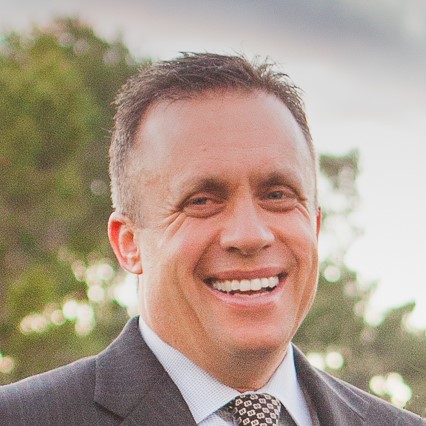
Matthew-HarrisonMatthew S. Harrison, PhD currently works at Jackson Healthcare as Senior Vice President, Talent & Development.

In this role he provides executive leadership and direction in the establishment and execution of strategies and solutions that drive performance, acquire and retain talent, develop employees and leaders, and shape the overall culture for various Jackson Healthcare companies.

He leads delivery in the areas of: talent management/acquisition, learning & development, performance management, organizational development, change management, job & compensation analysis, and diversity, equity & inclusion.

Connect with Matthew on LinkedIn.

Amy-OttoAmy Otto, Director of Client Experience at Virtual Medical Staff, has a diverse background in healthcare ranging from genomic and esoteric testing to health insurance, wellness and telemedicine. She is a true thought leader with over 30 years of sales experience.

Amy attributes her success to building deep and meaningful relationships.

Connect with Amy on LinkedIn.

TRANSCRIPT

Intro: [00:00:01] Broadcasting live from the Business RadioX Studios in Atlanta, it’s time for Customer Experience Radio. Brought to you by Heineck and Company, real estate advisors specialized in corporate relocation. Now, here’s your host, Jill Heineck.

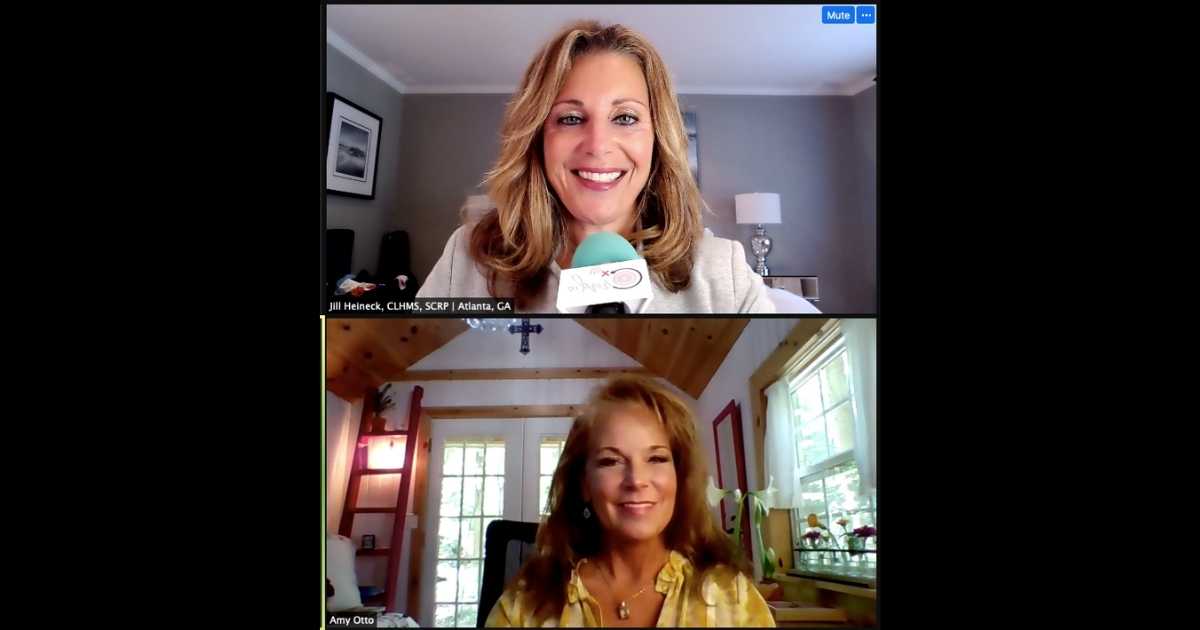
Jill Heineck: [00:00:17] Good afternoon, everyone. Welcome to another special edition of Customer Experience Radio. I’m Jill Heineck, your host. And I’m a business owner, real estate adviser, and customer experience enthusiast.

Jill Heineck: [00:00:32] Today’s episode is going to be very interesting. We are highlighting a couple of experts in the health care field. We have Amy Otto and Matthew Harrison joining us from Jackson Healthcare. Amy is the Director of Client Experience for VirtualMed Staff at Jackson Healthcare Company. And has a diverse background in health care, ranging from genomic and esoteric testing to health insurance, wellness, and telemedicine.

Jill Heineck: [00:00:58] And then, Matthew Harrison is SVP of Talent and Development at Jackson Healtchare. And in his role, he leads delivery in the areas of talent management and acquisition, learning and development, performance management, organizational development, change management – wow, this is exhausting – job and compensation analysis, and diversity, equity, and inclusion. All areas that impact the end user’s experience. I want to welcome you both to the show.

Amy Otto: [00:01:25] Thank you, Jill.

Matthew Harrison: [00:01:27] Thank you.

Amy Otto: [00:01:27] So, when you introduced Matthew and you go through all those credentials, you’d think he’d be like 80 years old. But he’s really young and it’s even more impressive.

Jill Heineck: [00:01:38] So, I understand 40 Under 40.

Matthew Harrison: [00:01:40] Thank you.

Jill Heineck: [00:01:40] He made the 40 Under 40?

Amy Otto: [00:01:44] He probably —

Matthew Harrison: [00:01:44] Yeah, I did. I, literally, just celebrated my 39th birthday just on Monday. So, I barely —

Jill Heineck: [00:01:57] By the hair you’re still under 40. Good for you. Happy birthday. Enjoy it.

Matthew Harrison: [00:02:04] Thank you. Thank you.

Jill Heineck: [00:02:07] Well, I wanted to start and talk a little bit about your backgrounds and how it led you to where you are now. So, Amy, do you want to give us a little bit on where you started and how it’s led you to VirtualMed?

Amy Otto: [00:02:22] Sure. So, I’ve had over — selling experience, everything from — to genomic and esoteric testing to, now, telemedicine. So, my background is diverse, but always in sales. And I think I was born a salesperson because I always had a lemonade stand even when I was a kid. I just loved selling. But really at the heart of selling, I think I’ve enjoyed the most is the relationships. I’m definitely a relationship-based salesperson.

Amy Otto: [00:03:01] Actually, how I got to Jackson Healthcare, I’ll let Matt talk a little bit more about the recruiting process. But I had been eyeing Jackson Healthcare since 2009. I was on a — and one of the other guests was the H.R. Director or the VP of H.R. at Jackson Healthcare, Mike Hiffa or Hiffa. And he invited me to Jackson Healthcare to have lunch. And I — away. And this is in 2009, just all the amazing amenities they had and how incredible they treated the employees.

Amy Otto: [00:03:34] For – gosh – a decade almost, I had been going to their website, seeing what popped up. And it was in research in mental health, actually, that I found my current position. I had lost six friends in seven months due to mental health related deaths of suicide and overdose. And I was researching, I’m like, “My gosh, this is such a big problem.” And I stumbled across Virtual Medical Staff and their telepsychiatry programs. And then, I clicked on their website and I was like, “Oh, my gosh. It’s a Jackson Healthcare company.” Like, all roads lead to what I’ve been looking to do, which is be part of their culture, which is just amazing. So, that’s where I am today.

Jill Heineck: [00:04:21] That’s fantastic. I love that story. Matt, in your short career, why don’t you tell us how you landed –

Matthew Harrison: [00:04:31] Thanks, Jill. Yes. So, I’m actually an industrial organizational psychologist by training. I went to graduate school at the University of Georgia. And so, after graduating from UGA, I entered into the field of human resources. And so, I started immediately doing work around organizational development, organizational effectiveness, talent management. And I initially started with Cox Automotive, a division of Cox Enterprises here in Atlanta. I eventually moved and worked at McKesson for a few years. I went on to a position at the Weather Channel and then to Comcast. I mean, I worked in a myriad of different industries. You know, working in H.R., it’s good because you obviously can kind of, you know, go between different industries. You don’t have to be in a specific one.

Matthew Harrison: [00:05:15] I ended up being brought over to Jackson Healthcare by someone that I had worked with previously. So, a prior leader that had worked with me at the Weather Channel told me about an open position they had in the H.R. Department at Jackson Healthcare. Unlike Amy, I actually hadn’t heard of Jackson Healthcare. But I mean, quickly, when I came in and visited, like Amy talked about, the culture that was so just apparent really made me feel like home. And it definitely made it feel like a place where I knew I could grow and make an impact. And so, I’ve been with Jackson Healthcare since February of 2018.

Jill Heineck: [00:05:50] Excellent. Wow. So, yeah, I know that in my travels in the H.R. circles, I’ve heard what a culture has been really grown over at Jackson Healthcare. And I used to know a lot of the recruiting staff over there years ago, back probably in 2009 and ’10. And it carries over still to this day how much people love working there and being a part of that environment. So, Amy, why don’t you talk a little bit about what your role as director of customer experience entails?

Amy Otto: [00:06:25] Sure. So, I was a director of business development, and about 18 months ago, I asked if I could revise my title to director of client experience. Because what I found is that as I grew my relationships with my clients, like, the word business development to me meant a salesperson and not a consultant. And so, it’s in delivering this client experience that — sales. But at the same time, it is truly showing that I have — in what they’re doing. And it’s more of a partnership rather than a sales job.

Amy Otto: [00:07:05] So, what I currently do is, I develop relationships and try to — service lines nationally. So, we do telepsychiatry and teleneurology. So, I’m really just trying to expand. We have some large hospital systems and people buy from people they trust and like. And so, that takes a while to build those relationships. And especially during COVID, that’s been a little bit challenging for me. But I’ve overcome it and have really — as a way to strengthen some of these relationships. But what I do currently is basically manage relationships for some of our current clients and help to grow that business.

Jill Heineck: [00:07:47] So, in terms of developing those relationships and making them deeper and then, ultimately, improving or expanding upon the customer experience, client experience, working with your company, is there a particular blueprint that you follow or certain guidelines that you want to make sure that you touch on when you’re kind of checking in with a client to find out how things are going? And is there any milestones that are set out for each client?

Amy Otto: [00:08:20] Great question. Yeah, really good question. So, it’s a little bit complex because not only am I managing the relationship with the key stakeholders, the CEO, chief nursing officer, that type of person, I’m also managing the relationship with the nurses that are presenting the patients to the doctor. So, it’s just very multifaceted. But one common theme through all of the relationship management has been to kind of categorize these relationships as to where I am.

Amy Otto: [00:08:50] If I’m in the process of creating the relationship, different touch points, am I an advocate, an educator, a peacemaker, a sounding board, a strategist, a strategic member of their team. So, when I look at the customer journey map, it’s multifaceted. I’m in the process right now, actually, of creating one for a company. It’s a new role and a new way of looking at things. And so, I try to categorize these touch points in areas of validation with functional teams that we have and putting the pieces of the puzzle together to create the customer journey map.

Jill Heineck: [00:09:33] Well, that’s the answer I was looking for.

Amy Otto: [00:09:36] A little bit, probably, scattered and more creative.

Jill Heineck: [00:09:39] No. It’s perfect.

Amy Otto: [00:09:42] But — notes. But we’re getting there. And, you know, part of that is celebrating milestones both with our clients and internally. But celebrating with the physician when they’ve seen their five — patients via telepsychiatry. Or ribbon — things with our new clients, and press releases, and celebrating when — able to reduce their wait time for strokes, those types of things. Just really trying to find key points along the way that we can standardize and — with our current clients.

Jill Heineck: [00:10:13] I love it. That’s exactly what we do in our business as well. Matt, why don’t you talk a little bit about how finding the right talent does impact how it leads to great customer service and then, ultimately, client experience.

Matthew Harrison: [00:10:32] Yeah. Sure. I mean, I think one of the things that my TA team does is partner with the business on the front end to really create, you know, the candidate profile that they know is going to ultimately be the best fit for all the roles at Jackson Healthcare. And so, looking specifically at those positions that are client facing, it’s really important that we look at what are those core competencies that we want those associates to have that we know will ultimately translate into them being effective in working with and engaging with ultimately our clients. And so, these things around, obviously, being effective communicators, having tenacity, being conscientious, making sure that they’re following up, and always really just kind of putting the customer first.

Matthew Harrison: [00:11:17] And I think the way we go about doing that is really encouraging our managers to use the behavioral interviewing at the approach that they use to kind of get insight into how have those candidates previously approached specific situations and tasks that get it, how they worked with clients and customers in the past. Typically, past behavior is a pretty good predictor of what future behavior is going to be like. And so, you know, in asking those questions and getting really good insight into how a candidate has approached a situation in the past, it allows us to see to what extent then does their approach align to what we’re looking for in our associates, particularly ones that will be client facing.

Jill Heineck: [00:12:00] Excellent. I think that makes all the sense in the world. And I think that the more that we are focused on selecting the right talent, the better off we’re going to be in terms of, you know, having the right people client facing. And that just seems like that’s the way it should be, but it’s not always that way, right? Would you say in your past roles, you probably have seen they just fill the spot?

Matthew Harrison: [00:12:25] Yeah. Yeah. Absolutely. And I mean, what we often see, too, is when someone has an opening, a lot of times you’ll have those managers that take that approach of just dusting off that resume and filling the role based on what that old resume look like. And one of the things that I really encourage my team to do is to really use any new job opening as an opportunity to really consult with a hiring manager looking at, you know, is this role as it’s currently [inaudible] really what this person is going to do?

Matthew Harrison: [00:12:55] I mean, it’s amazing how quickly jobs and positions can transition. And when a role is open, that’s really a prime opportunity to use it as a time to kind of make sure that that job description is truly as up to date as possible. And even try to forecast, you know, is there a potential for this job to shift and change in the next 6, 12, or 18 months? And if so, let’s make sure we create a candidate profile that aligns to that. And I think in addition to that, it’s really important to kind of really get someone that’s a good culture fit within the organization. And I think that’s paramount.

Matthew Harrison: [00:13:32] So, kind of going back to what you were saying earlier, Jill, about getting someone in there who is ultimately going to stay. From a client experience perspective, clients like having a similar person or the same person that they’re engaging and interacting with. You know, one of the worst things I think a business can do is have it where a client is reaching out to Person A in April. And then, when I reach back out in June, they’re talking to somebody new. And then, they’re talking to someone yet again that’s new in September. You know, being able to establish an ongoing relationship with the same person is really important. And you’re really only able to do that if you create, again, that candidate profile where the person is going to be a good fit for both the job and the culture. And, therefore, more inclined to stay.

Jill Heineck: [00:14:16] So, on your team, is there touch points or milestones where you check in to see how that employee is doing internally and then how they’re working as they connect with the client?

Matthew Harrison: [00:14:32] Yes. I mean, I would say for my TA managers, definitely, we like to do a check in quickly at 30 days to kind of just see within this first month is the new hire that we put in place really meeting your expectations. And the thing there that’s really good to do it that quickly is because, oftentimes, there may be just small things here in there that potentially, if overlooked, could turn into bigger things later on. And so, really trying to pinpoint those things early on creates the opportunity for the manager and that new hire to go ahead and work through those things that, again, could turn into bigger things long term.

Matthew Harrison: [00:15:09] And obviously, for any new hires that are client facing, a lot of questions that we ask and focus in on are how are they doing in regards to their effectiveness in their interactions with the clients that they work with.

Jill Heineck: [00:15:23] Absolutely. So, Amy, let’s talk a little bit about what you’re doing to keep it fresh with your clients in terms of, you know, kind of staying connected with them. I know in my business and I’ll say, you know, people can find a lot of the information that I might disseminate to them anywhere. So, we’ve had to learn to be real creative to stay engaged, and still develop that relationship, and stay in front of them while still serving their needs. So, asking the right questions and still trying to provide great information without a pain and clogging up their inboxes. But, also, being able to really be a resource and someone that they can count on. So, is there anything specific that you’re doing in that space?

Amy Otto: [00:16:13] Yes. So, over COVID, it became very evident that a lot of my clients just needed someone to talk to. I mean, the last 14 months have been so stressful for healthcare workers and anyone hospital affiliated, just so much unknown and just so much trauma. And so, I really just checked in with my clients on a weekly basis and said, “How are you doing? How are you holding up? What can we help with? Can we send you anything? Do you need masks?” And Jackson Healthcare was so good about helping so many, not only in our local community, but nationwide.

Amy Otto: [00:16:57] And so, just really letting people know that we were here and listening and being very adaptable and flexible. We had to really adjust some of our programs that we were providing. And so, I started doing lunches and sending some of my clients Uber gift cards. And just saying, “I know we can’t get together in person, but let’s have lunch or coffee.” And then, also, just trying to get to know them deeper. I mean, that’s the biggest thing for me, is going deep. You know, not the surface relationship. Just really trying to find commonalities and to go deeper in conversation and really get to know them and know their purpose, what is their why. Because it’s cultivated. It’s not just known.

Amy Otto: [00:17:46] So, you know, I enjoyed seeing their kids and their pets. And engaging video conversations. You know, just the day-to-day that I didn’t have a lens to see when, you know, I’m just popping by and having lunch in a boardroom. So, I really felt like I was able — an opportunity to get to know people a lot deeper. And, again, just really being flexible and being empathetic. I mean, empathetic leader and empathetic salesperson in the last year has been essential. So, I’ve really enjoyed getting to know people on a deeper level.

Amy Otto: [00:18:26] And going back to what Matthew said, it’s interesting when I went — process and even the onboarding, so much of what they do, you know, the “Growth, Wisdom, Others First” is their mission. So, you know, growth, wisdom, others first, you can apply that in any — life. And, you know, also like the delivery of patient care, the goal is to touch the lives and enhance the lives of all the touch. Meaning, whether it’s patient care or within the organization and then to be able to carry that with your clients.

Amy Otto: [00:19:10] Before I even started, I got a picture frame in the mail that it said, “We can already picture you as a valued employee at VirtualMed Staff.” And — it really resonated with me. So, now I’m prospecting, guess what the prospect is? A nice picture frame with, “I can already picture you as an awesome client of VirtualMed Staff.” And you know what? It sticks with people who really –

Jill Heineck: [00:19:34] I might have to steal that idea. That – fantastic.

Amy Otto: [00:19:40] You go to HomeGoods and get some really cute frames. And, you know, people love whether it’s their pets or their kids, people love to have pictures.

Jill Heineck: [00:19:51] Or you download the app where you can have a digital photo framed and sent to them.

Amy Otto: [00:20:00] There you go. Even better. Even better.

Jill Heineck: [00:20:03] I love that idea. I think it’s fantastic. And I think that’s exactly what we’re doing when COVID hit, we were doing our care calls because we really and truly cared about what was happening with the client at that point. And we were not talking about real estate at all. It inevitably came up because of virtual learning and because of working from home. So, that inevitably came up but that was not the purpose of the call. And there were a few calls that were not related at all. But, you know, I think that’s important. I think people remember that.

Jill Heineck: [00:20:36] And I still to this day, I followed up with everybody from that interception of COVID and the shutdown. And consistently through the last year have done that where, quarterly, we’re just picking up the phone and making sure they’re still okay. But I’ve had several texts from clients that have said, “You know, we really just appreciate you picking up the phone.” Even if I didn’t get to talk to them but they heard a voice on a voicemail, I think that makes an impact on your clients.

Jill Heineck: [00:21:03] So, Matthew, do you go by Matt or Matthew?

Matthew Harrison: [00:21:08] I’m fine with either.

Jill Heineck: [00:21:09] Okay. Well, I’ll go ahead with your formal name, Matthew. Tell us what you guys were doing in terms of taking care of your employees who then would in turn take care of your clients. What were you doing during COVID that was kind of taking care of them?

Matthew Harrison: [00:21:28] Oh, yeah. Great question, Jill. I think one of the biggest things we did is just make sure that we were constantly communicating with them. I think ultimately, you know, associates just want to be in the know and have their questions addressed and answered. And so, we regularly try to anticipate what the questions would be, but also made sure that there were avenues out there where if associates did have any questions, that those would be responded to and addressed.

Matthew Harrison: [00:21:56] I think another thing that we did that was quite different than a lot of other organizations is that, we actually opened our offices back up. We did it safely. Making sure that we had sanitation stations in place. We had rules in terms of the number of people that could be in elevators. We had the cleaning that was done on a regular basis. But we did that because we saw that there were a number of associates who actually wanted to come into the office.

Matthew Harrison: [00:22:18] You know, I think we have HDTV to thank for all of us now having these open concept homes where many of us don’t have doors except for our bedrooms. And so, with everyone being at home, it kind of came a little difficult to actually have meetings if your spouse or partner or whatever was in the other room having one as well. And so, we opened our offices back up to allow people, if they needed to, to have that space to come in.

Matthew Harrison: [00:22:45] Another, I think, tremendous thing that we did is, we have an onsite childcare development center. And so, we actually deployed our teachers from that center to the homes of a lot of our associates who were incredibly busy. Because, obviously, with us deploying physicians and nurses during the pandemic, a lot of our associates were the busiest than they have ever been. And so, for those associates who then in turn didn’t have childcare any longer due to COVID, we utilized the teachers that we had from our childcare center to go into their homes and assist and help them.

Jill Heineck: [00:23:18] I love that because that was what they needed the most at the time, right?

Matthew Harrison: [00:23:22] Exactly. Exactly.

Jill Heineck: [00:23:25] So, what would you say, you know, from a talent perspective, what do you do to inspire your team to deliver at a high level?

Matthew Harrison: [00:23:37] Oh, that is a great question. One, I think the easiest thing that a leader can do is to truly lead by example. And so, in everything that I do, I always try to ensure I’m doing it at the highest level of quality, dotting every I, crossing every T. Because I feel like I can’t expect or ask for that same level of service from my team if they’re not seeing me exemplify those same behaviors. And I think in doing that, the team then seeing in turn the positive feedback we get from that work, it encourages them to approach their work in that same way.

Matthew Harrison: [00:24:13] But I think, ultimately, my team gets and understands that because of the work that we do with it being, you know, directly related to the associates that we’re going to be bringing into the organization, as well as the ones that are already there. We play such a critical role in ensuring that the strong culture that we have at Jackson Healthcare stays as it is, and it’s something that we all can continue to value and really be able to, you know, have tremendous pride in. And I think that that’s something that my team really gets.

Matthew Harrison: [00:24:45] And kind of going back to what Amy was talking about earlier in terms of building those personal relationships with clients, that’s really what we encourage our team to do from an H.R. perspective, is build those personal relationships with our associates that we come into contact with. And that way, again, we get to know people outside of them just being associates or just being employees. We get to really know them as people, I think, because we have kind of created a culture where that’s the case.

Matthew Harrison: [00:25:13] I mean, I really cannot tell you, Jill, the number of times I’ve been on the elevator and people ask you about your weekend. And then, when you see them the next time, they follow up because they remembered what you really said what you did during that weekend. And so, it’s not like we do that because is this normal banter that you feel like you’re supposed to have. It’s literally because people do it because they genuinely care and remember and we’ll follow up with you about it. And I think because we’ve created a culture where we do that with our colleagues, we naturally also do that with our clients.

Jill Heineck: [00:25:42] I love that. I love that. I wanted to just pivot for a minute, Amy, if you want to kind of tell us a little bit about how do you measure or how do you know that the client is having the best experience that they can?

Amy Otto: [00:26:01] So, on a basic level, they’re expanding their services. They’re introducing me to other people within their organization. They’re giving me referrals. They want to help me. So, on a basic level, that’s how I gauge success and retention. You know, just how long have we had this client and what is their satisfaction rate, that’s one thing.

Amy Otto: [00:26:24] I think I’ve discovered over the years, people are afraid to ask how they’re doing or afraid to survey or really dig deeper with their clients, because, then, the response is something they need to improve on, then they have to improve on it. You know, like people are afraid to ask because they don’t want to know what they’re going to hear. And I think that asking as many questions as possible and making sure that you’re meeting expectations is just so important.

Amy Otto: [00:26:55] So, on a basic level, I would just say, you know, I’ve always have been a relationship seller. And when you’re doing a good job for someone saying, “Hey, I’ve done for — you. I’m hoping, is there somebody else that you know that I can also do a good job for?” Because in the medical world, too, it’s very tight knit, and so people know other people. So, it’s just a matter of really approaching things intentionally and empathetically, and then letting it evolve naturally. Building stronger relationships and more referrals, more revenue, that’s what success looks like to me in my position.

Jill Heineck: [00:27:40] I love it. So, Matt, do you want to share with us any recent win or something that has recent accolades within your team?

Matthew Harrison: [00:27:57] That’s a great question. Let’s see. A recent one, I guess, it would be our continual ability to illustrate that we truly are a best place to work. And we initially really focus our efforts on doing that kind of more at the local and state level via the Atlanta Business Chronicle’s annual lists, which we have made numerous times. In the past few years though, we’ve really tried to expand that to look at how are we doing in terms of position to companies and organizations nationally. And we’ve really targeted our efforts to be a great place to work with across the U.S. And have been great places to work, best places to work certified the last few years, have been named best to work for Biopharma, best place to work for millennials, a best place to work for women.

Matthew Harrison: [00:28:49] And I think that’s something that’s important to us, too, is us starting to even look even more deeply at the extent to which are we best places to work for a particular demographic. You know, part of my job is looking at our efforts around diversity, equity, and inclusion. And, ultimately, we want to make sure that we’re are best place to work for everyone. And so, regardless of your race, gender, age, you’ll see coming to Jackson Healthcare is something that’s meaningful and adding value to you. And that’s something that’s very important to us.

Jill Heineck: [00:29:17] Well, and I think that also will tie into the type of customers that you attract. And you have people from every walk of life, diverse walk of life, serving these customers. And I think, as we know, millennials and younger, they’re looking to work with companies that serve the greater good, that serve everyone, and that are not exclusive. So, I think that’s a huge benefit to the way you guys are working your talent, your job [inaudible], don’t you think?

Amy Otto: [00:29:51] That’s so true. I mean, that’s so true, Jill. When I was considering the position at VirtualMed staff, I was very involved in just capitalism movement. And I happened to go to one of the events and I didn’t know that Shane Jackson was going to be speaking at the event. And so, I was delighted when I saw that. I mean, just that group through conscious capitalism is just such a great group of people, like serving the greater good and elevating humanity through business. You know, what a novel idea. And so, Shane Jackson spoke, as well as the CEO of Whole Foods, and the story just, you know, you realize that these are companies that aren’t just about making money. They’re about good — society. So, it is wonderful.

Jill Heineck: [00:30:48] So, before we wrap, I’d like to ask each of you to share with our listeners a takeaway, something that would impact their business or the way they do business. You know, if they took it back to their office today, what would be one thing that you would recommend that they try to do to implement into their business today?

Amy Otto: [00:31:15] Do you want to go first, Matthew?

Matthew Harrison: [00:31:18] Sure. Sure. Thanks, Amy. Thanks a lot. Gosh. I would say, I don’t think organizations or some organizations – because I feel we actually do a pretty good job of it at Jackson Healthcare – they don’t take advantage of the tremendous feedback and information their employees potentially can give them. And so, I would really encourage organizations to really utilize their employees as the subject matter experts that they are.

Matthew Harrison: [00:31:49] And really seek to not make decisions in vacuums and only bringing in the folks that are at the most senior levels within the organization. Because, oftentimes, it’s really your front line employees that are the ones that are in the trenches who really know what’s going on day-to-day. And, therefore, can have some of the most insightful information and perspectives and advice when it comes to particular decisions that the business should be making.

Matthew Harrison: [00:32:15] And so, I think a lot of organizations would be benefited by making sure that they’re checking in with their employees more regularly and getting insight and input from them on decisions that the company is intending to make in the future.

Jill Heineck: [00:32:29] I agree with that. Amy?

Amy Otto: [00:32:32] So, I would say, creating memorable moments with your clients. And that goes beyond just the everyday, is asking questions, getting to know them. When I tell memorable moments, I’m talking about small details and listening. Matthew was saying that about you’re in the elevator and somebody asked you about your weekend and they remember. I mean, go deep. Do they have dogs? Remember their names. Their kids, their names. Think about what — them and then be thoughtful about it, whether it means, you know, sending a card. Or you’re on video and you hear that — in the background playing with Legos. And the mom says, “Oh, my son loves Legos.” Send a link to the son. Send the dog bones. You know, like, things that are are a little out of the ordinary. Because people are used to getting the swag — with your logo on it.

Amy Otto: [00:33:29] But they remember those things like the picture frame, like the dog bones. And just really creating extraordinary memorable moments. And I think that not everything is always rosy. You know, there’s pits or areas for improvement. And from those areas of improvement, I would challenge anyone in a client experience role to make those pits peaks by filling them in and using that as an opportunity to grow stronger, learn, and create peaks.

Amy Otto: [00:34:03] Because, I mean, the reality of it is, they say that it takes, like, 500 percent more to acquire a new customer than — one. But yet, 18 percent of companies don’t even focus on that – or only 18 percent really focus on that. So, it’s a matter of just really thinking about the purpose. And I mean, I go back to the Jackson Healthcare vision, which is growth, wisdom, and others first. I mean, if you put others first, I really feel like you’ll win because it’s just a great way of doing business and a great way to create more memorable moments and retention with your clients.

Jill Heineck: [00:34:45] So, I have a question for you again. What would you get two German Shepherds?

Amy Otto: [00:34:52] I don’t have two German Shepherds. Matthew does.

Jill Heineck: [00:34:56] That’s what I’m saying. So, I don’t know what I would get two German shepherds. What would you get two German shepherds, Matthew?

Matthew Harrison: [00:35:08] Why did I get two German Shepherd?

Jill Heineck: [00:35:10] What would you get them? What would be the gift?

Matthew Harrison: [00:35:14] What would you get them for a gift? Oh. They definitely love these things on Bully Sticks. They love those. A ball of any kind, a tennis ball. For whatever reason, they particularly love ones that make squeaking noises that they love to get out, particularly when I’m on a Zoom call. So, yeah, I would say, a ball or those Bully Sticks are always things that they definitely would not turn away.

Jill Heineck: [00:35:45] I love it. I love it. Well, I appreciate you guys so much for joining me today and sharing your insights from your experiences inside the Jackson Healthcare and VirtualMed. I really appreciate your time. And I want to thank our listeners for tuning in. I’m proud to share this show with you as these stories prioritize the customer experience as a legit business strategy. Reminding us that no matter the business you are in, consulting health care, or real estate, the customer experience should always be the heart of the business.


About Your Host

Jill-Heinick-Customer-Experience-RadioJill Heineck is a leading authority on corporate relocations, and is highly sought after for her real estate industry acumen and business insights. As a published author, frequent panelist and keynote speaker, Jill shares her experience and perceptions with people from around the globe.
Jill is a founding partner of Keller Williams Southeast, established in 1999, and the founder and managing partner of Heineck & Co. Her real estate practice specializes in corporate relocations, individual relocations, luxury residential, and commercial properties. Jill’s analytical approach to problem-solving, along with her expert negotiation skills and sophisticated marketing, deliver superior results to her clients. Her winning strategies and tenacious client advocacy have earned her a reputation for excellence among Atlanta’s top producers.

While Jill has received many accolades throughout her career, she is most gratified by the personal testimonials and referrals she receives from her clients. Jill’s unwavering commitment to the customer experience, and her focus on the unique needs of each client, serve as the foundation of her success.

Follow Jill Heineck on LinkedIn.

Tagged With: Jackson Healthcare, VirtualMed Staff

Workplace MVP: Geoff Topping, Challenger Motor Freight, and Sara Rose, Hennepin Healthcare

April 8, 2021 by John Ray

Challenger Motor Frieght
Minneapolis St. Paul Studio
Workplace MVP: Geoff Topping, Challenger Motor Freight, and Sara Rose, Hennepin Healthcare
Loading
00:00 /
RSS Feed
Share
Link
Embed

Download file

Hennepin Healthcare

Workplace MVP: Geoff Topping, Challenger Motor Freight and Sara Rose, RN, MVN, Hennepin Healthcare

The pandemic created unique and acute workplace challenges for both trucking and healthcare enterprises. Geoff Topping, Challenger Motor Freight, and Sara Rose, Hennepin Healthcare, joined host Jamie Gassmann to reflect on their experiences of both difficulty and hope over the past year. “Workplace MVP” is underwritten and presented by R3 Continuum and produced by the Minneapolis-St.Paul Studio of Business RadioX®.

Geoff Topping, Vice President of People & Culture, Challenger Motor Freight Inc.

Geoff Topping, Challenger Motor Freight

Geoff Topping has been in the trucking industry for over 25 years and has held many roles in that time. Geoff started his career as a Driver and has since held positions in Operations, Sales, Recruiting and Human Resources. Currently, Geoff is Vice President of People & Culture including Safety, Recruiting and Risk Management for Challenger. Geoff has also served Industry associations such as the Truck Training Schools of Ontario where he acted as the Chair of the Carrier committee and is currently the co-chair of the Recruiting, Retention and HR committee at TCA as well as a Commissioner for the Niagara Bridge Commission. In 2018 Geoff was awarded the HR Leader of the year by Trucking HR Canada and is 2017 was also recognized as the HR Innovator.

Challenger Motor Freight Inc.

Challenger Motor Freight is a total supply chain provider to a large and diverse customer base in Canada, United States, and Mexico. Challenger employs more than 1,500 people with locations in Toronto, Montreal, Vancouver, Atlanta, Chicago, Dallas, and Long Beach.

Since its inception in 1975, Challenger Motor Freight Inc. has continually set new standards of quality and performance. Their unwavering commitment has earned us some of the highest accolades in the transportation industry and an impressive record of customer satisfaction.

From its earliest days, Challenger has made innovation a part of its corporate culture. The Challenger team has always been on the forefront of operational and technological advancements that have significantly changed the nature of the transportation industry. These innovations continue to take them in new directions by allowing the company to offer enhanced services to meet their customer’s increasingly diversified needs.

With a full range of transportation, warehousing, and logistics services, Challenger can meet client requirements and transport your goods between Canada and anywhere in North America.
Their modern fleet serves truckload, less-than-truckload, special commodities and expedited needs. A team of professionally trained drivers and state-of-the-art electronic monitoring and on-board tracking systems help ensure the highest quality standards and timely arrivals.

At Challenger, they are proud of our history and excited about their future, but their greatest pride lies in helping customers reach new heights.

Leading the Way. Challenger Motor Freight is a company that shares your drive to outperform the competition.

Company website | LinkedIn | Facebook

Sara Rose, RN, MSN, Hennepin Healthcare

Hennepin Healthcare
Sara Rose, RN, MVN, Hennepin Healthcare

Sara Rose is an energetic and visionary hospital leader with thirty-two years of healthcare experience including fourteen years in a nursing leadership role. Sara has experience in smaller critical access hospitals as well as urban, academic medical center environments. Sara is passionate about maintaining a strong focus to provide support and well-being resources for her teams. She sees staff as the most valuable resource in any healthcare organization.

LinkedIn

Hennepin Healthcare

Hennepin Healthcare is a network of inpatient and outpatient services across the Twin Cities in Minnesota.

Their flagship, Hennepin County Medical Center (HCMC), is a 400-bed Adult and Pediatric Trauma Center, Comprehensive Stroke Center, Verified Burn Center, and Verified Bariatric Center in the heart of Minneapolis.  As an academic medical center and safety net hospital, their mantra is “Every Life Matters.”  The Critical Care and Heart and Vascular divisions oversee adult intensive care and cardiology services.  HCMC is accredited by the Joint Commission.

Company website| LinkedIn |Facebook | Twitter

About “Workplace MVP”

Every day, around the world, organizations of all sizes face disruptive events and situations. Within those workplaces are everyday heroes in human resources, risk management, security, business continuity, and the C-suite. They don’t call themselves heroes though. On the contrary, they simply show up every day, laboring for the well-being of employees in their care, readying the workplace for and planning responses to disruption. This show, “Workplace MVP,” confers on these heroes the designation they deserve, Workplace MVP (Most Valuable Professionals), and gives them the forum to tell their story. As you hear their experiences, you will learn first-hand, real life approaches to readying the workplace, responses to crisis situations, and overcoming challenges of disruption. Visit our show archive here.

“Workplace MVP” Host Jamie Gassmann

In addition to serving as the host to the Workplace MVP podcast, Jamie Gassmann is the Director of Marketing at R3 Continuum (R3c). Collectively, she has more than fourteen years of marketing experience. Across her tenure, she has experience working in and with various industries including banking, real estate, retail, crisis management, insurance, business continuity, and more. She holds a Bachelor of Science Degree in Mass Communications with special interest in Advertising and Public Relations and a Master of Business Administration from Paseka School of Business, Minnesota State University.
TRANSCRIPT

Intro: [00:00:04] Broadcasting from the Business RadioX Studios, it’s time for Workplace MVP. Workplace MVP is brought to you by R3 Continuum, a global leader in workplace behavioral health, crisis, and security solutions. Now here’s your host, Jamie Gassmann.

Jamie Gassmann: [00:00:26] Hi, everyone. Your host, Jamie Gassmann, here. And welcome to this edition of Workplace MVP. Every day around the world, workplaces of all sizes face disruptions, such as loss of employees, business interruptions, natural disasters, workplace violence. And, yes, a pandemic. Within those workplaces are everyday heroes whose role calls for them to ready the workplace for and respond to those disruptions. This show features those heroes we call Workplace MVP’s, otherwise known as Most Valuable Professionals. While we celebrate their inspiring work, we also hope to learn from their experiences as well.

Jamie Gassmann: [00:01:09] Today, we have two wonderful MVP’s to celebrate. Geoff Topping, Vice President of People and Culture from Challenger Motor Freight, and Sara Rose, Senior Director, Critical Care from Hennepin County Medical Center, also known as HCMC. They will be sharing with us today the amazing work they have done for their organizations and their people as they navigated the twists and turns brought on by the various challenges of 2020.

Jamie Gassmann: [00:01:35] Our first workplace MVP is Geoff Topping, Vice President of People and Culture at Challenger Motor Freight. Hi there, Geoff.

Geoff Topping: [00:01:43] Good morning.

Jamie Gassmann: [00:01:45] So, you’ve been named the accidental H.R. Manager. Can you share with me how you got that title?

Geoff Topping: [00:01:51] Yeah. Absolutely. So, I am the Vice President of People and Culture here at Challenger. That kind of came about in a strange way. I started my career in the trucking industry at the age of 18 as a driver. I was a driver and owner-operator. I worked in operations and I worked in sales. And then, back in, I guess, it was about 2016 or 2015, somewhere in there, I was kind of tapped on the shoulder and asked to move in to the recruiting and retention side of the trucking business.

Geoff Topping: [00:02:26] And it was kind of an odd thing for me because I don’t have any postsecondary education in H.R. I had never worked in the H.R. field. In fact, I used to pick on the H.R. people, I called it the hug department, actually, lots of times. And so, it was kind of an odd thing for me to be put into the H.R. role. Yeah, it was a very unconventional way of getting here. But I think I’m pretty proud of the way things have turned out. It’s been an exciting time. And we’re going to talk a bit about that a little more as we go through things here today.

Geoff Topping: [00:02:58] But I’ve often said now, I wish it was what I’d done all my career was working the H.R. side of things. But it’s been pointed out to me by many people, a couple of mentors that I have that, you know, if I hadn’t done all the different roles I have within the industry and within the school of hard knocks, I guess we’ll call it, then I wouldn’t be able to fulfill the role the way I do. So, kind of a weird pattern or way to get here, but it’s been exciting.

Jamie Gassmann: [00:03:24] Definitely. So, tell me a little bit about, you know, the career journey you’ve had. You know, your mentors pointed out that it helped you in your current role. In your opinion, how has that helped you be more effective at what you do?

Geoff Topping: [00:03:37] Well, I think in our industry, because I’ve worked in basically all areas of our industry, I can really empathize with the drivers, with the mechanics, with the people in the operations floor, the people in the admin sections of the business. I’ve done a lot of the same roles they are currently doing. I’ve faced a lot of the same challenges, it gives me a good perspective of what they might be dealing with.

Geoff Topping: [00:04:03] It’s also really helped where I can relate and kind of tell the story, or I joke and call it translate. I can translate what the other departments might be dealing with. You know, when you put in an order, for example, you’re putting in an order for a load to pick up somewhere. That information that’s put in there is not only important to the driver, it can be important to the billing department. It can be important to the safety department. It can be important to the risk department. And because of all my different roles, I’m able to kind of share with everybody what you do and how it affects other people throughout the supply chain.

Jamie Gassmann: [00:04:36] Great. Now, over the last year, I’m sure it helped out a lot to have some of that background, but what were some of the hardest parts of your role over this last year?

Geoff Topping: [00:04:48] Since the pandemic started in March the 11th at about 1:15 in the afternoon – I’ll never forget it – in 2020, getting people answers has been the hardest part, I think. People were dealing with fear in a lot of ways. I mean, if we look at Maslow’s Hierarchy of Needs, you know, those basic needs were in question for a lot of people. They didn’t know if they were going to have a job. They didn’t know what this might mean for their health. They didn’t know what it might mean for their loved one’s health. And so, there was a lot of fear. And, you know, we still go through waves of that as the pandemic continues. And we’re in wave 3 of it here now in the Province of Ontario.

Geoff Topping: [00:05:33] But I think getting people answers was the hardest thing because people were scared. They were having emotions that they didn’t understand. I mean, none of us have been through a pandemic before. This is something new and unprecedented. So, coming up with answers fast enough for people and ones that weren’t going to change, I mean, this was a very fluid situation. The health care professionals, which we have one of them on the line here with us today, we’re learning about this virus. It was a changing virus and still changes to this day. So, how it was being handled, what the medical professionals, what the the boards of health or the Departments of Health were requiring was constantly changing. And I think just getting people the answers to make them feel safe and make them feel comfortable was the biggest challenge.

Jamie Gassmann: [00:06:25] Now, you’ve mentioned fear and we’re going to talk a little bit more about that in a little bit. But tell me a little bit about what was it like for your staff? What were you experiencing? You know, you’ve heard stories of every employee kind of responded differently. Some were really afraid. Some were not. Kind of like almost like a spectrum of fear. What was it like for your staff over this last year with all of the different twists and turns, cases rising, cases falling? What was it like for your team?

Geoff Topping: [00:06:59] It’s been a time of constant change, I’ll say that. I could not be more proud of the way our organization has handled it. I mean, from the frontline, the drivers out on the road, the mechanics, all the admin staff back here in the offices supporting everybody, people have handled it amazingly. I mean, the challenges they faced have been things we’ve never dealt with before.

Geoff Topping: [00:07:25] And, you know, I take the drivers, for example, out on the road. That’s a tough job to start with. You’re away from home. It’s a lot of hours. You’re dealing with different weather, different traffic, all those kind of things. But the drivers had a real interesting challenge. Again, I can’t be more proud of the way the organization handled it. But the drivers, you know, restaurants were closed for a long time. They didn’t have access to restaurants. So, they were having to pack extra food with them or eat fast food out of their truck. Getting into shippers and receivers was an issue. They weren’t allowed on the dock. They weren’t allowed in the office. They couldn’t use the washroom facilities due to COVID. I mean, for those drivers, it was a real tough situation.

Geoff Topping: [00:08:11] I mean, all of us back in our offices or working from home, sure, we had all those fears to deal with as well. But we had some comfort and we were going home at the end of every shift or we were at home. Well, the drivers were living on the road in a very fluid situation with, you know, again, lack of access to rest areas, to washrooms, to restaurants. It was a tough time for them.

Jamie Gassmann: [00:08:37] So, we kind of have talked about the fear of the employees and, obviously, the struggles that all the drivers went through. Talk to me about, in your role, how did you support the well-being and encouraged self-care? Because obviously those are some trying times. How did you help them to kind of keep their mental health as well as their physical health intact through this?

Geoff Topping: [00:09:04] Yeah. Sure. So, communication, I think, was the biggest thing. And we started right away. Back on March the 11th, 2020, we started a communication plan that still continues to this day. We’re actually working on COVID communication number 73, we started working on it this morning. Then, they were going out kind of every other day for a little while. Then, we switched it to weekly, then biweekly, and as needed. But very detailed communication that went out. We sent it out to all the drivers in the trucks. We have the satellite system. We sent it to every drivers’ email. We sent it to every employees’ email. We sent it to all of the mechanics. We posted it on our social media pages.

Geoff Topping: [00:09:47] But a very detailed communication that kind of explained what’s happening, what’s changed since last week, here’s what we’re hearing in dealing with the various levels of government, various industry associations. We really tried to keep people up to date on what we knew at the time with the caveat that, you know, this is a very fluid situation that changes and we’ll update you as we can.

Geoff Topping: [00:10:10] Mental health is something I’m concerned about, for sure, still to this day. I kind of refer to it as the mental health hangover, that could come from this pandemic. And we’ve tried to share a lot of resources with people, resources that our EAP providers gave us, resources that are available online for people, whether that be just websites with information or access to virtual counseling, virtual doctors, to get medical appointments, all those kind of things. For the drivers, that’s certainly something that’s helped them a lot because they can’t always get home to get to the doctor at a certain time.

Geoff Topping: [00:10:49] But every one of those communications, we not only shared what we’re doing, health and safety wise just to reiterate all the protocols and safety measures, but we tried to share as many resources as we could for people to access to help them or their family or their friends. We also sent out messages to the leadership team and the managers on a biweekly basis during the initial phases of the pandemic with how to help manage your team or how to help coach your team through this situation. We just tried to provide a lot of extra information.

Geoff Topping: [00:11:26] We also made a point of doing management by walking around, I’m a big fan of that. And I tried and still do try to take a lot of the the full building at least once a day and just kind of check in with the various departments, see how people are doing, and kind of keep my ear to the ground of what might be the pinch points so that we can address that in those communications as well. In a time like this, communication, I think, is the key. I’m sure we’ve over communicated in some ways, but I felt it was important to keep people up to date on what’s going on.

Jamie Gassmann: [00:12:01] So, what is something that you’re most proud of within your career? It could be something maybe over the last year that you’ve done or just in your career in general, you know, within your role at Challenger Motor Freight or other roles that you’re just most proud of, you know, of your accomplishment.

Geoff Topping: [00:12:23] I hate kind of talking about myself, but I think one of them would be when I first got into the recruiting and retention role of things on the H.R. side. I was asked to be the face or the voice of our culture change program. And we’d done a lot of work as a company on focusing on our culture. And we believe there’s three pillars to a business, and that’s people, customer, and profit. And if we take care of the people, they’ll take care of the customers, and that will ultimately take care of the profit.

Geoff Topping: [00:12:57] And we did a a good to great – we call it – a good to great journey, where we went out and did a discovery where we met with about 40 different people one-on-one, and did intense interviews with them on what they thought was going well with the company and what they thought needed improvement. We did about 25 sessions at all days, hours, and shifts where anybody could attend any role in the company and ask those same questions. Through the help of a consultant, we boiled all that down into the main themes that we needed to address. And then, we went back out and did another road show where we said, this is what we heard, this is what we can do about it today, this is what we’re going to work on next year, the year after, et cetera. I still think that’s one of my most proudest accomplishments was working on that.

Geoff Topping: [00:13:48] And I had a lot of support. It was by no means a one man effort. You know, it was a team of people. But I got to be the voice of it, which I felt pretty privileged of. And it’s been something that’s worked very well. I think that all put us in a great spot for what we had to deal with during the pandemic, because we had proven to people that we’ll go out and ask for your opinions. We might not be able to change everything exactly the way you want, but we will give you an answer on what we’re going to do, what we can do, or what we, unfortunately, might not be able to do to affect something. So, I think combine those two, the first one put us in a great spot to handle the pandemic and the situation that we’re in today.

Jamie Gassmann: [00:14:28] Wonderful. Well, thanks, Geoff, for all that great information. We’re going to come back to you after we talk with Sara Rose now. So, our next Workplace MVP is Sara Rose, Senior Director, Critical Care, Heart and Vascular at Hennepin County Medical Center. We’ll be referring to Hennepin County Medical Center throughout the rest of the show as HCMC. So, welcome, Sara.

Sara Rose: [00:14:53] Hi, Jamie. Thanks for having me.

Jamie Gassmann: [00:14:55] So, you oversee a number of areas at HCMC, can you walk us through what those areas are and your role within the hospital?

Sara Rose: [00:15:04] Sure. I’m a nurse and I’m a patient care director, so I have several departments that report up through me in, actually, two divisions. In the Critical Care Division, I have the Adult ICUs, and the Burn Unit, and Respiratory Therapy. We are a Level 1 Trauma Center, so those are very busy areas. In the Heart and Vascular Division, I have all the procedural areas that report up through cardiology. So, the cardiac cath lab, where you might go if you have a heart attack, the echocardiography lab, and those smaller departments.

Jamie Gassmann: [00:15:47] Great. So, looking at the last year, obviously health care has been hit pretty hard in terms of being the frontline responding to patients with COVID, what for you has been the hardest part of your role over this last year?

Sara Rose: [00:16:03] Yeah. Well, I can echo some of what Geoff said too. You know, I think the hardest part was asking staff to trust us and be flexible as we moved forward. It was a year where we didn’t have the answers. And in health care, we like to have those answers. Things were changing with our personal protective equipment every day. They were changing in the way we isolated patients with COVID, the medications we gave them, the protocols, and the treatments. And that was the hardest part, really. Health care is an environment where you’re asked to change all the time, but we are very protocolized. And that’s how we keep patients safe. We have standard work and we follow it. And so, turning on a dime is not our strong suit. But staff did, we all got through it together.

Jamie Gassmann: [00:17:05] Yeah. And so, talk to me a little bit about the staff. I know when we talked earlier, you know, you shared kind of some of the ups and downs and the changes. Talk to me a little bit of what was the last year like for your staff?

Sara Rose: [00:17:21] Well, it started out before the shutdown. We knew this was coming. I don’t think any of us knew the tsunami that we were headed for. But we started by looking at our elective procedures and we started shutting those down. And focusing on what was absolutely necessary to do. So, during that time, we had furloughs, we had a loss of business because we were shutting down those elective procedures and staff went home. And at the same time, the other half of the organization was really busy building up for what was to come, building out extra care spaces to take care of overflow patients. So, it was a real dichotomy. Nurses were asked to work in different areas. Maybe your area was shut down, but you’re a critical care nurse and you could be utilized in the ICU. So, again, we were asking staff to be very flexible.

Sara Rose: [00:18:27] Then, when we hit our first surge around the March or April timeframe, it was crazy. We did not have enough staff. We were out taking care of patients in areas we hadn’t cared for them before. And we were working with our local business partners, the other hospitals, to try to load level and make sure that none of us were overly burdened, while others were status quo. It was a crazy time.

Sara Rose: [00:19:00] And going into the summer, we saw the COVID numbers go down a little bit. People were outside. However, there was a lot of civil unrest in our community that took the violent injuries up quite a bit. And so, we saw, I think, about 300 percent increase in our penetrating trauma over the summer. And so, that was another stress on the staff.

Sara Rose: [00:19:34] Then, we had another surge in October where we were asked again to change our nursing ratios, do things differently to accommodate the influx of patients. So, it’s been a real roller coaster from feast or famine. And that creates a lot of emotional drag on staff, and I can still feel it today.

Jamie Gassmann: [00:20:01] Sure. So, you kind of touched on it a little bit with the unexpected patient increases, obviously, in the violent injuries. What other increases did you see as a result of people kind of changing how they live? A lot of people working remote, maybe being home all day. What were some of the other areas that also increased along with, obviously, COVID patients at your hospital?

Sara Rose: [00:20:30] You know, mental health resources in this country are really stretched. And we saw that there were an increase in demand for counseling. And we shut down a lot of our group therapies and had to do those on line. So, we saw people getting sicker with their mental health. But we also saw across the country and at HCMC an increase in the burns, especially in the pediatric population. Parents working from home, trying to homeschool their kids, young kids maybe not being as supervised, so coffee burns. And this was a country-wide phenomenon.

Jamie Gassmann: [00:21:18] Interesting. And those were the things that we weren’t really hearing about because there’s so many other things to report on. So, it’s interesting that both you and Geoff shared areas that we maybe hadn’t thought about as increases or challenges that each of your industries faced. So, you kind of touched on this a little bit, your hospital is located in downtown part of Minneapolis. So, how has the civil unrest impacted your team? I know you mentioned the increase in violent injuries, but what other impacts have you had to manage as a result of that civil unrest being so close to home?

Sara Rose: [00:21:57] Well, we’re a very multicultural and diverse organization. And so, you know, what goes on in our community is often brought inside our doors because we live and work in the community. There’s been a lot of anxiety. As a leader, my job is to make sure that people are safe and that patients are safe, that staff can get to and from their cars safely, and that the patients we’re taken care of inside our walls are safe. You know, there have been necessary conversations that have been sparked because of the civil unrest. And so, emotions are raw. But, again, these are things that we have to go through.

Sara Rose: [00:22:46] I’m really proud as an organization that from the top down, we’re really committed to equity in the care we deliver and how we treat each other. And so, we’re on the road on that journey actively pursuing it. But I would say in wrapping up this question, it’s an emotional time and we’re trying to understand each other. And I think we need to have these conversations, but they’re hard in the midst of a busy workday.

Jamie Gassmann: [00:23:20] Evidently. So, now, your team on a normal workday – and year – see a lot due to being a Level 1 Trauma Center. This last year, as you kind of mentioned, is a roller coaster, especially taxing, so what approaches have you used to support the well-being and encourage self-care within your team?

Sara Rose: [00:23:42] Much like Geoff, we have a portfolio of offerings for staff. We have employee assistance and we have online trainings. We also have a critical incident support team that we can call on to come and help our staff members get through a crisis or a critical time, something that’s really affecting them in the moment. I think we struggle a little more looking back and saying we realize people need help, but what do we do for them? And that’s really where we are today.

Sara Rose: [00:24:21] For me, it’s important for me to show up. I think a leader shows up for their team even on a day that they don’t want to be face-to-face with people. And Geoff alluded to it as well, getting out there and walking around. It’s so important to staff that they know that we know what they do. Right? And so, for me, being present, stepping up, having an open door policy. But I still feel like we have some room for improvement in really getting to our team members and making sure that they’re doing okay. And that’s a passion of mine and something I hope that we can continue to work on here at HCMC in my career time.

Jamie Gassmann: [00:25:13] Great. And so, what is something that you are most proud of within your career and your role at HCMC?

Sara Rose: [00:25:23] I’ve always been proud of the teams I’ve worked with. I can look back on every team, whether I was a staff member or a leader, and I’ve been proud to be part of those teams. But I would say, especially in this last year, everyone in this hospital, from environmental services, to nursing, to respiratory therapy, to facilities, we really pulled together. And I’m proud of the team we became. We became a different team. A team that had no bounds and no barriers. And we just worked to get the job done. No politics. No long conversations. We just did the work. And looking back, I wouldn’t want to go through it again. But looking back, I’m very proud of them and I would work with that team any day. And I’m fortunate to be here still working with them.

Jamie Gassmann: [00:26:22] Wonderful. So, real quick, we’re going to a little word from our Workplace MVP’s underwriter, R3 Continuum. R3 Continuum is a global leader in providing expert, reliable, responsive, and tailored behavioral health crisis and security solutions to promote workplace well-being and performance in the face of an ever changing and often unpredictable world. Learn more about how R3 Continuum can tailor a solution for your organization’s unique challenges by visiting www.r3c.com today.

Jamie Gassmann: [00:26:57] So, now, I’d like to open up a conversation with both of our MVP’s. So, first question I have for the two of you is, looking at your employees today, a year after the start of the pandemic, what would you say are some of the challenges that you might be still facing or are new challenges that you’re facing as a result of the last year or just as we continue to move forward into 2021, having started the year out with some of the same of what we went through in 2020? So, I’ll open up with whoever wants to kickoff that answer.

Geoff Topping: [00:27:32] I can go ahead first. I guess the first thing I wanted to say before we get into that was, a big thank you to Sara and her team and all the health care professionals across Canada, the U.S. and, really, everywhere. I know we’re all stressed in this time, but I think the health care professionals are doing an amazing job of keeping us all safe, keeping us all healthy, and helping everybody navigate through it. So, my hat is off to you and everyone that does the kind of work you do. So, thank you.

Sara Rose: [00:28:01] Thanks, Geoff.

Geoff Topping: [00:28:01] I think the biggest thing now that people are still dealing with is not work related issues as much as it is personal issues and home issues. There’s compound stress due to kids being at home from school, online learning. People haven’t been able to see their family. They haven’t been able to take vacations. All those things that we kind of take for granted on a normal level. So, I think the stress outside of work is probably the biggest thing, I think, that we still need to focus on and help people deal with. And that comes back to mental health for sure. But all of those things are compounding on people.

Geoff Topping: [00:28:39] In the climate where I live and where Sara is, there’s that whole thing called winter. That certainly doesn’t help the situation. You know, it’s hard for people to get outside. It’s hard for them to get fresh air and sunlight and those kind of things. So, it’s really helping people kind of live their whole life, I think is the important thing right now. Work is a part of it for sure. We all spend a lot of hours at work everyday. But there’s more to a person than just them being at work. We need to make sure that the people are getting the tools and resources they need to help them with the other parts of their life, which I think is where the bigger stresses are right now.

Sara Rose: [00:29:18] And I can say for me, my staff, they’re just starting to bounce back. Resilience is an issue. We felt a large lift when we started getting vaccinated. You could almost feel the tempo or the temperature. People were a little more relaxed just knowing that we were getting vaccinated. But, still, we have a lot of emotional baggage that we’re carrying around and a lot of emotional injury.

Sara Rose: [00:29:53] As an organization and across the Twin Cities, we’re really trying to judge when is the best time for us to open up to visitors. This has been hard. The caregivers at the bedside, really have had to be the family for patients because family hasn’t been able to come in. And so, when is it safe to open up? And there’s a whole bunch of emotions attached to that. We want families here, and yet we’re afraid, you know, to have possible COVID positive people walking through our doors. So, yeah, they’re struggling, but I see glimmers of hope. People supporting each other and high fives and elbow bumps and all the things, you know, that you can do when you walk into work that really start the day off well.

Jamie Gassmann: [00:30:44] So, over this last year, what do you feel has helped you to navigate the year successfully? You know, even though, obviously, there’s hardships with the various challenges, but what would be something that helped you to navigate it?

Geoff Topping: [00:31:00] I think the big thing for us was the communication, keeping people informed and sharing communication over and over and over. The other thing that really helped was, we did have a crisis management team in place prior to this. And I know many people thought I was being a little too serious and taking things a little too far by pushing having that crisis team in place. But we had put that in place a-year-and-a-half, two years ago with members of each department. And information on teams that people could access remotely, phone numbers, procedures, plans, all those kind of things. And I think having that in place really proved successful and proved that we could hit the ground running as soon as it started.

Geoff Topping: [00:31:47] And that was a huge team effort. I mean, there was people from every department, every office, every location we have that really jumped in and and did what needed to be done. And to serious point, there wasn’t long conversations. It was, “This is what we know right now. This is what we’re going to do.” What we know ten minutes from now might be totally different, but we have to act. We have to act swiftly and we need to get going right away. So, that was really helpful.

Jamie Gassmann: [00:32:13] How about you, Sara?

Sara Rose: [00:32:14] Yeah. I agree with a lot of what Geoff said, that resonates with me. Personally, you know, I had to remain grounded to show up for my team. So, the shelter in place was really a gift to me. It afforded me the time that I needed to recharge at the end of the day. And as an organization, you know, I think the biggest thing was having a psychology presence on each of our units. The psychologists went above and beyond. They have patients to see and they’re hired to see patients. But they actually took care of the staff, too. And we had them somewhat embedded in our units so that staff could talk at huddles or at any time of the day and reach out to this person. And I think that was a huge help going forward to keep us moving.

Jamie Gassmann: [00:33:16] Great. So, a question that I have for the both of you as well is, you know, we talk a lot about employee well-being and self-care, but we also know that it’s important for leaders themselves to be following some of those same guidelines. So, across the last year, what were some of the approaches you did for yourself as a leader so that you could, as you say, show up and be present for your staff? You know, what types of self-care and well-being did you do for yourself throughout the year or continue to do?

Geoff Topping: [00:33:47] So, one of the things I’ve tried to do is, I mean, obviously, it’s more difficult to get to gyms and fitness facilities. So, I’ve tried to make sure I, at least, get out and walk every day and try to get a half-hour in weekdays and maybe do a couple of those everyday on the weekend. And I think being out and some fresh air certainly helps. The exercise helps. I have a theory, you can’t walk and worry at the same time. So, it kind of takes your mind away from things. Try to eat as healthy as I can. And I really believe in taking some quiet time every morning to sit and read something, sit and meditate, sit and think, whatever you want to call that. And I believe everybody has their own version of what they like to do that.

Geoff Topping: [00:34:32] And one of the things I do and I know some people kind of think it’s kind of funny or hokey, but I think a gratitude journal has massively helped me. It’s something I did on and off prior to the pandemic. But as I was doing some research, you know, I was under a lot of pressure and still am, and by no means it isn’t just me. Everybody’s under a lot of pressure right now. And I was reading about doing a gratitude journal again and picked up the habit and really focused hard on it. And I believe that has really helped me. It’s helped me first thing in the morning put a positive spin on my life and on my day, and give me some good thoughts to get the day started.

Sara Rose: [00:35:13] I agree, Geoff. I mean, nature for me is very healing. So, I tried to be active, get out in the woods, get to the spots in my life that really fill my cup. I, too, do some meditation. I know not everyone can meditate and so I think it’s important for people to just do what fills them up. And quite frankly, there were nights that I came home and went to bed at 6:00 p.m. and slept until I got up the next day, and that was what was needed.

Jamie Gassmann: [00:35:47] Yes. I think we’ve all had those nights for sure.

Geoff Topping: [00:35:51] Well, it wasn’t just me.

Sara Rose: [00:35:52] No.

Jamie Gassmann: [00:35:52] Definitely. Wonderful. So, if you were going to give one piece of advice to our listeners, what would that piece of advice be?

Geoff Topping: [00:36:06] During the pandemic?

Jamie Gassmann: [00:36:08] During the pandemic or just in general leading through kind of a crisis situation or challenging situations, what would that be?

Geoff Topping: [00:36:16] Mine would be just be honest, be empathetic to people. Try and understand the things from their point of view and what they’re going through, because everybody is going through something a little different. And be honest with what you know. And I know sometimes people are disappointed that you can’t give them the answer they want or sometimes you can’t even give them an answer, but give them a time when you’re going to have them an answer. And say, “I’ll look into this and I’ll get back to you with something at X, Monday at noon, Tuesday at noon,” whatever that might be.

Geoff Topping: [00:36:47] Again, during this time, it was so fluid. Things were changing so fast that it was hard to give those answers. But I believe being honest like that lets people know that you will give them an answer when you can and that you’re not going to make something up. And to make something up in a situation like this, it could spiral out of control terribly. It just would not be the right thing to do.

Sara Rose: [00:37:12] I agree, Geoff. Authentic leadership is really important. For me, I guess, I wouldn’t be able to leave this podcast as a health care provider and not say my advice would be get vaccinated. It’s the way out of the pandemic. Get vaccinated and wear your mask.

Jamie Gassmann: [00:37:37] Great. Well, you both are amazing. And, you know, a big thank you for letting me celebrate you, letting us celebrate you, and for all of the hard work and tenacity that you guys went through over the last year in keeping things moving in both your respective industries. And for sharing your stories and giving great advice with our listeners. We appreciate you. And I’m sure your organizations and staff do as well.

Jamie Gassmann: [00:38:06] So, you can find Geoff Topping and Sara Rose on LinkedIn, if you would like to connect with them both. We also want to thank our show underwriter, R3 Continuum for supporting the Workplace MVP podcast. And to our listeners, thank you for tuning in. If you have not already done so, make sure to subscribe so you get our most recent episodes and our other resources. You can also follow our show on LinkedIn, Facebook, and Twitter, @Workplace MVP. If you are a Workplace MVP or know someone who is, we want to know. Email us at info@workplacemvp.com. Thank you all for joining us and have a great rest of your day.


Tagged With: Challenger Motor Freight, Geoff Topping, healthcare industry, Hennepin Healthcare, Human Resources, human resources support, Jamie Gassmann, R3 Continuum, Sara Rose, trucking industry, workplace culture


HCT E1: Starfish Care Homes & Serenity Senior Services

March 2, 2021 by angishields

Tucson Business Radio
HCT E1: Starfish Care Homes & Serenity Senior Services
Loading
00:00 /
RSS Feed
Share
Link
Embed

Download file

Home Care Today’s Inaugural Show

Guests

Ben Silverman, Owner 
Starfish Care Homes 
6411 E. Santa Elena (bus. office – 6 Tucson Locations)  
Tucson, AZ 85715 
520-609-4693 
ben@starfishcarehomes.com  

Raised in Pittsburgh, PA.  Bachelor’s and Master’s in Mechanical Engineering from M.I.T.  MBA from University of Chicago Booth School of Business.  Worked in manufacturing at General Electric, at a startup automotive supplier, as an EVP for diamond tooling manufacturer, and ran Consumer Products Division at Rain Bird in Tucson.  Moved to Tucson for Rain Bird in 2005. Left Rain Bird and started Starfish Care Homes with wife, Kris, a Nurse Practitioner in 2012. Live in Tucson Country Club since we moved here in 2005.  Three kids, Bernie 23, a Biomedical Engineer at Brainlab in San Diego, Max 21, in Environmental Engineering and Political Science at ASU, and Sophie, 17, at CFHS. 

About your business:

Kris and Ben started Starfish Care Homes in 2012.  After looking at possible acquisitions, we decided we could do better by starting from scratch ourselves.  We bought a beautiful home, renovated it for Assisted Living, and opened it for business in September of 2012.  Over the years, we’ve bought, renovated, and opened more homes.  Recently, we added a community of 8 homes in Northwest Tucson. We’ve grown Starfish from one home with no employees to 14 homes across 6 locations, employing over 70 people and caring for over 100 residents.  

At Starfish, we work to do a few things very well.  Most importantly, we hire and keep nice, professional Managers and Caregivers.  Good people want to work in an organization that upholds high standards, particularly when caring for people.  We provide our staff with tools, resources, and a positive environment to do their jobs well. Their jobs are difficult, so all the support we provide really matters.  Additionally, we provide a clean, attractive home for residents to live and staff to work.  We make home-cooked food with copious fresh fruit, vegetables and deserts.  The last important input is communication.  We need to be on the same page with families and resident representatives about subtle changes in condition, so together we make decisions and take actions to keep our residents in the best possible condition.


Tom Pothoff and Danny Klein, Founders/Partners/Owners
Serenity Senior Services LLC
1960 N. Bonanza Ave.
Tucson, AZ 85749
(520)907-1991 (MAIN) (520)991-0151 (Danny’s Cell)
info@serenityss.com
www.serenityss.com OR www.serenityseniorservices.com 

Danny Klein founded Serenity Senior Services partnered with Tom Pothoff just over 5 years ago. Prior to starting the company, Danny worked as a pharmaceutical sales representative for 15 years, specializing in the areas of neurology and psychiatry. During this time, he also volunteered his time in various nursing homes throughout Southern Arizona, assisting patients with dementia and Alzheimer’s.  Danny leveraged this experience in helping to place his late grandfather, diagnosed with advanced Alzheimer’s disease, into an assisted living facility. Helping families transition parents/grandparents into assisted living is something he is very passionate about. From a young age, Danny has taken a keen interest in ensuring that seniors are comfortable and well cared for. 

Born in Chicago, Danny has lived in Tucson for 30 years and is a graduate of Catalina Foothills High School and Indiana University’s Kelley School of Business in Bloomington, Indiana.

About the Business

Serenity Senior Services is a locally owned company that assists families and their aging loved ones find placement throughout Southern Arizona. Danny Klein and Tom Pothoff started Serenity Senior Services 5 years ago and have assisted over 800 families with their long-term care needs. We have a selective vetting criterion for the senior living communities and adult care homes in which we place. Since we started our business, we have vetted over 300 senior living options in Southern Arizona and we work with only 45-50 places. Our motto is that we are “Doctor Recommended, Family-Approved” as we partner with over 180 local primary care/geriatric physicians to help their patients find the right senior living option. Serenity Senior Services offers placement options for Independent Living, Assisted Living, or Memory Care. 

Our placement services are completely free to you, our clients, as we get paid by the selected senior living community. If our clients choose a place that we recommend, we get a referral fee from the selected community. However, we do need to be the first to introduce a client to the community in order for us to get compensated. In addition to being local placement experts, we can also recommend agencies that provide in-home caregiving. We realize that some families are not ready to place their loved ones into Assisted Living or Memory Care and we have vetted private duty caregiving agencies throughout Southern Arizona. Our goal is to provide families with as much information as possible so that they can make an informed decision.  

Our placement model is unique in that we do a full initial intake and, if necessary, get permission (HIPPA clearance) from families to validate care needs with PCPs and physician specialists. Furthermore, we have a documented 7-page vetting checklist where we consistently inspect the communities in which we place. This “Community Review Checklist” was created and approved with the help of over 30 local physicians who refer to us. Lastly, we constantly check the most recent Arizona Department of Health Services (ADHS) surveys (inspections) on all the communities where we do placements. We are extremely transparent with our clients and even post a link to the ADHS survey website on our own Serenity Senior Services website: www.serenityss.com Cindy L. Sheller

Cindy L. Sheller is a recognized expert in navigating the healthcare system and has more than 27 years’ experience. In 2015 she left the Healthcare Corporate world to become an entrepreneur and bring Caring Senior Service to the Tucson and Southern Arizona communities. She is married to Lee Sheller & has two children Nick Pazarentzos 34, Zachary who is 13 years old. One Grandbaby Audrey 15 months.  We live on 4 acres of land in Tucson and have two dogs, 3 desert tortoises, 9 chickens and an array of fish, and one Axolotl.

Cindy’s Tucson office is ranked among the top Caring Senior Service Agencies in the nation. Cindy is the recipient of the coveted Hedgehog Award for 2021. She was featured as the first Women Icon of 2021 in REfashioned Magazine. She is a Platinum member of EWomen Network as well as a BNI Copper Connections member.

Caring Senior Service is a non-medical home health care agency serving the Tucson and surrounding area communities. Caring Senior Service uses the GreatCare® method which ensures seniors receive the very best senior home care. As the owner of Caring Senior Service, it is Cindy’s goal to give seniors the control needed to live safely at home and to provide their families peace of mind. Cindy believes every senior should be able to remain Healthy. Happy. Home.

Caring Senior Service works with community partners to ensure the health and safety of their clients. There are times when home care is no longer an option, and her team facilitates the changes needed to keep her clients safe. She and her team, work hard to provide GreatCare® to every senior they serve. Senior care is Cindy’s passion, more than a career it’s a heart-centered calling. She is an active leader in the business and healthcare community as well as an advocate and volunteer supporting adults who wish to age in place.

Cindy’s latest heart project is her new Podcast HOME CARE TODAY. The mission of the show is to share information and knowledge on how to navigate the home health care industry. The desire to help Seniors and their families obtain the tools they need to plan before a crisis. To learn more about Caring Senior Service visit: www.caringseniorservice.com/tucson


Tagged With: Home Care Today

Race, Diversity, and Business, with Dr. Dionne Wright Poulton, Care New England and Poulton Consulting Group

June 17, 2020 by John Ray

North Fulton Business Radio
Race, Diversity, and Business, with Dr. Dionne Wright Poulton, Care New England and Poulton Consulting Group
Loading
00:00 /
RSS Feed
Share
Link
Embed

Download file

Race Diversity and Business

Race, Diversity, and Business, with Dr. Dionne Wright Poulton, Care New England and Poulton Consulting Group (North Fulton Business Radio, Episode 244)

Diversity and inclusion authority Dr. Dionne Poulton tackles issues of race, diversity, and business in this episode of “North Fulton Business Radio.” In this interview with host John Ray, Dr. Poulton, Chief Diversity Officer for Care New England, offers vital, frank insights for executives and business owners as they address race and inclusion issues with their employees and wider constituencies. “North Fulton Business Radio” is produced virtually by the North Fulton studio of Business RadioX® in Alpharetta.

Dr. Dionne Wright Poulton, Owner, Poulton Consulting Group

Dr. Dionne Wright Poulton is an Educator, Diversity and Inclusion Consultant and Conflict Mediator with 20 years of experience specializing in youth and adult education, adult learning and behavior, intercultural dialogue, and addressing and mitigating bias in the workplace.

Dr. Poulton currently serves as Chief Diversity Officer at Care New England. Care New England is a hospital and health system with roughly 8,000 employees headquartered in Providence, Rhode Island.

A graduate of the University of Georgia where she earned a Ph.D. in Adult Education, Dr. Poulton was granted permission by UGA to use her professional development workshop she created in 2004 called Think You Are An Unbiased Teacher? Think Again! as the basis for her dissertation.  As a result, Dr. Poulton acquired empirical evidence to prove the efficacy of her workshop’s methodology (she created), and its ability to initiate and sustain open and honest dialogue across racial, gender and cultural lines, in a non-threatening manner. Since 2004, Dr. Poulton has been invited to facilitate her workshops all over the world, including in Paris, France, Canada, Bermuda, and across the United States. Dr. Poulton’s work has also been advertised on CBS radio stations in Atlanta, Georgia where she has also been invited as a guest speaker and commentator.

Race Diversity and BusinessAdditionally, Dr. Poulton is author of the acclaimed book, It’s Not Always Racist…but Sometimes It Is, which has received incredible attention, including an outstanding review from world-renowned Kirkus Media. This book is an extension of Dr. Poulton’s PhD research and her experiences as an educator and professional trainer of employees in academic and business environments. In her book, Dr. Poulton stresses that there is a fundamental difference between racism and racial bias, and argues that it is normal for ALL of us to “judge” others based on race. However, this does not mean we are all racist. Like race, it is normal to also judge based on other factors such as age, height, weight, beauty, ability, or disability, but when our sometimes negative assumptions, perceptions and expectations go unchecked, we find ourselves in trouble. Dr. Poulton has been invited to discuss her groundbreaking book on several radio shows across the US, including on Tavis Smiley’s radio show.

Dr. Poulton is also Host of The Dr. Dionne Show, a podcast which in which she addresses issues of leadership, diversity and inclusion, equity, bias, intercultural communication, adult learning, adult behavior, and conflict mediation.

In addition to her PhD, Dr. Poulton also holds three other professional degrees, including a Master of Arts Degree (M.A.) in Administration and Interdisciplinary Studies in Adult Education with special emphasis in Equity and Social Justice from San Francisco State University, a Bachelor of Education Degree (B.Ed.) from the Ontario Institute for Studies in Education at the University of Toronto (OISE/UT), and a Bachelor of Arts Degree in Kinesiology and Health Sciences from Rice University in Houston, Texas where she earned her degree while competing as an NCAA Division 1 track and field scholarship athlete.Dr. Poulton is also a certified K-12 teacher and adult educator with 20 years of cumulative teaching, administrative, and curriculum and course design experience in public and private high schools, in universities, and for State and provincial governments in the US and Canada. She has also previously worked with street youth in emergency shelters, and has almost two decades of experience coaching track and field in high schools and in universities.

Dr. Poulton, nee Wright, is originally from Toronto, Canada and is a former member of Canada’s National Track and Field Team. She is an exceptional leader with an international perspective, and an uncanny ability to reach and teach all people regardless of any difference. With ease, she can encourage the most quiet and reticent to speak up, while convincing the most defiant and obstructive to get on board. Because of her vast experience and education in many different industries, including academia, K-12 schools, sports, non-profit, and government, she is well positioned with her experiential knowledge to understand and solve any challenges.

Find out more at the Poulton Consulting Group website, or contact Dr. Poulton directly by email.

Show Transcript

Intro: [00:00:05] Live from the Business RadioX Studio inside Renasant Bank, the bank that specializes in understanding you, it’s time for North Fulton Business Radio.

John Ray: [00:00:20] And hello again, everyone. Welcome to yet another edition of North Fulton Business Radio. I’m John Ray, and we are still virtual. No, we’re not back in our studio inside Renasant Bank at the moment, but we hope that will come sometime soon. But in the meantime, folks, we’ll be in touch on that. And also, stay in touch with your folks at Renasant. They’ve done a great job helping small businesses through this environment. And if you’re in need of a better experience for your small business with your bank, check them out. Go see your Renasant banker at the branch. You’ll need to make an appointment. They will see you inside the branch, but you do need to make an appointment. So, give them a call or go to the website, renasantbank.com. Renasant Bank, Understanding you. Member FDIC.

John Ray: [00:01:16] And now, we want to turn to an old friend, Dr. Dionne Poulton. And Dr. Dionne Poulton used to be around this area, but she, like, bugged out on us, right?

Dr. Dionne Poulton: [00:01:32] I still have my home. I still have my home in Gwinnett.

John Ray: [00:01:32] Okay, okay. Well, that gives me hope, right? Though, seriously, you’re up to some good things in New England. You’re now the Chief Diversity Officer at Care New England, right?

Dr. Dionne Poulton: [00:01:47] That’s right.

John Ray: [00:01:48] Yeah. So, I’ll let you introduce yourself. For those that don’t know, you give a little overview of the world of Dr. Dionne Poulton.

Dr. Dionne Poulton: [00:02:01] Well, once again, good to be with you, John. It’s been a long time. And I’m always great to be with you, my friend.

John Ray: [00:02:06] Yeah.

Dr. Dionne Poulton: [00:02:06] So, what should I say? I started off as a high school teacher. I taught for about six years and that morphed into teaching at the university level. And I came into diversity just kind of just by chance. I kind of fell into it. Long story short, I was teaching a grade nine boys class and discovered that they were pretty successful in my class and not in others, and not because I lowered the standards but because I realized there was something happening in that transaction. There was something that was … I didn’t know what it was, and that led me to just do some research.

Dr. Dionne Poulton: [00:02:38] So, I did my master’s degree in San Francisco looking at the multicultural implications of education and how teacher comfort levels and with respect to race as well. And then, that led me to my PhD at the University of Georgia. And I looked at the unconscious biases of educators, not just in K through 12 but educators in all different industries from entertainment to law and just to see if there was – what’s the word – any consistency or there’s any common experience amongst all the educators. And it was determined – surprise – that everybody has biases. And that’s regardless of age, race, profession. We all have them. And so, that’s what I did my research.

Dr. Dionne Poulton: [00:03:27] And then, after that, I started my own business. And that’s how I ended meeting you and Sammond. And actually, Mike Sammond, to give a little plug here, he’s the one that interviewed me the first time with RadioX and then said, “Hey, you want to try having a show?” And so, I tried that and I loved it. And so, I’ve actually been doing it. For now, this the fourth year, which is crazy, but anyway. But  I credit both you and Mike. And I miss you guys.

John Ray: [00:03:58] Well, we miss you, but we can connect with you, as you said, through your podcast. So, it’s The Dr. Dionne Show. And you’ve kind of re-engineered or re-energized – that’s the word I’m trying to get to – here lately and put out some more episodes. So, congratulations on that.

Dr. Dionne Poulton: [00:04:24] Thank you so much.

John Ray: [00:04:25] Yeah.

Dr. Dionne Poulton: [00:04:26] Thanks, John.

John Ray: [00:04:26] Yeah. And I think part of what you have done in that show, it really kind of lights the trail for those that don’t know how to respond to all they see right now, and that is to ask questions and listen.

Dr. Dionne Poulton: [00:04:45] Yes. That very simple yet rare art of asking question, waiting for an answer and listening. Absolutely. And that’s one thing that you … Especially in diversity, that’s something that you have to do in order to get it right.

John Ray: [00:05:01] So, people are gonna think I’m like Dr. Dionne’s PR person, but I want to push your book too. So, I’m pushing your podcast but, also, you’ve got a new book coming out, and we won’t get into that yet. But you wrote a book a few years ago called It’s Not Always Racist … But Sometimes It Is, which I highly recommend to people if they have not read the book. And one of the things that you talk about in that book is the difference between racism and bias. Why don’t you unpack that?

Dr. Dionne Poulton: [00:05:38] Sure. And thanks for that. And I did that back in 2014, actually. And I wrote that book after the senseless killing of Trayvon Martin. And I was frustrated looking at the news, and people talking about the incident, and trivializing whether it was racist or whether it was not. And I realize there need to be some clarity in terms of terminology. And that was just three years after I got my doctorate at UJA in the same area. So, nonetheless, I wrote the book.

Dr. Dionne Poulton: [00:06:11] So, racism put simply through my research, you can think of an equation. It’s called racism equals prejudice plus power. So, it’s prejudice plus power; meaning, that person who has the prejudice has to have the ability to stop somebody else, whether physically, emotionally, socially to achieve their ideals. On the other hand, bias is just that. It’s just bias. It’s a prejudgment. And everybody has that. All of us have it, regardless of who we are as I stated. And it’s a natural brain function, so to speak. The brain naturally makes sense of the world by categorizing and compartmentalizing. So, it’s a natural function. But where we get into trouble is when we start to assign value or devalue people based upon our misperceptions and our biases. So, that’s the distinction.

John Ray: [00:07:12] So, let’s talk about what is happening right now and I guess a couple things. One is I think there are a lot of white folks that are caught by surprise, and they don’t understand the depth of what’s happening. And maybe some of them discount it because they think all this is just going to blow over. But what has happened over the last few weeks, I think for those that are maybe a little more aware, feels a lot different.

Dr. Dionne Poulton: [00:07:50] Absolutely. And I’ve been saying just in conversations with the staff where I am, and I put out a statement myself, this feels different and it is different. And I’ll tell you why. Many people have been killed in the past, many unarmed black men have been killed in the past, but I think the difference here is we almost watch it in real time. There was a video rolling of a police officer with his knee on George Floyd’s neck. And I spoke to a friend of mine who was a former police chief, and he kind of described it as it being in slow motion, and that’s the way it felt. And so, for that officer to casually and callously have his knee on George Floyd’s neck with his hands in his pocket, almost like he was posing for the camera, it was shocking, utter disbelief.

Dr. Dionne Poulton: [00:08:51] And I’ll tell you, John, I have never witnessed a murder in my life, and using that word is difficult, but the officer was charged with murder. So, essentially, we all individually and collectively witnessed a murder. And it’s riveting. And there’s no speculation as to what happened, did he do something wrong. It’s all there on tape for eight minutes and 46 seconds. This morning, I’ll share, at one of the hospitals where I work at Women Infants Hospital New in Rhode Island, the residents, the physicians said, “We want to do something.” So, they organized a silent protest. We had the media there. It was streamed live on Facebook. And we said our words at the beginning,  myself and and the CEO. And then we had to kneel for eight minutes and 46 seconds. And I have to tell you, it took everything in me not to cry. Eight minutes and 46 seconds feels like an eternity.

Dr. Dionne Poulton: [00:10:06] And the difference is with what happened today – and I cannot imagine how George Floyd felt – was that I knew at the 46 second of the eight minutes that I was going to be able to stand up and walk off and be fine. But he didn’t have that opportunity. He suffered a slow death and he suffered. He called for his mother. So, to go back to your question, I don’t know who can look at that and not be changed. I don’t know who can look at that and trivialize it and not say, “You know what? Something needs to be done.”

John Ray: [00:10:51] So, if I can, I mean, how are you doing in all this? I mean, because you’ve got a professional stake in all this, a professional obligation. You’re shepherding an organization of 8000 employees through this time. But how are you doing in all this?

Dr. Dionne Poulton: [00:11:16] Thank you for asking. It’s interesting because after I released a statement, myself and the CEO, we decided to host a town hall, basically, for all of the employees. And I shared a story. I’ll share with you, it’s relevant to Georgia. When I was driving to University of Georgia doing my doctorate, I was in the car, and I saw a police officer that was on … I can’t remember what the name of the highway is now. And I passed the officer, and I knew I’d be pulled over. And it was a two-lane highway. It was me and another truck, and I was keeping my distance. The police officer pulled pulled me over, and he walked up to the car, and I’ve been taught to kind of just be friendly and speak first. So, the officer came and I said, “Hi, officer. How are you doing?” He goes, “Oh, you changed too close to that truck.” I’m thinking, “Sure, I did.” And he goes, “Can I have your license?” I said, “Sure.” I gave him my license, he checked me out, he came back, and he goes, “Okay, you’re good to go.” No ticket, no warning, no nothing.

Dr. Dionne Poulton: [00:12:32] Then, I had to continue on to school. I had to sit in my class at UGA like that didn’t happen, like I was terrified, and I, then, had to focus on my schoolwork. And I share this story as I did with the employees because  to use a social work term, people of color and black people in this situation are forced to separate and function. We have to separate all of the junk that we go through in order to function and still be expected to function normally. So, to go back to your question, it has been very difficult. And I think it is important for people to ask each other, “How are you doing?” and not just how are you doing and keep walking. It’s, “How are you doing?” And wait for the answer. Actually ask, and wait for the answer, and be ready for the answer.

Dr. Dionne Poulton: [00:13:25] And so, I appreciate you. You’re the second person to ask me this question, like, really without being prompted. So, thank you, John. And I’m doing okay. I have a great support system. I make sure that I laugh every day, even if it means putting on a comedy to laugh, I do that. I like to still work out. I listen to music. I just try to make sure that I spend time for myself. And my kids bring me joy as well. So, that’s how I survived this. But in addition to that,  you know when you know you’ve been born to do something, this is in me. This is what I do, and it’s what I love, and what I believe I’m good at. So, it doesn’t feel like it’s a job. This feels like it’s an extension of why God put me on this earth.

John Ray: [00:14:16] There’s nobody that’s white that understands the concept of racial trauma. I mean, let’s just say that, right? So, talk about racial trauma. Talk about what incidents like this do to black employees in the workplace and why it’s a tough time for them right now, very tough time for them right now to function normally at work. Put it in that context because we’re a business show and we got business owners listening to this show and company executives listening to the show. So, maybe we can put it in that context.

Dr. Dionne Poulton: [00:15:04] Sure. And I’ll put it in the context of just the work that I’ve done. So, I knew it was important. When we recognized what was happening, I knew it was important to put out a statement. I knew it was important for the employees to have an outlet with which to speak and to be heard. And I knew it was important to meet with the employees. And I’ve been doing a lot of just individual sessions with different departments. I can’t even tell you how many hundreds of employees I’ve trained the last couple of weeks.

Dr. Dionne Poulton: [00:15:40] And in the context of a workplace, I will say to anyone listening who’s the head of a company or a business, if you have not addressed this yet, you have failed your employees because, again, it’s the separate in function. If your employees, and I know with respect to COVID, we’re now at home and working remotely, but we’re still being affected by that. And so, the racial trauma that you just shared, it’s extremely difficult to to separate. So, for example, everyone saw George Floyd on the ground, basically. And as a black person, I could not help but substitute and say, “That could have been me. That could be my husband. That could’ve been my brother. It could have been my cousin, my uncle, my nephews.” And so, it’s hard to separate. And because it was so random and because he did nothing, except perhaps maybe they think, allegedly, he passed a dummy $20 bill, does that warrant him losing his life? And we also know, we look at look at Ahmaud. What’s his last name? Sorry. Ahmaud.

John Ray: [00:16:59] Arbery.

Dr. Dionne Poulton: [00:16:59] Arbery, sorry. The gentleman who was jogging in South Georgia.

John Ray: [00:17:04] Right, here in Georgia.

Dr. Dionne Poulton: [00:17:07] In Georgia, he was jogging. How many times have I gone out jogging? So, the trauma here is that the system of racism exists, that we’re always functioning under anyways. And so, with that, I’ll say that in this system of racism, it assumes a pervasive white cultural norm. And that means that everything, the way the system is designed is for white people. And I know it’s hard to digest and it’s hard to hear but, essentially, when we think about it, the lighter you are, the greater the opportunities you have. The lighter you are, even the pretty you are. The pretty you are. It’s the lighter you are, the more benefit of the doubt that you get. If you’re darker skinned, you’re more likely to be considered a criminal.

Dr. Dionne Poulton: [00:18:04] And I’m not going to give an example. I can put on the most beautiful dress or suit, and I can go into any store and still be followed because people don’t know my education, they don’t know anything about me but, unfortunately, we have been taught what skin color is, and what it means, and it’s unfortunate. And you did reference white people, but I got to tell you, I’ve had black people do the same thing to me. I’ve had Indian people do the same thing to me and Asian people. So, it’s not just white/black. And I’m saying we have been inundated with messaging from the media in different places about who is more valuable than others.

Dr. Dionne Poulton: [00:18:48] If we think about the word Native American, you do line up 10 people, I’m sure at least eight of them will have something negative to say about them because that’s the way we’ve been taught about who people are and whose lives are worth more. And so, that’s why in my teachings, in my approach to this work, it’s telling people to be cognizant all the time of what you believe. Why do you believe what you believe? Why did you learn what you believe? And how can you unlearn some of the junk that we all have in our minds that we don’t even know that’s operating in our minds and that’s playing out in the workplace and playing out in the things that we’re doing with other people.

John Ray: [00:19:26] You mentioned something really important there. Folks, we talk with Dr. Dionne Poulton, who is the Chief Diversity Officer at Care New England and the host of Dr. Dionne Show. You mentioned something very important there, and that is the things that we have learned that are under the surface that we don’t even know we’ve learned. I mean, that’s another way of saying unconscious bias.

Dr. Dionne Poulton: [00:19:58] Exactly, yes. And we all have it. We all have them. And I sit here as the so-called expert, but I had them as well. We all have them. But the goal is, how do you mitigate those unconscious biases? What do you do to make sure that when you’re in the moment that you’re not necessarily caught? So, one thing I did learn through my research is the more that you are cognitively tired or preoccupied, the more likely your biases will come out.

Dr. Dionne Poulton: [00:20:31] So, let me give an example. So, most recent one, I would say, is when Kobe Bryant passed away, there was a reporter who was talking about the LA Lakers, and she inadvertently said the LA … I think she said the N-word. And we can Google it and look it up.

John Ray: [00:20:55] Oh my.

Dr. Dionne Poulton: [00:20:55] Oh, yeah. And so, she said that and it kind of rolled off her tongue because she was cognitively preoccupied. And so, the lesson there is if we don’t do the work and we don’t make sure that we are really, really trying to  be better in terms of what we think, it comes out and it comes out when we’re tired. So, that’s an example of how things can just kind of roll off the tongue and people don’t even realize it.

Dr. Dionne Poulton: [00:21:26] Another example is I think last year, there was a meteorologist who was talking about … he’s representing the park in Martin Luther King Day. And he was on air, and was looking at the video, and he said, “Oh, yes.” And he said – I’m paraphrasing – “Oh, look at the picture on Martin Luther Coon Day.” That’s what he said. And he was immediately fired. And he swore up and down, “No, I would never say that on air,” but again, when you are preoccupied, what you really think and what you said a thousand times will come out.

Dr. Dionne Poulton: [00:22:04] And so, back to your question, back to what you’re saying, that’s why I always advocate don’t just order from a beautiful Chinese food restaurant, go to Chinatown. When you go on vacation, of course, there’s some safety issues in some places but don’t just stay on the resort. How about go into the local areas, mingle with the people, get some immersive options or opportunities to really, really, really get to meet other people? Go visit a black church, go to a mosque, go different places because that’s the way that you reduce prejudices. And that’s by having meaningful episodes of contact with people. That’s the only way. I’m not saying that I got a black neighbor, I’ve got a white neighbor. It’s having meaningful connections with people, and that’s the way you really, really learn how to break down biases.

John Ray: [00:22:52] And that’s more than just having your black friend you’ve always had. I mean, right?

Dr. Dionne Poulton: [00:22:59] Exactly.

John Ray: [00:22:59] I mean, it’s going not just one step beyond several; steps beyond that. I mean, it’s about seeking out, sometimes, uncomfortable situations that may end up uncomfortable because you’re in a place where your bearings are off.

Dr. Dionne Poulton: [00:23:21] That’s right. And sometimes, we do have to actually intentionally try to cultivate those kind of relationships. So, you and I,  I’ve known you now for years and we’ve we’ve established a friendship. You’re a white man and I’m a black woman. And I met your daughter, I’ve talked to your daughter, I know about your family, and you know about my family. And people will think, “Oh, that’s unusual.” It’s not unusual because you and I were both open, and we met each other beyond business, and I’m going to say it right here, you have always been in my corner. And I appreciate you. I mean, to no end, you’ve always been backing me.

Dr. Dionne Poulton: [00:23:59] And so, it’s important to try and seek out those kind of friendships. You have no idea what you’re missing if you don’t try and just go outside your own comfort zones. And so, I ask the question, including my book, who’s your dentist? Who is your doctor? Where do you live? Who do you invite over for dinner to your house? Whose house do you go to for dinner? Who do you invite to conversations? Who do you go to lunch with at work?  And if all those people are largely monolithic, then you have intentionally created a life of lookalikes. And so, you want to look into yourself and say, “Okay, so why have I created that kind of atmosphere to live in?” It’s 2020, and we’re in a diverse community. So, why have I intentionally created an environment that is monolithic to live in? And it’s important to ask that question.

John Ray: [00:24:52] Let’s talk a little bit about another incident, if you don’t mind.

Dr. Dionne Poulton: [00:25:01] Sure.

John Ray: [00:25:01] So, it’s one thing to talk about what happened to George Floyd, which is it is murder. I mean, let’s just say that because that’s what it was. I was struck by the incident that occurred in Central Park. And I’m struck by it because that’s the one … and I know it doesn’t involve murder but that’s the one nobody’s talking about or seemingly less so. And that’s the one that involves a situation where a white woman calls in, really, weaponizes this man’s race against him, black man’s race against him. Someone who happens to be in charge of the Audubon Society. He’s there watching birds, for crying out loud. And she doesn’t have her dog on the leash, like she’s supposed to in that part of the park apparently. I don’t know what part of park that is, but apparently that’s the rule. And he’s trying to make that right and get her in compliance with what’s supposed to be going on there. And she calls the police and makes up a story. Now, it’s one thing to talk about police misconduct and we can all march about that, but that’s a little closer to home, right? I mean, that’s something that gets into weaponizing race that any of us can be guilty of.

Dr. Dionne Poulton: [00:26:48] Absolutely. And so, you started off by saying that it was different than the George Floyd murder and that it did not end up in murder. But you know what, John? It could have.

John Ray: [00:27:00] It could have. Yeah, for sure.

Dr. Dionne Poulton: [00:27:01] If the wrong officers showed up, it could have. And I’ll tell you why. So, that woman in Central Park knew her privilege. She knew as a white woman that if she called the police that the police will show up and they will believe her over the black man. And that goes back to what I said that some people are stigmatized. Some people are assumed criminals before we even know. We know his credentials, you just shared them, but not everyone sees that. They see the skin color and they decide, “Okay. Oh, white woman, black man.” There’s also a gender dynamic there as well. But if not for that video, it probably would have been very different. It probably would have been a different outcome.

Dr. Dionne Poulton: [00:27:51] And what she did there was extremely scary. And we know historically, I’m just doing real talk here, historically, a lot of people, black men, lost their lives because when white women said that black men did whatever to them. And still came to mind that was circling a lot on Twitter, and it has happened historically. So, that incident also kind of ties to … I actually wrote an article in Forbes talking about the Starbucks issue, the same situation. So, we had black men sitting in Starbucks just minding their own business, and the white barista called the police assuming that they were criminals. And there’s a parallel there.

Dr. Dionne Poulton: [00:28:46] And I mentioned that article because I said in that article that that was not unconscious bias. That’s another thing that people kind of just get mixed up. That was conscious bias. She consciously saw those two black men in Starbucks, went to the phone, and called the police. She did not do that unconsciously, much like the woman in Central Park. She actually said, she articulated, “I’m going to call the police and tell them an African-American man is threatening me,” on camera. So, you can’t be more conscious. You can’t be more aware of what you’re doing.

Dr. Dionne Poulton: [00:27:51] And then, I’ll just tie that back to the system and with racism, and that’s the structure of racism that allows that to continue to happen because, again, as I said, we live in a culture that assumes a white cultural norm. And it also assumes that white people are right. So, when an officer shows up, the white person always gets the benefit of the doubt. And it’s hard to say it, but that’s the case. And it’s up to us as people of color to prove, “No, no, no, no, no. You’ve got it wrong. No, no, no. We didn’t do anything wrong.”

Dr. Dionne Poulton: [00:29:57] So, it’s a very complex thing, and that goes back to the trauma that you asked about. It’s when you live under that consistent and persistent state of, “What’s gonna happen now? If something happened to me, if someone did cross the street because they see me, I’ve been followed in a store, if someone is going to lock the doors, I’m questioned first.” I mean, it’s daunting. It really can get exhausting. And now that I’m actually in health care, we talk about health disparities a lot. And so, it’s not a surprise that people of color have high blood pressure or black people have high blood pressure because when you are living under a constant state of stress, that hormone or the cortisone levels, I mean, of course, it’s going to affect you over time. So, things need to change.

John Ray: [00:30:55] We’re speaking with Dr. Dionne Poulton. And she is the Chief Diversity Officer at Care New England. Dionne, I’m interested in, I guess, it would seem to me that companies are figuring out that their diversity program is not quite adequate. Is that a fair statement? I mean, because that word has been … the edges of that word that ought to stay there have been rounded off a little bit maybe. Maybe that’s the way to say it over the years.

Dr. Dionne Poulton: [00:31:41] Yeah, I think this situation with the George Floyd, I think it’s opened up many things, including also a glimpse into how organizations are run. And it’s 2020 and organizations, I know many of them have been kind of caught off guard because they never believed that diversity was really important. But we do know that research shows that the more diverse a team is, the more productive they are, the more innovative they are, and they also make more money. So, from the business sense, for a company not to have diversity, you’re actually missing the mark, and you’re missing out on … first of all, it’s the right thing to do to be inclusive, but you’re also missing out on potential profits.

John Ray: [00:32:32] Absolutely. Oh, and by the way, their stock outperforms. Let’s throw it in there too, by the way.

Dr. Dionne Poulton: [00:32:37] Bingo!

John Ray: [00:32:37] That’s been documented too. So, this is documented research we’re talking about here, so.

Dr. Dionne Poulton: [00:32:44] Exactly, exactly, exactly. And then, in terms of these situations, we no longer have this public/private domain anymore. Social media has really blurred those lines. And so, when something happens in society, we don’t just leave, and then come back into our businesses or into our homes and, “Oh, it’s all over.” No, we are inundated with messaging all the time. We don’t think things will get turned off. And so, it is actually not fair for employees to go into the workplace and expect things not to be addressed. They can’t just turn things off. They have to be able to go into the workplace and say, “You know what? This is what happened that’s happening in society. And this is how it’s affecting me,” because it affects your work. It affects how people do the job.

Dr. Dionne Poulton: [00:33:36] And so, that’s why it’s extremely important to make sure you not just have a diversity person in place but somebody who knows what they’re doing because I’ve also seen situations where people just, “Oh, yeah, I’m going to create a position and just throw somebody in there.” No. I make the analogy, John. I say, “I pay the finances in my home. I have all the bills. That doesn’t mean that I’m qualified to be a chief financial officer,” right?

John Ray: [00:34:02] Yeah, sure.

Dr. Dionne Poulton: [00:34:03] But many people assume, oh, because I’m a person of color, or because I read this course, or because I read this book, that somehow I’m an expert. No, this is an actual position, and it takes years of experience to do this right and to respond right. And in the context of responses, if things are not handled properly, a person can actually do extra damage or more damage to employees than the initial thing because it wasn’t handled properly, and they can kind of re-traumatize people and say, “You know what, this person doesn’t get it.” And then, it evokes anger. So, when we have these discussions, it has to be done properly.

John Ray: [00:34:45] And how do I know if I’m a company legitimately trying to get it right? And that’s what my motivation is. I mean, how do I know that I’m on the right track with my diversity program?

Dr. Dionne Poulton: [00:35:03] I think it’s important to survey your employees all the time. So, a big part of … we discuss in my business, a big part of my business when I was consulting and still a little bit now, but when I consult is doing surveys that can be presented to the employees. And so, you ask them outright, “How are we doing? What’s your experience been like? How are your managers responding to you? Are your managers equipped to handle diverse issues?” There’s a whole range of issues that can be asked or questions that could be asked. And you look at the results, you have to look at the data and say, “Okay, what does that data mean?” You have to analyze it and say, “What does this data mean?” And what are the implications for this data in terms of your procedures, your policies, your education, your training? And you can really get a picture of what’s happening. And those results will also tell you the efficacy of the diversity person you have in place.

John Ray: [00:36:12] You mentioned social media. So, let’s talk a little bit about words versus deeds. So, it’s real easy. I mean, there’s a whole lot of folks that are out there posting about Black Lives Matter, companies that you never thought would post something like that posting. But it seems like those are words for some that may be popular in the moment or maybe they feel like they need to check that box. And so, what about those companies that are seeking really to truly make a difference, what do you suggest for the beyond just the social media and in posting the right message?

Dr. Dionne Poulton: [00:37:15] Well, again, it’s checking in with your employees and asking them, as you did, “How are you doing?” and really be willing to hear what they have to say to you. And there’s nothing better than getting the experiential knowledge of people who are living with what’s been happening in society. So, listening is huge. Listening and acting is huge. And just understanding that it’s a marathon, you’re not going to make these grand changes in one day, and then all of a sudden, you arrived and everything’s fine. It’s ongoing, and things change over time, and you have to pivot, and be willing to be flexible.

Dr. Dionne Poulton: [00:37:15] And a huge part, and I would say why it’s important too about the leader who leads this, they have to be really, really comfortable in their skin and really, really comfortable with being uncomfortable and being able to address conflict. Because if not, people sweep things under the rug all the time. And then, next thing you know, you’re faced with some kind of lawsuit because you have now created or sustained a hostile working environment for people of color. And not just people of color but LGBTQ community. You have to address these issues head on.

John Ray: [00:38:42] This goes beyond just companies. Also, I think, about small business owners and how they relate to each other. I’ve had conversations with black small business owners that say to me, “Has it ever occurred to you why I don’t have my picture on my business card?”

Dr. Dionne Poulton: [00:38:42] Yeah.

John Ray: [00:39:11] Yeah, “Because I’m concerned about that I might not get that call for my services or for my product.” And those are eye-opening conversations. And so, part of it, even if you’re a small business owner, there is a place for those conversations. I mean, you’re not off the hook just because you don’t have a lot of employees and a diverse group of employees.

Dr. Dionne Poulton: [00:39:47] Yeah, that’s really tough, and I identify with that. So, when I was starting off with my business, it was difficult. And  I did, actually, go back and forth, but I said, “You know what?” I’m speaking for myself. I said, “You know what? I’m going to just put my picture there. I’m going to just say this is who I am. I’m not going to deny who I am.” And quite frankly, if someone doesn’t want to do business with me because of how I looked, then I don’t even want your money.” Like, not all money is good in my opinion.

Dr. Dionne Poulton: [00:40:14] And so, I’m thinking back as a so-called hungry entrepreneur and just starting out. I can see that retrospectively. But ultimately, I think people have to do things within their own comfort zone and whatever makes them feel okay. I remember attending a conference, and there was a black woman who owned a business, and she was married to a white man. I remember her saying that she would send her white husband to get the contracts initially. And then, they would recognize over time that she was behind the scenes or that she was actually the owner. And I get it. And it makes sense because, unfortunately, again, people have the assumption, “Oh, it’s black-owned. Oh, it cannot be run well. Oh, they’re not above board.” I mean, there’s all these stereotypes that play into it. So, I totally get it. But over time, for me, it got exhausting. I said, “You know what, I’m putting it out there.” And I ended up meeting people like you, and I had a very thriving and successful consulting business.

John Ray: [00:41:27] Well, I guess, the … and I’m coming at it from the point of view of a white man. I mean, I’m challenging folks that are white that are small business owners to go have those conversations with their black small business … fellow small business owners and to understand some of the things that they deal with that are exhausting that you, as a white business owner, do not have to deal with. As tough as what you think you’ve got, there are some things you don’t have to deal with.

Dr. Dionne Poulton: [00:42:05] And that’s true. And I think we’ve had these conversations. We had a similar conversation. And I know you’re the expert in terms of upsetting your pay, right?

John Ray: [00:42:15] Pricing.

Dr. Dionne Poulton: [00:42:15] Your rate.

John Ray: [00:42:16] Right.

Dr. Dionne Poulton: [00:42:16] And we’ve had discussions because another extension of this conversation is because you’re a black-owned business that people want to lowball you. And that happened over and over again. And then, eventually said, “You know what, I know my worth. I know what I have to offer. And so, if you’re not going to pay me my rates, then we can’t do business.” And I had to turn down a lot of things because people expect you to either lower your rate and/or volunteer your time. And it’s, “Oh, what do you think? What do you think? What do you think? What do you think?” It’s like, I understand there’s a conversation and maybe there’s some kind of reciprocity, but if it just continue on, then maybe say, “You know what, I should actually compensate you for all the time that you’re spending.” Talking to all your people and giving advice because you wouldn’t do that with a lawyer, right?

John Ray: [00:43:17] Right.


Dr. Dionne Poulton: [00:43:18] It’s something with the profession. So, to your point, my advice for a lot of these business owners is to be cognizant of that and ask people, “What can I do to support you?” And I would even go a step further. I saw a couple of days ago Sephora, the makeup place, they decided to allocate 15% of their shelf space to minority-owned businesses. And so, that’s been a movement that a lot of these corporations are doing now. They’re now starting to expand and, now, inviting businesses of color to be sold through their businesses. So, the same can be done in this context because there are a lot of really incredible people doing great work, running great businesses, and they just happen to be of color.

John Ray: [00:44:12] For certain.

Dr. Dionne Poulton: [00:44:12] And it should not be a disqualifier.

John Ray: [00:44:16] Absolutely. Well, this is true for all young people. Let’s just say that because there’s some unconscious bias that goes on from folks that are my vintage. I’m not going to say what that is because it’s too old. It’s too old, Dionne. But that-

Dr. Dionne Poulton: [00:44:37] No, you’re not.

John Ray: [00:44:37] I think all those millennials, right? But there’s a special burden that a young black man that’s in business carries or a young black woman because you’re mixing in the youth and their blackness.

Dr. Dionne Poulton: [00:45:04] Yeah, I would say that … well, I could talk about my oldest daughter. She’s 16, and she’s not a millenial. I think she’s a Gen-Z but she gets it. She’s quite the activist actually and all about social justice. And it’s just remarkable to hear her and see her speak. And so, the way that I’ve raised her is to understand who she is, embrace herself as a black woman but, also, to be open to other cultures as I am. And so, speaking to her, she has, I mean, every type of person you can think of as friends, including also people from the LGBTQ community. She’s an open heart and flexible by girls. And I love that.

Dr. Dionne Poulton: [00:45:54] And it’s interesting she shared this with me a couple days ago. Her name is Ella. So, Ella said to me, she goes, “Mommy,” she goes, “I’m not understanding.” She goes, “Even the white people who actually get it are trying hard to not appear racist because of what happened with George Floyd.” And that was so profound, so profound and deep. And so, what she was saying is she has friendships, she’s got people that are in her life that she doesn’t think are thinking of her as being less than. But because of what happened, people are now kind of working overtime, and they’re trying not to appear a certain way when they’re already not that way, if that makes if that makes sense.

John Ray: [00:46:42] Sure.

Dr. Dionne Poulton: [00:46:42] And I share that too because I think that the millennials, even though they may be part of different demographics, and you mentioned the black men, the black women, and I’m not saying that they don’t experience racism and they probably do, but I think the younger people are so refreshingly open and not as hung up with race the way our generations are. And that’s encouraging and that is exciting. And then, we can see that’s indicative of how people are marching. You can see just how diverse people are marching in the streets. The protests, we have all different types of people that are marching and kneeling, and even police officers in conversations. And it’s not even along racial lines.

Dr. Dionne Poulton: [00:47:39] And I think I start off by saying, “What happened there? This is right or wrong?” And I said, “If you look at that, if you look at what happened, and you still don’t get it that it was wrong, then something’s up. And I think right or wrong transcends any difference that we have. What happened there was wrong and it cannot be trivialized.”

John Ray: [00:48:02] We’re speaking with Dr. Dionne Poulton. And she is the Chief Diversity Officer at Care New England and the author of a forthcoming book that she won’t like let me get into right now. See, I’ve tried to reel you in for whatever that book comes out, okay? But she’s also the author of of a book called It’s Not Always Racist … But Sometimes, It Is, and a book that I highly recommend. Dionne, this has been great. And you’re obviously extraordinarily busy right now, and I really appreciate your time being here. I guess, why don’t you sum up kind of what your thoughts are on where we are and what do you recommend? I mean, we talked about listening to people. We talked about stepping out. We talked about listening with a nonjudgmental presence maybe. But what else do you recommend folks do that feel like, “Hey, I’m I’m behind and I need to understand”?

Dr. Dionne Poulton: [00:49:24] Well, I think educating ourselves is is a good thing. Continue reading and just seeking out opportunities to talk to people, different people because I do think that you can learn a lot more from the personal anecdotes of people than just going to a book and just reading it. So, engaging conversations, and coming to these conversations curious, and saying, “You know what? I don’t have all the answers. Can I talk to you? I’m curious to know.” I think it’s just having authentic conversations will definitely help.

Dr. Dionne Poulton: [00:50:02] And I’ll just also echo what I said earlier is I think we’re now in a moment where we need to start recognizing who’s on the margins, who doesn’t have the opportunities. So, my kids always joke with me – actually, my family does – even before this, every time I go into a restaurant, if I ever have a a black male waiter, in particular, I always tip him and tip them extremely well. And why? Because, John, I know what it’s like, the difficulty that black men, in particular, go through in society. And so, for him to be there working, and fighting against the stereotype, and just doing the right thing, I like the support. So, in that regard, you can support people. And so, the businesses, seek out different types of people to support your work and your endeavors. Get a diverse client to come in and do a consulting gig for you. There are many things that you can do.

John Ray: [00:51:03] Well, this has been great. And if someone wants to reach out to you, are you open to that? And how can they do that?

Dr. Dionne Poulton: [00:51:15] Sure. So, I still have my my my business email. So, it’s dionne@poultonconsultinggroup.com. And I’m on LinkedIn at Dr. Dionne Poulton, and also on Twitter. And you can Google and you can certainly find a way to reach me. And also through you.

John Ray: [00:51:15] Yeah, that’s true. Well, this is awesome. Care New England, do they know how lucky they are to have you?

Dr. Dionne Poulton: [00:51:51] Oh, that’s a sweet question. You have to ask them.

John Ray: [00:51:53] Okay. I bet they already do.

Dr. Dionne Poulton: [00:51:56] But I think so. It’s a great environment. It’s really great people trying to do the right thing. There are four hospitals and three medical centers across Rhode Island. So, it’s a big job, and we’re doing a lot of great work, and they’re committed to fighting health disparities  and making sure that everybody has an equal shot at health care. So, it’s a great place to be.

John Ray: [00:52:19] That’s awesome. Well, I’m grateful for you, grateful for your work. Dr. Dionne Poulton, thanks so much for being with us.

Dr. Dionne Poulton: [00:52:27] Thanks so much for having me. Good to see you again, John.

John Ray: [00:52:29] Great to see you too. Folks, just a reminder, you can find this show on any of the major podcast platforms. That would include Apple, Stitcher, Google, Spotify, iHeart Radio. Do I have to go on? I mean, we’re on all of those platforms. And you can find us at North Fulton by searching North Fulton Business Radio. That’s how you can find us on any of those platforms. We’d love it if you could give us a nice review because it helps folks find the show and promote the great work of folks like Dr. Dionne Poulton and the other business leaders that we’ve had over the last four years. You can also go to NorthFultonBusinessRadio.com and find our show archive there as well. On LinkedIn, Twitter and Facebook, we’re @northfultonbrx on all those platforms. So, for my guest, Dr Dionne Poulton, I’m John Ray. Join us next time here on North Fulton Business Radio.


North Fulton Business Radio” is produced virtually from the North Fulton studio of Business RadioX® in Alpharetta. You can find the full archive of shows by following this link. The show is available on all the major podcast apps, including Apple Podcasts, Spotify, Google, iHeart Radio, Stitcher, TuneIn, and others.

Renasant Bank has humble roots, starting in 1904 as a $100,000 bank in a Lee County, Mississippi, bakery. Since then, Renasant has grown to become one of the Southeast’s strongest financial institutions with over $13 billion in assets and more than 190 banking, lending, wealth management and financial services offices in Mississippi, Alabama, Tennessee, Georgia and Florida. All of Renasant’s success stems from each of their banker’s commitment to investing in their communities as a way of better understanding the people they serve. At Renasant Bank, they understand you because they work and live alongside you every day.

Tagged With: bias, conflict mediation, diversity, diversity and inclusion, Dr Dionne Poulton, dr. dionne show, intercultural dialogue, race, the dr. dionne show

SCOTT-FOUNDATION THOUGHT AND SERVICE LEADERS KIDS and HORSES

September 4, 2018 by Karen

Kids-and-Horses-with-Scott-Foundation-on-Phoenix-Business-RadioX
Phoenix Business Radio
SCOTT-FOUNDATION THOUGHT AND SERVICE LEADERS KIDS and HORSES
Loading
00:00 /
RSS Feed
Share
Link
Embed

Download file

Kids-and-Horses-with-Scott-Foundation-on-Phoenix-Business-RadioX1

SCOTT-FOUNDATION THOUGHT AND SERVICE LEADERS KIDS and HORSES

SF-logo-1

LOVE, PEER SUPPORT & SENSE OF FAMILY

Scott Foundation has big aspirations and a different path for Arizona foster youth. They imagine a journey that changes the face of humanity and inspires their kids to be their absolute best today while making tomorrow’s world a much better place for all. They imagine an education and societal system focused on the power of community rather than competition; and they imagine a world where children are taught we are not separate, but instead, we are all a part of something much bigger than ourselves – we are one. Kids-and-Horses-with-Scott-Foundation-on-Phoenix-Business-RadioX2

Scott Foundation is a 501(c)(3) nonprofit organization that invests in the future of Arizona foster youth who wish to make the world better than they found it. The foundation produces year-round experiential programming that highlights, inspires and educate youth on the importance of social emotional well-being, while mindfully developing their heart and purposeful career path.

WHAT DO YOU LEAVE BEHIND? What kind of person do you want to be? Life/Legacy Plan – What is the history of your future? How can you make the world better than you found it?

Motivated by tragedy, youth transform to find their true self and become self- supporting, successful, community-minded, “compassionate people”.

Colleen-Walski-with-Scott-Foundation-on-Phoenix-Business-RadioXColleen Walski, Former Intel Manager, turned entrepreneur, who’s founded a philosophical service learning organization that also serves the social emotional well-being of youth in the Arizona foster care system; free of charge.

Colleen’s soulful story of resilience and purpose began on her intended journey of re-building hope after her only son, Scott tragically passed. The transformative power of selfless service is revealed as she finds the Universe has oddly aligned the destiny of many to make an inspiring impact that continues to unfold and enrich the fortune of Scott’s legacy and her own!

Frustrated by traditional thinking of the nonprofit business model, health and crisis intervention statistics at an all-time high, a failing education system, and inadequate support for children’s social services, Colleen mindfully surrounds herself with present Thought Leaders, Change-Makers, Philanthropists and Executives that like to take action, and begins serving the market in a way that it’s never been served before.

Colleen is as a very results-driven and active community member, providing ongoing leadership in humanitarian services to local youth programs with ongoing commitment to increase awareness for peace and support of community partnerships.

Connect with Colleen on LinkedIn, and follow Scott Foundation on Facebook.

Tagged With: Everyone Can Do Something, Growing Thought & Service Leaders, Kids & Horses Raffle, Serving Arizona Foster Youth, TaxCredits4AZFosterKids.org

Pensacola Business Radio: 3-14-18 Guests, Gulf Coast Kids House and Realty Masters

March 17, 2018 by angishields

Pensacola Business Radio
Pensacola Business Radio: 3-14-18 Guests, Gulf Coast Kids House and Realty Masters
Loading
00:00 /
RSS Feed
Share
Link
Embed

Download file

Pam Keen-Brantley, CAPT USNR Ret., Broker, and Owner of Realty Masters
Broker / Owner
4400 Bayou Blvd. Ste. #52A
Pensacola, FL 32503
Pam@pensacolarealtymasters.com
(850) 453-9220
(850) 453-9920

Pam Brantley Staff Photo

Pam is a Retired Navy Captain with over 30 years experience in Real Estate. She was born and raised in Wisconsin, graduated with a BSN in nursing from Marquette University in 1977, and joined the Navy in 1978. Pam had over 26 years service in the military and fell in love with the Pensacola area. She became a licensed agent in 1978 and a Real Estate Broker in 1984. She also buys, sells and rents her own investment property and specializes in working with other investors on cash-flow investment properties in Pensacola, FL.

Pam is a member of The National Association of Residential Property Managers (NARPM), as well as the National and Florida Association of Realtors,and holds the NAR E-Pro designation, Certified Residential Specialist designation, the Short Sales and Foreclosure Resource and Certified Distressed Property Expert Certifications. Her daughters Christine, Nicole, and son David also work for Realty Masters.

Pam has spent her entire career helping other real estate investors to find and purchase cash flow investments. Her property management team and full staff manages a porfolio of nearly 1,000 rental properties and 20 home owners associations. Please contact her for real estate property sales in Escambia & Santa Rosa counties, including single and multi-family residences

Realty Masters Mission Statement:

At Realty Masters of FL, we have a vision: Provide all of our customers the best possible service every time. Our philosophy on rentals and sales – we will treat your home as if it were our own!  As real estate agents, we vow to make ourselves readily accessible to answer any and all real estate questions, and to assist in any way possible to better our community residents and local government offices. Our goal is to provide extensive, accurate, and detailed information to ease the stress on renters, buyers, sellers, and other professionals alike during all steps in the house hunting and closing process. Realty Masters of FL is an equal opportunity housing partner and believes strongly in serving all clients exceptionally and equally. We are proud to announce that our property managers are all licensed Realtors with active membership in the Pensacola Association of Realtors.


Megan Chapman/Outreach & Development Director
Phone: (850) 595-5783

Helping Families In Pensacola And Escambia County

Gulf Coast Kid’s House is a children’s advocacy center serving Escambia County. As a children’s advocacy center, we combine all of the professionals and resources needed for the intervention, investigation and prosecution of child abuse cases under one child-friendly facility. Child victims and their families also receive mental health counseling at our center. The goal of Gulf Coast Kid’s House is to form a more collaborative response to child abuse cases so that we can improve case outcomes and minimize trauma to the children and families we serve.

Our Vision:

The vision of Gulf Coast Kid’s House is to provide a place where child protective services, law enforcement, prosecution, medical and mental health professionals’ work together under one roof to provide comprehensive services.

Our Mission:

Facilitate the investigation, prosecution, and treatment of child abuse and neglect and promote child abuse prevention awareness through community education.

Our Goals:

  • Provide a child-friendly facility to serve abused children and their families in a neutral environment.
  • Minimize trauma to child abuse victims by streamlining the intervention process.
  • Develop formal, comprehensive, multi-disciplinary responses to child abuse, which will meet the needs of both child victims and their families.
  • Educate the community of child abuse issues and enlisting support to help prevent child

Tagged With: entrepreneur, Entrepreneurs, Entrepreneurship, Expert Interviews, GCKH, Gulf Coast Kids House, Keith Hoffert, Pensacola Business Radio, Pensacola Chamber of Commerce, realty masters

MAG Hosts CareSource

July 29, 2017 by angishields

CareSource
Top Docs Radio
MAG Hosts CareSource
Loading
00:00 /
RSS Feed
Share
Link
Embed

Download file

CareSource
Dr. Seema Csukas and Bobby Jones


MAG Hosts CareSource

This week, CW Hall sat down with Dr. Seema Csukas, and Bobby Jones, President of CareSource’s Georgia Market, to talk about how things are going since CareSource began providing healthcare coverage for Medicaid patients in Georgia.

CareSource is a nonprofit nationally recognized as an industry leader in providing member-centric health care coverage. Founded in 1989, CareSource administers one of the nation’s largest Medicaid managed care plans. This past July 1, CareSource began to serve Georgia Families® members enrolled in Medicaid and PeachCare for Kids® and women enrolled in the Planning for Healthy Babies® program.

Headquartered in Dayton, Ohio, CareSource serves more than 1.9 million members in Ohio, Kentucky, Indiana, West Virginia and Georgia. CareSource understands the challenges consumers face navigating the health system and works to put health care in reach for those it serves.

Bobby Jones, President Georgia Market

Bobby Jones leads CareSource in Georgia as President, Georgia Market after serving as Chief Operating Officer at CareSource’s corporate headquarters for eight years. He has more than 30 years of experience in managed health care leadership.

Jones has assembled a leadership team that will partner with state and community leaders to foster relationships in support of the CareSource mission to improve the health and well-being of members. Jones earned a bachelor’s degree in Finance and Business Economics from Wayne State University and a master’s degree in Public Administration from Eastern Michigan University.

Seema Csukas, MD, PhD, Medical Director, Public Health

A licensed pediatrician, Dr. Csukas, has made extensive contributions in the field of neonatal, maternal, and infant health policy. She previously served as Medical Director for the Georgia Department of Public and as Medical Director for Children’s Healthcare of Atlanta.

Dr. Csukas earned both her M.D. and Ph. D in Anatomy from the Medical College of Georgia. She received her Bachelor of Science degree in Chemistry from Emory University.


Tagged With: CW Hall, Dr. Seema Csukas, Healthcare, MAG, medicaid, Medical Association of Georgia

Let’s Talk Community w/ TLC Caregivers – CONNECTING THE PIECES: AUTISM PENSACOLA Spotlight Edition with Susan Byram

July 20, 2017 by angishields

Let's Talk Community
Let’s Talk Community w/ TLC Caregivers – CONNECTING THE PIECES: AUTISM PENSACOLA Spotlight Edition with Susan Byram
Loading
00:00 /
RSS Feed
Share
Link
Embed

Download file

Susan Byram

Autism Pensacola, Inc.

President/CEO

AUTISM PENSACOLA YOU TUBE CHANNEL

850.434.7171


Director@autismpensacola.org


CONNECTING THE PIECES: AUTISM PENSACOLA

Autism Pensacola helps improve the lives of those affected by autism. Autism prevalence is growing and currently found in 1 in 68 children.  Children with autism continue to be overwhelmingly male. According to the latest CDC report it is estimated that 1 in 42 boys has autism, 4.5 times as many as girls (1 in 189).  Autism Pensacola is dedicated to supporting parents and professionals in Northwest Florida with the best answers regarding diagnosis, education and treatment of people with autism.

NEWS & EVENTS

  • Start a team and join us Sept. 24 as we take #Steps2Acceptance at Steps for Autism 2016!

o    Order your Steps T-shirt soon – Deadline to order is Sept. 1

  • ABC’s of ABA Workshop – Oct. 1
  • Captains for Kids coming in September!
  • Gala Results-Thank you for Connecting the Pieces!

PROGRAMS

Parent Empowerment Program

Parents’ Saturday Break

Project Lifesaver * The Preliminary Screening Form must be filled out in order to be considered for Project Lifesaver!

Financial Aid Application

Monthly Parent/Caregiver Chats

MEN’S CHAT

Starting soon. Interested in helping support this group? Emailprograms@autismpensacola.org.

GRANDPARENTS OF AUTISM PENSACOLA (GAP)

Meets at the Autism Pensacola office (3916 N. 10th Ave.) on the third Friday of each month at 10am.

Join us to chat and work together to support Autism Pensacola.


ESCAMBIA SPECTRUM CHAT

Meets the second Friday of the month at 11 a.m. at the API office. Bring your own lunch and talk with other parents, caregivers who are supporting loved ones with autism.

Autism Pensacola on Facebook

Autism Pensacola

Autism Pensacola Council

Council is a volunteer group of parents, community partners and friends dedicated to educating, advocating, networking and providing hope for those affected by autism. Council meets the fourth Thursday each month at 10 a.m. at Autism Pensacola’s office in the ARC Gateway. Call 850-434-7171 for more information or e-mailprograms@autismpensacola.org.

Parent IEP Training Resources * These videos were created as part of our Impact 100 grant in 2013 and offer general information. Some information may have changed since filming. Please contact an advocate or attorney to verify legal information.

  • Understanding the IEP Process Part 1
  • Understanding the IEP Process Part 2
  • Effective Advocacy Part 1
  • Effective Advocacy Part 2
  • You are the Key

TLC Caregivers cares for PEOPLE * We provide dependable caregivers for any age – birth to geriatric, ALL GENERATIONS, and relief to Family Caregivers.  We provide needed non-medical services wherever the client is.  TLC Caregivers is the area’s oldest non-medical services provider; since 1989!  We are licensed, bonded, insured, and provide actual employees, not contracted workers, to provide needed services.  Companion, Respite, Personal Care, Home Maker, Transportation, Child Care.  Call us – we answer our phones 24 hours per day.  Like us on Facebook!


TLC Caregivers ~ We do more than you might think!

  • « Previous Page
  • 1
  • …
  • 3
  • 4
  • 5
  • 6
  • 7
  • …
  • 162
  • Next Page »

Business RadioX ® Network


Our Most Recent Episode

CONNECT WITH US

  • Email
  • Facebook
  • LinkedIn
  • Twitter
  • YouTube

Our Mission

We help local business leaders get the word out about the important work they’re doing to serve their market, their community, and their profession.

We support and celebrate business by sharing positive business stories that traditional media ignores. Some media leans left. Some media leans right. We lean business.

Sponsor a Show

Build Relationships and Grow Your Business. Click here for more details.

Partner With Us

Discover More Here

Terms and Conditions
Privacy Policy

Connect with us

Want to keep up with the latest in pro-business news across the network? Follow us on social media for the latest stories!
  • Email
  • Facebook
  • Google+
  • LinkedIn
  • Twitter
  • YouTube

Business RadioX® Headquarters
1000 Abernathy Rd. NE
Building 400, Suite L-10
Sandy Springs, GA 30328

© 2026 Business RadioX ® · Rainmaker Platform

BRXStudioCoversLA

Wait! Don’t Miss an Episode of LA Business Radio

BRXStudioCoversDENVER

Wait! Don’t Miss an Episode of Denver Business Radio

BRXStudioCoversPENSACOLA

Wait! Don’t Miss an Episode of Pensacola Business Radio

BRXStudioCoversBIRMINGHAM

Wait! Don’t Miss an Episode of Birmingham Business Radio

BRXStudioCoversTALLAHASSEE

Wait! Don’t Miss an Episode of Tallahassee Business Radio

BRXStudioCoversRALEIGH

Wait! Don’t Miss an Episode of Raleigh Business Radio

BRXStudioCoversRICHMONDNoWhite

Wait! Don’t Miss an Episode of Richmond Business Radio

BRXStudioCoversNASHVILLENoWhite

Wait! Don’t Miss an Episode of Nashville Business Radio

BRXStudioCoversDETROIT

Wait! Don’t Miss an Episode of Detroit Business Radio

BRXStudioCoversSTLOUIS

Wait! Don’t Miss an Episode of St. Louis Business Radio

BRXStudioCoversCOLUMBUS-small

Wait! Don’t Miss an Episode of Columbus Business Radio

Coachthecoach-08-08

Wait! Don’t Miss an Episode of Coach the Coach

BRXStudioCoversBAYAREA

Wait! Don’t Miss an Episode of Bay Area Business Radio

BRXStudioCoversCHICAGO

Wait! Don’t Miss an Episode of Chicago Business Radio

Wait! Don’t Miss an Episode of Atlanta Business Radio