Business RadioX ®

  • Home
  • Business RadioX ® Communities
    • Southeast
      • Alabama
        • Birmingham
      • Florida
        • Orlando
        • Pensacola
        • South Florida
        • Tampa
        • Tallahassee
      • Georgia
        • Atlanta
        • Cherokee
        • Forsyth
        • Greater Perimeter
        • Gwinnett
        • North Fulton
        • North Georgia
        • Northeast Georgia
        • Rome
        • Savannah
      • Louisiana
        • New Orleans
      • North Carolina
        • Charlotte
        • Raleigh
      • Tennessee
        • Chattanooga
        • Nashville
      • Virginia
        • Richmond
    • South Central
      • Arkansas
        • Northwest Arkansas
    • Midwest
      • Illinois
        • Chicago
      • Michigan
        • Detroit
      • Minnesota
        • Minneapolis St. Paul
      • Missouri
        • St. Louis
      • Ohio
        • Cleveland
        • Columbus
        • Dayton
    • Southwest
      • Arizona
        • Phoenix
        • Tucson
        • Valley
      • Texas
        • Austin
        • Dallas
        • Houston
    • West
      • California
        • Bay Area
        • LA
        • Pasadena
      • Colorado
        • Denver
      • Hawaii
        • Oahu
  • FAQs
  • About Us
    • Our Mission
    • Our Audience
    • Why It Works
    • What People Are Saying
    • BRX in the News
  • Resources
    • BRX Pro Tips
    • B2B Marketing: The 4Rs
    • High Velocity Selling Habits
    • Why Most B2B Media Strategies Fail
    • 9 Reasons To Sponsor A Business RadioX ® Show
  • Partner With Us
  • Veteran Business RadioX ®

Search Results for: kids care

Rita Garnto With Simple Self Care by Rita

March 27, 2023 by Jacob Lapera

Charlotte Business Radio
Rita Garnto With Simple Self Care by Rita
Loading
00:00 /
RSS Feed
Share
Link
Embed

Download file

Rita Garnto’s unique professional skillset is comprised of 20 years as a Registered Respiratory Therapist, including several years on the Trauma Flight team in Charlotte, NC, and 16 years as a licensed massage therapist. Adding her in-depth personal stress overload challenges, she has earned the title of Simple Self-Care Specialist and Stress-Buster. Her book, “Simple Self-Care Saved Me!”, released in 2018, has an international following.

Her strategy implementation of using simple self-care as her solution for reducing stress is immediately implementable. Through her in-person and virtual keynote presentations, workshops, masterclass group classes, seminars, and Stress Less community, the topics Rita presents are not only relatable and practical, but also motivational, inspirational, and educational.

Connect with Rita on LinkedIn and follow Simple Self Care on Facebook.

What You’ll Learn In This Episode

  • Mistake made in entrepreneurship journey
  • Tools needed
  • People want to know about self care
  • Biggest Influence on her life

This transcript is machine transcribed by Sonix

TRANSCRIPT

Intro: [00:00:04] Broadcasting live from the Business RadioX Studios in Charlotte, North Carolina. It’s time for Charlotte Business Radio. Now, here’s your host.

Lee Kantor: [00:00:17] Lee Kantor here another episode of Charlotte Business Radio, and this is going to be a good one. Today on the show we have Rita Garnto with Simple Self Care by Rita. Welcome.

Rita Garnto: [00:00:29] Hey, thanks, Lee.

Lee Kantor: [00:00:30] I am so excited to learn what you’re up to. Tell us about your company, how you serving folks.

Rita Garnto: [00:00:35] Well, I am a stress management educator and so my tagline is I teach busy stress people how to go from feeling crappy to happy with simple self care tools. So demystifying what stress is all about and how to bring down your stress level at the moment when you’re stressing so, so simple.

Lee Kantor: [00:00:59] So what’s your backstory? How did you get involved in this line of work?

Rita Garnto: [00:01:02] Oh my gosh. So my backstory is probably about 50 years. I was a respiratory therapist for 20 years right out of high school. Part of that was I was flew on the trauma flight team at Carolinas Medical Center. And so I have a solid medical background. And I understand stress because as I was on the flight team, it was very stressful. And I actually started doing stress management lectures back in 1997. And I hate to date myself, but, you know, whatever. And so finally, after 20 years of sort of tired of the sickness and the death and the dying, I became a massage therapist and opened my own massage business and did that for 17 years. So I really was teaching my clients how to do self care. And so I have the Eastern and the wettest Eastern and Western medicine background, and it just seemed a natural progression that I would continue to do stress management and self care education. And then in 2009, my husband and I adopted two toddlers at the same time. One was 18 months and one was almost four. And then six months after that I had an almost near nervous breakdown because I did not deal with stress very well at that time and I needed to find a solution to this to survive like this crazy thing called life. Realizing that stress was not going to go away, I just had to figure out how to handle it. And then in 2018, I wrote a book and I’m now I do self care workshops and I’m a paid speaker. And just my purpose to serve is to help people stress less and live happier.

Lee Kantor: [00:02:37] Now, do you feel that stress is just part of life, that there’s no removing stress or getting rid of stress? It’s just a matter of learning how to manage it?

Rita Garnto: [00:02:48] Absolutely. And I think with the pandemic that really brought it to the forefront and what I tell people is it doesn’t matter what your background is, your story, your age, whether you’re a high schooler, you know, teenager, pre teen, you know, older adults, we all have different stressors in our lives and life is just stressful. And so really it’s not going to go away. And it really is a matter of managing it before we become stress overloaded and burnt out now.

Lee Kantor: [00:03:22] So it’s not it’s kind of a feature. It’s not a bug. Like it’s not something that, oh, that person somehow figured out how to not have stress in their life. It’s just everybody’s life has stress and stressors and it just you just have to figure out tools that work for you on how to manage whatever those stressors are.

Rita Garnto: [00:03:42] Absolutely. Absolutely. And, you know, some people handle stress better than others. And I think it has to do with mindset. And, of course, you know, eating habits, sleeping habits, all those you know, all those sort of basic foundational habits. But it is yeah, we really you know, whether you’re dealing with cancer, whether you’ve lost your job or you’re just dealing with a snarky teenager at home, I mean, it’s all stress and it’s affecting you and, you know, is affecting your your mental health, your physical health. So, yes, it’s not going away now.

Lee Kantor: [00:04:16] Is there any low hanging fruit that works for most people when it comes to stress? Are there are certain things that someone can do maybe regarding their breath and breathing or just, you know, pausing for a second? Is there a certain things that you find that kind of I don’t want to say universally, because not everybody nothing works for everybody, but some things that work for a lot of people. A lot of the times when it comes to managing a stressful situation.

Rita Garnto: [00:04:42] I think actually, Lee, you’ve you’ve hit the nail on the head that it is about pausing. And so so really what happens is when we start stressing about a situation and our body’s reacting to it, we’re getting anxious. It’s because our brain is triggered the stress response, which is called the fight or flight. And so adrenaline and cortisol have been released into our bodies and it causes changes, increased heart rate, increased blood pressure. And unfortunately, as we’ve evolved as humans, the smallest thing can set us. Off whether we were late for a meeting. And so really taking that moment to pause and being aware that you’re you’re reacting to you’re feeling stressed or overwhelmed. Taking that pause actually will reset your brain and you will actually switch to your other nervous system, which is the resting and digesting part. And research shows it only takes 30 seconds for you to calm your brain and your to start calming your brain and your body and deep breaths are perfect.

Lee Kantor: [00:05:50] Now, why are why is deep breathing and deep breaths? Why is that such a calming thing to be doing? Like what is it about the breath that makes your body kind of relax?

Rita Garnto: [00:06:05] It. It literally the way I the way I explain it and this is not the most medical, but it’s I say it’s letting your brain know that you’re not in danger and you’re not facing a threat. So really what you’re doing is you’re switching. We have two different I’m sorry, I should preface I’m a self-proclaimed science nerd. So we have two nervous systems that are our body will function off of its one or the other, not both. And so by deep breathing, we will actually trigger the calming nervous system, the parasympathetic nervous system, and that will take over and our heart rate will slow down. Our blood pressure will drop, our breathing rate will drop, and our body functions will turn back a little bit, you know, back to normal. Um, you know, it’s mindfulness. It’s that as that pause is taking a moment just to, to sort of reset and recharge and just. You know, before we act spontaneously and say something we shouldn’t probably shouldn’t say.

Lee Kantor: [00:07:09] Now, does that make sense? Yeah. Does does some of this kind of go back to the fact that there was for most of humanity’s time here, we had to fear for our lives and we had to fight for our our food every day. And it was something that for a long period of time, life and death was really kind of pressing for most people on a day by day basis. And today, for a lot of people, they don’t have those kind of life or death stressors. And now we’re reacting to other stimuli that we might be interpreting as life or death, when in actuality, they obviously aren’t as severe as that.

Rita Garnto: [00:07:53] Correct. That’s that’s a great that’s a great explanation description. And I use that in my presentations. Yeah. So when I, you know, way back at the beginning of time, we’re hardwired with this fight or flight, this stress response. And it was really life when it came to life or death. And, you know, as we have evolved, it has not changed with us. And so now with, you know, stored, you’ve got emotions and memories and stored trauma and different triggers and, you know, all this, the brain makes a very quick decision. It’s like, oh, you know, you don’t have enough resources to handle. You’re late again for work. And oh, my gosh, you might lose your job. And did it, you know, before you know it, you’re all wound up so, you know. Absolutely. So, again, fighting our neurobiology. And we’re hard wired.

Lee Kantor: [00:08:46] And and I guess our body can’t discern that the person cutting us off in traffic may not necessarily be there to kill us.

Rita Garnto: [00:08:56] Correct. So that is that is why I think awareness is so important, that understanding. Okay. I have that stress response within me. That guy just cut me off. I’m okay. I’m okay. I’m going to take some deep breaths. And I love to combine deep breathing with wiggling my toes because that really distracts the brain. So should try that and the listeners take a deep take a few deep breaths and wiggle your toes at the same time.

Lee Kantor: [00:09:23] And then and that kind of resets you and you’re like, okay, I’m not going to die here. Let’s just get back to what I was doing.

Rita Garnto: [00:09:31] Exactly. So and even telling yourself, I’m safe where I am, it’s okay. You know, talking to yourself, repeating a mantra or affirmation, anything where you can just get that, that pause, that gap between running on your primitive life or death response and then your more logical response.

Lee Kantor: [00:09:53] Now the term self care is being used more and more lately, especially, I think a lot of younger people are embracing this idea of self care. But can you educate our listeners of what it means to you and why it’s so important?

Rita Garnto: [00:10:08] So self care is defined as any intentional action you take to take care of your mental, emotional, spiritual or physical health. So that really taking that moment, whether it’s going to the gym exercise is very powerful. Going for a walk, meditating, yoga, all the, you know, getting a massage, all these things really allow, you know, they they activate your parasympathetic nervous system and they allow your body to relax. But what I found, especially when I was a mom at 46 with two toddlers, is that life was really busy because I had a massage business. I created simple self-care and to me that’s any intentional self-care action that you can slide into your day. So I don’t have to change my clothes or my shoes and go to the gym, even though if I had the time and the energy fabulous do all that, that traditional self-care. But when you’re pressed for time and you’re driving down like I 77, which I really dislike, driving down that interstate, you know, and someone cuts you off, well, I can’t pull over and go for a run, but I can I can take a few deep breaths and wiggle my toes and tell myself I’m going to be okay. Does that does that make sense? So it’s when, you know you’re running late or something awful has happened, you know, taking those deep breaths and resetting and doesn’t mean you’re not going to go back into fight or flight, but it just it brings it allows your body just to relax a little bit. Um, and you know, I remember, you know, ages 16, I was journaling, I was running, um, you know, I was sort of self-medicated with self care, not realizing as a teenager what I was doing. So I think self care is so, so, so important, especially now.

Lee Kantor: [00:12:00] And but ultimately the individual has to figure out what is the appropriate self care for them. And and some people sadly self medicate through drugs or alcohol or some things that may not be good to be doing in the long term.

Rita Garnto: [00:12:16] Correct. And you know, I you know, I even I will I will tell people my presentations, you know, if all of a sudden you’re two cups or three cups of coffee have turned into like a pot of coffee or a three pots of coffee, you know, there’s no judgment here, Right? It’s a red flag. It’s that awareness piece that, you know, I’m now needing a lot more coffee or wine or prescription drugs or whatever have you to get through the day and to cope. That needs to be a red flag. And that’s trying to teach people to be more aware and understand that I’m not doing myself any good here. I need to get some help or I need to go for a walk or make an extra effort to to learn meditation or or use one of the apps on the phone and, you know, with calm music and, and, you know, different affirmations and things like that.

Lee Kantor: [00:13:09] Now, having come from a career where you were in the midst of super high adrenaline, a lot of action and chaos to a day where there’s probably less of that kind of actual life or death things happening. Do you think that that gives you this unique perspective to be able to give people, your clients that kind of perspective where, Hey, I know it seems stressful, but like, here’s what a day in my life used to look like. This is closer to what true stress. You know what real life and death consequences could look like. But what you’re going through may be maybe it feels like that, but it’s not. It’s not anywhere in the kind of stratosphere of what what that is.

Rita Garnto: [00:14:01] You know, I’ve never thought of it that way. And I think because, you know, when I adopted, you know, when we adopted our daughters, like that was very real. I mean, I ended up sitting on the back deck sobbing uncontrollably and and and wondering, you know, if I, you know, I was having suicidal thoughts. So even though that wasn’t a life or death situation, I was so overwhelmed. So, you know, I, I really believe, you know, even though, you know, flying around on helicopters and landing. Yes. Was very stressful. I ended up on antidepressants. A lot of the flight team at that time, we were all on antidepressants because it was so stressful, believe it or not. Um, but but I think it’s so individual. If, if, you know, you have, um, an abscess on your foot, like that’s not really a big deal compared to someone who’s dying of cancer. But if you are a single mom and you have three jobs, we’re on your feet and you can hardly walk. That’s a huge stressor, right? That’s a huge that really affects your life. So it’s you can’t compare apples and oranges. I think everybody is. Um. You know, everybody, like I said, has their story and it’s focusing on what’s going on in your life and accepting it’s okay to not be okay. It’s okay for me to ask. Help for help. And yes, my life is stressful, even though some people may roll their eyes at it. Does that make sense? Lee does that.

Lee Kantor: [00:15:33] Well, right. I mean, I just think that as as we evolve as humans, I think because we’re so far removed from true life and death for most people that we’re just not maybe as resilient or not as it’s harder for us to cope with maybe smaller things like smaller things become bigger things because we have more time and we have more kind of affluence.

Rita Garnto: [00:16:03] Yes, I think I think that’s an important factor as well. And then when you think back to our ancestors, when they got into a situation where it was life or death, they would run or fight. So all those byproducts, the adrenaline and cortisol and the extra sugar and the blood and all these things, they exercised right in the form of either fighting or running. So they had that release. They worked off the byproducts of the of that stress response. And then they could reset if they survived.

Lee Kantor: [00:16:40] Right. And remember, what happens today.

Rita Garnto: [00:16:43] You know, you’re driving to work and you’re late and you’re stressing, oh, my God, traffic’s horrible and I’m late. My boss, I’m going to lose my job. And you find, oh, my gosh, I can’t find a parking spot. And you’re screaming and yelling at all the cars. And then you get to your desk, take the elevator. You hardly walk. You don’t do anything. You sit at your desk all day. So there’s that lack of physical activity, that lack of release of of that stress through exercise or activity.

Lee Kantor: [00:17:10] Yeah. And I see it even you see it in children today where when I was a kid, we had pe every day, five days a week. It was outside, it was, you know, you’d sweat. And nowadays there’s less and less of that physical relief for young people to really help them manage the stress that they’re going through.

Rita Garnto: [00:17:31] Absolutely. I have two teenage daughters and one one’s in, uh, she’s a sophomore now. And and hardly active at all. I mean, I remember, you know, we would leave, leave in the morning and come back when the street lights came on. You know, we were outside playing in the neighborhoods. Our parents didn’t know where we were. I mean, and I understand things are different now, but we were outside playing. Our parents would tell us to go outside and we would go outside and kick a soccer ball around or shoot hoops or do something. Um, yeah, I think the lack of lack of activity and, you know, kids nowadays are glued to their phones.

Lee Kantor: [00:18:06] Right. I think that that’s part of the price they pay is that they don’t have those physical reliefs that we had just even, like you said, go out and play. Even if you weren’t physically doing anything, you were walking somewhere to some place. You were your body was moving. Even if you weren’t, if you were just hanging out with your friends, it was usually outside moving. It wasn’t, you know, in front of your phone.

Rita Garnto: [00:18:31] Exactly. Exactly. So life. You know, I read an interesting post on Facebook and I knew this, but reading it is that the world that our parents, you know, taught, you know, we grew up in no longer exists. And that was like, wow, that is so true that you you can’t compare our childhood like my childhood and my daughter’s childhood. Like it’s that doesn’t exist anymore and that it’s sad on some levels. Um, and, you know, like, so how do we help these kids? How do we help, you know, educate and, um, you know, help, help give them the tools so they have tools in their tool belt that, oh, my gosh, I’m sitting here. I don’t know what that math answer is on that question. Well, here, let me instead of getting all nervous, let me take a few deep breaths. Let me wiggle my toes, get my brain back online, and and maybe I’ll have a better chance of getting that question. Right. So it’s it’s it’s learning healthy coping.

Lee Kantor: [00:19:29] Right? It’s like you mentioned earlier when you were young, you were just instinctively doing these kind of things. You were running, you were exercising. You were kind of taking your your brain to relax your brain in ways that you were just figured out on your own. And nowadays, I don’t think that people have they’re definitely not leaning into exercise or movement as part of their solution. So they have to learn things from people like you. Experts have to share kind of that wisdom and pass it along to them about self care, about why it’s so important and how to do it effectively.

Rita Garnto: [00:20:06] Absolutely. And, you know, we made it so hard. I think we just so overthink things, you know, And it’s not that hard. It’s like if if you are sitting behind your computer and you’re getting a headache or you feel like your shoulders are up by your ears, do some shoulder rolls, like just roll your shoulders. Few deep breaths. Reach up, reach out, get up, go get a cup of water. Go. You know, like I just all this information is out there, but I just don’t think that we’re putting one plus two plus two together. Like, just get up and move. Ten seconds. 30 seconds. Right. And it has to be intentional. And I you know, I say it simple, but it’s not easy. But but once, you know, you get used to it. And, you know, one of the first things I started doing with being a mom, I’ve had lower I’ve had lower back surgery. I would stretch while I brush my teeth. Well, that would stretch my hip flexors and allow my back, you know, I’d be in less pain. So, you know, it’s finding those little things. And that’s with my presentations and my workshops. I walk people give them lots of examples and we do things in that workshop and then it’s at the end, it’s like, pick one. That’s all I’m asking. You just pick one thing to start with.

Lee Kantor: [00:21:23] So if somebody wants to connect with you and to learn about the workshops, your book and the the kind of roadmap you’re willing to share with folks to help them kind of improve their self care, What is the website?

Rita Garnto: [00:21:38] The website is simple self care.net.

Lee Kantor: [00:21:44] Good stuff. Well, Rita, thank you so much for sharing your story today. You’re doing such important work and we appreciate you.

Rita Garnto: [00:21:51] Right. Thank you so much, Lee.

Lee Kantor: [00:21:53] All right. This is Lee Kantor. We’ll see y’all next time on Charlotte Business Radio.
Tagged With: Rita Garnto, Simple Self Care by Rita

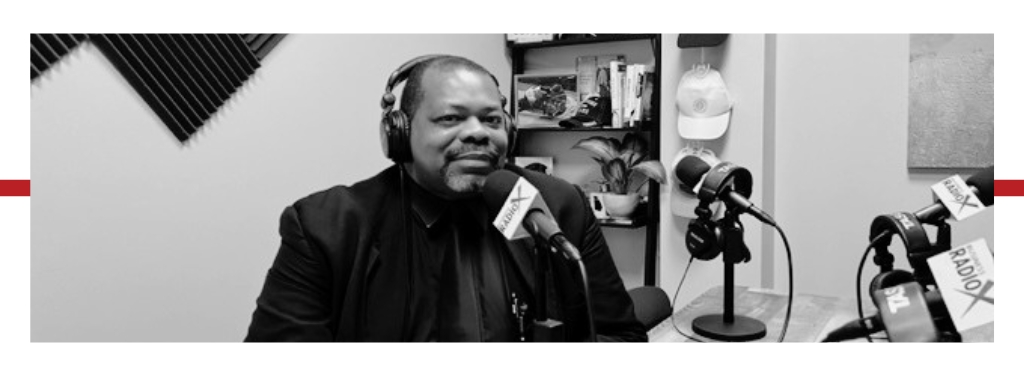
Pastor Cedric S. Allen with Career Club Networking Group

February 13, 2023 by angishields

Cherokee Business Radio
Pastor Cedric S. Allen with Career Club Networking Group
Loading
00:00 /
RSS Feed
Share
Link
Embed

Download file

Cedric-Allen-Fearless-Formula

Cedric-Allen-Fearless-Formula-featureCedric S. Allen is a Senior Pastor/Shepherd and host of the Career Club Networking Group, Director of Communications for Compass Prep Academy, an Emmy-award winning CNN journalist and multimedia producer.

Connect with Cedric on LinkedIn.

This transcript is machine transcribed by Sonix

TRANSCRIPT

Intro: [00:00:05] Coming to you live from the Business RadioX studio in Woodstock, Georgia. This is fearless formula with Sharon Cline.

Sharon Cline: [00:00:19] And welcome to Fearless Formula on Business RadioX, where we talk about the ups and downs in the business world and offer words of wisdom for business success. And today in the studio, Oh, I’m your host Sharon Cline, I should say today in the studio we have the host of I think you’re considered the host of the Career Club Networking Group, director of communication for Compass Prep Academy and Emmy award winning CNN journalist. Welcome. Among many other things, I had to choose. Welcome to the show, Cedric Allen. Hello.

Cedric Allen: [00:00:48] Hello. I just the the main one’s Pastor. Everybody goes like where it’s the first date. But they did this long parade keeps going.

Sharon Cline: [00:00:57] I should I should have said pastor first.

Cedric Allen: [00:00:59] Oh, well, does it matter if it. It doesn’t matter. It’s just just you know, it’s just one of those things where I talk to people and it’s just that’s where all the core of all these other things come out of. So it’s one of those things where, you know, it’s just somebody said, you know, what are you going to do with the director of communications part it it’s like it’s just helping people.

Sharon Cline: [00:01:18] So it’s interesting because you do help people in many different ways, not just pastor, but I can see how that can be sort of like the foundation of what where you shoot off from, right with that, Would that be right? Right. All right. So your senior pastor, Shepherd, director of communication and certified LinkedIn expert. Yeah. You’re you train people on LinkedIn as well as Zoom.

Cedric Allen: [00:01:38] Right. And I also help them with their LinkedIn profiles and company pages and showcase pages. So a lot of businesses have been helped in in the area here in Woodstock. A I always make sure I get a amp, which was basically a amp, you know, painting and flooring they’ve had. I’ve worked on two of them, maybe working on a third one. Thanks, Mr. Handyman of Canton and Woodstock, several other businesses that are out there, just Rhonda Brodsky’s Legal Services. You know, it’s just. Just just part of to do is just help it. Just make the community better.

Sharon Cline: [00:02:13] Well, I like that people come to you to say, help me make myself better, help me present myself in a business way better, because a lot of people don’t know exactly like I’ve done my LinkedIn, but it’s probably been ten years since I’ve even looked at it. You know, you’re kind of like it stays where it is. I feel okay, but I have changed some, so I imagine it would be great for me to look at kind of the different ways that I can make it look better and sound better and present myself better, I guess.

Cedric Allen: [00:02:38] Yeah. And I offer to do those things is one of the things like when Mr.. Handyman of a cantor in Woodstock, he was a very deep i.t. Professional, but then he started doing things like, you know, woodwork and all these other things that would fall under handyman. And he said, you know, let me do that. And it’s now turned into a very lucrative business. That’s a running joke between David and I who’s the owner of that business of. So, you know, he’s just like he comes in, he doesn’t meet maybe a meeting phone call, give him a phone call. Phone call, you know, from either the crew or somebody. I look at what he does and it’s a great feeling because, you know, he’s there to help and do those kind of things.

Sharon Cline: [00:03:19] So and all those phone calls are because you you know, potentially because you were able to help him get further along. Right. So that must be very satisfying for you.

Cedric Allen: [00:03:27] Yeah, it’s one of the things that different way of helping ministry doesn’t replace the main parts of leading shepherd and preaching, teaching and just being there for people and equipping people. But there’s also the thing of while you’re out there, okay, what’s the other skills? As you know, LinkedIn was one of those I picked up as I was in career transition, coming out of Liberty University and coming out of seminary. I know some people that know me, so there’s a running joke called Cemetery, but it’s a seminary. And then, you know, using look at those skills. And then just as I started to learn LinkedIn and they said somebody came to me said, a guy named Chris, I think you would be good at this. I’m like, Really? I mean, you know, I do the other stuff, but it’s like, okay. And it just became a thing. I started to teach and just help people, assist them with their LinkedIn’s. And I’ve gone through LinkedIn and just little things. And then even now there’s things each week I just go like my joke of, They’ll change something up, I’ll have to get some Mexican Coca-Cola, Here’s your sugar and it’s sugar cane. And just start because they’ll change up. They’re trying to be more innovative. Microsoft bought them for let me see if I can remember 5.2 or somewhere. Right. They’re really harder than that billion dollars.

Sharon Cline: [00:04:41] Microsoft, LinkedIn. I didn’t know that.

Cedric Allen: [00:04:43] Pay attention. So they bought LinkedIn. And from that point on, since then, they’ve just been modifying and growing it. You’ll see the more integration of Microsoft products and also something like LinkedIn learning. If you’re trying to learn a skill or understand certain things in business, whatever it is, LinkedIn learning has this. I’m not being paid by them, but maybe this should be a hint. And and they have these all these different skills you can learn, you can help get better with your Excel, you know, even get a little certificate, which is the LinkedIn learning thing, which you’ll have it down at the bottom. And it just shows that you’ve got a mastery or you understand it at some point. So even things like this, what we’re doing with radio and TV, granted it’s not the professional, it’s not like what I did in my undergrad at Morris Brown College. But you learn these skills and then you can go from there and get around people that can help you sharpen your skills, help you with your creativity a lot better, all these other things and just even techniques.

Sharon Cline: [00:05:44] It’s nice that it’s a resource online as well.

Cedric Allen: [00:05:46] Right. And if you’re wondering, well, I don’t have do I have to buy LinkedIn to do it? I said, Well, it is part of premium, but once you buy LinkedIn learning itself, you get on premium. It just depends what level of business. Hr, recruiter, career, whatever it is. Or here’s a little inside tip, and I do this on Fridays at a career club on Zoom on the Apex Christian Singles Ministries allows us to use that just you don’t have to be Christian or single to be there. Just somebody in career transition that LinkedIn learning you can use you actually get if you have a library card. Now, I know Sequoia has not have one of these, but if you’re full you can get an out of area library card and do it that way. But it’s just easier to go through the app if you got to.

Sharon Cline: [00:06:30] Well, that’s cool. Can you tell me a little bit more about Career Club and what that what how that applies to like your ministry?

Cedric Allen: [00:06:38] Well, career club is just another thing of just reminding people they have value and worth and they don’t have to be put in a box, but we help you think outside of the box. So I tell people that I joke with it. Your family members, they love you so much and you love them, but they can’t really be your accountability partners. They can interview you. They help the job of your memory, but then they can pray for you and do all the other things. But you need to be somewhere where you can find out where to get plugged in quick to get back to where you need to be for. Or even give you possibilities.

Sharon Cline: [00:07:11] So this is people in career transition.

Cedric Allen: [00:07:13] People in career transition, and sometimes since recently, since the recent trend. People that maybe think about a business or if they if you know, most of the people we do, they may be in transition but they’re also have a business or idea. And they might need to go somewhere. Maybe they need to have the know about Navy and other aspects of some are married, maybe some of the things that the Iraqi economic development here in town, commerce, whatever it is that gets them to that point to meeting people and also gets a chance at being a great environment that they feel supported. I’ve met so many people that have come in when they first came in as a business, they were just like, I don’t know what to do.

Sharon Cline: [00:07:58] Yeah, where do you start?

Cedric Allen: [00:07:59] Where do you start? Am I going to be clear enough? You know, Am I nervous? I don’t know all these people. And if it’s a bigger group, sometimes they feel intimidated or I have to talk into a microphone. Nobody told me this, whatever it is, and you’re trying, but most of the groups around this area are so comforting. They care, They help train, but it’s not like a traditional enough. I guess. B and I, Benny has his purposes and they offer training, but it’s a little different. And where it’s not a structure, but it’s more of individual saying, okay, getting you to clarify what you’re trying to do. Okay, what’s your message? What what are you thinking? How do you approach how do you use the skills you do have and maybe grow some more skills? And then where do you go? That was always the thing where, especially in career transition and helping people, they will stay more in what we call job seeker or career seeker mode versus you also need to hit other networking events, even the business ones where you can be an asset to that person or even say, Oh, I want to work in government. Well, have you been to a government event? Have you been to sort of like in Woodstock locally in town, or have you been to those places where they’re doing things? One of the craziest things right now at the circuit just down the street, I know we’re in Vegas, which is a great place as well as I do open things as well. But at the circuit there’s a thing called free coding. There’s a group that’s a made up group that meets at the circuit about how to learn how to code for free.

Sharon Cline: [00:09:37] You’re encouraging people to almost act like they’re in the industry already before they’re actually in the industry, like exposing themselves to.

Cedric Allen: [00:09:46] Right? Because I asked people, What do you do? What do you want to do? That thing you love to do? You have a passion, but you want to get paid for it. Let’s be honest. Some people, we we want to do that because Kovic showed us that you can’t take that risk. You know, you don’t have to do that and hear me out here. Right. But we still need businesses to hire people because they’re small businesses. Remember, McDonald’s was a small business. Wendy’s was a small business that became a bigger business. So your local space business like a pie bar. It’s become this big business reformation that’s big in town. How many relocations do we have? Like two big ones. They started.

Sharon Cline: [00:10:30] They started as just one.

Cedric Allen: [00:10:31] One? Yeah. So as you grow and that’s what we want growth. Now, I know most people will say just a small know you are on the global stage to be an asset. So going back to all these different things, that person trying to figure out where they are because you know, leaving out a CNN when I worked there for eight years and this is how the reporting comes in, you start asking the questions, you start getting the drive. And yes, it does wear on you. And trust me, for those that are in that transition or even in business, the grind does get to it’s how you refuel and how you take the time. Sometimes you just need to say, tap out. I need help. Sometimes it’s tap out, I need a break, and sometimes we’ll push ourselves. I was joking with our director of academic affairs over at Compass Prep Academy and I was joking text. I said, You better eat something. You better have some lunch today because she’s always thinking about the students and things we have to get done. But you always need to take care of yourself as well. And she did get her lunch today. I did. So, you know, her husband brought her lunch.

Sharon Cline: [00:11:44] So balance.

Cedric Allen: [00:11:46] Balance. But it’s one of those things of getting balance and getting help where you need it. And you’ll be surprised how many people are willing to help you. And that struggle and journey to get to where you are as a business or even individual. Some of the things where the churches were, that place and due to other things, the churches still can be that place. But there’s also I’ve seen a lot of it where that networking group becomes the only place because depending on the circumstances of what happened with the person or how they got to this part of transition.

Sharon Cline: [00:12:21] It’s nice to lead you. Yeah, because I feel like not everybody has an open heart when they’re talking about career and religion or sort of how that plays together. Some people just want to talk about their career. That’s like their focus. But I imagine that’s a challenge to kind of make it sort of like an open platform for anyone.

Cedric Allen: [00:12:40] Well, usually, and it can be, but it’s usually at times that God will open it up because usually I tell people all the time we don’t it’s not a even when I had my talks with Apex about doing this on a Zoom, we were the first one still up after COVID. We just kept going and everybody else took about about a month or so. Yeah, but it was one of those things where you just talked to church. What are you looking to do? Okay, I’m looking to do this. This. This God shows up. He’ll show up if he wants to. Monday Night Football proved that one. He could show up at any time. Anyone You got prayer in the middle of game here? I’m like, This is Monday night. Yeah, but prayer just happened in the middle of a game that stopped the game. But, you know, the main thing is to talk to a person. Okay, Now there might be times I go like, Well, I don’t know if that’s going to and it could be on anything. Sure, but.

Sharon Cline: [00:13:32] But you give them direction and you give them practical knowledge because it can be overwhelming. That’s what we talk about here on Fearless Formula, the exact same thing, how someone has an idea and it may just be or a dream and what are the things that keep us from following them, You know? And I also wanted to ask you, with your journey, which is extensive, it’s like amazing. All of the different things that you’ve listed on LinkedIn, even on your Facebook page, I’m like, Which one do I choose here? But I like that you talk about being in the journalism and that now when I try to imagine the transition from journalism to where you are right now, I’m like, What was it that kind of got you out of that and into such a helpful and sort of community based ministry?

Cedric Allen: [00:14:19] Well, it’s one of those things. It’s one of those that it takes a lot longer to talk about. But I joked with somebody recently, I said. Think of Hulk and Banner.

Sharon Cline: [00:14:31] Which one are you right now?

Cedric Allen: [00:14:34] The Fuzed part of it, which is the whole Professor Hulk kind of thing, where it’s for those that don’t understand comics. Look at the last Infinity War endgame movie. You’ll see Hulk there and he’ll talk about putting the two together. Well, I was coming out at that point, but I could see long term where God was saying that part of chapter was ending. And we’re going to take what you know here and move it there, because I’m one of those guys that would not only stay on the news desk, but I would go out with the crews. Right. And that was always at the beginning because I figured you got to know both sides of this thing. And it helped me tremendously. But it was a time that on certain things were getting out the way I could see looking back, God was moving some things out of there. Gotcha. That’s I won’t say that’s for me. If you want to believe that’s your own decision, it’s your decision. So before everybody goes.

Sharon Cline: [00:15:26] It’s your decision, has their own journey, and that’s yours.

Cedric Allen: [00:15:29] But if you got guilt right now, there’s something else you got to do.

Sharon Cline: [00:15:33] That’s a different show altogether.

Cedric Allen: [00:15:36] I’m available for that talk, too, anyway. But it’s one of those things as I’ve gone through and it hasn’t been easy because you don’t see yourself goes back. It’s some affair and then some of it is just like, You’re going to do this and you’re looking at God like. Wrong guy. Wrong, wrong.

Sharon Cline: [00:15:55] Guy. So you had these feelings of. Of feeling like you needed to transition out of journalism and go toward more this more of this as a ministry.

Cedric Allen: [00:16:02] Well, it was really a longer part. And the funny thing is there was only 4 to 5 people that saw this before I did, because I’m not even looking at I was glad I was one. My joke is I really this was glad to be saved. That’s it. That’s all. I was like, okay, I did. This second time was a real thing, you know? I was glad to be saved. I had nowhere. I remember talking to a relative passed on last year, but I said, You’ve known me all my life. When have I ever wanted to do that? First she said, Well, well, you were here. I was like, Yeah, but go from the beginning and go to now. When have I ever wanted to be a pastor? She’s like, Never. I said, Exactly. This was a totally out of the blue to me was like, Really? Really? And it’s even I have a day today. I don’t know where I’m going. I don’t know what we’re doing. How how is this going to work out? But it’s been for me, it’s been a faith for I want to say this has been a faith walk asserting I have no clue what’s going to happen next or what the craziness or who I’ll meet on this thing.

Sharon Cline: [00:17:06] But you have a sense of being on the path that you’re supposed to. So it.

Cedric Allen: [00:17:09] Works out. Yeah, I’m on the path, but trust me, there are those. And folks, if you’re a business owner, you know those those nights, 1 a.m. the 4 a.m. those unclean conversations where you are just like. Just like, I don’t know how I’m going to get through this. Why did I even get in this? Why am I dealing with this individual? What is going on here? Let me tell you something. If I could just be just a little encouragement. Yes, it’s going to hurt. But if you stick to it and you’re going to stick to it, you’ll get through it. I’m not going to say you’re going to have your nice big balloon and a big old smile all the time because. Like if it matters. Yeah. If it matters, it’s going to be hard. Even though I just, like, I don’t really want hard, even even hours. I just want to do this way. I want to go that way.

Sharon Cline: [00:18:01] Just no one wants difficult. But I like that notion, though, that you feel like you’re not you’re not just doing this on a wing and a prayer. You actually really do have support. You have people around you that you work with that are by your side, which we talk about on Fearless Formula a lot, that surrounding yourself with the right people can bolster you and kind of allow you to face the uncertainty with a little bit more certitude.

Cedric Allen: [00:18:28] Yeah, And there are times where you’ll sit there and you’re going probably be the only one in the boardroom or the only one that’s with business. Everybody will not get this, especially being a pastor. Now everybody’s going to get especially family at times and you have to take that walk. And the better analogy for those that are not getting it, Indiana Jones Temple and Indiana Jones in the Last Crusade. And he’s got to walk across a bridge that he cannot see, drove, does started like he can’t see this thing. But he’s got to believe by faith he could do it. Why? Because he the more important thing was saved. Dad. Right. So you’re walking across this thing. Whatever this business or idea, you may be totally standing out there at the beginning or different types of. Is this where I need to be? And those are the tests of life. And there are some days you just go like, Hey, I can’t redo. Call me later. And then some days you’re going to walk through that whole thing.

Sharon Cline: [00:19:29] Would you say those are the most challenging things for you as you’re helping people, not just being a pastor, but also helping people in their career transitions and trying to get them to believe in themselves? Like, how do you work around that?

Cedric Allen: [00:19:46] You just be as honest as possible. Try talking to a group of kids, young people, about their beliefs in God, and some of them don’t believe the same thing you do, or they believe part of this. But that. But this. And you still have to take the hand and go. Okay. And you even ask the tough question. So why you don’t believe this and be willing to hear to answer and be, you know, open because they you know, at that stage you’re they’re thinking there’s people that are good Christians, that they still struggle with some things at times. Doubts from the enemy, we would call it in Christianity or those fiery dots and arrows. But whatever that what you want to call it that walk through of man, I don’t know. Did I do the wrong thing? Did I just was this cold pizza and Froot Loops in the morning or. I don’t know.

Sharon Cline: [00:20:40] But kids are honest, aren’t they? Like, I believe that they will tell you flat out you’re wrong, you know, easily. Like I don’t believe that.

Cedric Allen: [00:20:48] Which sometimes is very humbling and didn’t. Also, as parents, we have to be careful how we react to it. And whenever I have kids, it’s going to be interesting because I have to and I tell people I can’t be the news guy that’s in the thing, because if you saw that guy, you run.

Sharon Cline: [00:21:04] Well, you have to tap into a different part of yourself, I imagine. News guy as opposed to Pastor Guy.

Cedric Allen: [00:21:10] Well, News Guy passed the guy I didn’t teach your guy. How do you kind of do that in a way that allows because these young people like we allowed them to grow and they have to agree it’s it’s like I told them yesterday, I think it was you got to have your own faith. This is your favorite. It’s not your mom. It’s not your dad’s. It’s not your family. It’s not who you community. It’s not your political party. It’s not who you vote for. It’s not any of these things. You have to build. You have to this has to be your favorite. When we were talking, this was a discussion and just you have to decide. You have to see what’s out there and say, day for business. You have to decide what is going to work for you. Because I could give you 15 financial plans, I could give you all the business plans, I could give you all the experts, I could give you all the resources. But. Just like I’ll go scriptural here. Just like with Saul’s armor, David wouldn’t like day to fit for me. Just give me a sling and a rock. I could do business.

Cedric Allen: [00:22:14] So as the new business owner or somebody who’s, you know, you might have to modify as you go through this, but. Remember why you started. I think sometimes we forget that for me it’s a piece of scripture that says, okay, this is where my direction goes for you. It may be that moment that you just helped this person or you did your first repair or you’re out there first sale or one person was talking about to me recently, they saw their name on the door of whatever they do. And that was the cool mile. Those are the moments you have to remember because and you could testify to this if you’ve ever been in news, folks, and people have done this a long time, you remember the nightmare shows you will still wake up remembering these nightmare shows. You will think you have gotten over it, but you remember every little part that done wrong. Even if you didn’t do wrong, you will remember this because it will bug you. We’re stuck in the negative. I say. I’ll say it’s from the garden, but still. But the thing is to remember the good things.

Sharon Cline: [00:23:21] Good moments, the things that you accomplished. Yeah. It’s so much easier for me to think about the things that I didn’t do correctly, though. Well, it’s like the story of my life.

Cedric Allen: [00:23:28] Maybe I need to talk about this part. A story When 911 happened, all the networks got together in the evening and they made a couple of decisions. One of the decisions they said, stop showing the building fall because we got it. We don’t need to be. We were already at the point where need to be. We need to become back.

Sharon Cline: [00:23:51] Up, build, build up the the positive story, the repair.

Cedric Allen: [00:23:55] Well, not even just we’ve we’ve seen it. We’ve hit bottom. We’ve seen we don’t need to dwell on it. Like I will tell people when they walk into career club, we’re not here to build a ziggurat, a city, a WWE, a WTA, a impact wrestling universe out. I’d leave it to those guys and sometimes they don’t get that right. But we try to keep it out of the negative zone and keep it in a positive zone. Yeah, there’s going to be days. I say we don’t deny stuff happen or you’ve been mistreated or whatever is going on. But let’s try to be positive. Even myself, in the past couple of months, I’ve had to kind of catch myself because you could be physically hurting and I’ve dealt with physical pain. So little things, once that pain gets out the way. And that’s a health thing. Yeah, I know. Saying goes back to the lunch. I know what as well. Well, you got to eat something. I’m going to eat something when I get out of here. Try to rest a little bit wherever I can. But it’s that thing of. Time for you. Because if you’re not you, it’s. You hear people say and you’re like, Yeah, yeah, yeah. Get the bumper sticker. Give me a t shirt. I’ll do it later. Because you’re trying to build this thing that it’s not a monster, but it’s part of you. You have a thing for it.

Sharon Cline: [00:25:12] Whatever. Yeah.

Cedric Allen: [00:25:13] Dream that big dream. It could be everything from being on radio to whatever you’re baking or whatever you’re producing, whatever that is. Or it could even be your role in politics in trying to be a positive light in a world that’s just because you got enough to live in. There’s there’s a reason why people in wrestling like the good guy.

Sharon Cline: [00:25:38] Well, if you’re just joining us, we’re speaking to Cedric Allen. He is the host of the Career Club Networking Group and he’s the director of communications for Compass Prep Academy, which I wanted to talk to you about. Tell me about Compass Prep Academy.

Cedric Allen: [00:25:51] Compass Prep. Well, I’m going to have my part in here because I want to make sure I got all these things. We are a learning community where a hybrid from pre-K to 12th grade. We are the place that, you know, we say, Do you go to college? Yes. You can even do a enroll with us. But also it’s also a place that said, wait a minute, maybe college is not your fit.

Sharon Cline: [00:26:17] It’s not for everyone.

Cedric Allen: [00:26:18] Not for everybody. And that’s a good thing. Maybe you need a trade, maybe whatever that is. And so we ask for career counseling and coaching. We also do distance learning for students on the go. We had a student that they go around and they do competitions well. We allowed them to do it and we give them their work early and then whatever. They don’t finish, they finish when they come back. We don’t they don’t have to worry about missing so many days.

Sharon Cline: [00:26:43] Got you.

Cedric Allen: [00:26:44] Or it could be now, because all these inflation and all the things with the economy, I really need to kind of I got to pull back on some things or well, we have long distance learning, so we’re fully accredited. We’re part of the National Honor Society. Just this this year we’re featured as one of the The Atlantic magazine, as one of the only one in Cherokee County that was featured, as, you know, just a private, affordable private school. And that’s where we are, very affordable. But we allow for students to grow up and be who they are. So it’s one of the it’s that kind of atmosphere I’m just making. And we also do accreditation and transcript services as well. Academic coaching.

Sharon Cline: [00:27:29] Did you create this?

Cedric Allen: [00:27:30] No. This was done by our founder, Laura George, who a mama G we call her, and also Denise Rudolph, who is the director of academic affairs talk to call Denise. She just said, just say call Denise. If you have any questions, call Denise.

Sharon Cline: [00:27:48] What I love, though, is that I can see how you can affect these children from kindergarten all the way to graduation. But then you have this other part of your life, this career transition, help for people who maybe just graduate and don’t really know even where to go if they don’t want to go the college route, which not like we said, not everybody does. It’s not for everyone. Right. But also you’ve got these relationships with people, right, that after, if they do go to college, can come to you for help. So you really do from fifth grade, fifth, I mean, five years old until, you know, now you can really be affecting people’s lives.

Cedric Allen: [00:28:20] Right. And it’s also something that was kind of weird. The US Army. There was a gentleman that was in the US Army and the Cars.com and the DOD. They came together and said, we need a better system for training our soldiers and also storing this information once people move on or resign or whatever, or retire. And the gentleman took it from basically from scripture that this whole thing of a lifelong learning from where God takes you from that point, or Christians will say from the point you come in and I was starting to young people about this point, you come free and God takes you where you are and takes you to where you need to be. So it’s one of those things that we’re all going through, some kind of lifelong learning. They call it a system of knowledge network, lifelong learning for the Army.

Sharon Cline: [00:29:07] Sustainment Knowledge.

Cedric Allen: [00:29:08] Network, not Knowledge.

Sharon Cline: [00:29:10] Network. Interesting. I never heard that.

Cedric Allen: [00:29:12] Yeah, it’s what it was what they did at the beginning of it in 2006, where I was with them to build this network because people were coming there and you just can’t yell at somebody for not knowing what they’re doing. So how did they do it? Well, they can go on for them. They could go online. It was the beginning parts of e-learning. So it was all these things that, you know, looking at. If I go back as a pastor, I will say so your pastor, shepherd, prayer warrior, healer, that’s kind of what I say.

Sharon Cline: [00:29:40] Warrior, inhaler and shepherd.

Cedric Allen: [00:29:43] Got you. But it’s the main parts that we’re all being. Shepherd We are pouring to somebody we could do, like the Apostle Paul would say, you know, Jesus came under Jesus, but I’m teaching, but I’m also pouring into. But then I had a Barnabas that poured into me. So you’re always pouring in that knowledge and training and strength and continuously going.

Sharon Cline: [00:30:05] So what sustains you? You’re giving out so much to people.

Cedric Allen: [00:30:09] That’s the times where I got to step back and then God will sometimes go. And Captain, a couple of nights ago, if you need to go to bed. I have so much that you need to go rest.

Sharon Cline: [00:30:19] Is it a challenge that way? I mean, especially with we talk about this on the show a lot, 24 seven information, constantly having access and access.

Cedric Allen: [00:30:28] But there’s just that go and if you have. Some of the things that you can tell. I use the wrestling analogies and it’s that whole thing. I have the killer instinct to drive. Jordan has it, LeBron has it, even though they.

Sharon Cline: [00:30:45] Never rest, do they?

Cedric Allen: [00:30:46] Well, it’s just that I got to be there. Kobe had it, you know, that drive Magic had it, Bird had it. All these guys had it. And when they have this kind of thing, you just don’t want to let go off the gas too much. You just don’t want to put the brakes on. You want to be ahead If you drive, if it’s an honest competition, that’s what you do.

Sharon Cline: [00:31:11] So it’s like you don’t you you live, eat, breathe, sleep. This sort of drive to continue forward. Is that how it is for you?

Cedric Allen: [00:31:20] At times it is. A point guard goes.

Sharon Cline: [00:31:23] Take a.

Cedric Allen: [00:31:23] Break.

Sharon Cline: [00:31:24] Take a break. Sometimes I think when I get sick or something, it’s almost like, yeah, that’s cause you need to stop doing this or that. You know, I have to.

Cedric Allen: [00:31:31] Fire.

Sharon Cline: [00:31:32] You. It’s so true, isn’t it? It’s like this. This feeling of not being able to like, are. You’re going to miss out if you don’t take this opportunity, You’re not going to move forward like it’s always there. I guess the way I look at it.

Cedric Allen: [00:31:43] That and also helping. Because helping can be also. Everyone else thinks of. Och, I can stand back. I met one lady more in a Christian room. She talks about wanting to be there for people when she can’t. It just feels like it’s poison or just a weight and it could turn to something else because you’re not allowed to do what you’re called to do. A depression sets in and you have to be careful of that. But also working yourself, running yourself, working yourself around yourself. When do you rest? When you take that break and you kind of have to know yourself. But. You also have to have people around there that know you.

Sharon Cline: [00:32:28] That can encourage you to take a break.

Cedric Allen: [00:32:30] Yeah. And also. Kind of just feel like, man. Let’s take a break. You know.

Sharon Cline: [00:32:36] I do. I think that’s actually really important because it’s very easy for me to look at. If I don’t take this opportunity, I’m not going forward if someone needs help. I very rarely say no. And there does feel like if I’m saying no, I’m actually out of alignment with what I think I should be doing. You know, really? So like, am I being selfish or am I taking care of myself? Like, which, you know, there’s a negative connotation with taking that selfishness, but taking care of yourself is like a positive thing. So I’m wondering what that’s like for you.

Cedric Allen: [00:33:07] It’s sometimes it’s just there are days that he just says, I need to go. I need to do this. It interface. You go, All right, I’m going to do it. You got to you got a straight for me because I’m about to go like, boom, I’m done.

Sharon Cline: [00:33:23] So for some of it’s faith.

Cedric Allen: [00:33:25] Mostly for me. It’s faith. It’s just that’s for me. Everybody. Like I said, make your own decision. So from there. But for me, it’s safe and. Because there’s days I go like, That’s it. I’m out. I need you. But he’s always good at all, right? I’ve. Ray. True.

Sharon Cline: [00:33:50] You have you have a track record of having help, you know, and support. So I think that’s wonderful, though.

Cedric Allen: [00:33:56] Yeah.

Sharon Cline: [00:33:57] So if you were to talk about someone who’s sort of your ideal client, who would who would how would you describe your ideal client?

Cedric Allen: [00:34:08] You know, it’s the funny joke, everybody. And. Look at some of the mentors I’ve had my grandmother, my mom, my two aunts, my uncles, even even my nephew or cousin, he’s going to go like really? Sort of. I’ll give you a little bit.

Sharon Cline: [00:34:28] You can be inspired by lots of people.

Cedric Allen: [00:34:30] True. And even now, just people at school, Compass Prep and all the people I’ve met in networking. So a lot of people. But if you say my audience, my audience is really everybody. It’s the person that’s sitting on the side that’s scared to get involved with the networking group. As a person that’s there and wants to walk out because they keep showing up during panel events and you go, hang in there with me. It’ll be cool. Just know what day is. You come. And if you’re looking for a desk, just hang out afterwards. It’ll be fine. The person that’s just first time. Or just they’re at a point or business and they haven’t got that idea. Or you give them an idea and they go. I hadn’t thought of that. That well well.

Sharon Cline: [00:35:24] That’s where that’s satisfying, isn’t it?

Cedric Allen: [00:35:27] That’s the fun thing when it connects where you have a specialty or something. And I go like, why don’t you call this guy or that guy? Because that would fit what you’re doing. One person I was talking to him about, you know, it’s a new year. How about a new you? You know, something of that nature that makes it.

Sharon Cline: [00:35:45] Inspiring.

Cedric Allen: [00:35:46] Yeah, inspiring. But also it fits your wheelhouse and you’re helping people. It’s not a sales pitch. It’s. I’m here to help. When I look at a person’s reflective profile, doesn’t matter if it’s an individual, a career individual, a career transition or business person, or even the business itself, I’m looking at how can I help them reach better, be better, be a better audience, and be more credible? Because look at their profile, look at things. And they hadn’t thought about it. They’ve been this way, that way. You know, it’s a funny joke. You get into business sometimes and say they tell you you need their this and you’re like, you’re like, No, maybe you need this one, this one, this one, this one. And then let some other people have to dabble in that one. But you don’t probably need to be everybody. Yeah. And every I call it the Wal Mart effect. Kfc is eliminating some things pretty, you know, good stuff. But I think they got to a point like, wait a minute, we’re a chicken stock. Yeah. Chicken? Yeah. Why are we trying to t why don’t we try to do a burrito chicken? What are we doing here? I thought it would be a good idea. Well, we overdoing it here. Just. Just just stick to. Chicken cooked chicken sandwich, fried chicken. She just.

Sharon Cline: [00:37:04] I like that, too, because it does feel like sometimes we do have too much information coming at us in too many choices. So it’s nice because I get overloaded. So I love the notion of someone coming in and kind of helping to pare down where my brain goes at 20, 24, 7 million miles an hour. So I love that you’re really interested in sort of paring down people’s goals and exactly where their strengths are, as opposed to you need everything. You need everything to be able to compete today.

Cedric Allen: [00:37:33] Well, it’s great day for education through all these other things. People will say, Here’s a box. Sometimes I’ll give you a box because that’s all they know is, here’s a box. I’m like, okay, that’s great. That’s fine. That box doesn’t work for me. So what do I do with this box? Well, that’s all we have. Box from education all through it, we’ve we’ve done this. And unfortunately, even the young people were the first one to figure out this box don’t work so well. So can can we cut. Can I cut some holes in a. But you can’t cut two holes in the box. Well, what kind of holes in the box can we put? Take the lid off the bottle. You can’t take the lid off. No, we take the lid off the box. So in your business, not. Not everything’s going to work for you. So. Or even in life of I’m going to try this. Well, okay, that might not work for you, but just be careful before we don’t want you to come back like the box hurt me. Yeah, I know, I know, but. But even in business, it’s one of those things of looking where to go. And then. For those that you might need the traditional, say, network group, any group. Nothing wrong with it. That’s where he excel. Other groups. Well, I need something a little bit more freeform, but they’re going to help me out with stuff. But I understand what I’m doing, but I need to have something a little bit more fun, a little bit more loose. I am not this person. I’m just. I’m just. This is what I sell. This is what I do.

Sharon Cline: [00:39:03] And you help people get there.

Cedric Allen: [00:39:04] Yeah, and that’s the thing. It’s being the bridge. Because all of us has to go over a bridge at some point. And, you know, coming from you know, I still remember that day at the Canton Business Club. And they’re they’re not playing me to say it. But I walked in there. It was a January. It was, I think a year after COVID. And it was they had 15 new business owners at the thing, just 15 new out of blue. I just started a business. Covid happened. Da da da da. I just started a business. And I knew right there, I said, Well, and you want to see how many more businesses they are. Take a minute. We are out on the street. A red light. Don’t be too distracted because it is Atlanta and even Cherokee County. Don’t be too sorry. And start counting how many new business ventures you see. And you’ll be like, Wait a minute. I never see. I never heard of them. Name them. Them. The. You’ll be shocked because a lot of people took the risk and said, you know what? I think it’s the time to do it. If I don’t do it now, I’m going to try. Now, you may talk to them a little bit and say, Is it hard? Yeah. Is it a bit painful? Yes. Do you love it? Oh, yeah. Because I finally get to be me. And so the risk. I know there’s high risk, but.

Sharon Cline: [00:40:28] But you’re there to support. You’re there to help, kind of. You’re the you’re an expert. So you really do have the ability to give people more of a certitude when they’re trying to decide where they want to go. And that is valuable. Very valuable for people, I think.

Cedric Allen: [00:40:43] Well, it is, but it’s really sometimes it’s just them. Sometimes you just sit there and go like, okay, it sounds like you want to do this. Okay, let’s try this. And they just sometimes it’s just. I just need a. Yes, just old joke. Wife talks to the husband. Husband’s like I’m about to. It’s like, No, no, I’m just venting.

Sharon Cline: [00:41:05] Just venting.

Cedric Allen: [00:41:06] And then sometimes, okay, I do need you to do or I’m going to do this. I just need to hear. I’m not crazy. So your support, you’re still go look, look and say, Yes, you are, but we’re going to do this. You’re crazy still. That had nothing to do with you. You’re just still, you know, joking, but joking. But still.

Sharon Cline: [00:41:28] That one is out there, though, that wants to get in touch with you and is is someone that could really benefit from the services that you provide. What’s the best way that they can get to you?

Cedric Allen: [00:41:36] Well, they could find me on LinkedIn as Cedric Allen, and you’ll see me up there, and that’s the easiest way to do that. Linkedin, LinkedIn. I just love going through that and just, you know, just remind me where I met you or where you heard me from in this case, because I will get so many requests of, Oh, what is that? This has no offense. It’s just like, Go. I saw through my LinkedIn, just like you would search through your friends and just your Rolodex and business contacts as well. But those would be the things in that aspect of just of just and just people that just need that person to just say, I’m not going to say I’m going to kick start you. I’m not going to hit you. I’m not it’s not going to be Peloton. It’s not going to be anything else. It’s just more of. Let’s have a conversation. Let’s talk and see where you are, because you might not be too bad as bad as you think you are, and you might be on the right track, you just might need just a little. As I used to tell this, I don’t need to pimp your ride. But you may need to come in, may need to change tires, maybe put some air in them, may need to get some windshield wiper fluid. We may need to just tweak the temperature in the car a little bit. Maybe you need to clean the inside. I don’t know. We don’t know until you get there.

Sharon Cline: [00:42:58] But let’s take a look.

Cedric Allen: [00:42:59] Yeah, but let’s not put the whole. Okay. All right. And then, you.

Sharon Cline: [00:43:03] Know, because overhauling pimping someone’s ride is like a really big change that some people are not prepared for. That’s scary in itself.

Cedric Allen: [00:43:10] Or here’s the thing. I think we’re starting to realize that as a society, it may not be needed at all. You may be the person. Just just adjust the GPS. Turn on the GPS. Here we go. And they’re off to the races versus somebody you do might have to go. All right. We’re going to start from a point because you’ve never done this before. Where do you go to? How do you go to who you talk to? How do you talk to? What are these things you need? And that’s a lot of things are the career transit even in a business, because you could be just one step of. Well, okay, I’ll just say there was somebody that was in town looking at something and I could tell. Part of me almost want to say, you need a guide on this, don’t you? And they’re like, Well, I said, well, talk to this guy. This guy is too. Blah, blah, blah. Talk to him. You might be able to get somewhere. And they were like, Oh, okay, so helpful.

Sharon Cline: [00:44:06] And I mean, I love that kind of about your spirit that you really do have a notion of we help each other. And because I think the same, we are here to help each other get through it, whatever it is. But you actively do things and have your business associated with helping people. And so that’s like such a nice reflection of your spirit. Thank you for doing that.

Cedric Allen: [00:44:25] No problem. I’m just really here to help. It just ends up it’s other things I just call it. It is a ministry.

Sharon Cline: [00:44:32] It is a ministry and you are a pastor. But where are you a pastor? I didn’t even ask this.

Cedric Allen: [00:44:35] Well, right now I’m just my own bro or God Ministries. And just probably looking into at some point getting building for the thing and just starting. It’s not a thing, but it’s just a ministry.

Sharon Cline: [00:44:48] Yeah, but that’s where it starts, right?

Cedric Allen: [00:44:49] Right. And I also teach at First Baptist Atlanta on Sunday, so that’s wonderful.

Sharon Cline: [00:44:55] So I love that people can be able to find you if they need you. And I think it’s just, like I said, so heartwarming to know that you really do care about what people’s lives, how they’re living them and whether they’re happy with them and the ways that you can affect them and positively. Thank you for doing that. It’s really been fun to chat with you. I mean, I feel like I could have chatted with you about a thousand different things, but I really appreciate the time that you’ve had with me today. Thank you. Thank you for coming. No problem. And thank you all for listening to Fearless Formula. I’m Business RadioX and again, this is Sharon Cline reminding you that with knowledge and understanding, we can all have our own fearless formula. Have a great day.


Carey Davis with Transworld Business Advisors

December 13, 2022 by angishields

Carey-Davis-headshot
Buy a Business Near Me
Carey Davis with Transworld Business Advisors
Loading
00:00 /
RSS Feed
Share
Link
Embed

Download file

Carey-Davis-headshotCarey Davis, with Transworld Business Advisors, grew up in the radio business as his family owned a successful midwestern radio station.

He moved to NYC in his early 20’s and ended up running ad sales as General Sales Manager of 1010WINS- the most listened to and highest billing radio station in the USA.

Carey joined Spanish Broadcasting’s FM’s Mega & Amor as GM and participated in the $600mm IPO to take the company public.

Connect with Carey on LinkedIn.

What You’ll Learn in This Episode

  • How Carey’s background running some of the biggest radio stations in the USA help him as a business broker
  • Hot category’s for small businesses
  • How the pandemic changed small family companies
  • How a business owner can get a company in shape before listing it for sale

This transcript is machine transcribed by Sonix

TRANSCRIPT

Intro: [00:00:07] Broadcasting live from the Business RadioX studios in Atlanta, Georgia. It’s time for Buy a Business Near Me, brought to you by the Business Radio X Ambassador program, helping business brokers sell more local businesses. Now, here’s your host.

Stone Payton: [00:00:32] Welcome to another exciting and informative edition of Buy a Business Near Me Stone Payton here with you this afternoon. Please join me in welcoming to the broadcast with Transworld Business Advisors, Mr. Carey Davis. Good afternoon, sir.

Carey Davis: [00:00:50] Hi, Stone. Good afternoon.

Stone Payton: [00:00:52] Man, it is such a pleasure to have you on the show. I’ve really been looking forward to this conversation. I got a lot of questions. I don’t know that we’re going to get to them all, but I do think a good place to start would be if you could articulate for me and our listeners mission purpose, What are you really out there trying to do for folks, man?

Carey Davis: [00:01:15] Well, I’m based in New York City and. And on the one hand, there is some things unique about owning and buying and selling a business in New York City, and in other cases, it’s like anywhere else. But one of the unique parts of New York is that we attract people from all over. So we’re making good deals between good people. And very often those people are from way different places. In fact, we’ve seen recently and this is raise my eyebrows over the past couple of months in talking with friends of mine who are immigration attorneys, the number of buyers of business in Europe who want to be in New York because of the war in Ukraine has increased dramatically. You see, it’s just not it’s not just a war in Ukraine. It’s a war in Europe. And just like previous generations, people want to come to the United States because of the strength of the economy here and the strength of opportunity here. So we have a lot of businesses. You take that increase in interest of buyers. Now, let’s talk about sellers. The pandemic stirred things up.

Carey Davis: [00:02:45] Their business. Their many business. Besides the sadness and tragedy of the health idea. But how did it affect small businesses? Many small businesses closed. Many businesses started new with lower rents. Right. Right. And and many people. Many people, mostly baby boomers. Sat there and said, What the heck am I doing running this business? My kids don’t want it. I want to sell. I want to go travel. I want to. So the pandemic really shook things up. So we have a lot of businesses that people want to sell because they they want to move on with their life. We have new buyers coming in. Because of the international situation. And we have through many places in the United States, of course, an increase in immigration. So we have a lot of multicultural buyers of businesses. So all of that, you know, there’s an old, old saying. Stone When when there’s change, there’s opportunity. Well, there’s a hell of a lot of change going on. And that means there’s a lot of opportunity for folks to buy, to sell and to franchise businesses.

Stone Payton: [00:04:12] So what’s the backstory, man? How did you find yourself in this line of work?

Carey Davis: [00:04:18] Well, I’m happy to tell you, as a brother radio person, I was in the radio business, radio management business for many decades. I grew up in the business. My family owned a very strong, successful small market radio station in downstate Illinois. And after college, I worked there for a while, but I had my eyes on the big city. I wanted to I just wanted to be in New York City. So I moved here and got a good job with news and talk radio stations and ended up working for KGW Newsradio in Philadelphia and then promoted to their sister station as general sales manager of 1010 wins, which is a powerful radio station in New York City and all news radio station, you kind of kind of the WSB of New York, I can relate to you in Atlanta there. So and then I made a move to be general manager of Spanish language radio in New York. So I’m I’m very, very aware of the multicultural situation in the country. So after. That leads us to about ten years ago when really the radio, the terrestrial radio business, I think, kind of moved on to a place that I didn’t want to go to. Through consolidation and downsizing and moving to Internet. I was from the days of strong, powerful AM and FM radio stations, and I just thought it was time for some new folks to come in. So I love business and I got to stay busy. So that’s when a bunch of us got together with Eric Strauss and Eric bought the franchise for Transworld in New York City. And so we have a great team of people who’ve known each other for 20, 30 years. So we just transferred from radio advertising, marketing to marketing and selling and helping people sell, buy and franchise businesses.

Stone Payton: [00:06:38] So do you feel like that experience base though, has helped you and in retrospect, really prepared you to be of tremendous service in this world? Was that background helpful for you?

Carey Davis: [00:06:51] Oh, absolutely. Because, for example, a secret of, well, let’s say let’s take a rule of radio. Tell him what you’re going to tell him. Tell him. Tell him what you told him. Right. It’s very. You keep the message focused in as you do in your program, Stone. You repeat the message, so you’re getting frequency of it, and then you’re reminding of the message. We have the same thing in selling of a business. There are strict steps that go in order. The first is the planning stage. Then there’s the search stage. Deal making and then closing. So there is a process into putting on a radio program, and that could be news or talk or what the playlist is at any type of music radio station. And there are rules involved in the steps to selling a business and getting a business prepared to be sold. Imagine that I’m talking about sales process, but if your listeners are haven’t listed their business for sale yet but are thinking, well, maybe I’m I’m five years away. That’s a great time to get started. In planning the process.

Stone Payton: [00:08:20] So what are you finding the most rewarding about the work, man? What’s the most fun about it for you?

Carey Davis: [00:08:29] Well, I think it’s helping. It’s. I’m meeting people who have. Created and worked. Very hard and their life. Who are their businesses, their baby. They have. Given everything. You know, this is many, many of these hardworking folks are like the, you know, the grocery stores or the corner store in the city where you live upstairs from the store. And and and it’s people define. I’m not saying that it’s the right thing to do. I don’t do it now, but I did use to do it. People define their life often by their work. Yeah, right. They put that much into it. So when you’re saying, okay, when when you built this baby up and top of my mind, I’m thinking of a moving company, for example. A client that we have emigrated here. From another country. He worked again, his first truck. He moved it. And 40 years later. He’s one of the largest moving companies in New York. And now it’s time to sell that business. That is his baby. Right. Right. So you have to get along with your broker, Right? You better get along with your broker because it is not easy. It is it is not easy to sell a business. And I wish I wish we could say that we sold all the businesses that we list. That’s not the case. It’s not nearly the case. I’d say we sell about on a national average, About one third of the businesses that get listed for sale actually sell. Why is that number so low? Some people think that’s a low number. Others told me they thought it was high.

Stone Payton: [00:10:42] It sounds low to me.

Carey Davis: [00:10:44] Yeah, it is low. And I wish I wish we could say it’s higher, but I’ll be straight with you. It is about 30% of the businesses that are listed for sale. Finally end up end up selling the biggest reason for not selling. Is that the seller? Has is asking too much money. And we have told people. We’ll give you what we consider a fair listing price when we’re talking about, okay, I want to sell my business. We’ll take a look at the trends the last year compared to the year before. What are the add backs, the employees that are staying on, etc. And I can go through that list, but after we review that, we will recommend a listing price and sometimes they’ll come back and say, Oh no, I was looking for $5 Million and let’s say we’re we’re recommending a listing price of $2 Million. We won’t take the listing. And so it’ll go unsold. We know this. The businesses that do sell. Have been priced appropriately. That’s a different way to look at it. If we look at the businesses that have sold and this goes everything from drugstores to dog walking services to nursing home maids to restaurants, etc., when you combine all categories and you look okay and Transworld is a big company and we sell more businesses than anybody else when we look, let’s say, All right, let’s take a look at the small businesses that have been sold. The thing that’s in common is what they sold. They were priced appropriately.

Stone Payton: [00:12:40] So you mentioned timeline a few moments ago. What is a prudent timeline? For example, I own 40% of a pretty successful media company. My business partner is Lee Kantor. He and I own the business radio network. How far out should we be preparing if we want to turn around and sell it to our studio partners or out on the on the marketplace? Because it’s not next month, right?

Carey Davis: [00:13:04] Yeah, no, I agree with you. Well, first of all, it depends. A couple of different answers to that. One of the first things a prospective buyer says to me and to the seller. If your business is so good, why are you selling it right? That’s a good question. It’s a fair question. What is the motivation for the sale? And when we look at. Again, we study all the businesses that have been have been sold or businesses that we have listed and we look under what’s the motivation for sale? We find. That when there is a motivation. Of sickness, divorce. Retirement. Those have a higher percentage of selling rather than. Um. I would just like to see what. What kind of response I would have. So when there is a. And I think one of the reasons Stone is to you and your partner should say, and other people who are listening, who are thinking about when do I sell my business? I would say, keep running your business as long as you’re you’re happy and healthy and profitable. You like what You’re doing. Great. Keep doing it. And there are things you can do to prepare for, let’s say, well, maybe things change and things can change in a day, but let’s say things. You’ll be ready in about four years. Well, there’s a lot you can do in the next four years to get a business ready for sale. A lot you can do. Don’t wait until that day comes. There’s a lot you can do to prepare for that. And here are some of those things. We look at the multiples, look at the sales price. Successful sales of companies have kept good records. Keeping historical records of your business is mighty important. It’s not just for your taxes. But when it’s time to sell, when the buyer comes in and here are annual reports that you’ve done. In other words, we’ve downloaded your brain. You’ve downloaded your brain every year with an annual report that’s valuable to the new owner coming in.

Stone Payton: [00:15:48] I’ll bet it is. So. So there’s you helping an organization sell their their business. But then there’s also you have to attract new clients. Have you kind of cracked the code? The whole sales and marketing process for you attracting new clients?

Carey Davis: [00:16:09] Well, I yes, I’m a strong believer in networking. Hmm. A strong believer in networking and. And. And talking to people. One. My, my, B and I networking group. And if your listeners are not familiar, that’s Business Network International, which is a strong networking group. Ours happens to be the largest in the country. And we refer $1,000,000 every month to fellow members. We have 85 people in the chapter, and I’ve been in this group for ten years, and some of my strongest leads come from people in the chapter. Hmm. And for example, I we’re all plugged into each other. I will say, like I did in our meeting yesterday, I’ll say, Who fixes your car? If you know, a car repair. Body work or gas station owner who’s a baby boomer. Please introduce me. And guess what? You know, out of 85 people, three or four. Know somebody. Yeah. You know, they’re close to their their car repair guy and he’s. He’s, you know, is a baby boomer and is thinking, you know, he wants to move to Florida next year. That’s a perfect introduction. So. It’s different than a big difference between a real estate broker and a business broker. Is that the real estate ad is public. The business saying of a business is confidential, so you don’t hear about business brokers that much.

Stone Payton: [00:18:00] Yikes. Yeah. That really right? Yeah. So that’s got to be that’s a whole different ballgame, isn’t it?

Carey Davis: [00:18:06] Exactly. I can’t tell you that. It’s the. That’s the body shop at Amsterdam and 103rd Street that’s for sale. I’m not going to say that publicly.

Stone Payton: [00:18:17] Yeah.

Carey Davis: [00:18:18] I’m going to say there’s a gas station in Manhattan. For sale with a great lease. You know, you have to have a good lease if you’re going to have a successfully sell a business unless well, I’ll get into that later. But you have to have a. The ad is confidential, so we only give enough information publicly. So those buyers interested, really interested, will contact us. Then they will sign the legal document of a non disclosure document and then we’ll. And then we’ll give them the top line a little more detailed information. So who The buyers of businesses. Let’s take that example of a car repair place that’s doing. Who? Million dollars a year, you know, some big some big numbers. And they’re taking, you know, 500,000 to the bottom line. This is not a small business. Some car repair businesses are doing great. Imagine. The supply chain issues going on with new cars that are not being delivered. Car repair businesses are booming right now, so they can’t get out of the way of the businesses. A lot of people, except for a lot of immigrants, are not moving into the business. So you have a lot of young folks from other countries who are very well qualified to own this. And you can get good SBA funding for those people who qualify. So. Who are the types of buyers for businesses? Again, we use the example of a car repair business. Number one, there could be a car repair business on the other side of town and they’re interested. So they would have two locations in your city, right?

Stone Payton: [00:20:23] Hmm. Yeah.

Carey Davis: [00:20:24] Next would be, let’s say there’s a body shop nearby that could be now turn into a body shop and car repair. Third. And here’s here’s an important one again during the pandemic. There will be buyers in other industries or foreign buyers, for example. We’ve got people from Wall Street in New York calling us all the time. They want to get out of that business. They want to own something. They may not know the pool business or elevator service business or moving business, but they want to own that type of company. What makes them a possible owner and could make a sale successful is that if that company’s number two employee. Not the owner, but the number two employee would be staying on. Ah, right then. Someone from outside of the business. Could could buy it. So there’s the another reason why you don’t want to tell people your business is for sale. You’ve got to keep it to yourself. Keep your mouth shut. Pick a broker. May not be me, but pick one. Give them the exclusive listing and then at the appropriate time. When a deal is made, there’s going to be an that’s when you talk to the top employees, because we have this strange thing in America of when a company is sold, people think they’re going to be laid off, when in fact, though, we hear horror stories like Elon Musk, etc.. But normally buyers want the employees to stay on. They don’t want them to leave. They’re desperate to have them stay on. Yeah, right.

Stone Payton: [00:22:28] So tell me a little bit about deal structure. I bet you’ve seen a lot of different kinds of deals and it’s not always here’s a check, Here’s the keys, right? I mean, sometimes even the owner might even hang out for a while, Right, to help them transition.

Carey Davis: [00:22:44] Well, Oh, absolutely. When we hear that the seller is willing to stay on as an employee or as a consultant. But at their own hours, the hours they choose, that can be the key to a successful sale. Hmm. So. Absolutely. I’m trying to think of a of a business right now that I don’t want to divulge anything.

Stone Payton: [00:23:18] But that’s okay. But they could also but an owner might even be able to finance a piece of the deal, too, right?

Carey Davis: [00:23:24] Yeah. Seller financing is very common. Very common. Let’s let’s just give an example on this, okay? Let’s say business. Let’s say a shoe store. Take a shoe store there. The owner puts in her pocket 250,000 a year. That’s what we say. She puts in her pocket $250,000 a year. Mm hmm. A listing price, maybe 500,000. Now. Maybe she won’t. Maybe she tells us, Oh, I want $1.5 Million. And we said, Don’t sell, don’t sell the business then. But a decent listing price would be 4.99, even like at 1000 under that. For a company that’s 250,000. And we would say a buyer could come in. Put down 200,000. And then they would pay a certain amount every month over three, four or five years. Add an interest rate. This is a loan. Maybe 6% interest rate. Mm hmm. And so you would have seller financing available. And that’s often the case when it may not be qualify for an SBA loan, for example. So seller financing is one. Or somebody we see deal structures happen where let’s say it’s listed the the business this the seller is putting 250,000 a year in her pocket. She’s listed the business at 500,000. She’s motivated to sell. And. A buyer comes in and I’ll say and says. I’ll pay 300,000 cash. And maybe a quarter on the right day. And she accepts because she was highly motivated.

Stone Payton: [00:25:40] Right before we wrap, I’d like to leave our sellers in particular. I’d like to leave them with a. With a few pro tips for helping them get their company in shape before they even listed for sale. You touched on a couple of things earlier, but just some things for people like Lee and I to be thinking about because we’ve got to get our ducks in a row if we’re going to get the top dollar and the deal we want. Right.

Carey Davis: [00:26:08] Right. Well, all right. So what are the relevant facts? What is the reasonableness? Does it pass the smell test? Does it make sense? Have you kept good records? What’s the profitability of the business? And here’s one stone. Somebody buys a business because of the upside potential they see. Now, what they pay for it is how you have performed. But the reason they buy the business is because of the upside potential. So you even though you’re not taking it there, they’re going to the buyer is going to take it to that point. You should know where that upside potential is of your business. Hmm.

Stone Payton: [00:27:01] Right, right, right.

Carey Davis: [00:27:03] Keeping good records. Get those personal expenses out.

Stone Payton: [00:27:10] I resemble that remark.

Carey Davis: [00:27:12] Right. Get those. Get those personal expenses out of there. Keep great records. What’s the growth potential? How’s the equipment, the location, the lease. The staff is very important. I consider this. I consider your key staff members assets to the company, not costs. Because if somebody who’s not from the radio industry comes in, or even if they are from the radio industry, if you’ve got a great number two person working there, then that’s an asset for the company.

Stone Payton: [00:27:50] Oh, absolutely.

Carey Davis: [00:27:52] Right. What’s the competition doing and what’s the overall management? And this may sound strange, but the less the owner does in the business, the better. Because when we list a business that we can say absentee owned, Oh man, do we have a lot of people interested in that?

Stone Payton: [00:28:17] Yeah, no, it makes perfect sense. But you’re right. At first it sounds a little bit a little bit counterintuitive. All right, man, if our listeners want to reach out, have a conversation with you about any of these topics, what’s the best way for them to connect with you?

Carey Davis: [00:28:30] Oh, please email me. And it’s C Davis. At T WorldCom. C Davis. A t, WorldCom.

Stone Payton: [00:28:42] Carrie, thank you so much for sharing your story with us and investing the time to share your insight and your perspective. This has been incredibly informative and you’re doing good work, man. We sure appreciate you.

Carey Davis: [00:28:56] Thanks, John. And the best to you and your staff and your partner and your listeners for the new year.

Stone Payton: [00:29:03] Thank you. All right. Until next time, this is Stone Payton for our guest today. Carrie Davis with Transworld Business Advisors. And everyone here at the Business Radio X Family saying we’ll see you next time on Buy a Business near Me.

Tagged With: Transworld Business Advisors

Executive and Career Coach Terry McDougall

September 26, 2022 by angishields

Terry-McDougall-headshot
High Velocity Radio
Executive and Career Coach Terry McDougall
Loading
00:00 /
RSS Feed
Share
Link
Embed

Download file

Terry-McDougall-Coaching-logo

Terry-McDougall-headshotTerry Boyle McDougall is an Executive & Career Coach and CEO of Terry B. McDougall Coaching.

She helps high-achieving professionals remove obstacles that keep them stuck so they can enjoy more success and satisfaction in their lives and careers.

Before becoming a coach, Terry was a long-time corporate marketing executive where she led teams, developed strategies and advised senior leaders to drive business results.

She is the author of Winning the Game of Work: Career Happiness and Success on Your Own Terms. She is also the host of two podcasts: Marketing Mambo and Winning the Game of Work.

Connect with Terry on LinkedIn, Facebook, Twitter and Instagram.

What You’ll Learn in This Episode

  • How to expand the overlap between professional success and personal happiness
  • Why Terry wrote “Winning the Game of Work”
  • Why Terry refers to work as a game
  • Her opinion of the “no pain, no gain” approach to getting ahead at work
  • Some of the biggest challenges or blindspots that Terry helps her coaching clients with

This transcript is machine transcribed by Sonix 

TRANSCRIPT

Intro: [00:00:04] Broadcasting live from the Business RadioX studios in Atlanta, Georgia. It’s time for high velocity radio.

Stone Payton: [00:00:15] Welcome to the High Velocity Radio show where we celebrate top performers producing better results in less time. Stone Payton here with you this morning. You guys are in for a real treat. Please join me in welcoming to the broadcast executive and career coach, author speaker with Terry McDougall Coaching, the lady herself, Ms.. Terry McDougall. How are you?

Terry McDougall: [00:00:40] Stone I am great. It’s really good to be here. Thanks for having me.

Stone Payton: [00:00:44] Well, it’s an absolute delight to have you on the show. I got a ton of questions. We won’t get to them all, but maybe a good place to start. If you could give us a little bit of an overview, mission, purpose. What are you and your team really out there trying to do for folks?

Terry McDougall: [00:01:01] Well, we’re really there to help people not only be successful at work, but be happy and satisfied at work because way too many people are paying too high a price for their what I call quote unquote, success, because they may look successful on paper, but a lot of times they’re crying on the inside and it doesn’t have to be that way. So I’m here to help people be successful and happy at work.

Stone Payton: [00:01:28] So I don’t know if the right word is balance or overlap or integration, but I’d love to get your perspective on this relationship, this dynamic of professional success and personal happiness.

Terry McDougall: [00:01:44] Yeah. You know, for a lot of high achievers, which is typically the people that I work with, they have been, quote unquote, successful by paying attention to what everybody else expects of them. And overall, after time, they actually get addicted to that external validation and basically forget to actually check in with themselves. They kind of lose that connection with their own inner wisdom. And I believe that once once you can pay attention to what other people want from you. I mean, that’s what we need to do to be successful, successful at work, but also check in with ourselves to realize like, okay, is this what I want to be doing? Is this the best way to be doing it? Should I be speaking up, you know, really leaning into what they actually know and what they’re really about? Because I think for many of the people I’ve encountered and I would say that this was me for a while as well, that they can be so connected to what other people want that they lose themselves. And that’s a very sad place to be. So you’ve really got to pay attention to what other people want, but also be connected with yourself and your own purpose, your own wants, and your own authentic authenticity.

Stone Payton: [00:03:06] So this book, and I think it’s your most recent winning the game of work, what compelled you to commit these ideas to paper and and get this book out? There was was there a catalytic moment for you or was this kind of part of the plan all along?

Terry McDougall: [00:03:23] Well, I suppose that I had a little seed planted in the back of my mind many years ago that maybe I had a book in me. But it wasn’t it wasn’t something that happened overnight. It was really a reflection of my own career. I come from a blue collar background. My dad was a union guy, but I was put myself on. My parents wanted me to be on a different track going to college, and I wanted to work in more of the corporate world. And I can remember in my first job calling my dad and saying, Dad, you know when to ask for a raise. I don’t know how to do it. And he said, Well, I don’t know what to tell you because the union negotiates my raises. And I was like, okay, I guess he’s not going to be helpful. So I just started paying attention to what was going on around me and trying to figure out how do I advance here in the workplace. Because I’d been a good student and I just kind of thought when I went into the workplace that I’d just do the same thing at work that I did at school. And I just found that I wasn’t really moving ahead.

Terry McDougall: [00:04:23] And so it just occurred to me that there’s some unwritten rules of the workplace that honestly, nobody really tells you. And if you go into it thinking like, Oh, I’ll just, you know, I’ll be a good girl, I’m going to keep my nose clean, my head down, do my work naturally. They’ll they’ll see talent and they’ll all advance. That’s not how it works. And it took me a while to figure that out. And I actually was lucky to have some great mentors. And I also at a couple of key junctures in my career, I hired coaches and it really helped me a lot. And I started as I got into leadership, mentoring and coaching people under me so that they weren’t basically like banging their head into the wall, that they were like stepping back and saying, What’s going on here? How do I want to navigate? And so I really wanted to share those unwritten rules that I had learned the hard way in my book. And so that’s that’s really what it’s all about is just what are those unwritten rules of how you get ahead at work that nobody ever tells you?

Stone Payton: [00:05:28] So what is the the framework, the structure of the book? How did you choose to to lay it out? What kind of journey did you create for the reader?

Terry McDougall: [00:05:37] Well, basically, we start with the goal. You know, what’s your goal? You’re never going to get there unless you get clarity on what the goal is. And then once you have a goal, you start to think like, Well, okay, what are all the ways that I can get there? What’s the roadmap look like to get ahead? I mean, and I use the analogy, you know, if you’re in Georgia and you want to go to California, you know, at least you need to head west, right? But you can map, map that journey out in a number of different ways. And so really starting to imagine what are the different ways that you can get to that goal. And then a lot of times when we’re putting the roadmap together, we discover like there’s things that we don’t know, right? There’s skill gaps. Maybe there’s we need to know different people. So putting a plan in place to fill in those or bridge those skill gaps. And then really also and really importantly, shifting the mindset to not a fixed mindset, but more of a possibility mindset because. If we have a goal and we don’t believe it’s possible, it will not happen. Period. And honestly, like whatever it is that you think you want could land in your lap. And if you don’t believe it’s possible, you’ll just brush it off and keep complaining about how you never get what you want. So, you know, to me, I feel like. Getting clarity on the goal, believing the goals possible and starting to take action like even little baby steps. I’ve seen amazingly miraculous things happen in an amazingly short period of time with a lot of clients I’ve worked with when they’ve gotten those things in place.

Stone Payton: [00:07:25] So I’m sure the framing was a was a conscious choice to use the term or the phrase game of work. Can you speak more to why you made that choice?

Terry McDougall: [00:07:36] Yeah, because I think that a lot of people look at work and they’re like, well, I know what work is. I mean, we’re surrounded by quote unquote work. We go into a store and people work there. You go to the doctor. The doctor works there. We think we know what work is all about. And the reality is most people never really ask, what’s the objective like for the business they know for themselves? Like, I’m going to go give them some of my time and I’ll get money in exchange. But the reality that there’s a lot more to work and I guess if you get right down to the the basics, there’s really only three ways to add value at work. You’re either helping them make money, save money or reduce risk. And many people don’t look at work that way. They just are like, hey, I showed up, I was here, my butt was in a seat, where’s my paycheck? And then they get upset when they’re not advancing or they’re not. And I’m not trying to be negative about this or anything, but nobody ever tells you like you are here to create value for the organization. And if you can really look at and even if you’re emptying the trash cans or answering the phone, if you can put it in the context of how am I adding value, that’s going to give you clarity about how to keep advancing and keep winning the game of work.

Stone Payton: [00:09:01] So did the experience of writing the book itself. Did some of it come together real easy for you and then other chapters or other parts, more of a struggle or what was that like?

Terry McDougall: [00:09:13] Well, it’s funny because I left my corporate job in 2017 and right around that time, I mean, that’s a big that’s a big transition. I had been working in the corporate world for 30 years and to decide to take that big leap out of the airplane and hope that your parachute is going to work, it’s a little bit scary, but I guess that just got me thinking about all the lessons that I learned. And I actually started blogging and I blogged pretty much, I think like every other week for close to two years and just different ideas, you know, little, you know, 500 to 1000 word blog posts. And somewhere along the line, somebody opened my eyes up to the fact that if I if I downloaded all of those, that I might have enough for a book. And so and then I guess this is serendipity, but a friend of mine called and said, I just joined a book writing program, and I put two and two together. And I was like, I have all these blogs. My friend joined this book writing program, so I decided to join that too. And so I had a lot of content, but there’s still a lot of work that goes into thinking like, okay, I’ve got, I think I had. You know, 40 or 50 blog posts and like, how do you put those together into a narrative and, and put a framework in place that that was kind of hard. And I also think that I know that it’s a little bit scary writing a book because, you know, you worry that like you put so much effort into it and you hope that it’s going to be helpful to people and you don’t you’re not doing it for naught. So I’d say that probably one of the hardest things about writing the book was just overcoming my own fears about, you know, whether I had something valuable to share or not. And it’s been received well. So I think that it was worth me fighting those demons to get it out there.

Stone Payton: [00:11:13] All right. So let’s talk about the work itself a little bit. The the practice. What does it look like? Maybe paint the picture like someone like me if I, you know, I’m listening to this or I do read part of the work. And I think, you know what? I think I might want to work with Terry, particularly like in the early stages of that relationship. Can you kind of paint that picture for us? What does that look like?

Terry McDougall: [00:11:37] Well, I mean, first of all, we we always start out I do a free exploratory call with people, you know, just to hear them out, to hear like, okay, what’s going on right now? What’s working? What’s not working? You know, are you clear on what it is that you want? And honestly, I’ll tell you, a lot of times people aren’t. And that’s okay, you know, because part of working with the coaches is helping get clarity on those goals. But I have a questionnaire that I give to people. Will We’ll spend that first session just getting to know each other me like really delving in more to learn more about them. And then we basically use that framework that I talked about. I’d say that sometimes people may feel unhappy in their job and really they they know they want to stay in it, but they want to develop the skills to be more successful. They want to be more effective and not be on the verge of burnout. That’s that’s one type of person that I work with. I’d say the another type of person that I work with is one that I call should I stay or should I go? Like that old Clash song and where they’re like, I’m not sure if this is a fit anymore. And I’d say that once we start working together and we really focus on that goal, I’d say about half the time they decide, Yes, I want to stay here.

Terry McDougall: [00:13:00] And it moves over into that. Like I need to develop the skills and the mindset to be successful in this, this role or look for other opportunities within this company. That’s a good fit for me. And about half the time they are like, No, I’ve outgrown this place, or I’m starting to see it clearly. It’s just not a good fit for me. And then and then the third group of people are people that know that they want to leave, or maybe they’ve been laid off or they’re rejoining the workplace. And I’ll just work with them to help get clarity on what’s the right fit for them, help them develop those skills, really start getting them networking to to see where they can get help in looking for a job. I know for so many people like LinkedIn and indeed those are those are great places to go to look. But, you know, way too many people spend too much time expecting that, hey, if I perfect my LinkedIn profile, that the perfect job will fall in my lap. And that ain’t the way it works. You know, people hire people. And the more conversations that you have and they don’t, it doesn’t have to be calling somebody and saying, hey, do you have a job? Are you hiring? It’s really about, hey, I’m starting to look at the next chapter in my career.

Terry McDougall: [00:14:22] What you’re doing looks interesting or reconnecting with people that you’ve worked with in the past. And, you know, I can’t tell you how many people I’ve worked with where just a little outreach, a conversation results in a new job. It’s amazing, you know, because people hire people and they they typically like to hire people that they know, like and trust. And if you’ve worked with somebody, you’ve gone to college with them or you grew up next door to them, they know you. And a lot of times we’ll put in a good word. Or they may even be the hiring manager. So. Yeah. Just, you know, I’m all about encouraging people to believe that what they want is possible and start taking action. And it is honestly, really incredible what can happen when when people do that. You know, I’m not magic. You know, I just. I just encourage people. Like, I believe that the people that I work with totally have it within them to accomplish their goals. But sometimes it’s hard to see that. I always say you can’t read the label from inside the bottle, and I hold the mirror up so that they can see themselves more clearly and gain the confidence to do the things that they’re totally capable of doing.

Stone Payton: [00:15:45] This must be and I don’t mean to suggest for one moment that your work doesn’t have its own set of challenges. I’m sure it does, but it must be incredibly rewarding work.

Terry McDougall: [00:15:58] It is very rewarding when people get it and they start moving down, moving down the path. It can be a little frustrating, but totally understandable. I’m not complaining at all. You know, when when people are are stuck in that fear loop, right, where they just keep hitting the same brick wall and and, you know, when when people when all of us, any of us are thinking negatively or thinking like, oh, I’ll never get the job. Or, you know, I work so hard and I’m not getting promoted no matter what I do. Like, that is very natural. All of us do it and we do it to try to protect ourselves from disappointment. And, you know, it’s okay to do that for a little while. But the bottom line is that, you know, when we’re all cocooned up in our safe little place of like, I’m never going to get what I want, nothing’s going to happen there. Right. So when we. You know, find the courage to take even a baby step outside of our safe little comfort zone. That’s when things get set in motion. And it’s really it’s really, really cool. I mean, I’ve worked with people that there was one woman that I worked with and we had eight sessions and I would say probably six out of the eight sessions. We were really working on the mindset thing. You know, she had had some a lot of very, very tough things happen in her personal life and had also been working in a pretty toxic situation at work. And she really wanted to get out of it.

Terry McDougall: [00:17:47] But it was hard because there was so much pressure in her job. And when she finally shifted to. You know, believing, okay, maybe this is possible and started taking action. She literally got a job. Well, she had a job interview before our last session, so we only had two more sessions left. And then within like two weeks of that, she had a new job and it was just such a perfect fit for her. And I mean, I will tell you honestly, sometimes I’m even shocked and how quickly it can happen. But I think the most important thing really is believing that it’s possible. And, you know, a lot of times when people have disappointments, they start internalizing it and thinking like, oh, I’m not good enough. And, you know, oh, maybe I’m just not cut out for management or whatever it is. And that’s a lot of times what holds us back. Right. And but it’s like I said earlier, that also is sort of like a coping, self-protective mechanism. But if we can just take some little baby steps, a lot of times, you know. It connects the dots. Not to get woo woo. But, you know, the universe will step in and, you know, like your old friend from college will call you and be like, hey, my company is expanding. We’re hiring. I mean, it’s just crazy. I’ve seen it. I’ve seen it happen. It’s and I’m always, like, amazed and grateful that this does happen. You know, we get things in motion and and we get a little help along the way.

Stone Payton: [00:19:34] Well, I bet you do see some patterns evolve with as you continue to work with more and more people. Are there some things that maybe you don’t articulated out loud? But as as you’re beginning to build that relationship, get to know the client, you’re thinking to yourself, Yeah, I’ve seen this before.

Terry McDougall: [00:19:53] Oh, my gosh, yeah. Not only have I seen it, but most of the time I’ve experienced it personally as well. And, you know, I tend to work with these high achieving people. And one of the patterns that I see is that they’re they’re smart and they’re strong and they’re hardworking. And, you know, that’s fantastic. As an individual contributor, you know, they become like a superstar at work and they get promoted and then they move into a leadership position. And a huge pattern that I see is that they have a very, very difficult time delegating. And, you know, a lot of times what they contact me about is that, oh, my gosh, I I’m, you know, dying under the strain of this job. I wanted to be promoted, but I didn’t know that it meant that I was going to have to work 50% more hours. And, you know, I think that a lot of times, particularly high achievers, have a hard time mentally promoting themselves and realizing like, oh, I’m in a leadership position now. And, you know, the people reporting to me, the budget, the systems, all of this is within my control to use the way that I see fit. And, you know, it’s hard for them sometimes to recognize that maybe the people reporting to them aren’t as hardworking or maybe they don’t know as much. And and to learn how to develop their talent and then also delegate train them. They’re, you know, people on your team who are not you are not necessarily going to be as good at what you do right off the bat.

Terry McDougall: [00:21:31] But if you learn to delegate, learn to give effective feedback, you know, I’ve seen this personally that, you know, a lot of times what will happen is the people that report to you actually get better at the things that used to be your job than you ever were. And that’s a fantastic place to be, right? And then you’re like, okay, good. I can fully delegate that. I don’t have to think about it, and I can elevate myself to what my own job is because, you know, if you don’t stop doing your old job, if you try to do your new leadership job and your old job because you’re afraid to let it go, you’re going to be in a very unhappy place. And not only that, the people working for you are going to be unhappy because they’ll feel like, Oh, they don’t trust me, they’re not trying to develop me. And it just it becomes a vicious cycle, you know, because if you believe that you’re the only one that can do something perfectly and then guess what? That that’s going to be part of your job. And then everybody else is going to be sitting around twiddling their thumbs. And so anyway, that was a long way of saying that a lot of high achieving people have a hard time delegating. And that’s that’s something that I teach. It’s it’s not something that is typically taught, but there is a whole process of how you begin to delegate in a way that is not overwhelming for the subordinate, and it’s not anxiety producing for the leader either.

Stone Payton: [00:23:01] So do you find that at least early in the coaching relationship, a lot of these high achievers, they’re trying to move up in the organization. It’s almost like they’re in the gym. Like with this no pain, no gain. Got to just, you know, work harder. I mean, do they have that mentality sometimes coming into the conversation?

Terry McDougall: [00:23:22] You mean just naturally that you know, they’re going to. Yeah, yeah, I, I that’s actually a good analogy because I mean, probably any good personal trainer would, would say that rest and nutrition is just as important as the workout in the gym. And I, I think about energy and energy out and what I see a lot with people that I work with these high achieving types is that, you know, they’re going to meet the goal no matter what. And it doesn’t matter if they have to work 12 hours a day for weeks on end. And then they wonder why they’re feeling they’re getting sick or why they are getting in arguments with their significant other, or they’re feeling exhausted and can’t get out of bed on Monday morning. So it’s very, very important to be aware of what your own needs are. You have to refill your tank. You know, it’s like driving your car and never stopping to get gas or never stopping to get your oil changed or your tires filled. Eventually it’s going to break down, right? You’re going to get to your destination quicker if you maintain your car. Right. And that that is the same with ourselves.

Terry McDougall: [00:24:44] Right. We need to get enough sleep. We need to go out and have some fun. We need to spend time with, you know, with significant others. We need to eat. We need to drink water, not just coffee. 24 seven. You know, and for most people that I work with, too, I mean, they’re not they’re not on an assembly line making widgets. These are people that are doing knowledge work, right? So creativity, innovation, all of these things are important. And, you know, a lot of times you can find a faster, more efficient way to do things. If you’re fresh, you know, you can come up with the great idea while you’re out on a hike on Saturday or, you know, hanging out with your your kids at the soccer game after work or something like that, you know. So I think just really valuing yourself and realizing that you’re more than just like a robot that has to go into work and be seen singing and sitting in the office, just working constantly. You know, you’re human and you’ve got to really appreciate that and value what you can bring to work. Beyond just, you know, your body being there.

Stone Payton: [00:26:08] Yeah. So how does the whole sales and marketing thing work for a practitioner like you? Like, how do you get the new clients?

Terry McDougall: [00:26:19] I have a number of different channels. When I first started my business, my all my new clients came from my own network. I worked for a long time and and I blogged. And then whenever I let people know that I was doing coaching, a lot of people, I mean, even I had a client that that I had worked with at my very first job. I met her when I was 22 years old, and she’s now a university professor and she was running into some stuff political. It’s funny, I haven’t ever worked in academics, but I’ve I’ve learned that it’s very political and academic environment. But she needed some help, just kind of figuring out what was going on there. But a lot of my early clients came from my own personal network. I am affiliated with a number of different businesses that will go into companies and like sell large contracts. And so I’m sort of like a coach in their stable and they’ll match me with people that, you know, a lot of times people like to work with somebody that has a similar background. So I work with a lot of people in financial services because that was my background from an industry standpoint. And then I worked in marketing, so I’ve worked with a lot of people in marketing and advertising. I also get a lot of referrals from former clients and then of course being on podcasts, right, I’m getting out there, people are getting to know me and I do post a lot on on LinkedIn. I’m a member of some networking groups. I’ve gotten a number of clients that way. So it’s when you’re an entrepreneur, it’s all about the hustle.

Stone Payton: [00:28:00] Well, and I think my experience has been one of the best selling tools on the planet is just doing good work.

Terry McDougall: [00:28:09] Yes, absolutely. When people say, hey, you know, I. I couldn’t have done it unless I had worked with Terry. Now I you know, I do not take credit for my client success. It’s 100% their success. But if I can be along on the journey with them to help them maybe see some things that they didn’t see. Unfortunately, I cannot pick people up and carry them to their goal, but I can be their wingman as they go on that journey.

Stone Payton: [00:28:38] So speaking of podcast, you have your own radio show. In fact, I think I might have written where you have two radio shows. Speak to that a little bit. What’s what’s that like? And how do you how do you operate that?

Terry McDougall: [00:28:52] Well, yeah, I have two podcasts and they’re on all of the platforms. The first one is Marketing Mambo, and I started that at the end of 2020 because I’d spent so many years in marketing and I kind of missed talking with the creative, strategic marketing professionals. And I just realized, like, well, I can I can make that happen. You know, I kind of did it because I thought I would enjoy it. But also I do coach a lot of people in marketing. And so I thought if they understood it could hear me and know what I’m about, that some people might say, Hey, you know, Terry might be a good coach for me. So that’s all I call it what we do. We I talk to chats with marketing movers and shakers from around the globe, and it’s on all different topics around marketing. And then not sure why I decided to start this one second, but I have a podcast that I started earlier in the summer called Winning the Game of Work, and it is all about tips around how to be more successful at work, how to win the game of work. I. I recently completed a kind of like a mini series that I partnered with somebody on about how to deal with bullying and the toxic workplace. And I can’t take credit for for getting the guests together. That was my partner, Lisa. Lisa Edmonson. She’s she’s kind of got a mission of eradicating bullying, bullying in the workplace. But she identified a number of fantastic guests, a couple of professors.

Terry McDougall: [00:30:36] One teaches at Harvard Business School, another one teaches at Columbia University. People who are trying to get the laws changed. A lot of people don’t realize that, like the only kind of harassment in the workplace that’s protected by law is sexual harassment. You know that that’s illegal. Just regular harassment in the workplace is not illegal. And there’s a lot of people that are being bullied and abused in the workplace. And there’s nothing illegal about. So we just talked about a lot of that sort of thing and then a lot of tips about how to how to deal with toxic workplaces. Why maybe for more senior leadership, what they can do to recognize bullies and and get rid of it. Because a lot of times, unfortunately, what happens is that the people at the very top of the house think that, oh, this guy’s a guy or gal is a high performer, and the people underneath of them are like, oh my gosh, this person’s nightmare. Because a lot of times bullies and and toxic bosses can really mask what they do from the people above them. So anyway, we we talked all about that, but I actually just posted something earlier this week about that little voice in your head that hold you back. I call it the gremlin, because for so many people, they you know, their self-talk is is very negative and it can be exhausting. And it is a lot of times the thing that holds us back from being happier and more successful at work.

Stone Payton: [00:32:12] All right, let’s leave our listeners with some coordinates that they would like to reach out and have a more substantive conversation with you or somebody on your team. Let’s make sure that we can make it easy for them to get their hands on this book and access the the radio shows, whatever you feel like is appropriate. I just want to make sure people can access this information and connect with you. So let’s leave them with some coordinates.

Terry McDougall: [00:32:39] What I would love to. Stone So my book, Winning the Game of Work is available on Amazon. My podcast Winning the game of work is on Apple, Google Play, wherever it’s every place, or you can also go to Game of Work podcast dot com. If you’re into marketing marketing mambo is also on all of the platforms or you can go to marketing mambo dot net. And finally, if you would like to set up a free exploratory call with me either to work with me as an individual or if you would like to talk to me about how to improve team dynamics at work. I also do some workshops. You can go to Terry B MacDougall dot com and set up a free exploratory call on my website.

Stone Payton: [00:33:28] Well, Terry, it has been an absolute delight having you on the show. Thank you for investing the time and the energy. It’s I found it informing, inspiring. And you’re doing really important work. And we sure appreciate you.

Terry McDougall: [00:33:44] Well, Stone, I appreciate you. Thank you so much for having me on. I really appreciate the platform.

Stone Payton: [00:33:51] Well, it is my pleasure. All right. Until next time, this is Stone Payton for our guest today, Terry McDougal and everyone here at the Business Radio X family saying we’ll see you in the fast lane.


Tagged With: Executive and Career Coach Terry McDougall

Workplace MVP: Robyn Smith, Jackson Healthcare

August 25, 2022 by John Ray

Jackson Healthcare
Minneapolis St. Paul Studio
Workplace MVP: Robyn Smith, Jackson Healthcare
Loading
00:00 /
RSS Feed
Share
Link
Embed

Download file

Jackson Healthcare

Workplace MVP: Robyn Smith, Jackson Healthcare

Robyn Smith, Executive Vice President of Human Resources for Jackson Healthcare, was the Workplace MVP on this episode. Robyn detailed the challenges Jackson Healthcare has faced throughout the pandemic and those that are ongoing, and the steps her company took to support the mental and physical well-being of its associates. She and host Jamie Gassmann discussed the creative solutions Jackson Healthcare has implemented, including virtual events, in-person events when they returned to the office, support for the challenges associates may be facing, the need for empathy, and much more.

Workplace MVP is underwritten and presented by R3 Continuum and produced by the Minneapolis-St.Paul Studio of Business RadioX®.

Jackson Healthcare

The Jackson Healthcare companies provide healthcare systems, hospitals, and medical facilities of all sizes with the skilled and specialized labor and technologies they need to deliver high-quality patient care and achieve the best possible outcomes — while connecting healthcare professionals to the temporary engagements, contract assignments, and permanent placement employment opportunities they desire.

Headquartered in metro Atlanta, they’re powered by more than 1,700 associates and over 15,000 clinician providers covering all 50 U.S. states.

Their mission is to improve the delivery of patient care and the lives of everyone we touch. This includes the patients, clinicians, and healthcare executives they work with through their companies every day, as well as their communities, the nonprofit organizations they support and each associate who is part of their family.

Company website | LinkedIn | Facebook | Twitter

Robyn Smith, Executive Vice-President of Human Resources, Jackson Healthcare

Robyn Smith, Executive Vice-President of Human Resources, Jackson Healthcare

As executive vice president of human resources, Robyn Smith brings more than 25 years of experience to her role leading Jackson Healthcare’s corporate HR team. In her position, she sets strategy for talent acquisition, benefits, training and development, career pathing, succession planning, compensation, reward programs, and workplace policies. Since joining the organization, she has been a driving force in expanding its extensive associate professional and well-being offerings. During her tenure, Jackson Healthcare became Great Place to Work certified, has appeared in consecutive years on Fortune’s Best Workplaces in Healthcare and debuted as a Best Workplace for Women and Best Workplace for Millennials.

In 2020, Robyn received the “Great Place to Work For All Leadership Award” – and on the speaker circuit, she addresses wellness and culture topics at various events each year. She serves on the board of Connections Homes, is active in Peer 150’s Human Resources Group and Atlanta CHRO leadership, and volunteers with Open Hand Atlanta and Junior Achievement.

Robyn joined Jackson Healthcare following a successful HR career in the enterprise software space and in national healthcare and staffing firms. She is a graduate of Kennesaw State University and serves on the board of Coles Business School.

LinkedIn

About Workplace MVP

Every day, around the world, organizations of all sizes face disruptive events and situations. Within those workplaces are everyday heroes in human resources, risk management, security, business continuity, and the C-suite. They don’t call themselves heroes though. On the contrary, they simply show up every day, laboring for the well-being of employees in their care, readying the workplace for and planning responses to disruption. This show, Workplace MVP, confers on these heroes the designation they deserve, Workplace MVP (Most Valuable Professionals), and gives them the forum to tell their story. As you hear their experiences, you will learn first-hand, real-life approaches to readying the workplace, responses to crisis situations, and overcoming challenges of disruption. Visit our show archive here.

Workplace MVP Host Jamie Gassmann

Jamie Gassmann, Host, “Workplace MVP”

In addition to serving as the host to the Workplace MVP podcast, Jamie Gassmann is the Director of Marketing at R3 Continuum (R3c). Collectively, she has more than fourteen years of marketing experience. Across her tenure, she has experience working in and with various industries including banking, real estate, retail, crisis management, insurance, business continuity, and more. She holds a Bachelor of Science Degree in Mass Communications with special interest in Advertising and Public Relations and a Master of Business Administration from Paseka School of Business, Minnesota State University.

R3 Continuum

R3 Continuum is a global leader in workplace behavioral health and security solutions. R3c helps ensure the psychological and physical safety of organizations and their people in today’s ever-changing and often unpredictable world. Through their continuum of tailored solutions, including evaluations, crisis response, executive optimization, protective services, and more, they help organizations maintain and cultivate a workplace of wellbeing so that their people can thrive. Learn more about R3c at www.r3c.com.

Company website | LinkedIn | Facebook | Twitter

TRANSCRIPT

Intro: [00:00:04] Broadcasting from the Business RadioX Studios, it’s time for Workplace MVP. Workplace MVP is brought to you by R3 Continuum, a global leader in workplace behavioral health and security solutions. Now, here’s your host, Jamie Gassmann.

Jamie Gassmann: [00:00:23] Hi, everyone. Your host, Jamie Gassmann, here and welcome to this episode of Workplace MVP. Since early 2020 and now into 2022, the workforce and work environments continue to experience shifts and changes. And that shifting and changing, for some, continues at a rapid or frequent pace. And some industries, such as healthcare, are experiencing shortages of staff and a limited candidate pool. While other industries are experiencing a delayed great resignation or, as some have called it, a reshuffle.

Jamie Gassmann: [00:00:56] Disruption has become a constant in our workplaces, resulting in leaders having to take a closer look at the support and resources they’re making available to employees. The workforce is not the same as it was pre-pandemic. Their view on work-life balance has shifted. Their expectations of their employer have grown. And what they need for support from their work life is different than what they would have needed pre-pandemic.

Jamie Gassmann: [00:01:22] How can employers keep up with the changes and move to a work environment employees can thrive in? How can they be creative to ensure the resources and tools they are making available to employees feels a value and appreciated?

Jamie Gassmann: [00:01:34] Well, joining us today to share the out-of-the-box resources and tools her workplace has put into place for their workforce is Workplace MVP and Executive Vice-President of Human Resources at Jackson Healthcare, Robyn Smith. Welcome to the show, Robyn.

Robyn Smith: [00:01:50] Great. Thank you. It’s so wonderful to be with you today, Jamie. Thanks for having me.

Jamie Gassmann: [00:01:55] Yeah. We absolutely appreciate you being on. And I just want to start out by having you kind of walk us through your career journey, share with us how you got into H.R. and kind of that journey you’ve taken to becoming the Executive Vice-President of Human Resources at Jackson Healthcare.

Robyn Smith: [00:02:11] Sure. So, when I graduated from college, I always knew that I wanted to be in human resources. My mother was in human resources, and I loved people, so I thought that would be a great career for me. So, I started out my career in the staffing industry, and then I moved from there into the medical field and worked for a large physician group here in Atlanta doing a lot of merger and acquisition work. And then, I moved to an international publicly traded software company, and I had a large international team and we were in 17 different countries, so that was a wonderful experience.

Robyn Smith: [00:02:56] Then, the opportunity at Jackson Healthcare came up and I just thought, what a great match for me having the staffing industry experience, having the medical industry experience, and then having software and high tech experience. So, to me, it was the perfect marriage.

Jamie Gassmann: [00:03:15] Yeah, it sounds like it. And so, talk to me a little bit about what Jackson Healthcare does. What does it provide your clients with?

Robyn Smith: [00:03:22] Jackson Healthcare is a family of highly specialized healthcare, staffing search and technology companies. The mission is to improve the delivery of patient care and the lives of everyone we touch. Our companies provide hospitals and healthcare systems with the labor and technologies they need to deliver high quality patient care and achieve the best possible outcomes, while also connecting healthcare professionals to employment opportunities that they desire. Each year, we help thousands and thousands of healthcare facilities serve more than ten million patients across all 50 states.

Jamie Gassmann: [00:04:04] Wonderful. And so, looking at kind of the conversation you and I had before, your organization, you’ve seen a lot of growth over the last few years, even before COVID. And I think you’ve even had some even more growth since COVID. So, can you talk a little bit about what that growth has looked like and the impact that’s had in your role at Jackson Health?

Robyn Smith: [00:04:27] Sure. You know, being in the healthcare industry, the needs have been more and more, especially over the last two years specifically. And our business continues to grow. And I’ve been blessed to work for an organization that continues to grow. Since I’ve been here, Jackson has tripled in size. And so, what it means for our people, it’s just wonderful to see them grow and learn new things and new skills and prosper and share that. And we’re continuing to grow because healthcare is not going away. And if anything we’ve learned in the last couple of years, is, it’s at the forefront of everything.

Jamie Gassmann: [00:05:13] Yeah. And, you know, when I start these conversations with a new guest, I’m always looking at areas that really inspire passion and get you excited about the work that you do in kind of driving these conversations. And when we were talking in our pre-show call, you talked about being really proud of the work that your team has done. And there’s a lot of great work that you shared, and we’re going to be touching a lot on it as we kind of move through the show. But tell me a little bit about the work that you’re most proud of with your team. Let’s talk a little bit about that.

Robyn Smith: [00:05:50] Sure. I am unbelievably proud of our people, and our clinicians, and our physicians that we put to work each and every day. A lot of our associates and clinicians worked around the clock. And our people worked to deploy physicians and nurses to the frontline. They were actually saving lives. These were unprecedented times. And they continue to go above and beyond to help the physicians and the clinicians get to where they needed to be to help their coworkers. Everyone leaned into the process and they worked quickly to pivot from what maybe their normal day to day job was.

Robyn Smith: [00:06:34] We found new ways to meet ongoing needs and growing needs. A few examples of this is that we had receptionists, and because the business closed for a couple of months, we cross trained them to credential clinicians and put more and more clinicians out to work on the frontlines. And other associates took on multi-specialties in the healthcare arena so that they could ramp up quickly and get more clinicians to work to care for more patients.

Robyn Smith: [00:07:09] And then, our frontline workers, they were just amazing. They worked shift after shift, overtime, just helping when the pandemic hit its peak. Not complaining. They are our unsung heroes and we owe so much to them.

Robyn Smith: [00:07:31] Our mission is to improve patient care and the lives of everyone we touch. We met our mission on patient care and pivoting to saving patient’s lives each and every day. And during COVID, we really saw the impact of all this great work that was going on.

Robyn Smith: [00:07:49] Some of the things we did, we were first to set up an emergency department outside of a hospital in the epicenter in Georgia, which the outbreak was in Albany. We set up the World Congress Center for Overflow from hospitals for more patients. We set up drive-thru vaccine centers. All of these things have never been done, so we are learning and deploying and executing at real time each and everyday.

Robyn Smith: [00:08:20] The word proud does not do it justice for all of our people and everything that they have done. Their unyielding dedication and commitment to taking care of patients and saving lives has been unprecedented.

Jamie Gassmann: [00:08:35] Wow. That’s just really impressive. And the innovation, and the project management, and the kind of forward thinking and the immediate thinking that you had to do during that time to pull that off is is absolutely impressive. I can see where it’d be something you’d be proud to say you were a part of and able to support. That’s incredible.

Jamie Gassmann: [00:08:58] And so, looking at it and in addition to that, I mean, all the great work that your employees were doing as an organization, you were all so heroic in being able to put some amazing benefits in place to support your employees so that you could keep them helping with that by giving them aid for the school.

Robyn Smith: [00:09:22] I think you said that you brought in some tutors for the children for the schoolwork. And then, you had daycares that were shut down. Can you talk through the educational and childcare resources that you did put in place for your employees, that support that you gave them to kind of lift that strain off of them as they were navigating that so that they could stay focused on supporting patients.

Robyn Smith: [00:09:51] Sure. Sure. You know, when the pandemic first started, things were changing daily, sometimes hourly. And we realized very quickly that we really needed to lean in and help our associates and their families.

Robyn Smith: [00:10:07] So, what we did is we added part-time and drop in hours at our onsite childcare center. We had some extra space available, so that’s where we set up little pods so they could bring in tutors to help. There was a cluster of three or four or six students that they could learn, of course, social distancing. But the cubes were set up enough that they could do that, that they could help each other.

Robyn Smith: [00:10:39] We deployed teachers into associates’ home from our childcare center, which had never been done in the history of that company. So, we really worked hard to get that done because we needed to continue to deploy clinicians and physicians to the frontline. Our people still needed to work but their kids needed to be taken care of. We reserved spots at distant learning centers for older students so that they could continue to learn and be in a safe environment.

Robyn Smith: [00:11:10] We did Zoom calls to engage children who were home. There were stories that came out of this. We did story time. We did arts and crafts. We did kids yoga at a specific time every week so the parents could learn to depend on that time that their children would be occupied. So, if they had an important call to be scheduled or something along those lines, that would take care of it for them. We waived tuition and offered reimbursement for added virtual school costs.

Robyn Smith: [00:11:47] You know, nobody could have anticipated any of this. So, our workforce is 70 percent female, so we have a lot of families. And so, it was really important to us to pivot and come up with creative, out-of-the-box ways to think about things and think about it differently.

Jamie Gassmann: [00:12:06] Wow. I know when we talked and I’ve shared this with you, you know, I have school-aged children and I was that working mom juggling. And, of course, my spouse was home as well. But juggling that schoolwork, and learned very quickly that was not my calling to be a teacher. I do have a whole new level of appreciation for that job.

Jamie Gassmann: [00:12:31] But just the thought of having that lift, it brought back memories to me of navigating that. And then, I teared up just thinking of how wonderful that had to have been for the employees to be able to have that lift off their shoulders and they could just focus on their work. So, kudos to you. I think that’s absolutely impressive and amazing.

Robyn Smith: [00:12:53] Thank you.

Jamie Gassmann: [00:12:54] So, additionally, in your tenure at Jackson Healthcare, you had a clinic put onsite. So, I know you talked a little bit about the clinical resources that you’ve had onsite, but you put a clinic onsite, how did that help with supporting your employees during the highest point of COVID outbreak? And even now, what are you experiencing by having that clinic put onsite? How does that come to fruition of this support system that you probably maybe didn’t think of when you initially had the idea of putting that onsite?

Robyn Smith: [00:13:24] That’s absolutely correct. We put the clinic in a few years ago, and the onsite clinic, it provides both primary and preventive care to our associates and their families. So, as we pivoted into COVID and not knowing what we were dealing with everyday and, not only finding it difficult to get into the hospitals, but some doctor’s offices even closed.

Robyn Smith: [00:13:52] And so, we made a conscious decision early on that we wanted a safe place for our associates and their families to come that was non-COVID, if you will, so they could continue to get their prescriptions filled for their maintenance meds. If they had something other than COVID, they could come and they could be treated. And they were familiar with the staff. And so, even when the office closed for just a couple of months, the utilization on the clinic stayed up around 85 percent, which is just unheard of. And so, those clinicians came in everyday to serve our population.

Robyn Smith: [00:14:37] We also offered 24/7 telemedicine services. The clinic had to pivot to some telemedicine services, and they would do COVID diagnosis over telemedicine so that they could keep seeing the other patients in the actual clinic itself. And this allowed the associates and their families to connect with the physicians from home. And so, I think it really propelled the telemedicine journey forward.

Robyn Smith: [00:15:13] We were very purposeful not to provide COVID testing in the clinic. I bet I got that question everyday, why don’t we have COVID testing. And once again, it was because we wanted a safe place for our associates and their families to get continuous, ongoing care during the time when options were very, very limited.

Robyn Smith: [00:15:35] And then, when the vaccine came out, we started offering the Moderna vaccine to associates and their families, as well as the boosters. So, that was the only thing that we pivoted on with COVID is to help them, because in the early days, it was hard to get the vaccine. So, we were constantly looking at different things that we could do to provide more services to our associates and their families.

Jamie Gassmann: [00:16:03] And has putting that in place and kind of keeping it as a clinic that people can go to that’s non-COVID, has that helped to keep your utilization of it up at this point now too? I mean, did it create kind of knowledge of it?

Robyn Smith: [00:16:22] Yes. Yeah. So, it stays around 80 to 85 percent. It’s probably one of the number one benefits that we have here on campus, because there’s just such value. And we have a partnership with a local pharmacy, so if the physician or the clinician write a prescription, they can get a same day delivery of their prescription. So, it’s not like they have to leave work and go out and pick it up because that takes a lot of time to do that. And sometimes if they’re really busy, they’ll deliver twice a day so that they’re getting the medications that they need.

Jamie Gassmann: [00:17:06] Wow. So, there’s been other creative and out-of-the-box measures that you’ve put in place to show support for your people. So, can we talk about some of those approaches? I know some of them was like therapy dogs, counselors onsite, a COVID response team. You also were prepping your managers. Can you dive into a little bit of some of these other out-of-the-box measures that you’ve done?

Robyn Smith: [00:17:30] Sure. Sure. So, we also have an onsite fitness center, so we reopened that as soon as we possibly could with limited availability and COVID-19 protocols put in place to provide the associates with the opportunity to safely exercise. Because if you think about it, everything was shut down. And so, part of our philosophy is mind, body, and spirit, and working out is part of that as well.

Robyn Smith: [00:17:59] We added some emotional wellbeing webinars, and we broke it up. We did one for the associates to talk about what issues they may be addressing. We had our onsite counselors actually do this via Teams call and answer any questions that they might have. And then, we also had a session for the managers. Because these were unprecedented times, how do you manage through all of this? How do you support your associates? And so, the counselors really speaking towards that and helping them.

Robyn Smith: [00:18:40] And we also did recorded webinars with local and national experts on topics ranging from stress management and emotional wellbeing tied to nutrition and physical health. And how parents can help their children receive better emotional support and health during this pandemic.

Robyn Smith: [00:19:02] So, there were multiple layers in there, and we just kept our pulse on it through spot surveys and kind of seeing how people were actually doing to see if we needed to add more sessions or we needed to pivot to a new topic.

Robyn Smith: [00:19:20] The executive team, we met every morning to talk about, “Okay. What’s going on today? What do we need to address today?” We also reimagined our Jackson Healthcare University, which included traditional professional development, leadership training, networking, and cultural awareness, sensitivity curriculum to better serve our associates during the pandemic. So, we moved everything to virtual and on demand. And we saw participation rate increase of up to 16 percent compared to other years. So, they were hungry for the knowledge and so we just needed to pivot and get it to them in a means that they could digest it.

Robyn Smith: [00:20:06] We also recognized the need to help our associates stay emotionally connected during the physical separation. We — our traditions. We launched virtual events and activities. We had a virtual Halloween costume contest, and we judged it, and gave away awards that we later sent to people’s homes online. We had virtual holiday decor. We did Zoom pictures with Santa, that was very creative. So, we were constantly looking at what was in our normal DNA and how could we adapt it to our associates.

Robyn Smith: [00:20:54] Also, our associates worked diligently from the onset of the pandemic to help ensure that our healthcare professionals were mobilized nationwide to provide critical lifesaving care for patients suffering from COVID-19. We looked at ways to say thank you and show appreciation for one another. And in recognition of the work our associates were doing to fight against the pandemic, we mailed a COVID-19 response team item to them. They can have a hat or a t-shirt or some type of memorabilia. And it was neat because on a lot of the Zoom or the Teams calls, they would be wearing their memorabilia very proudly that they were part of that COVID response team.

Robyn Smith: [00:21:43] We held town hall meetings with one of our physicians, the medical director from our onsite clinic. And he answered a lot of the science behind COVID because things were changing rapidly, you know, when we were thinking about coming back. Why do we have to wear masks? What’s the purpose of a mask? Why do we have to quarantine? And then, when the vaccine came out, well, what’s the best vaccine? Why do we need the vaccine? Which is constantly ongoing, whatever the flavor of the week might have been. So, we were just trying to educate and adjust for their needs and to help get the latest and greatest out to them. And our medical director was on the frontline. He was also practicing. So, he was giving real life examples of what was going on.

Robyn Smith: [00:22:44] We also decided to set up a privacy officer to report exposures or cases. And we hired a registered nurse to do this because we wanted to take it out of the hands of H.R. or managers because we’re not medical professionals. We actually wanted the nurse making those decisions. So, by August of 2021, we had over 6,000 COVID questions or inquiries that had been answered by the nurse, and she was amazing from that.

Robyn Smith: [00:23:21] Some of the other things, we talked about the Halloween costume contest, we also had an online pumpkin carving contest. So, we just tried to think about things that we could do differently. And this year, we added onsite pet therapy. So, they bring in the dogs and that’s to support the mental and wellbeing of our associates.

Robyn Smith: [00:23:47] Our company also signed the Global Mental Health Pledge through the Society for Human Resource Managers and Thrive Global, reaffirming our long standing commitment to mental health and wellbeing of our associates. And that’s really taken off.

Jamie Gassmann: [00:24:03] Wow. That’s a big list. You’ve done a lot. That’s impressive. In looking at them, you mentioned spot surveys to kind of get a gauge of employees response to that and really identify if there’s other areas that you might need to be looking into. So, how have your employees responded to that support and the continued support? You know, what are you seeing amongst your employees?

Robyn Smith: [00:24:30] Yeah. So, I’d say from my observation, for the most part, it’s been welcomed and positive. You know, when we first started to come back on campus, there were still some fear factor around that. Because, listen, some people had some extenuating medical conditions, and for those that were still unsettled, we made accommodations. There was an accommodation form they had to fill out for the nurse. And if the nurse needed to ask more medical questions, which was totally confidential, we did not have any of that information. Then, the nurse could make a proper call on what they needed.

Robyn Smith: [00:25:09] But we really tried to meet people where they were and what they were experiencing. Because then, all of a sudden, you might have had other family members living with you, other people other than your children that you were having to take care of. So, we were constantly adapting.

Robyn Smith: [00:25:28] But once we got started coming back on campus, we heard more positive feedback because they just missed each other. They missed that connectivity, that human interaction. And our campus was built around collision points just to have an impromptu conversation or an impromptu meeting. And so, a lot of that started to come back after that.

Jamie Gassmann: [00:25:59] Wow. I know. I’m in the office today and I generally am working from home still myself, but being able to be around people, it does make a difference. You know, we had lunch together. It was fantastic. I haven’t done that for a while. So, you really see things that you appreciated about that in office setting when you’ve been out of it for a while.

Jamie Gassmann: [00:26:19] So, we’re going to take a break here and hear from our sponsor. So, Workplace MVP is sponsored by R3 Continuum. R3 Continuum is a leading expert in providing behavioral health support to people and organizations facing disruption and critical incidents. Through our evidence-based interventions, specialized evaluations, and tailored behavioral health programs, R3C promotes individual and collective psychological safety and thriving. To learn more about how R3 Continuum can help your workplace make tomorrow better than today by helping your people thrive, visit www.r3c.com today.

Jamie Gassmann: [00:26:59] So, I know in talking with you in our pre-show call, you talked about a mix of employees, some working from home and some who have come back into the office. And this has kind of just shifted and changed kind of throughout the pandemic. What does your current office mix look like now?

Robyn Smith: [00:27:16] Well, it’s still a mix. So, we empower the presidents to make the decision for each one of their companies. And it’s a mix, and I would say most people are in the office Monday through Thursday. And we see a lot of uptick probably Tuesday, Wednesday, and Thursday. But I think in this day and age, it’s always going to be a hybrid model from this point forward.

Robyn Smith: [00:27:50] But, you know, back to those collision centers, they rely upon each other to get their jobs done. And when you’re credentialing a physician or a provider to go to work, there’s multiple steps, and you’ve got to find housing, and you’ve got to get their credentials done. And so, it takes a team to get that done. And so, they are really enjoying being connecting, but then they still have some times that they can work from home as well.

Jamie Gassmann: [00:28:22] So, what’s interesting about the hybrid model that we’re seeing today or the remote work versus people in the office, if you think back to before COVID, so many workplaces were strictly in the office. There was no remote work. There were no hybrid. But then, you had some where it was like, “Okay. These people can work from home because they live in a different state” or “You’ve been here a while, we’ll let you work Fridays.” You know, the reality is similar to a lot of things, I think that this was already probably something that was coming our direction and that COVID just expedited the implementation of it, really.

Robyn Smith: [00:29:00] Yes.

Jamie Gassmann: [00:29:00] I’d be interested in your thoughts on that, because we’ve already kind of had some of that happening before and this just, like, basically, you didn’t have a choice but to get comfortable with it, really.

Robyn Smith: [00:29:13] Yeah. And I think you’re right, I think it accelerated everything. But, you know, we got really good at it because we had to in a short period of time. And so, we’ve continued to refine it and perfect it, if you will. And I think you’ve got to meet your people where they’re at and you’ve got to listen to them as well. It’s important.

Jamie Gassmann: [00:29:39] Yeah. I mean, I think that the generation of workers now across the mix, if you look at people in work settings, in a lot of cases, they’re not even going to apply for a job unless they’ve got that flexibility because they know they can go somewhere else to get it. So, it’s definitely become a different work environment.

Robyn Smith: [00:29:58] Yes. I think you’re right on that. And, also, what we’re seeing is that you either have some people, to your point, that want 100 percent remote. But then, there’s a lot of people on the flip side of that that want that connectivity and need that human interaction. And that’s a real thing.

Jamie Gassmann: [00:30:17] Absolutely. And so, kind of this leads into my next question. You know, you made a comment in our call earlier, and I loved the comment, because you mentioned that we need to think out-of-the-box that this new workforce is not the workforce of pre-COVID. So, we had to look at it, kind of think out-of-the-box of how we approach that. So, can you share your thoughts and perspectives around that?

Robyn Smith: [00:30:55] Yeah. I think it’s a new day. What worked three years ago or two years ago is not working now. And to get people to return to the office and make it an enjoyable and easy experience for them, we started a Better Together Campus Connection event. And when we first came back, we did a family reunion. And we set up tables and it was all outside. And we had food and a band just to start to reconnect. We had a photo booth that they could use the different things and take pictures with people that they hadn’t been together with in a long time.

Robyn Smith: [00:31:49] We’ve done other events where we’ve brought food trucks onsite. We have a not-for-profit partnership fair that we did. We did it outside in the atrium so they could just go from place to place and ask about the nonprofits and see if they wanted to partake and volunteer there. We have done a celebration for a great place to work. We brought back Family Fun Day, which was like a carnival onsite and everybody could bring their families. We’ve done things for Earth Day and Farmer’s Market.

Robyn Smith: [00:32:31] We’re having ongoing focus groups. We listen to our associates, what they want, what’s changing, what needs to make their transition easy. And that’s one of the reasons we started with the therapy dogs, too. We just started that this past May, and now it’s a permanent fixture once a month. Everybody loves when the therapy dogs are coming.

Robyn Smith: [00:32:58] I think I talked a little bit earlier about we do pulse surveys just to see what’s going on. We do skip level meetings to see how people are feeling. We also recently launched a new initiative to help associates that are facing unexpected financial hardships. It’s called the LoveLifts Associate Relief Fund, and associates can contribute to that fund to help their fellow associates in their time of need.

Robyn Smith: [00:33:30] Unfortunately, we had an associate that passed away very unexpectedly, and they’re using that fund to help pay for some of the funeral expenses because they didn’t anticipate that. And a lot of that was feedback from our associates and what they wanted to do and what they needed.

Jamie Gassmann: [00:33:49] Wow. Like a work family and taking care of each other and really reconnecting with each other. That’s like if you go to your first family get together. You know, I can just visualize it. I bet that’s a lot of fun.

Jamie Gassmann: [00:34:05] Listening to all the different things that you’ve put into motion, a lot of your out-of-the-box thinking, for organizations, for leaders that might be listening to this who don’t have an exponential amount of resources or the finances that are available to put some of those ideas into motion, what would you say they could do at an absolute minimum, you know, that is maybe a lower cost or lower resource intensive that would be your recommendation for where they can even start to do some of that out-of-the-box ideas?

Robyn Smith: [00:34:39] There’s a few things that don’t cost any money. Listen to your people and follow through. If there’s an ask, follow through with the ask. Be authentic on your core values of your organization, that’s the lens that you view everything through. Lead with empathy. I mean, you just don’t know what that person is going through personally. You’re only seeing parts of it.

Robyn Smith: [00:35:12] Some of, maybe, the tactical things that you can do, flex the work hours or the work day. Write handwritten notes of affirmation or thanks. Giving them opportunities to connect to something bigger, like volunteer work. Give them some time off to serve at a charity of their choice. So, there’s quite a few things that you can do if you don’t have money in the budget. And lead with kindness also.

Jamie Gassmann: [00:35:44] Yeah. Kindness and empathy. I just saw a post on LinkedIn, somebody had the picture of an iceberg of leading with empathy and the importance of that. And it shows the top of the iceberg is what you can see. But what’s down below is all the things you don’t know that your employee might be going through. And just being really aware that there might be a lot of things they’re not willing to share with you.

Robyn Smith: [00:36:08] Absolutely.

Jamie Gassmann: [00:36:09] So, you’re hitting spot on with a lot of what I’ve seen other leaders really kind of honing in on, especially recently. I mean, a lot of people are still navigating interesting challenges that are kind of lingering as we continue to move into this. You know, we’re halfway through 2022, but just some things that still continue to peak for people.

Robyn Smith: [00:36:32] And then, looking at your opinion, what is the impact if you have a organizational leadership team that isn’t focusing on their work environment or monitoring that emotional state of their teams, what is the impact that they’re likely to face in today’s current kind of work environment?

Robyn Smith: [00:36:53] Yeah. Listen, the pandemic changed everything for employers and employees. And monitoring your people’s mental wellbeing is mission critical more now than ever. They’re dealing with so much more and we need to give them ongoing tools in their toolbox to be able to maneuver work, life, everything that is going on. And as the workforce is shrinking overall, we need to continue to monitor the wellbeing of employees. I think that’s going to set you apart and be a differentiator and that’s what people are looking for. I think it’s a huge miss and they’ll go seek employment elsewhere if you’re not looking out for their mental being.

Jamie Gassmann: [00:37:44] Yeah. And they’re not even holding back anymore with that. You have people just resigning without anything in place so that they can make that move. And then, along with that, you kind of touched a little bit on it, you know, the benefits to a workplace of being conscious and intentional about caring for their employees. You mentioned that you become like an employer of choice, and it really is a differentiator for you. What are some of the other benefits? I know that you’ve probably experienced from all the great work that your team has done.

Robyn Smith: [00:38:16] Yeah. So, when you focus on it, everyone reaps the rewards of those actions and those behaviors. It’s the right thing to do. A little caring goes a long, long way. And it does help you become and stay at a great place to work, which is advantageous for your associates and your customers. So, the whole ecosystem benefits from all of that, you know, from all the caring that you do.

Robyn Smith: [00:38:47] And I’ve seen it throughout the years. I’ve been in H.R. for quite a few years, and the people who have always benefited most, and even more so after the pandemic, is those that lead with the empathy and the kindness and the caring. I think that is spot on what we all need to be continuing to do ongoing.

Jamie Gassmann: [00:39:11] Yeah, absolutely. And so, if a leader is listening in, you know, looking at this constant continued disruption and challenges that workplaces are facing, what piece of advice would you give them about this new workforce that they need to be aware of or intentional in supporting?

Robyn Smith: [00:39:31] I would say, be intentional about how you lead. Servant leadership is what people are seeking. Be open to listening and really hearing what your people are saying. Look for the verbal and the nonverbal and what they mean. And lead with empathy. Your people are the most important part of your organization. Ensuring they know that you care about them and you care about them as a leader, you cannot go wrong with it.

Jamie Gassmann: [00:40:10] Yeah. Great words of advice. This has been such a great conversation, Robyn. If our listeners wanted to get a hold of you or get more information about some of the great kind of ideas and resources you’ve put in place for your team, how can they go about doing that?

Robyn Smith: [00:40:28] Thanks, Jamie. It’s been my pleasure. They can reach out to me on my email, it’s rsmith@jacksonhealthcare.com.

Jamie Gassmann: [00:40:38] Yes. Awesome. Well, again, thank you so much for being on our show and letting us celebrate that great work that you and your team have done through the pandemic and even into today. There’s just some great ideas and wonderful out-of-the-box thinking that I know I appreciated listening and learning from. But I’m sure your employees very much appreciated that level of support that you give and continue to give. So, thank you for being a part of our show and being a guest.

Jamie Gassmann: [00:41:05] And we also wanted to thank our show sponsor, R3 Continuum, for supporting the Workplace MVP podcast. And to our listeners, thank you for tuning in. If you’ve not already done so, make sure to subscribe so you get our most recent episodes and other resources. You can also follow our show on LinkedIn, Facebook, and Twitter at Workplace MVP. And if you are a workplace MVP or you know someone who is, we want to hear from you, email us at info@workplace-mvp.com. Thank you all for joining us and have a great rest of your day.


Tagged With: COVID-19, Disruption, empathy, Healthcare, Human Resources, hybrid work, Jackson Health Care, Jamie Gassmann, remote work, Robyn Smith, Workplace MVP

How to Talk to Your Kids About Gun Violence

May 26, 2022 by John Ray

How To Talk to Your Kids About Gun Violence
Minneapolis St. Paul Studio
How to Talk to Your Kids About Gun Violence
Loading
00:00 /
RSS Feed
Share
Link
Embed

Download file

How To Talk to Your Kids About Gun Violence

How to Talk to Your Kids About Gun Violence

In this public service announcement, Dr. George Vergolias, Chief Medical Director of R3 Continuum, offers guidance on how to talk about gun violence with your kids.

TRANSCRIPT

George Vergolias: [00:00:00] Hello. My name is George Vergolias. I’m the Medical Director for R3 Continuum. I am a forensic psychologist and a certified threat manager with 20 years of experience, specializing in workplace violence and school violence. Most importantly, I’m also a father of a 14-year-old daughter and a 12-year-old son.

At R3 Continuum, our primary and passionate mission is to help organizations adjust to, manage and navigate through difficult disruptive events, including violent incidents. Last week, we collectively witnessed the heinous hate crime in Buffalo, New York, with the killing of 10 black community members at the Tops grocery store, most of them elderly. And we barely absorbed that event, until yesterday, once again, we woke up and bore witness to the attack at an elementary school in Texas, resulting in the deaths of two adult teachers and 19 children – second, third and fourth graders.

There are few words that can capture the outrage, the emotional reaction, the despair that comes with these events. Although we, at R3, can’t change these events having occurred, we can offer tools to make a positive impact. And towards that goal, I want to offer five tips for speaking with children about gun-related violence.

The first tip is that you should talk to them about their worries and concerns openly. Ask open-ended questions to understand what do they know, what are some misconceptions they have, what do they understand about the event. Express feelings about the event. Get them to open up about that, and express their feelings and thoughts. And then, you should also share your feelings as well. And you want to adjust that to their developmental age.

Secondly, adjust your dialogue to what you think they can handle emotionally. Kids at different age ranges and even kids at the same age range with different maturity levels will react differently to these events. Kids that have been previously traumatized may have a more difficult reaction, and you need to adjust that dialogue and that discussion accordingly.

Number three, reassure them about safety. These attacks are high impact, but they are low probability events. They’re unlikely to occur in any given school or any given school district. It’s also important to remind children about all the wonderful and exceptional measures that schools have taken to develop threat management teams, threat assessment, and reaction protocols and security protocols. In total, schools are a pretty safe place to be for kids and one of the most safe environments for them to be in the aggregate. And it’s important to remind them of that.

Four, reduced exposure to media and social media. This is not the time for information overload, particularly information that may not be accurate or may have been created simply for sensationalistic purposes in order to get clicks or additional views. We want to be cautious of exposing them too much to that. Ideally, you would want to titrate their exposure to those situations and that media over time, so they’re not overwhelmed.

Many of our kids, including my 14-year-old and 12-year-old, have their phones. It may be very difficult to get their phones back from them at this age with how much they’re involved in activity and social media. So, rather than trying to completely take the phone away, what you may want to do is some of the older teens where that might be more difficult, you want to at least check in with them periodically – once a day, twice a day – about what they’re hearing about these events, what they’re seeing online, what they’re being exposed to. And the goal there is to be able to correct any misinformation and give them an avenue to digest the information and talk it through. It’s really important to give them that opportunity.

Five, maintain regular routines and model healthy behavior. This is really important. Our kids will look to us for normalcy, as well as when something is not normal or off. And by maintaining regular habits, that becomes critical because these habits are are behavioral anchors to what is normal, and routine and comfortable in our life. And we want to model that and continue to show that in our daily interactions with them. To the extent possible, we want to continue those as much as we can. We can be sad, we can express outrage, we can express anger. Those are human emotions and they’re very normal in response to these events, but we also want to model a proper and productive way of managing those emotions and coping well through those events. And we want to be able to show our kids how to do that effectively.

This list is not exhaustive, but these are very easy take-and-used tips that you can utilize talking with children, and preteens and teenagers about gun violence, about the recent events in the last few weeks that hopefully can get them to express and open up a dialogue and be productive. Thank you for listening. Take care of yourself and take care of those you love.


About R3 Continuum

R3 Continuum (R3c) is a global leader in workplace behavioral health and security solutions. R3c helps ensure the psychological and physical safety of organizations and their people in today’s ever-changing and often unpredictable world. Through their continuum of tailored solutions, including evaluations, crisis response, executive optimization, protective services, and more, they help organizations maintain and cultivate a workplace of wellbeing so that their people can thrive. Learn more about R3c at www.r3c.com.

R3 Continuum is the underwriter of Workplace MVP, a show which celebrates the everyday heroes–Workplace Most Valuable Professionals–in human resources, risk management, security, business continuity, and the C-suite who resolutely labor for the well-being of employees in their care, readying the workplace for and planning responses to disruption.

Connect with R3 Continuum:  Website | LinkedIn | Facebook | Twitter

Tagged With: children, Dr. George Vergolias, George Vergolias, gun violence, kids, preventing workplace violence, public service announcement, R3 Continuum, school violence, teens, workplace violence

Jud Waites With Waites Law Firm and Josh Nelson With Nelson Elder Care Law

March 21, 2022 by Jacob Lapera

Cherokee Business Radio
Jud Waites With Waites Law Firm and Josh Nelson With Nelson Elder Care Law
Loading
00:00 /
RSS Feed
Share
Link
Embed

Download file

CherokeeBusinessRadio_TrustedAdvisor_031722_pic2.2
waites logo
WaitesWhen life takes an unexpected turn for the worst, you need an attorney with experience and compassion to get you through those tough times. You will find those things at the Waites Law Firm. Jud Waites has been helping people since 1992.
Mr. Waites has always had a passion for justice and has developed a reputation for standing up for the rights of those who are treated unfairly by corporations, insurance companies, and even the government.
Mr. Waites attended college at Wake Forest University, where he was on the Dean’s List, a member of the Fellowship of Christian Athletes, and a defensive back on the varsity football team. He then attended law school at Mercer University, where he was on the Dean’s List. He has been a member of the State Bar of Georgia since 1992, and a member of the State Bar of Alabama since 1993. Mr. Waites is a member of Due West United Methodist Church. Mr. Waites is also a member of MENSA, a member of the Cherokee County Chamber of Commerce, and Vice President of the Blue Ridge Bar Association in Cherokee County.
nelson-logo
Nelson

Josh Nelson is an Attorney and Alliance Architect for Nelson Elder Care Law. He specializes in finance, banking, and insurance to compliment his specialty in elder law.

Josh is active in the community, building relationships with people and key businesses in the areas. He has developed strong alliances in the community to provide holistic solutions to our clients in order to secure their future and protect their loved ones.

He has a passion for protecting the assets of the people he serves through effective tax and financial strategies.


This transcript is machine transcribed by Sonix

TRANSCRIPT

Intro: [00:00:07] Broadcasting live from the Business RadioX studios in Woodstock, Georgia. It’s time for Cherokee Business Radio. Now, here’s your host.
Stone Payton: [00:00:23] Welcome to this very special edition of Cherokee Business Radio. It is time for our Trusted Advisor series, and today’s episode is brought to you in part by the Cherokee Business RadioX Community Partner Program. If you resonate with our mission and you are anywhere nearly as committed as we are to supporting and celebrating local business and community leaders here in Cherokee County, I hope you’ll consider becoming a community partner. If it’s an idea you’d like to pursue. Just shoot us a note at stone at Business RadioX dot com. All right. You guys are in for a real treat. Please join me in welcoming back to the Business RadioX microphone with Nelson Elder Care Law. Mr. Josh Nelson. How you been, man?

Josh Nelson: [00:01:10] Absolutely amazing. Thanks for having me back. Stone It’s always a pleasure to come down here and see you.

Stone Payton: [00:01:14] Yeah, we have a lot of fun in these conversations, so I can’t imagine anyone within the limits of Cherokee County not knowing Josh and not knowing about Nelson Elder care. But you know what? Let’s cover our bases, give them a little bit of an overview and a primer. I will say this, I was doing my extensive pre show research. As you know I am known for I love just right. As soon as you go to your website just front and center, protect the ones you love. I love a great job.

Josh Nelson: [00:01:42] You are too kind. But what we are is a law firm that specializes in helping people plan for their future and the future of their loved ones. We primarily work with people that are a little bit older, so generally 55 and up kind of our focus. And what we do is really walk everybody through not only what happens to you while you’re healthy and alive, but how that transitions to your spouse, your kids. Making sure that not only do you have a pretty binder on your shelf, but you have a plan that really works.

Stone Payton: [00:02:08] Marvelous. And you brought someone into with you today. Who did you bring with you?

Josh Nelson: [00:02:12] I did. I have a good friend and a fellow attorney here, Judd Waites, from the Waites law firm. He’s right here in Cherokee County, very active in the small business community. And what he brings to the table as far as knowledge on small business matters and also what we call civil litigation, is just mind blowing. So I wanted to bring him down here with us.

Stone Payton: [00:02:31] All right. Welcome, Judd. Weights, weights, law firm, delighted to have you. Now you are practicing law in a very different discipline than Josh and his team. Yes.

Jud Waites: [00:02:40] Yes. First of all, thank you, Josh, and thank you, Stone, for letting me join in today. I’m excited to be here. Yeah, I have a passion for fighting bullies, and that became a passion of mine when I was a kid growing up. I guess we all had those moments where we got bullied at some point in time, so it became my passion to help stop bullies because I like people and like people to be nice to each other. And I decided that that might be a good profession to get into. How can I make that a profession? So I became a trial lawyer where I can help make sure that fair results are obtained when there’s a dispute or disagreement, and I hope try to make sure that there’s some fairness to the to the end result. That’s the overview of why I became a trial lawyer so.

Stone Payton: [00:03:14] Well, let’s hear a little bit more about the back story. Did you like play lawyer while everybody else was playing cowboys and Indians, or was there a point in the development of another career that you took? A little, little different path?

Jud Waites: [00:03:24] Well, I’ve always been big into sports, and I was always fascinated with knowing the rules of the games so that I could try to get some kind of advantage that the other kids didn’t know about knowing the rules better than they did. So that became a fascination for laws as I got older. And so that kind of led into fed into my passion for making sure people treat each other nicely. And so it just became a natural pathway to law school for me.

Stone Payton: [00:03:46] So what are some kinds of cases or some types of challenges that your clients have that would give us a good window into what you what you do?

Jud Waites: [00:03:56] Yeah, I do three different areas of law. One of them is is very business oriented. But the other two areas first, I do a lot of work with personal injury and wrongful death cases, car wrecks. I’m a former motorcycle rider, so you’ll have a lot of motorcycle wrecks also. That’s a passion for mine. As a former former motorcyclist, slip and fall cases helping folks make sure they get compensated when someone else is negligent and causes them to be injured or, God forbid, lose the life of a loved one. A secondary I do a lot of work in is criminal defense, mostly misdemeanors, DUIs, traffic tickets, drug possessions, just making sure that they’re not punished unless the government proves their case, like the Constitution says they’re supposed to. And then the third area, which is very heavily involved in business, is contract and business disputes and can be anything between companies, individuals, employer employee non-compete agreements, collect and pass through accounts and this crazy real estate market. Now, I’m doing a lot of work for folks who have had a real estate purchase go south. And so they’re fighting over return of earnest money or they’re fighting to force the sale specific performance. So those are some examples of contract disputes that I handle.

Stone Payton: [00:05:01] So the name of the series is Trusted Advisor. I’d like to hone in on this idea of trust a little bit, and I’m going to ask both of you to maybe field some questions or participate in this part of the conversation. But I’ll start with you, Judd. It occurs to me that if I have some sort of problem in any of the areas that you describe, the level of trust. You must have to endear with a potential client. It must be incredible. How are you able to to engender that level of trust all the way from the sales and marketing communication all the way through to the early part of the relationship? What insight, if any, can you maybe offer on that front?

Jud Waites: [00:05:42] Yeah, it’s a great question.

Stone Payton: [00:05:43] In order for me, you know, I thought it was fantastic. It took me a minute to get it out, but I thought it was a marvelous question.

Jud Waites: [00:05:49] Well, for lawyers to do their job well, as Josh can attest, we have to know everything about you and your situation, which is why, you know, there’s attorney client privilege, right? It’s a statute that says what you tell your lawyer stays confidential. That way it increases the chances of the person actually being willing to share everything about the situation so that Josh can draft the proper estate documents for them, for example. And I can play in the proper trial strategy for them in my areas that I practice. So that trust is very important how you develop it. There’s really no magic formula for it. You just make sure you’re competent what you do. You make sure that you convey that to them when they come to you for advice. One thing that helps develop that trust faster is when someone’s referred to me by someone else that they know and they trust and that person knows me. And so by giving my name to to the person who needs some help, there’s already some built in trust there because they’ve been referred by someone that they trust as well. But having that trust is very important to not only put the client at ease, but also making sure that I do as good of a job for them as I can.

Stone Payton: [00:06:50] Yeah, I don’t think from my perspective, we can overstate how much gravity a referral in these situations means. If I’m already working with some some other professional advisor, or either just even someone I really know and trust well, and they say, Oh yeah, for that you need to talk to the judge, that that carries an incredible amount of weight. And I think sometimes those of us in the small business arena, sometimes we forget that.

Jud Waites: [00:07:15] But might well, you see, you know, people advertising for their businesses, which is which is fine and good and it should be done. And lawyers are not different. You see the billboards and the TV commercials and radio commercials, and that’s fine. But at the end of the day, when someone is needed in need of legal assistance, are they going to hire someone that they don’t know and that they have not heard about from someone else themselves that personally does know that person? Are they going to call the stranger behind the commercial or the billboard and hire someone that they’ve never met? So I always encourage folks, even when they call me and ask me for assistance, I always encourage them to contact other lawyers. Also, before you make a decision on who to hire. So you find someone that you feel comfortable with, whether it’s me or someone else, and they should do that regardless of who they get referred to, whether the personal reference or through a commercial, it’s important to make sure that you check out the options and find what’s best for you.

Stone Payton: [00:08:07] Wow. My my first instinct was to say that’s awfully gutsy. But then, as you’re saying that now, I trust you a little bit more just because you were willing to do that.

Jud Waites: [00:08:15] See, it’s working, isn’t it?

Stone Payton: [00:08:17] It is working. So, Josh and I expect there probably going to be some parallels in your answer, but how do you approach you and your team approach this whole this whole trust thing?

Josh Nelson: [00:08:26] I think we start with just the idea that nobody likes attorneys. Let’s just start from that base. Level.

Stone Payton: [00:08:33] For for my publishing team. That’s the caption. That’s the title of the episode.

Josh Nelson: [00:08:38] That’s the thumbnail right there. But just in general, our profession is thought of as scary. Most people, their first interaction is divorce, a DUI, some kind of tragic event. And so the way that we really build trust is by trying to knock down some of those barriers of intimidation that people have whenever they come and they think it’s going to be expensive, they think that they’re going to be talked down to. They think that we’re going to use words or laws that they don’t understand. And so what we do is always say, hey, no money down to get started with us. Let’s just sit down and talk, have a conversation, sort of like what we’re doing here and then talk to them in a way that you talk to a friend, explain principles to them that, yeah, they might be complicated, but how do we do that without using jargon or fancy words? A lot of lawyers want to puff themselves up and feel like the smartest guy in the room. And I think that goes to some of the distrust, because if you’re not communicating in a way that people understand, how are they going to make an educated decision? And so we want to allow people to make those decisions.

Josh Nelson: [00:09:43] We don’t really make decisions for people as lawyers if we’re doing it right. We want to make sure that people are making their own choices, their own decisions based on a complete picture of information. And so often, especially like in the small business owners world, whenever we Google something and we guess at it or whatever, we ask a friend of a friend, we just don’t know that that answer fits your situation. And then you don’t find out until a lot later that it’s wrong. I mean, we deal with so many people, unfortunately, on the probate side of things where they thought they had a plan in place and then it just wasn’t signed the right way or it didn’t have the right words in it. And it was. Your family’s thousands of bucks on the back side, whenever for a couple of hundred bucks and a conversation to start with. It could have just changed their whole legacy.

Stone Payton: [00:10:31] So this begins to sort of bump up against a conversation around the other aspect of the title advisor. There is some art and science and I suspect some best practices in how you provide advice, how you provide counsel, the way that you frame it, where you you create that that level of ease that that I think you’re apparently able to pull off.

Josh Nelson: [00:10:55] I think that’s why Judd’s not afraid to send his prospective clients to the competition first is because there’s a reason lawyers have the reputation they do. Unfortunately, it’s not always that advising. Sometimes it’s talking down to people. I mean, we have friends that do bankruptcy law that unfortunately look down on people that file bankruptcy. And it’s like, that’s crazy for that to be your calling and you to judge your client like that. A lot of times it’s medical stuff. A lot of times it’s just a bad hand of cards. But how do we go ahead and make sure that whenever people come in, they’re feeling like we’re on the same level and that they’re getting the truth and the confidence to make those right decisions.

Stone Payton: [00:11:35] So I’m sure you see a lot of patterns. What are some of the the gaps that you see over and over, even from maybe a couple comes in and they’ve got some version of some will or something written up or typed up or whatever. Are there some some gaps that you’re almost always know you’re going to see before you even walk into the conference room?

Josh Nelson: [00:11:54] Almost always the biggest thing we see is a lack of a plan, even in the presence of tools. So people think of an estate plan as a will or a power of attorney. I won’t throw anybody under the bus on your show here, but we just had a client that has a $5 million business come in. Two weeks ago, she had another attorney that gave her this big, beautiful, pretty binder full of legal stuff. And it wasn’t even signed right with the attorney, but not even that. It didn’t work with her business. It didn’t work with her finances. Her bank had never seen any of this paperwork. Her financial advisor have never seen any of this paperwork. And this is probably my pet peeve or the most common issue that I run into is people that thought they had a plan. And it was just a really poor plan because it doesn’t incorporate the people, the finances, it’s just paper in a book. And that’s probably the biggest issue we see.

Stone Payton: [00:12:55] Yeah. How about you? Do you do you see some of the same things over and over when alone your first initially beginning to get to know a client and then understand their situation? I don’t know. Misconceptions, myths, some holes that you just almost always are going to have to plug pretty early in those conversations.

Jud Waites: [00:13:11] Well, I guess focusing on the the business side of what I do with the contract disputes and all, I’ve been doing this this law thing for 30 years. This year, my 30th year.

Stone Payton: [00:13:19] Wow. You’ve held up well.

Jud Waites: [00:13:20] Well, well, you know, Flintstone vitamins are amazing, big proponent of Flintstone vitamins. But some of the things I see, I see a bunch of things, which is why they’re coming in to see me. But in contract disputes, it’s amazing to see how poorly drafted the contracts are upon which they’ve based this big, you know, financially huge deal or partnership or transaction. And yet they didn’t spend any time on having a contract drafted to cover all the possibilities of what could go wrong and how to address it if it does go wrong. I had a trial several years ago in Gwinnett County, where it was $1,000,000 lawsuit. My client was being sued for $1,000,000 in a business deal that went south, and it was short story. They were going into business together to basically try to sell to the country of Saudi Arabia, to be their representatives in front of the Olympic Committee and try to convince the Olympic Committee to award the Summer Games to Saudi Arabia some years down the road. So the plaintiff sued my client, the defendant. The plaintiff was the one who had the connections with Saudi Arabia. My client was one that had the money and access to the markets that could get the job done.

Jud Waites: [00:14:32] My client signed a check for $1 million to the plaintiff, his business partner, and they had a falling out. I had a disagreement about whether or not the plaintiff did what he was supposed to do in exchange for that $1 million to part of the sharing of the fees and all the deal went south. They did not get retained by Saudi Arabia, so the plaintiff tried to cash that check anyway, even though he had not done what he was supposed to have done to earn that $1 million. My client canceled stop payment on the check and a lawsuit ensued. We had a trial, so my client came in to see me and I said, Where’s the copy of the contract you guys are fighting over? He said, I don’t have it. I said, Well, does the plaintiff have it? He doesn’t have it either. We’ve lost it. I said, Did you have an attorney draft this for you? Said, No, we just scratched out some things on a piece of paper over dinner one night. Oh, mine. So, you know, and so my my catchphrase is you had a contract on a bar napkin, basically, is what we’re talking about here. So we had no no contract in writing to prove whose version of the events was correct, but.

Jud Waites: [00:15:31] The plaintiff had a copy of the check, so he had something in writing to show the jury. So we were very, very worried about. The only thing in writing that we know for sure is my guy was going to give him $1,000,000 if he did something. But we we did some good work preparing for the deposition of the plaintiff. And we took his deposition and asked him the tough questions. And we were able to get out of him during that deposition, his confirmation that, yes, I did do three things for that money. And then we were able to go back and show how he did not do those three things. And we got a verdict in favor of the defendant at that trial. But to answer the question, contracts that are poorly drafted or lost is a very common problem. And like Josh said a moment ago, if they had spent a few hundred dollars on the front end doing things properly, they could have saved themselves thousands of dollars later trying to resolve it. So I’m a big fan of the online forms that you can go buy for $25 because they’ll make me thousands of dollars. Later. When they have to go litigate over those poorly drafted contracts.

Stone Payton: [00:16:28] It reminds me of the I saw a billboard somewhere. I think it was here in town somewhere. We fix thousand dollar nose jobs or Something like that.

Josh Nelson: [00:16:36] There’s an overall Five Bells Ferry. There’s a break place that always puts up the sign right next to it. Just breaks that says we fix $99, break jobs directly across the street from the place that does $99 break jobs. And it just makes me chuckle every time I go.

Jud Waites: [00:16:51] By location, location, location.

Stone Payton: [00:16:54] So in some of these other disciplines, domains, I don’t know what the right word is, but there’s the personal injury stuff. Do you do in those cases? I’m operating under the impression that the answer is early or is better than later, but when should you reach out to get professional representation? But pretty quickly.

Jud Waites: [00:17:13] Yes, absolutely. When someone is injured or, you know, someone has lost the life of a loved one, if you’re injured, the first stop should be obviously getting some medical help to stop, start the healing process and trying to get better as best you can from the injuries you sustained in, let’s say, motorcycle wreck. So it’s very important to make sure you take care of you and your health first. But once that’s done, then yes, the next call should be to to an attorney who knows what they’re doing and can help advise you through the process of making sure that that evidence is preserved, that you have not been asked questions by the opposing person who may have caused the wreck or their insurance adjusters who are investigating it, or really anyone that may be asking questions about it while you’re in a state of pain and recovery. A lot of people who are not lawyers will say things that they think means A, B and C, but in fact, under the law it means X, Y and Z, and that can determine whether or not you win or lose your case. So getting counsel early on can help you avoid those potholes that you may not know. Are there?

Stone Payton: [00:18:13] Well, no, that’s a great pro tip, right? Because I suspect that you have had clients or potential clients come to you that have already done some things they hadn’t should not have done yet. And it makes your job that much harder. And yeah, you see that sometimes, right?

Jud Waites: [00:18:28] Absolutely. And for example, in a in a motor vehicle wreck, whether it’s car or truck or or motorcycle, if the injuries are significant, then the amount that the injured person who was not at fault may be entitled to that amount that they’re entitled to get maybe more than what the insurance coverage is for the person who caused the wreck. So then they have to hopefully they’ll have uninsured or underinsured motorist coverage on their own policy, which will kick in additional amounts to the injured person from the from their own insurance policy, as if it were insurance for the person who caused the wreck. So I always advise clients, get you in coverage added on to your own policy. So that will act as if it’s the insurance for the other driver who hits you one day and they’re at fault. It can pay you additional amounts. But I had a case where a client came to me after they had already tried to settle with the other driver’s insurance company on their own and didn’t want to incur attorney’s fees, which I’m a big fan of saving money too. I use my coupons like everybody else, but they tried to save having to pay an attorney to make sure they got top dollar. By doing so, they settled with the driver’s insurance company that caused the wreck in such a way that it prohibited them from being able to collect the additional amounts that they were entitled to on their own. Um, policy. So they cause himself a couple hundred thousand dollars because of trying to save some money and do things on their own in the front end.

Stone Payton: [00:19:47] And they probably didn’t even realize it. But by taking that action and signing off on something that precludes them from taking some further action.

Jud Waites: [00:19:55] And it’s not a matter of of the person not being a smart person. It’s simply a matter of that. These are complex legal questions that are governed by laws that change. Every time Georgia legislature gets together, they can change some laws and revise them. That’s why we have to go to continuing legal education every year to stay on top of these changes in the laws. And every day there are new cases that are being interpreted by the Court of Appeals and the Supreme Court of Georgia. That may be a different interpretation today than it was yesterday. So it’s not a matter of a person who’s injured in a wreck saying, I’m a smart person, I can handle this on my own. It’s not a matter of intelligence. It’s a matter of being on top of the changes that occur. On a regular basis and attorneys that know what they’re doing and do it the right way or on top of those things and can help you avoid, you know, signing a release that now prohibits you from getting additional moneys from your own insurance coverage on top of what you got in the first time.

Josh Nelson: [00:20:45] I want to go back to one thing that he said, though, because I think he glossed over the the uninsured motorist coverage. He came and spoke to my team and one of the ladies on my team took what he said to heart. She loves her insurance agent. He’s a great guy. But because of some cost prohibitive that she had, she was saving like six bucks a month by not having this coverage. And after Judd came and talked to her, she got it literally a couple of months later, she ends up getting hit by a guy that’s got no insurance. Wow. And without this, she would have just had her car totaled out, like, I mean, because she didn’t have full coverage, but she had this to kind of pick up the slack and it changed her life. And it’s not that her insurance guy wasn’t good. It’s not that he wasn’t doing what he was supposed to. But it’s just this simple stuff where you don’t know what you don’t know. And if your advisor isn’t telling you a stone, it’s worth the six bucks to make sure you got this covered. You’re like, Oh, well, I’m saving 72 bucks a year.

Jud Waites: [00:21:46] I love happy endings. I’m glad to hear that. And you in coverage is so dirt cheap. The main chunk of money you’re paying for auto insurance coverage is for the liability coverage when you’re at fault and cause the wreck. But to add on top of your own auto insurance policy, you know, the additional coverage is like, um, coverage. It’s so cheap. Everybody should have at least minimum 100,000, um, coverage, add on type coverage.

Stone Payton: [00:22:09] Holly That’s my wife. If you’re listening, please pull the insurance file. We have got to go look at it. It’s wonderful to to collect this kind of insight from people who this is their specialized expertize. And so if you ever want to get just just tons of great free consulting guys, get your own radio show, start, start your show and just invite people that know that know stuff. Speaking of education, I’ll ask you both. I’ll start with you. Josh, as you were deciding to pursue this path as a career, did it ever give you pause that that you were going to have to go get all this additional education because it’s quite a bit bit more education, right?

Josh Nelson: [00:22:48] Absolutely. I mean, I think that the problem is whenever you first start down the path, you don’t see how high the summit really is. And so I started in tax law. That’s really where I was passionate about and I loved doing it. But at the same time, what I didn’t realize was average people can’t afford to really hire an attorney to fight the IRS. It’s too expensive. Yeah. And so in order to help people, I had to transition. And that’s where I joined Cindy Nelson, my mother at Nelson Elder Care Law. And that was a whole shift of years of extra learning, a lot of extra courses. And sometimes it’s just going to the court and finding out. Unfortunately, what we do is pretty Google Proof. You can’t just type in to even like Google Scholar and find out this is what happens whenever you want to protect your assets for Medicaid. And so even up to last week, we’re back in the courts doing trials and testing the strategies that we do to make sure that these work for people. And so we’re undefeated in Medicaid cases taking a trial, and we do pretty aggressive plans. A lot of people will tell you if you don’t plan five years in advance, you’re going to lose everything. And we have some people that are able to save 60, 70, 90% of their stuff, even whenever they only know a couple of months in advance that their loved one’s going to the nursing home. And the only way we learn that is by having the fortitude to take it to trial.

Stone Payton: [00:24:19] I can see now clearly competency, if that’s the right word. It’s a moving target in your fields. I mean, you guys have got to consistently be up to date with all of these changes, and there’s no way the layperson could even begin to do that. I don’t think.

Josh Nelson: [00:24:36] Or want to.

Stone Payton: [00:24:37] Or want to. Amen. Amy No, I just mailed a tax package off because there’s no way I’m going to fire up one of those tax programs. No, it’s not going to happen. How about you? Did you take any pause at all before you just you went to this whole law school thing on the front end?

Jud Waites: [00:24:52] No, because I have a high tolerance for pain, apparently. But I come from a background of of, you know, learning and sports has been a big part of my life growing up. So you always learn, you know, a lot of life lessons from from being in sports, you know, and times get tough. You suck it up and you stay in there and you keep your nose down and keep to the grindstone and you keep working and you just you tough it out until you get to the to the end zone. But so, yeah, it wasn’t a daunting task for me because I knew that’s what I wanted to do. I had a passion for it. So after high school, four years of college, three years of law school. But but, yeah, as you said, it’s a it’s a continuing obligation to be competent at what we do to stay on top of those changes in the laws. And that’s why when people call me and say, you know, Judd, I need to have a well done and a special needs trust and there are different types of trusts out there as a legal term. And that’s not my area of law. I So you need to call Josh for that kind of expertize because there are more different areas of law than there are different areas of medicine. So you just you can’t be good at all areas of law. So. Right. So, you know, you can you can be on top of, you know, three or four areas, I feel like, you know, and stay on top of those changes, especially if you’ve been doing as long as I’ve been doing it, you can keep up with those types of changes. But if you start trying to be the master of all trades, then that’s a recipe for disaster for the client and and for the attorney trying to do that.

Stone Payton: [00:26:12] And just you had I think you mentioned earlier in the conversation you had Judd came in and spoke with your staff.

Josh Nelson: [00:26:18] Yeah. So we have a pretty big team right now. We’re up to about 30 people. And so we let other professional advisors, other people come in and kind of speak with our team. He works a lot with our marketing department just because, unfortunately, whenever you have like a wrongful death case or somebody that’s passed away, especially if they don’t have a plan in place in advance, they’ve got to go through a probate process to get access to those funds even after they win.

Stone Payton: [00:26:43] That’s the ugly word, right? Probate. We don’t we don’t want any more of that than we have to. Right. Or is it true?

Josh Nelson: [00:26:48] It’s something you definitely want to avoid. But even whenever somebody doesn’t pass, maybe they’re disabled to the point that they can’t work any longer. And so they qualify for some government benefits to help subsidize their cost of living. And then all of a sudden they get a settlement check that will take away those benefits if they don’t plan for it. And so we work a lot with Judd and different people that are trying to just get what’s just and sometimes those rules and regulations just aren’t written so that the normal person without some planning can make that happen.

Stone Payton: [00:27:19] Yeah. So how does and I’ll ask you about this, how does the whole sales and marketing thing work for a firm like yours? Do you do the billboard thing? Do you have people out there sort of shaking the bushes a little bit or is it, you know, folks like Judd steering people in the right direction or a little bit of all of that?

Josh Nelson: [00:27:36] I hear people tell me that radio’s the avenue to go.

Stone Payton: [00:27:39] Oh, absolutely. Particularly the kind we do hear business radio.

Josh Nelson: [00:27:44] But in all seriousness, we do all kinds of things. I mean, it’s everything from trying to advertise on social media and Facebook to going out in the community. We work with a lot of not nonprofit charities that help seniors in Cherokee County, like we don’t participate in like the big ALS Alzheimer’s Foundation stuff because the money doesn’t stay here local. So instead we work with like the Volunteer Aging Council who just recently rebranded and we were able to give them like thousands of rolls of toilet paper. Then they give to the community because even in a county like ours that has a median home price of over 300 grand, there’s people living in just despair and poverty. And unfortunately, a lot of them are seniors.

Stone Payton: [00:28:28] I got to say. Five Star Review on Nelson Elder care law involvement in the community, at least here in my backyard. Someone on your staff, Janet? I can’t begin to pronounce her last name, so I just call her Janet P. But any time I’m anywhere around town at any function, Janet’s there and she’s she’s not there dancing around and saying how great Nelson elder care law is. That’s not she’s she’s not. No. Oh, sorry, Janet. No, she represents you very well. And it’s very clear to everyone there that you guys are genuinely invested in the community.

Josh Nelson: [00:29:05] We aren’t trying to be a statewide firm. We don’t go down into Atlanta. Really, what we help is people from Cobb County, kind of that 75 up 575, 515 corridor. And that’s where we put back our resources. And so whenever we can give back, whenever we can help, we do a lot with veterans, even with different organizations that help seniors. They’re just always in need. I mean, it’s crazy to think that food stamps for a senior is 17 bucks a month. What are you going to buy for that? That’s just crazy.

Stone Payton: [00:29:40] Yeah. No, I had no idea it was that low out.

Josh Nelson: [00:29:43] Because you hear in the news that it’s like hundreds of dollars, and it’s just not for seniors.

Stone Payton: [00:29:48] I have a commitment to myself. I don’t watch the news. I’ve stopped.

Josh Nelson: [00:29:54] We find that by putting time back into it, rather than just going and spend it on billboards and things like that, we can get a better drive in the community with the kind of people we want to work with are the kind of people that appreciate that kind of return to where we live.

Stone Payton: [00:30:08] Yeah. Yeah. How about how about you, Judge? You’re not a billboard lawyer either, are you? Or is there a billboard or two around town?

Jud Waites: [00:30:16] No, there’s not a billboard or two around town. I’m it’s a it’s a moving target, you know, and lawyers are business owners like every other business owner. Yeah.

Stone Payton: [00:30:25] Above and beyond everything these guys were talking to you guys about, they have to run a business.

Jud Waites: [00:30:30] It’s a business. So we have the same concerns as every other business owner about overhead and marketing and so forth. So it’s, it’s it’s constantly being something that I always evaluate and reevaluate and come back to. But I kind of see it as a two, two sided coin. I want to, you know, get the name out there and grow my business like everybody else wants to grow their businesses as well. But I also want to give back to the community like like Josh and their firm do a great job of that. So by putting your heart in the right place and focusing on giving back, you get paid back just because of that effort. You impress people with your giving back and that’s not why you want to do it. But you get paid back nicely with referrals and people have who rely on you and trust you to help them when they have legal questions. Those those come about organically from just doing the right thing and trying to give back. So I’m active with fundraising each year for the Cherokee County Family Violence and Violence Center, and they do motorcycle rides to raise funds, and I’m a sponsor of that. Also try to stay involved professionally as well. I’m the current vice president of the Blue Ridge Bar Association, which is just what most folks would call the Cherokee County Bar Association, a group of lawyers and judges. And then I’m also heavily involved in the Cherokee County Chamber of Commerce. So I try to make sure I have a good mix of pure business entities to help myself and other business owners. We share experiences to grow together, but also giving back to those in need in the county.

Stone Payton: [00:31:56] That reminds me we’re going to have to come up with a different name for our bar association because it’s a different I know every bartender in town. And.

Stone Payton: [00:32:04] We probably have to come up with a different name.

Jud Waites: [00:32:06] Your membership dues may be a bit higher. Than what we’re paying. I’m just guessing.

Josh Nelson: [00:32:10] Either trying to structure it the same way. So once a month you run out of space, you get great food, have a couple of drinks.

Stone Payton: [00:32:16] There you go. I like it. I like it. I know it’s clear both of you really enjoy practicing your craft. You appreciate the the relationships that you build in doing your work and in serving the community. What are you finding that you enjoy the most at this point in your career? What what are you finding the most rewarding right now?

Jud Waites: [00:32:36] It really hasn’t changed since day one of you know what I call fighting the good fight, you know, trying to get what’s fair from my client. And a lot of people have this mindset. Unfortunately, over the past 20 years, especially, you know, we’ve heard the phrases, you know, tort reform. We need to change the laws regarding ability to go to court and stop people suing for no reason at all and just, you know, trying to be greedy. And that’s that’s just a misconception. There are already statutes and procedures in place that have been there since day one of our legal system that allow judges to see this case has no merit and then throw it out. And lawyers, you know, and I believe that most people and most professions are good and do it for the right reason and do a good job at it. But we all have those bad apples. But I believe that most attorneys are good people trying to do the right thing. So we ourselves ferret out and, you know, throw out those cases before they ever get to a courtroom. I’ll get a lot of phone calls from folks that are good people.

Jud Waites: [00:33:36] They just don’t know the answer to the questions. And when I give them the answer now, I understand why you’re upset about what you’re going through. But unfortunately, the law does not allow you to recover for that type of case. So unfortunately, I will not be able to help you out. So there’s already a great weeding out system in place that we’ve had since day one. So when people say, you know, oh, I don’t want to be the one that sues people in court, I’m not that type of person. Well, it takes two to tango. The reason you’re going to court is because the plaintiff and the defendants were not able to agree on what they thought would be a fair number to compensate the plaintiff, the injured person for what happened. So it’s not that the plaintiff is making us go to trial and drag people in to serve on a jury. It’s both sides of the case are causing people to have to come in and serve on the jury because they can’t agree on it. So we’re going to trust you, 12 people here in our community to decide it for us.

Stone Payton: [00:34:25] So now there’s a perspective you don’t get at the barbershop, right? You get it? Well, we need tort reform, but less than informed opinions, probably. Right.

Jud Waites: [00:34:34] And I’ll tell you, my barbershop.

Josh Nelson: [00:34:36] If you’re. I was using the word tort that’s. Blowing mine out of the water.

Stone Payton: [00:34:40] That’s automatic deaky right there. What’s the most fun for you, Josh?

Josh Nelson: [00:34:45] I think the biggest thing is just seeing the impact as we grow. And so our farm structure is a little different where we’re purposely trying to grow not just for revenue and profit, but we always measure our success and what we call number of families helped. And so inside of our firm, we don’t talk about revenue per month or revenue per year. We talk about how many families did we help this week, how many families are we going to help this month? Whenever our marketers go out, what their key performance indicator or KPI is, is how many people did we convert to help their family? We really do live and die by that idea of protecting you and your loved ones and doing it the right way. So rather than pushing just revenue, which is like put everybody in the most expensive plan possible, we get a lot of people that we do a lot of good for that pay us a couple hundred bucks. Sometimes all you need is somebody to walk you through something for an hour. You don’t need 1000 plan or a multi thousand plan. A lot of people do, and we need to make sure we educate them the right way. So being sure that as we grow we still feel small, that every family feels like they’re the only family we care about is probably my biggest win right now.

Stone Payton: [00:35:59] I got to tell you, man, that’s the metrics that matter. That’s that’s the phrase that comes to mind for me. The number of families served. I love it.

Josh Nelson: [00:36:06] Yeah. I think as business owners, we always struggle with what’s your what’s your one thing that matters, right? Like, how do you say at the end of the day, we did a great job. And so right now it’s really tracking how many families did we help? And so it’s not just the people. It helps culturally so that we’re not saying, oh, we brought on this many cases this month, right? It’s like now we worked with this many families this month.

Stone Payton: [00:36:31] So let’s go there a little deeper. Let’s kind of back to the business side of this conversation. It’s one thing for Josh Nelson to have this ethos, this value system, this behavioral pattern and judge as well. But when it comes to recruiting, selecting developing people, man, that’s got to be a hard row to hoe. How how do you inculcate that with your team?

Josh Nelson: [00:36:56] Absolutely. I mean, so even right now, whenever people are struggling to stay fully staffed and bring people on and let me not downplay the fact that we are as well. We brought on a lady who has years of experience just working with what we call people and culture. And so she’s truly her title is the director of People and Culture in my firm. We go through and make sure that we’re taking care of our team so that they can take care of the families because that’s where it all starts at. And whenever we hire people, we hire people based on their core values, aligning with our core values. And I think that sounds easier than it really is. Just determining your business’s core values is pretty hard. And yeah, we took up what’s called iOS or the entrepreneur operating system.

Stone Payton: [00:37:42] I’ve heard of that.

Josh Nelson: [00:37:43] And it has been transformative for us, where before we had some turnover, just because we were getting just like butts in the seat, we’d have people that, you know, your front desk person, your intake people, they all need to live and die by your core values. And we probably didn’t always execute on that. We had a lot of turnover just because we were like, Oh, I just need you to answer the phones or I just need you to seat and greet people whenever they come in. And once we started getting more particular about that and making sure that we had somebody on the team that was doing personality tests, so we do Colby tests for everybody that comes in. It’s a lot more expensive to hire somebody that way, but they last so much longer. And whenever you get people that know what they’re doing, that have been with the firm for a year, three years, seven years, it makes a world of difference in the client experience.

Stone Payton: [00:38:37] So it’s really expensive. Maybe not to hire them that way. It’s another way to look at it, right?

Josh Nelson: [00:38:41] I think it really is. And that’s why we look at like families health is our number one metric rather than revenue or profit. I tell you, I’ve made less money in the last two years than I did any of the years before, even though we helped more families. But I feel better about it because we helped more families.

Stone Payton: [00:39:00] John, I’m so sorry I asked Josh first. I don’t know how you’re going to follow that, but I’m willing to bet you have some insight on this front, too.

Jud Waites: [00:39:08] Well, when you have no good questions, you just tell the judge I don’t have for other questions for this. This may please, please dismiss the witness from the trial that I have. I’ll sit down now. No, that’s a great answer. As far as you know, I guess my law firm’s vision. I like staying small. I don’t want to grow and become, you know, the next big law firm that’s that’s not in the plans, at least not for right now. I’m a family first guy, you know, Jesus and kids. And then lawyer of the order of the. The things that mean the most to me. So I like the flexibility that being self employed, I own my own law firm, keeping it small. I like the flexibility that gives me to be able to go to kids games and take it in practices, you know, or go to this, you know, take the kids to this church camp or what have you. And so I’ve been vetting my cases more than I have in years past and not taking all the cases that I used to, which is scary. As a business owner, I’m going to say no to some business that I used to take. But by focusing more on the more severe cases, the more severe injuries or, you know, the more, I guess, long lasting relationships with companies that have unfortunately contract disputes come up a lot or fortunately want to have a lot of contracts reviewed because they’re doing a lot more business and they’re smart and they’re doing it on the front end. Just review this contract before we have to start carrying and executing it and before problems arise. So I’ve been focusing more and being a little bit more picky than usual than I used to be on who I am willing to take on as a client, because it allows me to give the same quality service I’ve been giving to my clients, but also maintain the flexibility that I that I want to have as a business owner and a family man.

Stone Payton: [00:40:45] So have you had one or more mentors along the way? And or do you find yourself sometimes mentoring other people, either in your discipline or in business in general?

Jud Waites: [00:40:58] Yeah, I met an attorney when I was in college who was a family friend, and he did real estate closings actually in South Georgia. But we we became friends. And I told him of my desire to go to law school one day. And so he was greatly encouraging me and telling me that you really should do that. And so he he was able to well, he went to Mercy Law School down in Macon, which is where I ended up going. So that tells you how much influence he had.

Stone Payton: [00:41:27] No kidding.

Jud Waites: [00:41:28] But I really enjoyed the experience down there going to Mercer Law School, smaller towns. Sometimes I wasn’t distracted, away from studying as much as I could have been in a bigger city. Right. But but he was a big mentor for me, Frank Horn, Junior. He had served in the legislature in Georgia for ten plus years, I think, back in the day. So he was one of the ones that helped really kind of add more fuel to my to my passion to want to go to law school. And this sounds corny, but it’s true. You know, the book To Kill a mockingbird. And then there’s the famous play, which I think Henry Fonda was in the movie 12 Angry Men. Those are stories about lawyers that really, really impacted.

Stone Payton: [00:42:10] Me early.

Jud Waites: [00:42:11] On in my life. And they’ve stuck with me. As a matter of fact, when I’m asked to speak at different engagements, I like to do a little who is paying attention and ask a question and whoever gets to answer correct. First, we’ll get a free copy for me of the play 12 Angry Men. Nice. But but those those, you know, those books really kind of impacted me as well. As far as me being a mentor to others, I like to think I’ve been a mentor to others, either by beating them in court and they learned how to do it the right way or tongue in cheek. Laugh out loud or by folks that may have been junior associates that were working underneath my supervision back in the days when I was working for law firms before I went solo in 1999. So hopefully I’ve been able to and I learned from other attorneys too, by going up against them. I see where I could have done something a little better on that issue or that motion. So it’s it’s kind of sharpening your your blade by constantly being in battle type type situation.

Stone Payton: [00:43:03] Yeah. How about you, Josh, mentors in your life or are you finding yourself doing some mentoring whether.

Josh Nelson: [00:43:10] Or not I’m a big fan of the idea of modeling. So finding somebody that can do or is that where you want to be at and just copying how they got there. Like you don’t have to figure out your own roadmap to get there. Yeah, it’s always been a big fan of like Tony Robbins and that kind of aspirational modeling that he does. So I work with a couple of coaching organizations as well that are nationwide ones actually based out of Atlanta here, once based out of Miami. And we go do like quarterly events where they help you just develop different business parts. So making sure that whenever you run your business, it’s by the numbers that you understand what the capacity is so that you’re not asking your staff to do crazy stuff and they’re burning out. And then ultimately our people and culture directors really helped us develop our own team. Not everybody’s going to be with you forever, and I think that’s an important thing for business owners to grasp. Let’s have a real conversation that if this isn’t your career path, how we can help move you in the direction. So I have a great young woman on my team right now who wants to get into politics. And because of the connections that we have with some of the nonprofits we do just being a lawyer in general and kind of our ties to the regulators, we can introduce her to people that will move that career path forward, even though right now she works as an admin on my team.

Josh Nelson: [00:44:30] And so helping people really have that conversation of don’t just surprise me with your two weeks notice. Let’s know that you’re leaving and leave on great terms and leave with you having a path. You know, I have a lot of people that start as like right now, I have a front desk person that wants to be in H.R.. Well, I have a two person HR team right now. I can help get her some experience so that whenever she wants to grow into that HR role, she’s going with a resume that shows definable real things that she’s done. So not just that resume fluff, but, hey, here’s what it’s like to put a job posting up. Here’s what it’s like to prep for an interview question. Here’s what it’s like to review those based on a rubric. If somebody came to that, even though they might not have been an HR person, but they have experience doing that, it’s going to give her an entry level HR job above any other candidates that are just coming, even like fresh out of school. I mean, we all know that sometimes school doesn’t set you up for the working world, right? And so that’s been one of the biggest things over the last year, is just making sure that we’re having those blunt and honest conversations about what people really want to do and then helping them go there.

Stone Payton: [00:45:36] So when you’re not lawyering, where do you go to to recharge? Is it reading? Is it travel? What what do you enjoy doing to kind of refresh yourself?

Josh Nelson: [00:45:46] I wish it was riding a bicycle and exercising, but that’s not the truth. I love working on cars, so I work on pre-World War Two Fords. So like right now I’m putting together a 1938 Ford business coop and just going and building it from the ground up, doing the mechanicals, doing the body work. I love painting cars. I know that it’s like cancer in a bag, but it’s it’s just been my hobby for over 20 years now.

Stone Payton: [00:46:15] I am so glad I asked that question. What? You just you never know what you’re going to learn about someone. How about you, judge.

Jud Waites: [00:46:22] That’s going to take away from today? Cancer in the bag. That’s catchphrase. It’s going to be at that song. I can’t get out of my head now. Thank you, Josh.

Josh Nelson: [00:46:27] Well, if you look at like all those auto like even like the aircraft paint remover used to be sold on the shelves and it’s not even sold anymore. It was always funny because on the back of it it says do not use on aircraft because it corrodes aluminum, but they don’t even sell it anymore because the it there were some mass tort cases where you find out it causes cancer.

Stone Payton: [00:46:48] But yeah. Yeah. So on that pleasant note, Judd, where do you go to recharge, man?

Jud Waites: [00:46:54] Let’s see. I like to I like to be with my kids and do things with my kids. So we’ll go outside and play sports together or go to the movies or I like to go out on the boat, you know, in the summertime and do some boating and all and spend time on the water. But I try to set aside time for myself, you know, at least once a week for just, you know, my time. And I find that hitting a tennis ball really hard helps take out some of the frustrations I may have had that week. So I’ve been playing tennis now in these different leagues they have available for the past year and a half or so. Before that, I was playing in a men’s baseball league, men’s senior baseball league Mzbel, which is a lot of fun. But as I got older, playing the game once a week from April through August in my thirties, I had lent for two days after the game. In the forties I lent for four days after the game. And then when I got to my fifties, I was limping for six days after the game. So really we felt good on the next game day. So I just said, I need to find a new sport where I’m, you know, you know, hurting my hamstrings like like this. I’m just not the man I used to be. So but getting outside, spending time outside with the kids and then playing some sports is fun for me.

Stone Payton: [00:47:54] How many kids do you have?

Jud Waites: [00:47:56] I’ve got two. I’ve got a ninth grader. She’s in lacrosse and a sixth grader who is finally convinced daddy using his excellent, lawyerly, persuasive argument skills to let him play tackle football this coming fall. So am I. So he finally won the arguments?

Speaker5: [00:48:09] Yeah.

Stone Payton: [00:48:09] How fun. All right, before we wrap, let’s if we can, let’s leave our listeners with a few basic tips in each of your domains. And, I don’t know, some some do’s and don’ts or, you know, just some things that they can what they need to do is get on the phone with you. But but, you know, short of that, what are some things we ought to just keep in mind are definitely do this or don’t do that when it comes to to your area?

Jud Waites: [00:48:34] I guess my three areas, maybe some quick bullet points would be in the if you’re ever injured because of someone else’s negligence or someone has lost their life, that’s that’s a family member. Just make sure you do what you need to do to get better physically and follow the doctor’s advice. A lot of folks out there have questions sometimes. Judie, you’re the lawyer for me. Should I go see a chiropractor or should I go see a special? Should I not? That’s not my field. You just follow what the medical experts are telling you and make the decision on what you think is best for you and and just get better. You focus on getting better. And let me worry about the legal issues and getting compensation for what happened to you. They try to handle too much and they ask great questions, but the answer is you just focus on getting better and let me handle the rest. As far as criminal defense is concerned, don’t break the law would be a good. Good tip they should do.

Jud Waites: [00:49:25] Or if you’re accused falsely of a breaking the law, you know, call me and I’ll help help you in that situation. But since we are on you a business radio some some tips real quick on the business side of it. I’ll have a written contract even when you have a family member that you’re doing business with. You should really have a contract even more so because of that. I can’t tell you how many times I’ve seen family businesses go south and one of the members has come to me for representation. And it’s it’s nasty. It gets sick, and it doesn’t just ruin the business relationship, but it also ruins the family relationship as well. So just get whatever deal you’re going to be doing with someone, get it in writing and sign off on it. Have a lawyer, look at it first to make sure it says what you want it to say and all the t’s are crossed and I’s are dotted. If you can’t get a written contract done, then at least confirm in writing what the agreement was. For example, let’s say you, Stone, and I had a deal where I was going to cut your grass. It was verbal. We did it. We talked about it in the street, you know, by the mailboxes. You’re going to pay me 20 bucks to cut your grass once a week. It’s not in writing. I’m going to send you a text or an email that says, Hey, Stone, great seeing you today by the mailbox. Listen, I really appreciate you letting me cut your grass once a week for 20 bucks signs. Just at least you have that as a writing, email, write or text. You can print that out and show the judge and jury if it’s ever a question. So at least send a confirmation letter, email or text confirming the terms of your agreement if you do not have a full fledged signed contract at least.

Stone Payton: [00:50:52] Excellent. All right. So if our listeners would like to reach out and have a conversation with you or someone in your circle, let’s leave them with some points of contact, whatever you think is appropriate. Website, email. What’s the best way for them to reach out?

Jud Waites: [00:51:04] Yeah, sure. Two things the website WW Dot Waits, dash law.com. It’s just my last name. Y t s law.com or my office number is 7704206566 and I’m in court half the time so it forwards automatically to my cell phone when you call me. But it does not accept text messages. I prefer email for various reasons, but 7704206566 will get me as well.

Stone Payton: [00:51:34] Fantastic. All right. Leave us with some tips. Josh, you got anything? We ought to just be thinking, have kind of in the front of our mind when it comes to this whole business of planning and.

Josh Nelson: [00:51:43] Absolutely. So first things first. I come from a family business. I’ve had plenty of entrepreneurs in my family. And so I just want to reiterate what Judd was saying there. Make sure you have it in writing. How many times other family businesses come to me and my mom and are like, How do you guys keep doing this? Through all the ups and downs is because it’s written out. It’s always better to make that agreement whenever things are good, because if you can’t get it agreed upon when things are going well, it’s not going to work whenever things are going bad. And then lastly, just a point from like the estate planning side where our focus is, make sure that you check your beneficiaries, that your life insurance, even your bank accounts like your checking account, have what’s called a pod or payable on death. Any deposit account you can skip probate with just by going and talking to your bank. Make sure that that beneficiary on your IRA doesn’t say the estate of Josh Nelson, that it actually says your wife, your kids, whoever you wanted to go to.

Stone Payton: [00:52:42] Excellent, excellent counsel from both of you. All right. This has been an absolute delight, incredibly informative and inspiring for me. Thank you, gentlemen, both of you, for coming in and hanging out with us and sharing your insight and perspective.

Josh Nelson: [00:52:56] Thanks so much for having us.

Jud Waites: [00:52:57] Stone Thank you.

Stone Payton: [00:52:57] Stone All right. This is Stone Payton for our guest today, Josh Nelson and Judd Waites and everyone here at the Business RadioX family saying we’ll see you next time on Trusted Advisor Radio.


Tagged With: Josh Nelson, Jud Waites, Nelson Elder Care Law, Waites Law Firm

Alli Neal, Revved Up Kids

March 2, 2022 by John Ray

Revved Up Kids
North Fulton Business Radio
Alli Neal, Revved Up Kids
Loading
00:00 /
RSS Feed
Share
Link
Embed

Download file

Revved Up Kids

Alli Neal, Revved Up Kids (North Fulton Business Radio, Episode 436)

Alli Neal, Co-Founder of Revved Up Kids, joined host John Ray to share the important work they do to protect children and teens from sexual abuse and exploitation. Alli discussed how she felt called to start this work, the need to talk about this topic, programs offered for kids, parents, and youth service organizations, upcoming events, how business owners can get involved, and much more. North Fulton Business Radio is broadcast from the North Fulton studio of Business RadioX® inside Renasant Bank in Alpharetta.

Revved Up Kids

Revved Up Kids is on a mission to protect children and teens from sexual abuse and exploitation.

Revved Up Kids teaches children and teens who predators are and how they operate and equips them to respond appropriately if they encounter a predator. They also teach adults to be better protectors. Revved Up Kids has trained almost 40,000 Atlanta-area children to be safer.

Revved Up Kids offers a spectrum of more than 20 training programs that are provided in-person, virtually and on video. They work with private groups, youth-serving organizations, schools, police agencies, houses of worship, healthcare organizations and others to provide training that helps children and teens stay safer from the life-altering consequences of sexual abuse.

If you are interested in learning more about Revved Up Kids training, please call 678.526.3335 or email contact@revvedupkids.org.

Company website | LinkedIn | Facebook | Twitter

Alli Neal, Co-Founder, Revved Up Kids

Alli Neal, Co-Founder, Revved Up Kids

Alli Neal is a child safety expert and the Co-Founder and Executive Director of Atlanta-based Revved Up Kids. She holds a degree in Business from Miami University of Ohio. Alli’s continuing education includes child sexual abuse, trauma-informed care, and adverse childhood experience. Alli is the mother of two young adults.

Alli is a member of several nonprofit collaboratives, including the Southwest Gwinnett Chamber Nonprofit Roundtable (where she is currently the chairperson), the DeKalb Youth Services Coalition, and the Cobb Collaborative where she chaired the Family & Children Strategy Team in 2019 and 2020. Alli was selected as a Nonprofit Community Impact Leader by the Greater North Fulton Chamber of Commerce in 2018 and 2019.

In 2010, Alli and her husband David founded Revved Up Kids to protect children and teenagers from sexual abuse and exploitation. To date, Revved Up Kids has trained almost 40,000 children and teens to be safer from sexual predators.

LinkedIn

Questions and Topics in this Interview:

  • Tell us about the founding of Revved Up Kids
  • What programs do you offer?
  • What about Youth Service Organizations?
  • Talk about the work in schools and the shift during Covid
  • Tell us about your events
  • How can our listeners support Revved Up Kids?

North Fulton Business Radio is hosted by John Ray and broadcast and produced from the North Fulton studio of Business RadioX® inside Renasant Bank in Alpharetta. You can find the full archive of shows by following this link. The show is available on all the major podcast apps, including Apple Podcasts, Spotify, Google, Amazon, iHeart Radio, Stitcher, TuneIn, and others.

RenasantBank


Renasant Bank has humble roots, starting in 1904 as a $100,000 bank in a Lee County, Mississippi, bakery. Since then, Renasant has grown to become one of the Southeast’s strongest financial institutions with over $13 billion in assets and more than 190 banking, lending, wealth management and financial services offices in Mississippi, Alabama, Tennessee, Georgia and Florida. All of Renasant’s success stems from each of their banker’s commitment to investing in their communities as a way of better understanding the people they serve. At Renasant Bank, they understand you because they work and live alongside you every day.


Special thanks to A&S Culinary Concepts for their support of this edition of North Fulton Business Radio. A&S Culinary Concepts, based in Johns Creek, is an award-winning culinary studio, celebrated for corporate catering, corporate team building, Big Green Egg Boot Camps, and private group events. They also provide oven-ready, cooked from scratch meals to go they call “Let Us Cook for You.” To see their menus and events, go to their website or call 678-336-9196.

 

Tagged With: A&S Culinary Concepts, Alli Neal, child exploitation, Child sexual abuse, North Fulton Business Radio, renasant bank, revved up kids

Josh Nelson from Nelson Elder Care Law

November 4, 2021 by Kelly Payton

Josh Nelson
Cherokee Business Radio
Josh Nelson from Nelson Elder Care Law
Loading
00:00 /
RSS Feed
Share
Link
Embed

Download file

Josh Nelson

This Episode was brought to you by

The Innovation SpotAlma Coffee


Josh NelsonJosh Nelson, Josh Nelson Elder Care Law Attorney

Passionate about protecting assets through effective tax and financial strategies. Josh Nelson is an Attorney and Alliance Architect for Nelson Elder Care Law. He specializes in finance, banking, and insurance to compliment his specialty in elder law. Josh is active in the community, building relationships with people and key businesses in the areas. He has developed strong alliances in the community to provide holistic solutions to our clients in order to secure their future and protect their loved ones. He has a passion for protecting the assets of the people he serves through effective tax and financial strategies.

Always up for a challenge, Josh successfully completed his Juris Doctorate while simultaneously earning his Master of Accounting degree in Taxation. Prior to joining the firm, Josh served as a student attorney in the Phillip C. Cook Low Income Tax Clinic at Georgia State University where he provided legal advice and representation in a variety of tax situations including Offers in Compromise, 1040x Amended returns, and Tax Court cases.

Nelson Elder Care LawConnect with Josh on LinkedIn and follow Nelson Elder Care Law on LinkedIn and Facebook


This transcript is machine transcribed by Sonix


TRANSCRIPT

Speaker1: [00:00:07] Broadcasting live from the Business RadioX Studios in Woodstock, Georgia. It’s time for Cherokee Business Radio. Now here’s your host.

Speaker2: [00:00:23] Welcome to another exciting and informative edition of Cherokee Business RadioX Stone Payton here with you this morning. And today’s episode is brought to you, in part by Elma Coffey, sustainably grown, veteran owned and direct trade, which of course, means from seed to cup, there are no middlemen. Please go check them out at my Elma Coffee and go visit their Roastery Cafe at 34 to 48 Holly Springs Parkway in Canton. As for Harry or the brains of the outfit Leticia and tell them that Stone sent you. You guys are in for a terrific treat this morning. Please join me in welcoming back to the Business RadioX microphone with Nelson Elder Care Law Mr. Josh Nelson. How are you, man?

Speaker3: [00:01:10] I’m doing great stone. Thanks for having us back. We definitely appreciate everything you do and being on your show with you.

Speaker2: [00:01:15] Well, it’s a pleasure to have you in the studio. You were so kind very early on when we got the great news that our offer was accepted on a house here in Woodstock. I’d promised Holly for some time now that when we got settled that I would open up a studio here and here in the area and you were saying you had to have been like the first one or two interviews that we officially did for Cherokee Business RadioX. It was so kind of you to accept because you didn’t know me from Adam’s house cat. It was a marvelous conversation then, but I know that things move very quickly in your world, so I’m really excited about getting caught up before we go there, though. Just a brief primer mission purpose. Just a little overview of of your domain, the work that you do. Can you just speak to that in general force?

Speaker3: [00:02:07] Absolutely. First, glad to be with you again. Like I said, amazing to see you grow into what you’re turning into now. You’ve got a beautiful studio here. Everybody should come join your show if they get the invite. But what I do at Nelson Eldercare Law is help people plan for their future. We really focus on helping people make educated decisions to protect themselves and their loved ones as they go through life. And so a lot of people think about it as estate planning, but it’s not quite that we use a lot of the same tools like wills, trusts, powers of attorney, but we do it more in a way that you can really protect yourself. Make sure that you’re qualifying for any kind of government subsidies or benefits that you might be eligible for and maintaining your autonomy so that nobody is like throwing you in a nursing home or making decisions for you that you wouldn’t want to be made.

Speaker2: [00:02:50] Well, I got to tell you all of those things sound important to me, but the last one, when you talk about autonomy, there are two people, one people in this world. I can guarantee you that would be the court that is Pete Payton, my father and Stone Payton sitting right. That would be one of the most important factors.

Speaker3: [00:03:07] Well, I think that’s one of the scariest things that keeps people from the traditional estate planning is that it gets scary whenever you’re signing paperwork that says, you know, even your kids can start making decisions for you, you’re like, Oh, this feels a little wacky. So we want to make sure that everybody knows that the way that we do it, we really sit down with you over four different meetings, sometimes five or six, to get to know, you know, your story, what’s valuable to you, what kind of values you want to instill in the next generation, but also making sure that you understand how you can have a plan in place. It doesn’t restrict your freedoms.

Speaker2: [00:03:40] So do you find that there people have some preconceived notions about this whole area? Maybe some of which kind of keeps them from wanting to come in? It’s like, it’s like not wanting to go in and get your checkup right again. Guilty here. But do you find that that that sometimes they they they have some misconceptions or they’re just downright wrong about stuff and you need to kind of get them educated? Is that why the four meetings?

Speaker3: [00:04:08] Yeah, it’s really. We always start with just a free consult, which kind of sets us apart in the elder law arena is we’re giving a lot of value, we’re giving a lot of education. So a lot of people charge for that. We feel it’s important to remove that barrier so that people can make educated decisions. So many people have misconceptions about I need a will or I need to trust whatever they really don’t. You know, if you just have a bank account or an investment account with fidelity, maybe you don’t need some of that stuff. Maybe it doesn’t work the way that you think it works. The biggest thing that I think most people need is just a plan. And most people come in focused on the actual documents or the tools not thinking about how it all works together. So whenever you sign up with us, one of the big things that we do over there is different meeting processes is actually talk with you about your finances, talk with you about your bank accounts. We actually send somebody to your local bank with you to make sure that it’s set up right. A lot of times people don’t realize if you have a joint account with your spouse and one of you passes. It just goes to the other one. It’s that simple. You don’t need some fancy court process or trust or anything to make that happen.

Speaker3: [00:05:18] But then whenever you start talking about how you get it to the kids? Now, all of a sudden, we just need a little thing called a pod or Todd on there and a lot of cases, which is just payable on death or transfer on death. It’s a form you fill out with your bank. You don’t really need an attorney to do it. But whenever you work with us, we’re going to guide you through every step of the process so that it really works the way it’s supposed to. The scary part coming about the next couple of months is we get into what we call probate season, which is we get a lot of calls about people that have passed or. You know, mom’s going quick or dad’s going quick, and we don’t know what to do. And sometimes it’s just too late by that point where you know you’re going to get stuck in this court process that takes months and is expensive and people fighting just by having one little card at the bank, you could have skipped all that. And so we try and help people through that and make sure it’s practical and easy, something that the family is not going through a burden some time later for.

Speaker2: [00:06:11] So even though we have the word elder in the work that we’re talking about, should somebody at 30 be thinking about this stuff and lining stuff up, or at least having a conversation about and get some basic stuff in place?

Speaker3: [00:06:24] Yeah, I mean, I think it’s hard for some elders, a horrible name. It’s I always go back and forth. Are we going to change it or we’re going to change it? Everybody tells me we need to change it, but it’s refers to a specific type of law that focuses on asset protection and benefit qualification. So as we get older, whatever that means to your listeners and you out there, I got seven clients over one hundred and a couple of them still tell me they aren’t old.

Speaker2: [00:06:49] That is fair. Seriously, you’ve got. Wow, that’s cool.

Speaker3: [00:06:54] My average clients are going to be over 50. I’ve got so usually it’s the kids are about 18 somewhere around that age, and they’re trying to think about what the next step is. Their friends are starting to worry about getting sick. They’ve started to amass some wealth and they’re starting to think to themselves like, Man, if I got sick and I had to go to the hospital, what does this look like? Let me get some clarification to make sure that if my business fails because of whatever’s going on in the world, that I’m not losing my house, that I’m not losing my personal stuff.

Speaker2: [00:07:25] Well, guys, this is a perfect reason to have your own radio show because I’m getting some great advice here. No, if I don’t talk her out of it, my wife is going to retire next year and I own 40 percent of a pretty good little business, and then I own 100 percent of this little business the way that we’re structured. So, I mean, there’s a lot of moving parts that maybe it’s not nearly as complicated as it’s wheeling around in my head, but I bet sitting down with you guys and just talking it through would probably saved me a lot of heartache and reduce the friction and shrink the timeline for just getting things set up, right? Yeah.

Speaker3: [00:08:05] Yeah. I think a lot of people focus on like their financial advisor or their tax strategist or their accountant or just kind like their business coach. And it’s all just piecemeal. And so what we do is kind of quarterback the whole process, just walk you through and make sure that your life insurance is set up right, that your business is set up, right? And then just talk about questions. And so whenever we’re sitting down with you, we’re going to get to know you really well. Ask you about the 40 percent of the business that you have. Do you have an actual articles of incorporation? Do you have a membership agreement? If something happened to you, where do you really want the other part to go? Right. And so often we get people that just don’t think about it from that perspective, they’re like, you know, Oh, I set this up years ago. I’m an 85 percent owner. I got a 15 percent guy and he’ll pay out my wife. Uh. Well, that doesn’t really work. You know, we had a guy come in that had over $20 million in real estate holdings as an eighty five percent partner.

Speaker3: [00:09:06] And whenever he died, his wife just thought this other guy was going to kill him, a check for eighty five percent the value of the firm, and he just couldn’t get liquidity. There’s no way for him to just go finance us all of a sudden and her walk away with money, let alone. Can you imagine what the capital gains would have been if it did work like that? And so whenever they originally structured that nobody talked them through the practicalities of how it actually worked? Yes, they had something on paper. It wasn’t like they’re just going into it blind, but they didn’t see what the real result was going to be. And that’s pretty scary. So now this lady’s a business partner with a guy that doesn’t want to be a partner with her. Right? She doesn’t really know how to run the business. And so pretty sure that’s going to end up in what we call a coup where, you know, the partners just end up fighting or overtaking each other. And that’s a scary business to be in.

Speaker2: [00:09:54] So what’s next for you coming into the to year end and on a new year? Do you and your firm focus on a certain aspect of the business or

Speaker3: [00:10:05] Yeah, as we get into kind of the last quarter of the year, whenever most businesses are slowing down for the holidays, we actually get really busy, huh? And it’s busy with the kind of work that’s a little bit heartbreaking, but it’s important to do. And so often what happens is this is what we call our crisis season or dealing with people that go and see their loved ones that may be over the phone. They’ve been hiding a couple of things, you know, maybe whenever you talk to mom or dad on the phone, you don’t realize there’s a little bit of cognitive impairment going on. And then all of a sudden you show up for Thanksgiving and you say, Oh, this can’t wait. Then we get the people that do see something and they’re trying to figure out, Is this something concerning? Is this something we need to deal with right away? Or is this something that we can just start taking baby steps for? We call it crisis planning or just advisement, depending on what the level of health issue is. So often our parents can cover for each other, especially if both of them are still alive. Right? You know, dad’s not going to tell you that mom is being a little wacky and mom’s not going to tell you dad’s being a little wacky.

Speaker3: [00:11:06] But then all of a sudden, whenever you see him, you’re like, We need to. We need to check into this. And so what we normally do with people like that is the kids can come in and talk to us a little bit about how to have some of those hard conversations. Nobody wants to again lose their ability to make their choices. If your kids came to you and we’re like, you know, hey, I think it’s time for you to go to a place, the first thing you’re doing is locking everything down, right? We aren’t even having this conversation, but there’s ways to talk about it and just say, you know, Hey, are you feeling safe? Are you needed a little bit of help? Maybe we start getting cleaning person or a cleaning company to start coming in. Take a little pressure off of mom or dad if they’re in that caregiver role. And maybe we start getting things like the ability to just talk to the doctors so often, especially as guys. Unfortunately, whenever we go to the doctor, the doctor is like, How are things going? And you’re like, Say,

Speaker2: [00:11:59] Good, my wife shows up with a composition notebook and I’m like, Yeah, I’m good. I’m not hurting anywhere.

Speaker3: [00:12:07] And that’s what I think a lot of people don’t understand is it’s baby steps like maybe go into the doctor with your parents just to make sure that you’re hearing the right thing. So often whenever we speak with people, they mishear things. I always talk about my grandmother. She’s a sweet, sweet lady. But one day she came home from the doctor and said, Doctor told me to quit eating vegetables. I was like, Well, that doesn’t sound right. That doesn’t sound like a real thing. And what happened is she was on some blood thinners and she would eat right for a couple of weeks. She’d go get her blood test done, they’d reduce her medicine and then she’d go back to eating all the junk that she normally likes. And then they’d have to raise her medicine. And she’s on like this ebb and flow cycle that was just really frustrating. And so somehow the doctor said something who knows what it really was, but she heard. Well, let’s get off this roller coaster of medication adjustment, I’ll just quit eating vegetables. I don’t think that’s what the doctor said. So I started going to the doctor with her and come to find out. She has a little bit of inconsistency with it, but we were able to get a good plan going that she lives with. And it’s just the kind of thing where having that extra set of ears is really important.

Speaker3: [00:13:18] Even for myself. I’m a pretty young guy, but a couple of years ago I had a medical issue where the doctor calls me on my cell phone, and this should have been a big red flag. Like, when was the last time your doctor called you right? It’s always a nurse or a PA or something like that. And she was like, Hey, I think you need to go over to the hospital, is what I heard. And then a couple of hours later, I get a call from my mom who’s like my next like an agent for health care. And she’s like, You know, did you get in a car accident? Why aren’t you over at North Side? Like, what happened? I’m like, No, I’m at work. And she’s like, The doctor called me. I wasn’t way, you’re not there. Well, come to find out. I had a test that showed some internal bleeding, and I swear whenever I talk to the doctor, that’s not what I heard it was. It’s just as like cognitive dissonance that we have whenever it’s about us. And so it’s always good to have somebody there, and that’s one of those baby steps. It’s not anybody taking power away from you. It’s not anybody stepping in, but just so that you make sure you’re walking out of the conversation, hearing the same thing that the doctor is telling you. There can be a big step.

Speaker2: [00:14:19] Well, it sounds like marvelous advice. It really does. You spoke earlier in the conversation about people in other domains, professional services advisors, your your financial planner personally. So it’s it’s incumbent upon you. You coordinate with all of those folks, don’t you, or you or you’d like to. At least that’s the ideal scenario whenever you

Speaker3: [00:14:47] Come in and work with us really, ever since January of twenty twenty, we’ve done this kind of full quarterback system. Ok? And the reason for it is before that, what happened was people would come in and they’d get a plan. It’d be a good plan and we’d give them a list of stuff that they needed to go do is what we call kind of like homework or follow up steps. Mm hmm. And they wouldn’t do it. And the problem was before what happened is we tried to like charge differently for it, we’d say, Hey, if you want us to send the person to the bank with you, here’s what it charge. Here’s what it costs. If you want us to work with your accountant, here’s what it costs. And nobody saw the value in it just because they just we couldn’t do a good enough job educating people on it. And so now we just wrap it all into the package and we say, Let’s get you a good place out. Let’s make sure that you don’t have to worry about whenever your wife passes thinking about What do I do? You call us, everything’s already put together. Everything is already in the system. Now we are financial advisors. We’re not tax accountants. We don’t try and control your money. That’s an old estate planning trick.

Speaker3: [00:15:49] We don’t do anything with that. We work with your people, it’s still your financial person, it’s still your tax accountant. But at least they have a better idea. You know, your tax accountant whenever you go to them, they probably don’t do a whole lot of trust. They need somebody to tell them how this really works, right? If something happens to your house where you’re selling your house, I know you just moved. But eventually, whenever you move, you want to make sure that you’re still getting the same tax benefits that you can. What’s called like the one twenty one exclusion makes it so that you don’t pay capital gains on the first two, fifty or five hundred thousand of your house. We can keep all that, but we’ve got to make sure your tax account knows that because if they don’t file the right way, then you’re like, Oh man, I missed out on that opportunity. Or even things like whenever you do need in-home caregivers or, God forbid, your parents go to an assisted living or something like that. All that’s medical expense, that’s deductible. And people forget about that. You know, if your accountant’s not used to working with people in assisted livings, right, they may not look at that. And that could be $60000 a year worth of medical deduction.

Speaker2: [00:16:50] Wow. So there is a hole, and I’ll stay with the analogy and the team, if you will, if there’s a hole, if I’m missing a position. It strikes me that you probably have some marvelous, trusted relationships with CPA aides, financial advisers, these kinds of folks. Yeah.

Speaker3: [00:17:09] Absolutely. We’re always looking for more. So if you get listeners out there on your business network here, you don’t want to reach out. We’re always happy to sit down and talk about it. We do have some high standards for people that we refer to just because we want to make sure that they have the same holistic approach that we do. But overall, I mean, we work with who you have, and if you don’t have somebody who will help you find that person, a lot of times what we deal with lately is people that come in that don’t know who there are power of attorney should be or they don’t know who their trustees should be or their executor. And we think it’s a conflict for us to serve in that role because then there’s no checks and balances on us, but we can help you find people that can serve in that role, even if you don’t know who it is. Maybe your kids are horrible with money. You don’t want to be your power of attorney. Yeah, maybe you don’t have children. Maybe your children have supplemental needs where they just can’t handle the stress of losing you and doing this right. We want to make sure you have a good plan and those are historically the people that we’ve seen that don’t do anything because they don’t know where to turn to.

Speaker2: [00:18:15] And so someone in a professional capacity can be one of these, like they can be the power of attorney. And it’s not they’re not your nephew, they’re not your uncle or anything. They are trusted and have to live up to some code of ethics and standards and all that jazz. Yeah.

Speaker3: [00:18:31] So they’re actually called professional fiduciaries, and that’s just a fancy way of saying they have to do what’s in your best interest, even over their own. Okay, even if your kid does it, they’re a fiduciary for you. They sign acceptance of like the power of attorney. But usually what we’re talking about here is either a retired social workers that kind of are getting out of it and saying, Hey, let’s help people with this right. A lot of times it’s retired attorneys or retired CPAs, and they’ll step up and do this for you. And they have the experience, they have the guidance. Usually we’re going to get ones that are insured in bondage just in case things go south. Then your family is protected. But it’s a really, really good way for people that maybe have family that’s busy. You know, we have a couple of clients that have kids that love them dearly. But just work 60 hours a week, yeah. You know, if your kids live out in Seattle or out in Utah, maybe they can’t be here to do what you need to do. So let’s find you somebody local that can step in and your kids can oversee that. They can be the checks and balances and things like that, right? Or especially a lot of times of the older generation right now, like people in their late 80s and 90s, the women just didn’t handle the books. And so if the dad passes, us, guys generally go first. Unfortunately, yeah. In one of the kids isn’t financially sophisticated or able to step up because of other obligations. Maybe we need to have somebody in there helping mom. It doesn’t mean that we’re taking power away from her. Maybe it’s somebody that sits down at the kitchen table with her and helps pay her bills and balance your checkbook. It costs about one hundred, one hundred and fifty bucks a month to do that, but it’s probably worth it.

Speaker2: [00:20:14] Well, one of the things that is striking me during this conversation and I feel like I’m getting the free consultation that you talk about, but it’s it’s how not so challenging, not how big and hairy. Some of these ideas are that, but I’m just unaware of them, you know? I mean, like, just never, you know, hadn’t thought about it. Like, you don’t have to come storming in and take dad’s keys. Tell mom she’s got to do a, you know, whatever. You could just do little things to start, you know, and just kind of ease into it.

Speaker3: [00:20:47] I think that’s a good point. Everybody wants to make sure that as they’re going through the process, that it works. If you get to the process and you just come barging in which a lot of times kids try and do, they call up and they say, I don’t like Dad’s new girlfriend. Like, how do I take something away from it? That’s not the business for it, but sometimes it’s having that conversation. A lot of times we act more as like a counselor or like a life coach or anything else, but we can’t even do that until we sit down and meet you. And that’s really why we do offer that free sit down at lasts between 60 and 90 minutes, right? A lot of people are shocked by what that process really is because it’s really just getting to know you like, how is this affecting you with your time? How is this affecting you with your family and how is this affecting you with your money? Everybody thinks it’s about the money whenever you talk about an estate plan, but it’s really about how your reputation with your kids. How is your reputation with your spouse? What are you going to do as far as time management, if you’re going to be the child that’s taking care of mom and dad? Everybody thinks, you know, equal means fair, and especially if you’re like a child caregiver and you’re giving up your time at work or time with your family. Maybe it’s not for kids. Get 25 percent each, but let’s plan for that, right? The other thing is, we’ve been through this with over 3000 families.

Speaker3: [00:22:11] And so whenever you come with just a really dumb idea, we don’t say, you know, Hey, Stone, that’s a dumb idea, but we’ll walk you through some of the practicalities of it. A lot of times cohabitating is really, really a bad idea. And so most people start out saying, you know, Oh, I’ll let mom come live with me or I’ll let dad come live with me, and that can work well, depending on what their medical condition really is. You get somebody that has late stage Alzheimer’s or cognitive impairment. That’s not going to be something that you can really care for if you got teenagers at the house still right or if you do want to try it, let’s at least sit down and talk about some ground rules. You know, communication and a plan is always better than not having a plan. Who’s going to set the rules? Remember, whenever you lived under your parents’ roof, they were the boss. Right now they’re under your roof and you want to be the boss. How do you balance that? How do we talk about if you want to go out on date night, who’s supervising mom or dad, especially if they got cognitive impairment? Right? These are all just things that we got to talk about. Not necessarily just for the moment now, but also for the future. You know, it’s usually a five year, 10 year long plan whenever we do one of these. How do we make sure that we’re thinking about it through all the stages?

Speaker2: [00:23:30] So for those of you who are listening, the vast majority of people who listened to to our work listen on demand so, you know, they could be listed, we are. I would love to say tail end, but we’re late in the COVID thing. And it’s it’s it’s in November of 2021, so it’s still really fresh on our mind. And there’s people, you know, arguing over whether to get vaccinated and there’s people who are getting it and all that kind of stuff. So I want to set that context for people who may hear this six six months from now. But my question is, has that dynamic impacted your world at all or not?

Speaker3: [00:24:08] Really, it’s impacted us hugely. I mean, I think everybody was really taken back last year. We’ve. Work a lot with assisted living and nursing homes, which have a lot of restrictions on visitation even in November. Twenty twenty one here. There’s a good chance that depending on your community, whether it be assisted living or a nursing home, if somebody gets it, somebody has COVID, they’re probably locking down again. And so you’re at least under another 14 days of quarantine. If you want to go into a community, you usually have to quarantine. A big problem right now is staff, too. And so we walk through families about how to better utilize staff. Just this morning, I got off a call with a guy who his father’s sick enough that he needs to be in what we call skilled nursing or a pretty high level of care. And we work with the family instead of paying eight, nine thousand dollars a month. The guy gets it for free through the government subsidies. Wow. But then he wonders like, How do I make sure dad’s getting good care? And it falls back to again, a lot of non-legal stuff, just checking on it, making sure that the squeaky wheel gets the grease, so to speak, bringing in some cold drinks or some Starbucks gift cards for five bucks to the staff there. Uh-huh. Don’t you think that dad’s going to get a little bit of better care than if he’s not? People always say, you know, that’s not fair. Well, I don’t want fair for my loved ones. I want them to have an upper hand. And so that’s why I’m going to bring in donuts or cupcakes or cookies or whatever. I mean, I always joke that having a little candy bowl with those like, you know, go to CVS or whatever and get some of that discount Halloween candy right? Throwing the ball, you know, don’t do unwrapped candy. Like one time I had a lady that heard me say that and did M&M. That’s just gross. No, don’t do don’t do something. We’re always sticking their hand into a jar anymore.

Speaker2: [00:26:02] There goes my M&M sponsorship, Janet.

Speaker3: [00:26:06] We’ll get you on the Milky Way’s or something funny. But it’s the kind of thing where just that extra little treat, you know, think about if you’re a caregiver. Most of these people are making less than 13 bucks an hour doing a job that most of us wouldn’t really want to do. If there’s a little candy dish in there, don’t you think they’re at least stopping by in? No person is going to stop in and grab a little candy bar and not say, Hey, how are you doing? Right, right? It’s the little stuff like that that makes a big difference.

Speaker2: [00:26:32] So if I if I have one of these initial consultation skills with you a few weeks out or whatever you are. What are some things that I should do could do in preparation so that we would get the most out of the out of the meeting? There’s probably a few things that I could show up and might even facilitate the maximize the meeting.

Speaker3: [00:26:53] We really don’t put a whole lot of barriers, you know, so many law firms have you fill out these like five 10 page worksheets to ask you all about your money and your Social Security number and all kinds of crazy stuff before you even meet them? We don’t do that. Like I said, the first meeting is really just talking through whatever issues you want. If you want to bring some questions, we’re happy to walk you through and it’s just because, like now we start chatting. It’s good to write them down, so we make sure they get covered right. But other than that, we have a script. If you don’t have your questions, that will go through. It just asks about where you’re at, where you’re going, where you want to be. And just gets to know you and talks about, can we help you? You know, there are some people that come in that we just can’t help. And the reason for that is maybe they’re too late. You know, if mom doesn’t know who you are or who she is, what she’s signing. You can’t do a good plan, then you know, you’ve got to go through this court process called a guardianship conservatorship. And we can help you with that, but it’s pretty expensive. It’s kind of off putting to people how much that costs. But then whenever we talk about people that are, you know, do have cognitive capacity or legal capacity to still make a plan, we’re going to walk you through all the facets and we don’t expect you to not know what you don’t know.

Speaker3: [00:28:07] Whenever you walk in, of course, you can bring in a ballpark of what your net worth is. You can bring in a ballpark of what business entity you have. You know, is it an LLC or a C Corp and SE Corp? But if you don’t know that stuff, we don’t need to know it at that stage whenever we decide to work together. We’ll give you a list of what we need and after you sign up after the first meeting, there’s another meeting that’s pretty quick after you usually within 24 to 48 hours or at least the same week, and then you’re going to sit down and we’re going to give you some homework for that meeting. Just some things to think about. And then we’re going to start with a foundation. And so the foundation for us is always going to be like a power of attorney and advanced health care directive, which is like a medical power of attorney. We just call it something different in Georgia, a HIPA release that you already have it. All your doctors makes it so that people can see your medical records and stuff like that and then just get kind of a basic estate plan going so that if something did happen to you, you at least know where your stuff goes.

Speaker3: [00:29:03] Then after that, you’re going to have two more meetings where we get on top of that foundation and start building on it, making sure that it works the way that it’s supposed to and really start talking to you about things that you want to have happen. So often we have what are called like blended families where it’s like, you know, a second marriage, maybe kids or previous kids for another one. If something happens to one of those spouses, you have to be realistic about the fact that the mom in law or the dad in law probably doesn’t have a great relationship with your biological kids. If you die, you’re the thread that holds them together. Yeah. And so we’ll talk to you about hard conversations like, do you want to have part of your inheritance, be a trip to support them? And so what really works well in our experience is paying for a trip to wherever you guys thought, like the coolest place to go was right. And then make like step mom and the kids and the grandkids and all go and you pay for it. Like, think about that way to really like, grieve and create new memories compared to just normally. Kids are like, step mom’s holding me up from getting my share. Right? Yeah. And so just sitting down and having those like those kind of conversations, those talks really makes a big difference for people.

Speaker2: [00:30:15] I cannot believe that that this work must be so well. And I don’t mean to suggest that it’s not fraught with its own set of challenges, but it must be incredibly rewarding work.

Speaker3: [00:30:29] Oh, absolutely. I mean, I think people don’t realize how good it really is to help people. And so just last Thursday, we had four clients come back in and do some video testimonials. And you know, I’m a strong guy. I won’t say that it made me cry, but it definitely pulls on the heartstrings to hear the difference in people’s lives that you can really make whatever most of the clients come in. I mean, we’re hugging even in post-COVID era, just because you’re changing these people’s lives for the better. They walk in and they got something stressing them out, whether it be money or sickness, or they just not don’t know where to turn right. And you can literally see the stress come off of people’s shoulders like I never realized before. I did this that you can see people take a true sigh of relief, which is just so cool.

Speaker2: [00:31:21] So I was normally I will ask a guest, I’ll often ask them where they draw their inspiration and usually it’s from. It’s often outside of the work, but I suspect most of yours is drawn from the work itself. But is there a place you go? When I say a place, I don’t necessarily mean a geographic place, you know, whether it’s books or movies or whatever. Where do you draw inspiration? Getting fresh inspiration, if you will, if it’s outside of this?

Speaker3: [00:31:52] I think it sounds really quirky, and I know that before I got into it, I thought it was pretty fufu. But you hear people talk about like, mindset work. Yeah. And I think it’s more important for a business owner than anybody realizes. And you know, you go through these different stages as a business owner where first you have, you know, three employees and then five employees. And then we’re at nearly 30 people now and we have two offices, ten thousand square foot of office space. We’re helping somewhere around 60 clients a month. I mean, the amount of good that we do is just. Flabbergasting, it just blows your mind that seven years ago, whenever we started with one attorney, we’d be where we are now. We help so many families, but there’s a lot of stress that goes with it, and so making sure that you’re doing constant tune up of your mindset that you’re ready for the next challenge is that you’re hanging out with other business owners that are better than you. So this weekend, there’s a big event in Atlanta for attorneys that we’re going to go to. Where guys are doing, you know, like John Morgan and Alex Shannara, these huge, huge attorneys that run like multistate practices, right? And you go to dinner with them and you sit down and chat sort of like what we’re doing right here. You know, there’s always somebody that you can talk to, whether it’s in your industry or not, it’s better than you.

Speaker2: [00:33:15] And so go, Paul. It wouldn’t be any challenge for me at all. I think I could find them.

Speaker3: [00:33:20] That’s like, you know, go pull and get inspiration from them, talk to them. You know, it’s sort of like if you’re in fourth grade, you know, a sixth grader can still show you some things, right? Right. You don’t have to go to the teacher all the time. And I think that’s one of the biggest things is just making sure that you have an eye towards growth and eye towards improvement. As we’ve grown the staff, one of the big things is making sure we’re doing staff development for the same kind of stuff. It’s like next week we’re going to shut the office down for a day and do a big training just because it’s important to keep everybody on your team going in the right direction. But if it was one thing that I think really is the focus, it’s you got to make sure that the mindset is right and then the team’s mindset is always under development.

Speaker2: [00:34:03] Amen. Before we wrap, if we could, let’s leave our listeners with a few quick tips. I’ll call them and we can we we can go in any direction you want, or maybe sprinkle a few across the business owner, the aging person, or the person that is trying to plan for that, the kids of aging parents or other professional advisors, how and how and why or what to be thinking about in terms of teaming up with an elder care law. For any of that, just if we could just leave him with a few ideas, that would be fantastic.

Speaker3: [00:34:37] Yeah, I think the biggest thing is just to always ask. What happens after this, so a lot of people think that like whenever somebody has a will, they just walk into a bank and walk out with money? It doesn’t work like that. A lot of people think, Oh, I can just invest my money enough where I don’t need to worry about long term care costs. Well, that’s not the reality for a lot of us. A lot of times people look at their accountant and don’t realize that they’re not a tax strategist. And so the person that gives you your tax strategy is probably different than the person that actually files your returns. It might be in the same office, but it’s just a different task. Thinking about things from a higher level or like a 10000 foot view allows you to see more of this. The guy that’s down there grinding and putting stuff into your 10:40 probably isn’t the same person that has the big picture. That’s like, you know, Hey, Stone, make sure your truck has more than a six foot bed so you can deduct the whole thing this year. It’s the little stuff like that that you got to make sure your advisors are looking at all the facets. And I think that so often people are afraid of business getting stolen or, you know, like, Oh, whatever firm over here, and then he’s going to refer them over to some other guy, or he’s going to throw me out of the bus where if you really do it in a collaborative way, everybody wins.

Speaker3: [00:35:53] I mean, think about if your client has a great, great outcome from your financial plan and then whenever they pass, their wife is the one that comes in with you and they see it work well. Then the kids see it work well. They’re going to be throwing your name to everybody they know. And so your business grows exponentially compared to trying to hoard those small clients or hoard the kind of sole advisor role. You look at people that are truly wealthy and they always have teams. Yeah, it’s not just one person. And so that’s really where we want to bring that to people that aren’t as wealthy. You know, most of our clients have under a million dollars, including their home. Hmm. Just because those are the people that are really worried about health care costs and protecting their future, you know, we help people with small businesses. We help people against all aspects. But especially with these new looming tax rules, you need a team because if they change something fast, you need to make sure that I can call your financial guy and we can say, you know, let’s switch this this week rather than 30 days from now.

Speaker2: [00:36:59] Well, Josh Nelson with Nelson, the elder care law. This has been an absolute delight, incredibly informative. A little, you know, I feel like maybe I’ve left some things undone, so maybe just the least little bit unnerving, but it doesn’t seem as big and hairy. Now some of these topics as they did, you know, an hour ago? Well, I think

Speaker3: [00:37:20] That, you know, first always. Removing barriers for people to come in. Nobody likes attorneys. Everybody’s scared of us. You know, I always joke with people, you know, attorneys ruin everything, even though I am one. It’s. You know, even things like what you can do for your spouse has changed over the last 50 years, and it’s all attorneys faults. But if we really look at it, we try and reduce some of those barriers. We try and take away some of that fear. Whenever we do work with somebody that’s always flat rate, they know what it costs up front. There’s no like hourly billing where you get invoices later about scary stuff.

Speaker2: [00:37:54] Well, and that’s one of the scary things to to a person like me. You know, I see on TVs, some soap opera, whatever the attorneys throw in the meter, right?

Speaker3: [00:38:03] Yeah. Even like the Britney Spears thing, whenever we see that her court appointed attorney got more than three hundred grand. I mean, it’s like, that’s just mind blowing, right? And so that’s why we do everything flat, right? And you know what it is whenever you’re coming in, we offer payment plans and stuff like that because it isn’t cheap, but it’s valuable. And again, just if you don’t know what questions to ask, we’re the right firm for that because we’re just going to sit down and talk with you. There’s no pressure or anything like that. We end up having people come in that will hire us three years later because they just had to think about it that long. And that’s

Speaker2: [00:38:38] Ok. You’re not going anywhere, are you? We’re here. All right. If our listeners would like to and I’m sure they will, if they’d like to reach out and have conversation with you or someone on your team about any of these topics or to set up that initial consultation, let’s give them some coordinates. The best way to do that. Whatever is appropriate, email website, LinkedIn, whatever’s appropriate.

Speaker3: [00:39:01] We generally do best with starting that on a phone call, and so it’s just six seven eight two five zero nine three five five four Nelson Eldercare Law. We also have Nelson Takealot.com. You can even text through to us if that’s more your style. I know that as the time passes, less people are excited to jump on a phone, but you can text into us and everything like that and we’ll make it work. But you do have to text through our website there at Nelson Eldercare dot com.

Speaker2: [00:39:25] Josh Nelson, thanks again. So much, man. This has been

Speaker3: [00:39:29] Marvelous. Oh, absolutely. Any time you want. Thanks so much.

Speaker2: [00:39:32] This is Stone Payton for our guest today, Josh Nelson with Nelson Elder Care Law and everyone here at the Business RadioX family saying, we’ll see you next time on Cherokee Business Radio.

Tagged With: Nelson Elder Care Law

  • « Previous Page
  • 1
  • 2
  • 3
  • 4
  • 5
  • 6
  • …
  • 162
  • Next Page »

Business RadioX ® Network


Our Most Recent Episode

CONNECT WITH US

  • Email
  • Facebook
  • LinkedIn
  • Twitter
  • YouTube

Our Mission

We help local business leaders get the word out about the important work they’re doing to serve their market, their community, and their profession.

We support and celebrate business by sharing positive business stories that traditional media ignores. Some media leans left. Some media leans right. We lean business.

Sponsor a Show

Build Relationships and Grow Your Business. Click here for more details.

Partner With Us

Discover More Here

Terms and Conditions
Privacy Policy

Connect with us

Want to keep up with the latest in pro-business news across the network? Follow us on social media for the latest stories!
  • Email
  • Facebook
  • Google+
  • LinkedIn
  • Twitter
  • YouTube

Business RadioX® Headquarters
1000 Abernathy Rd. NE
Building 400, Suite L-10
Sandy Springs, GA 30328

© 2026 Business RadioX ® · Rainmaker Platform

BRXStudioCoversLA

Wait! Don’t Miss an Episode of LA Business Radio

BRXStudioCoversDENVER

Wait! Don’t Miss an Episode of Denver Business Radio

BRXStudioCoversPENSACOLA

Wait! Don’t Miss an Episode of Pensacola Business Radio

BRXStudioCoversBIRMINGHAM

Wait! Don’t Miss an Episode of Birmingham Business Radio

BRXStudioCoversTALLAHASSEE

Wait! Don’t Miss an Episode of Tallahassee Business Radio

BRXStudioCoversRALEIGH

Wait! Don’t Miss an Episode of Raleigh Business Radio

BRXStudioCoversRICHMONDNoWhite

Wait! Don’t Miss an Episode of Richmond Business Radio

BRXStudioCoversNASHVILLENoWhite

Wait! Don’t Miss an Episode of Nashville Business Radio

BRXStudioCoversDETROIT

Wait! Don’t Miss an Episode of Detroit Business Radio

BRXStudioCoversSTLOUIS

Wait! Don’t Miss an Episode of St. Louis Business Radio

BRXStudioCoversCOLUMBUS-small

Wait! Don’t Miss an Episode of Columbus Business Radio

Coachthecoach-08-08

Wait! Don’t Miss an Episode of Coach the Coach

BRXStudioCoversBAYAREA

Wait! Don’t Miss an Episode of Bay Area Business Radio

BRXStudioCoversCHICAGO

Wait! Don’t Miss an Episode of Chicago Business Radio

Wait! Don’t Miss an Episode of Atlanta Business Radio