Business RadioX ®

  • Home
  • Business RadioX ® Communities
    • Southeast
      • Alabama
        • Birmingham
      • Florida
        • Orlando
        • Pensacola
        • South Florida
        • Tampa
        • Tallahassee
      • Georgia
        • Atlanta
        • Cherokee
        • Forsyth
        • Greater Perimeter
        • Gwinnett
        • North Fulton
        • North Georgia
        • Northeast Georgia
        • Rome
        • Savannah
      • Louisiana
        • New Orleans
      • North Carolina
        • Charlotte
        • Raleigh
      • Tennessee
        • Chattanooga
        • Nashville
      • Virginia
        • Richmond
    • South Central
      • Arkansas
        • Northwest Arkansas
    • Midwest
      • Illinois
        • Chicago
      • Michigan
        • Detroit
      • Minnesota
        • Minneapolis St. Paul
      • Missouri
        • St. Louis
      • Ohio
        • Cleveland
        • Columbus
        • Dayton
    • Southwest
      • Arizona
        • Phoenix
        • Tucson
        • Valley
      • Texas
        • Austin
        • Dallas
        • Houston
    • West
      • California
        • Bay Area
        • LA
        • Pasadena
      • Colorado
        • Denver
      • Hawaii
        • Oahu
  • FAQs
  • About Us
    • Our Mission
    • Our Audience
    • Why It Works
    • What People Are Saying
    • BRX in the News
  • Resources
    • BRX Pro Tips
    • B2B Marketing: The 4Rs
    • High Velocity Selling Habits
    • Why Most B2B Media Strategies Fail
    • 9 Reasons To Sponsor A Business RadioX ® Show
  • Partner With Us
  • Veteran Business RadioX ®

Search Results for: kids care

Women Business Owners Leading the Way (With Male Partners) Part 1

October 11, 2023 by angishields

Women in Motion
Women in Motion
Women Business Owners Leading the Way (With Male Partners) Part 1
Loading
00:00 /
RSS Feed
Share
Link
Embed

Download file

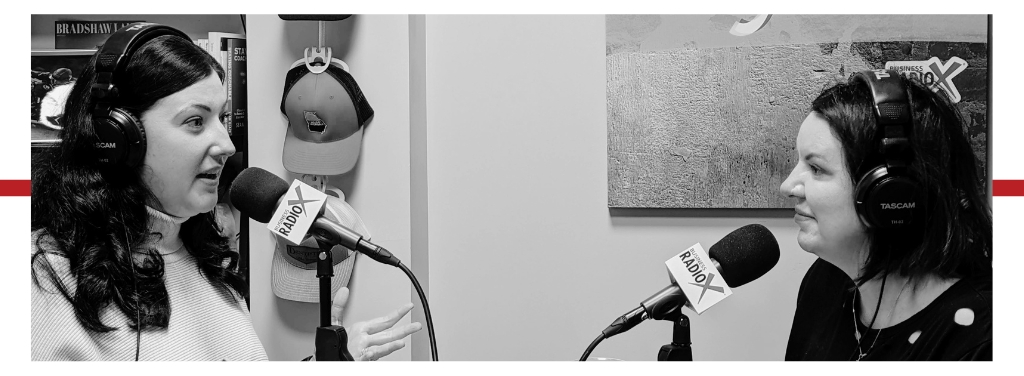
In this episode of Women in Motion, Lee Kantor is joined by Dr. Pamela Williamson and guests Robin Billups, Michelle Muncy, and Erika Guerrero. They share insights on the dynamics of their partnerships, the importance of trust and boundaries, finding a partner who shares the same vision, and the impact of COVID-19 on work dynamics. They also emphasize the need for documentation, hiring the right people, and involving everyone in marketing and business development.

Robin-Morgan-Billups

Robin Morgan Billups is an entrepreneur who established her career in banking focused on commercial real estate (CRE) construction financing.

Prior employment includes U.S. Bank as a CRE Construction and Community Lending Relationship Manager. Robin created the U.S. Bank National Supplier Diversity Program across a 24-state footprint.

During her tenure, the bank received outstanding ratings from regulators and national recognition for its lending, educational procurement, and supplier diversity programs.

After U.S. Bank, Robin leveraged her expertise to establish The Billups Group (TBG). TBG couples supply chain diversity and inclusion with corporate social responsibility efforts to establish and achieve a strategic plan(s) via assessment and coaching.

TBG clients entail entities and entrepreneurs seeking to address market demand for capacity and scalability. TBG consultancy seeks to support the clients’ economic goals and compliance reporting.

Robin is an alumna of the USC Marshall School of Business’s Minority Program in Real Estate and a certified Supplier Diversity Professional/UCF.

Michelle-Muncy-Able-2-Adjust-IncMichelle Muncy is the majority owner of Able 2 Adjust, Inc. She has her Masters in Science with an emphasis in Mental Health and Wellness and has been managing the day-to-day operations with her partner since 2011.

Together they have built and expanded their business nationwide and have offered over 300,000 online, on-demand classes to families in transition. They are currently hoping to expand their reach to better serve the community.

They are currently working on classes for the workforce, the Department of Children and Family Services and other court agencies.

Erika-Guerrero-Electric-GoddessErika Guerrero has over a decade of technology experience. She began her career on the Dragon 1 program at SpaceX, was New Product Introduction Program Manager at a battery manufacturing startup and was promoted to manage the joint venture with BorgWarner. In 2019, she founded Electric Goddess, a premier boutique research and development lab, that has grown to a multi-million dollar bootstrapped enterprise.

At the end of 2021, she took on the role of CEO at Redivivus and defined the company scope, financial path, and technology strategy to solve battery recycling industry challenges from a first-principles perspective.

Erika enjoys being active, spending time with her family and her chameleon Hiroshi, enjoying living the beach life, and traveling for work and play.

About our Co-Host

Pamela-Williamson-WBEC-WestDr. Pamela Williamson, President & CEO of WBEC-West,  is an exemplary, dedicated individual, and has extensive experience as a senior leader for over twenty years.

She has served as the CEO of SABA 7 a consulting firm, overseen quality control at a Psychiatric urgent care facility of a National Behavioral Health Care Organization where she served as Vice President and Deputy Director,and has served as the CEO of WBEC-West, since 2008.

Her extensive experience in developing and implementing innovative alliances with key stakeholders has enabled the organizations to reach new levels of growth and stability. Her ability to lead and empower staff members creates a strong team environment which filters throughout the entire organization.

She takes an active role in facilitating connections between corporations and women business enterprises and sees a promising future for WBENC Certified women-owned businesses.

Dr. Williamson holds a Doctorate in Healthcare Administration, a Master’s degrees in Business Administration, and bachelor degrees in both Psychology and Sociology.

Connect with Dr. Williamson on LinkedIn.

Music Provided by M PATH MUSIC

This transcript is machine transcribed by Sonix

TRANSCRIPT

Intro: Broadcasting live from the Business RadioX Studios. It’s time for Women in Motion. Brought to you by WBEC West. Join forces, Succeed Together. Now here’s your host.

Lee Kantor: Lee Kantor here with Dr. Pamela Williamson. Another episode of Women in Motion brought to you by WBEC West. Dr. Pamela Williamson. It’s been a minute since we chatted. I’m so excited about this topic, the topic of women leading the way with male partners. How are you doing?

Dr. Pamela Williamson: I am doing well. I am excited by this topic too. We get lots of questions around certification and whether you can get certified if you are partnered with a male and what that looks like. So I’m excited to hear these two ladies stories and super excited today to have Robin Billups from the Billups Group as our expert panelists today. So Lee, I’m going to pass it back to you.

Lee Kantor: All right. Well, let’s start with Robin Billups with the Billups Group. Robin, can you share a little bit about the Billulps Group? How you serving folks?

Robin Billups: How am I serving folks? I coach, I do an assessment. I coach and push them towards a strategic plan in order to meet the compliance regarding procurement and also to to grow their businesses. You know, most corporations now are looking for capacity and scalability, and I’ve decided to focus on existing businesses that really just need that extra push to make decisions immediately and to be more strategic on how they’re planning their their day.

Lee Kantor: Very cool. Next up, we got Michelle Muncy with Able 2 Adjust. Welcome, Michelle.

Michelle Muncy: Hi. Thank you so much. A little bit of background about our company. We started off doing family education on demand classes and we are trying to transition now over to leadership training classes across the country and trying to get into government procurement. So it’s always fun.

Lee Kantor: And last but not least, Erika Guerrero with Electric Goddess. Tell us a little bit about what you’re up to.

Erika Guerrero: Thankfully, Electric Goddess started in the spare bedroom of my luxury high rise apartment where building with my partner and we had one power supply and meter. And then before I knew it, we filled up that entire room with electronics. And so now we have two labs that is a boutique research and development firm. And why I say it’s boutique is because we don’t go for quantity. We really go for quality. We solve really large issues for startups, investors and large corporations and energy storage, batteries, space propulsion industry. And it’s been a fun ride.

Lee Kantor: Fascinating. Let’s dive right into this again. The topic is Women in Business leading the way with male partners. So I’ll kick it off with you. Robin, What inspired you to partner with your partner in the first place? How did it all get started?

Robin Billups: Well, I spent over almost 30 years in the banking industry. My background is construction, real estate, commercial real estate, construction financing. And having spent a lot of time in that sector with males, I learned everything that I learned about the lending business came from a male perspective, and I saw that they were they were earning quite a bit of money and they weren’t doing half the work that I was doing on the residential side. So I moved into commercial real estate, and when I turned 50, I decided I needed some other skills and I moved into the supplier diversity space. I created the supply chain inclusion process for US Bank. I’ve actually been on the board president for We Bank West. I actually was the business development director for a national director for We Bank National. And with all of these multiple skills, my husband and I decided that, you know what, when you decide to not be in corporate, you have a book of business and the and the connections to actually support and work with coach other individuals who are in this in this space trying to do business with corporations. And my husband is a major he ended up teaching fifth grade. He retired and we call it the Billups group because my sons and my two sons are actually engaged with with us as well.

Lee Kantor: Michelle, can you talk about your origin story?

Michelle Muncy: Yeah.

Michelle Muncy: Um, well, I was. I was working in the corporate world as well, um, doing marketing, and I was always kind of an entrepreneur on the side. So in the evenings and I actually ran across my partners actually over in Europe, and we just formed a relationship. And when we decided to kind of delve into this space, this kind of untapped market back in 2011, he was just an infant. He was really young but super, super intelligent. And I knew I was going to be partnering with somebody that gave me my space and I respected his space. And it was and it’s turned out to be a huge blessing and a great fit. So we’ve been we’ve been partners for quite a long time. And, you know, we’ve we’ve made it work. You know, it’s it’s been it’s been a journey for sure, Erica.

Erika Guerrero: I have always been surrounded by men. I’ve being in technology. I guess I did get a sociology degree, but my minor was in astrophysics because I really liked looking up into space. So when I was at Space X, definitely surrounded by male engineers, and then I became a new product introduction program manager for a battery factory. So they gave me like an empty building and said, Go build batteries. And from there I was running a joint venture with one of the largest automotive parts suppliers in the world, and I had a similar experience to Robin where I did a really great job. I saw a lot of people excelling in ways that I wasn’t given the same opportunities, and so I branched out on my own with my partner, Luke, who ended up becoming my husband last year. But when we first met, he was kind of this feral ish scientist that was helping me choose some glue. And eventually I just really got to see like, Hey, this is a really good person. This is somebody who’s been in the Electric Revolution since like 2006 when it was like weirdo to have an e-bike. And so he’s really helped bring more clients to our business and I’ve been able to empower him by he doesn’t want anything to do with the business. And I’ve been able to learn so much about technology and it’s been a wonderful blessing.

Lee Kantor: Can can any of you speak to maybe some of the trade offs like like in terms of how you’re you deal with conflict or you deal with challenges or obstacles and maybe your partner deals with them through a different lens. Can you share any stories in and around that?

Robin Billups: My my personal experience. I was a management trainee many, many years ago. My first manager when I became a loan officer said to me, I’ve always had male managers up until I got into late in my career and they’ve always he always said to me and it always stuck with me. Deliver a note early and often. Because sometimes we will waffle on what we know is the right thing to do and we need to deliver that. No. And what he what he shared with me is that, you know, the folks are looking for. Yes. But if the answer is a no, you have to deliver that early and often, because the longer you protract that, the deeper the problem becomes and the more expensive it becomes. And they’re looking for the deep pockets. So, you know, my husband was a major you know, he’s a numbers guy. Numbers wasn’t my thing. My degree is in journalism. He went on that that side. So we kind of have this yin and yang thing going on. We’ve been together 52 years. We’ve been married 46 years, but we’ve been together 52 years. So we kind of grew up together and we kind of know each other’s strengths and weaknesses from that perspective.

Michelle Muncy: And I’ll jump in. Um, I, I would think and I hate to stereotype, but I’m a lot more emotional and I drive by emotion and I really admire in my, my partner in his ability to just kind of see things very black and white and very clear. And he is also brings in the technology piece of it. And I do the the business side and the marketing side. And it’s, you know, I’m finding a balance to really try to respect knowing that he’s usually the voice of reason for me. And I’m although he has ideas, I’m the idea person and I’m always wanting to like make friends. And he’s coming at it more from like, but this is the reality and these are the facts. So there is a really good, as you were mentioning, Robin, the yin and yang part of it. And I think that’s what’s made us successful is finding that balance and really showing him the respect. And when he can see that I’m respecting him and his decisions, he gives a lot more freedom to me to be open with my ideas so I can voice my ideas. And that’s what makes it great. And a successful partnership is that we both respect each other and knowing, you know, I’m really we’re struggling with an issue right now where he’s saying no. And I’m certain it’s a yes. And I’m really trying to understand his no. And I want to have his no be okay, but I’m still grappling with it emotionally.

Lee Kantor: So how do how do you break ties?

Michelle Muncy: With the yes and the no.

Lee Kantor: Yeah, like so if you have, you know, differing opinions, is there a default like, okay, if we don’t agree then it’s a no or if we don’t agree it’s a yes. Like how do you break ties?

Michelle Muncy: He’ll let me try it and fail. And he’s really good about he’s really good about giving me grace and knowing, okay, it’s going to cost this much if she fails and we can afford to do that. But he appreciates the fact that I’m going to try. And so that’s again, why it’s such a good relationship is he gives me the space to fail and we might have some success or we we’ve had successes and so we have enough room to grow and and and try and knowing that there’s going to be some failures in there, which I think is also important is to know not everything’s going to work, but we need to keep trying. And he gives me the space to do that.

Lee Kantor: Right. And and you feel safe in that environment where it’s okay to take risks. Like it’s not, you know, the it’s not something that’s going to end anything. It’s just we’re trying different things. And life is an experiment. So this is just another one.

Michelle Muncy: Absolutely. So how much can we risk now?

Lee Kantor: Erica, what about you?

Erika Guerrero: I would say when you’re at the tip of the spear and no one’s really done anything of what you’re doing, there’s really no rule book. So I would say I’m very orderly. I did a program management job. I’m like, here’s the schedule, here’s where all the parts are, Here’s everyone moving. And Luke is the total opposite. Like if I just let him alone in the lab, he would just it would explode with parts everywhere. Maybe literally and physically and actually. But I think there’s a fun quote from a Dune audiobook I was listening to that was like, too much order in research. You’ll never discover anything new. And so it’s a really fun balance between, as Michelle was saying, like you can make those calculated decisions, right? If you fail, you know, it’ll cost X amount. But if you win, like, you know, that’s part of being an entrepreneur is you’re taking you have a certain level of risk. And I would say that balance really comes on a program and technical level with me and Luke where I can definitely give ideas like, Here’s what I’m thinking we do. And he’s older than me, and so he can provide more like experience because he’s seen a lot more things. Like, I can be definitely naive and I understand that because I always want to see the good in people, and I like that about myself. Actually be a bit more rude. Be like, Hey, you should watch out and make sure someone’s not taking advantage of you. And I would say, like the biggest thing I really notice is actually people’s unknown biases. So like in your brain, you have like.

Speaker8: Thanks.

Lee Kantor: Erica’s cutting out a little bit.

Erika Guerrero: The same exact thing I say, but it delivers like someone asked.

Lee Kantor: So, Erica, you’re cutting out a little bit. But Robin, I see you nodding your head about these kind of biases. Can you speak a little bit, Robin, about you?

Robin Billups: Just you just you just reminded me that, you know, as I said before, my sons are engaged in the business as well. And my, my my 42 year old or my 38 year old, sometimes I have to remind them mom and dad are 25 and 30 years older than you guys. And we’ve been down the road a piece. Right. And because we may not necessarily be so technologically, technologically strong sometimes or we’re not up on the latest and the greatest, I always say to them, if the computer went down, what could you do with a piece of paper and a pencil, you know, that type of thing. So yeah. Erica, I hear you When you say that age wisdom, this is what I tell my, my, my young people wisdom and knowledge comes with time. It comes with time. And Michelle, I love what you said about being able to take a risk and validating what that risk looks like and still taking the risk. I think that most of the time you learn from those situations. You learn a lot more about yourself, you learn a lot more about your business, and you learn a lot more about how you’re going to grow the culture of your company. When you have those situations where it may not turn out the way you wanted it to and or it may fail, you know? So that’s that’s good practice.

Speaker7: Yeah.

Michelle Muncy: And go ahead. Sorry, Erica.

Erika Guerrero: The wisdom tells you. Right. But you definitely should listen to it because these little tidbits of knowledge that you wouldn’t have.

Lee Kantor: Now, Michelle, you were going to add something?

Michelle Muncy: Yeah. One of the things, too, that I was going to say is it helps with the knowledge. You know, sometimes I think about, gosh, I wish that our the employees that we have could, you know, think like so and so, you know, this, that and the other thing and kind of extrapolate on an idea and I’m you know, I’ll come to him and I’ll be disappointed. I’m like it just it makes sense. So I think what makes sense in an entrepreneurial mind isn’t making sense to the employees. And they take direction. And he helps me kind of again see the big picture. Like that’s the reason they’re not, you know, they’re employees and not entrepreneurs. And that’s why we do what we do, even though sometimes the frustration level is there for me when I’m like, but it’s and he’s like, well, if it was that easy for everybody, they would be doing what we’re doing. And again, it kind of brings me back a sense of reality. So he really grounds me because I’m up there floating sometimes and I do need that balance, which is really nice.

Lee Kantor: So how do you think it’s impacted your culture of your company having both of you lead?

Michelle Muncy: Well, for us. I mean, we have very distinct roles as far as what we do. And it sounds like both Robin and Erica maybe also do as well as he he stays in his lane. I stay in my lane. I give him the freedom to do his job. I don’t micromanage him whatsoever. I have full faith in my business partner that he’s going to be doing his job. I’m not running after him worried about and that a lot of times with partners, it’s like, gosh, are you pulling your weight? And again, I’ll just speak for myself. What makes us successful is I don’t have to guess or wonder or hope. He’s pulling his weight. He is pulling his weight and my weight. And so I was listening to a presentation where they were talking about relationships and, you know, and it is true. I mean, if you talk to them and I do say this like I’ve got about 10%. I mean, hopefully he’s got the you know, even 80 or 90% to carry me at that time. But he’s still in his lane but helping to support my role also. And I’m there to support him. And technology when we need to look at features or we need to build on something. And I think there’s just a respect level. And when one of us is down, the other one’s, you know, picking us up and that kind of thing. So it we have been able to find this dance that really works. And I don’t know, you know, I feel like it is very unique, especially in this space. And it takes a long time to develop. And it’s like when Erica was said, I mean, I’m not surprised that she ended up marrying her partner because, you know, it is such a blessing. And even with Robin, they’ve been married 52 years. This is unique rather than, I think, a standard.

Robin Billups: Well, you know, and to your point, Michel, first, we’ve been dating 52 years. We’ve been married 46 years. And to that point, literally, he went away to school. I went away to school, and then we got married. And, you know, right after I graduated from college. So literally, when I say we actually grew up together, we kind of were raised to a large degree. And what I heard you say earlier, and I think this is critical, we all bring the stuff that our parents gave us to the table. Right? And I tell people all the time, you nurture the things that you like and you have to work on the things that you don’t like because it’s in you to be that and do that. And so for us, my husband literally kind of like lets me lead this thing because I’m the one that decided I was going to be a consultant. But he certainly is there for me when I need to pass something by him or when I have a new idea and having to rope rope me in because I’m like you. I like ideas. I’m like, Eric, I want to push it out.

Robin Billups: I want to get it. I want to put a strategy together. I want to work that strategy. And one of the things that I want to say to women in particular, you hear all the time, you know, people ask that question of what does work life balance looks like look like? Nobody can give you that answer. That answer belongs to you, your partner and your family. So to Michelle, you made a very valid point. Sometimes you he’s at 80% and you got the 20 or sometimes it’s 5050. And so again, work life balance. There’s no such thing as that. You know, we got all these buzzwords that people operate and live off of, and I think that we need to just let that be. They’re just buzzwords because at the end of the day, organically, you will figure it out if you are committed to each other. And one last thing I’ll say, you don’t have to. You always have to love your partner, but sometimes you don’t like them, sometimes you don’t, you know, sometimes you don’t like them. And that’s that’s natural. That’s natural. Can be prolonged, but that is natural.

Lee Kantor: So how do you work through those kind of points of friction? And especially when you are in a married relationship where they could spill into a personal life and they they may not be siloed in your business where it’s hard to have, you know, kind of really strong lines between them.

Robin Billups: Well, you know, for me, it always has. This thing of business is business and personal is personal. If you keep the I learned that so very long ago when I got into commercial real estate, you know, women could be in the residential side and you could do credit cards and lines of credit and all of that. But when I got into commercial real estate, you cannot take this stuff personal. This is not personal. This is business. And so that’s kind of been the way I’ve trained Robin. My husband is just one of those easy, you know, I’m high energy. He’s the easy going guy, right back to that yin and yang thing. And so how do you do that? You cannot you cannot let your. Personal overlap onto your business piece, and you can’t let the business overlap on your personal, because I think that’s where it gets confusing. And now you’re saying stuff that you don’t really mean and all of that kind of stuff. You know, we I’ll be very candid with you, all of us know the button that we could punch that will pop them up out the box and they’ll never go back in the box. Right? So you can’t dance around those buttons. You really just can’t. You have to keep the personal, personal and keep the professional professional. And sometimes you just have to say, you know what? Let’s just walk away and come back to this in a few minutes once we calm down or, you know, once we do a little bit more due diligence, you know, that type of thing, you have to work at it, no question.

Speaker7: Erica’s.

Michelle Muncy: I don’t know if Erica wants to chime in, but coming from the perspective of we are not married, but we are extremely close, both of us have partners. Is that he well, and he’s been married for several years. There has to be a lot of trust on like even coming from his wife and knowing that there’s no boundaries that are going to be crossed. I did just run into a situation even this week with a gal who had a a male business partner, and there was that threat and that insecurity from their spouse that was coming through. And so I think part of our job is because we do have such a close relationship and being on the outside is to make it clear that those and make the spouse comfortable that that we’re not going to cross those boundaries, that our intention is to build this together and that they’re are part of that. And so I’ve included her a lot, you know, and hopefully we’ve built a relationship over the years to where she’s comfortable and know those won’t be crossed as well. So anyways, I think that is an important part to make is that the spouses need to be comfortable, you know, because we’ll go on trips and stuff and they yeah, the trust needs to be there from all parties.

Speaker7: Absolutely.

Erika Guerrero: I could totally see that because business is a contract and really people forget that marriage is also a contract. And so they’re very serious to me about both of those things. And so I love to see that you’ve found that balance. I do think there’s pros and cons to being married to your business partner, just like pros and cons of not being married right there. Um, for me, I like it because I know that my husband and business partner can see my heart. And so he knows that, like, I’m never trying to do anything to, like, screw anyone over or like, you know, just I’m always trying to do my best and he can support me in that way to help communicate that sometimes because that goes back to what I was saying earlier with the like, unknown biases where I say something, it doesn’t land. But if he says the same thing, sometimes people will listen and it goes the opposite way too. Like if I’m wearing a suit and he’s wearing a t shirt and doesn’t have a haircut for three months, sometimes people don’t listen to him versus me. And so it’s been a really nice balance. And I agree exactly what Robin was saying, like business is business. But I would be lying if I said that sometimes you go home and you like, can’t stop talking about this one thing that you have. And I mean, as an entrepreneur, it’s work life balance is like, What do you mean? Like, I’m not working? So it’s kind of like you got to find your your peace with it. And I think really just make time to do the things that are important to you because, you know, when we’re. Old. And, you know, we look back on our life. I want to remember those memories on the beach of looking at my family and not saying, Oh, I chose business always over that personal life.

Robin Billups: One of the things that I think is important to and Michelle, you hit on it. You know, when you actively engage the other parties, we’re literally all of us are looking to try to build legacy businesses. Correct. So if something were to happen to the partner, you know, and not not in a in a not being morbid, but if something were to happen, that individual who’s the other partner could potentially be the person who could step in. Right. And then, you know, I have I have a bunch of work husbands. I have a bunch of work husbands. I’m working on a big commercial real estate construction project now with a guy. And his wife called me up. She introduced me. She’s we bank certified. She introduced me to him and she goes, Robin, you know, Mike, Michael thinks you’re his work wife, you know? And I said, Yeah, because we talk every day. You know, we’re trying to get this project done. And so, again, I think that take Erica, you said it best take the time to have that time where you’re smelling the roses. You guys are going out for some cocktails or you’re coming over for brunch or you go to church together or you go to the kids program, you have to incorporate those individuals in the family so that they feel like they’re not only just you’re not just building the business for yourself, but you’re building a legacy business and you’re, you know, part of the community. I think that that helps as well.

Lee Kantor: Now, Do you see any advantages of coming into a business with a male partner and especially the two people that are married? Is there an advantage that you’re married as opposed to just business partners? I mean.

Speaker7: Just. Well, I can.

Michelle Muncy: Go ahead. Go ahead, Erica.

Erika Guerrero: I was just saying, I’m recently married, so I really don’t know. Time will tell, I guess.

Lee Kantor: I mean, I see it. I mean, there’s pros and cons in everything like we talked about earlier, but being married and having that united front, um, I can see as an advantage and, and the support that comes with being married is an advantage. But then it’s just, it’s easy for it to creep into your day to day life and not have those lines drawn where the workday ends and the and the rest of the day begins. So I just wanted to know if any of you felt that as a net. Obviously you’re doing it. So it’s a net positive today. But if you could do it again, is it something you would say, okay, that was the right move? I would definitely do that again.

Robin Billups: Well, Michelle said it best. It’s that trust factor. You know, this is the person that you do trust, You know, even even like I said, even sometimes you’re a little ticked off with them, you know. But that’s that’s temporary because at the end of the day, the value add of these relationships and the legacy and the history and the trust factor that you built with them, The one thing I can say and Erica keeps chiming in on this, you know, sometimes when people want to receive information, they don’t want to receive it from a female. You know, they they just because they have these unconscious biases or they’re just prejudice or whatever. And so, again, it’s I think that it’s critically important to have some you know, even if you’re not partnering with someone, you should always have that male counterpart that. You know what? Let me bring you to the meeting. You know, let you let me have you attend this meeting. Let me let you kick the meeting off, you know, that type of thing. You know, historically, I was because of my voice being so heavy, people would always say, I need to talk to Mr. Billups. Yes. Can I help you? I want to talk to Mr. Billups that I spoke with. Yes. Can I help you? I want to talk to Robin Billups. Yes. Can I help you? Because they weren’t expecting me to be the female, you know, leading the train kind of thing as as the conductor of that particular day. And so I think the trust and the the the way the outside receives you, depending on what their mindset is, if there’s definitely a value add there.

Michelle Muncy: And just to chime in, where Robin kind of touched exactly on what I wanted to say is for as much as I you know, it’s frustrating, I still use him as kind of like the heavy hand, even if I’m making the decisions. It’s there is that respect factor coming from a male and it is helpful to have or if I’m going back, it’s like, you know, I need to check with my business partner, see what he has to say. And I do use that to my advantage, um, again. And he’s just like, Well, what do you want to do? And, but, but he does know. It’s kind of like good cop, bad cop, and he takes the brunt of it. Is it fair? Is it the way it is? I mean, do we get further because of it? Absolutely. I’m just going to be honest about it. So we do have that. But that benefit by having a male partner and it you know, just like with anything, I mean. Yeah. So totally agree with you Robin, there on that one.

Robin Billups: That good cop bad cop thing works every time. Every time. You know, sometimes my husband can be excited about something and, you know, and he’ll call me and he’ll say, okay, now I need you to play that role. I’m like, Oh, cool. I will play that role because you’re talking money, you’re talking time, you’re talking, add something else to the mix. And so with that, somebody has to say has to it’s a very good negotiating tool, I’ll put it that way.

Lee Kantor: And it sounds like it’s a circumstance where you’re on the same team. So whatever it takes to get the win you’re willing to do.

Robin Billups: Bam, shakalaka, boom, boom. That means that’s the right answer. Absolutely.

Lee Kantor: So now let’s talk about a little bit of lessons learned. Is there anything you can share? If you were advising somebody who’s thinking about either going into business with their spouse or a male partner, there are some kind of do’s and don’ts that you some advice you can share.

Michelle Muncy: For me, one of the big things is, is the respect factor, especially if you’re going in it with a male, is that you absolutely 1,000% have to respect that individual and have confidence in that person. I mean, again, partnering we try to partner with companies or what have you. And you know, it a lot of times it goes south and so you just need to know what that person you’re going into. I’m willing to go into battle with this person. And as Robin has said several times, it’s not always perfect. And I would love to say that we’ve gotten along. And there’s been a couple times I didn’t know if we were going to be able to pull through. Um, and a lot of give and take, like, do I do I want to go into battle with this person and really think through it and being willing, willing to work hard a lot longer hours than you would as if you were just working. I mean, hiring somebody in the corporate world, it’s a whole new ball game because they just don’t have this. It’s just a different work style. And, you know, do they have the same vision? Like, can this person carry you or do they complement you? I mean, there’s a million ways you can just you really have to do a pros and a and a SWOt analysis on this sucker and make sure I have the tendency to just think we all can dance around a maypole and everybody’s going to get along and it’s not the case at all. And and so, again, it’s the reality of what it actually looks like and being able to take a step back and do an assessment.

Robin Billups: When I was working in the supplier supply chain inclusion space, you know, and people because again, as I said early on, most of these companies are looking for capacity and scalability now. And Michelle, you made a very valid point that when you’re looking at staff and adding to your team, people that you’re looking to hire nowadays have a lot different perspective. And I think, you know, Covid had a lot to do with it. But at the end of the day, I think it was coming anyway because we are in this revolutionary change about how work functions and how companies function. And and now folks are having to deal with women, right? You know that the woman is the lead. You know, she may he may be a silent partner, you know, that type of thing. But when I was working in the in the in the procurement space, one of the things that I learned and one of the things that I always shared is. Instead of looking for a partner, Looking for look for a team. Right. Look, do a teaming agreement first. Do the dating. That’s what I call the dating process. You do a team in agreement with somebody so that you can decide whether you can partner with them or not.

Robin Billups: Right. And so when you’re when you’re looking at should I do business with my husband, should I build a a business with my male partner? I think you have to come up with a project that allows you to see the teaming agreement process unfold, the dating process unfold, and have to have those real candid conversations and possibly sign up for Michelle’s services so that you learn, you know, your style and your culture. And and again, as I said before, how you were raised comes out in all of this. You know, what what kind of parenting you receive and what kind of education you receive, all of these things come into play. And so that teaming agreement, you know, building a team first before you actually dive into, you know, a joint venture or LLC or, you know, something that’s going to be concrete, concrete, concrete that’s going to take a legal process to unwind. So I think that build the team first and then that way, you know, whether you can you’re dating and their success and you can get married into a partnership or a joint venture or something of that nature.

Speaker7: Erica. I feel married. Oh, hi. I feel very.

Erika Guerrero: Empowered by having a partner that I trust so much. And I think that’s. I, like Robin said, like, I’m definitely the leader. I get calls. Mr. Guerrero or Hello, Eric and I would like to talk to the business owner and really my partner. We love it because we’re in a male dominated engineering scientist business, right? My company name is called Electric Goddess. And so it’s very polarizing, right? So there’s some people who are like, oh my gosh, I love this. And then there’s other people who you can tell they’re kind of uncomfortable. But really, there’s so many different layers to why we chose that name. But really bringing that femininity and that balance to an industry where I, I personally I mean, this is my experience as a woman. I think women are wonderful leaders, and I think that men love to serve. And I think that men are very much, you know. And I’m saying this generally just very much wanting to accomplish a goal where, you know, generally women can think about things from a like many different levels at once. And, you know, there’s crossover with that with anyone.

Erika Guerrero: But really in my role, I’ve been very empowered to take that lead and know that I have kind of that partner who has my back that and is making sure that like, Hey, we’re doing this to the best of our ability and we’re doing great. I will say that being married has gotten the same kind of polarizing effect because there’s people who are like, This is great. You know, you and your partner are very much, you know, integrated in your lives. And so I can see you building that legacy. I can see your passion. And I’ve also had the other side where I’ve had people being like, Oh, you’re married, like not liking that so much. And then I’ve even had like previous employees who are like, okay, Erica, you made that decision because that’s how your partner felt. And, you know, I can’t believe I’m working for a married couple. And I was like, wow, I can’t believe that, you know, you’re still working here. But it’s it’s been an interesting journey for sure.

Speaker7: Now.

Robin Billups: My one last comment would be to.

Speaker7: Um.

Robin Billups: I’ve always been trained that the vision is given to an individual right. The mission is getting written by the team, but the vision is given to an individual. So everybody’s job is to capture that vision and move the vision out. Versus I got a vision. You got a vision, and we got to fight on which one we’re going to push forward. Right. And so I think that if people if you’re if you share that with your team, meaning your staff, especially the vision was, you know, generated, captured by this individual, this is the vision. Be very candid about what that vision looks like and what the mission of the organization is and do that early and often. I think that people tend not to revisit why they got into business, how they became a partner in this business. And I think that we can lead by example by being more narrative about the stories that we share and being more authentic in under and sharing the good and the bad through this process. But I think that, you know, again, the vision is going to come from one individual and then that somebody, everybody else’s job is to get on board with that.

Michelle Muncy: I’m going to definitely second that with the team and with my partner is that he enhances my vision and that’s what’s great and can come up with stuff I didn’t think about. But supporting the original goal and making that come to fruition, whatever that looks like is that. And I’m going to guess it’s that same way with Erica too, is that they can expand on it. But you’re right without I mean, it’s already hectic enough and to not have that chaos but you’re working on that single vision. And a lot of times he has to say to me, you know, especially even with Covid and things changing and the employee structure looking different and just the the mindset of people is, where are we at? Do we need to just rather than grow and expand, it’s like, let’s just stay in our lane and work on this. And you know, right now, just so we don’t, you know, go off the rails. And so he does a really good job. And, you know, I don’t want to build a statue for everything he’s done. Right. But it’s just keeping me in our lane a lot of times. And to stay focused on that one single vision. So good. Good call there, Robin.

Erika Guerrero: Yes. Thank you, Robin, for taking what I was trying to communicate and putting wonderful words on it. I appreciate that.

Lee Kantor: And and. And Michelle.

Robin Billups: Excuse me. Excuse me. Lee. Michelle made it. She she she she. She just reminded me of something else. Is that vision creep? Right? You know, you know, the market changes, things change. Covid hit, and then the vision starts to creep because nobody’s staying on task with that, with what we originally started with. That’s good stuff. Really good stuff.

Lee Kantor: Yeah. And clarity around this one. True North makes everything a lot easier. It’s it it makes everybody clear on what what the real goal is. And it helps you make decisions when everybody’s in agreement of of what you’re trying to accomplish, then everything becomes easier. But that requires a constant reminder and the communicating clearly so that everybody is on the same page. And it’s so important when you’re onboarding new people so they understand how everything fits together. So yeah, I think clarity around the True North is critical for any successful organization.

Michelle Muncy: Yeah. And I don’t know if anybody is, you know, I can identify with this post. Covid is trying to get your, your staff or the people that you’re onboarding in alignment with what your vision is and the value of what that is. I mean, we’re we’re struggling on our side and you can explain to them and it’s yes, yes, yes. But just the work ethic is changed post Covid, the mindset has changed post Covid. It’s just it’s a it’s a whole new ball game that we’re finding. And and we’re just trying to find a real balance. I sometimes I say we have survivor’s guilt because we do online education. And so for us, we did we did fine. But again, just finding the resources and the staff to help move this thing forward is and one thing one thing I did want to to mention that and sometimes I struggle. But when you’re in these sorts of partnerships and I think any partnership is leaving your ego at the door, you know, check it in. And you know, it’s not we’re not going to die if anything doesn’t go our way. It’s just, you know, to to remove ourselves and finding like, again, we’ll go back to that work life balance is just sometimes I have to detach myself and know that I’m not going to die if these decisions aren’t made the way that I see that they need to be made. And so letting some of that control go, too. And that’s that’s tough as as an entrepreneur, because I see it a certain way.

Robin Billups: Well, you know, the other one a couple of last things that I wanted to say. And based on exactly what you just said, Michelle, I one of the things that I learned early on in my training, as I mentioned, to deliver the note early and often, you know, just just just don’t skirt that issue. Do not skirt the issue. I think especially with this change and the mentality that people have nowadays, it’s I was trained many, many years ago. Documentation is the key. You know, what happens is people don’t want to take the time to document, but you have to document that situation right then and there. You know, even if it’s, you know, sending a short email right after the meeting is over with, you know, to recap. So you need to put some processes in place that and also too, I think was critically important. If you put that process in place and you have the documentation when you’re not there and the other partner is the person you know you’re traveling and they’re there managing the day to day, they can actually go to that person’s personnel file or go to the HR or whatever and be able to look at what has been going on. You’ve already had the conversation about it, but the documentation, I think, allows you to be more candid without being concerned about becoming more personal or unprofessional about it.

Robin Billups: And I think that is critically important. Two things. One, don’t micromanage the weeds when you hire a stellar employee. I think that that tends to happen in companies where people go and hire the best and the brightest and then they want to micromanage them from one day to the next and always to make sure you’re doing one on ones with your with your team, you know, make sure that you have that time where you’re spending some time on their professional development and your professional development. Because I think people tend to work in their business and not on their business. And that working on that business is that documentation, making sure that they capture the vision and that the vision is delivered early and often. And my one last thing, if you have a receptionist, everybody in the company has to be marketing and business development. So when a call comes in, they can’t say, well, you know, Eric is in a meeting and can I take a message? No, how can I help you? You know that everybody that you hire has to be able to tow the barge, carry, carry the load and tote that barge, because again, you don’t have the time, the space and the money to hire people just to do a job. Right. So so keep that in mind. Please keep that in mind.

Speaker7: That’s great.

Erika Guerrero: Michelle. Like, I really feel what you are going through. I will say that having a staff is the hardest thing I’ve ever done in business, right? The human factor is not something that’s super calculated. I do want to say with hiring, you know, one of the things that I found that is the best is what are these people doing in their spare time? Because you can teach skills. You cannot teach character. And if someone’s character is I’m in my garage, tinkering, building stuff on the side doesn’t even have to be anything we’re working on. But they just have the drive and the energy to want to learn. That to me is like the most one of the most important things and characters. Characteristics of somebody I like to hire is passionate about learning.

Lee Kantor: Now, before we wrap up, I want to make sure everybody gets a chance to share the best way to connect with them. Robin, why don’t we start with you? What’s the best way to connect with you and the Billups group?

Robin Billups: You can reach me. I’m on I’m on LinkedIn. You know, I’m on LinkedIn. My profile is there. I think I say LinkedIn is the professional Facebook. And and so I would I would strongly suggest, folks, just look me up. Robin Billups I’m the Billups group. I’m on LinkedIn. I don’t I did I’m not building a huge business because I’m expecting my sons to kind of take it to the next level. Um, but I am on LinkedIn and I think that would be the best way.

Lee Kantor: And the website for the Billups group.

Robin Billups: I don’t have a website, a website.

Lee Kantor: So just. And Billups is Billups, Correct. All right. Michelle.

Speaker7: I.

Michelle Muncy: Um, we try to make ourselves accessible. So pretty much if you went to my website online parenting programs.com or just emailed Michelle at online parenting programs.com able to adjust as our company and online parenting programs is the is an easy way to get a hold of me or any of the staff. No I mean it’s kind of like just find me and the phones will roll over to me. So I in this industry, I have to be accessible whether I like it or not. So yeah. Michelle at online parenting programs.com and our phone numbers all over the website but yeah feel free to reach.

Speaker7: Out and.

Lee Kantor: Erica.

Speaker7: You can find.

Erika Guerrero: Me on LinkedIn as Erika Lauren Guerrero and our company website is Electric Gotesco.

Lee Kantor: Good stuff. Well, thank you all for sharing your story today. You’re doing important work and we appreciate you. And Pamela, before we wrap. You mentioned a lot of people ask you questions about, you know, what is the breakdown between a male and a female partner in order to be certified? Do you mind answering that question? What what is how does that work?

Dr. Pamela Williamson: So for certification, the woman owner has to be 51%. And we look at course at ownership and governance, right? So we need to make sure that that women owner is actually leading the processes.

Lee Kantor: Well, great job in putting this group together. I think we covered a lot of ground and it’s an important topic.

Dr. Pamela Williamson: I agree. I walked away with lots of nuggets. And so, Robin, definitely appreciate your nugget around. If you’re thinking about moving into a partnership, try it out first, do a couple of projects, make sure it’s a good fit. Erica I love Jaws Around. Trust that you have to truly be able to trust that the individual has your back and they have to trust that you have theirs. And Michelle, respect definitely is key to building a strong partnership. So I appreciate your comments on respect and and how you communicate and move that forward throughout the day to day. So Lee, I think we had a great group of ladies who shared lots of nuggets. And for both those individuals who are thinking about moving into a partnership, but also for those individuals who are in long term partnerships.

Speaker8: Yep.

Lee Kantor: Well, that’s a wrap for Women in Motion. This is Lee Kantor for Dr. Pamela Williamson. We will see you all next time.


Lori Cover with Pawsitively Max & Maggie, Insurance Agent Isaac Hall and Eric Reagan with 22one Realty

October 10, 2023 by angishields

Charitable-GA-Feature-101623
Charitable Georgia
Lori Cover with Pawsitively Max & Maggie, Insurance Agent Isaac Hall and Eric Reagan with 22one Realty
Loading
00:00 /
RSS Feed
Share
Link
Embed

Download file

CharitableGA-100623-banner

In this episode, Brian is joined by Lori Cover, Isaac Hall, and Eric Reagan. Lori shares her journey from the television industry to working with pets. She emphasizes the importance of community involvement and giving back, drawing from her own experiences volunteering during the pandemic. Lori also explains the mission of Positively Max and Maggie, which supports small businesses that contribute to animal organizations. She highlights the value of networking and learning from others in the business world.

Isaac shares his knowledge and tips for success. He discusses the importance of building a strong network and collaborating with others. Isaac also emphasizes the significance of continuous learning and staying open to new opportunities. Eric sheds light on the benefits of supplemental insurance. He explains how it can provide additional coverage and peace of mind. Eric also discusses the importance of understanding different insurance options and making informed decisions.

Throughout the episode, the guests promote positivity, collaboration, and making a difference in the community. Listeners are encouraged to get involved, support small businesses, and contribute to causes they care about. The episode serves as a reminder that by working together, we can create a positive impact and make a meaningful difference in the world.

Lori-Cover-headshotLori Cover is the owner of Pawsitively Max & Maggie, a new online & pop-up pet boutique that focuses on giving back. Pawsitively Max & Maggie donates a portion of their monthly profits to area animal organizations and features products from fellow small business owners who all give back to animal groups across the country.

Cover is also an award-winning television producer who has earned 6 Southeast Emmy awards for various productions including “Lawmakers”, “Football Fridays in Georgia”, and Atlanta Falcons “Rise Up Weekly”.

Lori and her husband Chris reside in Kennesaw and have 2 adult children, Paris & Nicholas as well as three 4-legged members of the family Max, Maggie & Mo.

Isaac-Hall-headshotIsaac Hall specializes in individual health insurance.  He spent most of his insurance career of almost 20 years with Aflac before opening his own agency.  Isaac is passionate about helping people get the coverage they need for themselves and their family.

Born and raised in Dallas Ga, Isaac has been living in Bartow County for over 18 years.  He’s happily married and has a total of 9 children.  Isaac became a Christian at age 14 and has been in the ministry the majority of his life.

Currently serving as the Worship leader at Gracewalk Church in Cartersville, Isaac loves to spend time with his wife traveling and keeping up with all 9 kids.

Eric-Reagan-headshotEric Reagan is a former first responder who spent a little over five years as a firefighter and paramedic for the city of Smyrna. He won Firefighter of the year in 1985 and Assigned Rescue 1, Engine 1 for 3 years. Awarded and assisted with strategic initiatives to transition from all volunteer rescue for the Smyrna citizens to the City Fire Services.

For just over nine years he was Director of Operations for Cobb County with Metro Ambulance. He started and ran his own ambulance service for seven years after leaving Metro. Eric then decided that he wanted to go into real estate and for the last several years has worked with families and businesses with their real estate needs.

He is now the Co-Owner of 22one Realty in Kennesaw. Eric has a passion for helping others and also does business coaching for small businesses. For all your real estate needs or if you need some help with your business, Eric is willing to be there to help.

In his spare time Eric love hanging out with his dog!

This transcript is machine transcribed by Sonix

TRANSCRIPT

Intro: [00:00:07] Broadcasting live from the Business RadioX Studios in Atlanta. It’s time for Charitable Georgia. Brought to you by B’s Charitable Pursuits and Resources. We put the fun in fund raising. For more information, go to B’s Charitable Pursuits. Dot com. That’s B’s Charitable Pursuits dot com. Now here’s your host, Brian Pruitt.

Brian Pruett: [00:00:45] Good, fabulous Friday morning. It’s another fabulous Friday. We got three more fabulous guests. And if it’s your first time listening to Charitable Georgia, this is all about positive things happening in community. Our first guest this morning is Ms. Lori Cover from Positively Max and Maggie. Lori, thanks for being here this morning.

Lori Cover: [00:01:01] Thanks so much for having me.

Brian Pruett: [00:01:02] I just like to say who day although we need a little bit better but who? Day, who day. There we go. That’s our common bond and little bingles there. So you and I met during a I guess a couple of years ago and networking and we’ll talk about that a little bit. But you have an interesting background from TV and special gifts, and now you’ve got this pet thing going on. So why don’t you give us a little background about yourself and we’ll talk about positively Max and Maggie.

Lori Cover: [00:01:27] All righty. Well, I grew up in Ohio, obviously being a Bengals fan and learned very quickly I didn’t want to stay in Ohio, so went to college in Florida so that I could get some good weather moved here pretty quick after that. And I actually have worked in Atlanta sports television for 30 years since I moved here. I was very blessed. I moved here and got involved in local TV and they needed a short, spunky woman to boss people around. So I became the sports producer at WXIa for a long time. And, you know, I came into Atlanta at a really good time because I came in when the Braves started in the 90s. So I got to cover a World Series and championships, and that was amazing. Then the Falcons were doing well, went to a Super Bowl. You know, Georgia started to do well. We had national championships and Final Fours. And so that was my passion and it still is. I still am a passionate IT sports person. But then I decided to try and move into other areas of television. So I moved into working on, you know, parades and game shows and talk shows with Tyler Perry. And and my days just got longer and longer and longer and longer. And, you know, you kind of get to a point where you’re like, what am I doing sitting in a production truck for 14 hours a day? Um, I am I am married. I have a wonderful husband. He also works in the industry.

Lori Cover: [00:03:26] So fortunately we understood each other’s hours. I have two adult kids and then I have three, four legged kids, which is actually why. Positively. Max Mikey So. And I met you, Brian, because right before the pandemic, my mom passed away, and then we hit the pandemic, and it was like, Oh, my gosh, my world kind of got turned upside down. So I started working for a great company called Tate and Zoe. I was doing it on the side, still doing some TV stuff, but I wanted to do something that added a little sunshine, so to speak, to things because that was what my mom always was. She was an amazing person and volunteering was huge in her life and it still is in my father’s. But so I started doing Tate and Zoe doing gifts and gift baskets, and it was always something that I felt like I can donate these to, you know, auctions and events. And so that was kind of my way of feeling like I was giving back and doing stuff. And then, you know, there’s a saying I saw recently and it was well about the time I started Maxim positively. Maxim. Ag It said, If your schedule is full but your soul is not, then you’re filling your schedule with the wrong things. And that was like a smack upside my head. It was like I was so busy and but nothing was making me really happy. So that was kind of how I took a really hard left turn. So.

Brian Pruett: [00:05:21] Well, you mentioned it. You you graciously donated some baskets for some events that I’ve worked with in the non profits from golf tournaments and some other things. So I appreciate you doing that. But so other than getting involved with the sports and stuff like that, why is it important for you to be part of the community?

Lori Cover: [00:05:38] Because that is is where you live. That is the people who are there for you for good, bad or indifferent. Um, we have I mean, my kids, from the time they were little, we would go and, you know, we’d serve food at a soup kitchen. We’d go walk pets at a humane society. It was important to us. We’ve been given so much in our lives that we needed to give back during the pandemic. We rode school bus for must ministries who delivered food to all the Cobb County kids who didn’t have the normal breakfast and lunch they would get at school. So we rode in the back of the school bus and went to extended stay places just to make sure, you know, we still had food at home. We still could get out and get what we needed, but not all these people could. So it it’s that kind of stuff that has always been so important to me. And it comes from my parents because my dad, God bless him, he still is so involved in his community in Northport, Florida. And mom and dad always we have a lot. We should be thankful. We need to give back to others.

Brian Pruett: [00:07:11] So I want to go back to your your television days for a second. So you say you started at WXIa. I did. So, you know, I think it’s interesting. It was Jeff Hollinger there when you were there?

Lori Cover: [00:07:21] No, actually, he was at Channel five. That’s right. He was the sports anchor at Channel five. And then that was that was the early 90s because I had just gotten out of college early 90s. And Fred Kalil, Randy Waters, Sam Crenshaw, those and I still I still do high school football on Friday nights for Georgia Public Broadcasting because that is my love. I mean there is nothing better than a high school football. It really is. It’s awesome. And so I still work with Sam Crenshaw who is so involved in high school football, so still work with Sam. And Fred has since God bless him, got to retire back to Arizona.

Brian Pruett: [00:08:06] Randy was for a little while at Kennesaw State. I don’t know if he’s still there or not working.

Lori Cover: [00:08:09] He actually is doing color radio for Georgia Tech basketball.

Brian Pruett: [00:08:16] Okay. Well, the reason I ask about Jeff, because I just saw where he left 11 alive and now I went to GPB.

Lori Cover: [00:08:21] Yes. I just saw him on Tuesday. We do our, you know, our our check in for high school football on Friday. We are in East Coweta tonight. So I have a long drive ahead of me today.

Brian Pruett: [00:08:33] It is football season though, so it’s always good when you can be out in the football field.

Lori Cover: [00:08:37] So can’t hurt.

Brian Pruett: [00:08:38] All right. So tell us a little bit about Positively Max and Maggie.

Lori Cover: [00:08:41] So having had animals my whole life, they are the purest form of unconditional love. They just are happy. When you come home, it’s like, yeah, you’re feeding me. Yeah, you’re here. So I knew that that there was something that I wanted to do. You look at the pet industry over the last ten years has grown by more than $10 billion, but yet 4 to 6 million animals are surrendered to shelters every year. So there’s something kind of wonky going on. Um, Ozzie Albies, who Braves second baseman, has started. He started an amazing pet foundation and his and this had started kind of getting me thinking because he was like he grew up in Curacao where dogs were on the street all the time and people didn’t think a thing about it. He wanted to teach people, you know, hey, the there’s a reason that they’re here. Treat them well, learn how to take care of them, kind of learn at an early age. So he’s done amazing things. He helps bring dogs out of shelters and takes them to Braves games to get adopted. It’s adorable. And, you know, I don’t have that kind of financial backing, but I want I was like, I’ve got to be able to do something. So I started doing research and and I found that there are so many small businesses, women veterans, people, handmake collars, handmade water bowls, do all this stuff and a percentage of all of their profits go to animal organizations. And I was like, You know what? I’m going to make kind of an umbrella to help bring in other small businesses.

Lori Cover: [00:10:46] They can also will also give back. We choose a different animal charity each month to give back to. And most of these items are things that if you have a dog or a cat, you’re going to buy anyway. You’re going to buy a leash. You’re going to buy toys. You’re going to buy treats. Well, buy from a small business that not only you’re helping support a small business, but you’re also helping support different different organizations. And I’ve only been doing this since July, so I am still a baby at this. And I know I have so much to still learn, which is why being part of the Acworth Business Association has been really important because a lot of people there has. They have really helped me kind of learn. You know, I do that, Yeah, maybe you need to do more of that. And and I’m I’m very willing to learn coming from television. I don’t have a business background. I can boss people around all I want. But that doesn’t mean I know necessarily, you know, long term where, you know, I need to change this marketing strategy or maybe add this. And I know there’s a lot of other small businesses who I’d love to incorporate in the umbrella, but now that I’ve started the business, I’m kind of overwhelmed with, Oh my gosh, I’ve got to do this because we do pop up shops and we’re online. So we’re trying to spread the word, so to speak, about. Positively maximum.

Brian Pruett: [00:12:32] So I’m curious how the name came about.

Lori Cover: [00:12:36] My dog, My Pity Mix. His name is Max and my one of my cats is Maggie, because I wanted to do cats and dog and. My my daughter, who has her master’s in luxury branding. She was my person. And I was like, okay, I want to use Max and Maggie. And she’s like, Mom, it’s a long name. I was like, I know, But positively is the giving back part. She’s like, okay. So she she was very instrumental in helping me try and create it and she created my logo and all that.

Brian Pruett: [00:13:16] Good. Awesome.

Brian Pruett: [00:13:17] You know, we do that monthly trivia and last month we helped the Etowah Valley Humane Society. So we were able to get a hold of Brian.

Lori Cover: [00:13:23] I was. And they, we actually have our fundraiser for the Etowah Valley Humane Society on our Instagram page. We started. This past weekend and we’re going to continue through the month of October.

Brian Pruett: [00:13:41] So share about that. What what’s the fundraiser about? How can people get involved?

Lori Cover: [00:13:44] You can go to the positively Max and Maggie Instagram page. It’s listed on there. And we do. And what I tell people all the time, if they see us at a pop up shop and they’re like, Oh, I don’t have a dog or a cat, well, I always have the information. I said, That’s okay. You can just donate to the organization. And I’ve had I had a bunch of people walk by and hand me $5. I said, we’re doing money or we’re raising a percentage of our profits from all of our sales online and at pop up shops and people who want to just donate. All those proceeds are all going to the Etowah Valley Humane Society.

Brian Pruett: [00:14:30] Awesome.

Brian Pruett: [00:14:30] Do you know being in the broadcasting world, do you know Ray Baker? Rape used to be in the red. He was the one that started Kennesaw State’s radio station back in the 90s. And you know, he’s involved with Rockford rescues. Have you gotten in touch with him about that? I have.

Lori Cover: [00:14:43] Not. And that’s just it, Brian. I will be honest. The number of people we were at a pop up shop on Sunday and I wrote down four organizations. And that’s what I mean, where because I’m still so early in this process, I love getting names and connections because I think the most important thing is education, especially of young people, because when young people learn. How to take care of animals. Hey, let’s get them spayed and neutered so we don’t have, you know, a litter of puppies or kittens that then my third animal is Kim Wiggington from the ABA had come to a board meeting and said, Hey, we found a litter of kittens. It was in a storm drain in, you know, in downtown Acworth. Does anyone want one? The only one they could catch. And I was like, I’ll take it.

Lori Cover: [00:16:01] My husband of course, was rolling his eyes and turns out she has special needs and that’s why they could catch her because she has a brain injury. But again, it’s this, you know. I. She would not have made it if she had been there. But that’s just another one of those. Oh, my gosh. Here we have more feral cats and more so I would I think that to me, I want to get involved. I want connections and I want to. I really want to help with the process of, okay, what’s the best way to help? Not have 4 to 6 million animals surrendered every year.

Brian Pruett: [00:16:46] I’ll make that reconnection for you with Ray.

Lori Cover: [00:16:48] So that would be awesome.

Brian Pruett: [00:16:50] You know? And then in January, I’m going to have an expo at the Acworth Community Center that you can be a part of. So that’s going to help the Horizon League portion of those proceeds so you can come out and, you know, promote your stuff there. So……..

Lori Cover: [00:16:59] Awesome.

Lori Cover: [00:17:00] I’m ready. I’m ready and willing to go just about anywhere.

Brian Pruett: [00:17:04] All right.

Brian Pruett: [00:17:05] Well, we talked about the networking and that’s how we met. So you not only network, but you’re involved with the ABA, you’re on, I guess, the board or you’re a committee member or whatever. So can you give us a positive story of how networking has benefited you and helped you honestly?

Lori Cover: [00:17:25] When I did the gift baskets, I was that was when I was like, I don’t know a thing about business. I need to help. So I went to the ABA. Never felt more like part of a family. Everyone was like, Oh, we’ll help, blah, blah blah blah, blah. Well, Dale Hoeflinger and Kelly Nagle, when I started talking about I think I want to do this with the pet business, they both took time out of their incredibly busy schedules, sat down with me and for an hour, let me go. Okay. These are some of the things I’m thinking of good, bad. And they both have been instrumental in just kind of giving me some guidance on ways to go. And I couldn’t I couldn’t have done this without them. And I am on the board. I’m in charge of the women’s luncheon. So and we’ve grown tremendously. So it’s been it’s been a great experience. And yeah.

Brian Pruett: [00:18:35] So you also help with the morning jolt?

Lori Cover: [00:18:37] I do.

Brian Pruett: [00:18:38] Can you share I mean, you don’t necessarily have to be a member of the ABA. I know people like to be there, but you can come to that. But can you share about the jolt?

Lori Cover: [00:18:44] The jolt is awesome because it it literally is one hour and that’s it. You have one hour come at 8 a.m. and you have a chance to share your business. You can meet people and it’s a great way to get your Tuesday. It’s the second and fourth Tuesday of every month, and it’s a great way to meet people. In fact, the people who are painting my house right now, I met them at The Jolt.

Brian Pruett: [00:19:14] There you go.

Lori Cover: [00:19:16] And I’ve made incredible connections and everyone can and it doesn’t cost you. Go in and grab a cup of coffee, meet a bunch of people. You’re in and out in an hour and you can make meetings.

Lori Cover: [00:19:28] It’s wonderful.

Brian Pruett: [00:19:28] Sometimes you get free breakfast too, depending on who’s sponsoring.

Lori Cover: [00:19:31] It’s true. Yeah, that’s true.

Brian Pruett: [00:19:33] So there are a ton of networking groups out there. There’s a ton of business associations, especially in Cobb County. So since you’re on the board of the ABA, which is the Business association for people may not know, can you share? I know they just had their monthly luncheon yesterday, right? Yes. Can you share a little bit more about them in case people want to get more involved?

Lori Cover: [00:19:52] The organization. Let’s see. Acworth Business org is the best place to check out all of the events. Taste of Acworth is tomorrow and that is a huge part of the ABA. It’s great function. And then we have, like I said, the jolt. Second and fourth. We have the Alive after five, which is another great event that you don’t have to be a member. You can come and it’s next week at Center Street Tavern on Thursday. And then the women’s luncheon is the last Thursday of the month. And that you do have to register for. But there are events you don’t have to register for. You can come. And then like with the two luncheons, you do have to register. But it’s a. There’s the golf tournament is also the 23rd. So it’s another one of our big events helping with the ABA.

Brian Pruett: [00:20:59] And so I know since you are part of the board and you do the women’s luncheon, I think it’s important because, you know, I’m part of the leadership team of the Cardinal Business Club. Don’t just come and network. You need to get involved because you know you can come and I don’t think you’ll get enough as much as you can unless you get involved. Would you agree with that?

Lori Cover: [00:21:17] Absolutely. And I have to say that was one of the things when I first arrived that I realized, yeah, you can just go to the jolt and to the alive after 5:00 and you’ll meet people, but you get so much more out of it if you get involved. And there is always a place to get involved there and it does help. Get to know people better, get to know more about people’s businesses. And you know what? The other thing is, you know, I may not. You know, like with my house, you may meet me at a jolt and you may not. You may say, Oh, she has business. I don’t have any pets. I don’t need to know. But then we have a conversation and you find out, Oh, wait, she needs this for her car or for her house. And it’s that getting to know people, having conversations. And that’s how getting involved makes all the difference in the world.

Brian Pruett: [00:22:23] And building that relationship, because that’s that’s the big, big part. So. All right. So since you are new into your own business, you said, what, July, June, July.

Lori Cover: [00:22:32] I’m actually three months this week.

Brian Pruett: [00:22:34] Three months. All right. So everybody that’s in here is a business owner and small business owner. So give some advice for somebody who might be listening, who’s thinking about starting a business.

Lori Cover: [00:22:43] Do your research. That, to me is the most important you now. And you must be careful. We all know the Internet is not infallible. But talk to people, do research. Make sure. One of the things I remember asking Kelly Nagle was, Why do I want to do something that other people do? Because, you know. I’m not alone in having a pet business. And she’s like, Find your reason, find your why, and say, okay, I’m doing this because I’m going to do it to help others in this capacity versus other. So know your why. Do your research and, you know, be willing to take one criticism. I’m not always really good at that, but be willing to take criticism and be willing to pivot.

Brian Pruett: [00:23:44] I also think what makes you stand out, too, because even though you’ve got other pet businesses, you may you have a special niche, you know, and so that make sure people know that, too. And also like what Bob Brooks talks about, we talk about the CBC to collaborate over competition. So, you know, there may be other pet businesses in there, but nobody everybody’s going to do the same thing. So. Right, right. Um, all right. So if people are listening, want to get a hold of you for your services, how can they do that?

Lori Cover: [00:24:10] Positive. Lee Max and Maggie at Yahoo! Dot com. And positively Max and Maggie. Hold on. What did I just say? Positively. Max and Maggie at Yahoo! Is the email address right? Positively. Max and maggie.com is the website and on Instagram and Facebook. So if you type in PR positively, Max, Maggie will pop up.

Brian Pruett: [00:24:43] All right. Awesome. Well, Laura, thanks for coming and sharing a little bit of your story. And don’t go anywhere. We’re not done with you.

Lori Cover: [00:24:49] Thank you so much for having me.

Brian Pruett: [00:24:49] All right. Now we’re moving over to Mr. Isaac Hall with the Isaac Hall Group. Isaac, thanks for being here. Thanks for having me. So you’re dedicated because you just drove back in from Orlando because you know you were going to be the star and you wanted to get here, right? Yeah, yeah, yeah. Um, you and I met, obviously, the Cartersville Business Club, and you have a passion for helping others. I think, like everybody in this room. But you chose a profession that’s really, I think, hard for people to navigate. And there’s a lot of, uh. I don’t know, It’s just weird. Anyway, so. But anyway, share your background, and we’ll talk into what you do. Yeah. Yeah, that’s a good word for it.

Isaac Hall: [00:25:27] Yeah. Where to start? I could go on for hours, I guess. I’m from Dallas, Georgia, not Texas. And I’ve been living in Bartow County, I guess the majority of my adult life. And I grew up around church a lot and at 14 become a Christian. And I know it’s business radio, but that’s fine.

Brian Pruett: [00:25:48] A lot of people share their testimonies, so go ahead.

Isaac Hall: [00:25:50] Yeah, so everything I do is, you know, because of that. And so I really take that into business and what I do. So I started at 18 doing landscaping and did that for a few years, and then I did some electrical work. I’ve done roofing, I’ve shoveled horse manure for money. So I didn’t really know much about being a business guy, if you will, you know, dressing up during the day. And but I got into insurance at 24 and with a little company called Aflac in South Georgia. And so I did that for many years, I guess almost 17 years with Aflac and the supplemental side and didn’t really want to do anything else. You mentioned how it’s just kind of weird and confusing and so but so I got into individual health insurance the last couple of years and it’s been phenomenal. People don’t which we can get into, but people don’t really understand how how much is out there to be able to get covered. And so big on helping families. Again, being in the ministry. I lead worship at my church at Grace Church in Cartersville and so love to help people. And I’ve got a lot of kids between me and my wife, we have nine kids, six boys, three girls. Our oldest is 21 and our youngest is eight.

Brian Pruett: [00:27:01] So you almost doubled the Brady Bunch.

Isaac Hall: [00:27:04] Yeah, Yeah. People say it’s like The Brady Bunch. I’m like, well, we’re bigger. So it’s we stay busy busy with with the kids. So like we went to Orlando, we just took the two youngest. We’re, they’re getting older now, so we’re kicking them out as soon as we can. So we’re kind of getting there. But yeah, love what we do. We big in the community now, obviously again with trying to help out at the church there. And so it kind of goes hand in hand with what we do. And so, so now I’m full time started the Isaac Hall Group in the last couple of years and really got into more of that in trying to help out people in the health insurance side now than than on the Aflac, too. But but I do both.

Brian Pruett: [00:27:43] We’ll get into that just a second. But I want to talk a little bit more about your your giving back and your passion for helping others because you jumped aboard and helped us with All in all Ministries fundraiser back in June. And we’ve brought Kevin actually was my first two time guest because since he was on the first time, there was a lot happening with his ministry. And because you were a part of that, we were able to waste $10,300 for his ministry. So that was awesome. So you’ve also helped in ways where you necessarily couldn’t come to trivia, but you bought some tickets for maybe some other folks to come and be able to participate in the monthly trivia. So I appreciate that. So why are there being in a ministry and just kind of the your Christian walk, why is it important to be part of the community?

Isaac Hall: [00:28:26] Well, I mean, she mentioned it a while ago when it comes to helping people and we say it a lot in the business club, but it sounds cliche, but it’s really true. The more you help people, the more you help, the more it comes back. I mean, you know, as a Christian, the Bible says you reap what you sow and when you put it out there, it’s going to come back. And so and two, I tell people, I say this a lot as far as being a Christian is when I was 14, I became a Christian. You know, I say, you know, the Lord changed my forever and there’s just not anything more exciting than that. And so to be able to help people, whether it’s in a natural sense of helping people recovery, we’ve helped Kevin out on another event recently downtown, and it’s just so cool to get and you see people that are really down. You know, they’ve been through some stuff, I’ve been through some stuff. We’ve all been through some stuff. Some of our stuff is out in the open more than others. And so I went through one of those moments where it was out in the open. And, you know, people judge and they do these kind of things. So it’s really cool to meet people in that setting, to be able to love on them, you know, and say, I promise it’s going to get better, you know, to give some hope.

Brian Pruett: [00:29:33] So And I love it because, Lori, you were talking about the why. And that seems to be a theme this week, Eric. But it is about your why because you can go into a job and have a job, but you’re not going to be happy unless you know your why. And it took me a long time to figure out my why. One of these days I’ll share my why on the air. But I shared a little bit yesterday with Eric and some folks. So. All right, let’s so let’s talk about the Isaac Hall group and your insurance. You mentioned that it’s the personal health, right?

Isaac Hall: [00:29:58] It is. It is. And it’s funny. I’ll tell you real quick on the why. When I started Aflac, like I said, almost 17 years ago, Joe Harris, junior in Cartersville, was my boss. And I’ll never forget, we sat there for like two hours and wonderful guy. We got to talking and he asked me for like two weeks when I was working there, you know, what is your why? And I knew he was looking for something different. I wanted to be like, laughing kids, we got to buy groceries. You know, I’m trying to make a living. I don’t know. But I’d already told him my story, and I just didn’t put two and two together at that age. But my cousin went through cancer in mid 20s and he fought it for a year and a half. Worst case scenario. And they had Aflac through Cobb County government, his parents, and so financially changed their life. They were able to be with him for that year and a half. And so it was like a commercial. And so my story for years selling was just, Hey, this is what happened, you know, And if you need it, it’s amazing. If not, it’s insurance. It’s a necessary evil. I know people hate insurance, but so I got into the individual health part a couple of years ago and I had somebody actually very thankful for her that she begged me to get into it for like five years.

Isaac Hall: [00:31:05] And I’m not really I hate health insurance. You know, nobody likes it. It goes up every year and there’s just network problems and all this. And I said, I’m good. And so a couple, like I said, almost two years ago, she came to me and said, you really got to do this. So I met with some folks and it’s really changed since 2009 when the Affordable Care Act happened. And so now there’s so much out there. And I specialize in that because typically when we talk about our perfect referral, it’s not just somebody who needs health insurance, it’s those that think they can’t afford it. So if they’re low income or they have their own business and they they’re good with their taxes and they’re able to look, you know, pull their adjusted gross income, there’s a lot of different ways within the the setting that you can get affordable, truly affordable health insurance, which is a big deal because obviously dealing with what we do, we even talk about the animals and having care. I mean, it’s that way within yourself, whether it’s your job or your family, your mental state, everything that goes on talking about recovery, there’s help out there. And if you don’t know to get it or you think you can’t afford it, it affects your whole life, you know? So it’s it’s it’s pretty cool.

Brian Pruett: [00:32:16] So so people who dread going there and trying to find the health insurance and you know, some of them just say, the heck with it, I’m not going to get it, you know, and they pay out of their pocket what sometimes can be a little cheaper, but give some, I guess, advice on other than talking to yourself, you know, to you, but give some advice for somebody. First of all, looking for insurance and then what’s what’s what do they need to look for?

Isaac Hall: [00:32:40] Yeah, well, it’s funny you say that, too, thinking about what we do versus if somebody goes on the Internet and tries to search for it, it can be very overwhelming. There’s tons of options. People go, What is the deductible? A deductible? What’s an out-of-pocket expense? You know, is it in-network out-of-network? What’s a specialist and those kind of things. So obviously trying to find somebody who knows what they’re doing. I tell my all my kids all the time. I say, if you want marriage advice, talk to somebody who’s been married for 30 and 40 years. If you want money advice, talk to somebody who has money. And so if you want advice and insurance, talk to somebody who’s done it. They know what they’re doing. Yeah. And it just really looking for the need. I heard one of your shows recently. I think we’re talking about some insurance and everybody’s different. I don’t go to the doctor very often. I had a brother who had a heart transplant. So obviously we need two totally different health plans. Mine’s totally different than his. So getting with someone and trying to figure out how much coverage do you really need where it doesn’t break the bank. A lot of people say I’m over insured, I have too much insurance and I say, you can never have too much insurance.

Isaac Hall: [00:33:45] You can have too much premium that you have to pay. So obviously you can’t be over insured, but you can be over premium every month. So, you know, that’s kind of the gist behind that in my opinion. But it is a necessary evil. But like you said, I give an example. One of my sons had a car wreck last December. He was in the hospital three days and it was almost $60,000 bill. And so doctor visits won’t make you go bankrupt, but that could. So it’s worth looking and and finding again, I go back to scripture. The Bible says you have not because you ask not. And I’m like, I got to do is find out, you know, it takes two minutes to get a quote. And I love what I do. I. Tell people I’m very open when it comes to what I do is I get paid the same from the carrier, whether you pay zero a month or a thousand. And so you try to find somebody who’s in it to say, Hey, look, whatever’s best for you. You know, it’s a lot of numbers. We talk to enough people and people sign up and it helps them. So yeah, really, again, doing research, making sure you get what you need, you know?

Brian Pruett: [00:34:42] So if you caught that, he did say zero month that you know which it is a thing which is pretty incredible. All right. So other than because you also worked for Aflac, why is it important to possibly have a supplemental insurance or do you do you agree with that?

Isaac Hall: [00:34:57] 100%. So I love Dave Ramsey because we shouldn’t be in debt. But I also I don’t agree with his lines of he doesn’t like supplemental insurance. Well, if everyone’s a millionaire and your debt free, you don’t need supplemental insurance. But 86% of Americans are paycheck to paycheck. So in my opinion, you know, my line with Aflac for years has been, you know, if you’re sick or hurt and you can’t work, can you buy groceries? Can you pay your mortgage? Can you handle paying for nine kids? It’s hard to do with a paycheck. So to me, supplemental insurance is it’s a no brainer unless you can go without a paycheck for a long extended period of time or you have that 8 or $9000 put back for deductible. And a lot of people do, but most people don’t. So yeah, I think both kind of fits your health insurance to pay doctors and hospitals. Again, you know, for me, I’m okay with having a high deductible because I’ve got plenty of Aflac. My son, who spent three days in the hospital, Our deductible was $8,600. My Aflac pay me 10,000 bucks on an accident plan. So it just kind of fits together. And but also it’s whatever’s affordable to you. So I tell people we’re here to pay you cash when you need it, not break you in the meantime. So you can’t live in fear. So you pick and choose what’s best and what’s affordable so you can keep it. But if you can afford it, it’s definitely worth it.

Brian Pruett: [00:36:15] That’s what I was going to ask, because a lot of people are thinking, Well, that’s great and everything, but I can’t really afford that stuff. So I guess really you guys just need to sit down, even with not with Isaac, but just sit down and talk to somebody so you can find out what’s going on and what’s good for you. So. All right. So you and I met at Cartersville Business Club. You were new to networking, if I’m not mistaken. How long have you been networking? Now?

Isaac Hall: [00:36:39] So I think I’ve the first time I came was towards the end of last year, but really heavy the last several months trying to go every week.

Brian Pruett: [00:36:46] So can you share a positive story since you’ve been networking?

Isaac Hall: [00:36:50] It is phenomenal. So and I’ll say this real quick, when I started Aflac, all I knew was low numbers. So when I used to do landscaping, I would I was that guy that put stuff on your mailbox before it was you get in trouble. And so and it was like, hey, if I hit a thousand houses and I get 1% success, I’ll make 11. I did that with Aflac. So I knocked on businesses doors and I was that guy. It is not fun for anybody, but it works. Lord numbers. And I was working for the Ducks, you know, so I knew it would would work. And that’s how I taught people for years. And then I came to the networking in Cartersville and it was so cool. My biggest thing is I hate going in a room with salespeople and you feel like you’re just trying to sell and they’re trying to sell it. Nothing is fun about it. I hate it. And it was totally different there. I mean, I’ve never seen anything like it, like a family and people genuinely. What can I do to help? Can I get a one on one to see what you do? And so I started doing that and I really picked up on that. And I’m at a place where it wasn’t like when I started a commission only job at 24 and I was broke.

Isaac Hall: [00:37:53] Thankfully, I’m not at that point. So I was more relaxed as well in the networking and it is so phenomenal. I was on a call this morning and I was telling the guy, I said, I literally I don’t remember the last day that I’ve not gotten a referral about health insurance. I don’t remember. And tons of it come from networking because you’re genuinely going in. What do you do? You know, I’ve dealt with small businesses for years, so when we’re talking to real estate or lenders or painters or whoever and I say, Look, I’ve got like all these small businesses I deal with, I can definitely put you in front of somebody and you send that first referral and boom, it just starts coming. And so I told my wife the other day, I said, I really messed up when I started at 24 and didn’t understand what it was to get together with people. All I did was cold call and I said it could have been a whole lot different, you know? So I genuinely love it. I tell everybody, I know you’ve got to get in there and just get involved and get to know people and it just comes, you know?

Brian Pruett: [00:38:51] Well, you talked about, you know, not knowing at 24, anybody who doesn’t know networking, I don’t care what age you are, you go in, all you want to do is sell. And that’s not it. You got to build the relationships. And it takes it takes a while, you know? And I think getting involved and having the one on ones and building those relationships is what what does it you know, and it’s funny, people say, well, you need you need to know Brian he knows everybody. Well, I don’t know everybody, but it is scary how many people I do know because I’ve networked Atlanta for almost 30 years and it’s crazy when I sit down and. How many people actually do know good or bad, you know, and the networking groups, There are several out there and there are some that are better than others. But it’s true. Laura, you got to come to Cardinal Business Club because it is really like a family. It’s more than just a and I’m not knocking the Acworth Business Association, but it’s definitely you come in and you’re going to be open armed. I mean, and I would say, I don’t know. You might. Probably 40% may not even be from the Bartow County area. They come there. Would you agree? I mean, that’s how people and it’s so accepting for, you know, people. It’s just amazing. So. All right. So, um, since you’ve started your business, give some advice for somebody who’s listening, who might want to start a small start their own business.

Isaac Hall: [00:40:04] It’s tough. It’s funny. All I’ve ever done is own my own business, you know, insurance or landscaping or whatever. I love doing that. It’s not what people think about. I’m the boss. I don’t have to do anything. You work harder than everybody else, but it’s very rewarding and couple of things I guess. She mentioned time while ago management. Oh my gosh, you’ve got to figure that one out, calendar it out or it will run your business. It will run you instead of you running your business for sure. But you can definitely take advantage of doing that and be able to work for yourself. Build time Again. Like this week I was able to go to Orlando with the kids and wife and didn’t have to worry about Can I take off those kind of things? But really just being steady, getting after it just every day, every day is is activity, activity, activity. I guess that’s in any business. And insurance they drilled it in our head. But just talking to people, networking, talking constantly, it’s just whatever you’re doing, you’re passionate about it. You talk about it all the time. Be that guy in your business.

Isaac Hall: [00:41:08] Because the deal is if you’re passionate about it, whether it’s animals, it’s insurance, it’s real estate, whatever it is, if you’re talking about it, you’re doing it to help other people. And so when it comes across that way, it makes all the difference in the world. I give this last example. I’ve hired people through the years where I really thought they were going to just knock it out of the park in the business, but they were a little too slick. And so you just can’t be that way if you own your own business. Obviously you’re in sales and they’ve got to see you care. I talk about it in leading worship at church and I say, you know, if we’re up here and we’re not smiling, we’re not excited, we’re not passionate about what we do, they’re not going to get excited either, and they’re not going to come back. So everything we do in life, you know, I think is kind of that mentality. But definitely if you’re going to do a business, you’ve got to be passionate about it. And if so, you put in the time and effort. It’ll it’ll work.

Brian Pruett: [00:41:58] Well, you talked about the sales and and Laurie and Eric. You guys didn’t when you started your business, you came from TV background. You’re a first responder and we’ll talk about it in a second. But you and I were in the sales part of it, and it’s a lot different selling for yourself than selling for somebody else and a lot less. The stress is different. Yeah. You put yourself you put the stress on yourself.

Isaac Hall: [00:42:20] Yeah, I was going to say. And then you’re the guy or the lady, you know, if something happens, they are calling you, right? So, you know, my cell phone is out there, my email is out there, my name’s out there. And so it another cool thing about the referrals, I mean, when you really genuinely doing the best for that person, whether you make the sale or not, I’ve made sales where I didn’t make that particular sale and they referred me to someone else because they truly saw, Hey, he’s trying to do what’s best. You know, there’s been times where I’ve looked at people and I said, you know, individual health is not the best for you. I deal with small businesses, too, and I say, You used to stay with group health and I don’t do group health. And so we just refer it to someone else, you know. So but if you do that, it’s definitely a different stress because, you know, when I worked for Aflac, it was the brand, it was the duck. Everybody knew it’s Aflac, you know, even me. There was people that would have me in their phones as the Aflac guy. They didn’t know my name. In this case, my name is in the group as a call group, you know, So something happens. They know who to call. So it’s a it’s a big deal to do what you say.

Brian Pruett: [00:43:19] So I got another networking story that I’ll share about you that you and I did talk about but you probably didn’t think about. So when you helped with Kevin’s thing, right? And you had a booth and everything and we were putting everybody’s logos out there, you didn’t have a logo, right? And so Anna made you one just out of the blue. And it was like, yeah, you know, And that came from networking with the group, right? Yeah.

Isaac Hall: [00:43:40] And it was so cool because I have a meeting with her on Tuesday, and again, I got into this and I didn’t have to worry about marketing before because it’s a multi-billion dollar marketing with the duck. And so I’m just going and it grew so fast. I don’t even have a logo. And it was so cool because I’m in the print out of the book and I’m like, That is such a cool logo. And I’m like, Oh, that’s mine. And she did that for you guys and for me. And so now I went back to her and I said, Hey, I would love to pay you for that so I can have that. And so we’re meeting on Tuesday to go over. She’s going to do all my marketing. Awesome. Something she did for free to Help Me helped you. And now we’re in business together.

Brian Pruett: [00:44:20] So that’s awesome. That’s awesome. All right, so if somebody is listening and wants to get a hold of you for your services, how can they do that?

Isaac Hall: [00:44:26] She’s also going to help me with a website.

Brian Pruett: [00:44:27] There you go.

Isaac Hall: [00:44:28] So for now, I give up my cell phone like crazy. But it’s 404 3911936. 404 3911936. My email is Isaac Hall group at gmail.com and fortunately again with a background of Aflac, Just Google, Isaac Hall, Cartersville, I will pull up because of that. So but coming soon, I’ll have a website. So all right, biggest thing, cell phone, email. And then again, you can just Google Isaac Hall, Cartersville and I’ll pull up.

Brian Pruett: [00:44:57] Awesome. Well, Isaac, thanks for sharing a little bit of your story. Again, don’t go anywhere because we’re not done. So now we’re moving over to Mister Eric Reagan, even though he’s wearing a roll Tide shirt and hat. Lori we got to stick together because we’re obviously and it’s not even Georgia. It’s Alabama sitting over here. That’s why you like Aflac, Isaac because Nick Saban’s doing Aflac for you.

Isaac Hall: [00:45:20] It is ironic, right?

Brian Pruett: [00:45:22] Yeah. So, Eric, you and I met again, networking, obviously. And you’ve got an awesome background as far as helping people because you started out as a first responder firefighter, then EMT, and you had your own ambulance business for a while as well. And now you’re doing something with helping people with real estate as well as just announced some ad agency stuff. So if you don’t mind, share your background.

Eric Reagan: [00:45:45] Uh, grew up in Smyrna, so I’m a local guy. Um, to a single mom. Uh, never knew my dad. So. A lot of my talking about community. My dads were my coaches. That’s where I got my male influence and some in the church back during that time, you know, to be a single mom out of wedlock was frowned upon. So my family, even my mom’s family didn’t really. Have a lot to do with us. So it was the community that helped support us and take care of us.

Brian Pruett: [00:46:39] So talk about your firefighter days.

Eric Reagan: [00:46:43] Well. I. I was about 13, 14 years old one night, and there was a wreck. It was a rollover. And I didn’t know the people in the car, but I ended up getting pulling a guy out of his. A pretty bad wreck. Car caught on fire, pulled the guy out. And later on I found out that I went to school with his sister. So that was a. Uh, gave me a good feeling, you know, that I was able to affect somebody’s life. So, uh. Got a job with the Smyrna Fire Department and worked there for, I think, eight years, something like that. Got my EMT license and then my paramedic license. Started working for Metro Ambulance And. That was he. That was my father in law. Worked two full time jobs, fire department and the ambulance service. He sold the. The ambulance service. At that time, it was becoming more of a business where used to be. It was a community of helping people. You knew who you were going to work with every you know, you vacationed with the people you worked with, and it was just an awesome time. And then it became just a business. But I ended up starting my own ambulance service. I worked for them for about six months. And like I said, they they weren’t in the business of helping people. They were in the business of making money. And so I started my own ambulance. Gold cross ambulance and had it for probably ten years and ended up selling it.

Brian Pruett: [00:48:48] So again, you have a passion for others. But I want to go back for a second and ask this question for people who are listening and may not know, share the difference between an EMT and a paramedic EMT.

Eric Reagan: [00:48:59] They can do basic stuff. A paramedic is more invasive. They can give cardiac drugs. They can do intubation, which is you stick a tube down people’s throat when they’re not breathing and be able to. You’re basically a nurse, pa in the street and basic EMT can start IVs and do basic stuff like that. But as far as giving, you know, drugs and stuff like that, that’s you have to have a paramedic license. It’s a lot more school, you know, more hours, more clinical hours in the hospital. Learning stuff, you know, hands on stuff. So.

Brian Pruett: [00:49:49] And that industry, I mean, any first responder, you have to have tough skin as well, because not all days are going to be, you know, happy. I spent a little while as a 911 dispatcher for the city of Kennesaw, and I can remember taking a phone call and the woman who was calling was in the middle of having a stroke while on the call. And it was sad because the the while we’re trying to dispatch the police there and get her, she actually wound up dying and they could see her through the window and they just couldn’t get to her in time. So. But you shared a little bit of the story when you were, what, 14 years old. But do you have a story, another story that’s really kind of drove home when you were a firefighter or a paramedic about, you know, just helping helping folks.

Eric Reagan: [00:50:31] Well, it is a very stressful job. Back when I was in the midst of it, I want to say the life expectancy of a paramedic was like seven years. Just because you could not handle the stress and. A quick story. Ran a call. There was a rape call. I was relatively new, maybe six, eight months on the job as a paramedic. And the the girl that was raped when I peeked in. You know, you got to be real careful when you’re a male in that situation because they just got abused by a male. And I just kind of peeked my head into the apartment and I couldn’t she recognized me. I couldn’t recognize her because the assailant had broke a beer bottle by beating her in the head. And her face was so swollen that I didn’t recognize her. She ended up being a nurse at one of the local hospitals, and she recognized me. Almost got out of the business. Um. But, you know, you so many things happen to kids and, you know, it’s not their fault. And. You take him to the hospital, you care for him and. The next call comes in and you’re riding down the road, you got to go deal with somebody else. And over the course of their shift. You know. Two weeks later, you’re riding down the road and person’s face will pop into your mind and you’re like. Whatever happened to them? How can I be so cold to not remember, you know, what happened? So I get emotional. No, because people are, you know, I like helping people. Right. And that’s why the life expectancy is seven years because you can’t deal with the stress.

Brian Pruett: [00:52:50] Right. Wow. Well, you’ve taken that passion into the business side of helping others and also the real estate side. So I think it’s really cool because you’re name of the real estate agents 20 to 1 share about why why it’s the name of that 20 to.

Eric Reagan: [00:53:04] 1 is comes from Proverbs 22 one which is a good name is to be desired over wealth. And so that’s my family. We owned the brokerage. It’s a boutique brokerage. I’ve primarily been handling the commercial and the land aspect of it. And, you know, we we like helping people because that’s financially the biggest investment that most people will make in their lifetime. So.

Brian Pruett: [00:53:34] So somebody might be listening that’s thinking about maybe needing some commercial property. Can you give me any advice on what to kind of start looking for? Obviously dealing with getting with somebody like yourself who who can help them navigate that way. But what kind of advice can you give somebody Maybe we need some commercial property.

Eric Reagan: [00:53:53] Know what your your you know, if it’s relative to your business, know what the zoning is. Find out what the you’re able if you, you know, find a place that you would like to to set up shop, so to speak. And when it’s commercial, you know, it’s all about location, location, location. So know what the zoning is, Know what the process is. Find out what if you have to change zoning, Know how much square footage you’re going to need for your business and find out, you know, what what you’re going to expect to pay per square footage and rent. So a lot of times it makes more sense for people to buy if they have the capability, you know, to buy. That way you’re the landlord and you maybe can rent out part of it, part of your your business, part of your building.

Brian Pruett: [00:54:53] Is it different in different counties as far as what they look for?

Eric Reagan: [00:54:58] Yeah, they all each, each municipality has their own zoning regulations. And and then there’s, you know, of course, the state and federal stuff that you have to be aware of.

Brian Pruett: [00:55:10] Also, we’re all can you work working people working you help some people for.

Eric Reagan: [00:55:15] Well I’m I’m all over you know metro north metro Atlanta and even as far up I’ve helped people in Chatsworth, you know north Georgia. So but yeah it’s. It’s a it’s a fun business. I like being out and I don’t like being stuck in a office, so to speak, you know? So I’m I like being out and about.

Brian Pruett: [00:55:44] So, Lori, he might need you because he’s got a dog that rides with him everywhere. And currently his dog is mad at him. So he is.

Eric Reagan: [00:55:51] I just had him neutered.

Brian Pruett: [00:55:54] So he might need some gifts for you from you. So, um. Well, you’ve also taken that passion and turned a little more because. Yeah, go ahead.

Eric Reagan: [00:56:02] I was going to say, I did help another lady, Anne Reid, in Kennesaw doing the same thing you did. This was probably 4 or 5 years ago. She bought a building and there every time I go by it, they’re crazy. They come to the Acworth. I won’t say the name, but they come to the Acworth business meetings too, So.

Brian Pruett: [00:56:28] Yeah.

Eric Reagan: [00:56:30] It makes more sense sometimes to to buy it because they’re, you know.

Brian Pruett: [00:56:35] Right. Well, what I was going to say was you’ve taken your passion and really kind of because you, you and I sat down and I learned just how passionate you are of people just in business because you also offer some business coaching or would like to and a lot of wisdom. Was in Eric’s head. But no, he just I mean, he really takes the time to listen to you and share things you might need. And he encouraged me to do some things which I’ve now done for my business. And I’ve actually formed a board and Eric is my first board member on that for that business. So you’re very passionate about being at events that I do and helping in that way as well. And. It was funny because you actually helped start another networking group too, in Emerson, and I like that group because it’s very small and intimate, and some of those groups can be more of what you need than some of the larger ones. And I really like. Plus, we’re at a really good place. Dogs, you can’t beat that food. So. But you had said something a few weeks ago that really sparked me, that talking about when people go into business, they don’t do a lot of research. They don’t know what they need. They don’t even know if you need a business license. And I was like, Oh, shoot, I don’t have a business license. But I was told a couple of years ago or a few years ago that if you ever worked out of your home, you didn’t need one. And so when I actually emailed my CPA and she’s told me that she’s like, Oh, no, you need one. So I got hit with some pretty heavy fines, but I got one now, so thank you for that. Um, but you have jumped into a new adventure with a buddy of ours, Jeff Stone. Share about that.

Eric Reagan: [00:58:12] Well, talking about the real estate business, I purchased some leads and, you know, and basically, everybody that we talk to that’s in business would love to have more business, love to have more leads, purchase some leads. I won’t say the name. They were awful. You’re fighting ten other agents, too, you know, and basically it was we want to take your money and we’re going to send you these leads and that’s you’re on your own. And so Jeff and I, Jeff is very passionate also about helping people. And we decided that, you know, I was trying to figure out a way I could get more leads for real estate. And we decided we did some research and came up with a place that actually gave I went through a coaching and some instruction as far as setting up leads and different ways to to provide people with leads for their business and getting reports weekly and being able to actually pimp as this working. No, that’s not working. Well, let’s change something, you know, and it’s you know, a lot of it’s through Facebook, social media, Facebook, Google, TikTok. We do billboards, TV. Now, when I say TV, it’s not like you know, TV that’s going to broadcast to hundreds of thousands.

Eric Reagan: [00:59:51] They actually have it now where you can target specific neighborhoods and demographics. So you’re not you’re not targeting people that you don’t need to target. So it’s a lot more economical for a business, too. And that’s another thing. We we come from a background of, you know, my business coaching and being able to actually find funding for businesses. A lot of small and medium businesses don’t have the ability unless they’re coming out of their own pocket to buy leads or to purchase new business. And that’s kind of kind of scary, actually, you know, when you’re thinking, you know, you need to market because you got to get get your name out there, the branding and and that kind of stuff. And so we started our our business lead lab magnet is the name of the business. And we’re just trying to we’re taking on a few businesses as case studies to, you know, not really make any money. We’re just going to do it at cost and just get in hopes that people will, you know, we’ll get them business and they’ll use us, you know, in the future.

Brian Pruett: [01:01:20] So we talked about Jeff. Jeff’s been on the show. And actually, Isaac, you met Jeff. Jeff is a former soccer player, played for the LA Aztecs. I had joked with him the other day when we talked about the Aztecs. I thought they were in Mexico. So super nice guy, though. So you guys combination is awesome. So another thing that I’ll just mention real quick is you also are, whether you know this or not, you’re a story of inspiration to people because you’re currently going through some things that are aren’t good, but you’re just kind of rolling through them and things and you’re and I just think it’s it’s great to see when somebody when there’s adversity. Because a lot of people will just say, oh, the heck with it and just give up. So I want you to know that you’re a story of inspiration for some folks. So, um. All right. So give some advice again on your end of starting a business. If somebody listening wants to start one.

Eric Reagan: [01:02:11] Um, have a vision. I, through my years of if you can write your vision, even a vision board and dream big, don’t you know don’t be afraid to dream. Um, but. Put it on a board and put that board up somewhere where you’re going to be able to look at it and see it and keep that vision and then set up tactics. That will help help you reach goals as you go. I’m a big proponent of a 12 week year. And basically, you know, people set goals. They do you know, the there now people are currently getting their goals ready for 2024 and January rolls around and you know you got the holidays. You’re coming off the holidays. It’s cold. Things are slow. And next thing you know, it’s June and you haven’t done any of your goals and you think, well, I’ve still got the end of the year. Well, if you think about a 12 week year, you have an ability to see what works, what’s working and what’s not, and then you can adjust for the next 12 weeks. So but a big thing of that is division and know have your vision of what you want to accomplish and what your your business is going to do. Whatever business that is, if it’s rescuing animals or, you know. Helping people with insurance, have a vision and stay focused on that vision.

Brian Pruett: [01:04:04] So we also talked about the networking piece that you actually helped start another networking group. Can you got a positive story you can share with the networking?

Eric Reagan: [01:04:11] Yeah, just getting to know people. We’re a community and, you know, you can know somebody or thank, you know, somebody, but when you really get to know them and talk with them and spend some time with them, then you really start finding out, you know, you you have the people that want to come in to a networking group and they want to get the business and they want to, you know, they just want to come in and get the business. Well, they see. For instance, my situation is real estate. Well, under the current situation, you know, you have a lot of mortgage lenders and real estate agents that are going to these networking groups and back to the collaboration over competition thing. Learn from other people who are in the business and you know. Be yourself, things that people might be doing. Might not work for you, but at least you know that that that’s out there. And that’s a a choice that you can make if you want to try and do it or not. But, you know. A pause. I think, you know, just getting to know you and being a part of your charity. You know, I think it’s great what you do. I fully support, you know, coming out and I want to be a sponsor with our new business for what you do. We’re just not there yet.

Brian Pruett: [01:05:47] Right. Well, so I’m going to give a shameless plug, even though it’s not really a shameless plug because I help. I like helping people myself. So and for those of you who don’t know, I do a monthly trivia and I rotate charities. So it’s 12 charities that just in trivia alone that’s helping this year, I’ve already got next year’s lined up and ten of the 12 charities are changing for the trivia. But Eric, you come every month. Just share a little bit about about, you know, because it’s different from somebody who comes versus me talking about it.

Eric Reagan: [01:06:12] Oh it’s it’s an awesome time. I mean it’s and it doesn’t take a lot of time. It’s not like it’s going to be 3 or 4 hours. You know, you go and the food is fantastic. It’s a buffet. And, you know, so you get plenty of food. All the food, pizza, wings. And they’re not just little dinky wings. These are big, you know, healthy wings. And it’s just fun having I mean, I’ve never won, you know, but I’ve never came in last either. Right.

Brian Pruett: [01:06:46] But there you.

Eric Reagan: [01:06:47] Go. It is fun. And you learn you know, you learn some interesting things.

Brian Pruett: [01:06:51] That’s what I tell people. Get ready for some useless knowledge.

Eric Reagan: [01:06:53] Yeah, it’s fun, though. It is a lot of fun. And it’s for a good cause. I mean, from, you know, the the Humane Society to the food pantry, you know, it’s it’s good stuff. I mean, that’s what we should all be doing. Like world would be a better place if more people had that. Vision of wanting to help and be community oriented and not. We’re all so focused on our phones and our own little world and we don’t want to interact. And so.

Brian Pruett: [01:07:25] Yeah, so that leads me to this month. If you guys like having fun, not that the other trivias aren’t fun because they’re just said they were, but this month we’re going a little more fun. October 18th is this month’s trivia. We’re helping the Red Door Food Pantry, which is the group in Cartersville who helps Bartow County feed the homeless and those in need. We are doing a Halloween themed trivia and a costume contest. So, Isaac, I expect to see your costume that night. So, um, but you can register, go to B’s. That’s B Apostrophe S Charitable Pursuits Facebook page because all the links on there as well. My website is B’s charitable. That’s B’s because Google and websites don’t like to be apostrophe, but you can see a calendar and all that as well. So all right. As we wrap this up, I like to do this. I like for you guys each to share a positive quote nugget word for those listening to finish the rest of today and the rest of 2023 and beyond with. So, Lori, what you got?

Lori Cover: [01:08:23] Well, I think the the quote that is stuck with me, I said it earlier, if your if your schedule is full but your soul is not, then you need to think about what you’re filling your schedule with and make sure that what you’re doing is filling your soul.

Brian Pruett: [01:08:47] Isaac.

Isaac Hall: [01:08:48] Oh, that was unexpected. I could give a thousand. I was thinking, though, he was. You were talking about him going through some stuff. This one scripture. But it’s just one thing where if you read over and over and over in the Bible, it says, and it came to pass, it never says it came to stay. And so I just thought about that. I don’t even know what you’re going through. But but I mentioned it earlier about being there when people are broken and they need something. So whatever it is, whether it’s business, it’s personal, it’s whatever, this too, shall pass. It came to pass. There you.

Brian Pruett: [01:09:18] Go. Eric, before you share yours, I forgot to ask you if somebody listening wants to get Ahold of your services and get a hold of you, how can they do that?

Eric Reagan: [01:09:25] Lead lab magnet.com email. Eric at lead Lab magnet.com. If you’re looking for real estate, it’s 20 to 1 on E 22. The letters I mean the numbers actually two two on E realty.com.

Brian Pruett: [01:09:46] All right. All right. Let’s now give us your wisdom.

Eric Reagan: [01:09:49] I would say. All right. I’m going to give two short ones. Okay. Uh, the Bible says, do not fear. 365 times. That’s one for each day. Don’t fear. Fear is a liar. The other one is. I think it was Zig Ziglar. If you if you help others succeed, you will be successful.

Speaker4: [01:10:20] Yes.

Brian Pruett: [01:10:21] All right. The other thing that I like to do is the thank you as a lost art these days. So, Laurie, thank you for what you’re doing for the pets now. And also being a fellow who day and, you know, not many of us down here. So Isaac, thanks for what you do for the folks on navigating the insurance because it is a weird all kinds of weird stuff going on with that and just being able to help people with that. And Eric, thank you for what you first of all, your service that you provided and now helping the people in their business and everything. Everybody out there listening. Remember, let’s be positive. Let’s be charitable.

 

Teresa Rand with Rand Consulting

October 9, 2023 by angishields

High Velocity Radio
High Velocity Radio
Teresa Rand with Rand Consulting
Loading
00:00 /
RSS Feed
Share
Link
Embed

Download file

Teresa-RandTeresa Rand is the Founder and President of Rand Consulting, a firm specializing in speaking, training, and executive level career coaching for individuals and businesses.

She is a John Maxwell trainer, a certified Gallop Strengths and Disc behavioral assessments coach, a yoga teacher, and a stress reduction meditation guide. She holds certificates in DEI and Women’s Leadership from E-Cornell and University of South Florida, along with being a certified facilitator of the Entrepreneurial Mindset Curriculum through the Entrepreneurial Learning Initiative.

Teresa is the founder of the Boss Lady Community, which is a women’s membership group dedicated to empowering, embracing, and educating all women. Teresa holds a B.S. in Business Administration from Jacksonville University. She worked for the YMCA for more than 30 years, retiring as the CEO of the Volusia Flagler YMCA Association in Daytona Beach, Fl.

In her career, Teresa managed budgets from three million to thirty-five million and employees numbering over 1000. She is a past chair of the Daytona Regional Chamber of Commerce and sits on various community boards. Rand-Consulting-logo

She and her husband, Bob Rand have five children and seven grandchildren. In her spare time, she has completed 11 marathons, multiple triathlons, an Outward-Bound sailing excursion and a skydiving adventure.

Connect with Teresa on LinkedIn, Facebook and Instagram.

This transcript is machine transcribed by Sonix

TRANSCRIPT

Intro: [00:00:04] Broadcasting live from the Business RadioX Studios in Atlanta, Georgia. It’s time for High Velocity Radio.

Stone Payton: [00:00:14] Welcome to the High Velocity Radio show where we celebrate top performers producing better results in less time. Stone Payton here with you this afternoon. You guys are in for a real treat. Please join me in welcoming to the broadcast founder of Rand Consulting and the Boss lady Community, Ms. Teresa Rand. How are you?

Teresa Rand: [00:00:37] I’m great. I love even the introduction Stone because, as you know, I’ll tell the listeners, I’m from Georgia, so it’s nice to be talking to somebody from home.

Stone Payton: [00:00:46] We can absolutely understand each other and even maybe some of the colloquialisms that you and I have encountered through the through the years. I got a thousand questions, Teresa. I know we’re not going to get to them all, but I’m thinking a good place to start might be if you could articulate for me and our listening audience a mission purpose. What are you and your team really out there trying to do for folks?

Teresa Rand: [00:01:11] I can put it in one word. Well, two words. I’ll use two words enhance communication. Ever had a problem communicating with anybody?

Stone Payton: [00:01:22] I most certainly have. And I’ve run across a couple of others that have had a challenge with it. And maybe one of the keys to it is to be succinct and clear, like you just were.

Teresa Rand: [00:01:32] Exactly. Don’t don’t you don’t have to put all the flowery words around it. Although there are people that require more words to communicate. So it’s it’s everybody doesn’t communicate the way we want them to. We have to communicate the way they can hear us.

Stone Payton: [00:01:50] And so the expression of the word talk about the work a little bit because you’re writing, speaking, training, consulting facility, you’re doing all kind of cool stuff.

Teresa Rand: [00:01:58] Yeah, all kind of fun stuff. I’m loving life. Stone I have two separate businesses. One is is a consulting business. Theresa ran consulting and I use personality assessments to go into mostly companies and work with management teams on the topic of communication. And what I tell them is they need to know about themselves first and then they need to know about those people they work with. And then we can enhance communication, which we know if we enhance communication, that improves productivity. That’s been proven over and over. You know, if we’re not wasting our time arguing or not communicating or, you know, fill in the blank, we’re going to be busier actually working. The second thing I do is I do run a membership, a women’s membership organization called the Boss Lady Community, and that is a group of women that we get together and we do virtual education. Our tagline is to embrace, empower and educate all women. And we get together for virtual meetings, live meetings. I just came off a conference of 100 plus women where we had a two day conference at the beach and had some world class speakers come in and just talk about being a well-rounded human that happens to be a female.

Speaker3: [00:03:17] Well, I’d like.

Stone Payton: [00:03:18] To dive into both. Let’s start with the personality assessments. I’ll bet you have learned a ton about the assessments themselves and more importantly, how to leverage them to actually serve the constituencies you’re you’re trying to help?

Teresa Rand: [00:03:31] Absolutely. I use a variety of assessments depending on what the company needs or what the individual needs or goals are. I use Disc, which a lot of people have heard of, disc disc. I use Gallup strengths. A lot of people have heard of that one. I use another one called Codebreaker, which is a fairly new on the market last 20 years, but disc and strengths have been around since the 40s, so Codebreaker is fairly different and it’s an assessment that is really geared towards sales. So if you want to know how to sell to people that are different than you or similar to you, that’s a specific assessment. And there are a million assessments out there, as you probably know, starting with Myers-Briggs and Winslow. I mean, I can name a thousand of them. And what I tell people is just pick one. Just pick one and then get with somebody that is certified and really doing a deep dive because you can get the report and read it. But we don’t always, even in reading something, take in the information about who we really are. Unless an outsider helps us see some things we might not see.

Speaker3: [00:04:45] Mhm.

Stone Payton: [00:04:45] That makes a lot of sense. So do you find I’m sure the answer is yes, but I’d love for you to speak to it a little bit. Do you find that just taking the time to do the assessment and get some sort of report even, you know, regardless of how much someone might say, oh boy, that really nailed me or I disagree, but. Do you find that at least it creates a platform for some dialog, right? At least now we’ve got a point, you know, Hey, you know, this thing scored about here, you know. How do you feel about that? Has that been your experience? You know, or if you’re asking a coworker or spouse, is that true?

Teresa Rand: [00:05:20] Absolutely. I always tell people, look, if you don’t believe what your assessment says, take it to either a partner, a parent or a teenage child of yours. And those three people will tell you who you are, who you show up as. And it you know, we laugh and we make jokes. But the reality is we all come to work stoned with our, for lack of a better word, our baggage, our experience in life, whether it’s how we were raised or where we were raised, or the kind of bosses we’ve had, you know, fill in the blank. We all come with that level of experience that is unique to us. So we can’t expect everybody to communicate the way we do because we already have these preconceived notions of what you’re saying. And maybe we’re not even listening unless you’re speaking my language.

Stone Payton: [00:06:20] Yeah, okay. Let’s walk through a use case if we could, and you can pick it or like I can envision, you know, I’m a 40% equity owner in a pretty successful media company. I can see getting our studio partners, we call them people who run these studios around the country, getting them together, having us take that. You don’t have to apply it to us, but I’d like to kind of see how the work unfolds from introducing the concept, conducting the assessment, and then. Okay, now what?

Speaker3: [00:06:48] Yeah.

Teresa Rand: [00:06:48] So when I go in and work with a team, it’s usually a management team. Like I’m working with a group now, it’s a group of 12, so I give them all the assessment and then I meet with them individually before I go throw out their results to their team members. Okay. I want to be sure that they are okay with that. And there’s you know, they agree or don’t agree. I want to get a feel for that human. Actually, a good case study I’m going to use is one I did last year with a group of attorneys. There were six of them, and they had all been hired for an insurance firm to be the internal attorney firm, law firm. And they did not work in the same offices. They were remote all over the state, two states, all over two states. So getting them to communicate was a little bit of a challenge. Number one, they’re all pretty much type-A. They all know what they’re doing. They’re all detailed people. And what we found out, though, is that they were all so similar that nobody was actually taking charge. Now, that’s hard to believe with a group of attorneys. Yeah, but that’s what was happening. They all were kind of in their own little world doing their own thing, and they didn’t really know what direction they were going in because nobody was taking charge and nobody had that personality trait. So we had to maneuver around that and figure out, okay, this is how we better communicate. And we have to call for the question, if you will, if there’s a decision to be made, we have to say who’s going to make it and actually put it out there. And more often, they’re going to make it as a group because they don’t have that really strong, strong personality, but at least now they know it. So they’re not all just floundering out there waiting on somebody to make a decision.

Stone Payton: [00:08:53] What a marvelous mechanism for self awareness. But then if you’re willing to to embrace it, it sounds like let’s just hypothetically say that I knew someone that was a little quick to make some decisions, had a tendency to chase the new shiny ball. You know, on the positive side, I get a lot done and some sometimes it’s a home run. On the other side, I have a tendency to to steamroll ideas and people and everything else. And I don’t have much of a rearview mirror. And I only like the data that that that makes me look shiny.

Speaker3: [00:09:25] Exactly.

Stone Payton: [00:09:26] So but historically and I’ve been in the sales arena in the training consulting world, I have bristled with the idea that I have to that I might have to change who I am. But you really don’t, do you?

Teresa Rand: [00:09:41] I love, love, love. That question. And that question mostly comes from people with your personality. Right? And I can say that with all due respect, because I have the same one and I just make a decision. I don’t need to ask a million people. Just let’s just get this and move on. But I might leave some dead bodies behind me and people may follow me because I pay them. That’s really not why we want people to follow us. So we’re not changing who we are. We are changing how we respond based on what the other person needs. So instead of the saying, you know, treat people as I want to be treated, we want to treat people like they want to be treated. And when we do that, if we really just want to get what we want, that’s still the best way to do it. I’m not changing who I am.

Speaker3: [00:10:45] Yeah.

Teresa Rand: [00:10:46] But in my example, I’m just softening a little bit to someone that is not like me. That’s not a bull in a China shop.

Speaker3: [00:10:56] Well, I’m.

Teresa Rand: [00:10:57] Going to ask about the kids and I’m going to have a conversation and all of a sudden the person hears me better.

Stone Payton: [00:11:05] Yeah. And all of that is right and true and virtuous and just and help. It’ll help you win more friends and influence more people. But there’s really there’s a bottom line business value to to investing the time and energy to do this.

Speaker3: [00:11:21] Lutely Yeah.

Teresa Rand: [00:11:22] Absolutely. The more we communicate effectively, the less time it takes us to get stuff done. I mean, it just it makes sense if we’re all are talking where we hear each other and understand each other, we’re not wasting time getting mad because somebody hurt our feelings or somebody left me out of the meeting. When we go, oh, you know what? Teresa just goes forward and she forgets to include us. So I just need to go and say, Hey, did you forget to tell me what direction we’re.

Speaker3: [00:11:59] Going in and.

Teresa Rand: [00:12:01] When I know that that person wants to be involved, but they’re not going to raise their hand to be the leader. It’s a gentle reminder for me not to leave them behind or vice versa. You know, I can’t be so demanding all the time.

Stone Payton: [00:12:17] And there has to be tremendous application in the sales arena for this, right? Because you’ve got to meet them where they are. Right. If you’re going to influence. Okay. I got to go ahead.

Teresa Rand: [00:12:28] The other thing I just popped into my mind that I you know, we all are who we are and there’s no right or wrong. But when you’re leading a team, the more you know about yourself and the things you’re not good at, you hire somebody that’s good at those things.

Speaker3: [00:12:48] Amen.

Teresa Rand: [00:12:49] Because you just got to have, I call it diversity of thought. We need diversity of thought on our teams so we don’t all think the same.

Stone Payton: [00:12:59] Will said, okay, I got to know the backstory because the full backstory because I’m just interested and curious. How did you find yourself in this arena doing this kind of work for these kind of people? Was it a straight path, you know, and you just knew this is what you. I’m sensing no.

Teresa Rand: [00:13:19] Nothing’s a straight path, right? I actually worked for one organization for 30 years.

Speaker3: [00:13:24] Oh, my.

Teresa Rand: [00:13:25] It was a non profit. I ended up being the CEO of an association here in Florida. So I had 1000 employees. I moved 3 or 4 different times in states with my organization in various roles. But one of my very first CEOs used the Gallup or no. Yes, he used Gallup strengths on his management team, and there were six of us. And those six of us to this day are still friends. We learn. He took us on a three day retreat with a consultant, and we learned more than we wanted to know about each other. But we became we grew that organization by leaps and bounds under his leadership. But because we knew what made each other tick and we were all very different, actually 2 or 3 of us were too much alive, which was part of the problem. But so from that moment on, as I grew in my career and ultimately had my own association, I did personality assessments on every single executive I ever hired. So when I decided to leave that job after 30 years, I went and got certified in those three certifications districts and Codebreaker because I knew I wanted to share that knowledge. And that’s been five years now and things are going great. We still need to learn how to communicate. It hasn’t changed in all these years.

Speaker3: [00:14:52] Oh, so tell.

Stone Payton: [00:14:53] Me about this boss lady community. What compelled you to get that going? What are you out there trying to do with that.

Teresa Rand: [00:14:59] Boss lady was actually not in my business plan when I. When I started, Theresa ran consulting, but I kept having women come to me, you know, wanting advice, wanting, you know, I don’t have a good network. I don’t have this. I don’t have that. Women are I can say this, you can’t. Women are catty when women are petty. You know, all those things. So so I got about ten women together and I said, okay, what are you what are you looking for? You know, we’re all member of the chamber. We all go to networking. What are you looking for? And they were looking for a group of like minded women that were anxious and just helping each other succeed. So we’re different than a networking group in that, you know, we’ve got several lawyers, we’ve got several doctors, we’ve got real estate agents, we got therapists. We don’t believe in the scarcity concept. So there’s no rule in our group that there can only be one of a certain industry. We don’t care. We get together to educate each other on how to have a full, successful life personally and professionally. And we’ve grown. We just finished our third conference this year and we continue to grow and we’re in three different cities now. It’s a membership organization. We have small mastermind groups. I could talk about it forever, but it’s just women helping women.

Stone Payton: [00:16:17] So I’m I’m personally curious, but I think there’s some benefit here for our listening audience as well. Here in little old Woodstock, Georgia. You know, I’ve got a great media company. That business model is very well baked. We help professional services folks, usually seven figure firms, you know, writing six figure business. But at the other end of the continuum, when I moved to Woodstock, I really wanted to build a community partner program where we could serve the solopreneurs and the smaller businesses and all that. So I’m having fun with it, but I’m in the throes of building that community out. And so I guess I’ll ask you, was it tough to get this thing going or did you get a lot of steam really fast in getting a group together?

Teresa Rand: [00:17:00] When I had my first kickoff in my community, we had over 200 women show up. A lot of social media, a lot of phone calls. I’ve been in the community about 15 years, so I knew a lot of people. But then when you put out a. A price point, you find out who’s really serious. So out of those 200 plus, we had about 50 join and then Covid hit.

Speaker3: [00:17:31] Wow.

Teresa Rand: [00:17:32] We kicked off in August of 2019, and then Covid, of course, hit in March. So what we did is we just went all virtual. I had doctors. I had therapists. We did a makeover one night just to relax. We did all kind of educational seminars for a year and a half before we finally rolled out of that into the conference in 2021, late 2021. And since then, we’ve doubled in membership and we’ve we’ve moved into two different cities. So we’ve got a pretty good model. And I just was in a conference in Tennessee, Nashville, with another group, a woman that I met through a coaching program that runs the same kind of similar organization. Hers is called Women Connect and different chapters, different mastermind groups. But I do charge because I am a firm believer that we have to invest in ourselves.

Speaker3: [00:18:31] Yeah.

Teresa Rand: [00:18:31] And when everything’s free, you just don’t. It’s just not the same, you know? We owe it to invest in our own learning. So it’s been a great model and we continue to grow. And then I started the podcast from that, the Boss Lady podcast, the conference. And so, yeah, it’s helped my business. My business helps Boss lady. It all works together. So it’s a lot of fun.

Stone Payton: [00:18:54] Yeah, it’s probably marvelous compliments all of those efforts. And you’re, as my brother would say now you’re cooking with gas, you got masterminds, you got into a virtual stuff, real stuff you got to go on. Well, I will aspire to get my community here in Woodstock as as engaged as you clearly are with yours. So now that you’ve been at all of this a while, both both the boss lady and with the consulting work, with the communication, what are you finding the most rewarding? What’s the most fun about it all for you?

Teresa Rand: [00:19:29] Wow, that’s a great question. You know, at the end of the day, the most fun is that I get to decide and that may go back to the personality assessment, but that I’m not I’m working just for me. I worked for somebody else for 30 years. I had a great career. I loved what I did. But this is just different. You know, I’m I’m in my home office right now. My dog’s sitting here. I get to pick and choose the things that I do. But I also feel that I’m making a difference when I go into a company and can help. I mean, I’m working with a company now with their young upcoming leaders, which is my favorite to work with, and when I can help them at 30 years old understand about themselves and what they’re capable of and how they can grow and how they can get along with other people in a more effective way. There’s just nothing like that. I wish I had had it, although like I said, my first CEO was smart enough to to do that and it was very beneficial throughout my career.

Speaker3: [00:20:38] So yeah, I.

Stone Payton: [00:20:39] Mean, I could tell I, I’d see in your eyes, I can hear it in your voice. I mean, you do you love your work. You light up when we start talking about, you know, how you, how you roll it, roll it out. So how does the whole sales and marketing thing work for a practice like yours? Like, do you need to or do you get out and shake the trees? Or does it kind of come to you now or is it a natural byproduct of these of these other efforts or it’s evolved.

Teresa Rand: [00:21:09] What I did to begin with, I first of all, I hired a coach before I left my job and said, here’s what I’m thinking. I worked with a coach for a year, developed a business plan, and finally turned in my resignation. And, you know, I had my company agreed to keep me on a year while I started my business. So that was a nice.

Speaker3: [00:21:28] Good for you.

Teresa Rand: [00:21:29] Bonus. But I asked for that. So, you know, you never know what you’re going to get if you don’t ask. And they did. They they were my first client. Once they hired a new CEO, they kept me on a retainer as my first client for almost a year, about eight months. So that was good. But because I was in the nonprofit Stone and I had raised a lot of money, I was really good at raising money. I knew the movers and shakers in my community. And so my first six months of business was I had a list of about 50 people that I called and I had coffee, breakfast, lunch, drinks, a walk on the beach, whatever they wanted so I could tell them what I was doing. And from there it became word of mouth. Now, as I’ve grown, I’ve had to do a lot more intentional marketing, although that was pretty intentional. And I’ve hired a social media expert because I don’t want to do that. I’d rather use my time working with clients. So and I’m I just get frustrated. That’s not my thing. I can do it. I can put my grandkids pictures on Facebook very.

Speaker3: [00:22:38] Easily, right?

Stone Payton: [00:22:38] Yeah, that’s easy enough.

Teresa Rand: [00:22:39] But I hire somebody to do all of my social media. I hired producer for my podcast. I learned early on to do what I was good at and hire out the other. And when you start, you always have the question, Well, can I afford to? You can’t afford not to. Yeah, you’re just wasting your time if you’re doing the things you don’t want to do, when you can be doing the things you need to be doing that will bring money in. Because at the end of the day, we’re all here to make a living.

Speaker3: [00:23:10] Sure.

Stone Payton: [00:23:11] I’m going to switch gears on you for a moment before we wrap it, if that’s all right. I’m interested I don’t know when you would find the time, but I am curious what hobbies, passions, pursuits, things you might nerd out about outside the scope of your work. Do you do like my listenership? They know I like to hunt, fish and travel. Like.

Speaker3: [00:23:31] Okay.

Teresa Rand: [00:23:32] All right. Well, I don’t hunt or fish. I do like to travel. Yeah, my husband still works too, but we are fortunate that we get to travel a little bit. We have seven grandkids, so that’s number one. We love to spend time with our kids and our family. But I am an avid, avid reader and I love love to work out. I’m a yoga instructor, so I love yoga. It used to be running. I’ve completed 11 marathons through the years, but now my knees and hips prefer yoga, so I love to work out and I love to read. Those are kind of dichotomies of things, but that’s where you can find me, either in a yoga class or on my couch with a good book.

Speaker3: [00:24:16] Wow.

Stone Payton: [00:24:17] I did not know. And it’s probably in my notes that you were a yoga instructor. Like I said, I don’t know where you find the time. That is fantastic.

Teresa Rand: [00:24:26] You know this because. When you find the time to work out, it doubles the amount of time you have in your day.

Stone Payton: [00:24:34] You know, I really do believe that. And I also and for me, walking out, working out is often walking in the woods or walking around Woodstock. Absolutely. But I do get out and move. And I do find that I also find that I need that I call it white space. I feel like I come back to the work more energized and sometimes some of my best ideas and some of my crazy.

Speaker3: [00:24:56] Ideas absolutely.

Stone Payton: [00:24:57] Are born in a tree stand.

Speaker3: [00:24:59] You’re more.

Teresa Rand: [00:25:00] Creative. You have more energy. You get more done, you know?

Stone Payton: [00:25:04] Right, Right. Okay. Well, let’s leave if we could, let’s leave our listeners with a couple of tips, maybe some things to read, something to begin reading. But some dudes, some donuts, maybe some some signals that maybe, you know, I should be considering doing some of this kind of work for my management team or for myself or just some. Some things. And look, guys, the number one tip is reach out and have a conversation with Theresa or somebody on her team. But maybe there’s a couple of actionable kind of pre steps we could take to just sort of learn more.

Speaker3: [00:25:37] Yeah. You know, a lot.

Teresa Rand: [00:25:38] Of people have taken a personality assessment. So if you’ve taken one, great really, though, get it out and study it or get someone that can help you look at it that that doesn’t really know you, that will be very honest and direct whether, you know, we get coaches to to golf better, we get coaches to play a sport we get. So why not get a coach to help you improve your or improve enhance change your career or your personal life, whatever the case may be. And then I can recommend a thousand good books, one that I had as a speaker at my conference recently. Not this past one, but the one before. It’s a young woman who’s written a book called Harness Your Inner CEO, Becca Powers is her name, one of the best business books I’ve read in a long, long time. And she’s on her second book. I can’t wait for it to come out, but Harness Your Inner CEO is a great book that I highly recommend. I actually just wrote a book and it’s a meditation book because I do yoga and meditation, but it’s got a little bit of a business twist to it, and it’s called Holy Leading. W h o l l y leading, and it’s more like a journal. So we give a narrative and I wrote it with a friend of mine, I give a narrative, and then we give a practice, a thought and a meditation and it’s personal and business related. It just came out like last month. Oh my. So excited about that. But I would advise, you know, we talked about working out if I had to give one tip that will enhance your life professionally and personally, find something that involves moving that you enjoy doing, I promise you everything else will fall into place, whether it’s walking the dog around the block or it’s walking in a trail to go hunting or fishing or hiking or playing with your grandkids, but incorporate it every day. And it will enhance your life.

Stone Payton: [00:27:41] What marvelous counsel. All right. What’s the best way for our listeners to reach out, have a conversation with you, tap into your work, get a hold of this book that you described. Let’s leave them with some coordinates. Whatever you feel like is appropriate. I just want them to be able to tap into what you’re doing.

Speaker3: [00:27:56] Absolutely.

Teresa Rand: [00:27:56] It’s very easy. It’s Theresa ran. Theresa? No. Theresa Rand. Rand.com. That’s it. And everything I do is out there. Teresa rand.com. Including a new coaching program that we’re kicking off in January with one of my business partners. If you’re really interested in growing your business or growing your career, we’re doing a six month program that we’re really excited about called Elevate.

Stone Payton: [00:28:24] So fantastic. Well, Teresa, it has been an absolute delight having you on the show. Thank you for sharing your insight, your perspective. Keep up the good work, the kind of work you’re doing with that community and with these organizations and these individuals. It’s such important work. And we sure appreciate you.

Teresa Rand: [00:28:45] Thank you so much. This was a lot of fun. I knew it would be my pleasure.

Stone Payton: [00:28:51] All right. Until next time, This is Stone Payton for our guest today, Teresa Rand with Rand Consulting and the boss lady community. And everyone here at the Business RadioX family saying we’ll see you in the fast lane.


Tagged With: Rand Consulting

Nick Scarabosio with Culture to Cash

October 6, 2023 by angishields

Culture-to-Cash-HVR-feature
High Velocity Radio
Nick Scarabosio with Culture to Cash
Loading
00:00 /
RSS Feed
Share
Link
Embed

Download file

Culture-to-Cash-logo

Nick-ScarabosioNick Scarabosio is the co-founder and business coach at Culture to Cash, an organization dedicated to assisting ambitious business owners across industries in reaching exceptional outcomes. Leveraging principles honed over years of experience, Nick and his team guide companies toward doubling their revenue, tripling their profit, and increasing their business value tenfold.

Nick’s unique background sets him apart in the business coaching arena. With 16 years as the Director of Operations for Jackson Group Property Management, Inc in San Francisco, he mastered the complexities of the real estate sector, specializing in strategic decision-making and operational efficiency.

During this period, he concurrently owned and operated fitness gyms in San Bruno, CA, from 2011-2020, demonstrating his ability to excel in diverse business environments and furthering his understanding of the small business landscape.

Between 2017-2019, Nick worked with one of the world’s largest men’s transformation programs, solidifying his expertise in personal and business growth strategies. He incorporates these insights into his current work, offering tailored coaching services to businesses of all sizes – from solopreneurs to corporations with teams of 700+.

Today, Nick focuses on helping his clients scale their businesses, forge a balanced work-life integration, and accomplish their goals in every aspect of life. As a passionate advocate for customized business solutions, he would love to explore and discuss how to turn a company’s culture into cash on your podcast.

Connect with Nick on LinkedIn, Facebook and Instagram.

This transcript is machine transcribed by Sonix

TRANSCRIPT

Intro: [00:00:04] Broadcasting live from the Business RadioX Studios in Atlanta, Georgia. It’s time for High Velocity Radio.

Stone Payton: [00:00:14] Welcome to the High Velocity Radio show where we celebrate top performers producing better results in less time. Stone Payton here with you this afternoon and you guys are in for a real treat. Please join me in welcoming to the broadcast business coach and co-founder with Culture to Cash. Mr. Nick Scarabosio. How are you, man?

Nick Scarabosio: [00:00:37] I’m good Stone. It’s a pleasure to be on and speaking with you and your listeners today. You know, I love what you guys do and lines up really well with what we do at Culture to Cash. We’re all about performance and business. So excited to be here.

Stone Payton: [00:00:49] Well, you’re looking good. You’re sounding good. I’ve been very excited about this conversation. I’ve got a thousand questions. I know we’re not going to get to them all, but I’m thinking maybe a good place to start would be if you could articulate for me and our listeners mission purpose, what you and your team are really out there trying to do for folks, man.

Nick Scarabosio: [00:01:13] Yeah, absolutely. So the purpose, purpose of culture to cash is pretty clear. It’s we want to create $5 billion in enterprise value and human life value for owner led businesses. What we’re trying to do is show people that revenue, profit, cash, all of that’s important, but it’s not the main reason we’re in business. You know, most entrepreneurs, they started with a dream. They’re just unfortunately stuck in the day to day. They’re a little hamstrung by maybe some people issues or strategy lacking, but it’s all fixable. Like that’s the beauty of it all is don’t quit. Keep going, keep driving. There’s a way out. And usually on the other end of that way out is a life that you not only desire, but deserve.

Stone Payton: [00:02:01] Well, it sounds like a noble pursuit to me, but I got to know the backstory, man. How does one find himself in this kind of role in this arena, serving these kinds of constituents?

Nick Scarabosio: [00:02:13] Yeah. Yeah. So three of us co-founded Culture two Cash, myself, my two partners, Corwin Smith and Matt Blanton. We were all those people at one point or another. So I come from the real estate and property management industries, as well as owning some fitness gyms. And I did everything wrong, you know, on the on the outside, on the outside, everyone would say it was good. It was great, like, you’re doing so well. But I was personally just driving myself into a hole. I was overweight, I was stressed, I was anxious. I wasn’t being the husband and the father that I, I wanted to be. So not only in business, but at home. Personally, I wasn’t taking care of the vows and commitments that I had made. So I started looking for a process out, a system out and went through coaches, went through some consulting, some work, some didn’t, but always learning along the way. And what was really exposed to me is while I was good in those fields, I wasn’t great because I wasn’t being driven by purpose and passion. So, you know, fast forward from that 2004 start timeline to about 2016, 2017 started really saying, Hey, what is this that I’m doing? Because I’m getting a lot of requests for help, but what’s the process I have? And started building a program, building a system. And then I met my two partners right around the same time we were coaching in other organizations. So somebody saw something in us as coaches and consultants. And for a few years we kind of helped each other, played around with some clients together, some not. And then we decided, Hey, this has been a very long engagement for three plus years. Why don’t we get married, launch culture to cash and take what is our purpose, our vision, our passion to other owner led business owners and help them see what took us a lot of bad trials and tribulations to get to.

Stone Payton: [00:04:10] I think that’s marvelous background and foundation because it seems like you could remove some of the friction and maybe shrink the timeline for a lot of the rest of us so we don’t have to make all the same mistakes, Right?

Nick Scarabosio: [00:04:22] That’s it. Yeah. You don’t have to go it alone. You know, there’s we’ve made the mistakes for you. Try to avoid them now.

Stone Payton: [00:04:30] All right, So let’s dive into the work a little bit. Describe for me if you can sort of, I don’t know, the engagement cycle. I’m particularly interested in what happens early on in an engagement. How do you get this thing rolling?

Nick Scarabosio: [00:04:44] Yeah, Yeah. So, you know, an owner led business realizes, hey, I’ve got a viable product here. I seem to have a company that works. I just don’t know how to take it to the next level. So you come to us, the first thing we start talking about, which catches most people off guard, is we remove business. Where do you want to go? Like stone? What are you doing this for? What’s the ultimate end game? What are your life ambitions, your family ambitions, and what are you going to need to support those coming true? So once we have ourselves grounded in what we want, now we bring in business. Okay, let’s talk revenue. Let’s talk people. Do you have a strategy? And we do all this through one on one coaching. We have groups, but we also have a lot of back end systems. So we’re analyzing data, we’re finding out where are you strong because, hey, let’s keep doing that piece. But where are you also missing some major whether it’s systems, processes or people. So once we identify what the gaps are, then we get into the strategic side of it. Okay. Hey, if we could snap our fingers and fix everything tomorrow, we would. We’d also probably be billionaires if we had that capacity. But it does take time. You know, we we say, you know, proper strategy anywhere from 12 to 24 months to implement. But we have to do that in chunks. We can’t do it all at once because you don’t have the capacity. Your people don’t have the capacity. Oh, and there’s this other thing called life in the middle of the way. You still got to take care of all that.

Stone Payton: [00:06:23] I’m sure there are some unique characteristics to every engagement, every business, every individual within the business. And do you find yourself do you see some patterns like you’re in there, you’re starting that engagement and you’re like, if you don’t say it out loud, you say to yourself, Yep, I’ve seen this before. Are there some like common patterns or even maybe I’ll ask a kind of a compound question patterns, but also myths or preconceptions or misbeliefs when a new client is coming in and things that they, you know, that’s not really quite how it works. Joe Yeah.

Nick Scarabosio: [00:06:58] Yeah. I mean, often the first pushback we always get is, but Nick, have you done this industry? And the first thing we have to talk about is. One. We’ve been in a lot. I think we’ve been in, you know, 60 to 70 plus industries at this point. So we do have a lot of background. But if we go to the real facts is business principles are foundational, whether you’re a plumber, an electrician, a chef, a financial services person, the foundations of business are industry agnostic. So what you need to identify is just where am I at? Where do I want to go and what are the gaps I hold now? Are there nuances? Of course, you know, if you’re in the trades, we’ve seen it the last 12 months. There are problems being created well outside of our control by economic conditions, political decisions like those things. They are a part of the equation, but they’re not unique to you. They just are at the moment. Other other industries will go through them in the future.

Stone Payton: [00:08:04] So have you had the benefit? I know the answer to this is yes. I’m going to say it differently. Tell me a little bit about, if you would. I was going to say, have you had the benefit of one or more mentors along the way as you were navigating this terrain of running a, you know, a consultancy or coaching a speaking kind of firm?

Nick Scarabosio: [00:08:26] Yeah, absolutely. I mean, what what led me down this path was ultimately, you know, starting to realize I didn’t know it all. And I think that’s the hardest thing for us as business owners is we get stuck with this hat of leader of owner and we’re expected to have all the answers. Well, guess what? Nobody does. So we’ve got to go seek mentorship. We’ve got to seek peers who are in the same place programs, coaches, consultants. So I went through the industry specific ones and real estate and property management. When we launched our gyms, I went to coaches who could help me with marketing and fitness coaches, who could help me just be a better coach. Then when I was also stuck personally, I found, you know, men’s transformational programs that I thought would help. And the thing that I always tell people in there is no one is a magic bullet. We’re not a magic bullet. Culture to cash is not a magic bullet. We are a part of the solution. So what you have to be open to and it’s probably the one piece holding most business owners back, is just willing to accept that vulnerability of I need help, I need a solution, and this is going to be a piece of the solution. Not all of it at once.

Stone Payton: [00:09:38] Yeah. So now that you’ve been at this a while, what are you finding the most rewarding about the work? What’s the most fun about it for you?

Nick Scarabosio: [00:09:49] Yeah. So. As I had mentioned, we are we’re trying to create value for business owners. We want to see you exit for a massive number so you, your family, your legacy is taken care of financially. That’s great. But we really do focus in on what we refer to as human life value. How are you affecting your people? How are you affecting yourself? Like what are you passing on? That is way more important than money. So if you’re an industry or you’re an organization, whether you’ve got ten, ten employees or 100, you have to realize that it’s probably about 3 to 4 x how many people you have the opportunity to affect. Because we’ve got wives, we’ve got husbands, we’ve got kids, we’ve got future grandkids, we’ve just got communities. So what we really like to do at Culture two, Cash is realize that the impact we can make, yes, we’ll make the CEO’s life better. We’ll probably make them some more money. But that will actually trickle down to an effect across the entire organization, its people and their legacies. So if we can make an impact from top down all the way to the front line and know that, hey, maybe little Johnny 15 years from now has a nugget of truth and gold from his dad that learned it from their CEO, that learned it from us. That’s what makes it worthwhile.

Stone Payton: [00:11:14] What a great way to frame it. Human life value listeners, you’re going to hear that from me again. And I will try to to credit Nick. But what happens to me.

Nick Scarabosio: [00:11:26] It’s I didn’t I didn’t make it up so we didn’t make it up either. That was from one of our coaches and mentors. But it is just, you know, it’s always stuck with us. With us. It’s a big part of our decision making is how are we impacting human life value.

Stone Payton: [00:11:41] I may have mentioned to you before we came on the air, I don’t know if I did or not, but a lot of our listeners know that I came from the sales and marketing arena within the training consulting world. So I have kind of that. I look through a lot of things from the sales and marketing lens, and I am curious how does the whole sales and marketing thing work for a practice like yours in a firm like yours? Do you have to get out there and and shake the trees, or are you at a point where it’s coming to you? Or how does that work for you?

Nick Scarabosio: [00:12:11] It’s a holistic approach. So we’re we’re big believers in you got to have multi marketing going on. So yeah, we have referrals, we have networking, you know, people who we’ve provided a tremendous value to put us in touch with other business owners they know, but we also go the traditional routes as well. We’re doing digital marketing, we’re doing Facebook and Instagram campaigns. Like our whole goal is not to work with the entire world, but it’s to work with the people that are the best fit for what we do to make the most impact. And the only way we can find out if you’re a good fit is to market and have a conversation. Sometimes it works, sometimes it doesn’t. But you come and you have a talk with me. I’m not going to say, Hey, you know, Stone, I don’t like you. I’m not going to work with you. I’m going to say, Hey, Stone, I don’t know if we’re necessarily a good fit, but maybe talk to these three individuals. Maybe they’re going to be a better person for you.

Stone Payton: [00:13:06] Well that fit conversation in that value conversation. I again, I was from the training consulting world, so, so I knew how important it was there. It sounds like everything you’re doing is so grounded in trust and relationship and fit and the value that they perceive. And there must be a really strong educational component to to what you do to even just get to where you can have a substantive conversation. It’s the antithesis of transactional your world, right?

Nick Scarabosio: [00:13:38] Yeah, Yeah. I mean, here’s the reality is that 99% of business owners we talk to when we start our conversation is while I may not be saying these words, what they hear is your baby’s ugly. Because I’m saying I’m saying, hey, like, here’s the gaps we see. Here’s the potential you could have, but you need to make some changes. You’re not doing this right. You could potentially do this better. So this is your your business that you’ve poured your blood, sweat and tears into. It’s your your baby. It’s your single largest asset. And you got some guy, whether it’s in Zoom or in person or some other form of communication telling you it’s not perfect. So if we can get past that, that’s a level of trust where you’re open to the idea, you’re open to consideration for what we have to say. Does that mean you accept everything? Of course not. We’re human beings. We’ve got this thing in between our ears that plays a lot of different stories and, you know, messes with us sometimes. But as long as the trust is there and then we can start to lay out the plan, the strategy, the tactics, then we can make some real impact.

Stone Payton: [00:14:50] So diving back into the work that even the name of the firm is Culture to Cash. So I’m interested in you speaking to that a little bit. And I know culture, at least for me, and I think maybe some of our listeners can be can can be a little nebulous sometimes and we have a hard time getting our arms around it. And yet we all, or most of us, I think instinctively, intellectually understand man, to to whatever degree I can impact the culture, I can really impact results and and home human life value. But speak to that a little bit the focus on culture.

Nick Scarabosio: [00:15:26] Yeah. So the hardest part of being a business owner and growing growing an organization is people. Like we are the most difficult beings on the planet because while we’re highly evolved and we can speak and we have language, we then have to take into consideration that while Johnny’s working at the company, Johnny’s also got a family. He’s also got requirements and vows and commitments he’s got to fulfill. So if he’s not taking care of that, can create issues inside of my organization. Maybe his productivity is off or he’s distracted or he’s disconnected. So what we know to be true is if we can dive into upgrading our people, the results come as a benefit. And when we’re talking culture, while it’s cool with the tech companies do with the ping pong tables and the the free lunches and things like that, it’s yeah, it’s great and those can be fun. But culture is really how do I lead? And if I’m having conflict, how do I handle conflict? How do I improve my people? How do I make sure they’re not only committed to themselves but they enjoy what they’re doing? So thus they’re committed to the organization?

Stone Payton: [00:16:41] What a great checklist of questions that helps you get your arm around culture really quick. Man. You just got to rattled it off. But that’s a man that’s that’s a seminar right there. Probably. All right. I’m going to switch gears on you a little bit before we wrap, if I could. I’m interested to know and I don’t know where you’d find the time, but I get the sense that you would have real value for this. What Hobbies, passions, interests, things that you maybe you have a tendency to nerd out about outside the scope of your work. Like my listeners, they know I like to hunt, fish and travel, you know? But how about you?

Nick Scarabosio: [00:17:18] Yeah. So when we’re not working, I am a husband and father. So I’ve got a 14 year old son, 11 year old daughter. So they definitely keep me busy between high school sports for my son, competitive cheer for my daughter and then for me personally. Um, big fan of Brazilian jiu jitsu train that consistently and then I also love to golf and we happen to be in the awesome state of Colorado now. So when winter hits, try to hit the mountains, get some skiing and snowboarding in. But really it’s just more about do what you love outside of work. Because if you’re not, what are you doing it for?

Stone Payton: [00:17:53] Amen. And I mean, my experience has been I personally need that white space. I need to retreat and sit in a tree for a while. I feel like I’m a better leader when I come back, right?

Nick Scarabosio: [00:18:06] Absolutely. Yeah. I mean, one of the promises we make to clients who sign up with us is within the first 90 days, we cut the time to manage the business by 50% for the owners. And what I always tell them is, hey, I’m going to get you back 50% of your time. Don’t do something stupid like filling it with more minutia. Work. Go enjoy it. Go spend some time outdoors. Go spend some time with your family. Hey, you haven’t had a vacation in six years. Even if it’s only a day. Go take a vacation. Like enjoy life. Because that’s the only reason we should be working is to produce happiness and ability to enjoy life.

Stone Payton: [00:18:44] Yeah. Okay. Let’s leave our listeners, if we could, with a couple of actionable tips, something that they should be doing, not doing reading. Maybe some some dashboard signals that they ought to be paying more attention to some of these topics or maybe even ought to be reaching out to someone and having conversation. Let’s leave them with a couple of things. They can go and listen. Gang. The best tip is reach out and have a conversation with Nick or somebody on his team. But even short of that, you know, some things to think about, begin focusing on maybe.

Nick Scarabosio: [00:19:20] Yeah. So where we start, everybody is start with people. Stop worrying about cash, stop worrying about strategy and tactics. Because if you’re not paying attention to your people, none of it matters. The hardest part of this game is hiring, sourcing and keeping good employees. So start looking at your processes of doing that. We start with function first. Always function first. What’s the role? What needs to be accomplished? Then we go find the people for it. Then we pour our energy and support into them and that’s what helps grow, what’s helping grow teams. So once you have the people part dialed in, then you can start to ask yourself, Where do I want to take this thing?

Stone Payton: [00:20:01] Well, I’m glad I asked. That’s a good set of recommendations. I’ll tell you what, gang, if you want to get some really solid consulting information, knowledge for for free or next to free, get yourself a radio show, man. You meet some fascinating people with a lot of depth. They thank you for that. All right. What’s the best way for folks to reach out and have a conversation with you or someone on your team? Tap into your into your work, whatever. Just leave them some coordinates, whatever you think is appropriate and most productive.

Nick Scarabosio: [00:20:33] Yeah. So culture sitcom all spelled out. That’s our website. There’s plenty of buttons on there for you to book a free discovery call. We are we are three men that truly believe in having conversations with no outcome for us. All we want to do is provide impact for you. So even if it’s 20, 30 minutes and I can leave you with one nugget, that’s a win for me. Social media. You can type in my name. Nick Scarabosio There’s not a whole lot of scarabosio running around this planet, so pretty easy to find. And other than that, yeah, social and websites the best way.

Stone Payton: [00:21:10] Well, Nick, it has been an absolute delight having you on the program this afternoon. Keep up the good work, man. The work you and your you and your team are doing, it’s so important. And we really appreciate you, man.

Nick Scarabosio: [00:21:27] All right. I appreciate it. Thanks for having me on.

Stone Payton: [00:21:29] My pleasure. All right. Until next time, This is Stone Payton for our guest today, Nick Scarabosio with Culture to Cash. And everyone here at the Business RadioX family saying we’ll see you in the fast lane.


Tagged With: Culture to Cash

Marianne Butler and Leonard Akers with Homeless Coalition of Cherokee County

October 3, 2023 by angishields

Marianne-Butler-Feature-10.2.23
Cherokee Business Radio
Marianne Butler and Leonard Akers with Homeless Coalition of Cherokee County
Loading
00:00 /
RSS Feed
Share
Link
Embed

Download file

CherokeeBusinessRadio100223banner

Sponsored by Woodstock Neighbors Magazine

Woodstock-Neighbors-logo

Get ready for a night of fun and excitement at The Homeless Coalition of Cherokee County’s Costume Ball & Fundraiser event! Put on your most creative and unique costume and join us on Saturday, October 14, 2023 at Timbers on Etowah (225 Reformation Parkway #Suite 202, Canton, GA 30114). The event kicks off at 7:00 PM.

Marianne-ButlerMarianne Butler was selected to serve as the Homeless Coalition’s first Director. She brings to this role over 20 years of diverse experience serving people in need from a professional and spiritual perspective. She has hands on experience working with vulnerable populations ranging from special needs children to aging veterans in the VA Hospital system.

Her background, which includes a Ph.D. in Clinical Psychology from The University of Southern Mississippi, lends to the Coalition her knowledge and ability to fully understand the needs of individuals with a broad range of physical, behavioral, and emotional issues from severe psychiatric conditions to those facing urgent financial and quality of life circumstances.

While her background is vast, her heart is even bigger. It is her compassion for connecting individuals and families with both professional and spiritual guidance that makes her uniquely gifted and qualified to serve in this capacity. The-Homeless-Coalition-of-Cherokee-County-logo

Marianne resides in Woodstock, Georgia along with her husband, two daughters, and various pets. We are honored and grateful to have her passion and experience to help facilitate a more wholistic and integrated approach to bringing relief, recovery, and ultimately restoration to individuals and families experiencing homelessness in Cherokee County.

Follow Homeless Coalition of Cherokee County on Facebook.

Leonard-AkersLeonard Akers, Associate Pastor at Local Church Canton

Follow Local Church Canton on Facebook and Instagram.

This transcript is machine transcribed by Sonix

TRANSCRIPT

Intro: Broadcasting live from the Business RadioX Studios in Woodstock, Georgia. It’s time for Cherokee Business Radio. Now, here’s your host.

Stone Payton: Welcome to another exciting and informative edition of Cherokee Business Radio Stone Payton here with you this morning. And today’s episode is brought to you in part by Woodstock Neighbors magazine, bringing neighbors and business together. For more information, go to Facebook and Instagram at Woodstock Neighbors Wbvm. And if you have a small business and you have a heart for community and would like to utilize this platform to serve others and help you grow your business, consider joining us our Community Partner program, Main Street Warriors. Go check us out at Main Street warriors.org. All right, it’s time for our headliner. Please join me in welcoming to the broadcast with Homeless Coalition Cherokee. Welcome back to the Business RadioX microphone. Ms. Marianne Butler. How are you?

Marianne Butler: I’m doing great this morning. Thanks for having me.

Stone Payton: Oh, I’m delighted to have you back in the studio. I told you last time we talked, I was quite sincere. We wanted to have you back and check in on some things. I know you’ve got some interesting stuff coming up, but let’s before we go there, would you take a moment and maybe articulate for me and our listening audience? Mission, purpose. What are you and your team really out there trying to do for the community?

Marianne Butler: So, sure, the homeless coalition of Cherokee County is committed to coming alongside those experiencing homelessness so that they realize housing, stability and wholeness in Christ. So that sounds like a lot of great big words.

Stone Payton: It also sounds like you’ve answered that question before. That was incredibly articulate. I know I said articulate and you were articulate.

Marianne Butler: Nailed it. So, yeah, so it sounds like a lot of big words and stuff, but we actually use those words and we’re we’re creating programs and a process to to make housing stability a reality for a lot of those experiencing homelessness in our community. So it’s a very exciting time. We’re a new little group and so we’re excited to be here and share what we’re doing.

Stone Payton: So I said this last time, and I’ll say it again, I guess surprised is an accurate anymore since I had the benefit of a real conversation with you. Not that that long ago, but it still intriguing to me. I don’t know what the right word is, you know, because it seems like a pretty affluent community. You know, I’ve got a nice little patio home right on the edge of downtown Woodstock. Holly and I hopped in the golf cart and went down to reformation. We had a beer. We enjoyed the weather. Holly’s involved with the art scene here. I get to meet, you know, small business people every day and have a conversation. It it just it doesn’t I guess it’s still unnerving. I don’t know what the right verb is that we actually have a homeless population here in Cherokee County.

Marianne Butler: We do. And that I get get that question or I get that conversation a lot from people. I’ve never seen somebody experiencing homelessness. I don’t see those big camps. Like like when you go down into downtown Atlanta or even some of our larger cities, you see big camps and things like that. And that’s really not as descriptive of those experiencing homelessness in Cherokee County. On any given night, we’ll have about 200 at least people who are unsheltered a night. And that’s not including what we call precariously housed. Those are people who may have enough money to live in a hotel for a few nights, but then the next night they don’t they don’t know where they’re going to be. So they’ll they’re back in their car. They may be in their car for a while and move from parking lot to parking lot. So precariously housed is uncertain, unsteady, unstable housing. They may be on a friend’s, an uncle, cousin, whoever. They may live on the couch for a few nights. But then again, they don’t know where they’re going to go next. And it’s you know, one of the glaring problems is we don’t have an emergency shelter. So so people are really kind of scrambling if they’re living paycheck to paycheck and things like that.

Stone Payton: So, yeah, speaking of emergencies, what about we don’t we’re fortunate. We don’t have that many weather events, but it can get really cold or have a storm coming through that. So that’s a challenge, too.

Marianne Butler: Yes, it is a challenge. It is a challenge. And we’ve. Is a challenge I don’t have. I wish I had an immediate solution for that. Right. Right. It certainly. But I don’t have one. We’ve worked with other groups in order to assist. When it got really, really cold last Christmas, it was below freezing, I think for three days in a row. We did assist the way church in downtown Woodstock and I believe Action Church also opened their doors for those who were out in that freezing. I mean, it was it was freezing for three days in a row. So. Yeah, but that’s not a permanent solution.

Stone Payton: Right, Right. So you mentioned being a young organization. Kind of walk us through the history and what compelled you personally to get involved with this effort.

Marianne Butler: So yeah, the history this was about 2018 ish. Some pastors came together and started kind of questioning and wondering. Pastors and lay leaders from about six local churches came together and started kind of questioning, wondering what’s going on with with people who are unhoused unsheltered in the community. Where are the needs, where are the gaps in services? And we didn’t know you know, they didn’t know. And pastors, you know, they’re great. They’ve got these vision casting things going on and they’re like, wow, what’s going on? So they I was in on those earlier conversations as a lay leader in one of the churches. And then we they ended up hiring me in 2020 to start 2020 when everything shut down. Right. Perfect timing. It was actually good timing, but they hired me to kind of figure out what was going on in the community where the gaps in services in particular are and fill those needs. So we don’t want to reinvent the wheel. We’re not going to be something that’s already existed and done well by another organization. But we wanted to fill in those gaps. And luckily we have today Leonard Akers with us. He is a board member and a pastor at local church. And I think he was in on those early conversations as well.

Leonard Akers: So yeah, thanks for having us. Stone We got together and there was a couple people that just had a heart for homelessness and it really was sort of a discovery like, like what is I think a lot of us might have been in the same place that you were. Stone of just is this really an issue up here? You know, we know about downtown Atlanta and see pictures of big cities all over the world. But as we discovered, we then got led to prayerfully think about forming something that I think the important word for us is that we want to be relationally engaged with people who are experiencing homelessness. And I like to think that most of the people who are experiencing homelessness in our community are sort of hidden. In other words, they’re people that we know. They’re people who take their kids to school. They’re people that might look on the surface as if everything is fine. But the reality is, is that in the evenings they’re like Marianne said, they’re crashing at someone’s couch or they’re in a Walmart parking lot in their car, leaving the car on all night long to keep the kids warm. Right. And I think that we discovered that there was a unique opportunity for us to relationally engage with folks and provide relief. Hopefully that then leads to some sort of recovery and eventually to full restoration, which is really what our community is all about, is relationally caring for people in the hopes that we can help some of them, maybe a lot of them find their way to stability and housing and then also restoration in their own faith beliefs.

Stone Payton: So let’s dive into this relationally and engaging with someone. I actually know, a person that I am 80% confident is how did you put it? Precariously, precariously housed and I’ll give you that background later, confidentially off the off the air. But I’m not I don’t even feel like I would know what to say like to get them going down the the is that tough sometimes in the early going just approaching them about this path.

Marianne Butler: So for for our perspective what we do what we’ve initially done is received referrals from other agencies. So that’s helpful to us because there are larger, better known agencies that people initially go to and then they refer them to us. Okay. And and it’s really somebody coming to us to ask for help versus us seeking out. Does that make sense?

Stone Payton: It does make sense, you know.

Marianne Butler: People want to need to be in a state of readiness to make those kinds of changes. And they’re hard sometimes, so. Right. So, yeah, that’s okay.

Stone Payton: All right. And then but if someone in a state of readiness that has been referred, what does the conversation and the process look like, particularly in the early stages?

Marianne Butler: So what we have, we have basically three programs, if you will. The first one is called Operation Roof. It’s a week long hotel stay and we call that actually more than a hotel stay. We meet our guests at the hotel. We talk with them. We listen to them listening to people’s stories. And I say this every single time, being heard when you feel that you’re forgotten and unheard is probably the most valuable thing we can do right now. Just listening to their story. So we we have trained volunteers who meet our guests at the hotel. They listen to their story. They provide compassion, support, just in prayer if requested. And then they try to. Once listening to that story, point them to additional resources in the county that may be useful to them. So kind of matching up those resources with their specific needs. Again, we’re not going to reinvent the wheel, but we try to match that with them. So that’s how we meet our guests. We receive the referral. We meet them at the hotel. We we spend time with them, get to know them a little bit, and then we continue to try and follow up over the course of the week that they’re in the hotel and even after they’ve left that week long. Stay with us to see how they’re doing and again, provide encouragement and a little, little hope there.

Stone Payton: But the listening that’s that’s so important. And I’m sure a week in the same place is a nice respite just to get it right.

Leonard Akers: And I think. Stone Marianne just gave you a little bit of the answer to your question, and that is, is that if you can find a way to engage the conversation in a self in a safe and and helpful way for that family that you’re thinking about, then just inviting them to share the story. I mean, that’s kind of what you do with this program as well, is invite people to share the story. And once they begin to share the stories, then who knows what that leads to? Maybe a follow up conversation, maybe connecting to more resources that can be helpful. If there’s one thing that’s amazing about Cherokee County and I’m sure you experienced this with your engagement with small businesses, is that there’s a real desire here to work together, that we want to collaborate, that even though we might have small businesses that are in the same arena, we really want to figure out how to help everyone succeed and do well, right? And I don’t know that that is always present in all communities, but it’s here and we should lean into that whenever we can. Right. And what Marianne also pointed out was that we don’t believe that we have all the answers. There are large organizations, nonprofit, faith based, secular, who do amazing work and who have amazing amounts of resources. And sometimes our role is just to get people into a little bit of housing stability and then connect them with all the amazing resources that are available in this community in the hopes that they might be able to begin to walk towards housing stability.

Stone Payton: So the ideal scenario then is they participate in this this hotel week and there’s this conversation and listening. And then the next step in an ideal scenario is more permanent housing somehow, some way.

Marianne Butler: Yeah. And it varies from person to person. They may be, you know, waiting for an apartment to come available or saving some money. This is a really big key is for all those deposits and things that they need to make on.

Stone Payton: What a headache that’s that’s a headache for me that that would be a headache for me. You got to do like the first month in the last month and the deposit and the check and.

Marianne Butler: And if you if you’re living paycheck to paycheck. Yeah that’s almost.

Stone Payton: That’s a knockout.

Marianne Butler: Very difficult. And then we also and I think I mentioned this well before we got on the air is we’re about need based identifying needs. And so one of the things we introduced in November of last year is our motel meal kits. And we were noticing people were coming in with food from, you know, we have fantastic food pantries in this community, but it’s not usable in a hotel setting.

Stone Payton: Never even thought about that.

Marianne Butler: And so we created we have a lot of great community partners and our and our partner churches that created motel meal kits. So they have everything that our guests would need for ten breakfasts, ten lunches or dinners, sides, snacks, paper products, everything that they would need for that week. Again, some food for them and to save a little bit of money. We know food is expensive. I mean, that’s going to.

Stone Payton: Be the biggest expense. Right. And it’s helping me realize, like the person I was telling you about, I got a freezer full of deer meat. That’s not going to help this guy right now. That’s not what that’s not what this person needs.

Marianne Butler: Right, Right, right.

Stone Payton: So, yeah. Interesting.

Leonard Akers: And then the hope is, is that there are some folks who we get connected through Operation Roof that seven nights stay that we can then encourage to consider joining us in our next area, which is about really recovery and that is path to home. And path to home is a 90 day safe, stable housing. Instead of it being in a motel setting, it is more in a extended stay. So there’s some sort of a kitchen that gives the ability to expand the food offering. And then that person is connected with someone who is beyond just a guest accountability partner, which is a resource manager. And then the hope is, is that you sit down, you come up with a plan, and that plan is really driven by the person or the family experiencing homelessness. Right? Like, it’s not our job to tell them how they need to live their lives or any of that. It’s our job to encourage them in the ways that will hopefully lead to housing stability. Right. And that’s a 90 day stay that gives them a real good chance to get stable and maybe catch up on things that maybe have gotten out of control and all sorts of areas. And then the hope is that you begin to start to work the plan and that you really are our role is to encourage and do that both physically, emotionally, spiritually and all the ways that we can so that we are relationally helping people find their way to housing stability.

Stone Payton: So houses funded, what do you get your because it’s got to cost some money, right? It can’t come all out of your pockets.

Marianne Butler: That is a really good question. So we have been I mean, we’re blessed. We we have the foundational churches who continue to provide financial support.

Stone Payton: So some of these congregations are ponying up.

Marianne Butler: Absolutely. And then we have, you know, even more churches. But it’s not limited to just churches. We have some civic organizations. We’ve received some small grants and things like that. So yeah, we’ve been really blessed to receive funding from all sorts of sources and and throughout the community.

Stone Payton: So so that’s the big part of your work, right? You got to go out and build relationships with these folks and steward that money and help them understand the impact that they’re having. You got like three full time jobs.

Marianne Butler: I do. That is that’s a really good point. I hope the rest of my board is listening to this.

Stone Payton: But in your congregation, Leonard, I mean, this isn’t the only thing they’re trying to impact, right? Plus, you’re trying to serve their faith needs, of course. Tell us a little bit about the a day in the life of a pastor of a church like this. What is that life like?

Leonard Akers: Well, that could also take up the entirety of this program. But but I think that this is where there’s a lot of alignment with how the homeless coalition is going about, which is, I think a job of a pastor by is really about relationally connecting with people and figuring out how to do that in a way that makes a difference for people’s faith journey. And that’s where I think that this organization really helps us make that connection, because in some cases it helps people to sort of scratch that itch of how am I serving my fellow man and what am I doing to make a difference, and how can I do that in a way that feels relationally connected to them, even if they’re not the person who’s on the front line with the person, they are still making a difference. And the reality is, is that we have lots of great nonprofits in this community that we can look to, to kind of see the roadmap of success, you know, very large things. But in terms of what we do on a day in and day out basis, yeah, the reality is, is that Sunday is not the only day of the week that we work. Yeah.

Marianne Butler: I did not know that. Yeah.

Leonard Akers: And the truth is is that I think that we believe and I believe that it’s my job in the same way that Maryann does to connect to the community, right? Like we’re called. Not simply to pastor to the people that are have chosen to call local church Canton their home like we’re called to pastor and care for the community to whatever extent they will allow that to happen. So the more that we become connected and enmeshed and and great, the more opportunities we have to make. This is going to sound very preachy, but to make secular moments sacred. And that’s what we’re called to do. And this is where I can throw it out even in a bigger way, that everyone I think who says they want to follow Jesus is called to find moments to make sacred for the sake of the kingdom. And the great news is, is that some of us get to be paid a little bit to do that.

Stone Payton: So, yeah, very well said. You may have a career in branding and copywriting as well. No, that is very well framed. I’m going to ask this of both of you and I’m going to start with you, Leonard. Clearly you find the work fulfilling, Rewarding what at this point in your career, in your work, what do you find the most rewarding? What’s the most fun about it all for you?

Leonard Akers: Well, I think that this is where it really ties in to to everyone. And this is what I mean by that. Like, everyone likes to be a part of helping people discover how amazing they are, right? Whether that comes through as a coach on a sports field or whether that comes through as a business leader or owner helping to kind of mold the next generation to discover what their gifts and talents are. And I think that as a culture, we love people who discover within themselves something that they’re. Good at that. They get excited about doing and that they find great fulfillment and reward in. And I think for us pastors, our role is to do that in a way that helps people discover what it means to be a faith person, what it means to believe that there is something spiritual at work within each of us and thus the world. And how do we sort of tap into that and help people get more and more confident and comfortable that there are things in the world that faith makes a huge difference towards, and helping people to discover that for the sake of not simply their faith lives, but their home lives and their work lives and all of that, you know, and there’s great joy in that. Now, the flip side of that is that we don’t always get to see the touchdown scored, right? Yeah, Sometimes all we’re doing is planting and watering and that sort of thing. But that work in and of itself is meaningful, right? Because we’re trying to help people discover that their lives, no matter where they are in the world matter and that they have meaning and that they can live out their lives with purpose and meaning. And that’s where I think once again, back to the homeless coalition that we’re trying to do this relationally. Right? Like we’re not trying to solve this for hundreds of people. Right. I think we’re trying to be helpful to a few in the hopes that that help then turns into lasting, sustained housing, stability and healing personally and physically, emotionally and spiritually.

Stone Payton: Well, it’s such a great point, too, because like a person like me, I’m incredibly blessed. And I do find joy in trying to support different things. That’s what our community partner program is all about, that I opened up the the show with and sometimes I have thoughts of, man, I can’t attack homelessness, you know, like it’s just this big, huge, hairy thing. But I might be able to help this one person get on the right path in another person or help fund somebody that’s already got a little bit of machinery in place. It’s not like you have to go out and do this, you know, grand, big philanthropic, just these little if a lot of us do a little something, it can really have a big impact, can it? Well.

Leonard Akers: Stone What if one of the main takeaways from our time with you this morning is, is that this leads you to have a conversation with that person or family that you’re thinking about that might be in that precarious place. If nothing else happens, wouldn’t all of this time be worth it?

Stone Payton: Absolutely right, 100%.

Leonard Akers: And I think that’s where we can take huge problems, not just homelessness, but all sorts of problems If we take them and make them personal and make them relational, then every single one of us can find a way to make a difference.

Stone Payton: Yes. Marianne, what what do you find the most rewarding?

Marianne Butler: I am trying to figure out how to put this in words. I. I have a passion for being a voice for those who are unheard. And I’ll start to kind of get a little teary about this. It’s a passion for those who are unheard, unseen, and perhaps feeling somewhat hopeless or defeated. I have a passion for trying to bring hope to maybe a feeling of hopelessness and being a voice for those who who perhaps feel unheard, unseen or forgotten. It’s a it’s a passion. I it’s hard, but it’s it’s truly my my passion or my calling, if you will, to to be that voice. You know, I’ll speak up wherever I can. You know, if the grocery store, the vet’s office, anywhere I can, I’ll.

Stone Payton: We first met.

Marianne Butler: Up at a.

Stone Payton: Pop up tent, and you had t shirts, and we’re explaining that. So you will go and do you? Absolutely will.

Marianne Butler: Yeah. But I think that’s important. You know, when you feel forgotten, I mean, imagine, you know, you just like I said, that listening, even when I have to say no to people and that we’re full with our hotel stay program with our Operation Roof for the month, 99% of the time people will say, well, just thank you for calling me back and listening, for calling me back and listening.

Stone Payton: Wow. That does seem to be very impactful. The theme of this conversation is is listening. Yeah. So going forward, I understand we got a really cool event coming up. We might raise some money. We’ll be able to celebrate some wins and kind of look to the future. Tell us about what’s coming up.

Marianne Butler: So this is really, really exciting. So we have our first ever you know, like I said, we are very young, so we’re having our first ever fundraiser gala that is October 14th up at the Timbers at the mill on Ottawa. And the fun part of it, it’s downtown Millie. So it’s a take off the Downton Abbey Show. So it’s a costume ball. And so we want people to dress up and have a great time. There’s going to be food and a great DJ, and then we’re even going to have like a crowning of the Lord and lady or king and Queen of the Ball. I mean, it’s just going to be a great time. And the other thing is, is we’re we’re able to share some information for people who are unaware or want to be involved, things like that with the Homeless coalition and those experiencing homelessness. And we’ll be introducing, you know, we talked about our our seven night, our Operation Roof, our three month, our path to home program. And we’ll be introducing our our long term goal and which is a restoration village, which is a longer term kind of community that we’re we’re planning for the future for up to two years for people to stay in. So it’s restoration village and that we’ve just started laying the groundwork for that. But it’s really, really exciting. So yeah, October 14th tickets can be found on our Facebook page or our website, $90, which, you know, that’s pretty darn good. I’m just saying. So so we would love for everybody to come out and join us. That would be a great help and support. Yeah.

Leonard Akers: And I’d like to speak into the fun side of that. Right. We are going to present some information and we are going to educate folks. But the reality is, is that it will be a fun night with lots of dancing. We will not be dancing to the music from Downton Abbey. We will be dancing to fun dance songs from, I’m sure, the 70s and 80s and all of that. But also know that as we present, we’re going to do the best that we can to make it a part of the evening and engaging and fun. And out of the three hours that we have time with people, we’ll probably keep our comments to in the 15 to 20 minute range so that there’s lots of time for engagement and fun. And it’s just the time of the year to get dressed up for a good cause and come out and support. So we would love to see folks come join us on Saturday, October 14th at the Timbers, which is at the mill on Etowah.

Stone Payton: Sounds like a great time. Now, are there is there a silent auction or any other kind of fundraising activity tied to this?

Marianne Butler: So, yeah, there will be a silent auction. And at at the event itself. And then prior to the event I mentioned the Lords and Ladies, we have four amazing people in our community who we can you can donate money toward either a lord or lady. Am I explaining this? Well, sort of. Not really. Why don’t you do that?

Leonard Akers: Yeah. So we have four distinct lords and ladies, and they are fundraising their way to become either Crown King or Queen of the ball. And so the person who raises the most money will be crowned king and or queen of the ball. And so those people are going to be busy fundraising for the next 14 days. All those proceeds go in. To help support the housing coalition of Cherokee County. And it’s just fun. Once again, it’s a fun thing. And this is where community and collaboration comes together, right? Like we didn’t create this idea. This idea was given to us from another nonprofit that we love greatly, which is the Children’s Haven, who is now in their third year of running the adult prom, also at the Timbers of Etowah. And they crowned prom king and queen, Right. And they do that through fundraising, right? And so that’s an organization that is at a very different place in terms of their maturity and their level of engagement and impact. And so because we are a collaborative community, we can borrow one another’s ideas and turn them into something wonderful. So it’s going to be a great night.

Stone Payton: Yeah, it sure sounds like it. Okay, so what can we, the lay people just out in the community and particularly the small business community, that’s kind of my my world. What can we do beyond, you know, looking into this gala and trying to support like, what do you need the most going forward? Just looking for ways for us to contribute.

Leonard Akers: I think the biggest thing is a little bit about where you already shared from your heart stone and that is, you know, just become aware, you know, become aware that it’s not that Cherokee County doesn’t have any camps of homelessness. There are 1 or 2. But the reality is, is that that is a really small percentage of the people experiencing homelessness. And I think it is to become aware and then maybe just be open and available to the possibility that there is someone in your circle of influence that might be either homeless or in that precarious place, and then figuring out a way to engage in a helpful dialog. Maybe it’s mostly listening and finding out because at the end of the day, we want to be making a difference. All of us. I think for people that we know and care about. And the reality is, is that we can always make new friends to know and care about and make a difference for them. And so maybe awareness that it is a reality. And that doesn’t mean that we get scared by it. It means that we find a way to relationally engage to the hopes that we help people, you know, continue to grow in all the ways that they can.

Stone Payton: Fantastic. All right. Let’s make sure that our listeners have coordinates for ongoing following what’s going on. But also to get to this gala or maybe participate in a silent auction, you can participate in the silent auction even leading up to it.

Marianne Butler: No, it’ll be the night of it’ll be the night of.

Stone Payton: Okay. It’s going to be at the thing. Do you still need items for the silent?

Marianne Butler: Absolutely. We could always use more items. Sure.

Stone Payton: So items for the. All right, so let’s get coordinates, contact info, whatever you guys are comfortable with. I want to make it easy for folks to to tap in.

Marianne Butler: Sure. So our our Facebook page, Homeless Coalition. Cherokee County is one way our website is homeless coalition Cherokee county.org and people can contact me via email is a good way. It’s Marianne m a r i a n n e at homeless coalition cherokee.org is another great way even.

Leonard Akers: Though the website is long. In all honesty, if you go to Google and you search homeless coalition Cherokee, it will pull it will pop up right up to the top. Yeah. And that has all the information on the main page about tickets to the gala other ways to sponsor and support and also all of the information about the different ministries and programs and resources that we’re trying to bring to bear to our community, which as you’ve already mentioned, stone Like we are so blessed to live in this amazing community, right? And I think that the more that we can help others find their way to feel like they’re blessed to be a part of this community, then that’s a win win win for all of us.

Stone Payton: Well, speaking of win win wins, it has been an absolute delight having you two in the studio. Keep up the good work. Do keep us posted. And yeah, don’t be a stranger. You got to come back and let us know. Maybe on the back side of the gala. It would be nice to do sort of a recap. Oh, that’d be fun. Yeah, that’d be fantastic. We can work that. But you guys, you’re doing such important work, and we. We sure appreciate you.

Leonard Akers: Thank you, Stone. We appreciate you.

Stone Payton: Yeah, my pleasure. All right. Until next time, This is Stone Payton for our guest today, Marianne Butler and Leonard Acres on behalf of Homeless Coalition Cherokee. And everyone here at the Business RadioX family saying we’ll see you again on Cherokee Business Radio.


Tagged With: Homeless Coalition of Cherokee County

Emily Doxford with Loan Mantra

October 2, 2023 by angishields

Emily-Doxford-Feature9.28.23
High Velocity Radio
Emily Doxford with Loan Mantra
Loading
00:00 /
RSS Feed
Share
Link
Embed

Download file

Loan-Mantra-logo-v2

Emily-DoxfordEmily Doxford is VP of Marketing and an expert in business funding with Loanmantra.com.

Even though the United States is the global leader in growth for women-owned businesses, with 12.3 million female-owned businesses generating $1.8 trillion per year, they only receive 2.2% of venture capital funding.

She’s here to talk to us today about trends for female business ownership, trends and how underserved populations, like women, can get better access to funding.

Connect with Emily on LinkedIn and follow Loan Mantra on Facebook.

This transcript is machine transcribed by Sonix

TRANSCRIPT

Intro: Broadcasting live from the Business RadioX Studios in Atlanta, Georgia. It’s time for High Velocity Radio.

Stone Payton: Welcome to the High Velocity Radio show where we celebrate top performers producing better results in less time. Stone Payton here with you this afternoon. You guys are in for a real treat. Please join me in welcoming to the broadcast with Loan Mantra, Ms. Emily Doxford. How are you?

Emily Doxford: Hi Stone. Thank you so much for having me. I’m doing well.

Stone Payton: Well, it is absolutely my pleasure. I’ve really been looking forward to this conversation. I’ve got a ton of questions. I know we’re not going to get to them all, but I’m thinking a good place to start would be if you could articulate for me and our listening audience. Mission. Purpose. What are you and your team really out there trying to do for folks?

Emily Doxford: Absolutely. So Loan Mantra is a minority owned business. We are a financial technology platform. We are a financial advisory service and we again are minority owned. And we serve diverse SMEs, small and medium business owners all over the United States who are doing any number of incredible things. So we really understand the many, many challenges that underserved businesses face. And that’s that’s at the heart of what we do and what we want to do. Our goal is really to democratize the the lending process. I personally come from a line of of of business owners, of women who are championing small business, championing Main Street, maybe through policy making. So it’s also something that’s dear to me personally as well.

Stone Payton: What a great way to frame it, democratizing the whole the process. So I got to know the full back story, though. How does one find themselves in this kind of role, trying to serve constituents in this type of arena? My my instincts are probably wasn’t just a straight path.

Emily Doxford: I’m laughing a little bit stoned because it was the most circuitous path ever. When it comes when it comes to me, I am actually I have a graduate degree in American literature, of course. So. Right. So one would immediately think finance or financial technology. That being said, I while I was in graduate school, started working with with the business school, particularly with their financial professors, and met a wonderful network of of entrepreneurs doing incredible things. And I think feel again really galvanized by the small business community and entrepreneurs, particularly female entrepreneurs who are out there doing incredible things for their community. So that’s that was an important pivot for me. Yeah. And and and get to work with an incredible, an incredible company who takes their mission very seriously.

Stone Payton: I mean, I can hear it in your voice. I can see it in your eyes. It has to be incredibly rewarding work. Now that you’ve been at it a while, what do you what do you like the most? What’s the most fun about it for you?

Emily Doxford: Well, I think it’s interacting with with business owners. Right. It’s it is knowing that these are these are individuals who are really good at what they do. They may be incredible artisans. They may be incredible bakers. They may run the finest transportation company in Atlanta, whatever the case may be. They are building their communities and doing it really, really well. And for whatever reason, we’ve just found that their greatest challenges are accessing capital and understanding financial jargon. So if we can break down those silos, it’s a it’s an important work that we’re doing as well.

Speaker4: Well, I.

Stone Payton: Do want to dive into this whole idea of access. You use the term underserved a couple of times early in the conversation. I guess I surprise is not accurate. I’m disappointed. I would say that we still have a group that is served in a group or multiple groups that are underserved and apparently female is one of those labels. Can you say more about that? I mean, that’s still a problem even in this day and age, huh?

Emily Doxford: A 100%. And to your point, yes, it is. It’s disappointing. We should I should say that that the US is the global leader for growth in women owned businesses. So we’re doing that really, really well. And in fact, at some point, although I believe the pandemic is probably changed this statistic a little bit, 1800 new women owned businesses are starting every day. So there’s there’s the really exciting kernel of information. On the flip side and to your question, stone about underserved communities, um, women, do we we see evidence of, of a funding gap, right. Um, in a recent year, venture capitalists invested something like 130 billion in US startups and women got a tiny fraction of that pie. It was 2.2%. A majority of women, 63%, 62%. Actually, I believe it is report some sort of gender bias when it comes to taking out a loan. So it’s it can be it can be a frustrating process for a woman owned business. And then here’s here’s the real rub. If they do receive a loan, they are generally more likely to pay higher rates than male borrowers and generally receive one third less in a loan package than their male counterparts. So there’s there’s work to be done.

Stone Payton: Yeah, well, I too have gender bias, but mine swings the other way. I would rather candidly work with women. My mom was a very strong woman in so many ways. My wife is an incredibly accomplished female in her arena. I find women more comfortable in their own skin. I find them better with money. I find them more coachable, I find them more approachable. I find them that better at cultivating and strengthening relationships. So if everybody died and put me in charge, I’d be alone. I’d be loaning money to them faster.

Emily Doxford: I love it. Stone Let’s let’s put you in charge. There we go.

Stone Payton: So let’s talk about the work a little bit. Um, so and I want to talk about how you find them and how they find you, but we’ll circle back to that. So you begin helping, helping these, these people. Like what? Especially in the early stages of the work. What are you sitting down with them and learning about their business? You’re educating them. Walk us through some of the kind of the nitty gritty of the work with them.

Emily Doxford: Or so. At the heart of it, we’re a financial technology platform, so we have more than 80 lenders on our platform, and we care a lot about helping the borrower, a borrower find the right financial partner. Right. There’s there’s something about that fit about that community that you care a lot about who your accountant is. You care a lot about who your graphic designer is. It’s no different with your financial partner. So that’s at the end of the day, that’s an important part of what we do is providing people a safe, secure, transparent platform in which they can they can gain this access. And we’re also we do a lot of financial advisory work. And that’s that’s where this this really interesting. And again, the community building becomes a little more personal. We learn more about the borrower and and and get to potentially help them in building a business plan or learning more about about their their dreams and how we can help fund their dreams.

Stone Payton: I’m sure there are so many there would be for me if I were entering this process as a as a client. So many unknowns, but I suspect there probably are some preconceived notions, some myths, some things that that maybe your newer clients walk in believing or thinking that just that’s just not the way it is. Do you see some of the same things like that over and over that you have to sort of unpack and help them really understand the way it really works?

Emily Doxford: Yeah, that’s a that’s an interesting question. I think we all have this idea of what it’s like to to get a loan or what it’s like to start a business. And probably some of that is really true. It can be challenging and complicated, and some of that is completely not true. You know, I, I also think that as well, I’m, I’m starting to get older but younger generations than I and and a Gen Z, a Gen Z borrower. So this this new generation of entrepreneurs, they don’t necessarily have the same relationship with a banker right that that my parents did. And there are a lot more comfortable getting financing online. So it’s it’s a whole new way to think about access to capital and what what that looks like and how do you get a loan. It’s not necessarily sitting down with with your parent’s banker in a buttoned up environment, filling out a paper form after paper form. That being said, hopefully some of the personal still remains. And you can call someone up when you have a question or need advice when the process feels overly complicated. And for for me for for us for loan mantra, it’s it’s bridging that gap.

Stone Payton: It sounds like you’ve cracked the code or struck the balance between ease of access technology that can really work for you. But this is the antithesis of a transactional business. It sounds like your work is very grounded in relationship, isn’t it?

Emily Doxford: I. It is. It is. And I think that that is something that can shouldn’t surprise me. But, you know, money is a personal thing and our businesses are a personal thing. And so should your financial. Your financial advisor where you go to get funding should be something that you care a lot about and should be a very it should be a vetted process.

Stone Payton: Well, and I got to believe and maybe not everybody’s like me, but I bet there’s a critical mass of people who are like me. I just find the whole idea of the whole process of just trying to begin to think about borrowing money or going through one of those processes where you qualify to get larger contracts. It just it looks like this big hairy bear, you know, very intimidating. And and it sounds like maybe you help us break down those walls a little bit and, you know, get the confidence to just take the steps and follow the process.

Emily Doxford: Well, I. I hope so, Stone. I hope so. That that’s the goal.

Stone Payton: I think I’m right about that. Right there. There is like this is one way to help is is to help them borrow money. But there’s there’s a path probably for anybody but certainly for some underserved constituencies to document their ability to fulfill the requirements. And then they can get access to some pretty large pieces of business. Right.

Emily Doxford: Yeah. So I think if I’m understanding that question, it’s are there is there funding or programs available for underserved communities or underserved borrowers?

Stone Payton: And the reason I’m asking is we have a client, but it’s not my personal client. And I think they have this whole certification process to to be a woman owned business. And I think that opens up a it’s not a you know, it’s not a fill out the application and get a bunch of money or get a bunch of business. But it does it does, you know, let people at least get throw their hat in the ring on some other. Yeah.

Emily Doxford: Oh no. Perfectly said. You said it. Yes, you can you can certify through the SBA, the Small Business Administration, to be either a Wasp, a woman owned business or a or a minority owned business and mob. And both of those allow you to bid on government contracted an additional market. So last year that was an additional 5% of of the job the women owned business marketplace which is it’s it’s substantial right. Yeah. It’s a it’s a great step and a great way forward.

Stone Payton: So in your work, I’m always curious. I came from the training consulting world and I sort of gravitated to the sales and marketing side of things. So I’m always trying to look at things from a sales and marketing vantage point. How does the whole sales and marketing thing work for a firm like yours? Do you have to get out and shake the trees, or are people coming to you or a little bit of both? How does that work for a firm like yours?

Emily Doxford: It’s a great question. It is a little bit of both. We have we have an incredible founder who has enjoyed a loyal client base for many years and deservedly so. Right. There’s there’s equity built up there. There’s trust and there’s an NPS score, a net promoter score. Right. That comes from just building valuable relationships and on on his part, on our founders part and on loan mantras part just doing what we say we’re going to do. That being said, as you scale, I think there’s always a little bit of this. You you have to go shake the trees, I think was.

Emily Doxford: A phrase that was used and getting additional exposure. It’s a it’s a noisy marketplace. And unfortunately, ours can be filled with predatory lenders and. And capital that I would not want any small business borrower to to enter certain terms. So there’s a little bit of that. And and it’s it’s I think I said at the beginning, you know, one of the major challenges facing any borrower is learning some of the jargon in any industry. There’s a there’s a lot of jargon and a bit of a bit of my job is is helping to educate on both sides what everyone’s saying and, and making making making terms feel a little more a little more clear for either a borrower or a financial institution or a vendor who who may be working to to help with a with a borrower as well.

Stone Payton: Well, it’s starting to come into focus for me right now. You have this whole other group that you’re serving you because you’re not the lender in this equation, right? You’re bringing the parties together, so you’re educating. Wow, there must be so much education relationship building because you’re you’re in the middle helping both groups.

Emily Doxford: Right?

Stone Payton: Sounds fun, but it sounds challenging.

Emily Doxford: It is both. It is both, my friend.

Stone Payton: So it sounds like there’s a lot of ground to be covered yet. Plenty. Plenty to do. Do you feel like we are trending in the right direction or are we? We’re making progress, but but things are looking a little better as we go in most pockets of this. Yes.

Emily Doxford: Yeah. As as it relates to an underserved borrower. Yes.

Stone Payton: Yes.

Emily Doxford: Yeah, I. I hope so. I remain optimistic. I think that, you know, my my personal ethos when I work with a when I work with a borrower, particularly an underserved borrower, is to tell them to work with partners that they’ve vetted, that they feel strongly about their missions. If they’re working with a partner who gives underrepresented constituents, they’re giving women a minorities of voice at the table. I think that there’s a better a better chance that there will be empathy for the borrower, for maybe the woman owned or the women business owner themselves. So that’s to that end, I, I am hopeful. I am optimistic that we are trending in in the right direction and that we that there’s an availability of of resources for for female entrepreneurs.

Stone Payton: And more and more lenders apparently are recognizing I mean, this is not altruism. This is I mean this is good business to to to loan to to lend money to these people, particularly if those relationships are brokered or facilitated by by by someone like you guys who can kind of grease the skids and and maybe remove some of the friction and shrink the timeline for them. Right. So so so that’s on the on the increase a little bit. Well, at least that’s encouraging. So over time, maybe we can get more private equity, we can get more lenders to the point where, you know, it’s a little more routine and maybe even they see some specific advantages in it. On the other side of the table, are there some things I was going to say? We I’ll say it for the effect of the question. We as female business owners.

Emily Doxford: Yes, Yes.

Stone Payton: Can do ourselves for ourselves to help bridge the gap. Like like what can the female business owner do to, you know, to also help bridge the gap, do you think?

Emily Doxford: This is a great question, and I think it’s as simple and as complex as this. I think that the female business owner we stone we have to be so well researched with business plans, with our partnerships, with our strategy there. You know, you’ve you’ve mentioned some we’ve talked about some there is an availability of programs. There are there are partnerships available to female entrepreneurs. It’s knowing where they are. And it’s it’s knowing. It’s knowing how to access them. I think a great place to to start is the Small Business Administration, the SBA. They they currently are prioritizing more female business owners getting financing. And that’s that’s everything, right? That’s the ballgame. I also like to tell female business owners to go to their local cdphe, which is a community development financial institution or a women’s business center. And there is human resources, there are financial resources, there’s any number of resources available to to female business owners to help them, to help them learn next steps. Right. Whether it’s a it’s a loan, whether it is a network, whether it’s writing a business plan, there there are there are places available to to help women scale up.

Stone Payton: Well, that’s a helpful little nugget right there. I certainly was not aware of I had not heard of and I’ll bet you a lot of our listeners have not heard of Cdphe community. What again, is it?

Emily Doxford: Yeah, Community Development, financial institution and most most states have a few. Most cities have one. I know Atlanta has one. Okay. But they they are they are there to serve the small business community.

Stone Payton: Boy, am I going to sound smart at the next little business meeting I’m at.

Emily Doxford: You got this Stone.

Stone Payton: I’ll try to remember to to give you a little bit of credit. Okay. So before we wrap, kind of going back to your platform and it can be like the 30,000 foot view, but maybe you can fill in some of the the blanks here. This is something that a female business owner can can get onto and navigate and find some resources. Just speak to that, the platform itself a little bit, if you could.

Emily Doxford: Sure. So any any business owner is can can come visit us at at loan mantra. They can find us online at loan mantra.com and can use our financial technology, our financial platform to to access capital. So it’s a it’s an easy, transparent solution to to gain financing. In addition to that, we have wonderful experts who are available to talk through any questions that a borrower may have, an entrepreneur or entrepreneur, that that word felt extremely hard right there for some some reason. And they have about about accessing capital.

Stone Payton: Well, I think that’s fantastic. All right. I’m going to switch gears on you for a moment. Before we before we wrap, before we came on the air, we were talking about you being now in Arizona. So the answer to this may have changed a little bit, but I am genuinely curious about and I don’t know when you’d find the time, but passions, if any, outside the scope of your work. Most of my listeners know that I like to hunt fish and travel. Right? Right, right. But something you have a tendency maybe to nerd out about that really is not directly connected to your work at loan mantra anything?

Emily Doxford: Oh, that’s a great question. So I had mentioned to to Stone earlier that I’m a recent transplant to Arizona from New York City, which spoiled me abundantly in terms of finding great new restaurants to to try. So I really enjoy I really enjoy that. I really enjoy when I don’t have to cook. Let’s let’s put it that way. I, I am an avid reader. I love art museums. I, I like to travel and I enjoy actually writing in my spare time. So.

Stone Payton: All right. But with the move, you may have to slide a little closer to my end of the continuum on hunt and fish, right?

Emily Doxford: Yes.

Emily Doxford: It was not a leading question at all, right?

Stone Payton: So that’s funny.

Emily Doxford: Let’s let’s talk soon. And we’ll we’ll see. We’ll see where we where we end up, my friend.

Stone Payton: You got it. All right, Let’s make sure that our listeners do know how to access the platform, maybe reach out and have a conversation with you or somebody on your team. Whatever is the easiest and most appropriate. Let’s give them those coordinates.

Emily Doxford: Absolutely. So a listener can reach out and please do at W-w-w dot loan mantra.com. They can also find us on LinkedIn, on social media, Facebook, Instagram, others at loan mantra. Feel free to reach out with me directly on on LinkedIn. Um. Emily Larson Oxford.

Stone Payton: Well Emily, it has been an absolute delight having you on the show this afternoon. It’s a it’s been inspiring. It’s been informative. Thank you for sharing your perspective and your insight and keep up the good work that what you’re doing, what you and your team are out there doing for folks is so, so important And we sincerely appreciate you.

Emily Doxford: Thanks, Stone. Thanks for having me.

Stone Payton: My pleasure. All right. Until next time, This is Stone Payton for our guest today, Emily Doxford with lone Mantra. And everyone here at the Business RadioX family saying we’ll see you in the fast lane.


Tagged With: Loan Mantra

Olivia Newell with Theory Salon

September 28, 2023 by angishields

Olivia-Newell-CBR-Feature
Cherokee Business Radio
Olivia Newell with Theory Salon
Loading
00:00 /
RSS Feed
Share
Link
Embed

Download file

CherokeeBusinessRadio092623pic2bw

Sponsored by Woodstock Neighbors Magazine

Woodstock-Neighbors-logo

Theory-Salon-logov2

Theory Salon is a culture that provides visionary looks with a world class customer experience. With a welcoming environment and luxury product lines like L’Oreal Professionnel and Oribe, we value integrity.

You will find through our passion for one’s craft, our dedication to establishing a salon that works with purpose and meaning.

Commitment to innovation, and continued education is a must, because we know that it is integral to keeping our skills sharp and our artistry inspired.

The driving forces behind the Theory Salon experience are to provide unparalleled hospitality and extraordinary hair artistry.

CherokeeBusinessRadio092623pic1bwOlivia Newell is a small business owner in Woodstock that does it all, from hair and makeup to consulting for other local businesses.  She is a L’Oreal Professionnel Educator and she grew up in the Woodstock area. She graduated from the University of Georgia in 2013 with a degree in Public Relations.

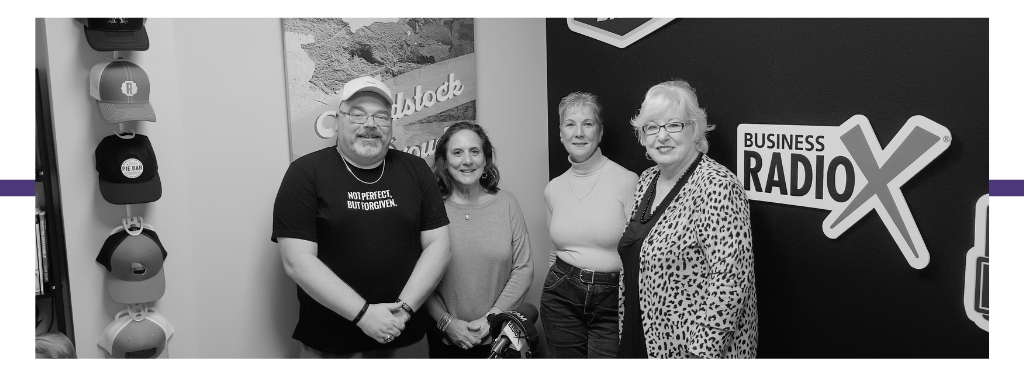
For over 18 years, Olivia managed, staffed and trained in the salon industry upon opening Theory Salon with her two business partners. She firmly believes in continuing education and travels from New York to LA throughout the year to train, coach, and mentor other salons.

She has a passion for both hair and makeup, while specializing in cutting, blonding, balayage. Olivia is a L’Oreal Pro Certified Balayage Artist, Network Expert Color Specialist, as well as being Keratin Complex Smoothing Treatment certified.

When she’s not behind the chair making her clients laugh, you can find her planning her next travel adventure or spending time with her hubby, son Sullivan and three pups!

Follow Theory Salon on Facebook and Instagram.

This transcript is machine transcribed by Sonix

TRANSCRIPT

Intro: Broadcasting live from the Business RadioX Studios in Woodstock, Georgia. It’s time for Cherokee Business Radio. Now, here’s your host.

Stone Payton: Welcome to another exciting and informative edition of Cherokee Business Radio Stone Payton here with you this morning. And today’s episode is brought to you in part by Woodstock Neighbors magazine, bringing neighbors and business together. For more information, go to Facebook and Instagram at Woodstock Neighbors Dot BVM. And if you have a heart for community and you have a small business and you want to grow that business while serving your community, consider checking out our Community Partner program. Go to Main Street warriors.org. All right, it’s time for our headliner today. Please join me in welcoming to the broadcast with Theory Salon. Ms. Olivia Newell. How are you?

Olivia Newell: I’m great. Good morning. It’s so nice to be here with you today.

Stone Payton: Well, it is a pleasure to have you in the studio and as invested as you are in beautiful hair, you came in with a gorgeous hat as well. And I think about my wife because I know I’m biased, but I think she looks so great in hats.

Olivia Newell: You know what that is? My staple look is a hat. Because I always say if a hairstylist has bad hair, that means she’s busy.

Stone Payton: I love it. I love it. All right. I got a ton of questions and I know we’re not going to get to them all, but I’d love to maybe start the conversation with you, if you could. For me and our listening audience, if you could articulate mission purpose, what are you and your team really out there trying to do for folks?

Olivia Newell: Yeah, absolutely. So I am a Woodstock local. I’m born and raised. I’ve been here my whole life. And about seven years ago, we opened the doors to Theory Salon. We were in the public shopping center off of Trickum and 92. And then about a year ago in November, we bought out a commercial building. So we are staying in Woodstock forever. So that’s kind of, you know, our stick of where we came from and who we are. We’ve got a team of about 20 girls that work for us now. We love to build women from the ground up. So one of our top stylists came to us. She graduated from high school and was in college and wasn’t really loving the route that she was on. So she kind of took a chance on us, dropped out of college, and she’s one of our top competing stylists. She just got back from New York City, where we took them to the L’Oreal Soho Academy, where they learn from platform artists that do New York Fashion Week and Vogue magazine and all that stuff. So we train them from the bottom up and they learn from the best.

Stone Payton: Well, New York must have been a blast. Say more about that.

Olivia Newell: Yes. Yes. So I personally actually got to do New York Fashion Week this year, which was highlight of my life, not even my career. It was really cool to be bumping shoulders with Nikki and Paris Hilton and Vanessa Williams and just the Who’s who of the world. I just kind of stood in this corner and was like, I’m supposed to be here, I swear. Um, so yeah, it was amazing. So I got to do hair for that and they posted it in Times Square. It was just on the big screen TV of the of the Pamela Roland show and the models that I got to do. And it was amazing to see. It was awesome.

Stone Payton: All right. And your your new location, where are you located now? Yes.

Olivia Newell: So we’re still on 92, just a little further down. We are in between the swimwear store and Bridals by Madison. It is going towards Roswell right before you get to Lucky’s beverage on the right hand side.

Stone Payton: Well, that’s handy, right? Yeah.

Olivia Newell: All those things are great.

Stone Payton: Your haircut. Pick up a handle. I like it. It could be your new slogan.

Olivia Newell: Exactly.

Stone Payton: All right. You got to tell me more about your. Your backstory. How did all this get get started for you?

Olivia Newell: Yeah. So I am very blessed that I came from a family of entrepreneurs and I actually owned the salon with my mom. We own it with our other business partner, Lita. But my mom and Lita have been in the salon world for over 35 years. They had a salon in East Cobb for my entire existence, so that’s where I grew up, working at the front desk and shampooing hair. They didn’t care about child labor laws back then. Clearly that’s where I spent my Saturdays as a kid. I went to college to UGA and then after I graduated I came back and worked for the salon for a little while. My mom was really pushing me to not follow her footsteps, but I loved the industry and I she saw how much I enjoyed it and I was really good and passionate at it. So she was like, Let’s become business partners. So. Yeah. So then theory kind of formed itself and we just haven’t looked back ever since.

Stone Payton: Is there anything particular behind the name theory?

Olivia Newell: No, it was like my mom was on the couch and was like, Hey, I got a name. It’s theory. And we were like, Oh, that’s actually a great name. So and she she named the last Salon Impulse, too, so she’s good with the names. We’ll keep her for that. Yeah, we.

Stone Payton: Got to put her to work in branding new shows. When we launch new shows, we’ll give her a call.

Olivia Newell: Exactly.

Stone Payton: So you’ve clearly been at this a while. You all have your established you’ve got a lot figured out. I’m sure you’ve you’ve had some challenges and learned some things along the way. But what are you finding the most rewarding at this point? What’s the most fun about it all for you?

Olivia Newell: Yeah, honestly, I still just can’t get over bringing in these girls that really don’t have any idea or direction of what they want to do in life. They just know that like, college isn’t for them. You know, a lot of them have done like the waitress thing, bartending thing, and they’re usually very creative people. So it’s nice to kind of give them a map and a way to become successful and find ways for them to become really proud of themselves and have something that they’re passionate about and they make a killing. And so it’s just great to watch that. I really can’t get over. I’ve been in this industry for over 20 years myself and it just never gets old seeing that. So I love watching these women just become successful and I feel like I’ve had a little bit of a little bit of that. So it’s great.

Stone Payton: So I got to ask you more. I want to do a little deeper dive on this, this idea of recruiting, developing, nurturing, inspiring, motivating your team. I’ve been very fortunate, but through no fault of my own, we have a great team at the business radio network, but it’s definitely not my superpower. What have you learned about recruiting, developing, nurturing, all that kind of stuff? Um.

Olivia Newell: What can I say? I think just pouring your heart into people and being really transparent. I just try to give them advice of what I’ve been through personally, and it’s great because we have myself, I’m 32. My business partner, Lita, is in her 50s and my mom is 68. So we’ve got three women from three different generations. So we pertain to a lot of different groups of women and we can just relate to pretty, pretty much most people that walk through the door. The three of us have definitely been through something. So I think having that relatability and then just the passion that we have, like I said, we’ve been doing this for so long, but everyone that comes to work for us, like they can feel how much we still love to do this. I mean, like I said, my mom’s 68 and still comes in twice a week to do hair because she loves it. Yeah. And it’s just it’s great. It’s great. I have a huge heart for the business.

Stone Payton: And so if and when it does happen and something’s not working out, have you got a methodology, a process for either helping them kind of regroup and turn around or to have the, you know, A, what am I trying to say? An amicable and just, you know, okay, it’s time to, as a former mentor of mine once said, free up your future. I don’t know. You probably wouldn’t use those words.

Olivia Newell: No, that’s great. But the transparency is great, right? No, I can truthfully say this is pretty cool. I don’t know how many businesses can say this. Every person that’s ever worked for my business still comes in and gets their hair done with us. So not everyone was meant to do this as a career. Like I said, we take on a lot of young women that aren’t sure what they want to do, and we’re not a great fit for everyone. And that’s okay. You know, I’m not coffee. Not everyone’s going to love me. Um, so with that being said, though, it’s just I love to just. I’m a girls girl, so I’m here to be supportive of women, whether that means working for me or not. Um, and so, yeah, so all the girls that have girls and guys that have been in our business throughout the years, I wish them nothing but success. And if it didn’t work out in the long run, I always like to think of myself as a stepping stone and into their future. So it’s great. I have great relationships with with everyone and my first employee shout out Natalie. She’s still like our biggest promoter and loves us and it’s just great. It’s great. It’s very humbling and gratitude, feeling.

Stone Payton: And so they’re finding it fulfilling, like you do the work itself, but it sounds like it can be pretty darn lucrative work. Yes.

Olivia Newell: Yes, it’s great. It’s kind of like a little secret these days. I feel like your hairstylist is probably doing pretty well.

Stone Payton: So I love it. So what about passions outside the scope of of that work of actually, you know, doing the the hair? My listeners know I like to hunt fish and travel. Yeah, I love it. But but how about you outside the scope of that work? Yeah.

Olivia Newell: So I’m married. I’ve been with my husband for about ten years and I have a little boy named. Sullivan. He’s three. So he’s our pride and joy right now. So we just signed him up for tee ball this year. So that’s been fun to watch him play at Sierra down the street. He mainly just eats snacks and hang out in the dugout. But it’s you know, it’s all for fun, right? And a huge dog lover. That’s how I met my husband. A mutual friend was like, you have to meet this guy. His dog looks like yours. And I’m like, I have a rescue. No one’s dog. Looks like my brindle puppy. But sure enough, he had his very similar dog. And we’ve been together ever since. And we have our third dog that we added to the family last year. Moose, who is about 100 and something pounds. And oh wow. Between the three dogs and the two boys, I am needing a baby girl, so my house is a little stinky.

Stone Payton: Well, we’re rooting for you. You have to keep us keep us posted on that. That’s funny. So where do you I mean, you’re clearly upbeat, you’re enthusiastic, you’re passion comes through your voice and here, seeing you, your eyes light up whenever you’re talking about any of this. But where do you go for inspiration? Is it that kind of outside passion stuff or do you do you read stuff or do you have a mentor that you talk to? Like, where do you go to get kind of refueled and recharged?

Olivia Newell: Yeah, to be honest with you, I lost my dad about two years ago. He actually committed suicide. But having that experience was a silver lining in life. It really just shows you that life is short. You’re not guaranteed tomorrow. And so I wake up every day very grateful and blessed and honored. And I just take all of that and put it towards my passions. And I just try to make the world a better place, you know, be the better person than I was yesterday. I’m not in competition with anyone. I just want to do good and right by the world.

Stone Payton: Well, and I got to say, some direct and immediate evidence of that is this this pop up event that you’re doing? Let’s let’s talk about that a bit.

Olivia Newell: Yeah, I’m excited. So I took it upon myself. I’ve been consulting for friends and family and small businesses in tenfold with doing what I do because I don’t know how to sit still or be bored. So I decided to start a consulting business and with that I wanted to feature local female owned businesses. So I reached out on Cherokee Connect and I had over 300 applicants that wanted to be a vendor for this event. Huge, huge feedback, a little overwhelming. So after taking the time talking to almost all 300 of them, I selected 40 different female owned businesses. And so we are hosting a pop up on Saturday, October 7th, from 6 to 8 At Theory Salon. There’s going to be several different vendors. Some of the coolest ones that I can think of that come to mind. One of them I’ve met, her name is Ainsley, and she owns the Steel Magnolia. It is a mobile pop up bar. She redid a camper and this will be her big debut at the event. So she’ll be slinging some crafted cocktails. So that’ll be really fun to see her. Another vendor is Ivy Logan Boutique. They took a box truck, redid that and put air conditioning in it and everything. And you can walk up the steps and shop local boutiques right in this box truck. So lots of lots of really cool stuff. I’m excited to have these vendors.

Stone Payton: All right, so October 7th, 6 to 8 and you do you need more people, businesses or do you want to just now get the word out and let people know to come? Yep.

Olivia Newell: So we’re full for vendors for this event. I’ve gotten quite a few businesses since asking if we need vendors. I love the enthusiasm and you guys can follow me on social media for future events, but for this event we need more attendees to come so you can buy your ticket for $5 on the theory salon website. It’s just theory Dash, Salon.com and we’ll share that link here in a little bit. But yeah, we want more people to come. There’s going to be a live band and bounce houses, so it’s kid friendly and like I said, some cocktail charcuterie, lots of shopping, permanent jewelry, free hair and makeup. I mean, this is a really fabulous event. You don’t want to miss it.

Stone Payton: No, I don’t. And I shared with you before we went on air, my sister in law is living with me right now as she’s building a house in Acworth. My wife is is here, so I’m probably buying at least three tickets.

Speaker4: Yeah.

Olivia Newell: You won’t regret it. Trust me, you guys will have a great time.

Stone Payton: I’ll tell you how much how excited I am about this game. Most of you listeners of this show know that I like to hunt, and I’m not going to hunt that evening. I am going to. I’m going to hunt in the morning. I’ll take a shower and Sandy and Holly and Stone are coming to this thing. I love it. I think so. You’re you’re consulting business. This was. Yeah, I mean this is a bit of a it’s not a pivot because you’re still doing the other thing. But it’s it’s an enhancement. It’s. It’s a new direction. Yeah. What compelled you to do it? Why are you focusing on women? What are you learning? All that stuff.

Olivia Newell: So truthfully, like, where the passion stemmed from was helping these young women. And I wanted to further, you know, take that a little further so people that had different businesses that were small businesses, I just wanted to share any resource that I’ve had the opportunity with over the years to make my business successful. I wanted to share with them. I went to school for public relations and marketing, so I felt like I had, you know, a wealth of knowledge that I wasn’t sharing with people. And I wanted to to help women do that. So consulting kind of it’s constantly consulting kind of formed itself.

Stone Payton: Have you been at that long enough to to start to see some patterns of some common challenges that people at that stage in their business are are having you see some things over and over?

Olivia Newell: Yeah, I have a lot of people. They just really don’t know where to spend their money. That’s pretty common.

Stone Payton: And they don’t have a heck of a lot of it in a lot of cases.

Olivia Newell: Right, exactly. So there are small businesses and they’ve got tight budgets and they don’t know what to do with them. And, you know, most people think like, oh, I have to pay a big influencer to post about my product and I like to grow you guys organically. I think just doing things like being on the radio and connecting with your local small businesses and doing these pop up events is a great way for these women to network with one another so that way they can do future events together. One of the boutiques, Apricot Lane, that just opened in downtown Woodstock. We’re going to do a fashion show at the end of the year with her, and we’ll have the charcuterie girl that’s coming to the event and a couple other vendors. We’re all going to connect and do another event together. So it’s a great way for us to network and for them to grow organically without having to spend any of their marketing budget, right?

Stone Payton: Believe it or not, I’ve been to Apricot Lane a half a dozen times at you.

Olivia Newell: I don’t believe you hunt and fish.

Stone Payton: Well, my new criteria for doing most of my business is that it’s golf cart able and and for my I can take my golf cart and so I’ve been with Aunt Sandy. I she’s my sister in law. We call her Aunt Sandy. I’ve been with Holly. I’ve been with my kids.

Speaker4: I love that.

Olivia Newell: It’s a great store.

Speaker4: It’s so cute.

Olivia Newell: I wish I could live there.

Stone Payton: Plus, you can grab a coffee right there at Starbucks. And there’s a I don’t know if the co-working space is up and running yet, but the.

Speaker4: I don’t think so.

Stone Payton: The collaborative, I think it’s going to be there before Tilly’s. There’s a lot of cool.

Olivia Newell: Oh, and the Oyster House is coming.

Stone Payton: That is what I and I saw. They’re hiring, so they must be finally getting close.

Olivia Newell: They said October of 2023. I looked yesterday.

Speaker4: Oh, baby, I.

Olivia Newell: Know I’ll be the first customer. I love oysters.

Stone Payton: Well, you’ll see me there.

Speaker4: Absolutely.

Stone Payton: So coming from your consulting experience, coming from your actual in the trenches, been there, done that experience. As a small business owner, I’d love it if we could leave some of our listeners with a couple. I call them Pro tips. Right? So some do’s or don’ts, some things we should be reading just to begin thinking, you know, just to continue to to inform ourselves and influence our own thinking and sharpen our own our own tools.

Olivia Newell: Yeah, I guess some of the things that I could think of, as I said earlier, is don’t be in competition with anyone. Collaboration that’s going to be your best friend. Um, and just never say no. I’m a yes girl. I’ve taken every opportunity, whether it sounded great or not. I’ve got myself into some weird situations before. But no, I just like to think of everything as a stepping stone and you just never know. And also never burn a bridge. It’s good to keep all your contacts, you know, over the years because you might look back one day and need a recommendation.

Stone Payton: I think that’s marvelous advice. And in early in my career, I did burn a couple, and I really regret that. And for a long time now, I’ve worked very hard not to. And I, I agree. And we the answer, almost a mantra at Business RadioX is some form of yes, It might not be the yes the client wants. You know, they’re not going to get, you know, X at Y fee. Right. But we might be able to get them X at X fee and figure out a way to help them get most of what they want. But it’s you some form of. Yes.

Speaker4: Yes. And you got.

Olivia Newell: To bet on yourself, too. You know, no one else is going to do it. So take the risk, bet on yourself and you’ll be in good. You’ll be in good shape.

Stone Payton: All right. Let’s make sure that we leave our listeners with all of these great coordinates. I want to make sure they can get to the salon. I want to make sure they can. And in the hours and all with the with the pop up. And if they want to reach out and have a conversation with you about the consulting and, you know, maybe make sure and we’ll have all this published when we publish as well. But if someone’s just listening to this where they can start. Following you and tapping into your work. So whatever you feel like is appropriate, let’s make sure they have those coordinates.

Olivia Newell: Yeah, absolutely. So the pop up event is Saturday, October 7th, from 6 to 8, and it’s going to be located in the parking Lot of Theory salon. It’s at 12926, Highway 92. And again it’s near it’s just past the Walmart on 92. And before you get to the Lucky’s beverage on the right hand side, you can buy tickets for the event on our website theory Dash, Salon.com. And if you want to follow me on social media, I’ve got two handles. One of them is Hair and Makeup by Olivia and excuse me. And the other one is constantly consulting.

Stone Payton: Marvelous. Well, Olivia, it has been an absolute delight having you in the studio.

Speaker4: Thank you.

Olivia Newell: I hope to come back. This was so fun.

Stone Payton: Well, keep up the good work. You’re absolutely coming back. We’re going to make that happen. And maybe on the next one, maybe. Or maybe as a recap from one of these pop ups or some of your consulting work, we’ll bring in a delighted client from your consulting work or maybe some folks at the pop up. And let’s give them an opportunity to to share their story and promote their work. So you and I are going to see more of each other, particularly as close as your salon is apparently to both the archery shop that I go to and a liquor store.

Speaker4: Exactly.

Olivia Newell: Yeah. You can’t miss us.

Stone Payton: All right, well, keep up the work. Thank you so much.

Olivia Newell: Thanks so much.

Stone Payton: All right. Until next time. This is Stone Payton for our guest today, Olivia Newell with Theory Salon. And everyone here at the Business RadioX family saying we’ll see you again on Cherokee Business Radio.


Tagged With: Theory Salon

Executive Suites and Community How They Can Help You Achieve Your Business Goals S2E1

September 22, 2023 by Karen

S2E1-Executive-Suites-and-Community-How-They-Can-Help-You-Achieve-Your-Business-Goals-feature
Phoenix Business Radio
Executive Suites and Community How They Can Help You Achieve Your Business Goals S2E1
Loading
00:00 /
RSS Feed
Share
Link
Embed

Download file

S2E1-Executive-Suites-and-Community-How-They-Can-Help-You-Achieve-Your-Business-Goals

Executive Suites and Community How They Can Help You Achieve Your Business Goals S2E1

How work gets accomplished is changing in the 21st Century. Where and how it gets performed radically differs this Century from the last. At the Future of Work, we delve into where, why, and how people work in pursuit of business objectives.

In this episode, we discuss the Executive suite and how Mike Walker found and utilized his office. It speaks to how his Real Estate Broker, Steve Cross, worked together to get Mike the needed space and a community to help him thrive. We delve into both people’s careers and share an update on the commercial real estate landscape.

T.E.A.M.S Coaching is a comprehensive personal development program which takes the team approach to enhancing the lives of teenagers and young adults. They provide individual coaching and mentoring to teenagers and young adults, either in-person or online.

The focus is on the areas of transition, education, athletics, mindset and social skills. They also provide consulting sessions for parents on dealing with struggling kids in any of the areas mentioned. Individualized plans are created to include personal and collective goals for the mentees and their families, then monitored monthly to ensure progress in the targeted areas of their lives.

Coach Walker also makes himself available to collaborate with other members of his mentees’ support team upon requests. Lastly, they hold social events as opportunities for mentees to apply the skills they are developing.

Michael-Walker-The-Future-of-WorkMike Walker is an educator turned entrepreneur, who has started his own personal growth program for teens and young adults.

Prior to this venture, he was a teacher/coach/administrator for a private school in the valley that served students with learning differences for 18 years.

It was during that time that he discovered his true passion, which was helping students and families navigate the trials of getting through school and transitioning to the real world.

Cross-Commercial-logo

CROSS Commercial Realty Advisors is a Scottsdale-based real estate firm specializing in commercial tenant and buyer representation. Their business model is unique in that they do not ‘list’ properties – this eliminates the unavoidable and insurmountable conflicts of interest that inevitably occur when one agent, or multiple agents from the same company, attempt(s) to represent both tenant/buyer and landlord/seller in the same transaction.

Their clients include Fortune 100 companies as well as hundreds of small- to mid-sized businesses, professional practices and municipalities seeking to lease or buy property at the lowest overall price and under the most favorable terms and conditions.

Steve-Cross-The-Future-of-WorkSince 1984, Steve Cross has helped over 2700 businesses, healthcare professionals, municipalities and investors solve their commercial real estate problems. In addition, he has authored dozens of articles covering many aspects of leasing and buying commercial real estate, many of which are available on his website (www.CrossReaty.com).

He has leased space for his own business and owns income-producing commercial property, which he manages. Because he has taken every step his clients are contemplating, and done so with his own money, Steve’s perspectives are closely aligned with the values and objectives of his clients seeking to minimize occupancy costs.

Steve attended Northern Arizona University on an athletic scholarship (cross country and track (800, mile run)) where he earned a BS in Accountancy, served as president of Babbitt Hall and was inducted into the NAU Athletic Hall of Fame.

Professionally, he has earned the CCIM designation, certifying him as an expert in commercial and investment real estate, is retained as an expert witness, and is a long time member of the Professional Standards Committee of the Arizona Association of Realtors. In his free time Steve enjoys country-western dancing, competitive sports, reading, writing and tackling home improvement projects.

ABOUT THE FUTURE OF WORK

Welcome to Future of Work Radio Show and Podcast – where business leaders share how they integrate humanity and technology through innovative approaches, healthy culture, flexible workspaces and seamless virtual technology.

ABOUT YOUR CO-HOSTS

KyleMcIntoshWith a focus in marketing and a background in various for profit and not for profit companies, including much professional and volunteer work, Kyle McIntosh wondered, “How can I pair the passion and commitment to community progress of a non-profit with the sustainability and reach of a for profit company?”

From this question and perspective a mission evolved to tear down the false distinction between the two sectors and to promote companies with Conscious Capitalism® business models through MAC6.

Albert-Loveland-Phoenix-Business-RadioAlbert Loveland has joined the MAC⁶ Team full-time. Al will be helping us to takeMAC⁶ to the next level as Vice President of Operations(and, for all of you who are familiar with EOS, as the MAC⁶Integrator).

Al brings over 25 years of experience in leadership and operational efficiency, first working for JPMorgan Chase for fifteen years and then, for the past decade, with his own consulting business working with small businesses, non-profits, and entrepreneurs.

Al has been working from MAC⁶ as a community member for five years now, acting as the unofficial ‘Mayor of MAC⁶’and helping every day to make this community a great place to be. Please join us in congratulating him as the now Official Mayor of MAC⁶ and as an integral new part of our team!

To learn more about MAC6 Communities, call 480-293-4075 or find them on LinkedIn and Facebook.

ABOUT OUR SPONSOR

MAC6 offers flexible spaces and programs to help your team grow, and a community of thriving businesses, just like yours.  Advocating Capitalism as a Force for Good, MAC6 is Accelerating the shift to Conscious Capitalism (where Purpose and Profit Unite) through Creativity, Collaboration, Community and Change.


Tagged With: industrial space, medical office space, office space, retail space, tenant representation

Fintech South 2023

September 22, 2023 by angishields

Fintech-South-Logo
Atlanta Business Radio
Fintech South 2023
Loading
00:00 /
RSS Feed
Share
Link
Embed

Download file


Fintech-South-2023-v3

Fintech South 2023 is a world-class summit with its nexus in Atlanta live and in-person, a global financial technology hub that is home to more than 200 fintech companies. The top 15 public fintech companies in Georgia alone generate more than $100 billion in revenues. On September 12th & 13th, 2023, at the Georgia World Congress Center, we welcomed fintech leaders from around the world for an amazing experience designed to help you make the most of the opportunities of the fintech revolution.

Larry-WilliamsLarry Williams, TAG

TRANSCRIPT

Intro: Broadcasting live from the beautiful Georgia World Congress Center for FinTech South. 2023. It’s time for Atlanta Business Radio. Now, here’s your host.

Lee Kantor: Lee Kantor here broadcasting live from FinTech South. 2023, where we’re celebrating fintech leaders from around the world. Our first guest today is the head honcho at TAG, Larry Williams. Welcome, Larry.

Larry Williams: Good morning. Delighted to have Business RadioX back here at FinTech South.

Lee Kantor: We’re excited to be here. Tell us a little bit about, why don’t you preview FinTech South for the folks who aren’t familiar.

Larry Williams: You know, FinTech South is the largest fintech conference in the Southeast and it really has national and global appeal. So we’re delighted to be here. This is our sixth annual FinTech South, and I think y’all have been with us all along. When we started it, Mercedes Benz Stadium, and continued it throughout the pandemic in a virtual environment. And now we’re back. And this is our second year back live and in person since the pandemic, but our six year total. So we’re delighted to be here.

Lee Kantor: So tell folks about what happens at FinTech South. What what can they expect?

Larry Williams: You know, you really got to think about fintech South as the nexus of all things that are fintech and all the things that really create this great vibrant ecosystem and really make Georgia the global hub of fintech. And so let me tell you what that means. So I think we all know and familiar with the stat about 70% of all debit credit and reward card transactions are processed through Georgia. That’s an incredible, incredible stat. You know, 51%, you’re number one, 70%. You dominate and we dominate in this field globally. And what you’re going to see here today is everything that helps facilitate from the point of sale from B2B transactions, how the latest technology, everything from frictionless payments, how artificial intelligence is going to affect this, the importance of privacy and cybersecurity, all the major themes that are extremely important to us. But I think what really happens here, though, is the connections, the connections that people make. And it’s going to be these B2B people that are actually that have the great creative solutions that other people can use to help drive their business. But also what you’re going to see here this year is a lot of talent. So we’ve partnered with the FinTech academy, we’ve partnered with several universities in the area, and they’re bringing their students here because one of the great things that our ecosystem has and what continues to keep us at the forefront of the fintech ecosystem is we have the world class talent to be able to build new businesses and drive the ones that we have here.

Lee Kantor: So there’s people who are attending. They’re coming from all over the globe, right? This is an event that is kind of a must attend event if you’re in the fintech industry. You know.

Larry Williams: I’ve already seen, you know, our friends from Britain are going to be here. Our friends from Canada are here. And I know that there are a lot of other countries that are being represented here. Ireland is here. So, yes, definitely very, very important. You know, we really went global with the global appeal of FinTech. South really started from day one, and we’ve continued to have that appeal from around the globe as well as around the country.

Lee Kantor: So now talk a little bit about some of the speakers.

Larry Williams: Well, you know, Robert Park, I think is one of the stellar ones that is just absolutely incredible. He’s one of our keynotes. He’s really going to talk about what’s driving AI, artificial intelligence. He just flew in from New York. He’s a leader in this, so super excited about his keynote, super excited about yokes, and I’ll just call him Yokes, The CTO at Deluxe, who has really been at the forefront of driving innovation. And as that whole company is going through an innovation, innovative change, we’ve got great representative from Truist, but also we get to induct a new member of the Georgia FinTech Hall of Fame. And we’ll be I’ll be chatting with Jeff Sloan, the former CEO of Global Payments, as we induct him into the global the Georgia FinTech Hall of Fame.

Lee Kantor: And then from an education standpoint, is there an opportunity for folks to kind of learn from experts as well?

Larry Williams: By all means. So, you know, we’re looking forward to our students being a part of all of the sessions and being, you know, benefiting from the mainstage speak speakers. We’re also working very hard to make sure that we can facilitate introductions not only of students in the workforce, but also the B2B. We’ve launched something called Brain Date. It’s a wonderful app and partnership that we have with this company. We’ve got tables set up that are going to facilitate a couple of things. It can be one on one meetings where people can meet and talk, but we’re also having some some power brain date sessions that will be thematic and just check the app and you’re going to see some. Credible content about people getting together and have larger 10 or 12 people discussions about everything that’s driving fintech today.

Lee Kantor: And then if you’re a fintech company and you’re right now located anywhere in the world, you should really consider kind of moving to Atlanta because it’s rare to find kind of the synergies that you have between the universities in terms of talent, upcoming talent and the opportunities to work with some of the biggest players in fintech from around the world.

Larry Williams: You know, Georgia’s where fintech and where technology meets the real world. There’s no doubt about it. It’s, you know, it is the names, the main names that are in fintech are here. And so if we think about global payments, we think about fiserv, fis, tsis, all of these important companies here in transactions 11 they’re all important, but all of the ecosystem that’s supporting that is here. So yep. Lee you’re 100% right. If you want to be in fintech, you need to be in Georgia because that’s where it’s happening and that’s where the next generation of ingenuity is coming from. And these are the people that are leading the industry globally.

Lee Kantor: So what do you think? The community needs more to keep the keep going and keep thriving?

Larry Williams: You know, glad you asked that. It’s really about staying at the forefront of innovation. And so we do something called our fintech challenge once a year where we actually work throughout the year with some of our great entrepreneurs and people that are really thinking about, you know, what is going to help drive this industry, what are the trends, what are the new technologies that we can incorporate into solutions? How do we protect our data? How do we protect the privacy of our of our customers? All of this happening. So we do this great innovation challenge and we’re going to we’ve been through the process. We’re going to get it down to three companies and we’re going to have a great competition. We’re going to vote on it. And one of them is going to walk away with a non-dilutive check for $25,000.

Lee Kantor: Wow.

Larry Williams: You know, and I got to tell you, there’s a story a few years ago about one of these companies coins and the CEO, They have done great things. And they were on stage, I think, four years ago. And they had actually said to themselves, hey, we’re either going to win this or we’re not going to go right.

Lee Kantor: That’ll be it.

Larry Williams: That’ll be it. And they did win it. They got they got the $25,000 and it meant a lot to them. But what meant more was that vote of confidence. Right. That pat on the back. Yes, we have a relevant solution and so delighted they’ll actually be here on site today. And it’s such a great story and a great turnaround story.

Lee Kantor: Yeah, it’s so important for especially those emerging firms. You know, you the mouse has to get the cheese sometimes or else, you know, they stop searching for it. So you got it exactly right. So now for folks who are in Georgia and they want to plug into tag. Tag is a must, an association that everybody should be a member of and should be taking advantage of all of the resources that you provide. So how would somebody kind of plug into tag if they’re not?

Larry Williams: Well, please go to tag online.org. My contact information is on there. Please reach out to me or just any of the great team at Tag is a great connection point. We’d love to have you. We’ve got 20 societies talking about everything from data science and artificial intelligence, data governance, fintech, digital health, cybersecurity. There are so many critical areas of discussion that really help position Georgia be the top and the leader in a lot of technology areas and really makes us one of the top three technology states in the country.

Lee Kantor: Good stuff, Larry. Well, thank you so much for sharing your story. You’re doing important work and we appreciate you.

Larry Williams: Thank you. And thanks for being here again. Good to see you all.

Lee Kantor: All right. This Lee Kantor, we’ll be back in a few at FinTech South 2023.


https://stats.businessradiox.com/39378.mp3

DOWNLOAD HERE


Jeff-SloanJeff Sloan, Former CEO – Global Payments

TRANSCRIPT

Intro: Broadcasting live from the beautiful Georgia World Congress Center for FinTech South. 2023. It’s time for Atlanta Business Radio. Now, here’s your host.

Lee Kantor: Lee Kantor here broadcasting live from FinTech South. 2023 celebrating fintech leaders from around the world. Right now, we have Jeff Sloan, Hall of fame recipient. Formerly with Global Payments. Welcome, Jeff.

Jeff Sloan: Thanks for having me, Lee.

Lee Kantor: Well, first, tell us a little bit about your career at Global Payments.

Jeff Sloan: So I spent the last 13 years at global payments versus our president and COO, and then for the last ten years as our CEO and just retired in June.

Lee Kantor: So for people who don’t know, can you tell us mission, you know, how are you serving? How is global payments serving the fintech world?

Jeff Sloan: So one of the largest providers of digital payments technologies on the planet, a really good example. As I mentioned before, we started, a really good example since we’re sitting here in the World Congress Center is for the Falcons, for the United, for the Hawks. When you get your tickets, you let them into your digital wallet. You go to pay for them to get your food, you get your parking, you name it. A lot of that software technology payments connectivity is developed by global payments right here in the United States and especially in Georgia.

Lee Kantor: Now, can you talk about the beginning? Like what was the vision of global payments when they first started? And, you know, just talk about the evolution of where they’re at today.

Jeff Sloan: So I’ll date myself a little bit late by saying global payments and Jeff Sloan are pretty much exactly the same age. I think we were born within a week of each other, 56 and a little bit years ago at at this point. So I’ll date myself also, if you remember and you go back in the 80s and you used to have to call what would we call these knuckle busters, which is when you use your credit card, it was over a sheet of like mimeograph paper and they would take it and like do the impressions and global payments was born as a company that said this transaction is good. The paper or you would open that onion skin book and say, Hey, that card number is bad. And that’s literally the way the business started in the 70s and 80s. And we grew from a company that was a subsidiary of another company here in Georgia called National Data Corporation. And when I was in banking many years ago, I helped take global payments public in the late 90s into 2001. And we’ve grown from a company that had a market value of $400 million at the time of the IPO. And you know, the other day it was 50 billion. So it’s obviously been a great growth story for global payments and we’ve always been headquartered here in Atlanta and a great growth story for Georgia.

Lee Kantor: So now how does a company make that transition from paper to all digital? And now paper is not even you know, they don’t even make brochures for this conference here. You know, everything’s online.

Jeff Sloan: Well, I think it mirrors the developments we’ve seen in computing in the United States and kind of globally over the last probably 4 or 5 decades. Lee So think about where we are today. So today, most of the technologies that global payments sells are cloud based, meaning they’re in the ether and they’re not even really on your desktop and they’re not even really at the point of sale. You may see a terminal and may tap it with your phone, but a lot of that heavy lifting is done in the ether with Amazon or with Google. And in fact, we’re shrinking the number of physical data center sites that we have from something like a max of 55 down to three. And as we’re shrinking those, that’s all getting done in the cloud and in the ether. And I think that’s probably the best way to think about where cloud and computing has gone over the last 5 or 10 years. But you can work in reverse and you can go all the way from the paper example in the 70s and 80s up through Apple and up through Commodore and up through the developments, up through IBM and all the developments in computing power over the last 4 or 5 decades have really been a nice tailwind and included the benefit of people like global payments all the way up to the current day through cloud based technologies.

Lee Kantor: So now what made Atlanta the place for for this to happen? Like what were the elements here in Atlanta that was conducive to having a company like that grow so, you know, so dramatically?

Jeff Sloan: So as Larry will tell you from Tag, who is, of course, hosting this conference, more than half of the transactions that are credit and debit card based here in the United States flow through Atlanta, which is why it’s called transaction alley flow through here. Now, why is that? I think there’s a few reasons. Number one, it starts with the Federal Reserve. The Federal Reserve Bank of Atlanta has historically been known as the payments experts in the United States. So for the last number of decades, there has been a body of knowledge, governance, oversight and regulation that’s developed in the US, but especially here in Atlanta. And as a result, a lot of the people who came into the industry 34 years, 30 or 40 years ago came from the Federal Reserve, kind of point number one. Point number two, we’re blessed here in this state with Georgia Tech, University of Georgia, Emory with a very. Sound technology footprint and very sound technology base of people who grew up in tech land here in Georgia and want to stay. So we have probably in the state of Georgia, we have about 7000 team members. But right here in Atlanta, in the greater metropolitan area, we probably have 1500 team members. And a lot of those folks are technology specialists, particularly in digital payments. And a lot of them grew up here or went to school at the schools I just mentioned. So I don’t think there’s a better place in the country to hire, recruit, train, motivate and keep people in the technology business, especially for payments than than Atlanta.

Lee Kantor: So what does the ecosystem need more of in order to continue the growth?

Jeff Sloan: Well, we need more investment. So global payments, just to pick one example, we’ll invest $2 billion this year in OpEx and CapEx in our technology environments all focused on digital payments. But we need to continue to do that number. You know, probably five years ago was a billion, right? So we’ve doubled over the last five years. Our investment in technologies. And if I had to guess where I’d be in five years, hopefully it’s 3 to 4 billion of investment. So if we don’t continue to make those investments, particularly here in Atlanta, in Georgia, in the United States, we won’t grow at the rate that we should be growing at. The other thing I would say, as I mentioned in the in the group session is, you know, we need a favorable government environment, which we have here in Georgia, but federally in particular, we need a level playing field. So we build these technologies in the US and we export them so our net exporter worldwide of our technologies, we need a level playing field with countries in Europe and countries in Asia. So the expiration of the federal R&D tax credits a couple of years ago that have not been renewed is a really big headwind for development and investment in our technology environments. And all we’re asking for is not a leg up, we’re just asking for a level playing field with people in Ireland and in the EU and in Asia and the like who have a lot of government support for developing the technologies that we’re going to build right here in Georgia.

Lee Kantor: So how does a government kind of keep keep up and keep the pace when technology changes so quickly and dramatically and government tends to kind of lag?

Jeff Sloan: So we need to incent private corporations to make the decisions around what the next successful technology is going to be, whether they’re right or wrong, you know, they’ll fail and they’ll be successful. Right.

Lee Kantor: But government doesn’t like to fail. They don’t like that, you know, they only want wins.

Jeff Sloan: But if you can create the favorable conditions where people can make those investments, you’ll naturally get to the right place in our type of economy. So what we need is the R&D tax credits, for example, back. What we need are incentives to continue to train, hire and develop and retain our our people. And I think we have a lot of those here in Georgia. But multinationally, we need to make sure that as a country, not just as a state, that we’re making the investments we need. So 5 or 10 years from now, that 2 billion is 3 billion is 4 billion on the line.

Lee Kantor: Now, talk about the Hall of Fame being a Hall of Fame recipient. That must have been a proud moment. You know, kind of the cherry on top of the career.

Jeff Sloan: I mean, it’s a real honor when you look at some of the recipients. Picket My predecessor, Paul Garcia, who hired me at Global Payments 13 years ago and I’ve known for 30 years. It’s really an honor to be on the same piece of paper, you know, to be honest, We mentioned in even remotely the same breath as all the technology leaders you’ve had here in Georgia. I’d also say, you know, I hate to feel old, right? But when you you know, when you’re kind of like moving on and retiring in these things and you see it, it’s really nice to see. It does make you feel. And I know 34 years sounds like a long time. It didn’t sound like a long time when I was living it. You know, it sounds like a long time when you’ve done it, but it does make you look back and I think reflect on the things that while you’re growing yourself, your family, your company, you don’t really reflect on those things because you’re so focused on moving forward. It does give you an opportunity to sit back and reflect on, well, what have we accomplished? You know, here at Global Payments and here in Georgia, I really none of that could have happened without the team members we have without the support we’ve gotten here in Georgia. And it makes me feel very grateful and kind of humbled, you know, to be in that position.

Lee Kantor: So what’s the next move for you? Where are you staying connected to the fintech world and still getting involved in different ventures.

Jeff Sloan: So while I’m pretty old, I’m not too old, I think, to continue to be helpful. So I really think my greatest value add is mentoring, coaching, advising younger CEOs, people who are just getting into the role, or people who are in senior management and private companies. Well, how do you think about growing and scaling your people, your businesses, your investments, your markets, your boards? How do you think about IPOs? How do you think about buying and selling assets? How do you think about raising capital? And look at Goldman. When I was in banking and then at global payments, I’ve done those things. So I think that I can provide value there in terms of sharing things I’ve done wrong and sharing things I think that have gone well. And if I can make those things happen and create value over time, I’ll consider that a success.

Lee Kantor: So before we wrap. What’s one piece of advice you can share with that emerging CEO?

Jeff Sloan: Yeah, I would say don’t get too high or don’t get too low. I mean, I think it’s very easy, especially with what the world has been through, you know, in the last three and a half years. I think it’s very easy to get sidetracked, you know, in a given day with the volatility we’ve all experienced and obviously the dramatic health impacts we’ve had. I think this stuff is a marathon. It’s really not a sprint. And I think it’s important in that context to keep your wits about you and realize that nothing’s ever as good as it seems and probably nothing’s ever as bad as it seems to. And I think if you can do that successfully and provide team members with hope and opportunity, I think you’ll be pretty well served.

Lee Kantor: Good stuff. Well, congratulations on all the success. You’re doing, important work, and we appreciate you.

Jeff Sloan: Thanks for having.

Lee Kantor: Me, Lee. All right. This Lee Kantor will be back in a few at FinTech South 2023.


https://stats.businessradiox.com/39377.mp3

DOWNLOAD HERE


Dara-AlbrightDara Albright, Worthy

TRANSCRIPT

Intro: Broadcasting live from the beautiful Georgia World Congress Center for FinTech South. 2023. It’s time for Atlanta Business Radio. Now, here’s your host.

Lee Kantor: Lee Kantor here, FinTech South. 2023 Broadcasting Live, celebrating fintech leaders from around the world. Right now on the show, we have Dara Albright, an old friend from Worthy. Welcome, Dara.

Dara Albright: How are you? Thanks for having me here.

Lee Kantor: I am doing well. I’m so excited to learn what you’re up to. Tell us a little bit about Worthy.

Dara Albright: So Worthy is an awesome, awesome company. Essentially, what worthy is? I like to kind of describe it as an acorns on steroids. Essentially it is. It’s it’s two things. First of all, the mission of Worthy is to help small investors access greater yield and save for retirement. The mission. It’s a worthy one, actually, where we’re out there, we’re really trying to help people and trying to help thwart a looming retirement crisis that we have right now. So essentially, what worthy does and how we do that is we have a fintech app which enables users to go every time they go shopping. They. Let’s say you go to Publix, you spend $99.50 at Publix, you pay $100.50, goes into your worthy roundup app. So similar to like an acorns, right? So you’re accumulating your roundups so you don’t even know that that you know, that that you’re actually saving while you’re shopping. The difference between worthy and an acorns, however, is that whereas acorns you’re only they tell you there are certain ETFs where where you could put your money in with worthy and you don’t know the you know the volatility and all of that with worthy. Worthy has its own proprietary product which is a worthy bond that yields 6% and it is no fees, fully liquid and available in minimum $10 clips. So I mean, essentially for, you know, less than the price of two Starbucks, you know, you could be having a bond and getting started on your, you know, financial journey.

Lee Kantor: And then how does that does that rate change? Like how long is that rate going to be in effect?

Dara Albright: So we started off with 5%. And this was we’ve been around for a couple of years now since around 2015, 2016. So since, you know, back then, as you know, rates were quite low. Now the rates have we we start we raise them to help people fight and combat inflation. So we went to 5.5%. And now now this. So this one will be 5.5%. This we went to six for we’re doing a six for six promotion. So six for six months. And then then probably go back down to the 5.5% or 5.73% APY But we’ll see how, you know, Worthy will gauge how the, you know, how the economy is doing and what’s happening with inflation. And, you know, we like to give our our users and customers raises, so to speak.

Lee Kantor: So and it’s one of those things that every $10 I’m accumulating, I could just get I can just kind of pop it into that fund.

Dara Albright: Yeah, exactly. So you could actually you could actually buy bonds on your own if you wanted to, and you could just, you know, buy as many as you. Well, not as many as you want. They’re capped because we really want this to be a retail product, right? So, I mean, you could go you could buy up to I think it’s $50,000 worth of bonds if you wanted to. But if you just wanted to use the roundup, you could do that, too. And then every time you get to $10 in round ups, it automatically.

Lee Kantor: Automatically just puts in. Now, when that’s occurring, your target then is like, who is your target market?

Dara Albright: So it really for for smaller investors, it’s for people who are looking for a different type of saving solution and easier type of saving solution. It’s also people for a lot of gig workers, people who don’t have traditional, you know, you don’t have a pension, they don’t have a, you know, a 401. K, So it’s really for the people. And they’re really a large percentage of people now in the US that are really outside of the traditional retirement market.

Lee Kantor: Now, is it something that it rounds up, you know, whatever. It changes under a dollar. Can you set it to round up more?

Dara Albright: So, yeah, you could. You could have automatic. No. Well that. No, that the round ups. That’s the way you know, you’re just so you.

Lee Kantor: Can only round up the cents to the.

Dara Albright: Nearest dollar but.

Lee Kantor: You can’t say round up to the nearest $5 or the nearest $10.

Dara Albright: No, but what you could do, you could. There are other ways that you could, you know, kind of play around with it. So. But no, you can’t you can’t do that. It only goes to the nearest dollar.

Lee Kantor: But there are ways to if you want to just incrementally invest more, you could do that. That’s doable.

Dara Albright: You could do that on your own.

Lee Kantor: So now talk about the what was the genesis of the idea of somebody just wanted to just do a better Acorn? That was a.

Dara Albright: No. So so this was actually So Sally, Who’s here? Sally? Sally Outlaw, who’s the the CEO of Worthy and our fierce leader. She I’ve known her for a while now. She’s she’s actually one of the crowdfunding leaders pioneers. She actually wrote the book Cash for the Crowd. So she literally wrote the book for crowdfunding. And she came up with this idea I said was around the 2015 time frame. And she told me about the idea. And this was this was actually. I want to say around maybe the same time as acorns. But really there was really it didn’t really have anything to do with acorns. Acorns. But she her her vision in this was she was looking at at the time being in the crowdfunding space helping a lot of these small businesses access capital. And then at the same time it was, you know, we also want to be able to give opportunities to smaller retail investors that didn’t have those same investment opportunities as institutional investors, Right. So that’s really where sort of so.

Lee Kantor: This was the mechanism that she thought of to do that. Exactly.

Dara Albright: Exactly. And she wants to make it as easy, you know, as easy as possible. And then and then, you know, work to create Worthy’s own proprietary financial products. And so what we did was so the the product is SEC qualified, so it’s qualified by the SEC. So it’s a under the reg A+ exemption. So the difference between like a bank, like let’s say for example, you know, if you go to a bank and you deposit your money into a bank, your savings account or a CD, you know, what have you, you’re giving the bank your money and the bank, basically, What do they pay you? I mean, nothing.

Lee Kantor: Basically 0.1 or 0.01 or I mean even negligible, right?

Dara Albright: Even recently we saw there was a there was a advertisement for a bank that was advertising a 6% savings account. But then if you read the fine print, it was 6% on the first thousand dollars deposited and then it was like 0.01, right?

Lee Kantor: Like they’re hoping you don’t read that much, right? Right. The fine print.

Dara Albright: So the difference is, you know, worthy. So the way worthy is able to give out the 6% were they invest in different real estate projects.

Lee Kantor: So that’s the engine behind it is real estate investing.

Dara Albright: Exactly. And this one in this fund we’ve also done for small businesses, we’ve done inventory lending in the past. So these are types of products that traditionally get higher yields, but mostly only, you know, institutional and larger accredited investors have access to. So what worthy does is uses the reg A+ exemption to create a new product for retail investors. So, you know, the the difference between what worthy would make investing in, let’s say, you know, a real estate project and then they’ll give the consumer, the client, the 6%.

Lee Kantor: That’s why the consumer gets a better return.

Dara Albright: Exactly right. Because, you know, we’re basically the worthy is not under the umbrella of of the feds that are telling them how much, you know, interest rates are and and where you should be.

Lee Kantor: So so now what’s worthy? Why are they here at FinTech South?

Dara Albright: So Sally and I are both speaking on a panel tomorrow, talking about really helping, you know, smaller investors access, you know, all these types of of products and how fintech is really helping also underserved communities. So we’re all going to be talking about that tomorrow where we’ve got a booth here and just, you know, talking to people, meeting people.

Lee Kantor: So where is worthy at in kind of their growth curve? Are they just expanding? Is that that that’s what you need more of? It’s just more people kind of downloading the app.

Dara Albright: Exactly. Exactly. So worthy is has done already just recently crossed $200 million in bond sales. Wow. You know over the years. So yeah, now we’re growing. You know, the people like the product and we’re looking, you know, in the future to build upon that and launch all sorts of different products for retail investors and give them, you know, a lot more. And it’s not.

Lee Kantor: Just retail like your definition of retail, you want to be as broad as possible to involve as many people who are maybe not the typical like a bank customer. You want to get more people that are maybe some of the unbanked, some of those folks as well.

Dara Albright: Well, I think you still would need to have it because you still you still connect through bank. So it’s so I wouldn’t say so much the unbanked, but I would say it’s more of the it’s more that the small investor or the smaller investor that doesn’t think that they have the wherewithal to save. They don’t feel like they have, you know, extra. They don’t have extra money. You know that they’re living paycheck to paycheck. This is an option for you. So it’s I think it just brings more people into, you know, financial services and helping them, you know, really save for retirement and and build a financial future.

Lee Kantor: So if somebody wants to learn more, where should they go?

Dara Albright: They could go to worthy bonds.com. And there’s tons of information.

Lee Kantor: They can download the app from that website.

Dara Albright: Yeah, you can find all the information there. We companies based in Florida. We also just recently opened an office in Alpharetta. So we’re right here in. Yep, in, in good old Georgia. And I do want to say, too, so, you know, I compared it a lot to banks. It is not FDIC insured, so it’s under a different regulatory framework. So I just want to make sure I get that out there, too, as a disclaimer.

Lee Kantor: And then. Well, thank you so much, Daryl, for sharing your story today. You’re doing important work and we appreciate you.

Dara Albright: Yeah, Thank you so much. Thank you for all you guys do.

Lee Kantor: All right. This is Lee Kantor. We’ll be back in a few in FinTech South 2023.


https://stats.businessradiox.com/39379.mp3

DOWNLOAD HERE


Brian-BennBrian Benn, Clark Atlanta University

TRANSCRIPT

Intro: Broadcasting live from the beautiful Georgia World Congress Center for FinTech South. 2023. It’s time for Atlanta Business Radio. Now, here’s your host.

Lee Kantor: Lee Kantor here live from FinTech South. 2023 celebrating fintech leaders from around the world. Right now we have Brian Benn. TAG Chair and the CTO of Clark Atlanta University. Welcome, Brian.

Brian Benn: Hi, how are you?

Lee Kantor: I am doing well. For folks who don’t know, talk about your role at Clark Atlanta. What is the CTO doing over there?

Brian Benn: Well, it’s actually CIO, but kind of the same thing. I’m over the Office of Information Technology and Communications and just making sure that we’re using and leveraging technology to help support the university, help increase the productivity and profitability and attract more students and make the the technology experience great for both the student and faculty.

Lee Kantor: So what’s your backstory? How’d you get involved in this line of work?

Brian Benn: Well, I came up I did computer science and math undergrad, and then I started my career at NASA and just always kind of gravitated towards it. I just loved being able to use technology to pretty much do anything. And so I came up a little bit at NASA. Dod did some consulting for a while and spent ten of the last 11 years as the CIO for Atlanta Housing Authority. So I’m about 35, 36 days in this new gig.

Lee Kantor: So this is brand new for you.

Brian Benn: It is academia higher? Ed Yep.

Lee Kantor: So what is some of the challenges that academia has that maybe your previous world didn’t include?

Brian Benn: Well, you’ve got a lot of you’ve got a lot of brilliant minds. I don’t want to say God complexes per se, but I got a lot of PhDs and so forth to support and understand the dynamics and it’s and its research. So you want to be able to make sure that we can do our things but also segment them so they can research and they can be they can really kind of be innovative and leverage technology. So you’ve got to think beyond just keeping the systems up and running. But you’ve got to think about those 4000 students as well as the 1000 faculty and staff that you have to support. So you’ve got to be real, comprehensive and broad and you’re thinking and then employment of information technology.

Lee Kantor: So how is Clark doing when it comes to attracting students that could follow into a path, into fintech, into technology?

Brian Benn: I think they’re doing really well. I think they have I think they have a great business department for one education. Just all the departments I’ve seen already in my in my just over a month, they’re they’re really set up and really preparing the students to to step into the workforce and and really compete. And I think it’s really kind of exciting. It’s really exciting using technology and leveraging technology so they can get the best and the brightest out there into the workforce.

Lee Kantor: Now, what attracted you to get involved in Chair and take on the leadership role?

Brian Benn: Well, I just really love this tech ecosystem here in Atlanta. And I think the the thought leadership, the intellectual capital as well as the camaraderie is second to none. I know the Silicon Valley. I know there’s the research triangle, but I’m really excited about what we have potential and the upside regarding our tech ecosystem here.

Lee Kantor: So what since you’ve been around the block a little bit, what what do you think the ecosystem needs to do a better job with?

Brian Benn: I think we just need to continue to evangelize. I think we really need to understand how dynamic technology is and to just get out in front of it. I think if we can be more proactive instead of reactive and we can just continue to to employ technology to help the youngest all the way up to the oldest, whether we’re helping support those those older ones, a little reticent to use technology or whether we’re bolstering those young ones who’ve grown up in it. I just think we have a responsibility to make sure that we’re a technology evangelist and also like to bridge the digital divide. I think that’s important that we make sure that we understand that that’s a great equalizer in terms of technology, just like education was and still is.

Lee Kantor: So if you were kind of in charge, how would you bridge that divide? What are some of the things that we can be proactively doing to kind of lesson that divide?

Brian Benn: I just think wherever we can lean in, in terms of making sure there’s access and that’s access to devices, whether we have old devices that we might throw away, we want to make sure they get in the right hands where they can be reused. I also think we have to look at Wi-Fi that connectivity the same way we look at electricity and water and just make sure that even some of the barren areas around the city, whatever we can do to lean in and make sure there’s access to Wi-Fi. And lastly, I think training is important, whether it’s rudimentary training, basic computing skills or even what we can do with our jobs in terms of workforce development and and making sure we leverage technology in that way.

Lee Kantor: Is there an opportunity to introduce some of the. Computer sciences in an early age.

Brian Benn: Absolutely. I think the earlier we get them, the more and again, they’re playing with these things. But but I think so the application that they have is good. But I think we can also introduce that theoretical side and that theory early. And I think that combination of both the application and the theory will make the the best and the brightest practitioners.

Lee Kantor: And is there a way you think that we can get more mentors involved earlier because there’s a lot of mentors and job shadowing as the as the kid is, you know high school college. But if they saw the possibilities and understood that there’s a and they can have the ability to create things rather than just be a consumer of things, I would think that that would just accelerate everything. I think you’re exactly right.

Brian Benn: I think once the opportunity is shown to them, I think I think they really take advantage of it. I think we have a responsibility, especially when it comes to people of color, make sure that they have that access and also women who we don’t necessarily see in this field. So I think the earlier we can get both of those groups engaged, I think the better off we are for everybody.

Lee Kantor: Now, is that something that Tag is tackling or is that something that’s outside the scope?

Brian Benn: I think Tag is definitely doing that. As part of their tag ed initiative, they’re making sure they’re focusing on not just people of color and and from a diversity side, but also getting women. And we’re talking about young women. We’re talking about creating opportunities for them to get to the workforce, for them to make sure that they’re able to start businesses and companies and have incubators. So I think the tag is playing in that space very well.

Lee Kantor: Yeah, we’ve done a lot of work with women in technology and it seems that at a certain age it it just kind of splits where either they’re self-selecting out or they’re not getting the opportunities to continue down the path. And anything that can be done to help keep them on that path. I just see so many young people are just such consumers of this and they just can’t change their mindset. To say that I can be a creator as well. I can I can get on the other side of the table here.

Brian Benn: I think you’re exactly right. I think it’s more of a mindset. And I think I’d be remiss if I didn’t mention one of the other initiatives that Tag has, and that’s bridge builders and that’s getting that’s getting minority and people of work, people of color, not just in the workforce, but helping them, like those incubators we mentioned start companies. And again, once you see that possibility and once you know it’s a possibility for you and then you get engaged at that level, especially in an early age, I think it’s not just I think there’s a win for everyone because we’re now maximizing our potential by leveraging all of our talent.

Lee Kantor: Now, what are some things that a person can be doing to get involved so that they can show that representation and show that path for especially young people in this?

Brian Benn: Well, again, I’ll definitely talk about tags since this is a tag event, but there’s several other there’s several other organizations here that we we partner with. But Tag has 20 plus societies. And if you go to tag online.org, you look at the different societies around all the different disciplines. You can find one that matches with you, that aligns with you and that aligns with your interest and your skill set. And then you can kind of see if you can volunteer and lean in in that space. And even if you want to step in with Tag, I think if you’re good technology savvy, I think that it’s important that we again, go back and give back in the schools at work and just be intentional about it. I think intentionality is is a big piece of this.

Lee Kantor: Well, Brian, thank you so much for sharing your story today. You’re doing important work and we appreciate you. It’s my pleasure.

Brian Benn: Thank you.

Lee Kantor: All right. This Lee Kantor will be back in a few at FinTech South 2023.


https://stats.businessradiox.com/39380.mp3

DOWNLOAD HERE


Maria-Luisa-Pineda-Alejandro-CiallellaMaria Luisa Pineda and Alejandro Ciallella, MPS Group

TRANSCRIPT

Intro: Broadcasting live from the beautiful Georgia World Congress Center for FinTech South. 2023. It’s time for Atlanta Business Radio. Now, here’s your host.

Lee Kantor: Lee Kantor here, FinTech South 2023 celebrating fintech leaders from around the world. And we’re so lucky to be having some of them on right now. We have Maria Luisa Pineda, and Alejandro Ciallella who’s the CTO with MPS Group. Welcome.

Maria Luisa Pineda: Thank you. Thank you for having us here.

Lee Kantor: Well, before we get too far into things, tell us about MPs Group. How are you serving folks?

Maria Luisa Pineda: Thank you. So MPs group. We specialize in providing customized software development solutions and talent for both small businesses and large enterprises. What sets us apart is our commitment to truly understand the unique needs of each client. We pride ourselves on offering a blend of innovative technology solutions combined with a personalized touch.

Lee Kantor: So what’s the backstory? How did this whole operation get started?

Maria Luisa Pineda: Well, we started actually this year, and we got a great opportunity with one of our clients, which is our Fortune company here in Atlanta, Georgia, and one of the biggest airlines. And we just got the opportunity to develop some of their customer experience capabilities. So we decided let’s go for it.

Lee Kantor: So what do you think is MPs superpower?

Maria Luisa Pineda: So our superpower for sure is going to be our people. And we have a great group of professionals who are constantly learning new technologies and on a constant path for personal development. Their expertise, commitment and collaborative spirit is what drives success for our clients.

Lee Kantor: So how did you become aware of FinTech South? What made you want to come here to this conference?

Maria Luisa Pineda: Oh, I love this conference. I’ve been coming. This is my third year and I am part of the Board of FinTech Tech Society and I’m also co-chair for Advanced Awards. So I was just presenting a couple of hours ago the advanced awards prizes for the five winners. We announced the five winners just a couple of hours ago.

Lee Kantor: So now what advice would you give other organizations to partner with companies in Latin America? It seems like there’s a great opportunity because Latin America is so close to America, especially in the South here. What are some of the do’s and don’ts when partnering with a firm in Latin America?

Maria Luisa Pineda: Well, as we have our CTO here, Alejandro, and he’s leading the development team from Latin America, I think he can better answer that question.

Alejandro Ciallella: Yes, hello. Thank you for having us here. I believe that the advantages that US companies have been working with us are, well, the timezone cultural alignment, great technical expertise. We have a really, truly team spirit. And finally, I think that maybe the most important is that we love to help our clients to be successful with their projects.

Lee Kantor: So how are you kind of attacking the America in terms of getting new clients? How do you make more and more companies aware of your firm and the way you can help them solve their problems?

Maria Luisa Pineda: Well, definitely things like joining the conference, being part of the boards, volunteering, I believe a lot in volunteering and connecting with the community, with the ecosystem and just give, give, give as much as we can first and then definitely having a great network. People can remember that we’re truly here to support the ecosystem and that’s where we get most of our clients from referrals And based on the great network that we have here in Atlanta.

Lee Kantor: Now, what’s the pain a company is having? Where is the solution? Like, what is that kind of initial point of entry.

Maria Luisa Pineda: Based on their needs? So, for example, we are working with a client that needs help with their customer experience and using technology to personalize offers to their clients. So truly, it’s all about understanding the, the client and and a deep level and finding a customized solution for them more than just pushing kind of like a product or a solution. We focus more on the understanding, specifically what they’re working on, what they need so that we can provide a very customized solution to their to their needs so we can mix between. Nearshore offshore on site project development. And we have a very flexible approach because we want to focus on their their needs more than what we are offering to them now.

Lee Kantor: You mentioned doing work with airline. Do you have any industries you specialize in? Is there a niche that you have a sweet spot in?

Maria Luisa Pineda: Yes. So for airlines, that’s definitely one one of the industries and fintech, just for being so connected and having such a great community of fintech companies in in Atlanta, more than 200 fintech companies are here. So that’s definitely an area where we have a lot of expertise as well. And I’ve worked before also we have with insurance companies. That’s another good area. So I would say banking, fintech and airlines, travel industry will be some of our main main core.

Lee Kantor: So what would be a good outcome for you after this show is over that you go back to your team and tell them this was a great show? What would you like to achieve here during these couple days at FinTech South?

Maria Luisa Pineda: I would love to be able to share with the world how what a great community that we have here in Atlanta, Georgia, and in the fintech industry and overall and even we were talking about next year, hopefully we can bring a lot of our team members from Latin America and just provide more visibility globally about the talent that we have here and, of course, in Latin America as well.

Lee Kantor: So if somebody wants to learn more about Nptc group, what is the coordinates? What’s the website?

Maria Luisa Pineda: Perfect is a website is W-w-w dot nptc-group.us.

Lee Kantor: Well, thank you both for coming on and sharing your story. You’re both doing important work and we appreciate you.

Speaker5: Thank you so, so much for having us.

Lee Kantor: All right. This is Lee Kantor will be back in a few at FinTech South 2023.


https://stats.businessradiox.com/39381.mp3

DOWNLOAD HERE


Mike-MorrisMike Morris, Wipfli

TRANSCRIPT

Intro: Broadcasting live from the beautiful Georgia World Congress Center for FinTech South. 2023. It’s time for Atlanta Business Radio. Now, here’s your host.

Sharon Cline: And we are broadcasting live from the FinTech South 2023 Expo celebrating the fintech leaders from around the world. And I am Sharon Cline so happy to sit here with Mike Morris. How are you?

Mike Morris: Doing great today. Thank you.

Sharon Cline: Sure. So tell me what company you’re with.

Mike Morris: I’m with a company called Wipfli. We’re a full service accounting firm based out of the Midwest.

Sharon Cline: All right. So what have you. You’ve obviously been to fintech before. Yes. How has it gone in the past? How have your experiences been?

Mike Morris: So I actually am part of the tag fintech society. And so we’ve been putting this on for almost 13 years now. Oh, no way. We started with a symposium about 90 people back in 2010, and it’s just grown over the years. It’s been a lot of fun. 90 people I know at how many are here, close to 1200. So really, really amazing how much has grown and just shows how great the ecosystem is here and how people want to get together and connect.

Sharon Cline: So what do you hope to accomplish while you’re here this year?

Mike Morris: I just want to make sure we’re focusing on showing the world how great the fintech ecosystem is in Georgia, why people should come here and invest here and be a part of this great ecosystem.

Sharon Cline: So what exactly does your company do?

Mike Morris: So we do a wide variety of industries, but I’m mostly financial services, work with financial institutions and the fintechs that serve the financial institutions. So that’s really how I got more involved with the fintech side of the House, but really helping them understand the regulatory requirements and the things they need to do to work with other financial institutions and also with investors and other people who are now interested in some of the things that show how how they get the controls in place and how they’re managing their businesses.

Sharon Cline: I bet you’ve seen tremendous changes over the years.

Mike Morris: Yeah, Yeah. Usually, especially on the fintech side of the House, they don’t quite understand what they’re getting into. They have great ideas. They know what their their specialty is. But when they get into the regulatory side and the compliance side, there’s just a lot of landmines to navigate as they go through that. And sometimes they don’t quite understand that until they get burned by it or their significant partners are figuring out, Hey, we really need to see what you’re doing here.

Sharon Cline: So what are some of the pitfalls that you see people tend to fall into?

Mike Morris: Well, a lot of it is not quite knowing the federal laws around some of the transactions that they’re performing, not understanding how to partner with the right financial institution and have the right account set up for them to to process legally the payments they want to make happen. A lot of it is just growing too fast and not having the right risk management teams in place to make sure we’re monitoring and managing that risk for us, our customers and our partners.

Sharon Cline: Technologically, what would you say are the biggest changes you’ve seen over the last couple of years? I mean.

Mike Morris: Really, it’s no surprise, but AI and machine learning, getting involved and taking some of the decisions out of the humans hands and making them a lot quicker, a lot more accurate. So those have been good. But also there’s a pitfall of, hey, we got to make sure their accuracy is there and that the AI and machine learning are learning the right way and operating the way we expect them to.

Sharon Cline: Do you find that people don’t even know how much they need you? I’m serious. You know, Are you finding that people are like, Wait, I had no idea. Yeah, I.

Mike Morris: Think I think usually I talk to especially early stage companies and you talk to them and they think, Oh, we got everything covered. And you just bring up a few items. They say, Well, we don’t think we have that. We don’t have that. So yeah, it is interesting to get in there and I just love helping people. I love helping them figure out how to maximize their businesses. You know, there’s a cost to compliance. How do you keep that minimal? How do you set a roadmap so you can’t do it all at once and you build your compliance program and your vendor management program in a way that’s going to be something you can handle because it is a lot of work and you don’t understand the compliance side of it. How much, how much work is really there?

Sharon Cline: So what is it like to network while you’re here? What are what are some of the things that you experience that you’re surprised about?

Mike Morris: I’m really surprised at the wide variety of the types of companies that come here and what they’re looking for, what they’re trying to accomplish. I mean, you have the early stage company just trying to to meet people, meet investors, have some of the later stage companies that have been around forever and have great products, just making sure they’re supporting the ecosystem. And you have kind of everyone in between, whether they’re the attorneys or the accountants or, you know, vendors that help with with managed services. Just there’s such a wide variety of people who really specialize in this. And that’s what’s really neat to to see those companies come together and have that opportunity.

Sharon Cline: That’s awesome. I mean, I’m thinking about AI in particular, how much that is so pervasive everywhere right now, how you had mentioned that that’s really important, but do you find that most people are using AI in a responsible way or not?

Mike Morris: I think they’re trying to. I think we’re still learning on how to use it And how can the decisions have bias in them? Can they have make problems? Can they get us in trouble? Is it learning correctly? Is it going to take over the world like in the movies we see? You know, those are all things that we’re not really sure on. And so it is take testing and time. And but people, I think, are using it responsibly. So except for the ones who are getting ChatGPT to write their speeches and presentations.

Sharon Cline: I’ve heard about that. I have. It’s interesting. I’ve I do voiceover work as well, and some people are using AI to write their copy, right? So but that some of that is actually not considered. It’s not public domain, it’s actually copyrighted by other people. And so it’s becoming more of an editor scenario. So anyway, I was just wondering how much that impacts your life? Well, it’s much.

Mike Morris: It’s different nowadays. Yeah.

Sharon Cline: Everything feels.

Mike Morris: Different. Yeah. Yeah. We actually had to get a library and look up references and, you know, to play catalog the old fashioned way. Yeah, He’s a Dewey decimal system.

Sharon Cline: It makes me so happy. You even know what that is.

Mike Morris: We’re probably a few.

Sharon Cline: I know this call. No one would understand that in my in my house, they’d be like, What? Yeah, but no, I mean, it’s very exciting what you’re doing. Then you really are trying to help people and protect them. Yeah, it is.

Mike Morris: Fun and it is fun. I just love connecting people too. I love making connections and meeting new people.

Sharon Cline: Is that what’s the most satisfying part of your job?

Mike Morris: That is. It really is.

Sharon Cline: Oh, that’s awesome. Well, Stone, I’m trying to think of some other really great questions, but I feel like I’ve gotten the gist.

Mike Morris: All right, so.

Speaker3: How are you going to attack the balance of the conference? You’re here, the balance of today and tomorrow, is that right? Do you have an agenda? Is not the right word, but do you have a plan? Like what are you going to what are you going to what’s going to have you high five and when you leave here?

Mike Morris: Well, I’m going to go try to talk to as many people as I can. It’s a great environment. There’s so many people I don’t recognize, which is good. So I really don’t come in with a plan. I just want to come in and have it happen naturally and just see what happens, you know, see where we go to dinner or we go get drinks. Do we go with, you know, just it’s fluid and it’s a lot of fun to do that.

Speaker3: Well, I want you to know there’s a table over there not 30 yards from here. They have purple I call them trade show socks. Okay. I got these last year and then I got the purple ones a little while ago. So make sure you hit that booth. Okay.

Mike Morris: I’ll get my. My socks. Yeah, It is like adult trick or treating here, right?

Sharon Cline: Like Christmas.

Speaker3: It really.

Mike Morris: Is. Yeah.

Speaker3: Hey, thanks so much, Mike Morris. We sure appreciate it. All right. We’ll be back in a few from FinTech South 2023. Thank you.


https://stats.businessradiox.com/39382.mp3

DOWNLOAD HERE


Mitch-RutledgeMitch Rutledge, Vertice AI

TRANSCRIPT

Intro: Broadcasting live from the beautiful Georgia World Congress Center for FinTech South. 2023. It’s time for Atlanta Business Radio. Now, here’s your host.

Lee Kantor: Lee Kantor here live from FinTech South 2023 celebrating fintech leaders from around the world. Right now we have Mitch Rutledge with Vertice AI. He’s one of the Innovation Challenge finalists. Welcome, Mitch.

Mitch Rutledge: Thanks for having me.

Lee Kantor: Well, before we get too far into things, tell us about Vertice. How are you serving folks?

Mitch Rutledge: So Vertice Ai is an analytics solution for community financial institutions, credit unions and community banks. And our vision is to empower these institutions to be able to provide a more personalized experience for their customers and members using advanced analytics. And without having these organizations have to hire a team of data scientists.

Lee Kantor: So how are they attacking this issue right now without your service?

Mitch Rutledge: You know, today most of these organizations are, you know, taking a scattershot approach where they send every marketing or product offer to to every customer or member. And that’s not what we expect today. We live in the Amazon, Spotify and Netflix era, where we expect a personalized recommendation in every interaction. And that’s our goal is to empower and provide capabilities for them to provide a more personalized product and recommendation experience.

Lee Kantor: So what was the genesis of the idea? How did this even come about?

Mitch Rutledge: Well, my co-founders and I were working with our first customer, which is Coastal Credit Union up in North Carolina, and they had a very visionary CEO that really wanted to find new ways to compete against the neo banks, the digital first banks and even the big banks. They know they have lots of data and they’re not using it to provide those personalized experiences for their members. And so we really came out of an engagement with them that we said there is a real need in this sector, in the community, financial institution sector to provide more personalized capabilities. They have the data. They just need a solution. And again, the gap is those organizations aren’t big enough to hire teams of data scientists. So we want to provide a solution that marketers and strategy teams can really understand and execute on more personalization for their clients and members.

Lee Kantor: And then when they plug into your services, this kind of a SaaS product where they just kind of as a new customer, a new interaction comes in, it’ll kind of sort them and put them in the right bucket so they can market to them effectively.

Mitch Rutledge: That’s exactly right. This is a software as a service solution that we’re putting in the hands of those marketing and strategy teams. You know, kind of first principles of our of our solution were B2B software with a B2C feel. Again, we’re this isn’t built for data scientists. It’s built for marketing teams that they can just easily go in and understand where their membership is, where their client base is today, and find opportunities to do more personalized engagement with them. We also another kind of core principle was we didn’t want this to be a big data project, right? We’re not creating, you know, a new data warehouse. We’re providing a member gross solution that we really can give these recommendations based off of a very small set of data that these community banks and credit unions already have. So we’re not trying to make this a big data project. We’re trying to give them a way to easily provide a more personalized experience.

Lee Kantor: And so does it kind of work as a dashboard for the marketers at these organizations where they can kind of see, okay, this person is a better prospect for this kind of service rather than this one. So we can only send them messaging around that 100%.

Mitch Rutledge: That is our that’s exactly your spot on to what we’re doing. We’re identifying groups or audiences of customers that they have that have a higher propensity for a particular product and service. And we have, again, recommendations within the solutions that say this audience is high propensity for a CD or a money market, but they also can do their own kind of querying of that data to understand, hey, we need to grow deposits, which is, you know, front and center for most financial institutions. And so we’re giving them an easy ability to understand where to do better targeting.

Lee Kantor: So when you piloted it, what kind of results were they getting? What kind of lift were they getting from your service?

Mitch Rutledge: Yeah. So we were really excited. You know, the initial results were between 4 and 10 times higher conversion rates for those. We have dramatic right and 41% higher new account opening values for those deposits, which again, critical for these institutions today. So we’re super excited about that. We’ve got we’re working with five credit unions today and we’re, you know, are expanding.

Lee Kantor: And how many credit unions are there in the country?

Mitch Rutledge: So there’s 4800 credit unions, 138 million Americans are part of a credit union. So we think there’s a, you know, strong addressable market within community financial institutions.

Lee Kantor: So what do you need more of? How can we help you.

Mitch Rutledge: You know, introduce us to your community, financial institutions. They’re all talking about this. They understand that they have. To do something different to compete against the big banks and the digital first banks. And we think we have a solution that can really give them real value quickly. This isn’t you know, we’re seeing getting value to these institutions in 4 to 6 weeks and really helping them provide a more personalized experience for their members.

Lee Kantor: And right now, being an innovation challenge finalist. How did that come about? How did this even get on your radar? Yeah, so.

Mitch Rutledge: We’re pretty excited to be part of this. So they did a selection process, got it down to ten companies. We had to do kind of a first round pitch competition last week and we were really excited to get down to the final three that are pitching today at some really innovative, stiff competition. So, you know, as we say, happy to be here, but, you know, excited to be on the homestretch. That’s right. You know, excited to be on the big, big stage this afternoon.

Lee Kantor: Now, are you bootstrapping this or is this you have funding? Do you have.

Mitch Rutledge: We are bootstrapped today. Yep. We’re a bootstrapped startup. We’re you know, we’re cash flow neutral so far, which is where we want to be and, you know, continue to grow our customer base and and see how we can really impact this industry.

Lee Kantor: So if somebody wants to connect with you, learn more about the offering. What is the coordinates? Yeah.

Mitch Rutledge: So check us out on LinkedIn Vertesi. Our website is actually Vertis Analytics I or Mitch Rutledge on LinkedIn, we’d love to connect with you and share more about our vision and what we’re doing.

Lee Kantor: Good stuff, Mitch. Congratulations on all the momentum. You’re doing important work. We appreciate.

Mitch Rutledge: You. Thank you so much for having me on today and hope everybody is having a great time at FinTech South.

Lee Kantor: All right. This is Lee Kantor back into for you at FinTech South 2023.


https://stats.businessradiox.com/39383.mp3

DOWNLOAD HERE


Lara-HodgsonLara Hodgson, NOW

TRANSCRIPT

Intro: Broadcasting live from the beautiful Georgia World Congress Center for FinTech South. 2023. It’s time for Atlanta Business Radio. Now, here’s your host.

Lee Kantor: Lee Kantor here live from Fintech South 2023 celebrating fintech leaders from around the world. Right now we have Lara Hodgson with NOW. She’s the author of a new book, Level Up Rise Above the Hidden Forces Holding Your Business Back. Welcome, Lara.

Lara Hodgson: Thank you.

Lee Kantor: So tell me about the book. How did this come about?

Lara Hodgson: Well, you know, it’s interesting. A friend of mine that I went to business school with saw me post something about congratulating Stacey Abrams on an award she had won. And she said, oh, my gosh, how did I not know that you were business partners? And I thought, Well, I don’t know how you would know that I don’t walk around with a sign on my forehead or anything like that. And she said, that is so fascinating to me because people obviously know the policy side of Stacey’s life. And Stacey obviously is a very successful author in both fiction and nonfiction fiction books. But nobody knew about her business background. And I think what intrigued people the most and it’s it’s a big theme in the book is Stacey and I are not the same. We are very different on almost every axis, quite frankly. I mean, we have very different backgrounds. We have different ideologies. And many people will say, how do you overcome the challenge of your differences? But we would tell you, as we do in the first chapter, that our differences are, in fact, our superpower.

Lee Kantor: So talk a little bit about her role in now and your role and now and how you’re able to kind of have that synergy and combine the superpowers to create a super business. Like, Yeah.

Lara Hodgson: So Stacey and I met in 2004 in Leadership Atlanta. At the time, she was the deputy attorney for the city of Atlanta. I was running a real estate development company called Dewberry Capital. We spent a year looking at challenges around the city of Atlanta. And at the end of that program, she was actually leaving her job to run for state office for the first time. I was leaving my job because I was pregnant with my son and I was about to become a mother. And I said, you know, you’re the smartest person I’ve ever met. We should do something together. And she said, Well, you’re the smartest person I’ve ever met. We should do something together. And then we said, What should we do? And I think there’s an interesting lesson in that in that. Most people focus so much on the idea and not enough time on the people. And I truly believe that you can have an average idea with amazing people and have every chance of success. But if you have an amazing idea with only average people, you have very little chance of success. So from there, Stacy and I started the first of three companies together. We started a consulting company called Insomnia because we don’t sleep. We started a company called Nourished, which was our patented bottled water for children. And it was that business growing to death that caused us to start now account start the company now.

Lee Kantor: So then when you started working together and you had the first iteration, I guess consulting, which the consulting kind of is probably low hanging fruit, right? Like that’s like we’re both smart. That’s right. Yeah, we were.

Lara Hodgson: Like, Mikey on the life commercial. If you have an impossible problem, give it to us. We’ll solve.

Lee Kantor: It. So now when you’re doing that, and I would assume that since there’s three iterations that that wasn’t going the way that you wanted to go or maybe to the amount you wanted.

Lara Hodgson: No, actually it was incredibly successful.

Lee Kantor: So it was super successful.

Lara Hodgson: It was super successful. We had great clients. We were growing. One of the things we recognized with a consulting company is you don’t make money while you sleep because your unit of value is time, right? And Stacy and I are incredibly efficient compared to most humans, but we’re still limited to 24 hours in a day. The reason we started nourish is I had my son. I birthed a child after the nine months, and as I was going to meetings and I had him in the carrier and in the car, he was constantly spilling things everywhere. And I showed up one day for a meeting with Stacy, and my son had spilled something all over me. I was complaining would be the politically correct way to say it, but there’s a much better way to say it. As I walked in, I was just complaining about the fact that he had spilled things and I was like, Somebody has got to make a spill proof bottled water for kids. And she looked at me and said, Why don’t we do it right?

Lee Kantor: Be the change you want in the world. Yeah.

Lara Hodgson: I mean, you know, the all innovation comes from the demand side of a problem. And I was on the demand side of the problem.

Lee Kantor: And you did enough market research.

Lara Hodgson: We know. You know, I mean, that’s that’s nice. That’s what they teach you in business school. But honestly, we had the idea. We we did some focus groups with some friends of mine that also had young children and said, Hey, would this be interesting to you? They said, yes. We cobbled together our own money to get the molds made and get the first couple of bottles made. And we had our first sale with the parody shops and so off we went. But we kept the consulting company until Nourish had taken off because, you know, while people like to think that entrepreneurs love risk and they just live in their garage and eat Cheetos until like they make it and they’re a unicorn, that’s not how most people do it. I could not not have an income. I had a child in the house. She could not not have an income. So the consulting company gave us great current income. It gave us flexibility because as nourished grew, we could actually not take another project and dial that down so that we could launch nourish.

Lee Kantor: And then from nourish that birth.

Lara Hodgson: Now nourish, absolutely birth now. I mean, you know, again, just like Insomnia was wildly successful, Nourish was wildly successful, and within a few months we had gone from shipping ten and 20 cases here and there to airport shops around the country to large orders from Whole Foods that were truckloads instead of cases. And when you get an order for a truckload, there’s a lot of zeros on the end of that. Right. And what we realized is that they wouldn’t give us a credit card when they when we shipped the product. And I thought, that’s how commerce works, right? I give you product, you give me money. That’s the way it’s supposed to work. I guess. Even on Popeyes, though, you know what? I’ll gladly pay you Tuesday for a hamburger today. Yeah. The wimpy, wimpy formula. That’s what we all use. And so, you know, we got this first big order from Whole Foods. We started to cheer the fact that we had bagged the big deal and we were going to be on the cover of Fortune and somewhere in there you start to do the math and realize, Wait a minute, that’s a lot of zeros that I have to pay my vendors and my employees and wait and wait, right. And I quickly realized net 30 is just a suggestion. It doesn’t actually mean you’re going to get paid in 30 days. You know, you might as well write net pay me when you feel like it on an invoice. Especially the bigger firms like Whole Foods, right?

Lee Kantor: The larger firms seem to take more than a lot of.

Lara Hodgson: Small they can, right? Because what am I going to do? What am I going to say? I’m not selling to you anymore, right? They’d say, Fine. There’s a line of people waiting for your shelf space. So as we had this issue, we took the order. It took the first order. I took almost four months to get paid and meanwhile more orders are coming in. I need to make more product. I’m going to my suppliers saying, guess what? More orders. And they’re like, Guess what? You haven’t paid us yet. And I said, Well, of course not. Nobody here has been paid. And that’s when everybody said, Well, you just have a working capital. Bless you. You should get a line of credit or try factoring.

Lee Kantor: And you know how easy that is.

Lara Hodgson: Well, and not only that, but I’ll be honest. I’m not a banker. I was an aerospace engineer. It’s very good for rocket science jokes, but not so much for finance. And so when people said, you just have a working capital issue, I said, well, how do I get rid of it? And they said, Well, you can go borrow money. You can get a line of credit. And I thought, Why am I borrowing money? I’m the free bank to Whole Foods. They should borrow money and pay me faster. But we all know how that works, right?

Lee Kantor: Did you make that suggestion to them?

Lara Hodgson: You know, I did at one point go to them and say, why don’t you just pay me with a credit card? Wouldn’t that be easier? Because then I would get paid immediately. And you can pay your visa bill whenever you feel like it. And they smiled, but they said no because they said, if we pay you with a card, we now owe the bank. And if we don’t pay it on the deadline, interest and penalties. But if we don’t pay your net 30 invoice on the 30th day, nothing happens.

Lee Kantor: Nothing bad happens to us. So no.

Lara Hodgson: It’s kind of like a Seinfeld episode, right? Like you can take the order, but you can’t actually fulfill the order. And so that’s when I was like, There has got to be a better way. Like small businesses, the largest lender in the United States is not a bank, it’s not SBA. It’s small businesses because last year, small businesses originated over $11 trillion of of of loans to their customers. They look like invoices, right? That’s a free loan that you just.

Lee Kantor: Made and that and that reframing birth now.

Lara Hodgson: Absolutely. I remember the very first event I spoke at at SBA and I thought, you know, how do I introduce this concept? And I was on a panel with a bunch of bankers and they each introduced themselves and immediately launched into things like, you know, Libor and personal guarantees and bassist points. And and I could just see the room of small business owners sitting lower and lower in their chair. They came to the event optimistic they were getting less so as they heard about all the things they could not get. And so I started and I said, you know, first of all, how many people think a BIP is something that happens on your computer and you wish it would go away? Right. So let’s lose the jargon. But more importantly, I said, how many of you sell a product? About half the room raised their hand. How many of you sell a service? The other half raised their hand. How many of you started a bank? And they all looked at me and I said, Every single one of you is a free bank to your customers. You just don’t realize it. And I have to be honest, there was a gentleman in the back that yelled out like, Hallelujah, I thought we were in a Baptist revival like we were. People were getting excited. But I think it’s this epiphany people have.

Lee Kantor: Well, it’s they’re they are not seeing it that way.

Lara Hodgson: No, because we’re all told it’s the cost of doing business right. But quite frankly, the cost of doing business shouldn’t be your business. Right. And that’s what it is. Right, is if I have to be the free bank to Whole Foods for 30, 60, 90 days, then unfortunately, I either take the order and go out of business. Actually, I go out of business or I don’t take the order, which is what most small businesses do is they turn down orders. Now, have you ever started a company to turn down orders? That’s called a hobby. It’s not a business plan. That’s a.

Lee Kantor: Hobby. And people’s business plan, they’re like, Yeah, we’re going to turn down about a third of our.

Lara Hodgson: Exactly. But I think what it also makes people realize is the word small and small business should not be a permanent status, right? But for many people it is. Now, if you want it to be like you want to have a lifestyle business, that when you’re done, it’s done. I think that is perfectly fine. But if you want to grow and you can’t because you’re an indentured lender to your customers, I just think not only is that wrong, but if you could undo that, the entire US economy grows exponentially.

Lee Kantor: And that’s the mission.

Lara Hodgson: And that is the mission. Our mission is to allow small businesses to grow fearlessly.

Lee Kantor: So for people who don’t know, talk about how that works for a small business, how would they kind of tap into the until now and then now account?

Lara Hodgson: So if you’re a small business and your customer is another business or a government or a nonprofit, it just can’t be a person. So let’s say you’re a landscaper. If you’re landscaping my house, you wouldn’t use now account because I’m an individual and I’m likely to give you a credit card. You probably have it on file. But if your invoicing, let’s say your landscaping, the local school, you are most likely going to show up, do the landscaping and send them an invoice. They’re not going to pay you that day. Right. And when you send them that invoice, if you know that they’re going to pay you in 1 or 2 days, then you should just wait. If you if they’re willing to give you a credit card, you should take it. But 98% of the time what they’re going to say is, send me an invoice. I’d like net 30 terms or net 15 or net 60. Or if you’re selling a Coca Cola, it’s net 120 these days if that is a burden. Which it is for everybody, by the way. And you would prefer to get paid immediately than when you deliver the good or service you send your invoice to the school. You upload a copy onto your now account app. It’s on your phone, it’s on your laptop, You upload a copy of it, we will verify the invoice, make sure all the information is correct. We will pay you the full amount of the invoice minus a one time 3.5% merchant fee and you typically get paid in two days.

Lara Hodgson: So you upload the invoice, you’re going to get paid the full amount of the invoice -3.5% fee in two days. You book your revenue as cash and you book a 3.5% expense. You’re done. You have no accounts receivable, right? Your customers still got the invoice, The school still received your invoice. It still said net 30. They’re not going to pay it in 30 days. Somewhere around 55 days they’ll get around to paying it. They’re going to make out the check or the ACH of the wire to you. But the remittance address that was on your invoice goes to my lockbox. So when every day, when we open our lockbox, nothing is made out to now account. It’s made out to all of our clients. But we paid them 60 days ago. Right? And so the beautiful thing is for our clients, they go from having a days sales outstanding of 40, 50, 60 days to two. And imagine what that does. You have all your revenue, including your margin right up front. So you can hire more people. You can take on that big account, you can add more inventory. And so one of our clients the other day said you are like, well, you’re my secret weapon for sales. And B, they said, you’re like outsourced accounts receivable because I don’t have it anymore.

Lee Kantor: Right? It goes away.

Lara Hodgson: Yeah. So they said I said, Well, here’s the unfortunate thing, although maybe it’s not. It could be a very good marketing campaign if we’re are as a service. The acronym is not SAS, it’s SAS. But it kind of.

Lee Kantor: Is.

Lara Hodgson: Right, because not yours anymore. Exactly.

Lee Kantor: So it’s your problem?

Lara Hodgson: It’s my problem.

Lee Kantor: That’s right. 120.

Lara Hodgson: I’m taking that out and I’m waiting because I have protection like insurance. I have cheaper capital. I can wait longer. Right. And so I’m doing all that borrowing so that you don’t have to.

Lee Kantor: So now in the book, what are some of the kind of key points in the book that an entrepreneur can benefit from?

Lara Hodgson: Well, you know, so I’ll be the first one to say I can’t stand business books. I don’t like them. They drive me crazy. You can usually read the first chapter and you’ve learned all of it like the rest of it is just reiterating the same thing. So when it was suggested we write this book, I sort of thought to myself, Oh my gosh, I don’t even like business books. And so it’s really the arc of the book tells the story of how Stacy and I met in 2004. We talk about how incredibly different we are and yet how we were able to use that as a positive, not a negative. And so it talks about all of those businesses, the ones that failed, the ones that succeeded, the one that turned into now account. And then we very honestly take you through now account up until today and anyone will tell you that the key to entrepreneurship is staying alive long enough to get lucky. So we have many near-death experiences which we share in there. And so what people have said about it is I had someone say that it’s a business book that reads like a thriller.

Lara Hodgson: I don’t know if that’s a good thing, that my life is a thriller. And I even had a gentleman say that it was a great beach read, which has never been said about a business book ever. But I think what we do is in each chapter we share an experience that we faced in many cases humanize. Yes. And we share what we were feeling. There are many times in this book where my head is on a steering wheel crying because I feel like I’ve messed up and and even to the point where when we did the audio book, you hear my voice crack when I’m reading it because it’s painful to relive it again. But I think it’s so important. Coming out of the pandemic, more businesses are being started than ever before, but at the same time, we’re in an entrepreneurship crisis because the vast majority of what looks like new businesses are not businesses yet. They’re jobs. People are starting a job for themselves. Right? And if we want some of those to become businesses, we have to share not just the good, not the sexy Shark Tank stories, but the ugly. Right? Right.

Lee Kantor: The good, the bad, the.

Lara Hodgson: Ugly, the good, the bad and the ugly. And quite frankly, the ugly is the one that you learn the most from. And so it is very raw. It is very real. We talk about situations where, for example, we were sitting in front of a company, a very old school, large Fortune 50 company, and Stacy felt like they wouldn’t ever address her. And she didn’t understand why I didn’t notice that. So we even talk about the times when we had conflict as partners, right? And so we talk about the pitfalls, the conflicts, the things we did wrong. And then at the end of each chapter, we offer up lessons for how we would have done it differently or how. How should you think about it? And so it’s interesting because I’ve had everyone from veterinarians to pastors say, you know what, Laura? This actually is not a business book. It’s a book about life.

Lee Kantor: Well, and I think it’s needed in today’s environment that’s so polarizing where people who don’t aren’t exactly the same are having a hard time, you know, having conversations. And in business, it seems like that’s a good area where people should be getting along and differences should be embraced and celebrated to serve people better. And not only should.

Lara Hodgson: They, but they have to be. And I’ll be honest, the reason I was willing to write the book at a time when we were both very busy is I have a I have a son who’s a senior in high school, and I cringe when I see him growing up in a world that basically says to him, If you’re not with me, you’re against me. Right? This polarization, as you mentioned, not only is it sad, it is. It’s critical because you can’t have innovation if we only surround ourselves with people that are like us. And we have got to become comfortable being uncomfortable and we have to go back at looking at those differences as a massive opportunity, not a challenge. And so for Stacy and I, we often say the reason we’ve been able to innovate is when two people are totally opposite. We can look at the problem from a 360 degree view, Right? No one else can do that. No single human can possibly see more than 180. Right. And so I do think we have got to teach people, particularly this younger generation, that it’s not about retrenching into your tribe. It’s not about being around people that look and talk and and speak like you. It’s about surround yourself with people that are different and that is your superpower. Right?

Lee Kantor: But you have to have the you have to be civil. You have to kind of respect their opinions. You have to be curious. It can’t be a good and evil conversation at all times.

Lara Hodgson: Right. So what Stacy and I often say, because people say, how in the world do you guys do this? I mean, let’s be honest. When she was first elected to the Georgia State House of Representatives, I was appointed to the Gretta board, the Transportation board by the then Republican governor. And people were like, how does that work? We said, it works.

Lee Kantor: Amazing, right? In fact, if.

Lara Hodgson: The rest of the world worked this way, Right.

Lee Kantor: But there was a time when that wasn’t. That’s unusual. That’s right. That’s right. Where both sides can have conversations and hang out together.

Lara Hodgson: And what Stacy and I say is the key to that. The key to getting back to that is you have to be curious first and critical second, which means if I say something that is totally opposite to what you believe, the very first thing you should be doing is applying curiosity. Right? That’s interesting. Not judgment. Not judgment. Not criticalness. You have you have the rest of your life to be judgmental and critical. But for just a second, fathom that a person that doesn’t agree with you could have a nugget. That’s true. Right.

Lee Kantor: Because and that requires a lot of empathy, requires patience.

Lara Hodgson: It requires empathy. But let’s be honest, in this beautifully diverse country of ours, we can’t all fit neatly in one of two buckets. It’s not possible. Right? So we’re all somewhere in the middle. We’re all this beautiful.

Lee Kantor: Mix, right? It’s more nuanced, obviously.

Lara Hodgson: It is. And you have to have the grace and the patience to to move in the middle and consider Stacy. And I often say if she has one way of doing it and I have another way of doing it, the best way is actually an unknown third that neither one of us know yet. Right. But you have to have the courage to go there because it’s not comfortable.

Lee Kantor: And it’s funny because a lot of people, when it’s your tribe, you give them the benefit of the doubt. But when it’s not you, don’t you, you assume the worst. Well, I find it just got to get past that.

Lara Hodgson: I find it interesting that people seem to decide whether they would agree with something not based on what it is, but based on who said it. Right. And it’s like, But you haven’t listened to it yet. Because I find people that are very different from me have incredibly valid points. Right? And that doesn’t change who I am in any way.

Lee Kantor: It doesn’t lessen or weaken you at all. It only makes it stronger and better because now I’m learning from somebody else. That’s right.

Lara Hodgson: That’s right.

Lee Kantor: So if somebody wants to learn more about now, where should they go?

Lara Hodgson: You can go to w-w-w dot now account.com.

Lee Kantor: And then to get the book.

Lara Hodgson: To get the book you can well, of course you can go to Amazon and Barnes and Noble. But Stacy and I love to encourage people to go to independent bookstores because those are your small business owners. They’re part of the fabric of your community. So we always tell people to go to your local small bookstore.

Lee Kantor: All right, Laura, thank you so much for sharing your story. You’re doing such important work and we appreciate you. Thank you. All right. This is Lee Kantor back into view at FinTech South 2023.


https://stats.businessradiox.com/39384.mp3

DOWNLOAD HERE


Michael-ReedMichael Reed, Deluxe

TRANSCRIPT

Intro: Broadcasting live from the beautiful Georgia World Congress Center for FinTech South. 2023. It’s time for Atlanta Business Radio. Now, here’s your host.

Lee Kantor: Lee Kantor here broadcasting live FinTech South 2023 celebrating fintech leaders from around the world. Right now we have Michael Reed, division president of payments for Deluxe. Welcome, Michael.

Michael Reed: Thanks so much for having me.

Lee Kantor: For the two people out there who don’t know, tell us a little bit about Deluxe, how you serving folks.

Michael Reed: Yeah. So Deluxe is a 108 year old business. The founder of Deluxe invented the checkbook. So we say that we’re the original payments company. You’re the.

Lee Kantor: Og?

Michael Reed: Yes. I lead our digital payments business, so it’s my job to find digital solutions for customers, whether it’s credit cards, debit cards, you know, paper based payments, different things like that. But so I’m on the different side of the business.

Lee Kantor: But so how’s business going? Is this a world that just kind of seems like it’s going to keep growing forever?

Michael Reed: Well, you know, we’ve done a really good job of getting, you know, some frictionless experiences from consumer to business payments as an ecosystem. And so I’m focusing most of my time now on business to business payments, where it’s probably surprising to a lot to realize that 60% or so of businesses still send paper based payments to their customers.

Lee Kantor: Is that six?

Michael Reed: 66 060. So just as an example, we process $3 trillion in payments today that originate as paper.

Lee Kantor: Wow. That that is shocking. Is that shocking to you as someone in the industry that it would still be that high?

Michael Reed: It was very shocking to me when I came to Deluxe. I had been working on the consumer side for a long time, working at companies where we were helping businesses, consumers pay businesses, you know, credit cards, debit cards, those types of things. And we had, as an industry, done a good job of getting rid of those paper payments, you know, quite some time ago. So to learn that there are so many out there, it’s really the next frontier for payments. And there’s a lot of opportunity for all of us to go help businesses better pay each other.

Lee Kantor: Why do you think it’s still, like so slow for them to adopt this newer technology?

Michael Reed: Well, we’ve been looking at that quite a lot. And, you know, we try to find out what the job that this piece of paper is doing today that that a digital platform or solution can’t do or doesn’t do as effectively So.

Lee Kantor: Your jobs to be done.

Michael Reed: Person I am a jobs to be done we subscribe we subscribe to the jobs theory or I do and so we deploy that. We deploy that at deluxe. So the you know, the paper check does a bunch of different things where the process of sending it through the mail rather does a bunch of things. One is as we’ve been talking to payers that are looking to send money to another business, if they don’t know that they’re ever going to have to send a payment to that provider again, They don’t really want to store ACH or card information. There’s some some inherent risk in doing that. And you know, it’s maintenance of those databases and different things. So that’s one piece. The other is in many cases, they have to tell the recipient what the payment is even for. So if you think about a medical claims payment, you know, if you’re out on vacation and you sprain your ankle and you go to the closest clinic, you as a as a, you know, you go, you pay your.

Lee Kantor: Co-pay, you do that digitally.

Michael Reed: You’re out. You get your out-of-network copay. Well, today, when your insurance company settles that claim with your with that provider, they mail the final payment. And the reason that they do that is they don’t know if they’re ever going to have to pay that person. They need to tell them why it is they’re making that payment. So, you know, they sent a bill for $1,000. They’re paying 800. They need to tell them why they’re only paying them 800. And they have the address of the clinic. So they stick these things in the mail. And, you know, we’ve got a digital solution. We call it the medical payment exchange that we’ve done in partnership with with another payments platform provider, Echo Health. And we’re working to digitize those payments. So now we notify that provider that they’ve got a payment coming from this insurance company and how do they want it? And we then maintain those databases of information and send those payments digitally and reduce the need for paper.

Lee Kantor: In that case. So when they say, how do you want it? Does anybody pick check?

Michael Reed: Well, check is still an option, right?

Lee Kantor: But that’s an option. But anyone picking that option? No, that’s.

Michael Reed: Not normally, you know, they’re happy with an ACA or they’ll even sometimes want to put it on their PayPal account or what have you.

Lee Kantor: So that’s that’s wild. So so that’s part of your job is just to help people make this transition.

Michael Reed: That is the whole job.

Lee Kantor: That’s the whole job.

Michael Reed: Is to to.

Lee Kantor: Make that 60 turn into six.

Michael Reed: We we obviously do you know, do what we can. We’re privileged to support about 70%, 76% of the top 300 financial institutions in the United States providing these types of services. And we’re bringing digital capabilities to them. It help them to provide these types of solutions to their customers? Bill, Pay different things like that. And, you know, it’s our job to do a good job with what we’ve been entrusted with so far, but help them to to provide better payment options for their consumers and help them educate their consumers so they’ll use them.

Lee Kantor: Right? So that’s a lot of your job is having these conversations to really understand the pain points and understand what it is that job that check is doing in that firm and how you can kind of make that digital solution rather than a paper solution.

Michael Reed: That’s right. Yeah.

Lee Kantor: So how do you attack a conference like FinTech South? How how do you get the most out of your time here?

Michael Reed: Well, you know, we you know, I’ve been I’ve been personally transferred in and out of Atlanta a couple of different times. My family and I really enjoy being and living here in Atlanta. It’s a fantastic city for us and for our industry. There’s really only one other market that I’m aware of that has the number of companies that are in payments, and that’s London. So Atlanta is in rare air relative to the number of payments companies that operate here, which gives us the opportunity to find, you know, great talent, a great network of of fintechs and other partners that we might want to package into our solution and and just learn from each other about the different things that are going on. And I like this particular conference because it focuses not just on payments, but it really does focus on technology and how it is that we can deploy technology to solve these different types of problems for our respective customers. So, you know, there’s just a there’s a lot of great things here. The university system is strong. The way that this industry is rallied to educate the students in the university system on the things that are going on in this space. We just it’s a great talent pool. It’s a it’s a great peer group to to be around. And it’s, you know, made up of some really compelling value propositions from these different companies.

Lee Kantor: Now, are you finding young people kind of gravitating to fintech as a career or is it something that you need more folks to to go into developers?

Michael Reed: Absolutely. You know, I think from a technology perspective, it’s a lot easier to explain what a job is if they’re, you know, if they’re a developer or someone that’s coding. You know, we’ve got the you know, we’ve got the benefit in Georgia of the FinTech academy and the fintech academy helps to educate on the broader on the broader ecosystem with payments, whether it’s, you know, product managers or or the different types of jobs that we would need in different in different companies, product owners, you know, all those, all those different types of, of of roles and how we can bring this young talent in to help us to solve these these next generation problems. So it’s a great it’s a great market for that type of for that type of work. But we do have work to do to keep educating on what this industry is and why companies may want to participate.

Lee Kantor: So any advice for young person deciding what career path to go in? How would you sell them on pursuing fintech?

Michael Reed: Well, I mean, if they’re in Georgia and they want to and they want to have a, you know, an industry that has really been in be in an industry that’s really been embraced by all aspects of the economy here. You know, fintech is definitely that that particular industry. So, you know, if they’re in university and they’re doing things, they probably already have some intellectual curiosity. There’s lots of avenues to go educate themselves on what this different stuff is and and how it works. There’s lots of conferences around like, like these. But, you know, if they’re looking for an enduring industry and a growth in a secular growth environment in a fantastic city to, you know, to live. This is this is definitely the you know, where I would be focused if I was.

Lee Kantor: Is there an opportunity to bring in some of the the fintech curriculum into lower grades rather than starting in college? Like, can we start doing a better job maybe sprinkling in some of those kind of core competencies earlier on in a young person’s life so they can kind of follow that path into this as they get older?

Michael Reed: Well, the fintech academy is already providing curriculum to all the public high schools in the state. So they are starting to see starting to see that. And obviously with the with the Hope scholarship, which is, you know, a scholarship that’s afforded to, you know, most all of the students in the state of Georgia that graduate with a certain GPA and affords them the opportunity to follow and secondary education. You know, there’s a big incentive for Georgia natives to stay in Georgia and to get their education in Georgia. So that combination, I think, is an interesting.

Lee Kantor: And then that’s good for companies like Deluxe to, you know, access that talent pool.

Michael Reed: Absolutely. You know, you’ve got if you think about even. Just the city of Atlanta. You’ve got you know, you’ve got Emory University, Georgia Tech, Georgia State, Kennesaw State. And each one of those university systems pull a different type of student. And there’s something to be you know, there’s some you know, there’s compelling attributes from each one of those different types of universities and the types of students that you may draw. You know, you may draw from a Georgia state student, you know, generally speaking, is helping to put themselves through school. So they’ve got perseverance and grit and they’re, you know, they’re doing a lot to drive to drive their personal journey forward. And, you know, you’ve got Georgia Tech where, you know, it’s heavy engineering and you’ve got that type of mindset there where you’ve got, you know, people that understand how this stuff works and, you know, are driven by that. So, you know, you know, the other that’s.

Lee Kantor: Good for companies like Deluxe. Right. Absolutely.

Michael Reed: It’s great for it’s great for businesses like Deluxe.

Lee Kantor: So if somebody wants to learn more about Deluxe and the opportunities there, what’s the website?

Michael Reed: So deluxe.com we’ve got a got a great website there and you know you can check out Deluxe and our careers page is there if you’re looking for a role and opportunities.

Lee Kantor: Well Michael, thank you so much for sharing your story today. You’re doing important work and we appreciate you. All right.

Michael Reed: Thanks so much for having me.

Lee Kantor: All right. This Lee Kantor back into for you at FinTech South 2023.


https://stats.businessradiox.com/39385.mp3

DOWNLOAD HERE


Patrick-WilliamsPatrick Williams, Visa

TRANSCRIPT

Intro: Broadcasting live from the beautiful Georgia World Congress Center for FinTech South. 2023. It’s time for Atlanta Business Radio. Now, here’s your host.

Lee Kantor: Lee Kantor here, FinTech South. 2023 Broadcasting Live, celebrating fintech leaders from around the world. Right now we have Patrick Williams, fintech partnerships with Visa. Welcome, Patrick.

Patrick Williams: Great. Thank you.

Lee Kantor: Well, tell us a little bit about your role. What do you spend your time doing every day?

Patrick Williams: I spend my time focused on….

Lee Kantor: Your boss wants to know. That’s why I ask that.

Patrick Williams: Yeah, I think I think she’s got a pretty good idea of what I do. I’ve got numbers to report, so I think she’s. She’s clued in. Yeah. I focus on our fintech partnerships. And really what that means is I spend all my waking hours focused on driving a visa business, transactions, money movement, new flows, new use cases within the financial services space across all of our client base that are fintech oriented. That includes lots of different segments from Neobanks to Remitters to wealth management companies and so on.

Lee Kantor: So Visa is so ubiquitous, is there still opportunity to grow? How much more is there.

Patrick Williams: Tons of opportunity? If you think about the amount of cash that’s out there, the number of checks that are still happening. There is so paper checks.

Lee Kantor: Paper checks. They’re still paper checks.

Patrick Williams: They’re still paper checks. They’re not just coming from my mom either. There’s a lot of people, especially in the commercial small business universe, lots of checks happening.

Lee Kantor: Absolutely. Do you know the numbers? Is it more than people imagine? Because everything seems so digital nowadays. It’s hard to imagine a lot of paper checks going back and forth.

Patrick Williams: Yeah, it’s a lot more than people than people know. I don’t have any numbers off the top of my head, but if you you look across consumer versus commercial, it’s really a lot of that’s being driven through the commercial space. But still a lot of consumer checks that are still flowing out the door. You’ve got other companies here that are in the Atlanta market that still have a check business and it’s thriving. Wow.

Lee Kantor: Yeah, it’s just hard to imagine because everything seems digital that every like no one is clamoring for. I wish I could write a check, at least in my circle.

Patrick Williams: Yeah, we should maybe put you in some of our advertising.

Lee Kantor: So how does how do you handle a show like this? A conference like this? What do you have to do here? Get here in order to be high fiving back at the office?

Patrick Williams: For me, it’s about connecting with different people and sharing ideas and getting really involved from a thought leadership point of view. So we want to, one, share out the different programs and ways that we support the fintech and technology space and payments. So that’s important because not everybody knows exactly what we do every day and all the things that we offer are into the into the payments universe. And then just connecting with people and hearing back their ideas and some of the things that they’re up to that we think could ultimately be new innovations that are going to be the future of technology in the payments universe. Yeah.

Lee Kantor: So now so Visa has a presence here in Atlanta. They have an office. I’m sure we do. How long have you been here in Atlanta?

Patrick Williams: We have been here for a little over a year. We started in a temporary space and then now we’ve got a permanent space at 1200 Peachtree where we planted the visa flag with our logo at the top of the building. That was one of my my.

Lee Kantor: You were charged with that?

Patrick Williams: I was I was leaning in on that as far as the negotiations went. I wanted the signage. I let the our corporate real estate guys do the rest. Yeah.

Lee Kantor: So now when you decided to move here, what was kind of the the reasons behind that?

Patrick Williams: It was, well, a variety of different reasons. One, the culture at Visa, it’s really important for us that we look like the constituency that we serve, so consumers and small businesses. And that means having a culturally diverse mix of employees. So that was certainly part of it. There’s a meaningful talent pool in Atlanta from a payments point of view as well as a really diverse population here that we wanted to take advantage of as we continue to evolve our culture at Visa. So that was one. And then there’s lots of payments activity here. We’ve got a lot of clients based here. There’s a lot of I’ve mentioned it multiple times now, but thought leadership coming out of Atlanta for payments and we wanted to be part of it.

Lee Kantor: Now, you mentioned serving the small business community. What are some maybe not so obvious ways that Visa serves the small business community?

Patrick Williams: We have different programs that we’ve put in the market to be able to support small businesses. We have some programs that are focused on minority led small businesses. We’ve got a. Program called She’s Next that provides grants to women owned small businesses. So we’ve got a number of different programs that provide funding and education and that type of support into small businesses. And then we also have, of course, just ways that we can support their products, frankly. I mean, we’re a commercial organization making money. We’ve got a lot of value that we add and wrap around what we do for small businesses in the way of research and providing different reports and helping them stay educated about the business universe.

Lee Kantor: So how would a small business kind of plug in like, say, like we’re a small business? Like, you know, obviously we take if somebody wants to do a digital payment, we can do that. And that might be happening right now through Visa. But like, say we want to tap into the other resources, like how does a small business even find a person at Visa to have a conversation with?

Patrick Williams: Well, one, they would start out going through our website, but typically by way of the distribution that we have of of our products and services, that’s through other players, acquirers and merchant processors. And they can work with those entities to be able to tap into the different solutions we provide.

Lee Kantor: Right. But it’s one of those things where you don’t even know where you don’t know, right? Like they.

Patrick Williams: Sure. And we’ve got education out on visa.com for them to go learn a little bit more just about payments generally because you’re right it is it’s a hard space to navigate. And I’ve had personal friends of mine that have come to me that have small businesses and ask, how do I get my my fees down? Right. And those kind of and they’re not really sure where to go. The best place is, of course, always to start with our partners that are working directly with those small businesses. And then again, we’ve got educational resources and other things that we can we can offer up.

Lee Kantor: And if somebody wants to learn more and have a conversation with you or somebody on your team, what’s the coordinates to do that?

Patrick Williams: If someone wanted to connect me directly, the easiest way is probably just to go out through LinkedIn and search for Patrick Williams at Visa and I’ll pop right.

Lee Kantor: Up Now, what about online? If there’s a fintech partnership that they want to discuss with you, is that within the Visa website there are some fintech partnership. That’s right, somewhere in there.

Patrick Williams: That’s right. Through our fintech fast track program. They can go out, learn a little bit more about it, and there’s ways for them to actually apply for the program through visa.com.

Lee Kantor: All right. Well, Patrick, thank you so much for sharing your story today.

Patrick Williams: Yeah, thank you for having me.

Lee Kantor: All right. This Lee Kantor will be back in a few at FinTech South 2023.


https://stats.businessradiox.com/39386.mp3

DOWNLOAD HERE

Tagged With: Fintech South 2023

  • « Previous Page
  • 1
  • …
  • 54
  • 55
  • 56
  • 57
  • 58
  • …
  • 162
  • Next Page »

Business RadioX ® Network


Our Most Recent Episode

CONNECT WITH US

  • Email
  • Facebook
  • LinkedIn
  • Twitter
  • YouTube

Our Mission

We help local business leaders get the word out about the important work they’re doing to serve their market, their community, and their profession.

We support and celebrate business by sharing positive business stories that traditional media ignores. Some media leans left. Some media leans right. We lean business.

Sponsor a Show

Build Relationships and Grow Your Business. Click here for more details.

Partner With Us

Discover More Here

Terms and Conditions
Privacy Policy

Connect with us

Want to keep up with the latest in pro-business news across the network? Follow us on social media for the latest stories!
  • Email
  • Facebook
  • Google+
  • LinkedIn
  • Twitter
  • YouTube

Business RadioX® Headquarters
1000 Abernathy Rd. NE
Building 400, Suite L-10
Sandy Springs, GA 30328

© 2026 Business RadioX ® · Rainmaker Platform

BRXStudioCoversLA

Wait! Don’t Miss an Episode of LA Business Radio

BRXStudioCoversDENVER

Wait! Don’t Miss an Episode of Denver Business Radio

BRXStudioCoversPENSACOLA

Wait! Don’t Miss an Episode of Pensacola Business Radio

BRXStudioCoversBIRMINGHAM

Wait! Don’t Miss an Episode of Birmingham Business Radio

BRXStudioCoversTALLAHASSEE

Wait! Don’t Miss an Episode of Tallahassee Business Radio

BRXStudioCoversRALEIGH

Wait! Don’t Miss an Episode of Raleigh Business Radio

BRXStudioCoversRICHMONDNoWhite

Wait! Don’t Miss an Episode of Richmond Business Radio

BRXStudioCoversNASHVILLENoWhite

Wait! Don’t Miss an Episode of Nashville Business Radio

BRXStudioCoversDETROIT

Wait! Don’t Miss an Episode of Detroit Business Radio

BRXStudioCoversSTLOUIS

Wait! Don’t Miss an Episode of St. Louis Business Radio

BRXStudioCoversCOLUMBUS-small

Wait! Don’t Miss an Episode of Columbus Business Radio

Coachthecoach-08-08

Wait! Don’t Miss an Episode of Coach the Coach

BRXStudioCoversBAYAREA

Wait! Don’t Miss an Episode of Bay Area Business Radio

BRXStudioCoversCHICAGO

Wait! Don’t Miss an Episode of Chicago Business Radio

Wait! Don’t Miss an Episode of Atlanta Business Radio