
Business RadioX ®

  • Home
  • Business RadioX ® Communities
    • Southeast
      • Alabama
        • Birmingham
      • Florida
        • Orlando
        • Pensacola
        • South Florida
        • Tampa
        • Tallahassee
      • Georgia
        • Atlanta
        • Cherokee
        • Forsyth
        • Greater Perimeter
        • Gwinnett
        • North Fulton
        • North Georgia
        • Northeast Georgia
        • Rome
        • Savannah
      • Louisiana
        • New Orleans
      • North Carolina
        • Charlotte
        • Raleigh
      • Tennessee
        • Chattanooga
        • Nashville
      • Virginia
        • Richmond
    • South Central
      • Arkansas
        • Northwest Arkansas
    • Midwest
      • Illinois
        • Chicago
      • Michigan
        • Detroit
      • Minnesota
        • Minneapolis St. Paul
      • Missouri
        • St. Louis
      • Ohio
        • Cleveland
        • Columbus
        • Dayton
    • Southwest
      • Arizona
        • Phoenix
        • Tucson
        • Valley
      • Texas
        • Austin
        • Dallas
        • Houston
    • West
      • California
        • Bay Area
        • LA
        • Pasadena
      • Colorado
        • Denver
      • Hawaii
        • Oahu
  • FAQs
  • About Us
    • Our Mission
    • Our Audience
    • Why It Works
    • What People Are Saying
    • BRX in the News
  • Resources
    • BRX Pro Tips
    • B2B Marketing: The 4Rs
    • High Velocity Selling Habits
    • Why Most B2B Media Strategies Fail
    • 9 Reasons To Sponsor A Business RadioX ® Show
  • Partner With Us
  • Veteran Business RadioX ®

Search Results for: marketing matters

Jessica Carter with Your Metabolic Reset and Libby McRae with The Crucial Social

October 20, 2023 by angishields

Cherokee Business Radio
Jessica Carter with Your Metabolic Reset and Libby McRae with The Crucial Social
Loading
00:00 /
RSS Feed
Share
Link
Embed

Download file

CherokeeBRXbannerWIB

Sponsored by Woodstock Neighbors Magazine

Woodstock-Neighbors-logo

Jessica-Carter-bwJessica Carter is an army veteran. She was diagnosed with an autoimmune disease in 2010. Doctors tried everything for 5 years, before she took matters into her own hands.

She taught elementary music for 13 years. She now teaches about the life-changing benefits of essential oils, supplements, mindfulness and yoga. Your-Metabolic-Reset-logo

She is a 500-hour registered yoga teacher. She published 2 Amazon number one best-selling books on her trademarked system ōmmYōga® which combines essential oils, meditation, mantras and yoga to work through emotions that are no longer serving us so they aren’t stored in the body.

She’s a mindfulness, health and nutrition coach. Her passion is guiding women to better health, while loving themselves in the process. She’s currently in school to become a Board Certified Naturopathic Doctor.

Books: ommYoga and ommYoga Kids

Website: https://www.your-metabolic-reset.com/

Podcast: https://podcasters.spotify.com/pod/show/yourmetabolicreset

The-Crucial-Social-logo

Libby-McRae-bwLibby McRae is the founder of The Crucial Social. Her journey into social media for business started in 2020 when she saw small businesses missing out on its potential.

With a background in graphic design, Libby has combined creativity and strategy to help businesses thrive on social media.

The Crucial Social doesn’t believe in one-size-fits-all solutions. Libby focuses on personalized strategies to connect with your audience, secure leads, and drive conversions. Her vision is to empower businesses to tap into the limitless possibilities of social media and build authentic, supportive communities.

Connect with Libby on Instagram and Facebook.

About Your Host

Yin-Johnson-bwWith a passion for design, Yin Johnson, Owner of Yin & Yang Designs, has taken on various careers throughout her life.

She has developed an eye for detail and understands the importance of effective communication.

She thrives on challenges and has incorporated her love for traveling and food into her design ethos. Our team is well-equipped to handle any project and we pride ourselves on the strong relationships we develop with our clients.

Follow Yin & Yang Designs on Facebook and Instagram.

This transcript is machine transcribed by Sonix
TRANSCRIPT

Intro: [00:00:07] Broadcasting live from the Business RadioX studios in Woodstock, Georgia. Welcome to Women in Business, where we celebrate influential women making a difference in our community. Now, here’s your host.

Stone Payton: [00:00:30] Welcome to another exciting and informative edition of Women in Business Radio. One of your favorite women in the community. Stone Payton here. No, I’m just kidding. I am going to be producing today and I have so been looking forward to today’s episode. And today’s show is brought to you in part by Woodstock Neighbors magazine, bringing neighbors and business together. For more information, go to Facebook and Instagram at Woodstock Neighbors. Wbvm. And if you have a heart for community and you have a small business that you want to continue to grow, please consider joining the Main Street Warriors movement. Go check us out at Main Street warriors.org. All right, it’s time for our headliner host and her guest. Please join me in welcoming back to the business radio microphone. Ms. Yin Johnson. How are you?

Yin Johnson: [00:01:24] I’m great. How are you, Stone?

Stone Payton: [00:01:25] I am wonderful. It is such a delight to have you back in studio and on this side of the mic. We’re going to have a ball. We’ve even kind of kicked around the idea of you being on the host faculty for this Women in Business series, and I can’t think of a better way to kick it off. Then with the two folks you brought in with you, who’d you bring with you?

Yin Johnson: [00:01:44] So I have Jessica Carter here. Jessica is with the company Metabolic Reset. Jess, would you like to give a little spiel about yourself?

Jessica Carter: [00:01:54] Sure. So I am with your metabolic reset. I’m a certified nutrition coach, a certified health coach, and I just really help people reach their health goals, whatever they are.

Yin Johnson: [00:02:05] Awesome, awesome. And I also have Libby McRae with the crucial social.

Libby McRae: [00:02:10] Hello, hello, hello.

Yin Johnson: [00:02:14] All right, Libby, just to kick us off with a couple of questions. So what have you. Oh, my screen has frozen. Here we go. All right. So. What are some of the effective social media strategies that small businesses can implement to stand out in today’s competitive digital landscape?

Libby McRae: [00:02:36] Oh, that’s a loaded question, but I love that question. Honestly, social media is so vast. There’s so many different strategies you can implement. I think the biggest thing is knowing how do you actually want your social media to work for your business, and how is it fitting into your marketing strategy overall, but overall, specifically for local businesses? I really feel like finding a way to specifically talk to your audience and kind of create a community online is just can’t be beat. Honestly, social media is there to be social. People don’t like being sold to on social media. So if you can create a way to have conversations and create genuine, genuine connections with your followers and create that trust with them to want to buy from you, follow you and continue seeing you on your journey, then you’re winning.

Yin Johnson: [00:03:26] I dig it, I dig it. Any input on that, Jessica?

Jessica Carter: [00:03:28] Yeah, I completely agree that a lot of times we just see sale sale, sale, sale sales and people are just going to scroll right past that. But it’s about making that connection with your customers.

Yin Johnson: [00:03:39] Yep, yep I agree. And then a question for you, Jessica, how did you get into your health and wellness thing?

Jessica Carter: [00:03:45] Yeah, so I was in education for most of my life. I was actually an elementary school music teacher. And in 2010, I was diagnosed with this weird autoimmune disease where my platelets crash. That’s what causes blood to clot. So worst case scenario is I could bleed out internally and not even know that that was happening.

Yin Johnson: [00:04:05] Oh my.

Jessica Carter: [00:04:06] God. The doctors put me on prednisone, which I think is such an evil drug. It’s a super strong steroid. And I gained a lot of weight and it changed my personality. Like I became mean and I was teaching elementary school, so I had to be sweet to kids all day. So my poor husband got all the meanness.

Yin Johnson: [00:04:23] He oh no.

Jessica Carter: [00:04:24] So I’m so glad he still loves me because I think I was intolerable. But after about six months of prednisone, we were like, what are the other choices? Because this is awful, right? And my choices were a type of chemotherapy where I’d have to go every two weeks and get a four hour transfusion or a splenectomy. And a spleen is what flushes out bacteria. And I was teaching 650 elementary school kids at two different schools. So they’re just walking, hugging bacterias. Oh my God. So I don’t think either of us thought we were going to go that route. But I ended up meeting with the surgeon and she explained things well. So December 2010 I had a splenectomy. Platelets are supposed to be in between 150 and 450, and after that they were 60 to 80. So I started trying things on my end. I tried cutting gluten and adding antioxidants. I tried being a vegetarian for an entire week. It did not go well, and I started finding natural supplements and natural wellness. And that was actually what put my autoimmune disease into remission. And so I had to share the good news with others. And then without even really trying, it became a business.

Yin Johnson: [00:05:35] I dig that. Wow. That’s that’s a phenomenal story. So, Libby, do you have any kind of issues that you’ve dealt with along the lines like that?

Libby McRae: [00:05:45] Just and I just and I have had some conversations about some things that I’m not really going to share on here, but.

Jessica Carter: [00:05:52] I won’t spill the beans, I will. Your secret’s safe with me.

Libby McRae: [00:05:56] But yeah, like I have been doing some of this stuff just because I’ve been recommending. And I will say I ran out of it not too long ago, and I’ve definitely started to notice the difference if I didn’t notice it before. I’ve been like, why am I feeling like, oh, I’m out of my stuff? So I mean, yeah, Jessica is a wealth of knowledge. She’s always helping me when I have really weird questions I go up to her with. But yeah.

Yin Johnson: [00:06:17] I ask because it’s the same thing, like, Jessica has, like, talked to me about my my own issues I have. A slight insomniac. And so Jessica has definitely helped me and given me some tips on how to cut out caffeine or how much caffeine to cut out and stuff. And it really has made a change. My sleep is much better, 100%. Much better. So how can businesses effectively tailor their social media content? Libby to connect with their unique target audience?

Libby McRae: [00:06:53] As with all of my answers, there’s a lot of different ways, right?

Yin Johnson: [00:06:58] They’re all loaded. All these questions, they’re all loaded.

Libby McRae: [00:07:00] I mean, it’s it’s really marketing. It’s how involved you want to be as a business owner. What’s your role going to be in the business? I honestly feel like talking to a professional that’s in the space. Even if you want to be more hands on in your business marketing and you want it to see seem more like you and feel more like you, at the end of the day, there’s professionals that understand the back end of the different platforms or the different ways of marketing and how they could benefit. So I would say speak to a professional, you know, try to have conversations and figure out where where is your zone of genius and where can you implement their zone of genius to best benefit your business overall?

Yin Johnson: [00:07:37] Okay, I dig it, I dig it. Um, excuse me, Jessica, what advice would you give to a woman who is thinking about starting or has just started her business? And, Libby, that’s a good question for you to.

Jessica Carter: [00:07:51] So I would say think of it like a road trip. It is a journey. And when you are driving on your road trip, some things might go wrong. So maybe you get a flat tire, but do you give up and just go home right? Change the flat tire and keep on going. Maybe you run out of gas. Call triple A. They will come find you. So problems are going to arise. All of the problems will have solutions if you just take your time to find them. And then when you get to the Grand Canyon, it will all be worth it.

Yin Johnson: [00:08:29] I dig it, I dig it, yeah. I’ve always heard the what was it? There was a saying that I grew up. I was always listening to that was it’s not about the destination, it’s the journey. So it’s like, take, take your time and just kind of figure it out altogether 100%.

Libby McRae: [00:08:47] I still tell myself that daily, like it’s not about the destination, it’s about enjoying the process, enjoying the journey. But yeah, problems are always going to happen. Like just start, man. Just start because you don’t know what’s going to happen. You can sit there all day and plan it out. You know, it’s like people that exercise like want to get to exercising. They buy all the exercise equipment and then they buy all the new clothes, and then they buy all the workout books, but they never actually do it. And once you actually start, you realize you don’t need any of that, because all the problems that you come up with in the process had nothing to do with anything you planned on. So I absolutely.

Yin Johnson: [00:09:18] Agree. I feel like I feel like there’s a way to to go about it. Right? So it’s like overpreparing like sometimes this is for me personally, like I feel like I try to over prepare myself and then something just out of out of left field comes in. I’m like, okay, I was not prepared for that, but I made it happen. Yeah. And that was a thing that was the biggest thing is just like, you’re never always going to be prepared for everything. And it’s just take it one step at a time. And I have to remind myself that I have to remind myself that the.

Jessica Carter: [00:09:50] Analysis paralysis can really set in. If you try to over analyze and overthink, you’re just frozen. You’re like, I don’t even know what step to do next, so just take a step.

Yin Johnson: [00:10:00] I agree, I agree. What’s one tip that you ladies could give our listeners that they could try to implement, maybe into their business, or maybe into starting their own business?

Libby McRae: [00:10:14] I would say from a social media standpoint, consistency, you know, just put something out there. Start with it, set a schedule and kind of stick to it and see what works and what doesn’t, just kind of measure. But I would say just focus on setting a schedule and sticking to the schedule and see how that works, because I think people will be really surprised at how much consistency can just get them in the online space.

Yin Johnson: [00:10:36] I agree with that actually. Yeah, yeah.

Jessica Carter: [00:10:38] I would say try on several things until you find what you’re passionate about. I think sometimes we just start a business because we think it would be lucrative, but it’s completely fine to just take a step back and be like, wait, what really lights me up? What causes me to be completely on fire? And when I talk about it, I’m just beyond passionate and people can see that passion. And it’s also okay to try several things before you find the one. Oh, this is where kind of what Libby was saying. My zone of genius matches with my passion, and then that business can just be explosive, right?

Yin Johnson: [00:11:15] No, I agree, I agree. I think as.

Libby McRae: [00:11:18] You do it, it kind of changes. You know, you learn more about yourself and so it kind of changes in you morph and you pivot and your business changes or you’re doing different things. So yeah.

Yin Johnson: [00:11:26] Absolutely. I absolutely agree with the pivoting.

Libby McRae: [00:11:30] I think, I think a lot of us have pivoted in the last couple of years, just understanding more about what we like to do and how we’re there to help people.

Yin Johnson: [00:11:38] I think that’s that’s a lot of things that people don’t account for is the pivoting. They just think that, oh, I failed, oh, I failed. And what, you know, like and I always talk about like is my husband for the listeners, what we talk about is like, you know, you always learn, you’re always learning out in the world and stuff. And for instance, we like we love to fish and during, you know, fishing, we always mess up. You don’t know what lures to use. You don’t know what baits to use or what rods or lines and you know, all those things and. You just you just go out and do it, and it’s trial and error. Trial and error the whole time. And, you know, one day it’s going to it’s going to work and you’re like, oh, okay, I’m going to try it again. And that works. And so learning to pivot, learning to understand that, hey, not even even the professionals that you see that are running, you know, billion dollar companies, like I feel like they don’t even know what they’re doing half the time. Sometimes, you know, like they’re just also figuring it out and just trying to understand what’s all going on.

Libby McRae: [00:12:51] Yeah, absolutely. Funny story. So my husband and I are really big Gordon Ramsay fans. Not in like enjoy like fantastic food but like we enjoy trashy reality TV. So. Right right. Gordon Ramsay fans. And you know he’s got a new series on that we’ve been watching. And we were kind of going through and we saw that he had a hotel show where he went in and like renovated hotels. I don’t know if anybody knows about this.

Yin Johnson: [00:13:19] It I’ve seen it.

Libby McRae: [00:13:20] It had like 1 or 2 seasons. But I think about that as you’re talking about pivoting and these people that are big and they don’t really know what they’re doing because you can kind of see that. And it’s hard to see it as like a regular consumer because he’s Gordon Ramsay. He knows everything. But like, think about all the weird, different things he’s done. And some of them did not work. No, but he’s still doing like he’s still going, you know what I mean? He’s still going. He’s still pushing. So as an example.

Yin Johnson: [00:13:45] Yeah, I mean it’s a great example. It’s just yeah, like pivoting. So for me, I was in the insurance world for a while there, you know, like about five years or so. And then I got in a horrible car accident and we won’t have too, too long. Didn’t read. But long story short, right there is I pivoted after that because I couldn’t handle a lot of the stress that came with the insurance world and our ever shifting market. So I was like, you know, I’m going to do something else. I’m going to go back to my creative roots of designing websites, and that’s what I’m doing. And so I really do encourage people, especially through our business clubs and our community and stuff. I always encourage people, hey, go out and educate yourself. Go out and learn. Go out and listen to what other people have to say, and you’re going to learn something. You’re always going to learn something. Yeah. So building an organic community on social media, that does take time. We all know this.

Libby McRae: [00:14:49] If you don’t know, it takes time.

Yin Johnson: [00:14:52] It takes a long time. Long time. What strategies and practices do you ladies suggest for businesses looking to organically foster authentic connections and engagement with their followers?

Libby McRae: [00:15:06] Well, I said earlier, consistency. That’s a big one. I think knowing who you’re talking to, you know, understanding your ideal client, you know, what are their pain points and being able to talk to them directly. A lot of people use the example of the person in the train station yelling out baby clothes. But when they yell out, you know, moms, all the moms look up because you’re talking to them. So I think being able to understand who you’re talking to and being consistent about it are probably two of the biggest foundational aspects with organic social that you should really be striving to do.

Yin Johnson: [00:15:41] I agree with that completely.

Jessica Carter: [00:15:42] And then I am in the service industry and I’m in coaching, so my business is kind of me, and I really want people to get to know different aspects of myself. So I kind of just wrote out on a piece of paper, what are the five things that really describe who I am? And it’s health, travel, food, and a couple of others. And I’m just very consistent on posting all those different variations. And so people just think they know me and they’ll tag me in a thing about bears, because I love bears. And so my community is like, oh, Jessica loves bears, and she loves food and travel and health. And then they’re more likely to come to me because it wasn’t all about sales. They really feel like they know me just from being on Facebook.

Yin Johnson: [00:16:29] Right, right. I agree with that. It’s finding the niche, finding that little niche. And it’s same thing for me. All of the marketing that I do is it’s all organic. I love meeting people. I’m highly extroverted, so I’m just like, yeah, people all the time. But I when I go out to conferences, I’ll talk to strangers. And I think that organic side for, for social media even is just reaching out to my people, quote unquote, you know, is what hobbies do we share? You know, like that’s my biggest thing is what hobbies do we share? If I see that somebody also likes fishing, I mean, or or hunting like stone over here, you know, that’s that’s how I connect with people. And I think finding that crowd and being able to immerse yourself in that crowd is the organic side of the social media.

Libby McRae: [00:17:19] 100% is creating those connections. And what easier way than to bond over something you guys already enjoy, right? Right.

Yin Johnson: [00:17:27] Yeah. Um. So for those who might be new to the field of business, could you provide a clear definition of what? Quote unquote, the topic that we just talked about, organic social media, like what really does that mean? Or how does it differ from other forms of social media promotions?

Libby McRae: [00:17:52] Yeah. So I mean, in a basic sense, organic social media is using the the native ways of the platform to market. So not necessarily doing paid ads or paid collaborations, but more using your ability to post on your page or, you know, be a part of a conversation in a group to organically market your business, right? It can be confusing, though, because a lot of people do hire like an agency to do organic marketing for them. So there can be paid aspects, but it’s pretty much, you know, using using what you have on the platform without actually having to pay anything to Facebook or Instagram or whatever platform you’re using to get your message out there.

Yin Johnson: [00:18:34] Okay, okay.

Jessica Carter: [00:18:36] My tip would be to mix up the content. So sometimes you do want pictures of your face like people do want to see you and know who they’re they’re working with. Like that’s a big deal. And then do some reels. Do some videos, do carousels. There are do questions that get people to interact with you, right. If I’m going anywhere, I’m going to poll what are the best restaurants there and get 100 comments. And now all of those people are seeing me in their feed organically. I didn’t pay for that, right? But when they come in to me and I comment back then, we’re seeing each other over and over again, right?

Yin Johnson: [00:19:14] Right. I dig that, I dig that. That’s a good, good tip right there. So going back on what you talked about for your health, Jessica. I know that you’ve been doing this for a long time, but are you still trying to find ways to improve your health? Yeah.

Jessica Carter: [00:19:33] So it turns out you can just keep nudging that needle towards healthier and healthier you. It’s you know, I’ve been in health and wellness. December will be nine years. That’s a long time to be in health and wellness. Right. And in that time I have not used an over-the-counter. I have not used a prescription. I have not gone to the doctor for sickness. Not saying that I wouldn’t. I just try natural things first. And they’ve they’ve worked and they’ve worked. Right. So if I, if I’ve needed to I would definitely go to the doctor. So lately I guess my most recent testimony is after 40, I really struggled with weight gain. And it didn’t matter that I was doing all the right things, I was still gaining weight. So to me, my body was telling me, I need something, you’re not giving me something that I need. And so for the first time in our lives, we didn’t diet. We didn’t cut out a food group. We’re not skipping meals. We really gave our bodies what it needed to reset our metabolism. And I’ve lost 60 pounds. My husband has lost 57 pounds. And that’s where your metabolic reset was really born. So that was a rebranding right after this testimony.

Yin Johnson: [00:20:38] That is phenomenal. I need to lose 30 pounds.

Jessica Carter: [00:20:42] I got you girl.

Yin Johnson: [00:20:43] I feel you. We’ll talk, we’ll talk. So here’s another one. How do you ladies measure success? Wow. Boom boom. Once again. Loaded question.

Jessica Carter: [00:21:01] Millions of dollars. No. I’m kidding. For me, it’s growth. Am I reaching more people every single quarter? At least. Are there more people in my circle than there were at least three months ago? And just always meeting people. You never know who’s going to need you, and you never know if you’re going to need them. And so always meeting people to me and expanding my zone of contact and connection to me, that’s success.

Yin Johnson: [00:21:33] Okay. Okay. Yeah.

Libby McRae: [00:21:35] I mean, yeah, I agree with that. Obviously, however many people were helping and can we continue to help more? I think for me, just because of the person I am, I measure it on, you know, my clients success, so am I. Do I feel like I’m helping their business, you know, are they getting the goal? Like, are we reaching the goals that we wanted? To me, that’s that’s kind of what I got in here for. Like, I wanted to help these small businesses is take advantage of social media and not get railroaded by these agencies that are doing just crappy work, right. So that’s kind of how I measure success, you know? Do I feel good about the work we’re doing? Do they feel good? Are we getting the results that we ultimately set out for, and is their business thriving through that? So probably not the best option? If you ask a business like serious business person.

Yin Johnson: [00:22:27] They’d be like, ha ha ha ha ha.

Libby McRae: [00:22:30] No, you should be looking at numbers. But for me personally, that’s what I measure a success for myself and my business.

Yin Johnson: [00:22:37] I agree with that.

Jessica Carter: [00:22:38] I agree with that too. Like the text testimonies of oh my gosh, I was able to do this and I didn’t have pain or, you know, whatever. That’s the best part of the job.

Libby McRae: [00:22:48] Yeah. That’s what makes you want to keep going. Yes.

Yin Johnson: [00:22:50] Right. Right. No, I 100%, 100% agree. It’s like the way that I do a lot of my business, I help a lot of nonprofits as well. And so when I can just take that weight off of like a nonprofit shoulders or a small business person’s shoulders, it’s like, hey, let me, let me shoulder this weight for you because I know what I’m doing. And, you know, you continue to do what you do in your business, but let me take this over for you. And being able to lift that weight off their shoulders is it feels great. Like I feel great doing it, you know, like it’s awesome just being able to give that time back to people. Yeah. Um, so. For the areas that you guys do your business. So like, I do a lot of business here in Woodstock and you guys are in different areas. Do you guys stay in that area marketing to those people, or do you guys expand to other areas, like would you want to go like nationally and then internationally or.

Libby McRae: [00:23:53] Yeah, I think for sure. I think small business for me is kind of my bread and butter. That’s who I want to help. So yeah, like nationally, I’ve had clients that were not in the state of Georgia. Like I’ve done some national clients, but for the most part, a lot of mine are based in like the Cherokee area because I do a lot of in-person networking. I know a lot of people in the area, and that helps being able to meet someone face to face in person and kind of get to know them. Yeah. Yeah, absolutely. But yeah, like a lot of Cherokee, a lot of Pickens, because I live in Pickens, Jessica lives in Pickens.

Yin Johnson: [00:24:31] I live here in Cherokee.

Libby McRae: [00:24:34] But yeah, a lot of local. But I mean, in the goal, like nationally. Yeah, that’d be fantastic. Being able to help business owners, whatever that would look like. That’s like the end goal on the horizon that I haven’t fully outlined yet, but it’s there. Right, right. Yeah.

Jessica Carter: [00:24:50] Yeah. So mostly Cherokee. I lived in Cherokee before I moved to Pickens. So still a bulk of my business is Cherokee. Also a little Pickens. I am, I think in every state I have at least one client. I’m in Canada, Australia and Europe, so definitely international. But it’s all about reach for me. So I’m always looking to meet meet more people.

Yin Johnson: [00:25:13] Well, you’re you’re the traveler. You’re like everywhere. Oh my gosh.

Jessica Carter: [00:25:17] Oh we travel. We’re pretty serious. All 50 states 55 countries. Oh that’s so.

Libby McRae: [00:25:22] Cool. That’s amazing goals for me.

Yin Johnson: [00:25:24] I’m just like all the food. All the food. So did you guys organically choose the areas where you guys are going to market to like, so Pickens, Cherokee or did it just happen that way?

Jessica Carter: [00:25:46] Yeah, mine just happened. I think I just, yeah.

Libby McRae: [00:25:49] Just kind of happened that way.

Yin Johnson: [00:25:50] Yeah, yeah. For me, like, I asked that because for me, when I first started my business stuff, I was in, in Fannin because I grew up in Fannin County. So I did a lot of marketing, a lot of networking up there, but it was driving from Cherokee to Fannin. And so that was. Yeah, that that was that was a thing for a while, you know, just just marketing there. But I also knew a lot of people up there. And so it was organic for me. And then as I started to do my networking down here in Cherokee, I started to get to know more and more people and and grow my network down here so I don’t have to travel as much to Fannin, I still do. I love it though. Like it’s fun. It’s nice. Um, so yeah, that’s why I asked that question. Um, so what is unique about our businesses?

Libby McRae: [00:26:46] Oh.

Yin Johnson: [00:26:48] What do you what do you find unique? Your face. I wish we had like. Or what do you feel is unique about your business?

Libby McRae: [00:27:01] I feel like I don’t want to. I don’t want to step on your thinking. So, um.

Yin Johnson: [00:27:07] She’s making faces.

Libby McRae: [00:27:08] Um. I feel like my business is different because, you know, my goal is never to do the basic cookie cutter things. Like, I absolutely hate that it doesn’t do well, like, stock images make me cringe. Oh, God, they make everybody cringe. Yes. Um, so I, I pride myself on being honest nicely about, you know, things that business owners expect because there is a lot of old school marketing, you know, when you get in your head and you’re like, oh, I need to market on Facebook or Instagram. You know, you’re like, you think, oh, I need to post a thing I have for sale and take a picture of it and say, for sale, you know? And like that doesn’t really work anymore. So I feel like I enjoy the fact that my business is different because I will look and be like, what is that like? We’re not doing that, you know, like and try to really understand my clients and understand where they’re coming from, why they came into their business. Because if I can understand their story and kind of what they want to bring to their clients, then we can use that on social to connect to the right clients for them, if that makes sense. So less of like a cookie cutter, one size fits all like I do. Work hand in hand with every single one of my clients to try and make it as personable and customized for them or for their business as possible. And I’ve worked with I’ve worked with other agencies at this point to know that that’s really not the case the majority of the time. So that’s that’s what I feel like is unique about my business.

Jessica Carter: [00:28:38] Okay, okay. I think what’s unique about me is I really do specialize in autoimmune diseases. And so in it’s mostly women. And when these women come to me, they’ve been to doctor after doctor after doctor who’s not really listening, who’s basically saying there’s nothing wrong, none of the tests are showing anything wrong. And I’ve even had multiple women tell me that they doctors suggested them seeing a psychologist or a psychiatrist because this was something in their head.

Yin Johnson: [00:29:10] Right. That was so frustrating.

Jessica Carter: [00:29:12] And so for me, I want to listen, tell me all the stuff, tell me what everybody told you, and then we will come up with a customized plan. That’s exactly for you, because I took the time to listen to everything that you’re going through.

Yin Johnson: [00:29:24] Right, right. I think I think that’s what a lot of people deal with is, especially nowadays, you hear more and more, especially after Covid happened and all the. Struggles with that. You get a lot of stories of just being like, oh, you know, doctors and health professionals. They don’t listen to me. They don’t listen to me. So what would you recommend at that point?

Jessica Carter: [00:29:46] I would look for the natural route. I would find somebody that you trust. It can be a health coach. It can be a nutrition coach, kind of depending on what you’re struggling with. I highly recommend finding a naturopath. I mean, that’s what naturopathic doctors are there to do, is really to listen. They don’t care about diagnosing. This isn’t about, oh, here’s a label and here’s a medication. It’s about what body systems are struggling. How can we support that with food and exercise and sunlight and water and then also possibly supplements. So I for me, if you’ve kind of given up on the medical system, which I don’t want to say that I’ve done that. Right. Right. I had a biopsy yesterday. I still go to a doctor. Right, right. But find someone who will listen to you and understands how the body works and how to help you.

Yin Johnson: [00:30:38] Okay? Okay. Um. Just struggling today. So. Oh, I’m trying to look for, let’s see, a specialty.

Stone Payton: [00:30:54] So I’ve got a quick question around. I think it’s a quick question. It might not be a quick answer.

Yin Johnson: [00:30:59] Oh no.

Stone Payton: [00:31:00] So.

Libby McRae: [00:31:00] Oh you’re looking at me.

Stone Payton: [00:31:02] Well we talked about the organic community building and social media and that kind of thing. So as a business partner in the Business RadioX network, we’re looking for people to run studios like this one all over the country. And so we’re seriously considering reaching out with some sort of advertisement. All we’re really trying to do is get people interested enough to have a conversation with me in our, you know, just start talking about what this could look like in San Jose or Dallas or Pittsburgh or whatever. Any experience with that? Any. Is that a a practical path for trying to kick up the dirt and get some conversations going in your experience?

Libby McRae: [00:31:38] Yeah, absolutely. I mean, there’s all different ways you could do it. I mean, Facebook groups are always a really good place to kind of dip your toe in the water with conversations like that, because you already have a group of people that are bonding over a particular topic. Oh, I see.

Stone Payton: [00:31:53] I hadn’t even thought about. So like go to a group of people who are either maybe interested in community or maybe they use the platform. Maybe it’s a podcasting type group of people.

Libby McRae: [00:32:05] Yeah. Yeah, absolutely.

Stone Payton: [00:32:06] Yeah. Just at least let that. Wow. That’s cool. See, I’m glad I tell you what, gang, if you want a lot of good, free advice, get yourself a radio show.

Speaker6: [00:32:16] That’s what’s up.

Stone Payton: [00:32:17] And just get smart people in here and ask them. I hadn’t thought about that.

Libby McRae: [00:32:20] Yeah, and I mean, as long as you’re posting on socials, you know, let’s just say you do post in a group like, hey, we’re interested in this. You know, they’re going to go to your page, they’re going to check you out, and they’re going to be like, who is this stone guy? What is this about? So yeah, make sure your socials are, you know, showing them that online, like who you are and what you do and why you do it. Because that can help them make a decision very, very quickly on whether or not they actually want to reach out to you or not. Because if they go to your page and it’s kind of empty or it’s ghosted, I haven’t looked at your page, I don’t know.

Speaker6: [00:32:49] I’m sure it needs a lot of work.

Libby McRae: [00:32:51] That can be, you know, it could be a red flag. You know, it could be, you know, they might think it’s a scam or they might think, oh, it’s not the right opportunity. So yeah, there’s I would that would be my first suggestion.

Yin Johnson: [00:33:02] I actually agree with that. Yeah. So like when I’m going and I’m looking at a client’s website or like their social media stuff to kind of get an idea or a feel of like who they are as a business. That’s the first thing I do is I go and I find their website and I’m like, okay, cool. And I’ll go and I’ll scroll through their website, like kind of gather information about them before the initial meeting, like they’ll reach out to me and be like, oh, hey, I would love to sit with you. I’m like, okay, cool. I’m going to go and creep I mean effectively. Yeah. That’s really what it is, is I’m going to go and creep. I’m going to go and check out their website. I’m going to go check out all these things, gather the information. And just so when I step into a meeting or I do a presentation, then I have some kind of idea of like who this person is or who this business is that I’m reaching out to or speaking with.

Stone Payton: [00:33:53] So you got to clean the house a little bit before you start inviting folks over, right? Yeah, yeah.

Yin Johnson: [00:33:57] Clean, clean your house a little bit. Absolutely. Absolutely.

Stone Payton: [00:34:00] No, that’s that’s Facebook group idea because that’s that’s not even paid really. Right.

Yin Johnson: [00:34:05] No. It’s free. It’s all free.

Stone Payton: [00:34:07] And if you think about who we’re trying, who would make a good. Business owner for a business radio studio, and then identify that profile and find out what kind of groups they would be a part of.

Libby McRae: [00:34:17] That’s why I understand your audience. When you’re doing any type of online marketing is so important, especially with things like Facebook groups, because Jessica might have 20 different types of people that she can, quote unquote, target online through Facebook groups, like different problems that people are having. And she could just be in there being helpful in a conversation, and it turns into a conversation, and then it turns into, well, here’s the link for this thing, you know, check it out. And then and then before you know it, they’re signed up, you know. Yeah. That’s where the real meat is with the Facebook groups is just being part of the community and being in the conversation.

Yin Johnson: [00:34:53] It goes back to the organic, organic social media, organic marketing for yourself, like finding the that niche and then. Delving into it for sure.

Libby McRae: [00:35:04] I feel like it’s it’s kind of similar to networking. You know, how networking I feel before it was, this is who I am, this is what I do, you know? Do you want to buy or not? Okay, next. And now it’s very much a who are you? Like, let me get to know you, let’s be friends. And then if I don’t, if I can’t buy from you, I know who you are. So I can refer you out.

Yin Johnson: [00:35:23] And it makes it easier.

Libby McRae: [00:35:25] It makes it easier. And I kind of look at social media marketing very similar to that because it’s a social platform. You can’t use it as a selling platform. It doesn’t work that well. Even with even when you’re paying for advertising, you can say, oh, well, yeah, I’m running an ad. Yeah, but an ad that’s basic that says, here, buy this thing or an ad that’s using user generated content are going to perform completely different because again, you’re taking away that sell, sell, sell feeling out of their feed, if that makes sense.

Yin Johnson: [00:35:58] Yeah. No, I see that I’ve seen like ads for, you know, like the short little video clips because you know, now they’re like, oh yeah, you have seven seconds to capture your audience. Do it, you know. So there was an ad, gosh, what was it? It was, it was a little a little video. And it was my husband who found it, actually. And he hates ads, like with a burning passion. Right. He finds this ad and he runs up to me and he’s like, watch this video. It’s so funny. It was so funny. It was really funny. And I was like, oh, wow, that immediately captures your attention. But they sold their brand without selling their brand. And it was it was Scrub Daddy. It was Scrub Daddy. Yeah, it was the sponge. Have you seen their commercials recently? Not commercial, but like their little ads. Oh my God, you need to. So like, it’s the funniest thing right. So they do like these short little video clips and it’s just hilarious. Just absolutely hilarious. And it’s not even selling anything. Doesn’t even mention anything about selling. It’s just they make a goofy video. That’s all it is. And my husband’s like, oh, I’m sold, I’m done. He’s like, this is captured. My attention, I’m done. And I think that’s really what it is when it comes down to like organic social media and stuff. It’s like selling without selling and how to do it and finding that little target like that little bull’s eye and just being like, all right, so I know what works, what doesn’t. And it’s kind of learning from everybody else around you because I that’s what I do is I organically learn is, is I just kind of look around and I’m like, okay, so this is how they do. I don’t know their design or their website. And I just kind of learn from that and just kind of try to replicate, not copy them, but like try to replicate that idea in my own work and just learn from from them and possibly learn from their mistakes too. I don’t know, like sometimes. Yeah.

Jessica Carter: [00:38:01] Yeah, I’m a strengths coach. And so it’s about seeing how other people do it. But then how can you apply that to your strengths? Yeah, I’d be willing to bet you have competition as one of your high strengths, and I have competition as one of my high strengths. And we’re able to look at other people and if they do it, then I can do it. Yes. How did they do it? I could do it. That I could do that way. Oh, I can tweak it a little bit. But I do want to say for people who have competition low, that was very scary, what you just said to them, because they can go into a compare and despair. Oh, I could never be on a podcast like Yin. I could never speak as eloquently as Yin does. You know what I’m saying? Right? Right. So you have to know that about yourself. Can you look at somebody, compare yourself, learn and do things like they do, tweak it right? Or is it better to not compare at all and just learn how to do things in your strengths, your way?

Yin Johnson: [00:38:52] You’re actually yeah, you’re absolutely right. And that’s I am high competitive personality. Who would have thought. But my husband’s not. We’re completely opposite. And you’re right there where he he does not do comparisons at all. Like he just doesn’t pay attention to anything. Whereas for me, as I’m looking at everybody else and be like, how can I learn from that? How can I learn from that? Let’s do it, let’s do it, let’s do it. And he he’s more like, I’m going to take it my own pace. And so yeah, like and I learned from him too in that manner where I’m like, okay, I should not compare. In some aspects of my business, I have to find my own way and how I want to do things because it is my business. It is my little egg, my little baby, you know, and I want to grow it my way. And that’s why that’s why we took off and do our own business. Right? Like, we we want to better ourselves, but also better our market and our industry and do things our way. So I agree with that 100% for sure. Yeah. So. For some of the effective social media strategies for businesses. How do you stand out like that? Like how do you go about trying to stand out to everything? Like for instance, back to the scrub daddy thing, like they’re the first and I feel like the only that has commercials like that and ads like that and videos like that out, like, how do you try to match that?

Libby McRae: [00:40:26] Well, like you said before, like you can compare, but they’re a product. If you’re a service, you can’t do something like that. It’s not going to work as well. So like I said before, like understanding your audience and talking to them directly and understanding what they like, you know, and like what you guys can bond over and creating that connection. Like, do you have a shared hobby? Is there a shared pain point? Like, did you are you coming from, did you come from the same place that they’re in now? Know, like, where can you meet them to kind of create that connection to where they feel like you understand them?

Yin Johnson: [00:41:00] Okay. Yeah.

Libby McRae: [00:41:02] That’s how you stand out.

Yin Johnson: [00:41:03] Okay. Because you’re.

Libby McRae: [00:41:04] Not talking everyone.

Yin Johnson: [00:41:06] Right?

Jessica Carter: [00:41:07] I completely agree. And also I would take time to kind of write a list of what what makes me unique. Yes. Right. And sometimes that’s really hard. And you can even text like three friends that you completely trust and say, what are five words that you would use to describe me, right. And then start posting things like that. So I’m funny. I want people to know I’m funny. I feel like I’m not funny on cue. Like if you’re like, be funny right now. I’m like, oh no.

Speaker6: [00:41:33] Oh no, I can’t do it.

Jessica Carter: [00:41:34] I don’t know any words, but I try to always be funny. And so several things that really stand out personally to me that make me unique when I put those out, it’s like a lighthouse beacon that are calling my people to me because they’ll relate to my kind of humor. Right? They’ll relate to my kind of silliness. And when I put the keys in the frigerator and wake up the next day late because I couldn’t find my keys, my crew loves that. They love when I post about my crazy things in the freezer that I the first.

Libby McRae: [00:42:06] Place I look when I lose my keys. What? If Finn calls me and he’s like, I can’t find my keys, I should look in the fridge because it’s that thing you would never look in there. And if you are a person who drops things and doesn’t put them away, chances are you dropped them in the fridge.

Yin Johnson: [00:42:22] I feel like if it was Finn, right? Like, I feel like if it was Finn, I would believe it. I would believe it. I’m not going to lie. I would believe it if you were like, oh, yeah, you know, like our keys are gone. And it was Finn who lost the keys.

Speaker6: [00:42:34] It’s always Finn. Okay? That’s what I thought. He’s got four.

Libby McRae: [00:42:37] Tiles and he still loses the keys.

Speaker6: [00:42:41] I say that because, like.

Yin Johnson: [00:42:42] Finn and Lock are exactly the same in that manner. So same thing. Lock has. I got him tiles for his wallet. I got him tiles for his keys, and he still loses them.

Libby McRae: [00:42:54] Yeah, we’ll leave the house and his phone will go off. I’m like, what is that? He’s like, oh, I guess I left my wallet like, oh.

Speaker6: [00:43:00] My.

Libby McRae: [00:43:01] Gosh, that’s not helpful. I guess I’m buying dinner.

Speaker6: [00:43:03] How do you function?

Yin Johnson: [00:43:04] How do you function? Yeah. There was one time we went grocery shopping. We went to the Asian market and we get all the way to Buford Highway, and Locke did not have his wallet. And I’m like, I guess I got the groceries today, I got it. It’s okay. Yep. No, he does it all the time. And I’m just like, oh God.

Speaker6: [00:43:23] What would they do?

Jessica Carter: [00:43:24] I’m the key loser in my house. But oh no, I feel like my husband loses everything else, even if it’s right in front of him. I’m like, how can you lose? It’s right here. Yeah. How did you lose it?

Yin Johnson: [00:43:35] Yeah. So Locke calls that witchcraft. So I’m serious. So, like, he’ll he’ll lose something, right? And it’s right in front of him. It’s literally, if it was a snake, it bit him, right? That kind of thing. And I would go and be like, it’s it’s right here. And he’s like, it wasn’t there. And I’m like, I promise you, it was witchcraft. Witchcraft. So now that like gives me an idea for another question is like for businesses, right. That lose things or lose their way like lose things is like losing their way of marketing or losing their identity. You know, like who they are. How do you lead them back or how do you lead people that have lost their way in health and wellness? How do you how do you lead them back onto that path?

Libby McRae: [00:44:29] Um, yeah. So I feel like with marketing, it’s something that’s always evolving. You’re always kind of looking at the data you’re looking at. Well, you should be looking at the data, looking at the analytics and kind of seeing what’s happening. So like every quarter there’s kind of a reassessment. You know, what did we what did we write down before. What were our goals. What were our values. How are we delivering on that. And then how are we going to continue delivering on that. So like in marketing you’re kind of always checking in. So if it’s like a business that’s, you know, that I haven’t like worked with or whatever and they’ve lost their way. That’s something that would come up in onboarding. Right. Or it should come up in onboarding because onboarding is where we learn all about each other. Right. So I can put you on social. So all that kind of comes out. And then there’s a check in process every quarter at the latest. Right.

Yin Johnson: [00:45:16] So you follow up with your clients like every now and again like after and just be like, hey, did that work out for you?

Libby McRae: [00:45:22] Oh yeah. Well, I mean, yeah, we’re every month we’re looking at numbers. Ideally we’re doing meetings every month. So we can kind of be on the same page and understand because it’s not really to do it properly. It’s not really a done for you. It’s a collaboration and it’s done with you to make sure that it’s honest and it’s accurate for what you’re trying to represent your business online to be. So yeah, absolutely.

Yin Johnson: [00:45:46] Maintain, maintain.

Speaker6: [00:45:48] Talk to all my clients.

Libby McRae: [00:45:48] All the time.

Speaker6: [00:45:49] Yeah. Maintain please probably stick with me.

Jessica Carter: [00:45:54] Yeah. For health and wellness I mean I think all of us lose our way. We probably all did some sort of consistent workout at some time and then stopped and then did it right here.

Speaker6: [00:46:03] Right here. Yeah.

Jessica Carter: [00:46:05] Exactly. So to me, when you come back to health and wellness, come back lovingly, I’m now in a place where I’m ready to do this. You were doing the best you can. If you had to give up exercise for a little while, something came in and you dropped that off, but you were still doing the best that you can. So I’m a love yourself where you are. Love yourself where you’re going. Love yourself, where you were right kind of person. And then we need to kind of look at, do you just have a crack in the sidewalk, or was there an earthquake in the bridges down?

Speaker6: [00:46:38] Yeah, those will be.

Jessica Carter: [00:46:40] Very different plans just to do a little patching or if we’re rebuilding an entire bridge. Right.

Yin Johnson: [00:46:45] Absolutely. Okay. Okay, cool. All right. Um. Anything to add to that stone?

Speaker6: [00:46:54] Well, I.

Stone Payton: [00:46:54] Got a thousand questions. We got to get them back. But I understand that each of you have your own radio show. So before we wrap up, we want to get your contact information and all that for our listeners too. But before we wrap, I’d love to hear a little bit about your show, Jessica and yours, Libby. So let’s start. Start with Jessica. Tell us about this thing.

Jessica Carter: [00:47:14] My podcast is called Your Metabolic Reset. Coming up on a year. It might even be this week that I’ve been doing this a year. And it’s super short episodes. Easy tips to implement the five pillars of health in your life right away. And so just start small. Once that becomes a habit, listen to another episode and then add that habit and you can slowly just nudge that needle towards health.

Stone Payton: [00:47:39] Cool fun stuff. So what compelled you to start the podcast? Was there some catalytic moment or.

Jessica Carter: [00:47:46] It’s a really long story.

Speaker7: [00:47:49] Well, I said, we’re going to have you back.

Stone Payton: [00:47:50] So when we do, you can tell the the whole story. But but it sounds like you’re enjoying it. It is helping you do all the things that you guys talked about today. It’s helping you serve. It’s helping you engage. And I don’t know if you find this or not, but I found in writing the book and in doing this work that even if a very small number of people are actually reached by it, doesn’t it help you sort of crystallize your own thinking and equip you to be that much better at serving others the next time you talk about organic or whatever, right? Yeah, yeah. Fun stuff. All right. Tell us about yours, Libby.

Libby McRae: [00:48:22] Yeah. So my podcast, it’s not just me, it’s me and a couple other ladies that are in the marketing industry, and it’s called Uplevel Local. And we get together and we do little bite sized episodes. We try to keep it within 30 minutes. Sometimes we gab a lot and it goes over 30 minutes. But the goal of the podcast is it’s specifically kind of what we’re doing here. We’re helping small businesses and the local community kind of understand how marketing works and kind of pulling back that curtain, because all of us have been in the marketing industry and we understand and we’ve seen that there’s kind of this, you know, man behind the curtain ideology around marketing and digital marketing, and it’s scary. And there’s all these things involved, and it’s enough to make the local business owner go, here, just take my money. I don’t want to do it. And then they end up with an agency that’s not really doing what they should for them. Right? So our whole goal is to kind of peel back that curtain and talk about marketing. Sometimes it’s relevant topics, sometimes it’s, you know, motivation to kind of keep the entrepreneur going because sometimes we need that just kind of depends. But you know, if you’re a local business and you’re trying to figure out how to market or if you’re just starting and you’re trying to figure out how to market specifically to the local community, that’s really what we talk about the most and kind of giving you tools and like a backstage pass into our brain to understand it a little bit better.

Yin Johnson: [00:49:44] And I’ve watched both watched and listened to both because I know you guys have videos too.

Speaker6: [00:49:50] We do. Yeah, I’ve watched.

Yin Johnson: [00:49:52] And listened to both of your stuff, both Jessica and Libby’s stuff, and it’s really solid materials, like just solid. I’m just like soaking it. I’m a sponge.

Speaker6: [00:50:06] So yeah.

Yin Johnson: [00:50:09] I just want to take the time to thank you guys for listening to our podcast here. And I really hope that we can continue to do this and continue to bring on if you guys are interested, ladies, if you’re interested in coming and attending and being a part of this awesome thing, reach out to me. I’d love to talk. This is Jen, by the way.

Speaker7: [00:50:29] I love the sound of that because.

Stone Payton: [00:50:30] That tells me you do want to continue doing this. And I absolutely think you should. Don’t you feel like she does a fantastic job facilitating the conversation? So we’re going to make that that happen just real quickly. Your organization. Jen, what is your outfit do.

Yin Johnson: [00:50:44] So I own yin and yang designs. And so what I do is website design. So I try to help nonprofits and small businesses in the area kind of get a platform for their website and get that solidified for them to showcase who they are. It’s not just about, oh, what do we do as a business? It’s like, who are you as a business? Let’s let’s try to translate that and represent that for the crowd. Because, you know, when I’m shopping for a business, I’m looking at, you know, who they are. What do they do? Are you are you big in the community and stuff like that? And I want to translate that for them. And I want to be that designer that brings all of that idea out to the surface.

Stone Payton: [00:51:27] All right. So if you want to come on the show for right now, reach out to Stone or to Jen directly and we’ll make that happen. We’re going to build out a booking calendar and get all the kind of our editorial calendar together. But what are the best coordinates for our listeners to reach out if they want to have a more substantive conversation with you about some of those topics?

Yin Johnson: [00:51:44] Facebook is a great resource for me, and then you can just find me on Facebook at Yin and Yang Designs, and if not, you can find me on my website at Unity designs.com.

Stone Payton: [00:51:55] Fantastic. All right, Jessica, let’s leave our listeners with some coordinates for you. What’s the best way for them to connect with you?

Jessica Carter: [00:52:00] You can reach out by email Jessica at your metabolic reset.com. Or you can just go to my website, your metabolic reset.com, or you can go to my podcast and all my information is there, which is called your metabolic reset.

Speaker7: [00:52:14] That is clever.

Speaker6: [00:52:15] Straightforward, straightforward.

Stone Payton: [00:52:18] All right, Miss Libby, tell us how we can get a hold of you. Yeah.

Libby McRae: [00:52:21] You can you can reach me on Instagram at the Crucial Social or my website, the crucial social.com. If you want to check out the podcast, it’s Uplevel Local. It’s on Spotify and Apple Music.

Speaker6: [00:52:35] Well, sweet.

Stone Payton: [00:52:35] It has been an absolute delight having all of you here and having you host us ladies. We got to stick together.

Speaker6: [00:52:44] Absolutely.

Speaker7: [00:52:46] This is great.

Stone Payton: [00:52:47] All right, until next time. This is Stone Payton for our host today, Yin Johnson and our guest, Jessica Carter and Libby McRae. And everyone here at the Business RadioX family saying we’ll see you again on Women in Business.


Tagged With: The Crucial Social, Yin & Yang Designs, Your Metabolic Reset

Loice Hayes with Celebrations to Remember, Author Dana Austin and Shay Traylor with Loving Arms

October 18, 2023 by angishields

Charitable-GA-Feature-101323
Charitable Georgia
Loice Hayes with Celebrations to Remember, Author Dana Austin and Shay Traylor with Loving Arms
Loading
00:00 /
RSS Feed
Share
Link
Embed

Download file

CharitableGAbanner101323

Loice-Hayes-bwLoice Hayes is the founder and owner of Celebrations to Remember LLC. We specialize in curating meaningful celebrations by understanding your vision, expectations, and timeframes for birthdays, weddings, business events, and more.

We create events that are innovative, entertaining, and unforgettable! Our goal is to give you the most memorable experience, full of the people and elements that you love. Let us put your mind at ease by bringing every detail of your party to life and making a Celebration to Remember together!

Dana-Austin-bwDana Austin is an award-winning, best-selling author, writer’s Coach, and founder and CEO of Dana Austin Speaks, LLC, a business where the physical and online stage is her platform for speaking, coaching, and transforming the lives of business owners, researchers, and writers.

Dana continues to exemplify excellence in business. She also serves as Executive Director of Global Chamber Atlanta. Her natural ability, as a connector and impactful leader, effectively grows the number of people and business owners to successfully engage with cross-border trade and investments, advancing commerce, careers, and communities to make the world a little better. She works with businesses, nonprofits, and governments to maximize and fulfill this goal.

For Dana, words hold power to shape and create desired outcomes. With ease she declares her mantra: I WRITE. I SPEAK. I INSPIRE. © Dana’s award-winning and best- selling book, “Tea With Strings Vignettes: Culture, Customs & Recipes” reflects her love of people, travel, customs, and cultures.

Equally, her love of travel and “all things tea” led her to become a certified tea consultant over a decade ago, dubbing her the title of “Lady Dana.” She has presented to international audiences leading Global Chamber virtual “Global Tea Party” events. Her next book released in May 2023, is entitled “The Transformational Writer’s Journal: Helping Writers Become Authors.”

As a speaker, consultant and international business leader, Dana hosts and coordinates workshops and conferences for aspiring authors. Collectively, she and her Transformational team have helped over three hundred writers become authors. Her company’s signature annual event is the “Transformational Writers Conference,” held in Puerto Rico, the first week of December. It is her platform to connect writers with Industry experts, local and abroad and provide a creative, magical immersive experience to escape, relax and write.

Dana uses her proven Austin-Ikigai method to successfully coach writers to become authors in her 90-DAYS TO MANUSCRIPT MASTERCLASS. This writer’s coach and tea connoisseur is an amazing Registered Research Nurse. She speaks at scientific conferences, sharing emerging data from clinical trials and serving on clinical panels. She is a Health Ambassador for Center for Global Health Innovations. And Dana is an active member of the Sigma Theta Tau Nurse Leader Honor Society.

She holds an Associate of Science from Southern Adventist University; A Bachelor of Science degree in Nursing from Emory University, and a Master of Science Administration: International Development, from Andrews University. Dana was featured in Voyage ATL magazine and on several television networks for her business and philanthropic work.

She feels that her greatest personal accomplishment was developing a program and soon to be foundation “Aprons for Education” to help put young girls through school in Uganda, Rwanda, and Ghana. One of Dana’s favorite quotes, which she strives to live by is: “However, I consider my life worth nothing to me; my only aim is to finish the race and complete the task the Lord Jesus has given me—the task of testifying to the good news of God’s grace.” (Acts 20:24 NIV)

Shay-Traylor-bwShay Traylor is a caregiver by nature. She has always had a passion for helping others. She is the mother of 2 adopted sons and the grandmother of 2 beautiful granddaughters. She is recently widowed after a 29-year wonderful marriage.

She has been a Registered Nurse for 33 years with the last 20 in Oncology. Shay feels she answered the call God placed on her life when she cofounded Loving Arms Cancer Outreach in 2011. The sole purpose of Loving Arms is to provide emotional and financial assistance to cancer patients as they go through the cancer journey.

Along with being the Chairman of the Board and Cofounder of Loving Arms, she is active member of Victory Church North Cobb campus where she serves on the medical team. She also served on the Board at Agape International Church for 4 years, as Worship Leader at Agape and headed up their food pantry for 5 years.

She served on the Advisory Board for Lincoln College in Marietta; GA. Shay has received several community awards for her volunteer efforts in the area. She won the 2015 Positive American Award, the Sickle Cell Champion Award in 2016 and the

National Coalition of 100 Black Women Northwest Georgia Chapter Women of Impact award in the area of Health in 2017. Shay still works as an RN part time for a couple of home infusion companies. She loves direct patient care. She says, “Caregiving is what I do, it’s who I am”.

This transcript is machine transcribed by Sonix
TRANSCRIPT

Intro: [00:00:07] Broadcasting live from the Business RadioX studios in Atlanta. It’s time for Charitable Georgia. Brought to you by B’s Charitable Pursuits and resources. We put the fun in fund raising. For more information, go to B’s Charitable Pursuits dot com. That’s B’s Charitable Pursuits dot com. Now here’s your host, Brian Pruett.

Brian Pruett: [00:00:45] Good fabulous Friday. It’s another fabulous Friday. We’ve got three more fabulous guests. If this is your first time listening to Charitable Georgia, it’s all about positively happening in your community. And again, like I said, we’ve got three fabulous guests this morning and I don’t know if I put myself in this situation or not because I could be in trouble because I’m the only guy in the studio again this morning. So Stone’s even left me. He normally says, you’re in charge now, producing and being the host. So thanks a lot, Stone. But no, I’m excited about this morning. We again three three wonderful ladies here. And we’re going to start this morning with Shay Traylor. I put it wrong on the internet. So it’s Traylor, not Taylor. I apologize Shay. But you’re with Loving Arms Cancer Outreach and you’re the founder correct?

Shay Traylor: [00:01:26] That is correct.

Brian Pruett: [00:01:27] Awesome. So we’ll get in to talk about that in just a second. But tell us a little bit about your background, and then you can tell us how you got got what loving arms started and what you guys do. Okay.

Shay Traylor: [00:01:35] Well, I am a R.N. by trade. I’ve been an r n for 34 years now, and being an r n I wound up, I’ve done different things, different areas of nursing. And the last 20 years it’s been in oncology nursing where I take care of cancer patients administering their chemotherapy. And during that, I realized that there was a big need out there for financial assistance to help pay for different things where the patients can do their medical treatment. And they would come into the infusion suite worried over their bills. And so we just fell into this organization or starting this organization. It was never my intent. And that’s been 12 years ago, and God has blessed us to where we have been able to help thousands of Georgians with cancer to pay their bills while they’re going through treatment.

Brian Pruett: [00:02:33] Aren’t you from Georgia originally?

Shay Traylor: [00:02:35] I am not, I am from mobile, Alabama originally and I moved to Georgia in 226 2006.

Brian Pruett: [00:02:44] I was going to say 26. You got that little no, no time.

Shay Traylor: [00:02:47] I missed the 0 to 2006. There you go.

Brian Pruett: [00:02:52] Yeah. All right. What brought you this way?

Shay Traylor: [00:02:55] My husband wanted to move to a bigger city. He was from Philadelphia and I am from mobile. And he was. He did not like the small city feel. And so he met me and wound up being there for 13 years, and then we moved.

Brian Pruett: [00:03:13] It’s probably a culture shock coming over here from mobile.

Shay Traylor: [00:03:15] It was. It really was. But we we moved to the suburbs. So I still had that small town feel. But he had access to Atlanta, downtown Atlanta, the big city fields. There you go. It was a it was a good compromise. So when you’re.

Brian Pruett: [00:03:28] Nursing, where did you come over here and where did you do your nursing at?

Shay Traylor: [00:03:32] I when I moved here, I started working at Northwest Georgia Oncology at Kennestone. And, and I did that for about 13 years. And during that 13 years I started loving Arms Cancer Outreach. Awesome. Well, not by myself. There was another nurse. It was two of us. Her name is Diana and but she retired in 2015.

Brian Pruett: [00:03:55] So okay, well, we’ll get into that organization in just a second. But I’ve got a couple of questions for you. First, so tell me why. First of all, it’s important for you part of the community.

Shay Traylor: [00:04:04] Well loving arms cancer outreach. We help the community. And so it’s a part it’s important that we become a part. And the community knows more about us so that not only can we help them, but they can help us. And there are so many people right around us that are affected by cancer that even if they’re not the ones that are that have it or have the diagnosis, they are related, or they know somebody who has the diagnosis. And we need to be loving arms needs to be out there. We need to be seen. People need to know that we are an accessible resource for them. And so I’m here today to let the world or let our listeners get to know more about us so that we can help them, and they, in turn, can help us.

Brian Pruett: [00:04:55] All right. So since you started that, go ahead and tell us more and how people can get involved. But first of all, tell us everything that you do and where all you serve. And then how can people get involved?

Shay Traylor: [00:05:04] Okay, well, we are loving arms services, seven counties. When we first started the organization back in 2011, we had these grandiose ideas that we would help the whole state of Georgia. Well, that came to a screeching halt. We primarily assist with financial and emotional things, the financial aspect of it. We pay people’s bills, we’ll pay their light bill, their gas bill, water bill, cell phone bill. If that’s their main phone, we will send out gas cards to help them get back and forth to treatments. We send out grocery cards to help them buy food, so they don’t have to decide whether they’re going to buy their medicine or buy groceries. So we do those types of things. We also have a program that’s for for certain people. It’s a special grant that we have that will assist with rent and mortgage payments. So but there’s a big qualification that follows into that through. And it’s for Cobb County residents. But we also have support groups for anybody that has cancer. And we meet every other week and we do different things like yoga, light touch, massage. We have a time where we serve lunch and we just talk.

Shay Traylor: [00:06:27] And the big part of that is the people that have had cancer and have survived for years are able to help the people that are just starting or have been doing it for a shorter period of time. So you go to this meeting and you have lunch and light touch massage and sometimes chair yoga, and then you get to talk to people that have walked the path that you’re walking and you’re getting encouragement. You’re finding out some shortcuts, some educational type things. And so it’s really a big deal. And you’re with people who are walking that path with you so you don’t feel so alone. Because cancer has a tendency to make you feel isolated because. You are fighting this battle and you feel like you’re fighting it by yourself, and our support groups helps you to see you’re not fighting it by yourself. Somebody else has done this and somebody else is doing this and you’ve got support. So that’s that’s a very important component of what we do. But I think people mostly like us because we help financially. Right.

Brian Pruett: [00:07:33] So do you guys also have support groups for the family members with those who have cancer?

Shay Traylor: [00:07:39] The family members are more than welcome to attend. We have had several family members to come. They turn into volunteers real quick. They start helping with the light touch massage and the yogas and the serving of lunch and stuff like that, because not only do they want to come and find out more about what their their care their person is going through, but they also see their other people that that are there that need help. And so instead of them sitting there receiving and, you know, having a time out, they wind up volunteering and helping out and they find a lot of joy in that. So yes. And if ever we get a lot of them that request a caregiver support group, we will definitely consider that because in the past we have had that. But then the attendance fell off because they’re so busy taking care of somebody that they don’t take the time out to go to a place just for them. So attendance fell down and so we just combined it into one.

Brian Pruett: [00:08:43] There you go. So you guys are based in Marietta, is that correct?

Shay Traylor: [00:08:47] That is correct. Our office is at 844 Livingston Court right off of Franklin Gateway. Okay.

Brian Pruett: [00:08:55] All right. We know Franklin Gateway pretty well, don’t we, Dana?

Dana Austin: [00:08:58] We surely do.

Brian Pruett: [00:09:00] So you you mentioned earlier that you also you said you support seven counties. Yes. Can you mention those?

Shay Traylor: [00:09:06] Yes. The seven counties that we’re currently supporting are Cobb, Bartow, Cherokee, Carroll, Pickens, Paulding and Douglas. Okay.

Brian Pruett: [00:09:17] Nice. Remember. You talked about people getting involved in volunteers and mostly family members. But what other way can the community get involved with you guys?

Shay Traylor: [00:09:27] Well, we have several events that we have every year that we would love for people to get involved with because we can’t do it by ourselves. We it takes a community to make these things happen. One is our dancing with the stars of Cobb County. I’m sorry. Dancing with the stars of loving Arms. And this this. The next event is going to be April the 28th. And we are excited about that because it’s going to be our reunion tour, because we have not been able to do it since Covid. And so this is going to be our reunion tour where we have some of the past dancers, the to come out and they’re going to do a repeat performance or a new performance, even, and we’re just excited some of the previous instructors are going to be there and we have a silent auction, we have heavy hors d’oeuvres. We have a time of just partying and having a good time, and it’s a great fundraiser for us. We in the past have had it at the Renaissance Waverly. We’ve had it at the the Marietta Conference Center. And this year we’re not this year, but in 2024, we’re having it in Paulding. Actually, we are having it at the Civic Center and Theater in Paulding and in Dallas, Georgia.

Shay Traylor: [00:10:52] And because what we’re trying to do is incorporate the other counties that we serve, we’re trying to get the communities in every county that we serve involved in what we do. We’re also what’s coming up next is a festival of trees in Euharlee, which is in Bartow County. We’re having that, and it starts the the Saturday right after Thanksgiving, which is the 25th of November. It will run for a week, ending on the 2nd of December, which is the following Saturday, and it’s going to be every night from 6 to 9. We have trees that are being donated by different companies, different organizations, and those will be on display and they will be available for silent auction. Not just trees, but wreaths and decorations, anything Christmas. So it’ll be like walking into a Christmas land. And it’s going to be at the granary near the covered bridge in Euharlee. And our big night is going to be that Monday. They have the Christmas parade with Santa Claus and everybody, and it ends right there at the greenery where we’ll be having the festival of trees. So I feel like it’s going to be really busy.

Brian Pruett: [00:12:01] Well, you just got Lois excited, so I’m sure she’ll reach out to help you.

Dana Austin: [00:12:03] every single year with my daughter.

Loice Hayes: [00:12:06] We love the Festival of Trees. Awesome. Well, my daughter always goes and looks around at every single one. Is the display.

Shay Traylor: [00:12:12] That’s awesome. Well, this year it’s being we’ve partnered with the city of Euharlee and we’re going to be doing it.

Loice Hayes: [00:12:18] That’s so exciting.

Dana Austin: [00:12:19] Yes.

Brian Pruett: [00:12:20] And I have a feeling that after the show is over, Lois will be talking to you, that you get involved somewhere. Yes.

Loice Hayes: [00:12:25] I already took a lot of notes for you. So I love, love, love volunteers.

Shay Traylor: [00:12:29] And so we have a not a finance. We have a fundraising committee and we meet and we do these different events. We have subcommittees in those committees where the people in the community join us on those subcommittees to get the little things done so that it equals up to the big thing that way. Because right now we only have two full time employees and a lot of volunteers that volunteer in the office, and I volunteer as well. And we need people in the community to come with us, to help us to do these things, because we can’t do everything by ourselves.

Brian Pruett: [00:13:04] So when you do your gala, I got my guy I want to connect you with who does the silent auction stuff that could probably boost your event on the silent auctions, right, Lois?

Loice Hayes: [00:13:11] He is absolutely amazing.

Brian Pruett: [00:13:12] And it’s no charge.

Shay Traylor: [00:13:15] That’s even better.

Brian Pruett: [00:13:17] We’ll. I’ll connect you. His name is Chad Blake. Okay. Angel auctions. You’re welcome. Chad.

Dana Austin: [00:13:23] Shout out to Chad. Yes.

Brian Pruett: [00:13:25] He’s amazing. So I always tell people, if there’s anybody who has a heart that can beat out of their chest, it’d be Chad. So anyway, so let me ask you this. How I actually didn’t know about you guys until I’m having a brain fart who may emailed me. Janet. Janet. Thank you. Um, so tell me how you guys get the word out.

Shay Traylor: [00:13:45] Um, the biggest part is by word of mouth. We also have a good Facebook following Instagram. We have we go to doctors offices, the oncologist offices, the infusion centers, cancer centers and the discharge planners at the hospitals. We talk to those people because they’re the ones that come in contact with with the patients one on one, and they hear about what their needs are, and they send us a referral. And the referral process is somebody could either call us at (770) 590-5153 and give us their information. The discharge planners at the hospitals will call us and give us the information. The doctor’s offices, if you have cancer or are currently in treatment or have been in treatment within the last 18 months of of ending your treatment, you qualify. Because we don’t we don’t discriminate between the types of cancers. We assist with all cancers. And that’s why I have on a lot of lavender today because lavender represents all cancers and that those are loving arms colors because we want to represent all cancers. So if you have had chemotherapy or you have had radiation or some type of surgery for cancer within the last 18 months or you’re currently in it, you qualify. It’s not based on income because cancer will strike you and you will find yourself broke. So we don’t look at income except for special grant things that the government requires. But normally just for us helping, we don’t look for income. So we have people that call us on the phone that heard from a friend or heard from a friend, from a friend, and they call and ask us, can you help me? And if they meet those qualifications, then yes, we can to verify that they are telling the truth or that they actually have cancer. We send a form to the doctor and he signs verifying that they do have cancer. And then we start helping as best we can.

Dana Austin: [00:15:55] Wow.

Brian Pruett: [00:15:56] Go ahead.

Speaker6: [00:15:56] I love that you mentioned, Shea, that you all help everyone with cancer. And just last week since this is Cancer Awareness Month, I was attending the Pink Frog Ball Affair, which is also an organization that shows up in the same space to help those dealing with cancer and resources. And one of my good friends who invited me every year, he invites me. Eric Dunlap is a one of the first men and the only men that I knew with breast cancer. And he’s a survivor over 20 years. So you’re helping all people, including men, with breast cancer. Raising their awareness around that to get screened is so essential. So I’m excited about what you all are doing on many for many reasons. But I’ll just say I’ll just say that for now.

Shay Traylor: [00:16:46] Thank you.

Dana Austin: [00:16:48] Thank you.

Brian Pruett: [00:16:48] So we talked on the show a lot of time too, about not only community but also the power of networking. Do you do any networking for your organization?

Shay Traylor: [00:16:56] Um, I go out and I do wherever somebody wants me to speak, wherever somebody wants my presence, I’m there. Um, during Covid, I was out a lot. Well, I took a step back during Covid because in 2020 1st February 2021, I lost my husband to Covid and I could not. I didn’t have the emotional reserve to do anything. It was, you know, it was enough to just barely live. And so I took a step back, and I didn’t realize how much my presence was missed, because I was the one that always went out and did and met people, shook hands, kissed babies and stuff like that. I didn’t realize how it was missed because until somebody called and asked, was loving arms still? A thing, or was loving arms still around helping people. And we were we were actually doing very, very well during Covid because we qualified for some grants that we didn’t ordinarily qualify for. And so I thought it was so strange. And then she said, well, we haven’t seen Shay. Where is Shay? Shay is usually at all the events she’s at all this networking and she hasn’t been around and that’s when well, they told her what happened and but that struck home with me as to how important it is to get out in the community and let the people see that you’re there to tell the people constantly that Loving Arms is here and can help. And I didn’t realize how my stepping back had such a big impact on that. And so now I’m back.

Dana Austin: [00:18:44] Awesome.

Shay Traylor: [00:18:44] I have a newfound resilience, a newfound I better get out here and do this.

Brian Pruett: [00:18:51] So I’ve been dubbed, well, this is a few years ago, but I’ve been dubbed the leader of the networking posse. So I need to induct you and you can follow us. Lois has started coming to one of our groups. I can send you some groups to go to, but you definitely need to be out there so people can.

Dana Austin: [00:19:04] Oh, absolutely.

Brian Pruett: [00:19:05] And the Cardinal Business Club that you guys are in, and since you’re in Bartow County, you need to be part of the Cardinal Business Club. It is more than just a networking group. It’s a community. And yeah, so you’ll you will find a lot of support there. So I want to go back to a little bit about your background. I wanted to ask what made you decide to become a nurse?

Shay Traylor: [00:19:28] Well, my inspiration was a time in my life where. I was a teenager. Prior to this, I had only wanted to be a doctor, but. As a teenager, I made some bad decisions and I wound up a teenage mother. And my young one was she was ill and she stayed in the the NICU at the hospital. And my experience in going in there, interacting with the nurses, seeing how the nurses loved her, loved all the babies in there and and the impact they had on my life. They took me under their wings and I mean just became mothers while I was there. And so they taught me how to take care of her. They taught me all the different things that I needed to know. And I just I thought. Wow. That’s what I want to do. I want to take care of people. You know, I want it to be a doctor. But I saw the doctors. Not that they had a bad impression on me, but they would come in. They would do the their doctor stuff, and they were gone. They didn’t have a relationship with me, and that’s what I wanted.

Shay Traylor: [00:20:47] I wanted to have a relationship not just with the patients, but with their family as well. And so as soon as I graduated high school, I went right into nursing school, and I graduated from high school when I was 17. And then I went right into nursing school. So I went and got my associates degree. So I graduated nursing school at 19 and took my state boards and got the results just after I turned 20. So I was like the youngest nurse, the youngest R.N. at the hospital. And the patients were like, oh, can you send the nurse? You are a candy striper. I’m like, no, I’m here to give you your big medicines. So that’s that’s what inspired me to become a nurse. And I haven’t looked back. I am a care giver by nature. I love taking care of people. I’ve done the supervisor thing sitting behind the desk and that was a no go for me. I needed that hands on taking care of people, finding out what’s going on with them and that that sort of thing.

Brian Pruett: [00:21:43] I think it’s important that too. I mean, you know, they talk about the bedside manner for doctors, but the nurses are the ones that, you know, they’re always with the patients looking after them and everything. So it’s so I’ll give you a quick story. When I was younger, I had something we’ve talked about before on here, but when my mom took me into the urgent care, I guess it was an urgent care they to to give me a shot that they needed me. Shot the lady, the nurse. She was quite large and she sat on me like this to say my mother was not very pleased. And there could have been, you know, there probably was. Anyway, that was not a nurse that you wanted to be involved with. But nurses I think, are amazing. So we appreciate you for for what you’re doing there as well. So let me ask you this too. So you’ve have the experience of starting a nonprofit. If somebody is listening and is thinking about starting a nonprofit, give some advice on what to do or what not to do.

Shay Traylor: [00:22:36] My advice to someone thinking about starting a nonprofit would be. Find another profit that is already in existence that does what you’re thinking about needing to be done. And what I mean by that is we have nonprofits galore, but there are a lot of them are repetition. They’re repeating what somebody else is doing. Even if you find a nonprofit that’s not quite doing what you think should be done, but. Their mission is close to what you’re thinking about doing. Go and talk to them. We need help. So go and talk to them and say, hey, I have this idea and I would like to partner with you and then go under their umbrella and start that program for them. You know what I mean? So like a good example would be like with loving arms. One of the things that we do is we give out free hats and wigs and scarves to cancer patients. Well, if you’re out there and you think you need, you want to start an organization that provides wigs for cancer patients, then instead of trying to start an organization that does that, find loving arms and say, hey, let’s partner, I will start this program or enhance the program that you already have, and I will take care of this and handle this.

Shay Traylor: [00:24:00] That’s a win win that way. Loving arms doesn’t have to worry about that anymore. But we can send our people to, you know, to be in this program and you’ll be under the Loving Arms umbrella. And you don’t have to go through all the paperwork and starting a 501, C three and all that good stuff. So and you’d also benefit from our, you know, our. Being out there already, and you don’t have to do all that. You just join in with somebody. So that would be my suggestion. Before you start the organization, try to see if there is an organization that is in existence that could use your help and then partner with them. The second thing would be to get involved with like the different collaboratives, they already know who the nonprofits are in the area, like Cobb Collaborative, you they know every nonprofit that’s in Cobb County. And if you need if you want to know who does this or who possibly does that, they would be a great people to call and find out and get involved with, because they have educational programs that teach nonprofit important stuff. Because I was a nurse, I didn’t know anything about nonprofits. And like I said earlier, we fell into it.

Shay Traylor: [00:25:19] We kind of backed into it. We were making arts and crafts and going and sitting at the flea market selling them. And and people were like, oh, that’s great. What are you what can we do to help? If I donate to your organization, can I write it off on my taxes? We didn’t know anything about that. But if you need some chemo, we can give that to you, because that’s what we did. So we started researching and finding out what we needed to do, and started the paperwork and got our 500 and 1C3, and still didn’t really know what it meant to be a nonprofit or how to run a nonprofit. And as the years went by and we went to different classes and groups and got certifications and stuff all along, we’re still helping people, but we’re also trying to do this and work full time jobs. It was wild, but we did it. And. We learned what we needed to do. But the biggest thing I know this isn’t part of the question, but I’m going to tell you this you have to know that a nonprofit is your mission. What you’re trying to do in the community as well as a business. Right. And a lot of people don’t realize that in order to run a successful nonprofit, you have to have people running the nonprofit.

Shay Traylor: [00:26:39] In other words, you have to have employees, whether it be one, two, three, ten, 12. However, this depends on the size of the organization. If you don’t have employees that are dedicated to running this thing constantly, and that’s their main focus, it’s not going to survive. It’s not going to survive. We are some of our weaknesses or our oppositional oppositions in non profit. Is other people trying to raise money too. So you have. Donors out there that everybody’s trying to get to, and donors donate to what matters to them. And so somebody that is not doesn’t care, not they don’t care. But cancer is not a big thing for them, may not be interested in loving arms. They may be interested in education because they’re a teacher and they feel like education needs it. And so they’re going to donate their funds towards that. So we’re all out there vying for donor dollars. And so if you’re not ready to understand that it’s a business as well as your mission, then it’s not going to work because you have to pay your people to be there, to serve the people, to help your mission come to fruition.

Brian Pruett: [00:27:56] And I think that’s important that you bring that out, because while there are volunteers, there are people, like you said, have to be there and run. And that’s their that’s their business, that’s their job. That’s how they get paid. So and they got families too.

Shay Traylor: [00:28:07] That’s right, that’s right. Because the volunteers at the end of the day, we love our volunteers. But if a volunteer wakes up and they’ve got a headache or a stuffy nose, you know what? I’m just volunteering. So I’m not going to go today. But you’ve got to have somebody in there calling people and making sure their needs are being met. So you have to have employees, right? So we love our volunteers, don’t get me wrong. And they are what make our world go around in doing fundraising and reaching out to people. But at the end of the day, they don’t have to be there. So you need somebody that has to be there, your employees. That’s going to make sure this thing is still moving and running even during the holidays and stuff like that.

Brian Pruett: [00:28:47] So other than volunteering in the financial aspect of it, how can individuals and businesses get involved and help you guys?

Shay Traylor: [00:28:54] We love when businesses and other organizations have fundraisers, like this month is Breast Cancer Awareness Month, and there are a lot of people that are doing different things well. We have a special program called the Pink Ladies, and what we do is that’s where the different people that are breast cancer oriented can donate their funds. And it’s specifically for breast cancer. We have a matter of fact here in Cherokee County tomorrow, they’re having their their charity golf tournament, and they’re going to fund raise for us in Cherokee County. So they I mean, it’s a big fundraiser and it’s wonderful. I normally go, but I’ll be at the Alabama game tomorrow.

Dana Austin: [00:29:42] I’m sorry. Yes.

Shay Traylor: [00:29:43] Roll tide and so I won’t be able to go. But I have people that will be there Janet and Michelle. Janet is our director, by the way, and Michelle is our care coordinator. And so those are our two full time employees that keep things running for us. So they’ll be at the event tomorrow and we’ll be all pinked out. Even though our colors are lavender, we will be all pink out. And it’s so much fun that golf tournament is. And so that’s an I that’s an example of the community getting together, doing something to help us. Right. So we love, love, love going to events where all we got to do is collect a check. Oh my God, that is awesome.

Dana Austin: [00:30:23] Lois, is your.

Brian Pruett: [00:30:24] Brain running like mine is? Yes.

Dana Austin: [00:30:25] All right, we’ll talk later.

Brian Pruett: [00:30:27] We’ll talk later. All right. So share a little more about the golf tournament. Where is it at and how people can get. You know, I know you just said it was yesterday. It’s tomorrow, but it’s.

Shay Traylor: [00:30:35] Tomorrow and it’s at the. I need to call Janet. And.

Brian Pruett: [00:30:42] All you golfers out there just getting go to the. You can go to website.

Dana Austin: [00:30:45] Your website. Right. Yes. Go to share your website.

Shay Traylor: [00:30:47] Yes. Yes. But it’s as far as the the golfers are concerned, they’re already registered. The ones that are going to participate tomorrow, they’re already registered and different things like that. But we like spectators to come out and look and, you know, and buy some of the silent auction stuff and donate and different things like that. All right. So it is at the, the golf.

Brian Pruett: [00:31:08] The golf course.

Dana Austin: [00:31:09] The golf course.

Shay Traylor: [00:31:10] In Cherokee.

Dana Austin: [00:31:11] County.

Shay Traylor: [00:31:12] It’s the one not far from here. Right up off of Town Lake.

Dana Austin: [00:31:16] Yes. Okay, it’s that one. All right.

Brian Pruett: [00:31:17] Well, share your website anyway so people can find other, other information about you and that. Good stuff.

Dana Austin: [00:31:22] Okay.

Shay Traylor: [00:31:22] Our website is Loving arms support.

Brian Pruett: [00:31:25] How about you already shared a phone number? But is there an email?

Dana Austin: [00:31:29] Yes, you.

Shay Traylor: [00:31:29] Can email us, email us at info at Loving Arms Dot support. We try to keep it simple.

Dana Austin: [00:31:35] There you go.

Shay Traylor: [00:31:36] And we kind of try to keep it simple. And we use dot support because that’s what we provide. We provide support. So loving arms dot support.

Brian Pruett: [00:31:42] Awesome. Well Shay, thanks for coming and sharing a little bit of your story. Don’t go because we’re not done with you yet. So we’re going to move over to on to Miss Lois Hayes for with celebrations to remember. And let me tell you, it is a celebration to remember when Lois gets involved. So, Lois, thanks for being here this morning.

Loice Hayes: [00:31:57] No problem. Thank you for having me.

Brian Pruett: [00:31:59] So you and I sat down, I guess, a few months ago, and talked, and we hit it right off and we knew we need to do some things together. And you kind of jumped in and helped me with the locker room chat. So before we get into your business, just share a little bit of your background and we’ll get into what you’re doing.

Loice Hayes: [00:32:13] Sure. Okay. So I well, there’s a lot to unpack about me, but I will kind of keep it brief because my husband says I talk too much, but I.

Dana Austin: [00:32:24] Still didn’t.

Brian Pruett: [00:32:25] Have a show till 3:00, so we’re.

Dana Austin: [00:32:26] Good. So I know, right?

Loice Hayes: [00:32:29] So I am a mom of two little girls. One is four and one is 18 months. My husband and I have been married for seven years, in December together for ten, and I grew up in California, but and I lived in Vegas for a little while, and my husband is from this side of the world. So when we met, I packed up everything and moved out here to be with him. And it’s been the best decision that I’ve ever made living in the South, because everyone down here is just so friendly, so wholesome, so kind, and I, I was stuck in retail management for quite a bit of time, and when I had my daughters, I realized I needed something that was going to help me live my dreams. So that’s why I decided to start celebrations to remember it’s a full service event planning business where I do everything from planning the events to executing the decor of the events, hiring the caterers, finding the vendors for your events, things of that sort. So I partner a lot with nonprofit organizations. I do a lot of events for weddings, baby showers, birthday parties, and so I I’ve always been passionate about helping people make it a memorable experience because growing up, I, I was the youngest of five.

Loice Hayes: [00:33:54] So I obviously my parents had so much on their plates and couldn’t really have birthday parties for all of us can have celebrations for all of us. And so I was always the one that was like, it’s okay, I’ll do it, I’ll do it, mom, I can I can handle it. So I would always put on celebrations and parties for my family growing up, and I would go to like the Dollar Tree and get little, you know, little things that I thought were the best items for the birthdays and celebrations. And I just loved being able to bring a smile to my siblings faces and my nieces and nephews and things of that sort. And so I actually went to college for meetings and event management and hospitality management. And I also have a certificate in event management as well too, through event tricks. And so I am just really passionate about relieving the stress off of others when it comes to the event that you’re putting on, because you’re putting on an event for your business or for your family to be able to enjoy it. And most of the time, people don’t even enjoy it because they’re so stressed about everything else that’s going on. So amen. Yes.

Dana Austin: [00:35:13] Yes, sir. Yes.

Loice Hayes: [00:35:14] So I am here to help take away all of that where you can just focus on what you’re there for, which is helping to promote your business, helping to entertain the people that you’re invited to your event. And so that’s why I started Celebrations to Remember.

Brian Pruett: [00:35:30] So I’m going to, you know, again, shout out to Lois, because we and Kevin, we’ve become really good friends. And so he likes to joke back with me, and I joke with him and seeing how many times I can tell people how many times we made him cry at the event. For All In All Out Ministries. For those of you who don’t know, Kevin Harris started All In Ministries helping men with addictions because he was in that lifestyle and it’s just an amazing story. So when when I first suggested that you and I were going to partner with Kevin, Kevin came to me and said. Everything that I see, though, it’s going to be like for little kids on decorations and stuff. And then Lois brought out her superhero and brought the decorations.

Loice Hayes: [00:36:11] He said he didn’t want it to look like a three year old’s birthday party. Those were his words. Oh, my. Because I do a lot of kids birthday parties, so I think that’s what he saw on my social media. And so I was like, Kevin, do not worry. Do not fear. And so I it was a really elevated, upscale event, something that really helped highlight what he was passionate about and showcase all of the different sports memorabilia that was there.

Dana Austin: [00:36:38] It was cool.

Brian Pruett: [00:36:39] Because literally, I don’t know if you saw him do this, but literally when you got finished decorating, first of all, she was there running around like a chicken with her head cut off since I don’t know how long, and then stayed late and all that stuff too. But when he walked in the room when she was done decorating, the tears just started. So made an.

Speaker6: [00:36:57] Impression for.

Loice Hayes: [00:36:57] Sure.

Brian Pruett: [00:36:58] Yes, not just to him to let me just tell you. So a lot of people, they’re still talking about the event. So thank you. Um, all right. So but you were very passionate and wanting to help with that event. Um, just tell us why. I mean, you have a little bit of a story. Why?

Loice Hayes: [00:37:12] I do bear with me if I ever get emotional at some point.

Dana Austin: [00:37:15] But I told Kevin.

Brian Pruett: [00:37:17] I haven’t, you know, this is the only thing I go. People cry on my show, too.

Dana Austin: [00:37:20] So go ahead.

Loice Hayes: [00:37:21] So Kevin and I have a fairly similar story. I struggled with alcohol for close to 1516 years of my life. It was very, very hard for me. You know, I would wake up and drink and I would go to work and drink, and I would get home and drink some more, and I would nothing made me feel better than having a drink in my hand. And it was it wasn’t something I could control because I tried to just have like one glass of wine or one one beer, and that never, ever, ever worked for me. Like I. To this day, I can’t even comprehend how people do that, because it doesn’t make sense to me why you would only have one when it doesn’t make you feel anything. So it was always a struggle for me and I hid it very, very well. I considered myself a very high functioning alcoholic because nobody, nobody knew, like no one. And so. I would. It took a very, very, very. Bad experience for me to stop, and it was an experience that hurt my husband and hurt my family and. It changed my life forever. It made me realize that I couldn’t go down that path, especially if I wanted to have a family down the line. I never wanted my girls to see me like that, and this was before I had my daughters. So I’m so thankful that I decided to stop before I had them, but I, I can’t imagine. Working with someone better than Kevin for that event, because I talked to him about my story, and I shared my story with him and how important it was for what he was doing to the community, and how he was giving back to all of those men that really need and struggle with it so much. I’m so sorry.

Dana Austin: [00:39:38] I accomplished it.

Brian Pruett: [00:39:39] Kevin. Sorry.

Loice Hayes: [00:39:40] I know, and it’s always Kevin too, because Kevin cries. So when he cries, I cry. So any time I talk about him, I’m always crying. But it’s just it’s just an honor just being able to partner with organizations that give back in that fashion and. Knowing that there is someone like Kevin out there that cares about the community that much. I knew I had to jump on, and so I partnered with a lot of nonprofits that way, and my services are donated to. For the most part, to their organization and to whatever it is that they have going on. But it’s if you have any kind of nonprofit organization, whether it’s cancer or whether it’s anything that anything that’s nonprofit, I can help you with your events. And I come in and I help take over any of the decor pieces, any of any of the vendors that might be coming in. I help support with any of the food, food trucks, anything that you have going on.

Speaker6: [00:40:49] Do you travel to Puerto.

Loice Hayes: [00:40:50] Rico, to Puerto Rico? Ooh, I have not, but I will definitely.

Brian Pruett: [00:40:55] If our tickets paid for, she probably will.

Shay Traylor: [00:40:57] Yeah, if the tickets paid for, I’ll go.

Dana Austin: [00:41:00] Yeah.

Brian Pruett: [00:41:02] So she and I are just, you know, we we’ve dubbed the Dream Team. So it’s not just. It’s Lois, myself and Lawrence Simone. I’ll get it. I always mess it up. And Anna. Christine Boyer, I got that right, too. You did?

Loice Hayes: [00:41:15] You nailed that one.

Brian Pruett: [00:41:16] And and say, that’s my dream team. You notice I’m the only male. Dana. Yes, I know.

Dana Austin: [00:41:20] So.

Speaker6: [00:41:20] But, you know, you’re quite comfortable around women that I know.

Brian Pruett: [00:41:25] So she and I are partnering to in November. We’ve got another nonprofit that we’re working with that it’s going to be a business, a veteran business owned or first responder owned business expo. And portion of those parades are going to The Outer Circle, which is a nonprofit based in Dallas, Georgia, helping veterans and first responders with PTSD and suicide prevention. So anybody knows veteran businesses or businesses that want to hire them, let me know. We’ll get them involved in the expo as well. So all right, so I wanted to go back to. Obviously there’s a reason why you get involved with the community and. We talk all the time about community, obviously in the show, but why is it important for you to be part of the community?

Loice Hayes: [00:42:04] So my biggest thing has always been I have to put my serving heart first. And I people say I don’t have a mean bone in my body, which is probably really true, and I give I’ve been always been a giver, and one of the things that my pastor said in church one day was we have to step out into levels of obedience that really scare us and challenge us. And so that’s what I wanted to really do when it came to giving back with celebrations to remember and I, I reached, I started reaching out to local businesses that were non. I’m partnering with the Open Door Home in Rome, and I put on events for their kids every single month, because those kids don’t get to have birthday parties, they don’t know what a celebration is. And so just being able to give back like that and seeing the genuine reactions from people that have never had anything like this before, that is the main reason why I continue to do what I do with celebrations, and I really want to continue working with nonprofits in that way. So that way, I told my husband I was like, if I never make a dime from this, but continue to make people happy, that is all I would ever want in life.

Loice Hayes: [00:43:28] And he was obviously like, wait, wait a minute, we need to bring in some kind of income. But I, I, I truly enjoy giving back as much as I can. And I do a lot of things. They say you have to serve in silence to truly get blessed. So there’s a lot of things that I do that people don’t even know, but I want to make sure that I support the community in any way that I can. So I do a lot of things. I don’t want to mention them all because that’s not serving silently. But I just always want to make sure that no one goes without a celebration. And if there’s someone out there that is struggling financially and needs to have a third birthday for their son or daughter, I will take care of that if I need to and any way that I can, because I don’t want any parent to feel like they can’t have that for their kids. So not only is it the organization, but I also look out for things like that within the community to really help them as well. All right.

Brian Pruett: [00:44:29] So Chad just may have gotten his competition with beating out of the heart of the chest. So so you also told me when we first sat down and met that you told me about a couple of events that I never thought about. You’ve mentioned that you’ve done some celebrations of life events.

Loice Hayes: [00:44:46] Yes.

Brian Pruett: [00:44:47] That’s I mean, can you speak about what those what that looks like.

Loice Hayes: [00:44:50] Yeah, definitely. So I those are probably hands down my favorite ones because those are so personal. The ones that I’ve done, I’ve been able to incorporate what their loved one felt like and bring that to life at their celebration. So just for example, a couple of the ones that I did one, their mom loved the ocean, she loved the beach, she loved that life. And so I was able to really bring in all of the ocean elements to the decor pieces, bring in dolphins, bring in like real sand, sand, real seashells from the beach. Really bring in all of those elements that she loved. And then all of her favorite food, her favorite flowers were there. I created a slideshow with all of the memorabilia of their photos. I was able to project that on a projector. And really? Oh, and I also made all of those obituary cards and things of that sort with her favorite poem on there. Yeah, and just really those small touches that people get overwhelmed doing for events. I can do all of that and bring that to the table when it comes to those celebrations of life. And then the other one that I had was so, so, so special. It was she loved the 70s and the 60s, so we made it really groovy for her in a very elegant way. And so we were able to incorporate all of her favorite designs and elements with the 70s and the themes of that sort, and her favorite colors were in there. And so when the family walks into those spaces, they can feel that loved one that’s right there. And every event that I’ve done for those celebration of life, people always come back and just tell me how they knew that that person was there because they could feel it in all of the decor. So. When I. When I do those. It’s so special to me. Sorry. I’m just emotional all day today, but it’s just so special to my heart doing this because I really take the time to make it super, super personal for the families. And I just love I love doing this.

Brian Pruett: [00:47:13] That’s awesome. So when I when I started out as a sportswriter years ago, I always told myself I was never going to ask stupid questions. I didn’t want to ask a stupid question. Okay? At least I feel like it’s going to be a stupid question. These celebrations of life services. I guess probably you do them after the service or would you do them? How? How does that look?

Loice Hayes: [00:47:34] Yeah. So it actually varies because some people don’t have a memorial or a funeral and just choose to do the celebration of life instead, because then it doesn’t feel like it’s a sad event. It feels like the family is gathering to really remember that family member that passed away. So for the first one that I did, the family couldn’t come because of Covid, so no one was able to be there for her funeral and her her services. And so two years later, they had the celebration of life, and they were able to gather everybody there for that. So that made that very, very special because they hadn’t seen each other in a while as well, too. And then the other one, they chose to have a celebration of life instead of the memorial service in the funeral as well, too.

Brian Pruett: [00:48:27] That’s that’s pretty awesome. I never thought about that. So that’s really cool. All right. So if somebody is listening and is thinking about starting a business because you’ve obviously done that, give some advice on on starting a business.

Dana Austin: [00:48:38] Yeah.

Loice Hayes: [00:48:38] So um, I have been blessed beyond measure. I’ll just start off by saying that because I started my business earlier this year in February, and it has taken off because I have left it in God’s hands. And I I’ll get to your I’ll answer your question in a second, but I just want to say, if it wasn’t for my my church and the ladies in my women’s ministry that prayed over me and really helped me find my calling, I would have never started celebrations to remember. I was so lost last year I struggled with. I’ve been seven years sober and I think, yes, I’ve been seven years sober. But last year when I had my daughter, I struggled with a lot of postpartum anxiety and it was very, very hard for me to figure out what my why was and what I was going to do next, because I was working full time, working 50 plus hours a week, only seeing my family like one hour a day. It was very, very hard. And so I would go to church every, every week, every Wednesday night for our women’s Bible study. And they really helped me realize what family was all about and how I needed to find my calling.

Loice Hayes: [00:50:05] And so I prayed about it. They prayed over me. And in January, I told my husband I was like, why am I waiting so long to start something that I’ve always been so passionate about? And so that’s that’s when I realized that you don’t have to be perfect to start. You just have to start. You just have to go for it. And if it wasn’t for me stepping out of my comfort zone and just saying, hey, my first few events may not be like exactly how I want them to be, but if I showcase something, that’s a start and that’s what I need to do. So I, I knew that if I did start, I needed to start correctly. So in February, I got my LLC and I registered with the state of Georgia and became an official business. And so I launched off by doing my daughter’s first birthday party. And it was a very Hungry Caterpillar theme. And she eats all the time, always. And Brian has seen her plenty of times and she’s always eating. And so she and.

Brian Pruett: [00:51:13] Terry, she gets along very.

Dana Austin: [00:51:14] Well. Yes, yes.

Loice Hayes: [00:51:16] And so I showcased that. And from there things blew up blue like it was it was crazy how many notifications I got, how many messages I got. And so I was sitting there like, wait, I don’t have inventory. I don’t have this yet. I don’t like how is this even happening? And so what I realized was that I needed to hit the ground running. So start a business and be prepared to move and move fast, because if you just. Are genuine with the people that you’re meeting and are genuine with the people that you have relationships with, then those people, when they see the first thing that you do that is really going to help you in the long run, because that’s exactly what happened. And so I was ready to move quick. So as soon as I finished that event, I continued to build my website. I hired a virtual assistant to build that for me. I hired someone to help me with events I started. Really. I think that’s around the time when I started meeting up with Ryan and Cartersville Business Club.

Loice Hayes: [00:52:32] And so I knew that if I wanted to continue to grow, I had to continue to network. And so I’m a very personable, like I’m very personable and I love people, but I get really shy in large groups. So when I started going to Cartersville Business Club, I was like, I don’t want to talk like, no, I don’t want to do anything. I don’t want to, I don’t want to be here and there. But one thing that I learned was that if you just share a little bit of your story, the rest will fall into place. And so when you start a business, start it with for something that you’re really passionate about and then be prepared to move fast. Don’t just be prepared. Don’t just start it and and expect things to happen. And yes, I got all of those phone calls and I got everything, but it’s because I built those genuine connections to begin with, and I was able to really grasp the attention by helping people trust that I could do these things for them. So. Yeah. I think.

Dana Austin: [00:53:37] It also.

Brian Pruett: [00:53:38] Helps that you have the cutest assistant in the.

Dana Austin: [00:53:39] World. Yes.

Loice Hayes: [00:53:40] So she’s 18 months old now, and any time I go to the Cartersville Business Club meetings, I take her with me. And so everyone always wants to hold her and hug her. And it’s so fun. So.

Brian Pruett: [00:53:52] Well, I’ll ask this because obviously, like you said, you’re new to the to the networking. In essence, do you have a positive testimonial about networking you can share?

Loice Hayes: [00:54:00] Absolutely, yes. So two of them actually. The first one is definitely hands down Cartersville Business Club. The second that I joined that I, I have done close to 15 events from referrals from Cartersville Business Club alone. And the people that are there are just so genuine, so kind and so honest. And so if you have something in your community that allows you to go and find a mentor or find somebody that will help you be marketable in your events, that’s definitely something that you should do. And then the other one is your online presence. And just really making sure that you focus on the connections that you build there. So hiring a virtual assistant is probably the best thing that I ever did, because she takes care of all my social media marketing. She does all of my Instagram posts, my my reels, all of my videos, and those are the things that entice clients to go on there. But backtracking a little bit to the networking is the Cherokee Connect. If you guys aren’t part of that, that’s definitely something that I would consider joining with Cherokee Connect I have gotten. I would say, and this is not even an over exaggeration. I think about 50 to 60% of my clients have come from Cherokee Connect, and that is an online. It’s on Facebook. It allows you to meet. And how many members are on there? I can’t even keep track.

Dana Austin: [00:55:50] You can, you can.

Brian Pruett: [00:55:50] You can go on there and join without having to pay. But it’s worth paying the.

Dana Austin: [00:55:54] Yes, paying.

Brian Pruett: [00:55:55] The $99 for the year because then you can, you know, there are certain things that you can post as a free member, but obviously if you pay, you can post more. Exactly. But it is very, very active. And when people are a lot of people, it’s mostly people go on there and they ask looking for certain services. And that’s where you can can tag people and it’s very, very active.

Dana Austin: [00:56:13] So yes.

Loice Hayes: [00:56:14] So if people post that they’re looking for a backdrop for a certain event or they’re looking for a balloon Garland or they’re looking for a table settings, Brian is always like the first to say, Lois Hayes. Lois Hayes celebrations to remember. And so you if you build those connections and you have connections with the community, they will tag you in all of those things that is on Cherokee Connect. And yes, at least 50% of my business this year has been from there. And people that have stemmed from there as well too. So if you have your online presence, have your online presence, be in a group like that because they are it’s your they also allow you to advertise on there. So if you want to post and say, hey, I have this coming up, would anybody be interested in doing this x, y, z. And so it’s definitely a great spot for networking. You can.

Brian Pruett: [00:57:10] Do more of that when you do actually pay.

Loice Hayes: [00:57:12] When you pay the $99, by the way.

Brian Pruett: [00:57:14] You’re welcome. Josh Bagby he’s the one.

Dana Austin: [00:57:16] Yes. Cherokee Connect.

Brian Pruett: [00:57:17] So which I’ve never met in person, by the way.

Loice Hayes: [00:57:20] I haven’t either, but I’ve talked to him a few times, and he’s very kind.

Brian Pruett: [00:57:24] Yeah, well, I know he’s been on some shows on here before, but I’ll have to get him on my show, so. Awesome. Well, Lois, thanks for sharing a little bit of your story and stuff, but don’t go away. We’re not done. We’re moving over now to my friend. That’s all I got to say is my friend, you know, but Dana Austin, an author, a speaker, and you actually just kind of a new title as well, right? So you’re the now the director of Global Chamber Atlanta, right? Yes, yes. Awesome. Congratulations on that.

Speaker6: [00:57:52] Thank you so much, Brian.

Brian Pruett: [00:57:53] So we go to church together. We’re friends. But I just know that you have a passion for people and helping others. And I know that you do a lot of things, especially with authors and things of that nature. We’ll talk about the Puerto Rico thing here in a minute. But why she talked about that. But give a little bit of a background on why you do what you do and why you’re so passionate about others.

Speaker6: [00:58:13] First, I want to thank you for being the great connector that you are and having the foresight to bring the three of us business women, women of God together, not knowing that this would be such a synergy. So I’m excited about that. I’ve been sitting on my hands for so long.

Dana Austin: [00:58:34] Well, they.

Brian Pruett: [00:58:35] Say you save the best for last. Not that any of that. But, you know.

Dana Austin: [00:58:38] I’m just I’m just.

Speaker6: [00:58:39] The cherry on top. You guys are the Sunday. But my background is nursing. I’ve been a nurse for. If I say it okay, I’m going to say it 30 years. And in that capacity, I’ve served in many roles and clinical research and clinical trials and helping to develop drugs and devices, including cancer treatments at Wellstar, working right next door to Northwest Oncology for the research center. So but what I realize is that all the things that God has allowed me to do in my life have been connecting and building blocks to do what I’m doing now to show up as an integrated person. And there’s so much that has been said that I really want to touch on. But I’ve always been a writer, loved writing, and I remember growing up, oftentimes my my family members and friends would say, could you review that for me? Could you edit that? Could you write it even? And it just was second nature for me. And but at some point, you know, as an odd. Developing teenager. You just don’t think you’re good at anything. So I stopped writing until 2004, when I resumed that again. And so I’m happy and proud and give God the honor to say that I’m an award winning, best selling author that has now become a writer’s coach. Helping writers or become entrepreneurs. Not just authors, but entrepreneurs on the business side. So I’ve been doing that for four years now, and we host a writers conference in Puerto Rico every December. The one that’s coming up for our Transformational Writers Conference.

Loice Hayes: [01:00:25] Is that why you want me to come to Puerto Rico?

Dana Austin: [01:00:28] Yes, yes.

Speaker6: [01:00:29] And I know Shay’s coming, and I’m sure Brian’s going to go. Well, you know, I connected you three.

Brian Pruett: [01:00:35] We also need to get Anna involved with her. Lois.

Loice Hayes: [01:00:38] Yes, definitely. Anna is amazing.

Speaker6: [01:00:40] Awesome. So we host our Transformational Writers conference December 7th through ten. And one of the best resorts. But what what I did in the last few weeks, with the help of some incredible friends and members of my Global Chamber board, Stephanie Austin and Nicole Floyd Turner, is that we establish a nonprofit entity called the Transformational Writers Academy. So it’s new for me, and I heard everything you said. If you knew you need to collaborate, if you knew, you need to connect with somebody who’s doing what you’re doing or how you can partner. So I’m connecting and looking for support and developing grants because we also adopted one aspect of what we do is youth at risk and helping our young people recognize who they are, their ability, their purpose, empowering them to walk and have a better appreciation and understanding of diversity, equity and inclusion and belonging as they become authors. We want to create an anthology for them so that they are published authors, and they have a greater confidence about who they are. They can leave a legacy, they can learn what a legacy is, right? But really empowering our youth at risk in the mainland of the United States.

Speaker6: [01:01:58] Since I’m based here in Atlanta, but also in Puerto Rico, in San Juan, there’s so much that I’d like to say. But what we do and what we looking for is to find people that want to support and help develop. Our young people. And it’s not just young people that we help, right? Because all of our writers, except for two, have been adults. Our youngest author that we helped to get published is eight years old. Oh, wow. Our oldest author is 86 years old. So we go from 8 to 86 and everywhere in between, and we’ve got bestselling, we’ve got award winning, we’ve got people in this conference. We have six global chamber members, executive directors that will be speaking in Puerto Rico. So Global Chamber Atlanta is a chamber of commerce, but it is for profit. So I had that up and I’ve been doing that for a while bringing business leaders together, entrepreneurs connecting them. But I’m learning so much from you all today. It’s just been such an opening and eye opener for me, and an encouragement to keep going on, to build a team, to ask for help, to seek collaborations. And I got.

Brian Pruett: [01:03:14] More connections for you, so don’t worry.

Speaker6: [01:03:16] Oh my gosh. And to be ready to run.

Dana Austin: [01:03:19] Yes. Be ready.

Speaker6: [01:03:20] I’ve got I’ve got my sneakers on.

Brian Pruett: [01:03:23] So. Just I mean, you talked about your nursing and that stuff as well. So obviously you’re very, very passionate about helping others. Why is it important for you to be part of the community?

Speaker6: [01:03:36] Why is it important for me to help the community.

Brian Pruett: [01:03:38] To be a part of the.

Speaker6: [01:03:38] Community? Oh, to be a part of the community. I couldn’t exist without the community. And I know Lois mentioned her church, our church, we’re very active in it. Our church is very active in the in the community and in supporting us as members individually, collectively. Even this evening, our church, Marietta Adventist Church, we’re hosting a women’s weekend retreat. But it’s in the day. So you come in the evening, this evening, and then tomorrow in the day and then workshops. And it’s dealing with grief and loss, not just loss of life but loss. And so we want to extend that invitation. If you want to come, we’ll still go ahead and accept people. Tonight we’re at Marietta Adventist Church in Marietta and we start at seven till nine. So there’s a plug and and the community is who I love to serve. One thing I know that we all have in common is a heart of service. The more you give, like the song says, the more you give, the more it comes back to you. And it’s just incredible to see how it works. So I just also believe pouring from my cup. So I have to talk about tea. There you.

Brian Pruett: [01:04:46] Go. She’s great at women’s teas too, so go ahead.

Speaker6: [01:04:50] I said. Brian’s going to ask me about that. So. I became a certified tea consultant several years ago. And you’re going, what on earth is that? Well, that’s a person who wants to learn every single aspect about tea. And I would host tea parties at my home for the ladies. I love events. I love, love events, and I love tea.

Loice Hayes: [01:05:09] So this is perfect.

Speaker6: [01:05:12] Well, my best selling award winning book is On tea. It’s tea with strings. Vignettes. Tea with string vignettes. Culture. Custom and custom. So I started hosting this event for ladies girlfriends, because I didn’t want them to be shy about having more than one bonbon or one scone. Have what you want, as many as you want, as many cups of tea as you want. Let’s celebrate life and laugh and love together. So I did that for ten years and in the process I was hosting tea parties, including at Not on Wall. What’s the. Yeah, maybe it’s Carolyn Wall. Yeah. Down in Decatur. And we would do 200 people one Mother’s Day, 400 the next. And I thought, oh, let me back this up a little bit. That’s a lot. That’s a lot, even with a lot of hands. Right. So then eventually I moved to the mountains, I moved to L.A. And a friend of mine kind of. Forced my hand. Held my hand and made sure that I got a place. That I can open a tea shop. Like I didn’t even look for it. I didn’t even look for it. And I thought, well, I guess I guess I’m going to have to do this. And we did. And we were the first minority owned, black owned female business up in Ellijay, which I love.

Speaker6: [01:06:28] You always hear me talk fondly about it. And then I had been writing, but not wanting to publish what I wrote, because I didn’t really feel so secure about it, even though I always people came to me about writing. So I sat on my book for ten years. Wow. So much so I had to research it again because things change. And then finally, my sister being an inspiration. One of my sisters, I should say, because I have several, wrote and released her book in like four months. I was like, wait a minute, wait a minute, wait a minute, wait a minute. Let me, let me revisit my book. And so she inspired me and she just did it. She jumped. And so I did that, released the book and had the experience with the tea shop. And it all comes together because it’s about celebrating people and creating a space where people can come aside and be celebrated. So yes, the tea book and there’ll be another one, this one, that one’s tea with string vignettes, culture, customs and recipes. The next one will be 101 tea places to visit around the world to experience around the world. And I’ve been to them.

Brian Pruett: [01:07:37] Lois is waiting for that so she can read the book.

Loice Hayes: [01:07:39] Taking notes, taking lots of notes.

Brian Pruett: [01:07:41] By the way, Lois, my mind is spinning on events for this too, so we’re going to be doing some more stuff. I can just I can see it. So. All right, so let me ask you this, Dana, you the chamber talk a little bit about what the chamber. And I’m assuming it’s downtown. Well.

Speaker6: [01:07:58] Well I’m happy to share more about the chamber. Global chamber Atlanta and the headquarters for Global Chamber is actually in Arizona. And we have 525 metros around the world, which means we have a not just a footprint, but a set of footprints, somebody leading out in that particular part of the world. And we help to make business connections around the world just as easy as making across the street. That’s what we do, and we love it. And so we are, because we’re a global chamber. Atlanta, we cover 29 counties. Yeah. Whereas you might have Cherokee County Chamber, Gilmer County, Cobb County Chamber, DeKalb County or the city. Even so, that’s their jurisdiction. But because we’re global, we have a broader reach for our metro, and we function a little bit different because we’re really making these major connect actions locally and abroad. So here’s one example. So one of my members, he wanted to open a school technology in several countries in the continent of Africa. That’s been his goal. He joined Global Chamber September. And by February this year he had two venues schools open in the continent of Africa, all through global chamber and connections. It’s who you know, not what you know.

Dana Austin: [01:09:25] Yeah.

Speaker6: [01:09:25] And we know.

Dana Austin: [01:09:26] You. Yes.

Brian Pruett: [01:09:28] So is there is there a physical location to the chamber has or is it.

Speaker6: [01:09:32] No, we don’t actually have a physical location. We’re mobile okay. But we’re hosting an event. Thank you for asking. Sure. Our next event that’s coming up is going to be November, Tuesday, November 14th, and it is our Global Chamber Innovation Summit. And you can find us at Global chamber.org under events. Register for that. You’ll want to be there. So we’ll have innovators coming demonstrating, speaking, talking, making connections with Global chamber.org. And that event is going to actually be in Atlanta. But you know we know Atlanta also to be right there by the battery. So right there the battery at the Rich Heart Global Studio one of the best studios for filming and music and events here in Atlanta. And then as I mentioned, our writers conference for those who want to meet industry experts, our theme is Escape and create for our global. Sorry, I’m combining the two. That’s because our global chamber leaders are also speaking at our Transformational Writers Conference. They’re coming in from all over. We’re excited. And you can also roll out of that in January. We’re going to have our 90 days to manuscript. We help you to get your manuscript done in 90 days. We’re finishing up one right in this cohort. Now. They’ve got two more weeks. They finish October 26th and they would have accomplished that. But, you know, it’s like anything you would say set your mind to it, set a goal and then make a commitment to yourself. First make a commitment to God and then to yourself first.

Brian Pruett: [01:11:06] So after you guys go to her event on that Tuesday, that Thursday is our expo. So you can come up and check out the expo. Awesome.

Loice Hayes: [01:11:12] That’s going to be fantastic.

Dana Austin: [01:11:13] So awesome.

Brian Pruett: [01:11:15] All right. So you just gave a little bit of it. But if somebody’s listening and wants to be an author and thinking about writing a book, just give a little bit of advice on what to do.

Speaker6: [01:11:22] Sure. You know, only there’s a small percentage of people, I think it’s less than 30% that actually say, hey, I’m going to write a book, get started on it, and a smaller percent that actually finish it. So I want to applaud you if you’re thinking about writing and not sure where to start. And you’re saying, I know I’ve got a story inside to tell, you’ve got a story inside to tell that people need to hear each of you. And the best thing to do is first to recognize you want to do it and then reach out for a coach. I coach people along with my. Team that I’m developing to write this book. And so our website is it’s a little bit long right now, but you’ll understand because it’s transformational writers conference.com. Okay. And we’re going to be moving over to Transformational Writers Academy that’s being developed right now. But in the meantime it’s Transformational Writers conference.com. And once you make that decision we have a process a method that we use to help you be successful. It’s called the Austin ikigai method. And ikigai is a Japanese word for that. Connotates clear in your purpose. Clear in your purpose. And then Austin, that’s my last name. So the Austin ikigai method takes in consideration your passion, your mission, your vocation, and your calling and brings it all together. And we help move you through all of that as a writer. And it gives me the greatest pleasure to help people birth this book. You know, I guess you can even say on the on the health side, I’m a writing doula. Helping you birth that book and bring it to life, and to let the world see and hug on it. Like your 18 month old promoter. Yeah.

Loice Hayes: [01:13:11] She’s great.

Speaker6: [01:13:12] Yeah, she’s.

Brian Pruett: [01:13:12] Actually the boss.

Dana Austin: [01:13:13] She is. So.

Speaker6: [01:13:14] So that excites me to the most. And I thought, wow, I didn’t know I could enjoy something to that level. But when I see people dreams coming alive and that I had a small part to play in it and that I knew it was God whispering in my ear saying, go, go forward. Do it. Even if you’re afraid, just do it.

Brian Pruett: [01:13:34] So you know if you need another good person for your team. I don’t know if you remember me talking to this, but Annette’s an editor and she edits. So you need editors. You.

Speaker6: [01:13:44] Absolutely.

Dana Austin: [01:13:45] So.

Speaker6: [01:13:45] Okay. And that I’m calling you. I’ll see you. I’ll see you tomorrow or tonight. Yeah.

Brian Pruett: [01:13:49] There you go. All right. So share a little bit of information about where people can find information on the the chamber, as well as finding the information on your books and if they can, how they can get Ahold of you.

Speaker6: [01:14:03] Sure. So for the chamber global Chamber, you can find us at WW Global chamber.org. And there’s a wealth of information on there. I say look through it. Check out the events. You can even check each continent and find what you’re looking for. But find Global Chamber Atlanta on there. Follow us there. Follow us on social media. We’re on Facebook for Global Chamber Atlanta and on LinkedIn we have the Global Chamber. It’s listed as the Global Chamber. Follow us there. You can find out what’s coming up, what’s going on on our website. But we post a lot of fun things around the world on LinkedIn and on our respective Facebook pages. Likewise, you can find us on you can find me on Facebook, social media. Actually this is under my Dana Austin speaks. We’ve got to transition everything to the to the nonprofit. But we’re working on it. But Dana Austin speak. That’s who I am across the board. So I’m a public speaker as well. If you need me for any of your events to encourage, to motivate, to light up the place.

Loice Hayes: [01:15:14] Do you ever coach on public speaking?

Speaker6: [01:15:16] Because I’ve not I’ve, I’ve not done that.

Dana Austin: [01:15:20] New.

Brian Pruett: [01:15:20] Business idea. There you go.

Dana Austin: [01:15:22] Oh.

Speaker6: [01:15:23] Coaching on public speaking. I have been asked a lot of questions about it, but that might be something to explore. I hear you, I see you, and I’m not letting you out of Puerto Rico, okay?

Brian Pruett: [01:15:38] All right, so let me ask you this as well. So you talked about having the passion and things like that and being part of the chamber, obviously networking.

Dana Austin: [01:15:48] Right. Yes.

Brian Pruett: [01:15:49] Do you have a positive testimony on networking?

Speaker6: [01:15:52] Yes, I have several actually, but this one I’m going to share is I went to Egypt for the first time this year, and so naturally I reached out to our CEO, Doug Brunk, and our vice president, Sasa Tarabanko, who’s actually in lives in Puerto Rico. I’m like, who do we have in Cairo? And it’s just it never fails. We have someone in Global Chamber everywhere he goes, oh, reach out to Oscar. Here’s his information. It’s always a soft. Connection that we make. So I reached out to Oscar. He emails me. We communicate. Tell him where our group is going to be staying in Cairo, and he and his wife says, we’re going to send a car to pick you up. Okay. I just like the sound of somebody sending a car for me.

Dana Austin: [01:16:36] That sounds good.

Speaker6: [01:16:36] Like, I know that doesn’t happen every day, you know? And and they. And the vehicle came and picked me up and took me to meet them at a beautiful restaurant, a beautiful restaurant that represented Egypt. And so we sat. And, you know, my mom has always taught us is that when you’re going to someone’s house or to their space to take a gift for them. So I had a copy of my book and maybe something else. I signed it and gave it to them. We sat there for three hours one day for dinner, but better conversation. And I learned that Omar is actually Omar. Sorry, he he export fruit for Egypt. Oranges in particular, right? I’m thinking this is like desert land where they’re growing these oranges. You know what he told me? The ground, underground water from the Nile. Wow, wow. Makes them the largest exporter for oranges. Wow. Okay. Whenever I meet someone, my mind is saying, just record. Just listen. Because I’m looking. Listening for the same reason you do, Brian. How we can connect. Same reason you do. How we can make a connection, how you can provide resources. Right. So that was incredible. I could have finished that connection and been okay with it.

Speaker6: [01:17:53] And it had it had nothing to do with what I do in my business role or my leadership hat or whatever, even as a coach. So we travel from Cairo to Aswan, and then we cruised over to Luxor and then back to Cairo. We flew back on the plane. I sat across from a lady who was from Spain and she says, oh, I love your outfit. So we start talking about clothes. You know, women, we always talk about clothes and shoes and and places to go to eat, right? Come to find out, she had to divert her trip back to Cairo because Spain was running short on produce and fruit, and she needed to go meet, try to make a connection. Well, I didn’t know her, but I knew I knew somebody that could help her out. So within two days they had met up and the rest is history. So that’s a global connection for sure. But of course things happen right here locally on the same level. It’s too many to count. And I know I’m looking forward to exploring Cartersville. Is it Cartersville and Cherokee? Yep. I’m just going to have to put some miles on that vehicle. There you.

Brian Pruett: [01:18:57] Go. And they also just gave me a good trivia question. So thanks for that I appreciate that. So now this is awesome. All right so one last question. If people want to find out where they can get your books, how can they find your books.

Speaker6: [01:19:07] They can find my book on Amazon Amazon. And it’s listed under T with strings vignettes. Or they can find it under our Transformational Writers conference page, under shop and the books and merchandise and registering for the conferences there as well. And we’re happy to meet up, and we’ll be having some more book launches for our authors soon, so we’ll need some volunteers to help with book launches and planning for this event. So if you want to be connected, come on board. Come on.

Brian Pruett: [01:19:37] I think I think you’re in the right room.

Speaker6: [01:19:38] Yes, I know I’m in the right room at the right time.

Dana Austin: [01:19:42] Yeah, right.

Speaker6: [01:19:43] Like sometimes you can be in the right room at the wrong time, but we’re in the right room on the right day. All the right people at the right time. All because of God.

Shay Traylor: [01:19:51] Yeah. It’s called divine appointments.

Dana Austin: [01:19:53] Yes.

Speaker6: [01:19:54] Yep. As they say. Won’t he do it?

Dana Austin: [01:19:56] Won’t he do it?

Speaker6: [01:19:57] Won’t he do it? Won’t he.

Dana Austin: [01:19:58] Do it? We’re just going to break out into.

Brian Pruett: [01:20:03] All right, Lois, I’m going back to you just for a second, because I forgot to ask this. If somebody wants to get Ahold of you for your services, how can they do it?

Dana Austin: [01:20:08] Yeah.

Loice Hayes: [01:20:08] So you can reach out to me. I am on Facebook under Celebrations to Remember, LLC. I’m also on Instagram under Celebrations to Remember. My email is events by Lois. And Lois is spelled a little different. So it’s events by Lois E so it’s spelled like Lois, pronounced like Lois Lane. So events by Lois at gmail.com is my email. Or you can give me a call on my business number and that is 706 6098388. So those are the ways you can reach us celebrations to remember. Awesome.

Brian Pruett: [01:20:46] Thanks. All right guys. So as we wrap this up this is what I like to do as we wrap the show up. So I want each of you to think about and share either a quote, a word, or just a positive nugget to share for people listening to finish today, 2023 and beyond with So Shay. Go ahead. What you got.

Dana Austin: [01:21:03] Before.

Shay Traylor: [01:21:04] We do that to redeem.

Dana Austin: [01:21:05] Myself. Okay.

Shay Traylor: [01:21:07] The the golf tournament is put on by the gathering of friends. It’s their eighth annual golf tournament and silent auction. The silent auction is open to the public tonight from 6 to 8 at the Tavern of Towne Lake. All right. The golf tournament is tomorrow at the Town Lake Hills Golf Course. Registration for that golf course is closed. Like I said earlier, the spots are all filled. But if anybody under the sound of my voice can come out tonight and do the silent auction between 6 and 8, that would be awesome.

Brian Pruett: [01:21:45] All right, now you now you redeemed yourself.

Dana Austin: [01:21:48] Thank you. Thank you very much. Thank you very much. All right, so.

Brian Pruett: [01:21:51] Give us your positive wisdom.

Shay Traylor: [01:21:52] My positive wisdom is with God. All things are possible. Without him, nothing is possible.

Brian Pruett: [01:22:00] Lois.

Loice Hayes: [01:22:02] So again, talking back to one of the things my pastor said. So he talked about how God is always found in relationships. So he’s God speaks to us personally and gives us our calling, but it’s our responsibility to share that with the world and build the relationships around us. So if we can share that and find people that encourage us and continue to share that passion of ours, it’s just going to flourish from there. So if you can find your people that way, you have a responsibility to influence those people that are the closest to you, and you can use that influence to encourage others to be their best version of themselves. So just really building those genuine connections and being your true self when it comes to being a business owner.

Brian Pruett: [01:22:55] Dana.

Speaker6: [01:22:55] Absolutely. I actually have two, but one of them is higher than the highest human thought can reach. Is God’s ideal for his children. Oh, and I could not. I would be remiss if I didn’t share this particular quote, that there is no greater agony than bearing an untold story inside of you. Dr. Maya Angelou.

Brian Pruett: [01:23:20] The other thing I like to do as we wrap up is the thank you is a lost art these days. So thank you for what you’re doing for the the specifically the cancer community. Lois, thank you for what you’re doing in the community as itself and all the celebrations. And, Dana, thanks for what you’re doing as well, but also specifically for the authors. Everybody out there listening, let’s remember, let’s be positive. Let’s be charitable.


Nick Scarabosio with Culture to Cash

October 6, 2023 by angishields

Culture-to-Cash-HVR-feature
High Velocity Radio
Nick Scarabosio with Culture to Cash
Loading
00:00 /
RSS Feed
Share
Link
Embed

Download file

Culture-to-Cash-logo

Nick-ScarabosioNick Scarabosio is the co-founder and business coach at Culture to Cash, an organization dedicated to assisting ambitious business owners across industries in reaching exceptional outcomes. Leveraging principles honed over years of experience, Nick and his team guide companies toward doubling their revenue, tripling their profit, and increasing their business value tenfold.

Nick’s unique background sets him apart in the business coaching arena. With 16 years as the Director of Operations for Jackson Group Property Management, Inc in San Francisco, he mastered the complexities of the real estate sector, specializing in strategic decision-making and operational efficiency.

During this period, he concurrently owned and operated fitness gyms in San Bruno, CA, from 2011-2020, demonstrating his ability to excel in diverse business environments and furthering his understanding of the small business landscape.

Between 2017-2019, Nick worked with one of the world’s largest men’s transformation programs, solidifying his expertise in personal and business growth strategies. He incorporates these insights into his current work, offering tailored coaching services to businesses of all sizes – from solopreneurs to corporations with teams of 700+.

Today, Nick focuses on helping his clients scale their businesses, forge a balanced work-life integration, and accomplish their goals in every aspect of life. As a passionate advocate for customized business solutions, he would love to explore and discuss how to turn a company’s culture into cash on your podcast.

Connect with Nick on LinkedIn, Facebook and Instagram.

This transcript is machine transcribed by Sonix

TRANSCRIPT

Intro: [00:00:04] Broadcasting live from the Business RadioX Studios in Atlanta, Georgia. It’s time for High Velocity Radio.

Stone Payton: [00:00:14] Welcome to the High Velocity Radio show where we celebrate top performers producing better results in less time. Stone Payton here with you this afternoon and you guys are in for a real treat. Please join me in welcoming to the broadcast business coach and co-founder with Culture to Cash. Mr. Nick Scarabosio. How are you, man?

Nick Scarabosio: [00:00:37] I’m good Stone. It’s a pleasure to be on and speaking with you and your listeners today. You know, I love what you guys do and lines up really well with what we do at Culture to Cash. We’re all about performance and business. So excited to be here.

Stone Payton: [00:00:49] Well, you’re looking good. You’re sounding good. I’ve been very excited about this conversation. I’ve got a thousand questions. I know we’re not going to get to them all, but I’m thinking maybe a good place to start would be if you could articulate for me and our listeners mission purpose, what you and your team are really out there trying to do for folks, man.

Nick Scarabosio: [00:01:13] Yeah, absolutely. So the purpose, purpose of culture to cash is pretty clear. It’s we want to create $5 billion in enterprise value and human life value for owner led businesses. What we’re trying to do is show people that revenue, profit, cash, all of that’s important, but it’s not the main reason we’re in business. You know, most entrepreneurs, they started with a dream. They’re just unfortunately stuck in the day to day. They’re a little hamstrung by maybe some people issues or strategy lacking, but it’s all fixable. Like that’s the beauty of it all is don’t quit. Keep going, keep driving. There’s a way out. And usually on the other end of that way out is a life that you not only desire, but deserve.

Stone Payton: [00:02:01] Well, it sounds like a noble pursuit to me, but I got to know the backstory, man. How does one find himself in this kind of role in this arena, serving these kinds of constituents?

Nick Scarabosio: [00:02:13] Yeah. Yeah. So three of us co-founded Culture two Cash, myself, my two partners, Corwin Smith and Matt Blanton. We were all those people at one point or another. So I come from the real estate and property management industries, as well as owning some fitness gyms. And I did everything wrong, you know, on the on the outside, on the outside, everyone would say it was good. It was great, like, you’re doing so well. But I was personally just driving myself into a hole. I was overweight, I was stressed, I was anxious. I wasn’t being the husband and the father that I, I wanted to be. So not only in business, but at home. Personally, I wasn’t taking care of the vows and commitments that I had made. So I started looking for a process out, a system out and went through coaches, went through some consulting, some work, some didn’t, but always learning along the way. And what was really exposed to me is while I was good in those fields, I wasn’t great because I wasn’t being driven by purpose and passion. So, you know, fast forward from that 2004 start timeline to about 2016, 2017 started really saying, Hey, what is this that I’m doing? Because I’m getting a lot of requests for help, but what’s the process I have? And started building a program, building a system. And then I met my two partners right around the same time we were coaching in other organizations. So somebody saw something in us as coaches and consultants. And for a few years we kind of helped each other, played around with some clients together, some not. And then we decided, Hey, this has been a very long engagement for three plus years. Why don’t we get married, launch culture to cash and take what is our purpose, our vision, our passion to other owner led business owners and help them see what took us a lot of bad trials and tribulations to get to.

Stone Payton: [00:04:10] I think that’s marvelous background and foundation because it seems like you could remove some of the friction and maybe shrink the timeline for a lot of the rest of us so we don’t have to make all the same mistakes, Right?

Nick Scarabosio: [00:04:22] That’s it. Yeah. You don’t have to go it alone. You know, there’s we’ve made the mistakes for you. Try to avoid them now.

Stone Payton: [00:04:30] All right, So let’s dive into the work a little bit. Describe for me if you can sort of, I don’t know, the engagement cycle. I’m particularly interested in what happens early on in an engagement. How do you get this thing rolling?

Nick Scarabosio: [00:04:44] Yeah, Yeah. So, you know, an owner led business realizes, hey, I’ve got a viable product here. I seem to have a company that works. I just don’t know how to take it to the next level. So you come to us, the first thing we start talking about, which catches most people off guard, is we remove business. Where do you want to go? Like stone? What are you doing this for? What’s the ultimate end game? What are your life ambitions, your family ambitions, and what are you going to need to support those coming true? So once we have ourselves grounded in what we want, now we bring in business. Okay, let’s talk revenue. Let’s talk people. Do you have a strategy? And we do all this through one on one coaching. We have groups, but we also have a lot of back end systems. So we’re analyzing data, we’re finding out where are you strong because, hey, let’s keep doing that piece. But where are you also missing some major whether it’s systems, processes or people. So once we identify what the gaps are, then we get into the strategic side of it. Okay. Hey, if we could snap our fingers and fix everything tomorrow, we would. We’d also probably be billionaires if we had that capacity. But it does take time. You know, we we say, you know, proper strategy anywhere from 12 to 24 months to implement. But we have to do that in chunks. We can’t do it all at once because you don’t have the capacity. Your people don’t have the capacity. Oh, and there’s this other thing called life in the middle of the way. You still got to take care of all that.

Stone Payton: [00:06:23] I’m sure there are some unique characteristics to every engagement, every business, every individual within the business. And do you find yourself do you see some patterns like you’re in there, you’re starting that engagement and you’re like, if you don’t say it out loud, you say to yourself, Yep, I’ve seen this before. Are there some like common patterns or even maybe I’ll ask a kind of a compound question patterns, but also myths or preconceptions or misbeliefs when a new client is coming in and things that they, you know, that’s not really quite how it works. Joe Yeah.

Nick Scarabosio: [00:06:58] Yeah. I mean, often the first pushback we always get is, but Nick, have you done this industry? And the first thing we have to talk about is. One. We’ve been in a lot. I think we’ve been in, you know, 60 to 70 plus industries at this point. So we do have a lot of background. But if we go to the real facts is business principles are foundational, whether you’re a plumber, an electrician, a chef, a financial services person, the foundations of business are industry agnostic. So what you need to identify is just where am I at? Where do I want to go and what are the gaps I hold now? Are there nuances? Of course, you know, if you’re in the trades, we’ve seen it the last 12 months. There are problems being created well outside of our control by economic conditions, political decisions like those things. They are a part of the equation, but they’re not unique to you. They just are at the moment. Other other industries will go through them in the future.

Stone Payton: [00:08:04] So have you had the benefit? I know the answer to this is yes. I’m going to say it differently. Tell me a little bit about, if you would. I was going to say, have you had the benefit of one or more mentors along the way as you were navigating this terrain of running a, you know, a consultancy or coaching a speaking kind of firm?

Nick Scarabosio: [00:08:26] Yeah, absolutely. I mean, what what led me down this path was ultimately, you know, starting to realize I didn’t know it all. And I think that’s the hardest thing for us as business owners is we get stuck with this hat of leader of owner and we’re expected to have all the answers. Well, guess what? Nobody does. So we’ve got to go seek mentorship. We’ve got to seek peers who are in the same place programs, coaches, consultants. So I went through the industry specific ones and real estate and property management. When we launched our gyms, I went to coaches who could help me with marketing and fitness coaches, who could help me just be a better coach. Then when I was also stuck personally, I found, you know, men’s transformational programs that I thought would help. And the thing that I always tell people in there is no one is a magic bullet. We’re not a magic bullet. Culture to cash is not a magic bullet. We are a part of the solution. So what you have to be open to and it’s probably the one piece holding most business owners back, is just willing to accept that vulnerability of I need help, I need a solution, and this is going to be a piece of the solution. Not all of it at once.

Stone Payton: [00:09:38] Yeah. So now that you’ve been at this a while, what are you finding the most rewarding about the work? What’s the most fun about it for you?

Nick Scarabosio: [00:09:49] Yeah. So. As I had mentioned, we are we’re trying to create value for business owners. We want to see you exit for a massive number so you, your family, your legacy is taken care of financially. That’s great. But we really do focus in on what we refer to as human life value. How are you affecting your people? How are you affecting yourself? Like what are you passing on? That is way more important than money. So if you’re an industry or you’re an organization, whether you’ve got ten, ten employees or 100, you have to realize that it’s probably about 3 to 4 x how many people you have the opportunity to affect. Because we’ve got wives, we’ve got husbands, we’ve got kids, we’ve got future grandkids, we’ve just got communities. So what we really like to do at Culture two, Cash is realize that the impact we can make, yes, we’ll make the CEO’s life better. We’ll probably make them some more money. But that will actually trickle down to an effect across the entire organization, its people and their legacies. So if we can make an impact from top down all the way to the front line and know that, hey, maybe little Johnny 15 years from now has a nugget of truth and gold from his dad that learned it from their CEO, that learned it from us. That’s what makes it worthwhile.

Stone Payton: [00:11:14] What a great way to frame it. Human life value listeners, you’re going to hear that from me again. And I will try to to credit Nick. But what happens to me.

Nick Scarabosio: [00:11:26] It’s I didn’t I didn’t make it up so we didn’t make it up either. That was from one of our coaches and mentors. But it is just, you know, it’s always stuck with us. With us. It’s a big part of our decision making is how are we impacting human life value.

Stone Payton: [00:11:41] I may have mentioned to you before we came on the air, I don’t know if I did or not, but a lot of our listeners know that I came from the sales and marketing arena within the training consulting world. So I have kind of that. I look through a lot of things from the sales and marketing lens, and I am curious how does the whole sales and marketing thing work for a practice like yours in a firm like yours? Do you have to get out there and and shake the trees, or are you at a point where it’s coming to you? Or how does that work for you?

Nick Scarabosio: [00:12:11] It’s a holistic approach. So we’re we’re big believers in you got to have multi marketing going on. So yeah, we have referrals, we have networking, you know, people who we’ve provided a tremendous value to put us in touch with other business owners they know, but we also go the traditional routes as well. We’re doing digital marketing, we’re doing Facebook and Instagram campaigns. Like our whole goal is not to work with the entire world, but it’s to work with the people that are the best fit for what we do to make the most impact. And the only way we can find out if you’re a good fit is to market and have a conversation. Sometimes it works, sometimes it doesn’t. But you come and you have a talk with me. I’m not going to say, Hey, you know, Stone, I don’t like you. I’m not going to work with you. I’m going to say, Hey, Stone, I don’t know if we’re necessarily a good fit, but maybe talk to these three individuals. Maybe they’re going to be a better person for you.

Stone Payton: [00:13:06] Well that fit conversation in that value conversation. I again, I was from the training consulting world, so, so I knew how important it was there. It sounds like everything you’re doing is so grounded in trust and relationship and fit and the value that they perceive. And there must be a really strong educational component to to what you do to even just get to where you can have a substantive conversation. It’s the antithesis of transactional your world, right?

Nick Scarabosio: [00:13:38] Yeah, Yeah. I mean, here’s the reality is that 99% of business owners we talk to when we start our conversation is while I may not be saying these words, what they hear is your baby’s ugly. Because I’m saying I’m saying, hey, like, here’s the gaps we see. Here’s the potential you could have, but you need to make some changes. You’re not doing this right. You could potentially do this better. So this is your your business that you’ve poured your blood, sweat and tears into. It’s your your baby. It’s your single largest asset. And you got some guy, whether it’s in Zoom or in person or some other form of communication telling you it’s not perfect. So if we can get past that, that’s a level of trust where you’re open to the idea, you’re open to consideration for what we have to say. Does that mean you accept everything? Of course not. We’re human beings. We’ve got this thing in between our ears that plays a lot of different stories and, you know, messes with us sometimes. But as long as the trust is there and then we can start to lay out the plan, the strategy, the tactics, then we can make some real impact.

Stone Payton: [00:14:50] So diving back into the work that even the name of the firm is Culture to Cash. So I’m interested in you speaking to that a little bit. And I know culture, at least for me, and I think maybe some of our listeners can be can can be a little nebulous sometimes and we have a hard time getting our arms around it. And yet we all, or most of us, I think instinctively, intellectually understand man, to to whatever degree I can impact the culture, I can really impact results and and home human life value. But speak to that a little bit the focus on culture.

Nick Scarabosio: [00:15:26] Yeah. So the hardest part of being a business owner and growing growing an organization is people. Like we are the most difficult beings on the planet because while we’re highly evolved and we can speak and we have language, we then have to take into consideration that while Johnny’s working at the company, Johnny’s also got a family. He’s also got requirements and vows and commitments he’s got to fulfill. So if he’s not taking care of that, can create issues inside of my organization. Maybe his productivity is off or he’s distracted or he’s disconnected. So what we know to be true is if we can dive into upgrading our people, the results come as a benefit. And when we’re talking culture, while it’s cool with the tech companies do with the ping pong tables and the the free lunches and things like that, it’s yeah, it’s great and those can be fun. But culture is really how do I lead? And if I’m having conflict, how do I handle conflict? How do I improve my people? How do I make sure they’re not only committed to themselves but they enjoy what they’re doing? So thus they’re committed to the organization?

Stone Payton: [00:16:41] What a great checklist of questions that helps you get your arm around culture really quick. Man. You just got to rattled it off. But that’s a man that’s that’s a seminar right there. Probably. All right. I’m going to switch gears on you a little bit before we wrap, if I could. I’m interested to know and I don’t know where you’d find the time, but I get the sense that you would have real value for this. What Hobbies, passions, interests, things that you maybe you have a tendency to nerd out about outside the scope of your work. Like my listeners, they know I like to hunt, fish and travel, you know? But how about you?

Nick Scarabosio: [00:17:18] Yeah. So when we’re not working, I am a husband and father. So I’ve got a 14 year old son, 11 year old daughter. So they definitely keep me busy between high school sports for my son, competitive cheer for my daughter and then for me personally. Um, big fan of Brazilian jiu jitsu train that consistently and then I also love to golf and we happen to be in the awesome state of Colorado now. So when winter hits, try to hit the mountains, get some skiing and snowboarding in. But really it’s just more about do what you love outside of work. Because if you’re not, what are you doing it for?

Stone Payton: [00:17:53] Amen. And I mean, my experience has been I personally need that white space. I need to retreat and sit in a tree for a while. I feel like I’m a better leader when I come back, right?

Nick Scarabosio: [00:18:06] Absolutely. Yeah. I mean, one of the promises we make to clients who sign up with us is within the first 90 days, we cut the time to manage the business by 50% for the owners. And what I always tell them is, hey, I’m going to get you back 50% of your time. Don’t do something stupid like filling it with more minutia. Work. Go enjoy it. Go spend some time outdoors. Go spend some time with your family. Hey, you haven’t had a vacation in six years. Even if it’s only a day. Go take a vacation. Like enjoy life. Because that’s the only reason we should be working is to produce happiness and ability to enjoy life.

Stone Payton: [00:18:44] Yeah. Okay. Let’s leave our listeners, if we could, with a couple of actionable tips, something that they should be doing, not doing reading. Maybe some some dashboard signals that they ought to be paying more attention to some of these topics or maybe even ought to be reaching out to someone and having conversation. Let’s leave them with a couple of things. They can go and listen. Gang. The best tip is reach out and have a conversation with Nick or somebody on his team. But even short of that, you know, some things to think about, begin focusing on maybe.

Nick Scarabosio: [00:19:20] Yeah. So where we start, everybody is start with people. Stop worrying about cash, stop worrying about strategy and tactics. Because if you’re not paying attention to your people, none of it matters. The hardest part of this game is hiring, sourcing and keeping good employees. So start looking at your processes of doing that. We start with function first. Always function first. What’s the role? What needs to be accomplished? Then we go find the people for it. Then we pour our energy and support into them and that’s what helps grow, what’s helping grow teams. So once you have the people part dialed in, then you can start to ask yourself, Where do I want to take this thing?

Stone Payton: [00:20:01] Well, I’m glad I asked. That’s a good set of recommendations. I’ll tell you what, gang, if you want to get some really solid consulting information, knowledge for for free or next to free, get yourself a radio show, man. You meet some fascinating people with a lot of depth. They thank you for that. All right. What’s the best way for folks to reach out and have a conversation with you or someone on your team? Tap into your into your work, whatever. Just leave them some coordinates, whatever you think is appropriate and most productive.

Nick Scarabosio: [00:20:33] Yeah. So culture sitcom all spelled out. That’s our website. There’s plenty of buttons on there for you to book a free discovery call. We are we are three men that truly believe in having conversations with no outcome for us. All we want to do is provide impact for you. So even if it’s 20, 30 minutes and I can leave you with one nugget, that’s a win for me. Social media. You can type in my name. Nick Scarabosio There’s not a whole lot of scarabosio running around this planet, so pretty easy to find. And other than that, yeah, social and websites the best way.

Stone Payton: [00:21:10] Well, Nick, it has been an absolute delight having you on the program this afternoon. Keep up the good work, man. The work you and your you and your team are doing, it’s so important. And we really appreciate you, man.

Nick Scarabosio: [00:21:27] All right. I appreciate it. Thanks for having me on.

Stone Payton: [00:21:29] My pleasure. All right. Until next time, This is Stone Payton for our guest today, Nick Scarabosio with Culture to Cash. And everyone here at the Business RadioX family saying we’ll see you in the fast lane.


Tagged With: Culture to Cash

Chasing Excellence : Community Connections

September 28, 2023 by Amanda Pearch

Chasing Excellence
Chasing Excellence
Chasing Excellence : Community Connections
Loading
00:00 /
RSS Feed
Share
Link
Embed

Download file

 Melanie Conner, Andrea Barclay, Host Cathy Hogan & Bobbie Menneg

“Chasing Excellence” is the informative, educational & entertaining series featuring people with unique professions, outside of the norm”. Join us as we bring attention to POSITIVITY! Throughout this series, we will share inspiring stories of entrepreneurs and their journeys.

This special “Community Connection” episode features local Non-Profit Organizations in our community. 

Because One Matters

In a world filled with economic instability, global uncertainty and lack of community, children need us more than ever. Because One Matters is here to offer more than just compassion. We are here to offer hope and real support and encouraging both children and families. We are passionate about positively serving foster children and young people in economically disadvantaged communities, because we know that they are our future leaders. To learn more or get involved, visit becauseonematters.org

Rainbow Village

The paths that lead to experiencing homelessness vary greatly, but the commonality is that residents arrive in survival mode. Their programming guideline for residents focuses on Family Stability, Well-being, Financial Management, Education & Training, and Employment & Career. Homelessness is a traumatic event, and healing requires both guidance and time. Our programs are each tailored to meet the needs of our residents throughout their journey. Learn more about each program at rainbowvillage.org

Beyond the Ribbon 

Their mission is to advocate for support and resources beyond the diagnosis of Cancer, to educate, inspire hope, cultivate awareness and empower individuals throughout their journey and beyond. Impacting cancer survival and inspiring others is their goal. Connect with the Beyond the Ribbon and help raise cancer awareness. To learn more visit beyondtheribbon.org

Host Cathy Hogan

Cathy is an expert in design and marketing. She has won numerous awards as a gift designer, writer, instructor and trainer in the gift industry. Her award-winning design team specializes in unique creations. Her experience allows her to highlight a multitude of interesting professionals and share their stories of success with YOU!


Do you have a story that is worth sharing? Email us at chasingexcellencepodcast@gmail.com– we would love to hear from you.

SERIES PROUDLY PRESENTED BY:

Cachet Corporate Gift Services

Podcasts by Amanda Pearch


Tagged With: amanda pearch, Amanda Pearch Marmolejo, andrea barclay, because one matters, Beyond the Ribbon, Bobbie menneg, cachet corporate gift services, Cathy Hogan, cathy hogan smith, Chasing Excellence, melanie conner, Non Profit, rainbow village

Gloria Ward With Girls L.E.A.P. and The I’m Loving Me Project

September 20, 2023 by Jacob Lapera

Atlanta Business Radio
Gloria Ward With Girls L.E.A.P. and The I'm Loving Me Project
Loading
00:00 /
RSS Feed
Share
Link
Embed

Download file

Gloria Ward is an Entrepreneur, Revenue Strategist, Author and New-Thought Leader who has devoted her life to helping women around the world level up in every area of their lives. “For over 18 years I’ve experienced what it feels like to achieve success, lose it all, and rebuild. I know what it’s like to battle with the mind when it comes to making decisions that will drastically impact your way of being and life,” she says.

Considered to be the next international leader in self-development and business performance, Gloria has become obsessed with helping women truly understand their worth and value and is the author of the bestselling book Becoming Truly You. Her platforms The I’m Loving Me Project and Girls L.E.A.P. have coached and mentored women from every walk of life. Members enjoy her confidence, humor and down-to-earth approach that has made her the most sought-out female entrepreneur and self-love coach of her era.

Connect with Gloria on LinkedIn.

What You’ll Learn In This Episode

  • 5 Ways to Support Black-owned Businesses This Month
  • Self-care in the Workplace
  • Passion to Profit
  • Business Model Innovation
  • The Seasons of Life
  • The Intelligent CEO
  • Excelling in the Digital Age
  • The 7 Strategies of Success

This transcript is machine transcribed by Sonix
TRANSCRIPT

Intro: Broadcasting live from the Business RadioX Studios in Atlanta, Georgia. It’s time for Atlanta Business Radio. Brought to you by on pay. Atlanta’s New standard in payroll. Now, here’s your host.

Lee Kantor: Lee Kantor here another episode of Atlanta Business Radio. And this is going to be a good one. Today on the show we have Gloria Ward. She’s with Girls Leap and the I’m Lovin Me Project. Welcome, Gloria.

Gloria Ward: Hi, Lee. How are you? I’m so glad to be here.

Lee Kantor: I am doing well. I am so excited to learn what you’re up to. So let’s take things one at a time. Start with Girls Leap and then tell us about the I’m Loving Me project.

Gloria Ward: Oh, Girls Leap is my amazing platform for those women business owners out there who is looking to scale their business or even start their business. Leap stands for Learn, Earn, Advance and Profit, which means that when you come into Girls Leap, we really teach you what it means to be successful in business. And what that means is how you make sure your paperwork is in order, making sure you understand the software that you need in order to run your business, showing you how to do leverage, showing you how to go ahead and earn money working on pricing. Right? Because pricing is the biggest thing as to why most businesses go broke. Show you how to get out there and network. Show you how to get out there to pitch and earn money and then leave. Take all of that to the bank because you should be in profit by then. So I’m excited about that. I’m loving Me project. That’s my baby. What we do is, is that while you’re working on your business and while you’re trying to push yourself each and every day, you got to make sure you have the perfect mindset. You have to know what your blocks are. You have to deal with your trauma. You have to be able to be around other people who are like minded just like you. So we have this sisterhood at the I’m Loving Me project where we inspire every woman to love herself and know her worth and her value. So that is our time where we get together and we have retreats and, you know, we do workshops and seminars just to relax for late release, to learn and to figure out more about ourselves. So that’s the both of the programs.

Lee Kantor: Well, what’s your backstory? How did you get involved in this line of work? It seems very inspiring and rewarding.

Gloria Ward: Oh man, I am one of those women, right? I am a business owner. I’ve been a business owner for 19 years, went through a lot of struggle to go ahead and build up my business to the million dollar level so I know what it takes to actually get there. But I had some setbacks and most of those setbacks came in the form of making bad decisions with divorce and drinking every day and getting DUIs and doing all those things. But what I discovered, Lee, was that I had to deal with me. I had to deal with the issues that was going on with me inside because it wasn’t that my business wasn’t performing well. I had a block, I had a money block because I was raised in the Bronx. My mom died of Aids, and it was six of us in the house. So we knew how to survive. But we didn’t know how to get out there and grow a business, let alone even thinking about having a business. Right? And so I had to learn from the school of hard knocks how to actually go ahead and get those things done. And once I started to work on myself and love myself just a little bit more and remove those roadblocks, my business actually took off and I wanted to go back and help other women like that because we blame a lot of society and say, you know, women don’t get enough capital, which is true. You know, it’s hard for women to get out there and network. We’re scared of rejection. Right. And some of those things are true. But the biggest thing is, is that we don’t put ourselves first. We sacrifice everything for our family and the kids and everyone else. But when we know that when we put ourselves first, everyone else is happy, that’s exactly how you grow. So that’s what I’m stomping out here, teaching all the women that I encounter. That is, when you put yourself first, everything around you changes, including that bank account.

Lee Kantor: Now, how did you kind of come up with this methodology? I know you went through some struggles and you overcame some challenges. How did you document everything? Did you, you know, come up with a methodology so that you can share with the next person so they don’t make the same mistakes? Like how did that part, you know, how did you come to the conclusion of I better write all this down so I can help somebody else rather than just like, just keep going and keep just pursuing your dream?

Gloria Ward: I had a mentor. That’s the biggest thing that people are afraid of today. You need somebody who is ahead of you to go ahead and show you the way. I had a mentor, I was doing all of the regular stuff. Right. You go. Go to Barnes and Noble’s. You buy a whole bunch of books, you get finance books, you get marketing books, you get all of these books on how to run your business and how to fix yourself and do all that. You’re reading all day long and they tell you business owners or readers, but when are you ever working on your business? Right? When are you ever pushing yourself to the next level? Because you’re basically going back to school in order to learn where. When I got a mentor and a coach Lee it made my life harder, but my business more profitable, right? Because what I learned was how I can take the skills that he already had, apply them, learn them, put in my 10,000 hours and start to climb my way up. Was it easy? Absolutely not. That’s why we have that methodology of learn, earn, advance and profit, because you need somebody to help you get there. You need to learn what leverage is right? Because nobody gets there by themselves. For those solopreneurs that are out there thinking that they’re going to get to their goals all by themselves, that is not true. You need someone who knows where you want to go. They’ve already been there and they can show you the blueprint. And that’s what happened for me and that’s what I put into Girls Leap to show other women.

Lee Kantor: Now, do you have any advice for those entrepreneurs out there that maybe have never had a coach before? How do you even go about finding the right coach? Because there are so many, and how do you make sure that it’s the right fit and they are going to gel with you and you know that they can really help you. So you’re not just kind of just spending money in the hopes that it works, but you’re investing money with the idea that it will work.

Gloria Ward: That’s a fantastic question because everybody is a coach on social media, right? Everybody is saying that they can help you get yourself to the next level. The biggest thing that I did is I asked to I looked at my coach and looked at their results. Right. And I saw their business. I interviewed them like I was like they was interviewing for a job, Right. I asked them to show me how they were moving and getting to the next level in their business. Remember, when you are getting a coach, you are entering a partnership. They have the way to get you to where you need to be and you got to make sure that they’re the right fit for your industry and what it is that you want to accomplish. Please do not go out and get a coach that has not achieved the goals that you are looking to achieve because you will never get there. I don’t care how much money they said they made, they could have made that money 1520 years ago and never learned how to get it back. Right. They can also be telling you a story about what they think because a lot of them have intellectual knowledge but have not been in that school of hard knocks to show you how to get to the next level.

Gloria Ward: Those are the people you want to stay away from you. Your coach will be that ideal role model where you will see them put in the results to get to where they need to be. And they’re always reaching back to let you know and give you help and guidance and ideas on how you can get to the level where they at or where they have where they’re trying to go. Right? So I always say interview that coach, make sure they have the same interests and have been there already. And, you know, just make sure that you’re getting in the right group. And if you don’t, if you don’t gel with your coach, then that’s just not the right one for you. Right. Because that relationship should be a long term relationship. It’s been over 15 years now with my coach and we’re doing just fine. I was I was one of the lucky ones.

Lee Kantor: Now, when you’re working with your clients. And sometimes, though, at least the business people I come to are aspiring business people, that they might have a passion or something that they love and they’re like, well, I you know, I wish that I could just make this my business, you know, like my wife likes to bake cookies. Is that necessarily a, you know, a future business for her or is it something that should just stay at that passion hobby level? Like, how do you discern which is the which passion you should be investing in and really making into a business and some that you should just keep as a passion on the side?

Gloria Ward: I tell people who have passions like that, if you love to make cookies and that excites you, that’s where you use your leverage and you go find a business person that can help you build that business because one, you’re going to be stepping into a realm that you’re uncomfortable with and it’s going to make you not like being in business and not like making cookies, right? Because a lot of especially like artists and bakers and and chefs, all of those people who just love doing what they love to do. Stay there. Stay there. Find someone who’s the business mind that can that can put a business around what you love to do and make sure you can trust that person to help you move along the way. Because if you are really serious about it and you get that right person, you will form a good business and you will grow. You know why? Because you love it and they love what they do. And you’re in two separate realms and you only come together on business matters. You can make cookies all day long, come up with different recipes and shapes and sizes and everything, and they can go out there and promote and sell and make sure that your pricing is good to bring you back the money for more ingredients. Right?

Lee Kantor: So how do you how do you go and find that partner like that? Because like, if you’re good at one thing and they’re good at something totally different and you just, you know, pair it together, that’d be fantastic. Is there some sort of matchmaking app out there that finds these people? Like, how do you find that person that’s that, you know, hand and glove fit with what you’re trying to accomplish?

Gloria Ward: That’s a that’s the beauty of networking, especially local networking, because let’s say you go to the Chamber of Commerce, right? Or you go to the SBA office. Those people who are there are just starting out just like you. Most of the people who are volunteering at the SBA and the Chamber of Commerce have been business owners before who have who have decided to dedicate their life just to helping business owners and just want to work at a government job to get a little bit of money. Those people have resources and contacts of people who they can pair you with, where you can see again if they can become a coach for you or you can actually do business with them to help you grow. Or you can become a piece of a puzzle for someone else. So if someone is making one thing and you add the cookies, if if that person is giving out cards and you send cookies for every card that they give out, now you got a person who needs what you have, right? So there’s a lot of ways that you can mix and match, but you have to be able to get yourself out there and network social media is okay, but for something like that, face to face is very important. And they’re out there. They’re out there. So I say start on the most basic level that you can get as much information as you can and get out there and network. Like I said, even an SBA office, those people who are in the office, usually the counselors have businesses before, have great networks and can really pair you with someone who can help you make your business grow. And all most if not all of the time, especially when I was starting out, that was for free. That was just an exchange of emails and phone numbers.

Lee Kantor: So it sounds like you’re helping a lot of people and growing like crazy. What is the best way to connect with you? If somebody wants to learn more and get plugged into your network and to see the different services that you have and maybe they want to be helped or mentored or coached to get to a new level, where should they go? To learn more.

Gloria Ward: You can go to my website, Love and Net. That’s our website where we have all of our things there that work on your mindset and also to work on your business. You can actually go to that website and click on our. Our programs and see our business innovation program that we have. You could click on that. It’s a free downloadable that you can get from a course that I taught to show you how to work on your business model, making sure your business model is good, making sure you’ve got the right business model for your business, and how to use that business model to come up with a pricing strategy so you can actually price your product based on it’s worth, right? Because value is something that’s relative. So you have to know the value of your product. You have to know the value of yourself. And I teach that in business model innovation. And you can find that on Amazon dot net or you can follow us at Net Girls Leap Elite on social platforms on Facebook and Instagram.

Lee Kantor: Yeah, if you go to the website, there’s just so many resources, some of them free, but just a whole variety of resources. No matter what stage you’re at, you could be at just the idea stage and there’s stuff that you can learn from the website or if you’re a veteran business person that maybe just hit a plateau, there’s resources for that person to.

Gloria Ward: Absolutely.

Lee Kantor: Well, Gloria, thank you so much for sharing your story today. You’re doing such important work and we appreciate you.

Gloria Ward: Thank you, Lee.

Lee Kantor: All right. This Lee Kantor, we will see you all next time on Atlanta Business Radio.

About Our Sponsor

OnPay’sOnPay-Dots payroll services and HR software give you more time to focus on what’s most important. Rated “Excellent” by PC Magazine, we make it easy to pay employees fast, we automate all payroll taxes, and we even keep all your HR and benefits organized and compliant.

Our award-winning customer service includes an accuracy guarantee, deep integrations with popular accounting software, and we’ll even enter all your employee information for you — whether you have five employees or 500. Take a closer look to see all the ways we can save you time and money in the back office.

Follow OnPay on LinkedIn, Facebook, and Twitter

Tagged With: Girls L.E.A.P. and The I'm Loving Me Project, Gloria Ward

Phil Davis With FulPhillment® Solutions, LLC

September 20, 2023 by Jacob Lapera

Atlanta Business Radio
Phil Davis With FulPhillment® Solutions, LLC
Loading
00:00 /
RSS Feed
Share
Link
Embed

Download file

Phil Davis, Certified Professional of Human Resources® (PHR®), is inspiring and helping people find clarity and confidence in their careers, in business, and in life. For this reason, he founded FulPhillment® Solutions, LLC to build transformative relationships and connect invigorated job seekers and dynamic employers.

Directing passion for harmony into bringing people together and helping greatness grow, FulPhillment® utilizes a highly personalized and collaborative process to help individuals and employers reach ever-evolving goals.

Connect with Phil on LinkedIn.

What You’ll Learn In This Episode

  • What is FulPhillment
  • Why was FulPhillment created
  • Who do they serve and why
  • Any business developments coming up

This transcript is machine transcribed by Sonix
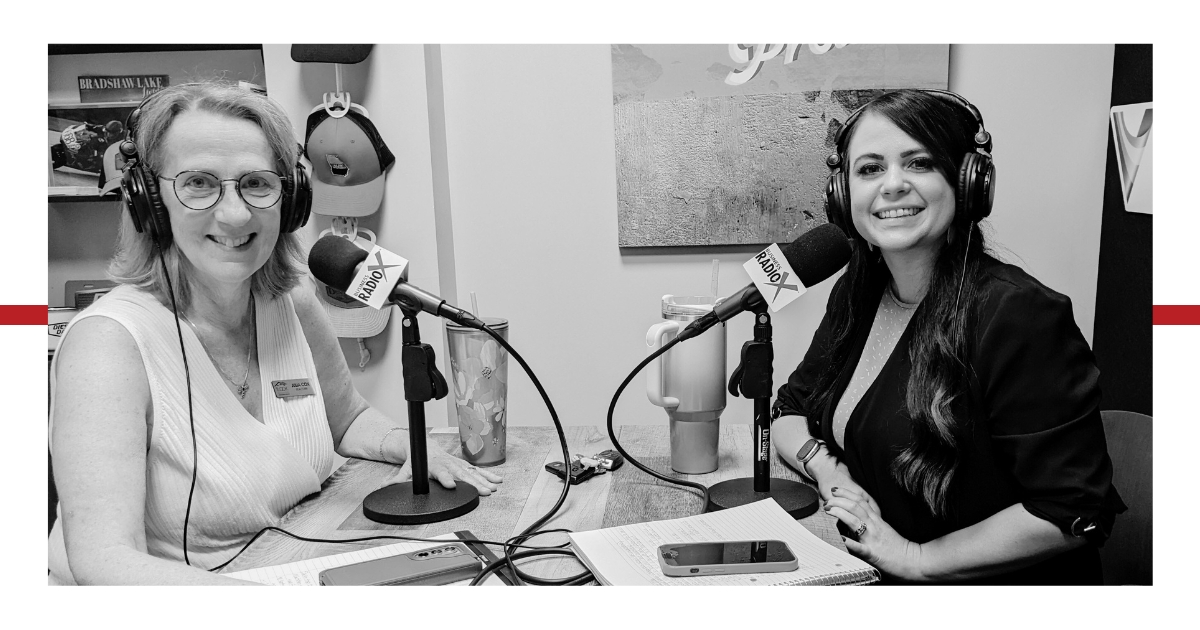
TRANSCRIPT

Intro: Broadcasting live from the Business RadioX Studios in Atlanta, Georgia. It’s time for Atlanta Business Radio. Brought to you by on pay. Atlanta’s New standard in payroll. Now, here’s your host.

Lee Kantor: Lee Kantor here another episode of Atlanta Business Radio, and this is going to be a good one. But before we get started, it’s important to recognize our sponsor, Onpay. Without them, we couldn’t be sharing these important stories. Today on Atlanta Business Radio, we have Phil Davis with FulPhilllment Solutions. Welcome, Phil.

PhilDavis: Hey, Lee, Thanks for having me today. Appreciate it.

Lee Kantor: Well, I am so excited to learn what you’re up to. Tell us about fulfillment solutions, how you serving folks.

PhilDavis: Absolutely. So fulfillment and it’s spelled literally with p h i l l. So my name is actually trademarked within the fulfillment name. It is a unique career coaching and recruiting consultancy company. And so the bulk of what I love to do is I love to help Mid-senior level career professionals to find fulfillment in their career journey by helping them to tune into their value with confidence right? So as we all know, right, we all have unique value add in our careers and in our lives. And so one of the things that I absolutely love to do with my clients, my job seeker clients, is to not only help them really tune into their value, but to really show it out to companies, to whether it’s to their current employers or to a new employer, if they’re looking for a job in a way that’s compelling, but that they also feel good about. Right. And so I came up with fulfillment. The idea of of the fulfillment brand and business model, gosh, it’s been over about two years or so just during Covid and just absolutely love what I do. So that’s a little bit about that.

Lee Kantor: So what’s the backstory? How did you come to this point where you want to help people kind of get their dream jobs?

PhilDavis: Absolutely. Well, as you know, as Covid 19 hit, right. We saw a lot of a lot of career professionals get laid off. Right. Lose their positions very, very quickly just during the kind of the big season of the pandemic and being a being one of one of those affected by a layoff or really multiple layoffs. Myself, I’ve been through three consecutive layoffs in my recruiting career in corporate. I decided that I needed to just do something different with my life, right? And so for me, I saw kind of a solution, if you will, to go into the marketplace, to start my own journey, really with fulfillment. And in the beginning, rightly, like, like most entrepreneurs, I started just kind of doing pro bono work, right? Helping people with their resumes, doing a quick resume review here and there, checking out a LinkedIn profile, doing cover letters. And this was all just during Covid while I was first looking for a job myself. And I knew the job market for me was going to be a little challenging just based on my level of experience. And so just really, really being able to give and to serve back to my community here in Atlanta, I said, you know what? I’d really monetize something and really build a brand and a business just off of this fulfillment name because really the name fulfillment came to came to being through LinkedIn, right? And so when I started kind of getting on on LinkedIn, I had marketing coaches reach out and say, Hey, you need to have a unique hashtag on your LinkedIn page.

PhilDavis: And so I thought, Well, what am I here to do, right? Am I here to find a job or am I here for something kind of at a deeper level? Right? And and I knew that the frustration of Covid and job seekers being laid off then just I knew I was going to be there to help inspire and fulfill people. And so what really kind of started out as a unique, kind of quirky hashtag then became a built from scratch business model where I actually do help those job seekers and sometimes, you know, other businesses one on one with their brand and really to bring their brand out and to sing it out, if you will. I do have an opera singer voice, so I actually I went to school for opera in business. And so a lot of my framework is very musically inclined, if you will. So.

Lee Kantor: So it’s all coming together now. Coming together is your like, tell me about your ideal client. Is it somebody that is kind of in an enterprise role right now that wants to go to another enterprise role? Could they be in like you, you were a musician, Could they be in the creative arts? And you help them, you know, find a career in that path? Or do you have a sweet spot in terms of an ideal client fit?

PhilDavis: Yeah, great questions, Lee. So typically, I mean, I’ve since I’ve, I’ve been in all sorts of different industries myself. I mean, I primarily work with operations professionals. So usually folks who are in marketing or accounting finance or even HR, but a lot of, a lot of clients, a lot of folks that I love to serve are folks who want to pivot, you know, career, pivot, whether they want to change jobs, like if they’re in the education space. I’ll work with some clients in the education space that want to go into like a corporate opportunity or if they want to change industries, right? So like, let’s say I’ve got somebody that works in HR and they’re in the technology space, but they want to move into manufacturing, right? So I’d say the bulk of my work with those mid-senior level operating professionals are folks who want to make a complete career change either into a new kind of job in and of itself or into a new industry. But I work with all sorts of people. I don’t really niche down too much where I’m working like solely with like a technology client, if you will. It’s primarily those mid mid to senior level people that are currently in a career where maybe they’re not feeling that fulfillment and they want to find fulfillment in a new opportunity or a new company altogether, if you will.

Lee Kantor: So what’s the symptom? Say I’m working somewhere and you know, things are going on. And, you know, yesterday it was like today, which was like, you know, last week, how do I know? Maybe I would like a refresh or a, you know, a new career. How do I know if I’m in kind of a rut or I’ve plateaued?

PhilDavis: Yeah, it’s really, really good question. I mean, I think a lot of it and a lot of people who reach out to me primarily on LinkedIn, they’ll they’ll kind of say, hey, Phil, you know, I’m I feel like I’m ready for a new career opportunity. But, you know, I’m not sure where to begin or I don’t know if I’m fully ready to to leave my company. Right. And I think a lot of that and I tell these these folks a lot you know, a lot of it’s kind of inner reflection. Right. And so I think the most important thing when it comes to being ready to to make a move is really to like have the have the proper mindset and the realization that you are ready to make a change. Because, I mean, let’s let’s face it, right? Moving into a new career opportunity can be scary, right? Whether you’re getting into a new industry or whether you’re ready to make a move into a new job altogether, it can be very, very scary. And so I think a lot of it is is really reflecting on your career as a whole. And I tell folks to all the time, like, really give your time, Give yourself that time and that grace to reflect on where you’ve been in your career and also like write down or type out accomplishments throughout your career that you you felt really good about, right? So, for example, for me, kind of going at entrepreneurship, I knew as I was doing a season of being laid off kind of before Fulfillment was a business.

PhilDavis: I basically wrote down on paper, you know, I love to serve others, right? I love to serve other people. I love to see other people grow. And in corporate, I absolutely love recruiting, but I also loved developing talent as well, right? So helping them to build their careers, whether they want to be promoted or whether they want to move into a lateral position. Right. And so I’ve kind of thought about for me what was going to excite me most about my next steps. And I knew that I wanted to talent develop people, you know, so I wanted to get into a new career opportunity where I could truly help other people define their value and to feel good about all the achievements that they’ve done within their careers. And so I’d say, you know, writing things out on paper, really taking that time to reflect. And I call that, you know, some clarity coaching, right? So I do a little bit of that clarity coaching with folks who maybe want to uncover not only some of their value, but also really to dig into their career achievements and really helping them to define, you know, a role that might be be a good fit for them for their next story. So a lot of it is is internal reflection and getting yourself to that mindset of, you know, I am ready to make that change. And of course the time to do so, right? Because I think it takes it takes some time to to really reflect on our achievements and not really rushing the process either.

Lee Kantor: Now, what like, what’s the split of your work in terms of helping individuals as opposed to helping corporations? Like I was talking to a CEO today and he’s going from 30 people to 50 people in a year. I would imagine he’s going to need to bring on somebody if he doesn’t have it on the team, somebody like you that can help them make sure that they’re getting the right fit people in the organization to fill the right specific roles.

PhilDavis: Yeah, definitely. So I’d say for my business model right now, I’d say about a good 60 to 70% is, is on the coaching side and then the 30% is typically B2B work. And so in my business work, you know, I do offer full scale recruitment, right? So I do, I do a lot of recruiting for various industries, as I mentioned earlier. But then I also do one one thing that’s really fun that I love to do is kind of the talent attraction space and the employer branding space. So really helping typically smaller high growth organizations with their employment branding piece, right? How are they branding themselves organically or through social media, right. To really attract that top talent and the talent that they’re looking for to hire. And so I incorporate a lot of that branding into some of my recruiting strategy with those those clients, those business clients. But that is shifting, right? I think, you know, naturally, as we’re seeing the job market, as I like to say, it’s complex as we start to see companies looking to close out positions by the end of this year, they’re looking to finalize budgets and things like that and get ready for the 2024 year. Um, a lot of my my service offerings are starting to see more of an even split now. So I’d say, you know, 5050 is about what I’m doing right now. Half the work is with my job seeker clients and the other half of the work is going to be with businesses and companies who are maybe they’re looking to to hire, you know, a new recruitment department for their small startup company or they’re looking to get some consulting work out there because they have a big hiring surge that they’re going through. But it just all kind of depends.

Lee Kantor: Now, how about some advice for that job seeker? Is there anything they could be doing right now on LinkedIn specifically that can help them be found by people, you know, that are recruiters that are looking for folks? Like what are some of the the tips and tricks that a person could be using so they get, you know, pulled out? You know, they’re the needle pulled out of the haystack.

PhilDavis: Yeah, absolutely. I mean, I think the biggest the biggest tip of advice well, I’ve got kind of two things off the top of my head. I think the biggest thing and I did a post about it today on my LinkedIn page is just to start, you know, get out there. One of my good friends who’s a marketing consultant, she says, Put yourself out there. And it’s something that resonates with me to this day. Right? Because, I mean, I was in a in a same boat during Covid, right? I, I had used LinkedIn primarily as a corporate recruiter to to identify and source talent and then just send them messages on LinkedIn. But I never got to a point where I was creating content and just really putting myself out there. And so I think the biggest thing is just to start right and and really not to compare yourself to other folks out there who have maybe done content a little bit longer than you. Because I think, you know, comparison is the thief of joy, right? Like we all are on our own unique journey. And when it comes to LinkedIn and content creation, right, like really just getting started, right? Find find people that find people that create content out there that you resonate with and that you can start commenting on their posts. And you know, we don’t have to spend all day, every day on social media to get noticed, right? Even if you just take a few minutes a day and start commenting on people’s posts or also like company pages, if you’re interested in a company that you might want to work for, start start looking at those company pages and seeing what what’s out there that you can engage on that’s important.

PhilDavis: I also think, too, you know, sharing your story is critical, right? Like we say, LinkedIn is a professional platform, which it is, Right. And it was designed in the beginning, right to be a platform for job seekers and companies to identify opportunities and candidates. But it’s more than that, right? I mean, I think it’s it’s really becoming truly like a social media platform where folks are sharing their stories, their experiences and and being a little bit personable as well. So I like to say all the time, especially on LinkedIn, you know, be personable all in a professional way, but then also show your professionalism with a personable approach. So it’s a balance between the two. But I think, you know, the more that you do it and just to be your authentic self out there, you know, people will see that that you’re out there. And I think, too, you know, don’t focus on the metrics when starting out, focus on the impact that you’re going to be making. Employers love that. And believe it or not, you know, people are looking at you when you do engage and when you do comment and when you do post. So every interaction you have matters and people people are watching.

Lee Kantor: So how do you kind of get in front of people? Do you do webinars? Do you do events speaking like, can people hire you at their organization to do lunch and learns? Like how how do you kind of get the word out? And do you have any events coming up?

PhilDavis: Yeah, absolutely. So I was part of a LinkedIn local Atlanta event with my good friend Rachel Simon and Adam Marks, and we started doing kind of a local networking event through LinkedIn. You don’t necessarily have to have a LinkedIn account, but that’s something that the three of us decided we wanted to do. I’m linked in. Event events kind of informally. Once a quarter or so, I’ll do some of those volunteer work with them. But then as far as like speaking engagements, absolutely. I mean, I’m I’m more than happy to get into an organization if they’re looking for somebody to talk about maybe career development or job progression. Right. Or if there are some like colleges and universities out there who may want somebody to come in and do like a resume review day or like an interview, like a like a mock interview day or something like that. Because I know a lot of colleges and universities out there in the market, you know, looking for folks to to help them with their, you know, their students about to graduate from college and things like that. So, I mean, I do all sorts of stuff, but definitely, you know, community speaking, engagement around career career development and and even recruitment strategies and talent attraction. Those are areas that I love to talk about. So all sorts of different stuff.

Lee Kantor: And if people want to learn more, have more substantive conversation with you or somebody on the team, what’s a website?

PhilDavis: Absolutely. So I’m a one man business. So they basically get all of me if they want to learn more. My website of course w WW dot fulfillment, which is l p h i l l mint.com. If you type fulfillment on Google, you’ll be able to find me. And then of course I’m on LinkedIn as well primarily. Um, so if you type fulfillment and you’ll be able to find me, find me all over.

Lee Kantor: Now on the website, there’s a lot of information for the job seeker, including career coaching course.

PhilDavis: Yeah I do have a free and it and it is it is a free introductory career coaching course. So I created this little 25 minute introductory course for the job seeker. Maybe if they haven’t job sought, you know, been a job seeker for a while or if they just need kind of a refresher to get them started, right? To get them motivated along their job search, the people can click on that. It’s on the top right of my page. So it’s free career coaching course. People can access that and it’s literally just a 25 minute video that job seekers can watch and they can kind of learn the ins and outs of, you know, why job seeking can be challenging and other things as well, right? To help them kind of find results along their job search. And then of course how to fine tune your path. Right So really focusing in on a couple strategies that, you know based on my experience, job seekers can kind of get a quick little snapshot on before they decide they want to, you know, work with me one on one.

Lee Kantor: Well, congratulations on all the success you’re doing important work and we appreciate you.

PhilDavis: Oh, I appreciate it. Lee It’s definitely been a fun and fulfilling experience for me as well. It’s definitely I love I love what I do and I definitely appreciate it.

Lee Kantor: All right. Well, thank you so much for sharing your story today, Phil.

PhilDavis: This for having me. Lee, I appreciate it.

Lee Kantor: This is Lee Kantor. We’ll see you all next time on Atlanta Business Radio.

About Our Sponsor

OnPay’sOnPay-Dots payroll services and HR software give you more time to focus on what’s most important. Rated “Excellent” by PC Magazine, we make it easy to pay employees fast, we automate all payroll taxes, and we even keep all your HR and benefits organized and compliant.

Our award-winning customer service includes an accuracy guarantee, deep integrations with popular accounting software, and we’ll even enter all your employee information for you — whether you have five employees or 500. Take a closer look to see all the ways we can save you time and money in the back office.

Follow OnPay on LinkedIn, Facebook, and Twitter

Tagged With: FulPhillment® Solutions, LLC, Phil Davis

Ted Rykoski with Sandler Training, Kevin Harris with All In Or All Out Ministry and Daniel Tillberry with GracePoint Insurance Advisors

September 18, 2023 by angishields

Charitable-GA-Feature-91523
Charitable Georgia
Ted Rykoski with Sandler Training, Kevin Harris with All In Or All Out Ministry and Daniel Tillberry with GracePoint Insurance Advisors
Loading
00:00 /
RSS Feed
Share
Link
Embed

Download file

Charitable-GA-91523-banner

In this episode of Charitable Georgia, Brian Pruett is joined by Daniel Tillberry from Gracepoint Insurance, Ted Rykoski with Sandler Training and Kevin Harris with All In Or All Out Ministry to discuss the importance of community involvement and servant leadership.

Ted-Rykoski-headshotProbably like a few others in the room today, Ted Rykoski got to where he is by accident.

After graduating with a marketing degree from a small business school in the northeast a few decades back, he only knew that he wanted to be in sales.

That desire to be in sales brought him to the logistics, software, packaging, medical oxygen, background screening, and digital marketing industries in a variety of roles from individual contributor to senior director with a team of over 200.

For the past eight years he has been a licensee of Sandler, the leading sales and leadership training organization with over 270 offices around the globe. Sandler is consistently rated one of the top Sales Training companies in the world by Selling Power, Training Industry and more.

Ted brings over 30 years of experience in sales and leadership in a variety of industries. His range of experience helps him provide unique insight to the challenges that organizations face in sales, management, and customer service.

His clients range from small business serving their local market to global enterprise companies we all know. They range in industries from insurance, logistics, consulting, technology, commercial and residential building & remodeling, manufacturing, and more.

Kevin-Harris-headshotKevin Harris with All In Or All Out Ministry, suffered from a substance use disorder for most of his life. He has almost 11 years clean from any drugs or alcohol.

Through his journey, God has given him a passion to give back and help others who have suffered from the same thing that he has.

He’s in the process of opening up a transitional house for men who need help getting clean and becoming a productive member of society by teaching responsibilities, trades and other life skills to set these men up for success.

Daniel-Tillbury-headshotDaniel Tillberry is the proud husband, father, and owner of GracePoint Insurance Advisors; a faith based, customer centered risk management and insurance services agency.

Since completing his Bachelor’s degree in Integrated Studies, specializing in Business and Leadership from Kennesaw State University, he has gained a solid foundation of knowledge and the understanding of risk management, organizational structure, and leadership.

At GracePoint Insurance Advisors, Daniel leads the team to offer comprehensive risk management and insurance solutions for personal and commercial clients.

The team specializes in commercial policies such as commercial liability, workers compensation, commercial auto and many other business-related services. As a reputable insurance agency, in addition to home and auto, we also provide top-notch life insurance solutions.

In his free time outside of the office, Daniel enjoys serving the local community and people through his church, Burnt Hickory Baptist. He is passionate about spending as much time with his family, wife and two little girls.

One of his favorite hobbies is studying military aviation and naval history and taking his family to see the blue angels, Air Force Thunder birds and watching airs with his kids.

This transcript is machine transcribed by Sonix

TRANSCRIPT

Intro: Broadcasting live from the Business RadioX Studios in Atlanta. It’s time for Charitable Georgia. Brought to you by B’s Charitable Pursuits and Resources. We put the fun in fund raising. For more information, go to B’s Charitable Pursuits. Dot com. That’s B’s Charitable Pursuits dot com. Now here’s your host, Brian Pruitt.

Brian Pruett: Good, fabulous Friday. It’s another fabulous Friday. And we’ve got three more fabulous guests. So if this is your first time listening to Charitable Georgia, this is all about positive things happening in the community. And this is the first time I am running the board today. So there may be some good things. There may be some bad things we’ll find out. But all in all, it’s a great day. The weather is cooler. It’s nice outside. So fall’s right around the corner. So as I mentioned, we got three fabulous guests this morning. And our first guest this morning is Mr. Daniel Tillberry from GracePoint Insurance. Daniel, thanks for being here.

Daniel Tillberry: Absolutely.

Brian Pruett: So last week I had Daniel Cox from Goosehead Insurance and I told you, Stone, that I like the phones, that you can do the the rings particularly and Daniel Cox’s Goose. When Daniel Tillberry calls me, it’s Amazing Grace. So, you know, that’s cool. So why? Because of gracepoint insurance.

Ted Rykoski: Oh, yeah, Sorry, I’m a little slick.

Brian Pruett: We’ll talk to you in a second. Kevin. Just stay in the corner. Yes, sir. So, Daniel, if you don’t mind, share a little bit of backstory. You’ve got some great back history. I know you were in the ministry for a while, but you had a weight loss journey, and it’s leading into passion for what you’re doing. So if you don’t mind, just share your story.

Daniel Tillberry: Yeah, absolutely. So who where do you begin on that? That’s a that’s a that’s a good one. So yeah, like you said, I started out in ministry. I felt a call to ministry in younger years, came to know Christ. And I’ll never forget the day. It was November 4th, 1998. I was nine years old. Um, is that a one? Is it church? And from that day forward, God has just radically rocked me in multiple ways. Oftentimes just hit me on the back of the head like, come on, dummy, let’s, let’s get to work. But you know, it’s okay. So I went through high school, went through college in in high school and college, worked a lot with youth ministry in college. I actually went on staff at a couple of churches, worked in youth ministry for about four years and just loved, loved that time there. Since then, God has kind of called me away from vocational ministry full time, but it has really kept my passion in being able to the heart of a servant and really, really worked towards where I am today and bringing out that servant leadership and servant servant mindset. So really where that is has led me in multiple things, but my family’s a huge piece of it. I can’t say I’ve gotten anywhere without my wife. Number one, it’s the Lord. Second is my wife, who who keeps me stable and constant at all times. And though she probably doesn’t doesn’t always agree with that, she is absolutely the compass that keeps things pointed north and and keeps things going.

Daniel Tillberry: So throughout that she’s been been with me in ministry from day one. We actually met through ministry, a youth pastor or college pastor back in the day came from her church, who was her youth pastor, and we ended up meeting through that fun story with that. But the at that time I was training to be a officer in the military to stepped away from that. That’s a whole nother story, but got to do a whole lot of fun, fun training and stuff in college with that and then walked away and went full time ministry after that in the ministry went from from vocational to in business after graduating, graduating, graduating with business degree from Kennesaw State, and then really felt like God was leading me into business and taking ministry through business. And from there, I’ve just had a passion to. Change the business world for Christ. And it’s been a journey. But bringing leadership back into the business world, we talk about business and leadership all the time, but what we what we miss a lot of times is, is the business world as a whole. I truthfully believe has a void that a lot of business people chase nonstop and they believe it. The at the root success will get it and success by Western culture. We believe that that’s that’s money, finances and growth. Right. But what we realize, if you really take a step back and look at it is true success is in service to others.

Daniel Tillberry: And that’s where we find our true happiness and joy and not just being happy, but truly being joyful in it. And that’s what I’ve learned in the last couple of years that I chase the success. Success meter was pretty good at it and in years past. But then when I stepped away from the corporate world and came back to back to insurance full time and opened my agency, I decided that we were going to have a people people first mindset. And I think you’ve heard from almost day one. My my motto is people over profit. And that that motto just rings rings true that we focus on people, not policy numbers. The insurance world as a whole has has gotten like business as a whole, has gotten in the mindset where it’s all about money. And though money’s not a bad thing, it it can bring out some just real evil in the world and bring out the mindset of just I’m here to to complete a task and not focus on the relationship and how I can actually help. So from day one, I’ve looked at how can I actually look at the people that I help and the conversation that we have, Where is the impact going to last? It’s not about, yes, there’s protection there that I’m offering so I can be there in some of the worst times of their life.

Daniel Tillberry: But beyond that, where are the times that they’re at right now in life and how can I help them now instead of waiting to win? The house burns down, you know, both metaphorically and physically is you know, if we don’t open up those conversations, the house might be burning spiritually right now. And that’s that’s a passion for me is protecting everything physically. But then beyond that. So beyond that, like you said, I had a weight loss journey that that’s been a been a part of it. So we were joking a little bit ago that I’ve got a face for radio and I believe that 100%. But I jokingly say now I’m less than half the man I used to be. And that is absolutely true, physically and and otherwise. You wouldn’t look at me today and know that at one point I was at least 420 pounds, and that wasn’t that long ago. I had bariatric surgery in August 19th of 2020, and since then I’ve lost 247 pounds. And it’s been a rocking roller coaster ever since. But what I found in that that the fun thing about that journey is I’ve got to experience a lot of different people with it. My journey has been different than a lot of people. It’s a lot of negative connotations and surgeries and those kind of things. And it was it was to fix a health imbalance that I had I didn’t know that I had.

Daniel Tillberry: And I fought it for ten years. It fought it really my whole life, but didn’t know that I had the the hormone imbalances that I had. So that mixed with a whole bunch of other things caused the the weight loss and we couldn’t get it off. So it literally that the day after surgery, within three months I was down 100 pounds. And it was we got to a point after about nine months of you know, down over 200 pounds, you were like, all right, when is this roller coaster going to stop? And how do you stop it starting to freak out a little bit. And I remember calling the doctor’s office and saying, hey, when should I be worried? And he looked they came back and they were like, yeah, when you hit 160 pounds, you know, let me know. And I was like, Whoa, whoa, whoa, whoa, whoa, whoa. 420 to 160. That seems crazy. And they were like, Why? I was like, Well, first off, I haven’t been 160 probably since third grade, so, um, that’s terrifying. Um, but I just I realized that it wasn’t about me and that that took some, some getting used to that. There was a lot of pride in it. That was the reason I didn’t, didn’t do the surgery up until that point as well. There was a lot of pride in it that I could do it on my own and realized that there’s a lot, a lot of need of community around me.

Daniel Tillberry: And as I. Leaned more into the community and support around me, I realized that the reason that I did it was for my family, but ultimately it was for me and I missed that piece. So as I got about about a year after surgery, I walked through the bathroom one day and kind of scared myself because I didn’t know who was in the mirror. Still to this day, it’s kind of freaky. You look in and you’re like, That’s not that’s not who you used to be. And and really relating back as I think it’s funny that I was teaching a class at church the other day, and I believe the Lord has used my surgery and my weight loss journey to just speak back into me, to say, you’re not the man you used to be because I am guiding you to be the man I want you to be. And that’s really just kind of set heavy on my heart. And it’s really given me a new passion to to step forward and say, okay, well, where where do you want me and what do you want of me? And it’s no longer about, you know, not just how I can serve, but how do you want me to serve God and kind of go from there. So it’s been it’s been fun. I’m really excited. I feel like we’re at the precipice of something amazing and I don’t know what it is.

Brian Pruett: That’s awesome. I’d love to be that because I like to food too much, so you can tell. So but for those of you, for those of the listening that may not know, can you share what the surgery you had? What is it like?

Daniel Tillberry: Yeah, absolutely. So the surgery itself, there’s a couple of different versions of bariatric surgery you probably heard of like lap bands. It’s basically just a band that constricts the ability to eat. Doesn’t really do anything as far as the size of your stomach. There’s the gastric sleeve, which literally cuts your stomach down. There’s a gastric bypass that literally bypasses your stomach and goes straight to straight to your lower intestine. And that and what each of them do is either restrictive or malabsorption in in the whole system. So basically what it does is the restrictive is literally what it is. It’s restricting you from what you can eat. Malabsorption is, which is what the gastric bypass is. It doesn’t allow you to process the food and pull as much nutrients out at one time. So it alleviates the overeating ability because it passes through the system a lot faster. What I had is called a duodenal switch. There’s a more fancy term than that I can’t pronounce, but it’s a it’s a modified surgery. It’s the shorter term is called a C.T.. It’s a newer, newer surgery that that was approved actually back during Covid. And that’s how I knew God was in the works because that was not the surgery I was going to get. It was about a week before my surgery, scheduled date when Covid hit, and it shut everything down. So I didn’t have it. It was that was in March. I didn’t get to have the surgery until August. And during that time, my doctor got board certified for the surgery that I had. That was the one I wanted all along.

Daniel Tillberry: So just seeing that progression happen was even cooler and looking back on it now. But basically what what the surgery I had is, is a mixture between a gastric sleeve, which is takes the stomach, which your stomach is about the size of a two liter bottle and it cuts it down to the size of about a medium sized banana in size. And then they cut the bottom part of your stomach where it connects to your upper intestine and they moved it down my upper intestine about 50%. So I’ve got a malabsorption as well as restrictive surgery built into both. So it kind of satisfies both. And really what I’ve learned is everybody asks me that the big question, well, what can you eat? And does it cause problems? And yes and no. So the diet is really if you think about the food pyramid and what you’ve always, always been told you should you should be eating, you know, 4 to 5 meals a day and good snacks and good healthy stuff. That’s literally what I eat. I have I have very little restrictions that my body has has thrown against me. And it’ll tell you it’ll tell you instantly what you should not eat. It’ll give it back to you. But it’s, it’s been good to kind of see that and, and kind of walk that journey. So it’s, I love talking to people about it, giving my story with with how it works and, and telling people how beneficial it can be. But there’s also times where it’s not a good fit and it’s good to talk, which I think.

Brian Pruett: Is important, like you said, to talk about, because, you know, people, they try diets, they try different things, and you got to find what’s right for you. Absolutely do it. And so talk to as many people as possible. Talk to Daniel and you know what works for you. So continuing with the servant heart, you’re getting ready to go on a mission trip, correct?

Daniel Tillberry: Yep, I am. It’s. It’s actually my first international mission trip. I’ve served all around the country over the years. You know, domestically. But it’s the first international trip. I’ve been super excited about it, going to Nairobi, Kenya, and we’re going to be serving in the a little bit in the slums of Chimera, which is an enormous slum of the world where don’t quote me, but I think it’s a couple million people in like a three mile square. I mean, it’s it’s a tiny place with way too many people is basically what it runs down to. So we’re going to be doing some some different service in there, washing of hands and feet of children, passing out some shoes for a couple of days, doing some pastoral training. And then we’re going to be flying out to the outskirts of, I can’t remember, somewhere in the the countryside of Kenya. And we’re going to be doing some mission projects out there where our church is built, a widows and women’s shelter and center out there. And we’re going to be finishing that. The mission trip itself is a construction trip, so there’s 12 guys going. We’re going to be basically the pack mules and and service hands of of the project. So it’s going to be going to be a lot of fun, get to experience things. But I’m looking forward to it and and getting to see it. It’s been interesting to see the first time I’ve ever had to fundraise for this type of of trip, but it’s it became real. I got I got our flight information yesterday so it’s it’s ready we take off October 20th so I’m t minus I guess a month and five days. So it’s it’s exciting.

Brian Pruett: So you mentioned the fundraising part. So other than praying for this trip, how can people help?

Daniel Tillberry: Yeah, absolutely. So obviously the number one would be prayer over over myself one for for my diet it would be a huge one. I’ve not only have I never eaten Kenyan food, but that mixed with my surgery can cause some some interesting dietary needs over there. So we’re going to be watching that closely. So that’s a big one. Pray over the team, pray over the people there that our impact can be can be good. But then also financially, I’ve got a support page that that I can I can send you Brian but it’s a it’s a journey over there. And I want to say it’s it’s $1,800. I think it’s what our, our goal to fundraise is and that’s going to go not only to the flight and the food and the housing over there, but also the building itself to help finish that. So definitely prayer is number one. But if there’s gifts or somebody wants to give, I’d love to. Love to be able to take that.

Brian Pruett: Yeah. You want to send that to me? We’ll help you push that out for you. So absolutely, we’ll get to Gracepoint here in just a minute. But you talked about going through your journey and leaning into community and that’s one thing we talked about all the time on the show is is positive things in the community. So why is it important for you to be part of the community?

Daniel Tillberry: Absolutely. So one one, for me, it’s it’s two things. The great commission itself, you know, Jesus, Jesus told us we have to go into all the world and make disciples. But one of my favorite verses of the Bible is Acts one eight and that you’ll be my witness in all all of Jerusalem, Judea, Samaria, and to the very ends of the earth. And if I want to live true to that, I have to be involved in my community. Um, and not not just because I want to see the world change for Christ, but also because if I’m not in the community, I can’t be a servant and I can’t help people in any way, regardless of religion. I mean, take, take religion out for everything. If I can’t be a by definition of a good person without being connected to people. So it’s that connectional ministry connectional relationship that matters to me. So I dive in as much as I can in the community. And the other part is, you know, I grew up here, I want to see this community changed and and really this community be a place that not only people want to be, but are passionate about being here because because it’s a difference than around the world. I’ve heard of places that, you know, neighbors don’t know neighbors. And that happens around here. But, you know, in the south here, we’re we’re different in the in the fact a lot of people come down there like it’s it’s amazing how friendly people are. And I’m like, I look at some people, I’m like, I don’t know if they’re friendly or not, But but I look at it, I’m like, maybe I’m just used to it.

Brian Pruett: Don’t let them sit in Atlanta traffic.

Daniel Tillberry: It’s not friendly there for sure, but it’s it’s too it’s just that difference. It’s that thought process of you can’t be connected without being involved and you can’t get to know people. If it’s about relationships, you can’t build a relationship without sitting next to people that that shoulder to shoulder time is is powerful. You know, for men, it’s, you know, just sitting next to each, you know. Say anything. And for for the ladies out there that they’re obviously a little bit different, that they’re designed a little different. They like they enjoy talking. I can do that, too. But, um, you know, it’s it’s one it’s just I like to sit shoulder to shoulder and just enjoy people. It’s a lot of fun.

Brian Pruett: So we also talk a lot about the power of networking in here. And I know you and that’s how you and I met was networking groups. And I had one of our mutual friends on Matthew Payne was on here the other day and we talked about C Suite for Christ. I know you’re involved in that as well, but can you share a positive story or a testimony about networking?

Daniel Tillberry: Yeah, absolutely. So, um, I can, I can use Matt for, for instance, you know, Matt, Matt Payne with C Suite for Christ. I get to sit on the board with him and really I, I think for me, sitting on the board and helping them kind of develop that ministry is really just me being a sponge, soaking up the knowledge and the wisdom that the other board members have that I wish I one day can get to and they may not see it that way, but that’s absolutely how I see it. If I can be a sponge and be half the man, some of them are half the with the ladies, the prayer warriors they are and just the people and the passion they have. If I can if I can be a quarter of that, I’ll be better than I’ve ever been. So it’s one that with C Suite for Christ, I’ve gotten to know Matt really well and just him and his wife Buffy, understanding who they are and their passion they’ve become. I don’t even know if they know I feel like this, but it’s they’ve become really mentors to me and really seeing how they live out. Um, Mike with ETF Solutions is another one there where he he boldly challenged me a couple of weeks ago to in a conversation he was like, you know, if you, if you love you love God, why don’t you say it in your conversations? And I was like, you know, that’s an interesting concept.

Daniel Tillberry: He goes, I can tell by talking to you that it’s there. But he goes, you know, grace point. You’ve told me your, your your name with Grace Point. It’s obvious that that you live in in that. But where where is it he goes, for example, when Mike talks about ETF solutions, he says, you know, ETF Solutions is a is a faith first family, family oriented environment. And I was like, you know, that’s true. That’s exactly who I am. So that networking, he’s challenged me in that so that that that’s become part of my conversation. I’m not perfect at it by any means, but I bring it out and I tell people like you may, it may not be a fit to work with me just because we do things a little bit different. But what I can do is, is I’ll help educate and I’ll help help you go wherever you need to go. And I’m passionate about that. But that’s who I am. I’m faith first, family second, and then relationship third. And I keep it in that order on purpose because it helps stabilize me to where I need to go.

Brian Pruett: So Grace Point, that’s a good, good segue to talk about Grace Point. So first of all, tell me how the name came about.

Daniel Tillberry: Yeah. So Grace point itself. I wish I could tell you it was some miraculously gift, God given name. It is in every business that me and my wife have had. And we have a couple. We’ve sold one we started out with years ago. I’ve told you we owned a bounce house company here here in Atlanta, and it’s a fast growing bounce house company. We sold it. It’s called Uplifting Rentals. It’s a play on words on purpose. We wanted to show our faith in it, but we also not that we wanted to hide it, but we wanted to. We wanted to do it in a way that wouldn’t be detrimental to people, not of faith. But we wanted to show them we are faith, faith based, but also that we’re here to serve. Uplifting. Reynolds came out with that because one, it’s funny, know you’re a bounce house you’re uplifting. But it’s also that was part of our culture is we wanted to uplift people. Grace forward into Grace Point same thing when we were open up the agency, it was I looked at, looked at my wife, Lacey, and I said, I want this to be a the name itself. I want to show our mission and our vision and our mission and our vision is is simple. I want to be a point of grace in my community and be a light to everyone around me in whatever that means. And not not just in, you know, spiritual or religious way, but just in a simple way.

Daniel Tillberry: I want to be something different so that I can bring light to an industry that is viewed as dark. And that’s an industry problem as as a industry, for the most part, the I wouldn’t say we get a ten out of ten. You know, when when people talk about insurance and financial services, it’s they’re not like, oh, yeah, I really want to talk about that. That’s one of my passions. And though it is for me, I enjoy it. It’s it’s probably a three out of a ten if at best for most people, and especially right now with with the market the way it is, you know, rates always going up and and you know a lot of people don’t understand why in those kind of things it it when we looked at the name we said we want to make sure people understand that it’s a service first because the industry as a whole years ago used to be service oriented. You used to know your agent, you used to your agent used to be somebody who would come over and have dinner with you and make sure things were done right. And I would love to have dinner with anybody that wants to have dinner with me. I can eat, I can hide some groceries. But it’s it’s one that that’s the mindset we wanted to bring back. And we wanted to we wanted to make it truly a light in the darkness and radically change the world. We also have a passion for I’m a Dave Ramsey endorsed local provider and and though that doesn’t mean a lot to to most people, what we do with that is we have a passion.

Daniel Tillberry: And and I’ll be honest, I stole this from a good friend of mine up in Missoula, Montana, and he said it was okay. But his mission and vision for his agency is to end financial crisis in America, starting with one policy at a time. And I’ve adopted that into us. And that’s exactly what I want to do. I want to I want people to understand their protection so that it’s not if it’s when people come after you. We know that because if you drive down the interstate, look up at the billboards, how many of those are, you know, lawyers that are ready to come come after the insurance companies? Right, Wrong or indifferent? There are times where that’s absolutely necessary and I forward customers to them. But that’s a big reason why the industry, why the rates are going up and everything that’s happening. So in that it’s not if it’s when and how do you properly protect yourself? And if we’re going to end a financial crisis, we have to understand what financial services and what financial health means. And that’s where that came from. So going back to the name itself, we were coming back from a business meeting where we were starting our agency and on the way back and we sorted through hundreds of names. And one one thing we always do as as business owners, we’re smart enough to know before you can pick a name, you got to make sure you have a website that works and not only a website that works, but a website that can be spelled out so people actually go to it.

Daniel Tillberry: So as we we had some great ones, but every one of them was either taken or that people are not going to be able to to do that. So we were actually driving by and GPS took us in the mountains of nowhere, north Georgia, and we rolled by. And as we rolled by, there was a church on the left hand side of the road. I’ll never forget it. The steeple had a bright light shining out from the top of it, almost like a lighthouse. Um, and the sign was illuminated. It was like the only thing in this area in the middle of nowhere. And it just said gracepoint. And I looked at Lacey, I said, Look that up. And Gracepoint Insurance.com was available. And instantly we knew. We said, that is the name. And we said. That is, you know, actually, I haven’t thought about it until right this second and never really put the two and two together of the light and the steeple being a lighthouse. And I just talked about wanting to be the light in the darkness. And that’s that’s interesting. But that’s exactly where where it came from. And that’s that just speaks to who we want to be and how we want to serve.

Brian Pruett: So you guys are a broker, right? Insurance broker.

Daniel Tillberry: We’re an independent agency. We represent about 30 different companies directly and access to dozens and more. The way the insurance market opens up. So there’s literally nothing we can’t do. There’s always an option out there. It’s the difference between like a captive captive market, like a state farm or an American family where they’re good in certain things. We have options outside of that, which was the other reason why we wanted to go independent. Um, so it’s we specialize in commercial and one of the things we do is churches and nonprofits. That’s a passion we have because those are industries that are usually left in the dark and also don’t have a budget to usually pay for stuff. So it’s where we can where we can usually help step in.

Brian Pruett: And that’s another reason he’s here, because I want him to talk to you. Okay.

Daniel Tillberry: Well, that’s good to know.

Ted Rykoski : Yeah, I’ve been set up. Yeah.

Daniel Tillberry: Okay. Yeah. So it’s one that if I can educate, that’s. That is primary. I tell everybody, I don’t care if you do business with us or not. I mean, I would love to. One, I want to know who you are, how I can serve you. And then if I can, if I can do business with you, that’s just a bonus on top. But if I can help educate you, I tell all my customers I’ve had a couple here lately with how bad the market is, and if you haven’t got your renewals yet, just hold on because it’s just close your eyes and don’t look at it because it’s it’s painful. Um, but I’ve had a couple call me and they’re like, we don’t want to leave, but we’re finding savings. And I talked to him. I’m like, Listen. Do you understand what you have now versus what you’re going to? And are they the same? And we’ll walk through it and there’s a couple of them that they’ve they’ve sent me the new quotes just to cross check. And I’m like, Yes, you need to go with this. And they’re like, Why would you tell me that? And I’m like, Because it’s best for you. Like, that’s my job is to educate you. And if my education takes you somewhere else, then good on me. I did my job because that’s what I want. I want I want you to be able to protect your family. And if that if you know the rates that we have aren’t the best out there, then that’s fine. We want you to be in the best situation possible. And, you know, long term, they may come back. The market’s going to get better ish somewhere sometime. So it’ll be fine. It’s an election.

Brian Pruett: Year. It won’t be this year.

Daniel Tillberry: It’s it’s probably going to be 20, 25 or after. But yeah, it is what it is. It’s, it’s just what we sit in. Education is fun and I kind of geek out on it a little bit. So it’s, it’s all right.

Brian Pruett: So you guys also do personal though other as well, right?

Daniel Tillberry: We do personal personal right now that that’s the market that’s probably harder than anything just because there’s a lot of you know for instance in the since January of this year we’ve had eight carriers in the state of Georgia either back out or cut off completely nationwide. Insurance, for one, is not writing any new business nationwide right now. So it’s it’s very difficult to get anything done. And really what’s causing that is, you know, lawyers, tort reform, contract law, a bunch of different things that can really only be solved under the gold dome down in Atlanta. Um, but, you know, that’s a that’s an internal debate. We won’t get into the politics of it, but it’s what it is. It’s bureaucracy that that causes those those issues that then reverberates back on, you know, the policyholders themselves. So, you know, educating people on that. It’s just it’s a tighter market than it’s ever been. Usually what happens is when the independent market is tight, the captive markets, like the state farms of the world, are usually open and it’s usually like a pendulum that swings back and forth. And this is the first time in 14 years of me doing this that it is. It’s like the thing is stopped right in the middle. Like it is not moving. No side of the business is good. No side of the business is bad. It just it is rough and tight everywhere. And the hurricanes that are coming through, the storms that are coming through are not helping the claims situation. So it’s a it’s a multitude of pieces where you’ve got that plus inflation. You’ve got like ten different factors that usually happen at different times. So you might see that 3% increase a year normally and everybody’s used to, you know, small increase because you’ve got one factor playing at a time. Right now you’ve got all of them. So you’re seeing increases that are 15 to 20, sometimes more percent, and you’re like, What is going on? And you’re like, I wish I could explain it better than that. But it’s it’s just the current world we’re living in, right?

Brian Pruett: So you guys you’re not are you’re not only licensed in Georgia, but you have other places you can work, right? Yep.

Daniel Tillberry: So we are all over the southeast, um, everywhere but Louisiana right now. Just because Louisiana is is a very, very tight problem market right now. Uh, but but all over the southeast. And then we’re in Michigan, Iowa, California, Texas, we’re we’re scattered. I think it’s 14 different states we’re in. So we go where where policyholders need us to be, really.

Brian Pruett: So I’ll give a shout out for him because my mom had a friend who was moving from here back down to Florida and was having trouble finding something. And Daniel took the time to talk to her. I don’t think it worked out with her then, but.

Daniel Tillberry: We ended up forwarding her down to a good friend of mine down in Florida, and he was able to help her out. So it’s that’s the other part of it. Going back to networking is if I can’t help, I’m going to find somebody who can. And because because we don’t want to just have you out there and not not knowing what you’re doing. It’s that’s what we’re licensed to do. That’s that’s what we’re here to help.

Brian Pruett: So real quick, I want to ask you if you can share just some free tips on all three, if you don’t mind. Something maybe for personal either home or auto, either one, something for commercial and something for nonprofits. If you can make it real quick on.

Daniel Tillberry: Just tips and tricks. Yeah. So on the personal side, definitely Right now, if you haven’t, just like when we came out of the recession of oh eight, oh nine, everybody really needed to check their their reconstruction values on the homes and those kind of things. You absolutely need to do that where in 2009 we we were over insured a lot of times now we are grossly underinsured. So the market as a whole typically adds anywhere between 10 and 20% to your homeowner’s value. So if you’re, you know, say you’re at 500,000 now, your renewal might say 540 on it. The problem is, is those natural does not necessarily mean that you are insured properly. So ask for a review and double check those coverages. Yes, it’s going to. Go up a little bit, but the last thing you want to do is have a fire in the house and be underinsured and then hit coinsurance and not have 100% replacement cost value. So that’s that’s number one right now. And it’s an industry issue. The industry is aware of it. They’re just not doing a good job fixing it. Um, the, the commercial side, the next one you wanted to talk about really in, in business, I mean, everybody talks about just simple general liability and property on those worker’s comp. The, the simple stuff. But really what I found on that side is a coverage that most people don’t pay attention to is professional liability. It doesn’t affect every single industry, but professional liability is absolutely key. So professional liability and we know it as doctors and lawyers, right? It’s it’s errors and omissions or it’s malpractice insurance. That’s what professional liability is.

Daniel Tillberry: The industry has changed the name. It’s the same thing. Um, a lot of industries need it and they don’t understand it. Like if you work with kids, if you’re a counselor, if you don’t have sexual abuse and molestation, you are opening yourself up to a massive lawsuit just just for the indication that you could be accused of it, whether it’s right, wrong or indifferent. That’s the world we live in. And and there’s we run across it all the time. And it is it’s cost costly, but at the end of the day, you got to you got to weigh the difference of is it too much versus what’s the exposure you have. And that’s where the education piece comes in. Educate and then you decide from there what is best for you. Um, churches and nonprofits, a big one. The churches side International liability if your church is is a gospel preaching New Testament church where you are active and you are sending mission teams out and you don’t have international liability, that’s a problem. That’s a big problem. You need that. You also need, again, sexual abuse, molestation an on there. Unfortunately, that’s not something I wish a church ever had to have. But it is vital in today’s world. Pastoral counseling, those kind of things. Nonprofits on the back end, same thing. Depending on what the nonprofit is doing and the exposure they have, it’s vital to make sure the general liability may not be the coverages, extending the right coverages to your. Personal business. And that’s what when you get a contract, that’s what everybody asks for. Nobody understands what they’re actually asking for. It’s a problem. It’s a big problem.

Brian Pruett: So awesome. Thanks for sharing those. So if somebody listening wants to get a hold of you to talk about your services, how can they do that?

Daniel Tillberry: Yeah, it’s you can call the office anytime. (678) 224-9333. You can go to our website gracepoint Insurance.com fill out the contact form there or you can email us anytime. You can email the team. You can email me directly at daniel@gracepoint.com or you can email us at quotes@gracepoint.com. It goes to the whole team. So multiple ways. Just if you have any questions and again, we’re not here to sell. We’re here to help. So whatever we can do we’re we’re there for you. Awesome.

Brian Pruett: Well, Daniel, thanks for coming and sharing your story. And what’s your passion about what you’re doing? Don’t go anywhere. We’re not done with yet, but we’re moving over to Mister Ted Rykoski from the Sandler Training Group. Ted, thanks for being here this morning. Thanks for having me. So again, everybody that’s in this room are friends of mine. So that’s another reason I like doing this because I get to hear stories and and become friends. So Ted and I met, I don’t know what, 12, 14 years ago at Marriott, a business association.

Ted Rykoski : Closer to eight.

Brian Pruett: Yeah. Well, I like, you know, it’s like the fish you catch, right? It’s the like the make it bigger.

Ted Rykoski : It feels like.

Brian Pruett: 14. Right, right, right. So you are have a story of overcoming. You’ve actually overcome cancer twice. So if you don’t mind just sharing a little bit of your background, your story, and we’ll talk about Sandler here in a little bit.

Ted Rykoski : So the story specific cancer. Yes. So it was interesting. 2002 had surgery and got diagnosed with cancer just two weeks after I got married. So a little bit of a journey. There was radiation daily during the week for a few months, and I was all clear free to go and that was back in I was living up in the Northeast, moved out to Arizona a few years later and I was in my 30s, a male. Of course, I didn’t see any doctors, so I didn’t and go to any doctors. And after being there for a couple of years without seeing a physician getting my annual physical, I had problems even drinking water. So I went to go see a doctor and my wife had seen and I got a he gave me samples of something for. I’m cured or something like that. I knew it wasn’t that, but with my history, he sent me for an x ray and Cat scan, and the x ray showed cancer and lymph nodes in my chest. So it’s 2006. It was four years later. The cancer traveled through the lymph nodes. So that was radiation. No surgery because it was in the lymph nodes of my chest. I didn’t want to take the lymph nodes out, but blasted me with chemo. So I because of the size I was and it was. You know what the classify that as stage three or because it traveled I got more than a regular dosage anybody else would have. So it was about six months worth of cycles of chemo and wrapped up. It’s coming up on 17 years now. So October of 2006. And knock on wood, since then, everything’s been great. We’ve got a 14 year old son happened naturally. So yeah, I got nothing to complain about. It was a journey. It’s still feeling the repercussions of it, but yeah.

Brian Pruett: Awesome. Well, so somebody may be listening who may be going through what you went through. Can you give them a little a little advice of what you know, some hope.

Ted Rykoski : Uh, you know, I was surrounded by people who were looking out for me. I will tell you that, especially a second time around, I shut down. I didn’t want to be. I didn’t want to be bothered. Really. I slept a lot of the day. It was probably 12 to 18 hours on any given day. I was working, but only half time. I was part time disability for that time and I literally just hung out with the dogs. My wife basically knew exactly what I needed and supported me, but I had friends and family around me that they gave me a lot of support. Talking about community earlier, without that community, I don’t know that I would have gotten through it like I did.

Brian Pruett: So that brings. I’ll go and ask that question then. So because you had that community, why is it important for you to be part of the community?

Ted Rykoski : Wow, that’s a great question. I don’t know that I do a good enough job, especially listening to Daniel earlier. I don’t know that I do a great enough job at that. I, I believe I’ve learned quite a bit, especially over the past eight years and having the business, it’s humbled me. So what I attempt to do now is help others. So it’s although I’m in a business, there’s a lot that I do that goes above and beyond what’s in the business just in helping others. And it’s a lot of times it’s people I’m working with who I’ve I’ve made the mistakes that I see them making. And the last thing I want to do is, is try to tell them what to do. But it’s really asking questions to help them figure out the things that quite frankly, took me pain to realize and understand and learn. So. I think what I do with community now is much of that as I possibly can. And frankly, it’s with a 14 year old son. There’s a lot of doing that as well, making sure that he’s on the right path and making sure that he’s not making mistakes that I made.

Brian Pruett: All right. Well, I mean, I will say you’ve helped out a couple of things that I’ve done. You seven years ago or one of our whole sponsors of the golf tournament, you’re doing it again this year. So I know you’re positive and trying to help other people that way. And we’ll get into the business of what you do and helping people that way as well. But let’s talk about the networking piece, too, as well, because that’s how you and I met. And so I know at the time, you know, that particular group, there were some negatives, there are some positives. But can you share a positive testimony about networking for you?

Ted Rykoski : I frankly, the people I’ve met through networking have been fantastic. I’ve got clients through networking, not people I’ve networked with, but introductions I’ve made through other people. Frankly, working with somebody we both know very well currently. Great guy. I think a lot most of the people I’ve met here in Atlanta and before having my business, I was on I was on an airplane every single week. So I knew nobody here until I opened my business. And the people I’ve met have been through the networking like where we met and a lot of open networking around Atlanta through clients and through connections. It’s I wouldn’t have what I have now without it.

Brian Pruett: Well, you actually with your business, which we’ll talk about but you’re you’re also go out and speak and you I mean that’s part of your business is training. So tell us a little bit about Sandler and what you do.

Ted Rykoski : So we help businesses. We’re traditionally known in the sales world. We help sales organizations ans we help businesses with the sales process. And typically it’s solopreneurs up to international organizations. Typically they are already successful. They’re doing what they do well, but they recognize that they can be doing better. So we help them with that no matter what it is. And for some organizations or people, if they’re looking to grow the organization, just making sure that they’ve got the right people, that they’re bringing on somebody who can fit the organization and making sure that those people in the right positions are in the right places. So it’s kind of the bringing the right people on the bus and making sure they’re in the right seat. I’ve heard that analogy before and I’ll use it, but that’s a lot of what we do and making sure that when they bring those people in, that there’s a path for growth so that the organization can grow and they can grow as people and professionals as well.

Brian Pruett: Can you share a little difference? I mean, because there’s other organizations, organizations out there that do training and stuff. So like the Maxwell Group, you’ve got Sandler, you’ve got other groups. What is the difference for you guys versus some of the other groups that are out there?

Ted Rykoski : I can’t speak to what they do. I know that and I will say this with Sandler as well. We’re a worldwide network. There’s over 200 people like me around the world are licensees and delivering services, and I’m quite different from many of them as well. But the work that I do with clients is I’m best off if I can get to know the organization very, very well, what they’re doing, what they do well and where they’re, I’ll say, broken or can improve upon when I’m allowed to come into the organization and get close enough, it’s where I can have the biggest impact.

Brian Pruett: So can you take us through that? So what’s kind of a day like for you, for a client? I’m sure it’s different for everybody, but what’s a normal, typical day look like?

Ted Rykoski : Great question. So today, typically, I would have been training this morning at 9:00 and I moved that training out to 2:00 this afternoon. So I’ve got clients that are around Atlanta will be dialing in by Zoom and we’ve got a weekly training. So it’s just an hour and a half and those are professionals and a bunch of different positions and solopreneurs COO for for an organization. But I spend time at a client where I’m spending time in the office pretty regularly now, working with them side by side in their day to day operations, just getting an understanding of what they’re doing and helping them out. And sometimes it’s just slight nudges over a longer period of time just to stare them in the right direction. And for others it’s I’m there once a month or once a quarter literally is different. For every single client. There are no two that are like, it’s really based on what they need and what I can offer to them. And very much like Daniel, I’m not the right fit for everybody. And the sooner that I can recognize that through having a conversation with somebody, either them or myself, recognizing that I’m not the right fit and maybe there’s somebody better. I don’t work with everybody.

Brian Pruett: So. So you also you also offer seminars. I mean, you came and spoke, what was it, last month at our learning table with just the Cardinal Business Club monthly luncheon that we do and try to help business owners learn different things about business. But do you do seminars as well? Right.

Ted Rykoski : So, yeah. Workshops, seminars, speaking engagements. If a business organization or a networking group is looking for somebody to talk about something within sales, do that. I’m doing fewer boot camps than I did before, but those are typically it’s via Zoom again, typically about 60 to 90 minutes on a sales topic where I’ll invite people who could be prospects, but I’ll put something out there on LinkedIn and post an event. I’ll post it on Zoom. It’s typically one topic on sales or sales leadership.

Brian Pruett: So everybody is actually a sales person, whether they say it or not. Right. So can you give us a little nugget on a sales thing that you might talk about?

Speaker5: Um.

Ted Rykoski : Well, last month I did the first five minutes of a sales call, and it was focused around what salespeople can do to maintain control of the call, maintain control of the conversation. I think salespeople quite often hand over control to the prospect. And it sounds like that’s a bad thing to to maintain control of the call. But it literally is a sales person’s job to understand whether or not that prospect is a right fit for the sales person salesperson is a right fit for that prospect. And and the steps that we talked about and it literally is things like the upfront contract just setting the right expectations. It’s it sounds like it’s very complicated, but it literally is talking about how much time do we have together, how much time do you have for me today? And if I was expecting 60 minutes and you’ve got 15 minutes because you’ve got a scheduled appointment that we didn’t talk about, but I know that up front and then talking about this with the upfront contract defining what happens at the end in the beginning of the conversation. So what? Yes. Means what no means and literally eliminating that. What’s the one thing you don’t want to hear as a salesperson at the end of a conversation? So it’s three bad words which are think it over. You don’t want to think it over. So, yes, doesn’t necessarily mean that you’re handing over a credit card or signing a contract. It may just mean we’re talking about what’s the next conversation look like, Who needs to be involved and when and where is that?

Brian Pruett: And it’s funny because everybody was like, well, I don’t hear the word no. A lot of times I’d rather hear the word no than let’s think it over.

Ted Rykoski : No is yes is best, no is second best. The worst is think it over.

Brian Pruett: So I shared this a couple of weeks ago, but I got first got in sales. Everybody was like, I can’t believe you’re a salesperson. How do you handle? No. And it’s because I’m used to it, right? When I was in college, I asked every single girl out and that’s what they said was no. So it really but I think the most important thing for sales, it’s all about establishing the relationship, right?

Ted Rykoski : It’s step one, bonding, a rapport. Yeah. It’s that bonding rapport is you earn the currency of that relationship, which is trust. Without that bonding report, there’s nothing else.

Brian Pruett: So do you just work in Atlanta or are you able to work nationwide or.

Ted Rykoski : Great question. So I am able to reach out to anybody within the state of Georgia. But when I’m invited in elsewhere, I happen to be speaking at a company’s annual conference in November. That’s in Louisiana. That doesn’t happen often, but it can be. If I’m invited elsewhere, I can work elsewhere.

Brian Pruett: Okay. So I’m just curious. I don’t know that you and I have ever talked about this, but I’m, you know, especially giving the world of sales. How did you choose this particular. Career track and then jump into the Sandler part.

Ted Rykoski : So you talk about the career track of sales. That was completely by accident. So I went to school at a small business school in Northeast. I grew up in Connecticut, went to a small school in Rhode Island. Nobody here has ever heard of it before. And I went for marketing. There were no sales majors back then. Today you’ve got schools like Kennesaw State where you can actually major in sales, and there’s a few schools around the country where you can do that. I went to school for marketing, was thinking about maybe I get into advertising. I knew sales people. My father was 80 years old and is still in sales. He’s been selling for as long as I’ve been alive.

Brian Pruett: That’s all you told me about him? That’s pretty awesome.

Ted Rykoski : He still goes out there every day, and he’s. He’s basically hanging out with his friends all day. But. But he’s still selling. And I there was somebody who I knew who I worked for and he pointed it out. It was it was very simple. Doctors make a lot of money, but the people who made more money than the doctors were typically salespeople. So that caught my attention. And when I got out of school, it was the early 90s. Nobody was hiring for anything. And I went back to work for a trucking company that I worked for during the summers, during school, and it was just working the docks, loading and unloading trucks. And that was my first opportunity in sales. So it was before anything that you have today LinkedIn, cell phones, GPS and a map. They gave me keys to an old Buick and they said, Go out and sell. And it was called the milk route. Monday you’re in the city Tuesday and you’re the city and it’s knocking on doors and sales. Back then, it’s what I learned is go out, meet people and you take people for lunch. You drop off donuts and bagels and sooner or later you get the opportunity to sell something. And literally that’s the way I sold for about ten years. I ended up in transportation for a decade, spent a little time in operations, and I ended up working for a national trucking company. And the first year I was there, my territory blew up. I ended up I didn’t exactly land this client, but I took a small client and grew them exponentially. They were in computer networking and it was right around Y2K is just it was 1999.

Ted Rykoski : Their their account just skyrocketed and my territory blew up because of them. And when it came to the race point in the year, I got $1,000 raise on my base salary and it wasn’t commissioned sales. And I saw everything that was going on in technology. I was like, This is not the role for me. If I’m going to work and succeed, I need to make some money. And I was looking for something in technology and I didn’t land that job until after Y2K came and went. It was 2000. October of 2000 ended up in software licensing and that’s where I got my introduction to Sandler. So was 23 years ago. Sandler taught me a process on selling that wasn’t the knocking on doors, delivering bagels and donuts and, you know, the crossing the fingers and hoping that it lands. And it worked me through a process and that’s that’s what I took from that. And then that kind of lends into the story where I met my wife moved from the Northeast to Arizona to North Carolina, Then here I end up in a variety of different roles, a variety of different industries. So from transportation to software licensing was temperature controlled, packaging of all things medical oxygen for six years, background screening, and then then in marketing, digital marketing. And that’s where I actually reached out to somebody I knew from the software licensing days who was involved in Sandler was going to have that person come in and work with the organization, and that conversation evolved from them coming in to work with me, to me, leaving my role to take the dive and go into Sandler for myself, which I did.

Brian Pruett: So another way for a good sales. I always hear about this and I’m terrible at the sport, but a lot of sales get done on the golf course. Are you a golfer?

Ted Rykoski : The last time I golfed was actually before I got diagnosed a second time back in 2006. So 17 years ago, I’ve been a top golf. But other than a driving range, no.

Brian Pruett: I’m good at the miniature golf. We could just start having sales on miniature golf. Yeah. Yeah. So. So I want to ask a little bit because I’ve done sales for almost 30 years myself and I know some people who are very motivated by straight commission. I am not one of those. But can you speak about, you know, maybe. What you look like doing a commission sales job, strictly commission versus having that safety net, I guess you would say, of a base and commission.

Ted Rykoski : So the strictly commission, it’s it’s scary. Some some days Daniel spoke about having the support of his wife. I am the same person. If my wife was not supportive, she could have told me two years ago, go get a job and I would have had to get a job. So she’s been my foundation, my rock. She’s really the reason why I’m still doing what I’m doing. So I’ve got a lot to be thankful for. But the the flip side of that coin is when you land, you know this, when you land a new client, the feeling there’s no better feeling than landing that client. And when you have a series of those and you have successes and you’re able to grow that the growth that you can have and the success that you can build is fantastic. And it’s very, very different than my transportation job where I blew things up and did not get the reward I felt I deserved. You are paid exactly what you deserve to get paid when you’re strictly commissions. So if you’re working hard, you can make a lot of money.

Brian Pruett: So what about the. The draw aspect I’ve always draw to me is very, very dark.

Ted Rykoski : It depends on how that’s set up. So eight years ago, I did not have any kind of draw whatsoever. There’s that. So I’ve got clients who who have kind of a non-recoverable draw because the. The time it takes for a person to build up their territory and start bringing business in. It’s not days or weeks. Typically. It’s months and quarters and sometimes years. So they will build that into their structure. I think every organization is different and every organization has got to find what works for them.

Brian Pruett: Can you explain? For those of us listening who may not know what a draw is, explain what that is.

Ted Rykoski : So so one example, there’s a client I won’t mention the industry or the client, but they will start their sales reps off at a very handsome salary and it’s six figures plus. Then after I believe it’s after two years, that salary comes down and it goes down to five figures. But over the course of that couple of years, this person should have built up enough clients. They should build up their base of clients enough where they’re bringing in enough business and commissions where it’s going to be more than what that original salary is. So it’s it’s simply money that supports that rep and keeps them motivated to make sure they’re going out and doing what they’re doing. So the other part that’s important of that is that that leadership within the organization that has that structure has got to be working with that rep to make sure that they’re doing the things that they need to be doing to grow their.

Brian Pruett: Territory well, and also some of those draws are set up where if you don’t make that money, you got to pay it back.

Ted Rykoski : Yeah, I’ve seen those. I don’t work with any of those types of organizations. But yeah, there are organizations that have that and yeah, you’re on the hook. Yeah. If you take anything, yeah, you’ve got to pay that money back.

Brian Pruett: Yeah. So if somebody listening wants to get a hold of you for either of your services or have you come speak, how can they do that?

Ted Rykoski : The best place to reach me is email me. It’s Ted Rakovsky rakovszky@sandler.com or just call me directly. (770) 722-4081.

Brian Pruett: Awesome Ted, thanks for sharing again. Don’t go anywhere. We’re not done. Thanks, Ryan. We’re moving over to our my first repeat guest. He’s a little fidgety over there because he’s hurting at the moment. But Kevin Harris, All In or All Out ministries, thanks again for coming out. Yeah, man, you were absolutely. You were back here in April, which that seems like very long time ago. It was it was a long time ago, but a lot has happened since April. We had your fundraiser event and some a lot of good things has happened. So first of all, share about all in all ministries. And then just a short synopsis for those who didn’t hear you last time of your story, why you started this ministry. And then we’ll talk about the good things that’s happening and things coming up.

Kevin Harris: All right. Short synopsis. Wow, man, I’m 46. That’s a lot of years to be in a short synopsis or whatever it’s called. Um, yeah. So, man, growing up, I grew up as a youngest of four boys and a great home. Dad was a principal, a superintendent and then principal of school. Then he became a pastor by vocational. And so I grew up in a great home. We, you know, ate meals together, prayed together to get old, things that you see on Leave It to Beaver and all that good stuff. It wasn’t like that, though. But, you know, growing up, being the youngest of four boys, I really felt like, you know, I always was referenced as Doug son, Gail’s son, Ron’s little brother, Craig’s little brother, Jeffrey’s little brother. And so never really heard Kevin. So for me, I was looking for an identity. And by the time I made it to high school, because elementary and middle school were kind of in the same building, my dad was a principal at elementary school, so it was like I couldn’t really get away from that. Even when I got in trouble in middle school, they’d take me to the elementary school. So but once I got to high school, which was across the cross town, felt like I’d, you know, make a name for myself. But that ended up, you know, hanging around the wrong crowd and being around the wrong people and and started drinking as a freshman in high school. And by the time I graduated, I mean, I wasn’t just drinking. I was, you know, doing drugs and anything else I could get my hand on. And so that pretty much started my addiction to drugs and alcohol. And and I went through, oh, man, I just give you the shortness, went through, tried college, didn’t work, spent more time raking pine straw at the police station than I did in class. So I figured that wasn’t a good fit. They thought it wasn’t a good fit either and told me so.

Brian Pruett: And give degrees in that either.

Kevin Harris: No, you don’t. Not not the degrees you need to make money, that’s for sure. So came home, tried that run around the same crowd man tried settling down and for a 20 year old settling down I thought that meant you know you find a girl, have a kid, have a family and and so tried that You know, we had one kid 11 months later we had another one had a little girl that was born a little premature, lungs wasn’t fully developed, had problems breathing on her own. After about two months, she ended up passing away and pretty devastating for anyone, regardless of age. But being so young and and in the midst of an addiction, you know, it didn’t fare well for me. So so that, you know, just fueled my addiction, you know, went. Through plenty of jobs, a few other marriages, things like that. And then I tried to get clean a few times. They would last for a little bit and then I’d relapse. And this last time, a little 11 years ago, I started doing something I didn’t think I would ever do. And that was one start using a needle and shooting up drugs and started doing that. And man, my my world come crumbling down really quick. Doing that ended up doing something again I thought I would never do. And that’s break into a church and I just didn’t break into any church. I broke into a church that my dad had pastored for 19 years and church I grew up in and everybody knew me.

Kevin Harris: And so, man, it was it was tough. I ended up going to jail while I’m in jail, you know, trying to figure out what I’m going to do. And, you know, because at the moment I was still in my addiction and still thinking, well, I’ll just get out of here, because the plan was I convinced my parents that if they’d bail me out, I’d turn myself in because obviously it didn’t take them long to figure out what moron broke into the church when you got a key, an alarm code. You know what I mean? So it so they figured it out pretty quickly and I thought, you know, I just going to run seemed like a good idea. But I told them I turned myself in if they’d bail me out. And and it’s probably I’m sure they’ve lied to me before, but they really lied to me this time because I thought I’d be getting out and, you know, didn’t. About a week later, I got a little care package while I was in jail with, like, socks and deodorant, toothbrush and toothpaste. And I’m like, this is not a good sign. So I ended up spending some time in jail trying to figure out what was going to happen because I’d gotten in trouble before, but I’d always either got bailed out or figured ways out of it. And this time I was facing 16 years in prison.

Kevin Harris: And so so, man, I really trying to figure out how to get out of this one. And and man, the judge I went to, he man, he let me have it. But he also rightfully so, he also gave me an opportunity to do what called drug court, which is an accountability court where you get out. But you you know, you’re got a surveillance officer 24/7 drug test 2 or 3 times a week, got to get a job, go to court once a week to give an account for what you’ve done for the week and that kind of thing. And and and started going through that. At first I thought I’d just do the whole fake it till you make it thing. And but along the way it kind of clicked for me and realized that one, I’m not getting any younger, you know. And if you got in trouble in drug court, you’d go back to jail for whether it’s a three day sentence, seven day sentence, month sentence or whatever, depending on what you did to get in trouble for whether you missed a drug test, failed a drug test or or whatever. And and I missed one because I forgot to call the number. And and so I ended up having to go to jail. And I was in jail for my one year of being clean. And when I was in there, man, there were some of the same people that had been back to jail, some same people that still been in there since I was there the last time.

Kevin Harris: And man, it just kind of clicked that that’s not, you know, that’s not what I wanted to to be a part of. I didn’t want to this revolving door. And so I’m like, you know what? Maybe I should do better and and get things going again. And, you know, growing up as a preacher’s kid, you know, I grew up in church all the time. And and so I knew, you know, I’d had a relationship with God off and on. And, you know, when I was doing good, I was doing good. And when I was doing bad, I was doing bad. And, you know, when I first got locked up, you know, I can remember I remember a time that, you know, these guys were reading the Bible in their cell. And and just remember, God reminded me, man, I’m not done with you yet. And so I kind of stuck with that and, you know, and kind of remembered that after being there a year. And so God started giving me a heart and a passion to help others that have been what I been through. I enjoyed helping others before. I’d always been one for helping people and volunteering. And, you know, I used to cut little old ladies yards and stuff like that, you know? So helping people is nothing new. But I really started getting a passion for those that been through what I’ve been through.

Kevin Harris: And so, so that’s kind of what I started doing. I just do it off and on on the side. But I also, you know, when you’re doing that, you know, I get into the enemy, knows your weaknesses. So I’d get into jobs, you know, I start getting promotions, making good money, and then I’d start kind of teetering out of it. And then, you know, I’d be at a good job and I’d get let go or fired. And I’m like, What the heck? Man, I was doing good. But it was, you know, just a reminder that I wasn’t doing what I was supposed to be doing. And so I started a nonprofit called All In or All Out Ministries. That nonprofit is we help men who are suffering from a substance use disorder and, you know, trying to I’m in the process of looking for a house to be able to house these guys, but I still work with them one on one now, still try to give them another places until I get something going and and just trying to, you know, just help them, you know, working with one guy whose kids are with defects and trying to get them back and stuff like that. So so that’s what I started doing about a year ago. I was doing it still on the side, but I was working a job where the the guy that owned it knew what I was doing and knew that, you know, this was probably going to be short term and trying to figure that out.

Kevin Harris: And when I was here in April, I was still working for them full time. And and I went to them. Try and do the math here. I think it was April. I was supposed to quit at the end of April and I was going to do the ministry full time. And I told him, I said, I feel like that’s what God’s calling me to do and got to the end of the month. And I’m like, Hey, I was just kidding. I don’t think I’m going to be able to do that. Chickened out. And so but then I really felt it and, and and realized, you know, at the end of January, what is it? Maybe it was it was March and then April. The end of April. No, end of May. There it is. End of May. I was going to quit and I got looking at the calendar the last day of that month fell into June a little bit on June the 2nd, which was would be my 11 year anniversary. And so I’m like, all right, well, that’s a good enough hint for me that, you know, this is what I need to do. And so I stuck with it. So starting June the 5th, which was my seventh year anniversary of being married, longest marriage, by the way, of all the rest of them put together. Throw that in there.

Brian Pruett: But probably thinking that too long.

Kevin Harris: Oh, yeah, yeah. That’s what I was thinking when you said 12 years friendship. And he said, Hey, that’s like a marriage to me, man. It feels like 12. It’s only been eight. But yeah, so, so that’s what I’ve been doing since June the 5th, man. I’ve just been, you know, having conversations, making contacts, networking, you know, we did the event that took some time getting set up for that and doing that. And so that’s what I’ve been doing, man. I wrote a book, I guess, two years ago, maybe. I don’t remember now. Maybe. I think it released last year about my story. So I have that. And, and now I’m just I’m just trying to figure this thing out and see what doors open and see what what we can do.

Brian Pruett: So we’ll get into some of that stuff here in just a second. But I wanted you to talk about other than why you said you like helping people and especially now, why is it harder for you to be part of the community?

Kevin Harris: Oh, man. You know, other than like Daniel was saying, you know, obviously it’s it’s who we’re called to be, you know, is to help others to love your neighbor and to do that. But for me, most importantly besides that is it’s part of my recovery, You know, by me giving back, by me helping, that helps me to stay clean. That helps me to stay sober. Because I was there and. Sorry, Holly. Dude, I wasn’t going to do this. I knew you were going to say something, man. You say it all the time. But I mean, it just it’s a reminder that I don’t want to be there, but also a reminder that there’s hope. And if I can instill that in them, that’s what drives me.

Brian Pruett: And first of all, don’t apologize for that, because I’ve never seen anybody more passionate than this man right here of what he’s doing for folks and trying to do for others. Because, you know, and I’ve worked with a lot of nonprofits, you know, that’s what I do is help do fundraising. And and there have been some nonprofits who just didn’t give a darn, you know, wouldn’t even do anything to help for their own event. But you talk about sales, Ted, this guy went door to door to help get sponsors for our event. I mean, he was blood, sweat and tears this thing. So and I kid would joke with him all the time, but I made him cry four times the night of the event.

Kevin Harris: And he said that probably on this show, I don’t know, at least six times. And I knew that. That’s why I think it’s just a sympathy thing to get me back, because it keeps, you know, bragging about.

Brian Pruett: I wanted to make him do it again. So that’s commitment. Yes. So since then, first of all, talk about, well, let’s go to the networking piece. You started networking when you were starting this. So what what positive stories share about a positive story for the network since you’ve been doing it?

Kevin Harris: Gosh, I mean, every time I feel like I go into one of the rooms and networking, man, I talk with someone, one who, you know, is in a position where they can help me out. Maybe not just financially, but help me out as far as a connection to someone. And it’s because of those the networking of people that’s connected me to so many people that’s opened up doors for, you know, donations for and just conversations of of being able to help other people. Because I mean, the reality of it, if you look at it, man, everybody has somebody in their circle, whether it’s family, friend, coworker, that’s been through an addiction or going through an addiction. And so and those open up conversations for people to see that one. There’s hope when I go around, talk to schools and stuff, man, you talk to the kids and and more times than none, man. I get more kids coming up to me about them talking about their parents and it shows hope for them that there’s hope for their parents that are going through addiction more than the kids actually having an addiction in school. So, man, I can’t think of anything specific as far as just a story, but it’s the people that I’ve met is just just opened up a whole world, one I didn’t even know existed. I’ve never really networked, you know. Well, not legally networked, but but I’ve been on that side of it. So it was just a whole new world for me, man. Just to see one. It’s a family in there in these rooms of networking and just see man. And a lot of it is more about these guys talking about, you know, it’s more about the people than it is the business. And because that is what I mean, we’re people. We all got to share this space here on I guess we call Earth, if you can still call it that. But so yeah.

Brian Pruett: You you had talked about that you wanted your facility to be in Bartow County. You also mentioned at one time wherever God leads you, but you when you stand up and talk about at the CBC, a lot of times you share some heartbreaking stories of somebody who is just OD’d, especially in Bartow County, as you’re still wanting to be in Bartow County.

Kevin Harris: Yeah, I think so. That’s where it seems like the doors are open. And again, I’m not opposed. If God opens the door somewhere, it seems like it’s right now in Bartow County. You know, I’m involved with the community as far as get a report of the overdoses every week and we had five last week there was out of them and it’s starting to get the more where it’s really starting to get bad is parking lots and those are hard to go out and pass out information, give out Narcan and stuff. And except for maybe the convenience store owners or whatever. So we’re starting to go set up in parking lots and just give out information and stuff like that. But yes, it’s heartbreaking, man. We had a guy that we were helping and found a place for him and they they were waiting on a bed to open. And while we’re waiting on that to bed to open, he passed away of an overdose. And so, man, it just breaks my heart to know that, you know, people are dying waiting for a bed to get help. I mean, he was committed, wanted to get help and waiting on that bed and and, you know, his addiction got the best of him while he’s waiting. And so that’s just heartbreaking to know and see.

Brian Pruett: All right. Well, so, again, since you were here, a lot of it has happened. We’ll talk about the event in a second. But you’ve had a van donated to you. You’ve had the. Donated to year of the Van. So share a little bit about that.

Kevin Harris: Yeah, man, it’s crazy. So this is how. So the van was given to me, man. I was. I was out doing some. I think we was getting ready for a ride for recovery. And I was driving the whatever the route for the for the motorcycles to, to go and figure it out. And I get a call, man, they said, Hey, you got this van. And it’s just been sitting here, you know, a matter of fact, you know about it in 98 from your brother who was in the car business. And we, you know, want to know if you wanted it. And I’m like, heck yeah, man. That’s what I’ve been praying for, looking for. And and then the company I work for was new beginning signs. Who does raps, does signs and stuff. And, and. And they were gracious enough to wrap it. And for me and the ministry and so it’s amazing. I didn’t drive it today mainly because I got to go get a trailer and get some stuff for Mobilize Recovery tomorrow. But but it’s great, man. This thing runs great. It’s, you know, older and all my kids and this thing, you know, works better than they do, if I’m being honest.

Brian Pruett: Well, let’s talk about the event that we did, because it was a pretty big success. And I didn’t realize, well, you and I sat down and talked in April about what you wanted to do and my idea of a locker room chat and you jumped on that pretty quickly. And and then if you told me I had forgotten. But this was your very first fundraiser. But let’s share about the event.

Kevin Harris: Yeah, definitely. The first time I’d ever done any kind of fundraiser, you had the idea of having some professional athletes coming in and and talking and doing like a Q and A and and I’m a huge sports fan, So I mean, it was a no brainer for me. I think I told you that day I’m like, I think that’s the one we’re going to do. I may have to check with my board, but I’m pretty sure that’s what we’re going to do. Um, so yeah, it was the first time and so, man, I didn’t know what to expect. I didn’t know what to do. All all I knew was to do was we needed money to put the thing on and to make it happen. And so, man, I just went around and talking to the different businesses, asking for sponsorships, man, asking. We ended up getting all the food donated. Chick fil A, donated sandwiches, you know, like nails, bagels, donated the drinks. A noble man donated the desert rock Mark Steakhouse donated the sides. I mean, it was just amazing to see, man, that’s what networking does, you know, to be able to get these connections, not just because they give you free stuff, because they want to be a part of the community also, and they want to see great things done. So just being able to do that and get the sponsorships and just be able to put the event on for the community.

Brian Pruett: Well, and it was kind of cool because you had now I will tell you this is that was the first time I ever put that particular kind of event on. It was a brainchild that I’ve always wanted to do, but I’ve never done it. So it it was a test. Thanks for being my test, dummy.

Kevin Harris: I’m used to being a dummy.

Brian Pruett: But it was pretty awesome because I think you had three females, at least one of them being your wife, one being a title sponsor, and I can’t remember the other one was, but who was kind of concerned about the event. And then afterwards, all three of them said, Man, that was awesome.

Kevin Harris: Oh, yeah, absolutely, man. And there was, you know, talking to a few other ladies that that were there and and I mean, they were just blown away that, you know, they were thinking, well, it’s a sports thing. You know, I’m here to support you and do that. But said that and it was just more it wasn’t even really about sports. It was just about man, the they talked about their coaches, the life lessons they learned from their coaches and and just stuff that you could, you know, everyday normal people can use in their own lives. So they were everybody was really impressed. And man, when I went around handing out the handwritten thank you cards because it’s a lost art, you know, you talk about that, but to the sponsors and stuff, man, it just it struck up great conversations of just being able to hear their feedback and and how it’s been, what, two months, man? And they’re still talking about it. And so I just think that speaks volumes to, you know, to what you do and how you put it on and, you know, getting the people there and everything and just how it turned out, man, just it spoke volumes and.

Brian Pruett: It was really cool because my my goal was to ask one question and then hoping that that would open up with the audience. And that’s exactly what happened. I mean, the audience was very engaged. We even had kids ask questions for the athletes, which I thought was cool. And we had a variety of different athletes there. We had a former professional soccer player who played back in the 80s. We had a rodeo guy. We had a guy who’s currently trying to be an Olympic wrestler and then football players and the biggest name there, Ronnie Brown. You know, of course, he and Robert LaVette were there and they played at Cartersville. And Ronnie was second overall pick in the NFL when he came out. So it was just awesome. So go ahead and share what we raised for you.

Kevin Harris: So we were able to raise after everything was said and done, man, if I’m being honest, we and the community really, really stepped up because we didn’t have to fork out a ton of money to put this thing on. And so we were able to clear $10,300.

Brian Pruett: So which is awesome. Yeah, amazing.

Kevin Harris: And keeps me employed for a few more months. Right. And talking about commission, man, you’d be nonprofit and raising your own salary.

Brian Pruett: So literally the man cried four times in the evening. The first time was when he walked into the decorations. Now I wasn’t expecting to see what the decorations were either. And we had a young lady by the name of Lois Hayes celebrations during a member who wanted to partner, and she was a former addict herself. And she blew it out of the park.

Kevin Harris: Oh, yeah, absolutely, man. I talked to her because when when you introduced me to her and told me, man, I got looking at her, her pages and all I saw were like, kids, birthday parties and stuff. And I’m like, Man, this is I even went to her because I was like, I’m like, look, I’m not trying to be rude, mean or anything I said, but it’s like going to look like an adult party, right? Like this thing you’ll be a kiddy party or nothing. Like we going to have blow ups. I mean, so but I mean, she blew it out of the water for sure, man. And she got there early that morning and she was literally running around from place to place doing the decorations. Man, she knocked it out of the park.

Brian Pruett: So then a funny story. Well, Kevin and I have become really good friends, and he picks on me all the time talking about making him cry. I just do it all the time now just to do it. But the day after the event, he calls me and goes, What are we going to talk about now? You know, because we were on the phone all the time, you know, up to the event. So what we’re going to do the event again. So, um, all right. So if somebody wants to learn more about the ministry, first of all, share the website. You also do a podcast, share how they can listen to that and share. How can they get your book to learn more of your story?

Kevin Harris: Yeah. So all in or all out ministry.com is the website. You can see the podcast, you can go to the podcast from there the podcast is all in or all out with Kevin and it’s on Apple, Spotify pretty much anywhere you listen to podcasts. So you can go there in the books on Amazon, Barnes and Nobles and Kobo on those three platforms. So you can go there and do that.

Brian Pruett: So and real quick, if somebody is listening and wants to be able to help support you in any kind of way, what’s the best way for them to get Ahold of you?

Kevin Harris: Best way? I mean, you call my cell phone. It’s (470) 334-4911. It’s funny that I got 911 and my number for some reason that’s just works out. But for 703344911 you can do that and and I think the website you can go in there if you want to donate or we have a prayers list of things you can be praying for for the ministry because we are currently looking for a place, a house to be able to house guys currently in conversations with the church to possibly put some tiny home communities behind there. So hopefully that can work out and be able to do that. But since the event, the other thing, can I keep going? I want to say something real quick. Sorry. I know it’s getting long, but you know, the other thing the event’s done to people to see that, you know, that one, that we are here for the community, trying to help the community make a difference. Man, just open up doors of having those conversations of just in the community, man of other people who are looking to do something for people with, you know, low income housing was kind of the thing, you know, having those conversations and sparking them. But also it’s open up being able to get into the jail.

Kevin Harris: You know, I got to go to the jail yesterday. It’s funny. I didn’t realize a good reason. Yes, for a good reason. Man Door 99 is the door everybody prays to get out of when you’re in there because they they number the doors and everybody wants to hear open door 99 so you can get out. So I got to come in the reverse of it. But I learned that the guy running the jail now one, he has a heart for what I’m doing and a passion also and always has. Didn’t know that. But he also when he was in the before he started running the jail, he was in the warrants division. And I used to clean his office when I was in there. So it’s good to kind of see that connection, how that works. But able to go in there and take my laptop and be able to help guys and, you know, fill out applications to get them into places and until I can figure something out. But man, just to be able to do that man is awesome. And I think the event really opened the eyes to the community of the need and what we’re about. So well, we.

Brian Pruett: Had some pretty big players from the community there too, so that helped as well. Yes. All right. Real quick last two questions for all three of you. This question particularly is for both Daniel and Ted. So, Daniel, quickly give somebody advice who maybe thinking about starting their own business.

Daniel Tillberry: Ooh, that’s a fun one. My gut immediately says stop.

Speaker7: Oh, but.

Daniel Tillberry: No, really. I think about my uncle years ago when I told him, he looked at me. He said, One, you’ll never be able to make the money. In working for somebody else that you can work for yourself. And I thought honestly when he said that originally, I thought that was all about the money. And I’ve realized over the years as he’s kind of sat on the outskirts and just kind of kind of waited for me to to come to him, what he was not only saying was, Yeah, you can make as much money as you want to and you’ll never have as much passion in anything other than what you start your own. So absolutely, if you’ve got a passion and drive it. But also what he was saying is you’ll never have the ability to make the money, but also make the impact. So if if you’re looking at starting a business, start by what? What is your impact? Where do you want to go and what what impact do you want to make? Because if you don’t know what your impact is going to be, hold and wait. And once you know the impact, then drive is hard, fast and as as steady as you can. Because when when you know that and you chase that, it’s not not about the dream, but about the impact, the dream comes with it. And it’s awesome.

Ted Rykoski : Ted That’s some wisdom. I think the only thing I’d add to that is one of the lessons I learned is don’t have a plan B, burn the bridges, burn the boats, go after it. And you’ve got to have you got to be single minded. And what you’re going.

Brian Pruett: After here, my second person on the show to say that, that’s pretty, pretty cool. All right, Kevin, a question for you is, if somebody is thinking about starting a nonprofit, give them some advice.

Kevin Harris: Man. One thing I’d say, do it. But before you really jump, you know, start start reaching out to people who are doing something similar to what you’re doing because there may be something one you can partner with or two that you can you know, it may be a need. And if it’s something that you’re passionate about because nonprofits get driven by passion, nobody gets into a nonprofit and don’t have passion because I assure you they’re not getting into it for the money or to get rich. So just make sure they have a heart for it and a passion for it and you’ll know. And if you do, you’ll know exactly exactly what to do.

Brian Pruett: And I also think it’s very important because, you know, I can have a and I do have a passion for helping others, but I can have a passion of helping somebody with addiction because I’ve known people. But if you haven’t been down that road, it’s not as impactful as somebody who has. So last question for all three of you before we wrap this up. So I’d like for you guys to give us some advice or tips, whether it’s a word, a quote, a nugget, a positive word or quote for for people listening to take today and the rest of 2023 and beyond with. So what you got, Daniel?

Daniel Tillberry: Oh, I told my wife yesterday on it resiliency the the ability to be resilient and not only absorb but embrace Jill Serjeant years ago at boot camp told me embrace the suck Tilbury embrace the suck. And what he was saying is is embrace it because it’s going to make you better as iron sharpens iron. You don’t you don’t sharpen iron by light, easy strokes. You got to strike it and you got to be willing to get beat up. But understanding that your resiliency is going to make you better and make the people around you better, you go out there and do it.

Ted Rykoski : Ted I would have been that resiliency. But to add to that, I would just say the your mindset, make sure you’ve got the right mindset, you’re doing the right thing and having belief in yourself that there’s nothing more important than that.

Kevin Harris: Kevin I heard this quote listening to a podcast coming in here and it says There is no such thing as failure. It’s just a pit stops on the way to success. And I mean, you’re not going to get a yes without getting a no. And if a no, if a no hurts your feelings and, you know, deters you, then you know, you’re going to have a long, long, long life of failure because you’re, you know, you just got to overcome that and know that, you know, there is a yes waiting. It just hasn’t been the one you need and the right one for you.

Brian Pruett: So so the other thing I’d like to do as we wrap up the last thing is the thank you is a lost art these days. So, Daniel, thank for what you’re doing, for educating the folks of what you do and trying to help them. Ted, thanks for what you do for the businesses and trying to get them to where they need to be. And Kevin, thanks for what you’re doing for the community. So everybody listening, let’s remember, let’s be positive. Let’s be charitable.


Tagged With: All In Or All Out Ministry, GracePoint Insurance Advisors, Sandler Training

Dawn Boxell with Gastric Health

September 8, 2023 by angishields

Gastric-Health-logo
Digital Marketing Done Right
Dawn Boxell with Gastric Health
Loading
00:00 /
RSS Feed
Share
Link
Embed

Download file

In this episode of Digital Marketing Done Right, hosts Lee Kantor and David Brandon interview Dawn Boxell from Gastric Health, a bariatric healthcare provider. Dawn, a registered dietitian, discusses the gaps in care for bariatric patients that led her to create Gastric Health.

She explains the unique challenges of bariatric healthcare and the importance of specialized care and aftercare. She also emphasizes the need for evidence-backed solutions and building trust with the audience through scientific research. Dawn shares a rewarding proof of concept and discusses the challenges of technology.

Dawn-BoxellDawn Boxell is the Founder of Gastric Health. She’s a licensed registered dietitian specializing in weight loss surgery.

Dawn’s career started in 1995, working at one of the very first bariatric centers in the United States, Winona Hospital Bariatric Center in Indianapolis, IN. Over these past 30 years, she’s been fortunate to counsel tens of thousands of weight loss surgery patients.

Dawn is proud to say the center she started at has transitioned into one of the very best and most highly regarded bariatric surgery centers in the United States, St. Vincent Carmel Bariatric Center of Excellence in Carmel, IN.

Follow Gastric Health on Facebook and Instagram.

This transcript is machine transcribed by Sonix

TRANSCRIPT

Intro: Welcome to Digital Marketing Done Right, a customer success spotlight from Rainmaker Digital Services and Business RadioX. We cover digital marketing success stories drawn from real Rainmaker platform clients and showcase how they use the Rainmaker platform to build their business. Now here’s your host.

Lee Kantor: Lee Kantor here with David Brandon. Another episode of Digital Marketing Done Right, and this is going to be a good one. Well, David, who do we got on the show today?

David Brandon: Well, today we’ve got, uh, Dawn Boxell from Gastric Health. How’s it going, Dawn?

Dawn Boxell: It’s great. Thanks. Nice for having.

Lee Kantor: Me. Well, before we get too far into things, Dawn, tell us a little bit about gastric health, how you serving folks.

Dawn Boxell: So gastric health is really about, you know, bariatric health care. We are serving the bariatric community before and after weight loss surgery.

Lee Kantor: So what’s your backstory? How’d you get involved in this line of work?

Dawn Boxell: Well, I am a registered dietitian, and I kind of started in this industry back in 95. I was at one of the very first bariatric centers, very, we’ll say, in the top five bariatric centers in the country. Um, and stuck with it. I just fell in love with the patients and I just enjoyed, thoroughly enjoyed the challenge that each person brought to me. So I just kind of got stuck in it in the aspect of I wanted to serve them more. So being in it for so long, I’ve been in it now for 27 years and I’ve literally counseled tens of thousands of patients and it really kind of highlighted some gaps in care and gaps in delivery of care. Being at a very large bariatric center, you really did get to see trends and you could see where health care, as it is to date, has many holes and gaps that we lack services to the end person. So someone seeking services at a health care facility, you know, the luxury of time is not there. And when it comes to bariatrics, they need time. And that’s what I wanted to create. So gastric health was kind of born. It was kind of evolved through a variety of things, but landed at gastric health. And really we just want to create a space for the bariatric community to kind of grow and evolve into kind of the new person that they’re desiring to be and wanted to provide maybe a little different type of care, different level of care, because I kind of take a spin of the conventional health care and the natural health care, and I merge them together and have a really big toolbox of solutions for resources to help support them in, you know, all of their health care issues and their weight loss journey. So I really I really try to cater more to the needs of the bariatric patient so that they can be successful long term with kind of a sustainable lifestyle.

David Brandon: So, Don, I do I did want to kind of ask so for our for our audience, two things. One, can you define what bariatric is for them? And then also, you know, what makes that specific niche, um, you know, unique or challenging or, you know, needs special care? What makes it specifically important?

Dawn Boxell: So bariatric is really just kind of it’s considered bariatric and metabolic surgery. So it is we’re doing a couple of different types of surgeries there. There are probably about five different surgeries out there that are most surgery centers will do. The majority of them are going to be like a gastric bypass or a gastric sleeve surgery. And with the intent to lose weight because they have at least qualified themselves with having a BMI of over 35 with some comorbidities. And this signifies them that they need help with their health conditions. And now what was the other question?

David Brandon: So like, what makes this niche different as a dietitian, you know, approaching this?

Dawn Boxell: So what makes us different with Bariatrics is one, you know, you get in two different camps because, you know. This niche is very special because not every health care professional believes this is a great strategy for weight loss. So many times if we would have. So where I am, we were the only provider for Medicaid. We would see any. And for a number of years, we were the only center of excellence, meaning that we were the only one that really met all the Medicare and Medicaid parameters. So we would have people drive four hours to come see their doctor and their dietitian. And so this would create a dilemma when they would have complications and need to go to a local facility because then they would be like, we don’t touch bariatric patients. You need to go back to your facility, go back to your surgeon. So that over the years, what we found was that, my gosh, many of our surgeons were needing to be skilled in more areas because their their primary care providers were not dropping them, but not really caring for them. They were dismissing and blaming any type of health care problem on the surgery. So they would say, you just got to go back to your surgeon. So it it created this environment where, you know, our the surgical team is now doing more things than what a general surgeon would normally do. So it just kind of grew and evolved into big programs where, you know, you needed nurse practitioners and PAs to manage any type of health care issues that come along.

Lee Kantor: Now, did the business evolve like you were working at this place and you saw this need for some, I guess, aftercare in some ways to help these people on their journey as they progress, you know, post surgery, is that that’s the impetus for creating this community. But is that the business model? Is that your your business is a community for folks who have gone through this kind of surgery and it’s a place for them to learn about the best ways to optimize that experience.

Dawn Boxell: Yeah, I would say, I mean, honestly, it started, I, I, I self published a food guide back in 2005 and I was allowed to, you know, sell it at our bariatric center. And I then kind of took that material. And when really the online stuff really shifted is when we just took it online and just decided, I don’t want to sell just a book. I want to I want to provide a service because there are so many gaps in care. For example, as dietitians and as practitioners in a bariatric center, you’re given 15 minutes with someone and I was given 15 minutes to figure out, okay, why is someone not losing weight or why they’re regaining weight? Or maybe while they’re why they’re having some you know, vitamin and mineral deficiencies or, you know, digestive issues, you know, all the things that come with it. You have 15 minutes there. You can’t solve those types of problems in 15 minutes. So that’s where it’s like there’s a better way to do this and and one with being in it for so long and seeing so many of the trends, you really do understand their needs a little better. And it’s it’s allowing me to kind of package information together so that it’s it’s easy for them to interpret and take that information and do something with it. So, you know, like my blogs and my podcasts and all my YouTube videos, you know, it really is designed with the heart of helping them with their problems that they probably maybe are experiencing now or will experience at some point.

Lee Kantor: And then it’s through it’s through the website. They learn about all of these different offerings and then it’s you’re giving them information for them to do it themselves. But is there a component where you do it with them or do it for them?

Dawn Boxell: Yep. So we kind of when we, you know, kind of evolved to putting everything online, I it kind of started with a challenge. I did a ten day challenge and it was a, it was really a challenge to, to get their mindset out of the quick diet fixes. So if you’ve had bariatric surgery, you’re doing this with the thought that this is my last ditch effort. You know, I’ve struggled with my weight maybe my entire life. And this is kind of my last Hail Mary of I’m I’m doing surgery because I need something permanent that can truly help me, you know, be sustainable with this. But that doesn’t change their mindset. So their mindset needs to shift from having a diet to follow to this is a lifestyle to follow. So, so yes, we did a ten day challenge and it just I mean, we’ve taken thousands of patients through this challenge and they were really getting good success and it was really through the lens of. We’re providing you a meal plan, we’re providing you a grocery list and all the recipes, and we show up every day for you for these ten days, and we do it all together. And I help guide them through that ten days so that they have, um, kind of the support and the motivation to kind of keep going because the meal plan is really focused to protein first, but then, you know, plenty of vegetables and fruits and things that they maybe are not used to, including in their diet. So it’s, it’s challenging them to to look at food differently and to utilize, um, kind of the whole food properties that can really benefit their health long term.

Lee Kantor: Now, all of this stuff you’re talking about is kind of the day to day of a dietitian, right? Doing having these conversations, sharing this kind of information. How did you make the pivot, I guess, to actually now running a website and an online business? Because those are different hats.

Dawn Boxell: They are? I don’t know. I think I’ve always been an entrepreneur at heart. I mean, I’ve I’ve pursued and desired to have a business. And I think my husband and I, he’s been an integral part in helping me launch all of this, especially in the beginning. He was kind of the back end side. He would help build some of these things within the website. So yeah, I would say, I mean naturally I probably have a little entrepreneurship, just blood going through me that I desire to own a business and I desire to have something more that I can have for my children and pass on to generations and have that, I guess, that timestamp of information that you can reflect back on and, you know, learn from, laugh at, and just kind of evolve through.

Lee Kantor: Now, what was the kind of the first signal you put a website together, you put out information, what was kind of the first signal or breadcrumb that you’re like, Hey, I think we’re on to something. This thing could work.

Dawn Boxell: You know, I would say that I would say the ten day challenge that we we really you know, we we put it in the Facebook groups. We were really probably heavy in the Facebook audience, mostly in social media. That’s our the, you know, our dominant area of audience and which kind of correlates with our demographic because our demographic is really like 45 to 65 year old females is who is having bariatric surgery. And technically that is kind of the demographics of Facebook. So you’re going to find the younger audiences on Instagram and TikTok. And so we find that we just have a bigger audience and. I do find that a lot of my audience are in health care. The majority, if not all of my clients, have a job in health care. Very few don’t. So I think my the way I approach it is I like to provide evidence backed. Solutions. So I document all of my recommendations with science. So there are links to research studies. Some of them I’ll have like 30 and 40 different research links in the podcast or the blog post that I am validating my reasoning of why I feel like this is a good solution. So I feel like they I. You know, kind of grew enough to allow them to trust. And to partner with them in health.

Lee Kantor: Now, when you’ve been doing this for a while now, is there a story that you can share that’s been the most rewarding kind of proof of concept that, Hey, I am making a difference, I am leaving a legacy. This is work that matters.

Dawn Boxell: Gosh, let’s see. I don’t know if I can think of one. Well, you.

Lee Kantor: Don’t have to name a name, but maybe share what their challenge was and how that you were the solution to that problem.

Dawn Boxell: I mean, I mean, recently I had a lady that she she came to me for genetic testing. So I do a genetic test to kind of help. Provide a roadmap when I especially when I have somebody that is really struggling with nothing, seems to be working, then I will likely recommend that we we check their genetics to really give me a better roadmap to see where to focus better. And that was kind of what she, she, she found me. Someone recommended me in a Facebook group. Um, she was really seeking out some help with gut health issues, which I kind of specialize in with digestion and improving your gut microbiome and again, the genetic test. And so she started learning more about me. And the first thing she’s like, I really want to do the genetics. And so we did the genetic test. And it was it was so interesting. For one, I would say I’ve never had a genetic test that I could literally not even have spoken to the person or read anything about their health. I can do the genetic test, um, interpret it and tell them everything that they’re struggling with and have struggled with from that interpretation. It’s so powerful in its way that it gives you really kind of the feedback that you need and the direction you need to go with someone. And for her, she had had, um, a bariatric surgery, a sleeve gastrectomy over a year ago and she was concerned about weight regain weight regain is a fear among all bariatric patients.

Dawn Boxell: I have yet to have one patient tell me that they don’t have some underlying fear of regaining weight. And her reasoning was, I want to understand my genetics so that I can maybe prevent this from occurring. And so we really we dug into her genetics. And, you know, it was interesting to see the areas that she really needed to focus on, areas that she has never focused on before. Um, when trying to achieve weight loss, she had never used this approach. And so it was really kind of an aha moment for her that she was like, okay, I have the tools I need. I this is what I need to be successful to prevent, regain. And if I notice that, you know, life happens and I’m back into some old behaviors, you know, all I need to do is either call you or look at my roadmap and and figure out where the areas that the genes may have been turned back on because of some, you know, life event that occurred and help. It kind of helps guide you on how to turn that gene back off. So I would say currently she’s probably the one that, you know, I get excited about the most because she took the information, she acted upon it. We we made a plan each each visit. And she went and did the work. And she found the success that she was desiring and she feels, you know, capable of maintaining her health long term with just that information.

David Brandon: That’s awesome. I really love, like, we’re getting some wins. We’re getting some things that you that are in your kind of natural purview, right? Like you’re you’re an expert dietitian, But one of the things that you’re not necessarily you I don’t think you have a background in is, you know, digital marketing or, you know, building websites or anything like that. So from a digital marketing and website perspective, what are some of the challenges that you’ve had to face and overcome through this process?

Dawn Boxell: Technology, for sure. I mean that for me, I have a clinical brain and it does not correlate with technology the same as other areas, even though, you know, maybe there are some similarities. My brain does not think the way that technology lays out. So I do struggle with just understanding how to set things up and how to, um, you know, put a class together. And now I’ve, you know, over the years, the blogs, the podcasts, all that stuff, I’m good at it now. I can, I can maneuver through that. But initially, you know, there was a learning curve of just knowing the right steps to do to to get it. Launchable even just to get it so that we could, you know, make it live. So, so, yeah, to me, definitely the technology is really the hardest piece.

Lee Kantor: So how did you deal with it being difficult and challenging? How did you approach it? Did you just dive in and just tried some stuff or did you get help right away?

Dawn Boxell: So so yeah, I would say, well, initially my husband is he was really his brain is more business driven. He’s more of the business minded person and he definitely understands more of the technology than myself. So at the beginning he did the majority of all the technology and putting all that together, I would do all the content. He would do all the technology. Um, more recently, his career has just kind of shifted and he’s, he doesn’t have the ability to stay engaged and help consistently. So that’s where we, we’re kind of, we’re relying on partnering with people like Rainmaker to help us move this forward so that we can be successful in providing the content that we want to deliver.

Lee Kantor: So now when you decided, okay, I need help and I’m going to reach out to the Rainmaker, folks, what was that process like? Did they take you through? Can you walk through what that onboarding was like and how they got to the heart of your problem and helped you solve what you were challenged with?

Dawn Boxell: Yeah, I would say it kind of started, you know, we had a contact. I think we created a contact with just some questions. We would send some questions, you know, through the the Help Desk. And, you know, they would help us with just immediate needs. They’ve always been responsive and and getting problems solved on the back end side when we would see that things were, you know, not doing what they’re supposed to do, we could just reach out. And that that has gone well for us. And then we just had a contact from Rainmaker with Katie, and we were able to start the conversations of this back end technology piece that we’re now faced with that now, Dawn, who doesn’t have the technology mindset, is in charge of all of this, needs help and so that’s where we’re kind of working through kind of how how Rainmaker is going to help serve us through this piece and get us get all the details in place. Because, again, you know, there’s with any business and especially any online platform, there’s always little things that need to be tweaked or improved. And that’s what we’re in the midst of. We are working through that plan now so that we can kind of develop some new programs that will lead into some memberships and the ability to have, you know, more clinical staff and more resources that will be available to the community.

David Brandon: So that and I can actually I can actually speak to that too, because I’ve been involved on the other side of it, you know, something that they’ve been doing that we’ve been working with them on pretty closely is, you know, really making community and membership kind of more of a central piece of the process, which I think to everything Dawn said at this point is really important as far as her niche.Yeah

Dawn Boxell: Right.

Dawn Boxell: And eventually that’s where it needs to go. We have to get to a membership model. We kind of started a membership model and I think we’re a little early for it. So we have kind of thought we might we might pause it for a minute so that we can have the full time to kind of write it all out or write the book. If, for lack of a better way to say it, you kind of have to write the end product and then the rest flows out of that. And that’s kind of where we’re at. So I need the time. And that, I would say, is my second issue is time. You know, not only my husband and I have been married for over 30 years and we have four kids and they require attention, although they’re all teenagers and young adults, they still require attention. So and, you know, just that piece of managing, you know, a family and a business and just making sure everything is accounted for. You know, there’s never enough.

Lee Kantor: Time now in this community. Would it like, who is the ideal participant in the community? Is the community member just someone who went through bariatric surgery? Is it somebody that’s a health care professional that deals in bariatric? Is it a caregiver or somebody that is related to somebody that’s going through this? Like who? Who would be the community members in your ideal world in this future?

Dawn Boxell: You okay. So and I will say we will work through to a model that will allow bariatric support, but then we will also have a non surgical arm to it so that if you say you have a family member that you know, maybe hasn’t had bariatric surgery, but they desire to kind of follow along with you, we could help support them in that way. But I would say right now, you know, my main focus is to write the book, get this deliverable content out to them so that we can then really have kind of the back end available of a ton of resources that they can kind of binge on and and learn from with, you know, video content, you know, written audio, all of that that they can, however they learn best, they’ll have those resources to kind of. Take from.

Lee Kantor: So that’s where you see the kind of the the biggest opportunity is just finding that portal that has all this information no matter where you are in the process. But it is scientifically based not, you know, some of these kind of opinion oriented solutions.

Dawn Boxell: Right. And and it’s sustainable. So for me, it’s important for this to, you know, I can write you a diet that you can lose weight in ten days. Um, but you’re probably going to regain it as soon as you go off of that. So to me, it’s important that this is sustainable and that they have the space and the support to build, the confidence, to take the action, to be consistent long term. And that. Doesn’t happen in ten days or 30. That takes time.

Lee Kantor: Right. And so, yeah, it’s managing the expectations as well because the person thinks they’re just getting a surgery that’s solving a problem. But this this is part of the solution. But the solution is a lifestyle change for real.

Dawn Boxell: It is. And and they they know that. They know that going on at least at the center that I worked at. Um. They were told many times that, you know, this is the beginning. The hard work begins after the surgery. And there is a lot that goes into changing your behaviors and lifestyle. So. For them. It’s it’s they need the time to be able to do that.

Lee Kantor: So you so you found, though, that rainmaker has been a good solution partner for you to enable you to get this information out there and get products out there and services out there in a way that you didn’t have to be kind of an I.T. genius tech superstar in order to do that, that there’s enough kind of support around you and enough power to the portal and the platform that allows you to do what you’re trying to do.

Dawn Boxell: Oh, yeah. I mean, again, my husband did a lot of the back end building when we we did we did a ten day challenge that rolled into a 30 day class. And they had like for the ten day, they had videos for ten days and we were easily able to create the video, upload it into Rainmaker and put it into the whole course that they then they would have the links to go and, you know, go into the content each day and learn that that, you know, information that I was providing. And then the same with the 30 day class. We even did a quiz and we had giveaways. We gave away a $600 Vitamix blender to one person at the end of the 30 days so that it challenged them to learn. And so each week was a topic and we built all of this in Rainmaker, and we had a quiz that at the end of the week they had the content that they they had to review each day short videos or, you know, it was, you know, four and five minute videos and then you would do a quiz at the end of the week. And then at at the end of the four weeks, then everybody who completed all of the quizzes were put into a drawing to win a Vitamix for going through the process.

Dawn Boxell: And for a lot of them, it really helped them see that. You know, they they really needed to dig deeper. It was more than just calories in, calories out. Why they were back to old behaviors or why they were seeing some regain had more to do with um life issues and how they were managing it and their coping mechanisms and how they, um, hadn’t, you know, lost those strategies that they used prior to surgery. They were still trying to apply them after, but they don’t work anymore because they’ve had bariatric surgery. So it allowed them to see that, hey, I have some inner work to do and let me focus there for a little bit and that will help me continue to grow. And in that 30 days, we had several people that they really they really kind of discovered discovered that they didn’t feel they had purpose in life. And that is where they needed to focus, that they needed to find what makes them happy, what brings them joy, and to go down that path because the food is not going to fix that. They had. They need to do more work on the inside, right?

Lee Kantor: It’s more holistic than a surgery. It’s not a like it’s a whole process. It’s very complex. What what do you need more of and how can we help?

Dawn Boxell: You definitely need the technology help for sure. And yeah, I think once I write this book, which essentially is happening in a few weeks, I’m, you know. I’m going away and initially taking this time to really I’ve already got all the notes together. I’m just putting it together and how I really want this to play out for, you know, the bariatric community so that they have the resources that they need. And then, boy, we’re going to need lots of, you know, technology help to pull this off. And and then, you know, the VA’s already have four VA’s that we’ve hired and they do video. They help me with the blog and SEO. They help me with the podcast and editing and all that stuff and then email. So email is a big one that we have never been good at and we have never really done. So that is our next big step, is really tackling our email nurture sequence so that our audience, when they when they actually come in and they they buy something from our site that they actually hear from us again, besides just an invoice of, Oh, thanks for your purchase. So, so email nurture sequences is top of list and that is where we’re going next. I think with Rainmaker, they’re going to help us with this piece in, um, and, and the layout that our, our front page layout needs tweaked.

Dawn Boxell: We, we did develop a supplement line with me using kind of the natural and the conventional world together there are supplements and the bariatric community they are required to take supplements for life. This is a known thing and this is something that they are prepared for. And um, I developed a supplement line that really is more about digestive health because I found that was a big issue. And so we kind of with the ten day challenge, it kind of just we, we made this landing page and we just started utilizing these products and we’ve kind of just evolved it. We added WooCommerce and kind of developed that piece back in piece so that we could have a, um, the actual retail store that they could purchase products from. And that’s kind of what our front page shows. And we want it to be more that our front page shows all the good services that we offer and eventually, you know, the membership and all of that that will be so important. And the supplements are there as a side benefit and not as it appears now that it looks like the supplements is the main business. And that’s not our goal and that’s not our focus and heart.

Dawn Boxell: But it just kind of turned into that when, um, you know, initially Rainmaker wasn’t, um, WooCommerce wasn’t there, so it wasn’t made for a retail site. And my literally God bless all of our, our clients who purchase from us because they would they would have to they could not buy like two products. Together, they would have to. The way he built it was he had they had to buy one product, then go back and check out, purchase it, go back in, buy another product and check out. Because it wasn’t that. It was more designed at that time to not be for retail. And it wasn’t until they added that piece that it you know, we added the WooCommerce that made it so much simpler and so much, um, it was a better experience for our, our clients when they visited our site. It was before it was pretty painful for them to actually purchase something from us. But now it flows well and it does well. But we want forward facing, we want that to, to be the, the services and and the care that we want to provide. That should be the main face of our website, which is what Rainmaker is going to also help us accomplish.

Lee Kantor: So what is the the website if somebody wants to go on and check it out.

Dawn Boxell: Gastric health.com.

Lee Kantor: Well, pretty straightforward and simple. Well, Dawn, thank you so much for sharing your story today. You’re doing such important work and we appreciate you.

Dawn Boxell: Awesome. Thank you.

Lee Kantor: All right. This is Lee Kantor for David Brandon. We will see you all next time on digital marketing done right.


Tagged With: Gastric Health

Tracy and Anthony Latronica with Ant’s Construction Services

August 28, 2023 by angishields

FF-Anthony-Latronica-feature
Cherokee Business Radio
Tracy and Anthony Latronica with Ant's Construction Services
Loading
00:00 /
RSS Feed
Share
Link
Embed

Download file

FF-Anthony-Latronica-banner

Anthony-LatronicaAnt’s Construction Services is a woman-owned, family-run business headed up by our foreman, Anthony Latronica. Anthony is an InterNACHI Certified Professional Inspector who has resided in the Atlanta area since 2016.

Starting at a young age, Ant developed a passion for construction in various specialties such as building boat docks, remodeling homes, concrete work, and commercial renovation projects.

For over a decade, Ant worked in underground tunnel mining and has been an integral part of major infrastructure projects that have served the communities in Dallas, Austin and Atlanta. Ants-Construction-Services-logo

He is known for his strong work ethic, dedication to his craft, and his widely versed knowledge of a variety of aspects of both home and commercial construction.

He is a family man with a wife and 3 children; his hobbies include cooking and riding his motorcycle in his free time.

This transcript is machine transcribed by Sonix
TRANSCRIPT

Intro: Coming to you live from the Business RadioX studio in Woodstock, Georgia. This is fearless formula with Sharon Cline.

Welcome to Fearless Formula on Business RadioX, where we talk about the ups and downs of the business world and offer words of wisdom for business success. I’m your host, Sharon Cline, and today in the studio we have the owners of Ant’s Construction Services. They bring your construction visions to reality. Each project is tailored to the wants, needs and dreams of each client. And if you can dream it, they can do it. Please welcome Anthony and Tracy Latronica.

Tracy Latronica: Hello, Sharon. Good to see you again.

Sharon Cline: You too. Did I have that intro when we were here last time?

Tracy Latronica: I don’t think he did because I think I don’t think the website was up yet.

Sharon Cline: Yeah. So how nice. I just want to say welcome back. It’s been a full year. Unbelievably, unbelievably so. Cool thing about this show today is that we get to talk about what it was like for you to be here a year ago when your business ant’s construction was brand spanking new, which was fun for me to ask questions to you too. Like, how do you feel about this big endeavor you’re about to go on. That was awesome. But now we have a year under our belt and I say us, you know, like I’m a collective. We.

Tracy Latronica: You are. You’re a part of us.

Sharon Cline: Oh, thank you. And so, yeah, really, I’m excited to have you on to see what your journey has been like. And I know it’s had lots of ups and downs, like what the show is.

Tracy Latronica: The crazy thing is, is last year we weren’t even called Ant’s construction Services. So that’s an indication as to how much.

Sharon Cline: It was Ant’s inspection.

It was ant’s inspections. So our entire business has changed, pivoted in the year since we were here last. So lots, lots of surprise.

Sharon Cline: Such a surprise. Yeah. So in the beginning the notion was that the business would be you would be working with different builders as well. Right? And then personal inspections for homes and buildings. And so let’s talk about how that changed.

Tracy Latronica: So at the beginning, we were focusing on home inspections and mobile crane inspections. And those two things are things that we still do. But very quickly, right off the bat, Anthony was had people reaching out to him for construction projects because he has a 30 year history on your.

Sharon Cline: Websites over like 30 over 35 years worth of of.

Tracy Latronica: Of knowledge.

Sharon Cline: Experience. Yeah. And that’s very valuable.

Tracy Latronica: And so as soon as he was out on his own, people were, Hey, man, you know, can you come help me with this drywall project or Hey, can you build me a deck? And three, four months in we had done like one inspection, one home inspection. Wow. And we were just so busy with the construction.

Anthony Latronica: You can’t do the inspection and the work as well. Right? And there’s more, more lucrative to do the work. So.

Tracy Latronica: So if you do an inspection, a pre-purchase home inspection, you can’t then do the work. It’s a conflict of interest because you’d be saying there’s a bunch of stuff wrong, so you would get the work.

Sharon Cline: Or you would say it’s all fine when you did the work, right?

Tracy Latronica: Fair enough. I didn’t even think about it like that. But yeah, it’s a complex, great. It’s a conflict of dining here for sure. You know, the inspector isn’t the one who does the work. And so, yes, the, the the inspections are less lucrative individually. And so, yeah, we had to change the branding because people aren’t going to hire ants inspections to build a deck. But people will hire ants, construction services to do an inspection because an inspection is a is a a service, a service.

Sharon Cline: Under the construction umbrella. Right. Interesting.

Anthony Latronica: Yeah. If you’re going to make that work, you have to have a lot of inspections coming in. And it wasn’t happening, especially with the with the real estate the way it was. I mean, it’s turning around now, but it was at the time nobody was.

Sharon Cline: That’s true. Right? Because it was a year ago. Still. Pandemic ish.

Tracy Latronica: Yeah. Ish. Right adjacent.

Sharon Cline: A pandemic. Adjacent. Adjacent. One of my favorite words.

Anthony Latronica: There were still effects from it, let’s put it that way. Right.

Sharon Cline: Right. And so. You’re finding. Okay, well, we need to be making this money. Like, I’m just thinking logically as if it were me. Okay, I need to be making this money. If someone hired me to do voiceover stuff, but I’m only getting books. Well, I’m going to do books. That’s it. You need to be making the money.

Tracy Latronica: Yeah, but you don’t. But you wouldn’t turn down the voice. The. The commercial. Easy. Right. Right. So you have to be very flexible, which I think was a transition psychologically for both of us. We’ve been so consistent in our industries prior and had been working in the same industries for decades to come into your own business to where you have to bend and kind of flow with the changes was something that you had to have kind of a little bit of internal dialog about. Like, Don’t be stubborn. It doesn’t matter if this isn’t what you thought next week was going to look like, This is what next week looks like now, and just adjust and adapt.

Sharon Cline: How difficult that is when it already takes so much bravery and certitude in your own skills to even start a.

Tracy Latronica: Business Fearlessness, one.

Sharon Cline: Might say, Oh, well, fearlessness. Yeah, I would say that’s true. Okay, so I had a guest on the show last year that has a like a bakery that she had opened right before the pandemic ended. It’s called Bananas and Beehives. And Laurie was just wonderful to talk to because she was asked to wholesale and she’s like, I’m not a wholesaler. I have a a building come visit me. But she was constantly asked enough of that that she started to wholesale and she didn’t want to do the pivot. It was a fight. But then that actually has become more important with her business and has grown her business exponentially since she agreed or surrendered, I suppose is a good way to look at it. And I always thought, how interesting is that? Because her initial thought was just to have like a little downtown Canton Bakery and people would walk by and get coffee and some croissants. And now she’s in all kinds of different places all around the city.

Tracy Latronica: And had she maintained that stubbornness, she may not be as successful as she is now, just one day too long of holding on to those ideas and you’re going to lose that opportunity.

Sharon Cline: That’s exactly what I’m thinking, is like what happened with you is the you’re fighting to do what you know, you signed up to do, but now the requests are different and your need is different.

Tracy Latronica: So so supply and demand kind of thing.

Sharon Cline: So you started doing more of the construction part of it and then what happened next? I know there’s not like an exact linear. Sort of progression, but I imagine you were like, All right, well then how are we going to change and adapt?

Tracy Latronica: The initial thing was just the legalities of changing the name. It’s it’s that’s a process in itself, and it’s not super difficult to do with the government. You file a form and you pay 50 bucks and they change the name, but then you realize, oh, my email address and my website and my shirts and my.

Anthony Latronica: Hats, you might have a few.

Tracy Latronica: Hair business cards and business.

Sharon Cline: Cards.

Tracy Latronica: Right? And so everything, every everything, it’s.

Anthony Latronica: Like changing your, your phone number, you know, when you get or you lose your credit card and you have to reapply for a new one and everything’s attached to that credit card. And then you’re just like, oh my gosh.

Tracy Latronica: When you get married, right? When Anthony and I got married, I didn’t want to change my last name. I was so stubborn about it. And then a year later, I gave in and changed my last name just because of the obvious connection I had with him and him and our children. And I didn’t realize what a pain in the butt that would be, right? Like, there’s a reason why you hold on. Even if you’re divorced, you hold on to your married name because it’s a pain in the butt. Yeah. To change your name on everything, your bank documents. And so it was just like that, just from a logistical standpoint. And then you.

Sharon Cline: Changed your logo.

Tracy Latronica: Right? Logo had to change. The ant has has changed. It was just a little drawing in front of a house that our son had designed before, but we’ve upgraded that. And these.

Sharon Cline: Guys look construction hat on.

Tracy Latronica: There. He’s got his hard hat on, his hard hat, and he looks very cute and approachable.

Sharon Cline: Just like you.

Tracy Latronica: Guys. Just to counter the.

Anthony Latronica: Yeah, that’s.

Tracy Latronica: Me. So when Anthony walks up to a, you know, an older woman’s single woman’s home, she’s not as intimidated to see this creature walking.

Sharon Cline: Up and how that’s strategic. That was smart.

Tracy Latronica: He’s got a cute ant on on his shirt. He can’t be too scary.

Sharon Cline: No, not at all. And then and so we also talk about the fact that that sort of took over more of of what your business was like. But were you prepared for what that was going to do for your own skill set? In other words, you were prepared for one part and now it became something else. So did you find that you had to amplify different parts of yourself or realize this isn’t how this works for me, I can’t do this kind of thing.

Tracy Latronica: You know what’s crazy is I always thought that Anthony had every tool in the world, right? Every tool that anybody could ever need. And, you know, we’ve known each other for a while. If somebody needs something fixed, they call Ant, and he’s got the the supplies, the tools to do it and the amount of tools we’ve had to buy.

Sharon Cline: Oh, no, really.

Tracy Latronica: Over the past year that because every job is different, you know, if you’re if you’re a decking expert, you have every tool that you could possibly need for a deck. But we do decks and floors and walls and ceilings and, you know, exteriors, interiors, all of it. So you have to have all of those things on hand and you have to be skilled at all of those things.

Anthony Latronica: You usually don’t realize what you need until you’re on the job, until you’re there and you’re like, Oh, we didn’t we didn’t bid for this, but here we go. We’re going to need this.

Tracy Latronica: Yeah. And that’s part of the that’s part of the development I think of the first year is putting all of your money back into the business in marketing and in your in your tools and your supplies. And hopefully that slows down when it comes to your expenses and you get to the point where you have to buy fewer supplies. But if you were to open your attendee that you were just talking about for the bakery, yeah, she, I’m sure, had to buy everything in order to get started. And at some point you finally have everything you need. And yes, things break and you have to replace them. But we’ve gotten to that point where we’ve got a full shop and a full trailer. And so I think.

Sharon Cline: For right this.

Anthony Latronica: Moment, that’s what you.

Sharon Cline: Think. There’s no.

Anthony Latronica: More tools right.

Sharon Cline: Now on the wood. Knock on that table.

Anthony Latronica: I like tools.

Sharon Cline: All right.

Tracy Latronica: We’ll be at Home Depot on the way home. Probably.

Sharon Cline: You also do epoxy, which is really cool in a totally different kind of skill set, I imagine.

Tracy Latronica: Yeah. And we had never done that before. And we were so lucky to have a client that trusted us. And we were very we’re very transparent people and we communicated with them that this was our first attempt at doing this, but we were confident that we would be able to follow the instructions given by the supplier, and we gave them a very, very reasonable rate.

Anthony Latronica: You got to mention the supplier, the epoxy masters.

Tracy Latronica: That’s right. Epoxy master is the supplier. They started out as a DIY supplier for people that wanted to do their own epoxy at home. And they’ve they’re they’re pivoting once speaking of pivoting into being a supplier for installers and we’re the the first and only supplier in the southeastern United States for epoxy master. So we’re getting to grow with them as well, which has been.

Sharon Cline: Exciting. How did you find them? Like, what were the steps that you were able to build this relationship? Because that’s valuable.

Tracy Latronica: You know, it’s it’s the this, the Internet. Yeah. You know, you go on a search, how do you install an epoxy epoxy? Where do I get epoxy supplies? And eventually we stumbled upon epoxy master and they just. They’re their family owned and operated as well. And so they showed an interest when when they saw the size of the job, it was a 2000 square foot warehouse that we were doing. And so when they saw the size of the job, both owners separately reached out to us directly and they were like, how can we help you achieve these goals and what do you need?

Anthony Latronica: They started out also as a DIY.

Tracy Latronica: Right?

Anthony Latronica: That’s what I and so they already knew how to explain to people how to do it, and we needed that as well so that it kind of fit in. Now they’re transferring over to this new company that’s that’s a supplier now too, as well. So.

Tracy Latronica: Right. And it was way harder than we thought. I mean, way harder than we thought. The actual installation of the epoxy isn’t hard, but getting the the surface ready for the epoxy was something that we weren’t prepared. Now we know.

Anthony Latronica: Speaking of learning, though, we’ve learned that there’s some better equipment out there. Yeah. Speaking of getting more tools that we might need to get a hold of.

Tracy Latronica: You know, it’s like, I don’t know, using a teaspoon to get a bunch of soup from a pot into a bowl when there’s a ladle down the road that nobody’s told you about. Right now we know there’s a ladle. But that first time we were using a teaspoon. Yeah, you know.

Anthony Latronica: So do 2000ft².

Tracy Latronica: With a teaspoon. Yeah, it was a lot. It looks great, though.

Sharon Cline: It’s beautiful. I’ve seen.

Tracy Latronica: I’ve seen it.

Sharon Cline: Yeah. And you’ve done countertops, which are beautiful as well. In house in Woodstock here, actually.

Tracy Latronica: Yep, yep. Beautiful countertops. They look like marble or quartz or granite, whatever you want. The epoxy is so interesting because you can make it look like anything you want it to be. You could print a sticker and put it on this table here, a UV vinyl sticker, and then cover it in epoxy. And it would look like a candy coat on a on a car. Amazing.

Anthony Latronica: We did cornhole boards like that with our logo on them. And.

Sharon Cline: And you made those.

Anthony Latronica: Yeah. Yeah. And we’re about to do some for the fire department as well.

Tracy Latronica: That’s right. For 911, we’re honoring a local fire station and building a cornhole set that’s coated in epoxy with their insignia on the board. So we’ll be doing that on on September 11th.

Sharon Cline: Let’s talk a little bit about that, how you are collaborating with lots of different companies and lots of different events and sponsors. That marketing piece is a 24 hour day, seven day a week constantly on your mind. It is opportunities to do and you can never rest because we have the social media. And what is that like for you, given that you obviously you initially started as an inspections and now it’s construction, but that opens you up as well, not just inspecting houses but being part of a whole other all the other aspects of building something.

Tracy Latronica: It is way more complicated and fulfilling at the same time.

Sharon Cline: That’s nice to know. You’ve got the fulfillment part.

Tracy Latronica: I think with the marketing, the hardest thing to get past is you feel like you’re not making money. So if you’re if you go to an event and you’re not building a deck or putting down vinyl floors or whatever it is, you feel like, I’m not making money, I’m wasting my time today. But you’re not you’re not wasting your time. It’s so important those relationships, the relationships to show up and support those people that support you. You know, you can’t expect other people to refer you and vouch for you if you’re not going to show up for them for their stuff.

Sharon Cline: So do you feel like you’re Anthony, Would you say your time is constantly divided between supporting other people who have that reciprocal relationship with you, who would support you? Because think about all the different events that happen at night, right? Like you were talking about Governors Gun Club recently, and then you’ve got a bike night that you all are sponsoring and was once a month. I think.

Tracy Latronica: It’s the second Tuesday of.

Sharon Cline: Every month, Tuesday of every month at the Taco Mac in Hiram. That’s right. And so do you find that that’s true that your you have to constantly negotiate your time this way.

Anthony Latronica: Oh yeah. Because it’s it’s more important than social media when it comes to getting yourself out there because you’re going to get a lot of work locally because you’re going to be at these events. These people are going to see you, you’re going to network, you’re going to meet people. And I’ve got we’ve got more work from that than we have from the, you know, whatever $1,000 we spent on our websites or whatever. And I mean, we’re just getting that perfected as well. So we might see some more from that as well. But at this moment, just putting yourself out there and being it everything and charitable organizations, charitable events, I mean, like the.

Sharon Cline: 911 event that you’re.

Tracy Latronica: Involved in and the Bike Night supports the Lawn and Turner Foundation, which is for kids and their families, kids with cancer and their families. And it helps them out in a variety of ways. I think for Anthony, it’s especially hard because he’s he’s got tools in his hands all day for the most part. There’s there’s definitely times that we have a crew on site doing the work. But because we’re so new in the business, he’s he’s hands on all day. So to be working all day and then have to come home, shower, change and then go be social at a networking event that’s.

Sharon Cline: Been.

Anthony Latronica: Harder lately because it’s really. Really hot, right? It’s everyone’s I can muster up the energy and I’m like, Here we go. We’re going to go do this. Here lately I’ve been going, Oh.

Tracy Latronica: It’s so.

Sharon Cline: Hot. Yeah, so many things are outside.

Tracy Latronica: Well, we had to, you know, we had to. It’s. There’s a point where it becomes dangerous in the heat. You have to watch out for your crew. You know, when there’s a heat advisory and you have. You have guys on a roof. What do you do? We just like it’s raining. There reaches a point where and we’ll say this to the client, imagine that it’s raining outside and the weather is prohibiting the progress today. And we’ll come back on Monday when, you know, the temperature drops a little bit because the production doesn’t even there’s only so much you can do in 106 degree heat index.

Anthony Latronica: It slows you down quite a bit. You know, there’s things you can do. I put up a tent for us to, you know, our cut station and we got fans that blow on us. And, you know, we got those cooling shirts that we put out, and there’s a lot of things you can do. But at the end of the day, there’s only so much you can do.

Tracy Latronica: That’s right. And safety is so important for us. So it gets.

Sharon Cline: I imagine it has to be. Mhm.

Anthony Latronica: Yeah. We just had a person come to a Saturday, ask for help or we’re supposed to help them tomorrow. And I was like, this is going to be the hottest day of the year tomorrow. You know that, right? And she’s like, Yeah, but I need to do this now. Can we wait till Thursday? And no, she said, No, you can’t do that. And so we, we split it up. We’re going to do half a day. You know, compromise, right? We can do half a day for her on the hottest day and then shut down right before it gets to the hottest point of that day. And then we’re going to do the rest on Thursday.

Tracy Latronica: So 5:00 alarm, you know, to get to get started.

Sharon Cline: But if you don’t, another company will.

Tracy Latronica: Right. That’s it, you know. Amen. And that’s that’s been what we’ve always said. That’s where we are filling in, is that there’s a lot of contractors that don’t want these smaller jobs. And one of the slogans on the website as we’re having it rebuilt for the third time is projects big or small. We do it all. And that’s super important. You know, even if it’s a single day project, we’ll do it. And a lot of the contractors, they want the big fish and they ignore the little fish so that your average person who needs, I don’t know, their closet door fixed and their, you know, kitchen sink repaired. The kind of handyman stuff is, I think, hard for clients to find reasonable, skilled professionals. And so we use that as an opportunity to kind of fill in the gaps in between the bigger projects.

Sharon Cline: I’m the same way with voiceover, too, because I will do a job that pays a hundred bucks. I don’t care. You know, I’m just happy to have the work. And but I understand that if I’m not going to offer myself at that point some another person who’s hungry will. So it’s like the the fight, you know? But like you said, we were talking right before the show that when you do commit to a job that isn’t paying you as much, you’re working as much as you would if you were paying being paid more, but then you don’t have as much money to show for it. But then you still have the work. What a.

Tracy Latronica: Struggle. I don’t think anybody has that figured out perfectly. I don’t think it’s possible to to know exactly how to know your worth in a financial way, because if you’re bidding a voiceover job and I don’t know anything about voiceovers, but for $500 and you really think you should get 750, but you want the job, so you bid five for all you know, the next person bid a thousand, and you totally could have gotten that 750 And then you’re kicking yourself because maybe I could have gotten that. 750 But but you agree?

Sharon Cline: It’s like it’s like a peace that I have where I have agreed to do this book that’s taking me three hours to do for 50 bucks. Fine, fine, fine. I signed the contract. It’s exposure. There is a benefit in there for me and that it’s I can say I’ve done another book, but for sure, that’s not like the theme I want to have for my life. And I certainly would know that if that author were to come to me again, it would be harder for me to say, Well, now I’m so much more expensive, you know? Exactly. Because then you’re, you know, I want I want to build a relationship and a brand for myself this way with these different people. So I imagine that must be the challenge too.

Tracy Latronica: We went and helped a neighbor not too long ago hang a light on their outdoor patio and we charged them a very small amount of money. They’re a neighbor. We were off, quote unquote, that day. We you know, we went and helped them out. And they now have reached out to us three more times, which is great. But it’s kind of hard to be like, hey, this time we’ve got to charge you the the normal rate. You know, That was a one time. Yeah, that was.

Sharon Cline: One time.

Tracy Latronica: Discount. Yeah, I get it. And so we’re grateful that they keep calling us and they’re very they’re very agreeable to those terms. But it’s a little bit awkward when you’ve given somebody a deal and they don’t realize that you’ve given them a deal. Yeah. And you can’t give a deal all the time.

Sharon Cline: Well, in that negotiating friend relationships, it’s so different from professional relationships too, I imagine. Would you agree?

Anthony Latronica: Anthony Yep, yep.

Tracy Latronica: Yeah. Negotiating friendships. Friend. Friend.

Sharon Cline: Relationships while you’re working, you know, and providing a service.

Tracy Latronica: When you’re helping friends who were lucky to have friends that reach out. And it’s very easy to say, Oh, we’ll do this for you for $200 a. A cheaper than what we would do it for somebody else. And then the next thing you know, you know, they want.

Sharon Cline: You to build their whole deck in the backyard and.

Anthony Latronica: You’re locked into that.

Sharon Cline: Amount.

Tracy Latronica: You’re locked into that amount, you know, and and I’ve always thought about, you know, if you have a friend that is a hairstylist and you go and get your hair cut, do do you expect that person to give you a discount? And if you do, this was something I was thinking about talking about today is, is there’s three things to focus on as a as a consumer. There’s quality, there’s timeline and there’s price. And you can hope for two out of the three, but you can never expect three. So if you want something done quickly and inexpensively, you’re going to suffer with equality. If you want something that’s done high end, but and you want it done quickly, it’s going to cost you, you know, two out of those three. But I think a lot of times people expect everything and it’s a competitive market. And like you said, there’s somebody out there that will do it. But the quality undoubtedly is the amount of times we get called to fix other people who came in and just did a total crap job. And then we ask, well, what did you what did they charge you? And they tell you 1500 bucks. Well, this is a $4,000 job. No wonder.

Anthony Latronica: You know, there’s just saying it says good work isn’t cheap and cheap work isn’t good.

Sharon Cline: So that’s. Well, if you’re just joining us, we’re speaking with Anthony and Tracy Latronica of Ants Construction Services. And I have a question for you, Anthony. All right. What has surprised you the most over this past year?

Speaker4: Hmm.

Anthony Latronica: That’s a good question. I would say. As far as. As far as marketing goes, how difficult that’s been to figure out, to navigate that.

Sharon Cline: To know what’s the return on investment kind of marketing.

Anthony Latronica: Yeah. Yeah. I mean, Tracy deals with most of that, but I mean, I hear it when I get home and.

Sharon Cline: So, you know, so.

Anthony Latronica: I’m yeah, and I, but I also have to help her problem solve it because I’m the one that, you know, has to benefit from that marketing to go out there and do the work. And when we’re slow and whatnot. I’ve been very surprised at how hard that part of the of the business is. I mean, other than that, I’m aware of everything I was getting into as far as construction goes because I’ve done construction all my life. So. Right.

Tracy Latronica: He’s he’s known how to do the actual work as, as somebody under another person’s guidance as far as the business aspect goes. And I know how to run a business, but that business is a restaurant. So we’ve both taken our skills from before and pivoted them into business ownership. And it’s just very different when it’s your your money, your time, your effort, your heart, your blood, sweat and tears, as opposed to working for somebody else. It just it does change everything. You know.

Sharon Cline: What’s interesting to me is thinking that how you said that the most work that you’ve gotten has been through the the relationships and the networking that you’ve done as opposed to something on the Internet or social media. But what that costs you is so much more because it’s your time and energy and effort. That’s a huge price to pay as opposed to putting an ad, I don’t know, on Google or something. Right.

Tracy Latronica: And so it just takes a few minutes to put a social media post. But what’s crazy about social media and don’t get me wrong, there’s benefit to that and we’ve gotten jobs from that. But you’ll see somebody post, Hey, is there anybody that can help me screen in my back porch and within 30 minutes there will be 55 responses. Wow. And so how do you stand out in that way? And so that’s something that I’ve learned. And for me, it’s a direct approach. I tend to privately message that person. A lot of times it’s women that are looking for the work done on the home. So I’ll mention that it’s a female owned business and family owned and operated and throw that discount offer and, you know, things, things of that nature and respond directly. But it’s crazy how many people it’s almost like they have and maybe they do a bot set up to where as soon as somebody posts something with a with a keyword that they have an immediate response that says, give us a call. I mean, within 15 minutes, sometimes you’ll see 30 responses on, on, on, on a social media post. And it’s just crazy. How can it be how can you be just sitting there staring at it all day, waiting, waiting to respond? So maybe they do. Maybe they have somebody and that’s what you want to.

Sharon Cline: Be part of that.

Tracy Latronica: You.

Anthony Latronica: Know, we need that.

Tracy Latronica: Oh, yes. No, I mean, it’s not really I would much rather benefit me personally. I would much rather get the work other ways. I’ll still respond. It takes just a second to respond, but I would much rather get the work from a neighbor who sees us working on another person’s home, which just happened last week. Hey, we see that you’re building a fence for my neighbor. The fence looks great. We saw your sign at the end of the driveway. Do you think you can come bit? Our fence to that to me is successful marketing somebody, seeing your work, recognizing it and wanting to choose you as opposed to you just being the first person in line on a post.

Anthony Latronica: Yeah, in the local work does help a lot. Huge. At the end of the day, I mean, if you have to travel an hour each way to get to your job, which we’ve had to do a few, that way it becomes very taxing because you think about it, you’re going to lose 2 or 3 hours every day of your actual day because you’re driving back and forth, you’re getting set up, you’re breaking the equipment down, gas, gas money. And so, yeah, it’s and you can’t really upcharge all that.

Sharon Cline: You can’t say, well, because you live two hours from me, I’m going to charge.

Anthony Latronica: They’re going to find someone that does it 30 minutes away.

Sharon Cline: So the struggle is real.

Tracy Latronica: So it becomes an 11 hour day physically, mentally and with your with your crew. But you’re technically billing for an eight hour day. But yeah, you can’t say to somebody in Dunwoody that, you know, we’re going to bill you for my drive time from Hiram. So when you can when you can find that local job that is so huge. And so that’s.

Anthony Latronica: Why the networking comes in, because if you’re if you’re doing the the social media, you could get somebody from Cherokee County, you could get you could be all over the place. And when you’re when somebody finds you locally at one of your events, you’re going to be in your neighborhood, most likely. So that’s another payoff. And I mean.

Tracy Latronica: We’re in Cherokee County right now, am I correct? Yes. So this isn’t so bad. It’s when you have to go across the city of Atlanta. That’s crazy. So we keep getting jobs and we’ll do them. We’ll take them. But in eastern Atlanta and we’re west of Atlanta. And, you know, we’d much rather stay on the north and western side if we could.

Anthony Latronica: But but I’ll still take it. We’ll still take it. Say no. That’s one thing I learned saying no to nothing. Right. You just you still got to know your worth. But just make sure you include that somehow and what you’re going to be doing. So, you know, you know, I.

Sharon Cline: Think about how important relationships are, even just for me. I was telling you before the show, going to networking meetings, I’ve gotten work through that. And it’s interesting as well that you mentioned that women are often the ones that are like, Oh, no, we have a problem. I would like to contact someone because I just did a voice over for a local plumbing company here in Woodstock, and they wanted a woman because the woman is usually the one calling saying, I have a problem. And I had no idea there was that gender disparity there.

Tracy Latronica: Me neither. And I knew that we were going to highlight being a woman owned business for. I mean, there’s there’s just obvious reasons. There’s grants, there’s benefits of being a woman owned business from a logistical standpoint. But when it comes to the actual trust that you get from the client, it fits a female that’s calling in. They love to hear a female responding, you know, and and I think that men hesitate to call in repairs or or make the decisions when it comes to what kind of what color the floors are going to be. So they’re like, talk to my wife. And, you know, women, we’re always supporting each other. That’s something about women in general. I love that. So, yeah.

Anthony Latronica: Well, a lot of times when a woman calls into a company that that’s run by men or owned by men, they get mansplained a little bit, especially in the construction business, right? So it’s nice to sometimes for a female to hear somebody else.

Sharon Cline: Do you ever mansplain to to people sort of thing?

Anthony Latronica: I never that’s not my thing.

Tracy Latronica: No, he’s never been like that. I was going.

Sharon Cline: To say, I don’t picture you like that. But but interestingly, when I did have a plumbing issue, I did get kind of the let me explain to you how the world works. And but the truth is, I actually didn’t know. So I needed someone to tell me. But I never thought about the fact that someone can come in and having that gender as a factor at all in the way you relate. I don’t know why it just never entered my mind.

Tracy Latronica: It’s a trust thing. I think that if you think about when you go to a mechanic as a woman and you just are already assuming that they’re going to tell you that you need blinker fluid, right? Or something completely.

Sharon Cline: Silly. Your flux capacitor flux capacitors. Oh my gosh, no.

Tracy Latronica: And so with with home repairs, renovations, it’s the same way you have some usually big tough guy walking up talking in lingo that you don’t understand, saying words that you don’t understand by design. And that’s not to discredit women for having knowledge when it comes to their surroundings. I don’t mean that at all, but it just it just is that way. And so it is nice to have, you know, Anthony presents a very trustworthy aura about him in general. And then for me to be the front line and have that conversation with the client for the most part works and I feel like I’m educated in the industry enough to know what it is a male customer or a more informed customer that I can still hold my own with the conversation. But sometimes it backfires. You know, sometimes a man I feel like maybe we’ll look at it differently when a woman’s answering the phone with a construction company. But if that’s the case, that’s not the client we want anyway.

Sharon Cline: Especially just this industry speaking about this industry in general, because, you know, I look at Anthony, he’s like 100ft tall. This big beard, you know, big badass looking man, you know, And then that’s who your company, you know, who’s doing the physical labor. But then you’ve got you who’s like this petite person and you’re just like, Hi, Hi. Yeah.

Tracy Latronica: Even though emotionally it’s the opposite.

Anthony Latronica: I was going to say, when the guys get on the phone with her and try and pull one over on her, it doesn’t go so well for them. She she’s like, Oh, really? Let me tell you something.

Sharon Cline: Good for you.

Tracy Latronica: We’ve been lucky not to experience too much of that, but it does happen.

Anthony Latronica: Some of the marketing guys that were on the Internet stuff was was trying out with you. Well, yeah, I would listen to it and I’d just be sitting there like, I’m so proud right now. There’s no way she’s telling this guy.

Tracy Latronica: Yeah, I mean, we’ve been navigating, you know, what is the best way? I mean, is Yelp even relevant with construction? Because as a restaurant person, of course it is. But would somebody go? I’d be curious to have people comment on your TikTok or on your social media after this show and let us know when you are wanting to have something done on your house. Where do you go to find that contractor? Do you go to just straight to Google? Do you go to Facebook and look for referrals or do you use a service like Angie’s leads or Yelp? And I would love to learn from your listeners in that way if people can comment as to how to direct us because Yelp is very aggressively.

Anthony Latronica: Yeah, and they’re not. Many people go to Yelp. I think I’m going to a restaurant when I look at Yelp. Right.

Tracy Latronica: Or a hairstylist or a makeup artist or a you know, I don’t know.

Sharon Cline: What about Google reviews? I know how important Google reviews are to.

Anthony Latronica: That’s where I’m at. I think Google.

Tracy Latronica: Is just so saturated. I mean, I can I can argue every side. You’re right. But Google is so saturated. So even if you pay for a Google ad, they’re still going to be people, for lack of a better term, above you on the page that are paying more. We’re not going to be able to compete with Dr. Horton, is it? Dr.. I always get that wrong. You know, homebuilders, homebuilders that have, you know, $10,000 a month marketing budget, we’re not going to be able to compete with that. So that’s my focus right now, is is navigating that and figuring that out. Where do we spend our our.

Sharon Cline: I have a company that I think could help you with that. I actually had them on the show. Really? That’d be great. Big social marketing. They’re here in Woodstock. Okay. And she was very helpful to me in helping me understand, even as a voice over artist, where would my advertising dollars give me the most bang for my buck? She is certified in Google searching. She’s Google certified. I don’t know exactly what that means, but it sounded amazing and I trusted it. So anyway, I would like to shout that out to you and to big social marketing that there are people I do know that specialize in all of the metrics and analytics that give you. So for example, are they using a tablet? Are they using a phone? Are they using a laptop When they need a tow truck? They’re using their phone most likely because they’re on the side of the road. So it it can there are ways, I suppose, that I if I’m I believe I’m speaking correctly about it, that they can choose which device is actually the one that you want to be marketing to.

Tracy Latronica: And I’ve also speaking of things that I have no idea what I’m talking about. So when I’m talking to people, they can they can say words that I don’t I don’t know anything about SEO or Google, you know, anything like that. So I have to trust what people are telling me, which is a dangerous thing. It is because they’re trying to make a sale. They are. But what I’ve learned is that they can even they can even look at when and the person that you were just referencing, I’m sure, would be able to help me with this. When they are on your website, where does their mouse hover? How long do they hover over this area? And if you’re on a desktop, you tend to your mouse is going where your eyes are going and and and maybe that’s an area of your site that you need to make more prominent. We would love that connection. Excellent. You’ll have to set us up with her when we’re done for sure.

Sharon Cline: Would be wonderful. Yeah. All right. So another question. What do you wish you what do you know now that you wish you knew a year ago when you got started? What’s like a valuable tidbit that you were like, Dang it, I wish someone had told.

Tracy Latronica: Me and I apologize in advance to anyone who does this for a living. But in my personal experience, to not. Trust a friend. Buddy. Freelance individual website designer. And to go with the tried and true, you know, GoDaddy, somebody who’s got it all laid out. We’re on our third website build and the first two and once again, I’m so sorry if those people or anybody else is listening, I believe that their intentions were good. They’re people that we had relationships outside of this aspect of work. But the amount of time and money and just lack of completion that came with that has cost us a lot of money and a lot of lost time on on the website. So when it comes to something so important as your website or your trailer or your truck, right, those are the times that you go with the big guy and the times that you can use your friends or for maybe a little bit more nuanced things. And and you know, I feel kind of guilty for saying it. But no, it’s the truth.

Sharon Cline: I remember our.

Tracy Latronica: Website is still not done a year later because of that.

Sharon Cline: Got you.

Tracy Latronica: So, okay.

Sharon Cline: So spend your money where you are finding the most important aspects of the way that you’re getting your name out there is worth the investment.

Anthony Latronica: Once again, you get what you pay for.

Tracy Latronica: Yeah, yeah. And I think that when it comes to friendships, sometimes it’s so hard to navigate in business because they do want to give you the quote unquote homey hookup, but then all of a sudden you’re not a priority because they’re making money, too. So they prioritize the the the higher paying. And you can’t really fault them for that except, you know.

Sharon Cline: Can can you can you expect the same level of interest and care and deadline and boundaries within that friendship relationship as a professional person to. I don’t know and.

Tracy Latronica: You can from us I can promise you that. And so that’s we expected this. We expect the same in return. So if if a friend were to hire us to do a job and we were to discount it because of our relationship, if anything, that person is even more important because it’s somebody I care about and love and who’s trusting us, you know, directly. But it doesn’t always come back that way. You know, there’s people who who claim that they can do things that they can’t and so don’t always trust. That.

Sharon Cline: What would you say, Anthony? Would you say that that’s the same for you? Something that you wish you knew?

Anthony Latronica: Yeah. I mean, that’s one of the biggest struggles so far is I mean, I knew what I was getting into as far as the construction industry and and the inspections and all that. I just. I share I share some of her grief when it comes to that, because, I mean, and I.

Tracy Latronica: Think that people are trying to help you, too. And I think that people will send you in a direction because they genuinely think that it’s the right direction to go, but they don’t really know. So then you’re having to kind of figure it out the hard way. I don’t really know how to how to better explain it.

Sharon Cline: So I got you because some of the things that I’m doing professionally involve some of my friends as well. And and there is a part of me that is very business and it’s not about the emotion really behind it and what our friendship means. It’s more, okay, this is what works for me. This is what makes the most business sense. I need to go this way, but I don’t want to lose the friendship when someone’s feelings get hurt. So that’s I’m trying to navigate that. How do you.

Tracy Latronica: How do you critique a friend who’s doing something for you at a steeply discounted rate? How do you, without guilt, say, Man, this looks like crap. Okay. When if it was a business, if it was if it was Apple, you would be on the phone with customer service saying if you don’t fix this by Friday, switching over to a Samsung with no hesitation because it would be an anonymous person on the other end of the phone. But when it’s somebody you’ve known for a decade, you’re like, Hey, you think that maybe you know the deadline that’s two weeks past, You think maybe we could we could work on that. And you become all of a sudden more concerned about the friendship or the emotional relationship than your own well-being. And so when it’s something that’s super important, I would not go I would go with trusted, tried and true, been around for 50 years company and then let your friends help you out. There’s plenty of room for us to help each other in referrals and marketing and showing up for events and you know you being at bike night is is that in itself is you helping us? Right? So let’s let our friends help us in those ways, not in the make or break life or death, lack of a better term, you know, decision making.

Sharon Cline: It’s interesting because you didn’t know that initially.

Tracy Latronica: You thought the exact opposite.

Sharon Cline: So this is.

Tracy Latronica: Great. If you remember last year, I was like, the thing I’m looking the most forward to is, is working with my friends who are also small business owners and having us help each other in this way. And it ended up kind of biting me in the butt a few times. So now we have relationships with other small business owners that are strictly professional. We’re friendly. We we, we will message each other occasionally. But it started as a business relationship, and that’s where the foundation is. And then a friendship can develop out of it. I think that the opposite sometimes gets a little bit complicated.

Sharon Cline: I think as well, money is interesting too, because imagine your you you blow up, especially as a result of this show. Okay. You guys blow up so big and popular, now you’re hiring a bunch of people, the people that you were friends with. You know what I mean? Want to now? Yeah. Come along to that. And. And I’m experiencing a little of that myself, which is terrifying because I’m. I’m not a ruthless person. I care. But there is a division. So that’s fascinating that you experienced it as well.

Tracy Latronica: I mean, have you ever referred a friend for a job at your place of work? And then they show up and they are awful and that and that, that like. Yeah. So it kind of is a little bit similar to that where you vouch for someone in your own sense and then they show up and you’re like, I don’t even recognize that. So I mean, luckily we figured it out and everything’s fine and, and the website isn’t our primary driver of marketing anyway, but I might.

Sharon Cline: Be able to help you out there a little bit. I know some people who know people.

Tracy Latronica: I would love to know.

Sharon Cline: My people can talk to your people. That sounds terrible. I can’t believe I just said that. Sorry, Anthony, Go ahead.

Anthony Latronica: That’s also a learning experience on way to drive your own business as well, Right? So when you’re doing work for your friends, you make sure that you don’t cross that line. You make sure that you ask them over and over, Are you happy? Are you happy? Are you happy? Especially maybe even more than if you had a regular customer, because maybe they’re scared to express that. And so we have done some work for friends in the past and and hopefully in the future as well. And I treat them, if not better than, you know, a regular customer, at least equal to. So yeah.

Tracy Latronica: I mean, a random customer is going to let you know if they’re not if something’s wrong and it could be something small that you just overlooked, You know, you forgot to put cork on a on a nail hole on a baseboard. I mean, it could be something small, you hope. But if I was if we were doing your basement and you saw that hole, I don’t think that you would call me and say, hey, you missed a hole. I think you would just let it bug me, bug you? I’d fix it myself. And and I don’t. That’s not what we want, right? We want you to be able to.

Anthony Latronica: Say you push them to say, Hey, are you sure?

Tracy Latronica: Are you sure?

Anthony Latronica: Before I go. Before I come check this out. So, yeah, it’s a learning experience.

Tracy Latronica: All of a sudden, Sharon will be calling. What kind of caulk did you use? Why are you asking that, Sharon?

Sharon Cline: No reason. Is there a brand? She just sent me a picture.

Anthony Latronica: No, I love everything. It’s great.

Sharon Cline: Yeah. Just curious. Question for you, Anthony. What do you think your fearless formula is? Do you have a fearless formula?

Anthony Latronica: I’ve only solved part of the equation. My formula is incomplete. I mean, like, we’ve pretty much said everything that we’ve learned so far, and we’re still. We’re still struggling somewhat. So it’s not a complete formula. But the marketing is big. The interaction with with with clients is big. Putting yourself out there, putting the branding the little aren’t even just just having that out there and putting that front forward on my truck, on my trailer. If you go to Home Depot and you see and I do, I go in the mornings, I see five different companies representing at Home Depot, but they just have, you know, Bob’s construction. They don’t have any logo. I have a logo. You’re going to remember that more than you’re going to remember Bob’s construction. Bob’s construction. Right. So there’s you know, there’s things like that that are that I’m learning as we go help complete the formula. But I don’t have the formula yet.

Tracy Latronica: The firm is the fearless formula being like, how do you overcome your insecurities and the doubts that you have being an aspect of it as well, right? Like how.

Sharon Cline: Do you. I would agree with both.

Tracy Latronica: And we still have that. I mean, I would like to say that that we’re successful. I mean, we’re busy. We’re still here. You know, the bills are paid. We we’re doing we’re doing well, considering, you know, the things that have changed over the past year. But how do you stay fearless? You don’t I think you embrace the fear and you and you trust your gut and you and you you just have to, I don’t know, take a leap of faith every day and just, you know.

Sharon Cline: Trust yourself.

Anthony Latronica: Yeah, I think I think you lose if you lose that fear. You didn’t. Did you lose? You’re complacent. Yeah. You become complacent and you lose some of that drive, that behind that fear. I mean, you think about it, fear makes you do a lot of things that you wouldn’t normally do, right? So, I mean.

Tracy Latronica: As a mother, right? You’re you’re afraid of making sure your kids are safe and taking care of that. That fear is on purpose. So you tend to your children. So the business is like our kids are grown. So the business is like a baby that we had late in life and we’re like, not like we. We’re not exactly sure if we’re feeding it the right formula to to use a pun. But, you know, we’re going to keep an eye on it and make sure that everything’s okay. And so the fear, I think, is, is is like you just said, that’s a good point. Driving without it. Maybe you’re doing something wrong. You’re not pushing yourself enough if you’re not afraid.

Anthony Latronica: Once you find the answer to something, you need to be thinking about the next thing to find the answer to or you’re going to not. You’re not going to grow. You’re going to. You’re going to just stay complacent. And I don’t want to be working on my hands and knees the rest of my life. I would like to eventually run and operate a company. So to me, that’s a fear in itself is like, okay, I’ve got to get this going. And so I guess there is no formula to get rid of the fear. Just it’s having the fear might be part of the answer.

Sharon Cline: I like that. What you’re talking about is something I’m trying to tell myself a lot these days. It’s like a message I keep getting over and over is that I don’t know what the future holds, but I do believe that I have the ability to figure it out, figure out what I need to.

Anthony Latronica: Do that’s important.

Sharon Cline: And so that’s something that I feel like you’re saying, you know, I’m we’re going to face it every day and just deal with what comes and, you know, that you will have resources or people or someone something to help you figure out what to do.

Tracy Latronica: And, you know, we, of course, have each other. And and having a business with your spouse is has its own challenges. But at the same time, it’s really nice to have somebody that is going through it with you that has the same fears and the same concerns and the same excitement and the same pride, you know? And every day is just everything’s different every day. And so you think that you have a plan of what next week is going to be like and now it’s going to rain on Monday. So which is which we’re so excited for. We’re going to dance in the rain because it’s going to cool the entire southeastern United States off. And so we’re really stoked about. But shoot, now what do we do? Because we’ve got a schedule. And so we were talking about this today, these conversations. It’s just all the time. Okay. So do you push everybody back? Do you domino your entire schedule for the next month or do you tell that poor person who landed on rain days, we’re going to have to work you in a net, right? So how how do you navigate the weather? I mean, if you would have asked me that a year ago, what are you going to do about the weather? I would look.

Sharon Cline: Like you’re crazy. We’re going to be doing an inspection inside this kitchen. Looks great.

Tracy Latronica: Right?

Sharon Cline: Pouring out.

Tracy Latronica: It’s pouring out. Who cares? You know it matters.

Sharon Cline: This is my final question for you. What would you tell someone who’s getting started in the same industry that you are in right now?

Tracy Latronica: Um, I think that my biggest advice and you can think about yours, I guess, because since I keep jumping in but is to communicate clearly, if I could get into the brains of our suppliers, our clients, our subs, meaning our subcontractors. Just talk. Just talk to each other. So if something’s not going exactly the way that you thought, let the client know. I mean, if, hey, this has taken longer than we expected or, you know, this issue has arisen or from a vendor perspective, there’s a delay in shipment, you know, just communicate and everything’s going to be all right if everybody just informed each other. So if you’re thinking it and it affects somebody that you’re working with, communicate, it would be would be my advice is just to be open and communication, not be afraid to let people know your concerns.

Sharon Cline: What’s the what’s really happening and not try to cover. Don’t cover it.

Tracy Latronica: Know it, and your reputation will thank you for it. Well, thank you for it. It builds.

Sharon Cline: Credibility.

Tracy Latronica: People on our reviews will. They have mentioned that before is the clear and concise. Hey, we thought that, you know, this mold wasn’t going to spread beyond this wall. Come to find out when we get into the next room, we we see a presence of it as opposed to, oh, shoot, we didn’t bid it like this. Let’s just put some dry. No. Yeah. Let the customer make the decision.

Anthony Latronica: One of those ways of communication. We got an app that we use called Company Cam. It’s really great because I’m able to take pictures that aren’t saved in my phone. They’re saved to a cloud. And it’s really great for customers, especially that maybe it’s not their full time home. And so you can send them photos of what of the progress as it’s coming along. And that’s one of the biggest I think most people are grateful for on our part is that we continually show them updated photos and using that company cam, you can create their own little folder and send it to them straight off the cloud.

Tracy Latronica: So if somebody re insulating your basement and you’re at work and when you leave, you had your old drywall and then when you come home, you have new drywall, you don’t know what’s going what happened in between. And so we are really big on photographing every step that’s behind the scenes to show you, Hey, this is what we saw when we tore the wall down. This is what this is what the new insulation looks like and this is what the new drywall looks like because the customers otherwise, how would they know? You know, there’s you can feel taken advantage of. And I think it happens pretty frequently that people are taking advantage of because a lot of the things are happening that you can’t see. So you’re just trusting. Like I keep saying a mechanic, you’re just trusting that the mechanic fix the problem and didn’t put a used part in.

Anthony Latronica: It’s also important for documentation purposes as well. I mean, when you you say, I did this behind your wall and you say, oh no you didn’t. You say, Oh yeah, I did. Here’s your photo. There was there was a customer that we had that we retrimmed out one of her posts for her porch and it was a complicated trim job. And when we got to it, we took photos of it before we got there and we took photos afterwards and it looked exactly the same as when we arrived, except for without the rotten stuff in it and repainted and everything. And she was like, Oh no, it’s missing some here. And well, that was the way it was when we got here. Here’s evidence, please. Right.

Sharon Cline: You must have been so happy to have that photo. Imagine having to open that wall or something to prove that what you did. You know what I’m saying?

Tracy Latronica: Right. Right. So, yes, that’s that’s a great point, is to protect yourself. And if something does come back to you or on you, somebody tries to blame you for a future problem, you have that documentation. This is here is proof that it looked like this, even even a picture of the surroundings, because there could be a hole in the wall that they blame you for. And you say, actually, here’s the photos, the walkthrough video that we took on our first assessment and that hole was already there. Oh, my goodness.

Anthony Latronica: That’s where the company came. Comes in handy because you’ve got a thousand pictures for each job. And it’s it allows you to break it down and store files for each individual job that’s not on your phone.

Tracy Latronica: It’s not bogging down your phone. It’s in the cloud so you can share it.

Sharon Cline: What you’re doing is you’re talking about credibility and reputation. Right? Right. Those are the main things to protect yourself if you’re in new in this business. Yeah. Is to protect yourself with with your your work and prove that you did what you said you were going to do. And then also communicate. Yeah.

Tracy Latronica: Yeah.

Sharon Cline: Well, how can people get in touch with you?

Tracy Latronica: Tracy? Tracy at aunt’s construction services.com. Aunts. Not aunt like your uncle and aunt aunt like the aunts. Construction services.com. That is my email. That’s your website as well. The website is aunt’s construction services.com. The new one should be live on September 5th. There is one that’s functioning right now, but it’s not our our final social media Facebook, Instagram, TikTok. I almost said Twitter and I don’t have a Twitter. And then the second Tuesday of every month, we are at Taco Maxx, Hyrum, hosting a bike night slash networking event. It’s not just for bikers. It’s for small business owners in the area or elsewhere as well. And it raises money, as I mentioned, for Lana Turner Foundation. And we have giveaways and prizes.

Anthony Latronica: And I’ve been I’ve been perfecting my Twitter.

Tracy Latronica: Yeah.

Sharon Cline: Your Twitter, Your X tick.

Anthony Latronica: Tick tock. It’s tick tock, tick tock. So I’ve been doing videos in the field like, okay, this is what we do on a hot day or our little tips and tricks to do some of the construction. I only have a few videos out there, but I plan to step up my game.

Sharon Cline: I am too. I will make a deal. I need to do more of that as well. I just did a quick video before we got started, but I was like quickly like almost threw my phone across the room. Okay, I did it. I did a video. I got to figure it’s so frustrating.

Anthony Latronica: It’s intimidating.

Tracy Latronica: And then there’s people that are just perfect at it and they’re on it every day.

Sharon Cline: Right? Right. I’ll get there. Yeah. I can only be perfect at so many things.

Tracy Latronica: Our generation is. This is all this is. We’ve learned this. The younger generation grew up with this as as a part of their life. Yeah.

Anthony Latronica: We weren’t used to being. Look at me, look at me. Look at me every five minutes in the day. So. So, yeah, I’m out on a job trying to think of something that I can film and say, Look at me. And that’s actually useful.

Tracy Latronica: Interesting.

Sharon Cline: Well, it sounds like to me you’ve got your own fearless formula here. You’re doing the networking, which even matters more than doing a little TikTok. But who knows? Maybe we’ll all grow together. Yeah, this.

Tracy Latronica: Way. I mean, it’s like, how to quantify it, right? And that’s important, too. Like, where did you find us? Did you find us on TikTok? Which hasn’t happened quite yet. But once it does, all of a sudden you’re going to be doing more TikTok, right?

Anthony Latronica: You’ll find out. You’ll get you’ll wrap your brain around a lot better. Once you get some work, you’ll.

Tracy Latronica: Have a selfie stick. The next thing you know, just ready to go.

Sharon Cline: Following me everywhere. I’m not obnoxious.

Anthony Latronica: A little backpack with a camera drone.

Tracy Latronica: As I’m working, we’ll have our drone just hovering above you, filming you all the time.

Sharon Cline: Well, Tracy and Anthony Latronica of Ants Construction Services, thank you so much for coming on the show and being willing to share what it’s been like for you this past year. I mean, it takes a lot of of strength to be so vulnerable. And I really appreciate your being candid with me and and willing to share your knowledge that you wish you had known for someone else who I’m hoping will benefit from it as well.

Tracy Latronica: Thank you for having us. And yeah, we’re open book.

Sharon Cline: Excellent. We’ll have you, what should we say a year from now?

Tracy Latronica: Let’s set the date.

Sharon Cline: Okay. We’ll see you in a year.

Tracy Latronica: We should have a million TikTok followers.

Sharon Cline: I was going to say. And construction conglomerate or something. I don’t know. Let’s hope for.

Tracy Latronica: That. August ants construction. You know August.

Sharon Cline: That’s true.

Tracy Latronica: That’s what it is. A bunch of A’s.

Sharon Cline: That’s right. Well, also, thank you all for listening to Fearless Formula on Business RadioX. And again, this is Sharon Cline reminding you, with knowledge and understanding, we can all have our own fearless formula. Have a great day.


Tagged With: Ant's Construction Services

  • « Previous Page
  • 1
  • …
  • 22
  • 23
  • 24
  • 25
  • 26
  • …
  • 65
  • Next Page »

Business RadioX ® Network


Our Most Recent Episode

CONNECT WITH US

  • Email
  • Facebook
  • LinkedIn
  • Twitter
  • YouTube

Our Mission

We help local business leaders get the word out about the important work they’re doing to serve their market, their community, and their profession.

We support and celebrate business by sharing positive business stories that traditional media ignores. Some media leans left. Some media leans right. We lean business.

Sponsor a Show

Build Relationships and Grow Your Business. Click here for more details.

Partner With Us

Discover More Here

Terms and Conditions
Privacy Policy

Connect with us

Want to keep up with the latest in pro-business news across the network? Follow us on social media for the latest stories!
  • Email
  • Facebook
  • Google+
  • LinkedIn
  • Twitter
  • YouTube

Business RadioX® Headquarters
1000 Abernathy Rd. NE
Building 400, Suite L-10
Sandy Springs, GA 30328

© 2025 Business RadioX ® · Rainmaker Platform

BRXStudioCoversLA

Wait! Don’t Miss an Episode of LA Business Radio

BRXStudioCoversDENVER

Wait! Don’t Miss an Episode of Denver Business Radio

BRXStudioCoversPENSACOLA

Wait! Don’t Miss an Episode of Pensacola Business Radio

BRXStudioCoversBIRMINGHAM

Wait! Don’t Miss an Episode of Birmingham Business Radio

BRXStudioCoversTALLAHASSEE

Wait! Don’t Miss an Episode of Tallahassee Business Radio

BRXStudioCoversRALEIGH

Wait! Don’t Miss an Episode of Raleigh Business Radio

BRXStudioCoversRICHMONDNoWhite

Wait! Don’t Miss an Episode of Richmond Business Radio

BRXStudioCoversNASHVILLENoWhite

Wait! Don’t Miss an Episode of Nashville Business Radio

BRXStudioCoversDETROIT

Wait! Don’t Miss an Episode of Detroit Business Radio

BRXStudioCoversSTLOUIS

Wait! Don’t Miss an Episode of St. Louis Business Radio

BRXStudioCoversCOLUMBUS-small

Wait! Don’t Miss an Episode of Columbus Business Radio

Coachthecoach-08-08

Wait! Don’t Miss an Episode of Coach the Coach

BRXStudioCoversBAYAREA

Wait! Don’t Miss an Episode of Bay Area Business Radio

BRXStudioCoversCHICAGO

Wait! Don’t Miss an Episode of Chicago Business Radio

Wait! Don’t Miss an Episode of Atlanta Business Radio