
Business RadioX ®

  • Home
  • Business RadioX ® Communities
    • Southeast
      • Alabama
        • Birmingham
      • Florida
        • Orlando
        • Pensacola
        • South Florida
        • Tampa
        • Tallahassee
      • Georgia
        • Atlanta
        • Cherokee
        • Forsyth
        • Greater Perimeter
        • Gwinnett
        • North Fulton
        • North Georgia
        • Northeast Georgia
        • Rome
        • Savannah
      • Louisiana
        • New Orleans
      • North Carolina
        • Charlotte
        • Raleigh
      • Tennessee
        • Chattanooga
        • Nashville
      • Virginia
        • Richmond
    • South Central
      • Arkansas
        • Northwest Arkansas
    • Midwest
      • Illinois
        • Chicago
      • Michigan
        • Detroit
      • Minnesota
        • Minneapolis St. Paul
      • Missouri
        • St. Louis
      • Ohio
        • Cleveland
        • Columbus
        • Dayton
    • Southwest
      • Arizona
        • Phoenix
        • Tucson
        • Valley
      • Texas
        • Austin
        • Dallas
        • Houston
    • West
      • California
        • Bay Area
        • LA
        • Pasadena
      • Colorado
        • Denver
      • Hawaii
        • Oahu
  • FAQs
  • About Us
    • Our Mission
    • Our Audience
    • Why It Works
    • What People Are Saying
    • BRX in the News
  • Resources
    • BRX Pro Tips
    • B2B Marketing: The 4Rs
    • High Velocity Selling Habits
    • Why Most B2B Media Strategies Fail
    • 9 Reasons To Sponsor A Business RadioX ® Show
  • Partner With Us
  • Veteran Business RadioX ®

Search Results for: marketing matters

Erick Olson, Olson Associates

July 6, 2022 by John Ray

North Fulton Business Radio
Erick Olson, Olson Associates
Loading
00:00 /
RSS Feed
Share
Link
Embed

Download file

Olson Associates

Erick Olson, Olson Associates (North Fulton Business Radio, Episode 467)

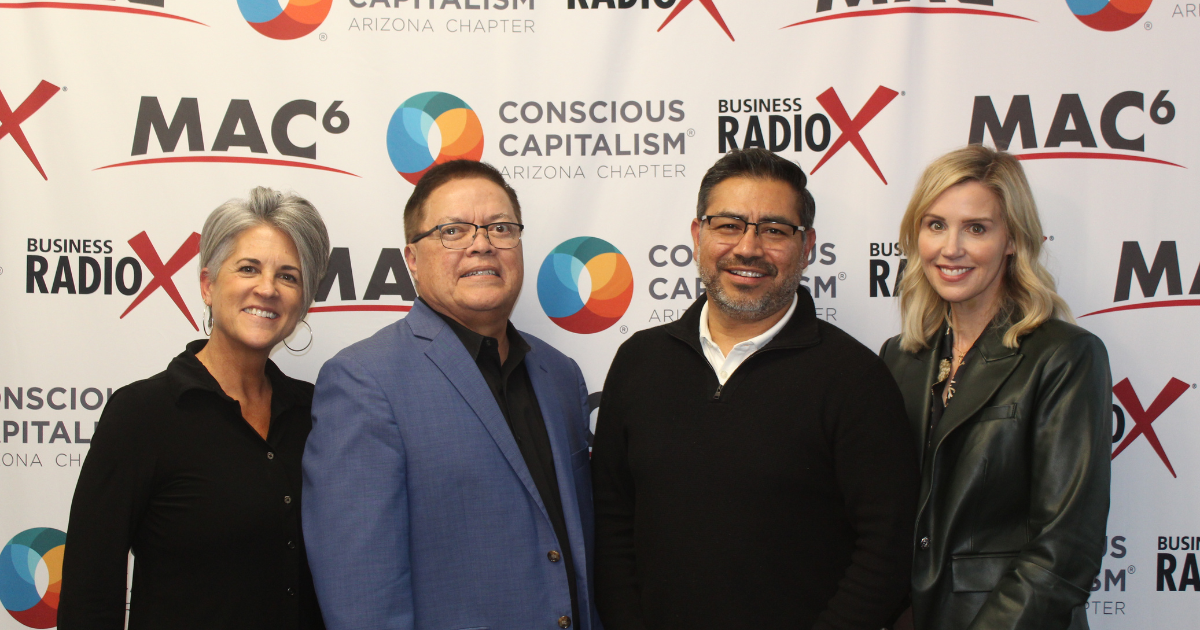
Erick Olson is a Certified Financial Planner™ with Olson Associates, a family firm celebrating its forty-second year in business. Erick and host John Ray covered the “Financial Maxi-Miser Process,” multiple options for retirement, estate planning, how they work with clients, and much more.

North Fulton Business Radio is broadcast from the North Fulton studio of Business RadioX® inside Renasant Bank in Alpharetta.

Olson Associates

Olson Associates is a comprehensive financial services firm committed to helping its clients improve long-term financial success.

Their customized process is designed to grow, protect, and conserve a client’s wealth by delivering an unprecedented level of personalized service and competence.

Olson Associates is helping responsible adults pursue fiscal fitness through “THE FINANCIAL MAXI-MISER PROCESS,” helping them eliminate dangers that they may not see and capitalize on the opportunities that they may not know.

Larry Olson founded the firm in 1980 after a 22-year career at Sears headquarters in Chicago. Larry was looking to expand his career. He figured he could use his corporate experience building comprehensive business plans as a foundation to help people create their personal financial plans. He started an independent firm after gaining experience at several larger institutions because he saw a need for unbiased financial advice in the comprehensive financial plans for his clients.

Erick joined the firm in 1998 to learn how to help people retire from the toughest mentor out there, his dad. Erick now leads the firm with “The Financial Maxi-Miser Process” sm, developed by Larry, as the foundation for creating and implementing plans. He also continues the core value legacy that began with his father’s approach to planning and defines the way the Olson Associates team operates and prioritizes each day: Integrity, Objectivity, Diligence, Competence, Fairness, Sincerity, and Compassion.

Company Website | LinkedIn | Facebook

Securities are offered through Securities America, Inc. Member FINRA/SIPC.
Advisory services are offered through Olson Associates, a Registered Investment Advisor. Securities America and Olson Associates are separate entities.
Due to various state regulations and registration requirements concerning the dissemination of information regarding investment products and services, we are currently required to limit access of the following pages to individuals residing in states where we are currently registered. Investments products and services available only to residents of Alabama (AL), Arkansas (AR), California (CA), Colorado (CO), Connecticut (CT), Florida (FL), Georgia (GA), Iowa (IA), Illinois (IL), Louisiana (LA), Maine (ME), Michigan (MI), Missouri (MO), Mississippi (MS), South Carolina (SC), Tennessee (TN), Texas (TX), and West Virginia (WV).
Specialties: Pre and Post Retirement Planning needs, Survivorship needs, College Funding needs, Small Business planning/needs, Estate Planning issues/needs.
www.finra.org
www.sipc.com


Erick Olson, Certified Financial Planner, Olson Associates

Erick Olson, Certified Financial Planner, Olson Associates

With 20 years of experience in the Financial Planning business, Erick leads the firm in strategically helping clients reach saving and investing goals. Erick builds a financial plan based on all aspects of their financial lives including Retirement Empowerment, Children’s Education, Survivor Needs Planning, and Estate Planning.

Erick’s genuine interest in his clients creates relationships founded on friendship and professionalism. With a belief that planning and executing financial goals are fundamental for families, Erick ensures that clients remain on track to Retirement while preserving and building their savings. Financial Planning is not just about saving and investing, it is about forecasting and accommodating for lifestyle, milestones and goals on an ongoing and consistent basis.

Erick is a CERTIFIED FINANCIAL PLANNER ™, which is a certification requiring a rigorous exam and adherence to a proven record of professional standards. In addition to regular continuing education, Erick has a fiduciary responsibility to always act in his client’s best interests.

Erick is a graduate of the Oglethorpe University Certified Financial Planner program. He earned his Bachelor of Business Administration (BBA) with a major in Marketing from Valdosta State University in 1998.

Erick has volunteered as a “Money Matters” teacher providing financial education to people seeking financial assistance. He also donates his time to important causes like Angel Flight of Georgia. FAMILY & INTERESTS Erick, his wife Liz, and 2 daughters, Maggie and Claire, live in Woodstock, Georgia. The Olsons enjoy traveling to beach destinations and historical learning trips across the U.S. Erick also loves music, cooking, and shooting sports.

LinkedIn

Questions and Topics in this Interview:

  • The Financial Maximiser process
  • Client Curves of Retirement
  • Collaborative Financial Planning
  • Unique Possibilities Pre and Post Retirement strategies
  • Estate Planning- Family Legacy

North Fulton Business Radio is hosted by John Ray and broadcast and produced from the North Fulton studio of Business RadioX® inside Renasant Bank in Alpharetta. You can find the full archive of shows by following this link. The show is available on all the major podcast apps, including Apple Podcasts, Spotify, Google, Amazon, iHeart Radio, Stitcher, TuneIn, and others.

RenasantBank


Renasant Bank has humble roots, starting in 1904 as a $100,000 bank in a Lee County, Mississippi, bakery. Since then, Renasant has grown to become one of the Southeast’s strongest financial institutions with over $13 billion in assets and more than 190 banking, lending, wealth management and financial services offices in Mississippi, Alabama, Tennessee, Georgia and Florida. All of Renasant’s success stems from each of their banker’s commitment to investing in their communities as a way of better understanding the people they serve. At Renasant Bank, they understand you because they work and live alongside you every day.


Special thanks to A&S Culinary Concepts for their support of this edition of North Fulton Business Radio. A&S Culinary Concepts, based in Johns Creek, is an award-winning culinary studio, celebrated for corporate catering, corporate team building, Big Green Egg Boot Camps, and private group events. They also provide oven-ready, cooked from scratch meals to go they call “Let Us Cook for You.” To see their menus and events, go to their website or call 678-336-9196.

Tagged With: A&S Culinary Concepts, certified financial planner, CFP, Erick Olson, financial planning, North Fulton Business Radio, Olson Associates, renasant bank, retirement, Social Security

Jeff Anderson With Kaizen Analytix

June 30, 2022 by Jacob Lapera

JeffAnderson
Atlanta Business Radio
Jeff Anderson With Kaizen Analytix
Loading
00:00 /
RSS Feed
Share
Link
Embed

Download file

JeffAndersonJeff Anderson, Chief Growth Officer at Kaizen Analytix

Jeff Anderson leads Kaizen Sales & Marketing across all Kaizengo-to-market models. He also serves as a Client Partner for key Kaizen clients. Jeff has worked closely with some of the biggest brands across a wide range of industries to help them shape, launch, deliver, measure, and continuously improve their analytics initiatives.

Connect with Jeff on LinkedIn.

What You’ll Learn In This Episode

  • How Kaizen Analytix approaches data in new, deeper ways
  • Smarter data analytics
  • Small and wide data
  • The Kaizen Insights Anomaly Detection Engine

This transcript is machine transcribed by Sonix

TRANSCRIPT

Intro: [00:00:04] Broadcasting live from the Business RadioX studios in Atlanta, Georgia. It’s time for Atlanta Business Radio brought to you by on pay Atlanta’s new standard in payroll. Now, here’s your host.

Lee Kantor: [00:00:24] Lee Kantor here, another episode of Atlanta Business Radio. And this is going to be a good one. Today on the show, we have Jeff Anderson with Kaizen Analytics. Welcome, Jeff.

Jeff Anderson: [00:00:35] Thank you very much. Lee, how are you doing today?

Lee Kantor: [00:00:37] I am doing well. I’m so excited to learn what you’re up to. Tell us about your firm. How you serving folks?

Jeff Anderson: [00:00:44] Absolutely. Kaizen Analytics was founded back in 2016 here in Atlanta. Our first office was actually in a shared office space over on Pilot Street near a city market. It got cramped over there pretty quickly. And now we have relocated out to Ravinia over near Perimeter Mall. We also have offices in New York, Dallas, in Chicago. We’ve had remarkably consistent growth because what we do is help companies make better, faster and more profitable business decisions with data and analytics. The mission that we created back over on Pilot Street six years ago is true today. And what that mission is, is to make data and analytics actionable and accessible.

Lee Kantor: [00:01:31] So now a lot of firms, you know, you hear about big data and data is everywhere. And now you can keep track of data in places you couldn’t even imagine, you know, five, ten, 15 years ago. How do you help your clients kind of discern what is data that matters? What is data that maybe you can ignore? Or is all data data the matter somewhat and you just got to kind of prioritize it, like how do you help your clients wrap their arms around what seems to be a never ending supply of data?

Jeff Anderson: [00:02:03] Yeah. That’s a that’s an excellent way of asking that question there, Lee. For for Kaizen, it’s all about finding your unique story behind your unique data, quickly understanding what happened, why it happened, how to learn from the outcomes that you’re getting, and then moving on to predicting, optimizing and continuously improving your business performance. Now our name Kaizen, which is Japanese for continuous improvement. It’s core to everything that we do, not just the name of our company, because using Kaizen principles, we rapidly deliver an initial solution for a client in a period of weeks, and then we continuously improve that iteratively based on client feedback. So it’s an ongoing. That’s why I said your question was beautifully worded and that it’s a never ending continual journey that you’re on as companies continue to leverage advanced data and analytics.

Lee Kantor: [00:03:05] So how do they even know where to begin if it’s this giant pool of data that’s constantly being created and some parts that are super important, some parts that are maybe less important. But how do you even begin to know which where should I pay attention? Which is the area that I should focus on, where there’s a lot of opportunity? Where is an area that’s telling me there’s danger around the corner? What? It just seems overwhelming if I don’t have good systems and processes in place.

Jeff Anderson: [00:03:37] Yeah, that that’s a great point in itself. The way we would attack that with our clients is that we start small but we think big. We a lot of times will follow the money, so to speak. So we’ll look for the largest revenue streams, the largest cost buckets, and then attack those with the Kaizen approach of continual improvement.

Lee Kantor: [00:04:03] So that’s where you begin. So that’s a logical place to begin. Then you kind of dig in there because that the places that have the most revenue or the place that have the most cost, therefore you can have the greatest impact.

Jeff Anderson: [00:04:16] That’s typically what we see where the biggest opportunities are. Also, the more complex the business is, the more opportunity that you have. Because with complexity, things like revenue leakage, customer churn happens, fraud, those types of things. And what we can do is apply advanced analytics such as anomaly detection capabilities to find those situations and do that so that you and your team are not having to hunt through and sift through all the data and the spreadsheets and everything else that you use to run the business.

Lee Kantor: [00:04:57] Now, who is the kind of the ideal client for you? Are these these enterprise level, Fortune 100 sized companies that have the resources and have the data that can be attacked in this manner? Or is it relevant to small and mid-sized firms as well?

Jeff Anderson: [00:05:13] That’s the beauty of what we’ve got going here. It ties in. We have created an ability to support both larger Fortune 5500, 1000, even 2000 companies, and basically being able to provide capabilities for them that are to get them to actionable results. And that’s really that actionable part of the mission statement that I mentioned earlier. So for them, it’s all about making data and analytics actionable, finding real value within their data, leveraging analytics. But we also serve much, much smaller companies and we do that through the accessible part of our mission there. We have a suite of products that effectively allow much smaller organizations to take advantage of those same capabilities that the big clients such as, say, a Home Depot here locally or a Delta Airlines that have been investing in these capabilities for for many, many years with lots of data scientists and lots of IT professionals who do great things. But what we’ve set up here with our product offerings is, in a way for the smaller players to actually take advantage of these capabilities and deliver real business value.

Lee Kantor: [00:06:36] So what’s an area where a smaller company could lean on some of your tools to, you know, create more value for themselves? Is it around pricing? Because I think in smaller firms, pricing is kind of a let’s make a deal world and there’s not a lot of analytics behind it other than a gut feeling or what’s the temperature of the of the marketplace.

Jeff Anderson: [00:07:01] You took the words right out of my mouth with that gut feel. That’s that’s typically what we see. In some cases. It’s almost an afterthought. It’s like we got the new business, but then what are we going to price it at? So we have a specific offering. Kaizen Price Think of this as first of all, as an application, which you can consult from any smart device, but think of this as your pricing brain. It forecasts your demand, calculates your customers sensitivity to price optimizes the price, but then also factors in external data which sometimes has huge impacts, you know, things like weather, macroeconomic data. And we’ve created an ability with Kaizen price to essentially democratize the ability to price like much larger companies and do that for a very affordable price.

Lee Kantor: [00:07:52] So is this industry agnostic or does it work better in certain industries.

Jeff Anderson: [00:07:59] In terms of the I guess I’ll speak to that initially more broadly from a data and analytics perspective. I guess the two things that are driving the industry industry adoption overall is basically two things ever expanded data where companies continue to capture more and more data. And then also the pace of change in technology, which allows folks like us to apply new techniques to expand and push the envelope. But specifically speaking, I would say that you look at a couple of different industry groups, consumer centric industries that have extremely high volumes of transactions. You think retail, financial services, travel related industries. These industries are some of the earliest embraces of data and analytics, but honestly, they’re probably due for a facelift. Then you have industries using advanced machinery that have sensors now that capture literally subsequent data activity. Things are. Excuse me, something like chemical energy, industrial manufacturing. These are huge opportunities to leverage data and analytics. Then you’ve got industries such as that have kind of known throughout to be very inefficient from an operating standpoint. Health care comes to mind if you imagine how leveraging data analytics, how much more effective in terms of patient outcomes and more efficient these health care providers could be if they knew exactly who needs to come in to the or the optimal staff to provide the care, optimizing the treatments and really increasing the throughput to care for more folks in the in the operation. And then don’t forget about services industries, specifically where I’m speaking here of law firms. We’ve actually began recently working with law firms to use these same data and analytics capabilities. My lawyer buddies will say that lawyers are people too, and I would extend that to say they also have data too, and they can leverage that data and analytics for huge value within their law operation.

Lee Kantor: [00:10:10] So how does the data analytics work when it’s kind of a creative field or a subjective field where the value is kind of in the eye of the beholder? Like the art world say, like, how could you price a piece of artwork? You know, with any type of certainty or predictability when it’s so subjective. And, you know, you can put one thing up for auction, it could be worth millions and another thing be worth next to nothing.

Jeff Anderson: [00:10:43] With the in the world, like the art world, where there is some subjectivity, a test and learn approach would be really a failed self fail safe approach to that where we establish a price based on what we’ve seen in the past using as much history as we can in some of these cases, going with small and wide data instead of the big data is is a great approach. But what we would do there is establish a price, watch that to see the reaction and then adjust accordingly. So we call it test and learn and we would apply that type of approach in a in an environment such as when you’re selling it like a very unique art pieces.

Lee Kantor: [00:11:33] But that would come into play like say you’re a small producer on Etsy or one of these marketplaces. You know, you’re you produce something, a T-shirt, and you, you know, you kind of can guesstimate, okay, this is how much t shirts sell for. But how do I know if this is something that’s going to be have wild demand or no demand? So it’s this kind of test and iterate approach you think is kind of fundamental to any type of new or creative endeavor.

Jeff Anderson: [00:12:04] Yes, that’s exactly right. So you don’t like if you’re just starting a business and, you know, taking a test and learn approach, just really making sure that you are in fact, looking at it closely and frequently to see based on that price, how how fast or slow is your merchandise moving and then learning from that and then adjusting again. Going back to our our approach to how we deliver for clients, the continuous improvement also falls very much in line with that.

Lee Kantor: [00:12:37] So these are just the fundamentals of how you do what you do.

Jeff Anderson: [00:12:42] That is exactly right. You could probably almost every client engagement will be some element of a test and learn. So whether you’re brand new business getting off the ground and you want to use that approach or we’ve used it especially in the in the last two and a quarter years when we’ve all been impacted by COVID. A lot of those forecasting models for a lot of our clients really went out the window for that period of time. And using approaches like test and learn is small and wide data allow clients to nimbly shift when dramatic things like like a pandemic happens.

Lee Kantor: [00:13:24] But is that a practice that you feel that businesses should be incorporating at all times? Because change is always happening? It may not be to the degree of a pandemic or, you know, just tremendous inflation, but there is incremental change. So you should always be testing and always be optimizing.

Jeff Anderson: [00:13:42] Yes. That’s what we would recommend. If you think about the concept of a decision support optimization solution and there what you’re constantly simulating, what is going on and what you believe is going to happen in your business, taking those different scenarios and probabilistically figuring out which of those are likely to happen. But then preparing for the edge cases and just being being ready to kind of go with the market or go with the direction that the your business is going. But having the the machinery and the horsepower to have done all of those scenarios in advance and be prepared for any number is really that is a best practice that we see out in the market.

Lee Kantor: [00:14:36] Now is that it feels like it’s going against human nature a little bit and in terms of humans want things to be the same and they have this kind of security mindset or stability mindset and and it changes always. They understand intellectually, changes always happening. But you need to have mechanisms that are triggering alarms, right. That are telling you, hey, there’s danger around the corner or hey, pay attention to this, this might be occurring. So you have to kind of have your hand on the the lever in case you need to pull it. And you need to always know where you stand in the data analytics. Part of this is trying to help you if you’re open to it.

Jeff Anderson: [00:15:22] Exactly right, Lee. A lot of times what we will do is put in place, even if we’re not necessarily truly optimizing a solution, if the client is not quite ready for the true optimization business rule based alerts and establishing guardrails that once once these alerts are triggered or we’re seeing a situation outside of what we’re guarding against, then being able to trigger different operations, different processes, different decisions to really keep you more focused on and avoid catastrophic situations where you’re getting to real trouble.

Lee Kantor: [00:16:05] Now, you mentioned that I think that one of your tools is an anomaly detection engine. Can you talk about in a world where anomalies seem to be happening with more frequency or maybe we’re just aware of it more? How did this come about and how can your clients benefit from it?

Jeff Anderson: [00:16:24] Yeah. Our anomaly detection solution, probably one of our most exciting developments, very candidly, but it’s our newest offering in our Kaizen Insights Suite. What our anomaly detection solution does is it automates the delivery of very powerful, but at the same time hidden insights in your data. Importantly, without your team having to scour through and sift through all these different the data that you have, different structured, unstructured data, sources, reports, etc. What the solution does is it systematically looks through and finds patterns looking at all aspects of your data. It establishes what we call the business as usual baseline on key metrics like fraud, customer churn, revenue growth, even revenue leakage. But it’s looking for those metrics which ultimately can potentially drain company profits, and then it finds those outliers against that baseline. Great example of this is for a cable company. We use this solution to identify outliers that resulted in reducing their customer churn by 5 to 10%. So we found pockets of their customer segment combinations where churn was happening that looking at it in an aggregate, they couldn’t really see it, nor could they really act on it. But when you bring it down from your your base of 10 million customers down to a household group of, say, 4500, then you can take action and you can really move the needle. So but you are right in that there’s a lot of anomalies out there and really trying to separate the wheat from the chaff, what’s real and what’s not. That is the key to the whole thing. And that’s what we’ve got set up with this anomaly detection solution.

Lee Kantor: [00:18:21] So what do you need more of? How can we help?

Jeff Anderson: [00:18:25] Well, you know, when you I guess one thing that I wanted to say is that with our presence here in Atlanta, Atlanta’s been an outstanding location to build our business. I would say that without a doubt, we would not have been nearly as successful starting anywhere else but Atlanta. We’ve got great clients here, amazing talent, access to to great institutions, and just a talent pool that is really second to none in this space and also a local community. I almost see them and feel them as champions fans, supporters, mentors like the Atlanta CEO Council. Great, great council that we’ve leveraged a lot. Great airport. Can’t forget about Atlanta Hartsfield-Jackson. That allows us to move really quick and deliver for our clients, too. So it’s really about figuring out ways that your companies can use data and analytics starting small, we think big, but we start small. Really trying to understand that story behind your data, figuring out what happened, why, and then enhancing from there. And I guess just. You know, in summary here, just asking yourself the question, what’s your data really telling you? Where are those opportunities to to really have a huge impact in your business with data and analytics?

Lee Kantor: [00:19:57] Well, if somebody wants to learn more, have a more substantive conversation with you or somebody on the team, what’s a website?

Jeff Anderson: [00:20:03] Website is Kaizen analytics dot com I’ll spell it real quick. A Z in an ally t i x dot com. But we we would love to help and carry the data analytics torch forward in your organization. Lee, I appreciate the time this afternoon. It’s been it’s been great speaking with you.

Lee Kantor: [00:20:30] All right. Well, Jeff, I appreciate you coming on and sharing your story. You’re doing important work and we appreciate you.

Jeff Anderson: [00:20:36] You bet. Thanks. Have a great day.

Lee Kantor: [00:20:38] All right. This is Lee Kantor. We will see you all next time on Atlanta Business Radio.

About Our Sponsor

OnPay’sOnPay-Dots payroll services and HR software give you more time to focus on what’s most important. Rated “Excellent” by PC Magazine, we make it easy to pay employees fast, we automate all payroll taxes, and we even keep all your HR and benefits organized and compliant.

Our award-winning customer service includes an accuracy guarantee, deep integrations with popular accounting software, and we’ll even enter all your employee information for you — whether you have five employees or 500. Take a closer look to see all the ways we can save you time and money in the back office.

Follow OnPay on LinkedIn, Facebook, and Twitter

Tagged With: Jeff Anderson, Kaizen Analytix

Jake Schuster with Gemini Sports Analytics

June 30, 2022 by Jacob Lapera

Startup Showdown Podcast
Jake Schuster with Gemini Sports Analytics
Loading
00:00 /
RSS Feed
Share
Link
Embed

Download file

Jake-George-Schuster-Gemini-Sports-AnalyticsJake George Schuster, Founder of Gemini Sports Analytics, was born and raised in the Boston area. Gemini-Sports-Analytics-logo

He lived in 6 different countries through 20s to get MSc + PhD and work in pro sports before burning out and moving to Miami to be closer to family and launch first business.

Follow Gemini Sports Analytics on LinkedIn and Twitter.

What You’ll Learn in This Episode

  • Making data science accessible
  • Demystifying AI/ML
  • Why data ownership matters
  • How operational maturity and systems design can improve in pro sports
  • The pre-seed journey as a first time founder
  • Making sense of the minefield that is raising venture capital

This transcript is machine transcribed by Sonix

TRANSCRIPT

Intro: [00:00:04] We’ll come back to the Startup Showdown podcast, where we discuss pitching, funding and scaling startups. Join us as we interview winners, mentors and judges of the monthly $120,000 pitch competition powered by Panoramic Ventures. We also discuss the latest updates in software web3, health care, tech, fintech and more. Now sit tight as we interview this week’s guest and their journey through entrepreneurship.

Lee Kantor: [00:00:38] Lee Kantor here another episode of Startup Showdown, and this is going to be a good one. But before we get started, it’s important to recognize our sponsor, Panoramic Ventures. Without them, we couldn’t be sharing these important stories. Today on Startup Showdown, we have Jake Schuster with Gemini Sports Analytics. Welcome, Jake.

Jake Schuster: [00:00:57] Thank you for having me.

Lee Kantor: [00:00:58] Well, I’m excited to learn what you’re up to. Tell us about Gemini sports. How you serving folks?

Jake Schuster: [00:01:03] Yeah, we we are a data science as a service company. So we are making predictive analytics accessible. And what we mean by that is, you know, most people have seen the film Moneyball that took place 20 years ago when the Oakland Athletics used mathematics to get an advantage on their opponents and won more games with 20 years ago, they were collecting about 50,000 data points per athlete per year. Now that number is between two and 3 million. And sports teams are hiring lots of data scientists. So we encourage that, which is just hiring more and more would be like asking Henry Ford for a faster horse. Someone’s got to build a car. There are automated machine learning platforms which allow non-technical people to do data science without having to write computer code, but they’re generic to industry and sports. People won’t use them. Sports executives won’t go pay for those platforms and use them because they’re not quite user friendly enough for their needs and the technical level. And they don’t contain APIs or data ingestion pieces for the sports data that’s being collected by these teams. So there’s too many steps for them to really harness that technology. We’re just bringing that kind of vertical SAS approach into sports.

Lee Kantor: [00:02:11] So what is the type of data that is important to these teams?

Jake Schuster: [00:02:17] Anything that will help them better make better decisions in how they acquire, develop and manage their athletes? So if you’re a professional baseball team in North America, you’re going to want to figure out which players to draft and which players to sign. You’re going to have long term development plans for those athletes that you need to optimize. And you’re going to want to keep those those athletes injury free and performing their best. And finally, you want to know which tactics to play against different opponents and to optimize processes. And so any data that’s going to help improve that process.

Lee Kantor: [00:02:47] And then where what kind of universe of data do you pull from to get that kind of information? You need to assess that. Okay. Let’s start Bill today and then Bob tomorrow.

Jake Schuster: [00:03:01] Yeah, great question. So you’d be surprised how few or how common these sources are the most teams are collecting. Every sport has a scouting database, every sport has an endgame statistics database. And then every sport will use, let’s say, about a half dozen of the same, you might call them biometric or performance and medical technologies. So jump tests that they do daily GPS and accelerometer metrics of how much an athlete’s running and game or running in practice, and therefore how hard they’re working your heart rate. Similarly, sleep is measured often, and lots of nutrition and psychological metrics are taken these days. And then each league has some specific stats, like something called second spectrum in basketball, and it looks at indoor movement tracking and other technologies that you see in different sports.

Lee Kantor: [00:03:49] So then the teams for existing players, they have access to certain data and then there’s probably just public information, right, that you’re you know, they’re these people are being filmed, you know, playing the game. So there’s data there. How do you kind of help them? Kind of first of all, take that public information and marry it to the private information that you might have and then and use that to make an informed decision whether, hey, maybe this guy’s hurt and he’s not telling us. But because I’m getting data that suggests that something’s a little off, but like like how is it used practically on a day to day basis?

Jake Schuster: [00:04:33] Well, our platform on a day to day basis, it’s important to understand that this is a tool in a user’s hands existing. I don’t like to use the word competitor because no one’s done what we’re doing before, but existing technologies out there are often third party or consulting style where they have to send you the data and then someone’s going to play with it and get back to you with insights. We are entirely, entirely putting capabilities in the stakeholders hands, so we do a lot of backend work that we automate and scale in terms of data preparation, making it easy to join databases and those different data sets that you mentioned. For example, our first piece of traction was publishing in an academic journal publicly available data on MBA injuries. Over the last ten seasons. It was the most accurate data model ever published to date in that space, and that was just to show that what we do is objective and academic, that it’s not a black box, it’s not a secret sauce. We are just using open source data models and wrangling them into a space that it’s easy for someone to use without writing computer code.

Lee Kantor: [00:05:30] But then it’s on the team to now take that data and then use it specifically to help. Them in some manner?

Jake Schuster: [00:05:37] Absolutely. I mean, we believe this is not meant to be man versus machine. It’s man and machine. And a lot of times you will see something where the computers are saying one thing and the executives are saying something else. And then this war takes place between departments. And that’s not how it should be. It should be that the machines are giving you some some information and you’re making human decisions based on that, not because of that or dictated by that.

Lee Kantor: [00:06:02] So what’s an example that the machine might help you make a better decision because it’s giving you pertinent information?

Jake Schuster: [00:06:10] Sure. So our first pilot project we did with an NBA team where they wanted to know how to manage their busy schedule. The MBA schedule is famously hectic and challenging and causes a lot of injuries. And so you want to find where you can get a day off any place you can are algorithms show the the wind probability of every game across the season based on travel, based on time zones, density, things like that, amount of rest and so forth. And within them it was very obvious how much better their star player was getting when he had a certain amount of rest. So we looked across the schedule and identified about 20 different times that they could give the player a pre pre-planned day off based on our metrics, and they got to pick the five that they wanted.

Lee Kantor: [00:06:54] So like I use a Woohp fitness product and then so it tells me like, hey, you have good recovery today, you have bad recovery today. Is that something that you can take that data then and then integrate it into your data so that you know that if I’m having a bad recovery day and it’s kind of near the time for this person to have a day off, maybe we should make today. That day.

Jake Schuster: [00:07:18] Absolutely. And a number of teams are using MOVE. It’s a little bit more consumer grade technology, but they’re using similar things that are a bit more precise. And that’s exactly how it works, where many people you might see tweeting or posting online, observing that their sleep metrics are very poor after they have alcohol the prior night in a similar situation with an athlete or with a consumer, the technology isn’t saying don’t drink. It might not even be that smart, but it’s going to show you what happens when you drink and then you or your coach or someone involved has to help you make the decision to not drink.

Lee Kantor: [00:07:53] Now, is this primarily geared to professional sports leagues, or does this trickle down to college and high school?

Jake Schuster: [00:07:59] Yeah, we’re already we’re about to be able to announce a partnership with a Power five college that we’ll be working with. I think high school doesn’t quite collect enough enough technology yet, although we’ll probably work with some AA groups. College is absolutely a market that we’re working in.

Lee Kantor: [00:08:14] And then so when you had the idea to do this, how did you kind of create the company behind it to help and roll it out? Like what? Like did you do this kind of on your own as bootstrapping? Hey, I got this idea. Let me just play this out. Or were you like, right away? I’m going to I’m going to scale this thing and I’m going to build the team.

Jake Schuster: [00:08:36] This bootstrapped for a long, long time. You know, self belief and traction have a funny parallel journey together. And I had this idea back in 2019, and I’ve been talking about it with my partner, Jose Fernandez, who’s the head of sports science at the Houston Astros, when they won a World Series with the biggest analytics department in sports. And he saw this problem and he saw that they needed software on top of all those developers. And we went around, we publish this paper, we did a pilot project. I went full time last August. We raised a small, small round of angel investment, put that into product design, and then went around with that product design and pitch venture capital and recently raised $1,000,000 combined from lead sports known a group, which is the combination of the grandchildren of the founder of Adidas with the honor of a Premier League team and Florida funders who are the most active venture capital firm in Southeast.

Lee Kantor: [00:09:29] Now, was it always kind of just aimed at the professional team or is it going to eventually trickle down to, you know, gambling and fantasy football and things like that?

Jake Schuster: [00:09:40] It’s funny how often we get that question, and I don’t have a great answer. My sense is that someday we’ll build a parallel product in that space. Everyone wants to know if the numbers can can give more accurate betting odds and things like that. I think the market is plenty big just to help out elite sports teams around the world, but I’m sure some investor will convince me otherwise at some point.

Lee Kantor: [00:10:03] Well, because if you’re capturing this data and like you say, it’s self serve, and if I’m able to take what exists, that’s in the public domain and then get an edge. I mean, that’s what all of these, you know, games of chance, that’s what it’s about, right? You want an edge?

Jake Schuster: [00:10:19] Without question. Without question. I think the important thing to understand why I’m a little bit defensive about that notion is that trust is everything and data security is paramount. And we’ve built out redundancy after feature after redundancy in our platform to ensure the security of athlete data and proprietary team data, which obviously we know is important because we’ve been in those positions working for those teams. There will come a point in time where the value proposition becomes what my original idea for it was, which is this big snowball of combined data that teams want to plug into because 30 to 32 teams worth of data is a lot more useful than one team worth of data, and the betting companies will be thinking exactly the same at that point.

Lee Kantor: [00:11:00] Right. But even if the yours is just the proprietary individual team data combined with the public domain data and if the consumer is just the public domain data, I mean, for a lot of people, that would be enough for them to, I would think, have a subscription. Now, what’s been kind of the funnest part of being a founder and what’s been the most challenging part?

Jake Schuster: [00:11:24] The most fun part is easy. That’s working with incredible people. And I know it’s a cliche, but being the least intelligent person in the room every single day is really fun. And this incredible caliber of advisors and investors and employees that I work with just blows my mind every single day. So that is just caused me to level up enormously as a person. The least fun part is how I’ve come to accept this, but it’s still not fun. People like you when you’re winning and people don’t want to have as much to do with you until you’re winning. And and traction is everything. And it’s it’s very interesting seeing who gives you the time of day at certain points and who doesn’t. And I think you just learn that that’s one of the few ways that the world works, and you’ve got to run with it.

Lee Kantor: [00:12:11] Now, for you as a founder, what’s kind of your superpower that makes you the right person to lead this adventure?

Jake Schuster: [00:12:22] I know how to, and I’m able to get the right people in the room at the right time.

Lee Kantor: [00:12:28] And then as part of the fundraising process, which has his own job, obviously. But how did you kind of stumble upon Startup Showdown and Panoramic Ventures? Was that just part of your due diligence of looking out for, you know, opportunities to tell your story and to, you know, see who’s out there doing what?

Jake Schuster: [00:12:48] You know what? I was trying to remember the name of who did it. I apologize that I can’t. But someone put it into the Miami Tech Life Telegram chat run by Ryan Wray and Damien DiMeo. Some information about this event and encouraging people to apply. So I applied and then frankly, I forgot about it because I applied to a lot of stuff for that period of time. And then I got an email that I was, I think at that time a semifinalist and went through the rounds and then it happened. And you know, the support along the way from the likes of Stephanie and Tammy was, was amazing. And that that’s what helped the group stand out.

Lee Kantor: [00:13:22] And then so what specifically were they doing? Were you’re like, hey, this is a good use of my time. I’m glad I participated in this.

Jake Schuster: [00:13:30] Well, if I remember it right, if it was the semifinal kind of round where you had, it was almost like a speed dating pitch. You gave your pitch, I think, five times in a couple of hour period to a bunch of different investors. And they gave great feedback each of them. They gave great criticism and great advice, and all of it was useful.

Lee Kantor: [00:13:50] And do you have a mentor or is there somebody that’s kind of your person that you’re aiming at? If this is the type of leader that I want to be or this is the type of leader that I can learn from.

Jake Schuster: [00:14:02] I have a lot of mentors. I would say, you know, it takes a village. My my advisory group is incredible. So whether that’s my my CFO, Johan von Leek, telling me about how to financially model and how we can move forward with this business really economically, or where some of our angel investors and advisors like Chris Haskell and Flynn and Joshua Tony, who have all run multiple companies, all work in and around professional sports, and all gone and done exactly what I’m trying to do. I just observe how these people live their lives and run their businesses. And that helps me do. Do mine.

Lee Kantor: [00:14:34] And any advice for other startup founders out there?

Jake Schuster: [00:14:38] Just keep going.

Lee Kantor: [00:14:41] But just keep moving.

Jake Schuster: [00:14:43] Be relentless. Be persistent. Persevere. If I had to give a big cliche, it would be that whatever you’re working towards is just on the other side of whatever you’re you’re working through right now. Like, I really think pain tolerance is one of the most important qualities.

Lee Kantor: [00:14:59] Yeah, that resilience. They don’t teach you that in school?

Jake Schuster: [00:15:03] No.

Lee Kantor: [00:15:05] So what do you need more of? How can we help?

Jake Schuster: [00:15:08] I really appreciate you asking. I think being on this podcast is perfect because I think marketing is is a luxury, not a necessity at such an early stage. And we’re really fortunate that our first 25 customers are all going to come from direct relationships that we have right now. But what happens next? Right. So general exposure and general awareness of people about Gemini Sports Analytics is always appreciated. So I think being right here is great.

Lee Kantor: [00:15:39] And if somebody wants to learn more, get a hold of you or somebody on the team. What’s a website?

Jake Schuster: [00:15:44] Yeah. Gemini Sports Dot I and I’m at Jake Gemini Sports dot II.

Lee Kantor: [00:15:50] Well, Jake, thank you so much for sharing your story, doing important work. And we appreciate you.

Jake Schuster: [00:15:55] Thank you, buddy.

Lee Kantor: [00:15:56] All right. This Lee Kantor will show next time on Startup Showdown.

Intro: [00:16:01] As always, thanks for joining us. And don’t forget to follow and subscribe to the Startup Showdown podcast. So you get the latest episode as it drops wherever you listen to podcasts to learn more and apply to our next startup showdown pitch competition visit showdown vs that’s showdown dot DC. All right. That’s all for this week. Goodbye for now.

Tagged With: Gemini Sports Analytics, Jake George Schuster, Jake Schuster

Fintech South 2022

June 28, 2022 by angishields

Fintech-South-2022-Feature
Atlanta Business Radio
Fintech South 2022
Loading
00:00 /
RSS Feed
Share
Link
Embed

Download file

fintech-2022-v2

Atlanta-Blockchain-Center-Sponsor-v2

Fintech South 2022 is a world-class summit with its nexus in Atlanta live and in-person, a global financial technology hub that is home to more than 200 fintech companies. The top 15 public fintech companies in Georgia alone generate more than $100 billion in revenues.

On June 14-15, 2022, we welcomed fintech leaders from around the world for 2 amazing days of content and experiences designed to help you make the most of the opportunities of the fintech revolution.

Larry-Williams-TAGLarry Williams, President, TAG

TRANSCRIPT

Intro: [00:00:07] Broadcasting live from the Georgia World Congress Center for Fintech South 2022, it’s time for Atlanta Business Radio. Brought to you by Atlanta Blockchain Center. Now, here’s your host.

Lee Kantor: [00:00:27] Lee Kantor here back at Fintech South 2022, right in the heart of Innovation Alley. So excited to be talking to Larry Williams, the president, CEO of TAG. Welcome, Larry.

Larry Williams: [00:00:39] Great. It’s great to be here. Thank you all for having me.

Lee Kantor: [00:00:41] So, what do you think? Fintech South back, live in person.

Larry Williams: [00:00:46] You know —

Lee Kantor: [00:00:46] People, humans everywhere.

Larry Williams: [00:00:47] You know, I get to see people’s teeth again. And I’m just delighted to see that everybody’s got the energy here. You can just feel it. It’s palpable. It’s just people are excited. The interactions, the businesses happening here. It’s really what this is all about. You know, in TAG, whenever we started producing Fintech South five years ago, this is our fifth annual, this is what we envisioned it would be. We did a great job with a virtual platform for the last two years, but it’s great to be back in person and great to make those human connections.

Lee Kantor: [00:01:18] So, when you’re planning around an event like Fintech South, it’s a combination, obviously, education, there’s panels, there’s networking. We also have the whole Innovation Challenge, folks. You got the startups and the matching with the enterprise. How do you even, kind of, begin an event like this to make sure that all of those constituents are getting what they need?

Larry Williams: [00:01:42] Well, if you think about it, this really does bring together all of the elements of the ecosystem. So, everything, as you mentioned, from the startup. So, we really work through our Fintech society at TAG. And so, they really help start us at a very early stage. And really it’s an all year — it’s a year-round process. So, if we start to think about the Innovation Challenge, getting those startups because there’s a whole mentorship program that goes along with this. It’s not just the award on stage that we see here.

Lee Kantor: [00:02:12] Right, that we see the end result.

Larry Williams: [00:02:14] Right, so this has been going —

Lee Kantor: [00:02:14] There has been weeks or months ahead of time

Larry Williams: [00:02:17] Yes, months ahead. Same with the Advanced Awards and thinking about who are those companies that have really been accelerating and moving the ecosystem. These are all important parts of what we’re doing. And then it’s the professional development, the trends, the knowledge, news you can use that people can really go back and say, hey, this is what the trends of Fintech are. This is what I can apply back to my business. Even the thought sharing and the thought leadership that goes into it.

Larry Williams: [00:02:44] Now, one thing you did mention is also the workforce. You know, we’ve had lots of students here. We’ve had over 30 students here that have really — that are going through the FinTech Academy and other things to prepare that next generation of leaders in our Fintech community.

Lee Kantor: [00:02:58] And that’s a big innovation to have an academy that is just has a curriculum around Fintech. There’s probably not a lot of those in other places in the country, right? That are so specific to fintech and to grow your own talent, because the need is so great. We have to do something. You can’t sit here and wait and hope that this solves itself.

Larry Williams: [00:03:18] You know, we were really pioneers in this and led the way. There’s a lot that has popped up around the country that like to say they — I’d like to say me too. But I can really say that we really started it here. Our companies, our University System of Georgia really got behind it. We move fast. We stood it up and it’s doing a great job.

Lee Kantor: [00:03:36] Right. And so, can you share a little bit about how that works? Like how did — you know, how does a student get involved with that to take their career to a new level?

Larry Williams: [00:03:47] Yes, it’s really about getting the main doorways through the University System of Georgia. So, any of the schools, although it’s based at Georgia State University, other students at other universities can access it. So, it’s really just, you know, look for the FinTech Academy, you know, and go to the website and it will direct you on how to get engaged.

Lee Kantor: [00:04:07] Now, you mentioned five years ago the event began, and even in the short period of time of five years, the Fintech kind of brand has expanded, right? And Fintech is touching so many more things than it did five years ago.

Larry Williams: [00:04:21] You know, Fintech touches everything. As I like to say, everybody likes to get paid on time, every time. And as we go more and more to a digital platform, Fintech is really at the center of it. And it really does touch every industry because there’s no industry that there’s not some type of financial transaction happening.

Lee Kantor: [00:04:41] Right.

Larry Williams: [00:04:42] So it’s been great because we’ve been talking about everything here at Fintech South on our breakouts and on main stage. We’ve been talking about diversity and inclusion, financial literacy. We’ve been talking about the fan experience and you know, what’s going on whenever you have a large event at Brave Stadium or over at Mercedes-Benz Stadium with MLS. All of these things and this financial transaction, this intersection with the point of sale all affects that fan experience or the customer experience if we’re talking about retail or others.

Lee Kantor: [00:05:15] Right.

Larry Williams: [00:05:15] So, all of this has been part of it. And so, what we’ve been seeing, especially, which was accelerated over the last two years, is this idea of frictionless payments.

Lee Kantor: [00:05:24] Right.

Larry Williams: [00:05:24] You know, how do you start to make it even easier? So, you know, Amazon makes it pretty easy, you know, hit the, you know, one click button. But you’ve got to think about now where we’re going with wearables, with your digital wallet. The adoption of these types of tools have accelerated greatly, and that’s what we’re going to consider — continue to see happen. And just more adoption. You know, the younger generation, they’re not carrying cash anymore.

Lee Kantor: [00:05:48] Right.

Larry Williams: [00:05:48] You know, they’re not doing it at all. They don’t want to.

Lee Kantor: [00:05:52] Yes, they don’t walk into banks.

Larry Williams: [00:05:53] They don’t walk into banks and they don’t want to. And, you know, and part of it is when you think of the brick and mortar side of it, a lot of people say that people don’t need banks, they need services. And so, you’ll see the banking models starting to evolve that it really is service focused about what is it that we can do and how people can access them in a very easy and convenient way.

Larry Williams: [00:06:19] Now, the big pond, the big opening right now, and the big opportunity is really we’ve done a lot with consumer payments, but it’s really moving to business to business. So business to business is still predominantly done by checks. So, remember a check? When was the last time you wrote a check?

Lee Kantor: [00:06:36] Right.

Larry Williams: [00:06:36] You know, but business is still done that way. And so, if we think about the evolution of where payments are going, Fintech is going to be able to facilitate more business-to-business interactions.

Lee Kantor: [00:06:47] So, now as the leader of TAG, TAG touches all these kind of technology special interests. How are you seeing that evolve over the years of your leadership in terms of there’s many more things that are falling under the umbrella of technology? Like at one point — like you just said, everybody’s a Fintech company now whether they want it or not. Everybody’s been a technology company, whether they want to be or not.

Larry Williams: [00:07:11] Yes, you know, that’s been an evolution that’s happened. You know, every company is a technology company even if it’s not something that’s, you know, a recognized brand. But, you know, Home Depot, UPS, Coca-Cola, all technology companies, because that’s how we do business and that’s how we connect with our customers and that’s how we grow our businesses in many, many different ways.

Larry Williams: [00:07:32] So, you know, I’m just proud of, you know, TAG of really being able to think about the things and the next, you know, what’s the next generation of innovation? What is the next thing that’s coming around, you know, whether it be blockchain or whether it be evolution in things about sales leadership? Because people we sell differently in the technical cells. The marketing of how you market and go to market’s very, very important now.

Larry Williams: [00:07:56] And you know — and so these things, marketing technology is a big core competency here in Georgia. If you think about what David Cummings has done, you know, with Pardot. What’s going on with Salesloft and lots of other companies that are really driving that, that’s an important part of it.

Larry Williams: [00:08:12] Blockchain, and really thinking about what Blockchain is doing, inclusive of but not exclusive to cryptocurrency. You know, right now, I think you’ve heard us say a million times, the 70% of all debit, credit, and reward card transactions are processed through Georgia. Today, we can say that 80% of global commercial cryptocurrency transactions are processed through Georgia.

Lee Kantor: [00:08:35] Wow.

Larry Williams: [00:08:36] And so, that’s us staying at the head of innovation. Now, the other thing that’s similar to this is cybersecurity. You know, cybersecurity, we’ve been in cybersecurity for decades and I’m going back to mainframes, to network, and to internet security. Things that we’ve done through Georgia Tech with the Department of Defense. And now we’ve been at the forefront.

Larry Williams: [00:08:59] We’ve been able to create great, great companies like ISS that became part of IBM. Secureworks that have been part of Dell. AirWatch, you know, that grew up and is now part of VMware, but is the company that — it was the first mobile security application that Apple led onto the iPhone platform that enabled people to choose an iPhone. And if you remember the BlackBerry.

Lee Kantor: [00:09:26] Right.

Larry Williams: [00:09:27] Blackberry didn’t make it. And that was all, you know, generated out of here. But that — it’s really to illustrate that we were able to go from, you know, the enterprise type of security all the way up to mobile phones and build it here. Because we built — we knew every iteration of the evolution of the technology.

Larry Williams: [00:09:48] And so, we’re seeing that with Fintech digital health. You know, we’ve got a broad portfolio here and that’s good for our economy.

Lee Kantor: [00:09:55] Right, that’s why I think that the Georgia economy is always so strong because of the diversity of the industries that allow us if there’s a downturn somewhere or something, there’s an upturn somewhere else. And a lot of times it’s here still in the State of Georgia.

Larry Williams: [00:10:08] You always want a balanced portfolio, right?

Lee Kantor: [00:10:11] Exactly.

Larry Williams: [00:10:11] You know, so that’s more resilient. And so, we’ve got a great portfolio here that makes us resilient. And so, it’s a great time to be here.

Lee Kantor: [00:10:18] And it’s important that folks like you that are leading a community of people in technology, that you’re a part of it. And we have the public and the private intersection where everybody is being so collaborative and everybody’s helping each other. This environment is what allows Georgia to be as successful as it is.

Larry Williams: [00:10:37] You know, it’s hard for new people to believe that this is true. But as people get into this market, they really do start to learn that people here want you to be successful.

Lee Kantor: [00:10:48] Right.

Larry Williams: [00:10:48] And people will help you. And many times —

Lee Kantor: [00:10:50] It’s collaborative.

Larry Williams: [00:10:50] It’s collaborative. And many times those are competitors. But they say — they know that your success is our success.

Lee Kantor: [00:10:57] Right.

Larry Williams: [00:10:57] And so, I think that’s a great community. And people are always amazed that there’s something like TAG. You mean, I can just, you know, get plugged in immediately? Yes, you can.

Lee Kantor: [00:11:07] Right, and it’s — and it doesn’t matter what niche you’re in, in technology. There’s a space for you.

Larry Williams: [00:11:13] That’s exactly right. And it opens the doors to many, many other organizations and other ways to get networked or get support.

Lee Kantor: [00:11:19] Well, Larry, thank you so much for sharing your story today. If somebody wants to connect on — at TAG, what’s a website?

Speaker3: [00:11:27] At tagonline.org.

Lee Kantor: [00:11:29] Good stuff. Well, Larry, thank you again for sharing your story. You’re doing important work and we appreciate you.

Larry Williams: [00:11:33] Appreciate all you all doing. Thanks for being here.

Lee Kantor: [00:11:35] All right. This is Lee Kantor. We’ll be back in a few at Fintech South 2022.

Outro: [00:11:47] This episode has been brought to you by Atlanta Blockchain Center, the catalyst for Atlanta’s emergence as the Premier Blockchain Innovation hub globally, through cultivating entrepreneurship, inclusivity, and education. To learn more, go to atlblockchaincenter.com.


https://stats.businessradiox.com/36600.mp3

DOWNLOAD HERE


Amyn-SadruddinAmyn Sadruddin, Intellekt AI

TRANSCRIPT

Intro: [00:00:08] Broadcasting live from the Georgia World Congress Center for Fintech South 2022, it’s time for Atlanta Business Radio. Brought to you by Atlanta Blockchain Center. Now here’s your host.

Lee Kantor: [00:00:28] Lee Kantor here. Back at Fintech South 2022. I’m so excited to be talking to an old friend, Amyn Sadruddin with Intellekt. Welcome.

Amyn Sadruddin: [00:00:36] Hey, what’s up, man? Long time no talk.

Lee Kantor: [00:00:38] I know. So, what brings you to Fintech South?

Amyn Sadruddin: [00:00:41] So, we are a finalist for the Innovation Showcase.

Lee Kantor: [00:00:45] Oh, congrats.

Amyn Sadruddin: [00:00:45] Thank you so much. So, we pitched yesterday the investors, and today we’ll be pitching, I think, during the keynote hours. So, pretty excited and gotten a lot of great support from the tech folks and all the folks at Fintech South.

Lee Kantor: [00:00:57] So, tell us about Intellekt. How you serving folks?

Amyn Sadruddin: [00:00:59] Sure.

Lee Kantor: [00:00:59] What’s you’re — what’s the product service?

Amyn Sadruddin: [00:01:02] Yes. So we’re a platform, a SaaS platform. And what we do is we help Fintechs onboard their customers. It’s a self-onboarding tool. And basically, what we do is we offer compliance around the onboarding process and we offer the data to be cleaned during that process from their customers so that they can efficiently onboard them. And then they can also leverage the data to run, you know, cross-sell, up-sell as well. So, basically, what we do is at the inception point of how a Fintech onboards their customer. We basically enrich the data that they are processing so that they can be more intuitive with it. So, enhance the Intellekt.

Lee Kantor: [00:01:41] Now, what was the genesis of the idea had to come about?

Amyn Sadruddin: [00:01:44] So, I joined this company as co-founder and chief revenue officer about two years ago. The origin of the company was a managed services firm and we did a lot of data evolution projects for financial institutions, banks, neobanks, crypto. And we saw a high resonance that all Fintechs have an issue or have some gaps or pain points around the onboarding process. So, we basically came in and we were doing a lot of data aggregation work and found that you know, through the tools and technologies that we’ve built that we can, you know, transform this into a platform that could be a self-serve tool, so.

Lee Kantor: [00:02:19] And then what are some of the symptoms that, you know, your potential clients are having were Intellekts the solution? Like, what are the clues that they might have a problem that they may not even realize?

Amyn Sadruddin: [00:02:31] Sure. You know, folks in the Fintech space are, you know, it’s highly competitive now. It’s very digital in nature. And if you look at some of the bigger banks or bigger institutions, they’re trying to serve a very digital audience, millennials, Gen Zs. No one wants to go to a brick and mortar, but some of the items that need to be digested by a Fintech is sometimes very brick-and-mortar related, right? Submitting an ID, right?

Lee Kantor: [00:02:55] Right.

Amyn Sadruddin: [00:02:55] It has to be on point, right? It has to be scanned properly. You know my name, Amyn Sadruddin, as long as it is. But I sometimes shorten it and just do Amyn S. And depending on how that institution is collecting my profile information, whether it’s, you know, connecting to a Facebook account or whether it’s attaching to my e-mail. Those are a lot of data points that need to be aggregated and make sure that when you build the persona of an Amyn or a Lee, you know, that you do it at the most accurate level. So, that when you verify them to transact on your platform, that you’re doing it with accuracy. So, that you know that, hey, I know that if I give Lee a credit card in my platform or if I let him transact on my platform, that I know that he’s not going to commit fraud, so.

Lee Kantor: [00:03:35] And then it’s also — there’s opportunity because if you’re using different, you know, like Amyn, Amyn S,whatever the — whatever Amyn means, right?

Amyn Sadruddin: [00:03:44] Exactly.

Lee Kantor: [00:03:45] Then they want to make sure that there’s the right offer at the right time for you, that’s relevant to you rather than just not you.

Amyn Sadruddin: [00:03:54] Yes, I think the — you know, one of the pain points that we saw and, you know, we did a lot of customer discovery through Fintech CXOs in the market. And a lot of them, you know, always look at the data that they collect from their customer as like an after-effect that they want to then leverage that data afterwards to then do the cross-sell and upsell. But you know, the origination of when the customer submits their data is when you should tackle it, and clean it, and prep it. So that whenever you put it into your lead management system or your CRM system, or you want to do continuous monitoring on an individual, it all boils down to clean data.

Amyn Sadruddin: [00:04:30] So, that’s kind of what we provide is that, you know, we do a lot of shit cleaning on the front end and then provide a lot of intuitiveness on the back end so that when a Fintech wants to onboard a customer, they have a lot of confidence in who they’re onboarding. Because compliance is also an issue. I think in — yesterday the three tracks that I attended, including the main stage, compliance was touched on. And that you know, they’re —

Lee Kantor: [00:04:49] Each one of them?

Amyn Sadruddin: [00:04:50] Of them on each one of them.

Lee Kantor: [00:04:51] Right.

Amyn Sadruddin: [00:04:51] Yes, yes. So, that — they were trying to figure out is, how do we instill more accurate compliance? Because compliance, you know, kind of presents two issues for the Fintech, is one is that they’ll get penalized, right, for not doing it properly?

Lee Kantor: [00:05:04] Right.

Amyn Sadruddin: [00:05:04] And then you lose the customer, too. So, now you’re like double negative revenue, right?

Lee Kantor: [00:05:07] Right. And it’s table stakes now.

Amyn Sadruddin: [00:05:11] Correct.

Lee Kantor: [00:05:11] And then for you, do you have any examples of when you are that clean at the beginning, that the results are worth the effort to do that?

Amyn Sadruddin: [00:05:21] Absolutely. You know, I think a lot of companies now are using identity verification tools. And to make sure that they, you know, have fewer false positives.

Lee Kantor: [00:05:31] Right.

Amyn Sadruddin: [00:05:32] And, you know, an identity verification tool is only as strong as what you put into it. So, kind of as mentioned, you know, all of the — I think, we have six active customers right now. And each of them, you know, we basically reduced the cycle time for onboarding.

Amyn Sadruddin: [00:05:48] So, if you look at one of our customers, a crypto exchange, they were — they had a backlog of about 35 days to onboard a customer. So, this is —

Lee Kantor: [00:05:56] Really, 35?

Amyn Sadruddin: [00:05:56] 35 days, yes. And it’s because there’s, you know, crypto is a very wild, wild west —

Lee Kantor: [00:06:04] Sure.

Amyn Sadruddin: [00:06:04] — you know, industry. There’s different wallets that are available. Different wallets that need to be identified and connected to a persona. So, that presents a lot of problem in being able to really do a workflow that, you know, will give the company confidence and how they are servicing that individual coming on to their crypto exchange.

Amyn Sadruddin: [00:06:24] So, you know, all the verification needs and cleaning the data up front makes it easier for them to then have a better customer experience plan around that. Because you want to activate them and then serve them with who they are and how you can potentially, you know, engage them in other opportunities that the Fintech could have, right? So, if the crypto exchange says that, hey, you know, you are — you’re available for maybe a crypto line of credit. That boils down to you knowing who that person is and what he’s transacting with. So, one is that, you know, reducing the cycle time is, kind of, been our key, I would say secret sauce and slash like value prop is that, you know, we can reduce the cycle time and being able to onboard your customer and we’re more accurate with it because we’re cleaning the data and we’re giving clean data, the verification tool. So —

Lee Kantor: [00:07:04] So, in that case, it went from 35 days to what?

Amyn Sadruddin: [00:07:07] Four days?

Lee Kantor: [00:07:08] Wow. So, that’s dramatic.

Amyn Sadruddin: [00:07:10] It’s dramatic, yes. And, you know, creating those workflows has been a key piece of what we do is, you know, when data gets digested if any —

Lee Kantor: [00:07:18] Do they believe you when you tell them that because that seemed like really —

Amyn Sadruddin: [00:07:21] Well, we don’t — we just show them. I mean, we run a POC, you know.

Lee Kantor: [00:07:24] Right.

Amyn Sadruddin: [00:07:24] We take a set and we say — take a set of customers and we, you know, show them, here’s what — here’s how you’re ingesting your data about the individual. And here’s a better way to do it through our technology that will give you more insights. And because you’re cleaning the data upfront, you’re now able to enrich that for your cross-sell and upsell. Because now you actually have a holistic individual versus you trying to go back to say, OK, can we pull this — can we pull Lee from CRM? Can we pull them from our credit card system –.

Lee Kantor: [00:07:50] Right.

Amyn Sadruddin: [00:07:50] — and see like, what is he doing now? But when you clean the data upfront, it makes it — it empowers the Fintech by a lot because now the C-suite has a good viewpoint of where they are. And if there are gaps. So, let’s say there’s a — I’m going to just focus on crypto. Let’s say there’s a certain coin or token that is either being spent or, you know, being transacted on more, or there’s one that’s more volatile. Now, as a company, you have a good know of who that customer base is that’s transacting on that sort of crypto and how you can better service them because now you’re just aware.

Lee Kantor: [00:08:23] Now, for you at Fintech South, I know you’re in this competition —

Amyn Sadruddin: [00:08:28] Innovation challenge?

Lee Kantor: [00:08:28] Right. So, now you have that going for you. But you’re also getting — it sounds like a lot out of the education that’s happening here.

Amyn Sadruddin: [00:08:35] Well, of course. Yes, that’s been phenomenal. I think Fintech South and TAG did a really great job with getting industry experts to break down. I think I learned a lot about ethics today. That was one of the things that I think was touched on a lot. Like how do you, in Fintech ethics or, you know, ethics law, and how do you make sure that there’s no racial discrimination with data? And how do you assess someone getting a loan? That was the most insightful for me. I know there’s going to be some gaming conversation, NFT conversations today. So, I’m looking forward to those as well.

Lee Kantor: [00:09:06] And if somebody wants to learn more about Intellekt, what’s the website?

Amyn Sadruddin: [00:09:09] intellekt.ai.

Lee Kantor: [00:09:11] And then the ideal customer for you is who?

Amyn Sadruddin: [00:09:14] Pass, Neobank, Lender, LinTech.

Lee Kantor: [00:09:17] And then at the leadership level, that’s who you want to have more conversations with?

Amyn Sadruddin: [00:09:21] Yes. Yes, we were fortunate that we got — we were able to connect with Johnson Cook at Green Light. So, it’s definitely a connection make — you know it’s awesome about this stuff being in person is that all the folks that I reached out to on LinkedIn.

Lee Kantor: [00:09:35] Right.

Amyn Sadruddin: [00:09:36] Yes, they’re here. And I’m like, hey, Dave, open your LinkedIn messages box, man. Yes, you remember me reaching out? So, I think it’s, you know, having in-person event is always, you know, you get to feel energy, transfer energy.

Lee Kantor: [00:09:46] Sure.

Amyn Sadruddin: [00:09:46] And I think that holds a lot of value for business. But, you know, for me, it’s always, you know, building relationships so that, you know, these in-person events like this are always just so effective.

Lee Kantor: [00:09:56] Well, congratulations on all the success.

Amyn Sadruddin: [00:09:58] Thanks, Lee.

Lee Kantor: [00:09:58] All right, this is Lee Kantor. We’ll be back in a few at Fintech South 2022.

Outro: [00:10:10] This episode has been brought to you by Atlanta Blockchain Center. The catalyst for Atlanta’s emergence as the premier blockchain innovation hub globally through cultivating entrepreneurship, inclusivity, and education. To learn more, go to atl.blockchaincenter.com.


https://stats.businessradiox.com/36601.mp3

DOWNLOAD HERE


Glen-Sarvady-Don-CampbellGlen Sarvady and Don Campbell, GA Fintech Ecosystem Report

TRANSCRIPT

Intro: [00:00:00] Broadcasting live from the Georgia World Congress Center for Fintech South 2022, it’s time for Atlanta Business Radio. Brought to you by Atlanta Blockchain Center. Now, here’s your host.

Lee Kantor: [00:00:28] Lee Kantor here broadcasting live at the 2022 Fintech South Conference. I’m so excited to have with me right now two folks from TAG Fintech Society, Glen Sarvady and Don Campbell. Welcome.

Glen Sarvady: [00:00:42] Thanks for taking the time to talk to us.

Don Campbell: [00:00:43] Yes, thank you.

Lee Kantor: [00:00:44] Well, I know you just released your report, the TAG report 2022, Georgia FinTech Ecosystem Report. Tell us some of the key learnings. What’d you learn?

Don Campbell: [00:00:53] Well, this has been a labor of love for Glen and I for probably the last 10 or 12 years. We used to do one every two years. And now we’ve kind of updated it more on an annual basis. And the reason for that is the data about the ecosystem is changing so dynamically that we really kind of need to keep our fingers on the pulse of what’s going on.

Don Campbell: [00:01:16] Today, there’s over 210 Fintech companies that are either based in Georgia or have a large presence here in Georgia. And when we look at that presence, there’s over 42,000 employees that call themselves Fintechers. And so, our job is to kind of monitor what’s going on. Take a look at the recent trends and report on them.

Glen Sarvady: [00:01:42] And I’ll take that a step further. I mean, if you go back to when we started this, I believe our count of companies was in about the 75 range.

Don Campbell: [00:01:48] Correct.

Lee Kantor: [00:01:49] And when was that when you started counting?

Glen Sarvady: [00:01:51] I’m trying to recall, it’s 2010, maybe.

Don Campbell: [00:01:53] 2010.

Glen Sarvady: [00:01:53] Yes. And, you know, the thing is, I think two things have either, one, the ecosystem has just exploded here dramatically, and we’ve always had that strong foundation. But I think the, you know, the periphery in terms of outside those, kind of, key companies that have always been here as the foundation just continues to grow, which is wonderful. But there’s a lot of companies that were hiding in plain sight that just as we became, you know, more visible. This is a crowdsourced initiative. There’s no official source that we’re trying to make it as official as possible on what we do. But we’re trying to make sure that these companies get the attention they deserve.

Glen Sarvady: [00:02:25] And as Don mentioned, you know, we turned it into an annual thing. This literally just came off the presses on Monday. We already know of two more companies that we’ve added to the list. So, we’ve got an ongoing updated version on our georgiafintech.org side as well and encourage people to go there. And you can download the full report there, too.

Lee Kantor: [00:02:42] Now, you mentioned 210-ish firms that are, you know, in the fintech space. How has the pandemic, was that a dramatic shift? Did it go up dramatically from last year or the year before to now, or was it gradual?

Don Campbell: [00:02:58] It was probably gradual but somewhat exponential. If we go back into the history of the Fintech community here, it goes back to actually 1987 when the local government passed a law that enabled payment processors to come into Georgia and gain financial benefits from that. So, as Glen said, we had about — in 2010, we had about 75. And all of a sudden that began to ramp up as Fintech began to broaden out in terms of its scope. So, it may have started with payments, but then expanded into lending, into security software, identity software, and the like. So, that broadened the perspective a lot.

Glen Sarvady: [00:03:44] And you know, to the point about the number of companies, I wouldn’t say that the — I’d say the growth and the number of companies has been gradual. The activity within those companies probably was more exponential driven by the pandemic. Perfect example of that came yesterday. The Hall of Fame, the — our TAG FinTech Hall of Fame recipients, Kabbage, Kathryn Petralia and Rob Frohwein, talked about the fact that they provide small business funding. They’re now owned by American Express. They were bought toward the end of the pandemic, I shouldn’t say the end, but the latter stages of 2020.

Glen Sarvady: [00:04:15] But in the course of the pandemic, because they were in a position to really facilitate the PPP loans and helping get the funding out to small businesses, they extended as much funding in about a six-month period as they had in the prior five years or seven years combined. That just gives you a sense of the exponential growth that happened because of the pandemic and the need for this kind of service in the space.

Lee Kantor: [00:04:37] Now, are you seeing the, you know, larger firms, kind of — some of the executives spinning off their own firms? And you’re seeing kind of a cluster organically grow around, you know, kind of the — these larger entities and, you know, kind of spinning off this smaller startup?

Don Campbell: [00:04:55] Exactly. If you look at the large ones that, like, at First Data or a Thesis or Global Payments, all these companies recently have merged. Fiserv have acquired First Data. FIS acquired Worldpay, Thesis and Global Payments merged. And there was a, kind of, spin-out activity as executives or people within the organization simply had bright ideas, saw opportunities and invested either on a bootstrapping basis or went for outside capital to start making that happen.

Lee Kantor: [00:05:29] But they’re still staying in Georgia?

Glen Sarvady: [00:05:30] Yes.

Don Campbell: [00:05:30] Yes, yes.

Glen Sarvady: [00:05:31] Another great example, not to keep plugging Rob Frohwein at Kabbage, but Rob and Kathryn just started their new company, and they just kind of made themselves a little bit more publicly visible. Company called Keep Financial Technologies that deals with employee retention. They raised their first seed round from Andreessen Horowitz Capital. And their new fund — their new business, their partner began with this one is again based in Georgia.

Glen Sarvady: [00:05:53] There’s lots of examples like that. I can think of Greenlight. Fiserv, one of their two principals. Tim Sheehan was based out of Atlanta with Fiserv before he — that’s where he got the idea.

Don Campbell: [00:06:06] If we go back about five years, the ecosystem was growing very organically via these very large companies. And when we looked at where the activity was happening in the Fintech industry, a lot of people would say, well, it’s in San Francisco or it’s in New York or it’s in Boston or some other place. And we’ve been pushing, Glen and I have been personally pushing for a long time that this is somewhat of the epicenter of innovation, because a lot of those innovations have occurred there.

Don Campbell: [00:06:38] But more importantly, this is a point that Glenn and I have made over the years, is that if you were a young startup company, let’s say you were out of Denver and you invented something and you wanted to bring it to market, the best place to bring it to market was here in Georgia or specifically Atlanta. Because these larger companies had the footprint, not only in a national but an international basis. And they could make these products kind of successful, somewhat, overnight as long as they adopted the — that technology.

Lee Kantor: [00:07:11] And I think that’s part of Georgia’s secret sauce, is that there are so many enterprise-level companies that are willing to collaborate with these startups and that it’s very collaborative. It’s not kind of this zero-sum game that it may be other markets, it’s more cutthroat.

Glen Sarvady: [00:07:27] Yes, I think that’s absolutely true. I think, you know, San Francisco and Silicon Valley would take credit for taking that similar approach. But kind of, as Don said, a lot of the companies, when people think about places like San Francisco, you’ve got Uber and Lyft and PayPal and folks like that because they market to the end consumer. So, many of the businesses here in Georgia tend to be — not necessarily be to be, but they’re working behind the scenes helping the existing financial infrastructure work better.

Glen Sarvady: [00:07:54] So, I think that’s one of the reasons. And, you know, that’s why Greenlight, which is one of the success stories recently here, they’ve partnered with other places. They’ve got funding from Truist, they’ve got funding from TTV Capital, which is also local here. But one of the reasons that they’re a little bit better known is because they actually have an outbound marketing campaign that advertises on TV.

Glen Sarvady: [00:08:13] You don’t hear about a lot of the other companies like Kabbage didn’t advertise on TV. A lot of the other ones that are pretty prominent in the space. People don’t spend a lot of time — I find it interesting that Fiserv, you know, is probably best known now because they’ve got the branding rights on the Fiserv forum with the Miami Bucks, which gave them some more visibility. But they’ve got relationships with pretty much every bank, the vast majority of banks in the U.S. But there’s no reason the end-user consumer needs to know that.

Lee Kantor: [00:08:36] Now, from a standpoint of trends are looking ahead, are you seeing the — just the growth of the Georgia scene spilling over to other cities in the Southeast? Are you seeing that, you know, kind of this rising tide is lifting all boats?

Don Campbell: [00:08:52] I think in general it is lifting all boats, although I think we’d continue to remain the epicenter in terms of funding and in terms of innovation. So, we’re seeing some activity in Charlotte. We’re seeing activity in, you know, different parts of Florida, so.

Glen Sarvady: [00:09:09] A little bit in Birmingham as well. But I mean, again, it’s a little like you said, there’s you know, it’s collaborative. There’s no reason for us to be in competition. There’s plenty of, you know, opportunity for the rising tide to lift all boats.

Lee Kantor: [00:09:21] Now, any trends that you’re seeing in the Fintech space that we should keep our eye on in the year to coming?

Don Campbell: [00:09:29] There are tons of trends. So, if you look at, you know, the concept of the ecosystem was originally based around payments. There are now probably, you know, fairly a deep dive into probably 10 or 12 verticals and horizontally going out beyond that. So, everything from, you know, buy now, pay later to where Glen, don’t you —

Glen Sarvady: [00:09:56] Well, the one that comes to my mind is Insurtech. If you think about, kind of, going outside the general payment space, we did a sidebar within this report. We took kind of a different approach this year. And we’ve got contributions from a variety of different subject matter experts in the periphery of, you know, the different areas of where we’ve kind of branched out.

Glen Sarvady: [00:10:13] There’s a great report on the Insurtech space, which is really growing rapidly. That’s where a lot of the technology — if you think about one of the most established long-term industries that still is running a relatively traditional basis. And I guess some would say ripe for disruption would be insurance. So, that’s where a lot of the technology, you know, kind of thought leadership is going right now.

Lee Kantor: [00:10:34] So, if somebody wants to get their hands on the report, what’s the best way to do that?

Don Campbell: [00:10:38] Well, if you’re here at the conference, there are printed copies here available. Otherwise, you go to the TAG website, which is tagonline.org. And then go to the Fintech Society and you’ll find the PDF versions there.

Glen Sarvady: [00:10:56] And I’ll give you a shortcut too, georgiafintech.org will get you, kind of, without having to, kind of, navigate all those pages. But please, do check out the rest of the TAG site as well. Not only is the actual PDF of the report there, but that’s where you’ll find our ongoing listing of the companies, both broken up publicly and privately, and all the transactions. We had over a billion dollars in funding transactions that have taken place over the course of the last year and a half. And we continually update that list as well.

Lee Kantor: [00:11:21] And there’s so much opportunity in this space. And especially exciting is that Georgia Fintech Academy, where it’s part of, now, the university system so that they can get more, I’m sure, because they’re hungry for employees, right? You’ve got to train your own.

Don Campbell: [00:11:37] Right. And that’s something that TAG has been working with the major corporations here in Atlanta and throughout Georgia. There are so many universities, a lot of them have a technical orientation. And the key thing that the technology side of Fintech needs are the people who can take the business ideas and put them into technology, otherwise known as simply coding.

Lee Kantor: [00:12:01] Right. So, it’s important to kind of grow our own, right? And to keep them here.

Don Campbell: [00:12:05] Yes.

Glen Sarvady: [00:12:05] And that’s another one of those places where I’d say, to some extent, the secret’s out about Georgia, because, I mean, you see more and more companies coming here specifically because of the initiatives like the technology that Georgia Fintech Academy. Because we have this robust and diverse talent base. I mean, Visa, Capital One, Cash App which is part of Square, have all announced that they’re moving more people here to take advantage of that robust talent base.

Don Campbell: [00:12:29] In addition to that, it’s key technology companies like Microsoft and Intel are moving in. And obviously, the technical side of Fintech needs all that infrastructure to work with.

Glen Sarvady: [00:12:42] And. Yes, exactly, correct. There’s no reason to limit ourselves to the true Fintech companies and the line blurs all the time. That people say that at some point Fintech will stop being a relevant term because it’ll just be part of everything.

Lee Kantor: [00:12:53] Right. Same with — it’s just like technology, right? Like at first there were technology companies, now everybody is a technology company.

Glen Sarvady: [00:13:00] Exactly.

Don Campbell: [00:13:00] Yes. And what they’re saying, too, in the marketplace is that all companies will become Fintech companies one way or another.

Lee Kantor: [00:13:07] Right.

Don Campbell: [00:13:08] Because they’ll use electronic payments to conduct their business.

Lee Kantor: [00:13:11] Well, Glen and Don, thank you so much for sharing your story today. You’re doing important work and we appreciate you.

Don Campbell: [00:13:16] Thanks so much.

Glen Sarvady: [00:13:17] Thanks for giving us the chance.

Lee Kantor: [00:13:18] All right. This is Lee Kantor. We’ll be back in a few at Fintech South 2022.

Outro: [00:13:30] This episode has been brought to you by Atlanta Blockchain Center. The catalyst for Atlanta’s emergence as the premier blockchain innovation hub globally, through cultivating entrepreneurship, inclusivity, and education. To learn more, go to atlblockchaincenter.com.


https://stats.businessradiox.com/36602.mp3

DOWNLOAD HERE


John-GordonJohn Gordon, Ribbit.ai

TRANSCRIPT

Intro: [00:00:08] Broadcasting live from the Georgia World Congress Center. For Fintech South 2022, it’s time for Atlanta Business Radio. Brought to you by Atlanta Blockchain Center. Now, here’s your host.

Lee Kantor: [00:00:27] Lee Kantor here broadcasting live from Fintech South 2022. So, excited to be talking to John Gordon with RIBBIT.ai. Welcome, John.

John Gordon: [00:00:38] Hi. Thanks for having me.

Lee Kantor: [00:00:40] Well, I’m excited to learn what you’re up to. Tell us a little bit about RIBBIT. How are you serving folks?

John Gordon: [00:00:44] So, RIBBIT is a provider of bank behavior data. And what we do is help financial service providers have insights into consumers based on those consumers’ financial health. And we do that by accessing their bank accounts.

Lee Kantor: [00:01:00] And what’s the back story to the service? How did you get into this line of work?

John Gordon: [00:01:06] That’s a great question. So, RIBBIT is the result of a merger of two companies, one of which was Transaction Science, which is an analytics company built by two decision scientists. And they married that company to an ACH provider that had been in business for about 20 years called Cash Flow Solutions. So, that provided the data and the analytics piece that really gave us the start to our business.

Lee Kantor: [00:01:32] So, it kind of were two facets of something that kind of joined together to create this unique entity?

John Gordon: [00:01:38] Exactly. So, the data powered the analytics and the analytics really doesn’t do a whole lot without the bank.

Lee Kantor: [00:01:44] Right. So, you need both sides of the coin there.

John Gordon: [00:01:46] Exactly.

Lee Kantor: [00:01:47] So now, what some of the challenges are going to market with this?

John Gordon: [00:01:51] So, some of the challenges that we have is, this is relatively hot and becoming more crowded space. So, it’s a requirement for us that we separate ourselves. There are a lot of people who are tangentially playing in a space that’s adjacent to ours —

Lee Kantor: [00:02:08] Right.

John Gordon: [00:02:08] — whether it be instant bank verification. And what we’re doing, we’re doing differently. So, the ability to tell that story in a way that it resonates and differentiates us is a challenge.

Lee Kantor: [00:02:20] So, now as the revenue and growth person on the team, how are you going about having those conversations?

John Gordon: [00:02:26] So, most of what we do really is reliant upon the people that we talking to, validating that data through proof of concept. So, everything that we do has full retro capabilities. So, lenders, when we speak to them, it’s said — they say, that sounds great it.

Lee Kantor: [00:02:44] Sounds great on paper, let’s see what it is in real life.

John Gordon: [00:02:47] 100%. So, we’ve really made a lot of efforts to build our own infrastructure, to be able to do that, to do it quickly, to do it with insights. And to allow the lenders and the clients that we have the ability to sample that data against their own transactions.

Lee Kantor: [00:03:03] So, then once they do that and take that step, is it like an, aha, moment. Where if I go, I can see the value of this?

John Gordon: [00:03:09] I think everyone understands the value that, today, at no point in history have more consumers had bank accounts. And coming out of the pandemic, the ingrained behavior of logging into those bank accounts and they’re averaging 75 transactions a month that that data is hugely relevant, especially in the constant changing economy that we have where the cost of consumer goods is going higher. The ability to see and confirm a consumer’s income versus their spending habits and the affordability that comes out of that, it’s indisputable. So, it becomes — that’s the aha moment. The reality for each lender becomes, how does this operate in my underwriting strategies, in my account management strategies.

Lee Kantor: [00:03:58] And how can I, kind of, maximize the utility of that data and information?

John Gordon: [00:04:03] Exactly.

Lee Kantor: [00:04:03] And do you help them on that side as well?

John Gordon: [00:04:05] We do. So, part of what we do is to provide proactive analytics to those clients so that we’re helping see and deliver insights about changing things in consumer behavior. So, for example, buy now, pay later. I just left a session —

Lee Kantor: [00:04:22] Sure.

John Gordon: [00:04:22] — here at the conference. It’s not fully reported to bureaus now. So, the ability to see that and see how those payments are impacting consumers, it was recently suggested to us that seven in 10 consumers are transacting with buy now, pay later lenders. So, that is going to be a huge shift in a consumer’s ability to afford.

Lee Kantor: [00:04:44] Right. And if it’s not being reported yet, it’s going to be reported at some point.

John Gordon: [00:04:49] 100% or people will realize it once they see the impact when consumers stop or become unable to service all of the loans and debits they have.

Lee Kantor: [00:05:02] So, now this exciting time for you. What brings you to Fintech South?

John Gordon: [00:05:06] So, we are opening an office in Atlanta. And so, that gave us an opportunity to be here and it’s nice to have the opportunity to meet other folks. And we’re opening an office in Alpharetta, so, we look forward to being a part of that. I have worked for companies that have been a part of TAG previously.

Lee Kantor: [00:05:25] Right.

John Gordon: [00:05:25] And we look forward to having a relationship there again.

Lee Kantor: [00:05:27] So, you’re going to immerse yourself in the Fintech community here in Atlanta?

John Gordon: [00:05:31] Yes, very much. There’s a lot of people who’ve done what we’re trying to do, maybe not exactly, but done it successfully. So, great connections and great opportunities to meet others.

Lee Kantor: [00:05:40] And then what’s a win for you at the end of this conference? What are you going to look back to and say, you know what, let’s — you know the teams high fiving because that got done?

John Gordon: [00:05:48] Well, I think any time you have an opportunity to meet someone who might be a user of your service or to create a connection with someone who’s playing in the ecosystem, whether it be banking relationships with Fintechs or just learning something from competitors will be something that will be valuable to us.

Lee Kantor: [00:06:06] So, if somebody wants to learn more about RIBBIT, where should they go?

John Gordon: [00:06:11] Ribbit.ai.

Lee Kantor: [00:06:12] Good stuff. Well, congratulations on all the success, John. You’re doing important work, and we appreciate you.

John Gordon: [00:06:18] Thanks so much for your time.

Lee Kantor: [00:06:19] All right. This is Lee Kantor. We’ll be back in a few at Fintech South 2022.

Outro: [00:06:32] This episode has been brought to you by Atlanta Blockchain Center. The catalyst for Atlanta’s emergence as the Premier Blockchain Innovation Hub globally through cultivating entrepreneurship, inclusivity, and education. To learn more, go to atlblockchaincenter.com.


https://stats.businessradiox.com/36604.mp3

DOWNLOAD HERE


Kristin-SlinkKristin Slink, Tech AF

TRANSCRIPT

Intro: [00:00:08] Broadcasting live from the Georgia World Congress Center for Fintech South 2022, it’s time for Atlanta Business Radio. Brought to you by Atlanta Blockchain Center. Now here’s your host.

Lee Kantor: [00:00:27] Lee Kantor here broadcasting live from FinTech South 2022. And I am so excited to be talking to Kristin Slink with Tech AF. Welcome, Kirstin.

Kristin Slink: [00:00:37] Thank you for having me today.

Lee Kantor: [00:00:38] Well, tell us about Tech AF. How are you serving folks?

Kristin Slink: [00:00:41] Absolutely. So, I have to start a little bit about me. So, I’m a former Fintech founder. I started in online lending about 12 years ago.

Lee Kantor: [00:00:49] Before it was cool.

Kristin Slink: [00:00:49] Before it was cool. So, buy now, pay later, before it was even a thing.

Lee Kantor: [00:00:54] Wow.

Kristin Slink: [00:00:54] I was in that space. I actually recognized an inefficiency at the time. And so, I set out to raise money and build a company around making it a better user experience for businesses that were offering loans to their customers at the point of sale. And so, I grew that as a non-technical founder, just came from the industry, made a lot of mistakes.

Lee Kantor: [00:01:14] Sure.

Kristin Slink: [00:01:14] Sold that company in 2018 to a company based here in Georgia. And so, I based that — that company was based in San Diego. Moved out here about four years ago. Worked with them for a little bit and then really wanted to give back. And so, since then, I was working at Georgia Tech at their incubator running the Fintech Vertical for the last three years.

Lee Kantor: [00:01:33] At ATDC?

Kristin Slink: [00:01:33] At ATDC.

Lee Kantor: [00:01:33] Uh-huh.

Kristin Slink: [00:01:34] Yes, and so, I just recently left to start Tech AF. And so, I am focused on early-stage entrepreneurs when they have an idea, particularly if they are non-technical, and are not sure how to get a product bill or get that company off the ground.

Lee Kantor: [00:01:49] So, how has the adjustment been from California to Georgia?

Kristin Slink: [00:01:53] It’s been really nice. I actually really dig Atlanta. If you were to ask me five years ago if I would see myself living in Atlanta, I would be like —

Lee Kantor: [00:02:02] No.

Kristin Slink: [00:02:02] — no way.

Lee Kantor: [00:02:02] Where is Atlanta? I travel through there, but I’ve never stayed there.

Kristin Slink: [00:02:07] Yes, I was in San Diego for 11 years. And so, it was time for a new adventure. And when I came out here, I just really fell in love with the city, especially the ecosystem and our Fintech community, which you can see from today.

Lee Kantor: [00:02:19] Now, talk a little bit about the difference, like, what’s the Fintech scene like in San Diego or California?

Kristin Slink: [00:02:26] At the time I was a Fintech founder, nonexistent.

Lee Kantor: [00:02:29] Really?

Kristin Slink: [00:02:30] Yes. So, it was really difficult to find people that understood the industry and could help connect you with businesses, mentors, and resources to take the business to the next level. Coming here to Atlanta and actually being one of those resources for founders was really eye-opening to the power of this community and how really Southern hospitality is a thing.

Lee Kantor: [00:02:50] It’s kind of, I think, the secret sauce, the level of collaboration is –.

Kristin Slink: [00:02:54] Yes.

Lee Kantor: [00:02:54] — is real. It seemed like people sincerely want to help each other out.

Kristin Slink: [00:02:57] Absolutely. And everyone’s coming together, too. So, it’s an ecosystem. We all specialize in different things. You know, I’m particularly focused on non-technical founders at that early ideation. There’s programs like ATDC that are there once they have that company.

Lee Kantor: [00:03:11] Right.

Kristin Slink: [00:03:11] And then we have funds and stuff for when they grow and become big like Green Light that we saw yesterday with Jason Cook on stage.

Lee Kantor: [00:03:17] So, now for you personally, when you have an exit, you could have left and gone anywhere. Why did you stay here? Was it because of the ecosystem? Now, you, kind of, are starting to have roots here.

Kristin Slink: [00:03:28] It was kind of like I already picked up and moved here, so I might as well see if I like it. And I really just fell in love with the city after I really got into the ecosystem meeting people. It just is really a vibrant community.

Lee Kantor: [00:03:40] So, that — so, Tech AF, how did that whole thing come about? So, you exited and now what is the vision of Tech AF?

Kristin Slink: [00:03:47] Yeah, it’s really to support founders where I wasn’t supported. And so, my own personal experience of trying to figure out how to build a tech company without knowing anything about tech and also helping early-stage founders. I really recognize a gap for those founders of a really easy way to learn how to create a business, solve a real problem, and tech is just the product.

Kristin Slink: [00:04:09] And so, it’s really demystifying a lot about the tech industry. You know, certain founders are celebrated, the tech bro, so to speak.

Lee Kantor: [00:04:17] Sure.

Kristin Slink: [00:04:17] And so, it’s really just shedding a light that founders can come from anywhere. They can look like anyone. And as long as they have those skills to move that business forward and know what to look for and know who to go to to get that tech built and surround themselves with a good team, you can make anything happen. It’s just putting that work in and understanding the steps to get there the quickest way.

Lee Kantor: [00:04:37] So, how does it work? Is, you know, it a physical location? Is it all online?

Kristin Slink: [00:04:42] Yes.

Lee Kantor: [00:04:42] What is the community?

Kristin Slink: [00:04:43] It’s a 16-week program that I do and I run cohorts. And so, I’m running one starting on July 6th. I already have a handful of people that are coming through, all from different industries that notice an inefficiency in their own day-to-day, that recognize, I think I have a solution to this problem, but they just never saw themselves as a tech founder.

Lee Kantor: [00:05:02] But it’s virtual?

Kristin Slink: [00:05:03] It’s virtual and then I also do some in-person activities here locally, but it’s really not specific to Atlanta. I really can help anyone, anywhere.

Lee Kantor: [00:05:11] But it’s a program that has a beginning and end and there’s a community within it. It’s not asynchronous where I can just jump in and —

Kristin Slink: [00:05:18] Yes, so we run it together. There’s five modules –.

Lee Kantor: [00:05:21] As a cohort.

Kristin Slink: [00:05:21] Correct? So we go through it together. We do weekly coaching calls. I also team the entrepreneurs up together. There’s a lot of group sharing and everyone has their different, you know, superpowers to help one another. And so, it’s really collaborative. We have an online community and it’s really just being there for one another. And then I also bring experts in to talk about their experiences or certain proficiencies that they have. Maybe they’re really great at customer service or they’re really great at setting up sales teams. Bringing in that level of knowledge from the community also helps these early-stage founders.

Lee Kantor: [00:05:53] And it’s industry agnostic as long as it touches technology in some way?

Kristin Slink: [00:05:57] Correct. So, not a service-based business. Although, if it is a service-based business and they’re looking for technology to put into their — to scale, that’s a perfect person to me, so.

Lee Kantor: [00:06:06] And then what level — like, what stage do they have to be — can they have just an idea on a napkin stage or do they have to have revenue like where do they —

Kristin Slink: [00:06:14] I specialize on the napkin stage? So, most resources for early-stage founders really want them to have a product revenue and customers. I’m before that stage. So, I help them get into those programs like ATDC or get ready for an investment.

Lee Kantor: [00:06:29] So, it could be a young person, like, a college student or it could be anybody at any stage? Like, if they have an idea —

Kristin Slink: [00:06:36] It could be anyone — it could be anyone at any stage. I have been really honing in on executives. So, someone who’s been in industry and recognizing something there, so.

Lee Kantor: [00:06:45] So, you’re looking specifically for that executive that maybe has backburner than an idea and is ready to take that next step —

Kristin Slink: [00:06:52] Exactly.

Lee Kantor: [00:06:52] — into making a real.

Kristin Slink: [00:06:54] I work in Fintech. I do customer service. I realize that there’s this big gap in what I’m doing. There’s no products out there that exist. I have this unique idea about how to fix it. I just don’t know how to get there.

Lee Kantor: [00:07:05] Right.

Kristin Slink: [00:07:05] So, I help people like that really recognize their potential and get them to the place where they can take advantage of a lot of the resources.

Lee Kantor: [00:07:12] So, now is this July cohort the first one or has there been one before this?

Kristin Slink: [00:07:18] There has been ones before this. So, I tested this out last year with five different women and they are all moving forward, building their products, and their companies, which is really exciting.

Lee Kantor: [00:07:27] And then — so, there are — obviously before they have revenue, before they have investment, it’s all self-funded most of these people?

Kristin Slink: [00:07:36] Yes, it’s all self-funded. And I actually help them after they graduate the program to figure out how much is going to cost for them to build the tech, how to focus on generating revenue, and also trying to find non-dilutive sources of capital.

Lee Kantor: [00:07:48] Right.

Kristin Slink: [00:07:48] Because they are so early stage. So, I don’t want to take equity and I don’t want them to give away equity unless they have to.

Lee Kantor: [00:07:54] Right.

Kristin Slink: [00:07:54] So, it’s really building that value of the business and the vision before they go out and they seek that external capital where someone’s going to want equity or want something from them early on.

Lee Kantor: [00:08:04] So, now for you, how — what are you looking to get out of Fintech South? Is it just a network and, kind of, meet more people or are you speaking? What’s your role here at Fintech South?

Kristin Slink: [00:08:13] I spoke yesterday during the innovation showcase. And so, I was on a panel. It was an entrepreneur me, a VC, Dan Drechsel from Panoramic Ventures, and an executive from Pfizer. And so, we were talking about innovation within Fintech. And I always say that I am the advocate for early-stage founders.

Lee Kantor: [00:08:30] And then, so what do you need more of now? How can we help?

Kristin Slink: [00:08:33] Awareness. So, letting everyone know what Tech AF is and that we exist here for founders at the ideation stage before they get into all the programs. Because what happens, a lot of times, is you think you can get funding with an idea on a napkin. And so, those founders go out and they start to try to raise money and get turned down and it really —

Lee Kantor: [00:08:52] And they get frustrated or they quit and then —

Kristin Slink: [00:08:53] It defeats it, right?

Lee Kantor: [00:08:55] Right.

Kristin Slink: [00:08:55] It feels defeating. And so, I’m trying to get to them before that point to help them.

Lee Kantor: [00:08:58] So, they can get a win to help them be ready –.

Kristin Slink: [00:09:01] Yes.

Lee Kantor: [00:09:01] — for that first step almost.

Kristin Slink: [00:09:02] We have a lot of losses as entrepreneurs. And so, it’s really just.

Lee Kantor: [00:09:04] Right, it’s really it’s hard.

Kristin Slink: [00:09:06] It is.

Lee Kantor: [00:09:06] It’s hard. It’s there’s no easy way to do it.

Kristin Slink: [00:09:09] It’s not.

Lee Kantor: [00:09:09] I mean, unless you’re lucky or super-connected.

Kristin Slink: [00:09:12] Yes.

Lee Kantor: [00:09:13] You know, otherwise, you’re in a grind. So, you better get as many resources and have as much community around you to support you.

Kristin Slink: [00:09:19] Yes, so community mentorship, guidance, even confidence.

Lee Kantor: [00:09:24] Right.

Kristin Slink: [00:09:24] Leadership building on some things —

Lee Kantor: [00:09:24] And hard truths.

Kristin Slink: [00:09:25] Yes.

Lee Kantor: [00:09:25] So, I’m sure that’s what a lot of it is, too, is to manage their expectations.

Kristin Slink: [00:09:29] And very authentic. So, I’ll tell the truth of how it is. Some things aren’t fun. Selling a company isn’t fun, for example, you know, and I’ll talk about that. But it’s really understanding the reality and knowing what you’re going to get into. And there’s just so many people out there that are so resilient and they just need a chance to shine.

Lee Kantor: [00:09:46] Right. And opportunity.

Kristin Slink: [00:09:48] Exactly. So, I’m trying to help level the playing field, so to speak.

Lee Kantor: [00:09:52] So, if somebody wants to connect with you or get involved in the community, what is the website?

Kristin Slink: [00:09:56] It is www.iamtechaf.com.

Lee Kantor: [00:10:01] Good stuff. Well, thank you so much for sharing your story. You’re doing important work and we appreciate you.

Kristin Slink: [00:10:05] Thank you so much for having me today.

Lee Kantor: [00:10:06] All right. This is Lee Kantor. We’ll be back in a few at FinTech South 2022.

Outro: [00:10:18] This episode has been brought to you by Atlanta Blockchain Center, the catalyst for Atlanta’s emergence as the Premier Blockchain Innovation Hub globally. Through cultivating entrepreneurship, inclusivity, and education. To learn more, go to atl.blockchaincenter.com.


https://stats.businessradiox.com/36605.mp3

DOWNLOAD HERE


Qazi-HaqQazi Haq, EY-Parthenon

TRANSCRIPT

Intro: [00:00:08] Broadcasting live from the Georgia World Congress Center for Fintech South 2022. it’s time for Atlanta Business Radio. Brought to you by Atlanta Blockchain Center. Now, here’s your host.

Lee Kantor: [00:00:27] Lee Kantor here, broadcasting live for Fintech South 2022 in the Georgia World Congress Center. I’m excited to be talking to Qazi Haq with EY-Parthenon. He is the co-chair of the Innovation Challenge here at Fintech South. Welcome, Qazi.

Qazi Haq: [00:00:41] Thank you. Thank you for having me.

Lee Kantor: [00:00:43] Well, before we get too far into things, let’s talk about this Innovation Challenge. What’s the vision there and what are you trying to accomplish with it?

Qazi Haq: [00:00:50] Yes, absolutely. Just at a high level, every year during Fintech South, we have the Innovation Challenge. It’s an accelerator for early-stage Fintech companies based in Georgia. And we have certain criteria.

Qazi Haq: [00:00:59] For example, they have to be based in Georgia. Have to be in the Fintech realm broadly. Maybe they’re not a Fintech, but they serve Fintechs. As well to have a cap of $1,000,000 in funding. And what happens in this challenge is before Fintech South, four to six weeks prior, we recruit the companies, we have them go through an accelerator program. So, we give mentors as well as speakers, train them on the pitch. And before a Fintech South, right before or a week before we select the top three.

Lee Kantor: [00:01:25] Right.

Qazi Haq: [00:01:25] So, those top three companies will be on the main stage today to pitch for a $25,000 prize.

Lee Kantor: [00:01:30] And then just for being part of it, do they get anything other than the mentorship and, kind of, the connections?

Qazi Haq: [00:01:36] Yes, so, PR is a huge, huge component of that. We make sure that they have spotlights during the conference, part of the conference. In addition, they get free access to Fintech South for them and their teams. And that can be a very major lift for an early-stage company.

Lee Kantor: [00:01:49] So, now when you say it’s Fintech or Fintech adjacent, they have to be touching Fintech in some way?

Qazi Haq: [00:01:55] In some form or fashion. For example, we have a company in this year that’s more of an EdTech platform, but they serve Fintechs. So, that has that tie to it.

Lee Kantor: [00:02:04] So, it doesn’t have to be a super direct tie?

Qazi Haq: [00:02:07] No.

Lee Kantor: [00:02:07] It just can be really adjacent?.

Qazi Haq: [00:02:09] Exactly, their customers can be Fintechs, for example, right?

Lee Kantor: [00:02:12] Right.

Qazi Haq: [00:02:12] They can have some component of Fintech tied to it. For example, a payments platform within their broader system.

Lee Kantor: [00:02:18] So, now walk me through. I’m a startup. I meet all that criteria. What happens on day one? I get accepted. I’m one of the — I guess, top ten people that are in there. So, what happens now?

Qazi Haq: [00:02:29] So, day one, we’re going to give you a mentor, a group of mentors. These individuals are usually leaders or experts in the Fintech space based in here in Georgia.

Lee Kantor: [00:02:38] And then you’re — trying to match me up with somebody that’s at least —

Qazi Haq: [00:02:41] Correct.

Lee Kantor: [00:02:41] — in the neighborhood —

Qazi Haq: [00:02:41] Exactly.

Lee Kantor: [00:02:41] — of what I do, right?

Qazi Haq: [00:02:42] Exactly, that’s the goal. Because they have been there, the journey they’re going through, so they can guide you better.

Lee Kantor: [00:02:47] And they can also make — help me make connections?

Qazi Haq: [00:02:51] 100%. And in addition, during the conference itself, we make sure the companies are meeting the right VCs, their partners, et cetera.

Lee Kantor: [00:02:58] And is there a fee to me as the startup founder?

Qazi Haq: [00:03:01] There is no fee, whatsoever. It’s a completely fee-free program. The only fee is filling out the application. So, your time commitment there.

Lee Kantor: [00:03:08] It’s time.

Qazi Haq: [00:03:09] Yes.

Lee Kantor: [00:03:09] But not money?

Qazi Haq: [00:03:09] Not money.

Lee Kantor: [00:03:10] And then so, this is definitely a journey worth taking?

Qazi Haq: [00:03:14] 100%. I highly recommend it. If I was a fintech founder and this opportunity came up —

Lee Kantor: [00:03:17] It’s not too late for you.

Qazi Haq: [00:03:18] Oh, I don’t know. If I can — be doing that yet, but maybe. We’ll see.

Lee Kantor: [00:03:21] So, now they come on the stage. You get to the top three. Now, who are the judges? Who are the people that are deciding the whittled it down to three?

Qazi Haq: [00:03:29] Yes, This is the most exciting part. So, during the conference, everyone judges. So, whoever is in the audience —

Lee Kantor: [00:03:35] Oh, the audience —

Qazi Haq: [00:03:35] — gets to pick the winner.

Lee Kantor: [00:03:36] — as one of the voters?

Qazi Haq: [00:03:36] Yes.

Lee Kantor: [00:03:36] And then it’s all voting online.

Qazi Haq: [00:03:40] It’s all on voting online.

Lee Kantor: [00:03:40] On the app, probably.

Qazi Haq: [00:03:41] Yes, very easy.

Lee Kantor: [00:03:43] And then, so you vote and then somebody is going to win. And then the other two, sorry. Thanks for playing?

Qazi Haq: [00:03:48] Sorry, but —

Lee Kantor: [00:03:48] So, winner take all?

Qazi Haq: [00:03:48] Hey, they got the PR, right?

Lee Kantor: [00:03:50] They get the PR.

Qazi Haq: [00:03:50] So, in the past, actually, we’ve seen the runners-up, “Get funding afterward”.

Lee Kantor: [00:03:56] Right.

Qazi Haq: [00:03:56] So, that presentation, the pitch on stage really —

Lee Kantor: [00:03:59] Because you’re still getting in front of lot and lots of people.

Qazi Haq: [00:04:00] Exactly, exactly.

Lee Kantor: [00:04:02] And then have you been involved in this challenge before in the previous Fintechs?

Qazi Haq: [00:04:06] Yes, so for the past two years I was supporting the co-chairs. And this year, the co-chairs got tired of doing it, so they passed it on to me.

Lee Kantor: [00:04:13] So, you had the short straw?

Qazi Haq: [00:04:15] Yes. No, but it’s been a great experience.

Lee Kantor: [00:04:16] Now, of the previous winners, any kind of success stories for them?

Qazi Haq: [00:04:20] So, Trust Stamp. So, Trust Stamp was one of the winners for the TAG report yesterday.

Lee Kantor: [00:04:26] Wow.

Qazi Haq: [00:04:26] So, they started for the Innovation Challenge. Won that, raised money grew, and now they won the advance award as a mature company.

Lee Kantor: [00:04:34] Wow.

Qazi Haq: [00:04:34] A great success story.

Lee Kantor: [00:04:35] So, that’s a great success story. And then your vision for this in the future.

Qazi Haq: [00:04:38] In the future, we want to go bigger. We want more companies to participate and apply. This year, we only had seven. In the future, we would love to see 15 because this is a free resource that these companies can benefit from. And as I mentioned, Trust Stamp is an example, went through the program, raised money because of Fintech South. Now, they’re putting all the awards.

Lee Kantor: [00:04:57] And then this is something — are you partnering with like ATDC and then some of the universities around the State.

Qazi Haq: [00:05:04] Absolutely.

Lee Kantor: [00:05:04] Because it’s so easy to be Atlanta-centric and forget about the rest of Georgia.

Qazi Haq: [00:05:09] Yes.

Lee Kantor: [00:05:09] So, how are you getting —

Qazi Haq: [00:05:10] We are — definitely broader Georgia. So, we partnered with the Georgia Fintech Academy, ATDC, ATV, Valor Panoramic. Any venture fund you can think of.

Lee Kantor: [00:05:19] Good stuff. So, if somebody wants to learn more about this challenge, what’s the way to do it?

Qazi Haq: [00:05:22] Easiest way, go on the website, Fintech South. There’s an Innovation Challenge portion of it, so look through that. And over time, TAG will send out more materials and information on their LinkedIn page or website on when you can apply next year.

Lee Kantor: [00:05:33] And then when typically is the application?

Qazi Haq: [00:05:36] Yes, so depending on when Fintech South takes place. Let’s assume it’s the same time period in June.

Lee Kantor: [00:05:41] Right.

Qazi Haq: [00:05:41] Applications generally open, end of March, early April.

Lee Kantor: [00:05:43] So, it’s like three —

Qazi Haq: [00:05:45] Correct.

Lee Kantor: [00:05:45] — 90 days prior?

Qazi Haq: [00:05:45] Correct.

Lee Kantor: [00:05:46] Good stuff. Well, thank you so much for doing the work you do.

Qazi Haq: [00:05:49] Absolutely.

Lee Kantor: [00:05:49] It’s important and we appreciate you.

Qazi Haq: [00:05:51] My pleasure. Thanks for having me on.

Lee Kantor: [00:05:52] All right. This is Lee Kantor. We’ll be back in a few at Fintech South 2022.

Outro: [00:06:04] This episode has been brought to you by Atlanta Blockchain Center, the catalyst for Atlanta’s emergence as the Premier Blockchain Innovation Hub globally, through cultivating entrepreneurship, inclusivity, and education. To learn more, go to atlblockchaincenter.com.


https://stats.businessradiox.com/36606.mp3


DOWNLOAD HERE


Sanjay-AhujaSanjay Ahuja, Intellekt AI

TRANSCRIPT

Intro: [00:00:07] Broadcasting live from the Georgia World Congress Center for Fintech South 2022, it’s time for Atlanta Business Radio. Brought to you by Atlanta Blockchain Center. Now, here’s your host.

Lee Kantor: [00:00:27] Lee Kantor here broadcasting live from Fintech South 2022. So excited to be talking to Sanjay Ahuja with Intellekt. Welcome.

Sanjay Ahuja: [00:00:37] Thank you. Thank you. Thank you for inviting me.

Lee Kantor: [00:00:39] Well, I’m excited to learn what you’re up to. Tell us a little bit about Intellekt.

Sanjay Ahuja: [00:00:44] Sure. Intellekt is basically a self-onboarding platform for Fintechs. As you know that a lot of companies in the digital age are onboarding merchants, consumers, businesses. And most of them typically are taking about 60 to 70 days to onboard.

Lee Kantor: [00:01:00] Right.

Sanjay Ahuja: [00:01:00] And that’s a big problem in the market. So, we’re creating a platform which will allow them for self-onboarding in a few weeks. So, that’s the key thing.

Lee Kantor: [00:01:08] So, what’s your background? Have you always been involved in Fintech?

Sanjay Ahuja: [00:01:12] Yes, not primarily Fintech, but in the tech industry. But mostly in Fintech, e-commerce, health care. So, that’s been my background over 28 years. We work with various organizations. So, I know quite a bit about the process.

Lee Kantor: [00:01:27] Now, how do you find the Fintech community here in Georgia?

Sanjay Ahuja: [00:01:32] Well, I think — I would say this is the Fintech capital of the U.S., right? Because most of the payment industries are out here. The New Age, Neobanks are coming out of here. There’s a huge amount of talent pool which is there. And I think the big thing is that the education system is getting improved by the day, right? The Georgia FinTech Academy is helping new engineers to kind of train themselves on the Fintech processes. So, I think the whole ecosystem is coming together to support.

Lee Kantor: [00:02:01] Is that really a challenge in terms of when you have a startup and you’re really trying to grow to have the right talent?

Sanjay Ahuja: [00:02:10] Often — fundamentally, it’s all about people, at the end of the day, right? Because we are developing a software, and software is made by people, right? But the good part is that we are part of the ATDC which is a part of the Georgia Tech community. So, we’re getting a lot of support from the community in terms of engineers, as well as other ecosystem players.

Lee Kantor: [00:02:28] Now, you mentioned the FinTech Academy. That’s where the University System is training up and that has curriculum around Fintech, right?

Sanjay Ahuja: [00:02:37] That’s right, yes.

Lee Kantor: [00:02:37] That’s critically important and it’s kind of unique to Georgia, right? This isn’t something that’s in every city.

Sanjay Ahuja: [00:02:43] It is not. And it’s curated towards the new generation. Technologies coming in like — Fintech is broad, right? It’s just not banks. So, it’s about knowledge about NFT’s, knowledge about crypto, and these are new things coming up in the market. And new jobs are being created.

Lee Kantor: [00:02:59] It’s changing every day.

Sanjay Ahuja: [00:03:01] Every day.

Lee Kantor: [00:03:01] There’s a new one, right?

Sanjay Ahuja: [00:03:01] Exactly, yes. So, I think the community is doing a great job in training these young engineers or people who are students coming in from these universities. So, I think we’ll have probably a large talent pool in the next couple of years to be able to fulfill all these jobs.

Lee Kantor: [00:03:18] Right. Because right now, it’s like negative unemployment, right? The only way you’re finding somebody is that they’re leaving another opportunity somewhere.

Sanjay Ahuja: [00:03:24] Exactly, yes. I think you’re right on that. So — and I think we are also seeing a lot of skills moving from other cities to Georgia because of this ecosystem we’ve developed. So, I think that’s going to be good for us.

Lee Kantor: [00:03:35] Now, are you seeing that, nationwide, that a lot of folks are moving to Georgia for these opportunities because, like you said, this is the Fintech capital of, at least, the United States or maybe the world?

Sanjay Ahuja: [00:03:46] It is. And I can clearly see that. I think the three reasons why people are moving here. One is, you know, there’s a lot of new companies coming in. So, there’s a lot of new jobs, you know. The whole startup ecosystem is really coming up and they need a lot of people.

Sanjay Ahuja: [00:03:59] Number two, I think the cost of living is much cheaper than many of these big cities. And third is the climate, obviously, right? Because it’s much more warmer as compared to what’s going to happen in the global warming cities.

Lee Kantor: [00:04:09] Sure.

Sanjay Ahuja: [00:04:09] So, I think, yes.

Lee Kantor: [00:04:09] Now, are you finding that there’s good collaboration with enterprise-level organizations and startups? Is there a good, kind of, give and take in the sense that the enterprise level, organization or public company might be open to more taking shots and working with startups and earlier stage companies?

Sanjay Ahuja: [00:04:28] I would say yes and no. I think there’s a lot of work which has been done, but there’s a lot more needs to be done. Because I think the big boys have agreed and understood the value which we’re bringing in. But I don’t think the mass is doing it right now.

Sanjay Ahuja: [00:04:40] So, I think a lot more has to be done to be able to get to that stage, but it’s in the right direction. So, we’re seeing a lot of education being done on companies of the value they’re bringing into the ecosystem. So, yes, definitely it is the right direction.

Lee Kantor: [00:04:56] Now, is that something that Intellekt is looking to partner with more enterprise-level organizations?

Sanjay Ahuja: [00:05:01] Yes, definitely. So, we’re doing a couple of things to be able to get to these enterprises. One is, we are actually doing a series of education, you know, through our blogs, through our videos on our platform. The second is we are looking at interns to be able to, you know, get to these companies and kind of provide some good entry-level talent.

Lee Kantor: [00:05:22] Right.

Sanjay Ahuja: [00:05:22] And third is, we are actually doing some free proof of concepts for them to feel how a startup can do it. Because the big boys can do things, but they just take a lot of time, right? We can be more agile and that’s the advantage we bring to the table.

Lee Kantor: [00:05:37] Right. So, you can take action faster and demonstrate actual work being done as opposed to them whiteboarding something for months on, you know —

Sanjay Ahuja: [00:05:46] Exactly.

Lee Kantor: [00:05:46] — and thinking about it and being on the back burner where you can just make something happen almost instantly in their world.

Sanjay Ahuja: [00:05:52] Exactly. And you’ve seen that big companies are actually losing market share because they’re just not agile,

Lee Kantor: [00:05:57] Right.

Sanjay Ahuja: [00:05:57] Because they’re just waiting for six months, nine-month projects.

Lee Kantor: [00:06:00] And the world changes.

Sanjay Ahuja: [00:06:02] Every week.

Lee Kantor: [00:06:04] So, what do you need more of — how can we help you?

Sanjay Ahuja: [00:06:07] So, I think what is definitely needed is more catalysts who are talking to these enterprises and looking at talent pool, number one. Number two, I think we need more of the local universities making Fintech programs for the talent pool to be aware of what the opportunities are.

Lee Kantor: [00:06:28] And create that curriculum so that these younger people are ready to go, rather than you’re going to have to retrain them anyway after they get out of college.

Sanjay Ahuja: [00:06:36] Exactly. Like you see this program, too, right. Fintech South is good for corporates and businesses. But if you can create a program for the kids just for education, right?

Lee Kantor: [00:06:46] Right.

Sanjay Ahuja: [00:06:46] Like a fair or Fintech fair. Now, they’ll be like — thousands of kids wanting to learn what’s going on. So, that’s the kind of exposure which we need to give because then everybody will feel that — you see, because traditionally what everybody wants to do is get into computer science or get into medicine, right. That’s been the traditional old-school thinking.

Lee Kantor: [00:07:07] Right.

Sanjay Ahuja: [00:07:07] Is Fintech a big career opportunity? It is, but not many people are aware of it. So, that’s where I think it’s our joint responsibility to be able to make them aware. So, we should have a big Fintech career fair or Fintech exhibition regularly so that the kids can get more knowledgeable about what’s going on.

Lee Kantor: [00:07:29] Right, and understand the career path that’s in that space. And they might not be realizing the opportunity is so great and people are so hungry for those — that kind of talent.

Sanjay Ahuja: [00:07:39] Exactly. Exactly, yes, I’m with you on that.

Lee Kantor: [00:07:41] So, be the change you want the world. Do you want to start working on this or work with TAG to get something like this to happen?

Sanjay Ahuja: [00:07:47] Absolutely. And I think we are already hobnobbing with most of the catalysts and we’re talking about it. So, I think you will see something coming up definitely before the end of the year.

Lee Kantor: [00:07:56] Exciting time. So, if somebody wants to connect with you or learn more about Intellekt, what’s a website?

Sanjay Ahuja: [00:08:01] intellekt.ai with a K.

Lee Kantor: [00:08:03] All right. Well, thank you so much for sharing your story. You’re doing important work and we appreciate you.

Sanjay Ahuja: [00:08:07] Thank you very much for giving me the opportunity.

Lee Kantor: [00:08:09] All right. This is Lee Kantor. We’ll be back in a few at Fintech South 2022.

Outro: [00:08:21] This episode has been brought to you by Atlanta Blockchain Center, the catalyst for Atlanta’s emergence as the Premier Blockchain Innovation Hub globally through cultivating entrepreneurship, inclusivity, and education. To learn more, go to atlblockchaincenter.com.


https://stats.businessradiox.com/36658.mp3

DOWNLOAD HERE


Damian-TanenbaumDamian Tanenbaum, Blankfactor 

TRANSCRIPT

Intro: [00:00:08] Broadcasting live from the Georgia World Congress Center for Fintech South 2022, it’s time for Atlanta Business Radio. Brought to you by Atlanta Blockchain Center. Now, here’s your host.

Lee Kantor: [00:00:27] Lee Kantor here broadcasting live from Fintech South 2022. I’m so excited to be talking to Damian Tanenbaum with Blankfactor and it’s not just because he brought gifts. Damian, welcome.

Damian Tanenbaum: [00:00:41] Well, thank you very much. Pleasure to be here.

Lee Kantor: [00:00:43] How did you guys come up with socks as the giveaway?

Damian Tanenbaum: [00:00:46] Oh, man. They’re sexy, man. You got to look good. Socks are incredible. They go with everything. Everybody has to wear them, so mind as well give them away.

Damian Tanenbaum: [00:00:53] Good choice. Good choice. Well, tell us a little bit about Blankfactor. How are you serving folks?

Damian Tanenbaum: [00:00:58] We are engineering the future. So, we offer software engineers in both near-shore and offshore, and of course local and the U.S.

Lee Kantor: [00:01:07] So, how did you get into this line of work?

Damian Tanenbaum: [00:01:09] Oh, man. Well, I’ve been in Fintech for almost 30 years, so I understand everything that both the banks and the Fintech companies need.

Lee Kantor: [00:01:15] Right.

Damian Tanenbaum: [00:01:16] And so, our job at Blankfactor is to offer engineers that can help connect the two, whether it’s integrations, front ends, back end developers, user interface, you know, whatever it is from a design side. We offer project managers, people that can get involved and understand the industry, which is key, right? So, it’s not just being great at being a software engineer.

Lee Kantor: [00:01:35] Right.

Damian Tanenbaum: [00:01:35] But it’s understanding the Fintech space.

Lee Kantor: [00:01:37] And then the talent shortage that’s everywhere in this field. How do you find the talent?

Damian Tanenbaum: [00:01:45] Well, we have different sites.

Lee Kantor: [00:01:45] Because they have jobs, right?

Damian Tanenbaum: [00:01:46] Oh, yes.

Lee Kantor: [00:01:46] They’re already working.

Damian Tanenbaum: [00:01:47] Oh, yes. So, it’s a challenge, obviously. But because we have multiple sites, we’re able to kind of balance. So, we have folks in Bulgaria, Costa Rica, Colombia, Argentina, Peru.

Damian Tanenbaum: [00:02:00] So, if we’re having a challenge in one site, we’ll go ahead and, you know, try to shift the work to one of the other sites. And then we’ll focus on our social benefits and, of course, our financial benefits within each site. Figure out what it is to engage the employees to get, you know, do employee referrals. Figuring out what it is, what benefits we have to offer so that we can kind of catch up on the hiring.

Lee Kantor: [00:02:19] Now, if I’m talent, what do I do to stand out so that Damian calls me.

Damian Tanenbaum: [00:02:25] Well, first of all, have a great LinkedIn.

Lee Kantor: [00:02:28] OK.

Damian Tanenbaum: [00:02:29] Be active in your community of software developers, you know, kind of keep an eye out for positions. And then when we call you, answer the phone, be available, respond to LinkedIn messages, respond to our messages and then ask for more information. Right? We want people to be engaged with us. So, it can be as, you know, ask us the right questions. Do I have to come to work each day? What benefits do you offer? Will you pay for my gym membership, right? Because we want to employ for the part of this.

Lee Kantor: [00:02:56] So, there’s no dumb questions when it comes to this because you want to get as best fit as you possibly can. And you want to make sure the match is good, right?

Damian Tanenbaum: [00:03:04] Oh, for sure. For sure. I mean, my job as chief operating and people officer is to make sure we hire the right people first. Second, I got to make sure we keep them engaged, happy, working for us on a long-term, everlasting relationship. And then third, if we do those two things, our customers are going to be happy.

Lee Kantor: [00:03:21] So, now the people who are hiring, what are you doing to coach them to be attractive, to get the right folks?

Damian Tanenbaum: [00:03:28] So, a few things. They have regular meetings with our tech leads. They understand Fintech because we’ve given them training in the Fintech space. And then they’re trained on the use of tools, right? LinkedIn, the job sites, how to find the right talent. And then they get feedback after they bring new and potential employees to us. And we do the tech interview, and we do the tech assessments. Those recruiters get direct feedback as to whether those employees — potential employees, were the right fit.

Lee Kantor: [00:03:55] Because it’s important to work — so you’re working both sides of the marketplace, right? You have to have, you know, the employer and the employee. So, there must be ways to help them from a culture standpoint, because people don’t quit jobs. They quit bosses. So, how do you — is there things you do to kind of help them keep the people that you — you know, that you spend all this time and energy to get the right person in there. You want them to stick?

Damian Tanenbaum: [00:04:21] Yes. So, one thing that’s good. Luckily, I don’t have a product to sell. I’ve got no brick-and-mortar. No hard product to sell.

Lee Kantor: [00:04:27] Right.

Damian Tanenbaum: [00:04:27] So, what I have is people.

Lee Kantor: [00:04:28] Right.

Damian Tanenbaum: [00:04:28] So, I can focus all my energy on one, getting them. Two, keeping them. And as part of keeping them, what we have to do is we have to make sure within each of the sites. So, first, you have local culture, making sure that there’s a match, right?

Lee Kantor: [00:04:41] Right.

Damian Tanenbaum: [00:04:41] Whatever the social benefits are, the financial benefits are that they care about locally. Second, they need attraction. They need to feel like they’re part of Blankfactor, the corporation. Because they want to know that there’s bigger things that they can be part of.

Lee Kantor: [00:04:52] Right.

Damian Tanenbaum: [00:04:52] Third, the customers we go after have to be sexy. They have to be something for the future, right? Futuristic, future-proof, whatever it is. So that the employees that we hire, they want to work for a company that they know is going places.

Lee Kantor: [00:05:05] Right. And they want to make a mark, right? They want to, you know, have their kind of picture on the wall. They want to feel like they’re part of something bigger than themselves.

Damian Tanenbaum: [00:05:14] Exactly. So, in that — and again, so you can’t — I can’t say it enough. It’s that local culture, the company culture, and then the customer culture, that all has to come together for the right employee.

Lee Kantor: [00:05:23] So, now it’s — it sounds like super rewarding work. Like, you’re really making a difference in these people’s lives, right?

Damian Tanenbaum: [00:05:30] Yes.

Lee Kantor: [00:05:30] You’re helping them get opportunities they couldn’t get on their own, really, without you.

Damian Tanenbaum: [00:05:34] Yes. And you got to understand, too, we’re dealing with some smart people.

Lee Kantor: [00:05:38] Sure.

Damian Tanenbaum: [00:05:39] Right. And these are some, you know, these are guys who understand how to build technology. Guys — and understand how to use facial recognition to make payments. I mean, these are some smart people. So, keeping them engaged takes a lot of creativity.

Lee Kantor: [00:05:53] Right. It sounds like it’s a job that on paper it seemed like, oh, this supply and demand, this should be easy. But it’s not. I mean, there’s a lot of nuance to this and there’s a lot of kind of soft skills needed in order to really get the most out of this.

Damian Tanenbaum: [00:06:05] Yes, so we engineer the future with technology, but it’s all based on the people.

Lee Kantor: [00:06:10] People, right. It’s a people business at the end of the day.

Damian Tanenbaum: [00:06:12] At the end of the day, that’s exactly what it is. And it’s people that you don’t even know, right. And the recruiting process, they have to trust you. You have to build that relationship during the recruiting process, the onboarding, right. It has to be organized.

Lee Kantor: [00:06:24] Yes, you can’t sleep on the onboarding, right? Because you’ll lose people there.

Damian Tanenbaum: [00:06:27] Yes.

Lee Kantor: [00:06:27] If it’s not, you can blow up the whole deal right on that — in that part.

Damian Tanenbaum: [00:06:30] That’s exactly right. And then once they’re on board, they have to like the customer that they’re partnering with. They still have to love Blankfactor, and they have to love coming to work every day in the office culturally.

Lee Kantor: [00:06:40] Right. So, are the expectations changing, like, through the pandemic? Now you have people that are a little more picky. A little more — have a little more needs that maybe they didn’t have prior to the pandemic?

Damian Tanenbaum: [00:06:54] Yes, depending on location, you have different needs in a sense of, you know, whether they do or don’t want to come to the office. How often they want to come to the office. The time of day they want to work, and what benefits they expect when they come to the office.

Lee Kantor: [00:07:05] So, now when you’re working with folks that are maybe now doing a — they’re trying to do hybrid, right?

Damian Tanenbaum: [00:07:10] Yes.

Lee Kantor: [00:07:10] That’s super popular now. But hybrid, to me, means you’re no longer — kind of, can live anywhere. I still now, I have to live in the city for this — because I can’t come in if I’m, you know, six-hour flight away from where I’m working.

Damian Tanenbaum: [00:07:25] I think there’s flexible hybrid situation. So, the answer is, yes. Where hybrid is kind of the ideal situation. Come to the office three or four days a week and we’ll let you pick what days you come to the office. Maybe even pick what hours. We do want to have that center culture and teamwork where you are working with your project manager —

Lee Kantor: [00:07:41] Where there’s — right. And it’s in person and you’re seeing each other and shaking their hands and seeing eye to eye.

Damian Tanenbaum: [00:07:48] Exactly. At the same time, we have to be flexible to the people we’ve hired during the pandemic that work thee to five hours away from the office.

Lee Kantor: [00:07:55] Right.

Damian Tanenbaum: [00:07:55] And maybe in that situation, we’ll pay for your ride to the office. Maybe it’s only every other week until you come in.

Lee Kantor: [00:08:01] Right.

Damian Tanenbaum: [00:08:01] And we have different types of team meetings.

Lee Kantor: [00:08:03] So, if somebody wants to learn more about Blankfactor on both sides of this marketplace, whether they’re talent or whether they need talent, how do they find you?

Damian Tanenbaum: [00:08:11] So, first, everybody needs talent

Lee Kantor: [00:08:13] Right, they should be. That’s the first bit of advice, right?

Damian Tanenbaum: [00:08:16] Especially in this world. I mean, look at what’s happening. I mean, when you look at the technology on your phone, the technology on the computers, the — how fast payments are moving. Everybody needs talent. And most people can’t find them for — within their shop or they don’t have the budget to hire so they need to outsource to a company like us. And they need to use us as kind of a partner to build what they need because they may not even have the in-house expertise for what they want so they can go to blinkfactor.com and get information.

Lee Kantor: [00:08:41] It’s that simple?

Damian Tanenbaum: [00:08:42] Yes.

Lee Kantor: [00:08:43] Good stuff, Damian. Thank you so much for sharing your story. You’re doing important work and we appreciate you.

Damian Tanenbaum: [00:08:48] Thank you for your time.

Lee Kantor: [00:08:48] All right. This is Lee Kantor. We’ll be back in a few at Fintech South 2022.

Outro: [00:09:01] This episode has been brought to you by Atlanta Blockchain Center, the catalyst for Atlanta’s emergence as the Premier Blockchain Innovation Hub globally, through cultivating entrepreneurship, inclusivity, and education. To learn more, go to atlblockchaincenter.com.


https://stats.businessradiox.com/36608.mp3

DOWNLOAD HERE


Farrukh-SiddiquiFarrukh Siddiqui, Defynance

TRANSCRIPT

Intro: [00:00:08] Broadcasting live from the Georgia World Congress Center for Fintech South 2022, it’s time for Atlanta Business Radio. Brought to you by Atlanta Blockchain Center. Now, here’s your host.

Lee Kantor: [00:00:27] Lee Kantor here broadcasting live from Fintech South 2022. So, excited to be talking to my guests right now. Farrukh Siddiqui with Defynance. Welcome.

Farrukh Siddiqui: [00:00:38] Thank you, Lee. Thank you for having me on.

Lee Kantor: [00:00:40] Well, I’m excited to learn what you’re up to. Tell us about Defynance. How are you serving folks?

Farrukh Siddiqui: [00:00:45] Well, we’re tackling a huge problem, which is the student debt crisis here in the United States. So, we’re able to actually refinance student loans with an income-sharing solution. So, we actually take students or ex-students, actually, people who have left school, who have existing student debt, out of debt into a more favorable income sharing solution, which means we’re able to pay off their student loans. Giving them an immediate credit boost. Tie their payments to their income.

Farrukh Siddiqui: [00:01:13] So, they’re always protected, especially in a downturn where if their income goes down or they become unemployed. We actually pause their payments. We don’t ding their credit or chase after them or charge late fees. We actually do the opposite. We help them find a job through our curated resources for career, such as career counselors, recruiters, upskilled resources, et cetera.

Farrukh Siddiqui: [00:01:33] And then we also have a fund for investors who deploy capital. We use that money to refinance these student loans. And give investors a fixed income type of return with low volatility, passive income quarterly. But investors also make a great impact by getting people out of debt.

Lee Kantor: [00:01:50] So, what was the genesis of the idea? How did this come about?

Farrukh Siddiqui: [00:01:54] Well, I kind of experienced the financial crisis in many different levels.

Lee Kantor: [00:01:58] So, you had a student loan?

Farrukh Siddiqui: [00:01:58] No, I had a business at that time, tied to Wall Street. So, it basically crashed and burned. And I quickly discovered, as an insider, how much of this was caused by our own, you know, self-inflicted wounds, essentially, right.

Lee Kantor: [00:02:13] Right.

Farrukh Siddiqui: [00:02:13] So, it really became a passion to work on, you know, like with Defynance, our goal is to beautify finances, to make it better, and to level the playing field. Aligns the goals of the consumer with the financial companies. And that’s what we’re trying to do now with Defynance and with the solution.

Lee Kantor: [00:02:30] So, how did you connect the dots between and say, OK. I’m going to go with student loans. I’m going to throw investors in the loop here. I got — there’s a few moving parts here that aren’t usually connected together.

Farrukh Siddiqui: [00:02:41] It took some time. Things, you know, they take the time to evolve. But after the financial crisis, I have to recover from that. I worked with Lexington Insurance Company for a few years. Working on like a different type of an insurance product.

Farrukh Siddiqui: [00:02:53] And then eventually about three years ago, I really wanted to kind of get back into — in the startup scene again and really focus on the next big problem. And I started researching various aspects of financial services. And this thing just — all of a sudden I’m like, student debt has been around forever.

Lee Kantor: [00:03:09] Right.

Farrukh Siddiqui: [00:03:09] But what has it become now? And then, you know, how it is, right? When you find something and all of a sudden it starts popping up all around you.

Lee Kantor: [00:03:16] Right, now you see it.

Farrukh Siddiqui: [00:03:16] You see it everywhere. So, I’m looking at my family, my friends, and so many people struggling with this issue, and it just became this huge passion to try to solve this. And I didn’t really see — even now, I don’t see how the situation is getting better. We’re talking about debt forgiveness, this and that. But the underlying problems have to be dealt with.

Lee Kantor: [00:03:33] Right. That’s one — forgiving the debt is great for the people you’re forgiving the debt for. But in five or 10 years, like you haven’t fixed anything.

Farrukh Siddiqui: [00:03:41] Exactly.

Lee Kantor: [00:03:41] The problem is going to bubble up again. So, but — you’re — it sounds like you’re connecting dots in a way that haven’t been connected before. You’re putting people together or groups together that maybe hadn’t necessarily thought to combine forces and join forces to help kind of the greater good here.

Farrukh Siddiqui: [00:03:56] Yes, yes. Let’s talk about investors, right? Like we’ve basically turned income into an investable asset. So, for the first time, an investor can actually invest in the American workforce and the earning power of the great American workforce.

Lee Kantor: [00:04:09] Right.

Farrukh Siddiqui: [00:04:09] And that’s something that, at least, to my knowledge has not been done before. So, yes, I think like you’re saying, we are connecting some dots that we feel it’s a very new concept. But it’s a much-needed concept. And it makes a lot of sense because, you know, growing up in the ’80s, right, the greed is good, Wall Street culture —

Lee Kantor: [00:04:27] Right.

Farrukh Siddiqui: [00:04:27] — that we had in those days. Where now it’s so much different. And I really commend the younger generations for really focusing on social responsibility, on finding purpose, living with purpose. And now we want to work with purpose, too, right? So that’s what we’re trying to do.

Lee Kantor: [00:04:40] And then what is the biggest challenge of when you have these disparate groups with their own kind of objectives? How are you kind of focusing them all on this true north?

Farrukh Siddiqui: [00:04:52] Well, because ultimately what you have to — it has to make sense for both sides. So, we have to have a competitive product for the person that’s refinancing. So, we need to make sure that, you know, we’re competing with the refinancing lenders and all those. And for the investors, the same thing, right. We have to offer them something that ultimately we want to prove that this is an investable asset and our fund makes sense to an investor whether they care about making an impact or not, right.

Lee Kantor: [00:05:17] Right, it has to —

Farrukh Siddiqui: [00:05:18] Because if that —

Lee Kantor: [00:05:18] — has to check that box.

Farrukh Siddiqui: [00:05:20] — yes, it has to stand up on.

Lee Kantor: [00:05:20] For sure.

Farrukh Siddiqui: [00:05:20] Yes, exactly, for the first and foremost. So, for us, impact is icing on the cake. It is not the cake.

Lee Kantor: [00:05:25] Right.

Farrukh Siddiqui: [00:05:25] Right.

Lee Kantor: [00:05:26] Yes, so the why and the mission that is — it’s not relevant for everybody, but it is relevant for some people.

Farrukh Siddiqui: [00:05:34] But, hopefully, if you do it right, you know, people are contributing to that mission.

Lee Kantor: [00:05:37] Right, everybody wins. It doesn’t matter.

Farrukh Siddiqui: [00:05:39] Yes, exactly.

Lee Kantor: [00:05:39] It’s helping anyway. So, how are you attacking Fintech South? Like, what’s your objective here? Are you a sponsor? Are you listening to the panelists? Are you going to these things, networking? Like, what was your intention of coming here?

Farrukh Siddiqui: [00:05:51] We were fortunate enough to be one of the innovation challenge companies, seven companies that got a chance to sort of pitch. So, that’s how we — I mean, I’ve known of the conference, of course. But — so, we — we’ve — we’re here as one of those seven companies. So, we were able to kind of do a pitch last — yesterday for investors downstairs.

Farrukh Siddiqui: [00:06:08] And then now we’re just here networking, meeting people, getting the word out. Our solution is fully live. As of about a month ago, the fund was the last thing that we launched.

Lee Kantor: [00:06:19] Right.

Farrukh Siddiqui: [00:06:19] So, now, you know, we’re in go-to-market mode and sales mode.

Lee Kantor: [00:06:22] So, what do you need more of? How can we help?

Farrukh Siddiqui: [00:06:24] Well, obviously, we need investors for — we have a pipeline of $12 million of people that have already applied to refinance student loans. So, we feel — obviously, there’s a big need there. People that are —

Lee Kantor: [00:06:33] Obviously. Right.

Farrukh Siddiqui: [00:06:34] — already going outside. But now we need investors to become aware of what’s going on with us and the great opportunity. And we also feel like with the way the investment climate has changed this year, right, the stock market, kind of, going into this bear territory. Crypto coming off its run that’s been going on for a while. Interest rates going up, so bond yields are decreasing.

Farrukh Siddiqui: [00:06:55] Well, imagine, you know, what we’re doing is not pegged to any of those things.

Lee Kantor: [00:06:59] Right.

Farrukh Siddiqui: [00:06:59] People are, like, unemployment is so low right now, we’re investing in people’s earning potential.

Lee Kantor: [00:07:03] In people, right.

Farrukh Siddiqui: [00:07:03] People are working. And data shows that even during recessionary times, incomes are still stable and growing. So — and our core expertise is we’re underwriters, we’re risk people. We know how to underwrite people and assess someone’s individual risk. And we’ve developed our own algorithm and underwriting criteria for doing that.

Farrukh Siddiqui: [00:07:21] So, I think investors can rest assured that we know how to do that part of it. And the more we can get capital into our fund, we can create diversity — in our fund as well, diversification fund, different types of people. And really, over time, build a scalable solution that can withstand different economic climates.

Lee Kantor: [00:07:40] So, now walk me through from that student, you know, former student, what they go on the website, what happens?

Farrukh Siddiqui: [00:07:47] Yes, they go to our website. There’s an apply option there. They go, sign up to our portal, fill out their application, apply. We give them a quote, so they can decide between a five-year income sharing versus — up to 15 years, whatever goal they want to accomplish. Whether they want to end it soon or they want to lower their payments for a longer period of time. So, they select the option that they want then they get prequalified. And as we’re getting investor capital in, we’re going to start doing more and more deals.

Lee Kantor: [00:08:15] So, now when the student comes through, you’re vetting them, like if they’re a computer science major, then that’s — everybody’s like, oh, this one for sure, right? But what if they’re like a marketing major, you know, or like something that their future isn’t as stable. Maybe as somebody that is in a kind of a sure thing. Like if you’re a computer science, the unemployment rate for that is negative.

Farrukh Siddiqui: [00:08:41] Yes. I mean, we want to find people — I’m going to give you a general statement, with stable, growing income streams, right. With — even if unemployment may be high, as long as we’re able to predict it and sort of price it in, it’s OK.

Lee Kantor: [00:08:58] Right.

Farrukh Siddiqui: [00:08:59] It’s going to happen as part of life. Unemployment is going to happen.

Lee Kantor: [00:09:02] Sure.

Farrukh Siddiqui: [00:09:02] So, it’s about being able to predict future income and having that data to do that effectively. So, we can fund a marketing major, we can fund a teacher, we can fund a psychologist, a doctor, a lawyer. But, yes, somebody who’s just starting in a sales job with high commissions, that’s tough.

Lee Kantor: [00:09:16] Right, exactly.

Farrukh Siddiqui: [00:09:17] Because of that, the income is volatile. We have to be careful with that.

Lee Kantor: [00:09:19] Right.

Farrukh Siddiqui: [00:09:20] But if the income is like W-2 income, 1099 income, they have a work history that shows how they’ve done in their career. So, it’s not — we don’t even have to rely on their education background as much. If they worked for five, six years, we can see how they’ve done. What role they’re in in the company.

Lee Kantor: [00:09:34] Right

Farrukh Siddiqui: [00:09:34] All of that goes into our algorithm to help calculate that. So, you’d be surprised how many people we can fund if we have the right kind of information and data to go off of.

Lee Kantor: [00:09:42] Well, it sounds exciting, and congratulations on the momentum that you have thus far.

Farrukh Siddiqui: [00:09:47] Thank you so much, Lee. Appreciate it.

Lee Kantor: [00:09:48] And if somebody wants to learn more on both sides of, I guess, the marketplace, where should they go? What’s the website?

Farrukh Siddiqui: [00:09:53] Simple, deynance.com, D-E-F-Y-N-A-N-C-E.com, they can actually go to apply there. There’s also an investor tab there which takes them to the separate website for investors because this is dedicated site. And that site is called ISA Credit Fund, isacreditfund.com.

Lee Kantor: [00:10:12] All right. Well, thank you again for sharing your story. You’re doing important work, and we appreciate you.

Speaker3: [00:10:16] Thank you for having me.

Lee Kantor: [00:10:17] All right. This is Lee Kantor. We’ll be back in a few at Fintech South 2022.

Outro: [00:10:29] This episode has been brought to you by Atlanta Blockchain Center, the catalyst for Atlanta’s emergence as the premier blockchain innovation hub globally, through cultivating entrepreneurship, inclusivity, and education. To learn more, go to atlblockchaincenter.com.


https://stats.businessradiox.com/36609.mp3

DOWNLOAD HERE


Peter-CressePeter Cresse, RightData

TRANSCRIPT

Intro: [00:00:08] Broadcasting live from the Georgia World Congress Center for Fintech South 2022. It’s time for Atlanta Business Radio. Brought to you by Atlanta Blockchain Center. Now, here’s your host.

Lee Kantor: [00:00:28] Lee Kantor here back at Fintech South 2022. So, excited to be talking to Peter Cresse with RightData. Welcome, Peter.

Peter Cresse: [00:00:36] Hey, thanks, Lee. Nice to be here.

Lee Kantor: [00:00:37] Well, before we get too far into things, tell us a little bit about RightData. How are you serving folks?

Peter Cresse: [00:00:42] Well, we’re in the exciting area of data infrastructure, and I say that lightly. But data infrastructure people are behind the scenes, making data available for applications and machine learning. So, it’s exciting area.

Lee Kantor: [00:00:54] So, what’s the genesis of the idea? How did it come about?

Peter Cresse: [00:00:58] Well, the senior vice president of Bank of America had an idea and a vision when he was managing a massive organization, and that was to make data more accessible and trustable. And then, he evolve that into a deeper workflow for the modern data stack. A lot of buzzwords to say, can my data be better and faster so I can learn from it? And he quit his job, started this. And now, we’re on our way with a bigger startup, with our funding.

Lee Kantor: [00:01:23] So, now, you got funding? That’s what you’re at right now, you got some funding?

Peter Cresse: [00:01:27] Yeah. So, we just received our Series A from a top company in the United States called Level Equity. And with the Series A Money, we’re going to be investing in huge development as well as, of course, sales and marketing to bring our message to market.

Lee Kantor: [00:01:40] So, now, what’s — the who hires you? Who uses your service?

Peter Cresse: [00:01:46] Well, the – any person that wants to improve and trust their data or get better data workflow. So, any — it’s really not vertical specific, but it’s very applicable to banks, retail, marketing, anybody that really wants to learn on their data and get an edge. By the way, you can organize your data.

Lee Kantor: [00:02:04] So, what are they using now if they’re not using RightData? Are they just kind of winging it?

Peter Cresse: [00:02:08] No, there’s like a history. So, traditionally, we would use a data warehouse, which would bring structured data into a data warehouse. And then, we move to a data lake idea, which would basically put all types of data into a repository. But today, the hottest thing in modern data stack is the data lakehouse. And data lakehouse means is that you can actually bring any data anywhere, process it and manage it and learn at the same place. That’s the new concept.

Lee Kantor: [00:02:37] And that’s the kind of the structure behind RightData? That’s what you’re trying to accomplish?

Peter Cresse: [00:02:41] Yes, we really want to conquer the space in the area of data lakehouse and something called data mesh. It means putting together operational data, transactional data, together with learning data at the same place. And then, you can send it on to a data outcome.

Lee Kantor: [00:02:57] So, now, if I’m a company and I’m using RightData, what kind of new information am I getting? What kind of new insights am I getting?

Peter Cresse: [00:03:04] Exactly. You move your data down the line from just raw data ingestion on a layer. And once it’s ingested, you actually create greater value as you improve it and clean it and then, make it more quality data. And then, you send it on, actually, to the learning or the outcome. That’s why it gets better and better as it moves down the workflow line.

Lee Kantor: [00:03:25] And then, so, I’m able to get these insights faster? I’m able to get more insights than I was previously?

Peter Cresse: [00:03:31] Yes. Because where we’re doing is we’re conquering an area called — it’s kind of esoteric, but it’s called domain-specific learning. So, instead of putting data in a big bucket and learning from it, you actually put it in domains of activity, say customer inventory, customer names, operational names, vendor names. And the domains themself represent the data teams that are trying to learn in those areas. So instead of trying to reach in a big bucket and for the data which is slower, you can actually have the domains do their work, which is faster.

Lee Kantor: [00:04:04] So, it’s the right information and the right place at the right time?

Peter Cresse: [00:04:07] RightData. Yes, exactly. And what’s really cool, Lee, is that you’re able to now collaborate with stakeholders in each domain. So, one team may say, hey, we saw this learning with customer inventory of a product. And another one said, oh, we saw the customer behaviors. Now, they can dialog using the same data set. The biggest problem today is that there’s data duplication. The average duplication is seven times of the same data set is created seven different versions. Today, if we can have one version and people participating, it makes it faster and better collaboration.

Lee Kantor: [00:04:44] And then, is this out in the wild anywhere or is this kind of where — or what stage are you in the evolution of the product?

Peter Cresse: [00:04:50] Oh, we’re ready to go with our dextrose product. And we’re building off the data lakehouse idea, which has been introduced as a framework on the project. So, we aim to conquer that space and the data mesh where we’re learning and processing and managing at the same time. That’s really the inflection point.

Lee Kantor: [00:05:08] So, what do you need more of right now? How can we help?

Peter Cresse: [00:05:11] Well, I think people that should obviously reach out and talk to RightData and just shameless mention of our website, which is getrightdata.com. But we like to dialog with our customers to be, say, what is it that you’re trying to do? And most customers are saying, faster data as we scale and learn better against the data that I have.

Lee Kantor: [00:05:35] So, if they’re having a problem in that area, they can have a conversation with you and kind of explore ways that you can work together?

Peter Cresse: [00:05:42] Yes, specific for them. So, it’s not a custom software, but it’s customizable for their needs. And we’re not a consulting company, we’re a software-based company that were automating this whole process. So, if you want to be faster and learn better and quicker with your data, get RightData is the way to go.

Lee Kantor: [00:05:58] So, now, you’re here at Fintech South. Are you on a panel? Are you exhibiting? What are you trying to get out of Fintech South, networking?

Peter Cresse: [00:06:07] Well, really talking to real-life users and customers and consulting customers here that says, OK, what problems are you trying to solve? And what we’ve learned here is one big thing is that there’s a huge growth in APIs. We work with APIs, Application Programming Interface, in the Fintech area. There’s a lot of overlays on that, but we can do better with the APIs by organizing the data as it feeds back and forth, the APIs. Fintech, to me, is all about the API revolution that’s happening is, we want to participate at that data layer. Again, not super interesting to some, but for data infrastructure people, we’re the people doing the potatoes in the kitchen behind the scenes.

Lee Kantor: [00:06:48] So, now, one more time, the website?

Peter Cresse: [00:06:50] The website is RightData, but it’s called getrightdata.com. And it basically gives tons of information and insight into where we’re going for the future.

Lee Kantor: [00:06:59] Now, if somebody wants to connect with you, is there a LinkedIn? What’s the best way to get a hold of you?

Peter Cresse: [00:07:04] Probably LinkedIn’s OK. Peter Cresse, C-R-E-S-S-E. But there’s plenty of contacts on the website.

Lee Kantor: [00:07:05] On the website?

Peter Cresse: [00:07:05] And quite honestly, we’re a pretty high-tech company that makes it easier for the business user or the data scientists or any stakeholder. So, anybody that really wants to know more, this is kind of the place to go because we’re at the forefront. That’s why Level Equity provided the money because they see a great future in this area for growth.

Lee Kantor: [00:07:29] Good stuff. Well, thank you so much for sharing your story today.

Peter Cresse: [00:07:31] OK. Thanks, Lee.

Lee Kantor: [00:07:33] All right. This is Lee Kantor. We’ll be back in a few at Fintech South 2022.

Outro: [00:07:45] This episode has been brought to you by Atlanta Blockchain Center. The catalyst for Atlanta’s emergence as the Premier Blockchain Innovation Hub globally, through cultivating entrepreneurship, inclusivity, and education. To learn more, go to atlblockchaincenter.com.


https://stats.businessradiox.com/36610.mp3

DOWNLOAD HERE


Robert-DanielRobert Daniel, Advanced Technology Development Center (ATDC)

TRANSCRIPT

Intro: [00:00:07] Broadcasting live from the Georgia World Congress Center for Fintech South 2022. It’s time for Atlanta Business Radio. Brought to you by Atlanta Blockchain Center. Now, here’s your host.

Lee Kantor: [00:00:27] Lee Kantor here back at Fintech South 2022. So excited to be talking to Robert Daniel with ATDC. He’s the FinTech Catalyst. Welcome, Robert.

Robert Daniel: [00:00:36] Welcome. It’s great to be here.

Lee Kantor: [00:00:38] Well, tell us — for the people who don’t know, tell us a little bit about ATDC and your role as FinTech Catalyst.

Robert Daniel: [00:00:48] Yes, I’d love to. ATDC has been around for 40 years. We’re an incubator in Atlanta, state funded. So, our goal is to really produce some fantastic startups that are coming out of ATDC, the incubator that really impact the Georgia economy. So, we’re looking for companies anywhere from, hey, I have an idea and I’m trying to figure out how to get this off the ground, all the way up to, hey, I need to raise Series A and find that next growth trajectory.

Lee Kantor: [00:01:16] And then, do you mind sharing, if you know, some of the kind of superstar companies that have come out of ATDC? I think this is one of those best kept secrets. Unless you are kind of in the know, you may not be aware of how important ATDC has been to some of the biggest startups here in Georgia.

Robert Daniel: [00:01:35] I think that’s the key. There’s a lot of unicorns that have popped up. We’ve had 13 unicorns over the past eight years. We’ve been fortunate to see Rob from Kabbage. He was up on stage earlier. He’s one of the unicorns, green light, green sky flocked — flock safety. There’s just some phenomenal companies that are coming out of there, and we’d love to hear more of those successes. I think 90% of our signature’s companies graduate with a certain amount of success. Obviously, we’d love to see more unicorns, but they really feed the Atlanta economic — or ecosystem a little better that way because that money keeps pouring back into talent and you have some more startups, just like Rob is starting to keep now. So, you have follow-on companies just like that.

Lee Kantor: [00:02:22] Right. They have a successful exit and then, they — fortunately, for the folks here in Georgia, they decide to stay here in Georgia instead of going to some island somewhere and, you know, going to the beach all day.

Robert Daniel: [00:02:34] And that’s what we need to see more of. And that’s what I’m excited about. We’re starting to see more and more of that in the ecosystem here. And that’s going to create more opportunity all around.

Lee Kantor: [00:02:44] Now, at ATDC, like you said, you can be a student, you can be young. It’s for any part of kind of the life cycle of a startup, right? It’s not just for people who are funded. It’s not just for super technologists. You can be a non-technical founder. There’s a place for you to learn to kind of just educate yourself about how to be a leader or how to get involved in the startup community. It is — you don’t have to have this fully baked to participate at some of the work that’s happening at ATDC.

Robert Daniel: [00:03:20] That’s correct. We have a staff of about 30 people. I’m one of them. I’m the FinTech Catalyst. So, my job is to focus on the Fintech vertical. We’ve got a program for that. We’ve also got a supply chain vertical. We’ve got robotics. We’ve got health tech. We’ve got kind of the ESG focus and sustainability. So, the coaches are there to help get you through that, you know, product market fit, customer discovery, all the way up to how do you find partnerships? We’ll help you try to connect into people and leverage our connections as well as who are the angel investors or who are the venture capitalists we need to talk to. That’s our role to kind of connect the dots there and make those opportunities happen.

Lee Kantor: [00:04:03] So, it doesn’t matter what stage you’re at, there’s a place for you at ATDC. And that’s important for people to understand. And the fees there are minimal and sometimes nothing.

Robert Daniel: [00:04:15] That’s exactly correct. Our lowest membership is — our lowest dollar denominated membership is the Educate platform, which is fantastic because there’s a lot of training and around — especially customer discovery, which you need to know to get off the ground. And then, there’s other opportunities to connect with how do you leverage grants for some of our startups there? So, having that education platform is so critical for a lot of people who have never gone through this program before. They’re interested in startups. They have an interesting idea, but they might not be either technically savvy with a lot of the coding, or they might not be able to understand what goes into being a great entrepreneur. We’ll help teach that. We’ll help get you off the ground, and then we’ll make those connections as you progress through the various different memberships.

Lee Kantor: [00:05:02] So, what’s your back story? Did you come from a startup? Did you come from technology into the — you’ve been in Fintech your career and decided to get involved with a ATDC to give back? Like, what’s your back story?

Robert Daniel: [00:05:15] Yes, my back story is a bit interesting. I don’t have a startup behind me. When I originally graduated from Georgia Tech in 2001, wanted to get into startups. Not the best time during the recession. And at that point in time, you saw a lot of companies being pulled away from Georgia. I went into more of a traditional finance. I went into hedge funds until 2008, which was a different time.

Lee Kantor: [00:05:38] Timing is everything for you.

Robert Daniel: [00:05:39] Timing is everything. And then, for the past six years, I’ve been working in New York at a company that was kind of consulting and also producing events. We’d talk about best practices in the banking and payments and Fintech space. So, really learn what the best operations were and wanted to leverage that when the pandemic hit to really come back to Atlanta and make an impact here. I was looking for purpose in my life. I saw that the startups were actually now staying in Atlanta and the ecosystem here was amazing. Got involved with TAG, the TAG FinTech society. And just the support kind of pulled me back in and said, I need to be here. I want to be part of this. And the growth that we’re — we’ve yet to see in Atlanta. I mean, it’s phenomenal, but there’s a lot more coming and you just want to be a part of it.

Lee Kantor: [00:06:27] Now, for folks who, you know, maybe haven’t worked in the New York environment that you did for the years, can you kind of just shed a little light on what it’s like there as opposed to here? Like, what are some of the — you know, there’s obviously trade-offs. What are some of the good and the bad and the ugly of the difference between New York and Atlanta?

Robert Daniel: [00:06:49] Wow. There’s — that’s — I think about that quite often. New York is very fast. It’s fast paced. You have to get the things going very quickly, especially when you’re in finance. Hedge funds, you’re trading down to the second. In a way, I feel like that sometimes happens in the in the startup ecosystem. You have to get things moving. You have to build a product —

Lee Kantor: [00:07:13] Action first, right? You got to take action.

Robert Daniel: [00:07:16] Yes, action. And you see that. But I think in New York, it’s a bit different. We were moving so quickly and sometimes it’s a little more gruff. The hospitality down in Atlanta is amazing. The networks that I see down here, you say, I need help, and people are like, oh, you need to talk to this person or you need to get involved —

Lee Kantor: [00:07:34] It’s very collaborative?

Robert Daniel: [00:07:35] Oh, yes. I had somebody who was saying, you need to be part of the technology executive roundtable. You need to get involved with TAG. You need to get involved with Fintech Atlanta. So, all of a sudden, it just weaves together a lot quicker. So, you have that support system. And I think that is — that’s the really power of Atlanta.

Lee Kantor: [00:07:55] That’s a secret sauce?

Robert Daniel: [00:07:56] It is the secret sauce. It’s the Southern hospitality.

Lee Kantor: [00:07:59] Right. And the relationships, to me, it’s very collaborative. Everybody’s kind of trying to help everybody. It’s not as — they don’t treat every relationship as precious, and I’m going to keep this from you because I need this information for myself.

Robert Daniel: [00:08:13] It’s all about the ecosystem and how can we build that up? You know, I was at Atlanta Blockchain Center and somebody said, well, you know, you have at ATDC, ATV, you know, Atlanta Blockchain Center and Ali over at ATV, she said, but we’re all here to support the ecosystem. We’re all here to see how we can work together and build that.

Lee Kantor: [00:08:33] Right.

Robert Daniel: [00:08:33] Because it’s —

Lee Kantor: [00:08:33] It’s not a zero-sum game?

Robert Daniel: [00:08:35] It’s not. And it’s more important to help everybody around us and produce more of those unicorns.

Lee Kantor: [00:08:53] Right.

Robert Daniel: [00:08:53] Because it gives back to the community in a way that affects our culture, it affects diversity, it affects education and our economic viability.

Lee Kantor: [00:08:53] Well, if somebody wants to get involved with a ATDC, what is the coordinates? What’s the best way to get a hold of you or somebody on your team?

Robert Daniel: [00:09:00] I’m available on LinkedIn or you, R. E. Daniel. Just look for R.E.D. That’s my initials. So, everybody usually calls me Red. I’m available on Twitter and, you know, just reach out to me.

Lee Kantor: [00:09:12] And ATDC.org? Is that the website?

Robert Daniel: [00:09:15] It’s at ATDC.org. You can’t miss it.

Lee Kantor: [00:09:17] All right. Well, thank you so much for doing what you do. It’s important and we appreciate you.

Robert Daniel: [00:09:22] It’s my pleasure.

Lee Kantor: [00:09:23] All right. This is Lee Kantor. We’ll be back in a few at Fintech South 2022.

Outro: [00:09:35] This episode has been brought to you by Atlanta Blockchain Center. The catalyst for Atlanta’s emergence as the Premier Blockchain Innovation Hub globally, through cultivating entrepreneurship, inclusivity and education. To learn more, go to atlblockchaincenter.com.


https://stats.businessradiox.com/36611.mp3

DOWNLOAD HERE


Rodrigo-Dantas-E-SilvaRodrigo Dantas E Silva, EY

TRANSCRIPT

Intro: [00:00:08] Broadcasting live from the Georgia World Congress Center for Fintech South 2022. It’s time for Atlanta Business Radio. Brought to you by Atlanta Blockchain Center. Now, here’s your host.

Lee Kantor: [00:00:28] Lee Kantor here back at Fintech South 2022. So excited to be talking to Rodrigo Dantas who is the chair of Fintech South. Welcome, Rodrigo.

Rodrigo Dantas e Silva: [00:00:39] Thank you. How are you, Lee?

Lee Kantor: [00:00:40] I am doing well. So excited to be back in person at Fintech South. I remember the days at the stadium just across the way, so it’s great to see all these folks in person. It must be a joy for you too to leave the Zoom’s little boxes and into the real world.

Rodrigo Dantas e Silva: [00:00:57] It definitely is. So, we can see some of the happiest faces ever, right, and just by walking the halls and talking to people.

Lee Kantor: [00:01:05] Yes, I haven’t shaken this many hands in a long time.

Rodrigo Dantas e Silva: [00:01:08] That’s great. Yes, it’s a good feeling.

Lee Kantor: [00:01:10] So, now, tell us a little bit about Fintech South. What’s kind of the State of the Union?

Rodrigo Dantas e Silva: [00:01:16] Yes, I think this year, we not only wanted to do the Fintech conference, but we wanted to try to touch what we believe are some of the most strategic issues and matters in the industry. So, we’ve been able to define the three major tracks, our pillars, if you want, of themes for the conference and being able to touch on one side all of the digital transformations related to the metaverse, the revolution of the Web 3 and all the opportunities that come out of that. Then, the other sea level conversation that’s very relevant has to do with everything related to inclusion, and it comes from diversity, but it also goes to financial inclusion and how the Fintechs play a role in that. And then, not forgetting the traditional discussion on, you know, disrupting or changing or, you know, molding the financial services industry through Fintechs. So, I think we were able to organize a conference around these three major themes, and it’s been a really high-quality dialog around all of those.

Lee Kantor: [00:02:19] So, now, you have the education component, obviously, in the panels and all the stuff that’s going on. And then, you have the innovation challenges where you have, you know, the startups and seeing that come together. Are you seeing the level of collaboration and cooperation between the enterprise level folks and the startup and the younger folks? Are you seeing some of that come together and seeing some of the fruits of that effort?

Rodrigo Dantas e Silva: [00:02:42] DDefinitely, indeed. So, as you know, I’m chairing the conference this year, but I’m a partner with UI. And it’s interesting because we have been working a lot exactly on that matter. And people ask me, OK, why are you working with Fintech? And then, what’s your UI’s interest in the Fintech space? So, there are many angles for that. But definitely, one of the angles is exactly to be building that bridge. Many of our larger corporations, they want to know more of what’s going on in the Fintech world and they want to know who are the cool ones, the most innovative ones, and who are the ones that better fit their strategies. So, allowing or enabling that connection to be made is definitely an important component in the conference. Like this one is a speed dating opportunity to build those bridges, right?

Lee Kantor: [00:03:37] This is a linchpin event when it comes to that type of a bridge, right? Because this is where you have that combination of folks all in one place.

Rodrigo Dantas e Silva: [00:03:45] That’s very true. And TAG, the Technology Association of Georgia, has that as an important component of its mission, right? And it’s funny, just by looking at the banner of the sponsors here and you see that, right, from the platinum level to the bronze level, you see exactly that. You know, bigger corporations up there, smaller corporations on the other levels. But everybody wants to — wanting to be part of it.

Lee Kantor: [00:04:13] Right. Now, coming from Atlanta, where there are so many different types of industry. And Fintech is an important component of that economic ecosystem that we have here. Some industries seem a little faster to be partnering with startups and creating kind of an ecosystem where they can share information, get to know each other, do deals, maybe, you know, invest a little bit in smaller companies so they have a chance to see what they can be or not be, right? In the Fintech world, we want to be the capital of Fintech, obviously, in the US and the globe, but I think we need more of that. I’m getting a lot of — I’m hearing it from the folks that I’m interviewing here, that a lot of the smaller folks are saying, I wish there was more from the enterprise level. Is there more that can be done in order to create that level of collaboration so that, you know, the rising tide lifts all the boats?

Rodrigo Dantas e Silva: [00:05:08] Definitely, indeed. And that’s a great question, Lee, because it opens up another component. And I do think that Atlanta is uniquely — and Georgia, but it’s uniquely positioned to drive that collaboration to the next level because of the relevance of the payment’s industry here in this region. I do believe that payments is the conduit through which the traditional financial services industry’s boarders are being redefined and —

Lee Kantor: [00:05:38] And it is being redefined because this is an old industry. You know, finance has been around for a minute, you know. But now, finance means so many different things. It’s expanded. Like, at one point, technology — you know, being a tech firm was something. Now, everybody’s a tech firm. And somebody earlier said, now, soon everyone’s going to be a Fintech firm.

Rodrigo Dantas e Silva: [00:05:58] But think about it, when the big tech companies say that they are entering into financial services. If you think of Apple, Google, Amazon, whomever, or even not only technology companies, but when companies say that they are entering financial services, they are not really stepping into right away lending. You know, they are firstly stepping into payments.

Lee Kantor: [00:06:18] Right. I’ll take payment.

Rodrigo Dantas e Silva: [00:06:19] Exactly. So, the payments is that conduit. And that’s why I believe Atlanta being the payments hub that it is and in Georgia being the payments hub that it is and having, you know, a more intentional focus on driving that transformation is where the opportunity really is.

Lee Kantor: [00:06:37] Right. There has to be kind of an opening of the eyes and a widening of the perspective of what this Fintech means and how there’s different ways to touch it and the opportunity that comes with that.

Rodrigo Dantas e Silva: [00:06:50] I definitely agree.

Lee Kantor: [00:06:52] So, now, how — like what are the conversations you’re having? I’m sure you’re having conversations with the companies that the largest level, the largest companies here in town. Are they seeing that or are they still hesitant? Because, you know, it’s a risk averse industry. I mean, it has to be in some ways.

Rodrigo Dantas e Silva: [00:07:06] I think everybody’s seen that this despite of the fact that some are saying and some are not.

Lee Kantor: [00:07:12] Right.

Rodrigo Dantas e Silva: [00:07:12] Everyone has seen the transformation going on. And to some of them, this is a madness. To some of them, there’s an opportunity. And, you know, everybody is seeing, and some are saying some or not, but definitely wanting to weigh in and double down on the understanding so that you can position yourself to be the winner of the new dynamics. Because whatever is the recipe that brought you here is definitely not the one that will take you there.

Lee Kantor: [00:07:40] Right. And you have to kind of lean into this because you don’t know what’s next.

Rodrigo Dantas e Silva: [00:07:45] Indeed. So, there are a few there are few things. I mean, no one knows what’s next, right. But there’s definitely some transformative elements being dropped down out there. And I do believe, you know, that the more pervasive dynamics of instant payments, that’s starting to happen and that will happen even further as Fed now is launched, enabling all the community banks and all of the — you know, the players in the ecosystem to participate in that. This will unleash a whole new number of products and applications and needs of transformation. So, I think we might not know exactly what’s next.

Lee Kantor: [00:08:28] There are some breadcrumbs.

Rodrigo Dantas e Silva: [00:08:29] But there are some — exactly. There are some hints.

Lee Kantor: [00:08:31] So, now, are you like — I think there’s around 400-ish Fintech companies in Georgia now.

Rodrigo Dantas e Silva: [00:08:38] Yes, around there.

Lee Kantor: [00:08:39] And are you bullish on this? Are you seeing more and more? Is it a combination of people coming from other areas saying, oh, I’m going to plant a flag here in Georgia? Or is it just some of these larger companies spinning off smaller companies and a lot of these people who are working in those larger entities going, hey, I’m going to do my own thing here?

Rodrigo Dantas e Silva: [00:09:00] I see some of that. You know, the spinoff from larger. I don’t think that that specifically is going to increase too much. I do think, though, there are two other movements that we can already feel. One, you’ve mentioned, you know, people or companies or startups coming from other geographies to Georgia because of many reasons, right. But, you know, the logistics, the environment, you know, and actually, you know, the amazing work that’s been done on the talent side here in Georgia by my friend, Tommy, and some others. But definitely, you know, having the talent pool here, it’s very competitive, but maybe not as dramatically fierce as some other places. That’s one of the components. But also, I believe, as people start to realize that, that this is an important hub of transformation and can become an even more important hub for a startup environment, we also are — we are also seeing a flow and/or a convergence of the venture capital firms and all of that dynamics also picking up. So, I do believe that there’s no there’s no venture capitalist today in this country that would think of Fintech without having Atlanta as an important part of its strategy.

Lee Kantor: [00:10:26] Right. I remember doing the Fintech South a few years ago and there were people from all over the world were coming in and they were saying, oh, I’m going to a big Fintech conference in America. And they were like, oh, where’s it at, New York or California? And they’re like, no, it’s in Atlanta. And it’s like —

Rodrigo Dantas e Silva: [00:10:44] Yes. Atlanta is a reality for that already. And, you know, I am — you might have already figured from my accent, right? I’m not a native.

Lee Kantor: [00:10:52] It sound like Smyrna. Right? Not Smyrna?

Rodrigo Dantas e Silva: [00:10:55] It’s almost like that, just a little further south, right? I’m originally from Brazil. I moved — UI moved me here five years ago because of the relevance of Atlanta for the payments industry and the Fintech industry. So, they got me, you know, from 1,000 miles south.

Lee Kantor: [00:11:16] South, right.

Rodrigo Dantas e Silva: [00:11:16] And brought to this place, not New York, not San Francisco, not everywhere else. I mean, Atlanta. That was the ask. And I think it was the right move. And it’s been a great journey.

Lee Kantor: [00:11:28] A great journey for you. And thank you so much for your leadership when it comes to this event. It’s so important to this city. It’s so important to the state to have an event like this, to celebrate the work that’s being done and to educate the folks that are in the community of all that can be.

Rodrigo Dantas e Silva: [00:11:45] No, my pleasure. And thank you for the opportunity to be here.

Lee Kantor: [00:11:48] Now, if somebody wants to learn more about Fintech South, obviously, they’re going to learn more about what’s happening here currently, but if in the future they want to attend a future Fintech South, is there a central website for Fintech South?

Rodrigo Dantas e Silva: [00:12:00] It couldn’t be easier than fintechsouth.com. That’s it.

Lee Kantor: [00:12:04] Well, Rodrigo, thank you again for sharing your story. You’re doing important work and we appreciate you.

Rodrigo Dantas e Silva: [00:12:08] Oh, my pleasure. Thank you for the opportunity.

Lee Kantor: [00:12:09] All right. This is Lee Kantor. We’ll be back in a few at Fintech South 2022.

Outro: [00:12:21] This episode has been brought to you by Atlanta Blockchain Center, the catalyst for Atlanta’s emergence as the Premier Blockchain Innovation Hub globally, through cultivating entrepreneurship, inclusivity, and education. To learn more, go to atlblockchaincenter.com.


https://stats.businessradiox.com/36612.mp3

DOWNLOAD HERE


Saurav-BhandariSaurav Bhandari, ArboHQ

TRANSCRIPT

Intro: [00:00:07] Broadcasting live from the Georgia World Congress Center. For Fintech South 2022, it’s time for Atlanta Business Radio. Brought to you by Atlanta Blockchain Center. Now here is your host.

Lee Kantor: [00:00:27] Lee Kantor here. Broadcasting live from FinTech South 2022 in the Georgia World Congress Center. So excited to be talking to our next guest, Saurav Bhandari with ArboHQ. Welcome.

Saurav Bhandari: [00:00:39] Thank you. Thank you for having me here.

Lee Kantor: [00:00:42] Well, I’m so excited to learn what you’re up to. Tell us a little bit about ArboHQ. How are you serving folks?

Saurav Bhandari: [00:00:47] So, we are an accounting software and finance software for tech companies.

Lee Kantor: [00:00:54] So, what are these tech companies using if they don’t have ArboHQ?

Saurav Bhandari: [00:00:58] They are using maybe QuickBooks or Xero or whatever their accountant shoves them into.

Lee Kantor: [00:01:04] And why is that a mistake? Why should they be using ArboHQ instead?

Saurav Bhandari: [00:01:08] So, just like any other thing, not everything is created equal. So, all CPAs do not focus on tech companies. And we are a Saas platform. So, we have CPAs on our team, and I’m a CPA myself who focus on tech companies.

Lee Kantor: [00:01:26] So, the unique challenges a tech company is facing –.

Saurav Bhandari: [00:01:29] Yes.

Lee Kantor: [00:01:30] — and their unique needs?

Saurav Bhandari: [00:01:31] Yes, from fundraising to getting their financials on time, ensuring they don’t have shady stuff on their balance sheet or income statement. So, all of that. Because there are certain things that investors look for when they’re analyzing whether to invest you — in you or not.

Lee Kantor: [00:01:53] Right.

Saurav Bhandari: [00:01:53] So, we ensure, like, their financials are up to date, they’re reflected the right way. All of their cap tables are reflected the right way on the balance sheet. So that reduces a lot of the headache on the client-side. And also, if you think — I’m going to talk to you about a story with one of our users.

Lee Kantor: [00:02:16] OK. So, they were a startup.

Saurav Bhandari: [00:02:18] They were a startup.

Lee Kantor: [00:02:19] And then they went with ArboHQ.

Saurav Bhandari: [00:02:22] They went with ArboHQ, yes.

Lee Kantor: [00:02:23] So, did they have a bad experience with the previous — another one of these other or they —

Saurav Bhandari: [00:02:28] No.

Lee Kantor: [00:02:29] — or you got to you got them early before they had any bad habits?

[00:02:33] Before — well, we can say that, yes. And also, like when they presented during the due diligence phase, when they presented their financials there. And this is the e-mail that I got from the investor. We’ve not seen a financial statement like this before because —

Lee Kantor: [00:02:50] In a good way.

Saurav Bhandari: [00:02:50] In a good way. Because you get your general ledger, you get all the way to the transactions, the cap tables, everything in one Excel file or a PDF.

Lee Kantor: [00:02:59] And it’s clean.

Saurav Bhandari: [00:03:00] It’s clean.

Lee Kantor: [00:03:00] It’s up to date.

Saurav Bhandari: [00:03:01] Yes.

Lee Kantor: [00:03:01] And it’s accurate.

Saurav Bhandari: [00:03:02] Yes, and it’s accurate. And the best of that is just not the accounting side, because when you talk to investors, you have to talk to them about your burn rate. You have to talk to them about your cash runway, right? What are your top ten expenses, revenue trending, the growth, right? So, all of that is readily available in the dashboard, in the executive summary that we have.

Lee Kantor: [00:03:26] Because you’ve reverse-engineered it for a startup —

Saurav Bhandari: [00:03:30] Yes.

Lee Kantor: [00:03:30] — to get investors, to show investors. So, it’s built for that environment. It’s not something that you’re taking something that was maybe an old school way of doing an accounting. And then now I got to take that data and then put it in this other thing to give to an investor?

Saurav Bhandari: [00:03:45] Right. So, this is the opposite way where you just sign up –.

Lee Kantor: [00:03:49] Right. You built this elegantly just to —

Saurav Bhandari: [00:03:51] Yes.

Lee Kantor: [00:03:51] So, they just have to input the information the — one time cleanly then it’s going to take care of itself?

Saurav Bhandari: [00:03:57] Not even input. All you got to do is connect your bank accounts.

Lee Kantor: [00:04:01] Yes.

Saurav Bhandari: [00:04:01] And just hands-off.

Lee Kantor: [00:04:03] Hands-off, it’s going to —

Saurav Bhandari: [00:04:03] Hands-off. It’s completely hands-off.

Lee Kantor: [00:04:03] It’s going to do all the heavy lifting?

Saurav Bhandari: [00:04:06] Yes, sir. Yes, it’s 90% automation that we have right now. And the 10% is more like tweaking around by the bookkeeper. So, you get dedicated bookkeeping team and tax team for you. And we also have outsourced CFO services in case you grow.

Lee Kantor: [00:04:25] And you need that, right.

Saurav Bhandari: [00:04:26] If you need that. Yes, so.

Lee Kantor: [00:04:27] But you don’t have to start with that. You can —

Saurav Bhandari: [00:04:30] You don’t have to start with that.

Lee Kantor: [00:04:30] You can do it through a bookkeeper, just kind of basics.

Saurav Bhandari: [00:04:34] Yes, basic and it’s free.

Lee Kantor: [00:04:34] Free?

Saurav Bhandari: [00:04:36] Free until you raise or until you start making revenue. So, there’s a precursor to it. So, you can use the platform for free, because we built it.

Lee Kantor: [00:04:46] Right.

Saurav Bhandari: [00:04:46] Now, we built it the right way, the best way. And it’s out there for free. So, we’re launching our mobile apps today, like today, today.

Lee Kantor: [00:04:57] Today.

Saurav Bhandari: [00:04:57] On both App Store and Android — Play Store.

Lee Kantor: [00:05:01] So, it’s in Google and Apple?

Saurav Bhandari: [00:05:04] Yes.

Lee Kantor: [00:05:04] Both ecosystems.

Saurav Bhandari: [00:05:06] Yes.

Lee Kantor: [00:05:06] And it’s ready to go today. If you are a pre-revenue startup, you can just sign up and then you can use this as you move — moving forward?

Saurav Bhandari: [00:05:13] Yes. So, you can sign up. So, the sign-up happens on the web app. So, the phone apps, it’s more like after you sign up. It’s to get your dashboard and stuff and everything.

Lee Kantor: [00:05:24] Right, right, right.

Saurav Bhandari: [00:05:24] There’s still some capabilities that we need to. At the end of the day, we’re a startup ourselves.

Lee Kantor: [00:05:30] Sure.

Saurav Bhandari: [00:05:30] So, we got to take it slow. Whatever we can bite off, right?.

Lee Kantor: [00:05:32] Right. So, this exciting time. So, were you the technologists that put the code together or you were kind of the subject matter expert as a CPA or both?

Saurav Bhandari: [00:05:41] So, the beauty of it is I was both. So, my previous background is with Home Depot on finance, accounting, and analytics. So, I’ve been on the FP&A, so it’s a decade worth of experience of mine as a CPA and in supply chain, all of this analytic stuff that I did for Home Depot and HCA combined into the platform. So, it’s just not an accounting platform, it’s also an FP&A tool. So, it has a built-in plan manager where they can review the budget and plans with their investors. And what that does, it just keeps you in check.

Lee Kantor: [00:06:17] Sure.

Saurav Bhandari: [00:06:17] So, you don’t have to lay off 20% of your workforce next year.

Lee Kantor: [00:06:20] Like surprise.

Saurav Bhandari: [00:06:22] Yes.

Lee Kantor: [00:06:22] Now, how has it been? Are you still at Home Depot now or in this side hustle or are you all in on this now?

Saurav Bhandari: [00:06:28] Oh, I’m like all in and more of it. So my life, everything is in it already.

Lee Kantor: [00:06:35] So, what was that transition like going from a big corporate entity, like at Home Depot for so long, and then now this is your own thing? This is — you’re in charge. The buck stops with you.

Saurav Bhandari: [00:06:45] Yes, it was — so with Home Depot, I was on a leadership position as well. So, I had all of the responsibilities. But I — it was that itch. I would — I’ve always wanted to build a software. And there were bigger problems that I could solve but when I started getting into Atlanta Tech Village. And — because I started — as a side hustle, I started CPA firm, which I — as soon as I got in, I realized, alright, there are issues with this industry. And it’s a century-old industry. $140 billion industry that has not been disrupted. It’s currently going through disruption but not a disruption that ArboHQ can bring.

Lee Kantor: [00:07:25] Right, like — and QuickBooks isn’t really a disruption.

Saurav Bhandari: [00:07:28] Quickbooks is the —

Lee Kantor: [00:07:31] It’s a tool that you know, maybe is an updated tool.

Saurav Bhandari: [00:07:34] Yes.

Lee Kantor: [00:07:34] But it’s still kind of the same system, right?

Saurav Bhandari: [00:07:36] Yes, it’s the same system that’s very slow. So, one of the biggest thing that got me started on building the accounting software myself is because Amazon has been in existence since a long time now.

Lee Kantor: [00:07:51] Right.

Saurav Bhandari: [00:07:52] And you could not integrate Amazon Marketplace with QuickBooks until 2021. Can you believe that?.

Lee Kantor: [00:07:58] And that’s probably over 20 years —

Saurav Bhandari: [00:08:00] Yes.

Lee Kantor: [00:08:00] — that Amazon was in business –.

Saurav Bhandari: [00:08:01] Yes.

Lee Kantor: [00:08:02] — before that happened.

Saurav Bhandari: [00:08:02] Exactly. Now, they’ve figured it out and started, like, doing things a little differently, but it’s a pain point for the CPAs themselves to use. But they don’t have any other options. They have — the second option is Xero, which is the UI is — I’m not a big fan of their UI. So, there’s no hands-off approach.

Saurav Bhandari: [00:08:24] There’s one approach which is Bench. So, Bench is our closest competition because it’s — so instead of DIY, they focus on DIFM.

Lee Kantor: [00:08:33] Right.

Saurav Bhandari: [00:08:33] Which is, do it for me. So, we’re taking the similar approach with our software. But Bench is, again, it’s just like QuickBooks, it’s for small business, it’s for, like, Mom and Pop shops.

Lee Kantor: [00:08:44] Right, it’s not specializing the startups.

Saurav Bhandari: [00:08:47] Yes, it’s — it does not specialize on tech startups. And if once — and it does not do accrual accounting. And you have — another closest competition is Pilot. But Pilot is super expensive because they’ve already grown. They don’t care about startups.

Lee Kantor: [00:09:02] Yes, and I’m sure you can’t start for free.

Saurav Bhandari: [00:09:05] Exactly. You cannot start with Pilot for free. It cost an arm and a leg. And they do not have their own software. They just have a fancy UI on top of QuickBooks, which isn’t actually disrupting the company or disrupting the industry.

Lee Kantor: [00:09:20] So, now if somebody wants to learn more about ArboHQ, where do they go?

Saurav Bhandari: [00:09:25] They can go to arboHQ.com. See for themselves. We have a screenshot of what the dashboard is going to look like. It’s going to look like the same, or even better once you log in because it takes time for us to update the front manning page. And — or they can check us out in Apps Store, hopefully, by end of this week because we launched it. It takes some time for it to go through the app stores.

Saurav Bhandari: [00:09:48] But web app is completely functional. It’s fully functional, secure, no issues there. And they can also reach out to me on LinkedIn — connect with me on LinkedIn, on Instagram. No Facebook, because we clearly realize at first, like, our market is not in Facebook.

Lee Kantor: [00:10:08] Sure, and look —

Saurav Bhandari: [00:10:08] So, we’re not Facebook.

Lee Kantor: [00:10:09] — if you’re a pre-revenue startup, there’s no reason not to check you out, right?

Saurav Bhandari: [00:10:15] Yes, exactly.

Lee Kantor: [00:10:15] Like every pre-revenue startup should be checking out ArboHQ.

Saurav Bhandari: [00:10:17] Exactly. Exactly. And it’s for free.

Lee Kantor: [00:10:20] Right.

Saurav Bhandari: [00:10:20] You cannot beat that. Nobody in this world can beat that.

Lee Kantor: [00:10:24] Right. All right. So, that’s arbohq.com to learn more.

Saurav Bhandari: [00:10:29] Yes, it’s A-R-B-O-H-Q which stands for Arbo Headquarters.

Lee Kantor: [00:10:34] All right. Well, thank you so much for sharing your story today.

Saurav Bhandari: [00:10:37] Thank you so much.

Lee Kantor: [00:10:39] All right.

Saurav Bhandari: [00:10:39] Thank you for having me here.

Lee Kantor: [00:10:40] We’ll be back in a few with — at Fintech South 2022.

Outro: [00:10:52] This episode has been brought to you by Atlanta Blockchain Center, the catalyst for Atlanta’s emergence as the premier blockchain innovation hub globally through cultivating entrepreneurship, inclusivity, and education. To learn more, go to atlblockchaincenter.com.


https://stats.businessradiox.com/36613.mp3

DOWNLOAD HERE


Ted-WesthelleTed Westhelle, Mambu

TRANSCRIPT

Intro: [00:00:07] Broadcasting live from the Georgia World Congress Center for Fintech South 2022, it’s time for Atlanta Business Radio. Brought to you by Atlanta Blockchain Center. Now, here’s your host.

Lee Kantor: [00:00:28] Lee Kantor here, broadcasting live at Fintech South, once again, it’s been a minute since we’ve been back here, but I’m excited to see all the folks again. Right now, we have Ted Westhelle with Mambu. Welcome, Ted.

Ted Westhelle: [00:00:42] Thank you, Lee. Thanks for having me on a short notice. Appreciate it.

Lee Kantor: [00:00:44] Sure. Tell us a little bit about Mambu. How are you serving, folks?

Ted Westhelle: [00:00:48] Yes, absolutely. So, at Mambu — first and foremost, you know, we really think that there’s a problem out there with a lot of technology, right? And this applies not only to financial services industry, but to many different industries, right? And most technology out there, while it’s really necessary, it doesn’t really allow the companies to be agile, to change, to add new products, to move into new markets quickly, right?

Ted Westhelle: [00:00:48] And so, Mambu really addresses that big problem with its existing technology out there by putting a lot of control back in the hands of the business owners. Letting them manage the technology and Mambu specifically lets them offer deposit and lending products.

Lee Kantor: [00:01:30] So, what’s the pain that your prospects are having? Where Mambo is the right answer?

Ted Westhelle: [00:01:36] A couple of things –.

Lee Kantor: [00:01:36] Symptoms, we just need some symptoms.

Ted Westhelle: [00:01:38] Yes. So, one of the big pains is, you know, whether you’re a Fintech or, you know, a regulated bank, they — you typically will get locked into an end-to-end core product, maybe a five, 10, even maybe 15-year contract, right. And they really become dependent on that core provider.

Lee Kantor: [00:01:59] Right.

Ted Westhelle: [00:01:59] Right. And it makes it difficult for them, like I said, to maybe add a new product that may be a nine-month process where they have to pay an additional $100,000.

Lee Kantor: [00:02:07] Right, because they bought this thing because they thought that was going to solve all their problems.

Ted Westhelle: [00:02:10] Right, right. And it does, sort of, initially, right. Because the way that those end-to-end solutions, they get customized for the specific needs of the company at that time.

Lee Kantor: [00:02:21] Right.

Ted Westhelle: [00:02:21] But every company is constantly evolving and changing, right?

Lee Kantor: [00:02:23] Right.

Ted Westhelle: [00:02:23] And so, it doesn’t allow them to quickly evolve over time.

Lee Kantor: [00:02:26] So, it doesn’t allow them to be as nimble as they need to be as things shift?

Ted Westhelle: [00:02:31] Exactly, and to that point, with a solution like Mambu, every single customer actually has their own dashboard into a Mambu product factory. It’s a zero-code environment where in the space of minutes, they can whip up a new product that they want to offer during the next few weeks.

Lee Kantor: [00:02:48] And then it’s in the market at that point, like it’s off and running or now it’s going to go through its testing and all the stuff that has to do?

Ted Westhelle: [00:02:56] Right. Exactly. I mean, theoretically, yes. If you were super risk-averse, you could offer it the next day. Typically, what our customers will do, they will test it in a Sandbox environment, make sure everything is —

Lee Kantor: [00:03:06] But it can be implemented —

Ted Westhelle: [00:03:08] Absolutely.

Lee Kantor: [00:03:09] — as quickly as they want it to be?

Ted Westhelle: [00:03:10] In a few weeks, absolutely.

Lee Kantor: [00:03:11] Right. As opposed to, you know.

Ted Westhelle: [00:03:12] As opposed to waiting nine months. Right. And so, if you think about that from the point of view of being able to react to new demands you’re seeing from your existing customer base. Being able to take advantage of opportunities you see in the marketplace, it’s huge.

Lee Kantor: [00:03:25] Yes. So, what’s the back story? How did this kind of get invented and started?

Ted Westhelle: [00:03:32] It’s actually a really great story. Our co-founders were at Carnegie Mellon, getting their grad degree in computer engineering. They then started off Mambu, it’s headquartered, initially, was in Germany. It’s now moved to Amsterdam. And they started it off purely on the lending engine side with a focus on actually micro-lending and microservices, right. And so, they did that in a lot of emerging markets.

Ted Westhelle: [00:04:00] And then found as it evolved, they expanded over to the deposit side as well. Started to sign some big customers, like in Oaknorth Bank was an initial big win for them in the European markets. And so, we grew gradually over the last 11 years. We now have 250 customers around the world and 65 markets around the world. Roughly, half of them are now in AMEA. And then we went to LatAm, APAC. And then three years ago we entered the North American market.

Lee Kantor: [00:04:25] So, what brings you to Fintech South?

Ted Westhelle: [00:04:27] A great environment. A great chance to get the Mambu brand out there. But most importantly to meet partners, ecosystem partners, different system integrators, and potential buyers.

Lee Kantor: [00:04:39] And if somebody wants to learn more about Mambu, what’s the coordinates, website?

Ted Westhelle: [00:04:44] Yes, just go to mambu.com. There’s tons of information on our website or reach out to me, Ted Westhelle.

Lee Kantor: [00:04:49] And it’s M-A-M-B-U?

Ted Westhelle: [00:04:52] M-A-M-B-U, Correct.

Lee Kantor: [00:04:54] Well, Ted, thank you so much for sharing your story today.

Ted Westhelle: [00:04:56] All right. Thank you. Thanks for having me on.

Lee Kantor: [00:04:58] All right. This is Lee Kantor. We’ll be back in a few at fintech South 2022.

Outro: [00:05:09] This episode has been brought to you by Atlanta Blockchain Center, the catalyst for Atlanta’s emergence as the Premier Blockchain Innovation Hub globally, through cultivating entrepreneurship, inclusivity, and education. To learn more, go to atlblockchaincenter.com.


https://stats.businessradiox.com/36614.mp3

DOWNLOAD HERE

Tagged With: Fintech South 2022

LIVE from RISKWORLD 2022: Laura Casey, SafeCon Solutions

June 21, 2022 by John Ray

Laura Casey
Minneapolis St. Paul Studio
LIVE from RISKWORLD 2022: Laura Casey, SafeCon Solutions
Loading
00:00 /
RSS Feed
Share
Link
Embed

Download file

Laura Casey

LIVE from RISKWORLD 2022: Laura Casey, SafeCon Solutions

Laura Casey, a safety professional and owner of SafeCon Solutions, identified risk as correlated to safety in this live conversation with host Jamie Gassmann at RISKWORLD 2022. Laura and Jamie discussed the trends Laura sees in safety services, services offered by SafeCon Solutions, her experience at the conference, and more.

Workplace MVP is underwritten and presented by R3 Continuum and produced by the Minneapolis-St.Paul Studio of Business RadioX®.

This show was originally broadcast from the RIMS 2022 RISKWORLD Conference held at the Moscone Center in San Francisco, California.

SafeCon Solutions

SafeCon Solutions is a full-service safety consulting company with a national and international client base. They provide a vast array of occupational safety services for all industries as well as training, presentations, workshops, and expert witness testimony.

Workplace safety goes beyond mere compliance. Workplace safety is about preventing injuries, illnesses, and incidents by developing strong systems to guide and protect your workforce.

Facebook | LinkedIn

Laura Casey, CSP, CHST, Principal Consultant and Owner, SafeCon Solutions

Laura Casey, CSP, CHST, Principal, SafeCon Solutions

Laura Casey, CSP, CHST, is owner of SafeCon Solutions. She founded the company in 2008 to provide comprehensive safety training, workshops, and presentations.

Laura has a Masters in Occupational Safety, is a Certified Safety Professional, and a Certified Construction Health and Safety Technician. In 2o2o, she also became a Certified Risk Management Professional.

LinkedIn

About Workplace MVP

Every day, around the world, organizations of all sizes face disruptive events and situations. Within those workplaces are everyday heroes in human resources, risk management, security, business continuity, and the C-suite. They don’t call themselves heroes though. On the contrary, they simply show up every day, laboring for the well-being of employees in their care, readying the workplace for and planning responses to disruption. This show, Workplace MVP, confers on these heroes the designation they deserve, Workplace MVP (Most Valuable Professionals), and gives them the forum to tell their story. As you hear their experiences, you will learn first-hand, real-life approaches to readying the workplace, responses to crisis situations, and overcoming challenges of disruption. Visit our show archive here.

Workplace MVP Host Jamie Gassmann

Jamie Gassmann, Host, “Workplace MVP”

In addition to serving as the host to the Workplace MVP podcast, Jamie Gassmann is the Director of Marketing at R3 Continuum (R3c). Collectively, she has more than fourteen years of marketing experience. Across her tenure, she has experience working in and with various industries including banking, real estate, retail, crisis management, insurance, business continuity, and more. She holds a Bachelor of Science Degree in Mass Communications with special interest in Advertising and Public Relations and a Master of Business Administration from Paseka School of Business, Minnesota State University.

R3 Continuum

R3 Continuum is a global leader in workplace behavioral health and security solutions. R3c helps ensure the psychological and physical safety of organizations and their people in today’s ever-changing and often unpredictable world. Through their continuum of tailored solutions, including evaluations, crisis response, executive optimization, protective services, and more, they help organizations maintain and cultivate a workplace of wellbeing so that their people can thrive. Learn more about R3c at www.r3c.com.

Company website | LinkedIn | Facebook | Twitter

TRANSCRIPT

Intro: [00:00:02] Broadcasting live from Riskworld 2022 at the Moscone Center in San Francisco, it’s time for Workplace MVP. Brought to you by R3 Continuum, a global leader in helping workplaces thrive during disruptive times. Now, here’s your host.

Jamie Gassmann: [00:00:20] Hi, everyone. Jamie Gassmann here with Workplace MVP. And with me live at the RIMS Riskworld 2022 is Laura Casey. Welcome to the show, Laura.

Laura Casey: [00:00:31] Good morning. Thank you for having me.

Jamie Gassmann: [00:00:33] Yes. So, Laura, share with us what company you are with and your role there.

Laura Casey: [00:00:38] So, I’m the Principal Consultant and Owner of SafeCon Solutions. It is a consulting firm, firm, there’s one of me, that does both occupational safety and risk matters for a variety of types of businesses within the industry.

Jamie Gassmann: [00:00:55] Wonderful. And so, you’re at the RIMS conference this year. Talk to me about, what are you looking forward to getting out of this show? What’s exciting you about being here in person and at the Moscone Center?

Laura Casey: [00:01:06] So, it’s really kind of interesting that I happen to be your first person, because this is my first RIMS event. So, I’ve been a certified safety professional for a long time, 20-plus years, tenured, and it became really apparent that people in my mind were seeing risk as separate from safety. And other than in the financial world, when we talk about investing and those types of things, I find that risk and safety really are correlated, and should go hand in hand, and risk helps the C-suite members of an organization better understand safety, because safety is not tangible. So, I went ahead, and I sat for and passed the RIMS CRMP exam, Certified Risk Management Professional, and I need continuing ed credits, and so these are my new peeps. So, usually, I go to the safety conference, and now is my first time at the RIMS Riskworld, so just trying to take it all in.

Jamie Gassmann: [00:02:02] Oh, I bet, and it sounds like they have a really good lineup of great sessions. And so, what are some of the things that you’re seeing in the work that you’re doing within the risk and kind of safety environment that as a consultant, you want to make sure that workplaces are aware of, because it’s either trending or just becoming more common?

Laura Casey: [00:02:20] Sure. So, like I said, I unfortunately find that there are a lot of businesses out there that don’t understand safety, because it’s not tangible. You can’t touch it. When someone is seriously injured, or God forbid, there’s a fatality, everyone’s, oh, we need safety, we need safety. So, when I’m doing the background work, trying to be more predictive for my clients, I try to—well, I don’t try to, I do. I take a quantitative risk matrix and I apply it to whatever safety findings I have in an effort to try and get them to understand the risk of ignoring this, so that we never get to the point of a serious injury or a fatality. In addition, I try and help the businesses understand the different lines of insurance, how they can improve their position when it comes time for renewal. How do they save those dollars? How do they change their program to be more effective to, next year, change those background pieces?

Jamie Gassmann: [00:03:16] Sure, that sounds fascinating. And so, here at RIMS, is there one session that you’re most excited to attend when you were looking at the agenda or something that just stood out to you as, I definitely have to make sure that I make it over there?

Laura Casey: [00:03:32] So, maybe not just one. I think there were several. For me, it’s not so much about the enterprise risk. That’s a huge piece of risk management. But for me, I have a tendency to focus a little bit more on specifics about insurance or specifics about claims management, trying to understand the new cannabis landscape when it comes to businesses and their drug policies, and enforcing those. So, trying to pick out the sessions for me that aren’t so much about enterprise risk as much as it is the more specifics that can overlap for me.

Jamie Gassmann: [00:04:14] Got it. Very cool. Well, it was so great having you on our show, and having this opportunity to connect with you, and I hope you really have a great time here in meeting people and also in the learning. So, appreciate you being on.

Laura Casey: [00:04:29] Well, thanks for having me. Thanks for your hospitality. You guys have been great. I appreciate it. Enjoy the show.

Jamie Gassmann: [00:04:33] Yeah, thank you.

Laura Casey: [00:04:34] Thank you.

Outro: [00:04:39] Thank you for joining us on Workplace MVP. R3 Continuum is a proud sponsor of this show and is delighted to celebrate most valuable professionals who work diligently to secure safe workplaces where employees can thrive.


Tagged With: Laura Casey, occupational safety, R3 Continuum, RIMS, Risk Management, RISKWORLD 2022, SafeCon Solutions, safety training, Workplace MVP

2022 WBENC National Conference

June 15, 2022 by angishields

WBENC-National-Conference-feature
GWBC Radio
2022 WBENC National Conference
Loading
00:00 /
RSS Feed
Share
Link
Embed

Download file

WBENC-National-Conference-Logo

GWBC Radio broadcasted from the 2022 WBENC National Conference at the Georgia World Congress Center. 

The Women’s Business Enterprise National Council (WBENC) provides the most relied upon certification for women-owned businesses and the tools to help them succeed.

Each year, our dynamic and diverse network comes together to fuel opportunities for women entrepreneurs. The WBENC National Conference is the largest event of its kind for women business owners, welcoming thousands of women entrepreneurs and corporate executives ready to make connections and do business.


Pam-Prince-Eason-GWBC-WBENC-National-ConferencePam Prince-Eason, President, WBENC

TRANSCRIPT

Intro: [00:00:04] Broadcasting live from the Business RadioX studios in Atlanta, Georgia, it’s time for GWBC Radio’s Open for Business. Now, here’s your host.

Lee Kantor: [00:00:18] Lee Kantor here, broadcasting live from the WBENC National Conference 2022 inside the GWBC booth, booth 1812, if you want to come by and check us out. We are proud to have Pam Prince-Eason. Welcome, Pam.

Pam Prince-Eason: [00:00:31] Oh, thank you for having me. I’m super happy to be here with you.

Lee Kantor: [00:00:34] Well, I’m excited to be talking to you. You’re the President of WBENC. When you look around at this conference, is this a few weeks ago, a few months ago, it was kind of chaotic, and now, here we are with just literally thousands of your closest friends around you.

Pam Prince-Eason: [00:00:49] Yeah. So, we have 3,800 people that are registered for it. And I’m sure on any given day, there might not be quite 3,800 people, but we’re definitely over 3,000 every day. Yesterday was the first day, and today, it just keeps getting more and more excitement going. So, we’re glad to be here in Atlanta. What a great place to be for an event like this. We’re at the GWCC, as you said, wonderful venue for what we’re trying to do here. You can see we’ve got a new concept going on. After COVID, things are changing, right? And so, we had to change with it. When we booked this property, we were supposed to have been here in April of 2020. And so, they were gracious enough to work with us to rebook. But when you rebooked, you didn’t know like the virus was staying with us or what. So, we opted to come out of your normal format, where you have a lot of smaller rooms and that sort of thing, and take all this wonderful space.

Lee Kantor: [00:01:45] Right. This big, open air space.

Pam Prince-Eason: [00:01:47] It’s great, isn’t it? And so, then we could make it what we wanted it to be. Even with that, the chaos has been real, right? Because it was really January 1st when we decided we think we can pull this off safely. So, will COVID occur? I would imagine that it would in any large group, but are we going to be this huge super spreader? I don’t think so, right? And people are being super careful. We’ve got a lot of precautions in place. And so, you can do business and do it safely.

Lee Kantor: [00:02:13] Right. And this is living testament to that. I mean, you’re seeing right here, it feels like a reunion, doesn’t it?

Pam Prince-Eason: [00:02:19] It does, doesn’t it?

Lee Kantor: [00:02:19] It feels like we’ve been so kind of locked in for a year-plus, and then seeing people, little squares on your computer, and now, you’re here, and the hugs are real, they feel real, right?

Pam Prince-Eason: [00:02:31] They sure are.

Lee Kantor: [00:02:31] The first time probably you’ve seen some of these people maybe in person, right?

Pam Prince-Eason: [00:02:35] Three years, it’s the first time I’ve seen people I knew pretty much in person in three years, because our last event was in another state three years ago in June, right? And so, that’s very real. And then, there’s been very little opportunity since then to be in person. So, as you said, it’s all been Zoom, and now, we’re finally here, and we have 200 new corporate members, right? So, we’re up well over 500 active corporations wanting to make a difference.

Lee Kantor: [00:03:04] Isn’t that amazing? I mean-

Pam Prince-Eason: [00:03:06] So, those 200 people, I’ve only seen them via Zoom, right?

Lee Kantor: [00:03:09] Right.

Pam Prince-Eason: [00:03:09] And so, now, I’m seeing them and the teams that they have with them, and I’m seeing their commitment come to life. It’s amazing.

Lee Kantor: [00:03:15] Yeah. Now, for you as the leader of this organization, what’s kind of your dream of dreams? How do you want to leave this at the end of your tenure? What do you see? Is it more corporate, more WBEs? How do you want to see the growth of the organization?

Pam Prince-Eason: [00:03:28] So, just this week, our overall.

Lee Kantor: [00:03:30] Overall. You’re kind of over your dream of how this could be at the end of your tenure.

Pam Prince-Eason: [00:03:35] Okay. There are millions of women-owned businesses out there, and those businesses could be Caucasian businesses. They could be women of color. They could be disabled businesses. They could be veteran businesses. They could be LGBT businesses. And those are all women businesses. I want to see every business that wants to grow in scale be certified by this organization, because we are by far the best at connecting you with Corporate America, and, oh, by the way, with the federal government as well. The women-owned small business program is one that we support with our certification. And so, the opportunities are there. I have 14 great regional partners, one of which is Roz Lewis, who you know here in Atlanta, and they work with us all during the year to make sure that we’re getting opportunities available to women-owned businesses. So, what I’d love to see is millions of people certified.

Lee Kantor: [00:04:27] Right. And that’s what you’re talking about. A universe of it could be hundreds of thousands of women-owned businesses. That’s not a dream that’s impossible, it’s possible.

Pam Prince-Eason: [00:04:35] It’s not impossible.

Lee Kantor: [00:04:37] Right. But I mean, we’re at—it seems like there’s a lot of people here, and there are, and there seems like there’s a lot of certified businesses, and there are, but there’s tremendously, a vast majority are not certified, and they should be considering it at least to go through the process. I mean, it’s for their own good.

Pam Prince-Eason: [00:04:54] Yes, exactly. And I hope that you’re getting the opportunity while you’re here to talk to new corporate members who had not been a part of anything like this before, as well as new WBEs. The new WBEs that I talked to yesterday, there were just a plethora of them, and they all said, I had no idea that getting certified would lead to this type of connection.

Lee Kantor: [00:05:18] Right. It’s game-changing.

Pam Prince-Eason: [00:05:18] It is game-changing.

Lee Kantor: [00:05:19] I’ve interviewed enough people to know, I’ve interviewed small businesses, I’ve interviewed corporates, the budgets that corporates have are tremendous, and if they could just take a small sliver of it, it’s pennies on the dollar or even fractions of pennies, it makes a world of difference to these small business people. I mean, it’s not like these small business owners are saying, here, give me $50 Million, I mean, $50,000, $25,000, $10,000 is game-changing for a lot of these folks.

Pam Prince-Eason: [00:05:48] Absolutely. And that’s what we want, right? Every one of us really cares about making an impact with either our customer base or our community in which we live in, right? We want to see that impact. It is much easier for a small business to add just one employee than it is for any of these large businesses to add 10, right?

Lee Kantor: [00:06:09] Right.

Pam Prince-Eason: [00:06:09] And so, if we can get some of that money flowing toward smaller businesses, so that it can impact the community, so that they can spend it in those communities, it’s amazing. And what you see when you look around here at the great large corporations here supporting this, that’s what they’re trying to do, right? They’re trying to—if you’re not large enough to take those large orders yet, then they’re working on executive education programs with us, right? They’re working to scale those businesses. So, we’re super proud about being the representative for all women-owned businesses.

Lee Kantor: [00:06:37] Well, it’s more than a representative. I mean, you’re kind of the community builder for both sides of this kind of matchmaking marketplace that you’ve created here, because in order for the small business to do business with a large business, they have to be trained, and educated, and certified, and be legit so that they can really serve them. And these large businesses have to kind of learn how to work with the small businesses, and they have to get together, and everybody has to kind of communicate, and there has to be kind of this center part, where everybody can go in one place like this and learn how to work together.

Pam Prince-Eason: [00:07:09] Yeah. Over a decade ago, I was vice president of global sourcing at Pfizer. And I’ll admit that initially, I mean, Pfizer was very smart, they recognized that I was great at large business interaction. But I’ll be honest, I wasn’t great at recognizing all the innovation that’s there with a small business, how much of an impact they can make, how quickly they can pivot for something needed. And really, that fluidity that those businesses have make great solutions for us, right?

Lee Kantor: [00:07:38] Right.

Pam Prince-Eason: [00:07:38] And so, luckily, they put me on the board of this organization and it’s led to being here all the time.

Lee Kantor: [00:07:42] Right. It probably changed the trajectory of your career.

Pam Prince-Eason: [00:07:44] It did. Never would I have imagined this, but I’ll tell you, there’s no more work that you can be so gratified by than seeing a small business owner get an order.

Lee Kantor: [00:07:55] Right. Look, every large business start as a small business, right?

Pam Prince-Eason: [00:07:59] They sure do.

Lee Kantor: [00:07:59] So, they need an opportunity. They need the chance to meet that kind of corporate that says, hey, I can do this, I can solve this need. And a lot of these corporate, I’m seeing are very creative in the sense that they’re using these smaller businesses as kind of beta testers of ideas, and, hey, I’m doing this thing, you might be able to use this. It’s like their R&D budget for some of these folks.

Pam Prince-Eason: [00:08:22] That is absolutely true. We have—I won’t out any names right now, but we’ve got some pretty progressive corporations here right now who have their innovation department here, right?

Lee Kantor: [00:08:31] Exactly. It’s not an accident. That’s on purpose.

Pam Prince-Eason: [00:08:34] Yeah, it’s not. We have two great pitch competitions going on. One is with our college students. The other one is with other women business owners who are here. And those innovation teams are watching these pitch competitions, and they’re saying, oh, is that something that can happen in my industry? Is that something that would be totally different if I brought it into my industry? So, again, I think that we are a wonderful organization, and throughout the year, we have about 850 things available either nationally or with my 14 regional partners. And every one of those gives a WBE the opportunity to interact with corporate partners who care about them becoming part of the supply chain.

Lee Kantor: [00:09:13] And it’s important for every business out there, every woman-owned business to get certified. I know it’s a bit of a pain. There’s paperwork, there’s stuff, hoops you got to jump through, but the payoff is so large, it can be game-changing. And one account from one of these corporates, where you would never get to meet them in real life unless you were certified and working with one of your RPOs, it can change the trajectory of yourself, your business, your community. It can really—it’s big if you do it and take the time to do it. Do you have anything actionable that you can share with that women business owner that may be kind of heard of certification? Is it clear how to do it? What should they be doing to get involved?

Pam Prince-Eason: [00:09:53] Yes. So, the easiest thing that I can say is our website is wbenc.org. So, that’s wbenc.org. Again, wbenc.org. When you go there, there’s a tap for certification. If you go to that, it will simply say, if you need to be certified, this is what it requires to be certified. It is laid out there step by step on what you need. And there are questions at times, about do you need that much paperwork? Do you really need my minutes of this? Do you need various parts of what we ask for? Well, we do, right? We need to know you’re owned, operated, and controlled by a woman or women. And so, what I would say about that is we intend to grow you, and as we grow you, you’re going to potentially need a loan. Well, the paperwork you do for me to get certified, you just keep it in a little file, and you’re going to be able to just walk right into the bank with that, and have everything you need. So, we get you organized. And so, yes, it can be daunting if you’re one of the people who’s had a business, and you don’t know where any of your records are, and that sort of stuff, but once you’ve done that, it is well worth it.

Lee Kantor: [00:10:58] Absolutely. And you have to do that to get certified, but once you’ve done it, you’ve done it, and the next time is easy.

Pam Prince-Eason: [00:11:04] That’s exactly right.

Lee Kantor: [00:11:06] Alright, Pam. Thank you so much for sharing your story. You’re doing such important work and we appreciate you.

Pam Prince-Eason: [00:11:10] Thank you for covering us. We really appreciate it.

Lee Kantor: [00:11:12] Alright. This is Lee Kantor, broadcasting live from WBENC National Conference 2022 inside GWBC booth 1812. We’ll be back in a few.


https://stats.businessradiox.com/36419.mp3

DOWNLOAD HERE


WBENC-National-Conference-featureAllison O’Kelly, Corps Team

TRANSCRIPT

Intro: [00:00:04] Broadcasting live from the Business RadioX studios in Atlanta, Georgia, it’s time for GWBC Radio’s Open for Business. Now, here’s your host.

Lee Kantor: [00:00:18] Lee Kantor here. Another episode of GWBC Open for Business. And we’re broadcasting live at the Georgia World Congress Center for WBENC’s National Conference. I think this is their 25th year of doing this. It’s a great event. The conference floor is humming with people getting set up. And our first guest today is Allison O’Kelly with Corps Team. Welcome, Allison.

Allison O’Kelly: [00:00:41] Hi. Thanks for having me.

Lee Kantor: [00:00:42] You got to get in there, rock star close.

Allison O’Kelly: [00:00:44] Alright. Rock star close.

Lee Kantor: [00:00:45] There you go.

Allison O’Kelly: [00:00:46] Thanks for having me.

Lee Kantor: [00:00:46] Well, I’m so excited to learn what you’re up to. Tell us a little bit about Corps Team. How are you serving folks?

Allison O’Kelly: [00:00:51] Yes. So, we are a professional staffing and search firm, so we help companies find talent, which, as you know, today is kind of difficult to do.

Lee Kantor: [00:01:00] That’s right. So, you’re probably a leading indicator of when the economy is doing great and when employment’s kind of full.

Allison O’Kelly: [00:01:07] You’re absolutely right. We know pretty quickly when our mix of contract labor and direct hire labor starts shifting, it shows that things are happening.

Lee Kantor: [00:01:17] Things are happening. So, where are we at right now?

Allison O’Kelly: [00:01:20] It’s still wild. People are looking for both, contractors and direct hire. And more direct hire than typical, which is a good sign for the economy, but you’re starting to hear a little bit of layoffs, but we haven’t seen any yet.

Lee Kantor: [00:01:37] Now, is it across all industries? Is this kind of industry agnostic growth, or is it kind of, oh, it’s only like you’re coders, you probably never have enough coders in technology, things like that, but is it across the board?

Allison O’Kelly: [00:01:49] It really is across the board. I mean, of course, you had some industries slow with the pandemic, travel, hospitality, that kind of stuff, but other than that, I mean, everything is really taking off. I mean, you are starting to hear of layoffs in the tech sector. We’re not hearing that in our other clients at all.

Lee Kantor: [00:02:10] And then, are you saying the rate that people are being paid, is that increasing a little bit?

Allison O’Kelly: [00:02:17] Very much so, yeah, which is a real struggle for companies, because the pay rates are going up a ton and maybe they haven’t been able to increase their prices as much yet, so it’s a challenge. You hear a lot of hiring managers saying, but this person isn’t worth that amount of money, and you’re like, well, if that’s the going rate, they are worth that amount of money.

Lee Kantor: [00:02:38] Guess what, that’s the new rate

Allison O’Kelly: [00:02:39] That’s right.

Lee Kantor: [00:02:40] Now, what about the work from home? Are you finding kind of push-pull in that regard as well in terms of our people saying, hey, look, I’ll take the job, but I’m working out of my house, like they’re kind of adding that into the negotiation now?

Allison O’Kelly: [00:02:53] Yes and no. I would say companies at this point are pretty much saying what they’re doing, but the more flexible the companies are being, the more talent is going to be interested in their opportunities.

Lee Kantor: [00:03:08] Right. Are people switching to a hybrid? Are you finding that where it’s like they’re making them come in the office for some, but then it’s back and forth?

Allison O’Kelly: [00:03:16] We have a lot of hybrid. Our clients who want all in-office are few and far between at this point. Most have some sort of hybrid or what they’re calling now remote first. Meaning, remote.

Lee Kantor: [00:03:31] Right. Exactly.

Allison O’Kelly: [00:03:31] Yeah.

Lee Kantor: [00:03:32] Because people are like, no, I want to only go in the office, but that’s a short list, right?

Allison O’Kelly: [00:03:36] Where you find it, and this is a challenge, is for people who are newer in their careers, younger people right out of college because they need the training. So, it’s really tough for them to-

Lee Kantor: [00:03:49] Do that remotely.

Allison O’Kelly: [00:03:50] Right. Absolutely.

Lee Kantor: [00:03:51] Now, so what’s it like when you’re working with a client? So, they come to you, they’re like, hey, I need five, blah, blah, blahs, and they’re like, okay, Allison, my team are going to jump in there and find you. Those folks, like how does it work?

Allison O’Kelly: [00:04:03] Those five, blah, blah, blahs?

Lee Kantor: [00:04:05] Right.

Allison O’Kelly: [00:04:05] Yeah, exactly. I mean, it really depends. So, for larger clients, they tend to work through a large staffing firm. And then, we support those large staffing firms for their regular contractor needs. For the smaller and mid-sized growing firms, yes, they’ll come to us and ask for the specific roles, and we’re helping with those.

Lee Kantor: [00:04:26] And then, so you’re just kind of do that—you’re part of their team?

Allison O’Kelly: [00:04:31] Yeah, absolutely.

Lee Kantor: [00:04:32] And then, do you have a specialty, a niche that you’re like, okay, we’re great at this type of person?

Allison O’Kelly: [00:04:38] Everything.

Lee Kantor: [00:04:39] Everything?

Allison O’Kelly: [00:04:39] We do—our history has always been in professional staffing, so that would be your accountants, marketing, HR, strategy, higher-level admin. We don’t do low level, but maybe like an executive assistant. And then, about three or four years ago, we added engineering and IT, which of course, as you can imagine, is our fastest-growing area. So, we do a lot in financial services, we do a lot in logistics, but as far as industry goes, it really doesn’t matter. It’s more the functions within the industry.

Lee Kantor: [00:05:13] Now, how would a candidate stand out to you? Like how do you find those candidates, because a lot of them right now, I would imagine, have jobs?

Allison O’Kelly: [00:05:20] They do. And so, that is why companies are coming to us more now than they had in the past, because people are not applying to jobs as they once had. And if they are applying, sometimes, that’s not a good sign. Why is somebody actively looking for a job at this point unless their company decided to be all in person or whatever? But we are actively sourcing those candidates. So, we have our own talent pool of over 300,000 employees—not employees, candidates who we have access to, as well as all sorts of subscriptions with LinkedIn Recruiter, and CareerBuilder, and Indeed, and Dice, and everything else, so we’re going to go out and actively search for candidates.

Lee Kantor: [00:06:05] So, now, if you’re a candidate out there or you’re working and you’re like, I want to be—I want to know what’s out there, what can I do on LinkedIn specifically to stand out so that Allison and her team call me?

Allison O’Kelly: [00:06:17] Yeah. I mean, there’s a couple of things. Number 1, and this, it all depends if you’re employed, if you want to do this or not, but you can flag yourself as open to work. So, recruiters definitely sort by who’s open to work and who’s not. But again, if you have a job, you might not want to do that. But the biggest thing is keywords. Everything is done by keywords these days. So, if you’re looking for a particular type of job, even if that’s not in your history, putting in your summary, looking for a job in X field, and putting words as often as you can without being completely obnoxious, they’re going to come up.

Lee Kantor: [00:06:54] That helps?

Allison O’Kelly: [00:06:55] Yeah, they’re going to come up in the search.

Lee Kantor: [00:06:56] So, you’re doing a search, like what would be a search term you would look for if you’re looking for somebody?

Allison O’Kelly: [00:07:01] Maybe I’m looking for somebody from a big four accounting firm, right? So, I might look up big four, I might look up audit, I might look up KPMG specifically, and maybe that person really wants to go into finance and that’s not where they were, then they should put in there, seeking financial analyst position, something like that.

Lee Kantor: [00:07:23] Right, because you might search for a financial analyst and that would bubble up.

Allison O’Kelly: [00:07:27] That’s right.

Lee Kantor: [00:07:28] So, now, what brings you to this show? Why is it important for you to be here?

Allison O’Kelly: [00:07:32] Well, we are an Atlanta-based woman-owned business. And so, we have been WBENC-certified for pretty much since our inception 17 years ago. And so, we’re part of the host committee for the Atlanta market, who is bringing this conference.

Lee Kantor: [00:07:49] Right. So, welcome all these people, because this conference is for people all over the country, right?

Allison O’Kelly: [00:07:53] Absolutely. So, part of it is to welcome, and part of it for us is we do a lot of work with large companies, so meeting new large companies and seeing some of our clients as well.

Lee Kantor: [00:08:03] So, now, what has been the biggest impact from being part of GWBC?

Allison O’Kelly: [00:08:09] I think the big thing is events like this where you’re able to meet people in procurement and supplier diversity who are really going to look out for women-owned businesses. I think for us, especially in search and staffing, it’s not as rare as it may be in some organizations, so it gives us a leg up, but it certainly isn’t going to open the doors necessarily, but it helps.

Lee Kantor: [00:08:35] Sure. But they have programs in place that help you kind of have conversations with enterprise-level organizations?

Allison O’Kelly: [00:08:42] Absolutely. Yeah, most of them, and these are the people who are exhibiting here or if they might have a whole supplier diversity department or certainly part of procurement, where they’re looking, if they’re going to do business with 10 staffing companies, they want to make sure a certain percentage of them are women-owned, diverse, whatever else that might be.

Lee Kantor: [00:09:04] And you’re getting conversations, and building relationships, and you can’t have too many of those, right?

Allison O’Kelly: [00:09:08] That’s exactly right.

Lee Kantor: [00:09:09] So, if somebody wants to get a hold of you and learn more about Corps Team, what’s the website?

Allison O’Kelly: [00:09:15] It’s corps like Marine Corps, corpsteam.com.

Lee Kantor: [00:09:20] Well, Allison, thank you so much for sharing your story today.

Allison O’Kelly: [00:09:23] Thanks for having me.

Lee Kantor: [00:09:24] Alright. This is Lee Kantor, broadcasting live from the WBENC National Conference in the GWBC booth.

https://stats.businessradiox.com/36420.mp3

DOWNLOAD HERE


Kayla-Dang-GWBC-WBENC-National-ConferenceKayla Dang, GMI Group, Inc. 

TRANSCRIPT

Intro: [00:00:04] Broadcasting live from the Business RadioX studios in Atlanta, Georgia, it’s time for GWBC Radio’s Open for Business. Now, here’s your host.

Lee Kantor: [00:00:17] Lee Kantor here, broadcasting live from the 2022 WBENC National Conference, and we’re in the GWBC booth, booth 1812, if anybody’s listening, and wants to come on by and check us out. Right now, our guest today is Kayla Dang and she is with GMI Group. Welcome, Kayla.

Kayla Dang: [00:00:37] Thank you.

Lee Kantor: [00:00:39] So excited to have you here. Before we get too far into things, tell us about GMI Group. How are you serving folks?

Kayla Dang: [00:00:45] We are commercial janitorial, cleaning services, and serving through the southeast of the US.

Lee Kantor: [00:00:50] Now, how did you get involved with GWBC?

Kayla Dang: [00:00:53] My company was certified back in 2005 as a WBE certifications, and since then, I’ve been involved with GWBC.

Lee Kantor: [00:01:02] Now, what drew you to getting certified and getting involved?

Kayla Dang: [00:01:06] Well, I found out about the organization and how I could leverage my—I guess, in the to-do business with corporations and with government agency. And so, I did the researching in the organizations, and so it drew me to that, and I have certifications then.

Lee Kantor: [00:01:23] Did that help you actually—like you hope that that would happen, did that really happen?

Kayla Dang: [00:01:27] It did. At the beginning, it did not serve the purpose, because I was not involved and I did not use the certification like it should. And then, once I found out more about the certifications and what it can do for me, so I really leveraged that as my marketing tool, my proposal tool, and then target that, and it has helped me—my growth.

Lee Kantor: [00:01:51] And that’s a great lesson for other women-owned businesses to not just sign up and join, but to actually immerse yourself in it, get involved, and you’ve taken on a variety of leadership positions over the years you’ve been with them, right?

Kayla Dang: [00:02:04] That is correct. In the beginning, I mean, the certifications was not widely known as before, but now, it has a lot of leverage, has a lot of benefits to that. And you really have to get in, and be active, and be involved in organizations, and find out what is there, and what corporations, what government agency is using that, the percentage set aside, and you really need to do your homework. And once you do that, your sort of location is a great benefit.

Lee Kantor: [00:02:30] So, when you started and you weren’t getting the results you wanted, what kind of was the clue? Like, okay, let’s try to really get involved and let’s really give this a fair shot.

Kayla Dang: [00:02:41] Well, in the beginning, I didn’t know a lot of—as I tend and got more involved in the GWBC, that’s the IPO I’m with ,is the southeast, so once I jumped in, and find out about the certifications, and find out about what government agency is using it, what kind of percentage is set aside for a WBE like myself, so when I found that out, and then that’s more eye-opener for me, is for me to target that.

Lee Kantor: [00:03:07] And then, at that point, you started getting traction and started getting better results?

Kayla Dang: [00:03:12] That is correct.

Lee Kantor: [00:03:13] And then, when that happened, you were like, oh, this is fantastic now, right? This is worth my time.

Kayla Dang: [00:03:17] That’s correct. Because when I was awarded one of the contract, it was set aside for like a shelter contract, and it set aside for like a 5% for WBE like myself. And then, when the price comparisons, when you take that off, I became the lowest bidder, so I was awarded a contract.

Lee Kantor: [00:03:34] Wow. Congratulations. So then, that really kind of opened the doors, and now, you’ve kind of figured out the system and how to operate, and then that’s kind of helped catapult you to this great success that you are today?

Kayla Dang: [00:03:45] That’s correct.

Lee Kantor: [00:03:46] So, now, when you started getting involved in the leadership role, talk about your role here at this conference. What are some of the stuff you’re doing?

Kayla Dang: [00:03:54] Well, I’m one of the co-host for the southeast for the GWBC. I’m one of the eight of our organizations. So, I have a booth. My booth is 2113, so anyone’s looking for me. So, we have—we don’t just do janitorial services, we also do painting, and then we also have products, mosquito big shot products that we have pivoted during the COVID. So, we’re providing other products, and then include it with our company.

Lee Kantor: [00:04:20] So, now, who’s the ideal client for you now?

Kayla Dang: [00:04:23] Everybody is my ideal client, who’s-

Lee Kantor: [00:04:25] Any size?

Kayla Dang: [00:04:26] Any building that needs cleaning, so yes. And anyone looking for products or any services, so everybody’s my client.

Lee Kantor: [00:04:35] So, you’re based here in Atlanta. Are your clients only in the metro area or are you all over the place?

Kayla Dang: [00:04:40] The southeast.

Lee Kantor: [00:04:41] Southeast?

Kayla Dang: [00:04:41] Yes.

Lee Kantor: [00:04:42] So, anywhere in the southeast as a business that has a need is prospect for you?

Kayla Dang: [00:04:48] That’s correct.

Lee Kantor: [00:04:49] So, if somebody wants to learn more and get a hold of you, what’s the website?

Kayla Dang: [00:04:52] It’s gmigroupinc.com. Gmigroupinc.com.

Lee Kantor: [00:04:59] Well, thank you so much for sharing your story today and congratulations on all the success.

Kayla Dang: [00:05:04] Thank you.

Lee Kantor: [00:05:05] You’re doing important work and we appreciate you.

Kayla Dang: [00:05:07] Thank you very much.

Lee Kantor: [00:05:07] Alright. This is Lee Kantor, broadcasting live from the WBENC National Conference in the GWBC booth, booth 1812. We’ll see you in a few.


https://stats.businessradiox.com/36421.mp3

DOWNLOAD HERE


Nino-Campos-GWBC-WBENC-National-ConferenceNino Campos, Randstad

TRANSCRIPT

Intro: [00:00:04] Broadcasting live from the Business RadioX studios in Atlanta, Georgia, it’s time for GWBC Radio’s Open for Business. Now, here’s your host.

Lee Kantor: [00:00:18] Lee Kantor here. Another episode of GWBC Open for Business, but this is a special one because we’re broadcasting live from 2022 WBENC National Conference, and we’re in the GWBC booth 1812 if you want to come by and check us out. Right now, on the show, we have Nino Campos and he’s with Randstad. Welcome.

Nino Campos: [00:00:39] Thank you. Thank you for having me.

Lee Kantor: [00:00:41] Well, for the two people out there who don’t know, tell us a little bit, kind of the elevator pitch for Randstad. I know you guys are serving people all over the world.

Nino Campos: [00:00:50] All over the world, globally. So, we are the leading, in the top 50 in Diversity Inc as the top staffing company in the world right now, diversifying the world as well.

Lee Kantor: [00:01:03] So, this is a perfect conference for you to be at. Talk about your involvement as a corporate partner. Why was it important for you to kind of lean in and immerse yourself in the WBENC world?

Nino Campos: [00:01:13] Yeah. So, I’ve been in this industry for the past 13-plus years, serving the supplier diversity, the diversity and inclusion world. Very important being part of the GWBC is that they are not only the leading organization here in Georgia, but one of the ones that are very—where the rubber meets the floor or the rubber meets the street, right?And really advocating for the women businesses, business entrepreneurs out there, and making us work, making us think, making us be creative, making us go out there and serve the right way as well.

Lee Kantor: [00:01:48] So, now, any advice for a small business that wants to do business with Randstad, what do they have to do to to be ready for you to say, okay, this might be a good partner for us?

Nino Campos: [00:02:01] Well, it used to be a difficult—that’s a difficult question, usually. Usually, there’s a gantlet of things for a small, diverse business or a woman-owned business to get an opportunity, what they call a Fortune 500 business, get those opportunities, get that million-dollar revenue. And so, Randstad leading and best in class in providing opportunities has opened the doors in digitizing their supply chain.

Nino Campos: [00:02:28] So, offering opportunities to all comers, meaning these women businesses who have an idea, or have the opportunity or services that they could provide large businesses like Randstad to come and develop a digital portfolio for themselves. In doing so, getting mentored and developed on working with big large companies, not just ourselves, but with our client base as well.

Lee Kantor: [00:02:51] So then, it’s that simple, they go to a website portal, and then they can sign up and put their information, and then they kind of have the chance?

Nino Campos: [00:02:58] Yeah, believe it or not, it is that easy. It is going to our register on our external website. Enter your business name, see if you’re already there. If you’re not, you will meet supplier diversity immediately. There is no black hole or lag time. It is quite quick. So, immediately, you’ll start developing a digital portfolio at no cost and have a live consultant, someone on my team that will start to build out your portfolio to be able to network, if not mentor you for opportunities.

Lee Kantor: [00:03:24] So, that’s game-changing, because one account for a small business that could change the whole trajectory of their business.

Nino Campos: [00:03:31] Oh, of course, because now, we don’t have to network or market these suppliers to a line of business, or even a buyer or procurement, we’re going to the executive c-suites to introduce these suppliers for an immediate decision, find those opportunities immediately.

Lee Kantor: [00:03:47] So, if there’s other kind of enterprise level companies that want to streamline their process and create this kind of elegant solution that you have, are you talking to them as well, because I would imagine this is almost a competitive advantage for you?

Nino Campos: [00:04:01] Yeah, there’s really no one that I know of yet that is doing what we’re doing. We are digitizing the complete diverse supply chain, so that means every diverse supplier that’s certified, actively certified, and doing successful work has a digital portfolio. That digital portfolio, that information is on 340-plus databases to be located.

Lee Kantor: [00:04:21] Oh, so it’s not just Randstad?

Nino Campos: [00:04:23] Not just Randstad. When we say socioeconomic growth, we don’t mean only Randstad, we mean for the world.

Lee Kantor: [00:04:29] Uh-huh. And then, so how do the enterprise-level companies get involved and get their kind of information in part of this portal?

Nino Campos: [00:04:36] So, they would, hopefully, with the right third-party solutions that is accurately scrubbing their data, and those suppliers or the supplier that we utilize would be able to provide them that access to that database.

Lee Kantor: [00:04:50] Okay. So then, you’re all kind of in it together and you’re all sharing the information, sowhen like one of the WBENC folks or the GWBC folks puts their name in the portal, it’s giving them access to Ronstadt, but also several hundred other companies that kind of believe what you believe in, that this is important.

Nino Campos: [00:05:09] Yeah. So, what we’re doing with these digital portfolios, so let me give you a picture of it. Historically, what we would do, would give somebody an opportunity, would be they’ve come to us ,and say, I have something in IR. And so, you have a buyer, you have lines of businesses, and you have to sell.

Lee Kantor: [00:05:24] And it’s like on a one-on-one and it’s a one-off kind of thing.

Nino Campos: [00:05:27] Right. And you have those RFPs and you have multiple suppliers. Those preferred suppliers are on that RFP, right? If you want that business, continue business, how do you introduce a new business to that? How can you provide credibility, accessibility, all those things that would make it easy to make a decision? So, this digital portfolio is relationship-building, too, meaning that you put their capability statements in here, you put their NICS cost, you upload their certificates, their active certificates.

Nino Campos: [00:05:55] They’re being validated immediately through a third-party solution to certify that they are certified, and they can actually put their video, they can actually put their photos. It actually gives you a demographic of who they are ethnically, gender-wise. And so, it’s an enhanced way of doing an interview, per se, a presentation. So, here you are-

Lee Kantor: [00:06:15] And it’s so much more efficient. They don’t have to do this 300 times. They do it one time and it’s going out to 300 people.

Nino Campos: [00:06:21] It’s a URL, right? So, I directly report to the chief diversity officer of Randstad. Now, she’s the global equity officer of Randstad, the first of her. She now only expects a URL, right? And so, that URL provides a visibility to her best suppliers that are out there.

Lee Kantor: [00:06:42] Right. And then, this makes it easy for the Randstads of the world to say, okay, who do we need? And we can say, okay, we want to attract more Hispanic-owned businesses, so we can kind of target that, right? You can get as granular as you want to get, because it’s digital.

Nino Campos: [00:06:59] Yeah, it’s also instant governance or what we call scorekeeping. There’s an opportunity to score there. Actually, it needs notes.

Lee Kantor: [00:07:04] So, it’s almost a dashboard, too, where you can see everything, and see where you’re at, where you need, hey, maybe we should put a little more emphasis over here and less over here?

Nino Campos: [00:07:14] That is correct. And it’s also able to provide as visibility onto how much spending we’ve had with them already, finally, so we have a good visibility of what we have. And so, the scorekeeping that we do is non-corrective criticism, meaning that we only add in success and achievements to it. Now, if there isn’t any, that means—or they have dropped expenditures like we see-

Lee Kantor: [00:07:36] The trends, right?

Nino Campos: [00:07:37] … we go back and mentor them. We don’t just drop them. We go back, and mentor them, and find out what has happened on the client side or internally, and then mentor them. And we have now—developing right now, we’re creating a mentorship development-certifying program that will certify three curriculums of phases for the supplier. So, those top tier ones won’t get something they already have known for years.

Lee Kantor: [00:07:57] Right. But then, these newer, these emerging brands get an opportunity to learn and grow.

Nino Campos: [00:08:02] Correct.

Lee Kantor: [00:08:03] And then, everybody wins again when all the people are working together like this, it’s amazing. Congratulations on this. It’s a big initiative.

Nino Campos: [00:08:12] Thank you. Well, I want to level the playing field a little bit. I want everyone to understand that we are inclusive of all. Everybody has a thumbprint, right? Everybody has a niche service. Let’s not to call it an umbrella of things that you do, but what do you do best, and how can you do it best for us?

Lee Kantor: [00:08:26] Right. What’s your superpower, and how can we kind of match you up with the right person on our team, so we can kind of create this win-win?

Nino Campos: [00:08:33] Yeah, because we don’t have the time to play. We don’t have time for RFP these days, right?

Lee Kantor: [00:08:37] Right.

Nino Campos: [00:08:37] When someone says a new normal to me, I think like, well, then we’ve got to take away this RFP process and just put the right person in place, right?

Lee Kantor: [00:08:43] Right.

Nino Campos: [00:08:44] So, we’re in talent management, we’ve got to put the best talent in place.

Lee Kantor: [00:08:47] Right. And that removes a lot of bias and it removes a lot kind of the I know a guy kind of situation.

Nino Campos: [00:08:55] Exactly. And you start removing the tearing, right? If you remove the tearing and you put in the best possible service or individual, you’re going to have success.

Lee Kantor: [00:09:05] Right, and you get that win-win outcome that everybody’s looking for. Well, if somebody wants to learn more about this process, what’s the coordinates? Should they just go to the Randstad website and they can kind of find it from there?

Nino Campos: [00:09:15] Yeah, it’s very easy. Randstad.com, supplier diversity, and there is a registration there for you to just register your name, and you immediately will be entered into creating a digital portfolio.

Lee Kantor: [00:09:26] Well, thank you so much for sharing your story. You’re doing important work and we appreciate you.

Nino Campos: [00:09:30] Thank you very much for having me.

Lee Kantor: [00:09:31] Alright. This is Lee Kantor, broadcasting live from WBENC National Conference in the GWBC booth.


https://stats.businessradiox.com/36422.mp3

DOWNLOAD HERE


Tammy-Cohen-GWBC-WBENC-National-ConferenceTammy Cohen, Infomart

TRANSCRIPT

Intro: [00:00:04] Broadcasting live from the Business RadioX Studios in Atlanta, Georgia, it’s time for GWBC Radio’s Open for Business. Now, here’s your host.

Lee Kantor: [00:00:18] Lee Kantor live from WBENC’s National Conference in the GWBC booth, Booth 1812, if you want to stop by real quick. Right now, we’ve got an old friend, Tammy Cohen, with InfoMart. Welcome, Tammy.

Tammy Cohen: [00:00:30] Thank you.

Lee Kantor: [00:00:31] I’m so excited to see you. Before we get too far into things, just a brief elevator pitch for InfoMart, tell us how you’re serving folks.

Tammy Cohen: [00:00:39] InfoMart is a global background screening company, so we do background checks for new hires, we do vendor screening, and we also do continuous monitoring on your current employees.

Lee Kantor: [00:00:50] So, there’s a lot of job security in that service. There’s a lot of folks that need that.

Tammy Cohen: [00:00:55] Definitely, over and over again.

Lee Kantor: [00:00:57] Now, how has it changed since you started? You’ve been doing this for a minute.

Tammy Cohen: [00:01:02] Oh, wow. Well, see, I’m going to date myself, but you can probably remember this, when there was no internet and no email and there was just fax machines, so it was just a paper shuffle. And it was even on the fax paper that was thermal.

Lee Kantor: [00:01:16] The rolls.

Tammy Cohen: [00:01:17] Yeah. It would lose its color after so long. So, I’ve been doing it a very long time. So, mainly just, you know, everything is electronic now.

Lee Kantor: [00:01:25] And then, now, I’m sure people demand this service faster. The speed is an important component of this.

Tammy Cohen: [00:01:33] Just like the mail. You remember when you used to send something out, you had three or four days? Now, you send something out and they email right back. So, it’s the same thing. So, we generally get information out to our clients in a day.

Lee Kantor: [00:01:45] So, here we are at the WBENC National Conference. Have you been to these before?

Tammy Cohen: [00:01:51] Oh, yes.

Lee Kantor: [00:01:52] Because with the pandemic, there hasn’t been an in person one like this.

Tammy Cohen: [00:01:56] No, there hasn’t. But, you know, I’ve gone to the ones years before. I go to a lot of tradeshows, and this is actually my favorite every year.

Lee Kantor: [00:02:06] And the energy seemed so high. Everybody is so optimistic and looking forward to this and connecting. It seems like there’s hugs happening everywhere. Everybody’s been holding in all these hugs for two years and it’s kind of exploding out on the conference floor.

Tammy Cohen: [00:02:19] Yes, it is. It’s so good to get to see people and be able to hug them, and everybody’s excited. You know, this is one of those few shows you really do business at this show, especially for women. I mean, you walk in knowing you’re going to get business, and so it’s exciting.

Lee Kantor: [00:02:39] So, how do you attack the show?

Tammy Cohen: [00:02:41] I basically create my strategy before.

Lee Kantor: [00:02:45] All right. So, what’s the Tammy strategy?

Tammy Cohen: [00:02:47] Well, my strategy is, I focus on a vertical. I’ve had verticals that I’ve made friends, so I’m going to go drop in on those verticals, say hi. And then, I’ve got a couple of new verticals that I want to start building relationships. Because, really, if you want a larger account, you have to build a relationship. It takes many years, and get to know you and your integrity. So, I just take my time and get to know people.

Lee Kantor: [00:03:11] So, you pick out a vertical and then spend time kind of getting to know the players and who’s here. Obviously, if they’re here in a booth, they think this is important, too.

Tammy Cohen: [00:03:21] Yes. And I spend time getting to know that vertical, the lingo, what is happening in the industry, what is their pain point, what types of background checks are they going to need. Are they doing retail where, you know, theft is really important or do they have drivers? So, I try to look really deep and focus on that so I can really be a benefit to the organization.

Lee Kantor: [00:03:45] Now, what about from an educational standpoint, is there any kind of speaker you’re excited to see or hear?

Tammy Cohen: [00:03:50] I always like the fireside chats because you get to really know somebody. And I think I just love that and I love panels. I always get so much out of a panel and a fireside chat.

Lee Kantor: [00:04:04] Right. Because this is stuff where you can get some actionable information that you could just put back into your business tomorrow.

Tammy Cohen: [00:04:09] Yes. And learn something that, “Wow. I need to contact them because I’ve got a solution for them.”

Lee Kantor: [00:04:17] Right. Now, talk about GWBC a second. Why should a woman business get involved with GWBC? Why should they kind of invest the time it takes to get certified and actually go through the process?

Tammy Cohen: [00:04:29] So, you know, a lot of people always think, “Oh, you’re just here to get contracts.” And I think everybody joins for that reason. But what you really take away is, you learn how to sell, you learn how to pitch on the fly. You know, a lot of the corporates here I have had that have been great mentors that would say at the beginning, like, “That was horrible.” And you’re like, “What?” “You know, that was a horrible pitch.”

Tammy Cohen: [00:04:54] So then, actually my very first WBENC meeting was a meet and greet table, and I sat down and everybody pitched. And I was nervous and I did horrific. I walked away so embarrassed. And I was like, “I will never do that again.” So, I really refined, refined, refined. Two years later, I end up being in the final five on the perfect pitch competition on the big stage. And I thought, “That all came from WBENC.” You know, they have so many webinars and meetings, and you get a chance to constantly pitch.

Lee Kantor: [00:05:28] Now, any advice for the listener about that perfect pitch? What are some of the most important do and the most important not do?

Tammy Cohen: [00:05:35] I think, first of all, keep it short, keep it sweet, keep it factual. And don’t say, “Oh. We’ve got the best quality.” No. No.
“Our turnaround time is a day.” You know, give them the facts. Especially here, I mean, this is a tough sell because the corporate see so many pitches and they talk to so many people, they have an expectation. But the benefit is when I go to do a sales meeting outside of WBENC, I’ve got it. I know what I’m doing.

Lee Kantor: [00:06:08] So, if somebody wants to learn more about InfoMart, what’s the website?

Tammy Cohen: [00:06:11] backgroundscreening.com.

Lee Kantor: [00:06:14] Well, Tammy, thank you so much for sharing your story today. You’re doing important work and we appreciate you.

Tammy Cohen: [00:06:19] Thank you, Lee. Well, so do you, we appreciate you.

Lee Kantor: [00:06:21] All right. This is Lee Kantor broadcasting live from WBENC National Conference 2022. And we’re inside the GWBC booth.


https://stats.businessradiox.com/36423.mp3

DOWNLOAD HERE


Anita-Davis-GWBC-WBENC-National-ConferenceAnita Davis, Praxis Strategic Solutions

TRANSCRIPT

Intro: [00:00:04] Broadcasting live from the Business RadioX studios in Atlanta, Georgia, it’s time for GWBC Radio’s Open for Business. Now, here’s your host.

Lee Kantor: [00:00:18] Lee Kantor here, broadcasting live from WBENC National Conference 2022. And we’re inside the GWBC booth, booth 1812 if you want to stop by and see us. Right now, we have a great guest, Anita Davis, President, Chief Funding Matchmaker with Praxis Strategic Solutions. Welcome, Anita.

Anita Davis: [00:00:38] Thank you so much for having me. I’m excited to be here.

Lee Kantor: [00:00:40] So, how’d I do with the name? You challenged me.

Anita Davis: [00:00:43] I did. I did. Don’t get tongue-tied, so say it slow. You did excellent.

Lee Kantor: [00:00:47] Alright. Well, tell us a little bit about Praxis. How are you serving folks?

Anita Davis: [00:00:51] So, I serve clients that are ready to scale and grow their companies. I work with clients that need capital to be able to fund the growth of their business strategic growth.

Lee Kantor: [00:01:04] So, there’s one or two people out there that probably need capital. Does anybody say, no, I have enough capital, I don’t need anymore?

Anita Davis: [00:01:11] You’d be surprised, some people like to grow organically, and I think organic growth is fine if you want to grow slowly, but I believe that women business owners, in particular, need to consider rethinking growth and to think about growing through acquisitions or maybe growing through a expansion of territory, buying a competitor, doing things like that that make them accelerate their growth. And here at the conference, we’re focusing on corporate contracts. And so, they really do need to have some funding secured to be able to execute on those contracts.

Lee Kantor: [00:01:50] So, let’s think about this from a strategic standpoint. I’m a small business owner. I always thought, oh, I’m going to just grow organically. You’re saying think bigger than that, because maybe I’m aiming too low, maybe there’s a lot of opportunity out there if I just kind of open my eyes to what’s around me, talk about that conversation you’re having with that person who hadn’t even considered strategic growth and using capital to grow in that manner.

Anita Davis: [00:02:13] Those are great questions, and that conversation is my favorite conversation to have with clients. I want you to rethink the way you think about debt. In most cases, most companies think, oh, debt is bad, and debt can be a dirty word for some people if you’re not a smart business owner. But these women here at WBENC, they are brilliant business owners, and they have thought about how to scale their companies, and that’s why they’re looking at corporate contracts, but you do need to have resources available to you to fund that growth.

Anita Davis: [00:02:49] And so, sometimes, you may need to consider, what would it be like if I bought another company that can give me those complementary services or solutions that a corporate officer may be looking for, but I don’t have in-house right now, and that can allow you to accelerate your growth, versus someone who’s saying that, okay, this year, I’m going to grow 5% year over year, it may not enable you to execute on a corporate contract.

Anita Davis: [00:03:20] And some clients don’t really even think about, well, what would it be like if I strategically purchased another company and made an acquisition? What would it be like if my competitor is thinking about retiring, because they’re in that silver tsunami and they haven’t even thought about it, but they’re ready to exit. And then, if you position yourself with the right capital, then you might be able to make a strategic acquisition, buy a new territory, get into a new market. So, those are the solutions that Praxis will help a client work through.

Lee Kantor: [00:03:55] So, your clients, what could they be doing today to make them a perfect fit for you tomorrow? What are some of the activities they have to do to kind of clean up their books, maybe to show that, hey, you can trust me with this capital, I’ll use it wisely?

Anita Davis: [00:04:11] What a great segue, because at the conference, we have a solution called our financial funding assessment. And assessment basically walks the client through, are you ready for funding now? Are you close, but not quite there, or are you not ready for funding? And then, we will—through either one of those scenarios, we can walk a client through the process of positioning their company for funding. So, we help you either with some education, some financial literacy education, some strategies, some tools in our tool kit, so we offer a resource kit. So, if you come by booth 2312 here at the conference, then you can talk with our team about strategic growth.

Lee Kantor: [00:05:04] And talk about the show for a second. Is this the first WBENC show for you or you’ve been coming to these for a while?

Anita Davis: [00:05:10] So, I actually launched my business at WBENC in 2016, didn’t know what I was doing. I just used to be a banker, and I’m like, oh, these people must need money. Yeah, this must be my jackpot. Okay. Life doesn’t work that way. And so, I have come to—I think this is my fourth or fifth conference, and I’m on the host committee with Roz Lewis. And so, the host committee, we basically are here to help anybody who is from out of town and sponsoring this event, but also to make sure that they know what’s happening here in Atlanta.

Lee Kantor: [00:05:44] And then, for folks that are from out of town, how would you kind of attack the show? And maybe around town, what are some things you’d make sure to see?

Anita Davis: [00:05:55] I think at the show, you need to be prepared for who you want to meet. You can’t meet everybody, and everybody is not necessarily a fit for your company, even though they may have a big corporate name. So, you really need to decide, do you have the solutions that the corporations are looking for and have a strategic plan on how you’re going to convey that in a brief nanosecond, because that’s about all the time you’re going to get?

Anita Davis: [00:05:55] And when you do that, then that’s the best strategy for being prepared to be able to address what the conference is going to mean to you. And also, make a plan to meet all of these other brilliant business women owners around here. So, I tell people, it’s the 25th anniversary, make a plan to meet 25 people a day. If it’s not 25 people a day or that’s too aggressive for you, but make a plan for the whole conference to meet at least 25 people. Just go with the theme.

Lee Kantor: [00:06:55] Yeah, it’s right there for you. So, now, talk about GWBC. For women who haven’t joined yet, tell them why they should join.

Anita Davis: [00:07:04] I would tell you that this whole organization here, GWBC, from Roz, who is the president, all the way down to her team, the certifying team, they all want us to be successful. And I’ve had nothing but really great support from the organization and the people in it. They know me. I know them. And they want to see us grow. And if you’re in business here in Atlanta, you need to join GWBC. I just brought somebody over here with me just now to introduce her, because she wasn’t certified. I said, let’s go over here and let’s meet the team.

Lee Kantor: [00:07:40] That’s right. It’s one of those things. There are a lot of women businesses out there that haven’t taken the time to be certified. Talk to that. That’s an investment worth making. It is strategic solution.

Anita Davis: [00:07:52] It is a great investment. It was hard because I’m in the financing business, and I’m like, maybe these corporations don’t need me, but I’ve strategically figured out how to be able to provide solutions for them, for their suppliers that are in their supply chain that need—that might be creating some financial risk to the supply chain. So, you really just need to be able to think through, how can you serve the client? And it’s really about the client. With GWBC, they help you move along that track to be able to offer solutions for corporate, and then tell you how to make that strategy work for you.

Lee Kantor: [00:08:32] So, if somebody wants to get ahold of you, learn more about Praxis, what’s the website?

Anita Davis: [00:08:37] The website is, it’s a brand new fancy website, you guys, but it’s under Praxstra, P as in Paul-R as in Robert-A-X as in Sam-S-T-R-A. So, we, praxstra.com. If you go to praxstra.com, it’s a little bit unique, then you can have access to our site and see what we have to offer you as a business owner.

Lee Kantor: [00:09:05] Well, Anita, thank you so much for sharing your story, doing important work. We appreciate you.

Anita Davis: [00:09:09] Thank you very much for having me. It’s a pleasure to be here.

Lee Kantor: [00:09:12] Alright. This is Lee Kantor, broadcasting live from 2022 WBENC National Conference, live from the GWBC booth, booth 1812. We’ll be back in a few.


https://stats.businessradiox.com/36424.mp3

DOWNLOAD HERE


Jill-Frey-GWBC-WBENC-National-ConferenceJill Frey, Cummins Facility Services, LLC

TRANSCRIPT

Intro: [00:00:04] Broadcasting live from the Business RadioX studios in Atlanta, Georgia, it’s time for GWBC Radio’s Open for Business. Now, here’s your host.

Lee Kantor: [00:00:18] Lee Kantor here, broadcasting live from the WBENC National Conference 2022. And we’re inside the GWBC booth and we’re joined with Jill Frey with Cummins Facility Services. She is with the Ohio River Valley. What is it, the group?

Jill Frey: [00:00:36] Yeah.

Lee Kantor: [00:00:36] What do they call them?

Jill Frey: [00:00:37] Yeah, it’s an RPO and it’s the Ohio River Valley. RPO.

Lee Kantor: [00:00:40] And then, you’re the co-hosts, right, of this whole event?

Jill Frey: [00:00:44] Yes, we are. We’re co-hosting with the Atlanta RPO and we are rocking it out. We’re having so much fun. So, we all have these awesome scarves that we’re wearing.

Lee Kantor: [00:00:51] I heard the scarf’s the giveaway.

Jill Frey: [00:00:52] Yeah, yeah.

Lee Kantor: [00:00:53] Only special people get the scarves.

Jill Frey: [00:00:55] You are right, Lee. Only special people get to wear them.

Lee Kantor: [00:00:58] Well, before we get into that side of what you’re here for, talk about Cummins for a second.

Jill Frey: [00:01:03] Thanks, Lee. I appreciate your time. Thanks for asking me to be on your show. Super fun.

Lee Kantor: [00:01:07] Sure.

Jill Frey: [00:01:08] So, Cummins Facility Services, we’re actually celebrating our 50th year in business this year, so it’s a really great year for us. It’s also the 25th anniversary for WBENC, so they’re half of our age. Anyway-

Lee Kantor: [00:01:21] It’s not a competition, but if it was, you’d be winning.

Jill Frey: [00:01:25] I’d be the oldest. That means, I have more wisdom, right? Anyway, so we are a national facilities management company. We just branched off about four years ago, started doing technology, and we make buildings smarter. So, after COVID, that’s really been a popular thing. We can tell you how many people are in your building, how to better use your building during the hybrid situations that are going on now, how much food to make, how much energy to have every day. So, we let your building talk to us, so we can tell kind of what’s going on, what’s the temperatures in your building? What do you need more of? What do you need less of? How can we make it run better, cheaper, stronger, faster?

Lee Kantor: [00:02:04] So, 50 years ago, how smart were the buildings?

Jill Frey: [00:02:07] Oh, my, they weren’t very smart at all. That’s a really good question, Lee. So, a lot has changed. Actually, not a lot has changed in facilities management, in terms of technology, but now, really, with COVID and those new hybrid situations, we’re really trying to take advantage of that and show how we can offer more solutions in a building so they can be smarter. Because 50 years ago, everybody came into work, dressed in their ties, they smoked 50 years ago.

Lee Kantor: [00:02:35] Yeah, different problems to deal with then.

Jill Frey: [00:02:37] Right. The ceilings were black, right?

Lee Kantor: [00:02:39] You don’t have that problem anymore.

Jill Frey: [00:02:40] No. It’s amazing how evolution happens.

Jill Frey: [00:02:44] We’re all safer and we’re all healthier.

Lee Kantor: [00:02:47] Healthier. Wow. It’s a win-win.

Jill Frey: [00:02:49] That’s exactly right.

Lee Kantor: [00:02:50] So, now, how do you attack a conference like this WBENC Conference?

Jill Frey: [00:02:53] Oh, my gosh. We’ve had so much fun. So, I’ve got about six people here and we all have matching tennis shoes.

Lee Kantor: [00:02:59] Yeah. That’s a thing. What is that?

Jill Frey: [00:03:02] Yeah, they’re blue and pink. They’re really fun. So, that’s been awesome. We’re called the Blue Shoe Crew.

Lee Kantor: [00:03:07] Uh-huh. That makes sense.

Jill Frey: [00:03:07] Yeah. But we’ve really worked hard on making sure we’re targeting the people that we want to do business with, the people that are in our footprint, right? And we’ve been working every week for the last three months figuring out the booth setup, who we’re attacking, our marketing. We have these fun wristbands that tell you our booth number, and then we’re having happy hour every day at our booth 513 from 3:00 to 4:00. So, we’re having wine, and beer, and everything. We have couches, people can sit. So, we’re making it very easy to do business with us.

Lee Kantor: [00:03:39] That’s right. They’d hang out at least.

Jill Frey: [00:03:41] Yeah. We’ve got this beautiful green wall with flowers on it, so people can do like their TikToks, and their pictures, and things like that.

Lee Kantor: [00:03:50] You’re right.

Jill Frey: [00:03:50] Yeah. So, I’m going to give you guys one, so if you want to come for a happy hour, you can.

Lee Kantor: [00:03:52] Thank you. We’ll be there.

Jill Frey: [00:03:54] Yeah, you have to have one of these to get in.

Lee Kantor: [00:03:56] Oh, you can’t just walk in?

Jill Frey: [00:03:58] No.

Lee Kantor: [00:03:59] Someone’s got to invite you in?

Jill Frey: [00:03:59] It’s VIP.

Lee Kantor: [00:04:00] I can see that. Alright.

Jill Frey: [00:04:02] Thanks, Stone.

Lee Kantor: [00:04:04] So, now, at the conference, Ohio Valley decided to partner with Atlanta to co-host this. How did that come about, because there’s 14 of you vying for this co-host spot, I’m sure?

Jill Frey: [00:04:14] Well, it’s a really good question, Lee. Thank you for asking. So, we hadn’t been together for three years, because the-

Lee Kantor: [00:04:22] I know. It’s been a minute.

Jill Frey: [00:04:22] Yeah.

Lee Kantor: [00:04:22] There was a pandemic.

Jill Frey: [00:04:23] Yeah, I don’t know if you heard. Yeah. So, Columbus was supposed to host the event in 2020, and then that got canceled. And so,, Atlanta was on the ticket for 2022, so they said, Hey, Atlanta, we’re just going to split you up with Columbus—or I’m sorry, with Cincinnati, with the Ohio River Valley Group. And so, that’s how we got to share the hosting committee.

Lee Kantor: [00:04:44] So then, how do you share it here in this building today? Like do you split duties or is it kind of a free for all?

Jill Frey: [00:04:50] Yeah, we get to do it—we all do it together, so it’s really fun. So, the scarf has both cities on it. It has Cincinnati and has Atlanta skyline on it. And then, like today, for lunch, we were up on the stage. And so, both host committees from Georgia and from Ohio were both up there. So, it’s more fun. It’s more of a party. It’s more of a sisterhood. We get to know more people and we get to do fun things.

Lee Kantor: [00:05:14] And it gives you a chance to really get to know the folks, right?

Jill Frey: [00:05:17] Exactly.

Lee Kantor: [00:05:19] There are 14 around the country, and they’re kind of doing your own thing in your own area, and this just kind of brings you together.

Jill Frey: [00:05:25] Yeah, that’s very good, Lee. We have 14 RPOs, and then we have our national convention. So, it’s been really fun to get to know the other RPO and they’re just like a sisterhood, so it’s really great that we’ve got to enjoy that and get to know another city. It’s kind of like our second city.

Lee Kantor: [00:05:42] So, now, here at the event, are there speakers you are excited to see? Are there panels you’re excited to hear?

Jill Frey: [00:05:48] Yeah. So, we had the CEO of Accenture speak today at lunch and he was fantastic, so that was really great. And there’s just a lot of people that are just so happy to be here. And so, they’re just—there’s, I think, five different stages, and we have to download this app to hear each person speak. So, it’s not like they’re speaking-

Lee Kantor: [00:06:09] They had to give you headphones in order to do it right.

Jill Frey: [00:06:11] Yeah. So, I really love it that WBENC is utilizing new technology to be safer and to make sure that we are getting everybody involved. And it’s just such a huge space, and we get to really throw all that technology into it, but yet just be one-on-one, so you can really feel like you’re in the space.

Lee Kantor: [00:06:30] Right, because relationships are important and this is the first time in forever that we all got together face-to-face.

Jill Frey: [00:06:35] I know. There’s a lot of girlfriend hugging going on, right? You’re just like, oh, my God, I miss you, I love you, right? I haven’t seen you forever. I have seen probably five people, and they didn’t know who I was, and I walked up to them like, oh, my God, you’re Jill Frey? Like, Yes. I talked to them on conferences like for years. They’re like, oh, my God, you’re Jill.

Lee Kantor: [00:06:55] There is a real Jill Frey.

Jill Frey: [00:06:57] Yeah. So, it’s been really fun to like—that’s what I’ve been doing, is just going around kind of meeting people that I’ve been talking to about the conference, or about different committees I’m on, or things like that. So, that’s been really wonderful, because my badge, you can’t really see my name or you don’t like want to stare at it, right? But then, I’m like, hey, Michelle Smith, I was just talking to her at Nationwide, so it’s just fun. You get to like meet an old friend that you never met, that it’s like a pen pal or something.

Lee Kantor: [00:07:25] Right. Now, talk to the women that haven’t got certified yet, talk about why that’s important and what you’ve gotten out of it yourself.

Jill Frey: [00:07:31] Yeah. So, that’s a really great question. There’s a new scholarship program that went on here called the Collegiate Scholarship Women, and they’re here, and they’re just out of college, and they have women-owned businesses, but they’re not certified. And so, I was really pushing hard for them, I’m like, hey, they’re here on a scholarship, but I’m like, yu guys got to take that next step and get certified.

Lee Kantor: [00:07:53] Right. You’re almost at the finish line.

Jill Frey: [00:07:54] Exactly. Yeah.

Lee Kantor: [00:07:55] But you’re not there yet.

Jill Frey: [00:07:56] Yeah. So, even if you’re not just coming out of college, if you’re a woman-owned business, it’s so important, because that’s going to give you that documentation that that building needs, or that facility or that business needs to get you that business. So, it’s just kind of dotting the I and crossing the T. It’s just really important to get that certification. But then, it opens your doors so much to new women, and new friends, and new people to collaborate with, and just a whole new world out there. So, it’s worth getting your certificate and getting involved.

Lee Kantor: [00:08:26] So, if somebody wants to learn more about Cummins, what’s the website?

Jill Frey: [00:08:30] Oh, thanks for asking. It’s cumminsfs.com. And then, we also have Cummins—well, we have Facility Genius. You’ll see all those other companies on the Cummins website, but there’s a lot going on in the tech world of how to utilize the buildings with the hybrids and all that fun stuff. But go to cumminsfs.com. Cumminsfs.com.

Lee Kantor: [00:08:55] Good stuff. Well, Jill, thank you so much for sharing your story.

Jill Frey: [00:08:59] Lee, you’re awesome. Stone, you’ve been great, too. Thank you. So fun.

Lee Kantor: [00:09:02] Alright. This is Lee Kantor. We will see you in a few at the WBENC National Conference.


https://stats.businessradiox.com/36425.mp3

DOWNLOAD HERE


Shelly-Heller-April-Pollack-GWBC-WBENC-National-ConferenceApril Pollack and Shelly Heller, Tempagenix, LLC

TRANSCRIPT

Intro: [00:00:04] Broadcasting live from the Business RadioX Studios in Atlanta, Georgia, it’s time for GWBC Radio’s Open for Business. Now, here’s your host.

Lee Kantor: [00:00:18] Lee Kantor here on another episode of GWBC Open for Business. But this is a special one because we’re broadcasting live from the 2022 WBENC National Conference. And we are live from the GWBC booth, Booth 1812, if you want to stop by and see us. Today on the show, we have the folks from Tempagenix. We have Shelly Heller and April Pollock. Welcome.

Shelly Heller: [00:00:44] Thank you.

April Pollack: [00:00:44] Hi.

Lee Kantor: [00:00:45] So, one of you – you guys can arm wrestle for this – tell us a little bit about Tampagenix. How are you serving, folks?

Shelly Heller: [00:00:51] We have a line of temperature regulating and monitoring products for the retail market.

Lee Kantor: [00:00:59] And then, how did you get into this line of work? What was the genesis of the idea?

Shelly Heller: [00:01:05] What year was it, April?

April Pollack: [00:01:06] 2015.

Shelly Heller: [00:01:07] 2015. So, we –

Lee Kantor: [00:01:08] She remembers. It must have left a mark with her.

April Pollack: [00:01:13] Trust me, there’s a lot.

Shelly Heller: [00:01:16] We have a temperature company that’s real close to our office. And we were thinking that we needed a thermometer that you could just put on your forehead and use no batteries, nothing like that. And one had already kind of existed, but we wanted to make it ours. So, we went over to our thermometer company – that we know – and we invented it. And by the grace of God, I will say this, the world shutdown. You couldn’t get any thermometers from anywhere all over the country and all over the world. And so, we sold – how many thermometers, April?

April Pollack: [00:02:05] Eight million in 2020. They’re made in the USA. They’re paper-based with a medical grade adhesive. So, they’re are a forehead thermometer strip.

Lee Kantor: [00:02:14] So, your book is called Timing is Everything.

Shelly Heller: [00:02:17] You know what? Honestly, what we’re doing right now, it’s going to be timing. We should do that. Absolutely. That’s a great idea.

Lee Kantor: [00:02:24] So, that was just pure random luck that that happened like that?

April Pollack: [00:02:29] It was. We both own separate businesses. So, I own a marketing, advertising and web design firm in Dayton, Ohio.

Shelly Heller: [00:02:36] And I own a shipping and packaging company in Dayton, Ohio.

Lee Kantor: [00:02:39] Okay. So, unrelated businesses and how do you know each other?

April Pollack: [00:02:43] We’ve been friends and partners. And she’s been a client of ours for almost 20 years. And we were actually at another woman-owned business conference in Columbus in 2015, and it was at that show we came up with the idea for the thermometer strip. And decided, “You know, this is something we should give it a go and see if there’s any interest.” And we called it our side hustle, until 2020 when it overtook our lives.

Lee Kantor: [00:03:13] It became your main hustle. So, were you certified businesses prior individually?

Shelly Heller: [00:03:20] Oh, yeah. Oh, yeah.

Lee Kantor: [00:03:20] And so, this has always been part of the DNA of both of your businesses?

April Pollack: [00:03:24] Absolutely.

Shelly Heller: [00:03:24] Absolutely.

Lee Kantor: [00:03:25] Now, why was that important?

Shelly Heller: [00:03:27] Well, honestly, I mean, I don’t know how many years I’ve been coming, maybe 10, 15.

April Pollack: [00:03:32] Or longer than that.

Shelly Heller: [00:03:33] Yeah. And I learned more from women in here than I do from anybody that we do business with. I mean, the women in here are very intelligent. And when they say, “Oh, you’re going to be around a bunch of women.” No, no, no. It’s a different ballgame in here. We all want to help each other’s business. There’s no jealousy. There’s no you got more than me. It just doesn’t exist here. And so, we got a lot of ideas here, didn’t we?

April Pollack: [00:04:06] Absolutely. And our certification is the primary reason we were as successful as we were, because we were able to make it into national retailers through their supplier diversity channels. We’re in over 5,600 CVS locations. Were in Kroger’s.

Shelly Heller: [00:04:25] Target.

Shelly Heller: [00:04:25] We started in Target, Walmart.com.

Lee Kantor: [00:04:29] Because I’m trying to communicate – obviously, the folks that are GWBC folks, and people that are in this kind of inner circle that know what the deal is – there’s a lot of women-owned businesses, there’s a lot of businesses that don’t understand the importance of this.

Lee Kantor: [00:04:45] And how when you partner with a group, like GWBC or the Ohio River Valley Group, that you’re able to kind of have this edge that enables you to meet these enterprise level corporations and have conversations face to face, and talk to them, and get to know them, and do business with them. They can take your business to new levels that you almost couldn’t dream of. That you wouldn’t have access as a regular, “Hey, I’m going to knock on the door and see if these big companies are going to do business with me because I’m a small company and I have an idea.”

Lee Kantor: [00:05:21] Talk about that because I think that just that alone is worth it. You know, because it’s kind of a hassle to do all this stuff to get certified. But it’s worth it in the end because it can change your business.

April Pollack: [00:05:32] Well, two examples we can think of right off are, due to our certification and being active in this group, we get preferred payment terms from one of our national retailers. We get paid in ten days instead of 45 or 60. And another of our national retailers, we did not have to pay the $50,000 shelving, the slotting fee to be on shelf, because we were certified.

Lee Kantor: [00:05:56] And that 50,000, those add up, right?

April Pollack: [00:05:57] And those add up.

Shelly Heller: [00:05:59] Actually, really quick. Right. And another thing, too, is that, I think people misunderstand that when you become a women-owned business that you automatically get into these places.

Lee Kantor: [00:06:12] “Look, I’m a woman-owned business.”

Shelly Heller: [00:06:15] “Can you get me in?” No.

Lee Kantor: [00:06:18] It doesn’t work like that.

Shelly Heller: [00:06:18] No. I mean, yes, granted we get to go talk to some people and say, “Hey, we have this available. We have this available.” They’re either going to say yes or no. Or they’re going to say, “We’ll put you off for another year. Or, we’re going to do that kind of thing.” The fact that we’re allowed to be here is the blessing. It’s what we do with it. Then, the bigger companies decide to do with us. Does that make sense?

Lee Kantor: [00:06:39] Right. But the beauty of this organization is, not only do they give you access, they teach you how to get the most out of the access. This isn’t one of those associations or groups where you’re like, “Oh, I pay the fee and then I’ll get business.” It’s not an ATM machine. You have to do work in order to win. But they teach you how to do the right work so you can win, and you can win big if you do this right.

April Pollack: [00:07:04] Absolutely. At our last show, at our last national conference in 2019, we were connected with CVS. And they have an executive leadership series that over 2,000 businesses apply to. And we were invited as one of 15 businesses, and we did a five month course with CVS in their ELS program, where they led us by the hand and taught us about our product, how to pitch it. I mean, we still to this day – and that was 2019 – use our CVS pitch deck that they helped us handcraft in that series. And we use that for every buyer meeting we have.

Lee Kantor: [00:07:43] Right. And that’s the thing, in order to get the most out of it, you have to be coachable, you have to be willing to say, “I don’t know. I want to learn. I have to be vulnerable. I have to kind of be the authentic me in order to get the most out of it.” But if you do this, the win can be tremendous.

April Pollack: [00:08:00] Absolutely. And we always make fun of ourselves. Like, don’t be afraid to ask the dumb questions. Because, I mean, the first time we were trying to get on walmart.com, it took us weeks. Like, “What is a POD?” And we’re Googling. Because we did not have the retail background. And we’re not afraid to be ourselves and ask the questions. And people are more than willing to step up and help teach you.

Shelly Heller: [00:08:26] And it’s amazing. I mean, when we were at CVS giving our presentation to everybody, we’re not afraid to embarrass ourselves. That’s all I’m going to say. We had the entire room dying of laughter in the first sentence when I gave our presentation. I mean, I thought it was good presentation. But you can’t be afraid of these. They’re just people. I mean, they can say no. And we can say no.

Shelly Heller: [00:08:54] So, you really have to realize that if you have something great to pitch, pitch it. If they don’t want it right now, they may come back in two years. So, I mean, that’s the thing. I think what it’s taught us is that, it’s not always, “Oh, we’re going to put you in next week.” That never happens. So, yeah, we’ve learned a ton, for sure.

April Pollack: [00:09:12] We were invited out to Bentonville to Walmart headquarters, and it was our first manufacturing samples off the line, our first stab at packaging. And we went in thinking we had the best thing.

Lee Kantor: [00:09:25] We got this figured out. We’re going to be blown away.

April Pollack: [00:09:26] And Walmart, they saw it and they said, “We like the idea, but your packaging really needs work. And this is what you need to do, A, B, C, and D. And then, maybe we’ll talk to you.” And we took their advice and the packaging that’s on retail shelves today are by Walmart. Like, you can’t take offense or get your feelings hurt.

Lee Kantor: [00:09:47] Well, they might know a thing or two about selling in that environment.

April Pollack: [00:09:52] Absolutely.

Lee Kantor: [00:09:52] So, if somebody wants to learn more about Tempagenix, where should they go? What’s the website?

April Pollack: [00:09:58] The website is tempagenix.com, and that’s T-E-M-P-A-G-E-N-I-X.com.

Lee Kantor: [00:10:06] Well, thank you both for sharing your story today. You’re both doing important work and we appreciate you.

Shelly Heller: [00:10:10] Thank you so much. We appreciate it.

April Pollack: [00:10:11] Thank you so much.

Lee Kantor: [00:10:12] All right. This is Lee Kantor. We’ll be back in a few at WBENC National Conference 2022.


https://stats.businessradiox.com/36426.mp3

DOWNLOAD HERE


Kanchana-Raman-GWBC-WBENC-National-ConferenceKanchana Raman, Avacend

TRANSCRIPT

Intro: [00:00:04] Broadcasting live from the Business RadioX studios in Atlanta, Georgia, it’s time for GWBC Radio’s Open for Business. Now, here’s your host.

Lee Kantor: [00:00:18] Lee Kantor here, broadcasting live from the WBENC National Conference inside the GWBC booth, booth 1812, if you want to come by and check us out. Right now, we have Kanchana Raman with Avacend. Welcome.

Kanchana Raman: [00:00:31] Thank you for having me.

Lee Kantor: [00:00:33] Well, I’m so excited to learn what you’re up to. Tell us a little bit about Avacend. How are you serving folks?

Kanchana Raman: [00:00:38] So, we have—this is our 25th year, just like WBENC.

Lee Kantor: [00:00:42] 25 years old as WBENC, congratulations.

Kanchana Raman: [00:00:44] Thank you. So, WBENC is celebrating for us and vice versa. So, it’s great. So, we have been in the ICT industry, so basically, primarily in telecommunications and technology, and serving Fortune 100 customers. And many of our customers are here today, so it’s exciting to stop by at everybody’s booth, and customers are also stopping by at our booth. So, it’s great to catch up with everybody after, I think, two years.

Lee Kantor: [00:01:15] A little pause. So, now, 25 years ago, were you always—were you targeting those Fortune 500 and Fortune 100 companies, or did you kind of work your way up the ladder?

Kanchana Raman: [00:01:27] So, if you look at the kind of skill sets that we have, we have always worked with Fortune 100 customers, so even my first customer was a Fortune 100 customer in 1996.

Lee Kantor: [00:01:39] Wow. And you’ve stuck—so they’ve stuck with you for all this time?

Kanchana Raman: [00:01:43] Well, what has happened in our industry is there is a lot of mergers and acquisitions going on, so many of my customers have been acquired, have gone through name changes, but they are still around, I think, in a different version or a different avatar.

Lee Kantor: [00:01:59] Right. Some part of them is still around.

Kanchana Raman: [00:02:01] Yes.

Lee Kantor: [00:02:01] Now, why is it important to you to be a certified woman business owner?

Kanchana Raman: [00:02:07] So, first of all, awareness. I wasn’t aware that I was a woman-owned business for-

Lee Kantor: [00:02:13] Well, you do, you’re a woman-owned business.

Kanchana Raman: [00:02:14] … almost 10 years. I know. So, I got certified, I would say, about 10, 15 years now. And one of our customers wanted us to get certified, and that’s when we knew that there was a certifying body, and you can be part of this.

Lee Kantor: [00:02:31] So, you weren’t aware of it. You were just going about your business, and then someone said, hey, if you’re certified, then this opens up other doors for you and it might be worth your time.

Kanchana Raman: [00:02:40] Absolutely. We would like for you to get certified, and I think that’s how we got into this. I’m just so thankful for that guidance, because I think one of the main things is somebody to educate us on what is out here. And so, that’s how we got certified, and I was on the board. Somehow, as soon as I got certified, I was on the board of the Georgia Women’s Business Council for three years, and I guess that also gave me a great insight as to how things work over here, and the partnerships, and the sisterhood. And also, I’m part of the forum here at WBENC, so it’s a national forum, so I’ve been part of the forum for about 10 years as well.

Lee Kantor: [00:03:20] So, once you got—once you joined, then it was like you really immersed yourself in it and you got really involved.

Kanchana Raman: [00:03:27] Yeah, it was instant bonding.

Lee Kantor: [00:03:30] Right. Like there’s a lot of business associations out there or business groups that you can become part of, but is this one of the ones, where you’re like, you’re kind of looking forward to going, where some of them, you’re like, oh, well, I got to go to that one.

Kanchana Raman: [00:03:43] I think most of them, I look forward to going, but this especially is about sisterhood, about friendship, about a support group, if you would, right?

Lee Kantor: [00:03:53] Mm-hmm.

Kanchana Raman: [00:03:53] I mean, everybody is very kind over here. And between the WBEs, we are always sharing lessons learned, best practices, and we’re always there for each other. I mean, even today, it’s like, like Roz said, the need of the day is support and kindness.

Lee Kantor: [00:04:11] That’s right, and grace. Sure. Now, for you, what is one of the lessons learned that you can share with maybe a younger person who is just launching their career?

Kanchana Raman: [00:04:23] So, this is not something that’s going to get you a contract instantly, right? You have to invest in the organization, invest in the relationships, prove yourself. And with time, magic happens.

Lee Kantor: [00:04:38] And then, you’ve seen that happen?

Kanchana Raman: [00:04:40] Yes, absolutely. I have gotten some of my big customers from these events. And again, for me, since I’ve been in business for a long time, this is a great opportunity for me to visit with a lot of my customers. Everybody is here under one roof.

Lee Kantor: [00:05:01] You can find them pretty easily.

Kanchana Raman: [00:05:02] Yeah. So, definitely—especially post-pandemic, with the travel restrictions and everything, this is really great that you can meet everybody here.

Lee Kantor: [00:05:10] And it’s in your backyard.

Kanchana Raman: [00:05:12] Yes.

Lee Kantor: [00:05:13] You’re down the road.

Kanchana Raman: [00:05:13] At home in Atlanta, yes.

Lee Kantor: [00:05:16] Now, is there anything at the event that you’re most looking forward to, any speaker or panel that you’re most excited about?

Kanchana Raman: [00:05:22] There are a lot of great panels all throughout the day, but it’s just that between meeting people that you haven’t met in two years, I’m pretty busy, so I’m hoping that there is a recording of everything that’s going on, and we can go back and learn from that because there are some great panelists and great speakers here today.

Lee Kantor: [00:05:43] So, if somebody wants to learn more about Avacend, what is the website?

Kanchana Raman: [00:05:48] It’s avacend.com. Avacend.com, and we are here in booth 1813.

Lee Kantor: [00:05:55] Alright. Well, Kanchana, thank you so much for sharing your story today. You’re doing an important work and we appreciate you.

Kanchana Raman: [00:06:00] Thank you. We appreciate the Radio Business X-

Lee Kantor: [00:06:04] Thank you.

Kanchana Raman: [00:06:04] … for being supportive of the women’s organization.

Lee Kantor: [00:06:07] Alright. This is Lee Kantor. We will see you in a few at the 2022 WBENC National Conference here in the GWBC booth.


https://stats.businessradiox.com/36427.mp3

DOWNLOAD HERE


Kimberly-Bunton-GWBC-WBENC-National-ConferenceKimberly Bunton, TKT & Associates, Inc.

TRANSCRIPT

Intro: [00:00:04] Broadcasting live from the Business RadioX Studios in Atlanta, Georgia, it’s time for GWBC Radio’s Open for Business. Now, here’s your host.

Lee Kantor: [00:00:18] Lee Kantor here broadcasting live from the 2022 WBENC National Conference at the Georgia World Congress Center. We’re inside the booth of GWBC, Booth 1812, if you want to stop by and see us. Right now, we have Kimberly Bunton with TKT & Associates. Welcome, Kimberly.

Kimberly Bunton: [00:00:36] Well, welcome to me. Thank you.

Lee Kantor: [00:00:38] Well, I’m excited to learn what you’re up to. Tell us about TKT. How are you serving folks?

Kimberly Bunton: [00:00:43] TKT is a national full-service diversity firm. We have a whole suite of services and products, beginning with DEI, supplier diversity. We have a staffing organization called Astute Sourcing that does talent acquisition, full-service staffing. And then, we have another arm called TKT Connect that does workforce development and spin management.

Lee Kantor: [00:01:07] So, what’s your back story? How did you get into this line of work?

Kimberly Bunton: [00:01:11] The back story is that we were founded by this incredible woman named Tierra Kavanaugh. She was the Affirmative Action and Chief Diversity Person for the State of Kentucky. Once she left that appointment, she started TKT with the largest construction contract in the nation at that time, which is the Indiana and Kentucky Bridges Project. And from there, TKT has grown into what is TKT today, which is, in 2020, we were an INC. 5000 number 20 company, and we’re six years running on the Women Presidents Organization Fastest 50.

Lee Kantor: [00:01:53] So, now, for you, personally, what has kind of been the most impactful thing where you’ve seen real change?

Kimberly Bunton: [00:02:01] That’s a good question. There are several changes. I mean, obviously, all businesses are going through the changes in the last two years. We lost our founder. However, we didn’t lose our footing. And so, for us, it was a shift in how we did our staffing organization and then actually adding new products to our repertoire, particularly in our consulting business with doing influencer marketing.

Lee Kantor: [00:02:25] So then, how did that kind of evolve? Like, was the customer telling you, “Hey, we need help in this area”? Or was this something that just leadership said, “Hey, you know what? We should get into this area”?

Kimberly Bunton: [00:02:36] Well, you know, we were going through the pandemic, but we were also going through a racial crisis at the time. We had George Floyd going on. And then, in Louisville, Kentucky, where we’re headquartered, we had the Breonna Taylor incident going on. And so, while we were based in DEI, we hadn’t done much of that up until 2020. We had kind of backed away from that, spend more time doing talent acquisition and supplier diversity.

Kimberly Bunton: [00:03:02] But once the civil unrest came upon us, we were forced into really coming out to do more of the DEI work, particularly with our chamber. And trying to help other companies and corporations that were already in our client base do more with DEI. And found a niche in influencer marketing, because social media was so big anyways. But during the shutdown, social media became such a powerful force that DEI was expanded into that area.

Lee Kantor: [00:03:33] So, how do you kind of bring that service into your clients kind of sphere of influence where they see like, “Hey, maybe this is something that we should take advantage of”?

Kimberly Bunton: [00:03:44] We literally started with pitching with one of our largest clients. We formed a partnership with a smaller influencer marketing agency. We established a new area called the TKT Collab, where we partnered with small and mid-sized black and brown agencies across the country that would not normally have the opportunity to work with some of the Fortune 500 companies that we worked with. And we said, “Hey, we’ve got a new product that we think that you can benefit from that can help you with getting out there, getting your word out there, and getting the more diverse clients.” And literally started with one major client and started moving from there.

Lee Kantor: [00:04:21] So, how does it work? How does a firm kind of dip their toe into influencer marketing?

Kimberly Bunton: [00:04:29] You need to know influencer marketing, so we literally had an end with a smaller influencer marketing agency that had a niche that is in black and brown influencers over the age of 40. And so, we didn’t start, you know, trying to take on the big boys in influencer marketing. We really started with a gap and said, “Okay. This is a gap.” And we had a client that had a need in that particular area.

Kimberly Bunton: [00:04:54] And we had a niche in the types of events – we were doing events activations as well – in the events that we had access to and we just kind of made a marriage of it. It was very successful. And then, we just kind of stepped and repeat, and did it again and again.

Lee Kantor: [00:05:08] And then, what is kind of the biggest win in that area?

Kimberly Bunton: [00:05:12] The biggest win is being able to put other black and brown creative agencies in front of major, major corporations. That’s the big win. And that actually goes with our mission of continuity of commitment. And what we’ve defined continuity of commitment is, is providing diversity in every aspect of a corporation. So, we were finally able to add that creative piece that we had not done before. We were able to service every other area but not creative until 2020.

Lee Kantor: [00:05:44] And then, here at the WBENC National Conference, how do you go about getting the most out of your time here?

Kimberly Bunton: [00:05:51] Oh, wow. Every moment here is getting the most of our time. I mean, this is the first time in over two years that we’ve been able to get together, so it’s really more like a reunion, if you will, of seeing people that we haven’t seen before. We’re sick of seeing each other on Zoom. And so, it’s just been amazing to go, “Hey, that’s what you really look like. Or, hey, that’s what you look like now.”

Lee Kantor: [00:06:12] “You’re much taller than I thought you were.”

Kimberly Bunton: [00:06:14] Yeah. Exactly. I get that a lot, “You’re much taller or your hair has grown so much since I saw you last,” or whatever that is. But that, and then we are strategically situated next to some of our biggest clients. And so, being able to connect and have that access to them is also very powerful.

Lee Kantor: [00:06:31] So, at this event, are there certain panels or speakers that you’re excited to see or is this just kind of the reunion, like you said, just getting to see a bunch of folks that you hadn’t seen in a while?

Kimberly Bunton: [00:06:41] Well, they’ve got some amazing speakers and there’s some great topics, I can tell you that. But, for us, it really literally is connecting to those individuals and those corporations who have been supporting us all along. That has been our biggest excitement about being here, is to say thank you to the people that have been supporting us all along.

Lee Kantor: [00:06:59] Now, any advice for a young person that maybe has started their own business, a woman-owned business, and hasn’t gotten certified yet, is there some advice for them to encourage them to get certified?

Kimberly Bunton: [00:07:12] Yes. You know, the certification process can be tedious. And in some instances, you know, the paperwork can be daunting. But it’s worth it. It’s worth it to make sure that you’re registered with those corporations so that you can be in the room to be able to receive those opportunities. Those RFQs, those RFPs have specific designations sometimes, and you can’t receive them if you aren’t registered with that company to do business with them, particularly if they are looking to do business with women-owned businesses.

Lee Kantor: [00:07:44] So, if somebody wants to learn more about TKT, what’s the website?

Kimberly Bunton: [00:07:47] tktandassociates.com.

Lee Kantor: [00:07:50] Well, Kimberly, thank you so much for sharing your story. You’re doing important work and we appreciate you.

Kimberly Bunton: [00:07:54] Thank you for having me.

Lee Kantor: [00:07:56] All right. This is Lee Kantor. We will see you all in a few at the WBENC National Conference 2022.


https://stats.businessradiox.com/36428.mp3

DOWNLOAD HERE


Kittie-Watson-GWBC-WBENC-National-ConverenceKittie Watson, Innolect, Inc.

TRANSCRIPT

Intro: [00:00:04] Broadcasting live from the Business RadioX Studios in Atlanta, Georgia, it’s time for GWBC Radio’s Open for Business. Now, here’s your host.

Lee Kantor: [00:00:18] Lee Kantor here live from the WBENC National Conference 2022. This is the 25th Annual Conference for WBENC. And we’re inside the Georgia World Congress, and we’re inside of GWBC’s booth, Booth 1812, if you want to stop by and check us out. Today on the show, we have Kittie Watson with Innolect. Welcome, Kittie.

Kittie Watson: [00:00:41] Thank you. It’s great to be here.

Lee Kantor: [00:00:42] Well, I’m excited to learn what you’re up to. Tell us a little bit about Innolect.

Kittie Watson: [00:00:47] Well, Innolect is an executive and organization development consulting firm. And what we do is, we prepare leaders for the future. We also ensure that you have the right kind of culture to address the great resignation.

Lee Kantor: [00:01:00] So, your tagline says “growing leaders”.

Kittie Watson: [00:01:03] That’s right. We grow the leader in everyone.

Lee Kantor: [00:01:05] So, you believe that there is a leader in everyone, that’s the premise, right?

Kittie Watson: [00:01:10] That is the premise. And it may not always be seen easily or it might need to be refined, but every person has that ability.

Lee Kantor: [00:01:18] Now, when did you start believing that to be? So, is that something since you were a kid, you were like, “Oh, everybody can be a leader. I can see that. I see that kid over there in the playground eating the rocks, I think somewhere in there, there’s a leader.”

Kittie Watson: [00:01:32] I think it actually started when I started teaching at Tulane University. I was chair of the Department of Communication, and is working with students. And then, moving into the corporate arena, I began to see where a lot of people just didn’t have confidence, particularly women. And, initially, I was working with a lot of women to help them move up the corporate ladder and think about that differently.

Lee Kantor: [00:01:52] So, now, internally they have to have a mindset shift, right? They have to stop self-sabotaging themselves and really have these self-limiting beliefs.

Kittie Watson: [00:02:02] Or other people sabotaging. Yes. Definitely.

Lee Kantor: [00:02:05] But, also, they have to believe that they are the leader. They have to take that first step because you can’t want it more than them.

Kittie Watson: [00:02:12] Well, I think in some cases, really, people just have never had an opportunity. They haven’t been put in roles where they’re actually maybe leading. And they think that leading is the same thing as management. And so, we all can have a voice and say the right thing. And I see this particularly within the inclusion and equity and diversity space where people can be a leader, and show up, and express what they think is right in that particular environment.

Lee Kantor: [00:02:42] And that’s where the importance of representation is, to see that it is possible for a person of all types of people.

Kittie Watson: [00:02:51] It’s true. And all of us want to be seen and heard. And there’s an opportunity now because, as I just mentioned a while ago, there’s this Great Resignation and 26 million people have left their jobs in the last six months. And it used to be that people left for pay and benefits. But, now, they’re leaving because they want flexibility. They want to work with an organization that has purpose and meaning where they feel like they’re doing something worthwhile. They also want to learn, and grow, and have advancement possibilities. But the biggest one is to be included and to have a manager who cares. So, what we’re doing often is helping develop those leadership skills so that employees want to stay.

Lee Kantor: [00:03:34] So, now, what are some symptoms that a company is having that they might have a problem but they don’t know it yet?

Kittie Watson: [00:03:41] Well, there are a lot of examples of that, but most of the time they don’t know it and people leave, and so they haven’t realized it.

Lee Kantor: [00:03:48] So, turnover or something like that could be a clue that maybe something is wrong internally. That maybe it isn’t that we can’t find the right people. It’s just maybe something internally is happening that we’re not attracting or we’re turning away people.

Kittie Watson: [00:04:04] Well, what we know is that people want to be listened to, understood, and they want what they’ve said to be acted on in some way. So, organizations have gotten so involved in doing another survey, but then they don’t respond to the survey. And so, employees keep waiting and nothing happens. Or they have managers where they’re not included in decision making. So, they don’t get to impact things that might impact them. And so, we really try to help the organization think, both quantitative and qualitative, about what they can do to become listening leaders, really, and to demonstrate that they care.

Lee Kantor: [00:04:44] Right. Because it’s one thing, I think, that employees are getting, kind of been there, done that, “I’ve heard you say that a million times. You say that people are your most important asset, but then you’re treating me the same as you treated me five years ago. So, you’re not walking the walk.”

Kittie Watson: [00:05:00] Right. Well, and even today, there was an article that came out in McKinsey and just talked about the wage gap from the CEO C-suite to the worker that’s making the difference in the business. And that gap is widening. And, now, with the cost and inflation and all those things, people are thinking, “People don’t really care about me.” So, they’re beginning to look for those organizations that truly live the values, don’t just put them up on a piece of paper on the wall. And they are included. They are involved. They are given opportunities. They’re given feedback, tough feedback sometimes. But they are given opportunities to grow and learn and make a difference.

Lee Kantor: [00:05:42] So, what’s an example of a client that you’ve had that you’ve helped get to this new level, that maybe they were struggling? You don’t, obviously, name the name of the company. But what is their issue they were struggling with and then how did you help them get to this new level?

Kittie Watson: [00:05:55] Well, with one company, they brought us in because they were having a lot of litigation and discrimination.

Lee Kantor: [00:06:02] That’s a clue, right?

Kittie Watson: [00:06:03] Yeah. A clue, yeah.

Lee Kantor: [00:06:05] We’re getting screwed a lot, is that normal? Does everybody get screwed this much?

Kittie Watson: [00:06:10] And it was a culture that had been created and that finally just blew up. And so, we were brought in to begin to understand what was happening in leadership, or lack of happening in leadership or management. And got involved with focus groups and interviews and a survey that we listen to. And then, we were able to begin at the top to help leaders see what they were doing that might be getting in the way. Then, we engaged through a cascade, all people in the organization, and had their voices heard. And there were times where some employees were not a good fit for the organization and the culture they wanted. So, not everyone got to stay.

Lee Kantor: [00:06:54] Sure. And it works both ways, right? They can self-select out and then the company can decide they’re not a good fit.

Kittie Watson: [00:07:03] Exactly.

Lee Kantor: [00:07:03] And that’s the empowering thing that every individual has. They have the power to say, “Yeah. This isn’t the right fit for me.”

Kittie Watson: [00:07:10] And I think a lot of times, you know, something else that we’re working on right now and have been, as you know, after George Floyd was killed, there were a lot of organizations that gave money externally, but they really didn’t do much internally. And so, what we’ve been doing is really helping those organizations look at the kinds of training that can stick not just, “Okay. Check the box, we did that.”

Kittie Watson: [00:07:34] But really thinking about what could we do differently, what kind of dialog, what skills do people need so that they can talk about what’s going on with them. We’re working with the city government right now that had a lot of racial issues in the city. And so, bringing the community together with city workers and city employees to have a voice and talk about what made them feel less than, and how can we do things differently and equitably for all employees.

Lee Kantor: [00:08:04] It’s kind of a version of that think locally, act globally. You have to start within first, try to change what you can change and control internally. And then, kind of broaden it rather than, “Oh, yeah. We cut a check to this big national organization. See, we’re good guys.”

Kittie Watson: [00:08:18] Yeah. The optics were great. And yet people then thought, “All right. They’re doing this, what are they going to do for us?” I mean, “What about the manager that said this to me last week?”

Lee Kantor: [00:08:29] Right. “What about Mary? What about her issues? What are we doing for Mary, who’s on our team?” And they’re like, “No. We’ve already donated. Then, you see, there was a press conference.”

Kittie Watson: [00:08:38] And there are a lot of people that they don’t know what they don’t know. And so, we’ve done a lot of what we call change guide coaching and helping really move through those changes that they need to make. Or we’ve worked with teams to have them talk together and look at purpose and why they’re there. And even with the hospital systems, for example, where they have been so discouraged, we’ve had to remind them about why they went into health care to begin with.

Lee Kantor: [00:09:05] They kind of lose sight of that, right?

Kittie Watson: [00:09:06] Oh, my goodness. Especially in the last two-and-a-half years.

Lee Kantor: [00:09:09] Right. They’re just kind of running. They don’t know where they’re running or where they’re running to.

Kittie Watson: [00:09:13] And so, we are seeing a lot of good people leave.

Lee Kantor: [00:09:17] Right. They’re just so frustrated.

Kittie Watson: [00:09:19] Exactly.

Lee Kantor: [00:09:20] And then, the event here today, the WBENC National Conference, what brings you here? Do you go to all of them?

Kittie Watson: [00:09:28] I go to most of them. I mean, there are several things that bring me here. I mean, GWBC, I’ve been on the board before and very committed to that, of course. And I’ve met a number of good clients through this process that I’ve gotten to have conversations with and opened doors. I also am a mentor for the Collegiate Accelerator Program, so I love being able to mentor young leaders as they’re starting, and that always gives me kind of a jolt to be able to do that.

Lee Kantor: [00:09:57] Sure.

Kittie Watson: [00:09:57] So, there are lots of reasons. I have many friends here that I’ve made through the years. And it’s a great way to stay in contact with clients, particularly after we haven’t seen them in so long.

Lee Kantor: [00:10:08] Right. This is the first time in forever that we’ve seen people face to face like this, especially this quantity at one place.

Kittie Watson: [00:10:14] Yes. But it’s so spread out here, though. It’s so different than in the past, but it’s great.

Lee Kantor: [00:10:19] Now, for you, any advice for that young person that says, “You know, I’d like to be a leader. I think I could be a leader,” what are some action steps they can be taking today so they can become a better leader tomorrow?

Kittie Watson: [00:10:31] Well, the first thing that I usually say to anyone is an area I’ve done a little research in, and that is learn to listen. Listen to what the organization needs and your management needs. And if you can listen and meet some need, you’ll be recognized for that. Because most people want to talk as opposed to really listen.

Kittie Watson: [00:10:52] The second thing I say, is, to ask for that. Tell people what you want, what your aspirations are, and ask how they might help you for that development. And to create your own individual development plan. Even if your manager is not supportive, think about what are the skillsets that you could use that would help you move to the next level. Also, get feedback. Ask for it, ask for the feedback that will help you learn and grow. We know that when people come out of an education system, they’re at one level of maturity. And we see maturity grow in people when they start asking for feedback and really want it.

Lee Kantor: [00:11:30] And not everybody has the confidence to do that. You have to be vulnerable and you have to be ready to hear things that maybe you don’t want to hear.

Kittie Watson: [00:11:39] Exactly. And that’s a tough thing. I mean, because we are sensitive that way. And, often, it’s difficult to get that feedback. But it truly is a gift, and we learn from it, and we can be better for it.

Lee Kantor: [00:11:52] Now, a lot of young people dream of having a mentor, somebody that’s going to guide them throughout their careers, are there any tips you have for them on how to get a mentor and how to be a good mentee?

Kittie Watson: [00:12:04] We’ve actually developed mentor and mentoring programs, and, again, it’s clarity at the beginning of expectations and roles. And I know that there are a number of organizations that have formal mentoring and they match. I think that can work really well. We see it working extremely well at WBENC within supplier diversity.

Kittie Watson: [00:12:26] Yet, also, it is watching people within your organization that you admire and respect. And asking them questions, and eventually asking if they’d be willing to meet with you maybe once a month or once a quarter. But be very specific, but honor who they are. And, generally, people are pretty honored when you ask them to guide, or to give advice, or something like that.

Lee Kantor: [00:12:52] So, be bold. Take the risk.

Kittie Watson: [00:12:54] Be bold, yes. Take that risk.

Lee Kantor: [00:12:56] And if somebody wants to learn more about Innolect, what’s the website?

Kittie Watson: [00:12:59] It is innolectinc.com, and that’s I-N-N-O-L-E-C-T-I-N-C.com.

Lee Kantor: [00:13:07] Well, Kittie, thank you so much for sharing your story today. You’re doing important work and we appreciate you.

Kittie Watson: [00:13:12] Thank you. Thank you. It’s great to be here. I appreciate it.

Lee Kantor: [00:13:13] All right. This is Lee Kantor. We are broadcasting live from WBENC National Conference inside the GWBC booth. We’ll be back in a few.


https://stats.businessradiox.com/36429.mp3

DOWNLOAD HERE


Re-Nauta-Bell-Teresa-Williams-GWBC-WBENC-National-ConferenceTeresa Williams and Re’Nauta Bell,  Cushman & Wakefield

TRANSCRIPT

Intro: [00:00:04] Broadcasting live from the Business RadioX studios in Atlanta, Georgia, it’s time for GWBC Radio’s Open for Business. Now, here’s your host.

Lee Kantor: [00:00:18] Lee Kantor here. Here we are live at WBENC’s National Conference and we’re inside the booth of GWBC, at booth 1812, if you want to come by and check us out. Right now, we have Re’Nauta Bell and Teresa Williams with Cushman Wakefield. Welcome, ladies.

Teresa Williams: [00:00:33] Thank you.

Re’Nauta Bell: [00:00:34] Thank you for having us.

Lee Kantor: [00:00:35] Well, I’m so excited. For the one person out there who doesn’t know about Cushman Wakefield, why don’t one of you give a little bit of an elevator pitch of how you’re serving folks?

Re’Nauta Bell: [00:00:44] We are a commercial real estate company and we are here to support the Greater Women’s Business Council with finding diverse vendors.

Lee Kantor: [00:00:53] And how did you guys get into this line of work? Were you always working in diversity or HR, or how did that come about?

Teresa Williams: [00:01:02] Well, I’ll dive in. I kind of fell into the industry. Maybe more appropriately, I think I kicked my way into the industry. I basically took a leap of faith. I sold my business and I decided that I wanted to do commercial real estate after being exposed to it. And I have had my husband set up some meetings for me and I basically crashed a couple of them, and this is where I landed. And it’s been a beautiful, beautiful experience. And I’m here today, because of an amazing woman, Kayla Dang, who is the CEO of GMI Group, who’s also a member of the Greater Women’s Business Council. So, so happy to be here.

Lee Kantor: [00:01:39] So, now, did you start in residential real estate and move to commercial or?

Teresa Williams: [00:01:44] So, actually, I started—I was in the residential sector, but on the finance side, so I was doing home mortgages, and then we ventured off into commercial mortgages, and that’s when things got interesting.

Lee Kantor: [00:01:57] It’s a different world, right?

Teresa Williams: [00:01:58] Yeah. Yeah. I really loved it. And it was just—it made sense to me. So, doing what I do today, representing occupiers who are looking for office space made a lot of sense.

Lee Kantor: [00:02:09] Now, in residential, a lot of women are involved in that. Is that the same in commercial or is that a more male-dominated industry?

Re’Nauta Bell: [00:02:18] Very, very good call out. It is at some point in time, so that’s why we would like to change that footprint, right? So, we’re here at this conference and we’re looking for diverse suppliers, not just women, but all genres, of course.

Lee Kantor: [00:02:33] Well, because it’s such an opportunity for folks. I would think that this is something that there’s a lot of people that if they would just open their mind to it and become aware of the opportunity, there would be a lot of people flocking to you.

Re’Nauta Bell: [00:02:44] Very much so. And actually, that’s why we’re here. So, with Cushman & Wakefield, we want to expand our diversity within all of our—sorry, with all of our business lines. So, if there are companies out there that do any type of roofing, electrical maintenance, anything within that building envelope, we need those suppliers.

Lee Kantor: [00:03:06] Right. And you have to become aware of them and they have to become aware of you. Now, it’s fascinating to me because people may not be aware of all the different kind of ways that Cushman Wakefield serves a market. Can you talk about, like you mentioned, some of the services, but there’s a whole plethora of services that address this market, right? It’s not the obvious ones. oh, I’m going to rent somebody’s space. There are lots of people that touch a building.

Re’Nauta Bell: [00:03:30] Like janitorial services. Move and change, so that’s like moving services. We also janitorial, already said that, landscape and snow removal. Anybody who does any HVAC, we have so many different categories and we need the diversity throughout. And it can even be a sub. They don’t have to be the first tier.

Lee Kantor: [00:03:57] So, any service that touches any of the work done in the building is somebody you want to get to know, right?

Re’Nauta Bell: [00:04:05] Exactly.

Teresa Williams: [00:04:06] Inside and outside the building.

Lee Kantor: [00:04:07] Right. It’s not just the person, like I said, that rents the space.

Re’Nauta Bell: [00:04:11] Exactly.

Lee Kantor: [00:04:12] And I think that people—I think some small businesses sell themselves short. They think too small. They’re not kind of expanding their mindset of, well, I do this one thing, but there’s lots and lots of people that might benefit from knowing that I do that.

Re’Nauta Bell: [00:04:26] Exactly. And I don’t know how this is going to be broadcast, but if they can find us as we’re walking through this conference today, what they can do is we’ll allow them, we’ll scan our barcode, and then they can go into our database.

Lee Kantor: [00:04:44] And so, they can add their name to a directory, so that-

Re’Nauta Bell: [00:04:46] Exactly.

Lee Kantor: [00:04:48] And then, let people know that Cushman Wakefield’s all over the place. There’s not just one office right there.

Re’Nauta Bell: [00:04:54] We’re national. We’re actually global.

Lee Kantor: [00:04:55] Global, right.

Teresa Williams: [00:04:56] Yes. We have over 450 employees. Shoot, I can’t remember how many offices we have, but we are located in 60 different countries. Actually, that was 450 offices, 53,000 employees, 60 countries.

Lee Kantor: [00:05:12] Yeah. So, you have—the world is really your oyster when it comes to this. And if I—like say I’m a janitorial service provider, and I partner with Cushman Wakefield, and say I’m in Minneapolis, is that something that, now, I’m in the database, so if somebody needs me in an adjoining market, they might call me as well, right?

Re’Nauta Bell: [00:05:31] They will search for that region, they’ll search for that service, and it’ll connect us to the right folks, the managers that lead that.

Lee Kantor: [00:05:39] Right. So, there’s really no reason not to put your name in the hat.

Re’Nauta Bell: [00:05:43] Exactly.

Teresa Williams: [00:05:44] It’s a great opportunity for you to expand your business as well. Say you serve just the Atlanta market, you’re interested in expanding, contracts can afford you that opportunities.

Lee Kantor: [00:05:54] Now, how do you attack an event like this WBENC National Conference? Are you just kind of walking around meeting people? Are you doing those kind of things?

Re’Nauta Bell: [00:06:04] Actually, we have clients here.

Teresa Williams: [00:06:04] Yeah, it’s very targeted.

Re’Nauta Bell: [00:06:06] Very targeted, right. So, it is speed dating. If someone sees our brand or our name on our-

Lee Kantor: [00:06:12] You want to meet people.

Re’Nauta Bell: [00:06:13] Exactly, we do, right? But we also have clients here that we are working with. And so, we’ll be at their booth and we’ll speak to people as they come up as well.

Lee Kantor: [00:06:23] Right. So, are you divide and conquer, or you are a team here?

Teresa Williams: [00:06:27] We divide, we conquer, we come back together, and then we do it all over again, so yeah.

Lee Kantor: [00:06:33] Now, it’s been a minute since these conferences have happened. Everything’s been virtual. How has that been for you to kind of go around? And I’m sure there’s been a lot more hugging today there’s been in probably months.

Re’Nauta Bell: [00:06:43] I know.

Teresa Williams: [00:06:44] Yeah. I saw some people I haven’t seen since before the pandemic, and it’s been a huge love fest, so I’m so happy to be here.

Lee Kantor: [00:06:52] Right. It’s like the world has opened up. It’s wild. So, if somebody wants to learn more about Cushman Wakefield, what’s the website, what’s the best coordinates to kind of learn about this program?

Teresa Williams: [00:07:03] You can reach us at www.cushmanwakefield.com.

Lee Kantor: [00:07:08] And then, kind of drill down to supplier diversity, where would they go in the website, do you know?

Re’Nauta Bell: [00:07:12] I would say supplier diversity or category management. That will lead you to our category managers for each category that I named earlier in the program, janitorial services.

Lee Kantor: [00:07:25] Right. So, you can put your information in the appropriate place?

Re’Nauta Bell: [00:07:29] Exactly.

Teresa Williams: [00:07:30] And we do have champions for our partners, so it’s not a situation where our partners sign up and-

Lee Kantor: [00:07:37] I know, forgotten, right?

Teresa Williams: [00:07:38] Exactly.

Lee Kantor: [00:07:38] There’s somebody on the team that’s going to come back behind there and really help them be successful.

Re’Nauta Bell: [00:07:43] Absolutely. Exactly.

Teresa Williams: [00:07:44] And that’s the whole point.

Lee Kantor: [00:07:46] Well, thank you both for sharing your story today. You’re doing important work and we appreciate you.

Teresa Williams: [00:07:50] Thank you.

Re’Nauta Bell: [00:07:50] Thank you for having us. We appreciate it.

Lee Kantor: [00:07:52] Alright. This is Lee Kantor. We’re broadcasting live from the WBENC National Conference 2022 inside the GWBC booth. We’ll be back in a few.


https://stats.businessradiox.com/36430.mp3

DOWNLOAD HERE


TJ-Lewis-GWBC-WBENC-National-ConferenceT.J. Lewis, Ally

TRANSCRIPT

Intro: [00:00:04] Broadcasting live from the Business RadioX studios in Atlanta, Georgia, it’s time for GWBC Radio’s Open for Business. Now, here’s your host.

Lee Kantor: [00:00:18] Lee Kantor here, broadcasting live from WBENC’s National Conference 2022. This is the 25th annual conference here. So, we’re excited to be here and we’re inside the GWBC booth, booth 1812, if you wanted to stop by and see us. Right now, we have TJ Lewis with Ally Financial. Welcome, TJ.

TJ Lewis: [00:00:37] Thank you. Thank you very much. Happy to be here.

Lee Kantor: [00:00:39] Well, you’re a partner here with GWBC. Talk about why that’s important for Ally to be partners with GWBC.

TJ Lewis: [00:00:46] Yeah. So, Ally, just to give a little bit of background on myself and Ally, I joined Ally in January 2020 actually to launch our supplier diversity program. So, we’re a relatively new program. And in doing that, we knew we needed to really partner with some of the best councils in the area, and we have some key markets in the southeast, as well as the Midwest, and we immediately contacted Roz. I’ve known Roz from previous roles and knew that we wanted to kind of jumpstart our program engaging with the GWBC, and it’s it’s been a fabulous partnership that we’ve had over the last two-and-a-half years.

Lee Kantor: [00:01:36] So, you started this from scratch for Ally?

TJ Lewis: [00:01:38] We did. I did. So, I joined in. Ally’s known for very strong DE&I culture efforts, our corporate citizenship work that we had as a team. We had just gotten to the point where it was time for us to launch the supplier diversity program and I was honored to be selected-

Lee Kantor: [00:01:58] To champion that.

TJ Lewis: [00:01:59] … to champion that. And it’s been a joy. But keep in mind, I gave you the timeline, January 2020.

Lee Kantor: [00:02:07] I know. That was an interesting starting point.

TJ Lewis: [00:02:08] Right. Exactly.

Lee Kantor: [00:02:10] Like, hey, do you know that there’s a pandemic going on here?

TJ Lewis: [00:02:12] Well, it just—we didn’t know, and that was the thing. So, a couple of months in, less than three months in, we’re in the middle of the pandemic. And actually, one of the first things we did was we sat down with like the GWBC and some of the other councils, in particular, on the local side, and said, okay, we knew we had to reach a lot of the businesses that were being impacted the most.

Lee Kantor: [00:02:40] Right. And they needed the services of Ally and they needed the Ally to be an ally.

TJ Lewis: [00:02:45] Yeah, that’s right. And they needed the opportunities. And how do we do that? All of a sudden, WBENC, the national conference is going to be canceled. Everything’s canceled, right? And so, actually, we sat down, we talked with Roz and team, and we came up with some pretty innovative things, where we brought the access through virtuality, virtual events.

Lee Kantor: [00:03:05] Right. You had to figure out a way to make it happen, because business didn’t stop for everybody.

TJ Lewis: [00:03:09] Exactly. And that’s what’s been meaningful. So, it’s funny because being here today, I’ve worked—my team has worked with a lot of the the folks at GWBC for years, and we had never met them in person.

Lee Kantor: [00:03:22] And you never met them, right?

TJ Lewis: [00:03:24] That’s right. So, it’s exciting just to be here.

Lee Kantor: [00:03:27] It’s like a reunion.

TJ Lewis: [00:03:28] Yes, that’s exactly right. Exactly right. I joke that we’re not just a square box with a photo, right?

Lee Kantor: [00:03:34] Right.

TJ Lewis: [00:03:34] It’s real people.

Lee Kantor: [00:03:35] It’s hard to believe.

TJ Lewis: [00:03:36] Right. And so, it’s just been really exciting to be here, and the partnership and things that we’ve been able to do. We got involved in their mentorship program, where we were able to mentor a couple of women-owned businesses, and we’re doing that again this year.

Lee Kantor: [00:03:52] And the impact is real. Like this isn’t just something that a corporate higher ups are talking about, like, yeah, that’d be a nice thing. You’re seeing the real results of that relationship and the impact that makes not only on the individual business owner, but also their family, their community. I mean, the impact really trickles out and ripples out well beyond that individual.

TJ Lewis: [00:04:13] Without a doubt, and that’s what keeps us charged. And partnering and working with the GWBC and organizations like this just keeps us going. And we figure out ways to be more innovative and creative.

Lee Kantor: [00:04:29] Right. More creative and to make things happen, because you have to—you can’t stop innovating, or else, you’re going to die on the vine here. You got to keep kind of changing to adapt to what’s happening, because the world is so chaotic and changing so rapidly, you have to help them kind of dream bigger, really.

TJ Lewis: [00:04:48] That’s right. And just kind of tying it in, I mean, so Ally, if you know anything about Ally Financial, we’re a digital financial institution. And so, that’s kind of a disruptor. It’s kind of an innovator in this space.

Lee Kantor: [00:05:02] So, how do you kind of—as having a digital footprint, but you’re serving individuals locally and hyper locally, how do you kind of thread that needle to be available to them as they need you every day in a local market, but also have this kind of global really presence?

TJ Lewis: [00:05:20] Yeah. I mean, well, it’s the principles of the company. Well, we’re able to serve anyone everywhere.

Lee Kantor: [00:05:28] Right. But also you want to be hyper local so that you can serve the community.

TJ Lewis: [00:05:32] And that’s just in the communities that we operate and serve and across the 11,000 employees that we have. We are very active in those communities across the board. And so, it’s just part of that.

Lee Kantor: [00:05:46] That’s the culture and the DNA of the organization.

TJ Lewis: [00:05:48] Absolutely right. Absolutely right. And it’s actually why it was so fruitful starting the program here. It was—we already had a good culture, so it wasn’t about it’s just the right thing to do, everyone’s like, what can we do to help?

Lee Kantor: [00:06:02] Right. How can we do more?

TJ Lewis: [00:06:03] Yeah, exactly. Exactly. And that’s been exciting, working with Roz and team to, to really come up with those things. They’ve been really instrumental. We started a couple of things. Like we have—we do an annual symposium that we hosted virtually, and that all came out of the pandemic. We probably wouldn’t have done that, but we had to.

Lee Kantor: [00:06:24] Right. It’s kind of forced your hand there, but it’s one of those things, where after the pandemic, you’re like, well, let’s keep doing that, why not?

TJ Lewis: [00:06:31] That’s right. And then, that turned into then we do quarterly spotlight events, where we have a lot of the women-owned businesses are getting involved. They’ll pitch to our our teams. And what we found was in addition to how we we come to conferences like this, we actually do virtual events, where they’re able to talk directly to our buyers internally in house, and they’ve loved it. So, again, it’s just—the innovation that we’ve been able to get creative around is really exciting.

Lee Kantor: [00:06:59] And it must be so rewarding, too.

TJ Lewis: [00:07:01] It is. It is.

Lee Kantor: [00:07:02] Now, how do you attack an event like this, conference? Like there are so many people, like you said, it’s like a reunion where these are the first time you’ve seen in person probably a lot of these folks. What’s the strategy for you personally? Are you speaking and are you on a panel or are you doing any speaking? Are you kind of just going into booths and introducing yourselves?

TJ Lewis: [00:07:21] Yeah. So. A lot of the work that we’ve done was kind of on the forefront. A lot of the companies that we’ve met with and we know that they’re here, we actually scheduled a lot of time to try to follow up, meet with them in person.

Lee Kantor: [00:07:34] Because it’s an efficient way to really do a lot of face-to-face conversations.

TJ Lewis: [00:07:38] That’s right. Because everything else we’ve been doing for the most part has been virtual. And so, we’re taking that—the time to have that human touch. There’s always ad hoc meetings. I’ve been in this industry a while, so knowing a lot of people, a lot of companies that it helps. And so, we really, as a team, have kind of—we did our homework upfront, came in with a game plan. We do certain engagements.

Lee Kantor: [00:07:59] So, that’s great advice for someone that is new to this industry and had to work a conference is you’d better be doing some upfront work and plan this out, or else, it’s overwhelming. There’s too many people and too many things happening if you just show up and think you’re going to just wing it.

TJ Lewis: [00:08:14] That’s right. That’s right. Now, you’re 100% right. The homework is done. You’re almost in execution mode when you get here, not like wandering around.

Lee Kantor: [00:08:20] Right. You better be because you’re invested so much to get here, so you might as well get the most out of it.

TJ Lewis: [00:08:24] Absolutely. So, it’s been really fun. And I have a few team members that it’s their first conference here. And seeing that and with the changes, and it’s interesting, because it’s almost you couldn’t say like, how is it going to be, because it was all new for all of us, again, than what it was three years ago.

Lee Kantor: [00:08:42] Now, for the folks that should be connecting with you in terms of supplier diversity, are there certain niches that you want to work with or any women business is fair game here?

TJ Lewis: [00:08:54] Yeah. Our approach is if you have a product or service that you believe can help our institution, we’re here to listen. And so, because sometimes, we have a focus in certain areas, but our foundation is being a disruptor, and sometimes, disruptors, they come from areas you’re not thinking about.

Lee Kantor: [00:09:13] You couldn’t have anticipated.

TJ Lewis: [00:09:15] Right. Exactly. So, we keep an open mind around. So, really, I’m interested in companies that I may have never think that, we’re a financial institution, this isn’t going to, sometimes, they’re the ones that

Lee Kantor: [00:09:28] Surprise you.

TJ Lewis: [00:09:29] … can surprise you and be that supplier you really want to engage with.

Lee Kantor: [00:09:33] Right.

TJ Lewis: [00:09:33] Yeah.

Lee Kantor: [00:09:33] So, now, if somebody wants to learn more about Ally, what’s the website?

TJ Lewis: [00:09:38] Yeah. So, our ally.com, you can—you’ll hit the supplier diversity page as well. But one of the things, if people are interested, they can actually send an email to us in supplierdiversity@ally.com.

Lee Kantor: [00:09:53] And that’s A-L-L-Y?.

TJ Lewis: [00:09:55] A-L-L-Y, yes. And our team, we respond to that. We do—when we look for suppliers to potentially pitch us, we do have like a one pager that we would send to those companies, and they can fill that out, and we can get information on them to learn more.

Lee Kantor: [00:10:15] And that just gets the ball rolling.

TJ Lewis: [00:10:16] Gets the ball rolling. And so, you send an email there and our team will respond.

Lee Kantor: [00:10:22] Alright. Well, TJ, thank you so much for sharing your story today. You’re doing important work and we appreciate you.

TJ Lewis: [00:10:26] Thank you. Thank you. Thank you for having me.

Lee Kantor: [00:10:28] Alright. This is Lee Kantor. We’re broadcasting live from WBENC National Conference 2022 inside the GWBC booth and we’ll be back in a few.


https://stats.businessradiox.com/36431.mp3

DOWNLOAD HERE


Randy-Brown-GWBC-WBENC-National-ConferenceRandy Brown, Emory University

TRANSCRIPT

Intro: [00:00:04] Broadcasting live from the Business RadioX studios in Atlanta, Georgia, it’s time for GWBC Radio’s Open for Business. Now, here’s your host.

Lee Kantor: [00:00:18] Lee Kantor here, broadcasting live from WBENC’s National Conference 2022 at the Georgia World Congress Center. We’re inside the booth of GWBC, and that’s booth 1812 if you want to come by and see us. Right now, we have Randy Brown with Emory University Manager, Supplier Diversity Program. Welcome, Randy.

Randy Brown: [00:00:37] Thanks. I appreciate it. Looking forward to the conversation.

Lee Kantor: [00:00:39] Well, I’m excited to learn what you’re doing at Emory. Talk about the Supplier Diversity Program over there. How are you serving folks?

Randy Brown: [00:00:47] Well, first of all, Emory is listed as the largest employer in the metro area for the last two years. We’re the largest healthcare in the metro area. Prior to the pandemic, our economic impact was 14.8 billion, including health care.

Lee Kantor: [00:01:00] Starts adding up to real money, right, after a while?

Randy Brown: [00:01:03] Yeah. Well, that’s the economic impact, not spend. The thing for us is that we spent the last couple of years, about 20-plus years, focused mostly on our government contracts that we get from NIH, and research contracts, and also CDC. We have about $2 billion in research contracts. Bringing me on in 2020, December 2020, my current boss, Scott Schachter, and our CPO, Kevin Nash, and then our VP of Finance, Debbie Mowry, wanted to expand the program to survive diversity and inclusion.

Randy Brown: [00:01:36] So, in the first year, we were able to increase our spend exponentially. I think it’s around $10 million from me coming on and including the fact of adding more diverse vendors. One that we talk about the most is the fact of even having a diverse vendor for our sanitation that we deal with. It helps us from a sustainability standpoint and increasing visibility for Emory as well to be more inclusive within the metro area.

Lee Kantor: [00:02:04] And it’s one of those things when the enterprise-level organizations like yours come into play and start thinking about, hey, let’s see if we can engage with the more of the diverse suppliers, the impact is huge for them. Like a contract for them of 20,000, 50,000, 100,000 it’s game-changing. You can change their individual—them as an individual, their family, their community. And for you to be thinking like that and to opening kind of a wider net for folks, it must be very rewarding for you.

Randy Brown: [00:02:39] It is. I think that we look at it from a standpoint of what our mission is. Our mission is to create, teach, preserve, and apply knowledge in the service of humanity. Emory is really no more so for some of the research or the educational pieces that we do, but I talk about the fact that as we continue to do this work, we’d be in the business already of students, research, and patients, and health care. By being more inclusive and diverse vendors in the metro area, we’re able now to expand those areas, where people are going to come to Emory for those things that I just mentioned.

Randy Brown: [00:03:13] The best thing about my job is the fact of seeing businesses that mature as they grow. Now, I’ve only been there a year-and-a-half, but however, we’ve accomplished a lot, even using for—since the pandemic, we usually have a staff fest in the spring right after graduation, hadn’t had it in two years, had it this year. The first time ever we used a certified woman-owned minority business and we sold more t-shirts that we have in the last—any staff as we have prior to me coming.

Lee Kantor: [00:03:42] Right. So, the impact is real. Like this is not kind of this hypothetical, I wish this could happen. This is something you’re seeing it happen. You’re seeing the results, and then the impact you’re making is real. Now, as you’re moving forward, why why was it important to partner with GWBC?

Randy Brown: [00:03:58] Well, previously, Emory was members of the Georgia Supplier Development Council, but I felt that expanding our reach into other areas and other councils. So, the first was Greater Women’s Business Council. Then, this year, we expanded the Georgia Hispanic Chamber, and then OUT Georgia. The more that we’re able to expand our reach and engagement, it allows us to get more diverse vendors in, because we can’t reach them.

Lee Kantor: [00:04:22] Right. You don’t know everybody.

Randy Brown: [00:04:23] We don’t. I try my best, though. I’ve been here a lot. But yeah, that’s basically the goal, is to try to at least be able to reach out to those that we don’t know or get the word out.

Lee Kantor: [00:04:32] So, now, if there’s somebody that wants to partner with Emory, do you have a directory? Is there a way to kind of let them know they exist and to get on your radar?

Randy Brown: [00:04:41] So, one thing I would suggest is going Google, in the sense of Emory Supplier Diversity Program. We’re revamping the site, so at some point by August, we hope to have it changed. But you can email supplier.diversity@emory.edu. Again, supplier.diversity@emory.edu. Send us your capability statement. I always ask that they include at least 2 to 3 things that they feel they can do for Emory. The reason I say that is my background originally was working with an MBE, but also worked in various other positions.

Randy Brown: [00:05:18] But from a sales standpoint, you should already know the customer you’re trying to get and you should know some information about them. You also leverage the fact of Emery’s name being a very prominent figure in the metro area. However, I also recommend to vendors that come in, don’t try to eat a whale. They assume when they see Emory, they’re like, oh, it’s huge, we’ve got the Oxford campus, our research, everything else. Focus on what you do. So, we’ve had companies that say they do light bulbs, but they do other—that’s it. Focus on the lightbulbs.

Lee Kantor: [00:05:49] Lightbulbs, right.

Randy Brown: [00:05:50] Stay in your lane.

Lee Kantor: [00:05:51] Start small, dream big.

Randy Brown: [00:05:52] And that’s it, because we understand that. And the other thing is don’t look at it as your pipeline for all your business. Focus on continuing to do it, because the advantage for us is the fact that we’re willing to increase and do this work in the last year-and-a-half. And the other piece is, as mistakes happen, things happen, we want to make sure that we are addressing that through a process so that people don’t get a bad taste in their mouth.

Randy Brown: [00:06:16] Average employee at Emory is around 15 years. We’ve got people on staff that have been there 30 years. So, you imagine them in these cycles of being used to working in the same way, some complacent maybe in the sense of, I’m doing my job, habit-forming, so we started a new acronym that we use called PREP. So, PREP is something I brought along that basically means pause, reflect, evaluate, proceed. Pause before any engagement, reflect on what you’ve done in the past, and then go ahead and evaluate it from a standpoint if there’s an opportunity for a diverse vendor or sole source.

Randy Brown: [00:06:54] We do, do a lot of scientific, so that would mean that we do. And then, the other one is proceed. We don’t want to delay the pipeline of work that needs to be done. And in our case, we’re also decentralized. Because we’re such a big university, some business units that have their own procurement department. So, I try to focus a lot of that through central procurement, but I also do a road show.

Lee Kantor: [00:07:13] Right. So, you have to go around to introduce these vendors to maybe different groups that wouldn’t have been aware, because they have their own system internally. So, now, it was great advice, I think, for folks out there that are listening when it comes to when you’re selling yourself to an enterprise level of organization, start small, do a great job, prove yourself, make everybody comfortable, learn how to work together. And then, over time, you can expand, but don’t try to rush into things and try to do 14 different things for somebody, even though that you know you could.

Randy Brown: [00:07:45] Yeah, I agree with that. I think that I look at it from a standpoint of when we bought a house that had a fireplace, it was a traditional fireplace, not a gas logs or gas starter. So, I kept having problems trying to build this fireplace—I mean, build the fire. And so, I looked it up, Googled it, and then looked on YouTube. So, look at it from a standpoint of igniting your business, right? So, in other words, when you’re doing it, do you need fuel heating air?

Randy Brown: [00:08:08] The fuel is usually the newspaper. The heat is the kindling, which is new wood, thin, and you stack it close together, and then spread it out to allow air to come in. That creates a flame. And that’s kind of how you want to look at it from the standpoint coming into Emory. The advantage is as you continue to do that, at some point, you find a log that will push you other places, because I am not that person that’s authorized to do that. All I could do is be an advocate. And so, in doing so, you know that if you put a new piece of log on to cook, it’s getting cooked.

Lee Kantor: [00:08:41] You’re not going to heat anything.

Randy Brown: [00:08:42] Didn’t need to heat anything.

Lee Kantor: [00:08:43] You’ll just be frustrated.

Randy Brown: [00:08:43] But it has to be something weathered. It’s been through some things. The advantages, you get someone with the wisdom that’s been at Emory that is your advocate that, now, can basically say, hey, we’re going to push this forward. And I think that’s where you develop your relationship.

Lee Kantor: [00:08:58] Right. You have to be patient and let it evolve, and you earn your way up the ladder.

Randy Brown: [00:09:02] Yeah, that’s definitely true. And the one thing I’ll say is that, also, continue to do your research on whoever you’re working with. So, if we’re not in the news, find out where you can find news about us. Use the student paper, use the Emory Report, which is our university paper, but engage with areas of Emory to try to do that. However, I will say, continue to work with the supplier diversity manager, because they are your advocate. So many times, we developed a relationship, and then months later, I’m hearing, oh, well, we’re having a problem, I wasn’t on the email, I didn’t know about it.

Lee Kantor: [00:09:39] Right. You couldn’t help.

Randy Brown: [00:09:40] I couldn’t help. The other thing is having developed those processes in the background that we want to do, quarterly meetings, making sure that we’re doing what we need to do on our part, but also doing the same for the vendor.

Lee Kantor: [00:09:51] Right. The communication is important. I mean, you’ve got to check all these boxes, and that’s why you can’t fast-forward these things even though you’d like to. You just got to let it play out. It’s going to take as long as it takes. Do the best you can, earn your way up the ladder, and do a great job, and then you’ll see it evolve and you’re going to have more opportunities.

Randy Brown: [00:10:11] I think about it from the standpoint of the pandemic. The pandemic put the country on pause for about two years. However, prior to that, everything was microwaved. We’re coming out of the pandemic, now, you’re trying to accelerate that microwave, because you’re like, oh, I’ve had two years.

Lee Kantor: [00:10:26] Right. I’ve been waiting.

Randy Brown: [00:10:26] But instead of basically going back, to steal the PREP analysis, pausing, so you can basically make sure, because things have changed and evolved, technology has changed, however, the opportunities are going to be there if you’re willing to wait, but also be patient and consistent in your communication.

Lee Kantor: [00:10:43] Well, Randy, if somebody wants to learn more about the program, what’s the best way again?

Randy Brown: [00:10:46] Again, Google it. It’s under Emory Supplier Diversity, but also be able to send an email to supplier.diversity@emory.edu. And we ask that you send your capability statement. If you don’t know what that is, get with Greater Women’s Business Council, they’ll be happy with that.

Lee Kantor: [00:11:04] Right. They’ll be happy with that.

Randy Brown: [00:11:05] The other one is that you also need to make sure that you are a certified minority vendor. We definitely ask that. The other one is that as you do that, make sure you give us one or two items that you feel you can provide for Emory, but stay in a smaller-

Lee Kantor: [00:11:18] Right. The super power, the thing you do best.

Randy Brown: [00:11:22] Yes.

Lee Kantor: [00:11:22] Well, thank you again for sharing your story. You’re doing important work and we appreciate you.

Randy Brown: [00:11:26] Thank you.

Lee Kantor: [00:11:27] This is Lee Kantor. We’ll be back in a few. Broadcasting live from WBENC’s 2022 National Conference inside the GWBC booth.


https://stats.businessradiox.com/36432.mp3

DOWNLOAD HERE


Charlette-Wynn-GWBC-WBENC-National-ConferenceCharlette Wynn, P3 Delivery

TRANSCRIPT

WBENC_060822_CharletteWynn_2.mp3
Intro: [00:00:04] Broadcasting live from the Business RadioX studios in Atlanta, Georgia, it’s time for GWBC Radio’s Open for Business. Now, here’s your host.

Lee Kantor: [00:00:18] Lee Kantor here, broadcasting live from WBENC’s National Conference 2022. This is the 25 years of WBENC. It flew by. And we’re inside the GWBC booth, booth 1812, if you want to stop by and see us. Right now, we have Charlette Wynn and she is with P3 Delivery. Welcome.

Charlette Wynn: [00:00:38] Well, thank you.

Lee Kantor: [00:00:39] So, tell us a little bit about P3. How are you serving folks?

Charlette Wynn: [00:00:43] P3 Delivery is an award-winning management consulting firm that provides services in the area of project program management, business process improvement, and performance management, including organizational change and change in training.

Lee Kantor: [00:00:59] So, there were three Ps in there, right? That’s where they-

Charlette Wynn: [00:01:01] It’s P to third power, yes.

Lee Kantor: [00:01:03] So, if you’re looking for a fourth P or we’re going to stay with the 3 P?

Charlette Wynn: [00:01:07] We’re going to stay with the 3 Ps.

Lee Kantor: [00:01:09] So, how’d you get into this line of work? Were you always an entrepreneur?

Charlette Wynn: [00:01:13] I always had an entrepreneur spirit. I got into this work after leaving Deloitte Consulting for a year, management consulting career, and decided to branch out on my own.

Lee Kantor: [00:01:25] So, how’s it been? Do you enjoy your own adventure rather than the big corporate?

Charlette Wynn: [00:01:31] I do. I do. And I was actually back and forth for a period of time, and it was 2016 when I decided to focus on growing the business, as opposed to working in the business.

Lee Kantor: [00:01:42] Right. So, that’s a different mindset, right?

Charlette Wynn: [00:01:44] Absolutely.

Lee Kantor: [00:01:45] Did they teach you that in school or do you have to kind of learn that on your own?

Charlette Wynn: [00:01:48] I kind of learned that in my own.

Lee Kantor: [00:01:50] Right. I wish they’d cover that.

Charlette Wynn: [00:01:52] I wish they did, too. I have a lot of lessons learned that I can share with individuals.

Lee Kantor: [00:01:56] So, how did you get involved with GWBC?

Charlette Wynn: [00:01:58] I met Roz actually at a WBENC Conference about four years ago, and she shared me more about GWBC, and from that point on-

Lee Kantor: [00:02:07] And certified, getting started.

Charlette Wynn: [00:02:09] And getting certified and participating.

Lee Kantor: [00:02:13] And has it impacted your business?

Charlette Wynn: [00:02:15] Yeah, absolutely. I think that’s what led us to win our last two awards, through some of the connections I’ve made over the years.

Lee Kantor: [00:02:21] Wow. It’s so important for the women out there that have their own business to take that step to become certified. It can really take your business to a new level.

Charlette Wynn: [00:02:31] Yes, it can.

Lee Kantor: [00:02:33] So, now, how do you attack a conference like this one, where it just seems like it’s a family reunion, everybody’s getting together seeing people that they’ve never seen?

Charlette Wynn: [00:02:41] Well, you do your homework. You do your homework. For me, I had a more targeted approach this time, and actually, I’m using this also to do a survey on a couple of things that I’m working on. So, yesterday, I spent that time, because I knew it wasn’t going to be that busy meeting with the four companies that I wanted to have seen.

Lee Kantor: [00:02:59] So, you targeted four?

Charlette Wynn: [00:03:00] I talked—I had four that I was targeting for yesterday, yes.

Lee Kantor: [00:03:04] And that’s important for the newer business person out there. You come into this event, you can’t just wing it, like that’s a rookie mistake.

Charlette Wynn: [00:03:14] It is.

Lee Kantor: [00:03:15] Right? You got to kind of be strategic. You got to do your research.

Charlette Wynn: [00:03:19] And realistic. It’s hard and overwhelming, because you see so many great businesses, but I’m learning to go what I call deeper than wider. And then, even today, I followed up on two of the contacts that I made from yesterday. They told me to come back.

Lee Kantor: [00:03:35] Because you went even deeper, right?

Charlette Wynn: [00:03:38] I went even deeper. And so, it seems like I’ll get closer to an opportunity now as a result of this focus.

Lee Kantor: [00:03:43] Right. So, it seems like, oh, four out of there are hundreds here, that seems, oh, well, I missed a lot, and you don’t care. You care about, let me go deeper with these four, and now, that, maybe one of them will-

Charlette Wynn: [00:03:57] And then, balance the time with more of the classes and events.

Lee Kantor: [00:04:03] The education and networking.

Charlette Wynn: [00:04:03] Educational series like in the past. And I think most small businesses are so anxious to get a contract, and so they use these industry trade shows of way of what they think is connecting. And so, this year, I just chose to have a little bit more balance, and getting a little more education out of it, and do the survey that I want to do to get some primary information.

Lee Kantor: [00:04:24] And be more patient and not look at this as a quick fix solution. This is a long-term investment.

Charlette Wynn: [00:04:30] Yes. Yes. That’s a great way to phrase it.

Lee Kantor: [00:04:33] So, now, what’s been the most rewarding part of being involved with GWBC and kind of immersing yourself in this community?

Charlette Wynn: [00:04:41] Well, this is my second time on the air, so of course, it gives me exposure.

Lee Kantor: [00:04:44] That helps.

Charlette Wynn: [00:04:45] Yes. And I even delivered a webinar for them during the COVID time. We had the special series. And so, I believe that gave me some extra exposure as well.

Lee Kantor: [00:04:57] So, now, are you finding that when you’re working an event like this and you’re getting deeper in those relationships that—are you starting to see maybe some sprout, some like, hey, this is going to work out, you feel like this is a better approach?

Charlette Wynn: [00:05:11] I think it’s a better approach. Even a couple of companies that I boost, I stopped at, I actually knew a few of the individuals, and they were connecting with other people that were focused more in the area that I am pursuing.

Lee Kantor: [00:05:26] So, now, at P3, who is an ideal customer for you.

Charlette Wynn: [00:05:32] A UPS, a Coca Cola, a federal government agency, anyone that’s looking to improve upon their business processes, looking at efficiencies within their organization, that’s the ideal client.

Lee Kantor: [00:05:48] Right. So, an enterprise-level organization.

Charlette Wynn: [00:05:50] Enterprise-wide level or a large federal government agency. Probably 70% of the work we do today is with federal government, so our ideal client would be in that space.

Lee Kantor: [00:06:03] So, now, if somebody wants to learn more, what’s the website?

Charlette Wynn: [00:06:06] www.p3delivery.com.

Lee Kantor: [00:06:09] And it’s the letter P, the number 3?

Charlette Wynn: [00:06:11] P3delivery.com

Lee Kantor: [00:06:14] Alright. Well, thank you so much for sharing your story today.

Charlette Wynn: [00:06:17] Thank you for having me.

Lee Kantor: [00:06:18] Alright. This is Lee Kantor. We’ll be back in a few at the 2022 WBENC National Conference inside the GWBC booth.


https://stats.businessradiox.com/36433.mp3

DOWNLOAD HERE


Jennifer-Barbosa-GWBC-WBENC-National-ConferenceJennifer Barbosa, International Supply Partners

TRANSCRIPT

Intro: [00:00:04] Broadcasting live from the Business RadioX studios in Atlanta, Georgia, it’s time for GWBC Radio’s Open for Business. Now, here’s your host.

Lee Kantor: [00:00:18] Lee Kantor here, broadcasting live from WBENC’s National Conference 2022 inside the booth of GWBC, booth 1812, if you want to come by and see us. Right now, we have Jennifer Barbosa and she is with International Supply Partners. Welcome, Jennifer.

Jennifer Barbosa: [00:00:35] Thank you.

Lee Kantor: [00:00:36] So, how’s the conference been for you so far?

Jennifer Barbosa: [00:00:38] It has been amazing. We’ve made some awesome connections. So, opened up some new opportunities, solidified some great relationships. It’s more than I had anticipated.

Lee Kantor: [00:00:50] It’s overwhelming, isn’t it? You walk in and it just-

Jennifer Barbosa: [00:00:52] Oh, my goodness. All of it, it’s way more than I expected, but I love that the way they have the system, the schedule on the app, it helps you to navigate.

Lee Kantor: [00:01:07] Right. Because you could get—if you just came in here and thought you were just going to wing this, good luck.

Jennifer Barbosa: [00:01:12] No, no. I would not recommend that.

Lee Kantor: [00:01:14] I would not recommend that.

Jennifer Barbosa: [00:01:15] Have a plan of action.

Lee Kantor: [00:01:17] Exactly. Now, talk about International Supply Partners. How are you serving folks?

Jennifer Barbosa: [00:01:22] Sure. So, International Supply Partners was founded in 2016 here in Atlanta. We are a full supply company where we leverage our relationships with manufacturers, international as well as domestic, supplying office, medical, janitorial, industrial supplies and equipments. We are really good at very innovative products new to the market and we are really good at sourcing products that are in high demand but maybe in low inventory. So, we can call up our manufacturer partners who produce those products, and say, hey, can you do me a favor?

Lee Kantor: [00:02:03] So, relationships are important, right?

Jennifer Barbosa: [00:02:04] Absolutely. Yes. And that’s-

Lee Kantor: [00:02:06] And you have a lot of relationships in a lot of important areas.

Jennifer Barbosa: [00:02:09] Hence, the name Partners.

Lee Kantor: [00:02:10] Exactly. So, now, how did you get into this line of work?

Jennifer Barbosa: [00:02:14] Well, the funny story is I was a stay-at-home mom, former military spouse, and I had six kids at home, a new baby, and I was bored.

Lee Kantor: [00:02:25] Bored. So, let me just start this brand new business. It’s connecting lots of people all over the globe.

Jennifer Barbosa: [00:02:30] Yes. I was just like, I want to supply, and my goal originally was to supply to the federal government. And it slowly started to expand, and now, we supply—we just finalized our partnership agreement with Overstock Government and the GSA marketplace. So, we will be supplying PPE to GSA, which both federal agencies and state governments will have access to. We also have served hospitals. We have hospital health centers that we serve on a regular basis. We have served state counties and local city governments, as well as nonprofit organizations. And we are steadily working on our relationships with corporate and Fortune 500 companies, which we are actively building up on those as well. So, we have a partnership, a master agreement with AT&T. We are working to leverage our relationships with CVS and some of the other major corporations so that we can be of service to them as well.

Lee Kantor: [00:03:39] So, how has the GWBC helped you?

Jennifer Barbosa: [00:03:43] Well, aside from the amazing network that I’ve made, the relationships with other women owners, the cohorts, the programs, the webinars, I’ve received a lot of valuable information, some valuable skill sets, and just opened up my eyes to what I didn’t know.

Lee Kantor: [00:04:08] And what’s possible.

Jennifer Barbosa: [00:04:10] And what is possible. Absolutely. Absolutely.

Lee Kantor: [00:04:12] Now, any advice for that stay-at-home mom out there that maybe has that itch, that entrepreneurial itch to take that leap, and to kind of trust your gut and to go boldly forward?

Jennifer Barbosa: [00:04:24] Well, I’ll tell you this, if you have—if you are a stay-at-home mom, you have a lot of management skills, organization skills.

Lee Kantor: [00:04:34] Don’t discount that.

Jennifer Barbosa: [00:04:34] Do not discount that, because it comes into great value and purpose when you’re running your business. And I always say if you feel that in your gut and your heart, and it keeps bothering you, then it means that you need to go ahead and do it. And you don’t need to necessarily have all of the tools or all of the plan in action, just start. You’ve just got to start somewhere.

Lee Kantor: [00:04:59] Uh-huh. And is that what you did? You started maybe small, and then were able to-

Jennifer Barbosa: [00:05:02] Yeah, I started—I registered the business with the state. I started—I went ahead and immediately registered and got my company certified as a minority-owned business.

Lee Kantor: [00:05:12] So, you knew that that was important?

Jennifer Barbosa: [00:05:13] Oh, absolutely, especially when you’re serving the governments. But right now, the trend also is a lot of major corporations, they’re really big in supplier diversity and inclusion. So, having these certifications is essential.

Lee Kantor: [00:05:29] It’s not a nice to have, right?

Jennifer Barbosa: [00:05:30] It’s not a nice to have. No, it’s an essential. It’s absolutely must have. So, I went ahead and started that process immediately. And I’m glad that I did, because it really set us apart very quickly.

Lee Kantor: [00:05:41] And then, it helped probably take you to a new level faster than if you had not done that.

Jennifer Barbosa: [00:05:46] Absolutely. Absolutely. I mean, conversations were a lot easier to have. You were able to get the decision maker’s attention a lot faster, because like I said, DE&I are big topics and it’s really important to a lot of organizations. And then, the federal government has mandated opportunities for women-owned, minority-owned businesses, and you have to take advantage of that.

Lee Kantor: [00:06:13] It’s like a fast pass.

Jennifer Barbosa: [00:06:14] It is. It is.

Lee Kantor: [00:06:16] And it’s true. It’s one of those things where if you’re a woman-owned business or minority-owned business, you should really consider investing the time, because it’s not easy to get the certificate. It’s not like something you just check a box, and they go, here’s your certification, you have to do some work, but it’s work-

Jennifer Barbosa: [00:06:31] You got to do the work, and it’s not hard work, i’s tedious work. It’s paperwork and it’s a lot of back and forth, and some certifications take a lot longer than others, but it is well worth the time and investment for it. Absolutely. And there are free certifications and there are membership organizations that you can get certified through, which I highly recommend as well, like WBENC, like the Greater Women’s Business Council. There are so many out there.

Lee Kantor: [00:07:01] Right. And it’s worth—even if you just meet a person that’s a member of them, just ask them questions. It’s such a collaborative community. Everybody’s trying to help everybody. It’s not this cutthroat, dog eat dog situation.

Jennifer Barbosa: [00:07:12] Not at all. Not at all.

Lee Kantor: [00:07:14] People are rooting for each other and they want everybody to succeed.

Jennifer Barbosa: [00:07:17] And then, also, one great thing to consider is a lot of the decisionmakers in these major corporations sit on the board or are part of some committees of these organizations that do the certifications. So, the level of networking and connections you’re going to have are invaluable.

Lee Kantor: [00:07:38] Right. And it’s efficient, because like you said, these people are on the board. You can meet a lot of people quickly. And these people are the right people in the right organizations.

Jennifer Barbosa: [00:07:46] Exactly.

Lee Kantor: [00:07:47] So, if somebody wants to learn more, what is the website for your organization?

Jennifer Barbosa: [00:07:51] Well, you can visit us through internationalsupplypartners.com or you can also go to queensupplier.com. That’s what they call me.

Lee Kantor: [00:08:00] That’s what they call you.

Jennifer Barbosa: [00:08:01] The Queen Supplier. And reach out to us. We love to partner up with other businesses that do the similar thing, or if we can support you and make sure that you look good to your clients, that’s what we’re going for. We’re here to be a partner on every aspect.

Lee Kantor: [00:08:18] Well, Jennifer, thank you so much for sharing your story. You’re doing important work and we appreciate you.

Jennifer Barbosa: [00:08:22] Thank you. I appreciate the opportunity.

Lee Kantor: [00:08:24] Alright. This is Lee Kantor, broadcasting live from WBENC National Conference 2022 inside the GWBC booth. We’ll be back in a few.


https://stats.businessradiox.com/36434.mp3

DOWNLOAD HERE


Linda-Denny-GWBC-WBENC-National-ConferenceLinda Denny, Linda Denny Consulting

TRANSCRIPT

Intro: [00:00:04] Broadcasting live from the Business RadioX studios in Atlanta, Georgia, it’s time for GWBC Radio’s Open for Business. Now, here’s your host.

Lee Kantor: [00:00:17] Lee Kantor here, broadcasting live from WBENC’s National Conference 2022. It’s been 25 years for WBENC, and congratulations to them for that big achievement. Right now, we are proud to be having an interview with Linda Denny, past president of WBENC. Welcome, Linda.

Linda Denny: [00:00:37] Thank you very much. It’s a pleasure to be here.

Lee Kantor: [00:00:39] So, 25 years, it’s pretty amazing, isn’t it?

Linda Denny: [00:00:42] The WBENC founding story is very amazing.

Lee Kantor: [00:00:46] So, share with us.

Linda Denny: [00:00:47] It’s just amazing that this organization came into being, and actually has prospered and impacted women’s businesses as much as it has. It’s exciting to think about. The organization was in the works for many years. Originally, women business owners were being certified by the minority counsel. And so, there were quite a number of women in certain locations around the country that were certified through the minority councils.

Linda Denny: [00:01:21] But when the minority council had a new president come in, and she said, well, White women aren’t minorities, this is for minorities, this is not for White women. And so, she literally just made them leave, even though many of them were very active in their councils and all. So, they basically got kicked out. But it was a blessing. I have thanked her many times, because-

Lee Kantor: [00:01:51] There was unintended consequences, right?

Linda Denny: [00:01:52] An Unintended consequence, that’s right. And what happened is there were women, of course, that were kicked out, were very upset about that, but there was a group down in Dallas, Texas that were particularly upset about it. And so, since there was a core group of corporate members down in that area or corporations down in that area that supported that particular council, they asked, would you, in fact, help us start a women’s council?

Linda Denny: [00:02:23] There needs to be a women’s council doing certification and replacing what we’ve just lost. And so, they hemmed and hawed around about that for, well, maybe we can do that, I don’t know, for quite a few years, frankly. So, these ladies just finally got to the point where they’d had enough. And so, they started being very aggressive about it. They went to the newspapers, they were on television. They were saying, this is not right.

Linda Denny: [00:02:57] And after a while, I think, frankly, they just shamed them into coming together to do it. But from the corporate side, also, they needed a council, such as WBENC, because they were—many of them wanting to start using women’s enterprises in their supplier diversity programs. But in order to do that, they were having to send their own staff out to review these businesses and to be sure that this really was a woman-owned business, not a man-owned business with a woman’s name on it.

Lee Kantor: [00:03:33] Right.

Linda Denny: [00:03:34] Because WBENC is looking at the ownership operation and control of a company. The certification does. So, in fact, they needed this. And so, finally, 11 corporations came together and decided that, yes, we should do this. And so, long story there, too, but to make it brief, they, over time, came together. They all put in a few bucks, and said, okay, we can start this. Susan Berry, the first president of WBENC, was hired to write the business plan and to help launch the organization.

Linda Denny: [00:04:21] And she eventually then became the first president of the organization. And the organization started with a certification standard that was very similar to what the minority counsel uses, but they did that because that’s really how—there’s regulations in federal law about how you can classify a business as minority-owned, women-owned, whatever. And so, those standards had to be very similar anyway.

Lee Kantor: [00:04:51] Consistent.

Linda Denny: [00:04:52] Consistent, absolutely. And they’re still consistent throughout the entire certification arena, regardless of its veterans, or people with disabilities or whatever. All the organizations that certify do so based on the same standards. And so, because these several hundred women had gone through certification already, they grandmothered about 500 businesses.

Lee Kantor: [00:05:22] Kind of got a jumpstart.

Linda Denny: [00:05:23] Got a jumpstart, that’s right, into the organization. They went out to many of the women’s business development centers. And then, there were other organizations that had been working with minority councils or were supporting women’s businesses, and they became, eventually, the regional partners of WBENC, and WBENC is the national council that oversees the certification standards, et cetera, but it’s the local organization.

Lee Kantor: [00:05:56] Right, the 14 RPOs.

Linda Denny: [00:05:57] That’s right.

Lee Kantor: [00:05:58] What were they at the beginning?

Linda Denny: [00:05:59] The Greater Georgia Business Council is the certification body for WBENC or they actually do the physical process.

Lee Kantor: [00:06:08] Right. They’re the boots on the ground in there.

Linda Denny: [00:06:09] They’re the boots on the ground and it couldn’t happen without them, believe me.

Lee Kantor: [00:06:13] Right. Exactly. But was there always 14 or was that something that just kind of grew over time?

Linda Denny: [00:06:19] There’s always been about 14. At one time, there was 15. And during my tenure as president, we kind of rearranged some of the territories a little bit. One of the original councils had more states than they could really manage. Georgia, for example, was just one state. Well, that didn’t make a lot of sense, because they were adjoining some of the states that they really needed to process and that weren’t getting as much services maybe they should have.

Lee Kantor: [00:06:48] Right. You got to spread the love.

Linda Denny: [00:06:50] That’s right. So, in fact, the Georgia Women’s Business Council became the-

Lee Kantor: [00:06:55] The Greater Women’s.

Linda Denny: [00:06:56] … Greater Women’s Business Council, because-

Lee Kantor: [00:06:58] Yeah, they used the G.

Linda Denny: [00:06:59] That’s right. Branding, who wants to redo all those logos.

Lee Kantor: [00:07:03] We don’t want that.

Linda Denny: [00:07:03] So, anyway, that is how the Georgia Women’s Business Council, including both or all Georgia, North and South Carolina came into being. And it’s been a really good change for all of the councils and it functions much better with the arrangement that we have at this point in time.

Lee Kantor: [00:07:28] So, now, what is the kind of the state of women’s business in your mind? You’ve seen this evolve over the years, obviously, you’ve been doing this for a minute. How has women’s business changed or has it?

Linda Denny: [00:07:41] I think it has, and I think it’s changed because people are more aware of it. Certainly, there’s been women’s businesses since ancient times.

Lee Kantor: [00:07:50] Right, beginning of time.

Linda Denny: [00:07:51] The beginning of time. And women are very entrepreneurial, and they’re very creative, and they have a lot of focus and drive if they want to. Just ask any child or many children.

Lee Kantor: [00:08:06] But to have this community where it’s so collaborative and everybody is helping everybody kind of get to a new level if possible, are you finding that more and more women businesses are taking a leap to becoming certified, or is this something still, you’re fighting this fight of, hey, this is worth it to the certification, get certified? It’s great that you’re a woman-owned business, but this is important not only for yourself, but also for every—the greater good for the whole.

Linda Denny: [00:08:34] I think that story is being told, and we’re seeing a lot of growth. WBENC, again, started with 500 certified businesses.

Lee Kantor: [00:08:45] Sure. And where are we at now about?

Linda Denny: [00:08:46] And I heard Pam say yesterday that it’s almost 17,000 today.

Lee Kantor: [00:08:51] Wow.

Linda Denny: [00:08:51] And during my tenure as president, we went from a little under 5,000 to right at 10,000. And so, the momentum was really starting to grow. And in the last 11 years, then we’ve gone to nearly 17,000. But what’s exciting too is that we’ve seen certification work. Just yesterday, I had a conversation with a woman who was telling me about what an impact certification has had on her company. And I’ve seen businesses go from not even quite $1,000,000 in revenue to now $1,000,000,000 in revenue. And not every business has that capability.

Lee Kantor: [00:09:35] Or that dream.

Linda Denny: [00:09:35] Or that dream. That’s right. Not everybody wants a business of that size. But the people that do can do it. And certification has been a really important part of that, because it opens the doors to contracts. And you still have to go and win the business the old-fashioned way through service, and price, and all of the things that it takes to compete in a contract of opportunity, but in fact, women are blending those opportunities. And suppliers that are the corporate supply professionals have told me so often, we love women business owners, because we find so much better service, sometimes, so much better communication, et cetera. And so, that’s exciting.

Lee Kantor: [00:10:27] So, what does WBENC need more of? Do they need more of the business that’s already a million. that wants to be the billion or do they need more of the just getting started, and hope, dreams of being a million?

Linda Denny: [00:10:37] I think WBENC’s always going to have a variety of those businesses. We have certified businesses that were already well over $1,000,000,000 now. That’s a job, I got to have to tell you.

Lee Kantor: [00:10:50] Right. Well, it’s hard to even put them in the same category.

Linda Denny: [00:10:54] But then, the brand new businesses, sometimes, use this as one of their first marketing tools, which it certainly can be, depending on what the business is. Now, the local dress shop, that’s not going to work. But in fact, if you’re a business that will eventually have a B2B type of customer base, a business customer base, not consumer customer base so much, but it’s amazing what this can do, but you have to have the right expectations about that also. And that expectation, if you’re a brand new business, is that you have to take baby steps. And that means you’re not going to walk into some big corporation, and get a great, big contract. That’s not going to happen. Maybe you’re going to do business with other WBEs. Many of our our women’s business enterprises do business with each other.

Lee Kantor: [00:11:54] And that’s okay, though.

Linda Denny: [00:11:55] Oh, it’s wonderful. I mean, I always look for women business owner when I’m buying something. I love that women-owned logo, because it sure makes it a lot easier. But in fact, that may be the first step that a brand new business would take, is seeking to do business with other smaller businesses, not maybe the giant corporations.

Lee Kantor: [00:12:21] But that’s part of the-

Linda Denny: [00:12:22] But that’s the building process.

Lee Kantor: [00:12:23] Right. And this is something you learn when you immerse yourself in the community. It’s not like this lottery ticket that you join, and you’re like, where is my million-dollar contract? I’m here now. It’s not like that. You got to look at this as this is now part of my culture, and I am part of the community, and I got to kind of earn my way up the ladder. So, I’m going to start here, and I’m going to do the work, and I’m going to volunteer, I’m going to be a part of the group, so you can see I am a leader, I am a person that you can trust for this kind of work. And then, work your way up the ladder. And then, the opportunity is really, you can dream as big as you want to.

Linda Denny: [00:13:00] That’s exactly right. And that’s what’s so exciting about WBENC, is that as the leader of this organization or a leader in this organization throughout many years, really, almost from the very beginning, I could see those businesses come in, and I could see the growth and the excitement. And again, the businesses that were those million-dollar businesses today are those 800 million, $900 million, billion-dollar businesses. And you stand back and you think about the impact that those businesses have had on not just their employees, but their customers, their people that they work with. I mean, the-

Lee Kantor: [00:13:49] The ripples are real.

Linda Denny: [00:13:51] The ripples are real. There’s a little—I spent 23 years in the financial services industry and in a corporate career as part of that. And we used to tell insurance agents that a dollar spent in a community will multiply itself at least seven times. And so, you think about those billion-dollar businesses, just their payroll, the seven times that that dollar turns over in every community, those small businesses are where business growth comes from in this country, and that’s exciting to help that.

Lee Kantor: [00:14:33] Now, at this stage in your career, what is the most rewarding part of your journey? To see these people, like you said, starting out, where they were just a person with a dream, and now, they have this entity, and they’re impacting thousands and thousands of people. Do you have your own adventure or are you on your own—a new entrepreneurial journey?

Linda Denny: [00:14:51] I worked so hard for so many years for all of this. When I retired from WBENC, I did quite a lot of consulting with various kinds of companies and organizations.

Lee Kantor: [00:15:04] Large and small or?

Linda Denny: [00:15:07] Large and small. I helped what was, at that point in time, called the United States Business Leadership Network, which today is called Disability:IN. And they were wanting to start a certification program of their business owners that were disabled, and because they were not having any way of reaching into those corporate markets and the bigger markets that they wanted to be able to reach to.

Linda Denny: [00:15:37] So, I was hired as a consultant and worked very closely with the organization for several years. Establishing that, we established the service-disabled veterans part of that program also. And so, it was very exciting to work with them. And then, also, just structurally, how the organization was organized, and how their board was organized, and some of those kinds of things. I just did-

Lee Kantor: [00:16:06] So, the foundational structure of the organization.

Linda Denny: [00:16:08] The structure of the organization along with the certification program, and helped bring them some good people that I knew would do a great job in leading some of those sections of their adventure, too. And I also worked with the National Veteran—NVOBA, National Veteran-Owned Business Association. I always have to stop and think about how to say that.

Linda Denny: [00:16:33] And helped them start their certification programs and also helped that organization be launched as a nonprofit organization, because corporate members were really interested in making sure that an organization that they supported with their corporate dollars was one, and the certification organization, I should say, was one that had the standards that are pretty standard throughout the industry or the certification industry, if you want to call it that.

Lee Kantor: [00:17:07] It’s becoming an industry. Like now, there’s a lot of them out there doing this kind of work.

Linda Denny: [00:17:13] The certification community, let’s call it that.

Lee Kantor: [00:17:15] Alright.

Linda Denny: [00:17:17] Anyway, I’ve assisted them in launching both the organization and the certification program. Again, helped them find some great people. We thought about that one very differently. And so, that certification program is done in a little different manner than what some like WBENC is. It doesn’t have regional partners or that kind of thing.

Lee Kantor: [00:17:38] But the standards are similar, right?

Linda Denny: [00:17:40] The standards are the same.

Lee Kantor: [00:17:41] That’s the key, right? The consistency of the standards. So, how they kind of do what they do is less important than as long as at the end of the day, they’re getting the result that everybody desire.

Linda Denny: [00:17:53] Well, the standard has to be the same. It has to be the same across the board. And I’m very happy to say that NVOBA today and Disability:IN with their service-disabled veteran designations, they have agreed to just make that—to make reciprocity between the two. So, if you’re in the database for NVOBA and you’re a service-disabled veteran, then you can be in the database for Disability:IN.

Lee Kantor: [00:18:22] So, you don’t have to kind of create the wheel again.

Linda Denny: [00:18:23] So, you don’t have to go through it all again, because frankly, the certification process is a pretty arduous one.

Lee Kantor: [00:18:29] But it has to be. Like it can’t be something where just check-

Linda Denny: [00:18:31] That’s exactly-

Lee Kantor: [00:18:32] … four boxes and you’re done. It can’t be like that.

Linda Denny: [00:18:35] That’s exactly right.

Lee Kantor: [00:18:35] We want to keep those standards as high as you want to keep them.

Linda Denny: [00:18:38] Exactly right. We inspect what we expect, and that’s a key management tool I learned long ago.

Lee Kantor: [00:18:45] It seems to be bearing fruit. It seems to be working pretty well.

Linda Denny: [00:18:48] So, it’s been wonderful to see those organizations really grow and prosper, and the impact that they’re having also. And certification has been kind of one of the things that I’m very proud of in my career. When I first came to WBENC, one of the very first things that Susan Berry assigned me to do was to work with the Gay Lesbian Chamber of Commerce or National Gay Lesbian Chamber of Commerce, because they were wanting to set up their certification program. And it’s mature. It’s been going for many years now. They’ve got thousands of businesses certified. And so, it’s great to stand back and just look at all of that chaos that I helped cause.

Lee Kantor: [00:19:35] Well, if somebody wants to get ahold of you, are you available on LinkedIn? Are you still doing consulting?

Linda Denny: [00:19:40] I am still doing some consulting. I basically am retired and play in my garden, except when I break my arm, as I have now. But other than that, yes, I most definitely am on LinkedIn and I’m available to-

Lee Kantor: [00:19:56] Have conversation to help people.

Linda Denny: [00:19:57] Have a conversation. I love promoting women’s businesses, and veterans’ businesses, and businesses with persons with disabilities, and it’s just been such a rewarding thing for me throughout all these years.

Lee Kantor: [00:20:12] Well, congratulations on all the success and thank you so much for sharing your story. You’re doing such important work and we appreciate you.

Linda Denny: [00:20:18] Oh, thank you so much. And it’s been a pleasure to be with you.

Lee Kantor: [00:20:21] Alright. This is Lee Kantor, broadcasting live from WBENC National Conference inside GWBC’s booth, booth 1812. We’ll be back in a few.


https://stats.businessradiox.com/36435.mp3

DOWNLOAD HERE


Billie-Schultz-GWBC-WBENC-National-ConferenceBillie Schultz, CECSO, Inc.

TRANSCRIPT

Intro: [00:00:04] Broadcasting live from the Business RadioX studios in Atlanta, Georgia, it’s time for GWBC Radio’s Open for Business. Now, here’s your host.

Lee Kantor: [00:00:18] Lee Kantor here, broadcasting live from WBENC National Conference 2022. This is the 25th annual conference, and we are proud to have with us, Billie Schultz, one of the founders of the organizations or one of the early participants. Billie, welcome.

Billie Schultz: [00:00:33] Yes, thank you. I’m so excited to be here celebrating the 25 years.

Lee Kantor: [00:00:40] 25 years.

Billie Schultz: [00:00:40] Yes.

Lee Kantor: [00:00:40] Is it a blink? Did it go by fast for you?

Billie Schultz: [00:00:45] No, it’s going by faster, because at first, it was kind of clogged up, but now, it’s really a very unique organization and growing, 18,000 and growing. So, we’re excited about that.

Lee Kantor: [00:01:04] When you were at the beginning stages, is this how you imagined it could be or is this better than you imagine? Where is it in your mind?

Billie Schultz: [00:01:12] It is better than I ever imagined, because we were just a few women knowing that we needed a certification process that really helps weed out all of the know—helps weed out the fronts as we were called in the day. So, it’s amazing. I can’t say enough good words about it. Pam Easton and the awesome staff that she has today is doing great things, and we just know that we’re going further to spotlight what women are doing throughout America and beyond, so it’s a great adventure.

Lee Kantor: [00:02:00] Absolutely. Now, are you seeing that women today are a different type of entrepreneur and business owner than they were 25 years ago? Are they dreaming bigger, or where do you see them?

Billie Schultz: [00:02:12] Yes, we are dreaming bigger. I think a lot of people have started really reflecting, and some of the things maybe that happened to us in COVID, and now, the supply chain, but we are becoming more and more innovative. I am in technology myself, and so we have to become more innovative to keep up. And so, we are doing significant things in technology and I hope that we will be able to have a technology committee within the WBENC family very soon that spotlights all of what we do.

Billie Schultz: [00:02:55] I represent 10 major manufacturers in the technology industry, so there is a lot going on in each one of those manufacturers. I am here at this conference to spotlight one of the things that I have done in developing a particular application for logistic and manufacturing companies. It is a print, ship, and return label that is only about flipping over the label. It is cost savings and it is sustainable. It does not have any plastic on it. And so, very innovative.

Lee Kantor: [00:03:40] Now, have you found that technology now, it’s so ubiquitous that every company is, in essence, a technology company in some regards?

Billie Schultz: [00:03:49] Yes. Yes. When I assumed the leadership role of this company, it was just a service organization, and I knew immediately that I had to move toward getting manufacturers to look at my service business and see how good we were, and then be willing to partner with us to perform certain things in the technology industry. Been with some of my manufacturers for over 25 years.

Lee Kantor: [00:04:21] And then, being a certified woman business owner, that’s part of, I’m sure, the DNA and the organization you’re with now. Any advice for that women business owner that hasn’t taken the leap to be certified?

Billie Schultz: [00:04:35] Well, I would just encourage them to give it a try. First of all, if you’re in any kind of business, there are opportunities at WBENC. And so, we women want to do business with women, and one of the things that I’m talking about here today is the second tier. Some of the large corporations, if they can’t reach us on the first tier, what about the second tier? And what about us building a collection of those second tier women business owners that are very credible, like my service business was years ago. But now, I can represent, in fact, I do represent some manufacturers first tier, and then I’m free to go out there and find women that can help in the second tier position.

Lee Kantor: [00:05:28] Right, and partner with them?

Billie Schultz: [00:05:30] Mm-hmm. It is about the pooled power of women right now, I believe. And Susan Barry, who was the first president of WBENC or CEO of WBENC actually said, Billie, always say something about the pooled power of women when you speak, because we do need to pool our power, we do need to prove who we are and speak out. And so, that’s what we’ve been doing and it is working.

Lee Kantor: [00:06:00] Absolutely. Look around. There’s lots and lots of folks here.

Billie Schultz: [00:06:03] Really, it’s just awesome. I can’t say enough good word.

Lee Kantor: [00:06:07] Now, when you started, there was a few hundred women that had pulled together to to form the group, and now, you’re up to, like you said, 18,000. How much—what do you think—the the sky’s the limit, obviously, but how many women businesses are out there that aren’t certified? There has to be hundreds of thousands, right?

Billie Schultz: [00:06:24] Yes. It is all about communication and connections, and that’s what we’re doing right now, is we’re connecting with not only corporation, but women, and we’re connecting in their skills, and then furthering our skills as we partner together.

Lee Kantor: [00:06:44] Right. Pooled resources. It’s the same as it was, same as it ever was, right?

Billie Schultz: [00:06:48] Yes, same exact thing.

Lee Kantor: [00:06:49] 25 years ago, the rules are the same in that regard.

Billie Schultz: [00:06:51] The rules are the same. And I believe there’s a value in connecting with corporate women, because I think they’re kind of at the same place that we were maybe some time ago. They need to have more opportunity to speak out on their skills and to further their career, because lots of things happen. My late husband passed away. I had to do significant things. I had to be bold. I had to go out and get a new bank, because the bank that we had the credit line in wouldn’t accept my signature. I mean, it’s like, what’s wrong with this-

Lee Kantor: [00:07:33] What world is this? I mean, how is that possible?

Billie Schultz: [00:07:38] It was. And now, I have two wonderful banks.

Lee Kantor: [00:07:41] I bet you do.

Billie Schultz: [00:07:44] And they never questioned my signature. They just want me to pay it back.

Lee Kantor: [00:07:48] Exactly. When we focus on what’s important, then things get done.

Billie Schultz: [00:07:52] Yes, it does get done. And then, I had no manufacturers to represent. So, tell you a quick story there. My service people found out there was a fax machine bid out on the street, some large corporation that we were servicing in Dallas. And so, they said, do you know anybody, this was my service person talking to me, that would partner with you to do this bid on this contract? And I said, well, I don’t know them, but I’m going to call them.

Lee Kantor: [00:08:26] I’m not going to wait and hope they find me, I’m going to go out and take some action.

Billie Schultz: [00:08:30] Yes.

Lee Kantor: [00:08:31] I make the relationship that happened.

Billie Schultz: [00:08:32] Yes, that way, it did happen. I’ve called up the biggest manufacturer at that time, and I said, I have a bid that one of my customers is going out to bid for and I want to bid it, but I want to be the prime, and you could beat the sub. Well, after he got through choking, because he didn’t know me, okay, we’ll do the deal, let’s bid, and we won. I’m still with that manufacturer today.

Lee Kantor: [00:09:03] Well, congratulations on all the success, and thank you so much for all that you’ve done to help this organization and so many—the ripples are real and the businesses you’ve impacted. You look around here and a lot of this couldn’t be here if it wasn’t for your efforts. Thank you so much.

Billie Schultz: [00:09:18] Thank you, and thank Roz for recommending that I do this interview, because I was kind of blown away.

Lee Kantor: [00:09:24] Well, before we wrap, let’s get your website for your organization, because that’s important.

Billie Schultz: [00:09:30] Okay.

Lee Kantor: [00:09:30] Or to say the name of your organization.

Billie Schultz: [00:09:33] Well, it’s CESCO Inc. We are an IT equipment, software, solutions, supplies, value-added reseller in 10 major manufacturers for those sales and service.

Lee Kantor: [00:09:47] Yeah. So, Google that and you can find out more, because you can help a lot of people, and get involved and help those manufacturers get their goods out there to the world.

Billie Schultz: [00:09:56] Exactly. We are partnered together to make new business. I look forward to connecting with more people here. I already had some good meetings, so yes, continue your work. Thank you.

Lee Kantor: [00:10:10] Well, thank you for sharing your story. You’re doing important work and we appreciate you.

Billie Schultz: [00:10:13] Oh, I didn’t say one thing. I do mentoring for young girls in The Harmony School for Underserved Kids.

Lee Kantor: [00:10:22] Is that in Dallas or that’s national?

Billie Schultz: [00:10:25] It is Texas wide.

Lee Kantor: [00:10:28] Texas wide.

Billie Schultz: [00:10:28] And then, it’s 56, I think, schools throughout Texas, and I happen to be in the business park where they are, one of them. And so, they invited me to breakfast. I wanted to know what I did, and then I took—there was an opportunity at the Go for the Greens Conference, which is one that I serve on the board of. And so, I told my husband, I said, I need to do something right now, because I was faced with meeting these girls, and I just want to make some kind of impression in letting them see what’s out there. So, he said, well, let’s just take three of the girls to this conference. And so, we took three, paid their airfare, and their hotel, and all of that, and they went to where Disney actually does a presentation on how to get an internship at Disney. And then, UPS does something about corporate. So, these girls just completely changed their lives.

Lee Kantor: [00:11:43] They ended up—I’m sure they were so hungry for that type of information, an opportunity.

Billie Schultz: [00:11:48] They couldn’t hardly say their name when I first met them, and now, they’re just—you can’t stop them talking. In fact, there’s an interview on Go for the Greens website and somebody might look at it.

Lee Kantor: [00:11:59] Yeah. Well, thank you for doing that and be the change you want to be in the world. That’s the lesson here. I mean, you’ve made such a difference, because you’ve stepped up, and more, the change that needed to be happening.

Billie Schultz: [00:12:12] Well, the girls are part of the next gen’s employee availability.

Lee Kantor: [00:12:20] Sure. So, well, thank you, Billie, so much. We appreciate you. This is Lee Kantor, broadcasting live from WBENC National Conference 2022 in the GWBC booth.


https://stats.businessradiox.com/36436.mp3

DOWNLOAD HERE


Gabrielle-Christman-GWBC-WBENC-National-ConferenceGabrielle Christman, Hunter International Recruiting

TRANSCRIPT

Intro: [00:00:04] Broadcasting live from the Business RadioX studios in Atlanta, Georgia, it’s time for GWBC Radio’s Open for Business. Now, here’s your host.

Lee Kantor: [00:00:18] Lee Kanter here, broadcasting live from the WBENC National Conference 2022. And we’re inside the GWBC booth, booth 1812, if you want to stop by. And I’m excited to welcome Gabrielle Chrisman. Welcome, Gabrielle.

Gabrielle Christman: [00:00:31] Thank you. Happy to be here.

Lee Kantor: [00:00:32] Now, she’s the president and CEO of STEMHUNTER and Hunter Recruiting.

Gabrielle Christman: [00:00:38] Yes.

Lee Kantor: [00:00:39] So, tell us about STEMHUNTER. How are you serving folks?

Gabrielle Christman: [00:00:42] Okay. Great. So, STEMHUNTER launched in May of 2022. We are a STEM-focused job board. So, general job boards, 94% of the jobs posted are not STEM-related, so STEMHUNTER, 100% of the jobs are STEM-related, and we are the only WBENC-certified job board in the US.

Lee Kantor: [00:01:02] Now, how did you get into this line of work?

Gabrielle Christman: [00:01:04] So, my first business was Hunter International Recruiting. I had a life sciences background, working at Eli Lilly in the Cleveland Clinic. And I started Hunter Recruiting in 2006, looking for scientific, technical, and engineering talent. And so, for the past 16 years in business, we haven’t found a job board that works how we want it to work to find technical professionals in science and engineering. And so, we built one. About two-and-a-half years ago, we set out to build one, and we’re really excited to be launching for the first time publicly to WBENC.

Lee Kantor: [00:01:35] Now, why was it so difficult, do you think, to have a job board the way that you wanted it to be, because job board’s been around forever, but there was nothing in this specific niche that you wanted it to do what you wanted it to do?

Gabrielle Christman: [00:01:47] Right. So, as technical recruiters, we search for talent differently, and as STEM professionals, STEM professionals search for work differently. And so, there is no system in place that honors how that happens, how we want it to happen, and also gives us the technical functionality to allow us to layer our searches to literally find the needle in the haystack fast. So, from a technical perspective, we were able to make that happen. We have two features that are currently patent-pending, and in booth 512, we have a live demo going on, so we can demo some of those features to those attending the conference.

Lee Kantor: [00:02:22] Now, in this world, the unemployment rate, I’m sure, is like zero, right? You’re finding people that already have jobs and they’re working somewhere else. How do you kind of—if I’m the candidate, how do I—what do I have to do to catch your eye? What are some of the kind of clues that I have to—the breadcrumbs I have to lead so that you’re like, hey, I’m going to call Lee, he’s the exact fit for what I’m looking for?

Gabrielle Christman: [00:02:48] Right. So, on the Hunter side of the business, Hunter Recruiting, that’s what we’re known for, tapping people on the shoulder. We call those passive candidates, the ones happily working for your competitor that haven’t done their resume in 10 years. Those are the types of talent that we want to find and bring to you. And there’s a lot of ways in which we do that. One of the best ways we do that is by hiring technical recruiters who have a background. So, our IT team, our folks that had an IT background, our scientific team, they worked in a lab, they understand formulations, same with our engineering team and so on.

Gabrielle Christman: [00:03:19] And so, when they’re calling candidates about technical roles, first of all, they speak the technical language, they know the jargon, they understand what the job is, and they’re likely to be able to engage that candidate to, hey, maybe let’s just put feelers out. A great way to engage candidates right now is saying, hey, update your resume, let’s get a pulse on the market. The market is changing. There’s a price for staying with your employer through the great resignation. And so, let’s see what the value of your skill set is in the market.

Lee Kantor: [00:03:46] Right. But from a candidate standpoint, what do I have to do as a candidate to catch your eye? Is there something I should be doing? Is there—should I be getting more involved in the association world? Should I be publishing more? Should I—what can I be doing to you that are like, wow, this is the right one, this person is standing out?

Gabrielle Christman: [00:04:04] I think that you can, first of all, put yourself out there, right? If you don’t have a resume updated once a year, it’s, first, put yourself out there.

Lee Kantor: [00:04:11] So, once a year, I should be updating my resume, which is kind of a rule.

Gabrielle Christman: [00:04:14] Yes, you should be updating your resume once a year. If you haven’t updated your resume for five-plus years, you should scratch it and start again. And actually, on our website, we have a great downloadable tool to help you build your resume called a Resume Builder. And so, you should be building out a resume that is easy to read. Recruiters read resumes, what we call above the fold. Just like in the news industry, you read above the fold, recruiters do the same thing.

Gabrielle Christman: [00:04:36] You’ve got to make us page down on that resume. So, we need to see what you’re doing most recently, what types of roles you’re most interested in quickly, and that has to be relevant, and very readable and usable, just like any website that we’re interfacing like would be. Right now, the employer market is not as strong as the employee market, so if you’re a candidate and you’re looking for a job, you should be visible, you should have a strong resume, and you should be pushing it out there.

Lee Kantor: [00:05:00] Should I say I’m looking for new opportunities?

Gabrielle Christman: [00:05:04] That’s a great question. It’s a little bit of a double-edged sword. It’s great to open up your network and tell people that you’re starting to look, you’re starting to think about opportunities, you’re open to things that might be worth exploring. There are ways in which you can kind of send a signal to recruiting teams that you’re actively looking, and then you’re opening up the floodgates for a lot of phone calls in the market we’re in.

Lee Kantor: [00:05:26] So, now, from the job board standpoint, what should I be doing in that regard? Should I—is that like table stakes, any candidate should be putting their name in that hat?

Gabrielle Christman: [00:05:35] I think if you’re a STEM professional, and you want to be notified when roles open up that are right for you and understand what the value of your skill set is, absolutely. You should come to STEMHUNTER, you should upload your resume and be notified when a job that’s right for you opens up, and then decide if you want to apply from there. One of the great features we have for candidates that is only on STEMHUNTER is called Messaging that Matters.

Gabrielle Christman: [00:06:00] And for the first time, candidates can ask questions to a hiring team before they apply. So, a lot of times, we know, the data shows that women don’t apply for jobs that they don’t meet 100% of the job requirements, and diverse candidates don’t apply if they don’t meet requirements either. So, we’re seeing that feature used hugely on the board. You can ask questions to the employer, hey, you said four years of experience, I have three, but I did this other thing in my last project, can I still apply? The answer is yes, but male candidates get that, and they apply, right? They’re like, whatever.

Lee Kantor: [00:06:31] Close enough.

Gabrielle Christman: [00:06:31] Right. Me see job, me get job, it’s like, right? But women aren’t that way. And so, they’re asking questions anonymously. They’re getting those answers, and then they’re feeling comfortable to apply, which is what it’s all about for employers right now. You just want to cast a wide net. You want as many applicants that you can put in front of your hiring team, and then find the best fit for the culture and the organization.

Lee Kantor: [00:06:50] Now, what brings you to this conference? What are you trying to get out of this conference?

Gabrielle Christman: [00:06:54] So, this conference, I’m part of the host committee representing WBENC ORV. We’re headquartered in Cleveland, Ohio. And I’ve been to WBENC National Conferences since 2016. I’ve been certified since 2008. So, for me, the national conference is like Christmas, the week of Christmas and trade show day.

Lee Kantor: [00:07:14] So, you’re going every year?

Gabrielle Christman: [00:07:16] Every year.

Lee Kantor: [00:07:17] Doesn’t matter where it is?

Gabrielle Christman: [00:07:17] It’s always on my calendar. I’m always there. The ability to see our current customers, to meet new customers, to connect with other WBEs. In my industry and some incredible industries you didn’t even know was an industry until you get here, just the energy is unmatched that was kind of nuts.

Lee Kantor: [00:07:33] So, you’re coming for the networking or you’re coming for the education. Has being certified helped you think your business get to the level it is? Like if you weren’t certified, do you think you would have achieved what you’ve achieved thus far?

Gabrielle Christman: [00:07:45] I think that to answer your first question, I come for both the networking and the education. There’s some great educational opportunities that will take place this afternoon, that’ll take place tomorrow that are unparalleled to hear from those kind of thought leaders all on one stage at the same time. From our certification, absolutely. We’ve seen value out of our certification, but it’s like anything in life, what you put into it, you get out. So, to be here, and be present, and take those opportunities to introduce yourself to new people, to take risks within the network, to get involved in volunteering within your region has what have made the WBENC experience for me and my company so much more fruitful than it would have been if we hadn’t been involved on a national level?

Lee Kantor: [00:08:28] Now, for the folks that are getting involved in your RPO in Ohio, you can’t just join, right? You can’t just say, oh, I’m going to join, I’m going to pay the money, and then I’ll just wait by the phone and business is going to come my way, right? This is one of those things that you got to kind of do the work, you’ve got to volunteer, you have to take leadership roles if you want to get the most out of this.

Gabrielle Christman: [00:08:53] Yes. Yeah. I always say you have to show up, right? You have to show up. You have to put yourself in the room. You have to sit down at a table where you don’t know anyone at that table. And if you do that, it’s amazing what kind of road can be revealed to you through WBENC. And I found that throughout my experience, I remember coming to the conference as a first-time attendee and what that felt like, how brave these women have to be to come here in a platform like this, not knowing anyone.

Gabrielle Christman: [00:09:19] And so, I feel for our first-time attendees, but I also see the excitement on the other side of that, that they’re getting to meet all of these prospective customers. You couldn’t meet this many people in a year in business development. And so, having this opportunity is tremendous, but you have to put yourself in the room and into those situations. And some of the most fruitful relationships I’ve had through WBENC have been by the accident of who I was sitting at, at a table, who I was waiting in line with to get my lunch. Yes.

Lee Kantor: [00:09:45] You’ve got to make the serendipity happen, though.

Gabrielle Christman: [00:09:47] Absolutely.

Lee Kantor: [00:09:48] Good stuff. Well, congratulations on all the success and thank you so much for sharing your story today. What’s the website or the best way to get a hold of you or somebody on your team in either STEMHUNTER or Hunter Recuiting?

Gabrielle Christman: [00:10:00] So, you can find us, STEMHUNTER, in the app store. We have an app, STEMHUNTER. It’s in the business section of the App Store or on stemhunter.com. And then, Hunter International Recruiting, you can find us on the web or at hirecruiting.com.

Lee Kantor: [00:10:14] Well, thank you again, Gabrielle, for sharing your story. You’re doing important work and we appreciate you.

Gabrielle Christman: [00:10:18] Thank you. Thanks for having me.

Lee Kantor: [00:10:19] Alright. This is Lee Kantor, broadcasting live from WBENC National Conference 2022 inside GWBC’s booth.


https://stats.businessradiox.com/36437.mp3

DOWNLOAD HERE


Leslie-Zinn-GWBC-WBENC-National-ConferenceLeslie Zinn, Arden’s Garden

TRANSCRIPT

Intro: [00:00:04] Broadcasting live from the Business RadioX Studios in Atlanta, Georgia, it’s time for GWBC Radio’s Open for Business. Now, here’s your host.

Lee Kantor: [00:00:18] Lee Kantor here live from the WBENC National Conference inside GWBC’s booth, Booth 1812, if you want to come by and see us. I’m so excited for our guest right now. It’s Leslie Zinn with Arden’s Garden. Welcome, Leslie.

Leslie Zinn: [00:00:32] Thank you. Glad to be here.

Lee Kantor: [00:00:34] Now, you’ve been keeping me hydrated and keeping me energized with a variety of potions and concoctions. How did you get involved with Arden’s Gardens?

Leslie Zinn: [00:00:43] Arden is my mother.

Lee Kantor: [00:00:45] Arden is your mother? Really?

Leslie Zinn: [00:00:47] So, I was brought in for free labor.

Lee Kantor: [00:00:48] So, you’ve been in that garden since birth.

Leslie Zinn: [00:00:49] That’s right.

Lee Kantor: [00:00:52] So, talk about, you know, kind of the genesis of the idea. How did that –

Leslie Zinn: [00:00:56] Yeah. Sure. So, my mom was a huge health nut all my life. She fed my brother and I the grossest combinations. And she always wanted a juicer called a Norwalk but it costs too much money. So, to make herself feel better, she got out her credit card and she bought it and she called all her friends and said, “I bought this incredible juicer. I want to use it. I’m going to give you juice.” So, that was how we started.

Lee Kantor: [00:01:19] And so, it started out just with a juice recipe she just invented?

Leslie Zinn: [00:01:23] She invented lots of different recipes, some that you would never, ever put in your mouth, like broccoli.

Lee Kantor: [00:01:30] So, you put it in your mouth.

Leslie Zinn: [00:01:31] I have. You will know when broccoli juice is being made from a mile away. There’s no doubt about that. But she came up with a lot of different combinations. Yep.

Lee Kantor: [00:01:40] So, she was involved in this kind of holistic health and wellness before it was cool.

Leslie Zinn: [00:01:45] Yeah. 1993.

Lee Kantor: [00:01:47] So, now, talk about the evolution of Arden’s Garden from her, I guess, juicer, her blender to what it is today.

Leslie Zinn: [00:01:55] So, a health food store opened in her neighborhood and they heard about her and they said, “Hey, come to the back of our store, we’ll give you the produce, you make the juice, and we’ll split the sales.” She thought, “Well, this is a homerun because I’m buying the produce and I’m giving the juice away. So, this is great.” But that little cold press was very, very labor intensive. So, she brought my brother and I in to help out with free labor. And that’s how we began.

Leslie Zinn: [00:02:19] But about nine months into that, we were not selling a lot of juice in that health food store, so we said to our mom, “Hey, go into Buckhead where people have money and try and sell this.” And she went to hair salons, which was not our idea. We were thinking like stock brokerage houses, lawyers offices. But my mother doesn’t think like normal people, and that decision turned our whole business around. Because hairstylists are stuck in their stations, they like things that are new and trendy. They always have a different customer in their chair and they have cash from tips. So, in three weeks she was selling 300 times the amount outside of that little health food store as we were and a business was born.

Lee Kantor: [00:02:59] So, now, the evolution of the business, is it a franchise? Is it you’re selling through other –

Leslie Zinn: [00:03:07] Yeah. So, we are totally family-owned, 100 percent woman-owned. We have 16 of our own retail stores in the Atlanta area and we also partner with Publix all throughout the southeast, Kroger in Atlanta, Whole Foods, Sprouts, a lot of different retailers.

Lee Kantor: [00:03:26] So, you decided not to be a franchise?

Leslie Zinn: [00:03:28] No. We’re not a franchise.

Lee Kantor: [00:03:29] Your eyes light up, obviously it was a strategic decision, but is there a reason behind that you wanted to be in more control over the entire operation and the brand?

Leslie Zinn: [00:03:41] Yes. We wanted to stick true to our mission, which was to make healthy products convenient and affordable. And we felt if we kept it in the family, we would drive my mother’s mission, which was to promote wellness.

Lee Kantor: [00:03:53] So, it’s family-owned still?

Leslie Zinn: [00:03:55] And it’s family-owned still.

Lee Kantor: [00:03:57] So, how do you see it kind of evolving and expanding? Or is it okay you’re just here in the local footprint and that’s okay?

Leslie Zinn: [00:04:04] I think we’re very happy where we are. But being at this conference has been eye opening for us. A lot of people have never heard of our company. We’ve been in business 27 years, they’re like, “Well, how can I get it in New Jersey? How can I get it in Texas? How can I get it in Chicago?” So, that’s going to be our next step, to figure out how we can provide them.

Lee Kantor: [00:04:23] And do you have any ideas?

Leslie Zinn: [00:04:24] Yes. We have new innovations. So, for example, we now introduced HPP, which is High Pressure Processing, which gives you a much longer shelf life without killing nutrients and keeping the taste. So, we have a lot more distribution capabilities, so we’re going to grow.

Lee Kantor: [00:04:42] So, you’re obviously starting it here in the southeast and then just expanding.

Leslie Zinn: [00:04:47] We are in six states right now. So, we want to get up to Virginia, up to D.C., up to New York, go along the eastern seaboard.

Lee Kantor: [00:04:56] Are you still partnering with hair salons? Is that still part of your –

Leslie Zinn: [00:05:00] No. We are not partnering with hair salons. We love them. We will be forever grateful to those hairstylists, but we are not partnering there.

Lee Kantor: [00:05:08] So, through grocery stores and things like that?

Leslie Zinn: [00:05:10] Grocery stores, specialty stores, and then we also have our own retail stores. So, when you walk into one of our stores, we have a lot of plant-based foods that are very perishable. And we like to pride ourselves on being an oasis of health. So, if you don’t know how to start your health journey, come to one of our stores and we’re going to help you.

Lee Kantor: [00:05:29] So, education is part of the mission as well.

Leslie Zinn: [00:05:32] Huge. Huge.

Lee Kantor: [00:05:33] Now, why was it important to get certified and be part of GWBC?

Leslie Zinn: [00:05:38] Well, we had been women-owned for 26 years.

Lee Kantor: [00:05:42] I know. But to be certified is another thing.

Leslie Zinn: [00:05:44] That’s right. We didn’t really know, honestly. And we didn’t know the benefits of being woman-certified. And a juice company kind of fills a different little niche, but it’s been very helpful. We’ve been introduced to some partners that we would not have had an introduction to, so it opened the door.

Lee Kantor: [00:06:00] Did it help in regard to getting into, like, the grocery stores and the larger chains and things like that?

Leslie Zinn: [00:06:05] It did. What it did is it opened the door and then we got the interview.

Lee Kantor: [00:06:11] The product, that’s going to sell itself, right? It’s just the opportunity –

Leslie Zinn: [00:06:16] Right. That’s exactly what it did, is, it open doors for us.

Lee Kantor: [00:06:20] So, how has the conference been? So, you said you’re meeting people. Was that a no-brainer to actually have a booth here as opposed to walking around?

Leslie Zinn: [00:06:28] It was a no-brainer because we’re an Atlanta-based business and it was in Atlanta.

Lee Kantor: [00:06:33] So, that is why.

Leslie Zinn: [00:06:33] Yes. I mean, in 27 years, we’ve done one conference. This is our second.

Lee Kantor: [00:06:40] Right. So, that’s a big change, though, for you to do a conference in this manner.

Leslie Zinn: [00:06:44] Yeah. It’s a big change. It’s very exciting. Because we’re used to selling to the same people, so to have new eyes –

Lee Kantor: [00:06:51] Right. Your regulars, right?

Leslie Zinn: [00:06:52] Exactly. So, to have new eyes on our product, be really enthusiastic. It pumps us up.

Lee Kantor: [00:06:57] Right. It gets you fired up. The opportunity is endless, really. Now, in the booth, I got to taste a tiramisu concoction. Talk about that. That is a new offering of yours. Or is it just being tested here?

Leslie Zinn: [00:07:13] It’s going to go into our stores, into our retail stores. So, our major push is to offer more plant-based foods because we cannot live on juice and smoothies alone. And I’m plant-based, I don’t like to cook, I want to go somewhere and just be able to buy something that’s healthy. So, we have a major initiative to expand our product offerings in our retail stores.

Lee Kantor: [00:07:36] And then, how did you pick tiramisu as the recipe?

Leslie Zinn: [00:07:41] We tried a lot of different ones.

Lee Kantor: [00:07:43] What are some of the ones that didn’t make it?

Leslie Zinn: [00:07:47] Strawberry cheesecake.

Lee Kantor: [00:07:48] Strawberry cheesecake couldn’t?

Leslie Zinn: [00:07:50] No.

Lee Kantor: [00:07:51] No broccoli cheesecake? It didn’t make it either?

Leslie Zinn: [00:07:53] Not yet. But, listen, there’s a juice over there that hasn’t made it yet, but it’s going to make it, and it’s called the Kalenator.

Lee Kantor: [00:08:01] Kalenator. Okay. Keep your eyes open for the Kalenator in a market near you.

Leslie Zinn: [00:08:05] That’s right. That’s right.

Lee Kantor: [00:08:06] So, right now, can people buy Arden’s Garden online or it’s only in the store?

Leslie Zinn: [00:08:11] They can. They can buy online. They can come into a grocery store. They can come into one of our retail stores.

Lee Kantor: [00:08:16] And then, the website?

Leslie Zinn: [00:08:18] The website is ardensgarden.com.

Lee Kantor: [00:08:20] Well, Leslie, thank you so much for sharing your story today. And I’m so fortunate to be next door to you here in the booth and get to sample some of the great stuff over here. And for any of the folks listening, make sure you check out an Arden’s Garden near you, even if you just have a question about plant-based kind of what’s out there.

Leslie Zinn: [00:08:38] Please. We would love to have you, for sure.

Lee Kantor: [00:08:38] You want to be a resource to the community. It’s not just about selling juice.

Leslie Zinn: [00:08:44] That’s Arden 100 percent.

Lee Kantor: [00:08:46] All right. Well, Leslie, thank you again for sharing your story.

Leslie Zinn: [00:08:48] My pleasure.

Lee Kantor: [00:08:49] All right. This is Lee Kantor broadcasting live from WBENC National Conference 2022 inside GWBC booth, right next door to Arden’s Garden. Back in a few.


https://stats.businessradiox.com/36438.mp3

DOWNLOAD HERE


Clovice-Vaughn-Crystal-King-GWBC-WBENC-National-ConferenceCrystal King and Clovice Vaughn, Grady Health Systems

TRANSCRIPT

Intro: [00:00:04] Broadcasting live from the Business RadioX Studios in Atlanta, Georgia, it’s time for GWBC Radio’s Open for Business. Now, here’s your host.

Lee Kantor: [00:00:18] Lee Kantor here broadcasting live from WBENC’s National Conference 2022 inside the Georgia World Congress Center, inside the GWBC booth, Booth 1812, if you want to come by and see us. I’m so excited to have the guest we have right now, Crystal King and Clovice – Clovice?

Clovice Vaughn: [00:00:35] Clovice. There you go.

Lee Kantor: [00:00:36] … I screwed up. Clovice Vaughn – sorry about that – with Grady Health System. Crystal and Clovice, welcome.

Crystal King: [00:00:45] Thank you.

Clovice Vaughn: [00:00:45] Thank you.

Lee Kantor: [00:00:46] So, how’s the show been for you?

Crystal King: [00:00:48] It’s been really good. Lots of great exhibits, great conversation. So, it’s been awesome.

Clovice Vaughn: [00:00:54] It’s been great. It’s just been good just to get out and see –

Lee Kantor: [00:00:57] And see a lot of people at one place.

Clovice Vaughn: [00:00:59] And see real people, yeah, exactly.

Lee Kantor: [00:01:01] Spend a minute. Talk about GWBC, why is it important for you to be involved?

Crystal King: [00:01:06] It’s important for us at Grady. We have a really robust program at Grady for diverse suppliers, and women suppliers have come through for us in major ways, especially during COVID, staffing companies providing nurses and PPE. We just believe that women always make the world better. And we find the same with our women-owned business partners.

Lee Kantor: [00:01:31] Now, at Grady, you use a variety of services, and want the women business owners to kind of think bigger and broader, right? Because there’s a lot of things they might be able to help you with that they may not be thinking. They might be self-selecting out before they even have a chance to have a conversation with you. What are some of the maybe different types of things that you need from the women business owners that maybe they’re not thinking that they might be a good resource?

Clovice Vaughn: [00:01:59] Well, from my perspective, it’s business as usual. You know, being a hospital, you don’t really think about certain things in that capacity, because in a hospital we bill construction-wise, marketing, IT. I mean, all of those that you see in some of the other big name corporations, the hospital industry using them as well. Well, now we have our specialties like medical devices, durable medical equipment, things of that caliber. But for the most part, we use some of the same service levels as some of the other big name corporations.

Lee Kantor: [00:02:38] Right. So, anything that you would do for any large company would be appropriate for Grady. But a lot of times people think, “Oh, Grady. I don’t have a medical device or I don’t know anything about medicine. They’re not in my list of people to even have a conversation with.”

Crystal King: [00:02:55] That’s right. And we try to really change the conversation about that. Don’t think of health care as health related things all the time. Anything it takes to run your house, anything it takes to run a city, a school, any other business. We have printers, we have everything, janitorial service.

Lee Kantor: [00:03:15] Every business need you have.

Crystal King: [00:03:17] Every business need we have.

Lee Kantor: [00:03:18] And, plus, the medical stuff. So, it’s not an or, it’s an and.

Clovice Vaughn: [00:03:21] In addition to, correct.

Crystal King: [00:03:23] That’s right. And we would love to see more women-owned businesses on that medical side, on the clinical side of the house, with medical devices, with medical technology. Those are places where we we see that women pull the shrink tremendously. And so, we would love to help grow and develop women-owned businesses on that side of the business.

Lee Kantor: [00:03:46] So, now, when you say grow and develop, what does that mean? Like, say, I’m a woman-owned business and I want to partner with Grady, how do I even get started?

Crystal King: [00:03:53] So, if you’re listening to this podcast, hopefully you’re tuned in to WBENC, and we really use GWBC, the Greater Women’s Business Council, where Roz Lewis is the CEO and Chair, as our main resource to reach women-owned suppliers. Because it’s so many people, Clovice and I can’t possibly meet everybody. So, we have a level of comfort that if you’ve come through WBENC and you’ve gone through that certification process, it puts a stamp of approval on you.

Lee Kantor: [00:04:23] Right. You’ve been vetted. We know that you’re legit. Just because you’re a woman doesn’t mean you’re a certified woman-owned business. Those are two different things.

Crystal King: [00:04:31] That’s right. And we don’t get to count you for our spin reports if you’re not certified, so get certification.

Lee Kantor: [00:04:36] You better get certified.

Crystal King: [00:04:37] And so, we attend all of the WBENC events, the GWBC events, and that’s where you will meet us and most corporates, because we can’t be everywhere. So, we use them as our conduit to the people.

Lee Kantor: [00:04:53] Right. They’re the first line of defense.

Crystal King: [00:04:55] That’s right.

Clovice Vaughn: [00:04:56] And just to add to that conversation part, you mentioned about the certification piece and that vetting process, so that eliminates some of the fieldwork or trenchwork that we would normally do by identifying business that’s associated with GWBC and WBENC.

Lee Kantor: [00:05:13] Right. So, you don’t have to kind of vet them because they’ve already been vetted in order to be part of that organization.

Clovice Vaughn: [00:05:20] True.

Crystal King: [00:05:21] That’s right.

Lee Kantor: [00:05:21] And then, that enables you to focus on the most important part, the relationship building part, to making sure it’s the right fit for you and your team. And they have what you need and you have what you need from them.

Clovice Vaughn: [00:05:33] Very much so.

Lee Kantor: [00:05:34] That’s an education process, right? Just because someone sells something or has a service, that doesn’t mean they’re the right fit. You have to kind of learn how to work together, right?

Clovice Vaughn: [00:05:43] No. There’s a combination of things. It has to be a need for that product, goods, and services. You know, once you identify that need, then you can have that opportunity to identify women-owned businesses that can bring forth that value for those opportunities. So, yeah, it has to be a handshake for the need, for the products, goods, and services needs. Once that has been identified, then that’s where you can always start and develop those relationships that you have.

Lee Kantor: [00:06:13] Now, does it work best when they maybe start small with a small need just to get to know each other or get to work together so you can say, “Okay. These people are a good fit. They know how we operate. They know what to do in order to be successful in our ecosystem.” Because the way you do business may not exactly be the way that some other big business does business.

Crystal King: [00:06:32] Yeah. And we’ve been spending a lot of time educating our suppliers about what it means to work in health care, because health care is different than energy or telecom. So, we work with group purchasing organizations. For instance, Grady works with Vizion, our group purchasing organization. We use distributors, Medline is our distributor. So, while you might not be able to come in to sell something to Grady today, we make those introductions so you can get on Vizion contract or get on Medline contract. And they don’t just deal with Grady. They deal with all the hospitals.

Lee Kantor: [00:07:06] Right. Then, they’ll open the door to other things.

Crystal King: [00:07:07] So, we’re really trying to educate people on not minimizing what you do and making them understand what it really means to work in health care, being on GPO contract, being on distributor contract, and then bringing new technology to the table. Because I’m putting it out in the universe, there’s a huge need for hospital at home services right now. The technology and the connections to do it effectively.

Lee Kantor: [00:07:33] So, there’s opportunity there that isn’t being tapped and you have a need. And if somebody is out there listening –

Crystal King: [00:07:38] We know we have the need, but we know we haven’t met the person with the technology yet. But we need a way to monitor patients once they go home, that transition of care. Grady is great about we don’t send people home if we’re not comfortable that they will get the same level of care that we’ve been providing in the hospital. So, that makes our average length of stay a little longer than some other hospitals. But if we can send you home and know that you can be monitored, and get the food you need, and the outcome is going to be the same as if you were in the hospital, that’s a huge opportunity right now.

Lee Kantor: [00:08:15] Huge. Now, is there a story you can share maybe with a woman-owned business that you worked with that you, you know, helped and then it was impactful?

Crystal King: [00:08:24] We have so many.

Lee Kantor: [00:08:26] We don’t have to name the name of the company, but maybe tell the story about what they came to the table with. Maybe they were small and grew or something like that.

Clovice Vaughn: [00:08:33] Well, yeah, I have an excellent story in that aspect. One of the woman-owned certified business that is here at the event today. At that time they were highly into the IT profession. Of course, the pandemic happened. They had to pivot because not many businesses was doing a great deal in IT. They pivot to the nursing aspect. I was one of the responsibility. Crystal and I brought them to the team for the nursing aspects of it. And that really saved their company’s life.

Lee Kantor: [00:09:09] Because if they didn’t have that, then they would have gone out of business, probably, because there wasn’t any opportunity for a period of time.

Clovice Vaughn: [00:09:16] And every time that lady sees –

Lee Kantor: [00:09:18] She hugs you and thanks you.

Clovice Vaughn: [00:09:19] Yes, she does.

Lee Kantor: [00:09:19] I mean, I can’t emphasize enough, especially to the corporates out there, the account that you give them, even if it’s a small account, it could be life changing for them. It could be an individual with their family that makes a difference between them eating this month or not eating this month, or they’re in business or they’re not in business. So, the impact is real.

Crystal King: [00:09:41] It is. And we really have tried to help the suppliers understand our needs and help our internal customers understand the suppliers needs. Because we have to meet in a certain place.

Lee Kantor: [00:09:53] Right. They got to work together.

Crystal King: [00:09:54] So, in health care, you’ll find that a lot of things are streamlined. Like, for instance – I don’t know if I should say the name – but we use an MSP, I will say that. But during COVID, we have several women-owned businesses who made millions of dollars through that MSP, because nurses were writing their own ticket. But our internal customer only had to deal with that one person, right? They didn’t have to manage 15 different companies.

Lee Kantor: [00:10:26] Right. That became someone else’s problem.

Crystal King: [00:10:28] Right. And so, to understand the needs of the customer, but understanding that, “Hey, if you can just give a slither of that pie to this small or women-owned company, that’s life changing for somebody.” We’re really teaching supplier diversity at Grady from a standpoint of economic empowerment and economic impact that the more we employ the diverse women-owned businesses then those are people who give people in our communities jobs who don’t show up with no insurance in the ER, so it’s a win-win.

Lee Kantor: [00:11:05] Everybody wins, though. This is a situation that everybody wins.

Clovice Vaughn: [00:11:08] Yeah. There’s a trickle down effect.

Lee Kantor: [00:11:09] And a lot of these folks just need the opportunity.

Crystal King: [00:11:12] That’s it. That’s it. And we are opportunity givers. We love it.

Lee Kantor: [00:11:19] So, how does someone get on the supplier list? Is it through GWBC as the first step and then they get certified there, and then that’ll get them connected with Grady? Or does Grady have a place on the website or somewhere that they can go and raise their hand and say, “Hey, I’m here”?

Clovice Vaughn: [00:11:34] Well, I’ll say D, all of the aforementioned. Of course, I mentioned previously there has to be that need for that process –

Lee Kantor: [00:11:42] Right. There has to be a need and all that. But if everything is there, the best way to go to the website and kind of poke around, there’s a supply there or –

Clovice Vaughn: [00:11:50] We do have on our website contract opportunities. So, if you see a need out there that fit your bill or fit the opportunity skillsets that you provide, then, yeah, by all means respond to that.

Clovice Vaughn: [00:12:01] But it goes back to what you mentioned earlier, the relationship building. So, if you build the relationships with a woman-owned business and then an opportunity comes about, you’re going to instantly think about that conversation that you have. You reach out to them, ask them about their skillsets, and provide information pertaining to the RFP or RFI or RFQ, whatever, are reflected. And then, the next steps come into play where you make the introduction to the subject matter experts. The subject matter experts learn more about what those businesses do and kind of fits within that pipeline.

Crystal King: [00:12:40] We’re not big on the dropping your name in a bucket and then we try to fish you out. We want to know you. So, we are very involved with WBENC, with GWBC, we’re members at the national level and at our local level. And the best way to see us is to see us.

Lee Kantor: [00:12:57] Relationships are important.

Crystal King: [00:12:58] Relationships matter for us. Because I’ve worked in organizations and we’ve had instances where fishing somebody name out of a hat doesn’t let you know if it’s a good match.

Lee Kantor: [00:13:10] You got to do the work and you got to invest in the relationship.

Crystal King: [00:13:14] That’s right. So, supplier diversity at gmh.edu is a place they can send capability statements.

Lee Kantor: [00:13:23] But reach out to a human being, get to know you, and then let it evolve from there.

Crystal King: [00:13:28] That’s it.

Clovice Vaughn: [00:13:28] Yeah. It’s not a black hole.

Lee Kantor: [00:13:30] There are humans there, promise.

Clovice Vaughn: [00:13:32] Yes. We are not a robot.

Crystal King: [00:13:34] Yeah. We really do. We go through them all. And we’re not afraid to tell you it’s not a good fit. And we make so many introductions to other health care systems who are bigger than us, who have different needs. But I tell everybody, Grady is a very old hospital, so if you’re a construction, you should definitely be talking to us. We always have something broken, busted, leaking, need fixing.

Lee Kantor: [00:13:57] Well, thank you both for sharing your story today. You’re doing important work and we appreciate you.

Crystal King: [00:14:01] Thank you.

Clovice Vaughn: [00:14:02] Thanks for having us.

Lee Kantor: [00:14:03] All right. This is Lee Kantor. We’ll be back in the few at WBENC National Conference 2022 inside GWBC’s booth.


https://stats.businessradiox.com/36439.mp3

DOWNLOAD HERE


Lakesha-White-GWBC-WBENC-National-ConferenceLaKesha White, Vice President, Certification, WBENC

TRANSCRIPT

Intro: [00:00:04] Broadcasting live from the Business RadioX Studios in Atlanta, Georgia, it’s time for GWBC Radio’s Open for Business. Now, here’s your host.

Lee Kantor: [00:00:18] Lee Kantor here live from the Georgia World Congress Center at the WBENC National Conference 2022, inside GWBC’s booth. We have LaKesha White. Welcome.

LaKesha White: [00:00:30] Thank you.

Lee Kantor: [00:00:31] Now, you’re one of the big shots at WBENC, right, LaKesha? Rumor has it. Probably, one of the founding mothers of the organization. Now, really, talk about your work at WBENC.

LaKesha White: [00:00:46] So, my work at WBENC spans almost two decades. I started within the WBENC family back in 2003.

Lee Kantor: [00:00:59] Before it was cool.

LaKesha White: [00:01:00] Before it was cool. Before anyone knew what certification was. At our regional partner organization in Louisiana. And then, because I am a military spouse –

Lee Kantor: [00:01:14] You might travel a bit.

LaKesha White: [00:01:15] … prior military, he is actually retired now. So, clearly, I had to leave.

Lee Kantor: [00:01:22] Periodically, that happens, right?

LaKesha White: [00:01:24] Yes. Just a little bit. So, no one can keep up with where I am. And, luckily, I was able to land in the hands of Roz because I moved to her territory in North Carolina. So, I spend a couple of years there, and then I had to move again. So, you know, that’s the life of a military spouse.

Lee Kantor: [00:01:48] A little nomadic.

LaKesha White: [00:01:49] Yeah. Sometimes you have to start over. So, I had to leave Roz. I moved back to Texas, to San Antonio, Texas, and actually did some things for the RPO in Houston because they covered that territory.

Lee Kantor: [00:02:06] So, you collect all the RPO –

LaKesha White: [00:02:08] Pretty much. I almost call myself, like, the RPO stepchild because I go all around.

Lee Kantor: [00:02:14] You’ll get there. You get a punch card, right? You get at all 14, you win a prize.

LaKesha White: [00:02:17] Yes. So then, finally, there, I got a call from the national office, because WBENC had been approved as a third party certifier for the WOSB certification and they were looking for someone to pretty much launch that, and offered me a position. So, enter LaKesha into the actual WBENC staff in 2011. So, this year will be 11 years of being with the national office.

Lee Kantor: [00:02:50] So, how is this event? I know you haven’t had the event for a year or so because of the pandemic, and now you’re doing this event here in person. And it’s pretty exciting to have everybody all together like this, right? It’s kind of like a reunion.

LaKesha White: [00:03:02] It is. I think it exceeded our expectations because, you know, with COVID, you don’t know how comfortable people are going to be. So, to know that we have over 3,000 attendees, clearly we’re doing something right. They wanted to come.

Lee Kantor: [00:03:21] People are so hungry for this, right?

LaKesha White: [00:03:21] Yes. And they just want to be together. And I’m shocked because I just didn’t think I would ever see this again in one space.

Lee Kantor: [00:03:28] This many people.

LaKesha White: [00:03:29] But that’s been our number one priority, is, you know, trying to make it as safe as possible, which is why we changed the entire structure of the conference. You know, no longer having the workshops kind of in closed in rooms. We’re just in this big open space so people can feel a little more comfortable moving around. But it’s been great.

LaKesha White: [00:03:57] And, you know, we’ve seen each other over the last years in the squares, like I call it Hollywood Squares. So, it’s so nice to see people. And some people just walk by you because you may look a little bit different than you look in that square.

Lee Kantor: [00:04:10] You’re a lot taller in real life.

LaKesha White: [00:04:12] So, thank God for the the name badges. Like, “Oh, that’s really you.”

Lee Kantor: [00:04:18] So, over the years of seeing the evolution kind of WBENC, do you feel positive about the trend of women certified businesses? Is this something that you feel optimistic about?

LaKesha White: [00:04:31] Absolutely. It’s funny to say that I think it’s in to be a woman, like, it’s finally our time. And I’ve seen that kind of transition over the years. And I hope it’s creating more opportunities for our WBEs. And I’m so glad those who made the decision to come, I’m sure it’s going to pay off for them. So, I’m like, “Use it to your advantage.”

Lee Kantor: [00:04:59] Sure. Now, is there a story you can share or maybe something impactful of a woman that you helped certify or got certified that, you know, it changed maybe the trajectory of their family or their life or their community?

LaKesha White: [00:05:15] I have one. So, from my first RPO in New Orleans, her name is Teresa Lawrence. She’s the owner of Delta Personnel. And she started the process. You know, I was the certification manager. And it was all in the midst of Katrina. And so, clearly, after Hurricane Katrina, we were all displaced. Like, I was in Texas. I’m from Texas, but evacuated to Texas for a month. And then, even when we moved back, working from home. That was my first experience of working from home way back in 2005 because of Katrina. And I just kept after her, because people’s lives were in shambles. They’re trying to figure out how they’re going [inaudible].

Lee Kantor: [00:06:06] [Inaudible].

LaKesha White: [00:06:07] You know, forget about this company. I don’t know where my family is.

Lee Kantor: [00:06:11] I have to eat tomorrow.

LaKesha White: [00:06:11] And things like that. And so, you know, just kept after her. And I’m sure she had some choice words for me, like, “She keeps bothering me.” But she’s like, “She changed my company because if she wouldn’t have kept after me, I wouldn’t have had all these opportunities.”

Lee Kantor: [00:06:33] She wouldn’t have done it. Right.

LaKesha White: [00:06:33] And so, that is my joy in all of this is to see, you know, small business when they’re sponsoring events and things like that, they’re up on the panels giving that advice and being the mentor. So, that makes all of this work that – I always say – back in 2003, I answered an ad in the newspaper job interview and it turned into a career.

Lee Kantor: [00:07:01] Yeah. And the passion. It’s a life’s work. It’s almost a calling.

LaKesha White: [00:07:05] Yes. You know, it’s like you feel like you are are changing the world.

Lee Kantor: [00:07:12] Well, you are one business at a time, one business person at a time. It’s true. I mean, it sounds silly in some ways, but it’s real. I mean, to that person, their life changed, their family changed. They have a better tomorrow because of what you did yesterday.

LaKesha White: [00:07:27] Yes. And it makes it all worth it. And people ask me like, “Oh. Does it inspire you to be a business owner?” And I’m like, “Oh, well.” Like, Look, we all have our place.

Lee Kantor: [00:07:38] We got our lane. I’m helping you.

LaKesha White: [00:07:38] I’m going to be the champion for you, but I like taking vacations. So, that’s what my calling is, you do the hard work and you inspire me, but I don’t know if I want that seat.

Lee Kantor: [00:07:52] So, the conference has, you said, 3,000-ish people here.

LaKesha White: [00:07:58] Yes.

Lee Kantor: [00:08:00] When you were drawing this up on the chalkboard of, “Okay. We got Atlanta.” And I know you had to go higher, River Valley was the one before this, and then that got postponed, and they combined the two host committees for this one.

LaKesha White: [00:08:14] Well, no. It was always supposed to be combined.

Lee Kantor: [00:08:17] Oh, it was supposed to be combined.

LaKesha White: [00:08:19] Yes. So, we were coming here and because of kind of the territories bordering, you know, decided to combine it. So, it wasn’t a missed opportunity. We came back.

Lee Kantor: [00:08:27] So, they just made sure that they hit them and didn’t skip them.

LaKesha White: [00:08:32] Yeah. No skip.

Lee Kantor: [00:08:33] So then, it’s here in Atlanta, so everything was kind of touch and go for a while almost to the last minute.

LaKesha White: [00:08:40] Yes. We didn’t know. And you have to fill it out.

Lee Kantor: [00:08:47] You have to be bold. It’s the theme, right? You have to be bold.

LaKesha White: [00:08:47] And, look, we just had to go with it because after a certain point, you have to commit. Like, we had a very small kind of boutique event in November to where we could fill things out, and it really was depending upon the corporate members, because for a long time they couldn’t travel and that’s the concern.

Lee Kantor: [00:09:08] Budgets were cut.

LaKesha White: [00:09:09] Yeah. The WBEs, we absolutely promote doing business with one another, but they also want to meet the corporate members.

Lee Kantor: [00:09:16] Right. It’s an ecosystem here that every part has a role.

LaKesha White: [00:09:21] Yeah. So, the November meeting, it was nice and definitely the WBEs were all in.

Lee Kantor: [00:09:28] Yeah. They’re in no matter what was happening.

LaKesha White: [00:09:30] And then, when we got kind of the green light from the corporate members like, “Yeah. I’ll be able to travel.” We’re like, “Okay. We’re full steam ahead now. We’re going to make this happen.”

Lee Kantor: [00:09:40] Game on. So, now, what’s kind of your view of next year, like next conference? Is this just bigger and better? Is that the plan?

LaKesha White: [00:09:49] I think so. We’re going to Nashville next year. So, yeah, it’s always a little competition. Like, each year, we want it to be bigger and bigger and bigger. And then, the RPOs, because they host, they have a little competition going, so it makes it interesting. But we’re always going to top it going forward.

Lee Kantor: [00:10:15] So, one action step before we wrap, for a woman business that isn’t certified, what should they be doing to think about to get ready to go through certification and why should they be doing certification?

LaKesha White: [00:10:25] So, I say, certification is a marketing tool for your company. It’s not a guarantee for business, but it can possibly give you the leverage that you need to get that opportunity that you want. And it’s really about having all your ducks in a row. Clearly, we know the process is a little intrusive. However, it really is a learning experience for a number of our WBEs to see that, “Oh. I didn’t realize I needed that in place.”

LaKesha White: [00:10:57] So, reading your bylaws, making sure you have those things in place to protect you, and to ensure that it mirrors your actual operations of the company. And if you have all the documents together, you’re operating according to our standards, then absolutely apply. And if you have questions, we are available to answer them. Don’t assume, because that could be a waste of your time.

LaKesha White: [00:11:24] So, contact us, email us. We are very responsive. I hear that some organizations aren’t. So, I pride us on having excellent customer service, gold standard customer service. So, please, we will respond to you. We even have someone responding now. We’re here at conference and a couple of our team members had to stay back because of COVID, but still operating.

Lee Kantor: [00:11:50] Because customer service is important.

LaKesha White: [00:11:51] Yes. It’s customer service, so we don’t stop.

Lee Kantor: [00:11:54] Right. And that’s the thing, you don’t want to just think that you fill out a form and this is going to take care of itself. If you have a question, ask the question. There’s no dumb questions. It’s important. And be bold. Take the steps. Be certified. You can catapult your business to a new level if you just do everything right, and play by the rules, and be at the standard that’s needed in order to get certified.

LaKesha White: [00:12:19] Yes. And get involved. The people here are involved. That’s what it takes.

Lee Kantor: [00:12:25] You got to show up and do the work.

LaKesha White: [00:12:26] Yes. You can’t just think that you’re going to have the certificate and then everybody’s going to want to do business with you.

Lee Kantor: [00:12:32] It doesn’t work like that.

LaKesha White: [00:12:33] It doesn’t work like that. We do business with people we know.

Lee Kantor: [00:12:35] Well, thank you so much for sharing your story. What’s the website someone can go to for more information?

LaKesha White: [00:12:39] It is wbenc.org, www.W-B-E-N-C.org.

Lee Kantor: [00:12:46] All right. Well, thank you again for sharing your story. You’re doing important work and we appreciate you.

LaKesha White: [00:12:50] Thank you for having me.

Lee Kantor: [00:12:51] All right. This is Lee Kantor. We’ll be back in a few at WBENC’s National Conference 2022.


https://stats.businessradiox.com/36440.mp3

DOWNLOAD HERE


Cheryl-McCants-GWBC-WBENC-National-ConferenceCheryl McCants, Impact Consulting Enterprises

TRANSCRIPT

Intro: [00:00:04] Broadcasting live from the Business RadioX Studios in Atlanta, Georgia, it’s time for GWBC Radio’s Open for Business. Now, here’s your host.

Lee Kantor: [00:00:18] Lee Kantor here broadcasting live from the WBENC National Conference 2022, inside the Georgia World Congress Center, inside the GWBC booth, Booth 1812. So, stop by and see us if you want to catch up and tell your story. And right now, we’re excited to talk to Cheryl McCants, and she is with Impact Consulting Enterprises. Welcome, Cheryl.

Cheryl McCants: [00:00:40] Thank you. Glad to be here.

Lee Kantor: [00:00:43] Well, before we get too far into things, tell us about Impact Consulting Enterprises. How are you serving folks?

Cheryl McCants: [00:00:49] So, Impact is a communications company that I founded 33 years ago, back in 1989. And we specialize in telling stories that inspire smiles, trust, and confidence.

Lee Kantor: [00:01:02] And so, 33 years overnight success kind of story.

Cheryl McCants: [00:01:07] Yeah. A long 33 year overnight success. Exactly.

Lee Kantor: [00:01:11] So, how has the business evolved over the years?

Cheryl McCants: [00:01:14] Well, as most people would guess, the business started before things like what we’re doing now existed.

Lee Kantor: [00:01:22] Like, before the internet.

Cheryl McCants: [00:01:24] Before the internet. So, what’s very interesting is I moved our offices not too long ago, and so I had an old pile of business cards that didn’t have email addresses on it, that didn’t have cell phone numbers on it. And my daughter says, “Mom, these cards, why do you have them? They’re not complete.” So, things have evolved.

Cheryl McCants: [00:01:45] What I would say, however, is, as much things change, they still stay the same. So, it’s all about communicating. And we now have different channels of communication. So, we’ve got our podcast, we’ve got our internet, and it’s really all about connecting with people.

Lee Kantor: [00:02:00] So, that part hasn’t changed. The storytelling part is the same. It’s just the way you do it might have changed a bit.

Cheryl McCants: [00:02:06] Absolutely. It’s the channel of communication.

Lee Kantor: [00:02:09] So, now, who is the ideal client for you?

Cheryl McCants: [00:02:13] So, ideally, we work with organizations, for profits, not-for profits, government agencies that need to connect and communicate with diverse audiences. It used to be called multicultural marketing. You know, it’s been called a lot of other things. Since the unfortunate murder of George Floyd, lots of corporations have stepped up their commitments to work with businesses that are black-owned or business owners of color. And we work with them to help make sure that their messages are respectful, to make sure that the imagery that they use is not offensive, to make sure that there’s culturally competent communication in all that they do.

Lee Kantor: [00:02:54] So, what is kind of the pain that they’re having where they should be calling Cheryl and her team? Like, what’s a symptom that you’re the solution to?

Cheryl McCants: [00:03:03] So, anybody that’s looking to connect with diverse audiences, if you’ve got a product that you want to sell and you realize that you want to connect with the African-American community, or the Latino community, or the Asian, or the LGBTQ+, or the female audience, and you want to ensure that you don’t have faux pas that we’ve seen in some advertising campaigns that have taken place recently, my team comes on as added bench to your ad agencies. We come on as added bench to your internal comms team. And then, we come on as strategists for those organizations that are really looking to fulfill their commitments 100 percent.

Lee Kantor: [00:03:45] Now, are you looking for more kind of enterprise level companies as a client, or are you looking for more agencies for you to kind of take that bench role for them or a combination?

Cheryl McCants: [00:03:57] We are really looking for more enterprise, like in industries or agencies. We’re currently doing some work with Bristol-Myers Squibb. That’s one of the reasons why we’re here today. And we’re working with them on helping to tell the story about the impact that their investment in diverse suppliers has, not just on that women-owned business or on that minority-owned business, but the communities that the employees and the other partners of those businesses live, work, and play in. So, really looking for other organizations that either need help telling that story, don’t know how to get it together, we can work with them as well.

Lee Kantor: [00:04:36] And that’s something important for the corporates to realize that their budgets in some ways are so huge to throw some money at these groups. It’s pocket change for a lot of these folks. But the impact is dramatic.

Cheryl McCants: [00:04:51] The impact is huge.

Lee Kantor: [00:04:52] And I don’t think they really can empathize to the level to understand that that’s the case.

Cheryl McCants: [00:04:57] Right. No, absolutely. So, we also have an initiative called The Great Football Sunday. And the idea is that, if one-tenth of a percent of the Super Bowl campaign budget could be put towards a nonprofit or for-profit, but an organization that works to end homelessness in the city that the Super Bowl is taking place, if we turnkey that around, then I call it the Great Football Sunday, because then everybody would be able to watch the Super Bowl. And in order to watch the Super Bowl, you got to have a T.V. And, hopefully, the T.V. is in a home. So, yes, one-tenth of a percent goes a long way when you’re talking about billions of dollars.

Lee Kantor: [00:05:41] Right. And it’s so important for the corporates to really let that sink in. And then, you help them tell those stories and help them reach the people that need to be reached.

Cheryl McCants: [00:05:50] Right. We help them tell those stories internally and externally. During my work with Nike, for example, we know that your strongest and largest pool of advocates are your employees. So, you want to make sure that when people go home and they’ve got Thanksgiving dinners or they’ve got Mother’s Day celebrations and people say, “Oh, so how’s work?” You hopefully want them to say work is grand, work is great, and here is why.

Lee Kantor: [00:06:14] It’s a story they tell about.

Cheryl McCants: [00:06:15] Exactly. So, we work on preparing internal communication support, key messages, video productions, social media management, the media buying, the full spectrum. However, it all ties back to making sure that people know who they should be talking to, when they should be talking to them, and what they should be saying.

Lee Kantor: [00:06:39] So, how is this show working for you? You said you’re here for Bristol.

Cheryl McCants: [00:06:42] Here with Bristol-Myers Squibb. I’ve set up an appointment with Amazon for the week after next when I get back to New York.

Lee Kantor: [00:06:50] There you go.

Cheryl McCants: [00:06:51] I’m going to be connecting with Target, 1:00 tomorrow. So, so far, so good. And I’m also really excited about the new energy trends that are coming. And I do believe that offshore wind technology is the next big it.

Lee Kantor: [00:07:10] You heard it here first.

Cheryl McCants: [00:07:10] And so, I’ll put it out there. There you go, offshore wind.

Lee Kantor: [00:07:15] So, if somebody wants to learn more and get a hold of you, what’s the website?

Cheryl McCants: [00:07:18] So, you can reach us online at eimpactconsulting.com. I’ve got a podcast, Marketing McCants. You can get some marketing tips. We’re on Facebook. We’re on Instagram. We’re on Twitter. We’re out there. Just look for Impact Consulting Enterprises and Cheryl McCants.

Lee Kantor: [00:07:37] All right. Cheryl, thank you so much for sharing your story. You’re doing important work and we appreciate you.

Cheryl McCants: [00:07:41] Thank you for having me.

Lee Kantor: [00:07:42] All right. This is Lee Kantor broadcasting live from the WBENC National Conference 2022 inside GWBC Booth 1812. We’ll be back in a few.


https://stats.businessradiox.com/36441.mp3

DOWNLOAD HERE


Sara-Webb-GWBC-WBENC-National-ConferenceSara Webb, Intandem Promotions

TRANSCRIPT

Intro: [00:00:04] Broadcasting live from the Business RadioX Studios in Atlanta, Georgia, it’s time for GWBC Radio’s Open for Business. Now, here’s your host.

Lee Kantor: [00:00:18] Lee Kantor here broadcasting live from the WBENC National Conference 2022 inside the Georgia World Congress Center. And we are inside the GWBC booth, Booth 1812, if you want to come by and check us out. I am so excited to have with us right now Sara Webb. She is the CEO of InTandem Promotions. Welcome, Sara.

Sara Webb: [00:00:40] So glad to be here in person.

Lee Kantor: [00:00:43] In person.

Sara Webb: [00:00:44] After all this time. Love It.

Lee Kantor: [00:00:46] After multiple Zoom interviews, we are now here in person.

Sara Webb: [00:00:48] Thank God.

Lee Kantor: [00:00:50] I didn’t see you here yesterday, but I saw your work. I saw all of these beautiful GWBC tennis shoes that have been roaming around here, and I heard that you might have played a part in that.

Sara Webb: [00:01:02] Aren’t they so fun? So, we get to create emotional connections through tangible products. So, as the team is walking around, you’re seeing their logo, you’re seeing the brand, and it creates that connection that draws them in to both the booth as well as to what do you do. It creates those conversation opportunities.

Lee Kantor: [00:01:22] Right. It’s a surprise and delight moment because you don’t expect to see that there.

Sara Webb: [00:01:28] A hundred percent.

Lee Kantor: [00:01:28] And so, how did this whole tennis shoe idea come about?

Sara Webb: [00:01:33] It’s so fun. Well, you know, we knew that we were going to do a lot of walking. There’s just a few steps a day. I haven’t tracked where I am today, but yesterday I was up to about 25,000 steps. So, yes, my high heeled shoes just were not going to cut it. So, it was a great opportunity for us to leverage both branding as well as comfort.

Sara Webb: [00:01:53] And what’s really cool is that you can do as little as one version. So, just an order of one. There’s lots of different styles, lots of different imprint. And what’s really great is that we get to custom create them. So, we can do full color, we can dye sublimate. And what I really, really, really like about it is that I don’t have to have the same style for every single team member. You can have Vans, you can have sneakers. And that’s what’s really cool about what I do is actually making product that fits the demographic that you’re trying to attract.

Lee Kantor: [00:02:26] And in the environment that they’re going to be using it.

Sara Webb: [00:02:29] A hundred percent.

Lee Kantor: [00:02:30] So, now I would imagine you created this for the GWBC folks. Has every single place been calling you and saying, “Hey, how did they get that? How do I get that?”

Sara Webb: [00:02:43] We have gotten some great business, so we definitely appreciate GWBC’s support as we’re continuing to draw people too. But we have a booth here, we’re Booth 2212.

Lee Kantor: [00:02:53] 2212, down a few rows away.

Sara Webb: [00:02:55] Down just a couple of rows. But we’re also doing onsite, on demand t-shirts. And it’s crazy right now. They literally had to pull me out of my booth to come and talk.

Lee Kantor: [00:03:07] Sorry. Sorry.

Sara Webb: [00:03:07] I mean, not that I would never want to. I mean, I love talking to you, Lee.

Lee Kantor: [00:03:11] I thought you like to talk.

Sara Webb: [00:03:11] You’re one of my favorites, but, like, we had a line that was wrapped around.

Lee Kantor: [00:03:15] People like shirts.

Sara Webb: [00:03:17] They love shirts. And then, being able to have that custom personalized experience, that’s what’s so cool about what we do in our online stores, is that, employees are able to pick product based off of what they like. And the corporates aren’t having to house this huge inventory quantities. We’re shipping globally as well as domestically. We’re in multiple locations. And so, it really creates this personalized experience for clients.

Lee Kantor: [00:03:42] They’re done at scale.

Sara Webb: [00:03:43] Done at scale.

Lee Kantor: [00:03:43] That’s the beauty.

Sara Webb: [00:03:44] And it’s here.

Lee Kantor: [00:03:45] It feels personalized. It feels like a one off. But it can be done for everybody.

Sara Webb: [00:03:49] A hundred percent. And that’s what’s so cool about where we are in this industry and in this time.

Lee Kantor: [00:03:53] Yeah. Well, technology allows that to happen. Because it wasn’t too long ago that would have been impossible or you would have to be a gazillionaire to afford this stuff.

Sara Webb: [00:04:01] Well, the craziest thing is that when I started in this business, I literally had proofs come across on a fax machine on my desk. I mean, I was too, but besides that.

Lee Kantor: [00:04:12] Right. So, now, how has being involved with GWBC and the WBENC impacted your business? Has it opened the doors for these large corporate kind of clients? Has that opportunity kind of presented itself because of that?

Sara Webb: [00:04:28] Absolutely. There’s no way that we would be where we are without the support of GWBC and WBENC. Between the two organizations, their connections, and then we’re also a member of We-Connect as well globally. So, having the opportunity to be in front to show what we do, to have the conversations, and to really have those opportunities, not even from a business perspective in terms of buying and selling, but understanding what the market actually needs and is looking for and how we scale our business going forward. And that’s really been pivotal for us as we continue to build and grow in the next decade.

Lee Kantor: [00:05:05] And that’s an important thing for people who are not members yet or are considering being a member. You learn so much from the other business people that are part of the community, right? Like, they can open doors for you or just make you aware of things that are happening in industries maybe you’re not as familiar with, that that’s you’re kind of sweet spot. And then, you can kind of say, “Oh, that idea, if that’s working over there, why don’t we try it over here?” Like, just from a community and education standpoint, the value of being part of the organization is worth it.

Sara Webb: [00:05:35] Absolutely. So, I’m having the opportunity to talk to different companies as they’re standing in line waiting for their free shirt. And while I’m doing that, I’m hearing all sorts of stories, their own personal journeys and things that they’ve experienced, and talking about pitfalls and opportunities where they’ve shown, and how they managed and who to contact. And that’s from other WBEs just here at this conference.

Lee Kantor: [00:06:00] That are in line. This random serendipitous conversations.

Sara Webb: [00:06:05] Yes. Yes.

Lee Kantor: [00:06:05] And you learn just from that. I mean, imagine if you put energy and kind of worked it on purpose, then strategically, I mean, the sky’s the limit.

Sara Webb: [00:06:13] Exactly. Exactly. So, you know, having the corporates here helps, but having the WBEs and the support, it’s so great.

Lee Kantor: [00:06:19] Don’t sleep on that part of the membership.

Sara Webb: [00:06:22] It’s so great. It’s so great. I mean, in my booth, they saw how slammed we were. And I had fellow WBEs come and help support us pulling shirts. True story. True story.

Lee Kantor: [00:06:32] Wow. True story. I mean, that’s the power of the community. It isn’t one of those organizations where everybody’s kind of angling to get one step ahead of each other. We’re all working together and we’re trying to hold each other up.

Sara Webb: [00:06:42] Absolutely. Absolutely.

Lee Kantor: [00:06:44] So, now, any story you can share from your work in creating these promotions for folks that you helped. You came up with an idea, maybe it was silly, maybe it was an out there idea. And then, someone said, “Yeah. Let’s go for it. Let’s be bold,” because that’s a theme here. And then, they did something that kind of was a game changer for them.

Sara Webb: [00:07:05] I think one of the cool projects that we just completed was for a large company, and they were looking for a solution in terms of we don’t want to ship all the products. We don’t want the clients to have to come to the event and then have to take it back home with them. How do we run and manage this?

Sara Webb: [00:07:24] And so, we created individual kiosks for this client. And where this was really a game changer for us, is that, as I shared, we’re creating emotional connections from tangible products. So, when you have that experience, when you go to an event and you’re taking something away, how does that make you feel? And so, we created these individual kiosks. They were able to go in and customize. So, having that personal touch, being able to pick the product. And then, at our warehouse and fulfillment center, the orders were being received and it’s going to be delivered when they get home.

Lee Kantor: [00:07:57] So, it’ll be there when they get home?

Sara Webb: [00:07:59] They’re not having to pack it, they’re not having to worry about shipping it or any of that. And that’s really a game changer for us. And the thought concept of how do we –

Lee Kantor: [00:08:09] Exchanging the paradigm, right?

Sara Webb: [00:08:10] Exactly.

Lee Kantor: [00:08:10] You were thinking of, “I got to make something and hand it to them and they take it.” But it doesn’t have to be that way.

Sara Webb: [00:08:15] It doesn’t. It doesn’t. And that’s what’s so great about, like you said, technology and how things are growing. And then, having the connections and the partnerships and the warehouse and the fulfillment. And that was huge and game changing for us during the pandemic, because when that happened, nobody was home. Corporates weren’t keeping product in their house or at their corporate location.

Lee Kantor: [00:08:40] In the warehouse. Right.

Sara Webb: [00:08:41] We were having to ship it. And so, really leveraging some of those learnings of what has happened from the pandemic and then actually moving them.

Lee Kantor: [00:08:48] Having used that moving forward.

Sara Webb: [00:08:50] Yes.

Lee Kantor: [00:08:51] Yeah. I mean, it shows when you’re in kind of this chaos or a crises, there’s opportunity even in there. And there could be a silver lining that’s going to pay off down the road if you just open your mind to it.

Sara Webb: [00:09:04] Well, I have a very funny story that happened, and it’s funny now because I’m on the other side.

Lee Kantor: [00:09:08] It’s funnier now on the other side. Right. It wasn’t funny when it was happening.

Sara Webb: [00:09:11] So, we knew that we were going to do on-site custom printing. We had partnered with a company to help us to have the screen printer run the machine and support us from that avenue. Supply chain, all the crazy things, all those scary words that we’ve all heard. 4:00 a.m. on Tuesday morning, I got a text saying this isn’t going to happen. And I had purchased 2,000 t-shirts.

Lee Kantor: [00:09:34] Yeah. As one would.

Sara Webb: [00:09:36] Every one of my shirts is tagged with our brand. We had the logo. Whole half of my booth was shirts that I wasn’t going to give away not imprinted. And so, to your point, as an entrepreneur, you just make it happen.

Lee Kantor: [00:09:50] Make it happen.

Sara Webb: [00:09:51] So, literally, I bought the equipment. I found an individual that has saved my soul, that I will make sure it’s very well taken care of. And they’re on site. We’re doing it. And that’s what it takes.

Sara Webb: [00:10:08] I actually just posted this on my Instagram, I read this quote where it said, “All of this that you’re going through is the universe trying to test you to see if this is what you really want.” And I’m like, “Yes. I still want this.” You know, we’re nine years in as a company and organization. This is my 22nd year of being in this industry. And every day it’s a new challenge, but being able to, you know, leverage and learn and continue to grow and just keep making it happen.

Lee Kantor: [00:10:37] Well, one of my favorite books is called The Obstacle Is The Way. And if you reframe it to the obstacle isn’t there to be in my way, it’s just part of the journey. And part of the journey means I have to climb over this big rock that’s in the middle of the road, or I have to go around it, or I have to go under it, or I have to go through it. That’s just part of the journey. It’s not there to sabotage me. It’s there for me.

Lee Kantor: [00:11:00] So, that’s one of my favorite books. You should check it out. Ryan Holiday, The Obstacle Is The Way. It really reframed how I thought of these type of challenges when they come up. It’s nothing personal. It’s just part of the journey.

Sara Webb: [00:11:10] And I think to your point, it’s creating those new connection points that I’m not sure that I would have had if the obstacle hadn’t been there.

Lee Kantor: [00:11:17] Right. Exactly. And I’m going to use that moving forward.

Sara Webb: [00:11:20] Yeah. Absolutely.

Lee Kantor: [00:11:21] Well, if somebody wants to learn more, where should they go, Sara?

Sara Webb: [00:11:24] Check us out at intandempromotions.com.

Lee Kantor: [00:11:27] All right. Thank you so much for sharing your story. You’re doing such important work and we appreciate you.

Sara Webb: [00:11:31] Thank you. Thank you for having me as always.

Lee Kantor: [00:11:33] All right. This is Lee Kantor. We’ll be back in a few at the WBENC National Conference 2022 inside GWBC’s booth.


https://stats.businessradiox.com/36442.mp3

DOWNLOAD HERE


Fran-Biderman-Gross-GWBC-WBENC-National-ConferenceFran Biderman-Gross, Advantages

TRANSCRIPT

Intro: [00:00:04] Broadcasting live from the Business RadioX Studios in Atlanta, Georgia, it’s time for GWBC Radio’s Open for Business. Now, here’s your host.

Lee Kantor: [00:00:18] Lee Kantor here broadcasting live from the 2022 WBENC National Conference inside the GWBC booth, Booth 1812, if you want to come by and see us. I’m so excited to have our guest, Fran from Advantages. I just followed your lead, Fran, so don’t give me a hard time. Don’t start second guessing not telling me your last name.

Fran Biderman-Gross: [00:00:37] Fran Biderman-Gross.

Lee Kantor: [00:00:38] You could do that. That’s on you.

Fran Biderman-Gross: [00:00:40] I’m just Fran. I’m good.

Lee Kantor: [00:00:41] You said Frantastic.

Fran Biderman-Gross: [00:00:43] I did.

Lee Kantor: [00:00:43] You gave me a lot of options, so don’t blame me.

Fran Biderman-Gross: [00:00:45] I’ve been called a lot of things.

Lee Kantor: [00:00:48] So, tell us about Advantages. How are you serving folks?

Fran Biderman-Gross: [00:00:50] Sure. We drive profit with purpose through marketing performance. So, we are a purpose-based, values-based organization that helps purpose-driven leaders.

Lee Kantor: [00:01:03] Other purpose-based organizations.

Fran Biderman-Gross: [00:01:04] Yeah. Exactly. Get their message out from the branding and marketing perspective.

Lee Kantor: [00:01:07] So, what’s your backstory? How’d you get into this line of work?

Fran Biderman-Gross: [00:01:09] Oh, my gosh. You ask the fun questions. So, my late husband and I started a mere kind of printing company, and we just kind of kept –

Lee Kantor: [00:01:19] A printing company?

Fran Biderman-Gross: [00:01:20] Yeah.

Lee Kantor: [00:01:20] For authors? Or printing, like, brochures.

Fran Biderman-Gross: [00:01:25] No. No. Brochures. Authors. No. The book came much later. So, we were helping companies get noticed. We’ve really been very true to that message for the last, literally, October is going to be 30 years. Today is actually his an anniversary. I lost him 21 years ago, just before 9/11, after a two year battle. But long live the dream of visionary in Visionary Land of helping purpose-based individuals or very intentional leaders do the really great things that they do. So, we did start in printing.

Lee Kantor: [00:01:57] So, the heart of it was always around that purpose-based, values- based?

Fran Biderman-Gross: [00:02:00] I was going to say, you know, good people want to want to work with good people. That’s really the bottom line. And we really love working with good people. And we want to attract good people to them. And we want to help them lead great cultures that are really intentional. And we want to help them with the clarity of their message, hence the brand component to what we do.

Lee Kantor: [00:02:22] But was that a strategic choice or was this something that, “Hey, this is just how we are, why don’t we just hang out with other folks like us?” Like, how did this come about? Like, did you start out that that is the mission?

Fran Biderman-Gross: [00:02:35] Definitely not. We wanted to really help other companies get noticed. We wanted them to stand out from their competition. But when we started to really build the relationships, and good people just tend to stick with good people, good people doing good things. Look, we buy stuff from people we like, right?

Fran Biderman-Gross: [00:02:54] So, we tend to do business with people that are similar to us, and what we believe in, and realizing that there is a communication strategy called purpose. And really diving into that got us going from goods to services, and really helping build the internal side of how I’ve dissected a brand which is into your three keys, which is really how you lead your culture from an internal perspective. And the agency just does it on the external side.

Lee Kantor: [00:03:24] So, the heart of it was you noticed some characteristics and you’re like, “Hey, instead of just hoping the next client has some of these characteristics, let’s just hone in on people who believe what we believe.”

Fran Biderman-Gross: [00:03:41] Exactly.

Lee Kantor: [00:03:41] “Who think like we think and let’s serve them.”

Fran Biderman-Gross: [00:03:44] Exactly. So, when you think about it, why do you exist? Why do I exist? I know this can get into a very interesting conversation. But we think about, Why am I here? Why is this business here? What am I willing to fight for? What am I willing to stand for?

Lee Kantor: [00:04:03] And what am I willing to say no to? Well, that’s part of it, too, right?

Fran Biderman-Gross: [00:04:06] A hundred percent. When you think about the theory of purpose in general or why, you want to actually repel the wrong people as much as you want to attract. So, to me, it’s a two for one. Because you don’t want a ton of people in the funnel. You don’t want to attract a thousand people. I actually want a hundred people in the funnel because they’re more likely to be more like me. So, I don’t want to attract the mass. I want to attract the people that believe the things that I believe, we have a much better shot of building a really great emotional connection.

Lee Kantor: [00:04:38] And building a business that matters about the things that matter to me.

Fran Biderman-Gross: [00:04:43] Exactly.

Lee Kantor: [00:04:43] And that’s really at the heart of it. And especially with these professional services and the service-based businesses, they don’t need a million customers that they burn and churn through. That isn’t a good model for them. It’s not efficient. It’s not effective. It doesn’t make them feel good at the end of the day. These folks need a handful of new clients. That’s it. They don’t need a million.

Fran Biderman-Gross: [00:05:01] A hundred percent. I mean, you walk away from a conference this big, if you walk away with just a couple of really good connections, it could completely be life changing. So, it’s not about let’s pound the pavement, stop at every booth, figure out who every supplier is, and who’s the decision maker. Yes, you need a strategy to come here. But you need to leave with the strategy at the same time, because otherwise you’re just putting a lot of stuff in the funnel.

Lee Kantor: [00:05:25] And that’s going to take up time, distract you, and maybe get you even off course.

Fran Biderman-Gross: [00:05:29] Exactly. I like to say, we flip the funnel and make a megaphone. Amplify your one message so that you can attract and repel at the rate. And then, you can just spend a lot more of your time talking to people who most likely believe you’ll find the alignment somewhere, whether you’re a perfect fit or they need my service right now, it just doesn’t matter. You’re building the world.

Lee Kantor: [00:05:52] So, when you were doing this and you were starting out doing, you know, brochures or whatever you were doing at the beginning, when did you start feeling, “Hey, you know what? This attraction and getting the right people, this is a better fit.” Like, when did you start kind of getting the hint that maybe we’re onto something here?

Fran Biderman-Gross: [00:06:08] You know, that’s a great question. So, for ten plus years, I was the printing princess, getting noticed, carrying a wand, all these things, and I have a pretty outgoing personality, so people would remember me. And it was just too many people.

Fran Biderman-Gross: [00:06:22] And then, I met Simon Sinek long before his TEDx Talk at an event. And this might sound really bad, but it was an event at the Entrepreneurs Organization and it was, like, bring your marketing and bring your best piece. So, I did. And we have award winning graphic design and award winning blah, blah, blah. And I brought my best piece and then he just ripped it apart. And I’m like, “Do you not know me?” I was insulted beyond control, thinking in my chair.

Lee Kantor: [00:06:52] I’m a princess.

Fran Biderman-Gross: [00:06:52] I know. I was like, “Just, whatever, bleep,” all over me. But I was curious about, like, what does this magnetic connection really mean? And we began a phenomenal friendship of exploration. And we worked together for a long time just exploring, you know, how does this start with why things work? Oh, there’s a whole communication theory of purpose. And that really put me on a ten year trajectory of breaking it down and saying, “Oh. There’s a place in Y, and there’s three keys, and there’s what’s your purpose? Okay. Well, that’s your cause, purpose and belief.” But inside of that is your mission and your vision, your cause and your impact.

Fran Biderman-Gross: [00:07:32] Like, we could get all business-y and everything, but the bottom line is, human beings are here for a reason. And just because you’re making money at something as a result of what you’re doing for your company, you are making the world a better place in some way, shape, or form by connecting people for the right reasons. And as long as you get really, really clear at what that is, it makes it easier to do it better and faster with more people you like. And that started me on that trajectory.

Lee Kantor: [00:08:00] Now, when you’re talking to folks and they maybe aren’t thinking as deep as that, and they are more superficially looking at their business and the nuts and bolts of business, because we wanted all the time here in our business, sometimes they focus on metrics and they use the word metric like it’s some magic thing. It’s a number, so then it’s real. And so, it’s real, it must be important. And if it’s important, I better track it. But they don’t know how to discern the metrics that matter versus the metrics that can be counted. So, just because something that can be counted doesn’t necessarily mean it’s worth counting.

Fran Biderman-Gross: [00:08:37] First of all, you are a great interviewer because that is a fantastic question. Counting things that really matter is really important. And most of the times, actually unconventional things that you need to really look at, which really make the difference. So, when we think about metrics that matter, it’s like, What’s going to help me move the needle? What’s going to help me go further, faster? What’s actually going to be aligned?

Fran Biderman-Gross: [00:09:02] We talk about qualifications and why are we even talking to this type of person if it’s not really going to suit what we’re doing, and keeping everybody on track. Like we start working with companies all the time and like, “Great. Who’s your ideal?” And they start listing them. And then, we go – we call it – hand-to-hand combat, when we’re actually providing that lead gen to sales, I’m like, “Okay. Wait a minute. You told me he had to look like this, or she had to look like, or they had to look like this, this.” But when it came down to it, that wasn’t really right.

Fran Biderman-Gross: [00:09:40] So, what are we actually measuring? So, let’s redo the qualifications. Let’s really look at the data. Well, all these people took six months to convert, and da, da, da, da, da. What do we learn from that? So, you have to really look at things with a different lens very often to get the juice of what is really going to get to connect you. So, metrics are great. Vanity metrics are a whole other discussion.

Lee Kantor: [00:10:03] Well, we call them cost-metrics.

Fran Biderman-Gross: [00:10:05] Cost-metrics. I love that. That’s awesome. But you’re right, it’s hard to cut to the chase of which metrics really matter. And it’s really important to actually dissect the unconventional things. Dissecting that is really key.

Lee Kantor: [00:10:20] That might take work. And a lot of times they don’t want to do that. They want to look at a dashboard and say, “Oh, there’s 14 greens, so we’re having a good month while I don’t have money in the bank. But I have 14 greens.”

Fran Biderman-Gross: [00:10:31] You know, you can’t skip doing the work.

Lee Kantor: [00:10:34] I know.

Fran Biderman-Gross: [00:10:35] You can’t skip doing the work. I mean, like if I had a magic wand –

Lee Kantor: [00:10:38] That’s why we’re doing this, it’s for the work. Believe it or not, the work is what matters.

Fran Biderman-Gross: [00:10:42] Every step of the work matters. Making the decision, like marketing, our job is to fail things faster. But enough time that it’s fast enough. I still need to gather data. So, don’t say, “Oh, two weeks of gathering data is enough.” No, it’s not. You can’t get a critical mass of anything. I can’t get to a baseline. Everybody wants to get to the steady state without doing the testing, and you can’t do that.

Lee Kantor: [00:11:06] But the calendar I built two months ago said it would be done by today.

Fran Biderman-Gross: [00:11:10] Uh-huh. That’s nice. And how many things did you not account for that we ran into that we actually had to adjust for? But it is about testing and taking the period of time that it needs. I like to say it’s four to six months in one channel when you actually create a hypothesis that you need to prove. But, honestly, that’s the right way. You can’t get to a steady state unless I can prove something in one channel. I couldn’t scale it unless I can prove it somewhere.

Lee Kantor: [00:11:38] Right. So, talk about your book. What was the impetus of writing it all down? Because that’s fun. That’s a job by itself.

Fran Biderman-Gross: [00:11:47] It was a very long job. It was a really, really hard job. If you told me how much – nevermind. I wrote the book as a gift because I really believe that entrepreneurs, whether you’re in professional services or not, you really deserve to understand the anatomy of your own brand. And when you can harness the clear communications, it really unlocks a lot of things.

Fran Biderman-Gross: [00:12:16] And when you think about the most successful people in the world, we can talk about Oprah. She sits down in a meeting and asks for clarity, what’s the intention of the meeting, which always is trying to get to clarity. As leaders, it’s our responsibility to get to clarity. It’s our responsibility to lead with clarity. So, marketing strategist, it’s a leadership book as a gift for CEOs going, You can be profitable in every aspect of your business if you have clarity. So, how do you get to clarity? And I give you the baseline. I mean, the appendix is actually the process we take people through. I gave it away.

Lee Kantor: [00:12:49] Don’t tell anybody that.

Fran Biderman-Gross: [00:12:50] No. Go by the book. But if you want to help, reach out, and all that’s great. But everybody’s always happier when there’s more clarity. People understand where they’re going. Why do they matter? Everybody deserves to be safe at work, to feel valued for their contribution. And it’s the leader’s responsibility to do that.

Lee Kantor: [00:13:13] Right. To help them be seen and heard.

Fran Biderman-Gross: [00:13:15] Absolutely. And valued. And valued. And given the opportunity to grow and given the opportunity to advance the company.

Lee Kantor: [00:13:24] Right. Have bigger expectations and bigger dreams.

Fran Biderman-Gross: [00:13:27] Exactly.

Lee Kantor: [00:13:28] So, if somebody wants to learn more, get a hold of the book, what’s the coordinates?

Fran Biderman-Gross: [00:13:32] You can Google Fran Biderman-Gross on Amazon.

Lee Kantor: [00:13:36] You can spell it.

Fran Biderman-Gross: [00:13:38] B-I-D- no. You can go to 3keysbook.com and, really, you’ll link everything from there, from the podcast that I do to – I don’t know, – just learn more about it.

Lee Kantor: [00:13:49] All your good stuff there.

Fran Biderman-Gross: [00:13:51] Yeah. Well, that’s a good video.

Lee Kantor: [00:13:52] Thank you so much for sharing your story. You’re doing important work and we appreciate you.

Fran Biderman-Gross: [00:13:56] My pleasure. Thank you so much for being such a great host with incredible questions. It was super engaging. Thank you.

Lee Kantor: [00:14:02] All right. This is Lee Kantor. We’ll be back in a few at the 2022 WBENC National Conference.


https://stats.businessradiox.com/36443.mp3

DOWNLOAD HERE


Michelle-Murdock-GWBC-WBENC-National-ConferenceMichelle Murdock,  Core Green Technologies

TRANSCRIPT

Intro: [00:00:04] Broadcasting live from the Business RadioX Studios in Atlanta, Georgia, it’s time for GWBC Radio’s Open for Business. Now, here’s your host.

Lee Kantor: [00:00:18] Lee Kantor here, broadcasting live from the 2022 WBENC National Conference at the Georgia World Congress Center, inside the GWBC Booth, Booth 1812, if you want to come by and see us. I’m so excited to be interviewing Michelle Murdock with Core Air Solutions. Welcome, Michelle.

Michelle Murdock: [00:00:35] Hi. Thanks for having us.

Lee Kantor: [00:00:36] Well, tell us a little bit about Core Air Solutions. How are you serving folks?

Michelle Murdock: [00:00:40] Okay. So, we actually offer a holistic way of cleaning the air, it’s called Ionization Technology. And we have wearable technology that you can take with you anywhere you go. And it cleans the air in a three foot radius using ionization technology, which is what you get outside at the beach, you get lots of negative ions. So, negative ions also improve your mood, increase your cognizant ability, and improves your energy levels. So, it’s actually a really good technology and it also repels dust, dander, and pollen. So, it kind of helps protect you when you’re out and about. And, also, it’s great for people with allergies, which is me.

Lee Kantor: [00:01:16] And me. And how about the show? How has the show been working for you? Are you exhibiting or are you here wandering around?

Michelle Murdock: [00:01:23] We’re exhibiting. And it’s very amazing. Honestly, it’s so much to learn and do. So, this is really fascinating for us.

Lee Kantor: [00:01:30] So, now, you decide to do it because the event is here in Atlanta, you’re in Atlanta, so you said, “Hey. There’s a bunch of women-owned businesses. Let me -”

Michelle Murdock: [00:01:39] Right. It’s like learning from other women. It’s amazing. So, there’s so many people, and not just the women, but the corporate people here are telling you so much that you just don’t know. So, this is something new for us. We’ve never really done a product. And I found this technology a couple of years ago and it’s amazing. Two years, not a single sinus infection, or a single antibiotic, or a single puff of an inhaler. And so, I just want to take that technology to everybody, because if I can feel good, anybody can feel good.

Lee Kantor: [00:02:07] So, now, when you’re working a show like this, you’re in your booth, you have a booth, how are you kind of letting the corporates know about the booth and getting them to kind of learn more about the product?

Michelle Murdock: [00:02:18] We have tutus on.

Lee Kantor: [00:02:21] Tutus. You’re the only people with tutus, I believe, here.

Michelle Murdock: [00:02:24] Yes. We are always the only people with our costumes on and they’re just way of life for us. You know, we like to be different. We understand there’s a billion people here, so you have to do something that sets yourself apart a little bit. And what more fun than tutus.

Lee Kantor: [00:02:42] That’s part of the brand?

Michelle Murdock: [00:02:43] Well, it’s just our fun way of, you know –

Lee Kantor: [00:02:46] Well, the quirkiness and fun is part of the brand, right? That’s the culture of the company.

Michelle Murdock: [00:02:49] Yes. Our culture is very, very hands-on, fun. And, you know, we’re a green company, green technology. And then, our other side is a service organization that actually does green, we refurbish signage. So, we’re superheroes and it kind of bleeds over into our green technology side, where we’re also saving lives by saving them air. Breathing clean air is the first step to being healthy.

Lee Kantor: [00:03:14] Now, with the organization, did you get certified right away? Like, how did the certification come about?

Michelle Murdock: [00:03:21] So, we certified a little over a year ago – no. Oh, my gosh – almost two years ago, so right before or right after COVID, I think. I can’t remember. So, yeah, we got certified. We’re certified WSP as well. Really, this is awesome. I’ve done a lot of trade shows in my 26 years of being in commercial, and I’ve never had one that was just this kind of neat and different and, you know, full of women supporting other women, and even the guys supporting the women. So, it’s really neat to see.

Lee Kantor: [00:03:53] And it’s something that you can really feel it, right? It’s a different vibe inside here. I, too, have been to lots of trade show and this one feels different. You can feel the level of collaboration and people rooting for each other and wanting everybody to succeed.

Michelle Murdock: [00:04:08] Yes. I mean, I just had one of the guys from Target who’s amazing. I, you know, was not expecting, he was helping me understand how to really kind of put the product out there. And it was amazing because I’ve talked to quite a few people in the past before the show and it was just really hard to kind of understand what you needed to do and he was amazing. So, everybody has been, though. Everybody we talked to has just been very encouraging.

Michelle Murdock: [00:04:35] We do have a technology that’s really more of a science. And it’s interesting but it’s a health benefit, and nobody’s really heard of it, which is sad, because it’s actually a really good way to help yourself be healthy.

Lee Kantor: [00:04:49] And so, education has to be part of the product, right? Because you have to explain it. It’s not kind of intuitive. They see it and they’re like, “Oh, I want one of those.”

Michelle Murdock: [00:04:57] They’re like, “That’s so pretty. It lights up. What does that do?” And I’m like, “Oh, my God. It cleans the air.” Actually, also, yes, it does like the bacteria and viruses and mold, but also repels dust, dander, and pollen, which is what caused most of us to have our asthma attacks or allergies and sinus infections. And a lady just walked up because she doesn’t have a voice because she said her hotel is full of dust, and so she woke up without a voice this morning. I was like, “Oh. This is helpful.”

Lee Kantor: [00:05:22] Right. There’s a technology that might be able to help you.

Michelle Murdock: [00:05:26] Yes.

Lee Kantor: [00:05:28] So, here at the show, have you been doing any of the panels? Have you been doing any of the education? Or you’re just trying to stay above water with all the people that are probably flooding to your booth trying to check out one of those?

Michelle Murdock: [00:05:41] Well, we’re in a weird position because we’re not really in our category because we have two companies that are kind of both green. So, they kind of put us in the sustainability, which is awesome. But, you know, we’re a little different, so we’ve been really busy. Every time I try to leave the booth, somebody walks up. And, really, this is my passion, so I just really need to help people understand it.

Michelle Murdock: [00:06:08] So, it’s been great. I haven’t been able to go to the meetings or to sit down. But I’ve had so many people who are doing those that I’ve gotten to talk to that are, like, telling me things and helping because they see that I can’t even leave the booth most of time.

Lee Kantor: [00:06:21] Well, we appreciate you coming here. If somebody wants to learn more, is there a website to get more information?

Michelle Murdock: [00:06:26] Yes, coreairpurification.com.

Lee Kantor: [00:06:30] And coreair.green and core.green.

Michelle Murdock: [00:06:34] Yes. There’s lots of ways to find us.

Lee Kantor: [00:06:35] There’s lots of ways to get a hold of you. And Core Air is kind of the heart of the brand, right?

Michelle Murdock: [00:06:39] Yes. So, our green technology kind of pivoted back during COVID based on my senior living communities actually having a really big need, and so, I covered this technology. We were originally doing EV charging stations and things like that, and LED retrofits and things. But this, I mean, it changed my life. So, if it changed my life, it can change other people’s lives.

Lee Kantor: [00:07:02] Right. You got to get the word out to more people.

Michelle Murdock: [00:07:03] I got to get the word out. Yeah, that’s what we’re trying to do.

Lee Kantor: [00:07:05] Well, Michelle, thank you so much for sharing your story. You’re doing important work and we appreciate you.

Michelle Murdock: [00:07:09] Thank you for having us.

Lee Kantor: [00:07:11] All right. This is Lee Kantor. We’ll be back in a few at the WBENC National Conference 2022.


https://stats.businessradiox.com/36444.mp3

DOWNLOAD HERE


Catherine-Veal-GWBC-WBENC-National-ConferenceCatherine Veal, Paradigm

TRANSCRIPT

Intro: [00:00:04] Broadcasting live from the Business RadioX Studios in Atlanta, Georgia, it’s time for GWBC Radio’s Open for Business. Now, here’s your host.

Lee Kantor: [00:00:18] Lee Kantor here broadcasting live from the 2022 WBENC National Conference inside the Georgia World Congress, and are inside GWBC’s booth, Booth 1812. So, come on by and check us out. I’m so excited to be interviewing Catherine Veal with Paradigm. Welcome, Catherine.

Catherine Veal: [00:00:35] Thank you.

Lee Kantor: [00:00:36] So, tell us about Paradigm. How are you serving folks?

Catherine Veal: [00:00:39] We are a clinical toxicology lab down in South Georgia, on the coast in Saint Simons Island. And we do testing for physicians, for providers, for their patients to make sure that they are being compliant with their medication plans that the providers have put them on, they’re taking their medications, they aren’t taking anything that the physicians aren’t aware of, or anything that’s too fun.

Lee Kantor: [00:01:09] Some extra help.

Catherine Veal: [00:01:10] Yeah. So, that’s what we do. So, we’ve got a national client base. We service providers out as far as Arizona, as north as Maryland, and then south as Florida, and everywhere in between.

Lee Kantor: [00:01:24] So, how’d you get into this line of work?

Catherine Veal: [00:01:27] I was in the pain management world with a provider and ran a couple of his practices and a couple of surgery centers. And we were using these services that we provide from a few of our competitors now. And there are just some holes in their offerings.

Lee Kantor: [00:01:46] You saw some ways it could be improved.

Catherine Veal: [00:01:48] Yeah. So, we ended up using about three or four of them, and took the pros of all of those, and added some of our own, and opened the first lab back in 2009. And then, I opened Paradigm in 2014.

Lee Kantor: [00:02:05] And then, it’s been an overnight success.

Catherine Veal: [00:02:08] It’s been great. It’s been hard work.

Lee Kantor: [00:02:10] Seven years.

Catherine Veal: [00:02:10] Yeah. It’s been hard work, but it’s been great. We have about 140 employees and over 90 percent of them are women. So, it’s kind of cool.

Lee Kantor: [00:02:20] Wow. Is that by design or by accident?

Catherine Veal: [00:02:23] You know, it wasn’t intentional at all.

Lee Kantor: [00:02:26] You just looked one day and you’re like, “There’s a lot of women here.”

Catherine Veal: [00:02:28] Yeah. Yeah. Well, we’re like, wow. But, yeah, it just happened that way. But we’ve just got a lot of diversity within our employee group, our team members. So, it really benefits us because we’re able to connect with the providers and the patient bases that they have because they are all so diverse being in treatment, substance abuse management, and behavioral medicine. And the areas that we’re in, it’s kind of nice to have our team be so diverse because we can relate really well.

Lee Kantor: [00:03:04] Now, did you get certified right away or was this something that you said, “You know, we’ve been doing this and why don’t I get certified?” Like, how did that come about?

Catherine Veal: [00:03:11] Just recently, so we’re newbies. We’re three weeks now.

Lee Kantor: [00:03:18] So, certification newbie to be –

Catherine Veal: [00:03:18] Yeah. We just started hearing more and more about supplier diversity and what some of the other vendors are trying to do with their spins in that regard. And we didn’t really understand a lot about it. But we’re like, “Wait. We may drop into that bucket.”

Lee Kantor: [00:03:35] “Why are they doing this? Why are they doing this?”

Catherine Veal: [00:03:35] Yeah. We’re like, we probably qualify being owned by a woman. So, we just started researching it. And then, we started this process kind of at the tail end of COVID. And it just took a while because of COVID.

Lee Kantor: [00:03:48] To end, it takes a while. It’s not something you do in an afternoon.

Catherine Veal: [00:03:49] Yeah. Yeah. No. We didn’t realize how in-depth the process was.

Lee Kantor: [00:03:56] Well, it’s important to have a certification standard that is thorough.

Catherine Veal: [00:04:00] Yeah. Exactly. That’s what we said once we got it this month. We were like, “Well, they’re not handing these out left and right.” So, this is great that we –

Lee Kantor: [00:04:09] Let’s not check three boxes and you’re good.

Catherine Veal: [00:04:11] Exactly.

Lee Kantor: [00:04:12] So, now, that you’re here, do you have a booth here or you’re just here kind of wandering around?

Catherine Veal: [00:04:17] We’re just wandering around. We’re in health care, obviously, and there are some payors here, Cigna and Centene, that we either do have contracts with and we’re just trying to add. So, it’s been nice. I mean, we got here today and it’s been very productive and we’re coming back for some of the roundtable meet and greets in the morning.

Lee Kantor: [00:04:40] It’s overwhelming, you walk in and it’s like wall-to-wall.

Catherine Veal: [00:04:44] It’s a lot. We didn’t know what to expect. And the gal that took us to committee to get certified did a little orientation last week to kind of orient us –

Lee Kantor: [00:04:58] To prep you.

Catherine Veal: [00:04:58] … to prep us, and we missed it. My youngest daughter graduated from high school that day and so I missed the orientation. So, I wasn’t sure what to expect, but it’s been a pleasant surprise. It’s a lot of vendors, a lot of booths.

Lee Kantor: [00:05:11] It’s neat to see all the women business owners together also in one place.

Catherine Veal: [00:05:16] Yeah. Yeah. Definitely. And just like trying to figure out what everyone’s purpose and goal is in attending. So, we’ve just stopped at booths that we really probably don’t have any –

Lee Kantor: [00:05:27] Are just curious about.

Catherine Veal: [00:05:27] Yeah. I’m just like, “Tell me what your goals are in attending.”

Lee Kantor: [00:05:32] “What do you do?”

Catherine Veal: [00:05:32] So, we’ve learned a lot just by, you know, networking and talking to people.

Lee Kantor: [00:05:37] Yeah. This is going to be a good association for you. I’m sure you’re going to get a lot out of this over the years that you’re going to be here.

Catherine Veal: [00:05:43] I think so. I was very excited to see some of the staffing companies and logistics companies because we ship all of our samples from all of those areas I said, and we use FedEx, UPS, and we have some great pricing with them. But it was just nice to see some other options that we could maybe partner with.

Lee Kantor: [00:06:03] Right. There might be some partners and collaborators here that you don’t know yet in this room.

Catherine Veal: [00:06:08] Exactly. Yeah.

Lee Kantor: [00:06:08] So, if somebody wants to learn more about Paradigm, what’s the best way to do that?

Catherine Veal: [00:06:14] We have a website, that’s www.paradigm.healthcare. And that’s the easiest way to learn more about us. And, also, there’s a Contact Us tab that you can reach out, as far as being a team member and joining us or using our services, there’s information there for whichever way you want to go.

Lee Kantor: [00:06:35] Well, thank you for being part of GWBC and getting certified. And we wish you the best of luck.

Catherine Veal: [00:06:42] Thank you so much.

Lee Kantor: [00:06:44] All right. This is Lee Kantor. We’ll be back in a few at the WBENC National Conference.


https://stats.businessradiox.com/36445.mp3

DOWNLOAD HERE


Louise-Lascik-GWBC-WBENC-National-ConferenceLouise Lascik, Travel Leaders

TRANSCRIPT

Intro: [00:00:04] Broadcasting live from the Business RadioX Studios in Atlanta, Georgia, it’s time for GWBC Radio’s Open for Business. Now, here’s your host.

Lee Kantor: [00:00:18] Lee Kantor here, broadcasting live from the WBENC National Conference 2022 inside GWBC’s booth. I’m so excited, we have Louise Lascik with Travel Leaders. Welcome, Louise.

Louise Lascik: [00:00:29] Hi. How are you?

Lee Kantor: [00:00:30] Get in there close, Louise.

Louise Lascik: [00:00:31] Okay. I’m in.

Lee Kantor: [00:00:32] All right. So, tell us about Travel Leaders. How are you serving folks?

Louise Lascik: [00:00:35] We are a corporate travel management company and we work with companies trying to reduce their travel spend. And that encompasses quite a bit of different things, beginning with centrally purchasing all of your air card and hotel reservations. And then, we do contracts with all their top vendors. And then, all of that would integrate into their expense report. So, we focus on larger pieces of business because it’s very detail oriented. There’s a lot of reporting as well. And we also partner with various expense reporting tools. So, that’s kind of what corporate travel management is all about.

Lee Kantor: [00:01:10] But it’s important, though, to have a partner like you in travel. Even though a lot of people try to do this themselves, it’s just impossible at the level you’re talking about for those kind of people to keep track of everything accurately, to have the reports you need, and to kind of get the expenses where they need to go when they need them.

Louise Lascik: [00:01:27] Yeah. That’s correct. I mean, if you’re a larger piece of business and you’re doing anywhere over 300,000 in travel, you need to have some kind of manage program. People tend to buy what’s best for them, not always what’s best for the company. So, you need to have that transparency. So, we kind of showed the whole picture of what was purchased to what actually ends up on the expense report.

Lee Kantor: [00:01:49] Right. And sometimes that’s eye-opening for the company.

Louise Lascik: [00:01:52] Yes, very much so.

Lee Kantor: [00:01:53] Right. Now, what’s a story you can share, maybe don’t name the company, but where they thought one thing and then something else was really happening in real life?

Louise Lascik: [00:02:00] Well, a lot of times, let’s say, you have a per diem, a hotel you can book whatever you like within, let’s say, it has to be under $125 a night. But in the meantime, by the time it hits the expense report, it’s $150. And you don’t have that information and you have no way of knowing. But by using a managed program, those are the things that we will expose and show you. Because people aren’t always buying what you want them to buy. So, we control that. We also will expose and support whatever the company’s travel policy is. And if somebody is booking out of policy, we will stop them from doing that.

Lee Kantor: [00:02:34] Right. And do you give them a portal or some sort of place where they can go online and book the travel and that goes through your system?

Louise Lascik: [00:02:43] Yes. We partner with a lot of different expense reporting tools, and with that is an online booking tool. So, they would book on the online booking tool, or if it was a more complex booking, they’d probably want to call in and have an agent, or if they’re going to Europe or something like that. And then, once that’s all done, it’s sent to somebody to approve or disapprove. So, make sure that everything’s within policy. And then, it all ends up on the expense report. So, it’s a whole streamlined process.

Lee Kantor: [00:03:11] So, now, you’re exhibiting here at the WBENC Conference, how has that been for you?

Louise Lascik: [00:03:16] Very good. We’re very excited. This is our first time. We were certified two years ago as a woman-owned travel management company. And we have made quite a few contacts. I’m very excited because I was just at a conference two weeks ago. And I think this one’s been excellent.

Lee Kantor: [00:03:32] Now, what’s it been like to be around all these women business owners? That must be exciting.

Louise Lascik: [00:03:36] Oh, I like it. I like the whole thing. I like the energy. It’s been good.

Lee Kantor: [00:03:40] And did you see on the row on the other side, there’s chocolate? Have you been over there?

Louise Lascik: [00:03:44] I’ve been over there. I’ve got some samples because we give our larger corporations gifts.

Lee Kantor: [00:03:49] Gifts? Well, that’s a perfect gift. So, now, at Travel Leaders, you said you just got certified recently.

Louise Lascik: [00:03:56] Two years ago.

Lee Kantor: [00:03:57] Was that something that it came to your attention that there might be some benefit? How did you even kind of become aware of it?

Louise Lascik: [00:04:02] Well, we’re always trying different marketing things, and we’re part of Travel Leaders, so there’s quite a few different marketing things that we go to. But I’ve gone to conferences, gosh, for the last ten years, and I would pay to participate, have our booth and things like that. And decided to try something new, and I like this niche. And before the conference, I’ve been reaching out to different –

Lee Kantor: [00:04:26] You’ve been strategic. It hasn’t been just showing up.

Louise Lascik: [00:04:28] No. I’ve been working it. And making appointments, I’ve had three luncheons. And as I said, we go for larger pieces of business because of what we do.

Lee Kantor: [00:04:36] It’s a better fit for the larger one.

Louise Lascik: [00:04:38] Yes. Yes. Absolutely.

Lee Kantor: [00:04:40] So, a company, I would imagine, are they going to you after they work with somebody else or is this sometimes their first time working with a kind of corporate partner to help them with their travel?

Louise Lascik: [00:04:53] Well, bigger pieces of business. We recently signed a very large Fortune 500 company. And, yes, most large companies have a managed program.

Lee Kantor: [00:05:02] So, they had had somebody else then switched to you?

Louise Lascik: [00:05:05] Well, this company, we call it very fragmented.

Lee Kantor: [00:05:09] So, maybe a division.

Louise Lascik: [00:05:10] We had one division and we recently consolidated 35 other locations across the country. And it’s a very large piece of business.

Lee Kantor: [00:05:18] So, what’s kind of a pain that they’re having where your company is a good solution for it? Is it something that they’re noticing on the expense? Or something’s out of whack? Or the budget all of sudden is through the roof and they didn’t expect it?

Louise Lascik: [00:05:28] Well, firstly, I think people booking out a policy and booking on their own –

Lee Kantor: [00:05:35] That’s more common than you think, because, look, I’m on Hilton, so I’m staying at a Hilton, and I don’t care –

Louise Lascik: [00:05:40] And we would correct that.

Lee Kantor: [00:05:42] It’s like, “Well, if you’re going to stay there, then you’re paying for it. Do you still want to stay there?” You’re like, “No. I don’t want to stay there.”

Louise Lascik: [00:05:46] Yeah. We would correct that behavior. Like, this large company, they had what we call leakage, and we would expose that leakage.

Lee Kantor: [00:05:53] It becomes obvious when you show them the report, right?

Louise Lascik: [00:05:55] Yeah. If somebody’s information is not there, why isn’t it there? That’s not being captured. They’re doing something they shouldn’t be doing.

Lee Kantor: [00:06:01] So, if somebody wants to learn more about your work, what’s the website?

Louise Lascik: [00:06:06] www.fscorporatetravel.com.

Lee Kantor: [00:06:11] fscorporatetravel.com.

Louise Lascik: [00:06:13] Yes.

Lee Kantor: [00:06:13] Well, Louise, thank you so much for sharing your story. You’re doing important work and we appreciate you.

Louise Lascik: [00:06:17] Thank you so much.

Lee Kantor: [00:06:18] All right. This is Lee Kantor broadcasting live from the WBENC National Conference. We’ll be back in a few.


https://stats.businessradiox.com/36446.mp3

DOWNLOAD HERE


Zoe-Oli-GWBC-WBENC-National-ConferenceZoe Oli, Beautiful Curly Me

TRANSCRIPT

Intro: [00:00:04] Broadcasting live from the Business RadioX studios in Atlanta, Georgia, it’s time for GWBC Radio’s Open for Business. Now, here’s your host.

Lee Kantor: [00:00:18] Lee Kantor here, broadcasting live from the 2022 WBENC National Conference inside the GWBC booth, booth 1812, so come by and see us. So excited. Been waiting all day for this interview. Zoe Olie.

Zoe Olie: [00:00:18] Olie.

Lee Kantor: [00:00:33] Olie. Close, close. 50/50 chance. Sorry, I screwed it up. Zoe Olie with Beautiful Curly Me. Welcome, Zoe.

Zoe Olie: [00:00:42] Thank you for having me.

Lee Kantor: [00:00:44] So excited. For our listeners who can’t see, Zoe is a little younger than some of the folks we have had here and I haven’t asked anybody their age, but I’m going to ask you yours. How old are you, Zoe?

Zoe Olie: [00:00:54] I am 10.

Lee Kantor: [00:00:56] Ten years old, and you are a certified women-owned business.

Zoe Olie: [00:01:00] Yes.

Lee Kantor: [00:01:01] Congratulations on that.

Zoe Olie: [00:01:02] Thank you.

Lee Kantor: [00:01:03] What made you get certified?

Zoe Olie: [00:01:07] Because I own—I am the CEO and co-founder with my mom, Ivana, of Beautiful Curly Me, which is my company. And Beautiful Curly Me is a brand on a mission to instill and inspire confidence in young Black and Brown girls through toys and empowering content. And we are also a social impact brand, so for every dollar that’s bought on our website, beautifulcurlyme.com, we give one to a young girl in need.

Lee Kantor: [00:01:36] Very nice. So, now, what was—how did the idea come about?

Zoe Olie: [00:01:40] So, when I was six years old, I did not-

Lee Kantor: [00:01:42] Way back then.

Zoe Olie: [00:01:43] Yes.

Lee Kantor: [00:01:43] That was four years ago. That was forever.

Zoe Olie: [00:01:47] So, when I was six, I did not like my hair and I wished it was straight, like my classmates. And so, my mom did everything she could to help me, including getting me a Black doll. And I really like that doll, but she did not have hair that looked like mine, and I still did not feel good about myself because of that. And so, when my mom went back to the stores and came up short, I decided I wanted to start my own business and do something about this.

Lee Kantor: [00:02:12] And the business is dolls with curly hair?

Zoe Olie: [00:02:15] Yes. So, we have a line of dolls, Layla and Mika, with curls and braids, and we also sell the books that I have written, as well as puzzles and haircare accessories.

Lee Kantor: [00:02:26] So, having an idea, and then having a doll are two different things. So, what did that first doll—how did you kind of create that first doll?

Zoe Olie: [00:02:36] Well, we did a lot of research, because my mom did not know anything about the doll or toy manufacturing.

Lee Kantor: [00:02:41] What about you? You’re the doll person. Your mom probably doesn’t have a lot of dolls, I would guess.

Zoe Olie: [00:02:47] No, not really.

Lee Kantor: [00:02:48] I bet you have more.

Zoe Olie: [00:02:50] Yes, I did.

Lee Kantor: [00:02:50] I want to know about your dolls. How did you say I want the doll to look like this, I want it to have this kind of dress, I want it to have this kind of a face? How did that happen?

Zoe Olie: [00:03:01] Well, I knew that I wanted a doll with curly and relatable hair, so we first decided the texture of hair we wanted. We decided the skin color as well. And then, we decided about the outfit, which we were all about affirmations and being proud of who you are. So, we chose curly and confident as like our kind of statement.

Lee Kantor: [00:03:25] That’s your catchphrase?

Zoe Olie: [00:03:25] Yes.

Lee Kantor: [00:03:26] Curly and confident.

Zoe Olie: [00:03:27] And so, that’s actually on the doll’s t-shirt.

Lee Kantor: [00:03:29] Do you have t-shirts that I can buy that say curly and confident? My hair gets very curly. It doesn’t look curly now, but it will get curly.

Zoe Olie: [00:03:38] We actually do have women’s t-shirts on sale on our website, beautifulcurlyme.com.

Lee Kantor: [00:03:44] Alright. Beautifulcurlyme.com. We’ll get a shirt hopefully in my size at some point. So, when you’re doing this kind of work, and you think about, oh, I’d like to have a doll, and you design the doll, did you look at—how did you tell the person to make it? Like did your mom make the first doll or did you make it? Did you sew a doll like or do you go and get—where do you go to get dolls?

Zoe Olie: [00:04:10] Well, we looked online for a supplier in China who currently helps us make and manufacture the dolls to us. And then, we also found someone to get our boxes, as well as all the other things that the doll comes with.

Lee Kantor: [00:04:26] But isn’t that the fun part, saying, picking, I like that, I don’t like this? Did you have fun doing that?

Zoe Olie: [00:04:31] Yes, I actually did have fun. We had a lot of trial and error.

Lee Kantor: [00:04:35] Did you have your friends help? Did you all get together, and go, okay, do you like this? I don’t know, I like this one better.

Zoe Olie: [00:04:41] Well, it was mostly me and my mom. We had a lot of conversations of what we liked about the dolls, and we continued to have a lot of strategy.

Lee Kantor: [00:04:50] Yeah, your way or did she get her way?

Zoe Olie: [00:04:54] I think we both compromised, and we also—our customers send us a lot of feedback, so we use that as well to continue to grow our business.

Lee Kantor: [00:05:05] So, what’s your favorite part?

Zoe Olie: [00:05:07] My favorite part is probably the reviews that we get and the customers saying they love our products.

Lee Kantor: [00:05:12] Not the money?

Zoe Olie: [00:05:15] Well, most of the money we get goes back into the business, but I do enjoy seeing the fruits of my labor and all the revenue that we receive.

Lee Kantor: [00:05:24] You don’t have to be embarrassed about it. There’s nothing wrong with, when that money comes in, you’re like, oh, I can buy more dolls, I can help more people, right?

Zoe Olie: [00:05:33] Yeah.

Lee Kantor: [00:05:33] The more money that comes in, the more people you can help and get more dolls to more folks.

Zoe Olie: [00:05:37] Exactly.

Lee Kantor: [00:05:38] So, what was it like when you gave that first doll to a child in need? How did you feel?

Zoe Olie: [00:05:45] I felt very empowered and I just like to see all that other little kids look up to me who want to start a business, and looking at this doll, really, a mark of confidence to them is just really empowering.

Lee Kantor: [00:06:03] So, has some kid come up to you, and saw you like a celebrity, asked for your autograph? Does that happen?

Zoe Olie: [00:06:09] Actually, no.

Lee Kantor: [00:06:10] Not yet?

Zoe Olie: [00:06:11] Not yet.

Lee Kantor: [00:06:12] So, I’ll be the first person to ask for your autograph?

Zoe Olie: [00:06:14] Yes.

Lee Kantor: [00:06:15] Okay. Good to know. So, now, what advice would you give other kids that are going to start a business? And they have dreams, a lot of kids have dreams, oh, I wish I had this, I wish this could happen, wishing and doing are different things.

Zoe Olie: [00:06:29] I would say, number 1, don’t be afraid to fail up. And again, there are always people that are there to help you along the way, your parents, teachers, counselors, and there are always people that are willing to help you and support you along your journey. Yeah.

Lee Kantor: [00:06:48] So, with the right team, you could do anything, right?

Zoe Olie: [00:06:51] Exactly.

Lee Kantor: [00:06:52] And you feel like you got a good team?

Zoe Olie: [00:06:54] Yes. And one more thing, always don’t be afraid to get started. I like to say don’t wait for the perfect wave, just swim. So, don’t be afraid, if you’re waiting for the perfect time, just get started.

Lee Kantor: [00:07:09] So, is that coming on a t-shirt soon?

Zoe Olie: [00:07:12] Maybe.

Lee Kantor: [00:07:12] Maybe.

Zoe Olie: [00:07:13] I’ll keep you posted.

Lee Kantor: [00:07:14] Keep me posted. And the website one more time?

Zoe Olie: [00:07:17] Beautifulcurlyme.com. And we also have Instagram, TikTok, LinkedIn, and Twitter @beautifulcurlyme.

Lee Kantor: [00:07:26] Alright. Well, thank you so much for sharing your story today, Zoe.

Zoe Olie: [00:07:29] Thank you for having me.

Lee Kantor: [00:07:30] Alright. You’re doing important work and we appreciate you.

Zoe Olie: [00:07:33] Yes. Thank you.

Lee Kantor: [00:07:34] Alright. This is Lee Kantor. We will see you in a few at the WBENC National Conference 2022 inside the boot of GWBC.


https://stats.businessradiox.com/36447.mp3

DOWNLOAD HERE


Charday-Oldacre-GWBC-WBENC-National-ConferenceCharday Oldacre, Nue Way Studios

TRANSCRIPT

Intro: [00:00:04] Broadcasting live from the Business RadioX Studios in Atlanta, Georgia, it’s time for GWBC Radio’s Open for Business. Now, here’s your host.

Lee Kantor: [00:00:18] Lee Kantor here broadcasting live from the WBENC National Conference inside the GWBC booth. I’m so excited, we have Charday Oldacre with NueWay Studios. Welcome.

Charday Oldacre: [00:00:29] Thank you for having me. I’m excited to be here.

Lee Kantor: [00:00:31] I am so excited to learn what you’re up to. Tell us about NueWay. How are you serving folks?

Charday Oldacre: [00:00:35] Absolutely. So, we’re a full-service brand development and video content marketing company. So, we do everything from helping you with your brand strategy, helping you figure out the best way to position it with, let’s say, your website or your messaging. But we also can help you amplify your story by creating a video for you, and then putting that in front of the right audience by advertising. So, we can put that video in front of, let’s say, Hulu audiences, other type of streaming audiences as well. And so, everything from help you figure out who you are as a business to helping you amplify your vision and getting it out there is what we do.

Lee Kantor: [00:01:09] So, are you exhibiting here or you’re wandering around? How are you [inaudible]?

Charday Oldacre: [00:01:11] So, I’m not exhibiting this year. However, we have been able to just kind of get on the ground and talk to people face to face, and that’s been amazing.

Lee Kantor: [00:01:21] So, now, how did you get into this line of work? What’s your backstory?

Charday Oldacre: [00:01:24] So, this really kind of found me, I would say. Originally, this was birth because my mom is an entrepreneur, and so as a kid, always seeing her grow up and wanting to really build her business, but didn’t have the team or the knowledge to really go out there to build it from a creative standpoint, and also be able to market it with some of these larger corporations, some of these bigger people out here. And so, that was what initially started me to kind of get down this road.

Charday Oldacre: [00:01:53] And then, as I really started getting into it, it kind of grew into me saying, “Well, if I can do this for business like my mom, there’s also a need for other corporations and larger businesses who are wanting to kind of innovate.” They may have been in the industry for years and they may have been doing it serving their audience for decades, but they may need a new creative idea to kind of refresh –

Lee Kantor: [00:02:19] Like a crash, right.

Charday Oldacre: [00:02:20] … absolutely – to do something that really allows them to stay at the forefront in their market. And so, that’s how we’ve been able to really stay on the cutting edge for helping some of our clients.

Lee Kantor: [00:02:31] So, now, what spurred you to get certified? Why was it important to be part of GWBC community and really become a certified woman in business?

Charday Oldacre: [00:02:41] It’s the networking. GWBC allows me and people like me the opportunity to speak with these face to face corporations. It also allows us to get in the door to have those conversations. No, it’s not the thing that will help you win the business. But it is the thing that allows these other corporations to know that you are serious about your business. And that has been one of the game changers for us.

Lee Kantor: [00:03:08] And then, have you been able to leverage the relationship to get that opportunity?

Charday Oldacre: [00:03:12] Absolutely. Absolutely. So, you know, our business has grown significantly because GWBC has certified our business. And so, literally, our very first time of coming to a WBENC Conference right after we got certified, we landed UPS as a client. It doesn’t happen all the time. And I do know that’s a very unique situation, but it happened. And those opportunities can actually happen. And then, from there, we landed The Federal Reserve Bank, The Board of Governors. And so, we started doing more federal contracts and more corporations. And it’s because they said, “Oh, you’re woman certified and you have great services and products. Let’s do business together.”

Lee Kantor: [00:03:53] See, how easy business is. People make it seem like it’s so hard.

Charday Oldacre: [00:03:58] Yeah. Absolutely.

Lee Kantor: [00:04:00] Show up, shake a few hands.

Charday Oldacre: [00:04:02] Yeah. You know, that’s it.

Lee Kantor: [00:04:04] That’s it. So, how’s your mom’s business?

Charday Oldacre: [00:04:06] She has several businesses. She’s a serial entrepreneur. However, I can just kind of help her. She does it. And so, she says she doesn’t want to do that anymore. Like, she’s on the age of retirement now. So, she’s like, “I’m 62. I got to sell the business.”

Lee Kantor: [00:04:26] Saturday is my 401K, right?

Charday Oldacre: [00:04:29] Exactly. So, real quick funny story. So, I told my mom about this proposal that I’m going after. I said, “Mom, I think we got it. It’s a really big proposal.” And my mom said, “Oh, my God. We are so good.” And I was like, “We?” And she’s like, “We’re going to celebrate. We’re taking care of it.” So, she’s like, “My retirement plan is in the bag.” So, she’s good.

Lee Kantor: [00:04:52] She feels good now. So, if somebody wants to learn more about NueWay and get on your calendar, what’s the best way?

Charday Oldacre: [00:04:58] Absolutely. The best way is to go to our website, nuewaystudios.com, and that’s N-U-E-W-A-Y-S-T-U-D-I-O-S.com. And then, there’s a contact form, there’s several contact forms. You can just fill one out and then one of my sales people will get in contact with you, and we’ll go from there.

Lee Kantor: [00:05:17] All right. Well, Charday, thank you so much for sharing your story today.

Charday Oldacre: [00:05:20] Thank you.

Lee Kantor: [00:05:20] You’re doing important work and we appreciate you.

Charday Oldacre: [00:05:22] Absolutely. Thank you so much for having me. I appreciate the opportunity.

Lee Kantor: [00:05:24] All right. This is Lee Kantor. We will see you in a few at the WBENC National Conference inside the GWBC booth.


https://stats.businessradiox.com/36448.mp3

DOWNLOAD HERE

About WBENC

The Women’s Business Enterprise National Council (WBENC) is a leading non-profit organization dedicated to helping women-owned businesses thrive. WBENC-Logo

We believe diversity promotes innovation, opens doors, and creates partnerships that fuel the economy. That’s why we not only provide the most relied upon certification standard for women-owned businesses, but we also offer the tools to help them succeed.

About GWBC

The Greater Women’s Business Council (GWBC®) is at the forefront of redefining women business enterprises (WBEs). An increasing focus on supplier diversity means major corporations are viewing our WBEs as innovative, flexible and competitive solutions. The number of women-owned businesses is rising to reflect an increasingly diverse consumer base of women making a majority of buying decision for herself, her family and her business. GWBC-Logo

GWBC® has partnered with dozens of major companies who are committed to providing a sustainable foundation through our guiding principles to bring education, training and the standardization of national certification to women businesses in Georgia, North Carolina and South Carolina.


Tagged With: 2022 WBENC National Conference, GWBC, WBENC

LIVE from RISKWORLD 2022: Theresa Everett, QBE North America

June 13, 2022 by John Ray

QBE North America
Minneapolis St. Paul Studio
LIVE from RISKWORLD 2022: Theresa Everett, QBE North America
Loading
00:00 /
RSS Feed
Share
Link
Embed

Download file

QBE North America

LIVE from RISKWORLD 2022: Theresa Everett, QBE North America

Theresa Everett, AVP of Strategic Client Management for QBE North America, shared some points from her presentation at RISKWORLD 2022, “The Five Best Practices on How to Conduct a Claim Review.” She and host Jamie Gassmann talked about some of those practices, the value of taking a macro perspective to better serve the needs of their clients, and much more.

Workplace MVP is underwritten and presented by R3 Continuum and produced by the Minneapolis-St.Paul Studio of Business RadioX®.

This show was originally broadcast from the RIMS 2022 RISKWORLD Conference held at the Moscone Center in San Francisco, California.

Theresa Everett, AVP, Strategic Client Management, QBE North America

Theresa Everett, AVP, Strategic Client Management, QBE North America
QBE North America is a global insurance leader focused on helping customers solve unique risks, so they can focus on what matters most. Part of QBE Insurance Group Limited, QBE North America reported Gross Written Premiums in 2020 of $4.775 billion. We are rated A+ by Standard & Poor’s and A (Excellent) by A.M. Best.
As an AVP of Strategic Client Management with QBE N.A., Theresa Everett is the one point of contact for all QBE customers, coordinating all the relationships, services, and solutions that their customers have access to.
She also specializes in pre and post-loss injury management consultation which is customized for each customer.  Theresa focuses on the various components of their overall Safety and Workers’ Compensation injury and medical management programs, including but not limited to: human resource and employment practice challenges and the overlap with workers’ compensation and other leave of absence programs, formalized transitional duty programs design and all pre-loss program development and management.

Company website | Theresa Everett LinkedIn

About Workplace MVP

Every day, around the world, organizations of all sizes face disruptive events and situations. Within those workplaces are everyday heroes in human resources, risk management, security, business continuity, and the C-suite. They don’t call themselves heroes though. On the contrary, they simply show up every day, laboring for the well-being of employees in their care, readying the workplace for and planning responses to disruption. This show, Workplace MVP, confers on these heroes the designation they deserve, Workplace MVP (Most Valuable Professionals), and gives them the forum to tell their story. As you hear their experiences, you will learn first-hand, real-life approaches to readying the workplace, responses to crisis situations, and overcoming challenges of disruption. Visit our show archive here.

Workplace MVP Host Jamie Gassmann

Jamie Gassmann, Host, “Workplace MVP”

In addition to serving as the host to the Workplace MVP podcast, Jamie Gassmann is the Director of Marketing at R3 Continuum (R3c). Collectively, she has more than fourteen years of marketing experience. Across her tenure, she has experience working in and with various industries including banking, real estate, retail, crisis management, insurance, business continuity, and more. She holds a Bachelor of Science Degree in Mass Communications with special interest in Advertising and Public Relations and a Master of Business Administration from Paseka School of Business, Minnesota State University.

R3 Continuum

R3 Continuum is a global leader in workplace behavioral health and security solutions. R3c helps ensure the psychological and physical safety of organizations and their people in today’s ever-changing and often unpredictable world. Through their continuum of tailored solutions, including evaluations, crisis response, executive optimization, protective services, and more, they help organizations maintain and cultivate a workplace of wellbeing so that their people can thrive. Learn more about R3c at www.r3c.com.

Company website | LinkedIn | Facebook | Twitter

TRANSCRIPT

Intro: [00:00:02] Broadcasting live from Riskworld 2022 at the Moscone Center in San Francisco, it’s time for Workplace MVP. Brought to you by R3 Continuum, a global leader in helping workplaces thrive during disruptive times. Now, here’s your host.

Jamie Gassmann: [00:00:21] Hi, everyone. Jamie Gassmann here again, your host for Workplace MVP, live at the RIMS Riskworld 2022. And with me is Theresa Everett. Theresa, give us a little background about who you are, where you work, what you do.

Theresa Everett: [00:00:38] Sure. Thank you. Thank you for having me. My name is Theresa Everett. I am with QBE Corporation here in North America and I am a claim relationship manager, and I manage coming from the claims background but I also manage national and multinational insurance programs.

Jamie Gassmann: [00:00:59] And, you are presenting at this year’s conference. Talk to me about the title and what your presentation is about.

Theresa Everett: [00:01:05] Sure. Yes, I am presenting and I’m very excited for that. And I am presenting the five best practices on how to conduct a claim review.

Jamie Gassmann: [00:01:16] So, tell me a little bit about – I know you want to probably save all the juicy stuff for the presentation, but what kind of things are you sharing with the audience?

Theresa Everett: [00:01:25] Sure. Well, the presentation really focuses on how best to take advantage of your claims data and then what is it that you look at in order to pick those claims. So, you know, it’s starting with the understanding of our customer and then, you know, what their pain points are, how much risk are they willing to retain. And just understanding that and just not picking claims just for the sake of doing a claims review, but really picking those claims strategically so that you can have an impact on their total cost of risk.

Jamie Gassmann: [00:02:06] So looking at your audience, what are you hoping that they take away from that presentation? What are like – if you could pick, like, the top three things that you want that audience to be left with after sitting through the presentation, what would you like that to be?

Theresa Everett: [00:02:23] I think that having a claim review, just for having the sake of a claim review, so many people are just used to doing that in our industry. Okay, let’s just have a claim review. What I really want them to walk away with is to really think strategically on the claims that they are picking for that review, how is that going to impact, you know, the account.

Jamie Gassmann: [00:02:50] Yeah.

Theresa Everett: [00:02:51] So that’s really, you know, just for the sake of, okay, we need to do a claims review. So from the portion from the carrier perspective, just don’t, you know, go picking claim. Okay, we need to do this. Really be a lot more strategic with it.

Jamie Gassmann: [00:03:09] So would they be putting like a criteria together then? Is that kind of something that would be an approach that they could take and identifying like –

Theresa Everett: [00:03:16] Yes.

Jamie Gassmann: [00:03:16] Appropriate claim.

Theresa Everett: [00:03:17] Yeah. Yes, absolutely. And, the biggest thing really is to understand your customer, what industry they’re in, you know, how they do their business, you know, what are the things, how much risk have they retained or have they transferred that risk. You know, what do they want to do? Is it just normal business or are they trying to change their program? So, those are the things that really we need to understand before we pick that group of claims to be able to effectuate any change in their program.

Jamie Gassmann: [00:03:52] Yeah. And when we talk about claims management and choosing claims review, what types of claims are you kind of focusing your presentation on?

Theresa Everett: [00:04:00] Well, really it depends on the industry. So you need to know what industry when you’re ready to pick your claim review and you have your client and you’re insured. Okay. If they’re in the food and beverage industry, you pretty much know the types of claims that they’re going to have. And, you know, from a pre-lost perspective, a safety perspective, you can take all of that data, look at it, and then look at the efficacy of how their programs are working behind the scene. So, I mean, people don’t take advantage. They look at things from a micro perspective as opposed to a total macro perspective when they’re looking at a set of claims.

Jamie Gassmann: [00:04:41] Yeah. So, really, from your presentation, they can take those pointers, those five best practices and look at across industries and apply them.

Theresa Everett: [00:04:50] Yes.

Jamie Gassmann: [00:04:50] And, really, it sounds to me like what you’re getting, you know, trying to send the message to the audiences. You’ve got to look at all the industries. They’re all going to be a little different.

Theresa Everett: [00:05:00] Correct. Each one is unique.

Jamie Gassmann: [00:05:01] Yeah, absolutely. But you can use the same standard principles across all of them.

Theresa Everett: [00:05:05] Yes. Absolutely.

Jamie Gassmann: [00:05:05] Fascinating.

Theresa Everett: [00:05:06] Yes.

Jamie Gassmann: [00:05:06] Oh, well, it sounds very exciting. I’m sure the audience is going to really enjoy those tips.

Theresa Everett: [00:05:10] Yes.

Jamie Gassmann: [00:05:11] And we so appreciate you being here on our episode here at Riskworld. If our guests or our audience, goodness gracious, a little tongue-tied this morning. If our audience wanted to learn more from you about that or to talk to you, how would they get ahold of you?

Theresa Everett: [00:05:29] So, they can contact me via email. And my email address is Theresa, that’s T-H-E-R-E-S-A, dot Everett, E, V as in victor, E-R-E-T-T, @us.qbe.com.

Jamie Gassmann: [00:05:45] Wonderful. Well, thank you again so much for being on the episode with us here, Theresa.

Theresa Everett: [00:05:50] Thank you for having me.

Jamie Gassmann: [00:05:50] Good luck in your presentation.

Theresa Everett: [00:05:52] Thank you very much.

Outro: [00:05:57] Thank you for joining us on Workplace MVP. R3 Continuum is a proud sponsor of this show and is delighted to celebrate most valuable professionals who work diligently to secure safe workplaces where employees can thrive.


Tagged With: claim review, Jamie Gassmann, QBE North America, R3 Continuum, RIMS, RISKWORLD 2022, Theresa Everett, Workplace MVP

Logan Havern With Datalogz

May 19, 2022 by Jacob Lapera

Logan-Havern
Startup Showdown Podcast
Logan Havern With Datalogz
Loading
00:00 /
RSS Feed
Share
Link
Embed

Download file

Datalogz

LoganHavernLogan Havern, Founder & CEO at Datalogz

Logan is an innovator in the data space, solving the biggest challenges with enterprise data management.

Currently, he is the CEO & Founder of Datalogz, building out their vision to help companies 5x their ROI on data and create the most robust metadata pipeline available on the market.

Initially, Logan experienced data confusion early in his career at JetBlue and was motivated to build a platform to solve it. He built the first version of Datalogz himself.

He studied engineering at Texas A&M, focusing on analytics, and is always open to conversations about data and entrepreneurship.

Connect with Logan on LinkedIn.

What You’ll Learn In This Episode

  • About Datalogz
  • The current state of the company
  • Fundraising updates/news

This transcript is machine transcribed by Sonix

TRANSCRIPT

Intro: [00:00:04] We’ll come back to the Startup Showdown podcast, where we discuss pitching, funding and scaling startups. Join us as we interview winners, mentors and judges of the monthly $120,000 pitch competition powered by Panoramic Ventures. We also discuss the latest updates in software web3, health care, tech, fintech and more. Now sit tight as we interview this week’s guest and their journey through entrepreneurship.

Lee Kantor: [00:00:38] Lee Kantor here another episode of Startup Showdown, and this is going to be a fun one. But before we get started, it’s important to recognize our sponsor Panoramic Ventures. Without them, we couldn’t be sharing these important stories. Today on Startup Showdown, we have Logan Havern with datalogz. Welcome, Logan.

Logan Havern: [00:00:56] Lee Thanks for having me here.

Lee Kantor: [00:00:57] Today. Well, I’m excited to learn what you’re up to. Tell us a little bit about data logs. How are you serving folks? Yeah.

Logan Havern: [00:01:04] So Data Logs is a B2B SAS platform. We help companies organize their data, so we sit on top of all of their relational databases by tools and provide one central discovery portal. So any business analyst data scientists can quickly find and understand data within a company.

Lee Kantor: [00:01:24] Now, can you explain just for the folks who aren’t as familiar about data, kind of what it is people talk about big data, and I would imagine that can kind of refer to lots and lots of things, but talk about data as an industry, and that’s an area of interest for you to solve a problem in that space.

Logan Havern: [00:01:46] Yeah, it’s a really good question. So big data as a whole is what drives a lot of decisions at different enterprises and companies. So right now, companies want to be more data driven. So if you think about an airline, for example, they might collect transactional data on each ticket, what flight delays happen, what staffing occur. So there’s all these different elements that a company would collect to have more and more data. And I actually got started in data by working at JetBlue, an airline based out of New York on the East Coast here in the US. And I was on an engineering team there. And so one of the big challenges of my job is my boss would come say, Hey, can you build a machine learning model to do something like predict flight delays? And to do this, I would have to go find data within JetBlue. This could take weeks, emails, talking to I.T. teams, asking around, hey, where does this data live? So that was kind of the problem and pain point I got started with while working on data logs.

Lee Kantor: [00:02:44] But when it comes to data, there’s all kinds of data and and how do you know which is the relevant data and which data is irrelevant to solving the problem that you’re working on?

Logan Havern: [00:02:57] Yeah, it’s a good question. So I think for any data person, the first step in a project or an analysis is figuring out what is that relevant data. And it’s going to be different to each project, whether it’s a relational database, structured, unstructured, and there’s a million different formats it could be in, but a company or a user at a company is going to have to go in and really try to understand what is the problem, trying to solve, what inputs do I need to solve that problem? And they’d have to go out and find and discover that data to make sure they solve that problem. So at data logs, we start by making it a very easy Google search component where you can easily discover any data within your company.

Lee Kantor: [00:03:40] So, so how does it work? So I’m a company out there and I have a lot of data. What is the exact problem that I’m having where data logs is going to help me, you know, either relieve this frustration or help me leverage the data in a more meaningful manner. Yeah.

Logan Havern: [00:03:58] So the problem that we’re solving is on average, 40% of a data user’s job is spent just trying to find the right data for their projects. So rather than having to dig through, send emails, phone calls, we make it as easy as a Google search to quickly find data within a company. So rather than spending 40% almost a few days every week, if you’re a data scientist or data analyst trying to find data, we serve you relevant results to your role instantly based on your project. So we cut down that data discovery time down to seconds and improve the productivity of any data analyst, data scientist, business analyst who needs data at a company.

Lee Kantor: [00:04:39] Now you mentioned you got your start in the airline industry. Were that is that where some of your first kind of beta test subjects came from?

Logan Havern: [00:04:48] Yes, we’re an industry agnostic solution. So actually when COVID hit, not many people were flying planes anymore. So I had a ton of free time on my hands. And so what I decided to do is, hey, I’ve been having this problem with my job in aviation. I’m going to build a solution to try to solve it. So I actually use a no code development platform called Bubble Hack Together, the first version, and put it online through a couple of Reddit posts as well as posting in some Facebook data science groups. We’ve got about 300 users in just two weeks on this original version, and so it came across quite a few different industries. There were some airline people trying it out, but airlines similar to the financial industry are highly regulated, a lot of data compliance rules. So as being a startup, we didn’t want to have a long sales cycle where it takes 6 to 8 months to close a deal because we need to close deals, get customers immediately. So most of our early customers have been more e commerce and the less regulated industry so far.

Lee Kantor: [00:05:50] Now, when did you start feeling like, hey, we’re starting to get some traction? I think this is really going to help some folks. This is a problem worth pursuing.

Logan Havern: [00:05:59] Yeah. So when I built that original MVP and put it online, we got that 300 users in just a few weeks, and that was the validation I needed. I’m getting these users, I’m getting their feedback, and people are telling me 100 reasons why they can’t use it at their job today, but what problems and how much it could help them? So that was kind of the initial feedback that I got on the platform. I was like, Okay, we’re really on to something here. People want this solution, but the version that I built lacked scalability and also security for enterprise IT teams. So I had to figure out, okay, how do I basically build that into the product? So we spent another nine months redesigning the platform from the ground up to solve these problems and make sure it is compatible with it. Regulations, compliance, and that big companies, regulated industries cannot use our product.

Lee Kantor: [00:06:48] So how did you hear about Startup Showdown?

Logan Havern: [00:06:52] Yeah. So actually I think I was scrolling on Twitter one day and I saw one of the founders of Panoramic Ventures tweet about it, one of the general partners there that I’d been following for some time. So that really piqued my interest. And then I ended up applying a few weeks later and it was in one of the, I think, second or third batches of startup showdown where it was still virtual at the time.

Lee Kantor: [00:07:15] And then has there been any part of going through that experience that’s been the most beneficial for you?

Logan Havern: [00:07:23] Yeah. So I think for me, one of the most beneficial parts of that was the Mentor Day. So being a part of a start up showdown and we got to meet with, I think in about 2 hours, four different industry mentors. Some had a bunch of experience in the startup space, others had more relevant experience in the sales space of selling enterprise software. So meeting those mentors and forming those connections was extremely valuable when we were an early stage startup, just trying to get our footing and get advice, get our place in the market. And the second piece that was really valuable was having the opportunity to pitch in front of a live panel of VCs in a live audience. So we had the chance to do that before. So it was great to get that feedback and understand, okay, how do we need to better tailor our pitch? Our presentation can explain our idea of data logs in a conformed understanding way for a larger audience.

Lee Kantor: [00:08:13] Now, as the founder was a difficult to build the team around you.

Logan Havern: [00:08:18] Yeah. Yeah, definitely. Definitely. So that’s been one of the most challenging pieces is how do we find the right technical talent to deliver a product that is very complex on the IT side? So we’re touching hundreds of different data warehouses by tools, which means dashboards that reporting plus additional tools in the data space. So finding that technical talent has definitely been a challenge for us, but we’ve been lucky to have some great partners from early on to help us source and find the right people for data logs.

Lee Kantor: [00:08:50] Now, any advice for other kind of founders out there on how to build a team that’s complementary and kind of shares the same vision?

Logan Havern: [00:09:00] Yeah. So I’d say never stop networking. So something we did early on that’s paid dividends now is just doing a lot of marketing and outreach on LinkedIn. So as first getting started with data logs, I’d basically add 100 relevant titles, leaders in the data space, a day message each one a personalize message individually, out of that 100, maybe five or ten people would get on a call with me just to kind of discuss what we’re building, share feedback. But through that process, I found some great mentors and that have helped us in these early stages. And now as we kind of grow and scale the company, they’re getting more involved. And eventually we love to have the opportunity to bring them on full time. And so I say my advice to other founders building is just network plays a very valuable role in your early stages of your startup, but that network you build initially can also impact later down the line as you are recruiting and raising funding and you never know who someone’s going to know.

Lee Kantor: [00:09:57] So how do you kind of vet these people, especially, you know, where everything is kind of virtual right now? How are you? Kind of. Checking out to make sure that they they are who they say they are and they can do what they say they can do.

Logan Havern: [00:10:14] Yes. So from a technical recruiting sense, we have pretty well put together a process around screening and understanding the technical skills of someone. I think there’s always a risk that maybe someone does great or has someone help them in that screening. But we normally start with kind of a four week trial period, paying someone before we bring them officially on full time. And that works has worked pretty well to make sure people who they are and can deliver on what they are saying are promising us. And then in terms of the mentor network and kind of fighting guidance and leadership for our startup, we’ve been fortunate we’re meeting people and as they invest more time with you, you can really see what is their interest in your company. Why are they helping out? Is this kind of a long term relationship? So just being consistent with those meetings and just meeting for someone four or five or six times, but really understanding why they’re interested and how they can help you and you can help them and how your interests align.

Lee Kantor: [00:11:13] So you mentioned that you built the first 1.0 version of this yourself. How has the kind of funding process gone for you right now? Is it still so? I know you’re working with the panoramic folks, but where are you at from a funding standpoint?

Logan Havern: [00:11:34] Yeah. So I guess to take you on kind of the full funding journey, initially I built that first version like we discussed myself, kind of packed it together in my spare time. After that, we grew to those users and then with that, I was able to raise us some small angel funding to help build out our enterprise version. So with that angel funding, we were able to basically find a pretty great initial team to start with. We worked with them the last nine months, building out our enterprise version of our product. So now after we had that ready, we did a couple POCs with some pretty massive companies, had them test, give feedback, figure out what it takes to convert them to a larger paying enterprise client. And then we actually just closed our PRE-SEED funding round and were accepted into an accelerator with Skydeck Berkeley. So our team is actually moving out to California this Saturday to continue working on data logs. So we just closed kind of our pre-seed round and then our targeting a larger seed round coming up in about six months.

Lee Kantor: [00:12:39] Exciting times. Exciting times. What do you think is your superpower as the leader of this organization?

Logan Havern: [00:12:48] Yeah, I’d say consistency is one of the biggest things. So building a startup is definitely going through a lot of ups and downs. Love one day five customers say, Hey, we want to go live on your platform, and then a few days later they might back out or whatever reasons they can’t. So I think staying positive, consistent, making sure everyone is aligned and on the same page with those overarching goals and not letting the day to day have major impacts on building our company. We have to always remember today, what is that long term vision? What are we working towards? What do we want to accomplish? So I think staying focused and maintaining that consistency of we’re not going to give up. We have the runway, we have the talent, the team to get there. We just need to keep driving and keep pushing. And I think we’ve done a great job of keeping our team motivated to be able to deliver on that in the future.

Lee Kantor: [00:13:37] Has there been a mentor or maybe another startup founder that has been kind of inspirational for you or has been kind of kind of showing you a path that maybe you’re trying to follow?

Logan Havern: [00:13:49] Yeah, that’s a really good question. So actually, to go back probably about five or six years ago, I was a college student at Texas A&M University, and I received a small grant from the National Science Foundation to begin working on kind of my first entrepreneurship idea. And with that, I was trying to build a biometrics compliance tool that I’m not going into the details of what I wanted to do, but it was a complicated idea. And this National Science Foundation grant basically allowed us to go talk to people and industry travel to conferences. And I met this one founder who was in his early stages there at the time. His name’s Panos. He runs a company called Zenas AI. And what they do is basically build smart cameras to track in retail stores or other areas people’s facial expressions, as well as things like happy, sad emotions where people are concentrating a store, what menu items are very advanced AI kind of vision technology. But he basically agreed from that initial project that I was working on to help us out be our mentor. And five, six years later, he’s still involved. I met with him just last week and to watch his journey from the early stages to now where he’s raising much larger amounts of money, building a team, building up products that’s extremely valuable, has been inspirational in my startup journey and. I was very lucky to find him kind of early on and have him stick through me now, five or six years later, where I’ve gone through a couple of iterations on products, ideas, but now I’m fully focused on data logs and Panos has been amazing to help me get there.

Lee Kantor: [00:15:27] Now, you mentioned that there’s been some, you know, ups and downs obviously throughout this process. But was there any time where you were at a kind of a go no go point where you were like, I don’t know if I can do this or, you know, this this challenge looks insurmountable. And then something happened that broke your way, that gave you the confidence to continue. Yeah, I’d.

Logan Havern: [00:15:50] Say we did have one of those moments probably about six months back. So I was working full time at JetBlue and I lost. All right. I left my job in August to focus on data logs full time and August 2021 and basically decided, okay, I’m going to give myself six months to close some enterprise clients. And around the five month mark, we had a lot of interest, but no one closing to actually move forward with those POCs. So that was kind of at a point where we were feeling, okay, we’re building this technology, getting interest, but no one’s closing. What do we do next? Ultimately, we need to make money to survive and continue kind of building this and kind of those last kind of two weeks that were like, okay, we have to make a decision coming up soon. We had one of our enterprise clients convert to a larger POC where they began testing using our product. And that was kind of that initial another area of validation we got. We’re like, okay, we’re really on to something here. We got to just keep pushing. There’s going to be more clients out there and then through more referrals, meeting more people, really glad that we stuck with it, didn’t falter and were able to keep our heads up and keep moving. Even though the sales cycle took much larger, longer and was a lot more challenging than we initially expected.

Lee Kantor: [00:17:03] Now that you’ve experienced kind of a bit of the entrepreneur life, a bit of the corporate life, is this entrepreneur life what you imagine is being a founder, what you imagined it would be?

Logan Havern: [00:17:17] Yeah, yeah. So I’d say it’s everything I imagined and more in terms of what I was expecting. I expected, of course, hard work, but really being able to make an impact and drive and create something and I think that’s what matters to me at the end of the day is I want to create a product that people want to use that adds real value and being able to see our work and our hard work and consistency to meet that and make that happen has been amazing. And from the start that was the goal and still is today is how can we build something useful to the most people?

Lee Kantor: [00:17:49] Now. Do you have any advice for other folks that are either thinking about becoming a startup founder or at maybe the early stages of their journey? Yeah.

Logan Havern: [00:18:03] So my advice would be just to get started and do whatever you can to kind of put your minimum viable product, your version 1.0 out there to the world. If I didn’t take kind of the time to build out our initial version, I use the no code platform bubble of drag and drop coding. Our journey never would have been started, and we never know how far we could potentially get. So I’d say, do everything you can to get that first version out to the world and then start talking to people, talk to customers, get feedback, figure out, Hey, would you pay for this? Yes. No, but sticking with it, because that journey to find product market fit takes time. So from your initial version to actually scaling your startup, I read articles that say this can take anywhere from six months to two and a half years, but just knowing in the back of your mind, Hey, I got started, I built this, I’m getting feedback, improving day over day and having that is the hardest part is just getting started.

Lee Kantor: [00:18:55] Yeah, you have to take action and you have to get it out of your head into the marketplace and let kind of the market help you shape it.

Logan Havern: [00:19:03] Exactly. Exactly.

Lee Kantor: [00:19:05] So what do you need more of? How can we help?

Logan Havern: [00:19:09] Yeah. So right now we’re just trying to get our platform out to the world. So we have a SAS version online. If you go to our website data logs, I would love for you to check it out or share with any data people you know who might be interested.

Lee Kantor: [00:19:24] And then who is that ideal profile for your, for the user of of data logs.

Logan Havern: [00:19:30] Yeah. So any data analyst, data scientist, business analyst who at their company has no central source for data documentation, we’re solving that problem. So we’re one cloud based location where you can document, discover and fully understand your data. So basically individual contributors on data teams are our ideal customer prospect that we’re targeting.

Lee Kantor: [00:19:53] And that’s data logs that IO catalogs dot IO.

Logan Havern: [00:19:59] Yes, correctly.

Lee Kantor: [00:20:01] Well, Logan, thank you so much for sharing your story today. You’re doing important work and we appreciate you.

Logan Havern: [00:20:07] Thank you. We really appreciate your time as well.

Lee Kantor: [00:20:09] All right. This is Lee Kantor. We’ll see y’all next time on Startup Showdown.

Intro: [00:20:14] As always, thanks for joining us. And don’t forget to follow and subscribe to the Startup Showdown podcast. So you get the latest episode as it drops wherever you listen to podcasts to learn more and apply to our next startup Showdown Pitch Competition Visit Showdown Dot VC. That’s Showdown Dot VC. That’s all for this week. Goodbye for now.

Tagged With: Datalogz, Logan Havern

Lindsay Hinger With Gifting With Valor LLC

May 13, 2022 by Jacob Lapera

LindsayHinger
GWBC Radio
Lindsay Hinger With Gifting With Valor LLC
Loading
00:00 /
RSS Feed
Share
Link
Embed

Download file

GiftingWithValorLLC

LindsayHingerLindsay Hinger, Founder & CEO at Gifting With Valor LLC

Gifting with Valor fosters meaningful connections between their clients and their gift recipients while also supporting military entrepreneurs. They do this by being a certified woman-owned and Veteran-owned corporate gifting company that purchases products only from military spouse and veteran owned businesses.

They have established relationships with over 100 military suppliers to increase their sales, broaden their brand’s recognition, and establish long-term working relationships in which all of us can grow.

For three years, they have successfully delivered gift boxes and bags for real estate closings, special events, client appreciation programs, and much more. Our process starts with a consultation, and we handle everything through delivery. Our clients save money and time by relying on our expertise.

Connect with Lindsay on LinkedIn and Follow Gifting With Valor on Facebook.

TRANSCRIPT

Intro: [00:00:04] Broadcasting live from the Business RadioX studios in Atlanta, Georgia, it’s time for GWBC Radio’s Open for Business. Now, here’s your host.

Lee Kantor: [00:00:18] Lee Kantor here. Another episode of GWBC Open for Business. And this is going to be a fun one. Today on the show, we have Lindsay Hinger with Gifting with Valor. Welcome, Lindsay.

Lindsay Hinger: [00:00:30] Thank you so much, Lee. I really appreciate you having me.

Lee Kantor: [00:00:33] Well, I am so excited to learn what you’re up to. Tell us a little bit about Gifting with Valor. How are you serving folks?

Lindsay Hinger: [00:00:39] Well, we’ve found that organizations that pursue military causes need a way to honor and show appreciation to their stakeholders. And we also know that these gifts are much better received if they hold meaning to their recipients. So, what we’ve done at Gifting with Valor is we’ve created a corporate gifting service with a patriotic twist. So, we handle gift boxes and swag bags in bulk, all the way from product curation through delivery, and only source our products from veteran-owned or military-spouse-owned businesses. So, not only do we provide our clients a means to demonstrate their support of our military families, they also don’t have to lift a finger. So, it’s quite a good deal for our clientele.

Lee Kantor: [00:01:26] And it’s a righteous circle, right? Every step of the way, you’re serving those folks that you want to serve.

Lindsay Hinger: [00:01:33] That’s absolutely right. We keep the dollars in the military family, so that our military entrepreneurs can prosper after their service has ended.

Lee Kantor: [00:01:45] Now, what was the genesis of the idea? How did this idea come about?

Lindsay Hinger: [00:01:49] Well, actually, this is my second business. The first business I started was called MilSO Box, and that stood for Military Significant Other. It was a monthly subscription box for the female significant others of the military. And while I was doing that business, I thought it would just be a cool idea to only include military entrepreneurs, entrepreneur businesses for their products. And what turned into “Wouldn’t that just be cool?” turned into parlaying it into Gifting with Valor, which is a totally different target market. So, it had to be a different entity. But we turned it from, you know, wouldn’t this be cool to now having a brand promise of only sourcing for military spouses and veterans?

Lee Kantor: [00:02:40] So, the source of the products are people with military background, but the person who can buy the box could be anybody?

Lindsay Hinger: [00:02:48] That’s correct. Anyone can buy the boxes. We do in bulk though, so it has to be at least 25 boxes so that we can truly give value.

Lee Kantor: [00:02:57] And then, who is the typical buyer? Is this like kind of corporate gifts? Who is your ideal kind of customer prospect?

Lindsay Hinger: [00:03:05] So, our target market really are Fortune 500 military affairs personnel who have ERGs, you know, employee resource groups, who want to celebrate their employees through employee – excuse me – employee retention programs and appreciation programs. We also do client appreciation programs with small to medium-sized, veteran-owned businesses that want to just represent their military background and surprise and delight their clients with a really cool cause.

Lee Kantor: [00:03:48] Now, when you kind of pivoted, did you sell your first business or did this kind of evolve into – the second business kind of evolved naturally into from the first business?

Lindsay Hinger: [00:03:58] I actually did sell my first business a year after I started Gifting with Valor. So, I started MilSO Box in 2016 and sold it in 2019 to a military spouse who runs it today. And a year before that purchase, I started it in 2018 with Gifting with Valor.

Lee Kantor: [00:04:22] And then, with-

Lindsay Hinger: [00:04:22] So, it’s been almost four years.

Lee Kantor: [00:04:24] Now, when did you kind of first get the clue that, “Hey, this thing’s going to catch on. This is really working?”

Lindsay Hinger: [00:04:33] Well, I absolutely love the business model of Gifting with Valor because instead of working from business to consumer, like I was with MilSO Box, I’m working business to business. And so, I’ve really enjoyed working with clients in a more collaborative environment where we do a lot of customization, and every interaction can have a stronger margin and more profits versus the first business that I owned, which had pretty stringent margins, and the higher the volume, the better that business would do; whereas this one, we can have just a few clients with really high volumes and do very well.

Lee Kantor: [00:05:18] And then, so, like, no two boxes are the same. You’re customizing what’s in the box based on the desires of the client?

Lindsay Hinger: [00:05:26] That’s correct. We do total customization, but we are kind of turning towards a more preset situation, so that we can scale. So, our website is going to be updated soon with different mockups that we’ve done with the product samples that we’ve gotten from all these different suppliers that we work with. We work with over a hundred suppliers that qualify as military spouse and veteran-owned businesses.

Lee Kantor: [00:05:57] So, that must be the fun part, right, curating all of those products?

Lindsay Hinger: [00:06:01] It is. It’s so much fun. You know, of course, when we talk to a client, we want to make sure that we really capture the culture of their business, and we want to capture what they want their recipients to feel when they open the box. So, it’s very much a heightened – all of the senses need to be delighted. And so, we have a very well-rounded approach when it comes to curating and like to touch all the senses if we can. So, it is a lot of fun to work with our clients that way and to see the excitement as we build these boxes together.

Lee Kantor: [00:06:46] Now, what’s an example? Maybe don’t name the brands that were in the box, but what are the types of things that’s in a Given box?

Lindsay Hinger: [00:06:53] Oh, sure. There are home decor items, coffee, let’s say chocolate-covered espresso beans, journals, mugs, pens, bottle openers, coasters. I mean, really, all of the gifts that you can imagine that are universally accepted, because almost always, we have to do gender neutral and age neutral as well. So, we like to do gifts that are more on the patriotic side that appeal to everyone who is an American, who appreciates the military background of these suppliers.

Lee Kantor: [00:07:38] And is it typically like, you know, three to five items? Is it 10 items? About how many items go in a box?

Lindsay Hinger: [00:07:47] It really depends on the client and their budget and what they want. We have had as few as three items in a box and as many as ten. So, it really depends.

Lee Kantor: [00:07:59] And then — so, you said the commitment, if I have a company, I got to order like minimum around 25 in order to make this kind of work for both sides?

Lindsay Hinger: [00:08:11] Yes, sir. And the nice part about that minimum of 25 is that I actually work with the person who bought my first business, MilSO Box. She started a second business herself where she handles all quantities under 25 gift boxes. So, when someone comes to me and they want less than 25, I have an easy referral to her and she can take care of them.

Lee Kantor: [00:08:39] Well, it sounds like you’re always looking for ways to partner and create win-win situations with the people around you. How did that kind of philosophy come into play in your life? How did you kind of design your life to be such a generous person?

Lindsay Hinger: [00:08:55] Oh, well, thank you. I really believe in collaboration over competition, and I think it came from actually working for a pallet program management company, believe it or not. You know what pallets are? You know the wooden things you move things on with a forklift. In that business, I was just a customer service rep, but the whole philosophy of the business was to partner with the pallet suppliers and to build a relationships with them. Not to use and abuse them or just pay them and forget about them; it was to build a relationship so that we could all prosper. And I took that philosophy and I’ve applied it ever since. And it’s been extremely rewarding. And it’s part of the reason that I enjoy networking so much and connecting people to resources that they need.

Lee Kantor: [00:09:51] And the impact that you’re making is real because every time you have a sale, each one of those partners inside the box get a sale too?

Lindsay Hinger: [00:10:00] That’s absolutely right. And we encourage them to include marketing material as well in the boxes, so that they can get a little more advertisement out there.

Lee Kantor: [00:10:09] Right, because that could be – that’s their way of sampling their product to somebody who maybe have never heard of them before.

Lindsay Hinger: [00:10:15] That’s right. And we also – in every box, we place a packing list, which includes the client’s message to the recipient and also shows what each product is, where it came from, and where the person can get more if they want some.

Lee Kantor: [00:10:33] Now, you were in the military, right? That was-

Lindsay Hinger: [00:10:38] I was. I was in the Air Force.

Lee Kantor: [00:10:39] Now, when you left the military, did you think, “Oh, I’m going to be an entrepreneur”? Was that kind of your path? Or like how did you get into entrepreneurship?

Lindsay Hinger: [00:10:49] Actually, yes, I did think I was going to be an entrepreneur when I left the Air Force. I actually read Rich Dad, Poor Dad probably six months before I separated from the Air Force. And I thought being an entrepreneur, I had to do it, but I could not be in the military while I did it, which is absolutely not true. But it took ten years of trying and failing at different ventures until I finally started my first business, MilSO Box. So, it was a long road with lots of – it was a big adventure.

Lee Kantor: [00:11:27] Now, any advice for the listener out there who might be – maybe they are not in the military, but maybe they’re in a job that they’re in right now and they have these dreams of being an entrepreneur? Is there any kind of do’s and don’ts you can share to help them take the leap successfully?

Lindsay Hinger: [00:11:44] Sure. There are some really basic things that I like to tell people. And the number one thing is if you need help to have the entrepreneurial mindset or you don’t think that you can self-motivate, don’t do it because that’s the only way to be an entrepreneur is to self-motivate. Nobody, no outside forces are going to make you be accountable to yourself and to your business. And I know that because I have a hard time with accountability. And I know that because I have business coaches that I’ve used that have been very beneficial to me. So, I definitely advocate to be extremely self-aware before you go down that path. That’s one thing that I definitely advocate.

Lee Kantor: [00:12:35] And then, any lessons from the military that you’re using maybe every day in your business because the military does a great job of training and creating systems?

Lindsay Hinger: [00:12:44] Yeah, that’s definitely true. I have a keen sense of detail or – excuse me, what am I trying to say?

Lee Kantor: [00:12:56] The attention to detail?

Lindsay Hinger: [00:12:58] Thank you. Attention to detail, which I forgot the words of attention to detail, which is great, but attention to detail is a huge thing. Like, I’m a really good editor of any kind of copy. And then, in the military, you also have to kind of keep your emotions at bay when things go sideways. So, I’m pretty good in a crisis situation. I definitely credit that to the military as well.

Lee Kantor: [00:13:30] So, as you’re kind of living this entrepreneur life now, are you seeing similarities between the military life and entrepreneurship?

Lindsay Hinger: [00:13:41] Strength of character, for sure.

Lee Kantor: [00:13:46] And things go sideways in both cases. I mean, the stakes are lower. I mean, they’re still high, but it’s not usually life-or-death situations for sure.

Lindsay Hinger: [00:13:57] For sure, for sure. Having to try as hard as you can and not being able to hide, but I say that you can’t hide in the military, but that was because I was an officer, and officers are rare. So, really you can’t hide as an officer. And as an entrepreneur, you can’t hide either. You are the story behind your business if it’s a small business. That’s a huge lesson that I learned with my first business was that people buy the story. They don’t buy the product or the service; they buy you. Yeah. So, that’s been quite an interesting journey, having to open up as a person who really just wants to create and make a business succeed championing everyone else, not really wanting it to be focused on me, but having to do that.

Lee Kantor: [00:14:59] Now, how did you get involved with GWBC? How did that get on your radar?

Lindsay Hinger: [00:15:05] Well, you know that palette program management company that I spoke about, I actually helped the female owner become certified through WBENC, and that was like ten years ago. And then, through Gifting with Valor, I started working with Johnson & Johnson. They’re our biggest customer. And the military affairs lead over there personally asked if I would go ahead and become a certified woman-owned. So, I went ahead and did the certification through WBENC.

Lee Kantor: [00:15:41] And then, so that you had already seen the benefits of doing that at your previous job. And I guess it made perfect sense to do it now?

Lindsay Hinger: [00:15:50] It did. It did for sure. And we’ve done business with Johnson & Johnson for the past three years. And each year we’ve had their spend increase and had better and better results. So, it’s definitely been a good decision that we made.

Lee Kantor: [00:16:09] Yeah, I think that especially if you’re trying to get enterprise-level customers, it makes perfect sense to partner with GWBC and tap into that network because that can take your business to a whole new level pretty quickly.

Lindsay Hinger: [00:16:27] It sure can. And, you know, I’m not only a certified-woman owned, but I’m a veteran-owned business as well. So, we hit the supplier diversity requirements twofold, which is awesome. And so, we try to publicize that as much as possible.

Lee Kantor: [00:16:46] Now, in your work, you seem so service-minded and so collaborative. What feels better for you, to get a sale for yourself or know that, you know, there’s five businesses inside this box that are going to get a sale as well? Like, I mean, the ripple effect of your work is just amazing. You’ve designed an amazing, thoughtful business-

Lindsay Hinger: [00:17:12] Thank you.

Lee Kantor: [00:17:12] … that helps so many different people. It just must be so rewarding.

Lindsay Hinger: [00:17:16] Thank you. I really appreciate that. You know, I have to focus on the sales that we get at Gifting with Valor because if I focus too much on each individual brand that we’re representing and that we’re proposing in these gift boxes, then I think my heart would get in the way a little bit because when we’re curating for these boxes, we have to look at the packaging, and we have to consider the names of the products, and how they balance with the other products. And so, we have, let’s say, five or six coffee companies that we work with, and so I don’t want to say that they’re interchangeable, but I love Sally Jo’s coffee company, but I also love Tommy Smith’s coffee company, but I can’t favor any of them. I have to think only about what the client and their recipients will want, if that makes sense.

Lee Kantor: [00:18:23] Right. I mean, your client is the one you’re serving the most, and all these other people are part of that, the ability to serve them. And I guess you can’t just allow you feel, “Oh, here’s an up-and-comer. I really rooting for them. Let me give them kind of special, you know, access.” When it’s the customer that matters, you got to really serve them and do right by them.

Lindsay Hinger: [00:18:47] Right. And of course, our history with the suppliers matters a lot too because we have favorite suppliers that we turn to. And a lot of times, it’s the ease of ordering and, you know, just having good open lines of communication with some of the suppliers that makes them more preferred by us. But that always changes too, as people emerge and as we get to know our suppliers more and more. And speaking of that, that’s a part of the business I really want to develop more of is to actually help the suppliers because that’s what I do in my volunteer work is I mentor entrepreneurs through American corporate partners. So, being able to provide resources or any kind of advice to our suppliers would be, I think, really great. And to have that kind of community built would be a nice aspect to our business.

Lee Kantor: [00:19:51] So, what do you need more of? How can we help?

Lindsay Hinger: [00:19:54] Oh, just spreading the word is really how I need help and getting this concept in front of those military-facing organizations because there are so many of them that could benefit from something like this. We do events, VIP speaker boxes, we do closings for real estate companies, which is really cool. All they have to do is tell us the name and the address of someone who just closed on a house, and we send them a new gift box. And that’s usually for military-oriented areas. And yeah, so just spreading the word to those military-focused people is really what we need right now.

Lee Kantor: [00:20:50] And if somebody wants to learn more, what’s the website?

Lindsay Hinger: [00:20:53] Giftingwithvalor.com.

Lee Kantor: [00:20:56] Well. Lindsay, thank you so much for sharing your story today. You’re doing such important work and we appreciate you.

Lindsay Hinger: [00:21:02] Oh, thank you so much. I appreciate the time.

Lee Kantor: [00:21:05] All right. This is Lee Kantor. We’ll see y’all next time on GWBC Open for Business.

Tagged With: Gifting With Valor LLC, Lindsay Hinger

  • « Previous Page
  • 1
  • …
  • 33
  • 34
  • 35
  • 36
  • 37
  • …
  • 65
  • Next Page »

Business RadioX ® Network


Our Most Recent Episode

CONNECT WITH US

  • Email
  • Facebook
  • LinkedIn
  • Twitter
  • YouTube

Our Mission

We help local business leaders get the word out about the important work they’re doing to serve their market, their community, and their profession.

We support and celebrate business by sharing positive business stories that traditional media ignores. Some media leans left. Some media leans right. We lean business.

Sponsor a Show

Build Relationships and Grow Your Business. Click here for more details.

Partner With Us

Discover More Here

Terms and Conditions
Privacy Policy

Connect with us

Want to keep up with the latest in pro-business news across the network? Follow us on social media for the latest stories!
  • Email
  • Facebook
  • Google+
  • LinkedIn
  • Twitter
  • YouTube

Business RadioX® Headquarters
1000 Abernathy Rd. NE
Building 400, Suite L-10
Sandy Springs, GA 30328

© 2025 Business RadioX ® · Rainmaker Platform

BRXStudioCoversLA

Wait! Don’t Miss an Episode of LA Business Radio

BRXStudioCoversDENVER

Wait! Don’t Miss an Episode of Denver Business Radio

BRXStudioCoversPENSACOLA

Wait! Don’t Miss an Episode of Pensacola Business Radio

BRXStudioCoversBIRMINGHAM

Wait! Don’t Miss an Episode of Birmingham Business Radio

BRXStudioCoversTALLAHASSEE

Wait! Don’t Miss an Episode of Tallahassee Business Radio

BRXStudioCoversRALEIGH

Wait! Don’t Miss an Episode of Raleigh Business Radio

BRXStudioCoversRICHMONDNoWhite

Wait! Don’t Miss an Episode of Richmond Business Radio

BRXStudioCoversNASHVILLENoWhite

Wait! Don’t Miss an Episode of Nashville Business Radio

BRXStudioCoversDETROIT

Wait! Don’t Miss an Episode of Detroit Business Radio

BRXStudioCoversSTLOUIS

Wait! Don’t Miss an Episode of St. Louis Business Radio

BRXStudioCoversCOLUMBUS-small

Wait! Don’t Miss an Episode of Columbus Business Radio

Coachthecoach-08-08

Wait! Don’t Miss an Episode of Coach the Coach

BRXStudioCoversBAYAREA

Wait! Don’t Miss an Episode of Bay Area Business Radio

BRXStudioCoversCHICAGO

Wait! Don’t Miss an Episode of Chicago Business Radio

Wait! Don’t Miss an Episode of Atlanta Business Radio