

Business RadioX ®

  • Home
  • Business RadioX ® Communities
    • Southeast
      • Alabama
        • Birmingham
      • Florida
        • Orlando
        • Pensacola
        • South Florida
        • Tampa
        • Tallahassee
      • Georgia
        • Atlanta
        • Cherokee
        • Forsyth
        • Greater Perimeter
        • Gwinnett
        • North Fulton
        • North Georgia
        • Northeast Georgia
        • Rome
        • Savannah
      • Louisiana
        • New Orleans
      • North Carolina
        • Charlotte
        • Raleigh
      • Tennessee
        • Chattanooga
        • Nashville
      • Virginia
        • Richmond
    • South Central
      • Arkansas
        • Northwest Arkansas
    • Midwest
      • Illinois
        • Chicago
      • Michigan
        • Detroit
      • Minnesota
        • Minneapolis St. Paul
      • Missouri
        • St. Louis
      • Ohio
        • Cleveland
        • Columbus
        • Dayton
    • Southwest
      • Arizona
        • Phoenix
        • Tucson
        • Valley
      • Texas
        • Austin
        • Dallas
        • Houston
    • West
      • California
        • Bay Area
        • LA
        • Pasadena
      • Colorado
        • Denver
      • Hawaii
        • Oahu
  • FAQs
  • About Us
    • Our Mission
    • Our Audience
    • Why It Works
    • What People Are Saying
    • BRX in the News
  • Resources
    • BRX Pro Tips
    • B2B Marketing: The 4Rs
    • High Velocity Selling Habits
    • Why Most B2B Media Strategies Fail
    • 9 Reasons To Sponsor A Business RadioX ® Show
  • Partner With Us
  • Veteran Business RadioX ®

Search Results for: marketing matters

Jon Wittenberg, Minuteman Press of Sandy Springs

April 2, 2020 by John Ray

minuteman press of sandy springs
North Fulton Business Radio
Jon Wittenberg, Minuteman Press of Sandy Springs
Loading
00:00 /
RSS Feed
Share
Link
Embed

Download file

minuteman press of sandy springs
Jon Wittenberg, Minuteman Press of Sandy Springs

“North Fulton Business Radio,” Episode 207:  Jon Wittenberg, Minuteman Press of Sandy Springs

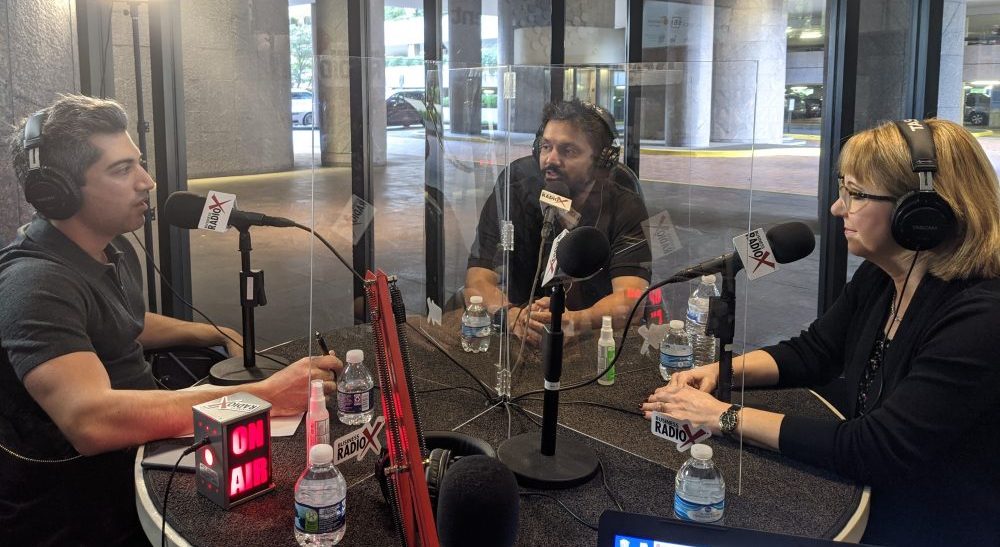
Jon Wittenburg, owner of Minuteman Press of Sandy Springs, joins “North Fulton Business Radio” to discuss the value of direct mail during these “shelter-in-place” times, how he’s managing the current economic crisis, and much more. The host of “North Fulton Business Radio” is John Ray and the show is produced virtually from North Fulton studio of Business RadioX® in Alpharetta.

Jon Wittenburg, Minuteman Press of Spring Springs

Jon Wittenberg is the Owner of Minuteman Press Sandy Springs. Minuteman Press of Sandy Springs is a full-service professional printing company located in vibrant Sandy Springs, GA.  “Full service” is exactly that, offering a full range of products and services for business marketing, from traditional printing like business cards, flyers and brochures, to yard signs, window vinyl and promotional products. While part of an internationally renowned franchise network, Minuteman Press Sandy Springs distinguishes itself from other printing companies by combining best in class products and services with a best in class customer experience.  It does things that most other printers don’t do, including asking probing questions to make sure customers get at least what they expect, if not more, and double checking proofs before going to production.  Little things can make all the difference when image matters!

To contact Jon and his team at Minuteman Press Sandy Springs, go to https://www.sandysprings.minutemanpress.com/ or call (678) 691-9100.

Questions and Topics in this Interview:

  • Direct mail
  • Jon’s message to clients on the current economic turmoil
  • small businesses helping each other

Jon’s Message to His Clients on the Current Economic Turmoil

(reproduced from his website)

I realize that I am breaking the rules by being long-winded, but these are not ordinary times and I beg your indulgence. I sincerely hope this message finds you healthy and safe. Minuteman Press Sandy Springs is still open because the printing industry has been deemed essential to other operations that have been deemed essential by the federal government, for example, the U.S. Postal Service. We are operating responsibly: washing hands frequently, respecting social distancing, cleaning common spaces more frequently, and so on. We are here to serve you as the need arises.

As I prepare to send this message as an email and a post on social media, I suspect that most of you are at home reading this. You are still getting mail from the post office, maybe even looking forward to it more than ever, just because it is something to read that is not on a computer screen or smart phone. It seems to me that I should send something like this out via the postal service but perhaps with a twist to add some entertainment value to it. Besides, a lot of emails, as you know first-hand, don’t get read – or don’t get read past the first few lines. Studies show that direct mail is different, that if the message is compelling it will get read, and if it strikes a chord, it will get kept. If we have a valid mailing address for you, you’ll “see” from us in a few days.

My father, God rest his soul, was a Podiatrist in Augusta, GA for over 60 years, practicing into his late 80’s. He believed in helping others, regardless of social standing or skin color, whether they had the means to pay, it didn’t matter. I had the good fortune to work for him as a lab technician as a teen. Though I wanted to follow in his footsteps, there was one slight problem: I didn’t have the “science genes” in me. So, I did the next best thing – Accounting. I promised him I would pass the CPA exam even though joining a CPA firm wasn’t an aspiration. I passed the exam because it was a promise I wanted to keep but was quite satisfied working in a corporate accounting or finance position in the wireless industry. Then came mergers and more mergers and ultimately, I became a corporate refugee looking for the next adventure. For a couple of years, I worked as a solopreneur preparing lots of income tax returns and a few sets of books for small businesses. Nine years ago, I started looking for something different, ventured into a Minuteman Press franchise, and here I sit, wondering how I can help our clients and customers get through an unprecedented business “red flag” (to coin an auto racing term) while preparing for the restart that is sure to come.

Another trait I took from my father was ethics. He believed strongly in doing the right things for the right reasons all the time. That is why I have been conflicted with the idea of staying open for business, because my staff and I are going to work while so many others are unable to be at work. However, government believes we should be at work so we are. We would like to help you with communications, whether it is by your reaching out to provide a status to your customers or preparing them for what’s ahead when the crisis ends. Maybe you need more signage inside and outside of your building. Maybe, like us, you think hand sanitizer will make a useful promo product going forward.

We will not take advantage of the situation; like you, whether a fellow business owner or a valued employee of a business, we are in survival mode. If we can keep the presses running, or work with our signage partners to keep their machines going, that is what we hope to do. Most of you know that I operate my shop unlike most other print shops: we practice what we preach when it comes to quality by insisting on “2 sets of eyes” when proofing artwork, and not cutting corners when it comes to the finished product. That process takes a bit longer and costs us more to produce; that’s why we don’t have frequent sales or discounts to drive volume (We do believe in the benefits of membership in local chambers of commerce so we offer a 10% member benefit for members of the chambers we belong to.). If you want to bounce some ideas off us, or want our help to come up with ideas for marketing now or the future, please don’t hesitate to call or email us. We are still baking cookies (still yummy despite my doing the baking) and making deliveries. During this unprecedented situation, we will help you by reducing our prices significantly because you will be helping us keep the presses running and keeping a small staff of dedicated workers on the payroll. Speaking of small staff, I have made some recent adjustments, two through attrition. Zach and Arona voluntarily left 4 and 2 weeks ago, respectively, both leaving for excellent opportunities elsewhere. I could not be happier for them, but as two nice people who excelled at their work, they will be missed. Jennifer is no longer here and will be replaced as business conditions improve. She too will be missed.

Times like these call for outside the box thinking. Kyle, Ty and I want to help any way we can. Please let us know if we can help you. Be well. We all look forward to better times ahead.


minuteman press of sandy springs


North Fulton Business Radio” is produced virtually from the North Fulton studio of Business RadioX® in Alpharetta. You can find the full archive of shows by following this link. The show is available on all the major podcast apps, including Apple Podcasts, Spotify, Google, iHeart Radio, Stitcher, TuneIn, and others.

Renasant Bank has humble roots, starting in 1904 as a $100,000 bank in a Lee County, Mississippi, bakery. Since then, Renasant has grown to become one of the Southeast’s strongest financial institutions with over $13 billion in assets and more than 190 banking, lending, wealth management and financial services offices in Mississippi, Alabama, Tennessee, Georgia and Florida. All of Renasant’s success stems from each of their banker’s commitment to investing in their communities as a way of better understanding the people they serve. At Renasant Bank, they understand you because they work and live alongside you every day.

Tagged With: direct mail, making human connections in marketing, Minuteman Press of Sandy Springs, Minuteman Press Sandy Springs, small businesses

Decision Vision Episode 57, How Do I Secure Data for Work at Home Employees? – An Interview with Justin Daniels, Baker Donelson, and Jodi Daniels, Red Clover Advisors

March 26, 2020 by John Ray

How Do I Secure Data for Work at Home Employees?
Decision Vision
Decision Vision Episode 57, How Do I Secure Data for Work at Home Employees? - An Interview with Justin Daniels, Baker Donelson, and Jodi Daniels, Red Clover Advisors
Loading
00:00 /
RSS Feed
Share
Link
Embed

Download file

How Do I Secure Data for Work at Home Employees?

Decision Vision Episode 57, How Do I Secure Data for Work at Home Employees? – An Interview with Justin Daniels, Baker Donelson, and Jodi Daniels, Red Clover Advisors

Millions of employees are now working at home because of coronavirus-related “shelter in place” directives, creating a data security problem for many employers. Justin Daniels, Baker Donelson, and Jodi Daniels, Red Clover Advisors, address this problem in the latest edition of “Decision Vision.” This series is hosted by Mike Blake and presented by Brady Ware & Company.

Justin Daniels, Baker Donelson

how do i secure data for work at home employees
Justin Daniels

Justin Daniels, Baker Donelson, provides corporate advice to growth-oriented and middle market domestic and international businesses. He is also a cybersecurity thought leader who believes cybersecurity is a strategic business enterprise risk.

His corporate practice consists of representing businesses and business owners in all aspects of their growth cycle, from structuring new ventures, raising capital and advising on acquisitions and divestitures to reviewing and negotiating key vendor, franchise, employment and customer contracts.

Justin specifically advises on cyber business and legal issues that impact every aspect of a company from mergers and acquisitions, investment capital transactions and related due diligence matters, vendor and customer contracts and cyber insurance. He runs tabletop exercises to help companies practice and identity opportunities to improve their cyber incident response plan. He also has a strong background in blockchain technology as he represents one of the largest cryptocurrency mining facilities in the country. He has particular experience in helping clients navigate how the blockchain might apply to a specific use case and the potential business and legal issues arising from it.

Justin has taken a leadership role in Georgia’s cybersecurity industry. In 2017, he founded and led the inaugural Atlanta Cyber Week, where multiple organizations held 11 events that attracted more than 1,000 attendees. Atlanta Cyber Week created business opportunities between growth cyber companies and Atlanta’s middle market and Fortune 1,000 customer base while also burnishing the reputation of Atlanta’s regional cybersecurity ecosystem. At the end of Atlanta Cyber Week 2017, he gave a Ted Talk entitled “Why You Hold the Key to Cybersecurity.” In March 2015, he traveled with Atlanta Mayor Kasim Reed and a 36-member delegation on a Georgia cybersecurity mission to the state of Israel to promote the Atlanta regional cybersecurity ecosystem. He has also given presentations about Atlanta’s cybersecurity ecosystem and U.S. privacy laws as part of his travels to London and Manchester surrounding the InfoSec cybersecurity conference in 2016 and 2017.

You can connect with Justin on LinkedIn, or email him directly.

Jodi Daniels, Red Clover Advisors

how do I secure data for work at home employees
Jodi Daniels

Jodi Daniels is the Founder and CEO of Red Clover Advisors. She is a Certified Informational Privacy Professional (CIPP/US) with more than 20 years of experience helping a range of businesses from solopreneurs to multi-national companies in privacy, marketing, strategy, and finance roles. During her corporate career, she proved a valuable asset to companies like Deloitte, The Home Depot, Cox Enterprises, Bank of America where she most recently served as the privacy partner for Digital Banking and Digital Marketing. Ms. Daniels started her privacy career by creating the comprehensive privacy program at Cox Automotive. She launched an online advertising network for Autotrader and Kelley Blue Book.

Since launching in 2017, Red Clover Advisors has helped hundreds of companies create privacy programs, achieve GDPR, CCPA, and US privacy law compliance, and establish a secure online data strategy their customers can count on. Jodi makes privacy easy to understand by breaking it down into measurable steps using plain language her clients can relate to. She passionately supports the idea that privacy is more than just compliance and concern over fines. It’s a human right we all deserve. She has made it her mission to help businesses build trust and transparency with this core value at its foundation.

Jodi holds a Masters of Business Administration and a Bachelor of Business Administration with a concentration in Accounting from Emory University’s Goizueta Business School. She lives in Atlanta, GA with her husband, two little girls, and a big fluffy dog named Basil.

You can connect with Jodi on LinkedIn, or email her directly.

Michael Blake, Brady Ware & Company

Mike Blake, Host of “Decision Vision”

Michael Blake is Host of the “Decision Vision” podcast series and a Director of Brady Ware & Company. Mike specializes in the valuation of intellectual property-driven firms, such as software firms, aerospace firms and professional services firms, most frequently in the capacity as a transaction advisor, helping clients obtain great outcomes from complex transaction opportunities. He is also a specialist in the appraisal of intellectual properties as stand-alone assets, such as software, trade secrets, and patents.

Mike has been a full-time business appraiser for 13 years with public accounting firms, boutique business appraisal firms, and an owner of his own firm. Prior to that, he spent 8 years in venture capital and investment banking, including transactions in the U.S., Israel, Russia, Ukraine, and Belarus.

Brady Ware & Company

Brady Ware & Company is a regional full-service accounting and advisory firm which helps businesses and entrepreneurs make visions a reality. Brady Ware services clients nationally from its offices in Alpharetta, GA; Columbus and Dayton, OH; and Richmond, IN. The firm is growth minded, committed to the regions in which they operate, and most importantly, they make significant investments in their people and service offerings to meet the changing financial needs of those they are privileged to serve. The firm is dedicated to providing results that make a difference for its clients.

Decision Vision Podcast Series

“Decision Vision” is a podcast covering topics and issues facing small business owners and connecting them with solutions from leading experts. This series is presented by Brady Ware & Company. If you are a decision maker for a small business, we’d love to hear from you. Contact us at decisionvision@bradyware.com and make sure to listen to every Thursday to the “Decision Vision” podcast. Past episodes of “Decision Vision” can be found here. “Decision Vision” is produced and broadcast by the North Fulton studio of Business RadioX®.

Visit Brady Ware & Company on social media:

LinkedIn:  https://www.linkedin.com/company/brady-ware/

Facebook: https://www.facebook.com/bradywareCPAs/

Twitter: https://twitter.com/BradyWare

Instagram: https://www.instagram.com/bradywarecompany/

Show Transcript

Mike Blake: [00:00:00] Welcome to Decision Vision, a podcast giving you, the listener, clear vision to make great decisions. In each episode, we discuss the processes of decision making on a different topic from a business owner’s or executive’s perspective. We aren’t necessarily telling you what to do, but we can put you in a position to make an informed decision on your own and understand when you might need help along the way.

Mike Blake: [00:00:19] My name is Mike Blake, and I’m your host for today’s program. I’m a Director at Brady Ware & Company, a full-service accounting firm based in Dayton, Ohio, with offices in Dayton; Columbus, Ohio; Richmond, Indiana; and Alpharetta, Georgia. Brady Ware is sponsoring this podcast, which is being recorded in Atlanta per social distancing protocols. If you like this podcast, please subscribe to your favorite podcast aggregator and please consider leaving or review the podcast as well.

Mike Blake: [00:00:44] This is a first in a sub-series of topics regarding how to address the coronavirus crisis. And I think we’re gonna have a few of these podcasts that we’re going to record before everything is said and done. But this is our initial attempt at this, and we’ll see how it goes. But I think that it should go pretty well. And specifically, we’re going to talk about data security.

Mike Blake: [00:01:07] Now, in episode 15, we had Charles Hoff come on to talk generally about data security practices and procedures. But now, we are faced with an unprecedented data security challenge. We’ve all been basically told to take our balls, and go home, and don’t come back until somebody else gives us the all clear. Now, for a lot of us, like myself, this is a good thing. It means that we don’t have to not be working at all. We can work from home, but it does present some novel challenges that, frankly, I don’t think a lot of us ever thought we would ever wind up having to face – certainly not on the scale. And as we always do for our podcasts, I bring in the best experts that I can find for this because I don’t know anything about this. All I know is to ask a few questions and we’ll let the experts talk.

Mike Blake: [00:01:59] So, joining us today are Justin and Jodi Daniels. Justin is a partner with Baker Donelson, which is the 64th largest firm in the US, giving their clients access to a team of more than 700 attorneys and public policy advisors, representing more than 30 practice areas, all seamlessly connected across 21 offices to serve virtually any legal and policy needs. Baker Donelson provides their clients a global network of global counsel and other professionals and to help their clients take advantage of global opportunities in more than 90 countries spanning six continents.

Mike Blake: [00:02:30] Justin’s corporate practice consists of representing middle-market and emerging growth businesses and business owners in all aspects of their growth cycle from structuring new ventures, raising capital, and advising on acquisitions and divestitures, to reviewing and negotiating key vendor franchise employment and customer contracts. Justin specifically advises businesses on cyber business and legal issues that pertain to mergers and acquisitions, investment capital transactions, and related due diligence matters, vendor customer contracts, information security plans, and cyber insurance. His representation of one of the largest crypto mining facilities in the country has provided him with a strong background in blockchain technology. This experience has been especially relevant in helping clients navigate how the blockchain might apply to a specific use case and the potential business and legal issues arising from it. He is also co-founder of Baker Donelson’s Cybersecurity Accelerator.

Mike Blake: [00:03:22] Jodi Daniels as founder and CEO of Red Clover Advisors. Since launching in 2017, Red Clover Advisors has helped hundreds of companies create privacy programs, achieve GDPR, CCPA, and US privacy law compliance -if you want to know what those are, again, go back and listen to Episode 15 – and establish a secure online data strategy their customers can count on. Jodi makes privacy easy to understand by breaking it down into measurable steps using plain language her clients can relate to. She passionately supports the idea that privacy is more than just compliance and concern over fines, it’s a human right we all deserve. She’s made it her mission to help businesses build trust and transparency with this core value at its foundation.

Mike Blake: [00:04:05] Jodi is a certified informational privacy professional with more than 20 years of experience, helping a range of businesses from solopreneurs to multinational companies in privacy, marketing, strategy and finance roles. During her corporate career, she proved a valuable asset to companies like Deloitte, the Home Depot, Cox Enterprises, Bank of America, where she most recently served as a privacy partner for digital banking and digital marketing. Ms. Daniels studied her privacy career by training at the Comprehensive Privacy Program with Cox Automotive. She launched an online advertising network for Auto Trader and Bluebook, Justin and Jodi Daniels, welcome to the program.

Jodi Daniels: [00:04:43] Hi. I’m glad to be here.

Mike Blake: [00:04:45] So, with all that said, you guys know a thing or two, you know a thing or two about security. Before we get started, I just kind of want to dive in to kind of a high level. When everything started hitting the fan about two weeks ago, what were your first thoughts in terms of how this is going to impact and really just sort of change the game in terms of business, privacy, and data security?

Justin Daniels: [00:05:14] So, thanks, Mike. Let me take that one. So, the biggest thing that we identified is pretty much overnight, companies, as you said, told their workforce, “Take your ball, and go home, and work remotely.” So, now, when you take a whole lot of companies who may not have had a significant part of their workforce work remotely and introduce them into this whole new concept of working remotely, a lot of the security challenges that companies were struggling to deal with, just in the workplace, now take on an added focus now that you’ve got all these people who are unfamiliar working at home, who now have to go and work at home and connect remotely to the company server, and all of the potential mischief and mayhem that can present for our trusty cyber criminals who are always out there.

Mike Blake: [00:06:10] So, let me ask this. I’m already going off the script, but I know you can handle it. Do you think as soon as this started happening, cyber criminals around the world, and crime syndicates, and so forth, and even state-sponsored are sort of rubbing their hands in anticipation because of the vulnerabilities here?

Justin Daniels: [00:06:27] I have three words for you. They think of this as target-rich environment. Absolutely, because any kind of dislocation like that, just like you’re advising your clients to think strategically about new ways to do business, a pandemic like this for a cyber-criminals says, “Wow, look at all this dislocation and people working remotely, this is just a great opportunity to commit different and varied types of crimes.” And as we get into this, I’ll share with you some of the things that we’re already seeing, which are cyber threats that are very specific to coronavirus when it comes to phishing and other kinds of things, but absolutely.

Mike Blake: [00:07:08] So, now, everybody has gone home. And for, at least, in many cases, they’re working on their personal device in some respect. And they may have been before, but certainly more of them are now. What sort of issues does using your personal device to telework present?

Jodi Daniels: [00:07:25] Sure. And so, you have the teleworking piece, but you also have, a lot of people like us, you have children doing distance learning and virtual learning. And so, it’s very similar scenarios. But you have probably no VPN, maybe the home Wi-Fi doesn’t have a password, or the password is password, or my pet’s name, something very simple that’s really easy to crack. So, if I don’t have a good password or no password, that’s sort of the first line of defense on the Wi-Fi or router. And then, I might not have a VPN, a virtual private network. That’s often been sort of saved for some of the more sophisticated or bigger companies. And again,  just an aside, if I was a company and sent everyone home because that’s what we needed to do, I didn’t think about a VPN and how I set that up.

Jodi Daniels: [00:08:15] A lot of people who are now potentially exposing company data fairly easily, the Wi-Fi might be one kind of wall that’s a bad actor has to make it through. A VPN would be a second wall that they’d have to make it through. You also have company information now on a personal device, which presents two interesting things. You have the security challenge. You actually also have a privacy challenge because the privacy laws haven’t gone away. And now, you’ve just exposed further where that personal information is. And you have others in the home who might be seeing it. And maybe someone comes along and, oops, accidentally sends that email that you had and draft that had all this information on it or shared information that they didn’t anticipate doing or a variety of things kind of like that.

Mike Blake: [00:09:10] So, you talk about the Wi-Fi piece. And I wanted to divert into that because I think that’s really important. When I think of Wi-Fi security, I think of going on airport Wi-Fi, Starbucks, whatever. Obviously, a vulnerability. And as you mentioned, that’s a target rich environment because if I’m a hacker, I know there’s 20 people in there that are using them, that are using Wi-Fi. Chances are there’s one computer in there, at least, that’s not secured properly. In a residential environment, what is the crime case there? Have you heard of criminals literally just like is parking outside somebody’s home, or a group of homes, or maybe a multi residential property, and just scanning for open networks and seeing if they can hack in?

Jodi Daniels: [00:09:58] Yeah. Well, if you actually think back to some of the stories you’ve seen on the children’s baby monitors that had Wi-Fi on them and how people were able to hack in. And sort of a nanny cam, people would call. The same idea is true. Those are on Wi-Fi networks. So, you have a couple different things. You have people from around the world who can break into those Wi-Fi networks that don’t necessarily … You know, there’s backdoors into all of this. Certainly, people could park outside my house. My neighbors can break in. We all don’t exactly know who our neighbors are all the time. So, you’re certainly exposing yourself. And the way the digital system works, I don’t necessarily have to be in range to be able to still break in, just like with those nanny cams years ago or ring devices. We’ve seen the developers of certain different Wi-Fi-enabled devices be able to break in and see whatever they want to see on those exposed devices.

Mike Blake: [00:10:53] So, are there any new threats that are being posed by mass teleworking, or do kind of the distribution or the composition of the threats change? Well, I guess what is the threat? How does the threat landscape change now that we’re in this mass remote working environment?

Justin Daniels: [00:11:14] So, Mike, I think the way that it changes is the type of phishing scams that you had before where they try to get to you through work, they’re now going to try to get to you as a remote worker. And let me break this down for you a little bit. So, you’re going to start to get emails that are very specific to coronavirus. And someone shared with me one that said, “Hey, this is from the CDC.com,” or I’m sorry, .gov.org. And the fact that they added on the “.org,” that’s what made it a phishing type of e-mail. So, now think about instead of phishing people at work, you’re now going to phish people at home, and they’d be distracted because they have kids, or trying to get work done, they have a million things on their mind.

Justin Daniels: [00:11:56] Well, let me take a step further for you. And it’s a concept called Identity Access Management. And what that really is, is have companies – because they so quickly get their remote workforce working remotely – did they really think about, “Well, how do I have to limit the access of my employees?” Like, for example, with what you do, Mike, it might be that your company says, ‘You know what? Mike gets access to the network, but there’s probably no reason for him to get access to invoicing or cash management,” because that’s not really your role. But I think what you’re going to find with a lot of these other companies who are just quickly trying to get their employees working remotely, they didn’t think about how to limit the employees’ access to the company network.

Justin Daniels: [00:12:43] So, now, if I phish remotely on someone, not only may I get through their e-mail, I may get access to the entire company network because the company didn’t think through, “Well, maybe I need to limit their access.” And now, they can get to the invoicing, they can get the wiring, they can get this sensitive company IP. So, it’s really a cascading effect because it’s not just the remote working, it’s how did you setup identity access management? How are you putting in layers of defense to help your people who are working remotely? Because just the phish e-mail is just the first step in getting access to a network that they may not have limited appropriately for the different workers because you put several thousand people working remotely, a lot of companies may not have thought about this.

Mike Blake: [00:13:29] I think that’s a really interesting point that you bring up. So, I want to drill back into that. So much of cyber security still relies on the focus of the individual user. And that distraction I face, I have a nine year old that we’re homeschooling now. My wife has her own business. Our situation is not that dissimilar to yours. And it’s different. Even though I work from home a lot, it’s still different. And I have to change my work hours and so forth to make sure I can concentrate. But all it does, and because the nature of cyber threats, all it does is, it takes one wrong clicked email when you’re not 100% focused, and the whole house of cards can come down, right?

Justin Daniels: [00:13:29] That’s it. That’s it.

Mike Blake: [00:14:17] And so, I think a key bullet point, if you’re a remote worker and you’re listening to this podcast or if you’re a manager, one of the things to think about, aside from policies, and software, and hardware – and we will get into that – is also just maintaining concentration and focus because not only are we in a target rich environment but, realistically, for a lot of people, we’re in an environment that encourages mistakes. Sorry. Go ahead.

Jodi Daniels: [00:14:49] I just want to add. I think this environment, also, it’s emotionally charged. People are tired. They’re stressed. We’re all at home hoping we don’t get this disease. We might know others who do. And there’ll also be a fair amount of personal information that might come through our personal emails like, “Please donate to this cause here,” or like the one that Justin just said, “Let’s get more information on the virus here.” And so, when your defenses are down because you’re tired, and you’re trying to do 14 things at the same time, there’s going to be a multitude of different ways of how these actors are going to try and get at you.

Mike Blake: [00:15:33] So, let’s start at the heart of this from the infrastructure-wise. I think we’ll kind of start there and work our way out. Employees are now going to be accessing their servers remotely through the internet, through their home access. It maybe cable. It maybe fibr for some case. It maybe through their mobile device. How does that change the security equation? And how should companies be reacting or addressing that to minimize the security exposure at the infrastructure level?

Justin Daniels: [00:16:09] So, Mike, let’s talk about that. So, when you log on to your network with your business, I suspect you may have something, as Jodi alluded to, what’s called a virtual private network. So, let’s talk a little bit in general business terms  what that is. So, that is software that you can put on your computer that creates a secure link between you and your company network using your home internet. But here’s the thing with VPN that’s interesting, is IT infrastructure wasn’t built so that everybody would be connecting via virtual private network.

Justin Daniels: [00:16:54] So, one of the things that companies may face is, one, they may not have sufficient licenses to put everyone on a VPN. But second, and probably just as important, is their network may not have the capacities to sustain the load of almost all of your workforce being remote. So, you may need to put in policies and procedures that say only certain employees have access during certain times because if everybody goes at the same time and is using it at the same time, you’re likely to have a disruption to your network or worse, it could go down. And then, you compound the problem.

Justin Daniels: [00:17:30] So, that’s just from an IT perspective, in addition to the security, because security is part and parcel of how do I keep stuff running because if it’s not secure, and we have a breach, then things don’t really run. But in general, how are you thinking about your IT infrastructure? And I think a lot of people did this because they had to get it done to keep working without thinking through, we’re gonna do this for an indefinite period of time. How do I make sure my IT infrastructure has the capacity to take care of all these people and also do it in a reasonably secure fashion?

Mike Blake: [00:18:05] So, you bring up virtual private network. I want to touch on that too because some people may have virtual private networks already, they may have purchased one because they’re concerned about the abolition of net neutrality. Some people have them because they want to be able to access Star Trek Discovery on Netflix. So, they spoof it into thinking they’re an international subscriber. So, it has been a consumer use case for VPN. Is that the same thing? And if I already have a VPN, does that mean that I’m using that to access those corporate documents or are we talking about two different animals?

Jodi Daniels: [00:18:45] I don’t know that it’s necessarily different. I think if you’re going to use any software on your personal computer to access the company network, your company and their IT professionals should be involved in that because I think one of the things you and I talked about was, should you use your own devices? And I think the answer to that is my company issued me a computer, but that may not be a realistic choice under this time pressure for everyone. So, my answer to you is you might be able to do it, but it’s not something where a company should said, “Hey, Mike, go off in whatever VPN you might have. Just go and use it.” It needs to be more of a concerted, “we’ve engaged with professionals and this is the type of VPN we want you to use. We’re going to give it to you because even though you’re letting employees have their own access, you want to have some level of control.”

Justin Daniels: [00:19:35] And we haven’t even talked about our iPhones. And that’s a whole nother area. And remember, a VPN just deals with the connection from you connecting to your server. It doesn’t really deal with any PII or other sensitive information that may now reside on your phone or your computer, and how that might impact the ransomware attack.

Mike Blake: [00:19:56] Yeah. And we’re definitely going to get to that. So, we’re kind of moving from that access in on out. The licensing issue you bring up is interesting. We phased out at the firm that I used to work for, when we had the Snowmageddon back, I want to say 2014, I think that sort of was. And of course, we’re all home. Once we finally got home, we’re home for about three days while the ice melted. And a lot of us couldn’t get on because we didn’t have enough licenses. We had to start rationing license. Then, we scrambled. But we never foresaw a scenario where 300 people, all of a sudden, would need remote access. And ironically, I think that’s actually made a lot of Atlanta companies better prepared for this, because we had sort of a dress rehearsal back and forth team to do just that.

Mike Blake: [00:20:52] Let me ask this. I know this is an area that you deal with a lot. So, I think your answer is going to be great. And that is, what are the cyber liability policy implications of moving to this mass remote working? When insurers wrote that policy, they thought there’s only a certain amount of remote and a certain amount of onsite. Now, that whole thing’s been disrupted. Are people’s policies being blown up if there is a breach? Are companies still covered?

Justin Daniels: [00:21:23] So, I think the answer to that question, Mike, is you really have to look at your individual policy, because if I’ve learned anything when I’ve been involved in the cyber insurance game is that there is no uniform policy out there like you have with commercial general liability or some of the other more well established type of policies. And so, I think what you’re going to have to do is take a look at the exclusions in your policy because it’s one of the hardest contracts that I have to read. And I hesitate to give you an answer that’s definitive because it’s really policy-dependent.

Justin Daniels: [00:21:58] But what I will say is companies should really be looking at whether or not they have specific, they call it social engineered emails in their coverage because a lot of companies may not realize that they’re not covered for the kinds of increase in what I expect of phishing scams to be, and they may want to look at their insurance and say, “Well, how am I covered for this?” because you probably know this, we’re in kind of the season where insurance is being renewed. And so, this is now a great time to bring up the issue of, “Hey, what is my coverage for socially engineered emails? And what is covered? What isn’t covered? Can I increase my defenses, so that I can get bigger coverage? What is excluded now that I’m more of a remote workforce?

Justin Daniels: [00:22:48] These are questions that should be brought up now because I know we are now in the season for people getting renewals on their insurance, and premiums might be changing on that kind of stuff. But now is the time to be asking those questions to the insurers because you know what, when you talked about Snowmageddon, you bring up a larger point. A lot of companies who really don’t have or never practice their business continuity plan, they’re now having to build it in flight.

Justin Daniels: [00:23:16] And so, an additional challenge is this teleworking issue is a big one. I think we’re going to see a rise in cyber breaches, but they’re going to have to figure that along with furloughing employees. What if my employee, do I have to test them for the COVID? If they test positive, what do I do? So, now, you’ve got this teleworking issue sitting alongside all those other issues as a business. And it’s a capacity issue. How many of these issues can you deal with in mid-flight if you don’t have a plan and you’ve never practiced it? And that’s why I think you’re going to see such a rise in breaches because people are going to discount this one for some of these more immediate ones until this one becomes a huge problem.

Mike Blake: [00:23:57] Yeah, I think a key bullet point. And I appreciate you can’t answer this blanket. I mean, you sound like you have command of everybody’s insurance policy.

Justin Daniels: [00:24:06] Yeah.

Mike Blake: [00:24:06] But it does sound like it is definitely worth your while at a minimum to pull your policy out and see how this changing environment may alter the coverage. So, let’s move then sort of away from the infrastructure then to the individual device access. We’ll get to mobile in a second but I want to ask a question about computers first because I think they’re slightly different. And my question is this, I guess, broadly, what would best practices be for companies in terms of monitoring, policing, developing  standards, I guess, around the actual hardware that employees are using to telework?

Jodi Daniels: [00:24:59] Well so, I think that starts with a few different things. There’s certainly software that companies can use to manage and monitor what’s happening. There’s data loss prevention software, there’s monitoring software, there’s VPN monitoring software, there’s noodles of software to actually manage the ins and outs of data on a network. At the same time, you really have to have some policies in place that inform the employee what is actually being monitored. And that’s really important depending on the country you’re in. So, if you’re outside the US, there’s some stricter policies in place, especially if you’re in GDP, what you can and can’t be monitoring, and what you have to disclose to me. If I’m here in the United States, there are still some issues. So, you kind of need to factor in the HR component combined with an information security policy.

Jodi Daniels: [00:25:56] So, while there’s an IT team who can identify the right software depending on the type of information and the number of employees to be able to monitor and determine where is traffic coming in and out of, what’s being downloaded, there’s capabilities to restrict what’s being downloaded, or shared, or forwarded. There’s a lot that you can do. And again, it’s very dependent on the company and the type of data. You do have to factor in the human element and the notice requirements, so that employees understand what is happening to them, to not have it be such a huge surprise.

Mike Blake: [00:26:37] Now, the question I think that follows from that naturally is, where’s that software going to reside? Of course, many people, not everybody, but many people do own their own computers. And so, they could use that to access whatever it is they need access or do. Is that the right answer is BYOD? And now, WYOD, just work on your own device. Is that presenting additional challenges? And if so, maybe, should a company consider them, at least, giving employees the option to use company issued equipment, so that maybe the company has more power over this, or maybe I’m barking up the wrong tree? Is that a way to think about this?

Jodi Daniels: [00:27:31] I think it’s a great question. So, BYOD, WWOD, pick your flavor of acronym, they all do present big issues. And again, a policy piece is something I’ve helped a number of companies on, which is, what is the policy? Because it does make it a little bit harder if I have my own device, depending on the tools that I’m using, you may or may not be able to see what I’m doing on that device. So, in some policies, the company has the right to take a look at it at any time. I have the right to be able to wipe it at any time. And I know we’re gonna get into mobile, but that’s really quite similar for mobile because a lot of times, I’m putting my company email on mobile, I might access my apps on mobile. It’s really very similar of what power does the company have to be able to come in and kind of audit, if you will, be able to test and control when it needs to, and it reserves the right to be able to do so.

Jodi Daniels: [00:28:29] At the same time, because there’s so much in the cloud these days, if I’m using Google Docs or I’m using Exchange, there are still some monitoring tools that can be connected to those cloud servers. So, let’s say I’m sending an email, and I’m trying to forward it to a personal email, there is some capabilities to be able to limit that. You can put in certain … you can’t forward it to G-mails, and Yahoo!’s, and things like that. I’ve seen companies do that. So, it’s a little bit dependent on the type of software I’m using, but it is definitely still possible.

Mike Blake: [00:29:06] So, let me bring up a specific case that I think if I were in a decision making capacity – I guess I semi am – that would concern me if I’m allowing all my employees to use their personal devices, particularly if they’re not necessarily particularly conscientious about their own security is, who knows what is on the employees computer, right? And whether it’s free apps, whether they’ve downloaded pornography, whatever they’ve done with their computer, we know that there’s malware and other things that piggyback off of other content that may be basically cohabitating with company data in some respect, right? So, if we’re going to ask employees to use their own equipment, is that an additional risk? And is that one that the company can reasonably manage absent issuing everybody a company-issued laptop that then the company can lock down, and restrict use, and downloads, and all that good stuff?

Justin Daniels: [00:30:15] So, Mike, I think to address that question, what I would say is I am going use a term I learned from the US Secret Services, it’s really about concentric rings of defense. And what I mean by that is you’re absolutely right, who knows what employees have downloaded? And if you’re a company who’s not in the position to configure a hundred computers or whatnot and just disseminate them out, you’re kind of in a spot where you’re going down BYOD. But as I alluded to before, I think you have to go at this with a sense of you’re going to assume that some fish e-mail is going to make it through. They only have to be right once. So, you do security, I think, you train people up the best that you can, but you do it under the assumption that some e-mail or something is going to get clicked on because that’s just the law of averages.

Justin Daniels: [00:31:06] But the other things that you can do, and I alluded to it before, is are you making sure that your employees have the least amount of access necessary to do their work? Meaning that even if you phish someone, maybe it’s the administrative assistant to the CEO, that they don’t have access to billing and invoicing. The access that a criminal would get is very limited. So, then, what you’re adding in are these other layers of defense that make it harder for a criminal to get around, to get to your wire instructions or get to other information that they’re seeking to get to because you just don’t give people carte blanch access to the network.

Justin Daniels: [00:31:46] And are you using – and you’ve probably heard of this – two factor authentication? Maybe you have instances where if you want access to certain parts of the network, there has to be a higher level of authentication than is required, so that people get access to invoicing, billing, financial statements, things of that nature. So, there are other things that you can implement to institute all these different layers of defense among the different assets that you’re identifying as being the most important for your organization.

Justin Daniels: [00:32:15] And that’s a lot of what I’ve been doing lately for clients is I’ve been helping them issue spot across a whole different swath of areas that are impacting their business. And when we start talking about teleworking, I start to ask these questions. When they say, “Oh, well, they just have access to the network,” then that’s where you’re creating the opportunities to help clients identify these issues, and then start to implement this defense and depth, which, really, it’s a factor of the technology that you’re using, we talked about; pop processes and procedures, Jodi alluded to that; and also, it’s educating your workforce about what to look for in phishing. It’s really doing all three of those things and doing it in layers of defense.

Jodi Daniels: [00:32:58] All right. So, let’s then move out to the mobile device. And I appreciate that that’s similar to the more conventional work device, but I think they’re a little bit different in that mobile devices are more likely to have been issued by someone’s employment. At a minimum, they’re probably picking up the tab for the access, which I think, then, gives the company certain rights that they may not have with respect to a true BYOD. So, how does the equation now change for mobile devices? Or let me ask this. iPhone or Apple has gotten a lot of publicity for their security. Even the government can’t crack it, et cetera. So, I don’t know if that’s true or that’s a sort of an urban legend like roving bands of surgeons that steal kidneys, but that’s certainly the reputation. Does the security equation change with mobile devices? And if mobile devices do, in fact, offer superior security, is there a case to be made that maybe you want to try to work off a mobile devices as much as possible?

Justin Daniels: [00:34:12] So, Mike, I’m going to answer the first part of that. So, when I was in Israel on a mission for cyber, even the Israelis said the iPhone is a much better platform for security. And one of the big reasons why is everything with Apple is internal to Apple with the apps and everything else. With Android and some of the other users system environments, other developers can come, and create things, and put them onto their systems. So, those are potential areas of weakness as opposed to Apple that’s very much self-contained. It is very difficult to breach Apple’s security, as we know from the San Bernardino issue and whatnot. So, Jodi and I happen to have the iPhones. So, one thing people should be doing is you can have a passcode that’s six digits long instead of four. People should implement that. It’s another layer of security.

Justin Daniels: [00:35:09] As for the other parts of your question, with mobile devices, I know that you can install software from a company perspective on devices that you give people that allows you to monitor the software or monitor the machine, what’s coming on to it, but also more importantly, what if somebody just loses it or something happens? It allows you to wipe their machine immediately. And having some of that software, particularly on devices that the company has issued, can really be the difference between a large breach and keeping something on a low boil because you’re able to get to your machine or your phone and just wipe it.

Justin Daniels: [00:35:43] So, that’s where, to me, mobile devices have some other security that might be if the companies issued all the phones, and they don’t have it on there, they might want to consider pushing apps out to their users, so they can now monitor the phone, the ISPs. And it shouldn’t be an issue if those are phone issued by the company, you just probably want to check some of your policies and employee handbook, so that people are made aware of you, and you put it on the computer or the phone that says, “Hey, look, anything you do on this, we can monitor.”

Jodi Daniels: [00:36:15] I’d add two interesting things. So, on the Apple side, one important distinction is a lot of people, they might use Slack or other chat channels, but if they use the iMessage, iMessage, so Apple to Apple is what’s encrypted. But if I’m Apple to Android, I’m not encrypted. So, kind of an interesting differentiation on that. And then, if I’m a company who didn’t issue devices, and now everyone’s remote, and I have all these mobile devices, another avenue to, at least, be able to protect the data without … there are going to be some companies who don’t want to say, “I’m going to wipe all the data on your personal device.” That’s just not going to be the culture. For that company, the six digit passcode is going to be really important one. You can also have two factor authentication on the different company-focused apps, and tools, and suites, and things along those lines too. Again, it’s another added layer to Justin’s concentric methodology.

Mike Blake: [00:37:15] And what do you think about biometric authentication? That’s getting more and more common. Android is headed for a while. Apple is catching up. Windows, hello. I’m a big fan of it. And I also use KeyLemon for Apple devices. Are you a big fan of biometric authentication as well, or do you think it’s overkill?

Jodi Daniels: [00:37:36] I think it depends on the type of data that your company has. I think it’s just all relative to the type. Again, what kind of information and the volume of information that the employee has? Maybe it’s appropriate for some employees, not for other employees. And bring it to the privacy side, biometrics is a very sensitive area. So, for anyone who has employees really actually anywhere in Europe, for sure, it’s a sensitive data field under GDPR. That requires special notice and consent. And then, for States, here in the United States, biometric, also, there’s a variety of hoops you have to go through. So, can absolutely still do it. Just have to make sure you follow the laws where you’ve notified, you’ve asked for consent, I get what I’m doing. And to me, it’s just a matter of, does it make sense? Is it the right method for what I’m using?

Mike Blake: [00:38:30] So, you mentioned privacy. That’s a good segue to the next question I wanted to ask, which is, does this new work regime create loopholes that have not been foreseen in privacy protection and ownership protocols? Are there companies that, therefore, might be tempted to collect data that they wouldn’t necessarily be in a position to collect before? Is that an issue? And then, what are best practices to kind of safeguard against that?

Jodi Daniels: [00:39:05] So, from an employee standpoint … And there’s a difference, I think, between us and the rest of the world. The rest of the world generally has stricter privacy regulations than what we have here in the US. And in the US, we’re very sectoral. Every industry is going to have its own privacy laws. But if I had any level of a remote workforce, I likely was already monitoring something – IP addresses, where are people accessing my network from, and things along like that. If I have more of them, I probably just have more data points. If a company is going to start analyzing it and using it in some other fashion, then I think that does tie into the loopholes that you’ve just described.

Jodi Daniels: [00:39:50] I personally haven’t heard of any company yet trying to do that. I think everyone is just in a little bit of survival mode trying to keep their business afloat as best as they can. So, it’s quite possible, but I haven’t heard of that yet. It would, though, go to the same theme that we’ve been talking about, which it brings it back to policy. Whatever it is that a company is doing, whether it’s on your customers or for your employees, you need to have a policy that informs them of what it is that you’re doing. And in some countries, the individual rights might be a little bit greater and the notice might be a little bit greater, but it is a fundamental privacy baseline to inform of what it is that companies are doing.

Justin Daniels: [00:40:37] Mike, I want to add one other point alongside of what Jodi is saying is. If I’m a company, and if it’s the difference between my sales going down by 80% and collecting and using data to market to people, I think you know what a lot of companies are likely to decide to do, particularly small or medium sized companies that may not have the cash reserves to withstand this. So, I think you’re going to have a lot of companies making some pretty tough decisions. Well, we got these privacy laws and these other things. Well, I need to sell this because I need to generate revenue. And I think that’s also going to create some issues.

Mike Blake: [00:41:13] Yeah. And that answer segues in a question that I’ve got to ask. And it’s an unfair question, but I’m going to ask it anyway.

Justin Daniels: [00:41:20] Okay.

Mike Blake: [00:41:20] And the question is this, is that I think more companies are in this position than are going to admit. One day, everybody is in the office. The next day, everybody isn’t. Most companies probably are just not compliant as they need to be day one. I mean, I think that’s a fact of life. How do you manage that? Is the best practice to cause all of your operations until you get compliant? Do you just sort of roll that, and do the best you can, and hope that you don’t get unlucky, and you kind of make it until you do get to the point where you want to be? That’s a real kind of brass tacks decision. How do you think about that? I got to imagine your clients are raising that issue with you.

Jodi Daniels: [00:42:10] Yeah, we each have some thoughts. I think we’re going to both take a stab. I think that the reality is business needs to go on, especially in the environment that we’re in right now. And for any of the privacy laws and security requirements, it’s impossible to be perfectly 100% secure and 100% compliant. Companies should do the best that they can. And for some, it’s just starting out, and they know the five things they need to do. They have a list and they’re going to dedicate to working towards as many of them as they can. For others, they’re farther down the path, and they’re going to try and maintain where it is that they are.

Jodi Daniels: [00:42:50] So, generally, I don’t think it’s the best idea to just stop all business and wait for sort of your perfect compliance secure program because it’s moving. The security challenges are continuously changing. It’s doing the best that you can. Everyone can pretty simply educate a workforce of what they should be on the lookout for. There’s some practical items that they can do pretty simply. And there’s some more complicated things that they can work towards. And this is probably not the first time we’re going to have this. So, planning for the next iteration, I think, is going to be incredibly important. And Justin, I’m sure you have some thoughts too.

Justin Daniels: [00:43:34] So, Mike, I’ve already had that some pretty tough discussions with people, particularly around potentially violating one law or having a potential lawsuit. And I’ve had to give some tough advice because you’re put in a position where the uncertainty of a lawsuit versus maybe violating some other law, I’m going to violate the law, kind of know what that might look like because you’re just trying to make some tough business decisions. When it comes to the security and the privacy, it’s like every other risk in your business. You need to manage it.

Justin Daniels: [00:44:07] And what Jodi and I have tried to articulate in our discussion today are some of the real commonsense things that you can do that don’t cost tons of money, don’t take an overwhelming amount of effort to start to manage this because you and I both know there’s no way people are going to wait to be perfectly compliant. That’s not what they’re gonna do. But what they can do is, is if they do none of the things we’ve talked about and have these issues, if you have a data breach on top of what the environment is now, I think most companies, you’re done.

Justin Daniels: [00:44:40] And so, what can companies be doing to do some commonsense things that don’t cost the sun and the moon to address this? And that’s really the approach that Jodi and I have taken with our clients and customers on how to manage this amongst all the other things that people are trying to manage, because you know what businesses are focused on. How do I trim expenses and how do I generate new revenue? And within all of that, how do I manage these risks, which are very real when you have a remote workforce from a security and privacy standpoint?

Mike Blake: [00:45:12] So, Jodi and Justin, this has been a great conversation. I’ve learned a lot. I think our listeners are going to learn a lot as well. They probably will have more questions. How can they contact you for more information?

Jodi Daniels: [00:45:26] Sure. So, for me, a couple of different ways. My website is redcloveradvisors.com. You can also find me on LinkedIn, Red Clover Advisors or personally, Jodi Daniels. Real simply, email is just jodi@redcloveradvisors.com.

Justin Daniels: [00:45:45] As for me, my email is jdaniels@bakerdonelson.com. And you can also find me on LinkedIn because Jodi and I post on these topics very regularly for more information. And I also have been advising companies just generally on strategically issue spotting. And so, if companies need help with that as this is important but not the only point. I’ll be honest, Mike, that’s been the bulk of my advisory services lately is helping companies strategically implement a business continuity plan in mid air because they either haven’t had one or the one they have doesn’t really relate to something this significant.

Mike Blake: [00:46:33] Well, thanks so much. That’s going to wrap it up for today’s program. I’d like to thank Jodi Daniels of Red Clover and Justin Daniels of Baker Donelson so much for joining us and sharing their expertise with us today. We’ll be exploring a new topic each week. So, please tune in, so that when you’re faced with your next executive decision, you have clear vision when making it. If you enjoy these podcast, please consider leaving a review with your favorite podcast aggregator. It helps people find us, so that we can help them. Once again, this is Mike Blake. Our sponsor is Brady Ware & Company. And this has been the Decision Vision Podcast.

Tagged With: Brady Ware, Brady Ware & Company, coronavirus, coronavirus effect on business, cyber security, data security, Red Clover Advisors, shelter in place, virtual private network, VPN

Decision Vision Episode 55: Should I Change My Customer Profile? – An Interview with Andy Goldstrom, Midcourse Advisors

March 12, 2020 by John Ray

should I change my customer profile
Decision Vision
Decision Vision Episode 55: Should I Change My Customer Profile? – An Interview with Andy Goldstrom, Midcourse Advisors
Loading
00:00 /
RSS Feed
Share
Link
Embed

Download file

should I change my customer profile
Mike Blake and Andy Goldstrom

Decision Vision Episode 55:  Should I Change My Customer Profile? – An Interview with Andy Goldstrom, Midcourse Advisors

Why is developing a customer profile so important? How should I develop a customer profile? Andy Goldstrom, Midcourse Advisors, answers these questions and much more when he joins host Mike Blake on this edition of “Decision Vision,” presented by Brady Ware & Company.

Andy Goldstrom, Midcourse Advisors

should I change my customer profile
Andy Goldstrom

As Managing Partner at Midcourse Advisors, Andy Goldstrom and his team grow companies profitably and do it fast. Andy is an expert with B2B companies and is a sought-after business partner and speaker.

Early in his career, Andy started and built a division of a real estate brokerage company that generated 30%+ margins and grew from 1 to over 500 employees. After that, he took over an existing national recycling company and grew the top line from $70M to $100M and profit from $10M to $17M in 3 years. Both businesses were both designated as Inc. 500 companies, the fastest growing privately help companies nationwide, and subsequently sold to Fortune 500 companies at high multiples. Most recently, he served as Global  Director at a major investment bank, where he grew service capabilities over in 70 countries while saving $12M annually.

In each case, Andy led sales teams that competed efficiently and effectively to win an extraordinary amount of business. In addition, he reduced cycle times and increased the frequency of incoming sustainable business, creating incremental value that was monetized when the companies were sold.

He started Midcourse Advisors as a way to give back to the B2B services community and now offers his knowledge and experience to organizations looking for ways to grow and improve.

For more information, go to the Midcourse Advisors website.

Michael Blake, Brady Ware & Company

Mike Blake, Host of “Decision Vision”

Michael Blake is Host of the “Decision Vision” podcast series and a Director of Brady Ware & Company. Mike specializes in the valuation of intellectual property-driven firms, such as software firms, aerospace firms and professional services firms, most frequently in the capacity as a transaction advisor, helping clients obtain great outcomes from complex transaction opportunities. He is also a specialist in the appraisal of intellectual properties as stand-alone assets, such as software, trade secrets, and patents.

Mike has been a full-time business appraiser for 13 years with public accounting firms, boutique business appraisal firms, and an owner of his own firm. Prior to that, he spent 8 years in venture capital and investment banking, including transactions in the U.S., Israel, Russia, Ukraine, and Belarus.

Brady Ware & Company

Brady Ware & Company is a regional full-service accounting and advisory firm which helps businesses and entrepreneurs make visions a reality. Brady Ware services clients nationally from its offices in Alpharetta, GA; Columbus and Dayton, OH; and Richmond, IN. The firm is growth minded, committed to the regions in which they operate, and most importantly, they make significant investments in their people and service offerings to meet the changing financial needs of those they are privileged to serve. The firm is dedicated to providing results that make a difference for its clients.

Decision Vision Podcast Series

should i change my customer profile“Decision Vision” is a podcast covering topics and issues facing small business owners and connecting them with solutions from leading experts. This series is presented by Brady Ware & Company. If you are a decision maker for a small business, we’d love to hear from you. Contact us at decisionvision@bradyware.com and make sure to listen to every Thursday to the “Decision Vision” podcast. Past episodes of “Decision Vision” can be found here. “Decision Vision” is produced and broadcast by the North Fulton studio of Business RadioX®.

Visit Brady Ware & Company on social media:

LinkedIn:  https://www.linkedin.com/company/brady-ware/

Facebook: https://www.facebook.com/bradywareCPAs/

Twitter: https://twitter.com/BradyWare

Instagram: https://www.instagram.com/bradywarecompany/

Show Transcript

Intro: [00:00:01] Welcome to Decision Vision, a podcast series focusing on critical business decisions brought to you by Brady Ware & Company. Brady Ware is a regional, full-service accounting and advisory firm that helps businesses and entrepreneurs make visions a reality.

Mike Blake: [00:00:20] Welcome to Decision Vision, a podcast giving you, the listener, clear vision to make great decisions. In each episode, we discuss the process of decision making on a different topic from the business owners’ or executives’ perspective. We aren’t necessarily telling you what to do, but we can put you in a position to make an informed decision on your own and understand when you might need help along the way.

Mike Blake: [00:00:39] My name is Mike Blake and I’m your host for today’s program. I’m a Director at Brady Ware & Company, a full-service accounting firm based in Dayton, Ohio, with offices in Dayton; Columbus, Ohio; Richmond, Indiana; and Alpharetta, Georgia, which is where we are recording today. Brady Ware is sponsoring this podcast? If you like this podcast, please subscribe on your favorite podcast aggregator and please consider leaving a review of the podcast as well.

Mike Blake: [00:01:04] So, today, we’re going to talk about whether you should change your customer profile. And I’m excited about this topic. I mentioned this topic for a number of reasons. Number one, as it happens, it’s very timely. I just came back from a strategy meeting at our global headquarters in Dayton, Ohio, where the valuation practice of Brady Ware got together and we decided, in effect, our strategy for the next five years.

Mike Blake: [00:01:36] And in the nine hours that we had that meeting, about eight of them talked about defining what our customer profile is going to be going forward. And I think that’s so critical because unless you figure out what your customer profile as all the other things that you want to talk about in terms of marketing and staffing, investment, and other strategy, none of those are going to be right unless you understand what your customer profile is going to be.

Mike Blake: [00:02:06] It’s that central, it’s that foundational to your business strategy. And therefore, you know, we decided that if that’s all we accomplish in that particular day, then that was going to be a win for us. And I’m not leading up to a big announcement or anything like that. But, you know, we will probably, in about four to six weeks, as we flesh out the strategy. But the strategy part is not time well-spent unless you’ve identified that customer.

Mike Blake: [00:02:39] The other neat part about going out to Dayton was I discovered something that I did not know because I do not pay attention to college basketball that much, now that Georgetown has somehow managed to be irrelevant in college basketball. But the Dayton Flyers, I don’t know if I ever realized it, Dayton Flyers are ranked number six or seven in the country. I have no idea. So, anyway, good for Dayton out there. And by the way, what a cool name, the Flyers.

Mike Blake: [00:03:04] Of course, with the Flyers because that’s where the Wright brothers originated, even though they did their flight in North Carolina. So, a shout out to the Dayton Flyers. We’ll be rooting for them when the tournament shows up. But, you know, the customer profile is so foundational. And, you know, when companies—every company, I don’t think there’s a company in the world that is satisfied with selling. Every company believes that it can sell better than it’s currently doing.

Mike Blake: [00:03:31] I think most companies look at revenue and sales and says, you know, look, when I wake up in the morning, that’s one of the things that I worry about. It’s one of things that I worry about going to bed the night before, too, is sales. And if you don’t have that customer profile right, everything else just doesn’t matter. And that requires, quite frankly, deep thought and requires some understanding of what that customer is going to be because you’re literally going to build everything around that.

Mike Blake: [00:04:01] And in spite of having a big powwow about this, I’m not the expert on that. But instead, we’ve brought in somebody who is an expert on this. And that’s my friend, Andy Goldstrom, who is managing partner of Midcourse Advisors. Midcourse Advisors are business strategists and growth experts for small and medium-sized service businesses. They help leaders focus on the right pursuits and execute effectively using proprietary tools and methodologies that enable them to scale their businesses and grow rapidly.

Mike Blake: [00:04:29] As managing partner of Midcourse Advisors, Andy and his team grow companies profitably and do it fast. Andy’s an expert with business-to-business companies and is a sought-after business partner and speaker. Early in his career, Andy started and built a division of a real estate brokerage company that generated over 30% margins and grew to over 500 employees from one. After that, he took over an existing national recycling company, grew the top line from $70 million to $100 million in revenue and profit from $10 to $17 million in three years.

Mike Blake: [00:05:02] Both businesses were designated as Inc. 500 companies, the fastest growing privately-held companies nationwide and subsequently sold to Fortune 500 companies at high multiples. Most recently, he served as global director at a major investment bank, where he grew service capabilities in over 70 countries while saving $12 million, annually. He started Midcourse Advisors as a way to give back to the business community and now offers his knowledge and experience to organizations looking for ways to grow and improve. Andy, thanks for coming on the program.

Andy Goldstrom: [00:05:33] Thanks so much for having me. And good to see you after we met several years back and have been in touch.

Mike Blake: [00:05:39] Yeah.

Andy Goldstrom: [00:05:39] I appreciate being on your show.

Mike Blake: [00:05:42] So, before we get started, have you just published a book or is a book about to come out?

Andy Goldstrom: [00:05:48] I have a book coming out. I’m just working on the right promotion.

Mike Blake: [00:05:53] Okay.

Andy Goldstrom: [00:05:53] I got all the content in place, but it’s got all the basics about how to grow your business lessons from an Inc. 500 person, an executive. And it has some things about customer profile in it that can be used, tools and methodologies and anecdotes and case studies and all the rest.

Mike Blake: [00:06:14] And when do you think that book will come out?

Andy Goldstrom: [00:06:16] Probably in the next 60 days.

Mike Blake: [00:06:18] Okay.

Andy Goldstrom: [00:06:18] And when we reference my website, you can see a link for it.

Mike Blake: [00:06:22] And do you know what is the title of the book? Do we know that yet?

Andy Goldstrom: [00:06:25] We’re trying to finalize that.

Mike Blake: [00:06:28] Okay.

Andy Goldstrom: [00:06:29] Yeah. Right now, it’s called the Ten Deadly Sins of Growing Your Business.

Mike Blake: [00:06:35] Oh, nice.

Andy Goldstrom: [00:06:36] Yeah. So, I’ve got 10 themes. The only thing I’m trying to struggle with and I’m getting feedback from experts is that if you Google that, you get a lot of other junk.

Mike Blake: [00:06:47] Okay. I guess that makes sense.

Andy Goldstrom: [00:06:49] Right? So, I just want it to be poignant and on point. Title is an important thing.

Mike Blake: [00:06:54] Okay.

Andy Goldstrom: [00:06:54] So-

Mike Blake: [00:06:55] Well, good luck with that.

Andy Goldstrom: [00:06:56] Thanks.

Mike Blake: [00:06:56] And make sure we know about when the book is launched, so we can publicize it.

Andy Goldstrom: [00:07:00] I will. Absolutely.

Mike Blake: [00:07:03] So, you mentioned in your book, in fact, you deliberately discuss or separately discuss customer profiles. So, let’s get the vocabulary right. What is a customer profile? Is it the same thing as what people call a customer avatar?

Andy Goldstrom: [00:07:16] Sure. The first thing I just want to do is step back. When you talk about customer profile and when you had your meetings in Dayton, you had gotten to a specific point, knowing that you were serving the customer in certain markets and you knew you were doing accounting work and valuation work and other work. So, there’s a bigger picture than just the customer profile to successfully grow a business, but the customer profile is foundational.

Andy Goldstrom: [00:07:40] So, you need to know your industry and your target market and your customer segment before you even get to your customer profile. But when you get to that point, it’s really a representation of your ideal customer and it’s defined. It’s something that allows you to target, given that you have limited resources. And the thing that happens is most companies don’t do a really good job and it inhibits them from reaching their goals, which is a credit to you and your company in terms of how much time you’re spending on the, trying to get right.

Mike Blake: [00:08:16] Well, you know, we hope we got it right. Now, we got to execute.

Andy Goldstrom: [00:08:19] Yeah.

Mike Blake: [00:08:19] So, it all looks great on the whiteboard. We’ll see how it turns out in practice, but-

Andy Goldstrom: [00:08:23] And you mentioned the avatar.

Mike Blake: [00:08:25] Yeah.

Andy Goldstrom: [00:08:26] So, an Avatar is kind of a physical representation of it. I teach at Georgia State in addition to doing my consulting and we call it a persona. And it’s a physical representation with a name to it, so you can kind of feel it and look at it. So, for instance, as an example, just if someone’s a really avid tennis player and you know that they’re going to buy premium products because they love tennis so much and they want to differentiate their game and have every advantage possible, that avatar might be Peter, the professional tennis player or something like that. So, you actually can have a physical look as an avatar in terms of what that target customer could be or what that customer profile would look like. And then, obviously, there are a lot of different characteristics associated with that person.

Mike Blake: [00:09:17] It’s interesting. I never thought of it from a physical manifestation perspective, but that makes sense. And I know you specialize in service businesses. Do you go through that process with service businesses, too? Can you do that with professional services in terms of building a customer avatar like that?

Andy Goldstrom: [00:09:33] Absolutely. So, I’ll give you an example. I worked with a company that was a generalist type of company and they weren’t growing as fast as they want. They happened to be in the real estate services space, which is one of the things I focus on. I work with companies outside of that, but I’m focused on my customer profile. And they had expertise and background and hung out in technology areas, like where you sometimes spend your time, Michael.

Andy Goldstrom: [00:10:05] And so, we said you have to create an avatar or a customer profile based upon what that technology company leader looks like and what he looks for and what he cares about. And so, we developed a profile on that and it was Tom, the technologist. And literally, it was an opportunity to understand how they need flexibility in what they’re doing, how they care about vision, how they want to be able to grow their business quickly and how they care about all the technological aspects in the wiz bank things. And so, that kind of profile and being able to address their needs specifically knowing what they’re like compared to a corporate executive is very important.

Mike Blake: [00:10:55] So, you obviously agree, we think a customer profile is important or critical, but can a business theoretically be successful without one? Is that what we would think of as a mass market? For example, does Procter and Gamble have a customer avatar for Tide? Do they make Tide? I think they do.

Andy Goldstrom: [00:11:17] I think that’s right.

Mike Blake: [00:11:18] So, for some of us, that’s truly mass market. You know, do they have a customer profile, do you think or do they just make a product they think is really good, position it and distribute it in a certain way and sort of off they go? What do you think that looks like?

Andy Goldstrom: [00:11:33] No, they definitely have an avatar and it might be broader. But when they first started making Tide, it wasn’t as mass market or broad as it is. So, when you get a certain appeal, you can expand it. The example I use is McDonald’s. McDonald’s actually has brand ambassadors to focus on specific customer profiles for their specific type of food that they sell. So, they actually have somebody who just focuses on salads, you know, and people who just focus on burgers and literally, the customer segment that would be more in line with that.

Mike Blake: [00:12:15] You know, that’s interesting. I’d like to drill down on that for a second because I would not have guessed that, but I guess that perhaps makes sense because when McDonald’s—I find McDonald’s fascinating. I worked there as a kid. I used to think the way they produce things is just so cool.

Andy Goldstrom: [00:12:30] The whole story about, you know, the mass customization and the way that-

Mike Blake: [00:12:35] Yeah, it really is fascinating. But anyway, when they first introduced salads, that did not go well for them initially, right? Because it’s very confusing to the market, right? Because I think they didn’t have a customer avatar for that. And it sounds like what you think they discovered is maybe they have multiple customer profiles.

Andy Goldstrom: [00:12:58] They do. But they started from a foundational element and a base. And if you’re a new company, you really can’t afford to spread yourself too thin.

Mike Blake: [00:13:06] Right.

Andy Goldstrom: [00:13:06] And if you’re an existing company that’s starting something new, it’s just as important.

Mike Blake: [00:13:12] So, what are the pieces or components of a customer profile?

Andy Goldstrom: [00:13:18] Sure. There are several pieces. The key thing, what’s really important is it needs to be data-driven. So, it’s not something where you talk to your friend or you see something on TV or you just have something in your gut that tells you this is what my customer could look like. You really have to do the research to understand it, to inform your decisions. And, you know, Michael, when you post on LinkedIn, you have all these data charts and data, and I think you do it because it’s interesting, but you also do it because it can inform—you know, it’s sparks curiosity, but also informs how people make decisions.

Mike Blake: [00:14:01] And it also is indicative of my ideal customer profile.

Andy Goldstrom: [00:14:04] That’s right.

Mike Blake: [00:14:05] Right? If you like to guess, you’ll need to pay me to guess.

Andy Goldstrom: [00:14:09] Right.

Mike Blake: [00:14:09] It’s like when, you know, I tell my son, “Go tell your mother something”, right? And then, he just screams at the bottom of the staircase, like I could have done that. I wanted to go up the stairs and do that. The same thing, you don’t need to pay me to guess, right? But I’m trying to build a brand that suggests that we’re data-driven.

Andy Goldstrom: [00:14:27] That’s right.

Mike Blake: [00:14:27] I’m glad you picked up on that. I might be doing something right.

Andy Goldstrom: [00:14:30] Right. Absolutely. So, let me answer your question. Common elements are demographics. So, if it’s a B2C, it tends to be income, gender, marital status, things like that. For B2B, it’s the size of the opportunity, the industry and the location. You have to focus on customer needs. And it’s interesting. Customer needs are both perceived in latent needs. And it’s really interesting. A latent need is so important in terms of getting somebody to buy. And a perceived need is something that a customer knows, a latent need, they might not know or might not be out in front, but it’s something that drives their purchasing behavior.

Andy Goldstrom: [00:15:11] And the example I’d like to give best is just a phone, like the iPhone, you know, the perceived need is it’s a communication tool, right? It’s a way I can look up things on the internet, call my friends, text whatever. But it’s actually a security blanket for people. That’s their latent need. They feel a sense of connection and they need it. And when they don’t have it, it’s a problem. So, when people buy, you have to understand both the perceived and the latent needs when you’re looking at your customer profile.

Mike Blake: [00:15:43] Steve Jobs is so good at that, by the way. I mean, he was the Mozart of understanding that latent need, wasn’t he?

Andy Goldstrom: [00:15:50] He created a market, which is hard to do. He created several markets.

Mike Blake: [00:15:54] More than once.

Andy Goldstrom: [00:15:54] Yes, he created several markets. And so, yeah, he was the master at that for sure. Other elements are attitude. So, it’s the values and beliefs of the customer profile or the customer. Behaviors, which are use cases, meaning how they will consume the product or service and then, their purchase preferences, like what information? Do they need to understand what they’re buying? What channels are they going to find in order to be able to purchase it via online or store or in-office or somewhere else and how frequently they may purchase. So, if you understand all of those things in a data-driven way, you can actually put on a whiteboard, you know, with the customer in the center, all the different elements that influence their buying behavior and understand what your customer looks like.

Mike Blake: [00:16:48] Now, when you say data, that can scare some people. And it doesn’t even have that much to do about understanding how to do basic math, but data can also be very expensive, right? Some of the things you’re talking about on the surface sound like you’ve got to hire a marketing research firm to do surveys and focus groups and all those things can be very expensive. Is that true? Do you have to go that way or are there ways you can get data that is at least sufficient, where you’re not making multi-thousand-dollar investments in specialized studies?

Andy Goldstrom: [00:17:26] Sure. It depends on the scale and the size of the product or service that’s being implemented. There are a lot of resources that are available that don’t cost any money that are just on the net. PricewaterhouseCoopers has information. You look for companies that have traded and see what the profile of that competition looks like. There’s a lot of opportunity to find things on the net. At Georgia State where I teach, they’ve got a myriad of resources. You can find it through the SBA. There are a lot of different ways to do it.

Andy Goldstrom: [00:18:03] There certainly are paid resources where you can hire, you know, a professional firm that collects that information and does that all day and night and is an expert in that. And if you have the resources to do it, that might not be a bad thing. But ultimately, the data is not just looking up facts and figures. It’s actually engaging with prospective customers to get feedback on what their beliefs are and why they would buy something and what their feedback is. And there’s a term called ethnography. You ever heard of that term?

Mike Blake: [00:18:39] I have.

Andy Goldstrom: [00:18:40] There you go. Well, ethnography is direct observation and interviewing of potential customers, suppliers and partners, right? And if you are trying to get data or feedback from potential customers and you’re doing it on the phone or you’re doing it via email, you’re not going to get—the quality of the feedback you’re getting and the context of the feedback you’re getting isn’t going to be as good.

Andy Goldstrom: [00:19:09] And I can assure you that whether it is Procter and Gamble or McDonald’s or, you know, some of the other small to medium companies that I typically consult with or the students in my class, they get in front of their ideal client to be able to actually understand that feedback. And they draw on some other sources of information in order to understand the income brackets and things of that nature in order to do it. And they typically say you need 10 to 12 quality interviews or discovery sessions in order to develop a pattern or have enough of a sense. And certainly, you know, some companies go well beyond that.

Mike Blake: [00:19:55] Interesting. So, what you’re talking about resonates with a couple of things. One, Atlanta has an interesting technology market. You know, we’re not Silicon Valley, but we’re very deep in a few areas, right? And the venture market, in my view, has improved tremendously over the last 10 years or so. But one of the practices that is very much involved here, I think, more so than other places is something called customer discovery, where investors want entrepreneurs to have gone out and talked to lots of potential customers. In fact, in the Georgia Tech and Emory entrepreneurship programs, you cannot graduate without having actually gone out and talked to potential customers, even for a hypothetical venture. They make you develop that skill.

Andy Goldstrom: [00:20:49] I do that with my students, too.

Mike Blake: [00:20:50] You do, too.

Andy Goldstrom: [00:20:51] Absolutely.

Mike Blake: [00:20:51] Okay. And what a valuable skill and valuable asset that is. And it’s interesting that that intersects with a recent experience of mine. In preparation for the strategy meeting that I described, I read twice Michael Porter’s book on competitive strategy. And Appendix B, I think, of that book is entirely dedicated to the practice of interviewing customers and developing customer profiles, which I did not expect. I didn’t think it would be that granular.

Andy Goldstrom: [00:21:24] It is. And the way you ask the questions is really important. As an example, you want them to be open ended and not be yes or no answers.

Mike Blake: [00:21:34] And I think it might have actually been the most useful part of the book I read. I’m so glad because normally, I’m so happy I got to the end of a book that I skipped the appendices. For whatever reason, I didn’t this time. And I’m really glad because that is so chock-full—because conducting a customer interview is not walk into an office and just start asking questions.

Andy Goldstrom: [00:21:58] Appendices are where you get most of your charts, right, Michael?

Mike Blake: [00:22:02] They are.

Andy Goldstrom: [00:22:03] There you go.

Mike Blake: [00:22:03] They are, yeah. Especially in academic papers, for sure. So, what are some signs that maybe you have a customer profile that’s not working?

Andy Goldstrom: [00:22:21] The signs that it’s not working is you’re not getting traction.

Mike Blake: [00:22:25] Okay.

Andy Goldstrom: [00:22:25] Right? So, if you have initial traction with innovative customers who can validate, you can solve their problem, then you know you probably have the right customer profile. And a lot of people don’t because they’re not data-driven or they’re too broad in their customer profile that they’re focused on. And so, you know, results speak. And there’s actually something called the law of diffusion of innovation. Long, interesting, impressive set of words that I believe in, but I haven’t put together, that kind of tells you where your tipping point is relating to having that kind of traction. And it’s why people accept new ideas.

Mike Blake: [00:23:09] I love that. So, like calculus in it.

Andy Goldstrom: [00:23:12] It does. It does.

Mike Blake: [00:23:12] When you work it through. So, you’re talking dirty to me now. But I think where I want to get to is I think executives and entrepreneurs sometimes fall into the trap of thinking that they’re failing to get traction not because they have the wrong customer profile, but because they are not executing approaching that customer profile well or correctly or maybe they don’t have enough resources, right?

Mike Blake: [00:23:42] So, theoretically, maybe you do have exactly the right customer profile, but the thought process goes, “You know, we know who our customer is, but we just don’t have the right salespeople. The salespeople aren’t doing their job. Marketing is not doing their job. We don’t have enough money to get in front of those customers”, et cetera. You’ve heard all these things before, right? And this is a hard question, but that’s what we’re about on this podcast. The hard question is how do you know if your failure to gain traction is in fact the result of poor execution versus having the poor, the incorrect foundational customer profile?

Andy Goldstrom: [00:24:21] You’re right. It is an excellent and complex question. And it could be something else, right? Your sales team might not be executing well. Even though you have the right customer profile or avatar, you might not be executing once you get the sale, which impacts your reputation and ability to sell. So, there are a lot of different aspects to it. And all you have to do is be able to measure with certain KPIs about each stage of that process to get the appropriate feedback.

Andy Goldstrom: [00:24:59] And certainly, if you’re not getting any inbound interest, if you’re not getting good feedback on what your product or service could be, if there’s not a problem that you’re solving, you’re not going to pass go. You’re not even going to get started. And then, there’s the question that you have to measure, is, okay, a sales cycle is a multi-stage process, right? You have to have marketing and good salespeople and a good value proposition and good references. And they all have to work together. But if you don’t have the right target, none of it matters.

Mike Blake: [00:25:30] And the main part of it goes back to what we just talked about a few minutes ago, which is maybe you just ask the question, “Why did I think I had the right customer profile? Did I do the work that you just talked about in terms of actually going out and talking to 10, 15 customers? And did I do so in kind of a rigorous way?” You revisit how you got to the customer profile.

Andy Goldstrom: [00:25:55] The first Inc. 500 company I was with, I joined in 1995 and we grew really quickly in a period of time and became an Inc. 500 company in 2001. And we didn’t have all these tools, a business model, canvasses and customer profiles and avatars and things like that. We just had good common sense to be able to see a need in the marketplace that we could solve, there were changes going on in the marketplace. Getting some customers who were lead innovative end users who were willing to give us feedback and also pay us for the service even though it wasn’t fully fleshed out yet.

Andy Goldstrom: [00:26:46] And so, in essence, we were doing those things in a less structured way. And it provided validation along the way. Now, there are amazing tools and methodologies that are used in corporations by consultants who understand this stuff. It’s taught in schools. And if you use it right and do the right due diligence, you’re reducing your risk. And being an entrepreneur or being somebody who’s an intrapreneur in a bigger company, who’s trying to target a new business, what you’re trying to do is you’re trying to peel the onion back and reduce the risk in each stage.

Andy Goldstrom: [00:27:26] And so, if your customer profile is right and you were talking about discovery that investors in Atlanta are looking for, if you’ve done that discovery correctly, you’re reducing the risk and you go on to the next stage in terms of—and if you’re looking for investment along the way, like beyond friends and family to angels and series A and series B, you have to have reached certain milestones in terms of revenue, customers, discovery that you’ve done in order to get to those platforms.

Andy Goldstrom: [00:27:58] And then, the best companies are ones that actually start with a narrow solution to a problem via a product or service and then, they build on it modularly. So, an example is like Salesforce. Salesforce started out with like a free type of app or free system, where you could manage certain aspects of your CRM, but then, they have higher level premium services that you can choose based upon the number of users or the sophistication that you want. But it’s built on the same chassis, just like an Infiniti is, you know, built on a Nissan chassis.

Mike Blake: [00:28:42] Now, let’s move up from the startup into maybe a more mature company. At some point, presumably somehow, whether they do it analytically or reluctant with, they had a customer profile match and a successful identification, can a customer profile change? Is it possible that, you know, once a company reaches a more mature stage, they see sales growth drop off or maybe even retrench? Is it something that executives need to look out for, as maybe your customer profile can change over time?

Andy Goldstrom: [00:29:18] It can almost change overnight. So, you really have to stay with the times. And the reason things change overnight is innovation, communication channels, time and social systems have all been compressed. And the communication channels have been compressed because of the internet. The social systems have been compressed because of social media. And time has been compressed because of technology. So, what happens is trends change and preferences change and you need to keep up with that. Some of the big trends are relating to demographics, millennials and baby boomers on both sides of the spectrum in terms of their needs and in the size of that demographic.

Andy Goldstrom: [00:30:08] Technology and regulation are all changing. So, an example of a trend that, you know, could change very quickly or has changed is people weren’t as concerned about their health. You know, they cared about their health, but they weren’t as concerned. And, you know, there’s a big push and it’s not so new anymore. But all of a sudden, things change when people really cared about organic and pure products and, you know, there are a lot of vegetarians and vegans. And I think, you know, Amazon purchased Whole Foods for a variety of reasons, including distribution. But one of the reasons was to reach that audience, which is growing.

Mike Blake: [00:30:49] You know, one of those areas where I’m seeing it, we’re recording on Valentine’s Day today, although this will be published probably closer to St. Patrick’s Day.

Andy Goldstrom: [00:30:57] Happy Valentine’s.

Mike Blake: [00:30:58] Happy Valentine’s Day and happy St. Patrick’s Day coming up and whatever else is coming up. But you know, one of the things I sort of had to do in order to purchase for my wife is she’s big into the fair-trade chocolate now, which is harder to get, right? Organic chocolates, not hard to get now. But then, you got to make sure that it’s fair trade, which is an up and coming trend.

Andy Goldstrom: [00:31:23] Sure.

Mike Blake: [00:31:24] I’m not sure that’s overnight, but these customer profile things, I think, change the way a lot of things do. The change is very subtle for a long period of time. And then, it seems to sort of change overnight. Organic food was definitely like that. You know, this meat alternative, Beyond Meat and so forth, I think, looks like that. And fair trade may be the next thing which will delight me because I spent more time looking for fair trade chocolate than I think the whole of my Christmas shopping this year. So, it can’t happen fast enough.

Andy Goldstrom: [00:31:56] Did you find it?

Mike Blake: [00:31:57] I did eventually. Yes.

Andy Goldstrom: [00:31:58] Okay.

Mike Blake: [00:31:58] I did. And in a nick of time because my wife is actually on—she and my children left on vacation today. So, I had to come through it last night and I did. It was a buzzer beater.

Andy Goldstrom: [00:32:08] Good for you.

Mike Blake: [00:32:11] We touched on this a little bit, but I want to come back to it because I think it’s important to hit. Companies can evolve into multiple customer profiles, too, right? It may not be that your customer profile is wrong, but you may need to add to it, correct?

Andy Goldstrom: [00:32:26] You do, but there’s a method that you need to evolve in order to do that.

Mike Blake: [00:32:33] Okay.

Andy Goldstrom: [00:32:34] And again, whether you’re in a startup or whether you’re an established firm, you don’t just all of a sudden cater to try to cater to everybody. And so, what you usually try and do and what we teach and what I work on with my clients is getting a beachhead strategy. So, it’s what’s a use case for a particular customer that you can focus on in that first year? Use the law of the diffusion of innovation, where you can actually get some market share and prove up and get some cash in the door.

Andy Goldstrom: [00:33:10] And then, you can grow from there to other use cases to other types of customers with other different profiles. And that could work. In the chocolate case, for instance, there are some people who eat chocolate because it’s a snack. There are some people who eat it because it’s healthy for them. They have these, you know, health bars now Clif Bars and other things. And some people want to give it as a gift, right? And then, there are different customer types along those lines depending upon their age bracket.

Andy Goldstrom: [00:33:42] So, you can’t be everything to everybody out of the gate, but if you focus on one of those uses and one of those age brackets to get started, to get traction, then you can leverage and go from there. And that’s the best way to do it. There’s a client I have in town that is a technology company that does app development and they do training. So, they’ll train people how to be app developers or to have the newest, latest and greatest to do it. And they also develop apps. They were trying to go out to both customers and the message got mixed and diluted.

Andy Goldstrom: [00:34:24] And so, they didn’t know, their customer base didn’t know what they really were and this company itself didn’t know where to really put its resources into because they thought that the growth area was the one that was the low-margin business, which isn’t necessarily a good play. But they thought that that was where they wanted to put their emphasis and they really had to pick and choose one. And when they did, which was, “We’re an app developer”, their business took off.

Mike Blake: [00:34:55] Now, when a customer profile changes, it can be an existential threat to the company if it comes as a surprise to you and you don’t act upon it, right? I mean, you know, Microsoft was putting a lot of trouble because, you know, Steve Ballmer just blew it on mobile. And it caused them a lot of problems, I would argue Major League Baseball has some issues because their customer profile is primarily White and older. And that’s not the way the demographics of the country are currently going. That’s something they’ve got to figure out. Is customer profile so important that if it changes on you, do you agree that it actually could be a company killer?

Andy Goldstrom: [00:35:43] No doubt.

Mike Blake: [00:35:44] And if so, once you make that discovery, let’s say you’re kind of late to the game, say, “Crap. My customers just flat out changed. They don’t want a beef anymore. They want to eat something that’s not beef”, right? But all I do is I raise cattle, right? How do you go about kind of a crash course, if you will, to basically kind of save the company if you’re late to the game and you make that realization or by that point, is it already too late?

Andy Goldstrom: [00:36:20] The answer is it depends.

Mike Blake: [00:36:22] Okay. Yeah.

Andy Goldstrom: [00:36:22] Right?

Mike Blake: [00:36:22] I figured.

Andy Goldstrom: [00:36:22] So, you’re talking about baseball. I’m a big baseball fan. Grew up as a stats guy and loved baseball. And you saw what happened here in Atlanta. Atlanta saw that the demographics were changing and they actually moved their stadium to where the demographics were more applicable to them.

Mike Blake: [00:36:39] Yeah.

Andy Goldstrom: [00:36:39] Now, not everybody can pick up and change like that. That was an expensive proposition for them, but it seems to have paid off. But for other businesses, you want to be in the growth area, not the mature area of a business. And so, if you’re trying to make a pivot, you can certainly make that pivot, but you don’t want to change your business. You want to find customers that are a better fit for what you have. And so, if it’s a new business, hopefully, you can do it right the first time and adjust along the way.

Andy Goldstrom: [00:37:16] But if it’s an existing business, find new customers that are a better or closer fit. And the reason, primarily, is you’ve got all this investment and knowledge in your existing business, don’t try to be something that you’re not just because you’re trying to chase something, because you’re not going to have the knowledge or the relationships or the understanding to be able to actually solve that problem. So, find a problem based upon where you are and what you have and you can make subtle adjustments to it, but don’t try to be something that you’re not all of a sudden.

Mike Blake: [00:37:48] So, interesting. What I take away from that is one, option for a company that finds that their customer profile has shifted and maybe their business can’t necessarily shift with it as easily. Let’s take the beef example. All right. Maybe that means you get out of mass-market beef, but then, you switch to a niche market of organic or Kobe steaks or something that is lower volume, but higher margin, something like that as, you know, a ham-handed example.

Andy Goldstrom: [00:38:20] Sure. You know, if you’re Burger King, which came out with, I guess, the Impossible Burger first and was the one that kind of made the name, their distribution channels and the way that they serve their customer didn’t change. So, they had a lot of things in place. All they had to do was get the raw product to be able to serve it. Most other customers don’t, you know, have a bigger change than that.

Mike Blake: [00:38:46] I’m going to be really interested to see how Burger King does with that, because I actually like an Impossible Burger, but I’m not sure what the use case is because if you bother to look at the nutritional information, it’s for the most part unhealthy for you in a different way than conventional beef.

Andy Goldstrom: [00:39:06] It’s still just caloric, is it?

Mike Blake: [00:39:08] It is just as caloric. It is a lot less cholesterol, but it is massively higher in sodium, right? So, it’s a different kind of-

Andy Goldstrom: [00:39:17] So, we talked about latent needs.

Mike Blake: [00:39:19] Yeah.

Andy Goldstrom: [00:39:22] People who care about animals and don’t want—you know, some people are vegetarians because it’s for their health, but some of it don’t want animals to be killed.

Mike Blake: [00:39:31] And also environmental, right? We’re now hearing that-

Andy Goldstrom: [00:39:33] So, it’s an environmental thing so that’s serving a latent need that they’re trying to cater to as opposed to just people who just want to eat supposedly healthier.

Mike Blake: [00:39:42] Right. But I don’t see that that in their commercials yet, right? Maybe that’s their next phase. Right now, it’s, “Hey, this is just as good as any other Whopper, so you might as well have one.” But I don’t see the—I guess they’re just saying, “Well, if you’re just inclined to eat vegetarian, anyway, here it is.”

Andy Goldstrom: [00:40:02] Businesses don’t typically promote latent needs, but they need to understand them in order to capture the business.

Mike Blake: [00:40:11] Interesting. So, I’m being blatantly unfair, by the way. This is off-the-cuff questions for Andy. I’m asking to analyze a strategy of a multinational corporation real time. So-

Andy Goldstrom: [00:40:23] And I haven’t had an Impossible Burger yet, but I’ve heard it’s good.

Mike Blake: [00:40:28] Now, I’m getting hungry. So, how long do you think it takes to develop or maybe redevelop a customer profile?

Andy Goldstrom: [00:40:39] Depends on the size.

Mike Blake: [00:40:40] Does it have to take years?

Andy Goldstrom: [00:40:41] No, not if it’s done right.

Mike Blake: [00:40:44] Okay.

Andy Goldstrom: [00:40:44] So, you know, in my classroom, we’ve got people, young students, some of them are as old as 27, 28 because they’ve worked full time and they’re going back to school or, you know—but some of them are 18, 19, 20 years old who actually go through what we’re doing and are actually able to launch a business that I stay in touch with them. And they’ve actually launched fruitful businesses. One is launching a supplement product for gamers.

Mike Blake: [00:41:21] Okay.

Andy Goldstrom: [00:41:21] That’s specific to gamers. There’s another one that has an app that actually connects people to hold them accountable at the student level, where when it comes to health or getting somebody who can study with you or go to the gym. And they went through a process over several weeks as opposed to months and years to actually validate that that used the right tools or methodologies and did that.

Andy Goldstrom: [00:41:46] And when I work with my clients, it’s the same kind of thing. It doesn’t require push—you know, you don’t have to be Sisyphus. We’re not trying to push the boulder up the hill. You really can do it relatively quickly. And obviously, if you’re in a larger corporation, there are more stakeholders to please. That doesn’t mean the work needs to take longer. It just means that there are more stakeholders who you need buy-in from.

Mike Blake: [00:42:12] And it’s worth emphasizing. You have students that are doing this.

Andy Goldstrom: [00:42:15] I have students that are doing this and doing it well. And some of them, it’s just a practical exercise in class that instead of it just being a textbook kind of thing, which makes it more real, but some of them are actually pursuing these business opportunities and have been successful at it, believe it or not. And it’s exciting. And then, what I do with my clients, you know, it’s just as exciting because frankly, there’s more at stake.

Mike Blake: [00:42:46] Yeah.

Andy Goldstrom: [00:42:46] You know, they have families to feed. They have house, you know, mortgages. And they don’t have unlimited resources in terms of money or time or cash. And so, making the right choices and the right decisions along the customer profile route or how they manage their money or how they operate as they grow is really important. And I take a lot of pride in how I work with customers to do that.

Mike Blake: [00:43:11] And we are running out of time, so we’re going to have to wrap it up. This is a topic that, you know, probably deserves a lot more treatment than we’re able to give it in the span of one episode. But if people want to contact you to learn more about this topic, can they do so? And if so, what’s the best way to do it?

Andy Goldstrom: [00:43:28] Sure. Well, Michael, thanks for your time. I hope, you know, we covered enough, that people that were listening actually understand how important it is. And maybe it piques their interest or reinforces what they’re doing correctly or makes them think a little bit harder about what they need to do in order to really hone in on, you know, who they’re approaching and how they’re marketing their services or products.

Andy Goldstrom: [00:43:52] I can be reached at midcourseadvisors.com. My company is named Midcourse because it’s kind of the mid-course of a journey of a company, where adjustments need to be made. And my email address is agoldstrom@midcourseadvisors.com. And my phone number 770-633-2260. And you can find me on LinkedIn. And be happy to talk to anybody, to share, to learn about their perspectives and share any background I have.

Mike Blake: [00:44:19] Well, that’s going to wrap it up for today’s program. I’d like to thank Andy Goldstrom so much for joining us and sharing his expertise with us. We’ll be exploring a new topic each week. So, please tune in so that when you’re faced with your next executive decision, you have clear vision when making it. If you enjoy these podcasts, please consider leaving a review with your favorite podcast aggregator. It helps people find us so that we can help them. Once again, this is Mike Blake. Our sponsor is Brady Ware & Company. And this has been the Decision Vision podcast.

Tagged With: customer avatar, customer profile, Decision Vision, Decision Vision podcast, Michael Blake, midcourse advisors, Mike Blake

Inspiring Women, Episode 19: Stop Networking and Start Connecting (An Interview with Frank Agin)

March 10, 2020 by John Ray

Frank Agin
Inspiring Women PodCast with Betty Collins
Inspiring Women, Episode 19: Stop Networking and Start Connecting (An Interview with Frank Agin)
Loading
00:00 /
RSS Feed
Share
Link
Embed

Download file

Frank Agin
“Inspiring Women” Host Betty Collins, CPA, and Frank Agin

Stop Networking and Start Connecting

In this edition of “Inspiring Women,” host Betty Collins encourages connecting (knowing people more) over networking (knowing more people). The show also includes an interview with master networker Frank Agin.

Betty’s Show Notes

Networking is about knowing more people. Something amazing happens when you network and connection happens. That is the moment of success because . . .connecting is about knowing people more.

What is your goal when you network? When you make connections?

Most connected people are often the most successful. Statistics support that statement. When you invest in your relationships — professional and personal — it can pay you back in dividends throughout the course of your career. The key word was “Investment”. That means you are going to give or put forth effort and resources FIRST, then ROI.

Who is the goal for you in networking and connections?

The what determines the who. Most importantly – figure out who matters. Sometimes you have to network with many to find the few solid connections. Think about the relationships you have right now that started with a person you met one year ago, five years ago, 20 years ago. How you network to make true connections is key.

Frank Agin, the President and Owner of AmSpirit, is just simply the best at networking and connecting. I have learned so much from him over the past 19 plus years. The number one thing I learned? Networking is more about connecting and engagement than to “know” everyone or be known. I am so thankful to have him as a guest on this podcast.

Are you networking, or are you connecting. There is a difference—make sure you know.

Frank Agin, AmSpirit Business Connections

Frank Agin
Frank Agin

Frank Agin is the founder and president of AmSpirit Business Connections, where he works to empower entrepreneurs, sales representatives and professionals around the country to become more successful through networking. In addition, he is a sought after speaker and consultant to companies and organizations on topics related to professional networking and business relationship development.

Frank has written numerous articles on professional networking and is the author of several books, some of which include Foundational Networking: Building Know, Like and Trust to Create a Lifetime of Extraordinary Success, The Champion: Finding the Most Valuable Person In Your Network, and Chase Greatness: Life Lessons Revealed Through Sports. He is also the host of the weekly Networking Rx podcast, which provides insights and advice for becoming more successful through networking as well as the host of the daily micro podcast Networking Rx Minute, which provides short messages of inspiration and recommended action.

Frank has a law degree and MBA from the Ohio State University, a B.A. in Economics and Management from Beloit College, and continues his professional development through a variety of programs and sources.

For further information on Frank or to be in touch, go to his website.

Betty Collins, CPA, Brady Ware & Company and Host of the “Inspiring Women” Podcast

Betty Collins, CPA

Betty Collins is the Office Lead for Brady Ware’s Columbus office and a Shareholder in the firm. Betty joined Brady Ware & Company in 2012 through a merger with Nipps, Brown, Collins & Associates. She started her career in public accounting in 1988. Betty is co-leader of the Long Term Care service team, which helps providers of services to Individuals with Intellectual and Developmental Disabilities and nursing centers establish effective operational models that also maximize available funding. She consults with other small businesses, helping them prosper with advice on general operations management, cash flow optimization, and tax minimization strategies.

In addition, Betty serves on the Board of Directors for Brady Ware and Company. She leads Brady Ware’s Women’s Initiative, a program designed to empower female employees, allowing them to tap into unique resources and unleash their full potential.  Betty helps her colleagues create a work/life balance while inspiring them to set and reach personal and professional goals. The Women’s Initiative promotes women-to-women business relationships for clients and holds an annual conference that supports women business owners, women leaders, and other women who want to succeed. Betty actively participates in women-oriented conferences through speaking engagements and board activity.

Betty is a member of the National Association of Women Business Owners (NAWBO) and she is the President-elect for the Columbus Chapter. Brady Ware also partners with the Women’s Small Business Accelerator (WSBA), an organization designed to help female business owners develop and implement a strong business strategy through education and mentorship, and Betty participates in their mentor match program. She is passionate about WSBA because she believes in their acceleration program and matching women with the right advisors to help them achieve their business ownership goals. Betty supports the WSBA and NAWBO because these organizations deliver resources that help other women-owned and managed businesses thrive.

Betty is a graduate of Mount Vernon Nazarene College, a member of the American Institute of Certified Public Accountants, and a member of the Ohio Society of Certified Public Accountants. Betty is also the Board Chairwoman for the Gahanna Area Chamber of Commerce, and she serves on the Board of the Community Improvement Corporation of Gahanna as Treasurer.

“Inspiring Women” Podcast Series

“Inspiring Women” is THE podcast that advances women toward economic, social and political achievement. The show is hosted by Betty Collins, CPA, and presented by Brady Ware and Company. Brady Ware is committed to empowering women to go their distance in the workplace and at home. Other episodes of “Inspiring Women” can be found here.

Frank Agin

Show Transcript

Betty Collins: [00:00:00] Today, we’re going to talk about a topic called networking, right? Well, I’m going to say stop networking and make connections. What does that mean? Well, networking is really about knowing more people, and connecting is knowing people more. I’m going to just say that again – networking is about knowing more people and connecting is about knowing people more. You need to think about that as we talk today.

Betty Collins: [00:00:29] Networking, some people think bigger is better. How many friends, how many likes, how many business cards, what’s your contacts like? For some businesses, that’s not the worst. You want volume; you want a ton of followers, especially when you’re really transactional. Networking is not always easy for people. It can be pretty awkward and, sometimes, just draining. You’re in entertainment mode way too much. Networking is- it’s often associated with just selling; so, if you don’t think you can sell, you don’t think you can network.

Betty Collins: [00:01:03] There truly is power in having a strong network, especially when you’re in business, and you’re in the marketplace. Something really amazing happens, when you network and connection happens. This is the moment of success because true connections- when you really connect with someone, you’re going to make up a community.

Betty Collins: [00:01:25] When you think of your community that you live in, or maybe the camaraderie of your office place, or maybe the associations we’re in, the ones that are the best are kind of like Mayberry; everybody gets along; everyone is in it together; they want success; there’s relationships; there’s mutual trust; there’s respect, which all has to be earned, but that’s the kind of network, and it becomes an actual connection. When I say stop networking and making connections, that’s kind of what I’m trying to get you to think about.

Betty Collins: [00:02:01] You have to really look at what is the goal for you in networking connections. Is it name recognition? Are you trying to just generate revenue? You get into hanging with the big dogs because you’re a little pup, right? How about you want introductions to certain people, or maybe you want to be at the table? There’s nothing wrong with any of those things, but you have to go, “What is the goal?” Because you could be consumed, out in the marketplace, networking all day long.

Betty Collins: [00:02:32] It’s shown that most people that are connected are generally more successful … Not bigger networks. People who are connected are often more successful. When you invest in your relationships, whether they’re professional or personal, it usually can pay a pretty big dividend back throughout the course of your career, but you have to realize what I just said – investment. That means you have to put the effort; you have to probably give first; and then, you’re going to get some return on that giving.

Betty Collins: [00:03:04] One of the missed goals, when you’re thinking about what is the goal of connecting and networking, is you can develop and improve your skill sets, when you do that, and you’re out in the marketplace, and you’re seeing how other people do things, or challenged by something you just didn’t think about.

Betty Collins: [00:03:23] Another goal, when you’re out networking, and connecting, and making those connections, is you’ve got to probably stay on the top of those latest trends, whether it’s in the market, or in your industry. I was recently at an event where they talked about the different aspects of Columbus and what was going on in the Columbus market. Of course, within probably a couple days, we were announced that we were the number-one place in the country …

Betty Collins: [00:03:48] I was able to just take a few of those tidbits, when I was out talking with people or trying to have conversations with clients. They looked at me like, “How did you know this?” Maybe it was something they didn’t know. Just like when I was at the marketing event, and I didn’t know that.

Betty Collins: [00:04:05] I think another missed goal, when you’re thinking about this whole thing of networking connection, is it keeps a pulse on the job market because you never know when you’re going to need that. I always go back to- I love this one guy who was in … He was a payroll rep for ADP, years, and years ago. He was like a lifer, because he had been there three or four years. I completely relied just on him. One day, he leaves. Now, I had nobody to really … I had no other relationships. I didn’t have any- I was not on the pulse of those connections. So, keeping the pulse on the job market, I look at that as, too, the [contact] market, when you’re trying to connect with people, but most certainly, you meet prospectives, and mentors, and partners.

Betty Collins: [00:04:48] The other thing we miss in goals, sometimes, with networking, and connecting, is your clients can gain access to your network, and then that gives them some necessary resources that will definitely foster a long relationship with them. Again, you have to go, what is the goal? Do you have one? If you don’t, you probably need to really rethink that. What am I doing? As we end the decade, and you go into 2020, what is the goal going to be for me in networking, so that I can make connections?

Betty Collins: [00:05:22] Then, after you determine that – it’s not like it’s a hard exercise, right? – who is the goal for you in networking? Who is the goal that you want to actually have connections with? Of course, the what determines the who, right? So, most importantly, but you have to figure out who matters in your network. I have a fairly large network. It’s always funny when I get happy birthday on LinkedIn. I’m like, “Now, who is this, and why did I accept this relationship? I don’t even know who they are.” You have to figure out, though, who matters in your relationship.

Betty Collins: [00:05:54] I always use this example – if you are servicing small clients, then why are you meeting with bankers who service large clients? Who is important? Who is going to meet your goals with you? Chances are, that probably isn’t, except that you could say, “I met with this big banker,” or “I know this big banker that everyone knows and wants to know.”

Betty Collins: [00:06:16] Now, there are times that you have to network before you find some really solid connections. You might have to meet a lot of people before you do. Think about, now, the relationships you have right now that started with a person, and now you don’t even know that person that connected you. I have plenty of those in my life, where it’s like, man, if I wouldn’t have met so-and-so, I wouldn’t know so-and-so, who introduced me to so-and-so.”

Betty Collins: [00:06:39] So, I don’t want to minimize the fact of liking everybody and connecting with a ton of people because you never know where that’s going to lead you, but it still has to go back … Who is the goal that you are trying to make a real connection with and have community? Also, when you’re thinking about your goal of who that is, it’s not just an external relationship, who your audience should be. I would tell you, very clearly, you need to internally make sure, in your organization …

Betty Collins: [00:07:07] I work for a organization that has 150 people, and I have four offices. I can’t just know the person sitting next to me. I’ve got to know more people in my company, especially as I’m navigating through … Because one day, I just might need people to be helping me with something, or I might want to be growing, and all the sudden, I only know this person.

Betty Collins: [00:07:28] It’s simple things about taking advantage of lunches with those internal people. Welcoming the new people. You might welcome a new person much more than someone else. It’s easier to kind of be with who you know, but you never know who that person is going to be and how they’re going to fit into the mix; into your outside and inside place.

Betty Collins: [00:07:47] I would accept and be part of office invites. It’s interesting when you’re linked to your peers. That’s one way I do with Brady Ware. I’m a link to a lot of the different offices, and then I kind of see what they’re involved with, in Atlanta, or Richmond, Indiana. When you’re thinking about networking and setting connections, you really need to think about the internal ones, not just the external. Maybe you work for five people. It’s a little bit easier. When you work for 150, it’s kind of different.

Betty Collins: [00:08:17] So, how … We talked about what is the goal, and who is the goal, and you’re defining those things. Now, it’s how do you network? How do you make those true connections? I could go to lunch three times a day, year round. Well, I don’t need lunch three times a day … You have to make it well worth your time, because, in my industry, client service is really important in my industry, making sure that the bigger I become with that, I have to really watch how much time I’m out having lunches, versus really making connections. It really comes down to I could eat lunch anywhere, but the connection part is what’s important.

Betty Collins: [00:08:54] I would suggest to you to really look at your calendar. I do it three weeks out, to go, “Why am I meeting with this person? Why is this calendar invite here? Should I even be taking the time to do that? Maybe it’s a better relationship for someone else around me than me,” and you try to do some of that.

Betty Collins: [00:09:12] The other thing is when you’re at an event, you need to look around and determine is this who I want to be around? If you’re at an event where you really don’t fit in; you’re not comfortable; you’re kind of out of the loop; or this isn’t my client; this isn’t my sweet spot; this is not connected to my industry, then you just went to another event that was really cool.

Betty Collins: [00:09:34] So, I just went to an event recently that was very interesting. It was on a Friday, and they made it very clear in the invitation, “Please be casual. This is really going to be just a time of getting to know some people in our network.” What they made sure happened was … First, there was a whole slew of professionals that they use. But the other part they did was the location was awesome. It was at the Italian Club – I think is what it was called – downtown. Cool place. Very cool. The food was easy, but phenomenal. You were carbed out on a Friday afternoon. There was no ‘fold the napkin, use the right fork’ situation. There were no suits on in the room.

Betty Collins: [00:10:14] The greatest thing they did was they brought clients that would really benefit the professionals. Then, they brought professionals that would really benefit the clients. It was really a lunch that was worth going to because there was such connection and there was such synergy. The room was filled with who you wanted to be with. That’s a really important thing, when you’re looking at events, and as you’re signing up to go.

Betty Collins: [00:10:43] I’ve been in public accounting since 1988, so I’ve been in the marketplace a long time, but I didn’t start networking till 2000; 12 years later. I was really good inside. I was really good with running … My firm, at that time, was small. I was good with just being behind my computer, talking with people that I already knew. Then, I became a shareholder. “Oh, you need to go get business.” Oh? I have no clue … Most of you who know me would think, “Oh, well, that would be simple for you. That would be easy for you.” No. There’s very few people, I think, in the marketplace that just love the idea of, “I’m going to go out and get new clients today and make relationships. I’m going to close the deal,” and the art of the deal, and all those things. That’s not usually the comfort level of people.

Betty Collins: [00:11:28] So I did join a group called AmSpirit Business Connections. It was the first time I had to tell people who I was, and what I did, and what I liked, and it was very nerve-wracking. I just was like, “Oh, my goodness!” I had to really think through that, “30-second commercial,” let alone just demonstrate to a group of people that I could take care of their clients. Never had to do that before. Never was out there. Don’t wait 12 years into your career to do that.

Betty Collins: [00:11:56] It took me a few years, too, to be comfortable. It wasn’t all success from day one. I still connect with people from that group. I’m not currently in AmSpirit Business Connections, but Frank Agin, the president and owner of AmSpirit, is just simply the best at networking that I’ve known. I’ve learned a lot from him over the last 19-20 years. The number-one thing I learned is more about connecting engagement than “knowing” everyone or to be known. It was really about be engaging and work on your relationship, not get to know everyone as much as you can.

Betty Collins: [00:12:35] I kind of went to the next level, when I joined a local chamber in Gahanna; became very involved. Then, I also got involved with NAWBO. Those two places were places where it became definitely connections. I was connected to it. This became relationships. Gahanna is my community, where I live, so there was a little bit more ownership there. It just really got me out.

Betty Collins: [00:13:00] In that organization, people started asking me to speak or be on panels, which was something I was just terrified of. But that really helped me become connected, and networking, and connected with people. So, it was really kind of a gift, even though, at the time, it was like, “Oh, my goodness!” The more I networked that led to actual connection, I began having, finally, success in the marketplace; in building my business, and connecting my clients to the right people. And just, then, at the end of the day, having a different kind of impact.

Betty Collins: [00:13:32] What were the lessons I learned over that timeframe? Again, I go back to if you serve small clients, why are you networking with bankers who serve large ones? You follow up. You thank the person you met that you really want to have a connection with. If you don’t have more than one meeting, you’re probably not going to make …  It’s not probably going to be a connection, as much as it’s just going to be, “I networked today.” If you got somebody’s business card, and met him once, would you …?  If you got my business card and met me once, would you say, “I’m going to be … I’m going to do accounting with her”? Probably not.

Betty Collins: [00:14:08] Then, I really learned to quit focusing on the sale aspect. You always know when you’re selling too much because people immediately retreat. If you’re perceptive at all, you kind of see it. Then, some connections, you know what? They’re just not meant to be. It’s okay. I’ve gone to some things, where I’m like, “Oh, my gosh, that was awful.” Even when they emailed me back and said, “Can I have an appointment?” sometimes you ignore them, and you delete them. I just know enough, now, who I am going to spend time with and who I’m going to really make a connection with.

Betty Collins: [00:14:41] Tips, to me, that take networking to connection levels, where you’re really making some connections? You’ve got to be yourself. You’ve got to be fairly open. Let me rephrase that – you’ve got to connect … You’ve got to be yourself, and open, but do not be telling your life story the first time you meet somebody. Be infectious, when you’re personable, which is really spreading your influence in a pretty rapid manner, and people are drawn to you. That kind of takes time to develop. If you’re too infectious- again, if you’re too personal, if you’re too much in selling, all those things backfire on you.

Betty Collins: [00:15:19] Be inquisitive. It’s not all about you. Here’s the typical question – “So, who do you work for?” or, “Hey, what do you do?” You could say, “How do you like working for your company?” and, “Well, tell me a little bit more about your company.” Of course, if they say, “I don’t like working there,” then you probably need to move on. “How did you get in this position? What drew you to this field?” Think about a different way to ask some questions, where it’s a little more inquisitive, and it really reflects on them. You could even take it a step further and ask them some advice in their industry; see what they’re made of on their feet like that.

Betty Collins: [00:15:54] Be generous when you’re out there. When I meet someone that I pretty, pretty connect with really well, and I could see a future in that relationship, I try to be generous, and like give them tickets to events. How many events do you have in your life, where you’re trying to get rid of a ticket? I did this with NAWBO lunch. I mean, guests are $20. When there’s a really good event, I try to take a couple people for 20 bucks, and they get to be in a roomful of 100 women. They may not even know who NAWBO is, let alone think they can afford that, or maybe they can’t afford it. You take them. You be generous in that, and they’ll be grateful. They’ll give something back to you, probably; or it’s just another way to make connection with them.

Betty Collins: [00:16:37] I would tell you that speaking, being on panels, or getting people in speaking gigs, or getting them on panels only when they have something really good to say, and they can say it well. Do not recommend somebody that cannot get out there and do it. Trust me, it’s never, never good because the reflection is on you when they really get on front of the stage, and they’re horrible; or they’re on a panel, and they don’t stick to a two-minute response time. But it is a good way to network. That is a way to make connection, where you’re placing people in the right place.

Betty Collins: [00:17:11] Then, think people. Get over positions. Sometimes, it’s, “I want to know the CEO of that company.” Maybe you need to know the children of the CEO in the company, because if you’re the same age as that person, guess what? They could be retiring a lot sooner than you maybe, or not be there as long. Sometimes, getting some younger people in your network, where you’re helping them, and they love your knowledge, and they love what they’re getting from you. They kind of think you’re a big dog, right? If you help them with certain steps in their career, or in their business that has lasting impact, you’re going to have some different generations behind you, as well. It’s a great way to go, plus, it gives you a little energy; gives you a little step, versus hanging out with the old people like us, right?

Betty Collins: [00:17:59] You help them because you know what to do. They have to want the help, but it could end up being a lifetime relationship for you, for sure. As I get older, my clients are selling, so if I don’t have some younger client behind me, to some degree, or younger people surrounding me, or younger connections who are starting to retire, your network could easily shrink pretty quickly. So, think position, yeah, but, really, I would think the person. Think the people.

Betty Collins: [00:18:26] This is one … You all know somebody like this. Stop treating the schmoozing like your busines-card contest collection. Start over with some new goals and think about quality over quantity. I look at that person and think they really are into, “I’ve got this collection of business cards, and I know everyone in town.” And then, you talk to that person in town, and they’re like, “Who are you talking about?” Name droppers; people who are totally about the collection – those are people you probably don’t want to connect with. If you are that person, you need to probably really go back to the who, the what, and say, “Let’s set some new goals with quality over quantity.”

Betty Collins: [00:19:11] Networking or connecting? Networking that leads to good connection … There is a difference, and you need to make sure you know that. You’re either green and growing, or you are ripe and you’re rotting. There is a difference. When you’re out there in the marketplace trying to make connections, and trying to grow, and trying to be different, you have to think differently. Knowing what to do and doing it are not the same thing. So, I would challenge you, today, to change your mindset on networking or connecting.

Betty Collins: [00:00:00] I hope you enjoyed the podcast today on “Stop Networking, Start Connecting.” I did this podcast because I could network and be out and about all day long but have no fruits from it; no results that I like. When I talk about the connection piece, I’m really talking about it’s got to … Networking is not a bad thing. It’s not like you stop that, obviously, but it’s got to make a connection that goes into a relationship.

Betty Collins: [00:00:30] There’s no one who can talk about this better than Frank Agin, who is the president and founder of AmSpirit Business Connections. Over my career, for sure, and through my business journey, Frank has been very influential in my networking and connection abilities. He’s simply the best at it. His organization and all the connections that have led to relationships have been there. So, I welcome you today, Frank, and thank you for taking the time to spend with me today. First, why don’t you just tell about you, the organization – that 30-second commercial thing that we talk about.

Frank Agin: [00:01:03] Sure.

Betty Collins: [00:01:04] It can go longer. It can go longer.

Frank Agin: [00:01:05] Yeah, I used to be an attorney, and I got into a networking organization … I’ll make the long story really short. I got into a networking organization; liked it so much, I bought it. I haven’t practiced law since 2004; it’s been a long time. What we do at AmSpirit Business Connections is we help entrepreneurs, sales reps, and professionals get more referrals through networking. It’s a for-profit membership-based type organization, where they come together with other like-minded individuals on a consistent basis to go through a consistent meeting program to learn about each other, and establish relationships, and exchange referrals.

Betty Collins: [00:01:47] I know I’ve benefited greatly from it. I can remember my first meeting, going back to those days, and I just thought, “I’ve never had to tell anyone a thing about myself, let alone ask anything.” Most people would think that Betty Collins could do this in her sleep; she’s personable, and on and on. It was a huge challenge for me. But, all the sudden, business development became this top, top thing that I had to do. So, it really, truly helped me through those times. I have some of my younger generation now in AmSpirit from Brady Ware, and they’re really enjoying it, for sure. I talk about stop networking and start connecting, but I want you to tell me what you think all that means. Tell me the difference between networking, connection, and leading to relationships.

Frank Agin: [00:02:34] Networking gets a bad rap. It does. People kind of think of networking as the aluminum-siding sales guy, used-car salesmen, or … We’re picking on men here. Perfect show for it, right? It gets a bad rap because people think of it so much as sales. They really kind of align those two. I look at networking this way – networking is a verb. It’s an action. Networking is really about getting out there and being amongst other people. From that, you make connections. People that you learn their names, they learn you, but really, the end game to it all is establishing relationships.

Frank Agin: [00:03:14] We do business with those that we know, we like, and we trust. All things being equal, we do business with those sorts of people. All things being unequal, and the example I always use is insurance … I pay too much … Well, I could pay less for my car insurance. I know I could. I just know I could, but I really like my auto-insurance guy. He’ll go to bat for me. He will do things. I can speak to lots of professionals in my life that I have this relationship with them. I can get it cheaper, but I wouldn’t have the relationship. There’s something about that relationship that just kind of pulls us together. So, it’s really about the relationships.

Betty Collins: [00:03:55] Sure, sure. I have had this same scenario. From the very first AmSpirit group I was in, my car-insurance guy has been there, and my house … I’ve never had a reason to change, and it was just because there was a relationship that was forged. I don’t have a reason to go look for 10 bucks a month or call an 800 number. Generally, who is the successful networker/connector? Who is that? What do they look like?

Frank Agin: [00:04:27] I don’t know about actual look. It’s more actions, and it’s really people who are focused on trying to help others, providing value to the world, providing value to others. In their mind, they ask … We all ask this question- the question we ask when we meet somebody new is, “What’s in it for me?” That’s very primitive. That’s a very primitive question to ask: “Okay, I’ve met this person. What’s in it for me?” Because we’re in a survival mode.

Frank Agin: [00:04:55] But the person who’s successful in networking is able to push beyond that question and ask the second question. The second question is, “What can I do for this person? What can I do for the person I’m meeting?” If you stop and think about it, everybody I encounter, probably about two percent will benefit me. Two percent can be a member of my organization, or a franchisee, or client, however you want to look at it. But 100 percent, I can help somehow, some way. The successful networkers, they’re kind of driven by that. I can tell, when I talk to somebody, it doesn’t take long to find out, by the questions they ask, where their mind is. If it’s constantly, “Hey, what’s in it for me? What’s in it for me?” I know they’re not a good networker. Doesn’t mean they’re a bad person, just that they’re not operating at that networking level.

Betty Collins: [00:05:42] Right. Well, I know that was probably the thing I learned the most is you … Especially when you’re saying, “What am I going to do for this person?” That’s the mindset you have to be in. It can be simple things, such as inviting them to events, or getting them on a panel, or getting them a speaking gig, or any of those type of things. It’s not necessarily leading to business, but you’re helping them get there. It’s not getting me any business because I got someone on a panel. But you just never know where that will lead to, because it’s truly helping them to connect where they need to be, or a place that they could really help your client, and that’s valuable to the client.

Frank Agin: [00:06:23] Right.

Betty Collins: [00:06:23] I just recently had somebody who … I said, “Who’s your …” They’re frustrated all the time with the bank, and I said, “Well, who’s your banker?” They go, “We love the teller.”.

Frank Agin: [00:06:35] Yeah, that’s the problem.

Betty Collins: [00:06:37] I said, “Who’s your banker? You want loans, and you want lines of credit, and you want these things, and you don’t have a banker.” So, I got them connected to a banker, and they have just been so grateful. I didn’t get anything out of that … You’re right in the terms of ‘but it helped my client.’ It definitely helped them. So, what are those common mistakes in networking …? I have those moments where I dread going to networking things because I know who’s going to be there, and I don’t want to deal with that.

Frank Agin: [00:07:07] Right.

Betty Collins: [00:07:07] Help the audience understand – this is probably what you shouldn’t do when you’re trying to network, and connect, and making that relationship really work.

Frank Agin: [00:07:17] Well, I think some of the common mistakes that people run into and probably the reason that keeps people away from networking events is they go in with the mindset of, “Okay, what am I going to try and get out of this?”  What I always say … I call it my cloak of invincibility; when I walk into a networking event, I am there to help people. I’m a superhero. I’m here to help. If you don’t want my help, that’s okay, but very few people are going to reject somebody who’s trying to help them.

Frank Agin: [00:07:45] People get stuck with small talk; don’t know how to make small talk because they’re always so worried about what they have to say. What I tell people is, “Don’t worry about what you have to say. Get them talking. Allow them to talk; explore where they’re coming from.” Then you can just relax and let it come to you. I think people have, with respect to networking, they just- they think it’s got to work according to some preordained schedule, and you just don’t know. You know, in your life, there are things that have come out of the woodwork that you set in motion years ago. I hear that’s a common theme. “I ran into this person at a wedding 10 years ago. Now, they’re finally a client.” That happens.

Betty Collins: [00:08:30] Well, I know I was appreciative for some of those things that I learned early on, when I realy had to get into the business-development world. Now, I’m kind of in a world where I want to have impact more. I say the word ‘legacy’ probably too much because I’m 56 but having connections and relationships where you can really have some impact is huge. It’s not even just about building my business at this point. That’s why it’s so important to just stop the networking thing. Utilize that as a venue to make real connections that end up in lasting relationships. So, wrap it up for me. What is the takeaway, today, to the audience, that you would love to communicate to them?

Frank Agin: [00:09:13] You need to find ways to help other people. One of my many sayings … My kids will roll their eyes if they hear this. One of my many sayings is that everything you get out of life is tied to what you do in life. You just can’t see the string. It’s so true because things will happen, and you don’t know how they were set in motion.

Frank Agin: [00:09:33] You just need to focus on trying to find ways to help other people. I’m not talking about pulling your wallet out of your pocket and giving to charity. I’m talking about being encouraging to others. Introducing to people that don’t know each other is huge. Me being on this show is huge. There’s lots of ways that we can help one another. Just focus on helping one another, and don’t worry how it all pieces together. You just have to kind of trust the process. It does work.

Betty Collins: [00:09:59] Well, I appreciate you being here today, taking the time to be part of my podcast. I will tell you, if you’re an entrepreneur, or a sales rep, a professional, and you would like to generate a greater percentage of your business from referrals, you should consider AmSpirit Business Connection as an option for doing that. If you’d like to become better at building your network and making those connections that end up building relationships, you need to reach out to Frank, via his LinkedIn, or through his website, FrankAgin.com. Agin is A-G-I-N, And it’s all one word. So, FrankAgin.com. I can’t encourage you enough to stop networking. Make connections that build relationships.

Tagged With: connections, effective networking, Frank Agin, Inspiring Women, Inspiring Women podcast, Inspiring Women with Betty Collins, networking

Nick Santora with Curricula, Marc Gorlin with Roadie and Bijal Patel with Synamedia

February 28, 2020 by angishields

Curricula-Tech-Talk-Feature-2-28-20
Atlanta Business Radio
Nick Santora with Curricula, Marc Gorlin with Roadie and Bijal Patel with Synamedia
Loading
00:00 /
RSS Feed
Share
Link
Embed

Download file

Curricula-Tech-Talk-Group-2-28-20

Nick Santora founded Curricula after a 7-year career at the North American Electric Reliability Corporation (NERC), the enforcement agency responsible for regulating the power grid across North America. Nick spends time advocating and advising critical infrastructure utilities on how to improve their cybersecurity programs. Nick is internationally recognized as a cybersecurity expert and speaks regularly at security conferences across North America on the psychology behind influencing employees within security awareness programs.

Nick holds a Bachelor of Science and Master of Business Administration from Rider University. He also earned his CISSP (Certified Information Systems Security Professional) and CISA (Certified Information Systems Auditor). Nick also serves on the board of advisors for Veracity, and industrial control systems SDN company.

Connect with Nick on LinkedIn.

Before starting Roadie, Marc Gorlin Co-Founded and was Chairman of Kabbage Inc., which provides working capital to small and medium-sized businesses. To date, Kabbage has raised more than $250 million in venture funding and has a $270 million credit facility from Guggenheim Securities. The company has provided over $3.5 billion in capital to small businesses.

In 1996, Marc was a co-founder and an original board member of Pretty Good Privacy (“PGP”), a company formed to commercialize one of the most prevalent security standards used on the Internet, popularized in the book The Girl with the Dragon Tattoo. Marc assisted with the initial formation of PGP and oversaw the financing, growth and eventual sale of the company (to Network Associates (Nasdaq: INTC), a public company worth over $1 billion) in December of 1997.

After PGP, Marc co-founded VerticalOne Corporation, a content personalization service that was sold to S1 Corporation (Nasdaq: ACIW) for $166 million. Marc was Executive Vice President of VerticalOne and worked in multiple areas of the company including financing, business development, sales, M&A and security issues.

Marc is an active speaker on serial entrepreneurship, innovation and venture funding. Marc has spoken at SXSW, RILA Supply Chain, The Montgomery Summit, Internet Summit, Southeastern Venture Conference, and Finovate among others. He is a graduate of the University of Georgia and remains an avid bulldog fan.

Connect with Marc on LinkedIn.

Bijal Patel is Synamedia’s Chief Financial Officer and brings over 20 years of experience in international high-tech and software companies as well as private equity-backed technology firms. Bijal has extensive experience driving business transformation, integrations and process improvements.

Bijal joined Synamedia from hospitality technology innovator, HotSchedules where he served as CFO for 3 years. Prior to HotSchedules, Bijal was CFO at Aptean and before that he held the position of Vice President of Finance at Finastra and was interim CFO between 2012 and 2014. Bijal spent the early part of his career in a variety of senior roles at IBM.

Connect with Bijal on LinkedIn.

About Your Host

JoeyKlineJoey Kline is a Vice President at JLL, specializing in office brokerage and tenant representation. As an Atlanta native, he has a deep passion for promoting the economic growth and continued competitiveness of communities in and around Atlanta, as well as the Southeast as a whole. He has completed transactions in every major submarket of metro Atlanta, and works primarily with start-ups, advertising/marketing agencies, and publicly-traded companies. With a healthy mix of tenacious drive and analytical insights, Joey is a skilled negotiator who advises clients on a myriad of complex real estate matters.

With a strategy and business development background, Joey is first and foremost a pragmatic advisor to his clients. Most recently, he was the Director of Business Development for American Fueling Systems, an Atlanta-based alternative energy company. While at JLL, he has become a member of the Million Dollar Club, and has built a reputation as an expert on the intersection of transit-accessibility and urban real estate. With intimate involvement in site selection and planning/zoning concerns, Joey approaches real estate from the perspective of the end user, and thus possesses a unique lens through which to serve his clients.

Joey holds a Master of Business Administration from Emory University, and a Bachelor of Arts from Washington University in St. Louis. He is a founder, board member, and the treasurer of Advance Atlanta, and also sits on the Selection Committee for the Association for Corporate Growth’s Fast 40 event. In addition, he is a member of CoreNet and the Urban Land Institute. Finally, he is part of LEAD Atlanta’s Class of 2019.

Connect with Joey on LinkedIn.

Tagged With: Curricula, Roadie, Synamedia, tech talk

Chris Hermann with Clean Hands Safe Hands and Atandra Burman with RCE

February 20, 2020 by angishields

Tech-Talk-Feature-2-19-20
Atlanta Business Radio
Chris Hermann with Clean Hands Safe Hands and Atandra Burman with RCE
Loading
00:00 /
RSS Feed
Share
Link
Embed

Download file

Clean-Hands-Safe-Hands-Tech-Talk-Group-2-19-20

This episode is brought to you in part by our Co-Sponsor Trevelino/Keller

TKNewLogosv002-02

Chris Hermann, PhD is the Founder and CEO of Clean Hands – Safe Hands (CHSH). He has over 14 years of experience working in medical technology design and healthcare. His background, as a physician and engineer, has given him a unique perspective to bridge the gap between engineering and medicine. His in depth technical and clinical knowledge have allowed him to lead multidisciplinary teams to address complex clinical problems. These teams have created several medical devices, biologic therapies, and electronic sensors that are used clinically or are in clinical trials.

Dr. Hermann started and led the multi-institution research collaboration that developed the core technology utilized in the CHSH system. The research team included investigators from Children’s Healthcare, Georgia Tech, Emory School of Medicine, the GA Tech Research Institute, and the Centers for Disease Control and Prevention. Over the last 10 years the research team has secured and executed more than eight state and federal research grants totaling over $3.2M. Unlike most clinical research grants, these projects were heavily focused on rapid iteration engineering development and completely driven by the real world needs of clinicians. Dr. Hermann is the lead inventor for the patents related to the CHSH technology and serves as the connection between the clinicians and engineers.

Outside of his clinical experience, Dr. Hermann has over ten years’ experience in a variety of leadership development training, experiential education, and team building roles. These include running and facilitating high ropes/challenge courses, climbing leadership development programs, and high adventure sailing programs. He has a PhD in Bioengineering, a MS in Mechanical Engineering, a BS in Biomedical Engineering with High Honors from the Georgia Institute of Technology and an MD from the Emory School of Medicine. He is married with two children.

Follow CHSH on LinkedIn, Twitter and Facebook.

Atandra Burman, CEO and Founder of RCE, is on a mission towards saving human lives, susceptible to heart attacks. We have put together a team of medical experts, who have developed a unique technology that detects critical cardiac biomarkers early in the stages of heart tissue injury. This is the first and only solution that empowers cardiologists in preventing the unexpected heart attack from happening and bringing peace of mind in patient care.

Follow RCE on LinkedIn and Twitter.

About Your Host

JoeyKlineJoey Kline is a Vice President at JLL, specializing in office brokerage and tenant representation. As an Atlanta native, he has a deep passion for promoting the economic growth and continued competitiveness of communities in and around Atlanta, as well as the Southeast as a whole. He has completed transactions in every major submarket of metro Atlanta, and works primarily with start-ups, advertising/marketing agencies, and publicly-traded companies. With a healthy mix of tenacious drive and analytical insights, Joey is a skilled negotiator who advises clients on a myriad of complex real estate matters.

With a strategy and business development background, Joey is first and foremost a pragmatic advisor to his clients. Most recently, he was the Director of Business Development for American Fueling Systems, an Atlanta-based alternative energy company. While at JLL, he has become a member of the Million Dollar Club, and has built a reputation as an expert on the intersection of transit-accessibility and urban real estate. With intimate involvement in site selection and planning/zoning concerns, Joey approaches real estate from the perspective of the end user, and thus possesses a unique lens through which to serve his clients.

Joey holds a Master of Business Administration from Emory University, and a Bachelor of Arts from Washington University in St. Louis. He is a founder, board member, and the treasurer of Advance Atlanta, and also sits on the Selection Committee for the Association for Corporate Growth’s Fast 40 event. In addition, he is a member of CoreNet and the Urban Land Institute. Finally, he is part of LEAD Atlanta’s Class of 2019.

Connect with Joey on LinkedIn.

Tagged With: RCE

Troy Deus with Drum, Kurt Jacobus with GRA Venture Fund and Sean Gordon with vidREACH

January 16, 2020 by angishields

Tech-Talk-Feature-1-16-20
Atlanta Business Radio
Troy Deus with Drum, Kurt Jacobus with GRA Venture Fund and Sean Gordon with vidREACH
Loading
00:00 /
RSS Feed
Share
Link
Embed

Download file

Tech-Talk-Group-1-16-20

Troy Deus is the Co-founder and Head of Experience at Drum, where he is focused on delivering powerful products that enable any business to drive customer engagement through Drum’s social recommendation commerce platform. Troy comes to Drum by way of years of managing Design, UX, and Product teams in a variety of industries, including interactive television, mobile, marketing automation, and fin-tech.

Troy graduated with a degree in digital design and 3-D animation from University of Georgia. Since graduating, Troy watched as product design, development and user experience gained prominence as a key revenue driver. Troy focuses on building elegant easy to use products with personality that enrich the lives of everyone that uses them.

Follow Drum on LinkedIn and Facebook.

Dr. Kurt Jacobus joined GRA Venture Fund in 2018 as the managing director, overseeing the Fund’s investment decisions and board relations.


As CEO of MedShape, Inc. – an orthopedic device company he co-founded – Dr. Jacobus is a materials scientist and mechanical engineer with a track record of growing young businesses as a leader, advisor and investor. In addition to MedShape, he had a founding role in three other companies and has served in a formal advisory role to five other companies.

Dr. Jacobus began his career as a business consultant with McKinsey & Co., shortly after completing his Ph.D. in mechanical engineering at the University of Illinois. His engagements centered primarily on startup and turnaround work, infusing strategy, finance and operations expertise to drive better results for companies. Following McKinsey, he spent three years as vice president for The J.M. Huber Corporation, focusing on business development and mergers and acquisitions.

Dr. Jacobus left Huber in 2006 to launch MedShape with co-founder Ken Gall, whom he had met as a student at the University of Illinois. As president, he led MedShape from an unfunded business plan to a thriving company. Today, MedShape has a global sales force of more than 150 representatives and three FDA/EU-approved biomaterials for the human body, all of them new kinds of products.

Dr. Jacobus is an instructor at Georgia Tech. He also holds a B.S.M.E. degree from Georgia Tech and an M.S. in mechanical engineering from the University of Illinois. He serves on two external advisory boards for Georgia Tech.

Follow GRA Venture Fund on LinkedIn, Twitter and Facebook.

Sean Gordon has an extensive track record recruiting, hiring, training, selling, and unlocking the talent of people. For 20 years, Sean has been on the front lines of business across North America. He started with AT&T, where he built award-winning teams in sales and operations from coast to coast. He delivered equally stellar results for EMC, Aetna and West Corporation before becoming CEO of a technology company in need of innovation.

Sean founded vidREACH.io to engage prospects, customers, employees and candidates through personalized automation via video, email, and/or mobile. Sean has created new lines of business, reinvigorated stagnant company cultures, and mentored hundreds of employees who have gone on to do great things.

Connect with Sean on LinkedIn.

About Your Host

JoeyKlineJoey Kline is a Vice President at JLL, specializing in office brokerage and tenant representation. As an Atlanta native, he has a deep passion for promoting the economic growth and continued competitiveness of communities in and around Atlanta, as well as the Southeast as a whole. He has completed transactions in every major submarket of metro Atlanta, and works primarily with start-ups, advertising/marketing agencies, and publicly-traded companies. With a healthy mix of tenacious drive and analytical insights, Joey is a skilled negotiator who advises clients on a myriad of complex real estate matters.

With a strategy and business development background, Joey is first and foremost a pragmatic advisor to his clients. Most recently, he was the Director of Business Development for American Fueling Systems, an Atlanta-based alternative energy company. While at JLL, he has become a member of the Million Dollar Club, and has built a reputation as an expert on the intersection of transit-accessibility and urban real estate. With intimate involvement in site selection and planning/zoning concerns, Joey approaches real estate from the perspective of the end user, and thus possesses a unique lens through which to serve his clients.

Joey holds a Master of Business Administration from Emory University, and a Bachelor of Arts from Washington University in St. Louis. He is a founder, board member, and the treasurer of Advance Atlanta, and also sits on the Selection Committee for the Association for Corporate Growth’s Fast 40 event. In addition, he is a member of CoreNet and the Urban Land Institute. Finally, he is part of LEAD Atlanta’s Class of 2019.

Connect with Joey on LinkedIn.

Del Ross with Hotel Effectiveness, Mike Lamb with LexisNexis Risk Solutions and Mike Gaburo with Brightwell

January 13, 2020 by angishields

Del Ross with Hotel Effectiveness, Mike Gaburo with Brightwell and Mike Lamb with LexisNexis Risk Solutions
Atlanta Business Radio
Del Ross with Hotel Effectiveness, Mike Lamb with LexisNexis Risk Solutions and Mike Gaburo with Brightwell
Loading
00:00 /
RSS Feed
Share
Link
Embed

Download file

Del Ross with Hotel Effectiveness, Mike Gaburo with Brightwell and Mike Lamb with LexisNexis Risk Solutions

Del Ross is an expert in hotel profitability optimization. He has extensive experience in all forms of revenue generation for the industry including distribution channel management, customer loyalty and lifecycle management, digital marketing and e-commerce. As a hotel investor, advisor, and strategy consultant, he has worked with every major brand, management company and ownership group on overall strategy and growth plans.

How to Connect with Del

  • Website: https://www.hoteleffectiveness.com/ 
  • LinkedIn: https://www.linkedin.com/company/hotel-effectiveness/
  • Twitter: https://twitter.com/HotelLaborMgmt
  • Facebook: https://www.facebook.com/HotelLaborCosts/

Michael Lamb is the global Chief Privacy Officer for LexisNexis Risk Solutions and RELX Group.

Lamb is a member of the Advisory Board of the Future of Privacy Forum and of the Advisory Council of the Center for Information PrivacyLeadership.  He has testified on privacy matters in FTC workshops and before the United States Congress. Lamb holds a BA in economics from theUniversity of Michigan and earned his law degree at the Boston UniversitySchool of Law.

How to Connect with Mike

  • Website: https://risk.lexisnexis.com/
  • LinkedIn: https://www.linkedin.com/company/lexisnexis-risk-solutions/
  • Twitter: https://twitter.com/LexisNexisRisk
  • Facebook: https://www.facebook.com/LexisNexisRisk

Mike Gaburo has a 20-year track record of expanding and scaling technology enabled businesses. With his expertise in leading software businesses, he has driven sustained growth in revenue, margin, EBITDA, and stock price, while building strong teams and great customer experiences.

Through a focus on assembling the right team, one with a ‘users-first’ approach, Brightwell revenue has grown at a CAGR of >35% under Mike’s leadership. Prior to Brightwell, Mike served as COO at Paycor Inc., a provider of HCM SaaS to 30k businesses, where he led a 4x increase in revenue and an 8x gain in EBITDA. Mike also served as Vice President of Corporate Development and Vice President of Cleanroom Resources Division, at Cintas Corporation (NASDAQ: CTAS) – a global provider of business services. Mike holds a B.A. from Colgate University and an M.B.A. from Harvard University.

Mike and his wife Sally have been married for >30 years and together have 3 grown daughters. Outside of work, Mike serves as a Board Member with KIPP Metro Atlanta Schools, a charter school network committed to educational excellence for all Atlanta children.

How to Connect with Mike

  • Website: https://brightwell.com/
  • Facebook: https://www.facebook.com/BrightwellApp/
  • Twitter: https://twitter.com/brightwellapp

What You’ll Learn in this Episode

  • Why there is a need for Hotel Effectiveness software
  • How the Hotel Effectiveness software control labor costs and improve profits
  • The significant growth of Hotel Effectiveness in Atlanta in the past year
  • The future of AI
  • Data for good
  • Machine learning
  • What Brightwell does
  • What makes Brightwell unique
  • The role fintech and Brightwell are playing in the global economy
  • How responsible fintech companies like Brightwell take social responsibility for educating the unbanked

Tagged With: Data for Good, Data for Good panel findings, hospitality, Hotel Effectiveness, Hotel labor management, Machine Learning, Technology, The Future of AI

Nick Stratton with Bullseye Property Management Andrew Hull with Hull Holliday and Holliday and Irene Ploski with Independence Insurance Group E6

December 27, 2019 by Karen

Nick Stratton with Bullseye Property Management Andrew Hull with Hull Holliday and Holliday and Irene Ploski with Independence Insurance Group E6
Phoenix Business Radio
Nick Stratton with Bullseye Property Management Andrew Hull with Hull Holliday and Holliday and Irene Ploski with Independence Insurance Group E6
Loading
00:00 /
RSS Feed
Share
Link
Embed

Download file

Nick Stratton with Bullseye Property Management Andrew Hull with Hull Holliday and Holliday and Irene Ploski with Independence Insurance Group E6

Nick Stratton with Bullseye Property Management Andrew Hull with Hull Holliday and Holliday and Irene Ploski with Independence Insurance Group E6

Bullseye Property Management is a full-service property management company that manages residential real estate assets. We have over 10 years of experience in the industry and strive to excel in all aspects of property management including marketing the home the best way: attracting the most qualified tenant: contracting with superior vendors: and inspecting the homes regularly so both owners and tenants have a positive experience. bullseye1

Hard work and accountability allow us to succeed in fulfilling this vision, our motto is “we manage your property as if it were our own.”

Nick-Stratton-Bullseye-Property-Management-on-Phoenix-Business-RadioXNick Stratton, CEO of Bullseye Property Management, is an Arizona native and is passionate about real estate and property management. Since being licensed in 2005, he became bi-lingual and graduated with a degree in Supply Chain Management from Arizona State University. This field of study has propelled companies like Walmart, Toyota and UPS to increase their revenue, decrease waste and take out inefficiencies.

Nick has applied the same principles used by these large companies in creating Bullseye Property Management: streamlining processes such as rent collection and distribution: effectively managing construction vendors: and maintaining up to date knowledge of laws and regulations to protect each homeowner’s investment.

Nick’s greatest satisfaction is creating and maintaining a smooth process from beginning to end with rentals. Nick also enjoys spending time with family, participating in triathlons, riding horses and serving in his church and community.

If you are a landlord engaged in a rental dispute, then Hull Holliday & Holliday is the right team for you. Their highly experienced team provides customized assistance and representation to property owners and managers throughout Phoenix and Tucson. H3Logo2

Whether you need a hand with the Arizona Eviction process, or you’re seeking advice on being more proactive in preventing future legal disputes with tenants, their team is here to serve you.

Their combined extensive experience enables them to advise and train you in a way that allows you to make informed decisions and act expeditiously when confronted with legal issues relating to rental and landlord/tenant matters.

Andrew-Hull-on-Phoenix-Business-RadioXAndy Hull graduated with a Bachelor of Arts in 1966 from the University of Iowa. He received his Juris Doctorate from the University of Iowa in 1973 and a Masters of International Management in 1974 from the American Graduate School of International Management.

Andy has been engaged as an attorney in Landlord/Tenant Practice since 1989. He’s authored several books, such as Arizona Rental Rights (currently in its 6th edition), Arizona Rental Housing Blue Book, the Arizona Multihousing Legal Reference Handbook and was a contributing author to the Arizona Journal of Real Estate.

He’s a certified instructor for the Arizona Department of Real Estate and for the Arizona School of Real Estate. Any is also a keynote speaker at several legal seminars regarding Landlord/Tenant issues presented to the Association of Landlord/Tenant Attorneys, Maricopa County Justices of the Peace, Maricopa County Judge Pro Tempores, Continuing Education for Attorneys and Co-Jet training far Judges. He also served as a Justice of the Peace Pro Tem since 1989.

Founded in 2009, the team at Independence Insurance Group PLLC has a total combined industry experience of over 38 years. They are an independent insurance agency and have several options to offer to their clients. Their team is not bound to a single insurance company that offers a single type of product, instead, they look for the best fit for each of their clients. IIGbrand1

Their goal is to find the right combination of coverage and price. The team at Independence Insurance Group PLLC looks forward to providing knowledgeable, prompt, clear and honest customer service to their clients and prospects.

They offer competitive rates and top products in the industry from financially-strong and reputable insurance companies. It is their priority to respond to all requests within 24 hours.

Independence Insurance Group PLLC thrives to be a relationship-based agency with their clients, business partners and professional network. They actively serve our community through fundraising & volunteering.

Irene-Ploski-on-Phoenix-Business-RadioXIrene Ploski has been in the insurance industry since 2003. She is married and is the mom of 2 very busy teenagers, and a high-energy Golden Retriever. Irene is fluent in Spanish, and she is originally from Guadalajara, Mexico. She moved to Arizona in 2000 and became a U.S. Citizen in 2010.

She founded Independence Insurance Group in 2009. She has been a member of Networking For Charity, a Central Phoenix-based business networking group that focuses on generating qualified business referrals through philanthropy and volunteering. She has been Vice President of NFC since 2014. NFC has raised over $60,000 for small local nonprofit organizations in our community.

Irene is a member of the Phoenix Elks Lodge #335 and served as Chairwoman of the Advisory Committee for their teen program called the Phoenix Antlers Lodge #335, an organization that promotes leadership, good citizenship and strong friendships, respect for parents and love for community in teens through volunteering and fundraising. She is also a member of the North Phoenix Lions Club, which is a global organization of volunteers that join together to give their time and effort to improving their communities and meet humanitarian needs.

Connect with Irene on LinkedIn, Facebook and Instagram.

About This Show LawgitimateLogo

Lawgitimate and its awesome guests highlight everyday financial topics including credit scores, debt management, small business, and real estate.

Lawgitimate’s goal is to raise awareness and provide the full perspective, including the legal lens attorneys use to address these complicated and fun topics.

About Your Host

RochellePoultonHeadshotRoundRochelle Poulton is an attorney and owner of AZCLG. Rochelle has been helping people with Credit and Debt issues since 2012, owns several small businesses, and has nearly 20 years of real estate experience.

Rochelle created Lawgitimate to bring in a network of awesome people to raise awareness and educate people about the litany of legal issues she faces everyday at AZCLG.

About AZCLG azclg-circle-web-transparent-bkgd1

The Arizona Credit Law Group, PLLC aka AZCLG is a consumer rights law firm in Tempe, AZ helping people with Credit Repair, Debt Settlement, and Bankruptcy.

We are small but mighty and love helping people get back on track financially. Learn more about us at azclg.com.

Tagged With: Evictions, fair housing, landlord rights, security deposits, tenant rights

  • « Previous Page
  • 1
  • …
  • 51
  • 52
  • 53
  • 54
  • 55
  • …
  • 69
  • Next Page »

Business RadioX ® Network


Our Most Recent Episode

CONNECT WITH US

  • Email
  • Facebook
  • LinkedIn
  • Twitter
  • YouTube

Our Mission

We help local business leaders get the word out about the important work they’re doing to serve their market, their community, and their profession.

We support and celebrate business by sharing positive business stories that traditional media ignores. Some media leans left. Some media leans right. We lean business.

Sponsor a Show

Build Relationships and Grow Your Business. Click here for more details.

Partner With Us

Discover More Here

Terms and Conditions
Privacy Policy

Connect with us

Want to keep up with the latest in pro-business news across the network? Follow us on social media for the latest stories!
  • Email
  • Facebook
  • Google+
  • LinkedIn
  • Twitter
  • YouTube

Business RadioX® Headquarters
1000 Abernathy Rd. NE
Building 400, Suite L-10
Sandy Springs, GA 30328

© 2026 Business RadioX ® · Rainmaker Platform

BRXStudioCoversLA

Wait! Don’t Miss an Episode of LA Business Radio

BRXStudioCoversDENVER

Wait! Don’t Miss an Episode of Denver Business Radio

BRXStudioCoversPENSACOLA

Wait! Don’t Miss an Episode of Pensacola Business Radio

BRXStudioCoversBIRMINGHAM

Wait! Don’t Miss an Episode of Birmingham Business Radio

BRXStudioCoversTALLAHASSEE

Wait! Don’t Miss an Episode of Tallahassee Business Radio

BRXStudioCoversRALEIGH

Wait! Don’t Miss an Episode of Raleigh Business Radio

BRXStudioCoversRICHMONDNoWhite

Wait! Don’t Miss an Episode of Richmond Business Radio

BRXStudioCoversNASHVILLENoWhite

Wait! Don’t Miss an Episode of Nashville Business Radio

BRXStudioCoversDETROIT

Wait! Don’t Miss an Episode of Detroit Business Radio

BRXStudioCoversSTLOUIS

Wait! Don’t Miss an Episode of St. Louis Business Radio

BRXStudioCoversCOLUMBUS-small

Wait! Don’t Miss an Episode of Columbus Business Radio

Coachthecoach-08-08

Wait! Don’t Miss an Episode of Coach the Coach

BRXStudioCoversBAYAREA

Wait! Don’t Miss an Episode of Bay Area Business Radio

BRXStudioCoversCHICAGO

Wait! Don’t Miss an Episode of Chicago Business Radio

Wait! Don’t Miss an Episode of Atlanta Business Radio