
Business RadioX ®

  • Home
  • Business RadioX ® Communities
    • Southeast
      • Alabama
        • Birmingham
      • Florida
        • Orlando
        • Pensacola
        • South Florida
        • Tampa
        • Tallahassee
      • Georgia
        • Atlanta
        • Cherokee
        • Forsyth
        • Greater Perimeter
        • Gwinnett
        • North Fulton
        • North Georgia
        • Northeast Georgia
        • Rome
        • Savannah
      • Louisiana
        • New Orleans
      • North Carolina
        • Charlotte
        • Raleigh
      • Tennessee
        • Chattanooga
        • Nashville
      • Virginia
        • Richmond
    • South Central
      • Arkansas
        • Northwest Arkansas
    • Midwest
      • Illinois
        • Chicago
      • Michigan
        • Detroit
      • Minnesota
        • Minneapolis St. Paul
      • Missouri
        • St. Louis
      • Ohio
        • Cleveland
        • Columbus
        • Dayton
    • Southwest
      • Arizona
        • Phoenix
        • Tucson
        • Valley
      • Texas
        • Austin
        • Dallas
        • Houston
    • West
      • California
        • Bay Area
        • LA
        • Pasadena
      • Colorado
        • Denver
      • Hawaii
        • Oahu
  • FAQs
  • About Us
    • Our Mission
    • Our Audience
    • Why It Works
    • What People Are Saying
    • BRX in the News
  • Resources
    • BRX Pro Tips
    • B2B Marketing: The 4Rs
    • High Velocity Selling Habits
    • Why Most B2B Media Strategies Fail
    • 9 Reasons To Sponsor A Business RadioX ® Show
  • Partner With Us
  • Veteran Business RadioX ®

Search Results for: marketing matters

BRX Pro Tip: Talk About the Stakes

December 24, 2024 by angishields

BRXmic99
BRX Pro Tips
BRX Pro Tip: Talk About the Stakes
Loading
00:00 /
RSS Feed
Share
Link
Embed

Download file

BRX-Banner

BRX Pro Tip: Talk About the Stakes

Stone Payton: [00:00:01] Welcome back to Business RadioX Pro Tips. Lee Kantor and Stone Payton here with you. Lee, in a selling conversation, I think it’s important that you talk about the stakes, the stakes involved in this conversation, in this decision, don’t you?

Lee Kantor: [00:00:21] Yeah. You’ve got to make sure that somewhere in your marketing or your sales pitch that your prospect understands the stakes. What are some of the bad things that could happen if they don’t choose you in your service?

Lee Kantor: [00:00:34] So, like, for example, at Business RadioX, we always make sure we let our prospects know that if they choose to use traditional advertising instead of a Business Radio show, then their worst-case scenario is that they get no leads, that they have created no content, and that they have lost all of their money. They might as well have just lit their money on fire. That is the result of running an ad campaign and getting no results. That’s a worst-case scenario of running a traditional ad campaign.

Lee Kantor: [00:01:16] The worst-case scenario of doing a Business RadioX show, the same investment of money, the same investment of time, the worst-case scenario if they invest in a Business Radio show is they still have built relationships with a lot of the people that they say matters the most to them and they still have created tons of valuable content that they can use in the future.

Lee Kantor: [00:01:45] So, the worst-case scenario with a Business Radio show is they still have a mailing list with lots of people on it that they’ve served, that think highly of them. They have human-to-human relationships with tons of people, not counting the people who are just kind of tapping into the content, but humans that were guests on their show and they have this great valuable content that they can be using time and time again, repurposing in a variety of ways for years to come.

Lee Kantor: [00:02:15] So, the stakes are high when it comes to understanding the worst-case scenario when it comes to using either traditional advertising versus a Business RadioX show. The stakes are real. If you use traditional advertising and nothing happens, then literally you might as well have lit that money on fire. You have nothing to show for it. Nothing. That message has come and went, and nobody – you don’t have one more lead. You don’t have any content that you can repurpose. You literally have nothing.

Lee Kantor: [00:02:47] The worst-case scenario with a Business RadioX is still you have tons of relationships with people that matter to you and you have tons of content that you can use over and over again. So, it’s not even close when it comes – it shouldn’t be close when it comes time to deciding between traditional advertising and Business RadioX. Our offering is going to create something that is going to be useful for you for years to come, no matter if a sale happened or not during the period of time you used this. You still can benefit over time by using a Business RadioX show as your marketing tool.

Ken Merritt with Off the Rails Productions

December 16, 2024 by angishields

FF-Ken-Merritt-Feature
Cherokee Business Radio
Ken Merritt with Off the Rails Productions
Loading
00:00 /
RSS Feed
Share
Link
Embed

Download file

FF-Ken-Merritt-banner

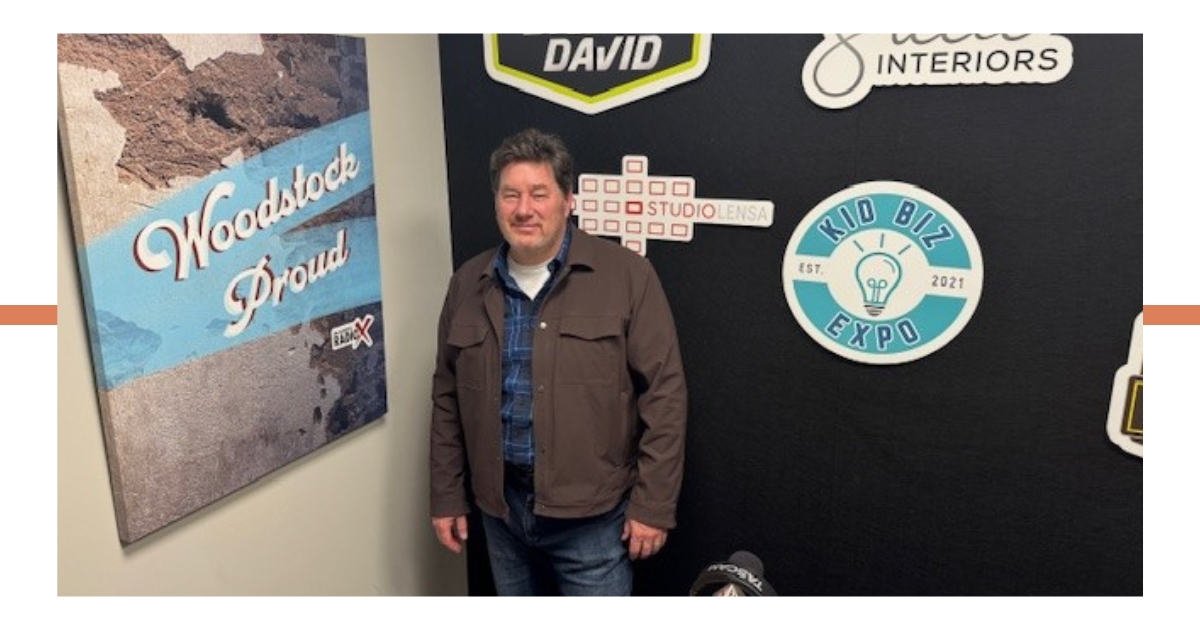
Ken-MerrittKen Merritt is the CEO, director and filmmaker of Off the Rails Productions, a film and video production company based out of Canton, Georgia.

Follow Off the Rails Productions on Facebook and Instagram.


Transcript-iconThis transcript is machine transcribed by Sonix
 

TRANSCRIPT

Intro: Broadcasting live from the Business RadioX studios in Woodstock, Georgia. This is fearless formula with Sharon Cline.

Sharon Cline: Welcome to Fearless Formula on Business RadioX, where we talk about the ups and downs of the business world and offer words of wisdom for business success. I am your host, Sharon Cline, and I haven’t done a show in a bit because I’ve had a cold and it’s just been unbelievable. But hooray! I’m back and happy to be in the studio today. I have the CEO, director and filmmaker of Off the Rails Productions, which is a film and video production company based out of Georgia and Canton, created in 2020 right before the pandemic or right at the pandemic. Please welcome Ken Merritt.

Ken Merritt: Hi. Hi, Sharon. Thanks for having me.

Sharon Cline: Thank you for coming. I know we met briefly in the fall, so I’m really excited to have you on the show to talk about how much. First of all, Georgia gets involved in your productions, but also your story about how you became a filmmaker. And we were just discussing briefly before the show started, kind of some some deep isms, like little stories that we know. And I’m like, made me so excited to have you because I know that we’re going to talk about some things that are very important to the human condition, but also to give people out there some, um, inspiration on how they can follow their own dreams, too.

Ken Merritt: Very good. Well, I, I, um, kind of came to this point with a crooked road. I mean, it had a lot of dips and ups and downs and curves and one way streets, detours. Um, I know one thing. It didn’t come by means of shortcuts. Sometimes when you’re looking for the shortcut, it kind of backfires on you. Um, and I have come to, uh, to this later in life as well, and I often wonder what would have become of me if I would have, um, started a little earlier. You know, in life, um, and it seems like I could have gotten so much more done with youth and energy and time on my side, but, um, you know, then I’m reminded that people with more wisdom than I that things happen where they are at the time in life that that they need to happen. And because of the experiences in my life, I can bring a little bit different element to filmmaking that, um, maybe I didn’t have when I was young. It’s a great way to cocky.

Sharon Cline: Cocky, determined.

Ken Merritt: Yeah, right. Um, full of myself. Um. And, uh, but, uh, I’ve always had this connection to cinema. Uh, movies. I’ve always just enjoyed watching them. Um, and then a lot of times we would, we would go to a movie and then go to somewhere like IHOP or waffle House and break it down. And, uh, and so I wanted to be in it early in life. In fact, in college, um, I was in a lot of, um, uh, plays in college and, um, acting wise, and I thought at that time I wanted to act. I didn’t think about writing for the for film. I didn’t think about directing, um, shooting anything. Um, but, um, I went to college at Carson-Newman College on a, um, wrestling scholarship. And so I didn’t get to really pick out what college I wanted based on their, their film department or their acting. So the closest thing that that college had to being in film and Being on camera is a Communication Arts degree with an emphasis in journalism, broadcasting, speech and drama. Uh, hey, it sounds good. Not too many accounting classes there. So, uh, I think I I’ll sign that one. Sign up for that one. And I’ve always I’ve been one of these. That’s been a real hard decision for me to decide. What do I want to do for the rest of my life? I mean, you’re kidding me, right? You want me to take one occupation and do that one job?

Sharon Cline: Build your whole life, the future.

Ken Merritt: Till I die. There’s no way I can decide that. You know, in four years of college. And so I sort of envied some people that kind of knew what they wanted to do ever since they were a kid. And, you know, I went through the perfunctory, you know, fireman, you know, astronaut.

Sharon Cline: Well, you’re a wrestler, right?

Ken Merritt: I was a wrestler and and I played football in high school, but I was I was not big enough to be an offensive lineman and not fast enough to be like a linebacker. And so I, I just thought, well, and I had a few offers to small schools, but I knew I couldn’t make money at football. So so I took the wrestling route because it’s shorter season. Football in in the South is pretty much year round. Um, so I didn’t want to put that much into something that I wouldn’t be able to make money at, you know? So I thought, well, if it’s going to pay for my school, I’ll do the wrestling. And, um, and so I was, um, I went that route and then I was going to get my master’s degree in broadcast journalism. And I kind of pictured myself at this point going, being that person that goes overseas and getting that, that daring scoop, you know, um, and, um, and the danger, the peril, the adventure. And, um, but I met this girl in college, and it was she was coming in while I was going out. And, um, she had other, other things in mind for me and I. I soon got married. Long story short, started having children and got involved with life so that that dream of doing something big, large, fantastic.

Ken Merritt: Got put on the shelf for what you had to do. You know, that is make enough money to have insurance and a mortgage and enough for diapers and wipes. You know, we had three children all in a row. Wow. One year apart. And so it was it was more about what I had to do instead of what I wanted to do. At that point, it was it was survival. And it wasn’t a marriage. You see it sometimes where both of them kind of have the same deal. They they don’t mind this starving artist lifestyle. Hey, I’ll work, pay the bills while you do your thing, and then we can swap out. It wasn’t that. And so. And then when you have a lot of kids like my wife did at that point. Um, it was, um, you know, you’ve got a lot to do. You’re tired all the time, and you’re just, you know, trying to make it to the next pay day and the next nap, you know? Um, so, um, so that got put on the industry kind of changed when I was in college. It was more about, uh, um, it was, uh, it it changed to to digital format. Okay. It went from analog to digital, and I knew that I was going to have to rebrand and go back to school and learn different, the different technology.

Ken Merritt: And, um, life didn’t afford me that. Um, and so I think the big wake up call was later on in life, I had, um, now I’m, I’m on my second marriage. The first one, um, just just didn’t work out as planned. Taught me a lot of life lessons. Um, and, um, so, um, my, my son, who, um. Now I’ve moved on. I married another woman. She had a son as well, but we’ve not had children together. But, um, he, um, he wanted to be an actor, and he wanted to move to California. And at that time, I was living in in Knoxville, Tennessee, and I said, um, not one to to squelch anyone’s dream. I didn’t I didn’t hound him with a well, where are you going to work. Where are you going to live? How are you going to do this? You know, kind of thing. Yeah, I was just going to going to pay the bills, you know, and I just just encouraged him. And he wanted to to go to California. And I said, well, how about we go together? We just have a father son bonding trip, you know, on the way. And I’ll, we’ll ride out together and I’ll fly back. And, um, he really, honestly did not know where he was going to live. He didn’t know, like just show.

Sharon Cline: Up to the.

Ken Merritt: City. He was going.

Sharon Cline: To just look when you get there, right?

Ken Merritt: I mean, we’ll figure it out. Okay. And, um, so, um, he lived in his car for about a year and a half, and, and I guess that kind of told me seeing how he sacrificed for his dream. Um, you know, it it showed me because the kids were all gone now. Um, you know, the child support payments were made, and I had a little bit more clearance now in my life to do something maybe I wanted to do. And at that time, I was, uh, I owned my own commercial cleaning business, and, um. And I thought, what? What is it if if I had to choose what one job I’d like to do above anything else, despite everything else, despite the cost or the schooling or anything else? All that aside, what? What’s the one dream job that I’d like to do and that that was make a movie and, I don’t know, some way, somehow write it, direct it, I don’t know, act in it somehow and didn’t really even know where to start. And so then I learned about all the the filmmaking going on in Atlanta. It’s been kind of a hotbed. It’s just kind of been building. Um, and I’m from Georgia, originally from Warner Robins, and I’ve got family still here, so I thought that I’m going to just move. I’m going to pack everything. We’re going to sell the house. We’re going to, um, to, to create this new life in the Atlanta area.

Ken Merritt: But, you know, it was such a big, crazy dream that I didn’t really tell a lot of people about it, about that end of it. They knew I was going to going to leave it. And they’re like, um, I could just hear them now, you know, a guy that’s, you know, in his 50s that’s going to leave his business in Knoxville and go and chase this, this wild dream of making a movie. Okay, it sounds, you know, and, um, I really didn’t want to get get laughed at too much. And I, you know, if there’s anybody that can maybe encourage me, but I didn’t really find anybody that I thought I trusted with that. So it was more like, I’m going down to Atlanta to be closer to the family. Parents are aging kind of thing. They need to be closer. It’s reasonable. Mhm. Just a different different outlook. A change of pace. And if anybody has ever gone through a hard divorce with children involved um they it, it is rough and it’s, it’s, it’s hard on the children. It’s hard on, on the parents. And I had gone through this craziness and, um, through false accusations to try to get control of the children and things like this. And it was very, uh, and I felt like I just, I needed a new scenery. Just a change of pace and. And get rid of a lot of.

Ken Merritt: Just flesh it out and start new. And that’s that’s what this, this journey has been about. And I didn’t know exactly where to start, so I, I, I looked around and researched. I didn’t care about having a degree. I just wanted to kind of learn something about the film industry so I could get my foot in the door. Um, and so I came across, um, Georgia Film Academy, which is not about a degree, it’s about a certification. And you, you just it consists of like two, um, fields that you get certified in and then an internship, and then you get your certification. So it starts with intro to film production. Um, that was in Norcross, and I was making that trip on a weekly basis. Um, ended up getting through that. But it wasn’t. It was more technical. It wasn’t very creative. It didn’t. It was really, um, a staffing agency for these film companies that are coming. Okay. Interesting lower level work, you know, for and I don’t don’t when I say lower level, I’m not demeaning those jobs. But it was more, um, they call it even below the line or above the line. Below the line is more like the grips, the gaffers, those that that are doing a lot of the heavy physical work. And then above the line jobs are more like directors, writers, producers. Yeah, exactly. That kind of thing. And so I.

Sharon Cline: Imagine, I imagine it’s important to know how to work this equipment. I imagine that’s not like it’s a useful skill and information to have. But it wasn’t what your whole dream was, right?

Ken Merritt: It really wasn’t. And and so I, um, I wanted to, to get something creative, like writing or, you know, running a camera or, uh, directing and producing that kind of thing. And so I heard about this, um, and it was part of a school in Atlanta, um, called, uh, Atlanta. I’m sorry. It wasn’t it was actually an extension of. So it wasn’t really part of it, but it was, um, the it was in Jonesboro and it was and it was a screenwriting course. And, uh, there’s, um, what’s what’s the college in Morrow? Do you know what I’m talking about? It’s, um, I.

Sharon Cline: Don’t I’m.

Ken Merritt: Sorry. No, it’s it’s fine. And I didn’t get a degree from there, but it was an extension of that. And then, um, so you you learn the formatting of screenwriting, and then what’s neat is if you at the end of it, you will pitch your, your idea to a panel with some professionals there to learn the art of the pitch as well. And then if they choose yours, then you can choose to direct it and then you’ll make it. And then, um, the production class across the hall will actually make it.

Sharon Cline: Amazing.

Ken Merritt: Yeah. So that was really, really cool there.

Sharon Cline: How did it feel to be pitching a story that kind of came out of your own head?

Ken Merritt: Well, I thought, you know what? I may not ever get another chance to make a movie because this is done on on their dollar and with their crew and their equipment. And I wanted to make something good because it might be a foot in the door for later, maybe some proof of concept that I can then pitch to to be a full length feature movie. And it turned out to be that case. They selected mine. It was called Jesse’s Gift, and movies that were real popular that year, had had music in them Like A Star Is Born, Bohemian Rhapsody, Rocketman. All of them were good movies, and they were also box office successes too. But I also have a brother that happens to be a musician, and he’s a songwriter, and and he encountered a lot of things in Jesse’s gift that he’d been, um, trying to make it in the industry for a long time and got bumped back and forth and beat up. And.

Sharon Cline: Um, the same themes were in that story. And you had had this story in your head for how long?

Ken Merritt: Well, um, well, since, uh, you know, we had to have an idea to, to write a story. Then I started thinking, what could I do? How can I write to my resources? And I knew that my brother was this musician. He wasn’t going to charge me for rights to music. And it also contained a story in it, this this character arc of someone one who, um, gets beat up by life, loses all hope. And then, through the gift of a dying father, finds a way to regain his destiny. And a lot of the events in the film are true. Now, when I did the short film, that’s what.

Sharon Cline: 30 minute long.

Ken Merritt: Film. Right. It was. It was different then, um, sort of the same premise, but it wasn’t as involved, as rich, as deep as the story that it is. So once we we got the, the short made and.

Sharon Cline: It was with this school that did this, what was that like to actually see people working to create a story?

Ken Merritt: It was really cool. I mean, to think that, um, you’ve written something and then the actors are going to act it out, the words that you wrote, and then it begins to take a life of its own. And, you know, I tell people that a painter has has a paintbrush. A musician has an instrument. A filmmaker has an army. And and it it there’s this group of people that when you’re working all working together on something that’s bigger than you. And, um, everything else kind of falls away. The socioeconomics, the gender, sex, whatever, because you’re working towards a goal. And if you want to work beside me and, and help help us finish this goal, then that’s all that that matters. So it’s a real bonding experience. And it was it was it was really cool seeing this, this script come to life. So once the short was made, then, um, then I met this producer Troy Bakewell on and he, he also has a rent a gear rental company called Indie Gear Solutions. And I met him on the set of a movie that I was, I was working as a boom operator on because, you know, you just take whatever you can get. And the film industry just to get experience and bump was a pretty cool job because when you’re you’re you’re on the actor, you’re close up front with the cameraman, you’re close to the, the director. So you’re hearing all the notes. You’re not working, you know, somewhere in the background.

Ken Merritt: Um, so you’re seeing how the process is done. And the one who was renting the gear to them was a guy named Troy Bakewell. And I gave him a card, and, you know, he said, okay, give me a call. And I, you know, here you go again. You’re going to call and you get their voicemail and they’ll never call you back. And, you know, happens to me, I’ll send them a bunch of emails and they never respond. And I’m like, yeah, here we go. But, you know, I called him once things calmed down and that was over, I called him and he answered. He actually answered the phone. Okay. Um, now, granted, he’s not this big, big time producer. He does that kind of on the side, um, because he, he does a movie every now and then to show people what kind of movie you can make with his gear. And in order to do that, they like to take a short film, like a student film or something and help them make it into a feature, and then they can say, look, this movie was done on an amateur level with my equipment, but looks like anything else out there on Netflix, Hulu, you know, whatever. And so I when I told him our options and he was like, because I had done, I had won an award with a horror movie and and it was called The Green Monster.

Sharon Cline: Oh, you have the great monster. But there’s also one I saw that was called consent. Yes. Yeah.

Ken Merritt: That was that wasn’t there at the time. But that’s been done. And we’ve done we’ve done a lot of shorts now. That’s amazing. And those are kind of practice for us. So when we do a full length feature, you know, we we use a lot of the same people that have been making our short films. And we we’ve got some experience at it and you.

Sharon Cline: Build relationships with them then, right?

Ken Merritt: Absolutely. You really do. And if you look at some of the big time filmmakers like Tarantino or Clint Eastwood, a lot of them use the same crew members and everything, you know, just because there’s a level.

Sharon Cline: Of trust.

Ken Merritt: Right? And that’s a big part of it. The trust.

Sharon Cline: It’s very sacred what you’re doing. You’re creating media that you’re hoping will affect people’s lives.

Ken Merritt: Absolutely.

Sharon Cline: And have it land the way you want. So to have a level of trust with people, it’s like, why would you want to invest, you know, all that time with someone that you don’t know? Exactly. Yeah. And you’re good to work with and easy to work with. Yeah. You know, and.

Ken Merritt: And I tell people that if you’re in there with a valley with me, and if I do get to the mountaintop, you’re coming with me. You know what I mean? I don’t I’m not going to forget how I got here. And so it was it was, um. I told Troy about the different projects, and he he opted for the Jesse’s gift, and I didn’t think he would. I thought he considered it a boring drama. And when you do your research, you find out that a lot of first time filmmakers, um, drama is not your best option. It’s more do horror. Uh, maybe dumb comedy. You know, something where you’re not graded on a higher level, and that needs to be really good in order to be a good movie. You know, because the drama, if you don’t do it right, if you don’t have big stars in your project, it, um, you know, it may not be your, your best plan of action for your first film. And, uh, but he, he liked the idea of the movie with music. Not not a musical movie with music, but also the fact that my brother probably had some type of following out there already as a band member, and it might help in promotions. And because he was thinking of the But the end result?

Sharon Cline: Yeah.

Ken Merritt: Smart. So, um, you get different ways to to market it because you can do it as a soundtrack. You can do it as music.

Sharon Cline: You’ve got a Spotify playlist of all the music, right?

Ken Merritt: So there you go. Um, and that’s that kind of led to this point here. We started making it. Now he didn’t just write a blank check for it. He was like, we’re going to give you the means to do it. I’m going to be your your DP, which is the director of photographer. You’re going to be your your grip, your key grip, your gaffer. Um, I’ll have the, the equipment to make, you know, any most movies. I mean, you’re not talking about making a mission impossible here or James Bond. I mean, you’re talking about. But we’ll have we’ll have sliders, we’ll have jibs, we’ll have enough equipment, Steadicam that you compete out there with, with good enough shots.

Sharon Cline: So then you had to flesh out the story more. Is that right? Or you really do know?

Ken Merritt: No, you really have to. Because here it was 30 minutes and he wanted to make it within the next, the next year, the end of the year. And I told him that I had, um, you know, a rough cut of the, of the full feature. I did not.

Sharon Cline: Fake it till you make it.

Ken Merritt: I didn’t want him to move on to someone else. And I’m like, but I had it in my mind that I didn’t have it on paper. So he’s and and some it sometimes it can take months to write a feature length film and its final final version sometimes years. But, uh, I mean, I’m not doing, you know, the manifesto of the origin of life here, but still you you want to make sure that it’s a good story. It moves people. It’s it’s producible on the budget that we have, you know, and all that good stuff. So every now and then he’d say, uh, I could use that script. Can you send me that script? I’m working on it. And? And I just tried to buy as much time. I wanted to make Jesse’s gift not only longer, of course, but better. Richer, um, more interesting, more compelling. And so then I had this idea. Why don’t we. Why don’t we have Jesse start at the very bottom? He becomes so full of hope, um, lack of hope and and and dismay and frustration that he just goes and lives off grid. He just goes homeless. Um, and then, you know, we had at the very beginning of the movie, he gets beat up, gets spit on, he’s laying on a railroad track in the cold. And that’s where we start the movie. I mean, we we start with his life prior to this, and then we flash forward to him five years later, and he’s he’s been homeless. His father, family members really don’t even know if he’s alive or not. And then, um, then let’s let’s take Jesse and see if we can take him all the way to the top from from being on the bottom.

Ken Merritt: And let’s let’s put this in a journey, um, that, that fill it in with sickness and a family built in rage from his daughter that, um, holds him responsible for the junk in her life, the death of her mother and this kind of thing. Things that so many people can relate to. I mean, we a lot of us aren’t blessed with musical talent. Um, but we can we a lot of us know someone that has had cancer. It’s been really sick. Or we have family members that that hate us and and we have to work through redemption and and those, those were kind of things that are universal. It’s not a faith based film. I am a faith based person, But I’ve gone back and forth with do I need to do faith based film? Because sometimes they’re easier to distribute. You’ve got a niche audience. Sometimes they don’t have to be as as production, quality wise, polished, you know what I mean? I do, because people that are watching it for faith based, sometimes they’re okay with with that element as long as you check these certain boxes. But I keep going back to do, I do I want to use this as a tool to, to reach people that maybe not are in the faith or in the church, um, or or just be Christian entertainment. There’s nothing wrong with either, but I’ve watched a lot of faith based films growing up. My dad was a pastor of a small church, and honestly, I didn’t. I didn’t care for most of what I watched. It didn’t grab me. It didn’t move me. Um, some of it felt sterilized. It felt inside of a bubble.

Sharon Cline: It can be kind of trite. You know, there’s like, it can be wrapped up in a little bow. And as long as, like you said, it’s covered, right? Like a certain lens. Then you should accept it and feel something. Right? I understand that that people are so much more complex. Life is a lot more complex.

Ken Merritt: It can be predictable. You know, where this is going to end and, um, everything’s going to be wrapped up and and and tidy. Um, but my life is not that way. It was very messy. And that’s why I say by coming at it later in life, after the storms and the battles, then maybe that that helped helped me become a better writer because I’ve had those experiences in life. I wasn’t just right out of college with with few life experiences to, to relate to, to write about And, um. So pain. Pain was a large driving force for Jesse’s gift. And I wanted to include that pain, and I wanted to include real life. He smoked, he drank, he cussed. Every now and then. He had a daughter that worked in a nightclub as a as a dancer. And and so the pain when he comes back to the town that he was from, which is in reality canton in the movie it’s Timber city. He he’s confronted with those, those things and they haunt him. They remind him in Jesse’s mind, he was a failure.

Sharon Cline: We were talking before the show started about how how important hope is, and just the notion of having to face the things that you’ve done that you’re not proud of, that you’re ashamed of, and then having to see it play out in your daughter’s life. Um, that’s enough to get into your mind that there really isn’t a way out.

Ken Merritt: Right?

Sharon Cline: And that’s that’s a feeling I think most people can identify.

Ken Merritt: With, I think so. Um, and, you know, they can they either have hope or in lack of hope, in need of hope. Uh, and I think with Jesse, when they see that him work through these, these demons, these obstacles, and finds a way to fulfill his destiny. Um, then it is our hope. Um, that we encourage, uh, the viewers to to move on with whatever it is, their dream.

Sharon Cline: Because it’s not. We were also talking before. We had a lot of chit chat right before the show, but we were also talking about how things don’t have to be perfect. Whatever your definition or someone else’s definition of perfection is. It doesn’t have to be his life doesn’t have to have a perfect bow at the end or even look like what he wanted. But it’s a real it’s an authentic life to him.

Ken Merritt: It really is. Um, and that’s so true. So, you know, we we ended up with this film. We did even send it to some representatives from Pure Flix, which is a faith based distribution, and there were some things that we could have taken out of it. But then when they said, you know, there’s there’s a lot of drinking and smoking and this could, you know, negatively influence. We’re like, well, we I don’t think we can do that because that’s um, Jesse was wrapped up in his his vices and his addictions and his problems, and maybe not everybody drinks or smokes, but those were outward things that we could show that he’s a flawed human being, and he. He’s not perfect. Um, and one of the taglines is, you’ll you’ll like him, you’ll hate him. But in the end, you’ll grow to love him. And and I think it’s because we can grow to love the flawed characters, you know? And it’s not the fact that they’re perfect that we we, we like them, but because we can relate to them.

Sharon Cline: What was it like working with your brother like that?

Ken Merritt: Huh?

Sharon Cline: Well and family in general. Your son. Your son’s involved in your.

Ken Merritt: Oh, we had a lot of. Yeah. We joke that we’re the Von Trapp family.

Sharon Cline: Filmmakers.

Ken Merritt: And and sometimes that’s a bad thing. If you see too many last names on one project, you’re like, oh, okay. Yeah, I get it. This this is the family project. It can’t be any good.

Sharon Cline: Um, but Michael Grady Merritt is your brother, right? Who had his own musical career in his own right. Right. So he had his own following, which I love. But then you had to be able to kind of. He had to be an actor, too, right? To be able to work together.

Ken Merritt: And we wondered about that. I, we do. We need to find someone else to act and use his music. He’s not an actor. He’s a songwriter. He’s a singer. But then and I was talking to Troy Bakewell of Vinegar Solutions about this dilemma. And Michael, first of all, he wanted to act in the movie, and he, um, it’s his music, too, that we were going to be using. So we’re going to use his music and some of his story. Then, maybe because he created this, that we would see elements of that coming out because he was the creator. It’s like, if you’ve ever read, read a book that you wrote, you know, we see that a lot on audible. Sometimes they don’t have the best voice, but sometimes it can come across as more genuine and authentic because whoever’s reading it is the one that lived that, the one that wrote that. And so we sort of make trade offs. And so he was definitely the the actor in the short. Do we want to do we want to have him be the actor in the full length feature. And we, we, we went with, yes, we, we think that that would on the stage he’s going to be fine. He’s got plenty of experience on the stage.

Ken Merritt: He can perform as a performer. Um, but we asked some hard things of him. We, all of these actors that that were, were more. They were, uh, had a lot of experience, but they hadn’t made it yet as an established star. But they all stepped up to the plate. I think that by watching it, if there’s ever any, uh, bad part of this, it’s not it’s not the acting. The actors really came through, and we asked some heavy things of him. I mean, like, the father did die. Um, you know, dying is hard when you’re you’re you’re giving away this gift at the end, and you, you want to look, make it look believable. Um, heartfelt. Um, who knows how we are when we when we die, it’s definitely going to be an acting job because we’ve never died before. And to not go over the top, but to be heavy enough. You know, we we asked Michael to, um, to break down, to have this dark night of the soul moment to, um, when you’ve lost all hope and and to take the guitar and try to find the healing from it. But it doesn’t come this time around. And then you use the instrument that has given you hope, um, as destruction and to crash it on, on the floor.

Ken Merritt: And then, uh, um, and then we and then another breakdown when, um, the daughter comes, comes back to you, uh, for the first time in years, and, and and you break down because she’s, she’s still mad at you and and, uh, and then as a result, to try to fix things, you end up late for your appointment with your A&R rep, and you miss you miss the what could be a turning point in your life? You missed that deal. And then, um, so it’s that character arc that that I like in movies that you just, you get on the road and then all is well and then but you, you start to get there and you fall and you stumble again, and then you find a way to get back up, and this time for good. And that’s that’s what we had in life in the movie is the ups and downs. Because sometimes when we decide to do the right thing that, um, things don’t line up necessarily. And, but, but if we stick it out and we hang in there and we keep getting up every time we get. Life throws us down, then, um, you know, we we can find a way to make it.

Sharon Cline: What was it like to have those emotional scenes with your brother?

Ken Merritt: Well, it was different. And and, you know, I don’t know if I fully answered your other question, but working with family is tough and and we we are very competitive. Sibling rivalry is real thing with my brother and I. And he’s so talented and everything’s come to him easily and, you know, plays these instruments and writes these songs. And I may play the radio on a good, clear day, you know, I mean, I can’t relate to that. And even athletically, he’s, um, he’s a more natural athlete, so. But we’re still competitive, whether it’s playing checkers or playing tennis or, you know, one on one basketball.

Sharon Cline: Um, that competition came out when you were filming.

Ken Merritt: It did. And there was one scene where, um, he tensions were rising and, um, tempers flaring, and, um, I had to. Let’s take a break. Um, let’s, um. Is is very hard to make a movie. It’s it’s taxing. Tolling, you know, many takes, um, long hours, uh, excruciating details. Um, and, um, I told Samuel was another crew member on the set, and, and Samuel was, um, very good with Michael and and loved Jesse’s gift. Um, loved everything about it. Loved Michael’s music. And said, Sam, I’m going to let you direct this next scene because there’s too much going on between my brother and I right now. And so it we do compete with, with one another on that level and you know, and even, um, about little things, you know, who gets credit for this or who’s that. And yeah, you know, this was my idea or this kind of thing. All that stuff comes up when you start working elbow to elbow with people, especially your family. And so, Um, but to direct him in those scenes, um, uh, was tough. We did send Michael to some acting classes between the short film and the full length feature. Um, because we knew we were going to be asking a lot of him. His acting increased. Um, uh, the quality of his acting so much as time went on, I could tell that performer in him was coming out on camera as well. And to the point where I said, Michael, it seems like you’re really digging this, this movie stuff. I said, if you had to choose between being a musician or an actor, where would you go? And he thought about it for a minute and he actually said acting. That was more gratifying to him. He enjoyed that more.

Sharon Cline: There’s something about like, uh, being in a scene where you feel like you’re really experiencing those emotions, whatever it is, um, so deeply and authentically to yourself that when that can translate to somebody else feeling those, than you have created a, um, a connection that there’s highlights the fact that we are more alike than we are different. And then something magical, I think about knowing that there’s an emotion that I feel that you may be a stranger, but you feel that makes us alike. In some ways we’re not as we’re not enemies, you know, you’re not a stranger so much as you are a human. And I’m a human. Sure. Just kind of reducing.

Ken Merritt: We share our dreams, and when we share together a passion like that. Yeah, makes a big difference.

Sharon Cline: So you did you go through the process of of hiring actors to be in the movie, or were they from the previous one that you had done the short?

Ken Merritt: Well, we had um, some actors that were in the previous short, those were the primary characters. I knew that once we we only had 3 Three four and the short and we had three. It was sort of this three way love love story between the grandfather, the father and the daughter and, um, those, those three primary roles. We kept the same actors and we wondered if if we were going to be able to. But they were like I said, they were experienced actors. And Atlanta area’s got a lot of them. And and with actors, sometimes you don’t. If your budget is tight, you don’t have to to pay them as much sometimes as crew members, because an exciting role is almost like, um, uh, crack cocaine to a street junkie. I mean, you know, they live for that kind of thing. And, um.

Sharon Cline: And it’s an investment in them in their future to, for other people to be able to write and have a reel and all of that. Sure.

Ken Merritt: They get that. You pay your dues.

Sharon Cline: That’s what you’re there for, right, to experience those things. Yeah.

Ken Merritt: So those three roles were the same actors. And then, um, then we added, you know, the Big John character, and then we added, uh, the son who was played by my son. Um, the youngest son, which was Jesse’s younger brother, must be.

Sharon Cline: Amazing to to see that, you know, these generations together.

Ken Merritt: It was it was it was totally amazing. And I know we didn’t go into detail about, you know, the divorce and the the breakaway I had from the children for a long season. But to be able if for someone who knows that and if anybody does ever want to reach out to me, maybe somebody’s going through a divorce or child parenting issues, um, and need some hope. You know, they can find it because, um, now I’m in a movie, I’m writing a movie. Acting in a movie. I acted in this, too, a little bit, um, with my son, you know? And that was. That was the coolest thing about it, you know, to show that that redemption and that working together on a passion project with him. My nephew was in it as a crew member. My sister helped out on the crew. She also played the role of the, um, hospice nurse. Um, so yeah, it was it was rather exciting, rather challenging at times, you know, um, because you know them well and you also don’t want to show favoritism, right? Um, people know that you’re related and they can sometimes be looking for, you know, any, any favoritism. So as long as you treat them the same way as the ones you’re not related to, um, then, um, it can work. But if they see that my brother is there because he does write great songs and he is a great performer and a musician, um, not just because he’s my brother, then they get it right.

Sharon Cline: It’s not as if you were trying to fit a mold, right? Just your brother’s always wanted to do this kind of thing. But no, he legitimately was this character.

Ken Merritt: Right, exactly. It sure was. And they would see us argue and fuss and fight to and and hold each other to the same quality standards, you know, and I think that helped.

Sharon Cline: Made it better. Well, and you can use those emotions. I’m sure you can. The different scenes.

Ken Merritt: Yes, you absolutely can channel it in the right way and and use it for the character.

Sharon Cline: So you finished the movie. Yeah. And then the next part is obviously the editing and all of that. How was that?

Ken Merritt: Well, um, the post-production process is is evil in its own right as well, but it’s not as, um, anxiety ridden because you have it all. You have it all in. Everything’s in the can, so to speak. And now you’re dealing with less people, less stress, less deadlines and and you know, I can go up and and that was another story in itself. Um, the editor for Jesse’s gift. And we use several in post-production. You know, you have sound design, you have color grading, you have, um, assistant editing and but but the main editor was was actually the ex-husband of the wife I’m married to now.

Sharon Cline: What?

Ken Merritt: Get your head wrapped around that.

Sharon Cline: Interesting.

Ken Merritt: I didn’t know him before. You know, when they were married, I didn’t know him. So she was, you know, fully divorced. When? When we met. But we got along okay. Uh, he was senior editor for Discovery Network in Knoxville. And then when he retired, um, he came to my mind because I knew that he had experience and asked him if he wanted to edit the short. And he took the script, and he did it for me as a favor, because he always wanted to do something like narrative based, instead of just, you know, corporate TV show.

Sharon Cline: Yeah.

Ken Merritt: Training videos or, um, corporate reels. And so he, he wanted to do a movie. And so Jesse’s gift. So it was just a lead in that he would do the feature as well. And I had to find a way to pay him for the feature. He wasn’t going to do that one pro-bono, but, um, he, he did it definitely below his, his his rate. And, um, it it really, really worked out good for us. I would go up there because he lived in Knoxville too, and, and spend a week at a time and sleep on his couch and we’d, we’d edit together in his suite for long hours. And it’s just really weird. We’re great friends. We love each other. There’s a lot of respect for one another.

Sharon Cline: We really get to know someone when you’re in that kind of environment, you really do. And he can see kind of what your soul is made of by having to work with.

Ken Merritt: Write this. Yeah. There’s no no faking it when you’re working that close with one another and over that long period of time.

Sharon Cline: What was it like to see it completed? Well, I think I would cry. I really do.

Ken Merritt: I’ve cried. I’ve. There’s been tears. There’s been frustrations. There’s been anger. There’s been joy. Um, you know what? And when you watch something over and over, it’s like when you, when you see bands that that play the same songs they played for so many years over and over, you wonder how they can keep from going through the motions, right? You know, is there any feeling still left in that song? When Eric Clapton wrote tears in Heaven and he sings that song? Does he is he still moved by what promoted him to to write that song? You know, um, and, um, Cindy and I, my wife now we watch this movie a couple of weeks ago. Again, we just sat down, not pieces of it, not watching. Integrate it and just, just let’s get the popcorn out. Let’s put it on. Let’s not do anything else and watch it again. And there’s some scenes that are building scenes I call them eat your vegetable scenes. They’re needed, but they’re not some of my favorite. But then there’s some of my favorite scenes and they still move me. And I still cried. But also just the that we’re watching something that there are truths in this film.

Ken Merritt: Um, it’s like, um, the daughter, his daughter in real life really attempted suicide, you know, um, the ups and downs of the music industry really happened in his life. You know, our father really did get cancer, but we lost him. We lost him. The fact that our father. You know, when when my brother came home from basketball practice in high school and he didn’t make the team when he’d worked all year long, dribbled and shot till his fingertips bled. And then he didn’t make the team. Then he was real down and out, and my dad did something strange as a recourse. He. He left the house and he came back. He went to a pawnshop and he bought a guitar with five strings on it. And he brought it back to my brother. And that event, he was like a sophomore in high school. It literally changed the trajectory of his life. And instead of pouring himself into something he he wasn’t designed to do, he he became a songwriter. He took naturally to the guitar. And then he started becoming the life of a musician.

Sharon Cline: I wonder what it was that made your father decide to go get a guitar, as opposed to, I don’t know, I could imagine many responses to working so hard and not not getting to be on the team, but like you could imagine a father berating their son or like, what did you do wrong? Or, you know, you figure something else out, you know, but instead actually went silently out.

Ken Merritt: It was it was genius on a certain level, because a talk is, you know, you’re not going to change the fact that you didn’t make it.

Sharon Cline: It’s going to hear it.

Ken Merritt: It’s going to hurt. But by giving him a diversion, something to do differently, it really did work. My dad was funny that way. In some ways, we considered our dad not very smart. And then on the other levels, we felt like he was genius and he had an innate ability to do things that were off the cuff and different, but ended up being like, I never learned to be a handyman from my dad. He was not that way at all. And my dad and power tools did not mix. Um, but when it came to touching people’s lives, um, that we, we saw from him and learned from him and and try to carry it out in our own lives. I’m not a preacher. That road is. You know, I saw the judgment level on that lifestyle and and didn’t want to go there. I knew I was a flawed human being. I knew that I wanted to have a drink every now and then. I wanted to watch an R-rated movie. I just wanted to do things that people get judged for, and I so but I still, I still believe. But I am not, um, you know, that a preacher where I get in front of people and tell people, instruct them how to live their lives because I’m definitely a flawed human being, and I didn’t want that kind of pressure ever. But in a way, I’m I’m doing it in another means through film.

Sharon Cline: What has this meant for you? Um, kind of doing a look, look back at where you’ve come from and then actually put the director hat on and and live your dream. What has that meant for you now?

Ken Merritt: Um, well, it does mean a lot to me, and it’s something I don’t take lightly. Um, when you make a movie, when you write a song, it’s forever, you know, it really is. I mean, we take a picture that’s forever. And especially in this day of.

Sharon Cline: The internet.

Ken Merritt: Is forever. Internet consumption and everything else. People can bring it up and see it years from now, and it never goes away. And so I, I always feel like whatever I do in terms of a movie needs to have some purpose. It needs to have some way to communicate to somebody out there who needs it. And so I don’t I don’t take that responsibility lightly. I do think God has played a big role of me getting here to this point in life. Not sure Share where this road is going to eventually take me. Because I’m just.

Sharon Cline: You’re still on.

Ken Merritt: It. I’m still on it. It’s still on the journey. But, um, but I’m excited about the journey and the process, and, um, I, I do believe if if I died, if I ran out on Main Street and got T-boned and I left this earth, um, I made a movie. I have something left to show for it, you know, and I, I think that we all need to ask ourselves that question before we leave. Are we are we ready? Have we left our mark on this world? Have we accomplished what what we feel like needed to be accomplished? You know.

Sharon Cline: I ask myself that a lot. Um, you know, if something happened today, how would I feel about, you know, standing in front of God or, you know, whoever and can I can I account for the time that I had and can I honestly say I did the best I could with what I had, and I’m proud of how I handled myself. And there are a lot of things that I’m not proud of, but my I feel like my biggest accomplishment is is over and over, not allowing the fear of the unknown to stop me from really pursuing something that feels authentic to me and feels right to me. I’m that’s exemplified in many different ways throughout the different experiences I’ve had in life. But for a long, long, long time, I, I didn’t have that to to say. So nothing’s easy. I mean, and nothing’s turned out the way I thought it was going to 100%, but I, I think that’s what inspires me for the show. This show is is fearless. Formula is how I let fear make a lot of decisions for me for many years, and I was never proud of that. But you’re doing the same thing in that you you took a big chance in moving physically to a new place and also not knowing where this was going to land, whether it would be received the way you wanted it to be. You know, there’s so much faith, right? And I have this plaque that I have in my kitchen. I always keep it with me because it was very inspiring when I was at a crossroad in my life. And it’s a Martin Luther King Jr saying, he says faith is taking the first step without seeing the whole staircase.

Ken Merritt: I like it.

Sharon Cline: And it’s true. That’s what you’re doing as well.

Ken Merritt: It’s interesting you mentioned Martin Luther King Jr, because I was thinking of him when you started talking about living on faith, because he I’ve also read where when he read in the Scripture that says, the just shall live by faith, that it it that to him was that moment of that watershed moment and that turned his his life around. I have a saying that that meant a lot to me as well. Um, it’s about courage. And with a name like, um, you know, fearless.

Sharon Cline: Fearless formula.

Ken Merritt: Fearless formula. I mean, it is definitely about overcoming fear, but courage is not the absence of fear, but moving on in the face of it. Don’t you know? Don’t be afraid of. Of fear. If you fear something, it’s normal. It’s human. But don’t let it control you. Moving on, in the face of it, it’s okay to fear, because we’re.

Sharon Cline: Always going to feel that it’s always going to be.

Ken Merritt: There. Right. You’re not a weak person because you fear, but if you let it control you. Therein lies the problem.

Sharon Cline: Well, and then, like you were saying, time goes on. And there’s this feeling of now I feel like I’m living a life that’s authentic to me. Right? Um. And I want to catch up, like you were saying. Like, how much time do I have left? All I can do is. And absolutely the age that I am. And the the time that I have is different than when I had small children at home. So I can and I experience that I have I can use in ways that younger people can’t. And that’s like a blessing of getting older, I suppose. But there is this, um, sense of the growth that I feel like I’ve gone through now. I can I, I use it as fuel for myself when I’m having days where I feel like I feeling the normal fear. Well, I look back at what I’ve gone through, and then I can remember what it felt like to just push through. Um, and I don’t always, you know, there are days where I don’t feel it. Right. But, um, conversations like this definitely help to remind me of what it’s like when you’re not living congruently and authentically to yourself. But do you feel like you are? Do you feel like you are finally kind of living the life that you always dreamed of?

Ken Merritt: Well, I mean, honestly, I, you know, I don’t I haven’t got to that point where I wake up and jump out of bed and, you know, excited about where I’m at in life. I we still get ups and downs, but I just have learned and like you said, when you when you do push through and overcome, you gain a little bit more confidence in that. And the thing about my experience in age, in life now is I know that they pass you just sometimes you just keep going. You get up, you don’t feel like getting up. You had a hard day. There are problems financially. There’s problems with the economy. Um, whatever, whatever that may be. Ai is taking over the industry. We’re going to all lose our jobs. You know, there’s there’s a lot of things, more things to really think about that can depress you than, than. But, um, but I tell people, you know, because I do know of an artist, a graphic designer and whatnot, he took all his stuff off of Instagram. He got depressed. Got into a funk because they just felt like the I was just going to take over everybody’s job. Creativity would be lost. But I said it hasn’t yet. And just keep keep doing what you do. I mean, they tried to, you know, I know it seems very Orwellian, but, um, they did burn books. They did try to take things away from us. But the human spirit dominated and it pushed through. And, um, I feel like it will again. But don’t let the threat of something that’s going to happen control your present state, because it hasn’t happened yet. And until it does, it doesn’t.

Sharon Cline: It’s like a pendulum swings this way and then it’ll swing back another way. Sure. It’s like people thought that because we could watch movies at home, no one would ever go to movie theaters anymore, you know? But we still.

Ken Merritt: Do. I know.

Sharon Cline: It. Um, but also, I think, um, there’s something even with the voiceover world. Um, you can have an AI version of of your your copy if you want. And it sounds decent, depending on, you know what you want, right? But there’s nothing that replaces real breath. Real catches in your voice, you know, inflections that are very nuanced and difficult to replicate. And, um, so, so far, um, there still is a need for humans. And I know AI is it affects every industry really. But there there’s they still need humans to teach AI, you know, so there’s still human aspects to it, but no one quite knows exactly what’s going to happen.

Ken Merritt: Well, yeah, until they get an AI audience, I mean, you got to move somebody and and if if you do an illusion of a figure, that figure has to be related to somebody based on someone. Or are we going to have any connection to just a digital creation?

Sharon Cline: Well, and then maybe, like I was saying, the pendulum will swing to people who only want real and can see it and know that it’s not been manipulated in a digital way.

Ken Merritt: Then it becomes even more original. It does.

Sharon Cline: And it becomes more valuable.

Ken Merritt: More valuable. And that’s that’s the way I look at it too, because what we do now may become more rare and therefore more valuable to come from real humans and have real human interaction.

Sharon Cline: And your own writing you didn’t have. I write this right. You know where you can have music written within a minute. A new song, you know, with I um, so there is something that maybe there are elements because I haven’t studied any of this, but maybe there are elements that you can only really glean if if it’s written by a human, you know, as opposed to, uh, the impact of, of. You can only be felt if it’s written by a human or something, as opposed to an AI. I don’t know yet, but maybe it will become a commodity in its own way. Yeah, you know, humans write.

Ken Merritt: And you know, I was watching and I know you’re asking these deep questions that make one ponder, but I was watching a football game between Georgia and Texas, and Matthew McConaughey was on the side. Did you see.

Sharon Cline: That? Yes, I.

Ken Merritt: Did. And they started interviewing him while the game was going on.

Sharon Cline: People were so mad.

Ken Merritt: I know right. But he he said, don’t ask permission. He said, you know, people are going to tell you you belong there. Just stay in your lane. They’re not going to approve. Um, but you know what’s inside you. You know what the world needs from you. Don’t ask permission because you’re not going to get it that way. But just just go out and act. Take that first step. You know, I love that saying. You know, A5000 mile journey begins with what?

Sharon Cline: One step.

Ken Merritt: Single step. Take that single step. Don’t think about the 5000 miles. That’s too daunting. But take that. That next step. And if you have a flashlight, it’s only going to lead so far. But if you take another step, you’ll see where it leads next. If you stay put, you won’t see the illumination because it’s only going to light so far. But so you’re forced to take that other step to see where to go.

Sharon Cline: If I had looked at my life 20 years ago and was able to even look at myself today, this moment in the in the studio interviewing you, I would be so overwhelmed and not have any idea how I’m able to do this. Um, or just that I live on my own. Or you know, I have my kids and went to school and all of that. At the time, I was a stay at home mom. I can’t imagine how intimidated I would have felt and probably shut down. It’s too much, it’s too much. But each little step did present itself in a way for me to be able to tackle it and, um, and grow. It’s when I look back and go, oh my gosh, I did all this. And it’s like, I can’t believe that I was brave enough to do it. Right. So.

Ken Merritt: Um, I like that.

Sharon Cline: I think I think you’re right. When looking at the little steps that are right in front of you, that’s all we’re responsible for. All I can control anyway, right? I would love to control everything.

Ken Merritt: I know, wouldn’t that be nice?

Sharon Cline: I can only control just a little bit.

Ken Merritt: It’ll be sunny and 72 today. And.

Sharon Cline: Um, you could make unlimited movies forever, right?

Ken Merritt: Unlimited bank account? Yes.

Sharon Cline: Unlimited budget. So what’s next for you? Wait, wait. First, I meant to ask you. How did it go when you released Jesse’s gift?

Ken Merritt: Well, I’ll tell you what. When? During our premiere at the Strand Theater in Marietta. Um.

Sharon Cline: What a moment.

Ken Merritt: It was. It was. It was definitely a moment. And, um. And it’s one of those that you just want to. You want to keep forever in your memory bank. But it was, um. We almost had a sellout. They’ve never had a sellout for a movie at the strand. They have a balcony in there and everything there, too, and it’s, um. But we we came about 50 short of a sellout. Congratulations. And thank you. And so, um, when, um, when, when when we showed it, we heard a lot of oohs and ahs. They kind of laughed where they were supposed to laugh and kind of food where they were supposed to do. And, and and we sat my brother and I sat towards the back because not only did we want to watch the movie, we wanted to watch the people watching the movie. Okay. Because that that’s our report card. And, um, and, and by the end of it, because we said, how do we want to open, how do we want to close, how do we want to end? You know, there’s just so many choices And we just feel we we, we hope we made the right choice because the saying is, um, hook em in the front and hook em and hang em and leave em hanging at the end. And so we felt like we accomplished that at the end. Everyone applauded. They stood up and we got a resounding standing ovation with with applause and, um, holy cow. Needless to say, um, that was a that was a dream like moment. And and really all the work and the time, the sacrifice pain was worth it in that moment. Now, we’ve we’ve not had many, many live, um, screenings that that was one and we did another one in canton. We felt like we needed to the canton theater. No, it was at the mill in Ottawa. Oh, yeah. Yeah, I.

Sharon Cline: Know, that’s where we had our our meeting where we met.

Ken Merritt: There you go. There. Okay. In that big screen out in the middle, but we were up against a lot right there. Um, Gary Lamb heard about me. Me doing the movie. He had a lot of influence on venues. Do you know Gary? Have you interviewed him? I have not yet. Okay. Um, so he helped me line it up. But he also said, you know what? You’re competing against too much. He said they’re having first Friday, um, downtown canton that night. And, um, you know, they’re doing, um, with Prince and Beyonce. Um, and then, um, he said, you know, it’s there’s just too much going on. Right? Then it was a holiday weekend. And I said, well, can we do it another because we were going to they were not going to charge us for this. It was getting towards winter. Can we do it later? He said no, I don’t have another slot available for you anywhere. Um, I said, well, let’s just take our chances. And, um, we had a decent we had a decent turnout. Despite that, that was our only two live screenings of Jesse’s Gift.

Ken Merritt: We want to do it in Knoxville as well, because we do have following in Knoxville with my brother living there. The editor living there and all that we did, we did film a scene in Knoxville as well. So it’s gone over well. And then, um, we, um, um, we did get it released on Thanksgiving Day. Um, it’s it’s on the YouTube channel, but it’s also will be on, um, Prime and Tubi. We just we can’t dictate when that drops. Got you. But we knew that we could put some marketing effort on Thanksgiving Day and have it on YouTube channel. So it’s gotten, um, a lot of reviews. I mean, comments are, oh, this movie made me cry. Um, and uh, um, so we haven’t had anything negative, although I’m sure that’s, that’s coming. It’s part of life, but people like it. We averaged We’ve got like 6000 views on it since it’s since like giving. So it’s going well. I think people like our movie. How does that feel? It feels really good. It’s really gratifying.

Sharon Cline: Does it make you want to do more and more?

Ken Merritt: It does. It does. And Troy told me, and he knew that this was my first time director on a feature length movie and and all that. And he said, just do me a favor. Don’t stop. Don’t stop what you’re doing. He said, A lot of times we do, I do help people that help make a movie, and we never see it again and they never make anything else. This this industry is hard. They go back to work. They get discouraged. What have you. He said, but, um. But do me a favor. Don’t quit. Just stay with it. And, um. So now, as a result, we have another feature length coming out next, next year, which is around the corner, right? Yeah. December now. So it’s coming out of the first of next year called. It’s a Western period film called Boot Hill. And that was all made in the canton Cherokee County area as well. It’s just about all of it is outdoors. So, um, and then, uh, the, the cabin interior cabin scenes, the saloon scene that was made in Cobb County, uh, in Marietta at a it’s a Christian campground that actually had period cabins that were there during the, the time of the movie setting. Um, and um, and, and so we’ve got, we’ve got all these short films too, um, that I like to, to call for practice, but they are all part of our channel, our YouTube channel and off the rails and, um, you know, by by building our audience and increasing the number of subscribers on there.

Ken Merritt: Um, then, um, that that certainly helps us, um, give them give them something to view and watch and, um, um, having an audience for ourselves. Uh, my next my next feature is probably even a more of a passion film than Jesse’s gift is because it involves, um, more more myself, more my son. And that that film is going to be not a faith based film, but it’s going to be an allegory type film on the life of Christ. But it will not be, um, there’ll be some dark edges. That’ll be a little violence. That’ll be some, uh, um, just some cursing. Just because it’s a rural gangster film. And the title of it will be Thorne. Thorne will be the name of the main character in the movie, which will be my son. Um, and he’s he’s gotten released out of prison, and he’s got this backstory that he was, um, Homeless and, um, um, and his dad led him into that led him astray with his, uh, bad choices into this life of crime.

Ken Merritt: He gets. He goes to his prison, he comes out. But he’s been getting visitation by, um, a volunteer in the prison ministry. And so Thorne questions everything that that so many people question about God. If he’s real, why is, you know, people suffer. Why? Why does this happen? And, um, Thorne thinks that, um, that religion is a crutch, you know, for people that need something to believe in, but not him. It’s for weak for weak people. And so he he doesn’t come around too easily to to God, but he respects this person that’s come in and spent time with him and witness to him when his own family members didn’t visit him in prison. This person did. And so he comes back out with all the temptations that avail. All the old friends are still there, and they’re waiting for for thorn. But thorn is is the allegory of Christ. And he does get whipped in the film. He does get, but ultimately he gives his life. And like Christ, did, you know, for us and, uh, um, but I believe it will be a film that anybody from any belief, whether they’re atheist or whether they’re Hindu, you know.

Sharon Cline: There’s so many universal themes that, you know, they’re universal.

Ken Merritt: All of those there are universal themes of redemption, forgiveness, love, hero’s.

Sharon Cline: Journey, trying to save yourself. Sure.

Ken Merritt: Yeah, absolutely. So I’m really excited about that. Um, we’ve got that on the books to be filmed in September of next year. Excellent. So a lot going on. But we, you know, a lot of it’s wait and see, wait and see how Jesse’s gift does. Um, and Boot Hill, how well it’s received to and what doors it could possibly open for us.

Sharon Cline: You’re doing all that you know to do.

Ken Merritt: Yeah. And it still never feels enough.

Sharon Cline: It’s the truth. There’s never enough time.

Ken Merritt: I only have so many hours in the day. And you know, these bodies need sleep. Oh my.

Sharon Cline: Gosh.

Ken Merritt: It’s the food and bills to pay, you know? Um, it’s not easy.

Sharon Cline: No, I was just in New Orleans for the first time last weekend, and I’m like, I wish I had the energy that, like younger people do because they’re just out loud dancing and singing, and I’m like, right past 9:00 right now, right? Go out. What are you doing? I know, anyhow. Yeah. Um, but it’s interesting though, like. Yeah, having having to really balance your life out. I’m sure it can be very easy to get out of balance doing what you’re doing. So it really can. Being conscious of that, it’s important, I imagine. Yes. Um, okay. So if someone wanted to get in touch with you, what would be the best way?

Ken Merritt: Well, um, go to YouTube. Off the reel productions. Or look up one of our movies. Jesse’s gift. Jesse’s spelled j e s s e and not not I e apostrophe s gift. And look for our official feature film. There. It’s free. Um, just my Christmas present from you is just to view it, like it, subscribe it, help build our audience and, um, help us. If you like what you see, let us know and help us make more so that we can, you know, bring you another another film that helps move you and encourage you and entertain you.

Sharon Cline: Well, Ken, I’m so excited to see what your future holds. Who knows? Thank you. Who knows what will come, but I would love to have you back as time goes on and you can let me know more of the things that you’ve learned. And thank you. Your journey is so identifiable in so many different ways, you know, for lots and lots of people. And I love that you talked about, um, anyone that’s listening can understand what it’s like to have fear, but not letting that make the decisions for you, because nobody knows exactly how it’s all going to go. But you do know your next step. You can figure it out.

Ken Merritt: So that I do. Yeah.

Sharon Cline: I mean, anybody can do that.

Ken Merritt: Well, I think thank you for doing what you’re doing. I love the name of your your podcast and helping people overcome their fears and encouraging them. Um, it is applauded in this day and age. And, um, I just encourage you to keep up the good work.

Sharon Cline: Thank you. It’s my happy. My happiest thing I do is this show. So thank you so much for spending time with me. And also thank you all for listening to Fearless Formula on Business RadioX. And again, this is Sharon Cline reminding you that with knowledge and understanding, we can all have our own fearless formula. Have a great day!


Tagged With: Off the Rails Productions

Staffing Success: The Art of Finding the Perfect Fit

December 10, 2024 by angishields

WIM-Laura-Nowlan-Feature
Women in Motion
Staffing Success: The Art of Finding the Perfect Fit
Loading
00:00 /
RSS Feed
Share
Link
Embed

Download file

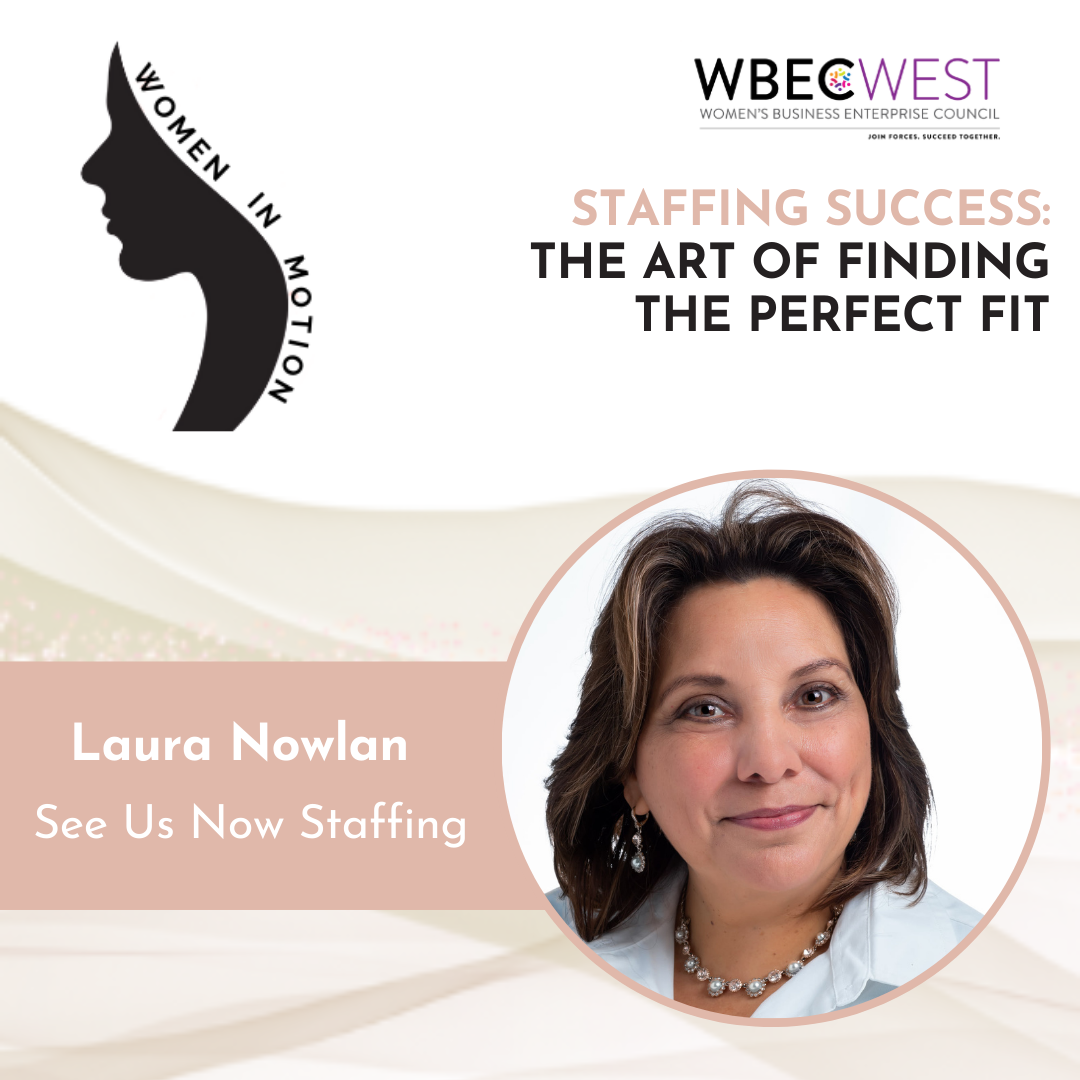
On today’s Women in Motion, Lee Kantor is joined by Laura Nowlan, owner of See Us Now Staffing in Las Vegas. Laura shares her 18-year journey in the staffing industry, emphasizing the importance of building long-term client relationships and quality placements. She discusses her agency’s operations, which range from filling janitorial to executive positions, and highlights the adaptability required during the COVID-19 pandemic. Laura offers advice for aspiring entrepreneurs, stressing the value of community resources and cautioning against non-family business partners.

Laura-NowlanLaura Nowlan is President of See Us Now Staffing, Inc. Laura’s experience ranges from project management to staffing for many properties along the Las Vegas Strip.

Laura’s background in sales, operations and customer service positions her to provide platinum standard service to clients and associates at all levels.

Laura created See Us Now Staffing, Inc. with a unique approach in creating business partnerships to attribute developing personalized relationships with clients.

The organization is in tune with their client’s needs and will work with them in a forward thinking and consultative manner, becoming an extension and a support system to their local Human Resource Department in all aspects.

She holds a Bachelor of Science degree in Business from California State University in San Bernardino and an Associates Degree in Business from San Bernardino Valley College. See-Us-Now-Staffing-logo

Follow See Us Now Staffing on LinkedIn, X and Facebook.

Music Provided by M PATH MUSIC

Transcript-iconThis transcript is machine transcribed by Sonix

 

TRANSCRIPT

Intro: Broadcasting live from the Business RadioX Studios, it’s time for Women In Motion. Brought to you by WBEC-West. Join forces. Succeed together. Now, here’s your host.

Lee Kantor: Lee Kantor here, another episode of Women In Motion and this is going to be a good one. But before we get started, it’s important to recognize our sponsor, WBEC-West. Without them, we wouldn’t be sharing these important stories. Today on Women In Motion, we have Laura Nowlan who’s with See Us Now Staffing. Welcome.

Laura Nowlan: Yes. Thank you so much for having me on the show. Appreciate it.

Lee Kantor: Well, I’m excited to learn what you’re up to. Tell us about See Us Now Staffing.

Laura Nowlan: Yeah. So, we’re a staffing agency. We basically staff seasonal, temp to hire, direct hire positions anywhere from janitorial to high executive positions.

Lee Kantor: So, tell us a little bit about your backstory. How long have you been in the staffing industry?

Laura Nowlan: Oh, yes. Thank you. Great question. So, I’ve been in the staffing industry here in Las Vegas, Nevada for the last 18 years. And for the last ten years, I’ve owned my own staffing company. We started October 24th of 2014, so we just earned our ten year stripes.

Lee Kantor: Now, when you own a staffing agency, it’s kind of like a double-sided marketplace. Like on one hand, you need the people to place and you also need the clients that need people to place, so how do you go about building an enterprise like that?

Laura Nowlan: Yeah. So, I’m going to say that we’re always more in the need of looking for the companies, that’s basically our client base. Us finding the right people, we don’t struggle doing that. Where we want to continue growing is in finding the companies that need us to be an extension of their HR manager team, their HR department team, or working with general managers or departments that are struggling to find the right people that they need.

Lee Kantor: So, that’s a symptom that if a company is struggling to attract and retain talent, then you’re a good person to partner with?

Laura Nowlan: Exactly. Those are the partnerships that we look for. I always say I’m not a one night stand. We’re looking for a long term business relationship that we basically create a win-win for everyone involved, including the person that we’re placing along with the company that we’re representing.

Lee Kantor: So, when you start working with a client, do they start off maybe asking for somebody in one department, like say it’s a manufacturer and they need some line workers, and then it might evolve, “Well, we also need a secretary. And, oh, by the way, my marketing guy just left, so I need help.” Is that how kind of you work within an organization, it starts small and then it expands?

Laura Nowlan: Yes, or not necessarily start small. It could be like you said, they need warehouse workers, but they need a hundred of them. And then, after that, maybe they only need one marketing person. So, yes, that’s the way the partnership starts. It could be a few positions that they need us to fill or one or it could be 100.

Lee Kantor: So, sometimes people come to you and they need 100 people?

Laura Nowlan: Yes. So, during COVID, Nevada was very closed. So, I took a risk and I went out to Irving, Texas and opened up a branch there because I wasn’t the type of person that was just going to roll over and play dead. After 30 days being there, I actually landed a logistics national account. Once I placed all their 60 people that they needed in Texas, then they asked me if I could go to Plainfield, Indiana and do the same, so I did that. And then after that, they asked me if I can help them open a brand new facility in Phoenix, Arizona, so I helped them do that as well.

Laura Nowlan: When I was in Plainfield, Indiana helping this logistic company, then there was another logistic company that wanted us to place 100 people there. They actually needed 300, but they brought in three agencies, and each of us had 100 positions that we needed to fill. So, that’s very common in our industry.

Lee Kantor: And then, when you’re filling these positions, is it like for 90 days or is this like kind of fulltime employment for these people?

Laura Nowlan: Yeah. Great question. So, typically they are for tempt to hire. And we’re at about a 95 percent conversion, so 95 percent of them get hired on after about three to four months, sometimes six months on.

Lee Kantor: And you’re perfectly okay with that, that’s just how it works?

Laura Nowlan: Yeah. I’m there to help them. So, I kind of fire myself, but at the same time that’s literally the way a staffing agency should work. We should try to send the best quality worker out, and so it could be a win-win for everyone.

Lee Kantor: Now, when they say I need 100 of these people, how do you kind of get the person ready for that specific organization? Because I would imagine you have a skills fit, but there’s also a soft skills fit or a culture fit that also has to come into play.

Laura Nowlan: Correct. So, when we’re doing all our prescreening, we’re looking for do they fit the culture, do they have the right skillsets, is it a trainable type of position because they do meet the culture based on their personality. So, it’s basically a good conversation that you need to have in a partnership with the company that you’re working with.

Lee Kantor: Now, how do you kind of differentiate yourself from other staffing agencies?

Laura Nowlan: We truly create business partnerships. Business partnerships where we’re there to make sure that we place the right person for the position. We are not body shufflers. A lot of agencies out there are body shufflers. They’re sending a warm body for a position. We don’t. We have to send the right person, because we want it to be a win-win for everyone involved, and we want that person to get hired on. Those are success stories that we have.

Laura Nowlan: You know, I have someone that I placed, he was on a student visa from India in California. I placed him as a project manager in a training position in California, and then we were able to relocate him to Phoenix – I mean, to Las Vegas, Nevada. He’s been there for five years. I mean, those are success stories that I like. I place someone at World Market Center, International Market Center over 14 years ago. That person is still there. Those are successful hires. That’s what I look for.

Lee Kantor: And the reason that they’re successful is because you did the work on the frontend to make sure that it was a right fit going in, rather than just hoping it was going to work out.

Laura Nowlan: Correct. Correct.

Lee Kantor: Now, where did you get kind of this philosophy, because it sounds like a lot different than most other staffing agencies? How did this come to you and how were you able to bottle it so that you can deliver those results to your clients?

Laura Nowlan: Well, being in the staffing industry for the last 18 years, when I worked for other staffing companies, what I did is I took everything that I liked from those staffing companies, and everything that I didn’t like, I changed. Like, I didn’t believe that I should have to work 24/7, which I did for these other staffing companies. So, our company doesn’t operate 24/7. We operate Monday through Friday, 8:00 in the morning until 5:00 p.m.. I don’t want to burn out my team. I force them to take a lunch. We close for lunch from 12:00 to 1:00.

Laura Nowlan: We ask our clients, the companies that we staff with, it’s okay to have an emergency here and there, and you have access to me 24/7. But at the same time, let’s plan, because I don’t want to just send you a warm body, and I don’t want my team to do that. We want to make sure that we’re sending you the right person. We drug test, we background check, we E-Verify before we even place them out to any properties. Right now we have over 50 people working at the airport. We had to get them all past a 20 year FBI background check. We’re good at what we do.

Lee Kantor: Right. And it seems like you’re giving them this white glove service that is going to ensure that it’s a better chance for the right fit. And I’m sure when things happen, as they always do, you’re right there to make sure that you can fix it.

Laura Nowlan: Correct. I mean, because we are dealing with people, we will never be 100 percent on because we can never predict what a person’s going to do. But you have to have that partnership, that relationship that’s strong enough that you’re going to overcome if somebody does something that they’re not supposed to do. We are dealing with people.

Lee Kantor: So, now, what has it been like for you building this company from scratch, were you able to enlist help maybe from your family or trusted partners?

Laura Nowlan: Yeah. So, I have three kids and all three of them had involvement when I first started the staffing company. One of them, the oldest one, he’s been a silent investor since day one. He’s like, “Mom, I don’t really want to work in the staffing industry. I worked for you in the past – ” which he had. I sent him out to his first jobs “- so I don’t really want to work for you, but I want to invest in you. I believe in you and I know that you have what it takes to make this company successful.”

Laura Nowlan: My middle son, he was actually in Afghanistan in the army, and we were writing to each other. And he’s like, “I want in mom. I want something that I can come home to once I come back home.” And it kept him going. In a battlefield, that’s what was feeding him is the email – I’m sorry – the letters that we were writing to each other. You know the logo that I would send him, like, “I’m going to use this logo.” And he’s like, “I don’t like it. But when I get back, I’m changing it.” And he has, our logo has changed. But my son has been involved since day one and he started in a combat field.

Laura Nowlan: My daughter, she’s been in the business in and out since she was younger. For the last 18 years, I was training her throughout the time. She ended up getting married. She had three kids. I have allowed her to tap in and tap out. She has a nine year old, a two year old, and a three year old, and she’s my VP of operations and so right now she works hybrid. So, my kids have been involved with the business ever since I started. I did not start alone.

Lee Kantor: And that’s great that you have this legacy now.

Laura Nowlan: Yes. Yes. As a matter of fact, I just interviewed my grandson yesterday, a nine year old who started his own little business, a little entrepreneur he is.

Lee Kantor: So, any advice for budding entrepreneurs out there? Anyone looking to start a business, are there some to-do’s and some to-don’ts that you can recommend?

Laura Nowlan: Yes, yes. There are so many resources in our community, WBEC-West being one of them. There’s the SBA. There’s SBDC. There’s a Women’s Business Center. There are so many chambers. Don’t start alone. Go out and look for these resources. SCORE, I started with SCORE. I mean, I really needed someone to push me off the fence and say you can do it, you’ve got everything you need. You know, sometimes you just need that, but you need to bounce your ideas off with someone else.

Laura Nowlan: I will tell you that I brought in someone with me when I first started because I was scared. And so, I brought her in as a partner, which I shouldn’t have. I should have brought her in as an employee. But let me tell you, bringing in a partner, think about it twice. If it’s not a family member, maybe one of your kids that you’re really wanting to start this legacy with them, I would think twice about bringing in a business partner. Try to start alone, even if it takes you a little bit longer. It’s very difficult to buy out partners. I will tell you that it’s taken me a lot of years to buy everybody out, but I’m 100 percent owner now of the company.

Laura Nowlan: That would be my advice, is, go get all the free services you can get out there in the community. And if you can, do not bring on a business partner, bring them on as employees instead.

Lee Kantor: Right. Yeah, that’s a good life lesson in a lot of areas. You want to choose your partners wisely.

Laura Nowlan: Yes, absolutely.

Lee Kantor: Now, you mentioned communities and you mentioned WBEC-West, can you share a story about WBEC-West, maybe how it’s impacted your business.

Laura Nowlan: So, I’ve had the opportunity, actually. I just finished a course with Cox Communication and Southwest Gas. I got a sponsorship through WBEC-West, a grant to be able to take a leadership course. And they’re great resource partners. And so, there’s a lot of different benefits that large corporations are looking to work with WBEC-West members who are either DBE certified, women-owned certified. And so, to me, that was one of the biggest things that happened for me is that I was able to receive a scholarship to be able to complete the Cox Communication course of advanced leadership.

Lee Kantor: Well, congratulations. That’s a big deal.

Laura Nowlan: Thank you. Thank you. I think we graduate the first week of November, so we’re looking forward to the date and the graduation.

Lee Kantor: Did you learn a lot?

Laura Nowlan: I did. Actually, I’m going to say that the accounting course was huge, and then the other one on AI. Those were my biggest takeaways that I took from the course. And I also have a show of my own called Business Matters, and I have the person that does AI who I’m going to get to interview on my show as well. So, I just think I met a lot of great people through WBEC-West. I also got to interview the leader that’s here for Las Vegas.

Lee Kantor: So, what do you need more of? How can we help you in your business?

Laura Nowlan: We’re always looking for business partners, so if there is someone out there that maybe is struggling to fill certain positions and just wants to go out and have coffee or have lunch and just build a good relationship with us, I would say that that would be a great referral for me. So, that’s how you can help me.

Lee Kantor: And then, it’s industry agnostic, right? It doesn’t matter what type of business it is.

Laura Nowlan: Correct.

Lee Kantor: And do you have kind of a specialty or an area that you do more business in than others or is it pretty much you’ll place anybody in any position?

Laura Nowlan: Place anybody in any position. But I will tell you that there are peaks and seasons. And so, if you would have asked me where were you at in 2023, I would say in logistics I was very huge, and that’s what we were specializing then. And right now, my biggest bulk is in janitorial. So, it just changes. Also, in customer service reps doing hospitality. So, it just changes. It all depends on what’s happening in our community, what type of business partners we’re creating, that we’re building.

Lee Kantor: Now, from the candidate side, what is the best way for a candidate to get on your radar so that they can be one of the people that you place?

Laura Nowlan: Yes. Go to our website and apply basically to work for our company, and then call our office at 702-902-2448 and schedule to meet with a recruiter.

Lee Kantor: And then, you’re taking people of all skills, so if they’re looking for work, they should definitely contact you because you never know, you might be able to place them.

Laura Nowlan: Exactly. And every day changes, so I may have a position today and by tomorrow I’ve already filled it. So, it just goes up and down. And so, I just want to encourage not just to apply with us as a staffing agency, but multiple staffing agencies, because we all seem to have sometimes a different type of positions available.

Lee Kantor: Now, if somebody wants to learn more and have a substantive conversation with you or somebody on the team, can you share the website and maybe the best way to connect with you all?

Laura Nowlan: Yes. It’s the name of our company, see, S-E-E, us, U-S, now, N-O-W, staffing, S-T-A-F-F-I-N-G.com. You can also follow us on Facebook. We’re on Instagram, we’re on X, and we’re on LinkedIn. And then, our office number is 702-902-2448. We do drug testing, we do background checks, and we do E-Verify before we place anyone out to work.

Lee Kantor: Right. So, that’s good to know upfront so you can not waste anyone’s time.

Laura Nowlan: Exactly.

Lee Kantor: Well, Laura, thank you so much for sharing your story today. You’re doing such important work and we appreciate you.

Laura Nowlan: No, thank you for this opportunity.

Lee Kantor: All right. This is Lee Kantor, we’ll see you all next time on Women In Motion.


Tagged With: See Us Now Staffing

Jill Heineck, Heineck & Company, and Brandi Rhodes, Naked Mind Yoga + Pilates

December 3, 2024 by John Ray

Jill Heineck, Heineck & Company, and Brandi Rhodes, Naked Mind Yoga + Pilates, on Family Business Radio with host Anthony Chen
Family Business Radio
Jill Heineck, Heineck & Company, and Brandi Rhodes, Naked Mind Yoga + Pilates
Loading
00:00 /
RSS Feed
Share
Link
Embed

Download file

Jill Heineck, Heineck & Company, and Brandi Rhodes, Naked Mind Yoga + Pilates, on Family Business Radio with host Anthony Chen

Jill Heineck, Heineck & Company, and Brandi Rhodes, Naked Mind Yoga + Pilates (Family Business Radio, Episode 59)

In this episode of Family Business Radio, host Anthony Chen explores the journeys and insights of two dynamic guests. First, Jill Heineck from Heineck & Company shares her extensive experience in the real estate industry, focusing on relocation services for high-profile clients and adaptations post-COVID. Jill highlights the importance of understanding and leveraging relocation benefits for both employees and employers. She also underscores the value of setting boundaries in business. Then, Brandi Rhodes, owner of Naked Mind Yoga + Pilates, discusses her transition from professional figure skating and professional wrestling to running her own wellness studio. She shares anecdotes about the physical and mental benefits of yoga and Pilates and offers advice on navigating entrepreneurship and maintaining balance.

Anthony concludes the show with a thoughtful reflection on meaningful advice received from mentors, underscoring the value of emotional intelligence and flexibility in personal and professional life.

Family Business Radio is underwritten and brought to you by Anthony Chen with Lighthouse Financial Network. The show is produced by John Ray and the North Fulton affiliate of Business RadioX®.

Jill Heineck, Heineck & Company

Jill Heineck, Heineck & Company on Family Business Radio with host Anthony Chen
Jill Heineck, Heineck & Company

With 25 years in Atlanta real estate, Ms. Heineck is a Certified Divorce Real Estate Expert (CDRE™) specializing in the sale of real property in family law cases. Ms. Heineck received her certification as a Divorce Real Estate Expert from the Ilumni Institute. Ms. Heineck offers her objective and neutral expert opinion in low- and high-conflict divorce matters involving real property.

Her extensive experience works seamlessly across all of her disciplines, including corporate relocation, sports and entertainment, and divorce listings. Working with Atlanta area sellers, Ms. Heineck is known for her in-depth discovery with each client in order to deliver at a high level, whether it be selling a condo, bungalow or multimillion-dollar estate. Working with Atlanta area buyers, Ms. Heineck seeks first to understand lifestyle requirements in order to craft strategic and winning offers.

Her relationship-based philosophy, deep understanding of the local market, and comprehensive knowledge of real estate and its nuances combined with her steadfast dedication to providing the necessary tools to make educated and informed decisions has created a strong and lasting network of loyal clients and trusted advisors.

Website | LinkedIn | Instagram | Facebook

Brandi Rhodes

Brandi Rhodes, Naked Mind Yoga + Pilates

Brandi Rhodes is an RYT 200-hour yoga teacher and a certified mat and reformer pilates instructor. Most people know her from her time as a professional wrestler and announcer in WWE and AEW. A lifelong athlete, Brandi began figure skating at the age of 4 and enjoyed a successful 17-year competitive career.

She then moved on to a demanding 10-year career in the professional wrestling industry. She’s the wife of The American Nightmare Cody Rhodes and the daughter-in-law of the late WWE Hall of Famer Dusty Rhodes.

Brandi has taken everything she’s learned from a lifetime of sports, fitness and performance to create a place that caters to people in all stages of their fitness journeys. From beginners to seasoned athletes, she looks to work with anyone with a slight curiosity to a burning passion for yoga and/or pilates and aims to help them meet and surpass their personal wellness goals.

Instagram | X (Twitter)

Naked Mind Yoga + Pilates

Naked Mind Yoga + Pilates is a studio in Roswell offering all types of yoga, both heated and non-heated, and reformer Pilates under one roof and one membership. Naked Mind also offers childcare, something that no other studio in the area offers. Naked Mind has won 3 awards since its opening less than a year ago and continues to climb in popularity.

Website | Instagram | X (Twitter)

Topics Discussed in this Episode

00:00 Introduction to Family Business Radio
00:37 Jill Heineck’s Journey in Real Estate
02:54 Challenges and Trends in Relocation
03:58 Advice for Business Owners and Employees
08:59 Memorable Relocation Cases
14:25 Brandi Rhodes’ Yoga and Pilates Journey
21:33 Unexpected Membership Delight
22:17 Challenges of Figure Skating and Wrestling
24:04 Building a Yoga and Pilates Studio
25:35 Debunking Yoga Stereotypes
28:41 The Benefits of Yoga and Pilates
31:27 From Figure Skating to Wrestling
35:13 Advice for the Younger Generation
40:15 Closing Remarks and Anthony’s Commentary

Anthony Chen, Host of Family Business Radio

Anthony Chen, Host of Family Business Radio

Family Business Radio is sponsored and brought to you by Anthony Chen with Lighthouse Financial Network. Securities and advisory services are offered through OSAIC, member FINRA/SIPC. RAA is separately owned, and other entities and/or marketing names, products, or services referenced here are independent of OSAIC. The main office address is 575 Broadhollow Rd., Melville, NY 11747. You can reach Anthony at 631-465-9090, ext. 5075, or by email at anthonychen@lfnllc.com.

Anthony Chen started his career in financial services with MetLife in Buffalo, NY, in 2008. Born and raised in Elmhurst, Queens, he considers himself a full-blooded New Yorker while now enjoying his Atlanta, GA, home. Specializing in family businesses and their owners, Anthony works to protect what is most important to them. From preserving to creating wealth, Anthony partners with CPAs and attorneys to help address all of the concerns and help clients achieve their goals. By using a combination of financial products ranging from life, disability, and long-term care insurance to many investment options through Royal Alliance, Anthony looks to be the eyes and ears for his client’s financial foundation. In his spare time, Anthony is an avid long-distance runner.

The complete show archive of Family Business Radio can be found by following this link.

Tagged With: Anthony Chen, Brandi Rhodes, Family Business Radio, financial advisor, Fitness, Heineck & Company, Jill Heineck, Naked Mind Yoga + Pilates, pilates, real estate, yoga

BRX Pro Tip: 3 Must Haves When Creating Compelling Case Studies

November 28, 2024 by angishields

BRXmic99
BRX Pro Tips
BRX Pro Tip: 3 Must Haves When Creating Compelling Case Studies
Loading
00:00 /
RSS Feed
Share
Link
Embed

Download file

BRX-Banner

BRX Pro Tip: 3 Must Haves When Creating Compelling Case Studies

Stone Payton : And we are back with Business RadioX Pro Tips. Lee Kantor, Stone Payton here with you. Lee, what are you learning recently about creating truly compelling case studies?

Lee Kantor: I think having case studies on your website and your materials when you’re selling somebody something is super important. They have to be able to see that you can really deliver what you promise, and having examples of how other people have used your service and benefited from your service is super important when it comes to persuading someone to try to buy what you’re selling.

Lee Kantor: So number one, I would focus in on the customer and their experience, not just the product or service. So highlight the customer’s challenges, their goals, and how you’re offering. Help them achieve whatever their desired outcome was. And I would use direct quotes from the customer to add authenticity. You want to get as much of this information in the – out of the mouth of your customer, not your marketing team.

Lee Kantor: Number two, I would quantify the impact your solution had on the customer with specific metrics that demonstrate the value that you provided. So if you’re saying we increase revenue, don’t say you increase revenue, say you increase revenue by so much, or you reduce costs by so much, or you improve efficiency by so much. Specificity matters, and it’s important to capture the exact amount if you possibly can. And this helps potential customers understand the real-world benefits of the service that you’re providing.

Lee Kantor: And number three is structure the case study like a story. Don’t just make it, you know, dry numbers or charts or things like that. So try to kind of set the scene by introducing the customer and their situation, their challenge, and then describe how your service was implemented. And then at the end, you close by showcasing the final results.

Lee Kantor: So I think it’s super important to have case studies. And I think it’s super important to put case studies on your website, in your marketing materials. And if you use some of these kinds of tactics within the case study, I think you’re going to have a lot more people buying what you’re selling.

Donna Beatty, Frazier & Deeter, LIVE from the 2024 GNFCC BOLD Women’s Leadership Summit

November 22, 2024 by John Ray

LIVE from the 2024 GNFCC BOLD Women's Leadership Summit, with Donna Beatty, Frazier & Deeter
North Fulton Business Radio
Donna Beatty, Frazier & Deeter, LIVE from the 2024 GNFCC BOLD Women's Leadership Summit
Loading
00:00 /
RSS Feed
Share
Link
Embed

Download file

LIVE from the 2024 GNFCC BOLD Women's Leadership Summit, with Donna Beatty, Frazier & Deeter

Donna Beatty, Frazier & Deeter, LIVE from the 2024 GNFCC BOLD Women’s Leadership Summit (North Fulton Business Radio, Episode 821)

In this live remote interview, North Fulton Business Radio host John Ray interviews Donna Beatty, Tax Partner with Frazier & Deeter, at the 2024 GNFCC BOLD Women’s Leadership Summit. Donna shares her experiences in tax and advisory work, her role as a GNFCC Chamber diplomat, and the importance of setting boundaries for self-care. She also highlights the value of Frazier & Deeter’s sponsorship and involvement in supporting women’s professional growth, discussing how the firm’s initiatives, such as talking partners and women affinity groups, foster a supportive work environment.

This interview was originally broadcast live from the 2024 GNFCC BOLD Women’s Leadership Summit held at The Commons at Phase in Alpharetta, Georgia.

John Ray is the host of North Fulton Business Radio. The show is recorded and produced by the North Fulton affiliate of Business RadioX® inside Renasant Bank in Alpharetta.

Donna Beatty, Tax Partner, Frazier & Deeter

As a Partner in Frazier & Deeter’s Tax Practice, Donna Beatty brings a wealth of professional tax and accounting knowledge to the firm. Her experience encompasses providing comprehensive tax planning, review, advisory, and compliance services to closely held businesses, high-net-worth individuals, and professional services groups. She has extensive expertise consulting with small businesses on financial software and has worked with clients in industries that include real estate, construction, manufacturing & distribution, retail, professional services, technology, entertainment, and family-owned businesses. Donna specializes in helping law firms and real estate investment groups with complex tax matters. Her expansive industry knowledge allows Donna to provide background insight in an evolving market; she has successfully represented clients with the Internal Revenue Service in Washington, D.C.

Donna prides herself on solid professional relationships with clients and thrives on learning and fulfilling her client’s needs and expectations. Until 1994, she was a Principal at the firm before moving to become a partner at a small local accounting firm.

Professional & Civic Organizations: American Institute of Certified Public Accountants (AICPA), Georgia Society of Certified Public Accountants (GSCPA), Atlanta Tax Forum, Board Member, Past President, Better Business Bureau Serving Metro Atlanta, Athens & NE GA, Board V.P., and C5 Georgia Youth Foundation, Board Member, Past Chair.

LinkedIn

Frazier & Deeter

Frazier & Deeter is an award-winning accounting and advisory firm serving clients worldwide, ranging from Fortune Global 500 companies to growing small businesses. The firm’s brand promise, Investing in Relationships to Make a Difference®, reflects its commitment to exceeding client expectations by addressing evolving needs as businesses grow. Known for exceptional client satisfaction, Frazier & Deeter focuses not only on meeting present accounting needs but also on providing advisory services that support future success.

Frazier & Deeter offers a comprehensive suite of tax, audit, accounting, and advisory services through its offices in Atlanta, Charlotte, Las Vegas, Nashville, Alpharetta, and Tampa, as well as international locations in London, Cambridge, and India. The firm has received numerous accolades for the quality of its work and dedication to client responsiveness, including recognition as a Top 50 firm, a Best of the Best Accounting Firm, a Best Firm to Work For®, and a Best Firm for Women in Leadership. Additionally, Frazier & Deeter is recognized as an award-winning Deliberately Developmental Organization, fostering a culture that prioritizes the growth of its team members every day.

The firm is registered with the Public Company Accounting Oversight Board, the Canadian Public Accountability Board, and the American Institute of Certified Public Accountants. Frazier & Deeter is also a member of CPAmerica.

The Frazier & Deeter family of brands includes Frazier & Deeter, LLC; Frazier & Deeter UK, LLP; Frazier & Deeter India Private Limited; FD Real Asset Advisors; FD Family Office; and SignatureFD.

Website | LinkedIn |Facebook | Instagram

Topics Discussed in this Episode

00:00 Introduction and Event Overview
00:34 Interview with Donna Beatty: Background and Role
01:22 The Importance of Networking and Community Involvement
02:10 Frazier & Deeter’s Support for Women’s Leadership
03:55 Insights from the Summit: Self-Care and Boundaries
06:46 Frazier & Deeter’s Culture and Employee Support
08:27 Closing Remarks and Contact Information

About North Fulton Business Radio and host John Ray

With over 800 shows and having featured over 1,200 guests, North Fulton Business Radio is the longest-running podcast in the North Fulton area, covering business in our community like no one else. We are the undisputed “Voice of Business” in North Fulton!

The show welcomes a wide variety of business, non-profit, and community leaders to get the word out about the important work they’re doing to serve their market, their community, and their profession. There’s no discrimination based on company size, and there’s never any “pay to play.” North Fulton Business Radio supports and celebrates business by sharing positive business stories that traditional media ignore. Some media leans left. Some media leans right. We lean business.

John Ray, Business RadioX - North Fulton, and Owner, Ray Business Advisors
John Ray, Business RadioX – North Fulton, and Owner, Ray Business Advisors

John Ray is the host of North Fulton Business Radio. The show is recorded and produced from the North Fulton studio of Business RadioX® inside Renasant Bank in Alpharetta. You can find the full archive of shows by following this link. The show is available on all the major podcast apps, including Apple Podcasts, Spotify, Google, Amazon, iHeart Radio, and many others.

The studio address is 275 South Main Street, Alpharetta, GA 30009.

John Ray, The Generosity MindsetJohn Ray also operates his own business advisory practice. John’s services include advising solopreneurs and small professional services firms on their value, their positioning and business development, and their pricing. His clients are professionals who are selling their expertise, such as consultants, coaches, attorneys, CPAs, accountants and bookkeepers, marketing professionals, and other professional services practitioners.

John is the national bestselling author of The Generosity Mindset: A Journey to Business Success by Raising Your Confidence, Value, and Prices.

Tagged With: 2024 GNFCC BOLD Women's Leadership Summit, Donna Beatty, Frazier Deeter, GNFCC, Greater North Fulton Chamber of Commerce, John Ray, North Fulton Business Radio, Partner at Frazier & Deeter, Women in Business, Women in Leadership

The CEO’s Playbook: Mastering Growth Challenges in Mid-Market Companies

November 12, 2024 by angishields

WIM-KarenPosey-Feature
Women in Motion
The CEO's Playbook: Mastering Growth Challenges in Mid-Market Companies
Loading
00:00 /
RSS Feed
Share
Link
Embed

Download file

In this episode of Women in Motion, Lee Kantor interviews Karen Posey, CEO and Managing Partner of KP Strategies. Karen shares her journey from working in sales and operations for Fortune 500 companies to consulting for mid-market organizations. The discussion focuses on the unique challenges faced by mid-market CEOs and the importance of strategic planning. Karen introduces the “six things that only a CEO can do,” which include vision clarity, first team dynamics, stakeholder engagement, strategic organizational alignment, effective board management, and personal effectiveness.

Karen-PoseyKaren Posey is the CEO and Managing Partner of KP Strategies, a management consulting firm dedicated to helping mid-market CEOs tackle the tough challenges that stand in the way of predictable and rapid growth.

Before founding KP Strategies, Karen launched four successful organizations, led a regional turnaround for an IT infrastructure company, served as a Senior Consultant at a management consulting firm, held the role of VP of Strategy and Consumer Experience for a $12 billion healthcare payer, and served as CEO of a MedTech wound care company.
Throughout her career, Karen has been recognized multiple times for her high-performance leadership and ability to deliver winning strategies and growth for Fortune 100 companies.

Karen and KP Strategies offer mid-market CEOs proven best practices through tailored approaches designed for busy executives. KP Strategies provides project-based consulting and a distinctive virtual CEO Accelerator, which empowers CEOs to focus on what only they can do to drive growth. The program also supports the CEO’s senior leadership team through a peer-based community that enhances accountability and fosters growth. KP-Strategies-LogoExercise

As a certified woman-owned business, Karen is committed to supporting women in business and serves as the Forum Chair for the Women’s Business Enterprise Council West in Colorado. Her passion for helping CEOs succeed extends to her roles as a judge for the Titan CEO 100 and as a mentor for aspiring entrepreneurs through the Denver Economic Development Organization and the Colorado Women’s Chamber of Commerce.

Connect with Karen on LinkedIn.

Music Provided by M PATH MUSIC

Transcript-iconThis transcript is machine transcribed by Sonix

 

TRANSCRIPT

Intro: Broadcasting live from the Business RadioX studios, it’s time for Women In Motion. Brought to you by WBEC-West. Join forces. Succeed together. Now, here’s your host.

Lee Kantor: Lee Kantor here. Another episode of Women In Motion. And this is going to be a good one. But before we get started, it’s important to recognize our sponsor, WBEC-West. Without them, we couldn’t be sharing these important stories.

Lee Kantor: Today on Women In Motion, we have Karen Posey, who is the CEO and managing partner of KP Strategies. Welcome.

Karen Posey : Thank you. Great to be here.

Lee Kantor: Well, I am so excited to learn what you’re up to. Tell us about KP Strategies. How are you serving folks?

Karen Posey : Yes, I work with mid-market CEOs helping them drive growth, and I do that through a lot of strategic planning, business planning, as well as helping them do the six things that only they, the CEO, can do.

Lee Kantor: Now, what’s your backstory? Have you always been involved in this line of work?

Karen Posey : I’ve had my business for eight years. And then prior to that, I worked for a previous management consulting firm, and in my last corporate role, I was vice president of strategy and consumer experience for a $12 billion payer, so have had a lot of experience working with Fortune 500 companies when I was in a previous management consulting role, and I’ve just spent a lot of time. I’ve had – I’ve run my own wound care company as a CEO and turned around an IT infrastructure company.

Karen Posey : So I had a lot of experience kind of in that role of either starting businesses from scratch or turning around businesses. So this was just a natural progression for me to start my own business eight years ago and to really work with CEOs, you know, helping them solve the biggest challenges they face because there’s so much that gets in the way of them driving growth.

Lee Kantor: Now, when you began your career, was it – or are you coming at this from an operations side, a sales side, a management side? Like what is kind of the lens of business, you know, that you started out with?

Karen Posey : Yeah. Great question. I started out in sales and sales leadership. So I was in the sales role for probably three years. And then I moved into leadership and never looked back. So I was in sales for the first 20 years of my career and then was a general manager of an IT infrastructure company, and that’s really where I honed my operations skills.

Karen Posey : So I would say that, you know, my real strength, although I certainly understand sales and can help organizations, it’s really helping them drive growth through not only strategies that they use, but also I’m very strong in the operations side.

Lee Kantor: So now that you work with so many organizations, are you seeing common threads that CEOs, maybe mistakes that they’re making?

Karen Posey : Yeah. You know, that’s why I talk a lot about the six things that only a CEO can do. I think, you know, it’s so hard, and especially in the middle market. So when I define middle market, I’m really talking about CEOs. You know, Google’s definition is 10 million to a billion. That’s a pretty big range. But I tend to work – my sweet spot is between 30 million and 300 million. And I would tell you, you know, based on those CEOs, typically what got them where they are today isn’t going to help them get to the next level. Right?

Karen Posey : And so, you know, a lot of them by the time – my business is heavy referral and by the time I’m referred to them, they’re typically frustrated. They’re stuck. They’re really struggling. You know, being a CEO is a lonely job. Matter of fact, you know, loneliness, CEOs that are lonely, 61% of them say that it affects their performance. That’s a McKinsey stat, by the way. But, you know, it’s real.

Karen Posey : And so, you know, really helping these CEOs really overcome what’s getting in the way of growth for the company. A lot of times I find it’s the first team, what I call their first team, which is their senior leadership team. But it also can be, you know, sometimes it’s that they’re growing. I’m working with one CEO right now. They’re growing so rapidly that actually their operations haven’t been able to keep up. And so I’ve really been doing a deep dive with operations. And I did a level of discovery first with employees and key stakeholders to really know where we needed to focus. But I’m really helping them scale up their operations because it was woefully behind.

Lee Kantor: Now, you’ve mentioned a couple of times the six things that only a CEO can do. Do you mind sharing those six things?

Karen Posey : Happy to share it. I talk about it all the time. So, first and foremost is vision clarity. And what I mean by vision clarity, it’s one thing to have a vision, and vision should be at least ten years out. And I think even with the vision, I think CEOs struggle a lot of times.

Karen Posey : You know, when I first start working with them, their vision is that, hey, they want to be the premier this or the best this or number one that. And what I really work with them on is I help them go to the future to see the future and make sure they have the insight they need to really come up with the right vision.

Karen Posey : Because, you know, let’s put it this way, if Netflix would have said that they wanted to be, 20 years ago, the number one DVD company in America, where would they be today? Right? Thank goodness Reed Hastings, their former CEO, really was able to dream out 20 years and had an amazing vision for the company that they’re fulfilling today.

Karen Posey : But that’s the vision piece. The vision – the clarity piece comes in to once you have a great vision, does everyone in the organization know what it is? And honestly, 78% of employees feel like their leaders don’t have a clear direction for the company. Well, I would argue a lot of them, they have a clear direction. They might have a great vision and strategic priorities and core values. The problem is they don’t have vision clarity. All the employees from entry level up don’t know what they are. I mean, I find that all the time and that’s a big problem.

Karen Posey : And if you have vision clarity, here’s why that matters. I just did a keynote last week in Atlanta, in front of 120 high-tech CEOs at the Best of Breed Conference, and I talked a little bit about vision clarity. But when you have vision clarity, companies that have that have 58% greater revenue, 32% higher profits, as well as their employee engagement is 16X, and they retain customers 2 to 1. It’s incredible, the difference.

Lee Kantor: It’s because everybody knows what the kind of the True North is. If they buy into the True North, then every activity they’re doing is towards that end. But if there isn’t clarity, you know, you’re missing slightly and that just, you know, compounds.

Karen Posey : 100%. So vision clarity is first and foremost. And these aren’t – these don’t have to be in order, but vision clarity your – what I call your first team which is your senior leadership team. And this is – the reason I call it the first team is this is another area where CEOs really struggle, is because they have a senior leadership team but they don’t work as what I call a first team. In other words, they all lead functional areas.

Karen Posey : So for example, if you’re CFO, Chief Marketing officer, CMO, you have functional teams you’re responsible for, but the first team should be your priority and they should be working on the biggest challenges the company faces. And a lot of times, they’re not doing that. And so, I really work with the CEO, helping them on the team composition, team practices, and really their operating rhythm because they get that down and they have their priorities. And if they’re fortunate enough to all be in the same location, which is rare these days, but they even need to sit together because that first team should absolutely be their top priority in solving the biggest challenges the company faces today. Right?

Lee Kantor: Now, does that activity – let me interrupt you for one second. That activity – so you’re the senior leadership team. You have a first team, but each of your reports has a first team. And that should trickle down. These same best practices should work throughout the whole entire organization. Right?

Karen Posey : Well, to clarify, the first team is the folks that report directly to the CEO. That’s really what I call the first team. And it shouldn’t necessarily trickle down. The whole point of the first team is that they truly are focused on the biggest challenges that the company faces and that they can work effectively together with the CEO. That’s really the key. They’re functional groups.

Karen Posey : So for example, if you’re the CFO, their functional group might be finance. And yes, they’re responsible for finance, but that truly is their second priority. Their first priority is to that senior leadership team or that first team in the CEO. Does that make sense?

Lee Kantor: Yeah. So that your first team is kind of – they’re the main drivers of change in the organization. That’s where the leadership is taking place.

Karen Posey : Yeah. Well, the leadership should be trickling down to all leaders in the organization. But yes, this is – the first team is the key, what I call linchpins, for driving change in the organization. Because if they haven’t bought into the vision, if they haven’t bought into the core values, if they haven’t bought into the strategic priorities, and they’re not also communicating that throughout the organization, then you don’t have vision clarity. Right? So the CEO needs to do it but so does the first team.

Lee Kantor: Right. So they all – right. They’re all singing from the same song sheet.

Karen Posey : 100%. So the first, the vision clarity. The second is first team. The third is really engaging stakeholders out there. So the CEO is responsible for those key stakeholders in the industry, making sure they know who your company is. They spend time with key opinion leaders so that they’re not only involved, and they keep up with what the industry trends are and the biggest movers and shakers, but those movers and shakers, those key opinion leaders also know what your organization does. So important.

Karen Posey : The fourth – excuse me – is strategic organizational alignment. So that is culture, it’s talent, and it’s organizational design. And that’s very important. And, you know, so many organizations struggle today with culture just because there’s, you know, we’re all – a lot of them are so spread out. So culture plays a big role.

Karen Posey : And even when we talk about talent, the CEOs are responsible for all talent. In the mid-market, they should have a vice president or chief human resource officer, or VP of HR that’s responsible for talent. But where the CEO is responsible is for the highest-value roles in the organization. So strategic organizational design really focuses on talent, culture, and organizational design, which is so important. So that’s the fourth.

Karen Posey : The fifth is having an effective board. You know, it’s interesting there’s a stat out there from PwC recently that 70% of CEOs rate their boards as poor. Oh, my gosh, 70%. And so, there’s a big opportunity really looking at what does an effective board looks like. So there’s a lot to be said there. So that’s the fifth.

Karen Posey : And the final is personal effectiveness. And I leave that as last because I spent a lot of time with CEOs also on their personal effectiveness. So in other words, they need to know themselves. What gives them energy? What depletes their energy? The things that deplete their energy, they need to be giving those tasks to others in the organization. They need to be focused on those high-energy, high-value things, and they need to surround themselves with people in the organization that is protecting their time.

Karen Posey : The other thing is under personal effectiveness is really understanding their leadership model and perspective. So in other words, thinking about what do they stand for? What won’t they tolerate? What’s the legacy they want to leave for their organization? Right? So that’s leadership perspective. And it’s important that people, their leaders, their first team specifically understand that about them.

Karen Posey : And the third under personal effectiveness is their brand. And the brand is so important. For a CEO to stay humble, show gratitude, and really understand who they are and what they’re portraying is vitally important.

Lee Kantor: Now, you mentioned – you mentioned that 70% of CEOs think their boards are ineffective. Doesn’t that speak to their own personal effectiveness?

Karen Posey : Some of it does. You know, honestly, I find – it’s interesting. CEOs, when they first take over the role, they think that if they have a board that yeah they’re going to need to spend 10% of their time or some time with the board. But I will tell you, that is the biggest thing, that is an eye-opener – I wouldn’t say the biggest, just one of the biggest eye-openers for CEOs, the board really takes, on average, about 25% of their time, and they’ve really got to work that board and help the board understand their role versus the role of the CEO and the first team. Because also there’s another stat. A follow-up stat to the 70% is that 40% of board members are confused on their role versus the role of the CEO in their first team.

Karen Posey : So, yeah, there’s a lot of reasons for dysfunction. It can happen just, you know, not having board members that aren’t engaged; they’re not focused on the right objectives, not having clear charter, not having clear processes. There’s a lot of reasons that that can happen. But the CEO needs to really devote time to making sure they have the right board members and that they’re really helping them guide them on the strategy, not developing the strategy, not involved in the strategic plan, but helping them, you know, just guiding them on the strategy. And the other big part of the board, quite frankly, is hiring and succession planning for the CEO.

Lee Kantor: Right. Well, that’s what’s surprising to me, because isn’t the board the one that hires the CEO? And if they’re not on the same page at go, I mean, neither one of them is doing their job.

Karen Posey : Yes, yes, yes. And you know what tends to happen honestly? It kind of -it happens over time. It’s not like it happens overnight. You get board members sometimes that have been on there for a long time. They’re not engaged anymore. You also find that a lot of times when I first start working with the CEO, their board is just a reporting board, right? So getting that right structure and the right board members is so important.

Lee Kantor: Now, sometimes the board hires you to kind of fix the CEO, or is this something that the CEO is saying, “Look, we’re struggling here and the board is part of the problem”?

Karen Posey : Yeah, it’s I would say most of the time it is the CEO that is engaging me. But I have been engaged twice now by board members saying, hey, we’d love your help. We’re not, we’re not, we’re not confident in the direction of the organization. We’d like you to come in and help them with their strategic plan. And let’s really look at their yearly operations plan. And, you know, let’s make sure we’ve got the right vision for the company. So, yeah.

Lee Kantor: So, now a lot of the listeners here are aspiring mid-market companies, but maybe they’re a little smaller. Is there any kind of advice or low-hanging fruit you can give to an aspiring mid-market organization in order for them to get to a new level?

Karen Posey : Yes. You know, there are – there’s lots of great tools. If you’re a $3 to $5 million organization, you know, and you’re trying to get a strategic plan done, go out. EOS is a tremendous program. It’s really perfect for companies under 50 employees. Leverage that program. Think about your vision, really, you know.

Karen Posey : Some of these principles of the six things that work for mid-market companies would work for smaller companies. The ones that would specifically work for smaller organizations are definitely get your vision down, get your vision clarity down. Make sure everybody in the organization knows where you’re going, what your strategic priorities are, and your core values.

Karen Posey : The second one would be work with your first team. Make sure that your senior leadership team, you’ve got the right team composition, you’ve got the right team practices and operating rhythm for that first team. So important.

Karen Posey : I would say also of the six, focus on your own personal effectiveness. You know, a lot of times I find with smaller organizations, I have kind of mentored startups over the years through the Entrepreneur Center in – I’m originally from Ohio, so I worked with two of the entrepreneurial centers there and worked with a lot of startups. And the personal effectiveness of the CEO is vitally important. It’s always important, but it’s vitally important when you’re smaller because, candidly, a lot of times it’s the CEO that might be the roadblock to a lot of growth or expansion because traditionally they know their widget, but they don’t know how to grow a business.

Karen Posey : So, you know, I always refer back to what investors say. They would rather have an amazing CEO and an amazing first team. So in other words, an amazing senior leadership team and a mediocre strategy versus an amazing strategy and a mediocre team. So, that would be my advice for a smaller organization.

Lee Kantor: Now, what is kind of the pain that these middlemen, middle market companies are having where they – what are some of the leading indicators that, hey, maybe we do have a problem? Is it kind of a plateauing sale? Is it maybe we’re having a hard time hiring or keeping our people? Like, what are kind of some of the symptoms that maybe things are a little off?

Karen Posey : Yeah, some of the symptoms are they’re all rowing in different directions. Excuse me. The CEO is spending too much time, what I call, in the business and not on the business, focused on more of the strategic aspects of the business. When I talk about the first team not working together, you know, everybody’s rowing in a different direction. They’re really struggling with execution. That’s a big piece.

Karen Posey : What other are the common things I see? I also see that, you know, they, you know, it’s interesting. They’re struggling with their first team. They’ve lost confidence in some of their first team members. And, you know, that’s their senior leadership team. I equate a first-team like a family. Every family has a level of dysfunction. You love them, but they have a level of dysfunction.

Karen Posey : The first team is the same way. And making sure you really have a first, a solid, high-performing first team is so important. And a lot of times when I first start working with the CEO, they think they’ve got a pretty strong first team. I get in there and I start working with them and we uncover some things that help them realize that sometimes, and this is specifically in the middle market, what got them here isn’t going to get them to the next level. And they have a lot of aspirations for growth. And sometimes they outgrow people. And that’s hard. It’s super hard. But they’ve got to be able to make those tough choices and make those bold decisions.

Karen Posey : So another thing I see a lot is CEOs lack that confidence to make the bold decisions because maybe they don’t have good vision clarity. They haven’t identified why it’s happening, but they just – they lose confidence in their decisions and they’re afraid to make those bold moves. And I got to tell you, successful CEOs, the great CEOs make bold moves early and they make them often because you have to. Otherwise, you’re not going to – it’s hard to compete. It’s hard to grow. There’s a lot of things pulling at a CEO every day.

Lee Kantor: Well, I would imagine that that’s one of the really maybe an unintended benefit of working with an organization like yours, where you can kind of give them the confidence to make the bold move and, like, you’re kind of taking some of the heat as the bad guy instead of them. Like, this is, you know, maybe they’re afraid, maybe it’s some team member that’s been around since the beginning and they’re, you know, they’re hesitant to, you know, punish, not punish, but kind of there’s a loyalty there that is overriding maybe an effectiveness.

Karen Posey : Well said. I think the other thing too is that, you know, I talked about loneliness earlier. Loneliness, seriously, it’s real. And being a CEO is a lonely job. There’s things you can’t talk to your first team about. You want to be close to them, but you also need to keep your distance. There are decisions you have to make that only you can make. You can’t run a company by, you know, a group decision. There are some big decisions that sometimes the CEO by themself has to make.

Karen Posey : And that’s where I also spend a lot of time. I really help the CEO. I’m kind of – they call me and run those things by me, the things that they can’t share with their first team because they need a coach to guide them on some of those big, bold decisions that they need to make. And they’re hard.

Lee Kantor: Right.

Karen Posey : And that’s a big role I play.

Lee Kantor: Right. And also, it’s kind of your – they can vet maybe the, quote-unquote, dumb idea that might sound crazy, but it might be the one that needs to be made and they might be hesitant to share that with everybody. You’re a safer place for them to share.

Karen Posey : Yeah. And the other thing they know for sure. Here’s the other challenge. The bigger your company gets, it happens – it’s not intentional. But what happens is you start getting filtered information. The bigger you get, the more filtered the information is that you receive.

Karen Posey : Your first team sometimes tells you what you want to hear because it’s in their best interest a lot of times to do that, so you really don’t get a clear-eyed view of reality. And what I give to my CEOs is I tell them the truth. That’s the only way I know how to work with them. That’s why they’re paying me. And that’s the value I bring, is that their first team, even if they ran it by their first team, their first team might have told them it was a great idea.

Lee Kantor: Right.

Karen Posey : And they share it with me. And I’m like, “Well, here’s some things you might want to think about.” Right? “Here’s some holes I see in that.” And they need someone that can be totally honest and transparent with them.

Lee Kantor: Now, why was it important for you to kind of become part of the WBEC-West community? And what were you kind of thinking when it was time to join?

Karen Posey : You know, I am originally from Ohio. I’ve only been out in Colorado here three years, and I actually had clients of mine that came to me and said, “Karen, we are a part of, you know, Women Business Enterprise National Council. You need to join. Here’s the benefits.” I looked into it and I’m like, “Wow! What an amazing organization.”

Karen Posey : Well, when I moved to Colorado, one of the first things I did because I didn’t know anyone out here was I made contact with Jaymee Lomax and said, “How can I get involved?” I really want to get involved in WBEC-West, and specifically in Colorado, because I want to help. I’m very passionate about not only helping CEOs but specifically female CEOs. I want to see all women rise.

Karen Posey : And so, I was very fortunate that at the time there was an opening coming up in Colorado. This was three years ago. And I’ve been fortunate enough, and it’s been my honor to be forum chair for WBEC-West here in Colorado. So it’s been fantastic. I’ve met so many amazing people; just Pamela – what Pamela Williamson is doing for WBEC-West and the people she has aligned herself with and her board members. It’s truly an honor to serve because I love where they’re headed and the great things they’re doing for women every day.

Lee Kantor: So who is that ideal middle market organization for you to work with? Do you have a niche in terms of industry, or are you kind of industry agnostic?

Karen Posey : I’m industry agnostic, but I will tell you my background is health care, high-tech IT. And actually, I do a lot for people that work with the government, so any government contractors just coming from Ohio. I have a lot of background working with, you know, Air Force Research labs, NASA, and whatnot. But I can work with all industries. But yeah, that’s been my background.

Lee Kantor: And if somebody wants to learn more and connect with you or somebody on the team, what is the website? What is the best way to connect?

Karen Posey : Thank you. Yes, it’s www.kpstrategies.net.

Lee Kantor: All right. Well, Karen, thank you so much for sharing your story today. You’re doing such important work and we appreciate you.

Karen Posey : Thank you so much. Really enjoyed my time today.

Lee Kantor: All right. This is Lee Kantor. We’ll see you all next time on Women In Motion.


Tagged With: KP Strategies

Building Bridges: The Power of Collaboration in the Perimeter Area

October 28, 2024 by angishields

Chamber Spotlight
Chamber Spotlight
Building Bridges: The Power of Collaboration in the Perimeter Area
Loading
00:00 /
RSS Feed
Share
Link
Embed

Download file

CS-AdamForrand-Banner

In this episode of Chamber Spotlight, Lee Kantor talks with Adam Forrand, President and CEO of the Sandy Springs Perimeter Chamber. They discuss the recent merger of two local chambers, forming a unified regional Chamber of Commerce. Adam highlights the chamber’s role in supporting both large corporations and small to mid-sized businesses, fostering community engagement, and driving economic development.

The episode also covers the benefits of chamber membership, the importance of collaboration among businesses, and the diverse industries represented in the perimeter area, emphasizing the chamber’s commitment to innovation and entrepreneurship.

Transcript-iconThis transcript is machine transcribed by Sonix

 

TRANSCRIPT

Intro: Broadcasting live from the Business RadioX studio in Sandy Springs, Georgia. It’s time for Chamber Spotlight, brought to you by Corp Care, your Employee Assistance program partner. Caring for them because we care about you. For more information, go to CorpCareep.com. Now here’s your host.

Lee Kantor: Lee Kantor here another episode of Chamber Spotlight and this is going to be a good one. But before we get into it, it’s important to recognize our sponsor CorpCare. Without them we couldn’t be sharing these important stories. Today on Chamber Spotlight, we have the president and CEO of the Sandy Springs Perimeter Chamber, Mr. Adam Forrand. Welcome.

Adam Forrand: Hi, Lee.

Lee Kantor: I am so excited to hear an update kind of state of the union of the chamber. I know a lot of exciting things are happening. Would you like to share?

Adam Forrand: Absolutely. You have found us at a fabulous time in our organization’s history and our growth. The Sandy Springs Perimeter Chamber, as our Board of Directors and the board of Directors of the Perimeter Chamber this summer agreed in principle to merge our two chambers into a unified regional chamber of commerce serving the leading cities, the perimeter leading cities of Sandy Springs and Dunwoody. And we are in the process of integrating our two organizations from a technical and operational standpoint, all in service to our members, with our goal being that come January 1st, 2025, that our members of both organizations find the power and the potential and the opportunity that a larger chamber can bring them.

Lee Kantor: Now, what was kind of the impetus for this kind of combination collaboration to to bring the chambers together? I know there’s a lot of growth in the perimeter area. I know there’s a lot of activity in the the cities that surround the perimeter. But what was kind of the catalyst that brought you both together?

Adam Forrand: You know, I’d say a maturation of our two communities, the cities, the municipalities themselves of Sandy Springs and Dunwoody as they continue to grow and mature in terms of their service to their residents. We find ourselves in the context of a marketplace, the central perimeter market. The economy here has been here for many, many years and has been recognized across the southeast as an epicenter of employment and and business and commerce. And what you find is the convergence, if you will, of touring cities and equity and building and brands about what’s happening in these two cities, along with the the bedrock that is the central perimeter economy. And this conversation has been going on for the last ten, 11, 12 years, about two municipally focused chambers coming together to better serve the region. And I think it just reflects sort of that time and in a post-pandemic recovery as well, is that as our economy continues to evolve with uncertainty and economic environments, that the evolution of the central perimeter deserves a strong regional chamber for both small businesses, solopreneurs as as well as the fortune 500 that call perimeter home.

Lee Kantor: Now, there’s obviously a lot of large organizations and companies here in the perimeter area that have decided to headquarter and to call home. Yes. Um, how do you foresee the chamber creating value for them as members and also serve, like you mentioned, the many more small to midsize businesses that also are in the perimeter? Because I would imagine that’s one of the challenges, is to create value for all of the constituents. It is a.

Adam Forrand: Challenge for sure, but on the continuum of resources and partnerships and opportunities that a chamber, a good, strong chamber, can provide a member and the business community. It does run that full gamut from a small business to a large business. So we’ll start with those large businesses that you described that are resident here in Sandy Springs and Dunwoody, who continue to choose to remain in this community as they consolidate offices from across, say, the southeast or across North America into a focused hub of activity. And we’re hearing these announcements on a daily basis as new lease arrangements come up across the perimeter, that they have particular needs, cultural needs of their organizations to bring people back into the office. And as talent talent acquisition, talent retention remains a competitive challenge for all employers of all sizes. A chamber like ours can help activate relationships for those large employers among, say, their young professionals, those who are 40 and under. We know that if young professionals meet other young professionals outside of their own work environment, in the community in which perhaps they work or play or even live, that there’s a higher likelihood that they will remain committed not only just to that employer, but to the community itself.

Adam Forrand: So we are going to convene and catalyze these relationships among young professionals through our Perimeter Young Professionals program. We also know that the importance of employee resource groups, ERGs, and business resource groups Brgs and their connection to the community is a facet of that connectivity that a large employer has to the to those local residents, and the impact that they can have in advancing and sustaining these ergs and brgs. And we can serve as a conduit to making those connections and relationships to ensure that these particular areas of focus or concern or issues in the community that the large employers have articulated and stated as being important to them, that we help them activate that here in Sandy Springs and Dunwoody as well. So from a from a large standpoint, a large employer standpoint, we can serve as that local hyper local partner to activate these relationships. Um, whether it’s in talent, whether it’s in enterprise, whether it’s an issue oriented opportunities.

Lee Kantor: Now, um, as part of your role in the chamber, is is part of your role, um, helping attract other businesses to the community? Is that, um, part of the mission or is that something economic development in those locales are in charge of?

Adam Forrand: Most certainly we are a partner to our city’s economic development leadership. So in Sandy Springs and Dunwoody, we work very closely in partnership with them, um, particularly as those cities provide Opportunities to provide incentives to recruit businesses, as well as retain businesses and employers in our community as well. That looks different from one conversation to another, but our role as the local chamber is to ensure that there’s a vibrant, economic, prosperous environment in which executives choose to live, um, that they know that their employees can live in, uh, and that there is opportunity here for growth. And that growth may be challenged by, uh, amount of square footage they have access to, or perhaps the amenities in the region and the community in which they live, and they work and they play. And our job is to be sure that our members are growing and are prosperous, and then in turn, makes it a very attractive environment in which businesses would seek to relocate or to expand within.

Lee Kantor: And that relocation, obviously, the business climate has to be right, but also it has to be right for their employees. So there has to be kind of. That’s where I think the small to midsize businesses come in, right? Where everything is working hand in hand. If you have a thriving small and midsize business community that lends itself to the larger organizations employees to have a happy life and to live closer, to go into the office and do things like that. Indeed.

Adam Forrand: Yeah. The smaller businesses that provide the professional or personal services to the employees, uh, you know, as as mundane as it is, we need these services to live our lives in the high quality of life. And so whether it is, uh, your local dry cleaner or your daycare or even the quality of restaurants, the fast, fast service that you may receive for any part of your life, that is the ecosystem, that is a community and that every business contributes to that quality of life.

Lee Kantor: So what are the things as a chamber expands throughout the region? What are the things you need more of and how can we help you?

Adam Forrand: Oh, well, we need, uh, What we need more of is more engagement. And engagement shows up in many different ways. In this particular case, I’ll specifically speak to the engagement of our business owners, our leaders, those who are chamber members, to bring their knowledge and their expertise to the benefit of their fellow members. Uh, one phrase that I use often is that we want our members to show up to coach and to be coached. And what I mean by that is that they bring their subject matter expertise to the room, that if another member should be so appropriately vulnerable to say that I need help in this particular domain or this particular area that we can find and make those matches and connections that a member can help another member. And so that type of engagement in which that knowledge and expertise is shared to the benefit of fellow members in their goals and pursuits of growing their business. And so we do that in person. We convene and catalyze these relationships through over 80 events over a year. Um, but we’re also going to transition into doing so electronically and digitally in, uh, in asynchronous ways as well. And so, uh, what that means is that we’re seeking more members, we’re seeking more experts, we’re seeking more expertise and knowledge and a commitment to growing their business as well as other people’s businesses in this community.

Lee Kantor: All right. So let’s give the pitch to each of those constituents. So if you were talking to a small business owner, what would be your pitch to them to become a member? And not only just pay dues to be a member, but to actually lean in and get involved with the organization?

Adam Forrand: Yeah, membership is an interesting thing. Um, there’s a lot of analogies that we can use about membership and optimizing and maximizing membership, and they’re not many of them are not perfect. Um, and so the pitch would be that as the decision maker, if you’re the business owner and you are deciding to make an investment in your business through chamber membership, that the membership is not necessarily yours and yours alone as an individual. Although you may be the decision maker, you may be the one making that financial investment. The rest of your team needs to be on that membership roster that you deputize. You enable, and you empower the rest of your team to show up at our events, to be present at the opportunities to learn and to grow, to represent your business. And that way, your enterprise, your company gets the full benefit of membership and not just you as the owner or the decision maker. And that’s a challenge because people think about membership as being their own, their own personal membership. And we use some mixed analogies, like a gym membership. Like if you don’t show up to the gym, then you’re not going to get the benefit of it.

Adam Forrand: Like that’s such an individual thing. We’re trying to find ways in which we project that onto the business itself, that the business itself, if the business does not show up through its representatives, through through any member, any or any person, employee of that organization is a member of the chamber, that they show up and leverage the benefit of the of of their chamber membership, their businesses membership, then that’s the best thing that they can do. And that means that perhaps there’s some expertise in a very specific domain as it relates to finance or accounting or marketing, that a fellow fellow member can show up and help them with. Maybe it’s a young professional who’s learning about business development that they can show up and meet their peers and learn and grow together. And so it really is a an enterprise wide proposition that I would ask more specifically, if there are some acute areas of pain or challenge that perhaps our resources and our fellow members can help them with.

Lee Kantor: Right. And that’s something important for the small business owner to understand, even if they have a small team. The brand is the member, correct? It’s not the individual. And that mindset shift is really important because that the the brand then can use that as a benefit to attract and retain employees because they’re getting part of their when they work there, they’re getting access to all of the benefits of the chamber.

Adam Forrand: They are they are. And these are great experiences for professionals of all ages, at all levels within an organization to be able to step out of the business, step into community, a community of other business professionals who are there to help and support. Have an enjoyable experience for sure. We are very proud of the quality of the experiences that we produce, but ultimately it’s what you get out of it in terms of the resources, the connectivity, the support, the encouragement, the inspiration. You will find that, Uh, as as every member of your team encounters and experiences and engages with the chamber. Your organization will benefit from that.

Lee Kantor: All right, so now let’s pitch these kind of billion dollar firms that are around here. Now, you mentioned some of the benefits of being part of the chamber and active in the chamber. But what are what’s your pitch when you’re talking to, you know, one of these fortune 500 company leads?

Adam Forrand: Absolutely. Well, beyond being able to activate and support their talent retention, acquisition and development needs around young professionals or engaging in employee resource groups or business resource groups. Ultimately, it sends a signal to the community that as a resident of this community, these large businesses are concerned about the quality of life here and the quality of the economy, and that through an investment in their local chamber, they are then parlaying that into additional resources to support small businesses of all types. And so it shows up in manifests itself in many ways, certainly visibly, when you can see that a large employer, a large global Fortune 50, has made such an investment in their local community. It’s reassuring. Um, but the flip side of that is there’s also a benefit to that. It reminds people in this community that they are an employer, that they are an employer of choice, and that, uh, if you do not want to commute across the metro and you’re looking for an opportunity in a large enterprise, there may be a company, a member of ours that is hiring today that may really suit your particular skill set and your knowledge that you can contribute to and improve the quality of your life as well that you can contribute. So we talk about that not just from a from a young professional standpoint, but also the these brands, these consumer brands that are easily recognized, that are members of our chamber and fly great flags on tops of buildings here in Sandy Springs and Dunwoody are fabulous. And it’s a reminder, hopefully to them that their employer brand here in the local community is just as strong and that it’s conveyed.

Lee Kantor: Now, for folks who aren’t aware of maybe the types of industries that are represented here in the perimeter. Yes. And especially when you expand beyond Sandy Springs into the perimeter as a region, can you share some of the industries that maybe aren’t on the radar of people who aren’t familiar with this part of town? Well, I.

Adam Forrand: Think there’s two parts to that, Lee. One is we can name those sectors or verticals or industry by name and think about specifically what they do. So we’ll use transportation distribution and logistics as an example. Ups, a fortune 50 company headquartered here in Sandy Springs. Everyone knows what Brown can do for you. And they think of the trucks, they think of the deliveries, they think of the retail storefront services. But what they may not think of is the fact that marketing, accounting and finance and all those operational opportunities are based here as well. Right. Um, but then there’s a clustering effect around transportation distribution logistics that there are a number of, um, well known, uh, companies that in that sector that are known in that sector for their specialties. Um, perhaps they may specialize in cold distribution and storage. Perhaps they specialize in a particular food group. And these companies are clustered here as well. Um, they’re in the same buildings. They share a propensity for the the needs of talent that they share among them as well. And so there are big brand names, consumer brand names, and there are a whole host of lesser known names that are in those same sectors. So transportation distribution and logistics, for example. But each of those companies have a full complement of enterprise wide jobs that that they need to fill as well.

Adam Forrand: Um, financial technology, uh, we process over I think the latest data I heard was like 79% of all financial transactions in the US come through Sandy Springs and metro Atlanta. And these are names that many people may not recognize, but Global Payments Deluxe, uh, there’s a whole host of companies that are in the fintech space are based here as well. Um, we are certainly well known for our concentration, the density of fast casual restaurants that are owned by private equity firms and other, uh, other organizations that, uh, go by the name of Inspire Brands and Roark Capital and go to foods, and they have got a whole host of consumer brands that we would recognize as well. But they’re all based here. But it’s the entire enterprise is based here. All their marketing operations, their supply chain and distribution operations are based here as well. And certainly last but not least, health sciences, health services. We have got a density of, uh, service providers, practitioners, researchers here in central perimeter that ensure that not only are our residents well taken care of, but we’re advancing medical sciences and discoveries in the community as well.

Lee Kantor: Now, I think you brought up an important point when it comes to having these large firms here. Um, it does create kind of a cluster effect where that the other companies that serve them in a variety of ways. It’s also a good idea for them to be close, in close proximity of them, so they can have access to them when those people need them to deliver some of the services that they outsource, for sure.

Adam Forrand: And we also know that, um, not only just from a vendor supplier standpoint that there’s those relationships, but many joint ventures and perhaps research and development come out of these relationships that are clustered in these communities as well. We know that there’s test kitchens in our communities. We know that there are R&D labs testing alternative supply chain distribution methods and models as well in our own community. And these are, uh, companies that are in that sector that are very interested and very keen on these relationships and proximity matters, for sure. Yeah.

Lee Kantor: And a lot of times, um, what happens is those large entities acquire the smaller entities, and that happens more times than I can count, I think in just in doing the show over the years, that you see that happening, that somebody as part of one of those clusters starts delivering a service that the larger entity likes, and then all of a sudden cut to a few years later, they’re acquiring that organization. Yeah.

Adam Forrand: And that’s where innovation occurs. Innovation occurs certainly within the confines of these large employers, but it also occurs when entrepreneurs take a step out and believe that they that they have a a new and better and a different way of doing things. And so conceptually, this is a ripe environment for entrepreneurs as well to, to test those waters, to be in the environment in which they know other industry sector companies can, will be able to easily evaluate and to partner and to test and advance innovation in those respective areas.

Lee Kantor: So if somebody wants to connect and learn more, what is the easiest way to plug into the chamber?

Adam Forrand: Oh boy. Well, you can find us certainly online everywhere, but Sandy springs.org is the current URL for the Sandy Springs Perimeter Chamber of Commerce. But you can just Google us. You can hit Sandy Springs perimeter chamber and you’ll find us on all the social medias as well. Uh, happy to connect with you on LinkedIn. Uh, as well, uh, where where we try to focus some of our business oriented conversations as well. Um, but we are in the community. Uh, we’ve got a fabulous office here in Sandy Springs as well that we open up for programs and events as well.

Lee Kantor: Is there an event that you would recommend a prospective chamber member attending? Is there something, uh, that they should know about? And and can they just go to try it out?

Adam Forrand: Absolutely. We program breakfast, lunch and dinner. We, uh, welcome nonmembers to come and enjoy and experience firsthand what a chamber membership may feel like and look like for them. Uh, to test those waters and ask those questions and meet those other subject matter experts who are showing up to help coach them. Um, we have a monthly luncheon where we bring in a particular subject matter expert who has some expertise that can help and inform and educate and perhaps inspire our members. That’s once a month, uh, we, uh, our next one will be in November on the I think it’s the 15th of November where we’ll have Justin Campbell from Assembly Studios, Atlanta, uh, a big new production complex, uh, on the top end perimeter over by 85. Uh, and talking about what they’re doing, not just in the backstage in the back. Lots there in terms of production, but they’re community facing activities as well as they seek to enrich our economy.

Lee Kantor: Yeah. And that’s another sector in the area that maybe people aren’t aware that is happening.

Adam Forrand: It is. It is because it happens in nooks and crannies and in locations and sets sort of tucked in in a way. You see those yellow signs, but, uh, gray, gray television has made a significant investment in our region, uh, With the support of NBC universal. With that, Assembly Studios Atlanta. It’s certainly a bright, shining star.

Lee Kantor: Yeah. Um, the perimeter is definitely where things are happening. The center of gravity of the city seems to be moving north into our backyard.

Adam Forrand: There is definitely power and magnetism here in perimeter. I think it always has been. Um, to, you know, uh, to a certain degree, at a certain times and the ebbs and flows of, of where investments are made. Uh, but definitely pay attention to the headlines of what’s happening in perimeter.

Lee Kantor: All right. Before we wrap one more time, the website, Sandy Springs.

Adam Forrand: Org. Uh, we’d love to have you there. Uh, but Google Sandy Springs, perimeter chamber.

Lee Kantor: All right. Adam. Well, thank you so much for sharing your story. You’re doing important work, and we appreciate you. Thank you. Lee. All right. This is Lee Kantor. We’ll see you all next time on Chamber Spotlight.


From Tech Support to Trust: Transforming Company Culture in the Digital Age

October 28, 2024 by angishields

Sandy Springs Business Radio
From Tech Support to Trust: Transforming Company Culture in the Digital Age
Loading
00:00 /
RSS Feed
Share
Link
Embed

Download file

SSBRX-CTDD-banner

In this episode of Sandy Springs Business Radio, Rachel Simon and Lee Kantor talk with Adam Bieber, Director of Business Development at Logic Speak and Founder of Synergetic Culture®. They explore the evolving landscape of IT services and the critical role of cybersecurity in modern businesses. Adam emphasizes that every business is now a technology company due to the digital age. He discusses the importance of fostering a positive company culture, employee retention, and the need for leaders to build trust and personal connections within their teams. The conversation also highlights the value of authenticity in personal branding on platforms like LinkedIn.

Synergetic-Culture-logoAdam-BieberAdam Bieber is the director of business development for an MSP (managed service provider) called Logic Speak. He’s also the founder of a leadership and sales consulting firm called Synergetic Culture®.

More importantly Adam is a husband and father and he has an amazing family.

Follow Synergetic Culture® on LinkedIn.

Transcript-iconThis transcript is machine transcribed by Sonix.

 

TRANSCRIPT

Intro: Broadcasting live from the Business RadioX studios in Sandy Springs, Georgia. It’s time for Sandy Springs Business Radio. Now, here’s your host.

Lee Kantor: Lee Kantor here with Rachel Simon, another episode of Sandy Springs Business Radio. And this one is brought to you by Connect the Dots Digital. When you’re ready to leverage LinkedIn to meet your business goals, go to Connect the Dots dot digital. Welcome, Rachel.

Rachel Simon: Hi Lee.How are you?

Lee Kantor: I am doing well. So excited about the show. You got a great guest.

Rachel Simon: Yes. And we’re back in the studio. Yeah, that’s a great day. Yeah, we have a great guest. I’m super excited about this conversation. So I’m really happy to welcome Adam Bieber with Logic Speak. Nice to meet you.

Adam Bieber: Rachel, thank you so much for having me. It’s great to be with both of you today. I really appreciate it and excited. Excited to chat.

Rachel Simon: Ya’ll, he’s a pro. We’re going to have a great conversation here. So let’s just kick it off. Tell us a little bit about you your company what you do.

Adam Bieber: Sure. Yeah. Well like you said, my name is Adam Bieber. I am the director of business development for a managed IT and cybersecurity company local to the north metro Atlanta area. Um, we’ve been in business for 20 years. We serve small to medium businesses providing technology support, technology strategy and planning and all the things that need to be considered when it comes to how you do business, how you interact online, protecting your digital assets, cybersecurity, all of that fun stuff. So I get to go and meet with prospective clients, meet with existing clients, hear what’s happening, hear from them, work on building relationships and bring them in to work with us and hopefully to drive their business forward.

Rachel Simon: It’s interesting. I was just talking with somebody recently about the change. We were talking about another industry that has sort of shifted the way it has, because I remember back in my early career, you know, there was the IT guy who had to do all the things right. He had to like, deal with the servers. And then everything from dealing with the servers to helping, you know, the older, potentially less computer savvy people figure out how to use their mouse. Yep, yep.

Adam Bieber: But or how to hook up to.

Rachel Simon: The printer or how to. Yeah, exactly. So it seems like today companies are really doing more with outsourcing those IT services.

Adam Bieber: Yeah. The reality is as technology evolves and as business evolves, every company, whether they like it or not, is a technology company. And so I always say, whether you have a digital footprint or data to protect, you’re a good client for us. And really that’s anybody. Everybody’s got data to protect. Everybody’s got a digital footprint and they need to consider those things more on the side of cyber threat cybersecurity protecting their their data, not just their data, but their clients data. And yeah, so it has evolved from, you know, just the guy that sets up the printer and fixes the server. What does that even mean to is there.

Rachel Simon: Even a server?

Adam Bieber: Yeah, exactly. So now we do a lot of that virtually. We utilize the Microsoft Azure cloud to be able to spin up virtual servers and be able to serve businesses so that if there were some type of catastrophic event to their brick and mortar, they’re still able to operate and conduct business. And then, you know, putting in all the puzzle pieces that they need to make sure that they have access to all the applications and, um, files and things of that nature. So, yeah, it’s evolved.

Rachel Simon: Is there a certain industry that you all work with?

Adam Bieber: Yeah, that’s a good question. We tend to work with professional services the most. So that’s going to be like your financial advisory firm, CPA firms lawyers things like that. We also work a lot locally with engineering firms. Our founder’s wife actually owns an engineering company. And so through that network, we’ve been able to serve a lot of the engineering firms in the in the area were also part of a couple associations that focus on on that, that vertical, um, nonprofits and churches. Um, kind of the tagline at the end of our mission statement is to have a positive impact on the community. And so we love to give back to churches and nonprofits that are doing good things in the community that we can support and protect. So usually they’re, um, 20 or so employees or greater. Um, that’s kind of where we found our sweet spot to be. And then, um, usually when you’re in that realm, you’re looking at 3 to 5 million in revenue or greater. Um, and that’s where we can come in and really do a lot of, a lot of good things, um, within a, within a healthy budget to be able to support.

Lee Kantor: So now part of your backstory is you help companies with culture. Um, why is culture important to you and why is it important to firms that you serve?

Adam Bieber: Yeah, I love that question. Um, it is it is incredibly crucial. Um, the way that I think about culture is less about what you do and more about how you feel about what you do. And it’s interesting. There’s so many different data points that you could pull out. Um, and it seems to be a hot topic right now, but people care about the environment that they’re going in to work. And, um, sometimes people will, uh, take less money for a better culture, um, or make a lateral move that’s not necessarily up the corporate, the corporate ladder in order to be in a better environment. And so to me, it’s crucial. Um, but what I like talking about is how it doesn’t matter what position you have in the organization, you can impact and affect the culture. Um, and so what I like to talk about through some of my consulting on that side, but also through the podcast that I have, is about maximizing your influence and impact so that anybody can make a difference in the culture that they’re a part of.

Lee Kantor: Now, do you find that, um, culture is one of those things. My background’s in marketing, so I look at it through the lens of marketing. Like when it comes to branding, it’s one of those things that are going to happen whether you put energy into it or not. People are going to have an opinion about your brand, whether you’ve been kind of mindful about it or not. Is culture the same thing that if you ignore culture, a culture is going to develop without any of your input, and so you might as well invest resources into it?

Adam Bieber: Yep, 100%. I love that you drew that parallel between the marketing industry and culture. I often say culture is formed either by design or by default. And so the default settings when you get a new laptop or a new electronic, usually the default settings are not enough. You got to tweak, you got to customize, you got to build it or customize it the way that you want that thing to to operate. And the same goes for your culture. When you design it, you’re actually being proactive about how you create it and develop it. And I’ve just been so blessed. Logic speak already had such a healthy, thriving culture, so I felt like I got to step into an organization that truly lived and breathed what it was that I was so passionate about.

Rachel Simon: Do you think in the culture, you know, it’s such an interesting word, right? Because people have, uh, it’s one of those words, I think that when you hear it in the within the work, uh, context, it either is like, yes, or. Oh. Um, but sometimes do you see that companies kind of use it as a crutch of why they can’t innovate? Like, oh, that’s not our culture. That’s not the way we do things here. Um, um.

Adam Bieber: I see it more as a, um, justification for toxic behavior. Yeah. Um, and so, you know, we’re just a culture that works really, really hard. Um, well, that that doesn’t that’s not a justifiable answer when you’re talking to someone that just put in a 70 hour a week. That’s not healthy. Um, and so I see it more on that aspect of not being willing to make changes and kind of own up to the design that you have for your culture if it is toxic. Um, and so, uh, that can be a really hard thing to change. And, um, what what I’ve found is it has to start at the top. There has to be buy in from the executive executive level down in order for people to really jump on board and get involved. And unfortunately, it’s uncomfortable, like, um, growth is uncomfortable. Change is uncomfortable. Um, you know, I’ve been involved in really fast paced, growing companies where it seemed like every week there was a new process and a new way of doing things, and the change was so stinking uncomfortable. Um, but that kept us on our toes and that kept us moving and growing. And I like to use the image of, like a either a river or a, a a stagnant pond. That stagnant pond grows a ton of bacteria, has a bunch of nasty pollen. We’re in the south. The pollen just sits on the top of it. It’s gross. It’s disgusting. It’s not safe to drink. Um, but when you think about a river that moves and that filters through rocks that is constantly rushing, that has power and strength. Um, you have you have cleaner water. Um, and so that’s just kind of how I think about culture and growth.

Rachel Simon: And that’s a great analogy actually. Like, I mean, especially again, for the since I can absolutely picture that gross stagnant pond covered in nasty pollen that you would never let your dog get in. Like, no, don’t get in there. Uh, um, yeah. It’s so interesting the way, um, you know, again, there is like definitely that level of, uh, hesitation and fear when change needs to happen. But I agree with you that pretty much anything that is worth building and growing has to start at the top. Yep. Otherwise, it’s really, really hard to actually make it happen and make it happen successfully. Yeah, no.

Adam Bieber: 100%. It, um, Uh, as as a leader by title. It’s it’s your job to to rally the people that work with you and work under you. Um, to head in whatever direction and execute. And it’s not just about executing the business. It’s about doing it in a way that builds the people. And so when everybody can be on the same page and they can they can work together and they can they trust each other, there’s a high level of trust involved. Um, you can see some really amazing things. I’ve seen people that are super trustworthy and may not be the most polished looking salesperson, and they are more successful because they are trustworthy and they have that grit and they execute and they know the culture versus the person that just has, you know, the suave or, you know, the look or the, you know, maybe they came from the bigger school or what have you.

Lee Kantor: Yeah. Now, what are some kind of symptoms that a company’s culture might be not on the right path? Is it like something like we’re having trouble hiring, Or is it come down to sales where, you know, our sales have plateaued? Are there some kind of warning signs for organizations you could share?

Adam Bieber: Yeah. I mean, I think probably the biggest one is retention. Employee retention. Um, you know, that says a lot about an organization. If you’ve done any job searching or had to go through the process of applying for jobs. Um, one of the things I always encourage people that are in that season is to take a look at some of the other factors, not just how many positions do they have to fill, but look at how long they’ve been hiring for that role. Like maybe go look at some of the people that have that role and look at how long they’ve been at the company. Reach out to them on LinkedIn. Ask them, hey, what do you think? I’m seriously considering applying. Um, I’ve had people in previous roles reach out to me and just say, hey, we don’t know each other, but we’re connected. I see that you work here. You’ve been here for two years. You’ve been here for three years. What are your thoughts? Um, can you give it to me straight? And I think we need to do more of that because, um, employee retention is a big, big indicator on on the health of the organization and the health of the culture also. I think people sometimes blow it up on social media where they present themselves in one way. Um, uh, and say on LinkedIn, the company does and the people that work at the company. But then when you get one on one with someone, you realize that is not at all how it how it looks and how it happens. Um, that’s always a red flag for me. Um, I was just having a conversation this morning with someone who’s worked at a big company in the area and I said, is the hype real? Like, I know it, I’ve seen it. I, I’ve been aware of the company. And she just said for what I was doing. No, it’s not. And I was like, wow. Um, so yeah, maybe those are a couple couple indicators.

Rachel Simon: That’s interesting. The hype like meaning what they’re presenting on their like company page as being like and.

Adam Bieber: Just as employees.

Rachel Simon: We have a ping pong table.

Adam Bieber: Yeah yeah yeah yeah yeah yeah. We do beer Fridays and, you know, get pizza at the end of the quarter. Like, that’s very interesting.

Rachel Simon: Yeah, because obviously LinkedIn is something I talk about a lot. Sure. And, um, you know, it’s it’s so important for people to actually present what’s actually happening. Yeah. Um, because otherwise, to your point, it’s not really the reality of what it is like to be an employee of that company.

Adam Bieber: Sure. And, I mean, I encourage people that, um, are building their personal brand on LinkedIn. I, I tell them I’m like, look, you can look at what everybody else is doing, but just sound like yourself. Like, if you don’t sound like yourself on, on, on that online presence, it just feels fake. Um, I’ve had plenty of conversations where somebody’s got this loud personality through the keyboard. And then when you’re sitting down one on one, it’s hard to hold a conversation and you’re going, wait, I’m just confused. You’re not who I thought you were. Um, and it may not be any detriment to their character. It just gives you an unsettling feeling of like, okay, I’m just confused. So I always just tell people I’m like, if that’s not you. Don’t be that person. Just be yourself and who you are will resonate with the right people.

Rachel Simon: Oh, 100%. I mean, I completely agree. I think that there’s that’s one of the big challenges when you’re for people who are trying to build their brand on LinkedIn is they they forget that. And I was just again talking about this yesterday, um, you know, with a B2B company and they’re like, well, we’re B2B and we’re trying to present this, you know, corporate, uh, you know, whatever vision of who we are. Sure. But ultimately, you are still selling to a human being.

Adam Bieber: Yeah. You’re people selling to people, right?

Rachel Simon: Yeah. You’re just a business selling to a person in another business. Yep. Not a consumer. So we got to remember the humanity piece well.

Adam Bieber: And the farther upstream I think you go, the loss in communication like the, the, the bigger gap that happens there where it’s just, hey, I’m the vendor. All I’m doing is just, you know, trying to get the renewals and the transactions and they keep it very transactional. It’s like, no, like the downstream person that is also a business owner. They care a lot about their business. It’s their baby. It’s their, you know, their their life’s work. It’s their legacy. So talk to them like that. Treat them like a human being.

Lee Kantor: So now is there any exercises or any activities you can share for an organization to help kind of number one, safeguard against that incongruity where they’re they might be thinking there’s something that they’re not and how the public is perceiving them. Is there anything you can share that can give somebody something actionable today to say, hey, hey, we’re a little off the mark here. Let’s do this so that we can be better. Yeah.

Adam Bieber: Um, to me, it comes back to the trust of the human beings on the team. Um, if there’s no trust between people, then no team building exercise in one day is going to get you there. Um, that’s something that has to be cultivated and built. And so if you’re leading, um, you know, one team of three people, or you’re over a a couple of teams or a division or an entire group. As the leader, my encouragement would be find ways to connect with your people personally. And I think like that’s a whole nother subject. That could be a whole nother podcast. People say, check your, you know, personal stuff at the door, like, no, we’re human beings. Going back to that point, if you have a really horrible morning and you just got some really difficult news, you’re going to I’m I’m an emotional person. I wear that on my face so people know if there’s something going on. Um, cultivate personal connections, personal touch points, um, be consistent. Um, uh, honor what you say you’re going to do. And it doesn’t have to be this crazy big transformation.

Adam Bieber: Like, if for like very practical action steps. I always encourage leaders when I’m talking to them, like build into your routine either weekly or bi weekly. Touch points with your team and spend ten minutes of that meeting just connecting with them personally. How’s it going? How are you? How’s your family? What sports are your kids in and be genuine about it. Ask questions. Be be. Be curious. Um. Get into some of the business stuff. Get into. Hey, this is where I see you going. This is where you’re headed. Um, change up the way that you do your one on ones. Cultivate trust with your team. It’s hard to do it in an instant. But over time, you start to build this rapport and this this trust. And that trust turns into loyalty. It’s loyalty to the leader. It’s loyalty to the brand, loyalty to the company. And people want to stick around for for loyal, loyal bosses and loyal people. So, um, yeah, that it’s kind of hard to just say, do this one thing, but that would be where I would start.

Lee Kantor: Great.

Rachel Simon: Yeah. No, it is, um, I mean, it is really kind of just going back to basics, right? Yeah. I mean, I think that sometimes, especially as, like, organizations get bigger and bigger, they put this distance between the top and the, you know, the leadership and the people kind of lower down. Um, but, you know, we have to remember that everybody is showing up to work for a common goal, right? To move the business. The goals of that organization forward. So, yeah. Um, no, that’s that’s so interesting because you’ve got so many different aspects of like what you do professionally, right? You’ve got like your full time job, your consultancy. You’re also like a LinkedIn super user. So tell us a little bit about like what inspired you to start to build your brand. Yeah.

Adam Bieber: So I can actually relate it back. There’s a gentleman who I don’t think would care that I use his name because he’s in this, in this, uh, greater Atlanta area. His name is Peter Pasternak. And, um, he, uh, the company that I worked for with him, um, they were doing remodels and home renovations, and this was like, in my early 20s. And every time I would see him, um, he would ask me, Adam, did you build your network today? And I would look at him and be like, no, dude, I’m like, wearing boots. And I’m on this job site. Like, no, I didn’t build. And he would just say, build your network today. And then I watched him. And the way he cultivated relationships and they would do this real estate networking event that actually still happens, which is really cool. Um, and I think they just celebrated 14 or 16 years. Um, and I credit it back to him. He saw the value of building a network, cultivating relationships. And so that’s when I started. It was years ago, and I just wanted to connect with people and try to try to build and cultivate relationships. And I’ve seen in different seasons and stages of my life. And then kind of the growth trajectory of my career, it has been such a joy and a benefit to be able to, um, know so many great people, be connected to so many amazing people, support my friends that start businesses, support other creators and entrepreneurs, um, and and really, um, really build each other up. And that’s something that I’ve just loved about the the networking world, the LinkedIn world. Um, and when I launched my podcast almost three years ago, it gave me an immediate audience that was ready to hear more of my thoughts, ideas, and passions. And so it’s just been fun to be able to do that and, and share the things that I’m passionate about with others.

Rachel Simon: Can you think of a story of like a result of the what you’ve kind of put into LinkedIn? You know, like, I mean, there’s probably a great, you know, even if it’s because I can think of so many different ways of, you know, over the years where you’ve been able to connect this person with this person and it results in this. Right? Like, yeah.

Adam Bieber: I would just say like some of the coolest relationships. Um, and there’s been several very recently, like this year, um, I think out of the six most recent podcast guests, three of them were just LinkedIn connections that I met over LinkedIn. Um, saw their content, believed in who they were, start to got to know them just because of their presence. And, you know, going through the filter of like know like and trust like these were people that I felt like I got to know I really did like them. And I started to trust the validity of what they do. And then we connect. And one of the more recent ones, his name is Jeff. He runs a marketing agency. They have this really cool AI platform. They’re doing all kinds of different, um, marketing for, for businesses. Um, he and I were connected and he just reached out and was like, dude, I think we think a lot alike. I think we’re similar. I’d love to just get on a call if it’s any value. I’d love to jump on the podcast and share. And I just loved it. We got on the phone and it was like we were brothers. We knew, you know, we hit it off kind of like you and me when we first got on the phone. Rachel, we just hit it off. Um, and so it’s just it was just so cool. And then he came on the podcast and he started one and was like, all right, dude, I might call you and ask questions. And and then I got the camera that he uses. And so it’s just been fun to, to collaborate and help and, and build relationships like that. There’s so many stories just like that one.

Lee Kantor: Now, you mentioned earlier, um, a tactic that Peter Pasternack uses of having in-person events. And I know, Rachel, you believe also in that, but is there any kind of tips you can share on how to execute an in-person event and to elevate your network, you know, from maybe online to in real life? Sure. Um, in order to deepen those relationship and accelerate relationships.

Adam Bieber: Sure, absolutely. Um, I’ll take it from the perspective of not not necessarily, um, like going through the nuts and bolts of event execution, because that’s not my strong suit. Uh, but showing up how you show up matters. That’s just a good law for life. Um, how you show up for your kids, how you show up for your spouse, how you show up to network, how you show up to work. It matters. Um, and so I, I always like to encourage, to show up, not looking for what you can get, but for looking for where you can serve. Um, and so I whenever I’m talking to people, I’m always thinking through the lens of, do I know someone that I could connect them to? Is there a way that I could? Um. And what’s so cool about the world and how it works? And, you know, whether you think it’s divine or just something in the ether or however you view it, that value that you give to someone comes back around and it’s amazing. And so I always go into I’ve come to your events, Rachel, I’ve, you know, I try to be at different events throughout the week and I always just go in with that mindset. Go in curious, ask questions, learn about people, um, share a little bit about who you are, and then look for ways that you can add value. And it’s so cool when those connections come back around and start introducing you to people that you can do business with that align. Um, it’s it’s more organic that way. It’s more relational that way. Um, I have a hard time when I walk into a room and somebody comes up and shoves the business card, and this is what I do, and we should work together. And I want to hear about, um, and it just it’s disingenuous. It doesn’t feel, um, it’s.

Rachel Simon: Icky. It just it’s it’s I try to.

Adam Bieber: Avoid that word, but it is. It’s not completely. Yeah.

Rachel Simon: And that’s why that doesn’t work on LinkedIn either in the DMs. Um. Oh, gosh. Yeah. No, I, you know, I love in-person events, and, um, we’re doing another. I’ll just do a little plug. We’re doing another LinkedIn local ATL happy hour in November. November 13th at Barn in Dunwoody. And, um, you know, just being a convener I think is so fun. Yeah. Right. And getting people in the room together and like, I’ve been really into these more relaxed events where it’s just like, hey, we’re going to this bar. Come get yourself a drink and talk to cool people. And you never know who you’re going to talk. And every single time we host these, somebody tells me, oh, I met this really good person, and now we’re doing x, y, z. Yeah. Yeah.

Adam Bieber: And if you’re no matter what realm of business you’re in, if you’re an entrepreneur or solopreneur or you work for a company, you’re in sales. You’re not in sales. How you present yourself, um, in in person and online. See, like when I leave those events, I take the business cards and I look those people up and I kind of just do a, you know, I connect with them and then I just, I kind of feel them out through their online presence and the ones that are super genuine. It’s just so cool because you build this relationship. They know what I’m about. I know what they’re about. We’re not sitting there trying to just sell, sell, sell to each other. But then what’s awesome is something not as sexy as information technology and cybersecurity comes up. They go, oh, Adam Bieber, you should call logic speak. I know somebody let me connect you. And that’s that’s the really cool thing that happens as a result. It’s not the driving force or the goal, but it’s one of the byproducts of building relationships and doing it in person in such a neat and cool way.

Rachel Simon: Yeah, and obviously your online persona should absolutely match the way you’re showing up in the real world. It’s really, really weird when it doesn’t for sure. Yeah.

Adam Bieber: I’m sure you’ve got stories.

Rachel Simon: I have a lot of stories. I have a lot of stories. But, you know, sometimes it’s like you just never know. Um, when you, you know, strike up a conversation. I was at a networking event last night, and, you know. Oh, hey. Hi. How are you? What do you do? Oh, I’m a CPA. I’m an accountant. And I was like, oh, my son’s an accounting major at Georgia. And he’s like, he is. Does he need an internship? I’m like, well, in fact, yes, he’s looking for internships, right? So I’m like, amazing, mutually beneficial introduction. Yep. Um, you just never know.

Adam Bieber: Yeah, they may never be a coaching client, but they’re going to be a big fan of you. They’re going to start to get to know you, your family and how cool. I mean, I call them circle of influence opportunities, where you just are the person that people think about. And I’ve actually started I would encourage others to do this. I’ve started creating. I’m actually going to put it in a spreadsheet because for me it was like a mental Rolodex of like, who do I know that does what and who do I trust? Who’s in my network that I believe in trust in? I would do business with if I was ready or able or needed. And so I’ve started to kind of build, like I know who I’m going to print with, I know who I’m going to ship with, I know who I’m going to, you know, buy a house with and get a loan from and, you know, all these things and it’s just from building relationships, networking, talking to people. And when the time comes, you can either give them direct business or you can point them in the right direction of somebody who needs them.

Rachel Simon: Yes, my husband would call that the I got a guy for that.

Adam Bieber: Yes, yes. I used to be one of my favorite things to be able to say I got it. And my brother actually just texted me the last week and I can’t remember what he asked for, and I and I wrote back, unfortunately, I do not have a guy for that.

Lee Kantor: So is there a story you could share about your work at Logic Speak? Maybe that illustrates how you were able to help a company that had a challenge, and once they started working with you, you were able to help them get to a new level.

Adam Bieber: Yeah, sure. Um, so what’s really cool about the kind of the clientele that we work with? Most companies already have a provider. Um, most companies are used to working with a third party IT company that comes in and augments a lot of the, the, the tasks that an IT person would do on the larger company side. Sometimes they have that IT person that goes and works on the server or helps people connect to printers and they work for that company, but they also know that it’s too much for that one person to handle. So they augment. And we call that co-managed. Um, so with that being said, a lot of times we work with people that have previous experience with other providers. Um, the Atlanta market, there’s a lot of IT providers. It’s very saturated. Um, and there’s a lot of really good ones. There’s some that struggle to really do all the things that they say they do, but there’s also a lot of really amazing companies in this area. Um, and sometimes what happens is a company will grow to a certain size and then they will, um, go through the acquisition process, get acquired. I think it’s every like small business person’s dream is to sell and, you know, sail off into the sunset. And so we actually had a recent scenario with a company that they had a really good relationship. Their their IT company was very close. That guy got the opportunity to sell sail off into the sunset.

Adam Bieber: He was involved for a while. And then his kind of terms of sticking around during the transition ended And when things transitioned, this company went from local provider really hands on approach personal to national provider IT team somewhere else, service desk somewhere else, having to fly people out if they want to meet with them. And it just wasn’t meeting their business needs. There are businesses that thrive with that model. There’s a bunch of them that I know that are doing really well, but for the ones that need that personal connection and personal touch, it was too much change. They went through a backup and disaster recovery issue. They had a server get hacked because of the gap in communication. It took them three weeks to get their data back from their provider and that should never happen. Um, we put systems in place that you can either spin it up within minutes. Um, that cost extra. There’s a whole nother layer of software and hardware that needs to be incorporated. Or we can we can restore within a business day. It took them three weeks to get. And we’re talking client data. So it was just a monumental, um, the, the, the lady that ran the office has, uh, she’s nearing retirement. She said this was the second worst day of my life, which is just crazy. And so we were able to come in. Hey, we’re down the road. Um, we can help.

Adam Bieber: Here’s what we’ll do. And I just kept showing up to the office and sitting with her and talking with them and meeting the team and getting them introduced to our executive staff. And what’s so cool is Jason’s been been leading the company for 20 years. Um, if I tell him, hey, we need to go in person and meet with this person, he will make the time to go and meet with the five person, ten person, 20 person company, sit down and answer questions and help provide reassurances that they need. So it’s just been really cool. We’ve been able to really turn the corner on their perception of our industry, and they just said, please don’t sell. And Jason said, it’s not on my radar right now. I’ll let you know if it does come up. But, um, just a neat experience to be able to kind of flip the script a little bit for them on their current experience and give them a much better one. And I’ll just say this most the number one feedback we got from our end of year surveys from our clients was your team is very kind to work with, and that’s saying a lot about it people. We have a genuinely kind, easy to work with team. All the technicians, all of our engineers. They’re brilliant, but they’re also genuinely good and kind people and that makes a difference. That’s such a nice compliment. Yeah, it is.

Lee Kantor: And it speaks to the culture.

Adam Bieber: Yeah it does.

Rachel Simon: Yeah, it sure does. That’s you would not expect that in the. I’m sure that was a surprise like kind you’d think like oh brilliant. Competent like yeah. Responsive. But they’re just like genuinely nice, genuinely kind.

Adam Bieber: They’re lucky to work. They’re here. We’re not we’re not shipping it offshore. Um, larger companies need to do that I get it. It’s, you know, it is a business practice. I’m not here to knock it. But when you can really connect with the person that you’re talking to, I mean, it all kind of connects to go back to building relationships. Humans helping humans. Um. Ah, Jason, who founded Logic Speak, will often say we are people serving people. We’re not going to we’re not going to sit there and just think that we’re machines, serving machines. That’s not how we do things. We are people who serve people.

Rachel Simon: And and like you said, if you’re working in a lot of the professional services, we’re talking attorneys, accountants. That’s a lot of very highly classified and important information that needs to be secure.

Lee Kantor: Yeah, and they’re probably not tech savvy. So they they’re relying on humans to help them solve this problem. Right.

Adam Bieber: The going rate for cybercrime is $164 per piece of compromised information. So take one document that has address, phone number, name, social.

Rachel Simon: Security number, social.

Speaker5: Security, credit card routing.

Adam Bieber: Information, credit card information. One one document could cost thousands. And then you take a legal document. I unfortunately got divorced five years ago. I’m remarried now, but when I went through that process, the stack of papers that I had to go through and read, oh my gosh, if one attorney got hit and only one client’s information was compromised, we’re talking about thousands, tens of thousands of dollars in not just losses, but, um, um, fines. And I mean, it really could be catastrophic. And so then when you multiply that over multiple clients, um, it’s so serious and so important to have a strong practice in place, a posture that says we’re going to protect and defend from all cybercrime. Yeah.

Rachel Simon: I mean, and, you know, to reiterate what you said earlier, every organization, no matter how small, is a technology company these days, because we all do everything through our technology, through our different platforms, right? Even if you’re a solopreneur and you’re using QuickBooks, you’re a technology company.

Speaker5: Yep.

Rachel Simon: Um, awesome.

Lee Kantor: Now, if somebody wants to learn more about your IT firm or your consultancy, what are the websites? What’s the best way to connect with you?

Adam Bieber: Yeah, I, think I’m pretty easy to find. My last name is Bieber and spelled just like Justin Bieber. So I would say connect with me on LinkedIn because that’s the best way. I’m there most of the time during the day. Um, but if you want to email me directly with logic speak, it’s just hello at Logic Speak Comm. That’s a super easy one. And the name of my podcast is Synergetic Culture. Um, that pops up too if you search Spotify and Apple and then the email for that is Adam at Synergetic culture.com. You’re an.

Rachel Simon: Easy man to.

Speaker5: Find. Yeah.

Lee Kantor: And the website for logic. Yeah.

Adam Bieber: W-w-w dot logic speak.com.

Lee Kantor: Good stuff. Well thank you so much for sharing your story.

Adam Bieber: Thank you for having me. This has been a lot of fun. I really appreciate you guys and hope to do it again soon.

Rachel Simon: Yes, we loved having you on.

Speaker5: All right.

Lee Kantor: This is Lee Kantor for Rachel Simon. We’ll see you all next time on Sandy Springs Business Radio.


About Your Host

Rachel-SimonRachel Simon is the CEO & Founder of Connect the Dots Digital. She helps B2B companies close more business by leveraging the power of LinkedIn.

Rachel works with professionals, both individuals and teams, to position their authentic brand on LinkedIn so they can connect organically with ideal clients, attract the best talent, and stand out as a leader in their industry.

Connect-the-Dots-Digital-logov2

Connect with Rachel on LinkedIn.

  • « Previous Page
  • 1
  • …
  • 18
  • 19
  • 20
  • 21
  • 22
  • …
  • 67
  • Next Page »

Business RadioX ® Network


Our Most Recent Episode

CONNECT WITH US

  • Email
  • Facebook
  • LinkedIn
  • Twitter
  • YouTube

Our Mission

We help local business leaders get the word out about the important work they’re doing to serve their market, their community, and their profession.

We support and celebrate business by sharing positive business stories that traditional media ignores. Some media leans left. Some media leans right. We lean business.

Sponsor a Show

Build Relationships and Grow Your Business. Click here for more details.

Partner With Us

Discover More Here

Terms and Conditions
Privacy Policy

Connect with us

Want to keep up with the latest in pro-business news across the network? Follow us on social media for the latest stories!
  • Email
  • Facebook
  • Google+
  • LinkedIn
  • Twitter
  • YouTube

Business RadioX® Headquarters
1000 Abernathy Rd. NE
Building 400, Suite L-10
Sandy Springs, GA 30328

© 2026 Business RadioX ® · Rainmaker Platform

BRXStudioCoversLA

Wait! Don’t Miss an Episode of LA Business Radio

BRXStudioCoversDENVER

Wait! Don’t Miss an Episode of Denver Business Radio

BRXStudioCoversPENSACOLA

Wait! Don’t Miss an Episode of Pensacola Business Radio

BRXStudioCoversBIRMINGHAM

Wait! Don’t Miss an Episode of Birmingham Business Radio

BRXStudioCoversTALLAHASSEE

Wait! Don’t Miss an Episode of Tallahassee Business Radio

BRXStudioCoversRALEIGH

Wait! Don’t Miss an Episode of Raleigh Business Radio

BRXStudioCoversRICHMONDNoWhite

Wait! Don’t Miss an Episode of Richmond Business Radio

BRXStudioCoversNASHVILLENoWhite

Wait! Don’t Miss an Episode of Nashville Business Radio

BRXStudioCoversDETROIT

Wait! Don’t Miss an Episode of Detroit Business Radio

BRXStudioCoversSTLOUIS

Wait! Don’t Miss an Episode of St. Louis Business Radio

BRXStudioCoversCOLUMBUS-small

Wait! Don’t Miss an Episode of Columbus Business Radio

Coachthecoach-08-08

Wait! Don’t Miss an Episode of Coach the Coach

BRXStudioCoversBAYAREA

Wait! Don’t Miss an Episode of Bay Area Business Radio

BRXStudioCoversCHICAGO

Wait! Don’t Miss an Episode of Chicago Business Radio

Wait! Don’t Miss an Episode of Atlanta Business Radio