
Business RadioX ®

  • Home
  • Business RadioX ® Communities
    • Southeast
      • Alabama
        • Birmingham
      • Florida
        • Orlando
        • Pensacola
        • South Florida
        • Tampa
        • Tallahassee
      • Georgia
        • Atlanta
        • Cherokee
        • Forsyth
        • Greater Perimeter
        • Gwinnett
        • North Fulton
        • North Georgia
        • Northeast Georgia
        • Rome
        • Savannah
      • Louisiana
        • New Orleans
      • North Carolina
        • Charlotte
        • Raleigh
      • Tennessee
        • Chattanooga
        • Nashville
      • Virginia
        • Richmond
    • South Central
      • Arkansas
        • Northwest Arkansas
    • Midwest
      • Illinois
        • Chicago
      • Michigan
        • Detroit
      • Minnesota
        • Minneapolis St. Paul
      • Missouri
        • St. Louis
      • Ohio
        • Cleveland
        • Columbus
        • Dayton
    • Southwest
      • Arizona
        • Phoenix
        • Tucson
        • Valley
      • Texas
        • Austin
        • Dallas
        • Houston
    • West
      • California
        • Bay Area
        • LA
        • Pasadena
      • Colorado
        • Denver
      • Hawaii
        • Oahu
  • FAQs
  • About Us
    • Our Mission
    • Our Audience
    • Why It Works
    • What People Are Saying
    • BRX in the News
  • Resources
    • BRX Pro Tips
    • B2B Marketing: The 4Rs
    • High Velocity Selling Habits
    • Why Most B2B Media Strategies Fail
    • 9 Reasons To Sponsor A Business RadioX ® Show
  • Partner With Us
  • Veteran Business RadioX ®

Search Results for: regions business radio

Invest in Your Child’s Future: Why the 529 Plan is a Game Changer for Education Savings

April 17, 2025 by angishields

ABR-GeorgiaPath2College-Feature
Atlanta Business Radio
Invest in Your Child's Future: Why the 529 Plan is a Game Changer for Education Savings
Loading
00:00 /
RSS Feed
Share
Link
Embed

Download file

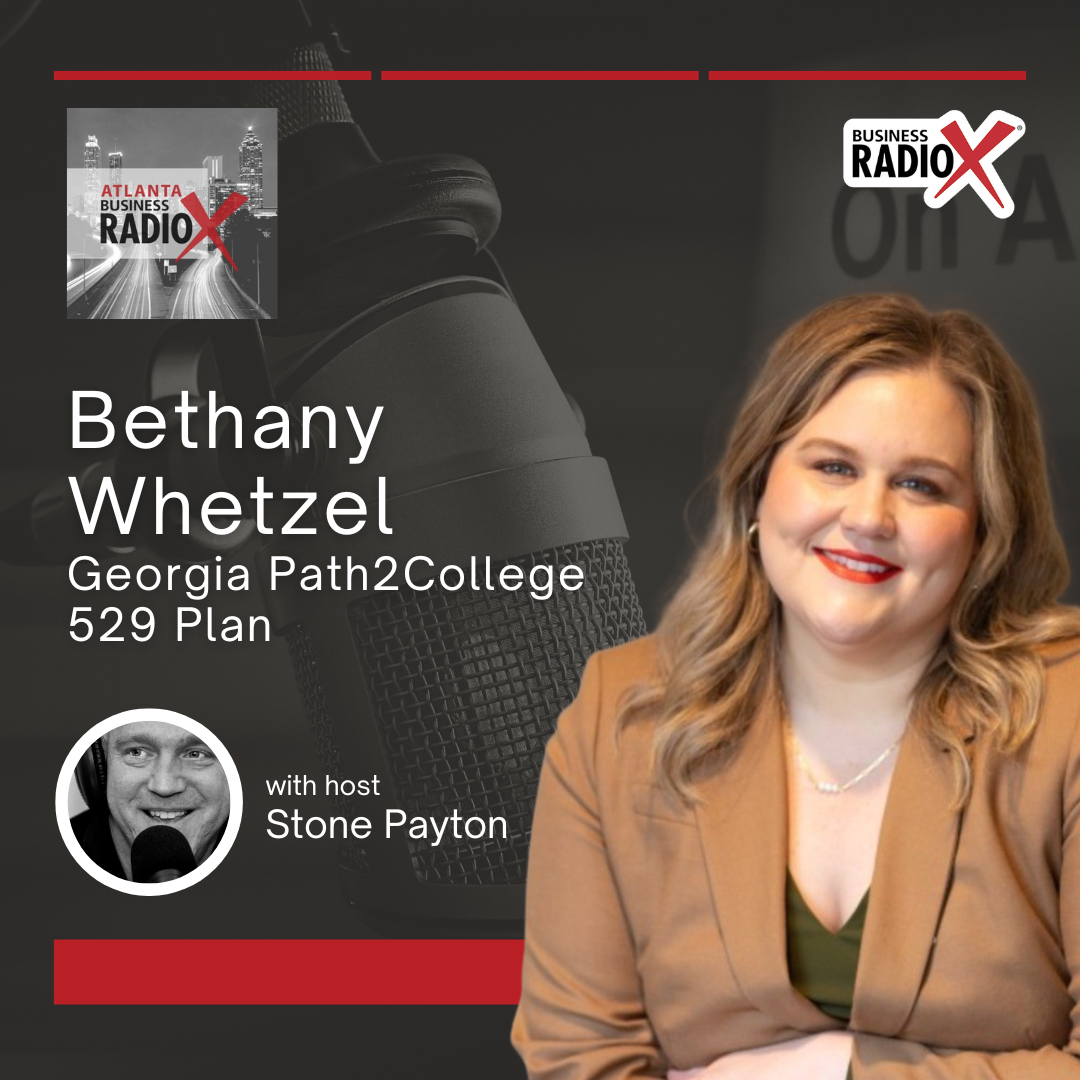
In this episode of Atlanta Business Radio, Stone Payton talks with Bethany Whetzel from the Georgia Path2College 529 Plan. They discuss the benefits and features of the state-sponsored 529 college savings plan, which helps families save for future educational expenses with tax advantages and various investment options. Bethany explains qualified education expenses, the importance of early savings, and the ability to gift contributions. Stone shares his personal interest as an expectant grandfather, making the topic particularly relevant. The episode also highlights sweepstakes for newborns and children, encouraging early investment in education.
Path2College-logo

Bethany-WhetzelBethany Whezel is the Treasury Program Director at Georgia’s Office of the State Treasurer.

She oversees Oversee the management, administration, and outreach for four core Treasury programs Path2College 529 Plan, Georgia STABLE Plan, Secured Deposit Program, and the Cash Management Improvement Act (CMIA).

She’s worked for a number of Georgia departments including the Georgia Vocational Rehabilitation Agency, the Office of the Inspector General, the Georgia Department of Corrections, and the the Georgia Government Transparency & Campaign Finance Commission.

Follow Georgia Path2College 529 Plan on LinkedIn, Facebook and Instagram.

What You’ll Learn in This Episode

  • About Georgia’s Path2College 529 Plan
  • How a 529 plan works
  • How the funds can be used for education
  • The advantages over other ways to save for college
  • What happens if you don’t use all the money
  • The Path from Pre-K to college sweepstakes

Transcript-iconThis transcript is machine transcribed by Sonix.


TRANSCRIPT

Intro: Broadcasting live from the Business RadioX studio in Atlanta, Georgia. It’s time for Atlanta Business Radio, brought to you by Kennesaw State University’s Executive MBA program, the accelerated degree program for working professionals looking to advance their career and enhance their leadership skills. And now, here’s your host.

Stone Payton: Welcome to another exciting and informative edition of Atlanta Business Radio. Stone Payton here with you this afternoon. This is going to be a good one. Please join me in welcoming to the broadcast with Georgia Path2College 529 plan Bethany Whetzel. How are you?

Bethany Whetzel: I’m great. Stone, thank you so much for having me today. I’m glad to be here and to have an opportunity to talk a little bit about path to college.

Stone Payton: Well, it is an absolute pleasure to have you on the broadcast. There’s so much that I personally do not know about this program. I want to inform our listeners, I want to inform me, and I will just share with you from a personal standpoint, I am on Grandfather Watch. I should have a grandson within a week. And so topics like this are very much on my mind for sure.

Bethany Whetzel: This could actually couldn’t be any more timely for you. Um, because we have some exciting opportunities for newborns that are born in the state of Georgia that hopefully, um, can maybe help your grandchild.

Stone Payton: All right, so let’s start with a little bit of a primer. Maybe, uh, share with us what exactly is the Georgia Path to College 529 plan? And then we’ll just kind of talk it through.

Bethany Whetzel: Sure. So, um, path to college is path to college. Uh, 529 College savings plan is Georgia’s one and only state sponsored 529 college Savings plan. So if someone is not familiar with the college savings plan, it is a vehicle for someone to save money and invest money, uh, for an individual’s education, future educational needs. And it has some very specific benefits. Um, there’s some unique tax tax advantages. It’s flexible and there’s really great range of investment options. And, um, really proud to say that Georgia’s path to college plan is the lowest in the nation as far as fees.

Stone Payton: Wow. I got a ton of questions about the plan itself. But before we even go there, I got to know what’s the backstory? How did you find yourself in this line of work, Bethany?

Bethany Whetzel: Well, really, I mean, by luck, this has been a great fit for me. I have worked for the state of Georgia. So past to college is, um, obviously it is the state’s, uh, 529 college savings Plan, and it is administered by the office of the State Treasurer. We are overseen by the Georgia Higher Education Savings Plan Board. The chair of that board is actually the governor of Georgia. Um, and so I work for the Georgia office of the State Treasurer. And previous, uh, previous to before I came to the office of the state Treasurer, I worked with numerous state agencies doing program administration and outreach, and, um, worked in a legal capacity. I have a tax background as well. And so this job in, um, overseeing the path to college, 529 college savings plan really kind of marries my, um, interest in taxes, compliance. But the wonderful and great part of outreach in helping, um, people, uh, reach their goals and make a difference in the lives of children and youth across Georgia who, um, who are planning for future educational opportunities.

Stone Payton: Well, I have to believe this must be incredibly rewarding work for you.

Bethany Whetzel: It really is. It’s been a great it’s it’s honestly been so great. And it’s been great, uh, seeing the children and, um, speaking really, even just to my peers or, uh, coworkers and other individuals when they say I had a path to college plan. And it helped me, uh, you know, go through college. I have, um, one friend that when we were discussing, um, my job, she said, you know what? I had a path to college plan, and I had a little bit of money left over. So when I had my first born, I deposited, I created an account for my first born daughter, and I deposited my leftover money. I transferred that over to her. So not only did it fund her education, but that little bit of leftover is going to go towards her daughter’s, um, future education expenses. So it just it really is great.

Stone Payton: Yeah. All right. So I’ve heard the term 529. That’s about where my knowledge begins and ends. End. So walk us through it a little, if you would.

Bethany Whetzel: Of course. So, um, it’s called a 529 plan because it’s authorized by section 529 of the Internal Revenue Code. And that code section allows, um individuals, it allows for certain investment. Um, accounts for you to put after tax dollars, um, in what a lot of people are more familiar with sometimes are, um, our IRAs or um, so those retirement accounts, this, uh, investment account is specifically for college and, um, education savings. So it’s called a 529 college savings plan. And what it allows someone to do the Internal Revenue Code, it allows someone to put dollars into a 529, uh, investment plan. So for Georgia that hopefully your choice would be path to college, and it allows an individual to put that money in there to select an investment option. And, um, there’s. And then it allows for, uh, two different tax benefits. One, uh, earnings earned on, uh, the investments that you’ve made, that money is tax deferred. And then the second thing that is, um, that is similar across the board of all path to college, excuse me, of all 529 college savings plans, is that if you, uh, take the money, if you withdraw the money out for a qualified education expense, then that is a tax free money. So that investment income you earn, if you withdraw it for a qualified education expenses, you’re not going to have to pay federal income taxes. But what makes the path to college plan so special is that if you are a Georgia resident and you, um, take that money out, you’re also going to get a third benefit, which is that you’re going to get a state income tax deduction. And that tax deduction is pretty generous. It’s um, $4,000 $0 for a single filer per beneficiary, and then up to $8,000 for a joint filer per beneficiary. So if you have multiple children and you’re giving, you know, $16,000. 8000 to 1 and 8000 to another, and you’re filing jointly, you can get an income tax deduction up to $16,000.

Stone Payton: Wow. That is encouraging. And so these qualified. Um, what do you call it?

Bethany Whetzel: They’re called qualified education expenses. So that’s kind of a mouthful.

Stone Payton: So what are some things that would qualify and what are maybe some examples that that might not qualify.

Bethany Whetzel: So the big the big thing that comes into mind when you think of a qualified education expense. And I think a lot of people this is just where it ends, is tuition at any accredited private or public college or university, community college, technical college, graduate school or professional school across the US. And also, um, many universities that are abroad. So that’s typically what you think of when you think of, okay, this is how I’m going to spend the money. But you also, um, for post-secondary education, certain room and board related expenses qualify fees, books, supplies and other equipment needed for enrollment and attendance are qualified expenses. Computers, technology. Um, so those are all qualifying expenses for post-secondary. And but then there’s a couple of special things is that you can use, um, money up to $10,000 a year for K through 12 expenses for certain K through 12 expenses. Um, and that would be a qualified education withdrawal. And, um, another thing is that you could repay student loans up to $10,000 in the lifetime per beneficiary. Um, that would be a qualified education expenses, something that would not be a qualified education expenses, even though it is related to attending college would be, um, would be buying a car for your child. Um, that would not be a qualified education expense. And then if you were just to withdraw the money just so you would have cash, that’s going to be a taxable event and would not be a qualifying expense.

Stone Payton: Okay. So let’s say that I did grab a little bit out of there and maybe even with the best intentions. And then I turned around and bought a boat or car or whatever that does it. Does that sink the whole thing, or I just have to pay taxes on that piece of it.

Bethany Whetzel: You just have to pay taxes on the piece that you withdrew.

Stone Payton: Okay. And I want to clarify something because I may just be hearing what I want to hear here.

Bethany Whetzel: That that happens sometimes.

Stone Payton: Yeah, it happens to me a lot. So, um, do they do does the kid have to go to a state school or in the state of Georgia? What are the rules on that?

Bethany Whetzel: There are no rules. It’s, uh, any school, professional school across the United States. And then again, some that are abroad. So just because you’re investing in Georgia’s 529 college savings plan, it doesn’t mean that you are limited to spending that money on a Georgia University college technical college apprenticeship program. It could be anywhere across the country that qualifies.

Stone Payton: And is this something you can get going with? Like, you don’t have to have a great big pile of money to get this thing set up right. You can just start seeding it a little bit with relatively small amounts of money.

Bethany Whetzel: Exactly. You only need to open an account. You only need to to have a $25 contribution that’s as little as as you need. And what we’ve seen is that no matter the dollar amount that you’re putting in, just the act of putting money in and letting a youth or a loved one or a child know that you believe in them and that you’re putting you believe in them so much that you are putting money aside, um, in an account again, no matter how much it is. That said, that is a huge confidence booster for a child to know that someone believes in them that much. And then again, the earlier you start saving, the better, because the benefit of a 529 college savings plan is that you’re going to get that compounded interest. So you’re going to, you know, you’re going to get earnings and then you’re going to get earnings on top of those earnings. The longer that you keep it in there. So any amount of money is better than no money for sure.

Stone Payton: So I’ve just experienced in the space of about 5 or 6 minutes, learning a great deal about something I didn’t know the first thing about which, which makes me think that a big part of your responsibility of day in the life of Bethany and her team is getting getting the word out and educating people like me that really don’t understand or know about this. Is that accurate?

Bethany Whetzel: That is that is very accurate. And so our office and our program administrator, um, we are available at any point, you know, if you have a community organization or group that has a would love, you know, for us to come talk and and present this program or we, you know, set up at booths and hand out information. We’re always available to take take, um, part of those opportunities because the more people that we know, um, the more people that know about path to college, the more people that are going to participate in the you know, we’re always looking in the state of Georgia to invest in the education of our workforce. And so, you know, a lot of times, the education opportunities that we have, um, for our residents and they’re going to stay here. Um, it’s only going to, you know, better the entire state.

Stone Payton: Is there a direct path where I can do this on my own? And or can I call my money guy? Not that I have one. I’m just making. This is hypothetical. Can I call my money guy and say, okay, Rochester, I want to do one of these 529 things like, what’s the path? What’s the best way to just kind of get things going?

Bethany Whetzel: Right. So we have a website. It’s. The number two college c o l e g the numbers five two, nine. Com that’s our website. And you can go to our website and open account there by yourself. It’s um path to college is what we call a direct sold plan. So you don’t have to go through a financial advisor to open an account. But if you have a financial advisor, um, that’s great. And they can assist you in choosing the investment option that you may want or what strategy to use. But it you do, it’s you do not have to have, um, a financial person to open the account for you. You can just head to the website, open an account. Doesn’t take very long. Um, all of the transactions can occur online. And one thing that’s really great about our program that I want to make sure that I, that I mentioned is that we have a platform called You gift. And so let’s say Stone that you open an account, um, for your grandchild and let’s say your grandchild has other grandparents as well that want to contribute it to it. You can set up this gifting page and send the link to those grandparents. And they can contribute through that link to your grandchild. Um, by Path to College 529 College Savings plan so they can have one big plan together.

Stone Payton: Oh, I love that. I’m going to start my email list right now because, you know, I might not be rich, but Mom and Dad are.

Bethany Whetzel: There you go.

Stone Payton: My brother. So I’m just going to put together this whole. I got a whole marketing campaign spinning in my my head right now.

Bethany Whetzel: There you go. And a lot of times, you know, a parent may want to would prefer that you put money in an investment account. Then give them, you know, a plastic toy that they they’ll only be interested in the box, um, when they get it. So I think it’s a great way to, to give a gift and, um, a lasting gift that really will impact the future of the beneficiary.

Stone Payton: And I’m jesting a little bit. I mean, I do study and try to keep an eye on, you know, how to make money with money and of course, invest some. But, um, it’s not like I’m just buying this and putting it in a virtual drawer. I’ve got some choices of some things or some vehicles I can invest in along the way. Yes.

Bethany Whetzel: You’re exactly right. So there’s really two primary investment, um, kind of paths, if you will, for a path to college. You can choose static investment portfolio portfolios. And those are people who generally are like a little more investment savvy and want to have a heavier hand in managing and choosing the funds that they are investing in. And then we have something that is our most popular choice. We have these enrollment year investment portfolios where you select the year that the beneficiary, so the child would be enrolling or be needing to access those funds. And then basically, um, the plan does the investment for you, where as you get closer to that enrollment date, it starts investing in more conservative options, because that’s when you’re going to start needing to access those funds and protect those funds more. So it’s it’s called a glide path. And so there’s enrollment your investment portfolios static investment portfolios. And um, the static take into account whether what your risk tolerance is. And on our website, you can actually take a little quiz to determine what your risk tolerance is. And it’ll kind of recommend plans relating to that too.

Stone Payton: So I likely don’t have the IQ points to actually do the calculation, but it is my understanding and candidly, my experience that if you will do something like this, that money will grow if you’ll leave it alone. This, this, this compound interest thing is it really is the the eighth wonder of the world, isn’t it?

Bethany Whetzel: Right. It’s just hard sometimes to be patient and to wait for it. But you’re exactly right. Um, that’s, you know, really basically, to some degree, free money. Um, at the end of the day.

Stone Payton: Okay. I believe I read somewhere in my, uh, notes something about a sweepstakes.

Bethany Whetzel: Correct. So from time to time, the path to college 529 College savings plan runs a couple of sweepstakes. We just closed our sweepstakes for We Care, which is a partnership with the Department of Early Care and Learning, where we award um for scholarships to students at a licensed child care centers. Uh, we award contributions of $1,529 to a path to college account, and then we do a corresponding award to each child care facility. So they have some free money to, um, continue to invest in those children. Uh, we also have a path from pre-K to college sweepstakes, which is for um, pre kindergartners that are attending Georgia pre KS and again for winners, um, in different regions of the state. And we award $1,529 to each of those winners and a corresponding, um, 1520. If you see there’s a pattern here of 500, $529 to kind of go with the 529 plan, but the one that you are going to be the most interested in stone is that we have a newborn sweepstakes. And this year we have expanded it to make sure that, um, two babies are going to be awarded a sweepstakes prize, and that award is $5,529. And, um, so we’re awarding two babies born in the state of Georgia, um, that in a path to college account to get them started on their, uh, college savings journey.

Stone Payton: Oh, I think that is fantastic, because you’re right. That is the one that I’m interested in. All right, so how quickly can I. I need to wait for this baby to be born. Is that when I can pull the trigger, or is there like.

Bethany Whetzel: That’s when you pull the trigger is when the baby is born. So it may be today. It may be tomorrow, right?

Stone Payton: It’s. Well, this this baby has been scheduled like a conference call, so we’ll see. But, you know, I think they come when they. When they want to. Okay. So you can begin as early as they are actually here.

Bethany Whetzel: Correct.

Stone Payton: But this also strikes me as one of those things that’s it’s probably never really too late either. Right. Because didn’t you. Maybe it was before we came on air, but I feel like you touched on being able to use some of these funds. Even if, you know, grandbaby one doesn’t use it, we can let grandbaby two use it. Walk me back.

Bethany Whetzel: Exactly, exactly. You can move funds to different beneficiaries at different times. Um, another thing, you know, a lot of people are concerned about setting up a path to college or any not just a path to college account, but any college savings account, because they don’t they think, well, I don’t know what my child is going to do in the future. Is college in their future? And, um, a great thing that um, happened, um, starting in January. January 1st of 2024. Is that 529 college savings funds could be rolled over into a Roth IRA. So if your child doesn’t use all their funds or they don’t go to college, if the account has been around, um, for 15 years, you can roll that into a retirement account for them. So it’s not that all is lost or you’re going to, you know, have to take the money out and have to pay taxes on it. There are some options. If that money, um, you know, doesn’t get used or you can put it to a different beneficiary for sure. There’s obviously tax rules surrounding that, but that’s basically the gist of that.

Stone Payton: I love it, and it’s not my nature to try to poke holes in things, but I if if it were my job to do it, I don’t know where I’d poke this thing.

Bethany Whetzel: Well, I’m glad to hear that.

Stone Payton: Oh my God, you must feel so good about the work you’re doing and truly enjoy it.

Bethany Whetzel: I do. Well, you know, it doesn’t hurt when you are educating people or promoting a product that is something that you believe in and you truly believe is a great choice for Georgians. And knowing that we’re managing it in a way where we are stewarding the, um, the, the money of investors, um, in a responsible way, and then also having the lowest fees, um, across the country. So we’re really making sure that everyone is getting a good return on their investment, if you will. Um, a good bang for their buck. And, um, so, yeah. So I do feel great. Honestly, I feel great every day I get to come to work. Um, because Path to College, uh, is a great program.

Stone Payton: All right, before we wrap, I’m going to switch gears on you a little bit, if I if I might, I don’t know when or where or how you would find the time, because I get the idea that you’re pretty consumed with this work and you clearly enjoy it. But I am interested and often our listeners are as well. Hobbies, interests? Pursuits outside the scope of this work. When you’re not doing this, anything that you, uh, really enjoy or have a tendency to to, to nerd out about and step away and get recharged.

Bethany Whetzel: Well, I mean, I would say that my big thing is I’m an I am an, uh, Atlanta dweller. Uh, I live in the East Lake neighborhood, and I have a great community and a lot of neighbors. And so really, what I do after work every day is I take my two dogs for a walk. I have a poodle. Um, she’s ten years old, and then I have a, um, a doodle, and he’s four years old, and we walk around the neighborhood and visit with our neighbors and, um, you know, hang out with the kids and watch watch them play basketball and soccer. And so that really is where my heart is. And what I enjoy doing kind of outside of work is just interacting with still interacting with people and just, um, finding community where I can and hanging out with my dogs. So.

Stone Payton: Well, you are clearly the right person for the job. And, uh, just based on my brief interaction with you, I bet that you’re able to create the same level of enthusiasm and commitment and passion within your whole team. The work you’re doing is so important and obviously incredibly helpful for those of us that are just, you know, we’re out there trying grinding it out, and we want to provide for for a safe and secure future for, uh, for our loved ones. Uh, all right, let’s I want to make sure that our listeners, uh, know how to get in touch with you or someone on your team or be able to tap into your work. So let’s leave them with a website or something. So that’s easy for them to, to learn more and and get on this path.

Bethany Whetzel: Okay. Um, so the best place to get started is our website. And so that is um WW 252.com. So it’s. The number 2COLLE the numbers 529.com.

Stone Payton: Bethany, what a delight! It has been a real joy visiting with you. I have thoroughly enjoyed the conversation. I’ve learned a ton and I feel like our listeners have as well. Thank you for your insight and your perspective. This has been an incredible conversation. You’re you really are doing important work and we we sure appreciate you.

Bethany Whetzel: Well, thank you so much, Stone, and thank you for your time. And I appreciate the people who are listening. And if they have any questions, they can just reach out.

Stone Payton: Fantastic. All right. Until next time. This is Stone Payton for our guest today, Bethany Whetzel with Georgia Path2College 529 plan. And everyone here at the Business RadioX family saying, we’ll see you again on Atlanta Business Radio.
 

Tagged With: Georgia Path2College 529 Plan

Marianna Soper | Thrive Coworking Gainesville GA

April 14, 2025 by Rose

North Georgia Business Radio
Marianna Soper | Thrive Coworking Gainesville GA
Loading
00:00 /
RSS Feed
Share
Link
Embed

Download file


What if the secret to growing your business isn’t working harder… but working around the right people?

That’s exactly what happened when host Phil Bonelli discovered Thrive CoWorking in Gainesville — a vibrant space where productivity, creativity, and connection collide.

Thrive Gainesville: Where Business, Community, and Productivity Meet

In today’s fast-paced, hybrid work world, finding the perfect balance between productivity and community can be a challenge—unless you’ve discovered Thrive Gainesville. During this episode of North Georgia Business Radio, Community Manager Marianna Soper shared how Thrive Gainesville is redefining co-working spaces for entrepreneurs, remote workers, and growing businesses.

Since its start in 2015, Thrive has expanded rapidly across the Southeast and beyond, with locations from Georgia to Montana. But Gainesville’s location, nestled on the beautiful downtown square, offers more than just desks and Wi-Fi—it’s a vibrant hub for connection, collaboration, and business growth.

Thrive Gainesville provides flexible workspaces, including 40 private offices, open co-working areas, phone booths, meeting rooms, and even a podcast studio. Members enjoy 24/7 access, high-speed internet, complimentary coffee, and regular networking events that foster genuine relationships — not just business cards.

Marianna highlighted how Thrive isn’t just a place to work—it’s a place to thrive. From solopreneurs seeking focus outside their home office to teams downsizing traditional office space, Thrive offers a dynamic environment that encourages productivity and creativity. The month-to-month leases, modern amenities, and a strong sense of community make it an ideal solution for today’s flexible workforce.

Whether you need a professional space for a day, a private office without long-term commitment, or a spot to grow your business alongside like-minded professionals, Thrive Gainesville delivers. Plus, with locations across multiple states, members can tap into Thrive’s expansive network wherever they travel.

Looking for more than just office space? Thrive Gainesville offers the energy, support, and connections that make everyday work extraordinary. As Marianna says, it’s like working from home—but so much better.

Discover how you can boost your productivity and build lasting connections at Thrive Coworking.


Connect with Marianna and the Thrive Gainesville Team:

https://workatthrive.com/gainesville/

https://www.instagram.com/workatthrive/

https://www.facebook.com/workatthrive/

https://www.linkedin.com/company/thrive-coworking-office/posts/

Connect with Phil Bonelli:

https://www.facebook.com/Hopewell-Farms-GA-105614501707618/

https://www.instagram.com/hopewellfarmsga/

https://www.hopewellfarmsga.com/


Connect with Beau Henderson:

https://RichLifeAdvisors.com

https://www.facebook.com/RichLifeAdvisors

https://www.facebook.com/NorthGARadioX


This Segment Is Brought To You By Our Amazing Sponsors

Hopewell Farms GA

Roundtable Advisors

RichLife Advisors

Regions Bank


Highlights of the Show:

00:31 – Meet Marianna Soper & Thrive Gainesville
Phil Benelli introduces Marianna Soper, Community Manager, and dives into how Thrive helps professionals do more than just work—thrive!

03:44 – Thrive’s Impressive Growth Story
Marianna shares how Thrive expanded from Alpharetta to multiple states, offering flexible co-working solutions nationwide.

05:27 – Membership Options & Modern Amenities
Explore Thrive’s flexible memberships, private offices, meeting rooms, and perks like phone booths, coffee, and a podcast studio.

07:23 – Community, Networking, and Member Perks
Monthly events, happy hours, catered lunches, and surprise treats—how Thrive fosters real connections beyond the workspace.

11:08 – The Power of Human Connection at Work
How simply being around like-minded professionals boosts productivity, accountability, and creates unexpected friendships.

13:31 – Location, Convenience & a Home Away from Home
Thrive’s prime spot on Gainesville’s square offers walkability, a kitchenette, and the vibe of working from home—but better.

16:10 – Marianna’s Journey to Finding Her Perfect Role
From teaching and motherhood to community management—how Marianna found a career that matches her passion for people and service.

18:43 – Meeting Spaces & Podcast Studio for All
Businesses don’t need a membership to book Thrive’s professional meeting rooms or fully-equipped podcast studio.

25:03 – 24/7 Access: Work When Inspiration Strikes
Thrive members enjoy round-the-clock access—ideal for flexible schedules, weekend productivity, or even family Pac-Man sessions!

28:31 – Fun Stories: Groundhogs, Beer Fridges & Business Growth
Marianna shares memorable moments—from surprise animal visitors to members “graduating” into private offices as their businesses grow.

32:20 – Why Co-Working is the Future of Work
Post-COVID trends have shifted businesses toward flexible spaces—Thrive offers the perfect solution for hybrid and remote teams.

36:08 – Best Practices for Thriving in a Co-Working Space
Tips on respecting shared spaces, embracing community, and maximizing the benefits of working at Thrive Gainesville.

38:57 – Is Thrive Right for You? (Spoiler: Yes!)
Why Thrive is ideal for solopreneurs, small teams, and anyone needing flexible, inspiring workspace without long-term commitments.

39:05 – A Fun Wrap-Up: Chickens, Pizza & Sparkle Time
The episode ends on a playful note with a custom rap, showcasing Thrive’s vibrant culture and Marianna’s dynamic community spirit.

Tagged With: marianna soper, meeting rooms, north georgia business radio, private office space, productivity and community, thrive cowoarking gainesville

The Evolution of Intelligence: How SCIP is Shaping the Future of Data Utilization

April 1, 2025 by angishields

ALR-SCIP-Feature
Association Leadership Radio
The Evolution of Intelligence: How SCIP is Shaping the Future of Data Utilization
Loading
00:00 /
RSS Feed
Share
Link
Embed

Download file

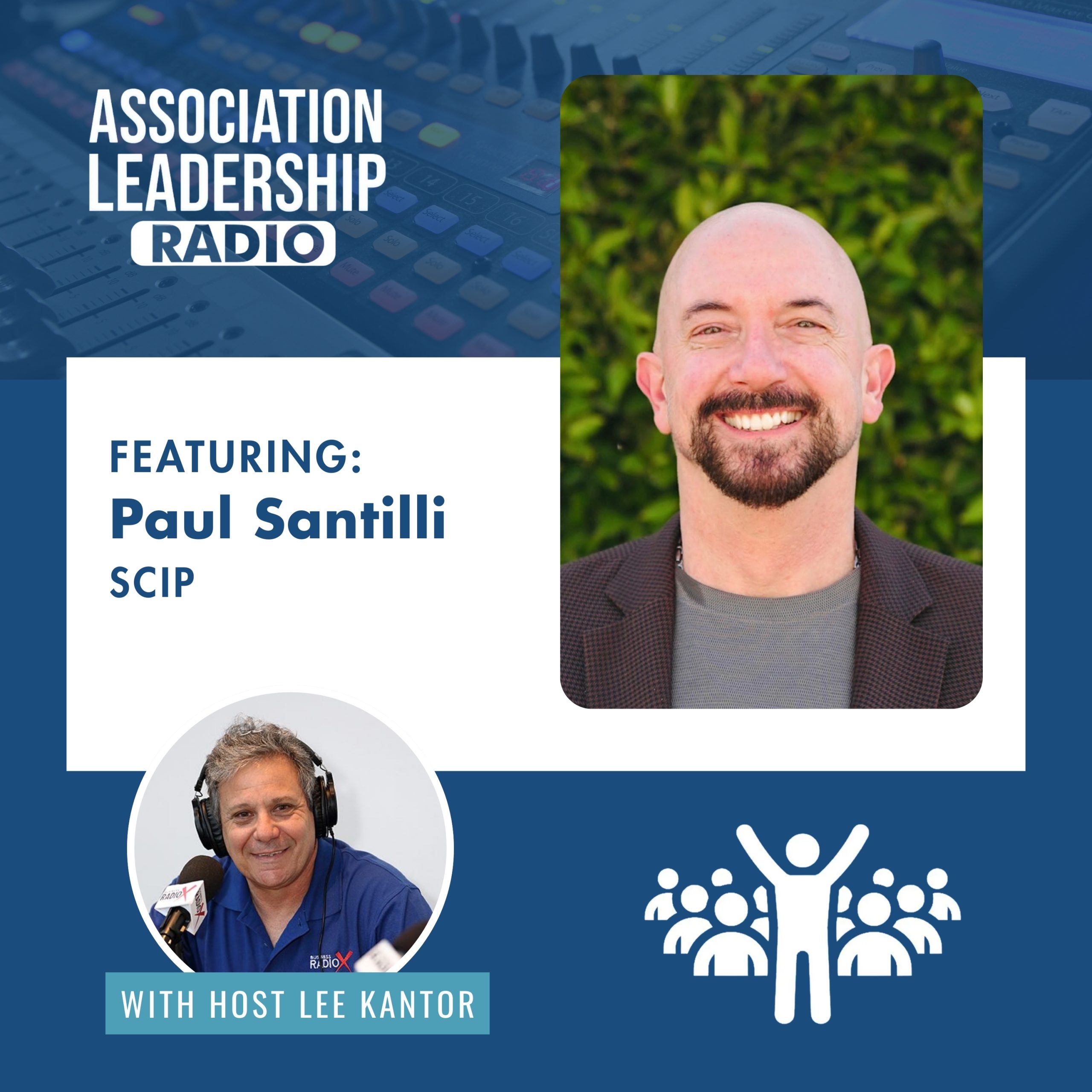
In this episode of Association Leadership Radio, Lee Kantor is joined by Paul Santilli, CEO of the Strategic Consortium of Intelligence Professionals (SCIP). They discuss SCIP’s mission to promote effective data use for organizational growth and personal development. Paul highlights SCIP’s evolution from a focus on competitive intelligence to encompassing broader disciplines like economic and social intelligence. The conversation covers the impact of COVID-19 on data utilization, the challenges of distinguishing valuable data from noise, and the importance of critical thinking. Paul also emphasizes the role of education and global collaboration in building a robust intelligence community.

Paul-SantilliPaul Santilli is the Chief Executive Officer and Executive Advisory Board Chair Emeritus of the Strategic Consortium of Intelligence Professionals (SCIP) organization and is active in several advisory roles to academia, business, and government organizations.

Paul presents worldwide on Intelligence, Innovation, and Strategy in keynote and executive coaching capacities, and has published numerous papers in industry and academic journals related to Intelligence Modeling, Innovation, Disruption, and Strategy.

He is a recognized thought leader in this space and chairs multiple Executive Customer Councils and Industry Advisory Boards globally.

Paul is also Founder and CEO of Strategence LLC, a company that provides proprietary advisory and business insights & analytics to companies for intelligence-based business growth strategies.

Prior to his current role, Paul was a long-term veteran of Hewlett Packard Enterprise (HPE) and most recently headed up the HPE Worldwide (WW) Industry Intelligence & Strategy Organization for the Original Equipment Manufacturer (OEM) Solutions Business. scip-logo

Paul also contributed at Apple Computer in various leadership roles around Quality, Operations and Product Development.

Paul has a Bachelor’s degree in Engineering from the University of Michigan, and a Master’s degree in Engineering and Business from Stanford University.

Connect with Paul on LinkedIn.

What You’ll Learn in This Episode

  • What is SCIP and what they do
  • Why Data and Intelligence is important
  • How SCIP works with individuals and organizations to expand the role of Intelligence
  • Some of the globalization efforts SCIP is doing
  • How to become a part of this “Consortium”

Transcript-iconThis transcript is machine transcribed by Sonix.


TRANSCRIPT

Intro: Broadcasting live from the Business RadioX studios in Atlanta, Georgia. It’s time for Association Leadership Radio. Now here’s your host.

Lee Kantor: Lee Kantor here, another episode of Association Leadership Radio. And this is going to be a good one. Today on the show, we have Paul Santilli, who is the CEO with Strategic Consortium of Intelligence Professionals, SCIP. Welcome, Paul.

Paul Santilli : Thank you Lee. Pleasure to be here.

Lee Kantor: I am so excited to learn what you’re up to. Before we get too far into things, tell us about SCIP. How you serving folks?

Paul Santilli : So SCIP, Strategic Consortium of Intelligence Professionals. We are the world’s largest global intelligence association. We’re a nonprofit community. We have over 25,000 individuals in 120 countries. And our mission is really to promote, develop, share knowledge around data, the use of data, and how data can be transformed into intelligence and insights that can be used to build organizational growth, improve personal development, improve societal issues and things of that nature. So we are an institution that has a lot of thought leadership, that provides that sort of value and content to a greater population.

Lee Kantor: So what was the genesis of the idea? How did this come about?

Paul Santilli : Actually, SCIP’s been around for many years, over 30 years as a nonprofit, and it’s been traditionally in what we call the competitive intelligence platform footprint. Really looking at what are your competitors doing, how are they performing, what are their customers and products and pricing and marketing strategies and all those kinds of things, and use that information then to develop your own competitive positioning and how you can compete better in the marketplace and, and hopefully get your products to sell and gather market share and so forth. Over the last few years, I’ve taken leadership of SCIP. I’ve been affiliated with SCIP for a long time on the board of directors and so forth. But now, as a leadership position with SCIP, I’ve realized the importance of the fact that you have to really go beyond just the competitive intelligence landscape that is forever critical, absolutely critical in any intelligence modeling effort, but we want to build off of that to include other data driven intelligence disciplines, such as economic intelligence and social intelligence and human intelligence, and all the other types of applications anywhere there’s data generated. For example, the electric car gets anywhere from generates anywhere from 4 to 20GB worth of content, terabytes, I should say, of content every day. Now that data that’s being used there is being used by many, many different people downstream. A lot of the advertisers and the manufacturers of the tires and and all of these sorts of things in terms of how they use that data to create a strategy to promote certain elements in your lifestyle, or to promote a business development plan or whatever the case might be. So this use of data is critical and very important for all individuals to really understand how to use that data to create a strategy that can help you and your organization grow.

Lee Kantor: Well, I think your associations more and more important, especially in an age we’re living in now with the with AI and large language models and machine learning, it seems like what you’re doing goes hand in hand with that effort.

Paul Santilli : Yeah, absolutely. See, the the intent here is, I think what’s happened over the last few years, especially with Covid, has really come to make organizations and individuals realize the importance of data. You know, the use of data to digitally transform. You might have used that. Heard that term used before in the industry. Digitally transform your organization to be one by which they use the data to be able to understand customer behaviors. Using data to improve your infrastructure. Using data to improve how you market and price and position your products in the marketplace. And Covid, a lot of organizations because of all the restrictions that were put on on companies and individuals. Many companies failed because they didn’t have this data centric mentality in the organization. Now, from the learnings from that, we’re able to to have a pretty comprehensive understanding of how data can get you into this digitally transformed, 21st century type of a company that is so crucial to be able to compete in today’s world.

Lee Kantor: Now, do you find that we’re getting to the point where so much data is being, um, captured that without a strategy on how to learn from it, it’s kind of you’re just doing something. It sounds like you should be doing. But if you’re not kind of learning from it or connecting dots from it, it’s kind of a silly pursuit, right? Like, if you’re not able to do anything with it, then why are you doing it?

Paul Santilli : Absolutely. And that’s the whole crux of what SCIP is all about. We help individuals understand the fact that the data is there, you can collect it, but it’s how you analyze it and how you use it in order to make it a growth enabler for you and your organization. And you mentioned AI earlier. Um, you know, interestingly, AI has been around for at least 50 years. I took an AI course in college 100 years ago. So that tells you how old this AI has been around, right? The reason why it’s really taken off over the last few years is because of two things. One, the fact that we have the data because we didn’t have the data enough for the models to learn from, and B we have compute power, the compute technology, in order to run these algorithms, you know, very effectively and quickly. So with that now in play, you’re able to have these AI algorithms as as tools in your toolbox to analyze the data, to come up with behaviors and experiences and hopefully get to a point where you can project future situations. We call this scenario planning or futures planning, and understand what the future may hold for a different organization. You know, doing extrapolations and in roadmaps and technology trends, and vertical market trends and things of this nature, and then come up after that, really a prescription of how the organization needs to behave in order to respond to this sort of scenario that’s been painted by AI.

Lee Kantor: Now, how do you help or advise people to kind of separate signal from noise and to know what are the metrics that matter? Because there’s so much data, it might be easy to see something, but it may not be the thing that really matters. Like just because you can capture something easily or you can count it doesn’t mean that it’s, you know, worth counting. Like, how do you is that an area that you help your members with?

Paul Santilli : Well, without a doubt. I mean, it’s, you know, I call it trying to extract the golden nuggets of information from that vast population of noise out there. And if you look at different sources, I mean, social sources, for example, has a tremendous amount of noise. But there are golden nuggets you can extract around customer sentiment and behaviors and things of that nature, uh, structured data that comes out of, um, you know, corporate environments or, or public domain content. There’s always information to pull from that. And again, the tools you use and the way you’re able to interpret the content that these tools generate the content from are really the way that you need to do that. And the key to this is employing not only the technology around AI and all the other sophisticated knowledge management tools out there, but it’s also the human intelligence element that’s a very critical component to help eliminate bias and help eliminate hallucinations in your AI algorithm and help eliminate, you know, the the the trends that are strictly data centric when in fact society has accepted a different perspective. They may not be representative of the factual data that comes out of out of the AI information. Many times in history, we have instances where the societal acceptance of a perspective is what dictates the future trends, and that may not be based on the actual data that comes out of the research. So you have to be able to differentiate and know which one do you want to use as the data source for your strategy and growth? Uh, opportunity for you and your company now?

Lee Kantor: Yeah, absolutely. And I think it’s so important to have this knowledge and the ability to think critically about all of this because it’s it’s permeating every aspect of our, our world right now. And if you don’t like if we can’t agree on certain things as facts, it’s hard to have conversations about data. And, um, and the importance of it and what’s true and what’s not true and what’s a hallucination? What’s not a hallucination? If we can’t all agree with this, it gets really challenging.

Paul Santilli : And it’s that’s, you know, that’s a whole nother podcast episode that’s probably at least two hours long, to be honest with you, Lee. Uh, I talk in this topic quite often, and, uh, it is certainly a challenge to, uh, What I like to call the the intelligence professionals out there. Um, this expanded perspective of using data around all types of things that are intelligence based. You know, competitive, as I mentioned, with all the other types of intelligence, even intelligence and sustainability and social responsibility. This is something that SCIP is active upon and using and educating individuals and organizations how to use your data and intelligence to create what we like to call, uh, a consortium for the betterment of people and planet. How do you use this data to to improve your infrastructure, to improve societal, uh, challenges and behaviors and things like that? And the, the, the aspect around SCIP is really these individuals who understand the need of intelligence. And also SCIP is comprised of experts in the field, people who understand and have the tools to be able to analyze this. So we are a consortium of this intelligence, thought leadership and intelligence subject matter experts that are able to educate and train and show people how to use data in order to create this better environment we’re trying to get to.

Lee Kantor: Now, under your leadership, you mentioned you’ve kind of, um, made the tent larger, maybe, and or including people in other areas in other industries that maybe weren’t first part of this.

Paul Santilli : That’s absolutely yes. We call this expanded perspective. What I like to call the intelligence ecosystem. It’s really that expansion of all things generated from data. And so this again applies to many different applications. But we’ve not only expanded the reach of where data can take us and intelligence can take us, but we’ve also expanded ourselves significantly in the global sense. And what I mean by that, we’ve expanded our major events that we have around around the world. We used to be primarily North American focused. We’re now in Europe, Asia, Africa, um, putting one in South America, uh, Japan, so forth and so on. So we’ve expanded our international conferences, but we’ve also put together what I, what I call these intelligence centers of excellence, iQOS. These are regional communities that are extensions of Skype that reside all over the globe to talk about the regional data and intelligence needs and challenges. How does the intelligence and data management and the maturity of the intelligence model exist over in Africa versus Indonesia versus, you know, Romania versus Silicon Valley? And as you can imagine, the maturity levels between those areas are going to be very, very different. So it’s not a one size fits all in the intelligence business. The the having these intelligence centers of excellence all over the globe allows us to get a footprint of how the intelligence model behaves in these other regions so that we collect the information from all these regions. And now we can disseminate best practices to everybody so that everyone can get up to speed, and the learning curve becomes that much faster for those organizations and countries that have a very low maturity model, for example.

Lee Kantor: Now, since doing this effort and expanding the participants as well as the reach, have you had those kind of serendipitous connecting the dots that maybe no one had connected because there hadn’t been that many disparate individuals doing, you know, disparate things all in one place now, but now they have kind of a, a common playbook that maybe they can all, you know, there’s now a more common language that you’re you’re connecting the dots between people that maybe hadn’t really maybe they had been siloed previously.

Paul Santilli : Yeah. So I referenced these intelligence centers of excellence. We started this a little over a year ago. Uh, we we kicked it off with eight locations around the globe. We currently have 22, and we’re going to probably have 30 or so in the next 3 to 4 months. That’s how much traction we’re getting in the international community. So these are areas that are hearing what we propose and what we want to do and are in dire need of being able to understand the value of data in today’s environment, especially around, you know, countries around Africa, countries of Southeast Asia. These are emerging markets that really need to have a better understanding of how to use data. Now we coupled that also with what we call our affiliate program. Now our affiliates are partnerships with other international and local um intelligence organizations that have a similar but different sort of intelligence mission and focus. For example, there’s there’s um, several of them in Africa we’ve dealt with where we only US based, um, intelligence organization that has partnered on a, on a grand scale with a number of different African intelligence communities. We have intelligence relationships and affiliates with several different universities around the world who are helping us develop our educational content that we put together. Um, so these affiliates have, have are starting to fill in the gaps in the overall intelligence ecosystem model that I painted and are really helping us to become much more broad in our intelligence applications. As I mentioned from this, uh, data centric perspective that I painted.

Lee Kantor: Now, I would imagine that in certain places they’re just hungry for this type of interaction and this type of education and this type of sharing. It must be so rewarding to be able to give these people a place to go and a community to become part of where where everybody is kind of talking the same language and really passionate about the same, uh, things.

Paul Santilli : It’s without a doubt. And, you know, there’s one thing to build an organization, but to do it for the right reasons and to have a, a, a, a, um, global impact, uh, and have an impact on societal behaviors and organizational behaviors. And underdeveloped countries like we’re working now with Africa, uh, is truly rewarding. And I think that’s the real value you get from this. It’s not only the, you know, the ability to create a strategy for your business grows better and you make more money and so forth. But it’s also to help those organizations that are underdeveloped in infrastructure, you know, helping them use data to understand, you know, what is needed to put sanitation systems or water water cleanliness system or help to, you know, eliminate, uh, the destruction of native native habitat and so forth and so on. These are very rewarding things that are part of the model to use data and intelligence, as I say, for the betterment of people and planet. So it is very, very rewarding in that sense.

Lee Kantor: So who should become a member? Who are the people that you want in this ecosystem? And you mentioned a variety of groups and industries and and organizations. But who should consider being becoming a member of SIP?

Paul Santilli : Yeah. So the beauty of this is, you know, the question to ask is what individuals or who are the individuals that use data to make informed decisions and to create intelligence to make informed decisions in the workplace or even in their individual personal lifestyle or whatever. And it’s hard to say hard to find somebody who doesn’t or shouldn’t use data. And that’s the whole context here is the fact that, you know, we call these I call these people intelligence professionals. Well, they’re more of people who can understand the value of data and how to use that not only to you can grow your your organization, but to provide a skill set for yourself as an individual, to be more knowledgeable and better equipped with tools and the way you look at data and analyze information, the logic applied and the intelligence you can derive from that, and how to implement and take action on these things to make a change rather than, you know, sitting on your hands and kind of waiting for everyone else to do it. So the door is open. We have a very broad membership community portfolio you can join for free and be on the receiving end of a lot of very valuable content, or for a nominal fee. Every year you can get access to literally thousands of pieces of assets webinars, papers, podcasts, all different kinds of things we generate that can be used as, um, content to equip you with the knowledge that you need. Plus the training. We offer very broad education program and access to workshops and webinars and and all kinds of things in that space to get you more equipped. As you know, again, it’s adding the tools in your toolbox and increasing your brand as an individual with the intelligence knowledge that will help you, uh, be better in industry and in life in general.

Lee Kantor: So in a given business, um, who is typically the like, what’s the title of the person who is the member in an organization?

Paul Santilli : Well, it could be anywhere from a data analyst. Uh, there’s, there’s people who are in the competitive intelligence role in different industries, but it can also be folks in marketing and sales and product development and strategy. You can have mid-level and upper level management who are looking at supply chains and logistics and, and even all the way up to C-suite. And we have a C-suite program in development right now, um, an advanced Education degree program in intelligence and data management. This is something we’re developing because it’s so important to have the leadership of your organization be data driven and understand the data requirements that organizations must have, that digital transformation mindset that organizations must have in order to to create a culture that uses data within all of its decision making context. And once you have that at the top level, you know, the the trickle down effect within the organization that much more efficient and more usable for other people to then gain that knowledge and make it a priority in their everyday efforts.

Lee Kantor: Now, what about for the young people out there? Uh, is there a career path or a, um, maybe a like what? What would be their major? What would be their, um, kind of the direction they should go in in order to really, uh, learn more and get more involved in data and intelligence.

Paul Santilli : There’s a number of, uh, universities around the world that offer intelligence, uh, career path intelligence curriculum, I should say. Um, one of them we partner with, they’re an affiliate as well as a provider of curriculum for our education program. And I’m going to give a plug here to Mercyhurst University out of Pennsylvania. They’re very much advanced. And one of the world leaders in the intelligence development, business, community development, education and curriculum. So for young people getting into the into this environment and getting into this industry, it’s really you can start it at the, at the education, you know, school level. And then you can take that as a part of SCIP to help you nurture it along within your career all the way through to, you know, senior management type levels of applications. So there’s really a a groundswell, but there’s also an executive swell that’s happening simultaneously. And when you have both of those growing, you know, they’re going to then encompass the entire, you know, Ecosystem of of of the range of people that are affected then by in organizations by this whole data centric perspective.

Lee Kantor: Now, do you have any advice for other association leaders that would like to expand the reach and expand the types of members of an organization? That was probably a big lift, and it was probably took some negotiation to even get the board and everybody kind of on the same page of, hey, we used to do this, but now let’s aim higher. Let’s think about this more holistically. Um, can you share some strategies or some ways you were able to kind of get everybody on board with this?

Paul Santilli : Certainly challenges and there’s setbacks, but then there’s, you know, two steps forward, one step back, sometimes three steps back. It depends. But it all begins with a vision. It’s all begins with how you want to paint the world. And once the you know, from a leadership standpoint, when you have the vision, the next part of your your, your responsibility as a leader is to garner the troops around to follow that vision and support them every step of the way to achieve the, you know, not only the trajectory, but to achieve that vision over time and that that involves trust and and support and behaviors. Um, that’s the sort of thing that I, that I think is a critical element for anybody trying to take an existing organization, um, and kind of expand the box or get out of the box to create a different environment. Today’s world is so small, and the data has made it that way, such that if you try to stay within some sort of a niche geographic or product or services niche, I think you’re going to be limiting yourself in terms of the longevity and your ability to compete.

Paul Santilli : Now there’s exceptions, of course, but I’m talking about, you know, the the world being so small, the globalization effort is, is really, I think, where there’s opportunities and that’s happening all around us. Mergers and acquisitions and, and, you know, different perspectives to being taken on from a, an international, um, business relationship standpoint and, and all of the things happening in this context. I think the the ability to bring in partners, you know, the consortium we’re building has grown significantly over the last two years. And I’m very, very excited and happy about that. But to me, this is still scratching the surface. I’m trying to create what’s called what I call intelligence gravity, where as you build more and more of an intelligence consortium, you tend to draw more and more intelligence related entities into your consortium such that you have this gravity effect. And I think organizations in general have to really reach out and try to determine how do they affect this sort of gravity behavior of other organizations to build that sort of consortium model to have an impact, especially in the areas that we’re trying to focus our energies at.

Lee Kantor: So if somebody wants to learn more about SCIP or connect with you, what’s the website? What’s the best way to connect?

Paul Santilli : Yeah, obviously LinkedIn profile, you can reach out to me by all means. I’m more than happy to have a have a frank discussion with anybody who’s interested, but our website’s websites. Wwe. Has all the content there you can join for free if you’d like. Or as I say, you can pay a nominal fee and get all the great content, literally thousands of pieces of information and access to a ton of other content that can really help you develop as an individual and also help you develop the tools needed to help your organization grow and be a part of the consortium. So that was how I would recommend reaching out and connecting.

Lee Kantor: Well, Paul, thank you so much for sharing your story today, doing such important work, and we appreciate you.

Paul Santilli : Lee. I appreciate the opportunity. I had a great time and uh, hopefully, uh, you know, we can make a difference out here. So thank you again for the opportunity.

Lee Kantor: All right. This is Lee Kantor. We’ll see you all next time on Association Leadership Radio.


Tagged With: SCIP, Strategic Consortium of Intelligence Professionals

Ronnie Carew – Engage Content Studios

March 31, 2025 by Rose

North Georgia Business Radio
Ronnie Carew - Engage Content Studios
Loading
00:00 /
RSS Feed
Share
Link
Embed

Download file

How can small North Georgia business owners overcome their fear of creating content to effectively market their brand?

During this episode of North Georgia Business Radio, we sit down with Ronnie Carew, founder of Engage Content Studios, to talk all things content, confidence, and creativity.

Content Creation Challenges

Many business owners struggle with being on camera—but creating engaging content starts with authenticity and having the right environment. Ronnie shares how her warm, professional studio in Norcross helps people feel at home while stepping in front of the lens.

Engage Content Studios Offers:

✔️ Beautiful, professional spaces for content creation
✔️ Packages for branding, DIY setups, and workshops
✔️ Support from in-house photographers and videographers
✔️ Top-notch lighting, audio, and backdrop options

Entrepreneurial Insights:

Ronnie’s journey proves that starting with a vision—and bringing in the right partners—can lead to big success. She also shares how technology helps her juggle multiple businesses, and how batching content + scheduling posts keeps things running smoothly.

Smart Content Strategy Tips:

  • Know your audience
  • Use trending audio (yes, even on TikTok!)
  • Educate + be real in your content
  • Use tools to track performance and improve results

Don’t miss this inspiring and practical conversation that’ll help you show up confidently and grow your brand with content that connects.

Connect with Ronnie and the Engage Content Studios Team:

https://www.engagecontentstudios.com/

https://www.facebook.com/profile.php?id=61558064850884

http://instagram.com/engagecontentstudios


Connect with Phil Bonelli:

https://www.facebook.com/Hopewell-Farms-GA-105614501707618/

https://www.instagram.com/hopewellfarmsga/

https://www.hopewellfarmsga.com/


Connect with Beau Henderson:

https://RichLifeAdvisors.com

https://www.facebook.com/RichLifeAdvisors

https://www.facebook.com/NorthGARadioX


This Segment Is Brought To You By Our Amazing Sponsors

Hopewell Farms GA

Roundtable Advisors

RichLife Advisors

Regions Bank


Highlights of the Show:

00:31 – Meet Ronnie Carew
Phil introduces Ronnie, praising her warmth and smile. They met at the Gwinnett Chamber’s Small Business Awards.

01:23 – What Is Engage Content Studios?
Ronnie shares how her Norcross-based studio offers various rooms for content creation, podcasting, meetings, and training—with a homey vibe.

02:59 – More Than Just a Space
From photographers to movie casting calls, the studio serves a wide range of creatives and businesses. Engage also offers in-house photographers/videographers.

03:52 – How It All Started
Ronnie explains how her creative background and entrepreneurial family inspired her to open the studio. She saw a gap in Gwinnett County and filled it.

05:07 – Launching in 3–6 Months
Once she committed, Ronnie launched the business quickly—within 3 to 6 months.

05:28 – Vision for the Future
Ronnie wants to expand with more locations and continue being a creative haven for business owners.

06:32 – Biggest Content Challenge: Being on Camera
Ronnie discusses how many clients (herself included) fear being on camera—but her team helps them push through.

07:55 – Confidence Coaching from the Team
Her business partners Shell and Stephanie coach clients on smiling, posing, and fake laughing to make content more natural.

10:48 – Content Keys: Be Yourself & Know Your Audience
Authenticity is key. Phil and Ronnie stress that content should reflect who you are and speak directly to your ideal customer.

13:02 – Why Businesses Should Consider TikTok
Ronnie explains the importance of trending audio and why business owners should consider joining TikTok to increase reach.

15:48 – Booking + Package Options at Engage
Hourly rentals, DIY packages, full-service branding, and workshop partnerships—all designed to make content creation accessible and affordable.

17:16 – Ronnie’s Role: Visionary + Organizer
While her partners handle visuals, Ronnie manages admin and designed the décor for the studios.

18:17 – How Her Vision Attracted the Right Partners
She started alone, but after sharing her vision publicly, the right collaborators showed up.

21:14 – The Family Business: Care Plus
Ronnie also helps run her family’s home care agency, founded in 1998, which helps clients avoid nursing homes.

22:15 – Legacy of Entrepreneurship
Her mom Sandra, originally from Guyana, inspired her through a life of hard work and business-building.

25:28 – HR & Tech at Care Plus
Ronnie manages HR/payroll and navigates her mom’s transition from paper to digital systems.

27:08 – Balancing Two Businesses
It’s not easy—Ronnie relies on strict scheduling, digital calendars, reminders, and asking for help when needed.

33:37 – What NOT to Do in Content Creation
Avoid bad lighting and poor audio. You don’t always need a pro camera—but you need to look and sound good.

35:08 – Batch Content & Scheduling Is a Lifesaver
Plan ahead, use tools, and create multiple posts at once to avoid daily content stress.

36:27 – Pro Tips: Google Docs, Captions, and Scheduling Tools
Ronnie walks through easy ways to prep and schedule content on platforms like Instagram and Facebook.

37:20 – Difference Between Posts & Stories
Posts stay on your profile; stories vanish in 24 hours but are great for quick, real-time engagement.

39:07 – Real Content Wins
Phil shares how his most viral video was an unplanned, low-quality tractor clip—because it was real.

40:20 – Wrap-Up & Freestyle Rap
Phil ends with a hilarious freestyle rap about summer, Christmas, and the price of eggs, while giving Ronnie a huge shoutout.

Tagged With: content creation, content creation studio, Engage Content Studios, north georgia business radio, Ronnie Carew

Chase Adams and Casey Ryals | Restore 510

March 24, 2025 by Rose

From Recovery to Restoration: How Restore 510 is Rebuilding Lives with Purpose

What happens when bold leadership, unshakable faith, and the power of second chances come together in the heart of North Georgia? You get Restore 510, a nonprofit that’s not just helping men recover from addiction — but restoring them to a life of purpose, responsibility, and impact.

In this inspiring episode of North Georgia Business Radio, host Phil Bonelli sits down with Casey Ryals, Board Chairman of Restore 510, and newly appointed Executive Director Chase Adams. Together, they share the story behind Restore 510, a transformative initiative rooted in First Peter 5:10: “After you have suffered a little while, God will restore, confirm, strengthen and establish you.”

Restore 510 goes beyond traditional rehab or halfway houses. It’s a post-recovery program designed to give men not just a place to stay, but a roadmap to reclaim their lives. Through discipleship, life skills training, financial coaching, and mentorship, these men learn how to go from needing help — to being help.

The episode dives into the program’s origin story — born from a deep desire to create lasting change for men coming out of addiction. Casey candidly shares how their early efforts fell short without focused leadership, until the “God-appointed” moment when he called Chase Adams… and everything shifted. Within days, Chase said yes to the role that he calls his “dream job,” one that aligns perfectly with the vision he had written years earlier.

Chase brings years of ministry experience and a profound heart for walking with men through the messy, hard process of recovery. With powerful transparency, he discusses the deeper issues beneath addiction—often rooted in lack of love, trust, and community—and how Restore 510 seeks to address those through the love of Christ and real human connection.

But this episode isn’t just about one organization—it’s a call to action for the entire community. Whether you’re a business owner who can offer employment, a man in recovery who needs support, or someone who simply wants to serve, there’s a place for you at Restore 510.

“We’re not just starting something and asking God to bless it,” Chase says. “We’re joining in on what He’s already doing.”

Get ready to be moved, challenged, and inspired by this dynamic duo and the movement they’re building—one life at a time.

Connect with Chase, Casey and The Restore 510 Team:

https://restore-510.com/

https://www.facebook.com/profile.php?id=61556254267663


Connect with Phil Bonelli:

https://www.facebook.com/Hopewell-Farms-GA-105614501707618/

https://www.instagram.com/hopewellfarmsga/

https://www.hopewellfarmsga.com/


Connect with Beau Henderson:

https://RichLifeAdvisors.com

https://www.facebook.com/RichLifeAdvisors

https://www.facebook.com/NorthGARadioX


This Segment Is Brought To You By Our Amazing Sponsors

Hopewell Farms GA

Roundtable Advisors

RichLife Advisors

Regions Bank


Highlights of the Show:

⏱️ 00:30 – Meet Restore 510

Phil introduces Casey Rials, Board Chairman of Restore 510, and their newly appointed Executive Director, Chase Adams.

⏱️ 01:08 – How Restore 510 Started

Casey shares how the nonprofit began and the realization that they needed a strong, committed leader to move the mission forward.

⏱️ 02:26 – Enter Chase Adams

The story of how a casual conversation quickly turned into a divine appointment—with Chase accepting the Executive Director role by Monday.

⏱️ 03:20 – What is Restore 510?

Restore 510 is not just a rehab or halfway house—it’s a post-recovery program designed to help men become responsible, purpose-driven community members.

⏱️ 06:00 – Impact Beyond Men

Casey and Phil discuss how restoring men also lifts up women, families, and the broader community.

⏱️ 10:33 – Chase’s Calling

Chase shares how his passion for helping men in recovery was something he dreamed about years earlier—now fulfilled through Restore 510.

⏱️ 12:54 – Why Most Rehab Doesn’t Stick

Chase explains why support and accountability are crucial after rehab—and how Restore 510 provides both through community and mentorship.

⏱️ 14:32 – Program Details

Men will live in a structured home, engage in discipleship, learn life skills, and work toward independence.

⏱️ 16:28 – Scaling Up

The first house will hold 5 men, with hopes to grow. The mission is to join what God is already doing—not to “start something new.”

⏱️ 17:49 – Chase’s Journey to Ministry

From a life-changing salvation experience at 25 to working in homeless outreach, Chase’s heart for recovery was shaped by both loss and faith.

⏱️ 22:36 – Love First, Then Accountability

Chase explains how love—not correction—is the foundation for real transformation.

⏱️ 24:21 – Ministry Means Availability

A leader’s presence matters. Trust is built by showing up, being there, and loving people in their darkest moments.

⏱️ 26:52 – Don’t Just Feel Sorry—Act

Chase challenges listeners to go beyond pity and get personally involved, whether through time, resources, or simple conversations.

⏱️ 29:00 – How You Can Help

Restore 510 needs mentors, financial supporters, and employers willing to give these men a second chance.

⏱️ 32:04 – Community Partnerships

From Drug Court to North Georgia Works, Restore 510 is partnering with local organizations to reach and support men in need.

Tagged With: addiction recovery, Casey Ryals, Chase Adams, Kingdom Work, Local Leadership, North Georgia, Recovery with Purpose, Restore 510

MORE THAN MORTGAGES: Real Estate in Georgia with The FamilyHomesGa Team

March 19, 2025 by Mike

Gwinnett Business Radio
MORE THAN MORTGAGES: Real Estate in Georgia with The FamilyHomesGa Team
Loading
00:00 /
RSS Feed
Share
Link
Embed

Download file

Amy Fuchs, Bryan Bostic, Katrina Lucisano

Amy Fuchs and Bryan Bostic/The FamilyHomesGa Team of Keller Williams Realty

The very first priority of the FamilyHomesGa Team is to build a trusted relationship with you. As they get to learn your situation, your goals, your needs, and your real estate dreams, they can then create a plan with you that fits your goals and dreams.

Whatever your dream, the FamilyHomesGa Team’s priority is to get you there. Their relationship doesn’t end at the closing table. They remain your number one resource for all things real estate and will always be just a phone call away.

Katrina Lucisano/Silverton Mortgage

Founded in 1998, Silverton Mortgage is an acknowledged industry leader within the mortgage community. They’ve always believed that maintaining the entire loan process in-house keeps everyone involved: borrower, real estate agent, and Silverton Mortgage. One team, one goal. ‍Because of their collaborative culture, they are honored to continually be recognized with the industry’s leading customer satisfaction rankings and stunning growth as they continually expand their lending footprint. Success is always a team effort. At Silverton Mortgage, they credit their years of success to the trust of their clients and the hard work of the talented individuals on their team.

Proudly Presented by

Tagged With: Amy Fuchs, Brian Bostic, Katrina Lucisano, Keller Williams, more than mortgages, more than mortgages podcast, real estate, realty, Silverton Mortgage, The FamilyHomesGa Team

Zach Tatum – Market House Creative

March 17, 2025 by Rose

North Georgia Business Radio
Zach Tatum - Market House Creative
Loading
00:00 /
RSS Feed
Share
Link
Embed

Download file

Mastering Marketing: How Small Businesses Can Attract More Customers Without Breaking the Bank

How can small businesses transform their marketing strategy to attract more customers without breaking the bank? That’s exactly what Zach Tatum, co-founder of Market House, a creative agency specializing in branding and digital marketing, discussed on North Georgia Business Radio with host Phil Benelli.

From SEO vs. paid ads to content strategies that boost visibility, Zach shared expert insights to help business owners optimize their marketing efforts without overspending.

Why SEO is the Best First Step

Many small businesses struggle with where to start when it comes to marketing. According to Zach, SEO (Search Engine Optimization) is the most cost-effective strategy because it attracts organic traffic without the constant expense of paid advertising.

🕒 [02:12] – “We like to go after organic traffic. There’s nothing wrong with paid ads, but many businesses forget about SEO and the power of ranking naturally.”

SEO helps businesses show up in search results when potential customers are already looking for their services—without the need for expensive paid ads.

How to Improve Your Website’s SEO

Your website plays a huge role in your business’s visibility, and many businesses don’t realize their websites may be working against them.

🕒 [06:00] – “A lot of businesses think they’re fine because they have a website, but once we run an audit, we often find major issues that are hurting their rankings.”

Zach’s key SEO tips:


✅ Run a website audit to check for issues
✅ Ensure your site has fast loading speeds and is mobile-friendly
✅ Use high-quality content with relevant keywords
✅ Optimize meta descriptions and headings

Why Content is King in Digital Marketing

Zach emphasized that quality content is essential for SEO success. Google prioritizes websites that provide valuable information to users, so businesses should create content that answers common questions.

🕒 [09:19] – “People say, ‘No one’s going to care about my industry or product,’ but the truth is, customers are searching for answers. You just have to provide them.”

✅ Blogs & Articles: Answer industry-related questions
✅ Videos & Podcasts: Repurpose content into multiple formats
✅ Social Media: Share valuable insights to increase visibility

Paid Ads vs. Organic Marketing: Which One Wins?

Should businesses invest in paid ads or focus on organic marketing? Zach believes a blended strategy works best, but businesses shouldn’t rely solely on ads.

🕒 [12:15] – “With a strong organic strategy, businesses get better long-term results. Paid ads work, but SEO provides a better return on investment over time.”

📌 Best approach:

  • Use SEO to build long-term visibility
  • Leverage Google and social media ads as a testing tool
  • Focus on high-value content that attracts and retains customers

The Power of Networking in Business Growth

While digital marketing is critical, Zach stressed the importance of old-school networking for business success.

🕒 [30:56] – “Networking can be intimidating, but it’s essential. You need to build relationships and show up consistently.”

✅ Attend local events and industry meetups
✅ Join business groups or professional associations
✅ Engage in community-based marketing

Final Takeaways: Marketing Success Requires Patience

Zach closed the conversation with a powerful lesson:

🕒 [24:44] – “Be patient. Every entrepreneur wants instant results, but marketing—and business growth—takes time. Stick to the plan, and success will come.”

📌 Key Lessons from Zach:


✅ SEO is the best place to start for cost-effective marketing
✅ Content creation is essential for organic traffic and engagement
✅ Networking remains a powerful tool for business growth
✅ Paid ads work best when paired with an organic strategy


Connect with Zach and the Market House Team:

WEBSITE: https://mkt.house/

https://www.facebook.com/markethousecreative

https://www.linkedin.com/company/market-house/

https://www.instagram.com/mkthse_atl/


Connect with Phil Bonelli:

https://www.facebook.com/Hopewell-Farms-GA-105614501707618/

https://www.instagram.com/hopewellfarmsga/

https://www.hopewellfarmsga.com/


Connect with Beau Henderson:

https://RichLifeAdvisors.com

https://www.facebook.com/RichLifeAdvisors

https://www.facebook.com/NorthGARadioX


This Segment Is Brought To You By Our Amazing Sponsors

Hopewell Farms GA

Roundtable Advisors

RichLife Advisors

Regions Bank


Highlights of the Show:

[00:31] – How Does the Market See Your Business?

  • Many business owners focus so much on operations that they neglect their external presence.
  • Zach Tatum, co-founder of Market House, joins to discuss branding, SEO, and digital marketing.

 [01:08] – Meet Zach Tatum & Market House

  • Zach shares his background and how Market House was founded.
  • Market House is a creative agency specializing in branding, SEO, social media, and email marketing.

 [02:12] – What is SEO & Why It Matters?

  • SEO (Search Engine Optimization) helps businesses rank in Google searches organically, reducing reliance on paid ads.
  • Businesses often overlook SEO, which leads to lost opportunities for free website traffic.

[03:19] – SEO vs. Paid Ads: What’s the Difference?

  • Paid ads (PPC) are like holding up a billboard, while SEO creates authority and brings traffic naturally.
  • Organic traffic is more sustainable in the long run and often cheaper than continuous ad spending.

[06:00] – Why Every Business Needs a Website Audit

  • Many businesses believe their website is fine, but SEO audits often reveal broken links, slow speeds, and missing SEO elements.
  • Google changes its algorithms constantly—businesses should update their websites every 2 years to stay competitive.

[08:56] – How to Choose the Right Keywords for SEO

  • Businesses must target keywords that potential customers are actually searching for.
  • Avoid keyword stuffing—Google penalizes overuse of the same terms.
  • Use semantic keywords (related terms) to improve ranking.

[09:19] – The Power of Content Marketing

  • Many businesses think they don’t have anything to write about, but customers are searching for information every day.
  • Example: Window companies should write blogs answering common window-related questions.
  • Content can be repurposed into blogs, social media posts, videos, and even podcasts.

[12:15] – Why SEO is the Best First Step in Marketing

  • SEO provides better long-term ROI compared to social media marketing.
  • Paid ads can work in combination with SEO, but Google prioritizes organic search results.
  • Social media is valuable, but people often search for businesses on Google first.

[14:37] – The Role of Social Media in Business Marketing

  • Social media should not be the main marketing strategy but a supporting tool.
  • Zach uses social media to test content, colors, and messaging before scaling up.
  • Social media posts don’t directly improve SEO, but shared content can drive website traffic.

[15:41] – The Value of Email Marketing

  • Many think email marketing is dead, but it remains one of the most effective sales tools.
  • Email should focus on value (education & entertainment) first, with sales offers coming later.
  • Proven strategy: Build relationships through email, then introduce offers.

[24:44] – Lessons Learned: The Importance of Patience

  • Entrepreneurs often want quick results, but business growth takes time.
  • Zach emphasizes not sacrificing family time for business success.

[30:56] – The Power of Networking in Business Growth

  • Zach shares how networking was intimidating at first, but it’s essential for growth.
  • Advice: Focus on relationships, not just business transactions.
  • Being authentic and serving others leads to organic business opportunities.

[35:09] – Hiring & Scaling: Lessons from Growing Market House

  • Hiring too fast can hurt a business’s stability—grow at a pace that fits your goals.
  • Market House initially grew too quickly, leading to an adjustment period.

[38:37] – The Future of Market House

  • Mission-driven growth: The goal isn’t just profit—it’s helping businesses succeed.
  • The team at Market House is passionate about marketing and branding.

[40:10] – Where to Learn More

  • Check out MKT.house for branding, SEO, and marketing services.
  • North Georgia Business Radio airs Saturdays at 3:00 PM on AM 550 WDUN.

Tagged With: business marketing strategist, effective email marketing, Market House, marketing for business growth, North Georgia Business Radio X, SEO, Social Media Content Marketing, Zach Tatum

Nick Bruner – Rushton & Co

February 17, 2025 by Rose

North Georgia Business Radio
Nick Bruner – Rushton & Co
Loading
00:00 /
RSS Feed
Share
Link
Embed

Download file


𝗪𝗵𝗮𝘁 𝗮𝗿𝗲 𝘀𝗼𝗺𝗲 𝗶𝗻𝗻𝗼𝘃𝗮𝘁𝗶𝘃𝗲 𝘄𝗮𝘆𝘀 𝗮𝗰𝗰𝗼𝘂𝗻𝘁𝗶𝗻𝗴 𝗳𝗶𝗿𝗺𝘀 𝗮𝗿𝗲 𝘂𝘀𝗶𝗻𝗴 𝘁𝗲𝗰𝗵𝗻𝗼𝗹𝗼𝗴𝘆 𝘁𝗼 𝗶𝗺𝗽𝗿𝗼𝘃𝗲 𝗲𝗳𝗳𝗶𝗰𝗶𝗲𝗻𝗰𝘆 𝗮𝗻𝗱 𝗽𝗿𝗼𝘃𝗶𝗱𝗲 𝗯𝗲𝘁𝘁𝗲𝗿 𝘀𝗲𝗿𝘃𝗶𝗰𝗲 𝘁𝗼 𝘁𝗵𝗲𝗶𝗿 𝗰𝗹𝗶𝗲𝗻𝘁𝘀?

During this episode of North Georgia Business Radio special guest Nick Bruner, Partner at Rushton & Co speaks with Phil Bonelli about:

  • Why quality accounting is crucial for business success
  • How AI and Automation are transforming the accounting industry
  • Smart tax strategies for business growth
  • Why having the right CPA is about more than just tax returns
  • How proper financial planning and accounting can help scale your business

The accounting industry is undergoing significant transformations, driven by technological advancements. While some may worry that artificial intelligence will replace accountants, the reality is quite different. Nick points out that what we’re seeing is more “augmented intelligence” and “remote process automation” rather than true AI.

These technological changes are not about replacing accountants but rather enhancing their capabilities and streamlining repetitive tasks. This shift allows accounting professionals to focus on higher-value activities like analysis, strategy, and client consultation.

One area where many businesses fall short is in financial projections. Nick emphasized the importance of estimating and forecasting.

This lack of formal projections can lead to significant issues, especially when it comes to tax planning and cash flow management. As your business grows, it becomes increasingly crucial to have a clear picture of your financial future.

Why Projections Matter:

  • Tax Planning: Accurate projections help you estimate your tax burden and plan accordingly.
  • Cash Flow Management: Understanding your future cash needs is essential for sustainable growth.
  • Strategic Decision-Making: Projections provide a foundation for making informed business decisions.

Beyond Tax Preparation: Maximizing Your Accounting Relationship

Many business owners view their accountant solely as a tax preparer. However, a good accounting relationship can offer so much more. Nick suggests looking for an accountant who can provide:

  • Business Consulting: Guidance on financial strategies and business growth.
  • Cash Flow Analysis: Help in understanding and optimizing your cash flow.
  • Technology Integration: Assistance in implementing financial software and automation tools.

Smart Tax Strategies for Business Owners

While minimizing tax burden is important, it shouldn’t come at the expense of your business’s financial health. Nick shared some interesting strategies:

  • The Augusta Rule: This allows you to rent out your personal residence for a limited time without paying taxes on the income.
  • Employing Minor Children: You can pay wages to your minor children (up to a certain amount) without incurring taxes.
  • Exploring Tax Credits: Look into state-specific credits, such as those for public schools or rural hospitals.

The Value of a Strategic Accounting Partner

As your business grows, the complexity of your financial needs increases. Having a strategic accounting partner who understands your industry and can provide tailored advice becomes invaluable. They can help you navigate challenges, identify opportunities, and make data-driven decisions.

Remember, running your business by the numbers isn’t just about tracking expenses and revenue. It’s about leveraging financial insights to drive growth, manage risks, and achieve your long-term goals. By partnering with the right accounting professional and embracing technological advancements, you can position your business for sustainable success.


Connect with Nick and the Rushton Team:

https://www.facebook.com/rushtonandcompany/

https://www.rushton.cpa/

https://www.linkedin.com/company/rushton-&-company-llc/

https://www.instagram.com/rushtoncpa/


Connect with Phil Bonelli:

https://www.facebook.com/Hopewell-Farms-GA-105614501707618/

https://www.instagram.com/hopewellfarmsga/

https://www.hopewellfarmsga.com/


Connect with Beau Henderson:

https://RichLifeAdvisors.com

https://www.facebook.com/RichLifeAdvisors

https://www.facebook.com/NorthGARadioX


This Segment Is Brought To You By Our Amazing Sponsors

Hopewell Farms GA

Roundtable Advisors

RichLife Advisors

Regions Bank


Highlights of the Show:

00:31 – The Importance of Accounting in Business

  • Phil Bonelli discusses how businesses need to “run by the numbers” and highlights Nick Bruner, a partner at Rushton & Co., as an expert in corporate consulting and audits.

01:51 – Overview of Rushton & Co.

  • Nick Bruner shares that Rushton & Co. has been in business since 1981, based in Gainesville, GA, with an Alpharetta office.
  • Services include tax audits, outsourced accounting, business consulting, and wealth management.

03:35 – The Value of Coordinated Financial Strategy

  • Discussion on how Rushton’s integrated approach to accounting, tax planning, and wealth management benefits clients.

04:08 – Nick’s Background in Consulting & Auditing

  • Nick Bruner started in city and county audits, later transitioned to corporate consulting.
  • Mentored by Perry Barnett, who specialized in business finance and consulting.

06:10 – Understanding Key Financial Metrics (KPIs)

  • Many business owners lack financial knowledge, despite running successful businesses.
  • Importance of cash flow management, profitability ratios, and financial projections.

07:59 – Business Owners Often Focus Only on Cash in the Bank

  • Phil & Nick discuss why business owners should focus beyond just available cash and track deeper financial metrics.

09:35 – Growing Businesses Can Face Cash Flow Issues

  • Expanding businesses risk running out of cash despite profitability.
  • Working capital management is crucial—many businesses lack a cash flow forecast.

11:01 – The Impact of AI & Automation in Accounting

  • AI is augmenting rather than replacing accountants.
  • Bots & automation streamline repetitive tasks like downloading financial statements and data entry.
  • Accounting software (Power BI, Power Automate, Excel AI tools) is evolving.

13:10 – AI in Accounting: Strengths & Limitations

  • AI is useful for automation but still requires human oversight.
  • Machine learning still needs human interpretation to ensure accuracy.

16:47 – CPA Industry Changes & Advocacy

  • CPA Day at the Georgia Capitol – Nick discusses advocating for accountants.
  • Dress code evolution: Suits & ties are becoming less common.

18:14 – The Rise of Outsourced Accounting Services (CAS)

  • Client Accounting Services (CAS) is a growing trend—businesses are fully outsourcing their accounting departments.

20:29 – The Accountant Shortage & Recruiting Challenges

  • Enrollment in accounting programs is declining.
  • Rushton & Co. recruits from UNG & UGA, offering internships & leadership academies.

22:51 – What Young Accountants Want in a Workplace

  • Flexibility (hybrid work) and structured training are top priorities.
  • Rushton & Co. developed “Rushton U”, an online learning platform for accountants.

27:43 – Business Development Strategy for CPA Firms

  • Rushton & Co. has a dedicated sales pipeline, CRM, and client selection process.
  • “Addition by subtraction” – selective client acquisition for better service quality.

32:18 – Businesses Often Struggle with Financial Projections

  • Many fail to estimate their tax liabilities and cash flow needs.
  • Lack of financial projections leads to tax surprises and cash shortages.

35:50 – Balancing Tax Strategy & Business Growth

  • Some businesses try to avoid taxes at all costs, but this can hurt growth.
  • If you show low profitability for tax reasons, it can hurt loan approvals or business valuations for a future sale.

36:59 – Smart Tax Strategies

  • Augusta Rule – Homeowners can rent their homes for up to 14 days tax-free (e.g., Masters Tournament).
  • Hiring Minor Children – Businesses can pay children up to $14,000 tax-free and contribute to their IRAs.
  • Georgia Tax Credits – Business owners can donate to public & private schools for tax credits.

39:32 – Closing Thoughts

  • Importance of having a quality accountant beyond tax prep.
  • Phil encourages businesses to seek strategic financial advice rather than just focusing on tax savings.

Tagged With: business accounting, Financial Auditing, financial consulting, Integrated Finanial Strategy, Nick Bruner, Rushton and Company

Bryan Holyfield – HolyFit Coaching

February 10, 2025 by Rose

North Georgia Business Radio
Bryan Holyfield - HolyFit Coaching
Loading
00:00 /
RSS Feed
Share
Link
Embed

Download file


“Stop compartmentalizing your health. Every hour in the gym is an hour you won’t spend in a doctor’s office at 65.” –Bryan Holyfield

As business owners and leaders, we often juggle multiple responsibilities, leaving little time for personal health and fitness. But what if I told you that investing in your physical well-being could be the key to unlocking your full potential as a leader and entrepreneur?

Bryan Holyfield of HolyFit Coaching speaks with us about how busy professionals and business owners can transform their lives through integrated fitness and faith.

Brian’s journey from educator to fitness coach is inspiring, and his insights on the importance of prioritizing health alongside business success are invaluable; how busy professionals and business owners can transform their lives through integrated fitness and faith.

One of the biggest obstacles many of us face when it comes to fitness is the belief that we don’t have time. Sound familiar? Brian emphasizes that this mindset is counterproductive:

“If you don’t take care of your fitness, you’re gonna have less time because you’re gonna have less energy.”

This is where accountability becomes crucial. Having a coach or mentor can provide the structure and support needed to integrate healthy habits into your busy life. It’s not about finding more time, but about making the most of the time you have.

Integrating Health into Your Life

Bryan shares practical strategies for weaving fitness into your daily life, whether it’s family time or work routines.

His approach isn’t about compartmentalizing fitness as a separate part of your day. Instead, he encourages clients to look for ways to integrate healthy principles into their existing routines. This could mean:

  • Taking walking meetings
  • Using standing desks
  • Incorporating family activities that get you moving

The goal is to create a cohesive lifestyle where health and business success go hand in hand.

The Ripple Effect of Personal Health

Investing in your health isn’t just about looking good or having more energy. It can have a profound impact on various aspects of your life and business:

Increased Confidence: As you start taking care of yourself, your self-assurance grows, which can translate into more effective leadership.

Better Decision Making: A healthy body supports a clear mind, leading to improved decision-making skills.

Role Model for Your Team: When you prioritize your health, you set a positive example for your employees and create a culture of well-being.

Long-term Sustainability: Taking care of your health now can prevent burnout and health issues down the road, ensuring you can lead your business for years to come.

Small Wins, Big Health

Bryan is the author of “Small Wins, Big Health.” In his book he emphasizes that sustainable transformation comes from consistent, small actions – not dramatic overnight changes.

If you’re a:

  • Busy professional struggling to prioritize health
  • Parent wanting to lead by example
  • Business leader seeking better work-life integration
  • Feeling stuck in their fitness journey

Taking the First Step

If you’re feeling inspired to prioritize your health but aren’t sure where to start, here are a few actionable steps:

  • Set Realistic Goals: Start small and build momentum.
  • Find Your Why: Connect your fitness goals to your broader life and business objectives.
  • Seek Professional Guidance: Consider working with a coach who understands the unique challenges of entrepreneurs.
  • Create Accountability: Share your goals with a friend, colleague, or mentor who can support your journey.

Remember, investing in your health isn’t selfish or indulgent – it’s a crucial component of your success as a leader and entrepreneur. By taking care of yourself, you’re better equipped to take care of your business and lead your team effectively.

You don’t want to miss this powerful segment!


Resources:

Check out Bryan’s book Small Wins, Big Health on Amazon

Connect with Bryan:

https://holyfitcoaching.com/

https://www.instagram.com/bryanholy.fit/


Connect with Phil Bonelli:

https://www.facebook.com/Hopewell-Farms-GA-105614501707618/

https://www.instagram.com/hopewellfarmsga/

https://www.hopewellfarmsga.com/


Connect with Beau Henderson:

https://RichLifeAdvisors.com

https://www.facebook.com/RichLifeAdvisors

https://www.facebook.com/NorthGARadioX


This Segment Is Brought To You By Our Amazing Sponsors

Hopewell Farms GA

Roundtable Advisors

RichLife Advisors

Regions Bank


Highlights of the Show:

00:31 – The Importance of Fitness for Business Leaders

  • Phil emphasizes how fitness impacts leadership, productivity, and home life.
  • Introduces guest Brian Holyfield of HolyFit Coaching.

01:12 – What is HolyFit Coaching?

  • Brian Holyfield explains his business:
    • Combines fitness, nutrition, and faith.
    • Targets midlife professional dads who struggle with balancing health and responsibilities.
    • Advocates health integration rather than compartmentalization.

02:03 – The Biggest Obstacle: “I Don’t Have Time”

  • 95% of clients say they struggle with time management.
  • Brian teaches habit integration:
    • Examples: Playing tag with kids instead of formal workouts.
    • Long-term benefit: Investing time in fitness now saves time later by reducing doctor visits.

03:54 – Starting HolyFit Coaching

  • Brian’s background:
    • Former educator.
    • Took a leap of faith into entrepreneurship.
    • Invested $3,000 on a credit card to hire a business mentor.
    • Learned pricing, structure, delivery systems.

06:39 – The Role of Accountability

  • Clients stay committed when they invest money and time.
  • Mentorship provides guidance and a structured plan.

09:25 – Hiring a Professional for Health

  • Brian’s client example:
    • Underwent fitness coaching for a year without results.
    • Discovered a testosterone issue through specialist referral.
    • After proper treatment, lost 70 pounds and gained muscle.

12:23 – Brian’s Book: Small Wins, Big Health

  • Available on Amazon in Kindle, audiobook (AI-narrated), and hardcover.
  • Focuses on habit-building and long-term health success.

16:58 – The Power of Fitness Coaching

  • Biggest transformation for clients:
    • Confidence boost from consistent fitness habits.
    • Clients who once avoided taking their shirts off now feel comfortable in their skin.
    • Shift from vanity-driven to purpose-driven fitness.

22:34 – How Brian Grew His Business

  • Instagram was key: 80% of clients came from social media.
  • Started with teachers as a niche but pivoted due to low disposable income.
  • Within 9 months, online coaching surpassed his teaching salary.

25:11 – Taking a Leap of Faith

  • The week after quitting his teaching job, Brian’s family learned they were expecting their fourth child.
  • Used the pressure as motivation to grow his business.

30:38 – Facilitating Iron Forums

  • Iron Forums: A faith-driven business leadership group.
  • Brian leads the Gainesville, GA chapter.
  • Helps entrepreneurs balance business, family, and faith.

33:01 – Brian’s Background: From Mississippi to Moscow

  • Grew up in Mississippi but lived 9 years in Russia as a missionary kid.
  • Studied Russian and East European History at Indiana University.
  • Taught Russian at the university level before pivoting to fitness.

36:11 – Cold Exposure & Fitness

  • Cold therapy benefits:
    • Reduces inflammation.
    • Helps with mental clarity and discipline.
  • Fun Fact: Russians use extreme sauna and ice baths as a recovery method.

39:26 – Final Thoughts

  • Encourages people to join his free Facebook community: Be Holy and Be Fit.
  • Connect with Brian via:
    • Instagram (@brianholy.fit)
    • YouTube
    • Website: holyfitcoaching.com

Tagged With: Bryan Holyfield, business leadership, faith and fitness, health and business success, healthy lifestyle, Holyfit Coaching, north georgia business radio, work-life balance

  • « Previous Page
  • 1
  • …
  • 20
  • 21
  • 22
  • 23
  • 24
  • …
  • 81
  • Next Page »

Business RadioX ® Network


Our Most Recent Episode

CONNECT WITH US

  • Email
  • Facebook
  • LinkedIn
  • Twitter
  • YouTube

Our Mission

We help local business leaders get the word out about the important work they’re doing to serve their market, their community, and their profession.

We support and celebrate business by sharing positive business stories that traditional media ignores. Some media leans left. Some media leans right. We lean business.

Sponsor a Show

Build Relationships and Grow Your Business. Click here for more details.

Partner With Us

Discover More Here

Terms and Conditions
Privacy Policy

Connect with us

Want to keep up with the latest in pro-business news across the network? Follow us on social media for the latest stories!
  • Email
  • Facebook
  • Google+
  • LinkedIn
  • Twitter
  • YouTube

Business RadioX® Headquarters
1000 Abernathy Rd. NE
Building 400, Suite L-10
Sandy Springs, GA 30328

© 2025 Business RadioX ® · Rainmaker Platform

BRXStudioCoversLA

Wait! Don’t Miss an Episode of LA Business Radio

BRXStudioCoversDENVER

Wait! Don’t Miss an Episode of Denver Business Radio

BRXStudioCoversPENSACOLA

Wait! Don’t Miss an Episode of Pensacola Business Radio

BRXStudioCoversBIRMINGHAM

Wait! Don’t Miss an Episode of Birmingham Business Radio

BRXStudioCoversTALLAHASSEE

Wait! Don’t Miss an Episode of Tallahassee Business Radio

BRXStudioCoversRALEIGH

Wait! Don’t Miss an Episode of Raleigh Business Radio

BRXStudioCoversRICHMONDNoWhite

Wait! Don’t Miss an Episode of Richmond Business Radio

BRXStudioCoversNASHVILLENoWhite

Wait! Don’t Miss an Episode of Nashville Business Radio

BRXStudioCoversDETROIT

Wait! Don’t Miss an Episode of Detroit Business Radio

BRXStudioCoversSTLOUIS

Wait! Don’t Miss an Episode of St. Louis Business Radio

BRXStudioCoversCOLUMBUS-small

Wait! Don’t Miss an Episode of Columbus Business Radio

Coachthecoach-08-08

Wait! Don’t Miss an Episode of Coach the Coach

BRXStudioCoversBAYAREA

Wait! Don’t Miss an Episode of Bay Area Business Radio

BRXStudioCoversCHICAGO

Wait! Don’t Miss an Episode of Chicago Business Radio

Wait! Don’t Miss an Episode of Atlanta Business Radio